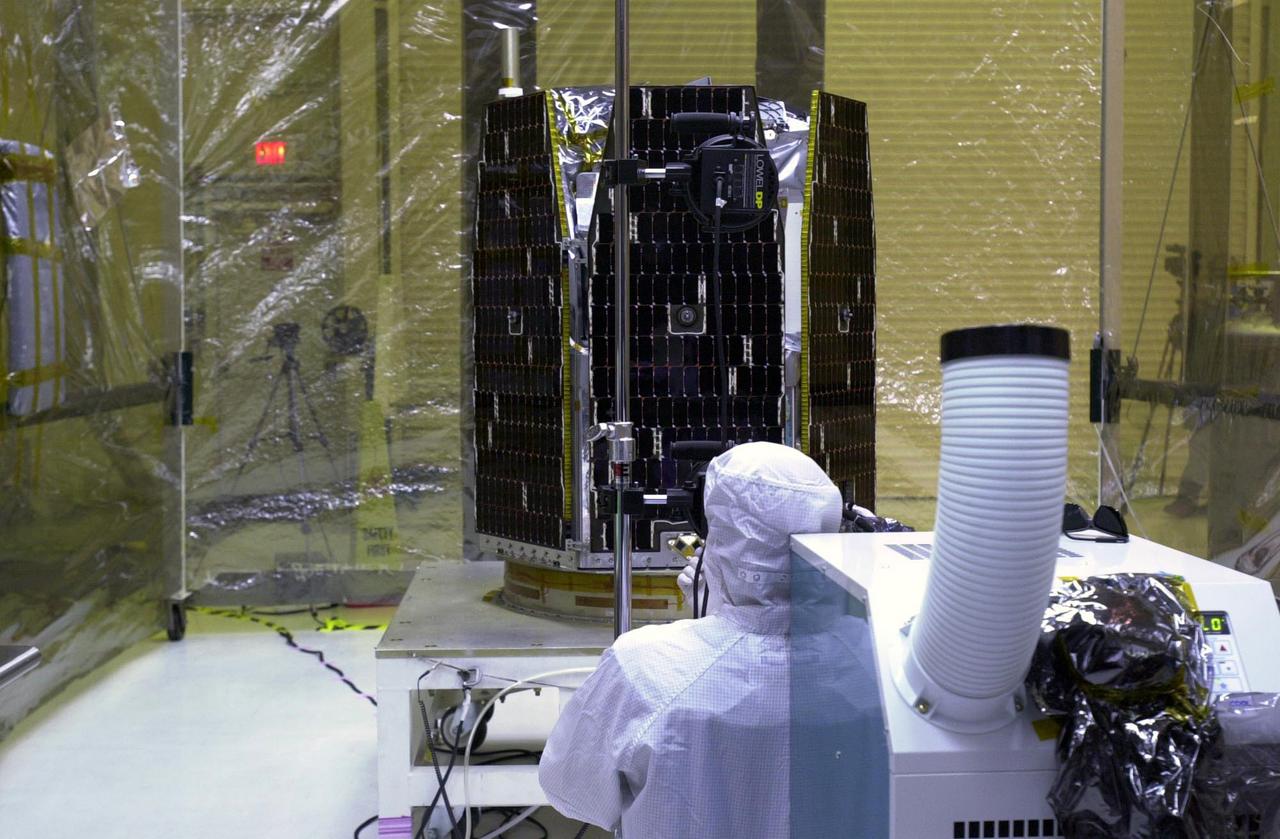
In a clean-room environment at North Vandenberg Air Force Base, a technician monitors the AIM spacecraft after illumination testing on the spacecraft's solar array panels. The AIM spacecraft will fly three instruments designed to study those clouds located at the edge of space, 50 miles above the Earth's surface in the coldest part of the planet's atmosphere. The mission's primary goal is to explain why these clouds form and what has caused them to become brighter and more numerous and appear at lower latitudes in recent years. AIM's results will provide the basis for the study of long-term variability in the mesospheric climate and its relationship to global climate change. AIM is scheduled to be mated to the Pegasus XL during the second week of April, after which final inspections will be conducted. Launch is scheduled for April 25.
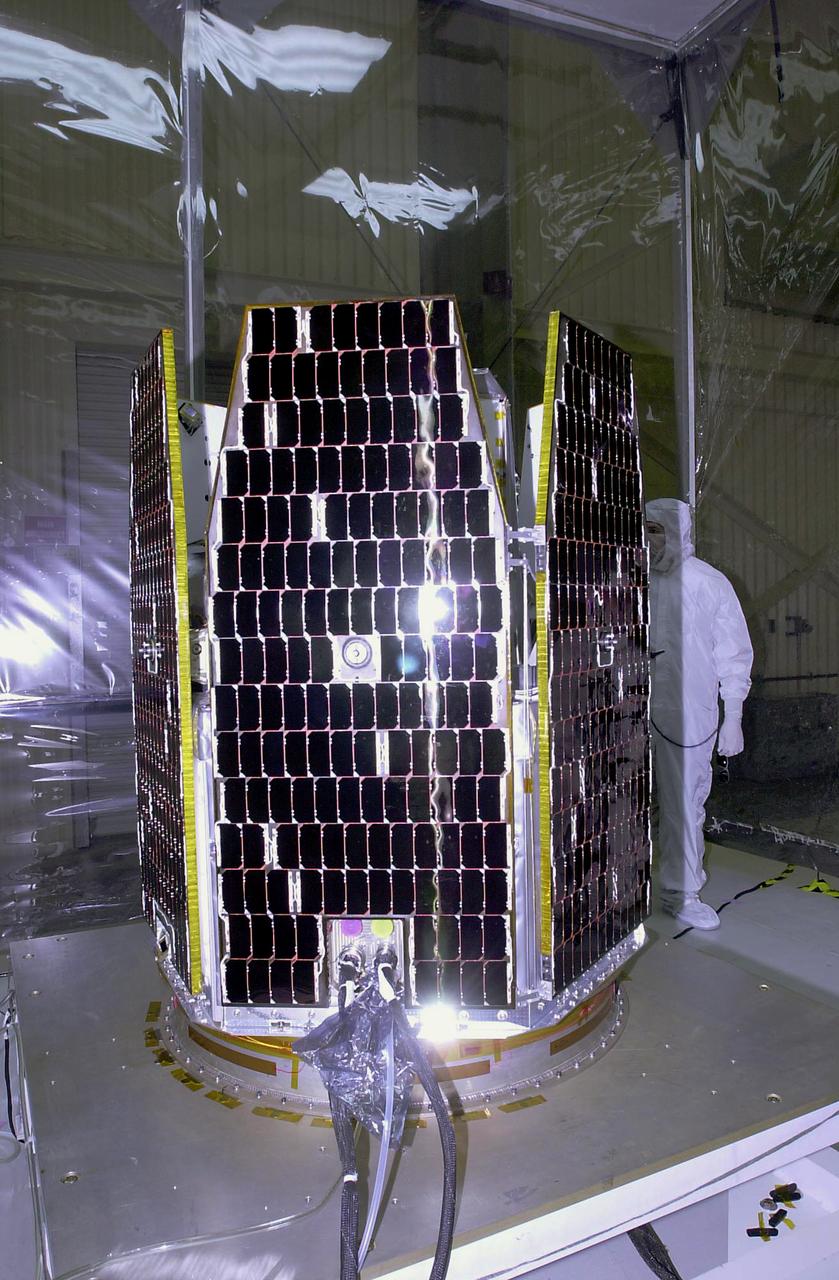
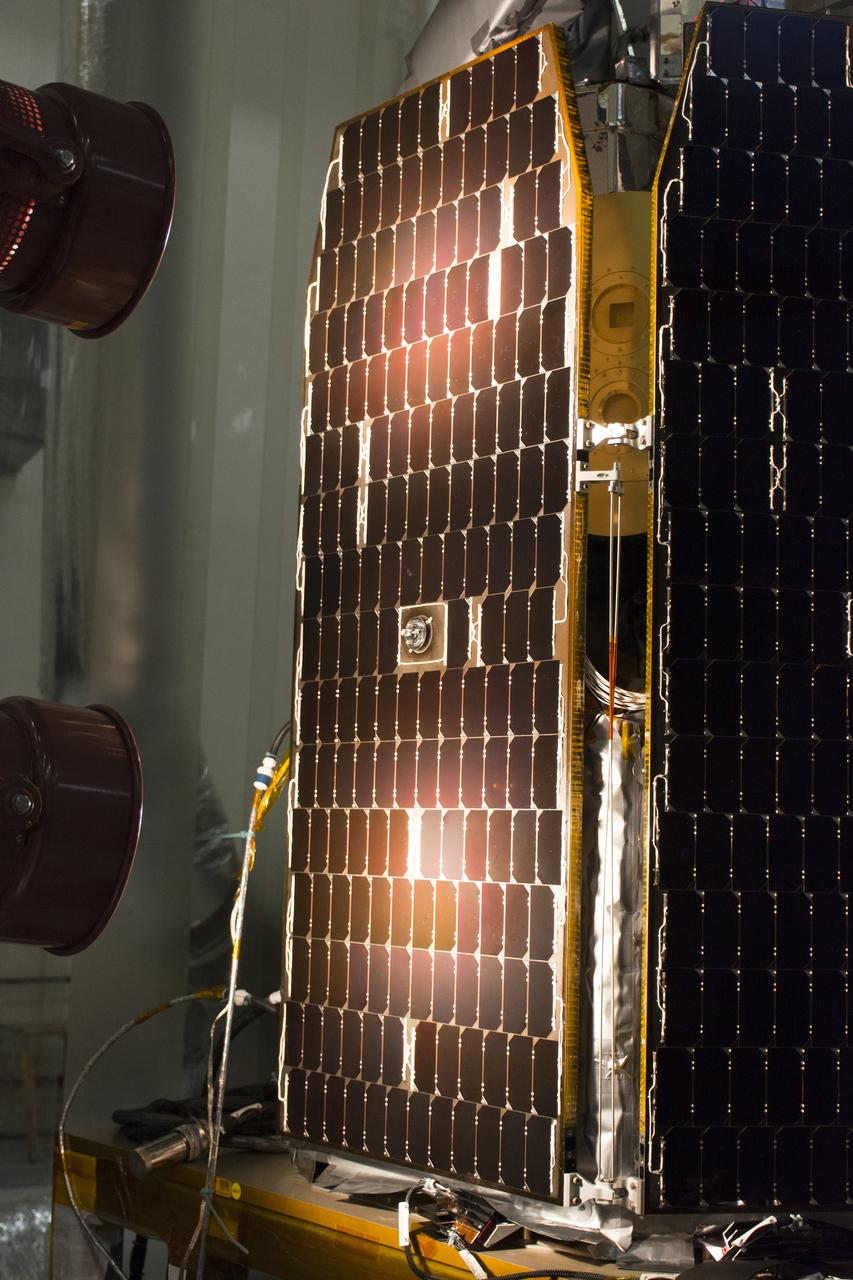
In a clean-room environment at North Vandenberg Air Force Base, lights are reflected on the solar array panels of the AIM spacecraft during illumination testing. The AIM spacecraft will fly three instruments designed to study those clouds located at the edge of space, 50 miles above the Earth's surface in the coldest part of the planet's atmosphere. The mission's primary goal is to explain why these clouds form and what has caused them to become brighter and more numerous and appear at lower latitudes in recent years. AIM's results will provide the basis for the study of long-term variability in the mesospheric climate and its relationship to global climate change. AIM is scheduled to be mated to the Pegasus XL during the second week of April, after which final inspections will be conducted. Launch is scheduled for April 25.
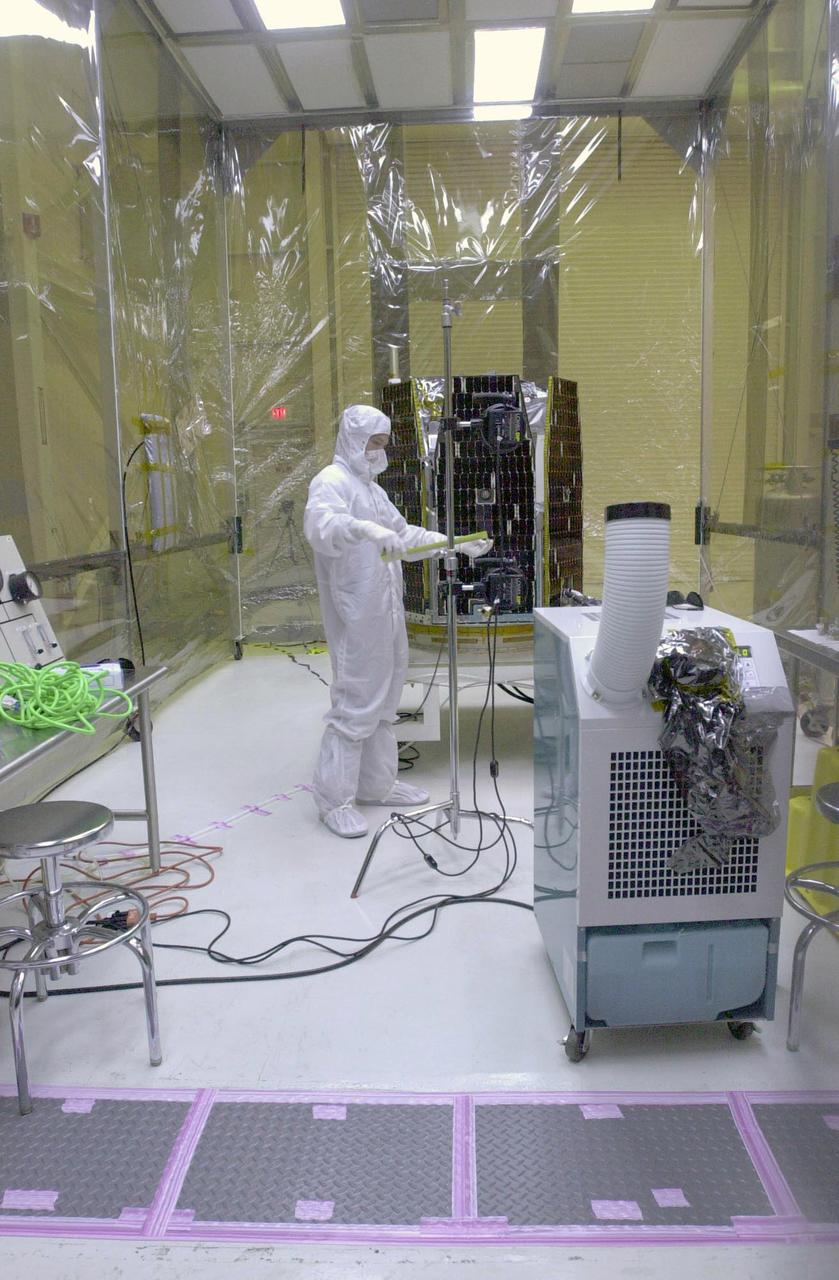
In a clean-room environment containing the AIM spacecraft (background) at North Vandenberg Air Force Base, a technician studies results of illumination testing on the spacecraft's solar array panels. The AIM spacecraft will fly three instruments designed to study those clouds located at the edge of space, 50 miles above the Earth's surface in the coldest part of the planet's atmosphere. The mission's primary goal is to explain why these clouds form and what has caused them to become brighter and more numerous and appear at lower latitudes in recent years. AIM's results will provide the basis for the study of long-term variability in the mesospheric climate and its relationship to global climate change. AIM is scheduled to be mated to the Pegasus XL during the second week of April, after which final inspections will be conducted. Launch is scheduled for April 25.
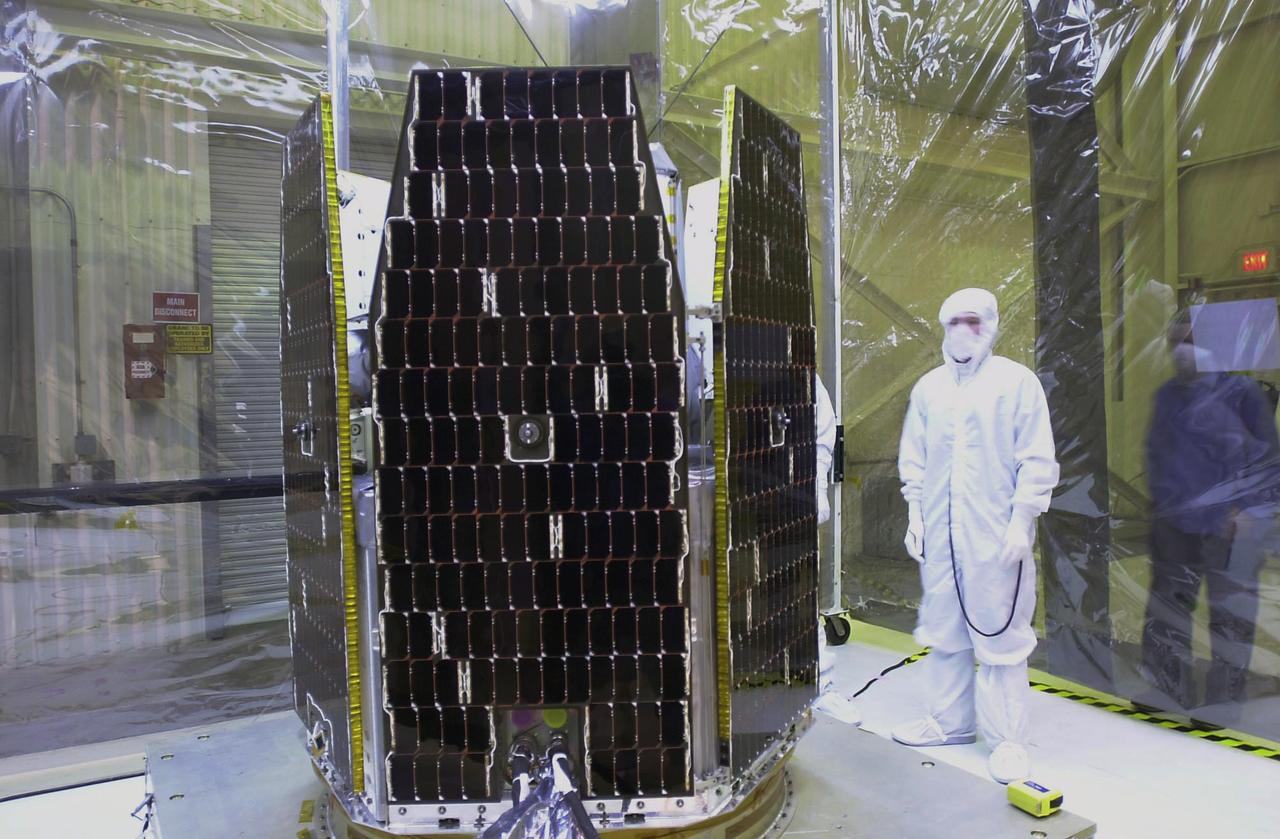
In a clean-room environment at North Vandenberg Air Force Base, a technician begins the illumination testing of the AIM spacecraft at left. The AIM spacecraft will fly three instruments designed to study those clouds located at the edge of space, 50 miles above the Earth's surface in the coldest part of the planet's atmosphere. The mission's primary goal is to explain why these clouds form and what has caused them to become brighter and more numerous and appear at lower latitudes in recent years. AIM's results will provide the basis for the study of long-term variability in the mesospheric climate and its relationship to global climate change. AIM is scheduled to be mated to the Pegasus XL during the second week of April, after which final inspections will be conducted. Launch is scheduled for April 25.
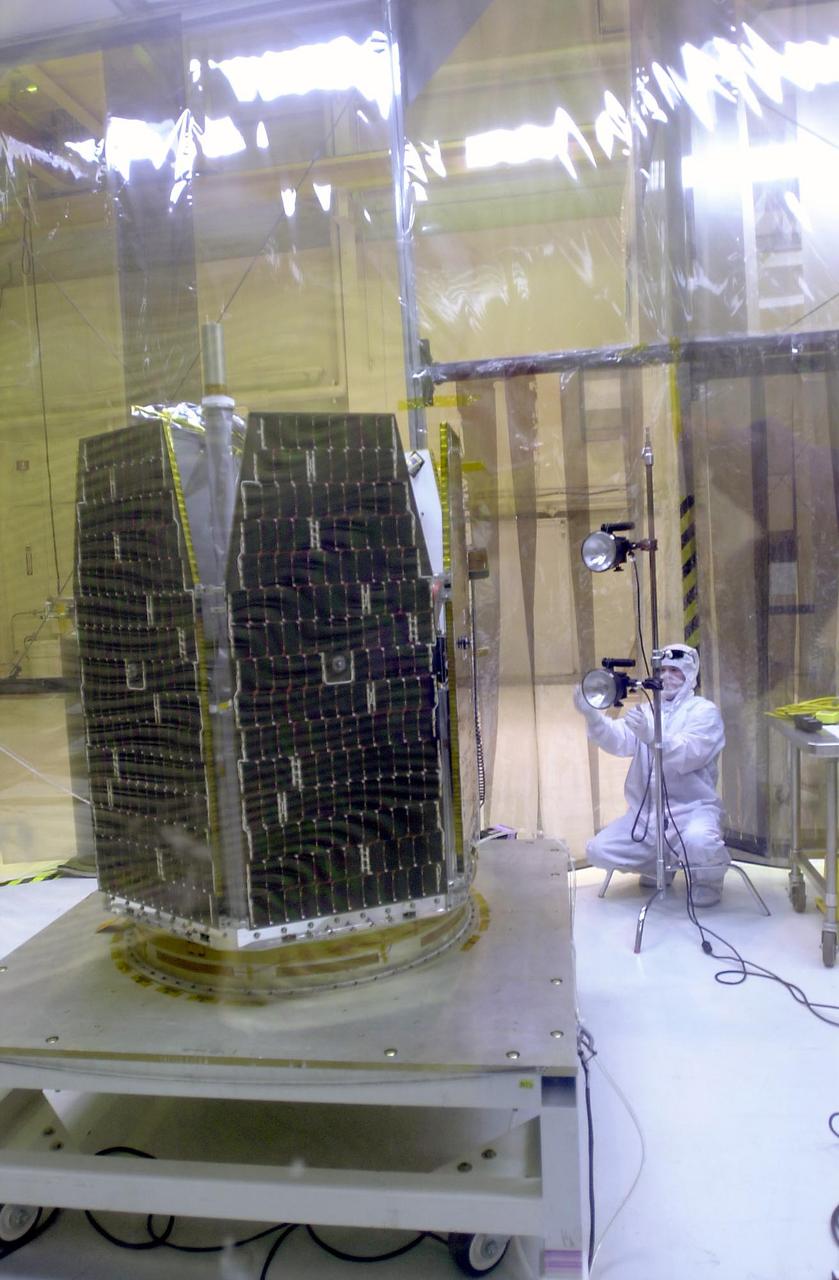
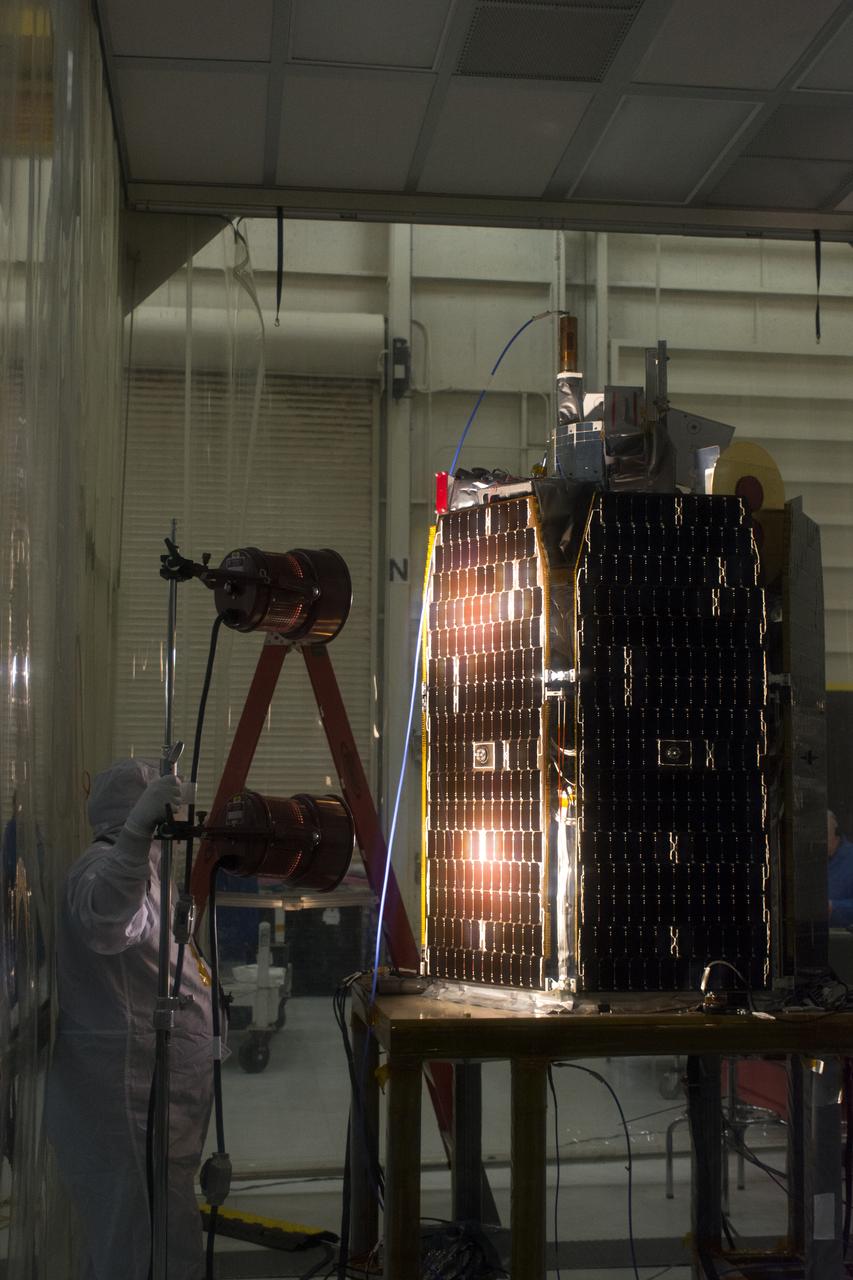
In a clean-room environment at North Vandenberg Air Force Base, a technician prepares the lights for illumination testing of the AIM spacecraft at left. The AIM spacecraft will fly three instruments designed to study those clouds located at the edge of space, 50 miles above the Earth's surface in the coldest part of the planet's atmosphere. The mission's primary goal is to explain why these clouds form and what has caused them to become brighter and more numerous and appear at lower latitudes in recent years. AIM's results will provide the basis for the study of long-term variability in the mesospheric climate and its relationship to global climate change. AIM is scheduled to be mated to the Pegasus XL during the second week of April, after which final inspections will be conducted. Launch is scheduled for April 25.
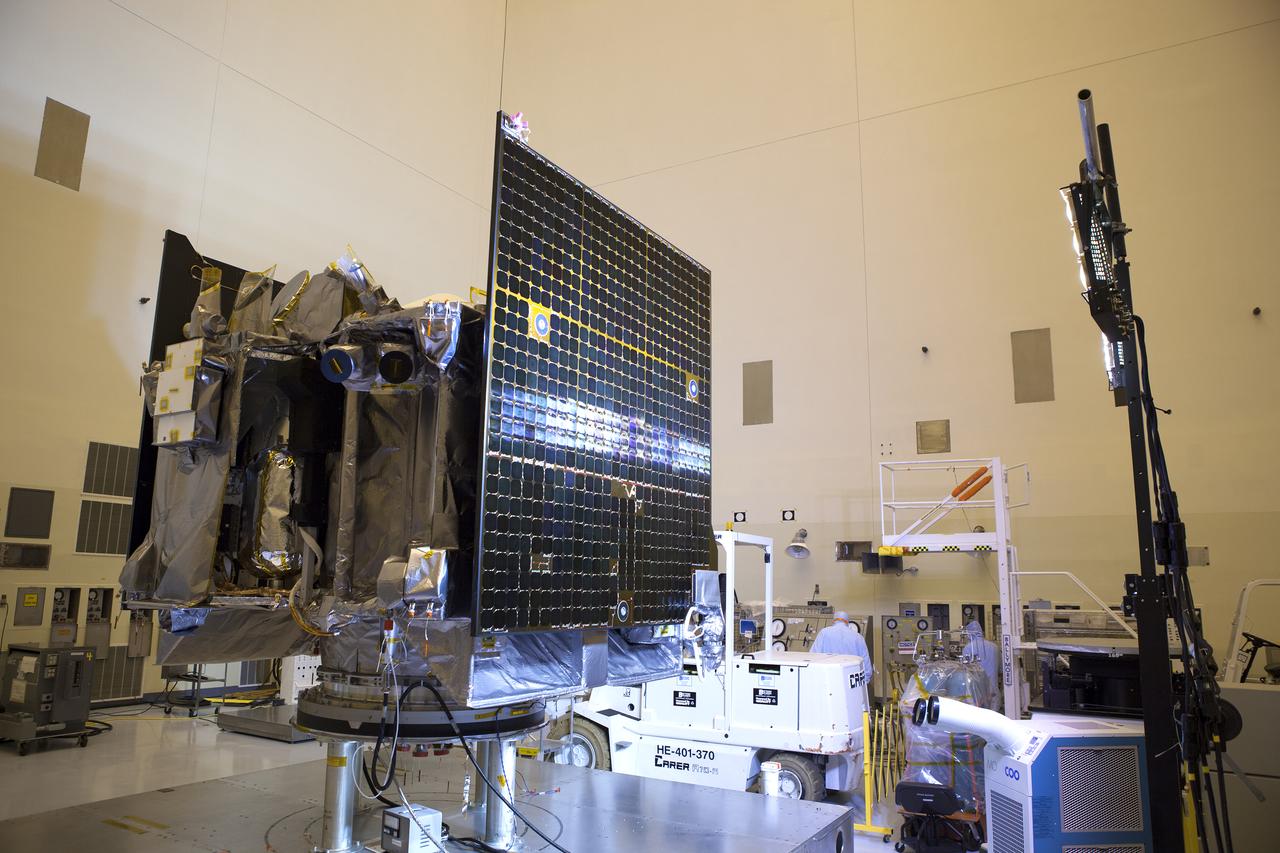
Inside the Payload Hazardous Servicing Facility at NASA's Kennedy Space Center in Florida, illumination testing is underway on the power-producing solar arrays for the agency’s Origins, Spectral Interpretation, Resource Identification, Security-Regolith Explorer, or OSIRIS-REx spacecraft. Targeted for liftoff Sept. 8, 2016, OSIRIS-Rex will be the first U.S. mission to sample an asteroid, retrieve at least two ounces of surface material and return it to Earth for study. The asteroid, Bennu, may hold clues to the origin of the solar system and the source of water and organic molecules found on Earth.
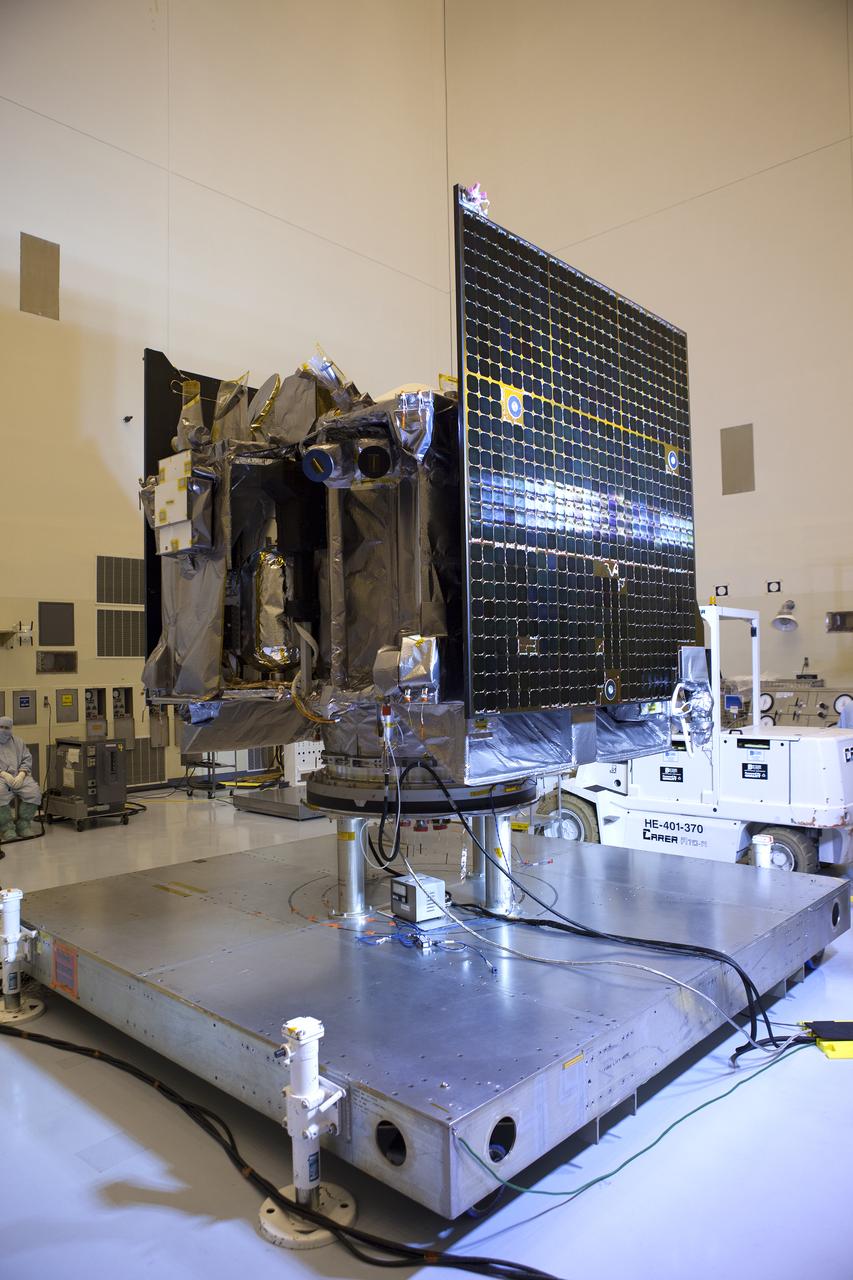
Inside the Payload Hazardous Servicing Facility at NASA's Kennedy Space Center in Florida, illumination testing is underway on the power-producing solar arrays for the agency’s Origins, Spectral Interpretation, Resource Identification, Security-Regolith Explorer, or OSIRIS-REx spacecraft. Targeted for liftoff Sept. 8, 2016, OSIRIS-Rex will be the first U.S. mission to sample an asteroid, retrieve at least two ounces of surface material and return it to Earth for study. The asteroid, Bennu, may hold clues to the origin of the solar system and the source of water and organic molecules found on Earth.
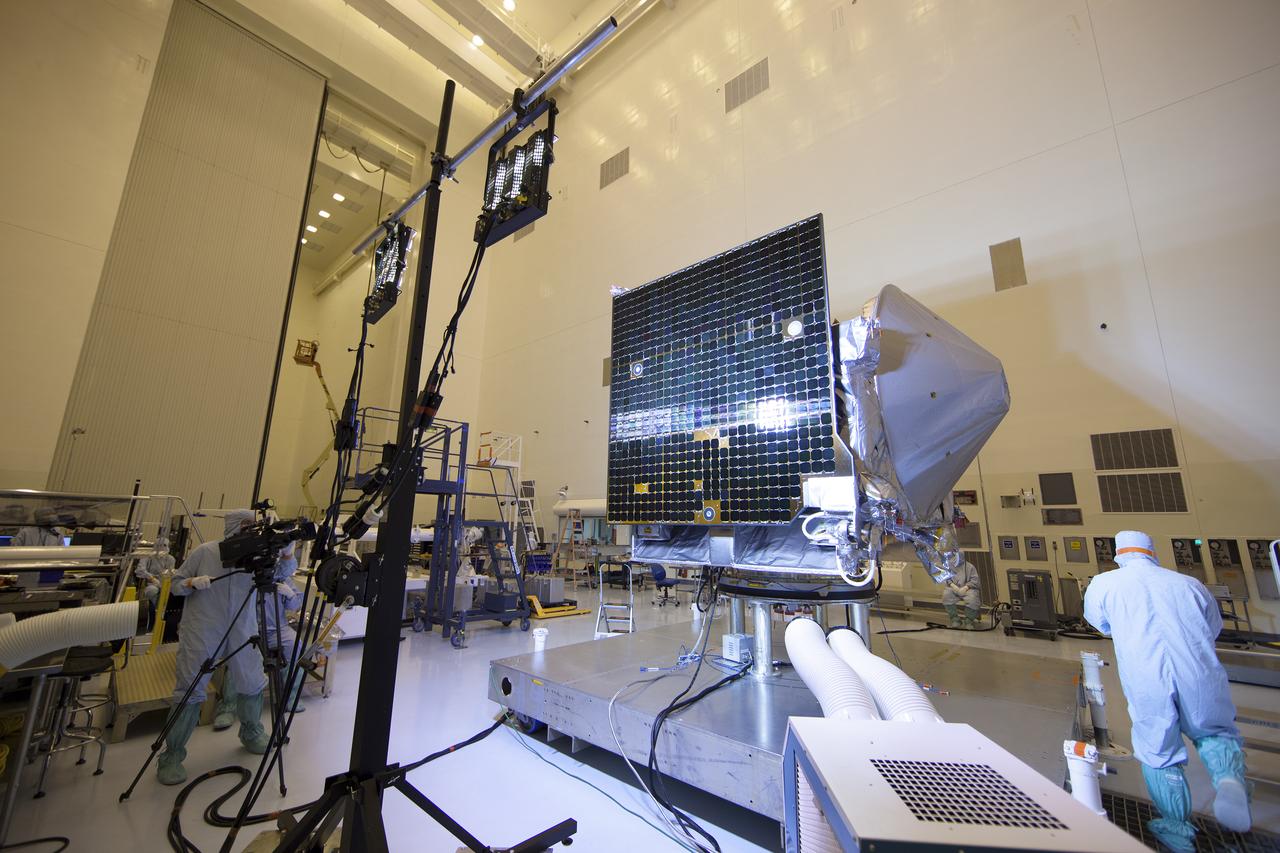
Inside the Payload Hazardous Servicing Facility at NASA's Kennedy Space Center in Florida, illumination testing is underway on the power -producing solar arrays for the agency’s Origins, Spectral Interpretation, Resource Identification, Security-Regolith Explorer, or OSIRIS-REx spacecraft. Targeted for liftoff Sept. 8, 2016, OSIRIS-Rex will be the first U.S. mission to sample an asteroid, retrieve at least two ounces of surface material and return it to Earth for study. The asteroid, Bennu, may hold clues to the origin of the solar system and the source of water and organic molecules found on Earth.
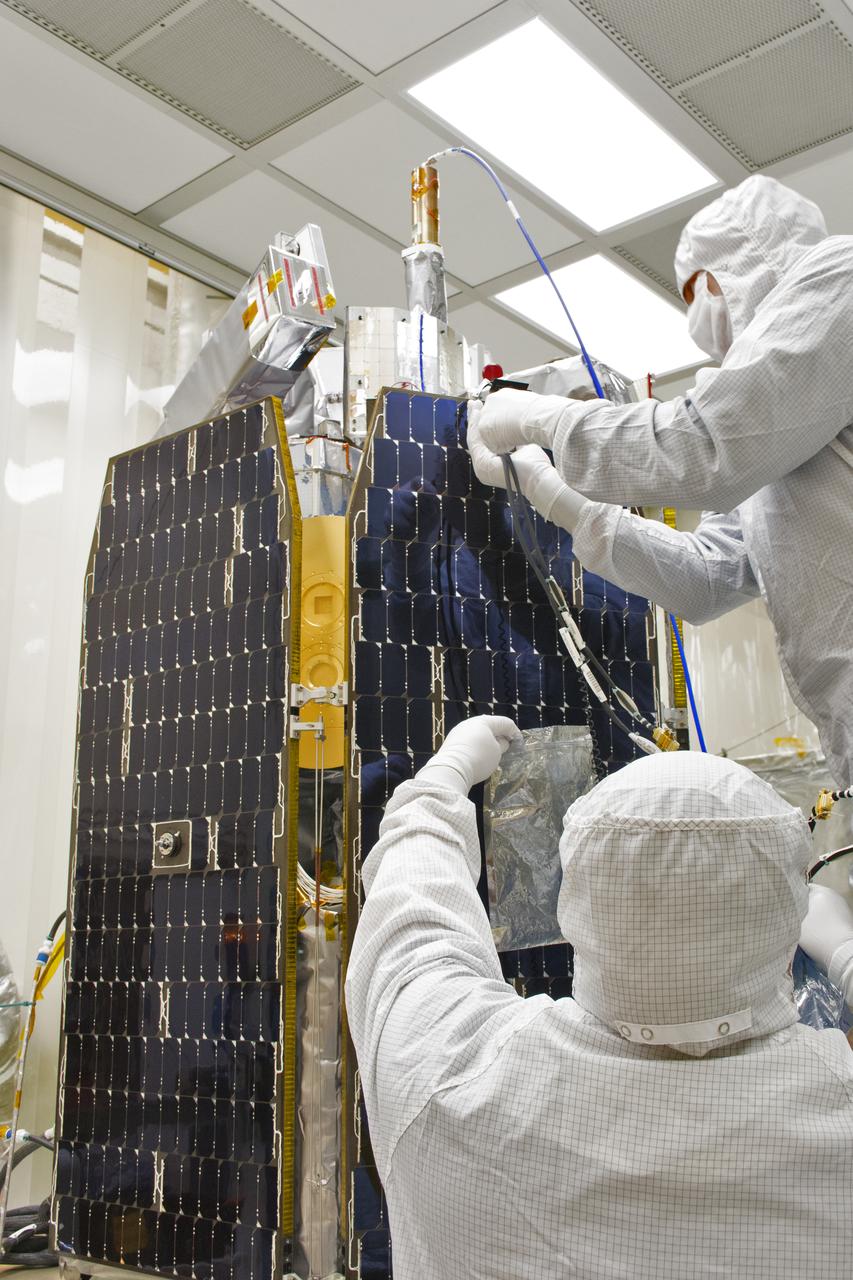
Technicians prepare NASA's Ionospheric Connection Explorer (ICON) for a solar array illumination test in a clean room inside Building 1555 at Vandenberg Air Force Base in California on May 4, 2018. The test checks for any imperfections and confirms that the solar arrays are functioning properly. The explorer will launch on June 15, 2018, from Kwajalein Atoll in the Marshall Islands (June 14 in the continental United States) on Orbital ATK's Pegasus XL rocket, which is attached to the company's L-1011 Stargazer aircraft. ICON will study the frontier of space - the dynamic zone high in Earth's atmosphere where terrestrial weather from below meets space weather above. The explorer will help determine the physics of Earth's space environment and pave the way for mitigating its effects on our technology, communications systems and society.
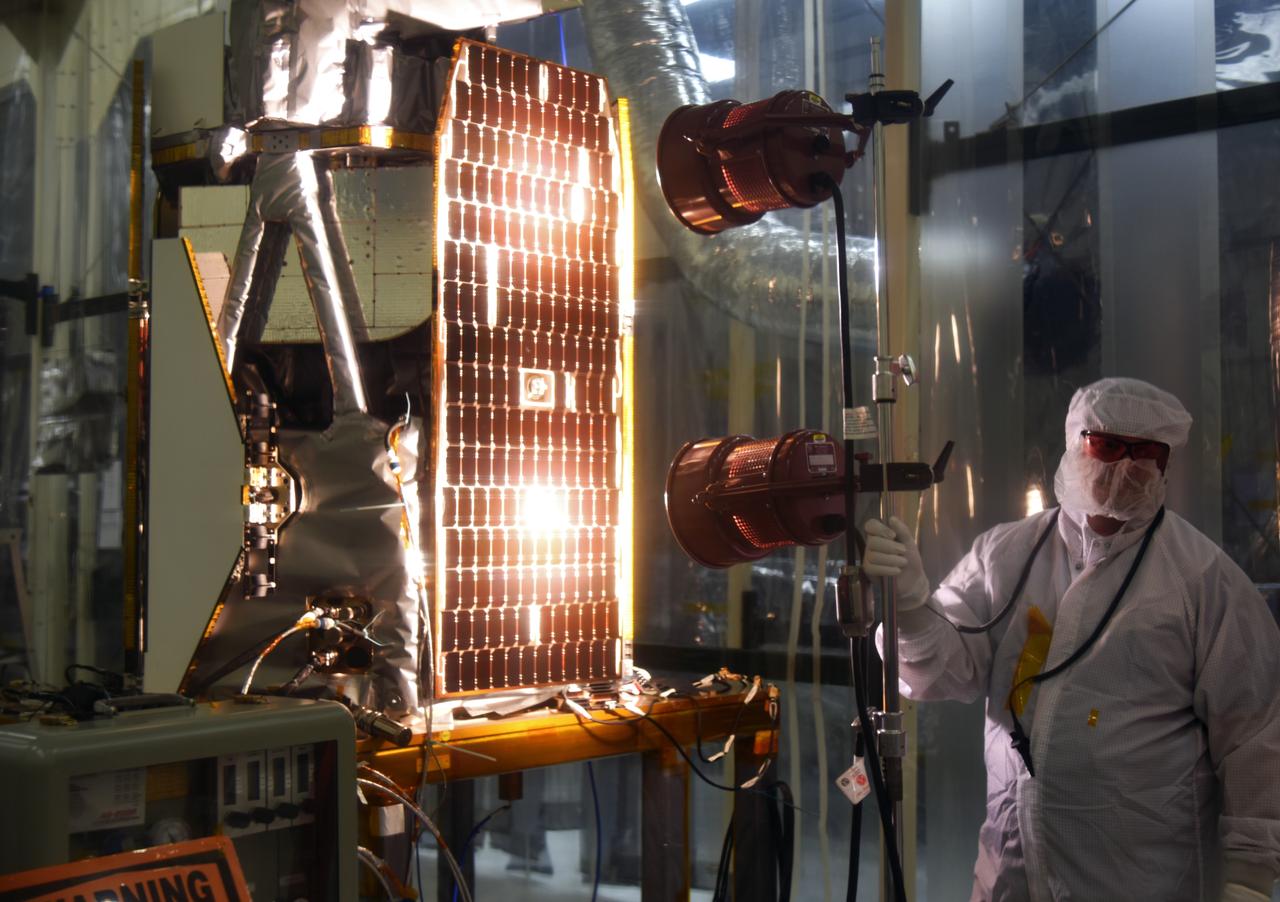
A solar array illumination test is performed on NASA's Ionospheric Connection Explorer (ICON) in a clean room on May 4, 2018, inside Building 1555 at Vandenberg Air Force Base in California. The test checks for any imperfections and confirms that the solar arrays are functioning properly. The explorer will launch on June 15, 2018, from Kwajalein Atoll in the Marshall Islands (June 14 in the continental United States) on Orbital ATK's Pegasus XL rocket, which is attached to the company's L-1011 Stargazer aircraft. ICON will study the frontier of space - the dynamic zone high in Earth's atmosphere where terrestrial weather from below meets space weather above. The explorer will help determine the physics of Earth's space environment and pave the way for mitigating its effects on our technology, communications systems and society.
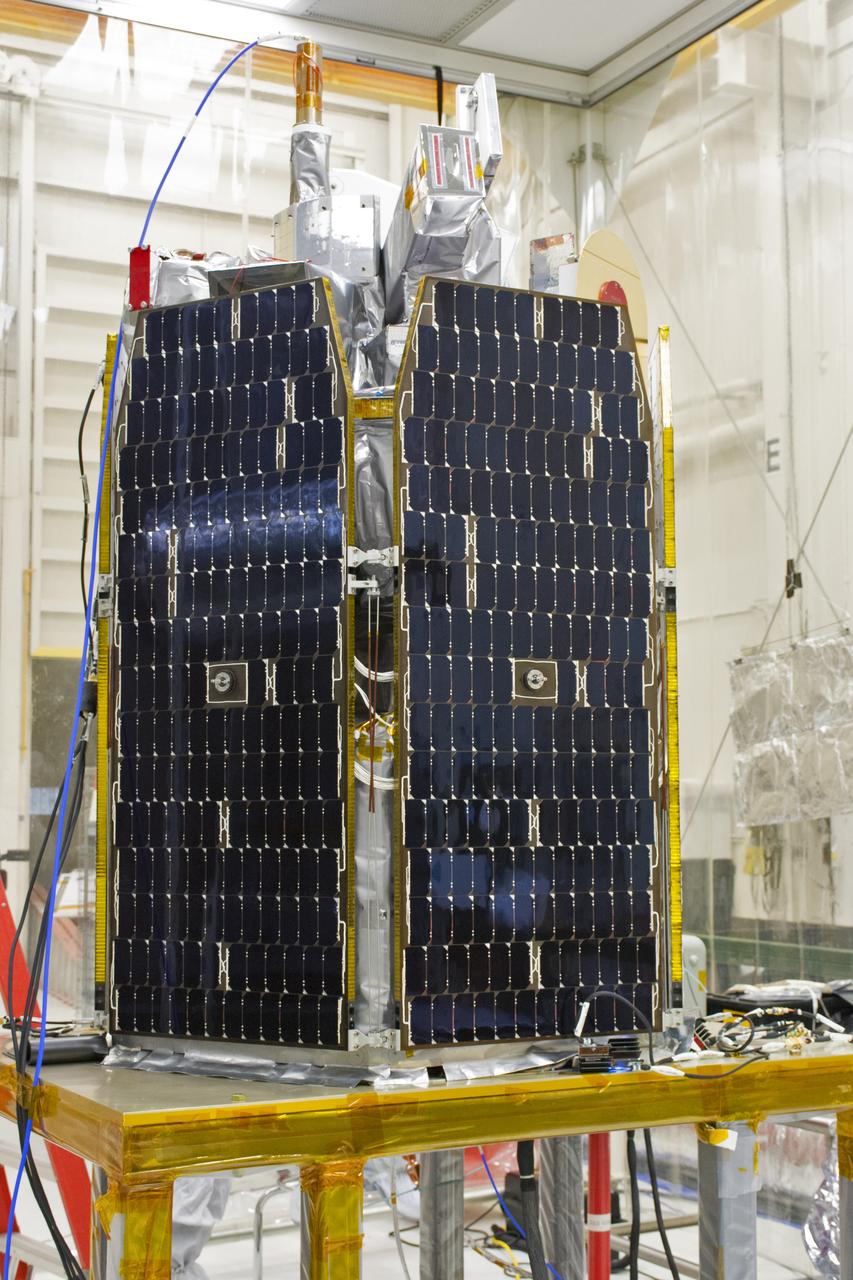
NASA's Ionospheric Connection Explorer (ICON) is prepared for a solar array illumination test in a clean room inside Building 1555 at Vandenberg Air Force Base in California on May 4, 2018. The test checks for any imperfections and confirms that the solar arrays are functioning properly. The explorer will launch on June 15, 2018, from Kwajalein Atoll in the Marshall Islands (June 14 in the continental United States) on Orbital ATK's Pegasus XL rocket, which is attached to the company's L-1011 Stargazer aircraft. ICON will study the frontier of space - the dynamic zone high in Earth's atmosphere where terrestrial weather from below meets space weather above. The explorer will help determine the physics of Earth's space environment and pave the way for mitigating its effects on our technology, communications systems and society.
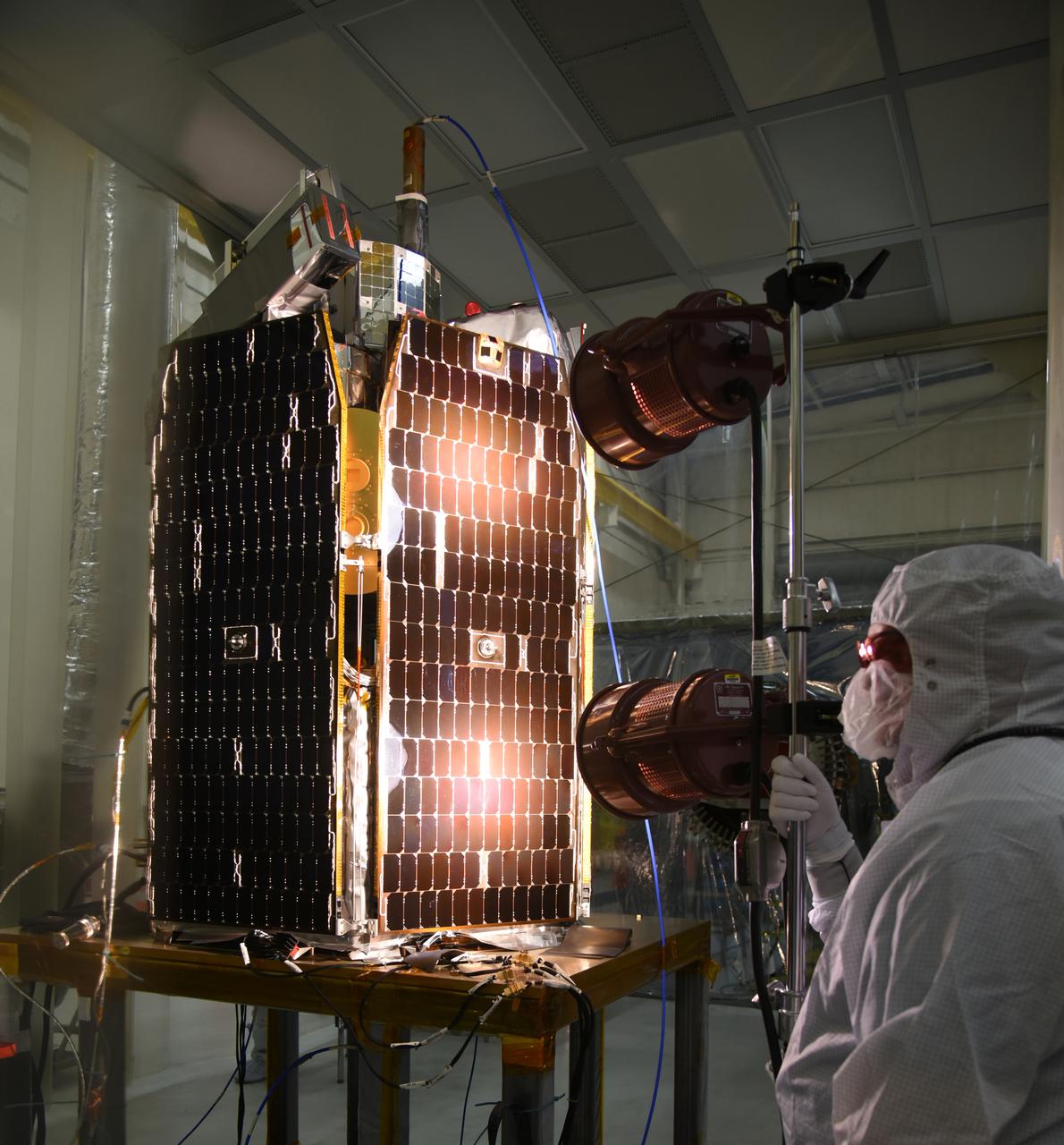
A solar array illumination test is performed on NASA's Ionospheric Connection Explorer (ICON) in a clean room on May 4, 2018, inside Building 1555 at Vandenberg Air Force Base in California. The test checks for any imperfections and confirms that the solar arrays are functioning properly. The explorer will launch on June 15, 2018, from Kwajalein Atoll in the Marshall Islands (June 14 in the continental United States) on Orbital ATK's Pegasus XL rocket, which is attached to the company's L-1011 Stargazer aircraft. ICON will study the frontier of space - the dynamic zone high in Earth's atmosphere where terrestrial weather from below meets space weather above. The explorer will help determine the physics of Earth's space environment and pave the way for mitigating its effects on our technology, communications systems and society.
A solar array illumination test is performed on NASA's Ionospheric Connection Explorer (ICON) in a clean room inside Building 1555 at Vandenberg Air Force Base in California on May 4, 2018. The test checks for any imperfections and confirms that the solar arrays are functioning properly. The explorer will launch on June 15, 2018, from Kwajalein Atoll in the Marshall Islands (June 14 in the continental United States) on Orbital ATK's Pegasus XL rocket, which is attached to the company's L-1011 Stargazer aircraft. ICON will study the frontier of space - the dynamic zone high in Earth's atmosphere where terrestrial weather from below meets space weather above. The explorer will help determine the physics of Earth's space environment and pave the way for mitigating its effects on our technology, communications systems and society.
A solar array illumination test is performed on NASA's Ionospheric Connection Explorer (ICON) in a clean room inside Building 1555 at Vandenberg Air Force Base in California on May 4, 2018. The test checks for any imperfections and confirms that the solar arrays are functioning properly. The explorer will launch on June 15, 2018, from Kwajalein Atoll in the Marshall Islands (June 14 in the continental United States) on Orbital ATK's Pegasus XL rocket, which is attached to the company's L-1011 Stargazer aircraft. ICON will study the frontier of space - the dynamic zone high in Earth's atmosphere where terrestrial weather from below meets space weather above. The explorer will help determine the physics of Earth's space environment and pave the way for mitigating its effects on our technology, communications systems and society.
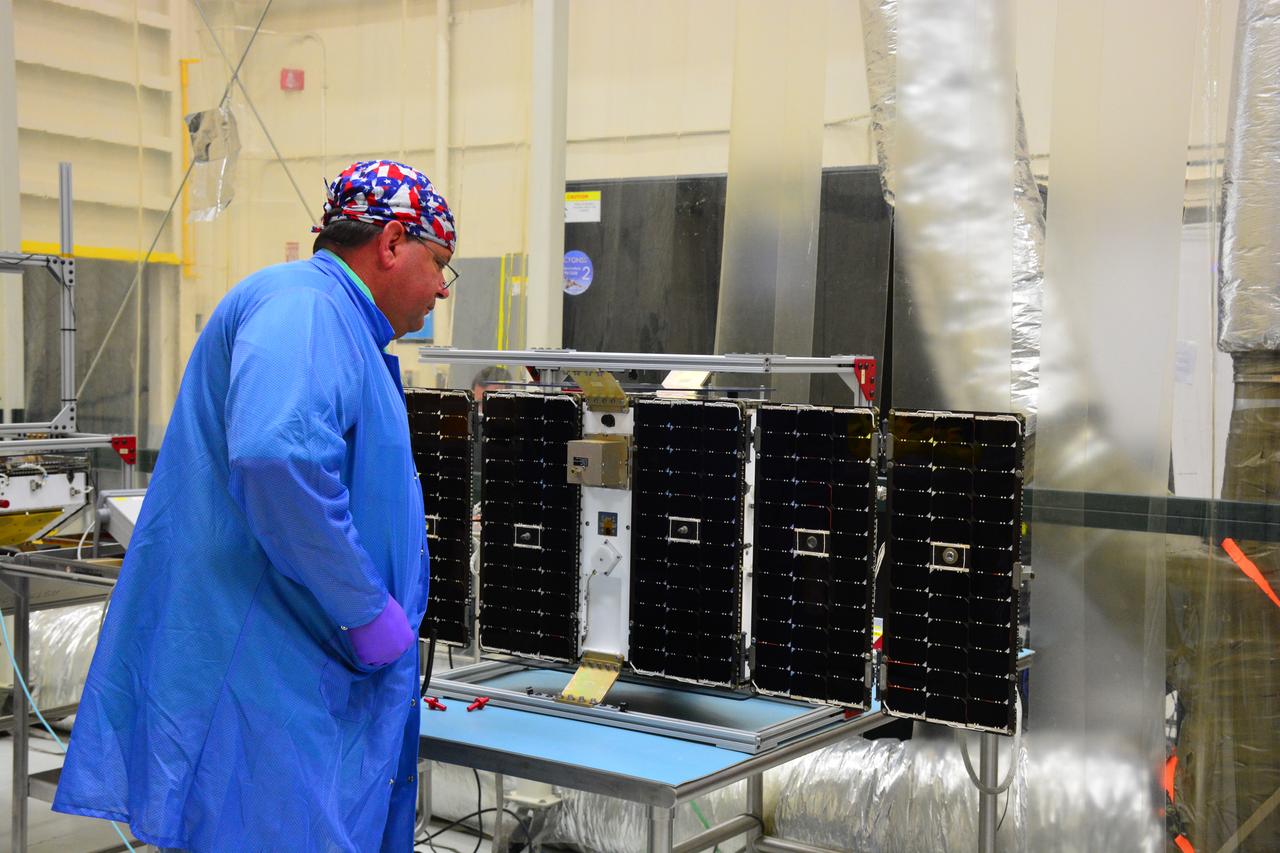
Inside Building 1555 at Vandenberg Air Force Base in California, solar panels for one of eight NASA's Cyclone Global Navigation Satellite System (CYGNSS) spacecraft has been deployed for illumination testing. Processing activities will prepare the spacecraft for launch aboard an Orbital ATK Pegasus XL rocket. When preparations are completed at Vandenberg, the rocket will be transported to NASA's Kennedy Space Center in Florida attached to the Orbital ATK L-1011 carrier aircraft within its payload fairing. CYGNSS will launch on the Pegasus XL rocket from the Skid Strip at Cape Canaveral Air Force Station. CYGNSS will make frequent and accurate measurements of ocean surface winds throughout the life cycle of tropical storms and hurricanes. The data that CYGNSS provides will enable scientists to probe key air-sea interaction processes that take place near the core of storms, which are rapidly changing and play a critical role in the beginning and intensification of hurricanes.
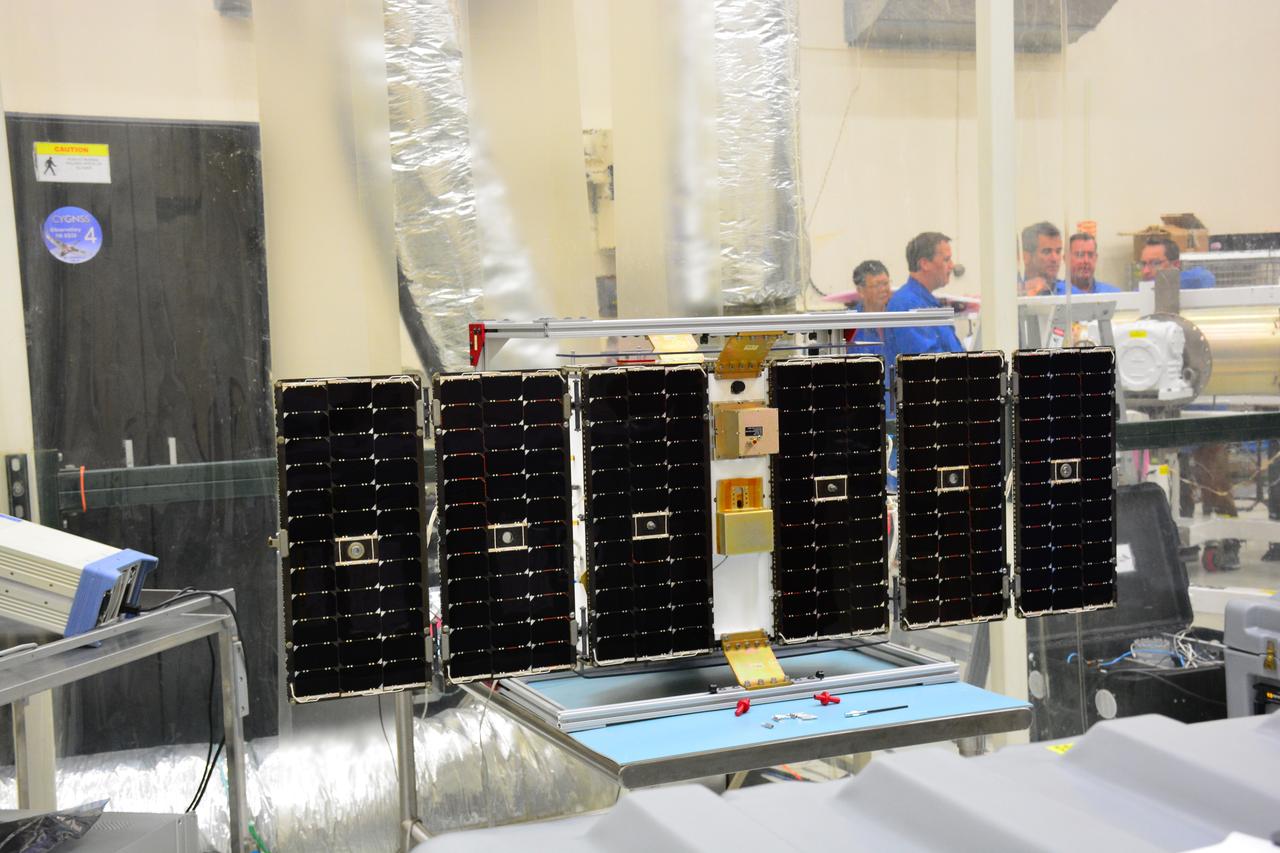
Inside Building 1555 at Vandenberg Air Force Base in California, solar panels for one of eight NASA's Cyclone Global Navigation Satellite System (CYGNSS) spacecraft has been deployed for illumination testing. Processing activities will prepare the spacecraft for launch aboard an Orbital ATK Pegasus XL rocket. When preparations are completed at Vandenberg, the rocket will be transported to NASA's Kennedy Space Center in Florida attached to the Orbital ATK L-1011 carrier aircraft within its payload fairing. CYGNSS will launch on the Pegasus XL rocket from the Skid Strip at Cape Canaveral Air Force Station. CYGNSS will make frequent and accurate measurements of ocean surface winds throughout the life cycle of tropical storms and hurricanes. The data that CYGNSS provides will enable scientists to probe key air-sea interaction processes that take place near the core of storms, which are rapidly changing and play a critical role in the beginning and intensification of hurricanes.

During pre-flight testing in March 2011, the Mars Hand Lens Imager MAHLI camera on NASA Mars rover Curiosity took this image of the MAHLI calibration target under illumination from MAHLI two ultraviolet LEDs light emitting diodes.
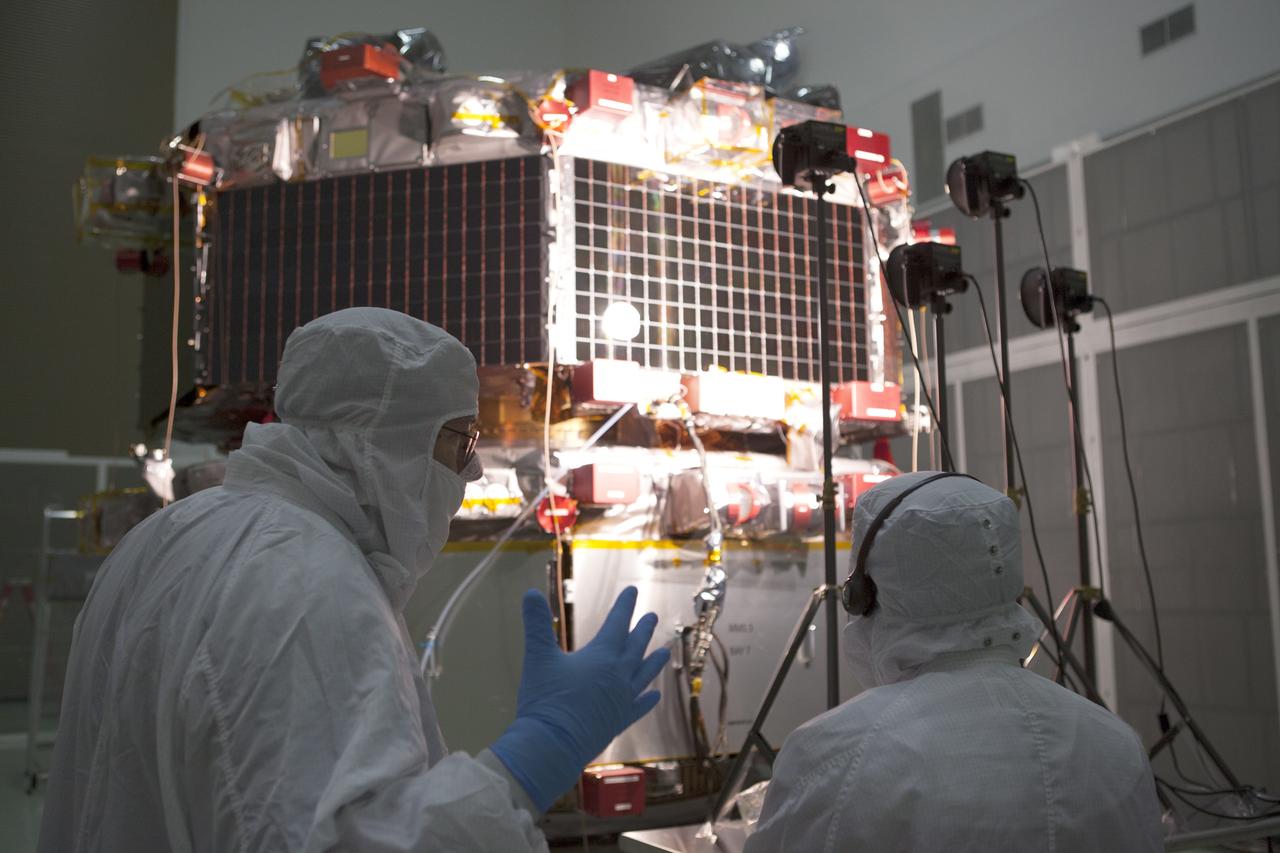
Workers conduct a solar array illumination test on the upper stack of the Magnetospheric Multiscale spacecraft, or MMS, in the Astrotech payload processing facility in Titusville, Florida, near Kennedy Space Center. Illumination testing of the lower instrumentation payload stack was completed in December. Launch aboard a United Launch Alliance Atlas V rocket from Space Launch Complex 41 on Cape Canaveral Air Force Station is targeted for March 12. To learn more about MMS, visit http://www.nasa.gov/mms. Photo credit: NASA/Kim Shiflett
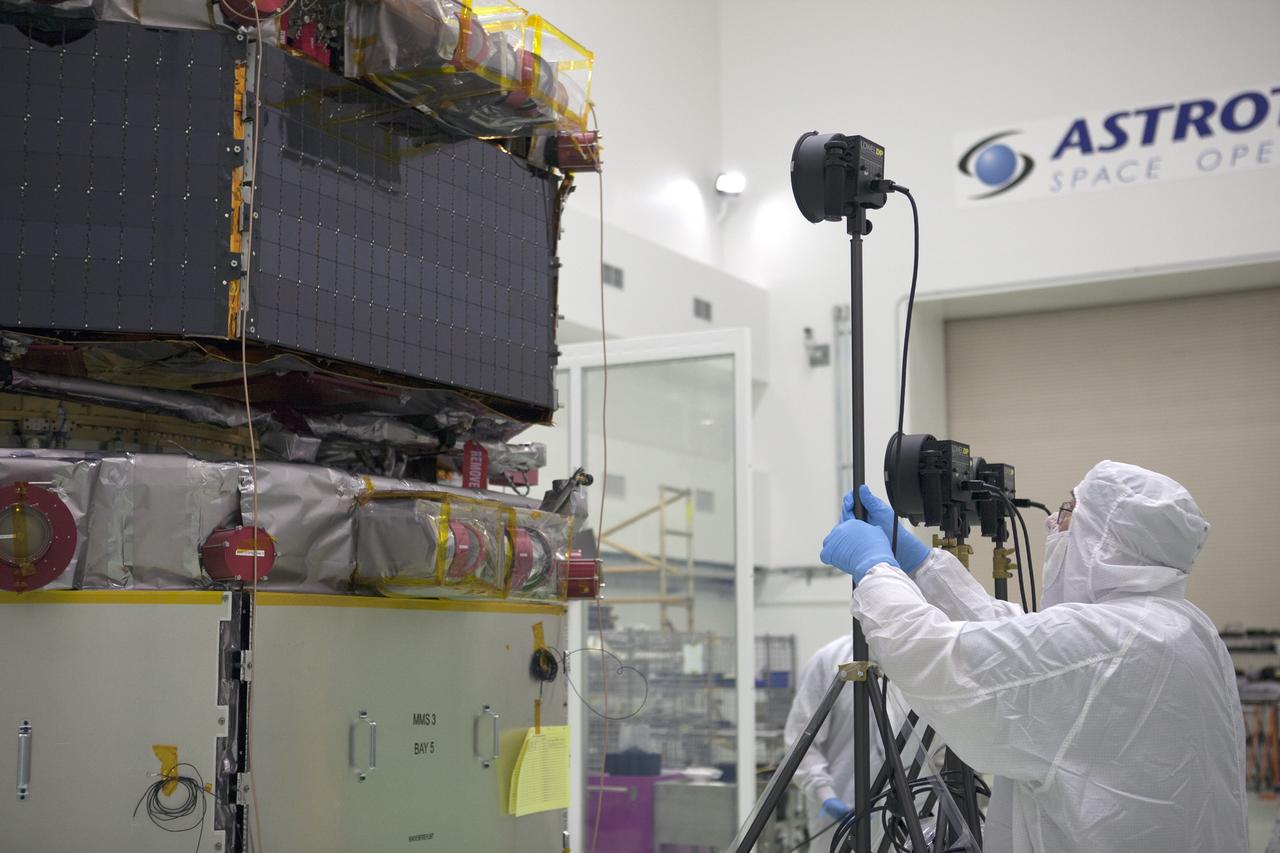
Preparations are underway for illumination testing of the solar panels on the upper stack of the Magnetospheric Multiscale spacecraft, or MMS, in the Astrotech payload processing facility in Titusville, Florida, near Kennedy Space Center. Illumination testing of the lower instrumentation payload stack was completed in December. Launch aboard a United Launch Alliance Atlas V rocket from Space Launch Complex 41 on Cape Canaveral Air Force Station is targeted for March 12. To learn more about MMS, visit http://www.nasa.gov/mms. Photo credit: NASA/Kim Shiflett
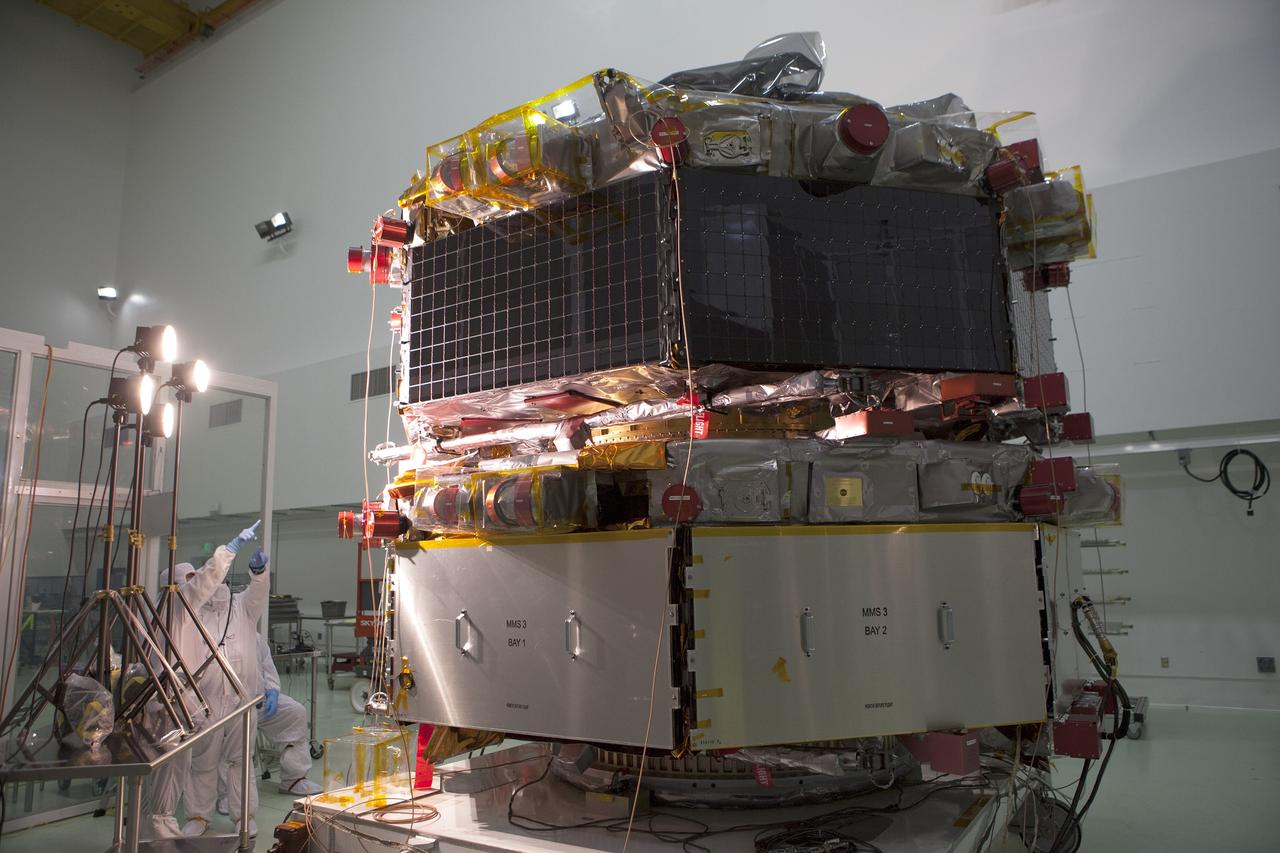
A solar array illumination test is performed on the upper stack of the Magnetospheric Multiscale spacecraft, or MMS, in the Astrotech payload processing facility in Titusville, Florida, near Kennedy Space Center. Illumination testing of the lower instrumentation payload stack was completed in December. Launch aboard a United Launch Alliance Atlas V rocket from Space Launch Complex 41 on Cape Canaveral Air Force Station is targeted for March 12. To learn more about MMS, visit http://www.nasa.gov/mms. Photo credit: NASA/Kim Shiflett
Workers conduct a solar array illumination test on the upper stack of the Magnetospheric Multiscale spacecraft, or MMS, in the Astrotech payload processing facility in Titusville, Florida, near Kennedy Space Center. Illumination testing of the lower instrumentation payload stack was completed in December. Launch aboard a United Launch Alliance Atlas V rocket from Space Launch Complex 41 on Cape Canaveral Air Force Station is targeted for March 12. To learn more about MMS, visit http://www.nasa.gov/mms. Photo credit: NASA/Kim Shiflett
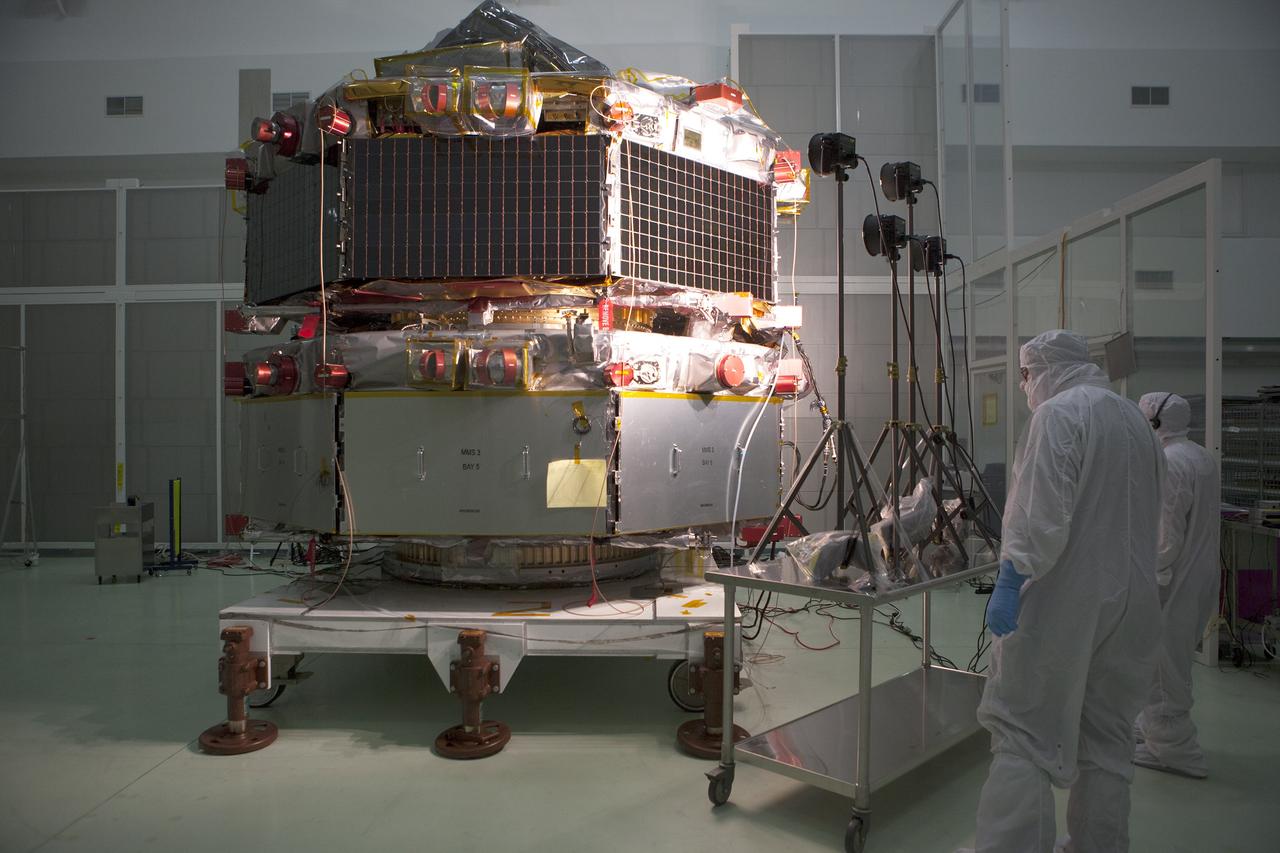
A solar array illumination test is performed on the upper stack of the Magnetospheric Multiscale spacecraft, or MMS, in the Astrotech payload processing facility in Titusville, Florida, near Kennedy Space Center. Illumination testing of the lower instrumentation payload stack was completed in December. Launch aboard a United Launch Alliance Atlas V rocket from Space Launch Complex 41 on Cape Canaveral Air Force Station is targeted for March 12. To learn more about MMS, visit http://www.nasa.gov/mms. Photo credit: NASA/Kim Shiflett
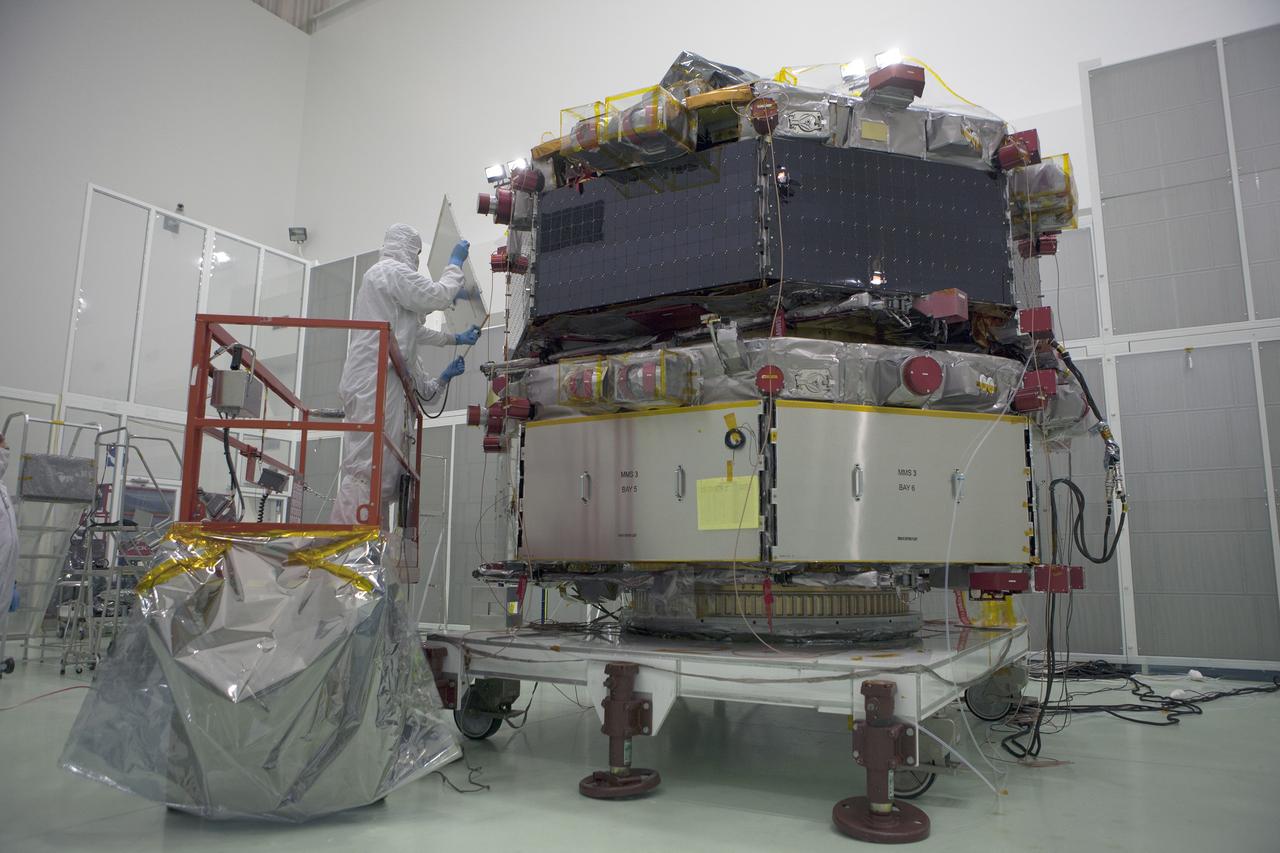
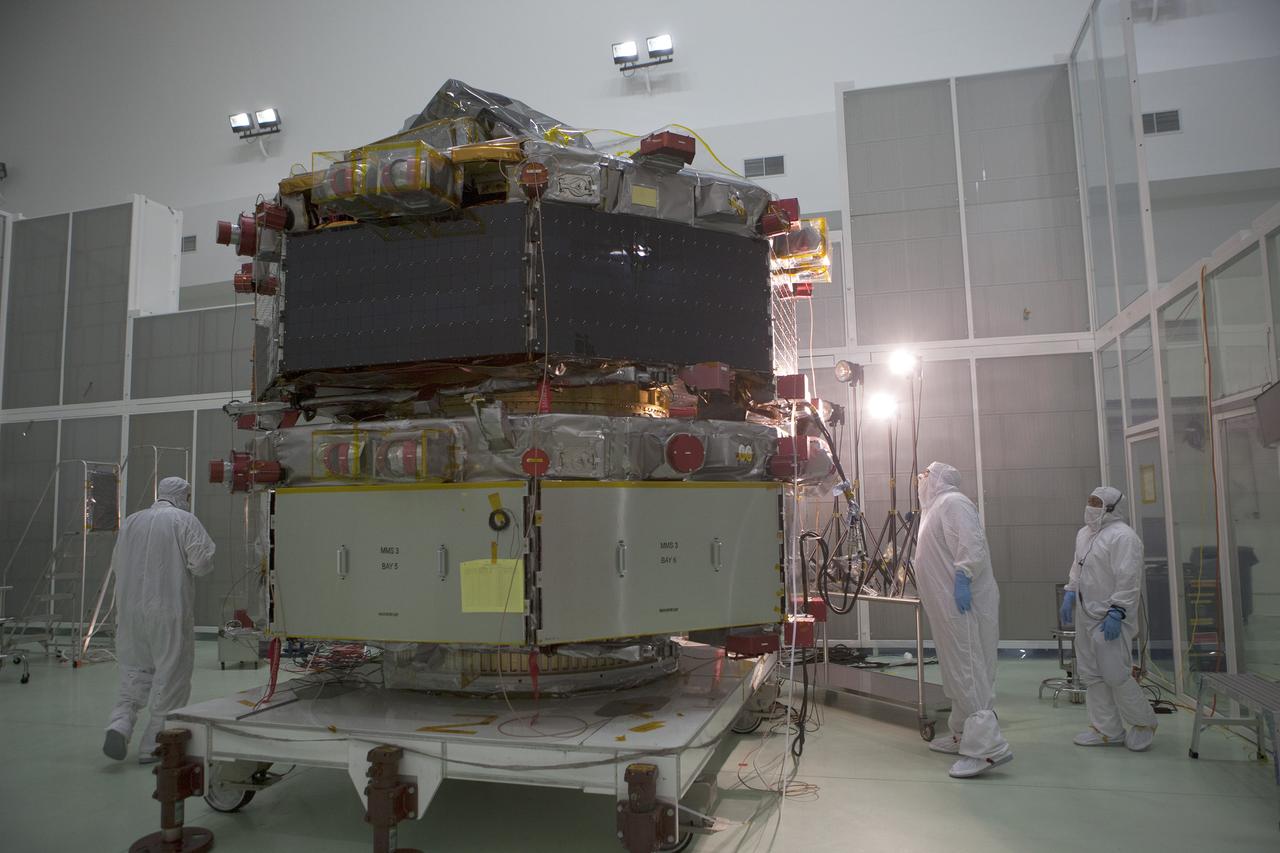
The protective covers are removed from around the solar panels on the upper stack of the Magnetospheric Multiscale spacecraft, or MMS, in the Astrotech payload processing facility in Titusville, Florida, near Kennedy Space Center. Preparations are underway for illumination testing of the spacecraft's upper stack. Illumination testing of the lower instrumentation payload stack was completed in December. Launch aboard a United Launch Alliance Atlas V rocket from Space Launch Complex 41 on Cape Canaveral Air Force Station is targeted for March 12. To learn more about MMS, visit http://www.nasa.gov/mms. Photo credit: NASA/Kim Shiflett
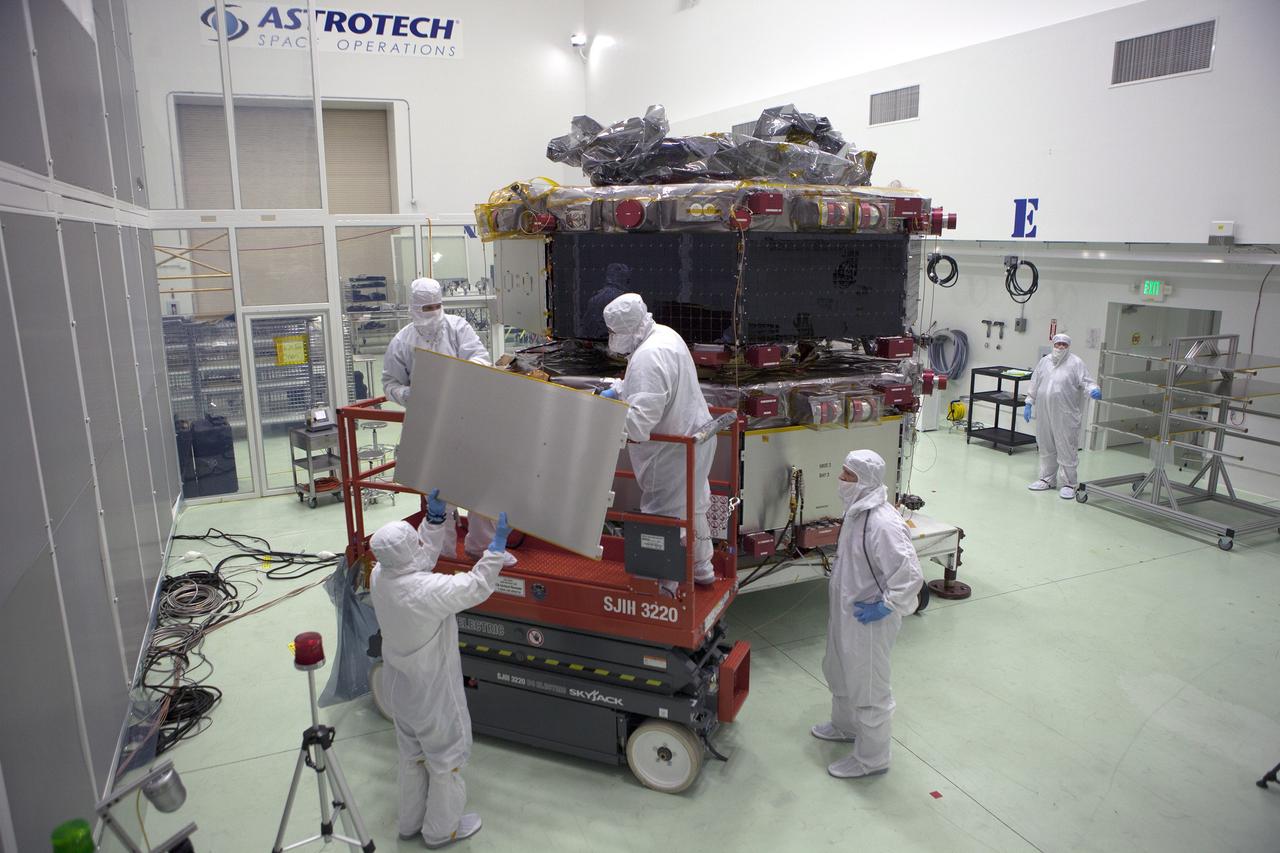
The protective covers are removed from around the solar panels on the upper stack of the Magnetospheric Multiscale spacecraft, or MMS, in the Astrotech payload processing facility in Titusville, Florida, near Kennedy Space Center. Preparations are underway for illumination testing of the spacecraft's upper stack. Illumination testing of the lower instrumentation payload stack was completed in December. Launch aboard a United Launch Alliance Atlas V rocket from Space Launch Complex 41 on Cape Canaveral Air Force Station is targeted for March 12. To learn more about MMS, visit http://www.nasa.gov/mms. Photo credit: NASA/Kim Shiflett
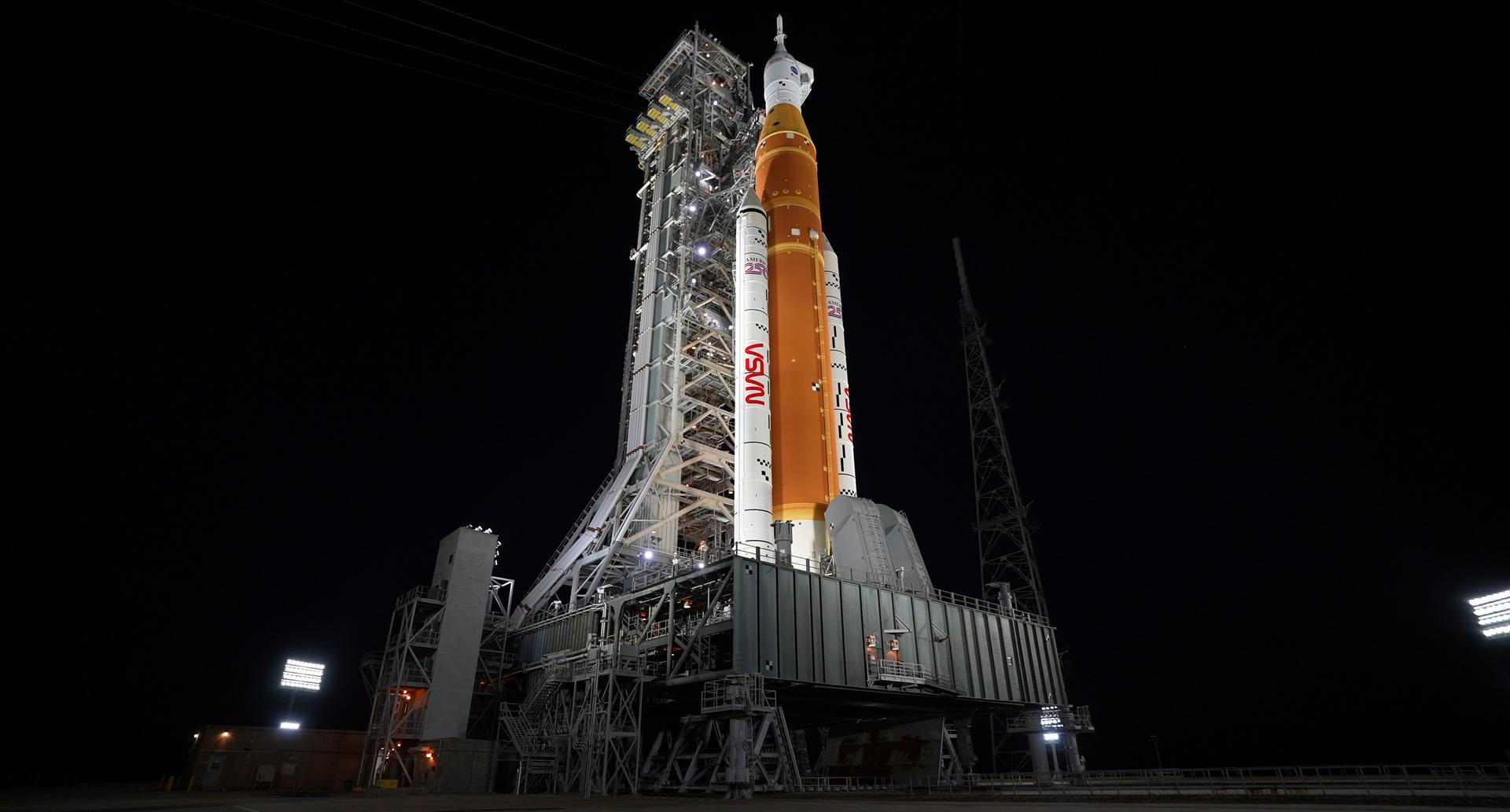
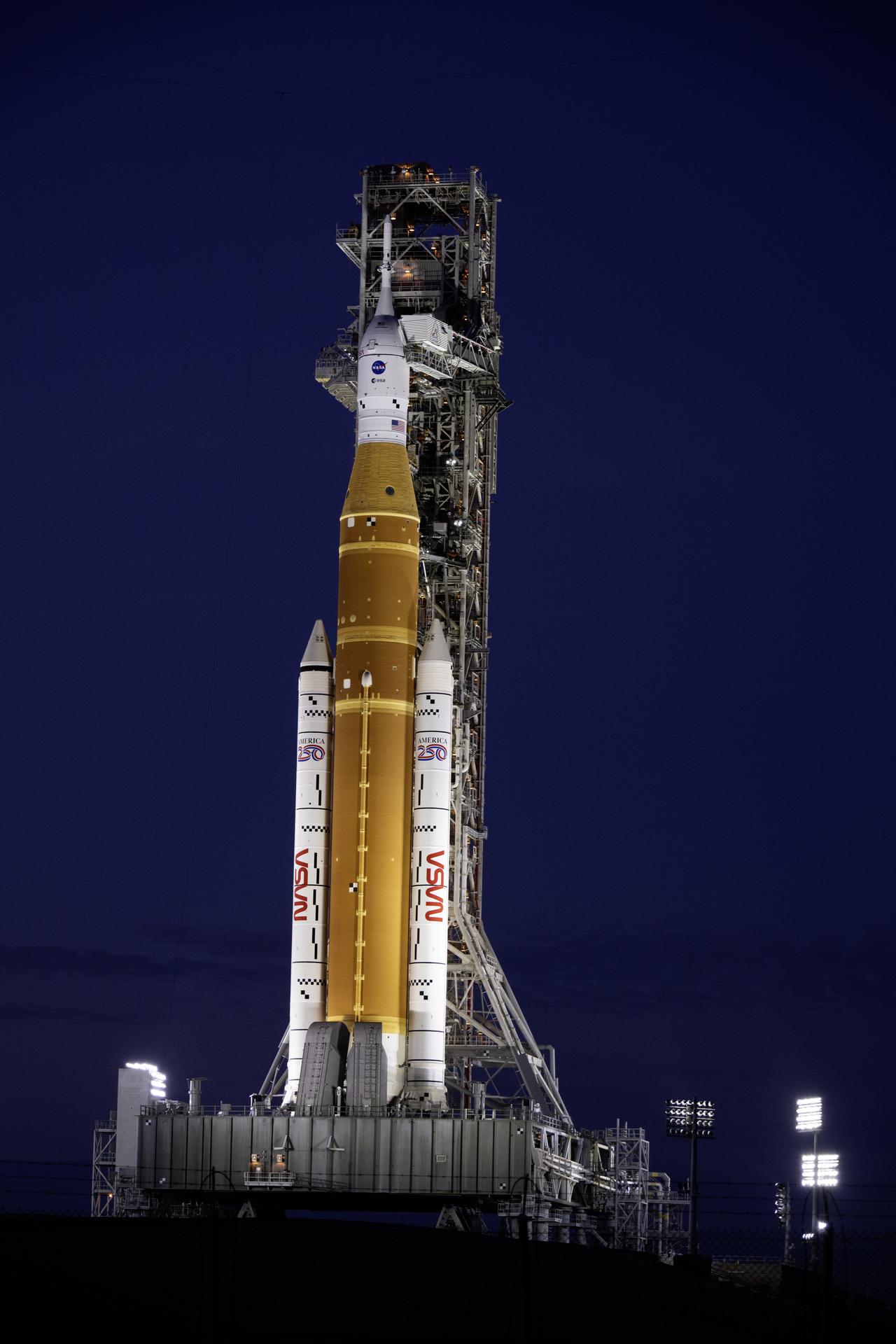
Lights illuminate NASA’s Artemis II SLS (Space Launch System) rocket and Orion spacecraft at Launch Complex 39B at NASA’s Kennedy Space Center in Florida. In the coming days, engineers will prepare for the wet dress rehearsal, a two-day test that simulates launch day. The Artemis II test flight will take Commander Reid Wiseman, Pilot Victor Glover, and Mission Specialist Christina Koch from NASA, and Mission Specialist Jeremy Hansen from the CSA (Canadian Space Agency), around the Moon and back to Earth no later than April 2026.
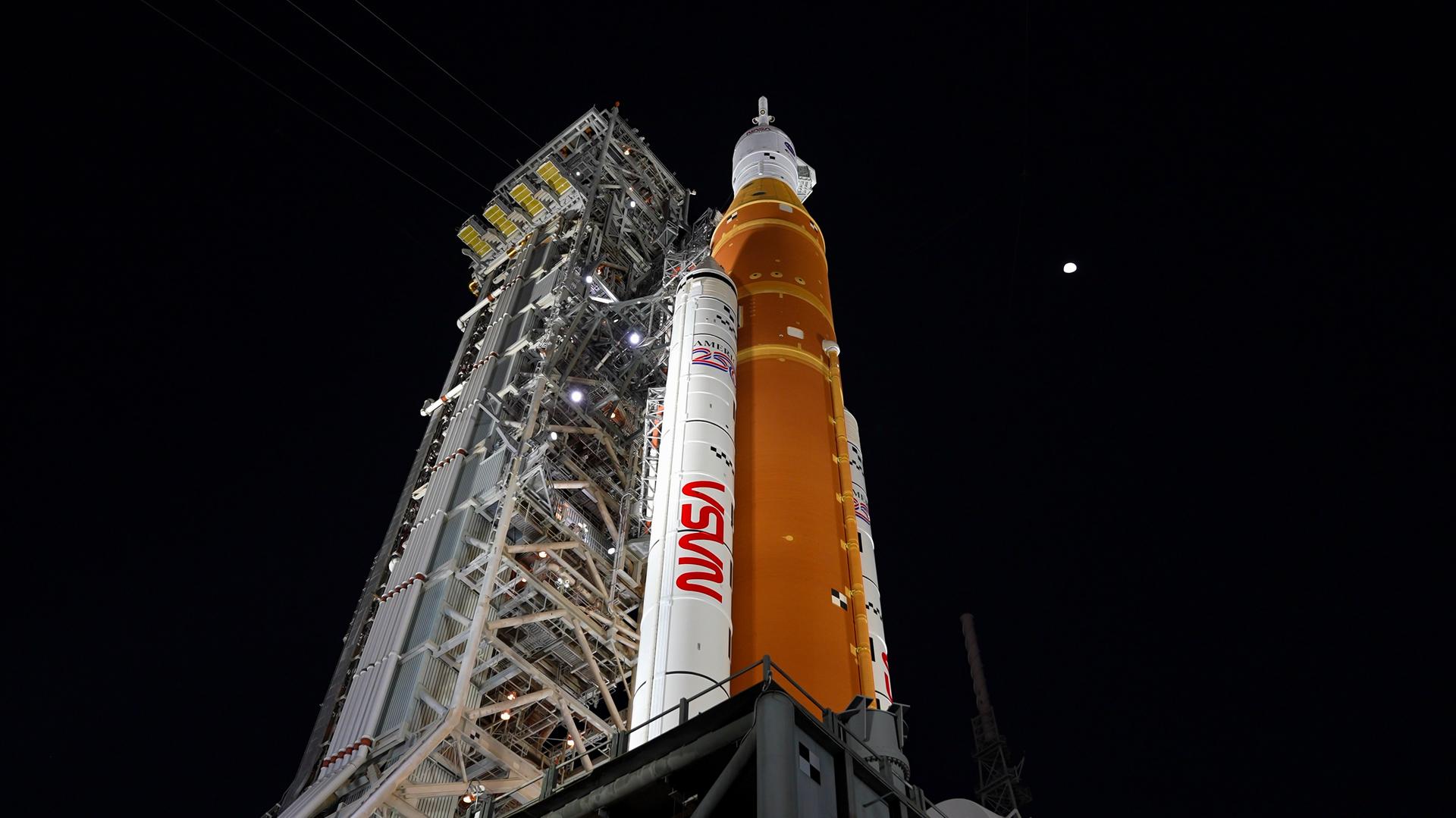
Lights illuminate NASA’s Artemis II SLS (Space Launch System) rocket and Orion spacecraft at Launch Complex 39B at NASA’s Kennedy Space Center in Florida. In the coming days, engineers will prepare for the wet dress rehearsal, a two-day test that simulates launch day. The Artemis II test flight will take Commander Reid Wiseman, Pilot Victor Glover, and Mission Specialist Christina Koch from NASA, and Mission Specialist Jeremy Hansen from the CSA (Canadian Space Agency), around the Moon and back to Earth no later than April 2026.
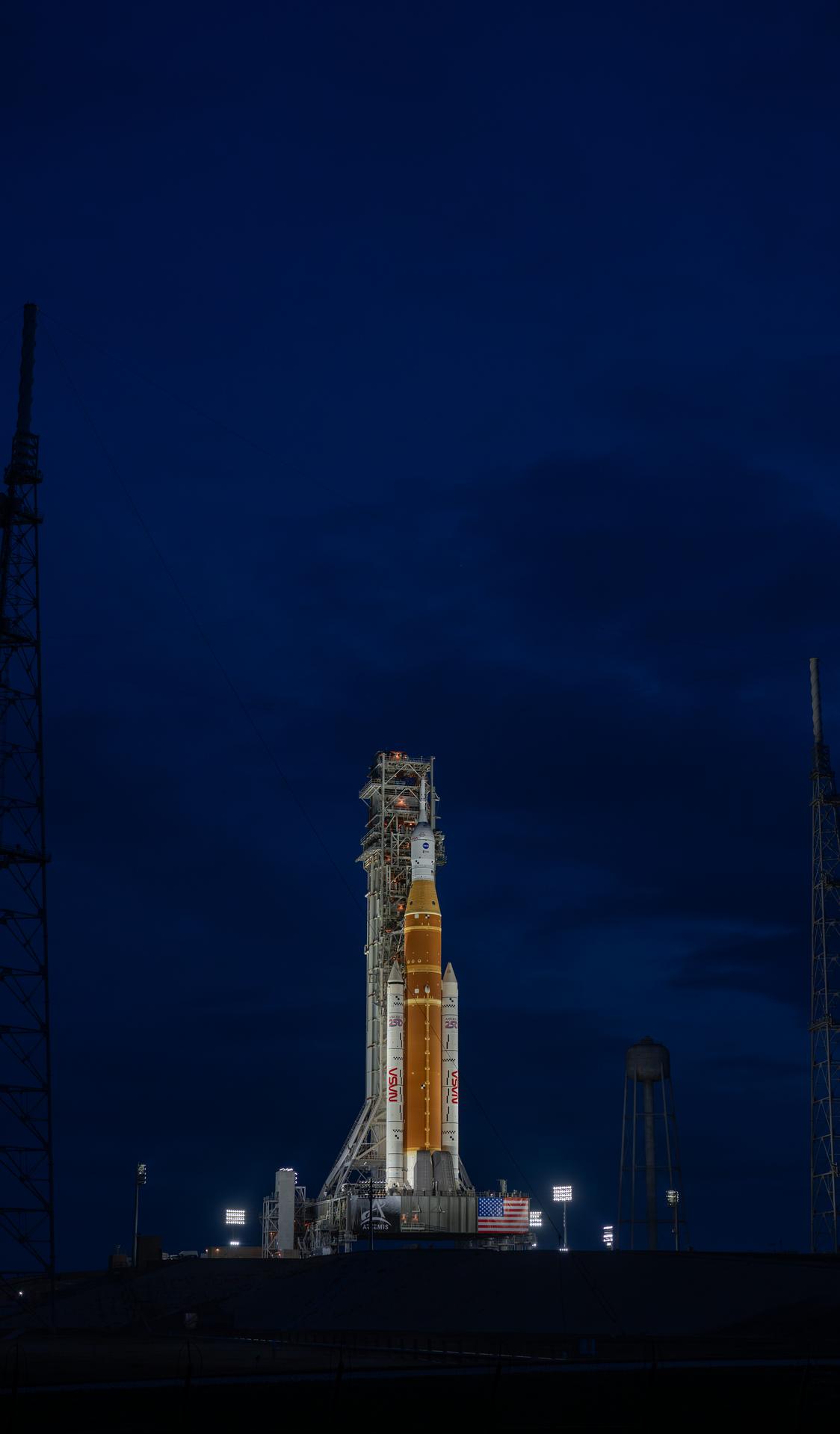
Lights illuminate NASA’s Artemis II SLS (Space Launch System) rocket and Orion spacecraft at Launch Complex 39B at NASA’s Kennedy Space Center in Florida on 01/18/2026. In the coming days, engineers will prepare for the wet dress rehearsal, a two-day test that simulates launch day. The Artemis II test flight will take Commander Reid Wiseman, Pilot Victor Glover, and Mission Specialist Christina Koch from NASA, and Mission Specialist Jeremy Hansen from the CSA (Canadian Space Agency), around the Moon and back to Earth no later than April 2026.
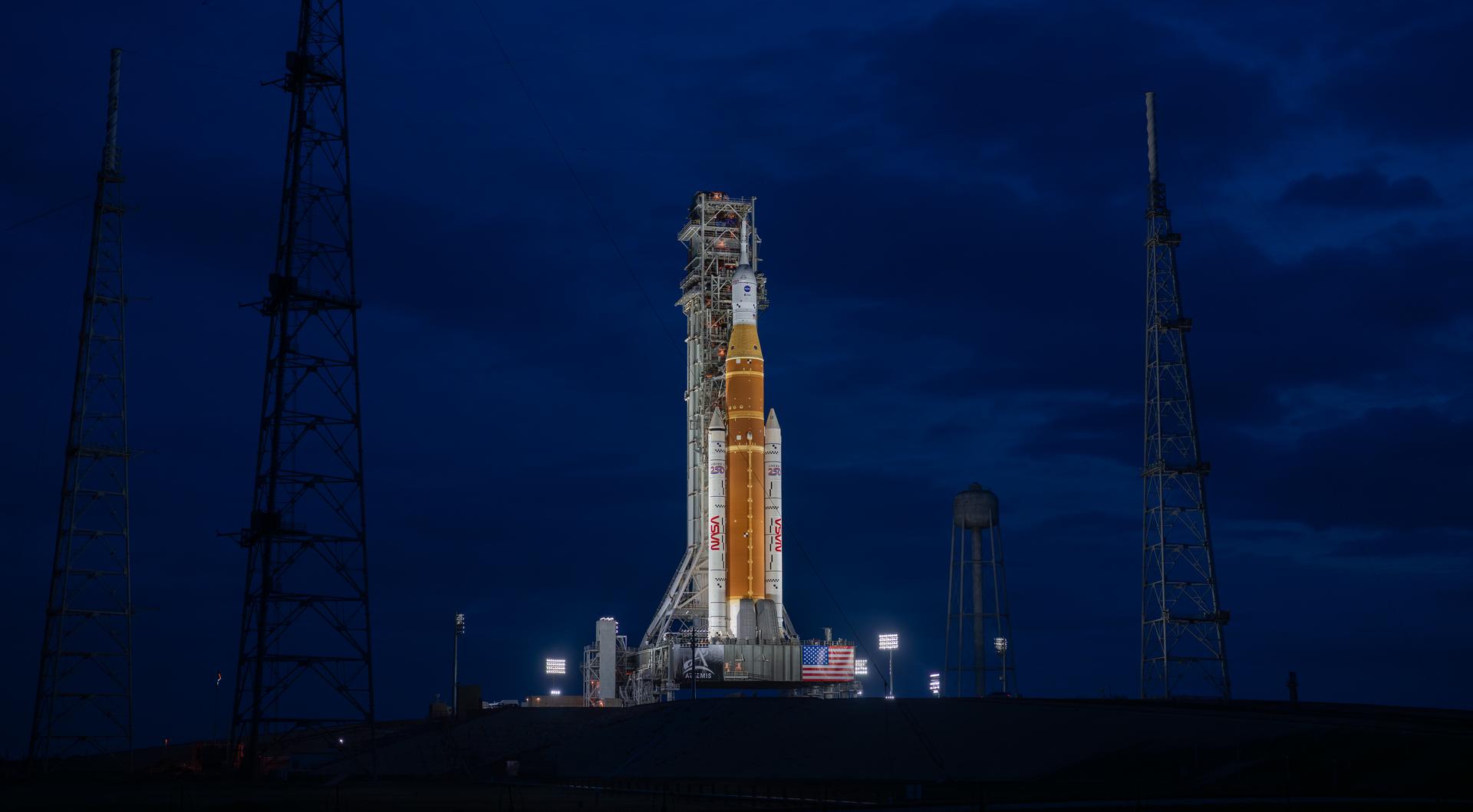
Lights illuminate NASA’s Artemis II SLS (Space Launch System) rocket and Orion spacecraft at Launch Complex 39B at NASA’s Kennedy Space Center in Florida on 01/18/2026. In the coming days, engineers will prepare for the wet dress rehearsal, a two-day test that simulates launch day. The Artemis II test flight will take Commander Reid Wiseman, Pilot Victor Glover, and Mission Specialist Christina Koch from NASA, and Mission Specialist Jeremy Hansen from the CSA (Canadian Space Agency), around the Moon and back to Earth no later than April 2026.
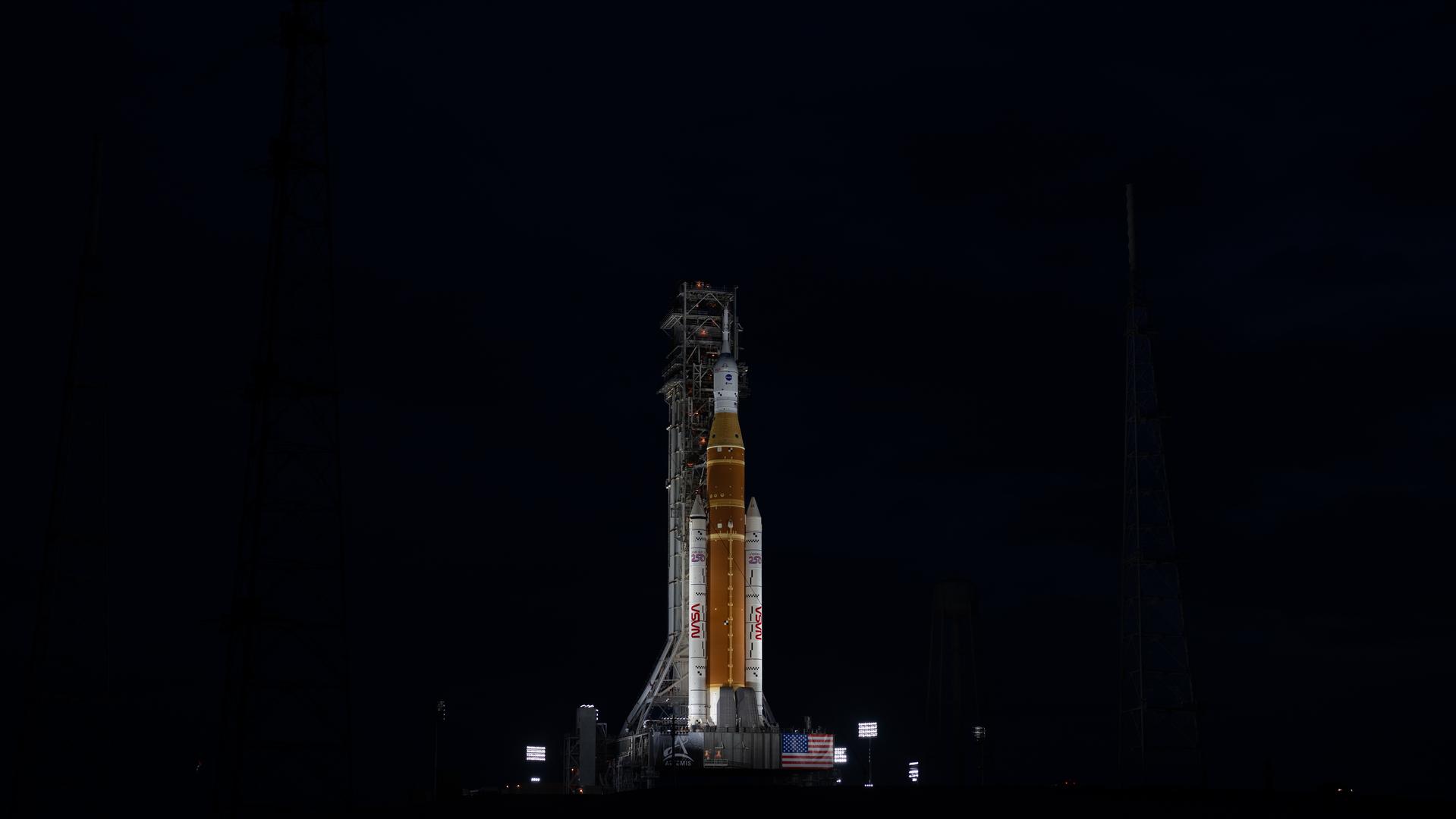
Lights illuminate NASA’s Artemis II SLS (Space Launch System) rocket and Orion spacecraft at Launch Complex 39B at NASA’s Kennedy Space Center in Florida on 01/17/2026. In the coming days, engineers will prepare for the wet dress rehearsal, a two-day test that simulates launch day. The Artemis II test flight will take Commander Reid Wiseman, Pilot Victor Glover, and Mission Specialist Christina Koch from NASA, and Mission Specialist Jeremy Hansen from the CSA (Canadian Space Agency), around the Moon and back to Earth no later than April 2026.
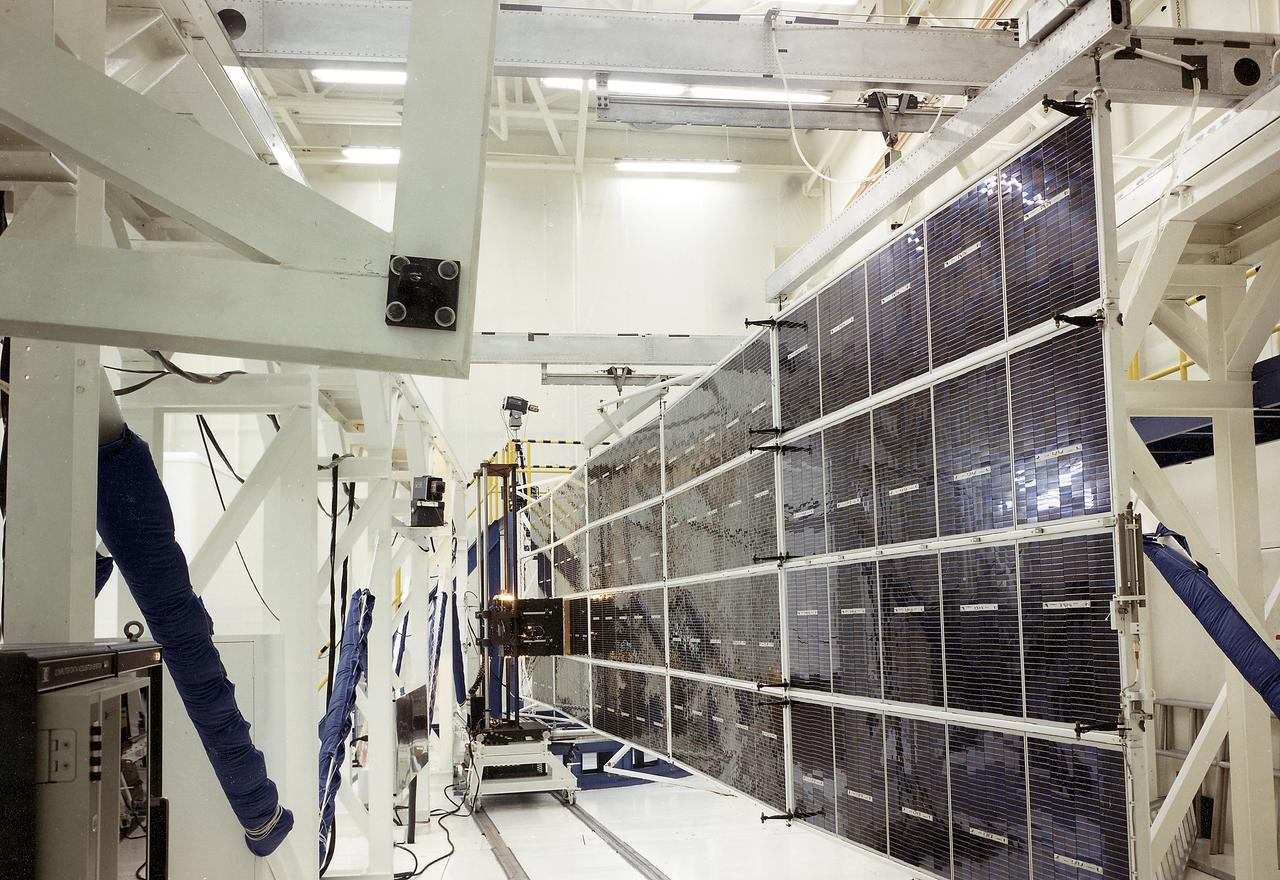
The Apollo Telescope Mount (ATM), one of four major components comprising Skylab, was designed and developed by the Marshall Space Flight Center. Power to operate the ATM's instruments and experiments was collected by four solar arrays, capable of producing up to 1.1 kilowatts of electricity. This is a photograph of the ATM Solar Array flight unit deployed for illumination testing.
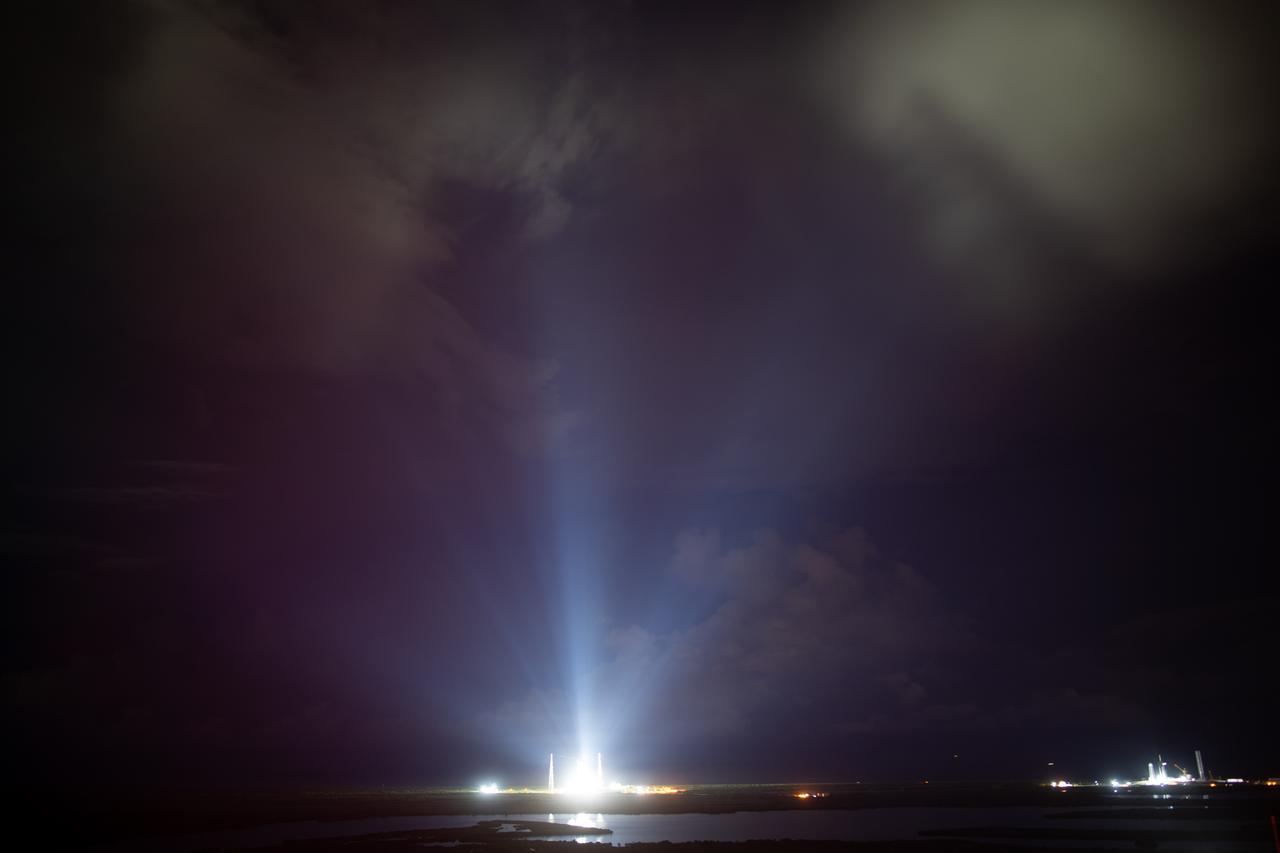
NASA’s Space Launch System (SLS) rocket with the Orion spacecraft aboard atop the mobile launcher is seen illuminated by spotlights at Launch Pad 39B as the launch countdown continues, Monday, Aug. 29, 2022, at NASA’s Kennedy Space Center in Florida. NASA’s Artemis I flight test is the first integrated test of the agency’s deep space exploration systems: the Orion spacecraft, SLS rocket, and supporting ground systems. Launch of the uncrewed flight test is targeted for 8:33 a.m. ET. Photo Credit: (NASA/Joel Kowsky)
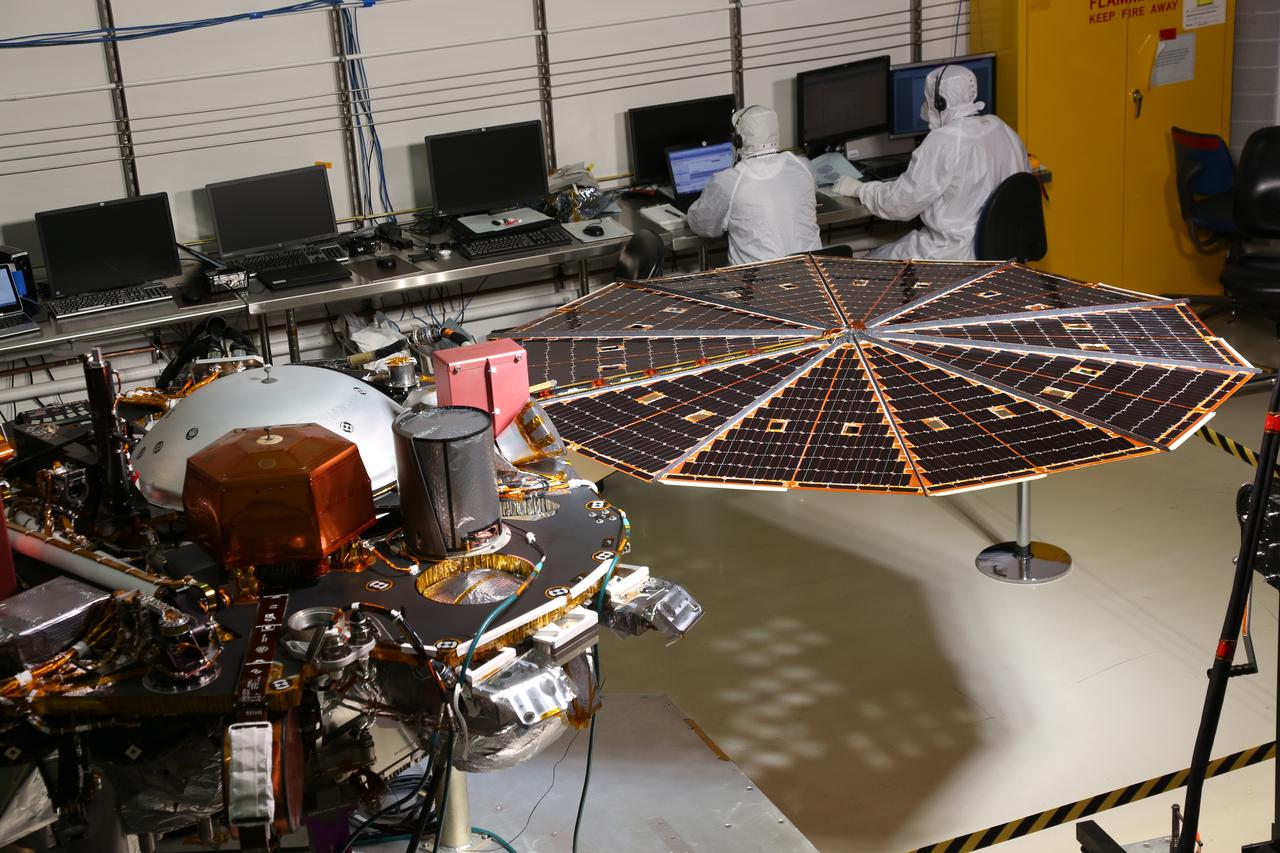
While in the landed configuration for the last time before arriving on Mars, NASA's InSight lander was commanded to deploy its solar arrays to test and verify the exact process that it will use on the surface of the Red Planet. During the test on Jan. 23, 2018 from the Lockheed Martin clean room in Littleton, Colorado, engineers and technicians evaluated that the solar arrays fully deployed and conducted an illumination test to confirm that the solar cells were collecting power. A video is available at https://photojournal.jpl.nasa.gov/catalog/PIA22201
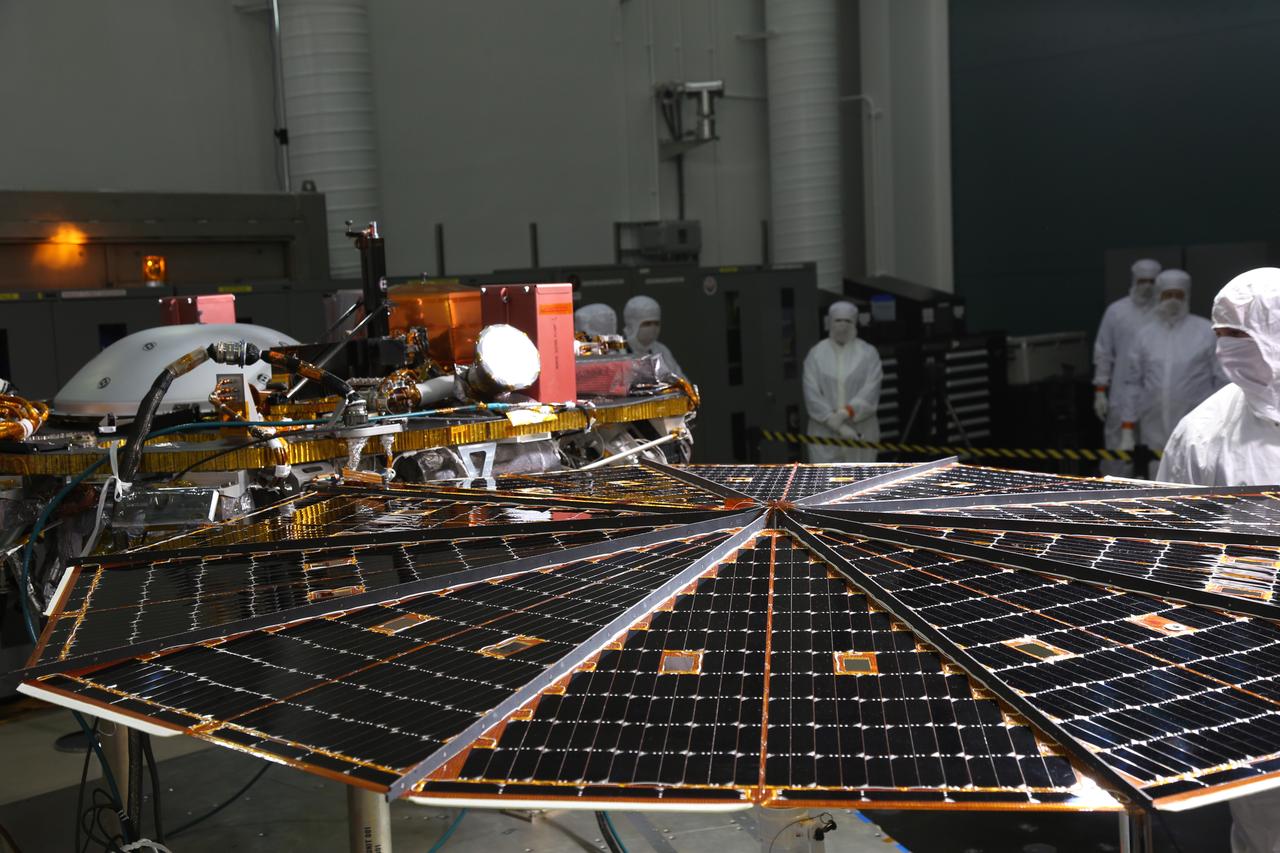
While in the landed configuration for the last time before arriving on Mars, NASA's InSight lander was commanded to deploy its solar arrays to test and verify the exact process that it will use on the surface of the Red Planet. During the test on Jan. 23, 2018 from the Lockheed Martin clean room in Littleton, Colorado, engineers and technicians evaluated that the solar arrays fully deployed and conducted an illumination test to confirm that the solar cells were collecting power. A video is available at https://photojournal.jpl.nasa.gov/catalog/PIA22203
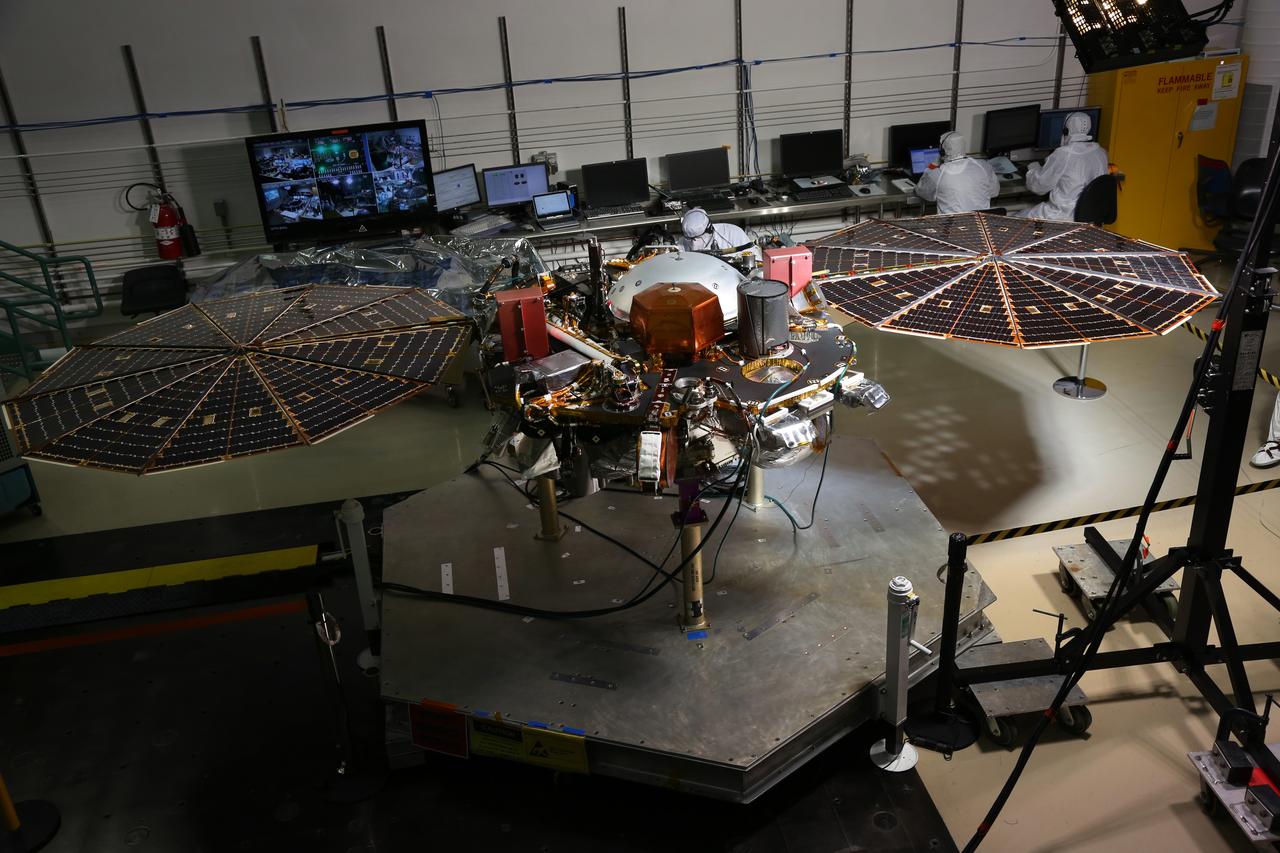
While in the landed configuration for the last time before arriving on Mars, NASA's InSight lander was commanded to deploy its solar arrays to test and verify the exact process that it will use on the surface of the Red Planet. During the test on Jan. 23, 2018 from the Lockheed Martin clean room in Littleton, Colorado, engineers and technicians evaluated that the solar arrays fully deployed and conducted an illumination test to confirm that the solar cells were collecting power. A video is available at https://photojournal.jpl.nasa.gov/catalog/PIA22200
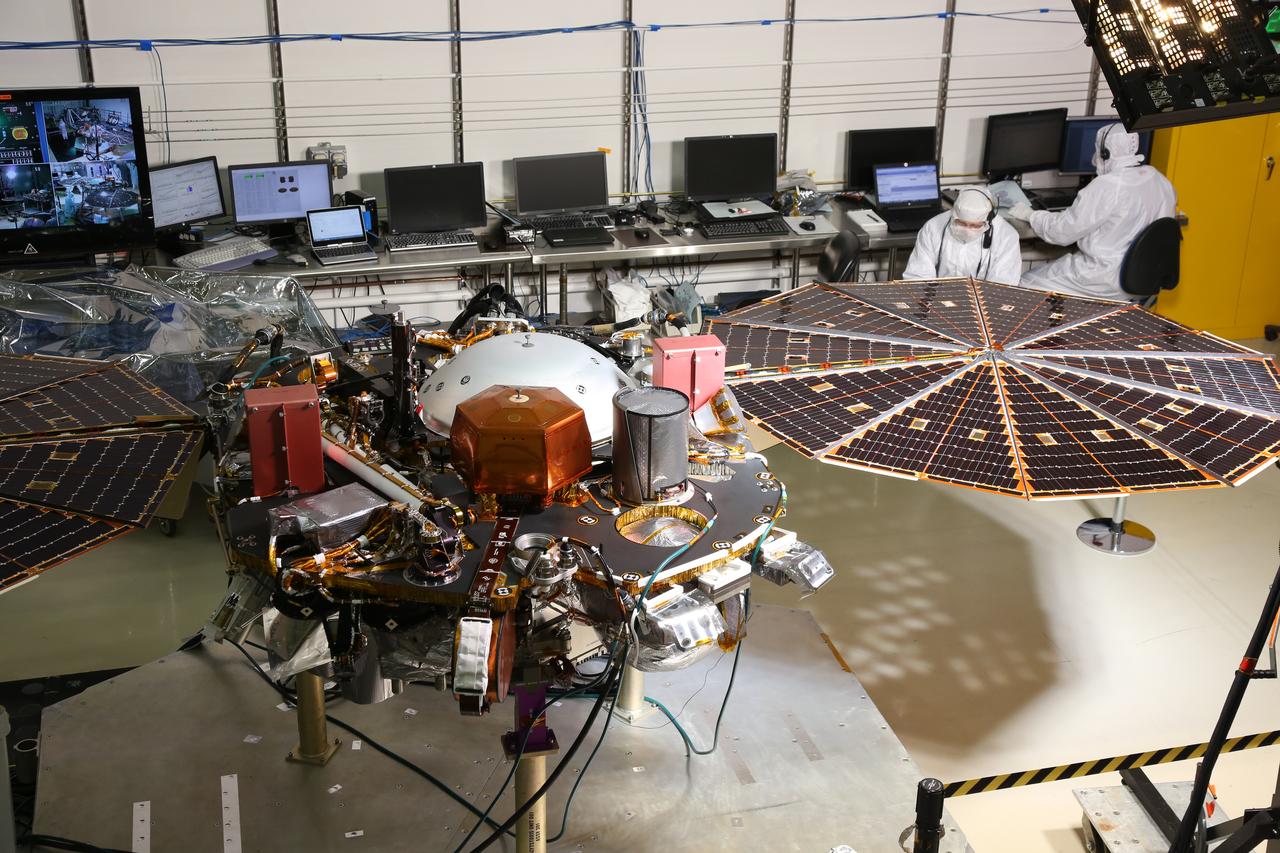
While in the landed configuration for the last time before arriving on Mars, NASA's InSight lander was commanded to deploy its solar arrays to test and verify the exact process that it will use on the surface of the Red Planet. During the test on Jan. 23, 2018 from the Lockheed Martin clean room in Littleton, Colorado, engineers and technicians evaluated that the solar arrays fully deployed and conducted an illumination test to confirm that the solar cells were collecting power. A video is available at https://photojournal.jpl.nasa.gov/catalog/PIA22202
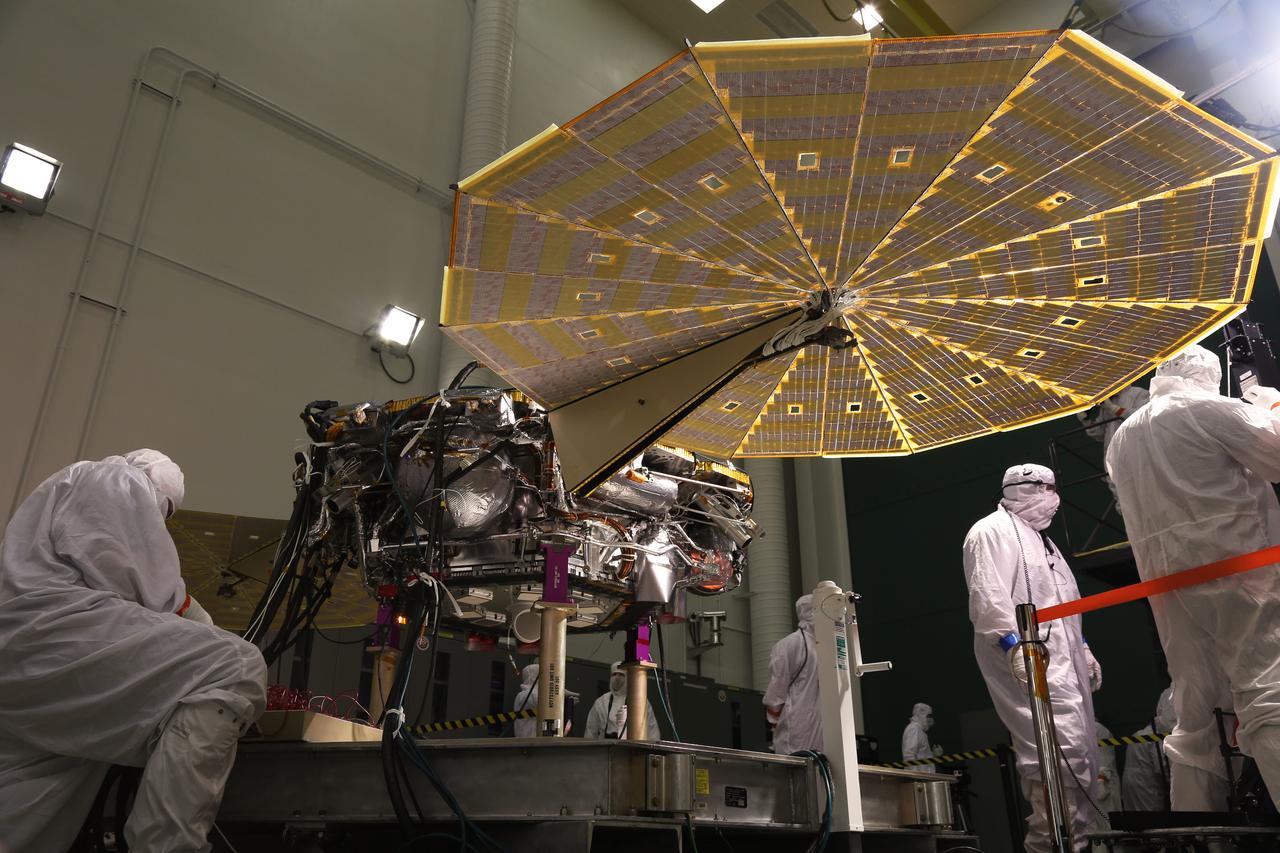
While in the landed configuration for the last time before arriving on Mars, NASA's InSight lander was commanded to deploy its solar arrays to test and verify the exact process that it will use on the surface of the Red Planet. During the test on Jan. 23, 2018 from the Lockheed Martin clean room in Littleton, Colorado, engineers and technicians evaluated that the solar arrays fully deployed and conducted an illumination test to confirm that the solar cells were collecting power. A video is available at https://photojournal.jpl.nasa.gov/catalog/PIA22204
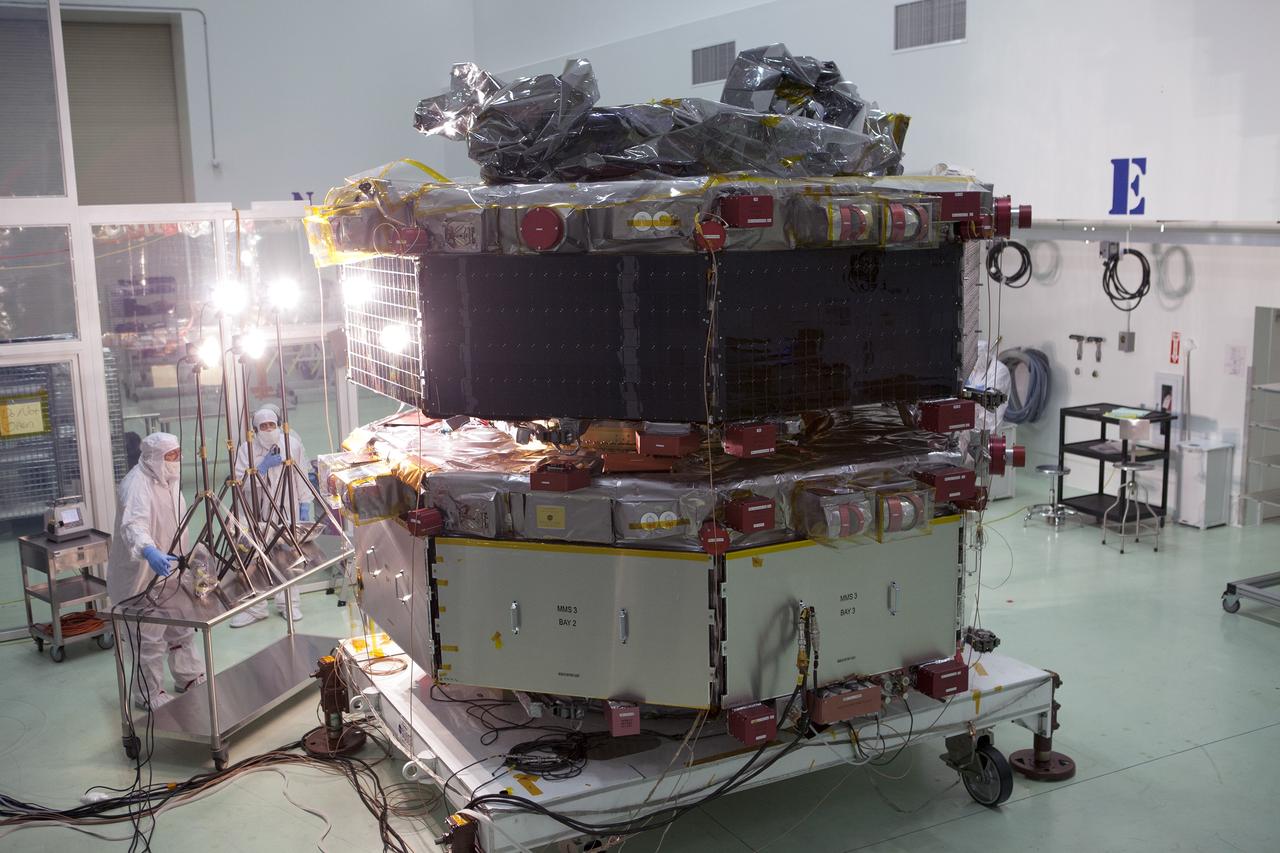
CAPE CANAVERAL, Fla. – A solar array illumination test is performed on the upper stack of the Magnetospheric Multiscale spacecraft, or MMS, in the Astrotech payload processing facility in Titusville, Florida, near Kennedy Space Center. Illumination testing of the lower instrumentation payload stack was completed in December. MMS is a Solar Terrestrial Probes mission comprising four identically instrumented spacecraft that will use Earth’s magnetosphere as a laboratory to study the microphysics of three fundamental plasma processes: magnetic reconnection, energetic particle acceleration and turbulence. Launch aboard a United Launch Alliance Atlas V rocket from Space Launch Complex 41 on Cape Canaveral Air Force Station is targeted for March 12, 2015. To learn more about MMS, visit http://www.nasa.gov/mms. Photo credit: NASA/Kim Shiflett
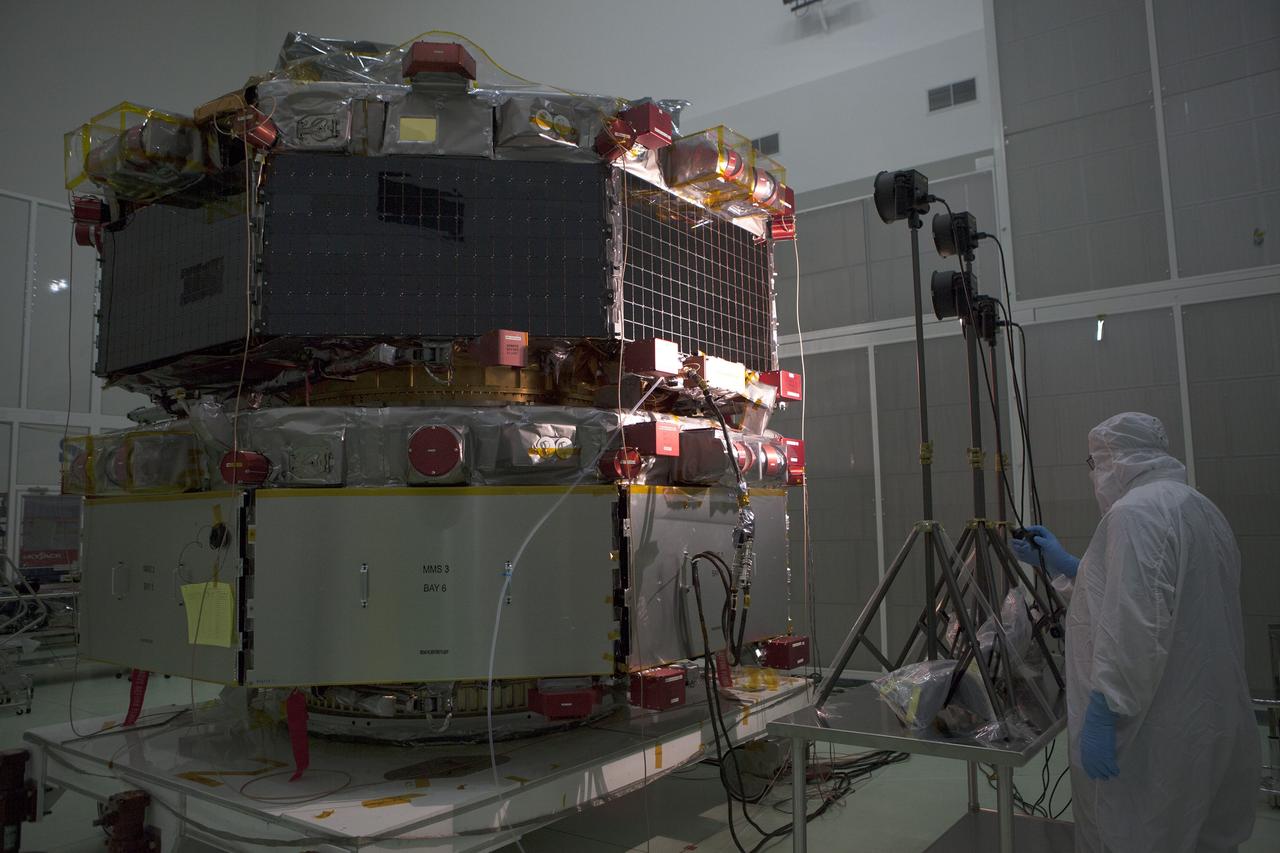
CAPE CANAVERAL, Fla. – A solar array illumination test is performed on the upper stack of the Magnetospheric Multiscale spacecraft, or MMS, in the Astrotech payload processing facility in Titusville, Florida, near Kennedy Space Center. Illumination testing of the lower instrumentation payload stack was completed in December. MMS is a Solar Terrestrial Probes mission comprising four identically instrumented spacecraft that will use Earth’s magnetosphere as a laboratory to study the microphysics of three fundamental plasma processes: magnetic reconnection, energetic particle acceleration and turbulence. Launch aboard a United Launch Alliance Atlas V rocket from Space Launch Complex 41 on Cape Canaveral Air Force Station is targeted for March 12, 2015. To learn more about MMS, visit http://www.nasa.gov/mms. Photo credit: NASA/Kim Shiflett
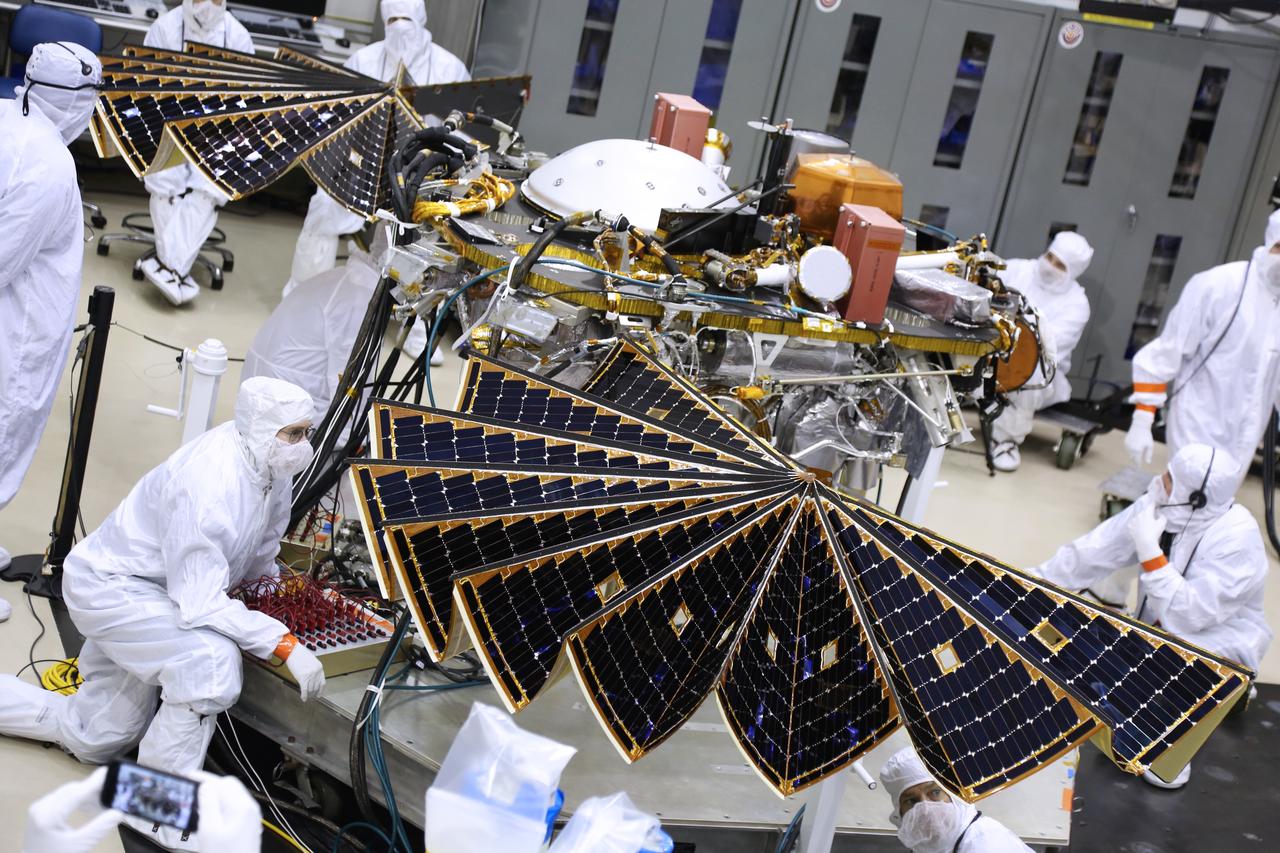
The solar arrays on NASA's InSight Mars lander were deployed as part of testing conducted Jan. 23, 2018, at Lockheed Martin Space in Littleton, Colorado. Engineers and technicians evaluated the solar arrays and performed an illumination test to confirm that the solar cells were collecting power. The launch window for InSight opens May 5, 2018. A video is available at https://photojournal.jpl.nasa.gov/catalog/PIA22205
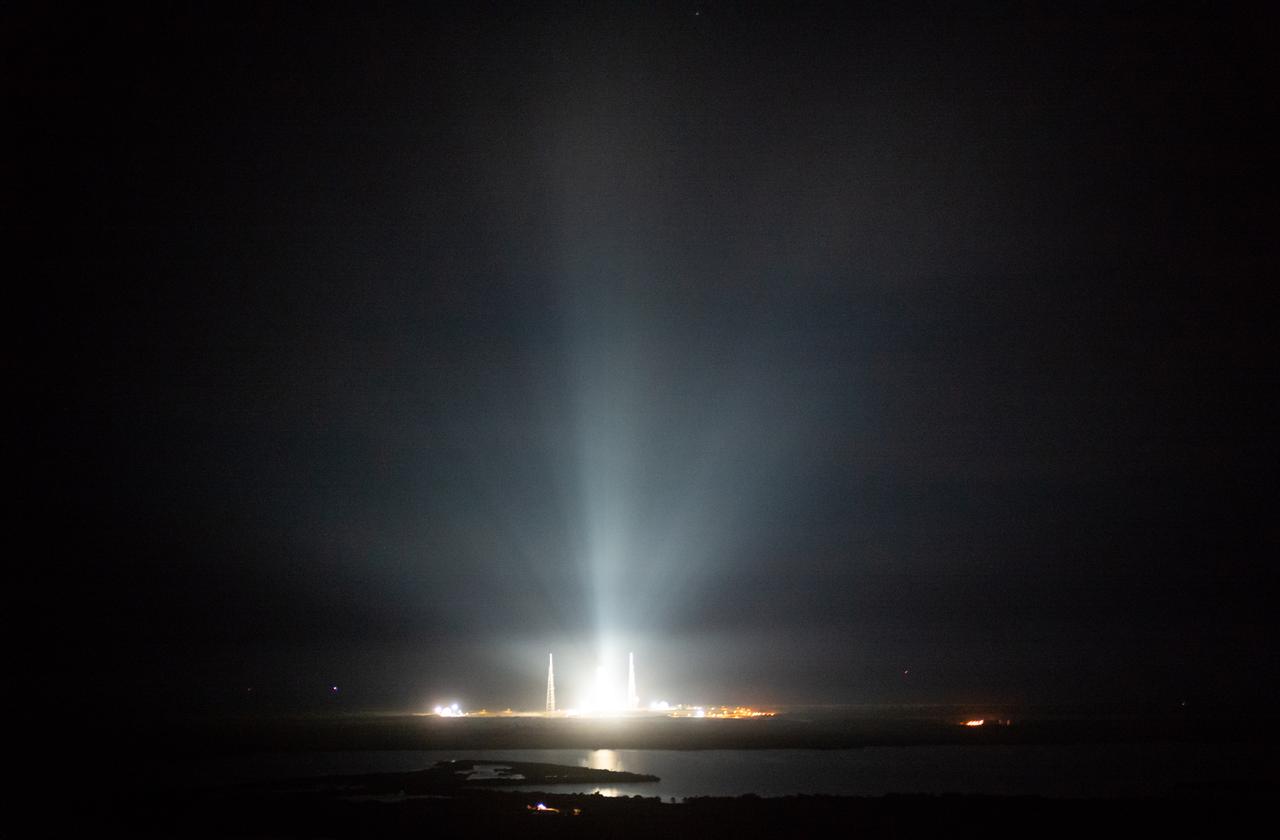
NASA’s Space Launch System (SLS) rocket with the Orion spacecraft aboard is seen atop the mobile launcher illuminated by spotlights at Launch Pad 39B, Wednesday, Nov. 16, 2022, as the launch countdown progresses at NASA’s Kennedy Space Center in Florida. NASA’s Artemis I flight test is the first integrated test of the agency’s deep space exploration systems: the Orion spacecraft, SLS rocket, and supporting ground systems. Photo Credit: (NASA/Joel Kowsky)
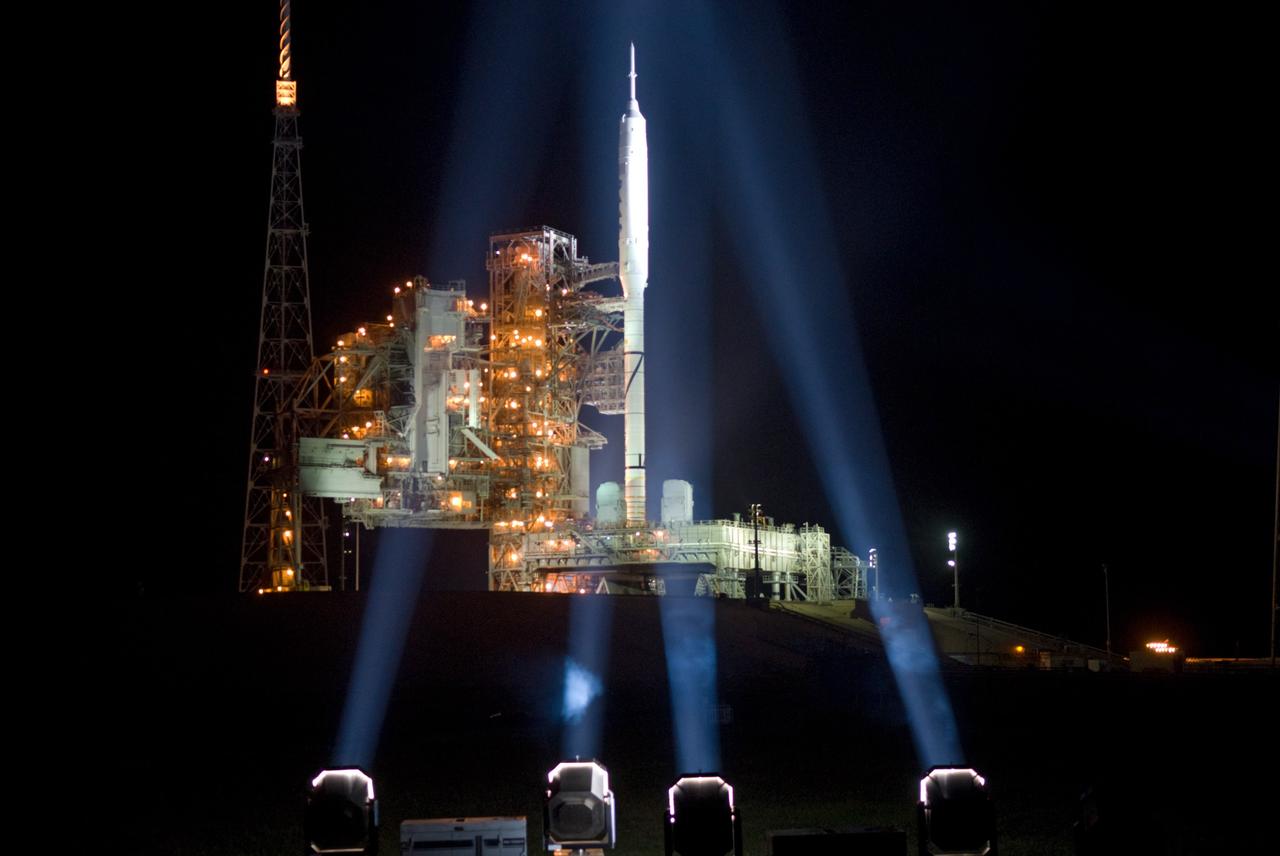
CAPE CANAVERAL, Fla. - As nightfall comes to Launch Complex 39B at NASA's Kennedy Space Center in Florida, xenon lights illuminate the pad and the Ares I-X rocket awaiting the approaching liftoff of its flight test. This is the first time since the Apollo Program's Saturn rockets were retired that a vehicle other than the space shuttle has occupied the pad. Part of the Constellation Program, the Ares I-X is the test vehicle for the Ares I. The Ares I-X flight test is set for Oct. 27. For information on the Ares I-X vehicle and flight test, visit http://www.nasa.gov/aresIX. Photo credit: NASA/Kim Shiflett
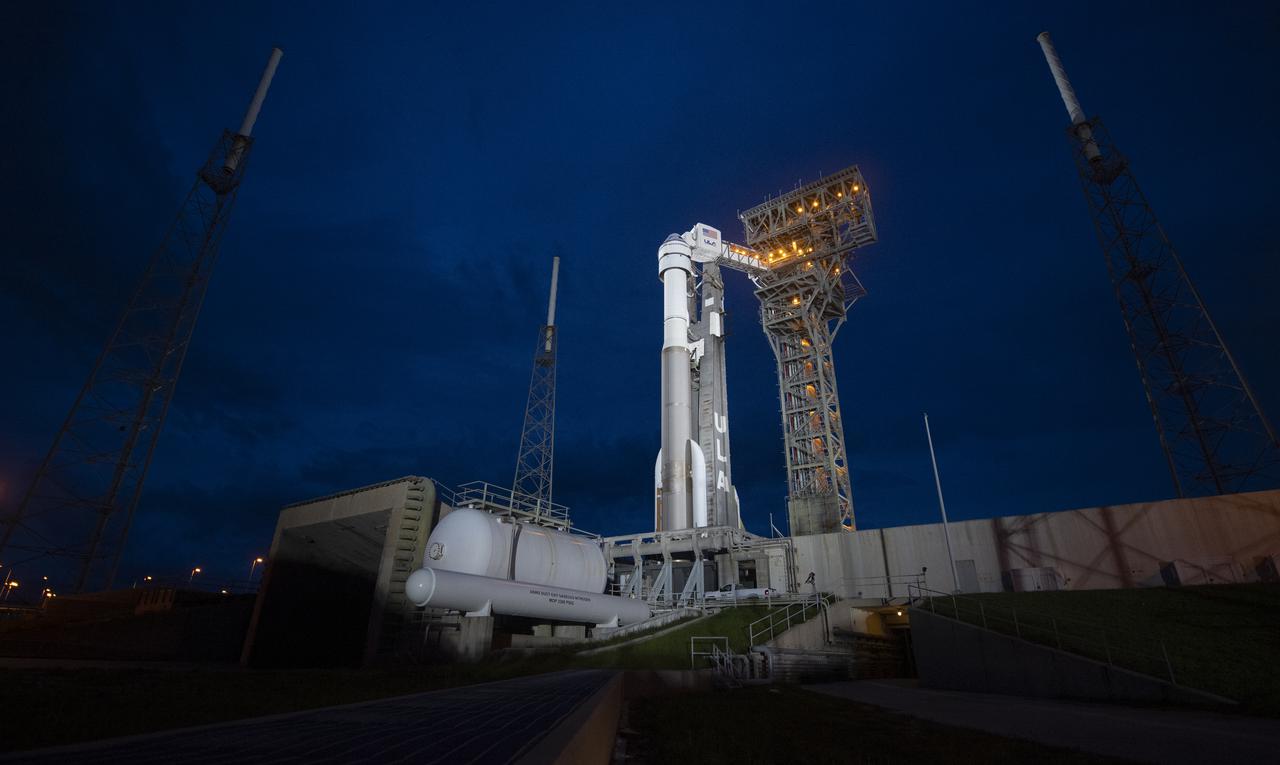
A United Launch Alliance Atlas V rocket with Boeing’s CST-100 Starliner spacecraft aboard is seen illuminated by spotlights on the launch pad at Space Launch Complex 41 ahead of the Orbital Flight Test-2 mission, Monday, Aug. 2, 2021 at Cape Canaveral Space Force Station in Florida. Boeing’s Orbital Flight Test-2 will be Starliner’s second uncrewed flight test and will dock to the International Space Station as part of NASA's Commercial Crew Program. The mission, currently targeted for launch on 1:20 p.m. EDT Tuesday, Aug. 3, will serve as an end-to-end test of the system's capabilities. Photo Credit: (NASA/Joel Kowsky)
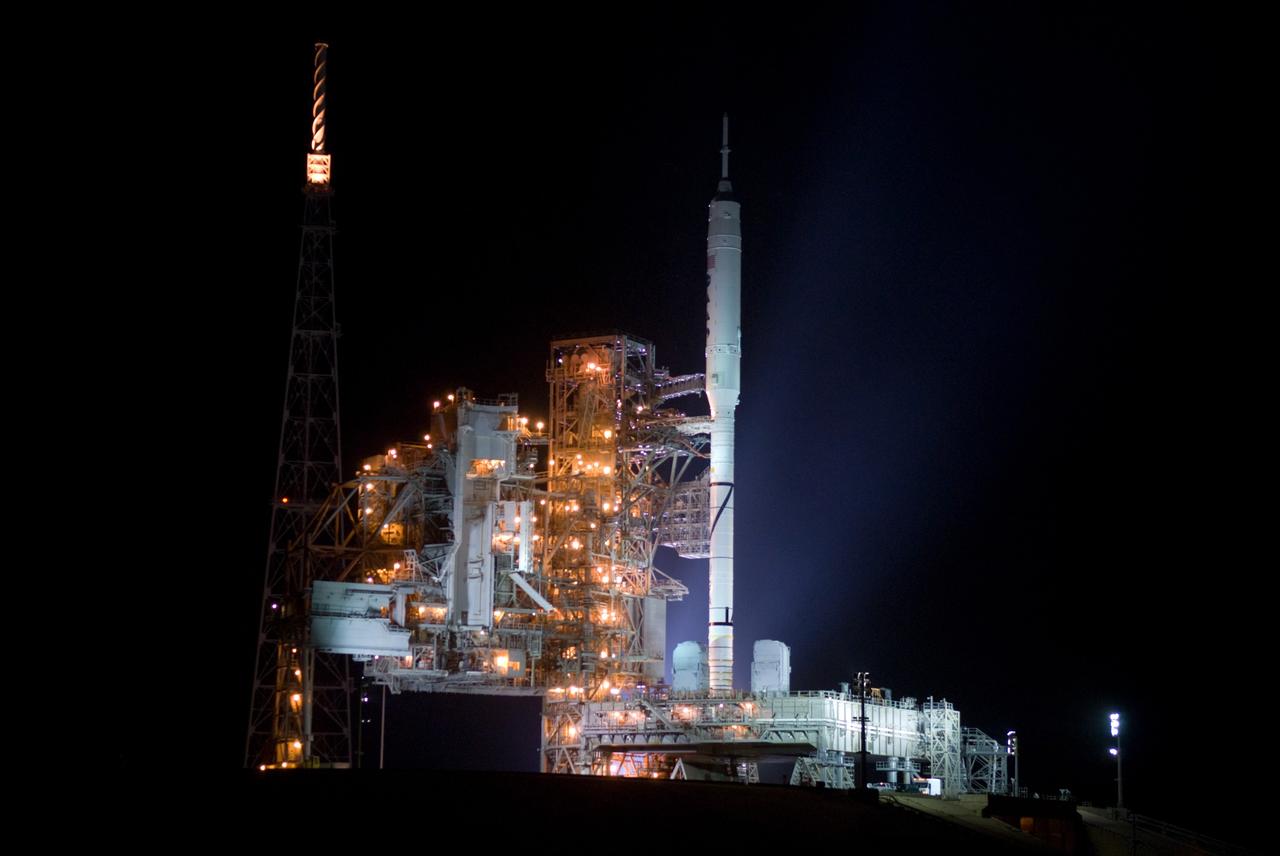
CAPE CANAVERAL, Fla. - As nightfall comes to Launch Complex 39B at NASA's Kennedy Space Center in Florida, xenon lights illuminate the pad and the Ares I-X rocket awaiting the approaching liftoff of its flight test. This is the first time since the Apollo Program's Saturn rockets were retired that a vehicle other than the space shuttle has occupied the pad. Part of the Constellation Program, the Ares I-X is the test vehicle for the Ares I. The Ares I-X flight test is set for Oct. 27. For information on the Ares I-X vehicle and flight test, visit http://www.nasa.gov/aresIX. Photo credit: NASA/Kim Shiflett
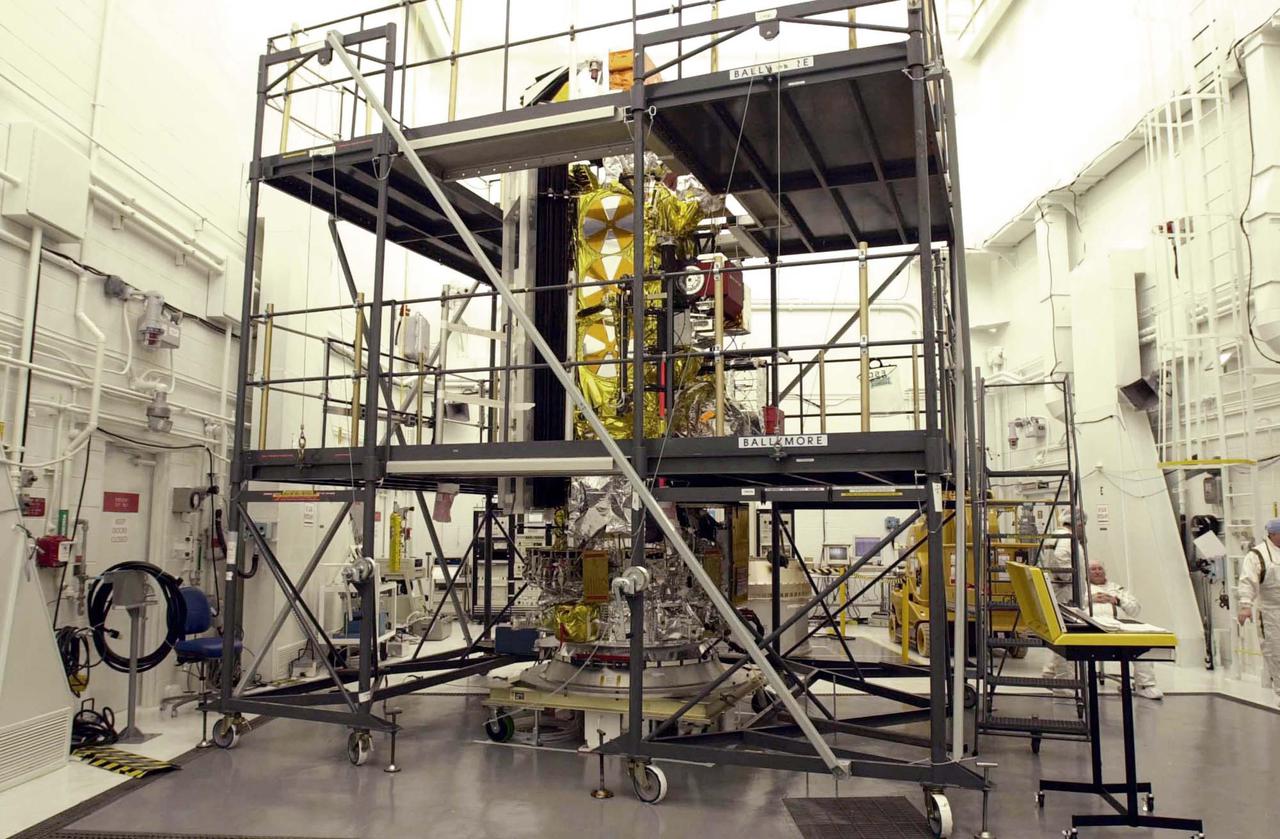
VANDENBERG AIR FORCE BASE, CALIF. - Inside the NASA spacecraft processing hangar 1610 located on North Vandenberg Air Force Base in California, the National Oceanic and Atmospheric Administration (NOAA-N) spacecraft is undergoing testing. The testing includes a the Spacecraft Electrical Performance Test, battery conditioning, a Solar Array Illumination Telemetry Test, final instrument inspections and closeouts for flight. Launch of NOAA-N aboard the Boeing Delta II rocket is currently scheduled for May 11, 2005. NOAA-N is the fourth in the series of support dedicated microwave instruments for the generation of temperature, moisture, surface, and hydrological products in cloudy regions where visible and infrared (IR) instruments have decreased capability.
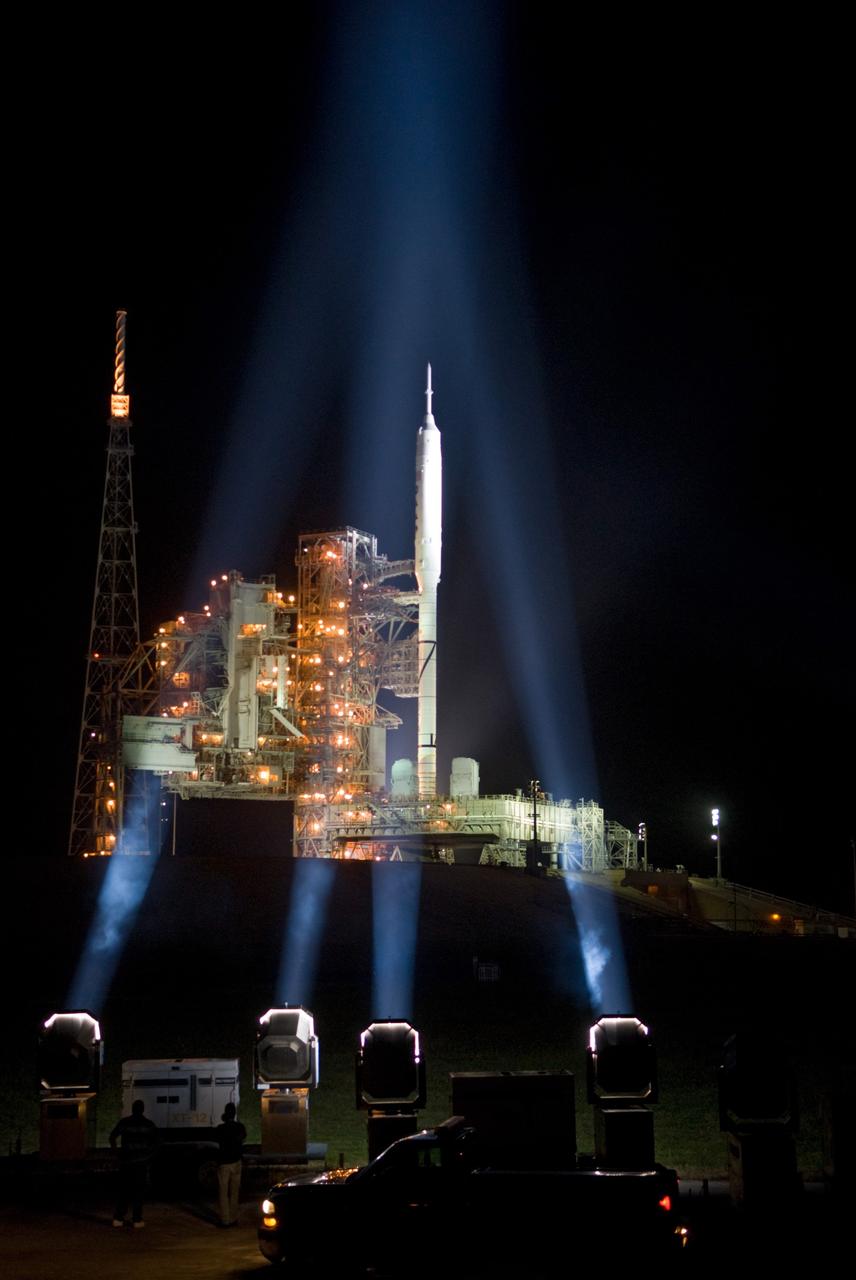
CAPE CANAVERAL, Fla. - As nightfall comes to Launch Complex 39B at NASA's Kennedy Space Center in Florida, xenon lights illuminate the pad and the Ares I-X rocket awaiting the approaching liftoff of its flight test. This is the first time since the Apollo Program's Saturn rockets were retired that a vehicle other than the space shuttle has occupied the pad. Part of the Constellation Program, the Ares I-X is the test vehicle for the Ares I. The Ares I-X flight test is set for Oct. 27. For information on the Ares I-X vehicle and flight test, visit http://www.nasa.gov/aresIX. Photo credit: NASA/Kim Shiflett
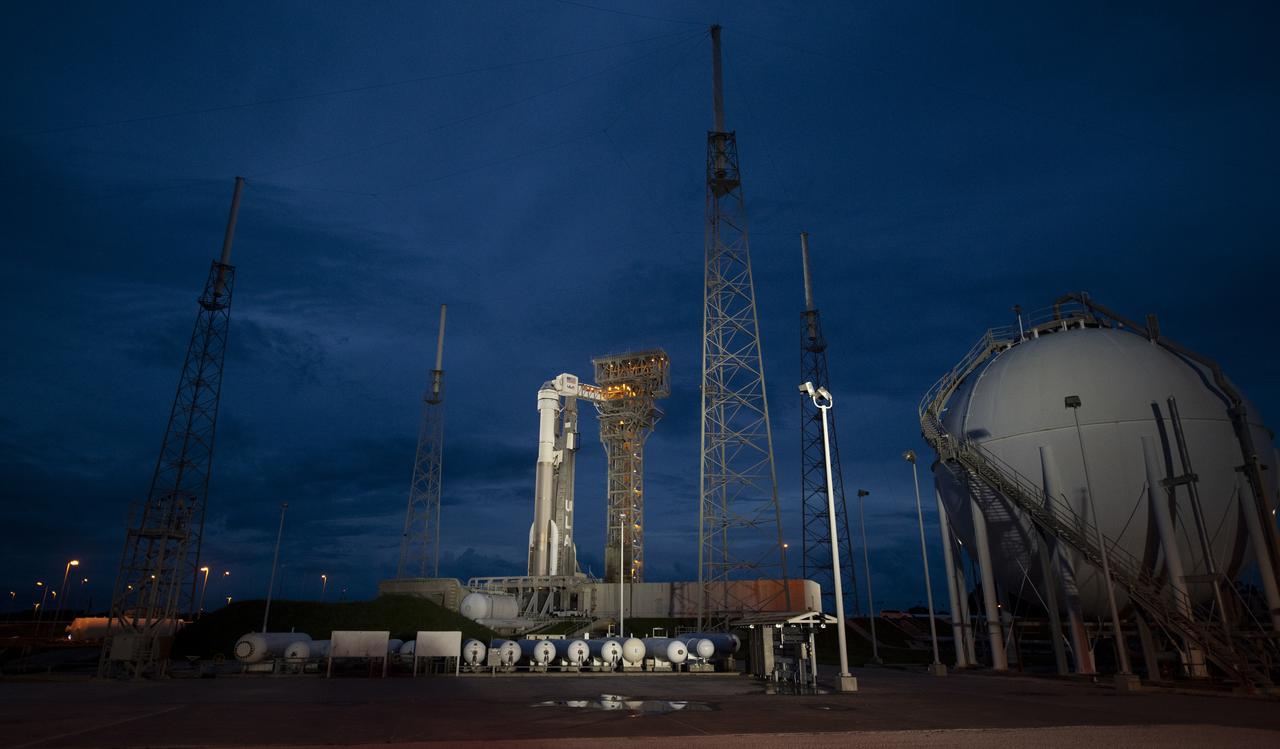
A United Launch Alliance Atlas V rocket with Boeing’s CST-100 Starliner spacecraft aboard is seen illuminated by spotlights on the launch pad at Space Launch Complex 41 ahead of the Orbital Flight Test-2 mission, Monday, Aug. 2, 2021 at Cape Canaveral Space Force Station in Florida. Boeing’s Orbital Flight Test-2 will be Starliner’s second uncrewed flight test and will dock to the International Space Station as part of NASA's Commercial Crew Program. The mission, currently targeted for launch on 1:20 p.m. EDT Tuesday, Aug. 3, will serve as an end-to-end test of the system's capabilities. Photo Credit: (NASA/Joel Kowsky)
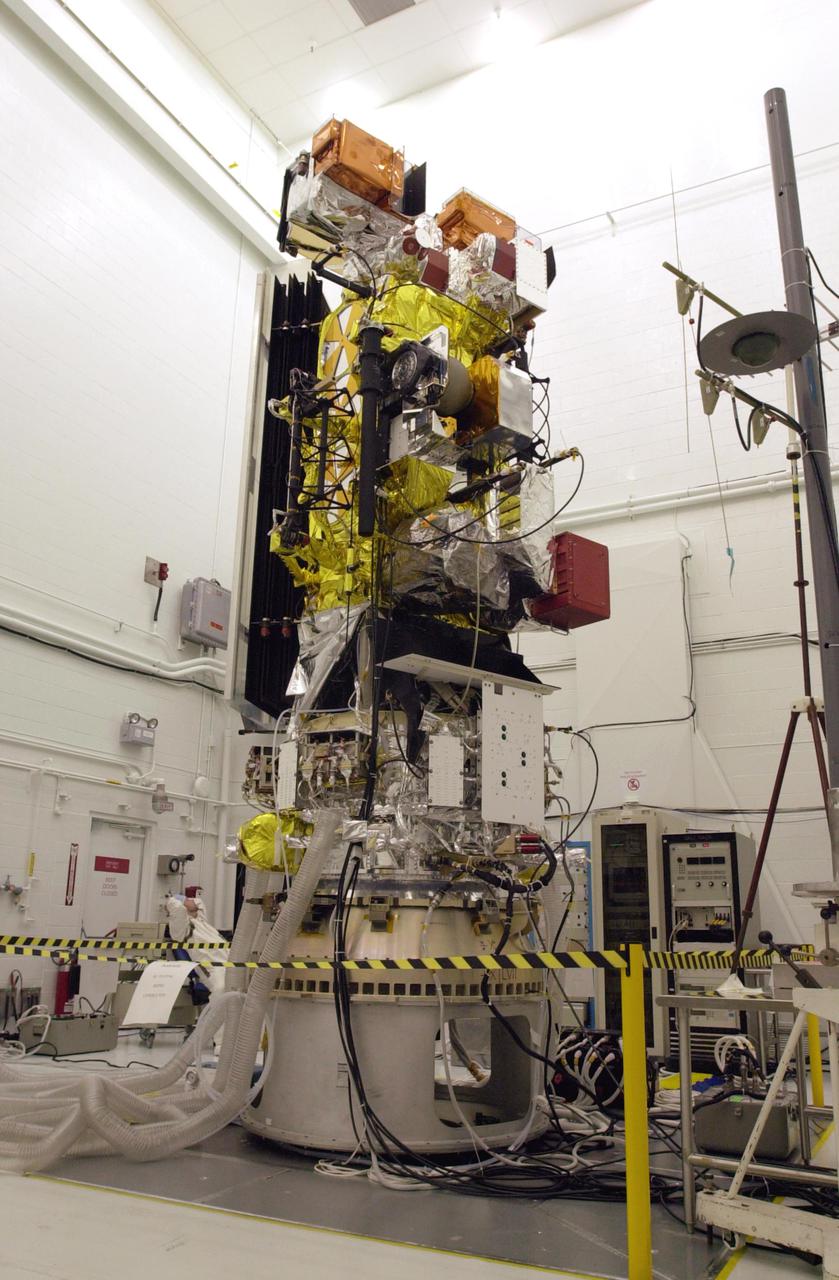
VANDENBERG AIR FORCE BASE, CALIF. - Inside the NASA spacecraft processing hangar 1610 located on North Vandenberg Air Force Base in California, the National Oceanic and Atmospheric Administration (NOAA-N) spacecraft is undergoing testing. The testing includes the Spacecraft Electrical Performance Test, battery conditioning, a Solar Array Illumination Telemetry Test, final instrument inspections and closeouts for flight. Launch of NOAA-N aboard the Boeing Delta II rocket is currently scheduled for May 11, 2005. NOAA-N is the fourth in the series of support dedicated microwave instruments for the generation of temperature, moisture, surface, and hydrological products in cloudy regions where visible and infrared (IR) instruments have decreased capability.
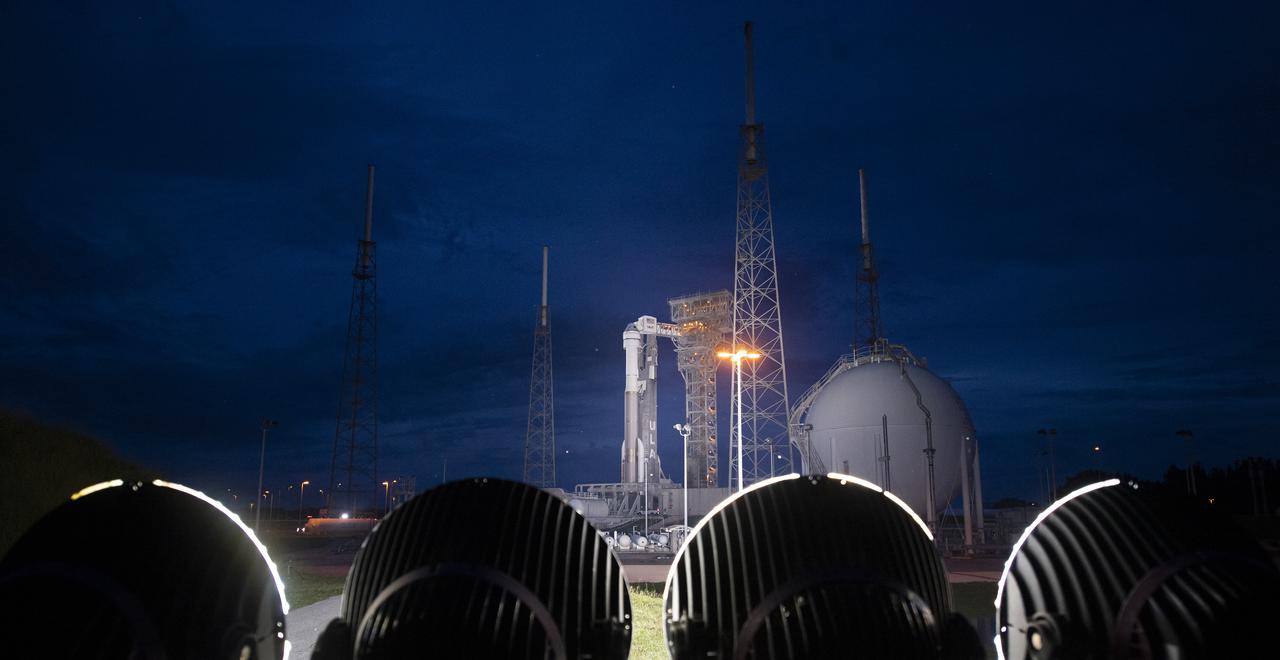
A United Launch Alliance Atlas V rocket with Boeing’s CST-100 Starliner spacecraft aboard is seen illuminated by spotlights on the launch pad at Space Launch Complex 41 ahead of the Orbital Flight Test-2 mission, Monday, Aug. 2, 2021 at Cape Canaveral Space Force Station in Florida. Boeing’s Orbital Flight Test-2 will be Starliner’s second uncrewed flight test and will dock to the International Space Station as part of NASA's Commercial Crew Program. The mission, currently targeted for launch on 1:20 p.m. EDT Tuesday, Aug. 3, will serve as an end-to-end test of the system's capabilities. Photo Credit: (NASA/Joel Kowsky)
A United Launch Alliance Atlas V rocket with Boeing’s CST-100 Starliner spacecraft aboard is seen illuminated by spotlights on the launch pad at Space Launch Complex 41 ahead of the Orbital Flight Test-2 mission, Monday, Aug. 2, 2021 at Cape Canaveral Space Force Station in Florida. Boeing’s Orbital Flight Test-2 will be Starliner’s second uncrewed flight test and will dock to the International Space Station as part of NASA's Commercial Crew Program. The mission, currently targeted for launch on 1:20 p.m. EDT Tuesday, Aug. 3, will serve as an end-to-end test of the system's capabilities. Photo Credit: (NASA/Joel Kowsky)
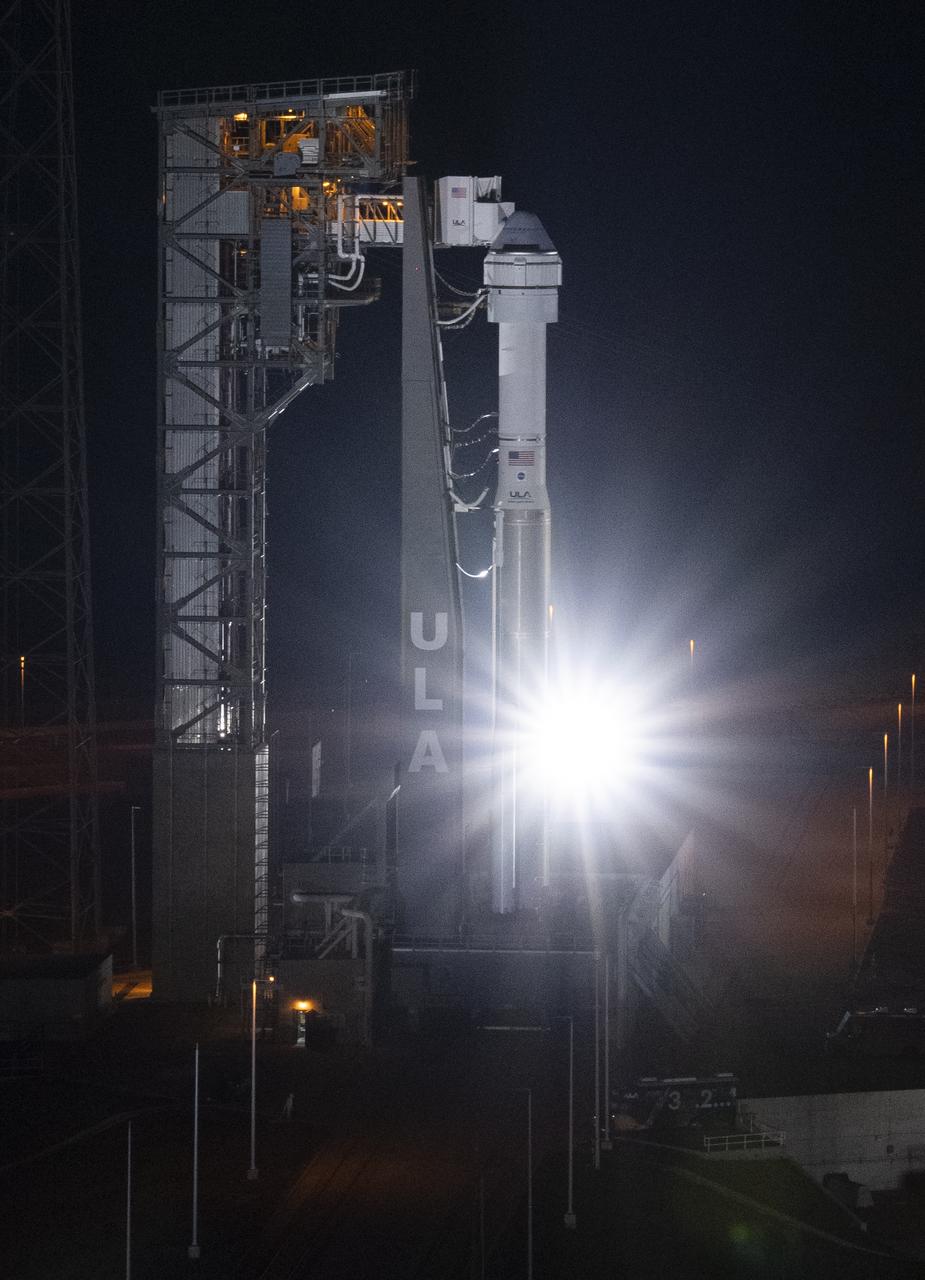
A United Launch Alliance Atlas V rocket with Boeing’s CST-100 Starliner spacecraft aboard is seen illuminated by spotlights on the launch pad at Space Launch Complex 41 ahead of the Orbital Flight Test-2 mission, Wednesday, May 18, 2022 at Cape Canaveral Space Force Station in Florida. Boeing’s Orbital Flight Test-2 will be Starliner’s second uncrewed flight test and will dock to the International Space Station as part of NASA's Commercial Crew Program. The mission, currently targeted for launch on 6:54 p.m. ET on May 19, will serve as an end-to-end test of the system's capabilities. Photo Credit: (NASA/Joel Kowsky)
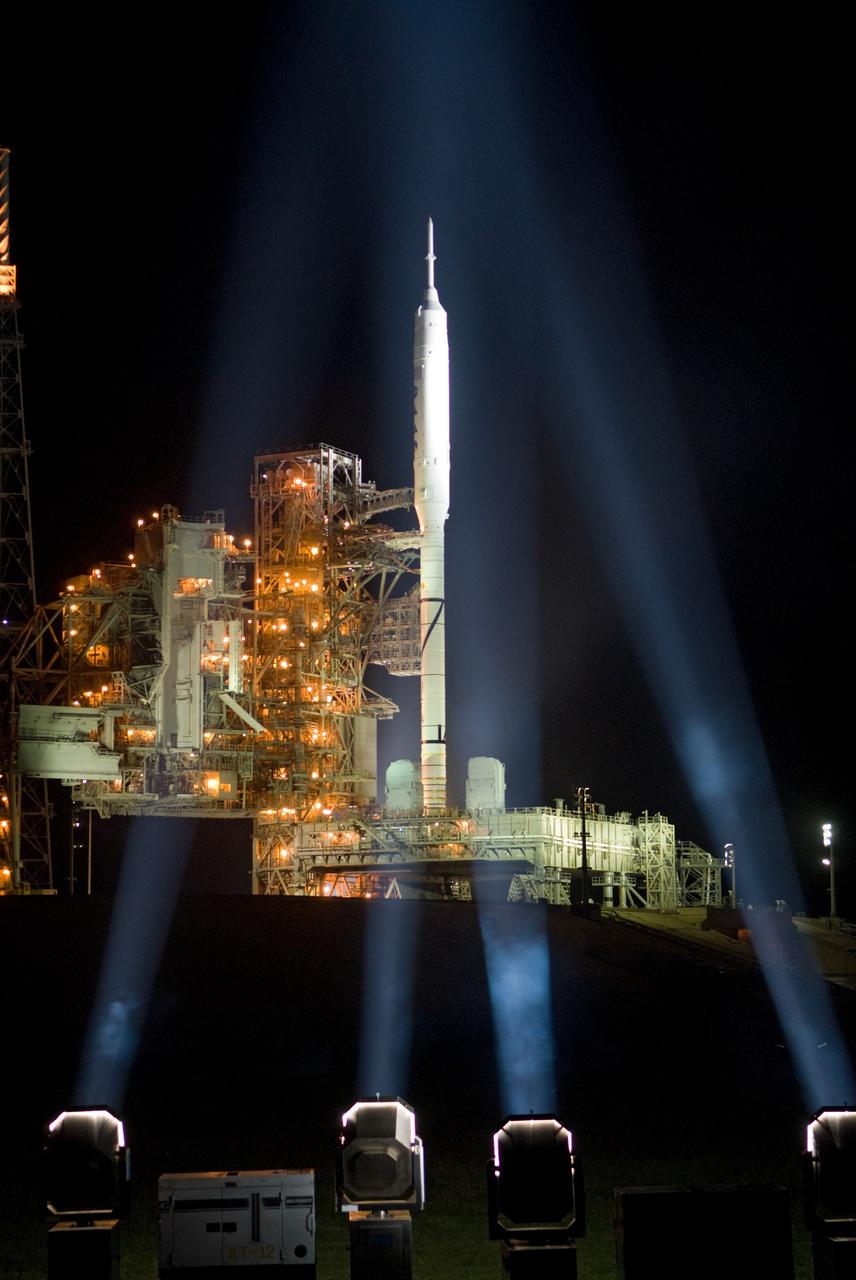
CAPE CANAVERAL, Fla. - As nightfall comes to Launch Complex 39B at NASA's Kennedy Space Center in Florida, xenon lights illuminate the pad and the Ares I-X rocket awaiting the approaching liftoff of its flight test. This is the first time since the Apollo Program's Saturn rockets were retired that a vehicle other than the space shuttle has occupied the pad. Part of the Constellation Program, the Ares I-X is the test vehicle for the Ares I. The Ares I-X flight test is set for Oct. 27. For information on the Ares I-X vehicle and flight test, visit http://www.nasa.gov/aresIX. Photo credit: NASA/Kim Shiflett
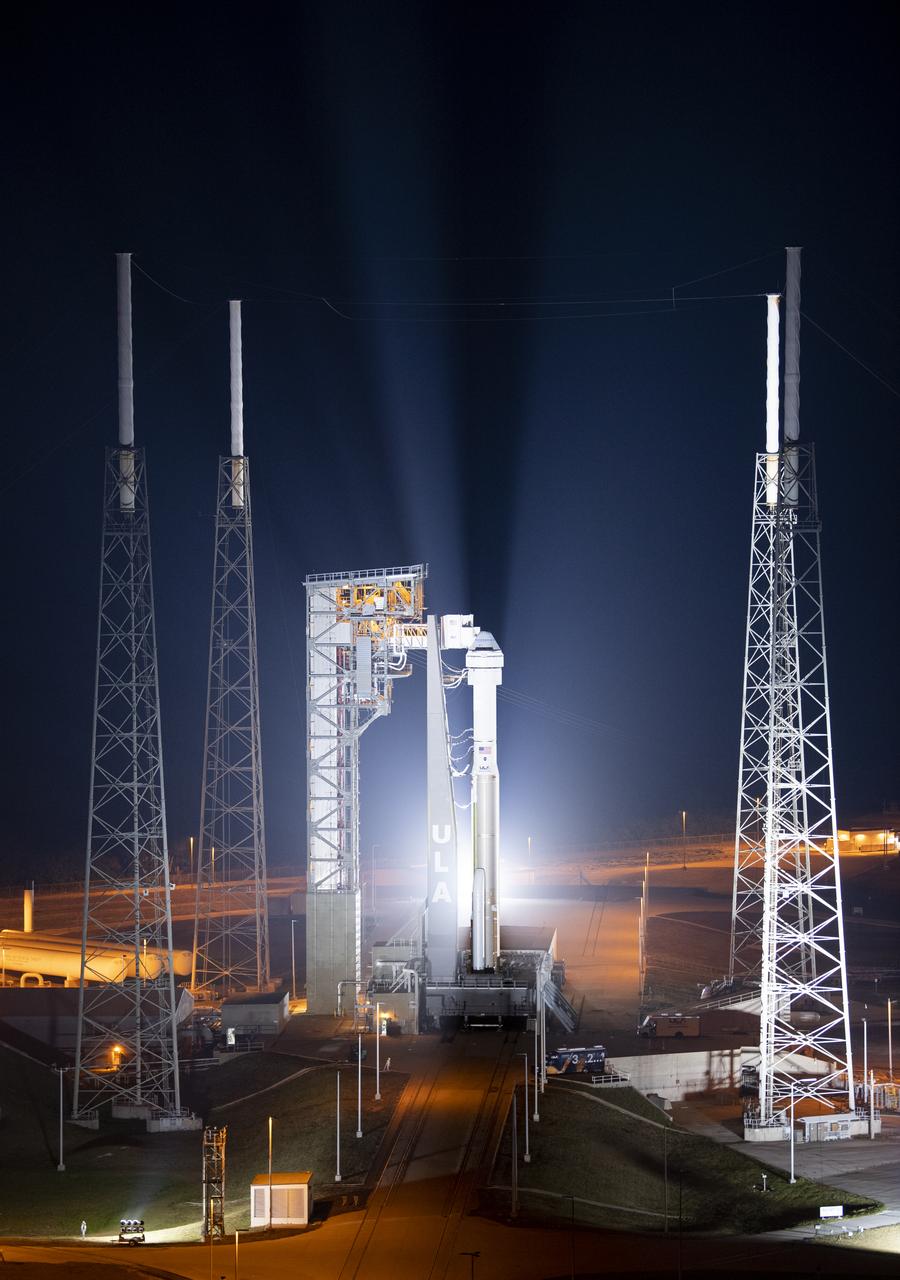
A United Launch Alliance Atlas V rocket with Boeing’s CST-100 Starliner spacecraft aboard is seen illuminated by spotlights on the launch pad at Space Launch Complex 41 ahead of the Orbital Flight Test-2 mission, Wednesday, May 18, 2022 at Cape Canaveral Space Force Station in Florida. Boeing’s Orbital Flight Test-2 will be Starliner’s second uncrewed flight test and will dock to the International Space Station as part of NASA's Commercial Crew Program. The mission, currently targeted for launch on 6:54 p.m. ET on May 19, will serve as an end-to-end test of the system's capabilities. Photo Credit: (NASA/Joel Kowsky)
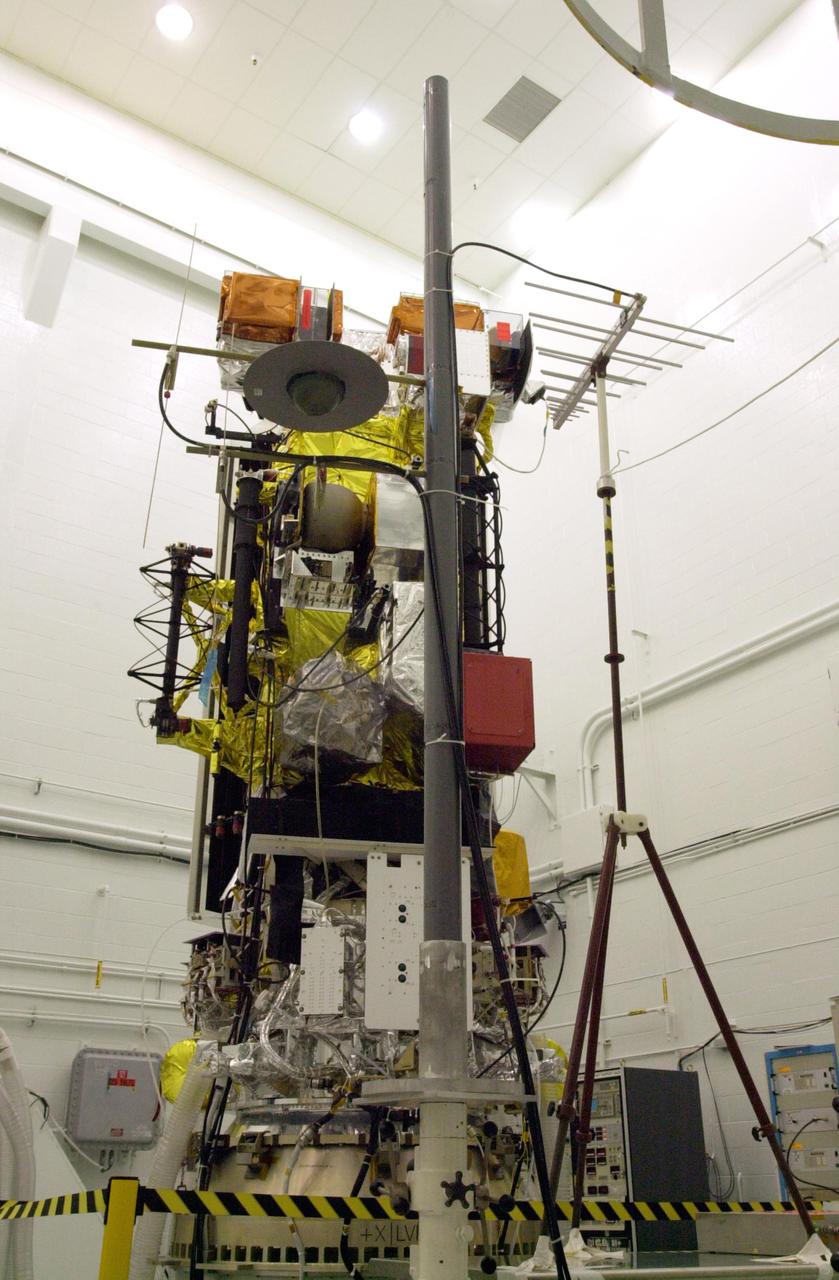
VANDENBERG AIR FORCE BASE, CALIF. - Inside the NASA spacecraft processing hangar 1610 located on North Vandenberg Air Force Base in California, the National Oceanic and Atmospheric Administration (NOAA-N) spacecraft is undergoing testing. The testing includes the Spacecraft Electrical Performance Test, battery conditioning, a Solar Array Illumination Telemetry Test, final instrument inspections and closeouts for flight. Launch of NOAA-N aboard the Boeing Delta II rocket is currently scheduled for May 11, 2005. NOAA-N is the fourth in the series of support dedicated microwave instruments for the generation of temperature, moisture, surface, and hydrological products in cloudy regions where visible and infrared (IR) instruments have decreased capability.
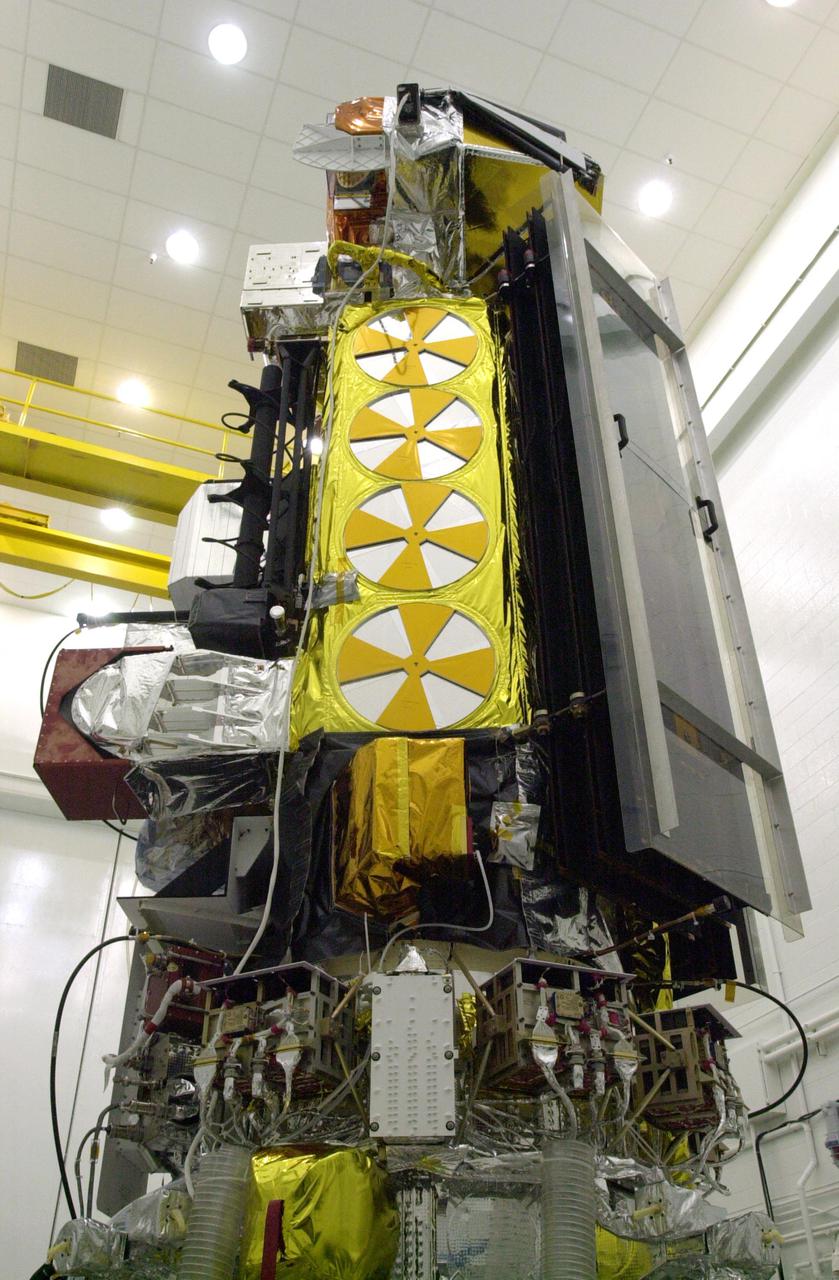
VANDENBERG AIR FORCE BASE, CALIF. - Inside the NASA spacecraft processing hangar 1610 located on North Vandenberg Air Force Base in California, the National Oceanic and Atmospheric Administration (NOAA-N) spacecraft is undergoing testing. The testing includes a Spacecraft Electrical Performance Test, battery conditioning, a Solar Array Illumination Telemetry Test, final instrument inspections and closeouts for flight. Launch of NOAA-N aboard the Boeing Delta II rocket is currently scheduled for May 11, 2005. NOAA-N is the fourth in the series of support dedicated microwave instruments for the generation of temperature, moisture, surface, and hydrological products in cloudy regions where visible and infrared (IR) instruments have decreased capability.
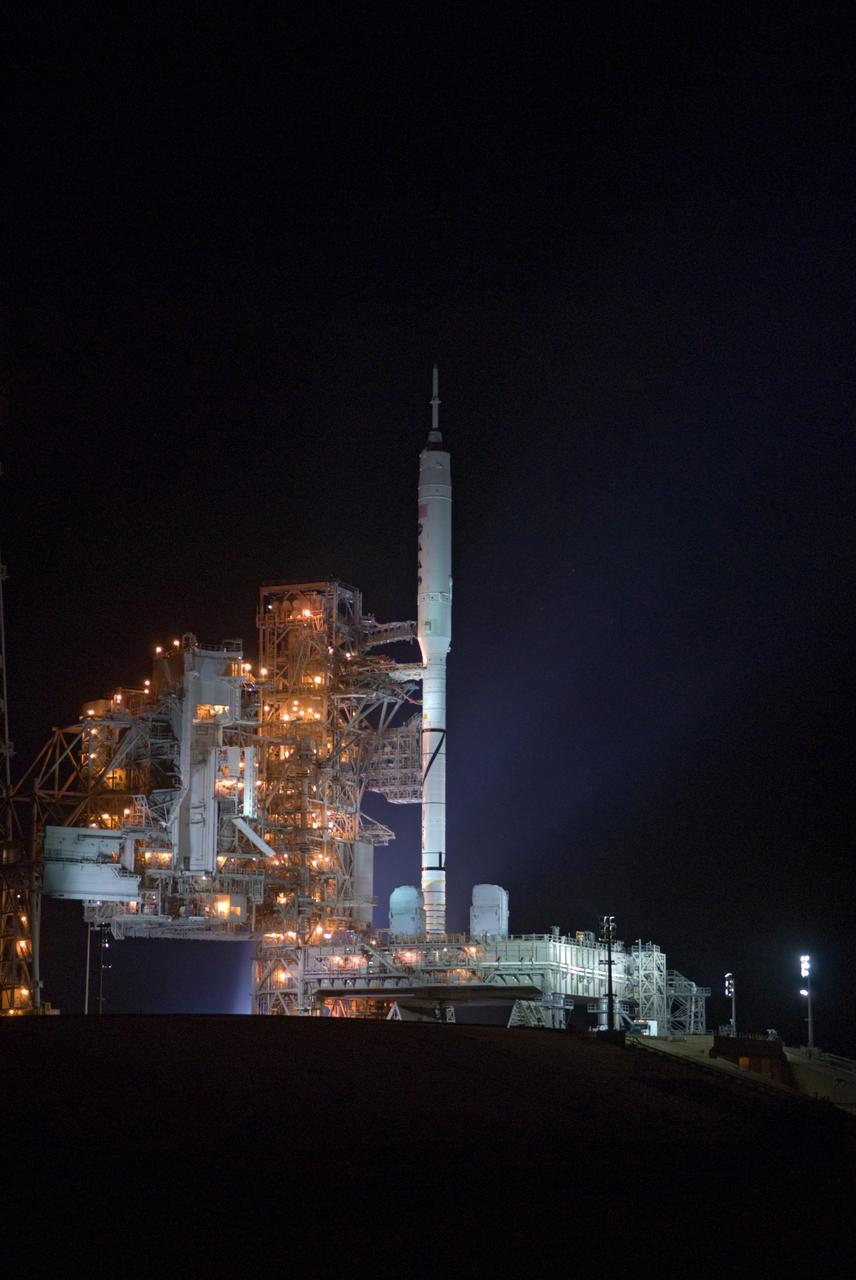
CAPE CANAVERAL, Fla. - As nightfall comes to Launch Complex 39B at NASA's Kennedy Space Center in Florida, xenon lights illuminate the pad and the Ares I-X rocket awaiting the approaching liftoff of its flight test. This is the first time since the Apollo Program's Saturn rockets were retired that a vehicle other than the space shuttle has occupied the pad. Part of the Constellation Program, the Ares I-X is the test vehicle for the Ares I. The Ares I-X flight test is set for Oct. 27. For information on the Ares I-X vehicle and flight test, visit http://www.nasa.gov/aresIX. Photo credit: NASA/Kim Shiflett
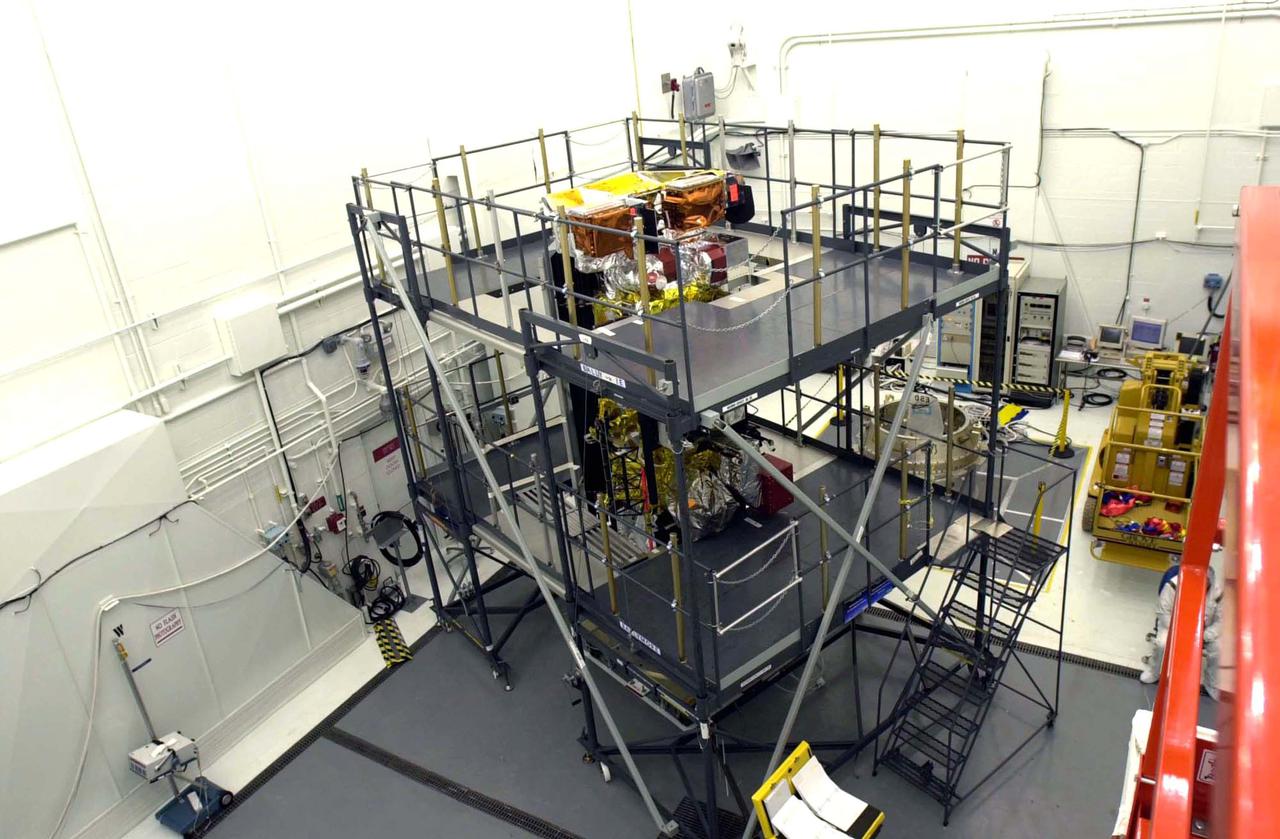
VANDENBERG AIR FORCE BASE, CALIF. - Inside the NASA spacecraft processing hangar 1610 located on North Vandenberg Air Force Base in California, the National Oceanic and Atmospheric Administration (NOAA-N) spacecraft is undergoing testing. The testing includes a the Spacecraft Electrical Performance Test, battery conditioning, a Solar Array Illumination Telemetry Test, final instrument inspections and closeouts for flight. Launch of NOAA-N aboard the Boeing Delta II rocket is currently scheduled for May 11, 2005. NOAA-N is the fourth in the series of support dedicated microwave instruments for the generation of temperature, moisture, surface, and hydrological products in cloudy regions where visible and infrared (IR) instruments have decreased capability.
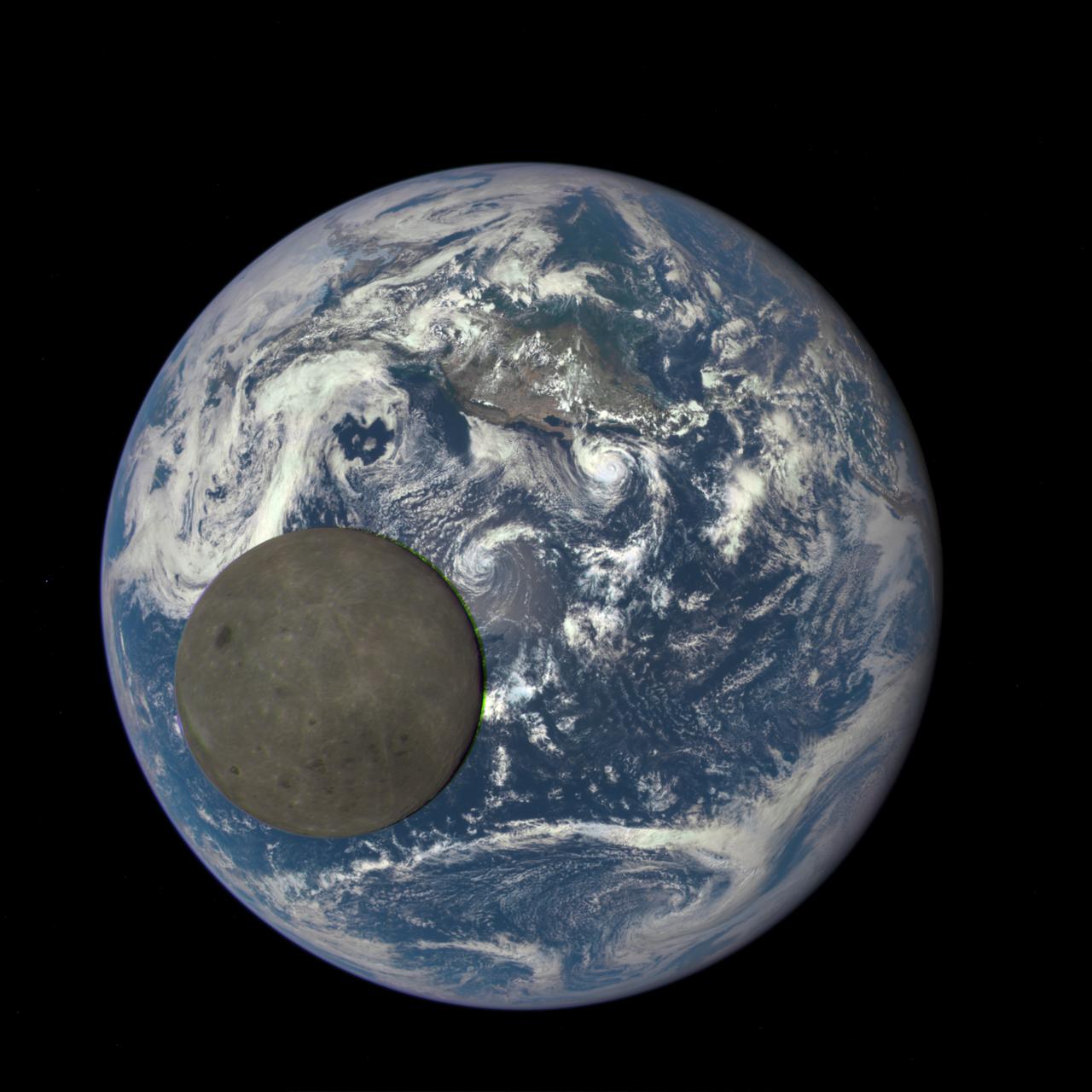
This animation still image shows the far side of the moon, illuminated by the sun, as it crosses between the DISCOVR spacecraft's Earth Polychromatic Imaging Camera (EPIC) camera and telescope, and the Earth - one million miles away. Credits: NASA/NOAA A NASA camera aboard the Deep Space Climate Observatory (DSCOVR) satellite captured a unique view of the moon as it moved in front of the sunlit side of Earth last month. The series of test images shows the fully illuminated “dark side” of the moon that is never visible from Earth. The images were captured by NASA’s Earth Polychromatic Imaging Camera (EPIC), a four megapixel CCD camera and telescope on the DSCOVR satellite orbiting 1 million miles from Earth. From its position between the sun and Earth, DSCOVR conducts its primary mission of real-time solar wind monitoring for the National Oceanic and Atmospheric Administration (NOAA).
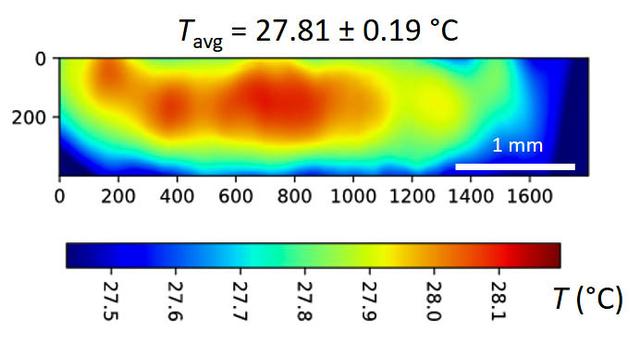
jsc2024e065172 (10/3/2024) --- A temperature map is seen within a microgel suspension illuminated by the Colloidal Solids (COLIS) near infrared laser (NIR). Reference ground tests for the Colloidal Solids (COLIS) investigation show spatial variation of the sample temperature while illuminating an aqueous, dense suspension of thermosensitive microgels with a 0.5 s pulse of NIR laser light. The NIR beam propagates from left to right. The sample temperature with no NIR laser is uniform and set to 27°C. The temperature values are inferred from the change in scattered intensity at a scattering angle of 90°, as recorded by one of the complementary metal-oxide-semiconductor (CMOS) cameras of COLIS. Results from this investigation are expected to provide a deeper understanding of soft solid interactions with gravity and microgravity, paving the way for the design of new materials. Image courtesy of Redwire Space Laboratories, Kruibeke – Belgium.
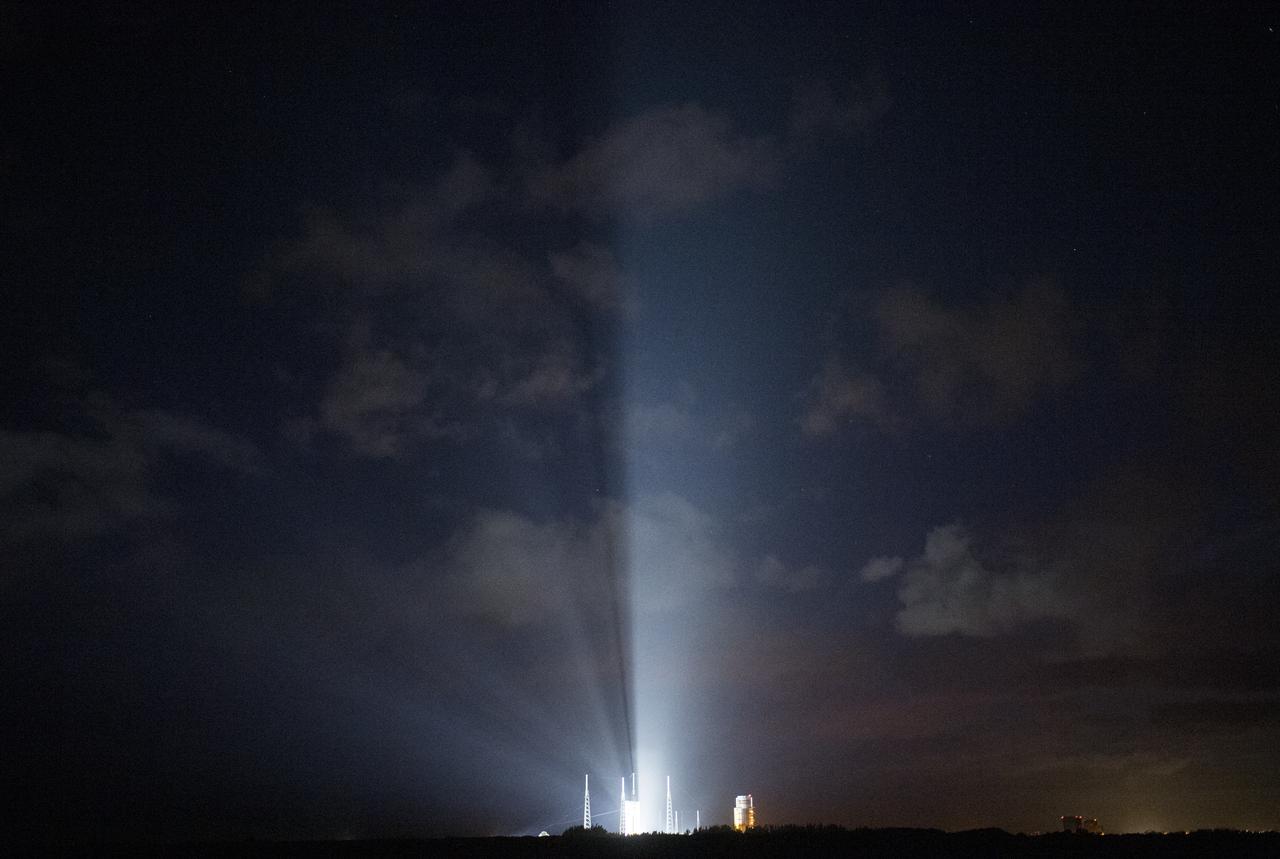
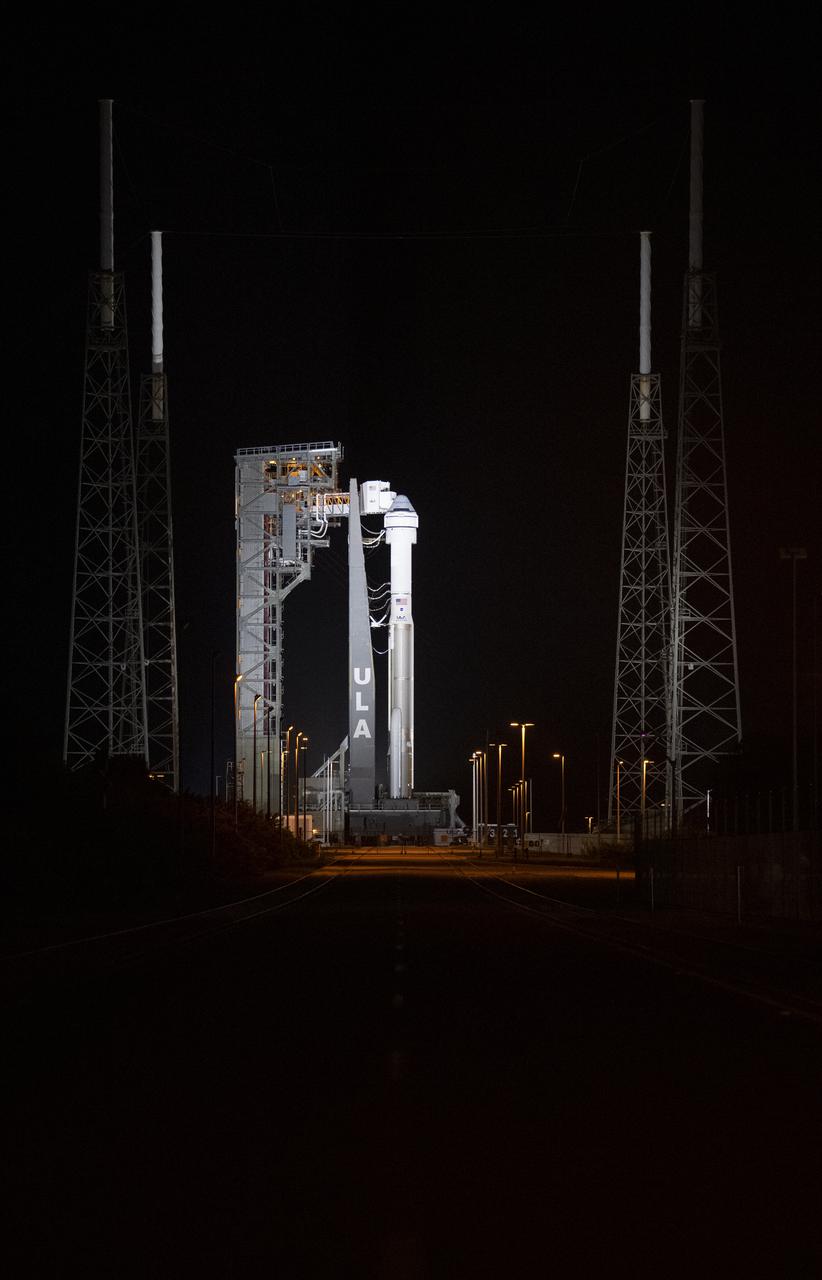
A United Launch Alliance Atlas V rocket with Boeing’s CST-100 Starliner spacecraft onboard is seen illuminated by spotlights on the launch pad at Space Launch Complex 41 ahead of the Orbital Flight Test mission, Wednesday, Dec. 18, 2019 at Cape Canaveral Air Force Station in Florida. The uncrewed Orbital Flight Test will be Starliner’s maiden mission to the International Space Station for NASA's Commercial Crew Program. The mission, currently targeted for a 6:26 a.m. EST launch on Dec. 20, will serve as an end-to-end test of the system's capabilities. Photo Credit: (NASA/Joel Kowsky)
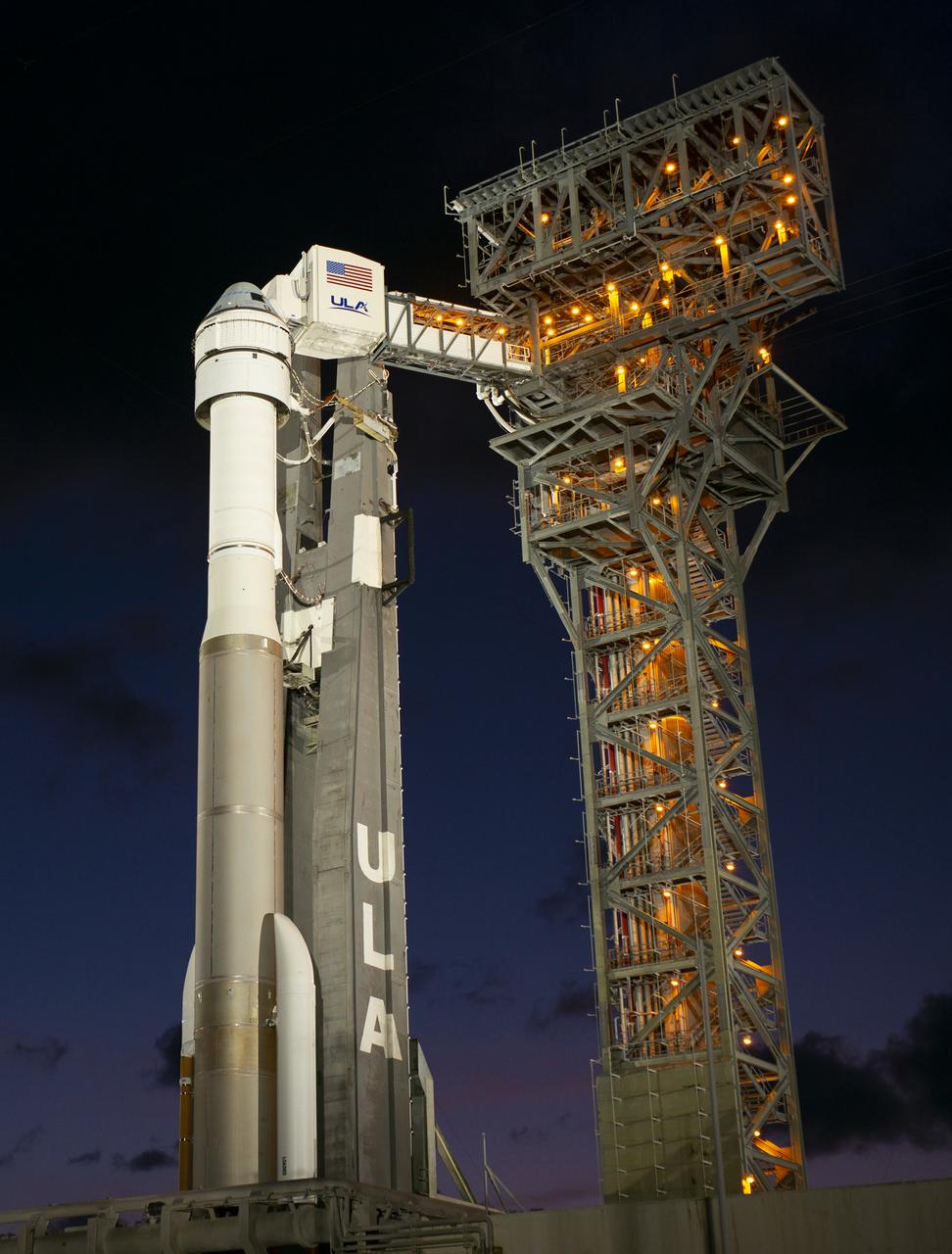
A United Launch Alliance Atlas V rocket with Boeing’s CST-100 Starliner spacecraft onboard is seen illuminated by spotlights on the launch pad at Space Launch Complex 41 ahead of the Orbital Flight Test mission, Wednesday, Dec. 18, 2019 at Cape Canaveral Air Force Station in Florida. The uncrewed Orbital Flight Test will be Starliner’s maiden mission to the International Space Station for NASA's Commercial Crew Program. The mission, currently targeted for a 6:26 a.m. EST launch on Dec. 20, will serve as an end-to-end test of the system's capabilities. Photo Credit: (NASA/Joel Kowsky)
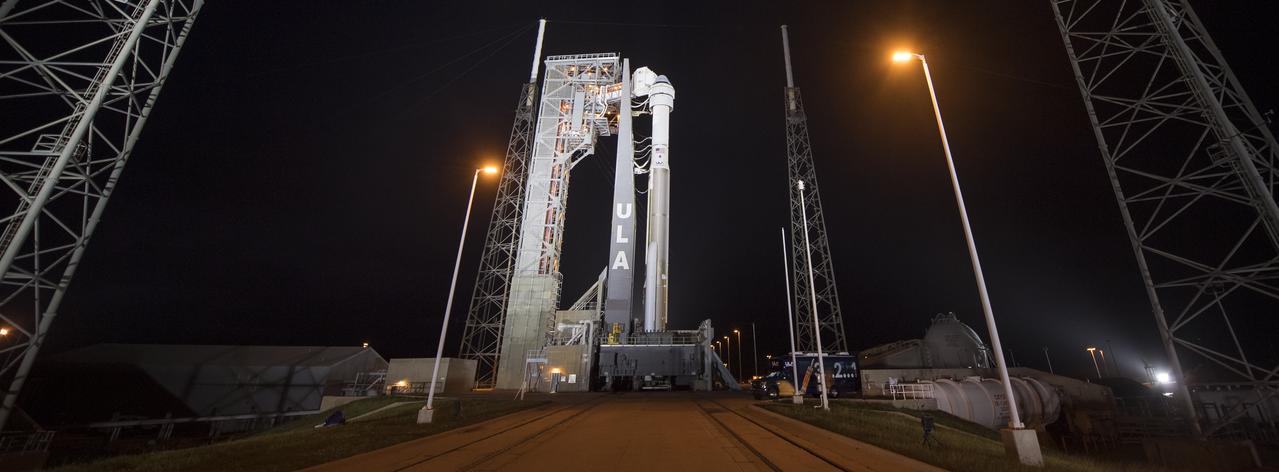
A United Launch Alliance Atlas V rocket with Boeing’s CST-100 Starliner spacecraft onboard is seen illuminated by spotlights on the launch pad at Space Launch Complex 41 ahead of the Orbital Flight Test mission, Wednesday, Dec. 18, 2019 at Cape Canaveral Air Force Station in Florida. The uncrewed Orbital Flight Test will be Starliner’s maiden mission to the International Space Station for NASA's Commercial Crew Program. The mission, currently targeted for a 6:26 a.m. EST launch on Dec. 20, will serve as an end-to-end test of the system's capabilities. Photo Credit: (NASA/Joel Kowsky)
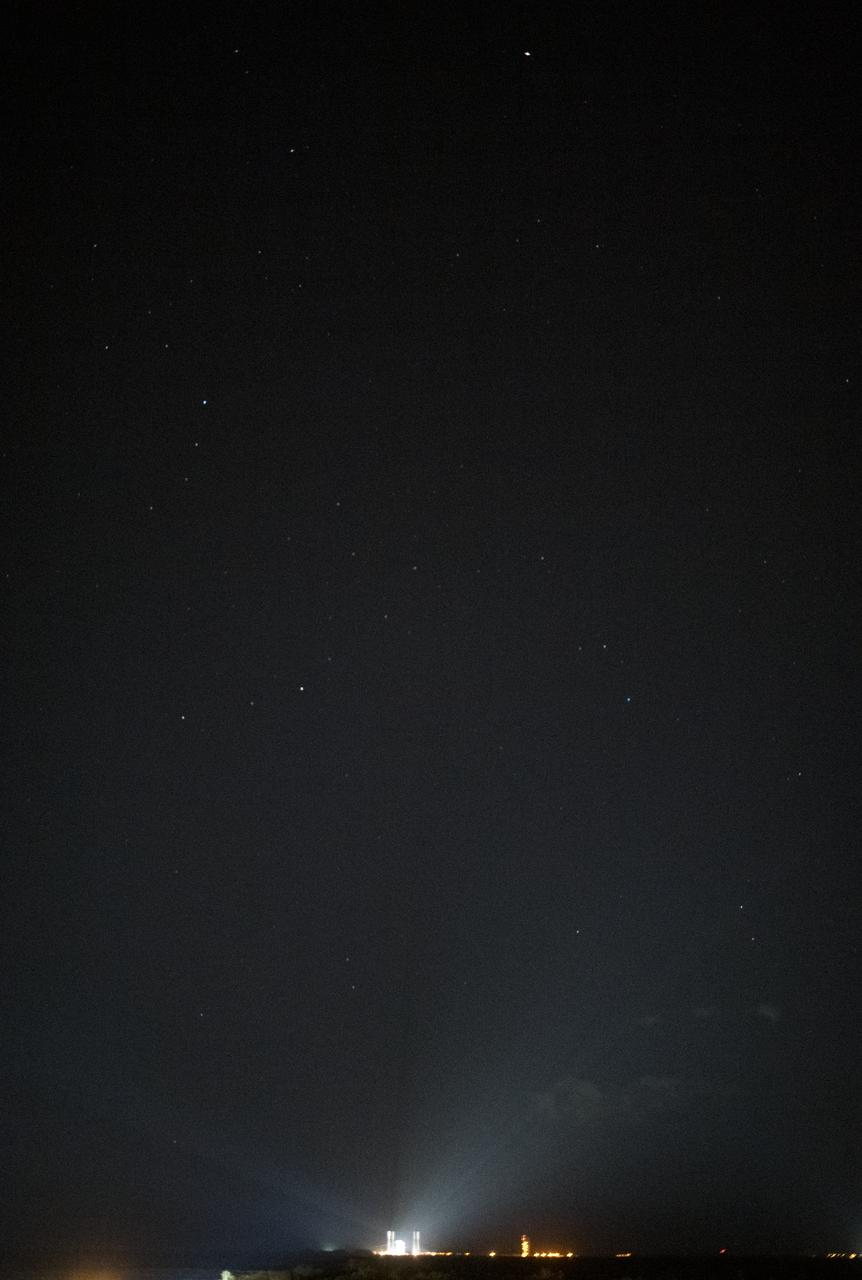
Space Launch Complex 41 is seen illuminated by spotlights ahead of the Boeing Starliner Orbital Flight Test mission, Friday, Dec. 20, 2019, at Cape Canaveral Air Force Station in Florida. The uncrewed Orbital Flight Test will be Starliner’s maiden mission to the International Space Station for NASA's Commercial Crew Program. The mission, currently targeted for a 6:36 a.m. EST launch onboard a United Launch Alliance Atlas V rocket on Dec. 20, will serve as an end-to-end test of the system's capabilities. Photo Credit: (NASA/Joel Kowsky)
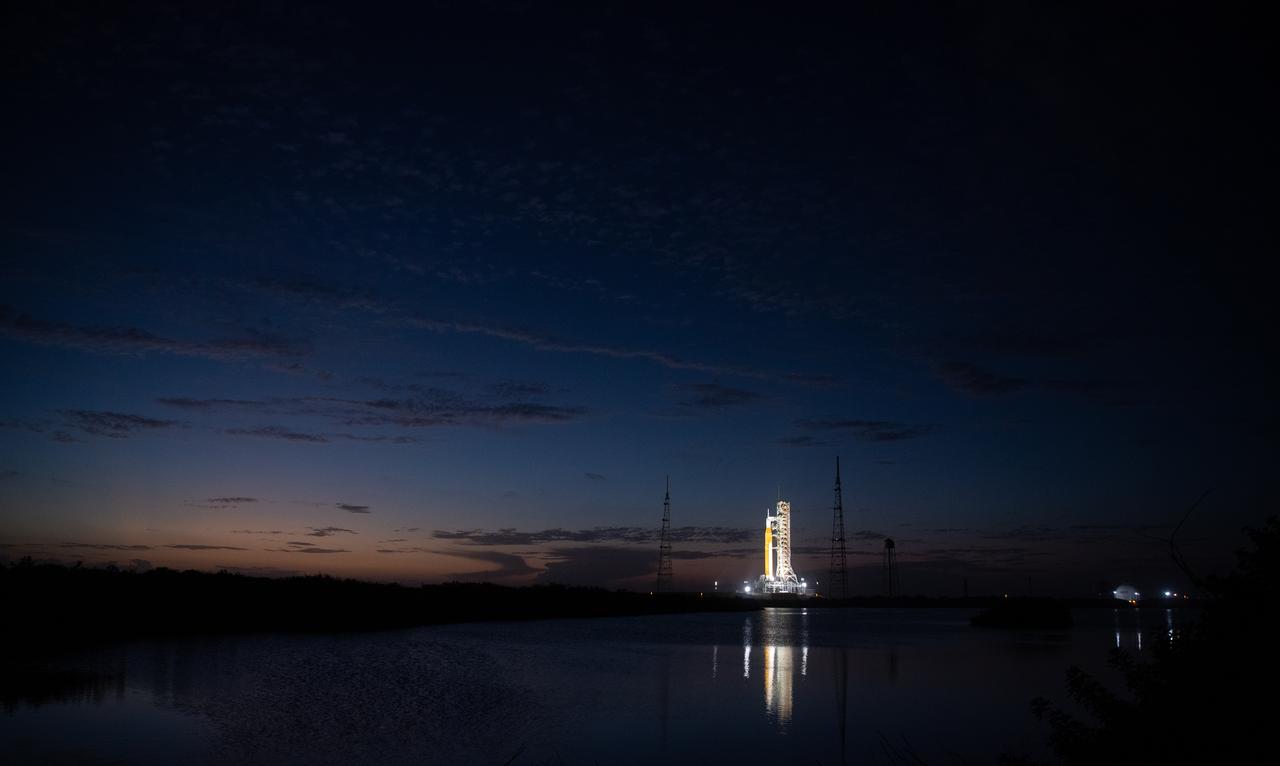
NASA’s Space Launch System (SLS) rocket with the Orion spacecraft aboard is seen illuminated by spotlights after sunset atop the mobile launcher at Launch Pad 39B as preparations for launch continue, Sunday, Nov. 6, 2022, at NASA’s Kennedy Space Center in Florida. NASA’s Artemis I flight test is the first integrated test of the agency’s deep space exploration systems: the Orion spacecraft, SLS rocket, and supporting ground systems. Launch of the uncrewed flight test is targeted for Nov. 14 at 12:07 a.m. EST. Photo Credit: (NASA/Joel Kowsky)

NASA’s Space Launch System (SLS) rocket with the Orion spacecraft aboard is seen atop the mobile launcher at Launch Pad 39B illuminated by spotlights, Tuesday, Nov. 15, 2022, as the Artemis I launch teams load more than 700,000 gallons of cryogenic propellants including liquid hydrogen and liquid oxygen as the launch countdown progresses at NASA’s Kennedy Space Center in Florida. NASA’s Artemis I flight test is the first integrated test of the agency’s deep space exploration systems: the Orion spacecraft, SLS rocket, and supporting ground systems. Launch of the uncrewed flight test is targeted for no earlier Nov. 16 at 1:04 a.m. EST. Photo Credit: (NASA/Joel Kowsky)
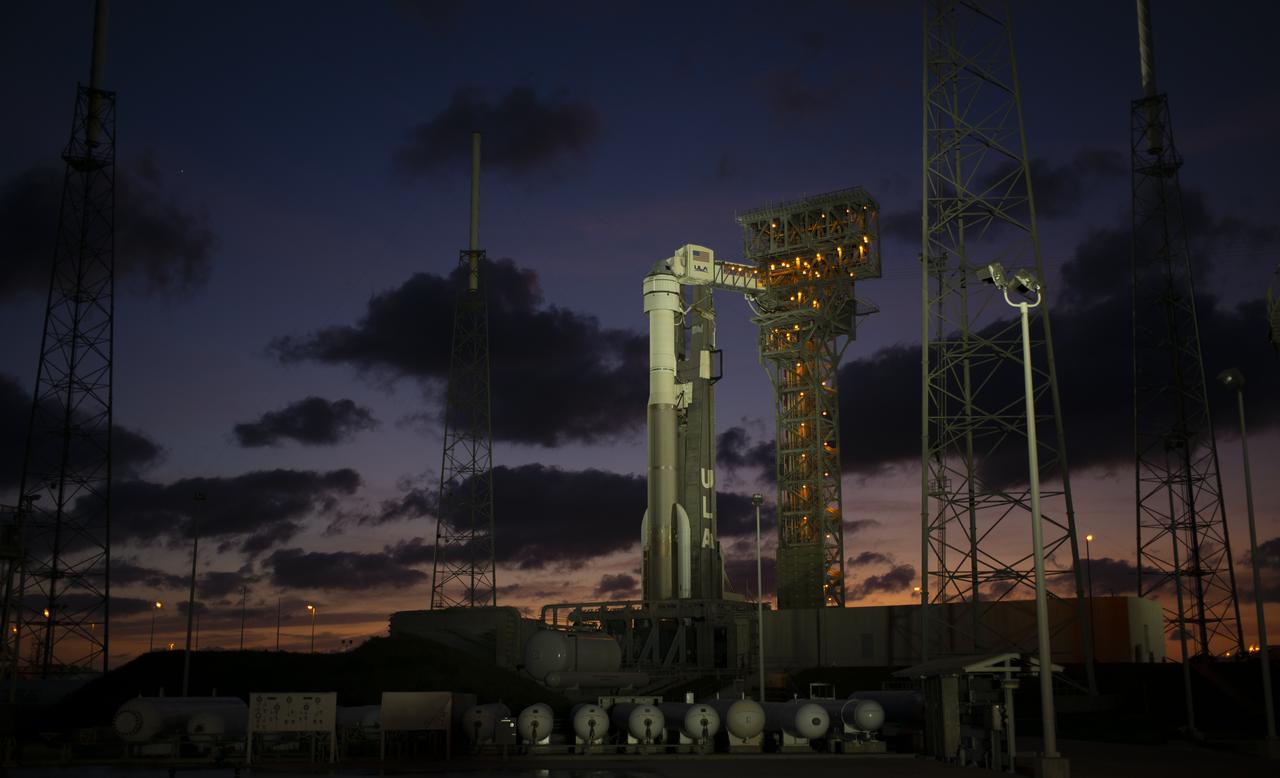
A United Launch Alliance Atlas V rocket with Boeing’s CST-100 Starliner spacecraft onboard is seen illuminated by spotlights on the launch pad at Space Launch Complex 41 ahead of the Orbital Flight Test mission, Wednesday, Dec. 18, 2019 at Cape Canaveral Air Force Station in Florida. The uncrewed Orbital Flight Test will be Starliner’s maiden mission to the International Space Station for NASA's Commercial Crew Program. The mission, currently targeted for a 6:26 a.m. EST launch on Dec. 20, will serve as an end-to-end test of the system's capabilities. Photo Credit: (NASA/Joel Kowsky)
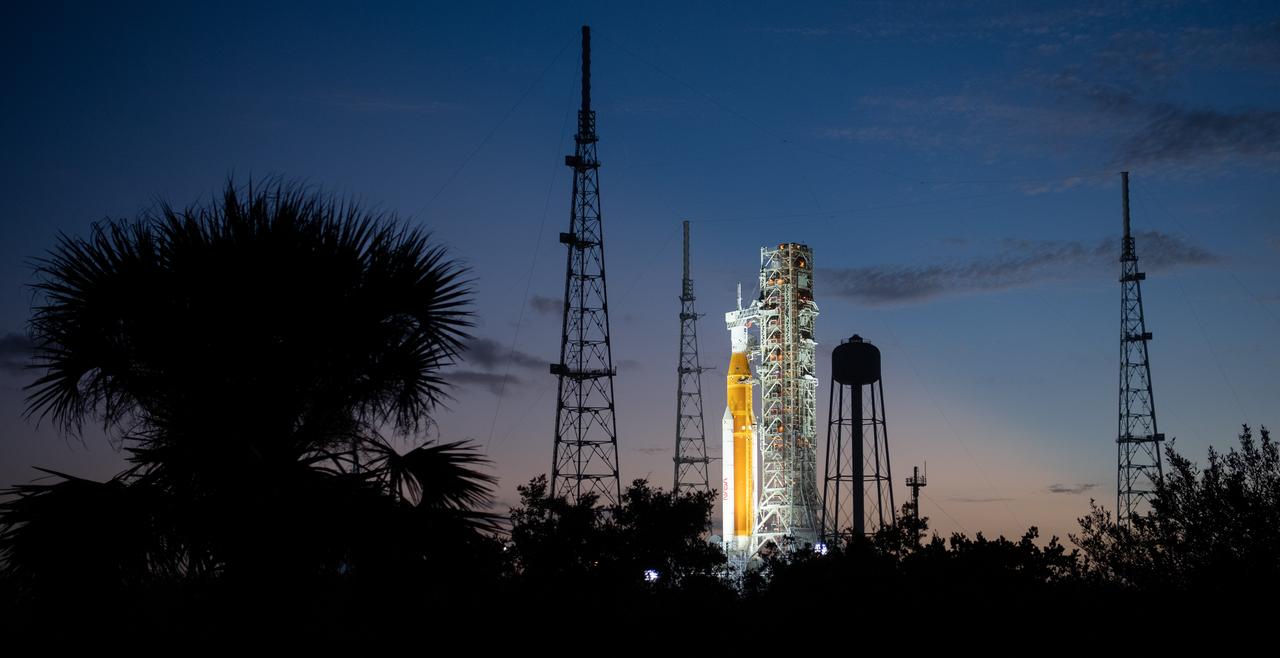
NASA’s Space Launch System (SLS) rocket with the Orion spacecraft aboard is seen illuminated by spotlights after sunset atop the mobile launcher at Launch Pad 39B as preparations for launch continue, Sunday, Nov. 6, 2022, at NASA’s Kennedy Space Center in Florida. NASA’s Artemis I flight test is the first integrated test of the agency’s deep space exploration systems: the Orion spacecraft, SLS rocket, and supporting ground systems. Launch of the uncrewed flight test is targeted for Nov. 14 at 12:07 a.m. EST. Photo Credit: (NASA/Joel Kowsky)
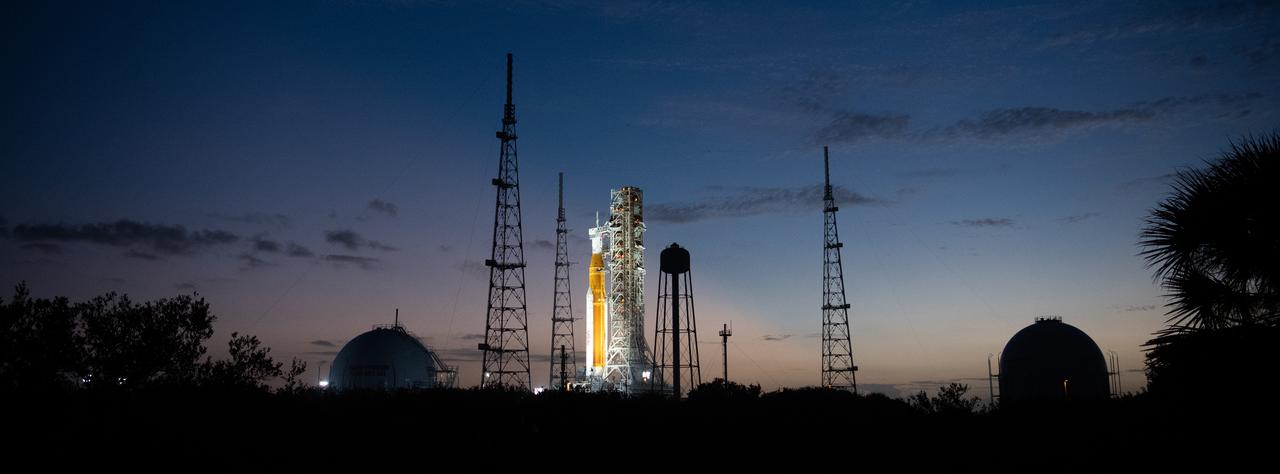
NASA’s Space Launch System (SLS) rocket with the Orion spacecraft aboard is seen illuminated by spotlights after sunset atop the mobile launcher at Launch Pad 39B as preparations for launch continue, Sunday, Nov. 6, 2022, at NASA’s Kennedy Space Center in Florida. NASA’s Artemis I flight test is the first integrated test of the agency’s deep space exploration systems: the Orion spacecraft, SLS rocket, and supporting ground systems. Launch of the uncrewed flight test is targeted for Nov. 14 at 12:07 a.m. EST. Photo Credit: (NASA/Joel Kowsky)
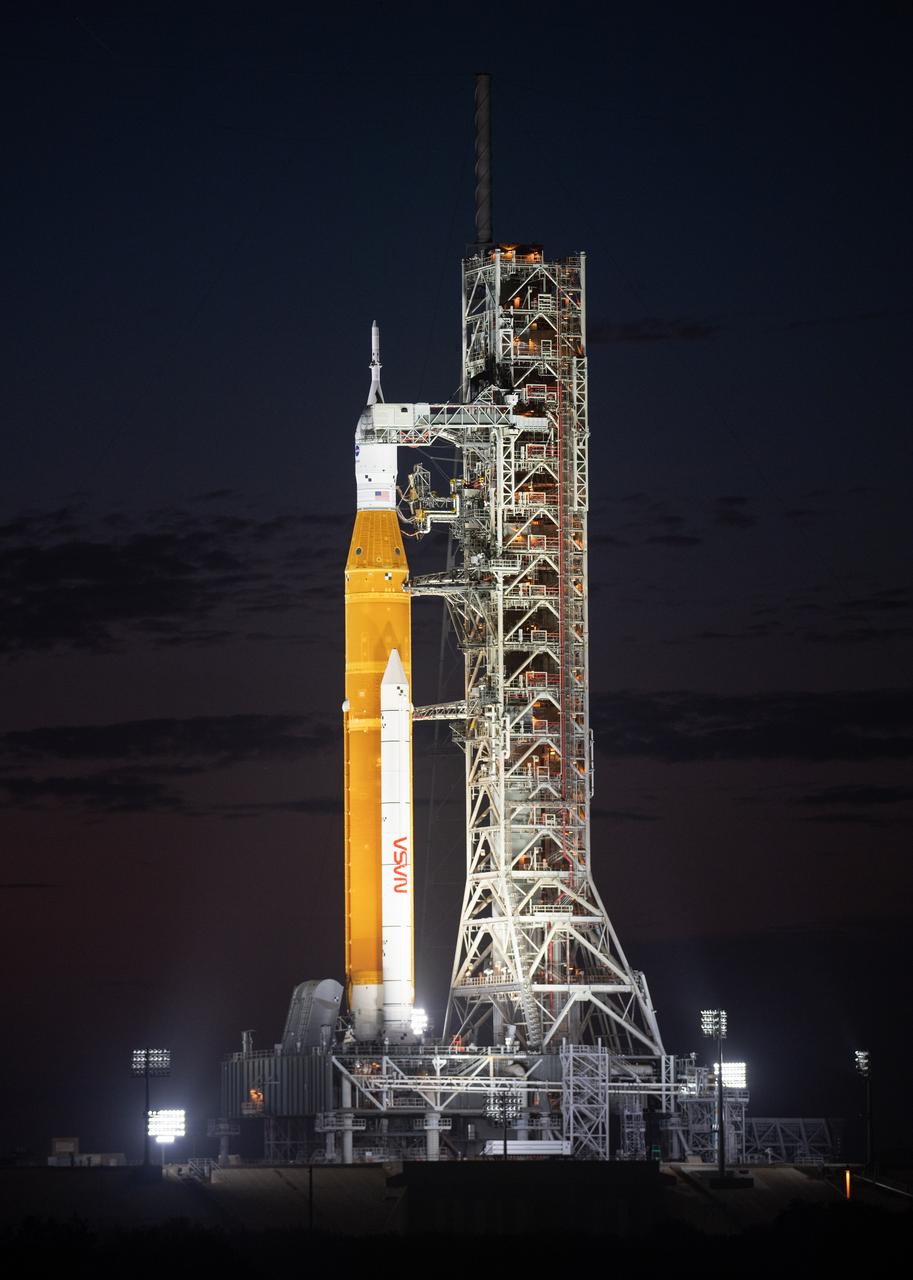
NASA’s Space Launch System (SLS) rocket with the Orion spacecraft aboard is seen illuminated by spotlights atop the mobile launcher at Launch Pad 39B as preparations for launch continue, Sunday, Nov. 6, 2022, at NASA’s Kennedy Space Center in Florida. NASA’s Artemis I flight test is the first integrated test of the agency’s deep space exploration systems: the Orion spacecraft, SLS rocket, and supporting ground systems. Launch of the uncrewed flight test is targeted for Nov. 14 at 12:07 a.m. EST. Photo Credit: (NASA/Joel Kowsky)
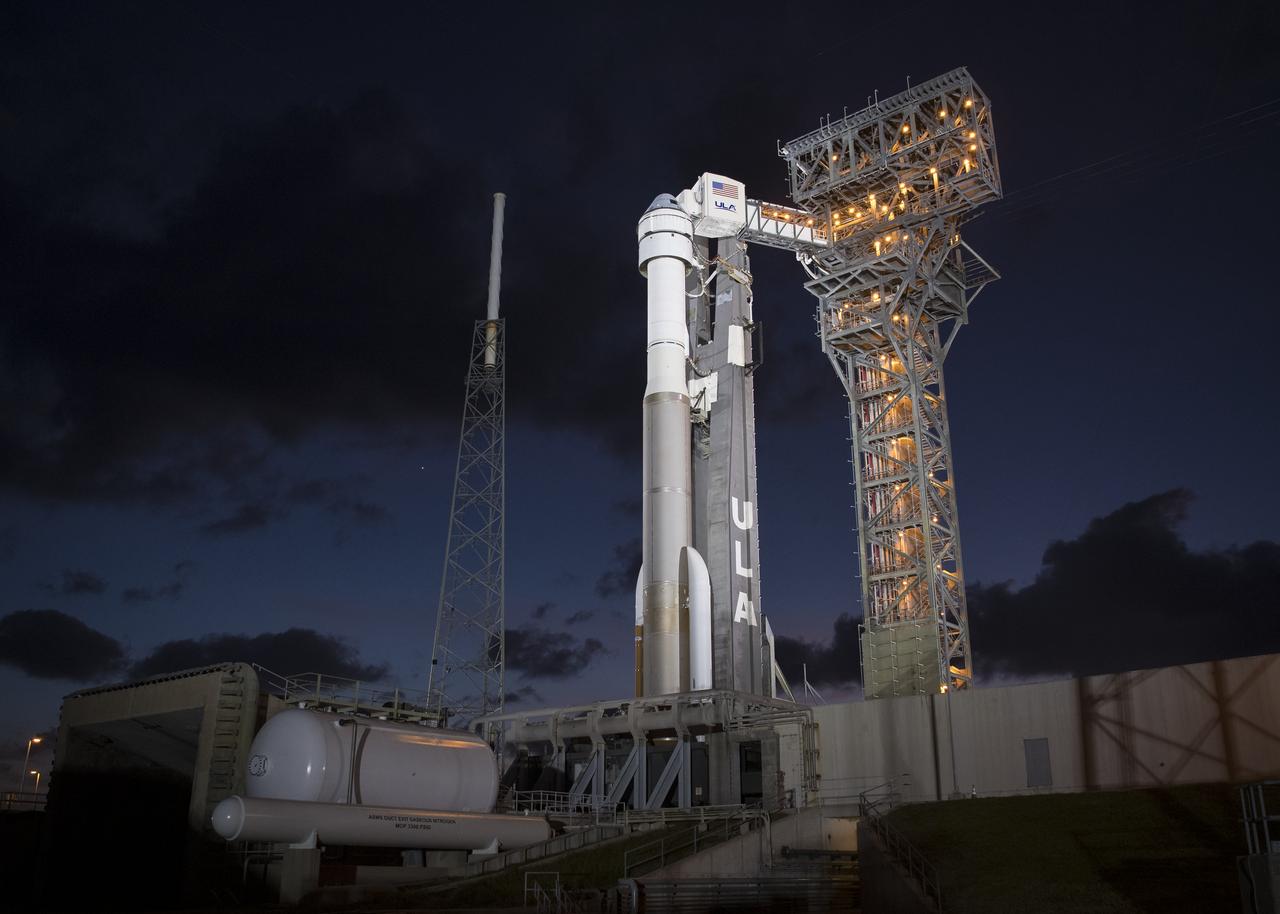
A United Launch Alliance Atlas V rocket with Boeing’s CST-100 Starliner spacecraft onboard is seen illuminated by spotlights on the launch pad at Space Launch Complex 41 ahead of the Orbital Flight Test mission, Wednesday, Dec. 18, 2019 at Cape Canaveral Air Force Station in Florida. The uncrewed Orbital Flight Test will be Starliner’s maiden mission to the International Space Station for NASA's Commercial Crew Program. The mission, currently targeted for a 6:26 a.m. EST launch on Dec. 20, will serve as an end-to-end test of the system's capabilities. Photo Credit: (NASA/Joel Kowsky)
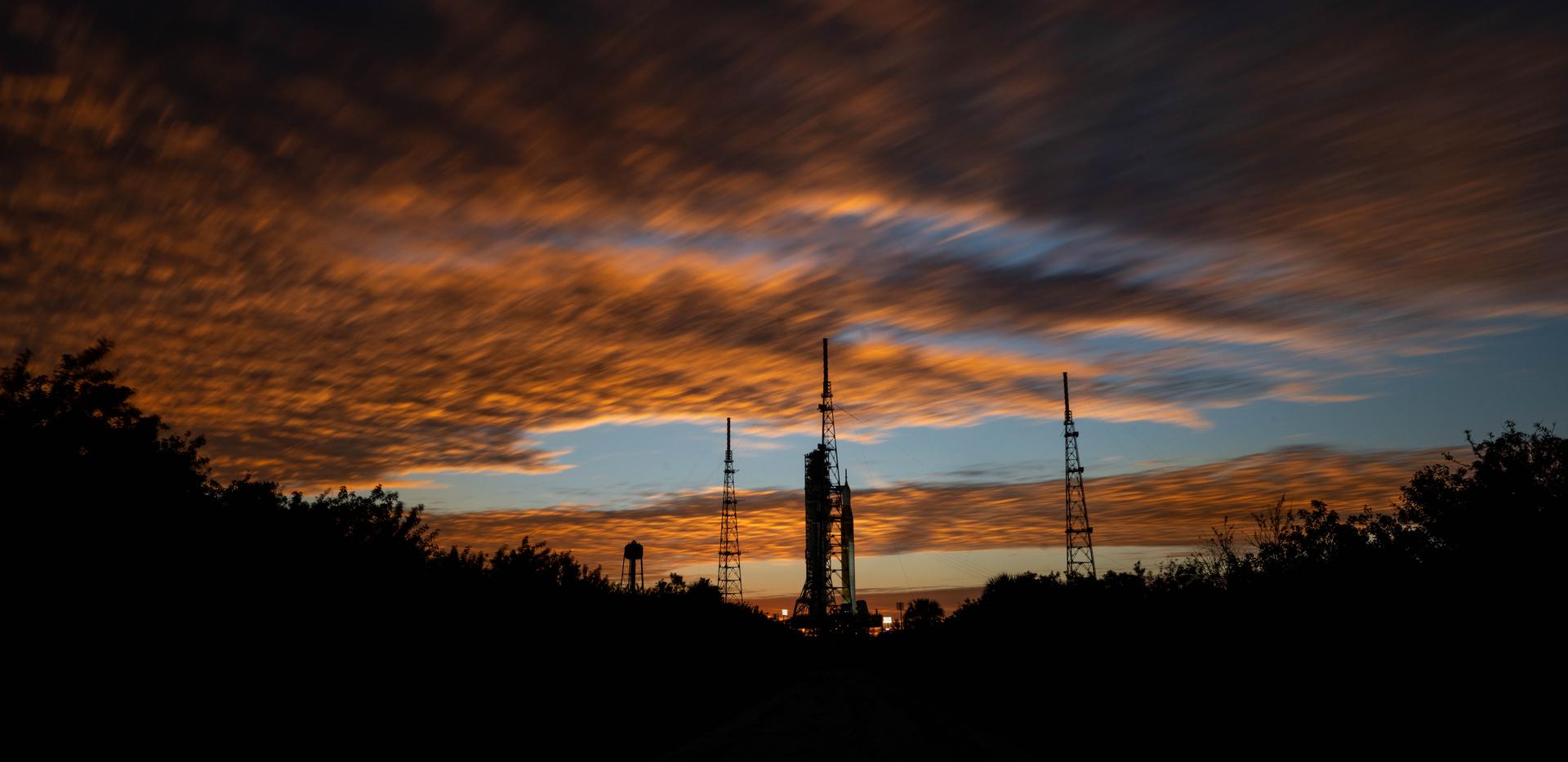
Clouds and the Sun illuminate the sky on Wednesday, Jan. 28, 2026, as NASA’s Artemis II SLS (Space Launch System) rocket and Orion spacecraft stand vertical at Launch Complex 39B at NASA’s Kennedy Space Center in Florida. The Artemis II test flight will take Commander Reid Wiseman, Pilot Victor Glover, and Mission Specialist Christina Koch from NASA and Mission Specialist Jeremy Hansen from the CSA (Canadian Space Agency), around the Moon and back to Earth no later than April 2026.

The rising Sun illuminates the sky on Tuesday, March 24, 2026, as NASA’s Artemis II SLS (Space Launch System) rocket and Orion spacecraft stand vertical at Launch Complex 39B at NASA’s Kennedy Space Center in Florida. The Artemis II test flight will take Commander Reid Wiseman, Pilot Victor Glover, and Mission Specialist Christina Koch from NASA, and Mission Specialist Jeremy Hansen from the CSA (Canadian Space Agency), around the Moon and back to Earth with launch opportunities beginning in April 2026.

A United Launch Alliance Delta IV Heavy rocket with NASA’s Orion spacecraft mounted atop for Exploration Flight Test-1 (EFT-1) is seen illuminated in the distance in this long exposure photograph taken early on Dec. 4, 2014, at Cape Canaveral Air Force Station's Space Launch Complex 37, Florida. Part of Batch image transfer from Flickr.
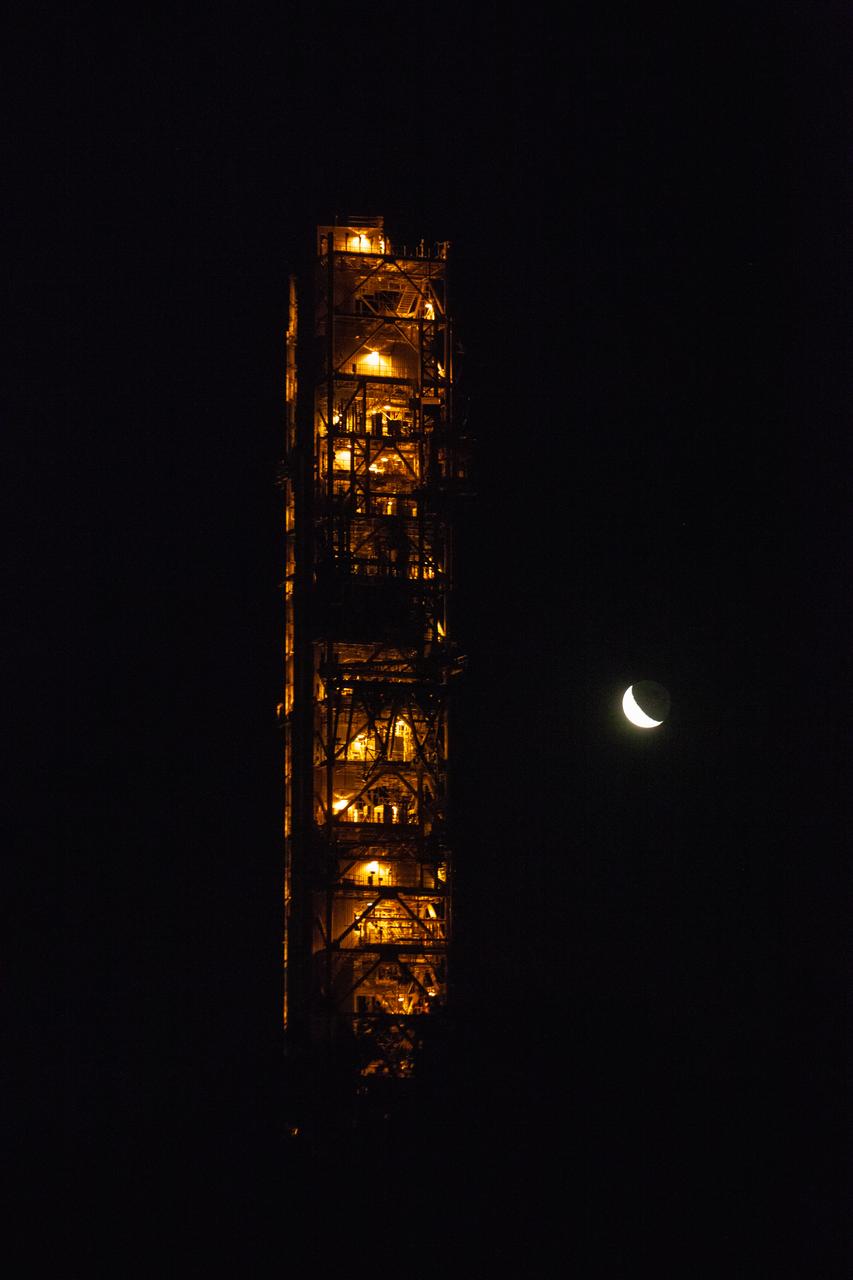
With the Moon and nighttime sky serving as the backdrop, Exploration Ground Systems’ mobile launcher is illuminated in the night as it makes its last solo trek to Kennedy Space Center’s Launch Complex 39B in Florida on June 27, 2019. The mobile launcher departed from the Vehicle Assembly Building at midnight on June 27 for the 10-hour journey to the pad, where it will remain for the summer, undergoing final testing and checkouts. Its next roll to the pad will be with the agency’s Space Launch System rocket and Orion spacecraft in preparation for the launch of Artemis 1.
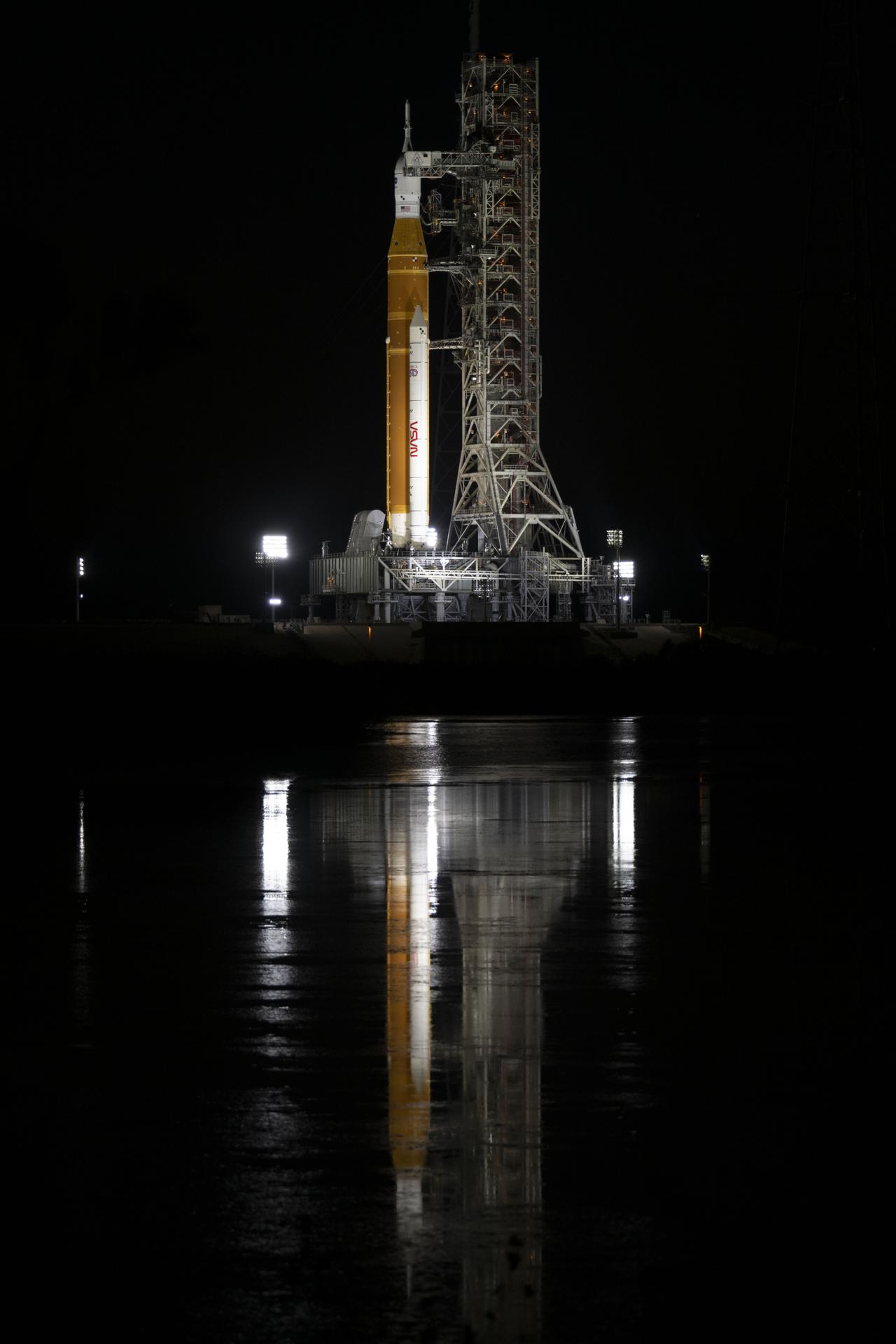
Spotlights illuminate NASA’s SLS (Space Launch System) rocket with the Orion spacecraft atop a mobile launcher at Launch Complex 39B at NASA’s Kennedy Space Center in Florida on Friday, March 27, 2026. The Artemis II test flight will take Commander Reid Wiseman, Pilot Victor Glover, and Mission Specialist Christina Koch from NASA, and Mission Specialist Jeremy Hansen from the CSA (Canadian Space Agency), around the Moon and back to Earth.
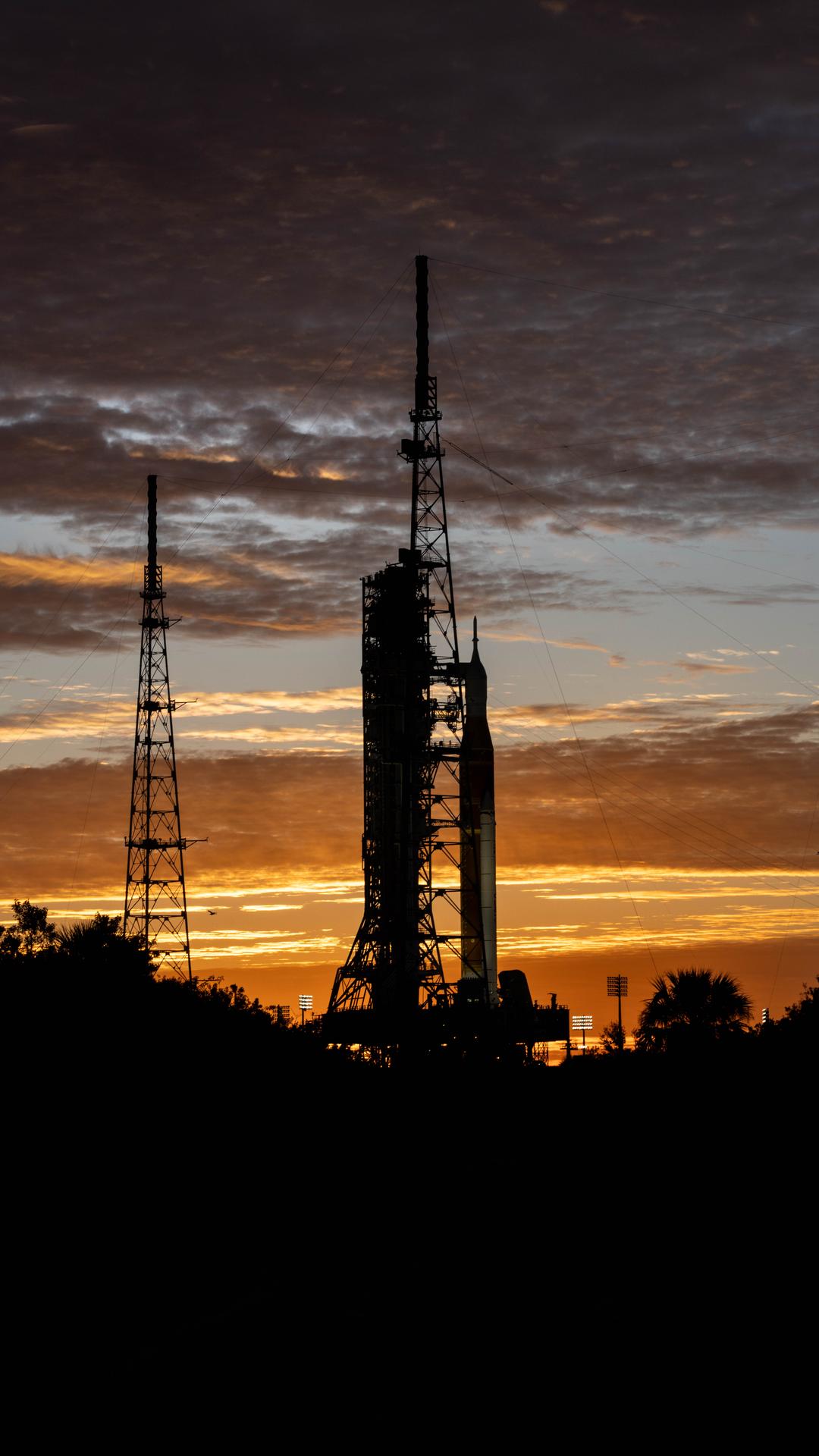
Clouds and the Sun illuminate the sky on Wednesday, Jan. 28, 2026, as NASA’s Artemis II SLS (Space Launch System) rocket and Orion spacecraft stand vertical at Launch Complex 39B at NASA’s Kennedy Space Center in Florida. The Artemis II test flight will take Commander Reid Wiseman, Pilot Victor Glover, and Mission Specialist Christina Koch from NASA and Mission Specialist Jeremy Hansen from the CSA (Canadian Space Agency), around the Moon and back to Earth no later than April 2026.
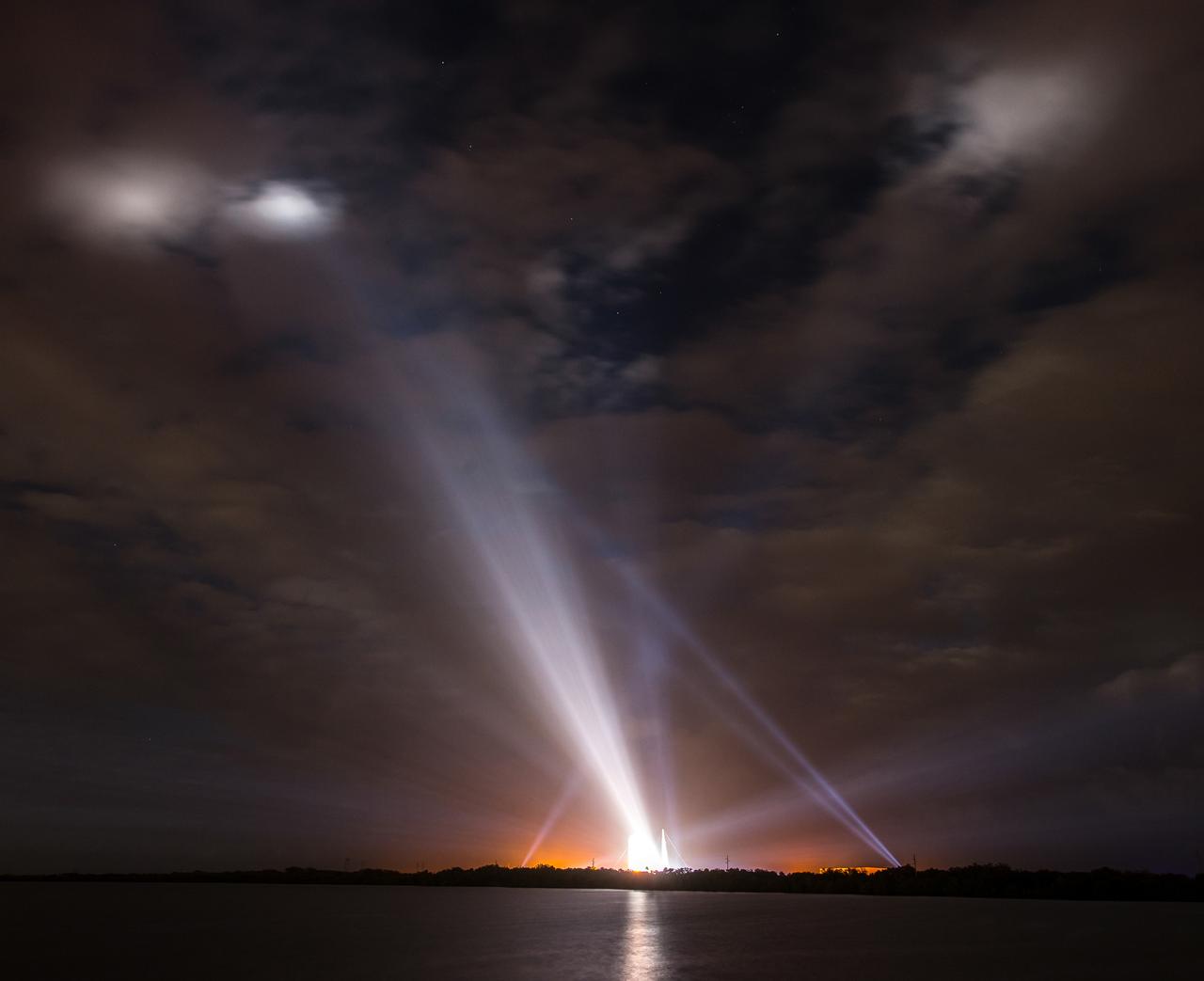
Bright lights illuminate the United Launch Alliance Delta IV Heavy rocket with NASA’s Orion spacecraft mounted atop for Exploration Flight Test-1 (EFT-1), early on Friday, Dec. 5, 2014, at Cape Canaveral Air Force Station's Space Launch Complex 37, Florida. Part of Batch image transfer from Flickr.
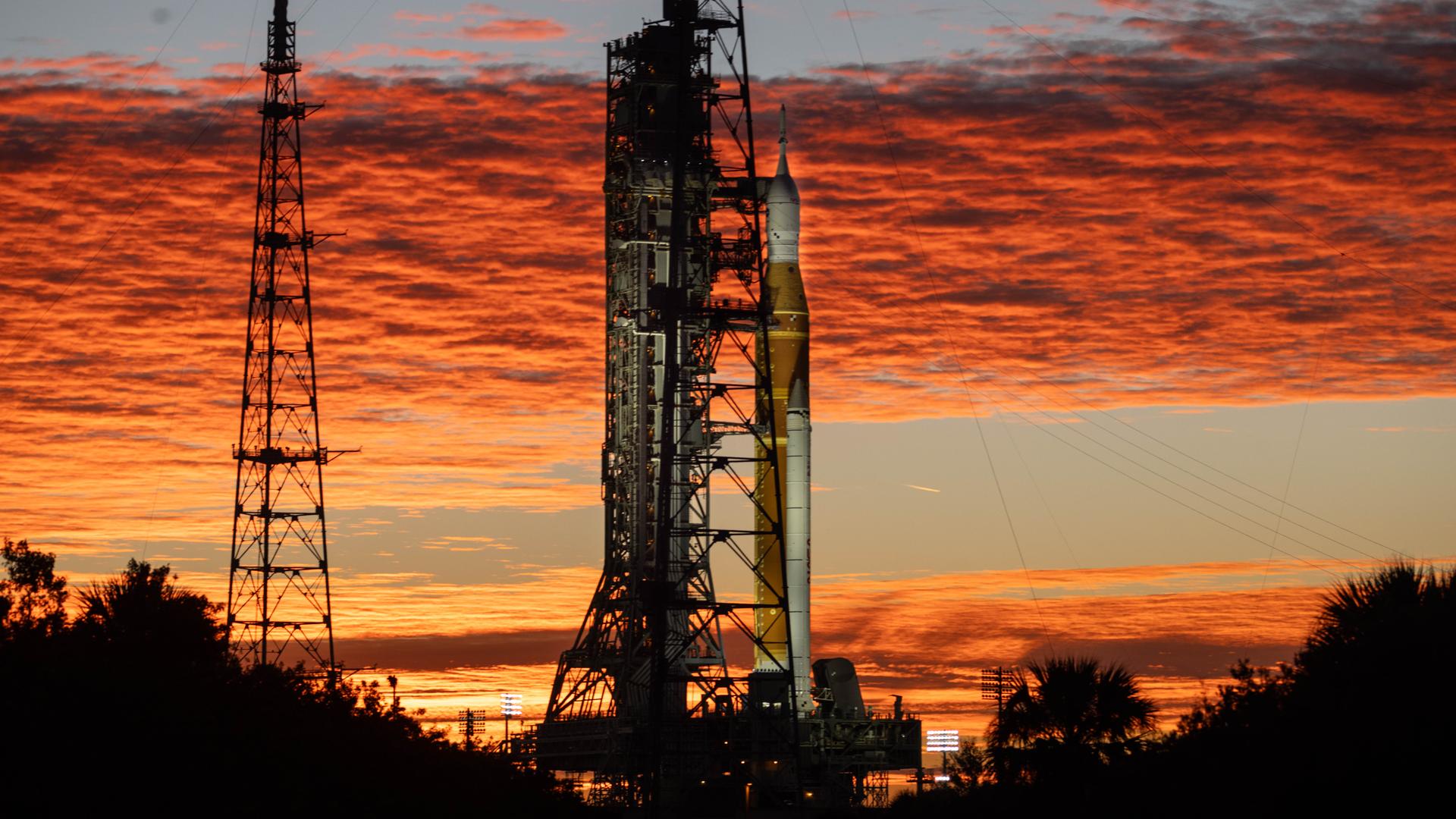
Clouds and the Sun illuminate the sky on Wednesday, Jan. 28, 2026, as NASA’s Artemis II SLS (Space Launch System) rocket and Orion spacecraft stand vertical at Launch Complex 39B at NASA’s Kennedy Space Center in Florida. The Artemis II test flight will take Commander Reid Wiseman, Pilot Victor Glover, and Mission Specialist Christina Koch from NASA and Mission Specialist Jeremy Hansen from the CSA (Canadian Space Agency), around the Moon and back to Earth no later than April 2026.
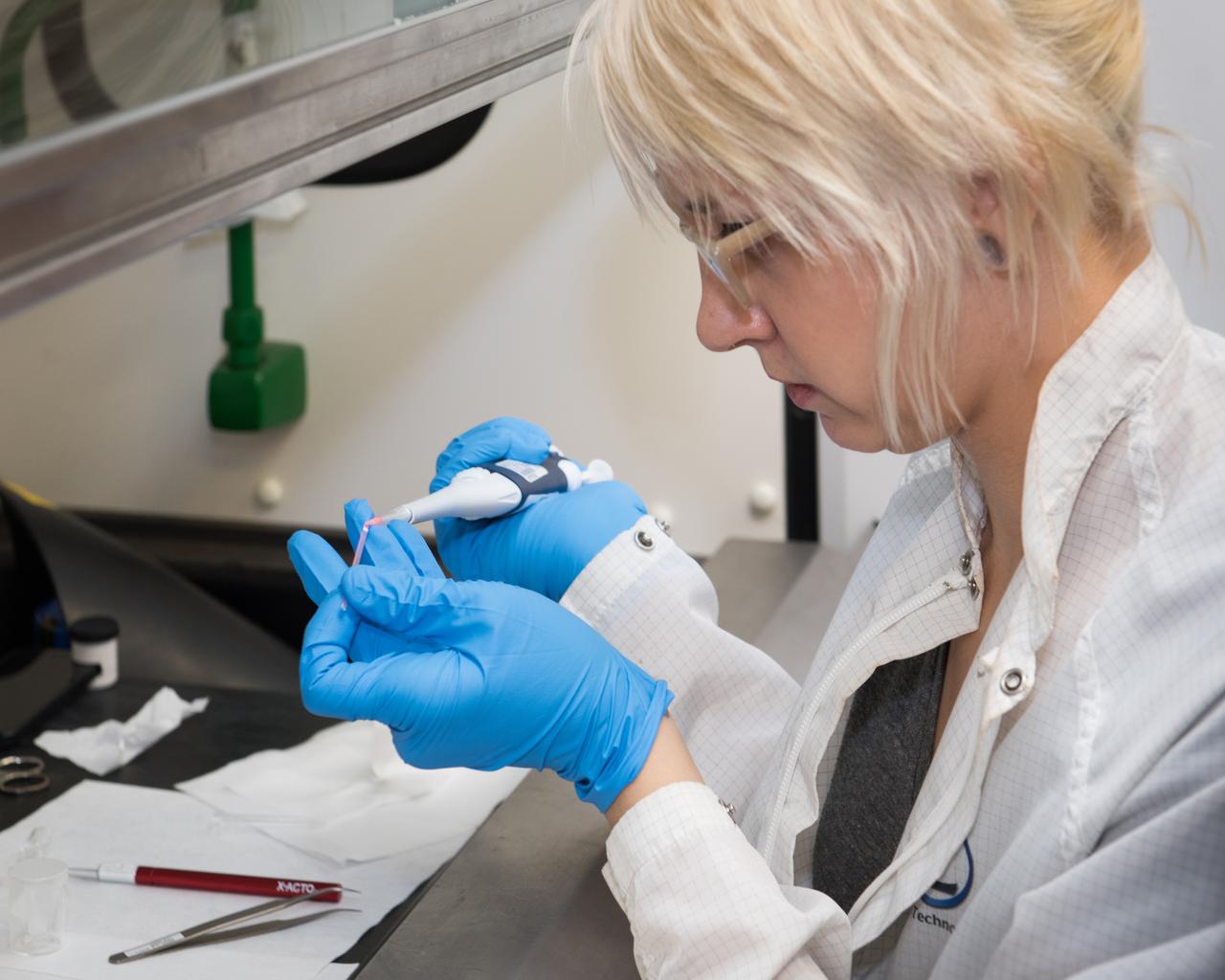
Deena Dombrosky (Zin Technologies Engineer) is shown here filling a Procter & Gamble (P & G) sample that will be used in ground-testing as NASA prepares for their experiment on the International Space Station (ISS). The sample particles are the size of the wavelength of light and they are dyed orange/pink to glow when illuminated with the laser light enabling a confocal microscope to produce 3D images. The P & G experiment will improve product stabilizers that extend product shelf life. This has the added advantage of leading to more compact environmentally friendly containers.
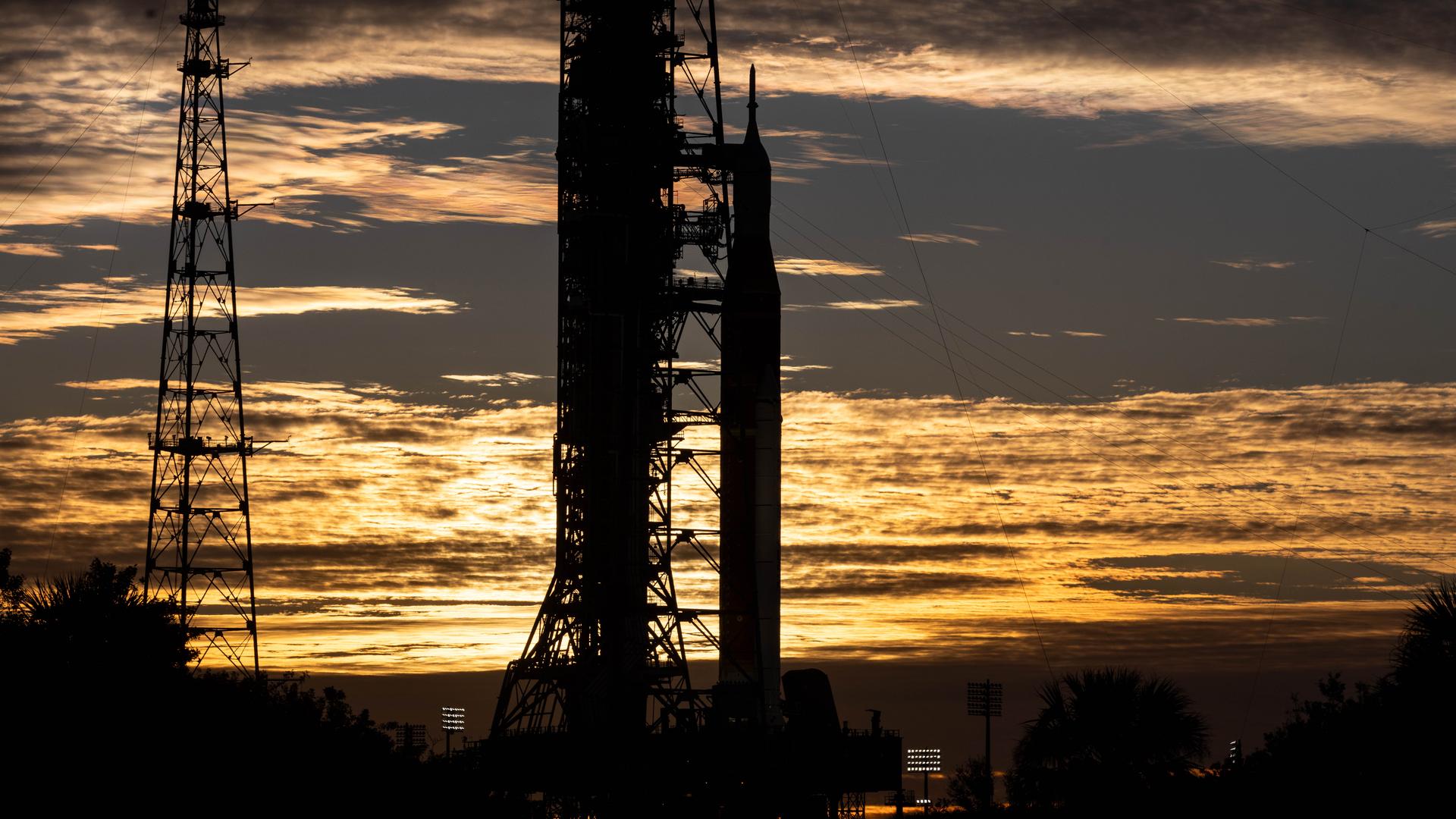
Clouds and the Sun illuminate the sky on Wednesday, Jan. 28, 2026, as NASA’s Artemis II SLS (Space Launch System) rocket and Orion spacecraft stand vertical at Launch Complex 39B at NASA’s Kennedy Space Center in Florida. The Artemis II test flight will take Commander Reid Wiseman, Pilot Victor Glover, and Mission Specialist Christina Koch from NASA and Mission Specialist Jeremy Hansen from the CSA (Canadian Space Agency), around the Moon and back to Earth no later than April 2026.
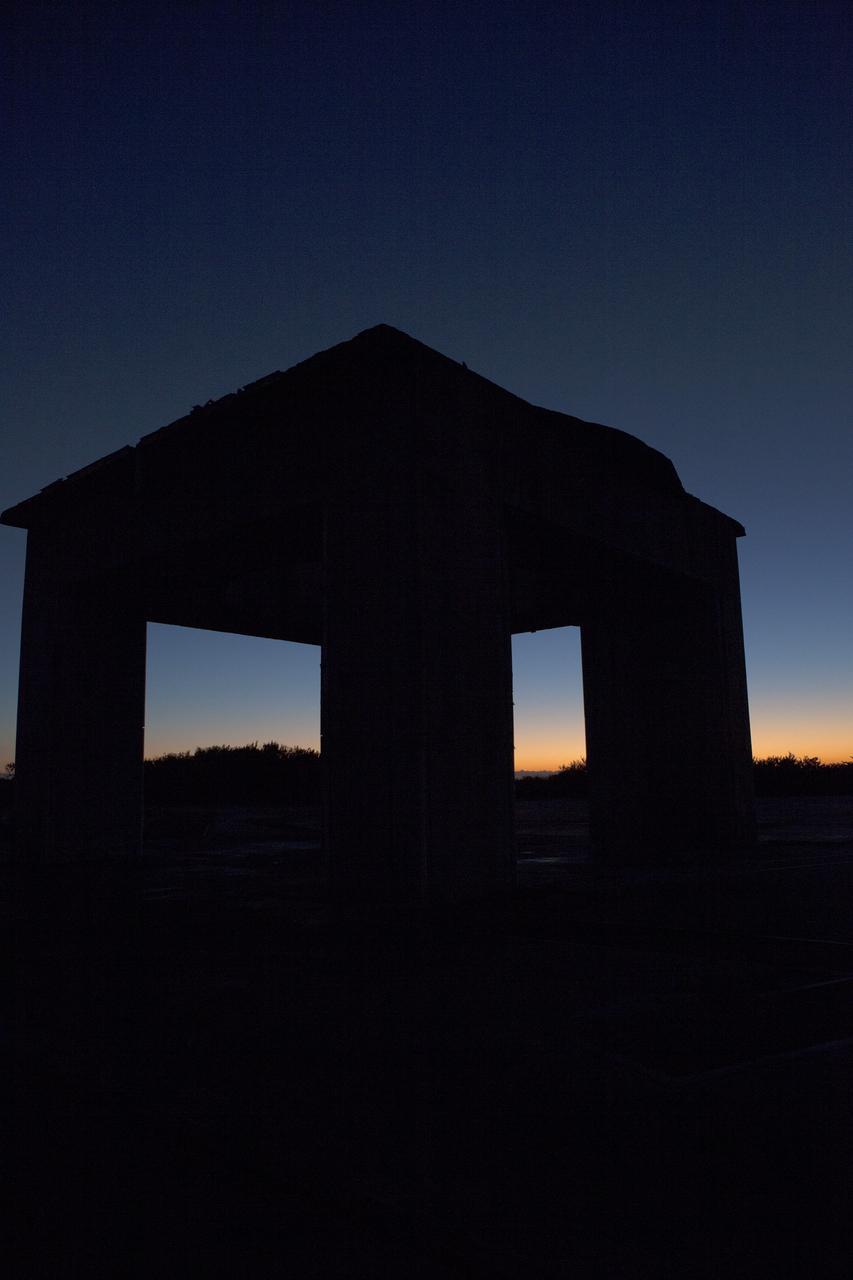
CAPE CANAVERAL, Fla. – Sunrise at Launch Pad 34 on Cape Canaveral Air Force Station in Florida illuminates what remains of the pad's historic gantry. On this day in 1967, a fire erupted on the pad during a preflight test, taking the lives of the Apollo 1 crew, NASA astronauts Virgil Grissom, Edward White and Roger Chaffee. To learn more about Apollo 1 and the crew, visit http://www.nasa.gov/mission_pages/apollo/missions/apollo1.html. Photo credit: NASA/Ben Smegelsky
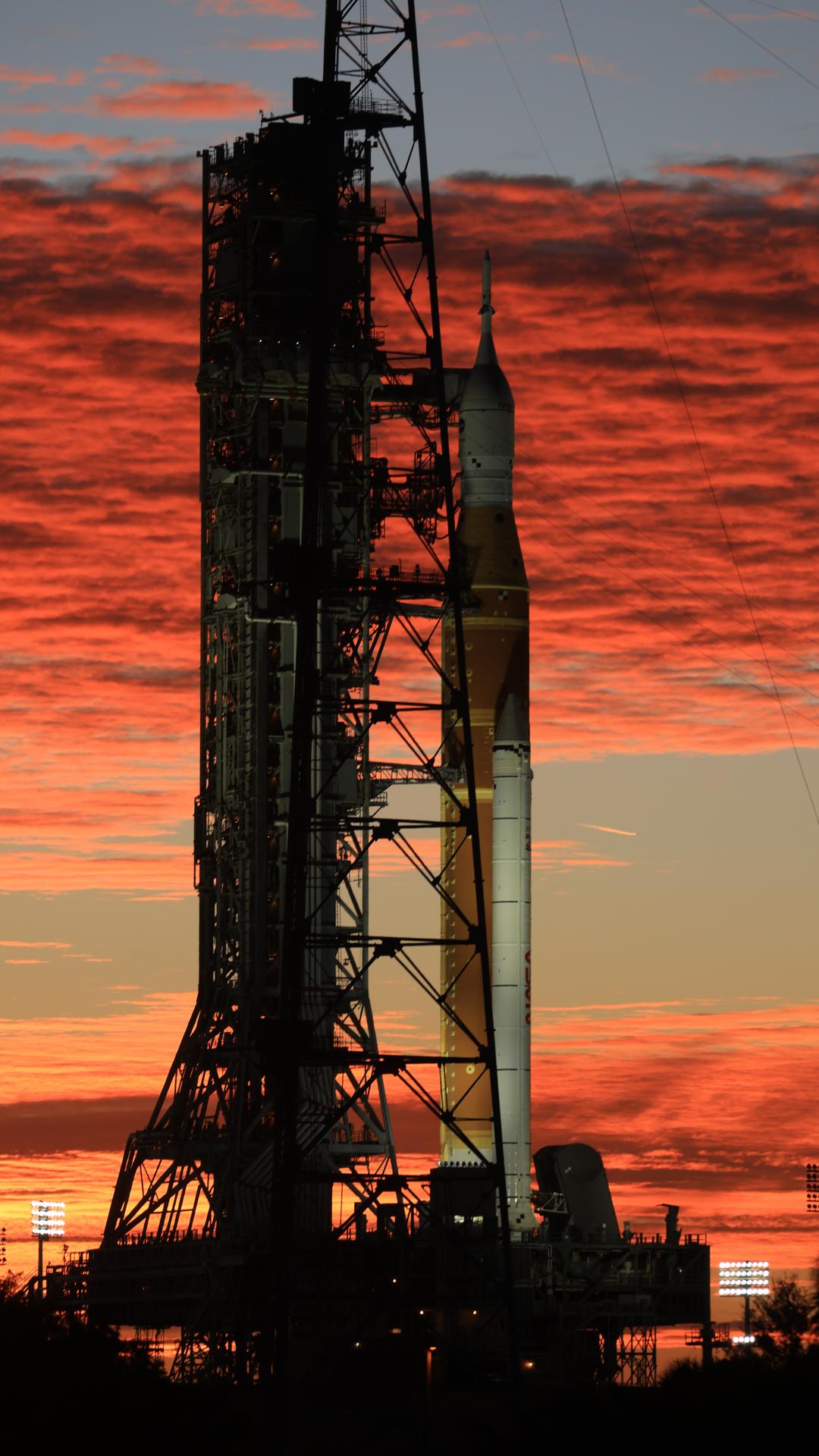
Clouds and the Sun illuminate the sky on Wednesday, Jan. 28, 2026, as NASA’s Artemis II SLS (Space Launch System) rocket and Orion spacecraft stand vertical at Launch Complex 39B at NASA’s Kennedy Space Center in Florida. The Artemis II test flight will take Commander Reid Wiseman, Pilot Victor Glover, and Mission Specialist Christina Koch from NASA and Mission Specialist Jeremy Hansen from the CSA (Canadian Space Agency), around the Moon and back to Earth no later than April 2026.
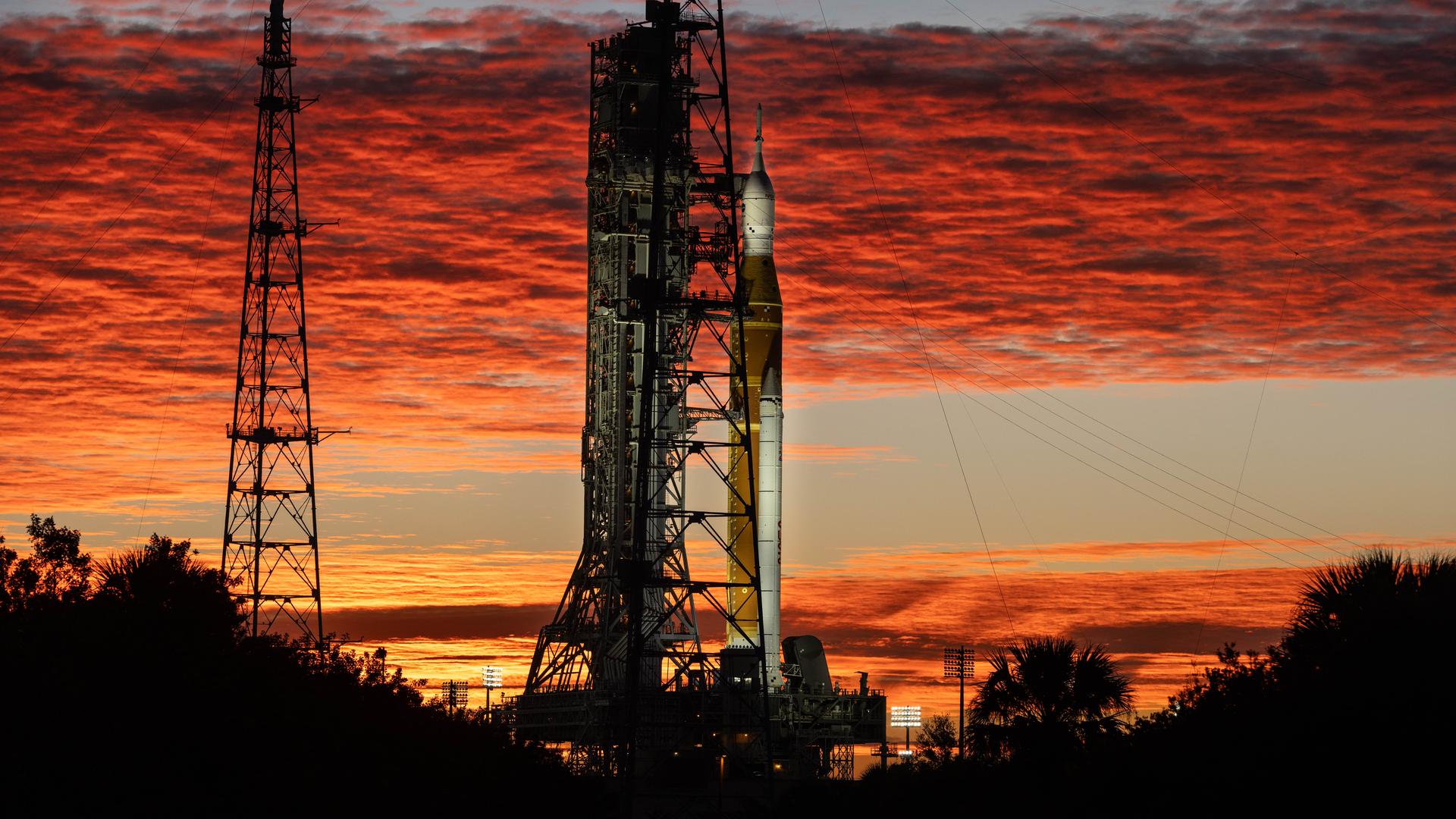
Clouds and the Sun illuminate the sky on Wednesday, Jan. 28, 2026, as NASA’s Artemis II SLS (Space Launch System) rocket and Orion spacecraft stand vertical at Launch Complex 39B at NASA’s Kennedy Space Center in Florida. The Artemis II test flight will take Commander Reid Wiseman, Pilot Victor Glover, and Mission Specialist Christina Koch from NASA and Mission Specialist Jeremy Hansen from the CSA (Canadian Space Agency), around the Moon and back to Earth no later than April 2026.
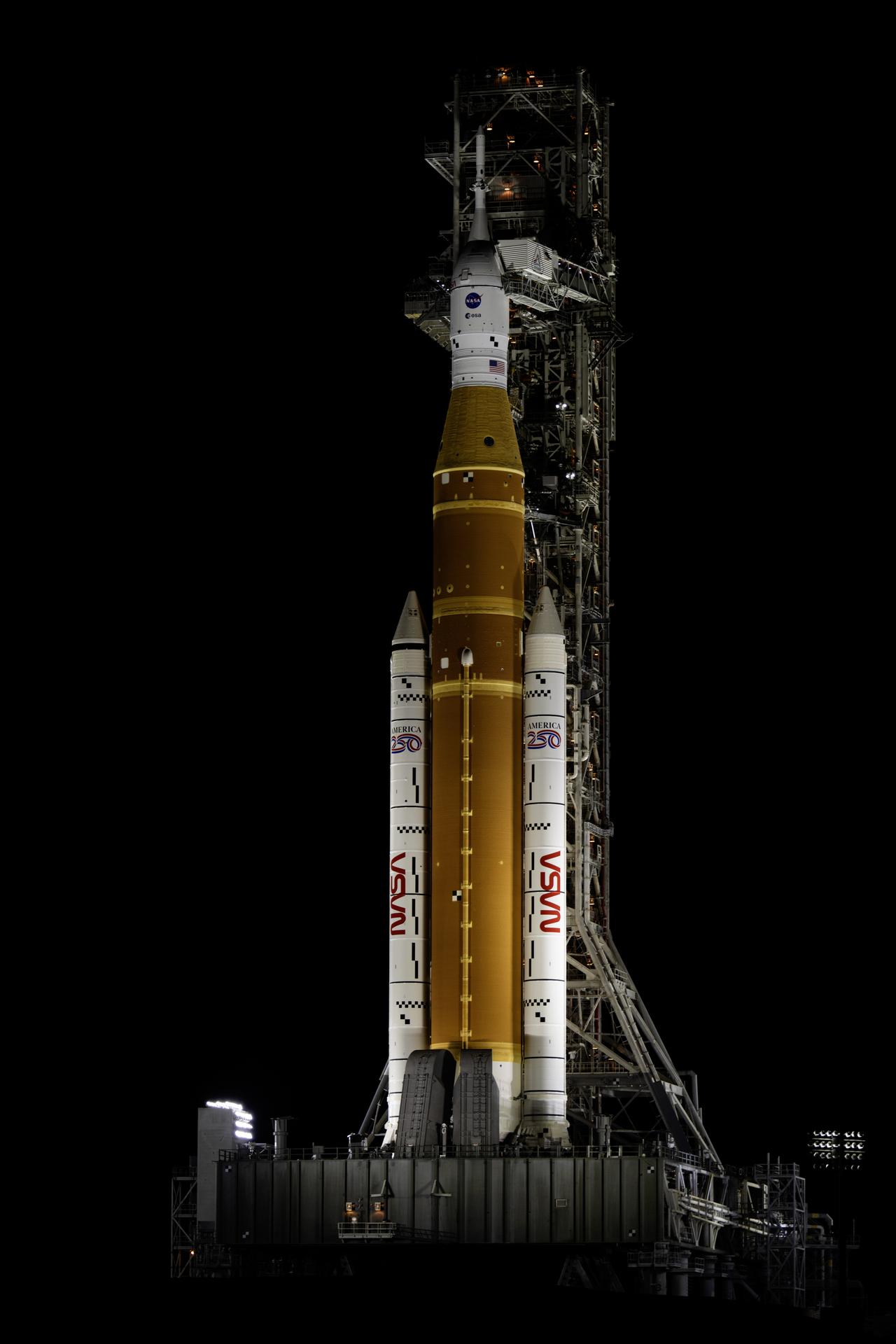
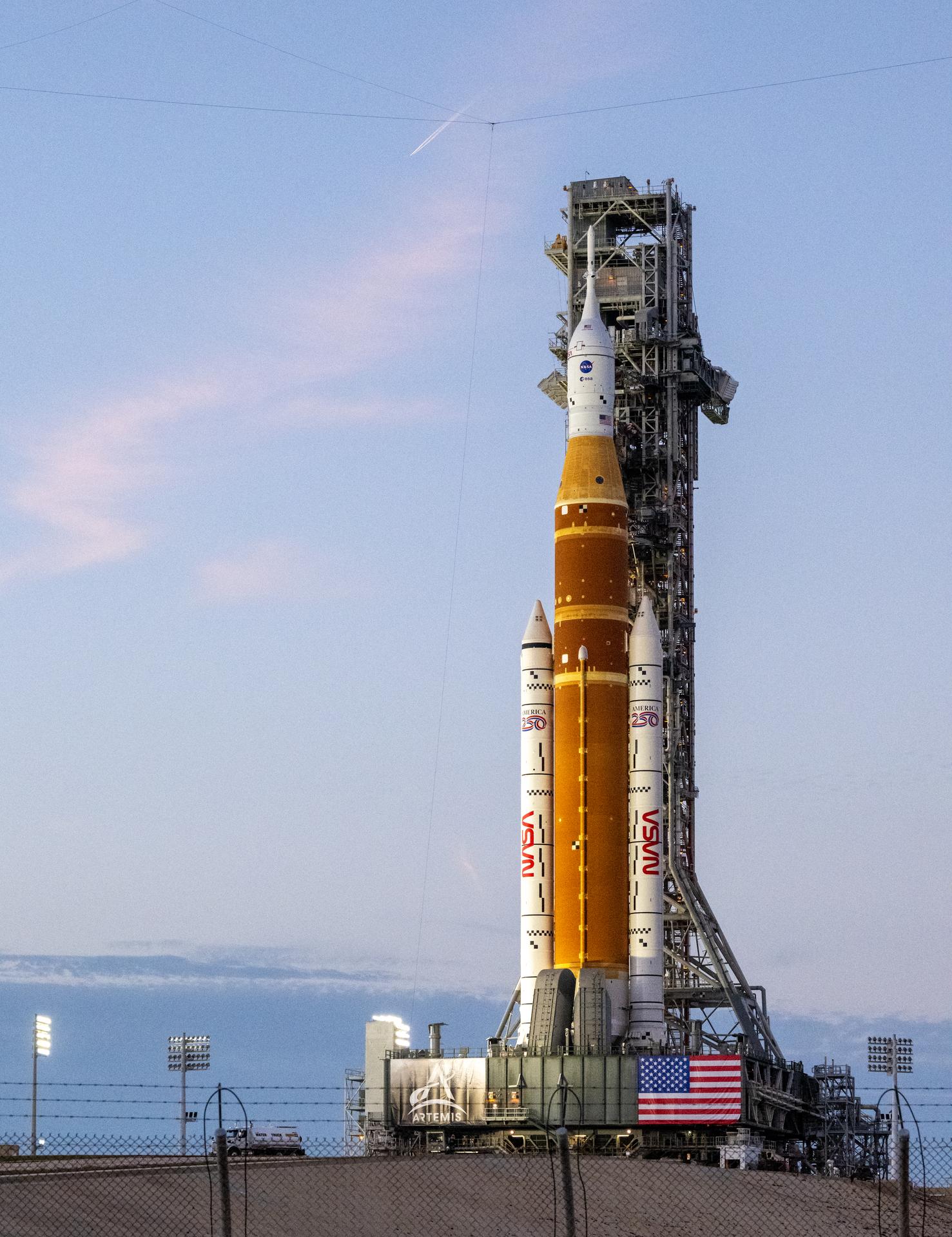
Spotlights illuminate NASA’s Artemis II SLS (Space Launch System) rocket with the Orion spacecraft atop a mobile launcher at Launch Complex 39B at NASA’s Kennedy Space Center in Florida on Thursday, Jan. 29, 2026. The Artemis II test flight will take Commander Reid Wiseman, Pilot Victor Glover, and Mission Specialist Christina Koch from NASA, and Mission Specialist Jeremy Hansen from the CSA (Canadian Space Agency), around the Moon and back to Earth.
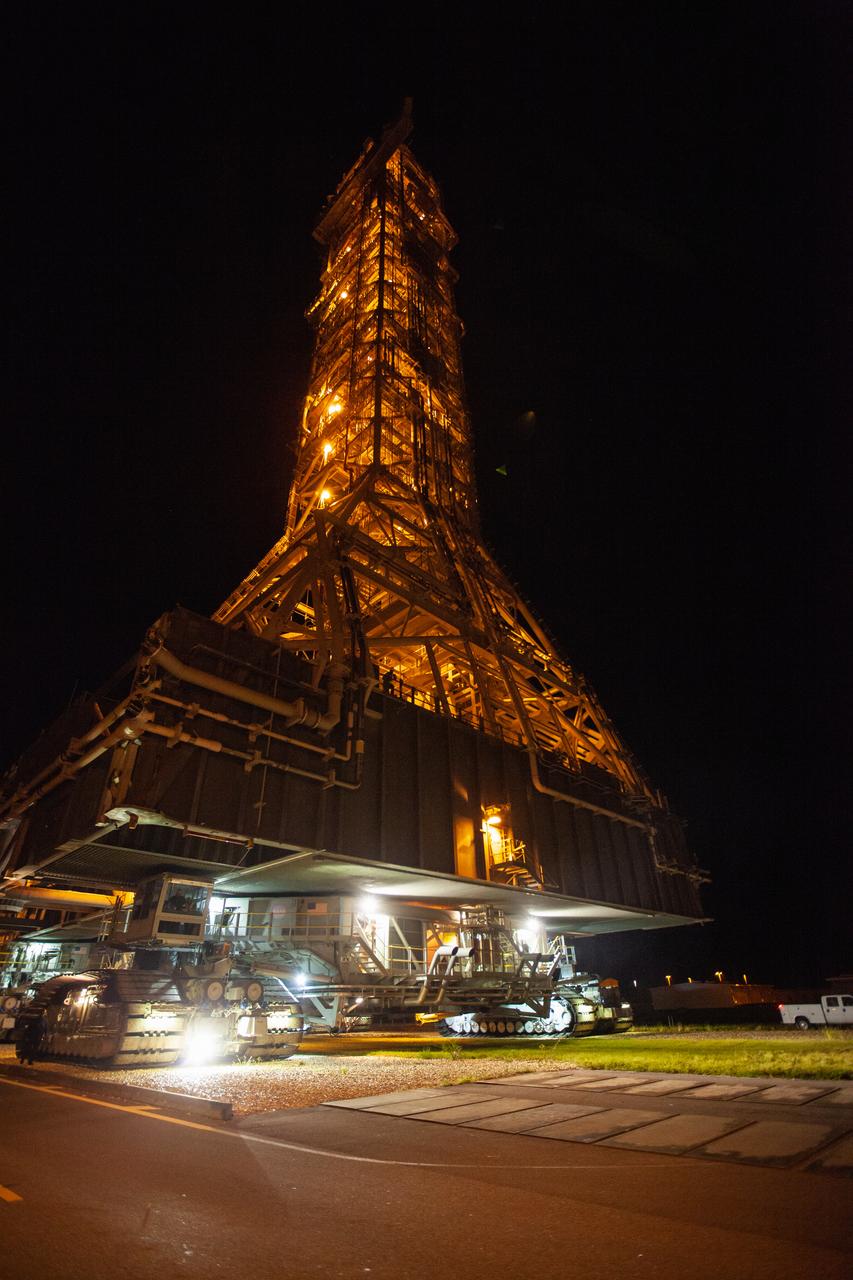
Exploration Ground Systems’ mobile launcher is illuminated in the night as it makes its last solo trek to Kennedy Space Center’s Launch Complex 39B in Florida on June 27, 2019. The mobile launcher departed from the Vehicle Assembly Building at midnight on June 27 for the 10-hour journey to the pad, where it will remain for the summer, undergoing final testing and checkouts. Its next roll to the pad will be with the agency’s Space Launch System rocket and Orion spacecraft in preparation for the launch of Artemis 1.
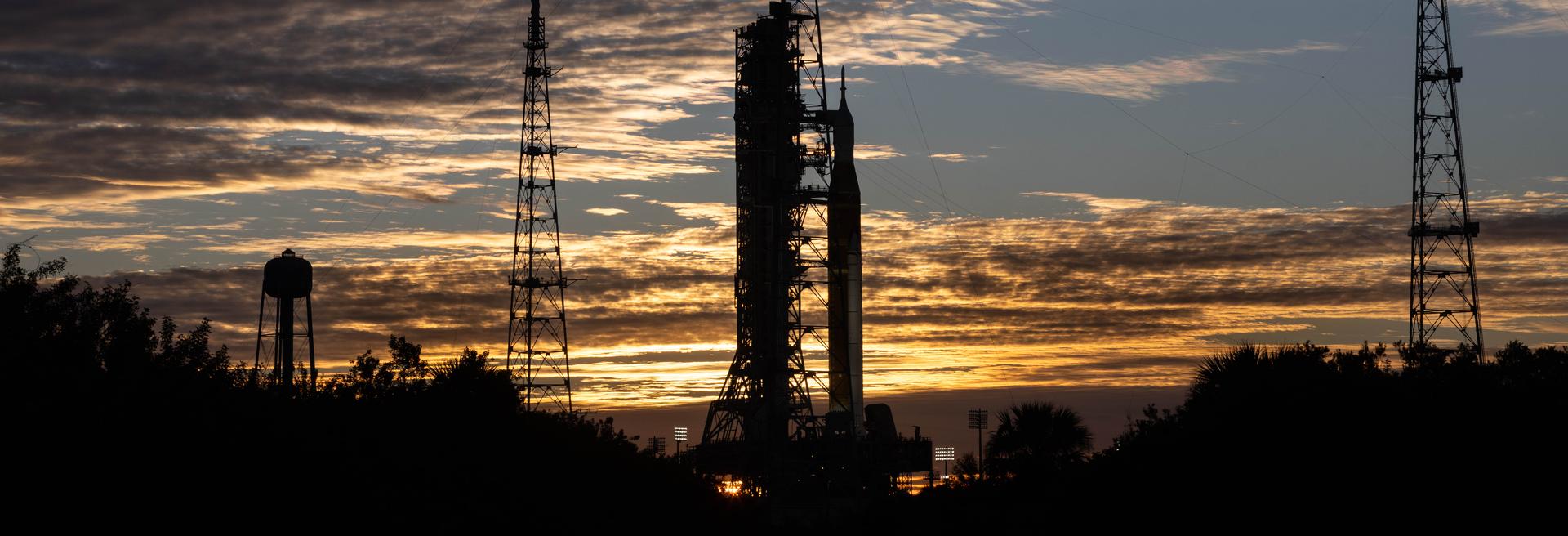
Clouds and the Sun illuminate the sky on Wednesday, Jan. 28, 2026, as NASA’s Artemis II SLS (Space Launch System) rocket and Orion spacecraft stand vertical at Launch Complex 39B at NASA’s Kennedy Space Center in Florida. The Artemis II test flight will take Commander Reid Wiseman, Pilot Victor Glover, and Mission Specialist Christina Koch from NASA and Mission Specialist Jeremy Hansen from the CSA (Canadian Space Agency), around the Moon and back to Earth no later than April 2026.
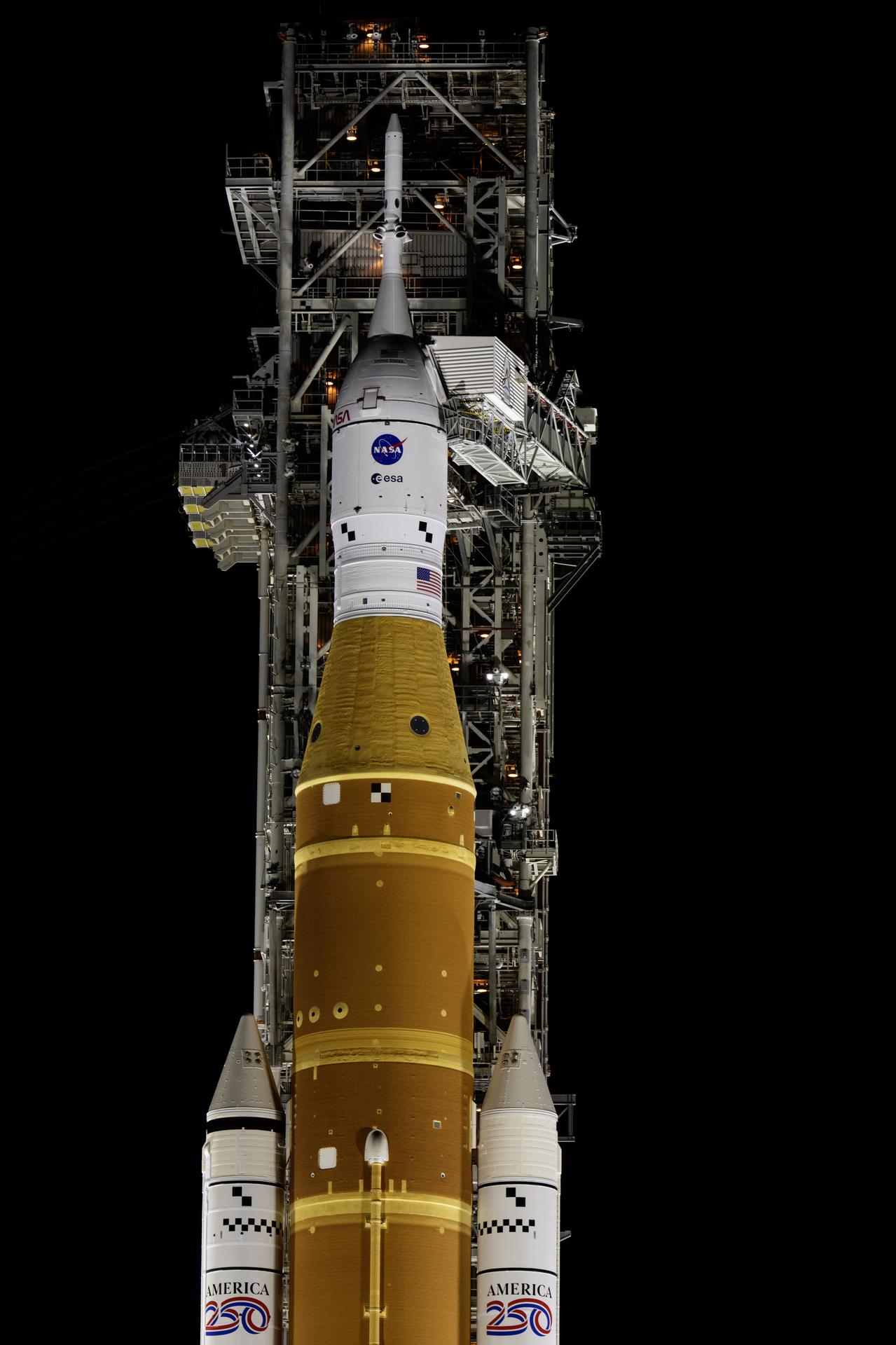
Spotlights illuminate NASA’s Artemis II SLS (Space Launch System) rocket with the Orion spacecraft atop a mobile launcher at Launch Complex 39B at NASA’s Kennedy Space Center in Florida on Thursday, Jan. 29, 2026. The Artemis II test flight will take Commander Reid Wiseman, Pilot Victor Glover, and Mission Specialist Christina Koch from NASA, and Mission Specialist Jeremy Hansen from the CSA (Canadian Space Agency), around the Moon and back to Earth.
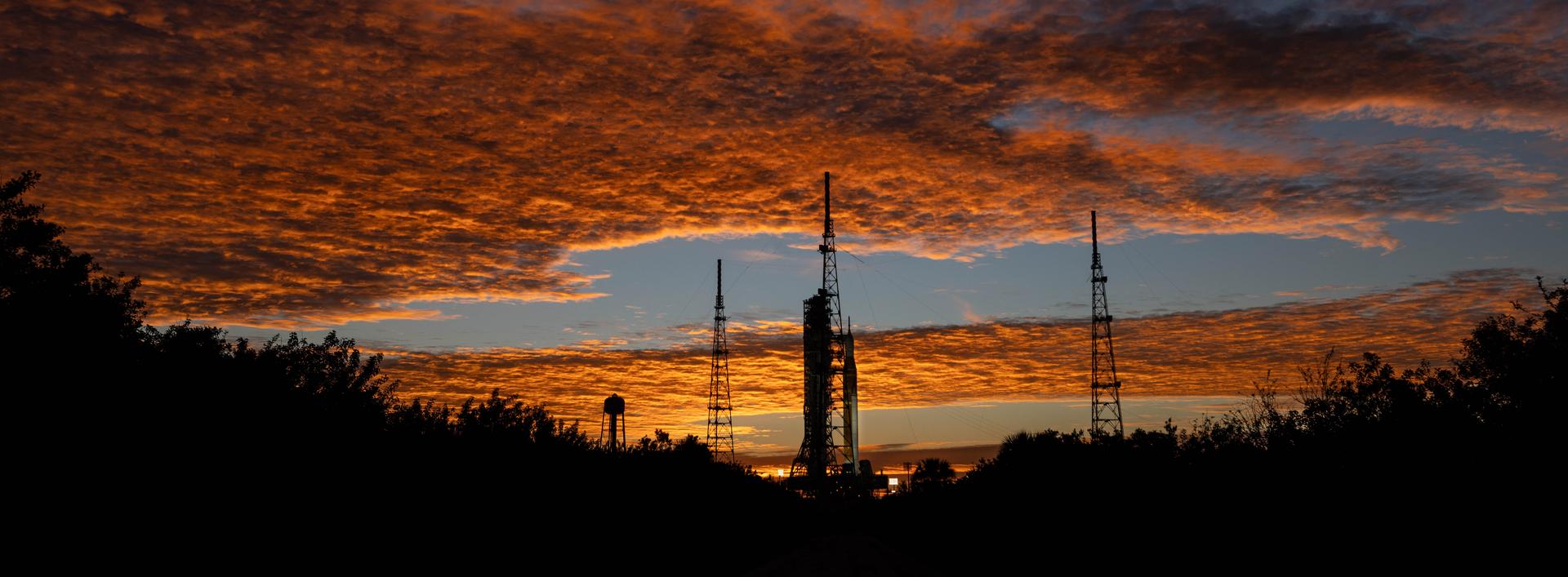
Clouds and the Sun illuminate the sky on Wednesday, Jan. 28, 2026, as NASA’s Artemis II SLS (Space Launch System) rocket and Orion spacecraft stand vertical at Launch Complex 39B at NASA’s Kennedy Space Center in Florida. The Artemis II test flight will take Commander Reid Wiseman, Pilot Victor Glover, and Mission Specialist Christina Koch from NASA and Mission Specialist Jeremy Hansen from the CSA (Canadian Space Agency), around the Moon and back to Earth no later than April 2026.
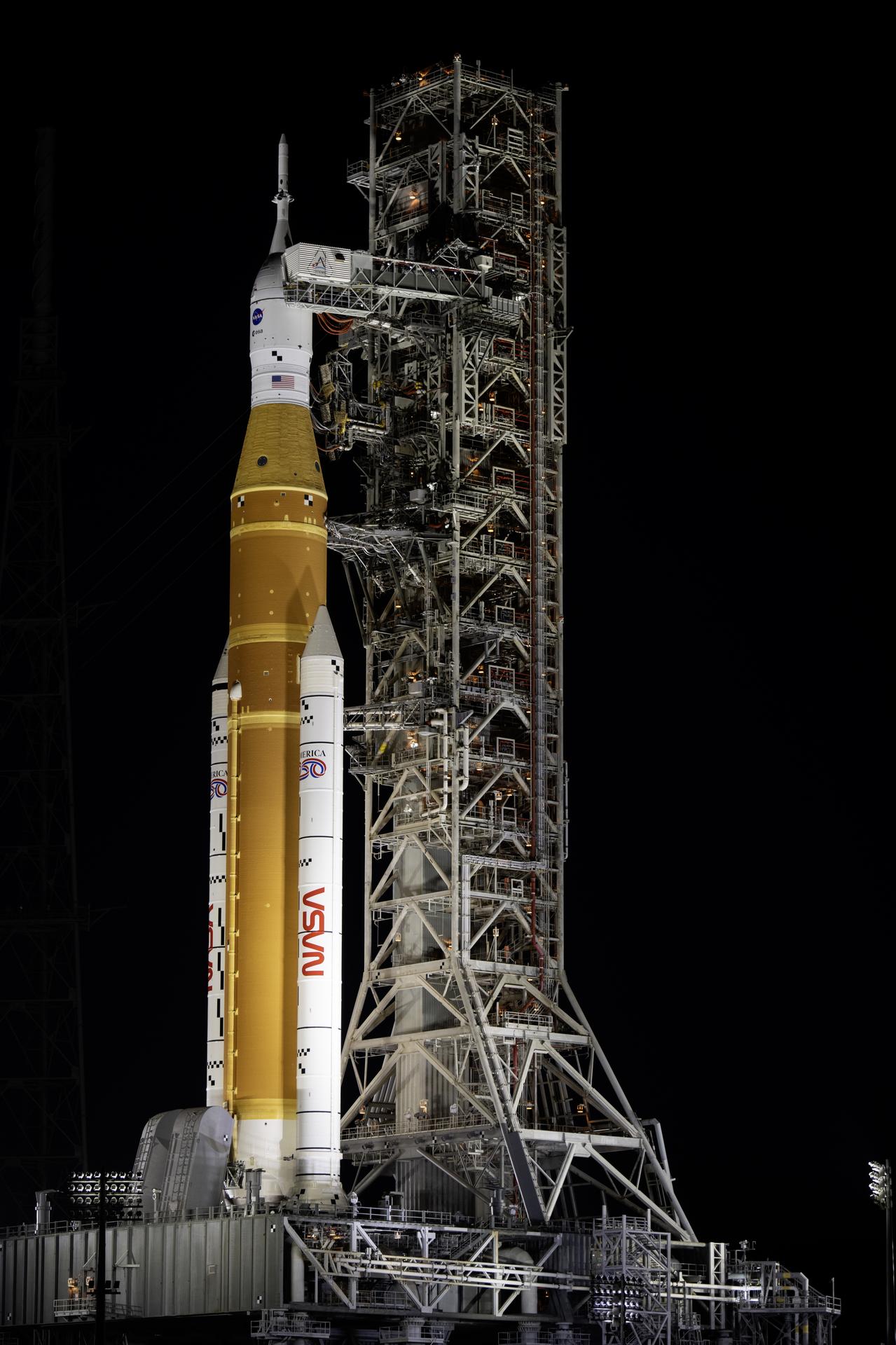
Spotlights illuminate NASA’s Artemis II SLS (Space Launch System) rocket with the Orion spacecraft atop a mobile launcher at Launch Complex 39B at NASA’s Kennedy Space Center in Florida on Thursday, Jan. 29, 2026. The Artemis II test flight will take Commander Reid Wiseman, Pilot Victor Glover, and Mission Specialist Christina Koch from NASA, and Mission Specialist Jeremy Hansen from the CSA (Canadian Space Agency), around the Moon and back to Earth.
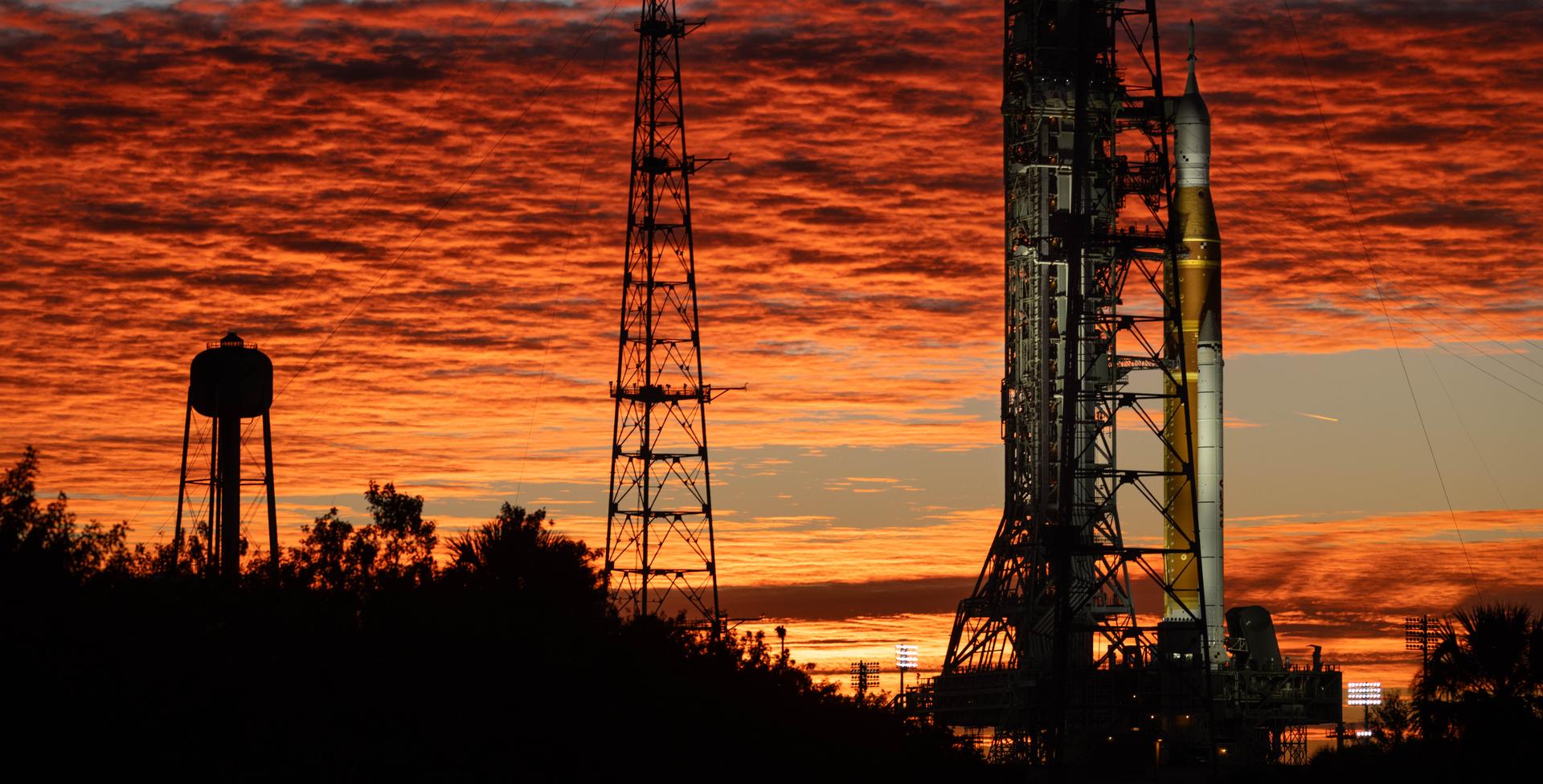
Clouds and the Sun illuminate the sky on Wednesday, Jan. 28, 2026, as NASA’s Artemis II SLS (Space Launch System) rocket and Orion spacecraft stand vertical at Launch Complex 39B at NASA’s Kennedy Space Center in Florida. The Artemis II test flight will take Commander Reid Wiseman, Pilot Victor Glover, and Mission Specialist Christina Koch from NASA and Mission Specialist Jeremy Hansen from the CSA (Canadian Space Agency), around the Moon and back to Earth no later than April 2026.
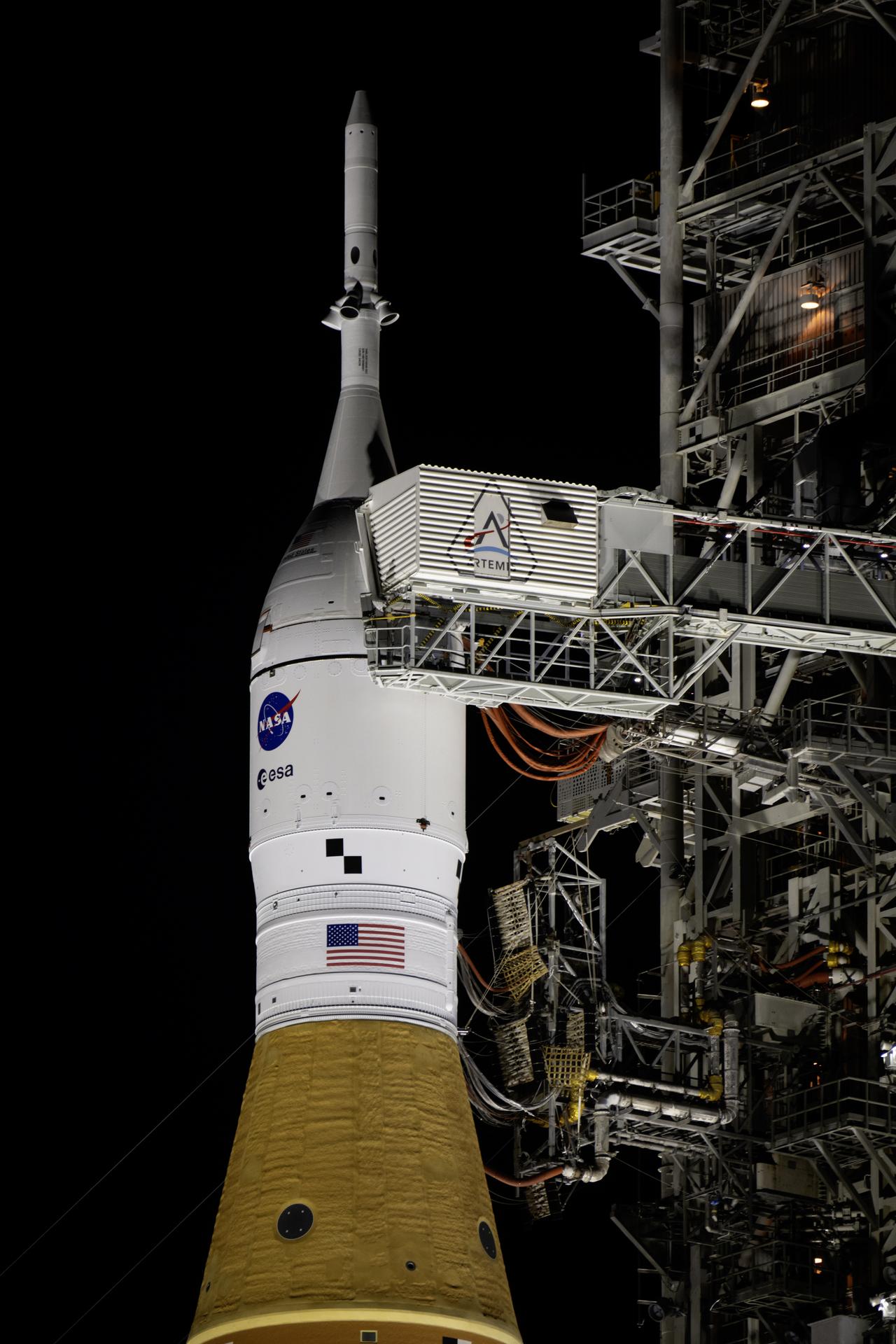
Spotlights illuminate NASA’s Artemis II SLS (Space Launch System) rocket with the Orion spacecraft atop a mobile launcher at Launch Complex 39B at NASA’s Kennedy Space Center in Florida on Thursday, Jan. 29, 2026. The Artemis II test flight will take Commander Reid Wiseman, Pilot Victor Glover, and Mission Specialist Christina Koch from NASA, and Mission Specialist Jeremy Hansen from the CSA (Canadian Space Agency), around the Moon and back to Earth.
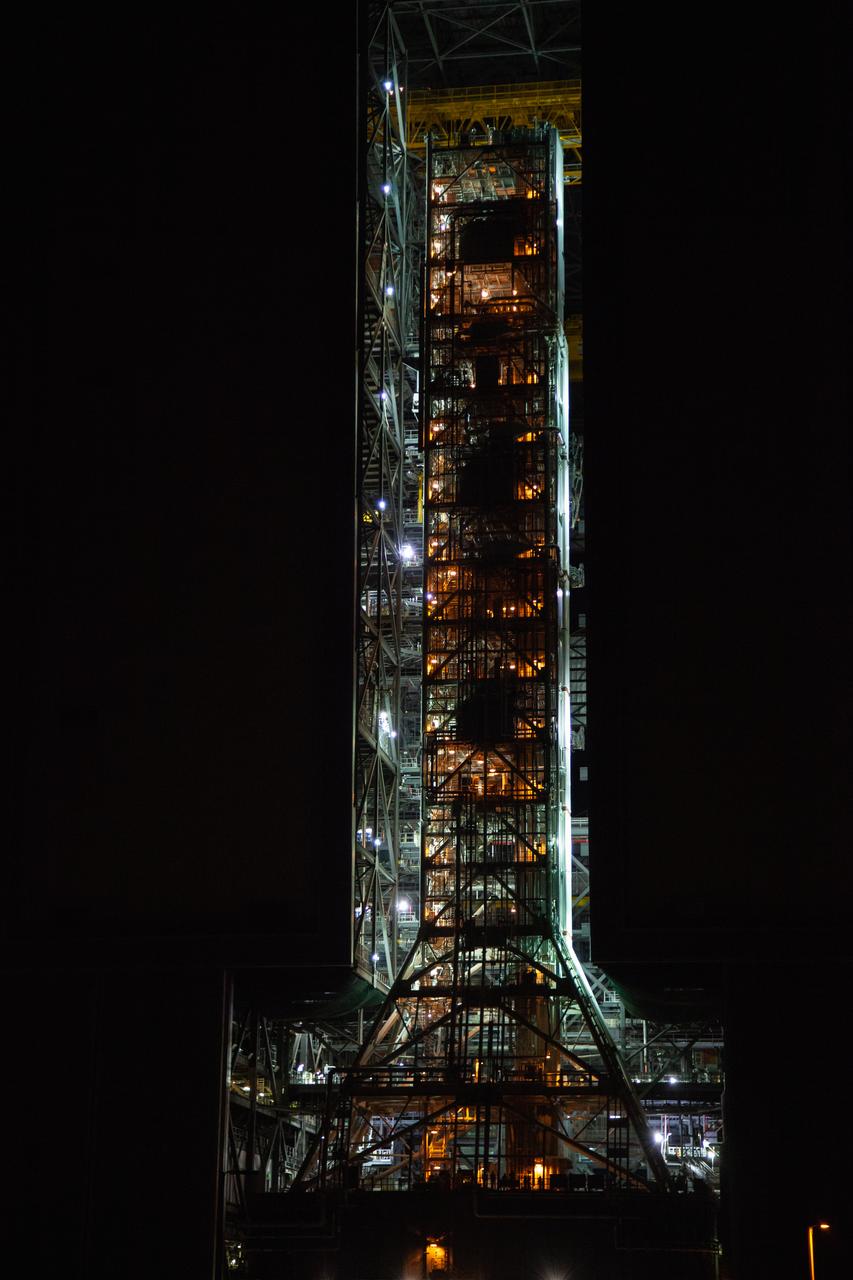
Exploration Ground Systems’ mobile launcher is illuminated in the night as it makes its last solo trek to Kennedy Space Center’s Launch Complex 39B in Florida on June 27, 2019. The mobile launcher departed from the Vehicle Assembly Building at midnight on June 27 for the 10-hour journey to the pad, where it will remain for the summer, undergoing final testing and checkouts. Its next roll to the pad will be with the agency’s Space Launch System rocket and Orion spacecraft in preparation for the launch of Artemis 1.

The rising Sun illuminates the sky on Tuesday, March 24, 2026, as NASA’s Artemis II SLS (Space Launch System) rocket and Orion spacecraft stand vertical at Launch Complex 39B at NASA’s Kennedy Space Center in Florida. The Artemis II test flight will take Commander Reid Wiseman, Pilot Victor Glover, and Mission Specialist Christina Koch from NASA, and Mission Specialist Jeremy Hansen from the CSA (Canadian Space Agency), around the Moon and back to Earth with launch opportunities beginning in April 2026.
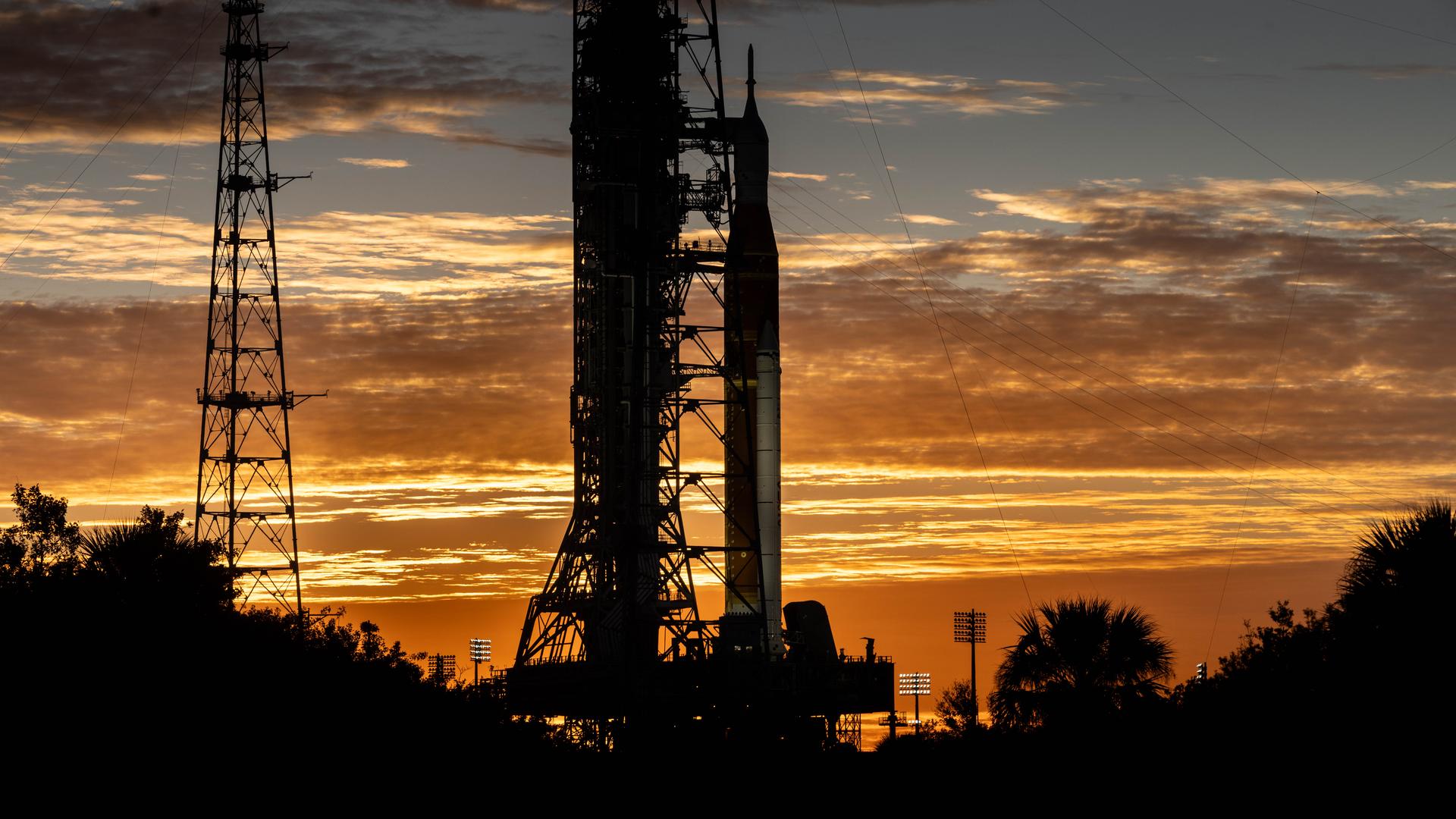
Clouds and the Sun illuminate the sky on Wednesday, Jan. 28, 2026, as NASA’s Artemis II SLS (Space Launch System) rocket and Orion spacecraft stand vertical at Launch Complex 39B at NASA’s Kennedy Space Center in Florida. The Artemis II test flight will take Commander Reid Wiseman, Pilot Victor Glover, and Mission Specialist Christina Koch from NASA and Mission Specialist Jeremy Hansen from the CSA (Canadian Space Agency), around the Moon and back to Earth no later than April 2026.
Spotlights illuminate NASA’s Artemis II SLS (Space Launch System) rocket with the Orion spacecraft atop a mobile launcher at Launch Complex 39B at NASA’s Kennedy Space Center in Florida on Thursday, Jan. 29, 2026. The Artemis II test flight will take Commander Reid Wiseman, Pilot Victor Glover, and Mission Specialist Christina Koch from NASA, and Mission Specialist Jeremy Hansen from the CSA (Canadian Space Agency), around the Moon and back to Earth.
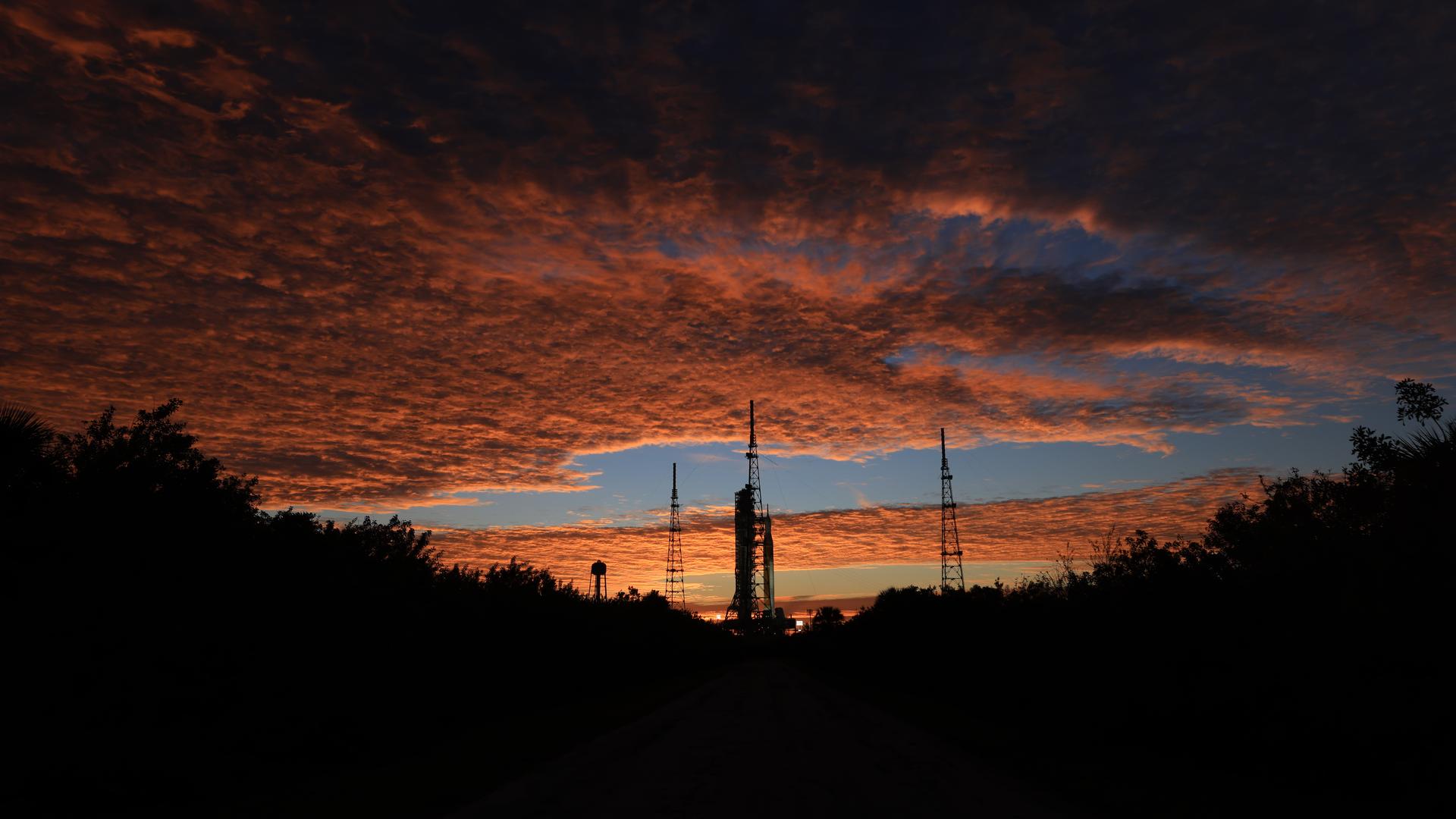
Clouds and the Sun illuminate the sky on Wednesday, Jan. 28, 2026, as NASA’s Artemis II SLS (Space Launch System) rocket and Orion spacecraft stand vertical at Launch Complex 39B at NASA’s Kennedy Space Center in Florida. The Artemis II test flight will take Commander Reid Wiseman, Pilot Victor Glover, and Mission Specialist Christina Koch from NASA and Mission Specialist Jeremy Hansen from the CSA (Canadian Space Agency), around the Moon and back to Earth no later than April 2026.
NASA’s Artemis II Space Launch System (SLS) rocket and Orion spacecraft are seen illuminated by lights at Launch Complex 39B, Saturday, Jan. 17, 2026, at NASA’s Kennedy Space Center in Florida. In the coming days, engineers will prepare for the wet dress rehearsal, a two-day test that simulates launch day. The Artemis II test flight will take Commander Reid Wiseman, Pilot Victor Glover, and Mission Specialist Christina Koch from NASA, and Mission Specialist Jeremy Hansen from the CSA (Canadian Space Agency), around the Moon and back to Earth no later than April 2026. Photo Credit: (NASA/Keegan Barber)
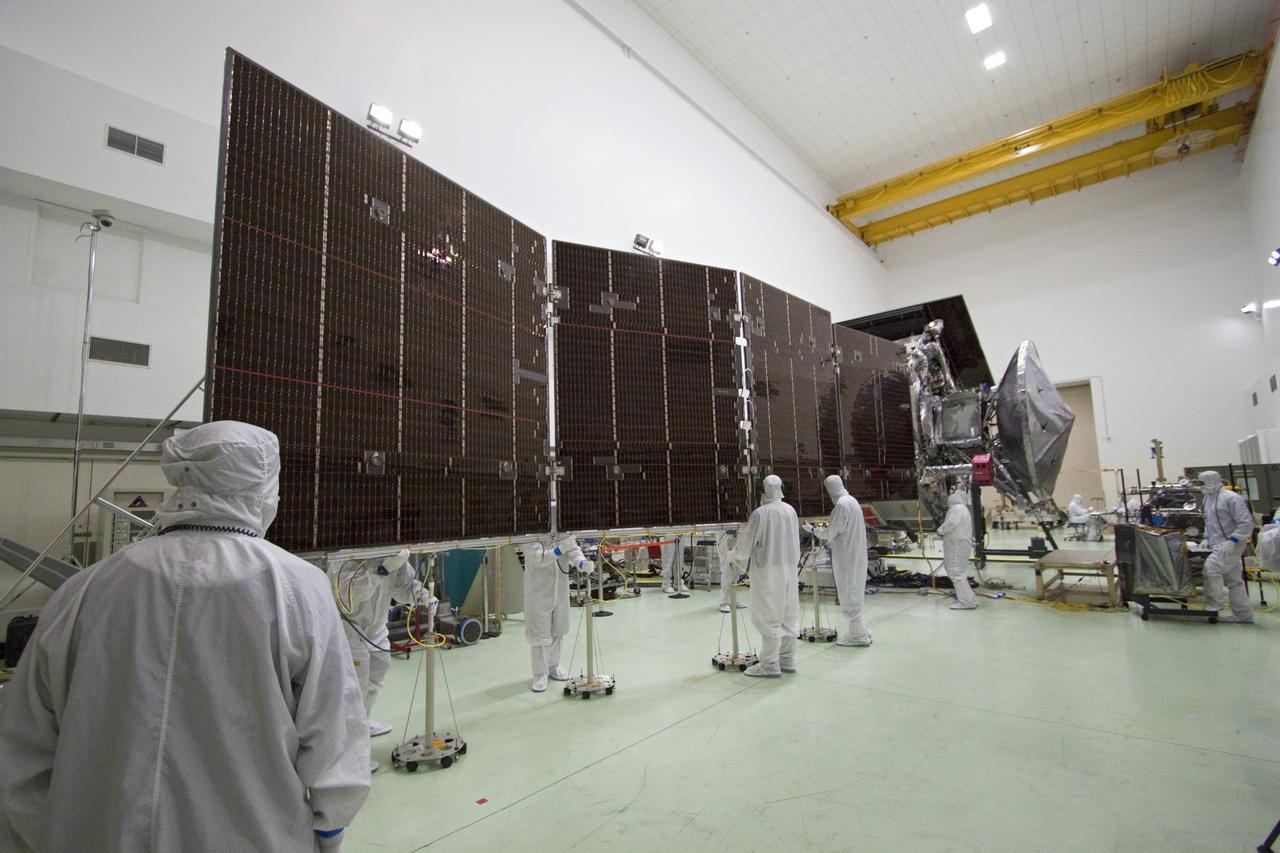
CAPE CANAVERAL, Fla. -- In a clean-room environment at Astrotech's payload processing facility in Titusville, Fla., technicians conduct deployment tests on solar array panels for NASA's Juno spacecraft prior to illumination testing. Juno is scheduled to launch aboard a United Launch Alliance Atlas V rocket from Cape Canaveral, Fla. Aug. 5.The solar-powered spacecraft will orbit Jupiter's poles 33 times to find out more about the gas giant's origins, structure, atmosphere and magnetosphere and investigate the existence of a solid planetary core. For more information visit: www.nasa.gov/juno. Photo credit: NASA/Jack Pfaller
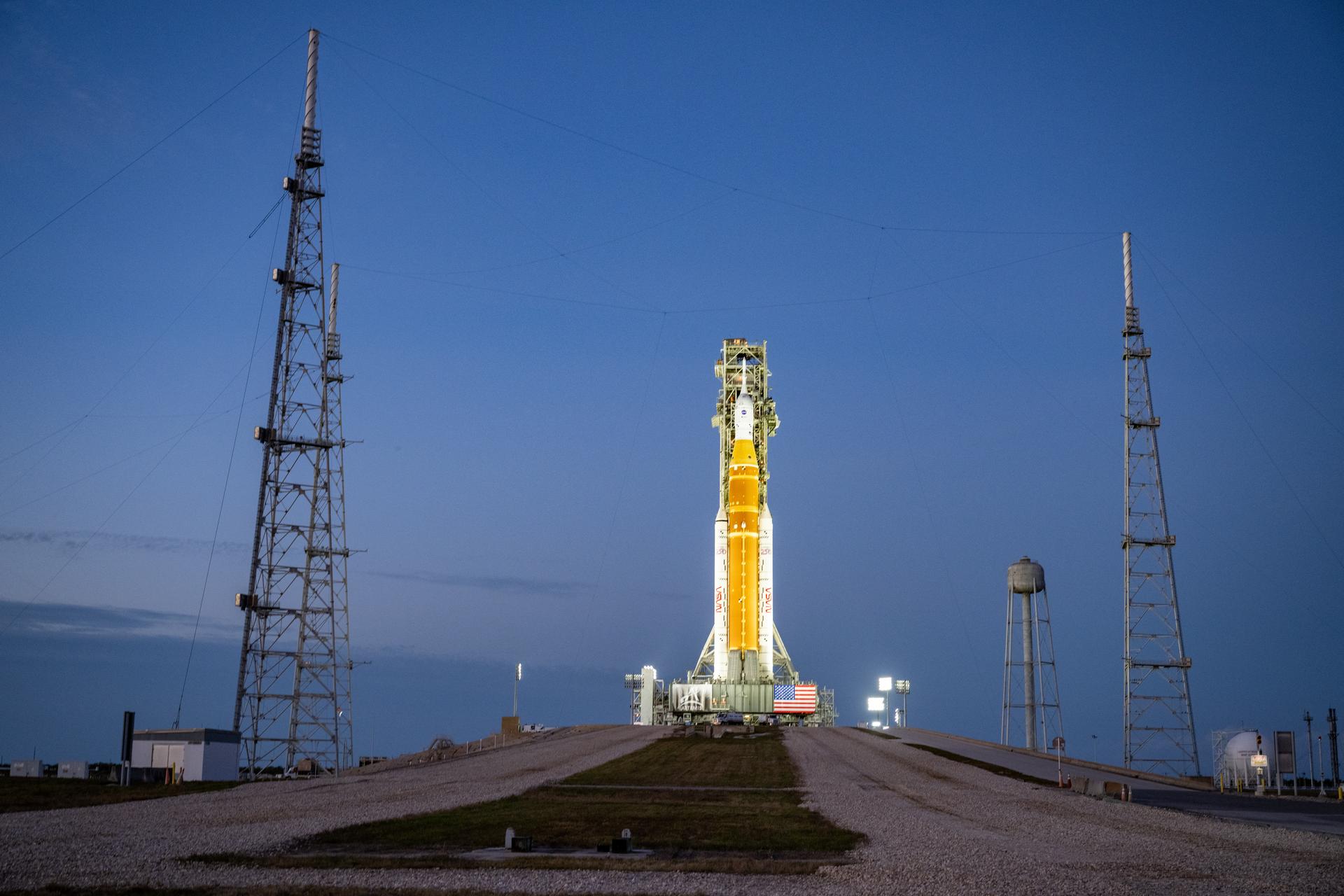
NASA’s Artemis II Space Launch System (SLS) rocket and Orion spacecraft are seen illuminated by lights at Launch Complex 39B, Saturday, Jan. 17, 2026, at NASA’s Kennedy Space Center in Florida. In the coming days, engineers will prepare for the wet dress rehearsal, a two-day test that simulates launch day. The Artemis II test flight will take Commander Reid Wiseman, Pilot Victor Glover, and Mission Specialist Christina Koch from NASA, and Mission Specialist Jeremy Hansen from the CSA (Canadian Space Agency), around the Moon and back to Earth no later than April 2026. Photo Credit: (NASA/Keegan Barber)
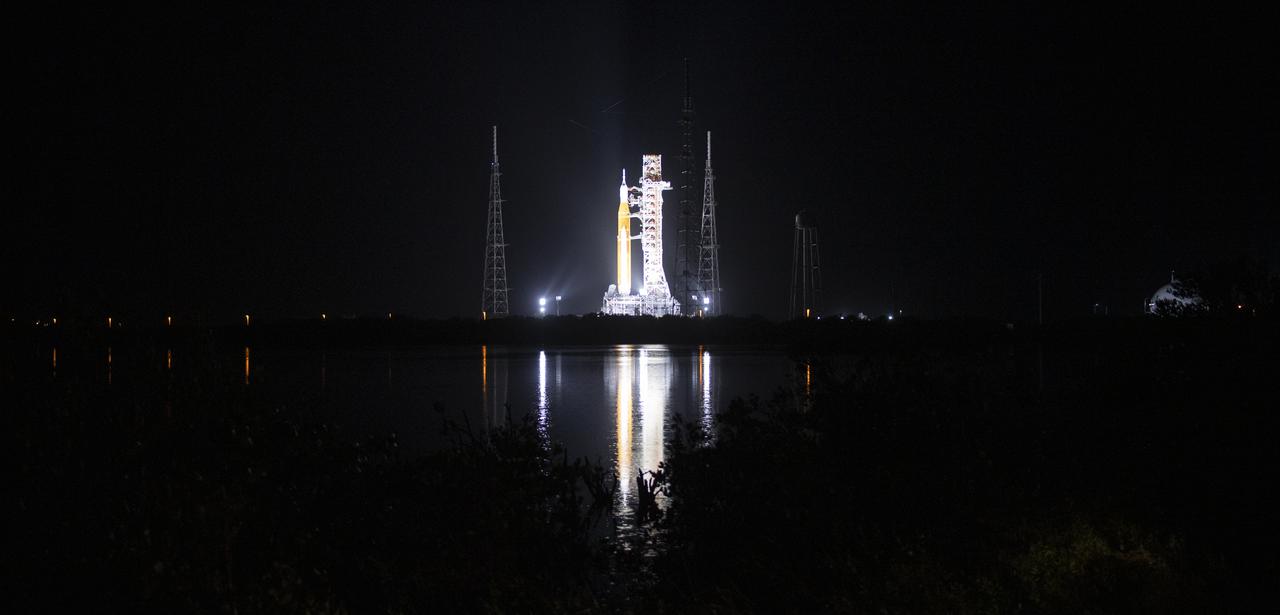
NASA’s Space Launch System (SLS) rocket with the Orion spacecraft aboard is seen atop a mobile launcher at Launch Complex 39B illuminated by spotlights, Saturday, April 2, 2022, as the Artemis I launch team conducts the wet dress rehearsal test at NASA’s Kennedy Space Center in Florida. Ahead of NASA’s Artemis I flight test, the wet dress rehearsal will run the Artemis I launch team through operations to load propellant, conduct a full launch countdown, demonstrate the ability to recycle the countdown clock, and drain the tanks to practice timelines and procedures for launch. Photo Credit: (NASA/Joel Kowsky)
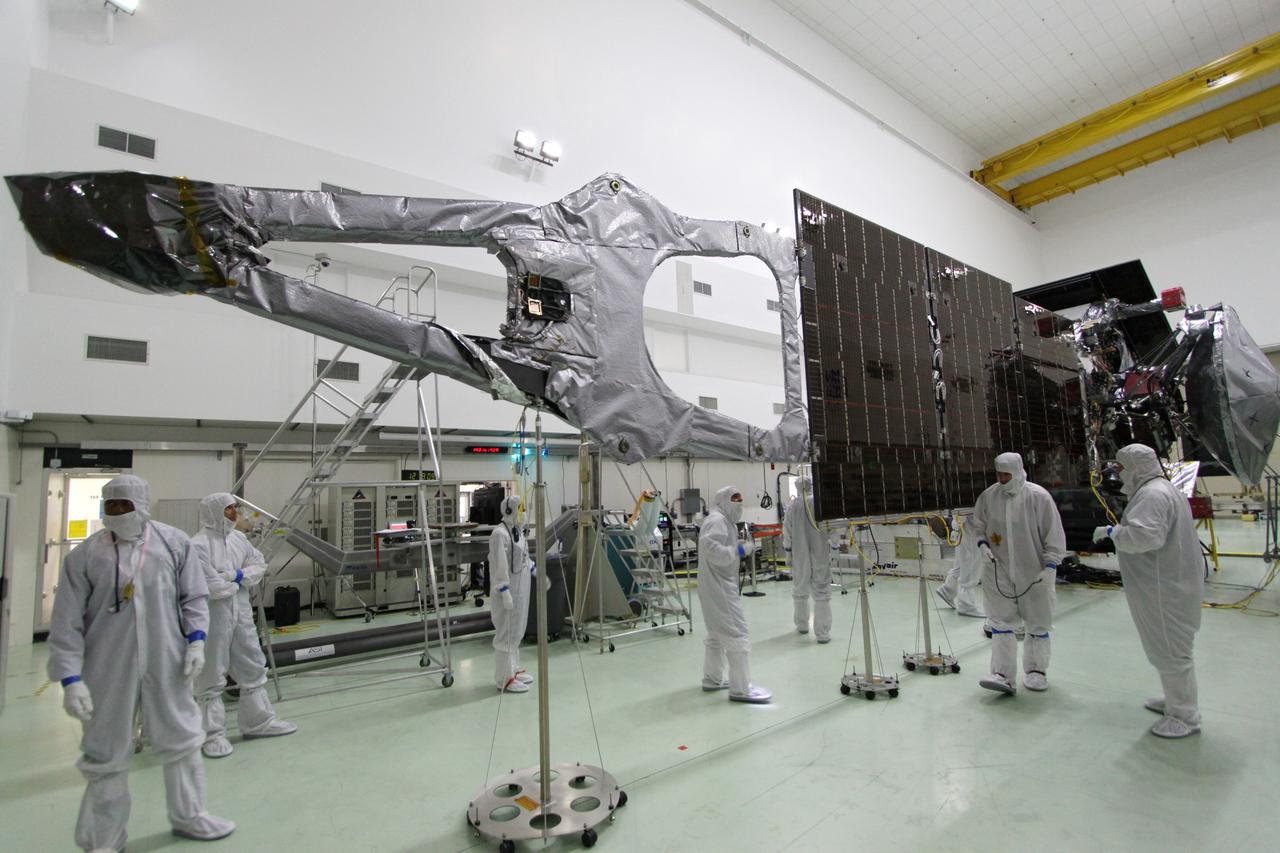
CAPE CANAVERAL, Fla. -- At Astrotech Space Operations in Titusville, Fla., technicians conduct deployment tests on solar array panel #1 with its magnetometer boom for NASA's Juno spacecraft prior to illumination testing. Juno is scheduled to launch aboard a United Launch Alliance Atlas V from Cape Canaveral, Fla. Aug. 5.The solar-powered spacecraft will orbit Jupiter's poles 33 times to find out more about the gas giant's origins, structure, atmosphere and magnetosphere and investigate the existence of a solid planetary core. For more information visit: www.nasa.gov/juno. Photo credit: NASA/Jack Pfaller