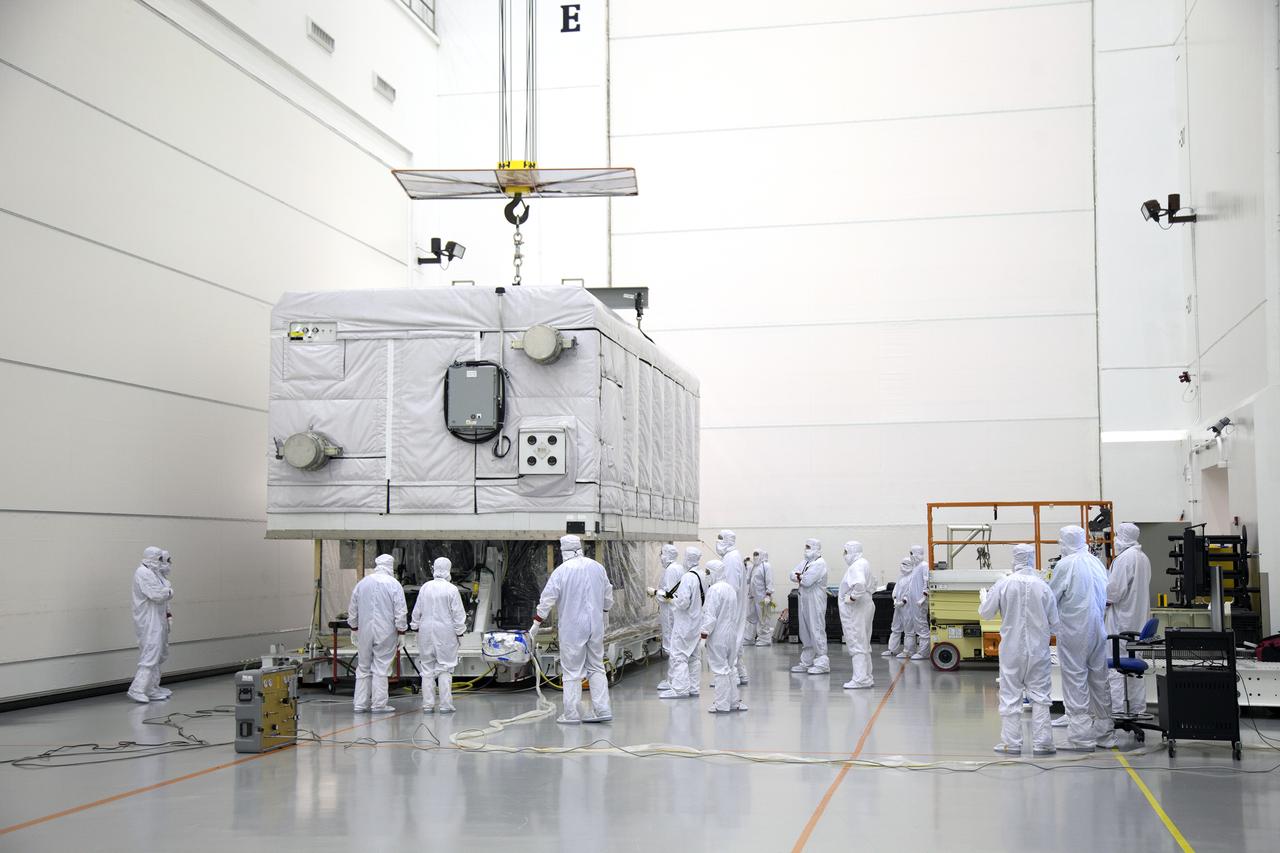
The shipping container is lifted off the GOES-R spacecraft inside the Astrotech payload processing facility in Titusville, Florida near NASA’s Kennedy Space Center. GOES-R will be the first satellite in a series of next-generation NOAA Geostationary Operational Environmental Satellites. The spacecraft is to launch aboard a United Launch Alliance Atlas V rocket in November.
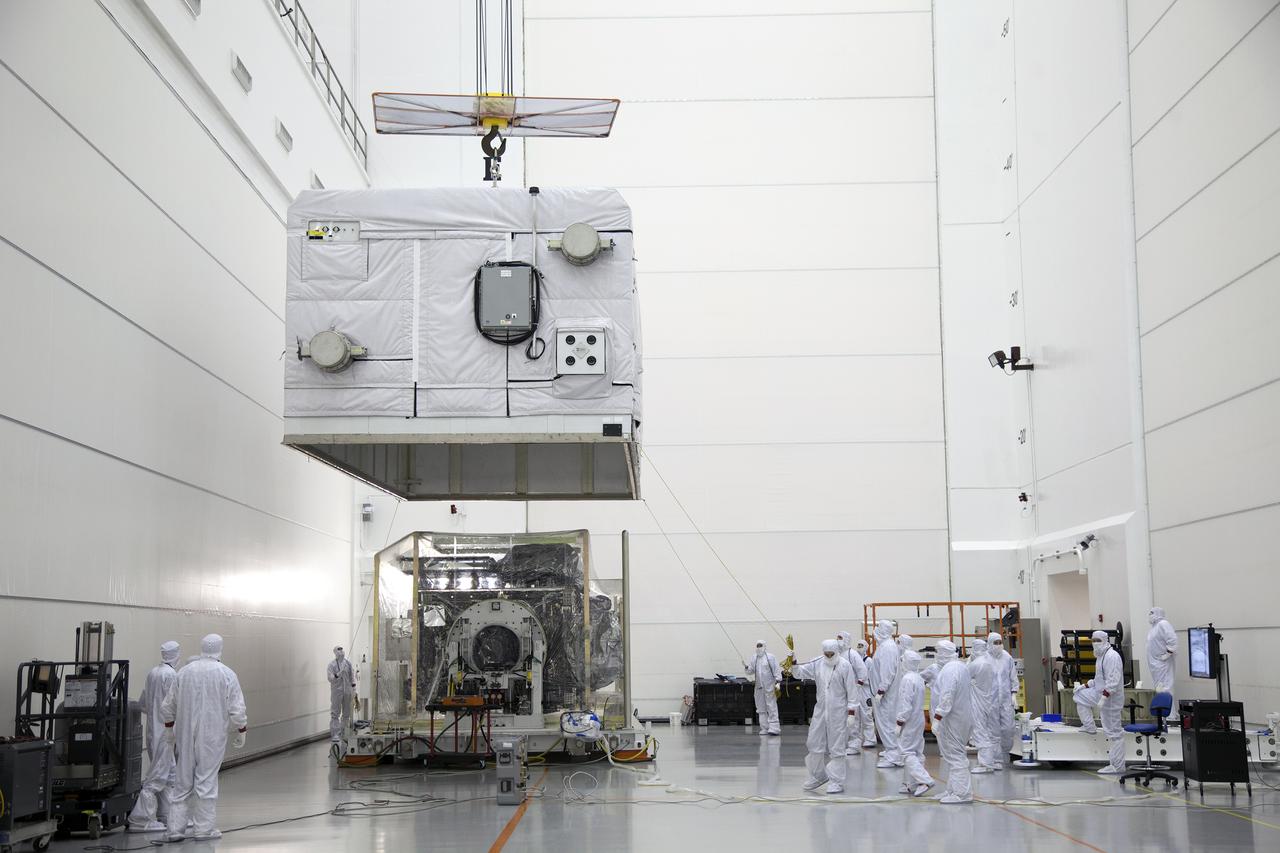
The shipping container is lifted off the GOES-R spacecraft inside the Astrotech payload processing facility in Titusville, Florida near NASA’s Kennedy Space Center. GOES-R will be the first satellite in a series of next-generation NOAA Geostationary Operational Environmental Satellites. The spacecraft is to launch aboard a United Launch Alliance Atlas V rocket in November.
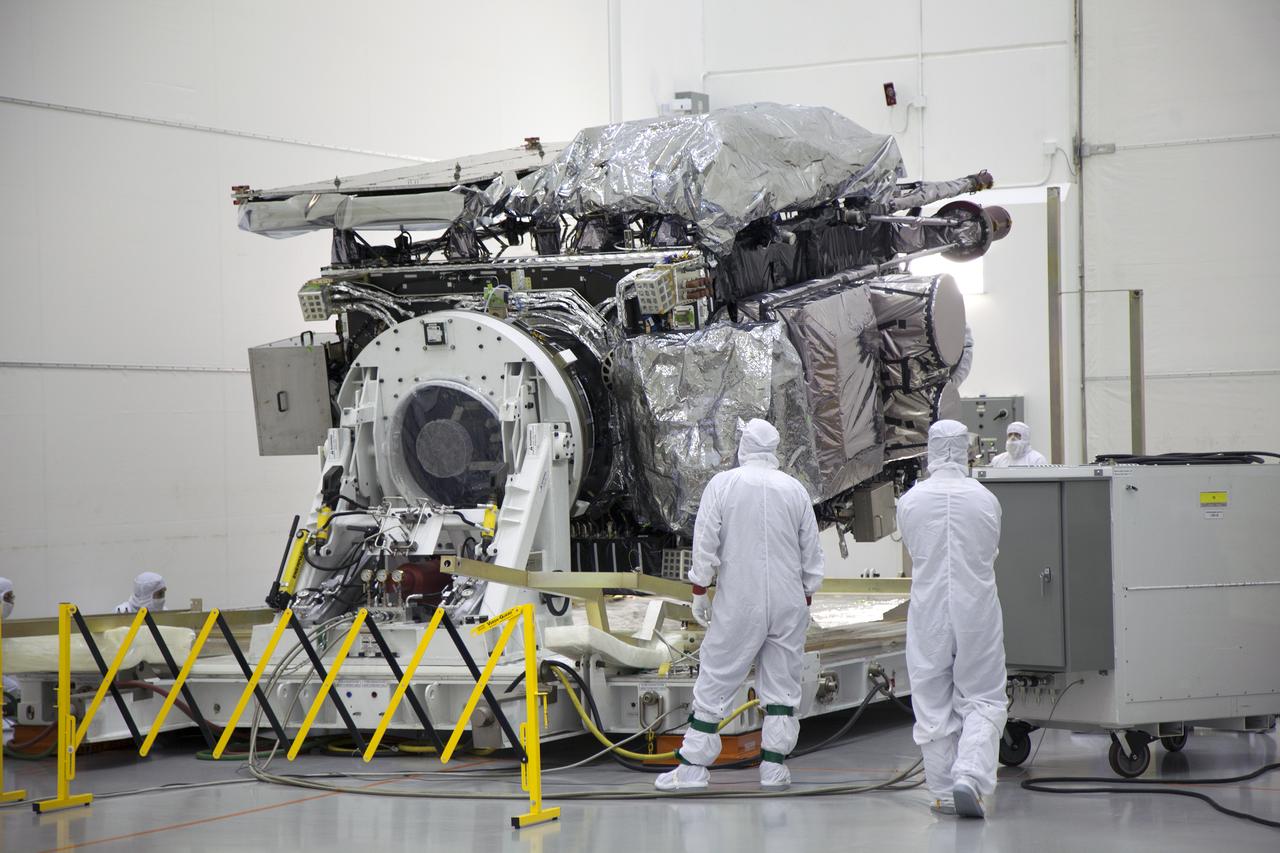
Team members monitor progress as the GOES-R spacecraft is lifted from horizontal to vertical inside the Astrotech payload processing facility in Titusville, Florida near NASA’s Kennedy Space Center. GOES-R will be the first satellite in a series of next-generation NOAA Geostationary Operational Environmental Satellites. The spacecraft is to launch aboard a United Launch Alliance Atlas V rocket in November.
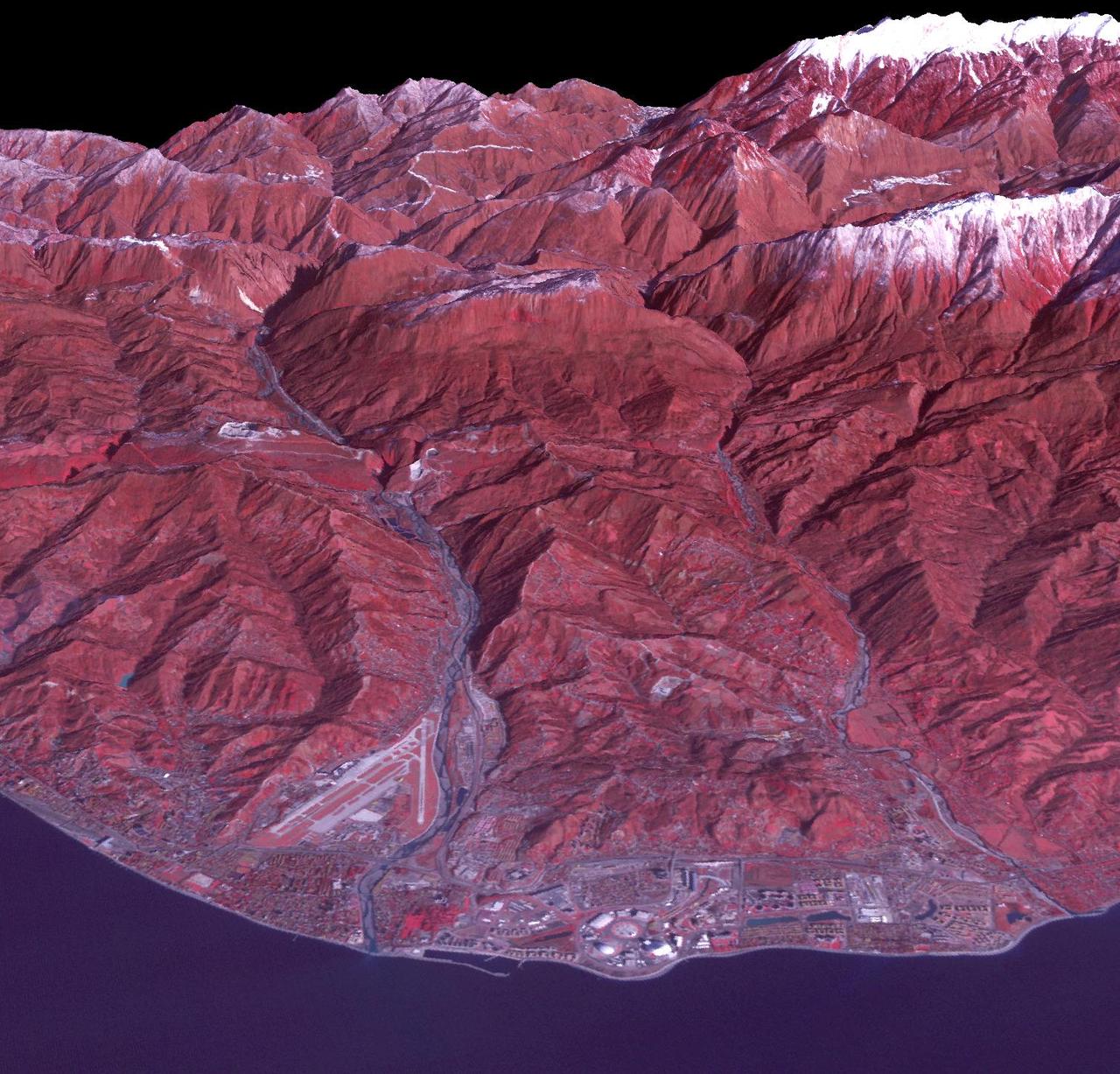
This image acquired by NASA Terra spacecraft shows the Sochi Olympic Park Coastal Cluster, the circular area on the shoreline in the bottom center of the image, which was built for Olympic indoor sports.

Portrait for the #showusyourspecs campaign to promote safety while viewing of the 2024 total eclipse. Photograph was shot on December 20, 2023, indoors to simulate an eclipse. Photo Credit: (NASA/Sara Lowthian-Hanna)
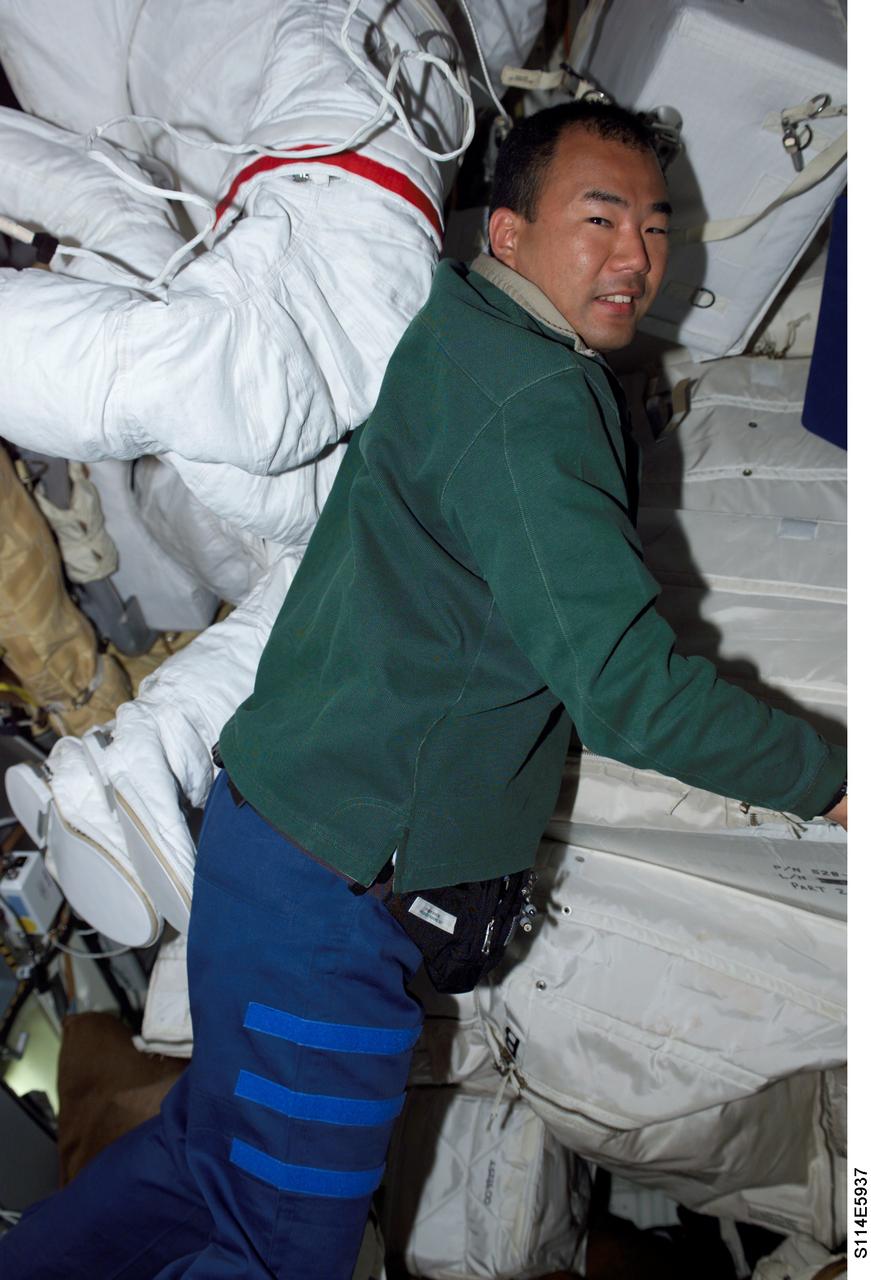
S114-E-5937 (30 July 2005) --- Japanese Aerospace Agency astronaut Soichi Noguchi has changed into clothing more suitable for indoor transfer work after spending six-plus hours outside Space Shuttle Discovery on a spacewalk with astronaut Stephen K. Robinson (out of frame).

S124-E-006642 (5 June 2008) --- Astronaut Ron Garan, STS-124 mission specialist, who has been spending a good portion of his time wearing a spacesuit "outdoors" during a series of spacewalks assigned to the Discovery crew members, poses for a quick snapshot in more casual, "indoor" clothing. He is looking forward to the final spacewalk to begin in less than 48 hours.
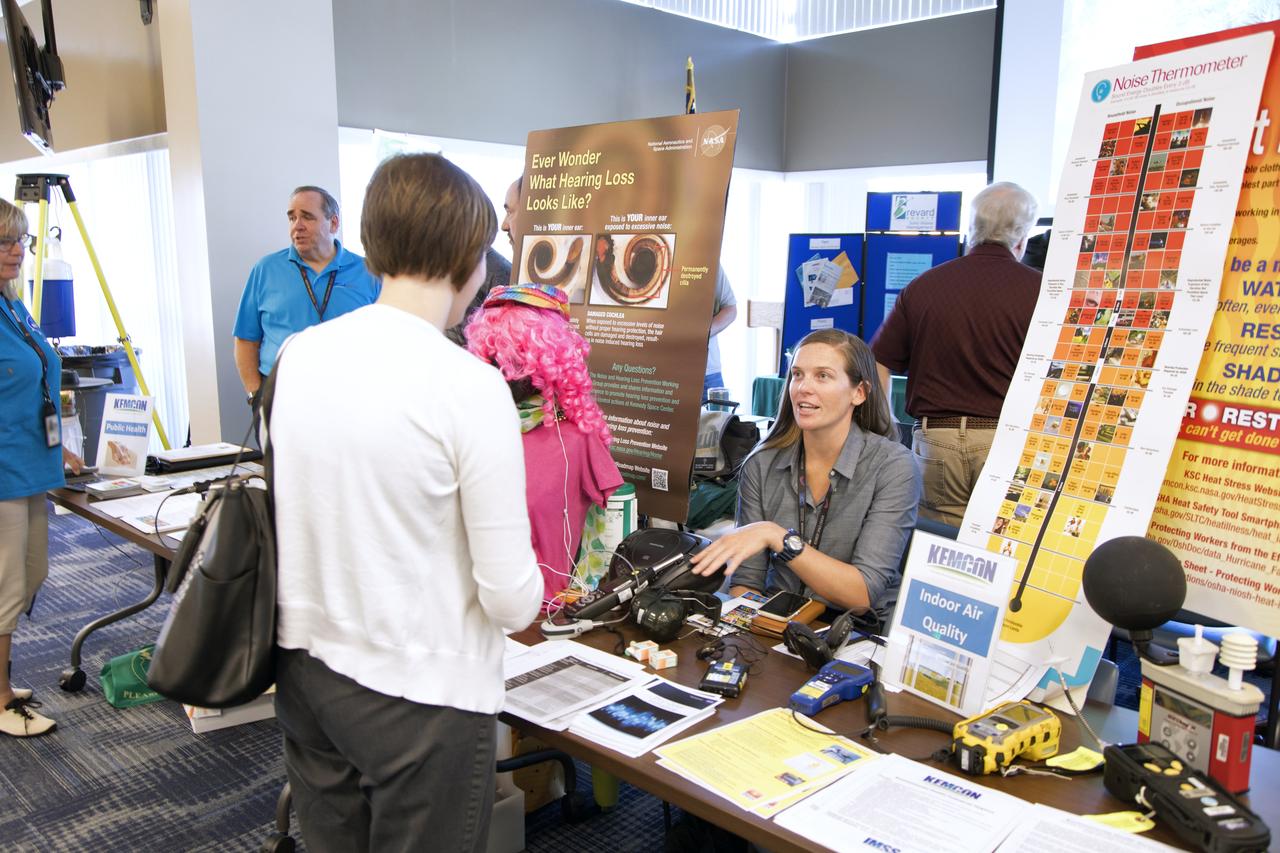
An employee learns about indoor air quality at the Kennedy Space Center (KSC) Environmental and Medical Contract (KEMCON) booth at the center’s annual Earth Day celebration. The two-day event featured approximately 50 exhibitors offering information on a variety of topics, including electric vehicles, sustainable lighting, renewable energy, Florida-friendly landscaping tips, Florida’s biking trails and more.
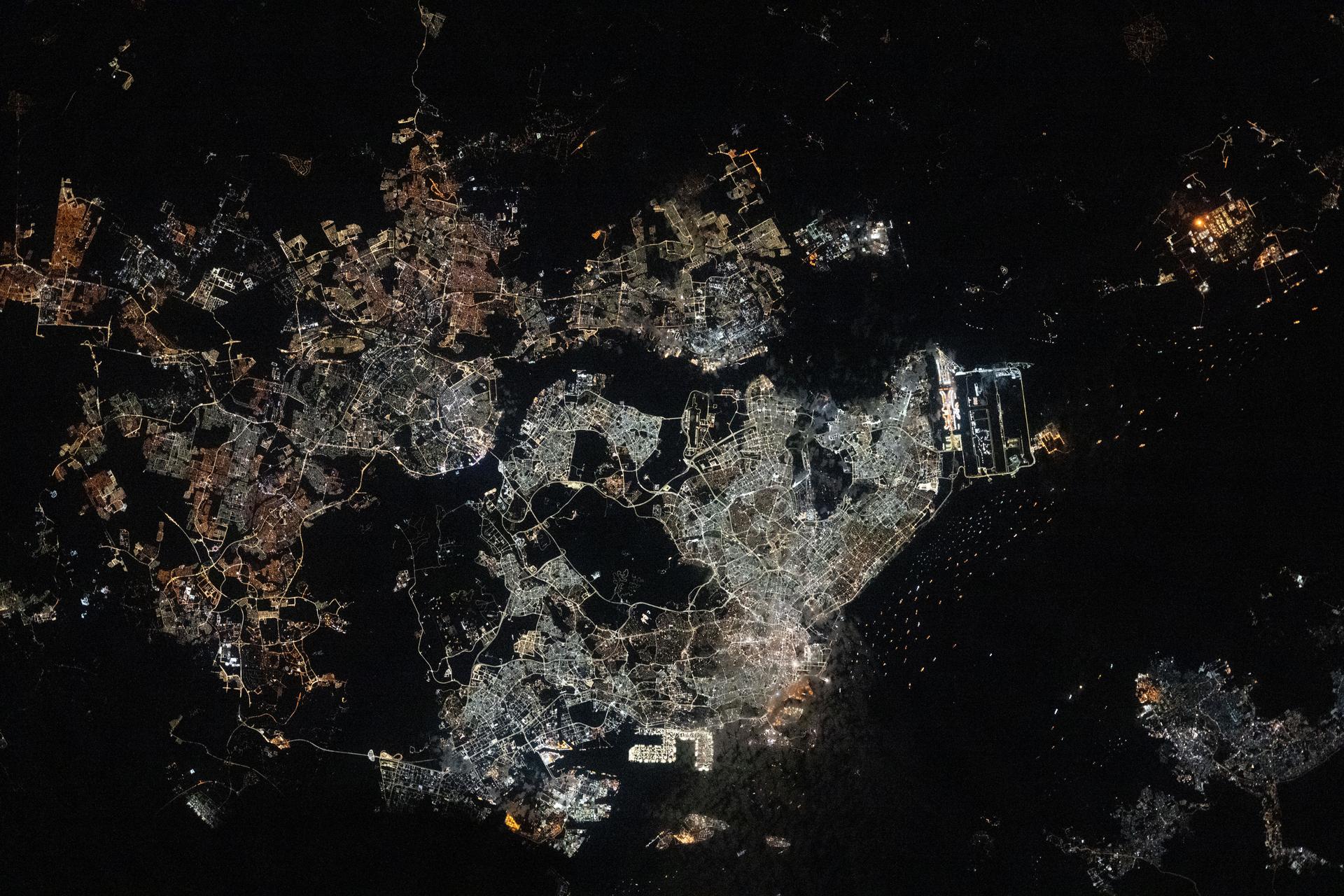
iss073e0763866 (Sept. 21, 2025) --- The Southeast Asian city-state of Singapore (center), separated from Johor Bahru, Malaysia (left), by the Johor Strait, is pictured at approximately 12:34 a.m. from the International Space Station as it orbited 260 miles above. Singapore Changi Airport (right center) sits along the Straits of Singapore and features the world’s tallest indoor waterfall and a forest with over 2,000 trees and 100,000 shrubs. The bright rectangular area at bottom center is Pasir Panjang Terminal, designed to accommodate some of the world’s largest container vessels.
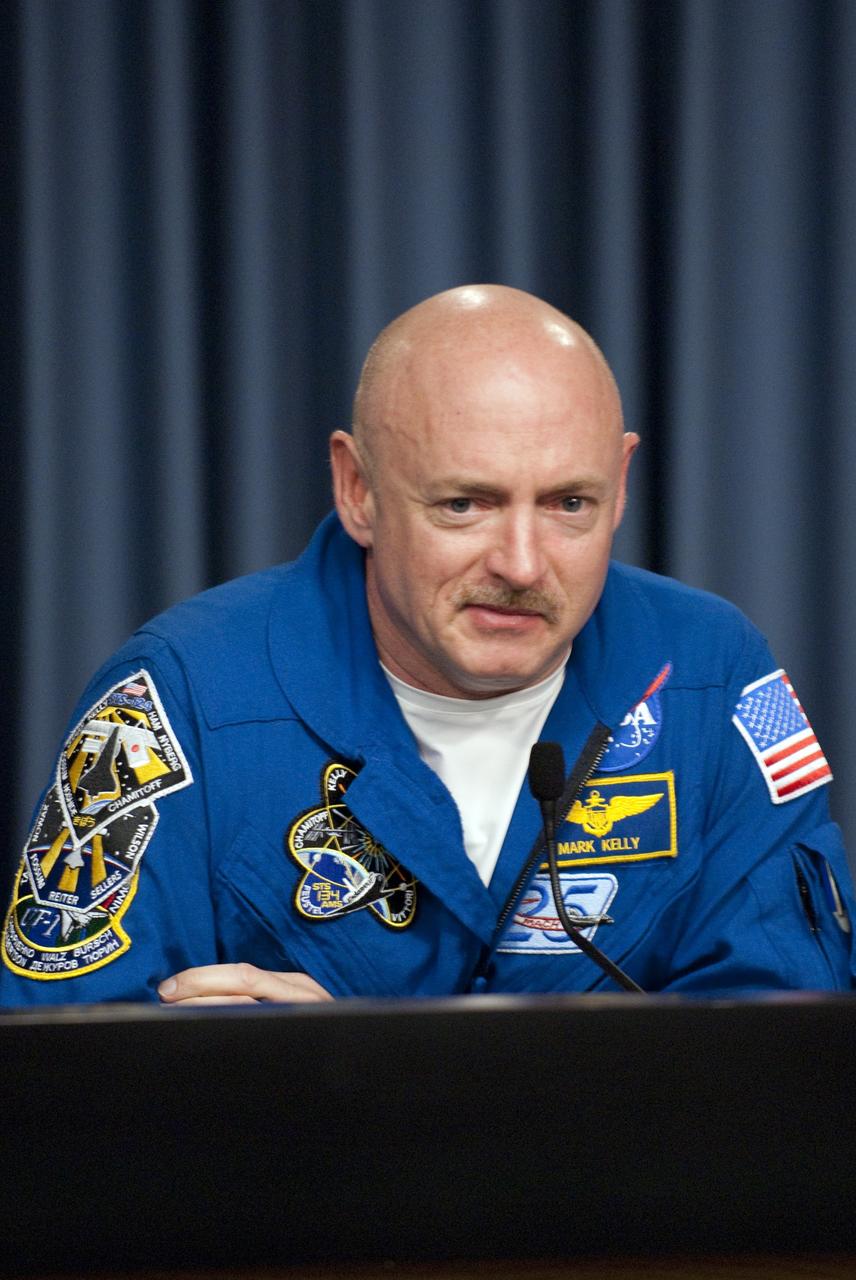
CAPE CANAVERAL, Fla. -- The STS-134 Commander Mark Kelly participates in a media question-and-answer session in the Press Site TV auditorium at NASA's Kennedy Space Center in Florida. The crew was scheduled to answer questions at Launch Pad 39A, where space shuttle Endeavour is awaiting liftoff, but severe storms associated with a frontal system passing over Central Florida brought the media event indoors. Endeavour's six crew members are at Kennedy for the launch countdown dress rehearsal called the Terminal Countdown Demonstration Test (TCDT) and related training. Targeted to launch April 19 at 7:48 p.m. EDT, they will deliver the Express Logistics Carrier-3, Alpha Magnetic Spectrometer-2 (AMS), a high-pressure gas tank, additional spare parts for the Dextre robotic helper and micrometeoroid debris shields to the International Space Station. This is the final spaceflight for Endeavour. For more information visit, www.nasa.gov/mission_pages/shuttle/shuttlemissions/sts134/index.html. Photo credit: NASA/Kim Shiflett
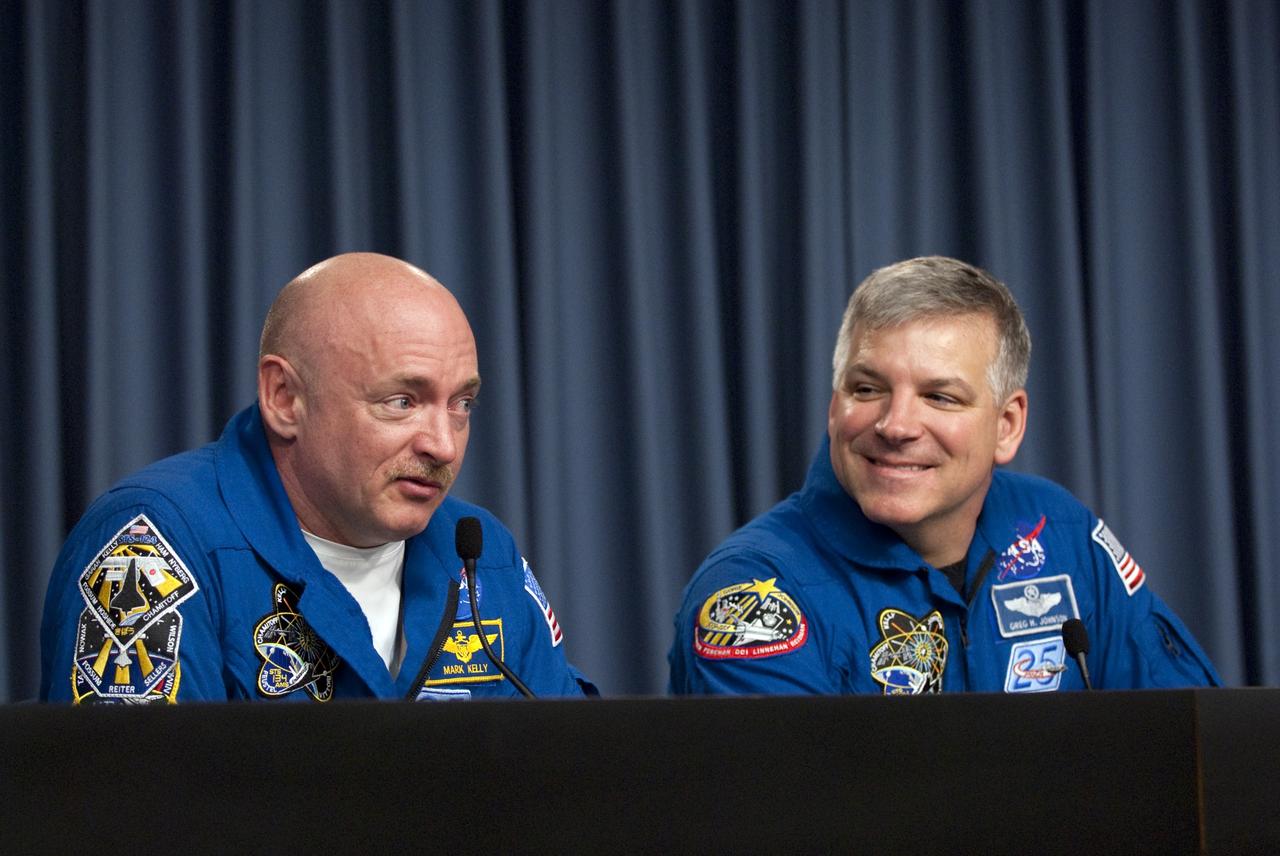
CAPE CANAVERAL, Fla. -- The STS-134 Commander Mark Kelly and Pilot Greg H. Johnson participate in a media question-and-answer session in the Press Site TV auditorium at NASA's Kennedy Space Center in Florida. The crew was scheduled to answer questions at Launch Pad 39A, where space shuttle Endeavour is awaiting liftoff, but severe storms associated with a frontal system passing over Central Florida brought the media event indoors. Endeavour's six crew members are at Kennedy for the launch countdown dress rehearsal called the Terminal Countdown Demonstration Test (TCDT) and related training. Targeted to launch April 19 at 7:48 p.m. EDT, they will deliver the Express Logistics Carrier-3, Alpha Magnetic Spectrometer-2 (AMS), a high-pressure gas tank, additional spare parts for the Dextre robotic helper and micrometeoroid debris shields to the International Space Station. This is the final spaceflight for Endeavour. For more information visit, www.nasa.gov/mission_pages/shuttle/shuttlemissions/sts134/index.html. Photo credit: NASA/Kim Shiflett
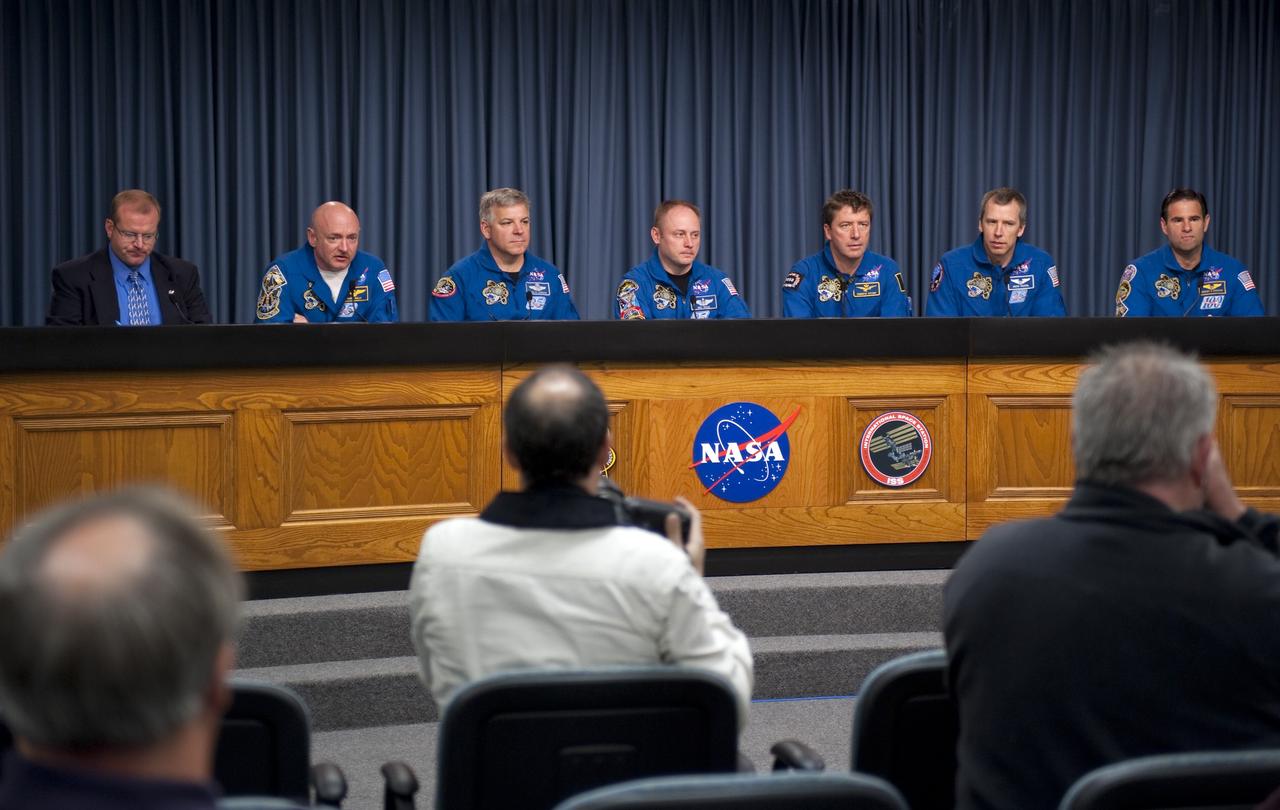
CAPE CANAVERAL, Fla. -- The STS-134 crew answers media questions in the Press Site TV auditorium at NASA's Kennedy Space Center in Florida. From left, are Kennedy's News Chief Allard Beutel, Commander Mark Kelly, Pilot Greg H. Johnson, and Mission Specialists Michael Fincke, European Space Agency astronaut Roberto Vittori, Andrew Feustel, and Greg Chamitoff. The crew was scheduled to answer questions at Launch Pad 39A, where space shuttle Endeavour is awaiting liftoff, but severe storms associated with a frontal system passing over Central Florida brought the media event indoors. Endeavour's six crew members are at Kennedy for the launch countdown dress rehearsal called the Terminal Countdown Demonstration Test (TCDT) and related training. Targeted to launch April 19 at 7:48 p.m. EDT, they will deliver the Express Logistics Carrier-3, Alpha Magnetic Spectrometer-2 (AMS), a high-pressure gas tank, additional spare parts for the Dextre robotic helper and micrometeoroid debris shields to the International Space Station. This will be the final spaceflight for Endeavour. For more information visit, www.nasa.gov/mission_pages/shuttle/shuttlemissions/sts134/index.html. Photo credit: NASA/Kim Shiflett

CAPE CANAVERAL, Fla. -- The STS-134 Mission Specialist Michael Fincke participates in a media question-and-answer session in the Press Site TV auditorium at NASA's Kennedy Space Center in Florida. The crew was scheduled to answer questions at Launch Pad 39A, where space shuttle Endeavour is awaiting liftoff, but severe storms associated with a frontal system passing over Central Florida brought the media event indoors. Endeavour's six crew members are at Kennedy for the launch countdown dress rehearsal called the Terminal Countdown Demonstration Test (TCDT) and related training. Targeted to launch April 19 at 7:48 p.m. EDT, they will deliver the Express Logistics Carrier-3, Alpha Magnetic Spectrometer-2 (AMS), a high-pressure gas tank, additional spare parts for the Dextre robotic helper and micrometeoroid debris shields to the International Space Station. This is the final spaceflight for Endeavour. For more information visit, www.nasa.gov/mission_pages/shuttle/shuttlemissions/sts134/index.html. Photo credit: NASA/Kim Shiflett
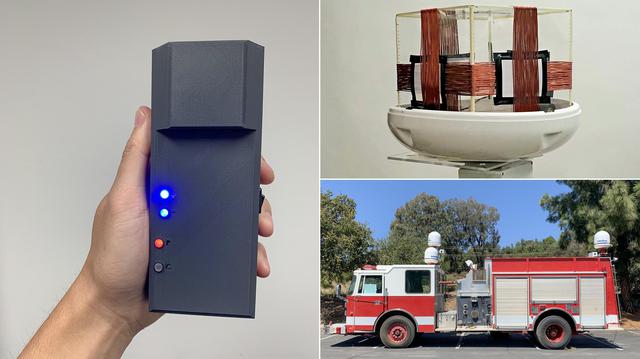
To help locate and track firefighters inside buildings, where other positioning technologies fail, NASA's Jet Propulsion Laboratory and the Department of Homeland Security Science and Technology Directorate (S&T) are developing POINTER. Short for Precision Outdoor and Indoor Navigation and Tracking for Emergency Responders, the system began taking shape in 2014 and is being matured for use by fire departments nationwide. The POINTER system is composed of three parts: a receiver, transmitter, and base station. The receiver (left) has been shrunk from the size of a backpack to the size of a large smartphone, and further development will miniaturize it so it can be easily clipped to a belt buckle. The transmitter (top right) is a system of coils that generate the magnetoquasistatic fields, which — unlike the radio waves used by GPS and radio-frequency identification — are able to pass through construction materials to interact with the receiver, enabling fire crews to track the location and orientation of firefighters. To test the system, transmitters have been attached to an out-of-service firetruck (lower right). Through 2021, POINTER will undergo field tests and a commercial version of POINTER will be made available to fire departments in 2022. https://photojournal.jpl.nasa.gov/catalog/PIA24562
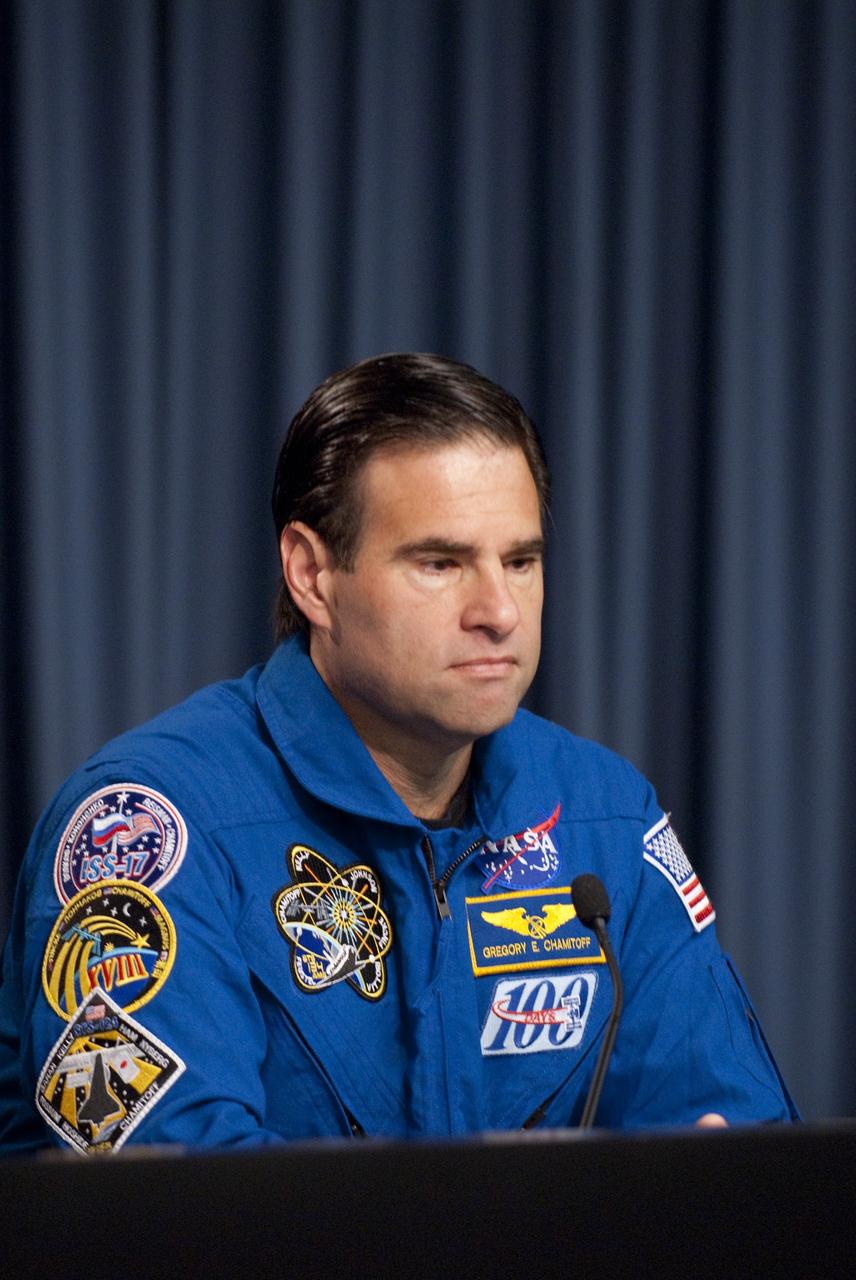
CAPE CANAVERAL, Fla. -- The STS-134 Mission Specialist Greg Chamitoff participates in a media question-and-answer session in the Press Site TV auditorium at NASA's Kennedy Space Center in Florida. The crew was scheduled to answer questions at Launch Pad 39A, where space shuttle Endeavour is awaiting liftoff, but severe storms associated with a frontal system passing over Central Florida brought the media event indoors. Endeavour's six crew members are at Kennedy for the launch countdown dress rehearsal called the Terminal Countdown Demonstration Test (TCDT) and related training. Targeted to launch April 19 at 7:48 p.m. EDT, they will deliver the Express Logistics Carrier-3, Alpha Magnetic Spectrometer-2 (AMS), a high-pressure gas tank, additional spare parts for the Dextre robotic helper and micrometeoroid debris shields to the International Space Station. This is the final spaceflight for Endeavour. For more information visit, www.nasa.gov/mission_pages/shuttle/shuttlemissions/sts134/index.html. Photo credit: NASA/Kim Shiflett
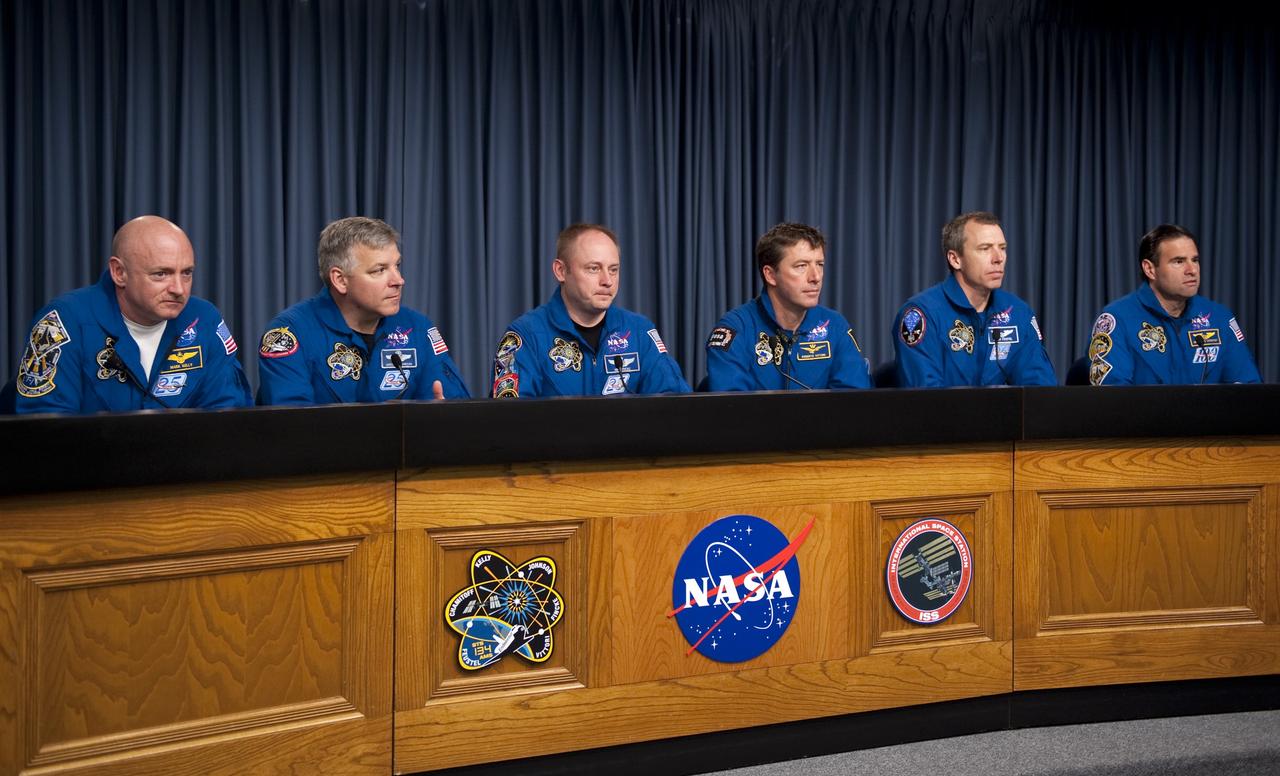
CAPE CANAVERAL, Fla. -- The STS-134 crew answers media questions in the Press Site TV auditorium at NASA's Kennedy Space Center in Florida. From left, are Commander Mark Kelly, Pilot Greg H. Johnson, and Mission Specialists Michael Fincke, European Space Agency astronaut Roberto Vittori, Andrew Feustel, and Greg Chamitoff. The crew was scheduled to answer questions at Launch Pad 39A, where space shuttle Endeavour is awaiting liftoff, but severe storms associated with a frontal system passing over Central Florida brought the media event indoors. Endeavour's six crew members are at Kennedy for the launch countdown dress rehearsal called the Terminal Countdown Demonstration Test (TCDT) and related training. Targeted to launch April 19 at 7:48 p.m. EDT, they will deliver the Express Logistics Carrier-3, Alpha Magnetic Spectrometer-2 (AMS), a high-pressure gas tank, additional spare parts for the Dextre robotic helper and micrometeoroid debris shields to the International Space Station. This will be the final spaceflight for Endeavour. For more information visit, www.nasa.gov/mission_pages/shuttle/shuttlemissions/sts134/index.html. Photo credit: NASA/Kim Shiflett
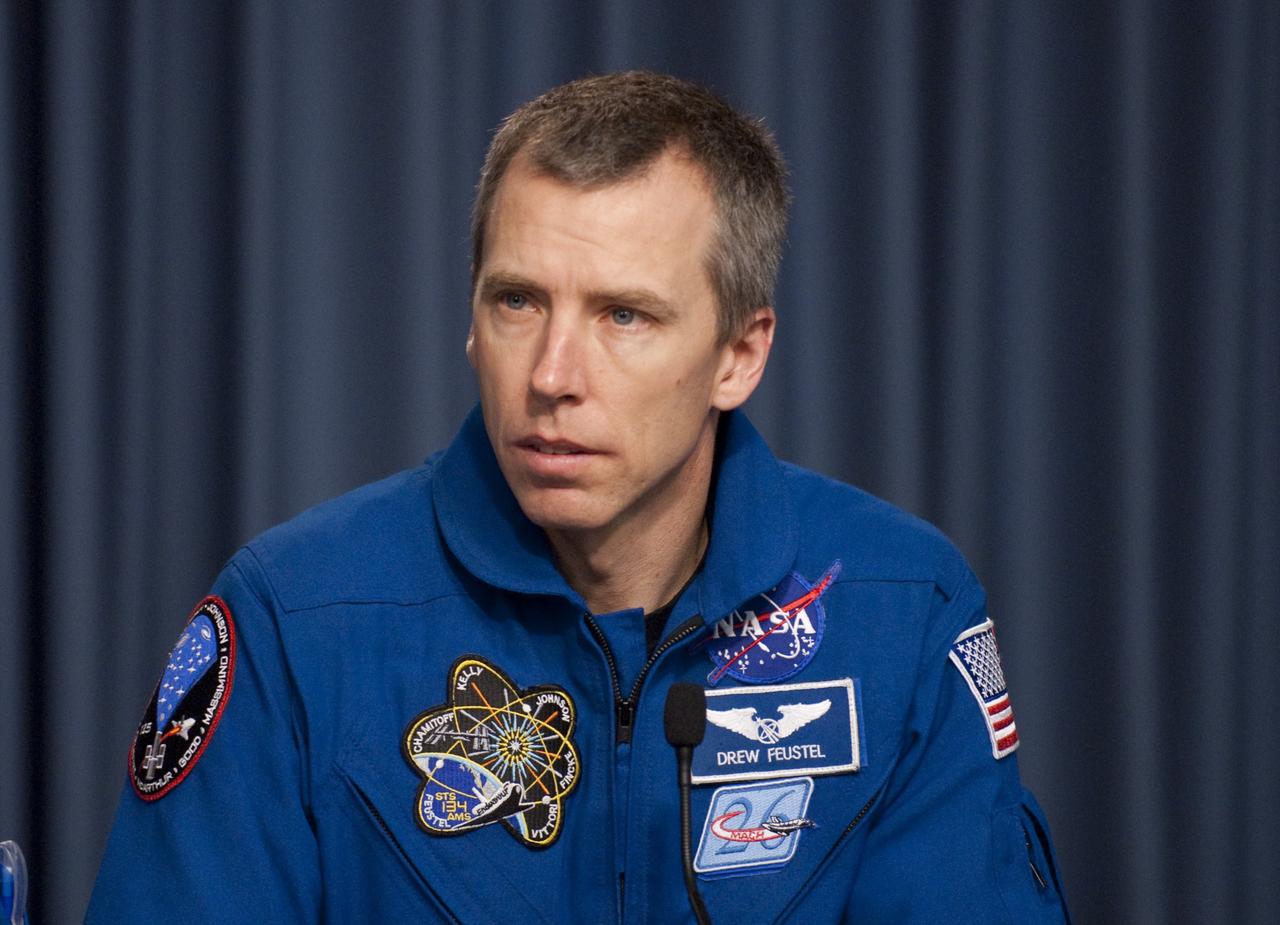
CAPE CANAVERAL, Fla. -- The STS-134 Mission Specialist Andrew Feustel participates in a media question-and-answer session in the Press Site TV auditorium at NASA's Kennedy Space Center in Florida. The crew was scheduled to answer questions at Launch Pad 39A, where space shuttle Endeavour is awaiting liftoff, but severe storms associated with a frontal system passing over Central Florida brought the media event indoors. Endeavour's six crew members are at Kennedy for the launch countdown dress rehearsal called the Terminal Countdown Demonstration Test (TCDT) and related training. Targeted to launch April 19 at 7:48 p.m. EDT, they will deliver the Express Logistics Carrier-3, Alpha Magnetic Spectrometer-2 (AMS), a high-pressure gas tank, additional spare parts for the Dextre robotic helper and micrometeoroid debris shields to the International Space Station. This is the final spaceflight for Endeavour. For more information visit, www.nasa.gov/mission_pages/shuttle/shuttlemissions/sts134/index.html. Photo credit: NASA/Kim Shiflett
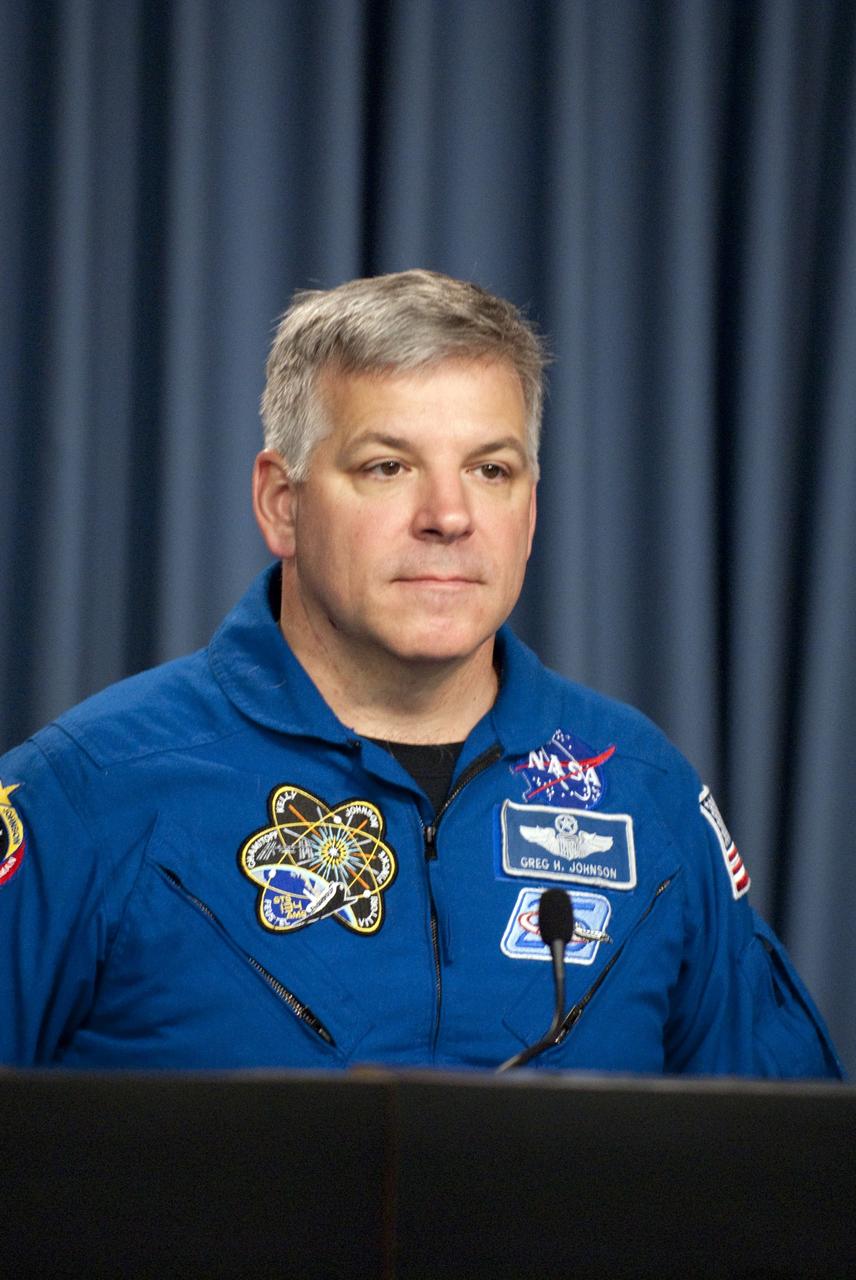
CAPE CANAVERAL, Fla. -- The STS-134 Pilot Greg H. Johnson participates in a media question-and-answer session in the Press Site TV auditorium at NASA's Kennedy Space Center in Florida. The crew was scheduled to answer questions at Launch Pad 39A, where space shuttle Endeavour is awaiting liftoff, but severe storms associated with a frontal system passing over Central Florida brought the media event indoors. Endeavour's six crew members are at Kennedy for the launch countdown dress rehearsal called the Terminal Countdown Demonstration Test (TCDT) and related training. Targeted to launch April 19 at 7:48 p.m. EDT, they will deliver the Express Logistics Carrier-3, Alpha Magnetic Spectrometer-2 (AMS), a high-pressure gas tank, additional spare parts for the Dextre robotic helper and micrometeoroid debris shields to the International Space Station. This is the final spaceflight for Endeavour. For more information visit, www.nasa.gov/mission_pages/shuttle/shuttlemissions/sts134/index.html. Photo credit: NASA/Kim Shiflett
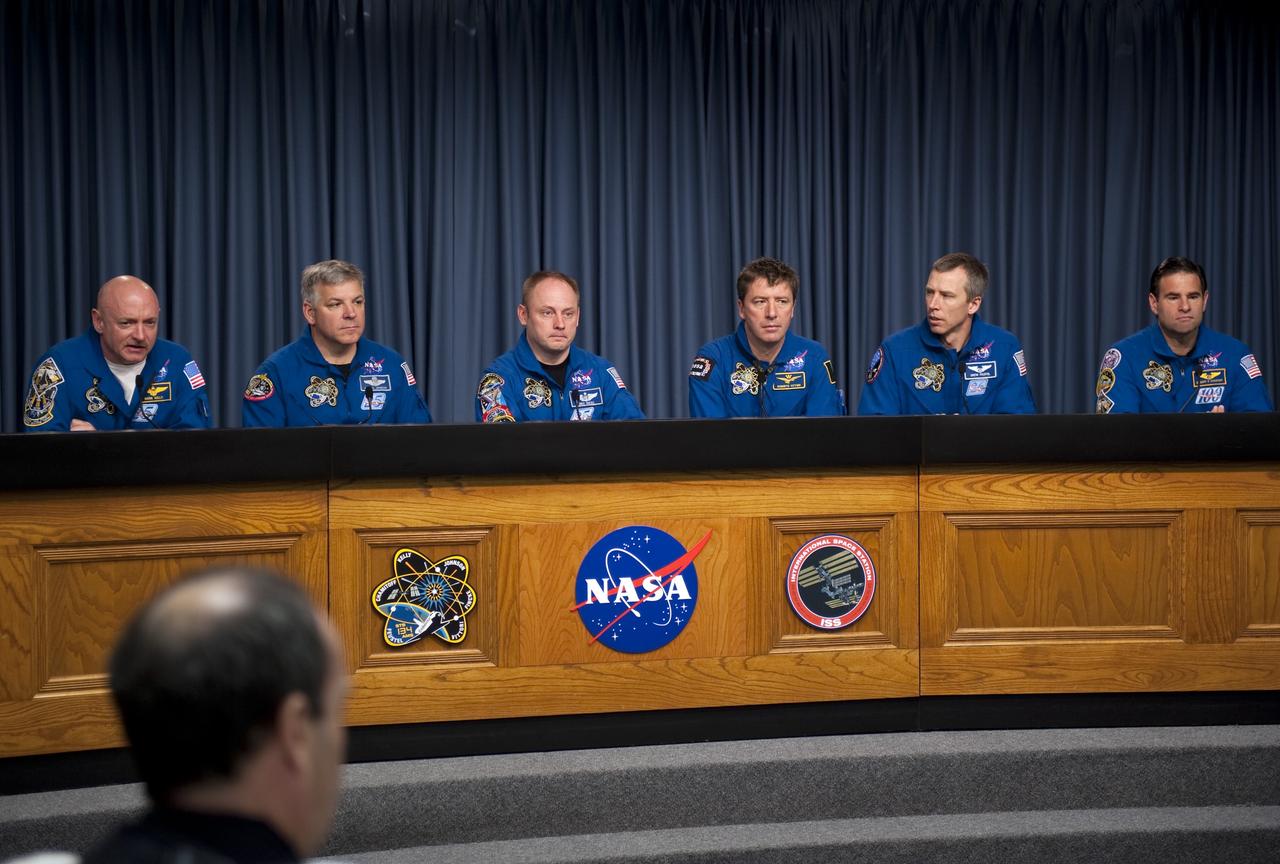
CAPE CANAVERAL, Fla. -- The STS-134 crew answers media questions in the Press Site TV auditorium at NASA's Kennedy Space Center in Florida. From left, are Commander Mark Kelly, Pilot Greg H. Johnson, and Mission Specialists Michael Fincke, European Space Agency astronaut Roberto Vittori, Andrew Feustel, and Greg Chamitoff. The crew was scheduled to answer questions at Launch Pad 39A, where space shuttle Endeavour is awaiting liftoff, but severe storms associated with a frontal system passing over Central Florida brought the media event indoors. Endeavour's six crew members are at Kennedy for the launch countdown dress rehearsal called the Terminal Countdown Demonstration Test (TCDT) and related training. Targeted to launch April 19 at 7:48 p.m. EDT, they will deliver the Express Logistics Carrier-3, Alpha Magnetic Spectrometer-2 (AMS), a high-pressure gas tank, additional spare parts for the Dextre robotic helper and micrometeoroid debris shields to the International Space Station. This will be the final spaceflight for Endeavour. For more information visit, www.nasa.gov/mission_pages/shuttle/shuttlemissions/sts134/index.html. Photo credit: NASA/Kim Shiflett
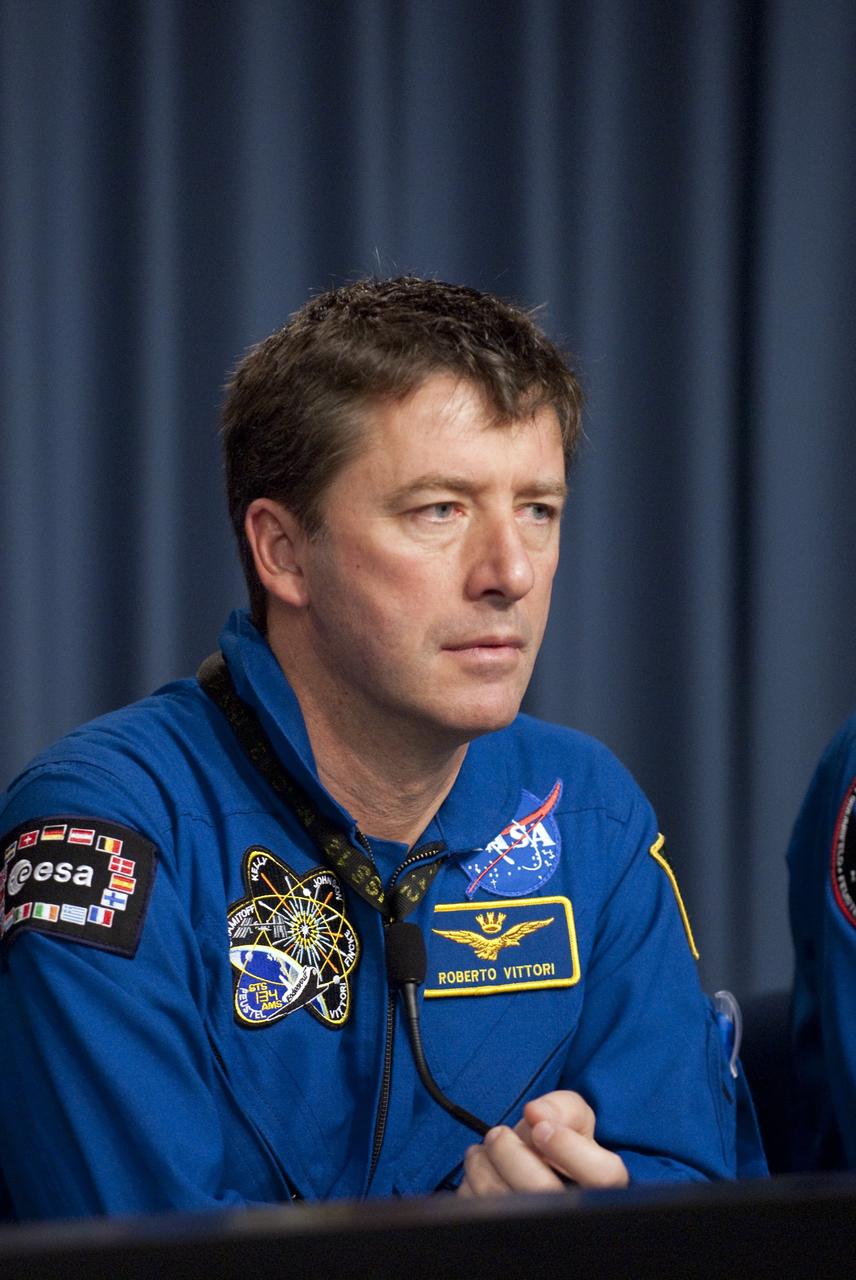
CAPE CANAVERAL, Fla. -- The STS-134 Mission Specialist Roberto Vittori, with the European Space Agency, participates in a media question-and-answer session in the Press Site TV auditorium at NASA's Kennedy Space Center in Florida. The crew was scheduled to answer questions at Launch Pad 39A, where space shuttle Endeavour is awaiting liftoff, but severe storms associated with a frontal system passing over Central Florida brought the media event indoors. Endeavour's six crew members are at Kennedy for the launch countdown dress rehearsal called the Terminal Countdown Demonstration Test (TCDT) and related training. Targeted to launch April 19 at 7:48 p.m. EDT, they will deliver the Express Logistics Carrier-3, Alpha Magnetic Spectrometer-2 (AMS), a high-pressure gas tank, additional spare parts for the Dextre robotic helper and micrometeoroid debris shields to the International Space Station. This is the final spaceflight for Endeavour. For more information visit, www.nasa.gov/mission_pages/shuttle/shuttlemissions/sts134/index.html. Photo credit: NASA/Kim Shiflett
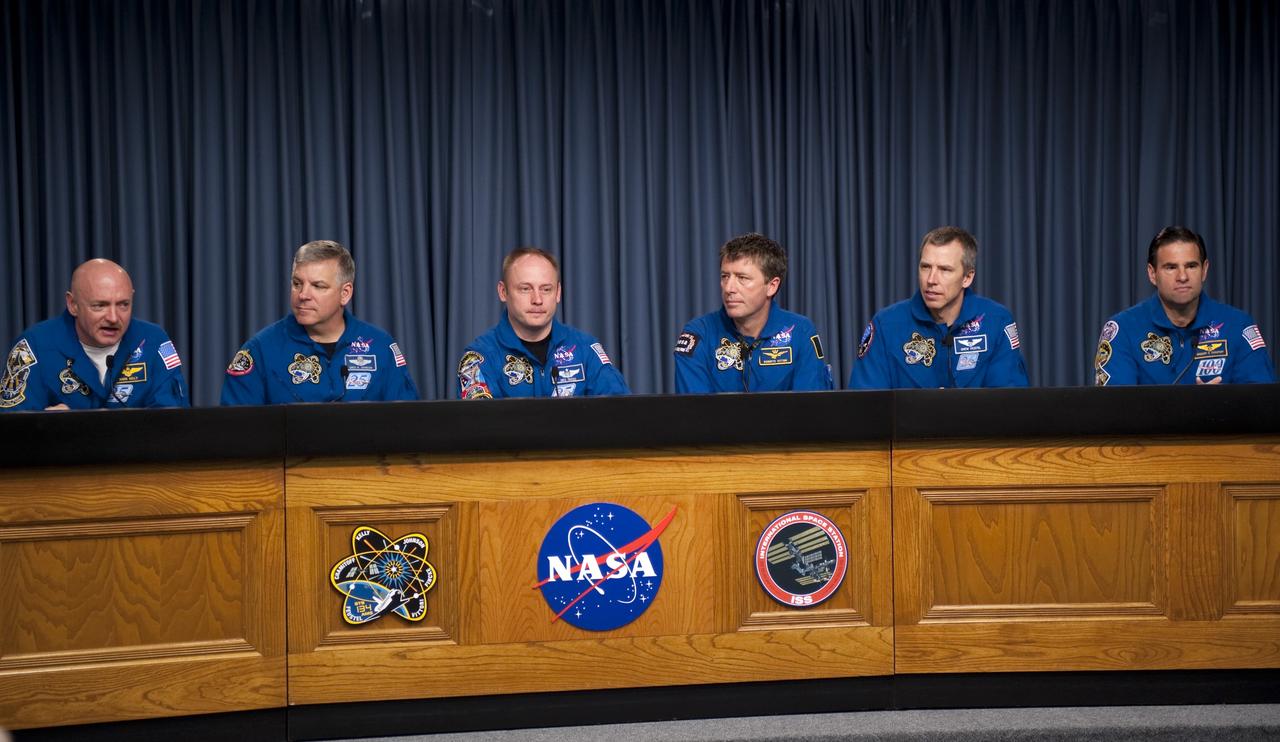
CAPE CANAVERAL, Fla. -- The STS-134 crew answers media questions in the Press Site TV auditorium at NASA's Kennedy Space Center in Florida. From left, are Commander Mark Kelly, Pilot Greg H. Johnson, and Mission Specialists Michael Fincke, European Space Agency astronaut Roberto Vittori, Andrew Feustel, and Greg Chamitoff. The crew was scheduled to answer questions at Launch Pad 39A, where space shuttle Endeavour is awaiting liftoff, but severe storms associated with a frontal system passing over Central Florida brought the media event indoors. Endeavour's six crew members are at Kennedy for the launch countdown dress rehearsal called the Terminal Countdown Demonstration Test (TCDT) and related training. Targeted to launch April 19 at 7:48 p.m. EDT, they will deliver the Express Logistics Carrier-3, Alpha Magnetic Spectrometer-2 (AMS), a high-pressure gas tank, additional spare parts for the Dextre robotic helper and micrometeoroid debris shields to the International Space Station. This will be the final spaceflight for Endeavour. For more information visit, www.nasa.gov/mission_pages/shuttle/shuttlemissions/sts134/index.html. Photo credit: NASA/Kim Shiflett
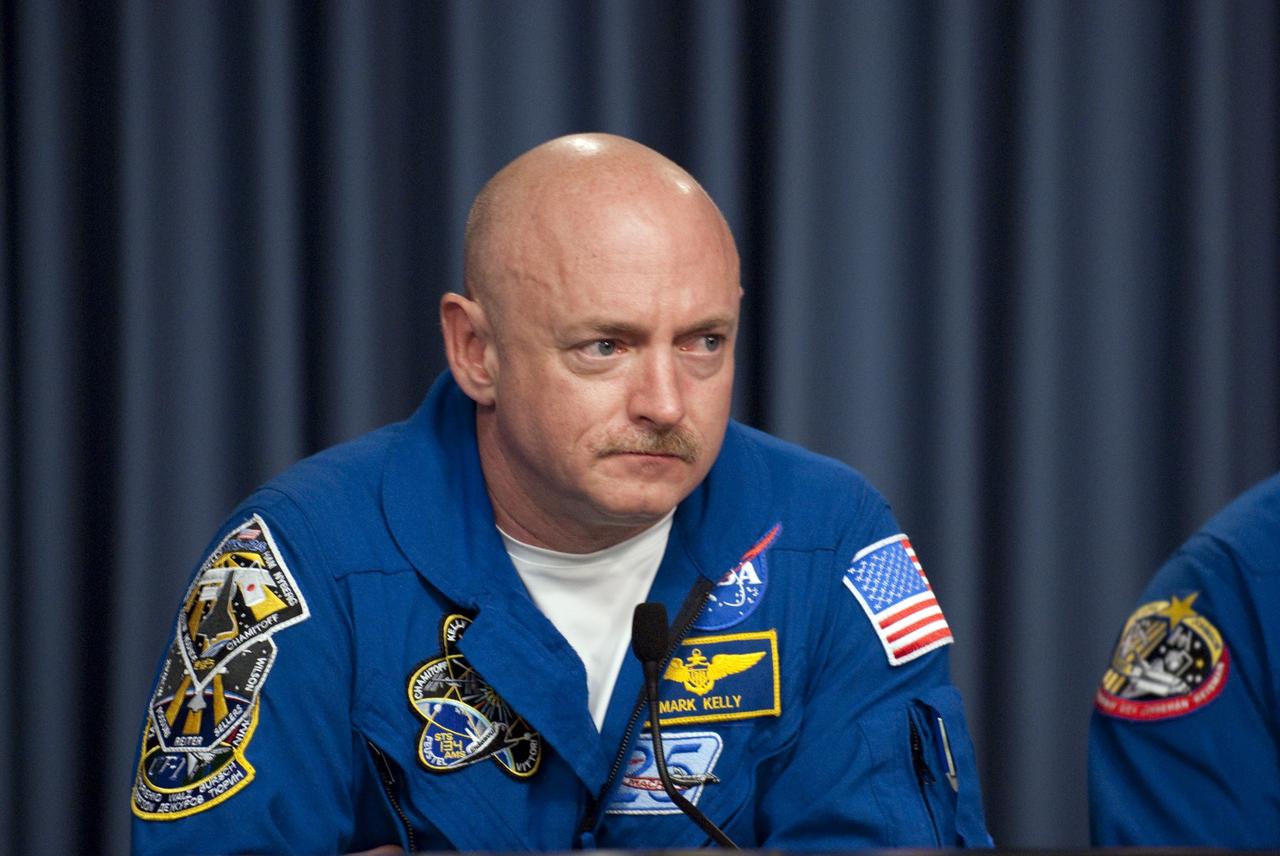
CAPE CANAVERAL, Fla. -- The STS-134 Commander Mark Kelly participates in a media question-and-answer session in the Press Site TV auditorium at NASA's Kennedy Space Center in Florida. The crew was scheduled to answer questions at Launch Pad 39A, where space shuttle Endeavour is awaiting liftoff, but severe storms associated with a frontal system passing over Central Florida brought the media event indoors. Endeavour's six crew members are at Kennedy for the launch countdown dress rehearsal called the Terminal Countdown Demonstration Test (TCDT) and related training. Targeted to launch April 19 at 7:48 p.m. EDT, they will deliver the Express Logistics Carrier-3, Alpha Magnetic Spectrometer-2 (AMS), a high-pressure gas tank, additional spare parts for the Dextre robotic helper and micrometeoroid debris shields to the International Space Station. This is the final spaceflight for Endeavour. For more information visit, www.nasa.gov/mission_pages/shuttle/shuttlemissions/sts134/index.html. Photo credit: NASA/Kim Shiflett
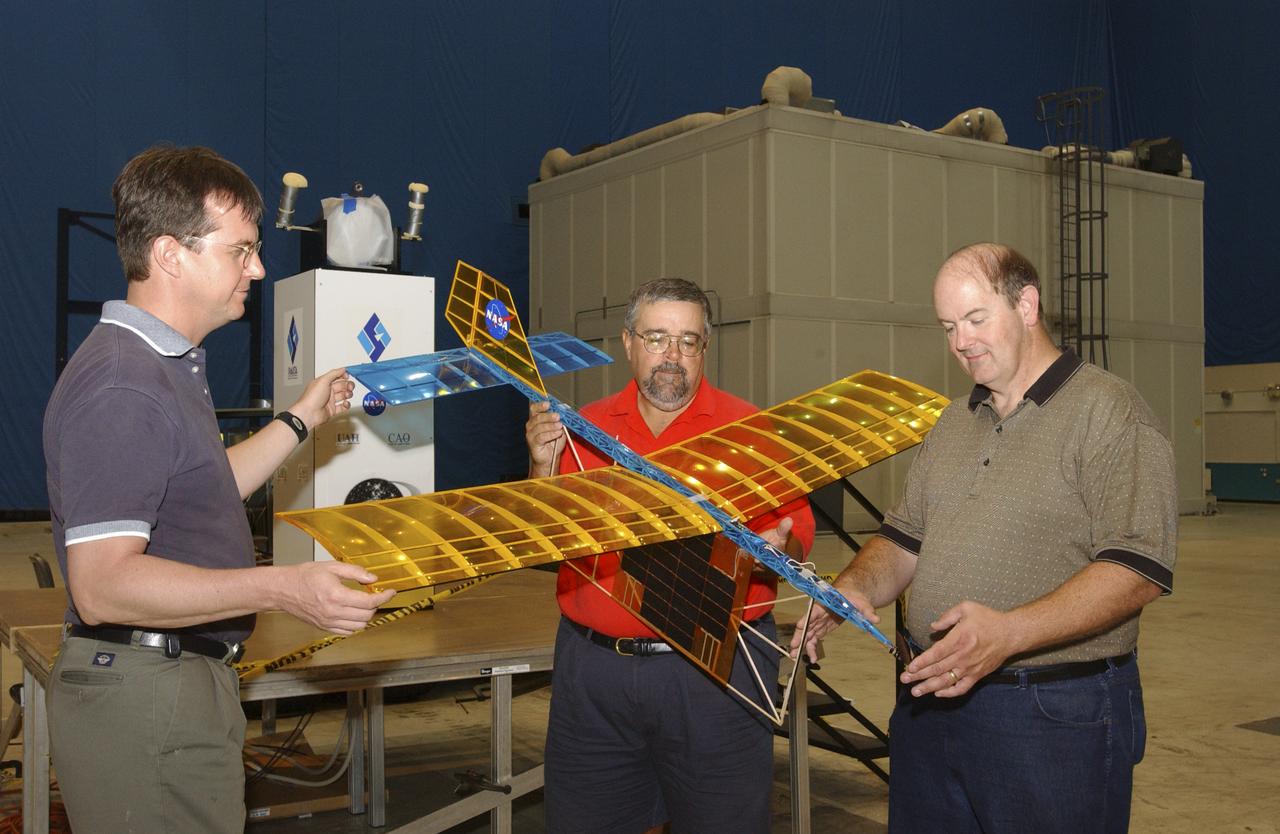
A team of NASA researchers from Marshall Space Flight Center (MSFC) and Dryden Flight Research center have proven that beamed light can be used to power an aircraft, a first-in-the-world accomplishment to the best of their knowledge. Using an experimental custom built radio-controlled model aircraft, the team has demonstrated a system that beams enough light energy from the ground to power the propeller of an aircraft and sustain it in flight. Special photovoltaic arrays on the plane, similar to solar cells, receive the light energy and convert it to electric current to drive the propeller motor. In a series of indoor flights this week at MSFC, a lightweight custom built laser beam was aimed at the airplane `s solar panels. The laser tracks the plane, maintaining power on its cells until the end of the flight when the laser is turned off and the airplane glides to a landing. The laser source demonstration represents the capability to beam more power to a plane so that it can reach higher altitudes and have a greater flight range without having to carry fuel or batteries, enabling an indefinite flight time. The demonstration was a collaborative effort between the Dryden Center at Edward's, California, where the aircraft was designed and built, and MSFC, where integration and testing of the laser and photovoltaic cells was done. Laser power beaming is a promising technology for consideration in new aircraft design and operation, and supports NASA's goals in the development of revolutionary aerospace technologies. Photographed with their invention are (from left to right): David Bushman and Tony Frackowiak, both of Dryden; and MSFC's Robert Burdine.
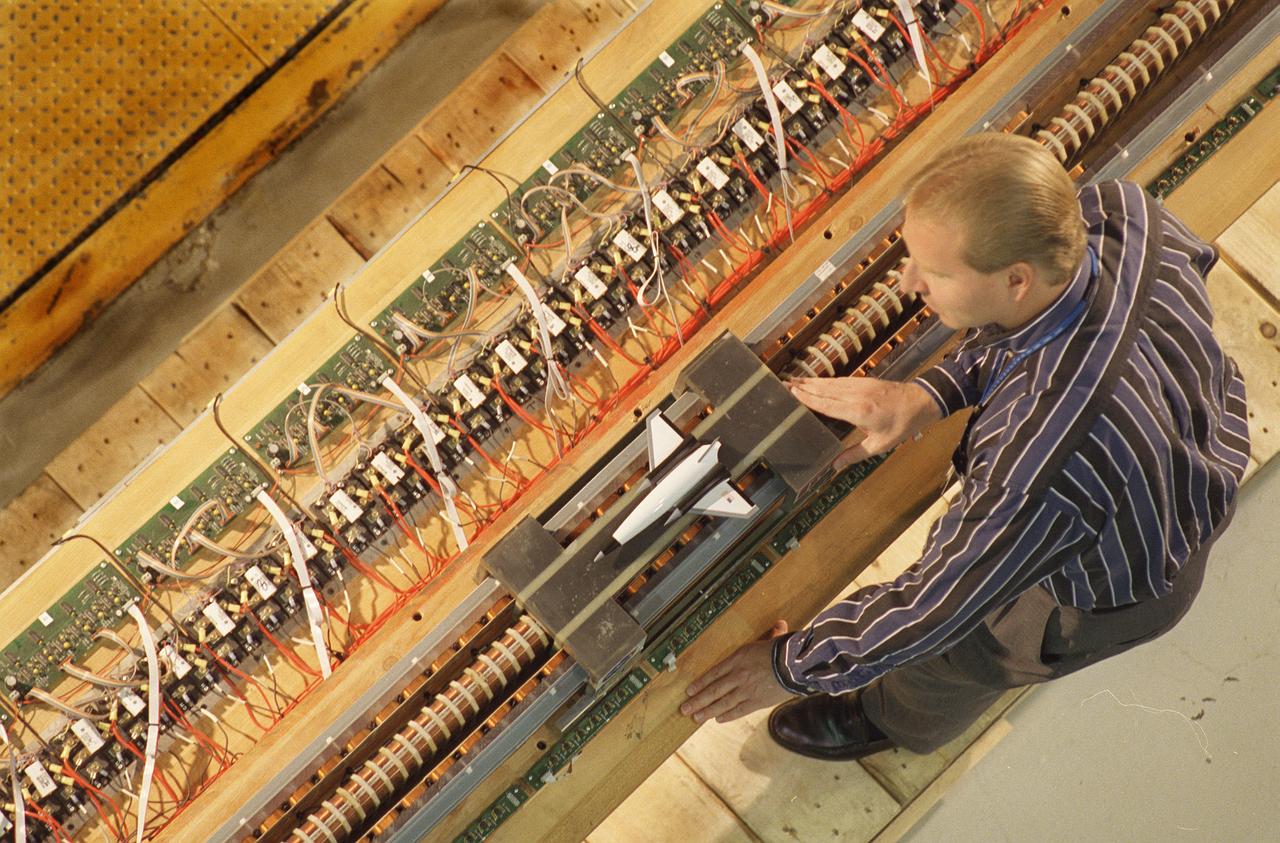
Marshall Space Flight Center’s (MSFC’s) Advanced Space Transportation Program has developed the Magnetic Launch Assist System, formerly known as the Magnetic Levitation (MagLev) technology that could give a space vehicle a running start to break free from Earth’s gravity. A Magnetic Launch Assist system would use magnetic fields to levitate and accelerate a vehicle along a track at speeds up to 600 mph. The vehicle would shift to rocket engines for launch into orbit. Similar to high-speed trains and roller coasters that use high-strength magnets to lift and propel a vehicle a couple of inches above a guideway, a Magnetic Launch Assist system would electromagnetically propel a space vehicle along the track. The tabletop experimental track for the system shown in this photograph is 44-feet long, with 22-feet of powered acceleration and 22-feet of passive braking. A 10-pound carrier with permanent magnets on its sides swiftly glides by copper coils, producing a levitation force. The track uses a linear synchronous motor, which means the track is synchronized to turn the coils on just before the carrier comes in contact with them, and off once the carrier passes. Sensors are positioned on the side of the track to determine the carrier’s position so the appropriate drive coils can be energized. MSFC engineers have conducted tests on the indoor track and a 50-foot outdoor track. The major advantages of launch assist for NASA launch vehicles is that it reduces the weight of the take-off, the landing gear, the wing size, and less propellant resulting in significant cost savings. The US Navy and the British MOD (Ministry of Defense) are planning to use magnetic launch assist for their next generation aircraft carriers as the aircraft launch system. The US Army is considering using this technology for launching target drones for anti-aircraft training.
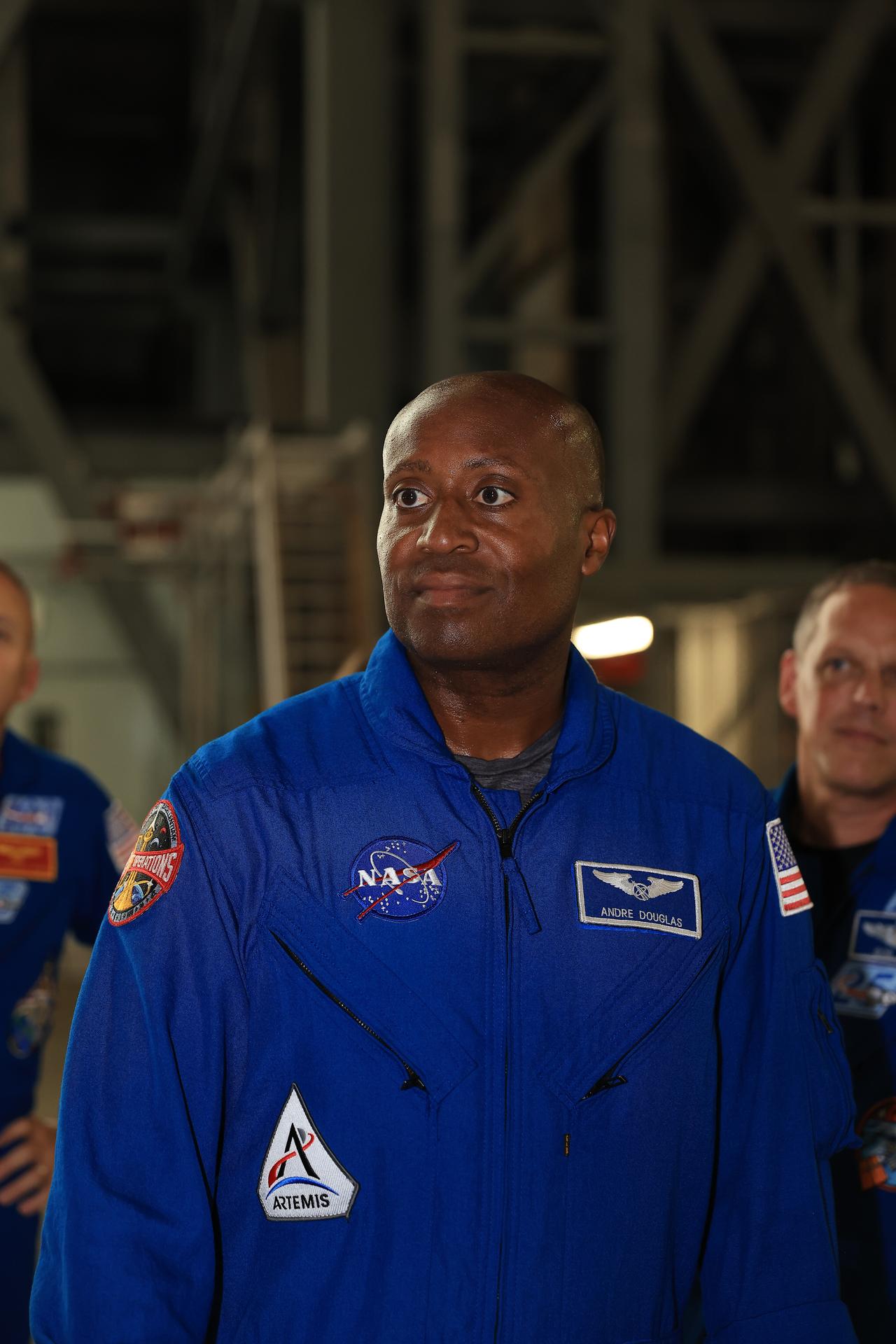
Artemis III mission specialist NASA astronaut Andre Douglas visits the Vehicle Assembly Building at NASA's Kennedy Space Center in Florida on Wednesday, Sept. 2, 2026. Douglas, as well as NASA astronaut Randy Bresnik, commander; ESA (European Space Agency) astronaut Luca Parmitano, pilot; NASA astronaut Frank Rubio, mission specialist; and NASA astronaut Bob Hines, backup crew member, made the first visit to Kennedy by the entire crew and backup crew members of Artemis III. The mission will launch four crew members aboard the Orion spacecraft to carry out a series of objectives in low Earth orbit designed to demonstrate critical systems needed for future lunar landings, beginning with Artemis IV.
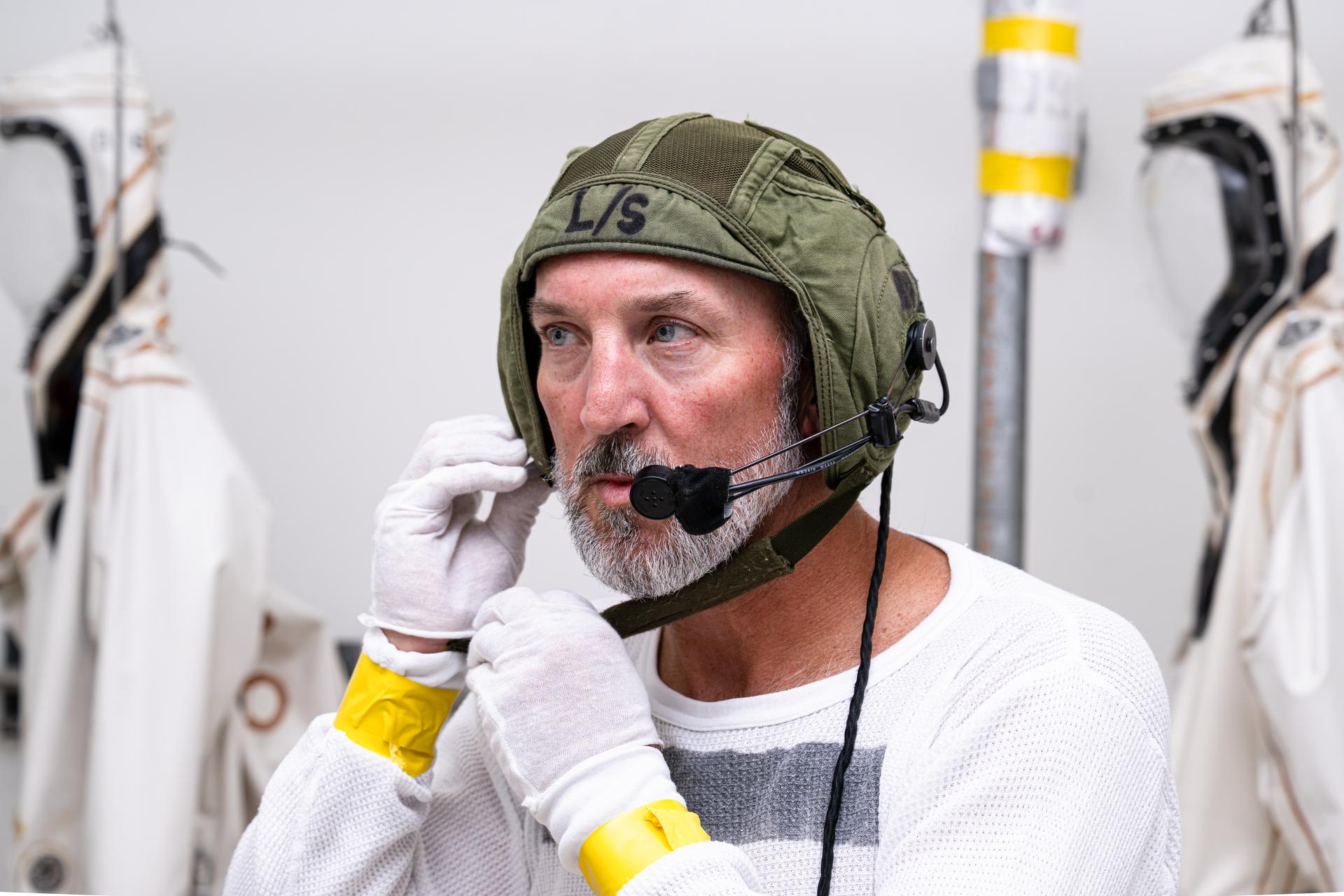
Ryan Renehan, technician, wears a Self-Contained Atmospheric Protective Ensemble (SCAPE) suit as he prepares to perform propellant loading operations inside the Payload Hazardous Servicing Facility at NASA’s Kennedy Space Center in Florida Thursday, July 23, 2026. With fuel tanks capable of carrying about 290 gallons (roughly 1,100 liters) of hydrazine – a monopropellant not requiring a second chemical to combust – Roman’s primary mission is to settle essential questions about dark energy, exoplanets, and infrared astrophysics by conducting wide-field surveys that explore the universe’s structure, evolution, and composition. Liftoff atop a SpaceX Falcon Heavy rocket from NASA Kennedy’s Launch Complex 39A is targeted no earlier than Sunday, Aug. 30, 2026.
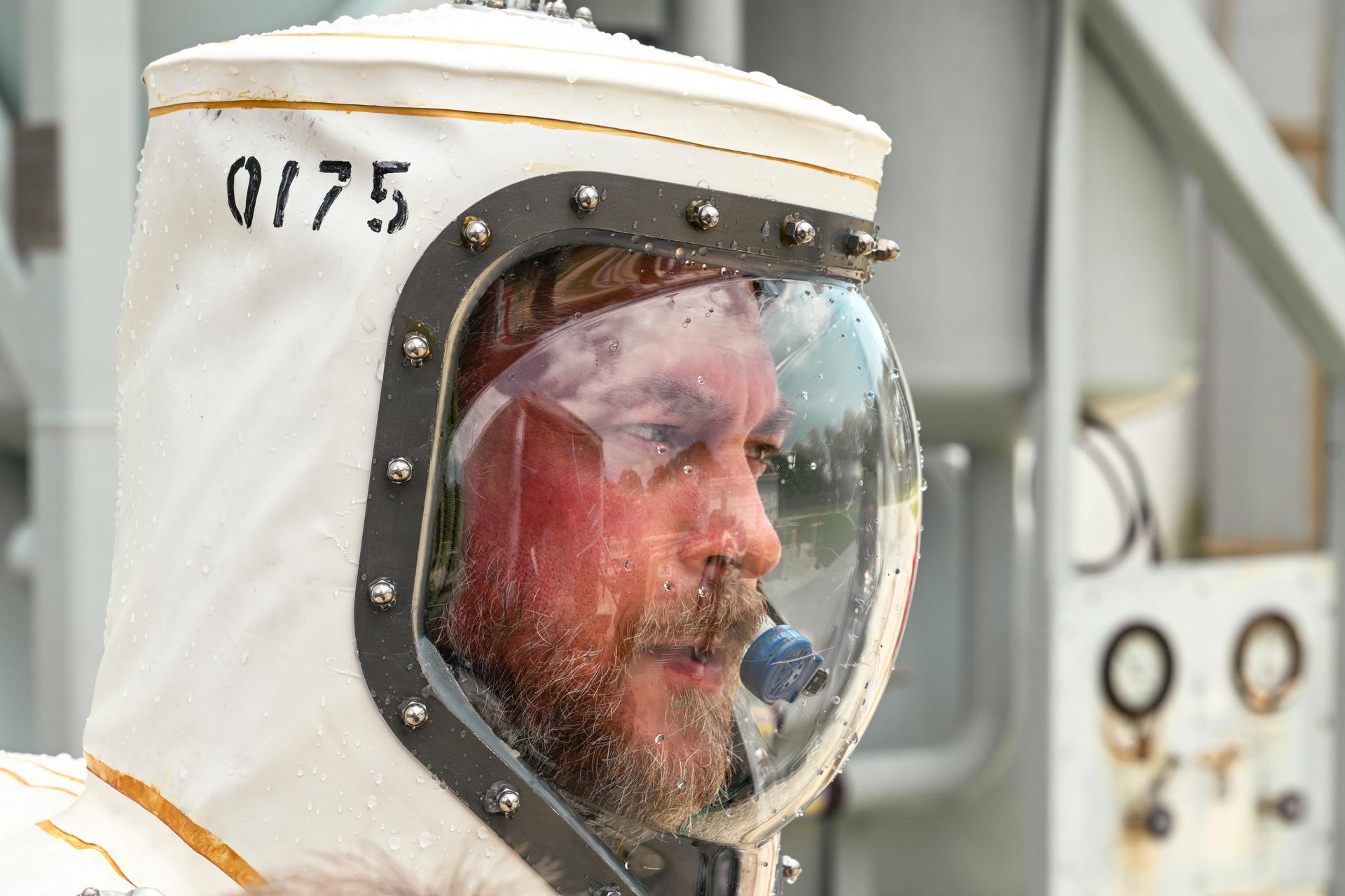
Billy Keim, a senior integration technician for NASA's Nancy Grace Roman Space Telescope wears a Self-Contained Atmospheric Protective Ensemble (SCAPE) suit as he prepares to perform propellant loading operations inside the Payload Hazardous Servicing Facility at NASA’s Kennedy Space Center in Florida Friday, July 24, 2026. With fuel tanks capable of carrying about 290 gallons (roughly 1,100 liters) of hydrazine – a monopropellant not requiring a second chemical to combust – Roman’s primary mission is to settle essential questions about dark energy, exoplanets, and infrared astrophysics by conducting wide-field surveys that explore the universe’s structure, evolution, and composition. Liftoff atop a SpaceX Falcon Heavy rocket from NASA Kennedy’s Launch Complex 39A is targeted no earlier than Sunday, Aug. 30, 2026.
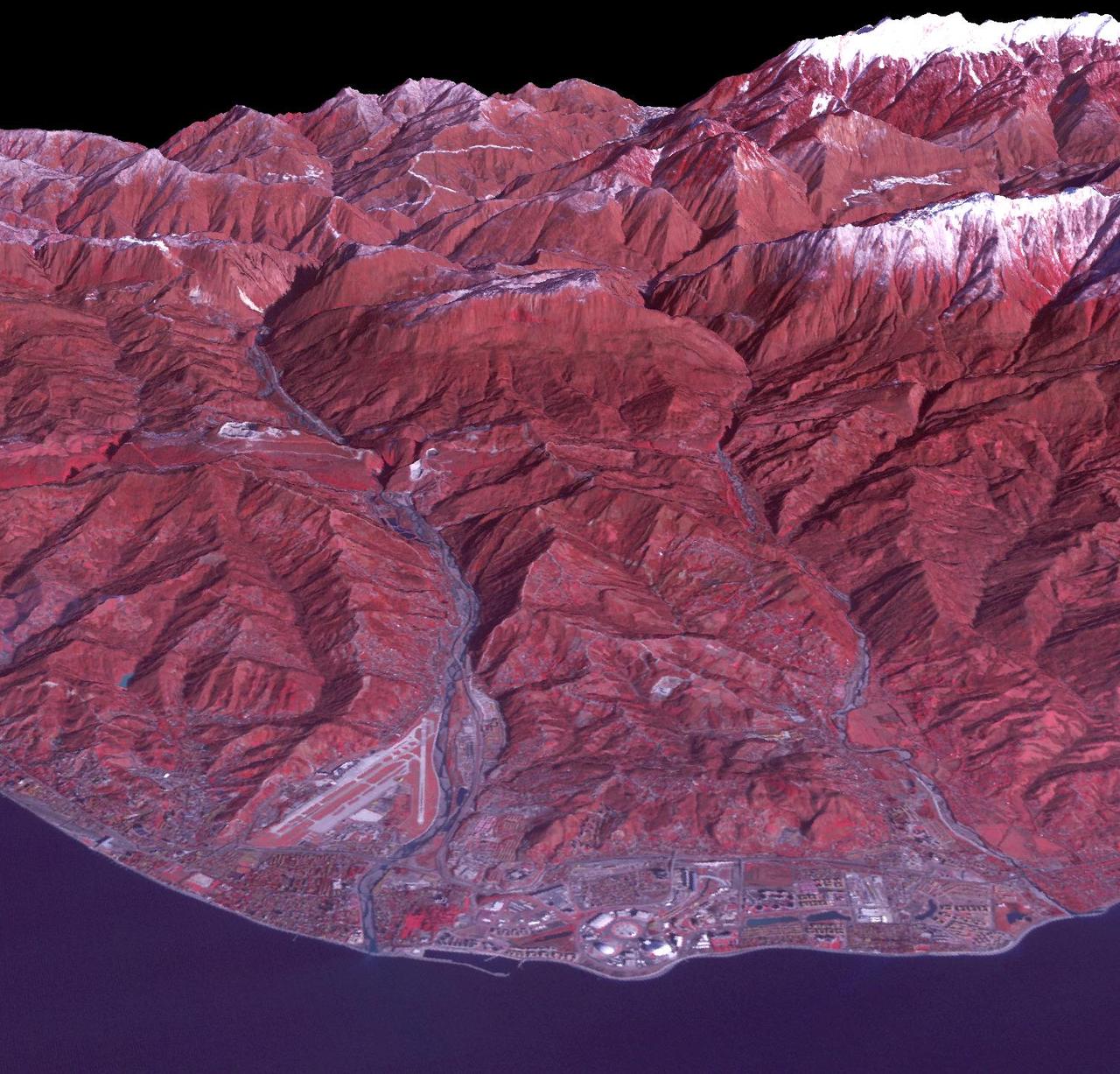
Sochi, Russia Winter Olympic Sites (Coastal Cluster) The Black Sea resort of Sochi, Russia, is the warmest city ever to host the Winter Olympic Games, which open on Feb. 7, 2014, and run through Feb. 23. This north-looking image, acquired on Jan. 4, 2014, by the Advanced Spaceborne Thermal Emission and Reflection Radiometer (ASTER) instrument on NASA's Terra spacecraft, shows the Sochi Olympic Park Coastal Cluster -- the circular area on the shoreline in the bottom center of the image -- which was built for Olympic indoor sports. Even curling has its own arena alongside multiple arenas for hockey and skating. The Olympic alpine events will take place at the Mountain Cluster, located in a snow-capped valley at the top right of the image. Sochi itself, a city of about 400,000, is not visible in the picture. It's farther west (left) along the coast, past the airport at bottom left. In the image, red indicates vegetation, white is snow, buildings are gray and the ocean is dark blue. The area imaged is about 15 miles (24 kilometers) from west to east (left to right) at the coastline and 25 miles (41 kilometers) from front to back. Height is exaggerated 1.5 times. The image was created from the ASTER visible and near-infrared bands, draped over ASTER-derived digital elevation data. With its 14 spectral bands from the visible to the thermal infrared wavelength region and its high spatial resolution of 15 to 90 meters (about 50 to 300 feet), ASTER images Earth to map and monitor the changing surface of our planet. ASTER is one of five Earth-observing instruments launched Dec. 18, 1999, on Terra. The instrument was built by Japan's Ministry of Economy, Trade and Industry. A joint U.S./Japan science team is responsible for validation and calibration of the instrument and data products. The broad spectral coverage and high spectral resolution of ASTER provides scientists in numerous disciplines with critical information for surface mapping and monitoring of dynamic conditions and temporal change. Example applications are: monitoring glacial advances and retreats; monitoring potentially active volcanoes; identifying crop stress; determining cloud morphology and physical properties; wetlands evaluation; thermal pollution monitoring; coral reef degradation; surface temperature mapping of soils and geology; and measuring surface heat balance. The U.S. science team is located at NASA's Jet Propulsion Laboratory, Pasadena, Calif. The Terra mission is part of NASA's Science Mission Directorate, Washington, D.C. More information about ASTER is available at <a href="http://asterweb.jpl.nasa.gov/" rel="nofollow">asterweb.jpl.nasa.gov/</a>. Image credit: NASA/GSFC/METI/ERSDAC/JAROS, and U.S./Japan ASTER Science Team <b><a href="http://www.nasa.gov/audience/formedia/features/MP_Photo_Guidelines.html" rel="nofollow">NASA image use policy.</a></b> <b><a href="http://www.nasa.gov/centers/goddard/home/index.html" rel="nofollow">NASA Goddard Space Flight Center</a></b> enables NASA’s mission through four scientific endeavors: Earth Science, Heliophysics, Solar System Exploration, and Astrophysics. Goddard plays a leading role in NASA’s accomplishments by contributing compelling scientific knowledge to advance the Agency’s mission. <b>Follow us on <a href="http://twitter.com/NASAGoddardPix" rel="nofollow">Twitter</a></b> <b>Like us on <a href="http://www.facebook.com/pages/Greenbelt-MD/NASA-Goddard/395013845897?ref=tsd" rel="nofollow">Facebook</a></b> <b>Find us on <a href="http://instagram.com/nasagoddard?vm=grid" rel="nofollow">Instagram</a></b>
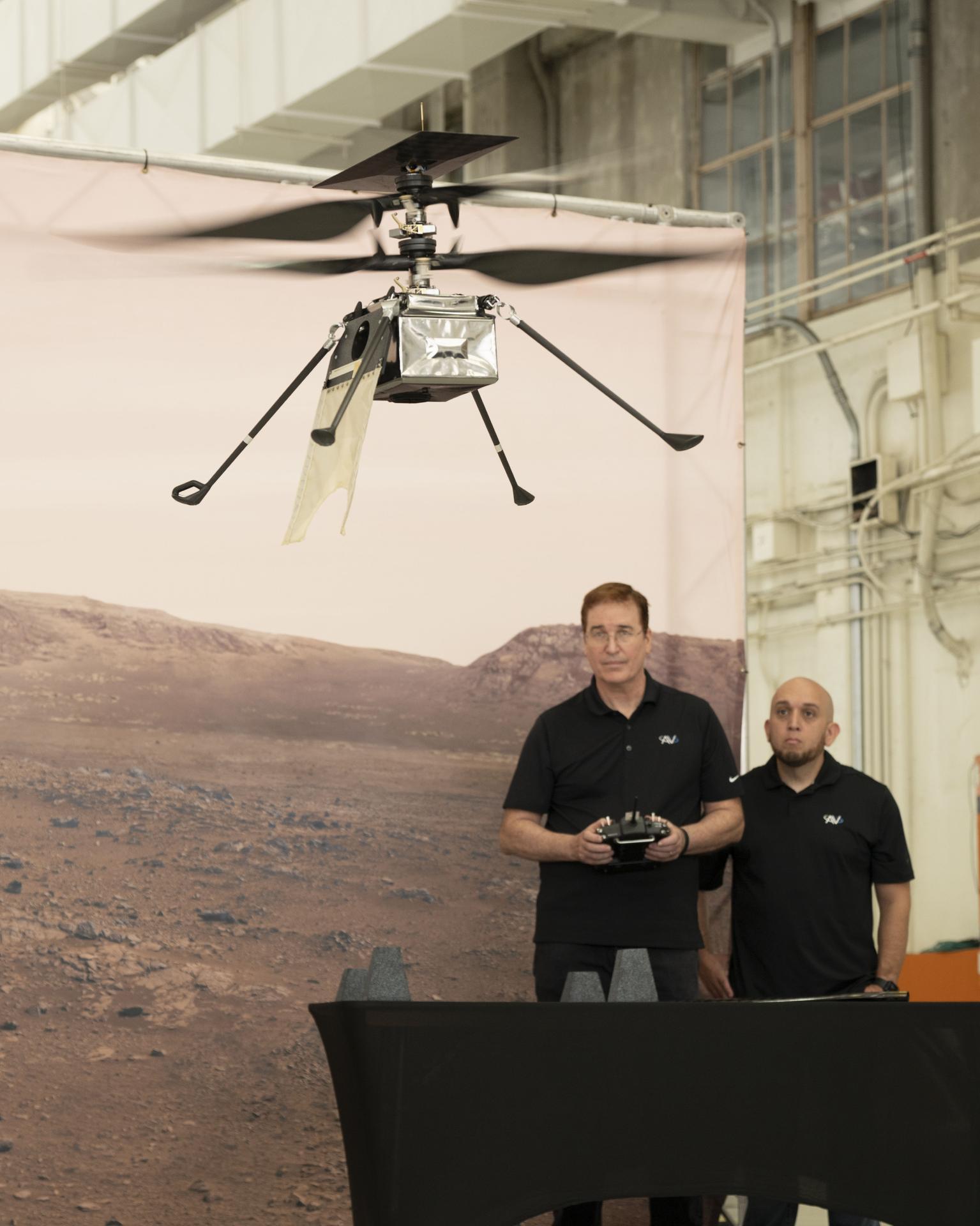
AeroVironment team members Matt Keenon, left, and Steve Quintero fly SkyFall, the next evolution of Mars helicopters, during Jet Propulsion Laboratory’s media demonstration at Los Alamitos Joint Forces Training Base, California, Thursday, Oct. 1, 2026. Visitors to the Pacific Airshow in Huntington Beach, California, Oct. 2-4, can get an up-close look at the rotorcraft at the NASA exhibit, which also highlights Artemis, the X-59, a lunar globe, and an Apollo 15 Moon rock.
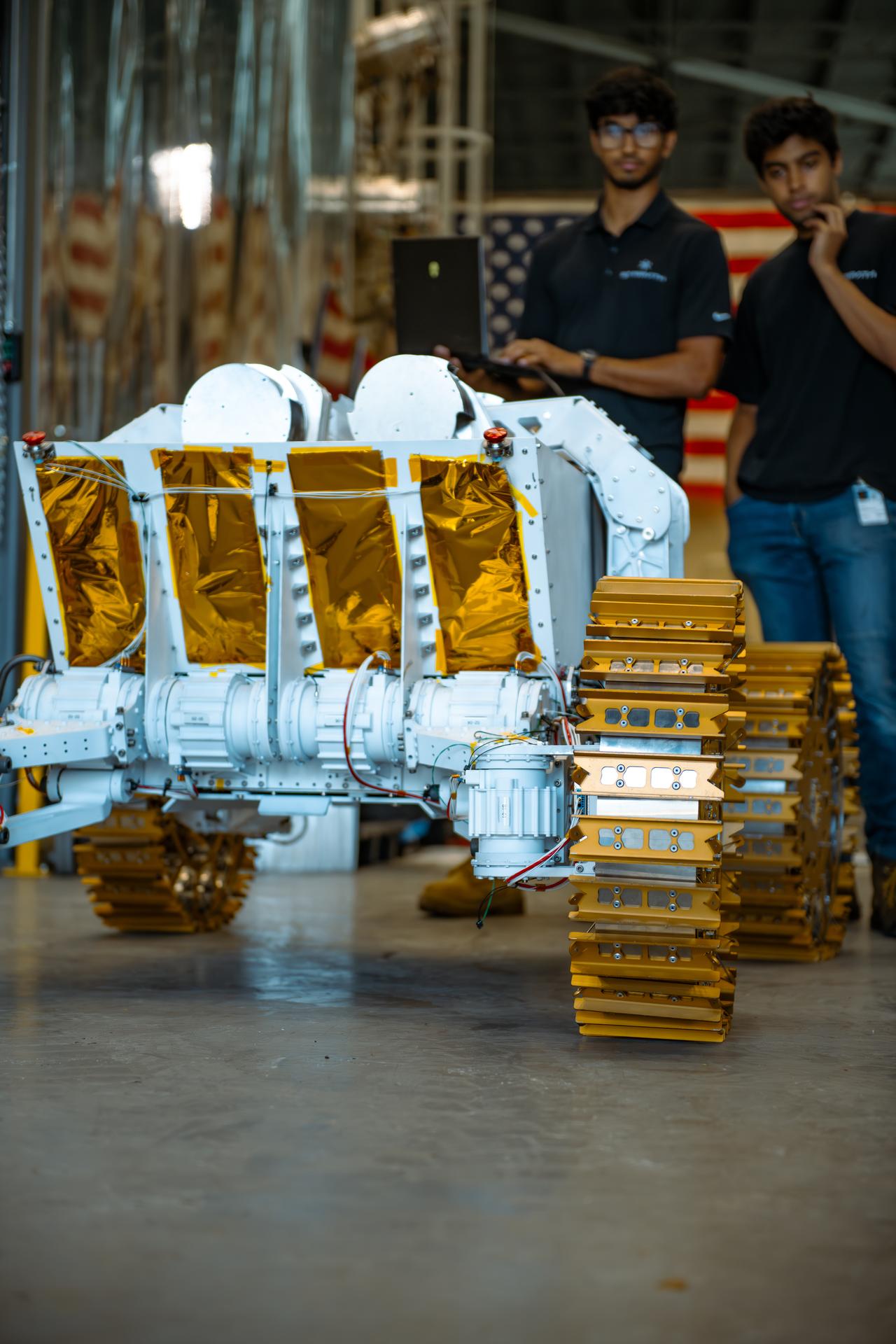
Members of the small business Starpath remotely operate the rover and run data in preparation for its entrance to the V20 Thermal Vacuum Chamber at NASA’s Marshall Space Flight Center in Huntsville, Alabama, on July 30, 2025. The technology startup headquartered in Hawthorne, California, won second place overall at the agency’s Break the Ice Lunar Challenge’s live demonstration and finale in June 2024. Their visit to NASA Marshall was part of their prize opportunity to test their upgraded lunar regolith excavation and transportation rover in the center’s 20-foot thermal vacuum chamber. The competition, one of NASA’s Centennial Challenges, tasked competitors to design, build, and demonstrate robotic technologies that could excavate and transport the icy, rocky dirt – otherwise known as regolith – found on the Moon. For more information, contact NASA Marshall’s Office of Communications at 256-544-0034.
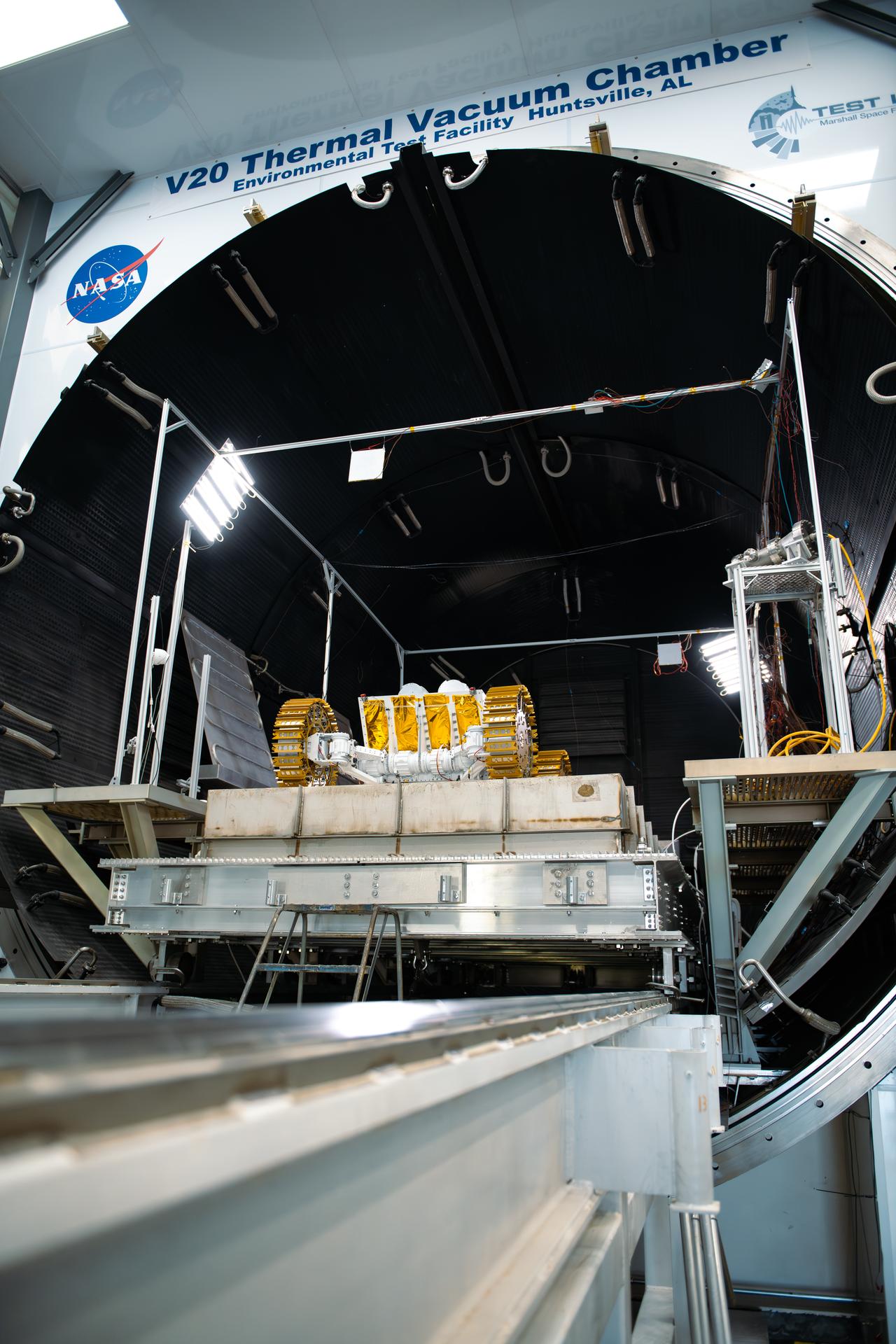
Starpath’s rover sits atop a concrete slab at the mouth of the thermal vacuum chamber, ready to be closed in and commence testing at NASA’s Marshall Space Flight Center in Huntsville, Alabama, on July 30, 2025. The technology startup headquartered in Hawthorne, California, won second place overall at the Break the Ice Lunar Challenge’s live demonstration and finale in June 2024. This competition, one of NASA’s Centennial Challenges, tasked competitors to design, build, and demonstrate robotic technologies that could excavate and transport the icy, rocky dirt – otherwise known as regolith – found on the Moon. Starpath’s visit to NASA Marshall was part of their prize opportunity to test their upgraded lunar regolith excavation and transportation rover in the center’s 20-foot thermal vacuum chamber. For more information, contact NASA Marshall’s Office of Communications at 256-544-0034.