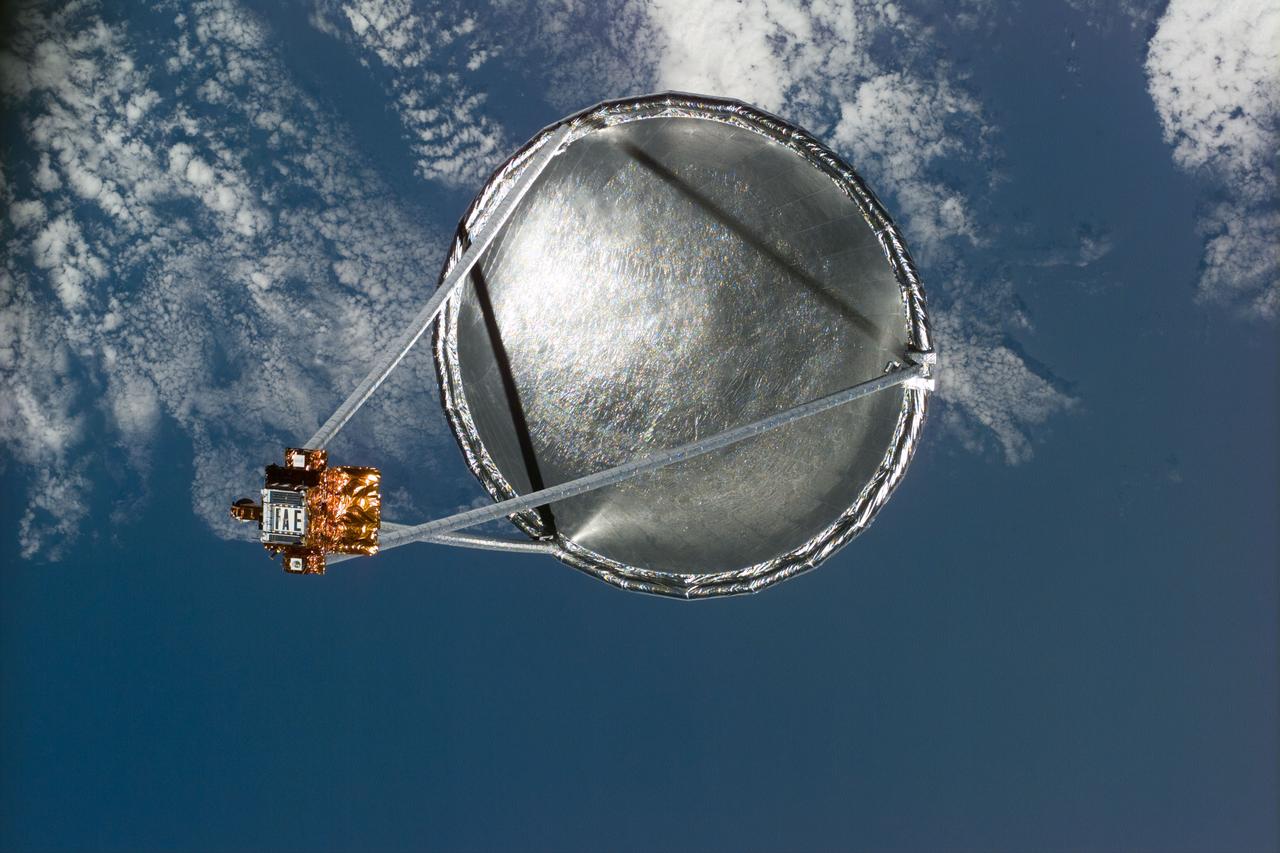
S77-E-5022 (20 May 1996)--- Following its deployment from the Space Shuttle Endeavour, the Spartan 207/Inflatable Antenna Experiment (IAE) payload is backdropped over clouds and water. The view was photographed with an Electronic Still Camera (ESC) and downlinked to flight controllers on the first full day of orbital operations by the six-member crew. Managed by Goddard Space Flight Center (GSFC), Spartan is designed to provide short-duration, free-flight opportunities for a variety of scientific studies. The Spartan configuration on this flight is unique in that the IAE is part of an additional separate unit which is ejected once the experiment is completed. The IAE experiment will lay the groundwork for future technology development in inflatable space structures, which will be launched and then inflated like a balloon on-orbit.
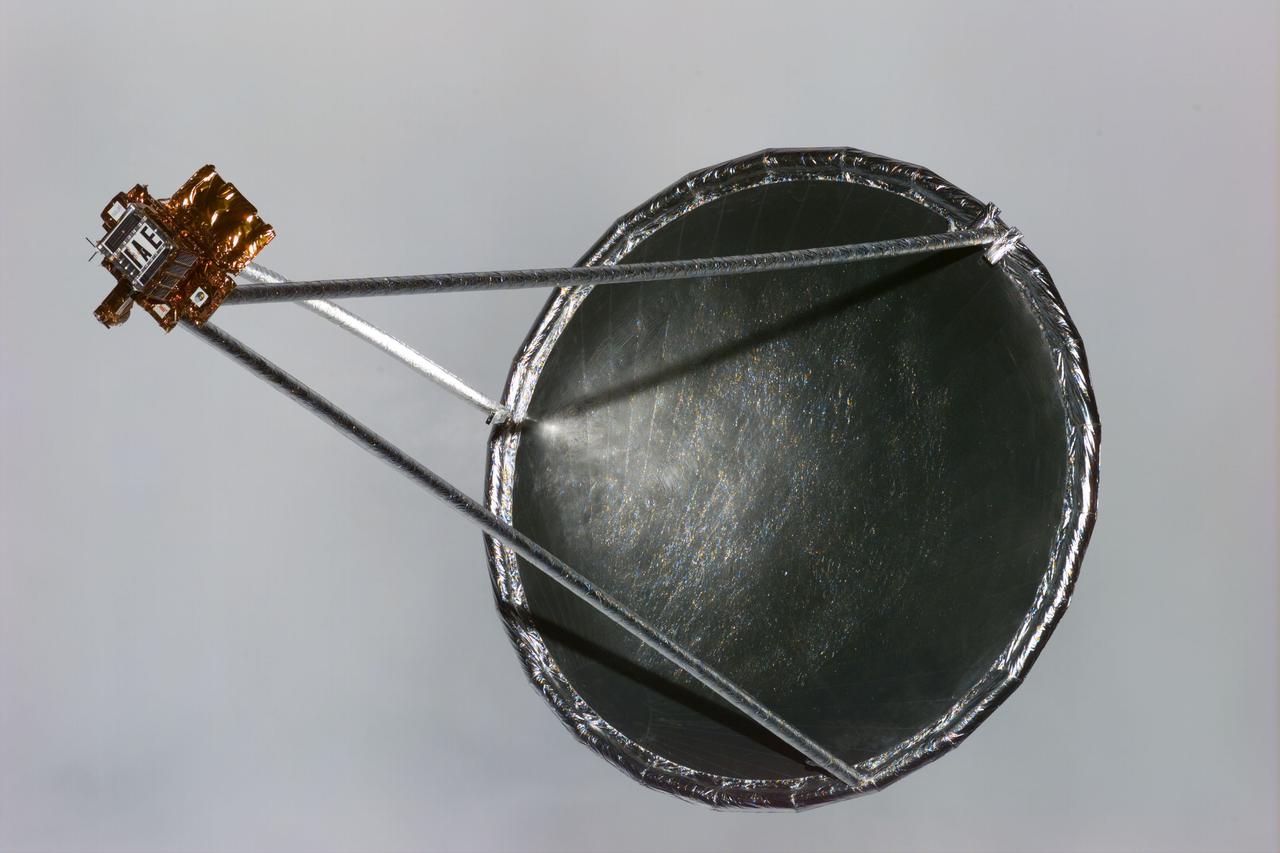
S77-E-5033 (20 May 1996) --- Following its deployment from the Space Shuttle Endeavour, the Spartan 207/Inflatable Antenna Experiment (IAE) payload is backdropped against a wall of grayish clouds. The view was photographed with an Electronic Still Camera (ESC) and downlinked to flight controllers on the first full day of orbital operations by the six-member crew. Managed by Goddard Space Flight Center (GSFC), Spartan is designed to provide short-duration, free-flight opportunities for a variety of scientific studies. The Spartan configuration on this flight is unique in that the IAE is part of an additional separate unit which is ejected once the experiment is completed. The IAE experiment will lay the groundwork for future technology development in inflatable space structures, which will be launched and then inflated like a balloon on-orbit.
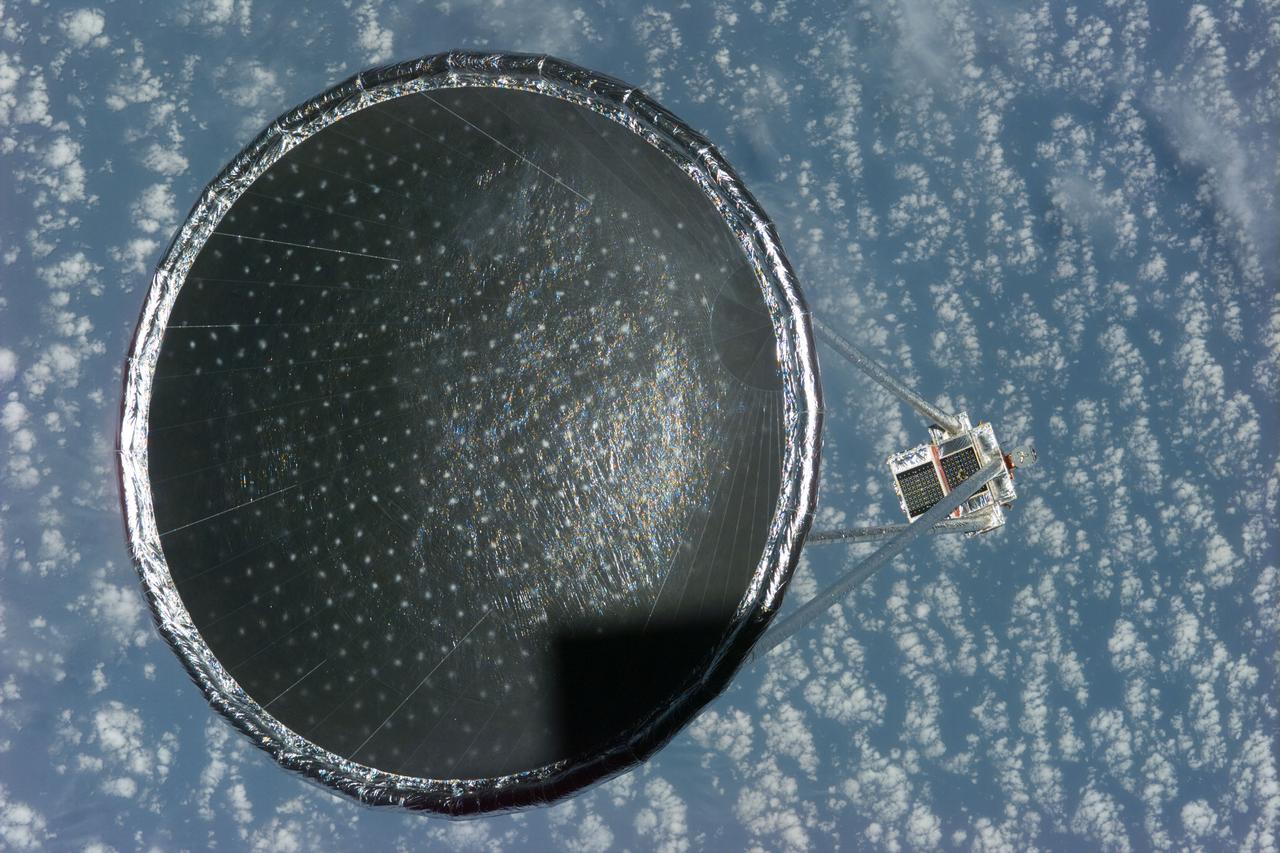
S77-E-5027 (20 May 1996)--- Following its deployment from the Space Shuttle Endeavour, the Spartan 207/Inflatable Antenna Experiment (IAE) payload is backdropped over clouds and water. The view was photographed with an Electronic Still Camera (ESC) and downlinked to flight controllers on the first full day of orbital operations by the six-member crew. Managed by Goddard Space Flight Center (GSFC), Spartan is designed to provide short-duration, free-flight opportunities for a variety of scientific studies. The Spartan configuration on this flight is unique in that the IAE is part of an additional separate unit which is ejected once the experiment is completed. The IAE experiment will lay the groundwork for future technology development in inflatable space structures, which will be launched and then inflated like a balloon on-orbit.

STS032-15-022 (17 Jan 1990) --- Astronaut Daniel C. Brandenstein, STS-32 mission commander, holds up a cake that's guaranteed not to go bad. The inflatable "cake" was part of frequent recognition of the commander's 47th birthday on January 17, 1990.
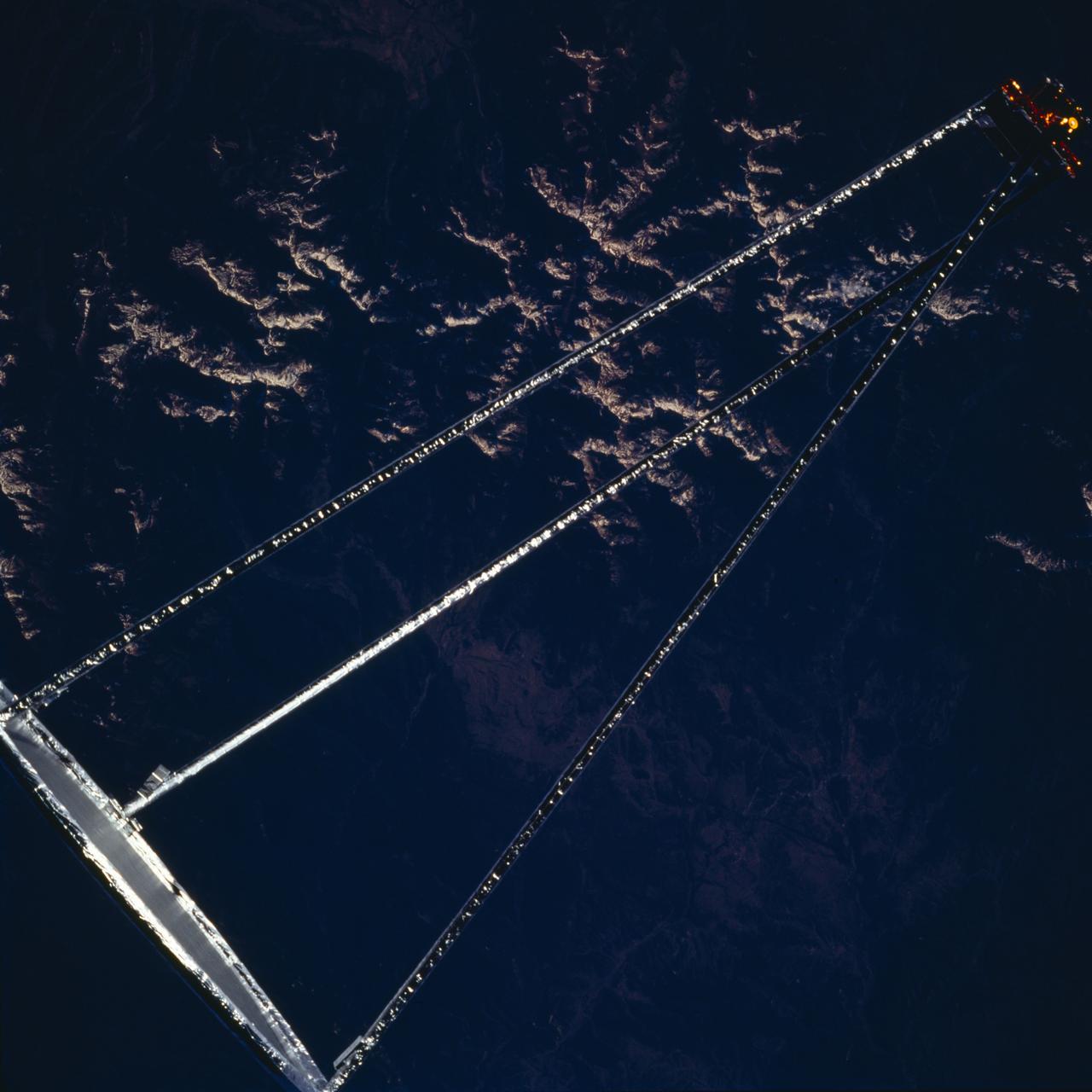
STS077-705-051 (20 May 1996) --- Following its deployment from the Space Shuttle Endeavour and its subsequent inflation process, the Spartan 207/Inflatable Antenna Experiment (IAE) payload is backdropped over mountains. The view was photographed with a handheld 70mm camera during the first full day of orbital operations by the six-member crew. Managed by Goddard Space Flight Center (GSFC), Spartan is designed to provide short-duration, free-flight opportunities for a variety of scientific studies. The Spartan configuration on this flight is unique in that the IAE is part of an additional separate unit which is ejected once the experiment is completed. The IAE experiment will lay the groundwork for future technology development in inflatable space structures, which will be launched and then inflated like a balloon on-orbit.
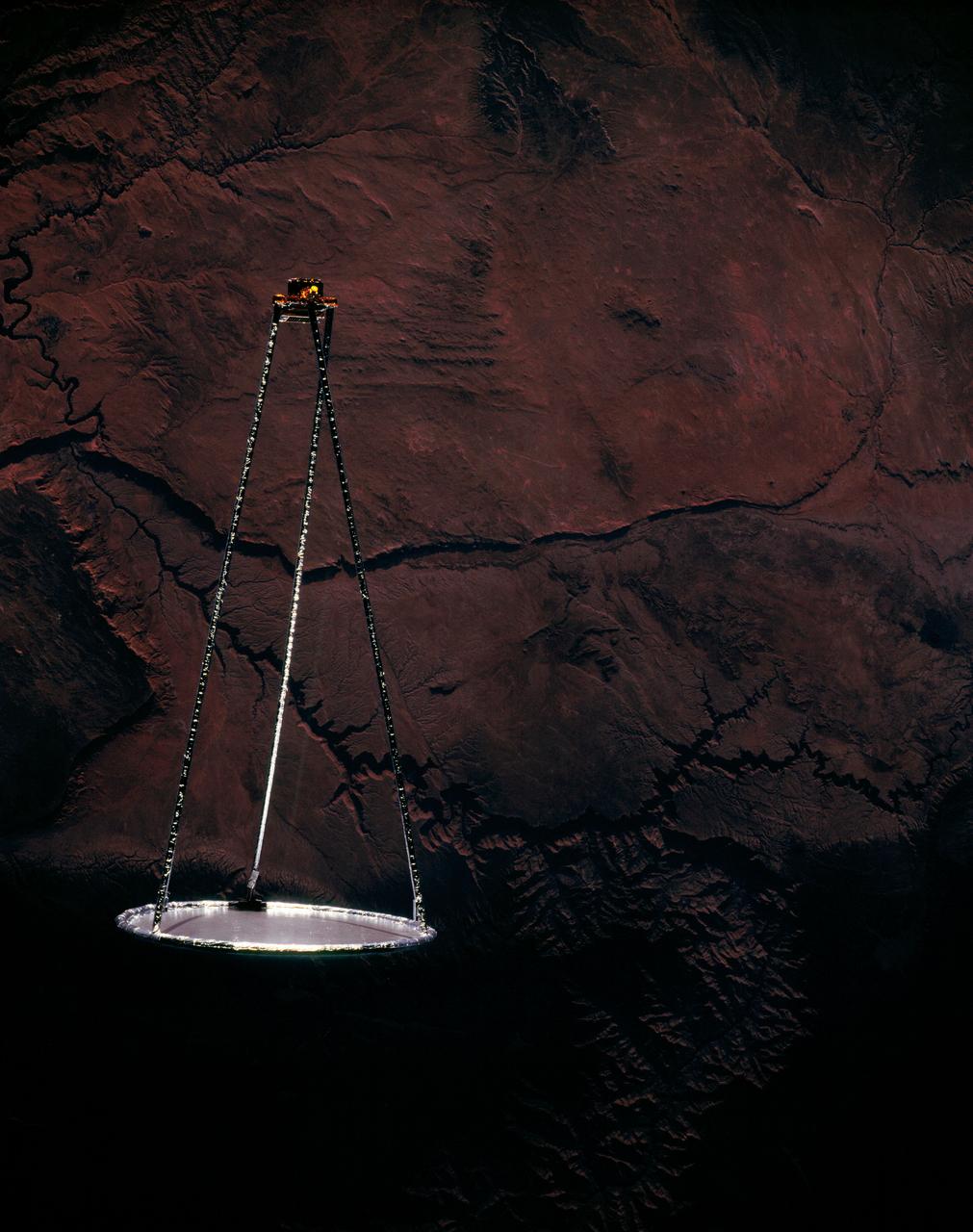
STS077-150-044 (20 May 1996) --- Following its deployment from the Space Shuttle Endeavour, the Spartan 207/Inflatable Antenna Experiment (IAE) payload is backdropped over the Grand Canyon. After the IAE completed its inflation process in free-flight, this view was photographed with a large format still camera. The activity came on the first full day of in-space operations by the six-member crew. Managed by Goddard Space Flight Center (GSFC), Spartan is designed to provide short-duration, free-flight opportunities for a variety of scientific studies. The Spartan configuration on this flight is unique in that the IAE is part of an additional separate unit which is ejected once the experiment is completed. The IAE experiment will lay the groundwork for future technology development in inflatable space structures, which will be launched and then inflated like a balloon on-orbit.
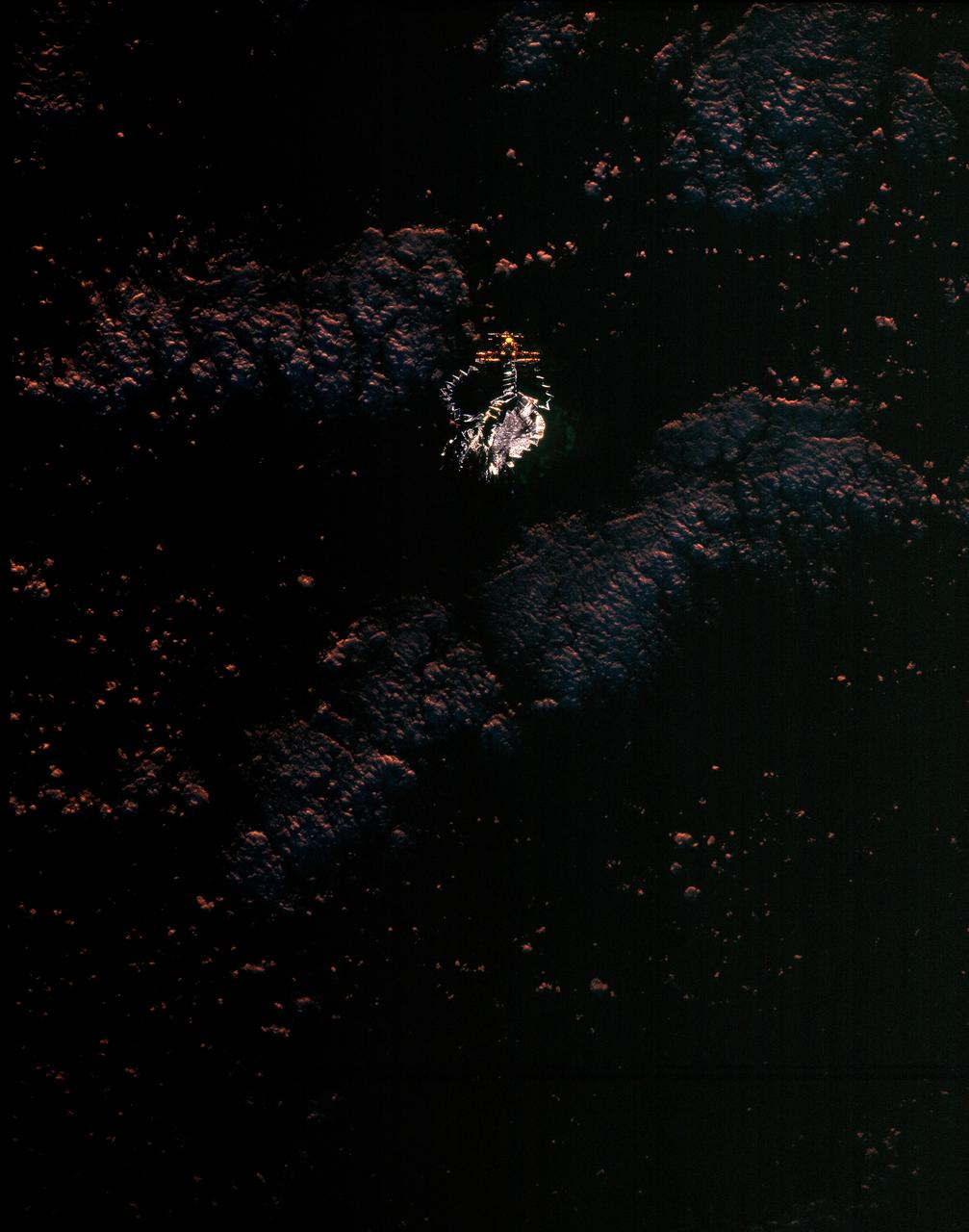
STS077-150-010 (20 May 1996) --- Soon after leaving the cargo bay of the Space Shuttle Endeavour, the Spartan 207/Inflatable Antenna Experiment (IAE) payload goes through its inflation process, backdropped over clouds. The view was photographed with a large format still camera on the first full day of in-space operations by the six-member crew. Managed by Goddard Space Flight Center (GSFC), Spartan is designed to provide short-duration, free-flight opportunities for a variety of scientific studies. The Spartan configuration on this flight is unique in that the IAE is part of an additional separate unit which is ejected once the experiment is completed. The IAE experiment will lay the groundwork for future technology development in inflatable space structures, which will be launched and then inflated like a balloon on-orbit.
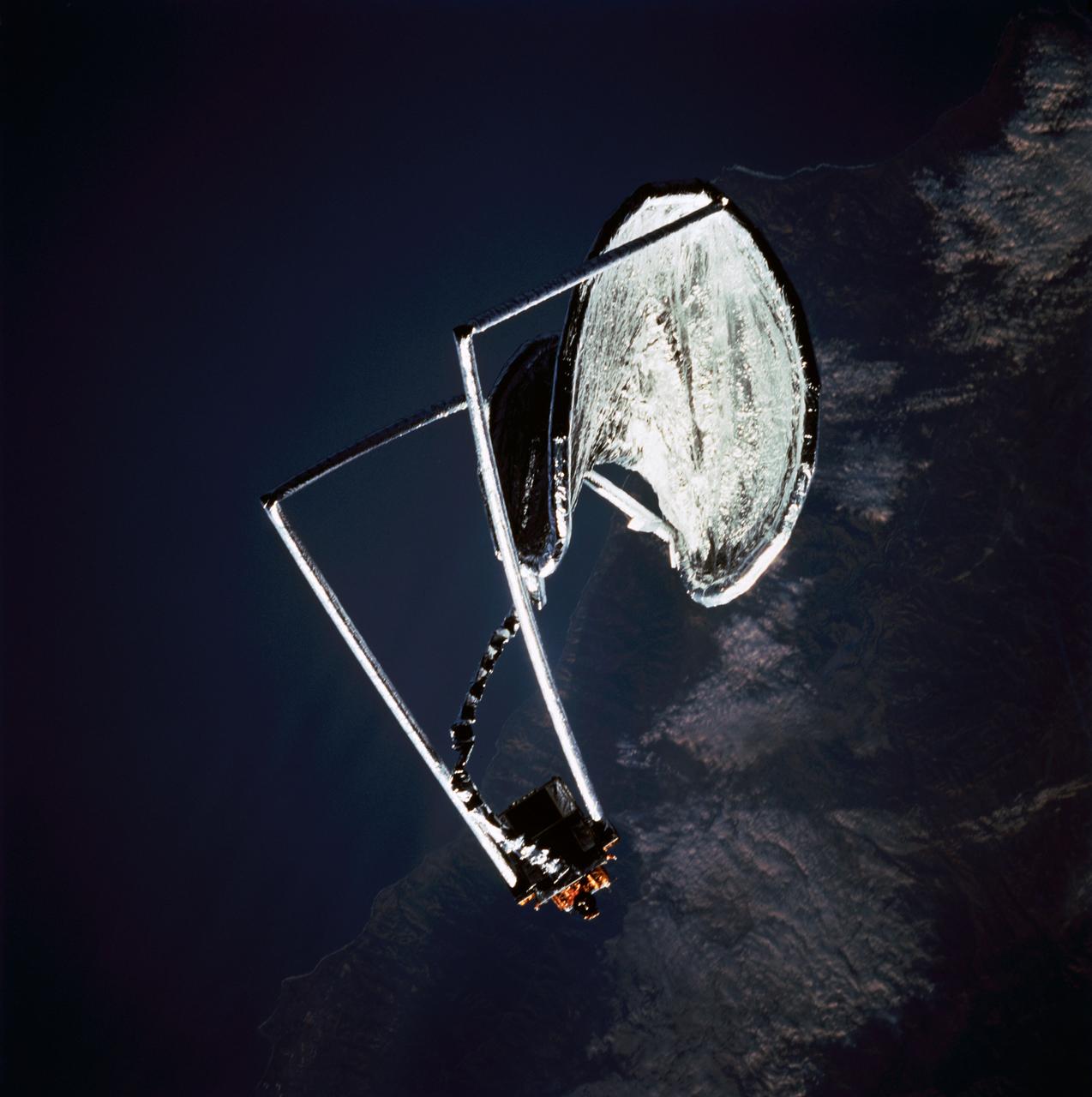
STS077-705-016 (20 May 1996) --- Following its deployment from the Space Shuttle Endeavour, the Inflatable Antenna Experiment (IAE) part of the Spartan 207 payload nears completion of its inflation process over California?s Pacific Coast near Santa Barbara and Point Conception. The view was photographed with a handheld 70mm camera during the first full day of orbital operations by the six-member crew. Managed by Goddard Space Flight Center (GSFC), Spartan is designed to provide short-duration, free-flight opportunities for a variety of scientific studies. The Spartan configuration on this flight is unique in that the IAE is part of an additional separate unit which is ejected once the experiment is completed. The IAE experiment will lay the groundwork for future technology development in inflatable space structures, which will be launched and then inflated like a balloon on-orbit.
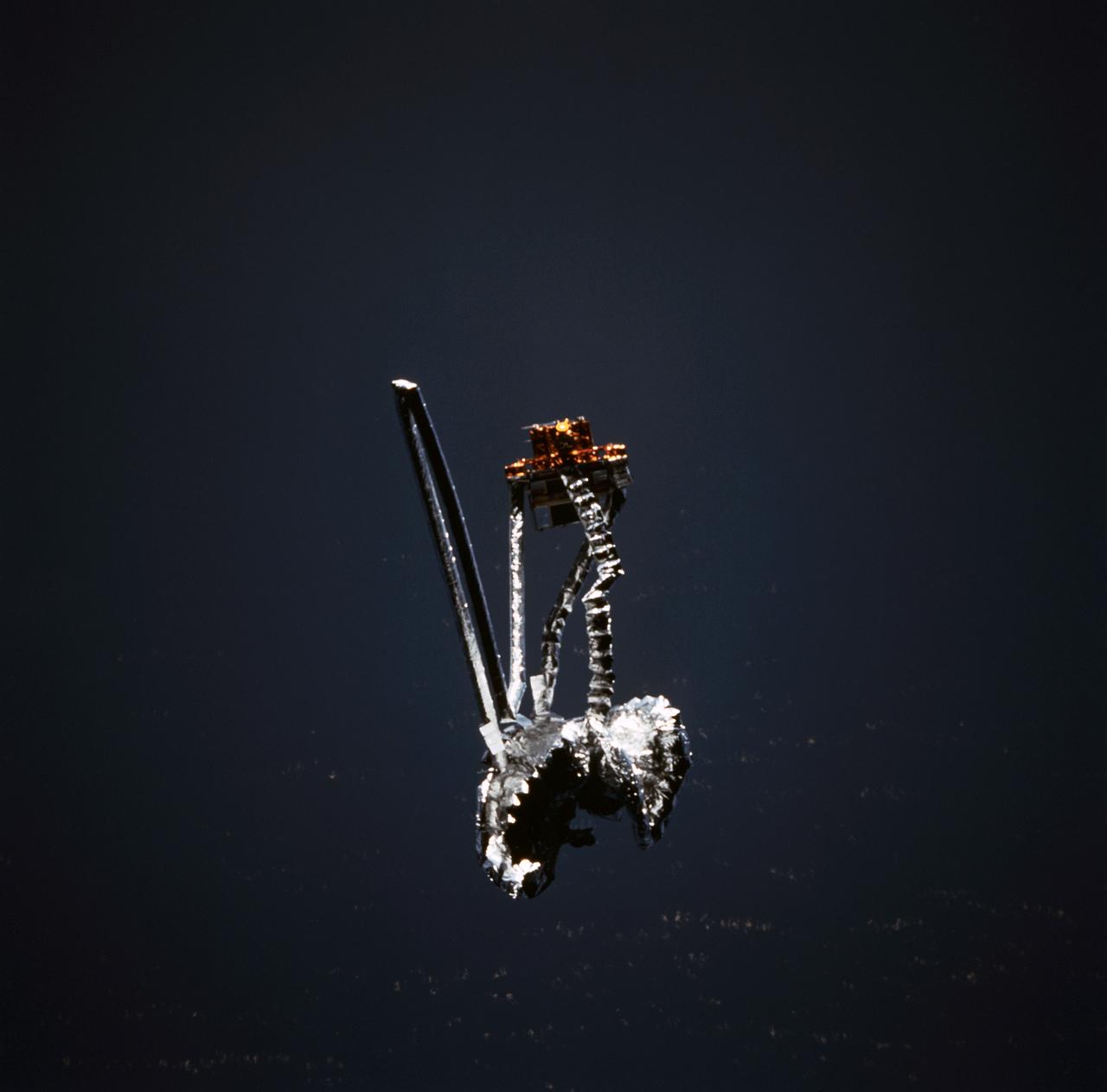
STS077-705-012 (20 May 1996) --- Following its deployment from the Space Shuttle Endeavour, the Inflatable Antenna Experiment (IAE) portion of the Spartan 207 payload is backdropped over Earth as it continues its inflation process. The view was photographed with a handheld 70mm camera during the first full day of orbital operations by the six-member crew. Managed by Goddard Space Flight Center (GSFC), Spartan is designed to provide short-duration, free-flight opportunities for a variety of scientific studies. The Spartan configuration on this flight is unique in that the IAE is part of an additional separate unit which is ejected once the experiment is completed. The IAE experiment will lay the groundwork for future technology development in inflatable space structures, which will be launched and then inflated like a balloon on-orbit.
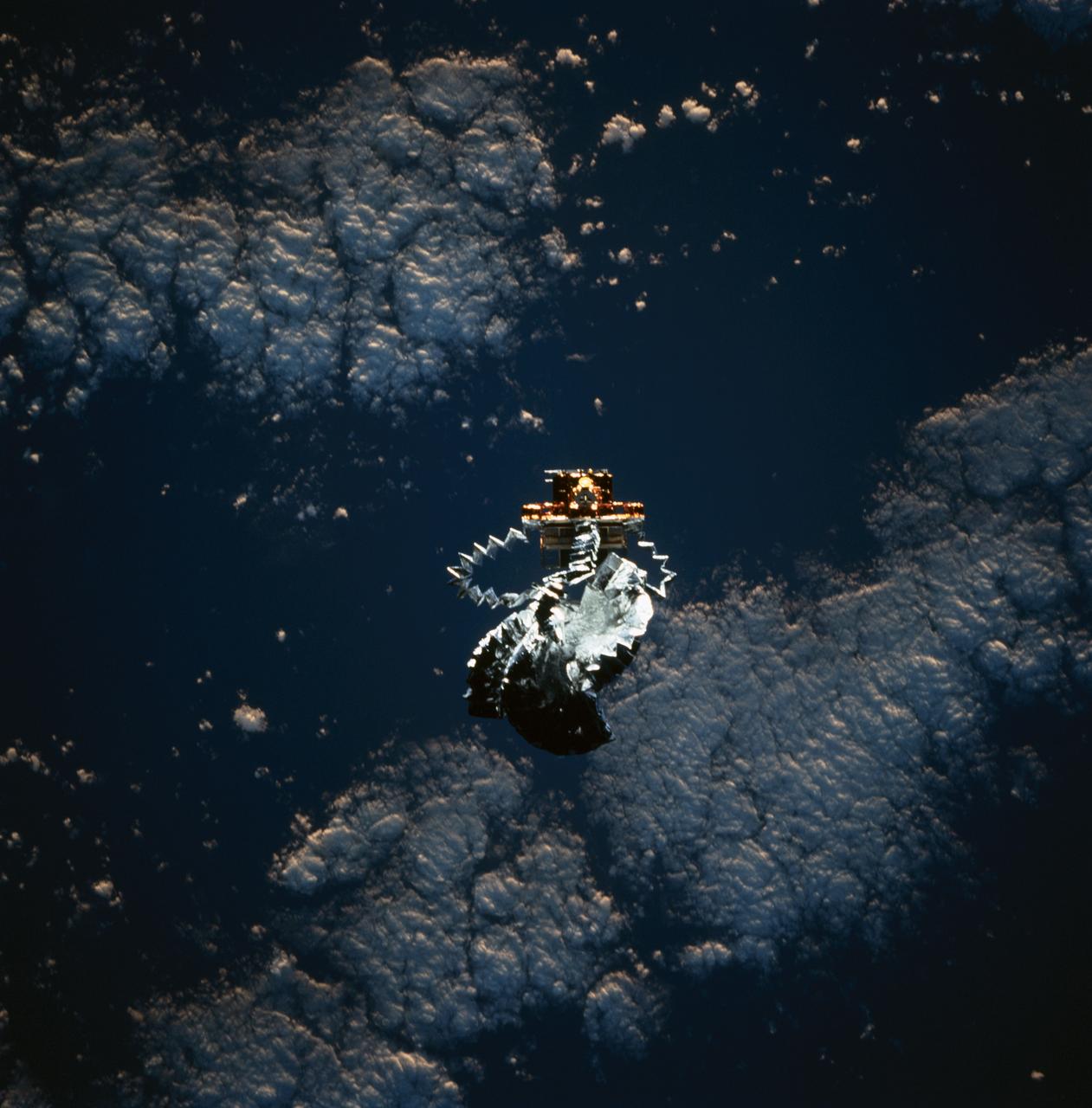
STS077-150-022 (20 May 1996) --- After leaving the cargo bay of the Space Shuttle Endeavour, the Spartan 207/Inflatable Antenna Experiment (IAE) payload goes through the final stages its inflation process, backdropped over clouds and blue water. The view was photographed with a large format still camera on the first full day of in-space operations by the six-member crew. Managed by Goddard Space Flight Center (GSFC), Spartan is designed to provide short-duration, free-flight opportunities for a variety of scientific studies. The Spartan configuration on this flight is unique in that the IAE is part of an additional separate unit which is ejected once the experiment is completed. The IAE experiment will lay the groundwork for future technology development in inflatable space structures, which will be launched and then inflated like a balloon on-orbit.
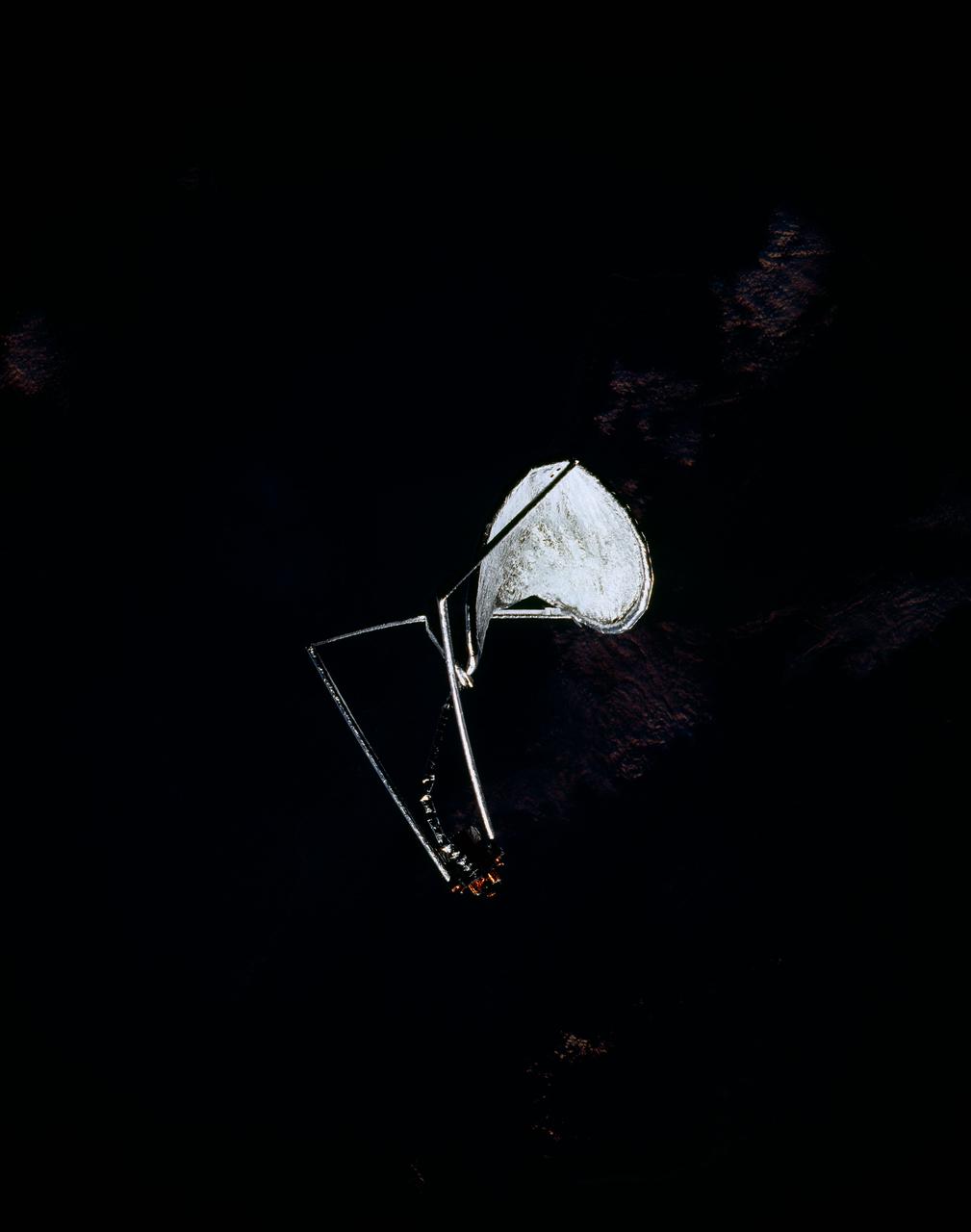
STS077-705-004 (20 May 1996) --- Following its deployment from the Space Shuttle Endeavour, the Inflatable Antenna Experiment (IAE) portion of the Spartan 207 payload begins to inflate, backdropped against clouds over the Pacific Ocean. The view was photographed with a handheld 70mm camera during the first full day of orbital operations by the six-member crew. Managed by Goddard Space Flight Center (GSFC), Spartan is designed to provide short-duration, free-flight opportunities for a variety of scientific studies. The Spartan configuration on this flight is unique in that the IAE is part of an additional separate unit which is ejected once the experiment is completed. The IAE experiment will lay the groundwork for future technology development in inflatable space structures, which will be launched and then inflated like a balloon on-orbit.
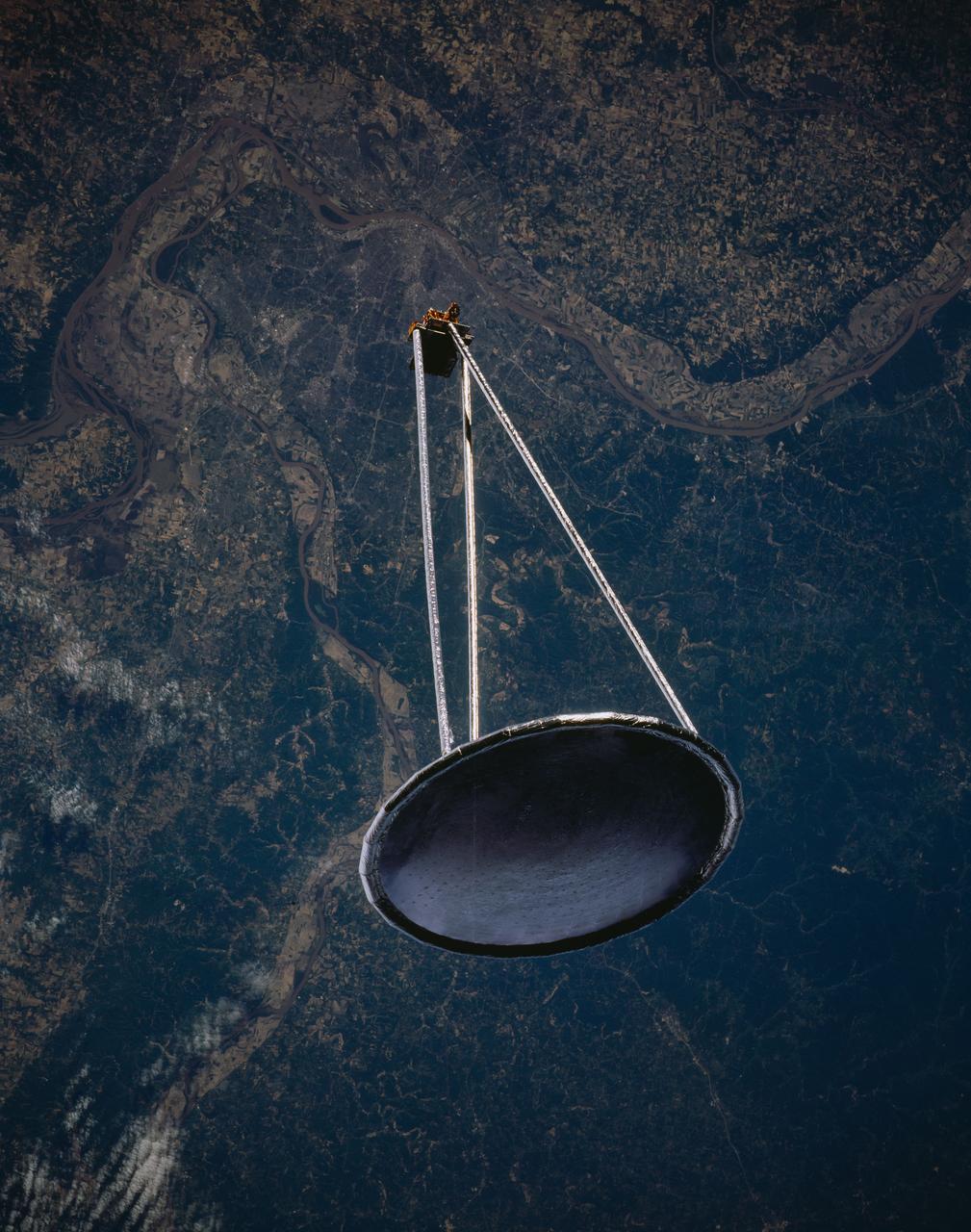
STS077-150-094 (20 May 1996) --- Following its deployment from the Space Shuttle Endeavour, the Spartan 207/Inflatable Antenna Experiment (IAE) payload is backdropped over the Mississippi River and metropolitan St. Louis. The metropolitan area lies just below the gold-colored Spartan at bottom of photo. The view was photographed with a large format still camera on the first full day of in-space operations by the six-member crew. Managed by Goddard Space Flight Center (GSFC), Spartan is designed to provide short-duration, free-flight opportunities for a variety of scientific studies. The Spartan configuration on this flight is unique in that the IAE is part of an additional separate unit which is ejected once the experiment is completed. The IAE experiment will lay the groundwork for future technology development in inflatable space structures, which will be launched and then inflated like a balloon on-orbit.
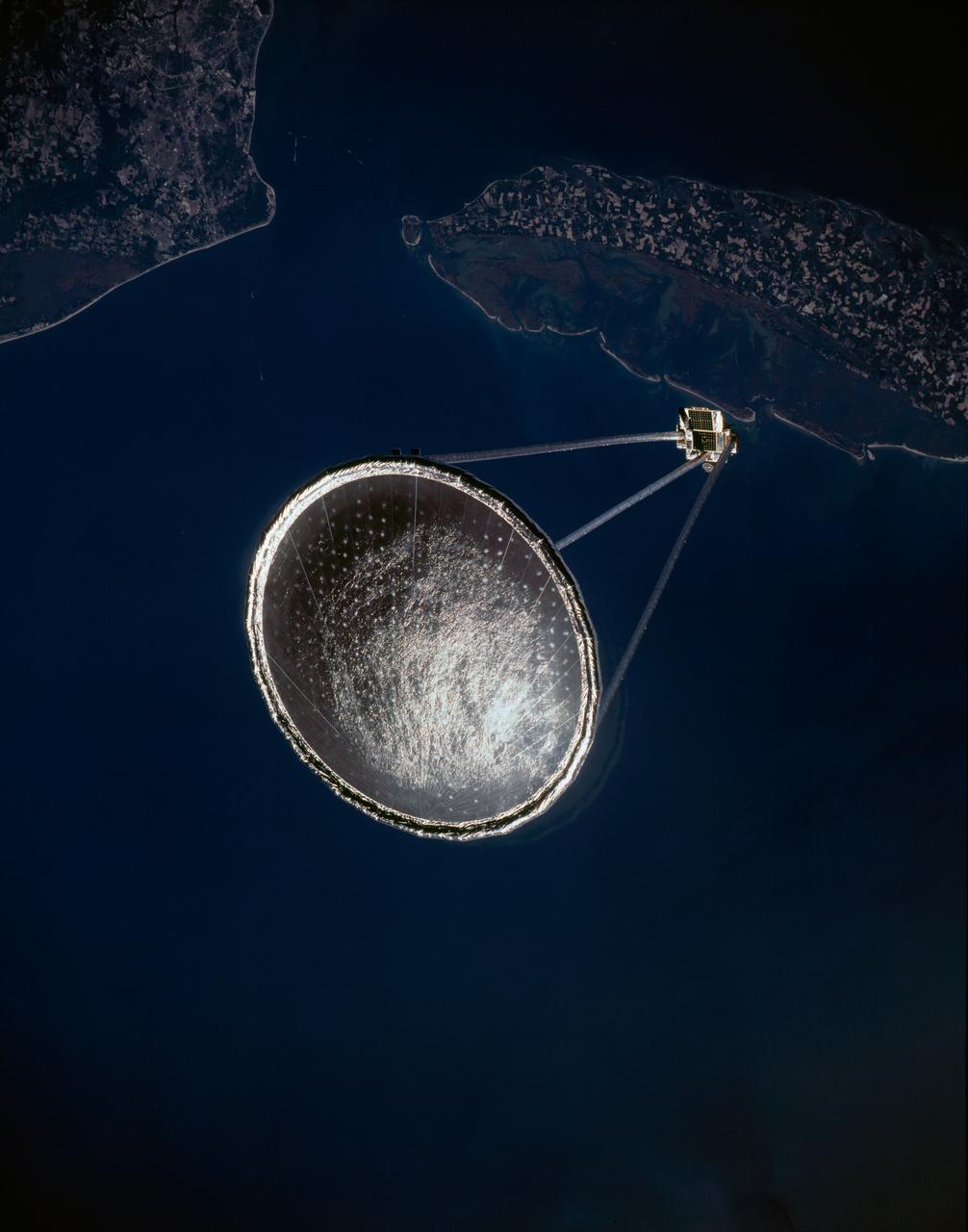
STS077-150-129 (20 May 1996) --- Following its deployment from the Space Shuttle Endeavour, the Spartan 207/Inflatable Antenna Experiment (IAE) payload is backdropped over the Atlantic Ocean and Hampton Roads, Virginia. (Hold photograph vertically with land mass at top.) Virginia Beach and part of Newport News can be delineated in the upper left quadrant of the frame. The view was photographed with a large format still camera on the first full day of in-space operations by the six-member crew. Managed by Goddard Space Flight Center (GSFC), Spartan is designed to provide short-duration, free-flight opportunities for a variety of scientific studies. The Spartan configuration on this flight is unique in that the IAE is part of an additional separate unit which is ejected once the experiment is completed. The IAE experiment will lay the groundwork for future technology development in inflatable space structures, which will be launched and then inflated like a balloon on-orbit.
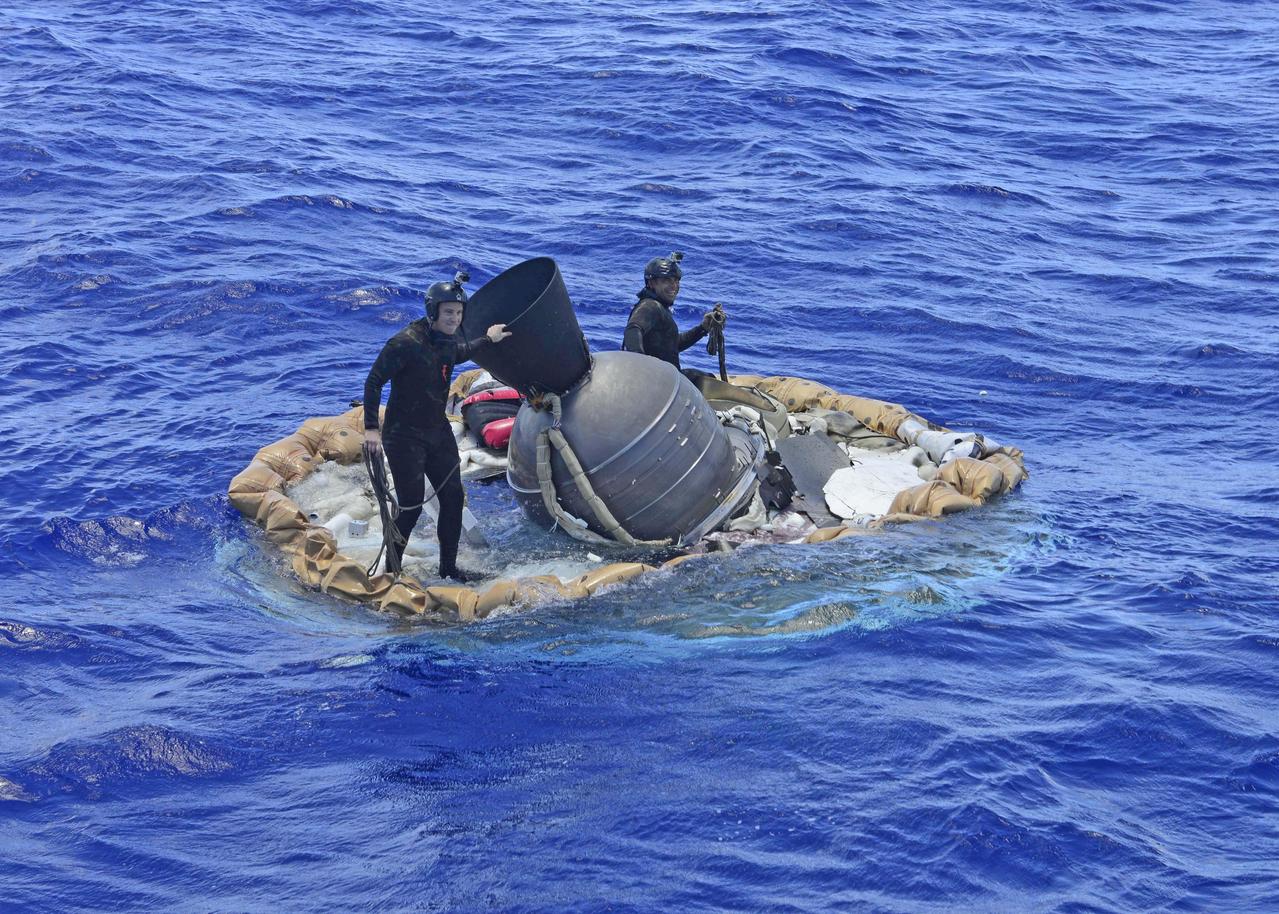
Two members of the U.S. Navy's Mobile Diving Salvage Unit (MDSU) 1 Explosive Ordnance Detachment work on recovering the test vehicle for NASA's Low-Density Supersonic Decelerator (LDSD) project. The saucer-shaped LDSD craft splashed down at 11:49 a.m. HST (2:49 PDT/5:49 p.m. EDT) Monday, June 8, 2015, in the Pacific Ocean off the west coast of the Kauai, Hawaii, after a four-hour experimental flight test that investigated new technologies for landing future robotic and human Mars missions. During the flight test, a Supersonic Inflatable Aerodynamic Decelerator (SIAD) and a supersonic parachute were deployed. The SIAD operated as expected, dramatically slowing the test vehicle's velocity. When the parachute was deployed into the supersonic slipstream, it appeared to blossom to full inflation prior to the emergence of a tear which then propagated and destroyed the parachute's canopy. As a result, the saucer's splashdown in the Pacific Ocean was hard, resulting in fracturing parts of the structure. Memory cards containing comprehensive test data -- including high-speed, high-resolution imagery recorded during the flight -- were successfully recovered. Also recovered were the test vehicle and its components, the supersonic parachute, the ballute used to deploy the parachute, and a large weather balloon that initially carried the saucer to an altitude of 120,000 feet. http://photojournal.jpl.nasa.gov/catalog/PIA19684
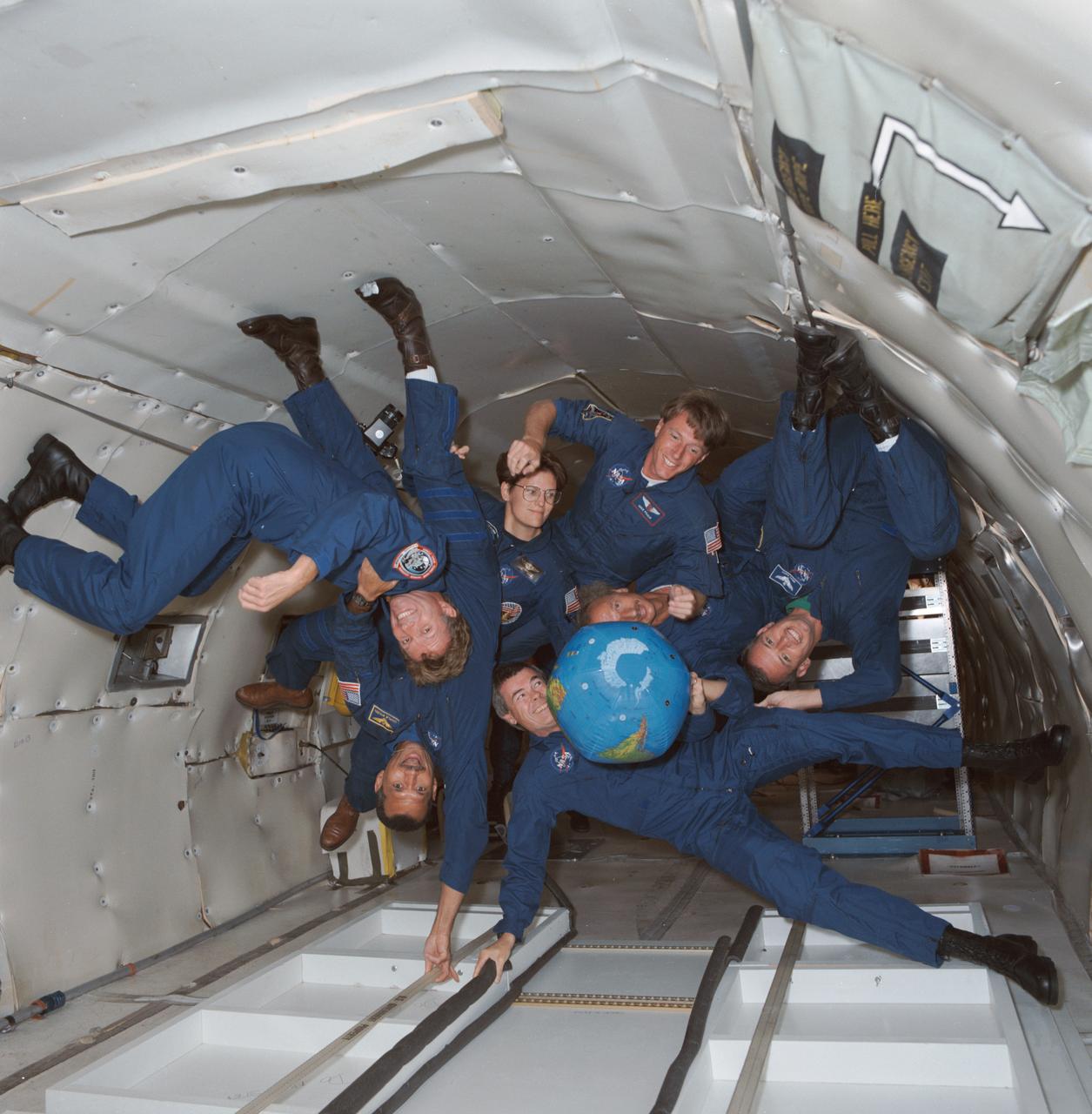
S91-44453 (21 Aug 1991) --- The crew of STS-45 is already training for its March 1992 mission, including stints on the KC-135 zero-gravity-simulating aircraft. Shown with an inflatable globe are, clockwise from the top, C. Michael Foale, mission specialist; Dirk Frimout, payload specialist; Brian Duffy, pilot; Charles R. (Rick) Chappell, backup payload specialist; Charles F. Bolden, mission commander; Byron K. Lichtenberg, payload specialist; and Kathryn D. Sullivan, payload commander.
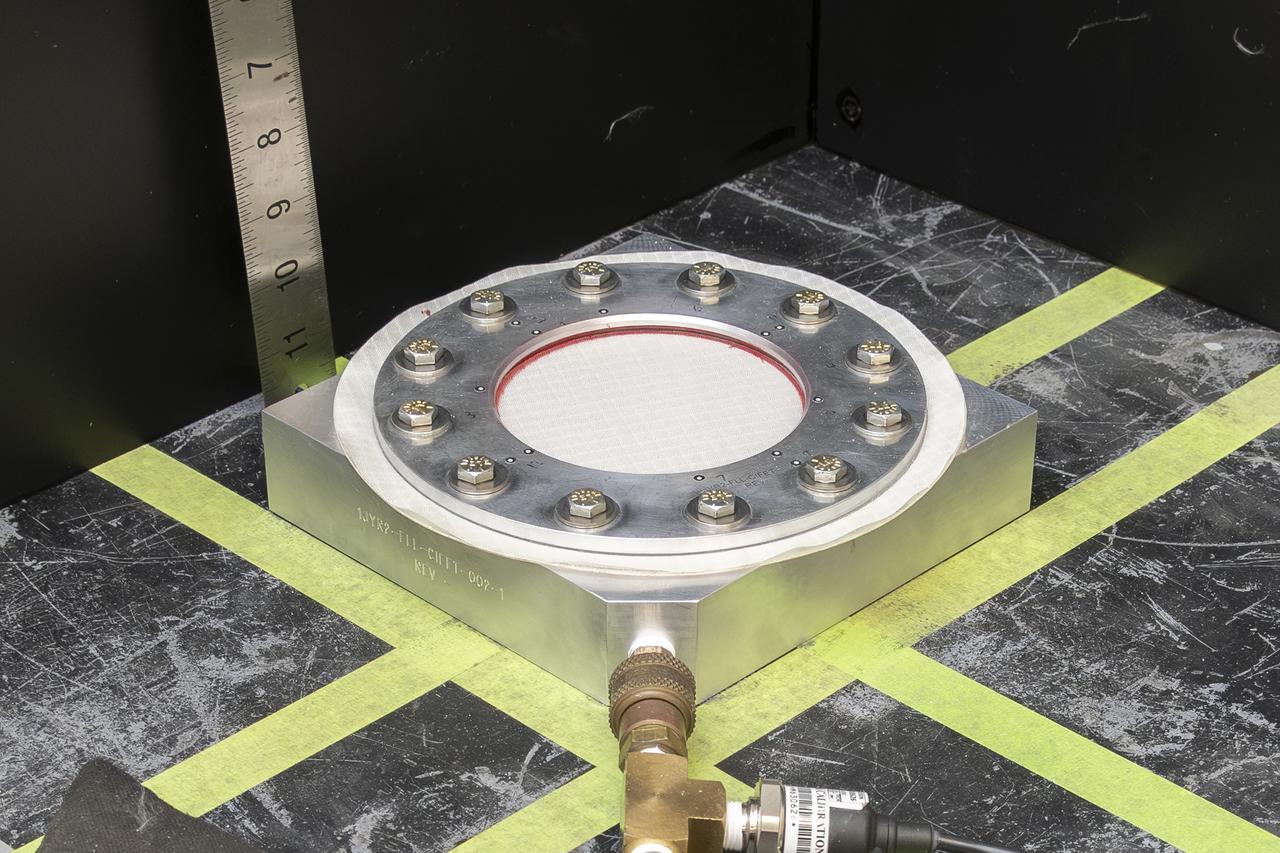
The test team prepares a test fixture with a nylon fabric sample at NASA’s Armstrong Flight Research Center in Edwards, California. The fabric in the test fixture forms a bubble when pressure is applied to the silicone bladder underneath. A similar test can be performed with a sensor on the fabric to verify the sensor will work when stretched in three dimensions.
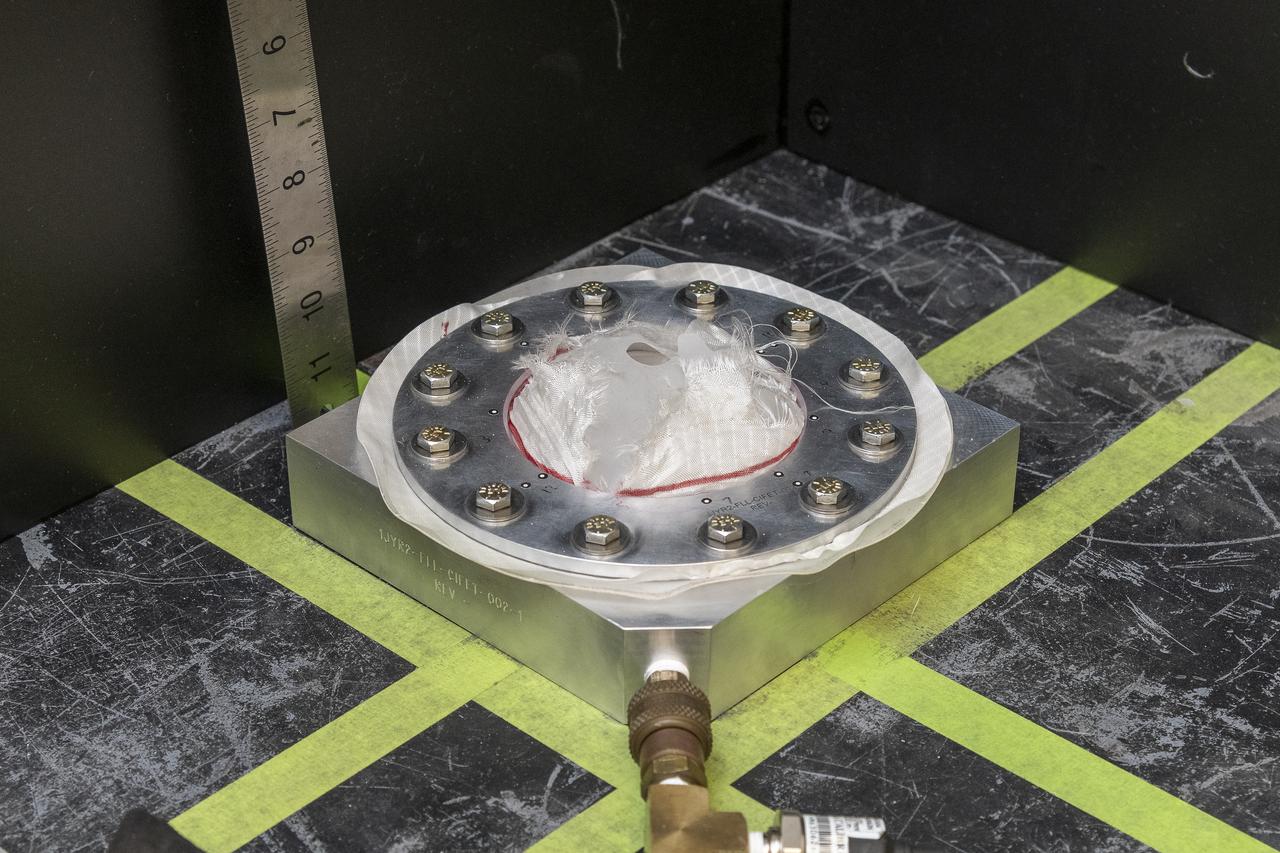
Pressure is applied to a test fixture with a nylon fabric sample until it fails at NASA’s Armstrong Flight Research Center in Edwards, California. The fabric in the test fixture forms a bubble when pressure is applied to the silicone bladder underneath. In this frame, the silicone bladder is visible underneath the torn fabric after it was inflated to failure. A similar test can be performed with a sensor on the fabric to verify the sensor will work when stretched in three dimensions.
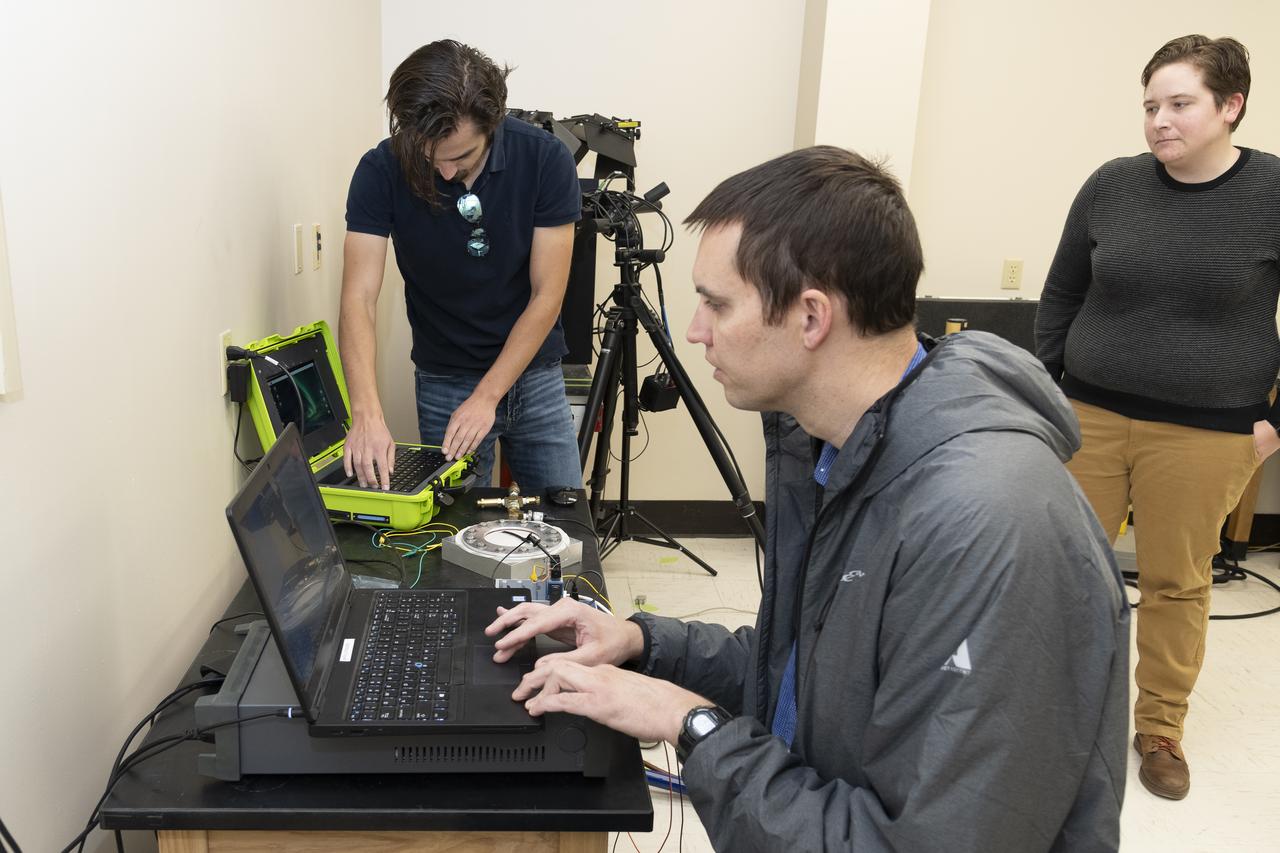
Coby Asselin, from left, Adam Curry, and L. J. Hantsche set up the data acquisition systems used during testing of a senor to determine parachute canopy material strength at NASA’s Armstrong Flight Research Center in Edwards, California. The sensor tests seek to quantify the limits of the material to improve computer models and make more reliable supersonic parachutes.
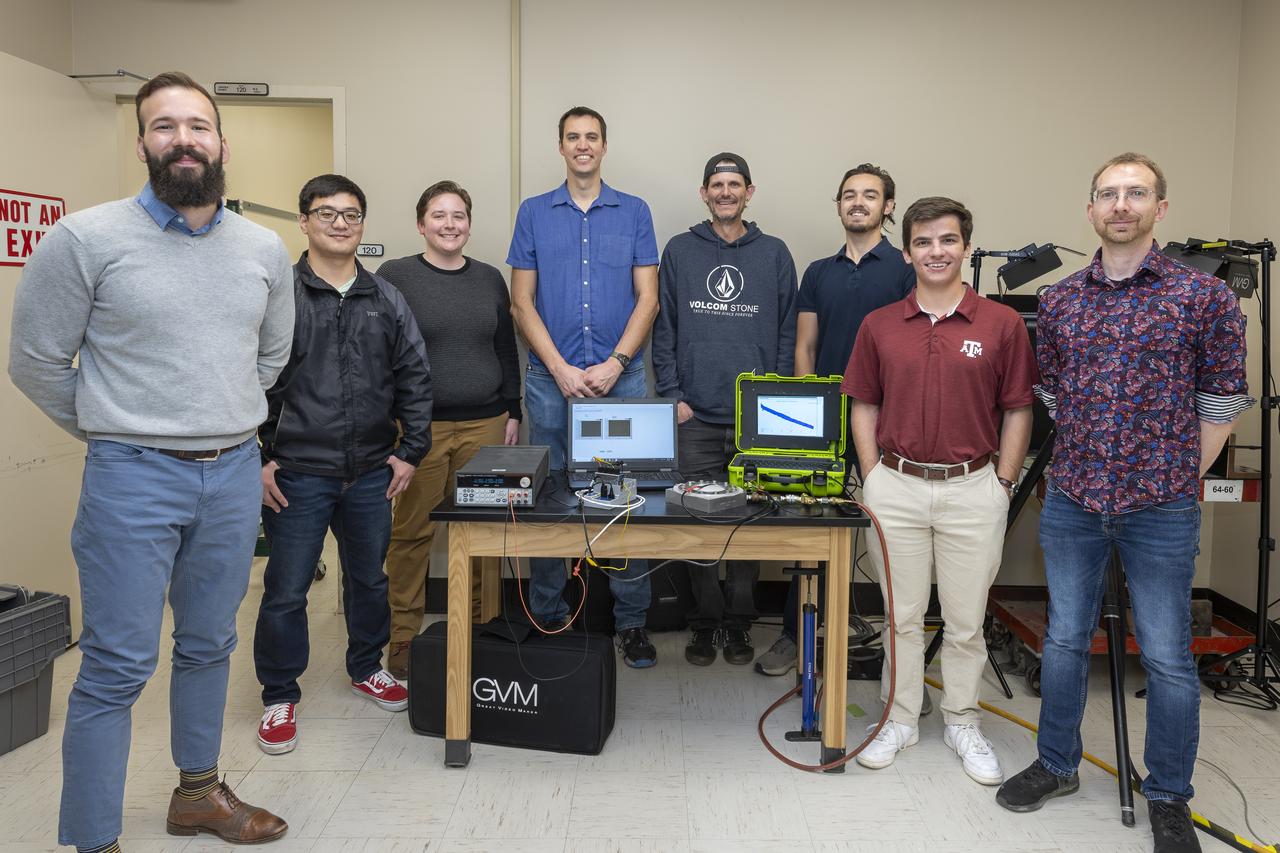
Erick Rossi De La Fuente, from left, John Rudy, L. J. Hantsche, Adam Curry, Jeff Howell, Coby Asselin, Benjamin Mayeux, and Paul Bean pose with a test fixture, material, sensor, and data acquisition systems at NASA’s Armstrong Flight Research Center in Edwards, California. The sensor tests seek to quantify the limits of the material to improve computer models and make more reliable supersonic parachutes.