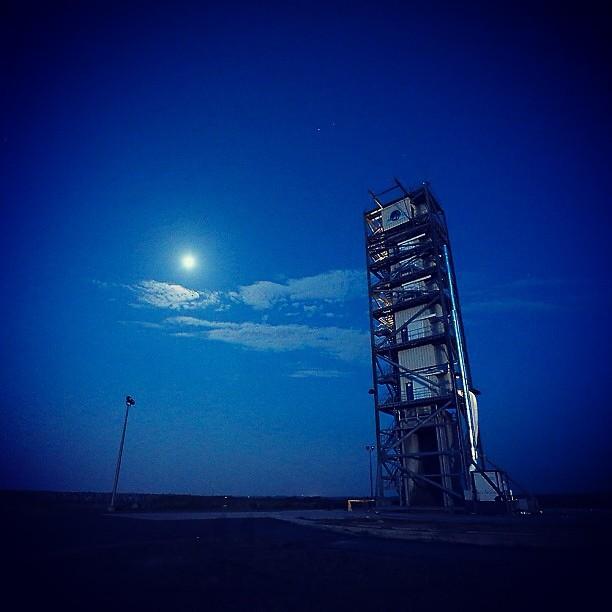
This image shows an evening view gantry at Pad 0B at the Mid-Atlantic Regional Spaceport, at NASA's Wallops Flight Facility in Wallops Island, Va., on Sept. 4, 2013. In this photograph, the gantry surrounds the Minotaur V rocket that will launch NASA LADEE. The gantry is now removed and the Minotaur is getting ready to launch LADEE at 11:27 p.m. EDT tonight. Image credit: NASA Wallops/Patrick Black
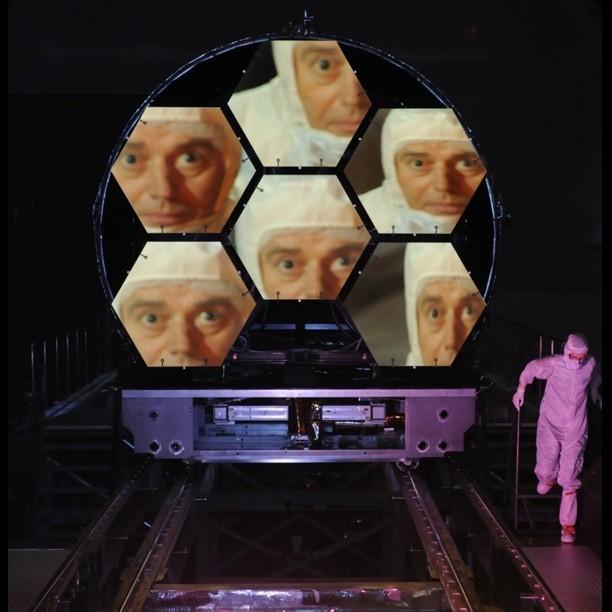
Project scientist Mark Clampin is reflected in the flight mirrors of the Webb Space Telescope at Marshall Space Flight Center. Portions of the Webb telescope are being built at NASA Goddard. Credit: Ball Aerospace/NASA <b><a href="http://www.nasa.gov/centers/goddard/home/index.html" rel="nofollow">NASA Goddard Space Flight Center</a></b> enables NASA’s mission through four scientific endeavors: Earth Science, Heliophysics, Solar System Exploration, and Astrophysics. Goddard plays a leading role in NASA’s accomplishments by contributing compelling scientific knowledge to advance the Agency’s mission. <b>Follow us on <a href="http://twitter.com/NASA_GoddardPix" rel="nofollow">Twitter</a></b> <b>Join us on <a href="http://www.facebook.com/pages/Greenbelt-MD/NASA-Goddard/395013845897?ref=tsd" rel="nofollow">Facebook</a></b> <b>Find us on <a href="http://instagr.am/p/E_05l/" rel="nofollow">Instagram</a></b>

President Obama has named six NASA individuals as recipients of the 2011 Presidential Early Career Award for Scientists and Engineers (PECASE). Temilola "Lola" Fatoyinbo-Agueh, an environmental scientist from NASA's Goddard Space Flight Center, Greenbelt, Md. was one of the recipients. The PECASE awards represent the highest honor bestowed by the U.S. government on scientists and engineers beginning their independent careers. They recognize recipients' exceptional potential for leadership at the frontiers of scientific knowledge, and their commitment to community service as demonstrated through professional leadership, education or community outreach. To read more go to: <a href="http://www.nasa.gov/centers/goddard/news/releases/2012/12-064.html" rel="nofollow">www.nasa.gov/centers/goddard/news/releases/2012/12-064.html</a> Credit: NASA/GSFC/Chris Gunn <b><a href="http://www.nasa.gov/audience/formedia/features/MP_Photo_Guidelines.html" rel="nofollow">NASA image use policy.</a></b> <b><a href="http://www.nasa.gov/centers/goddard/home/index.html" rel="nofollow">NASA Goddard Space Flight Center</a></b> enables NASA’s mission through four scientific endeavors: Earth Science, Heliophysics, Solar System Exploration, and Astrophysics. Goddard plays a leading role in NASA’s accomplishments by contributing compelling scientific knowledge to advance the Agency’s mission. <b>Follow us on <a href="http://twitter.com/NASA_GoddardPix" rel="nofollow">Twitter</a></b> <b>Like us on <a href="http://www.facebook.com/pages/Greenbelt-MD/NASA-Goddard/395013845897?ref=tsd" rel="nofollow">Facebook</a></b> <b>Find us on <a href="http://instagram.com/nasagoddard?vm=grid" rel="nofollow">Instagram</a></b>

<b>Share YOUR Supermoon images with NASA in our Flickr Group: <a href="http://www.flickr.com/groups/supermoon2013/">www.flickr.com/groups/supermoon2013/</a></b> Up there in the sky – it's not a bird or a plane; it's a "Supermoon." Bigger and brighter then normal full moons, the supermoon on June 22/23 will be the closest and largest full moon for all of 2013. The moon will be some 29,000 miles closer to Earth than the farthest point in its orbit, but not to worry the moon will still be more than 221,000 miles away from our blue planet. --- This is an animation of the moon that was created using data from NASA's LRO satellite. Details: Time: Sunday, June 23, 2013, 15:00 UT (11:00 AM EDT) Phase: 99.9% Diameter:2007.5 arcseconds Distance:357015 km (28.02 Earth diameters) J2000 Right Ascension, Declination18h 17m 42s, -19° 31' 35" Subsolar Longitude, Latitude-1.905°, -1.129° Sub-Earth Longitude, Latitude0.093°, -5.002° Position Angle:359.213° Credit: NASA/Goddard/LRO More images and animarions of the moon can be found here: <a href="http://1.usa.gov/14bPRjT" rel="nofollow">1.usa.gov/14bPRjT</a> <b><a href="http://www.nasa.gov/audience/formedia/features/MP_Photo_Guidelines.html" rel="nofollow">NASA image use policy.</a></b> <b><a href="http://www.nasa.gov/centers/goddard/home/index.html" rel="nofollow">NASA Goddard Space Flight Center</a></b> enables NASA’s mission through four scientific endeavors: Earth Science, Heliophysics, Solar System Exploration, and Astrophysics. Goddard plays a leading role in NASA’s accomplishments by contributing compelling scientific knowledge to advance the Agency’s mission. <b>Follow us on <a href="http://twitter.com/NASA_GoddardPix" rel="nofollow">Twitter</a></b> <b>Like us on <a href="http://www.facebook.com/pages/Greenbelt-MD/NASA-Goddard/395013845897?ref=tsd" rel="nofollow">Facebook</a></b> <b>Find us on <a href="http://instagram.com/nasagoddard?vm=grid" rel="nofollow">Instagram</a></b>
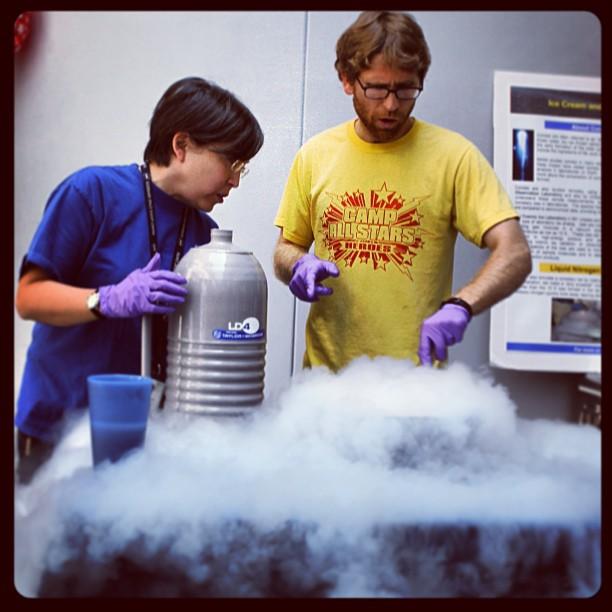
Pictured above, Goddard's astrobiology lab makes cookies and cream ice cream using liquid nitrogen at the Science Jamboree. The NASA Goddard Science Jamboree took place on July 16, 2013. The event allowed the different departments at Goddard a chance to showcase their research and projects to other employees and summer interns. #nasa #nasagoddard #icecream Credit: NASA/Goddard Sawyer Rosenstein
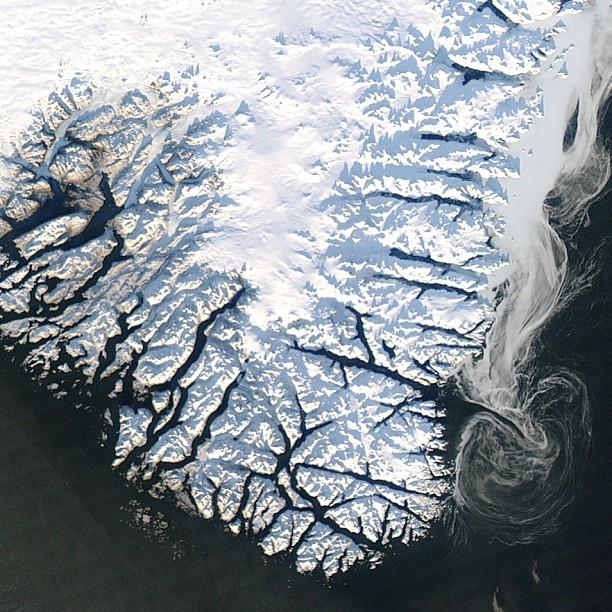
NASA's Global Precipitation Measurement (GPM) mission wants to see your best photos of winter weather! You can submit your images to the contest here: <a href="http://www.flickr.com/groups/gpm-extreme-weather/">www.flickr.com/groups/gpm-extreme-weather/</a> To read more about this image and or to see the high res file go to: <a href="http://earthobservatory.nasa.gov/IOTD/view.php?id=80082" rel="nofollow">earthobservatory.nasa.gov/IOTD/view.php?id=80082</a>
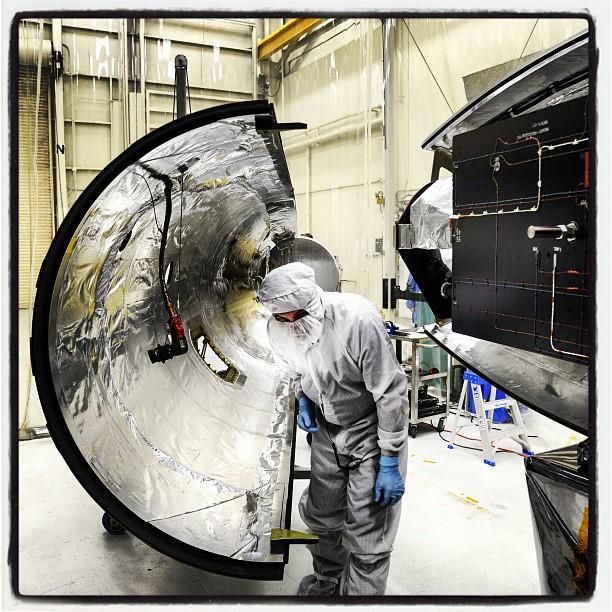
Orbital Sciences team members move the second half of the payload fairing before it is placed over NASA's IRIS (Interface Region Imaging Spectrograph) spacecraft. The fairing connects to the nose of the Orbital Sciences Pegasus XL rocket that will lift the solar observatory into orbit. The work is taking place in a hangar at Vandenberg Air Force Base, where IRIS is being prepared for launch on a Pegasus XL rocket. Scheduled for launch from Vandenberg on June 26, 2013, IRIS will open a new window of discovery by tracing the flow of energy and plasma through the chromospheres and transition region into the sun's corona using spectrometry and imaging. IRIS fills a crucial gap in our ability to advance studies of the sun-to-Earth connection by tracing the flow of energy and plasma through the foundation of the corona and the region around the sun known as the heliosphere. High res file available here: <a href="http://1.usa.gov/11yal3w" rel="nofollow">1.usa.gov/11yal3w</a> Photo Credit: NASA/Tony Vauclin <b><a href="http://www.nasa.gov/audience/formedia/features/MP_Photo_Guidelines.html" rel="nofollow">NASA image use policy.</a></b> <b><a href="http://www.nasa.gov/centers/goddard/home/index.html" rel="nofollow">NASA Goddard Space Flight Center</a></b> enables NASA’s mission through four scientific endeavors: Earth Science, Heliophysics, Solar System Exploration, and Astrophysics. Goddard plays a leading role in NASA’s accomplishments by contributing compelling scientific knowledge to advance the Agency’s mission. <b>Follow us on <a href="http://twitter.com/NASA_GoddardPix" rel="nofollow">Twitter</a></b> <b>Like us on <a href="http://www.facebook.com/pages/Greenbelt-MD/NASA-Goddard/395013845897?ref=tsd" rel="nofollow">Facebook</a></b> <b>Find us on <a href="http://instagram.com/nasagoddard?vm=grid" rel="nofollow">Instagram</a></b>