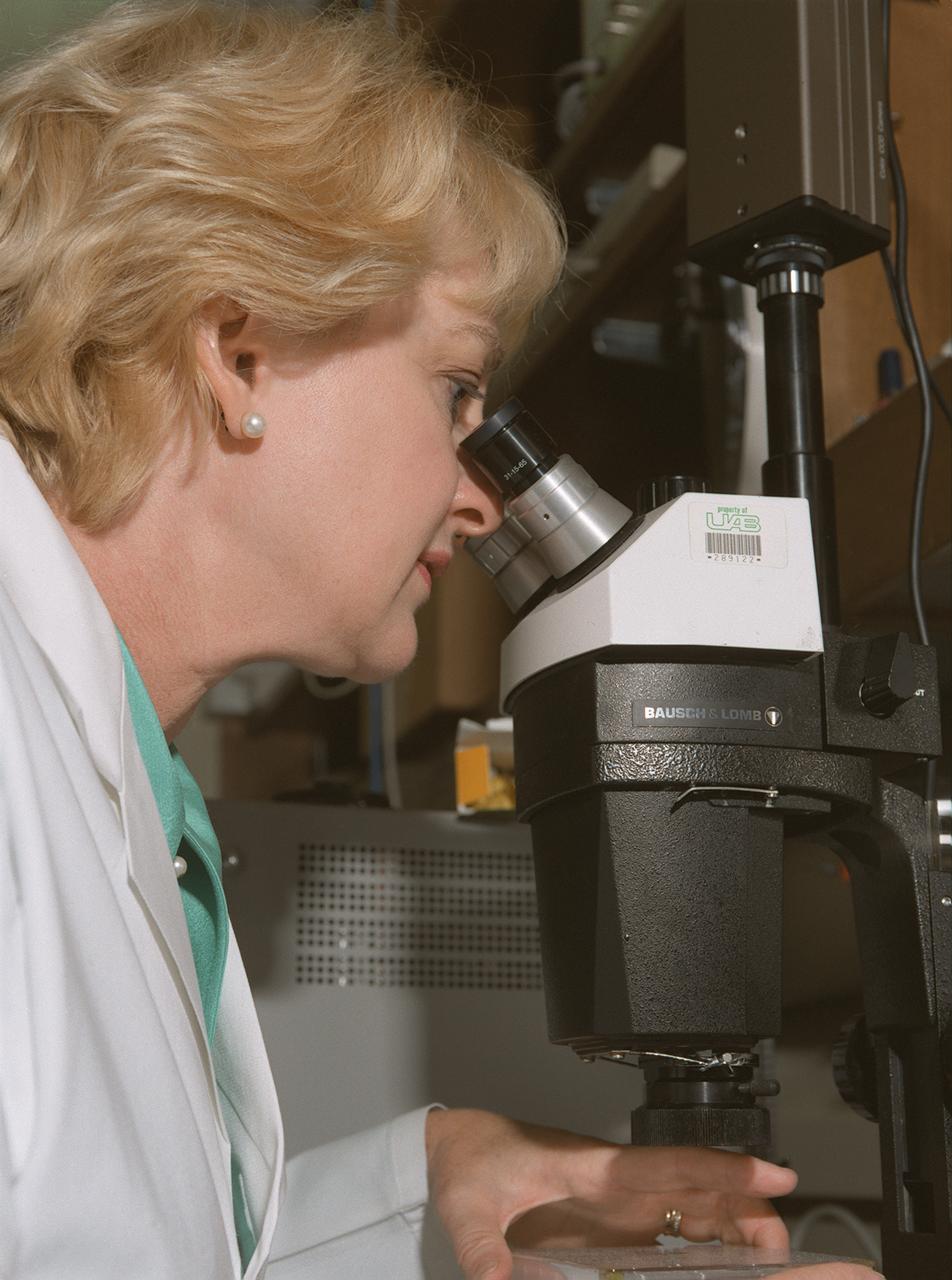
Diabetic patients may someday reduce their insulin injections and lead more normal lives because of new insights gained through irnovative space research in which insulin crystals were grown on the Space Shuttle. Results from a 1994 insulin crystal growth experiment in space are leading to a new understanding of protein insulin. Lack of insulin is the cause of diabetes, a desease that accounts for one-seventh of the nation's health care costs. Dr. Marianna Long, associate director of the Center of Macromolecular Crystallography at the University of Alabama at Birmingham, is a co-investigator on the research. Photo credit: NASA/Marshall Space Flight Center (MSFC)
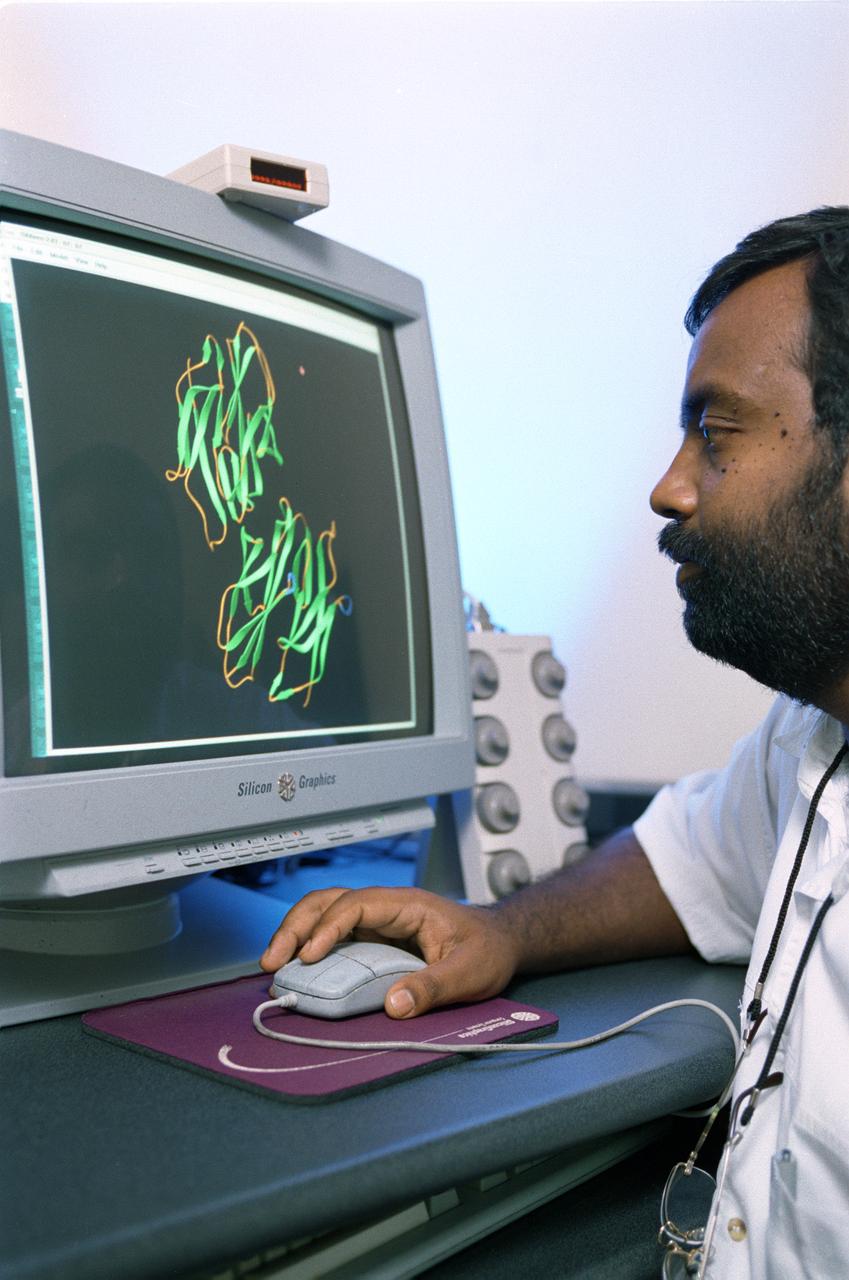
Diabetic patients may someday reduce their insulin injections and lead more normal lives because of new insights gained through innovative space research in which insulin crystals were grown on the Space Shuttle. Results from a 1994 insulin crystals growth experiment in space are leading to a new understanding of protein insulin. Lack of insulin is the cause of diabetes, a disease that accounts for one-seventh of the nation's health care costs. Champion Deivanaygam, a researcher at the Center for Macromolecular Crystallography at the University of Alabama in Birmingham, assists in this work. Photo credit: NASA/Marshall Space Flight Center (MSFC)
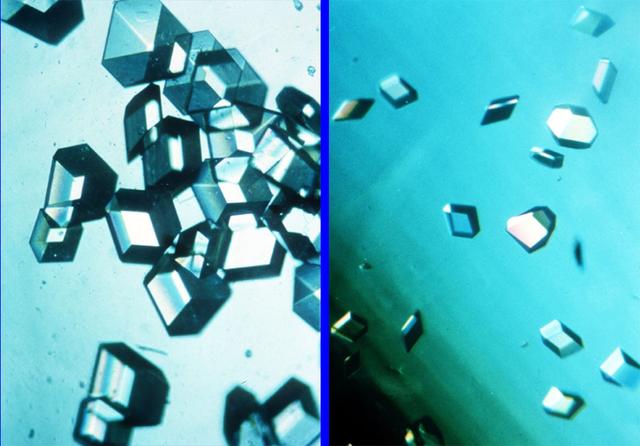
The comparison of protein crystal, Recombiant Human Insulin; space-grown (left) and earth-grown (right). On STS-60, Spacehab II indicated that space-grown crystals are larger and of greater optical clarity than their earth-grown counterparts. Recombiant Human Insulin facilitates the incorporation of glucose into cells. In diabetics, there is either a decrease in or complete lack of insulin, thereby leading to several harmful complications. Principal Investigator is Larry DeLucas.
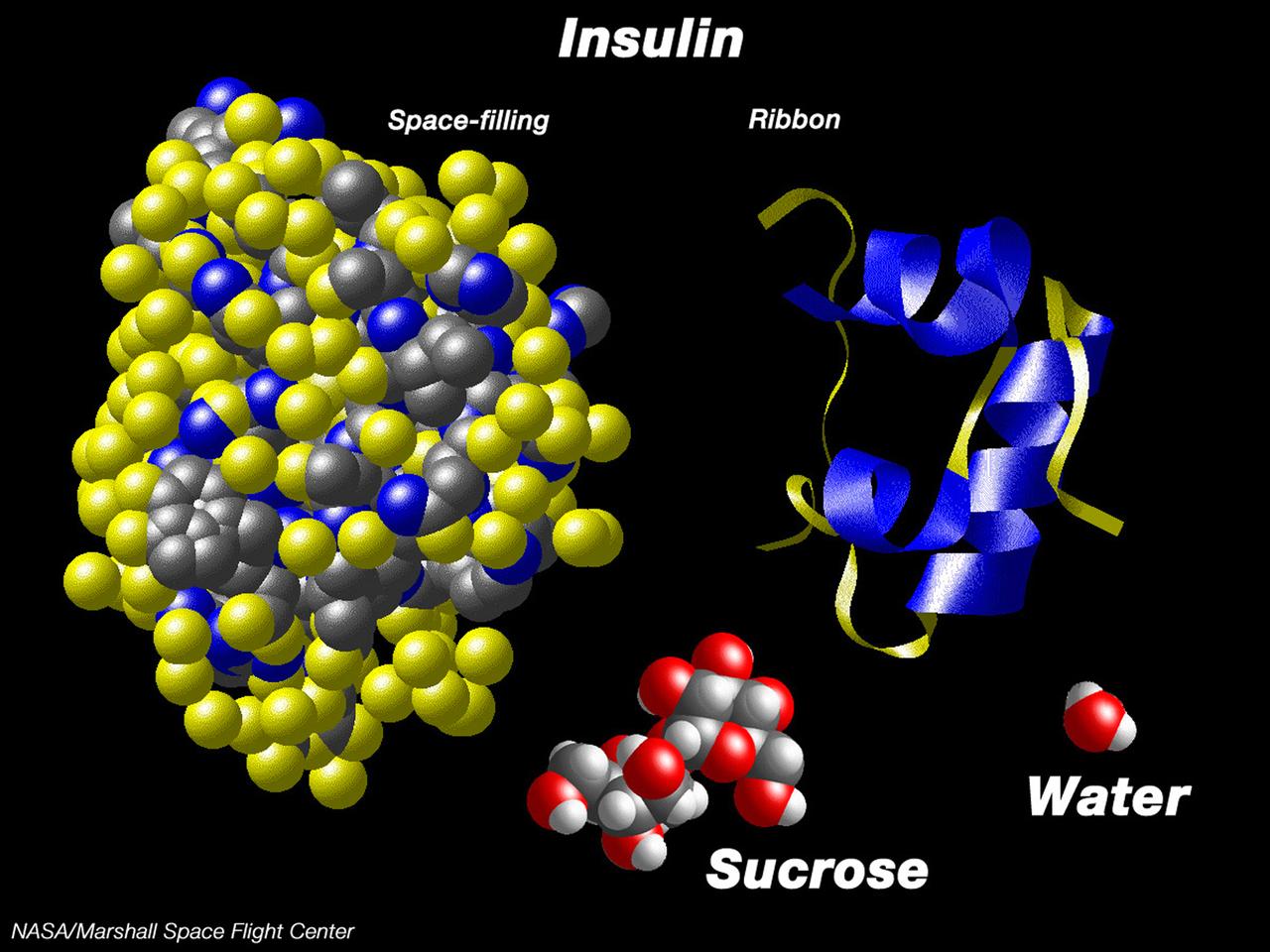
This computer graphic depicts the relative complexity of crystallizing large proteins in order to study their structures through x-ray crystallography. Insulin is a vital protein whose structure has several subtle points that scientists are still trying to determine. Large molecules such as insuline are complex with structures that are comparatively difficult to understand. For comparison, a sugar molecule (which many people have grown as hard crystals in science glass) and a water molecule are shown. These images were produced with the Macmolecule program. Photo credit: NASA/Marshall Space Flight Center (MSFC)
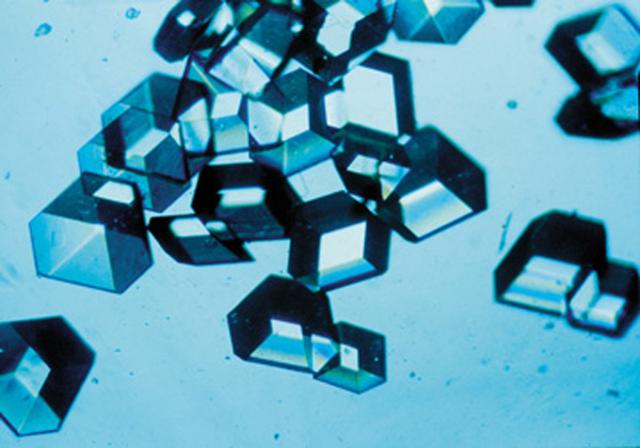
The manipulation of organic materials--cells, tissues, and even living organisms--offers many exciting possibilities for the future from organic computers to improved aquaculture. Commercial researchers are using the microgravity environment to produce large near perfect protein crystals Research on insulin has yielded crystals that far surpass the quality of insulin crystals grown on the ground. Using these crystals industry partners are working to develop new and improved treatments for diabetes. Other researchers are exploring the possibility of producing antibiotics using plant cell cultures which could lead to both orbital production and the improvement of ground-based antibiotic production.
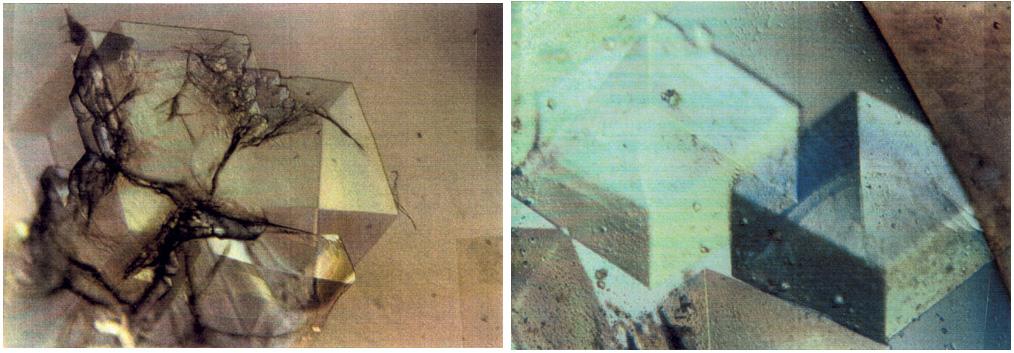
Proteins are the building blocks of our bodies and the living world around us. Within our bodies proteins make it possible for red blood cells to carry oxygen throughout the body. Others help transmit nerve impulses so we can hear, smell and feel the world around us. While others play a crucial role in preventing or causing disease. If the structure of a protein is known, then companies can develop new or improved drugs to fight the disease of which the protein is a part. To determine protein structure, researchers must grow near-perfect crystals of the protein. On Earth convection currents, sedimentation and other gravity-induced phenomena hamper crystal growth efforts. In microgravity researchers can grow near-perfect crystals in an environment free of these effects. Because of the enormous potential for new pharmaceutical products the Center for Macromolecular Crystallography--the NASA Commercial Space Center responsible for commercial protein crystal growth efforts has more than fifty major industry and academic partners. Research on crystals of human insulin could lead to improved treatments for diabetes.
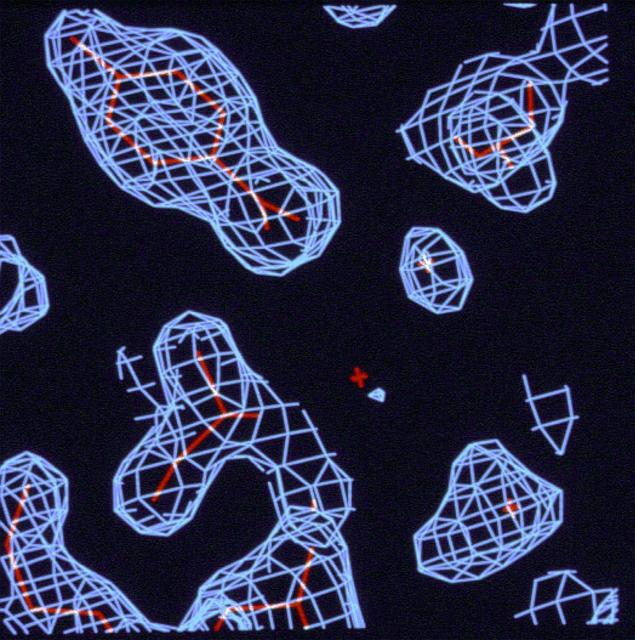
Like many chemicals in the body, the three-dimensional structure of insulin is extremely complex. When grown on the ground, insulin crystals do not grow as large or as ordered as researchers desire--obscuring the blueprint of the insulin molecules.
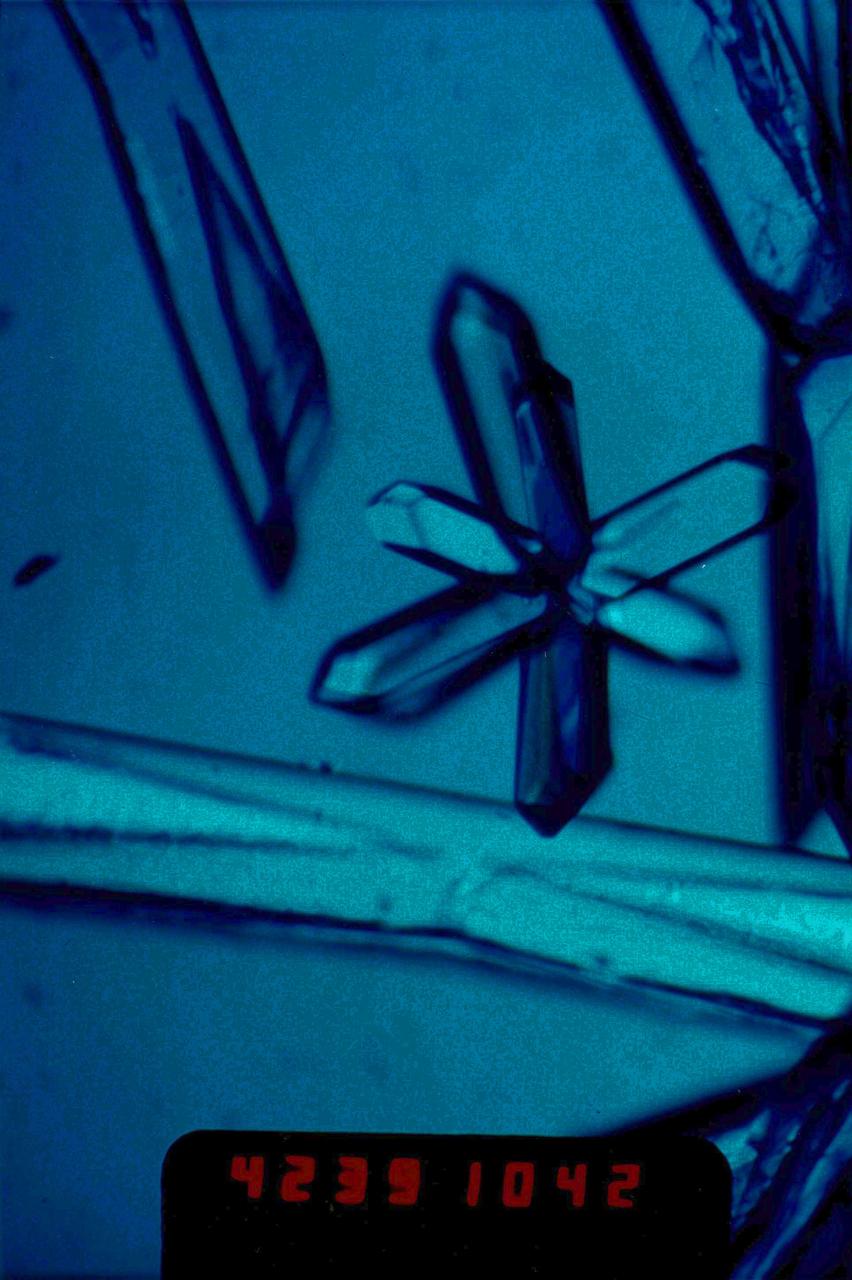
Facilitates the incorporation of glucose into cells. In diabetics, there is either a decrease in or complete lack of insulin, therby leading to several harmful complications. Principal Investigator was Charles Bugg.
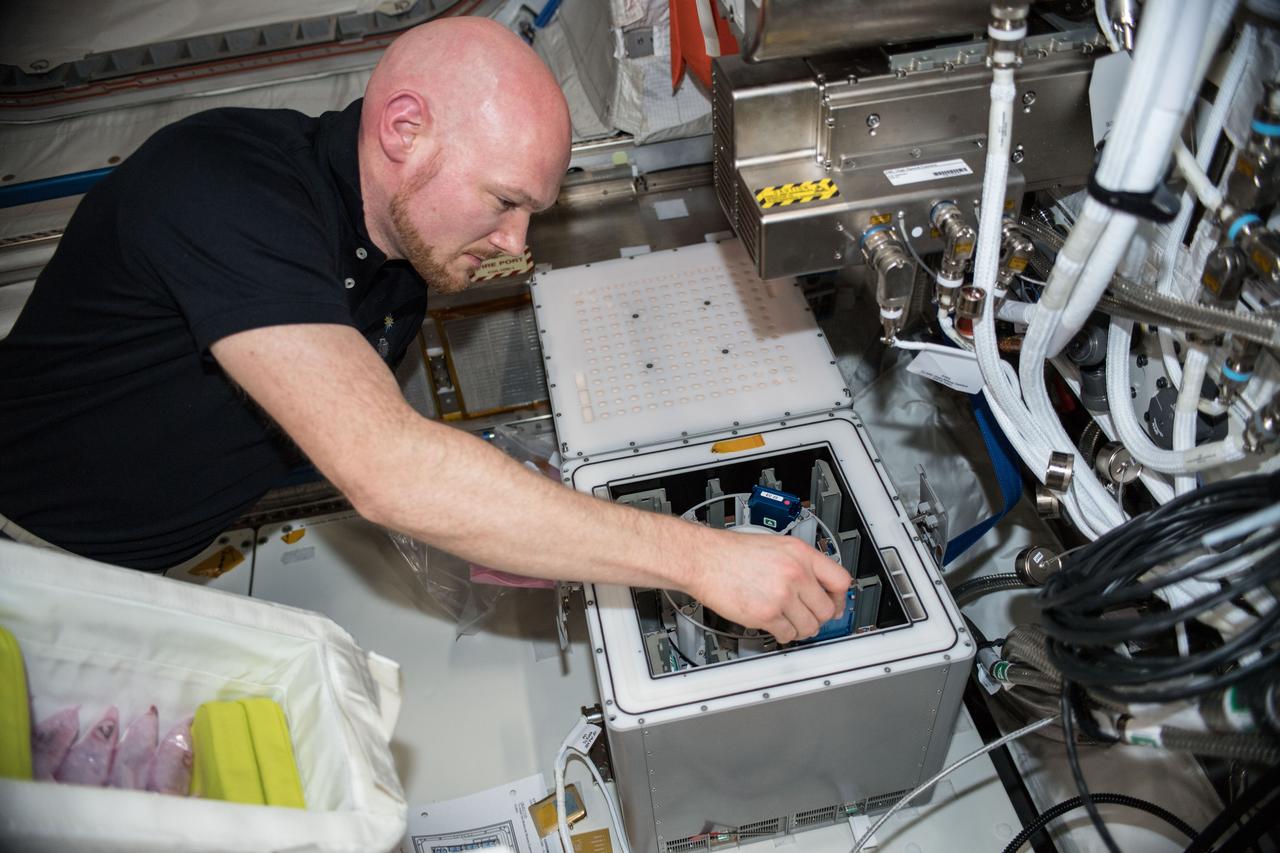
iss057e114873 (12/9/2018) --- A view of European Space Agency (ESA) astronaut Alexander Gerst placing the experiment canisters for the Molecular Muscle investigation into the Kubik incubator located on the Columbus module. The Molecular Muscle investigation examines the molecular causes of muscle abnormalities during spaceflight in order to establish effective countermeasures. Using the validated model organism C. elegans, combined with flight-validated methodologies, this experiment targets the molecular alterations that are most consistently correlated with muscular and metabolic abnormalities across species in spaceflight (i.e. insulin- and attachment-mediated signaling). The success of the interventions in recovering muscle health is assessed by successfully preventing the gene and protein expression changes that are repeatedly observed in spaceflight.
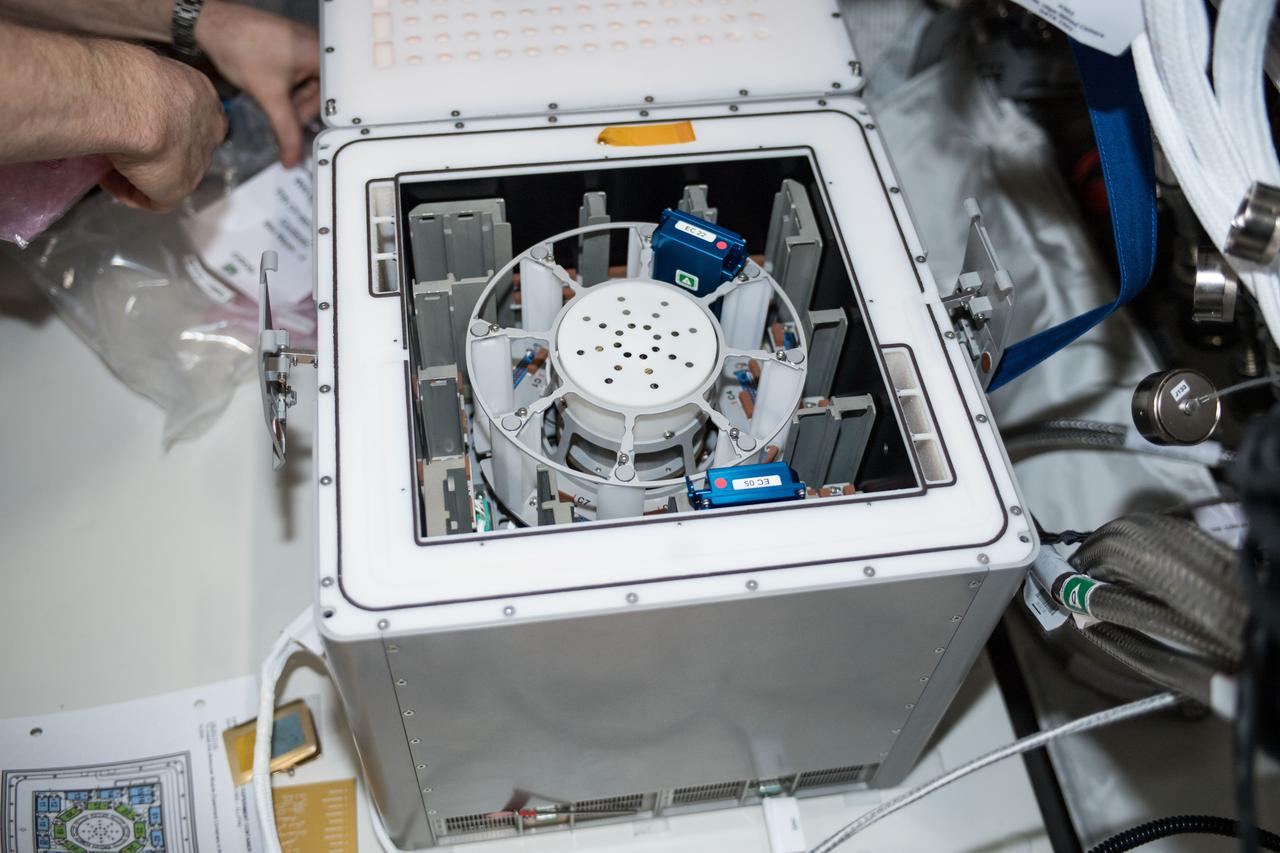
iss057e114874 (12/9/2018) --- A view of the Kubik incubator containing the experiment canisters for the Molecular Muscle investigation. The Molecular Muscle investigation examines the molecular causes of muscle abnormalities during spaceflight in order to establish effective countermeasures. Using the validated model organism C. elegans, combined with flight-validated methodologies, this experiment targets the molecular alterations that are most consistently correlated with muscular and metabolic abnormalities across species in spaceflight (i.e. insulin- and attachment-mediated signaling). The success of the interventions in recovering muscle health is assessed by successfully preventing the gene and protein expression changes that are repeatedly observed in spaceflight.
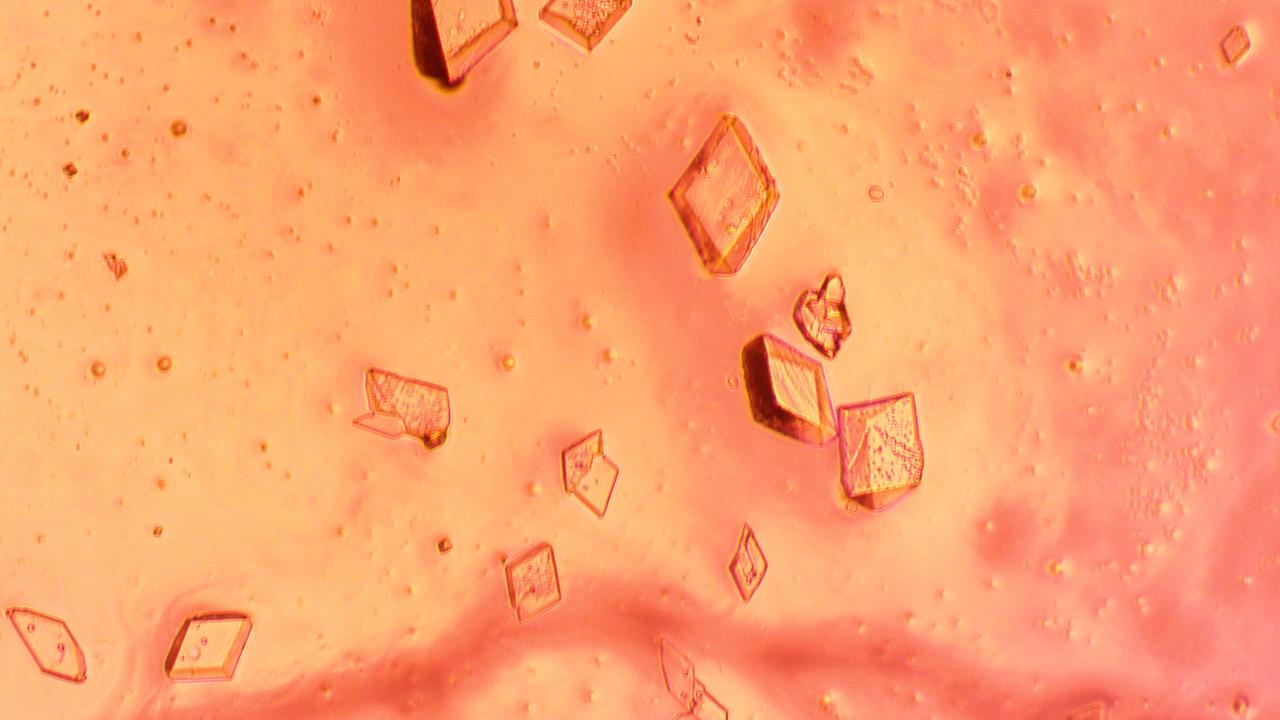
jsc2024e038396 (6/5/2024) --- Insulin crystals grown with Redwire's PIL-BOX aboard the International Space Station. This image was taken after the crystals returned to Earth in April 2024. This control compound helps the body convert food into energy and store it for later use. The ADSEP-PIL-02 investigation aims to study the effect of microgramInsulin crystals grown with Redwire's PIL-BOX aboard the International Space Station. This image was taken after the crystals returned to Earth in April 2024. This control compound helps the body convert food into energy and store it for later use. The In-Space Production Application – Pharmaceutical In-space Laboratory – 02 (InSPA-PIL-02) (ADSEP-PIL-02) investigation aims to study the effect of microgravity on the production of various types of crystals. Image courtesy of Redwire. on the production of various types of crystals. Image courtesy of Redwire.