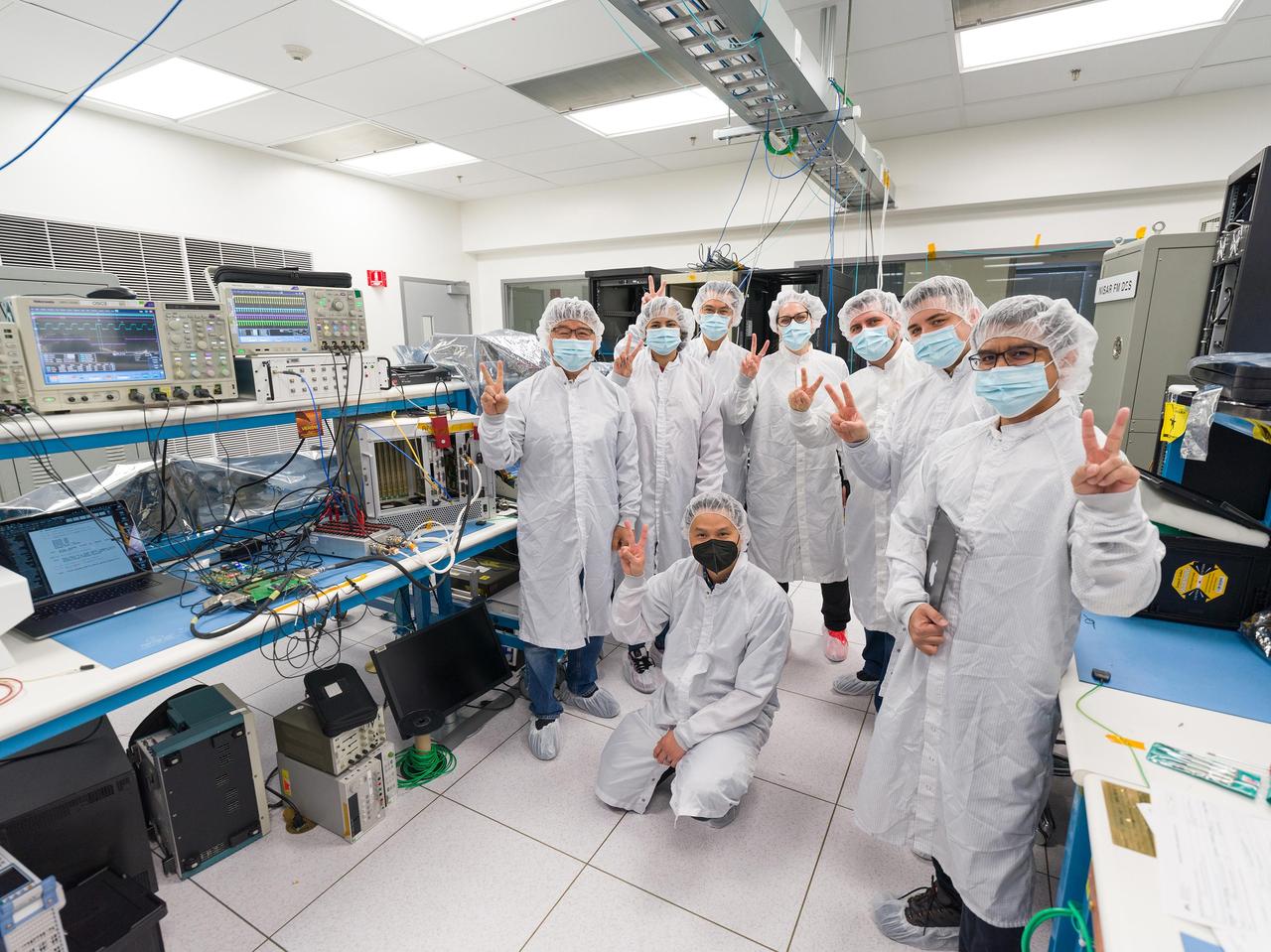
Seen here are members of the international team that participated in recent tests on prototype hardware for the Venus Interferometric Synthetic Aperture Radar (VISAR) at NASA's Jet Propulsion Laboratory in Southern California. VISAR is being developed at JPL for NASA's Venus Emissivity Radio Science, InSAR, Topography & Spectroscopy (VERITAS) mission that will launch within a decade to explore Earth's twin. In March 2023, the hardware underwent early interface tests in a JPL clean room, representing the first in a series to be run by JPL and Thales Alenia Space Italy (TASI), an international partner of the VERITAS mission that is contributing hardware to the instrument. Dressed in gowns to minimize the risk of contamination with sensitive electronics, the JPL VISAR digital team and TASI engineers pose for a photograph next to the laboratory benches where the tests took place. Figure A shows the same personnel without gowns for a team photo. From left to right: Marvin Cruz (JPL), Chester Lim (JPL), Tim Noh (JPL), Hana Haideri (JPL), Luca Di Marco Napini (TASI), Ernie Chuang (JPL), Dragana Perkovic-Martin (JPL), and Gabriel Mihu (TASI). JPL's Michael Burke, Anusha Yarlagadda, Duane Clark, and TASI's Antonio Delfino also participated in the tests but are not pictured. When VERITAS arrives in orbit, it will use VISAR to create detailed 3D global maps of Venus. The spacecraft will also carry a near-infrared spectrometer to figure out what the surface is made of. Together, the instruments will offer clues about the planet's past and present geologic processes, help reveal how the paths of Venus and Earth diverged, and how Venus lost its potential as a habitable world. VERITAS is managed by JPL. VERITAS and NASA's Deep Atmosphere Venus Investigation of Noble gases, Chemistry, and Imaging (DAVINCI) mission were selected in 2021 under NASA's Discovery Program as the agency's next missions to Venus. The Discovery Program is managed by the Planetary Missions Program Office at NASA's Marshall Space Flight Center in Huntsville, Alabama, for the Planetary Science Division of NASA's Science Mission Directorate in Washington. https://photojournal.jpl.nasa.gov/catalog/PIA25833
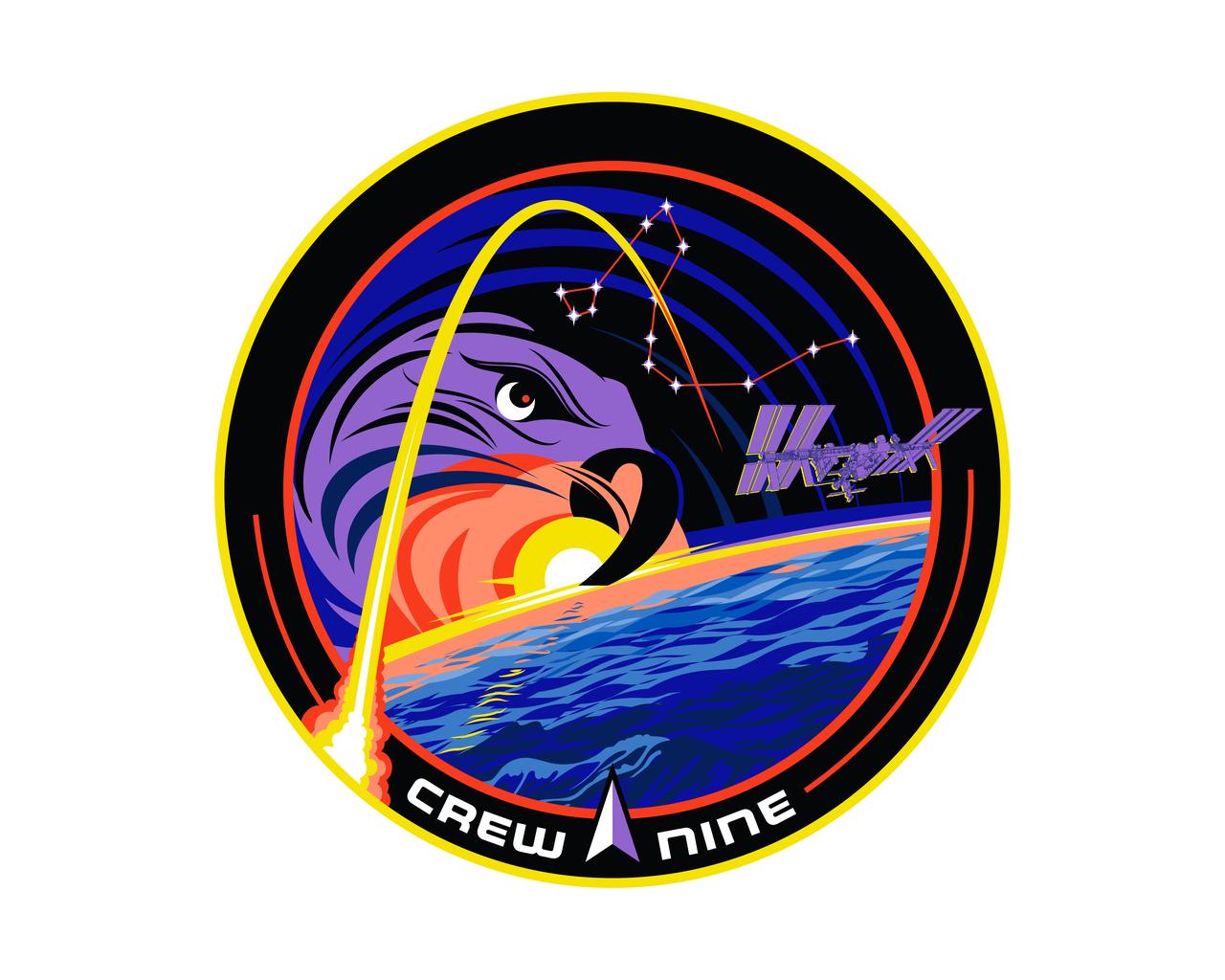
jsc2024e011322 (Jan. 28, 2024) --- The Crew-9 mission patch depicts the trail of a rocket launching en route to the International Space Station, which will be home for a long-duration expedition dedicated to service, science, and collaboration. Coastal waves are inspired by the historic Florida launch site, and on a larger scale represent our blue planet, the global ocean connecting all continents. A falcon, with the number nine as its beak and a crescent moon as its eye, is a nod to the Falcon 9 rocket, while the constellation Draco honors the Dragon spacecraft that will take Crew-9 to their destination. The Delta symbol, first used in 1961, evokes historic ties to the earliest days of space endeavors. Human exploration of space is built on international collaboration and depends on the support of multitudes across the globe whose efforts honor that heritage.
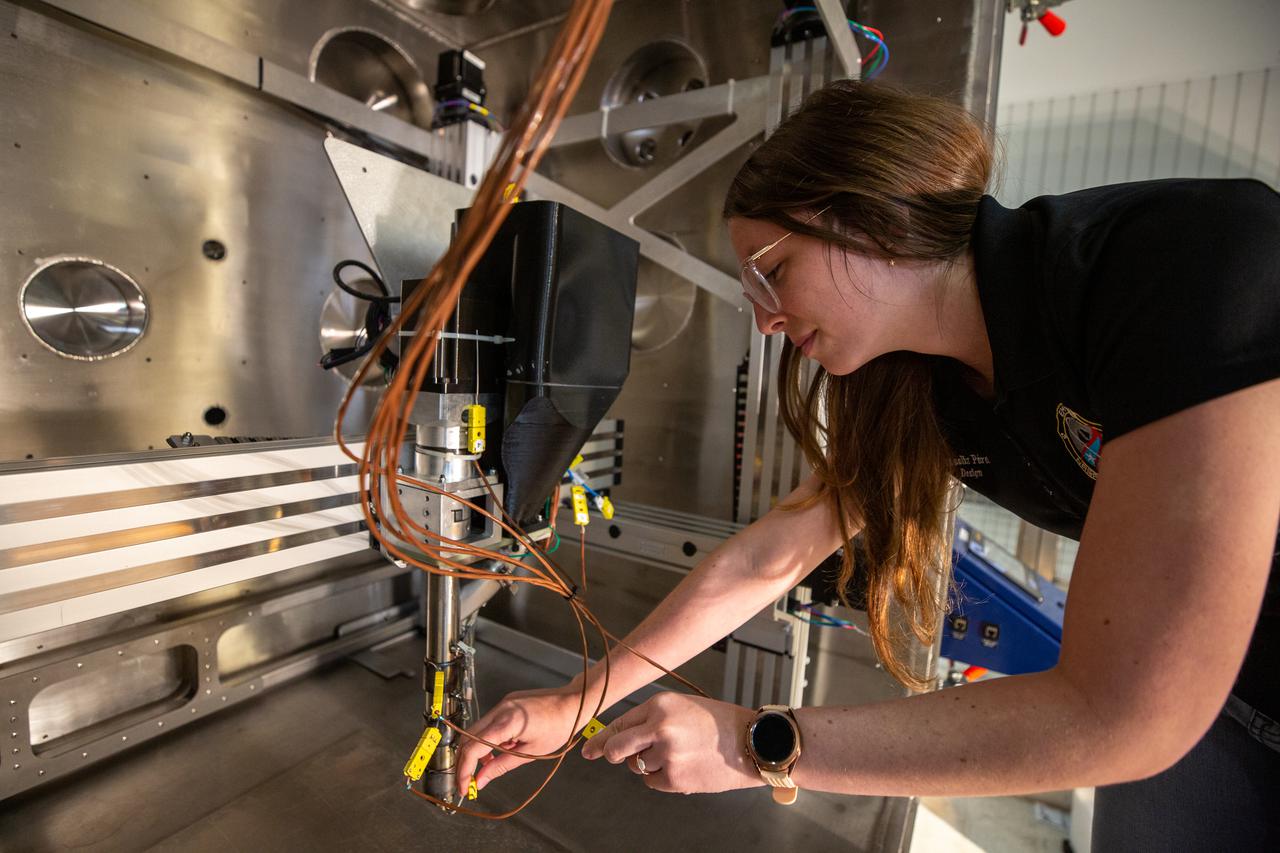
Joseliz Perez, a NASA intern at Kennedy Space Center in Florida, prepares a vacuum chamber for testing 3D printing inside the Granular Mechanics and Regolith Operations (GMRO) lab at the spaceport’s Swamp Works on April 5, 2022. The testing is part of the Relevant Environment Additive Construction Technology (REACT) project, which derives from NASA’s 2020 Announcement of Collaboration Opportunity, with AI SpaceFactory – an architectural and construction technology company and winner of NASA’s 3D Printed Habitat Challenge – collaborating with Kennedy teams to build 3D-printed test structures using a composite made from polymers and a regolith simulant in a vacuum chamber that mimics environmental conditions on the Moon.

UAE Assistant Minister of Foreign Affairs and International Cooperation for Advanced Science and Technology, Omran Sharaf, gives remarks during an event celebrating UAE-US collaboration in space, Friday, March 8, 2024, at the Four Seasons Hotel in Washington. Photo Credit: (NASA/Bill Ingalls)

NASA associate administrator for International and Interagency Relations Karen Feldstein, gives remarks during an event celebrating UAE-US collaboration in space, Friday, March 8, 2024, at the Four Seasons Hotel in Washington. Photo Credit: (NASA/Bill Ingalls)

An example of collaboration between NASA and the FAA, at NASA’s air traffic management laboratory near the Dallas/Ft. Worth International Airport in Texas, researchers Al Capps (seated) and Paul Borchers demonstrate tools that air traffic managers have been successfully testing since 2017 at the Charlotte Douglas International Airport in North Carolina to more efficiently direct departing traffic.
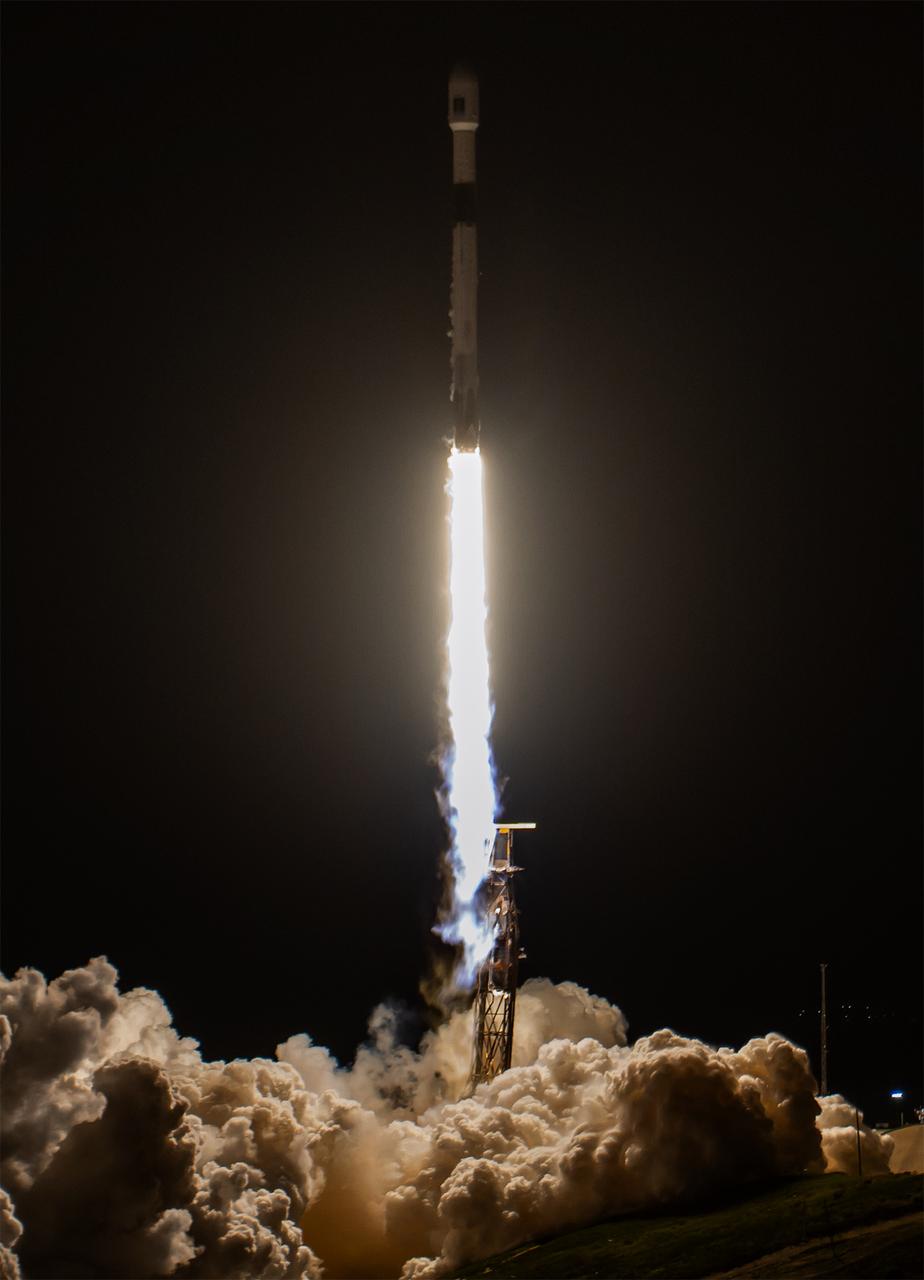
A SpaceX Falcon 9 rocket carrying the international Sentinel-6B spacecraft lifts off from Space Launch Complex 4 East at Vandenberg Space Force Base in California at 9:21 p.m. PST Sunday, Nov. 16, 2025. A collaboration between NASA, ESA (European Space Agency), EUMETSAT (European Organisation for the Exploitation of Meteorological Satellites), and the National Oceanic and Atmospheric Administration (NOAA), Sentinel-6B is designed to measure sea levels down to roughly an inch for about 90% of the world’s oceans.
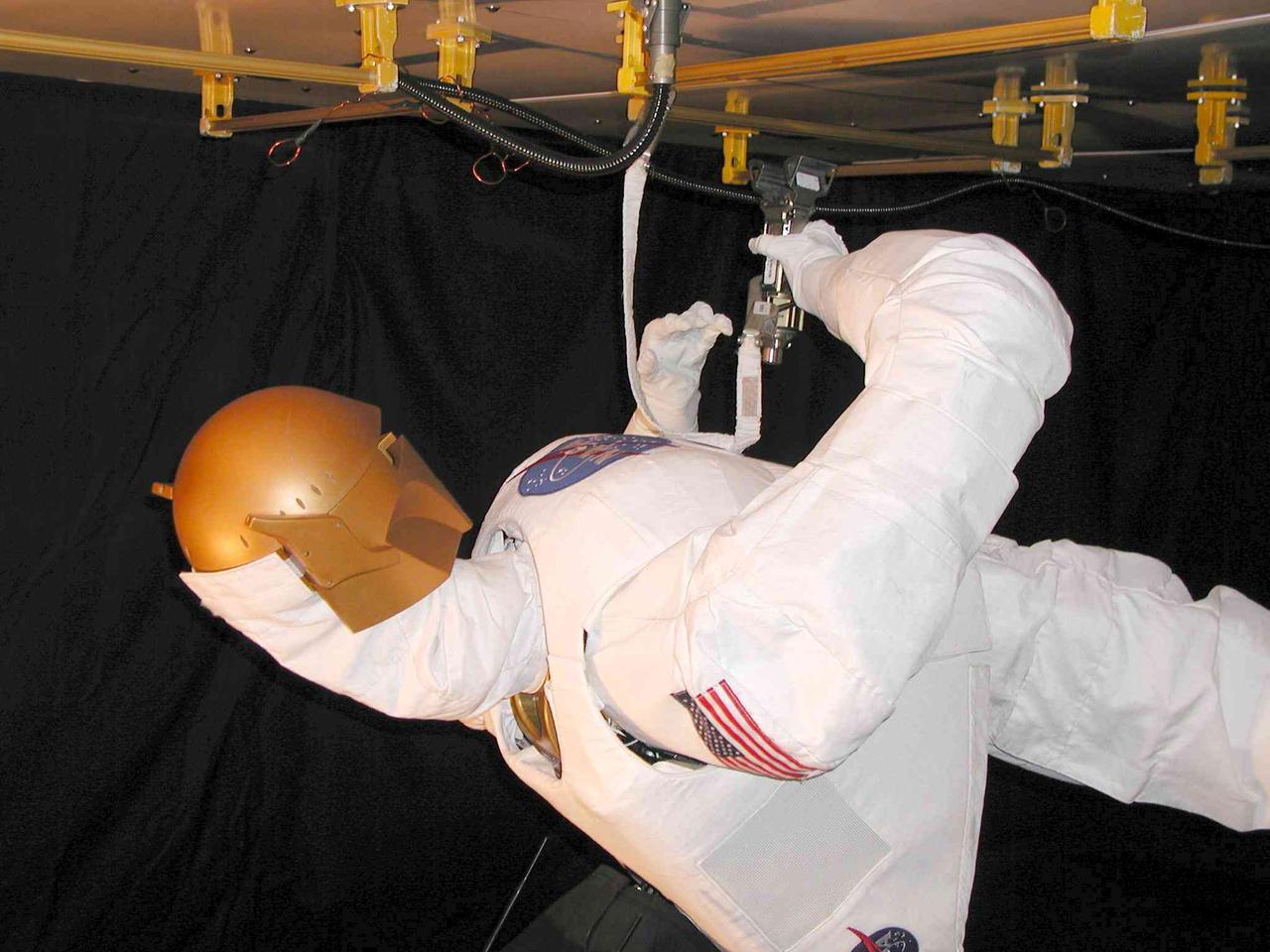
JSC2004-E-16341 (March 2004) --- Robonaut uses a standard human spacewalk tether to connect itself to an International Space Station (ISS) exterior handrail on the test panel. The Robonaut Project is a collaborative effort with the Defense Advanced Research Projects Agency (DARPA), and has been under development at Johnson Space Center (JSC) for several years.
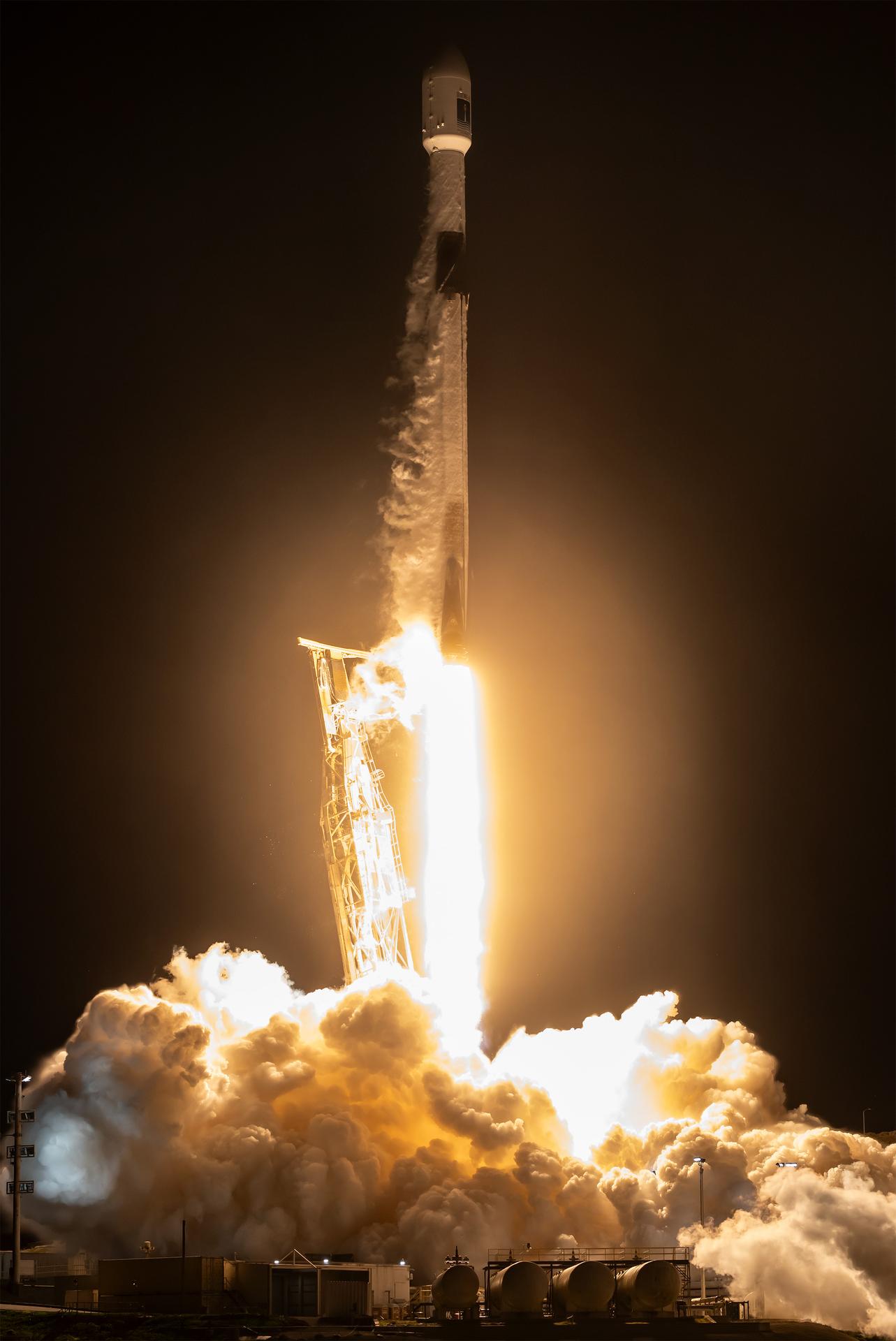
A SpaceX Falcon 9 rocket carrying the international Sentinel-6B spacecraft lifts off from Space Launch Complex 4 East at Vandenberg Space Force Base in California at 9:21 p.m. PST Sunday, Nov. 16, 2025. A collaboration between NASA, ESA (European Space Agency), EUMETSAT (European Organisation for the Exploitation of Meteorological Satellites), and the National Oceanic and Atmospheric Administration (NOAA), Sentinel-6B is designed to measure sea levels down to roughly an inch for about 90% of the world’s oceans.
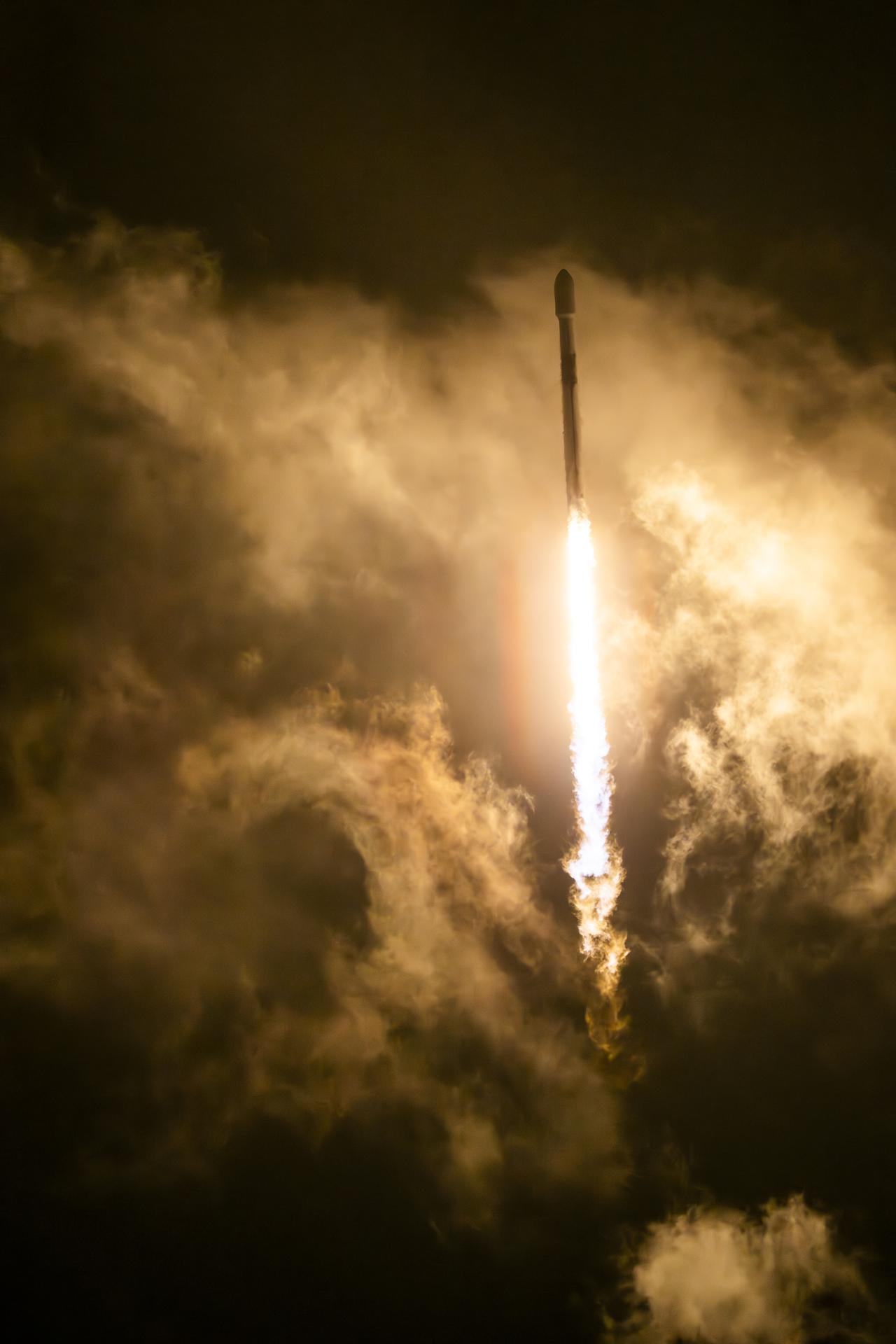
A SpaceX Falcon 9 rocket carrying the international Sentinel-6B spacecraft lifts off from Space Launch Complex 4 East at Vandenberg Space Force Base in California on Sunday, Nov. 16, 2025. A collaboration between NASA, ESA (European Space Agency), EUMETSAT (European Organisation for the Exploitation of Meteorological Satellites), and the National Oceanic and Atmospheric Administration (NOAA), Sentinel-6B is designed to measure sea levels down to roughly an inch for about 90% of the world’s oceans.
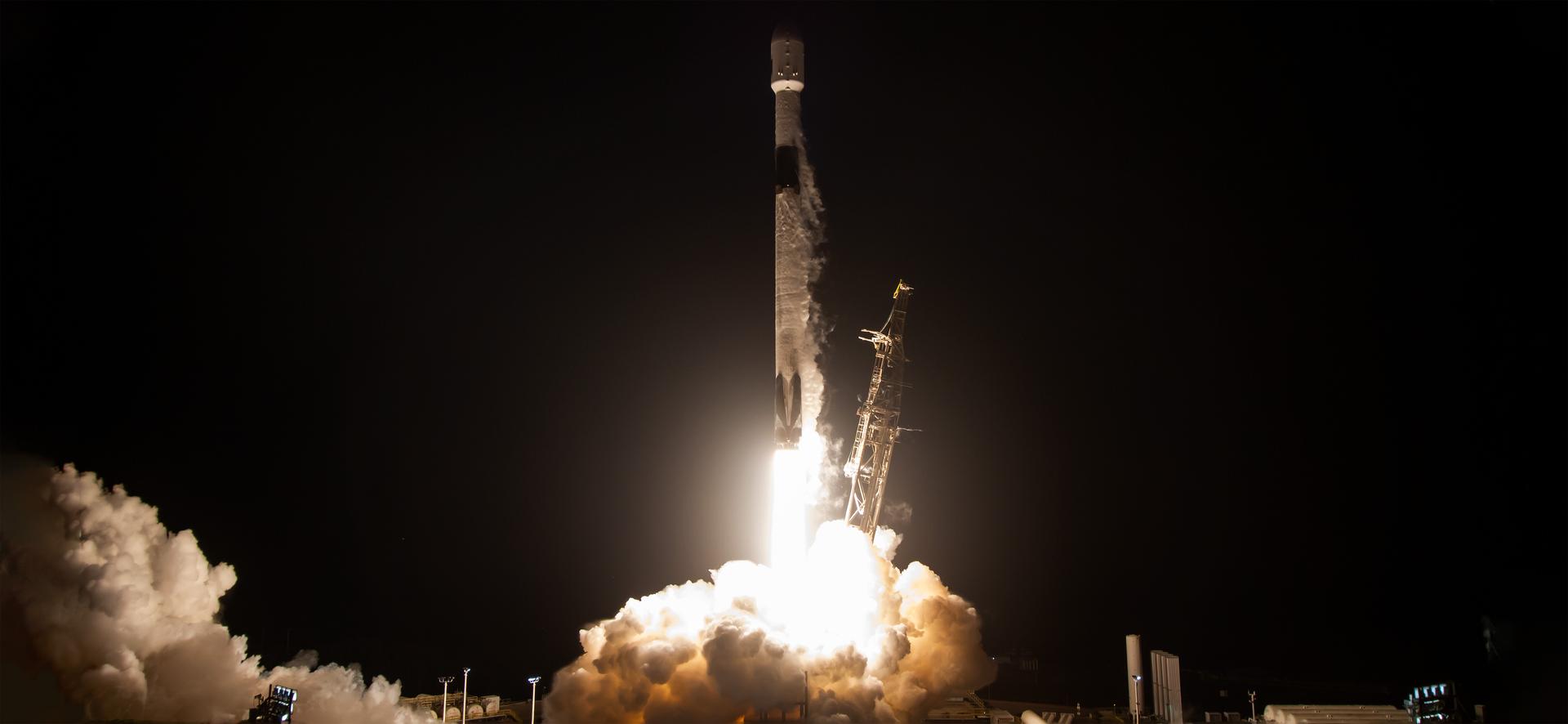
A SpaceX Falcon 9 rocket carrying the international Sentinel-6B spacecraft lifts off from Space Launch Complex 4 East at Vandenberg Space Force Base in California at 9:21 p.m. PST Sunday, Nov. 16, 2025. A collaboration between NASA, ESA (European Space Agency), EUMETSAT (European Organisation for the Exploitation of Meteorological Satellites), and the National Oceanic and Atmospheric Administration (NOAA), Sentinel-6B is designed to measure sea levels down to roughly an inch for about 90% of the world’s oceans.
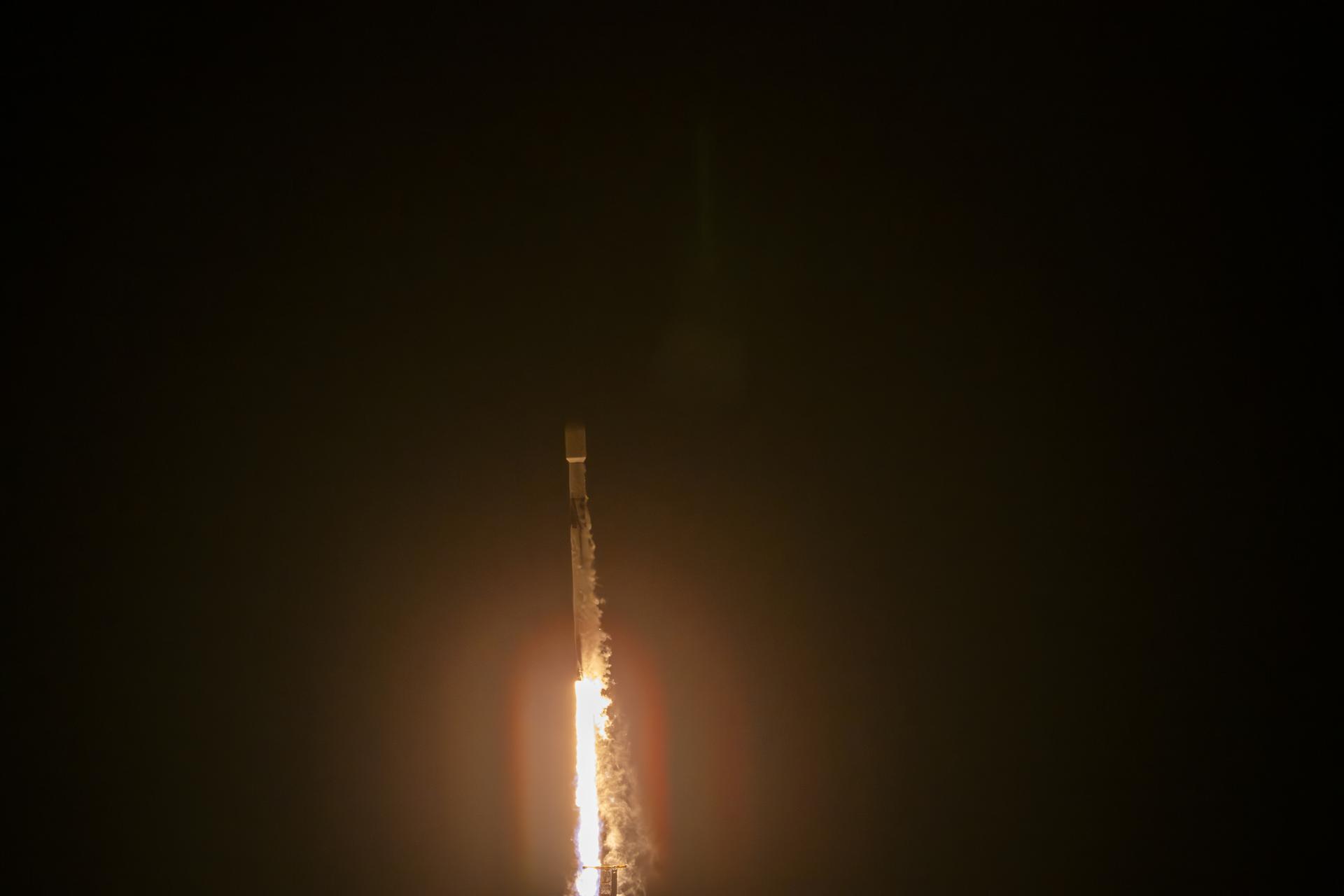
A SpaceX Falcon 9 rocket carrying the international Sentinel-6B spacecraft lifts off from Space Launch Complex 4 East at Vandenberg Space Force Base in California on Sunday, Nov. 16, 2025. A collaboration between NASA, ESA (European Space Agency), EUMETSAT (European Organisation for the Exploitation of Meteorological Satellites), and the National Oceanic and Atmospheric Administration (NOAA), Sentinel-6B is designed to measure sea levels down to roughly an inch for about 90% of the world’s oceans.
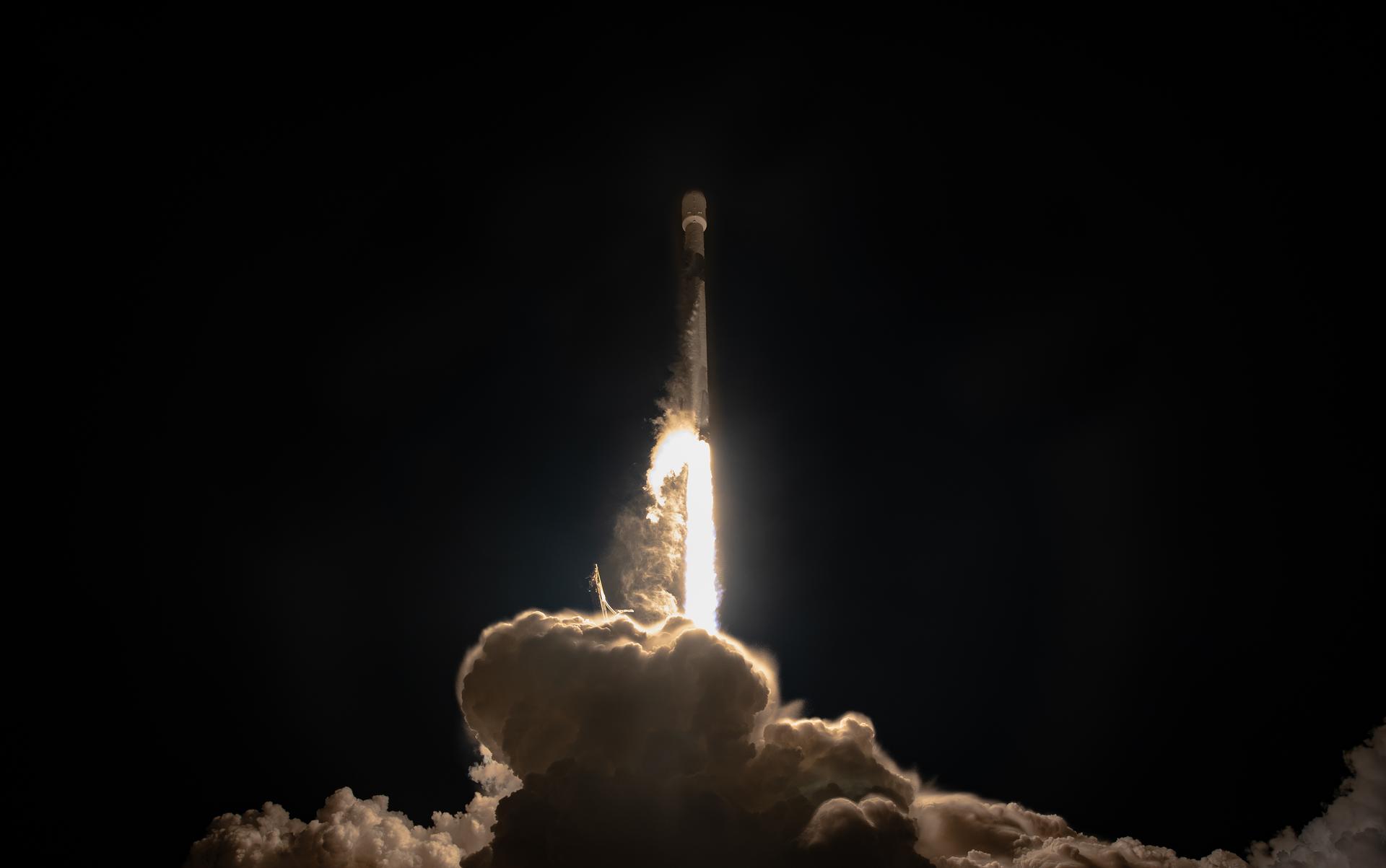
A SpaceX Falcon 9 rocket carrying the international Sentinel-6B spacecraft lifts off from Space Launch Complex 4 East at Vandenberg Space Force Base in California at 9:21 p.m. PST Sunday, Nov. 16, 2025. A collaboration between NASA, ESA (European Space Agency), EUMETSAT (European Organisation for the Exploitation of Meteorological Satellites), and the National Oceanic and Atmospheric Administration (NOAA), Sentinel-6B is designed to measure sea levels down to roughly an inch for about 90% of the world’s oceans.
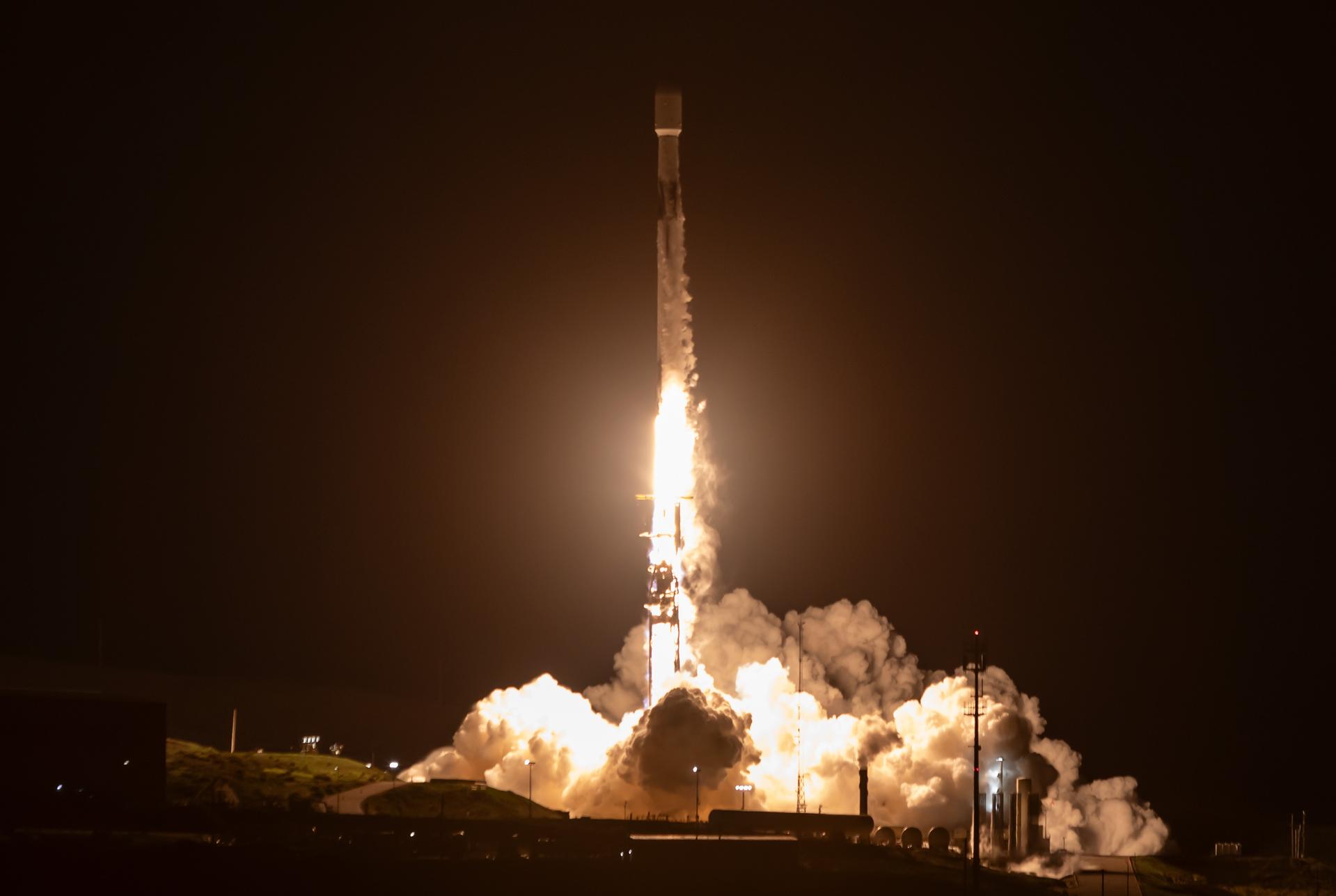
A SpaceX Falcon 9 rocket carrying the international Sentinel-6B spacecraft lifts off from Space Launch Complex 4 East at Vandenberg Space Force Base in California at 9:21 p.m. PST Sunday, Nov. 16, 2025. A collaboration between NASA, ESA (European Space Agency), EUMETSAT (European Organisation for the Exploitation of Meteorological Satellites), and the National Oceanic and Atmospheric Administration (NOAA), Sentinel-6B is designed to measure sea levels down to roughly an inch for about 90% of the world’s oceans.
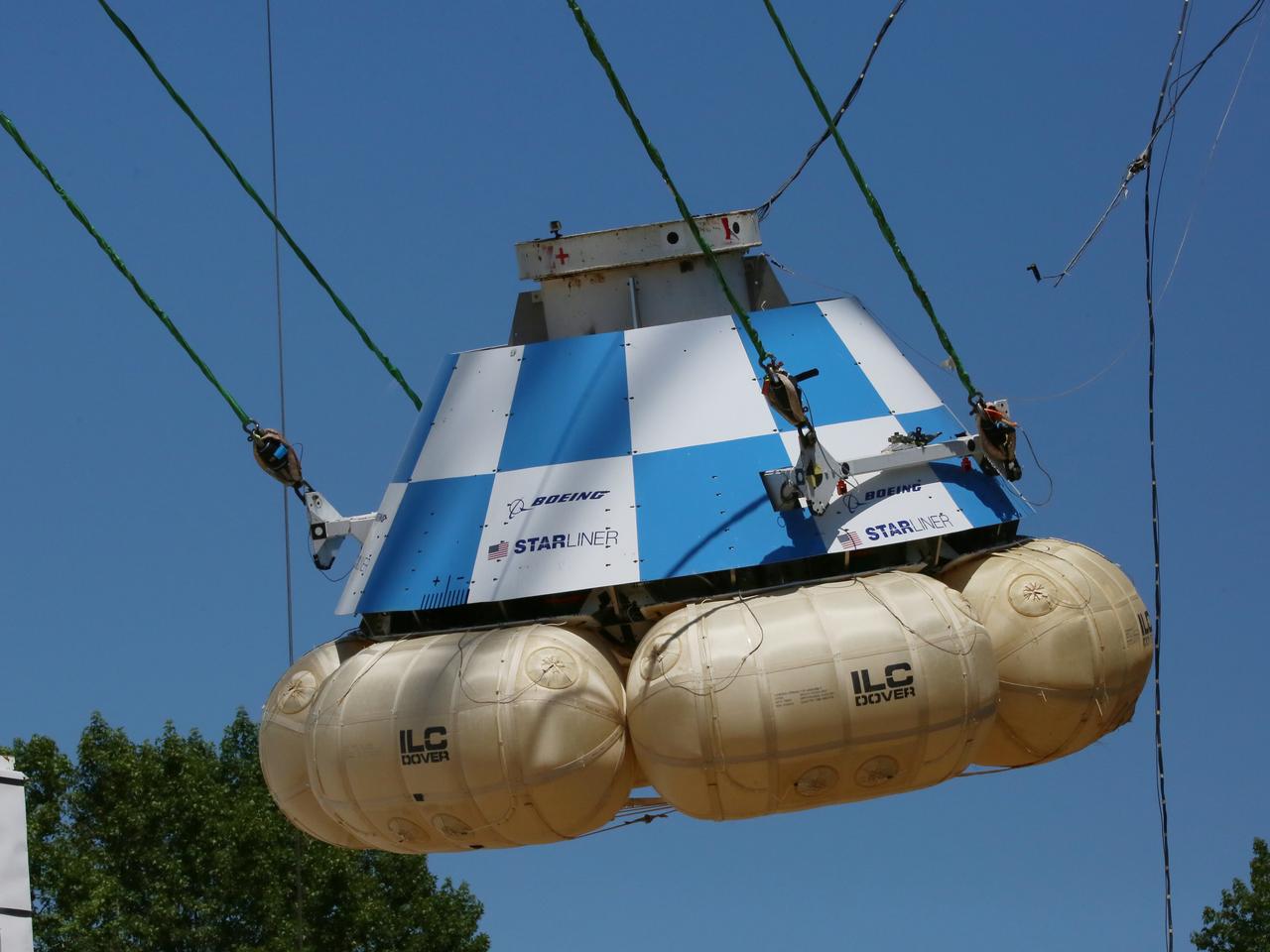
At NASA’s Langley Research Center in Hampton, Virginia, a mock-up of the Boeing CST-100 Starliner spacecraft goes through a series of land landing qualification tests to simulate what the actual spacecraft and crew members may experience while returning to Earth from space. The Starliner is being developed in collaboration with NASA’s Commercial Crew Program. Along with SpaceX’s Crew Dragon, the spacecraft is part of the agency’s effort to return America’s capability to launch astronauts from the agency's Kennedy Space Center in Florida to the International Space Station.
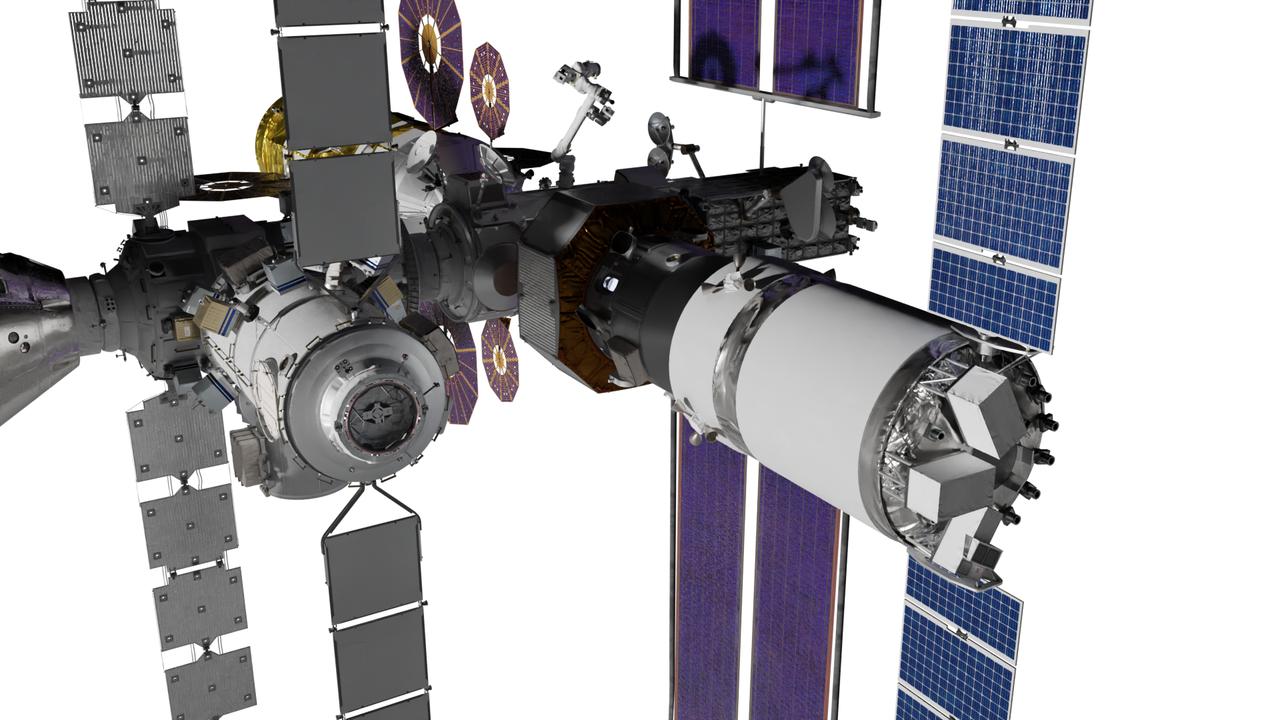
An artist’s rendering displays a configuration of the lunar-orbiting Gateway space station’s modules and visiting spacecraft. The core elements of Gateway consist of the Habitation and Logistics Outpost (HALO) element, the Power and Propulsion Element (PPE), and Lunar I-Hab. Visiting vehicles include the Orion spacecraft, the Logistics Module, and the Human Landing System. Gateway is built in collaboration with NASA’s commercial and international partners to serve as a multiuse space port for lunar science as humanity’s first place to live and work in lunar orbit.
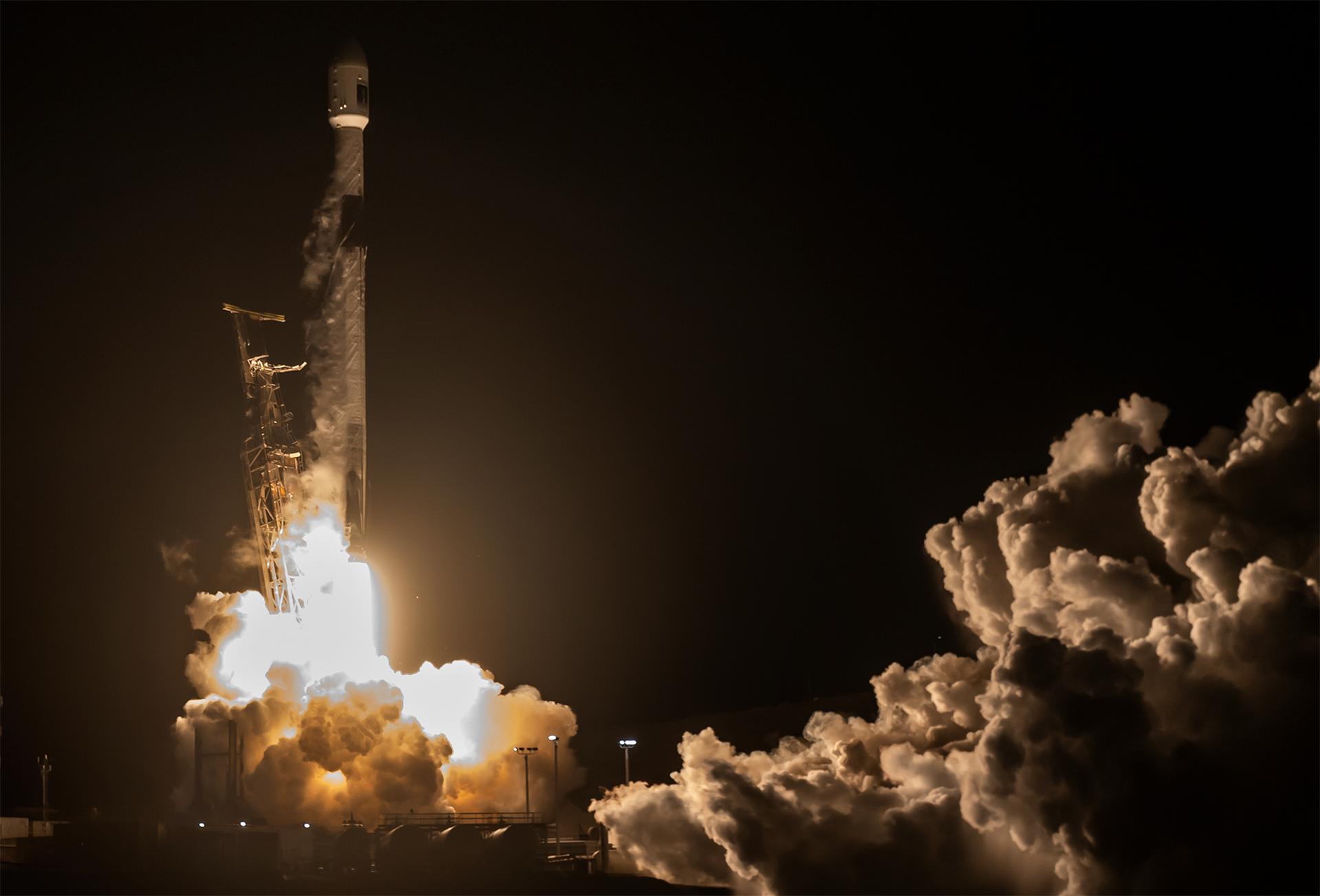
A SpaceX Falcon 9 rocket carrying the international Sentinel-6B spacecraft lifts off from Space Launch Complex 4 East at Vandenberg Space Force Base in California at 9:21 p.m. PST Sunday, Nov. 16, 2025. A collaboration between NASA, ESA (European Space Agency), EUMETSAT (European Organisation for the Exploitation of Meteorological Satellites), and the National Oceanic and Atmospheric Administration (NOAA), Sentinel-6B is designed to measure sea levels down to roughly an inch for about 90% of the world’s oceans.
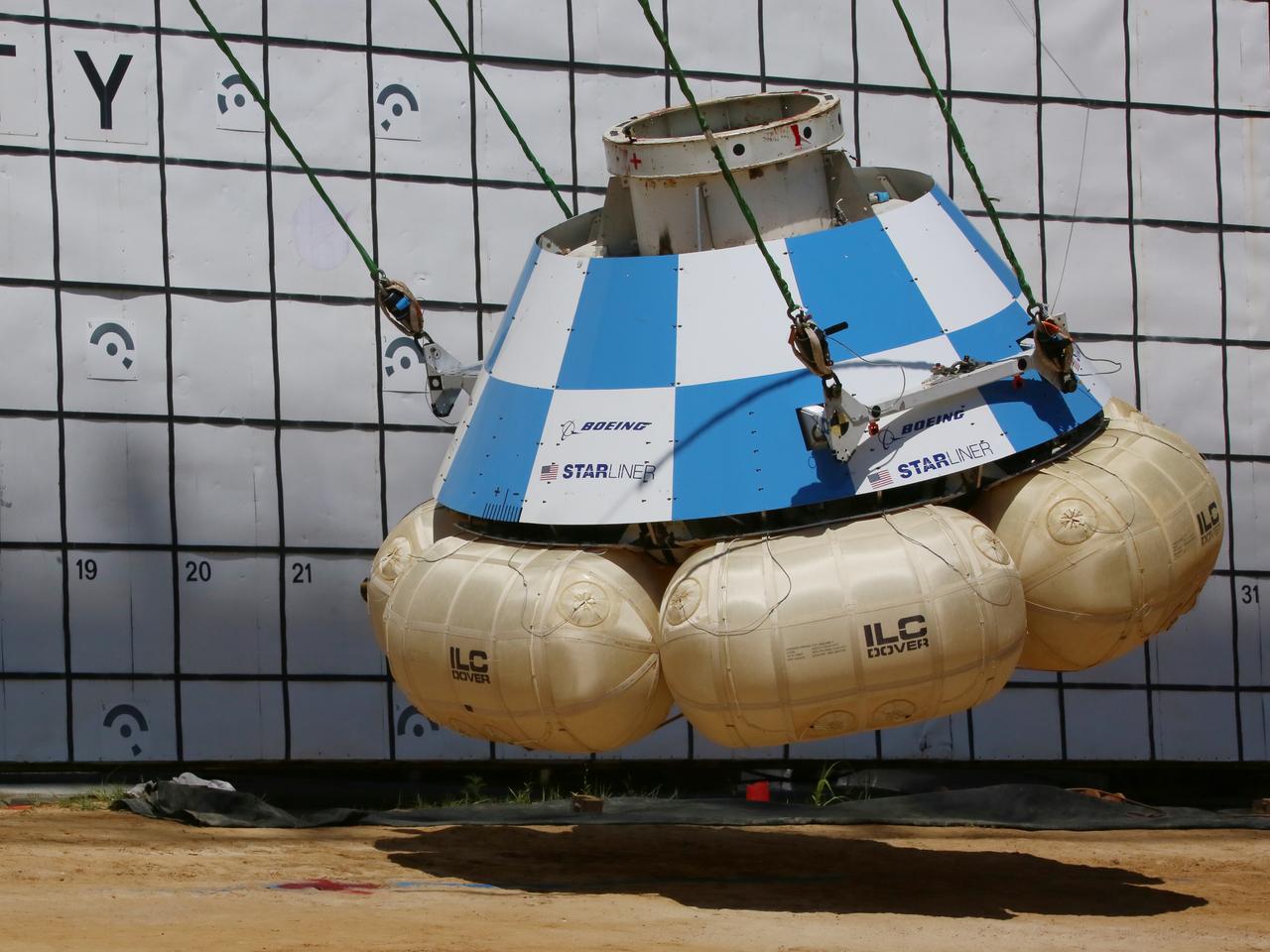
At NASA’s Langley Research Center in Hampton, Virginia, a mock-up of the Boeing CST-100 Starliner spacecraft goes through a series of land landing qualification tests to simulate what the actual spacecraft and crew members may experience while returning to Earth from space. The Starliner is being developed in collaboration with NASA’s Commercial Crew Program. Along with SpaceX’s Crew Dragon, the spacecraft is part of the agency’s effort to return America’s capability to launch astronauts from the agency's Kennedy Space Center in Florida to the International Space Station.
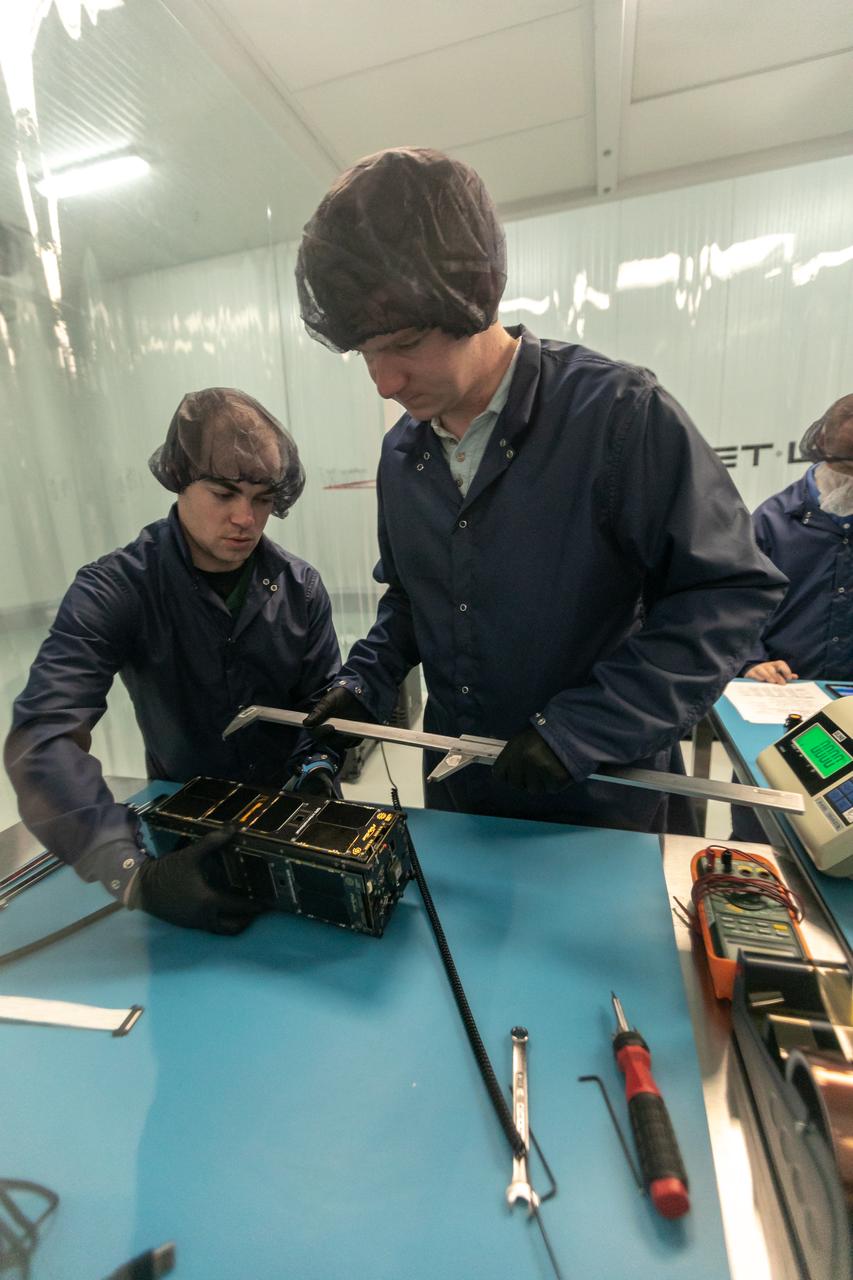
Plasma fluctuations in the upper atmosphere can distort radio signals as they pass into space, damaging radio communication with satellites. The ISX (Ionospheric Scintillation Explorer) mission will study these effects by measuring and comparing digital TV signals produced on the ground. Developed as a collaboration between SRI International and PolySat at Cal Poly, San Luis Obispo, the ISX mission will attempt to improve our understanding of these plasma irregularities and help model space weather predictions in the future.

Senior Director of the Space Engineering Department, MBRSC, Amer Al Sayegh, left, UAE Assistant Minister of Foreign Affairs and International Cooperation for Advanced Science and Technology, Omran Sharaf, NASA Associate Administrator Jim Free, and Director of Space Missions Department, UAESA, Mohsen Al Awadhi, right, participate in a panel discussion during an event celebrating UAE-US collaboration in space, Friday, March 8, 2024, at the Four Seasons Hotel in Washington. Photo Credit: (NASA/Bill Ingalls)
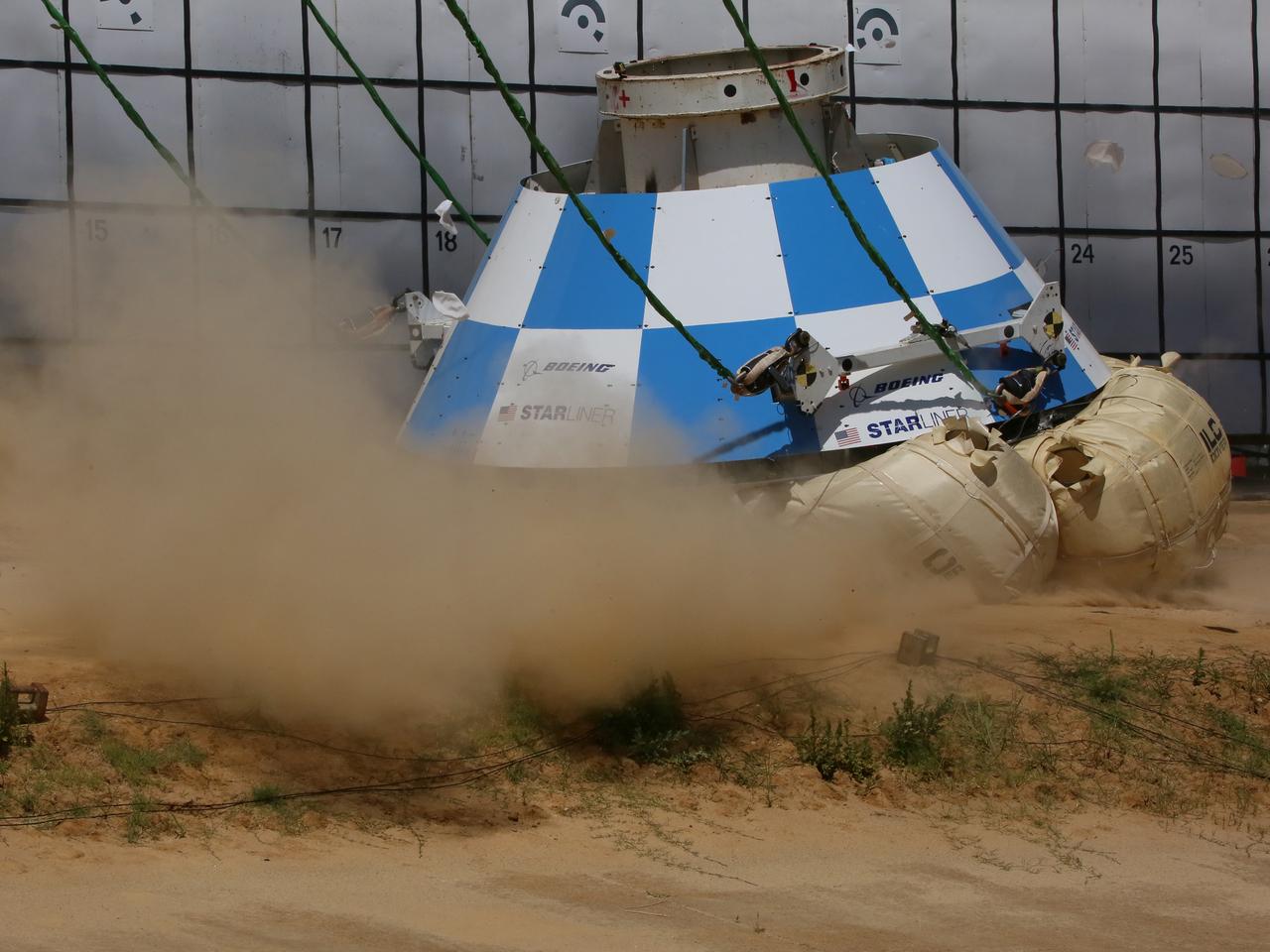
At NASA’s Langley Research Center in Hampton, Virginia, a mock-up of the Boeing CST-100 Starliner spacecraft goes through a series of land landing qualification tests to simulate what the actual spacecraft and crew members may experience while returning to Earth from space. The Starliner is being developed in collaboration with NASA’s Commercial Crew Program. Along with SpaceX’s Crew Dragon, the spacecraft is part of the agency’s effort to return America’s capability to launch astronauts from the agency's Kennedy Space Center in Florida to the International Space Station.
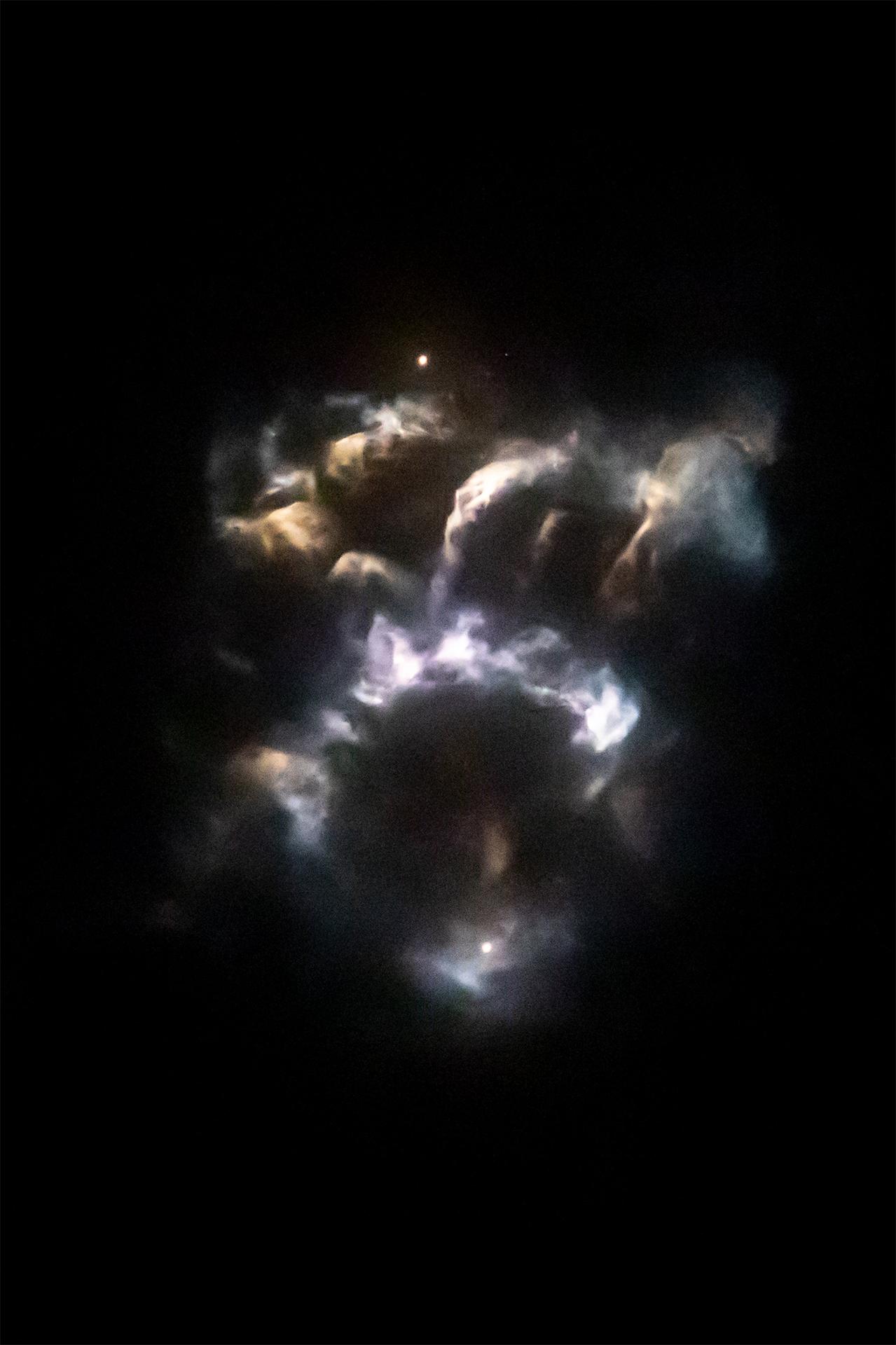
A SpaceX Falcon 9 rocket carrying the international Sentinel-6B spacecraft lifts off from Space Launch Complex 4 East at Vandenberg Space Force Base in California at 9:21 p.m. PST Sunday, Nov. 16, 2025. A collaboration between NASA, ESA (European Space Agency), EUMETSAT (European Organisation for the Exploitation of Meteorological Satellites), and the National Oceanic and Atmospheric Administration (NOAA), Sentinel-6B is designed to measure sea levels down to roughly an inch for about 90% of the world’s oceans.
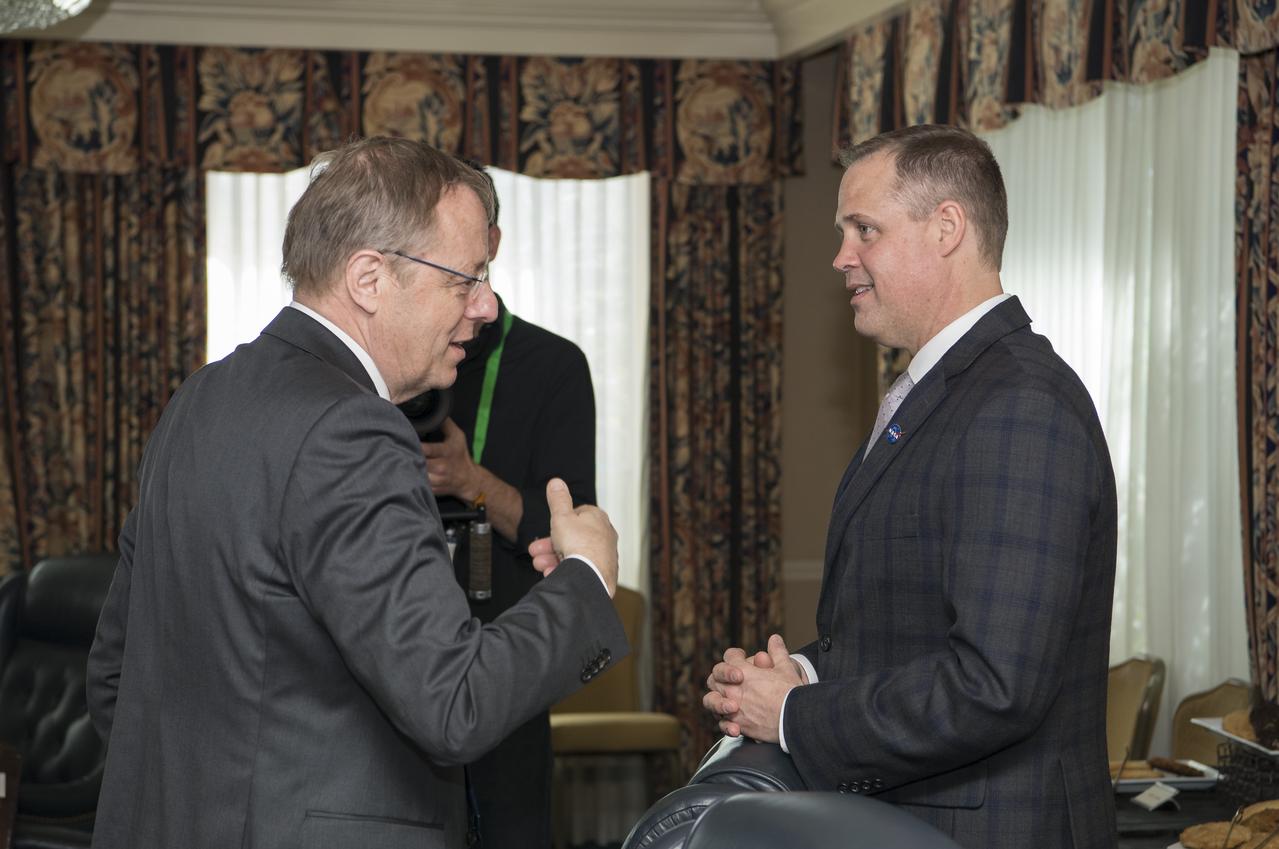
NASA Administrator Jim Bridenstine, right, speaks with Johann-Dietrich Wörner, director general of ESA (European Space Agency), about NASA’s plans to land humans on the Moon by 2024 and prospective collaboration in human and robotic lunar and Mars exploration activities, at the Space Symposium, Monday, April 8, 2019 in Colorado Springs, Colorado, They also discussed their continued successful cooperation on the International Space Station and the service module for the Orion spacecraft that will take us to the Moon and beyond. Photo Credit: (NASA/Aubrey Gemignani)
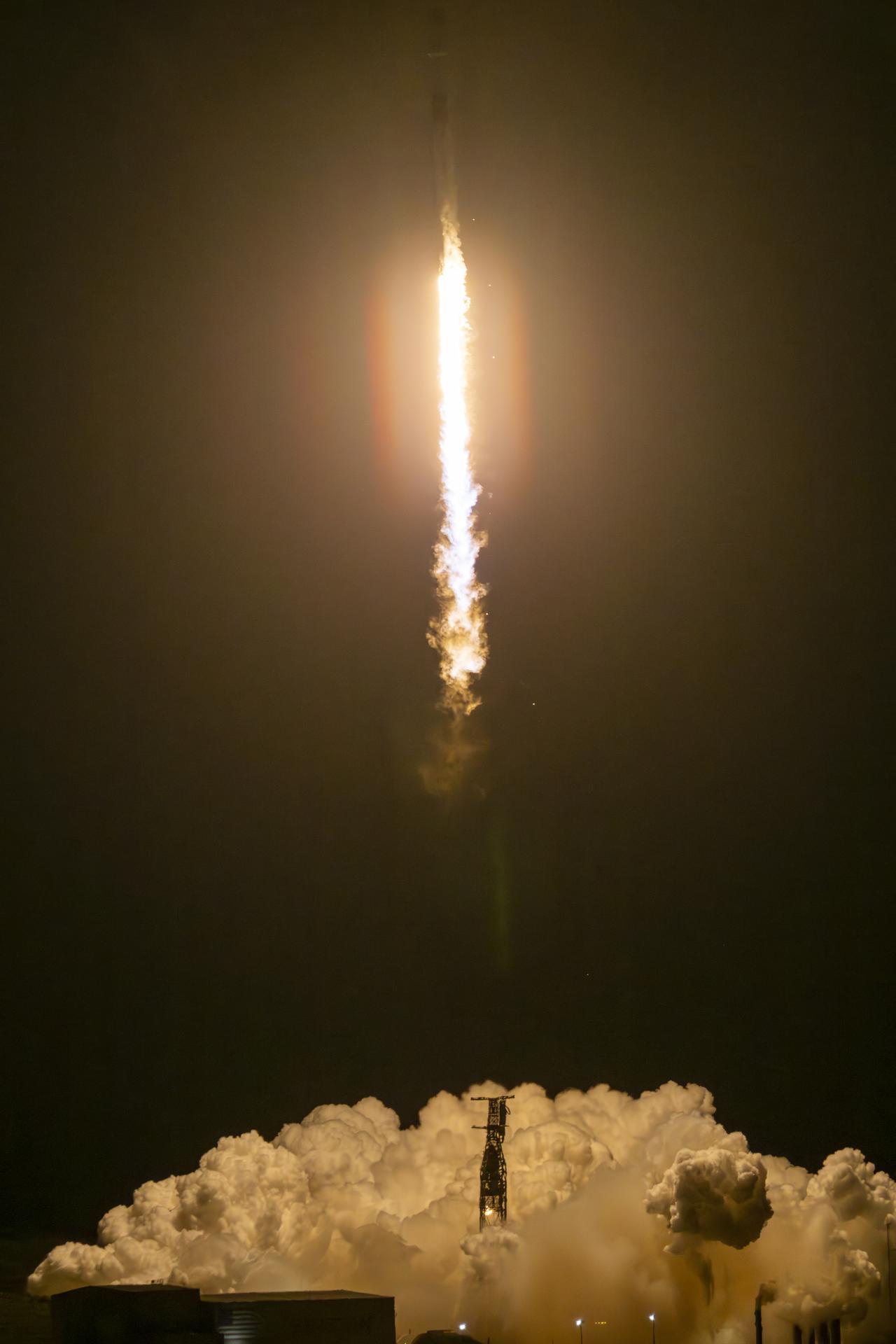
A SpaceX Falcon 9 rocket carrying the international Sentinel-6B spacecraft lifts off from Space Launch Complex 4 East at Vandenberg Space Force Base in California on Sunday, Nov. 16, 2025. A collaboration between NASA, ESA (European Space Agency), EUMETSAT (European Organisation for the Exploitation of Meteorological Satellites), and the National Oceanic and Atmospheric Administration (NOAA), Sentinel-6B is designed to measure sea levels down to roughly an inch for about 90% of the world’s oceans.
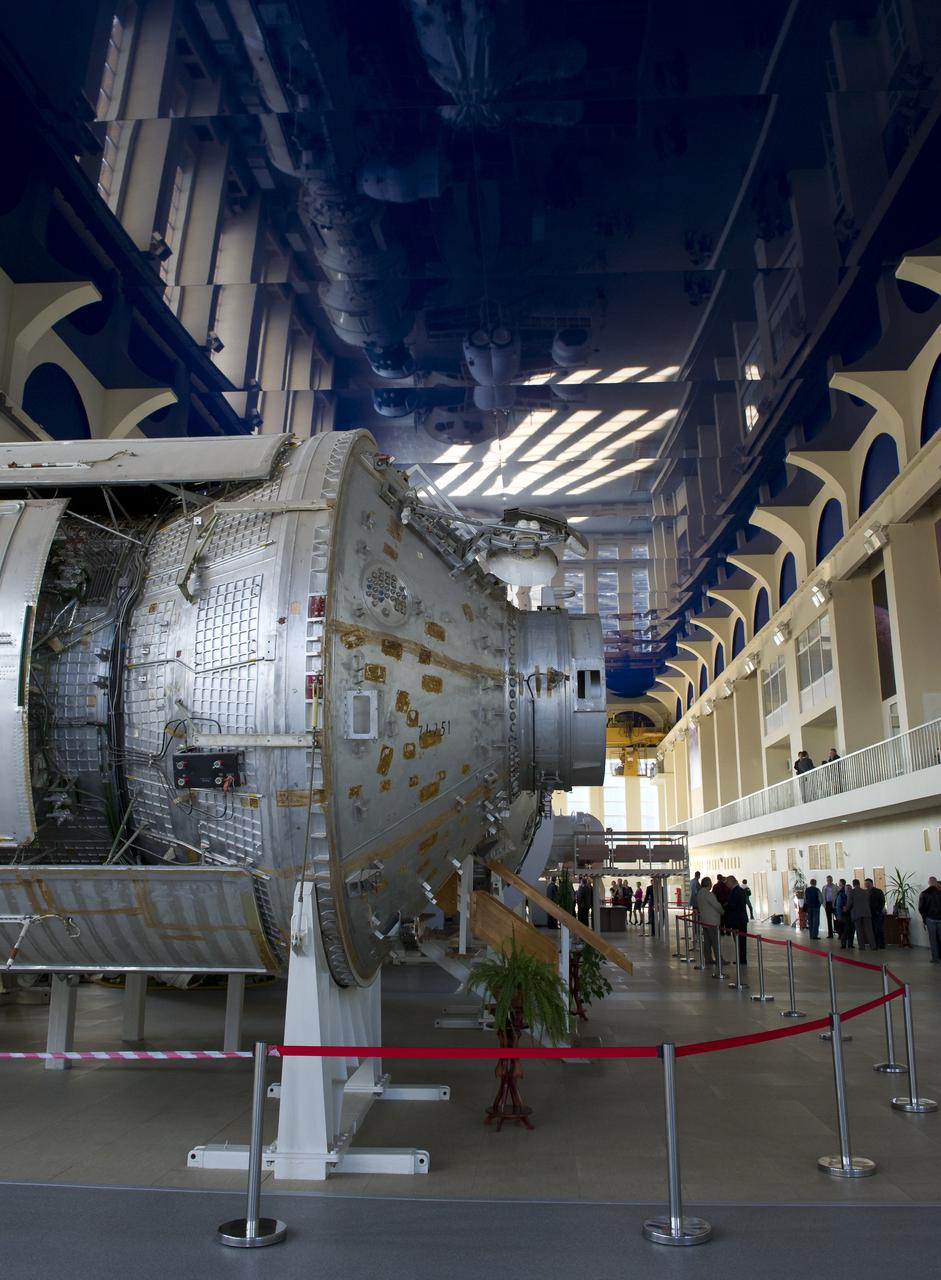
Part of a Mir space station-era mockup module is seen in Building 2 at the Gagarin Cosmonaut Training Center, Tuesday, April 24, 2012 in Star City, Russia. The Russian Mir space station was the precursor to today's International Space Station, which was collaboratively built by Russia and the United States. Photo Credit: (NASA/Carla Cioffi)
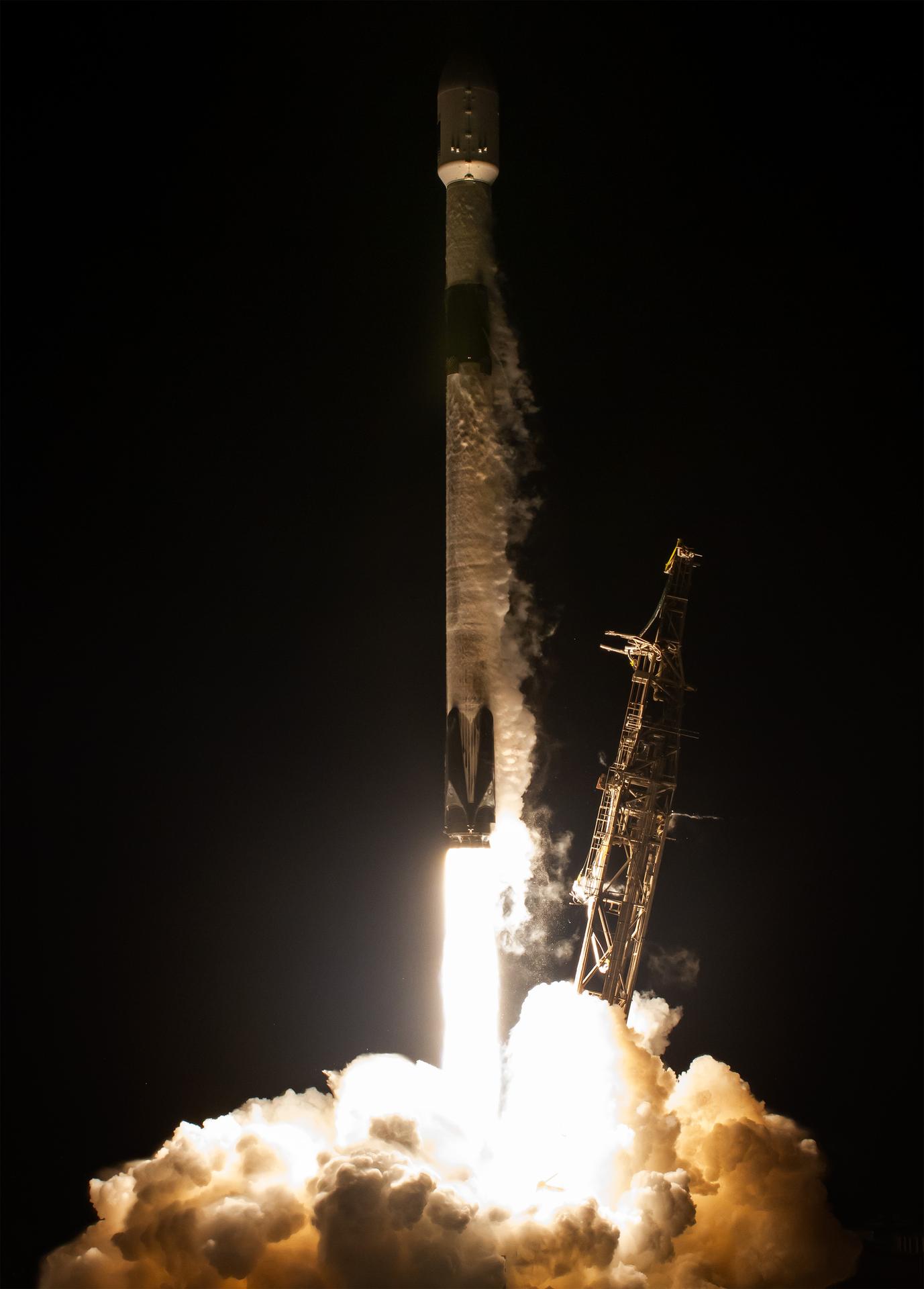
A SpaceX Falcon 9 rocket carrying the international Sentinel-6B spacecraft lifts off from Space Launch Complex 4 East at Vandenberg Space Force Base in California at 9:21 p.m. PST Sunday, Nov. 16, 2025. A collaboration between NASA, ESA (European Space Agency), EUMETSAT (European Organisation for the Exploitation of Meteorological Satellites), and the National Oceanic and Atmospheric Administration (NOAA), Sentinel-6B is designed to measure sea levels down to roughly an inch for about 90% of the world’s oceans.
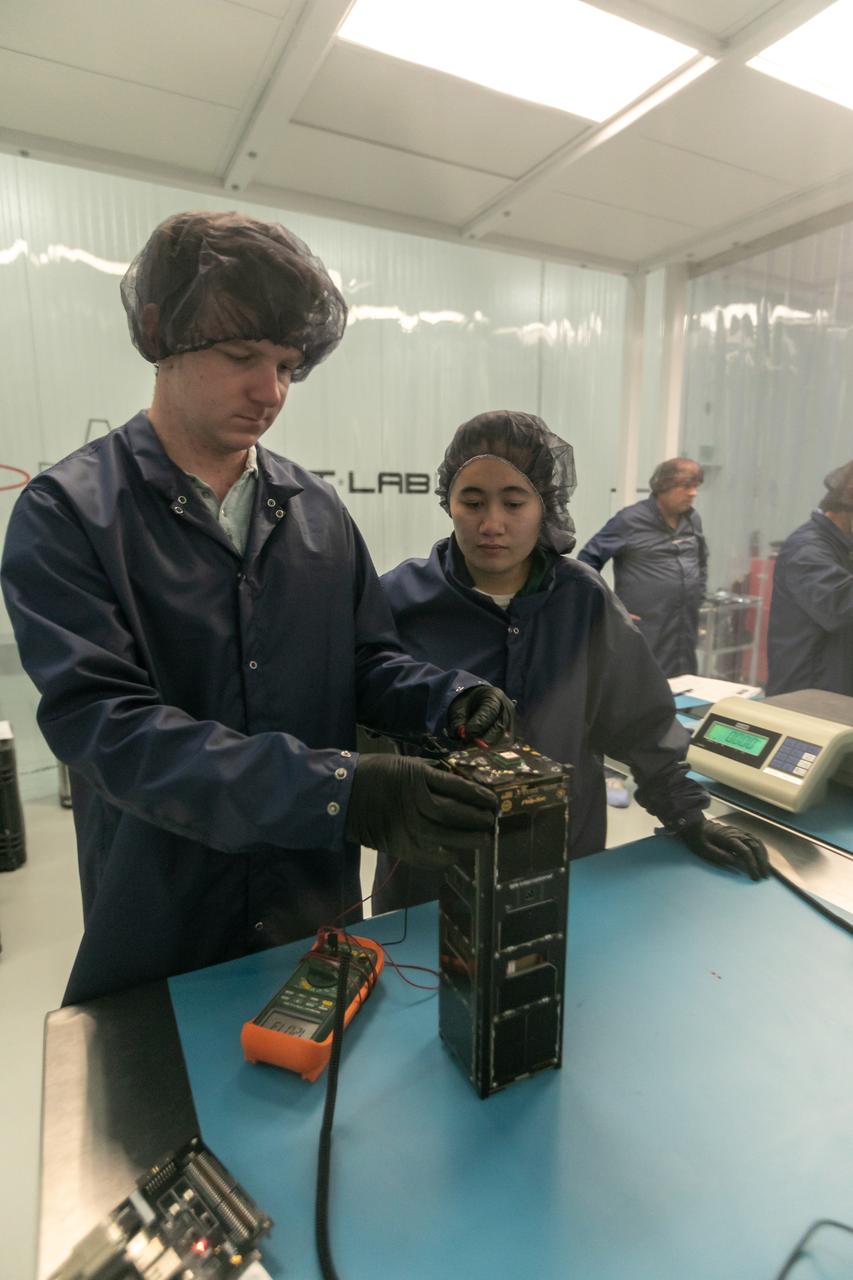
Plasma fluctuations in the upper atmosphere can distort radio signals as they pass into space, damaging radio communication with satellites. The ISX (Ionospheric Scintillation Explorer) mission will study these effects by measuring and comparing digital TV signals produced on the ground. Developed as a collaboration between SRI International and PolySat at Cal Poly, San Luis Obispo, the ISX mission will attempt to improve our understanding of these plasma irregularities and help model space weather predictions in the future.
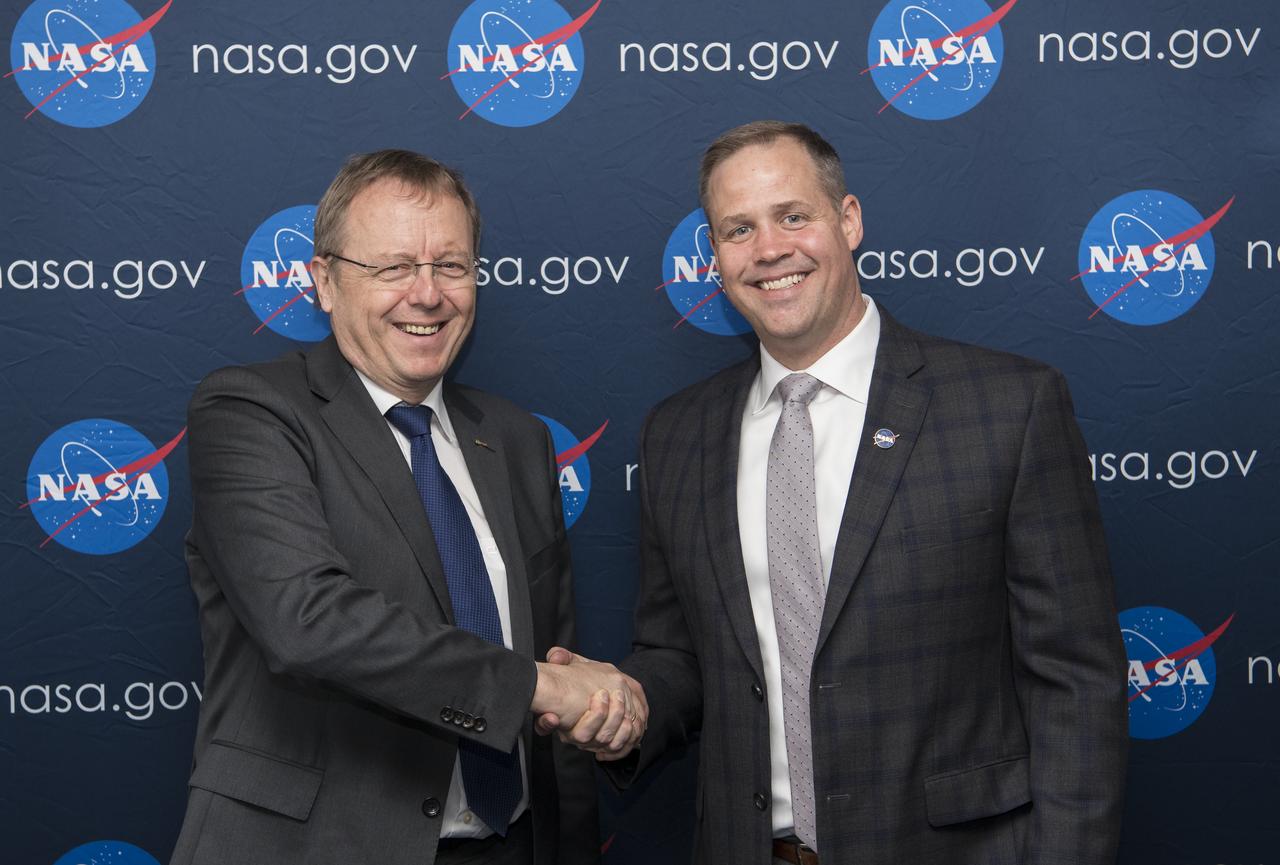
NASA Administrator Jim Bridenstine, right, poses with Johann-Dietrich Wörner, director general of ESA (European Space Agency), just before meeting to discuss NASA’s plans to land humans on the Moon by 2024 and prospective collaboration in human and robotic lunar and Mars exploration activities, at the Space Symposium, Monday, April 8, 2019 in Colorado Springs, Colorado, They also discussed their continued successful cooperation on the International Space Station and the service module for the Orion spacecraft that will take us to the Moon and beyond. Photo Credit: (NASA/Aubrey Gemignani)

Johann-Dietrich Wörner, director general of ESA (European Space Agency), speaks at a bi-lateral meeting about NASA’s plans to land humans on the Moon by 2024 and prospective collaboration in human and robotic lunar and Mars exploration activities, at the Space Symposium, Monday, April 8, 2019 in Colorado Springs, Colorado. They also discussed their continued successful cooperation on the International Space Station and the service module for the Orion spacecraft that will take us to the Moon and beyond. Photo Credit: (NASA/Aubrey Gemignani)
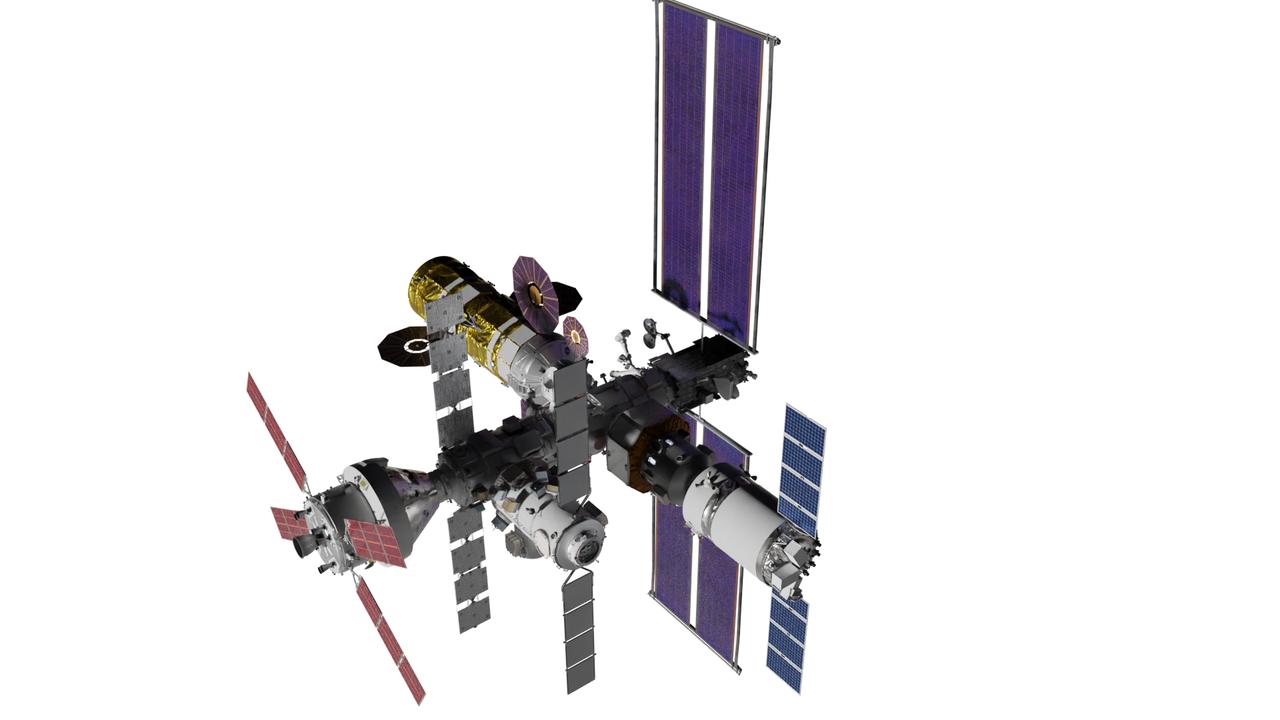
An artist’s rendering displays a configuration of the lunar-orbiting Gateway space station’s modules and visiting spacecraft. The core elements of Gateway consist of the Habitation and Logistics Outpost (HALO) element, the Power and Propulsion Element (PPE), and Lunar I-Hab. Visiting vehicles include the Orion spacecraft, the Logistics Module, and the Human Landing System. Gateway is built in collaboration with NASA’s commercial and international partners to serve as a multiuse space port for lunar science as humanity’s first place to live and work in lunar orbit.
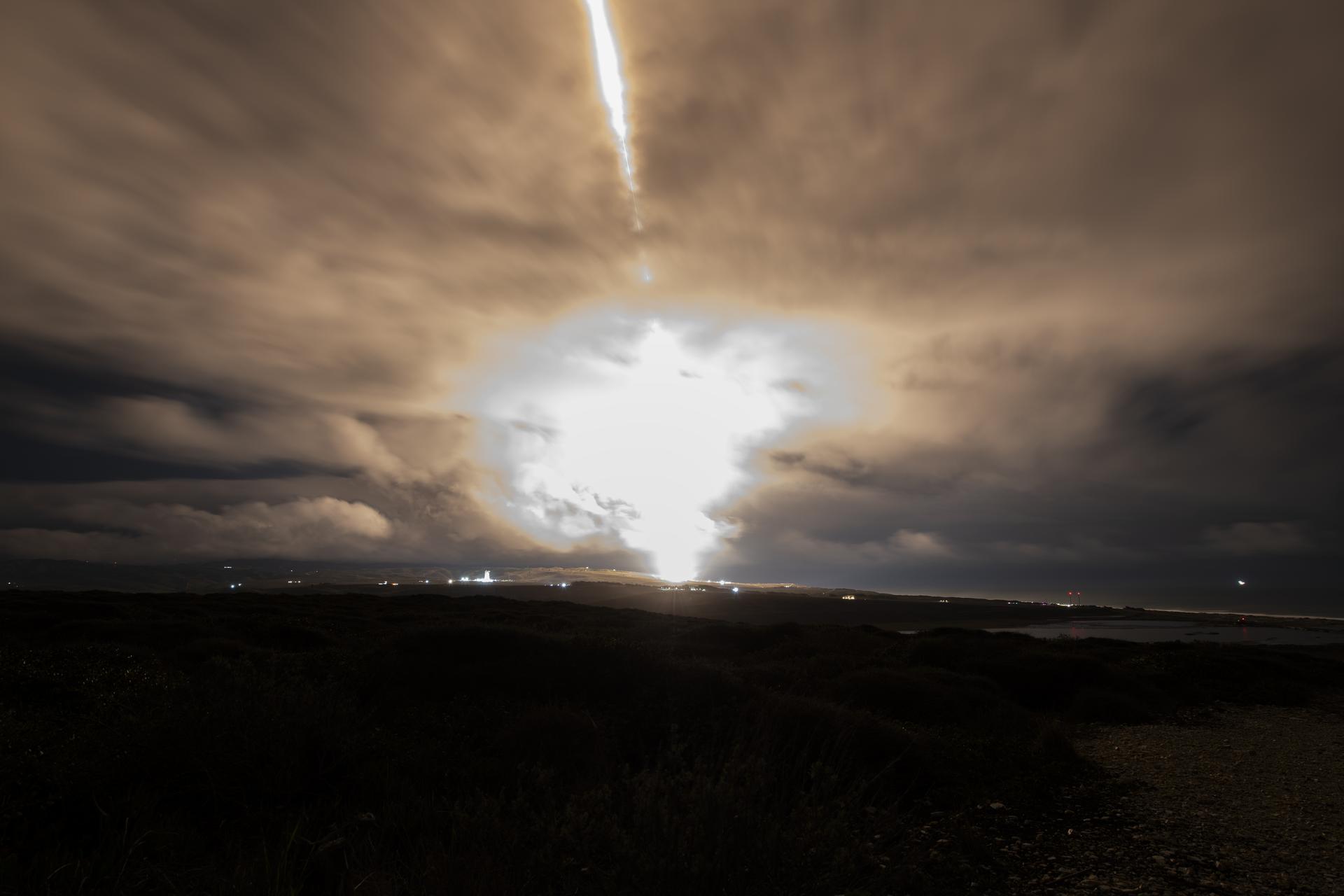
A long exposure photo shows the SpaceX Falcon 9 rocket carrying the internation Sentinel-6B spacecraft lifting off from Space Launch Complex 4 East at Vandenberg Space Force Base in California on Sunday, Nov. 16, 2025. A collaboration between NASA, ESA (European Space Agency), EUMETSAT (European Organisation for the Exploitation of Meteorological Satellites), and the National Oceanic and Atmospheric Administration (NOAA), Sentinel-6B is designed to measure sea levels down to roughly an inch for about 90% of the world’s oceans.
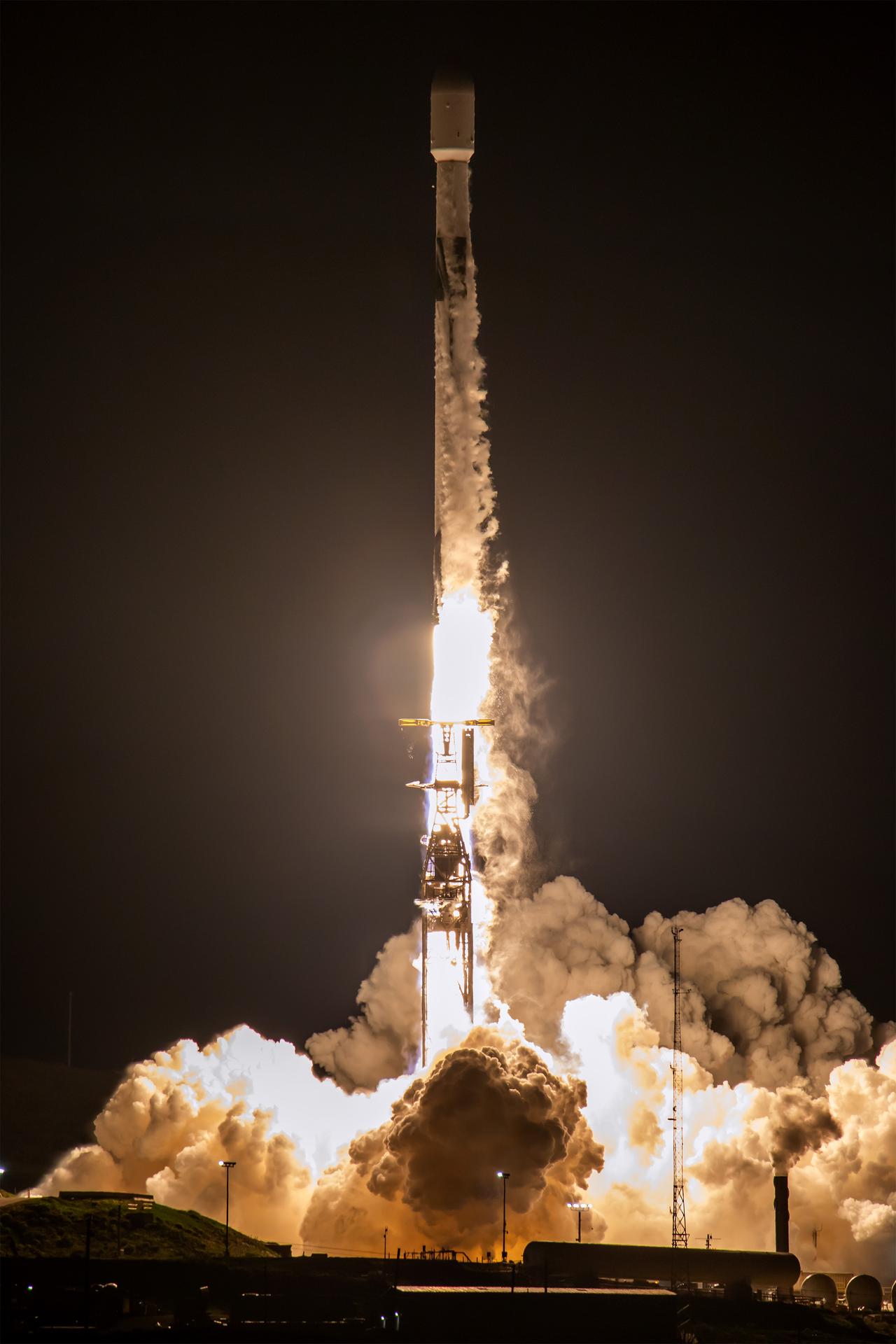
A SpaceX Falcon 9 rocket carrying the international Sentinel-6B spacecraft lifts off from Space Launch Complex 4 East at Vandenberg Space Force Base in California at 9:21 p.m. PST Sunday, Nov. 16, 2025. A collaboration between NASA, ESA (European Space Agency), EUMETSAT (European Organisation for the Exploitation of Meteorological Satellites), and the National Oceanic and Atmospheric Administration (NOAA), Sentinel-6B is designed to measure sea levels down to roughly an inch for about 90% of the world’s oceans.
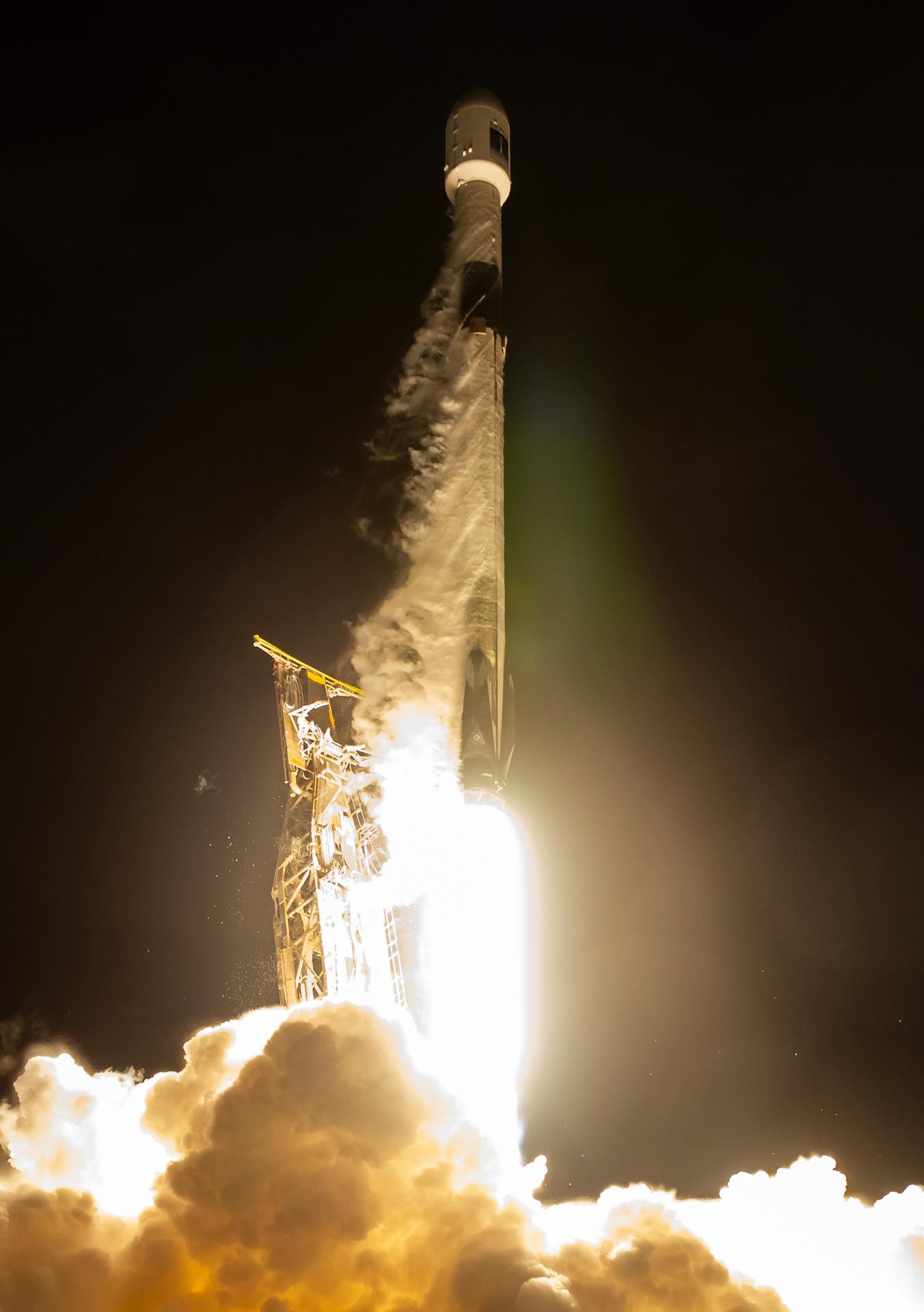
A SpaceX Falcon 9 rocket carrying the international Sentinel-6B spacecraft lifts off from Space Launch Complex 4 East at Vandenberg Space Force Base in California at 9:21 p.m. PST Sunday, Nov. 16, 2025. A collaboration between NASA, ESA (European Space Agency), EUMETSAT (European Organisation for the Exploitation of Meteorological Satellites), and the National Oceanic and Atmospheric Administration (NOAA), Sentinel-6B is designed to measure sea levels down to roughly an inch for about 90% of the world’s oceans.
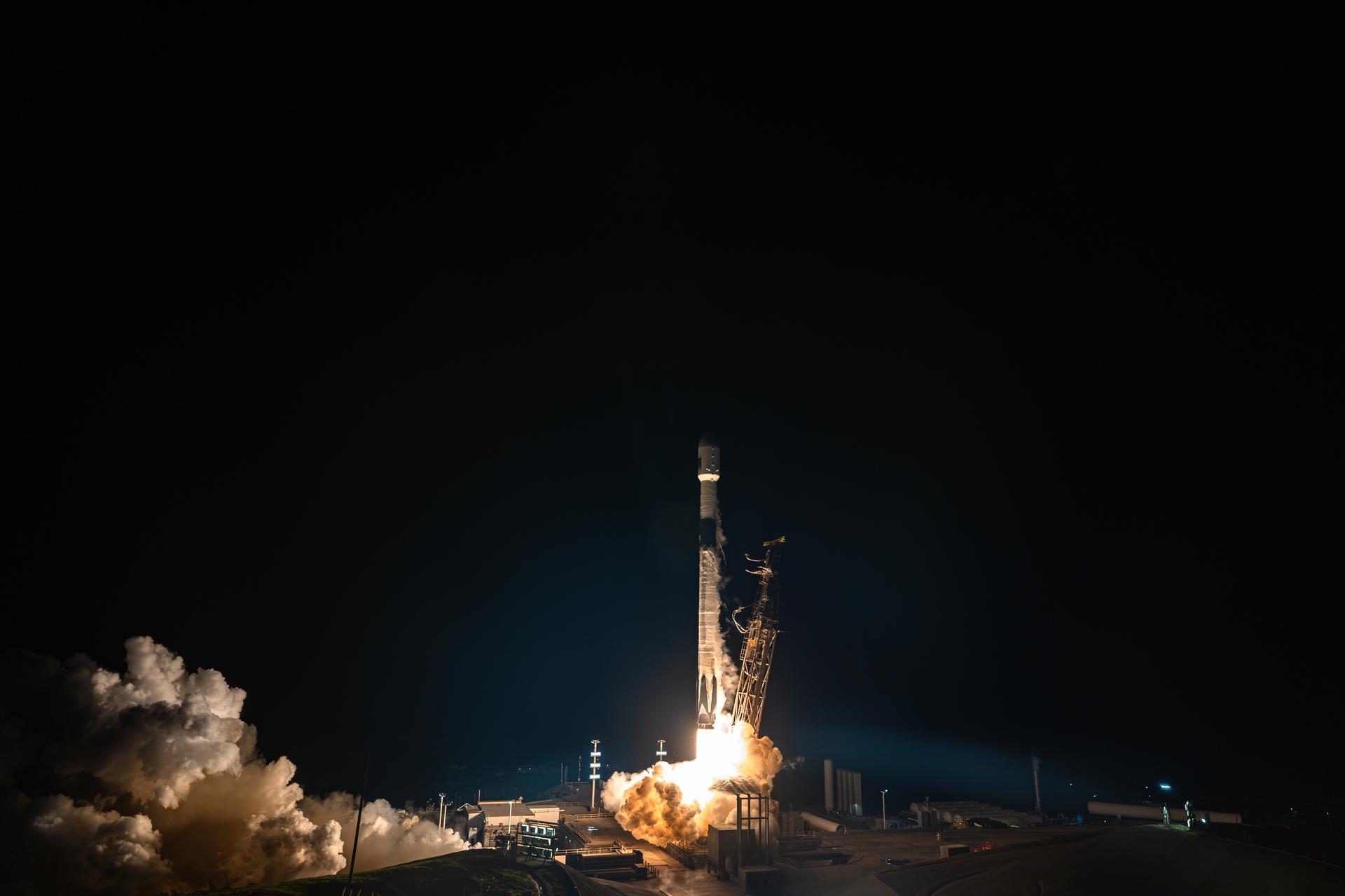
A SpaceX Falcon 9 rocket carrying the international Sentinel-6B spacecraft lifts off from Space Launch Complex 4 East at Vandenberg Space Force Base in California at 9:21 p.m. PST Sunday, Nov. 16, 2025. A collaboration between NASA, ESA (European Space Agency), EUMETSAT (European Organisation for the Exploitation of Meteorological Satellites), and the National Oceanic and Atmospheric Administration (NOAA), Sentinel-6B is designed to measure sea levels down to roughly an inch for about 90% of the world’s oceans.
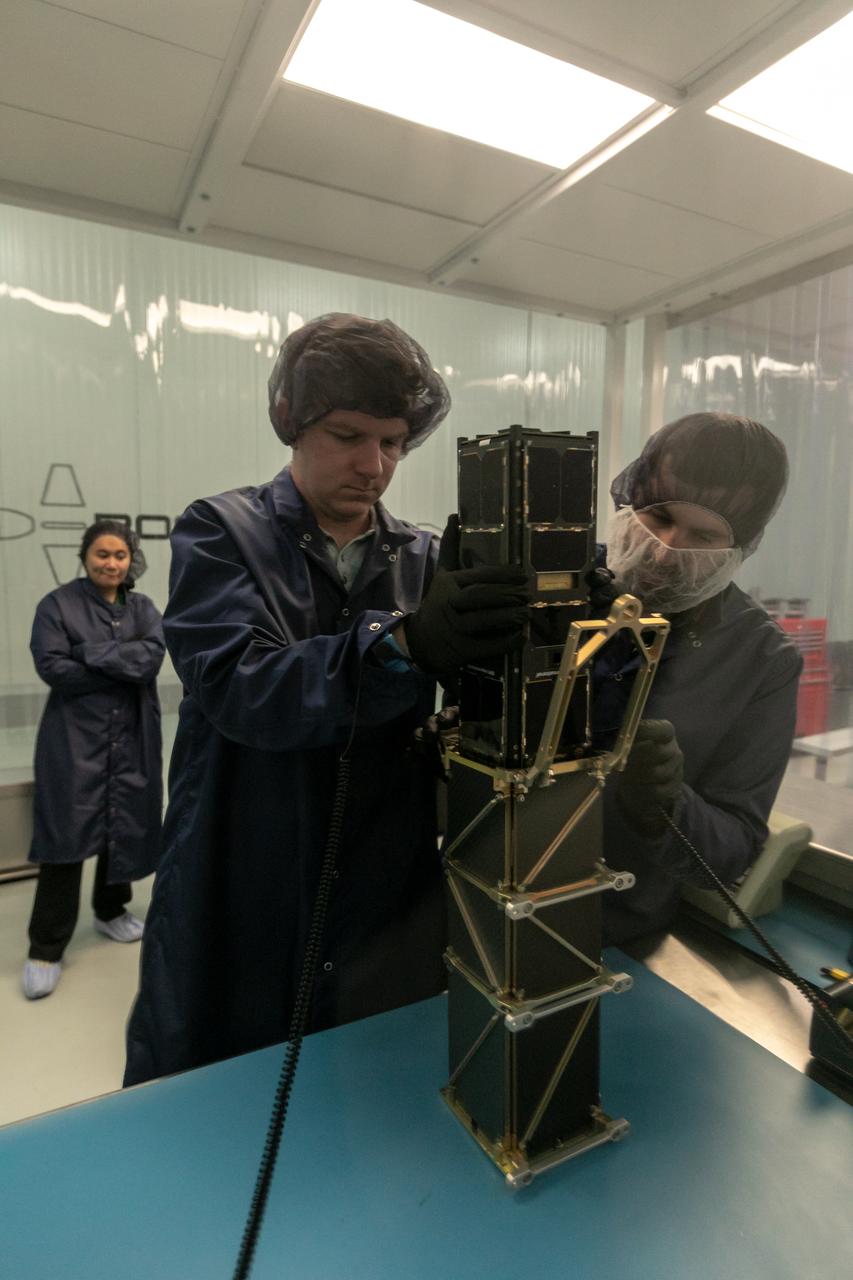
Plasma fluctuations in the upper atmosphere can distort radio signals as they pass into space, damaging radio communication with satellites. The ISX (Ionospheric Scintillation Explorer) mission will study these effects by measuring and comparing digital TV signals produced on the ground. Developed as a collaboration between SRI International and PolySat at Cal Poly, San Luis Obispo, the ISX mission will attempt to improve our understanding of these plasma irregularities and help model space weather predictions in the future.
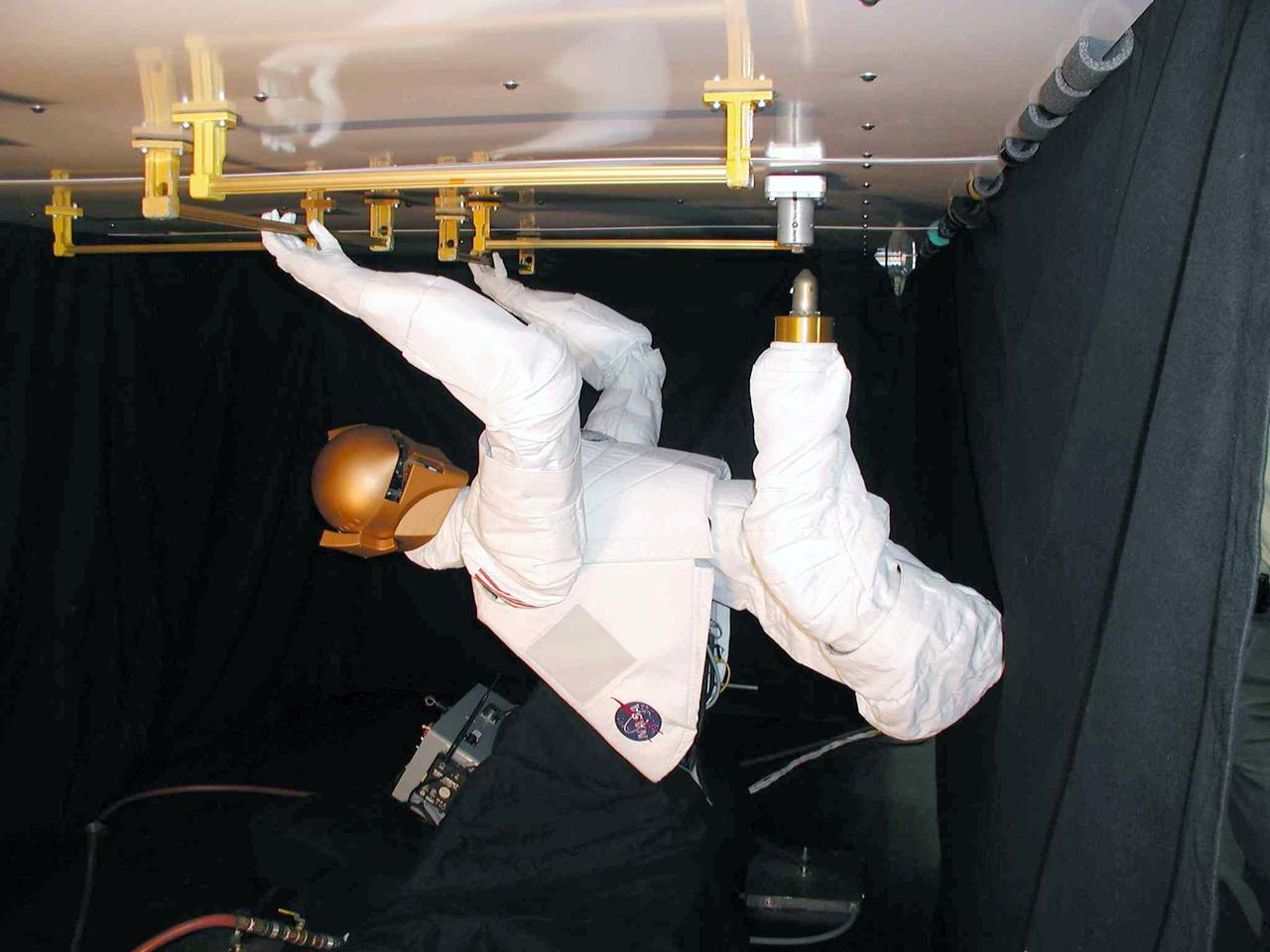
JSC2004-E-16343 (March 2004) --- Robonaut – which uses a head, torso, arms and dexterous hands to perform tasks using the same tools used by human spacewalkers – was fitted with a movable leg that ended in a “foot” that was a common interface for the standard Work Interface Facility (WIF) anchors on the International Space Station (ISS). The Robonaut Project is a collaborative effort with the Defense Advanced Research Projects Agency (DARPA), and has been under development at Johnson Space Center (JSC) for several years.
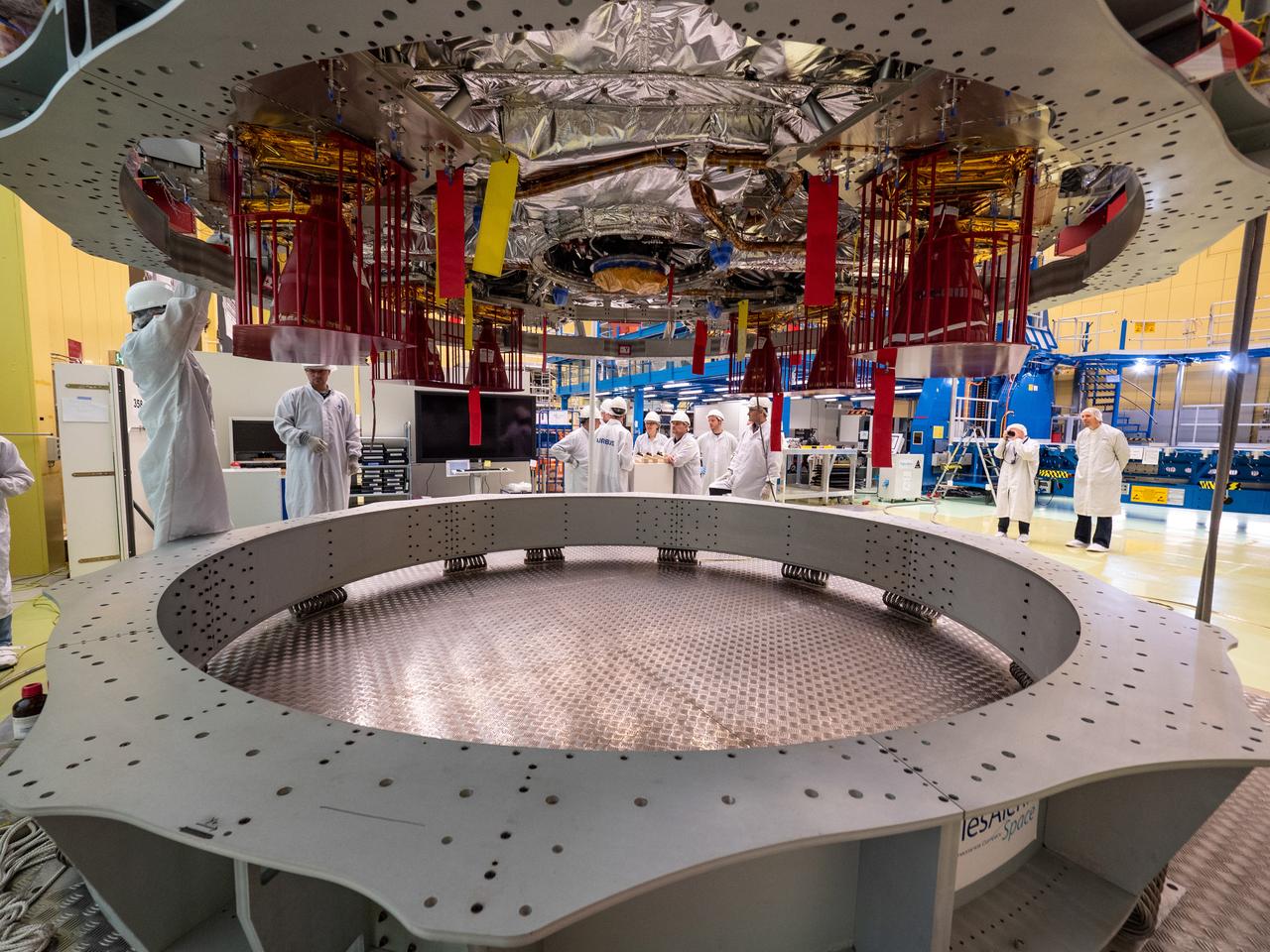
Technicians at the Airbus facility in Bremen, Germany prepare the European Service Module for shipment to Kennedy Space Center on Nov. 1, 2018. The service module will depart Germany on November 5, 2018 and will arrive in the U.S. on November 6...For the first time, NASA will use a European-built system as a critical element to power an American spacecraft, extending the international cooperation of the International Space Station into deep space. The European Service Module is a unique collaboration across space agencies and industry including ESA’s prime contractor, Airbus, and 10 European countries. The completion of service module work in Europe and shipment to Kennedy signifies a major milestone toward NASA’s human deep space exploration missions to the Moon and beyond.
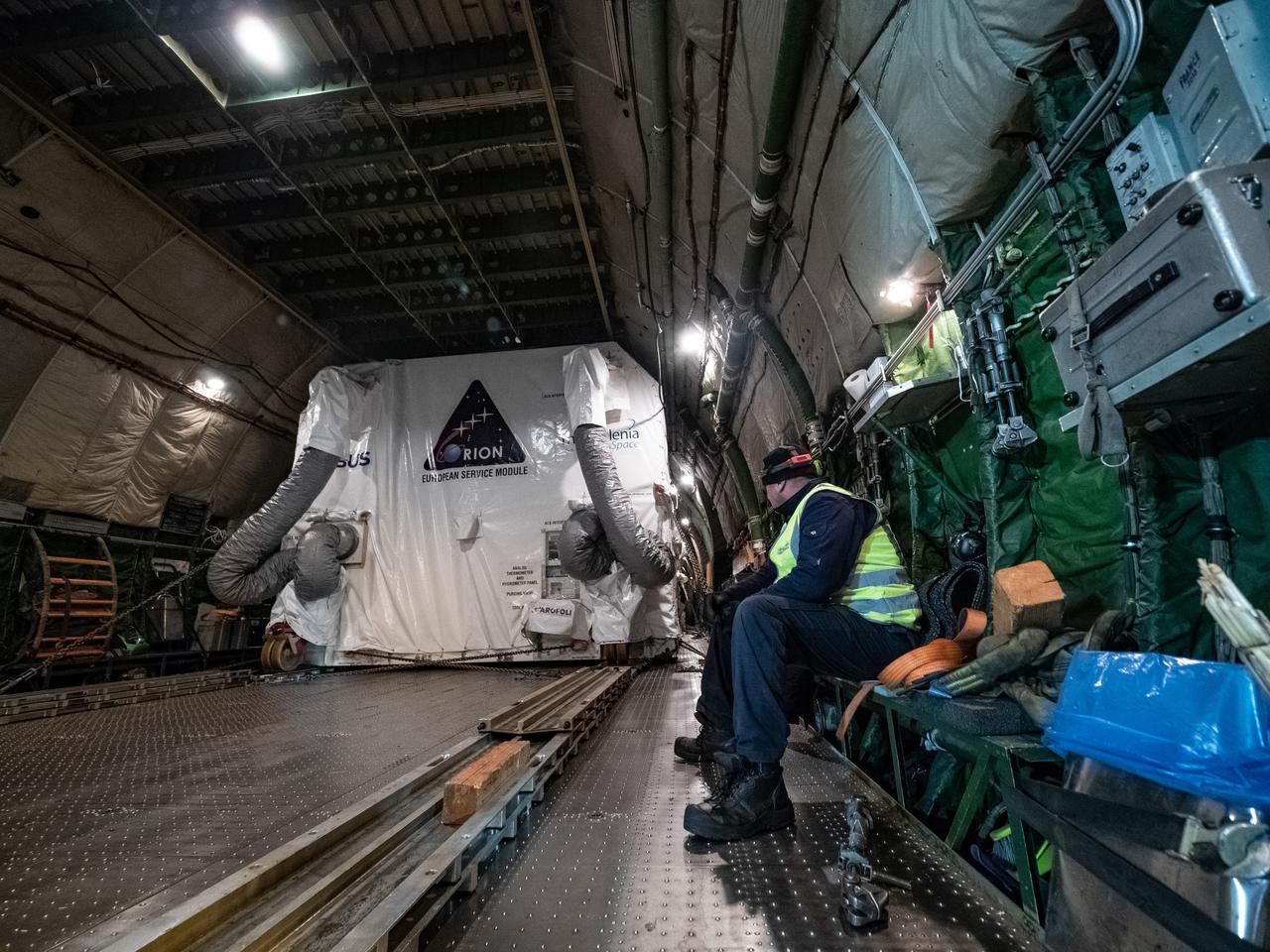
Orion's European Service Module is loaded on the Antonov airplane in Bremen, Germany on Nov. 5, 2018 for transport to Kennedy Space Center...For the first time, NASA will use a European-built system as a critical element to power an American spacecraft, extending the international cooperation of the International Space Station into deep space. The European Service Module is a unique collaboration across space agencies and industry including ESA’s prime contractor, Airbus, and 10 European countries. The completion of service module work in Europe and shipment to Kennedy signifies a major milestone toward NASA’s human deep space exploration missions to the Moon and beyond.
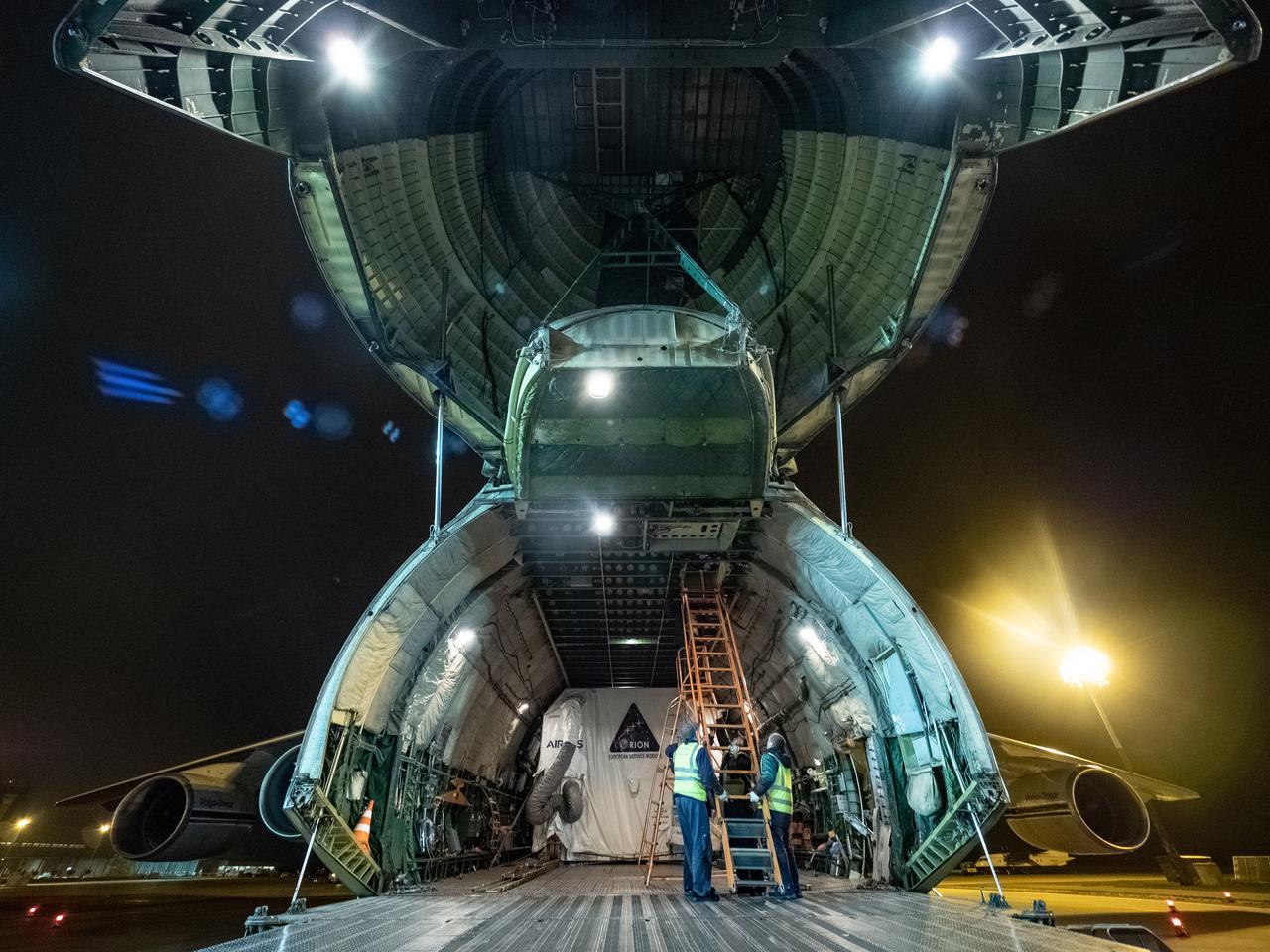
Orion's European Service Module is loaded on the Antonov airplane in Bremen, Germany on Nov. 5, 2018 for transport to Kennedy Space Center...For the first time, NASA will use a European-built system as a critical element to power an American spacecraft, extending the international cooperation of the International Space Station into deep space. The European Service Module is a unique collaboration across space agencies and industry including ESA’s prime contractor, Airbus, and 10 European countries. The completion of service module work in Europe and shipment to Kennedy signifies a major milestone toward NASA’s human deep space exploration missions to the Moon and beyond.
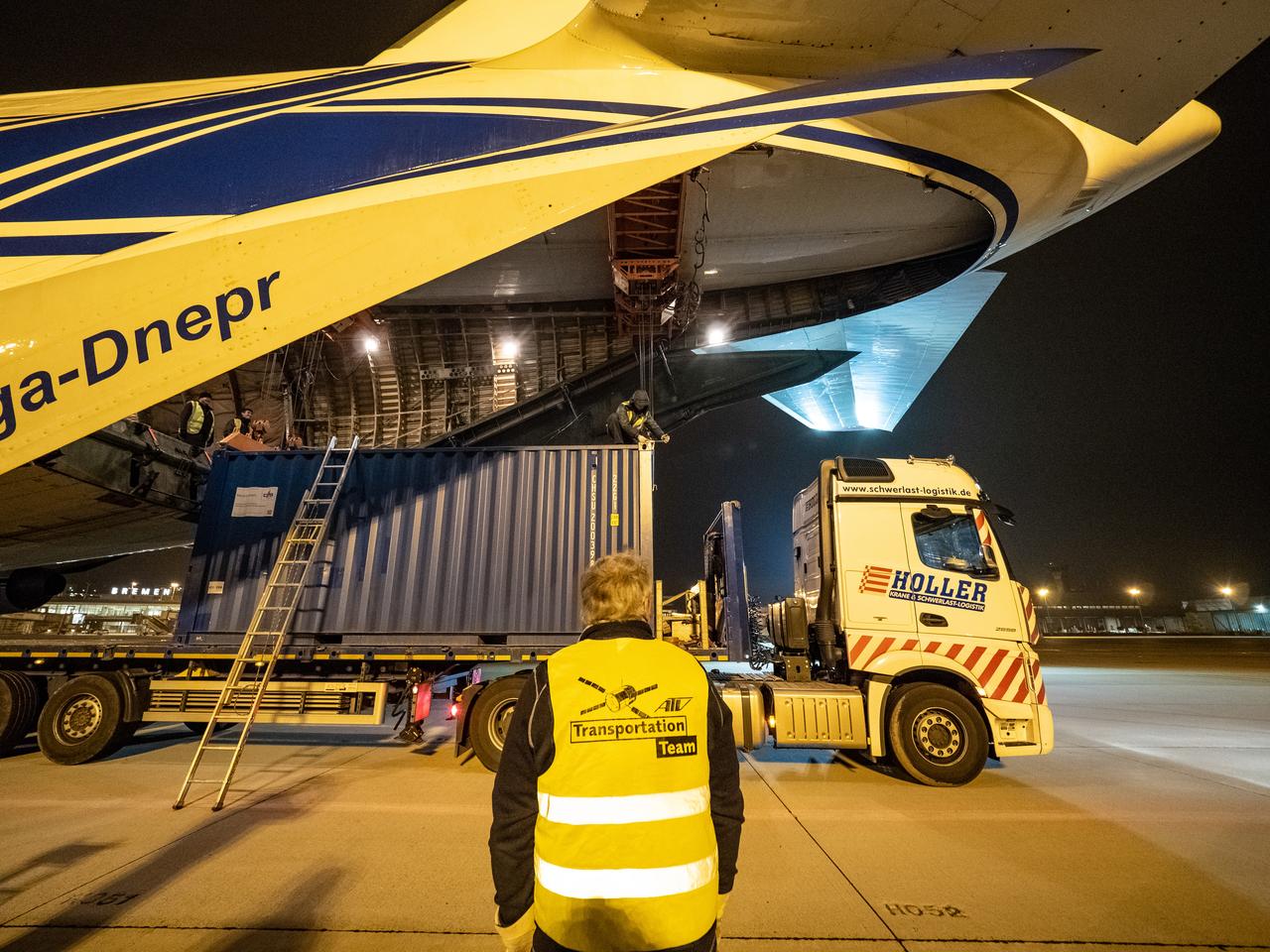
Orion's European Service Module is loaded on the Antonov airplane in Bremen, Germany on Nov. 5, 2018 for transport to Kennedy Space Center...For the first time, NASA will use a European-built system as a critical element to power an American spacecraft, extending the international cooperation of the International Space Station into deep space. The European Service Module is a unique collaboration across space agencies and industry including ESA’s prime contractor, Airbus, and 10 European countries. The completion of service module work in Europe and shipment to Kennedy signifies a major milestone toward NASA’s human deep space exploration missions to the Moon and beyond.
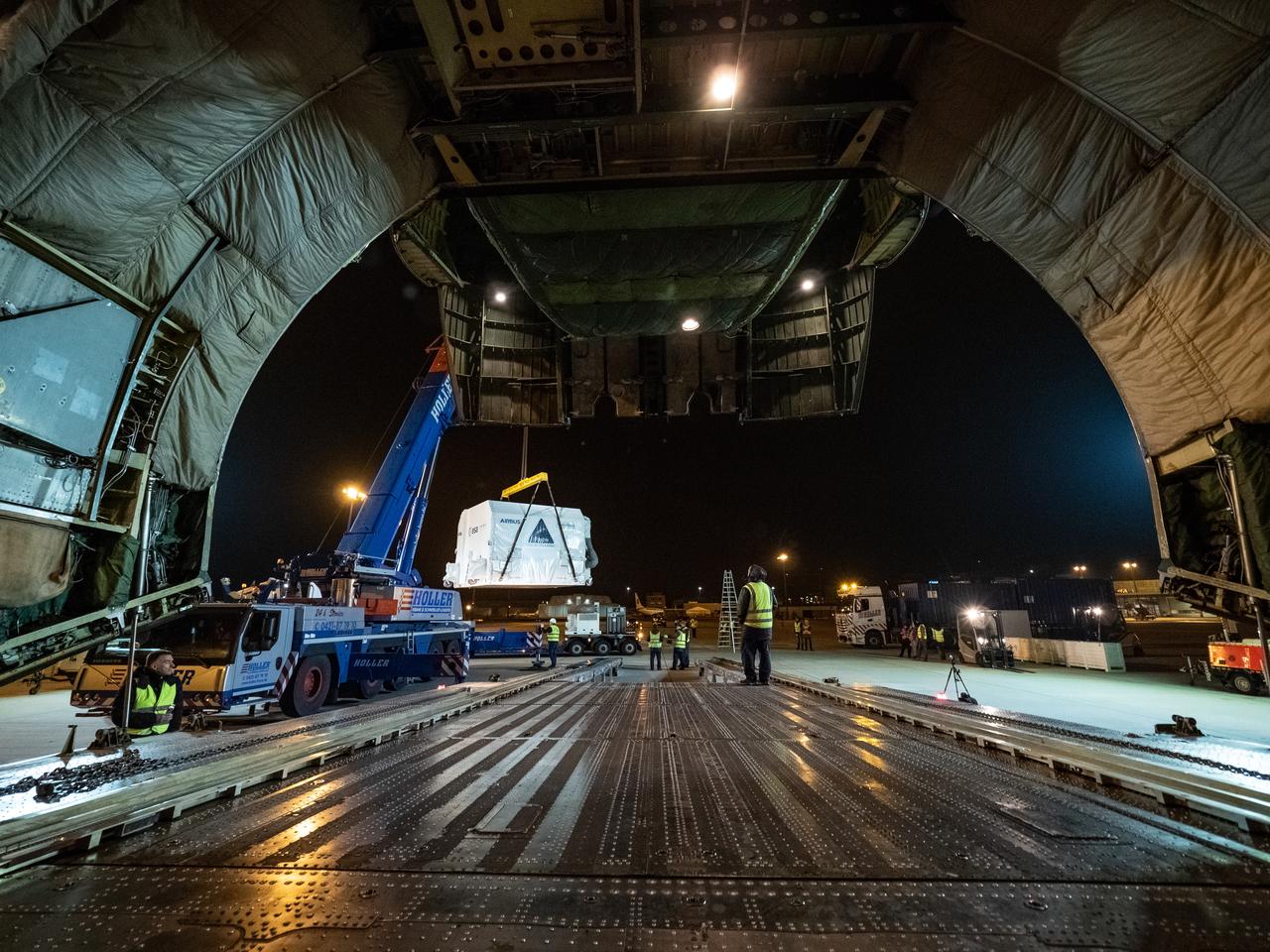
Orion's European Service Module is loaded on the Antonov airplane in Bremen, Germany on Nov. 5, 2018 for transport to Kennedy Space Center...For the first time, NASA will use a European-built system as a critical element to power an American spacecraft, extending the international cooperation of the International Space Station into deep space. The European Service Module is a unique collaboration across space agencies and industry including ESA’s prime contractor, Airbus, and 10 European countries. The completion of service module work in Europe and shipment to Kennedy signifies a major milestone toward NASA’s human deep space exploration missions to the Moon and beyond.
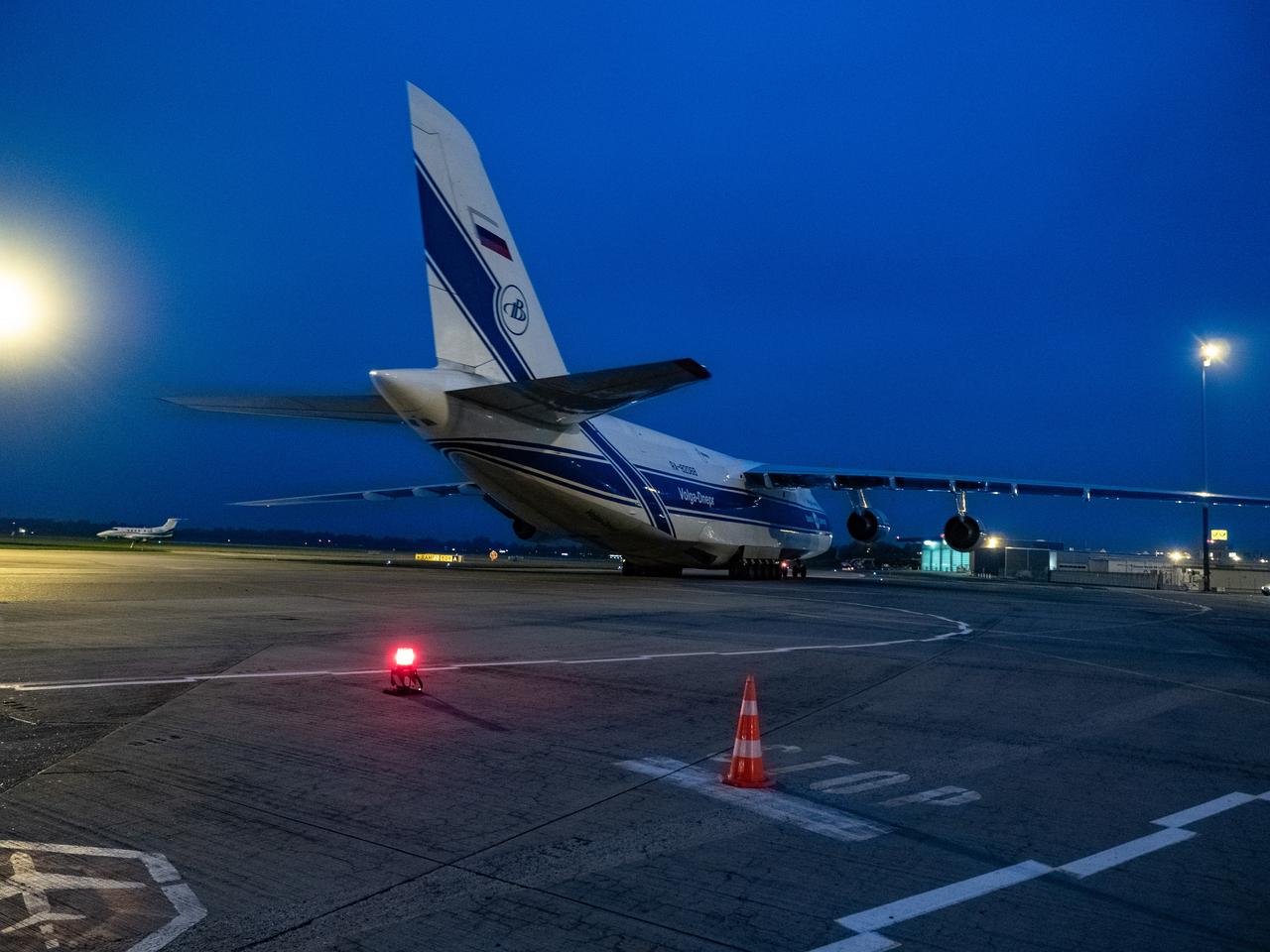
Orion's European Service Module is loaded on the Antonov airplane in Bremen, Germany on Nov. 5, 2018 for transport to Kennedy Space Center...For the first time, NASA will use a European-built system as a critical element to power an American spacecraft, extending the international cooperation of the International Space Station into deep space. The European Service Module is a unique collaboration across space agencies and industry including ESA’s prime contractor, Airbus, and 10 European countries. The completion of service module work in Europe and shipment to Kennedy signifies a major milestone toward NASA’s human deep space exploration missions to the Moon and beyond.
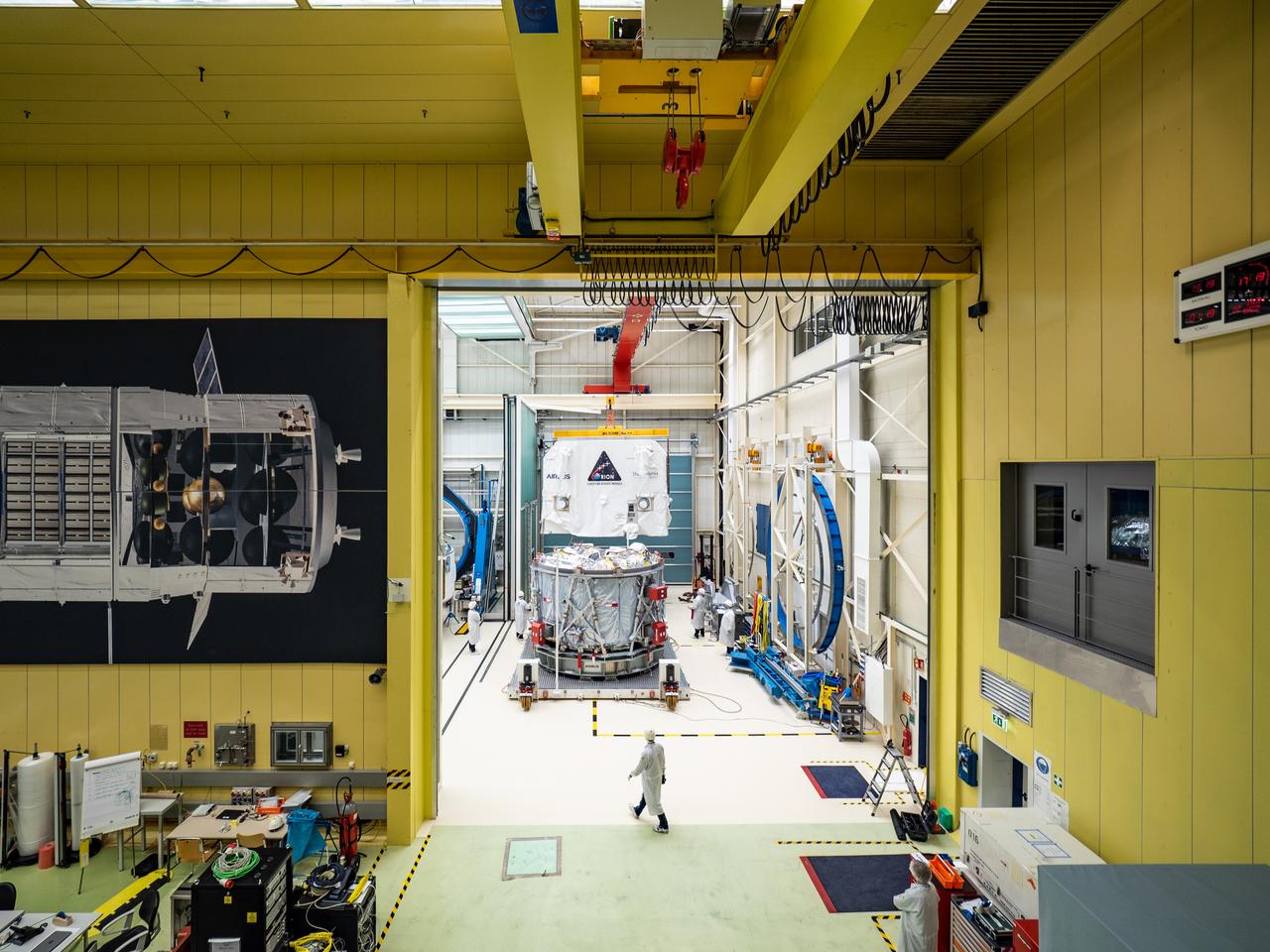
Technicians at the Airbus facility in Bremen, Germany prepare the European Service Module for shipment to Kennedy Space Center on Nov. 1, 2018. The service module will depart Germany on November 5, 2018 and will arrive in the U.S. on November 6...For the first time, NASA will use a European-built system as a critical element to power an American spacecraft, extending the international cooperation of the International Space Station into deep space. The European Service Module is a unique collaboration across space agencies and industry including ESA’s prime contractor, Airbus, and 10 European countries. The completion of service module work in Europe and shipment to Kennedy signifies a major milestone toward NASA’s human deep space exploration missions to the Moon and beyond.
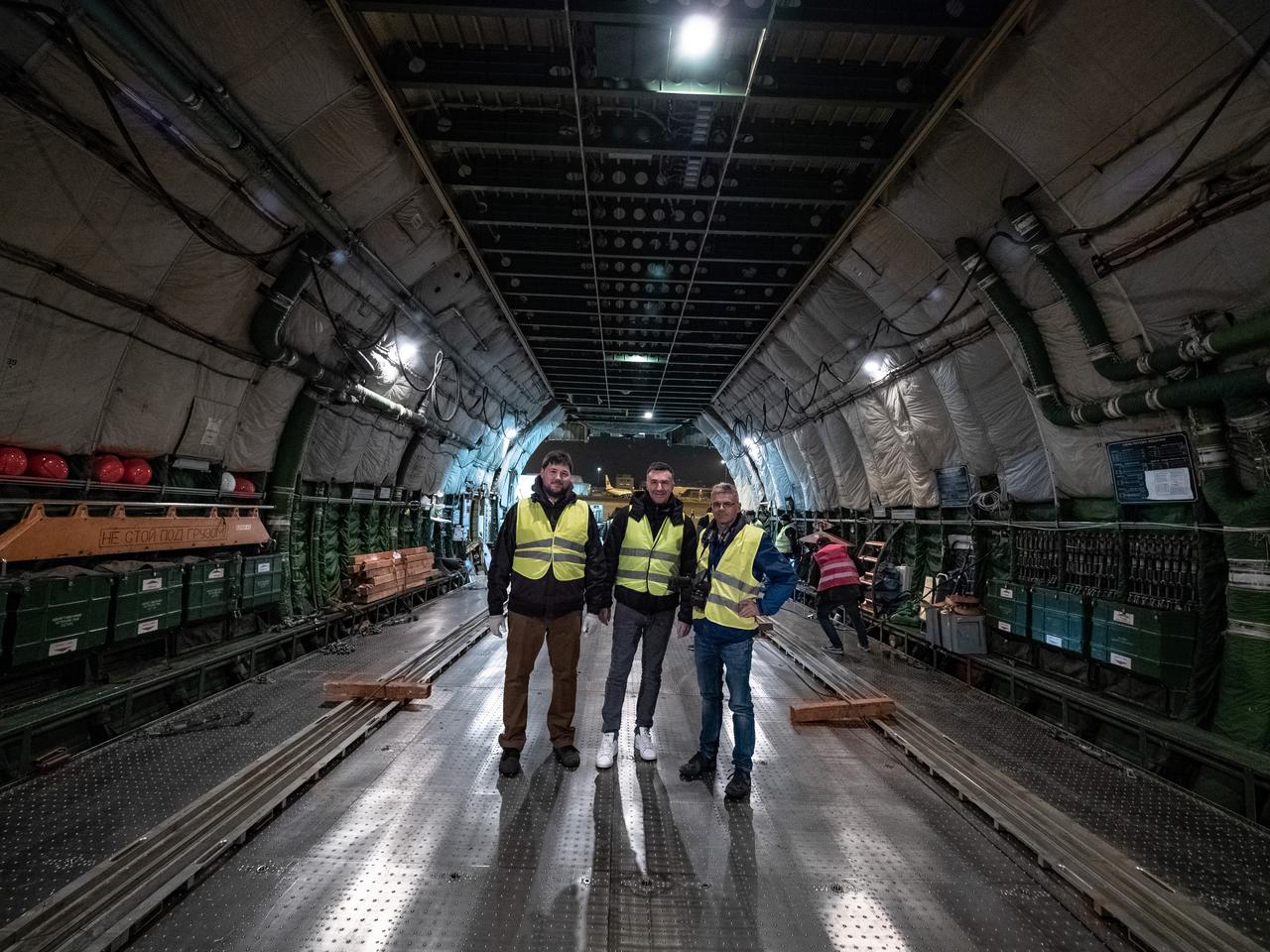
Orion's European Service Module is loaded on the Antonov airplane in Bremen, Germany on Nov. 5, 2018 for transport to Kennedy Space Center...For the first time, NASA will use a European-built system as a critical element to power an American spacecraft, extending the international cooperation of the International Space Station into deep space. The European Service Module is a unique collaboration across space agencies and industry including ESA’s prime contractor, Airbus, and 10 European countries. The completion of service module work in Europe and shipment to Kennedy signifies a major milestone toward NASA’s human deep space exploration missions to the Moon and beyond.
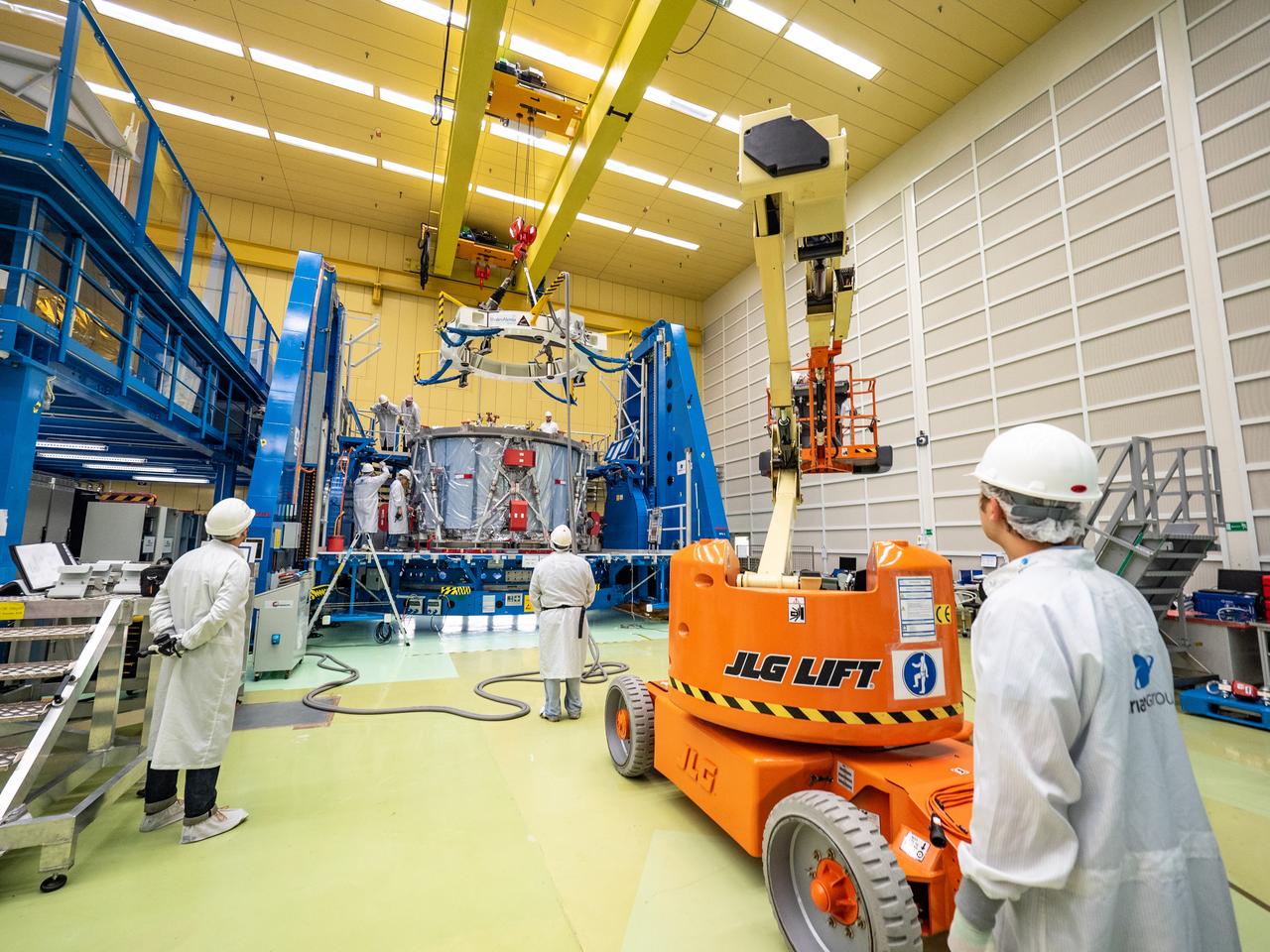
Technicians at the Airbus facility in Bremen, Germany prepare the European Service Module for shipment to Kennedy Space Center on Nov. 1, 2018. The service module will depart Germany on November 5, 2018 and will arrive in the U.S. on November 6...For the first time, NASA will use a European-built system as a critical element to power an American spacecraft, extending the international cooperation of the International Space Station into deep space. The European Service Module is a unique collaboration across space agencies and industry including ESA’s prime contractor, Airbus, and 10 European countries. The completion of service module work in Europe and shipment to Kennedy signifies a major milestone toward NASA’s human deep space exploration missions to the Moon and beyond.
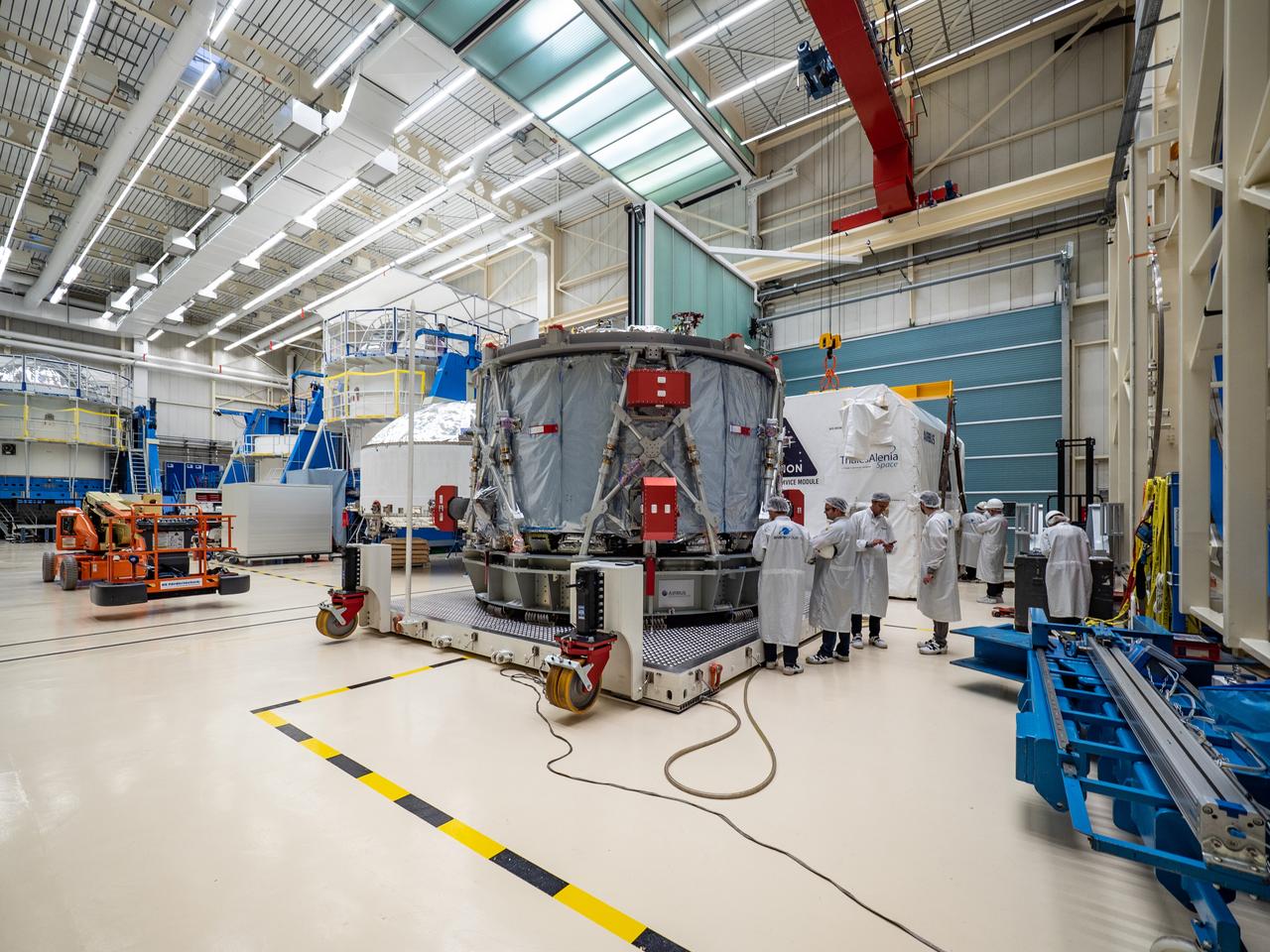
Technicians at the Airbus facility in Bremen, Germany prepare the European Service Module for shipment to Kennedy Space Center on Nov. 1, 2018. The service module will depart Germany on November 5, 2018 and will arrive in the U.S. on November 6...For the first time, NASA will use a European-built system as a critical element to power an American spacecraft, extending the international cooperation of the International Space Station into deep space. The European Service Module is a unique collaboration across space agencies and industry including ESA’s prime contractor, Airbus, and 10 European countries. The completion of service module work in Europe and shipment to Kennedy signifies a major milestone toward NASA’s human deep space exploration missions to the Moon and beyond.
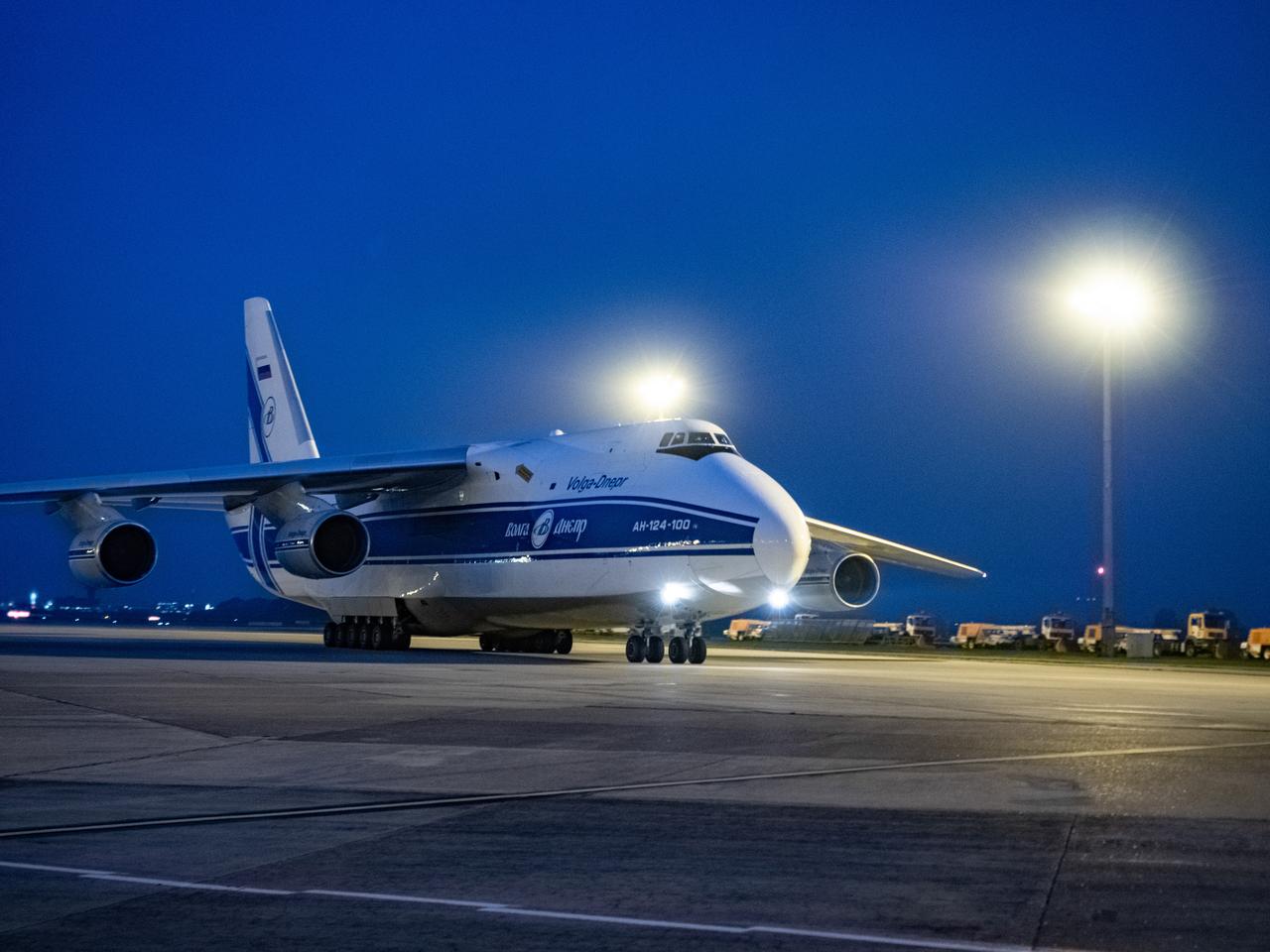
Orion's European Service Module is loaded on the Antonov airplane in Bremen, Germany on Nov. 5, 2018 for transport to Kennedy Space Center...For the first time, NASA will use a European-built system as a critical element to power an American spacecraft, extending the international cooperation of the International Space Station into deep space. The European Service Module is a unique collaboration across space agencies and industry including ESA’s prime contractor, Airbus, and 10 European countries. The completion of service module work in Europe and shipment to Kennedy signifies a major milestone toward NASA’s human deep space exploration missions to the Moon and beyond.
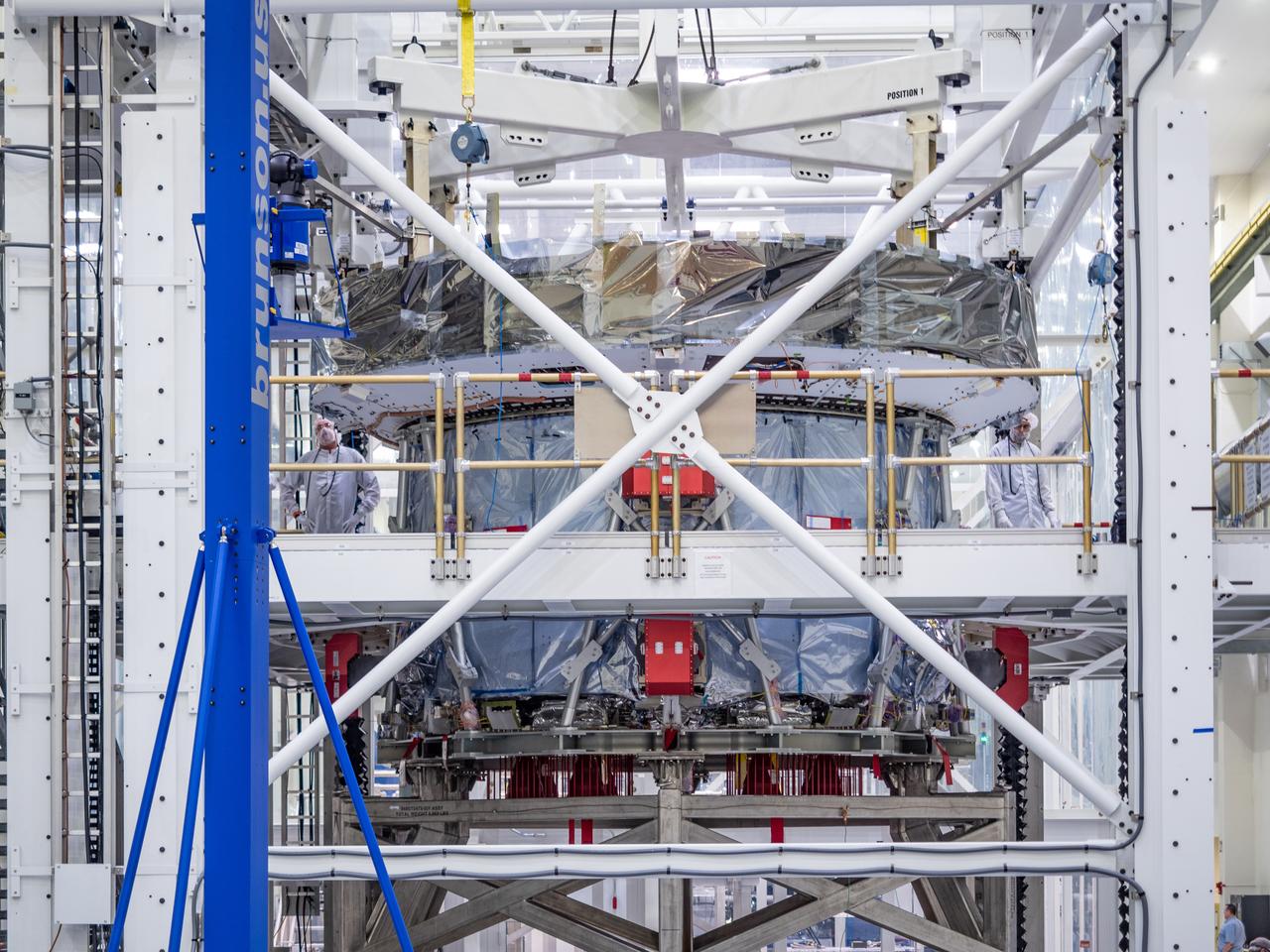
At the Operations and Checkout Building at Kennedy Space Center, Lockheed Martin technicians work to mate Orion's crew module adapter to the European Service Module on Nov. 14, 2018...For the first time, NASA will use a European-built system as a critical element to power an American spacecraft, extending the international cooperation of the International Space Station into deep space. The European Service Module is a unique collaboration across space agencies and industry including ESA’s prime contractor, Airbus, and 10 European countries. The completion of service module work in Europe and shipment to Kennedy signifies a major milestone toward NASA’s human deep space exploration missions to the Moon and beyond.
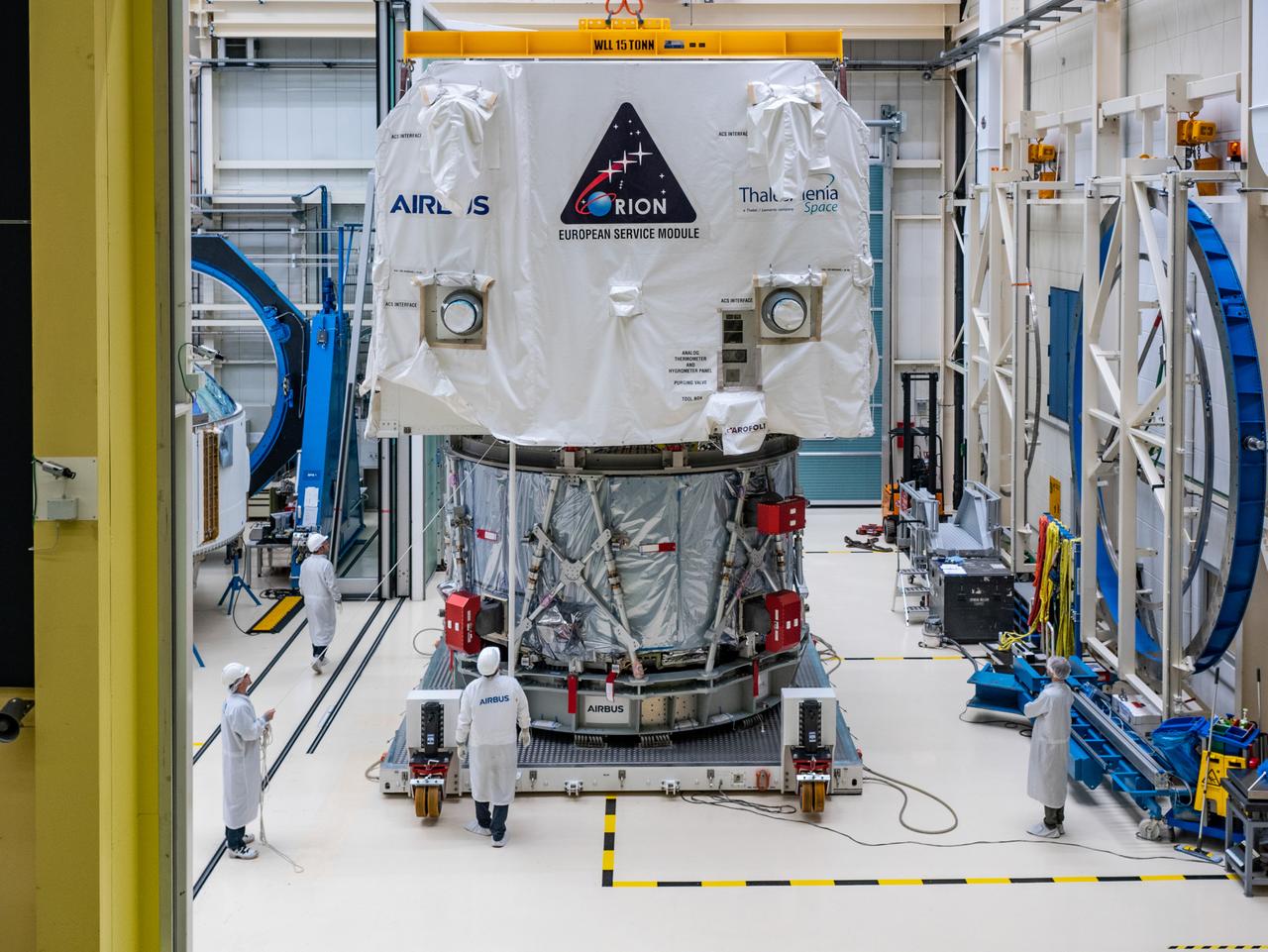
Technicians at the Airbus facility in Bremen, Germany prepare the European Service Module for shipment to Kennedy Space Center on Nov. 1, 2018. The service module will depart Germany on November 5, 2018 and will arrive in the U.S. on November 6...For the first time, NASA will use a European-built system as a critical element to power an American spacecraft, extending the international cooperation of the International Space Station into deep space. The European Service Module is a unique collaboration across space agencies and industry including ESA’s prime contractor, Airbus, and 10 European countries. The completion of service module work in Europe and shipment to Kennedy signifies a major milestone toward NASA’s human deep space exploration missions to the Moon and beyond.
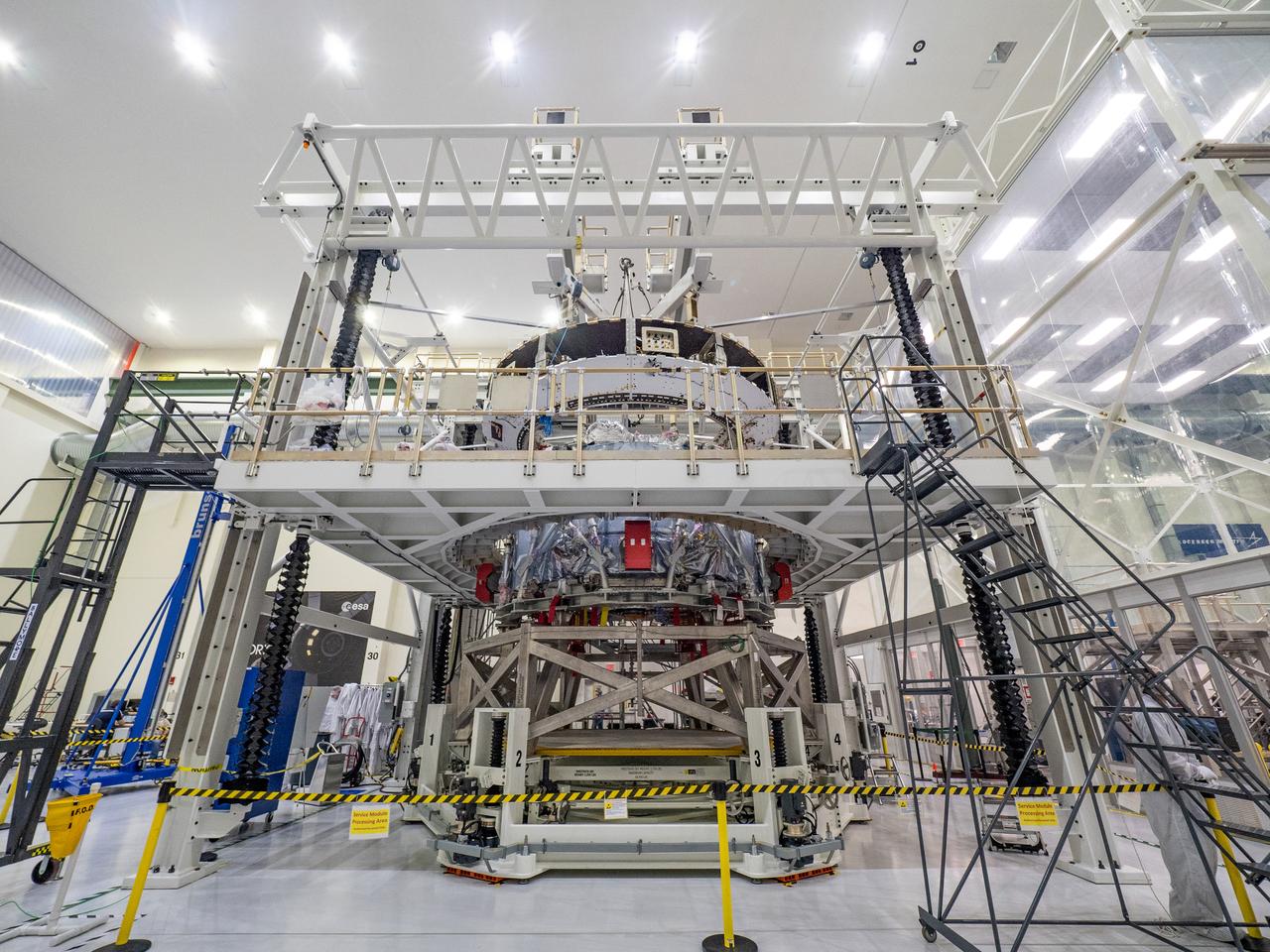
At the Operations and Checkout Building at Kennedy Space Center, Lockheed Martin technicians work to mate Orion's crew module adapter to the European Service Module on Nov. 13, 2018...For the first time, NASA will use a European-built system as a critical element to power an American spacecraft, extending the international cooperation of the International Space Station into deep space. The European Service Module is a unique collaboration across space agencies and industry including ESA’s prime contractor, Airbus, and 10 European countries. The completion of service module work in Europe and shipment to Kennedy signifies a major milestone toward NASA’s human deep space exploration missions to the Moon and beyond.
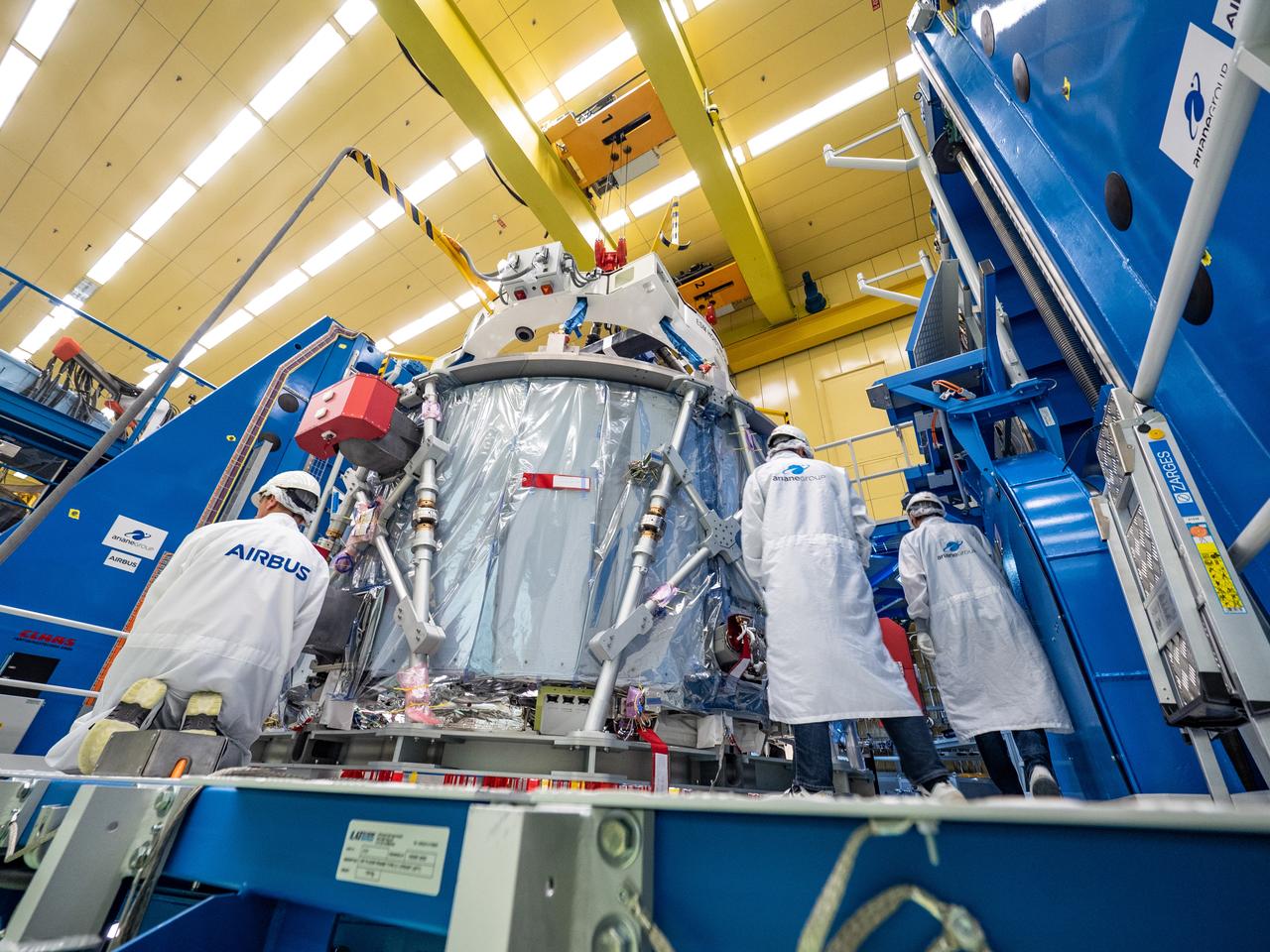
Technicians at the Airbus facility in Bremen, Germany prepare the European Service Module for shipment to Kennedy Space Center on Nov. 1, 2018. The service module will depart Germany on November 5, 2018 and will arrive in the U.S. on November 6...For the first time, NASA will use a European-built system as a critical element to power an American spacecraft, extending the international cooperation of the International Space Station into deep space. The European Service Module is a unique collaboration across space agencies and industry including ESA’s prime contractor, Airbus, and 10 European countries. The completion of service module work in Europe and shipment to Kennedy signifies a major milestone toward NASA’s human deep space exploration missions to the Moon and beyond.
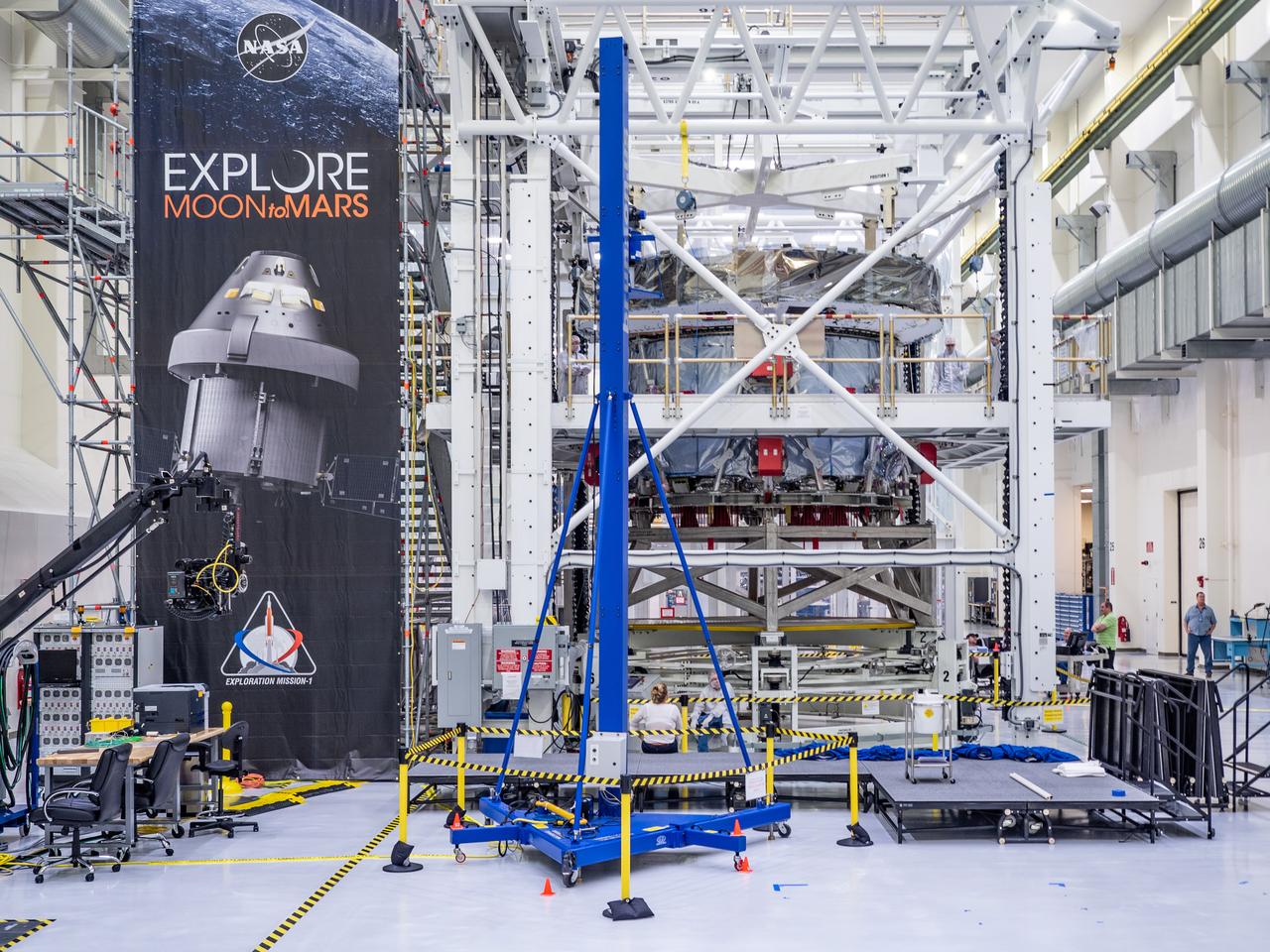
At the Operations and Checkout Building at Kennedy Space Center, Lockheed Martin technicians work to mate Orion's crew module adapter to the European Service Module on Nov. 14, 2018...For the first time, NASA will use a European-built system as a critical element to power an American spacecraft, extending the international cooperation of the International Space Station into deep space. The European Service Module is a unique collaboration across space agencies and industry including ESA’s prime contractor, Airbus, and 10 European countries. The completion of service module work in Europe and shipment to Kennedy signifies a major milestone toward NASA’s human deep space exploration missions to the Moon and beyond.
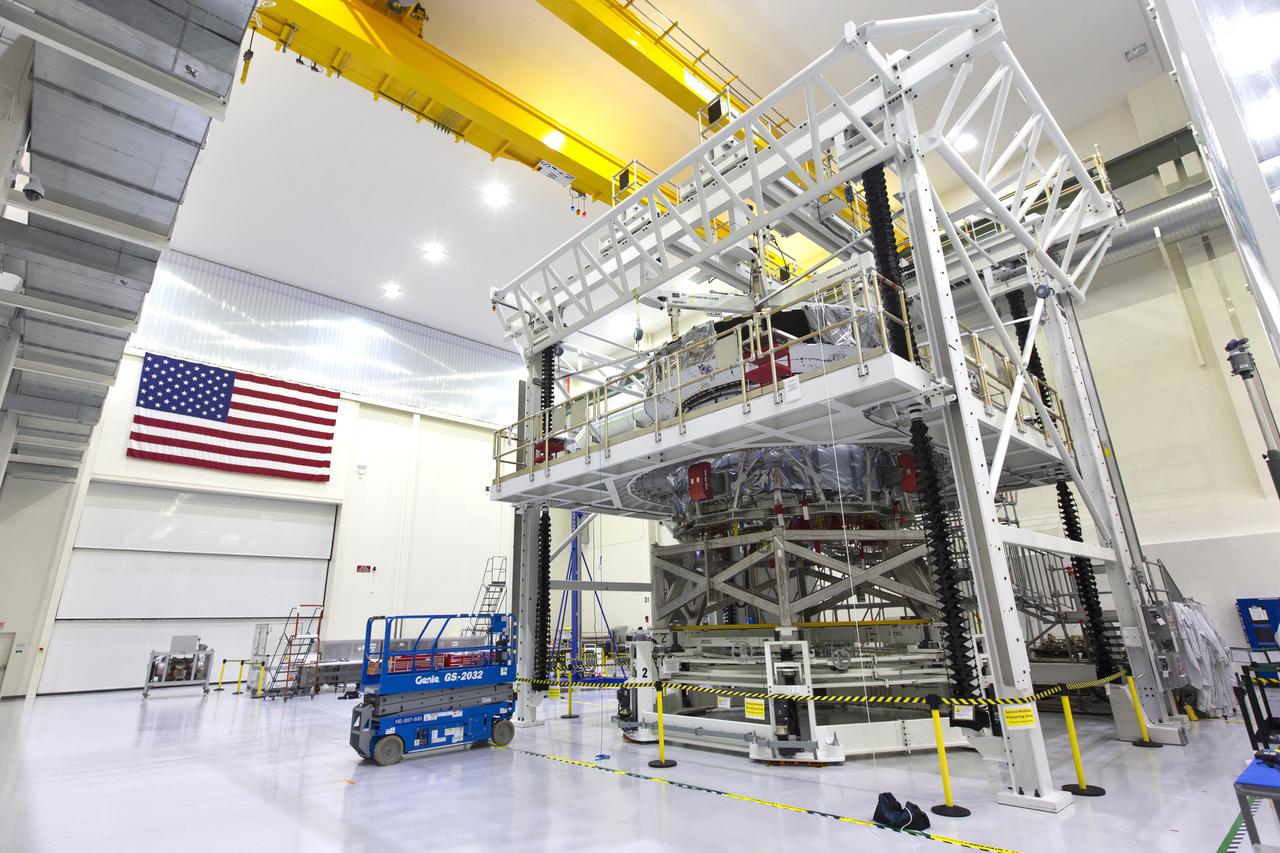
Inside the high bay of the Neil Armstrong Operations and Checkout Building at NASA's Kennedy Space Center in Florida, Orion's crew module adapter is mated to the European Service Module on Nov. 26, 2018. For the first time, NASA will use a European-built system as a critical element to power an American spacecraft, extending the international cooperation of the International Space Station into deep space. The European Service Module is a unique collaboration across space agencies and industry, including the European Space Agency's prime contractor, Airbus, and 10 European countries. The completion of service module work in Europe and shipment to Kennedy signifies a major milestone toward NASA's human deep space exploration missions to the Moon and beyond.
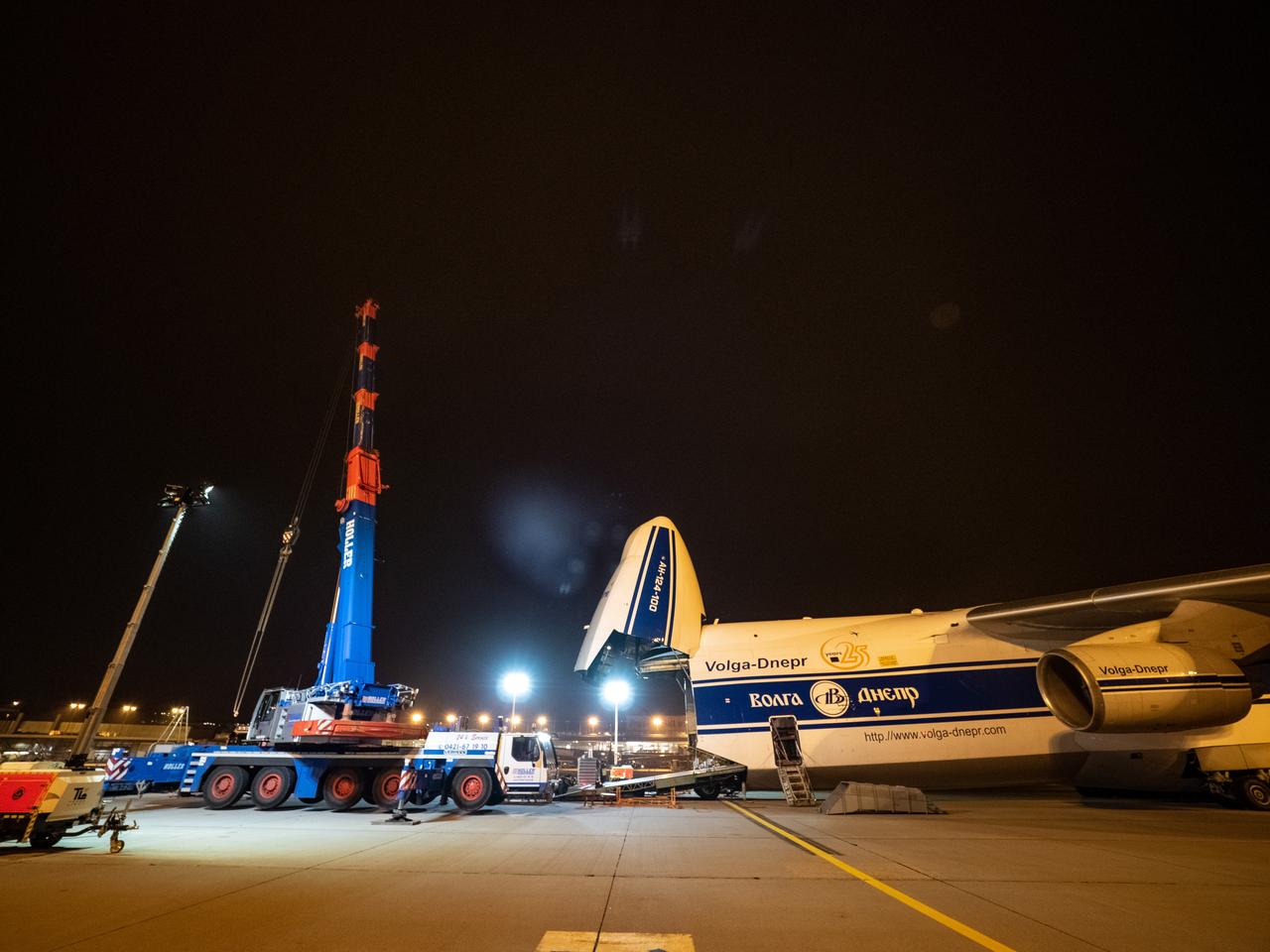
Orion's European Service Module is loaded on the Antonov airplane in Bremen, Germany on Nov. 5, 2018 for transport to Kennedy Space Center...For the first time, NASA will use a European-built system as a critical element to power an American spacecraft, extending the international cooperation of the International Space Station into deep space. The European Service Module is a unique collaboration across space agencies and industry including ESA’s prime contractor, Airbus, and 10 European countries. The completion of service module work in Europe and shipment to Kennedy signifies a major milestone toward NASA’s human deep space exploration missions to the Moon and beyond.
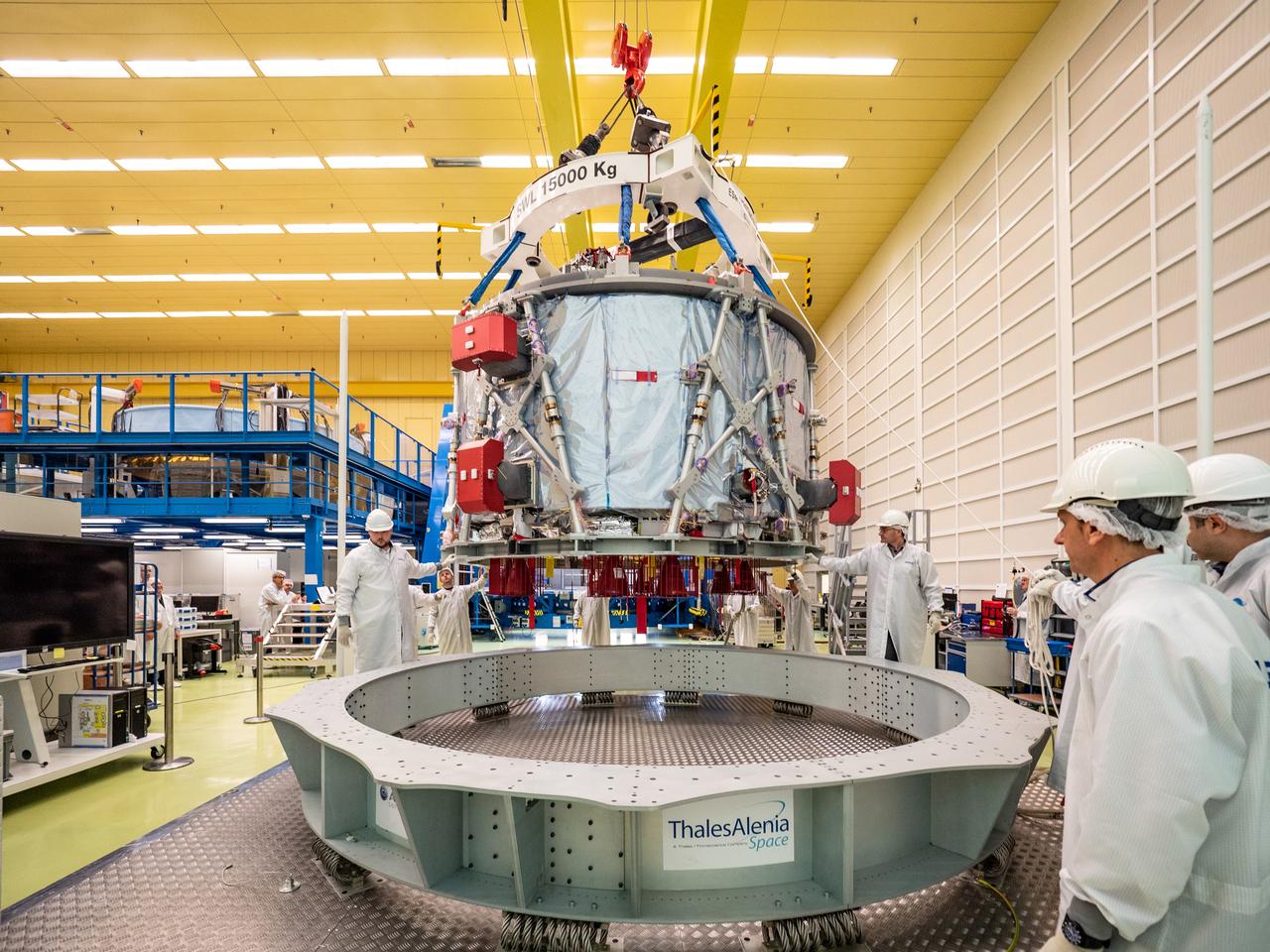
Technicians at the Airbus facility in Bremen, Germany prepare the European Service Module for shipment to Kennedy Space Center on Nov. 1, 2018. The service module will depart Germany on November 5, 2018 and will arrive in the U.S. on November 6...For the first time, NASA will use a European-built system as a critical element to power an American spacecraft, extending the international cooperation of the International Space Station into deep space. The European Service Module is a unique collaboration across space agencies and industry including ESA’s prime contractor, Airbus, and 10 European countries. The completion of service module work in Europe and shipment to Kennedy signifies a major milestone toward NASA’s human deep space exploration missions to the Moon and beyond.
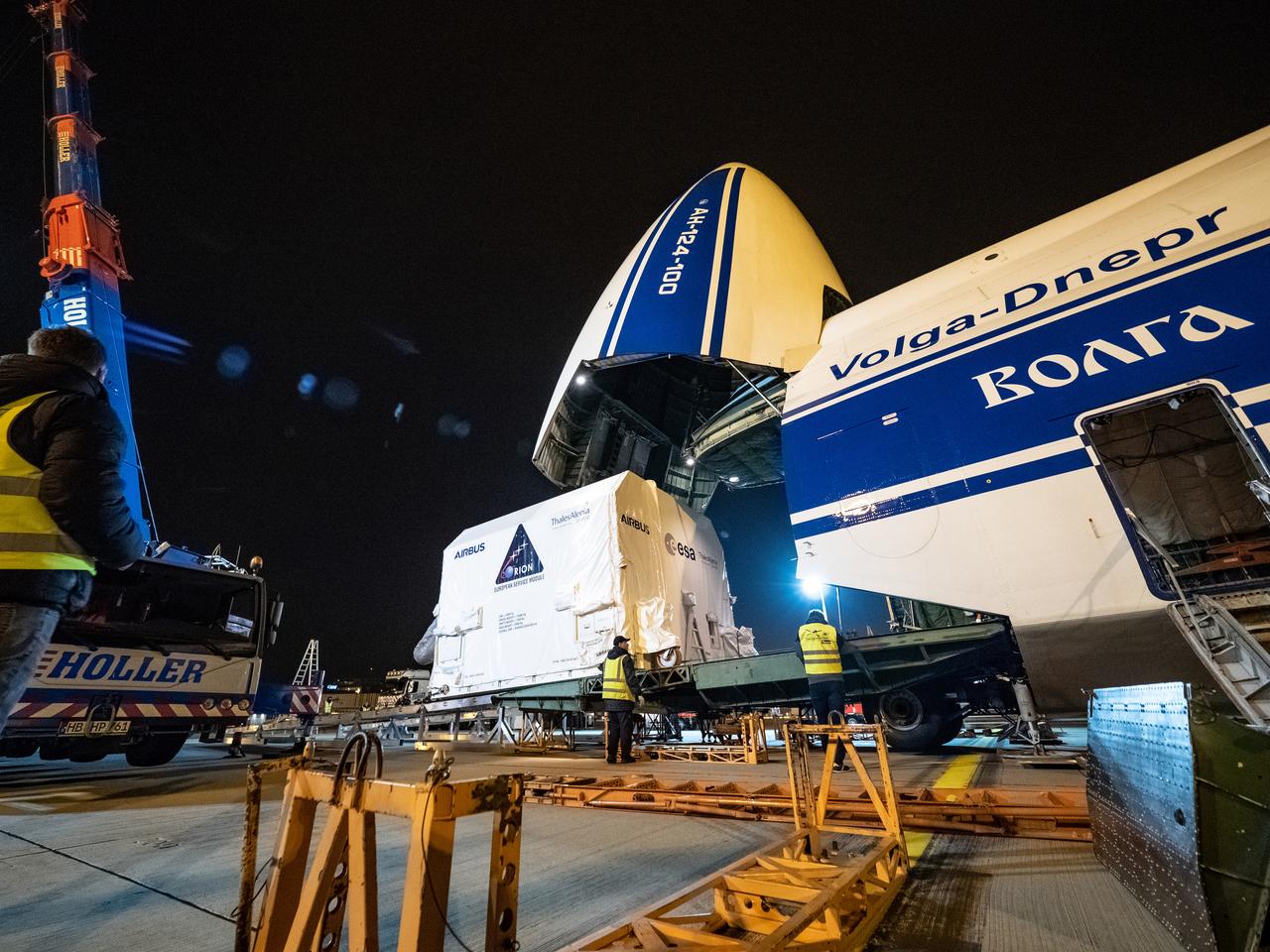
Orion's European Service Module is loaded on the Antonov airplane in Bremen, Germany on Nov. 5, 2018 for transport to Kennedy Space Center...For the first time, NASA will use a European-built system as a critical element to power an American spacecraft, extending the international cooperation of the International Space Station into deep space. The European Service Module is a unique collaboration across space agencies and industry including ESA’s prime contractor, Airbus, and 10 European countries. The completion of service module work in Europe and shipment to Kennedy signifies a major milestone toward NASA’s human deep space exploration missions to the Moon and beyond.
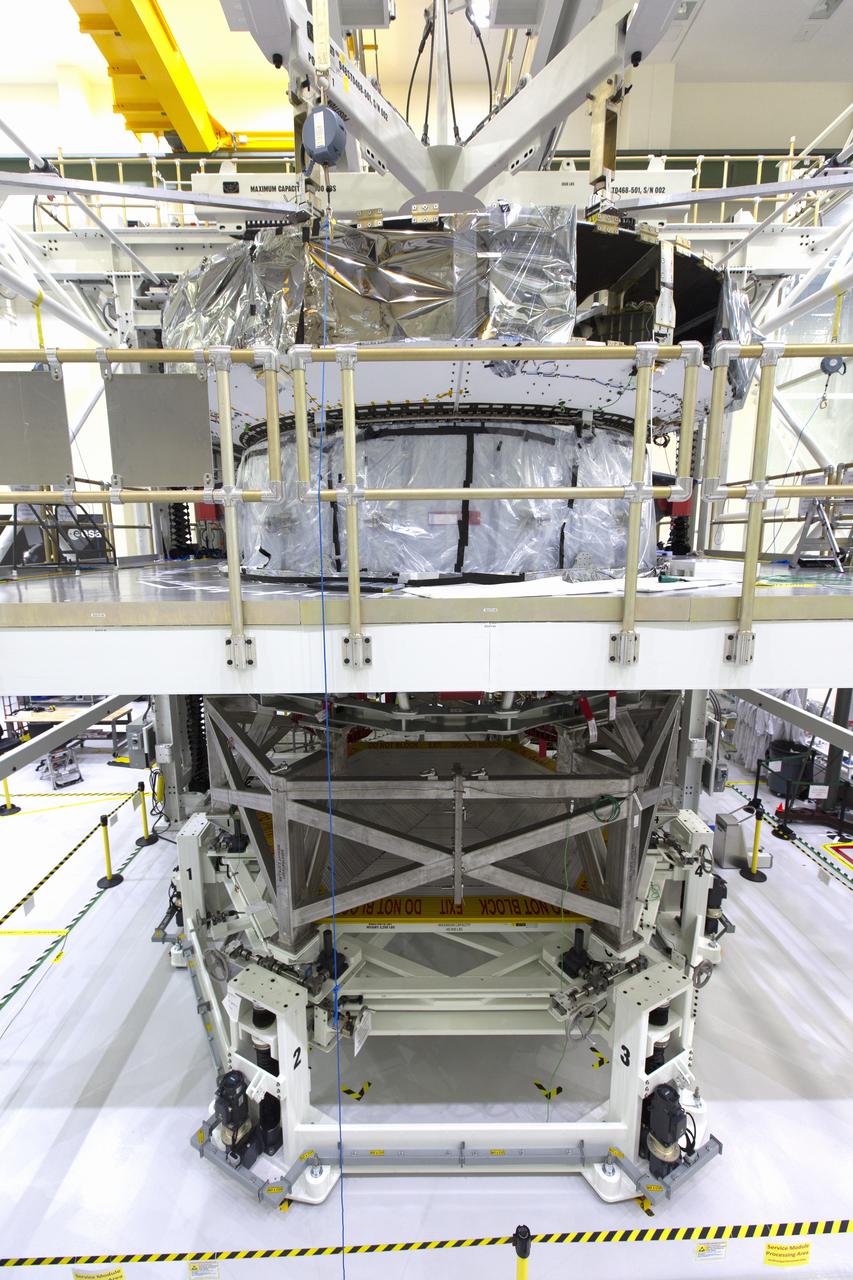
Inside the high bay of the Neil Armstrong Operations and Checkout Building at NASA's Kennedy Space Center in Florida, Orion's crew module adapter is mated to the European Service Module on Nov. 26, 2018. For the first time, NASA will use a European-built system as a critical element to power an American spacecraft, extending the international cooperation of the International Space Station into deep space. The European Service Module is a unique collaboration across space agencies and industry, including the European Space Agency's prime contractor, Airbus, and 10 European countries. The completion of service module work in Europe and shipment to Kennedy signifies a major milestone toward NASA's human deep space exploration missions to the Moon and beyond.
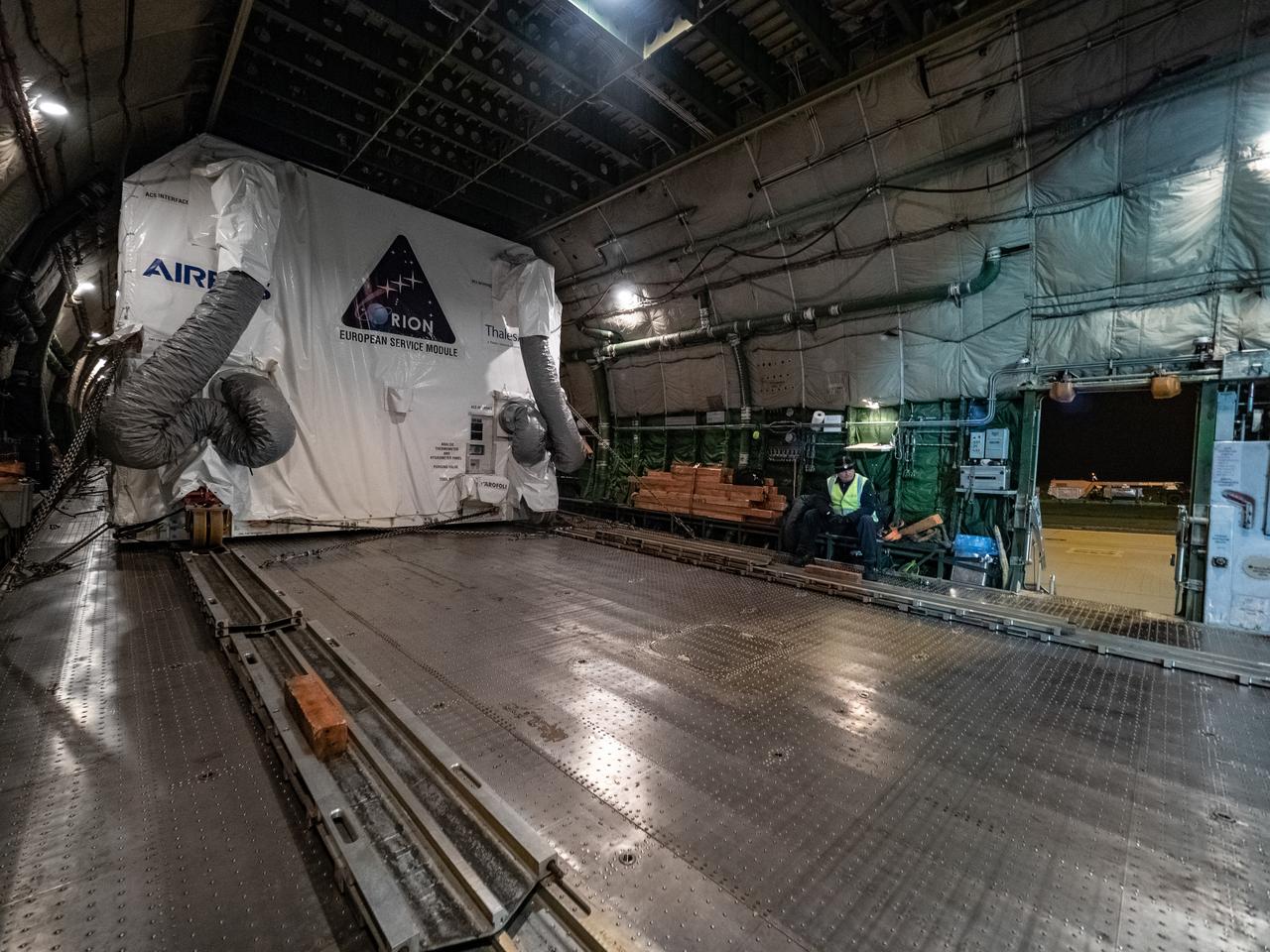
Orion's European Service Module is loaded on the Antonov airplane in Bremen, Germany on Nov. 5, 2018 for transport to Kennedy Space Center...For the first time, NASA will use a European-built system as a critical element to power an American spacecraft, extending the international cooperation of the International Space Station into deep space. The European Service Module is a unique collaboration across space agencies and industry including ESA’s prime contractor, Airbus, and 10 European countries. The completion of service module work in Europe and shipment to Kennedy signifies a major milestone toward NASA’s human deep space exploration missions to the Moon and beyond.
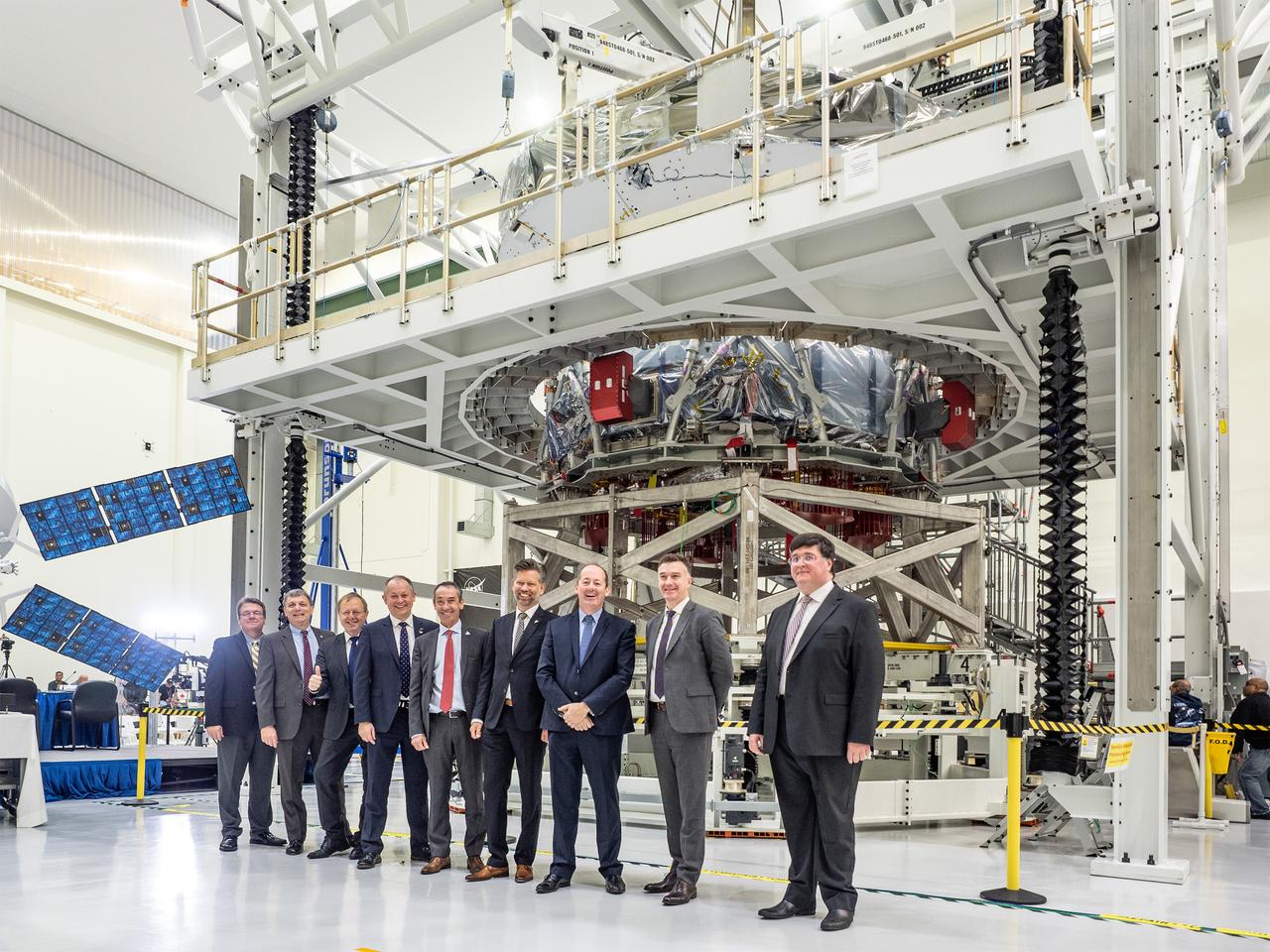
A European Service Module arrival event takes at the Neil Armstrong Operations and Checkout Building at Kennedy Space Center in Florida on Nov. 16, 2018...For the first time, NASA will use a European-built system as a critical element to power an American spacecraft, extending the international cooperation of the International Space Station into deep space. The European Service Module is a unique collaboration across space agencies and industry including ESA’s prime contractor, Airbus, and 10 European countries. The completion of service module work in Europe and shipment to Kennedy signifies a major milestone toward NASA’s human deep space exploration missions to the Moon and beyond.
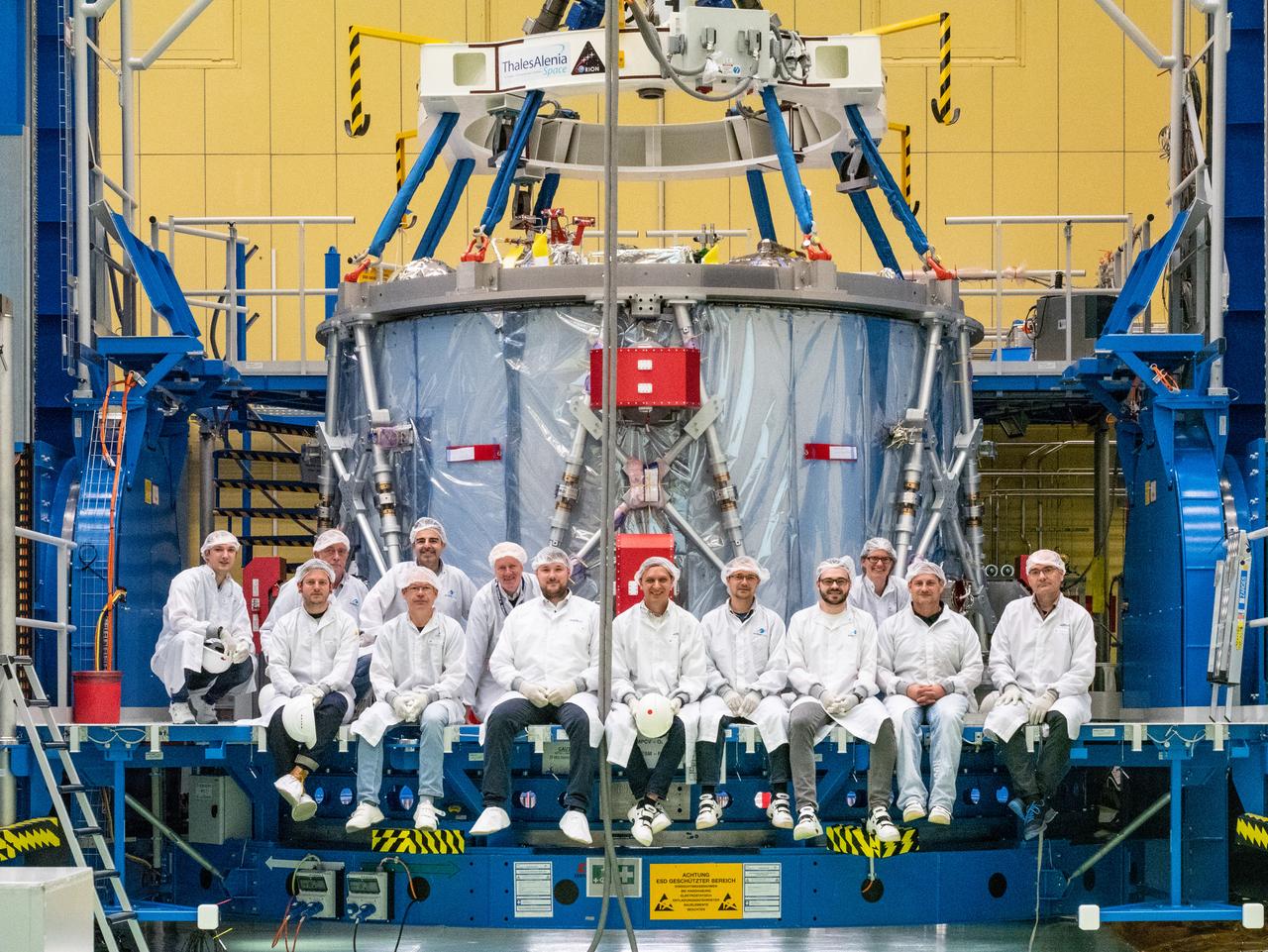
Technicians at the Airbus facility in Bremen, Germany prepare the European Service Module for shipment to Kennedy Space Center on Nov. 1, 2018. The service module will depart Germany on November 5, 2018 and will arrive in the U.S. on November 6...For the first time, NASA will use a European-built system as a critical element to power an American spacecraft, extending the international cooperation of the International Space Station into deep space. The European Service Module is a unique collaboration across space agencies and industry including ESA’s prime contractor, Airbus, and 10 European countries. The completion of service module work in Europe and shipment to Kennedy signifies a major milestone toward NASA’s human deep space exploration missions to the Moon and beyond.
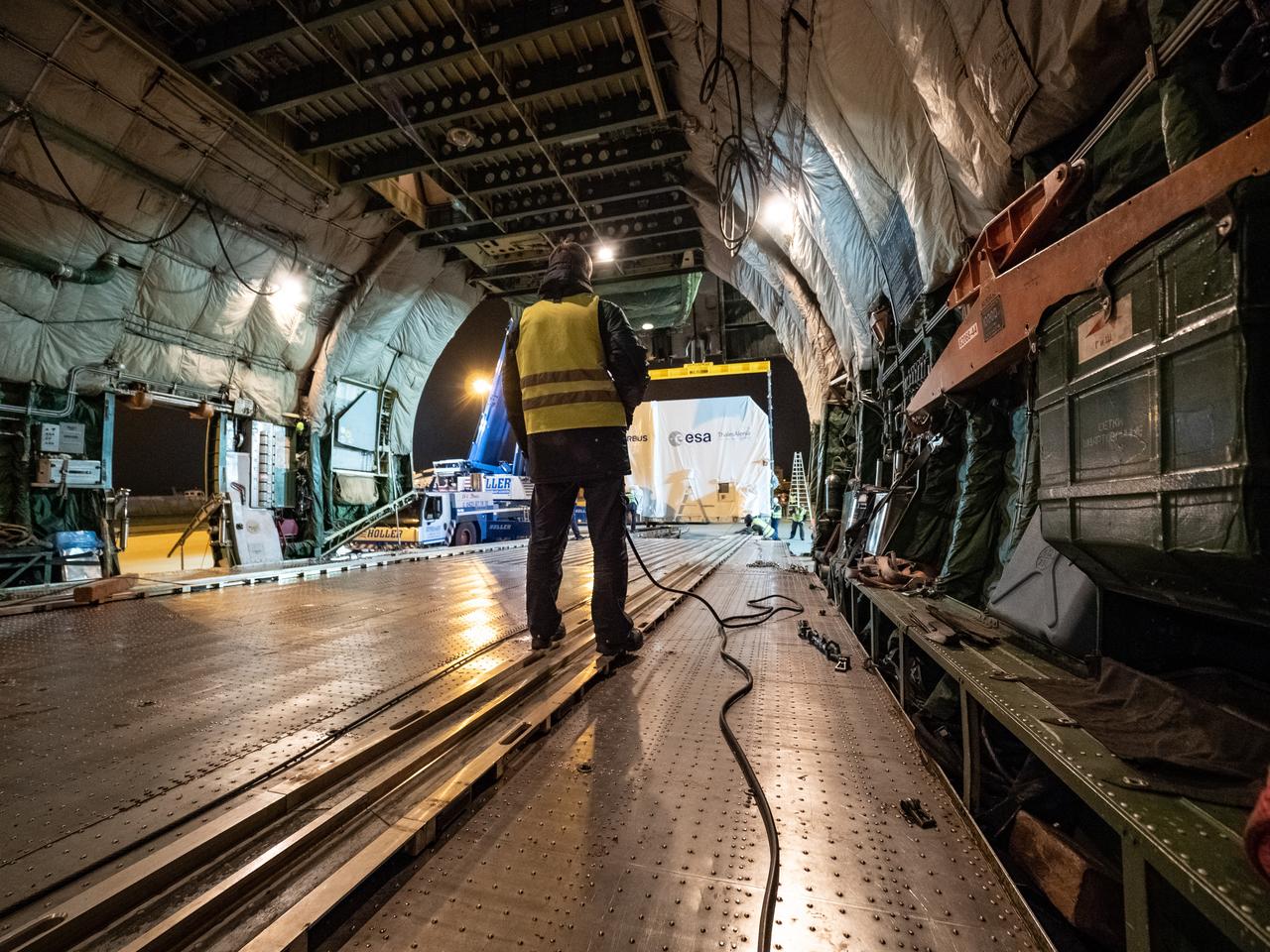
Orion's European Service Module is loaded on the Antonov airplane in Bremen, Germany on Nov. 5, 2018 for transport to Kennedy Space Center...For the first time, NASA will use a European-built system as a critical element to power an American spacecraft, extending the international cooperation of the International Space Station into deep space. The European Service Module is a unique collaboration across space agencies and industry including ESA’s prime contractor, Airbus, and 10 European countries. The completion of service module work in Europe and shipment to Kennedy signifies a major milestone toward NASA’s human deep space exploration missions to the Moon and beyond.
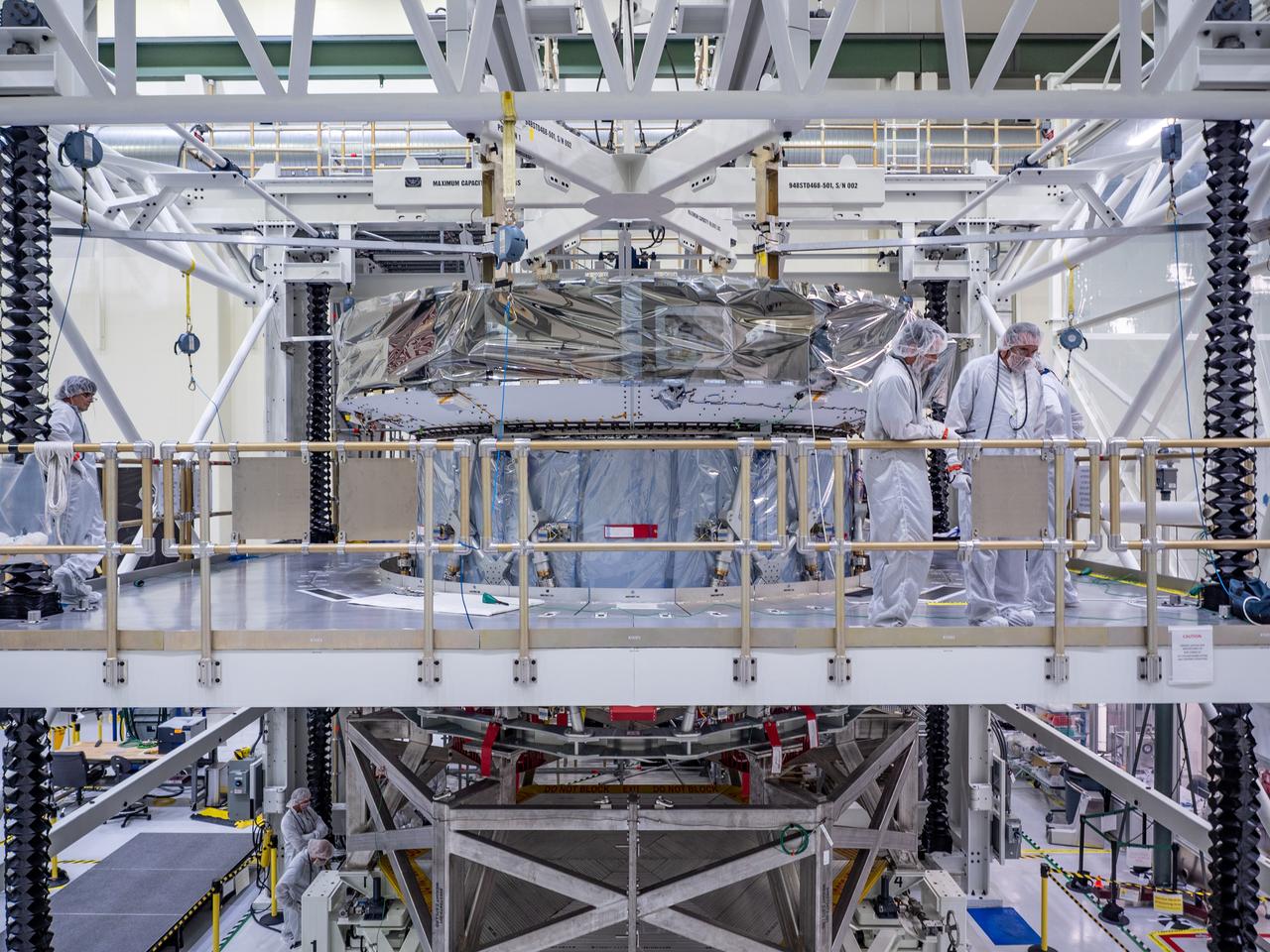
At the Operations and Checkout Building at Kennedy Space Center, Lockheed Martin technicians work to mate Orion's crew module adapter to the European Service Module on Nov. 14, 2018...For the first time, NASA will use a European-built system as a critical element to power an American spacecraft, extending the international cooperation of the International Space Station into deep space. The European Service Module is a unique collaboration across space agencies and industry including ESA’s prime contractor, Airbus, and 10 European countries. The completion of service module work in Europe and shipment to Kennedy signifies a major milestone toward NASA’s human deep space exploration missions to the Moon and beyond.
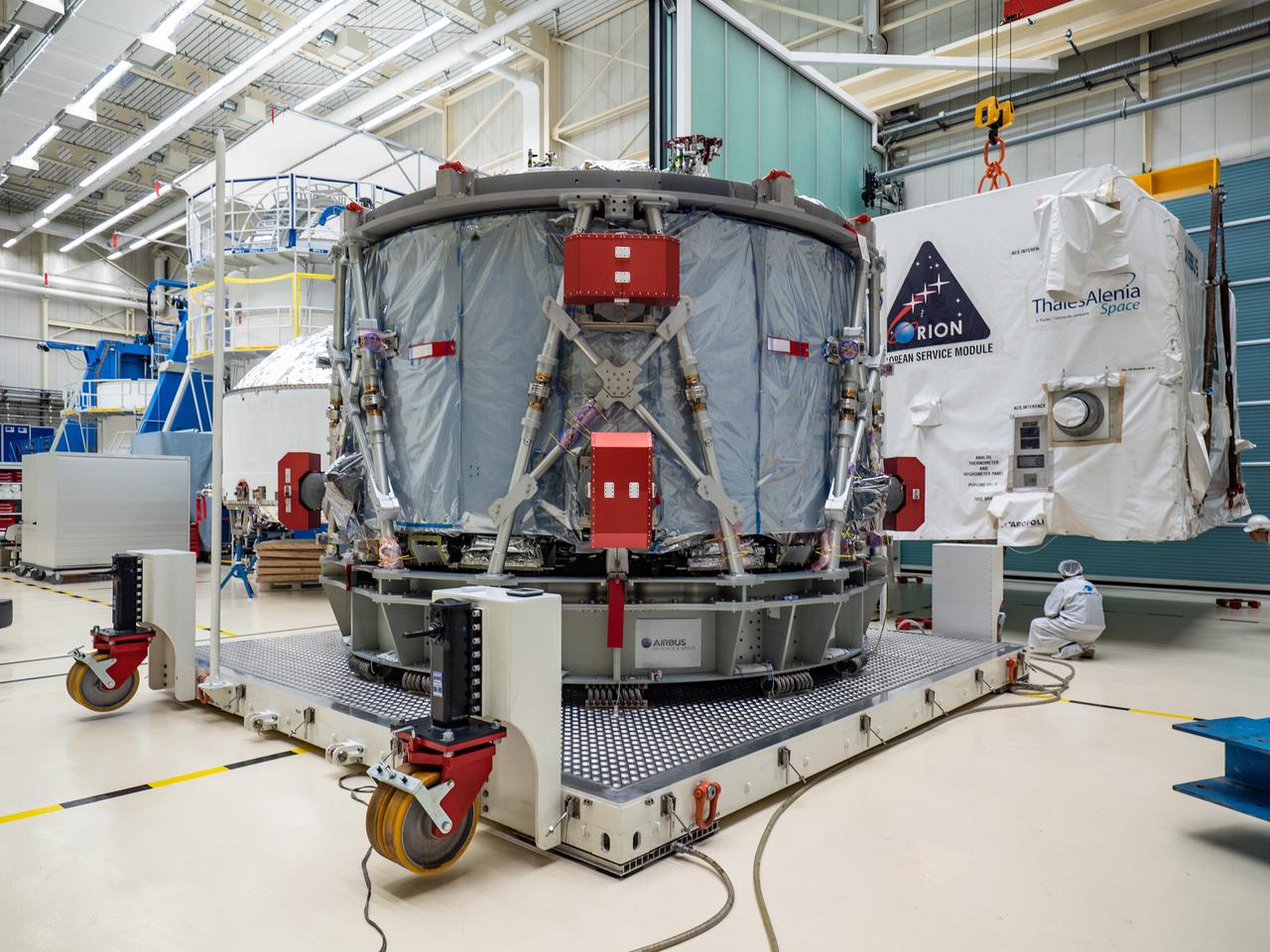
Technicians at the Airbus facility in Bremen, Germany prepare the European Service Module for shipment to Kennedy Space Center on Nov. 1, 2018. The service module will depart Germany on November 5, 2018 and will arrive in the U.S. on November 6...For the first time, NASA will use a European-built system as a critical element to power an American spacecraft, extending the international cooperation of the International Space Station into deep space. The European Service Module is a unique collaboration across space agencies and industry including ESA’s prime contractor, Airbus, and 10 European countries. The completion of service module work in Europe and shipment to Kennedy signifies a major milestone toward NASA’s human deep space exploration missions to the Moon and beyond.
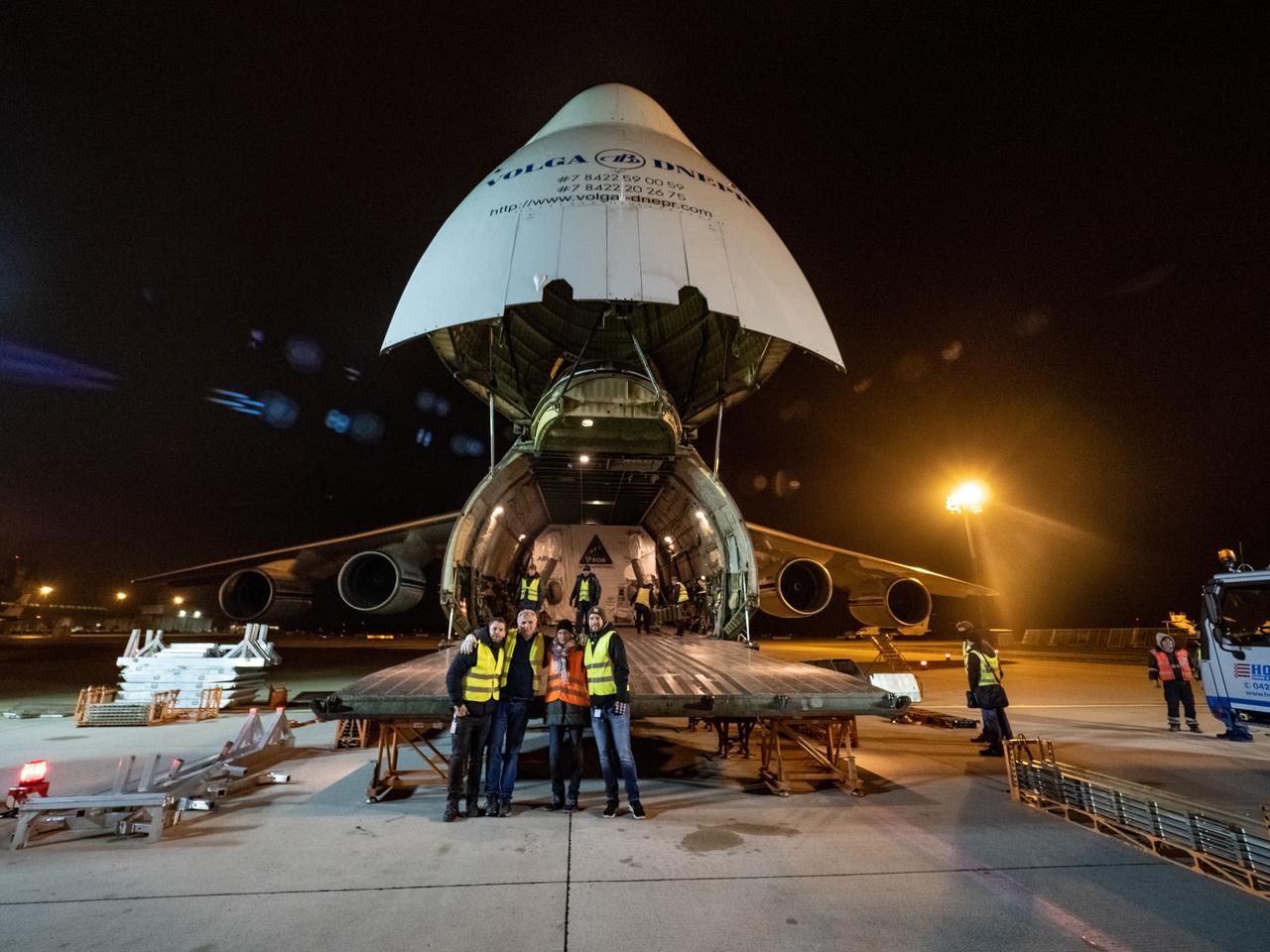
Orion's European Service Module is loaded on the Antonov airplane in Bremen, Germany on Nov. 5, 2018 for transport to Kennedy Space Center...For the first time, NASA will use a European-built system as a critical element to power an American spacecraft, extending the international cooperation of the International Space Station into deep space. The European Service Module is a unique collaboration across space agencies and industry including ESA’s prime contractor, Airbus, and 10 European countries. The completion of service module work in Europe and shipment to Kennedy signifies a major milestone toward NASA’s human deep space exploration missions to the Moon and beyond.
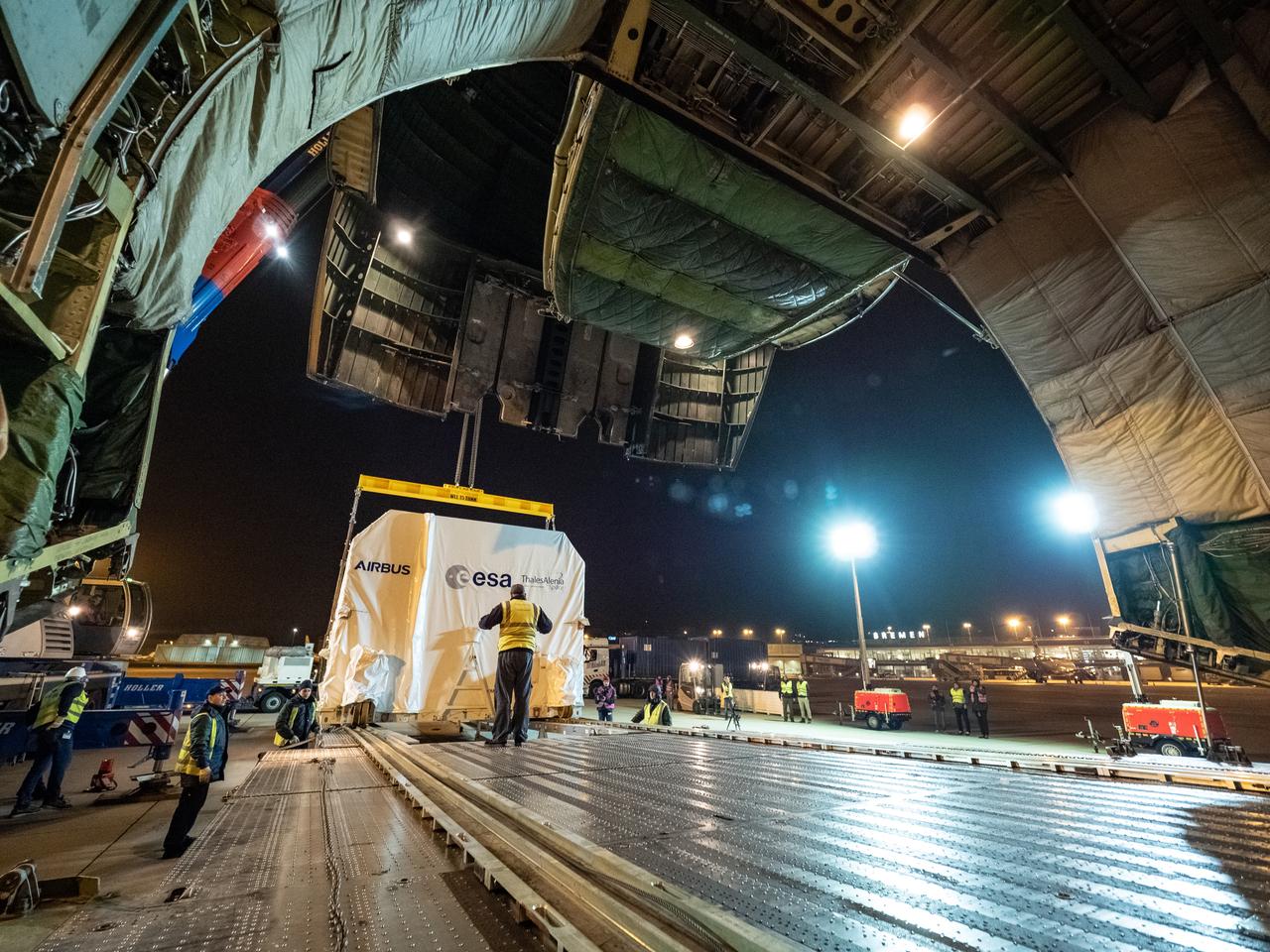
Orion's European Service Module is loaded on the Antonov airplane in Bremen, Germany on Nov. 5, 2018 for transport to Kennedy Space Center...For the first time, NASA will use a European-built system as a critical element to power an American spacecraft, extending the international cooperation of the International Space Station into deep space. The European Service Module is a unique collaboration across space agencies and industry including ESA’s prime contractor, Airbus, and 10 European countries. The completion of service module work in Europe and shipment to Kennedy signifies a major milestone toward NASA’s human deep space exploration missions to the Moon and beyond.
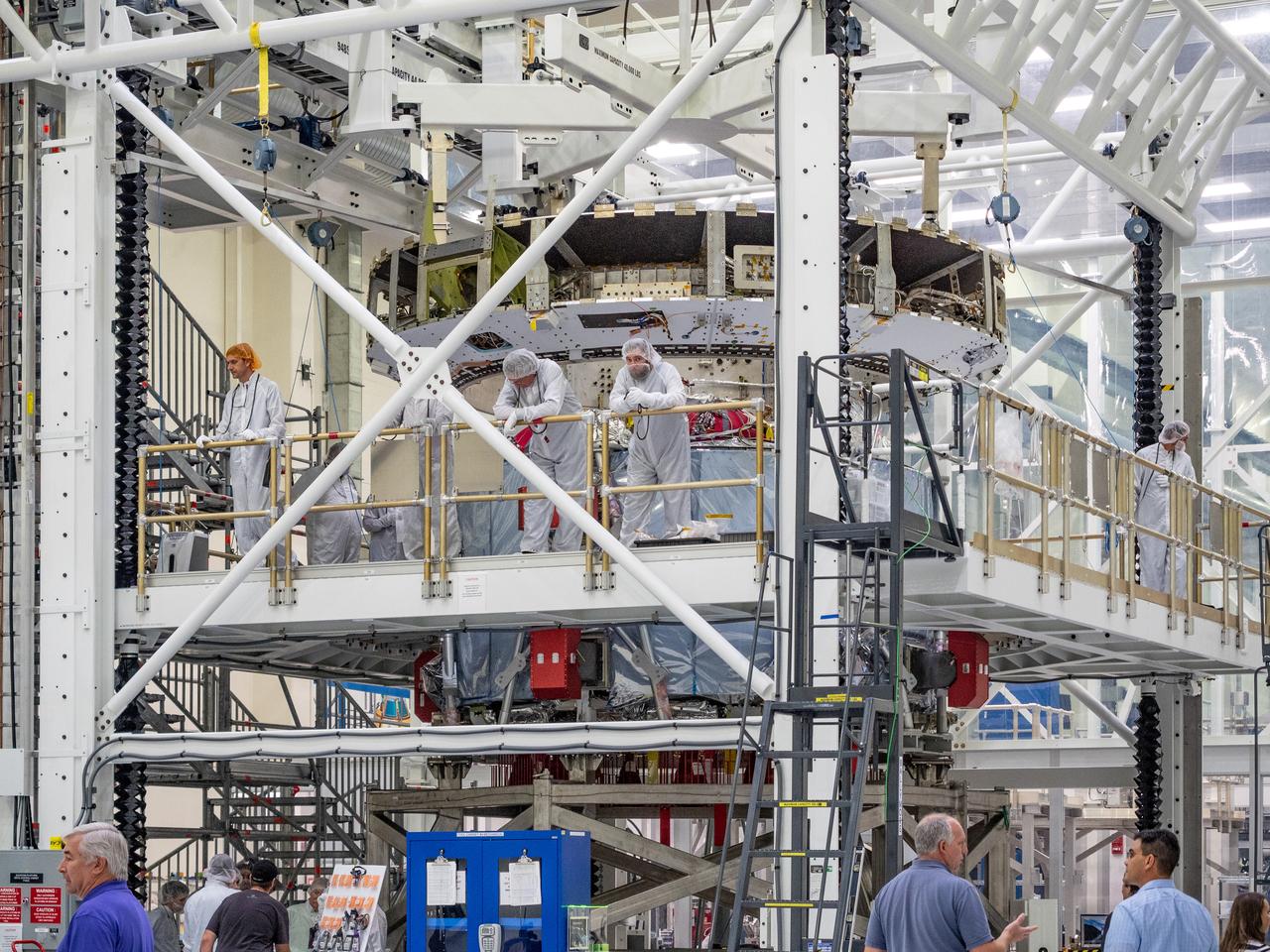
At the Operations and Checkout Building at Kennedy Space Center, Lockheed Martin technicians work to mate Orion's crew module adapter to the European Service Module on Nov. 13, 2018...For the first time, NASA will use a European-built system as a critical element to power an American spacecraft, extending the international cooperation of the International Space Station into deep space. The European Service Module is a unique collaboration across space agencies and industry including ESA’s prime contractor, Airbus, and 10 European countries. The completion of service module work in Europe and shipment to Kennedy signifies a major milestone toward NASA’s human deep space exploration missions to the Moon and beyond.
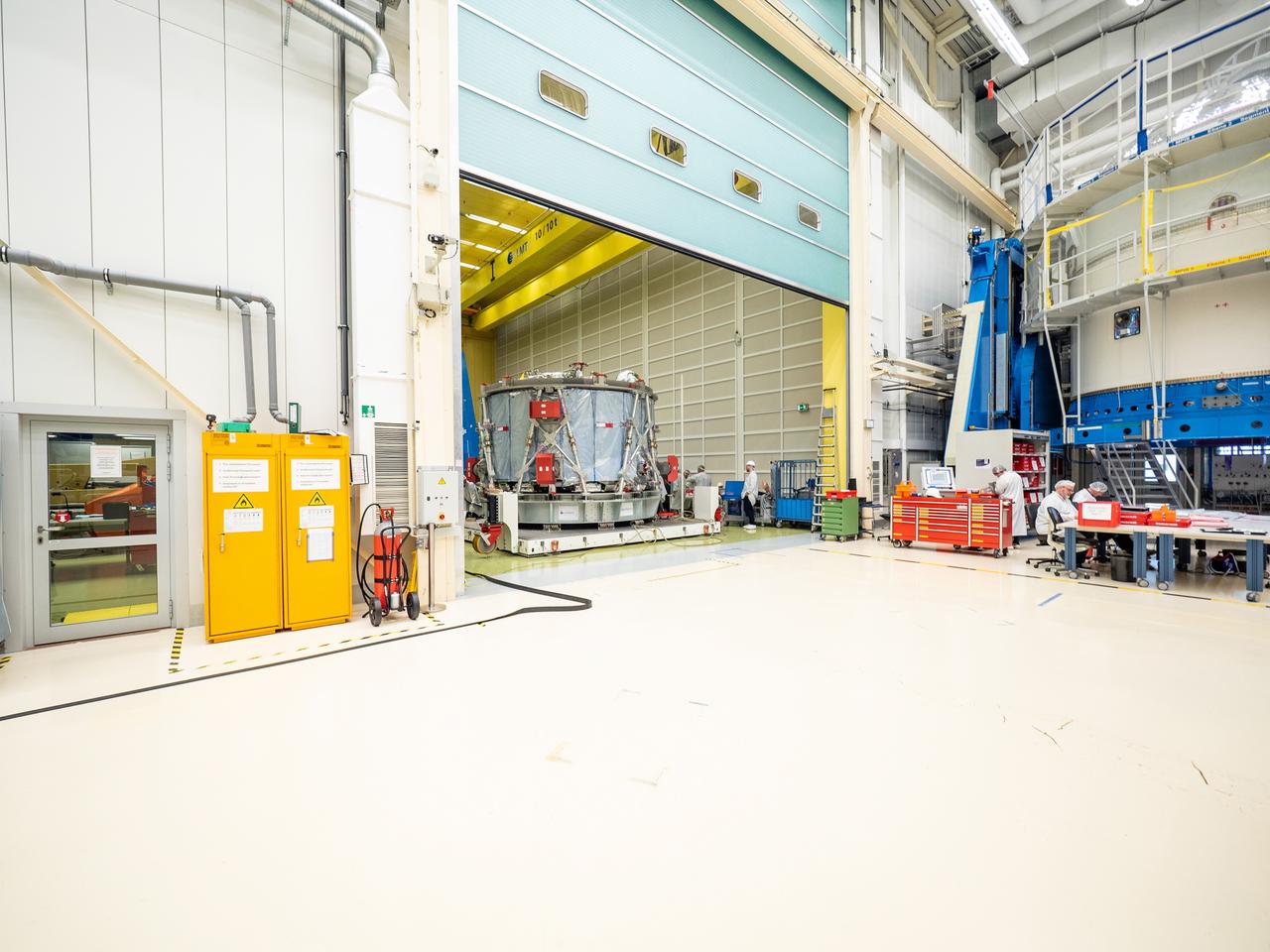
Technicians at the Airbus facility in Bremen, Germany prepare the European Service Module for shipment to Kennedy Space Center on Nov. 1, 2018. The service module will depart Germany on November 5, 2018 and will arrive in the U.S. on November 6...For the first time, NASA will use a European-built system as a critical element to power an American spacecraft, extending the international cooperation of the International Space Station into deep space. The European Service Module is a unique collaboration across space agencies and industry including ESA’s prime contractor, Airbus, and 10 European countries. The completion of service module work in Europe and shipment to Kennedy signifies a major milestone toward NASA’s human deep space exploration missions to the Moon and beyond.
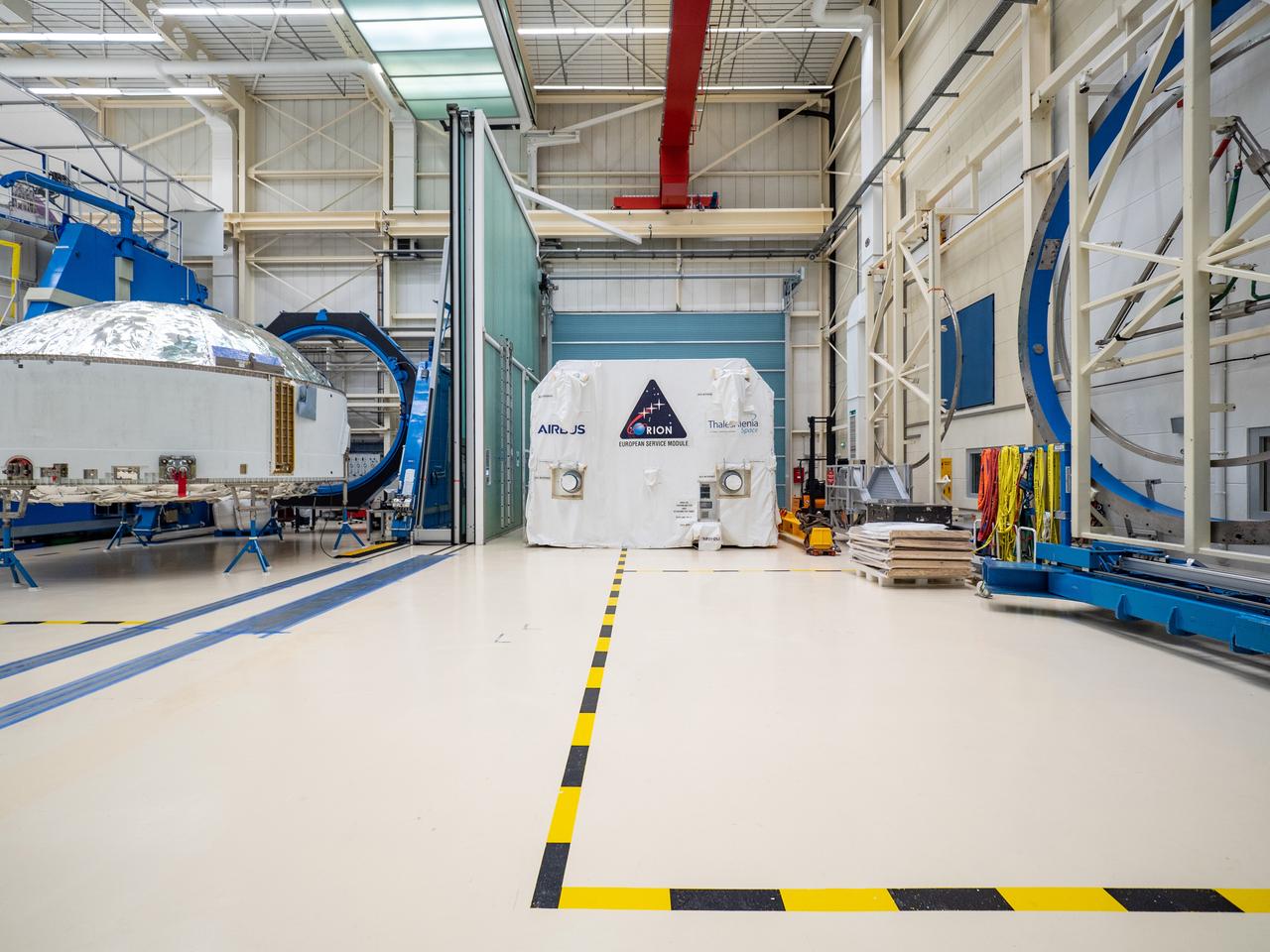
Technicians at the Airbus facility in Bremen, Germany prepare the European Service Module for shipment to Kennedy Space Center on Nov. 1, 2018. The service module will depart Germany on November 5, 2018 and will arrive in the U.S. on November 6...For the first time, NASA will use a European-built system as a critical element to power an American spacecraft, extending the international cooperation of the International Space Station into deep space. The European Service Module is a unique collaboration across space agencies and industry including ESA’s prime contractor, Airbus, and 10 European countries. The completion of service module work in Europe and shipment to Kennedy signifies a major milestone toward NASA’s human deep space exploration missions to the Moon and beyond.
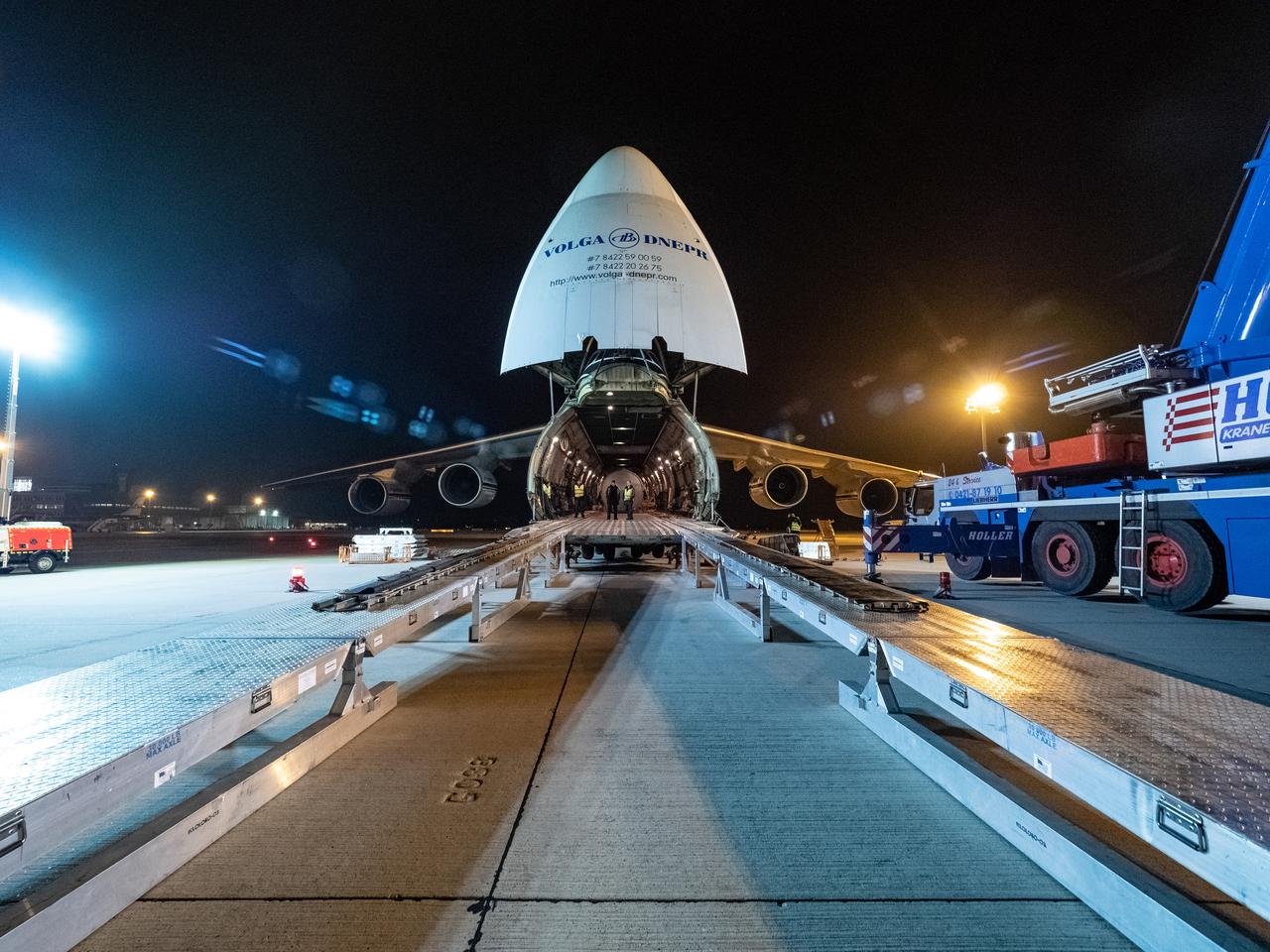
Orion's European Service Module is loaded on the Antonov airplane in Bremen, Germany on Nov. 5, 2018 for transport to Kennedy Space Center...For the first time, NASA will use a European-built system as a critical element to power an American spacecraft, extending the international cooperation of the International Space Station into deep space. The European Service Module is a unique collaboration across space agencies and industry including ESA’s prime contractor, Airbus, and 10 European countries. The completion of service module work in Europe and shipment to Kennedy signifies a major milestone toward NASA’s human deep space exploration missions to the Moon and beyond.
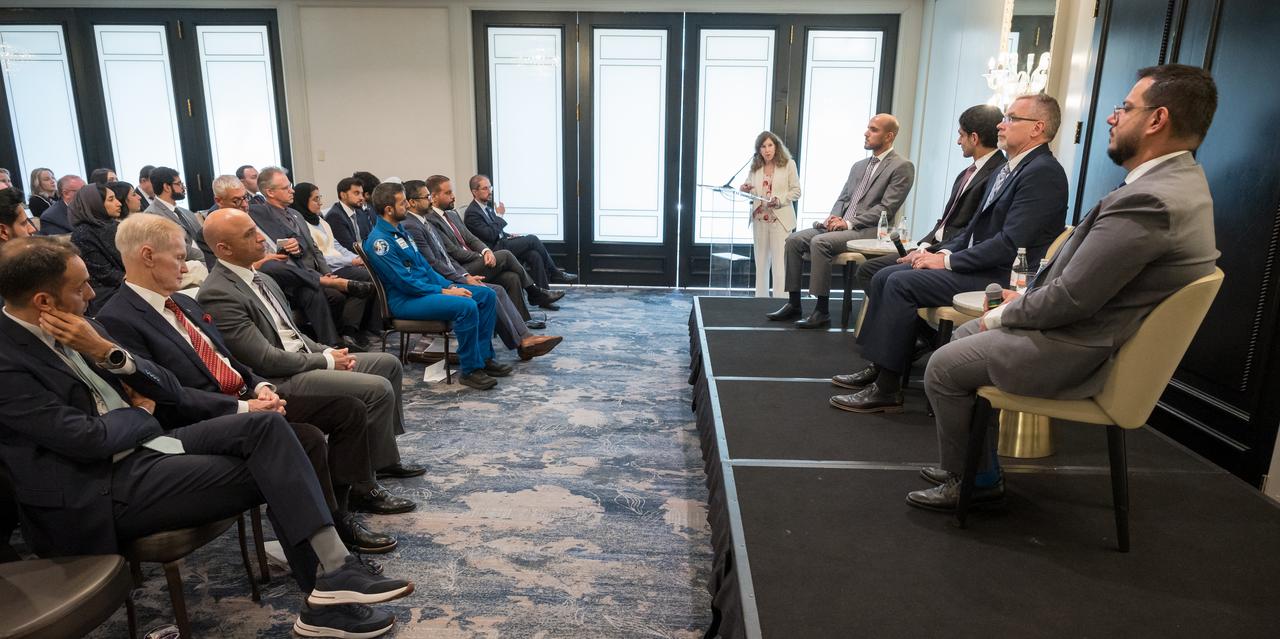
NASA associate administrator for International and Interagency Relations Karen Feldstein, moderates a panel discussion with, Senior Director of the Space Engineering Department, MBRSC, Amer Al Sayegh, left, UAE Assistant Minister of Foreign Affairs and International Cooperation for Advanced Science and Technology, Omran Sharaf, NASA Associate Administrator Jim Free, and Director of Space Missions Department, UAESA, Mohsen Al Awadhi, right, during an event celebrating UAE-US collaboration in space, Friday, March 8, 2024, at the Four Seasons Hotel in Washington. Photo Credit: (NASA/Bill Ingalls)
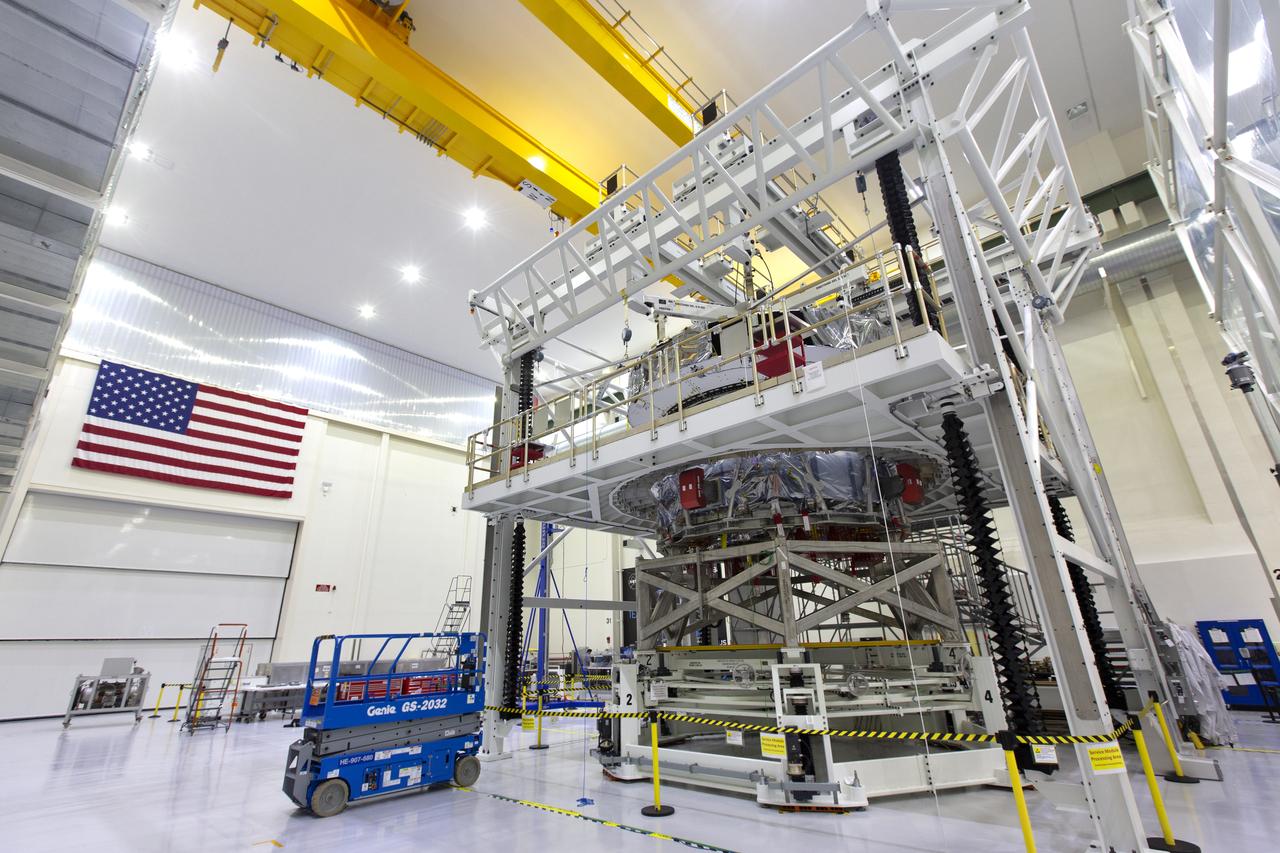
Inside the Neil Armstrong Operations and Checkout Building high bay at NASA's Kennedy Space Center in Florida, Orion's crew module adapter is mated to the European Service Module on Nov. 16, 2018. For the first time, NASA will use a European-built system as a critical element to power an American spacecraft, extending the international cooperation of the International Space Station into deep space. The European Service Module is a unique collaboration across space agencies and industry including ESA's prime contractor, Airbus, and 10 European countries. The completion of service module work in Europe and shipment to Kennedy signifies a major milestone toward NASA's deep space exploration missions to the Moon and beyond.
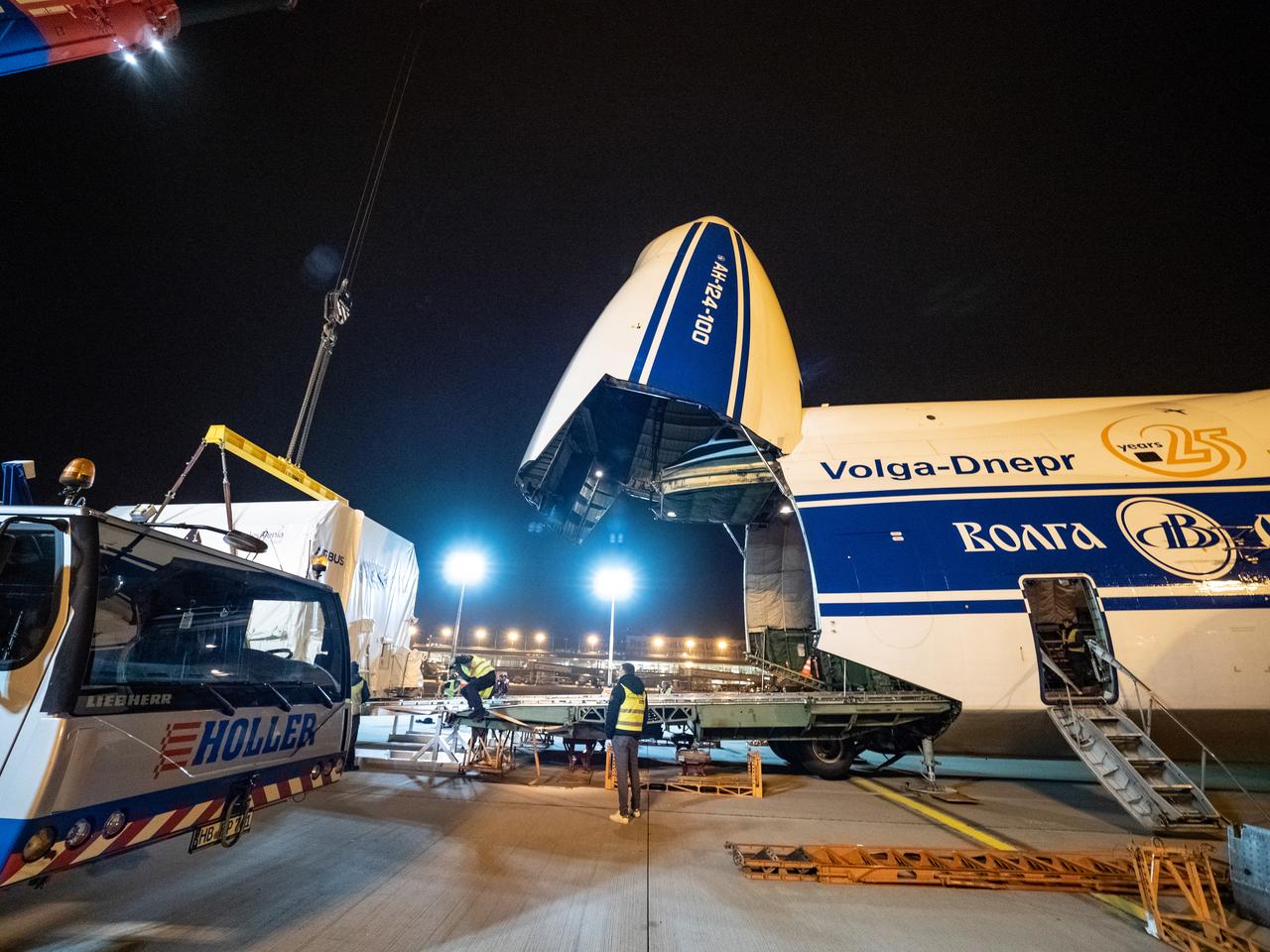
Orion's European Service Module is loaded on the Antonov airplane in Bremen, Germany on Nov. 5, 2018 for transport to Kennedy Space Center...For the first time, NASA will use a European-built system as a critical element to power an American spacecraft, extending the international cooperation of the International Space Station into deep space. The European Service Module is a unique collaboration across space agencies and industry including ESA’s prime contractor, Airbus, and 10 European countries. The completion of service module work in Europe and shipment to Kennedy signifies a major milestone toward NASA’s human deep space exploration missions to the Moon and beyond.
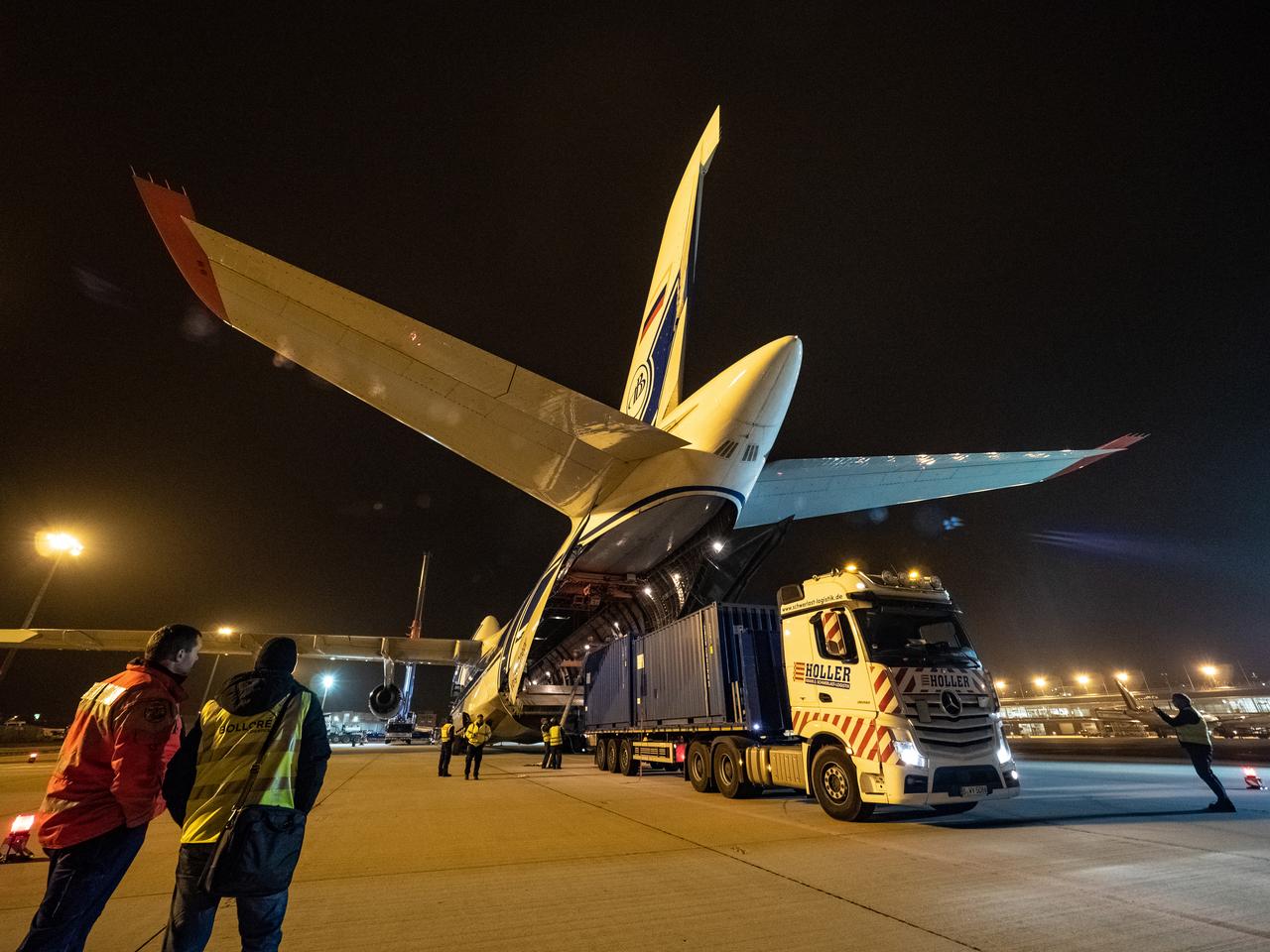
Orion's European Service Module is loaded on the Antonov airplane in Bremen, Germany on Nov. 5, 2018 for transport to Kennedy Space Center...For the first time, NASA will use a European-built system as a critical element to power an American spacecraft, extending the international cooperation of the International Space Station into deep space. The European Service Module is a unique collaboration across space agencies and industry including ESA’s prime contractor, Airbus, and 10 European countries. The completion of service module work in Europe and shipment to Kennedy signifies a major milestone toward NASA’s human deep space exploration missions to the Moon and beyond.
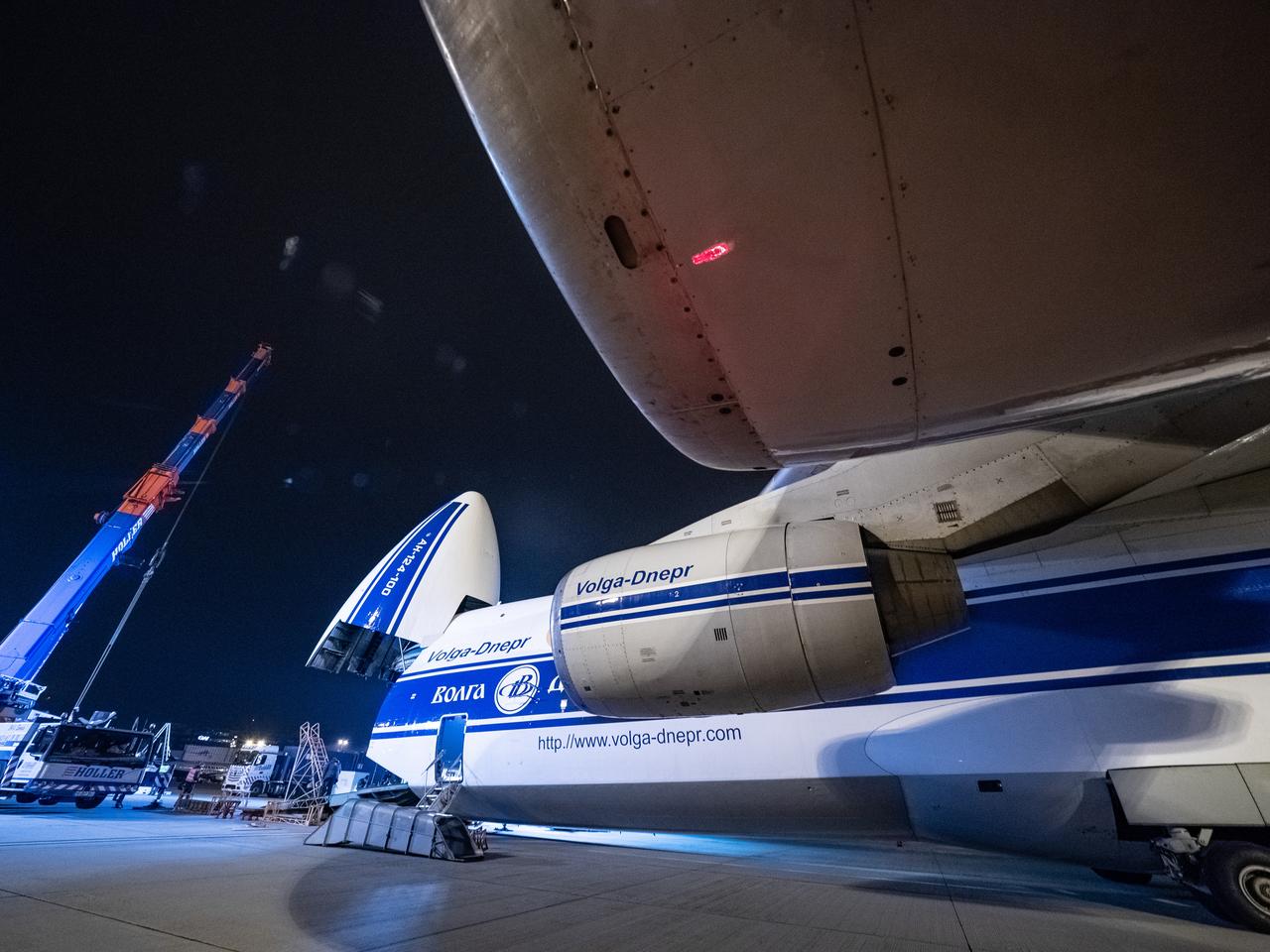
Orion's European Service Module is loaded on the Antonov airplane in Bremen, Germany on Nov. 5, 2018 for transport to Kennedy Space Center...For the first time, NASA will use a European-built system as a critical element to power an American spacecraft, extending the international cooperation of the International Space Station into deep space. The European Service Module is a unique collaboration across space agencies and industry including ESA’s prime contractor, Airbus, and 10 European countries. The completion of service module work in Europe and shipment to Kennedy signifies a major milestone toward NASA’s human deep space exploration missions to the Moon and beyond.
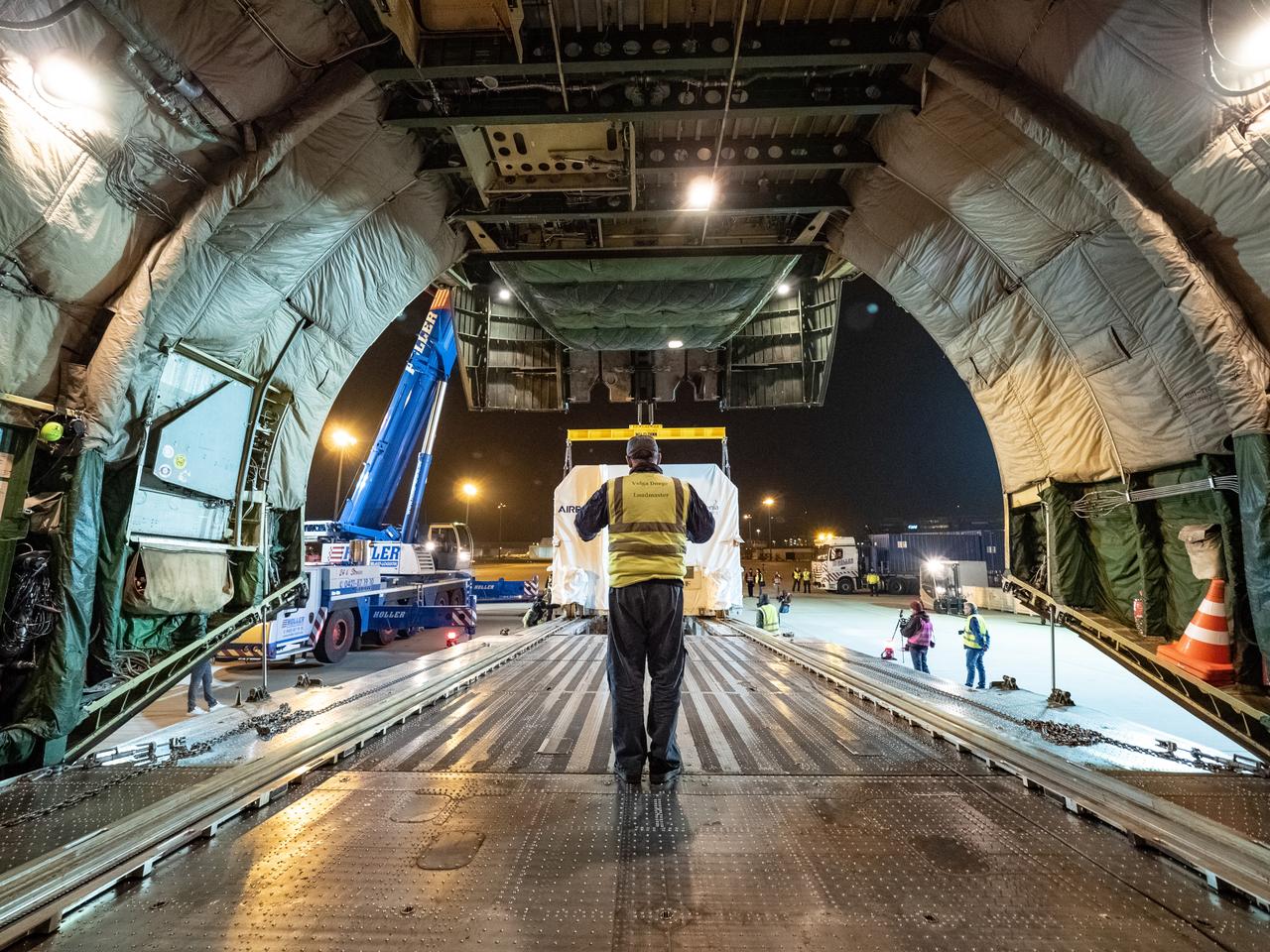
Orion's European Service Module is loaded on the Antonov airplane in Bremen, Germany on Nov. 5, 2018 for transport to Kennedy Space Center...For the first time, NASA will use a European-built system as a critical element to power an American spacecraft, extending the international cooperation of the International Space Station into deep space. The European Service Module is a unique collaboration across space agencies and industry including ESA’s prime contractor, Airbus, and 10 European countries. The completion of service module work in Europe and shipment to Kennedy signifies a major milestone toward NASA’s human deep space exploration missions to the Moon and beyond.
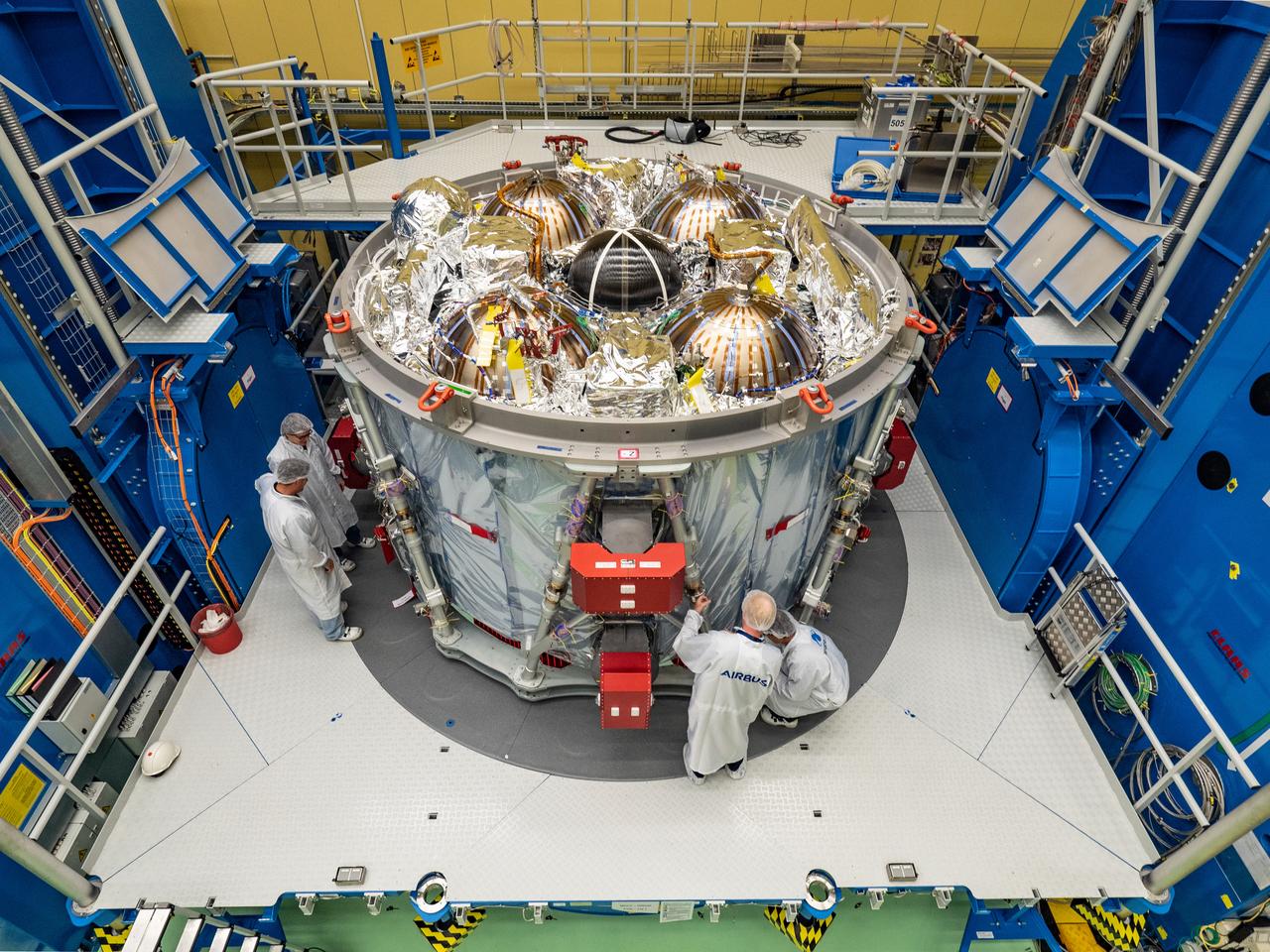
Technicians at the Airbus facility in Bremen, Germany prepare the European Service Module for shipment to Kennedy Space Center on Nov. 1, 2018. The service module will depart Germany on November 5, 2018 and will arrive in the U.S. on November 6...For the first time, NASA will use a European-built system as a critical element to power an American spacecraft, extending the international cooperation of the International Space Station into deep space. The European Service Module is a unique collaboration across space agencies and industry including ESA’s prime contractor, Airbus, and 10 European countries. The completion of service module work in Europe and shipment to Kennedy signifies a major milestone toward NASA’s human deep space exploration missions to the Moon and beyond.
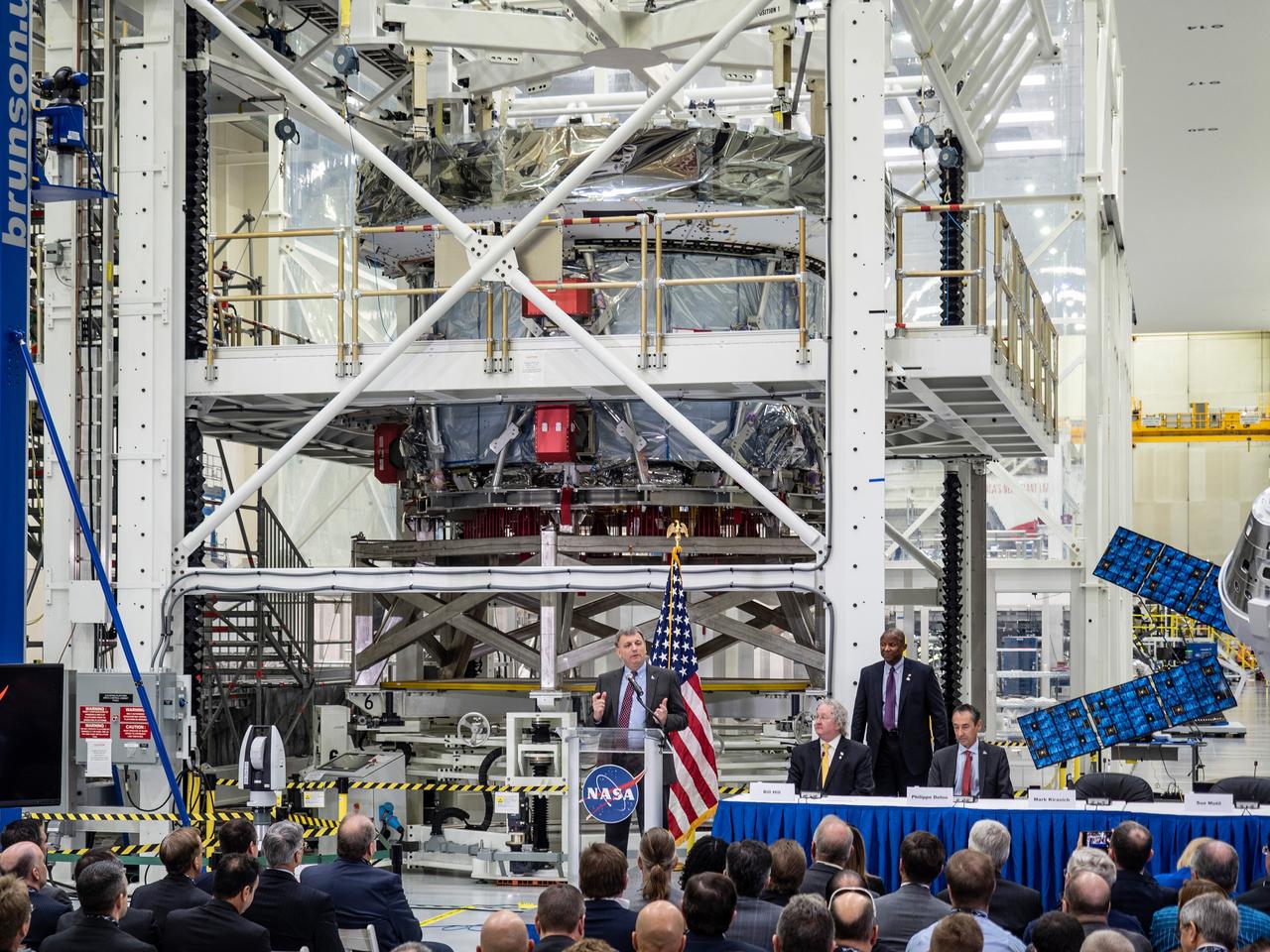
Orion Program Manager Mark Kirasich speaks at the European Service Module arrival event at the Neil Armstrong Operations and Checkout Building at Kennedy Space Center in Florida on Nov. 16, 2018...For the first time, NASA will use a European-built system as a critical element to power an American spacecraft, extending the international cooperation of the International Space Station into deep space. The European Service Module is a unique collaboration across space agencies and industry including ESA’s prime contractor, Airbus, and 10 European countries. The completion of service module work in Europe and shipment to Kennedy signifies a major milestone toward NASA’s human deep space exploration missions to the Moon and beyond.
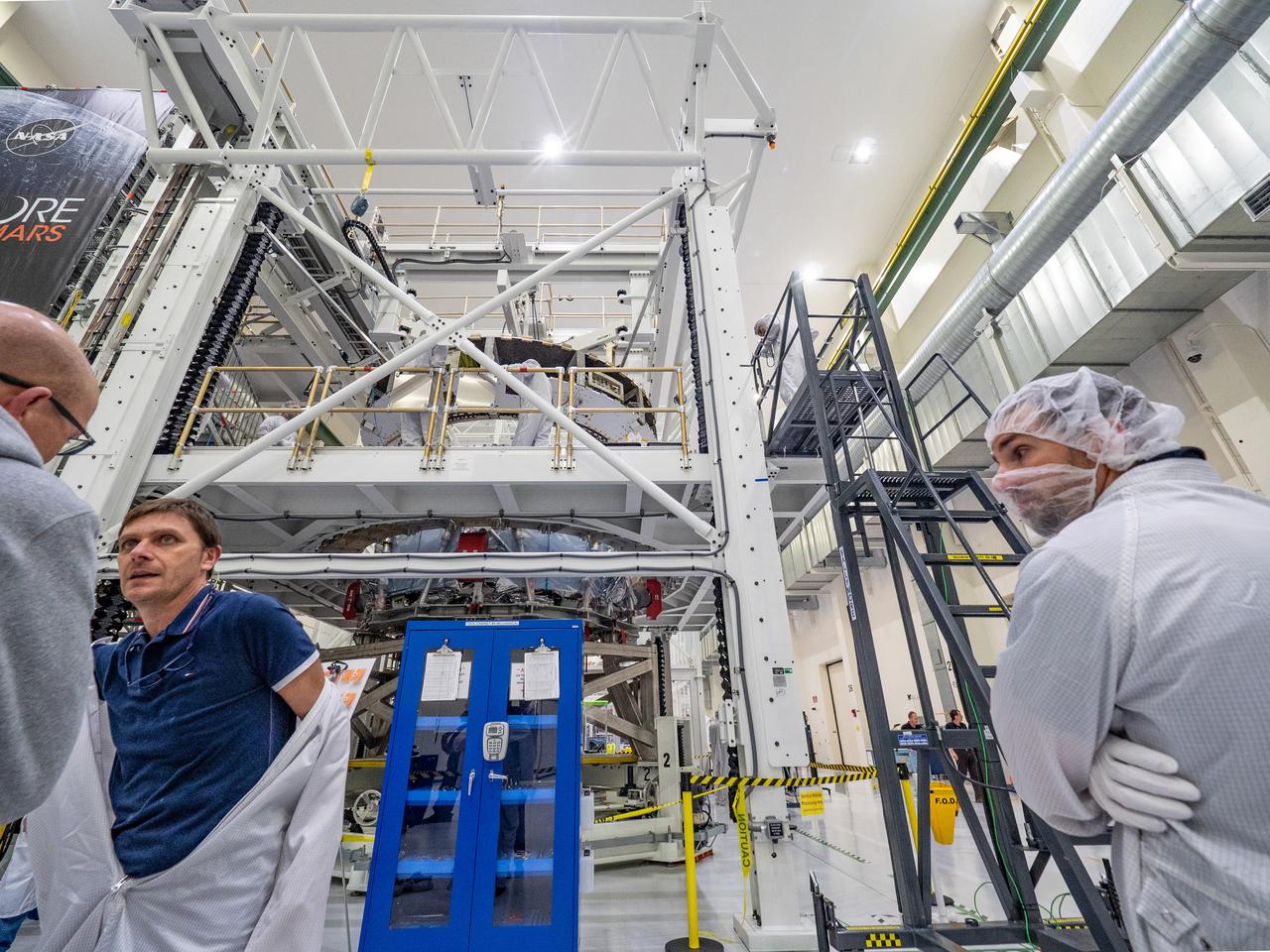
At the Operations and Checkout Building at Kennedy Space Center, Lockheed Martin technicians work to mate Orion's crew module adapter to the European Service Module on Nov. 13, 2018...For the first time, NASA will use a European-built system as a critical element to power an American spacecraft, extending the international cooperation of the International Space Station into deep space. The European Service Module is a unique collaboration across space agencies and industry including ESA’s prime contractor, Airbus, and 10 European countries. The completion of service module work in Europe and shipment to Kennedy signifies a major milestone toward NASA’s human deep space exploration missions to the Moon and beyond.
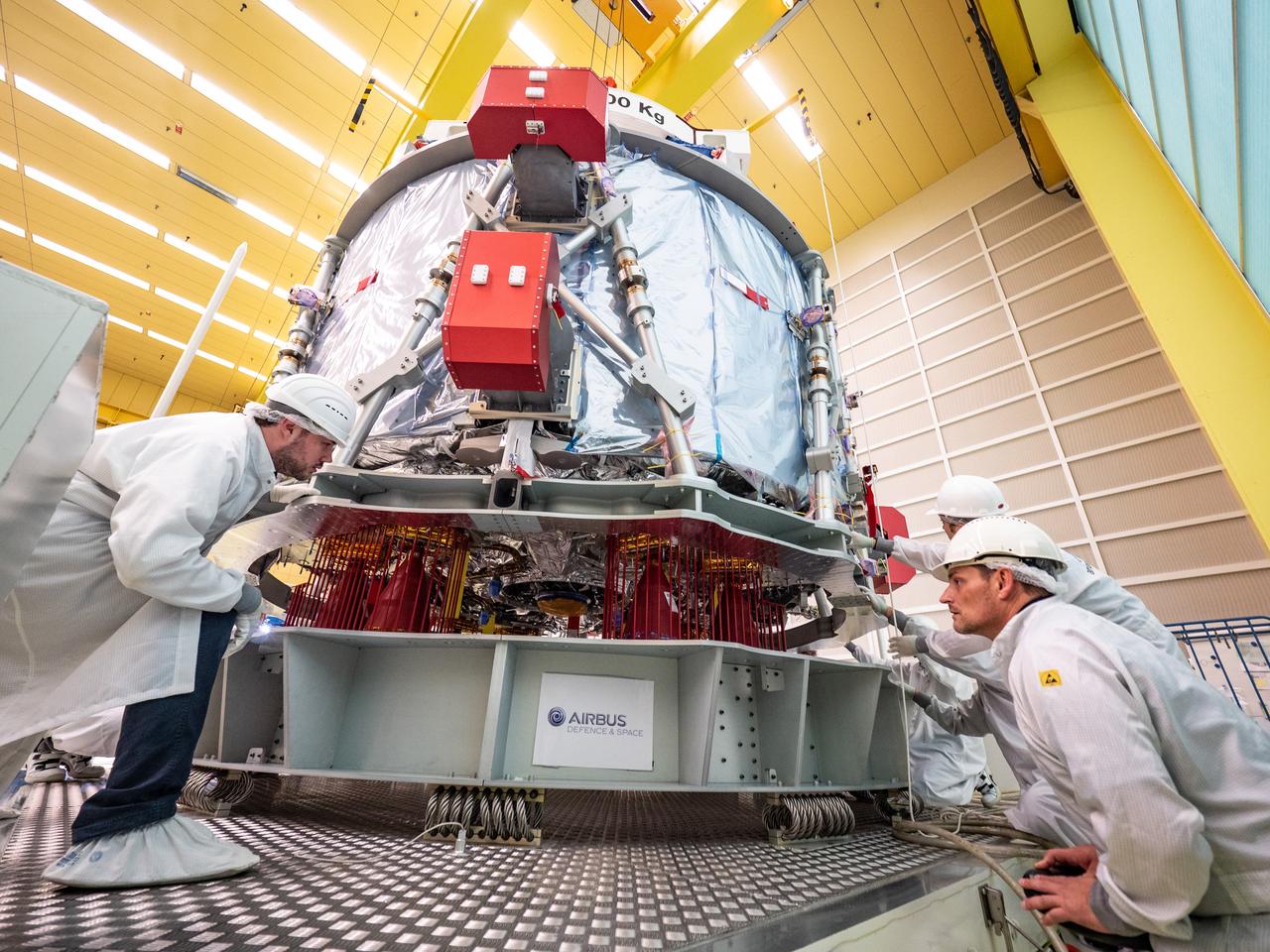
Technicians at the Airbus facility in Bremen, Germany prepare the European Service Module for shipment to Kennedy Space Center on Nov. 1, 2018. The service module will depart Germany on November 5, 2018 and will arrive in the U.S. on November 6...For the first time, NASA will use a European-built system as a critical element to power an American spacecraft, extending the international cooperation of the International Space Station into deep space. The European Service Module is a unique collaboration across space agencies and industry including ESA’s prime contractor, Airbus, and 10 European countries. The completion of service module work in Europe and shipment to Kennedy signifies a major milestone toward NASA’s human deep space exploration missions to the Moon and beyond.
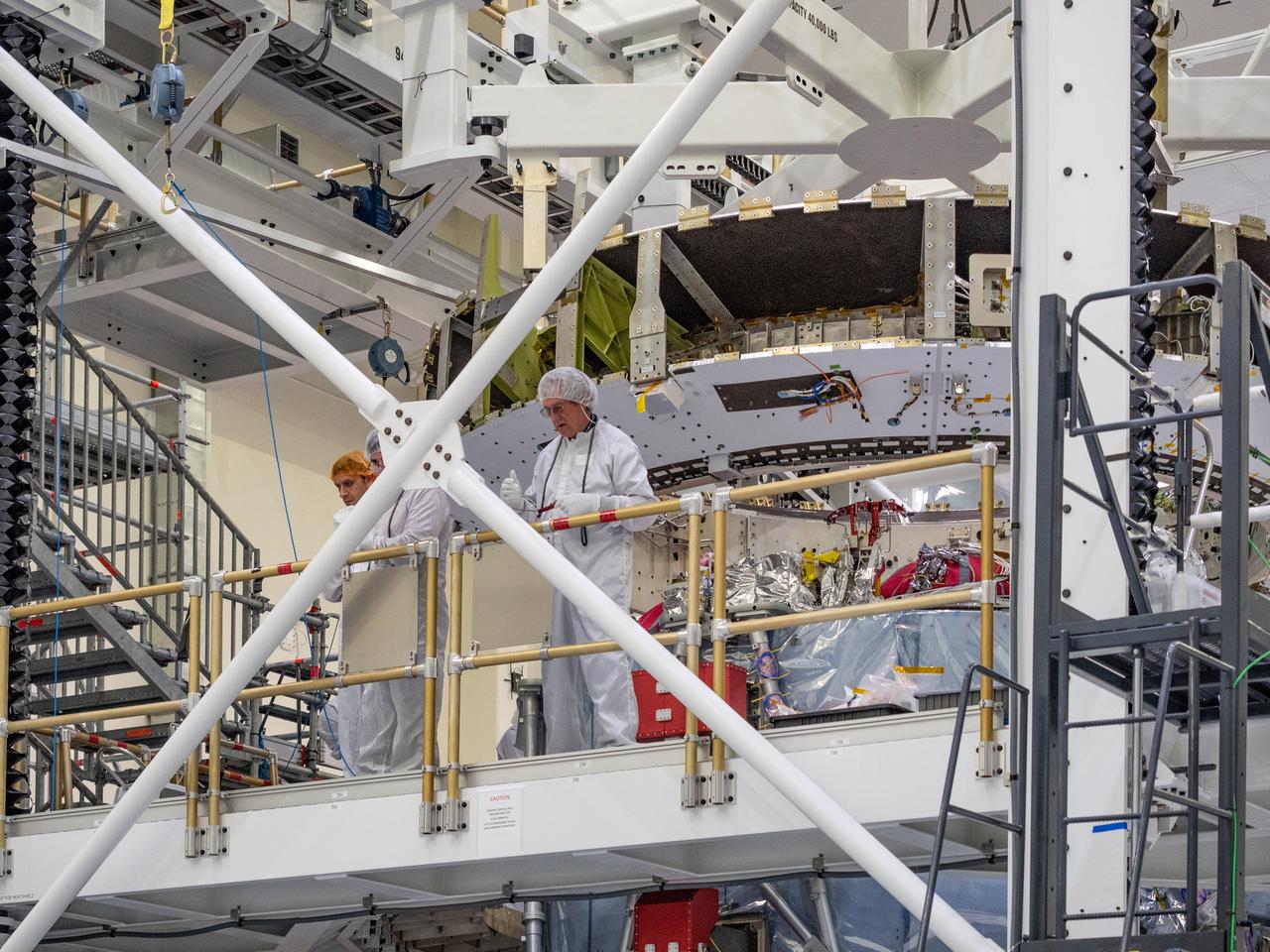
At the Operations and Checkout Building at Kennedy Space Center, Lockheed Martin technicians work to mate Orion's crew module adapter to the European Service Module on Nov. 13, 2018...For the first time, NASA will use a European-built system as a critical element to power an American spacecraft, extending the international cooperation of the International Space Station into deep space. The European Service Module is a unique collaboration across space agencies and industry including ESA’s prime contractor, Airbus, and 10 European countries. The completion of service module work in Europe and shipment to Kennedy signifies a major milestone toward NASA’s human deep space exploration missions to the Moon and beyond.
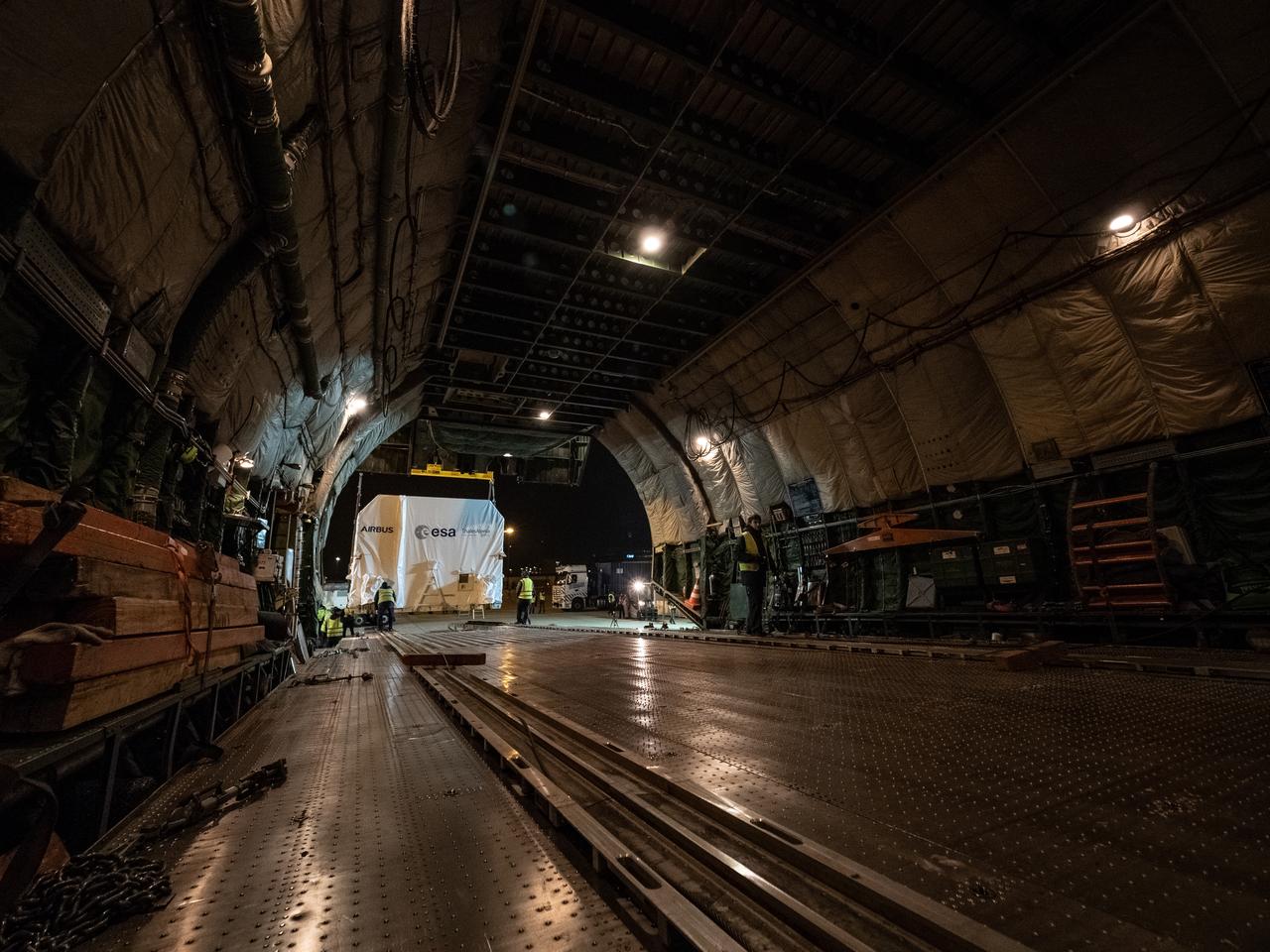
Orion's European Service Module is loaded on the Antonov airplane in Bremen, Germany on Nov. 5, 2018 for transport to Kennedy Space Center...For the first time, NASA will use a European-built system as a critical element to power an American spacecraft, extending the international cooperation of the International Space Station into deep space. The European Service Module is a unique collaboration across space agencies and industry including ESA’s prime contractor, Airbus, and 10 European countries. The completion of service module work in Europe and shipment to Kennedy signifies a major milestone toward NASA’s human deep space exploration missions to the Moon and beyond.
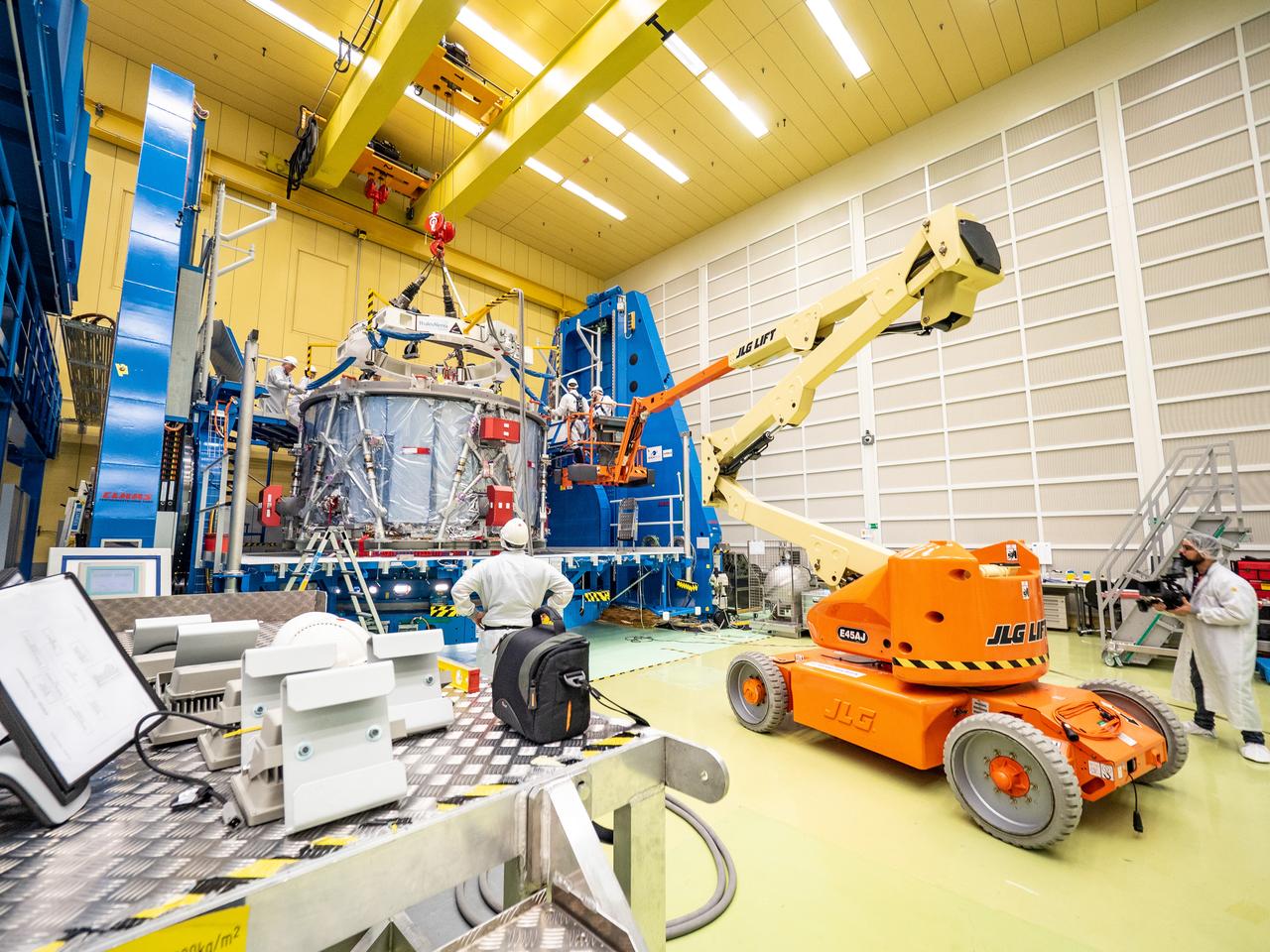
Technicians at the Airbus facility in Bremen, Germany prepare the European Service Module for shipment to Kennedy Space Center on Nov. 1, 2018. The service module will depart Germany on November 5, 2018 and will arrive in the U.S. on November 6...For the first time, NASA will use a European-built system as a critical element to power an American spacecraft, extending the international cooperation of the International Space Station into deep space. The European Service Module is a unique collaboration across space agencies and industry including ESA’s prime contractor, Airbus, and 10 European countries. The completion of service module work in Europe and shipment to Kennedy signifies a major milestone toward NASA’s human deep space exploration missions to the Moon and beyond.
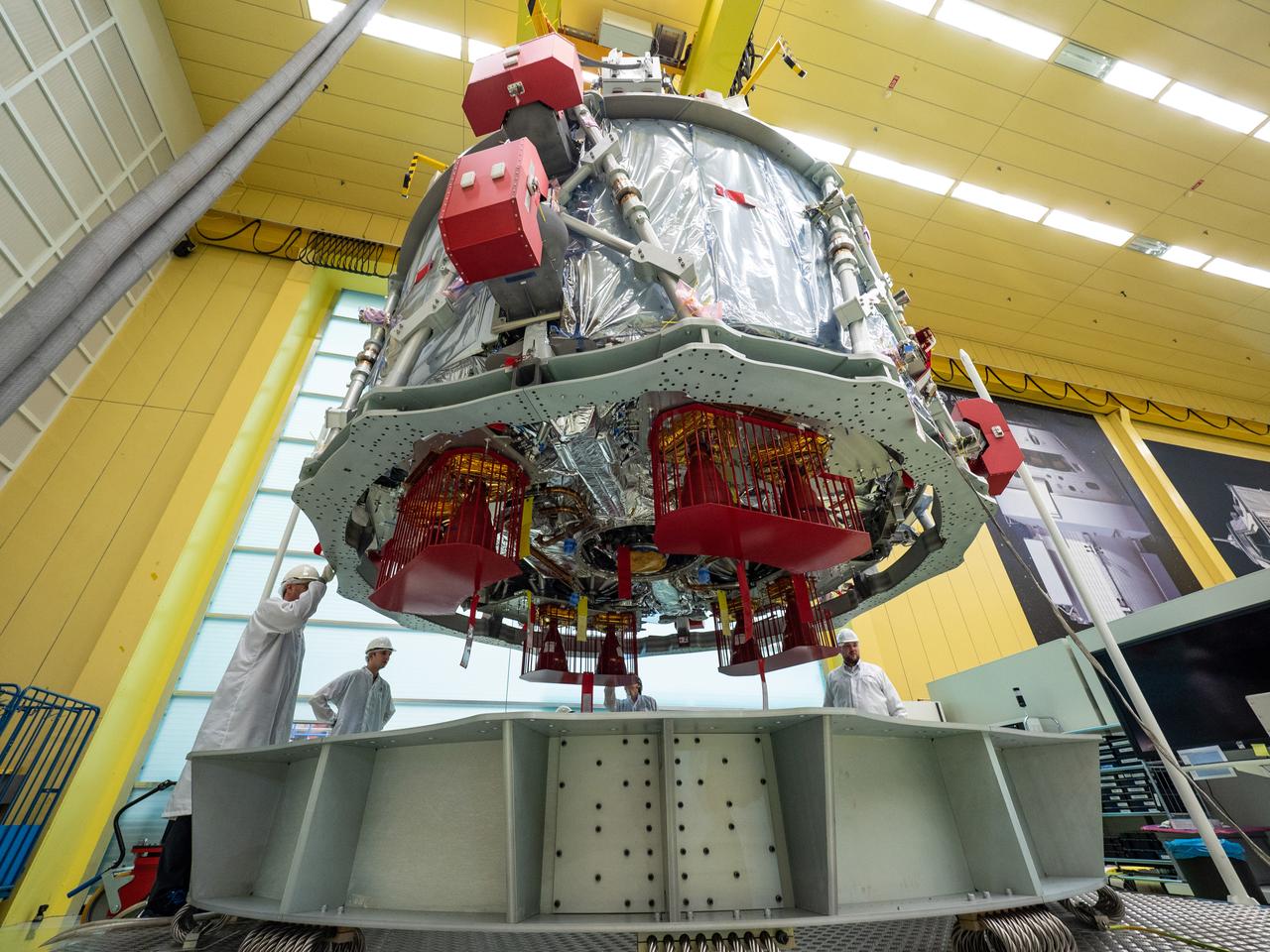
Technicians at the Airbus facility in Bremen, Germany prepare the European Service Module for shipment to Kennedy Space Center on Nov. 1, 2018. The service module will depart Germany on November 5, 2018 and will arrive in the U.S. on November 6...For the first time, NASA will use a European-built system as a critical element to power an American spacecraft, extending the international cooperation of the International Space Station into deep space. The European Service Module is a unique collaboration across space agencies and industry including ESA’s prime contractor, Airbus, and 10 European countries. The completion of service module work in Europe and shipment to Kennedy signifies a major milestone toward NASA’s human deep space exploration missions to the Moon and beyond.
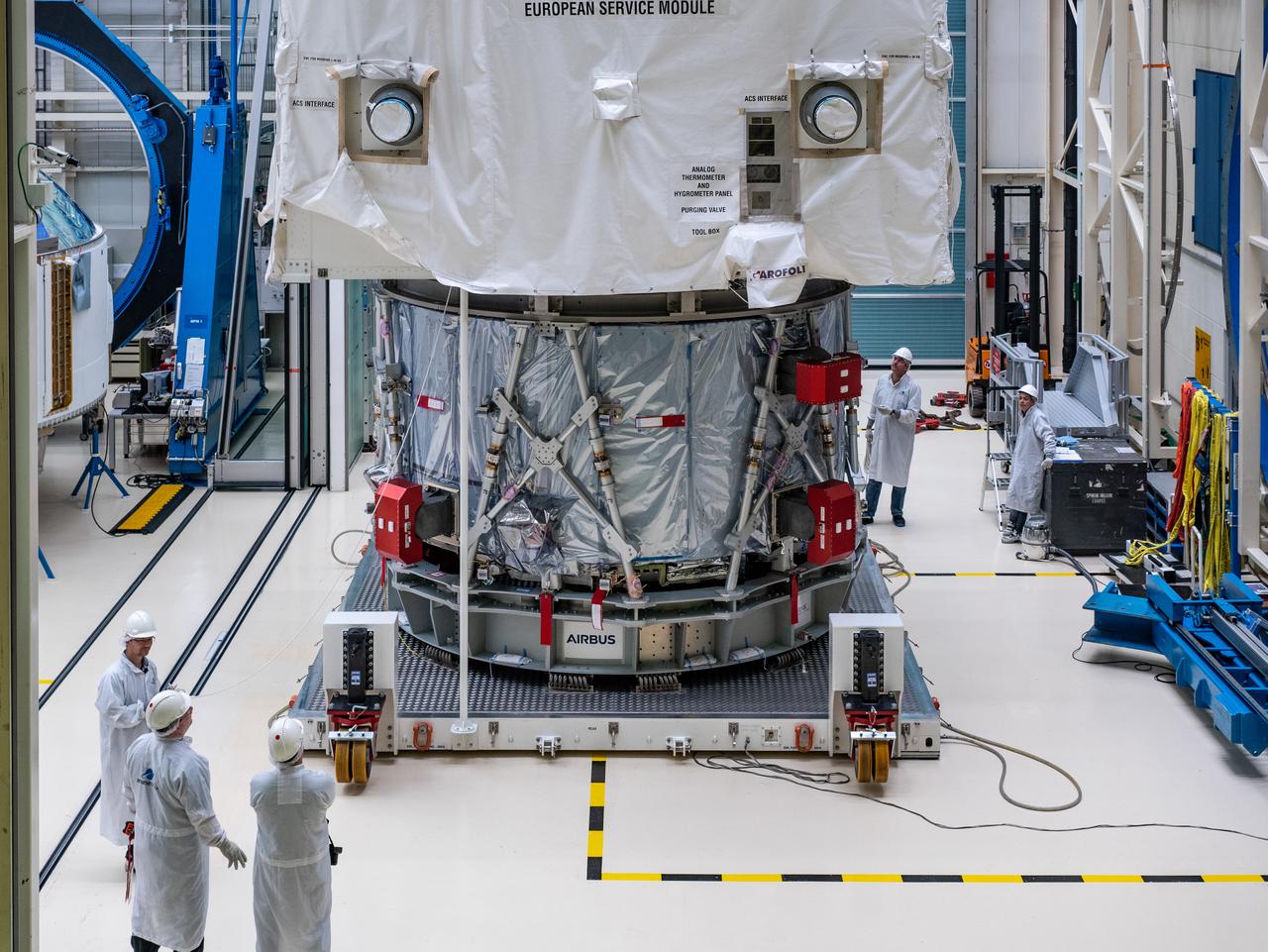
Technicians at the Airbus facility in Bremen, Germany prepare the European Service Module for shipment to Kennedy Space Center on Nov. 1, 2018. The service module will depart Germany on November 5, 2018 and will arrive in the U.S. on November 6...For the first time, NASA will use a European-built system as a critical element to power an American spacecraft, extending the international cooperation of the International Space Station into deep space. The European Service Module is a unique collaboration across space agencies and industry including ESA’s prime contractor, Airbus, and 10 European countries. The completion of service module work in Europe and shipment to Kennedy signifies a major milestone toward NASA’s human deep space exploration missions to the Moon and beyond.
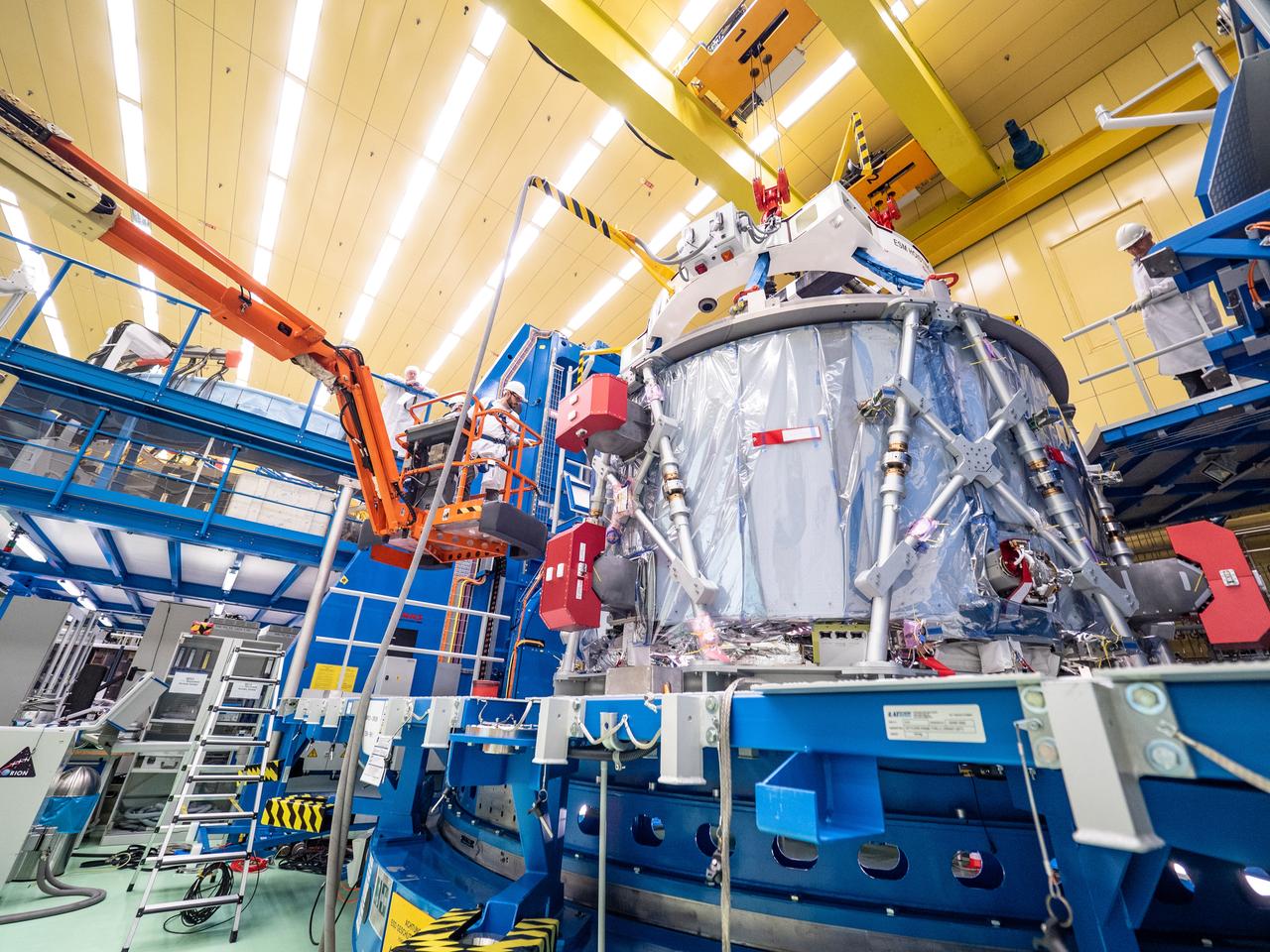
Technicians at the Airbus facility in Bremen, Germany prepare the European Service Module for shipment to Kennedy Space Center on Nov. 1, 2018. The service module will depart Germany on November 5, 2018 and will arrive in the U.S. on November 6...For the first time, NASA will use a European-built system as a critical element to power an American spacecraft, extending the international cooperation of the International Space Station into deep space. The European Service Module is a unique collaboration across space agencies and industry including ESA’s prime contractor, Airbus, and 10 European countries. The completion of service module work in Europe and shipment to Kennedy signifies a major milestone toward NASA’s human deep space exploration missions to the Moon and beyond.
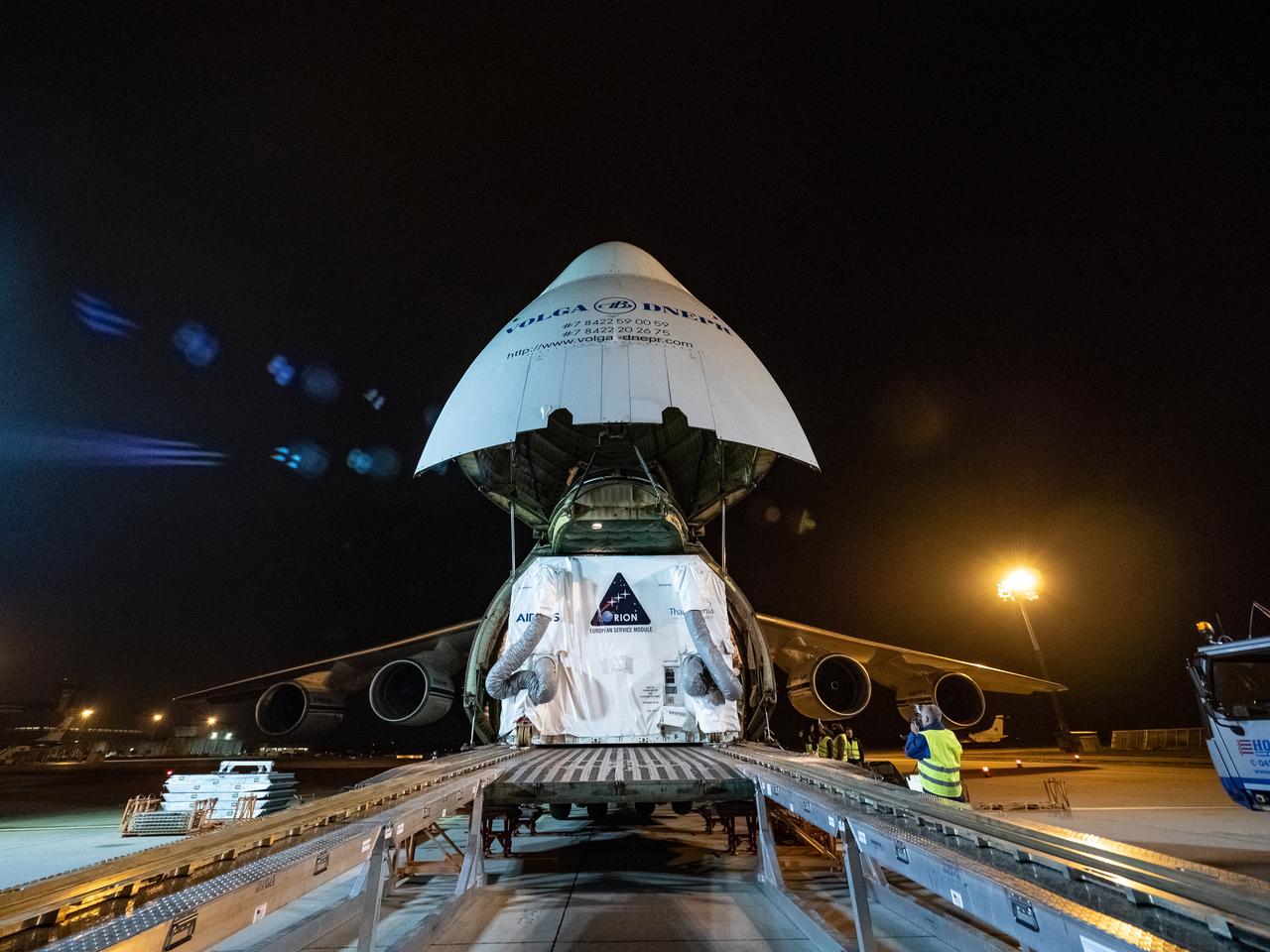
Orion's European Service Module is loaded on the Antonov airplane in Bremen, Germany on Nov. 5, 2018 for transport to Kennedy Space Center...For the first time, NASA will use a European-built system as a critical element to power an American spacecraft, extending the international cooperation of the International Space Station into deep space. The European Service Module is a unique collaboration across space agencies and industry including ESA’s prime contractor, Airbus, and 10 European countries. The completion of service module work in Europe and shipment to Kennedy signifies a major milestone toward NASA’s human deep space exploration missions to the Moon and beyond.
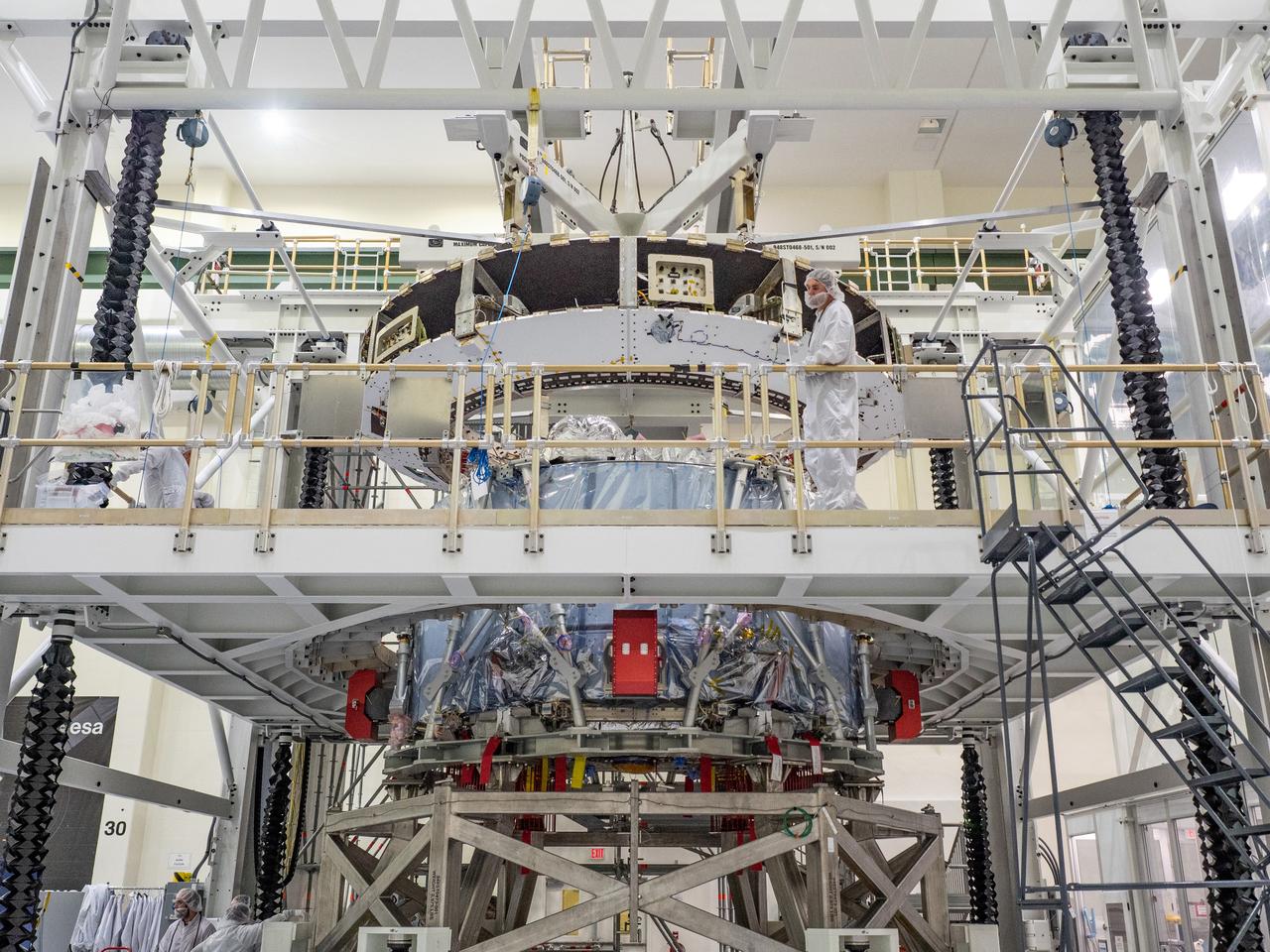
At the Operations and Checkout Building at Kennedy Space Center, Lockheed Martin technicians work to mate Orion's crew module adapter to the European Service Module on Nov. 13, 2018...For the first time, NASA will use a European-built system as a critical element to power an American spacecraft, extending the international cooperation of the International Space Station into deep space. The European Service Module is a unique collaboration across space agencies and industry including ESA’s prime contractor, Airbus, and 10 European countries. The completion of service module work in Europe and shipment to Kennedy signifies a major milestone toward NASA’s human deep space exploration missions to the Moon and beyond.
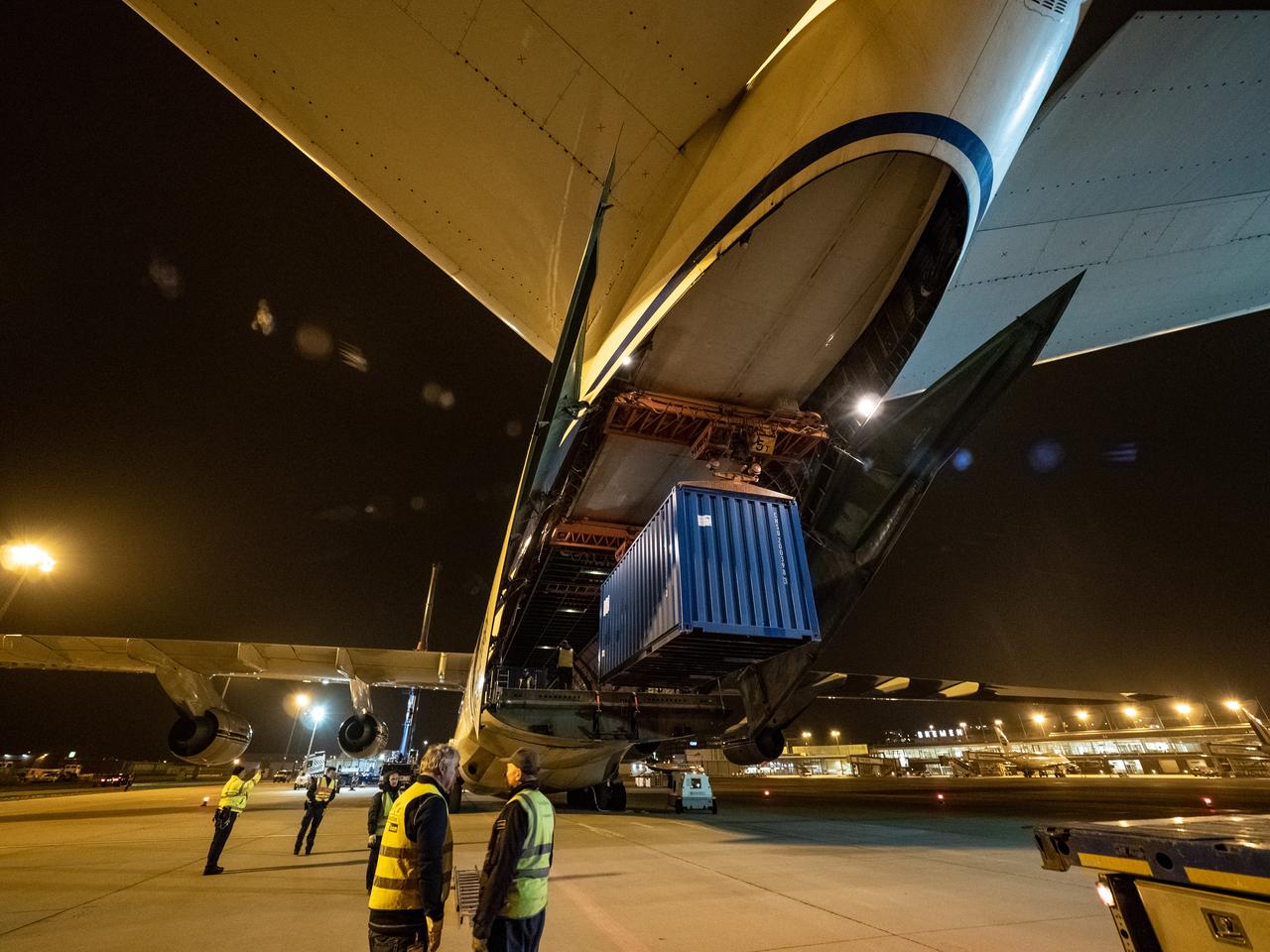
Orion's European Service Module is loaded on the Antonov airplane in Bremen, Germany on Nov. 5, 2018 for transport to Kennedy Space Center...For the first time, NASA will use a European-built system as a critical element to power an American spacecraft, extending the international cooperation of the International Space Station into deep space. The European Service Module is a unique collaboration across space agencies and industry including ESA’s prime contractor, Airbus, and 10 European countries. The completion of service module work in Europe and shipment to Kennedy signifies a major milestone toward NASA’s human deep space exploration missions to the Moon and beyond.
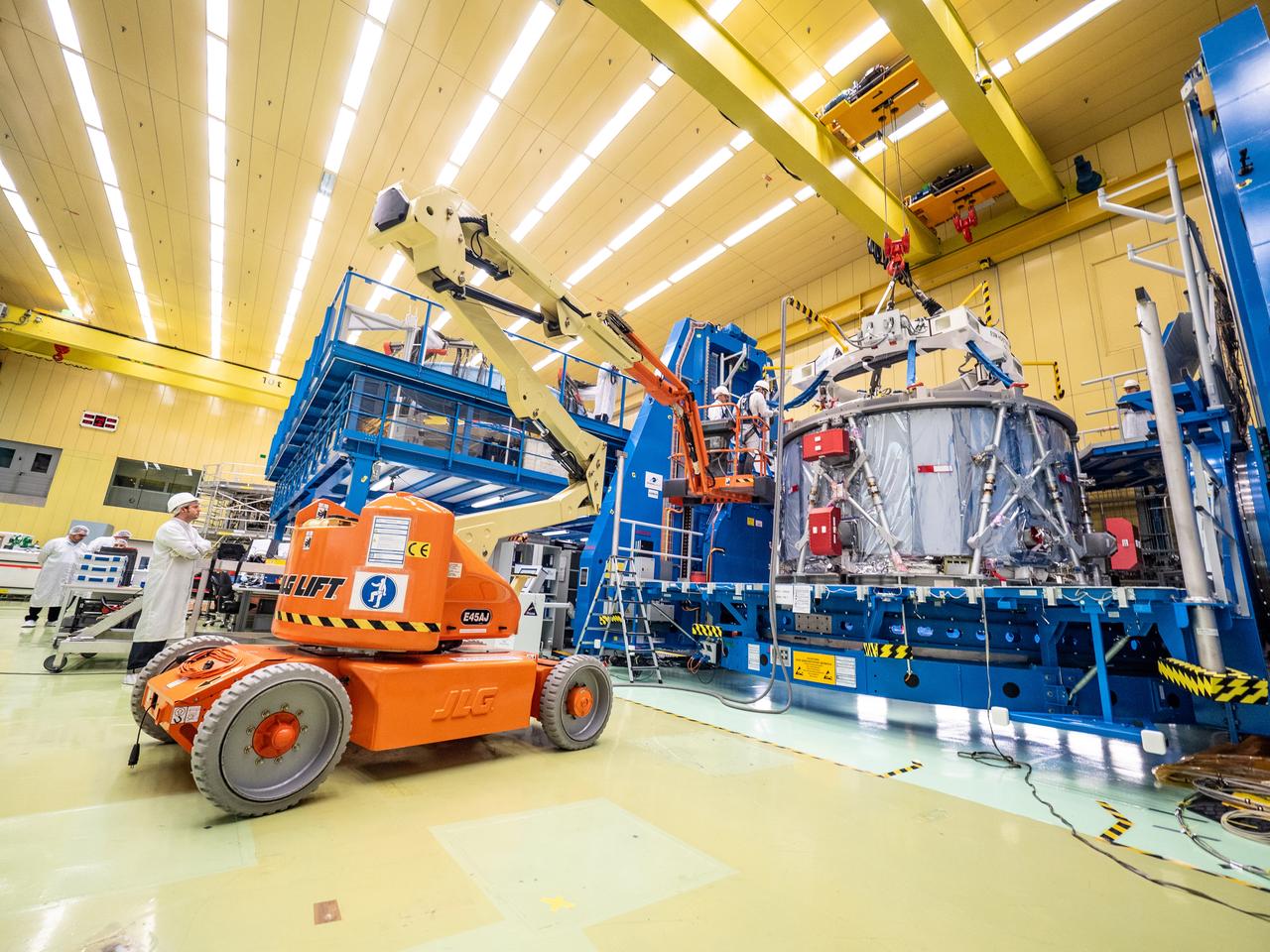
Technicians at the Airbus facility in Bremen, Germany prepare the European Service Module for shipment to Kennedy Space Center on Nov. 1, 2018. The service module will depart Germany on November 5, 2018 and will arrive in the U.S. on November 6...For the first time, NASA will use a European-built system as a critical element to power an American spacecraft, extending the international cooperation of the International Space Station into deep space. The European Service Module is a unique collaboration across space agencies and industry including ESA’s prime contractor, Airbus, and 10 European countries. The completion of service module work in Europe and shipment to Kennedy signifies a major milestone toward NASA’s human deep space exploration missions to the Moon and beyond.

Technicians at the Airbus facility in Bremen, Germany prepare the European Service Module for shipment to Kennedy Space Center on Nov. 1, 2018. The service module will depart Germany on November 5, 2018 and will arrive in the U.S. on November 6...For the first time, NASA will use a European-built system as a critical element to power an American spacecraft, extending the international cooperation of the International Space Station into deep space. The European Service Module is a unique collaboration across space agencies and industry including ESA’s prime contractor, Airbus, and 10 European countries. The completion of service module work in Europe and shipment to Kennedy signifies a major milestone toward NASA’s human deep space exploration missions to the Moon and beyond.
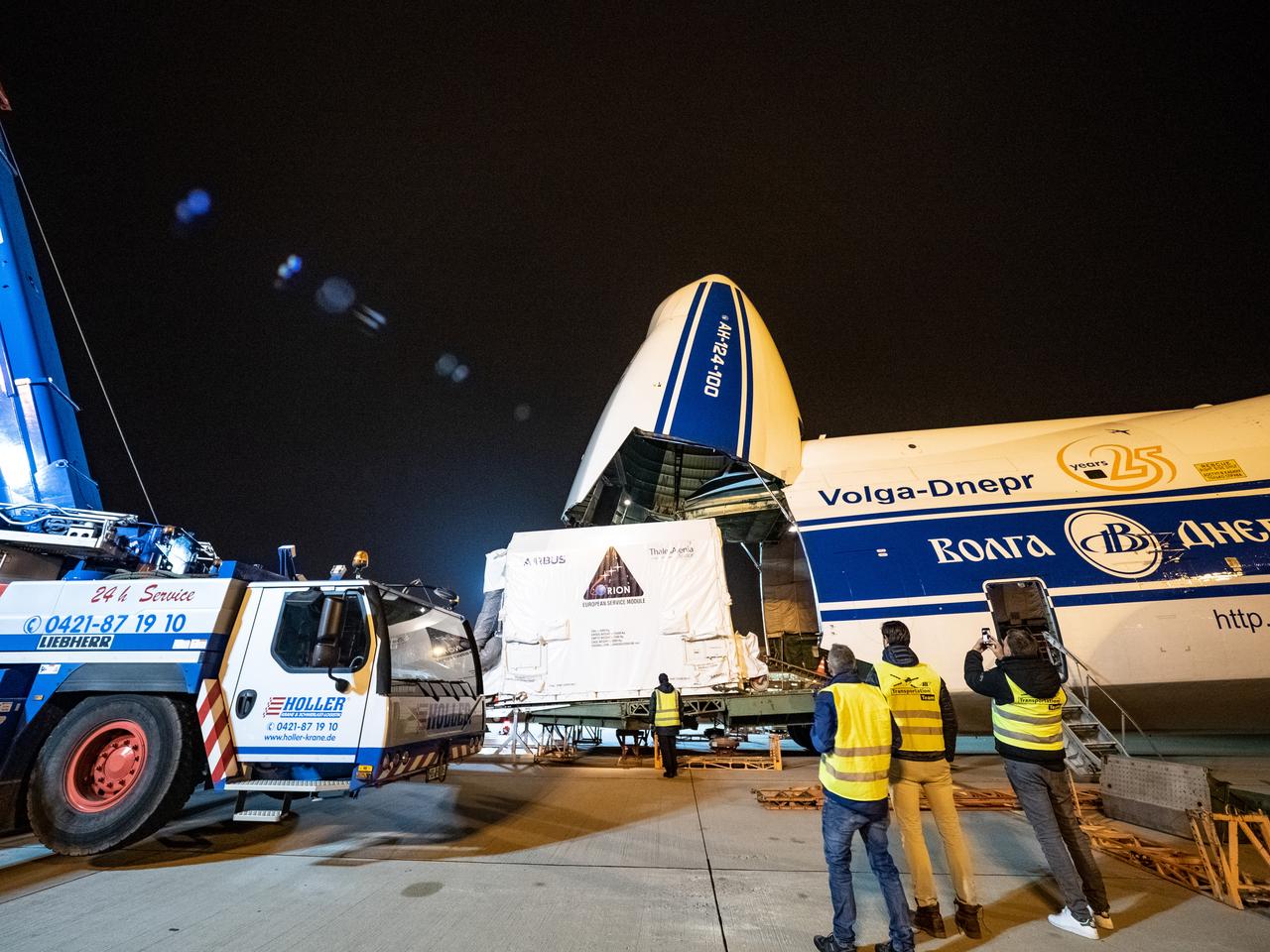
Orion's European Service Module is loaded on the Antonov airplane in Bremen, Germany on Nov. 5, 2018 for transport to Kennedy Space Center...For the first time, NASA will use a European-built system as a critical element to power an American spacecraft, extending the international cooperation of the International Space Station into deep space. The European Service Module is a unique collaboration across space agencies and industry including ESA’s prime contractor, Airbus, and 10 European countries. The completion of service module work in Europe and shipment to Kennedy signifies a major milestone toward NASA’s human deep space exploration missions to the Moon and beyond.
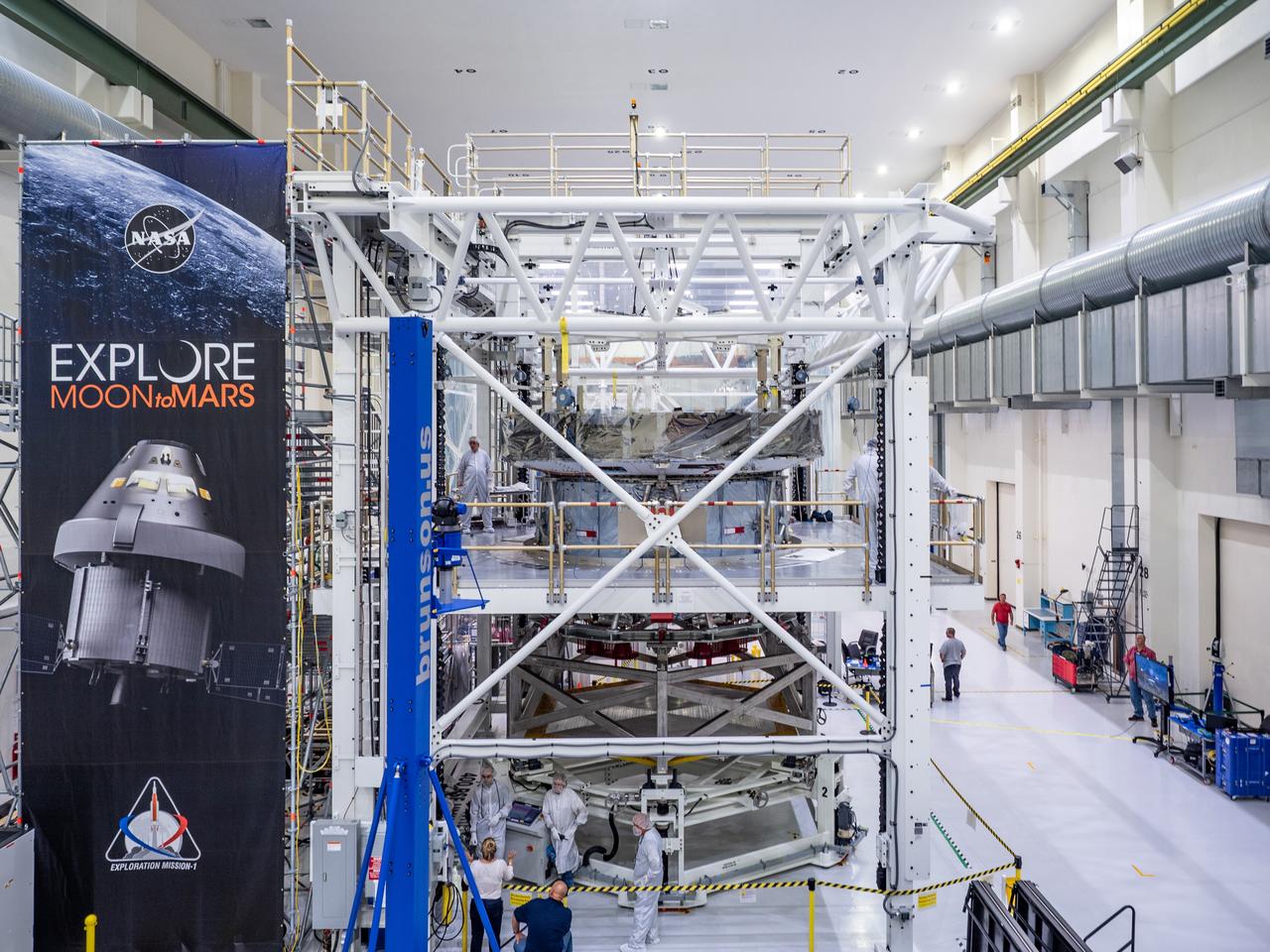
At the Operations and Checkout Building at Kennedy Space Center, Lockheed Martin technicians work to mate Orion's crew module adapter to the European Service Module on Nov. 14, 2018...For the first time, NASA will use a European-built system as a critical element to power an American spacecraft, extending the international cooperation of the International Space Station into deep space. The European Service Module is a unique collaboration across space agencies and industry including ESA’s prime contractor, Airbus, and 10 European countries. The completion of service module work in Europe and shipment to Kennedy signifies a major milestone toward NASA’s human deep space exploration missions to the Moon and beyond.
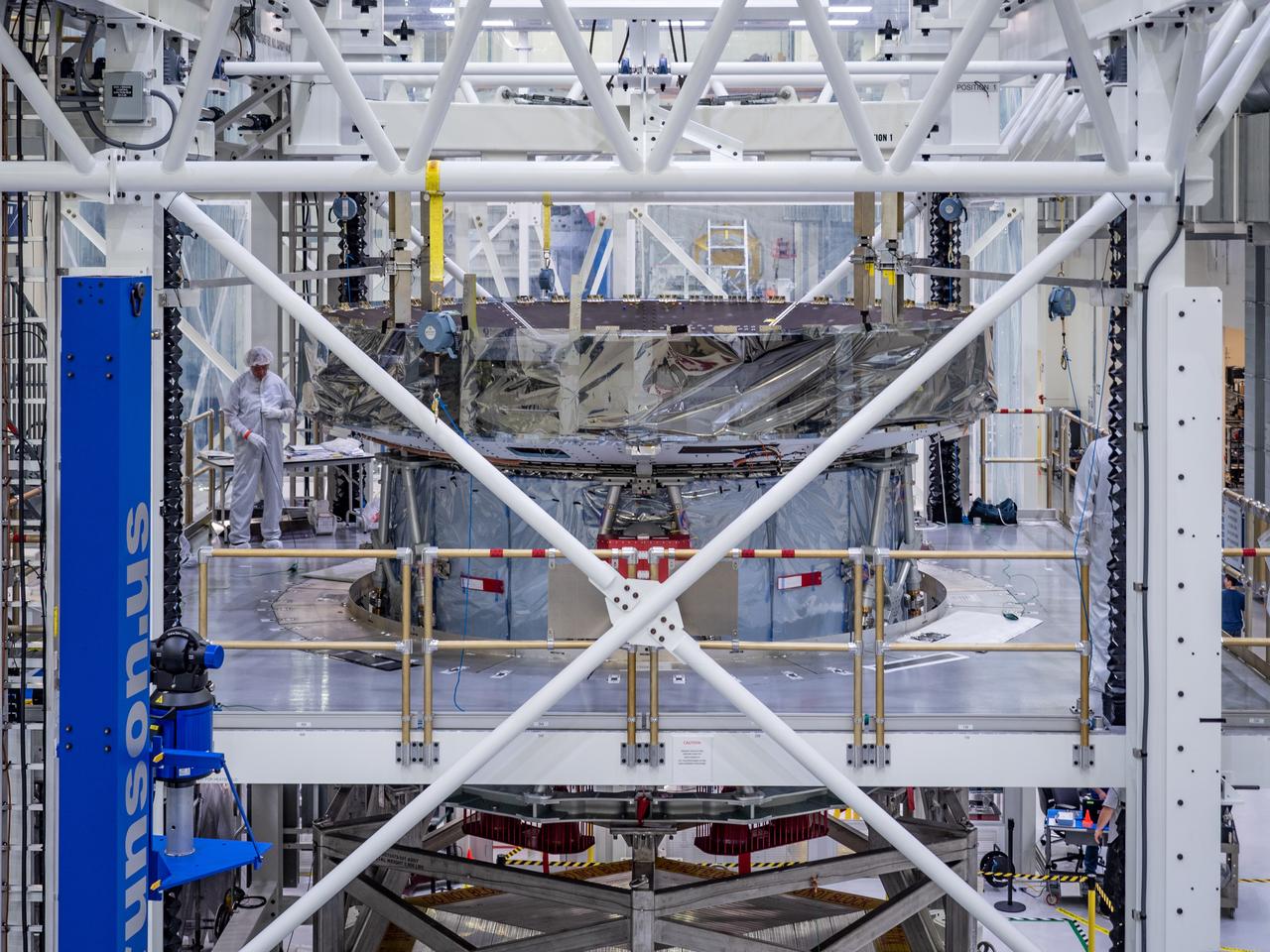
At the Operations and Checkout Building at Kennedy Space Center, Lockheed Martin technicians work to mate Orion's crew module adapter to the European Service Module on Nov. 14, 2018...For the first time, NASA will use a European-built system as a critical element to power an American spacecraft, extending the international cooperation of the International Space Station into deep space. The European Service Module is a unique collaboration across space agencies and industry including ESA’s prime contractor, Airbus, and 10 European countries. The completion of service module work in Europe and shipment to Kennedy signifies a major milestone toward NASA’s human deep space exploration missions to the Moon and beyond.
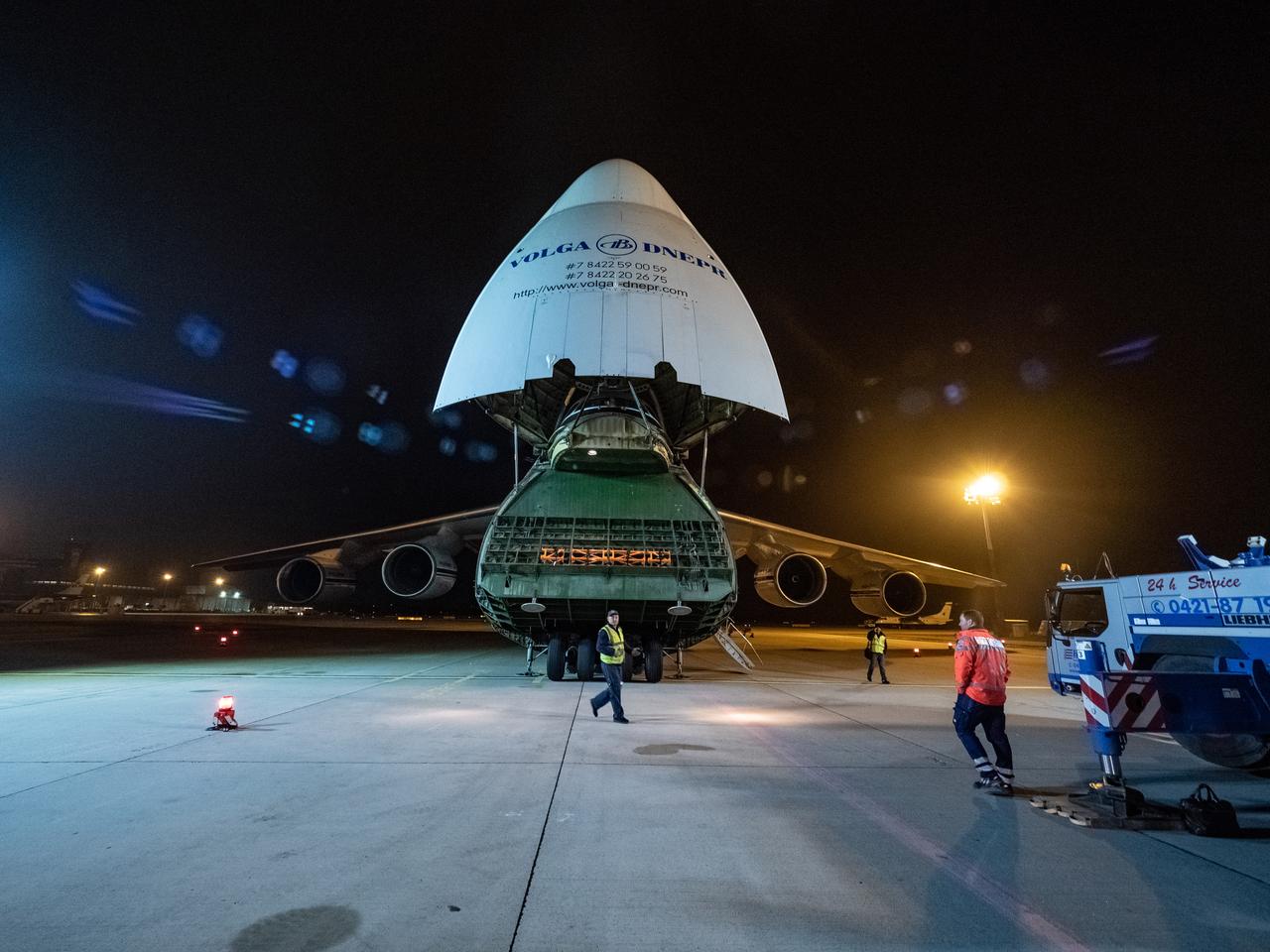
Orion's European Service Module is loaded on the Antonov airplane in Bremen, Germany on Nov. 5, 2018 for transport to Kennedy Space Center...For the first time, NASA will use a European-built system as a critical element to power an American spacecraft, extending the international cooperation of the International Space Station into deep space. The European Service Module is a unique collaboration across space agencies and industry including ESA’s prime contractor, Airbus, and 10 European countries. The completion of service module work in Europe and shipment to Kennedy signifies a major milestone toward NASA’s human deep space exploration missions to the Moon and beyond.
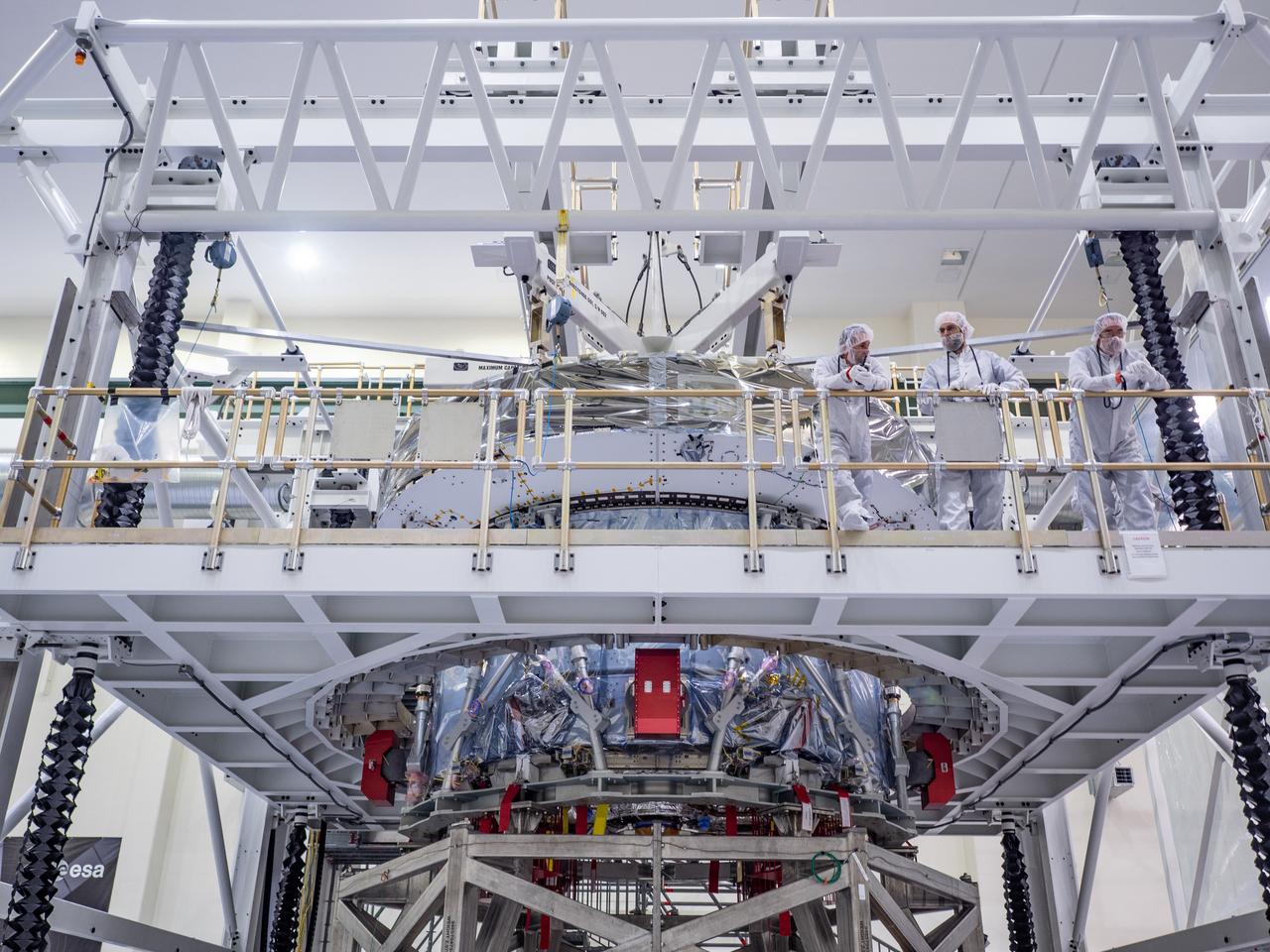
At the Operations and Checkout Building at Kennedy Space Center, Lockheed Martin technicians work to mate Orion's crew module adapter to the European Service Module on Nov. 14, 2018...For the first time, NASA will use a European-built system as a critical element to power an American spacecraft, extending the international cooperation of the International Space Station into deep space. The European Service Module is a unique collaboration across space agencies and industry including ESA’s prime contractor, Airbus, and 10 European countries. The completion of service module work in Europe and shipment to Kennedy signifies a major milestone toward NASA’s human deep space exploration missions to the Moon and beyond.
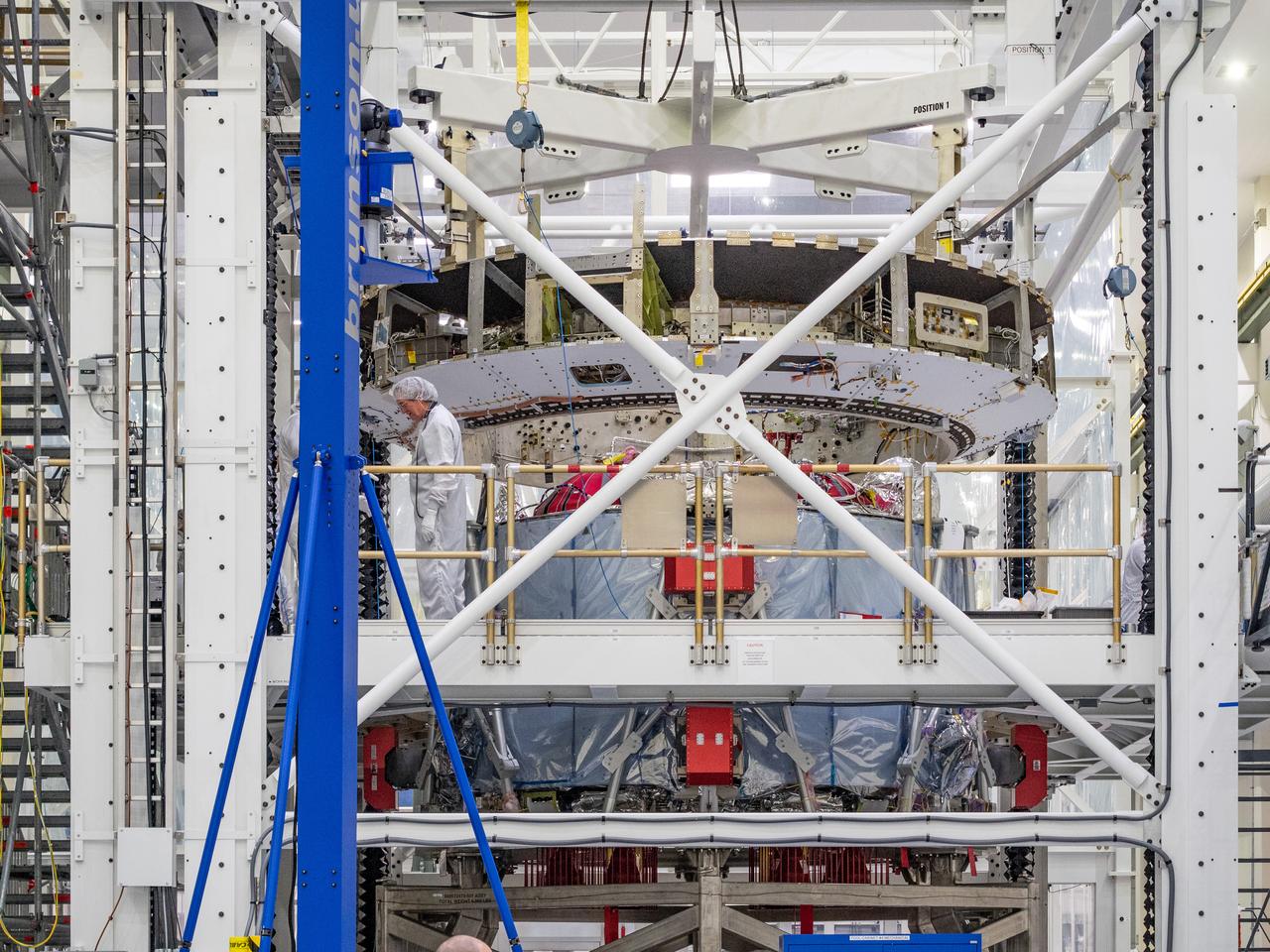
At the Operations and Checkout Building at Kennedy Space Center, Lockheed Martin technicians work to mate Orion's crew module adapter to the European Service Module on Nov. 13, 2018...For the first time, NASA will use a European-built system as a critical element to power an American spacecraft, extending the international cooperation of the International Space Station into deep space. The European Service Module is a unique collaboration across space agencies and industry including ESA’s prime contractor, Airbus, and 10 European countries. The completion of service module work in Europe and shipment to Kennedy signifies a major milestone toward NASA’s human deep space exploration missions to the Moon and beyond.
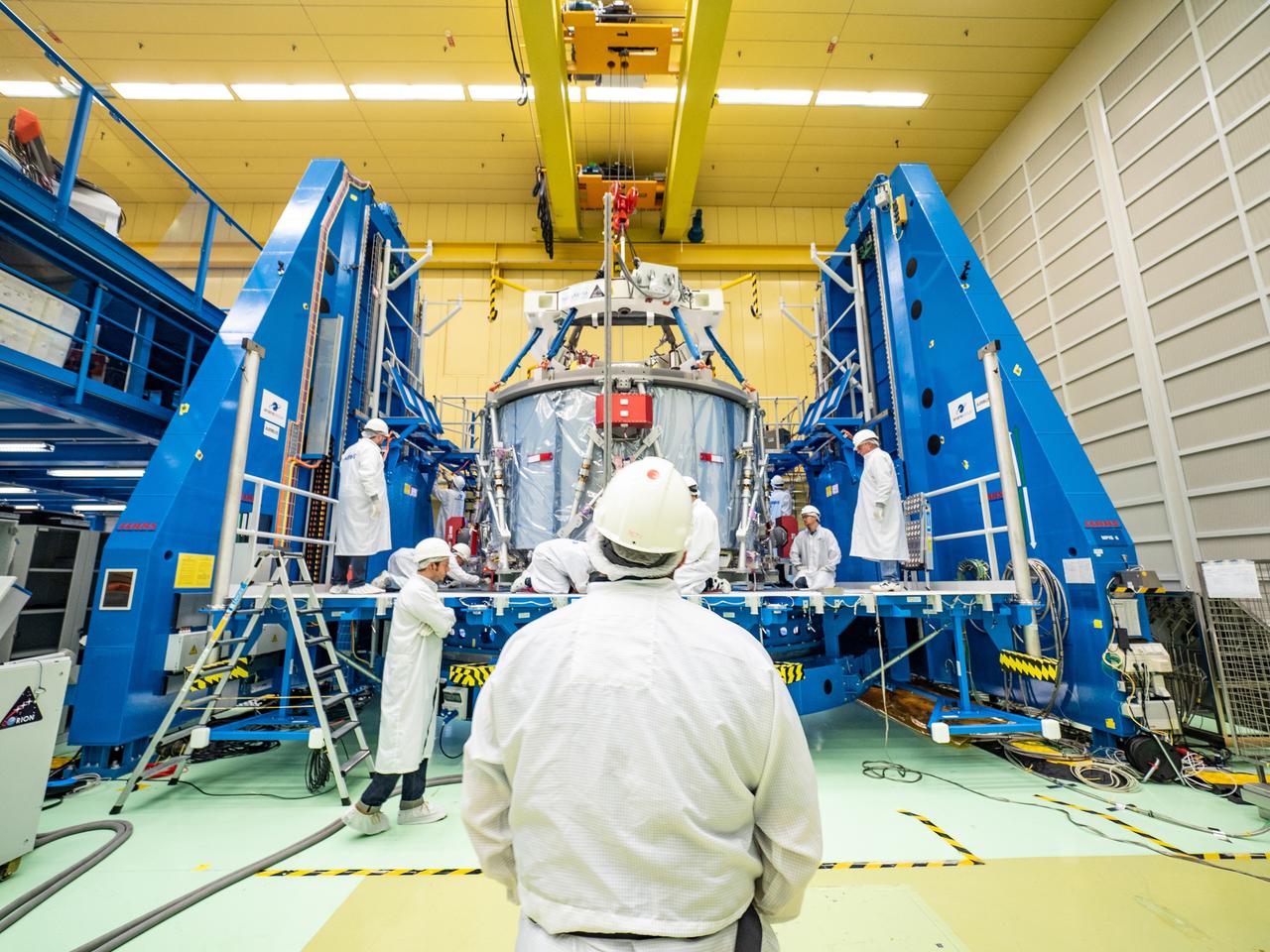
Technicians at the Airbus facility in Bremen, Germany prepare the European Service Module for shipment to Kennedy Space Center on Nov. 1, 2018. The service module will depart Germany on November 5, 2018 and will arrive in the U.S. on November 6...For the first time, NASA will use a European-built system as a critical element to power an American spacecraft, extending the international cooperation of the International Space Station into deep space. The European Service Module is a unique collaboration across space agencies and industry including ESA’s prime contractor, Airbus, and 10 European countries. The completion of service module work in Europe and shipment to Kennedy signifies a major milestone toward NASA’s human deep space exploration missions to the Moon and beyond.
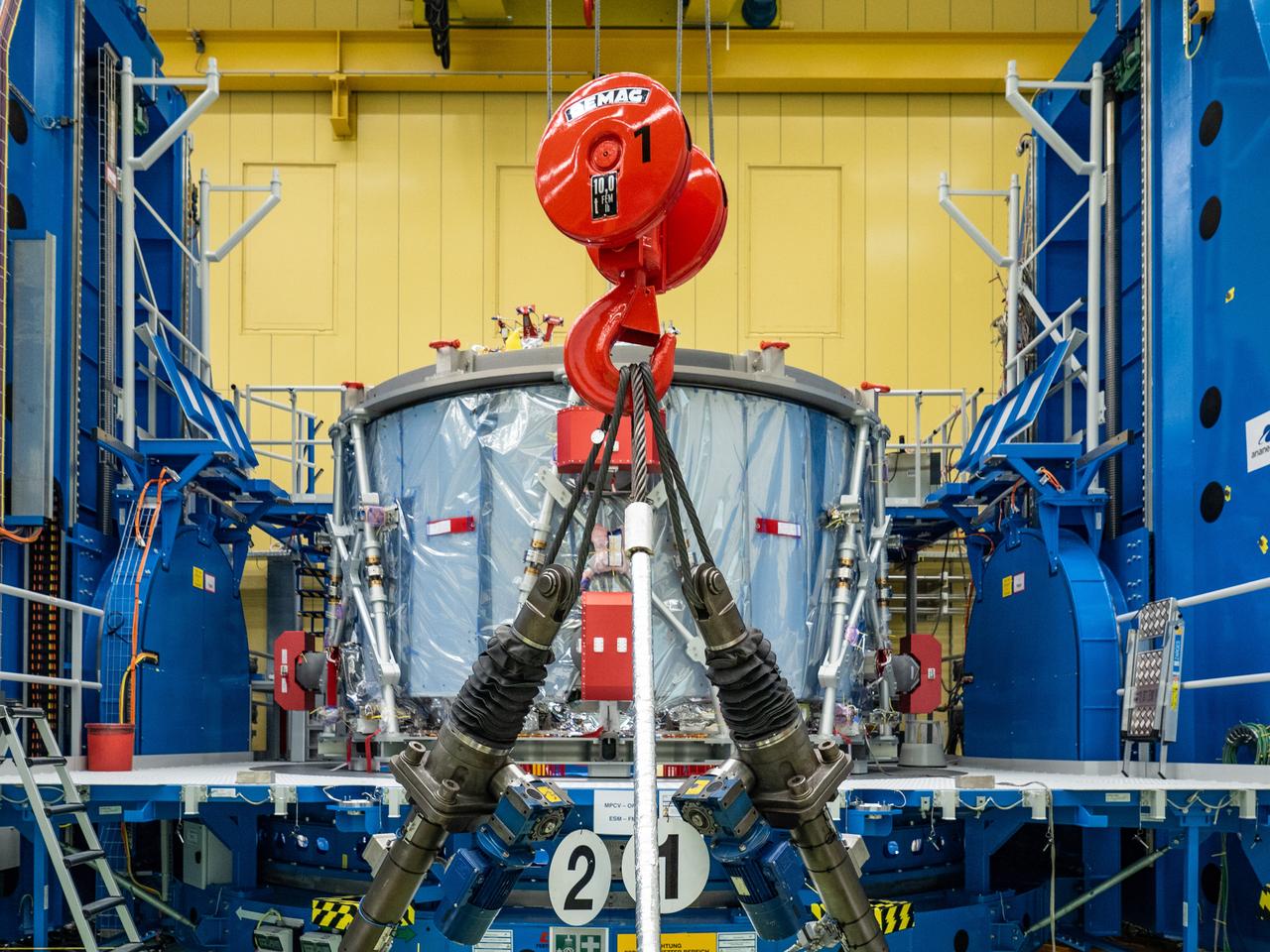
Technicians at the Airbus facility in Bremen, Germany prepare the European Service Module for shipment to Kennedy Space Center on Nov. 1, 2018. The service module will depart Germany on November 5, 2018 and will arrive in the U.S. on November 6...For the first time, NASA will use a European-built system as a critical element to power an American spacecraft, extending the international cooperation of the International Space Station into deep space. The European Service Module is a unique collaboration across space agencies and industry including ESA’s prime contractor, Airbus, and 10 European countries. The completion of service module work in Europe and shipment to Kennedy signifies a major milestone toward NASA’s human deep space exploration missions to the Moon and beyond.
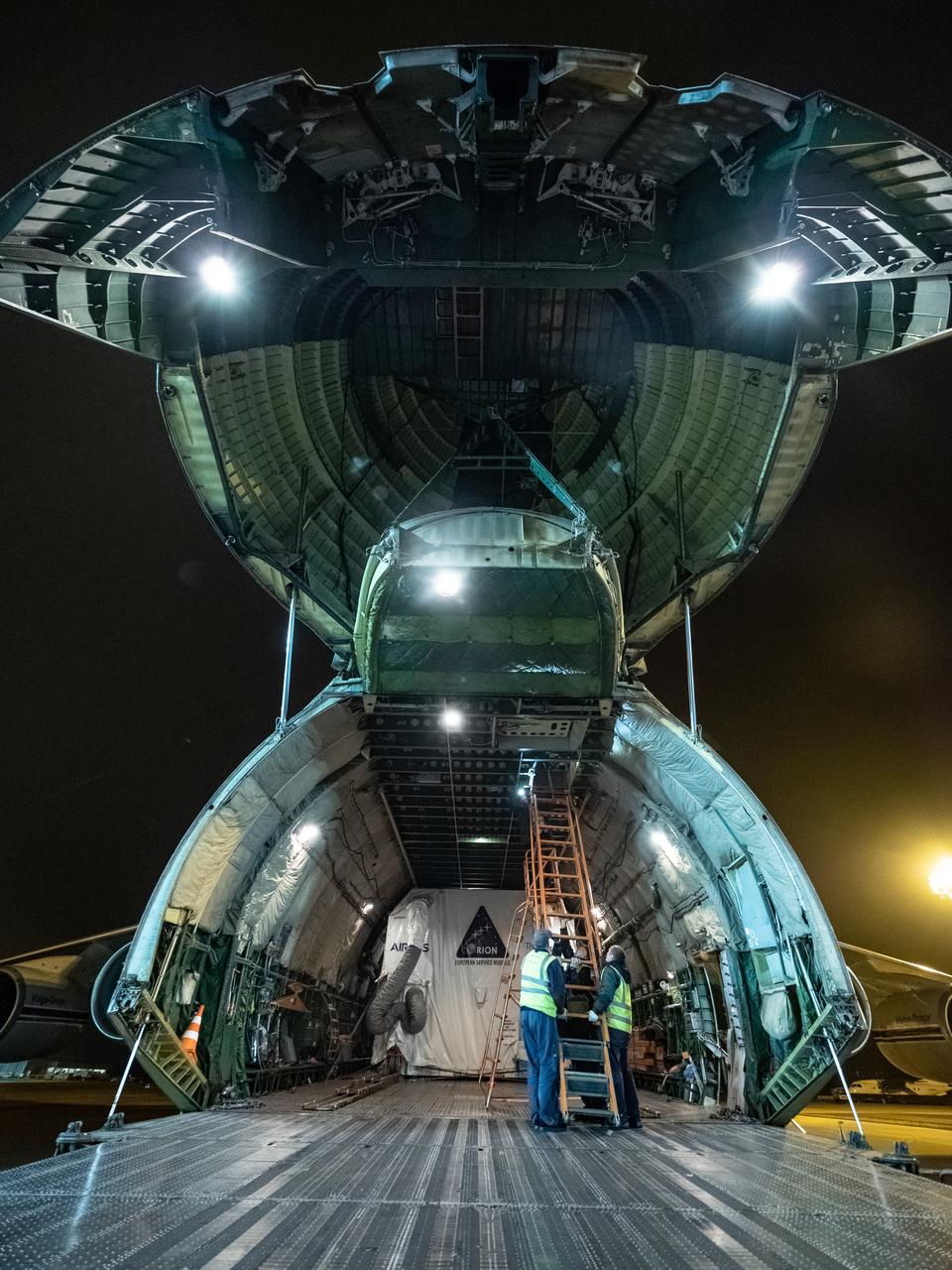
Orion's European Service Module is loaded on the Antonov airplane in Bremen, Germany on Nov. 5, 2018 for transport to Kennedy Space Center...For the first time, NASA will use a European-built system as a critical element to power an American spacecraft, extending the international cooperation of the International Space Station into deep space. The European Service Module is a unique collaboration across space agencies and industry including ESA’s prime contractor, Airbus, and 10 European countries. The completion of service module work in Europe and shipment to Kennedy signifies a major milestone toward NASA’s human deep space exploration missions to the Moon and beyond.
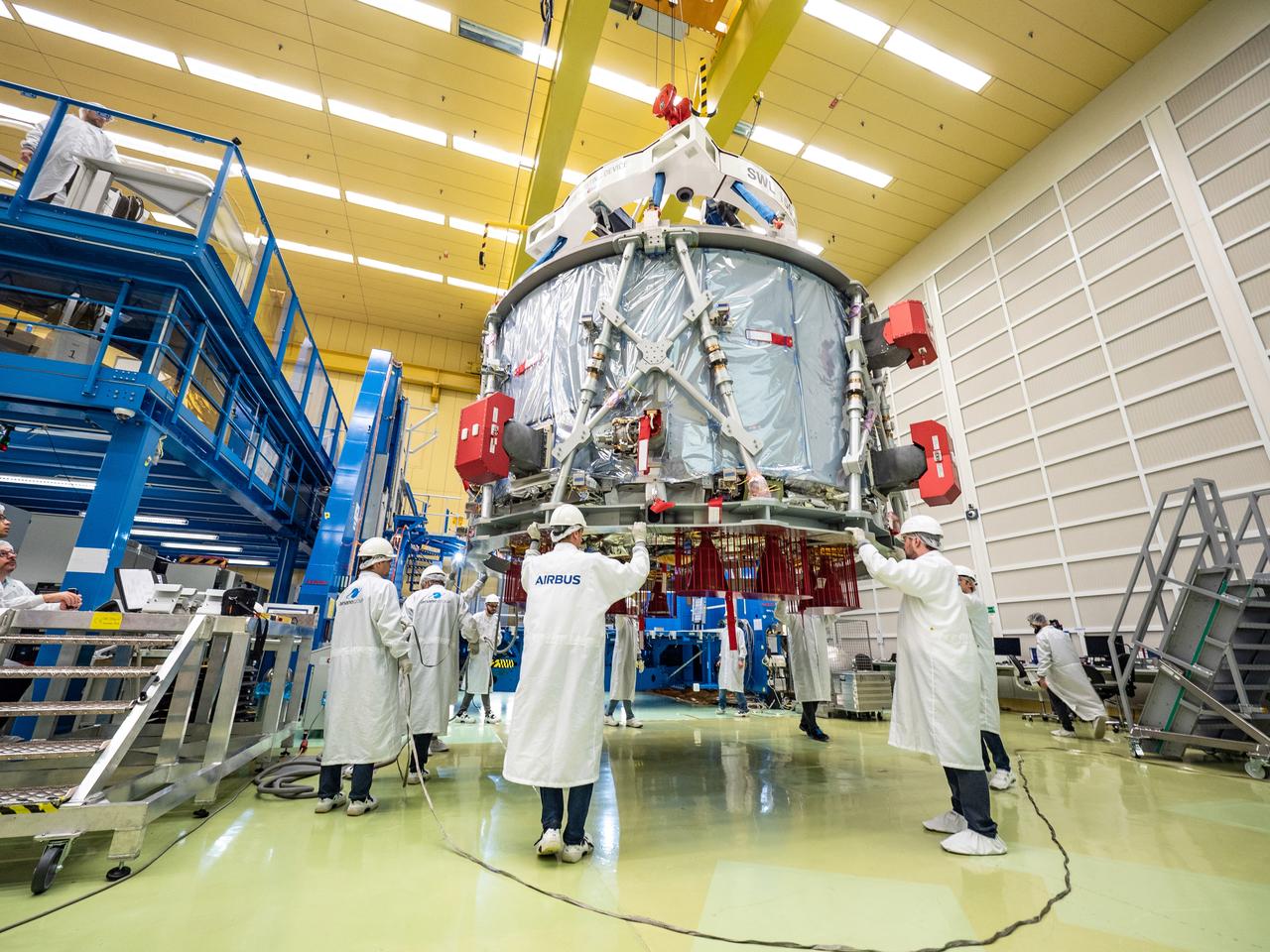
Technicians at the Airbus facility in Bremen, Germany prepare the European Service Module for shipment to Kennedy Space Center on Nov. 1, 2018. The service module will depart Germany on November 5, 2018 and will arrive in the U.S. on November 6...For the first time, NASA will use a European-built system as a critical element to power an American spacecraft, extending the international cooperation of the International Space Station into deep space. The European Service Module is a unique collaboration across space agencies and industry including ESA’s prime contractor, Airbus, and 10 European countries. The completion of service module work in Europe and shipment to Kennedy signifies a major milestone toward NASA’s human deep space exploration missions to the Moon and beyond.