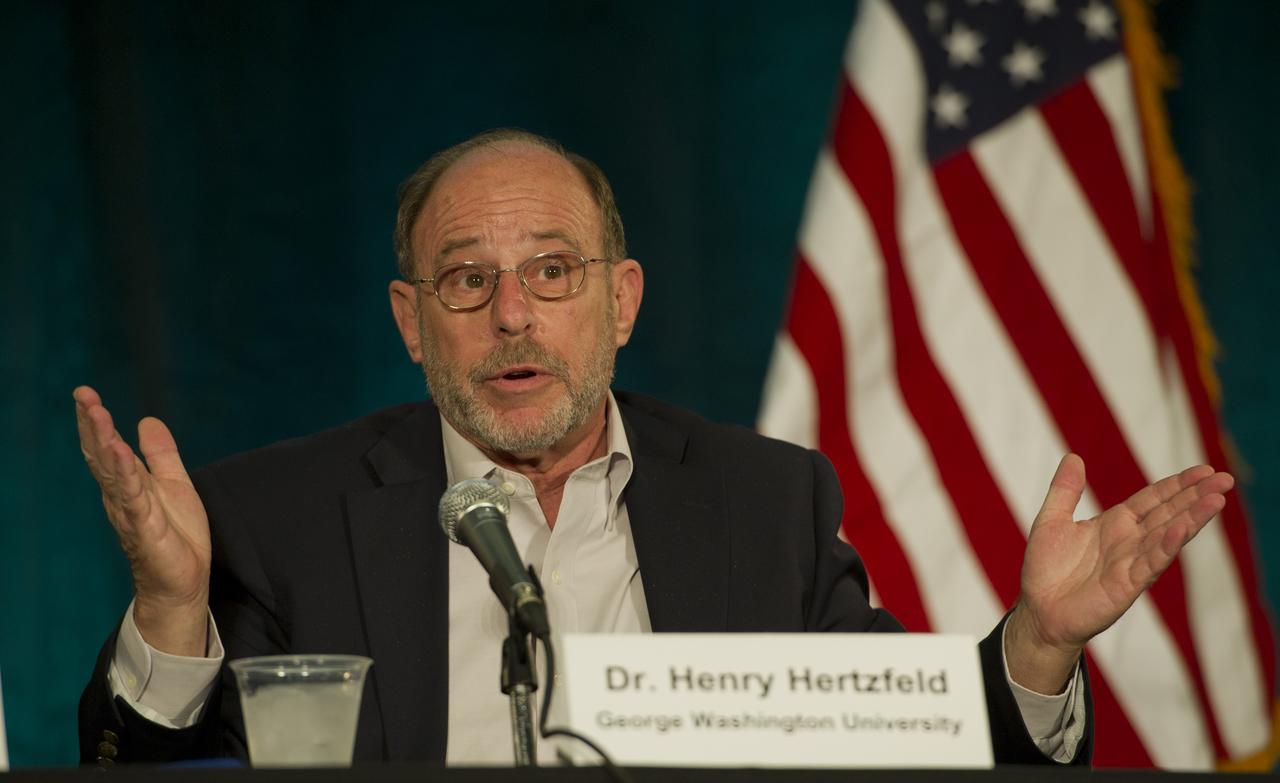
Dr. Henry Hertzfeld, from George Washington University, speaks about technology investments and their benefits during a panel discussion at the 2011 NASA Future Forum held at the Riggs Alumni Center on the campus of the University of Maryland, Thursday, Aug. 11, 2011, in College Park, Md. Photo Credit: (NASA/Paul E. Alers)

Christyl Johnson, deputy director for technology and research investments, NASA Goddard Space Flight Center, second from right, speaks on a panel after a showing of the Project Mars Competition's short films and the Mars series, Monday, November 5, 2018 at National Geographic Society Headquarters in Washington. Photo Credit: (NASA/Aubrey Gemignani)
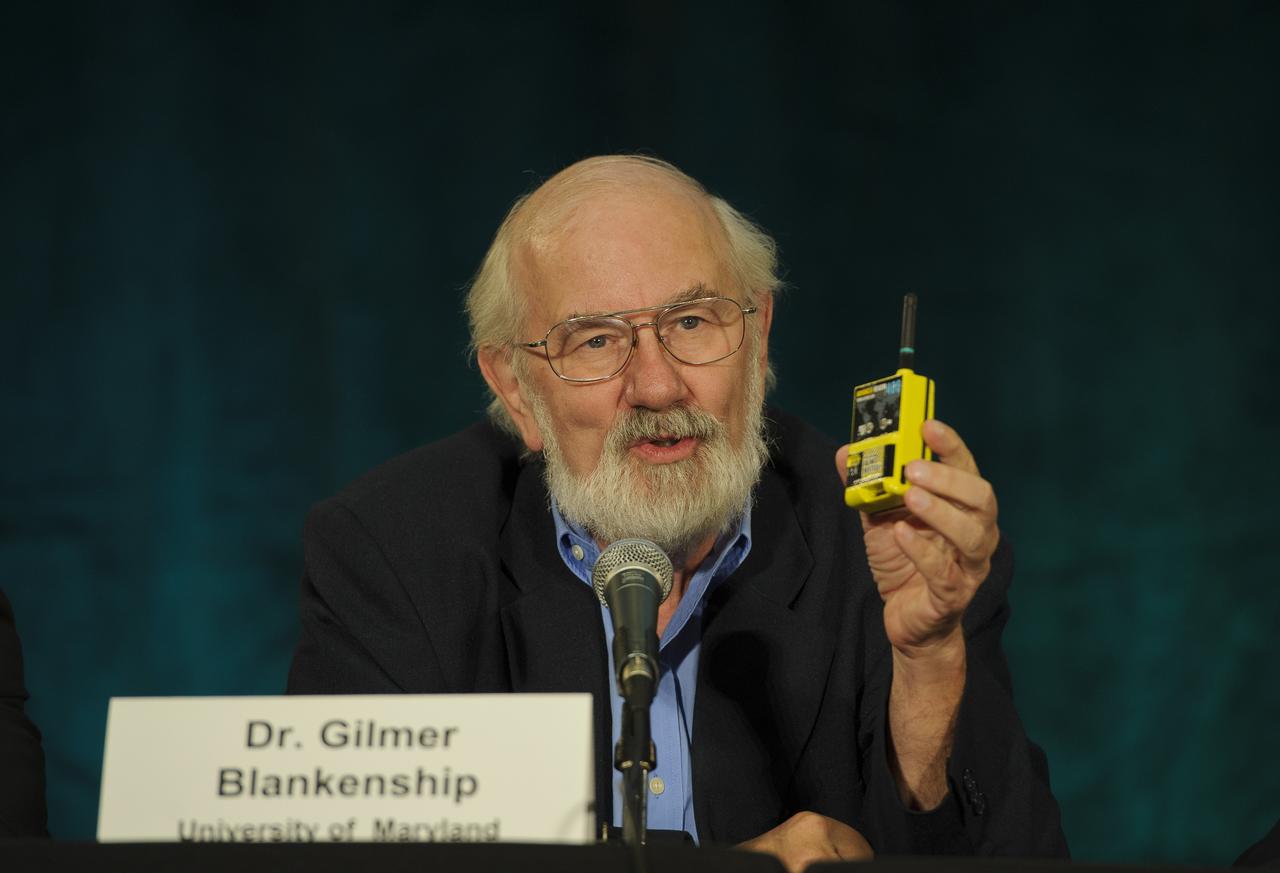
Dr. Gilmer Blankenship, of the University of Maryland, speaks about technology investments and their benefits during a panel discussion at the 2011 NASA Future Forum held at the Riggs Alumni Center on the campus of the University of Maryland, Thursday, Aug. 11, 2011, in College Park, Md. Photo Credit: (NASA/Paul E. Alers)
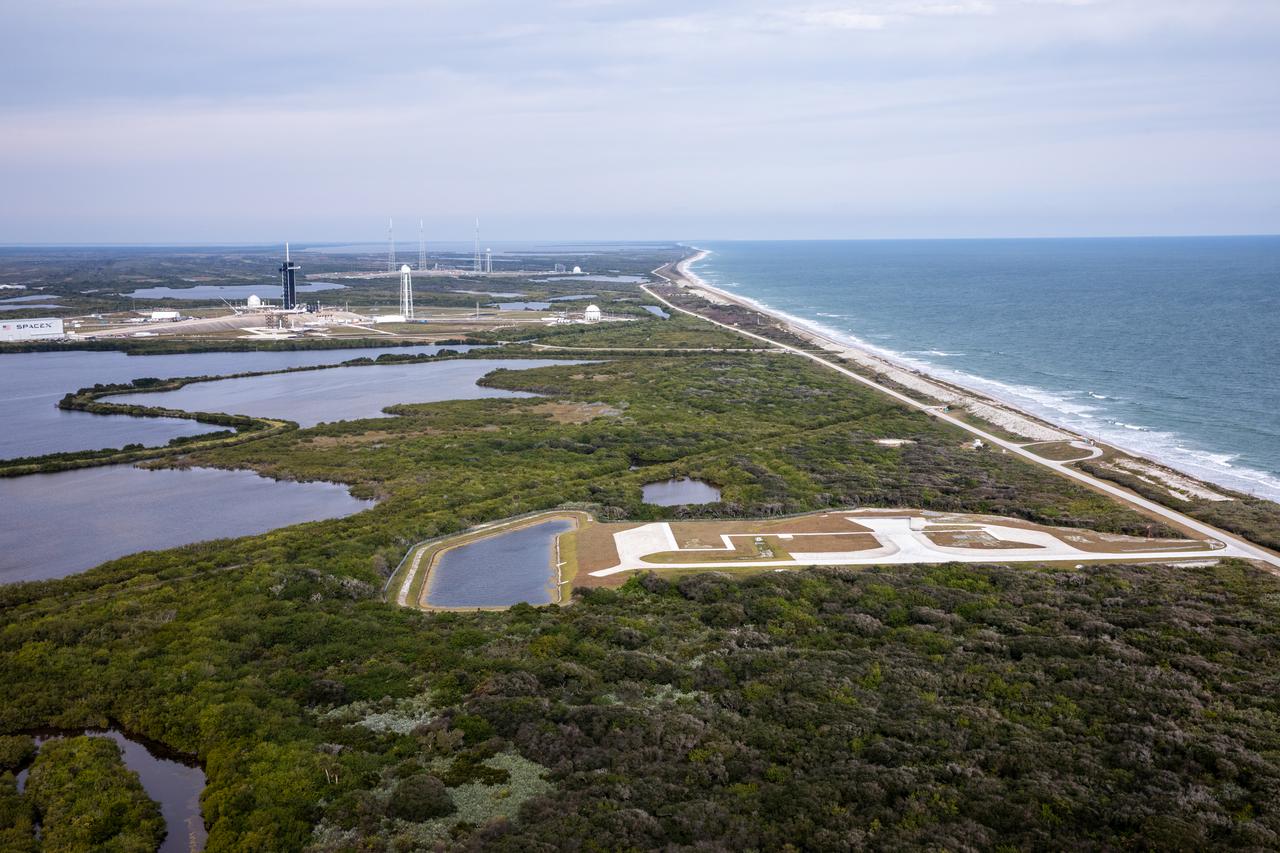
NASA Kennedy Space Center’s newest launch complex – Launch Complex 48 – is a dedicated site for small-class launch vehicles. The complex offers a “clean pad” concept, allowing companies to bring in their own resources and commodities for launch and, in turn, reducing their investment in launch pad infrastructure.
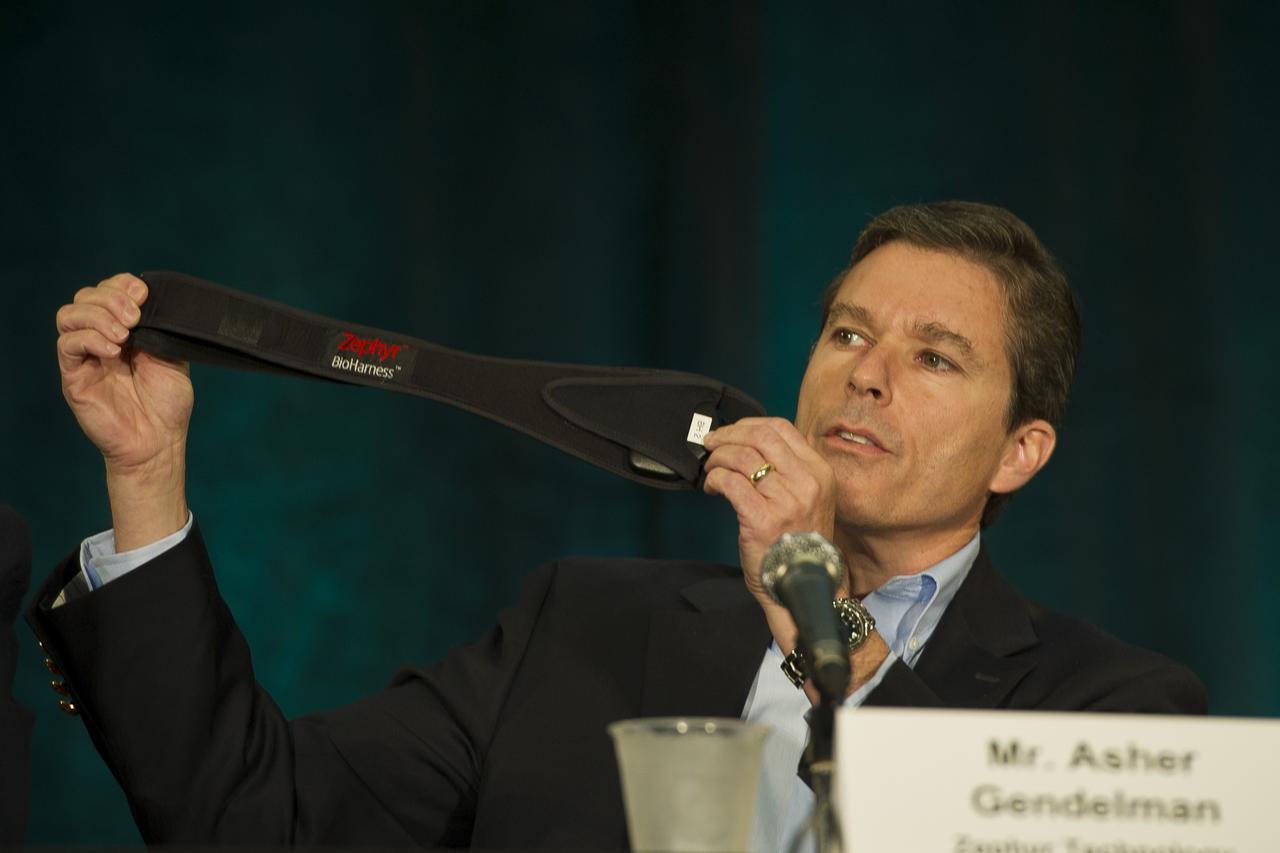
Asher Gendelman, a director of technology at Zephyr Technology, holds up chest belt as he speaks about technology investments and their benefits during a panel discussion at the 2011 NASA Future Forum held at the Riggs Alumni Center on the campus of the University of Maryland, Thursday, Aug. 11, 2011, in College Park, Md. Photo Credit: (NASA/Paul E. Alers)
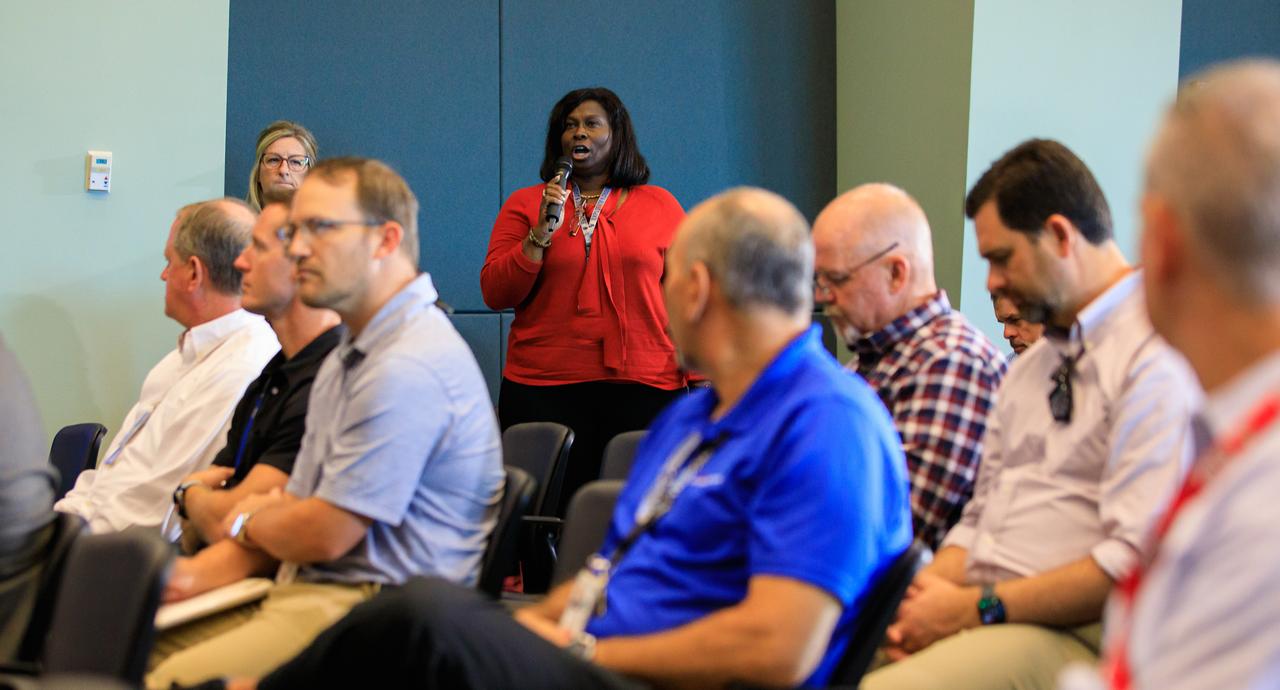
A NASA Kennedy Space Center employee asks a question during a procurement discussion on Nov. 29, 2022, at the space center in Florida. NASA senior leaders participating in the discussion with employees are NASA Deputy Administrator Pam Melroy; NASA Association Administrator Bob Cabana; Karla Smith Jackson, assistant administrator for Procurement; Scott Barber, associate general counsel for Acquisition Law; Craig McArthur, OCFO/director for Strategic Investments Division; and David Mitchell, chief program management officer.

Christyl Johnson, NASA Goddard deputy director for technology and research investments, is seen on stage during a performance at the Apollo 11 50th Anniversary celebration on the National Mall, Thursday, July 18, 2019 in Washington. Apollo 11 was the first mission to land astronauts on the Moon and launched on July 16, 1969 with astronauts Neil Armstrong, Michael Collins, and Buzz Aldrin. Photo Credit: (NASA/Connie Moore)

Ecuador Minster of Production, Foreign Trade, Investments and Fisheries Julio José Prado, left, delivers remarks during an Artemis Accords signing ceremony Wednesday, June 21, 2023, at the Embassy of Ecuador in Washington. Ecuador is the twenty sixth country to sign the Artemis Accords, which establish a practical set of principles to guide space exploration cooperation among nations participating in NASA’s Artemis program. Photo Credit: (NASA/Keegan Barber)
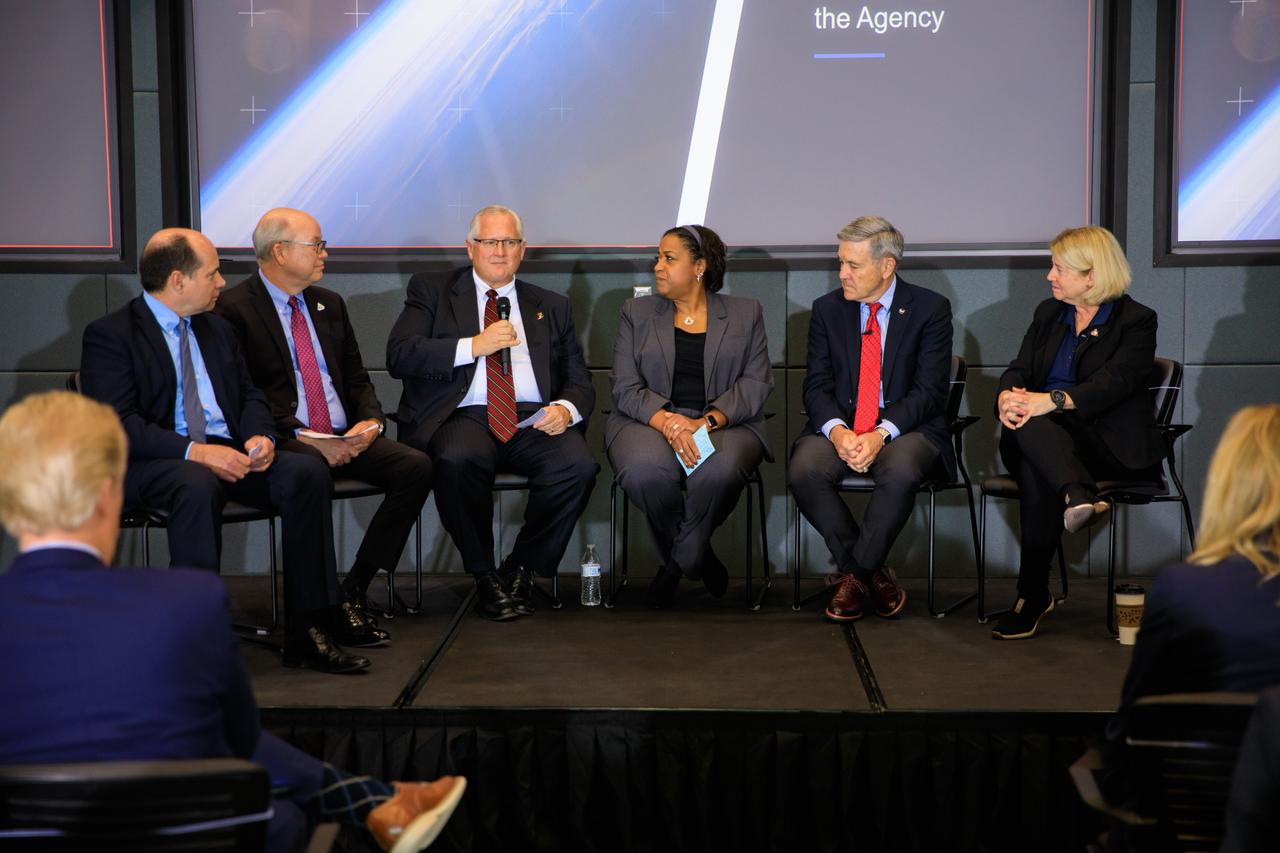
NASA senior leaders participate in a procurement discussion with employees on Nov. 29, 2022, at the agency’s Kennedy Space Center in Florida. The conversation focused on strengthening acquisition and program management within the agency. From left are David Mitchell, chief program management officer; Craig McArthur, OCFO/director for Strategic Investments Division; Scott Barber, associate general counsel for Acquisition Law; Karla Smith Jackson, assistant administrator for Procurement; NASA Associate Administrator Bob Cabana; and NASA Deputy Administrator Pam Melroy.
CAPE CANAVERAL, Fla. -- This is a printable poster with NASA's Commercial Crew Program (CCP) logo. CCP is leading NASA's effort of accelerating a United States-led capability to the International Space Station by investing in the design and development of the aerospace industry's crew transportation systems. The goal of CCP is to drive down the cost of space travel as well as open up space to more people than ever before by balancing industry’s own innovative capabilities with NASA's 50 years of human spaceflight experience. For more information, visit www.nasa.gov/commercialcrew

CAPE CANAVERAL, Fla. -- This is a printable poster with NASA's Commercial Crew Program (CCP) logo. CCP is leading NASA's effort of accelerating a United States-led capability to the International Space Station by investing in the design and development of the aerospace industry's crew transportation systems. The goal of CCP is to drive down the cost of space travel as well as open up space to more people than ever before by balancing industry’s own innovative capabilities with NASA's 50 years of human spaceflight experience. For more information, visit www.nasa.gov/commercialcrew
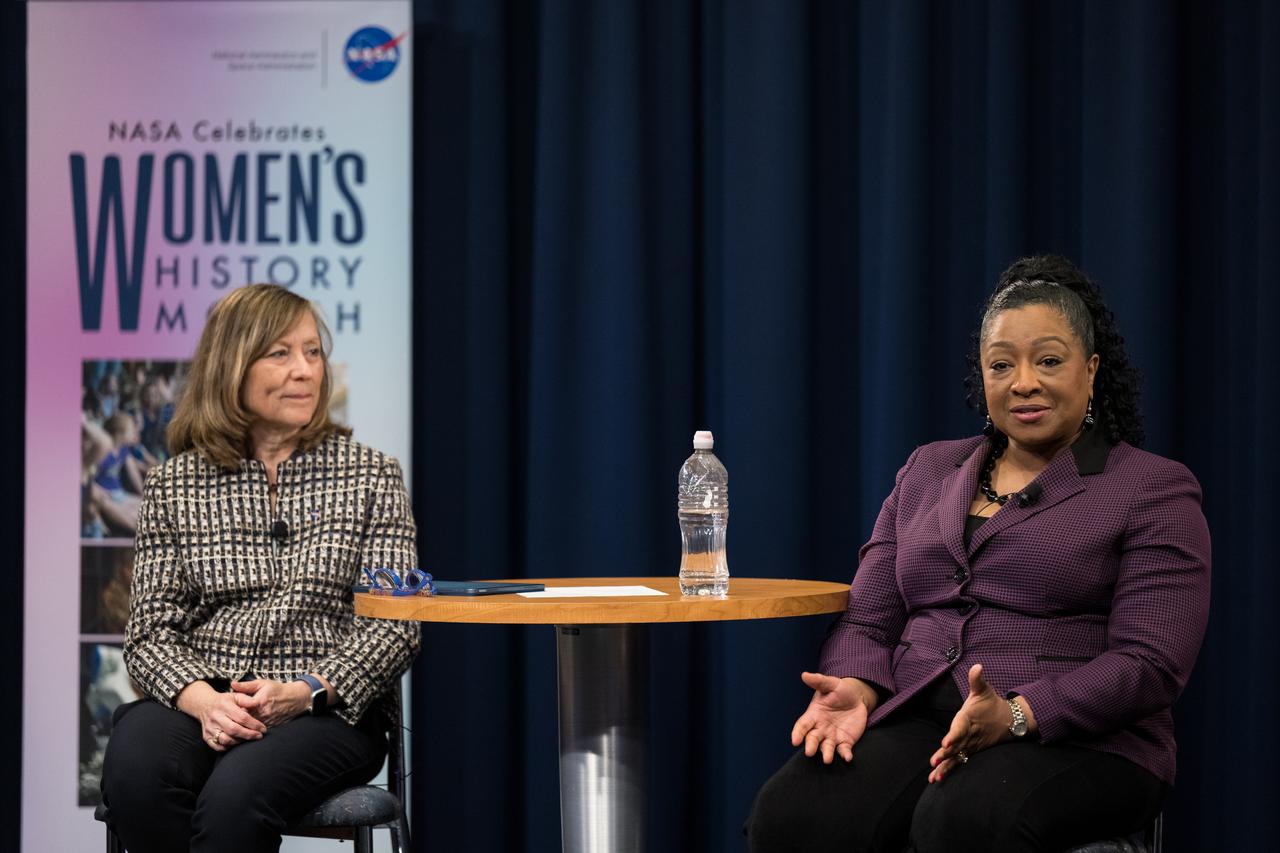
NASA Deputy Associate Administrator for STEM, Kris Brown, and NASA Goddard’s Deputy Director for Technology and Research Investments, Dr. Christyl Johnson, participate in a panel discussion during an event for Women’s History Month, “Celebrating Women Who Tell Our Stories,” Wednesday, March 22, 2023 at NASA’s Goddard Space Flight Center in Greenbelt, Maryland. Photo Credit: (NASA/Aubrey Gemignani)
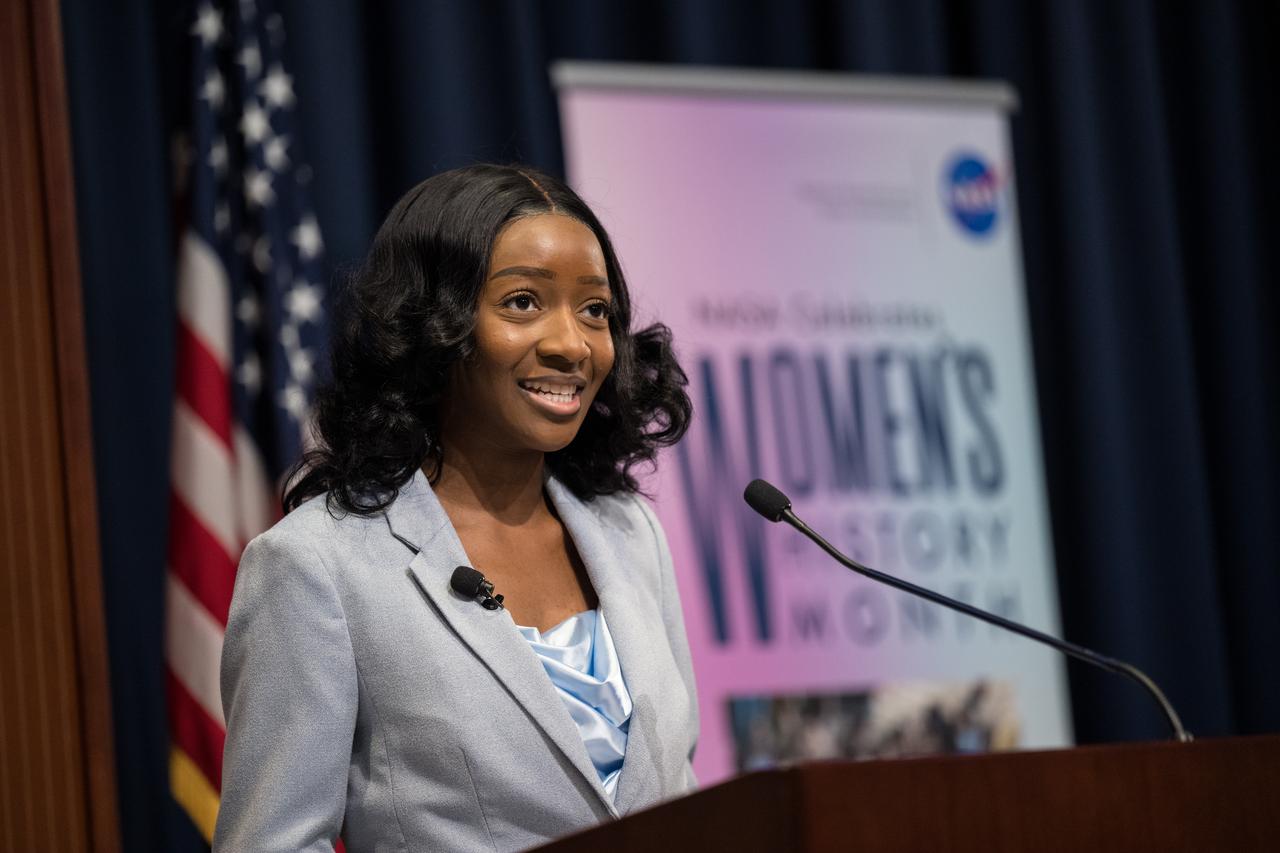
NASA IT Cybersecurity Specialist, Sarah Adewumi, introduces NASA Deputy Associate Administrator for STEM, Kris Brown just before a panel discussion with Brown, NASA Goddard’s Deputy Director for Technology and Research Investments, Dr. Christyl Johnson, NASA Headquarters Deputy Director for the Astrophysics Division, Sandra Cauffman, and NASA Associate Chief Scientist for Exploration and Applied Research, Dr. Mamta Patel Nagaraja during an event for Women’s History Month, “Celebrating Women Who Tell Our Stories,” Wednesday, March 22, 2023 at NASA’s Goddard Space Flight Center in Greenbelt, Maryland. Photo Credit: (NASA/Aubrey Gemignani)
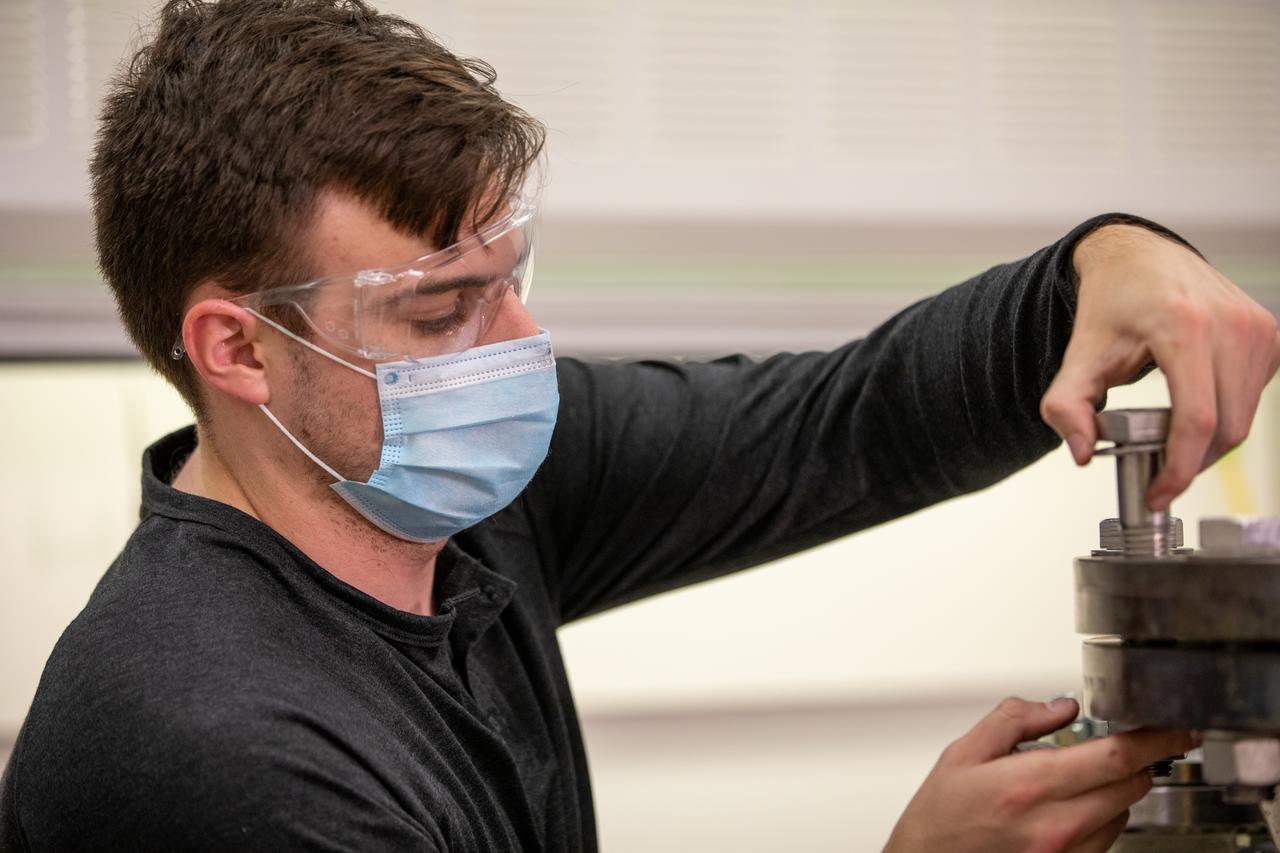
Kevin Grossman, project lead for the Gaseous Lunar Oxygen from Regolith Electrolysis (GaLORE) project at NASA Kennedy Space Center’s Swamp Works, checks the hardware for GaLORE on July 21, 2020, inside a laboratory at the center’s Neil Armstrong Operations and Checkout Building. Grossman is leading an Early Career Initiative project that is investing in turning lunar regolith into oxygen that could be used for life support for sustainable human lunar exploration on long-duration missions to Mars. GaLORE was selected as an Early Career Initiative project by NASA’s Space Technology Mission directorate.

NASA Headquarters Deputy Director for the Astrophysics Division, Sandra Cauffman, speaks during a panel discussion with NASA IT Cybersecurity Specialist, Sarah Adewumi, NASA Goddard’s Deputy Director for Technology and Research Investments, Dr. Christyl Johnson, NASA Deputy Associate Administrator for STEM, Kris Brown, and NASA Associate Chief Scientist for Exploration and Applied Research, Dr. Mamta Patel Nagaraja, as part of a Women’s History Month program, “Celebrating Women Who Tell Our Stories,” Wednesday, March 22, 2023 at NASA’s Goddard Space Flight Center in Greenbelt, Maryland. Photo Credit: (NASA/Aubrey Gemignani)
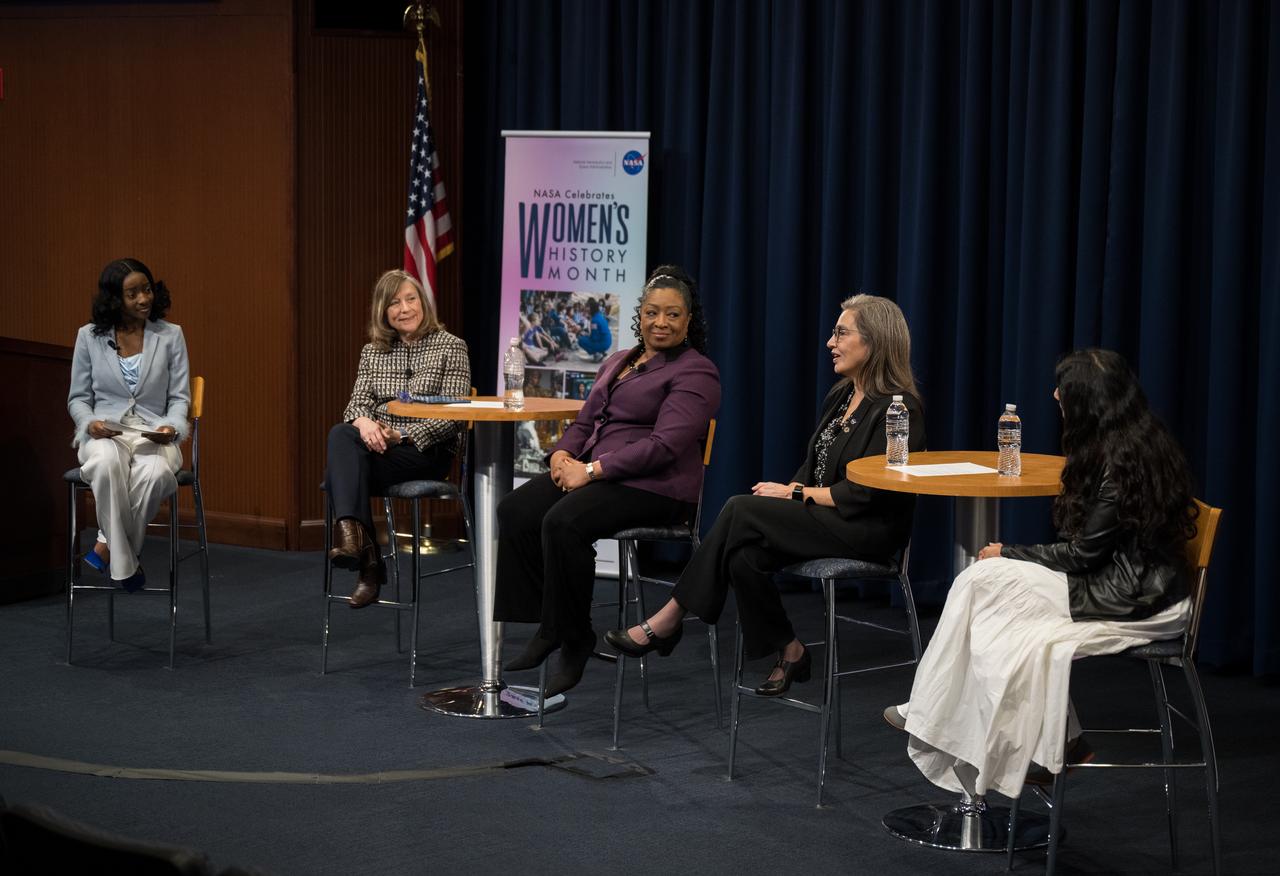
NASA IT Cybersecurity Specialist, Sarah Adewumi, left, moderates a panel discussion with NASA Deputy Associate Administrator for STEM, Kris Brown, NASA Goddard’s Deputy Director for Technology and Research Investments, Dr. Christyl Johnson, NASA Headquarters Deputy Director for the Astrophysics Division, Sandra Cauffman, and NASA Associate Chief Scientist for Exploration and Applied Research, Dr. Mamta Patel Nagaraja during an event for Women’s History Month, “Celebrating Women Who Tell Our Stories,” Wednesday, March 22, 2023 at NASA’s Goddard Space Flight Center in Greenbelt, Maryland. Photo Credit: (NASA/Aubrey Gemignani)
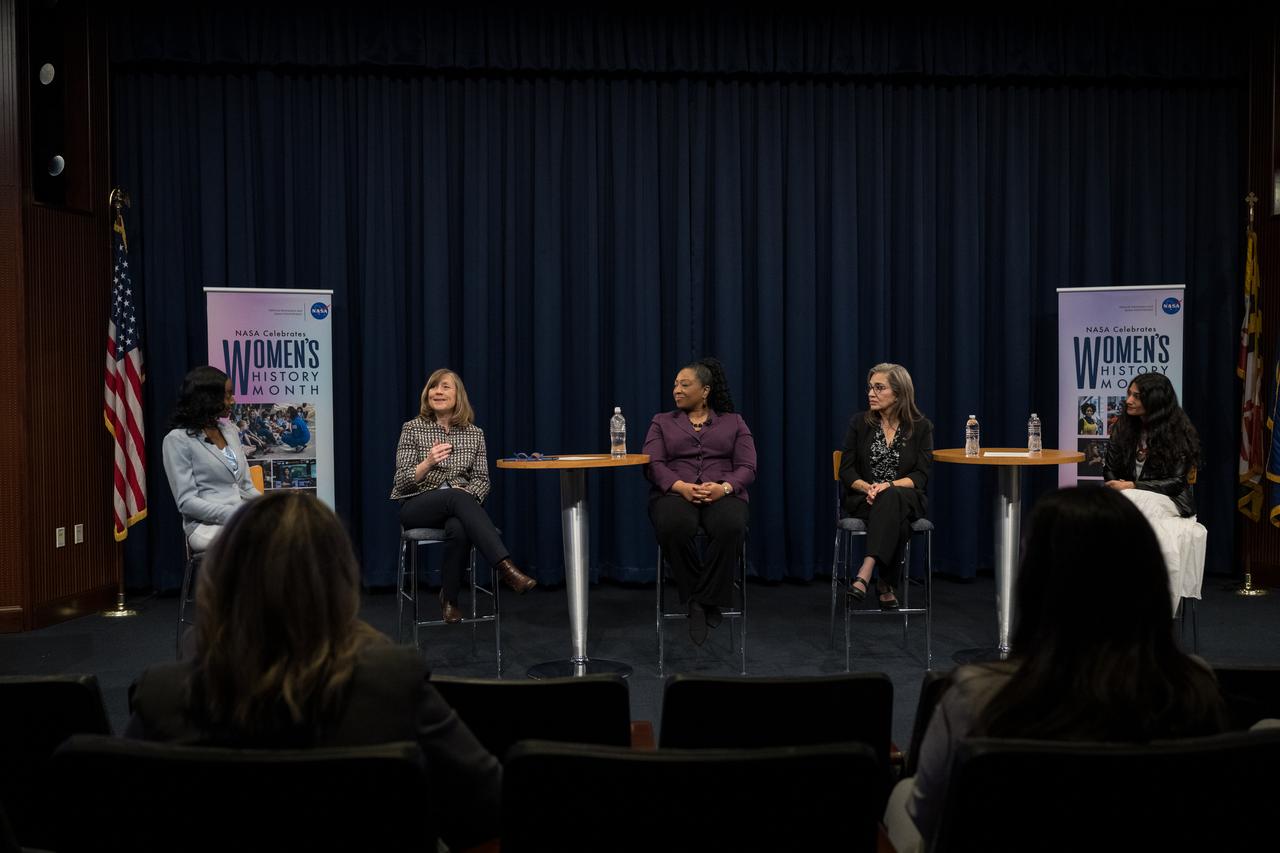
NASA IT Cybersecurity Specialist, Sarah Adewumi, left, moderates a panel discussion with NASA Deputy Associate Administrator for STEM, Kris Brown, NASA Goddard’s Deputy Director for Technology and Research Investments, Dr. Christyl Johnson, NASA Headquarters Deputy Director for the Astrophysics Division, Sandra Cauffman, and NASA Associate Chief Scientist for Exploration and Applied Research, Dr. Mamta Patel Nagaraja during an event for Women’s History Month, “Celebrating Women Who Tell Our Stories,” Wednesday, March 22, 2023 at NASA’s Goddard Space Flight Center in Greenbelt, Maryland. Photo Credit: (NASA/Aubrey Gemignani)
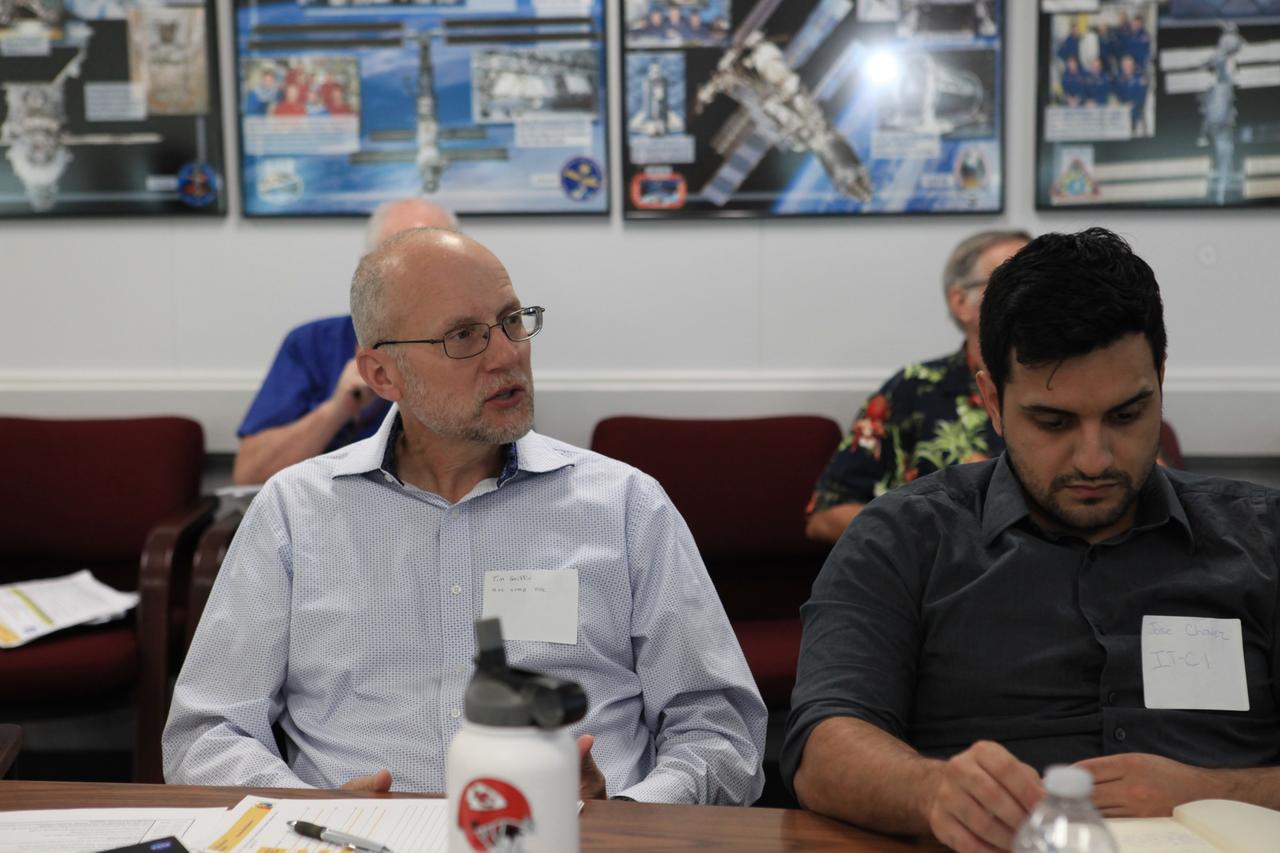
Tim Griffin, NASA’s Kennedy Space Center’s Space Technology Mission Directorate representative for this year’s “Innovation Without Boundaries” event held in Kennedy’s Space Station Processing Facility on June 14, 2019, asks a participant a question. A number of employees, including civil servants and contractors that opted to take part, presented their proposals to a panel of judges as part of the Chief Technologist Innovation Call. The three categories of awards were innovative ideas that had little cost, ideas with great returns on investment up to $20,000 and big ideas where participants could socialize ideas for projects that would take more than $20,000 to implement.
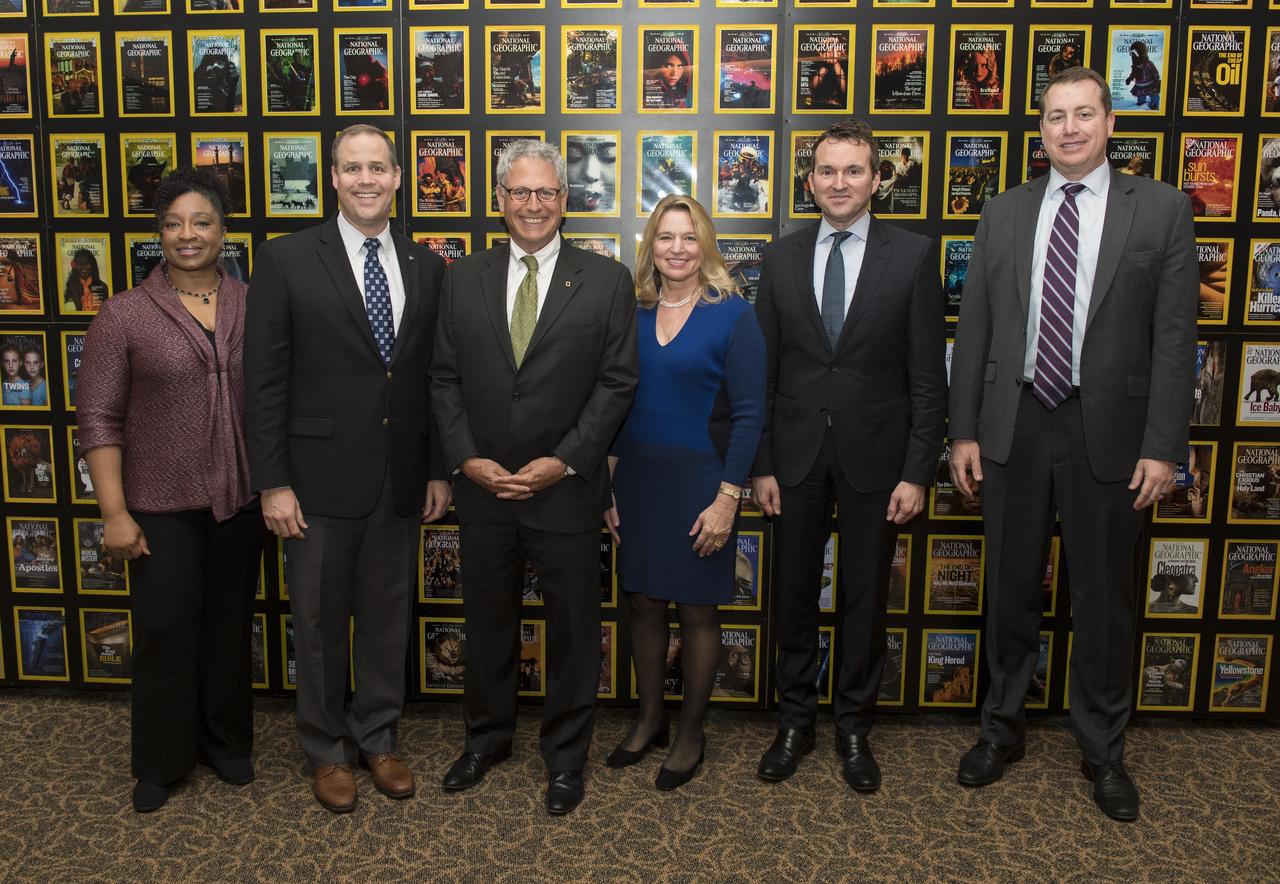
From left to right, Christyl Johnson, deputy director for technology and research investments, NASA Goddard Space Flight Center; NASA Administrator Jim Bridenstine; Gary Knell, CEO, National Geographic Partners; Ellen Stofan, director, Smithsonian's National Air and Space Museum; Eric Fanning, AIA President and CEO; and Jeff DeWitt, NASA Chief Financial Officer, pose for a photo before a showing of the Project Mars Competition's short films winners and the Mars series, Monday, November 5, 2018 at National Geographic Society Headquarters in Washington. Photo Credit: (NASA/Aubrey Gemignani)

NASA Associate Chief Scientist for Exploration and Applied Research, Dr. Mamta Patel Nagaraja, speaks during a panel discussion with NASA IT Cybersecurity Specialist, Sarah Adewumi, NASA Goddard’s Deputy Director for Technology and Research Investments, Dr. Christyl Johnson, NASA Deputy Associate Administrator for STEM, Kris Brown, and NASA Headquarters Deputy Director for the Astrophysics Division, Sandra Cauffman, as part of a Women’s History Month program, “Celebrating Women Who Tell Our Stories,” Wednesday, March 22, 2023 at NASA’s Goddard Space Flight Center in Greenbelt, Maryland. Photo Credit: (NASA/Aubrey Gemignani)

NASA Deputy Associate Administrator for STEM, Kris Brown speaks during a panel discussion with NASA IT Cybersecurity Specialist, Sarah Adewumi, NASA Goddard’s Deputy Director for Technology and Research Investments, Dr. Christyl Johnson, NASA Headquarters Deputy Director for the Astrophysics Division, Sandra Cauffman, and NASA Associate Chief Scientist for Exploration and Applied Research, Dr. Mamta Patel Nagaraja as part of a Women’s History Month program, “Celebrating Women Who Tell Our Stories,” Wednesday, March 22, 2023 at NASA’s Goddard Space Flight Center in Greenbelt, Maryland. Photo Credit: (NASA/Aubrey Gemignani)
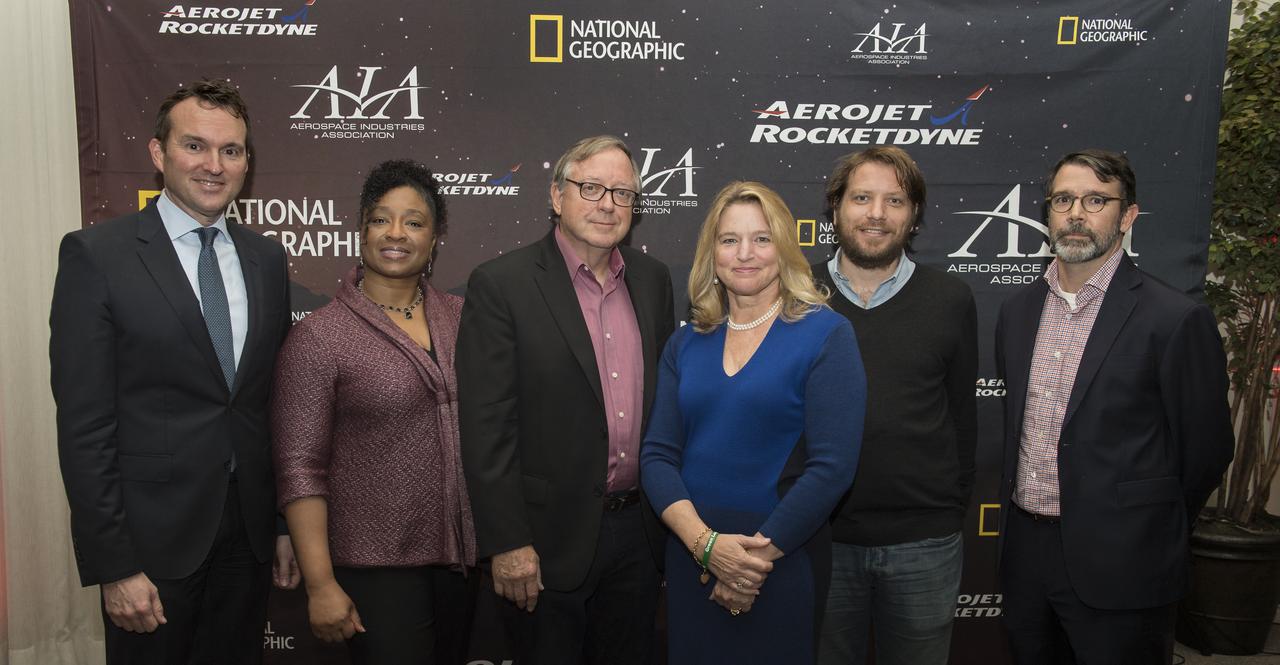
From left to right, Eric Fanning, AIA President and CEO; Christyl Johnson, deputy director for technology and research investments, NASA Goddard Space Flight Center; Dr. Stephen Petranek, MARS scientific advisor and co-executive producer; Ellen Stofan, director, Smithsonian's National Air and Space Museum; Gareth Edwards, film director, Rogue One: A Star Wars Story; and Chris Davenport, Washington Post space reporter pose for a photo before a showing of the Project Mars Competition's short films winners and the Mars series, Monday, November 5, 2018 at National Geographic Society Headquarters in Washington. Photo Credit: (NASA/Aubrey Gemignani)
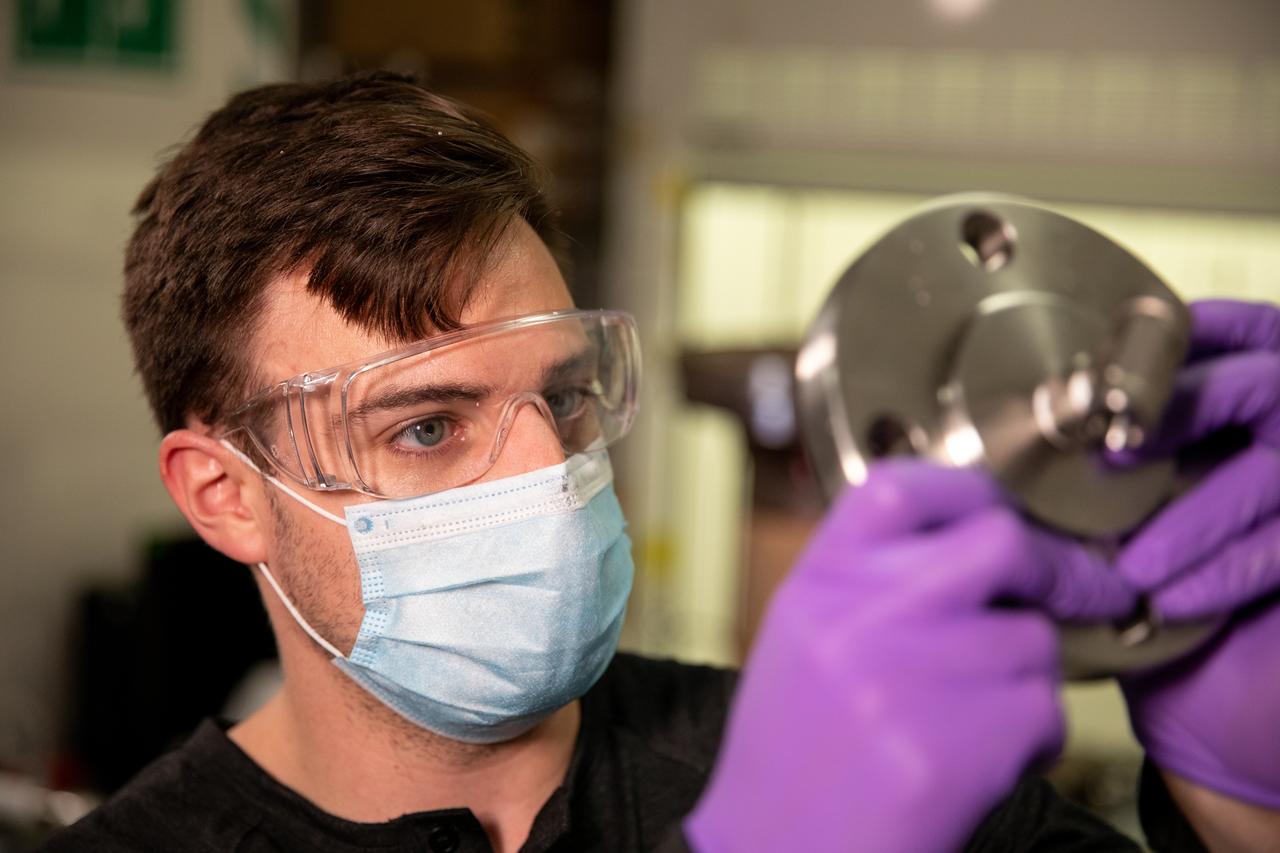
Kevin Grossman, project lead for the Gaseous Lunar Oxygen from Regolith Electrolysis (GaLORE) project at NASA Kennedy Space Center’s Swamp Works, inspects a piece of hardware for GaLORE on July 21, 2020, inside a laboratory at the center’s Neil Armstrong Operations and Checkout Building. Grossman is leading an Early Career Initiative project that is investing in turning lunar regolith into oxygen that could be used for life support for sustainable human lunar exploration on long-duration missions to Mars. GaLORE was selected as an Early Career Initiative project by NASA’s Space Technology Mission directorate.
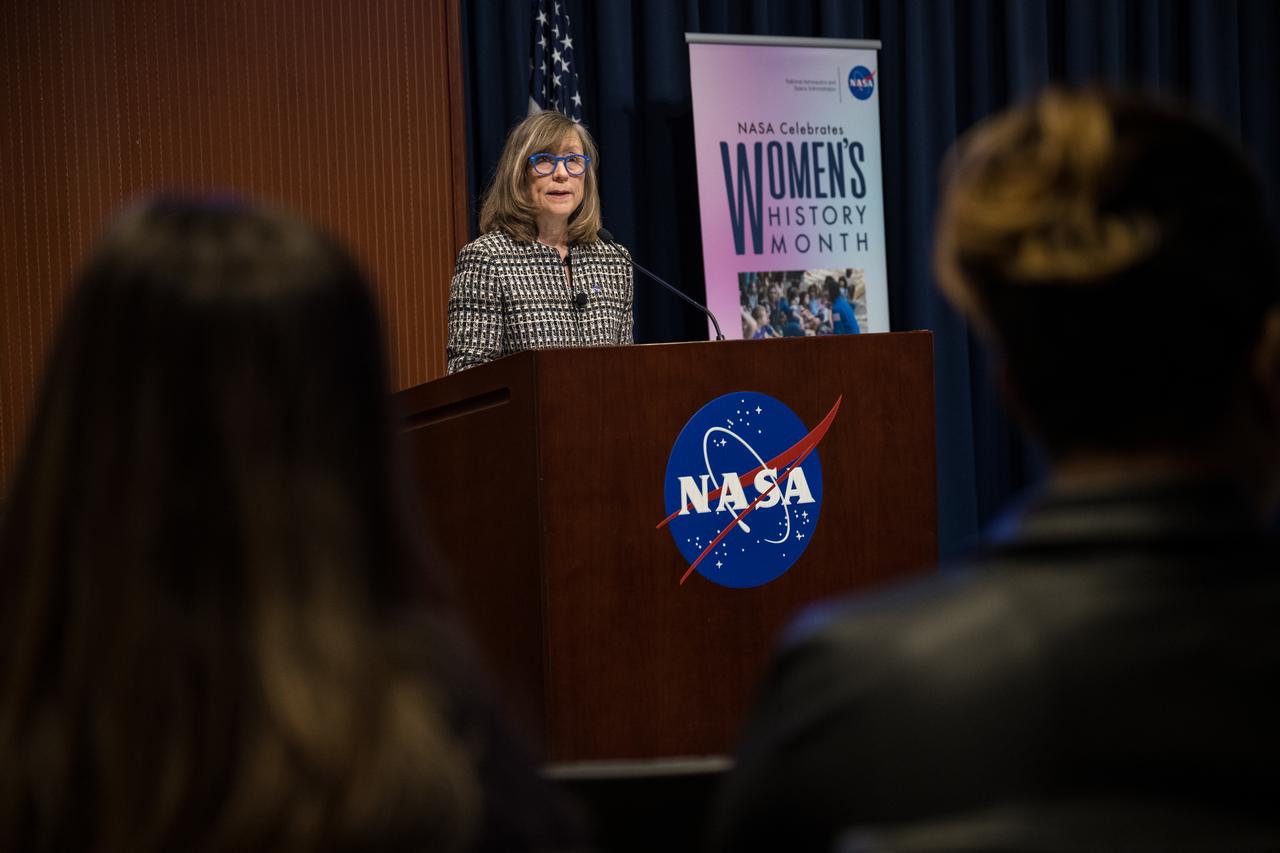
NASA Deputy Associate Administrator for STEM, Kris Brown speaks before a panel discussion with moderator NASA IT Cybersecurity Specialist, Sarah Adewumi, NASA Goddard’s Deputy Director for Technology and Research Investments, Dr. Christyl Johnson, NASA Headquarters Deputy Director for the Astrophysics Division, Sandra Cauffman, and NASA Associate Chief Scientist for Exploration and Applied Research, Dr. Mamta Patel Nagaraja as part of Women’s History Month, “Celebrating Women Who Tell Our Stories,” Wednesday, March 22, 2023 at NASA’s Goddard Space Flight Center in Greenbelt, Maryland. Photo Credit: (NASA/Aubrey Gemignani)
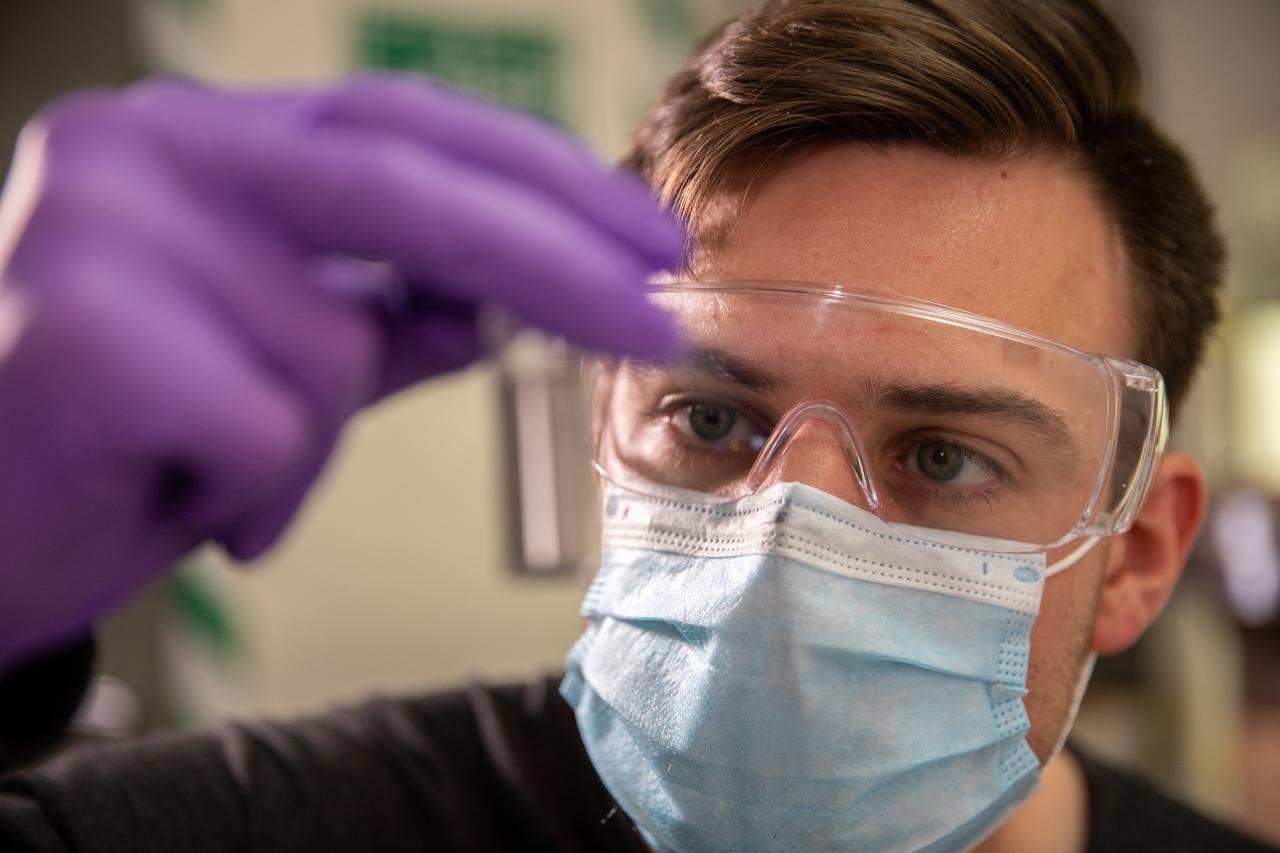
Kevin Grossman, project lead for the Gaseous Lunar Oxygen from Regolith Electrolysis (GaLORE) project at NASA Kennedy Space Center’s Swamp Works, inspects a piece of hardware for GaLORE on July 21, 2020, inside a laboratory at the center’s Neil Armstrong Operations and Checkout Building. Grossman is leading an Early Career Initiative project that is investing in turning lunar regolith into oxygen that could be used for life support for sustainable human lunar exploration on long-duration missions to Mars. GaLORE was selected as an Early Career Initiative project by NASA’s Space Technology Mission directorate.
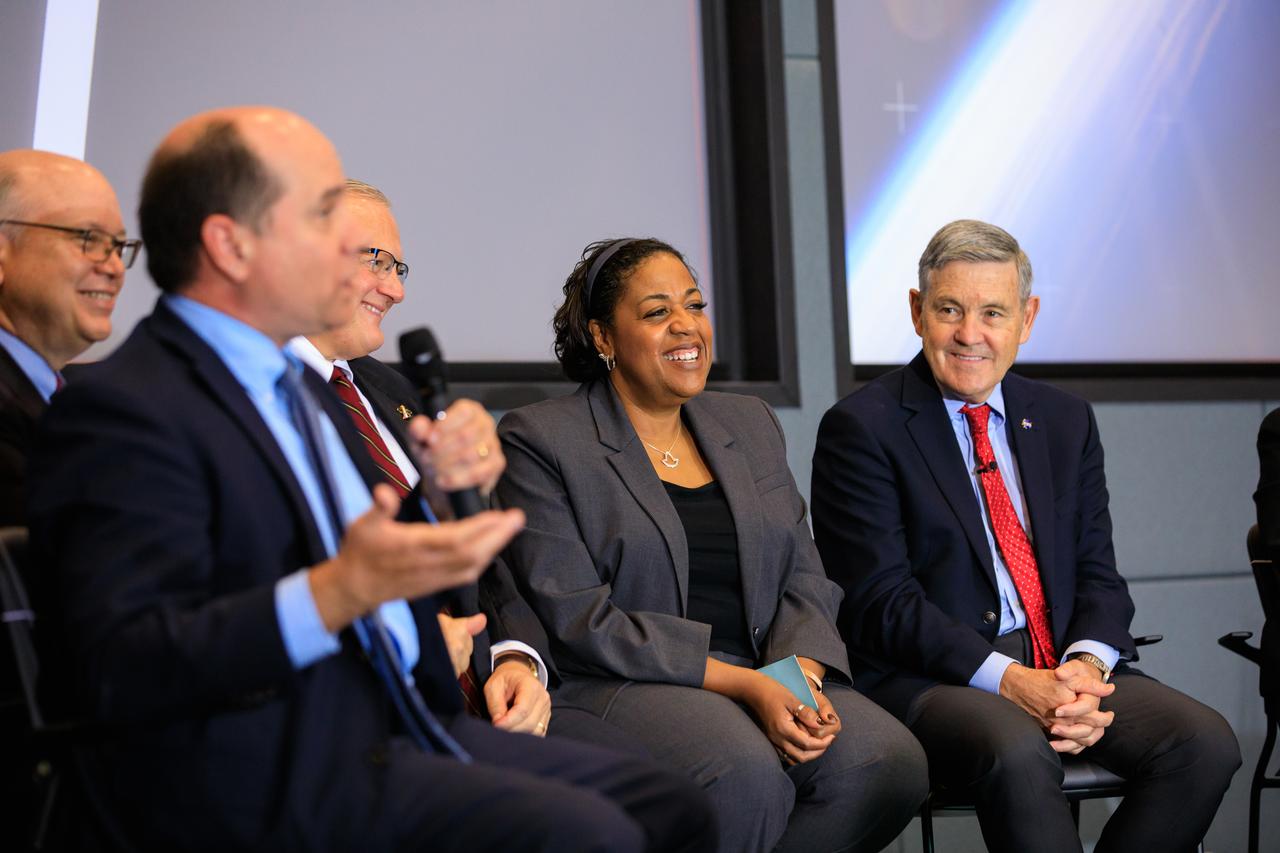
NASA senior leaders participate in a procurement discussion with employees on Nov. 29, 2022, at the agency’s Kennedy Space Center in Florida. The conversation focused on strengthening acquisition and program management within the agency. From left are David Mitchell, chief program management officer; Craig McArthur, (in view behind Mitchell) OCFO/director for Strategic Investments Division; Scott Barber, associate general counsel for Acquisition Law; Karla Smith Jackson, assistant administrator for Procurement; and NASA Associate Administrator Bob Cabana. Also participating, but not pictured, is NASA Deputy Administrator Pam Melroy.
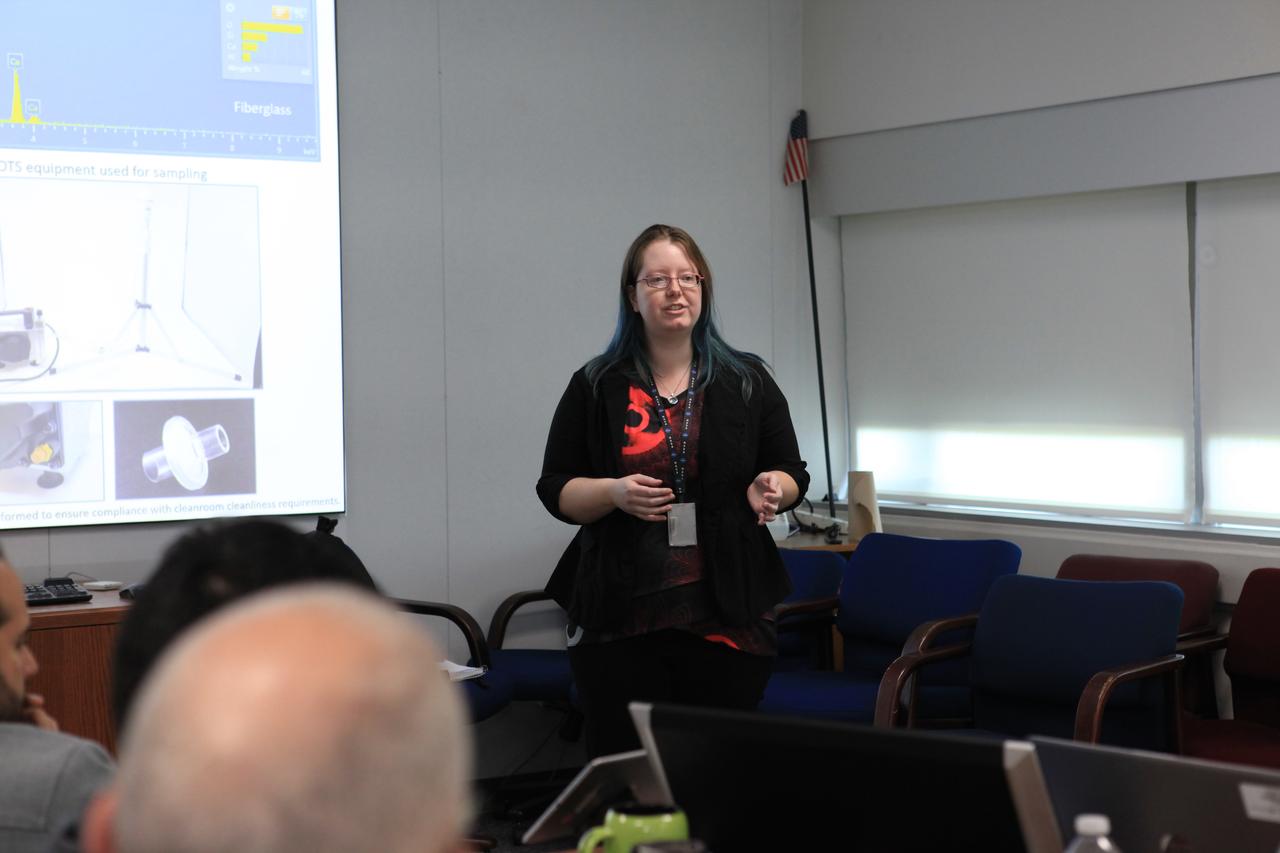
Athela Frandsen, an aerospace technologist with Kennedy Space Center’s analytical laboratories, presents her proposal concerning proactive approaches to cleanroom contamination to a panel of judges during the “Innovation Without Boundaries” event held inside the Space Station Processing Facility in Florida on June 14, 2019. A number of Kennedy employees presented their proposals as part of the Chief Technologist Innovation Call. Participants had five minutes to present their innovative ideas in one of three categories, which were innovative ideas that had little or no cost to implement, ideas with great returns on investments up to $20,000 and big ideas where participants could socialize ideas for projects that would take more than $20,000 to implement.
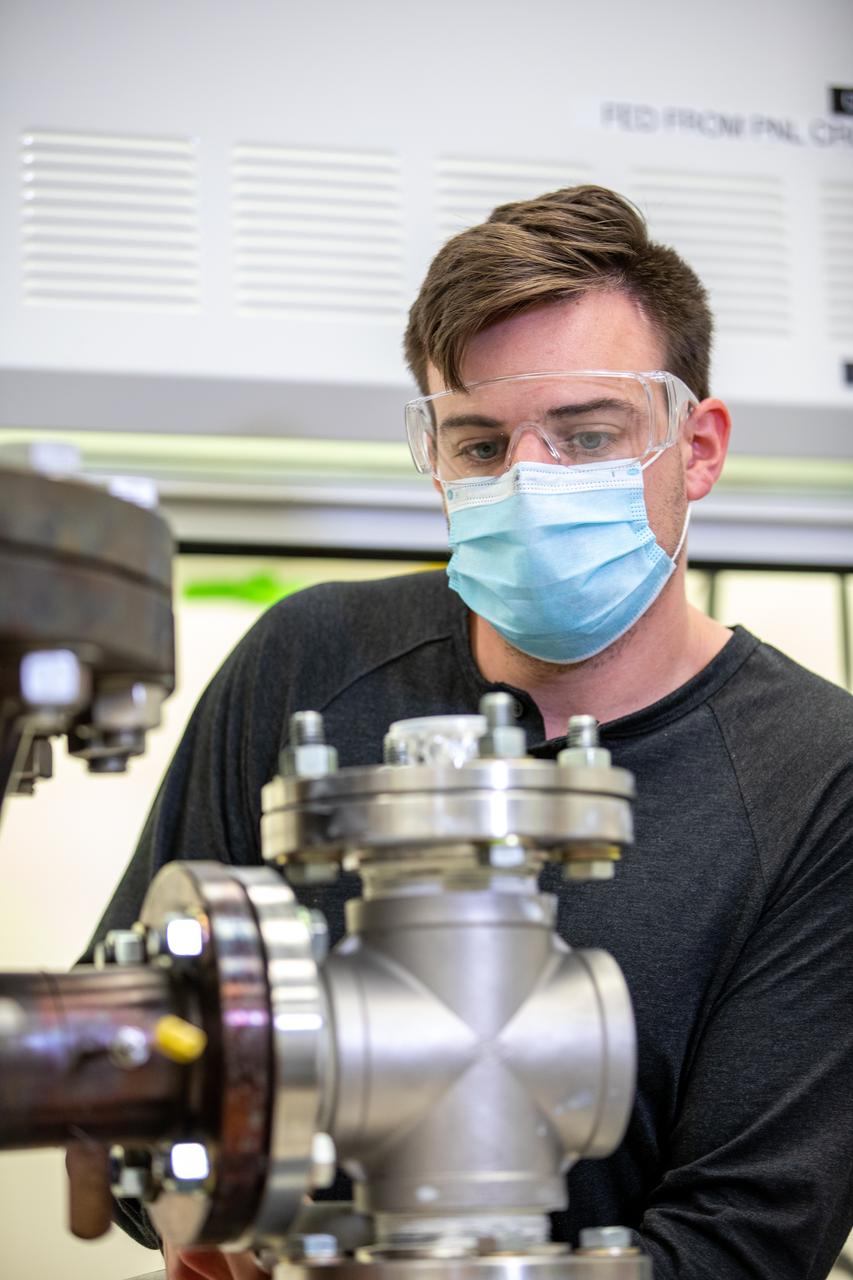
Kevin Grossman, project lead for the Gaseous Lunar Oxygen from Regolith Electrolysis (GaLORE) project at NASA Kennedy Space Center’s Swamp Works, works on the hardware for GaLORE on July 21, 2020, inside a laboratory at the center’s Neil Armstrong Operations and Checkout Building. Grossman is leading an Early Career Initiative project that is investing in turning lunar regolith into oxygen that could be used for life support for sustainable human lunar exploration on long-duration missions to Mars. GaLORE was selected as an Early Career Initiative project by NASA’s Space Technology Mission directorate.
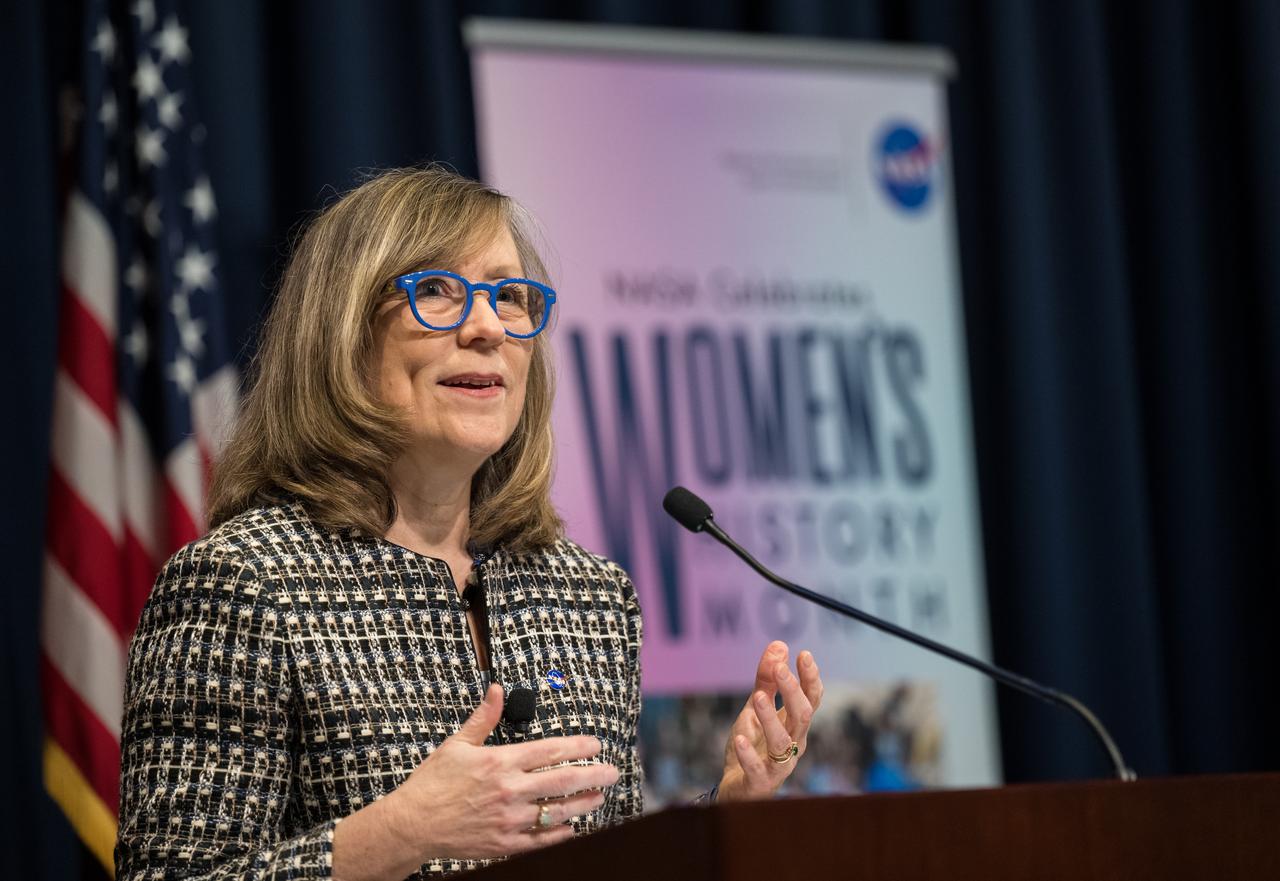
NASA Deputy Associate Administrator for STEM, Kris Brown speaks before a panel discussion with moderator NASA IT Cybersecurity Specialist, Sarah Adewumi, NASA Goddard’s Deputy Director for Technology and Research Investments, Dr. Christyl Johnson, NASA Headquarters Deputy Director for the Astrophysics Division, Sandra Cauffman, and NASA Associate Chief Scientist for Exploration and Applied Research, Dr. Mamta Patel Nagaraja as part of Women’s History Month, “Celebrating Women Who Tell Our Stories,” Wednesday, March 22, 2023 at NASA’s Goddard Space Flight Center in Greenbelt, Maryland. Photo Credit: (NASA/Aubrey Gemignani)

NASA Goddard’s Deputy Director for Technology and Research Investments, Dr. Christyl Johnson, speaks during a panel discussion with NASA IT Cybersecurity Specialist, Sarah Adewumi, NASA Deputy Associate Administrator for STEM, Kris Brown, NASA Headquarters Deputy Director for the Astrophysics Division, Sandra Cauffman, and NASA Associate Chief Scientist for Exploration and Applied Research, Dr. Mamta Patel Nagaraja as part of a Women’s History Month program, “Celebrating Women Who Tell Our Stories,” Wednesday, March 22, 2023 at NASA’s Goddard Space Flight Center in Greenbelt, Maryland. Photo Credit: (NASA/Aubrey Gemignani)

NASA Goddard’s Deputy Director for Technology and Research Investments, Dr. Christyl Johnson, speaks during a panel discussion with NASA IT Cybersecurity Specialist, Sarah Adewumi, NASA Deputy Associate Administrator for STEM, Kris Brown, NASA Headquarters Deputy Director for the Astrophysics Division, Sandra Cauffman, and NASA Associate Chief Scientist for Exploration and Applied Research, Dr. Mamta Patel Nagaraja as part of a Women’s History Month program, “Celebrating Women Who Tell Our Stories,” Wednesday, March 22, 2023 at NASA’s Goddard Space Flight Center in Greenbelt, Maryland. Photo Credit: (NASA/Aubrey Gemignani)
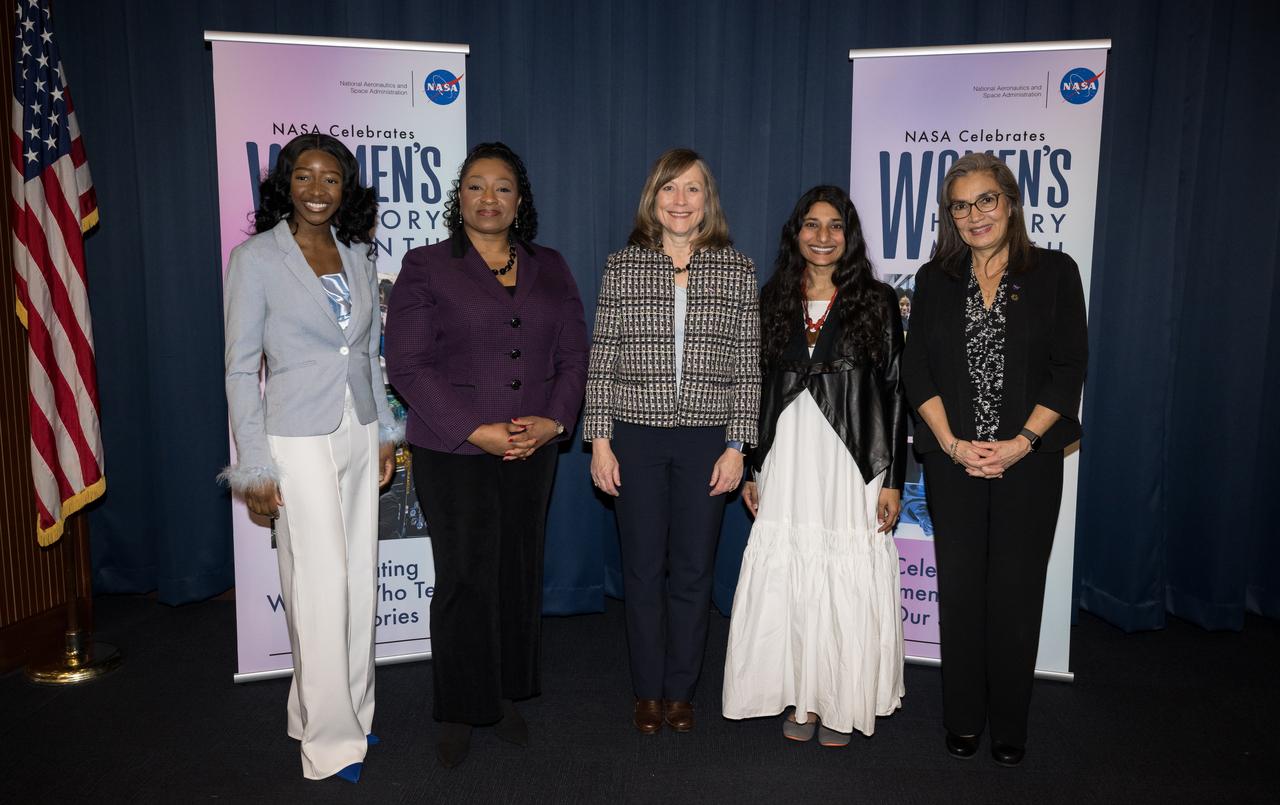
From left to right, NASA IT Cybersecurity Specialist, Sarah Adewumi, NASA Goddard’s Deputy Director for Technology and Research Investments, Dr. Christyl Johnson, NASA Deputy Associate Administrator for STEM, Kris Brown, NASA Associate Chief Scientist for Exploration and Applied Research, Dr. Mamta Patel Nagaraja, and NASA Headquarters Deputy Director for the Astrophysics Division, Sandra Cauffman, pose for a photo at the conclusion of an event for Women’s History Month, “Celebrating Women Who Tell Our Stories,” Wednesday, March 22, 2023 at NASA’s Goddard Space Flight Center in Greenbelt, Maryland. Photo Credit: (NASA/Aubrey Gemignani)
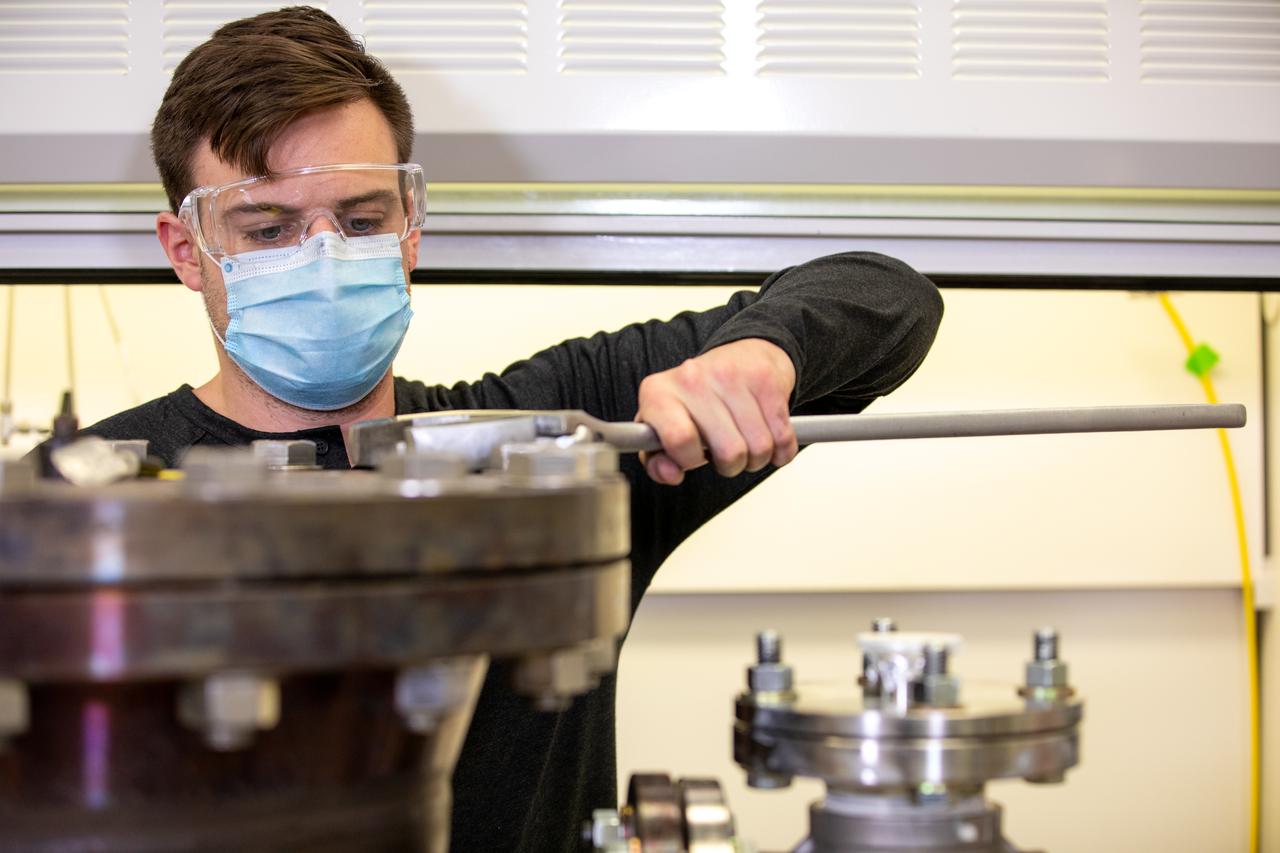
Kevin Grossman, project lead for the Gaseous Lunar Oxygen from Regolith Electrolysis (GaLORE) project at NASA Kennedy Space Center’s Swamp Works, works on the hardware for GaLORE on July 21, 2020, inside a laboratory at the center’s Neil Armstrong Operations and Checkout Building. Grossman is leading an Early Career Initiative project that is investing in turning lunar regolith into oxygen that could be used for life support for sustainable human lunar exploration on long-duration missions to Mars. GaLORE was selected as an Early Career Initiative project by NASA’s Space Technology Mission directorate.

NASA Associate Chief Scientist for Exploration and Applied Research, Dr. Mamta Patel Nagaraja, right, speaks during a panel discussion with NASA IT Cybersecurity Specialist, Sarah Adewumi, NASA Goddard’s Deputy Director for Technology and Research Investments, Dr. Christyl Johnson, NASA Deputy Associate Administrator for STEM, Kris Brown, and NASA Headquarters Deputy Director for the Astrophysics Division, Sandra Cauffman, as part of a Women’s History Month program, “Celebrating Women Who Tell Our Stories,” Wednesday, March 22, 2023 at NASA’s Goddard Space Flight Center in Greenbelt, Maryland. Photo Credit: (NASA/Aubrey Gemignani)
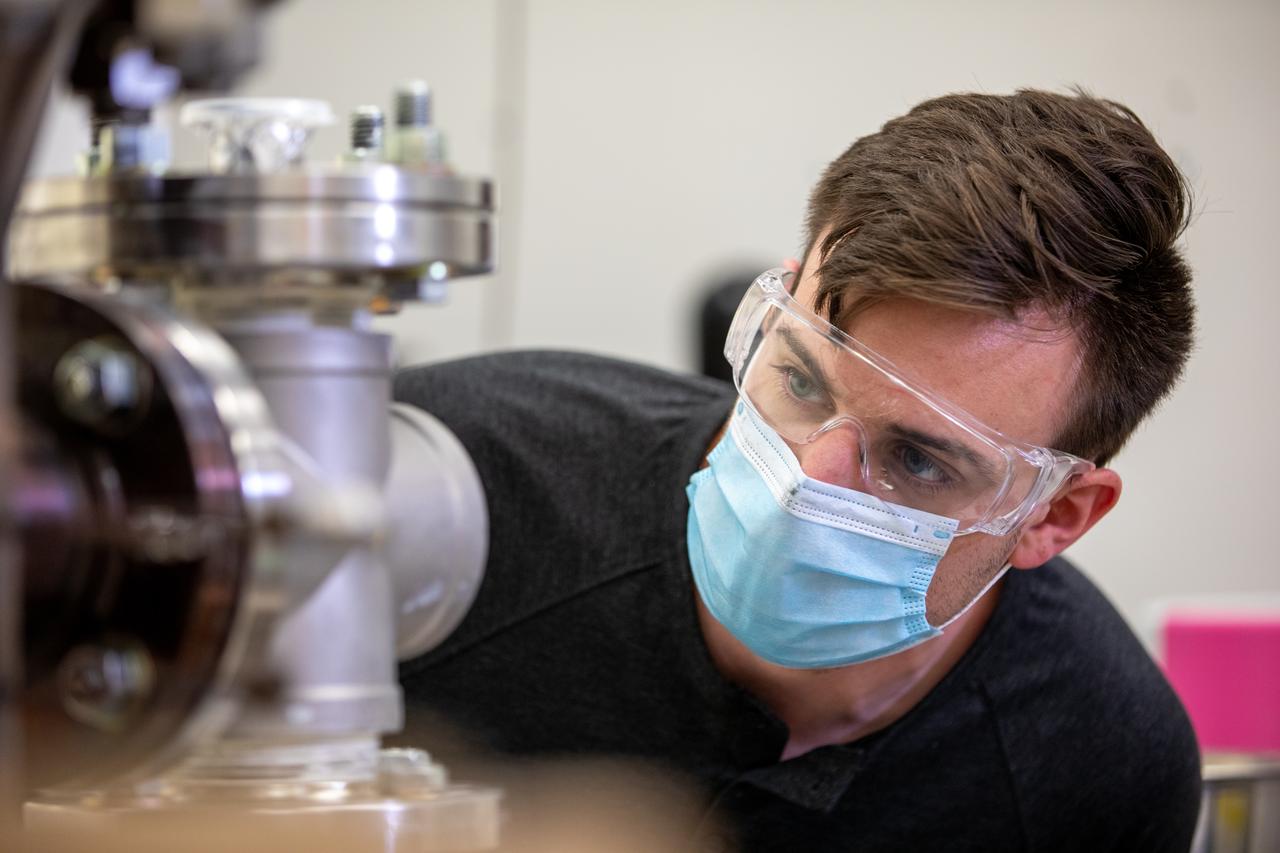
Kevin Grossman, project lead for the Gaseous Lunar Oxygen from Regolith Electrolysis (GaLORE) project at NASA Kennedy Space Center’s Swamp Works, works on the hardware for GaLORE on July 21, 2020, inside a laboratory at the center’s Neil Armstrong Operations and Checkout Building. Grossman is leading an Early Career Initiative project that is investing in turning lunar regolith into oxygen that could be used for life support for sustainable human lunar exploration on long-duration missions to Mars. GaLORE was selected as an Early Career Initiative project by NASA’s Space Technology Mission directorate.

NASA Headquarters Deputy Director for the Astrophysics Division, Sandra Cauffman, speaks during a panel discussion with NASA IT Cybersecurity Specialist, Sarah Adewumi, NASA Goddard’s Deputy Director for Technology and Research Investments, Dr. Christyl Johnson, NASA Deputy Associate Administrator for STEM, Kris Brown, and NASA Associate Chief Scientist for Exploration and Applied Research, Dr. Mamta Patel Nagaraja, as part of a Women’s History Month program, “Celebrating Women Who Tell Our Stories,” Wednesday, March 22, 2023 at NASA’s Goddard Space Flight Center in Greenbelt, Maryland. Photo Credit: (NASA/Aubrey Gemignani)
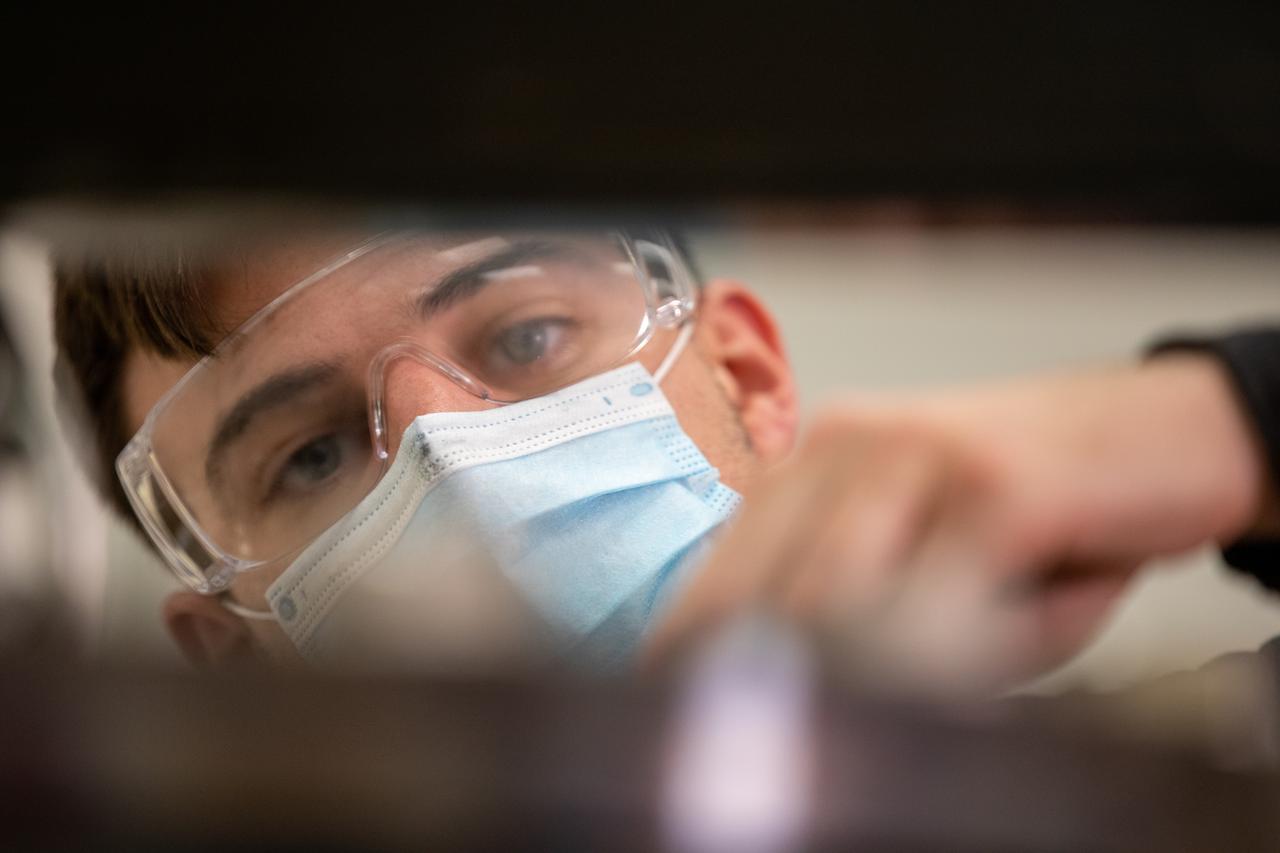
Kevin Grossman, project lead for the Gaseous Lunar Oxygen from Regolith Electrolysis (GaLORE) project at NASA Kennedy Space Center’s Swamp Works, works on the hardware for GaLORE on July 21, 2020, inside a laboratory at the center’s Neil Armstrong Operations and Checkout Building. Grossman is leading an Early Career Initiative project that is investing in turning lunar regolith into oxygen that could be used for life support for sustainable human lunar exploration on long-duration missions to Mars. GaLORE was selected as an Early Career Initiative project by NASA’s Space Technology Mission directorate.

NASA Associate Chief Scientist for Exploration and Applied Research, Dr. Mamta Patel Nagaraja, speaks during a panel discussion with NASA IT Cybersecurity Specialist, Sarah Adewumi, NASA Goddard’s Deputy Director for Technology and Research Investments, Dr. Christyl Johnson, NASA Deputy Associate Administrator for STEM, Kris Brown, and NASA Headquarters Deputy Director for the Astrophysics Division, Sandra Cauffman, as part of a Women’s History Month program, “Celebrating Women Who Tell Our Stories,” Wednesday, March 22, 2023 at NASA’s Goddard Space Flight Center in Greenbelt, Maryland. Photo Credit: (NASA/Aubrey Gemignani)
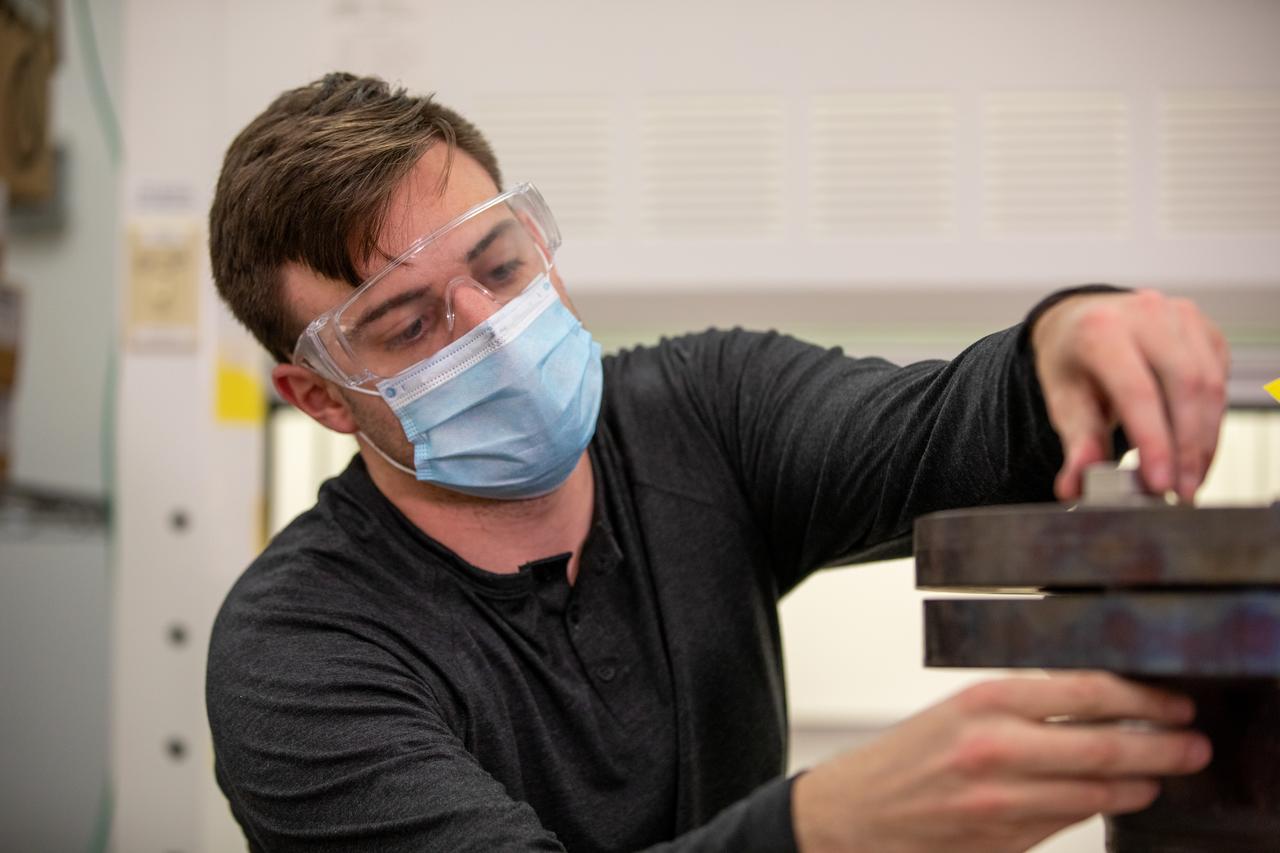
Kevin Grossman, project lead for the Gaseous Lunar Oxygen from Regolith Electrolysis (GaLORE) project at NASA Kennedy Space Center’s Swamp Works, checks the hardware for GaLORE on July 21, 2020, inside a laboratory at the center’s Neil Armstrong Operations and Checkout Building. Grossman is leading an Early Career Initiative project that is investing in turning lunar regolith into oxygen that could be used for life support for sustainable human lunar exploration on long-duration missions to Mars. GaLORE was selected as an Early Career Initiative project by NASA’s Space Technology Mission directorate.

NASA Headquarters Deputy Director for the Astrophysics Division, Sandra Cauffman, speaks during a panel discussion with NASA IT Cybersecurity Specialist, Sarah Adewumi, NASA Goddard’s Deputy Director for Technology and Research Investments, Dr. Christyl Johnson, NASA Deputy Associate Administrator for STEM, Kris Brown, and NASA Associate Chief Scientist for Exploration and Applied Research, Dr. Mamta Patel Nagaraja, as part of a Women’s History Month program, “Celebrating Women Who Tell Our Stories,” Wednesday, March 22, 2023 at NASA’s Goddard Space Flight Center in Greenbelt, Maryland. Photo Credit: (NASA/Aubrey Gemignani)
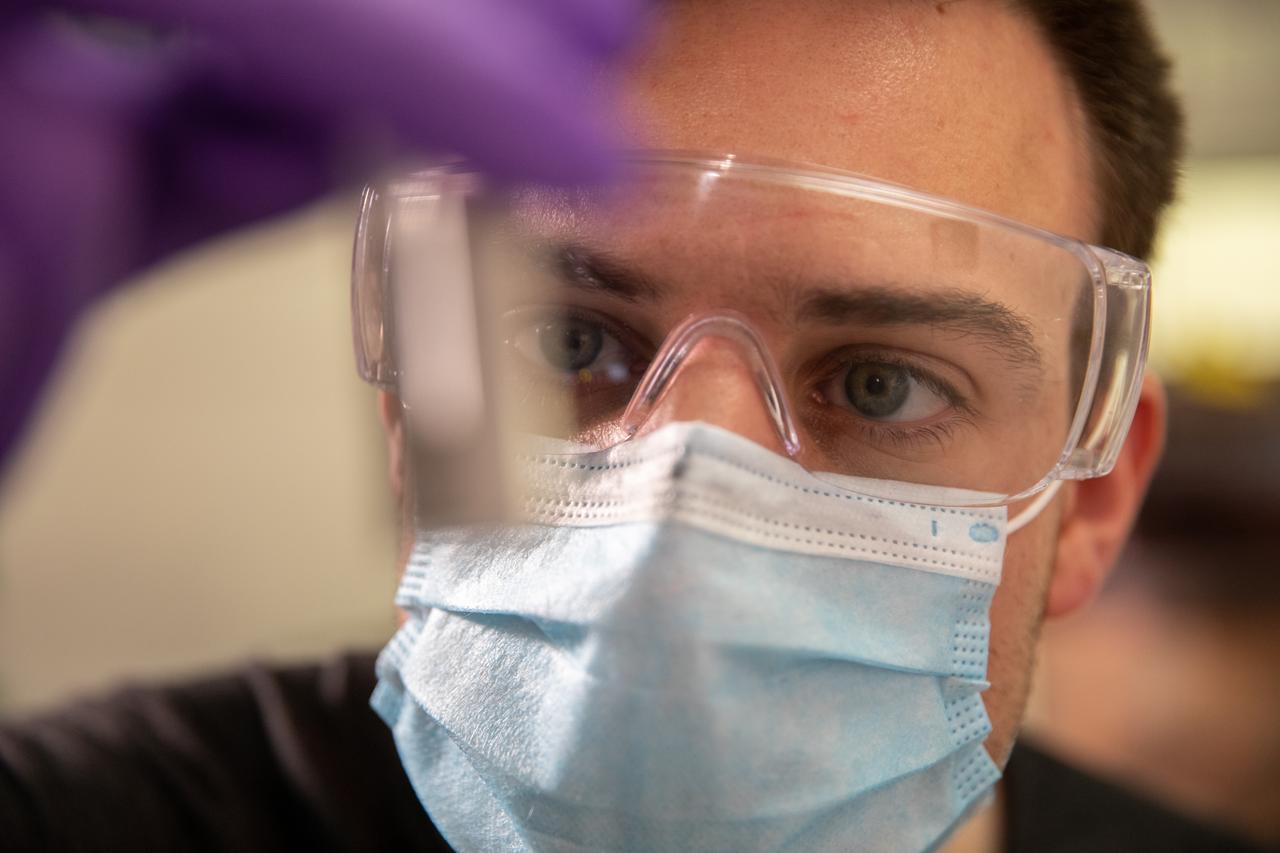
Kevin Grossman, project lead for the Gaseous Lunar Oxygen from Regolith Electrolysis (GaLORE) project at NASA Kennedy Space Center’s Swamp Works, inspects a piece of hardware for GaLORE on July 21, 2020, inside a laboratory at the center’s Neil Armstrong Operations and Checkout Building. Grossman is leading an Early Career Initiative project that is investing in turning lunar regolith into oxygen that could be used for life support for sustainable human lunar exploration on long-duration missions to Mars. GaLORE was selected as an Early Career Initiative project by NASA’s Space Technology Mission directorate.
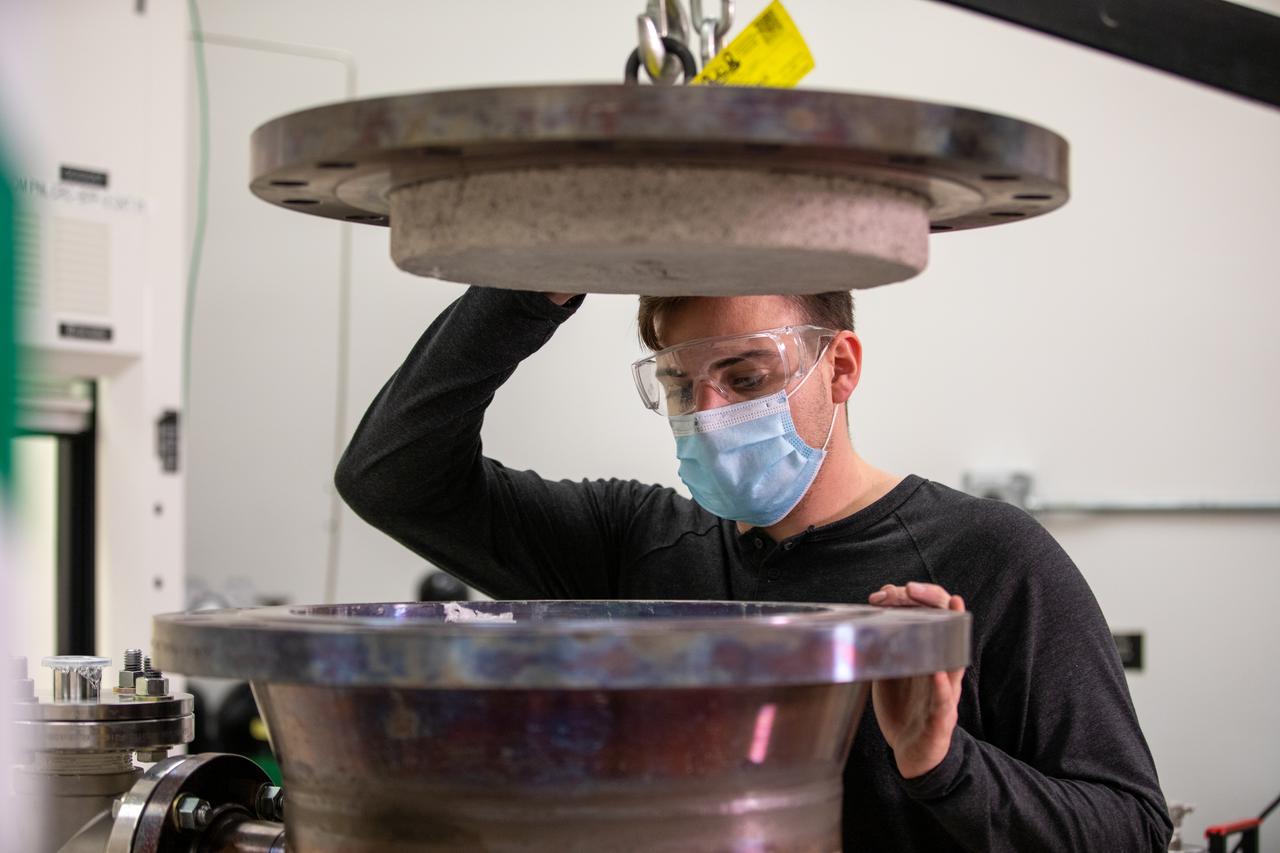
Kevin Grossman, project lead for the Gaseous Lunar Oxygen from Regolith Electrolysis (GaLORE) project at NASA Kennedy Space Center’s Swamp Works, checks the hardware for GaLORE on July 21, 2020, inside a laboratory at the center’s Neil Armstrong Operations and Checkout Building. Grossman is leading an Early Career Initiative project that is investing in turning lunar regolith into oxygen that could be used for life support for sustainable human lunar exploration on long-duration missions to Mars. GaLORE was selected as an Early Career Initiative project by NASA’s Space Technology Mission directorate.
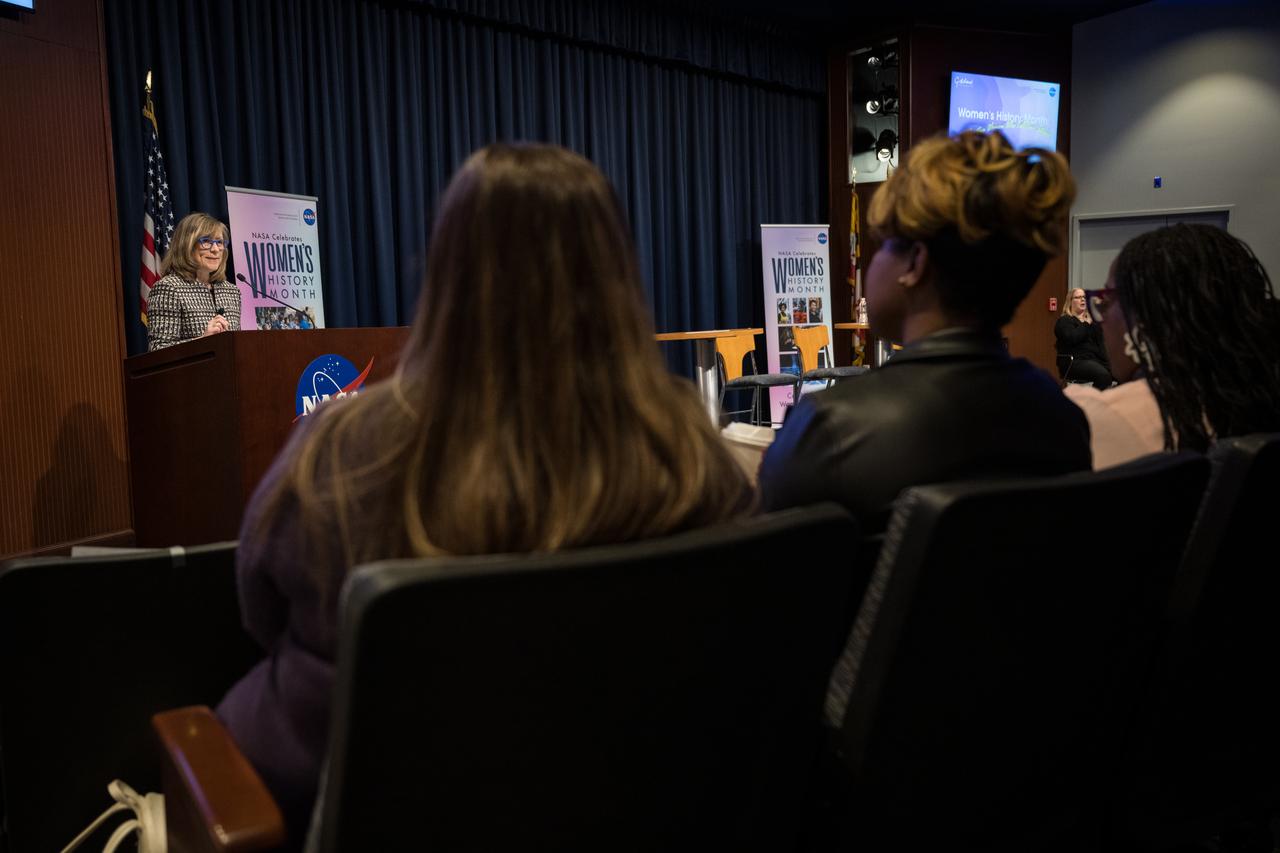
NASA Deputy Associate Administrator for STEM, Kris Brown speaks before a panel discussion with moderator NASA IT Cybersecurity Specialist, Sarah Adewumi, NASA Goddard’s Deputy Director for Technology and Research Investments, Dr. Christyl Johnson, NASA Headquarters Deputy Director for the Astrophysics Division, Sandra Cauffman, and NASA Associate Chief Scientist for Exploration and Applied Research, Dr. Mamta Patel Nagaraja as part of Women’s History Month, “Celebrating Women Who Tell Our Stories,” Wednesday, March 22, 2023 at NASA’s Goddard Space Flight Center in Greenbelt, Maryland. Photo Credit: (NASA/Aubrey Gemignani)
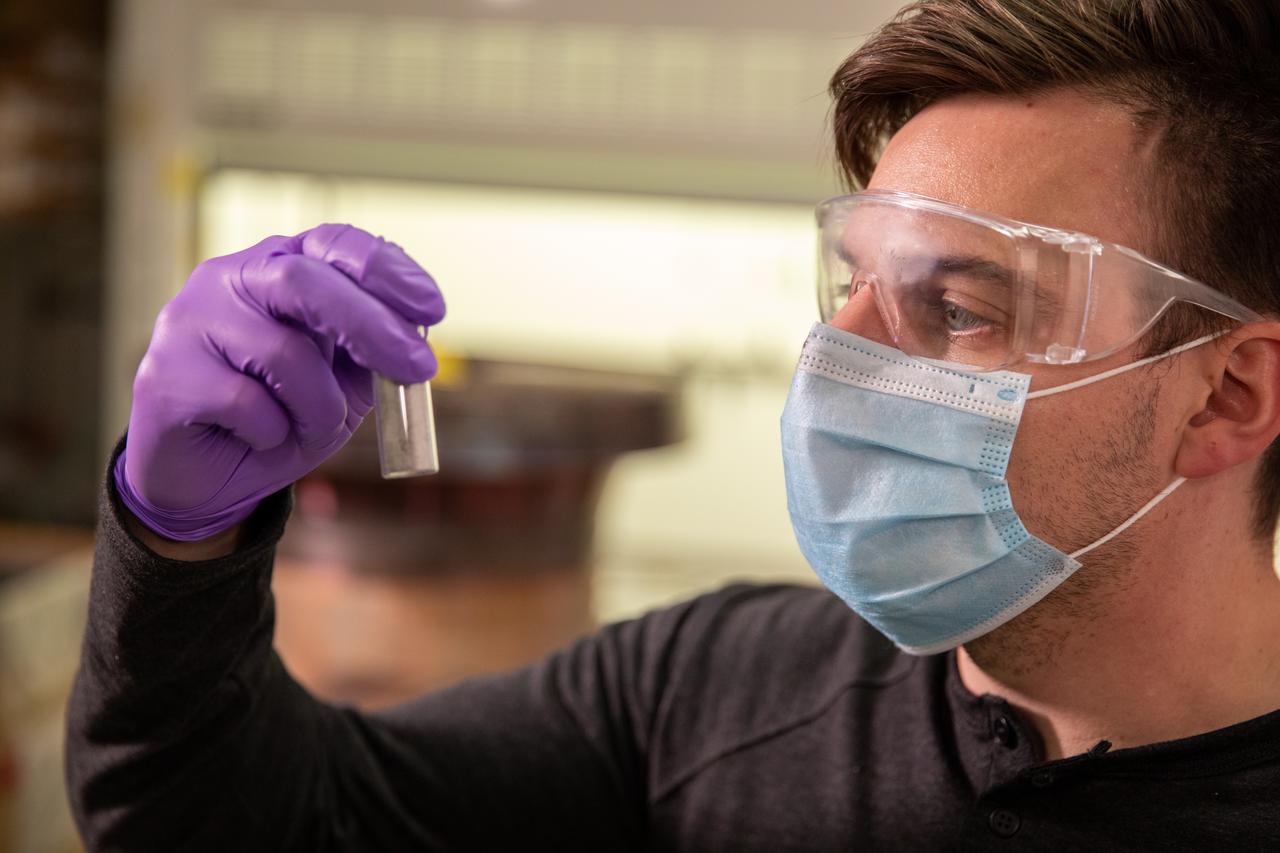
Kevin Grossman, project lead for the Gaseous Lunar Oxygen from Regolith Electrolysis (GaLORE) project at NASA Kennedy Space Center’s Swamp Works, inspects a piece of hardware for GaLORE on July 21, 2020, inside a laboratory at the center’s Neil Armstrong Operations and Checkout Building. Grossman is leading an Early Career Initiative project that is investing in turning lunar regolith into oxygen that could be used for life support for sustainable human lunar exploration on long-duration missions to Mars. GaLORE was selected as an Early Career Initiative project by NASA’s Space Technology Mission directorate.

NASA Goddard’s Deputy Director for Technology and Research Investments, Dr. Christyl Johnson, speaks during a panel discussion with NASA IT Cybersecurity Specialist, Sarah Adewumi, NASA Deputy Associate Administrator for STEM, Kris Brown, NASA Headquarters Deputy Director for the Astrophysics Division, Sandra Cauffman, and NASA Associate Chief Scientist for Exploration and Applied Research, Dr. Mamta Patel Nagaraja as part of a Women’s History Month program, “Celebrating Women Who Tell Our Stories,” Wednesday, March 22, 2023 at NASA’s Goddard Space Flight Center in Greenbelt, Maryland. Photo Credit: (NASA/Aubrey Gemignani)
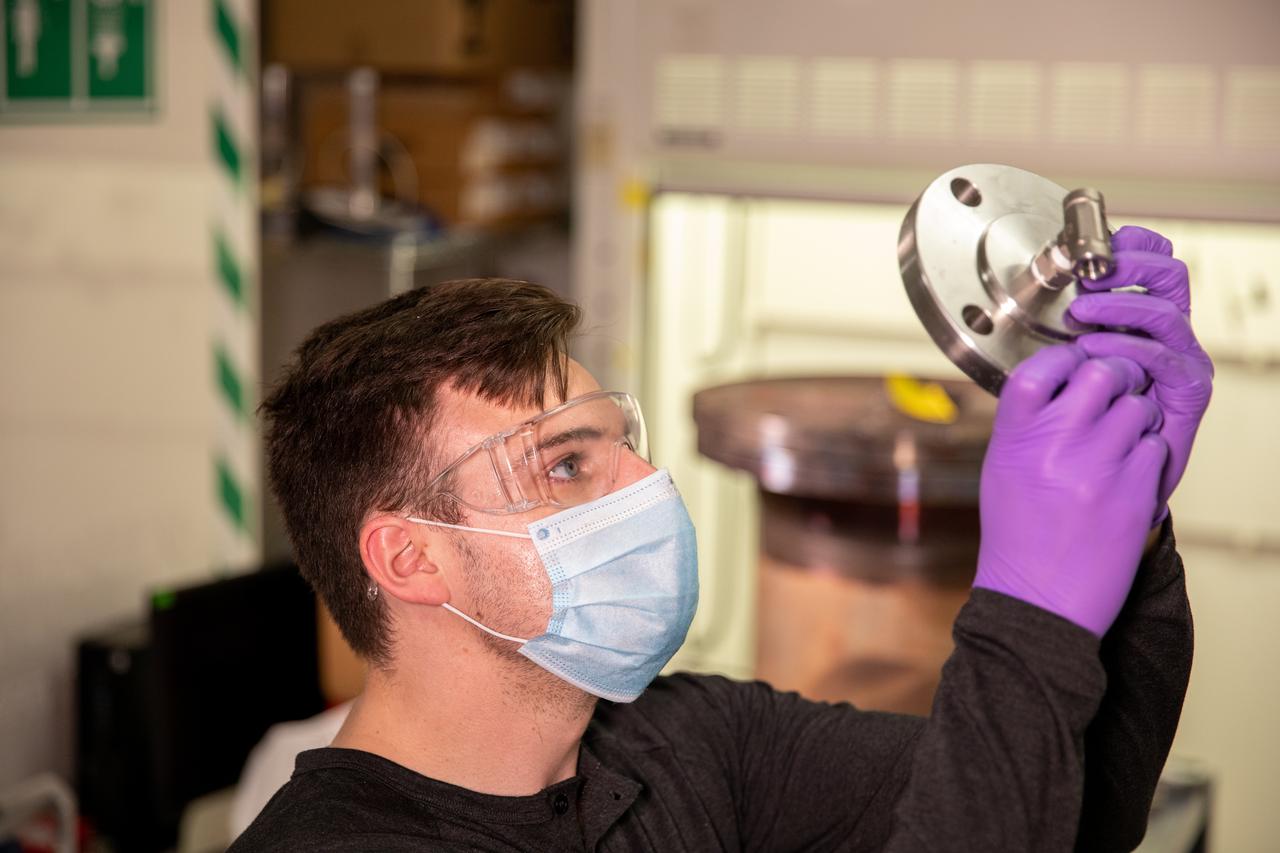
Kevin Grossman, project lead for the Gaseous Lunar Oxygen from Regolith Electrolysis (GaLORE) project at NASA Kennedy Space Center’s Swamp Works, inspects a piece of hardware for GaLORE on July 21, 2020, inside a laboratory at the center’s Neil Armstrong Operations and Checkout Building. Grossman is leading an Early Career Initiative project that is investing in turning lunar regolith into oxygen that could be used for life support for sustainable human lunar exploration on long-duration missions to Mars. GaLORE was selected as an Early Career Initiative project by NASA’s Space Technology Mission directorate.
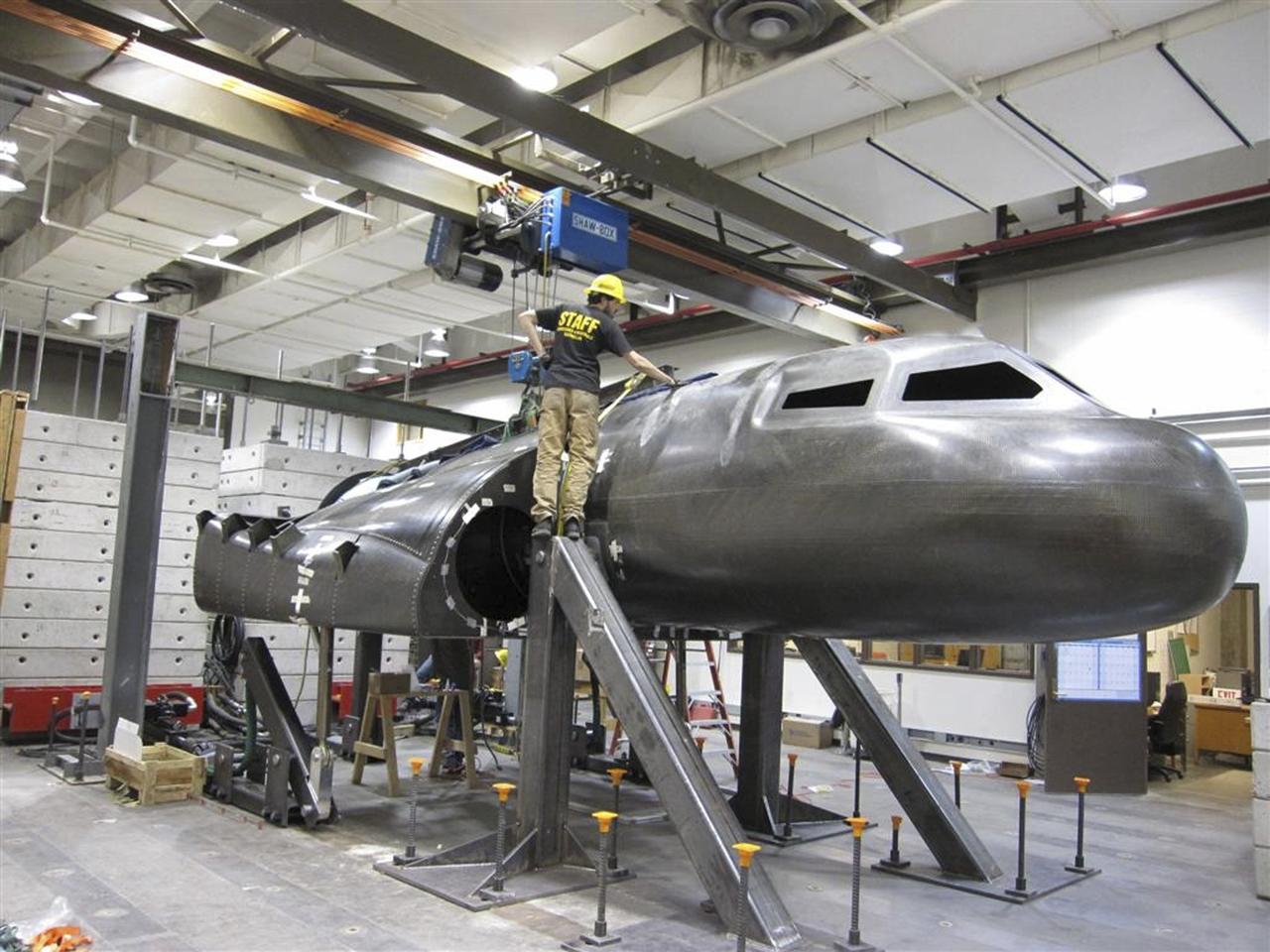
BOULDER, Colo. – A Sierra Nevada Corp. team member examines the company's structural test article for the Dream Chaser spacecraft in the University of Colorado at Boulder’s Facility for Advanced Spatial Technology. The university is one of Sierra Nevada’s partners on the design and development of the Dream Chaser orbital crew vehicle. Dream Chaser is one of five systems NASA invested in during Commercial Crew Development Round 1 CCDev1 activities in order to aid in the innovation and development of American-led commercial capabilities for crew transportation and rescue services to and from the International Space Station and other low Earth orbit destinations. In 2011, NASA's Commercial Crew Program CCP entered into another funded Space Act Agreement with Sierra Nevada for the second round of commercial crew development CCDev2) so the company could further develop its Dream Chaser spacecraft for NASA transportation services. For information about CCP, visit www.nasa.gov/commercialcrew. Photo credit: Sierra Nevada Corp.
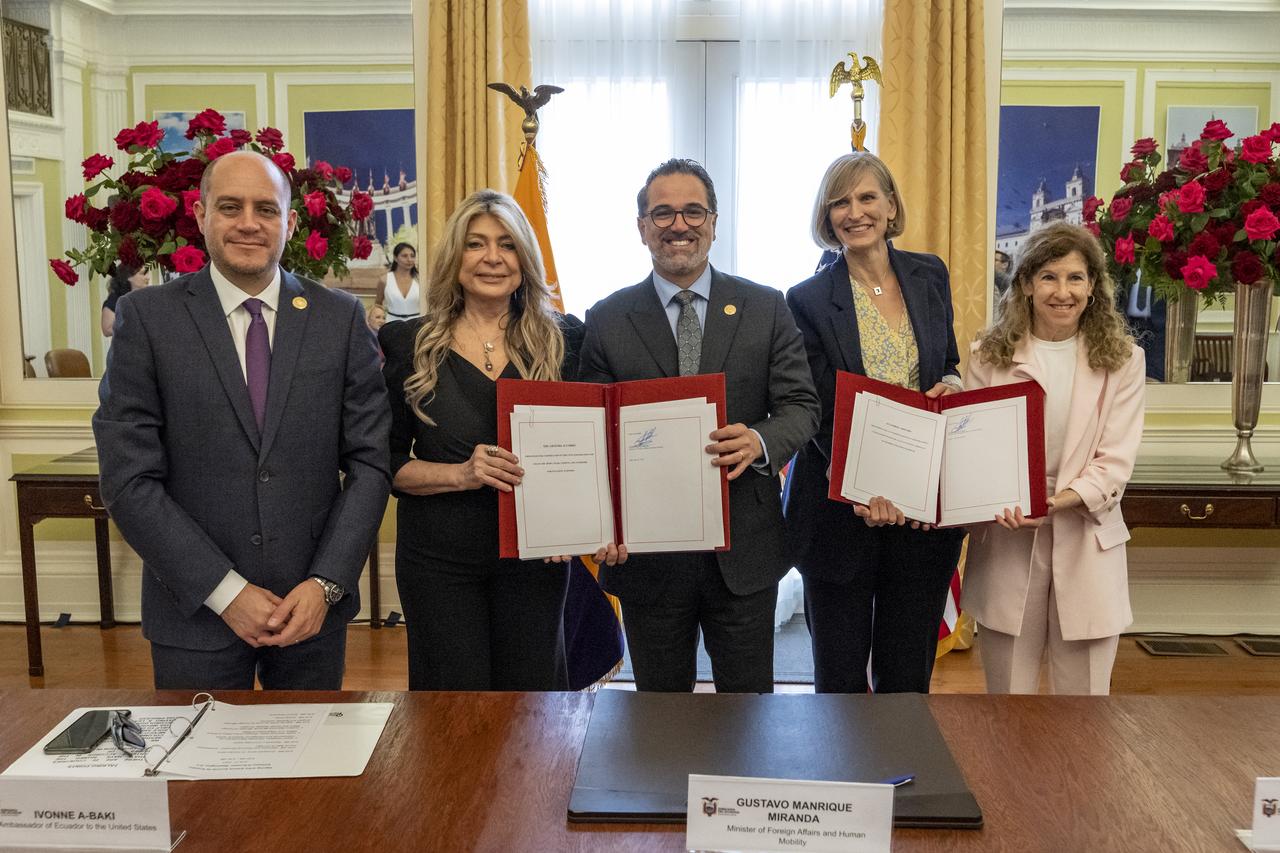
From left to right, Ecuador Minster of Production, Foreign Trade, Investments and Fisheries Julio José Prado, Ambassador of Ecuador to the United States Ivonne A-Baki, Ecuador Minister of Foreign Affairs and Human Mobility Gustavo Manrique Miranda, U.S. Department of State Director of the Office of Space Affairs Valda Vikmanis Keller, and NASA Associate Administrator for International and Interagency Relations Karen Feldstein, pose for a photo during an Artemis Accords signing ceremony, Wednesday, June 21, 2023, at the Embassy of Ecuador in Washington. Ecuador is the twenty sixth country to sign the Artemis Accords, which establish a practical set of principles to guide space exploration cooperation among nations participating in NASA’s Artemis program. Photo Credit: (NASA/Keegan Barber)
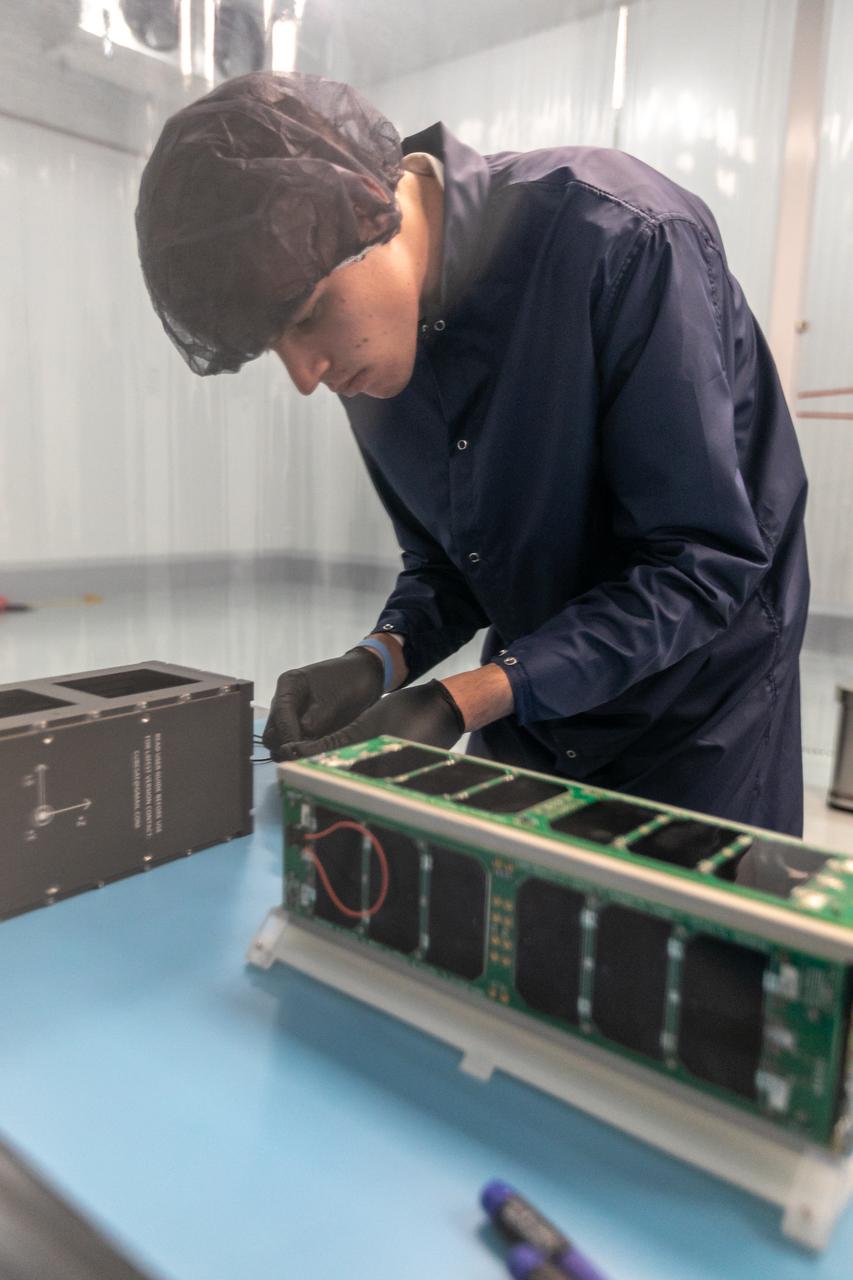
RSat is a 3U CubeSat with two seven degree of freedom robotic arms designed to latch onto a host satellite and maneuver around to image and potentially repair malfunctioning components. RSat is part of the AMODS research project developed by a team of Midshipmen from the United States Naval Academy. The three-year-old program aims to employ a small satellite platform to provide both new and legacy spacecraft with cost-effective on-orbit assessments and repair services. Currently, if a satellite makes it to orbit, there is no guarantee it will work as intended. In these cases, not only is the spacecraft lost, but invaluable experience vanishes with it. RSat takes advantage of cost and profile efficiencies of the small satellite platform to offer satellite developers and operators a fundamentally new way to reduce risk, protect investment and effect design improvements correlated against observed space environment experience. RSat-P is launching as part of ELaNa XIX as a free-flying unit intended to validate the on-orbit effectiveness of compact robotic manipulators.

RSat is a 3U CubeSat with two seven degree of freedom robotic arms designed to latch onto a host satellite and maneuver around to image and potentially repair malfunctioning components. RSat is part of the AMODS research project developed by a team of Midshipmen from the United States Naval Academy. The three-year-old program aims to employ a small satellite platform to provide both new and legacy spacecraft with cost-effective on-orbit assessments and repair services. Currently, if a satellite makes it to orbit, there is no guarantee it will work as intended. In these cases, not only is the spacecraft lost, but invaluable experience vanishes with it. RSat takes advantage of cost and profile efficiencies of the small satellite platform to offer satellite developers and operators a fundamentally new way to reduce risk, protect investment and effect design improvements correlated against observed space environment experience. RSat-P is launching as part of ELaNa XIX as a free-flying unit intended to validate the on-orbit effectiveness of compact robotic manipulators.
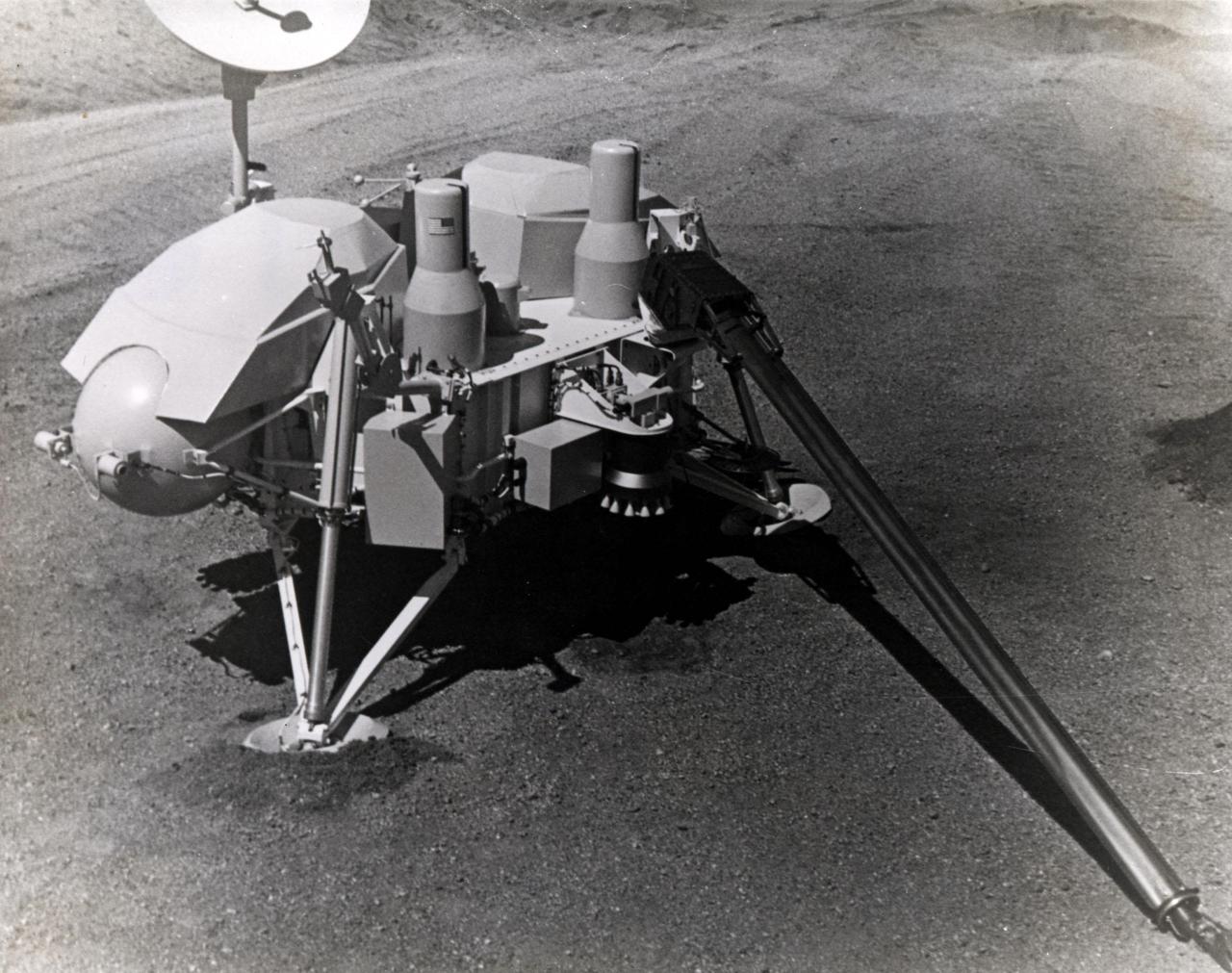
KENNEDY SPACE CENTER, FLA. -- Viking Project In 1976: NASA will land two automated scientific laboratories on the planet Mars. This pioneering effort to explore in detail the surface of another primary planet in our solar system will be identified by a name that exemplifies the spirit of historic exploration. To accomplish this goal, two spacecraft will be launched from the Kennedy Space Center within a month of another in mid-1975. These spacecraft, each including a lander and an orbiter, will hurtle nearly 460 million miles around the Sun before reaching the red planet. The descent will occur when Mars is about 225 million miles from Earth and nearly on the other side of the Sun. This requires a completely automated de-orbit and landing operation because, at that distance, two-way communication between Mars and Earth takes nearly 45 minutes. Surface science will then commence with principal scientific interest invested in biology, geology and meteorology.
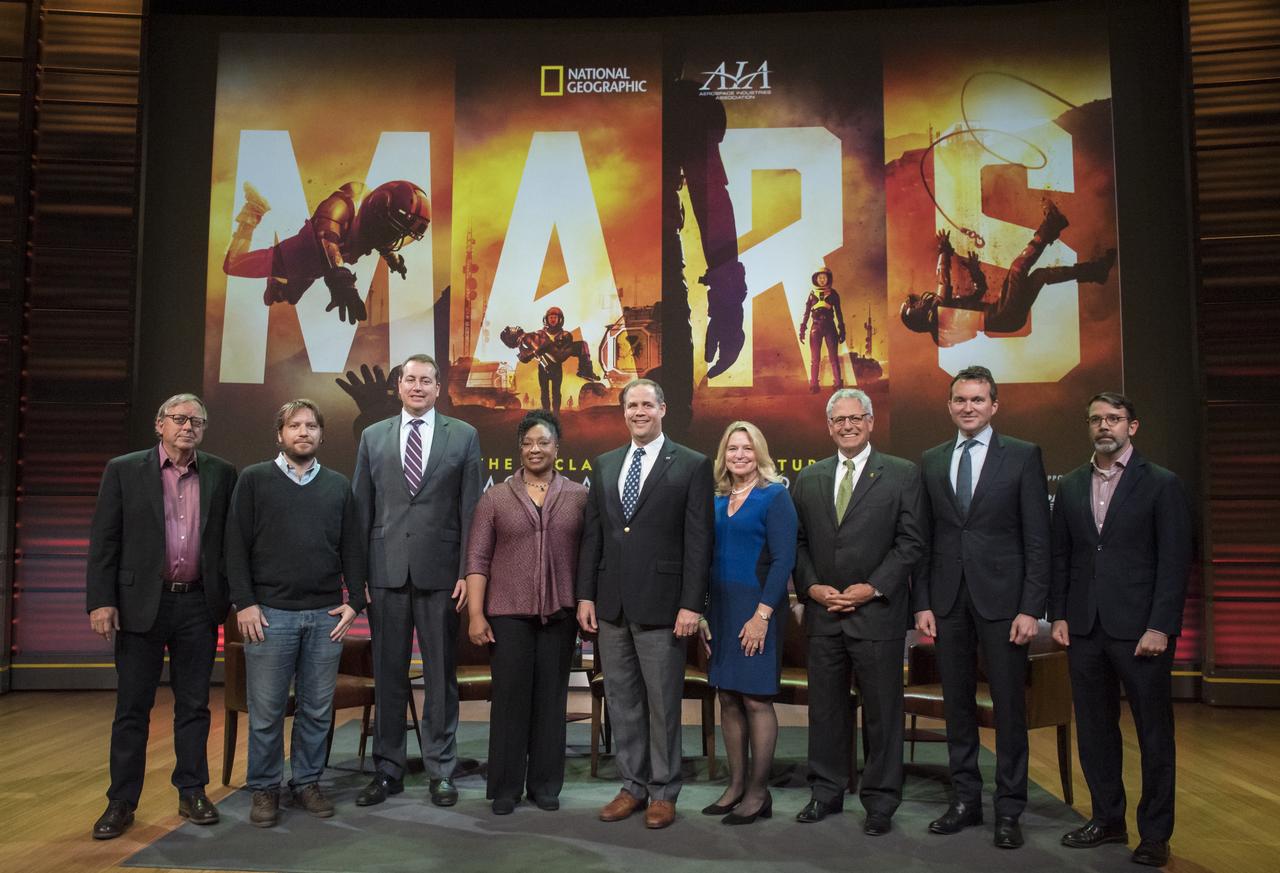
From left to right, Dr. Stephen Petranek, MARS scientific advisor and co-executive producer; Gareth Edwards, film director, Rogue One: A Star Wars Story; Jeff DeWitt, NASA chief financial officer; Christyl Johnson, deputy director for technology and research investments, NASA Goddard Space Flight Center; NASA Administrator Jim Bridenstine; Ellen Stofan, director, Smithsonian's National Air and Space Museum; Gary Knell, CEO, National Geographic Partners; Eric Fanning, AIA President and CEO; and Chris Davenport, Washington Post space reporter, pose for a photo before a showing of the Project Mars Competition's short films winners and the Mars series, Monday, November 5, 2018 at National Geographic Society Headquarters in Washington. Photo Credit: (NASA/Aubrey Gemignani)
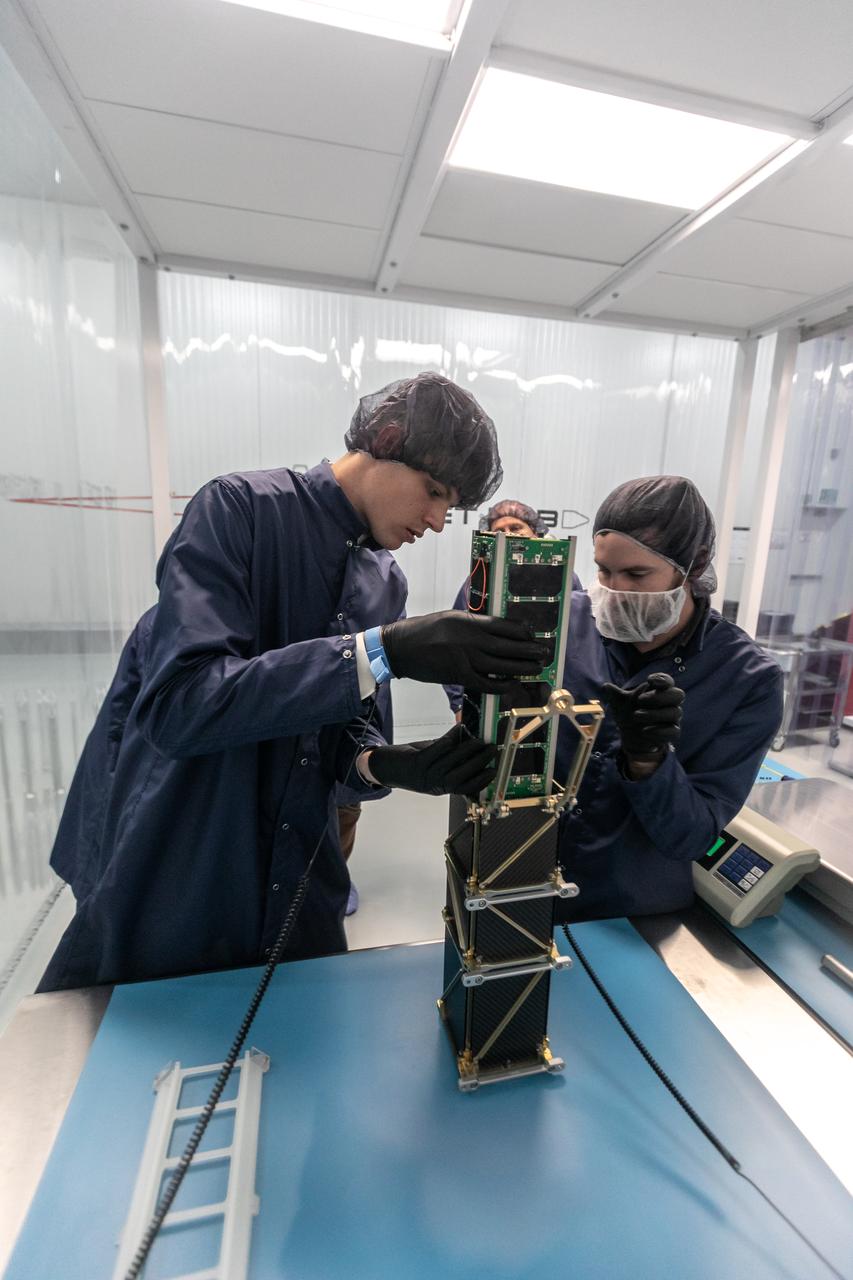
RSat is a 3U CubeSat with two seven degree of freedom robotic arms designed to latch onto a host satellite and maneuver around to image and potentially repair malfunctioning components. RSat is part of the AMODS research project developed by a team of Midshipmen from the United States Naval Academy. The three-year-old program aims to employ a small satellite platform to provide both new and legacy spacecraft with cost-effective on-orbit assessments and repair services. Currently, if a satellite makes it to orbit, there is no guarantee it will work as intended. In these cases, not only is the spacecraft lost, but invaluable experience vanishes with it. RSat takes advantage of cost and profile efficiencies of the small satellite platform to offer satellite developers and operators a fundamentally new way to reduce risk, protect investment and effect design improvements correlated against observed space environment experience. RSat-P is launching as part of ELaNa XIX as a free-flying unit intended to validate the on-orbit effectiveness of compact robotic manipulators.

An artist's rendering of the air-breathing, hypersonic X-43B, the third and largest of NASA's Hyper-X series flight demonstrators, which could fly later this decade. Revolutionizing the way we gain access to space is NASA's primary goal for the Hypersonic Investment Area, managed for NASA by the Advanced Space Transportation Program at the Marshall Space Flight Center in Huntsville, Alabama. The Hypersonic Investment area, which includes leading-edge partners in industry and academia, will support future generation reusable vehicles and improved access to space. These technology demonstrators, intended for flight testing by decade's end, are expected to yield a new generation of vehicles that routinely fly about 100,000 feet above Earth's surface and reach sustained speeds in excess of Mach 5 (3,750 mph), the point at which "supersonic" flight becomes "hypersonic" flight. The flight demonstrators, the Hyper-X series, will be powered by air-breathing rocket or turbine-based engines, and ram/scramjets. Air-breathing engines, known as combined-cycle systems, achieve their efficiency gains over rocket systems by getting their oxygen for combustion from the atmosphere, as opposed to a rocket that must carry its oxygen. Once a hypersonic vehicle has accelerated to more than twice the speed of sound, the turbine or rockets are turned off, and the engine relies solely on oxygen in the atmosphere to burn fuel. When the vehicle has accelerated to more than 10 to 15 times the speed of sound, the engine converts to a conventional rocket-powered system to propel the craft into orbit or sustain it to suborbital flight speed. NASA's series of hypersonic flight demonstrators includes three air-breathing vehicles: the X-43A, X-43B and X-43C.
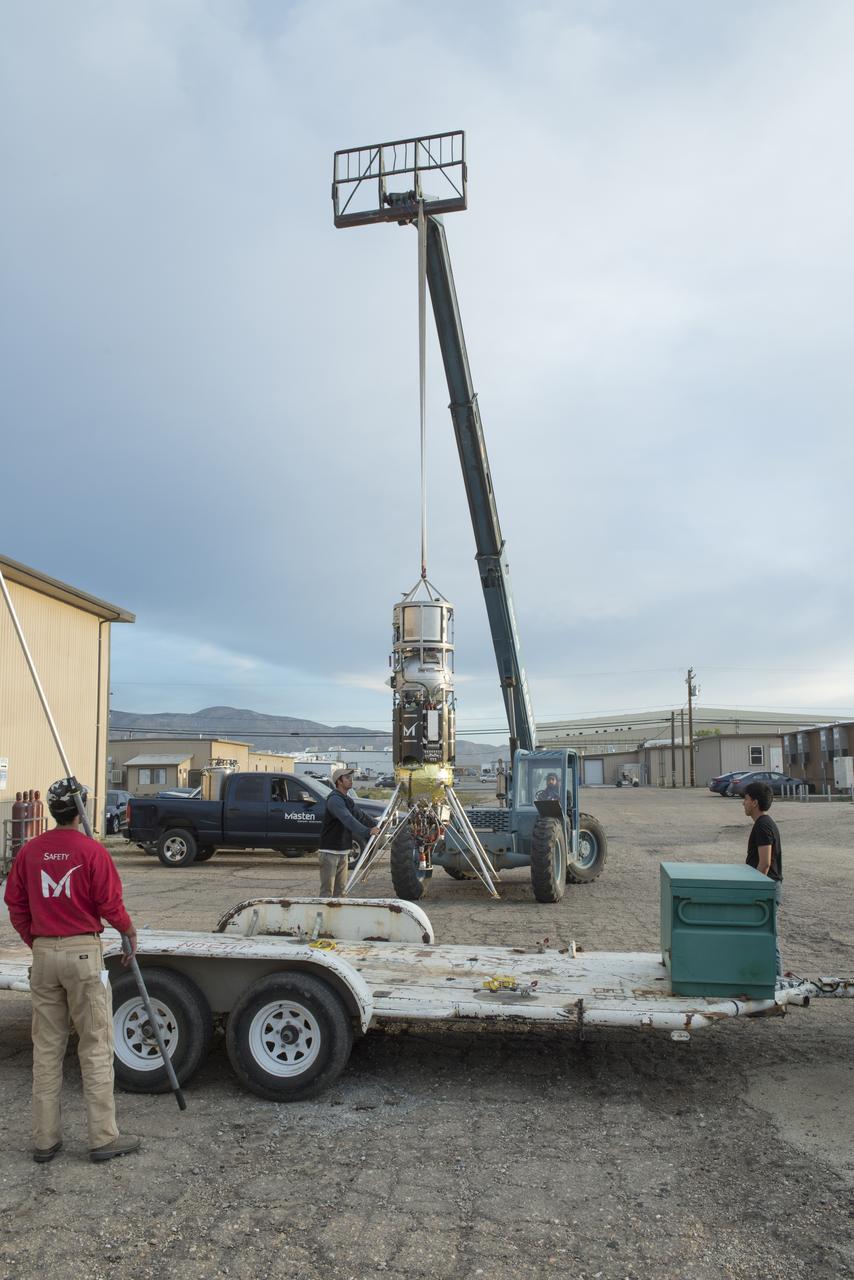
Masten Space Systems’ technician making adjustments to NASA’s autonomous landing technologies payload on Masten’s Xodiac rocket.
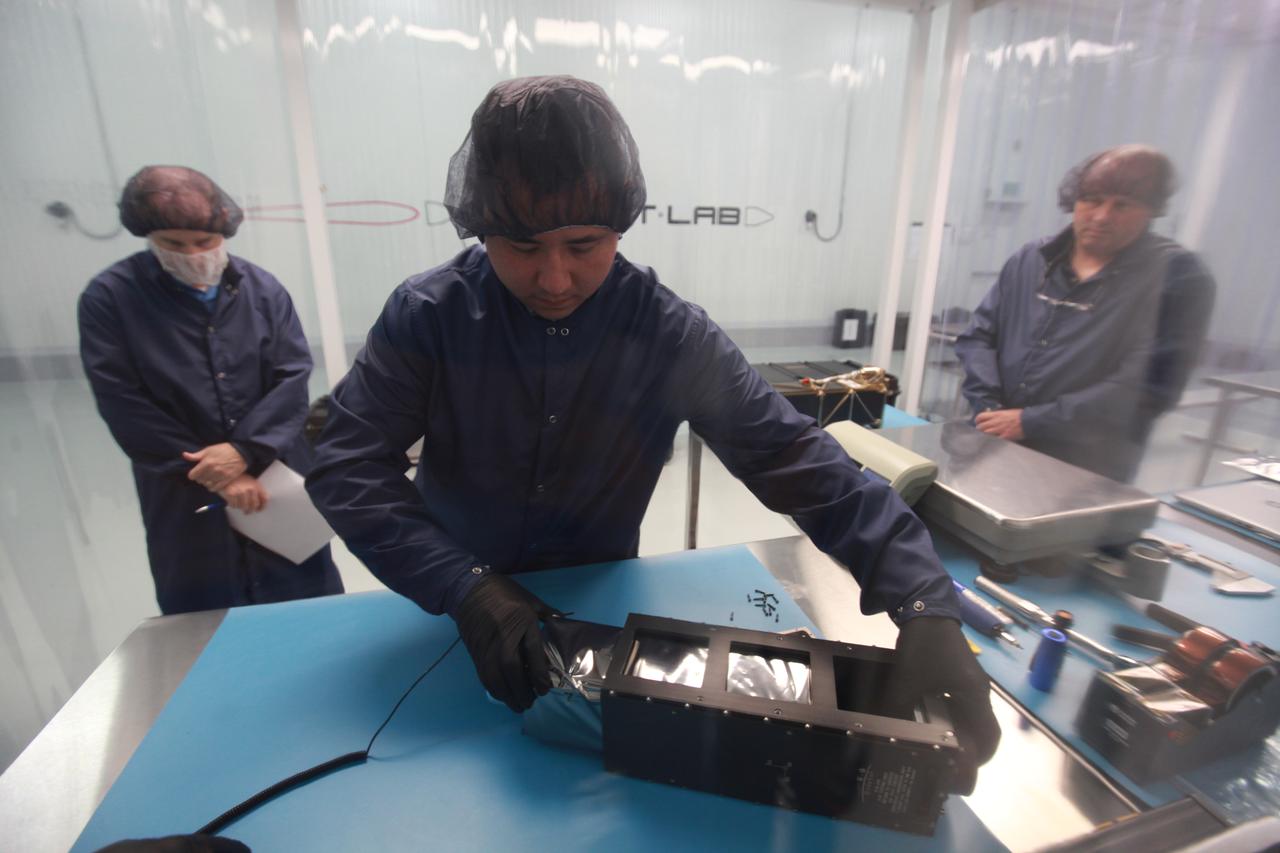
The NASA Langley Research Center (LaRC) Shields-1 CubeSat will demonstrate a research payload with materials durability experiments on emerging radiation shielding technologies. Shields-1 incorporates eight mdosimeters for radiation shielding experiments: one in the atomic number (Z)-grade radiation shielding vault, three behind experimental Z-grade radiation shielding samples developed at NASA LaRC, three behind baseline aluminum shielding samples, and one deep inside the research payload. The Z-grade is defined as an atomic number gradient of shielding materials using a low atomic number metal, such as aluminum, with a high atomic number material, like tantalum. The metals are fabricated into the vault structure. Also, Shields-1 measures a charge dissipation film resistance for technology development. The Shields-1 mission contributes to the SmallSat community with the development of technologies to increase the lifetimes of CubeSat missions from months to years in multiple radiation environments and increase the return on investment for scientific and commercial spacecraft.
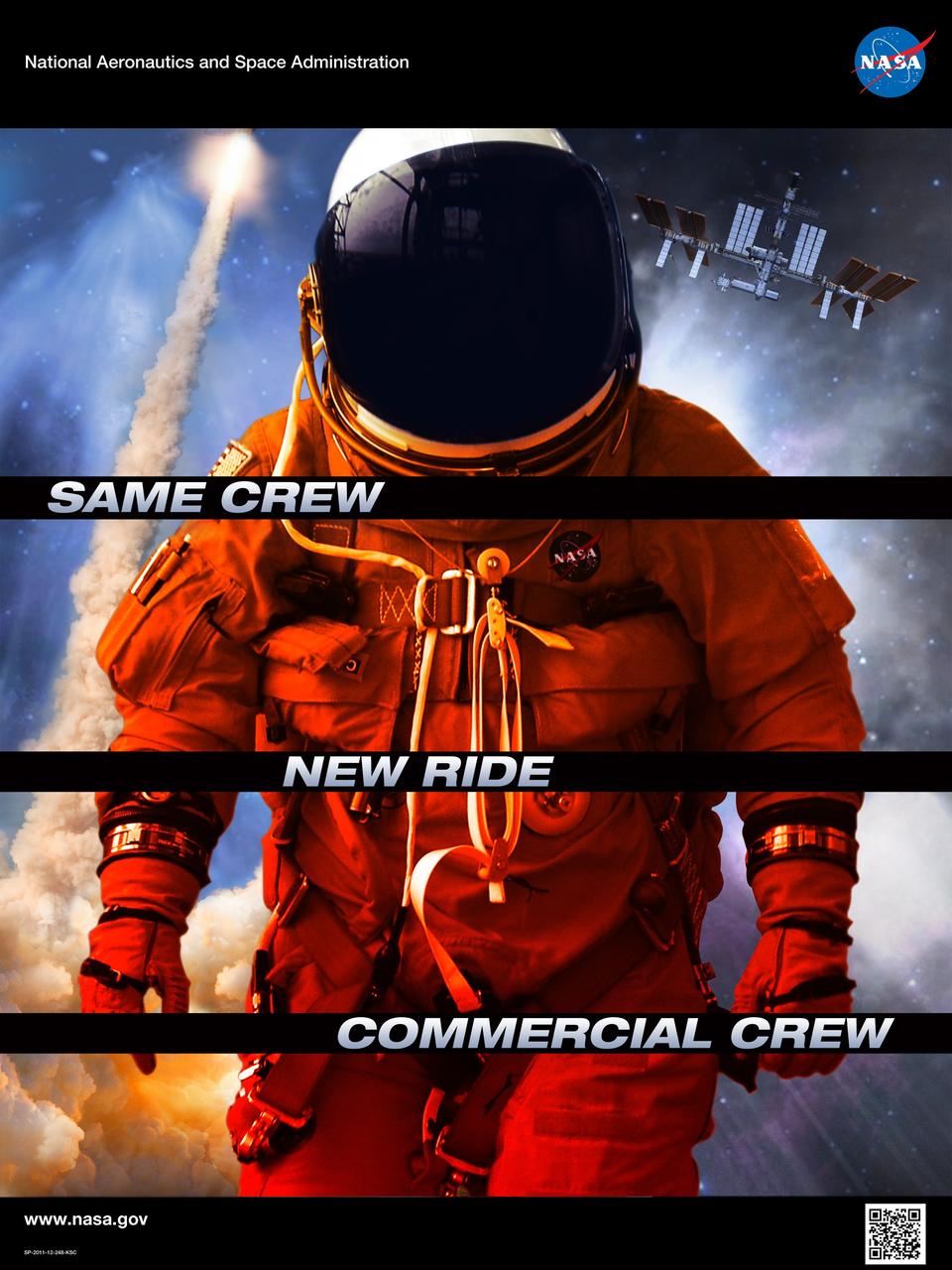
CAPE CANAVERAL, Fla. -- This is a printable version of NASA's "Same Crew, New Ride" poster depicting an artist's conception of NASA's Commercial Crew Program CCP. The poster features a NASA astronaut in the foreground with a vehicle launching toward the International Space Station in the background. CCP is investing in the aerospace industry and helping multiple companies design and develop crew transportation systems that could be capable of flying to the space station and other low Earth orbit destinations. The program is meant to accelerate a United States-led capability to the station where critical scientific work is being performed for use in applications here on Earth. CCP is expected to drive down the cost of space travel as well as open up space to more people than ever before by balancing industry’s own innovative capabilities with NASA's 50 years of human spaceflight experience. For more information, visit www.nasa.gov/commercialcrew. Poster designed by Kennedy Space Center Graphics Department/Greg Lee. Credit: NASA

ISS044-S-001 (February 2014) --- This is the insignia for the Expedition 44 mission. The International Space Station is positioned in the foreground poised to study Earth, the sun and cosmos that lie beyond. Two members of the Expedition 44 crew will spend a full year on the ISS - providing valuable experience for future long duration missions into deep space. The 12 Earths represent the planet's position around the sun over the course of that year. Four of the Earths are silhouetted in sunlight representing the four month duration of Expedition 44. The nine stars in the background represent the nine individuals that will visit and work on the ISS during the course of the expedition, including the six-member crew, whose names are inscribed around the patch's border, and the three-person Soyuz "taxi" crew. The use of ellipses and circles throughout the patch reflect a theme of "completion" or "return," as investments made in this orbiting laboratory return benefit to the Earth and its inhabitants. The NASA insignia design for shuttle flights and station increments is reserved for use by the astronauts and for other official use as the NASA Administrator may authorize. Public availability has been approved only in the forms of illustrations by the various news media. When and if there is any change in this policy, which is not anticipated, the change will be publicly announced. Photo credit: NASA
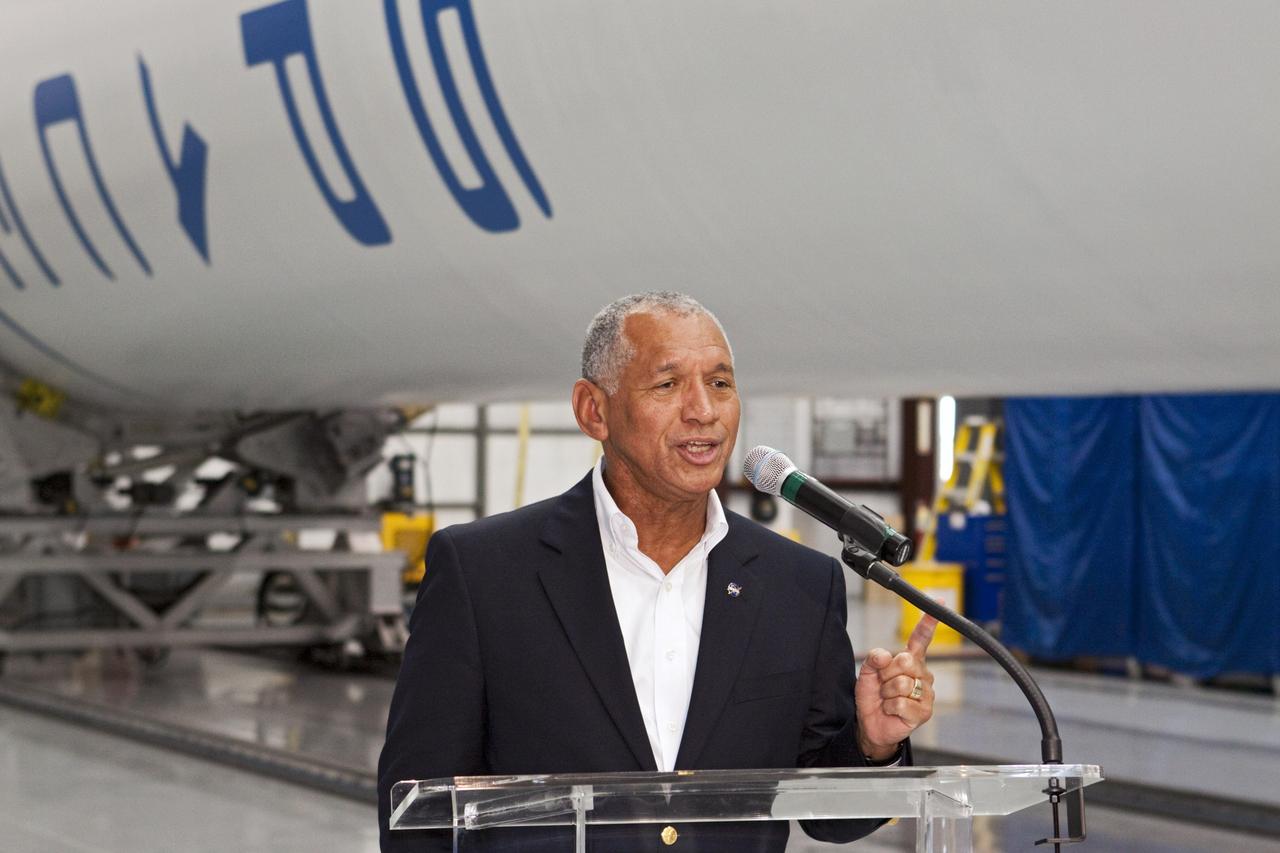
CAPE CANAVERAL, Fla. -- Inside the Space Exploration Technologies, or SpaceX, processing facility near NASA’s Kennedy Space Center in Florida, NASA Administrator Charlie Bolden announced new milestones in the nation’s commercial space initiatives. Bolden announced that SpaceX has completed its Space Act Agreement with NASA for Commercial Orbital Transportation Services. SpaceX is scheduled to launch the first of its 12 contracted cargo flights to the space station from Cape Canaveral this October, under NASA’s Commercial Resupply Services Program. Bolden also announced NASA partner Sierra Nevada Corp. has conducted its first milestone under the agency’s recently announced Commercial Crew Integrated Capability initiative. The milestone, a program implementation plan review, marks an important first step in Sierra Nevada’s efforts to develop a crew transportation system with its Dream Chaser spacecraft. Through NASA’s commercial space initiatives and programs, the agency is providing investments to stimulate the American commercial space industry. Photo credit: NASA/Kim Shiflett
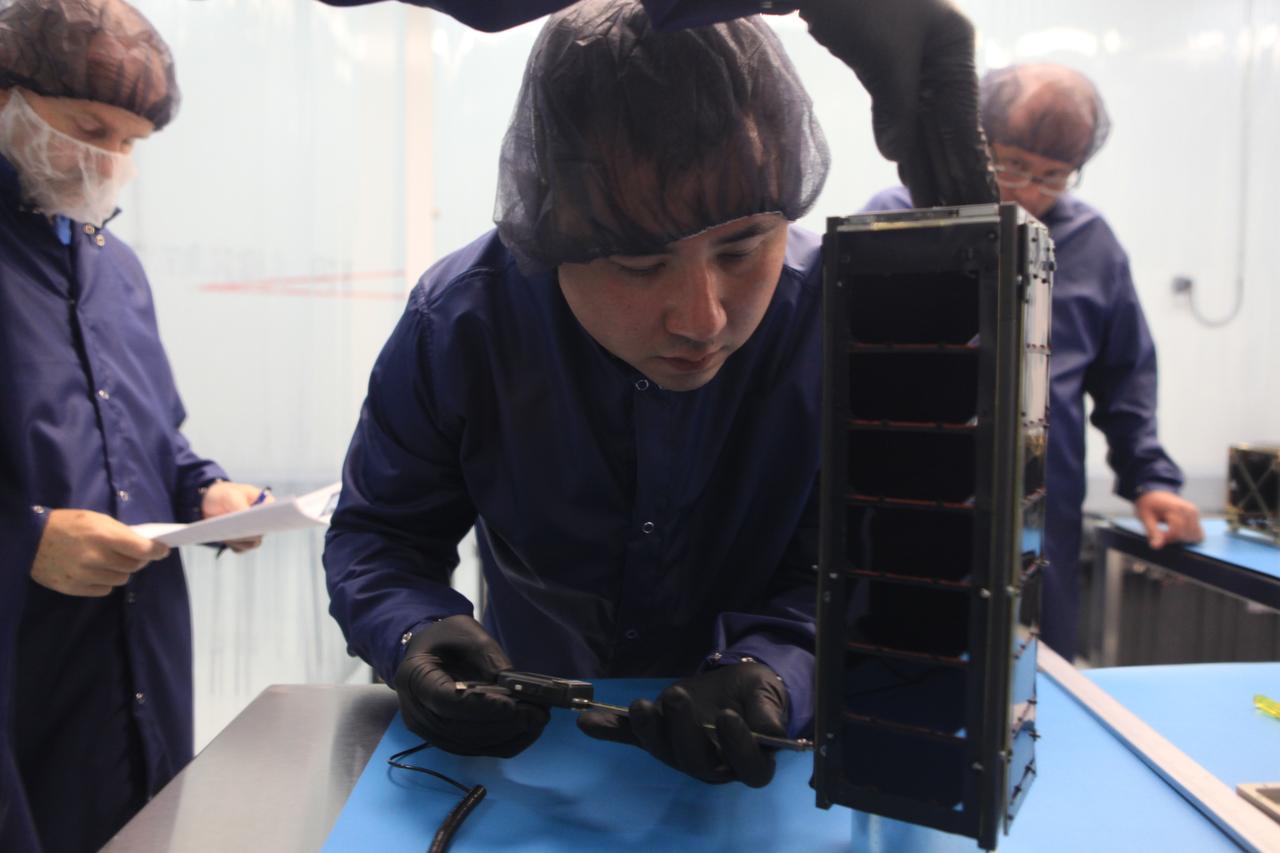
The NASA Langley Research Center (LaRC) Shields-1 CubeSat will demonstrate a research payload with materials durability experiments on emerging radiation shielding technologies. Shields-1 incorporates eight mdosimeters for radiation shielding experiments: one in the atomic number (Z)-grade radiation shielding vault, three behind experimental Z-grade radiation shielding samples developed at NASA LaRC, three behind baseline aluminum shielding samples, and one deep inside the research payload. The Z-grade is defined as an atomic number gradient of shielding materials using a low atomic number metal, such as aluminum, with a high atomic number material, like tantalum. The metals are fabricated into the vault structure. Also, Shields-1 measures a charge dissipation film resistance for technology development. The Shields-1 mission contributes to the SmallSat community with the development of technologies to increase the lifetimes of CubeSat missions from months to years in multiple radiation environments and increase the return on investment for scientific and commercial spacecraft.
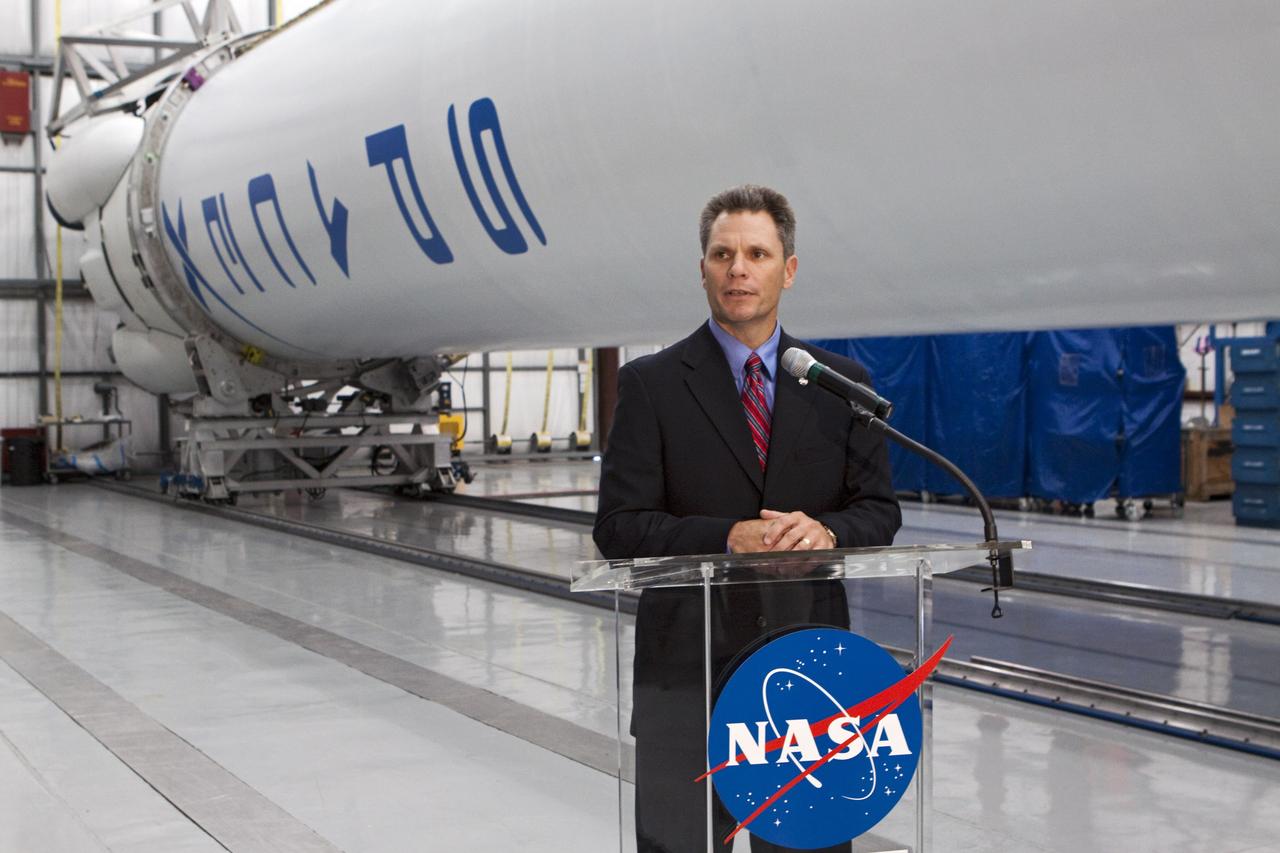
CAPE CANAVERAL, Fla. -- Inside the Space Exploration Technologies, or SpaceX, processing facility near NASA’s Kennedy Space Center in Florida, Scott Thurston, partner integration office manager with the Commercial Crew Program, talks to the media prior to an announcement from NASA Administrator Charles Bolden about new milestones in the nation’s commercial space initiatives. Bolden announced that SpaceX has completed its Space Act Agreement with NASA for Commercial Orbital Transportation Services. SpaceX is scheduled to launch the first of its 12 contracted cargo flights to the space station from Cape Canaveral this October, under NASA’s Commercial Resupply Services Program. Bolden also announced NASA partner Sierra Nevada Corp. has conducted its first milestone under the agency’s recently announced Commercial Crew Integrated Capability initiative. The milestone, a program implementation plan review, marks an important first step in Sierra Nevada’s efforts to develop a crew transportation system with its Dream Chaser spacecraft. Through NASA’s commercial space initiatives and programs, the agency is providing investments to stimulate the American commercial space industry. Photo credit: NASA/Kim Shiflett

CAPE CANAVERAL, Fla. – Panelists conduct a question and answer session with news media after NASA awards a cooperative agreement with the Center for the Advancement of Science in Space (CASIS) to manage the portion of the International Space Station that operates as a U.S. national laboratory. From left are: Waleed Abdalati, NASA chief scientist; Mark Uhran, NASA assistant associate administrator for the International Space Station; and Jeanne Becker, CASIS executive director. CASIS will be located at the Space Life Sciences Laboratory at NASA’s Kennedy Space Center in Florida. The organization will increase station use to maximize the public’s return on its investment by managing its diversified research and development portfolio based on needs for basic and applied research in a variety of fields. CASIS will identify opportunities for non-NASA uses linking scientific review and economic value, and will match potential research and development opportunities with funding sources. The organization also will increase awareness among schools and students about using the station as a learning platform. Photo credit: NASA/Kim Shiflett

The NASA Langley Research Center (LaRC) Shields-1 CubeSat will demonstrate a research payload with materials durability experiments on emerging radiation shielding technologies. Shields-1 incorporates eight mdosimeters for radiation shielding experiments: one in the atomic number (Z)-grade radiation shielding vault, three behind experimental Z-grade radiation shielding samples developed at NASA LaRC, three behind baseline aluminum shielding samples, and one deep inside the research payload. The Z-grade is defined as an atomic number gradient of shielding materials using a low atomic number metal, such as aluminum, with a high atomic number material, like tantalum. The metals are fabricated into the vault structure. Also, Shields-1 measures a charge dissipation film resistance for technology development. The Shields-1 mission contributes to the SmallSat community with the development of technologies to increase the lifetimes of CubeSat missions from months to years in multiple radiation environments and increase the return on investment for scientific and commercial spacecraft.
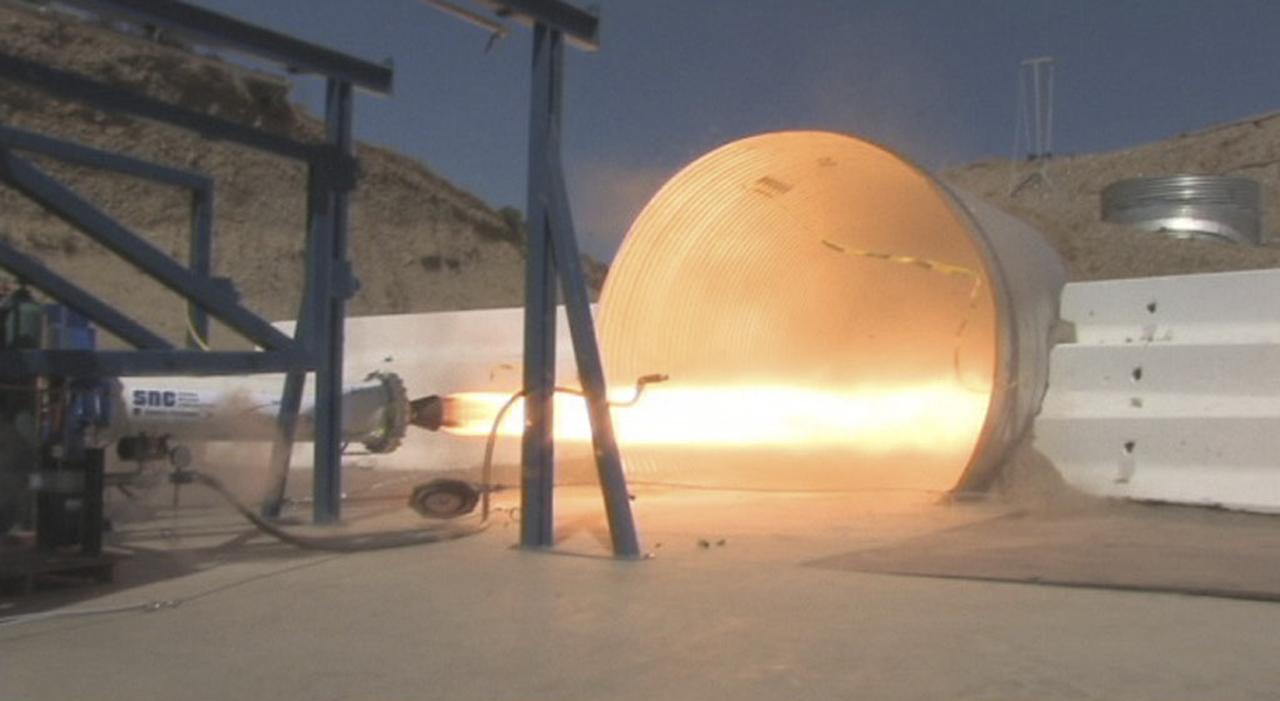
POWAY, Calif. – During NASA's Commercial Crew Development Round 1 CCDev1 activities, the rocket motor under development by Sierra Nevada Corp. for its Dream Chaser spacecraft successfully fires at the company's rocket test facility located near San Diego. NASA team members reviewed the motor's system and then watched it fire three times in one day, including one firing under vacuum ignition conditions. The tests, which simulated a complete nominal mission profile, demonstrated the multiple restart capability of Sierra Nevada's hybrid rocket. Two of the company's designed and developed hybrid rocket motors will be used as the main propulsion system on the Dream Chaser after launching aboard an Atlas V rocket. Dream Chaser is one of five systems NASA invested in during CCDev1 in order to aid in the innovation and development of American-led commercial capabilities for crew transportation and rescue services to and from the International Space Station and other low Earth orbit destinations. In 2011, NASA's Commercial Crew Program CCP entered into another funded Space Act Agreement with Sierra Nevada for the second round of commercial crew development CCDev2) so the company could further develop its Dream Chaser spacecraft for NASA transportation services. For information about CCP, visit www.nasa.gov/commercialcrew. Photo credit: Sierra Nevada Corp.
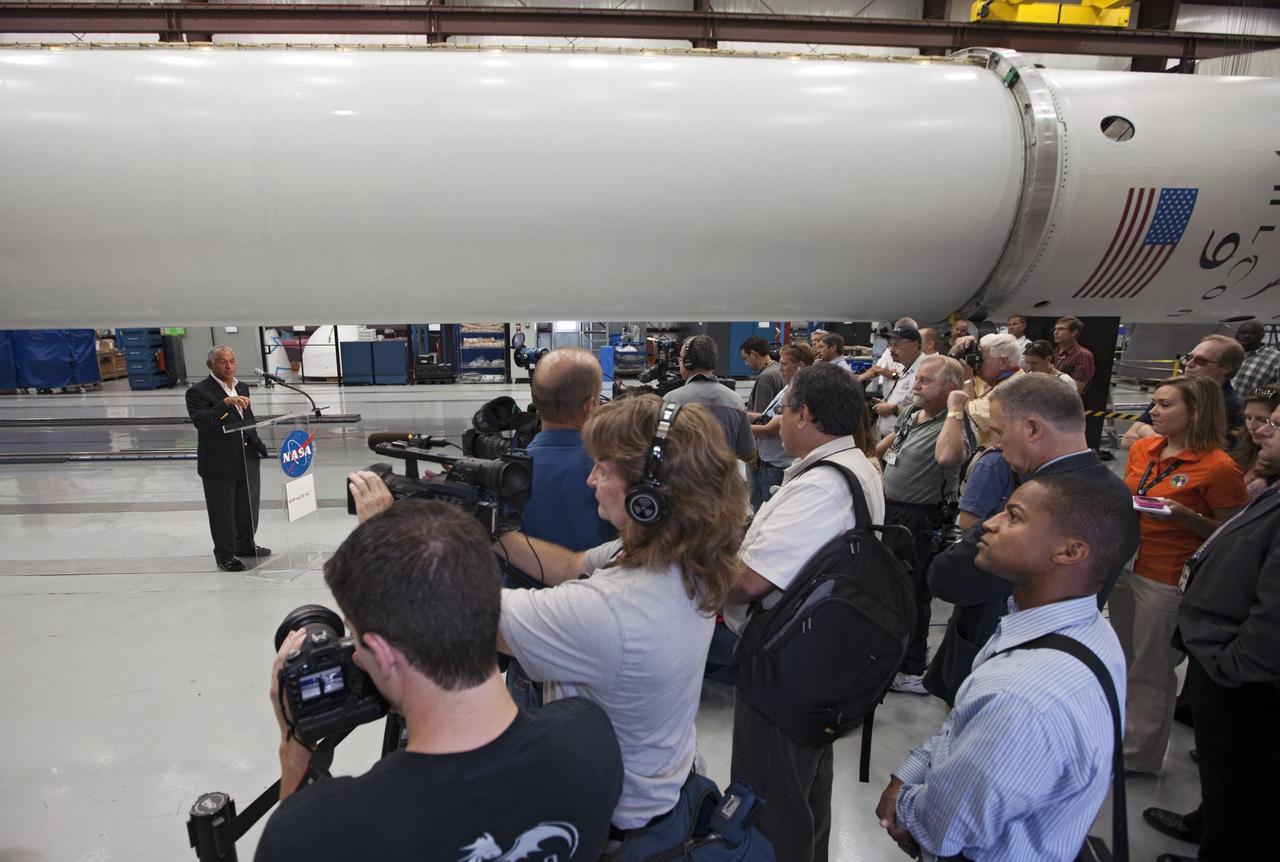
CAPE CANAVERAL, Fla. -- Inside the Space Exploration Technologies, or SpaceX, processing facility near NASA’s Kennedy Space Center in Florida, NASA Administrator Charlie Bolden announced new milestones in the nation’s commercial space initiatives. Bolden announced that SpaceX has completed its Space Act Agreement with NASA for Commercial Orbital Transportation Services. SpaceX is scheduled to launch the first of its 12 contracted cargo flights to the space station from Cape Canaveral this October, under NASA’s Commercial Resupply Services Program. Bolden also announced NASA partner Sierra Nevada Corp. has conducted its first milestone under the agency’s recently announced Commercial Crew Integrated Capability initiative. The milestone, a program implementation plan review, marks an important first step in Sierra Nevada’s efforts to develop a crew transportation system with its Dream Chaser spacecraft. Through NASA’s commercial space initiatives and programs, the agency is providing investments to stimulate the American commercial space industry. Photo credit: NASA/Kim Shiflett
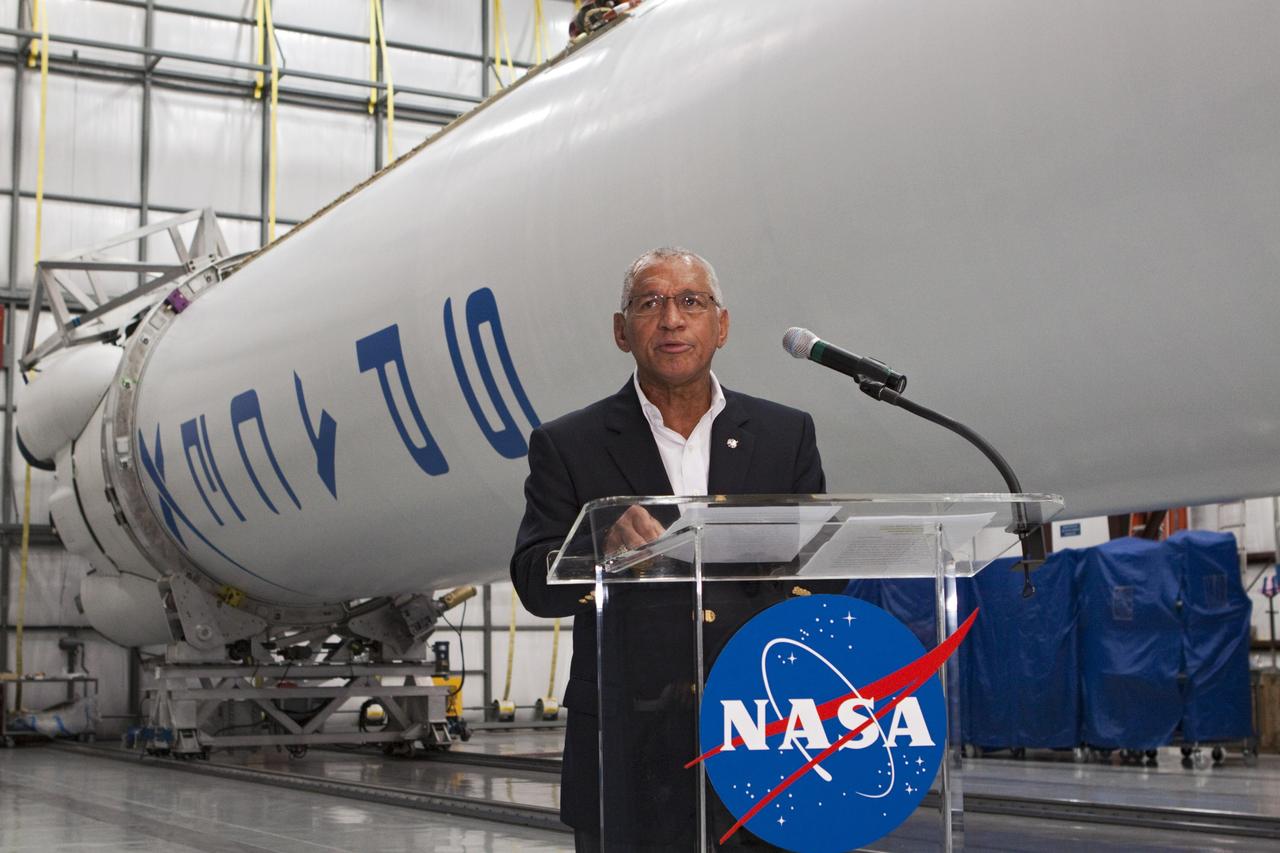
CAPE CANAVERAL, Fla. -- Inside the Space Exploration Technologies, or SpaceX, processing facility near NASA’s Kennedy Space Center in Florida, NASA Administrator Charlie Bolden announced new milestones in the nation’s commercial space initiatives. Bolden announced that SpaceX has completed its Space Act Agreement with NASA for Commercial Orbital Transportation Services. SpaceX is scheduled to launch the first of its 12 contracted cargo flights to the space station from Cape Canaveral this October, under NASA’s Commercial Resupply Services Program. Bolden also announced NASA partner Sierra Nevada Corp. has conducted its first milestone under the agency’s recently announced Commercial Crew Integrated Capability initiative. The milestone, a program implementation plan review, marks an important first step in Sierra Nevada’s efforts to develop a crew transportation system with its Dream Chaser spacecraft. Through NASA’s commercial space initiatives and programs, the agency is providing investments to stimulate the American commercial space industry. Photo credit: NASA/Kim Shiflett

"When I left college, I went to go work in investment banking on Wall Street. It was one of these experiences where people said, ‘that’s the most awesome job ever. How did you manage to do that?’ But once I was inside that world, I felt very disconnected from people. I felt like the world was passing me by while I was inside cars going to business meetings and dinners. And I really wasn’t interacting with people, or understanding the challenges they were going through. So I applied to a number of medical schools. Once I got my letters of acceptance, I just chose one and I went. Then I felt like I was really doing what I wanted to do. I had a tremendous experience in my training and my classes. I just felt like, ‘wow. This is what I’m meant to do.’ Everybody has their thing. Everybody has a place where they shine. And for me, it’s being a physician, helping people heal, solving medical problems. Helping people feel better in their own bodies, no matter what that looks like." NASA Headquarters Medical Director, Dr. Andrea Fore, poses for a portrait while working from home during the COVID-19 pandemic, Monday, July 13, 2020 in Maryland. Photo Credit: (NASA/Aubrey Gemignani)

CAPE CANAVERAL, Fla. – Space Florida President Frank DiBello, NASA Administrator Charlie Bolden, and Boeing's Vice President and General Manager of Space Exploration John Elbon address the media inside Orbiter Processing Facility-3, or OPF-3, at NASA's Kennedy Space Center in Florida. Bolden took a few dozen media on a road show tour of the center and adjacent Cape Canaveral Air Force Station to show the progress being made for future government and commercial space endeavors that will begin from Florida's Space Coast. Boeing is leasing OPF-3 through an agreement with Space Florida for the manufacturing and assembly of its CST-100 spacecraft, which is under development in collaboration with NASA's Commercial Crew Program. During his tour, Bolden announced that Space Exploration Technologies, or SpaceX, has completed its Space Act Agreement with NASA for Commercial Orbital Transportation Services. SpaceX is scheduled to launch the first of its 12 contracted cargo flights to the space station from Cape Canaveral this October, under NASA’s Commercial Resupply Services Program. Bolden also announced NASA partner Sierra Nevada Corp. has conducted its first milestone under the agency’s recently announced Commercial Crew Integrated Capability CCiCap initiative. The milestone, a program implementation plan review, marks an important first step in Sierra Nevada’s efforts to develop a crew transportation system with its Dream Chaser spacecraft. Through NASA’s commercial space initiatives and programs, the agency is providing investments to stimulate the American commercial space industry. Photo credit: NASA/Kim Shiflett
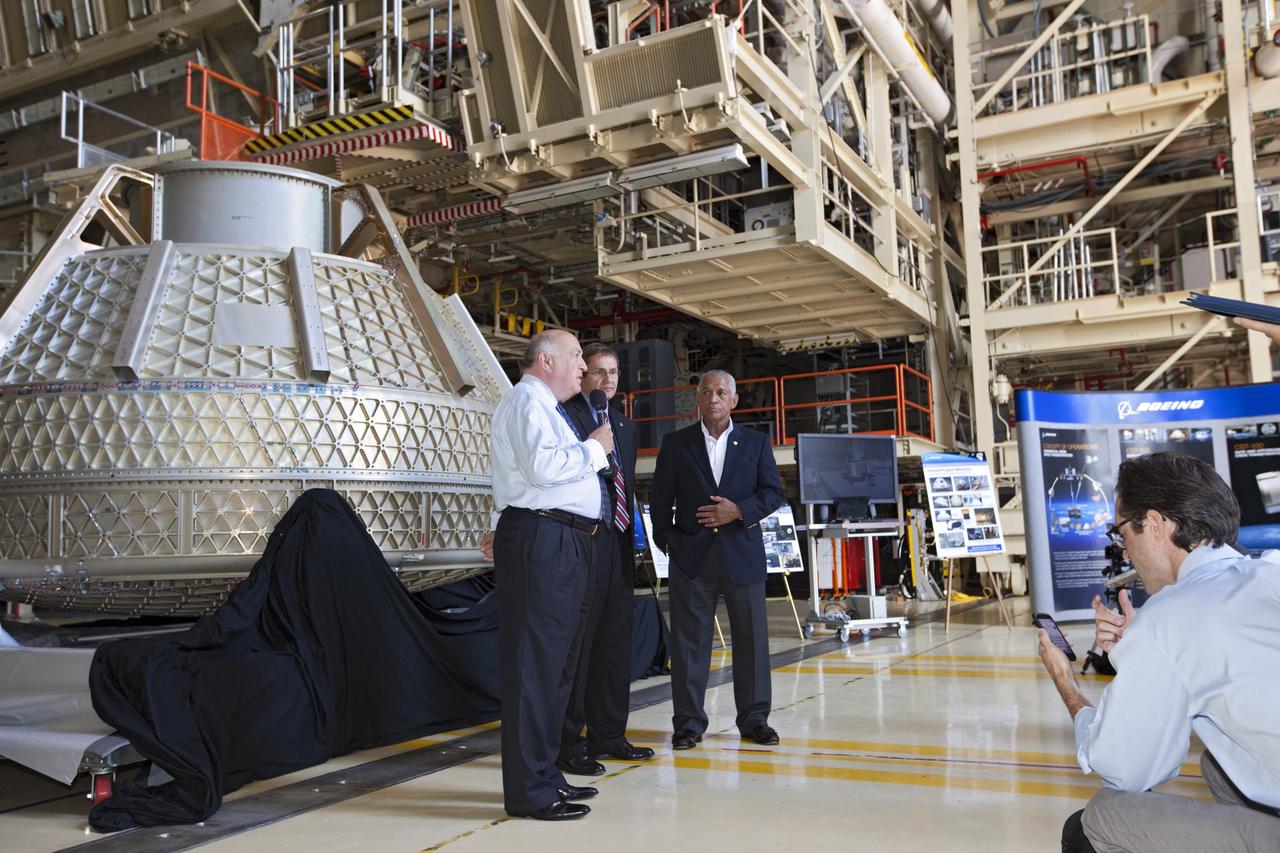
CAPE CANAVERAL, Fla. – Space Florida President Frank DiBello, NASA Administrator Charlie Bolden, and Boeing's Vice President and General Manager of Space Exploration John Elbon address the media inside Orbiter Processing Facility-3, or OPF-3, at NASA's Kennedy Space Center in Florida. Bolden took a few dozen media on a road show tour of the center and adjacent Cape Canaveral Air Force Station to show the progress being made for future government and commercial space endeavors that will begin from Florida's Space Coast. Boeing is leasing OPF-3 through an agreement with Space Florida for the manufacturing and assembly of its CST-100 spacecraft, which is under development in collaboration with NASA's Commercial Crew Program. During his tour, Bolden announced that Space Exploration Technologies, or SpaceX, has completed its Space Act Agreement with NASA for Commercial Orbital Transportation Services. SpaceX is scheduled to launch the first of its 12 contracted cargo flights to the space station from Cape Canaveral this October, under NASA’s Commercial Resupply Services Program. Bolden also announced NASA partner Sierra Nevada Corp. has conducted its first milestone under the agency’s recently announced Commercial Crew Integrated Capability CCiCap initiative. The milestone, a program implementation plan review, marks an important first step in Sierra Nevada’s efforts to develop a crew transportation system with its Dream Chaser spacecraft. Through NASA’s commercial space initiatives and programs, the agency is providing investments to stimulate the American commercial space industry. Photo credit: NASA/Kim Shiflett
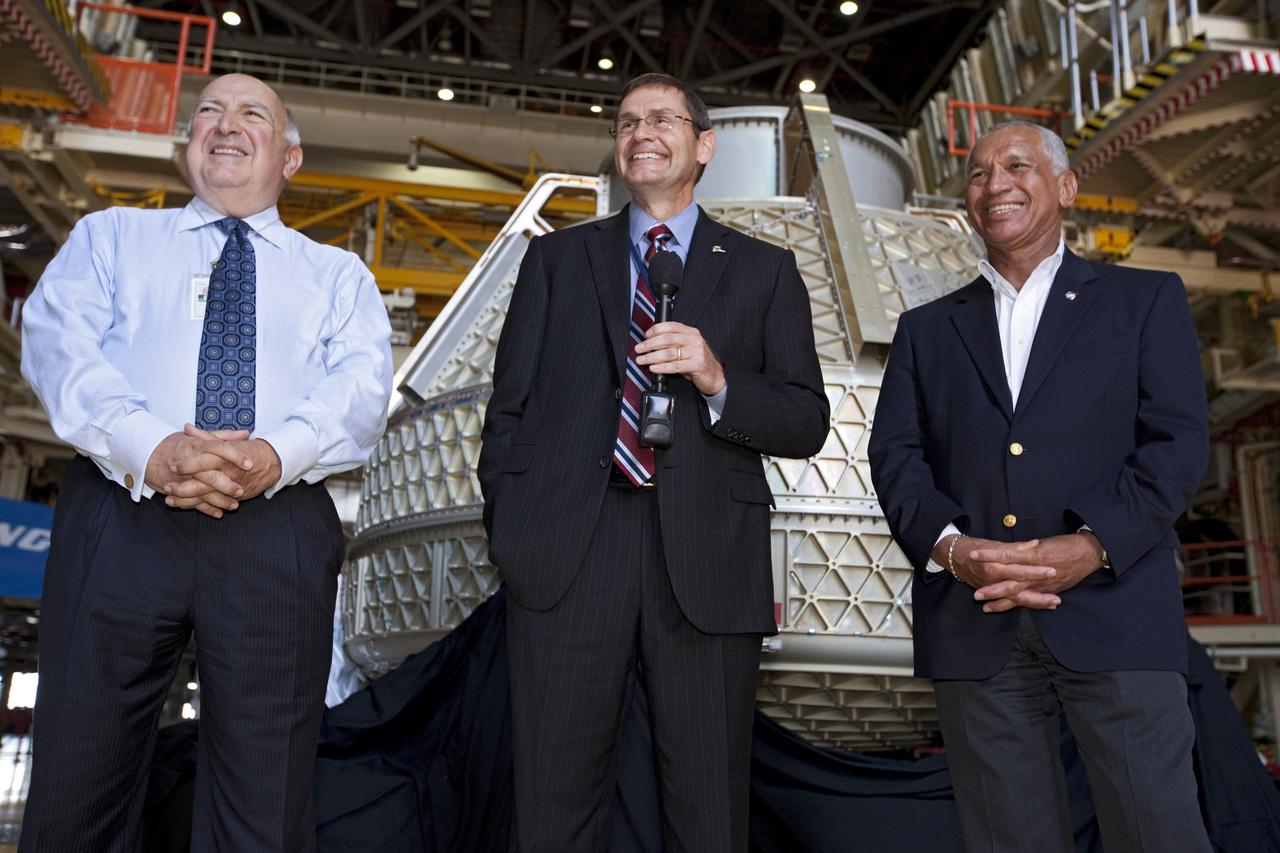
CAPE CANAVERAL, Fla. – Space Florida President Frank DiBello, NASA Administrator Charlie Bolden, and Boeing's Vice President and General Manager of Space Exploration John Elbon address the media inside Orbiter Processing Facility-3, or OPF-3, at NASA's Kennedy Space Center in Florida. Bolden took a few dozen media on a road show tour of the center and adjacent Cape Canaveral Air Force Station to show the progress being made for future government and commercial space endeavors that will begin from Florida's Space Coast. Boeing is leasing OPF-3 through an agreement with Space Florida for the manufacturing and assembly of its CST-100 spacecraft, which is under development in collaboration with NASA's Commercial Crew Program. During his tour, Bolden announced that Space Exploration Technologies, or SpaceX, has completed its Space Act Agreement with NASA for Commercial Orbital Transportation Services. SpaceX is scheduled to launch the first of its 12 contracted cargo flights to the space station from Cape Canaveral this October, under NASA’s Commercial Resupply Services Program. Bolden also announced NASA partner Sierra Nevada Corp. has conducted its first milestone under the agency’s recently announced Commercial Crew Integrated Capability CCiCap initiative. The milestone, a program implementation plan review, marks an important first step in Sierra Nevada’s efforts to develop a crew transportation system with its Dream Chaser spacecraft. Through NASA’s commercial space initiatives and programs, the agency is providing investments to stimulate the American commercial space industry. Photo credit: NASA/Kim Shiflett
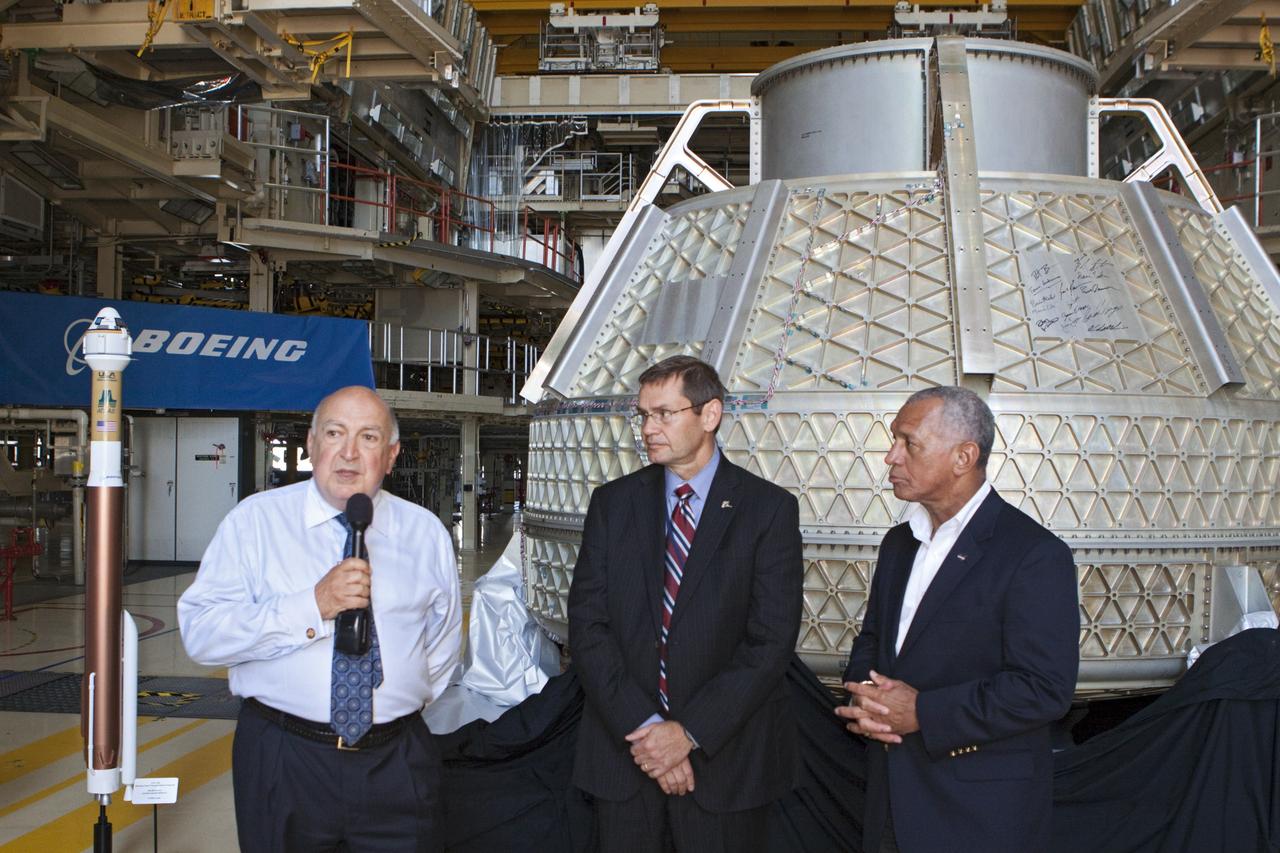
CAPE CANAVERAL, Fla. – Space Florida President Frank DiBello, NASA Administrator Charlie Bolden, and Boeing's Vice President and General Manager of Space Exploration John Elbon address the media inside Orbiter Processing Facility-3, or OPF-3, at NASA's Kennedy Space Center in Florida. Bolden took a few dozen media on a road show tour of the center and adjacent Cape Canaveral Air Force Station to show the progress being made for future government and commercial space endeavors that will begin from Florida's Space Coast. Boeing is leasing OPF-3 through an agreement with Space Florida for the manufacturing and assembly of its CST-100 spacecraft, which is under development in collaboration with NASA's Commercial Crew Program. During his tour, Bolden announced that Space Exploration Technologies, or SpaceX, has completed its Space Act Agreement with NASA for Commercial Orbital Transportation Services. SpaceX is scheduled to launch the first of its 12 contracted cargo flights to the space station from Cape Canaveral this October, under NASA’s Commercial Resupply Services Program. Bolden also announced NASA partner Sierra Nevada Corp. has conducted its first milestone under the agency’s recently announced Commercial Crew Integrated Capability CCiCap initiative. The milestone, a program implementation plan review, marks an important first step in Sierra Nevada’s efforts to develop a crew transportation system with its Dream Chaser spacecraft. Through NASA’s commercial space initiatives and programs, the agency is providing investments to stimulate the American commercial space industry. Photo credit: NASA/Kim Shiflett
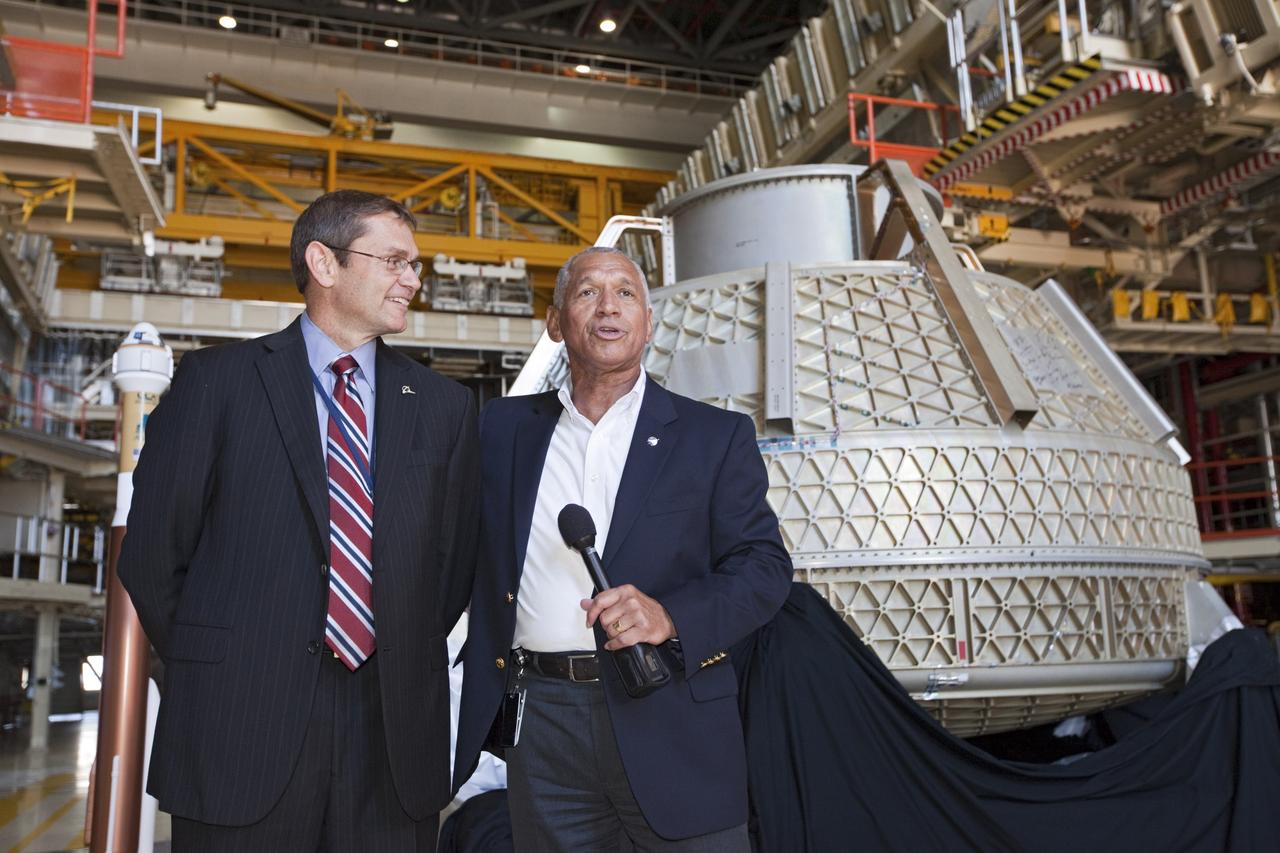
CAPE CANAVERAL, Fla. – NASA Administrator Charlie Bolden, right, and Boeing's Vice President and General Manager of Space Exploration John Elbon address the media inside Orbiter Processing Facility-3, or OPF-3, at NASA's Kennedy Space Center in Florida. Bolden took a few dozen media on a road show tour of the center and adjacent Cape Canaveral Air Force Station to show the progress being made for future government and commercial space endeavors that will begin from Florida's Space Coast. Boeing is leasing OPF-3 through an agreement with Space Florida for the manufacturing and assembly of its CST-100 spacecraft, which is under development in collaboration with NASA's Commercial Crew Program. During his tour, Bolden announced that Space Exploration Technologies, or SpaceX, has completed its Space Act Agreement with NASA for Commercial Orbital Transportation Services. SpaceX is scheduled to launch the first of its 12 contracted cargo flights to the space station from Cape Canaveral this October, under NASA’s Commercial Resupply Services Program. Bolden also announced NASA partner Sierra Nevada Corp. has conducted its first milestone under the agency’s recently announced Commercial Crew Integrated Capability CCiCap initiative. The milestone, a program implementation plan review, marks an important first step in Sierra Nevada’s efforts to develop a crew transportation system with its Dream Chaser spacecraft. Through NASA’s commercial space initiatives and programs, the agency is providing investments to stimulate the American commercial space industry. Photo credit: NASA/Kim Shiflett
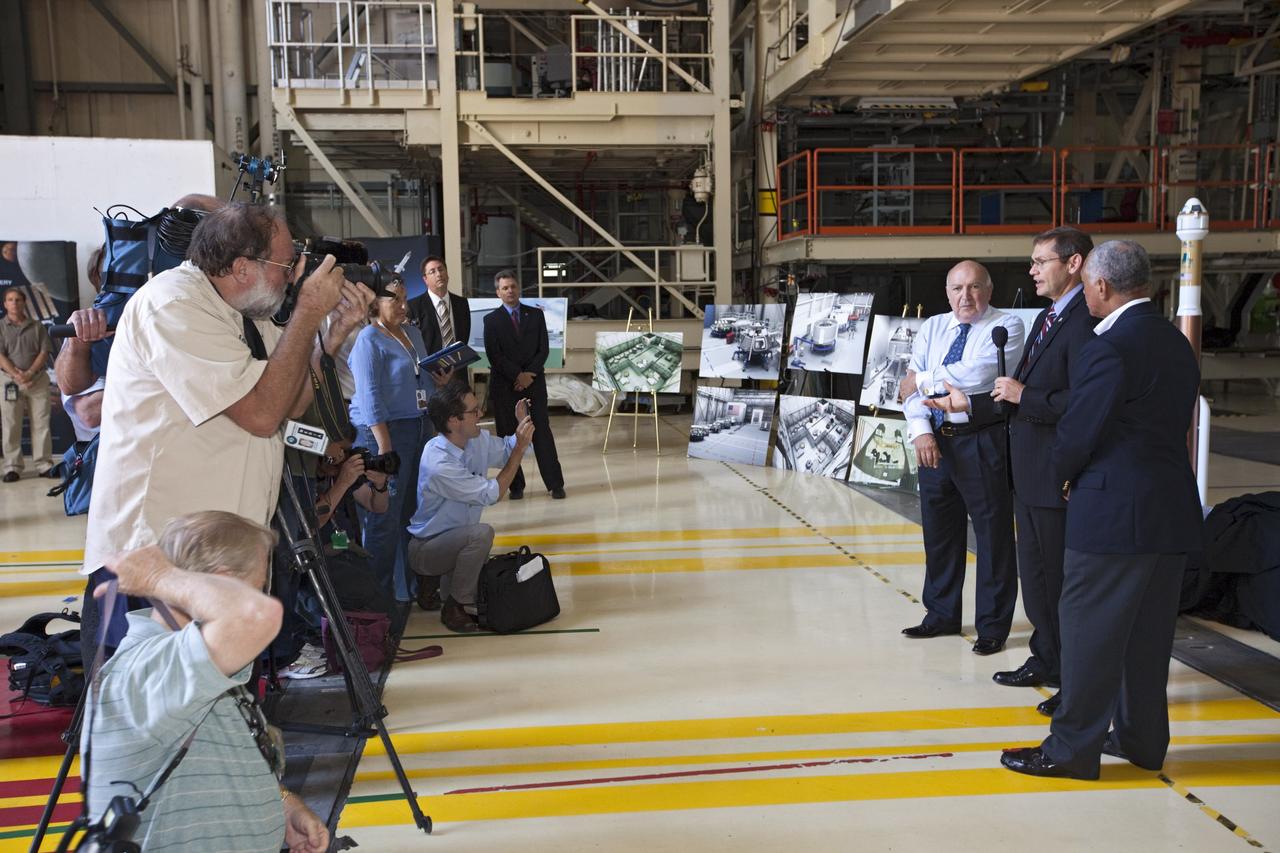
CAPE CANAVERAL, Fla. – Space Florida President Frank DiBello, NASA Administrator Charlie Bolden, and Boeing's Vice President and General Manager of Space Exploration John Elbon address the media inside Orbiter Processing Facility-3, or OPF-3, at NASA's Kennedy Space Center in Florida. Bolden took a few dozen media on a road show tour of the center and adjacent Cape Canaveral Air Force Station to show the progress being made for future government and commercial space endeavors that will begin from Florida's Space Coast. Boeing is leasing OPF-3 through an agreement with Space Florida for the manufacturing and assembly of its CST-100 spacecraft, which is under development in collaboration with NASA's Commercial Crew Program. During his tour, Bolden announced that Space Exploration Technologies, or SpaceX, has completed its Space Act Agreement with NASA for Commercial Orbital Transportation Services. SpaceX is scheduled to launch the first of its 12 contracted cargo flights to the space station from Cape Canaveral this October, under NASA’s Commercial Resupply Services Program. Bolden also announced NASA partner Sierra Nevada Corp. has conducted its first milestone under the agency’s recently announced Commercial Crew Integrated Capability CCiCap initiative. The milestone, a program implementation plan review, marks an important first step in Sierra Nevada’s efforts to develop a crew transportation system with its Dream Chaser spacecraft. Through NASA’s commercial space initiatives and programs, the agency is providing investments to stimulate the American commercial space industry. Photo credit: NASA/Kim Shiflett
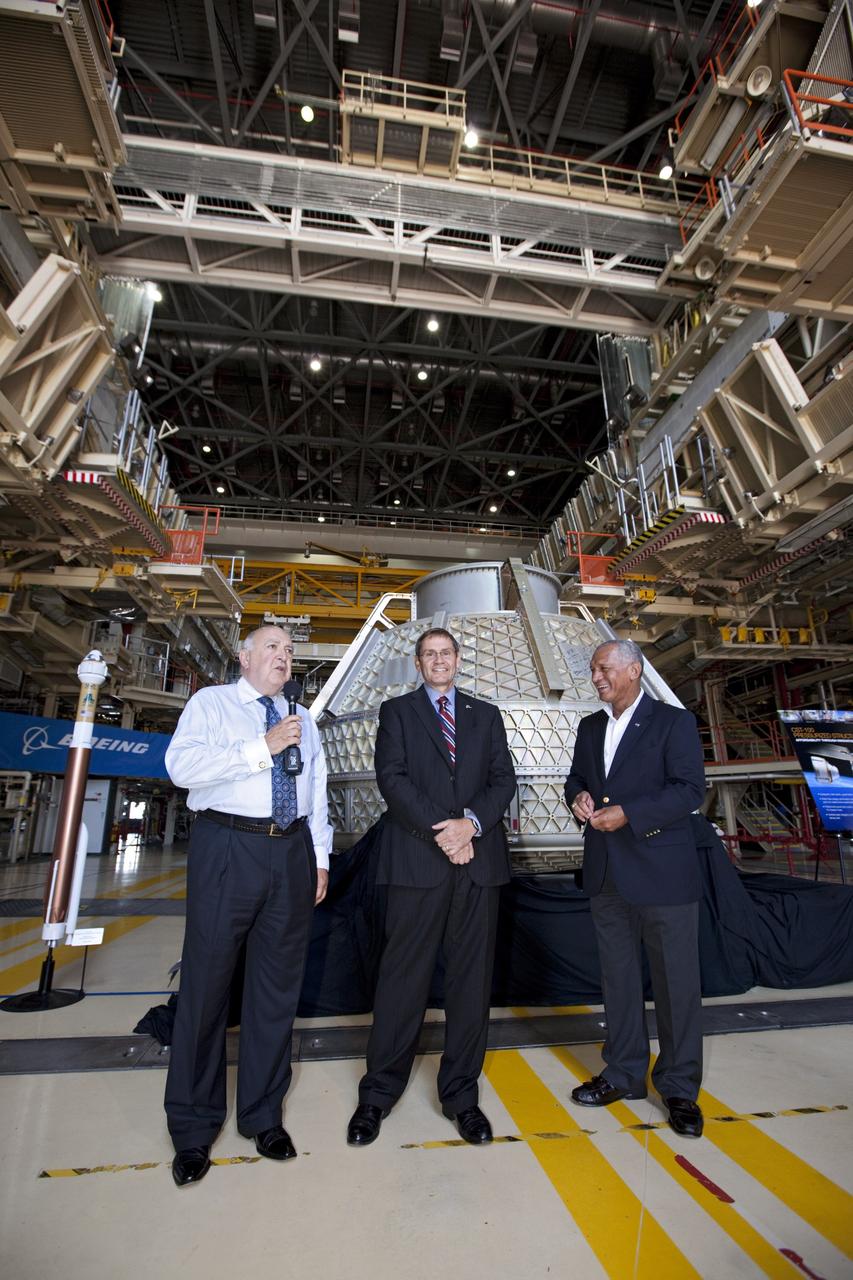
CAPE CANAVERAL, Fla. – Space Florida President Frank DiBello, NASA Administrator Charlie Bolden, and Boeing's Vice President and General Manager of Space Exploration John Elbon address the media inside Orbiter Processing Facility-3, or OPF-3, at NASA's Kennedy Space Center in Florida. Bolden took a few dozen media on a road show tour of the center and adjacent Cape Canaveral Air Force Station to show the progress being made for future government and commercial space endeavors that will begin from Florida's Space Coast. Boeing is leasing OPF-3 through an agreement with Space Florida for the manufacturing and assembly of its CST-100 spacecraft, which is under development in collaboration with NASA's Commercial Crew Program. During his tour, Bolden announced that Space Exploration Technologies, or SpaceX, has completed its Space Act Agreement with NASA for Commercial Orbital Transportation Services. SpaceX is scheduled to launch the first of its 12 contracted cargo flights to the space station from Cape Canaveral this October, under NASA’s Commercial Resupply Services Program. Bolden also announced NASA partner Sierra Nevada Corp. has conducted its first milestone under the agency’s recently announced Commercial Crew Integrated Capability CCiCap initiative. The milestone, a program implementation plan review, marks an important first step in Sierra Nevada’s efforts to develop a crew transportation system with its Dream Chaser spacecraft. Through NASA’s commercial space initiatives and programs, the agency is providing investments to stimulate the American commercial space industry. Photo credit: NASA/Kim Shiflett
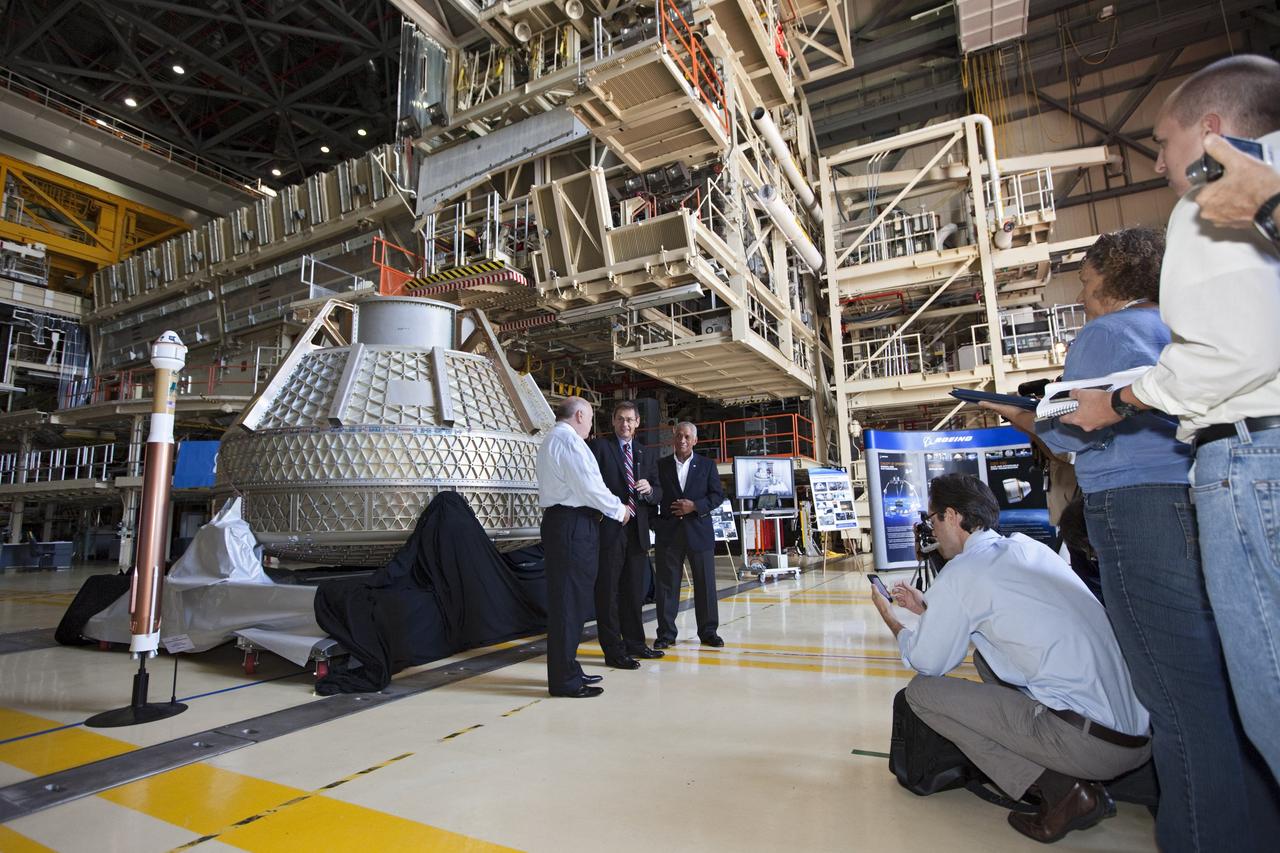
CAPE CANAVERAL, Fla. – Space Florida President Frank DiBello, NASA Administrator Charlie Bolden, and Boeing's Vice President and General Manager of Space Exploration John Elbon address the media inside Orbiter Processing Facility-3, or OPF-3, at NASA's Kennedy Space Center in Florida. Bolden took a few dozen media on a road show tour of the center and adjacent Cape Canaveral Air Force Station to show the progress being made for future government and commercial space endeavors that will begin from Florida's Space Coast. Boeing is leasing OPF-3 through an agreement with Space Florida for the manufacturing and assembly of its CST-100 spacecraft, which is under development in collaboration with NASA's Commercial Crew Program. During his tour, Bolden announced that Space Exploration Technologies, or SpaceX, has completed its Space Act Agreement with NASA for Commercial Orbital Transportation Services. SpaceX is scheduled to launch the first of its 12 contracted cargo flights to the space station from Cape Canaveral this October, under NASA’s Commercial Resupply Services Program. Bolden also announced NASA partner Sierra Nevada Corp. has conducted its first milestone under the agency’s recently announced Commercial Crew Integrated Capability CCiCap initiative. The milestone, a program implementation plan review, marks an important first step in Sierra Nevada’s efforts to develop a crew transportation system with its Dream Chaser spacecraft. Through NASA’s commercial space initiatives and programs, the agency is providing investments to stimulate the American commercial space industry. Photo credit: NASA/Kim Shiflett

ISS030-E-090918 (21 Feb. 2012) --- Agricultural fields in the Wadi As-Sirhan Basin in Saudi Arabia are featured in this image photographed by an Expedition 30 crew member on the International Space Station. Northern Saudi Arabia hosts some of the most extensive sand and gravel deserts in the world, but modern agricultural technology has changed the face of some of them. This photograph presents the almost surreal image of abundant green fields in the midst of a barren desert ? specifically the Wadi As-Sirhan Basin of northwestern Saudi Arabia. As recently as 1986 there was little to no agricultural activity in the area, but over the subsequent 26 years agricultural fields have been steadily developed, largely as a result of investment of oil industry revenues by the Saudi government. The fields use water pumped from subsurface aquifers and is distributed in rotation about a center point within a circular field ? a technique known as center-pivot agriculture. This technique affords certain benefits relative to more traditional surface irrigation such as better control of water use and application of fertilizers. The use of this so-called ?precision agriculture? is particularly important in regions subject to high evaporative water loss; by better controlling the amount and timing of water application, evaporative losses can be minimized. Crops grown in the area include fruits, vegetables, and wheat. For a sense of scale, agricultural fields in active use (dark green) and fallow (brown to tan), are approximately one kilometer in diameter. While much of the Wadi As-Sirhan Basin shown here is sandy (light tan to brown surfaces) and relatively flat, low hills and rocky outcrops (dark gray) of underlying sedimentary rocks are visible at left and right.
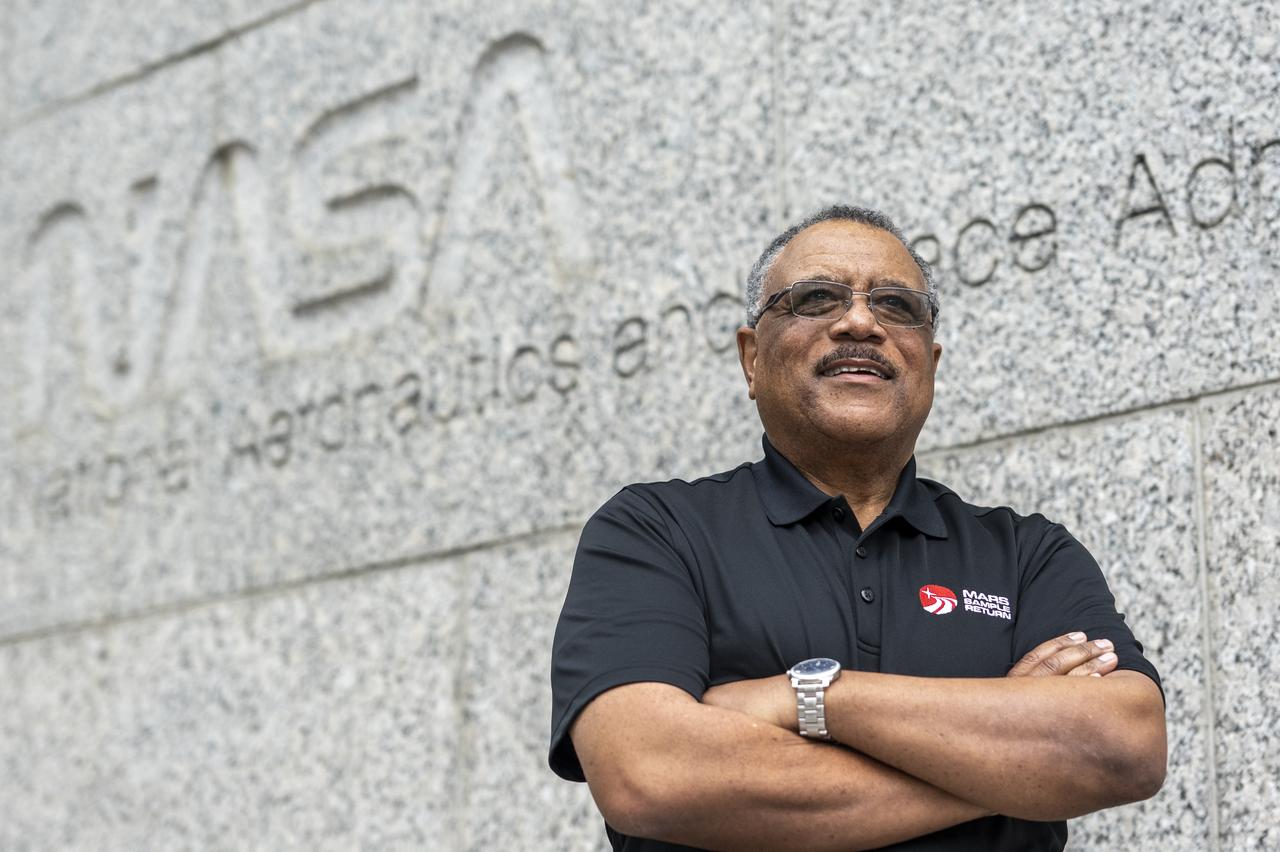
ÒIf you just invest a little time and a little effort in people, you will get so much more back. Not only will you feel good about it and get satisfaction above and beyond anything you can imagine, but the task or the mission you are trying to accomplish will also benefit tremendously. IÕve seen this happen many times when I have given someone an assignment. I am careful not to restrict their creativity. Often, theyÕre able to accomplish the task or mission better than I expected. ÒMy brotherÕs a professional artist, and I learned that from him. If you tell an artist what to paint, they will paint it. But, if you tell them what youÕre looking for, theyÕll paint that Ð and thereÕs a difference. People appreciate that, the openness to be able to create. Another big one is that thereÕs no such thing as a perfect person. So, the day you start thinking everythingÕs going to be perfect, you are in trouble. ÒI remember when I went on my first visit to NASAÕs Jet Propulsion Laboratory to talk about the Mars Sample Return campaign. I sat down with the communications team and said, ÔLook, if you are thinking we are going to do this perfectly and everythingÕs going to go as smoothly as it can, I want to change that mindset right now. We are going to have our challenges. But it is our job to work through those challenges, that is how we succeed. ÒI believe that whenever I am in a leadership position it is my call, my responsibility to create an environment in which all who work around me can be at their most efficient. I have been in situations before in which coworkers have said, ÔThat could not have turned out any better.Õ I believe you have to create the environment in which people can thrive and be their best. ThatÕs a big deal to me and I want people to treat me that way too. IÕve always felt from before I was a teenager that if I do something good, it will go to the next person and the next person, and before you know it, it goes around the world and comes back to me. I have truly believed that all my life, and I still think that today.Ó Dewayne Washington, Mars Sample Return Senior Communications Manager, poses for a portrait, Wednesday, Jan. 25, 2023, at the Mary W. Jackson NASA Headquarters building in Washington. Photo Credit: (NASA/Keegan Barber)
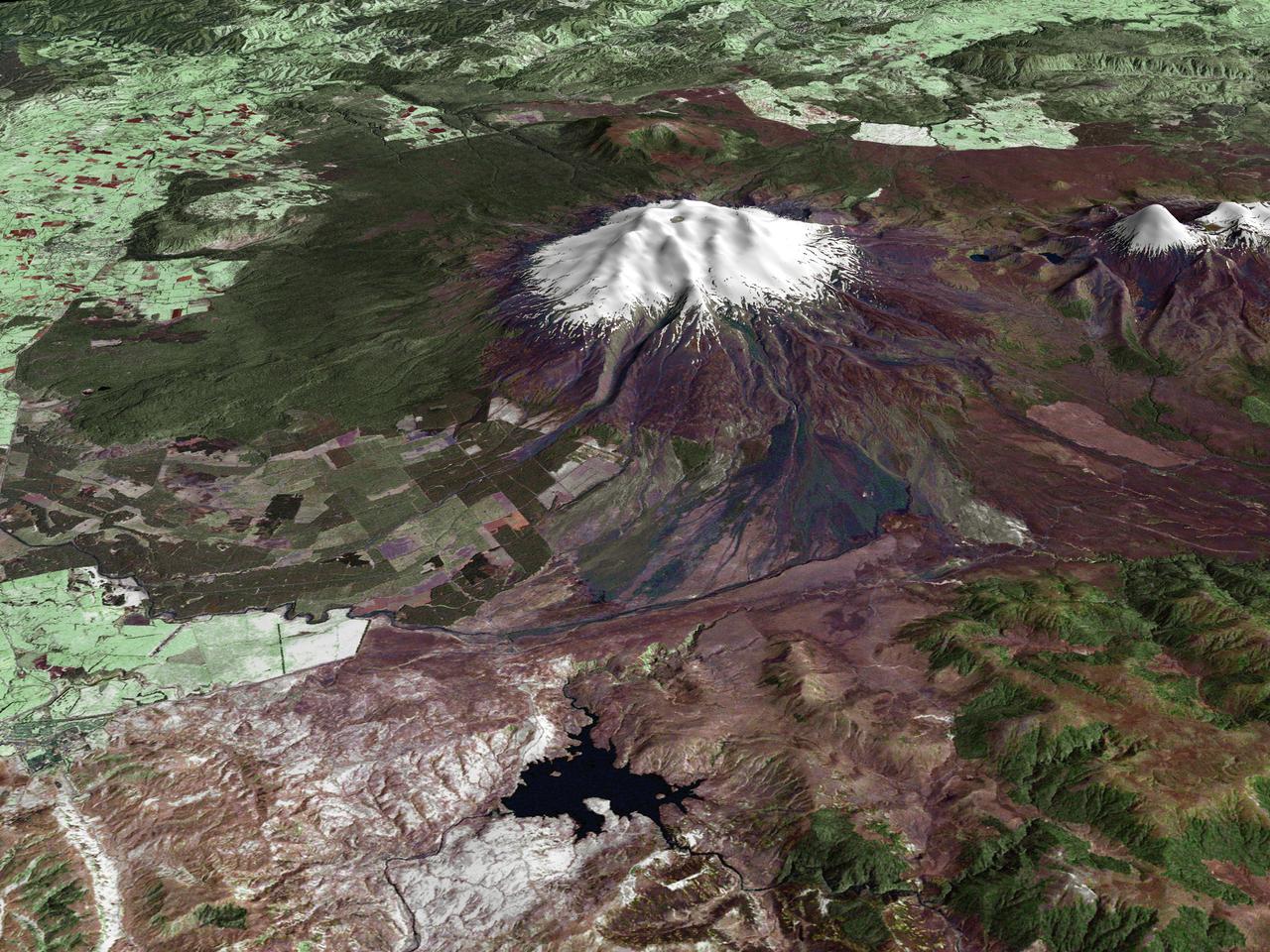
All around the world, people live in places where the threat of natural disaster is high. On the North Island of New Zealand, the Mount Ruapehu volcano is just such a threat. A towering, active stratovolcano (the classic cone-shaped volcano), snow-capped Ruapehu Volcano is pictured in this enhanced-color image. The image is made from topography data collected by the Shuttle Radar Topography Mission aboard the Space Shuttle Endeavour, launched on February 11, 2000, and imagery collected by the Landsat satellite on October 23, 2002. Ruapehu is one of New Zealand’s most active volcanoes, with ten eruptions since 1861. The eruptions aren’t the only threat from the volcano, however. Among the most serious threats is a volcanic mudflow called a lahar. In between eruptions, a lake forms in the volcano’s caldera from melting snow. If a previous eruption has deposited a dam of ash, rocks and mud in the lake’s natural overflow point, then the lake becomes dangerously full, held back only by the temporary dam. In this scene, the lake is nestled among the ridges at the top of the volcano. Eventually, the dam gives way and a massive flow of mud and debris churns down the mountain toward farmland and towns below. Scientists estimate that Ruapehu has experienced 60 lahars in the last 150 years. A devastating lahar in 1953 killed more than 150 people, who died when a passenger train plunged into a ravine when a railroad bridge was taken out by the lahar. The flank of the volcano below the lake is deeply carved by the path of previous lahars; the gouge can be seen just left of image center. Currently scientists in the region are predicting that the lake will overflow in a lahar sometime in the next year. There is great controversy about how to deal with the threat. News reports from the region indicate that the government is planning to invest in a high-tech warning system that will alert those who might be affected well in advance of any catastrophic release. Others feel that the government should combat the threat through engineering at the top of the mountain, for example, by undertaking a controlled release of the lake. Credit Landsat data provided courtesy of the University of Maryland Global Land Cover Facility Landsat processing by Laura Rocchio, Landsat Project Science Office SRTM 3-arcsecond elevation data courtesy of SRTM Team NASA/JPL/NIMA Visualization created by Earth Observatory staff. <b><a href="http://www.nasa.gov/centers/goddard/home/index.html" rel="nofollow">NASA Goddard Space Flight Center</a></b> enables NASA’s mission through four scientific endeavors: Earth Science, Heliophysics, Solar System Exploration, and Astrophysics. Goddard plays a leading role in NASA’s accomplishments by contributing compelling scientific knowledge to advance the Agency’s mission. <b>Follow us on <a href="http://twitter.com/NASA_GoddardPix" rel="nofollow">Twitter</a></b> <b>Join us on <a href="http://www.facebook.com/pages/Greenbelt-MD/NASA-Goddard/395013845897?ref=tsd" rel="nofollow">Facebook</a></b>