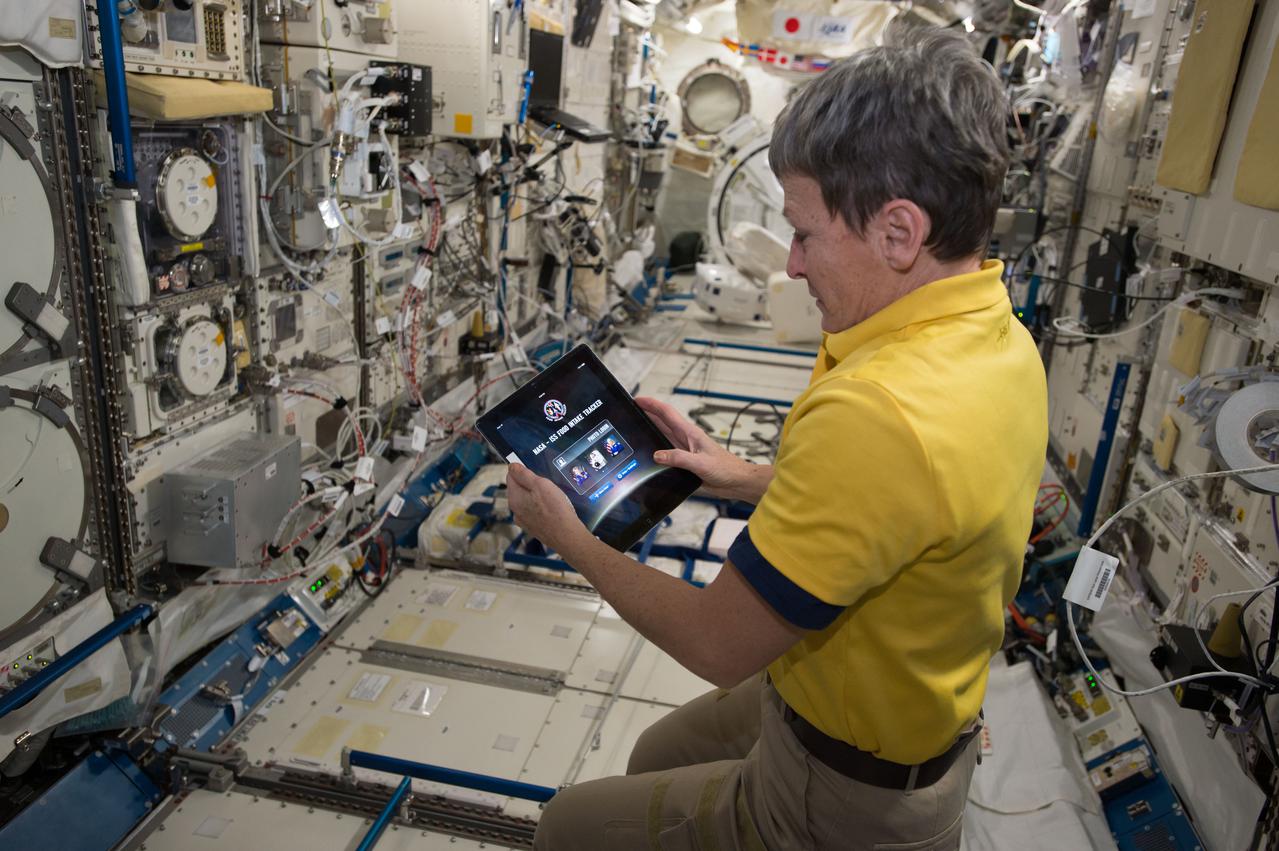
iss050e011454 (11/23/2016) --- A view of NASA astronaut Peggy Whitson using an iPAD containing the Dose Tracker application, in the Japanese Experiment Module (JEM) aboard the International Space Station (ISS). This study documents the medication usage of crew members before and during their missions by capturing previously unrecorded data regarding medication use during spaceflight, including side effect qualities, frequencies and severity. This research-oriented data is collected for research purposes, separate from medical records.
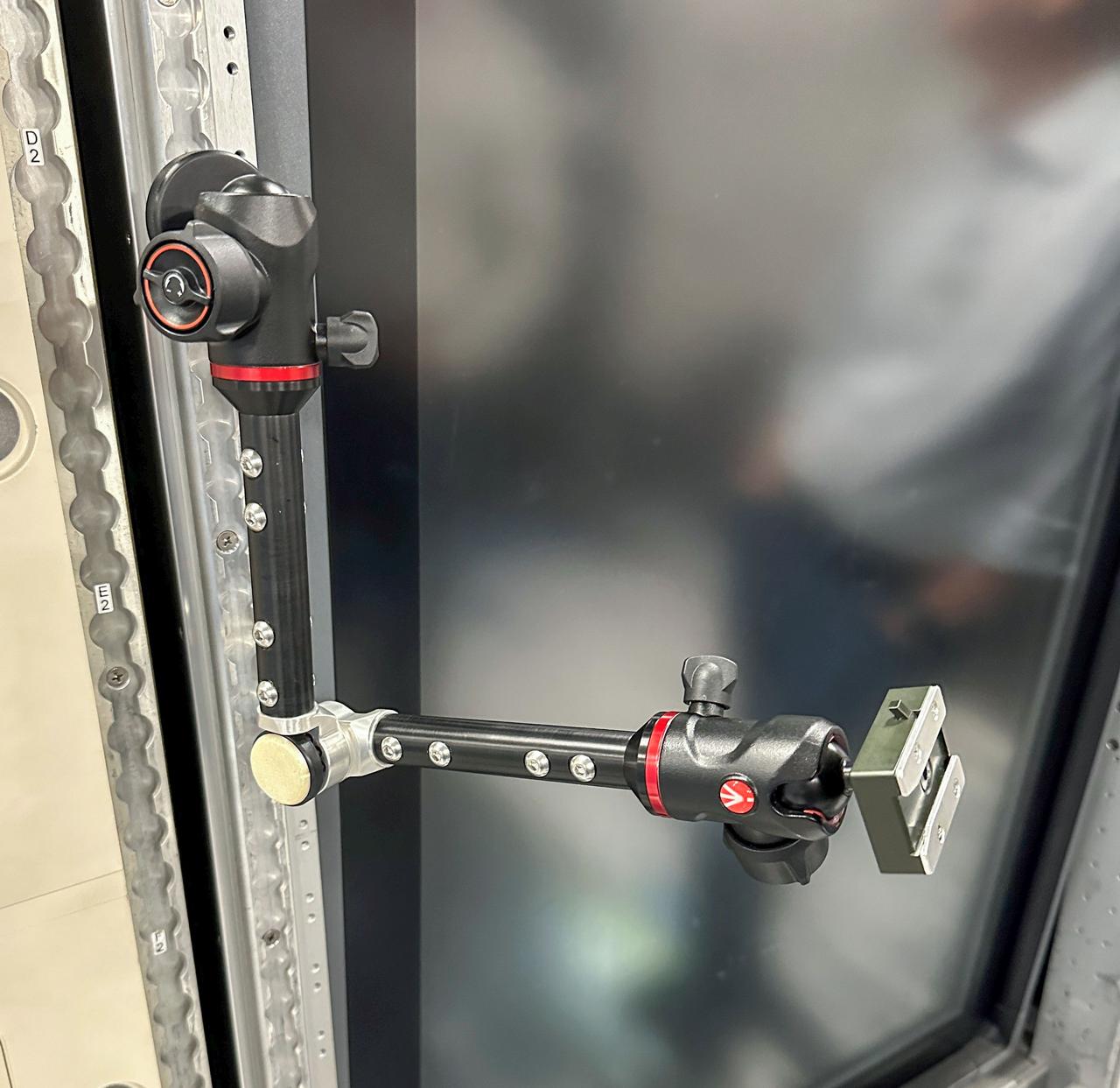
jsc2025e047414 (5/27/2025) --- The High school Students United with NASA to Create Hardware (HUNCH) has designed a device to replace Bogen arms aboard the International Space Station. The HUNCH Utility Bracket (HUB) can be attached to frames and rails and can hold cameras, iPads, and other equipment. The HUB has a jointed design that allows ample range of movement and flexibility. This device aims to aid crew members with tasks such as recording videos and holding iPads to increase efficiency of operations aboard space station. (Image courtesy of HUNCH)
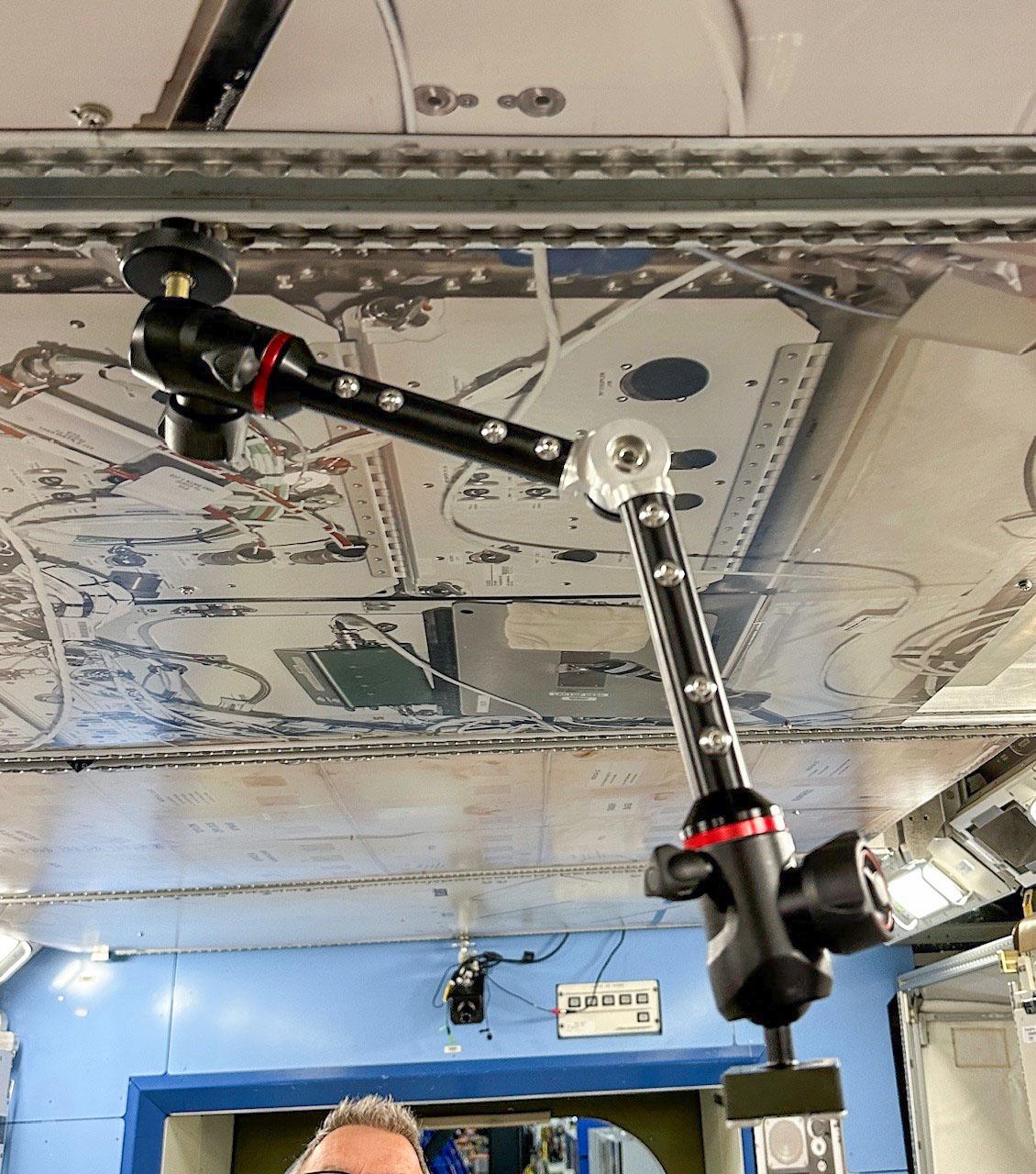
jsc2025e047412 (5/27/2025) --- The High school Students United with NASA to Create Hardware (HUNCH) has designed a device to replace Bogen arms aboard the International Space Station. The HUNCH Utility Bracket (HUB) can be attached to frames and rails and can hold cameras, iPads, and other equipment. The HUB has a jointed design that allows ample range of movement and flexibility. This device aims to aid crew members with tasks such as recording videos and holding iPads to increase efficiency of operations aboard space station. (Image courtesy of HUNCH)
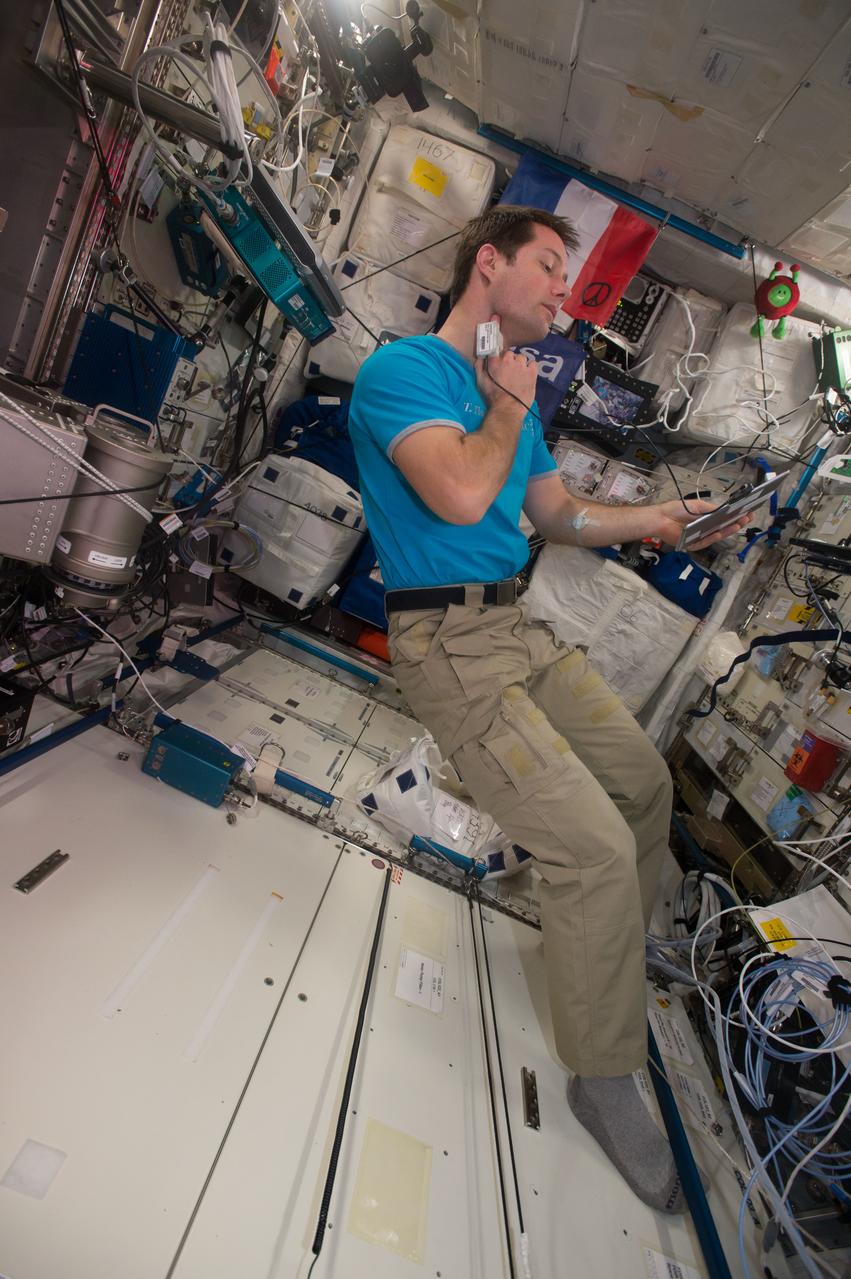
iss050e014804 (12/7/2016) --- European Space Agency (ESA) Thomas Pesquet wearing sensor (Tonometer) connected to iPad during EVERYWEAR experiment, in the Columbus Module. The EveryWear system is an ambulatory data collection system making use of wearable sensors connected to a station iPad itself wirelessly synchronized with ground. This easy-use system should demonstrate extensive physiology data collection for both science and medical follow-up purpose by improving usability for the astronauts.
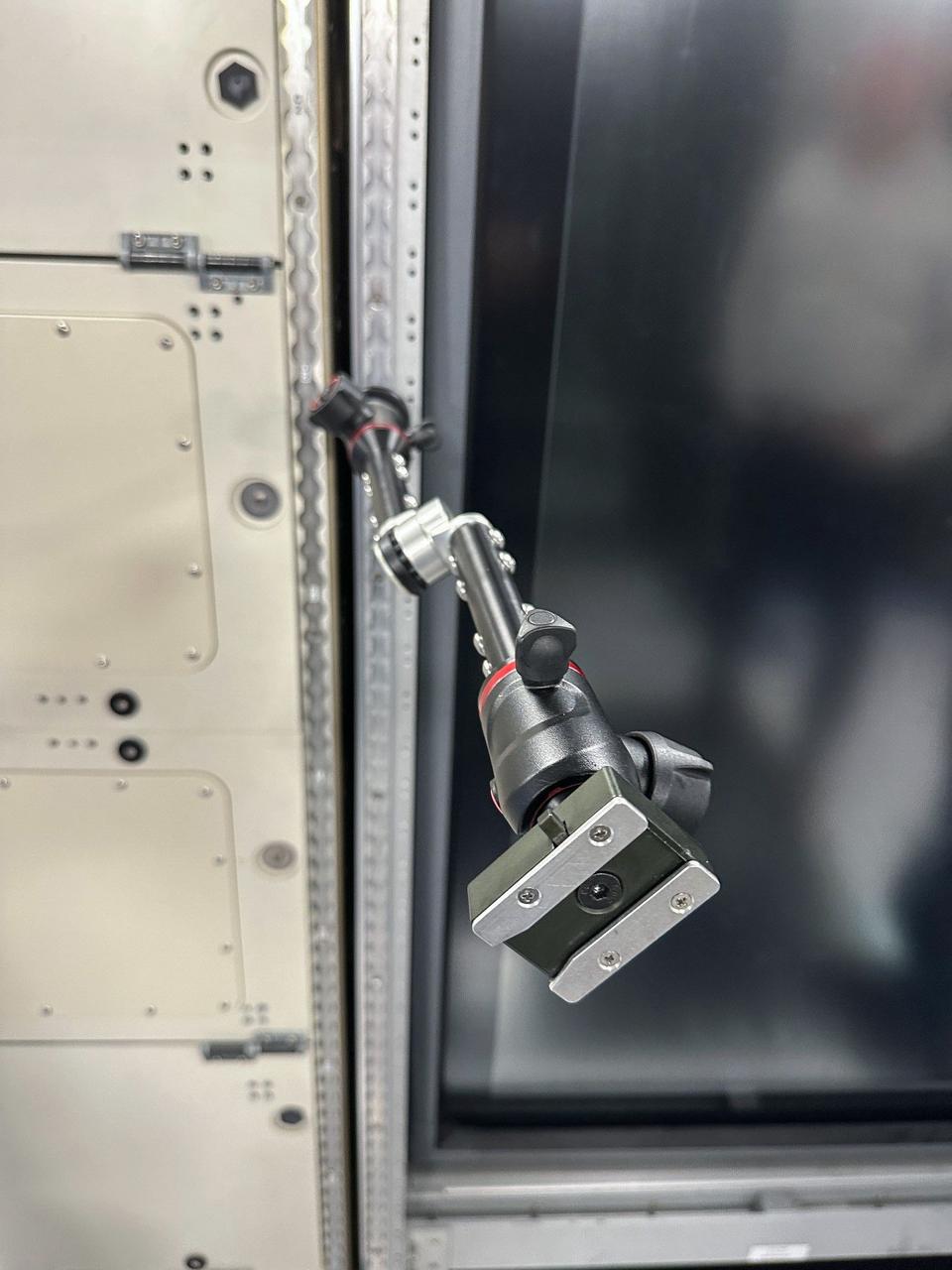
jsc2025e047413 (5/27/2025) --- The High school Students United with NASA to Create Hardware (HUNCH) has designed a device to replace Bogen arms aboard the International Space Station. The HUNCH Utility Bracket (HUB) can be attached to frames and rails and can hold cameras, iPads, and other equipment. The HUB has a jointed design that allows ample range of movement and flexibility. This device aims to aid crew members with tasks such as recording videos and holding iPads to increase efficiency of operations aboard space station. (Image courtesy of HUNCH)

jsc2025e047417 (5/27/2025) --- The High school Students United with NASA to Create Hardware (HUNCH) has designed a device to replace Bogen arms aboard the International Space Station. The HUNCH Utility Bracket (HUB) can be attached to frames and rails and can hold cameras, iPads, and other equipment. The HUB has a jointed design that allows ample range of movement and flexibility. This device aims to aid crew members with tasks such as recording videos and holding iPads to increase efficiency of operations aboard space station. (Image courtesy of HUNCH)
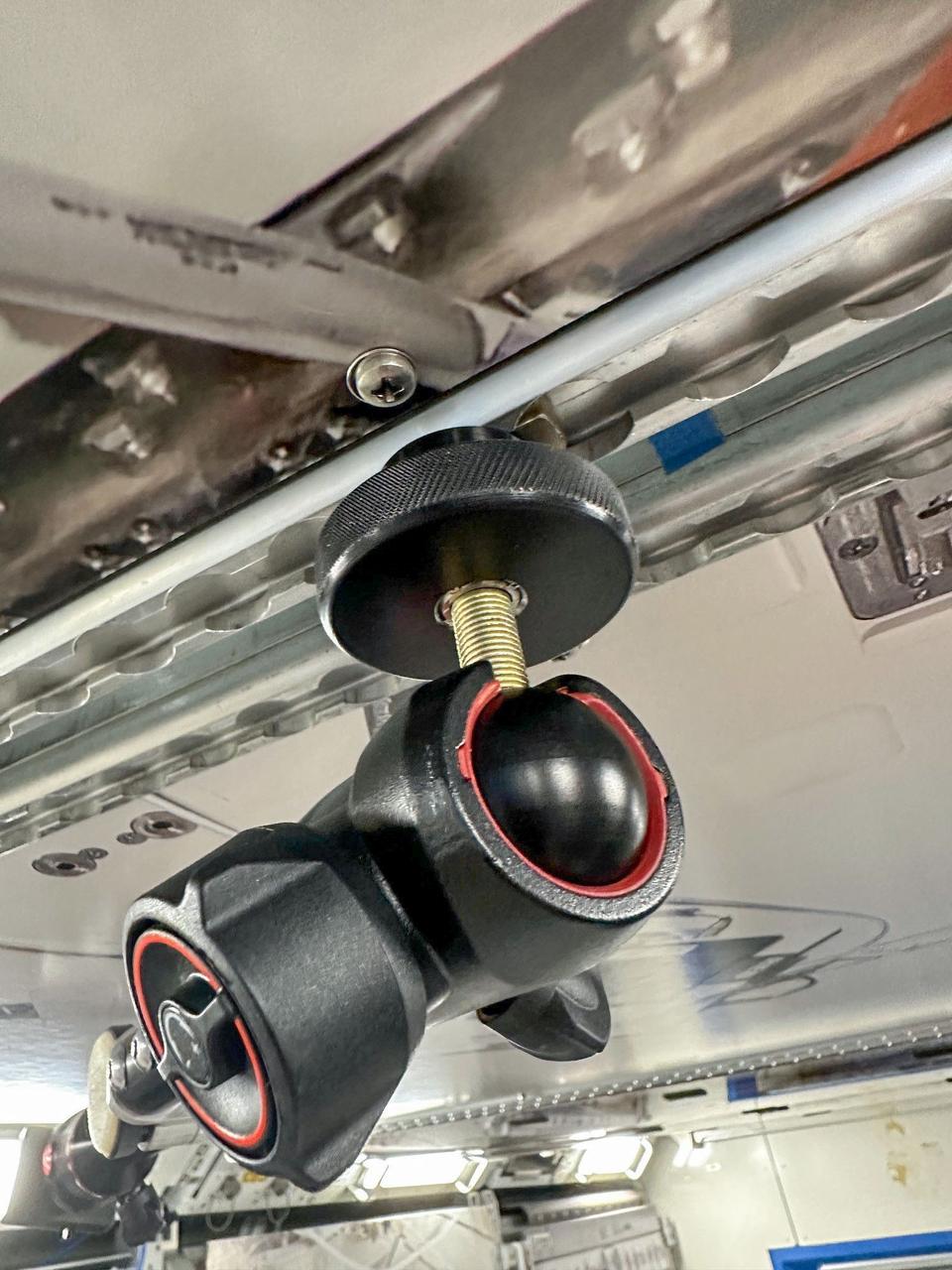
jsc2025e047411 (5/27/2025) --- The High school Students United with NASA to Create Hardware (HUNCH) has designed a device to replace Bogen arms aboard the International Space Station. The HUNCH Utility Bracket (HUB) can be attached to frames and rails and can hold cameras, iPads, and other equipment. The HUB has a jointed design that allows ample range of movement and flexibility. This device aims to aid crew members with tasks such as recording videos and holding iPads to increase efficiency of operations aboard space station. (Image courtesy of HUNCH)
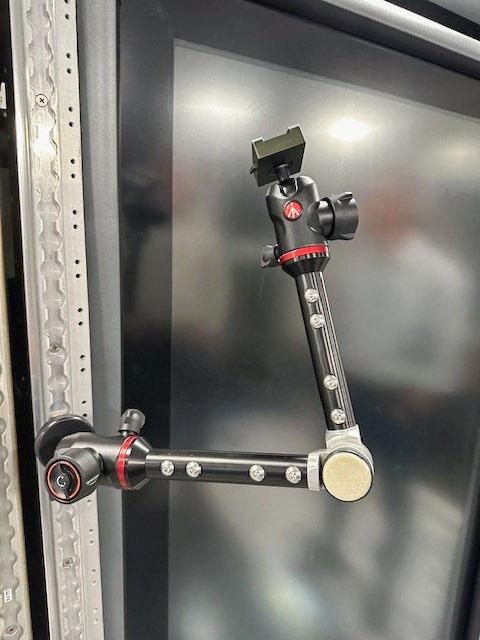
jsc2025e047415 (5/27/2025) --- The High school Students United with NASA to Create Hardware (HUNCH) has designed a device to replace Bogen arms aboard the International Space Station. The HUNCH Utility Bracket (HUB) can be attached to frames and rails and can hold cameras, iPads, and other equipment. The HUB has a jointed design that allows ample range of movement and flexibility. This device aims to aid crew members with tasks such as recording videos and holding iPads to increase efficiency of operations aboard space station. (Image courtesy of HUNCH)
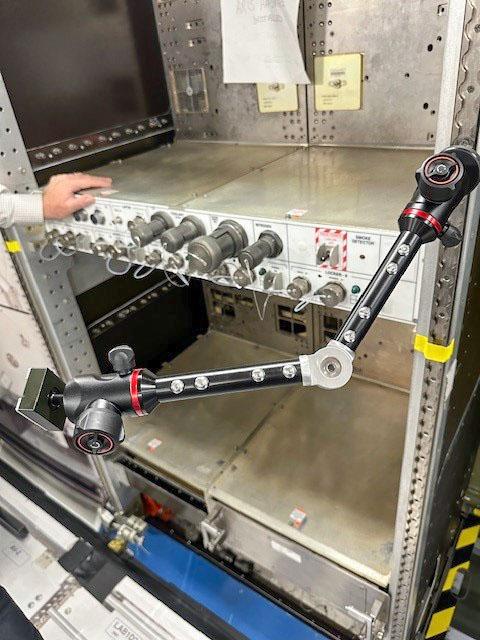
jsc2025e047418 (5/27/2025) --- The High school Students United with NASA to Create Hardware (HUNCH) has designed a device to replace Bogen arms aboard the International Space Station. The HUNCH Utility Bracket (HUB) can be attached to frames and rails and can hold cameras, iPads, and other equipment. The HUB has a jointed design that allows ample range of movement and flexibility. This device aims to aid crew members with tasks such as recording videos and holding iPads to increase efficiency of operations aboard space station. (Image courtesy of HUNCH)
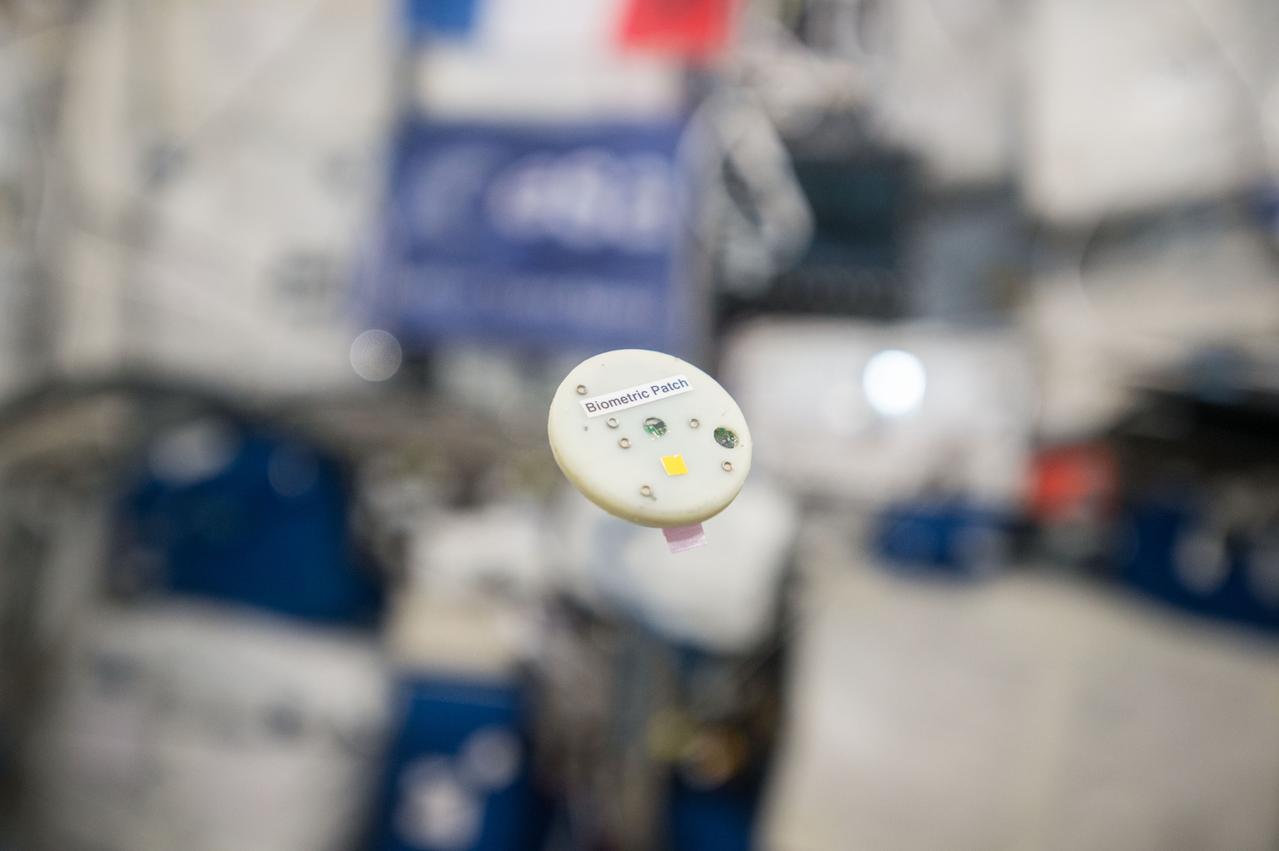
iss050e015097 (8/8/2016) --- View of floating Biometric patch (wearable sensor) connected to an International Space Station (ISS) iPad via bluetooth or via Lightbolt connector. The EVERYWEAR application allows a unified interface for physiology-related data collection and wireless communication.
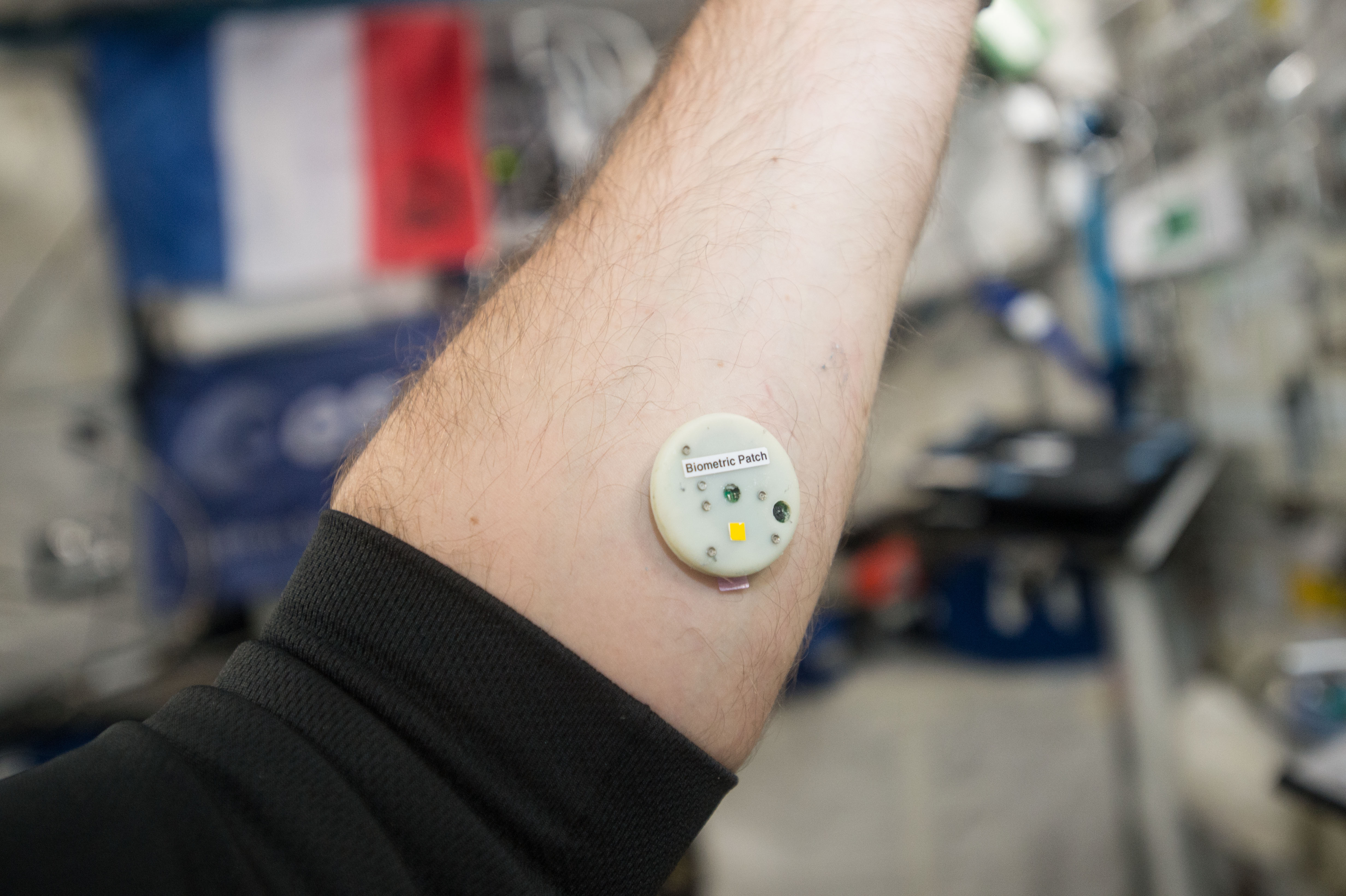
iss050e015078 (8/8/2016) --- View of Biometric patch (wearable sensor) connected to an International Space Station (ISS) iPad via bluetooth or via Lightbolt connector. The EVERYWEAR application allows a unified interface for physiology-related data collection and wireless communication.
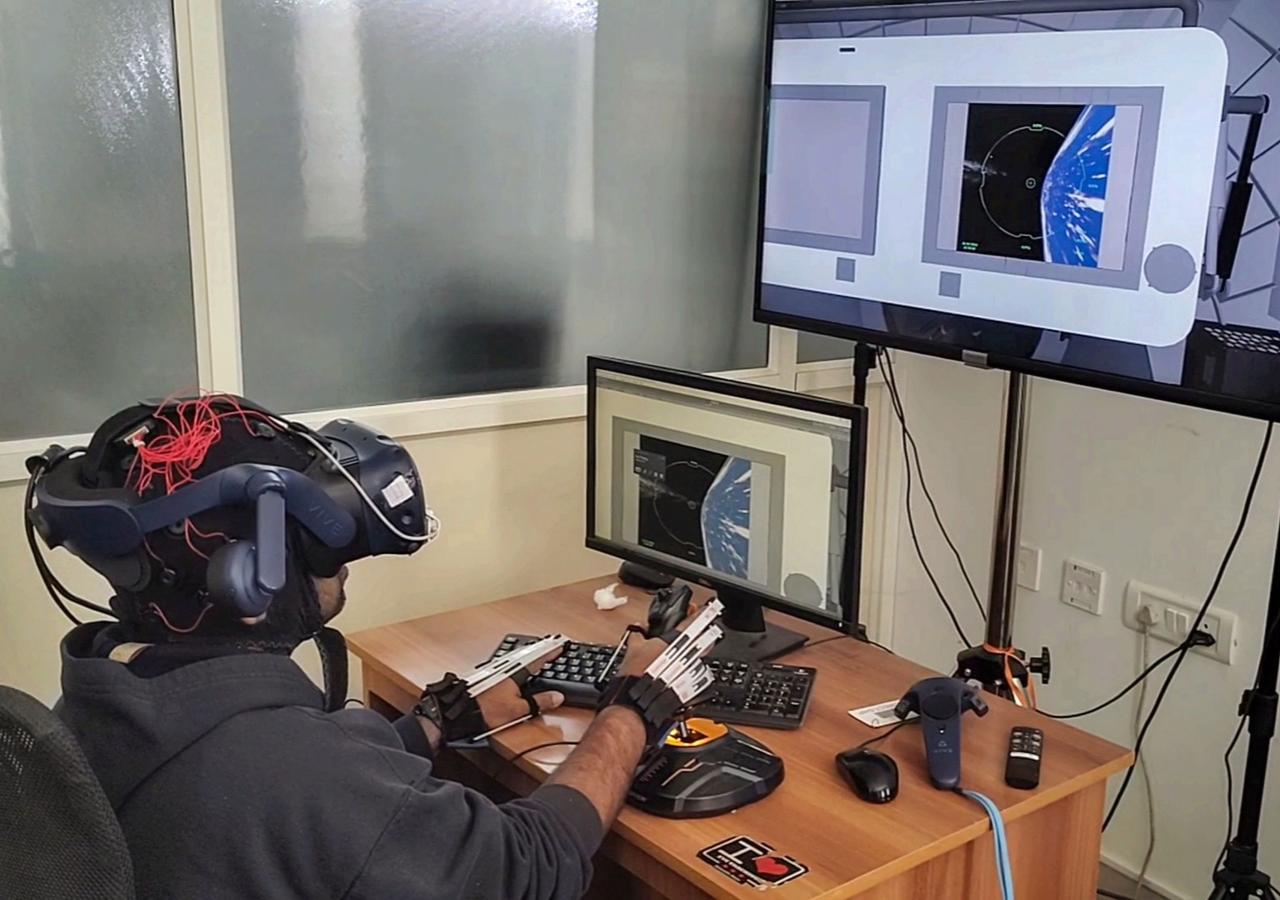
jsc2025e047406 (5/27/2025) --- A demonstration is shown of Analyzing HMI in Microgravity (Voyager Displays-ISRO). This investigation studies how humans interact with electronic displays in microgravity aboard the International Space Station using crew iPads. Results could improve the design of human-machine interfaces in spacecraft and other settings. Image courtesy of Dr. Pradipta Biswas.
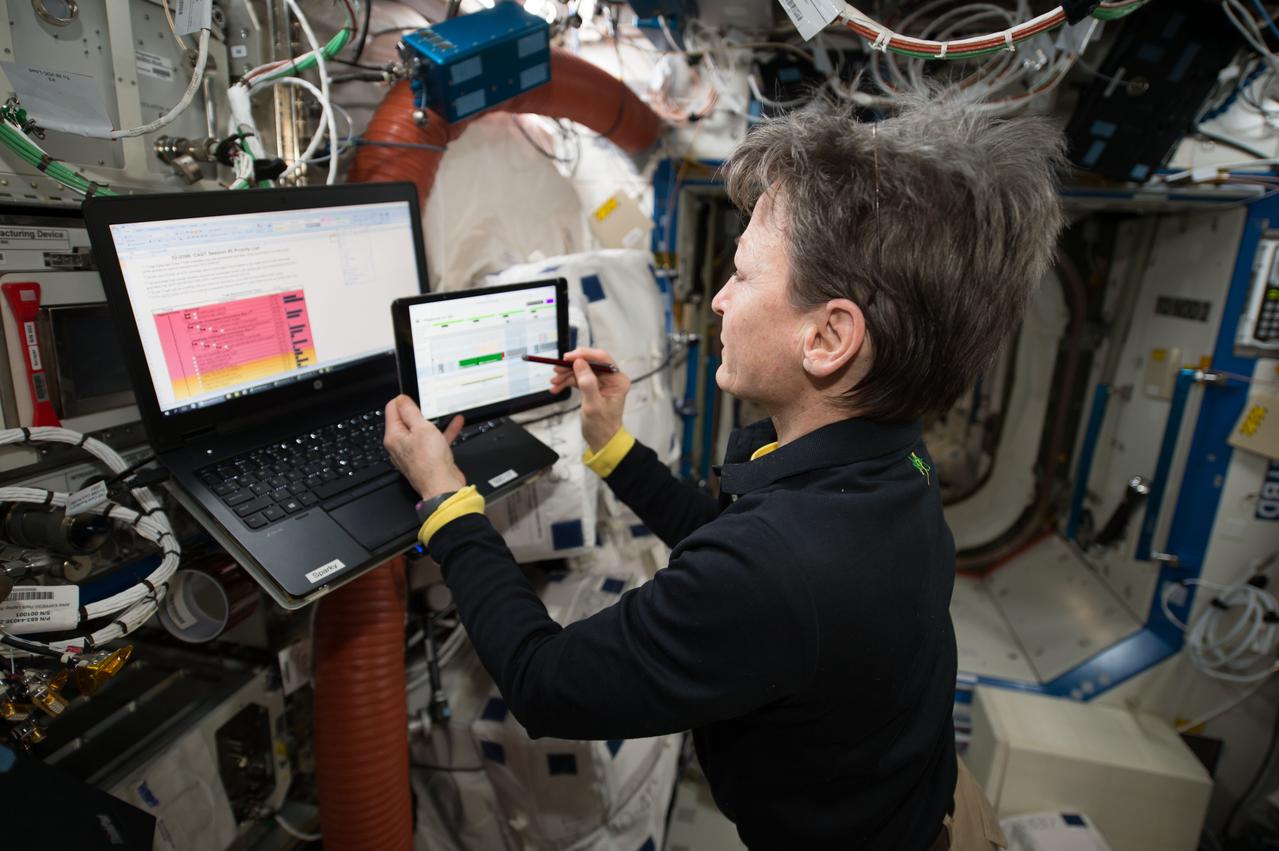
iss052e016214 (7/18/2017) --- NASA astronaut Peggy Whitson completing the final of five Crew Autonomous Scheduleing test (CAS) sessions using an iPad to schedule future work day. The CAST investigation analyzes whether crews can develop plans in a reasonable period of time with appropriate input, whether proximity of planners to the planned operations increases efficiency, and if crew members are more satisfied when given a role in plan development.
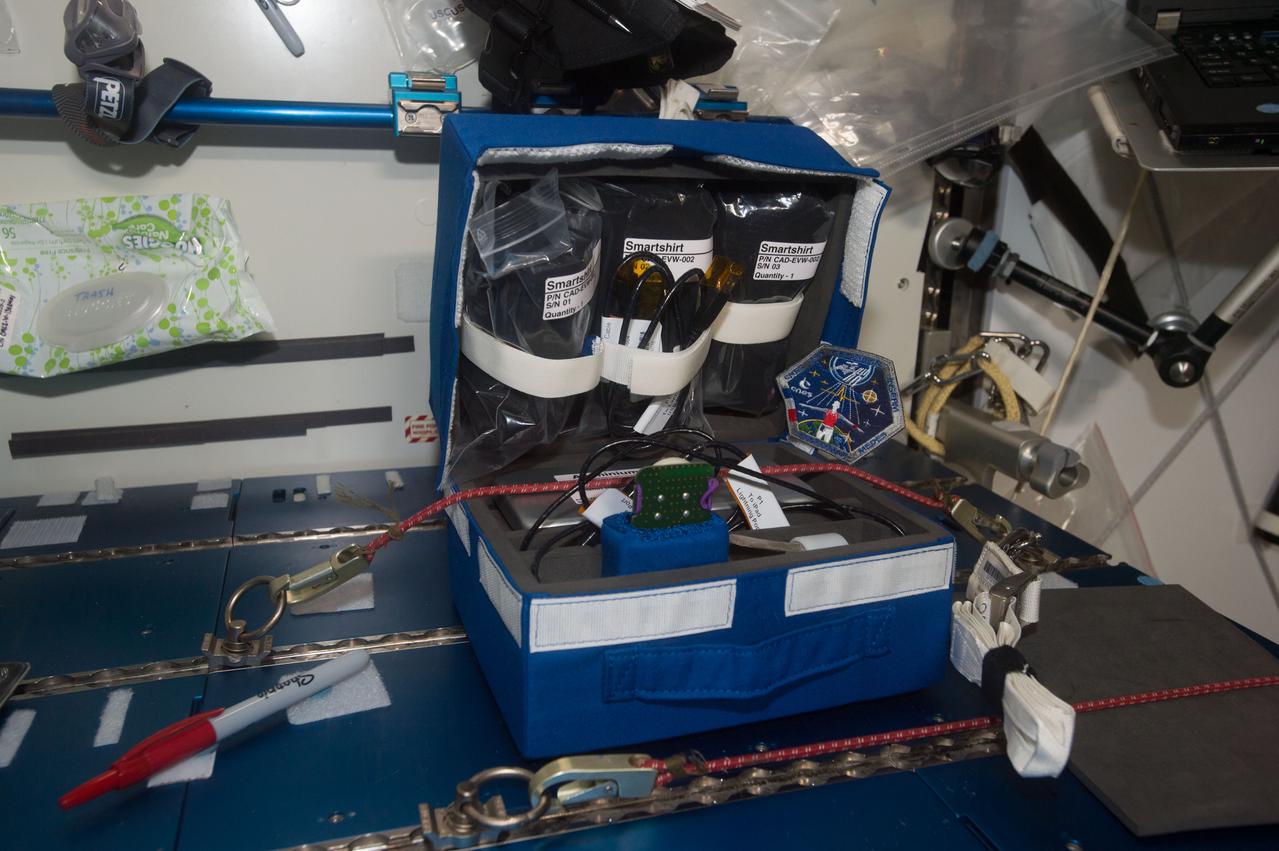
iss050e014794 (12/6/2016) --- View of Smartshirts within Cargo Transfer Bag (CTB). The EveryWear system is an ambulatory data collection system making use of wearable sensors connected to a station iPad itself wirelessly synchronized with ground. This easy-use system should demonstrate extensive physiology data collection for both science and medical follow-up purpose by improving usability for the astronauts.
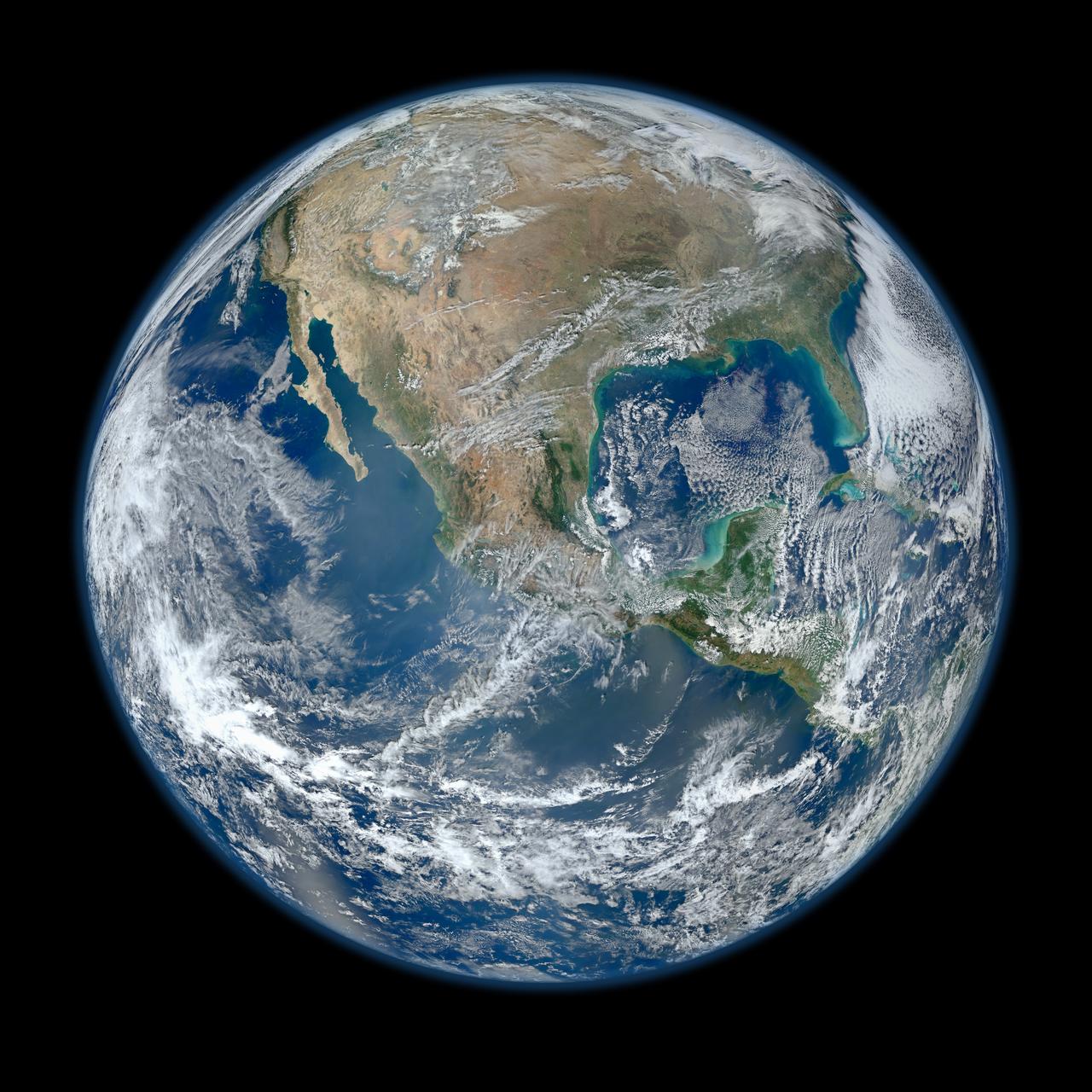
January 25, 2012 <b>*Updated February 2, 2012: According to Flickr, "The western hemisphere Blue Marble 2012 image has rocketed up to over 3.1 million views making it one of the all time most viewed images on the site after only one week."</b> A 'Blue Marble' image of the Earth taken from the VIIRS instrument aboard NASA's most recently launched Earth-observing satellite - Suomi NPP. This composite image uses a number of swaths of the Earth's surface taken on January 4, 2012. The NPP satellite was renamed 'Suomi NPP' on January 24, 2012 to honor the late Verner E. Suomi of the University of Wisconsin. Suomi NPP is NASA's next Earth-observing research satellite. It is the first of a new generation of satellites that will observe many facets of our changing Earth. Suomi NPP is carrying five instruments on board. The biggest and most important instrument is The Visible/Infrared Imager Radiometer Suite or VIIRS. To read more about NASA's Suomi NPP go to: <a href="http://www.nasa.gov/npp" rel="nofollow">www.nasa.gov/npp</a> Credit: NASA/NOAA/GSFC/Suomi NPP/VIIRS/Norman Kuring <b><a href="http://www.nasa.gov/audience/formedia/features/MP_Photo_Guidelines.html" rel="nofollow">NASA image use policy.</a></b> <b><a href="http://www.nasa.gov/centers/goddard/home/index.html" rel="nofollow">NASA Goddard Space Flight Center</a></b> enables NASA’s mission through four scientific endeavors: Earth Science, Heliophysics, Solar System Exploration, and Astrophysics. Goddard plays a leading role in NASA’s accomplishments by contributing compelling scientific knowledge to advance the Agency’s mission. <b>Follow us on <a href="http://twitter.com/NASAGoddardPix" rel="nofollow">Twitter</a></b> <b>Like us on <a href="http://www.facebook.com/pages/Greenbelt-MD/NASA-Goddard/395013845897?ref=tsd" rel="nofollow">Facebook</a></b> <b>Find us on <a href="http://instagrid.me/nasagoddard/?vm=grid" rel="nofollow">Instagram</a></b>