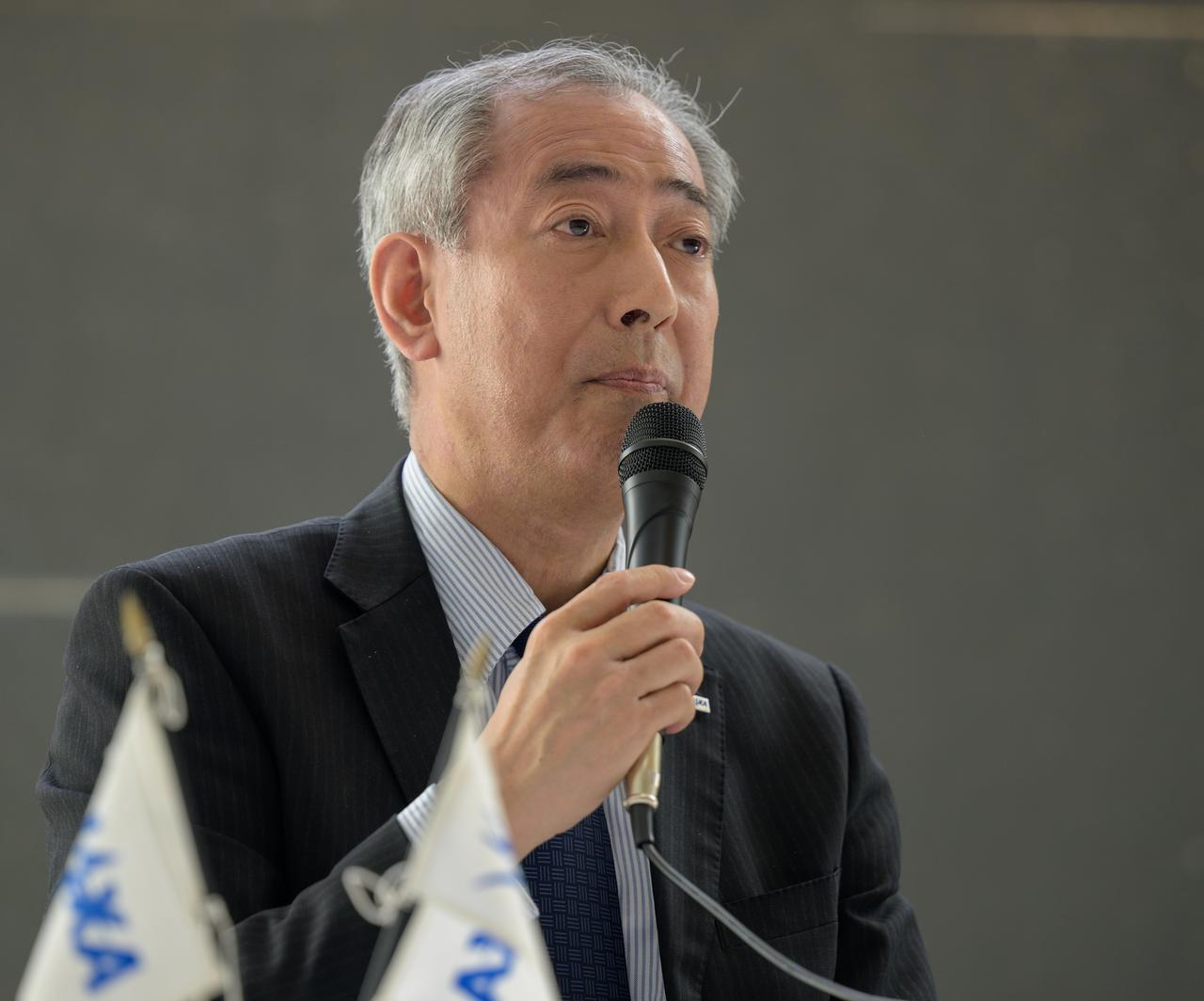
Japan Aerospace Exploration Agency (JAXA) President Hiroshi Yamakawa discusses the historic agreement signed April 9th at NASA Headquarters, between the United States and Japan to advance sustainable human exploration of the Moon, Wednesday, April 10, 2024, at the Japan Aerospace Exploration Agency (JAXA) offices in Washington. Under the agreement, Japan will design, develop, and operate a pressurized rover for crewed and uncrewed exploration on the Moon. NASA will provide the launch and delivery of the rover to the Moon as well as two Japanese astronaut missions to the lunar surface. Photo Credit: Photo Credit: (NASA/Bill Ingalls)
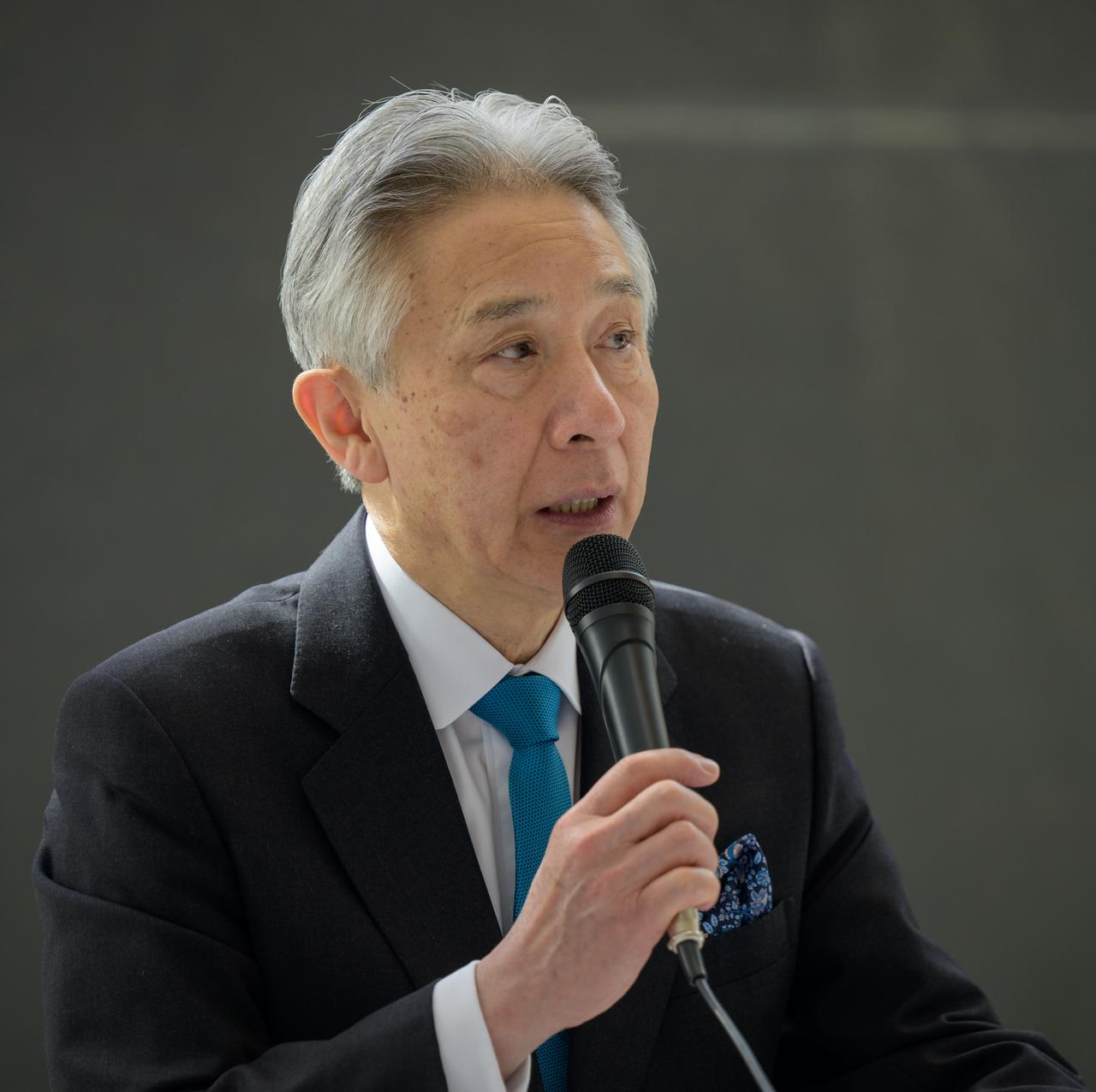
Japan’s Minister of Education, Culture, Sports, Science and Technology Masahito Moriyama discusses the historic agreement signed April 9th at NASA Headquarters, between the United States and Japan to advance sustainable human exploration of the Moon, Wednesday, April 10, 2024, at the Japan Aerospace Exploration Agency (JAXA) offices in Washington. Under the agreement, Japan will design, develop, and operate a pressurized rover for crewed and uncrewed exploration on the Moon. NASA will provide the launch and delivery of the rover to the Moon as well as two Japanese astronaut missions to the lunar surface. Photo Credit: Photo Credit: (NASA/Bill Ingalls)
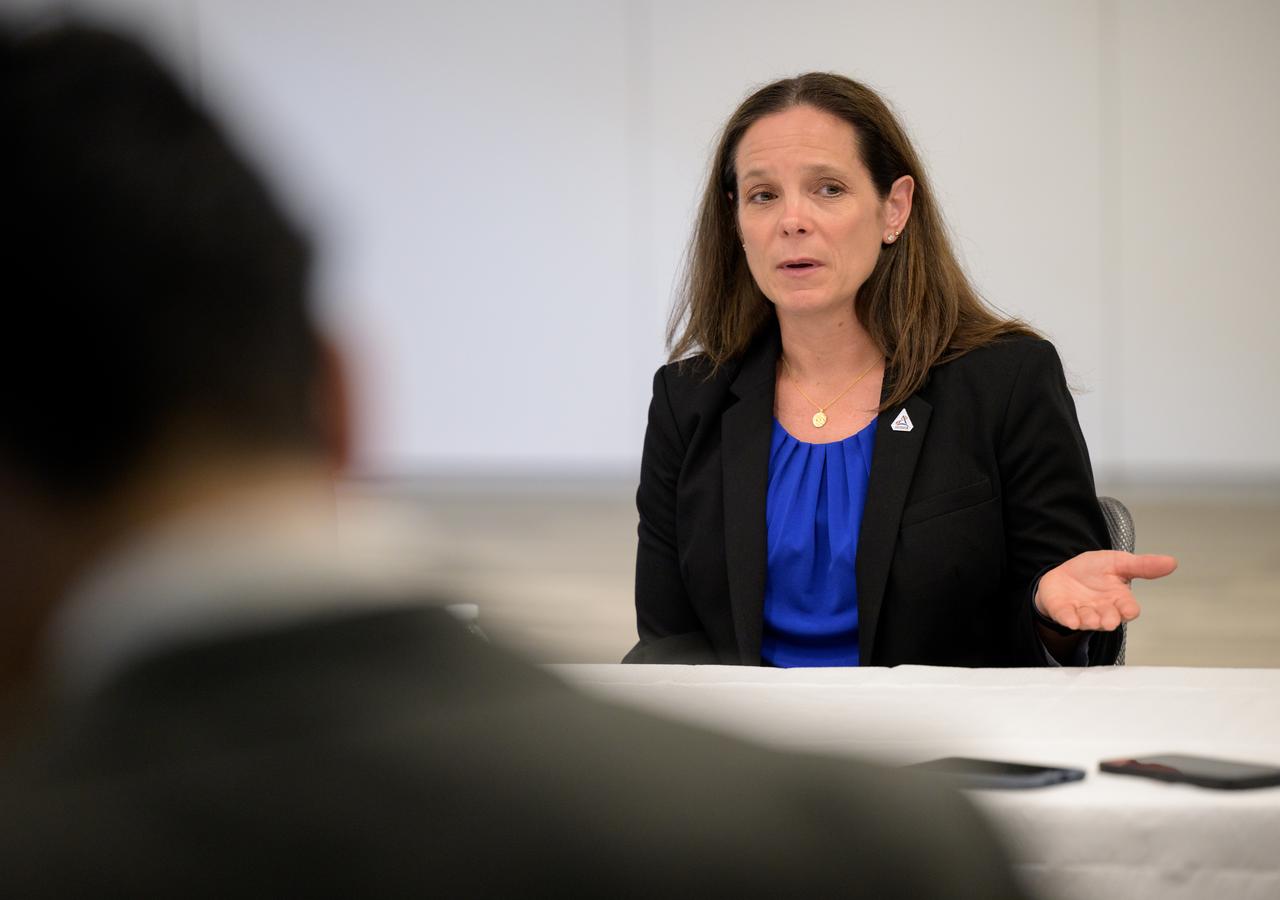
NASA Extravehicular Activity and Human Surface Mobility Program Lara Kearney discusses the historic agreement signed April 9th at NASA Headquarters, between the United States and Japan to advance sustainable human exploration of the Moon, Wednesday, April 10, 2024, at the Japan Aerospace Exploration Agency (JAXA) offices in Washington. Under the agreement, Japan will design, develop, and operate a pressurized rover for crewed and uncrewed exploration on the Moon. NASA will provide the launch and delivery of the rover to the Moon as well as two Japanese astronaut missions to the lunar surface. Photo Credit: Photo Credit: (NASA/Bill Ingalls)

NASA Pressurized Rover Project Manager Danny Newswander discusses the historic agreement signed April 9th at NASA Headquarters, between the United States and Japan to advance sustainable human exploration of the Moon, Wednesday, April 10, 2024, at the Japan Aerospace Exploration Agency (JAXA) offices in Washington. Under the agreement, Japan will design, develop, and operate a pressurized rover for crewed and uncrewed exploration on the Moon. NASA will provide the launch and delivery of the rover to the Moon as well as two Japanese astronaut missions to the lunar surface. Photo Credit: Photo Credit: (NASA/Bill Ingalls)

A model of the Pressurized lunar rover is seen during a briefing discussing the historic agreement signed April 9th at NASA Headquarters, between the United States and Japan to advance sustainable human exploration of the Moon, Wednesday, April 10, 2024, at the Japan Aerospace Exploration Agency (JAXA) offices in Washington. Under the agreement, Japan will design, develop, and operate a pressurized rover for crewed and uncrewed exploration on the Moon. NASA will provide the launch and delivery of the rover to the Moon as well as two Japanese astronaut missions to the lunar surface. Photo Credit: Photo Credit: (NASA/Bill Ingalls)

A model of the Pressurized lunar rover is seen during a briefing discussing the historic agreement signed April 9th at NASA Headquarters, between the United States and Japan to advance sustainable human exploration of the Moon, Wednesday, April 10, 2024, at the Japan Aerospace Exploration Agency (JAXA) offices in Washington. Under the agreement, Japan will design, develop, and operate a pressurized rover for crewed and uncrewed exploration on the Moon. NASA will provide the launch and delivery of the rover to the Moon as well as two Japanese astronaut missions to the lunar surface. Photo Credit: Photo Credit: (NASA/Bill Ingalls)
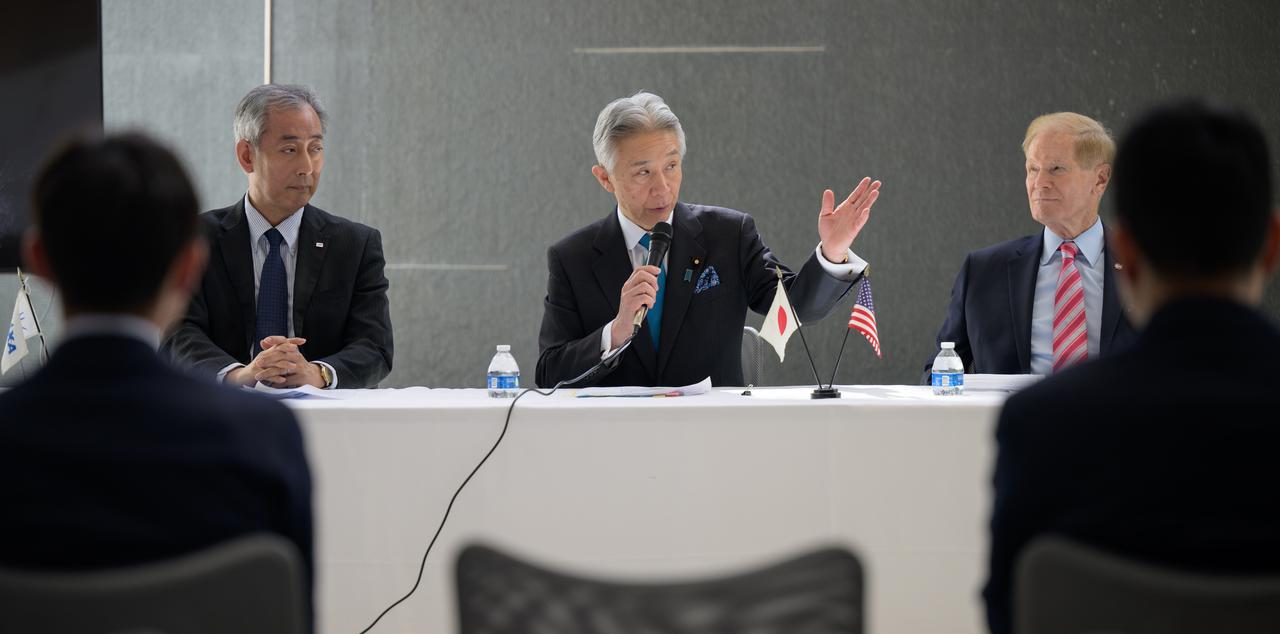
Japan’s Minister of Education, Culture, Sports, Science and Technology Masahito Moriyama, center, discusses the historic agreement signed April 9th at NASA Headquarters, between the United States and Japan to advance sustainable human exploration of the Moon, Wednesday, April 10, 2024, at the Japan Aerospace Exploration Agency (JAXA) offices in Washington. Under the agreement, Japan will design, develop, and operate a pressurized rover for crewed and uncrewed exploration on the Moon. NASA will provide the launch and delivery of the rover to the Moon as well as two Japanese astronaut missions to the lunar surface. Photo Credit: Photo Credit: (NASA/Bill Ingalls)

Japan Aerospace Exploration Agency (JAXA) President Hiroshi Yamakawa, left, Japan’s Minister of Education, Culture, Sports, Science and Technology Masahito Moriyama, and NASA Administrator Bill Nelson, right, are seen during a briefing where they discussed the historic agreement signed April 9th at NASA Headquarters, between the United States and Japan to advance sustainable human exploration of the Moon, Wednesday, April 10, 2024, at the Japan Aerospace Exploration Agency (JAXA) offices in Washington. Under the agreement, Japan will design, develop, and operate a pressurized rover for crewed and uncrewed exploration on the Moon. NASA will provide the launch and delivery of the rover to the Moon as well as two Japanese astronaut missions to the lunar surface. Photo Credit: Photo Credit: (NASA/Bill Ingalls)
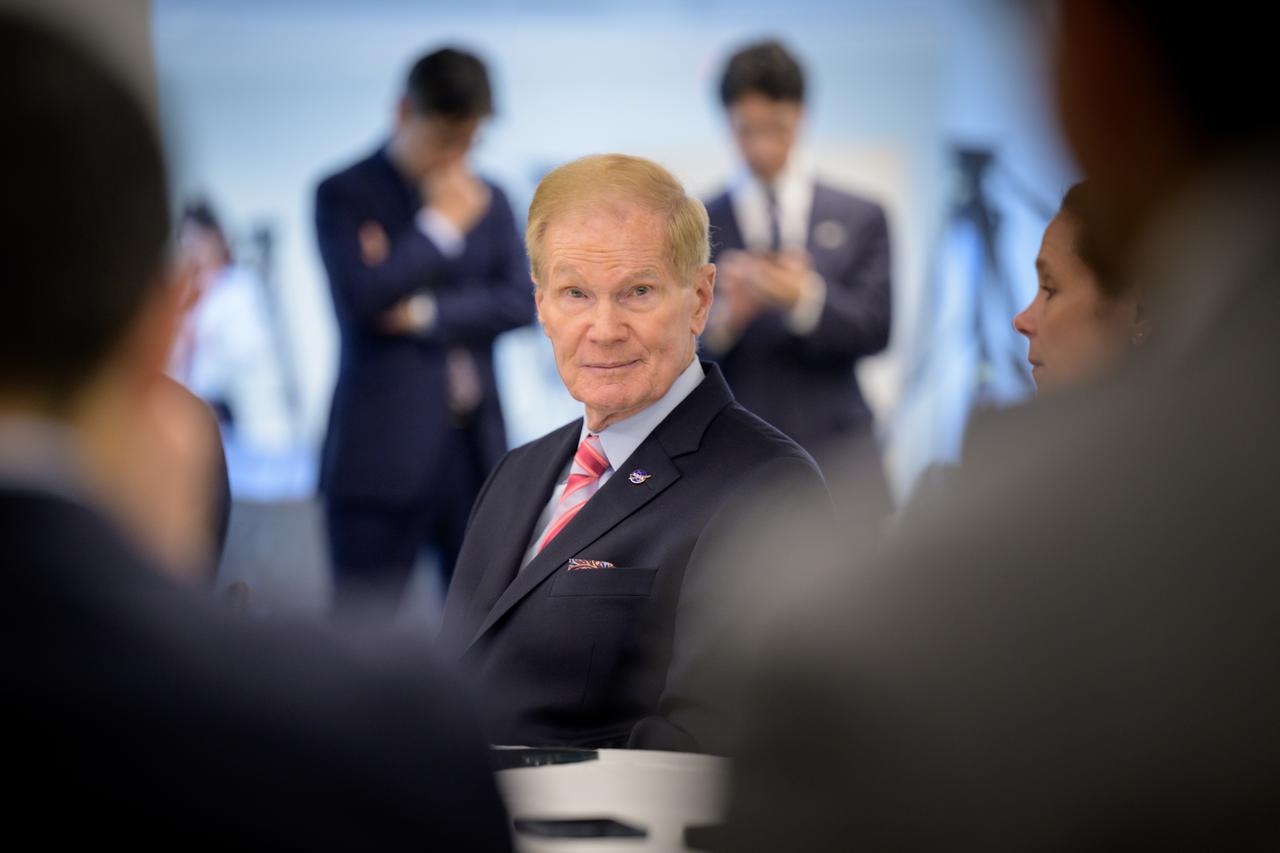
NASA Administrator Bill Nelson discusses the historic agreement signed April 9th at NASA Headquarters, between the United States and Japan to advance sustainable human exploration of the Moon, Wednesday, April 10, 2024, at the Japan Aerospace Exploration Agency (JAXA) offices in Washington. Under the agreement, Japan will design, develop, and operate a pressurized rover for crewed and uncrewed exploration on the Moon. NASA will provide the launch and delivery of the rover to the Moon as well as two Japanese astronaut missions to the lunar surface. Photo Credit: Photo Credit: (NASA/Bill Ingalls)

NASA Administrator Bill Nelson discusses the historic agreement signed April 9th at NASA Headquarters, between the United States and Japan to advance sustainable human exploration of the Moon, Wednesday, April 10, 2024, at the Japan Aerospace Exploration Agency (JAXA) offices in Washington. Under the agreement, Japan will design, develop, and operate a pressurized rover for crewed and uncrewed exploration on the Moon. NASA will provide the launch and delivery of the rover to the Moon as well as two Japanese astronaut missions to the lunar surface. Photo Credit: Photo Credit: (NASA/Bill Ingalls)

NASA Administrator Bill Nelson discusses the historic agreement signed April 9th at NASA Headquarters, between the United States and Japan to advance sustainable human exploration of the Moon, Wednesday, April 10, 2024, at the Japan Aerospace Exploration Agency (JAXA) offices in Washington. Under the agreement, Japan will design, develop, and operate a pressurized rover for crewed and uncrewed exploration on the Moon. NASA will provide the launch and delivery of the rover to the Moon as well as two Japanese astronaut missions to the lunar surface. Photo Credit: Photo Credit: (NASA/Bill Ingalls)

NASA Administrator Bill Nelson discusses the historic agreement signed April 9th at NASA Headquarters, between the United States and Japan to advance sustainable human exploration of the Moon, Wednesday, April 10, 2024, at the Japan Aerospace Exploration Agency (JAXA) offices in Washington. Under the agreement, Japan will design, develop, and operate a pressurized rover for crewed and uncrewed exploration on the Moon. NASA will provide the launch and delivery of the rover to the Moon as well as two Japanese astronaut missions to the lunar surface. Photo Credit: Photo Credit: (NASA/Bill Ingalls)

NASA Pressurized Rover Project Manager Danny Newswander, left, NASA Administrator Bill Nelson, and NASA Extravehicular Activity and Human Surface Mobility Program Lara Kearney, right, discuss the historic agreement signed April 9th at NASA Headquarters, between the United States and Japan to advance sustainable human exploration of the Moon, Wednesday, April 10, 2024, at the Japan Aerospace Exploration Agency (JAXA) offices in Washington. Under the agreement, Japan will design, develop, and operate a pressurized rover for crewed and uncrewed exploration on the Moon. NASA will provide the launch and delivery of the rover to the Moon as well as two Japanese astronaut missions to the lunar surface. Photo Credit: Photo Credit: (NASA/Bill Ingalls)
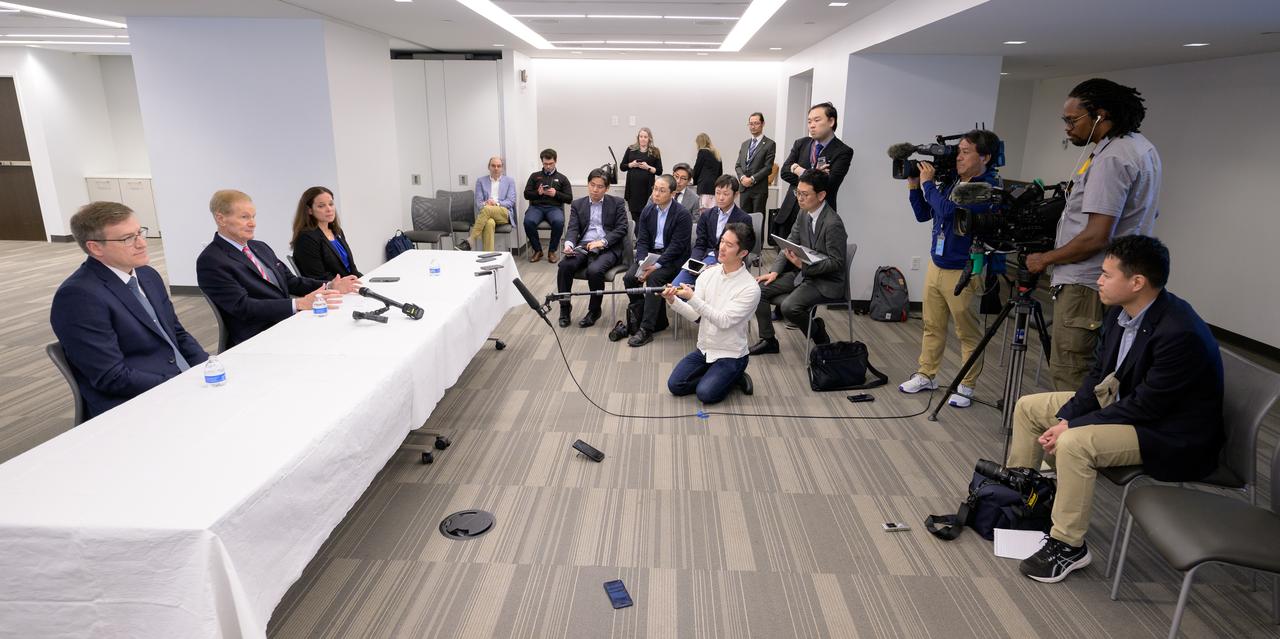
NASA Pressurized Rover Project Manager Danny Newswander, left, NASA Administrator Bill Nelson, and NASA Extravehicular Activity and Human Surface Mobility Program Lara Kearney, right, discuss the historic agreement signed April 9th at NASA Headquarters, between the United States and Japan to advance sustainable human exploration of the Moon, Wednesday, April 10, 2024, at the Japan Aerospace Exploration Agency (JAXA) offices in Washington. Under the agreement, Japan will design, develop, and operate a pressurized rover for crewed and uncrewed exploration on the Moon. NASA will provide the launch and delivery of the rover to the Moon as well as two Japanese astronaut missions to the lunar surface. Photo Credit: Photo Credit: (NASA/Bill Ingalls)
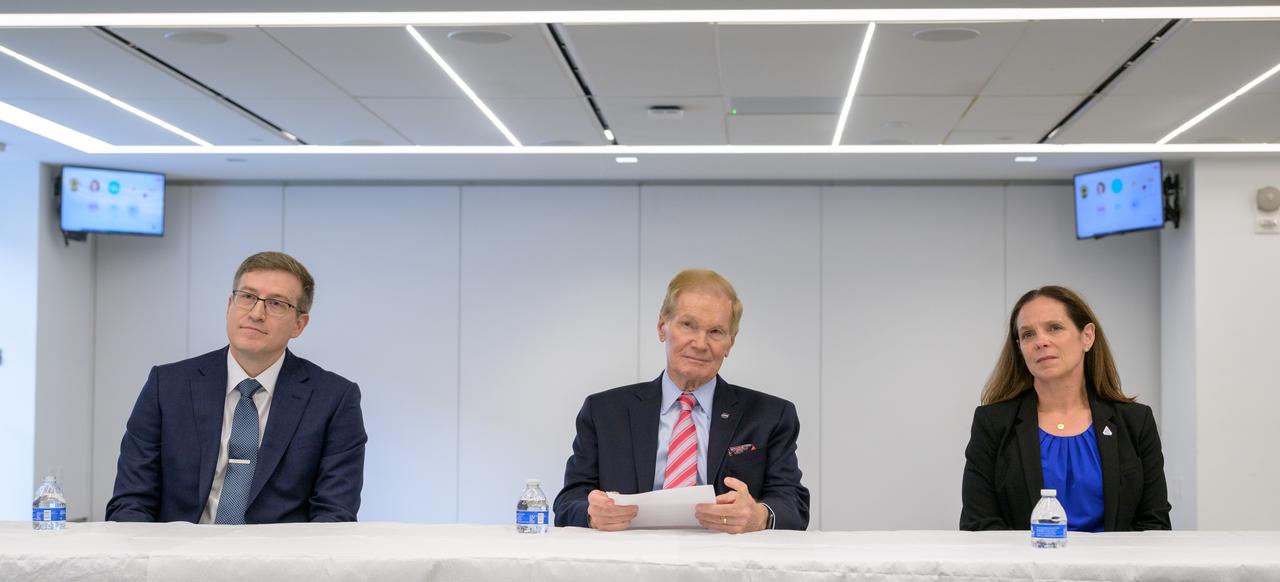
NASA Pressurized Rover Project Manager Danny Newswander, left, NASA Administrator Bill Nelson, and NASA Extravehicular Activity and Human Surface Mobility Program Lara Kearney, right, discuss the historic agreement signed April 9th at NASA Headquarters, between the United States and Japan to advance sustainable human exploration of the Moon, Wednesday, April 10, 2024, at the Japan Aerospace Exploration Agency (JAXA) offices in Washington. Under the agreement, Japan will design, develop, and operate a pressurized rover for crewed and uncrewed exploration on the Moon. NASA will provide the launch and delivery of the rover to the Moon as well as two Japanese astronaut missions to the lunar surface. Photo Credit: Photo Credit: (NASA/Bill Ingalls)
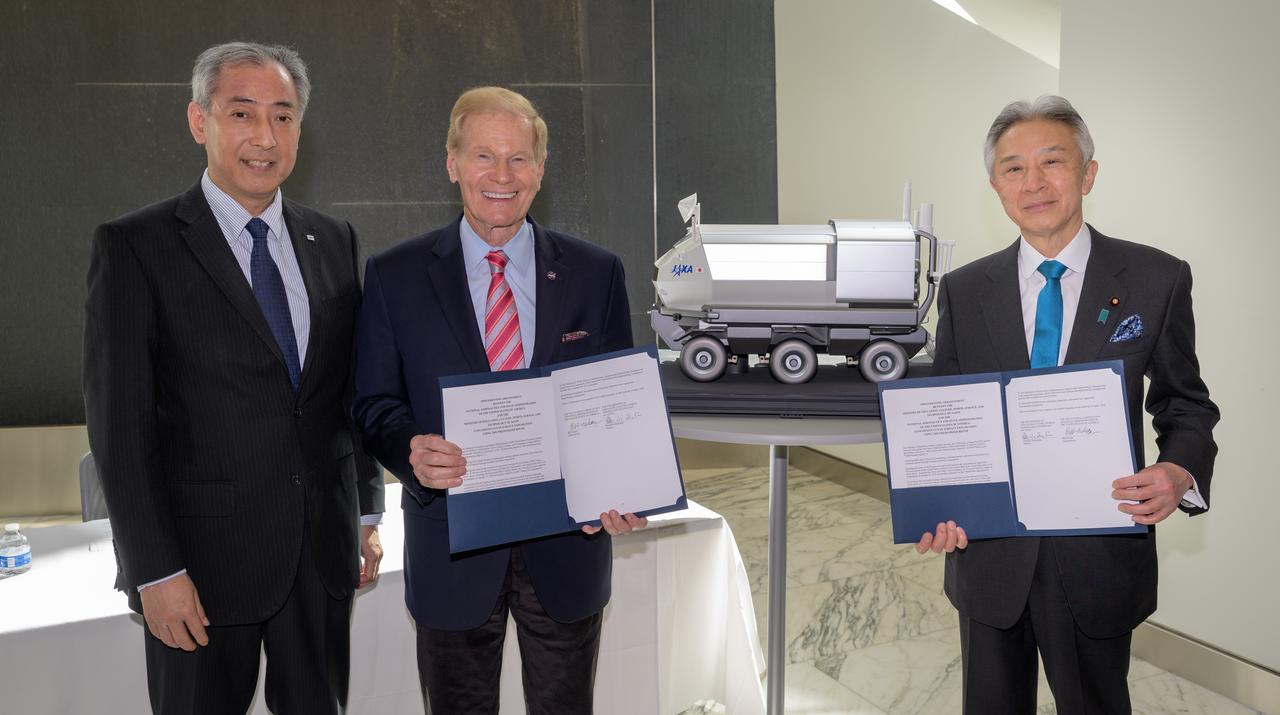
Japan Aerospace Exploration Agency (JAXA) President Hiroshi Yamakawa, left, NASA Administrator Bill Nelson, and Japan’s Minister of Education, Culture, Sports, Science and Technology Masahito Moriyama, right, pose for a group photograph holding the historic agreement signed April 9th at NASA Headquarters, between the United States and Japan to advance sustainable human exploration of the Moon, Wednesday, April 10, 2024, at the Japan Aerospace Exploration Agency (JAXA) offices in Washington. Under the agreement, Japan will design, develop, and operate a pressurized rover for crewed and uncrewed exploration on the Moon. NASA will provide the launch and delivery of the rover to the Moon as well as two Japanese astronaut missions to the lunar surface. Photo Credit: Photo Credit: (NASA/Bill Ingalls)
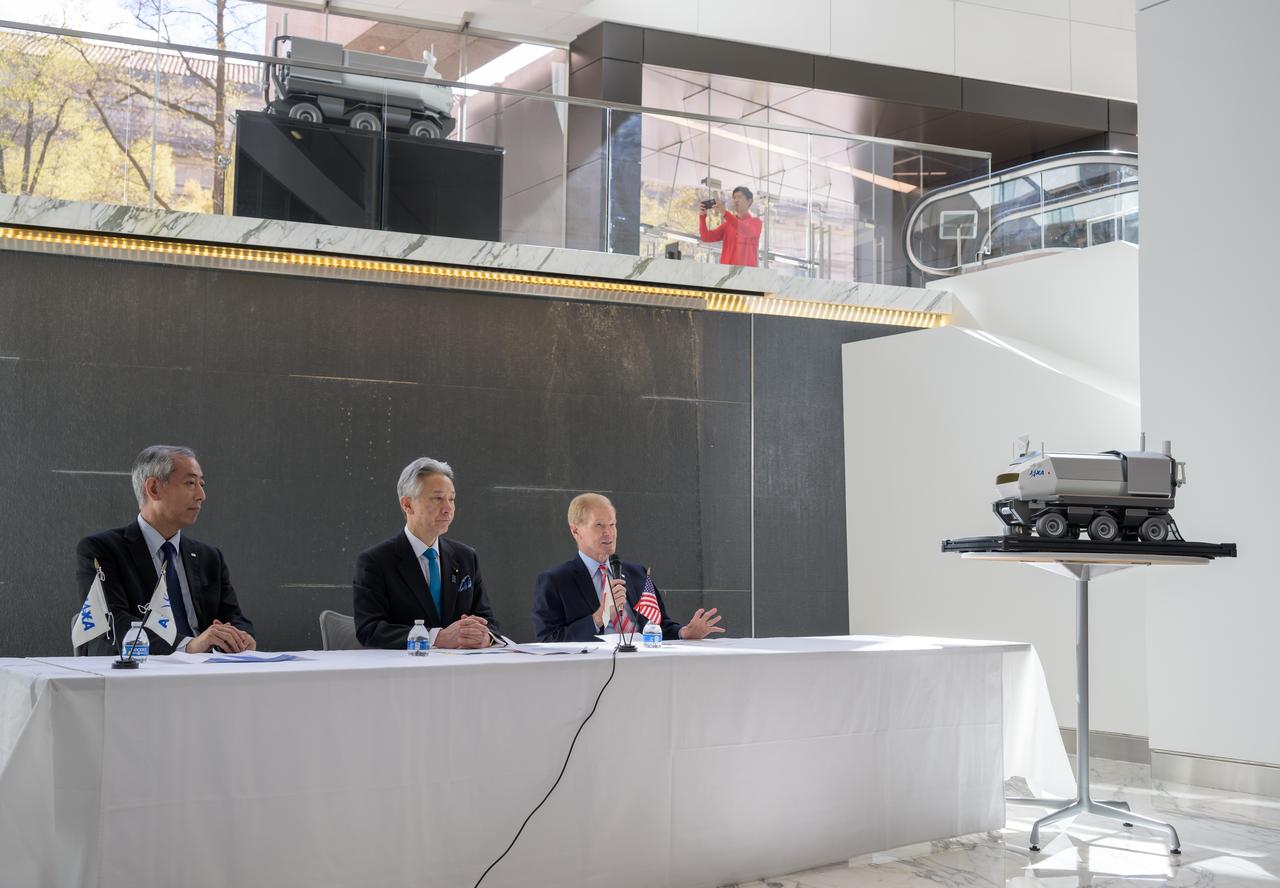
Japan Aerospace Exploration Agency (JAXA) President Hiroshi Yamakawa, left, Japan’s Minister of Education, Culture, Sports, Science and Technology Masahito Moriyama, and NASA Administrator Bill Nelson, right, are seen during a briefing where they discussed the historic agreement signed April 9th at NASA Headquarters, between the United States and Japan to advance sustainable human exploration of the Moon, Wednesday, April 10, 2024, at the Japan Aerospace Exploration Agency (JAXA) offices in Washington. Under the agreement, Japan will design, develop, and operate a pressurized rover for crewed and uncrewed exploration on the Moon. NASA will provide the launch and delivery of the rover to the Moon as well as two Japanese astronaut missions to the lunar surface. Photo Credit: Photo Credit: (NASA/Bill Ingalls)
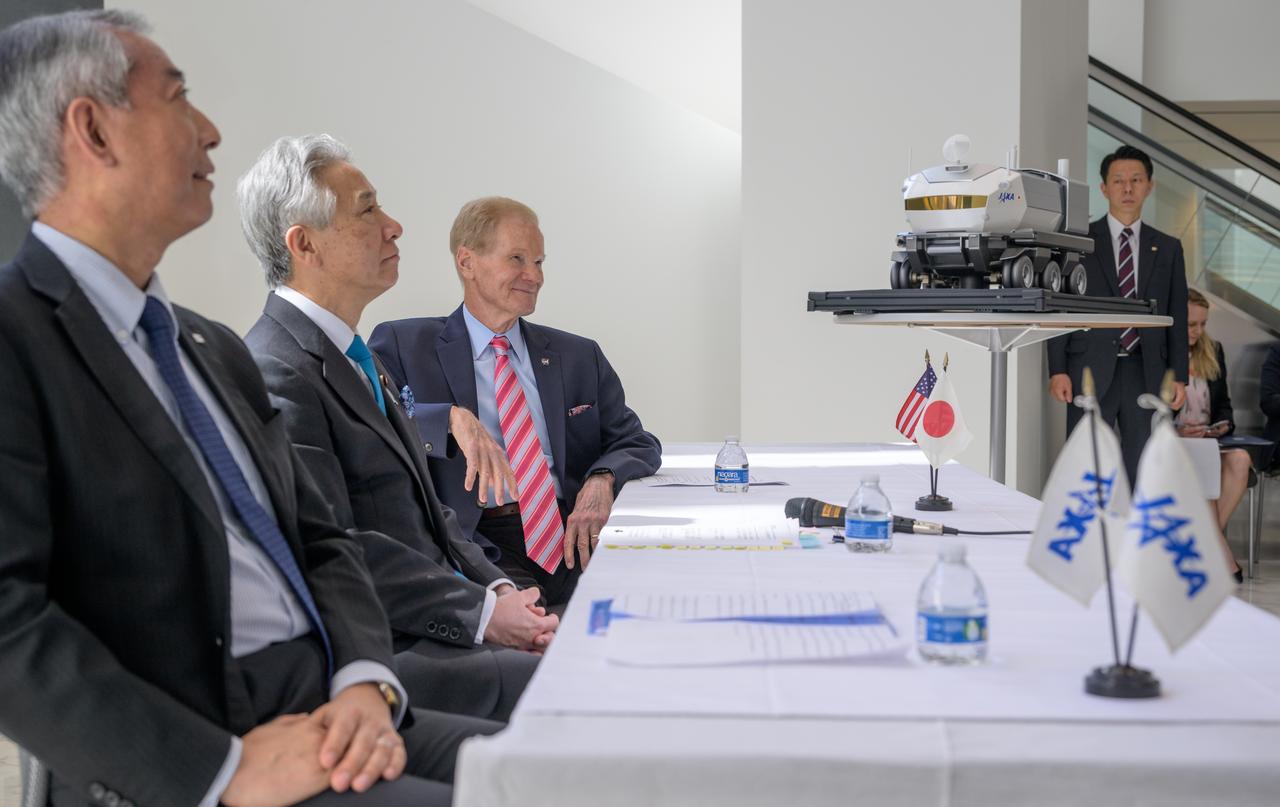
Japan Aerospace Exploration Agency (JAXA) President Hiroshi Yamakawa, left, Japan’s Minister of Education, Culture, Sports, Science and Technology Masahito Moriyama, and NASA Administrator Bill Nelson, right, are seen during a briefing where they discussed the historic agreement signed April 9th at NASA Headquarters, between the United States and Japan to advance sustainable human exploration of the Moon, Wednesday, April 10, 2024, at the Japan Aerospace Exploration Agency (JAXA) offices in Washington. Under the agreement, Japan will design, develop, and operate a pressurized rover for crewed and uncrewed exploration on the Moon. NASA will provide the launch and delivery of the rover to the Moon as well as two Japanese astronaut missions to the lunar surface. Photo Credit: Photo Credit: (NASA/Bill Ingalls)
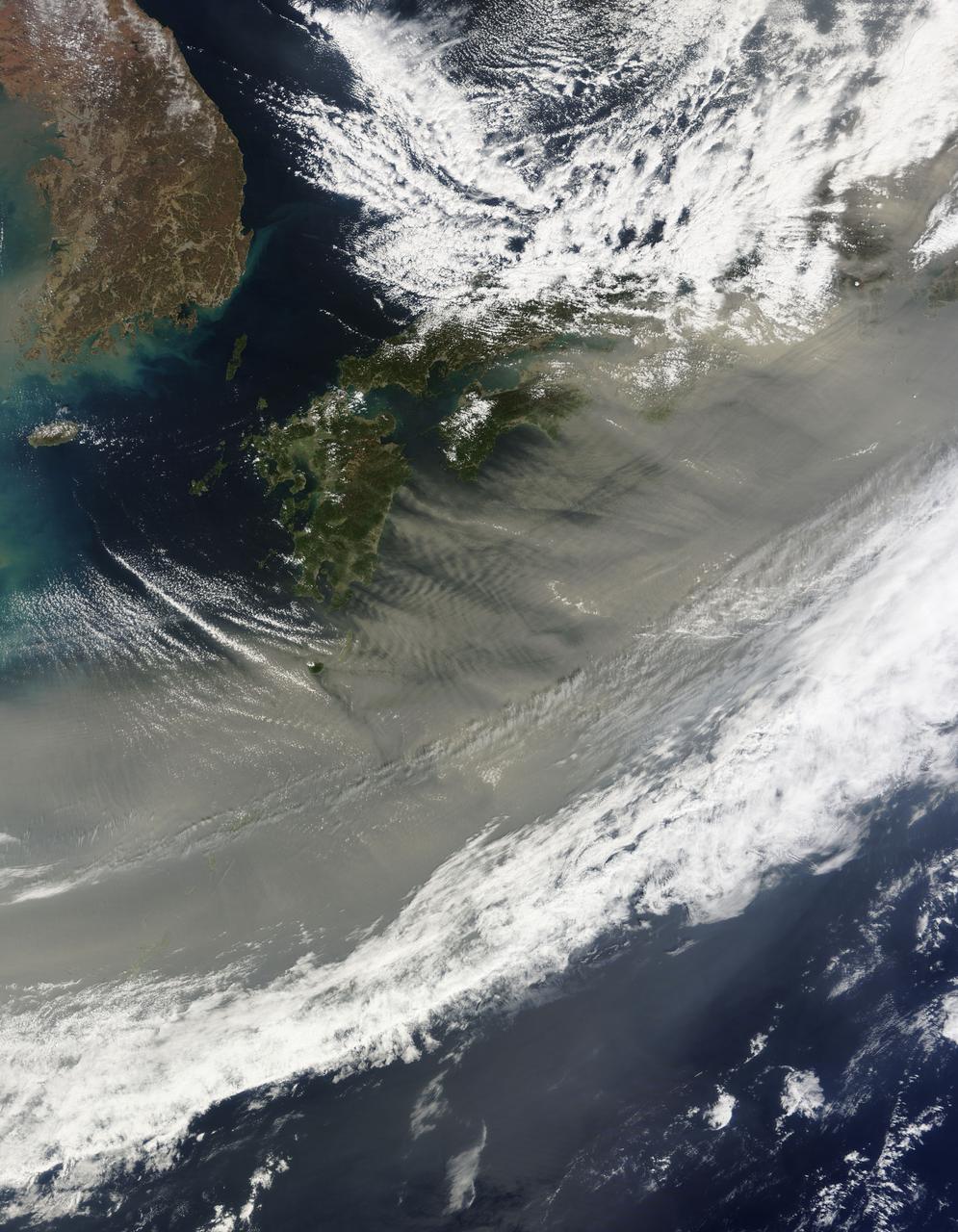
March 24, 2010 - Dust over Japan This image of gray/brown dust being blown over Japan was captured on March 21, 2010 by the MODIS on the Terra satellite. On the left is the Korean peninsula. Japan stretches diagonally across the image, up to the top right corner. The dust is likely from the sandstorm that swept across the China the previous day. The sand and dust originated from the south and east of Inner Mongolia. In this image from March 20, the dust is nearly obscuring the Bohai Sea, which is just west of the Korean peninsula. Here is a handy map. For more information related to this image go to: <a href="http://modis.gsfc.nasa.gov/gallery/individual.php?db_date=2010-03-24" rel="nofollow">modis.gsfc.nasa.gov/gallery/individual.php?db_date=2010-0...</a> For more information about Goddard Space Flight Center go here: <a href="http://www.nasa.gov/centers/goddard/home/index.html" rel="nofollow">www.nasa.gov/centers/goddard/home/index.html</a>
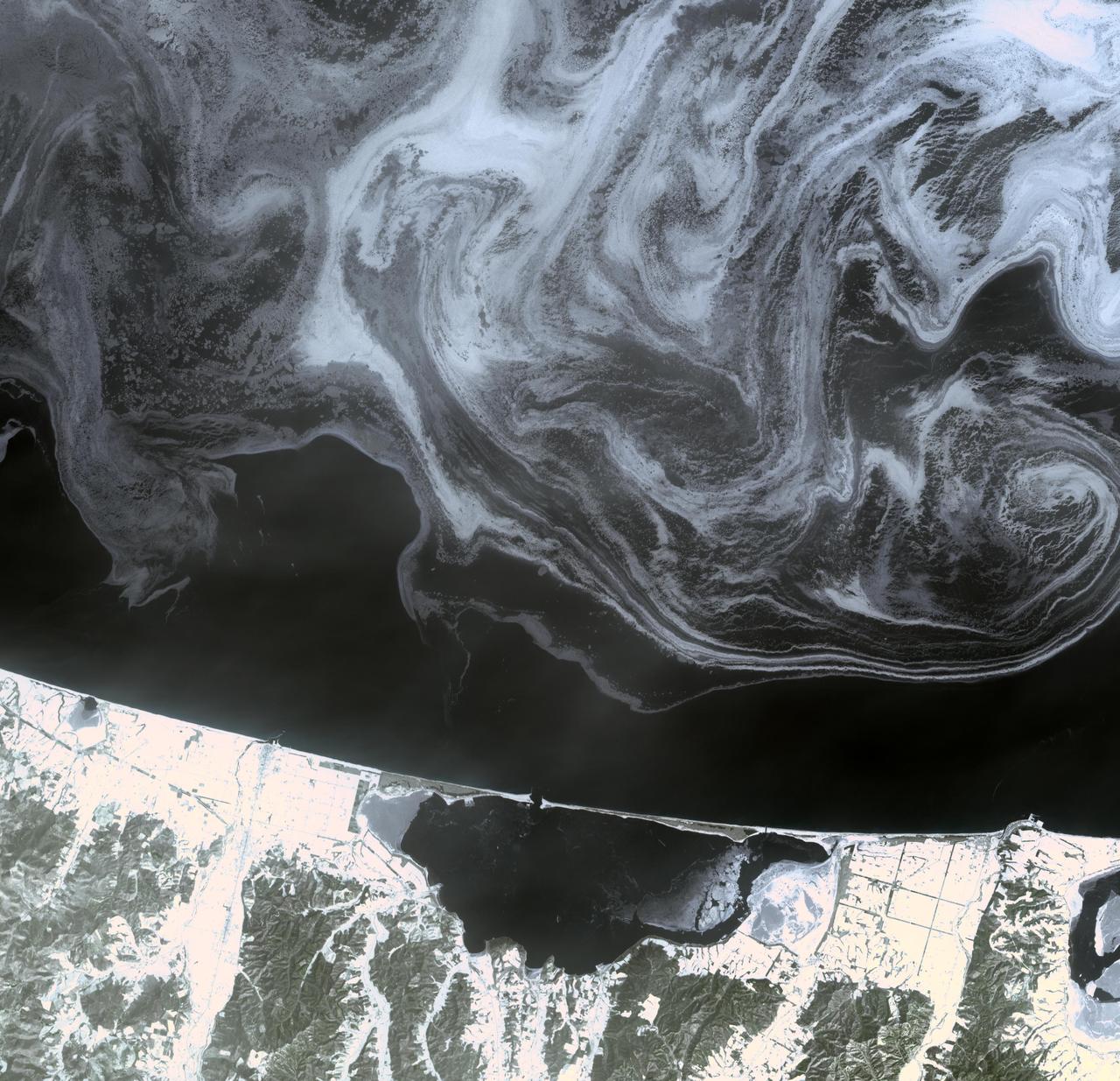
The north coast of the Island of Hokkaido, Japan lies at the southern end of the Sea of Okhotsk. NASA Terra spacecraft acquired this image on February 11, 2009.

The Mar. 11, 2011, Tohoku, Japan earthquake and tsunami devastated a large extent of the northeastern Japan coast, and virtually erased many villages and cities from the map. NASA Terra spacecraft acquired this image of Sendai on Mar. 14, 2011.
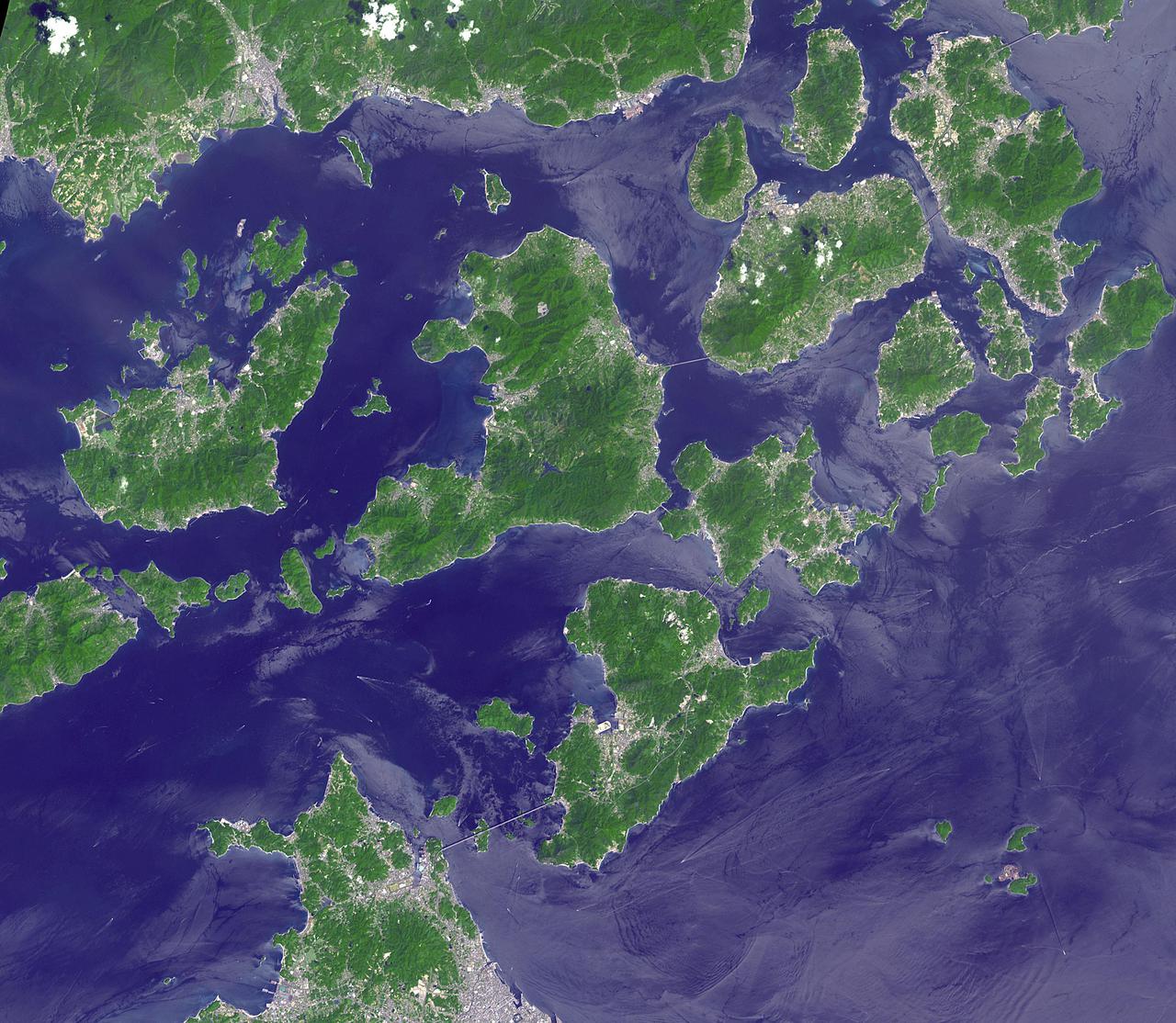
Japan's Geiyo Archipelago, in the Seito Inland Sea, was once home to pirates. From the 9th to the 16th centuries, the pirates dominated the Inland Sea and terrorized the coasts of East Asia. Until the Shimanami Kaido (Inland Wave Sea Road) was completed in 1999, the Geiyo Islands were a remote region, accessible only by boat. The ASTER image was acquired August 19, 2010, covers an area of 33.7 by 43.7 km, and is located at 34.3 degrees north, 133.1 degrees east. https://photojournal.jpl.nasa.gov/catalog/PIA25185
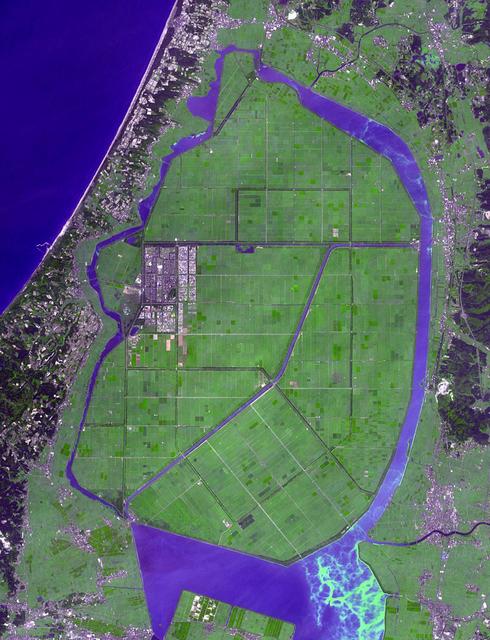
Okata is a small village of about 3,000 residents in northwest Japan. It is known internationally for its Solar-car rally. The village consists entirely of land reclaimed from the former Lake Hachirogata, and is mostly below sea level (Wikipedia). The image was acquired August 28, 2012, covers an area of 17.5 by 22.8 km, and is located at 40 degrees north, 139.9 degrees east. https://photojournal.jpl.nasa.gov/catalog/PIA23531
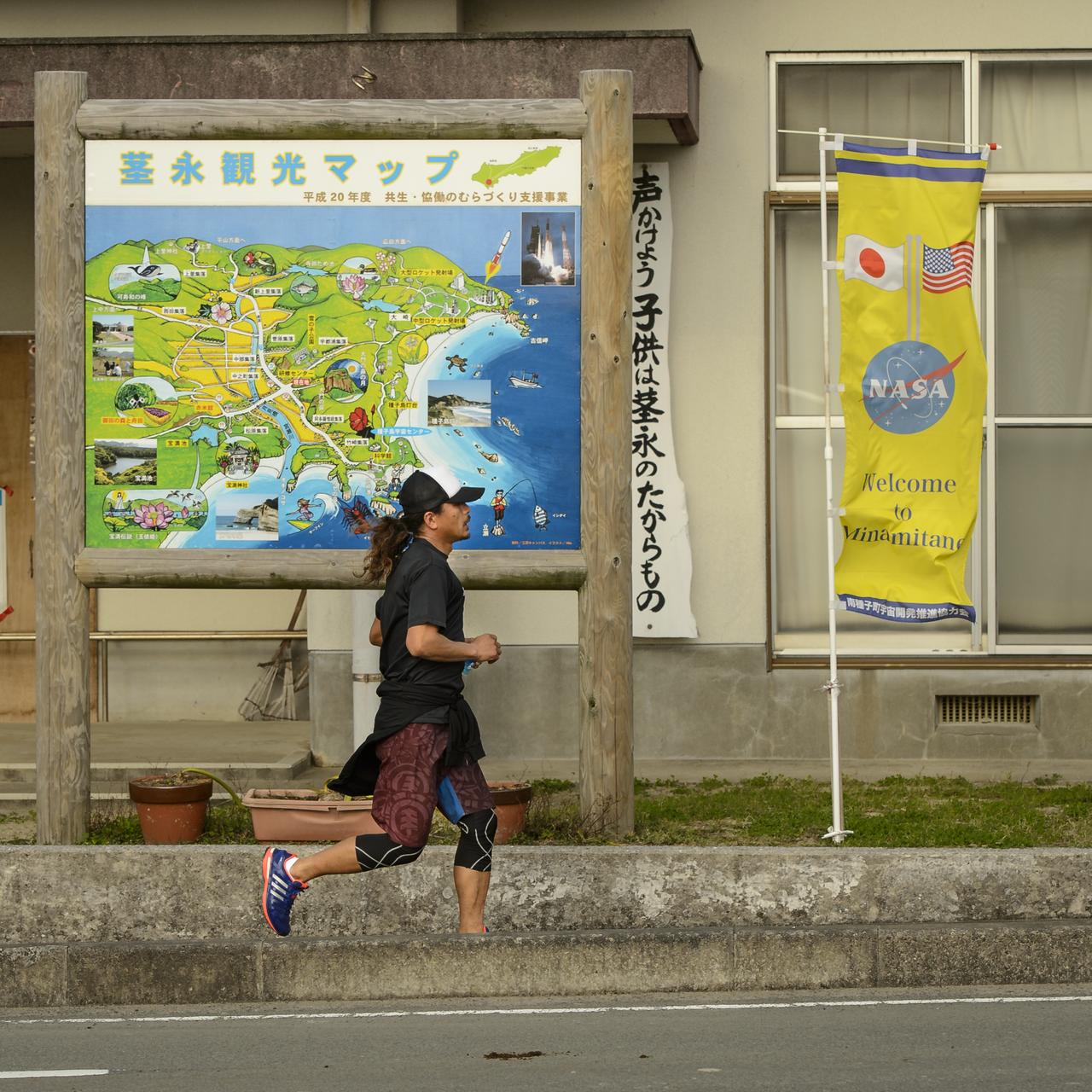
A jogger runs past a sign welcoming NASA and other visitors to Minamitane Town on Sunday, Feb. 23, 2014, Tanegashima Island, Japan. A Japanese H-IIA rocket carrying the NASA-Japan Aerospace Exploration Agency (JAXA), Global Precipitation Measurement (GPM) Core Observatory is planned for launch from the space center on Feb. 28, 2014. Once launched, the GPM spacecraft will collect information that unifies data from an international network of existing and future satellites to map global rainfall and snowfall every three hours. Photo Credit: (NASA/Bill Ingalls)
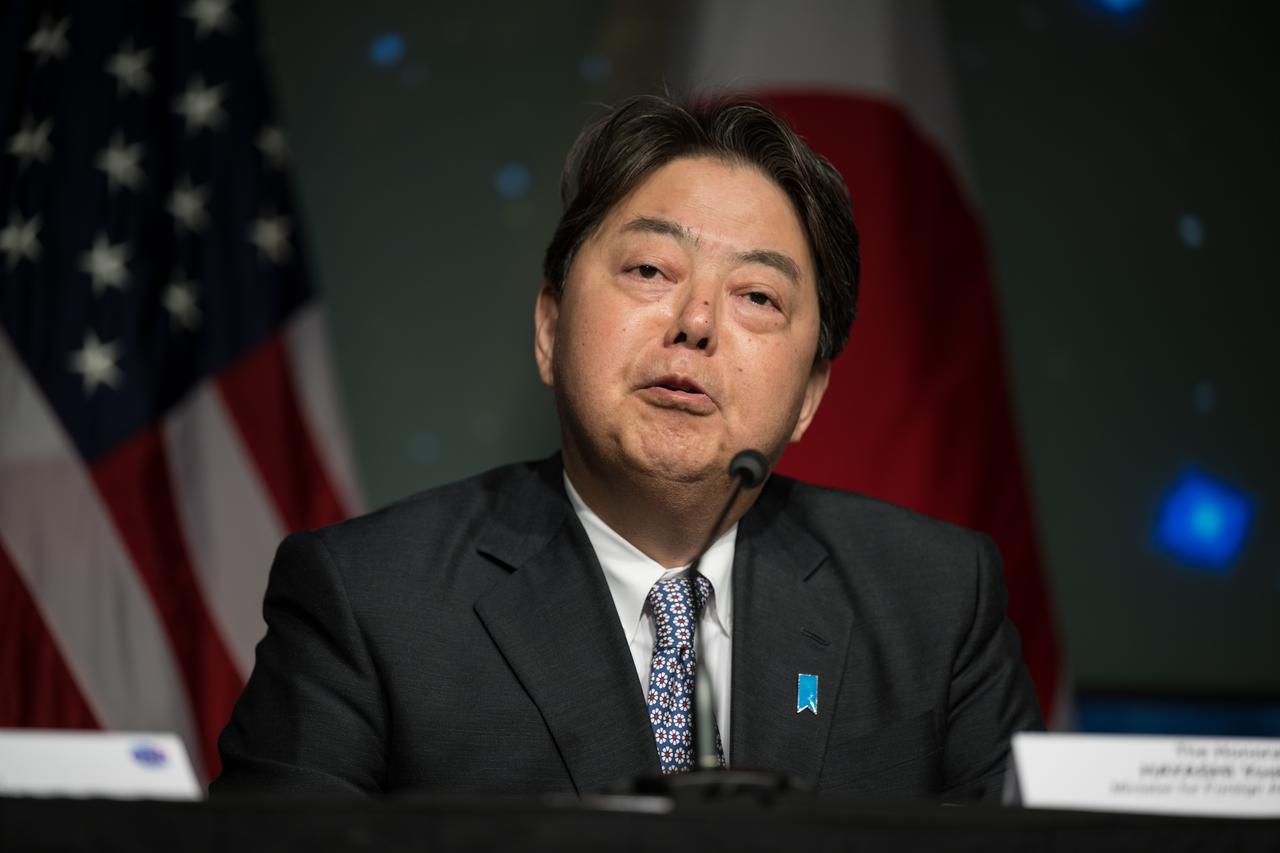
Minister for Foreign Affairs of Japan, The Honorable Hayashi Yoshimasa delivers remarks after he and U.S. Secretary of State, Antony Blinken signed an agreement that builds on a long history of collaboration in space exploration between the U.S. and Japan, Friday, Jan. 13, 2023, at the Mary W. Jackson NASA Headquarters building in Washington. “The Framework Agreement Between the Government of Japan and the Government of the United States of America for Cooperation in Space Exploration and Use of Outer Space, Including the Moon and Other Celestial Bodies, For Peaceful Purposes” covers joint activities including space science, Earth science, space operations and exploration, aeronautical science and technology, space technology, space transportation, and safety and mission assurance, among others. Photo Credit: (NASA/Aubrey Gemignani)
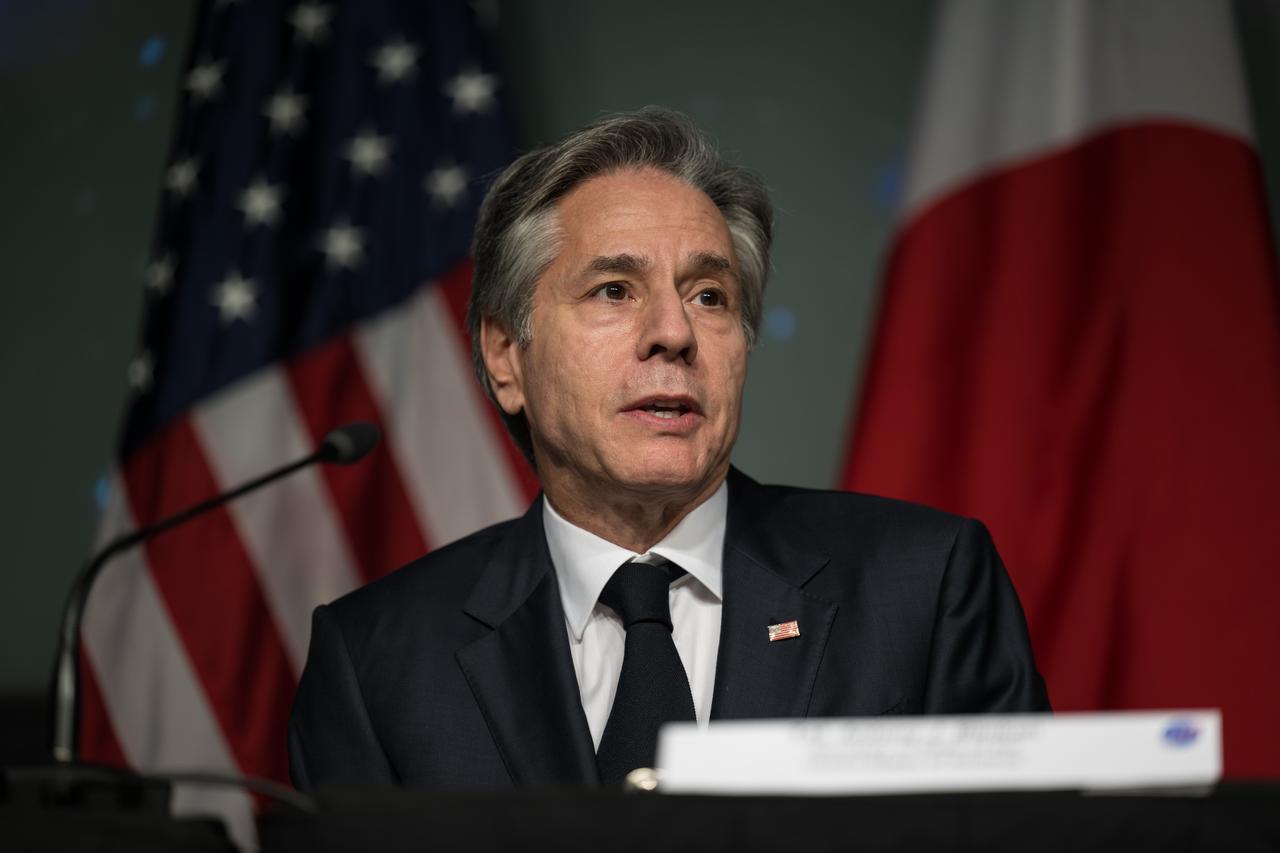
U.S. Secretary of State, Antony Blinken delivers remarks before he and Japan’s Minister for Foreign Affairs, Hayashi Yoshimasa, sign an agreement that builds on a long history of collaboration in space exploration between the U.S. and Japan, Friday, Jan. 13, 2023, at the Mary W. Jackson NASA Headquarters building in Washington. “The Framework Agreement Between the Government of Japan and the Government of the United States of America for Cooperation in Space Exploration and Use of Outer Space, Including the Moon and Other Celestial Bodies, For Peaceful Purposes” covers joint activities including space science, Earth science, space operations and exploration, aeronautical science and technology, space technology, space transportation, and safety and mission assurance, among others. Photo Credit: (NASA/Aubrey Gemignani)
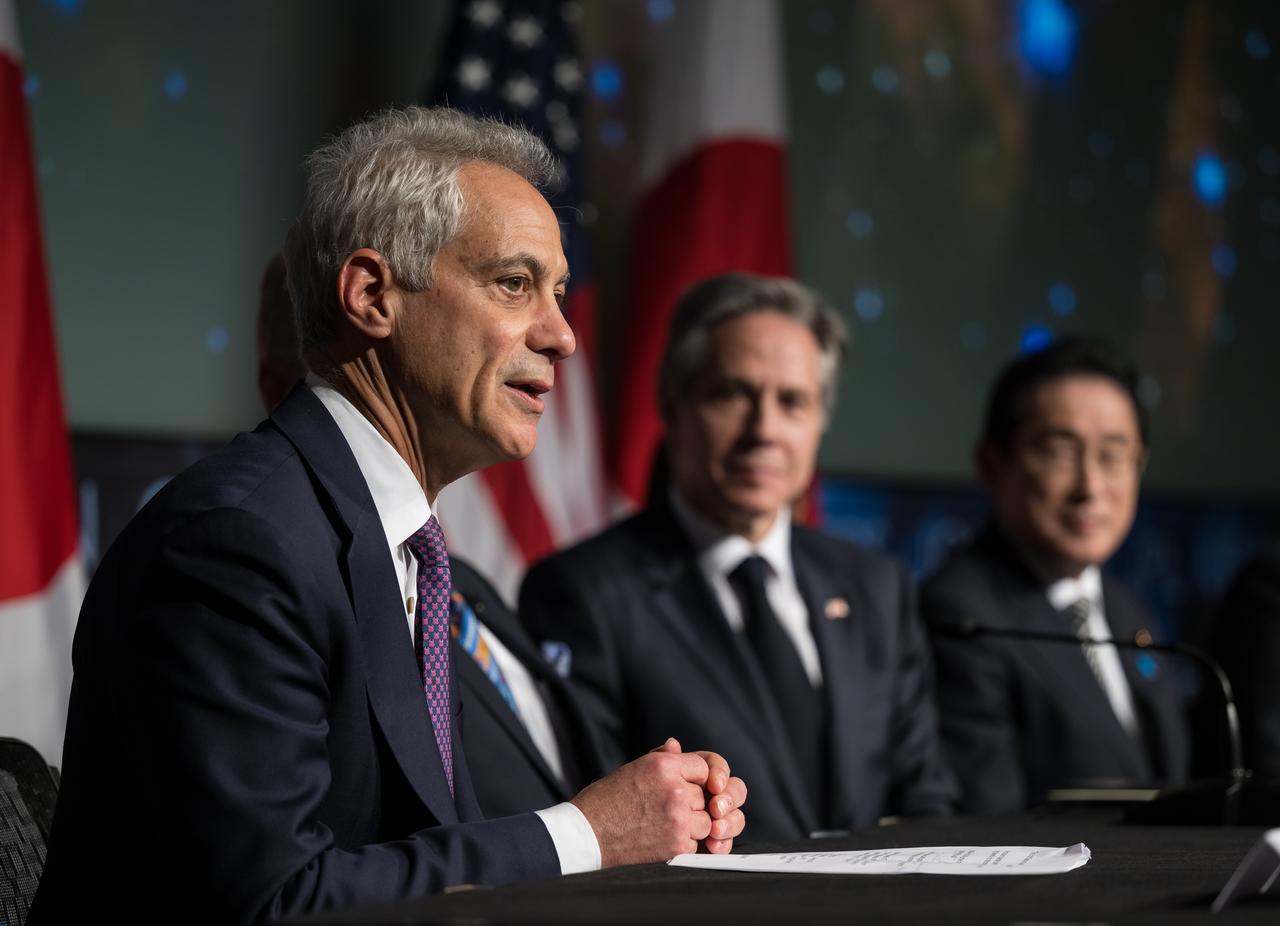
U.S. Ambassador to Japan, Rahm Emanuel, delivers remarks after U.S. Secretary of State, Antony Blinken and Minister for Foreign Affairs of Japan, The Honorable Hayashi Yoshimasa signed an agreement that builds on a long history of collaboration in space exploration between the U.S. and Japan, Friday, Jan. 13, 2023, at the Mary W. Jackson NASA Headquarters building in Washington. “The Framework Agreement Between the Government of Japan and the Government of the United States of America for Cooperation in Space Exploration and Use of Outer Space, Including the Moon and Other Celestial Bodies, For Peaceful Purposes” covers joint activities including space science, Earth science, space operations and exploration, aeronautical science and technology, space technology, space transportation, and safety and mission assurance, among others. Photo Credit: (NASA/Aubrey Gemignani)
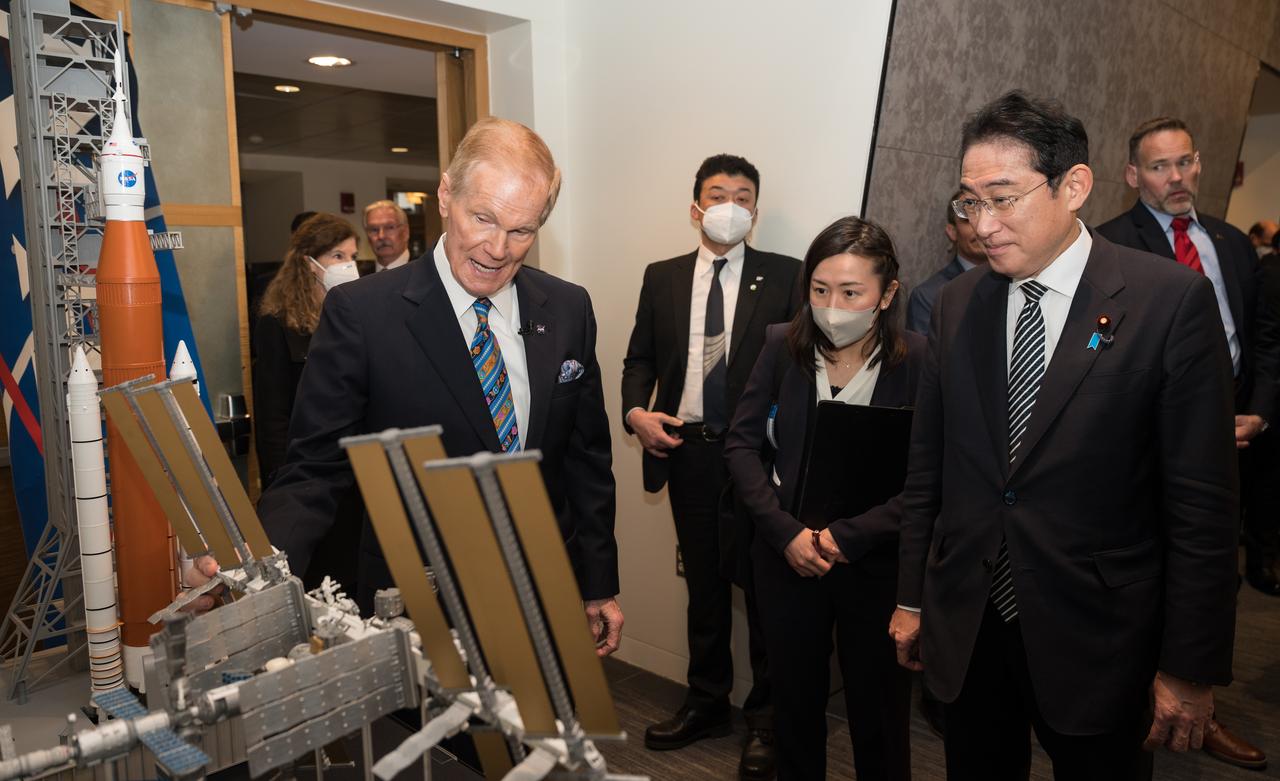
NASA Administrator Bill Nelson shows Prime Minister of Japan, His Excellency Kishida Fumio, a model of the International Space Station (ISS) before U.S. Secretary of State Antony Blinken and Japan’s Minister for Foreign Affairs, Hayashi Yoshimasa, sign an agreement that builds on a long history of collaboration in space exploration between the U.S. and Japan, Friday, Jan. 13, 2023, at the Mary W. Jackson NASA Headquarters building in Washington. “The Framework Agreement Between the Government of Japan and the Government of the United States of America for Cooperation in Space Exploration and Use of Outer Space, Including the Moon and Other Celestial Bodies, For Peaceful Purposes” covers joint activities including space science, Earth science, space operations and exploration, aeronautical science and technology, space technology, space transportation, and safety and mission assurance, among others. Photo Credit: (NASA/Aubrey Gemignani)
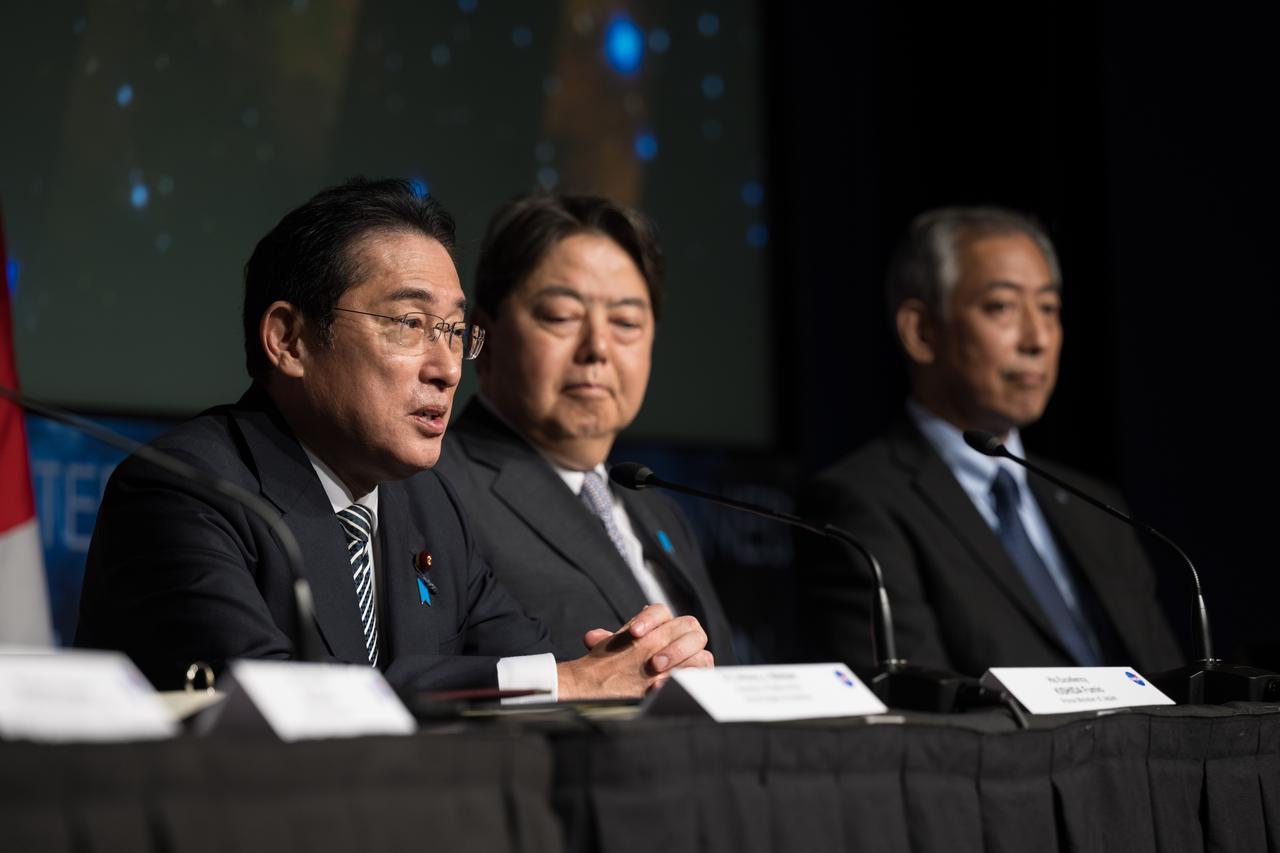
Prime Minister of Japan, His Excellency Kishida Fumio delivers remarks before U.S. Secretary of State, Antony Blinken and Japan’s Minister for Foreign Affairs, Hayashi Yoshimasa, sign an agreement that builds on a long history of collaboration in space exploration between the U.S. and Japan, Friday, Jan. 13, 2023, at the Mary W. Jackson NASA Headquarters building in Washington. “The Framework Agreement Between the Government of Japan and the Government of the United States of America for Cooperation in Space Exploration and Use of Outer Space, Including the Moon and Other Celestial Bodies, For Peaceful Purposes” covers joint activities including space science, Earth science, space operations and exploration, aeronautical science and technology, space technology, space transportation, and safety and mission assurance, among others. Photo Credit: (NASA/Aubrey Gemignani)
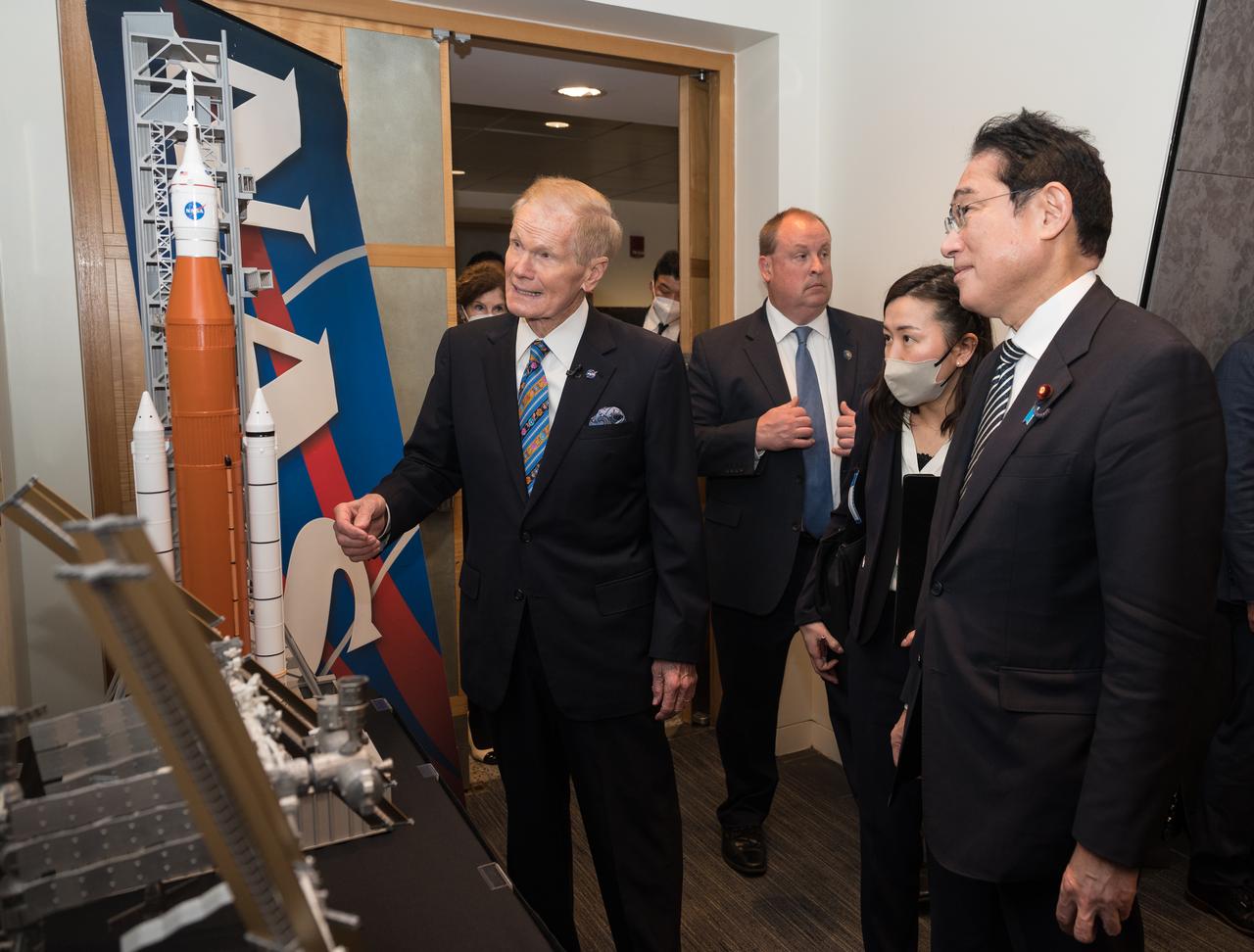
NASA Administrator Bill Nelson shows Prime Minister of Japan, His Excellency Kishida Fumio, a model of the Space Launch System (SLS) before U.S. Secretary of State Antony Blinken and Japan’s Minister for Foreign Affairs, Hayashi Yoshimasa, sign an agreement that builds on a long history of collaboration in space exploration between the U.S. and Japan, Friday, Jan. 13, 2023, at the Mary W. Jackson NASA Headquarters building in Washington. “The Framework Agreement Between the Government of Japan and the Government of the United States of America for Cooperation in Space Exploration and Use of Outer Space, Including the Moon and Other Celestial Bodies, For Peaceful Purposes” covers joint activities including space science, Earth science, space operations and exploration, aeronautical science and technology, space technology, space transportation, and safety and mission assurance, among others. Photo Credit: (NASA/Aubrey Gemignani)
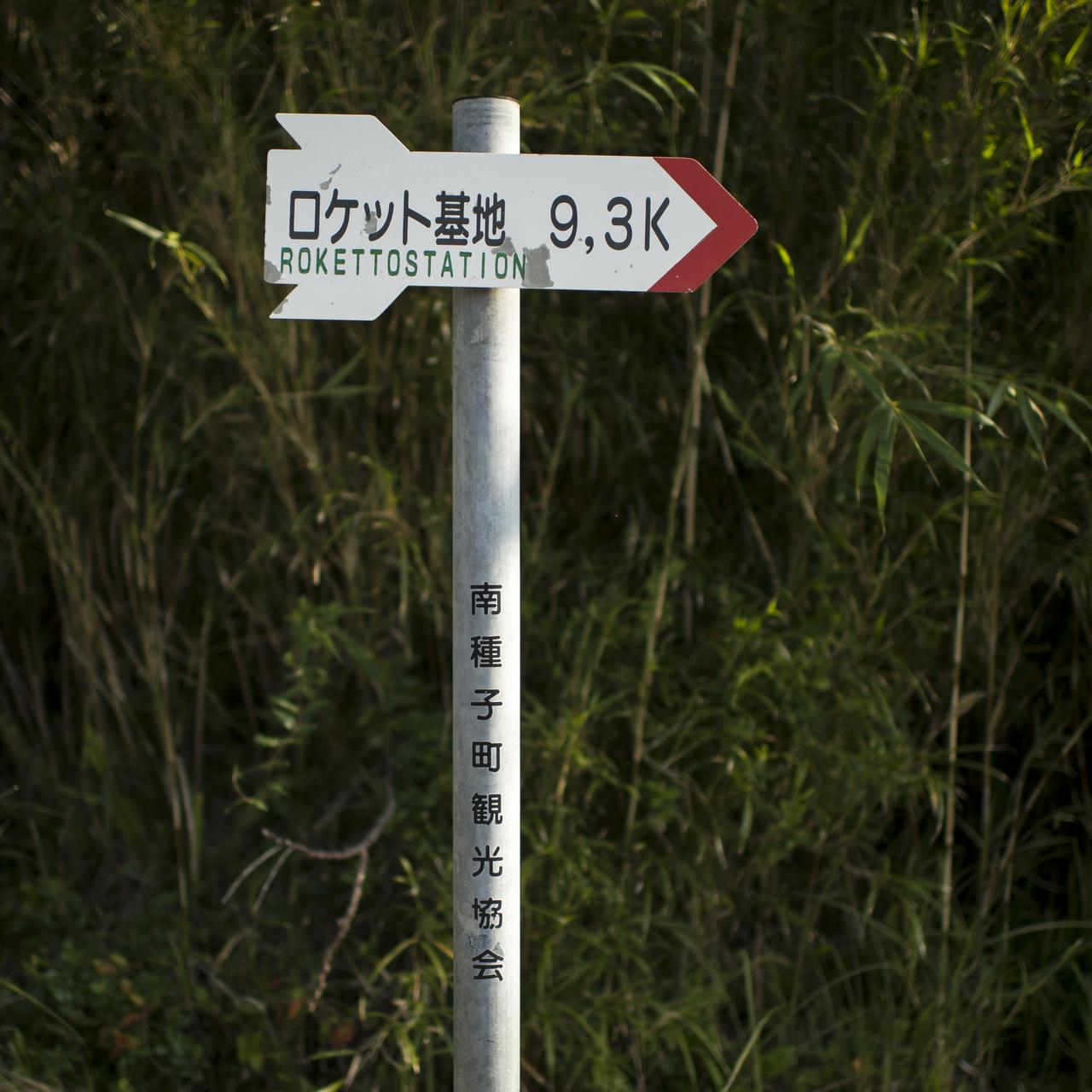
A sign guides travelers to the Japan Aerospace Exploration Agency’s (JAXA) Tanegashima Space Center (TNSC), Saturday, Feb. 22, 2014, Tanegashima Island, Japan. A launch of an H-IIA rocket carrying the Global Precipitation Measurement (GPM) Core Observatory is planned for Feb. 28, 2014 from the space center. The NASA-JAXA GPM spacecraft will collect information that unifies data from an international network of existing and future satellites to map global rainfall and snowfall every three hours. Photo Credit: (NASA/Bill Ingalls)
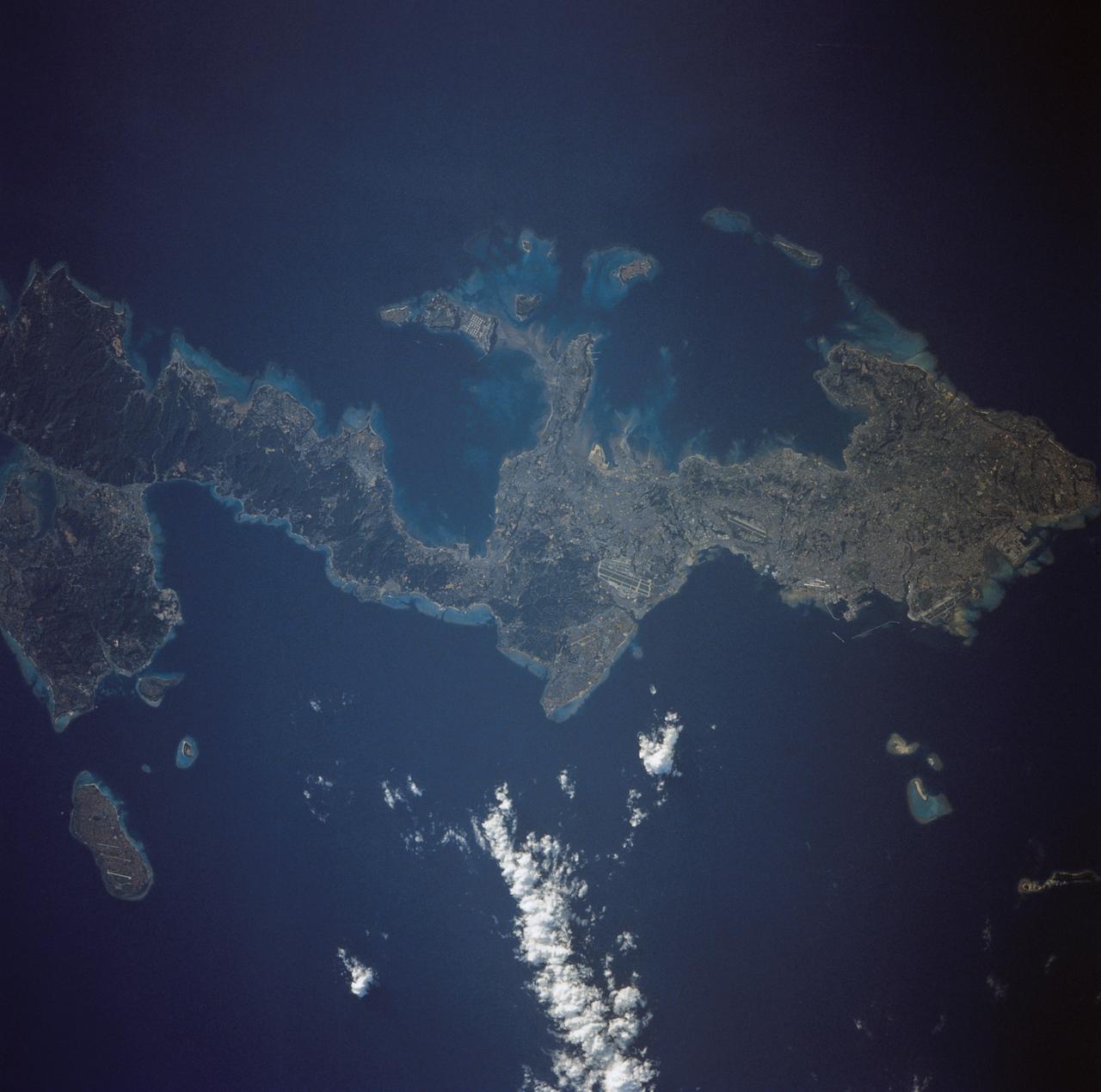
The southern half of the island of Okinawa, Japan (26.5N, 128.0E) can be seen in this nearly cloud free view. Okinawa is part of the Ryuku Islands which extend from Taiwan northeastward to Kyushu, southernmost of the Japanese Home Islands. The large military base at Kadena, with large runways, is visible near the center of the scene. Kadena is one of several emergency landing sites around the world for the space shuttle.
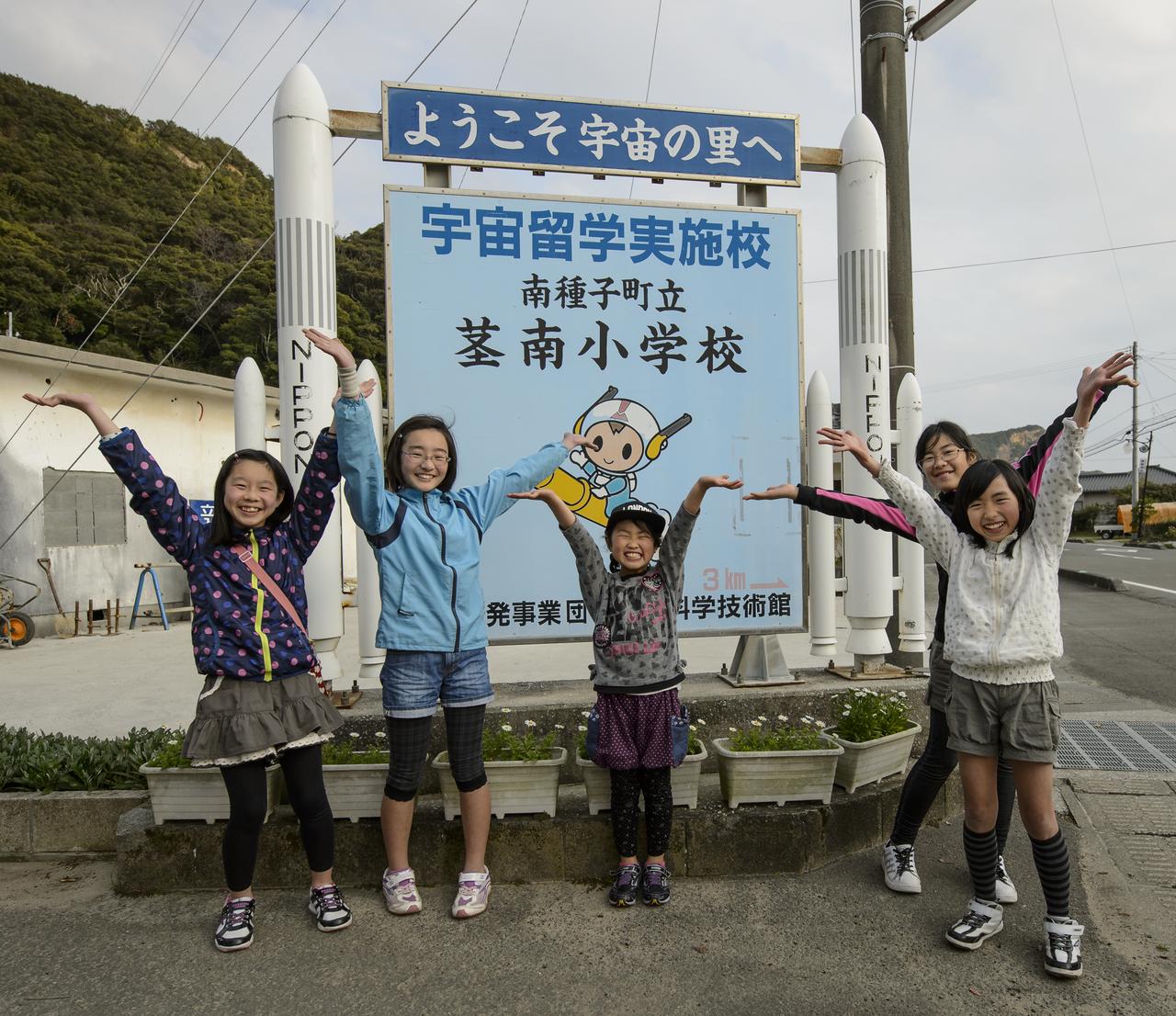
Minamitane elementary school girls pose for a photo in front of a sign featuring the town's mascot "Chuta-kun", Sunday, Feb. 23, 2014, Tanegashima Island, Japan. The Chuta-kun mascot rides a rocket and has guns on the side of his helmet to show the areas history as the site of the first known contact of Europe and the Japanese, in 1543 and the introduction of the gun. A Japanese H-IIA rocket carrying the NASA-Japan Aerospace Exploration Agency (JAXA), Global Precipitation Measurement (GPM) Core Observatory is planned for launch from the space center on Feb. 28, 2014. Once launched, the GPM spacecraft will collect information that unifies data from an international network of existing and future satellites to map global rainfall and snowfall every three hours. Photo Credit: (NASA/Bill Ingalls)
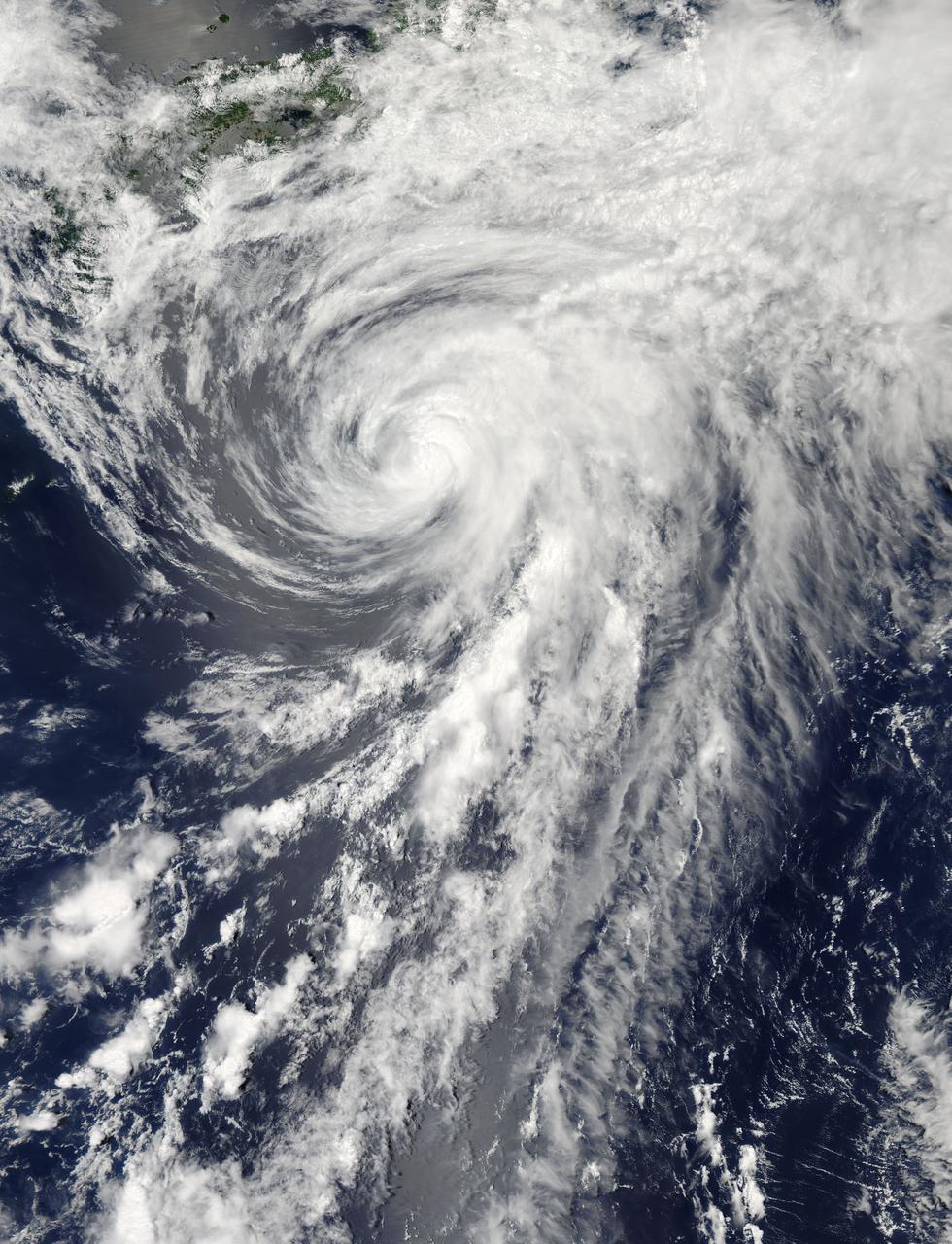
On Tuesday, June 11, 2013 Tropical Storm Yagi spun in the North Pacific Ocean just south of Japan. The Moderate Resolution Imaging Spectroradiometer (MODIS) aboard NASA’s Aqua satellite captured this beautiful true-color image of the storm on that same date at 4:10 UTC (1:10 p.m. Japan local time). The image shows a clear apostrophe-shaped cyclone, with a closed eye and somewhat elliptical shape. The clouds associated with the northern fringes of the storm draped over southeastern coastal Japan, and a long “tail” (or band) of thunderstorms fed into the center from the south. Multispectral imagery also showed tight bands of thunderstorms wrapping into the center of the storm, although the building of thunderstorms was weakening around the center. Near the same time as the image was captured, the Joint Typhoon Warning Center announced that vertical wind shear was starting to take a toll on Yagi. Northwesterly wind shear had caused the system to tilt slightly with the upper-level center displaced about 20 nautical miles east of the low-level center. Tropical Storm Yagi developed from Tropical Depression 03W in the Western North Pacific Ocean on June 6, and intensified the weekend of June 8-9, when it reached Tropical Storm status and was given the name Yagi. Also known as Dante, the storm reached the maximum wind speeds on June 10 and 11, after which it began to weaken as it moved into cooler waters. On June 14, Yagi’s remnants passed about 200 miles south of Tokyo, and brought soaking rains to the coastline of Japan’s Honshu Island. Credit: NASA/GSFC/Jeff Schmaltz/MODIS Land Rapid Response Team <b><a href="http://www.nasa.gov/audience/formedia/features/MP_Photo_Guidelines.html" rel="nofollow">NASA image use policy.</a></b> <b><a href="http://www.nasa.gov/centers/goddard/home/index.html" rel="nofollow">NASA Goddard Space Flight Center</a></b> enables NASA’s mission through four scientific endeavors: Earth Science, Heliophysics, Solar System Exploration, and Astrophysics. Goddard plays a leading role in NASA’s accomplishments by contributing compelling scientific knowledge to advance the Agency’s mission. <b>Follow us on <a href="http://twitter.com/NASA_GoddardPix" rel="nofollow">Twitter</a></b> <b>Like us on <a href="http://www.facebook.com/pages/Greenbelt-MD/NASA-Goddard/395013845897?ref=tsd" rel="nofollow">Facebook</a></b> <b>Find us on <a href="http://instagram.com/nasagoddard?vm=grid" rel="nofollow">Instagram</a></b>
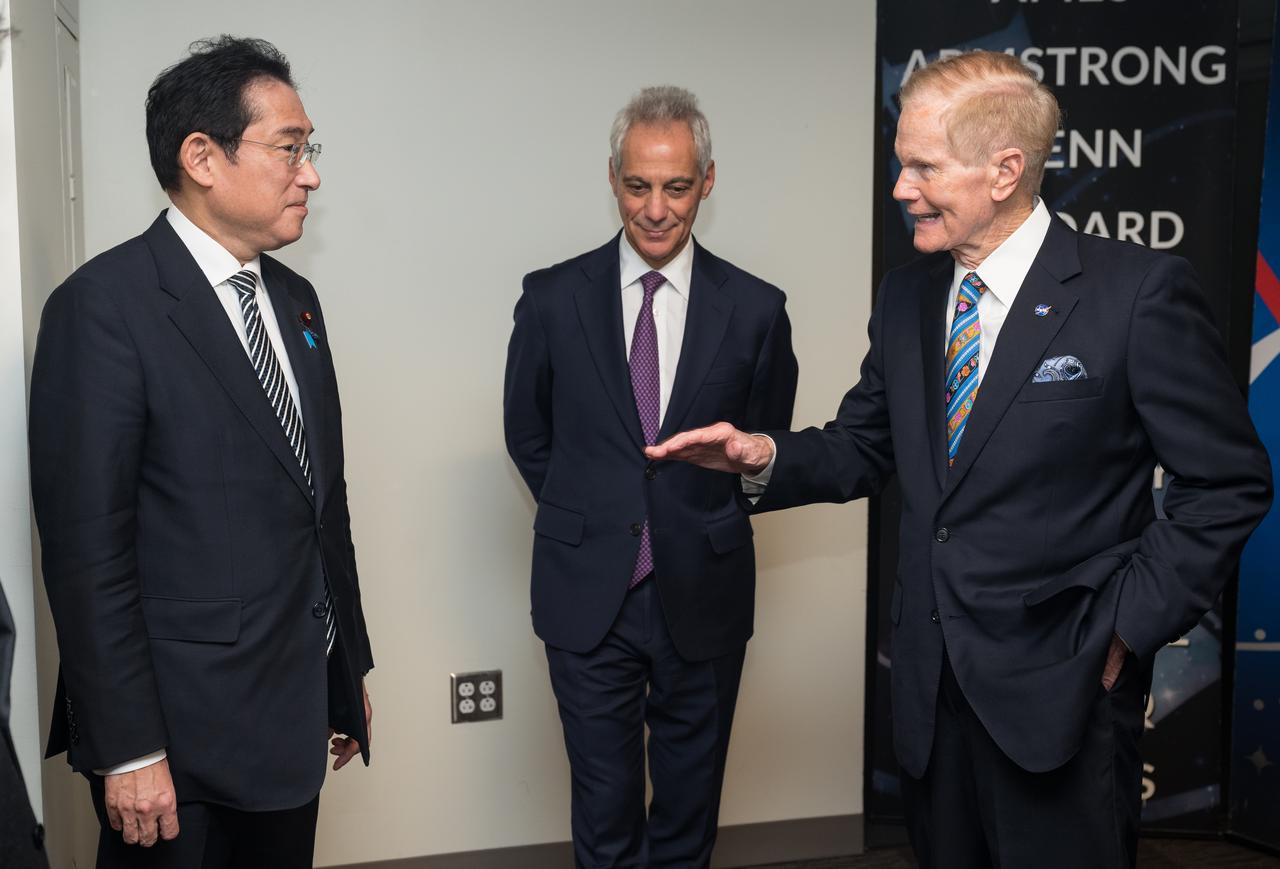
NASA Administrator Bill Nelson, right, and U.S. Ambassador to Japan, Rahm Emanuel, center, greet Prime Minister of Japan, His Excellency Kishida Fumio, before U.S. Secretary of State Antony Blinken and Japan’s Minister for Foreign Affairs, Hayashi Yoshimasa, sign an agreement that builds on a long history of collaboration in space exploration between the U.S. and Japan, Friday, Jan. 13, 2023, at the Mary W. Jackson NASA Headquarters building in Washington. “The Framework Agreement Between the Government of Japan and the Government of the United States of America for Cooperation in Space Exploration and Use of Outer Space, Including the Moon and Other Celestial Bodies, For Peaceful Purposes” covers joint activities including space science, Earth science, space operations and exploration, aeronautical science and technology, space technology, space transportation, and safety and mission assurance, among others. Photo Credit: (NASA/Aubrey Gemignani)
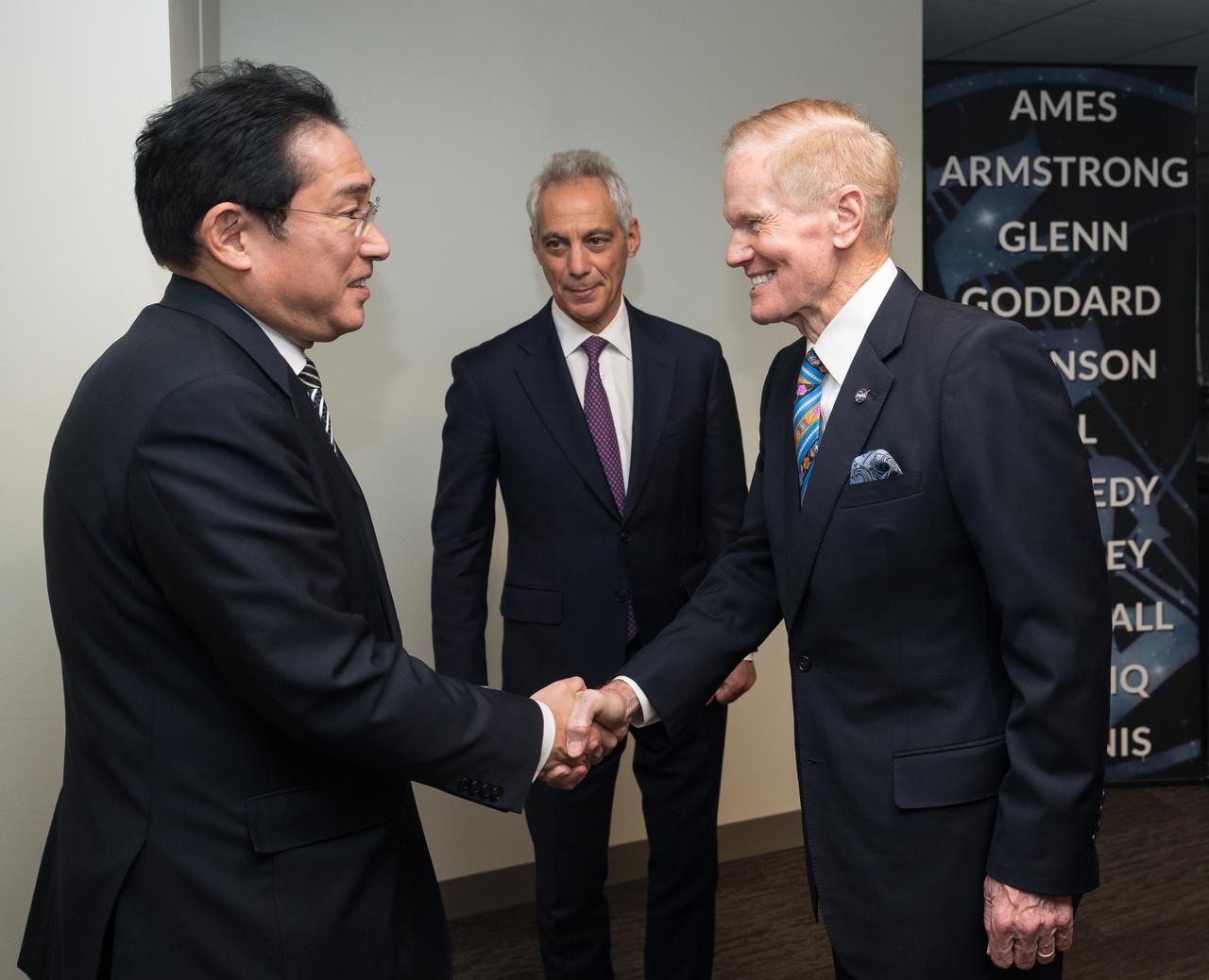
NASA Administrator Bill Nelson, right, and U.S. Ambassador to Japan, Rahm Emanuel, center, greet Prime Minister of Japan, His Excellency Kishida Fumio, before U.S. Secretary of State Antony Blinken and Japan’s Minister for Foreign Affairs, Hayashi Yoshimasa, sign an agreement that builds on a long history of collaboration in space exploration between the U.S. and Japan, Friday, Jan. 13, 2023, at the Mary W. Jackson NASA Headquarters building in Washington. “The Framework Agreement Between the Government of Japan and the Government of the United States of America for Cooperation in Space Exploration and Use of Outer Space, Including the Moon and Other Celestial Bodies, For Peaceful Purposes” covers joint activities including space science, Earth science, space operations and exploration, aeronautical science and technology, space technology, space transportation, and safety and mission assurance, among others. Photo Credit: (NASA/Aubrey Gemignani)
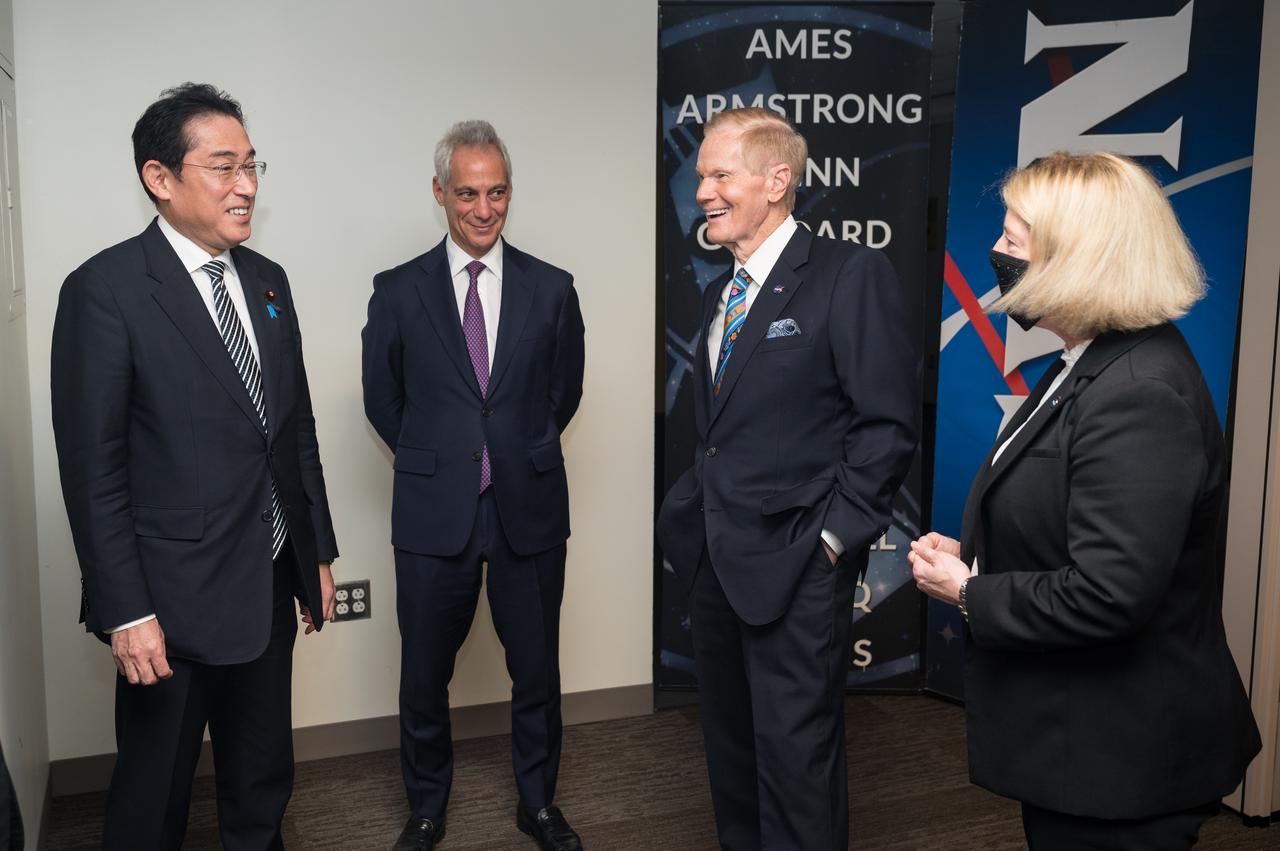
NASA Deputy Administrator Pam Melroy, right, NASA Administrator Bill Nelson, second from right, and U.S. Ambassador to Japan, Rahm Emanuel, second from left, greet Prime Minister of Japan, His Excellency Kishida Fumio, before U.S. Secretary of State Antony Blinken and Japan’s Minister for Foreign Affairs, Hayashi Yoshimasa, sign an agreement that builds on a long history of collaboration in space exploration between the U.S. and Japan, Friday, Jan. 13, 2023, at the Mary W. Jackson NASA Headquarters building in Washington. “The Framework Agreement Between the Government of Japan and the Government of the United States of America for Cooperation in Space Exploration and Use of Outer Space, Including the Moon and Other Celestial Bodies, For Peaceful Purposes” covers joint activities including space science, Earth science, space operations and exploration, aeronautical science and technology, space technology, space transportation, and safety and mission assurance, among others. Photo Credit: (NASA/Aubrey Gemignani)
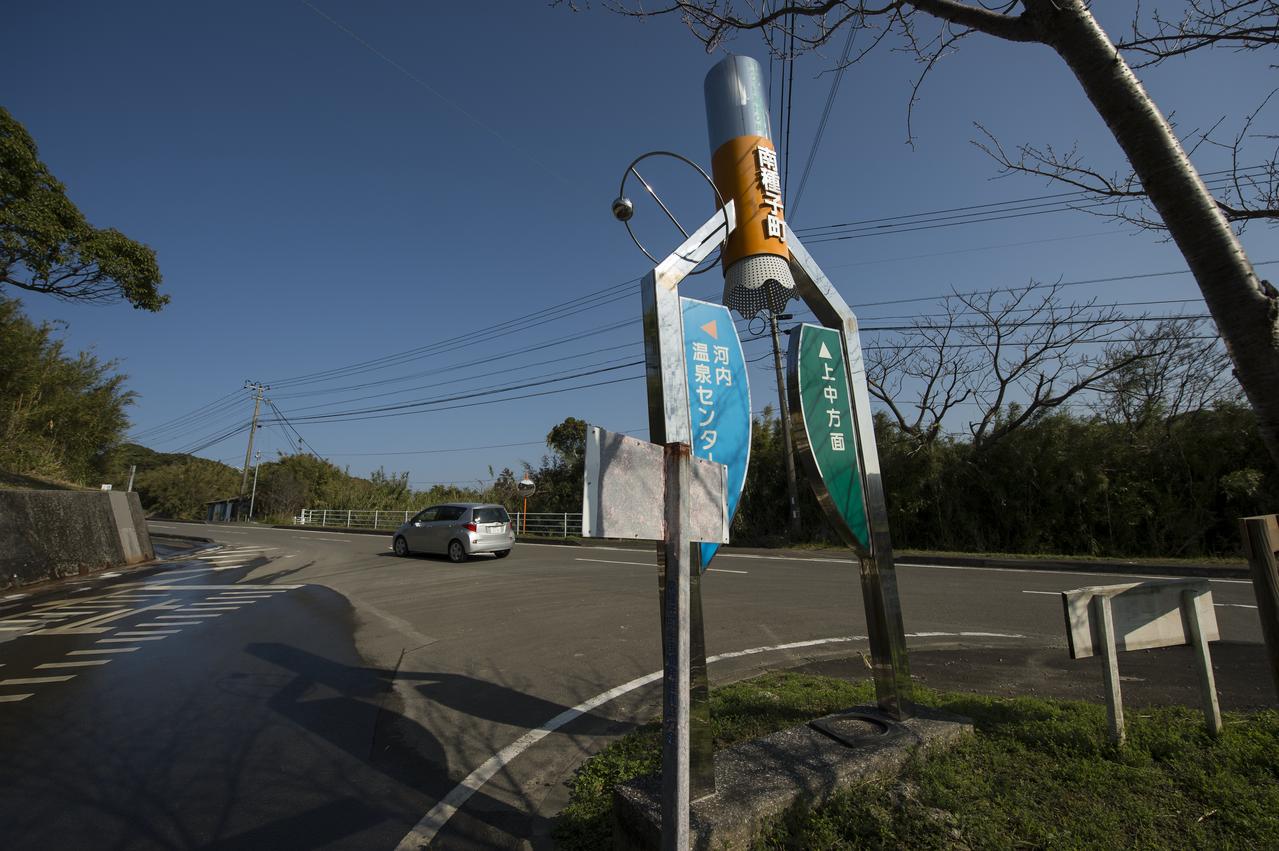
Space themed signs are seen along the roads to and from the Japan Aerospace Exploration Agency’s (JAXA) Tanegashima Space Center (TNSC), Saturday, Feb. 22, 2014, Tanegashima Island, Japan. A launch of an H-IIA rocket carrying the Global Precipitation Measurement (GPM) Core Observatory is planned for Feb. 28, 2014 from the space center. The NASA-JAXA GPM spacecraft will collect information that unifies data from an international network of existing and future satellites to map global rainfall and snowfall every three hours. Photo Credit: (NASA/Bill Ingalls)
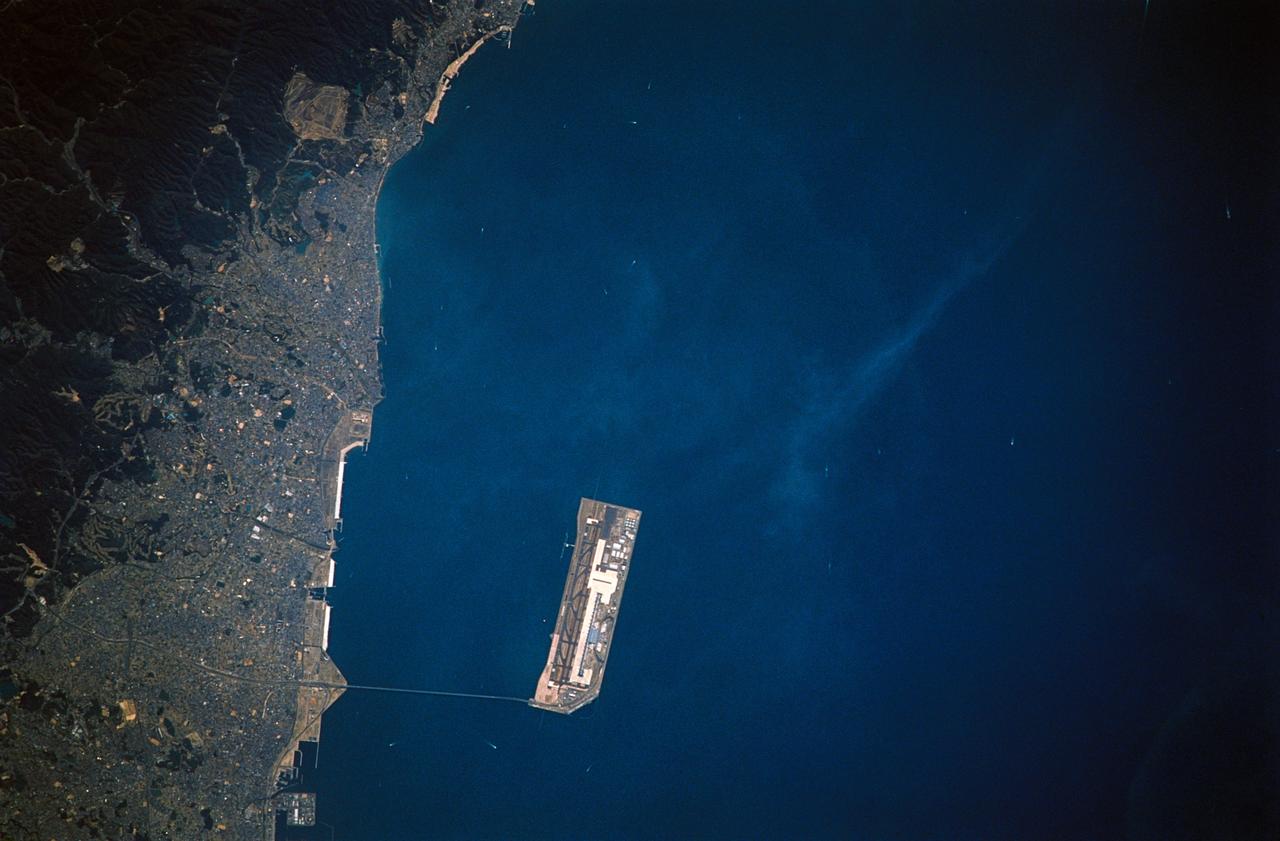
STS059-305-021 (9-20 April 1994) --- The floating airport at Osaka, Honshu, Japan. Nikon photograph, 300mm lens.
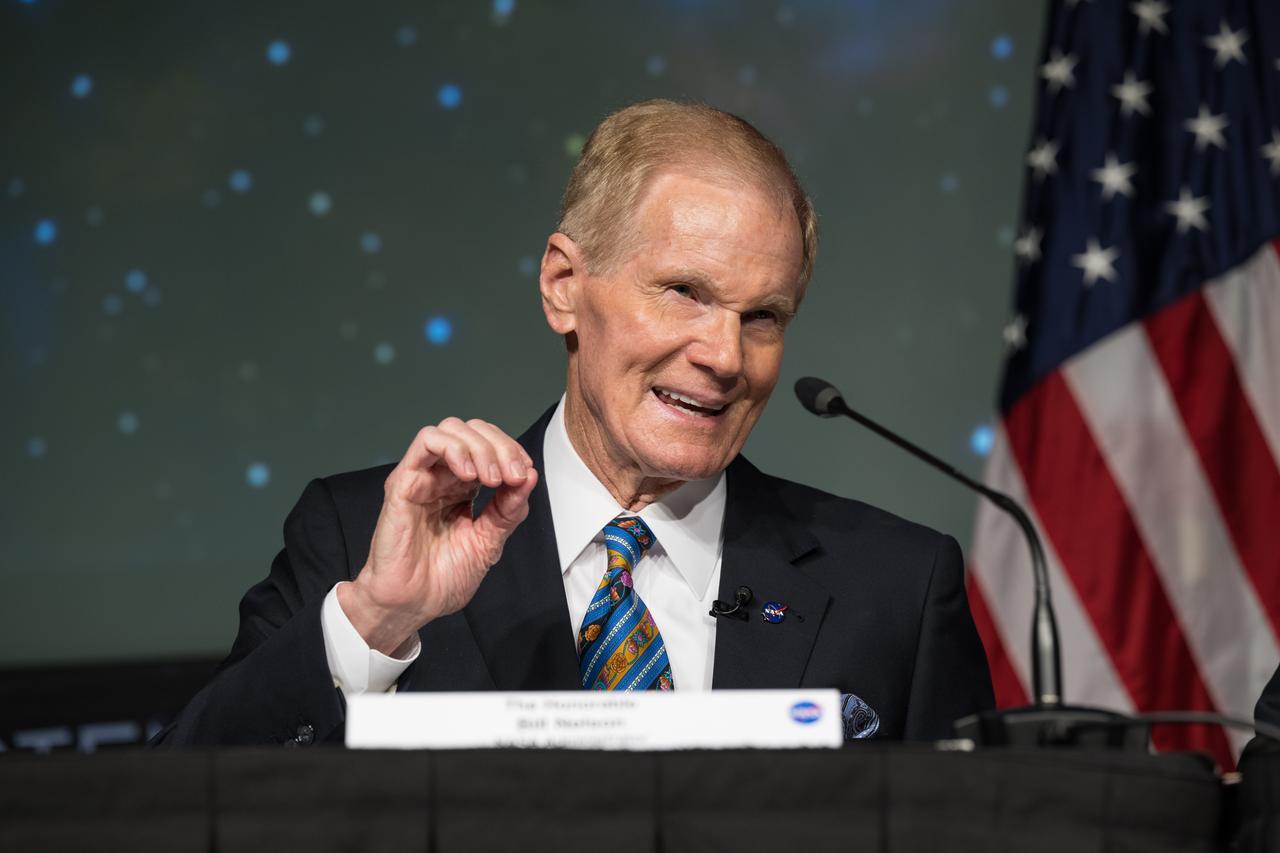
NASA Administrator Bill Nelson delivers remarks before U.S. Secretary of State, Antony Blinken and Japan’s Minister for Foreign Affairs, Hayashi Yoshimasa, sign an agreement that builds on a long history of collaboration in space exploration between the U.S. and Japan, Friday, Jan. 13, 2023, at the Mary W. Jackson NASA Headquarters building in Washington. “The Framework Agreement Between the Government of Japan and the Government of the United States of America for Cooperation in Space Exploration and Use of Outer Space, Including the Moon and Other Celestial Bodies, For Peaceful Purposes” covers joint activities including space science, Earth science, space operations and exploration, aeronautical science and technology, space technology, space transportation, and safety and mission assurance, among others. Photo Credit: (NASA/Aubrey Gemignani)
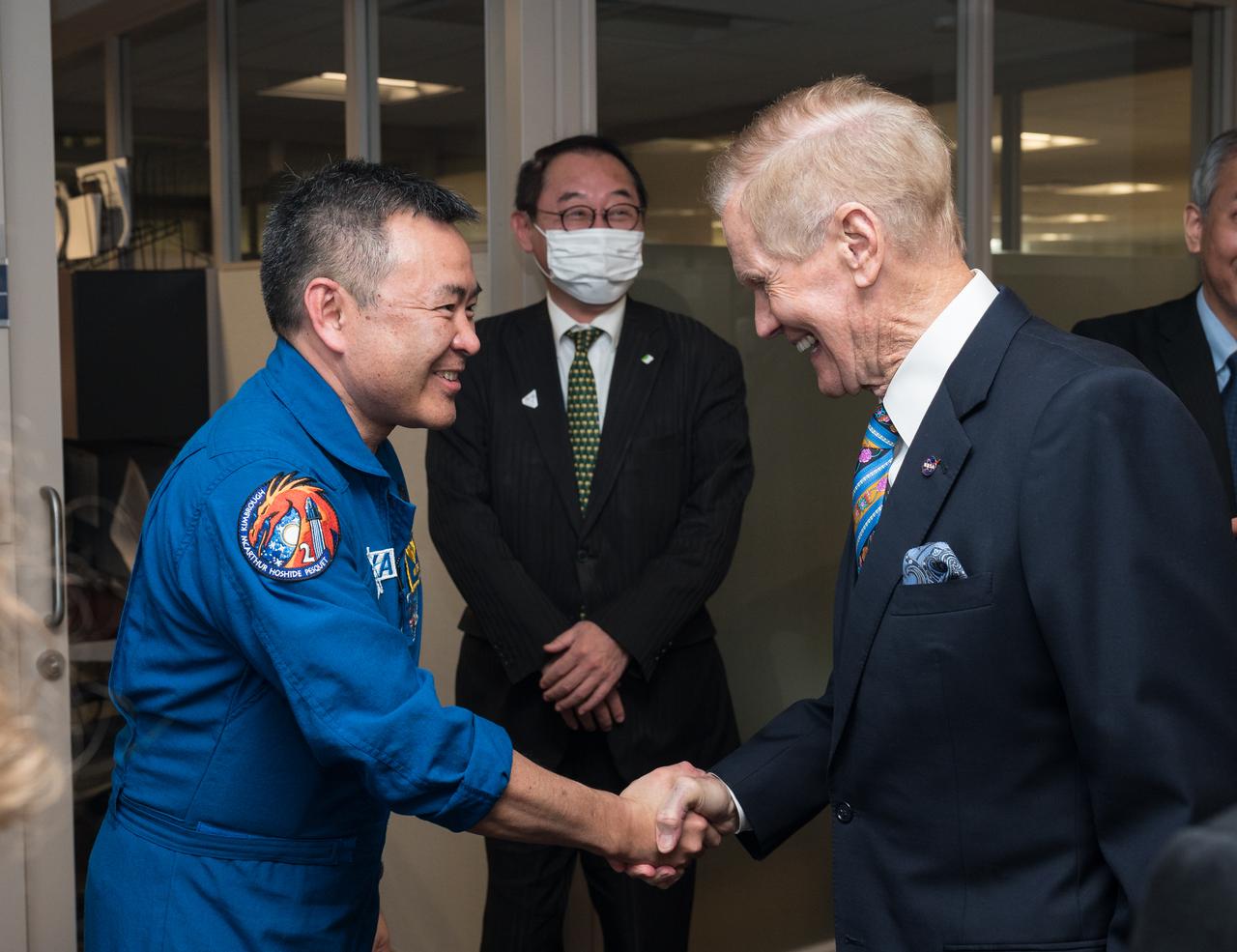
NASA Administrator Bill Nelson, right, greets Japan Aerospace Exploration Agency (JAXA) astronaut Hoshide Akihiko, before the signing of an agreement that builds on a long history of collaboration in space exploration between the U.S. and Japan, Friday, Jan. 13, 2023, at the Mary W. Jackson NASA Headquarters building in Washington. “The Framework Agreement Between the Government of Japan and the Government of the United States of America for Cooperation in Space Exploration and Use of Outer Space, Including the Moon and Other Celestial Bodies, For Peaceful Purposes” covers joint activities including space science, Earth science, space operations and exploration, aeronautical science and technology, space technology, space transportation, and safety and mission assurance, among others. Photo Credit: (NASA/Aubrey Gemignani)
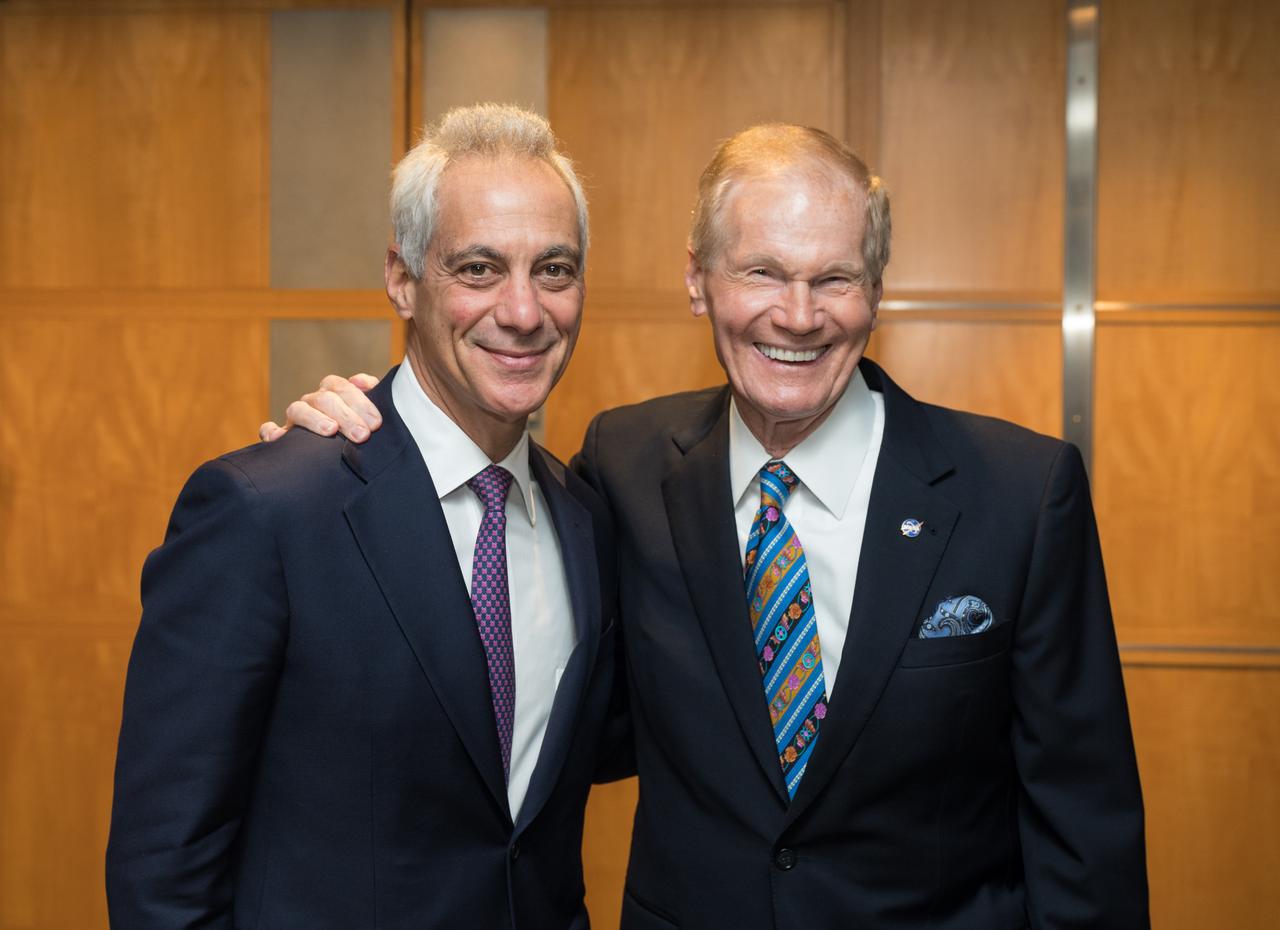
NASA Administrator Bill Nelson, right, poses for a photo with U.S. Ambassador to Japan, Rahm Emanuel, before the signing of an agreement that builds on a long history of collaboration in space exploration between the U.S. and Japan, Friday, Jan. 13, 2023, at the Mary W. Jackson NASA Headquarters building in Washington. “The Framework Agreement Between the Government of Japan and the Government of the United States of America for Cooperation in Space Exploration and Use of Outer Space, Including the Moon and Other Celestial Bodies, For Peaceful Purposes” covers joint activities including space science, Earth science, space operations and exploration, aeronautical science and technology, space technology, space transportation, and safety and mission assurance, among others. Photo Credit: (NASA/Aubrey Gemignani)
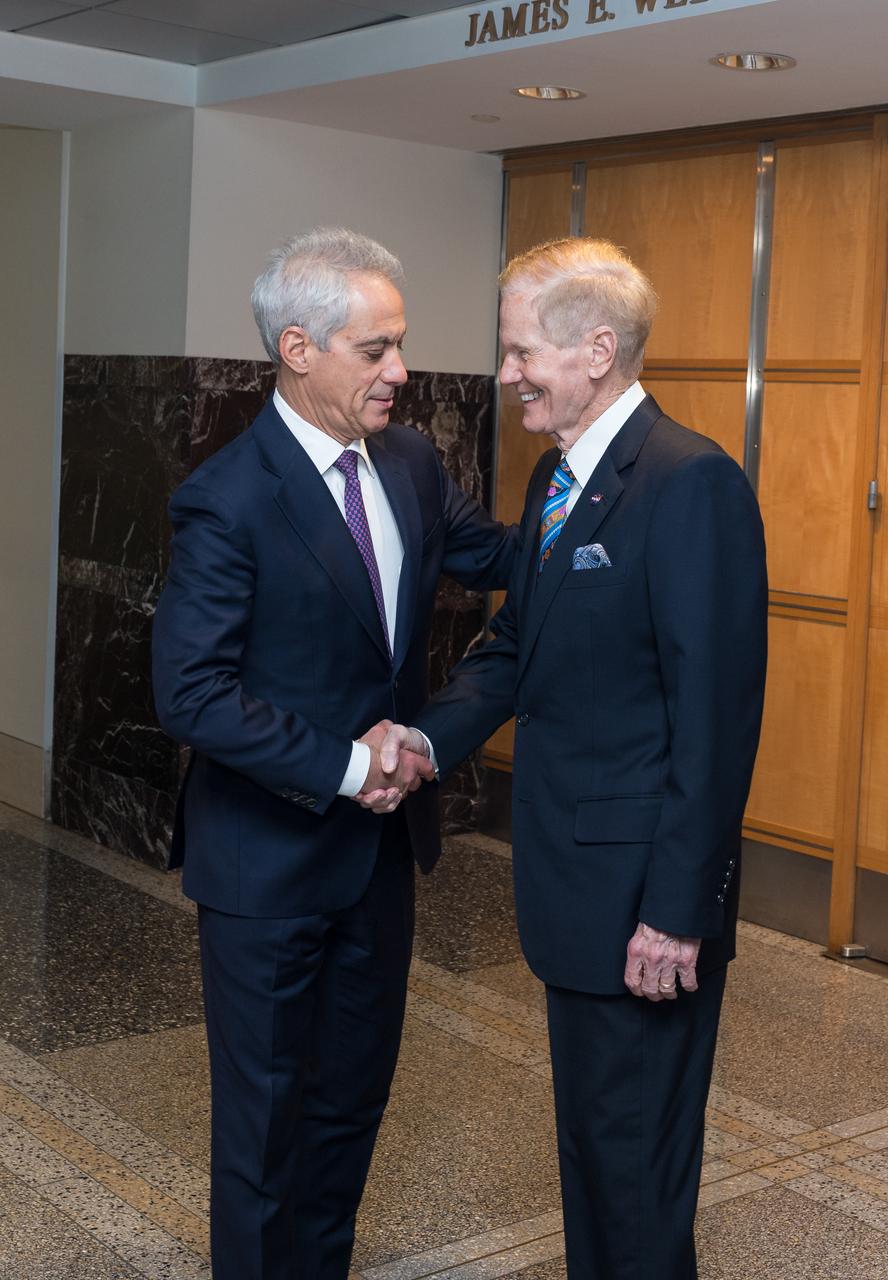
NASA Administrator Bill Nelson, right, greets U.S. Ambassador to Japan, Rahm Emanuel, before the signing of an agreement that builds on a long history of collaboration in space exploration between the U.S. and Japan, Friday, Jan. 13, 2023, at the Mary W. Jackson NASA Headquarters building in Washington. “The Framework Agreement Between the Government of Japan and the Government of the United States of America for Cooperation in Space Exploration and Use of Outer Space, Including the Moon and Other Celestial Bodies, For Peaceful Purposes” covers joint activities including space science, Earth science, space operations and exploration, aeronautical science and technology, space technology, space transportation, and safety and mission assurance, among others. Photo Credit: (NASA/Aubrey Gemignani)

NASA's Terra satellite captured this visible image on July 9 at 02:30 UTC (July 8 at 10:30 p.m. EDT) as Typhoon Neoguri was approaching Kyushu, Japan. The visible image revealed that Neoguri's eye had disappeared and the center has become somewhat elongated as the storm weakened into a tropical storm. The Joint Typhoon Warning Center or JTWC noted that an upper level analysis revealed that Neoguri is now in a more harsh environment as northerly vertical wind shear increased to as much as 30 knots. Credit: NASA/GSFC/Jeff Schmaltz/MODIS Land Rapid Response Credit: NASA/GSFC/Jeff Schmaltz/MODIS Land Rapid Response <b><a href="http://www.nasa.gov/audience/formedia/features/MP_Photo_Guidelines.html" rel="nofollow">NASA image use policy.</a></b> <b><a href="http://www.nasa.gov/centers/goddard/home/index.html" rel="nofollow">NASA Goddard Space Flight Center</a></b> enables NASA’s mission through four scientific endeavors: Earth Science, Heliophysics, Solar System Exploration, and Astrophysics. Goddard plays a leading role in NASA’s accomplishments by contributing compelling scientific knowledge to advance the Agency’s mission. <b>Follow us on <a href="http://twitter.com/NASAGoddardPix" rel="nofollow">Twitter</a></b> <b>Like us on <a href="http://www.facebook.com/pages/Greenbelt-MD/NASA-Goddard/395013845897?ref=tsd" rel="nofollow">Facebook</a></b> <b>Find us on <a href="http://instagram.com/nasagoddard?vm=grid" rel="nofollow">Instagram</a></b>
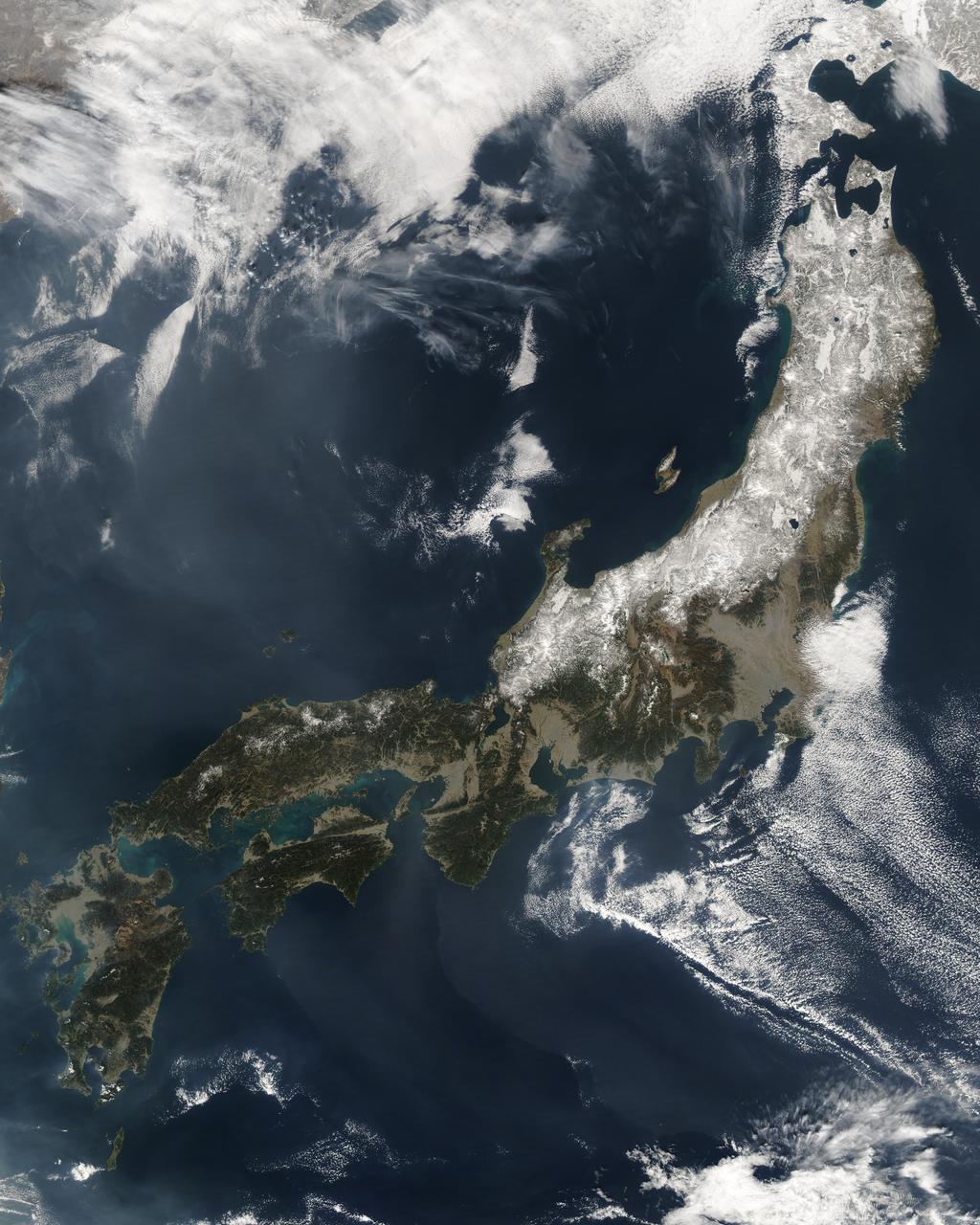
The Moderate Resolution Imaging Spectroradiometer (MODIS) on the Aqua satellite captured this stunning view of Japan’ four largest islands on February 20, 2004. The snow-covered southern arm of Hokkaido extends into the upper left corner. Honshu, Japan’s largest island, curves across the center of the image. Shikoku, right, and Kyushu, left, form the southern tip of the group. Japan is mostly mountainous, and, as the dusting of snow in this image shows, is cold in the north and more tropical in the south. A single red dot marks the location of an active fire. Credit: Jeff Schmaltz, MODIS Rapid Response Team, NASA/GSFC <b><a href="http://www.nasa.gov/audience/formedia/features/MP_Photo_Guidelines.html" rel="nofollow">NASA image use policy.</a></b> <b><a href="http://www.nasa.gov/centers/goddard/home/index.html" rel="nofollow">NASA Goddard Space Flight Center</a></b> enables NASA’s mission through four scientific endeavors: Earth Science, Heliophysics, Solar System Exploration, and Astrophysics. Goddard plays a leading role in NASA’s accomplishments by contributing compelling scientific knowledge to advance the Agency’s mission. <b>Follow us on <a href="http://twitter.com/NASAGoddardPix" rel="nofollow">Twitter</a></b> <b>Like us on <a href="http://www.facebook.com/pages/Greenbelt-MD/NASA-Goddard/395013845897?ref=tsd" rel="nofollow">Facebook</a></b> <b>Find us on <a href="http://instagram.com/nasagoddard?vm=grid" rel="nofollow">Instagram</a></b>
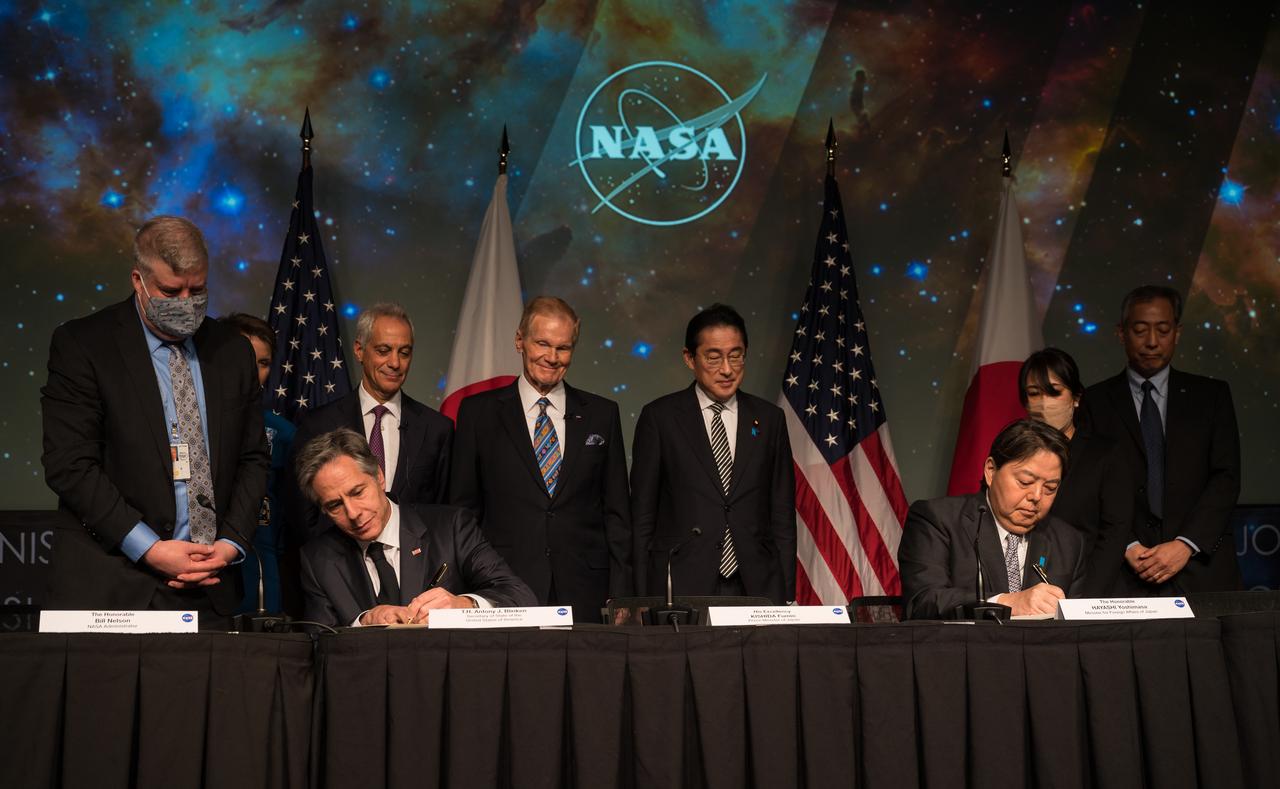
U.S. Secretary of State Antony Blinken, seated left, and Japan’s Minister for Foreign Affairs, Hayashi Yoshimasa, seated right, sign an agreement that builds on a long history of collaboration in space exploration between the U.S. and Japan, Friday, Jan. 13, 2023, at the Mary W. Jackson NASA Headquarters building in Washington. Also present were, U.S. Ambassador to Japan Rahm Emanuel, second from left, NASA Administrator Bill Nelson, third from left, Prime Minister of Japan, His Excellency Kishida Fumio, third from right, President of the Japan Aerospace Exploration Agency (JAXA), Yamakawa Hiroshi, right. “The Framework Agreement Between the Government of Japan and the Government of the United States of America for Cooperation in Space Exploration and Use of Outer Space, Including the Moon and Other Celestial Bodies, For Peaceful Purposes” covers joint activities including space science, Earth science, space operations and exploration, aeronautical science and technology, space technology, space transportation, and safety and mission assurance, among others. Photo Credit: (NASA/Aubrey Gemignani)
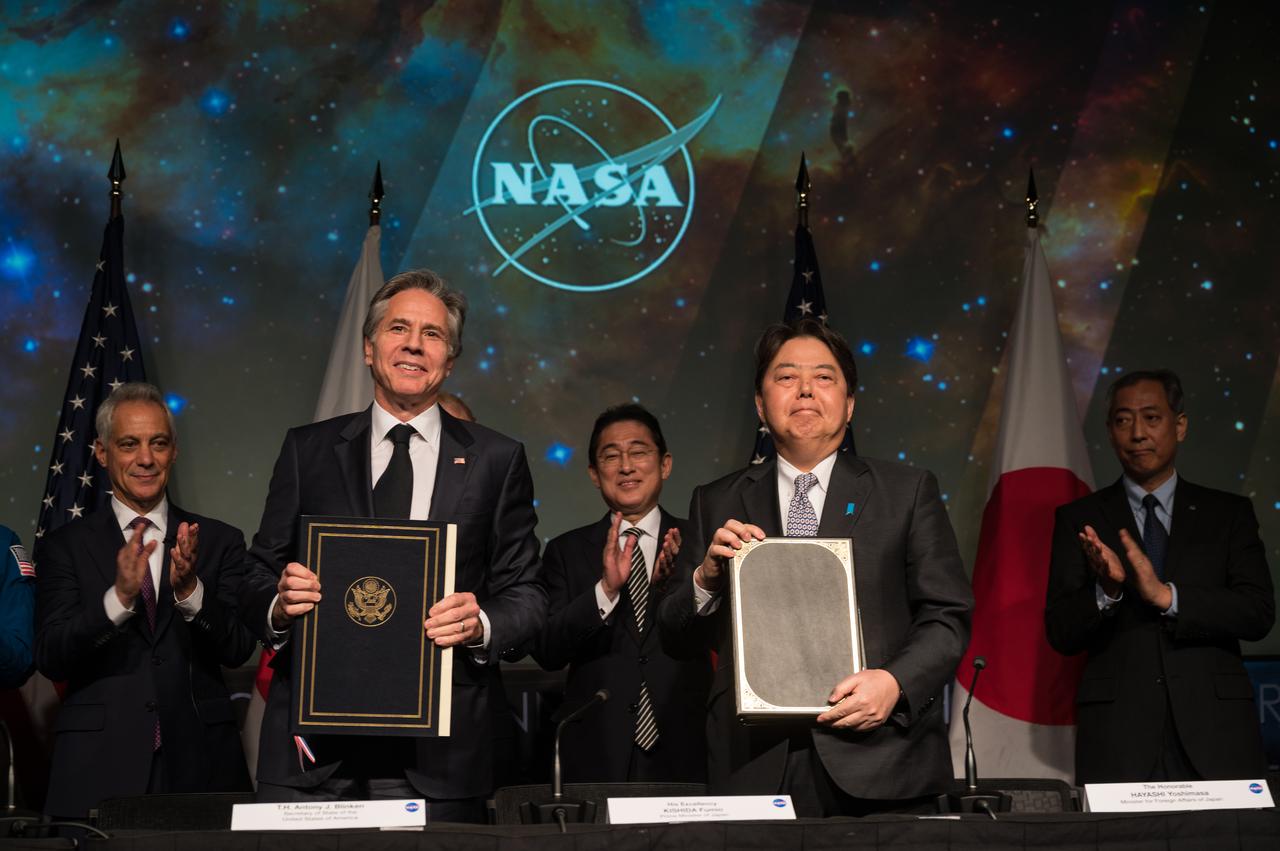
U.S. Secretary of State Antony Blinken, front left, and Japan’s Minister for Foreign Affairs, Hayashi Yoshimasa, front right, pose for a photo after signing an agreement that builds on a long history of collaboration in space exploration between the U.S. and Japan, Friday, Jan. 13, 2023, at the Mary W. Jackson NASA Headquarters building in Washington. Also present were, U.S. Ambassador to Japan Rahm Emanuel, left, NASA Administrator Bill Nelson, second from left, Prime Minister of Japan, His Excellency Kishida Fumio, second from right, President of the Japan Aerospace Exploration Agency (JAXA), Yamakawa Hiroshi, right. “The Framework Agreement Between the Government of Japan and the Government of the United States of America for Cooperation in Space Exploration and Use of Outer Space, Including the Moon and Other Celestial Bodies, For Peaceful Purposes” covers joint activities including space science, Earth science, space operations and exploration, aeronautical science and technology, space technology, space transportation, and safety and mission assurance, among others. Photo Credit: (NASA/Aubrey Gemignani)
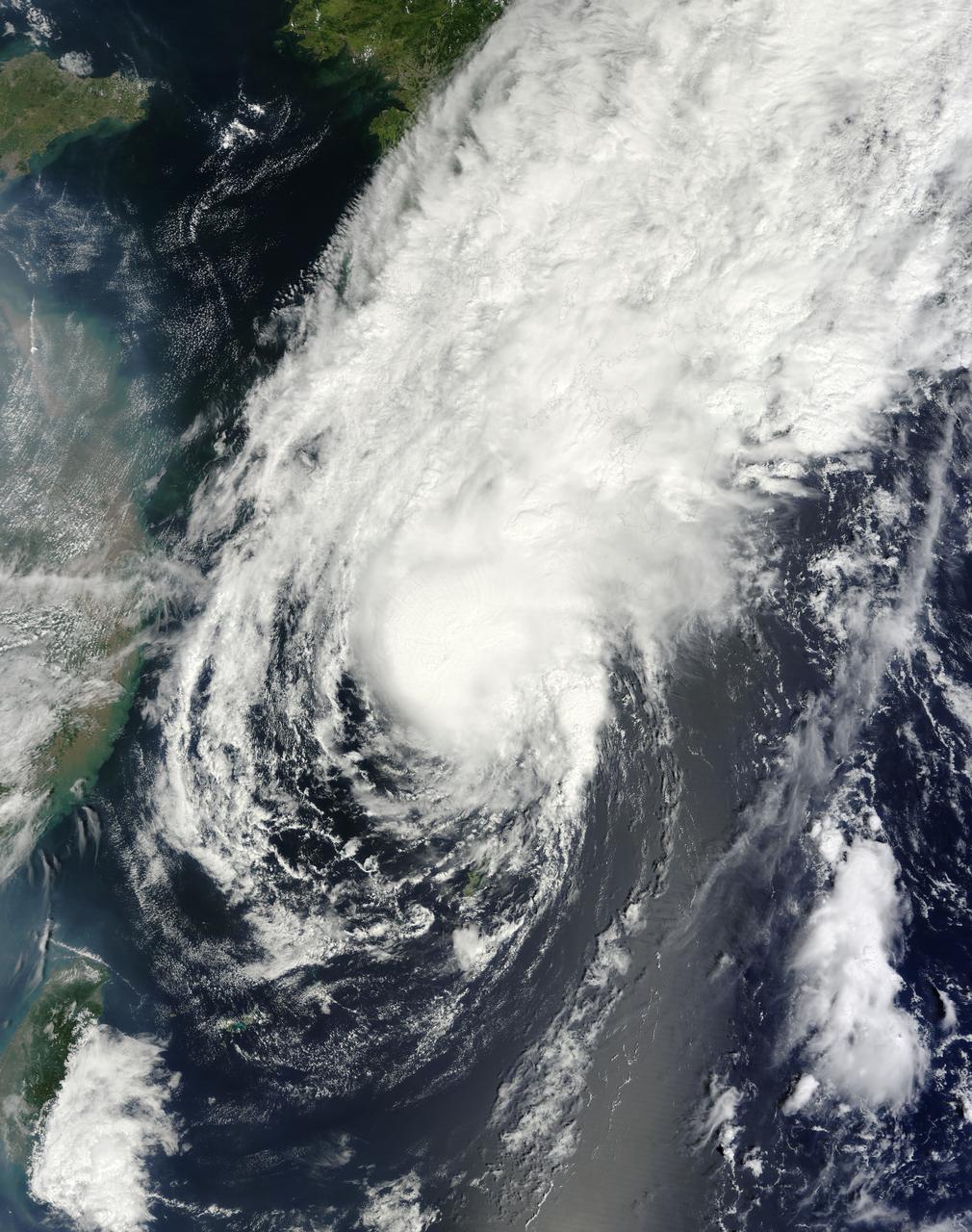
Tropical Storm Toraji Approaching Japan, 09/03/2013 at 02:10 UTC. Terra/MODIS <b><a href="http://www.nasa.gov/audience/formedia/features/MP_Photo_Guidelines.html" rel="nofollow">NASA image use policy.</a></b> <b><a href="http://www.nasa.gov/centers/goddard/home/index.html" rel="nofollow">NASA Goddard Space Flight Center</a></b> enables NASA’s mission through four scientific endeavors: Earth Science, Heliophysics, Solar System Exploration, and Astrophysics. Goddard plays a leading role in NASA’s accomplishments by contributing compelling scientific knowledge to advance the Agency’s mission. <b>Follow us on <a href="http://twitter.com/NASA_GoddardPix" rel="nofollow">Twitter</a></b> <b>Like us on <a href="http://www.facebook.com/pages/Greenbelt-MD/NASA-Goddard/395013845897?ref=tsd" rel="nofollow">Facebook</a></b> <b>Find us on <a href="http://instagram.com/nasagoddard?vm=grid" rel="nofollow">Instagram</a></b>
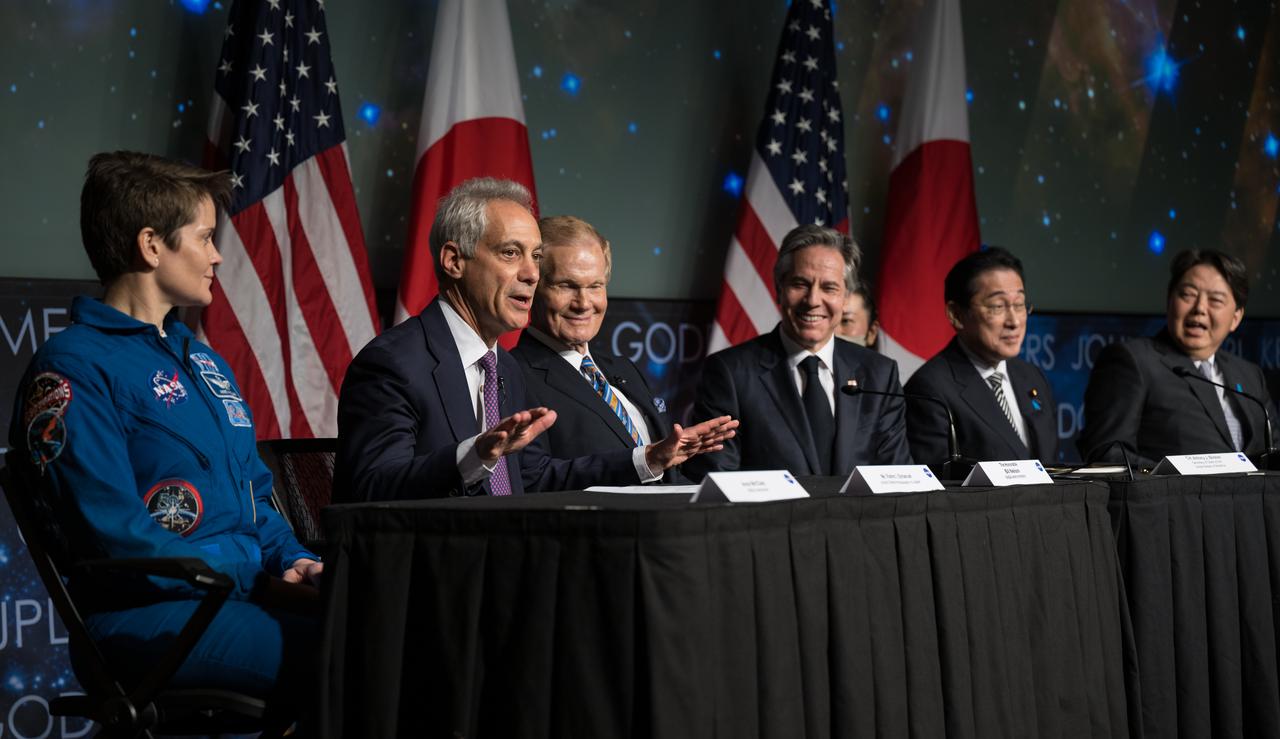
U.S. Ambassador to Japan, Rahm Emanuel, delivers remarks after U.S. Secretary of State, Antony Blinken and Minister for Foreign Affairs of Japan, The Honorable Hayashi Yoshimasa signed an agreement that builds on a long history of collaboration in space exploration between the U.S. and Japan, Friday, Jan. 13, 2023, at the Mary W. Jackson NASA Headquarters building in Washington. “The Framework Agreement Between the Government of Japan and the Government of the United States of America for Cooperation in Space Exploration and Use of Outer Space, Including the Moon and Other Celestial Bodies, For Peaceful Purposes” covers joint activities including space science, Earth science, space operations and exploration, aeronautical science and technology, space technology, space transportation, and safety and mission assurance, among others. Photo Credit: (NASA/Aubrey Gemignani)
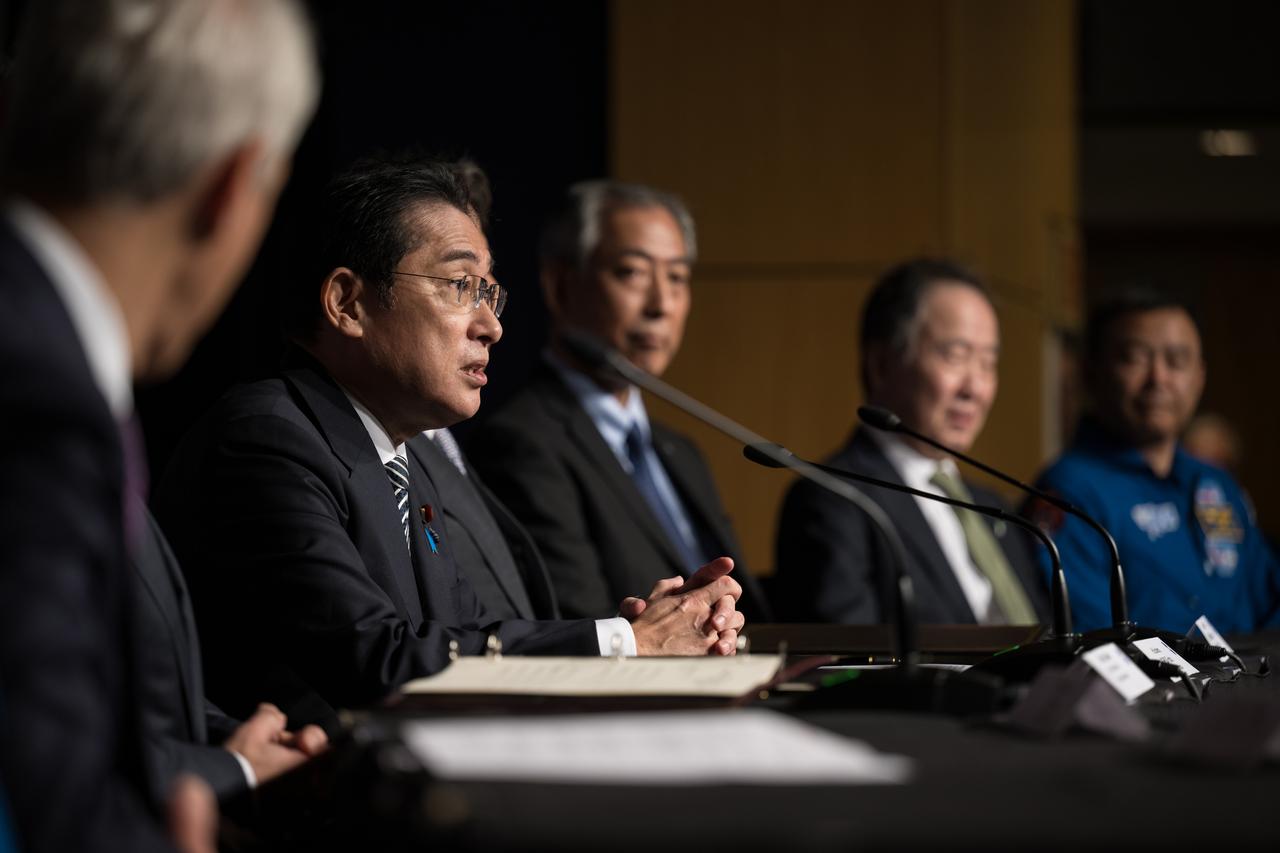
Prime Minister of Japan, His Excellency Kishida Fumio delivers remarks before U.S. Secretary of State, Antony Blinken and Japan’s Minister for Foreign Affairs, Hayashi Yoshimasa, sign an agreement that builds on a long history of collaboration in space exploration between the U.S. and Japan, Friday, Jan. 13, 2023, at the Mary W. Jackson NASA Headquarters building in Washington. “The Framework Agreement Between the Government of Japan and the Government of the United States of America for Cooperation in Space Exploration and Use of Outer Space, Including the Moon and Other Celestial Bodies, For Peaceful Purposes” covers joint activities including space science, Earth science, space operations and exploration, aeronautical science and technology, space technology, space transportation, and safety and mission assurance, among others. Photo Credit: (NASA/Aubrey Gemignani)
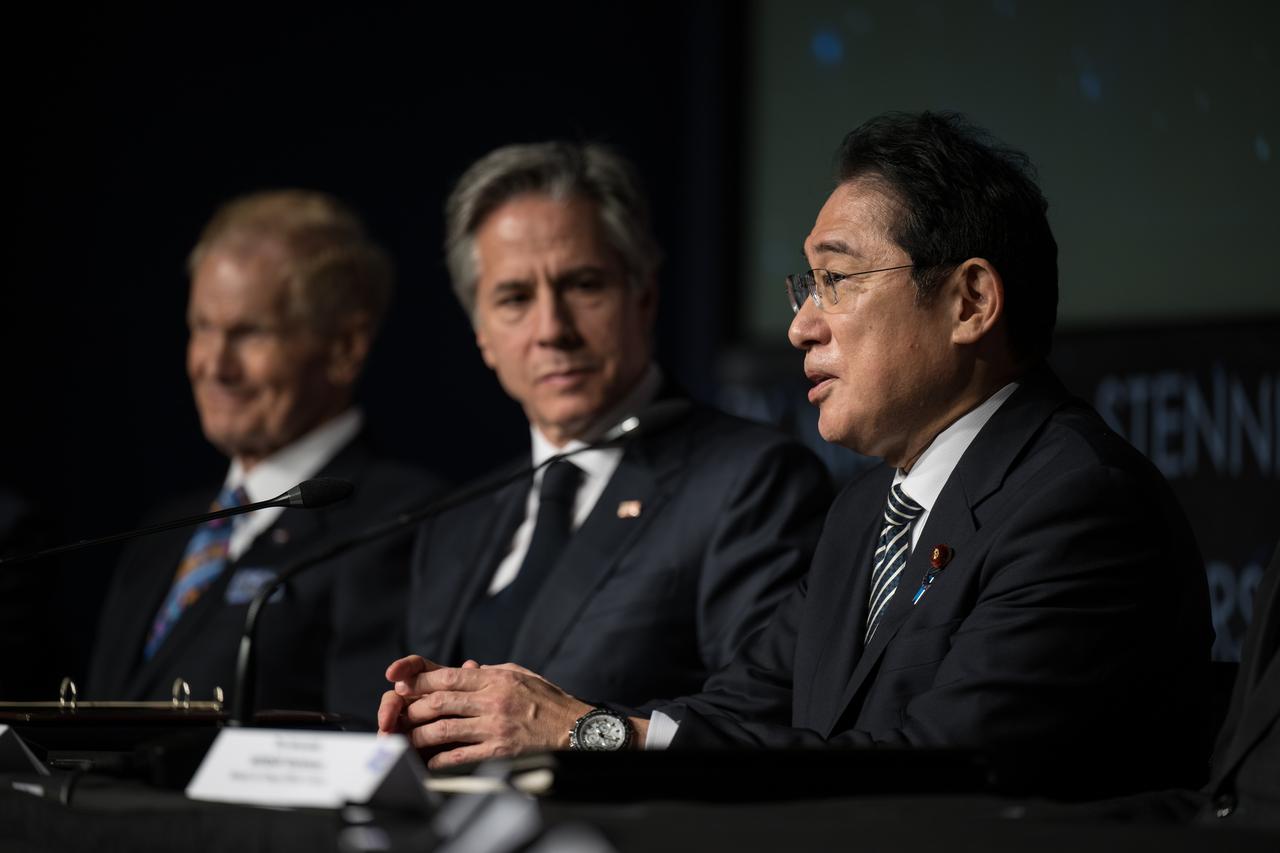
Prime Minister of Japan, His Excellency Kishida Fumio delivers remarks before U.S. Secretary of State, Antony Blinken and Japan’s Minister for Foreign Affairs, Hayashi Yoshimasa, sign an agreement that builds on a long history of collaboration in space exploration between the U.S. and Japan, Friday, Jan. 13, 2023, at the Mary W. Jackson NASA Headquarters building in Washington. “The Framework Agreement Between the Government of Japan and the Government of the United States of America for Cooperation in Space Exploration and Use of Outer Space, Including the Moon and Other Celestial Bodies, For Peaceful Purposes” covers joint activities including space science, Earth science, space operations and exploration, aeronautical science and technology, space technology, space transportation, and safety and mission assurance, among others. Photo Credit: (NASA/Aubrey Gemignani)
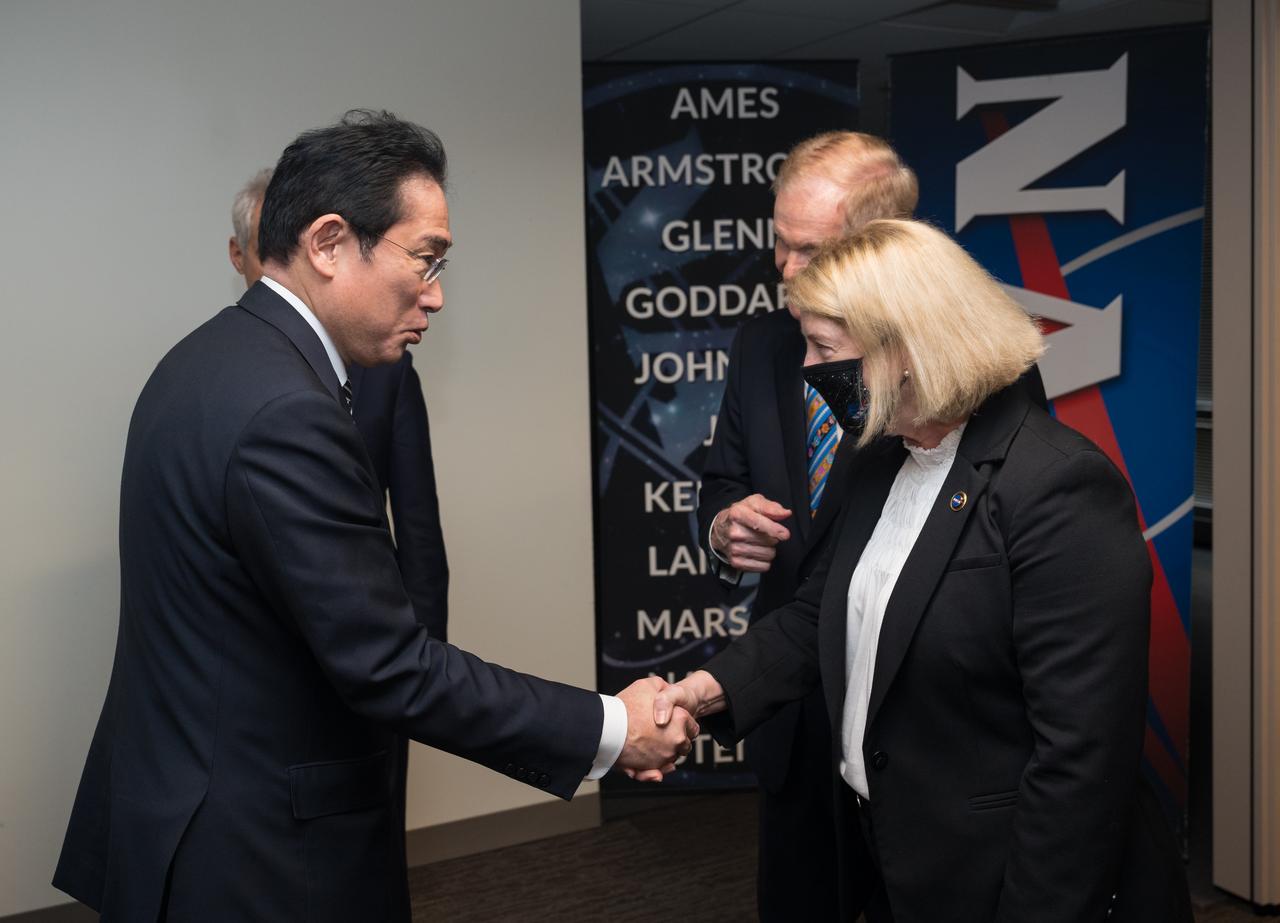
NASA Deputy Administrator Pam Melroy, right, greets Prime Minister of Japan, His Excellency Kishida Fumio, before U.S. Secretary of State Antony Blinken and Japan’s Minister for Foreign Affairs, Hayashi Yoshimasa, sign an agreement that builds on a long history of collaboration in space exploration between the U.S. and Japan, Friday, Jan. 13, 2023, at the Mary W. Jackson NASA Headquarters building in Washington. “The Framework Agreement Between the Government of Japan and the Government of the United States of America for Cooperation in Space Exploration and Use of Outer Space, Including the Moon and Other Celestial Bodies, For Peaceful Purposes” covers joint activities including space science, Earth science, space operations and exploration, aeronautical science and technology, space technology, space transportation, and safety and mission assurance, among others. Photo Credit: (NASA/Aubrey Gemignani)
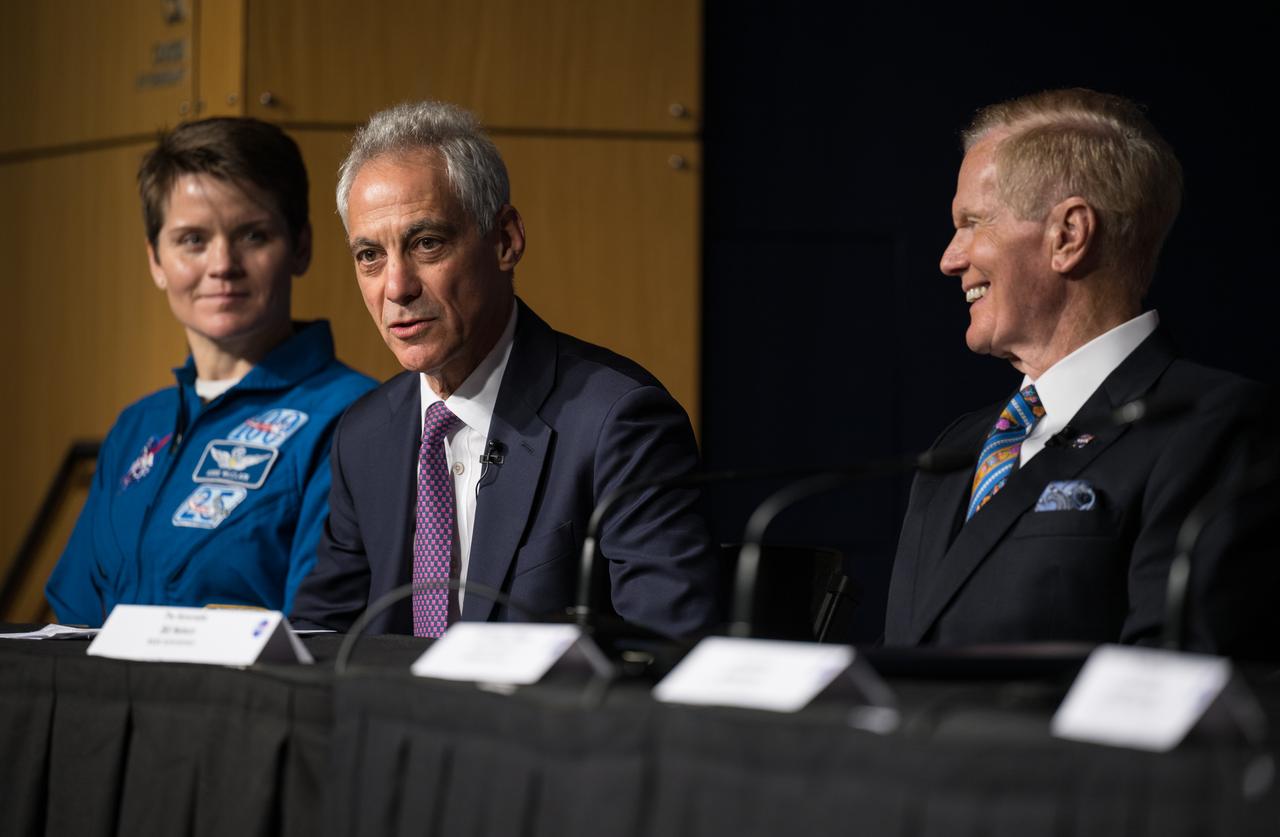
U.S. Ambassador to Japan, Rahm Emanuel, delivers remarks after U.S. Secretary of State, Antony Blinken and Minister for Foreign Affairs of Japan, The Honorable Hayashi Yoshimasa signed an agreement that builds on a long history of collaboration in space exploration between the U.S. and Japan, Friday, Jan. 13, 2023, at the Mary W. Jackson NASA Headquarters building in Washington. “The Framework Agreement Between the Government of Japan and the Government of the United States of America for Cooperation in Space Exploration and Use of Outer Space, Including the Moon and Other Celestial Bodies, For Peaceful Purposes” covers joint activities including space science, Earth science, space operations and exploration, aeronautical science and technology, space technology, space transportation, and safety and mission assurance, among others. Photo Credit: (NASA/Aubrey Gemignani)
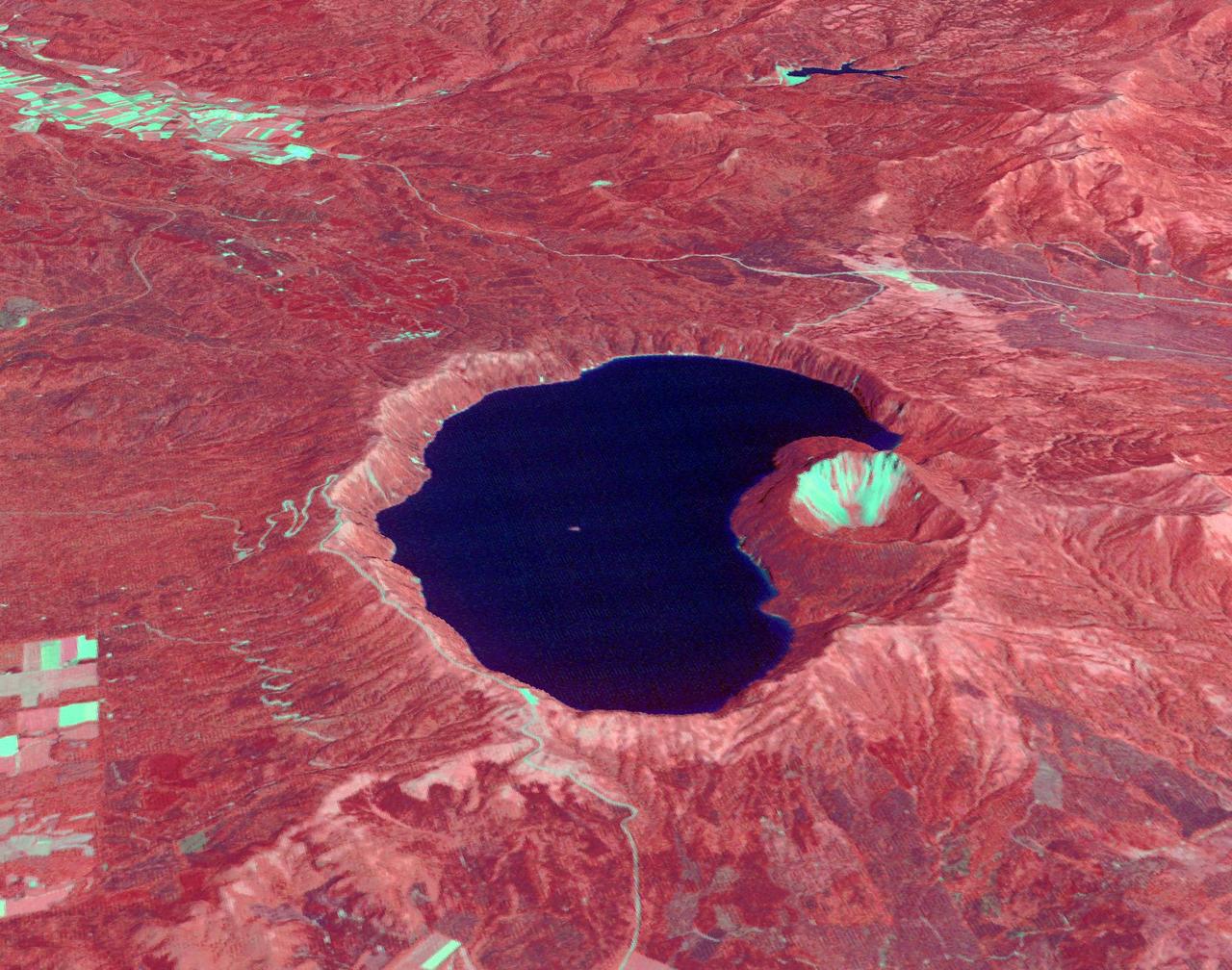
Japan's Lake Mashu on Hokkaido Island is one of the clearest lakes in the world. It was formed about 2,000 years ago due to a volcanic eruption that resulted in the formation of a caldera. Because of its remoteness and inaccessibility, few visitors come to admire the pristine lake. The image was acquired August 28, 2011, and is located at 43.6 degrees north, 144.5 degrees east. https://photojournal.jpl.nasa.gov/catalog/PIA23679
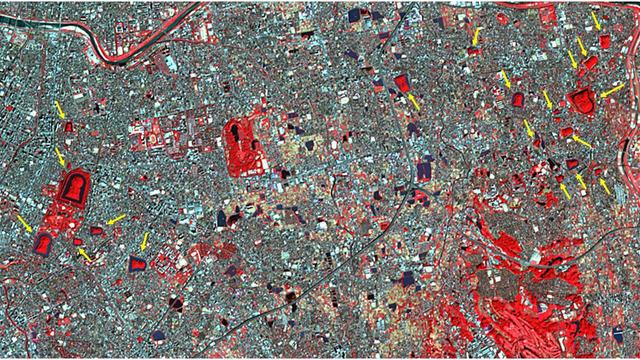
The Mozu Tombs are a group of megalithic tombs in Sakai, Japan, in the Osaka Plain. The largest tomb, the Daisenryo Kofun, was thought to have been built in the 5th century for the Emperor Nintoku. It is keyhole-shaped, surrounded by a moat, and is 840 meters long. Nineteen other tombs are marked on the image. It was acquired October 27, 2011, covers an area of 7.8 by 13.9 km, and is located at 34.6 degrees north, 135.5 degrees east. https://photojournal.jpl.nasa.gov/catalog/PIA23460
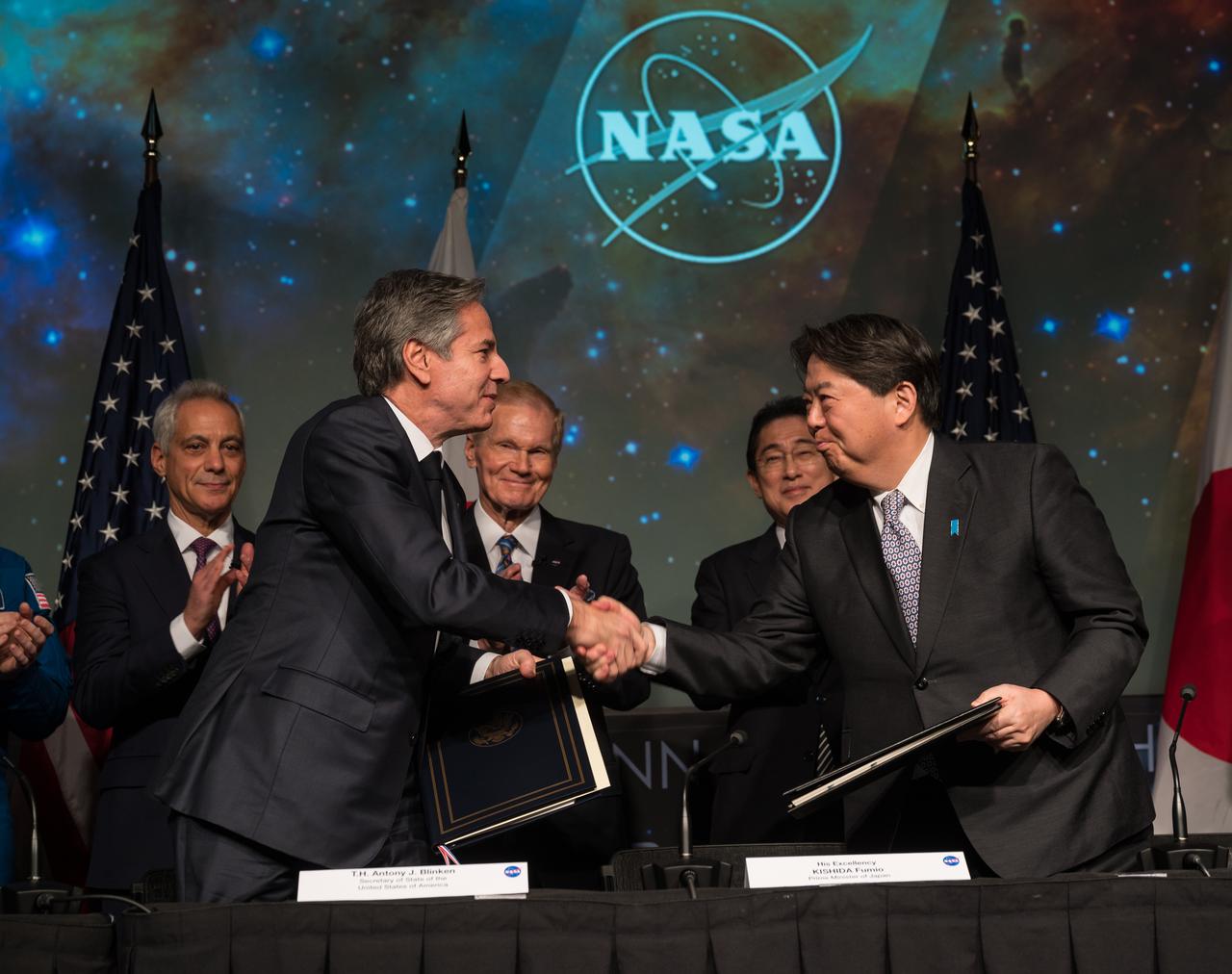
U.S. Secretary of State Antony Blinken, front left, and Japan’s Minister for Foreign Affairs, Hayashi Yoshimasa, front right, shake hands after signing an agreement that builds on a long history of collaboration in space exploration between the U.S. and Japan, Friday, Jan. 13, 2023, at the Mary W. Jackson NASA Headquarters building in Washington. Also present were, U.S. Ambassador to Japan Rahm Emanuel, left, NASA Administrator Bill Nelson, second from left, and Prime Minister of Japan, His Excellency Kishida Fumio, right. “The Framework Agreement Between the Government of Japan and the Government of the United States of America for Cooperation in Space Exploration and Use of Outer Space, Including the Moon and Other Celestial Bodies, For Peaceful Purposes” covers joint activities including space science, Earth science, space operations and exploration, aeronautical science and technology, space technology, space transportation, and safety and mission assurance, among others. Photo Credit: (NASA/Aubrey Gemignani)
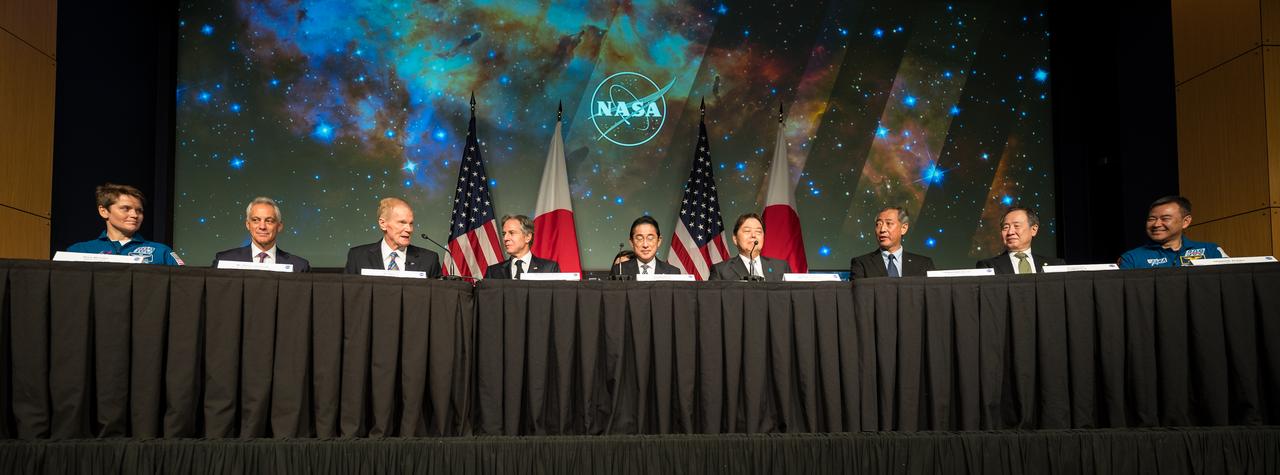
From left to right, NASA astronaut Anne McClain, U.S. Ambassador to Japan, Rahm Emanuel, NASA Administrator Bill Nelson, U.S. Secretary of State Antony Blinken, Prime Minister of Japan, His Excellency Kishida Fumio, Minister for Foreign Affairs of Japan, The Honorable Hayashi Yoshimasa, President of the Japan Aerospace Exploration Agency (JAXA), Yamakawa Hiroshi, Ambassador Extraordinary and Plenipotentiary of Japan to the U.S., Tomita Koji, and JAXA astronaut Hoshide Akihiko, are seen before the signing of an agreement that builds on a long history of collaboration in space exploration between the U.S. and Japan, Friday, Jan. 13, 2023, at the Mary W. Jackson NASA Headquarters building in Washington. “The Framework Agreement Between the Government of Japan and the Government of the United States of America for Cooperation in Space Exploration and Use of Outer Space, Including the Moon and Other Celestial Bodies, For Peaceful Purposes” covers joint activities including space science, Earth science, space operations and exploration, aeronautical science and technology, space technology, space transportation, and safety and mission assurance, among others. Photo Credit: (NASA/Aubrey Gemignani)
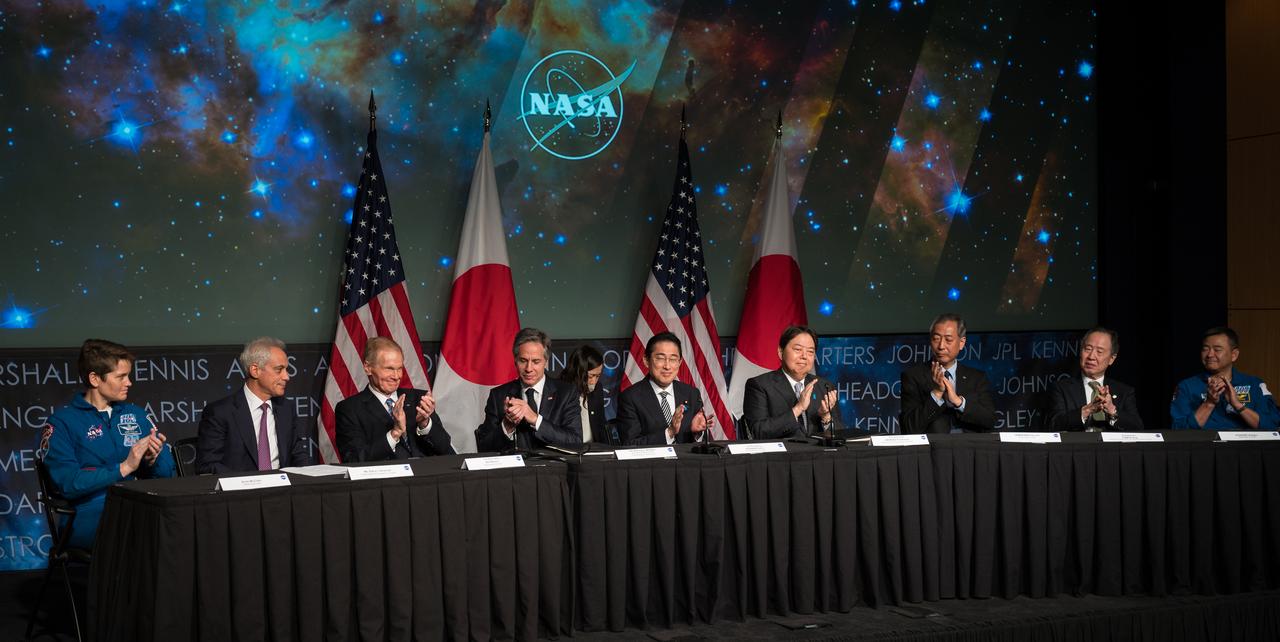
From left to right, NASA astronaut Anne McClain, U.S. Ambassador to Japan Rahm Emanuel, NASA Administrator Bill Nelson, U.S. Secretary of State Antony Blinken, Prime Minister of Japan, His Excellency Kishida Fumio, Minister for Foreign Affairs of Japan, The Honorable Hayashi Yoshimasa, President of the Japan Aerospace Exploration Agency (JAXA), Yamakawa Hiroshi, Ambassador Extraordinary and Plenipotentiary of Japan to the U.S., Tomita Koji, and JAXA astronaut Hoshide Akihiko, applaud after the signing of an agreement that builds on a long history of collaboration in space exploration between the U.S. and Japan, Friday, Jan. 13, 2023, at the Mary W. Jackson NASA Headquarters building in Washington. “The Framework Agreement Between the Government of Japan and the Government of the United States of America for Cooperation in Space Exploration and Use of Outer Space, Including the Moon and Other Celestial Bodies, For Peaceful Purposes” covers joint activities including space science, Earth science, space operations and exploration, aeronautical science and technology, space technology, space transportation, and safety and mission assurance, among others. Photo Credit: (NASA/Aubrey Gemignani)
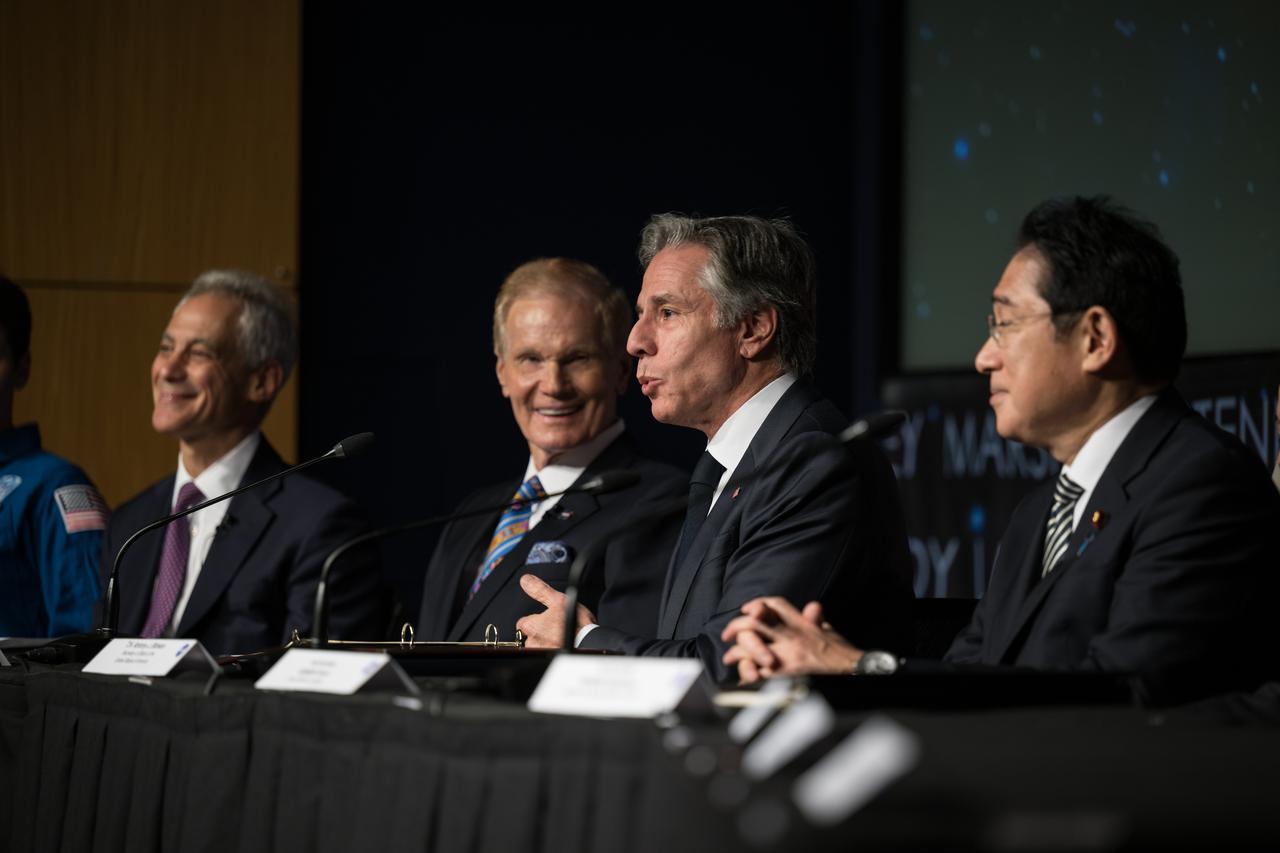
U.S. Secretary of State, Antony Blinken delivers remarks before he and Japan’s Minister for Foreign Affairs, Hayashi Yoshimasa, sign an agreement that builds on a long history of collaboration in space exploration between the U.S. and Japan, Friday, Jan. 13, 2023, at the Mary W. Jackson NASA Headquarters building in Washington. “The Framework Agreement Between the Government of Japan and the Government of the United States of America for Cooperation in Space Exploration and Use of Outer Space, Including the Moon and Other Celestial Bodies, For Peaceful Purposes” covers joint activities including space science, Earth science, space operations and exploration, aeronautical science and technology, space technology, space transportation, and safety and mission assurance, among others. Photo Credit: (NASA/Aubrey Gemignani)
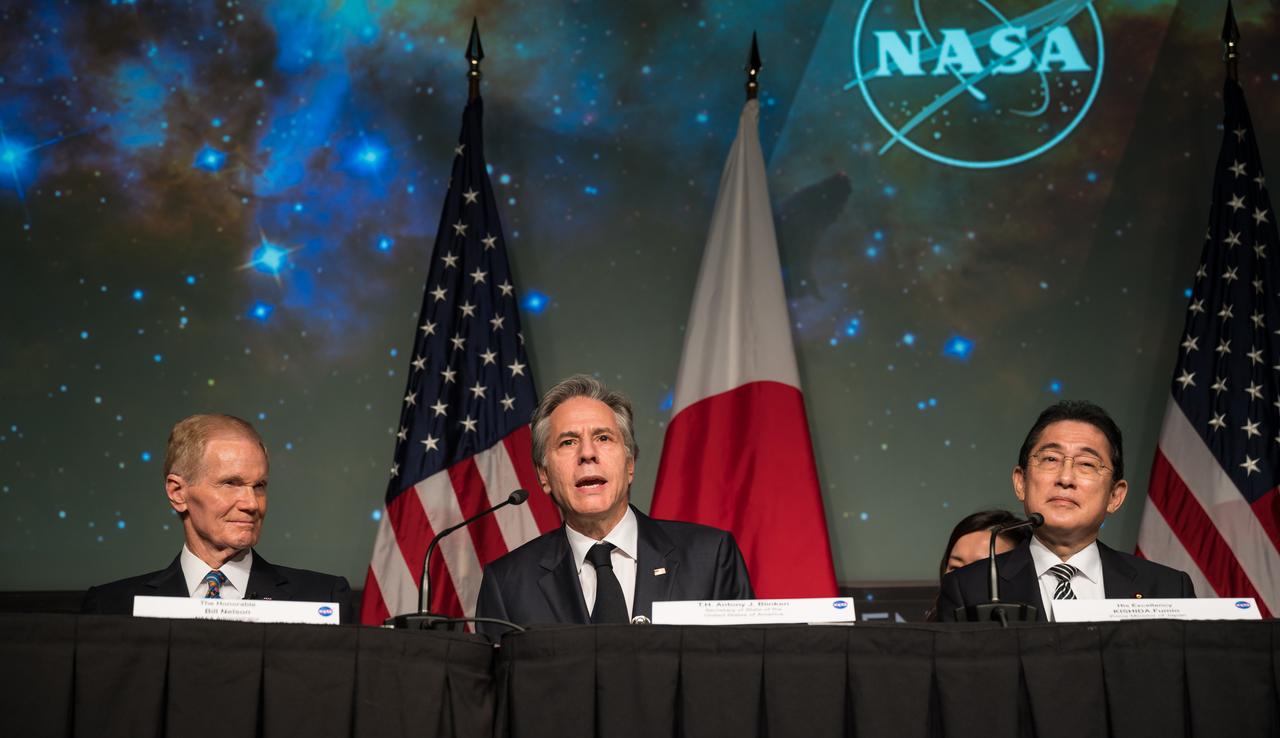
U.S. Secretary of State, Antony Blinken delivers remarks before U.S. Secretary of State, Antony Blinken and Japan’s Minister for Foreign Affairs, Hayashi Yoshimasa, sign an agreement that builds on a long history of collaboration in space exploration between the U.S. and Japan, Friday, Jan. 13, 2023, at the Mary W. Jackson NASA Headquarters building in Washington. “The Framework Agreement Between the Government of Japan and the Government of the United States of America for Cooperation in Space Exploration and Use of Outer Space, Including the Moon and Other Celestial Bodies, For Peaceful Purposes” covers joint activities including space science, Earth science, space operations and exploration, aeronautical science and technology, space technology, space transportation, and safety and mission assurance, among others. Photo Credit: (NASA/Aubrey Gemignani)
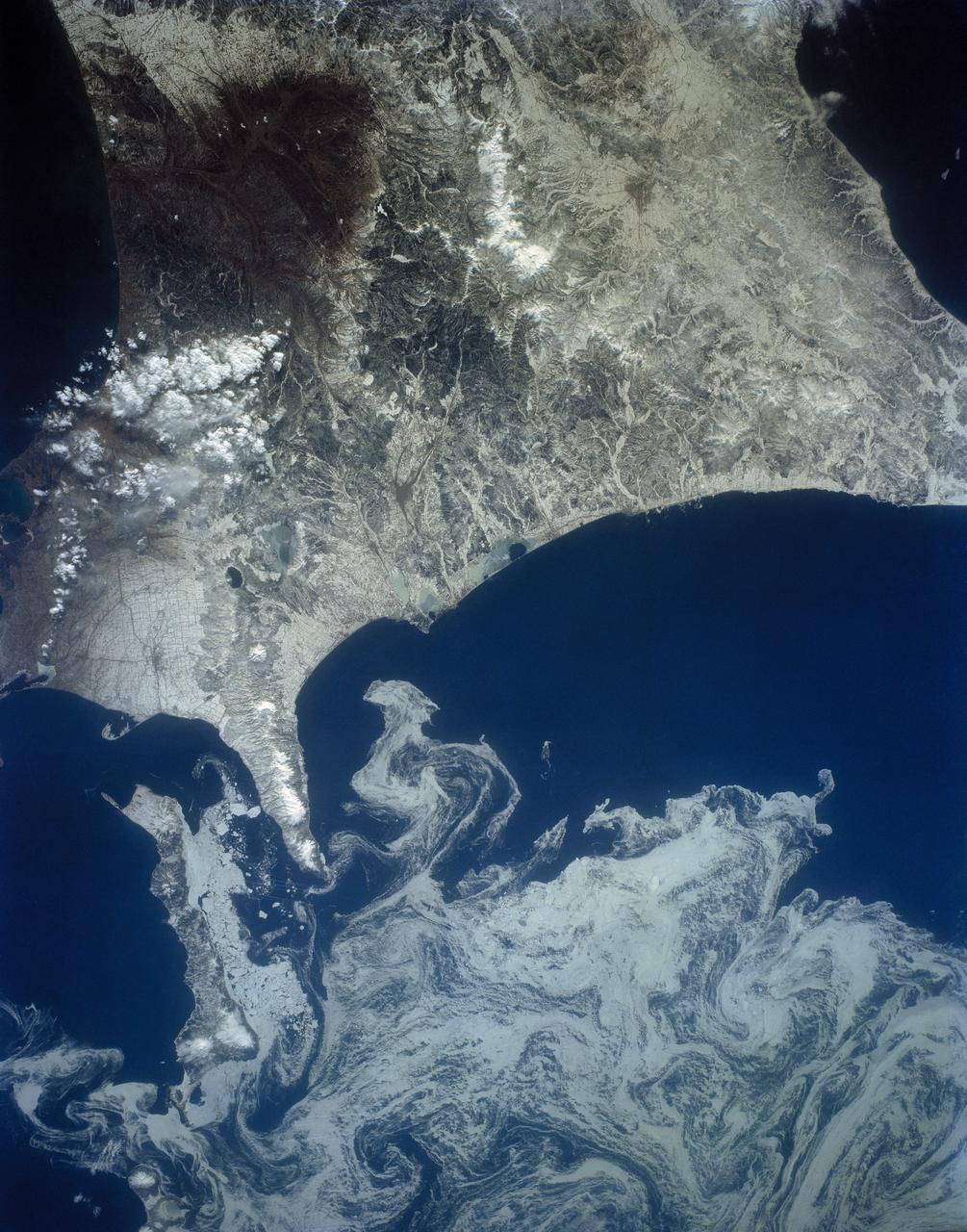
The northeast coast of Hokkaido and Kunashir Island, Japan (44.0N, 143.0E) are seen bordered by drifting sea ice. The sea ice has formed a complex pattern of eddies in response to surface water currents and winds. Photos of this kind aid researchers in describing local ocean current patterns and the effects of wind speed and direction on the drift of surface material, such as ice floes or oil. Kunashir is the southernmost of the Kuril Islands.
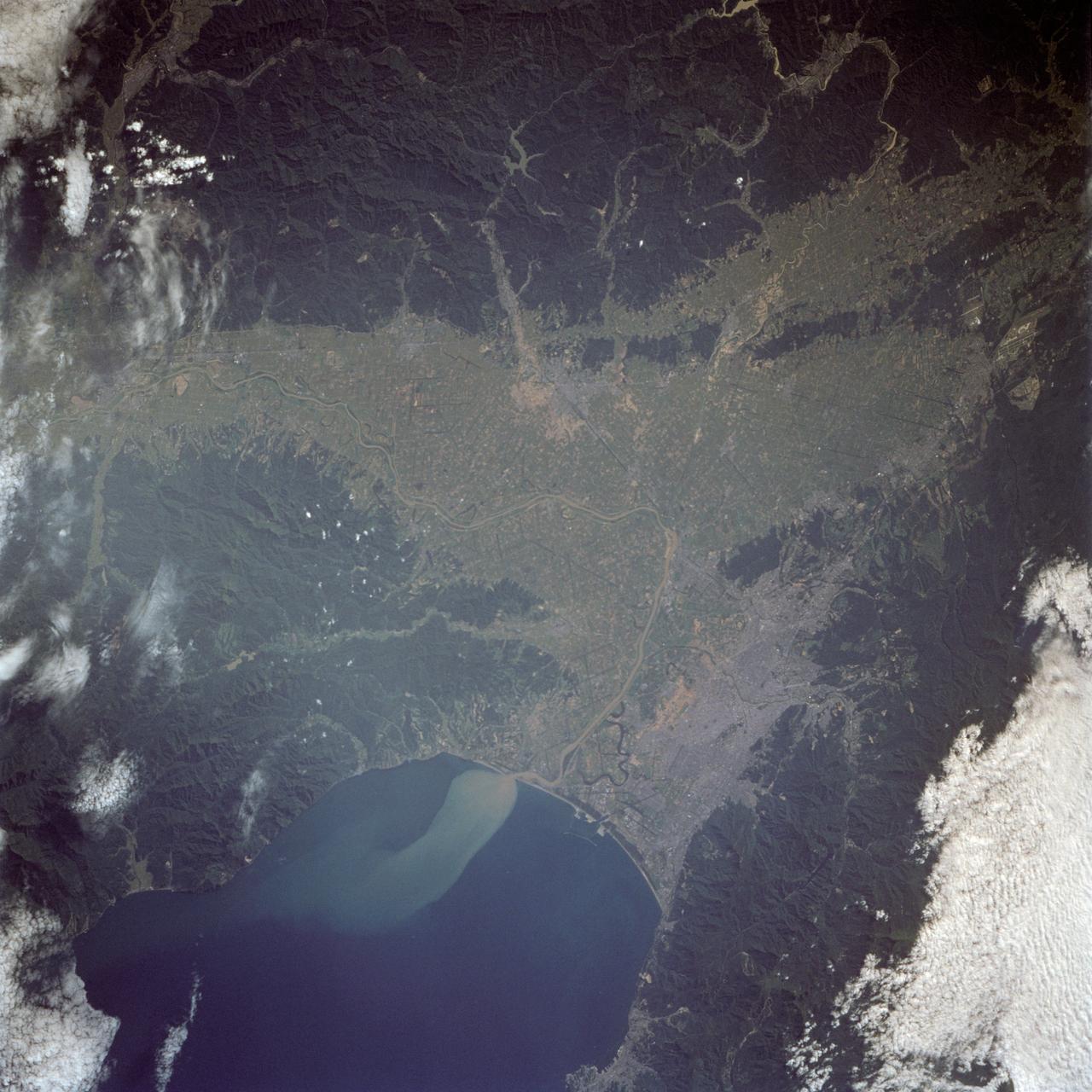
The city of Sapporo on the northernmost of the Japanese Home Island of Hokkaido (43.5N, 141.5E), host to the 1986 Winter Olympic Games is situated along the margin of a large valley which extends across the island from the Sea of Japan to the Pacific Ocean. The Valley is largely cultivated (the lighter green of the cultivated land distinguishes it from the gray urban development of Sapporo), but much of the island remains heavily forested.
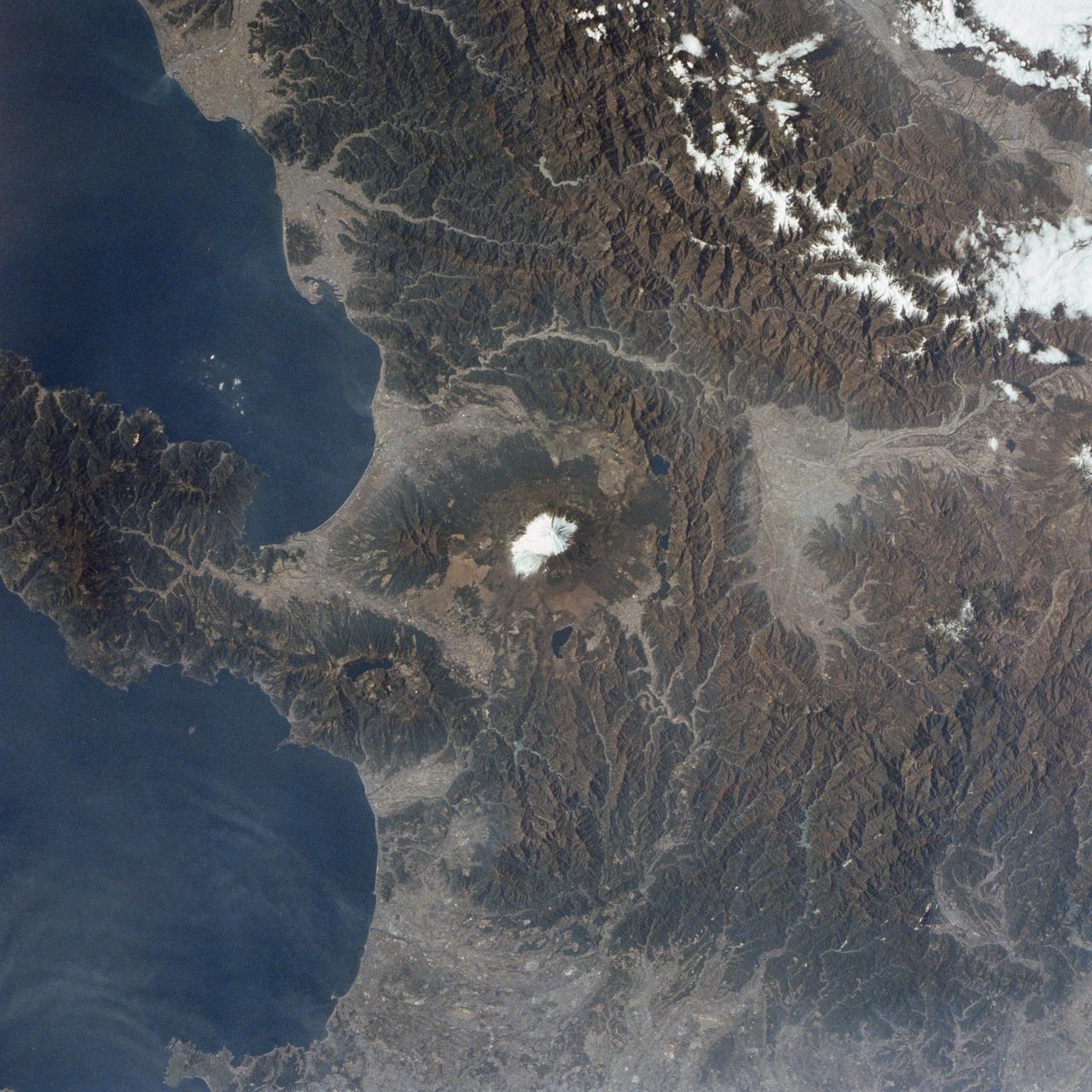
STS002-09-390 (12-14 Nov. 1981) --- Honshu Island, Japan, and its snow-covered Fuji-San or Fuji-Yama volcano are the features of this 70mm frame. The volcano peak is 12,400 feet tall. The western suburbs of Tokyo are at right edge of the photograph. Isu Peninsula is at the bottom, separating the Suruga and Sagami Bay. Other large cities include Yokohama, Kozu, Shizuoka, Namazu and Odawara. Photo credit: NASA
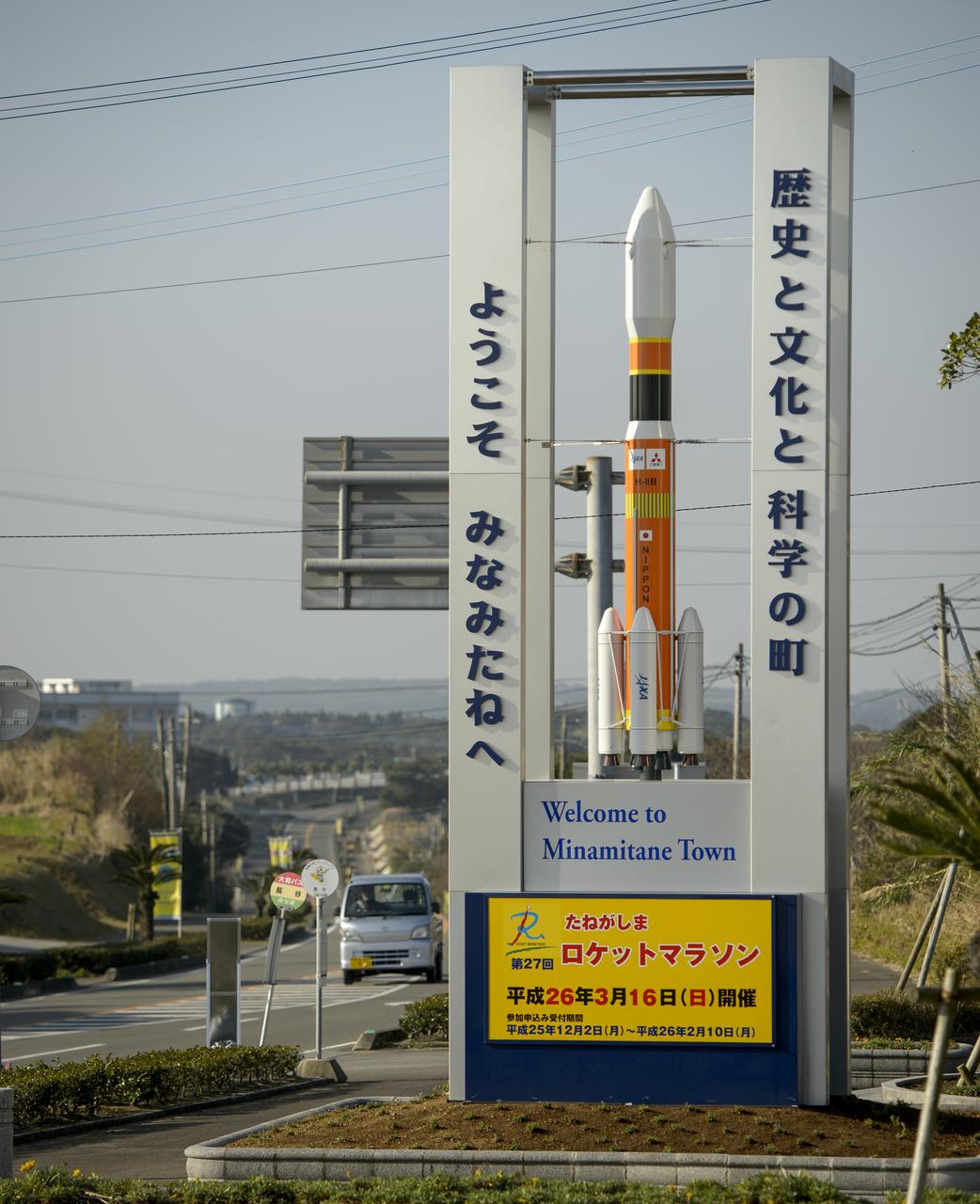
A sign with a model of the Japanese H-IIB rocket welcomes visitors to Minamitane Town, one of only a few small towns located outside of the Japan Aerospace Exploration Agency’s (JAXA) Tanegashima Space Center (TNSC), where the launch of an H-IIA rocket carrying the Global Precipitation Measurement (GPM) Core Observatory will take place in the next week, Saturday, Feb. 22, 2014, Tanegashima Island, Japan. The NASA-Japan Aerospace Exploration Agency (JAXA) GPM spacecraft will collect information that unifies data from an international network of existing and future satellites to map global rainfall and snowfall every three hours. Photo Credit: (NASA/Bill Ingalls)
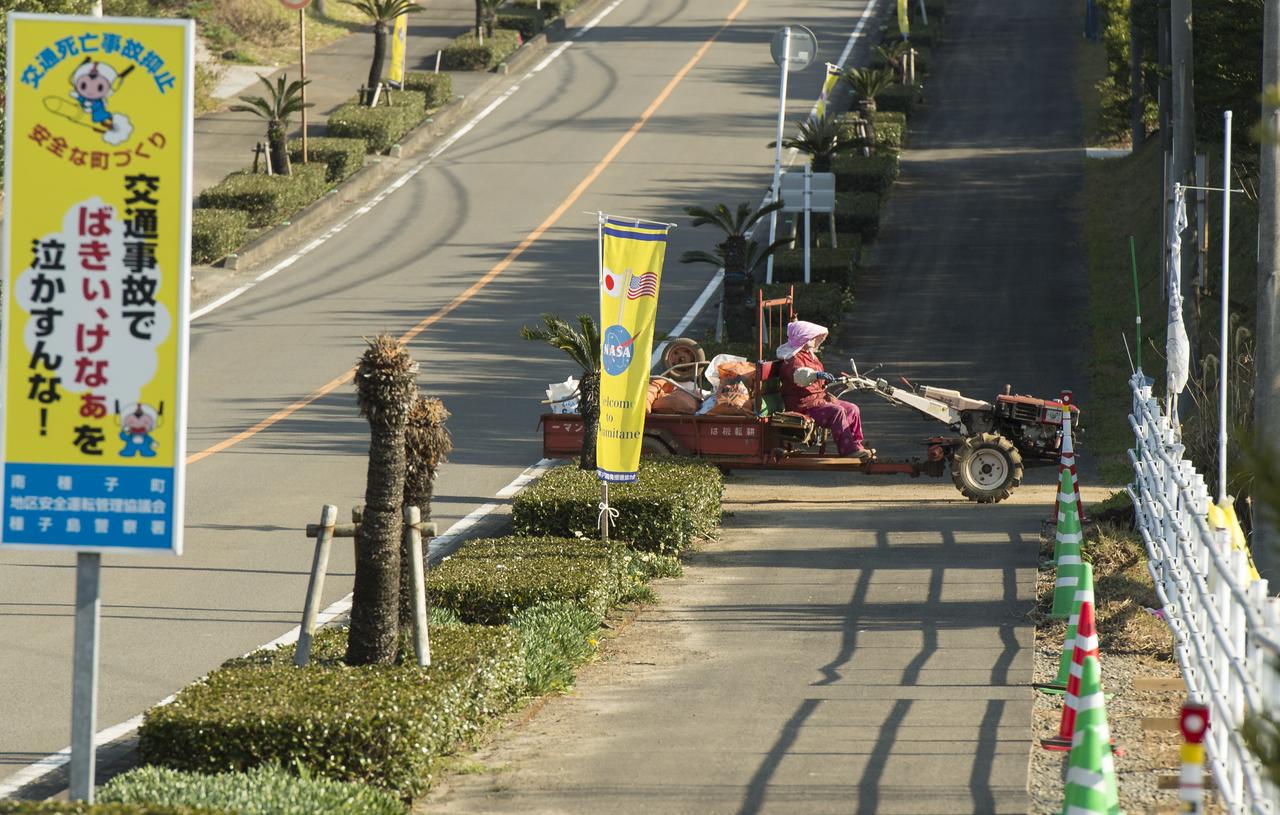
Roadside flags welcome the NASA team and visitors to Minamitame Town, one of only a few small towns located outside of the Japan Aerospace Exploration Agency’s (JAXA) Tanegashima Space Center (TNSC), where the launch of an H-IIA rocket carrying the Global Precipitation Measurement (GPM) Core Observatory will take place in the next week, Saturday, Feb. 22, 2014, Tanegashima Island, Japan. The NASA-Japan Aerospace Exploration Agency (JAXA) GPM spacecraft will collect information that unifies data from an international network of existing and future satellites to map global rainfall and snowfall every three hours. The launch is planned for Feb. 28, 2014. Photo Credit: (NASA/Bill Ingalls)
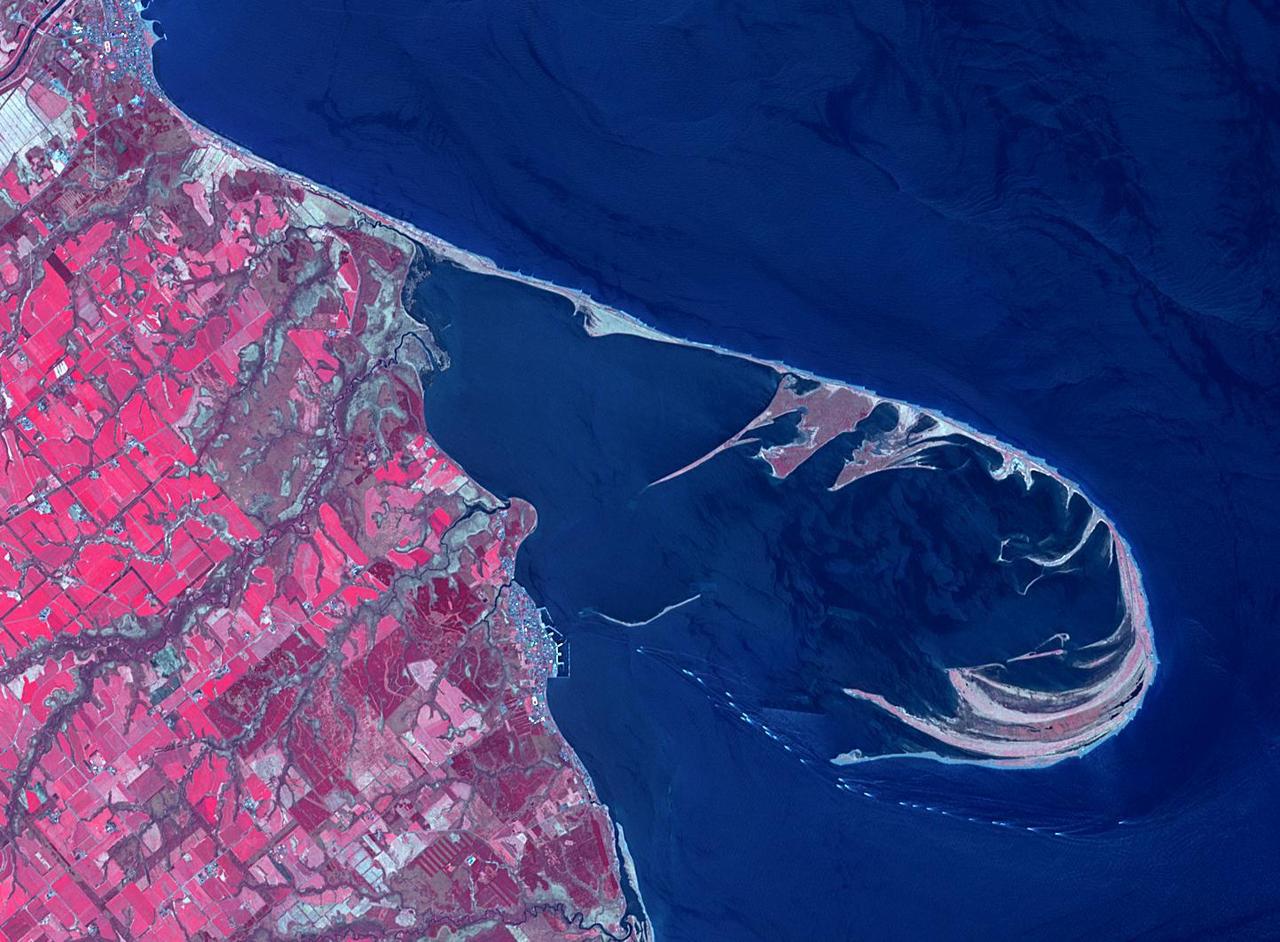
The Notsuke Peninsula is on the east coast of Hokkaido, Japan. Its name is derived from the Ainu word for jawbone. The curved peninsula is the longest sandspit in the country (26 km), formed by the deposition of sand carried by offshore currents. A 15 km road stretches from the base of the peninsula to a nature center and is known as the "Flower Road". The image was acquired May 14, 2019, covers an area of 15.9 by 21.7 km, and is located at 43.6 degrees north, 145.3 degrees east. https://photojournal.jpl.nasa.gov/catalog/PIA25858
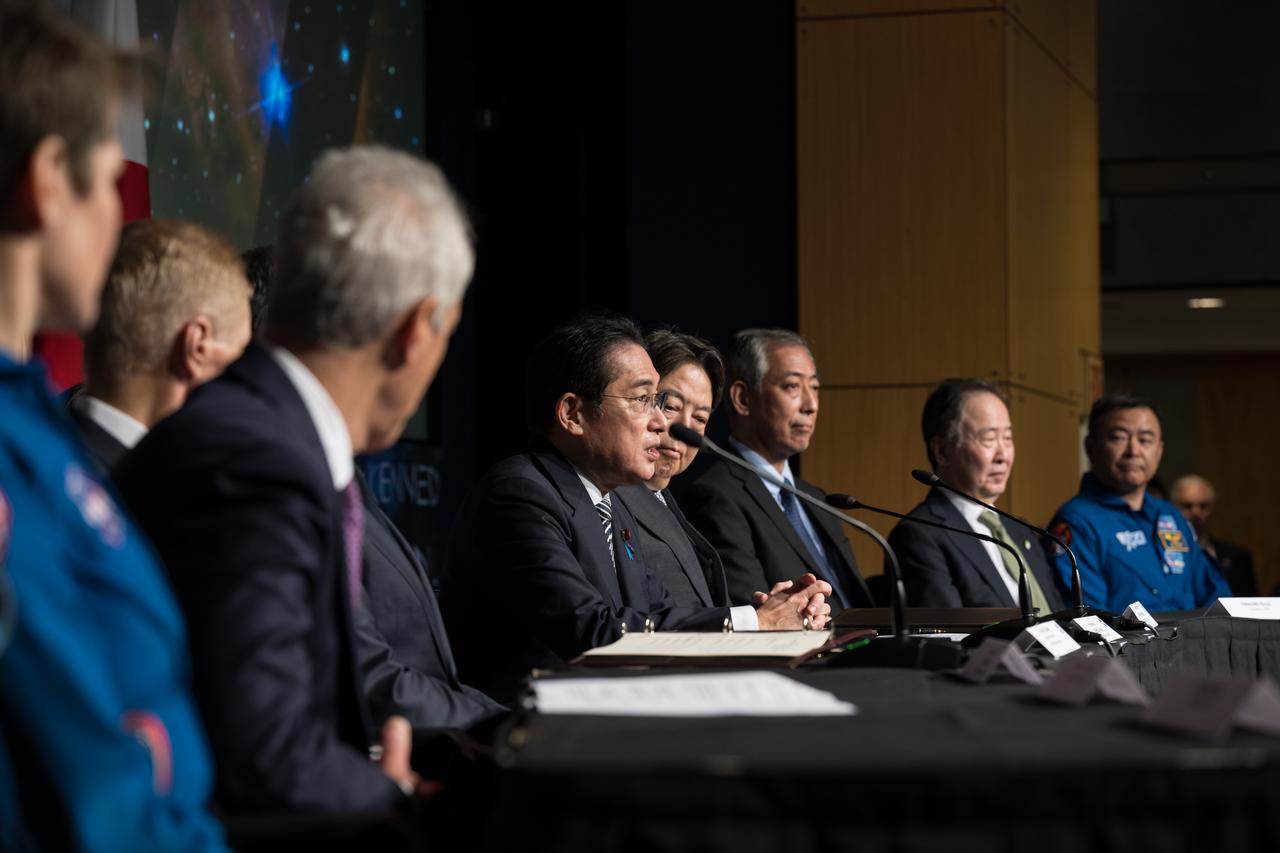
Prime Minister of Japan, His Excellency Kishida Fumio delivers remarks before U.S. Secretary of State, Antony Blinken and Japan’s Minister for Foreign Affairs, Hayashi Yoshimasa, sign an agreement that builds on a long history of collaboration in space exploration between the U.S. and Japan, Friday, Jan. 13, 2023, at the Mary W. Jackson NASA Headquarters building in Washington. “The Framework Agreement Between the Government of Japan and the Government of the United States of America for Cooperation in Space Exploration and Use of Outer Space, Including the Moon and Other Celestial Bodies, For Peaceful Purposes” covers joint activities including space science, Earth science, space operations and exploration, aeronautical science and technology, space technology, space transportation, and safety and mission assurance, among others. Photo Credit: (NASA/Aubrey Gemignani)
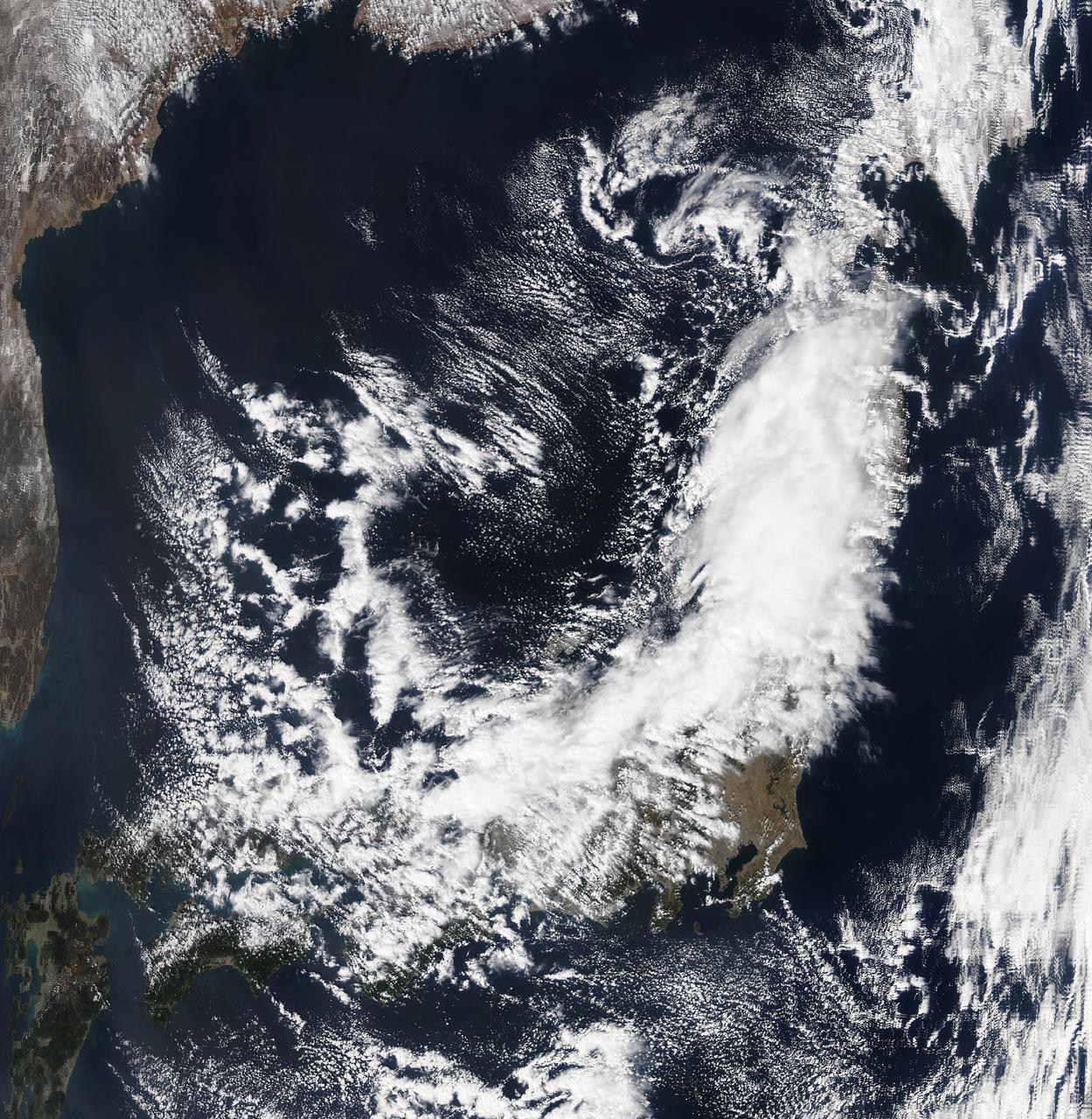
NASA's Aqua satellite passed over Japan one hour and 41 minutes before the quake hit. At the time Aqua passed overhead, the Moderate Resolution Imaging Spectroradiometer (MODIS) instrument captured a visible of Japan covered by clouds. The image was taken at 0405 UTC on March 11 (1:05 p.m. local time Japan /11:05 p.m. EST March 10). The quake hit at 2:46 p.m. local time/Japan. Satellite: Aqua Credit: NASA/GSFC/Aqua <b><a href="http://www.nasa.gov/centers/goddard/home/index.html" rel="nofollow">NASA Goddard Space Flight Center</a></b> enables NASA’s mission through four scientific endeavors: Earth Science, Heliophysics, Solar System Exploration, and Astrophysics. Goddard plays a leading role in NASA’s accomplishments by contributing compelling scientific knowledge to advance the Agency’s mission. <b>Follow us on <a href="http://twitter.com/NASA_GoddardPix" rel="nofollow">Twitter</a></b> <b>Join us on <a href="http://www.facebook.com/pages/Greenbelt-MD/NASA-Goddard/395013845897?ref=tsd" rel="nofollow">Facebook</a></b>
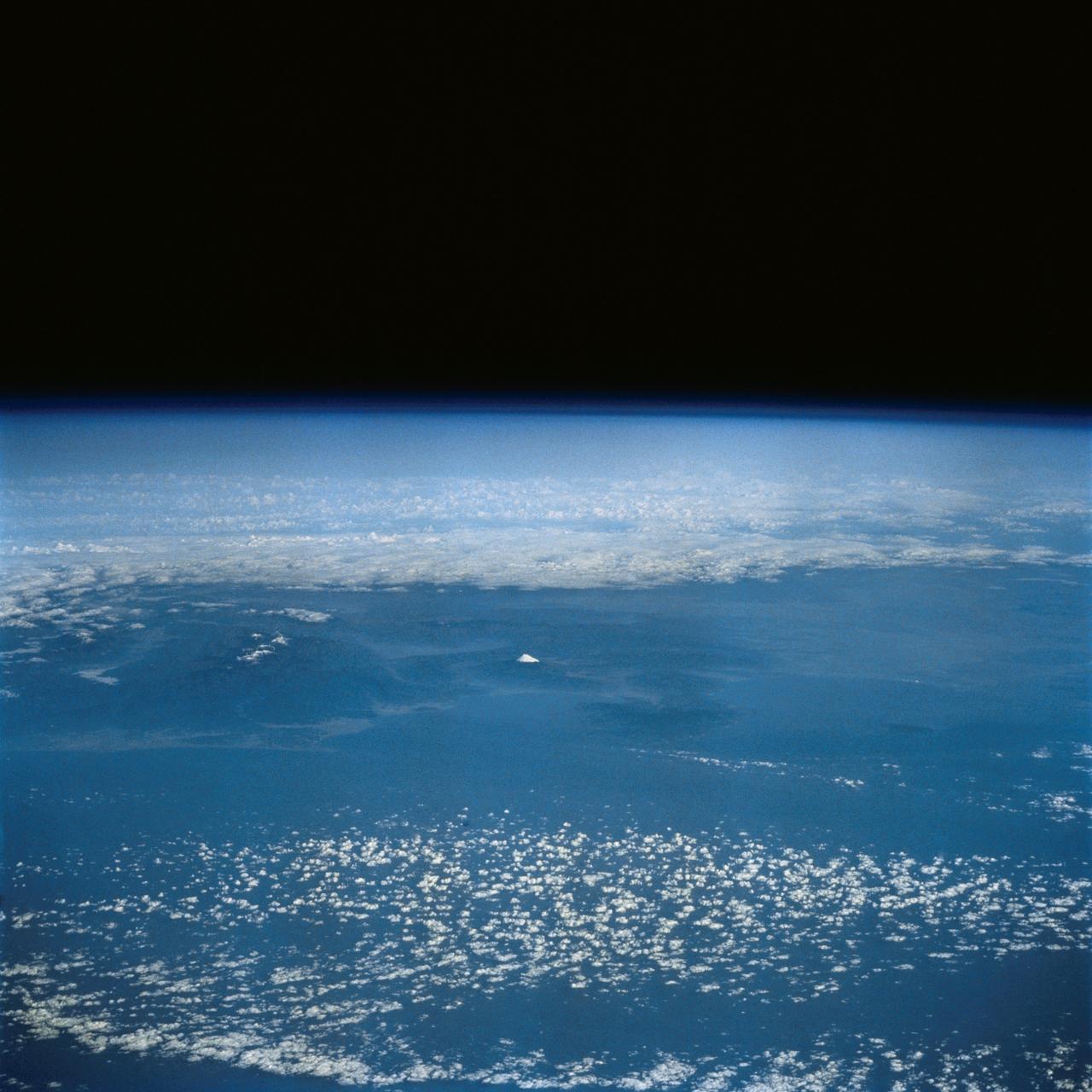
This distant view of Mt. Fuji, on the main home island of Honshu, Japan (34.0N, 139.0E) was taken from about 450 miles to the south. Evan at that great distance, the majestic and inspiring Mt. Fuji is still plainly visible and easily recognized as a world renowned symbol of Japan. The snow capped extinct volcano lies just a few miles south of Tokyo.

A NASA Global Precipitation Measurement (GPM) mission shirt is seen drying in the mid-day sun outside the Sun Pearl Hotel where many of the NASA GPM team are staying, Sunday, Feb. 23, 2014, Tanegashima Island, Japan. A Japanese H-IIA rocket carrying the NASA-Japan Aerospace Exploration Agency (JAXA), Global Precipitation Measurement (GPM) Core Observatory is planned for launch from the space center on Feb. 28, 2014. Once launched, the GPM spacecraft will collect information that unifies data from an international network of existing and future satellites to map global rainfall and snowfall every three hours. Photo Credit: (NASA/Bill Ingalls)
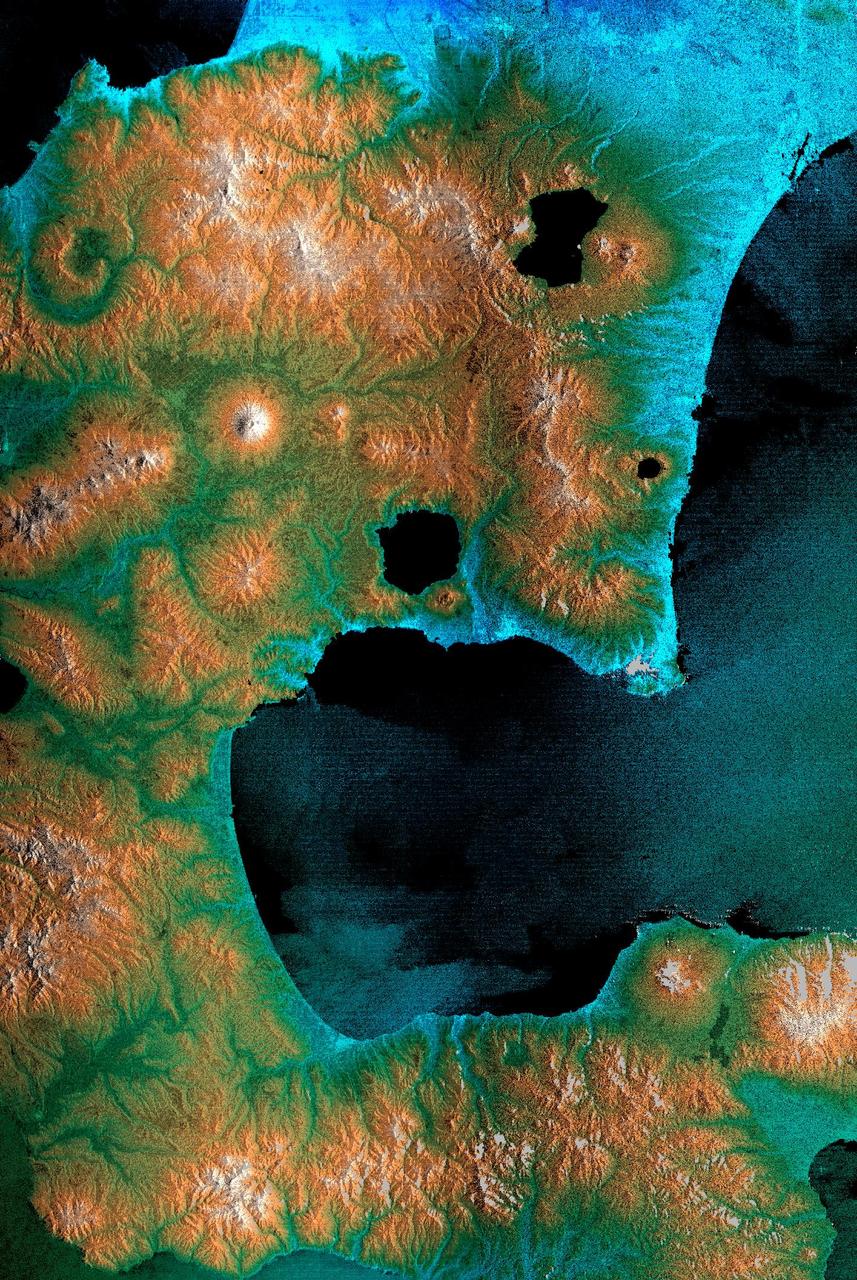
The southeast part of the island of Hokkaido, Japan, is an area dominated by volcanoes and volcanic caldera. The active Usu Volcano is at the lower right edge of the circular Lake Toya-Ko and near the center of the image.
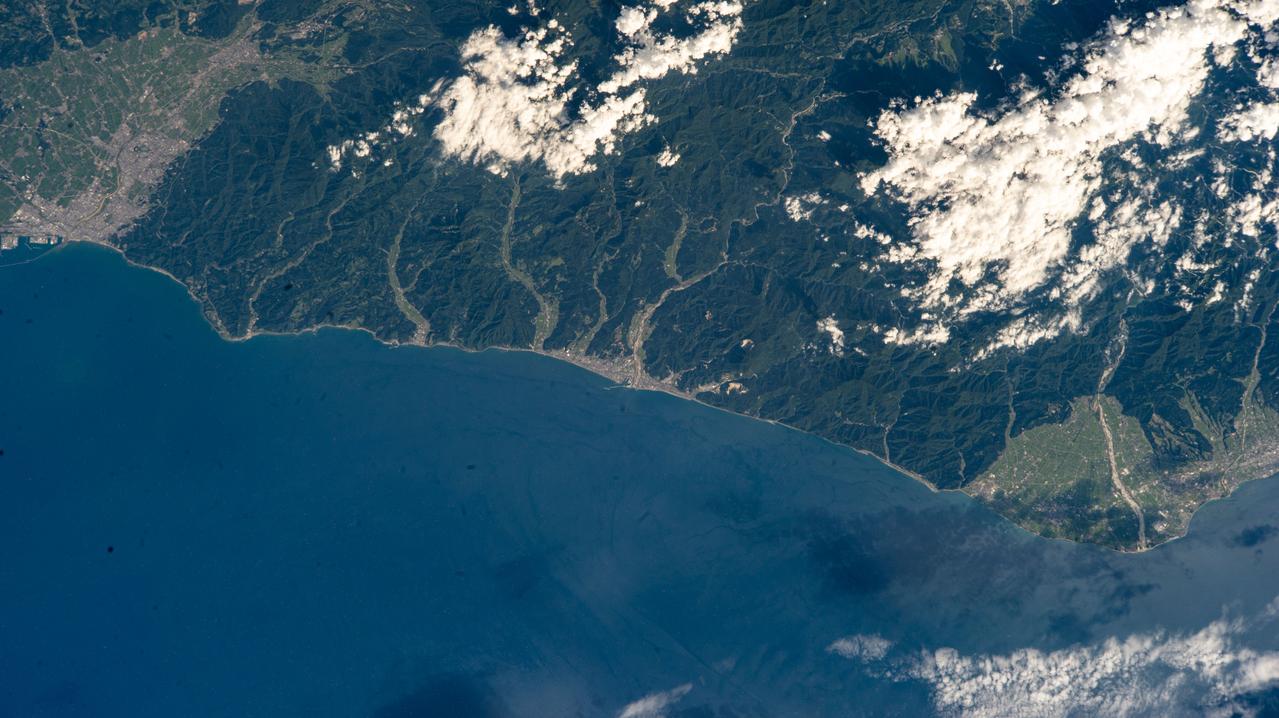
iss073e0379903 (July 20, 2025) --- Japan's Chūbu region coast on the Sea of Japan, with the city of Joetsu on the far left and the cities of Asahi, Nyuzen, and Kurobe on the far right, is pictured from the International Space Station as it orbited 260 miles above the Asian island nation.

NASA Administrator Bill Nelson, center, and NASA Deputy Administrator Pam Melroy, right, greet U.S. Secretary of State Antony Blinken before the signing of an agreement that builds on a long history of collaboration in space exploration between the U.S. and Japan, Friday, Jan. 13, 2023, at the Mary W. Jackson NASA Headquarters building in Washington. “The Framework Agreement Between the Government of Japan and the Government of the United States of America for Cooperation in Space Exploration and Use of Outer Space, Including the Moon and Other Celestial Bodies, For Peaceful Purposes” covers joint activities including space science, Earth science, space operations and exploration, aeronautical science and technology, space technology, space transportation, and safety and mission assurance, among others. Photo Credit: (NASA/Aubrey Gemignani)
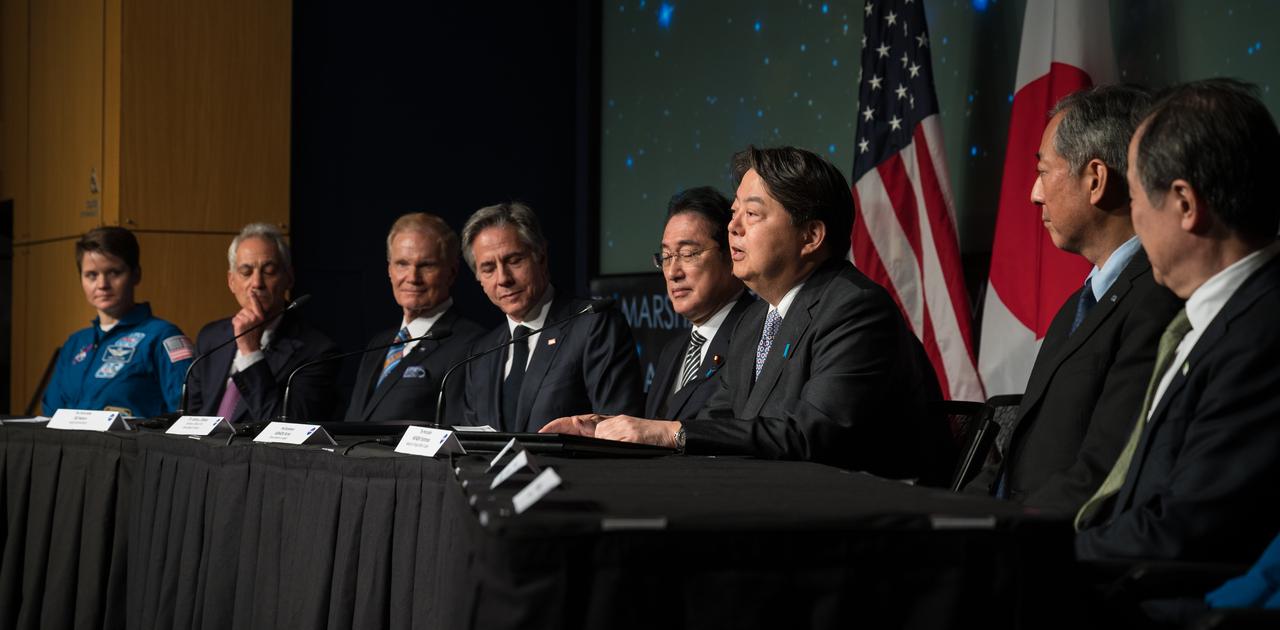
Minister for Foreign Affairs of Japan, The Honorable Hayashi Yoshimasa delivers remarks after he and U.S. Secretary of State, Antony Blinken signed an agreement that builds on a long history of collaboration in space exploration between the U.S. and Japan, Friday, Jan. 13, 2023, at the Mary W. Jackson NASA Headquarters building in Washington. “The Framework Agreement Between the Government of Japan and the Government of the United States of America for Cooperation in Space Exploration and Use of Outer Space, Including the Moon and Other Celestial Bodies, For Peaceful Purposes” covers joint activities including space science, Earth science, space operations and exploration, aeronautical science and technology, space technology, space transportation, and safety and mission assurance, among others. Photo Credit: (NASA/Aubrey Gemignani)
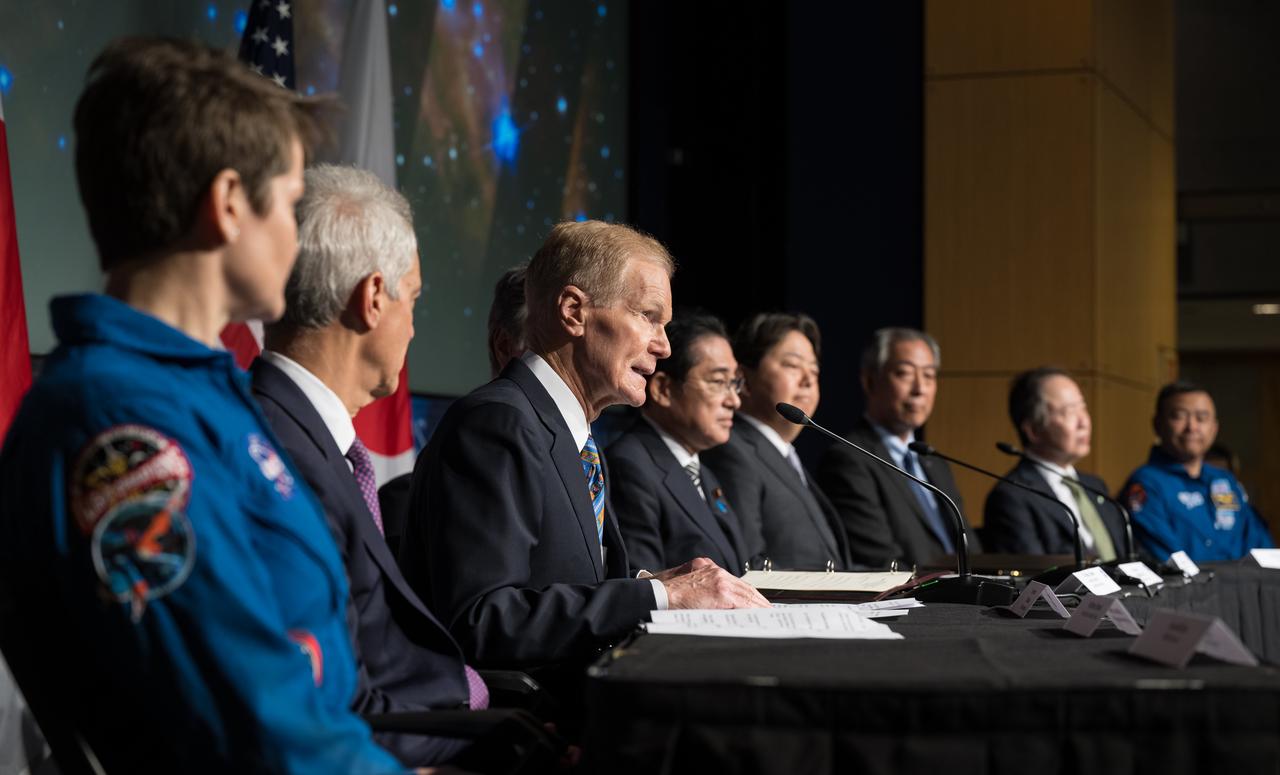
NASA Administrator Bill Nelson delivers remarks before U.S. Secretary of State, Antony Blinken and Japan’s Minister for Foreign Affairs, Hayashi Yoshimasa, sign an agreement that builds on a long history of collaboration in space exploration between the U.S. and Japan, Friday, Jan. 13, 2023, at the Mary W. Jackson NASA Headquarters building in Washington. “The Framework Agreement Between the Government of Japan and the Government of the United States of America for Cooperation in Space Exploration and Use of Outer Space, Including the Moon and Other Celestial Bodies, For Peaceful Purposes” covers joint activities including space science, Earth science, space operations and exploration, aeronautical science and technology, space technology, space transportation, and safety and mission assurance, among others. Photo Credit: (NASA/Aubrey Gemignani)
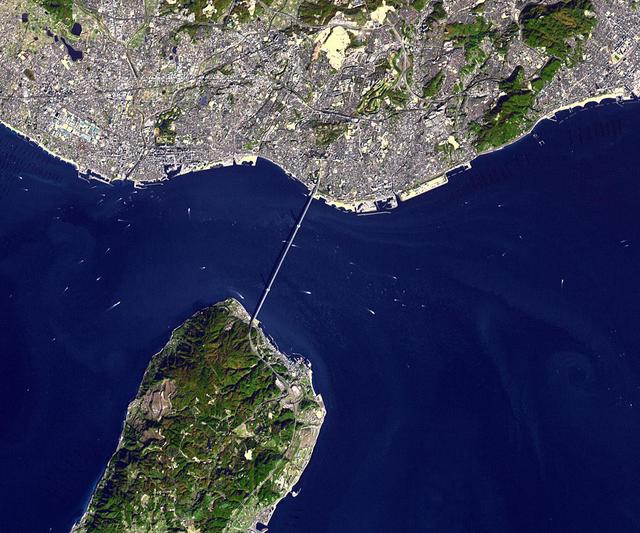
NASA Terra spacecraft shows the Akashi Kaikyo Bridge or Pearl Bridge, the longest central span of any suspension bridge in the world, at 1991 meters, connecting the city of Kobe, Japan with Iwaja on Awaji Island by crossing the busy Akashi Strait.
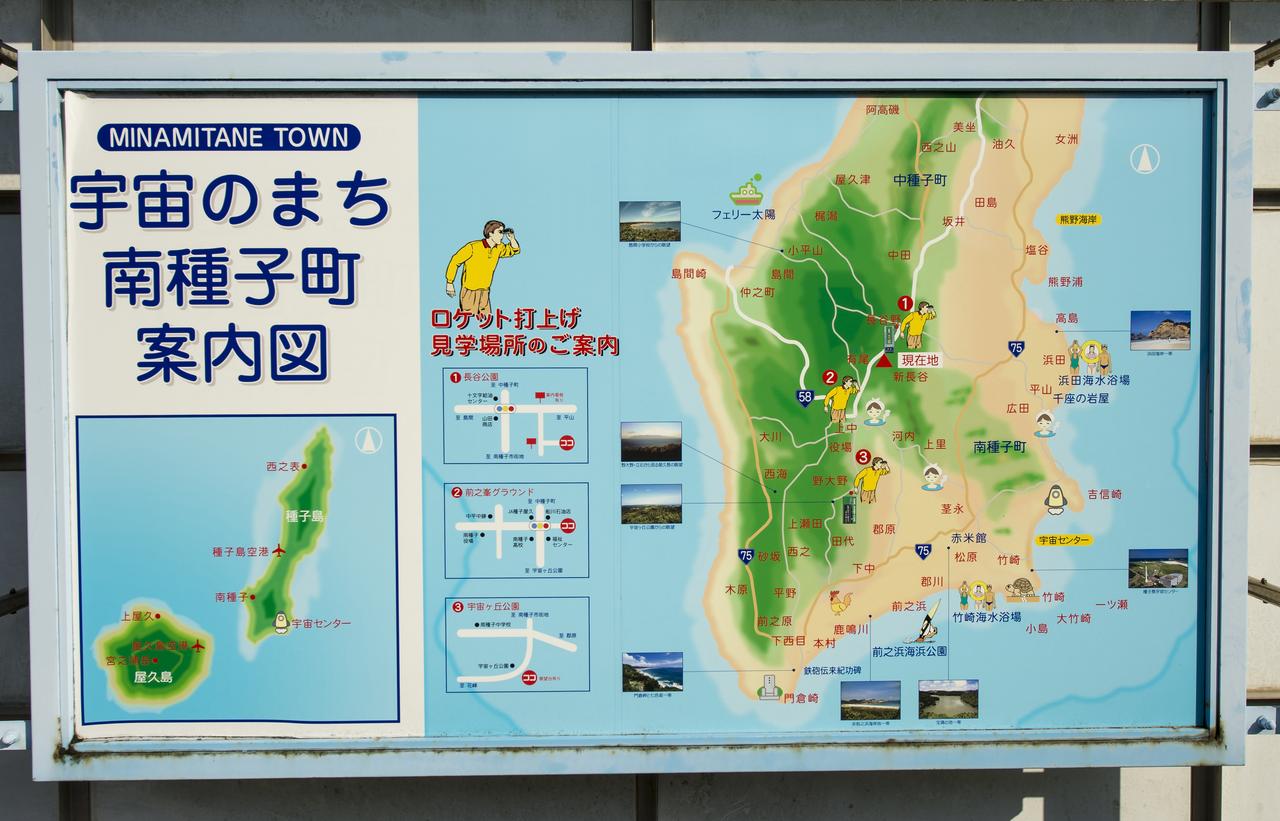
A roadside sign shows visitors of Minamitane Town various locations for activities, including the viewing of rocket launches from the Japan Aerospace Exploration Agency’s (JAXA) Tanegashima Space Center (TNSC), where the launch of an H-IIA rocket carrying the Global Precipitation Measurement (GPM) Core Observatory is scheduled to take place in the next week, Saturday, Feb. 22, 2014, Minamitane Town, Tanegashima Island, Japan. The NASA-JAXA GPM spacecraft will collect information that unifies data from an international network of existing and future satellites to map global rainfall and snowfall every three hours. Launch is planned for Feb. 28, 2014. Photo Credit: (NASA/Bill Ingalls)
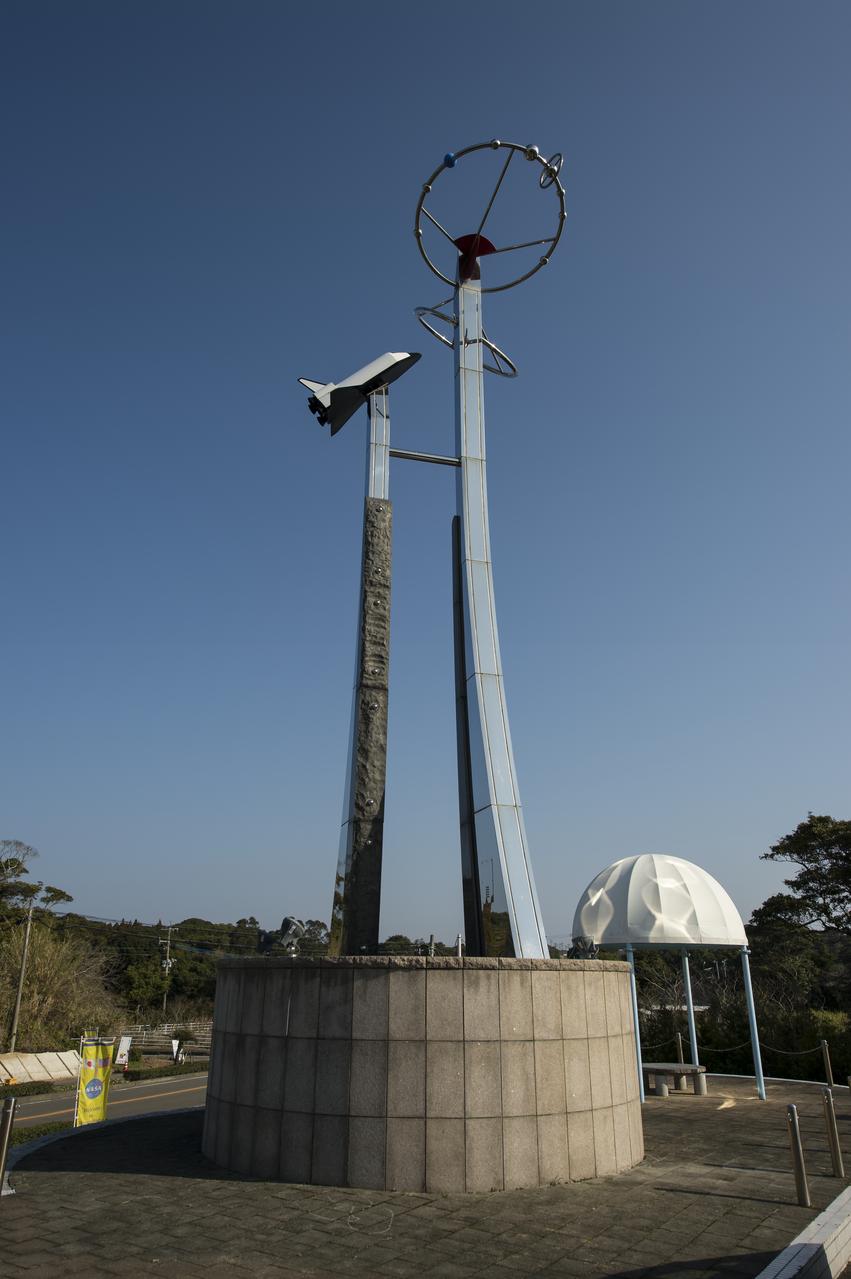
A small roadside park honoring spaceflight is seen in Minamitane Town, Saturday Feb. 22, 2014, Tanegashima Island, Japan. Minamitane Town is located not far from the Japan Aerospace Exploration Agency’s (JAXA) Tanegashima Space Center (TNSC), where the launch of an H-IIA rocket carrying the Global Precipitation Measurement (GPM) Core Observatory is planned for Feb. 28, 2014. The NASA-JAXA GPM spacecraft will collect information that unifies data from an international network of existing and future satellites to map global rainfall and snowfall every three hours. Photo Credit: (NASA/Bill Ingalls)
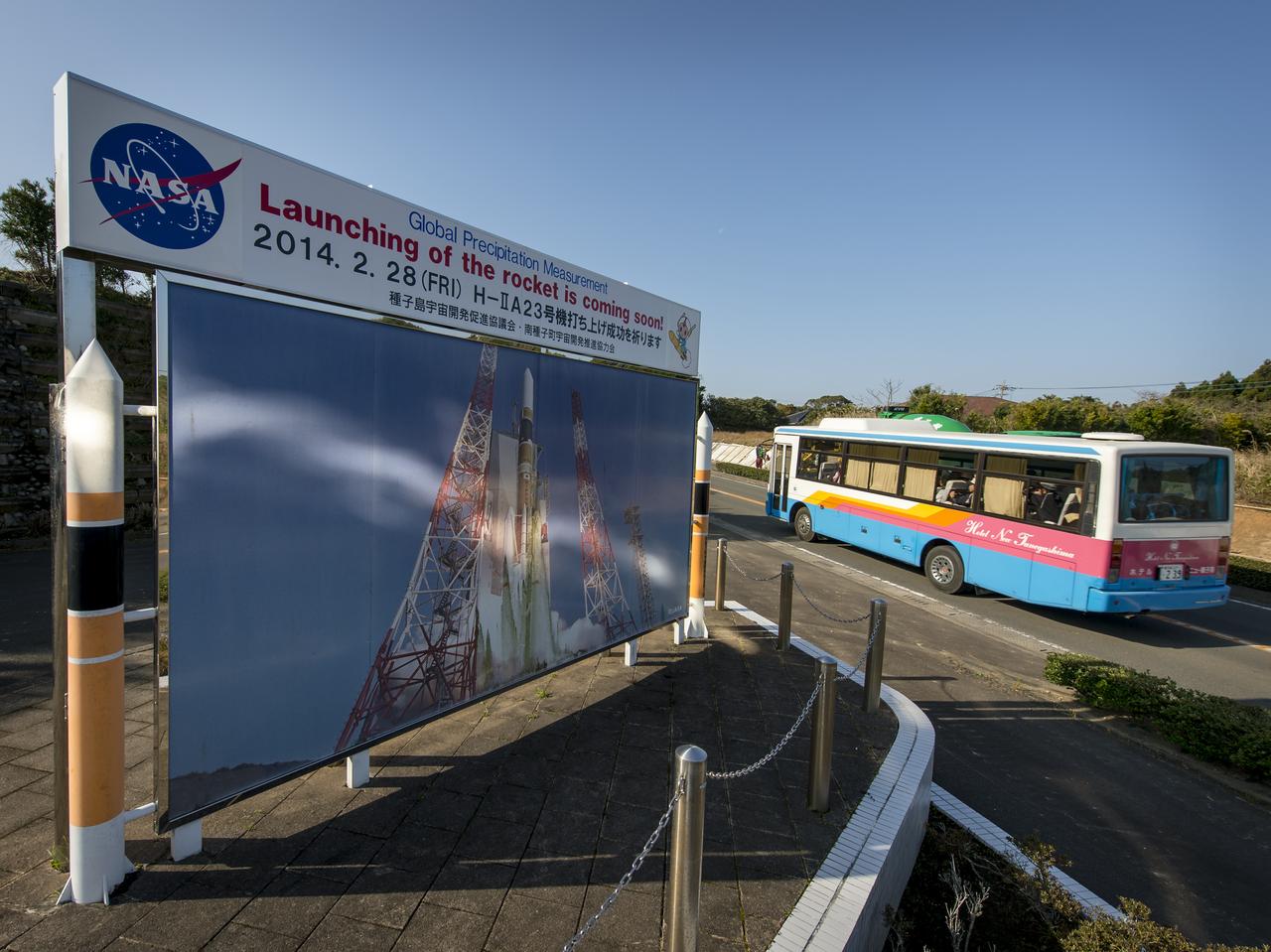
A roadside sign announces the upcoming launch of an H-IIA rocket carrying the Global Precipitation Measurement (GPM) Core Observatory, Saturday, Feb. 22, 2014, Minamitane Town, Tanegashima Island, Japan. Once launched from the Japan Aerospace Exploration Agency’s (JAXA) Tanegashima Space Center (TNSC) the NASA-JAXA GPM spacecraft will collect information that unifies data from an international network of existing and future satellites to map global rainfall and snowfall every three hours. The launch is planned for Feb. 28, 2014. Photo Credit: (NASA/Bill Ingalls)
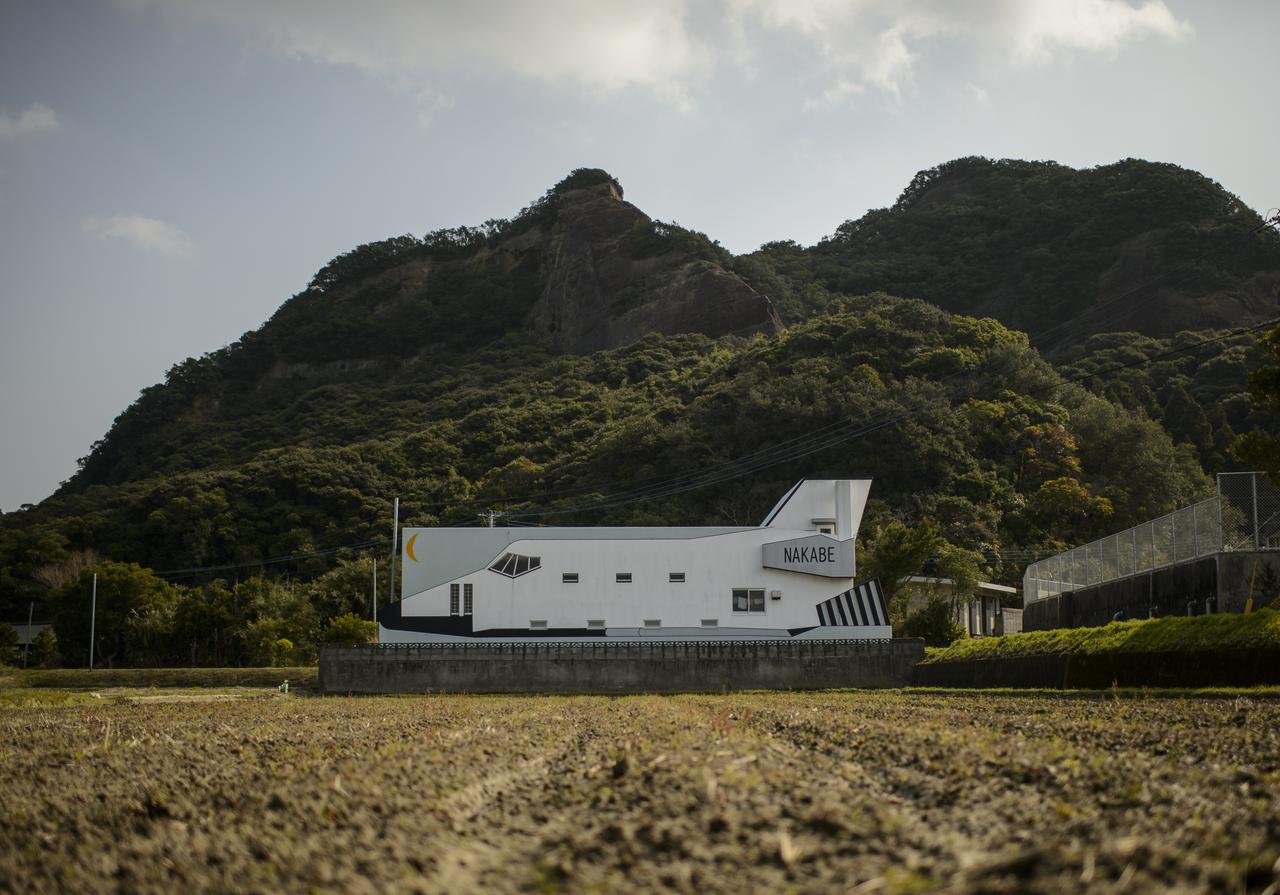
A building designed to look like a space shuttle is seen a few kilometers outside of the Tanegashima Space Center (TNSC), Sunday, Feb. 23, 2014, Tanegashima Island, Japan. A Japanese H-IIA rocket carrying the NASA-Japan Aerospace Exploration Agency (JAXA), Global Precipitation Measurement (GPM) Core Observatory is planned for launch from the space center on Feb. 28, 2014. Once launched, the GPM spacecraft will collect information that unifies data from an international network of existing and future satellites to map global rainfall and snowfall every three hours. Photo Credit: (NASA/Bill Ingalls)
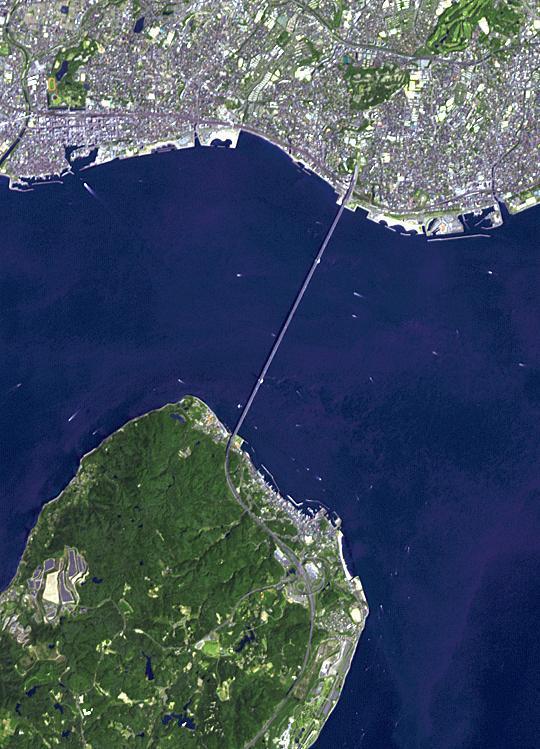
The Akashi Kaikyo Bridge in Japan has the longest central span of any suspension bridge in the world at 1991 m. The total length of the bridge is 3911 m. It links the city of Kobe on the mainland of Honshu to Iwaya on Awaji Island, crossing the busy Akashi Strait. The image was acquired April 26, 2014, covers an area of 8.1 by 11.2 km, and is located at 34.6 degrees north, 135 degrees east. http://photojournal.jpl.nasa.gov/catalog/PIA19747
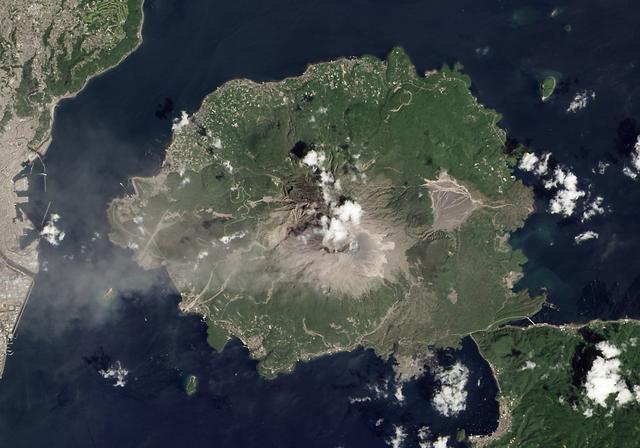
Although Japan’s Sakura-jima volcano is one of the most active in the world, it rarely makes headlines. One or two small explosions typically occur every few days, with effects no greater than a light dusting of ash on the surrounding cities. On August 18, 2013, a large eruption sent ash 20,000 feet (6,000 meters) above Kagoshima Bay, breaking the established pattern. It was possibly the largest eruption ever from the Showa Crater, which formed in 1946. NASA Earth Observatory images by Jesse Allen and Robert Simmon, using Landsat 8 data from the USGS Earth Explorer. Caption by Robert Simmon. Instrument: Landsat 8 - OLI More details: <a href="http://1.usa.gov/19WQpBQ" rel="nofollow">1.usa.gov/19WQpBQ</a> <b><a href="http://www.nasa.gov/audience/formedia/features/MP_Photo_Guidelines.html" rel="nofollow">NASA image use policy.</a></b> <b><a href="http://www.nasa.gov/centers/goddard/home/index.html" rel="nofollow">NASA Goddard Space Flight Center</a></b> enables NASA’s mission through four scientific endeavors: Earth Science, Heliophysics, Solar System Exploration, and Astrophysics. Goddard plays a leading role in NASA’s accomplishments by contributing compelling scientific knowledge to advance the Agency’s mission. <b>Follow us on <a href="http://twitter.com/NASA_GoddardPix" rel="nofollow">Twitter</a></b> <b>Like us on <a href="http://www.facebook.com/pages/Greenbelt-MD/NASA-Goddard/395013845897?ref=tsd" rel="nofollow">Facebook</a></b> <b>Find us on <a href="http://instagram.com/nasagoddard?vm=grid" rel="nofollow">Instagram</a></b>
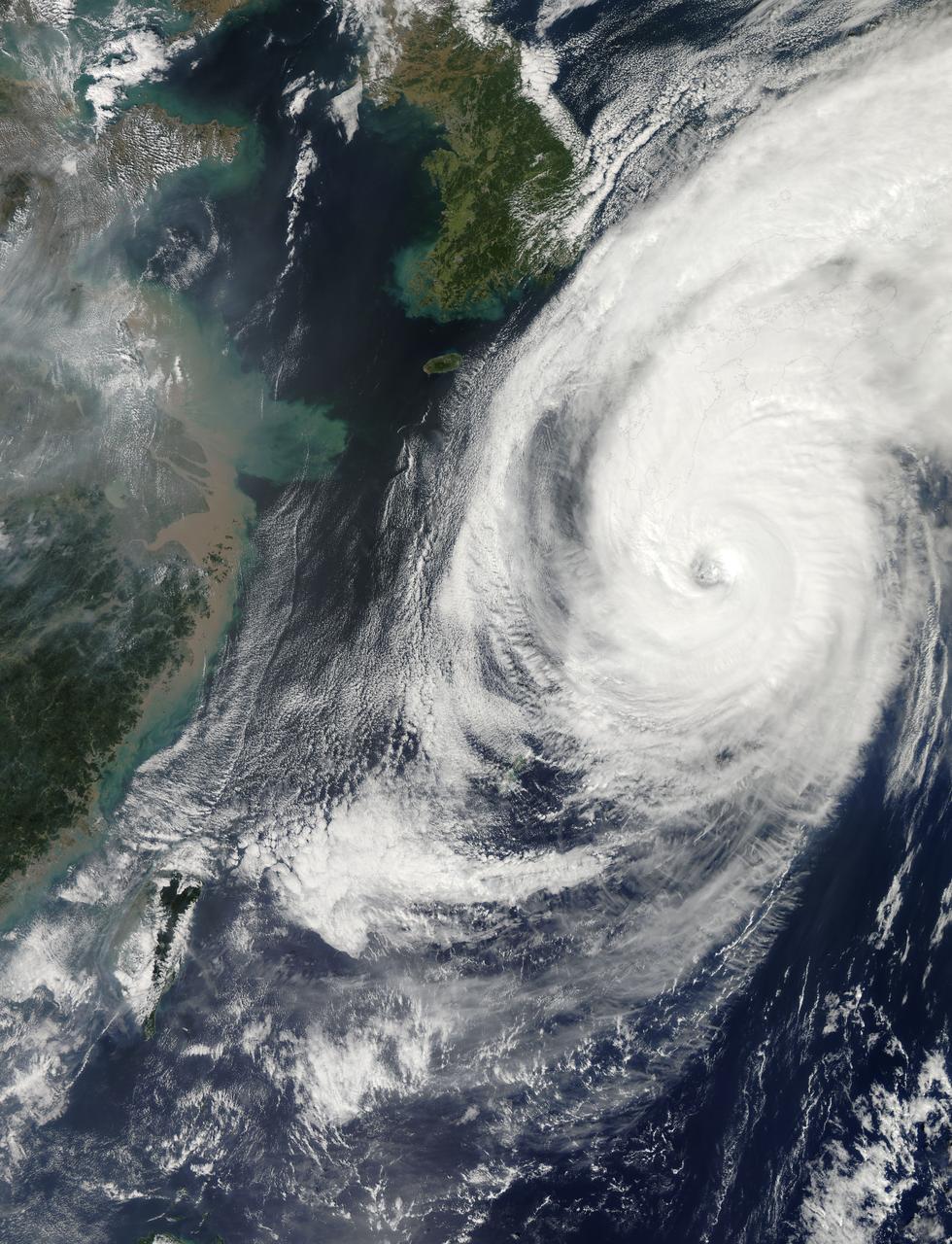
Over the weekend of Oct. 5 and 6, Typhoon Phanfone's center made landfall just south of Tokyo and passed over the city before exiting back into the Northwestern Pacific Ocean. NASA's Aqua satellite captured a picture of the typhoon as Tokyo braced for its large eye. On its way to mainland Japan, Phanfone struck Kadena Air Base on the island of Okinawa. According to the website for U.S. Air Force Kadena Air Base (<a href="http://www.kadena.af.mil" rel="nofollow">www.kadena.af.mil</a>), "One Airman is confirmed deceased and two more are missing after they were washed out to sea from the northwest coast of Okinawa at about 3:45 p.m. Oct. 5. An Airman that was found by the Japanese Coast Guard and pulled from the sea was later pronounced dead at a local hospital. HH-60s from Kadena Air Base and Japanese Coast Guard are continuing to search for the remaining two Airmen. Rough seas are complicating rescue efforts." Typhoon Phanfone's large eye made landfall near the city of Hamamatsu on Oct. 5 around 8 a.m. local time and then tracked north before turning eastward into the Pacific Ocean north of Tokyo. The MODIS instrument known as the Moderate Resolution Imaging Spectroradiometer captures amazing pictures from its orbit aboard NASA's Aqua satellite. MODIS snapped a picture of Typhoon Phanfone approaching Japan on Oct. 5 at 12:55 a.m. EDT. At that time, the Typhoon had already passed north of Okinawa, and was just south of the large island of Kyushu. The MODIS image revealed a large eye with powerful bands of thunderstorms spiraling into the center. On Oct. 6 by 0900 UTC (5 a.m. EDT), Phanfone had weakened from a typhoon to a tropical storm back over open waters of the Northwestern Pacific Ocean. Maximum sustained winds were near 60 knots (69.0 mph/111.1 kph). Phanfone was located near 38.0 north longitude and 145.0 east latitude. That's about 201 nautical miles (271 miles/372 km) south-southeast of Misawa Air Base, Japan. Phanfone was moving to the northeast at 40 knots (46 mph/74 kph). Forecasters at the Joint Typhoon Warning Center (JTWC) using animated multispectral satellite imagery noted that Phanfone is being affected by strong wind shear. The wind shear has stretched the tropical storm out, and pushed the bulk of thunderstorms northeast of the center. In addition, Phanfone has transitioned into an extra-tropical storm, which means that its core transitioned from warm to cold. JTWC called for Phanfone to continue accelerating northeastward and weaken as an extra-tropical cyclone over water. <b><a href="http://www.nasa.gov/audience/formedia/features/MP_Photo_Guidelines.html" rel="nofollow">NASA image use policy.</a></b> <b><a href="http://www.nasa.gov/centers/goddard/home/index.html" rel="nofollow">NASA Goddard Space Flight Center</a></b> enables NASA’s mission through four scientific endeavors: Earth Science, Heliophysics, Solar System Exploration, and Astrophysics. Goddard plays a leading role in NASA’s accomplishments by contributing compelling scientific knowledge to advance the Agency’s mission. <b>Follow us on <a href="http://twitter.com/NASAGoddardPix" rel="nofollow">Twitter</a></b> <b>Like us on <a href="http://www.facebook.com/pages/Greenbelt-MD/NASA-Goddard/395013845897?ref=tsd" rel="nofollow">Facebook</a></b> <b>Find us on <a href="http://instagram.com/nasagoddard?vm=grid" rel="nofollow">Instagram</a></b>
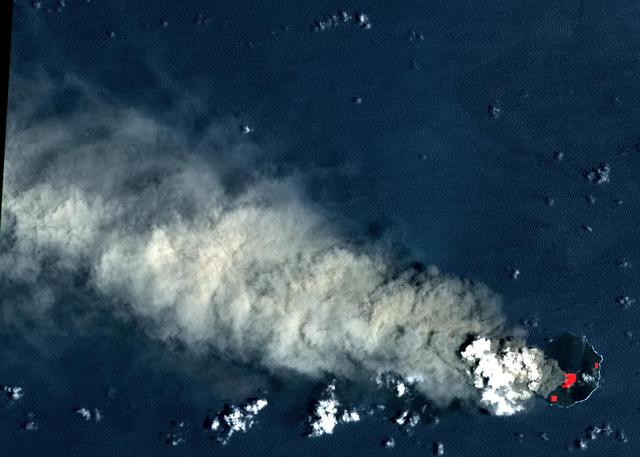
Nishinoshima is a small volcanic island located about 1000 km south of Tokyo, Japan. Eruptive activity began in December 2019, and has continued uninterrupted. ASTER captured this image of an ash and steam plume emanating from the central crater. Thermal infrared data is superposed in red on a visible-infrared color image to highlight the lava in the central crater and lava flows that have flowed down the volcano's flanks. The image was acquired July 28, 2020, covers an area of 15 by 21 km, and is located at 27.3 degrees north, 140.8 degrees east. https://photojournal.jpl.nasa.gov/catalog/PIA24017
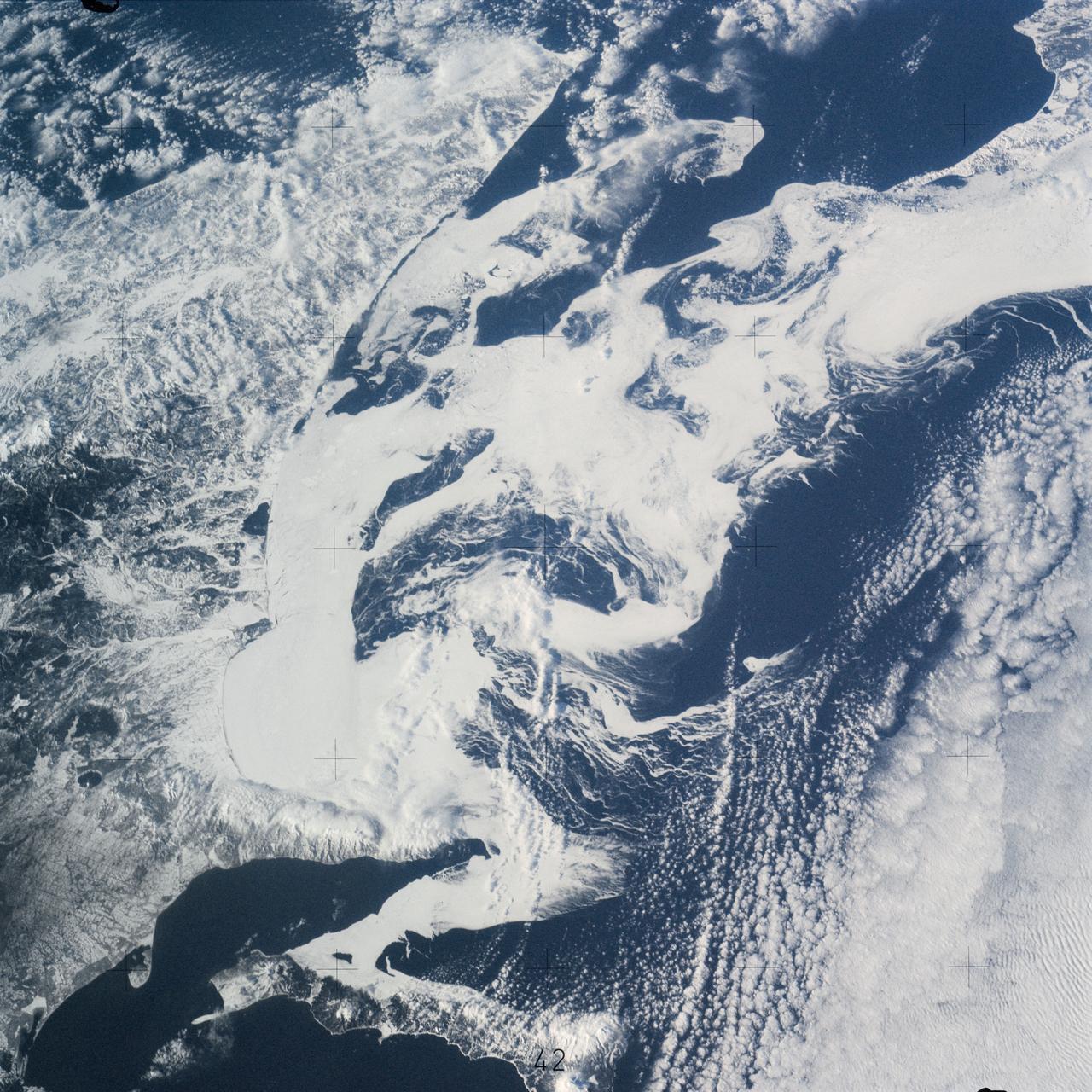
SL4-141-4340 (20 Jan. 1974) --- An oblique view of the southern part of the Sea of Okhotsk, north of Japan, as photographed from the Skylab space station in Earth orbit by one of the Skylab 4 crewmen. The camera used was a hand-held 70mm Hasselblad, and SO-368 medium-speed Ektachrome. NORTH IS AT THE TOP WHEN THE PICTURE IS HELD WITH THE LARGEST LAND MASS AT THE BOTTOM. Most of the land area is Hokkaido Island, Japan. The southern tip of Sakhalin Island (Soviet Union) is in the northwest corner. This photograph was taken to aid in the study of the formation of sea ice. Comparison of these photographs will be made with observations made during a joint USSR-U.S. experiment in the Bering Sea a year earlier. Observations in the Sea of Okhotsk are of interest because the ice has a morphology similar to that of the Bering Sea. Photo credit: NASA

The Tsugaru Iwaki Skyline is a toll road in northern Japan, which partially ascends Mount Iwaki stratovolcano, and is notable for its steep gradient and 69 hairpin turns. The road ascends 806 meters over an average gradient of 8.66%, with some sections going up to 10%. The Tsugaru Iwaki Skyline has been considered one of the most dangerous mountain roads in the world. (Wikipedia) The image was acquired May 26, 2015, and is located at 40.6 degrees north, 140.3 degrees east. https://photojournal.jpl.nasa.gov/catalog/PIA22385
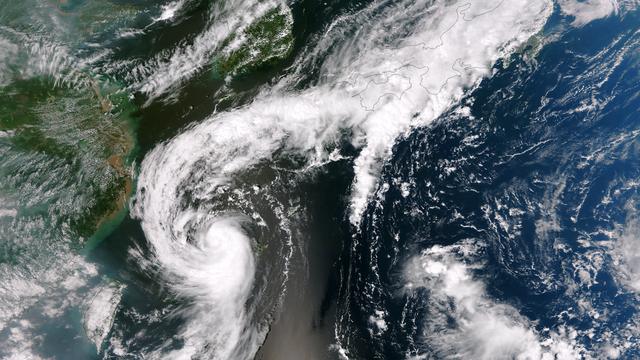
The outflow from Tropical Storm Toraji spawned tornadoes that caused injuries and property damage in Koshigaya, Saitama Prefecture, Japan, just northeast of Tokyo, on September 2, 2013. This image was taken by the Suomi NPP satellite's VIIRS instrument around 0425Z on September 2, 2013. Credit: NASA/NOAA <b><a href="http://www.nasa.gov/audience/formedia/features/MP_Photo_Guidelines.html" rel="nofollow">NASA image use policy.</a></b> <b><a href="http://www.nasa.gov/centers/goddard/home/index.html" rel="nofollow">NASA Goddard Space Flight Center</a></b> enables NASA’s mission through four scientific endeavors: Earth Science, Heliophysics, Solar System Exploration, and Astrophysics. Goddard plays a leading role in NASA’s accomplishments by contributing compelling scientific knowledge to advance the Agency’s mission. <b>Follow us on <a href="http://twitter.com/NASA_GoddardPix" rel="nofollow">Twitter</a></b> <b>Like us on <a href="http://www.facebook.com/pages/Greenbelt-MD/NASA-Goddard/395013845897?ref=tsd" rel="nofollow">Facebook</a></b> <b>Find us on <a href="http://instagram.com/nasagoddard?vm=grid" rel="nofollow">Instagram</a></b>
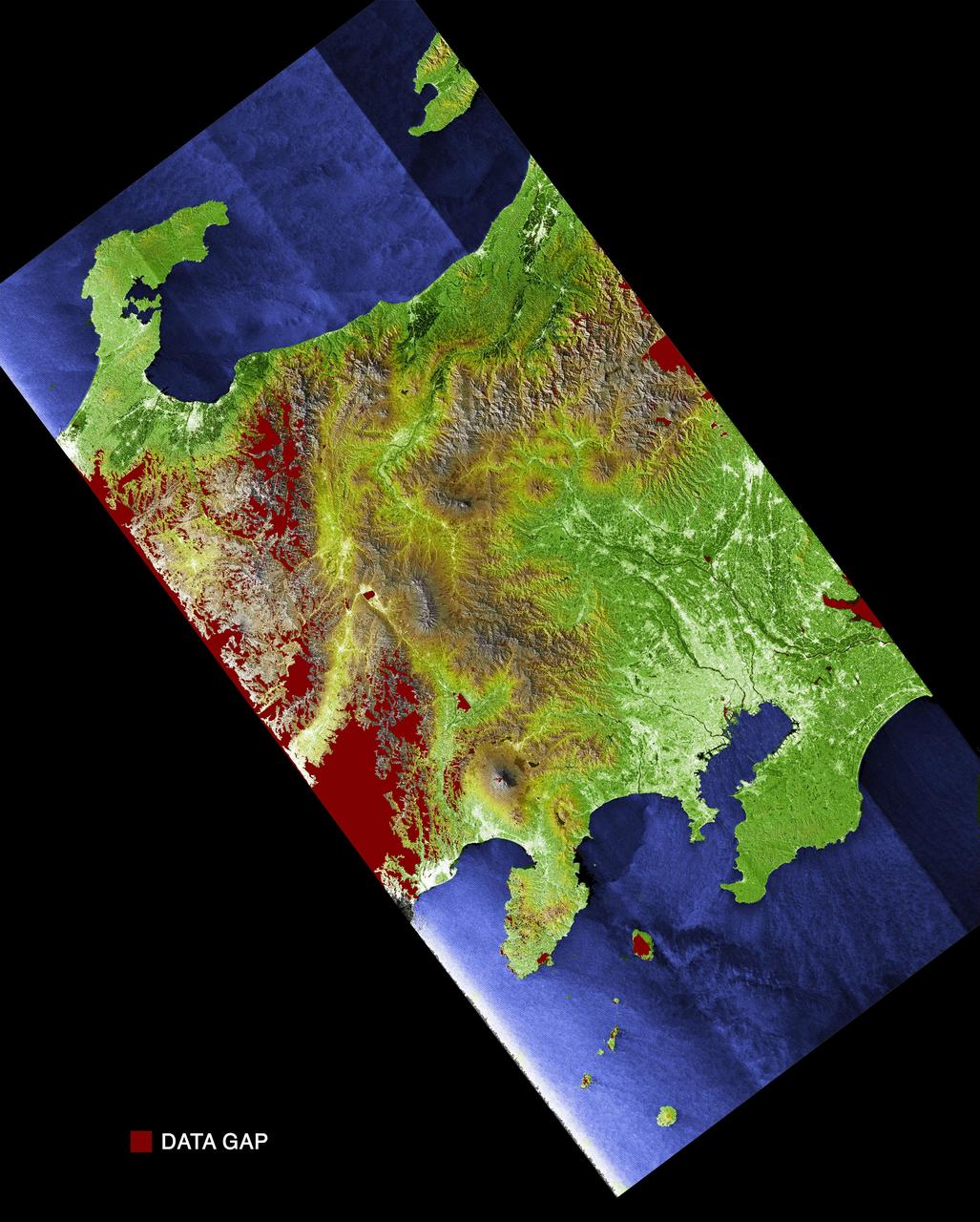
Much of Honshu, Japan largest island, is seen in this image generated from NASA Shuttle Radar Topography Mission SRTM data on February 19, 2000.
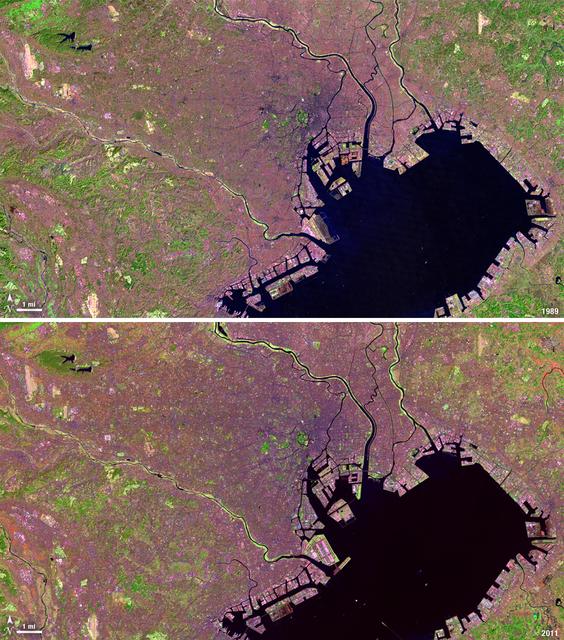
Tokyo is the world’s largest metropolitan region, home to nearly 37 million people. During the past two decades, Tokyo’s population has grown by more than 7 million. The city’s growth has continued despite Japan’s overall stagnating population, mainly due to a continued trend of centralization—citizens moving out of the country and into the city. Landsat 4 collected this first false-color image of Tokyo on Feb. 2, 1989. The upper half of Tokyo Bay is the large water body visible in a dark blue. In the middle of the image, central Tokyo appears a deep purple just north of the bay. Twenty-two years later, Landsat 5, captured this second image of Tokyo on April 5, 2011. The urban reaches of metropolitan Tokyo have grown in both distance and density, as seen where the green color of vegetation has turned to pink and purple shades of urbanization. A major expansion of Tokyo’s Haneda Airport, can be seen south of the city, on land built out into the bay. The constant circular spot of green in the dense city-center, visible on both images, is the Tokyo Imperial Palace and its gardens. (Landsat 5 TM Bands 7,4,2) ---- NASA and the U.S. Department of the Interior through the U.S. Geological Survey (USGS) jointly manage Landsat, and the USGS preserves a 40-year archive of Landsat images that is freely available over the Internet. The next Landsat satellite, now known as the Landsat Data Continuity Mission (LDCM) and later to be called Landsat 8, is scheduled for launch in 2013. In honor of Landsat’s 40th anniversary in July 2012, the USGS released the LandsatLook viewer – a quick, simple way to go forward and backward in time, pulling images of anywhere in the world out of the Landsat archive. <b><a href="http://www.nasa.gov/audience/formedia/features/MP_Photo_Guidelines.html" rel="nofollow">NASA image use policy.</a></b> <b><a href="http://www.nasa.gov/centers/goddard/home/index.html" rel="nofollow">NASA Goddard Space Flight Center</a></b> enables NASA’s mission through four scientific endeavors: Earth Science, Heliophysics, Solar System Exploration, and Astrophysics. Goddard plays a leading role in NASA’s accomplishments by contributing compelling scientific knowledge to advance the Agency’s mission. <b>Follow us on <a href="http://twitter.com/NASA_GoddardPix" rel="nofollow">Twitter</a></b> <b>Like us on <a href="http://www.facebook.com/pages/Greenbelt-MD/NASA-Goddard/395013845897?ref=tsd" rel="nofollow">Facebook</a></b> <b>Find us on <a href="http://instagrid.me/nasagoddard/?vm=grid" rel="nofollow">Instagram</a></b>

This before-and-after image pair acquired by NASA Terra spacecraft of the Japan coastal cities of Ofunato and Kesennuma reveals changes to the landscape that are likely due to the effects of the tsunami on March 11, 2011. The new image is on the left.
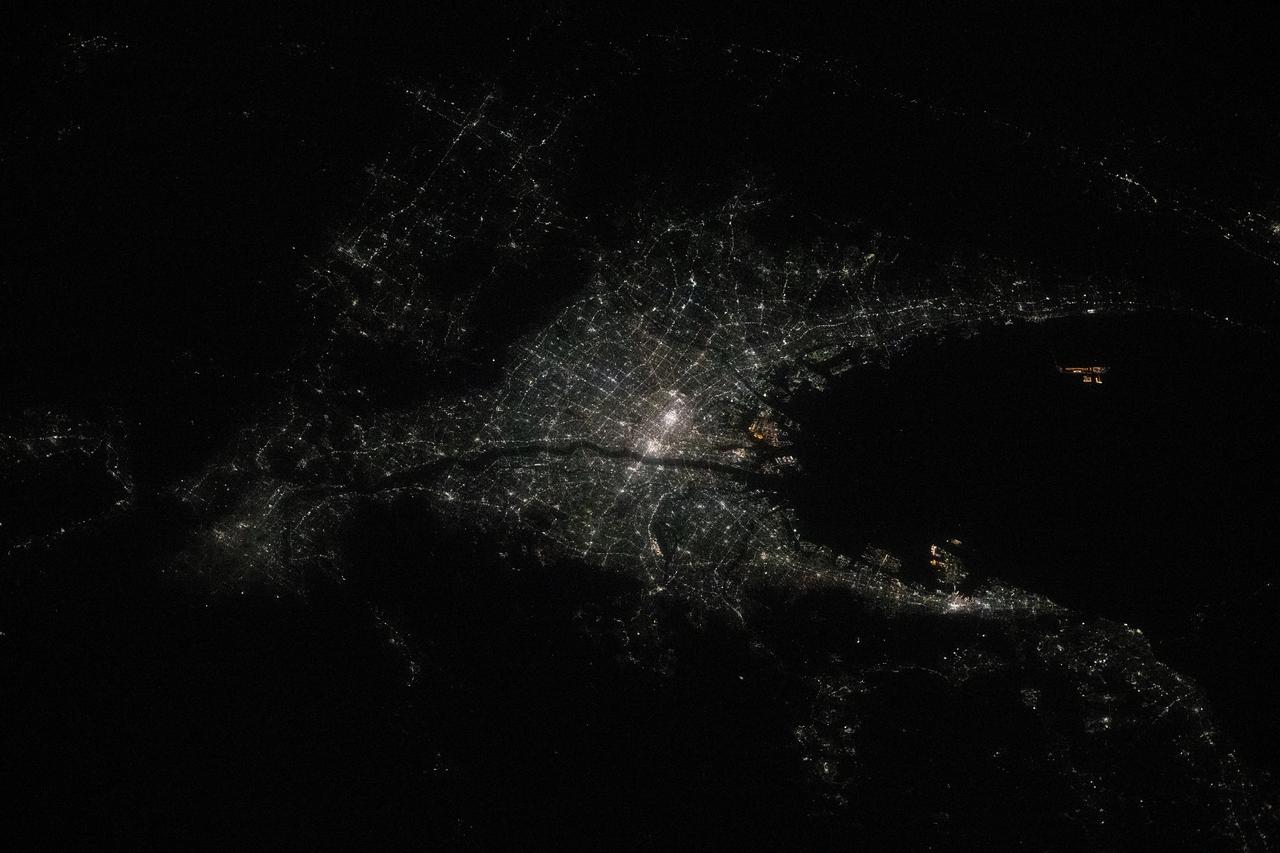
iss072e519516 (Jan. 22, 2025) --- The city lights of Osaka, Japan, the island nation's third most populous city split by the Yodo River, are pictured at approximately 10:25 p.m. local time from the International Space Station as it orbited 258 miles above the Philippine Sea.
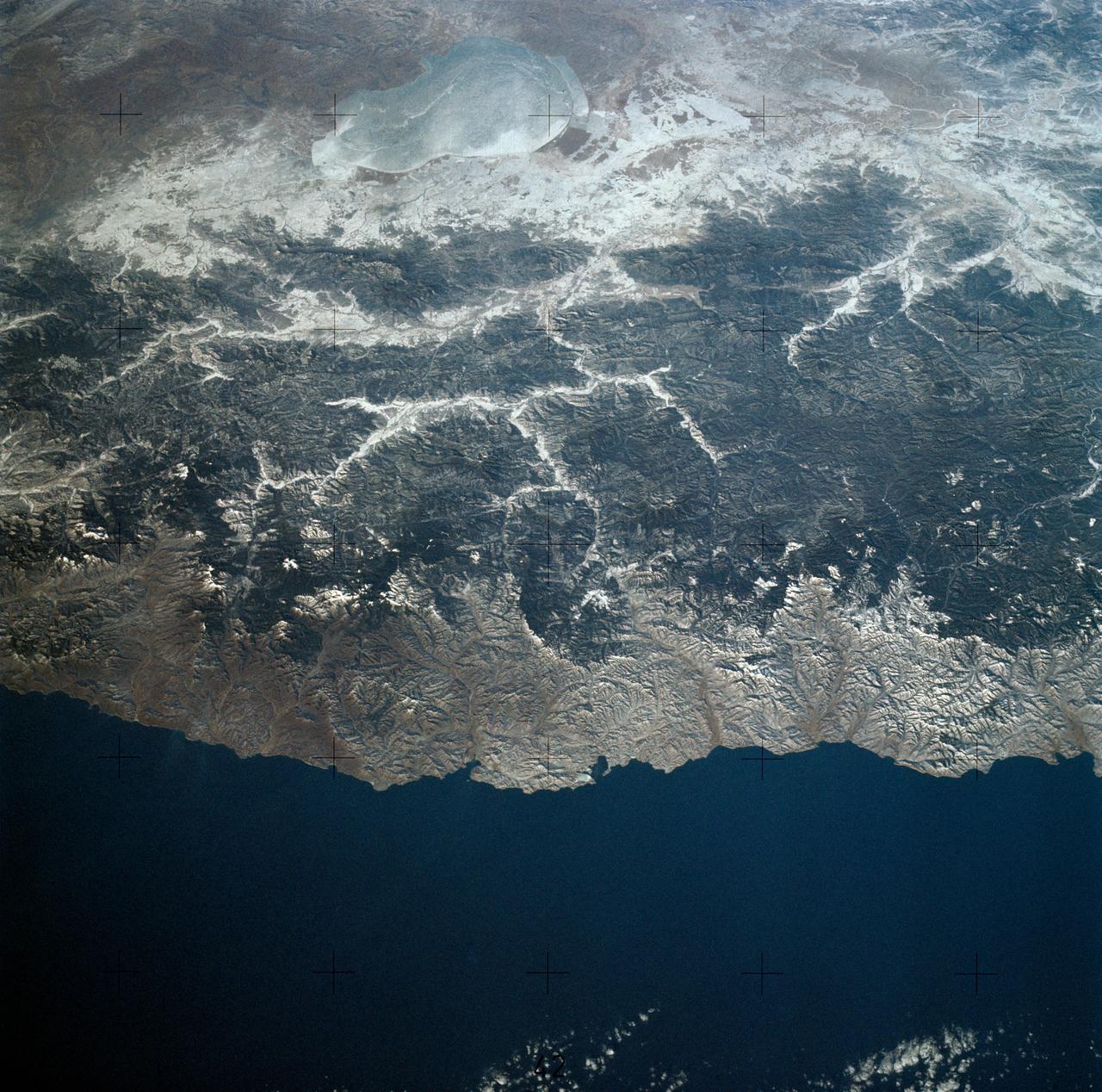
SL4-140-4110 (January 1974) --- View of the USSR, Siberia area from Skylab 4. Other areas seen are Ozero, Kanka, Ussiriysk, the Sea of Japan and Kavalerovo (45.5N, 135.5E). Photo credit: NASA
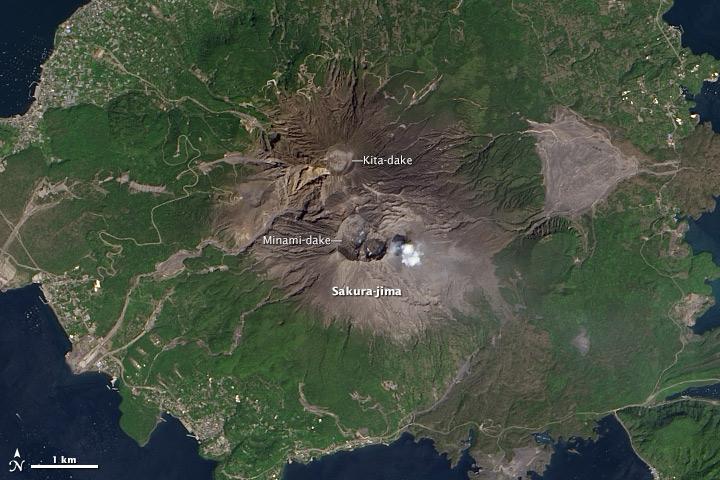
Although Japan’s Sakura-jima volcano is one of the most active in the world, it rarely makes headlines. One or two small explosions typically occur every few days, with effects no greater than a light dusting of ash on the surrounding cities. On August 18, 2013, a large eruption sent ash 20,000 feet (6,000 meters) above Kagoshima Bay, breaking the established pattern. It was possibly the largest eruption ever from the Showa Crater, which formed in 1946. NASA Earth Observatory images by Jesse Allen and Robert Simmon, using Landsat 8 data from the USGS Earth Explorer. Caption by Robert Simmon. Instrument: Landsat 8 - OLI More details: <a href="http://1.usa.gov/19WQpBQ" rel="nofollow">1.usa.gov/19WQpBQ</a> <b><a href="http://www.nasa.gov/audience/formedia/features/MP_Photo_Guidelines.html" rel="nofollow">NASA image use policy.</a></b> <b><a href="http://www.nasa.gov/centers/goddard/home/index.html" rel="nofollow">NASA Goddard Space Flight Center</a></b> enables NASA’s mission through four scientific endeavors: Earth Science, Heliophysics, Solar System Exploration, and Astrophysics. Goddard plays a leading role in NASA’s accomplishments by contributing compelling scientific knowledge to advance the Agency’s mission. <b>Follow us on <a href="http://twitter.com/NASA_GoddardPix" rel="nofollow">Twitter</a></b> <b>Like us on <a href="http://www.facebook.com/pages/Greenbelt-MD/NASA-Goddard/395013845897?ref=tsd" rel="nofollow">Facebook</a></b> <b>Find us on <a href="http://instagram.com/nasagoddard?vm=grid" rel="nofollow">Instagram</a></b>
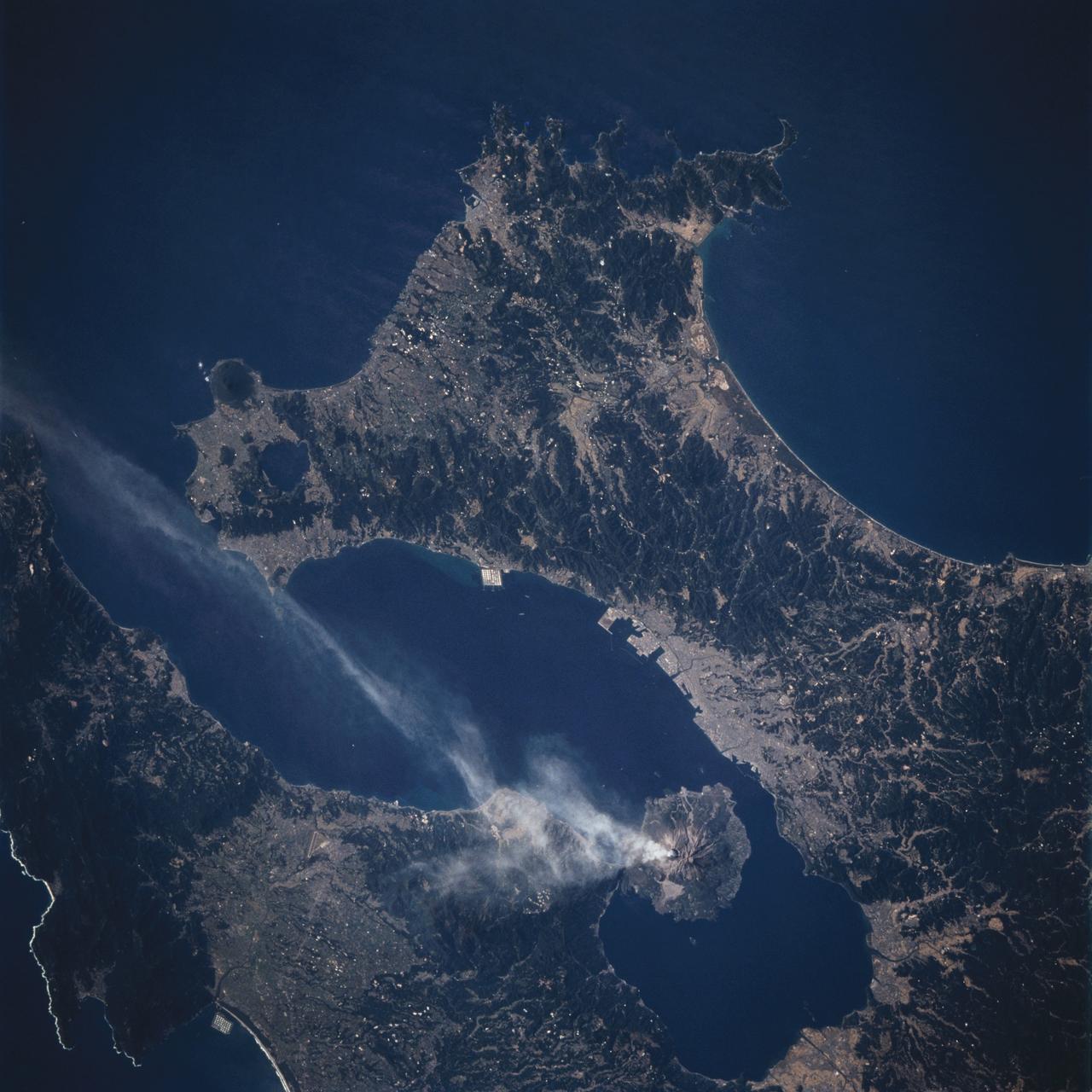
One of the world's most active volcanoes, Sakura-jima in southern-most Kyushu, Japan, erupts dozens of times a year. Volcanic eruptions are so much a part of of daily life in the city of Kagoshima (across the bay and west of Sakura-jima), that school children wear hard hats to school. This photo provides a nice clear view of Sakura-jima on a quiet day - only a plume of steam rises from the summit crater. The summit region is covered with gray ash from the frequent eruptions, and some of the rivers cutting down the mountain (especially the western drainages) appear to be filled with volcanic debris.

This radar image, called a coseismic interferogram, using satellite data from the European Space Agency Envisat depicts ground displacements resulting from the March 11, 2011, magnitude 9.0 Tohoku earthquake in Japan.
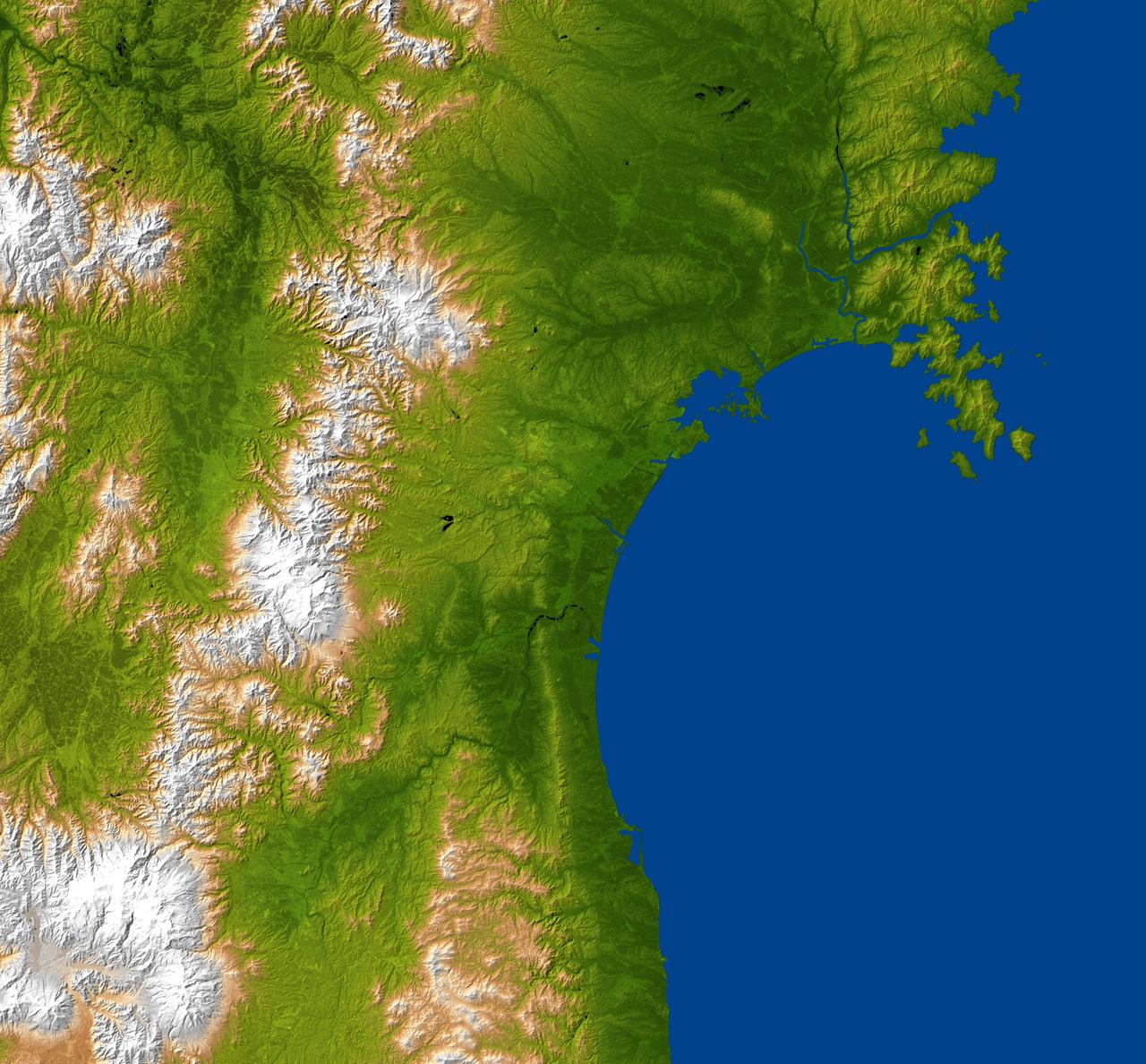
NASA Shuttle Radar Topography Mission imaged Sendai, the capital city of Japan Miyagi Prefecture a magnitude 8.9 earthquake struck offshore on Mar. 11. 2011.
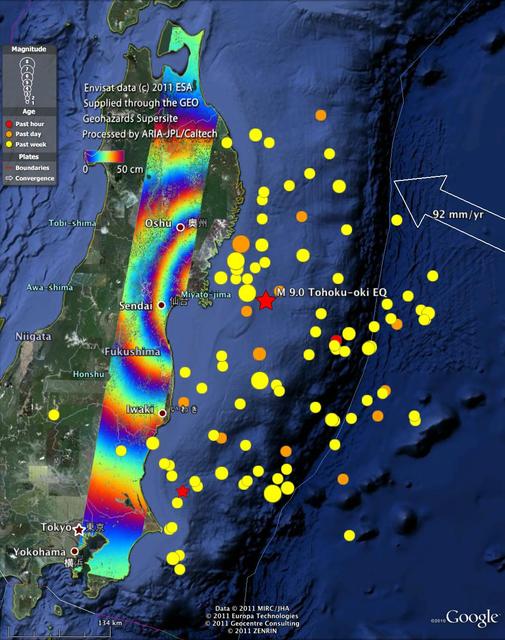
This radar image from ESA Envisat depicts ground displacements resulting from the March 11, 2011, magnitude 9.0 Tohoku earthquake in Japan.
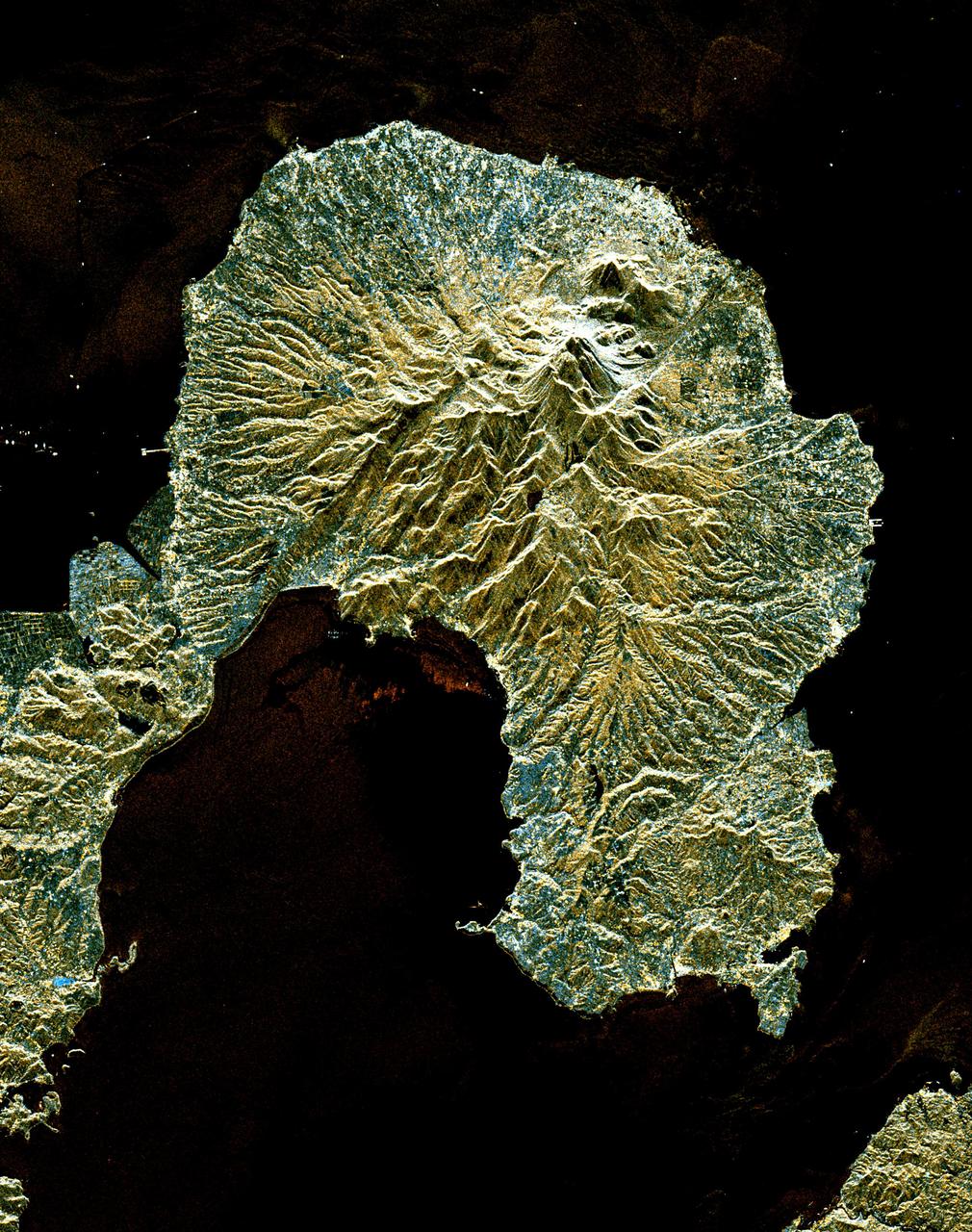
This is a space radar image of the area around the Unzen volcano, on the west coast of Kyushu Island in southwestern Japan. Unzen, which appears in this image as a large triangular peak with a white flank near the center of the peninsula, has been continuously active since a series of powerful eruptions began in 1991. The image was acquired by the Spaceborne Imaging Radar-C/X-band Synthetic Aperture Radar (SIR-C/X-SAR) aboard the space shuttle Endeavour on its 93rd orbit on April 15, 1994. The image shows an area 41.5 kilometers by 32.8 kilometers (25.7 miles by 20.3 miles) that is centered at 32.75 degrees north latitude and 130.15 degrees east longitude. North is toward the upper left of the image. The radar illumination is from the top of the image. The colors in this image were obtained using the following radar channels: red represents the L-band (vertically transmitted and received); green represents the average of L-band and C-band (vertically transmitted and received); blue represents the C-band (vertically transmitted and received). Unzen is one of 15 "Decade" volcanoes identified by the scientific community as posing significant potential threats to large local populations. The city of Shimabara sits along the coast at the foot of Unzen on its east and northeast sides. At the summit of Unzen a dome of thick lava has been growing continuously since 1991. Collapses of the sides of this dome have generated deadly avalanches of hot gas and rock known as pyroclastic flows. Volcanologists can use radar image data to monitor the growth of lava domes, to better understand and predict potentially hazardous collapses. http://photojournal.jpl.nasa.gov/catalog/PIA00504
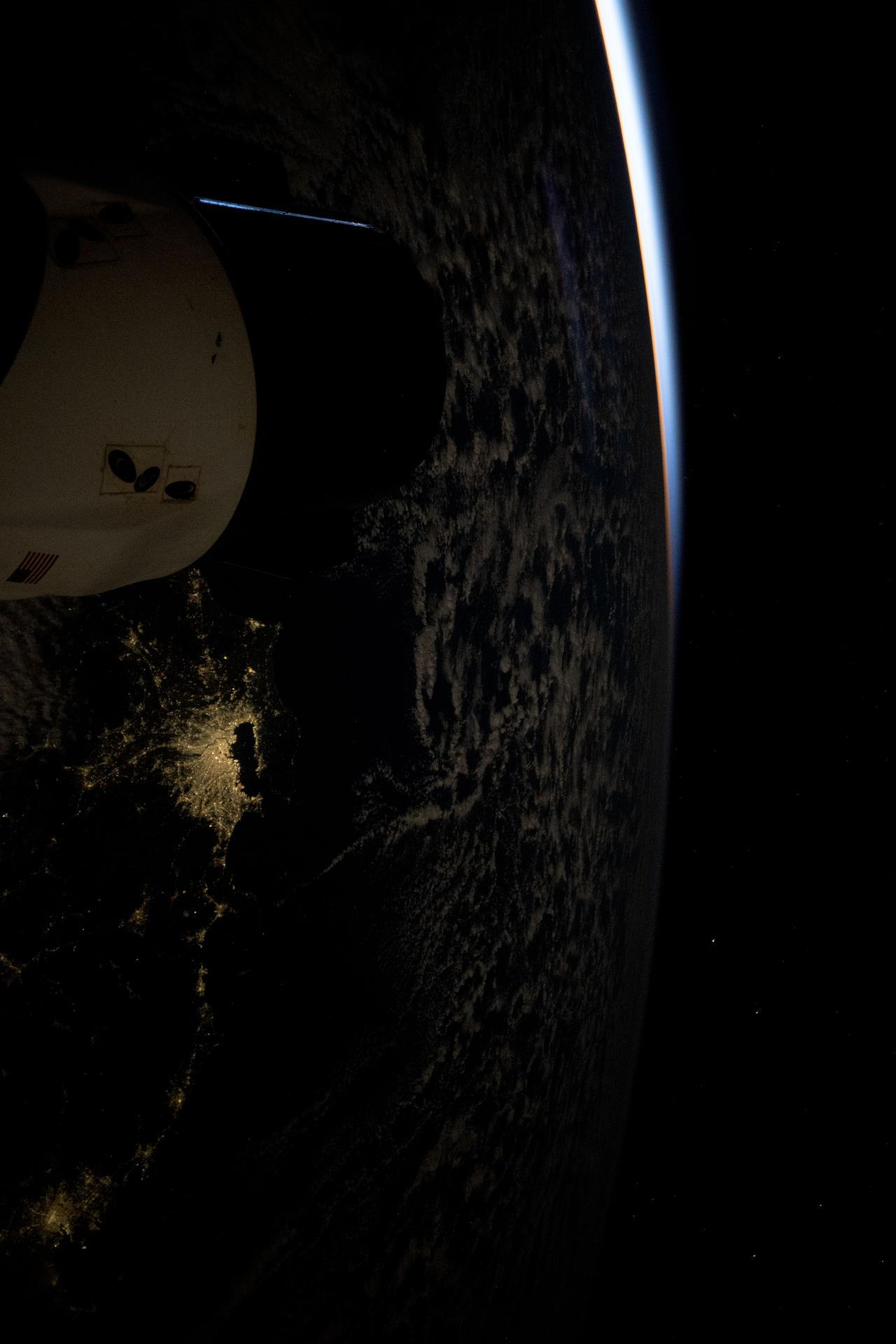
iss074e0170877 (Jan. 3, 2026) --- The Greater Tokyo Area in Japan, one of the most populous metropolitan areas on Earth with about 37 million residents, is pictured at approximately 4:31 a.m. local time from the International Space Station. A partially obscured SpaceX Dragon spacecraft (left) is docked to the Harmony module's forward port as both spacecraft soared 265 miles above Earth into an orbital sunrise.
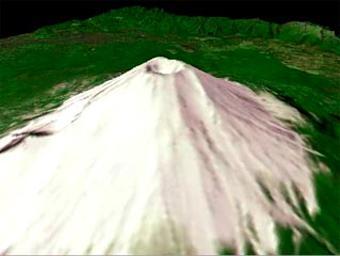
The nearly perfectly conical profile of Fuji soars 3,776 meters (12,388 feet) above sea level on southern Honshu, near Tokyo. The highest mountain in Japan, Fuji is the country's most familiar symbol. The summit of this graceful, dormant volcano is broken by a crater 610 meters (2,000 feet) in diameter. The crater is ringed by eight jagged peaks. The five Fuji Lakes lie on the northern slopes of the mountain, all formed in the wake of lava flows. Mirrored in the still waters of Kawaguchi-ko, the most beautiful of the five lakes, is a reflection of Fuji. Part of Fuji-Hakone-Izu National Park, Fuji last erupted for a two-month period starting in November 1707, covering Tokyo, some 100 kilometers (60 miles) away, with a layer of ash. According to legend, Fuji arose from the plain during a single night in 286 BC. Geologically, the mountain is much older than this. Considered sacred by many, Fuji is surrounded by temples and shrines. Thousands of pilgrims climb the mountain each year as part of their religious practice, hoping to reach the summit by dawn to watch the sunrise. This animated fly-by was created by draping visible and near infrared image data over a digital topography model, created from ASTER's stereo bands. The spatial resolution of both the image and topography is 15 m. The image is centered at 35.3 degrees north latitude, 138.7 degrees east longitude. http://photojournal.jpl.nasa.gov/catalog/PIA11166