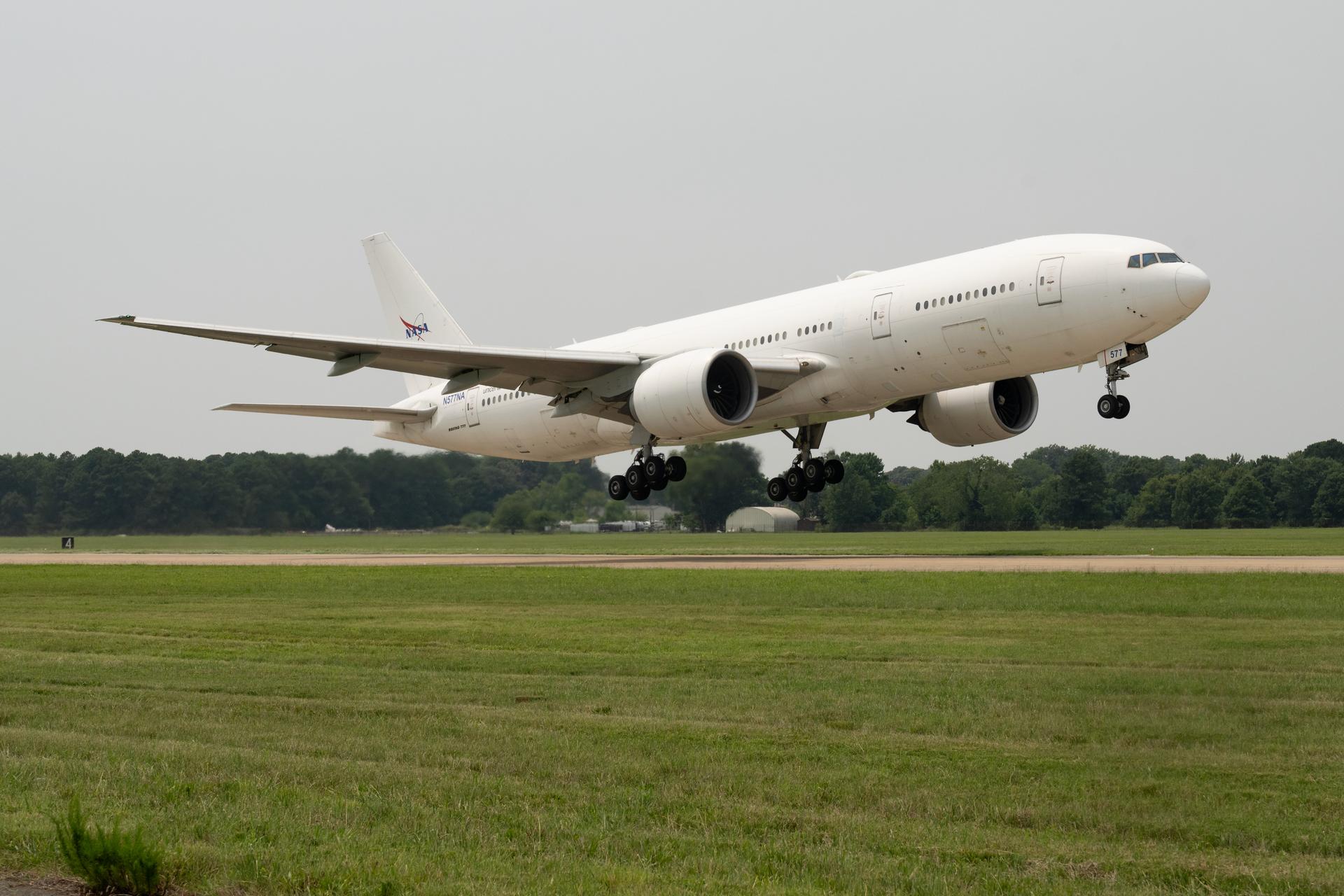
NASA Langley's B777 aircraft before it departs Langley Research Center to receive its new livery (paint job), prior to its departure on July 16th, it received ground maintenance in the center’s hangar. (Photo Credit NASA/ Mark Knopp)
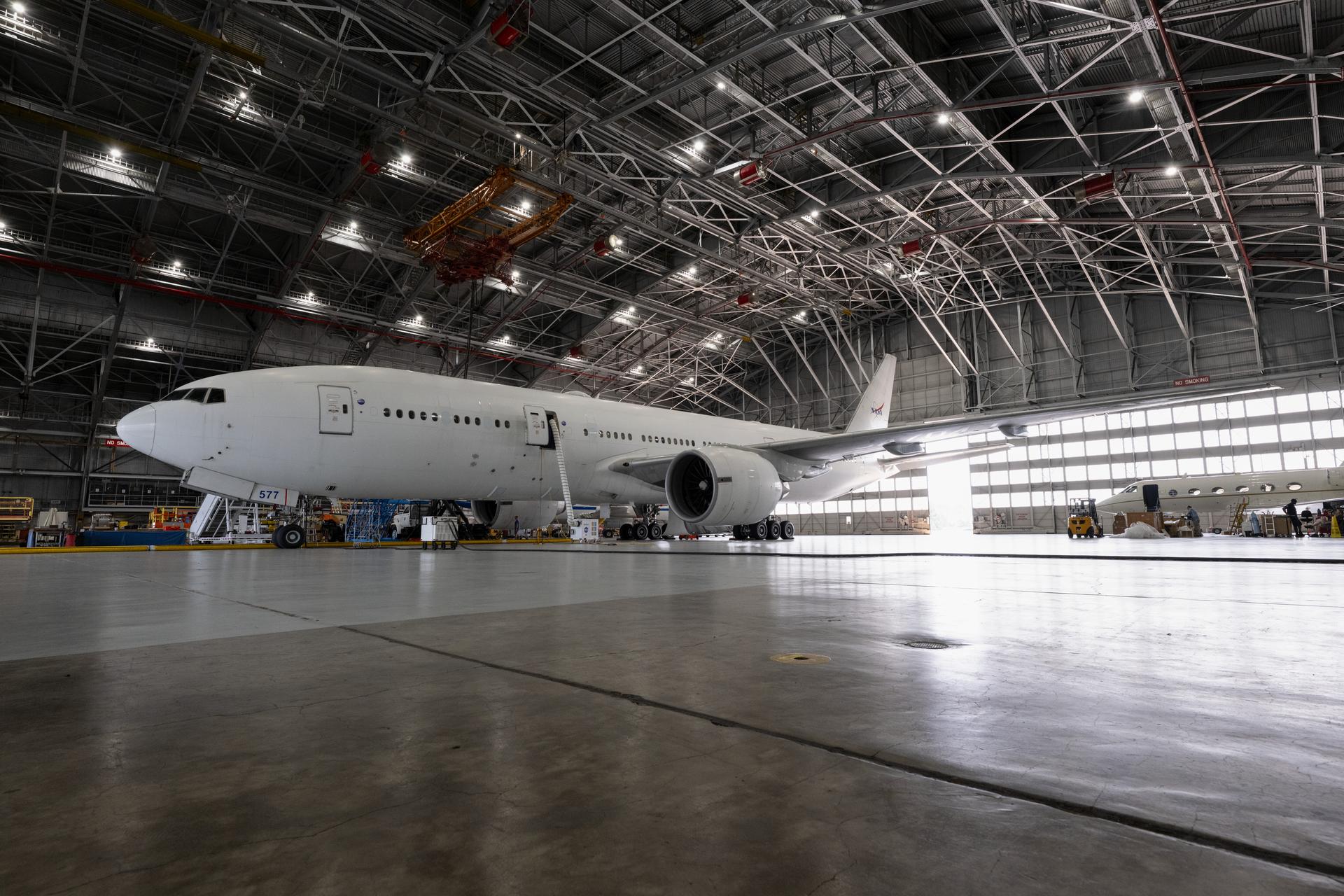
NASA Langley's B777 aircraft before it departs Langley Research Center to receive its new livery (paint job), prior to its departure on July 16th, it received ground maintenance in the center’s hangar. (Photo Credit NASA/ Ryan Hill)
NASA Langley's B777 aircraft before it departs Langley Research Center to receive its new livery (paint job), prior to its departure on July 16th, it received ground maintenance in the center’s hangar. (Photo Credit NASA/ Mark Knopp)
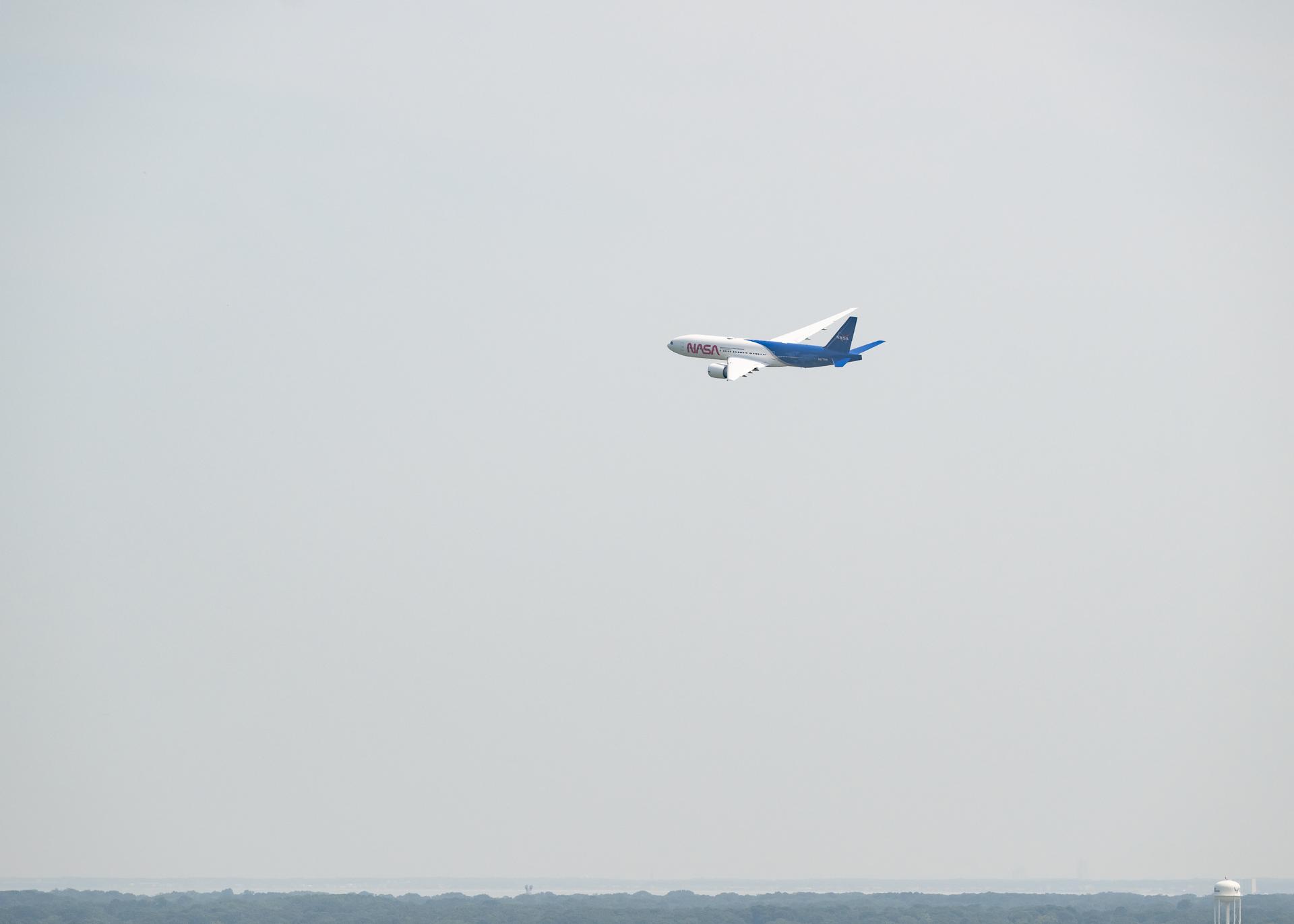
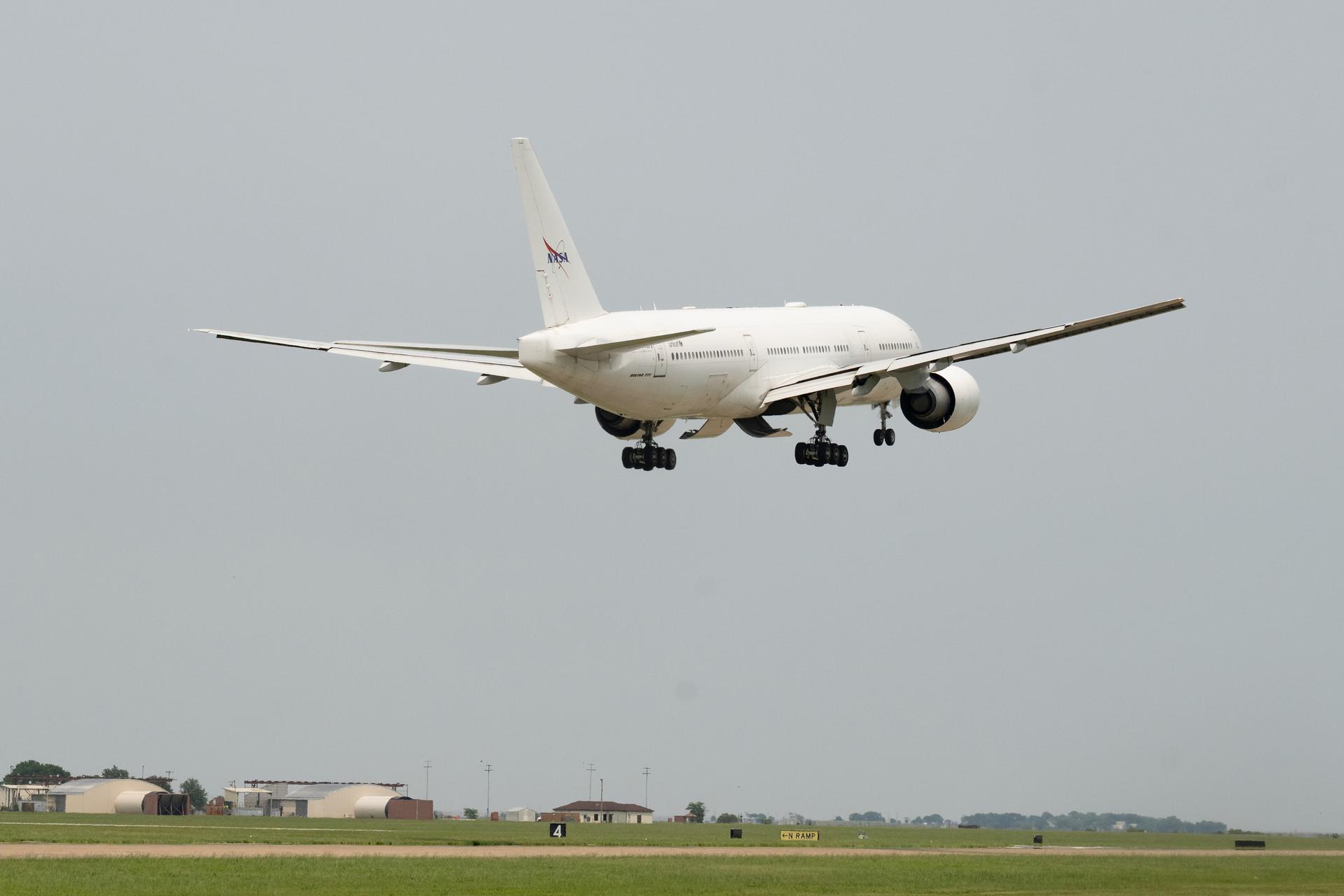
NASA's B777 aircraft returning to NASA Langley Research Center the 31st of July in Hampton, Virginia after a new paint job. It will now continue its maintenance and instrument integration schedule to prepare for its initial airborne science flights in 2027. (Photo Credit NASA/ Ryan Hill)
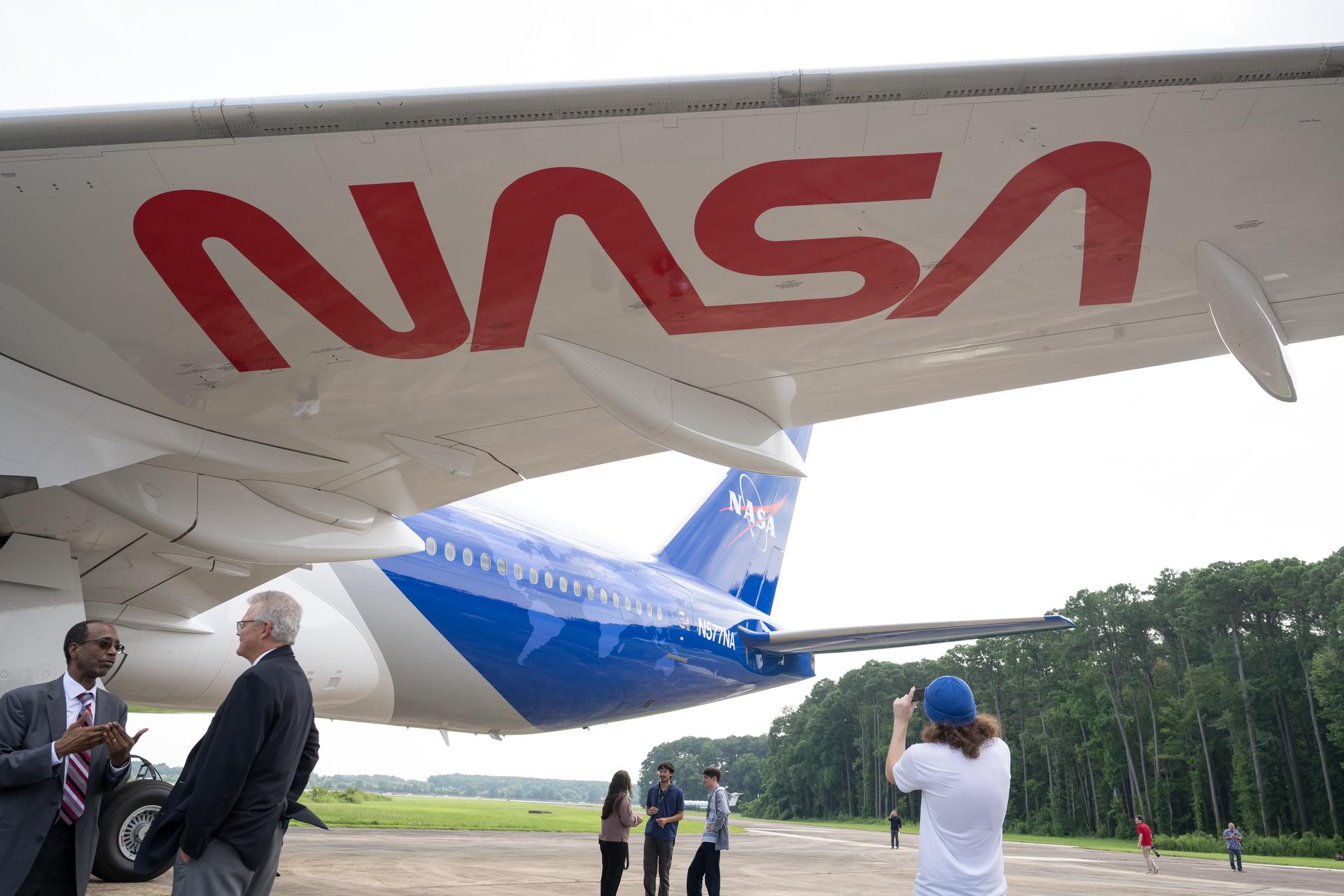
NASA's B777 aircraft returning to NASA Langley Research Center the 31st of July in Hampton, Virginia after a new paint job. It will now continue its maintenance and instrument integration schedule to prepare for its initial airborne science flights in 2027. Photo Credit NASA/ Ryan Hill)
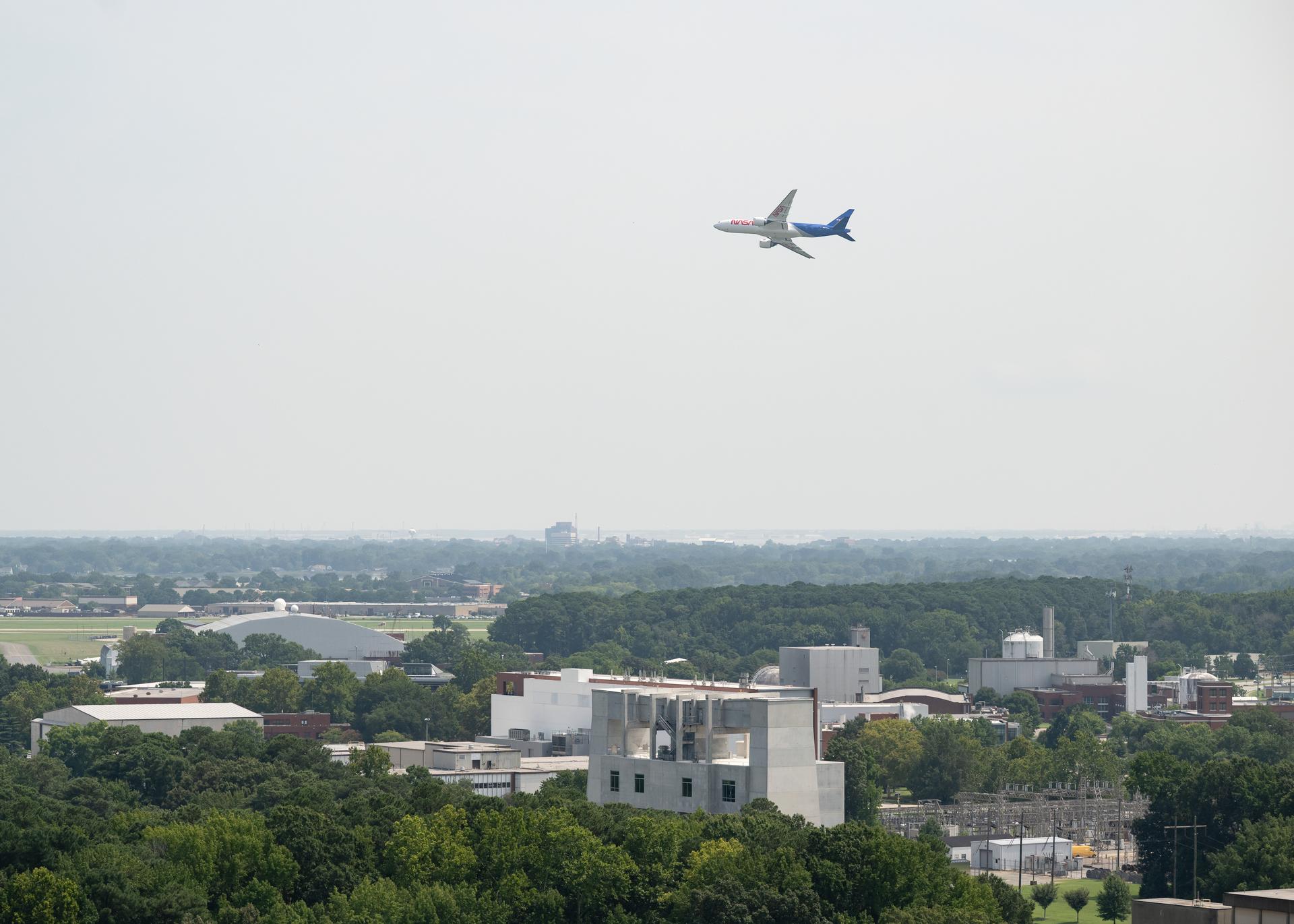
NASA's B777 aircraft returning to NASA Langley Research Center the 31st of July in Hampton, Virginia after a new paint job. It will now continue its maintenance and instrument integration schedule to prepare for its initial airborne science flights in 2027. (Photo Credit NASA/ Ryan Hill)
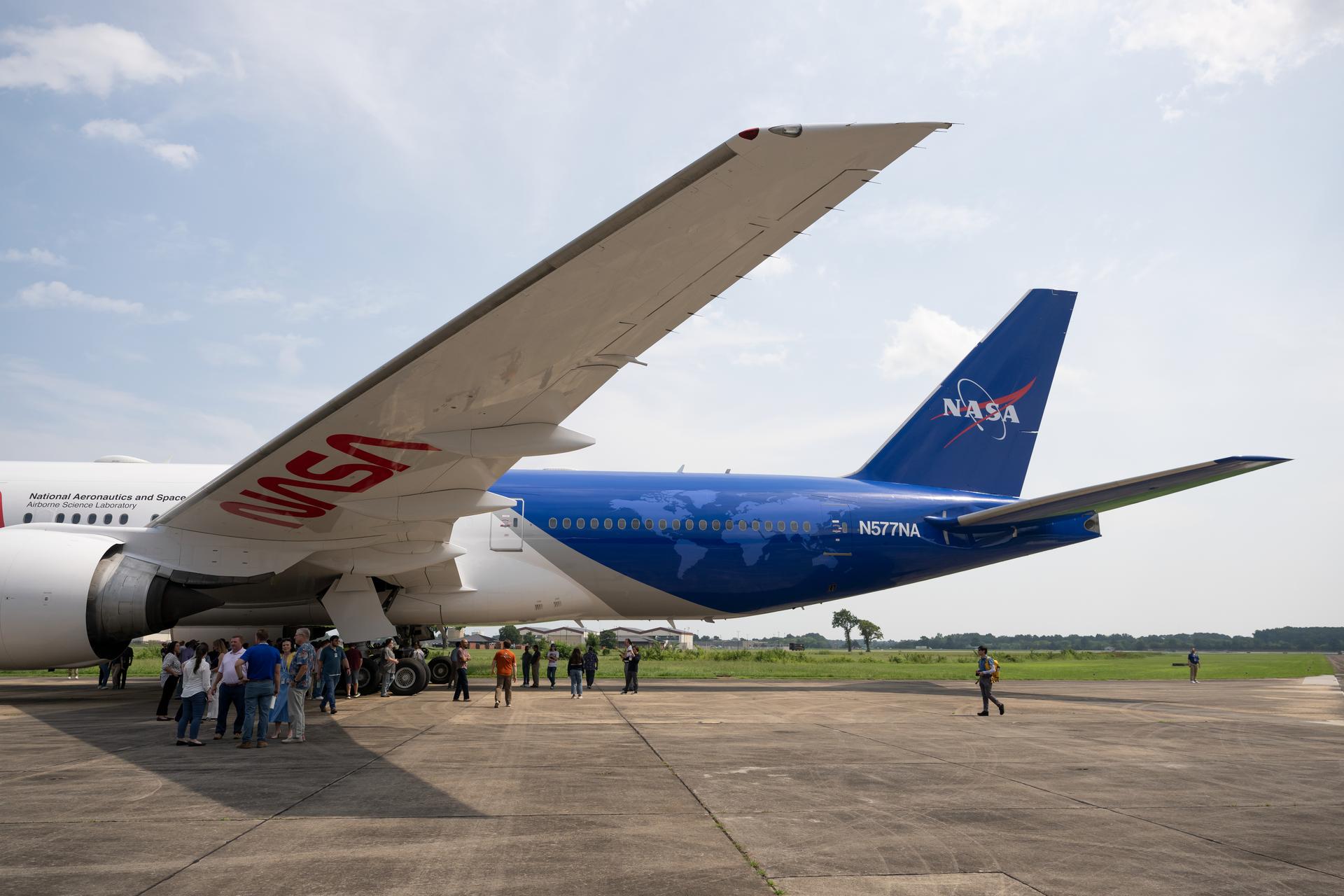
NASA's B777 aircraft returning to NASA Langley Research Center the 31st of July in Hampton, Virginia after a new paint job. It will now continue its maintenance and instrument integration schedule to prepare for its initial airborne science flights in 2027. Photo Credit NASA/ Ryan Hill)
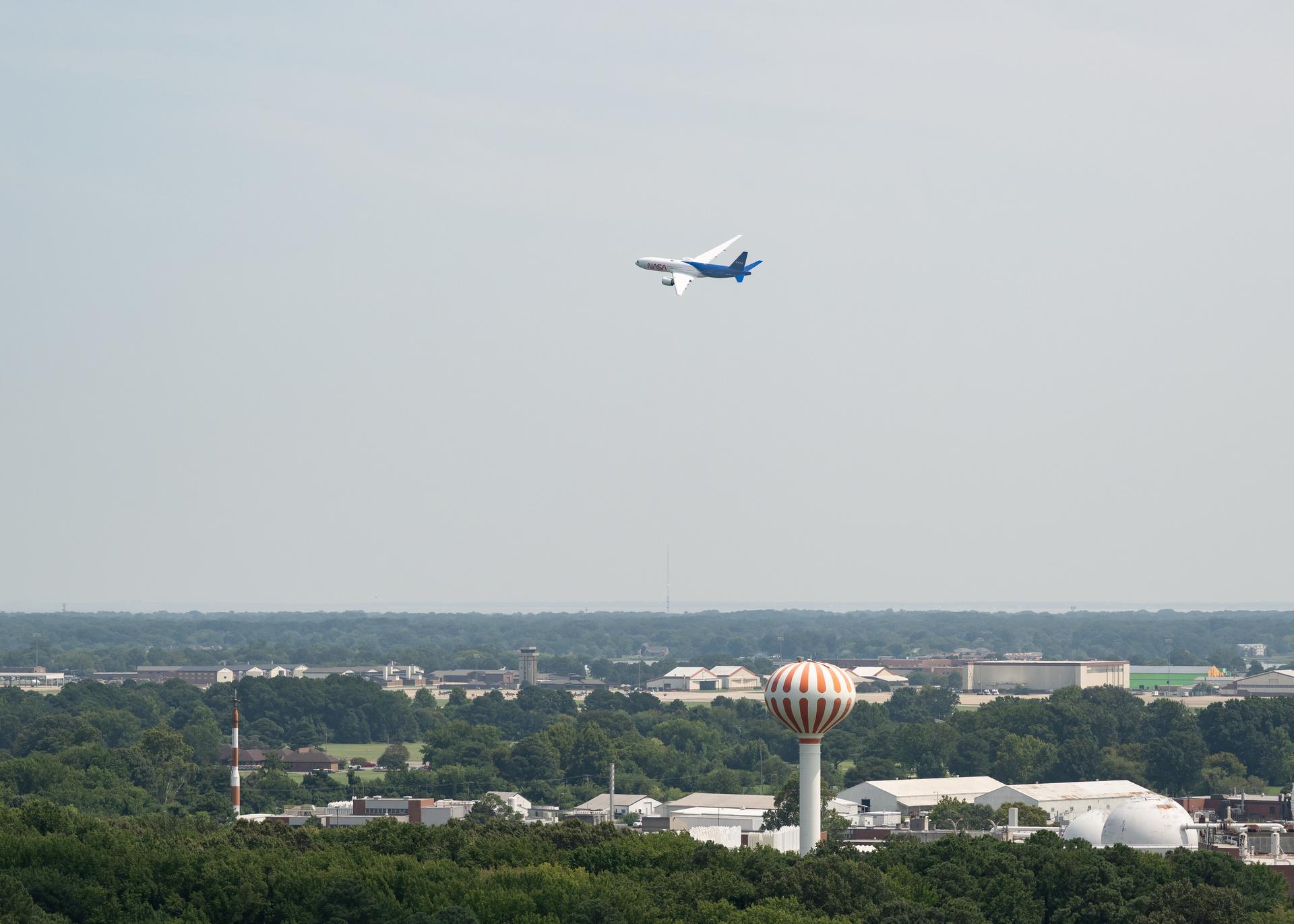
NASA's B777 aircraft returning to NASA Langley Research Center the 31st of July in Hampton, Virginia after a new paint job. It will now continue its maintenance and instrument integration schedule to prepare for its initial airborne science flights in 2027. Photo Credit NASA/ Ryan Hill)
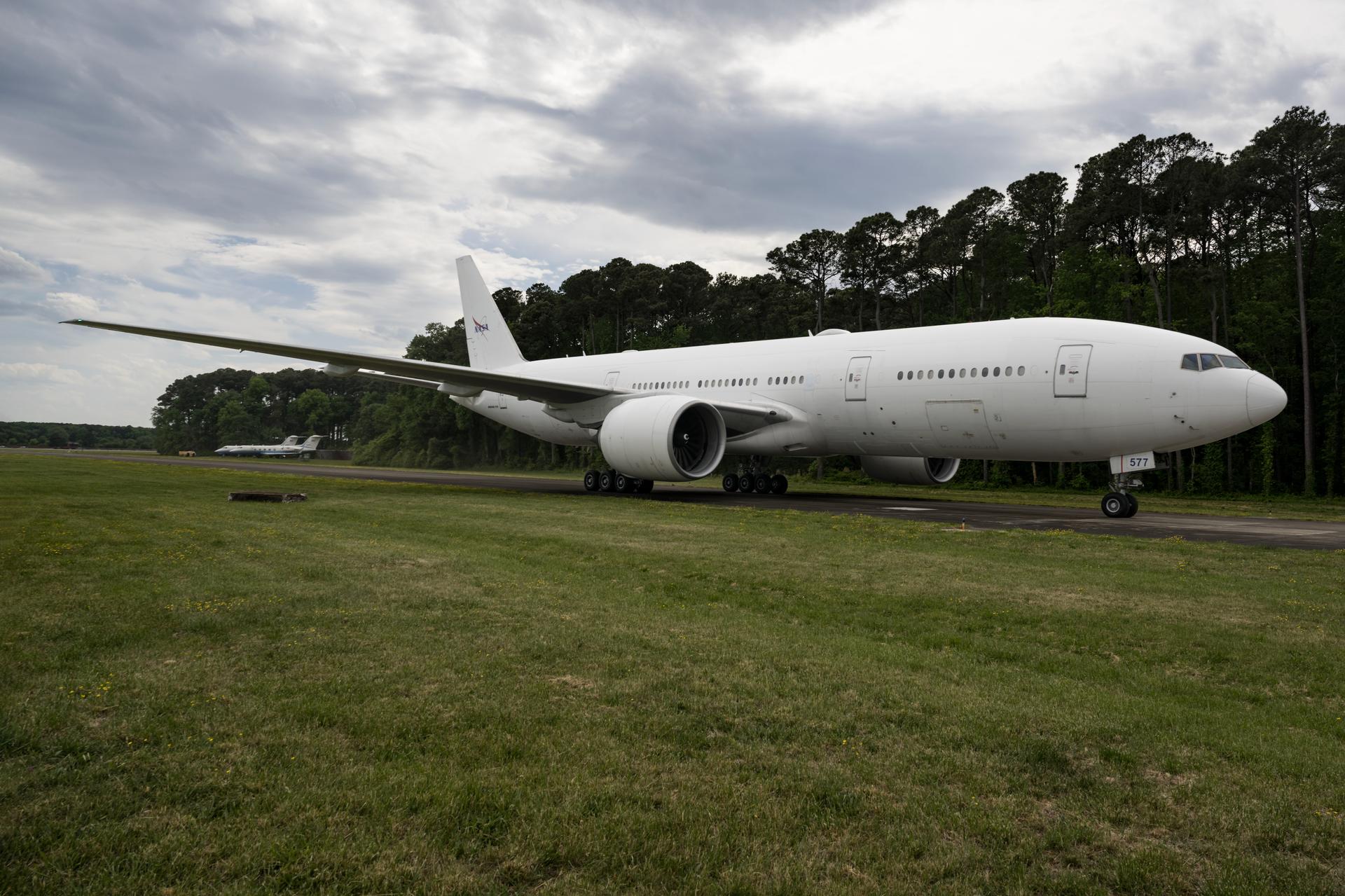
NASA Langley's B777 aircraft before it departs Langley Research Center to receive its new livery (paint job), prior to its departure on July 16th, it received ground maintenance in the center’s hangar. (Photo Credit NASA/ Mark Knopp)
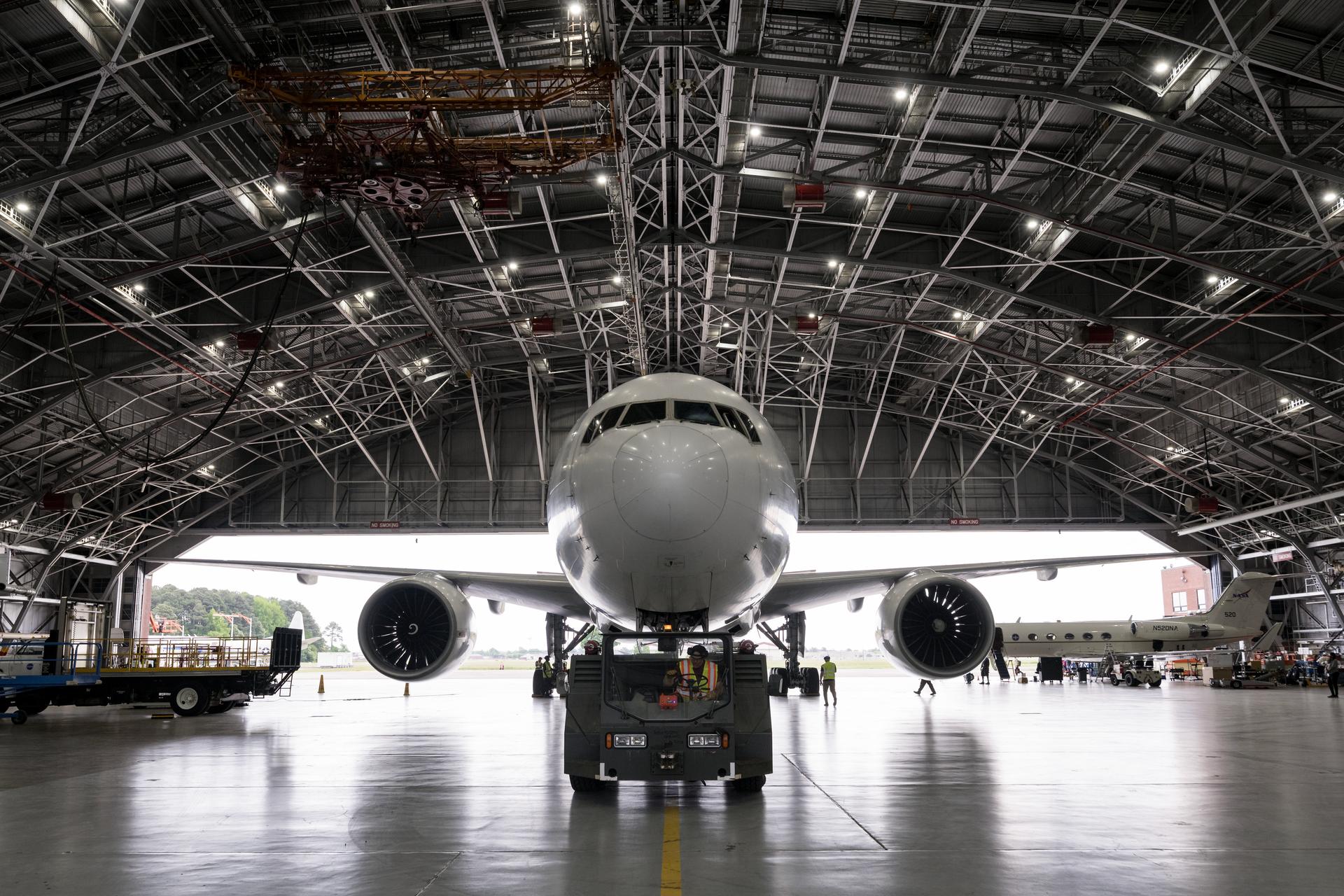
NASA Langley's B777 aircraft before it departs Langley Research Center to receive its new livery (paint job), prior to its departure on July 16th, it received ground maintenance in the center’s hangar. (Photo Credit NASA/ Mark Knopp)
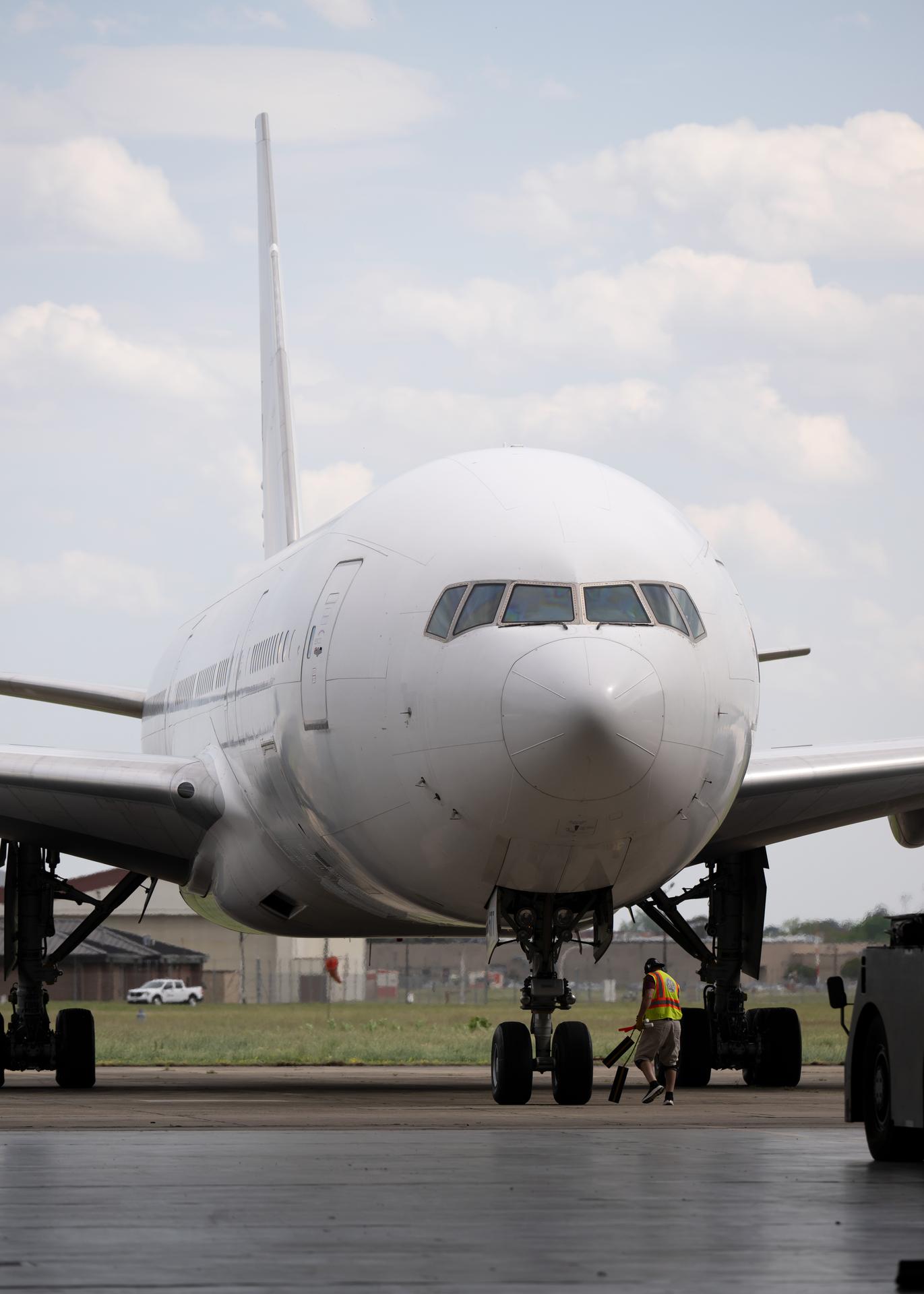
NASA Langley's B777 aircraft before it departs Langley Research Center to receive its new livery (paint job), prior to its departure on July 16th, it received ground maintenance in the center’s hangar. (Photo Credit NASA/ Ryan Hill)
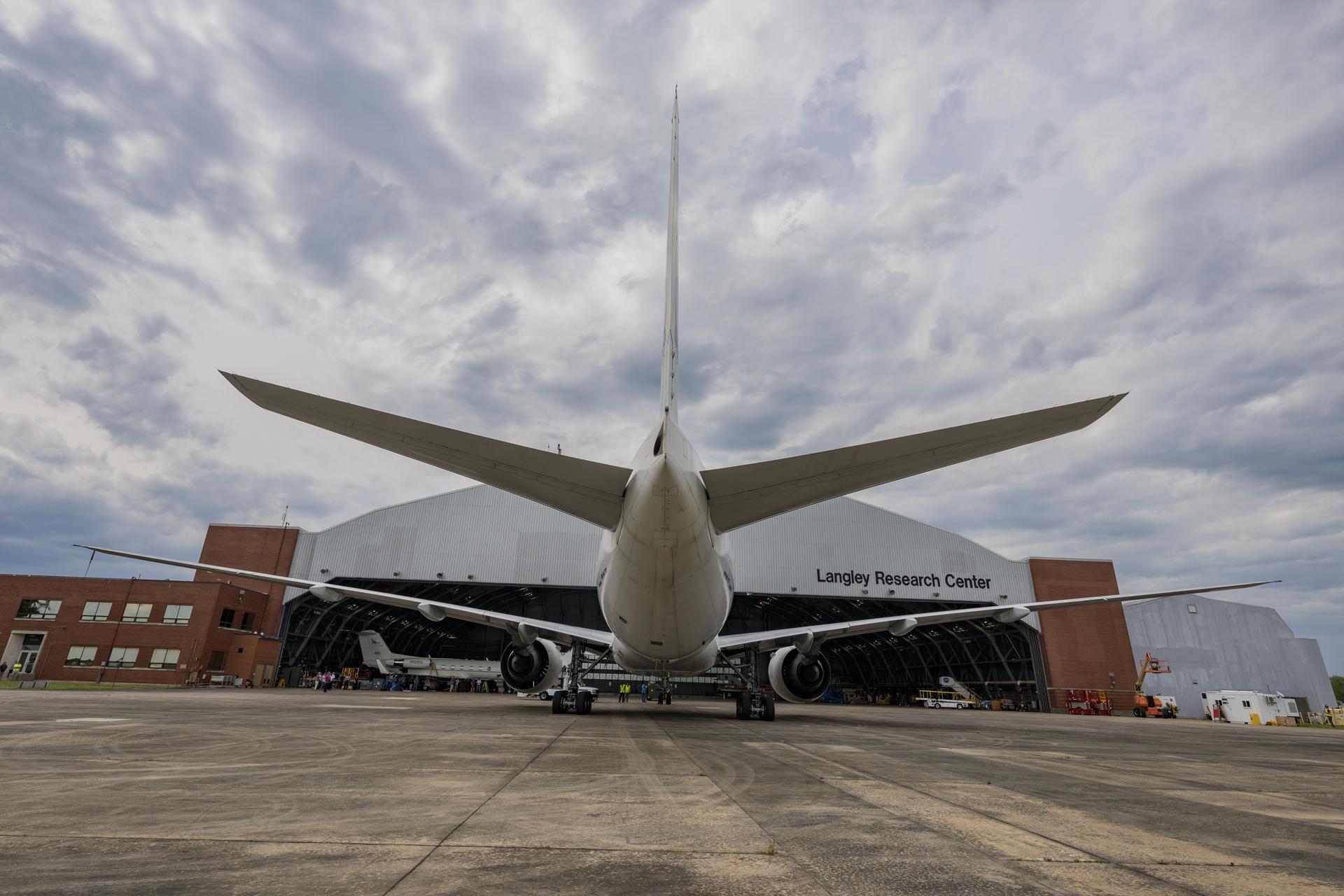
NASA Langley's B777 aircraft before it departs Langley Research Center to receive its new livery (paint job), prior to its departure on July 16th, it received ground maintenance in the center’s hangar. (Photo Credit NASA/ Mark Knopp)
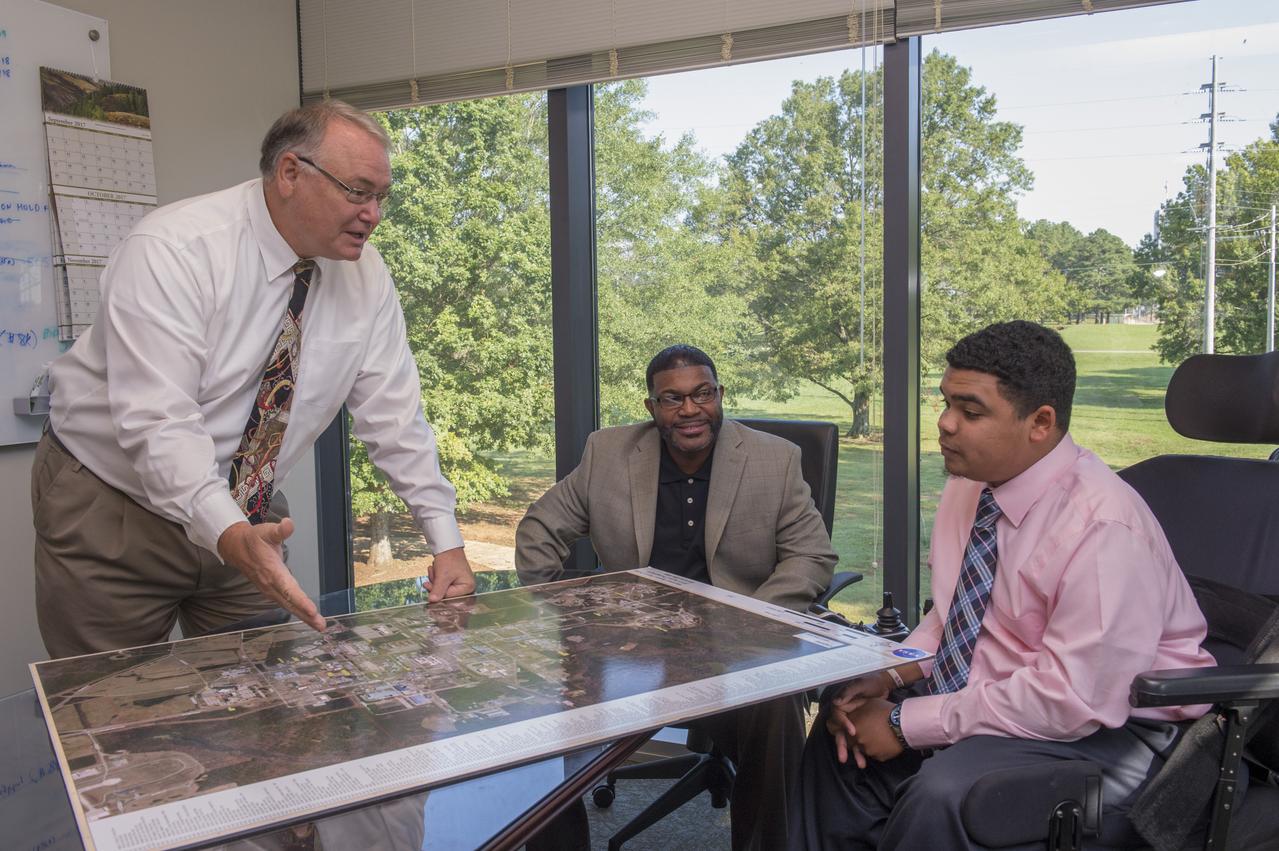
Farley Davis and Edward Ahmad explain map of MSFC to Fall Job Shadowing Student Deshon Washington, a student at Alabama A&M University.
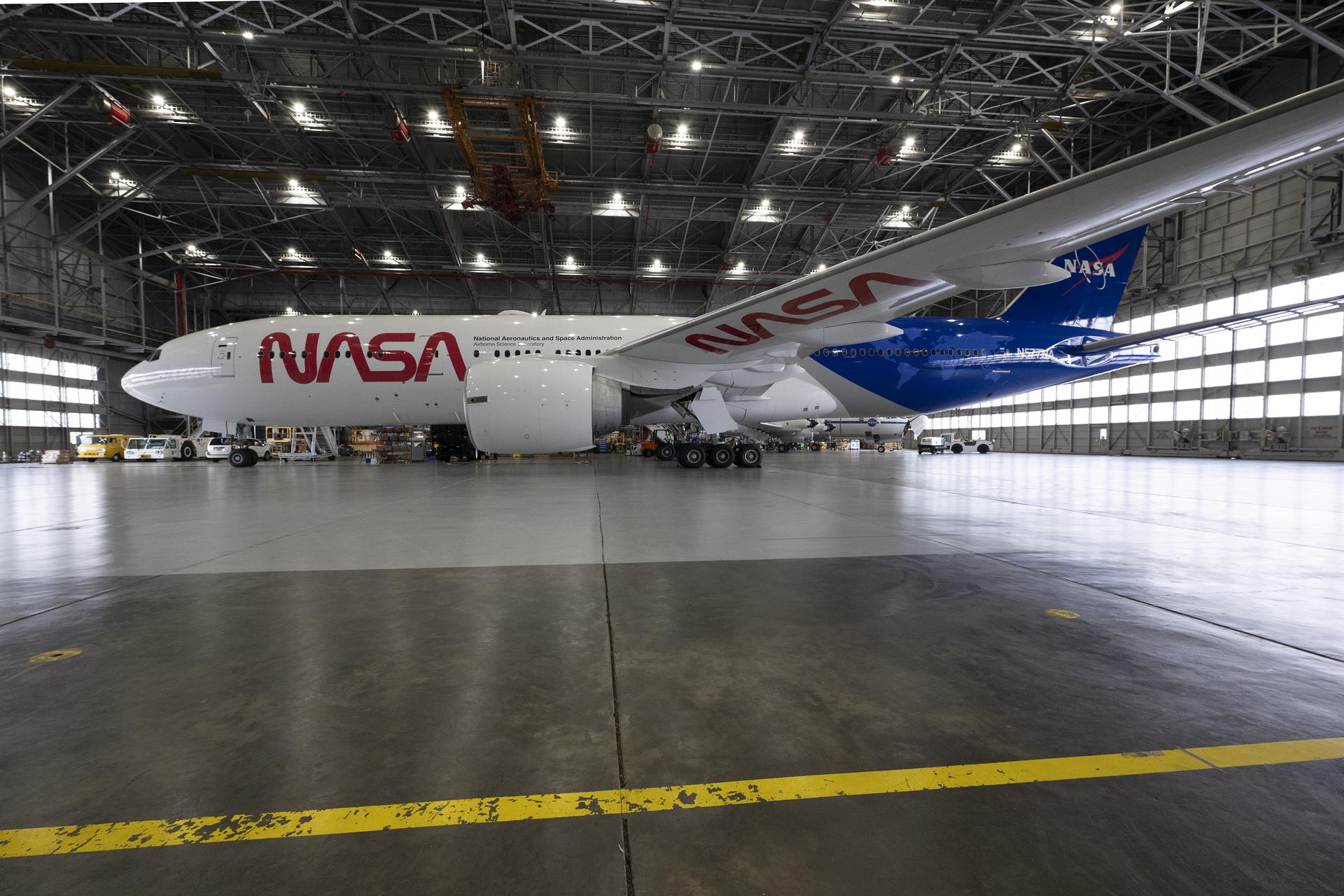
NASA's B777 aircraft returned to NASA Langley Research Center in Hampton, Virginia on Aug 12th with its new livery or paint job. It will now continue its maintenance and instrument integration schedule to prepare for its initial airborne science flights in 2027. Photo Credit NASA/Ryan Hill
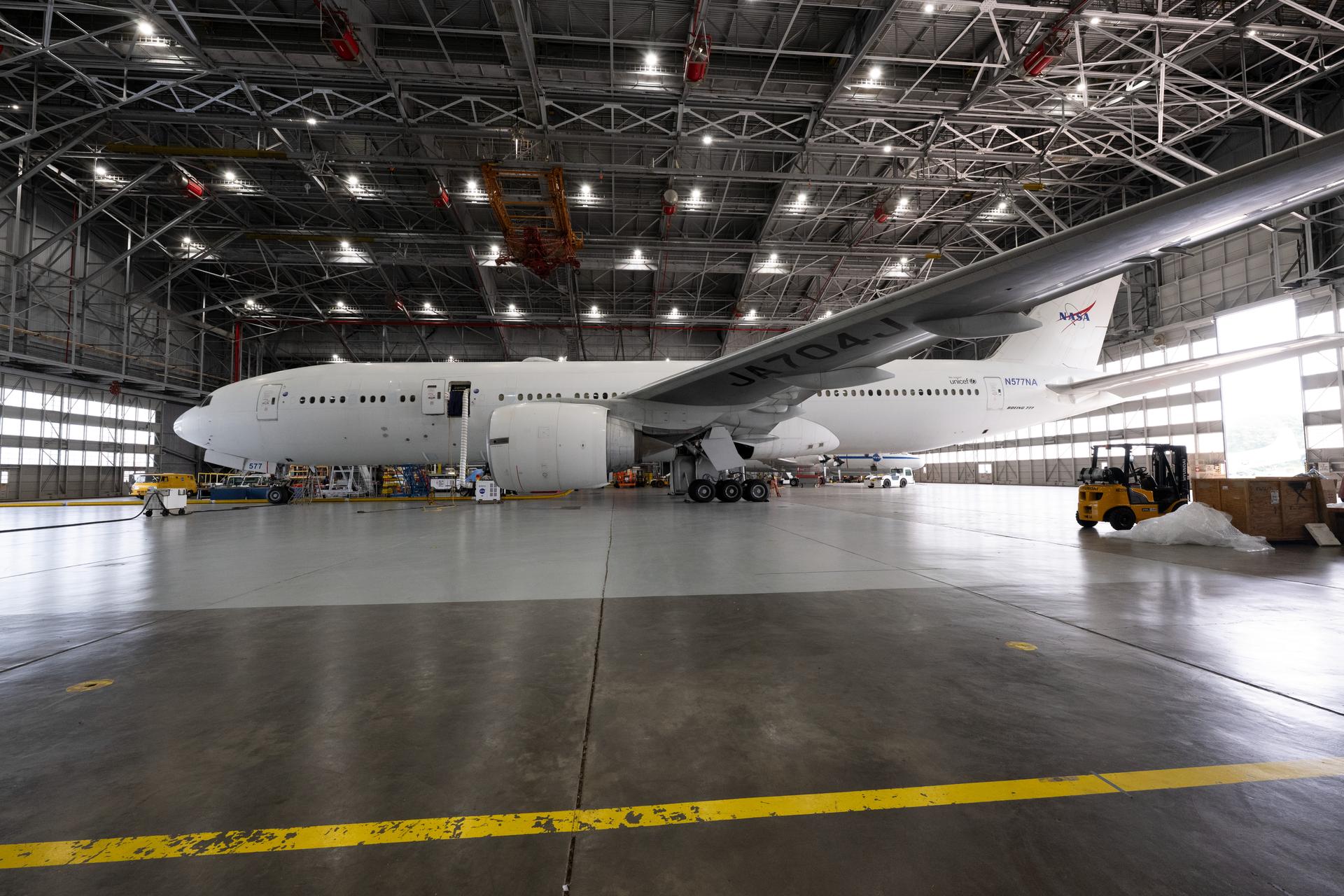
Before Langley's B777 aircraft departed Langley Research Center to received its NASA livery (paint job), it received ground maintenance in the hangar on center. Photo Credit NASA/Ryan Hill
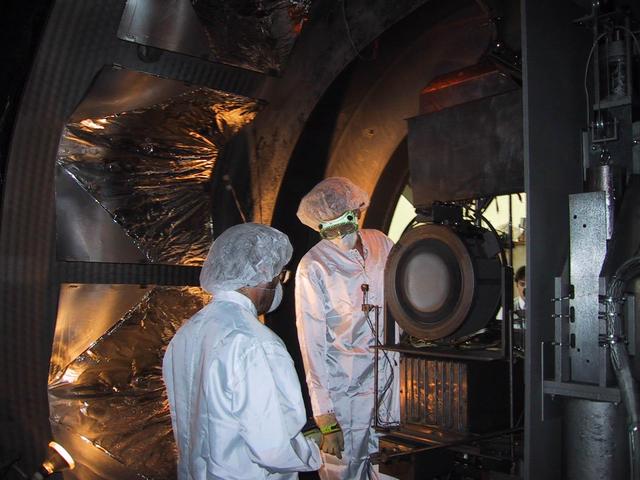
An ion thruster is removed from a vacuum chamber at NASA Jet Propulsion Laboratory, Pasadena, Calif., its job done following almost five years of testing.
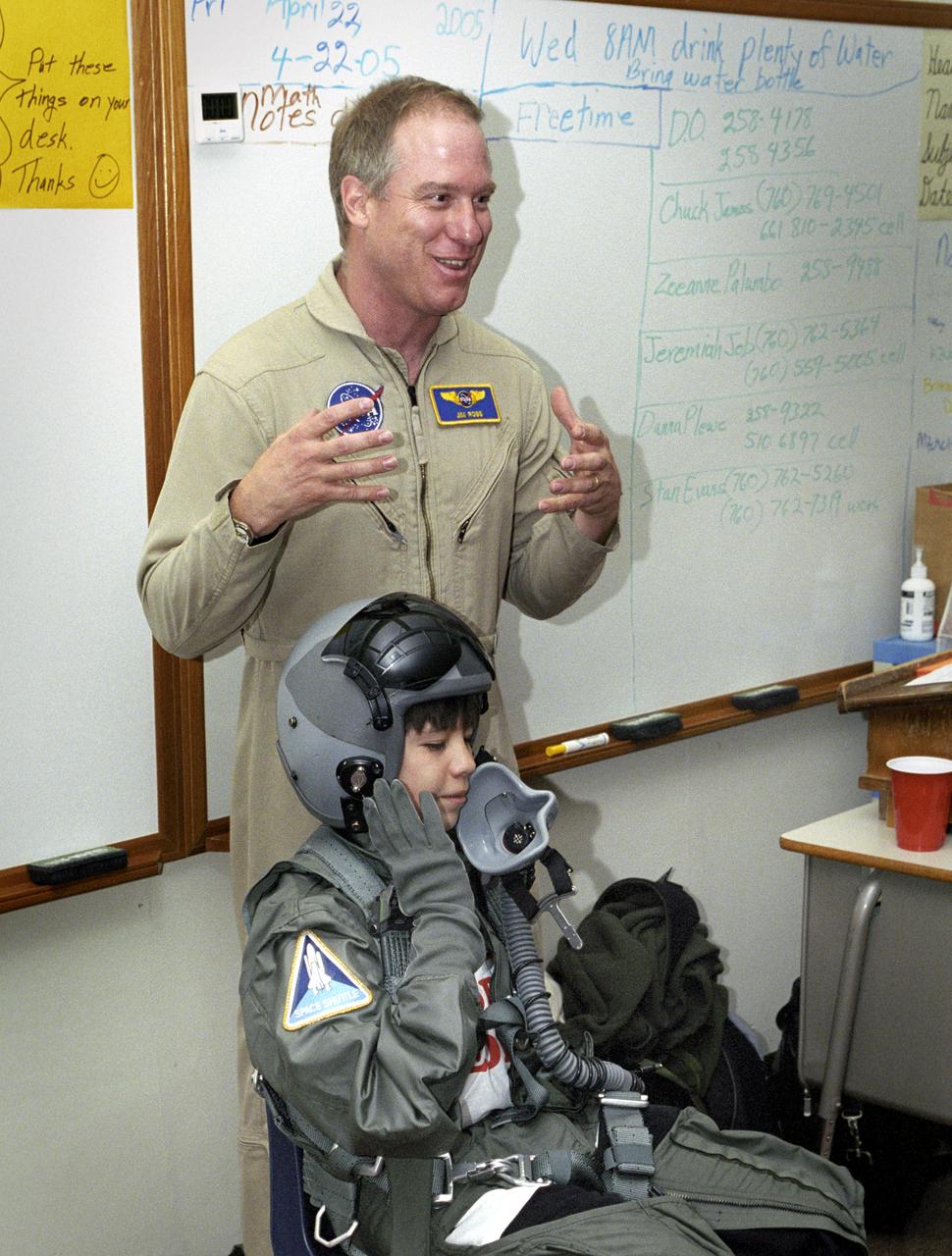
While NASA Dryden's Jim Ross outlined his job as an aerial photographer, sixth-grade student Leo Banuelos learned first-hand about the gear Ross wears in the cockpit.
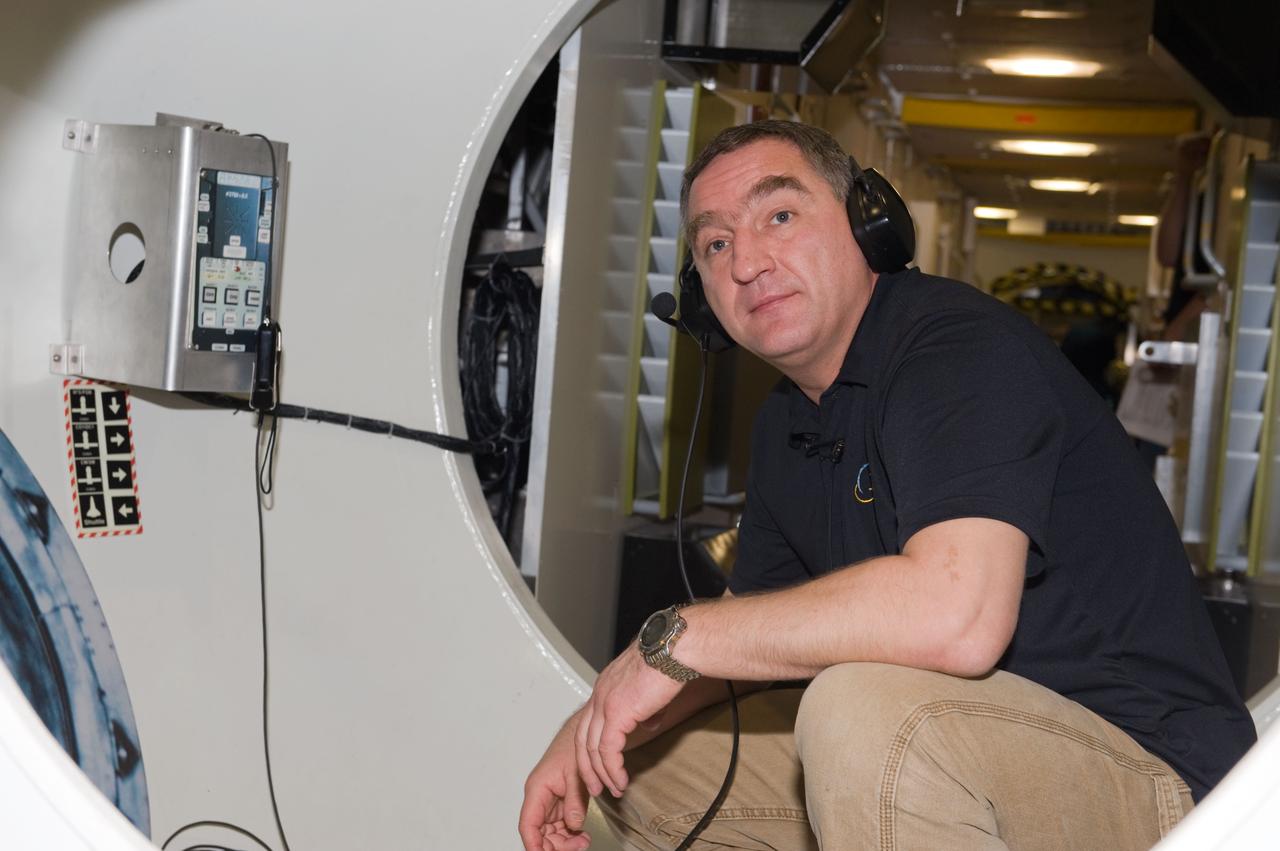
Enter Job Description Here
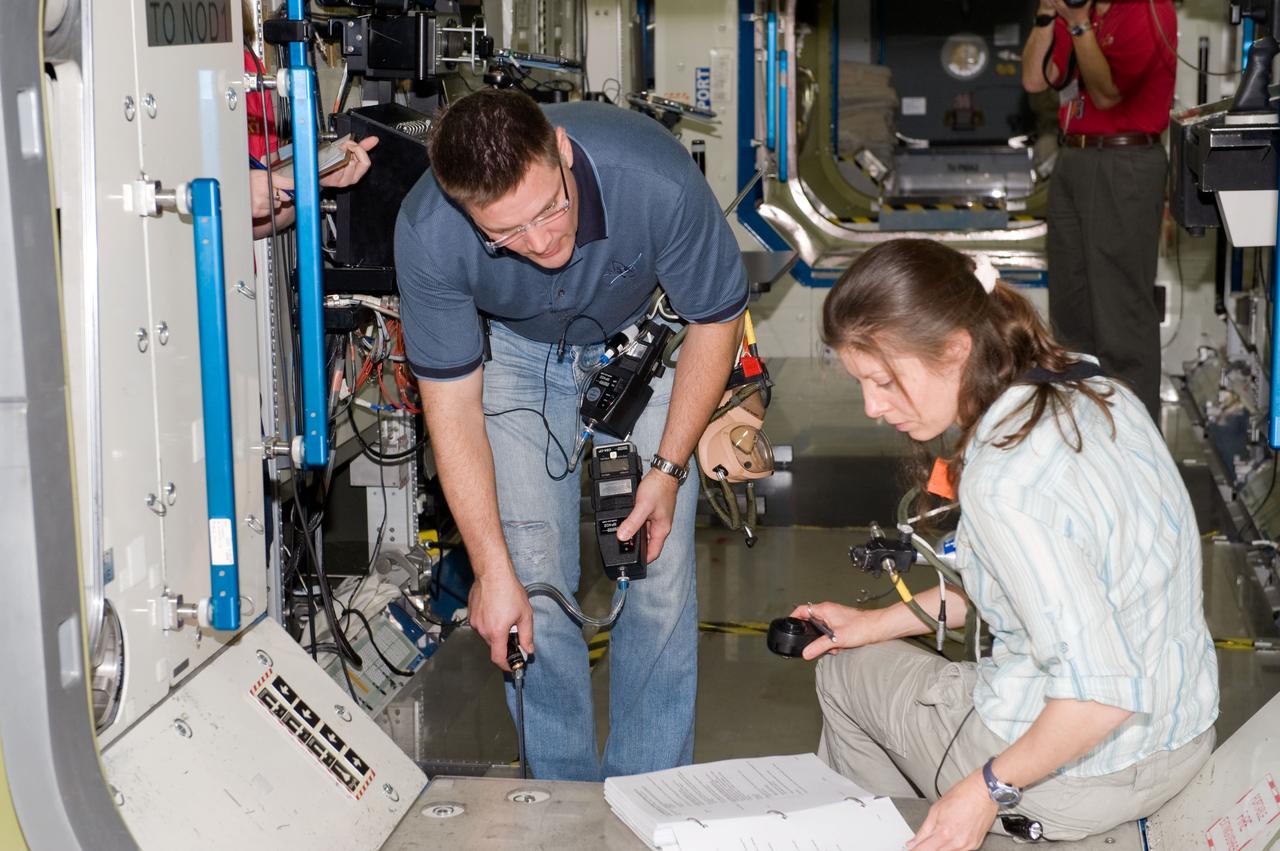
Enter Job Description Here
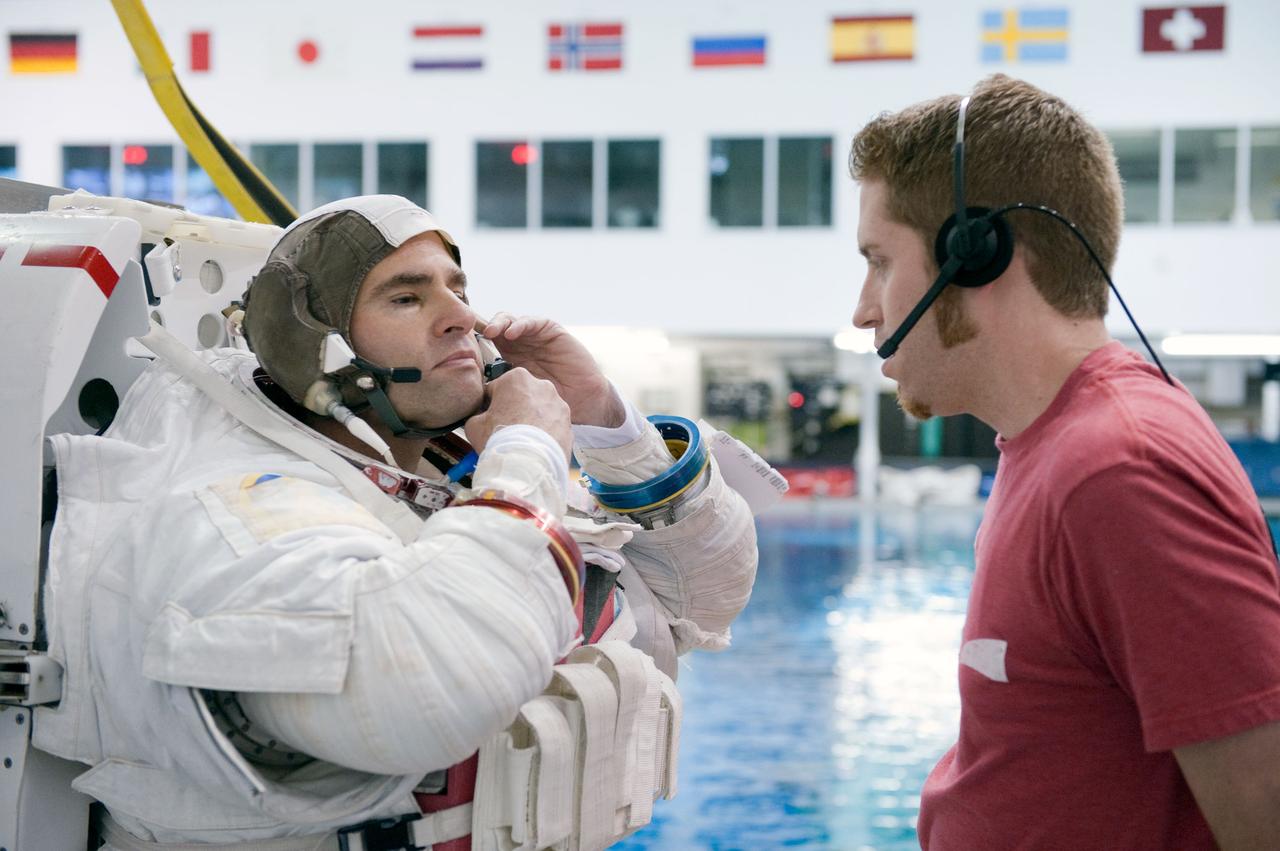
Enter Job Description Here
Enter Job Description Here
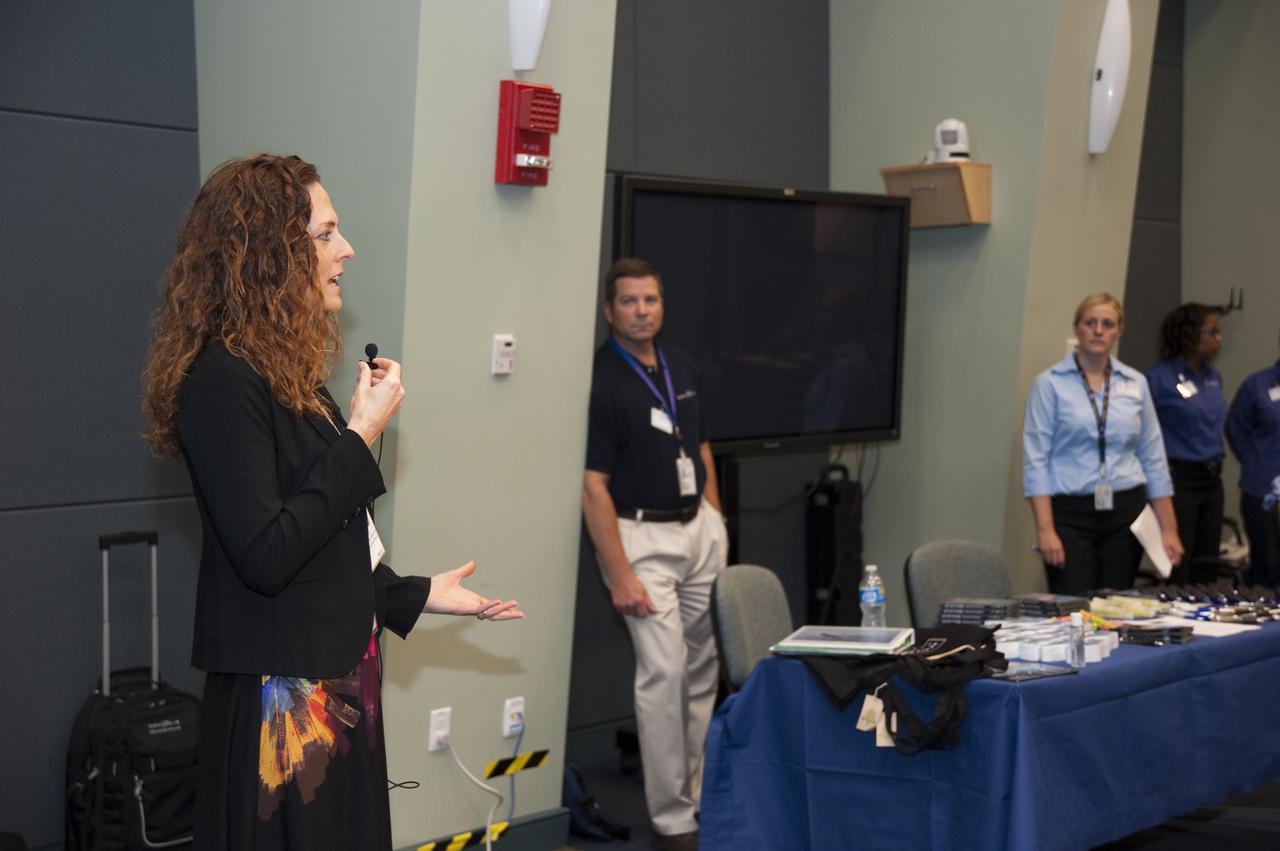
KSC JOB FAIR
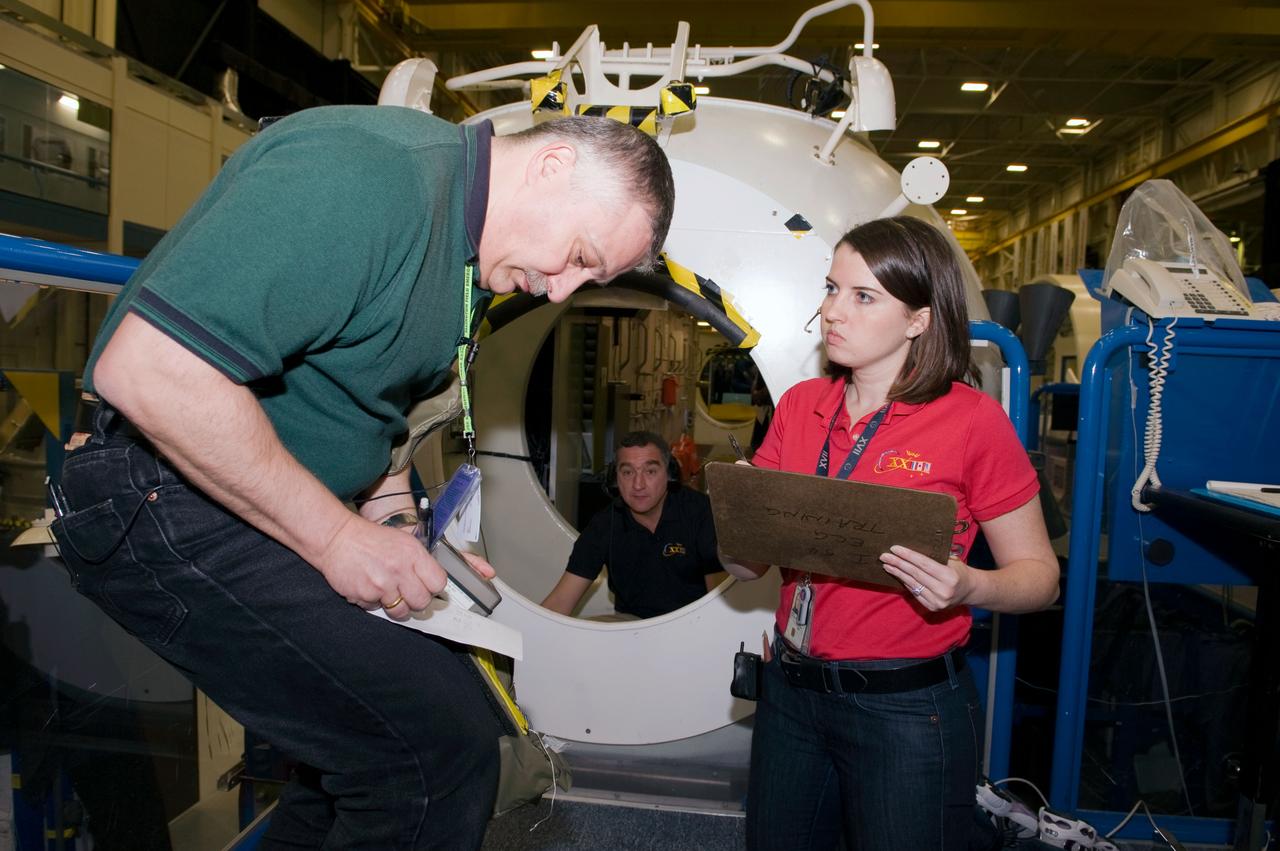
Enter Job Description Here
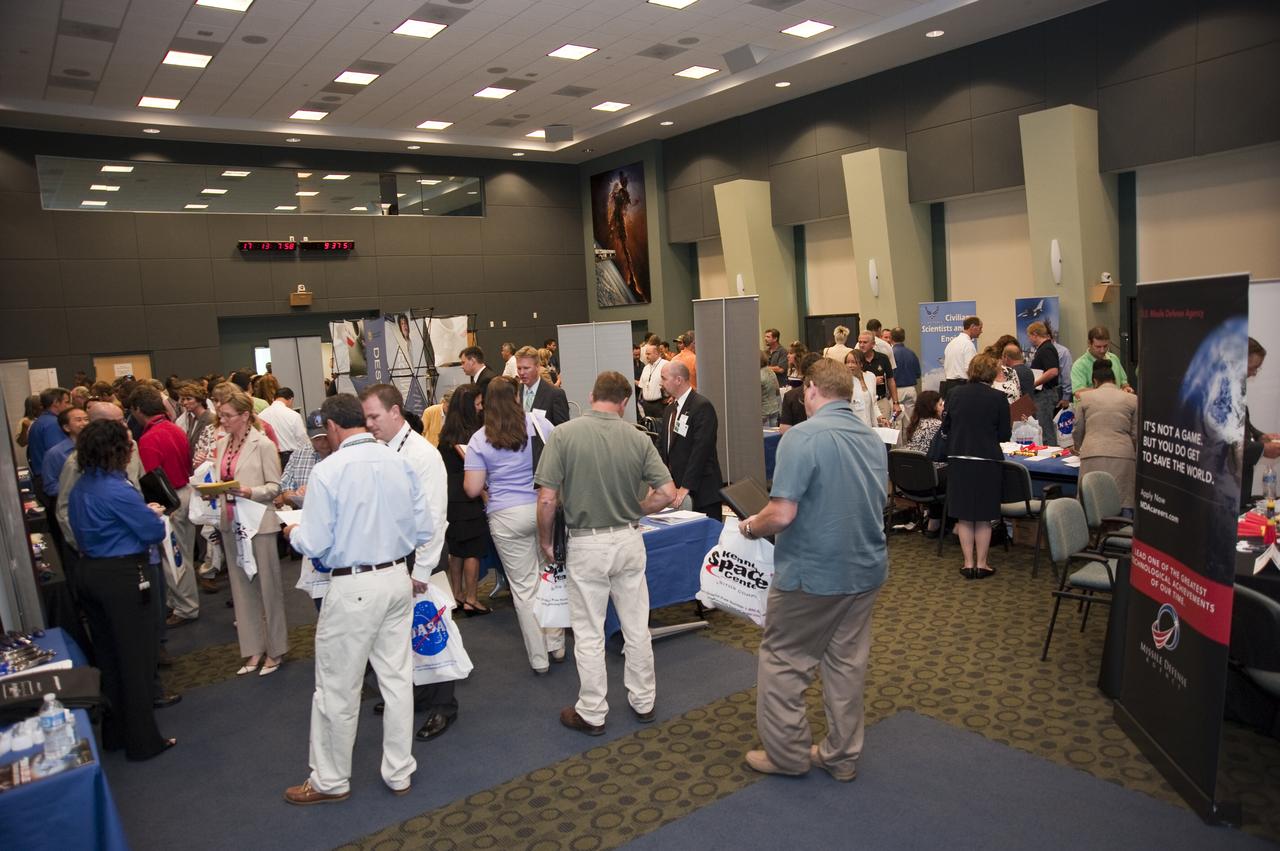
KSC JOB FAIR
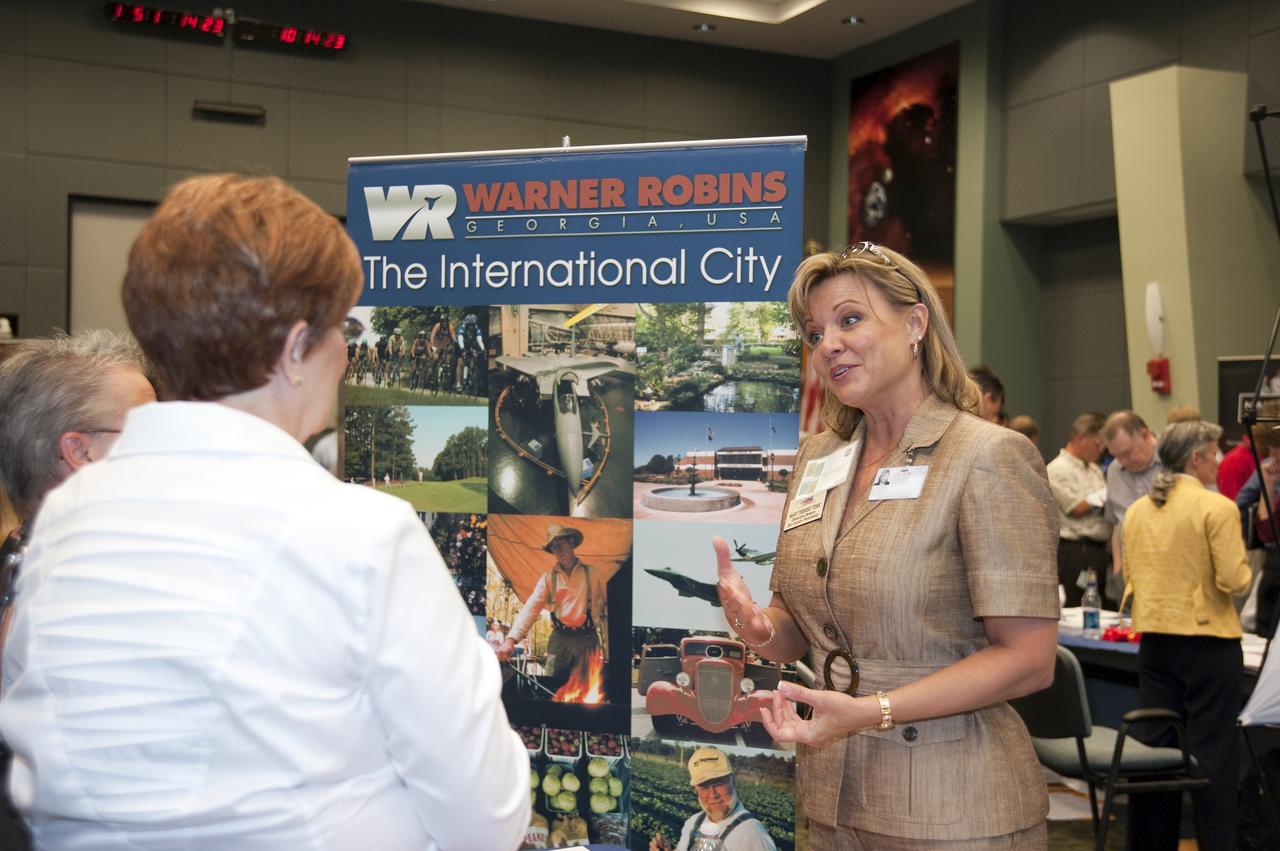
KSC JOB FAIR
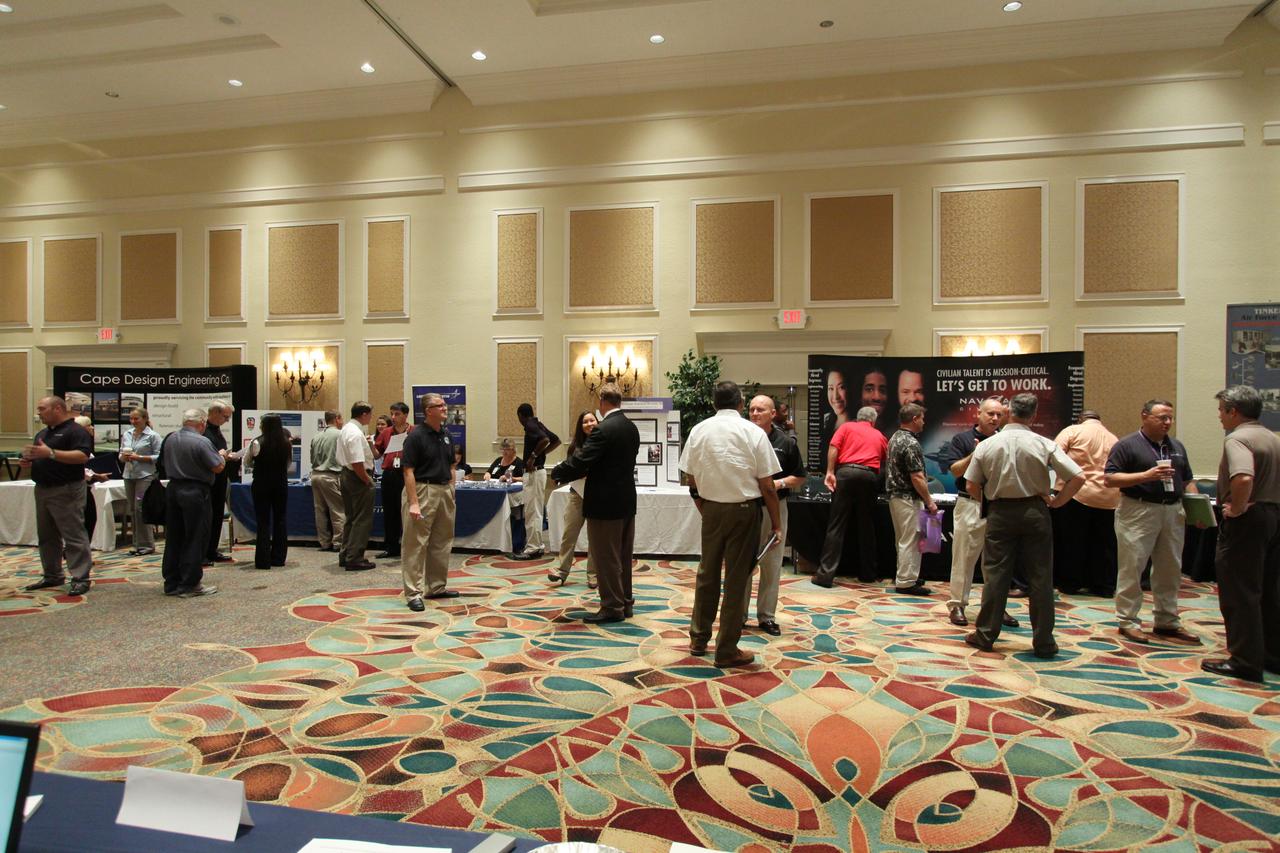
KSC Job Fair at the Radison
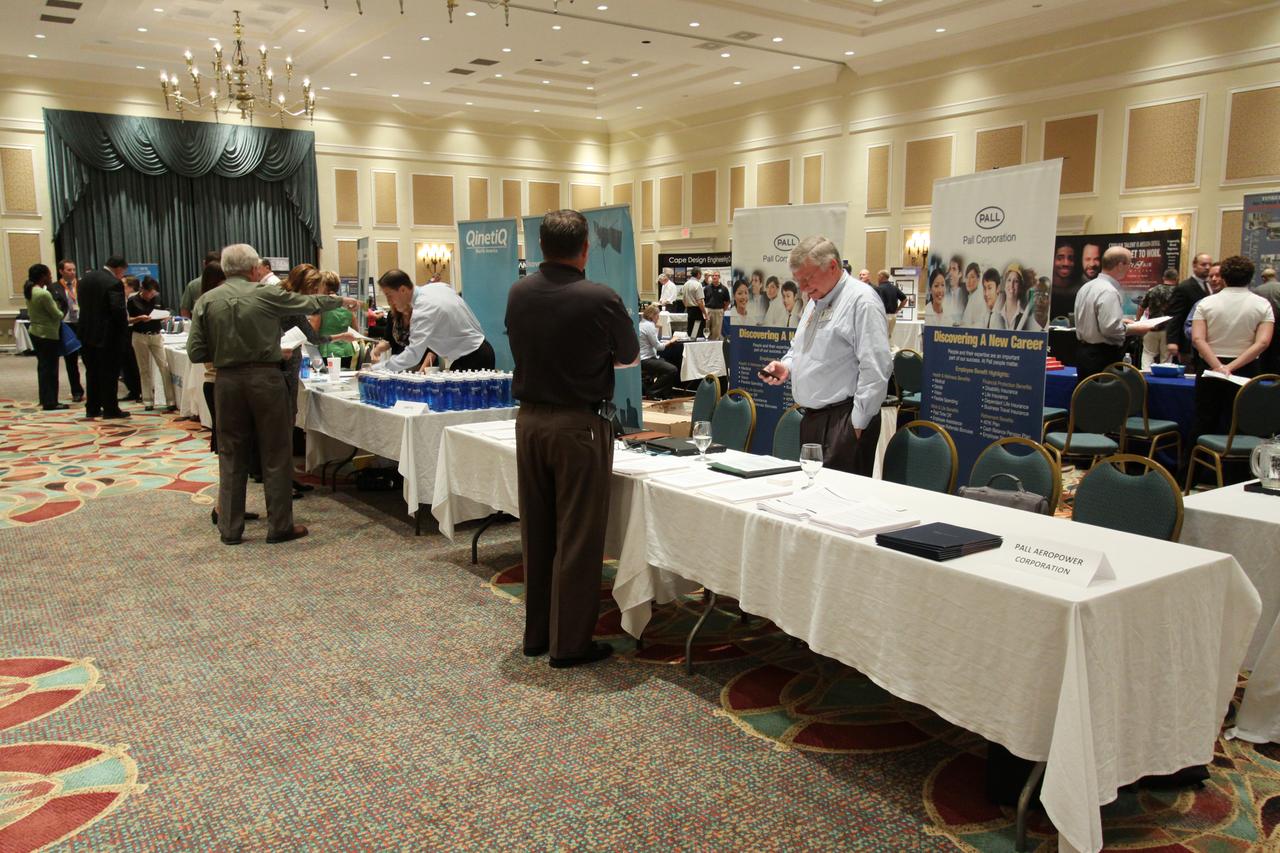
KSC Job Fair at the Radison
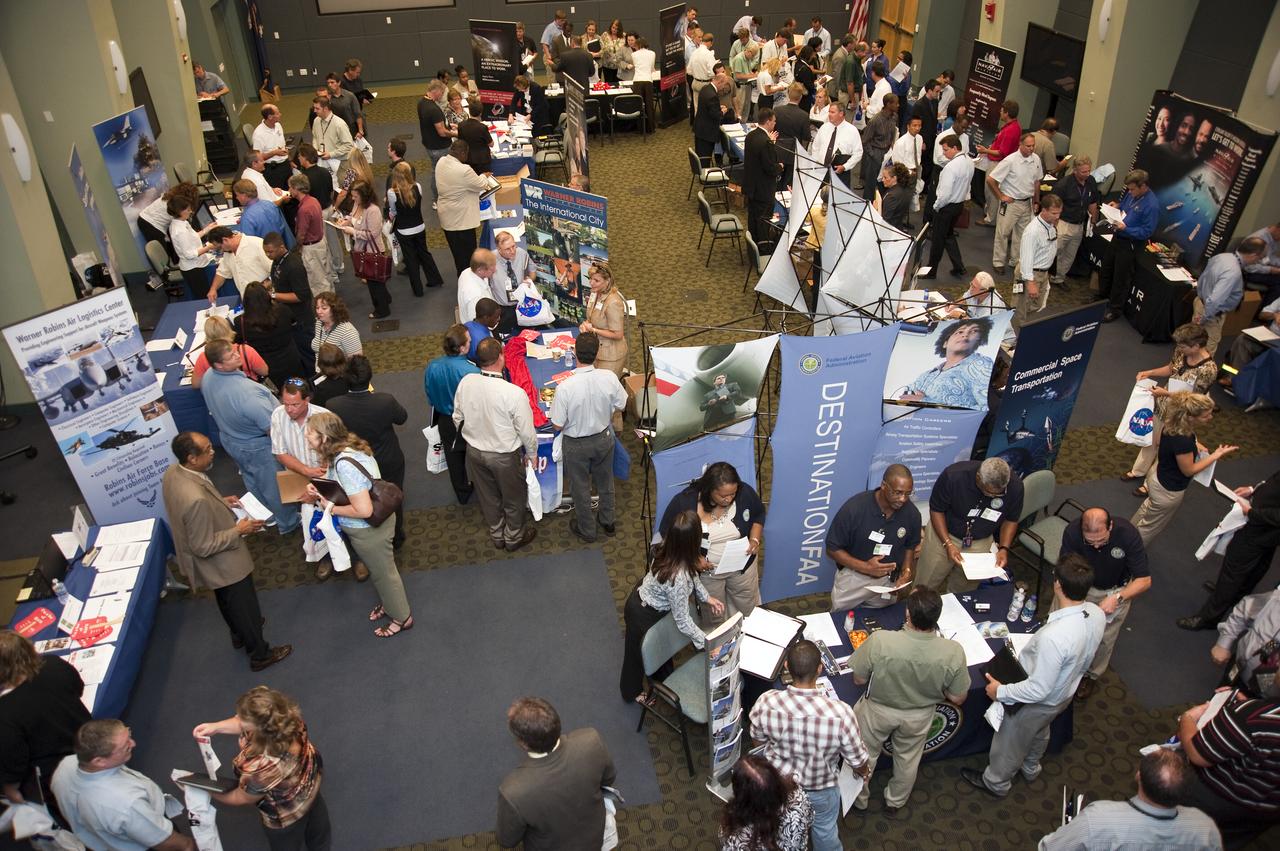
KSC JOB FAIR
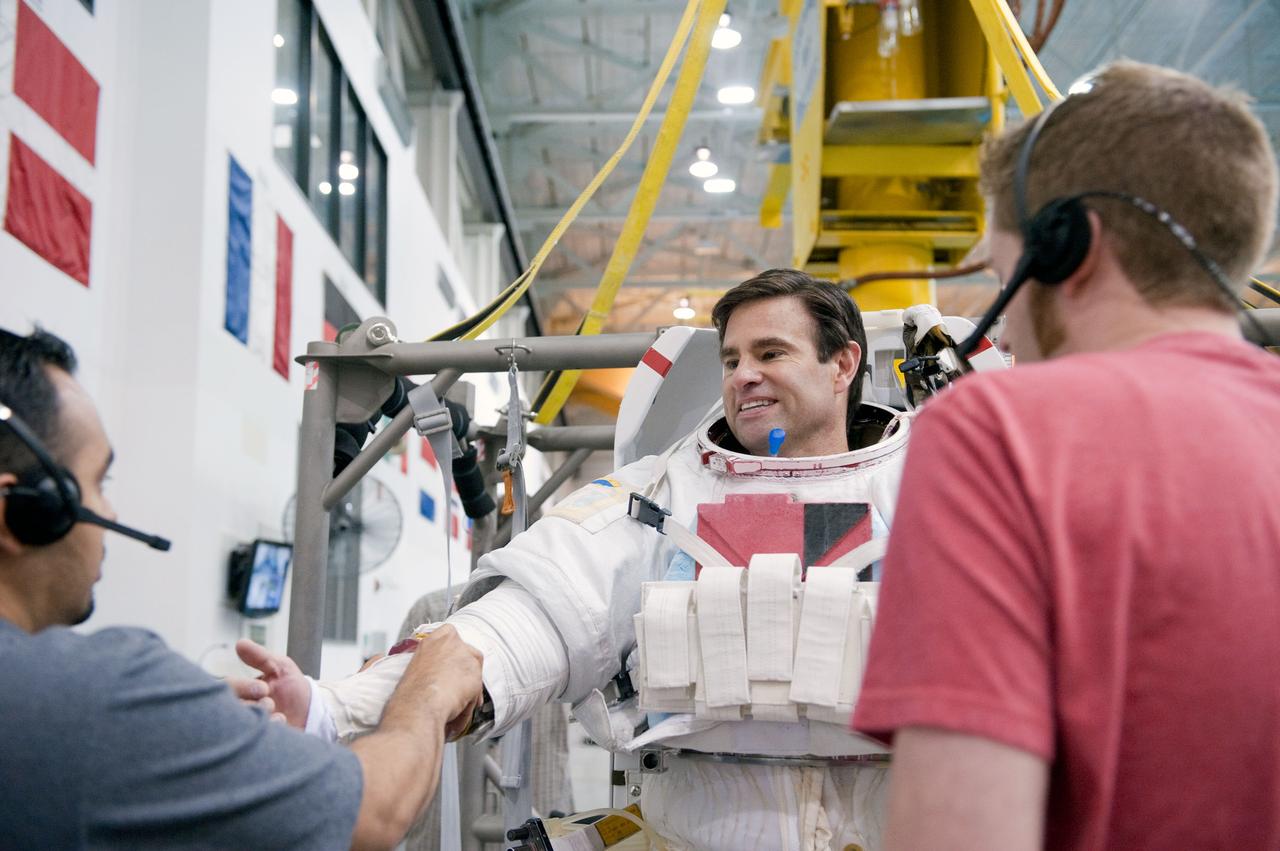
Enter Job Description Here
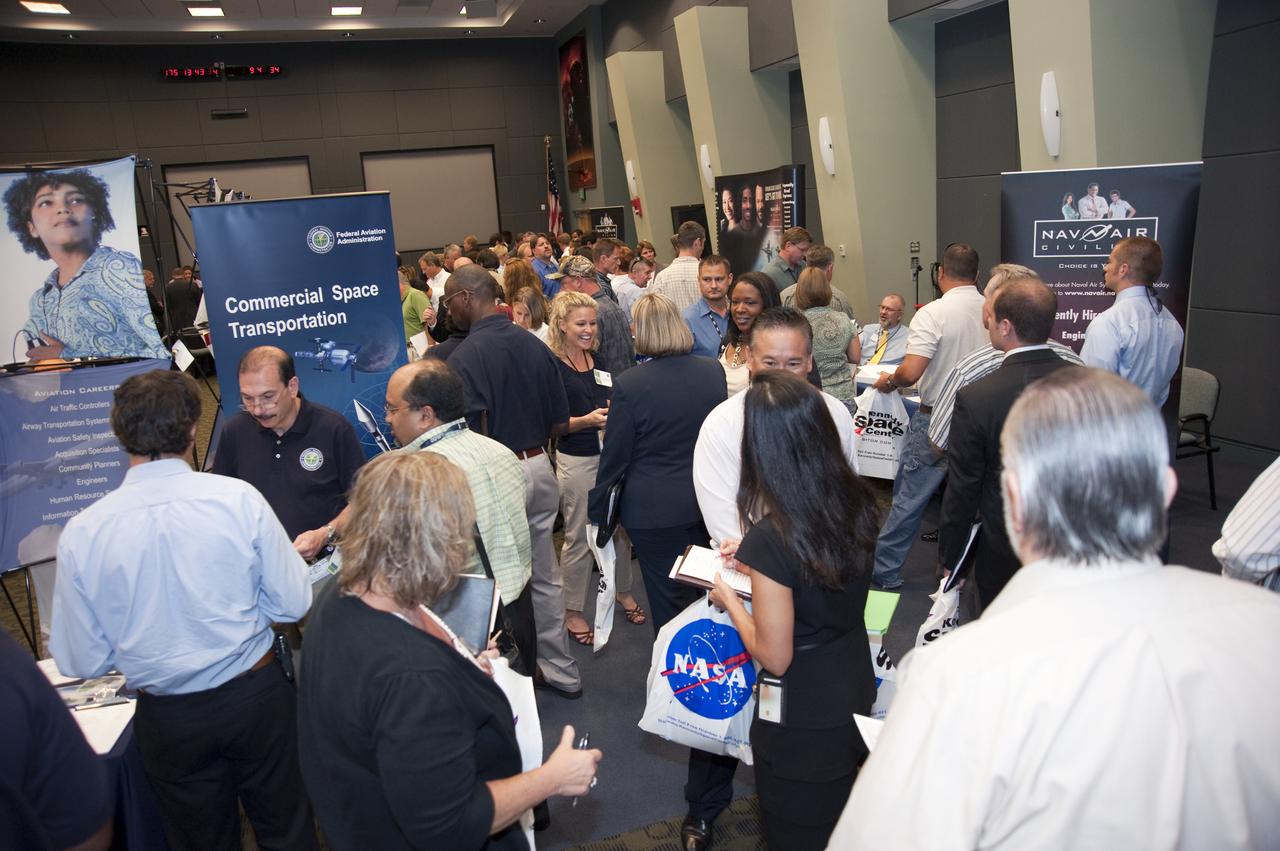
KSC JOB FAIR
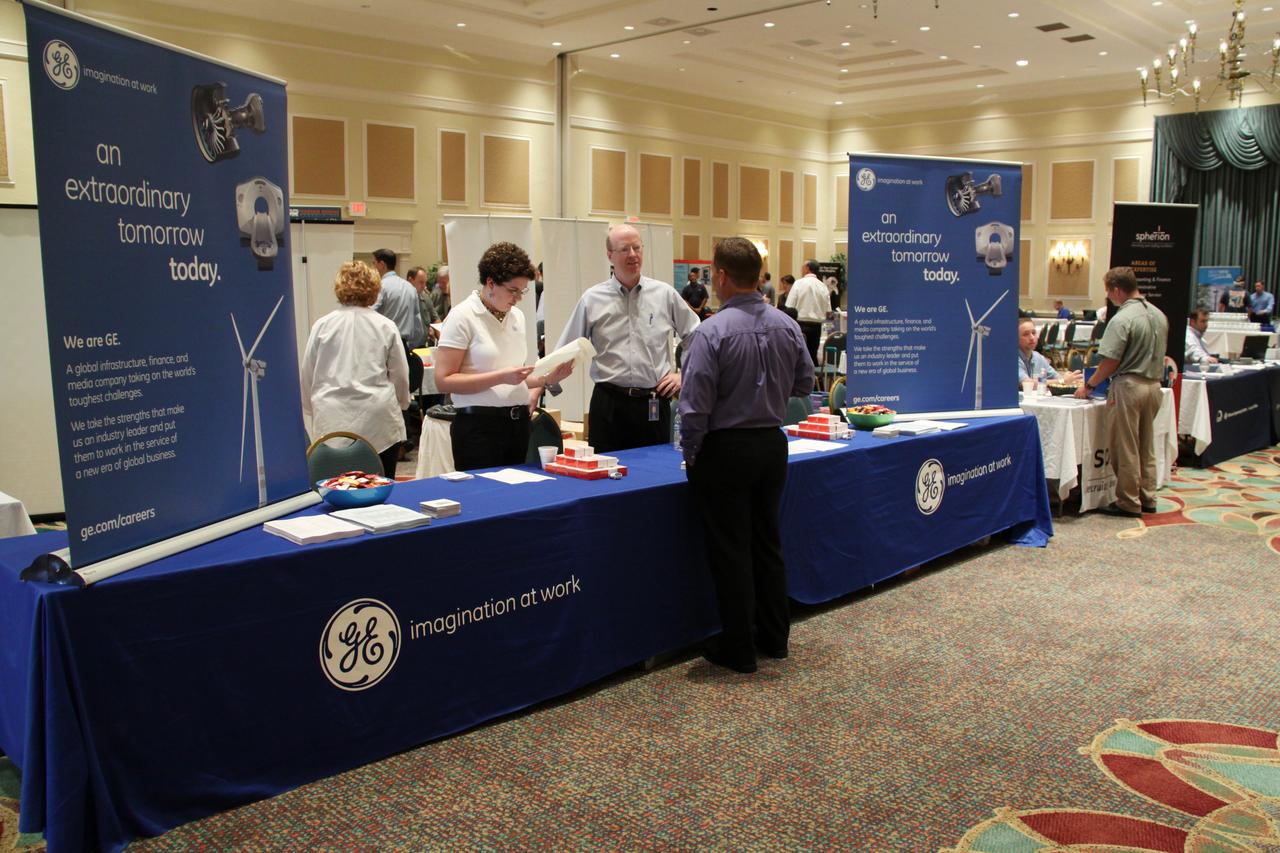
KSC Job Fair at the Radison
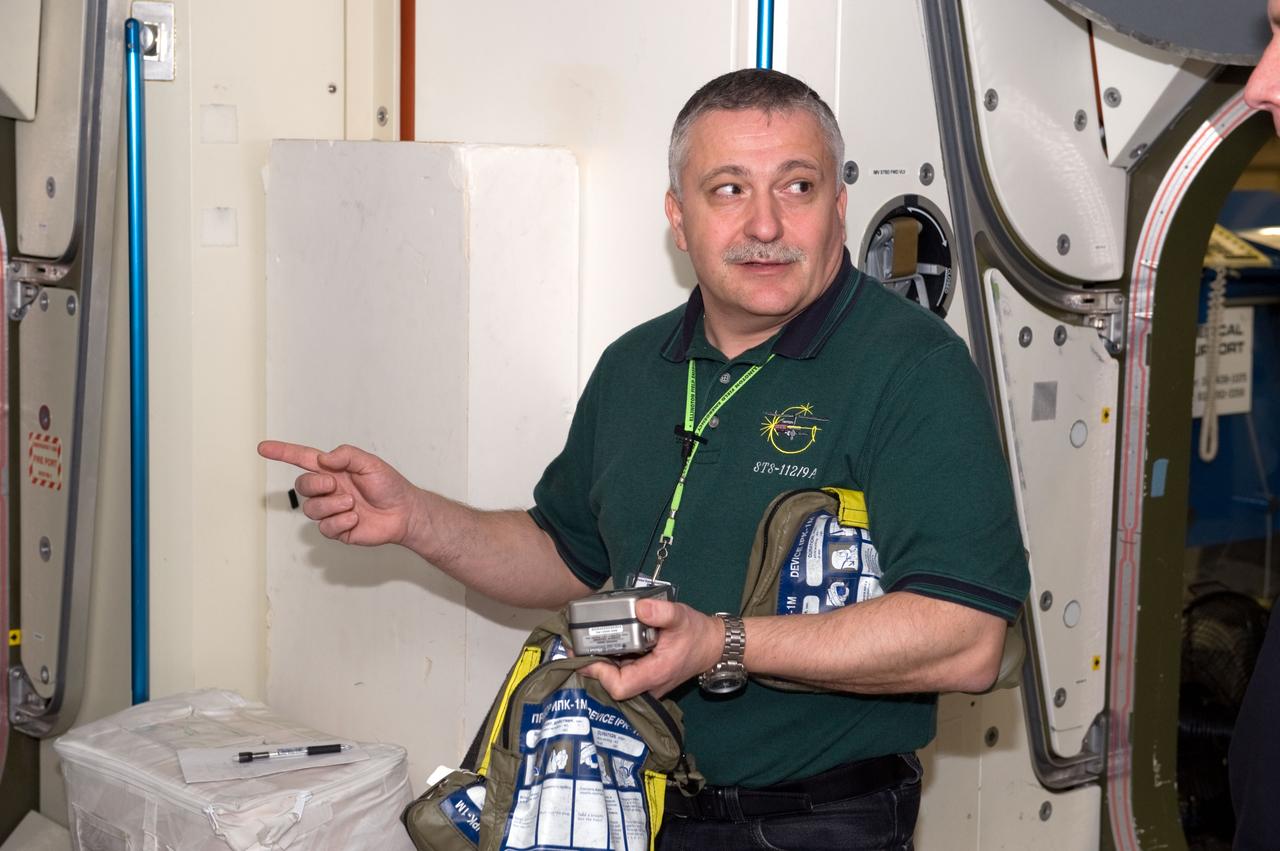
Enter Job Description Here
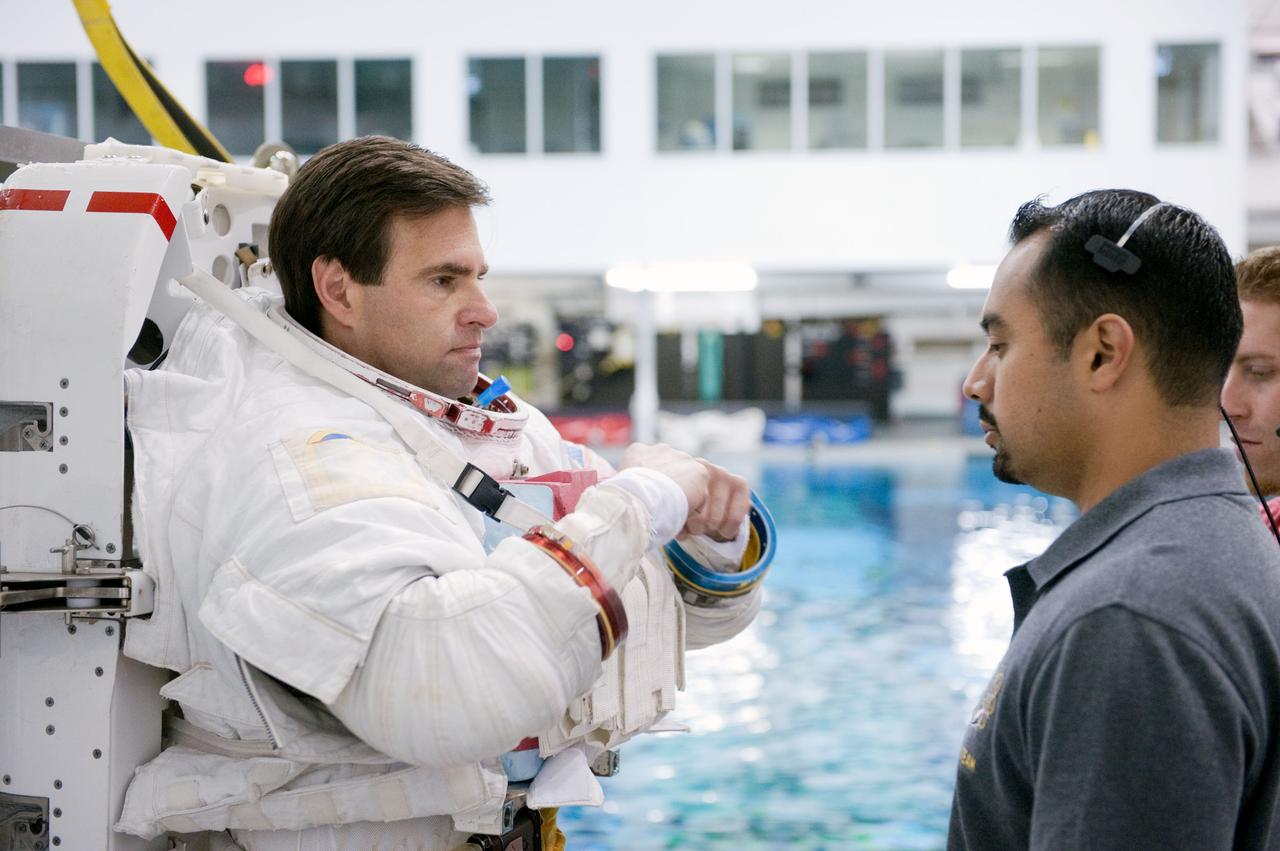
Enter Job Description Here
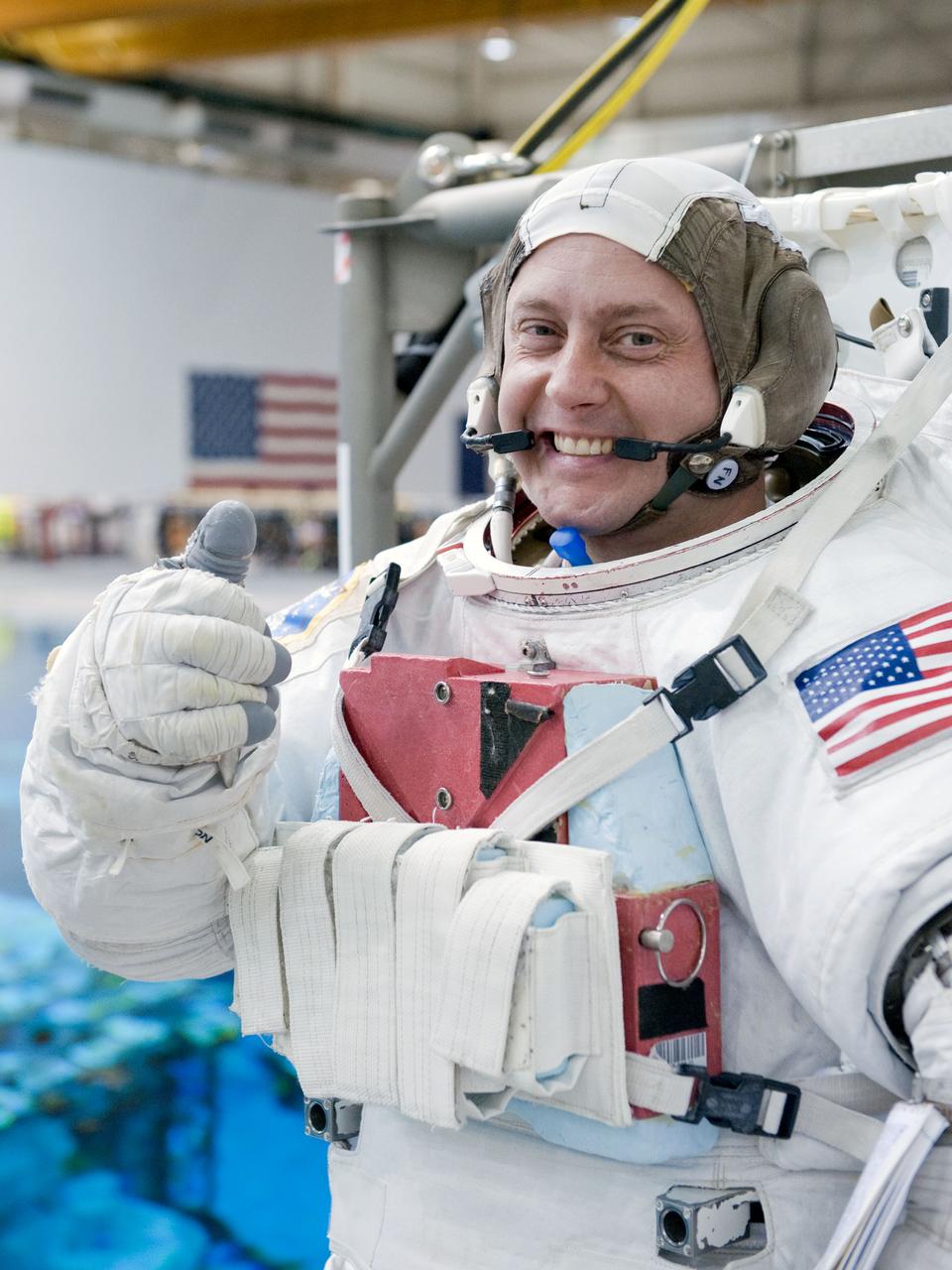
Enter Job Description Here
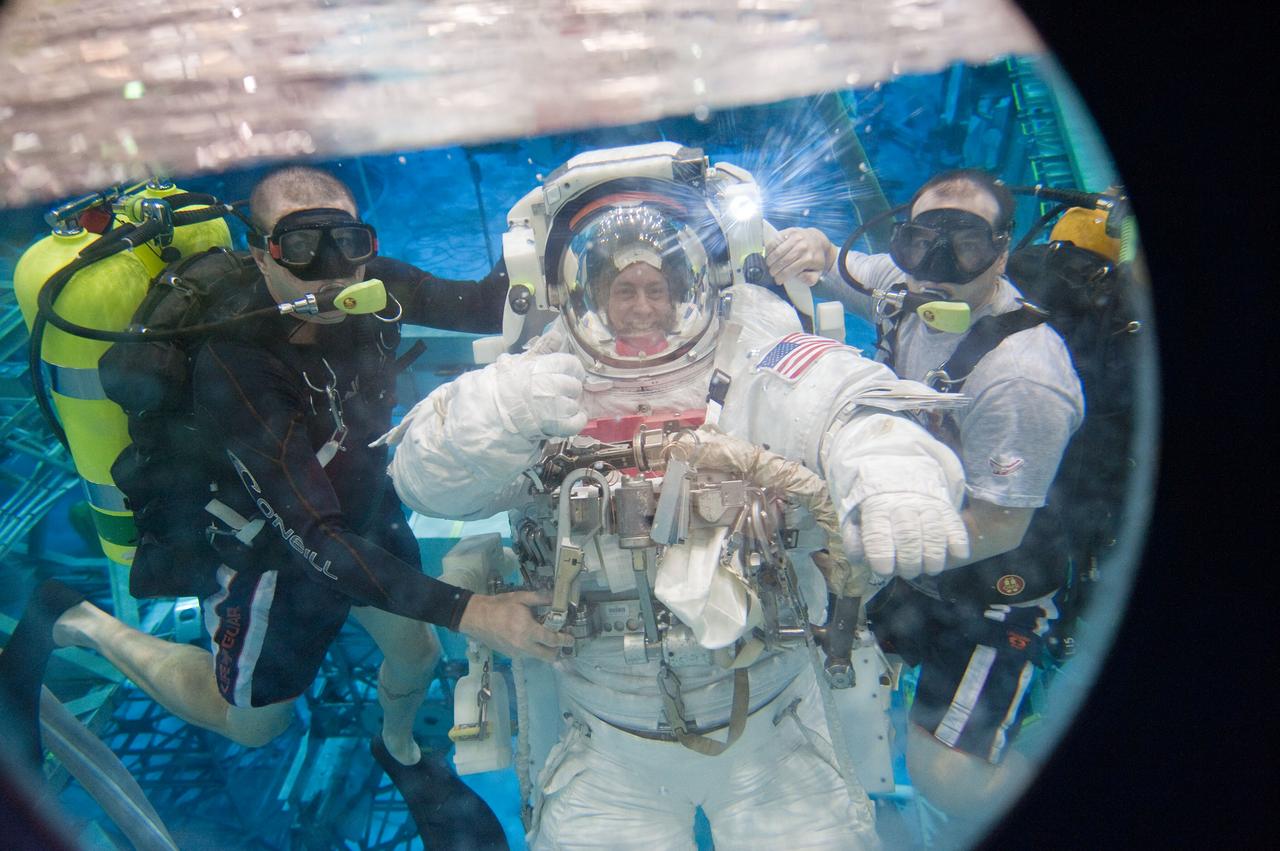
Enter Job Description Here
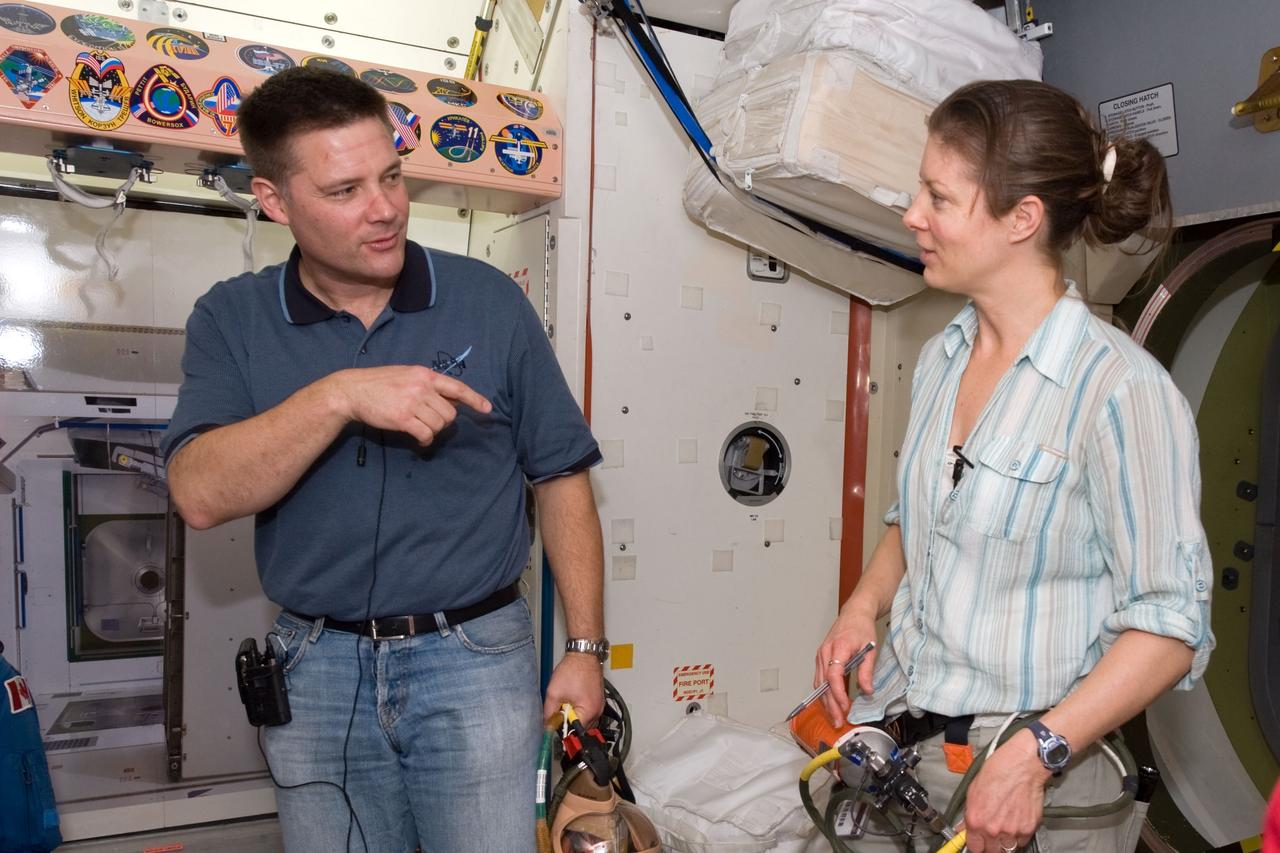
Enter Job Description Here
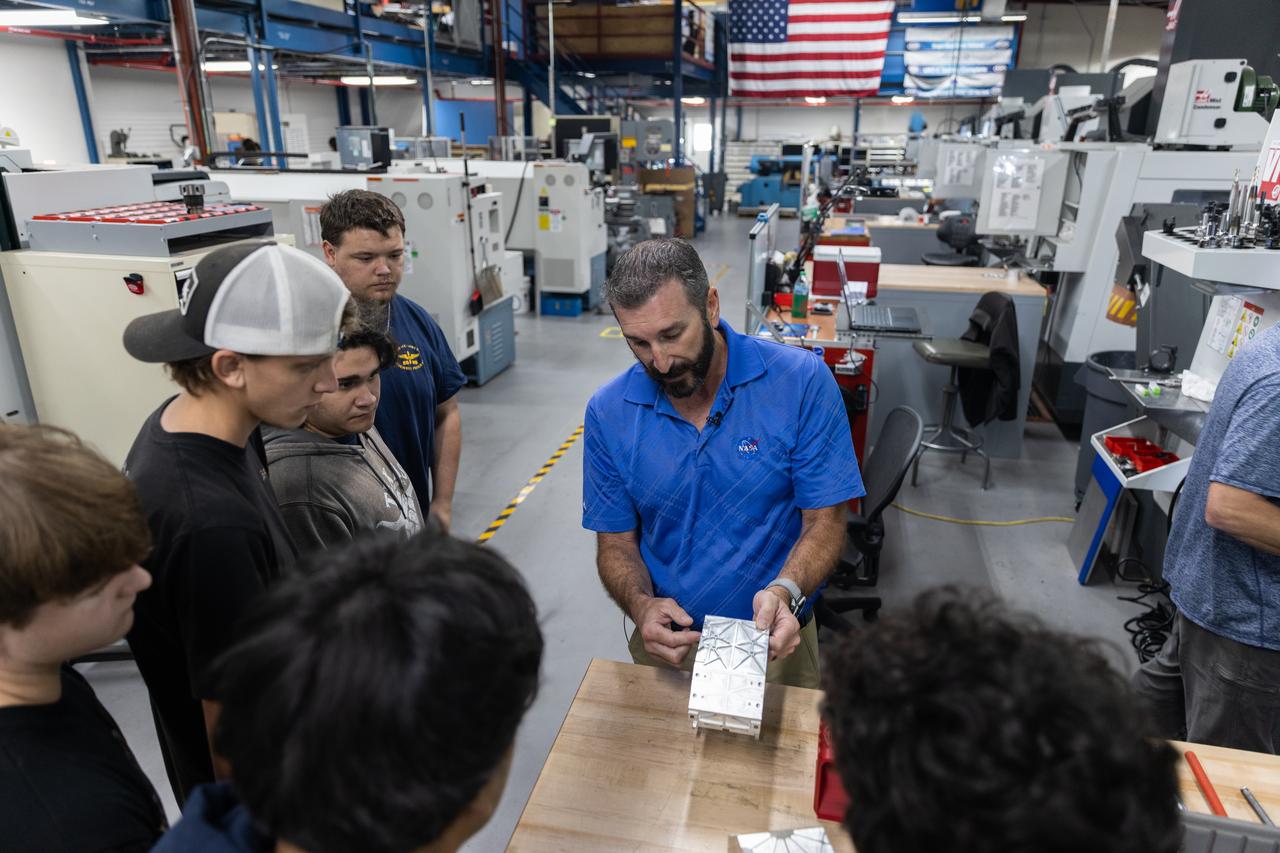
Students from Eau Gallie High School in Melbourne, Florida, visited the Prototype Development Laboratory at NASA’s Kennedy Space Center in Florida on Monday, April 28, 2025. The STEM participants have an interest in technical trades and learned about the technicians at the Prototype Development Laboratory who design, fabricate, and test protypes, test articles, and test support equipment.
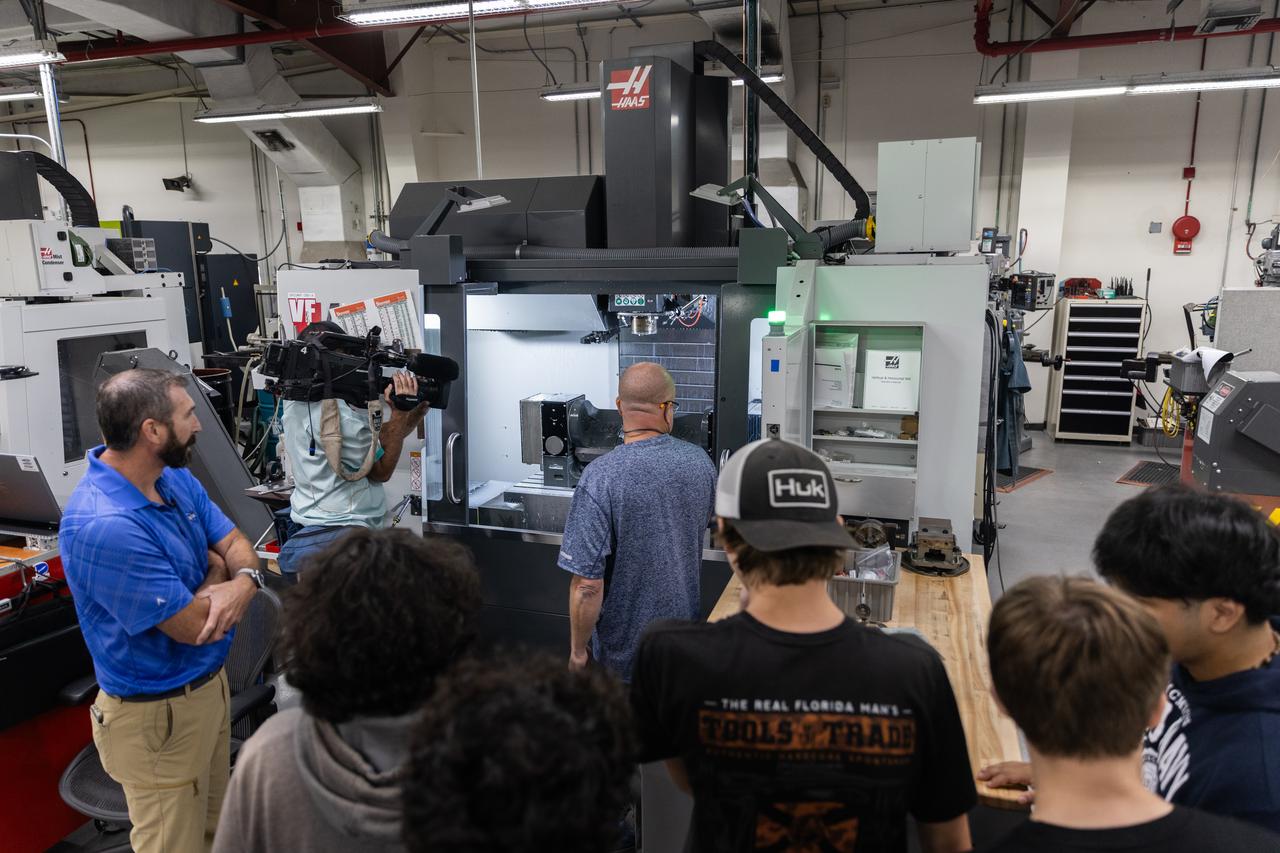
Students from Eau Gallie High School in Melbourne, Florida, visited the Prototype Development Laboratory at NASA’s Kennedy Space Center in Florida on Monday, April 28, 2025. The STEM participants have an interest in technical trades and learned about the technicians at the Prototype Development Laboratory who design, fabricate, and test protypes, test articles, and test support equipment.
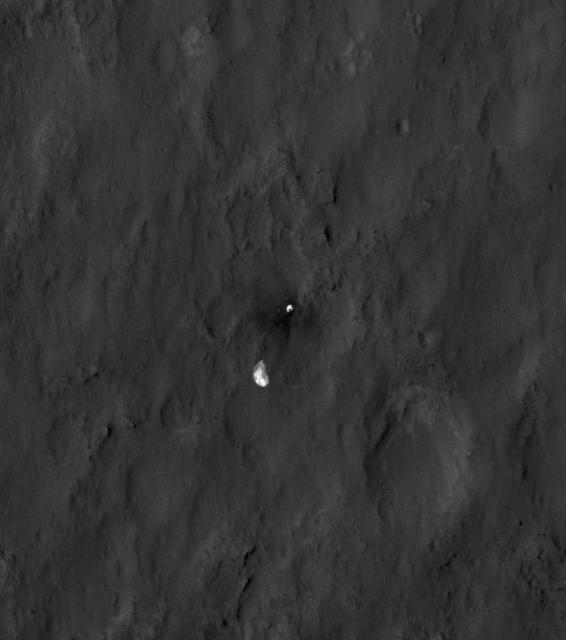
This close-up view shows the rover Curiosity parachute and back shell strewn across the surface of Mars. The image was captured by NASA Mars Reconnaissance Orbiter about 24 hours after the parachute helped guide the rover to the surface.
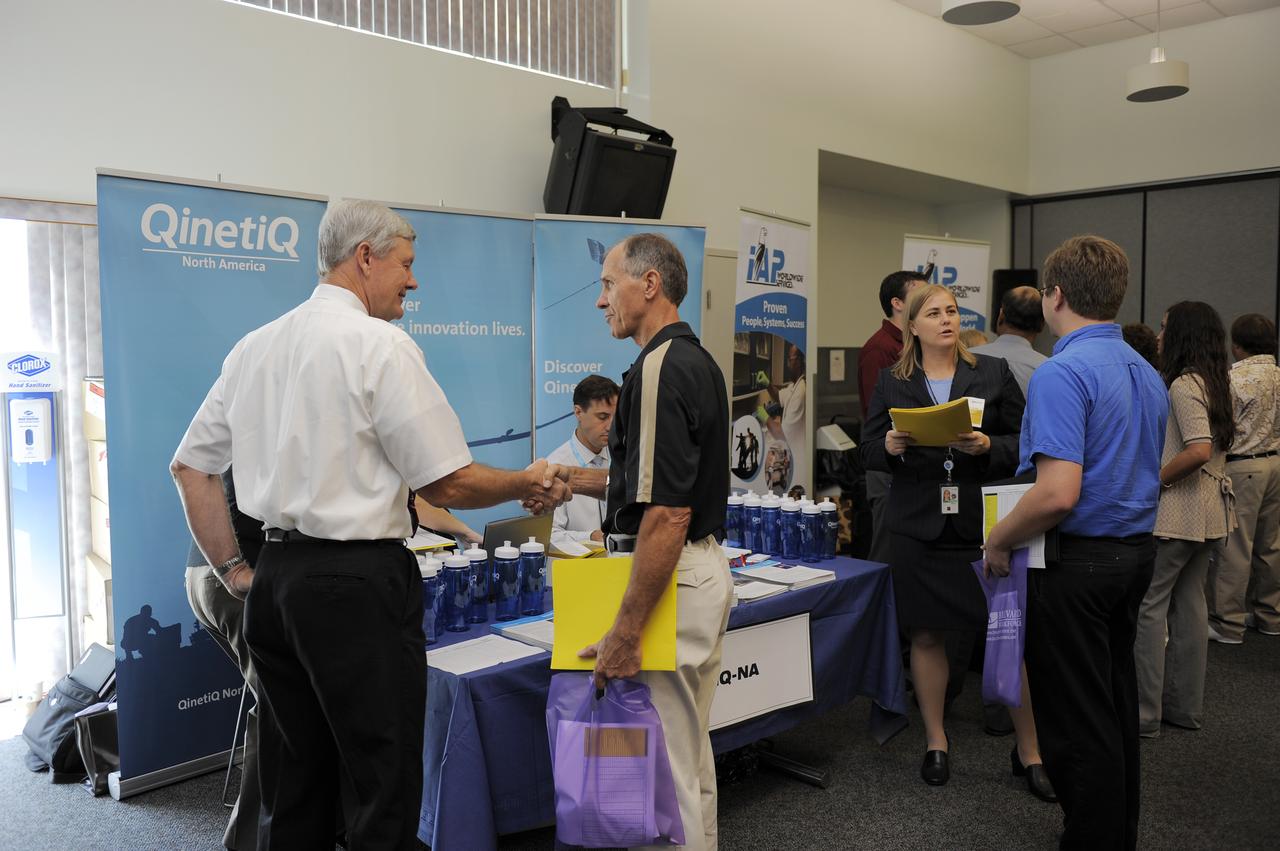
KSC and Brevard Work Force Partner Job Fair
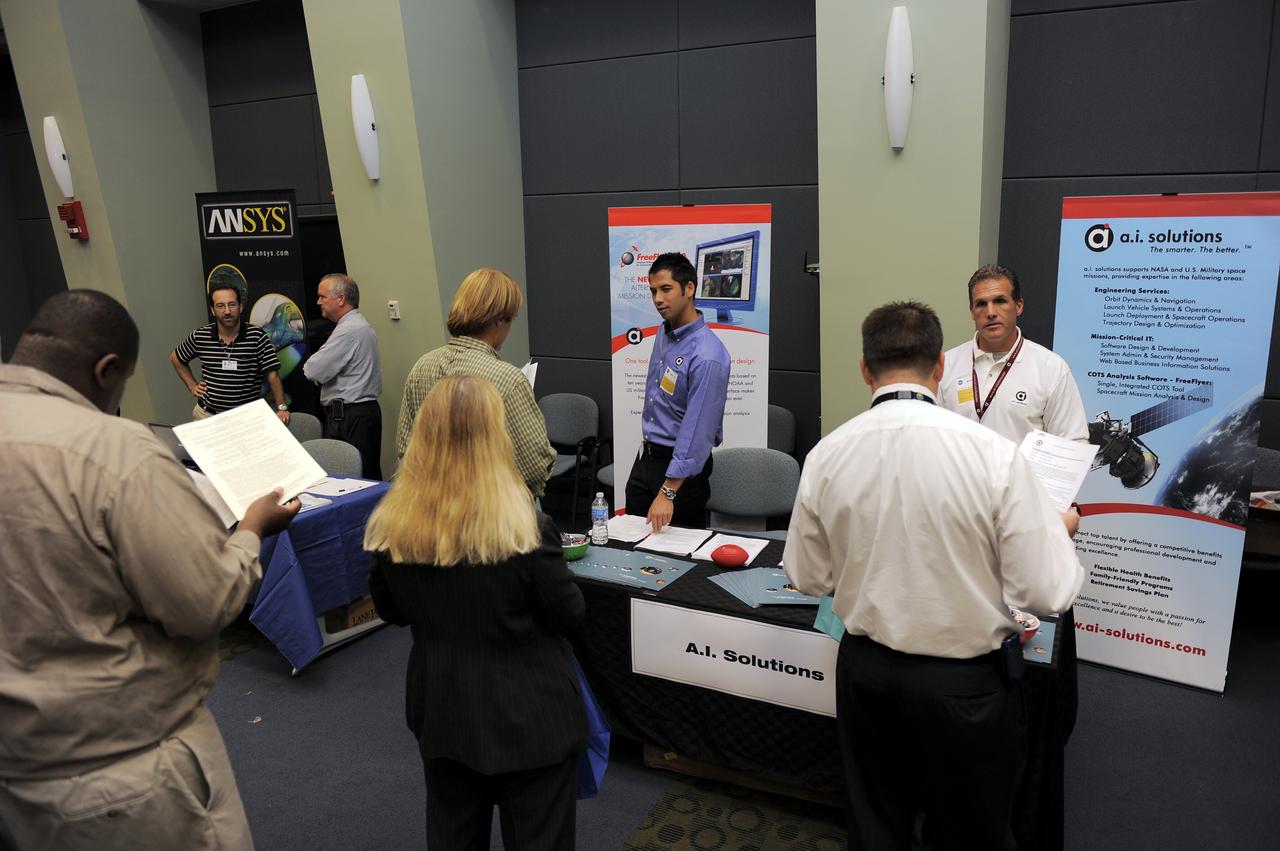
KSC and Brevard Work Force Partner Job Fair
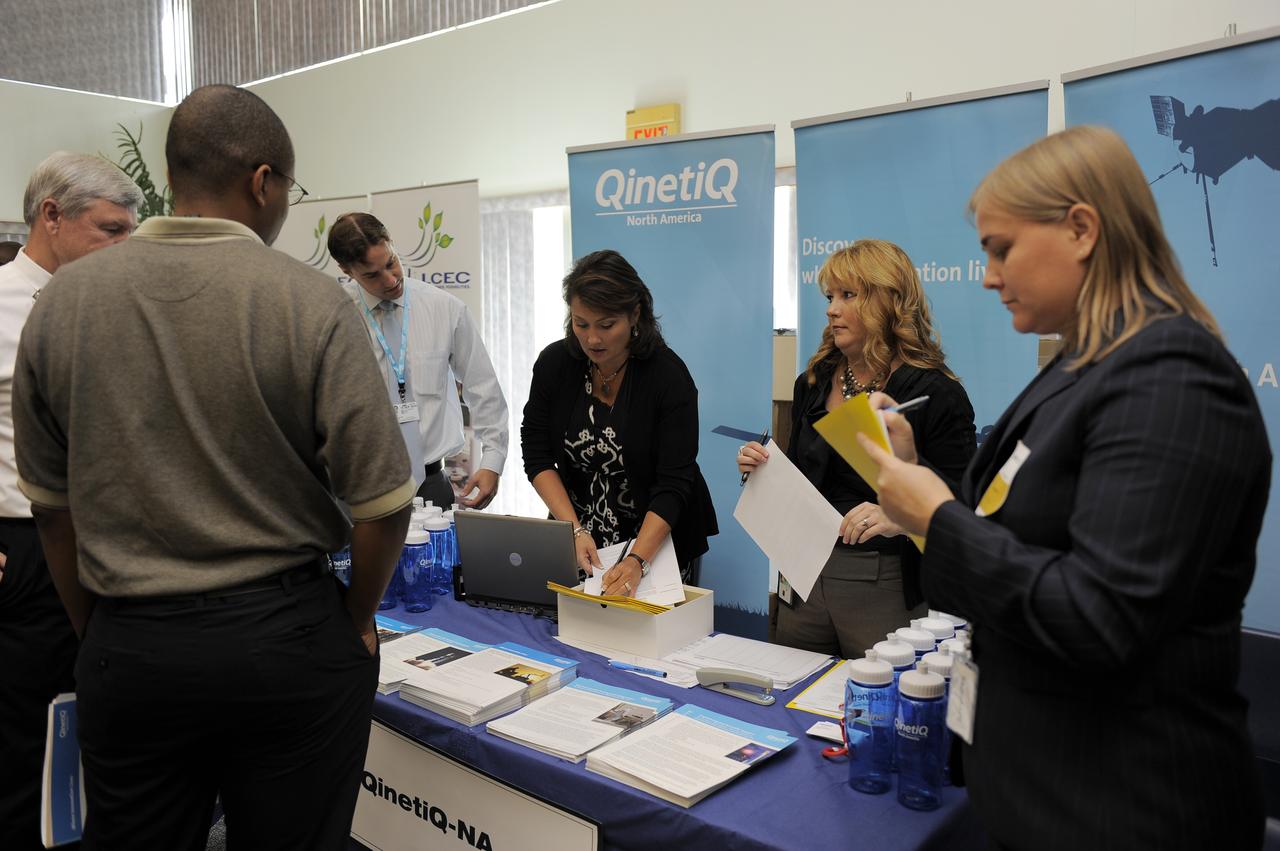
KSC and Brevard Work Force Partner Job Fair
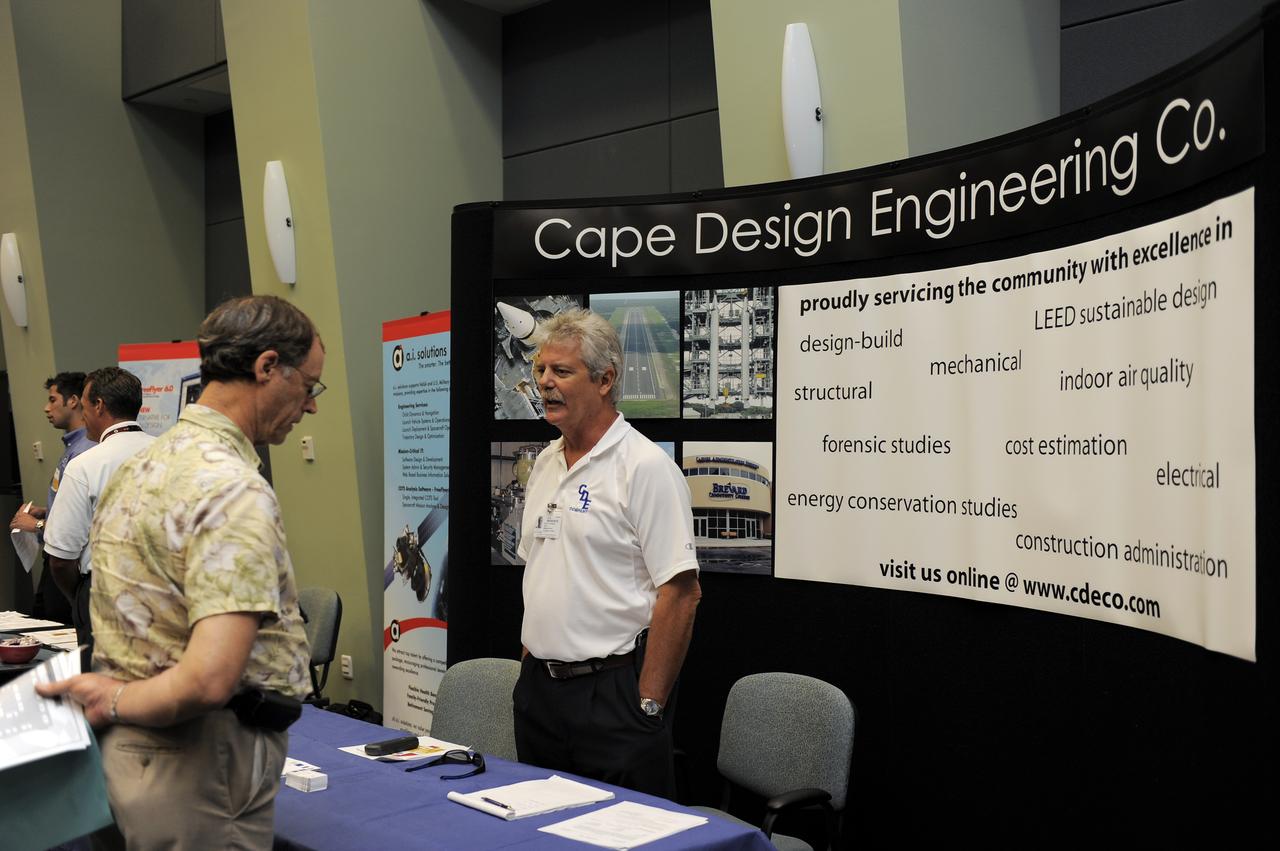
KSC and Brevard Work Force Partner Job Fair
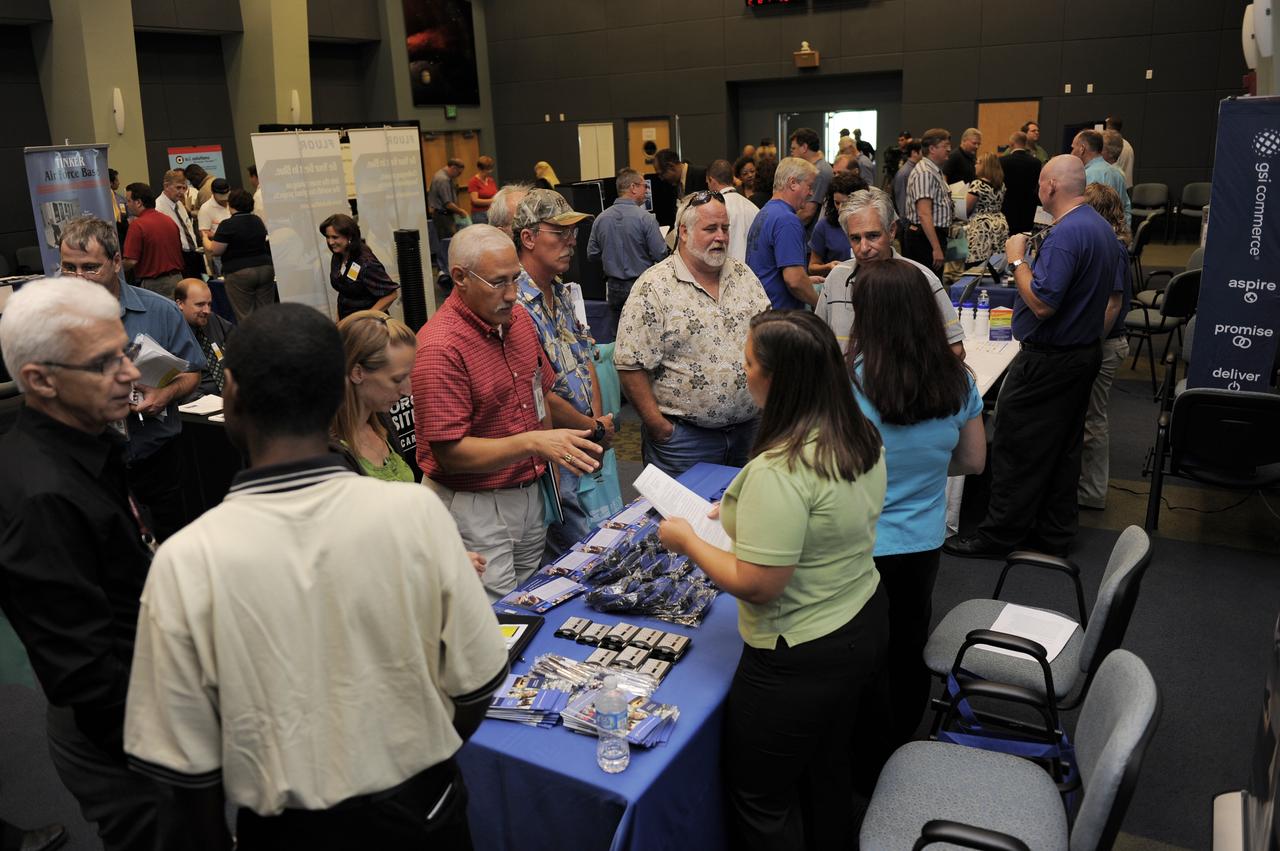
KSC and Brevard Work Force Partner Job Fair
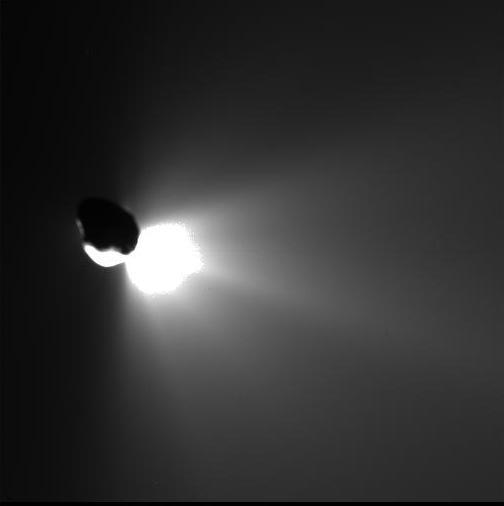
This image shows the view from NASA Deep Impact flyby spacecraft as it turned back to look at comet Tempel 1. Fifty minutes earlier, the spacecraft probe was run over by the comet.

PAYLOAD OPERATIONS INTEGRATION CENTER TEAM MEMBER STEPHANIE DUDLEY TALKS TO STUDENTS ABOUT HER DAY-TO-DAY JOB DUTIES AS A PAYLOAD OPERATIONS DIRECTOR.
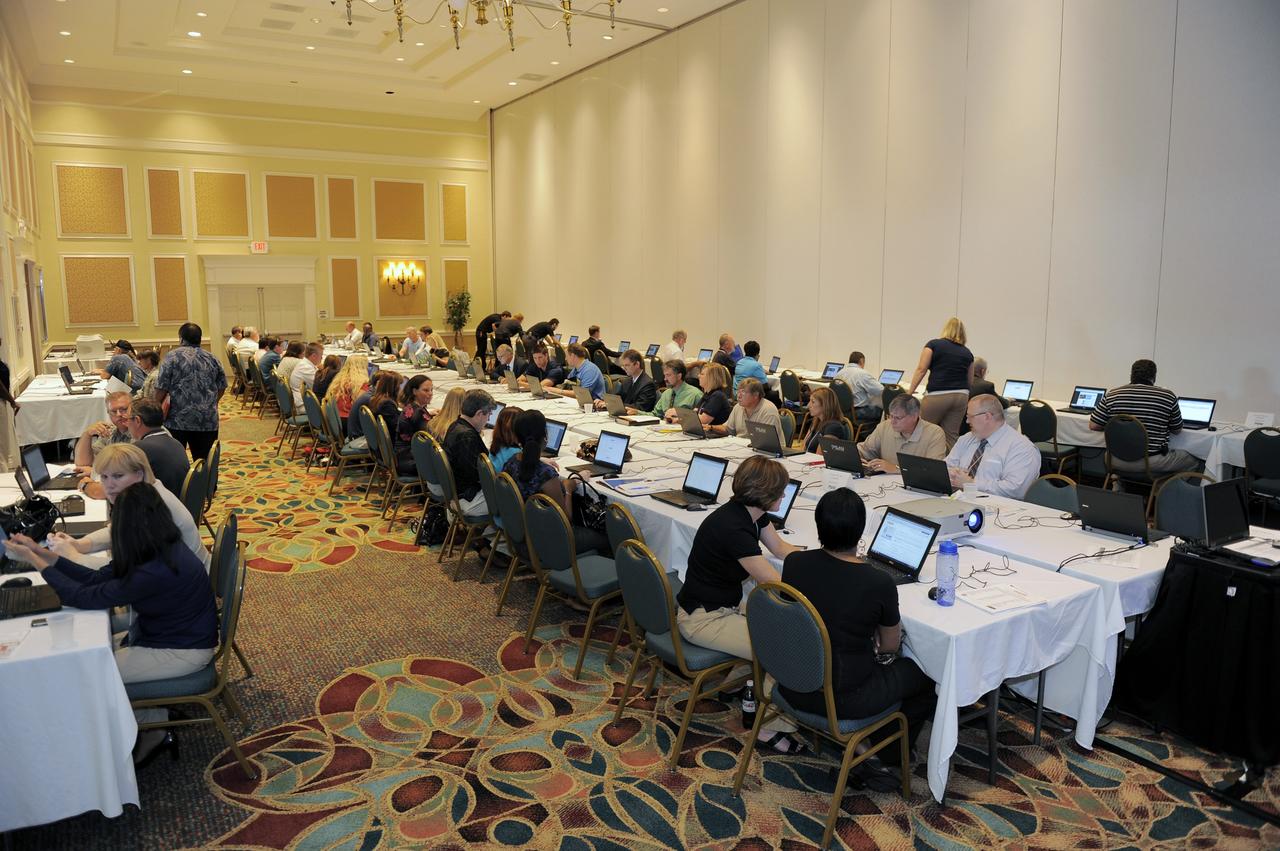
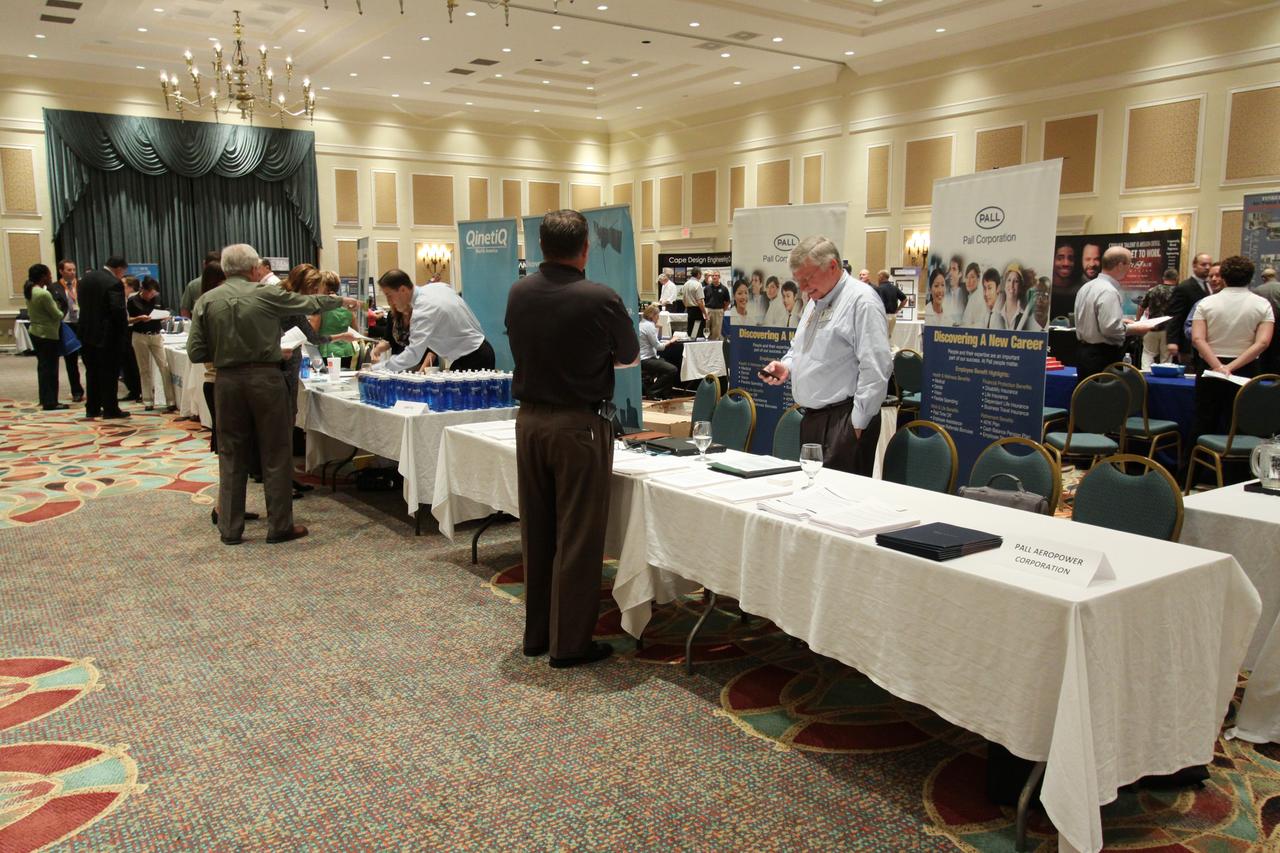
CAPE CANAVERAL, Fla. -- The Office of Personnel Management (OPM), NASA and Brevard Workforce host a job fair for former and current Kennedy Space Center aerospace workers at the Radisson Resort at the Port in Cape Canaveral, Fla. More than 60 private industry employers and federal agencies are recruiting for local and worldwide positions, and more than 1,000 job seekers attended. For more information, visit http://spacecoastjobfair.eventbrite.com. Photo credit: NASA/Kim Shiflett
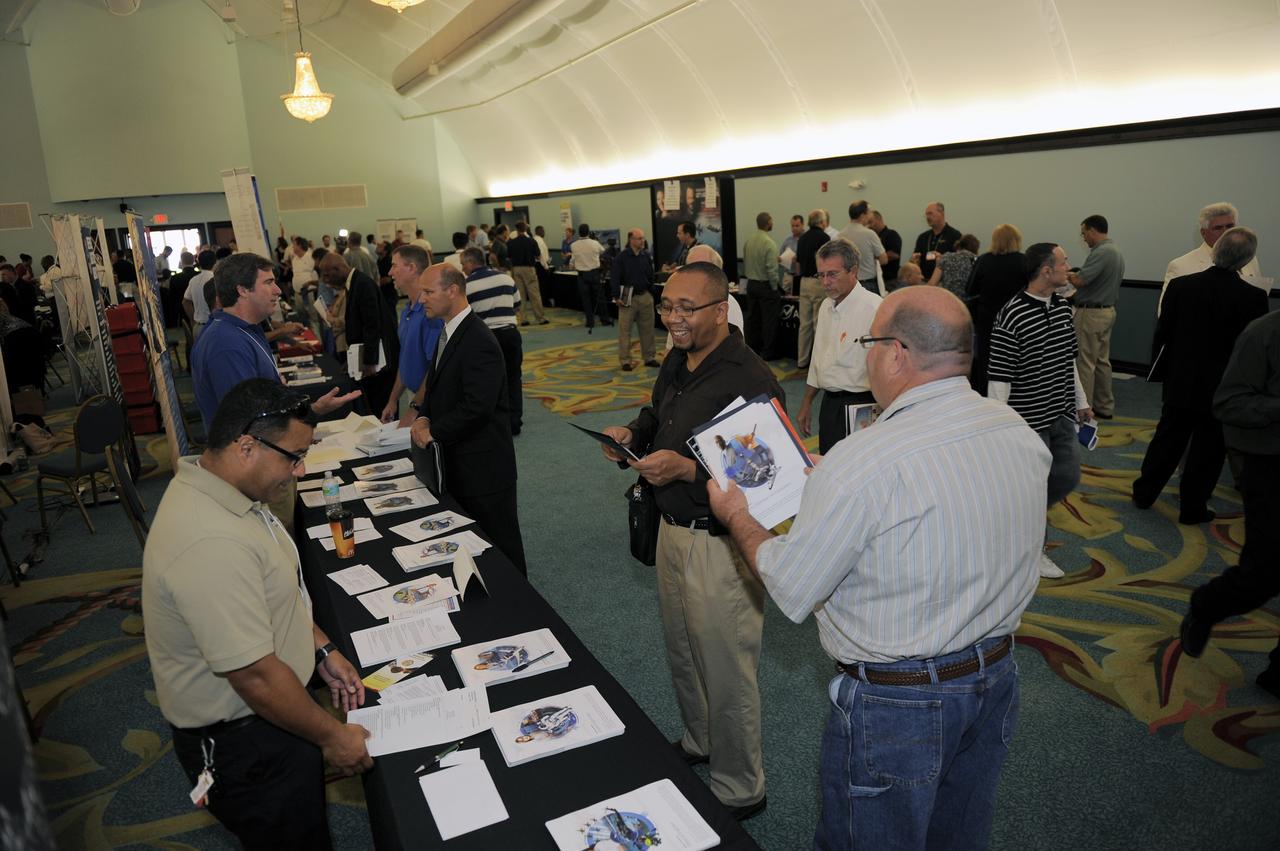
CAPE CANAVERAL, Fla. -- The Office of Personnel Management (OPM), NASA and Brevard Workforce host a job fair for former and current Kennedy Space Center aerospace workers at the Radisson Resort at the Port in Cape Canaveral, Fla. More than 60 private industry employers and federal agencies are recruiting for local and worldwide positions, and more than 1,000 job seekers attended. For more information, visit http://spacecoastjobfair.eventbrite.com. Photo credit: NASA/Kim Shiflett
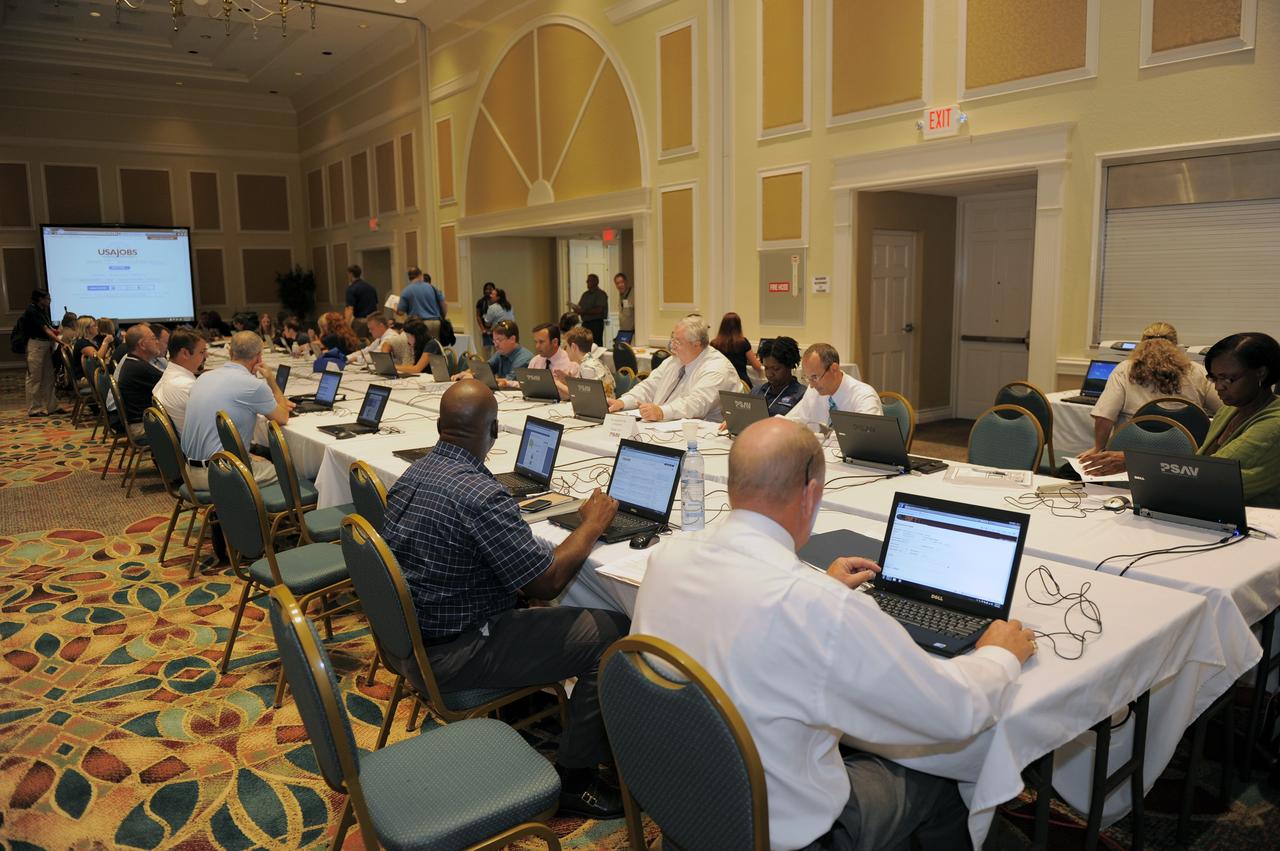
CAPE CANAVERAL, Fla. -- The Office of Personnel Management (OPM), NASA and Brevard Workforce host a job fair for former and current Kennedy Space Center aerospace workers at the Radisson Resort at the Port in Cape Canaveral, Fla. More than 60 private industry employers and federal agencies are recruiting for local and worldwide positions, and more than 1,000 job seekers attended. For more information, visit http://spacecoastjobfair.eventbrite.com. Photo credit: NASA/Kim Shiflett
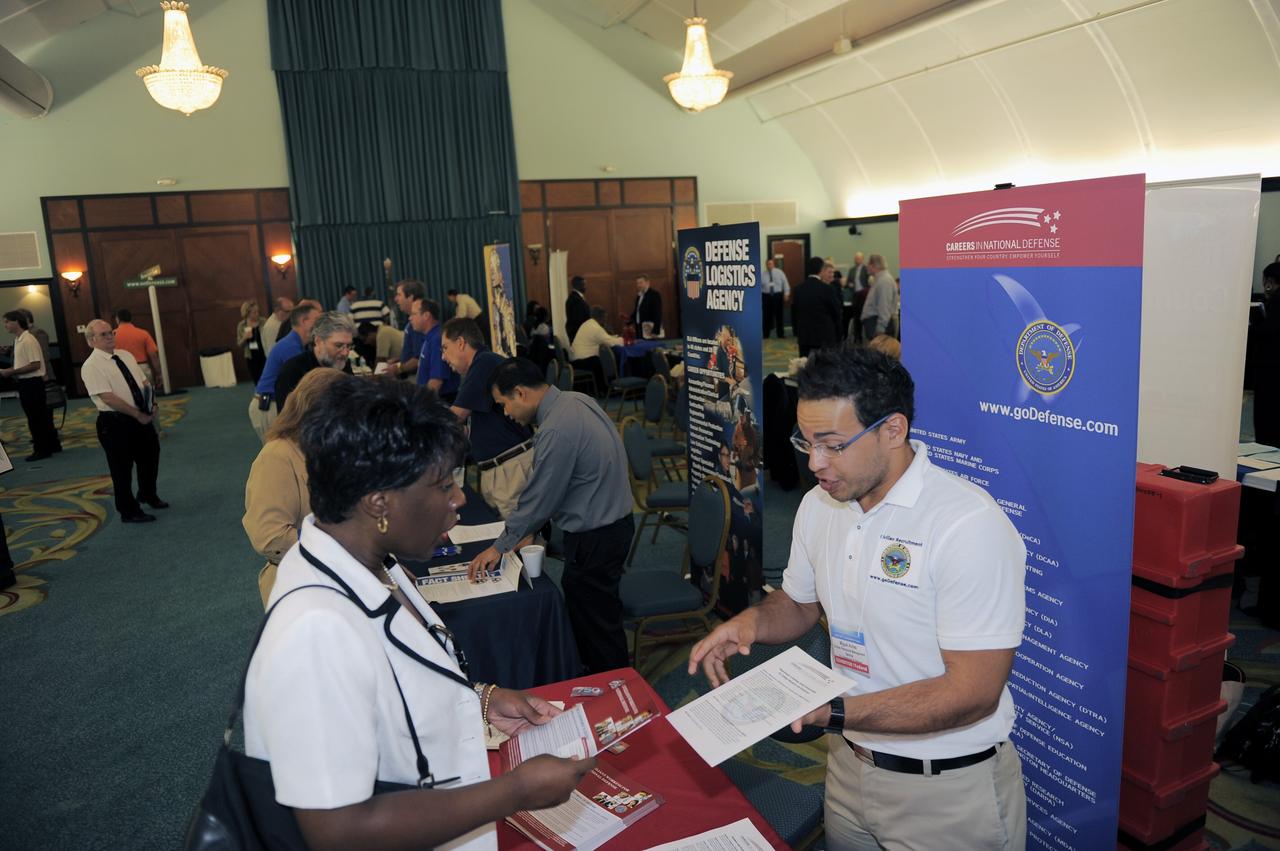
CAPE CANAVERAL, Fla. -- The Office of Personnel Management (OPM), NASA and Brevard Workforce host a job fair for former and current Kennedy Space Center aerospace workers at the Radisson Resort at the Port in Cape Canaveral, Fla. More than 60 private industry employers and federal agencies are recruiting for local and worldwide positions, and more than 1,000 job seekers attended. For more information, visit http://spacecoastjobfair.eventbrite.com. Photo credit: NASA/Kim Shiflett
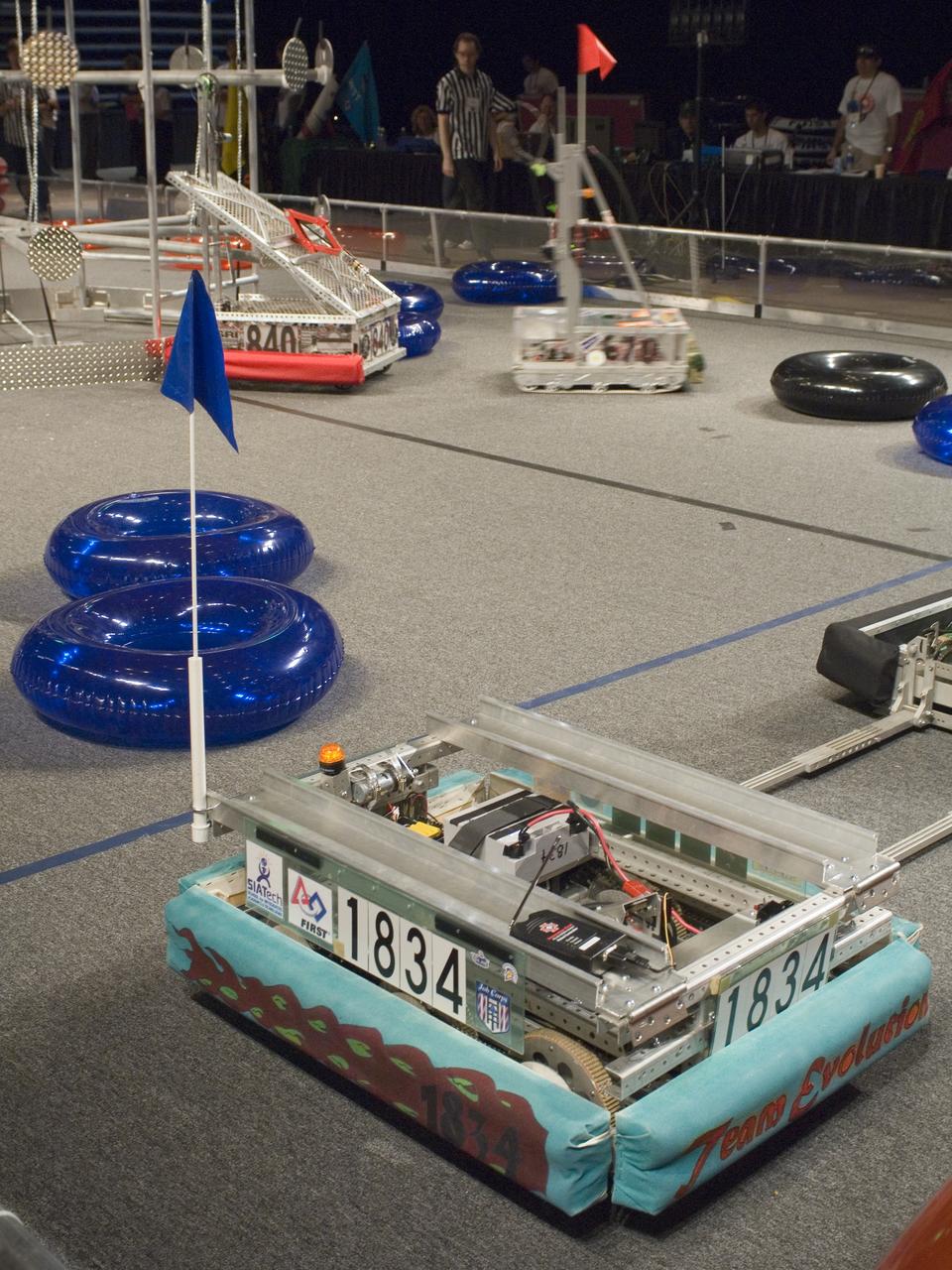
Silicon Valley FIRST Regional Robotics competition: Evolution Team 1834 - NASA/Google/NASA Robotics Education FIRST Spnsorship program/San Jose Job Corps/MetroED & SIA Tech, San Jose, California (CA)
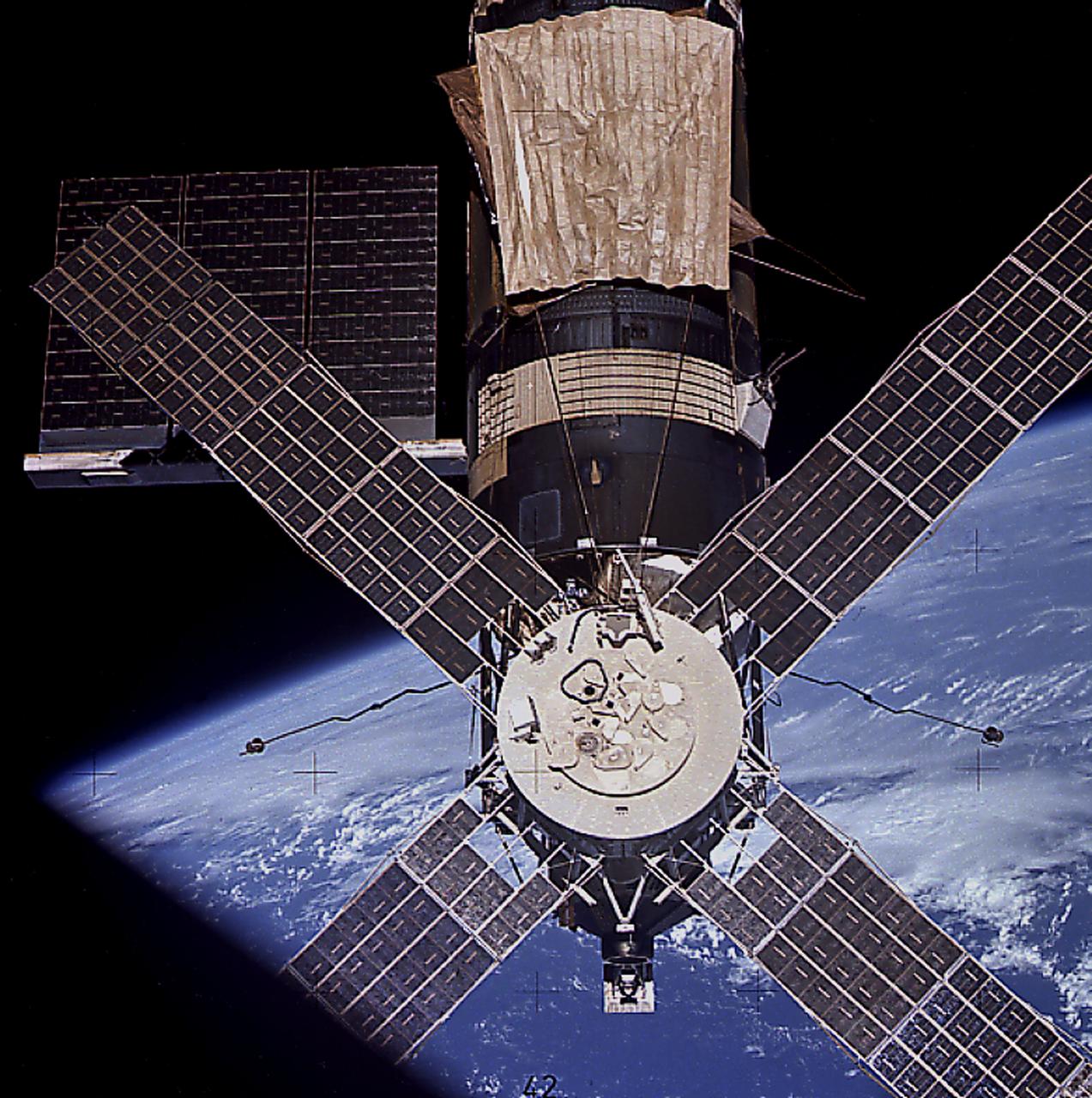
This image of Skylab in orbit was taken as the third crew (Skylab-4) departed the space station after 84 days in the orbiting laboratory. A smiling Skylab seemed to wink good-bye for the job well done.
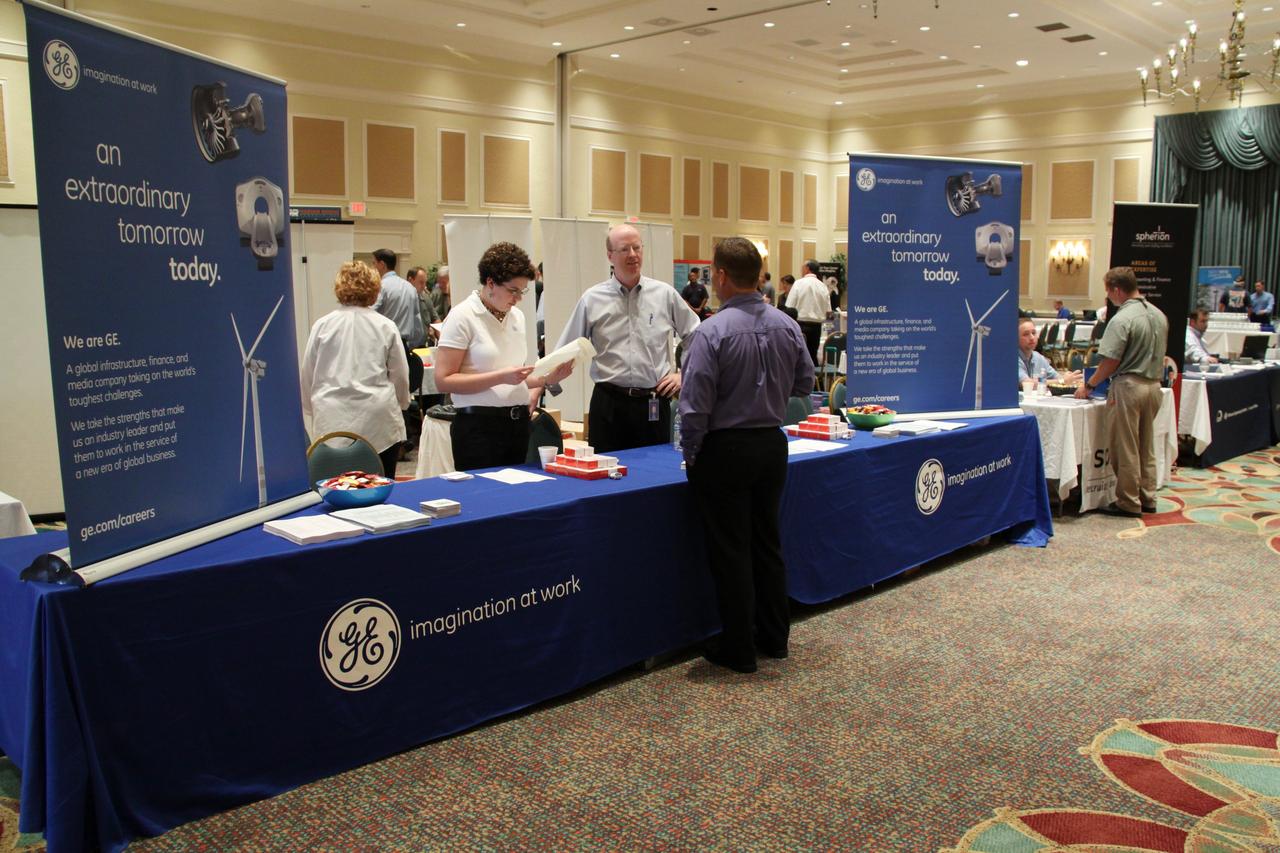
CAPE CANAVERAL, Fla. -- NASA's Kennedy Space Center and Brevard Workforce host a job fair at a hotel in Cape Canaveral, Fla., to help center employees with future planning and placement as the Space Shuttle Program comes to an end. Recruiters included federal, state and local government agencies and organizations, as well as private companies from across the country. The first part of the job fair took place Sept. 15 in Kennedy's Operations Support Building II and Space Station Processing Facility. Kennedy's Human Resources Office also has hosted workshops, seminars and other events to prepare employees as much as possible for future opportunities. Photo credit: NASA/Jack Pfaller
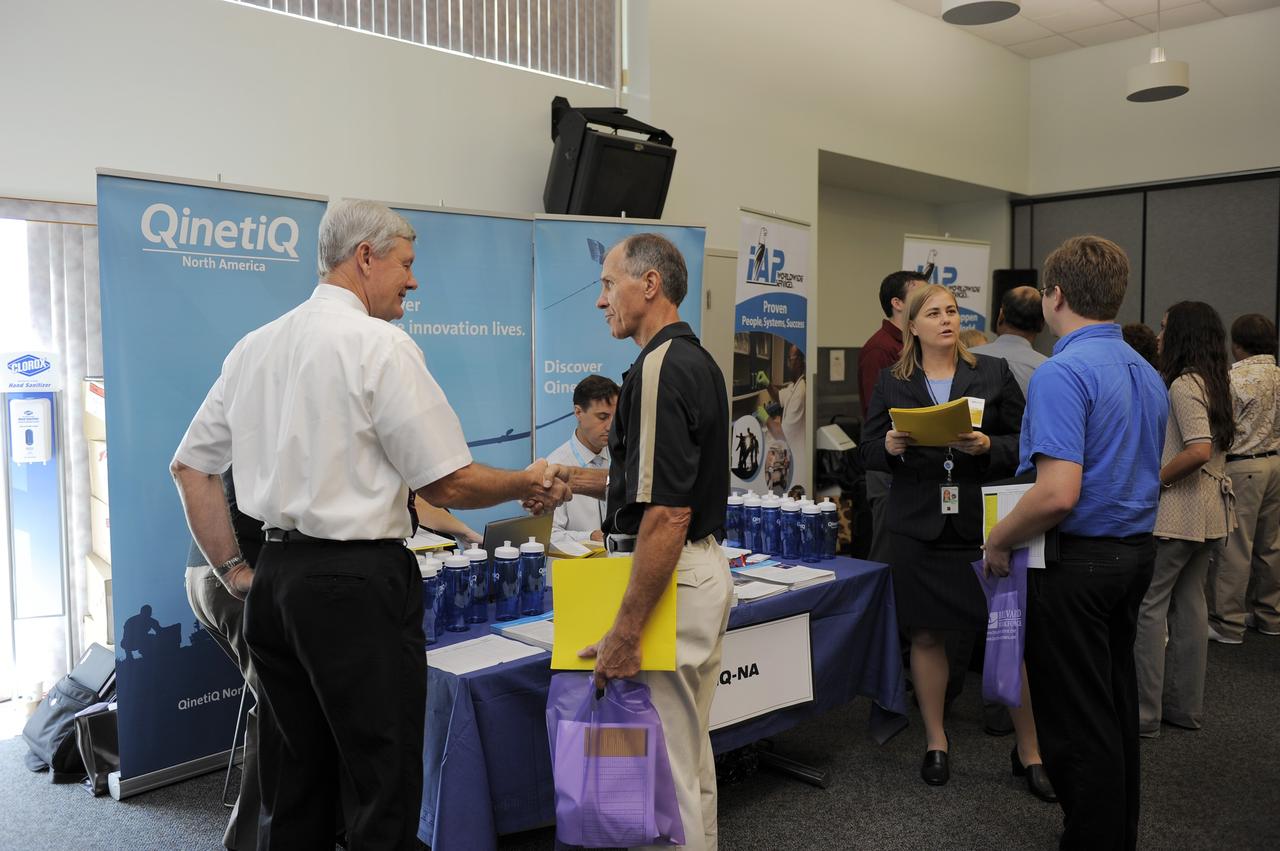
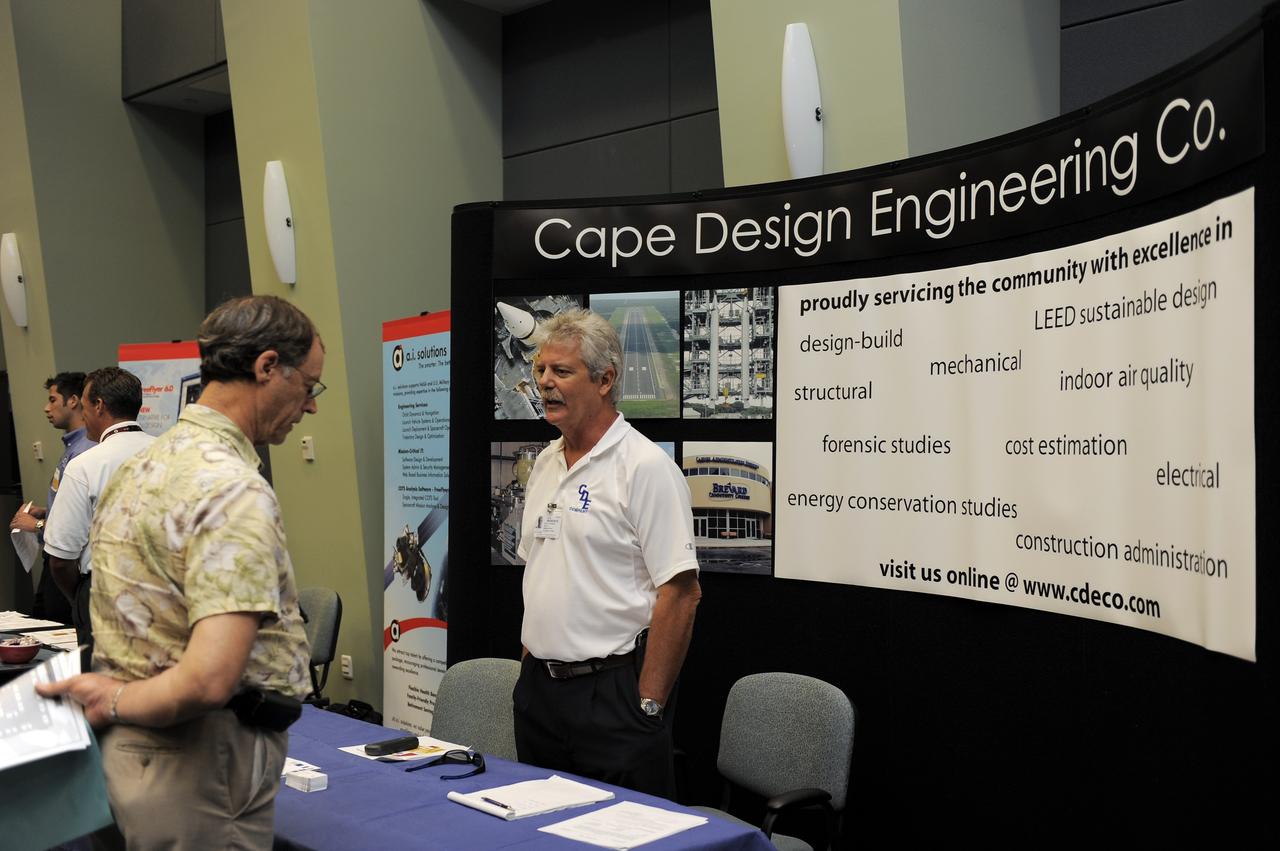
CAPE CANAVERAL, Fla. -- NASA's Kennedy Space Center and Brevard Workforce host a job fair in Kennedy's Operations Support Building II and Space Station Processing Facility to help center employees with future planning and placement as the Space Shuttle Program comes to an end. Recruiters included federal, state and local government agencies and organizations, as well as private companies from across the country. The second part of the job fair is scheduled for Sept. 16 at a hotel in Cape Canaveral, Fla. Kennedy's Human Resources Office also has hosted workshops, seminars and other events to prepare employees as much as possible for future opportunities. Photo credit: NASA/Kim Shiflett
CAPE CANAVERAL, Fla. -- NASA's Kennedy Space Center and Brevard Workforce host a job fair in Kennedy's Operations Support Building II and Space Station Processing Facility to help center employees with future planning and placement as the Space Shuttle Program comes to an end. Recruiters included federal, state and local government agencies and organizations, as well as private companies from across the country. The second part of the job fair is scheduled for Sept. 16 at a hotel in Cape Canaveral, Fla. Kennedy's Human Resources Office also has hosted workshops, seminars and other events to prepare employees as much as possible for future opportunities. Photo credit: NASA/Kim Shiflett
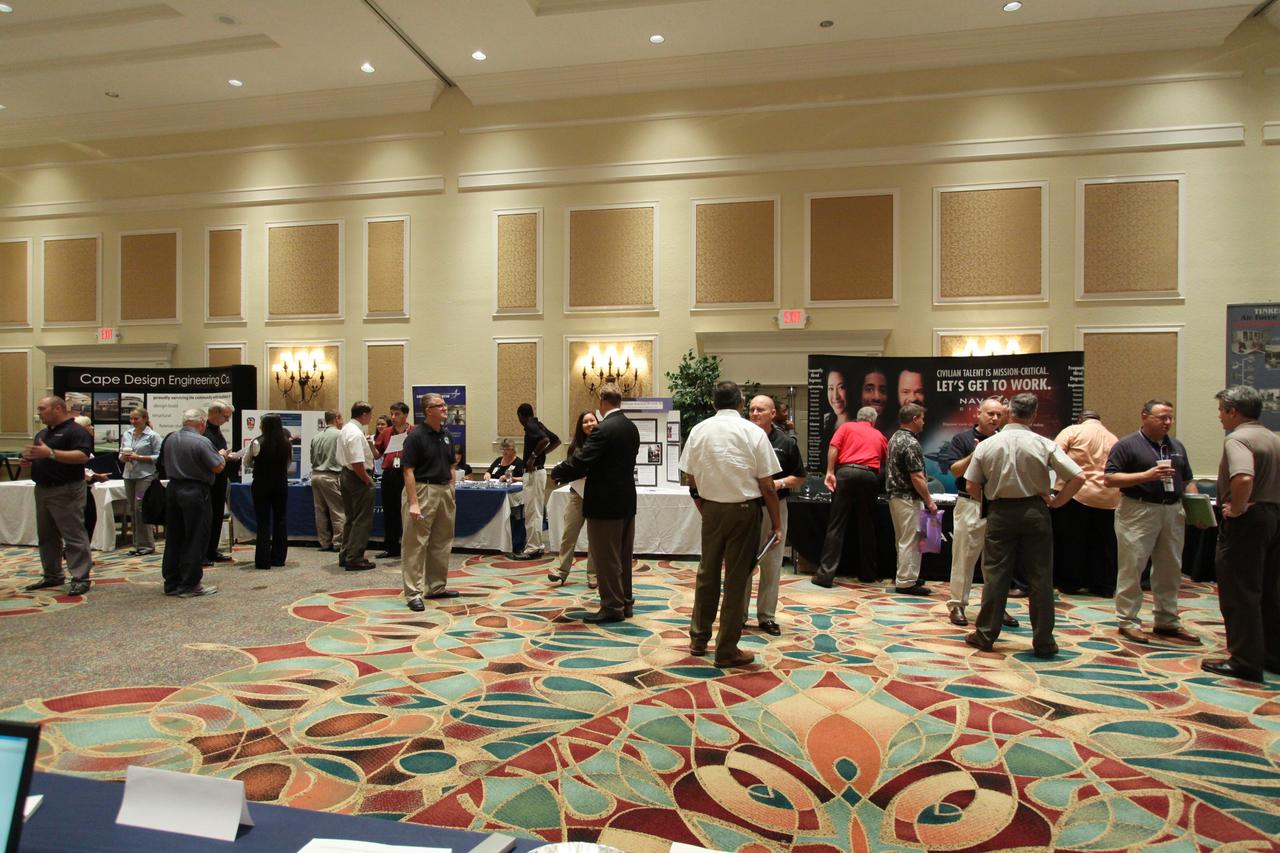
CAPE CANAVERAL, Fla. -- NASA's Kennedy Space Center and Brevard Workforce host a job fair at a hotel in Cape Canaveral, Fla., to help center employees with future planning and placement as the Space Shuttle Program comes to an end. Recruiters included federal, state and local government agencies and organizations, as well as private companies from across the country. The first part of the job fair took place Sept. 15 in Kennedy's Operations Support Building II and Space Station Processing Facility. Kennedy's Human Resources Office also has hosted workshops, seminars and other events to prepare employees as much as possible for future opportunities. Photo credit: NASA/Jack Pfaller
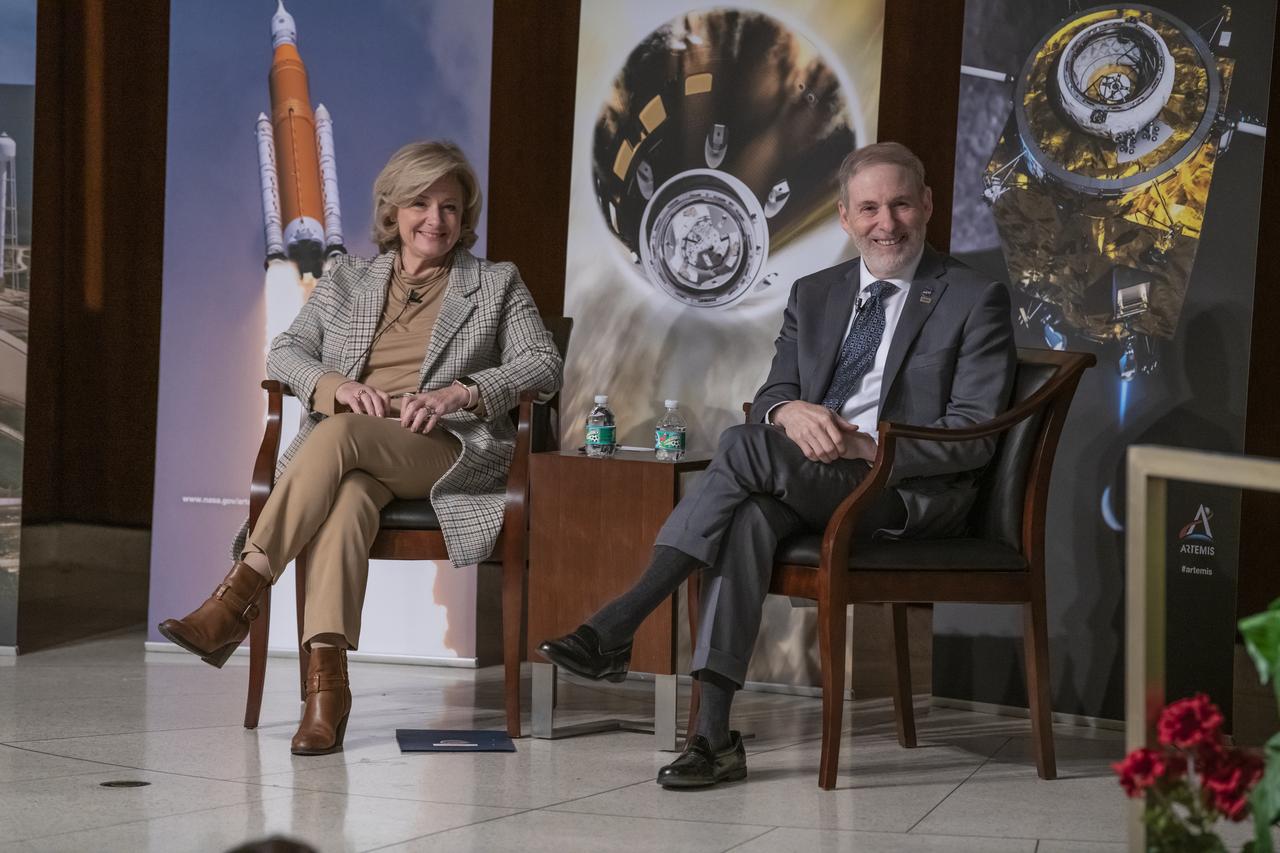
Douglas Loverro, NASA’s new associate administrator for the Human Exploration and Operations Mission Directorate, right, joins NASA’s Marshall Space Flight Center Director Jody Singer to answer questions from the Marshall team at a Dec. 17 town hall. Loverro discussed the importance of the workforce, positivity and the unifying and inspirational nature of space exploration. “At the end of the day, we depend on the workforce, not on Headquarters to further exploration,” Loverro said. “My job is to listen to you and translate that into telling Congress and the administration what you need to complete your job. We're seeking a common purpose, on a common mission. I'm relying on you to tell me what you need to get this mission done.”
CAPE CANAVERAL, Fla. -- NASA's Kennedy Space Center and Brevard Workforce host a job fair at a hotel in Cape Canaveral, Fla., to help center employees with future planning and placement as the Space Shuttle Program comes to an end. Recruiters included federal, state and local government agencies and organizations, as well as private companies from across the country. The first part of the job fair took place Sept. 15 in Kennedy's Operations Support Building II and Space Station Processing Facility. Kennedy's Human Resources Office also has hosted workshops, seminars and other events to prepare employees as much as possible for future opportunities. Photo credit: NASA/Jack Pfaller
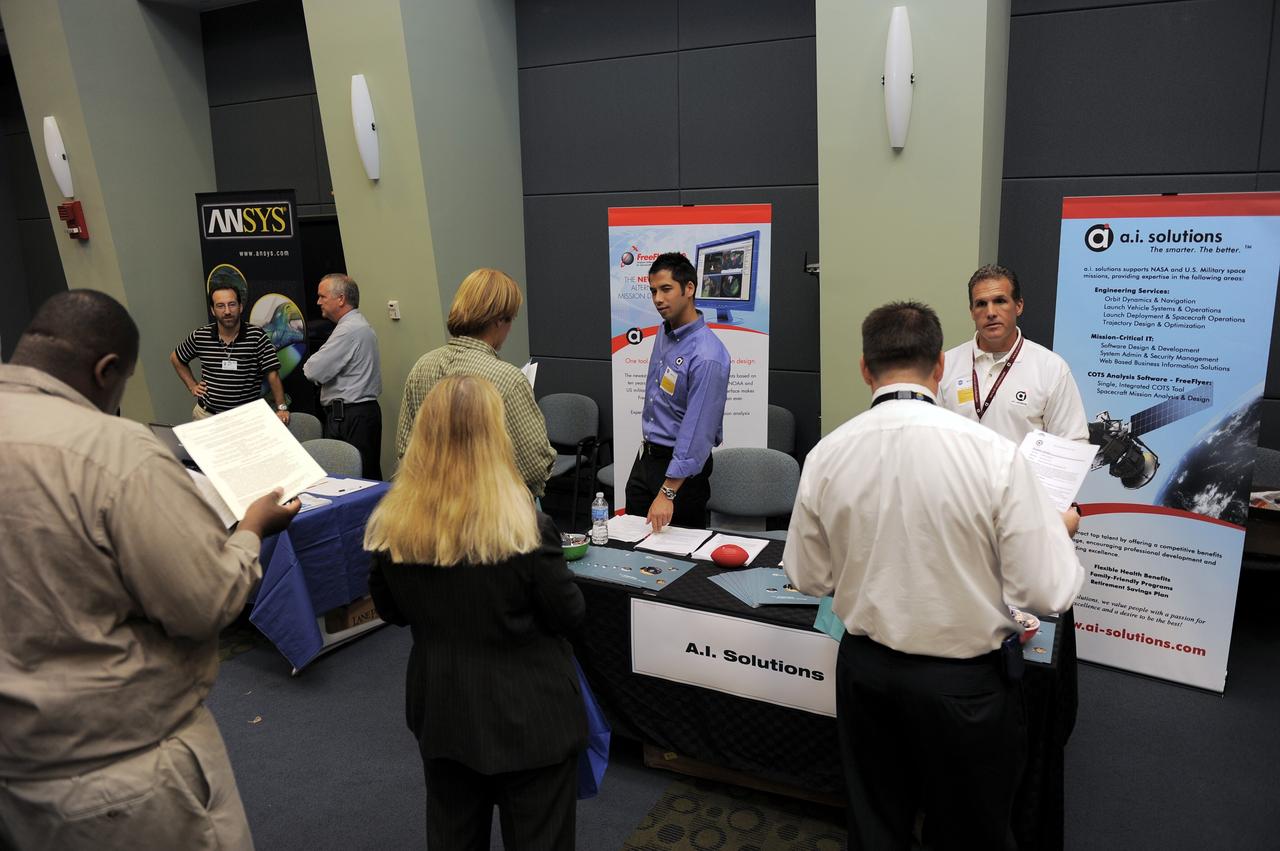
CAPE CANAVERAL, Fla. -- NASA's Kennedy Space Center and Brevard Workforce host a job fair in Kennedy's Operations Support Building II and Space Station Processing Facility to help center employees with future planning and placement as the Space Shuttle Program comes to an end. Recruiters included federal, state and local government agencies and organizations, as well as private companies from across the country. The second part of the job fair is scheduled for Sept. 16 at a hotel in Cape Canaveral, Fla. Kennedy's Human Resources Office also has hosted workshops, seminars and other events to prepare employees as much as possible for future opportunities. Photo credit: NASA/Kim Shiflett
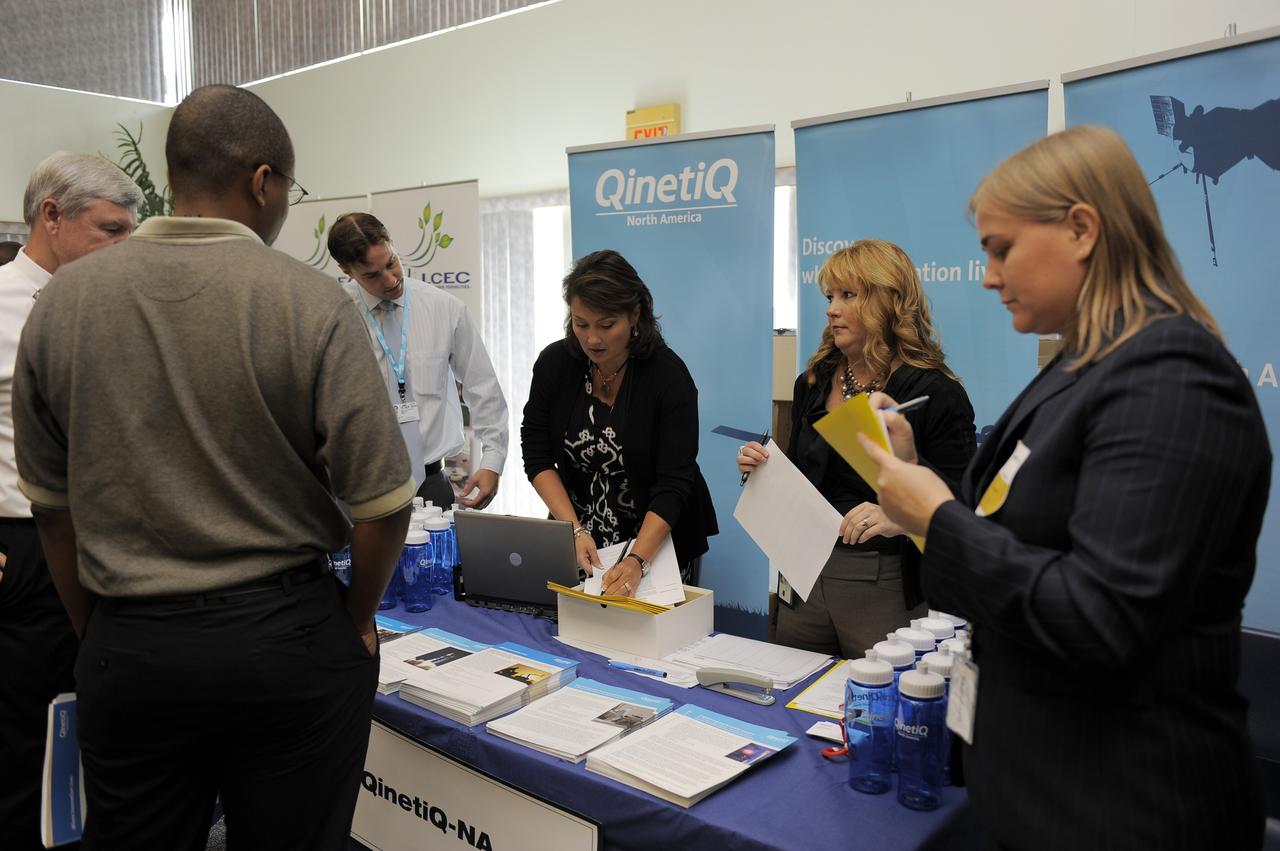
CAPE CANAVERAL, Fla. -- NASA's Kennedy Space Center and Brevard Workforce host a job fair in Kennedy's Operations Support Building II and Space Station Processing Facility to help center employees with future planning and placement as the Space Shuttle Program comes to an end. Recruiters included federal, state and local government agencies and organizations, as well as private companies from across the country. The second part of the job fair is scheduled for Sept. 16 at a hotel in Cape Canaveral, Fla. Kennedy's Human Resources Office also has hosted workshops, seminars and other events to prepare employees as much as possible for future opportunities. Photo credit: NASA/Kim Shiflett
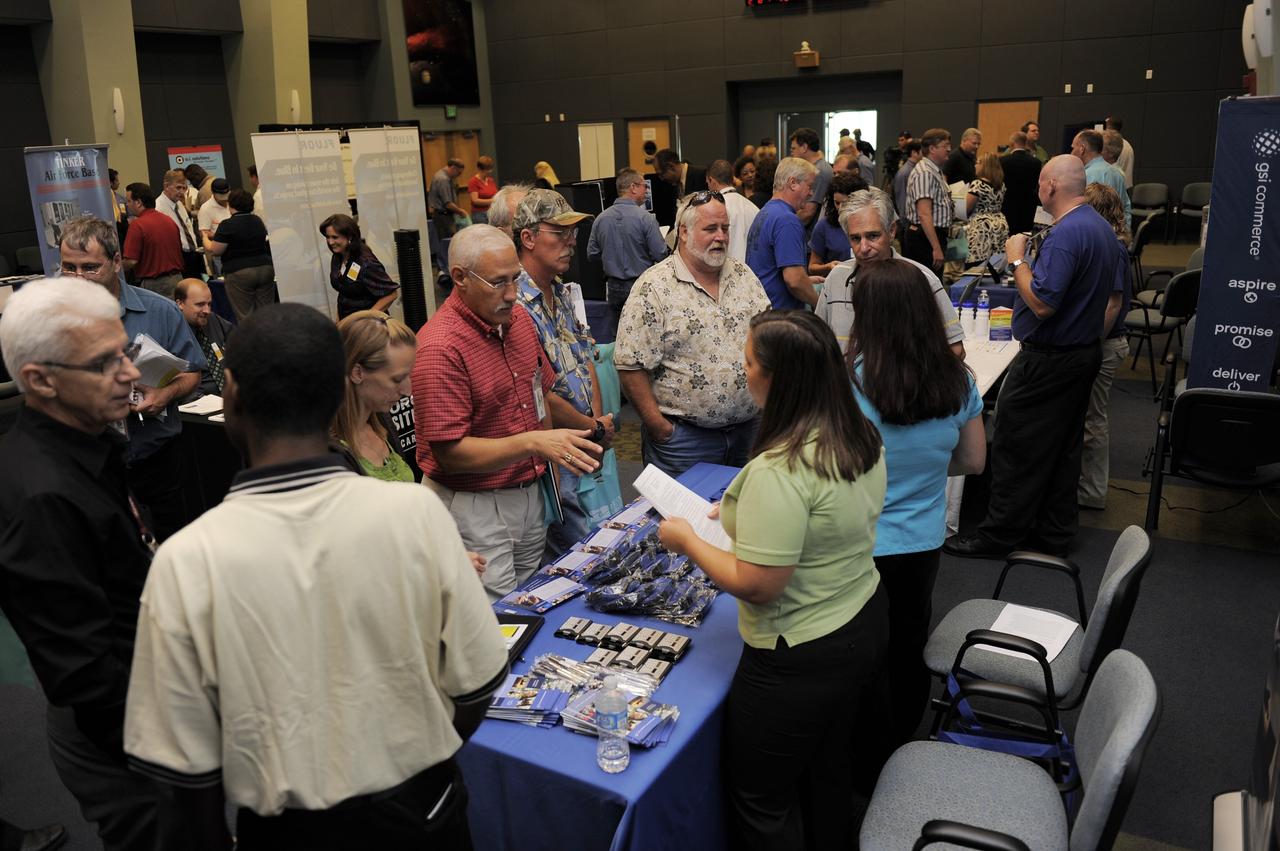
CAPE CANAVERAL, Fla. -- NASA's Kennedy Space Center and Brevard Workforce host a job fair in Kennedy's Operations Support Building II and Space Station Processing Facility to help center employees with future planning and placement as the Space Shuttle Program comes to an end. Recruiters included federal, state and local government agencies and organizations, as well as private companies from across the country. The second part of the job fair is scheduled for Sept. 16 at a hotel in Cape Canaveral, Fla. Kennedy's Human Resources Office also has hosted workshops, seminars and other events to prepare employees as much as possible for future opportunities. Photo credit: NASA/Kim Shiflett
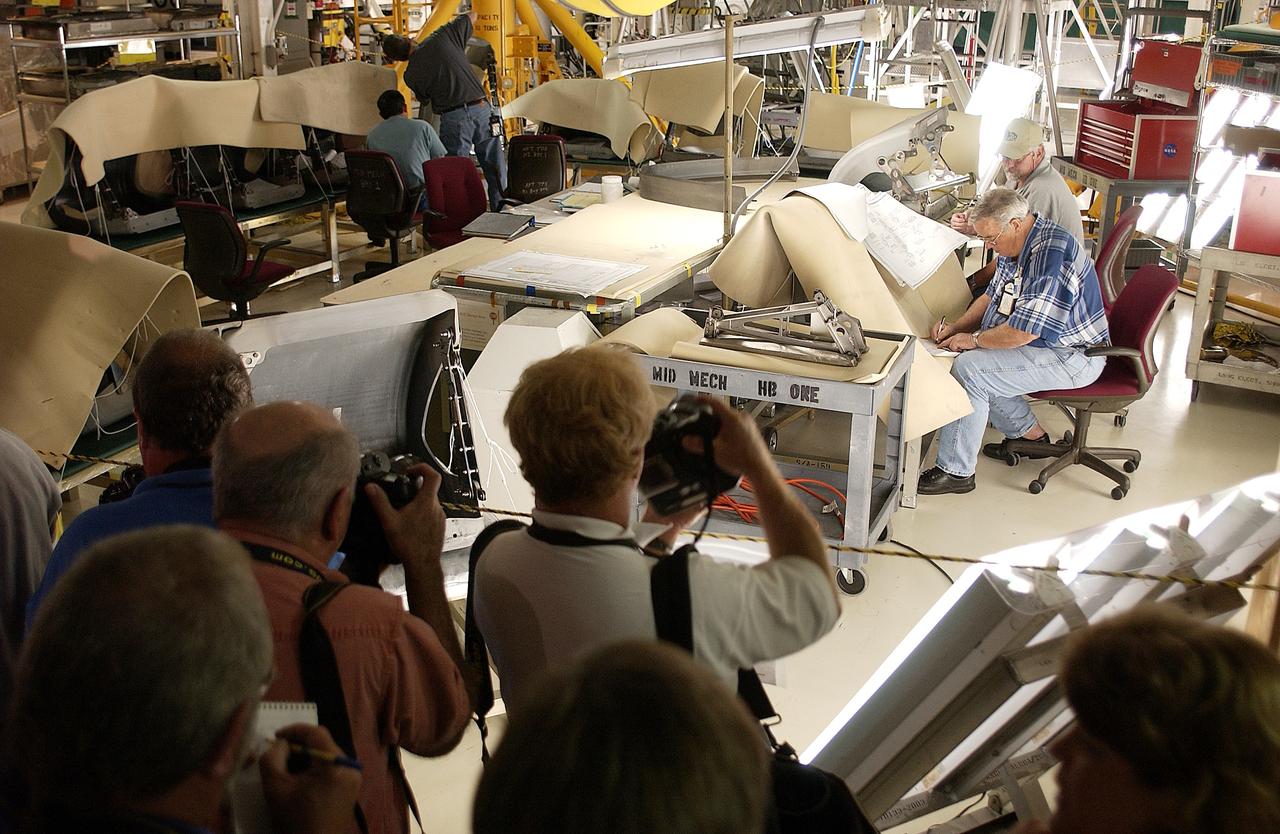
KENNEDY SPACE CENTER, FLA. - In the Orbiter Processing Facility, the media record workers on the job preparing the orbiter Atlantis for Return to Flight. Both local and national reporters representing print and TV networks were invited to see work in progress on Atlantis, including the reinstallation of the Reinforced Carbon-Carbon panels on the orbiter’s wing leading edge; wiring inspections; and checks of the engines in the Orbital Maneuvering System.
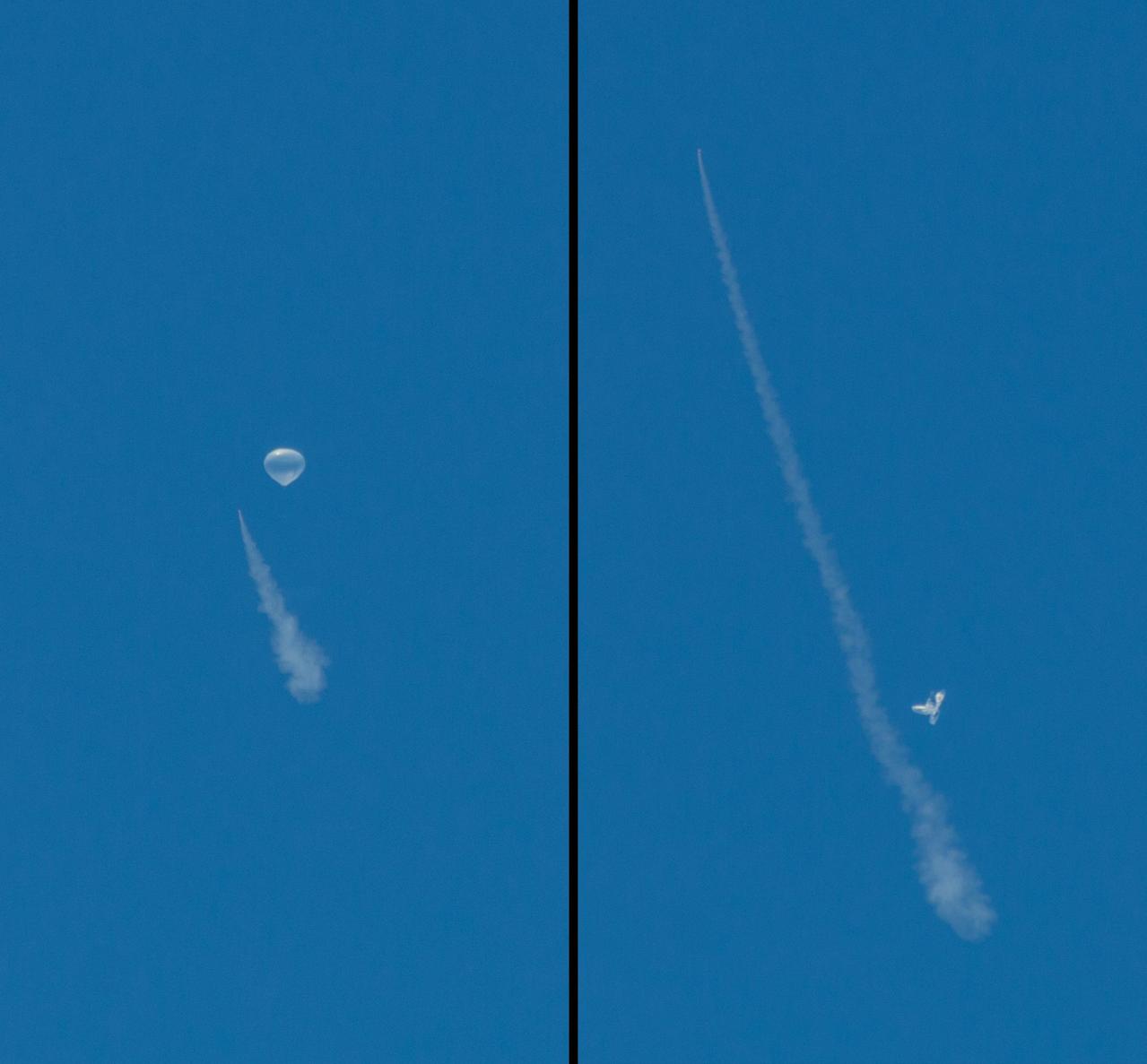
The test vehicle for NASA Low-Density Supersonic Decelerator is seen here before and after the balloon that helped carry it to near-space was deflated.
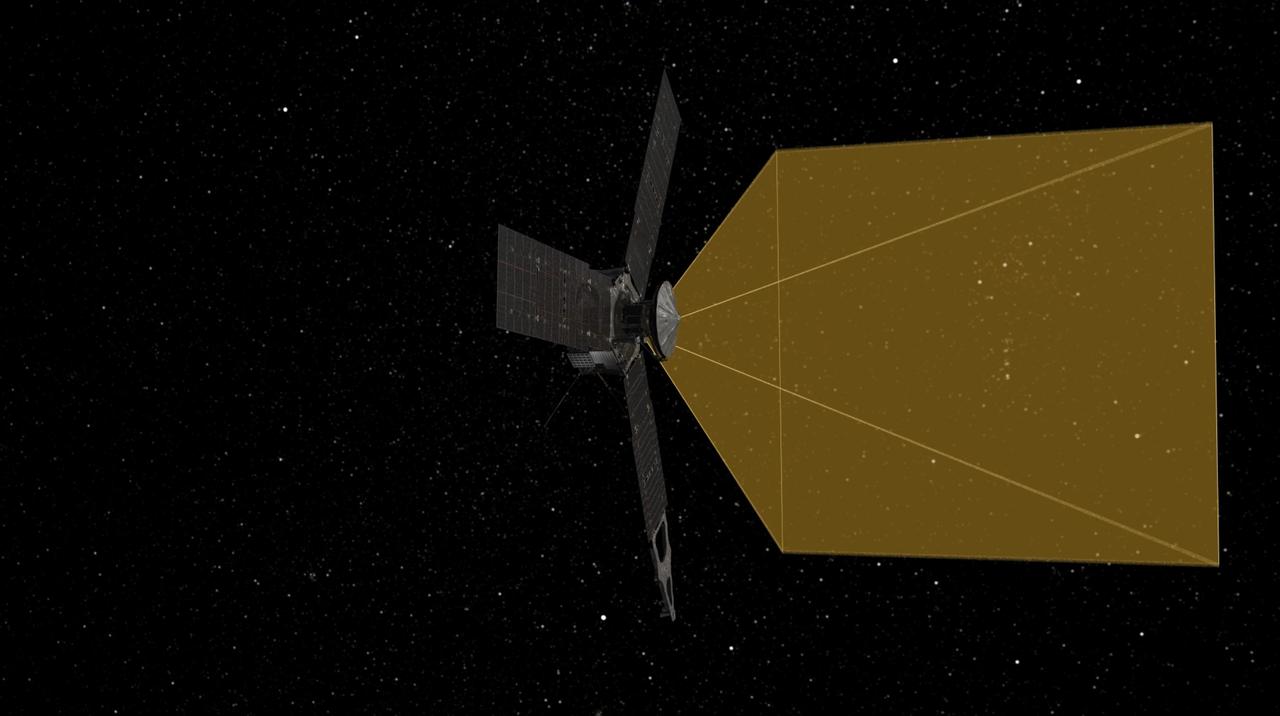
This animation illustrates how the Stellar Reference Unit (SRU) star camera aboard NASA's Juno spacecraft supports "attitude determination" -- the knowledge of which way Juno is pointing as the spacecraft navigates through space. The SRU takes images of star fields and searches for bright stars with known positions to help Juno obtain its bearings. Animation available at https://photojournal.jpl.nasa.gov/catalog/PIA22961
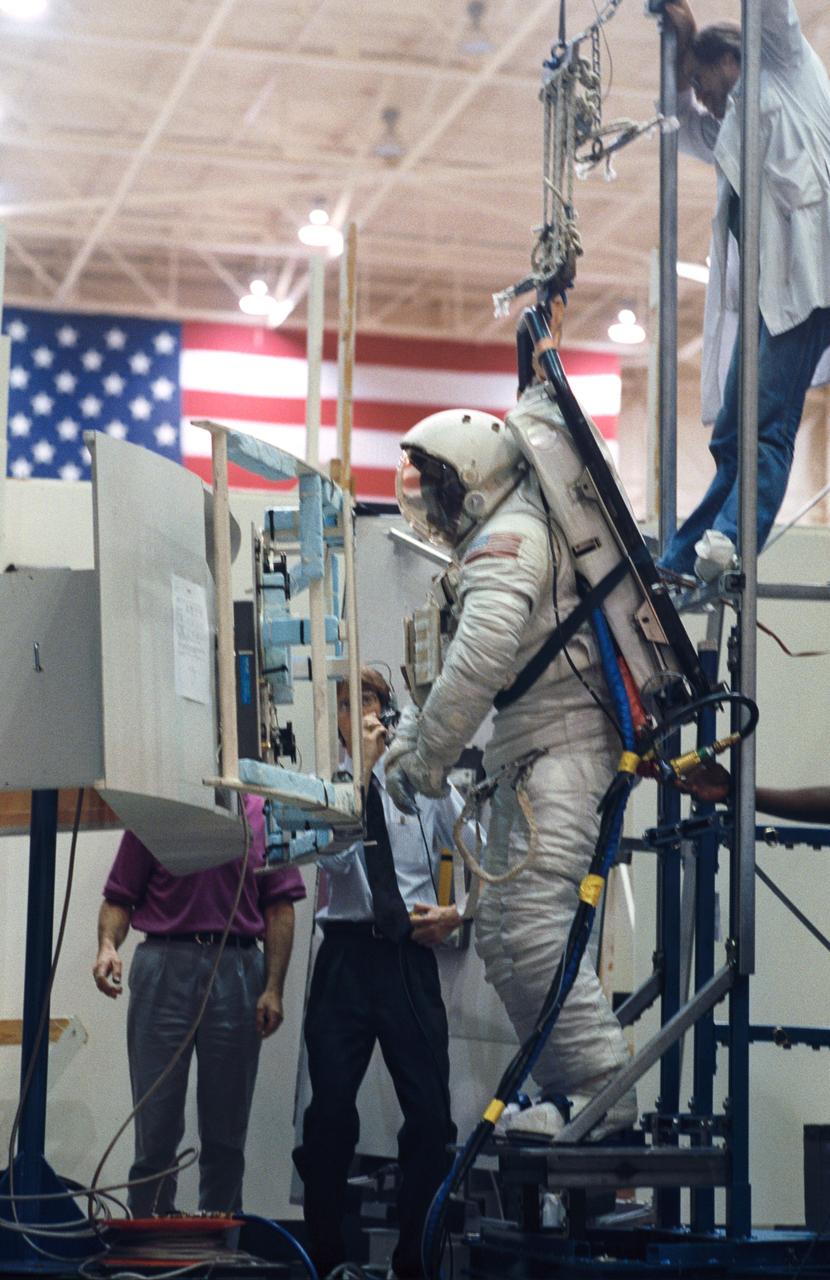
Making use of the air-bearing floor in JSC's Shuttle mockup and integration laboratory, Astronaut Jeffrey A. Hoffman practices working with the Hubble Space Telescope's Wide Field/Planetary Camera (WF/PC). Changing out the large camera is one of several jobs to be performed by STS-61.
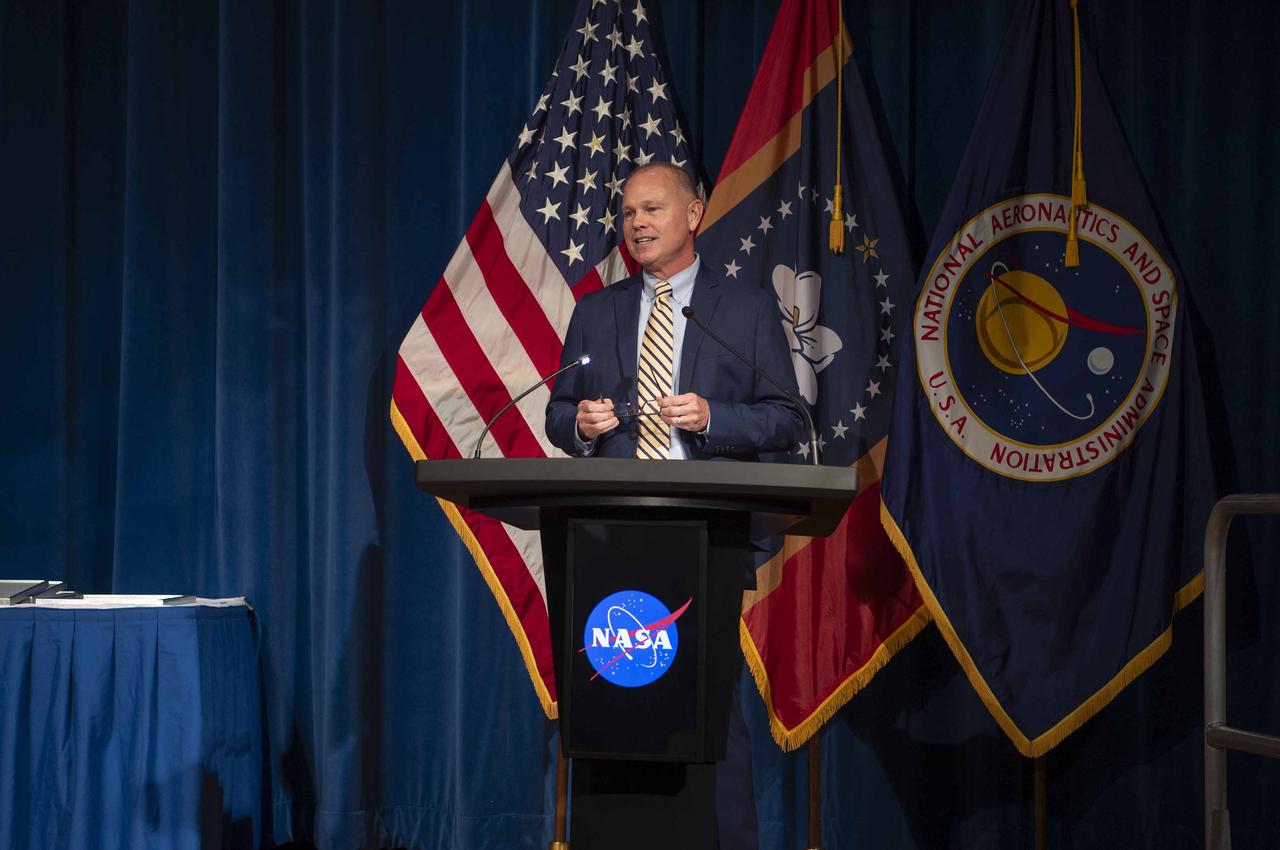
NASA Stennis Director John Bailey welcomes employees and guests to the Silver Snoopy Award ceremony on Aug. 21 at NASA’s Stennis Space Center. NASA’s Space Flight Awareness Program recognizes outstanding job performances and contributions by civil servants and contract employees. It focuses on excellence in quality and safety in support of human spaceflight.
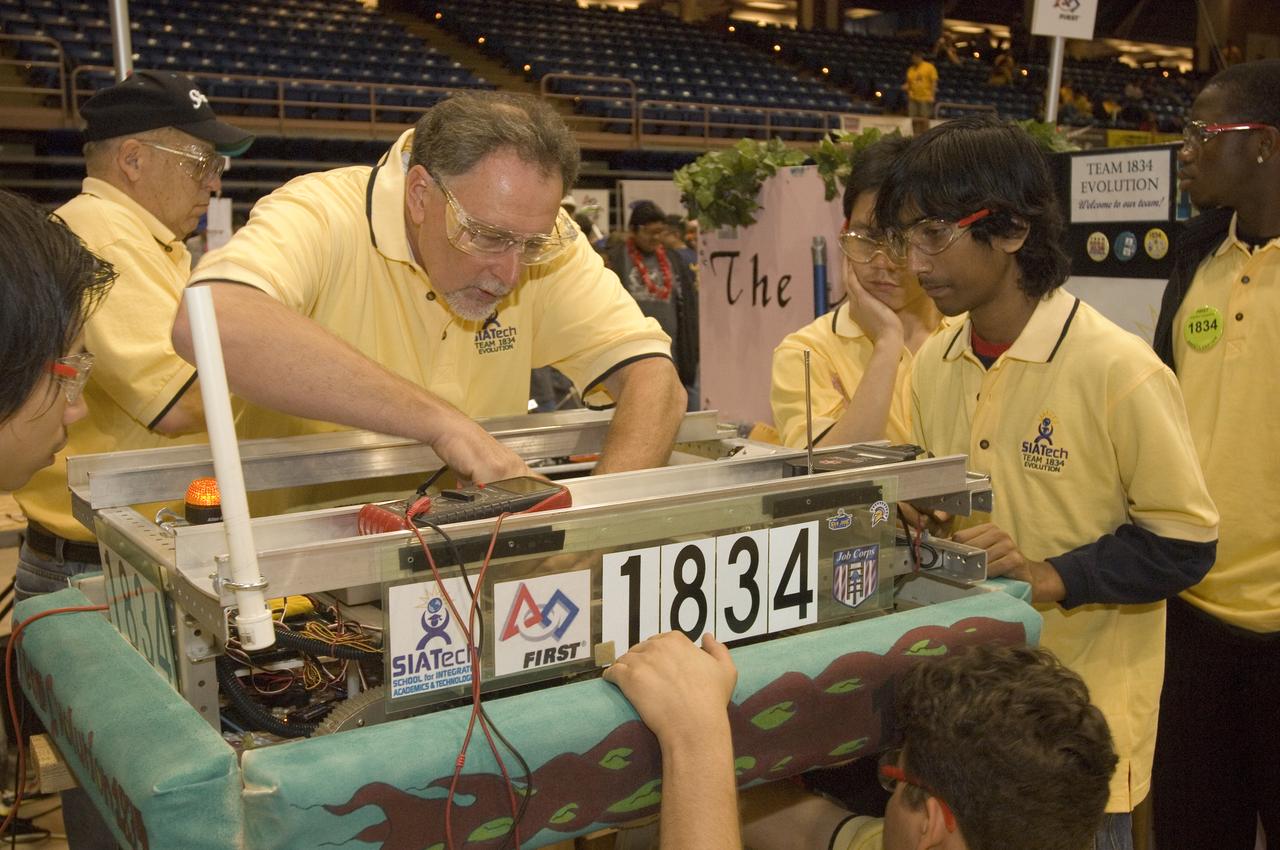
Silicon Valley FIRST Regional Robotics competition: Evolution Team 1834 - NASA/Google/NASA Robotics Education FIRST Spnsorship program/San Jose Job Corps/MetroED & SIA Tech, San Jose, California (CA)s Cheezy Poofs team-1834
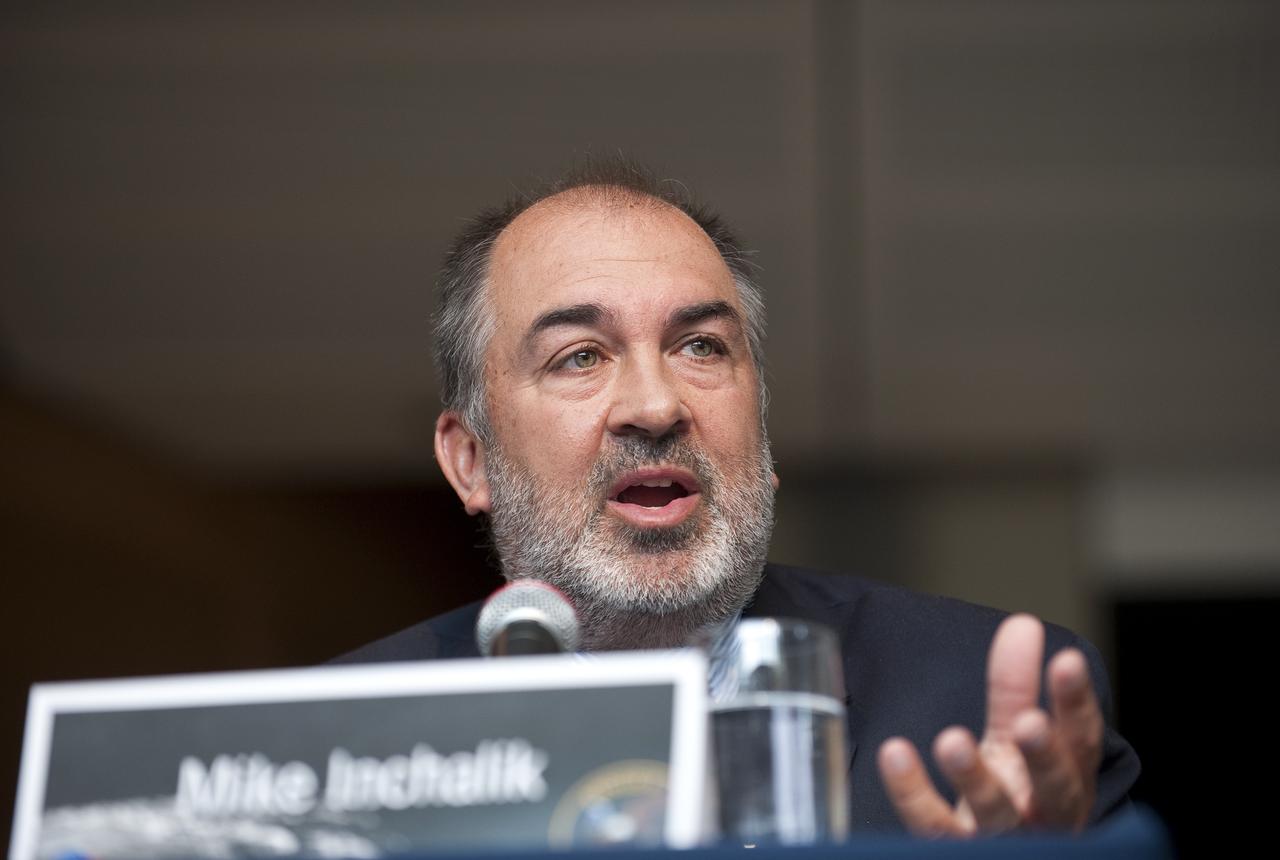
Mike Inchalik, president of Lowry Digital, talks about the job of restoring Apollo 11 moonwalk footage at a NASA briefing where restored Apollo 11 moonwalk footage was revealed for the first time at the Newseum, Thursday, July 16, 2009, in Washington, DC. Photo Credit: (NASA/Bill Ingalls)
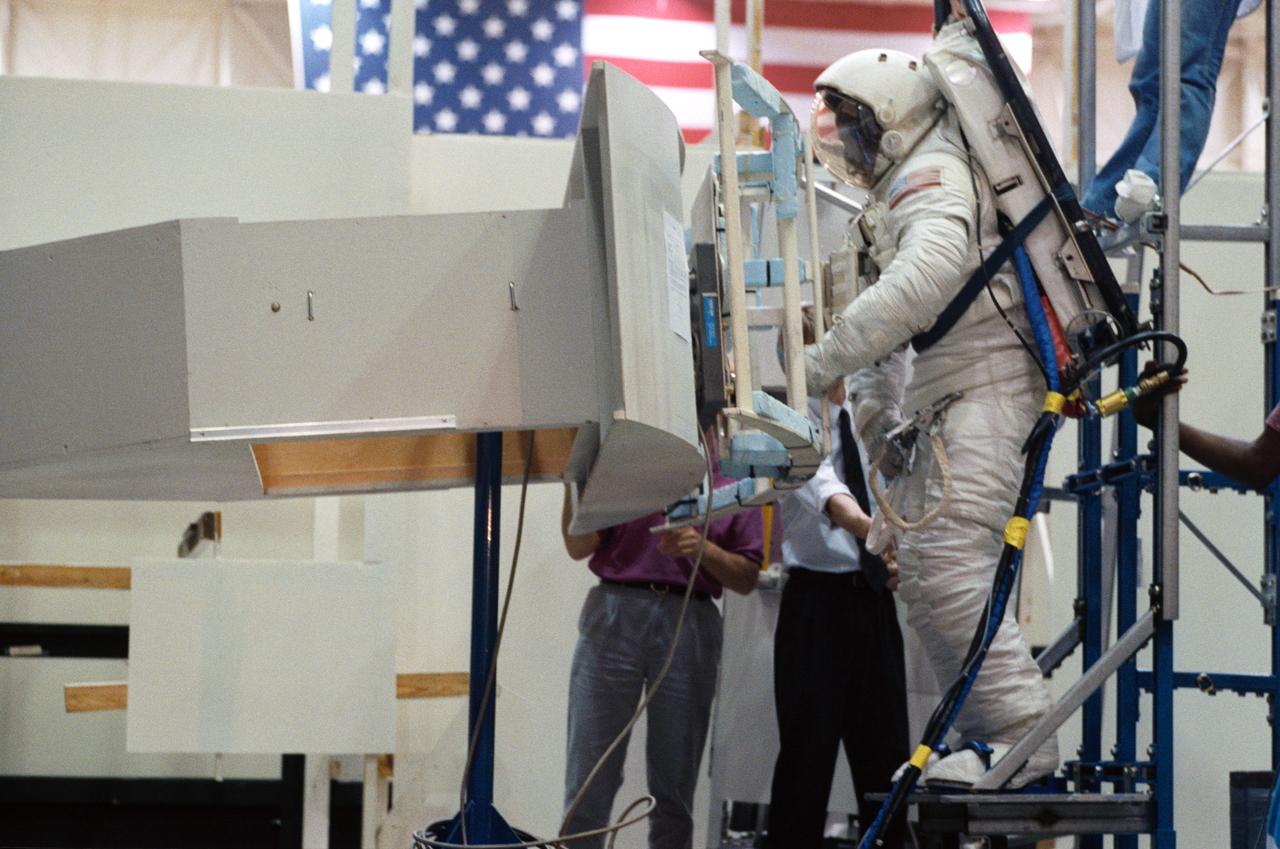
Making use of the air-bearing floor in JSC's Shuttle mockup and integration laboratory, Astronaut Jeffrey A. Hoffman practices working with the Hubble Space Telescope's Wide Field/Planetary Camera (WF/PC). Changing out the large camera is one of several jobs to be performed by STS-61.
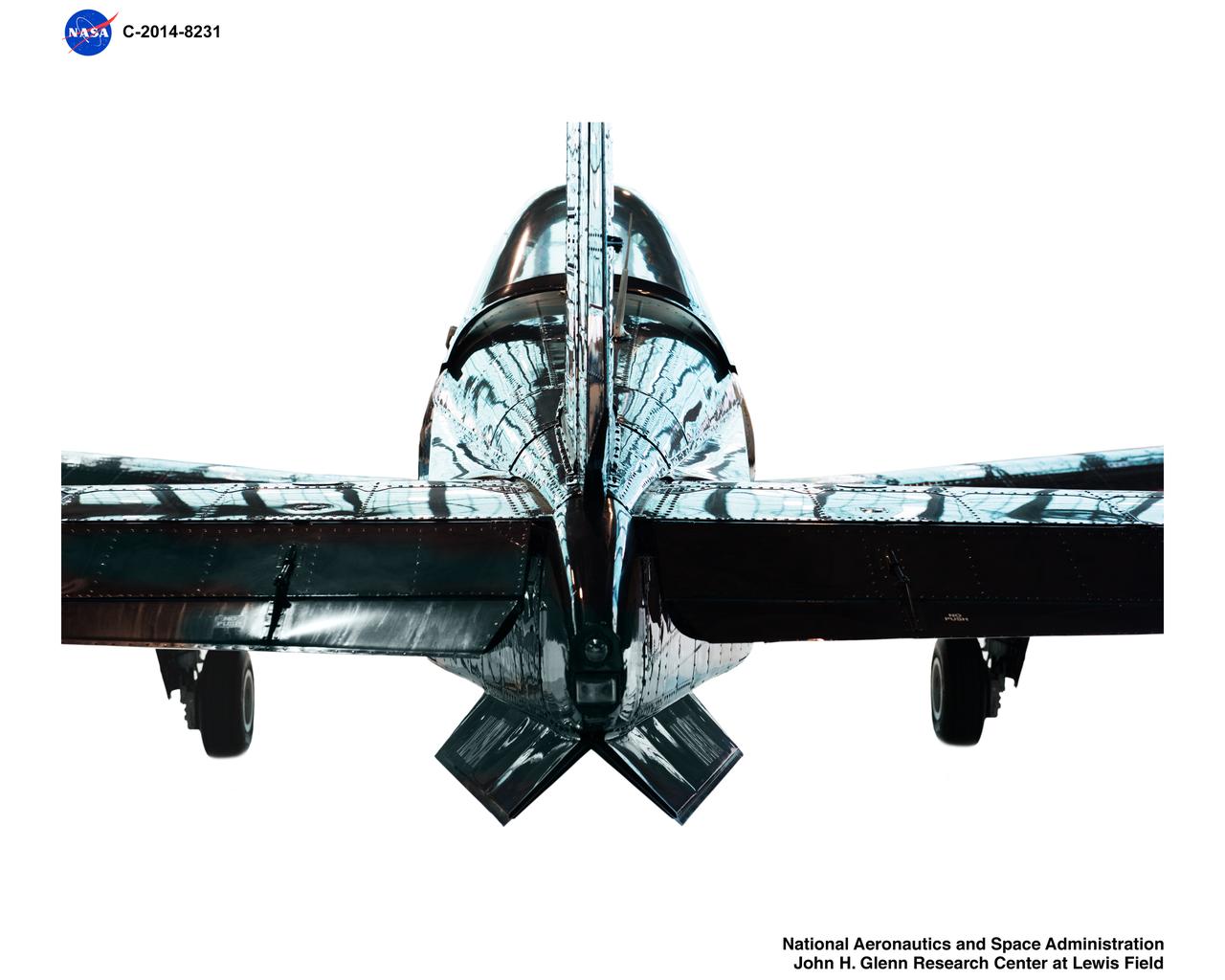
A T34-C aircraft reflects the large multi-paned windows on the Hangar doors. When NASA GRC obtained this T-34C from the Navy it was painted in ‚Äúthrowback‚Äù paint schemes from an earlier time in celebration of the 100th birthday of Naval Aviation. NASA kept it in the original paint job for posterity. This T-34C airplane will be GRCs surrogate aircraft for Unmanned Aircraft Systems in the National Airspace System aeronautics initiative. A T34-C aircraft reflects the large multi-paned windows on the Hangar doors. When NASA GRC obtained this T-34C from the Navy it was painted in “throwback” paint schemes from an earlier time in celebration of the 100th birthday of Naval Aviation. NASA kept it in the original paint job for posterity. This T-34C airplane will be GRCs surrogate aircraft for Unmanned Aircraft Systems in the National Airspace System aeronautics initiative.
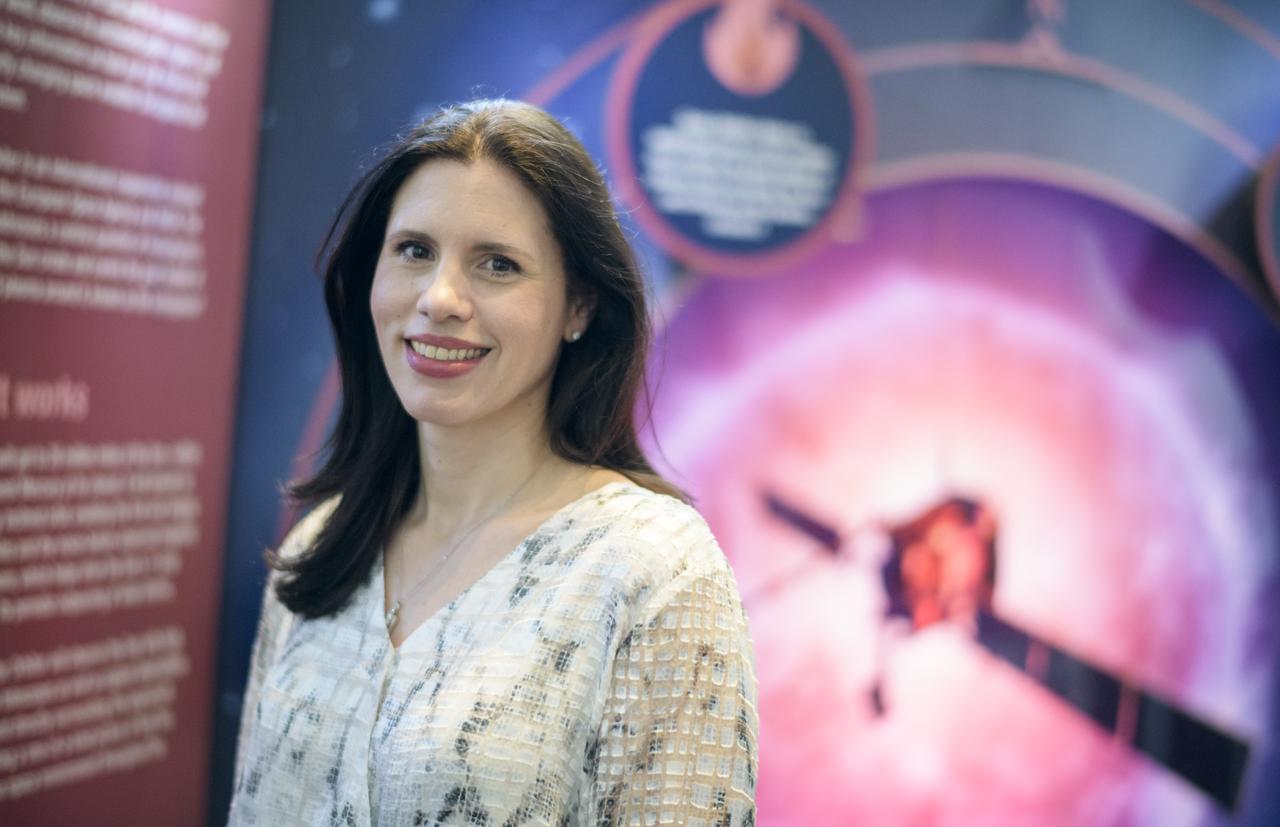
“When I started at Headquarters, I worked on slide design. Presentation work. All I was doing was formatting Powerpoint. That was it. “But the lady I was grouped with — Mary Pat Hrybyk-Keith — she really coached me on what NASA is all about. She told me, ‘Put your foot in the door. Show them what you can do.’ And she was so right. “I think that’s the mistake that a lot of younger people make. They want this perfect job right away. It’s definitely not that way. Most of the time, you get a job just to get a job. You have to get your foot in the door. So I did that here. I started showing them different things that I could do. They would ask me for something for a chart and I would give them an illustration in Photoshop. I wanted to show them that I could make photo-realistic, scientific illustrations. And slowly over time, I did that. I worked a lot of extra hours. And now, I’m not just formatting words and pictures on a slide anymore. “The job just got better and better and better. I’ve just had door after door open up for me. I have a lot of clients who let me try exciting, new things. I constantly feel like I’m refreshed and invigorated and excited. I don’t know how many people can say, ‘I want to go home and keep working on this!’” Jenny Mottar, Art Director for NASA Science, Wednesday, March 4, 2020, at NASA Headquarters in Washington, DC. Photo Credit: (NASA/Joel Kowsky)
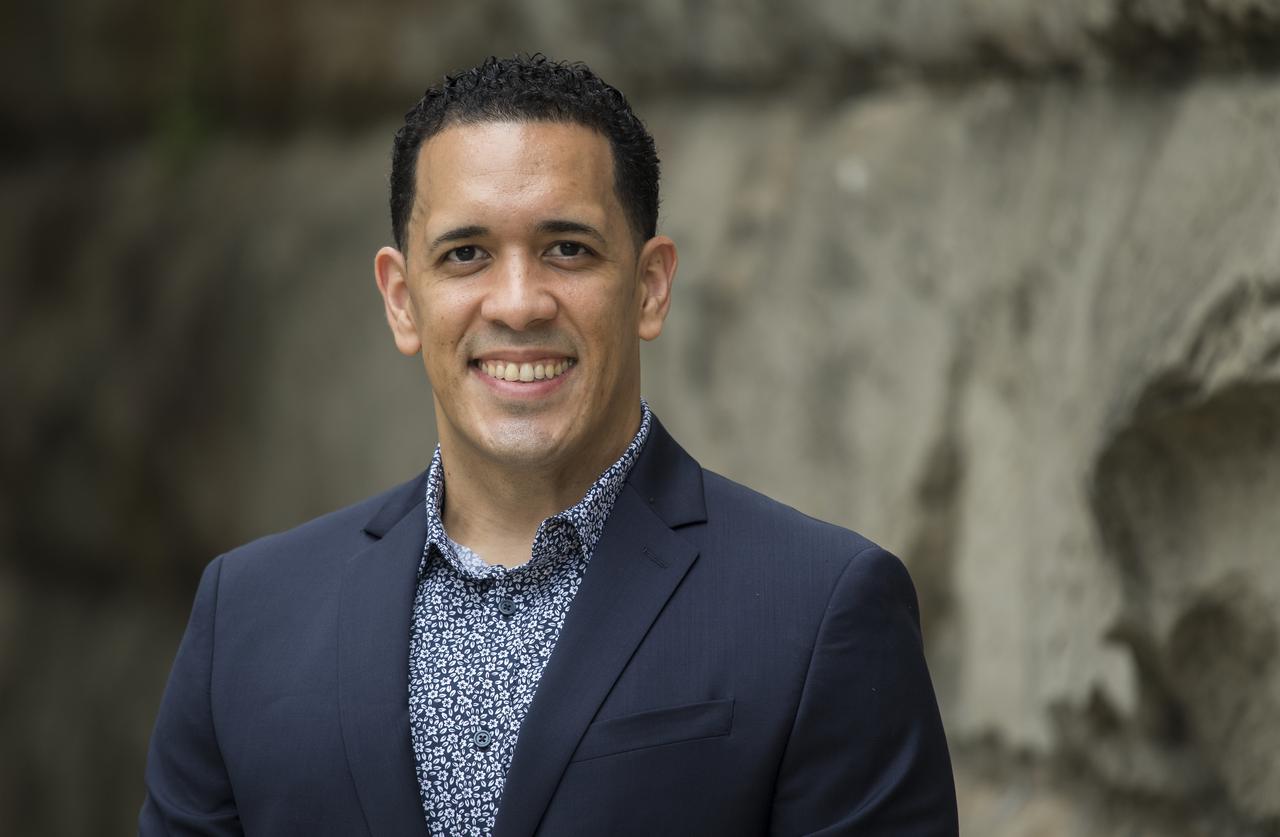
“Since I was 13, I’ve had maybe two or three jobs. Right now, I feel like I have four jobs. I have the NASA job, the Navy job. I’m also the chair for the Hispanic Outreach and Leadership Alliance, and I’m a new dad. It’s a lot. They say that the more you do, the more you can do. That’s a motto we have in the military. It’s true. The more you do, the more you can do, and unless you try to do something, you won’t know if you can. I have this philosophy in life that you’re only ever going to do things related to four categories: fitness and health, social and family time, your career, or faith and spirituality. You’re never, ever going to get those things perfectly in balance because nobody’s perfect. But I think the goal is to try to maintain balance. You’re going to have periods in your life where you may have a lot of work assignments and you’re spending a lot of time on the career side of things, but you need to also remember that you owe some time to your family and your friends. Are you taking time off for your health? Recognize when you’re a little bit off-balanced on one end. Success is in the journey of trying to work your way back to balanced.” Magdiel Santana, Senior Program Analyst at NASA Headquarters, poses for a portrait, Tuesday, Sept. 1, 2020, near NASA Headquarters in Washington, DC. Photo Credit: (NASA/Joel Kowsky)
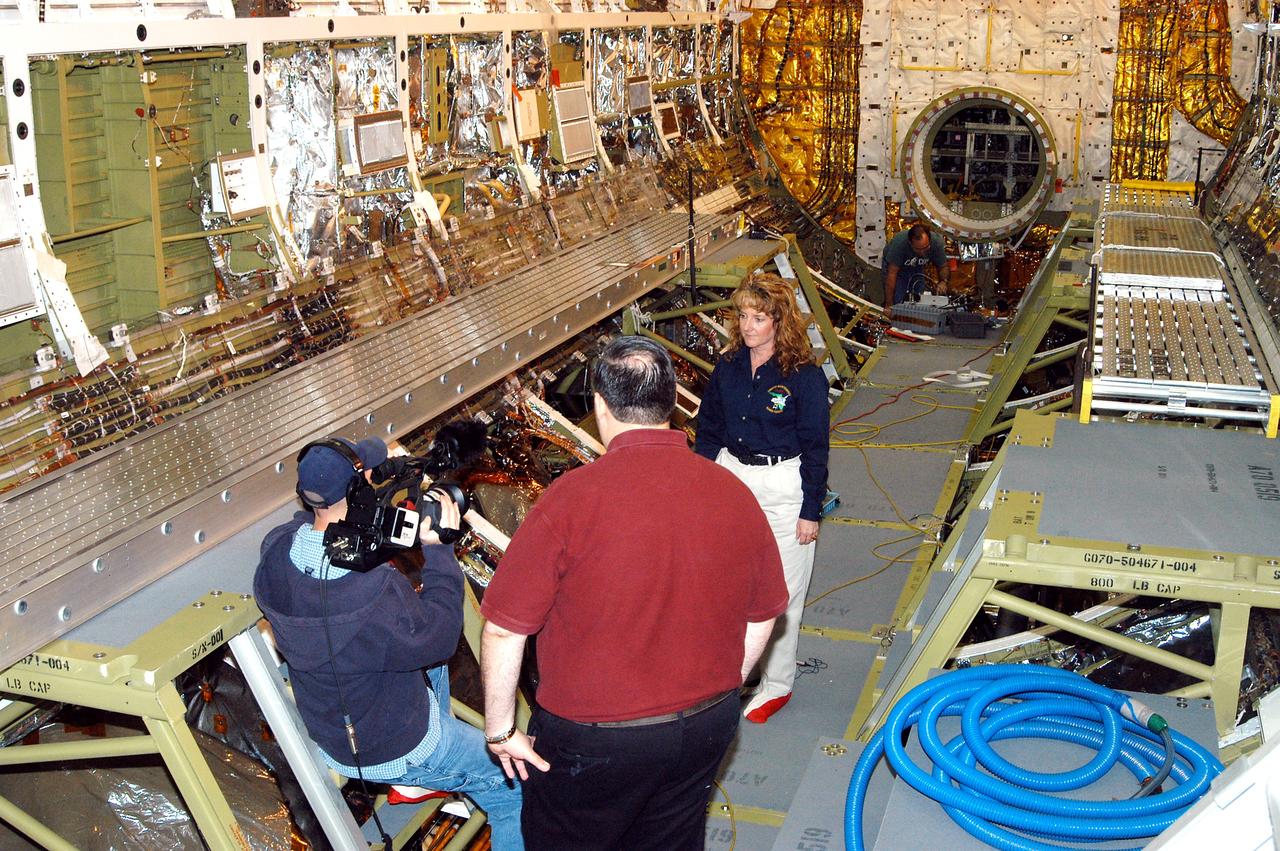
KENNEDY SPACE CENTER, FLA. - Standing inside Discovery’s payload bay, Carol Scott (right), lead orbiter engineer, talks about her job as part of a special feature for the KSC Web. With his back to the camera is Bill Kallus, Media manager in the KSC Web Studio. Behind Scott can be seen the open hatch of the airlock, which provides support functions such as airlock depressurization and repressurization, extravehicular activity equipment recharge, liquid-cooled garment water cooling, EVA equipment checkout, donning and communications. The outer hatch isolates the airlock from the unpressurized payload bay when closed and permits the EVA crew members to exit from the airlock to the payload bay when open.

NASA Administrator Charles Bolden issued the following statement regarding NASA's selection by the Partnership for Public Service as the Best Place to Work in Government: "NASA’s selection as the Best Place to Work in Government for the second year in a row is a testament to the excellence of our workforce and their determination to maintain America’s leadership in space exploration." We are also pleased to announce that NASA Goddard was ranked 13th best agency subcomponent. Read more: <a href="http://1.usa.gov/1cTQHIC" rel="nofollow">1.usa.gov/1cTQHIC</a> <b><a href="http://www.nasa.gov/audience/formedia/features/MP_Photo_Guidelines.html" rel="nofollow">NASA image use policy.</a></b> <b><a href="http://www.nasa.gov/centers/goddard/home/index.html" rel="nofollow">NASA Goddard Space Flight Center</a></b> enables NASA’s mission through four scientific endeavors: Earth Science, Heliophysics, Solar System Exploration, and Astrophysics. Goddard plays a leading role in NASA’s accomplishments by contributing compelling scientific knowledge to advance the Agency’s mission. <b>Follow us on <a href="http://twitter.com/NASA_GoddardPix" rel="nofollow">Twitter</a></b> <b>Like us on <a href="http://www.facebook.com/pages/Greenbelt-MD/NASA-Goddard/395013845897?ref=tsd" rel="nofollow">Facebook</a></b> <b>Find us on <a href="http://instagram.com/nasagoddard?vm=grid" rel="nofollow">Instagram</a></b>
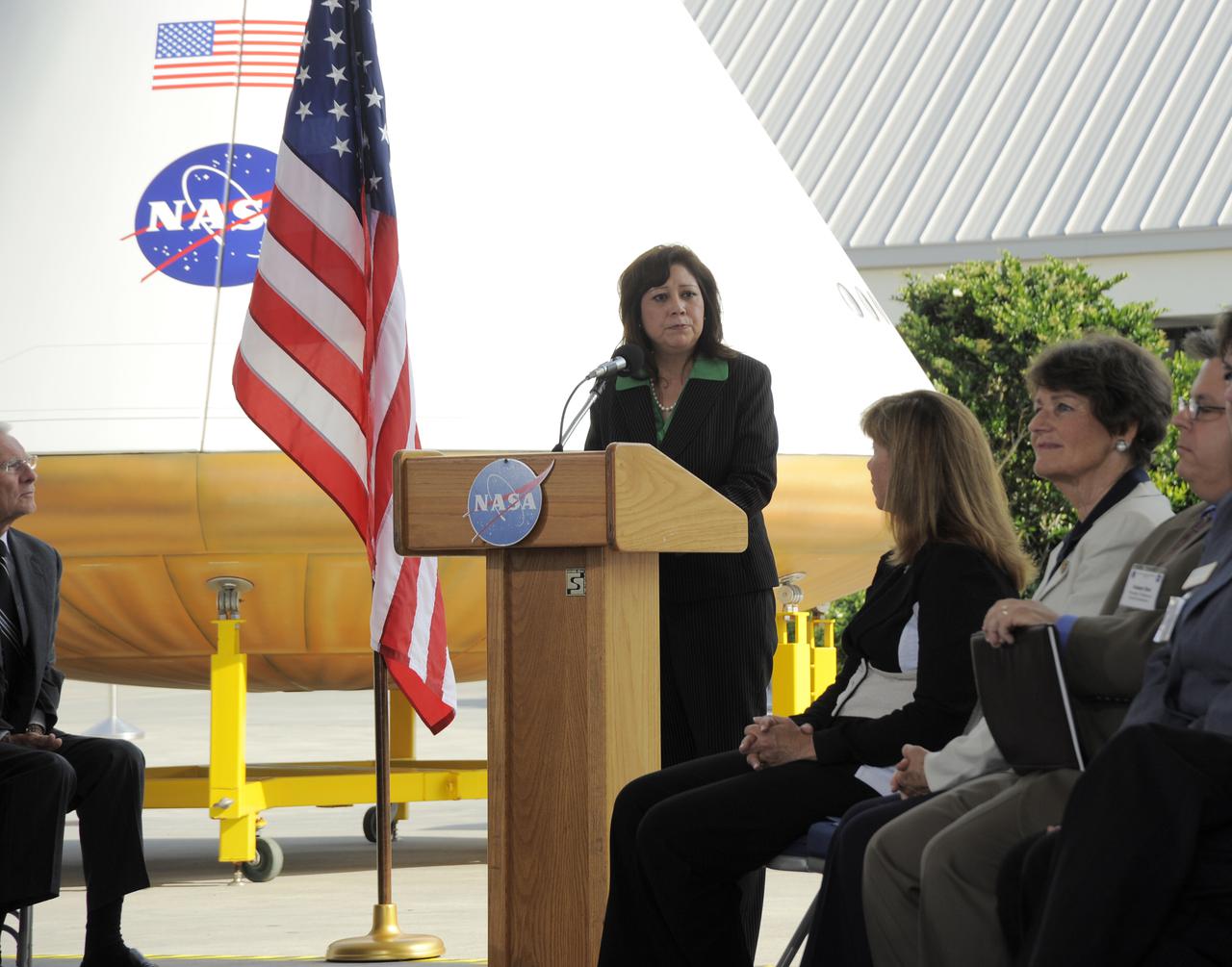
CAPE CANAVERAL, Fla. – At NASA's Kennedy Space Center Visitor Complex, Secretary of Labor Hilda Solis talks to the media and community leaders about the $15 million Florida will receive from the Labor Department’s National Emergency Grant Program to assist workers after the retirement of NASA's Space Shuttle Program. The grant money, which was awarded to the Brevard Workforce Development Board, will be used for job recruiting, screening, education and training, as well as incentives for new growth in science, technology and research. Photo credit: NASA_Kim Shiflett
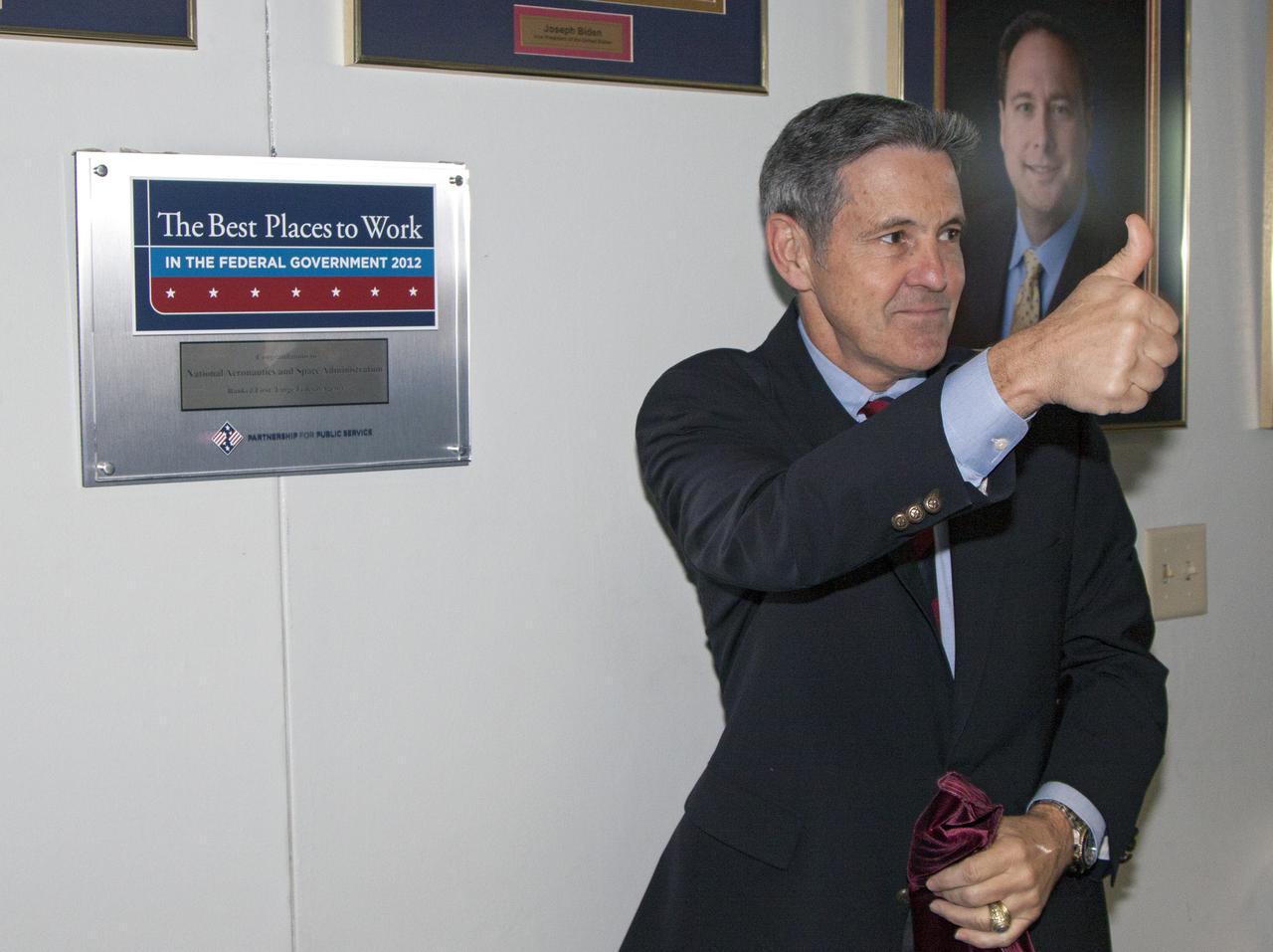
CAPE CANAVERAL, Fla. -- Kennedy Space Center Director Bob Cabana shares his optimism during the unveiling of NASA’s “Best Places to Work in the Federal Government” plaque. The agency ranked No. 1 in the “large” category, those which have more than 15,000 employees. The annual rankings are produced by the Partnership for Public Service and Deloitte, and measure how federal employees view their jobs and workplaces. Photo credit: NASA_Kim Shiflett
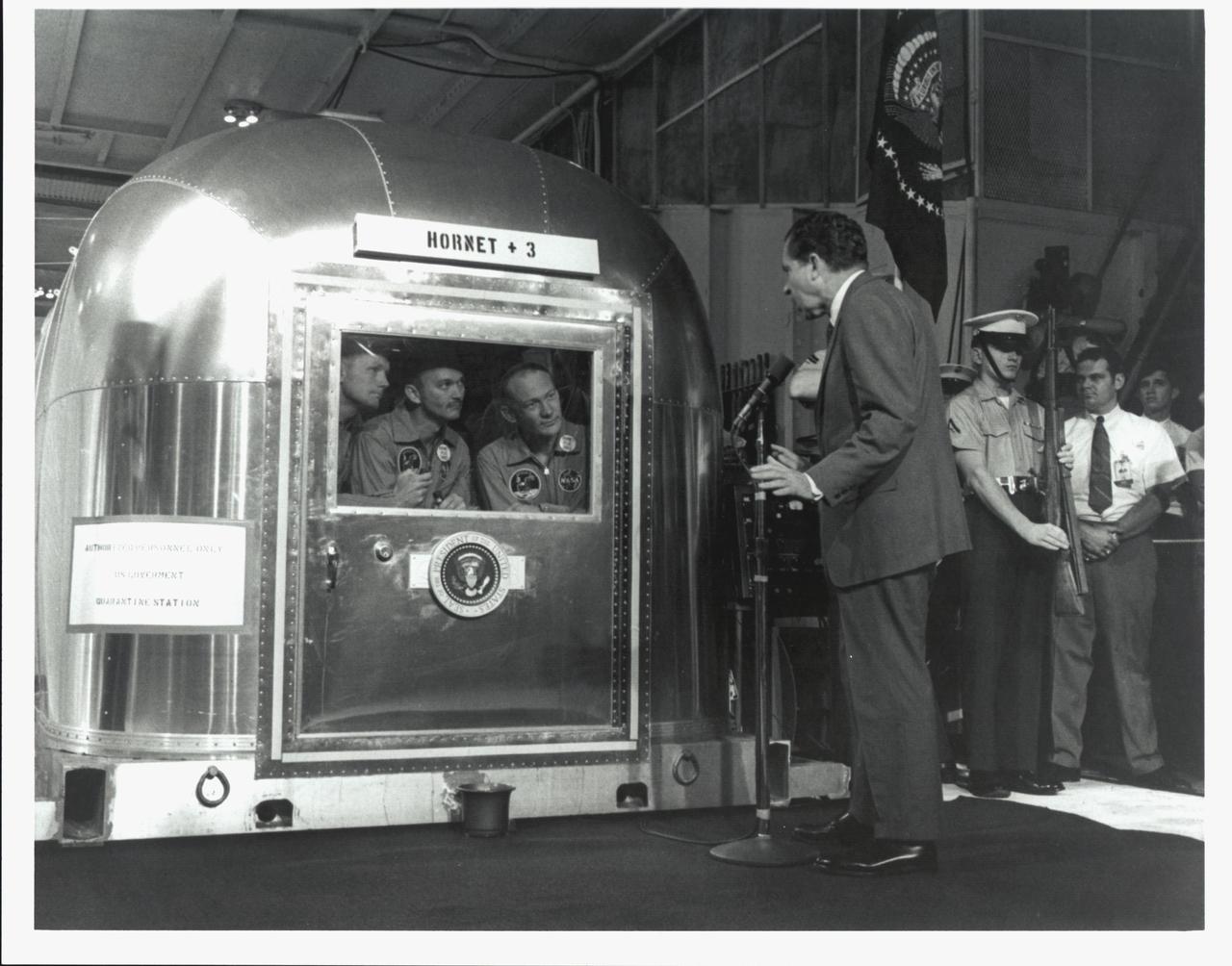
KENNEDY SPACE CENTER, FLA. - The Apollo 11 astronauts, left to right, Neil A. Armstrong, Michael Collins and Edwin E. Aldrin Jr., inside the Mobile Quarantine Facility aboard the USS Hornet, listen to President Richard M. Nixon as he welcomes them back to Earth and for a job well done. The astronauts, after their first manned mission to the Moon, splashed down in the Pacific Ocean at 12:50 p.m. EDT about 900 miles southwest of Hawaii.
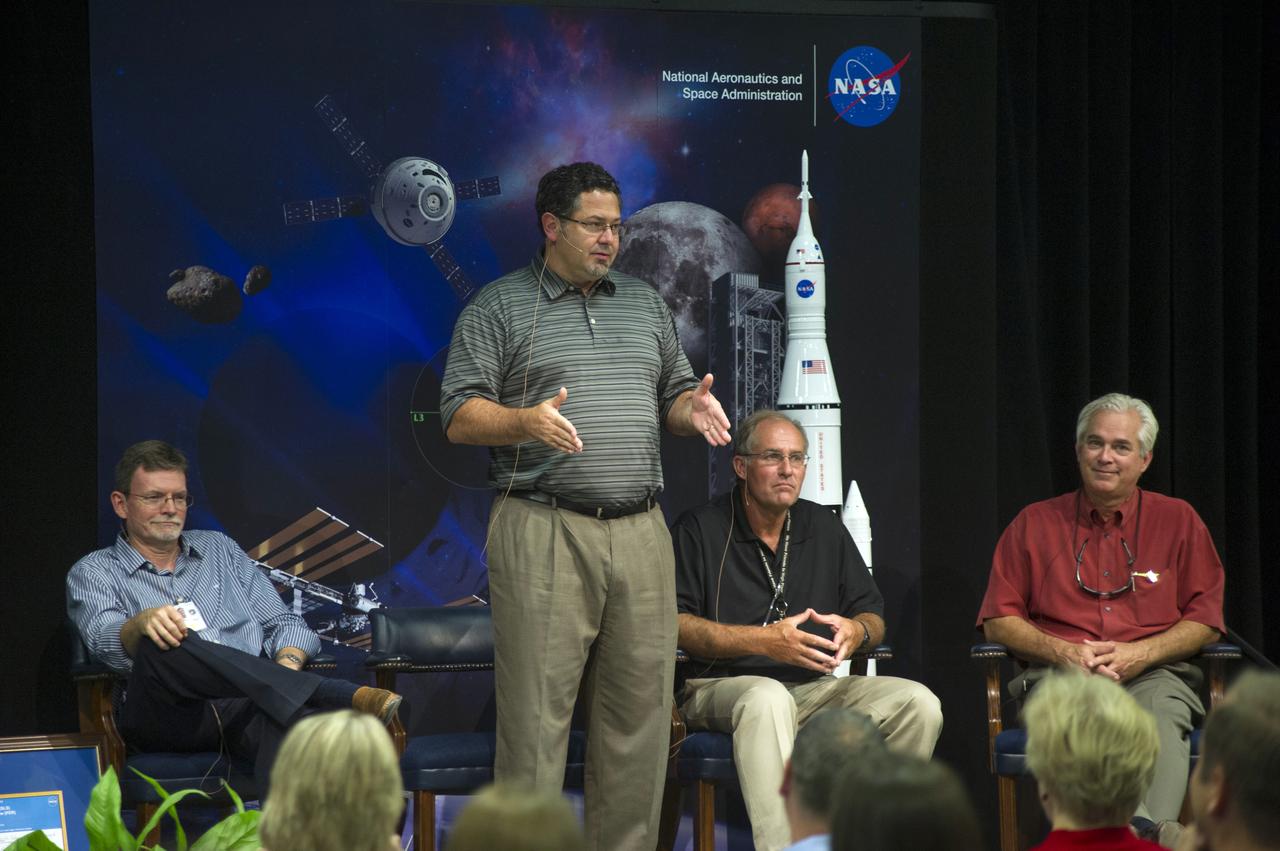
MORE THAN 250 PEOPLE FROM ACROSS NASA'S MARSHALL SPACE FLIGHT CENTER PARTICIPATED IN THE SPACE LAUNCH SYSTEM (SLS) POST-PRELIMINARY DESIGN REVIEW REPORT, HELD AUG. 5 IN ACTIVITIES BUILDING 4316. DISCUSSING THE REVIEW AND THANKING THE MARSHALL TEAM FOR A JOB WELL DONE, ARE FROM LEFT, GARRY LYLES, SLS CHIEF ENGINEER; TODD MAY, MANAGER OF THE SLS PROGRAM; STEVE CASH, DIRECTOR OF MARSHALL’S SAFETY & MISSION ASSURANCE DIRECTORATE; AND CHRIS SINGER, MANAGER OF MARSHALL’S ENGINEERING DIRECTORATE
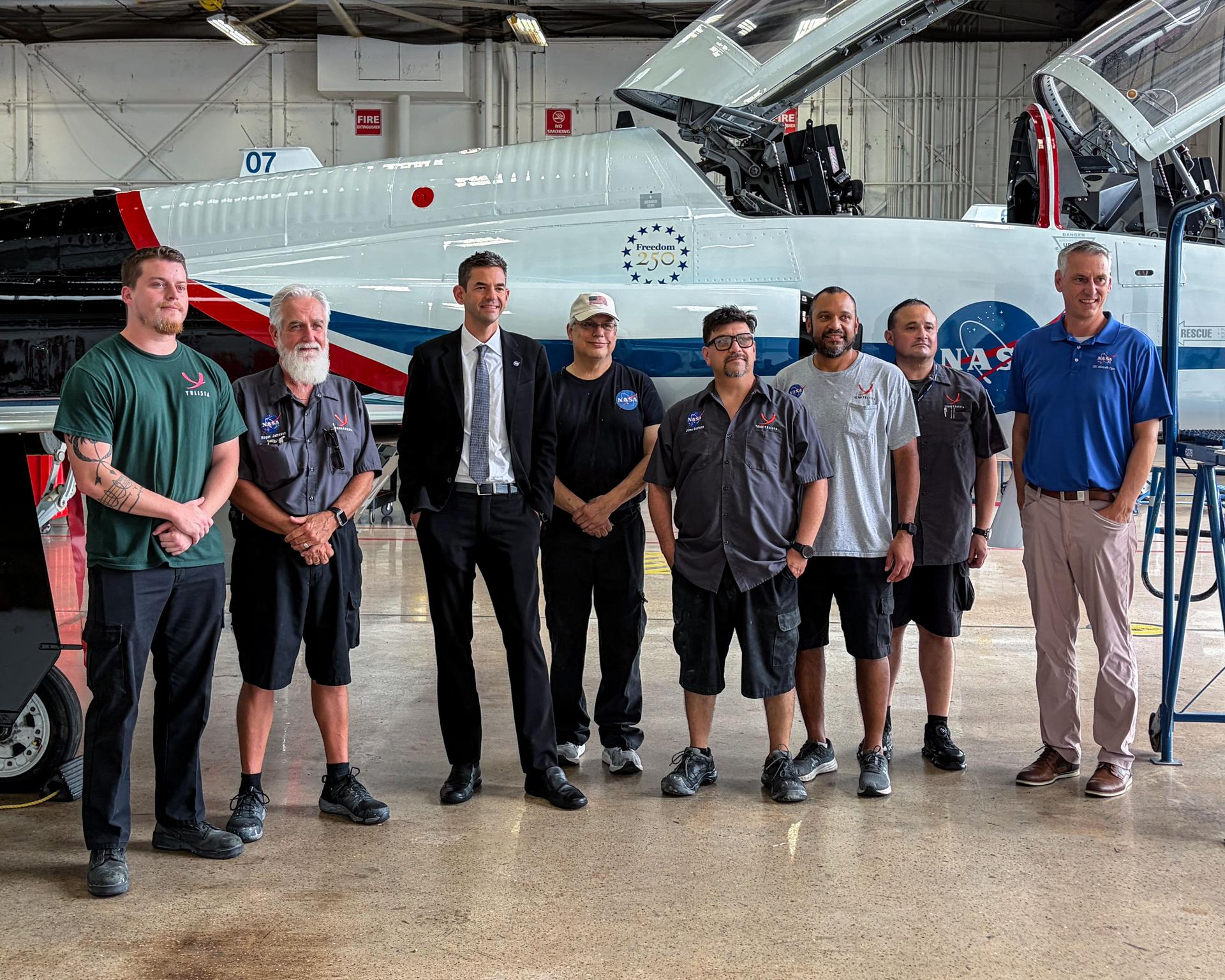
jsc2026e407799 (Aug. 6, 2026) - NASA administrator Jared Isaacman visited Ellington Field to admire the T-38 jet featuring a new paint job reflecting the Artemis Program. He met with the team members who designed and painted the aircraft, which NASA astronauts use to train for making real-time decisions in a high-stakes, operational environment. Credit: NASA/James Blair
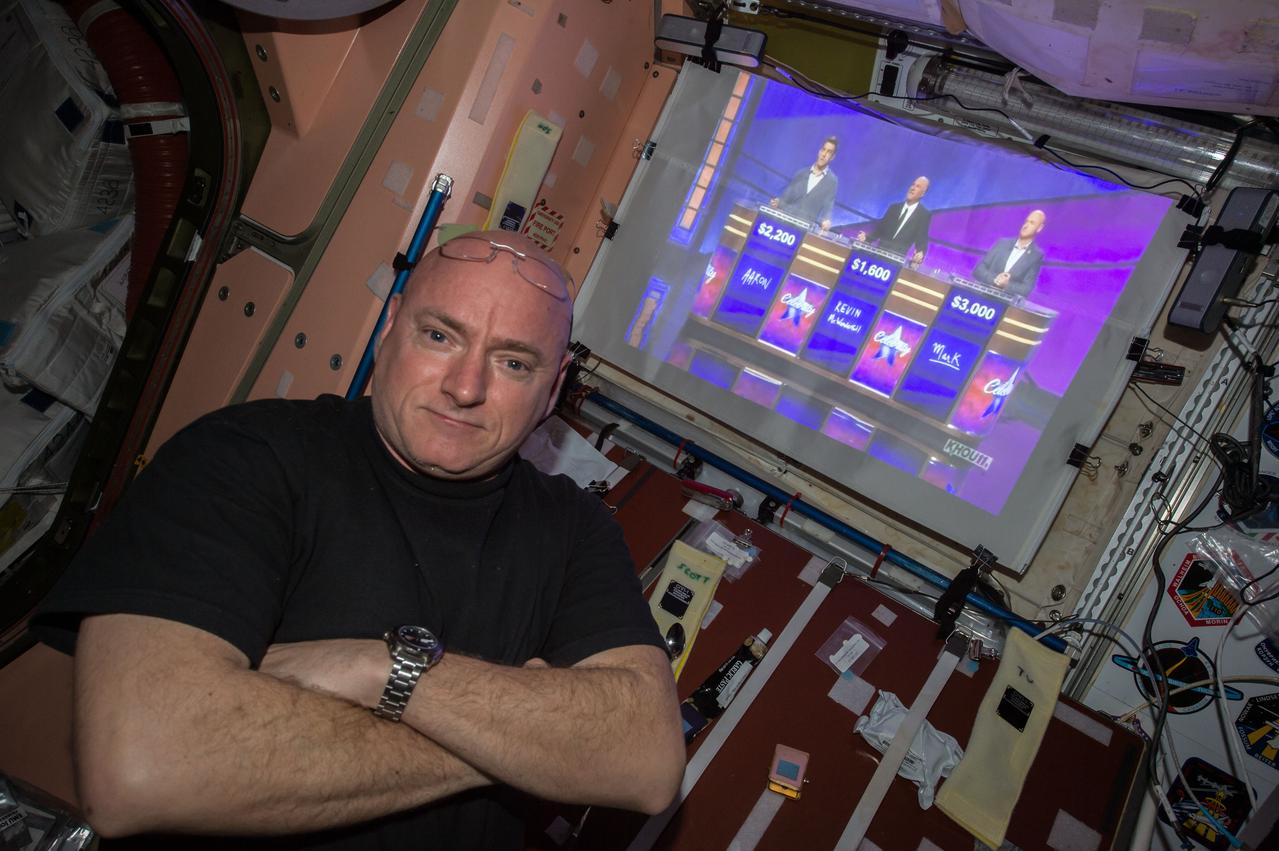
ISS043E194316 (05/15/2015) ---NASA astronaut Scott Kelly aboard the International Space Station tweeted this image out on May, 15, 2015 with this comment concerning his twin brother former astronaut Mark Kelly's appearance on a Television show: "Watching my bro @ShuttleCDRKelly on #CelebrityJeopardy onboard @Space_Station this morning. Great job representing"!

Silicon Valley FIRST Regional Robotics competition: Evolution Team 1834 - NASA/Google/NASA Robotics Education FIRST Spnsorship program/San Jose Job Corps/MetroED & SIA Tech , San Jose, California (CA) trouble shooting with the help of Royal Robotrons Team 1070 - California State University, Northridge/Dreamworks Animation skg Louisville Hight school, Woodlands Hills, California (CA)

CAPE CANAVERAL, Fla. -- Kennedy Space Center unveils NASA’s “Best Places to Work in the Federal Government” plaque. The agency ranked No. 1 in the “large” category, those which have more than 15,000 employees. The annual rankings are produced by the Partnership for Public Service and Deloitte, and measure how federal employees view their jobs and workplaces. Photo credit: NASA_Kim Shiflett
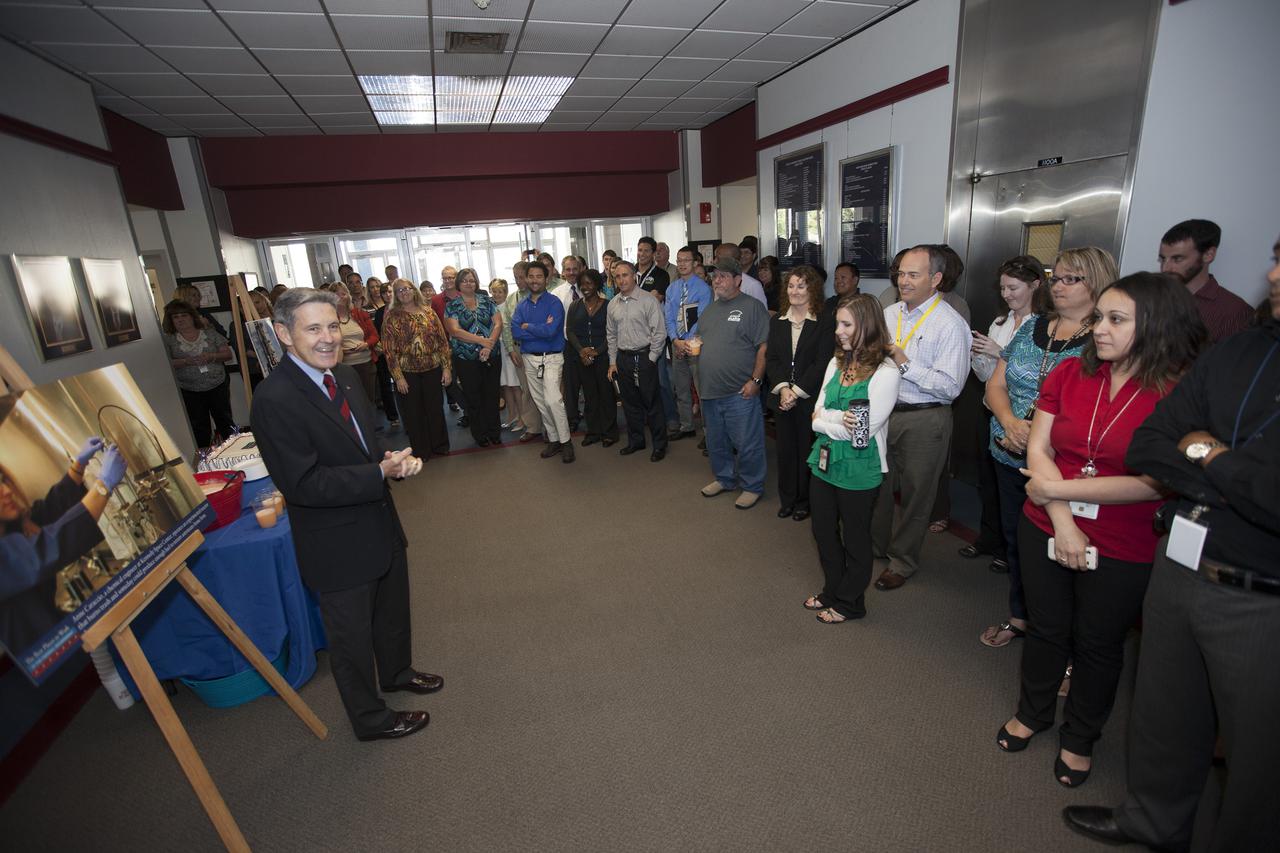
CAPE CANAVERAL, Fla. -- Kennedy Space Center Director Bob Cabana meets with employees during the unveiling of NASA’s “Best Places to Work in the Federal Government” plaque inside the lobby at Headquarters. The agency ranked No. 1 in the “large” category, those which have more than 15,000 employees. The annual rankings are produced by the Partnership for Public Service and Deloitte, and measure how federal employees view their jobs and workplaces. Photo credit: NASA_Kim Shiflett
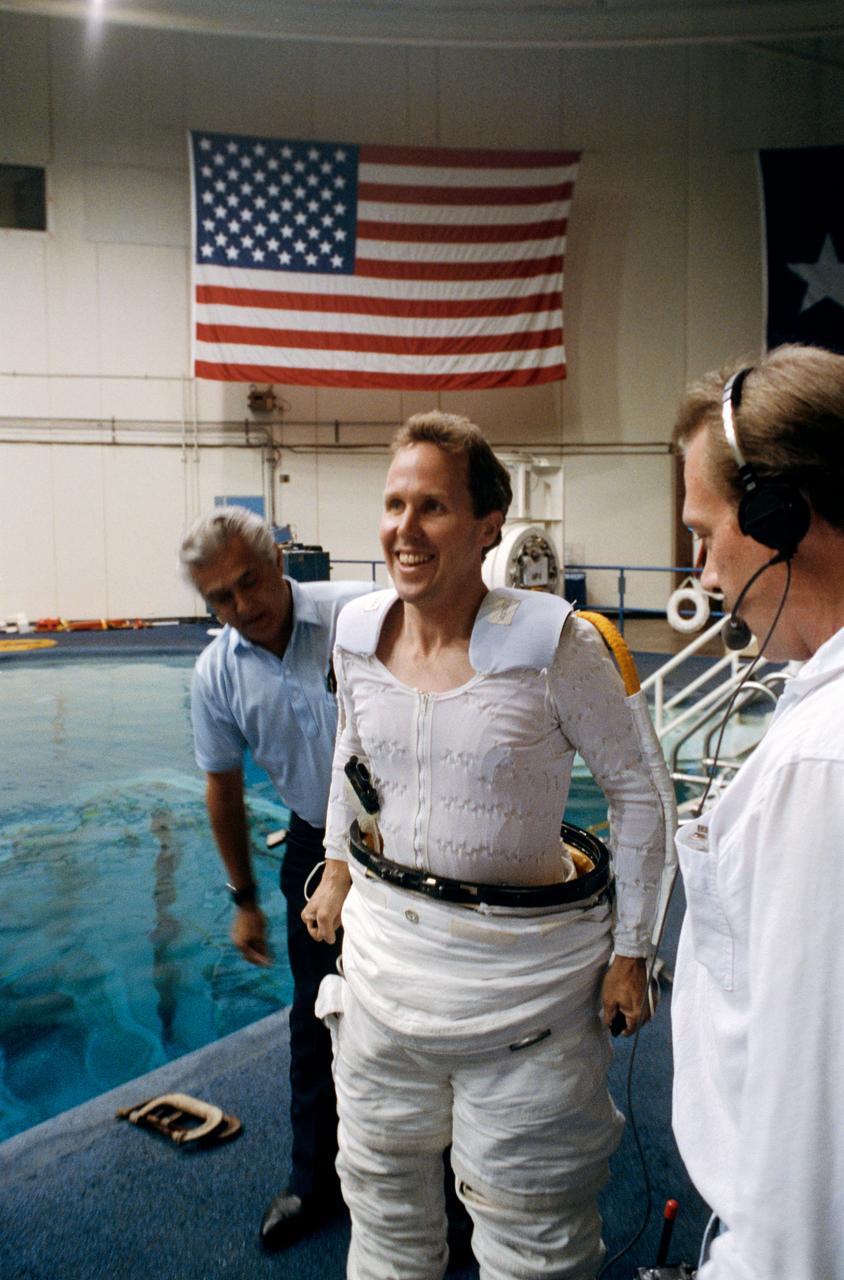
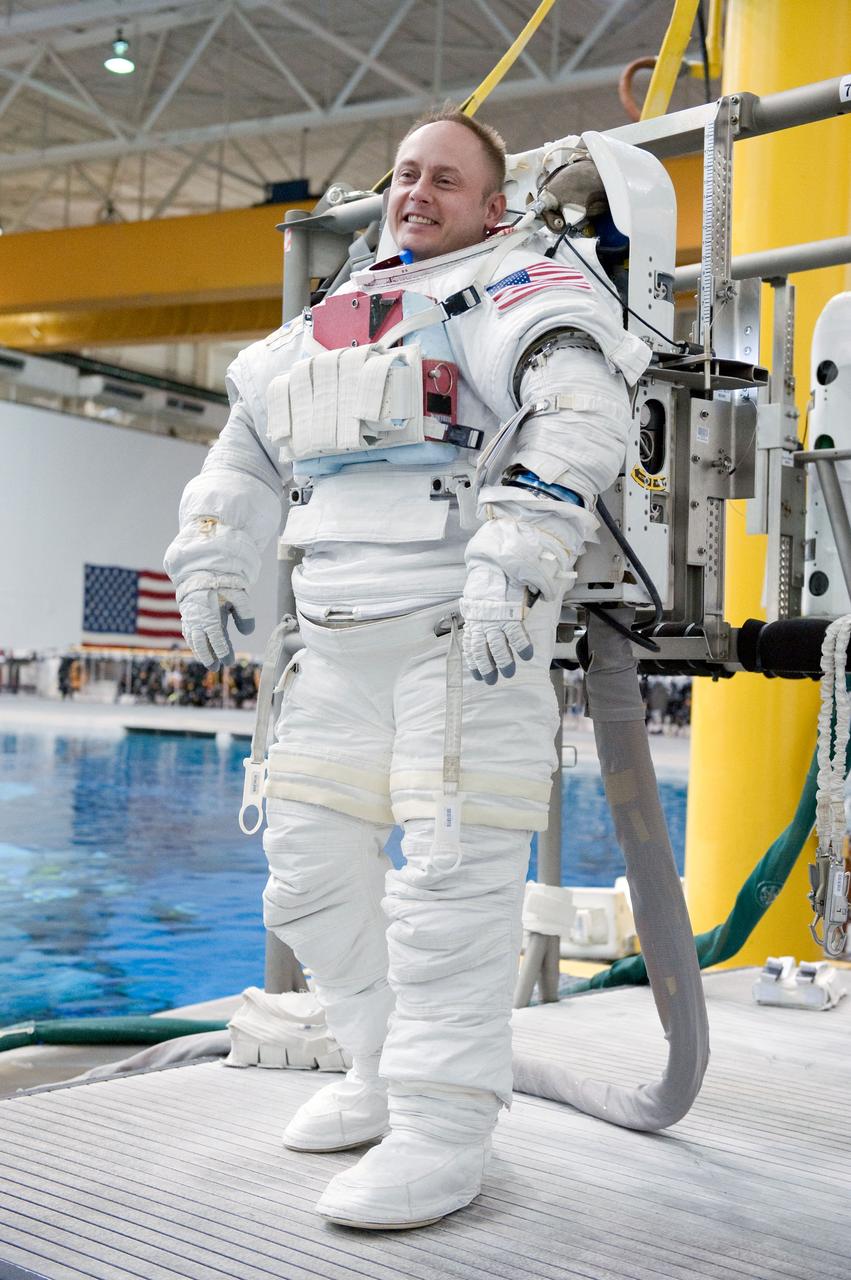
Astronaut Thomas D. Jones, mission specialist, dons a space suit prior to participating in contingency space walk simulations at the JSC Weightless Environment Training Facility (WETF). Jones is assisted by Frank Hernandez (left) and suit technician Charles Hudson of Hamilton Standard. Jones suit is weighted to that he can achieve a neutrally buoyant state once under water. Extravehicular tasks are not planned for the STS-59 mission, but a number of chores are rehearsed in case of failure of remote systems to perform those jobs.

Representatives of NASA’s Space Flight Awareness Program are shown at the Thad Cochran Test Stand (B-1/B-2) on Sept. 25. The Space Flight Awareness program manager and working group had its annual meeting this year at NASA’s Stennis Space Center to review plans for 2025. NASA’s Space Flight Awareness Program recognizes outstanding job performances and contributions by civil servants and contract employees and focuses on excellence in quality and safety in support of human space flight.
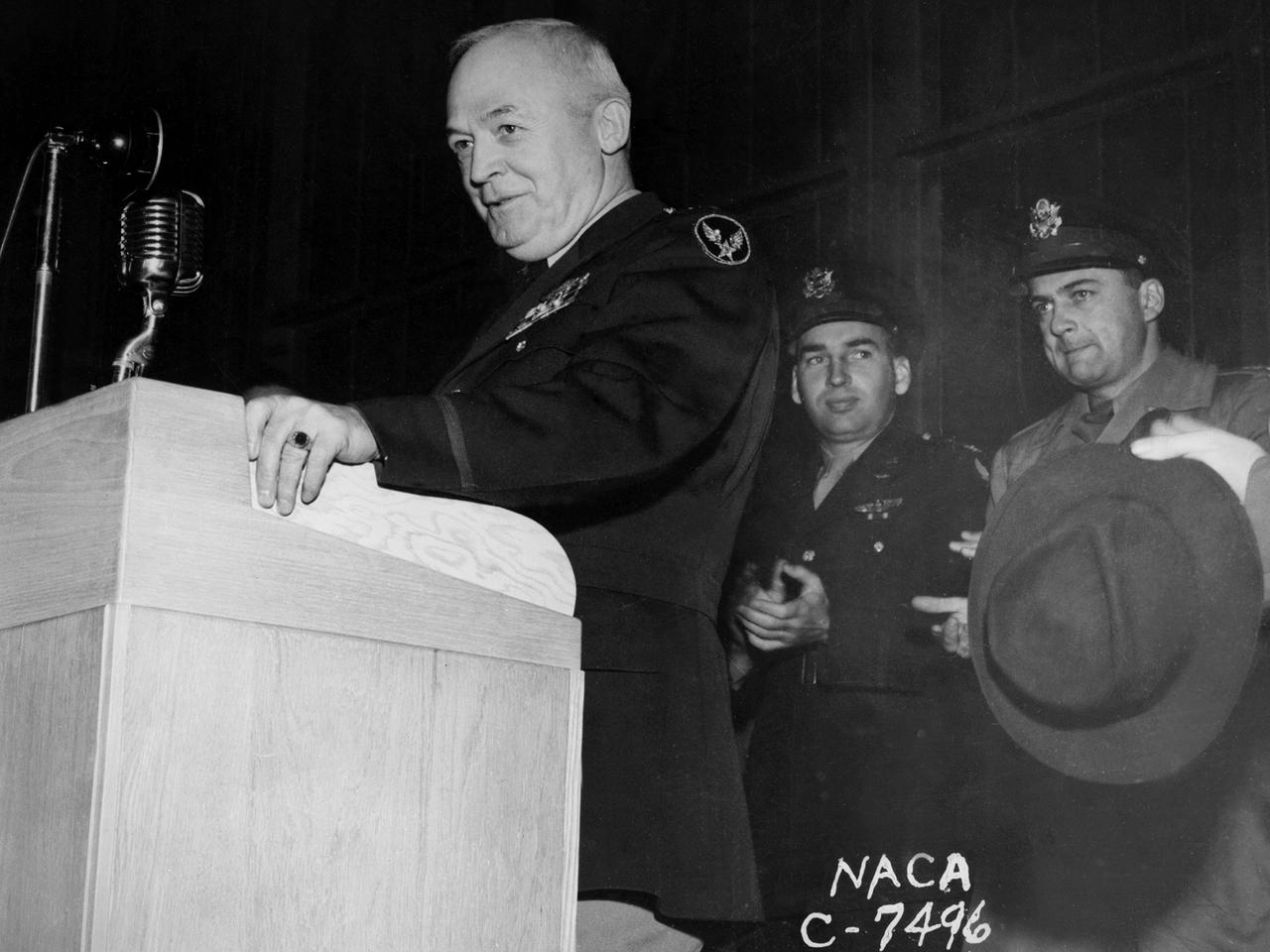
General Henry “Hap” Arnold, Commander of the US Army Air Forces during World War II, addresses the staff at the National Advisory Committee for Aeronautics (NACA) Aircraft Engine Research Laboratory on November 9, 1944. Arnold told the employees assembled in the hangar, “You’ve got a dual task. You’ve got a job ahead of you to keep the army and the navy air forces equipped with the finest equipment that you can for this war. You also have the job of looking forward into the future and starting now those developments, those experiments, that are going to keep us in our present situation—ahead of the world in the air. And that is quite a large order, and I leave it right in your laps.” Arnold served on the NACA’s Executive Committee in Washington from 1938 to 1944 and had been a strong advocate for the creation of the new engine research facility in Cleveland. Arnold believed in continual research and development. He pressed the nation’s aviation leaders to pursue the new jet engine technology, while simultaneously pushing to increase the performance of the nation’s largest piston engine for the B–29 Superfortress program. The general’s hectic wartime agenda limited his visit to the Cleveland laboratory to just a few hours, but he toured several of the NACA’s new test facilities including the Static Jet Propulsion Laboratory, the Icing Research Tunnel, and a B–24 Liberator in the hangar.

KENNEDY SPACE CENTER, FLA. -- In the Space Station Processing Facility, as part of the Crew Equipment Interface Test, STS-112 Commander Jeffrey Ashby looks over the S1 Integrated Truss Structure, part of the payload for the mission to the International Space Station. The S1 truss is the first starboard (right-side) truss segment, whose main job is providing structural support for the orbiting research facility's radiator panels that cool the Space Station's complex power system. The S1 truss segment also will house communications systems, external experiment positions and other subsystems. The S1 truss will be attached to the S0 truss. Launch of STS-112 is scheduled for Aug. 22, 2002
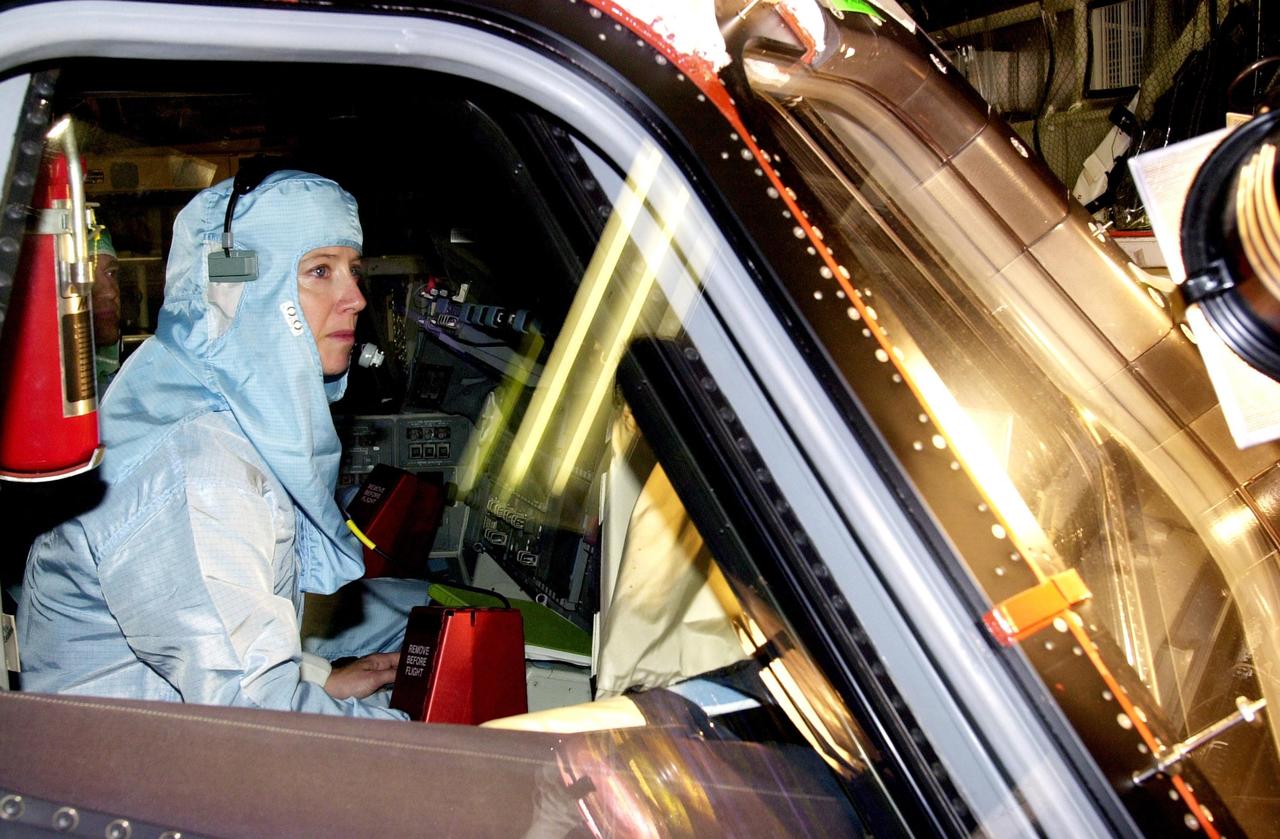
KENNEDY SPACE CENTER, FLA. -- During a Crew Equipment Interface Test, STS-112 Pilot Pamela Melroy checks out the windshield on Atlantis, the designated orbiter for the mission. STS-112 is the 15th assembly flight to the International Space Station and will be ferrying the S1 Integrated Truss Structure. The S1 truss is the first starboard (right-side) truss segment, whose main job is providing structural support for the radiator panels that cool the Space Station's complex power system. The S1 truss segment also will house communications systems, external experiment positions and other subsystems. The S1 truss will be attached to the S0 truss. STS-112 is currently scheduled for launch Aug. 22, 2002
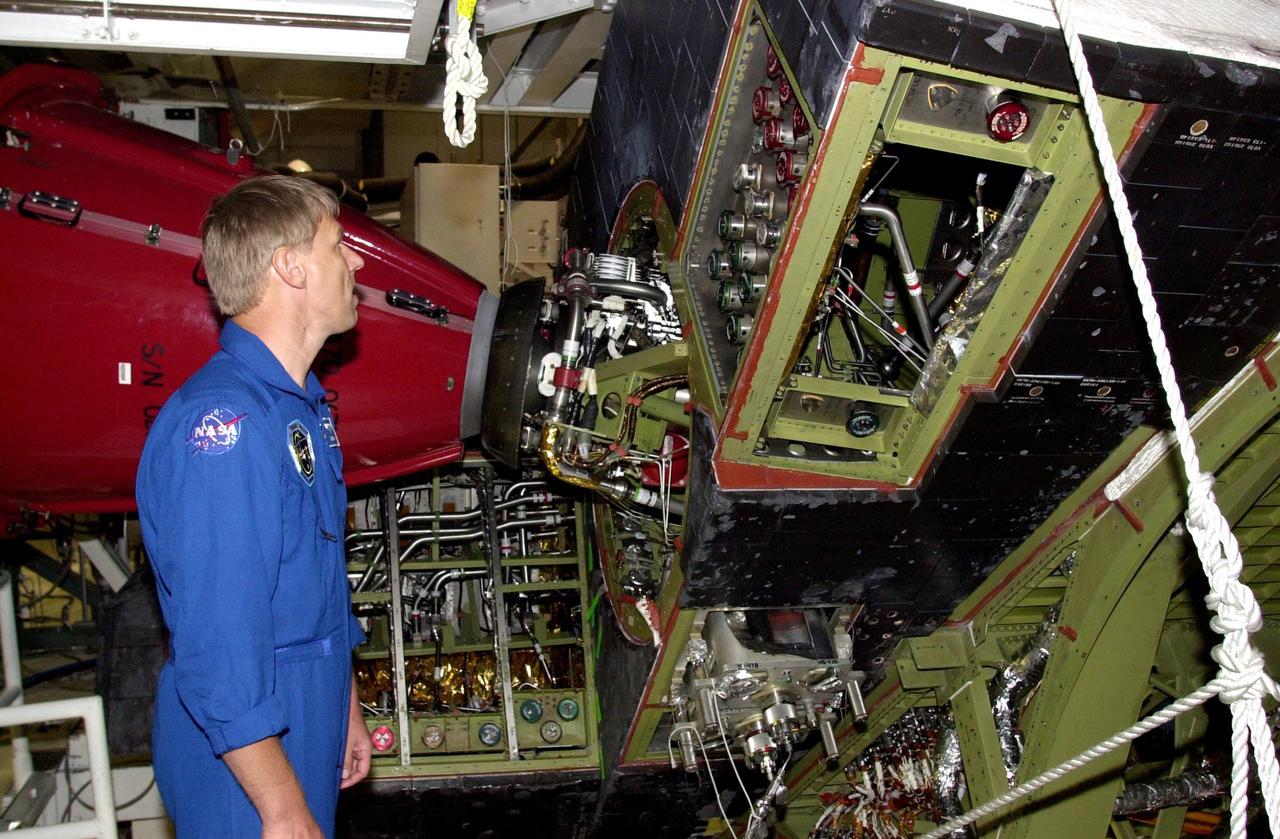
KENNEDY SPACE CENTER, FLA. - During a Crew Equipment Interface Test, STS-112 Mission Specialist Piers Sellers looks at the engine on Atlantis, the designated orbiter for the mission. On the 15th assembly flight to the International Space Station, Atlantis and crew will be ferrying the S1 Integrated Truss Structure. The S1 truss is the first starboard (right-side) truss segment, whose main job is providing structural support for the radiator panels that cool the Space Station's complex power system. The S1 truss segment also will house communications systems, external experiment positions and other subsystems. The S1 truss will be attached to the S0 truss. STS-112 is currently scheduled for launch Aug. 22, 2002

KENNEDY SPACE CENTER, FLA. - Jim Lloyd (left) and MER ATLO Logistics Manager Tom Shain shake hands after placing on the Mars Exploration Rover 1 (MER-1) a computer chip with about 35,000 laser-engraved signatures of visitors to the rovers at the Jet Propulsion Laboratory. The signatures include those of senators, artists, and John Glenn. The handshake also represents the passing of the "flame" of logistics job responsibilities at JPL to Lloyd who will be replacing Shain after his retirement. The identical Mars rovers are scheduled to launch June 5 and June 25 from Cape Canaveral Air Force Station.
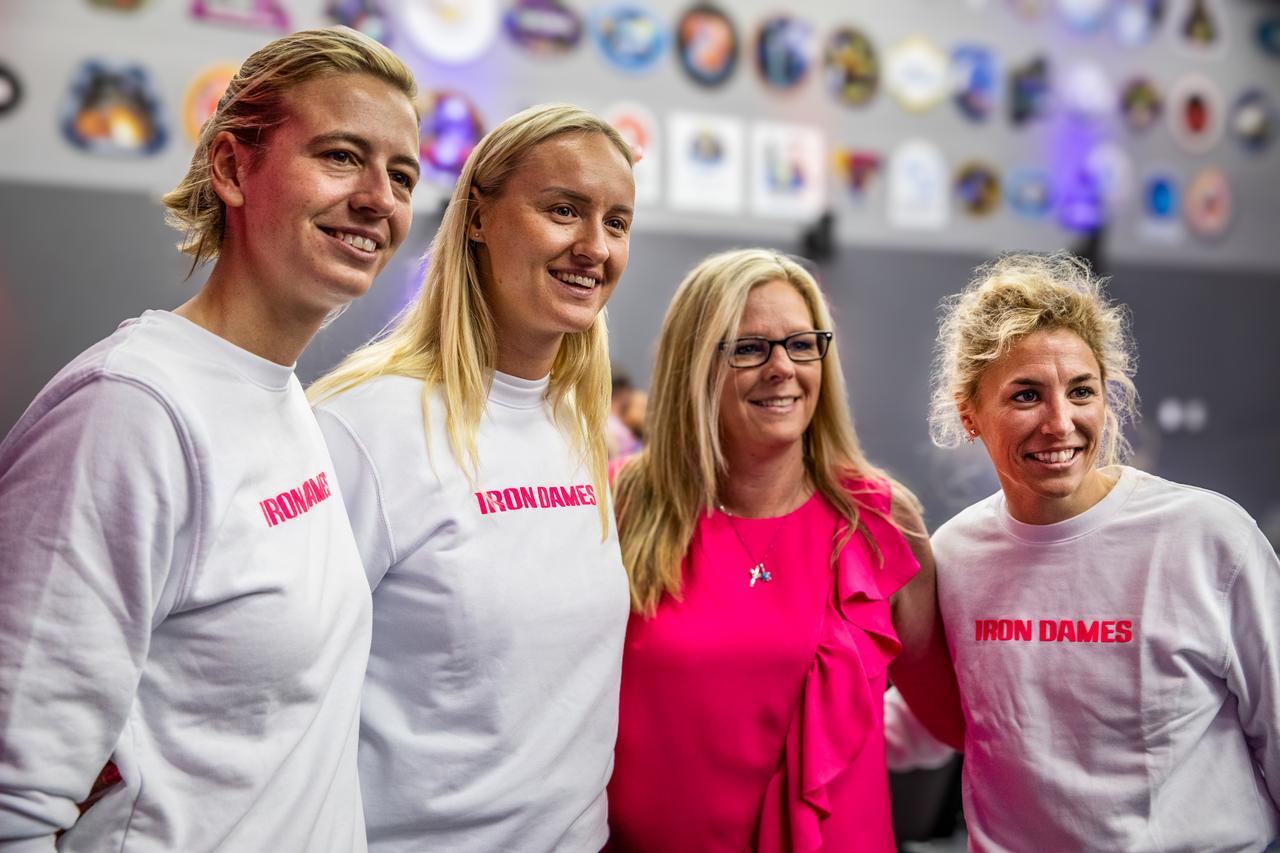
Members of the Iron Dames, from left to right, Sarah Bovy, Michelle Gatting, Christina Williams, business development specialist NASA Kennedy; and Iron Dames Rahel Frey, visit NASA’s Kennedy Space Center in Florida on Wednesday, March 13, 2024, to discuss their project to promote and support women in sports, and enable them to compete on equal terms with men in fields of jobs including driving, mechanics, engineers, and team leaders. The all-female team started in motorsports and became the first all-female team to win a race in the 2023 FIA World Endurance Championships at Sebring International Raceway in Sebring, Florida.
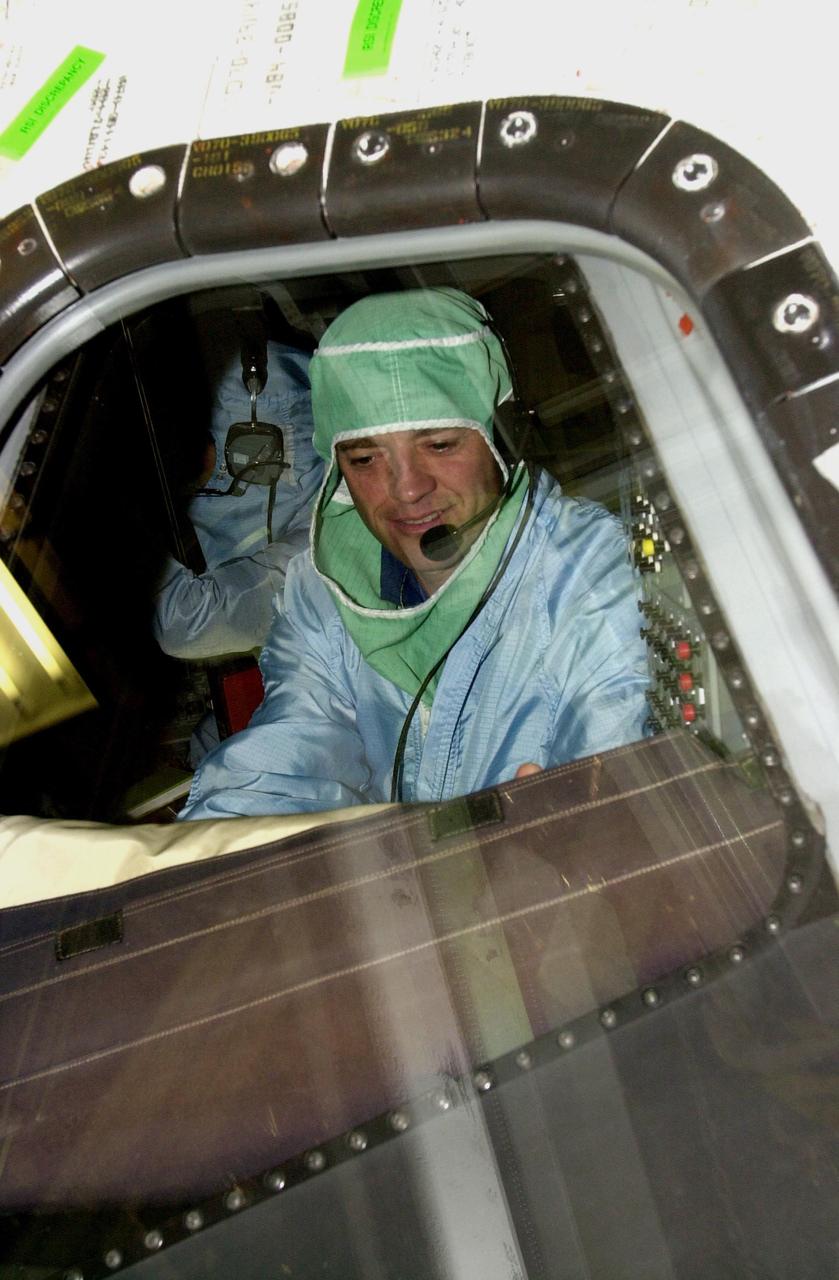
KENNEDY SPACE CENTER, FLA. -- During a Crew Equipment Interface Test, STS-112 Commander Jeffrey Ashby checks out the windshield on Atlantis, the designated orbiter for the mission. STS-112 is the 15th assembly flight to the International Space Station and will be ferrying the S1 Integrated Truss Structure. The S1 truss is the first starboard (right-side) truss segment, whose main job is providing structural support for the radiator panels that cool the Space Station's complex power system. The S1 truss segment also will house communications systems, external experiment positions and other subsystems. The S1 truss will be attached to the S0 truss. STS-112 is currently scheduled for launch Aug. 22, 2002
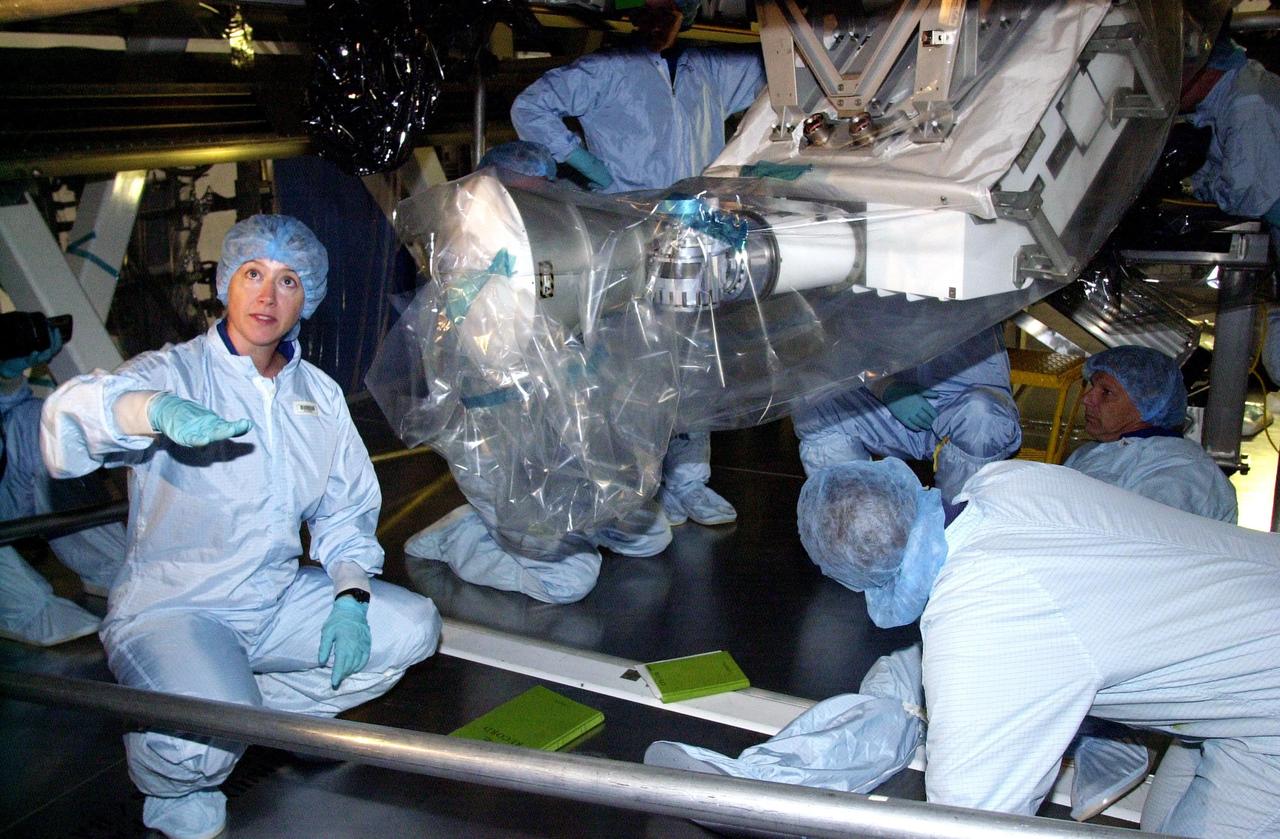
KENNEDY SPACE CENTER, FLA. - STS-112 Pilot Pamela Melroy signals to someone off camera while behind her other crew members look over the S1 Integrated Truss Structure, part of the payload for the mission to the International Space Station. The S1 truss is the first starboard (right-side) truss segment, whose main job is providing structural support for the orbiting research facility's radiator panels that cool the Space Station's complex power system. The S1 truss segment also will house communications systems, external experiment positions and other subsystems. The S1 truss will be attached to the S0 truss. Launch of STS-112 is scheduled for Aug. 22, 2002

KENNEDY SPACE CENTER, FLA. - As part of the Crew Equipment Interface Test, STS-112 Mission Specialist David Wolf (right) checks out a part of the S1 Integrated Truss Structure, part of the payload for the mission to the International Space Station. The S1 truss is the first starboard (right-side) truss segment, whose main job is providing structural support for the orbiting research facility's radiator panels that cool the Space Station's complex power system. The S1 truss segment also will house communications systems, external experiment positions and other subsystems. The S1 truss will be attached to the S0 truss. Launch of STS-112 is scheduled for Aug. 22, 2002
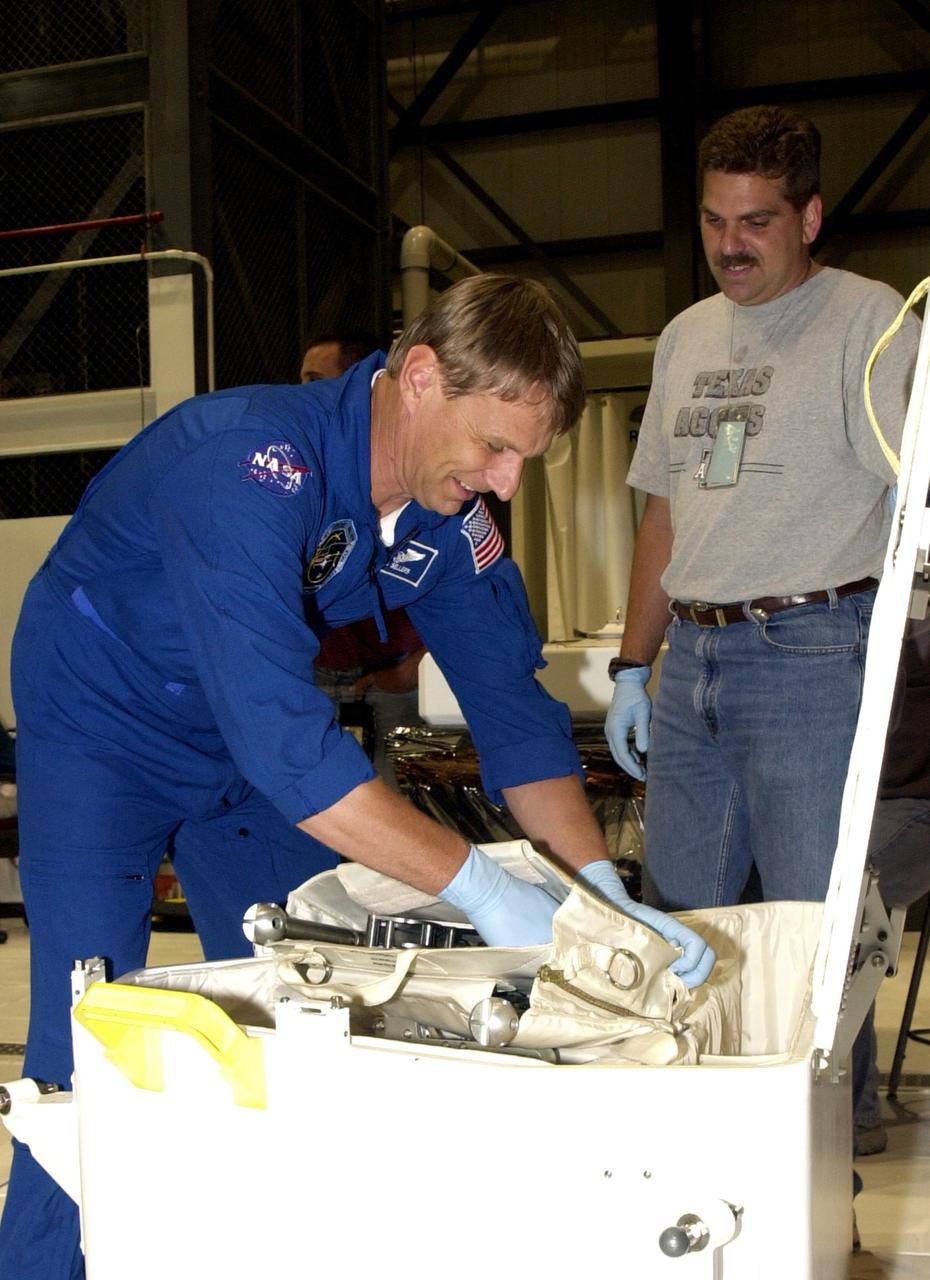
KENNEDY SPACE CENTER, FLA. - STS-112 Mission Specialist Piers Sellers checks out flight equipment during a Crew Equipment Interface Test at KSC. STS-112 is the 15th assembly flight to the International Space Station and will be ferrying the S1 Integrated Truss Structure. The S1 truss is the first starboard (right-side) truss segment, whose main job is providing structural support for the radiator panels that cool the Space Station's complex power system. The S1 truss segment also will house communications systems, external experiment positions and other subsystems. The S1 truss will be attached to the S0 truss. STS-112 is currently scheduled for launch Aug. 22, 2002

Dr. Kurt H. Debus, Kennedy Space Center's First Director: A doctor of philosophy in engineering from Darmstadt University, Debus was selected by Dr. Wernher von Braun to direct the Experimental Missile Firing Branch which began launching missiles from Cape Canaveral in 1953. Dr. Debus became the first Center Director for the new independent Launch Operations Center, and it was his job to put Saturn/Apollo into space. His tenure at Kennedy Space Center spanned 13 years, from 1962 to 1974. Poster designed by Kennedy Space Center Graphics Department/Greg Lee. Credit: NASA
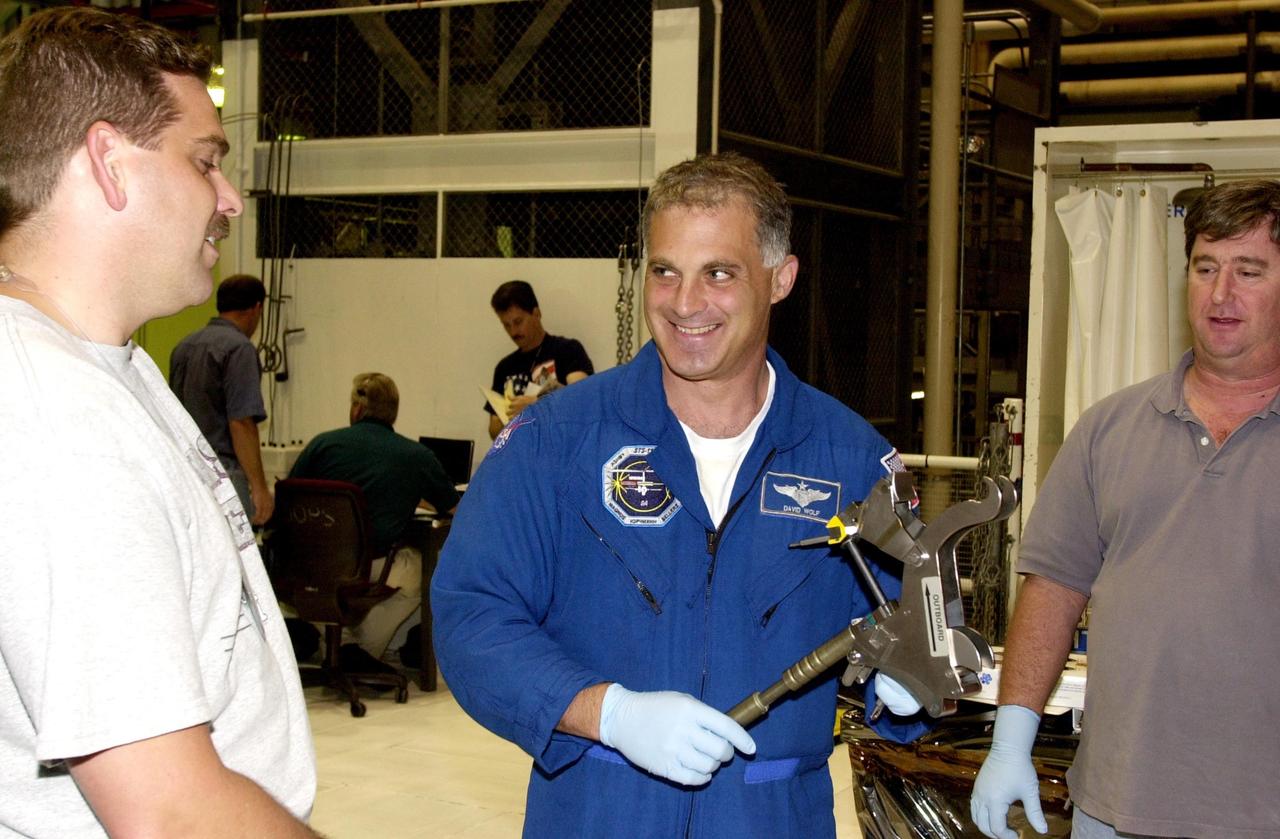
KENNEDY SPACE CENTER, FLA. -- STS-112 Mission Specialist David Wolf discusses flight equipment with two technicians during a Crew Equipment Interface Test at KSC. STS-112 is the 15th assembly flight to the International Space Station and will be ferrying the S1 Integrated Truss Structure. The S1 truss is the first starboard (right-side) truss segment, whose main job is providing structural support for the radiator panels that cool the Space Station's complex power system. The S1 truss segment also will house communications systems, external experiment positions and other subsystems. The S1 truss will be attached to the S0 truss. STS-112 is currently scheduled for launch Aug. 22, 2002
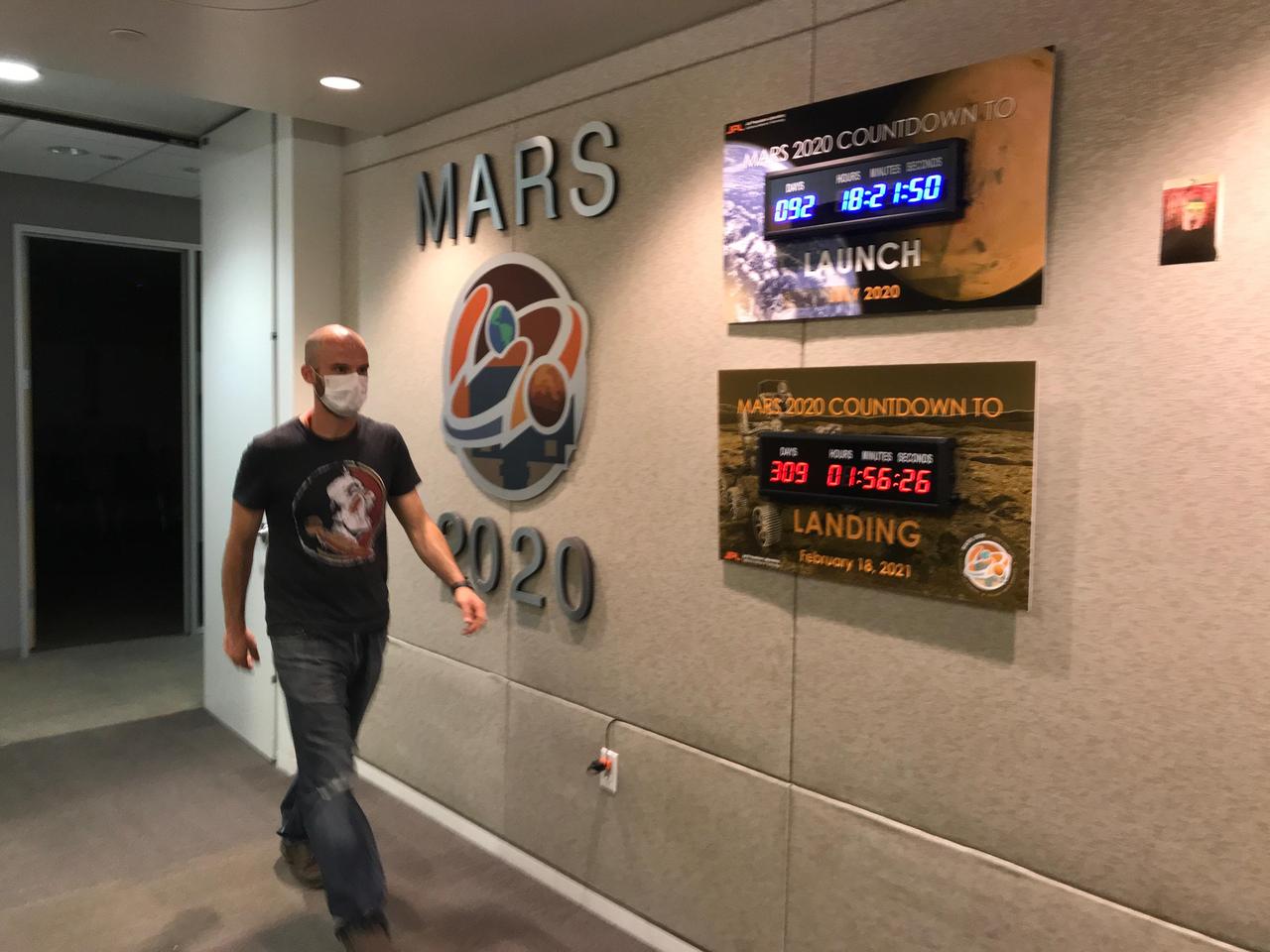
Ian Clark walks past mission countdown clocks in the Perseverance offices at NASA's Jet Propulsion Laboratory in Southern California. The Lab instituted a suite of safe@work procedures — based on the guidance of occupational safety medical personnel — to ensure those working at JPL are social distancing, wearing protective equipment and have ready access to hand sanitizer and other cleaning supplies during the coronavirus pandemic. Clark is one of a small subset of project personnel whose mission-essential job required physical access to the facility. He was on-Lab to supervise the assembly and cleaning of the sample tubes that will hold Martian sediment and rock for return to Earth on a future mission. https://photojournal.jpl.nasa.gov/catalog/PIA23830

KENNEDY SPACE CENTER, FLA. -- As part of the Crew Equipment Interface Test, STS-112 Mission Specialist Piers Sellers (foreground) and Commander Jeffrey Ashby look over the payload for the mission in the Space Station Processing Facility. Mission STS-112 will be ferrying the S1 ITS to the International Space Station on its scheduled Aug. 22 flight. The S1 truss is the first starboard (right-side) truss segment, whose main job is providing structural support for the orbiting research facility's radiator panels that cool the Space Station's complex power system. The S1 truss segment also will house communications systems, external experiment positions and other subsystems. The S1 truss will be attached to the S0 truss
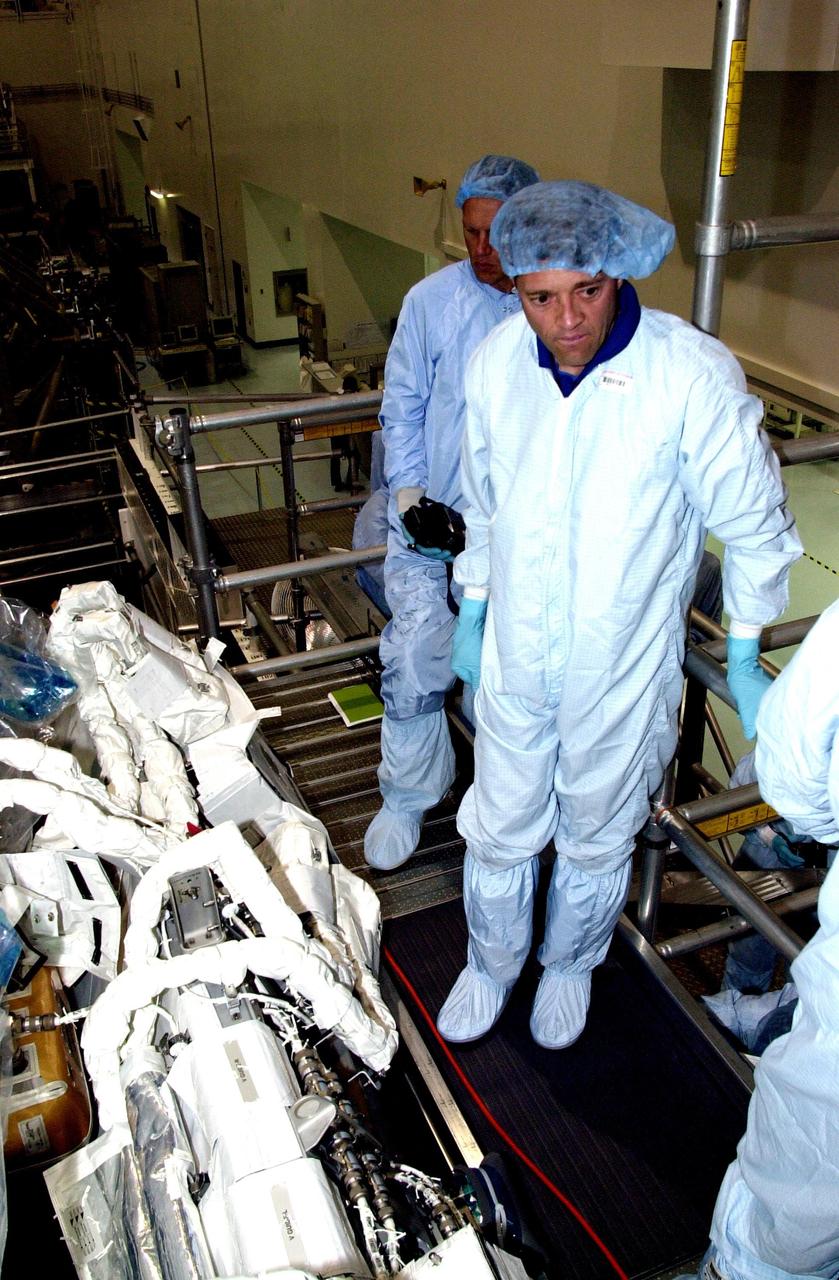
KENNEDY SPACE CENTER, FLA. -- In the Space Station Processing Facility, STS-112 Commander Jeffrey Ashby looks over the payload for the mission as part of the Crew Equipment Interface Test. Mission STS-112 will be ferrying the S1 ITS to the International Space Station on its scheduled Aug. 22 flight. The S1 truss is the first starboard (right-side) truss segment, whose main job is providing structural support for the orbiting research facility's radiator panels that cool the Space Station's complex power system. The S1 truss segment also will house communications systems, external experiment positions and other subsystems. The S1 truss will be attached to the S0 truss