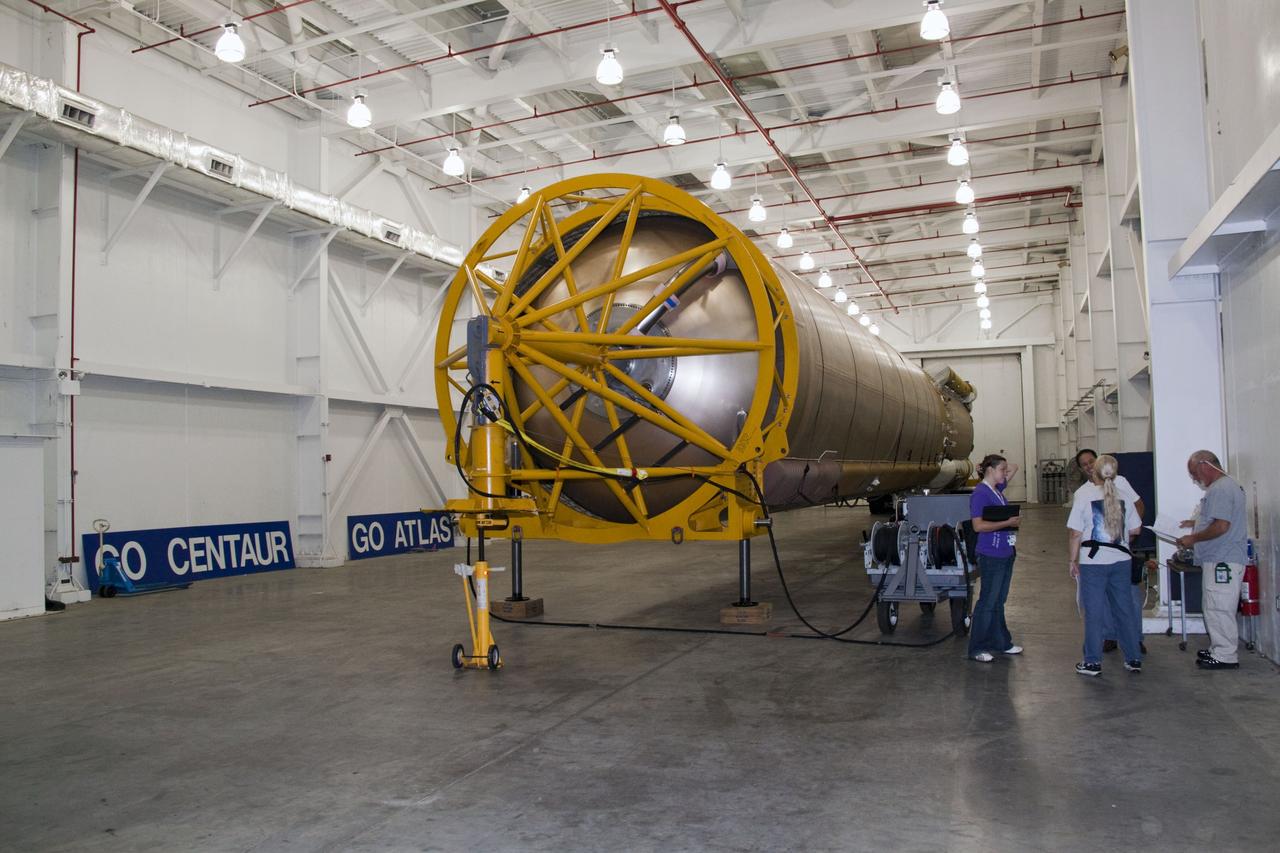
CAPE CANAVERAL, Fla. -- At Cape Canaveral Air Force Station in Florida, workers prepare the first stage of a United Launch Alliance Atlas V rocket for transport from its hangar at the Atlas Spaceflight Operations Center to Launch Complex 41. NASA's Juno spacecraft is scheduled to launch aboard an Atlas V from Cape Canaveral, Fla. Aug. 5.The solar-powered spacecraft will orbit Jupiter's poles 33 times to find out more about the gas giant's origins, structure, atmosphere and magnetosphere and investigate the existence of a solid planetary core. For more information visit: www.nasa.gov/juno. Photo credit: NASA/Jack Pfaller
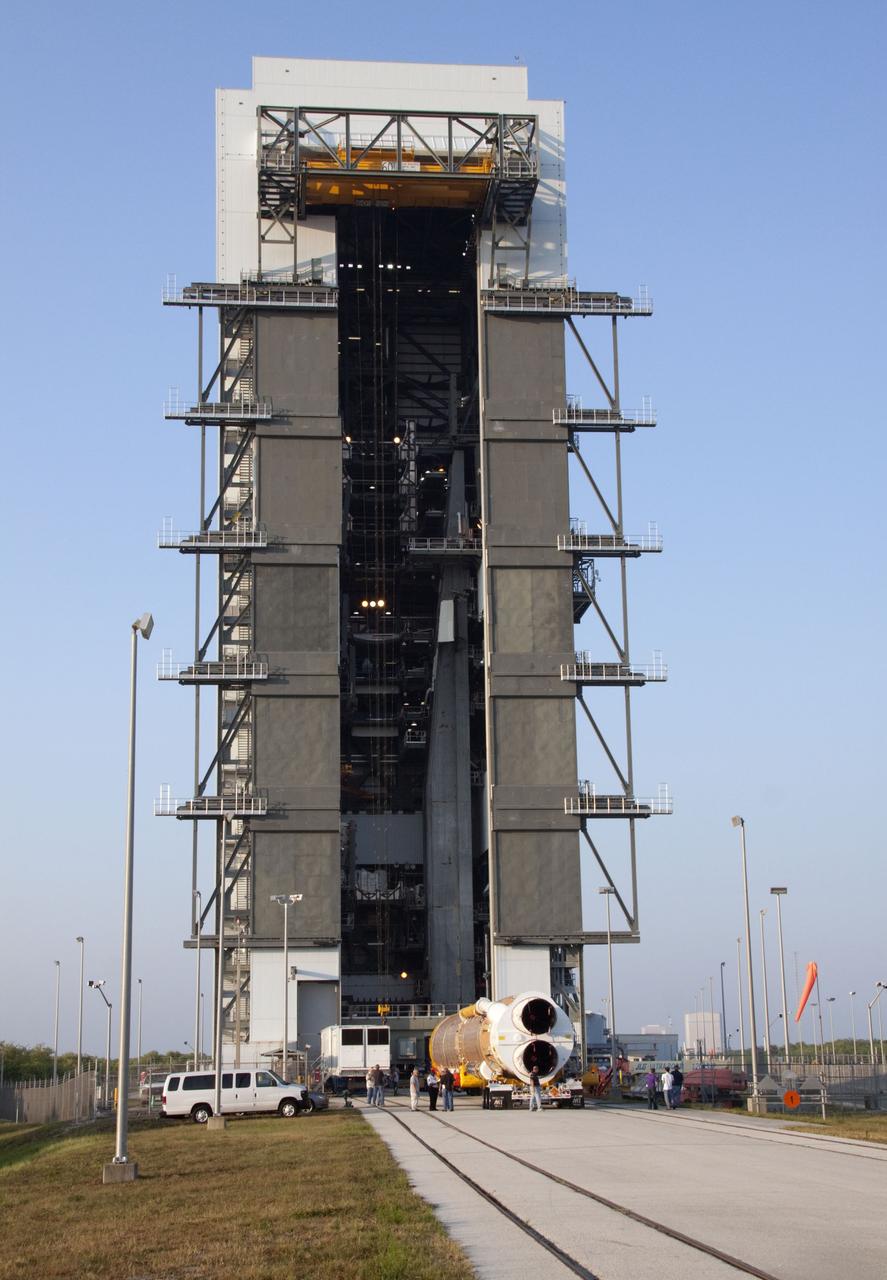
CAPE CANAVERAL, Fla. -- At Cape Canaveral Air Force Station in Florida, the first stage of a United Launch Alliance Atlas V rocket has arrived at Launch Complex 41. NASA's Juno spacecraft is scheduled to launch aboard an Atlas V from Cape Canaveral, Fla. Aug. 5.The solar-powered spacecraft will orbit Jupiter's poles 33 times to find out more about the gas giant's origins, structure, atmosphere and magnetosphere and investigate the existence of a solid planetary core. For more information visit: www.nasa.gov/juno. Photo credit: NASA/Jack Pfaller
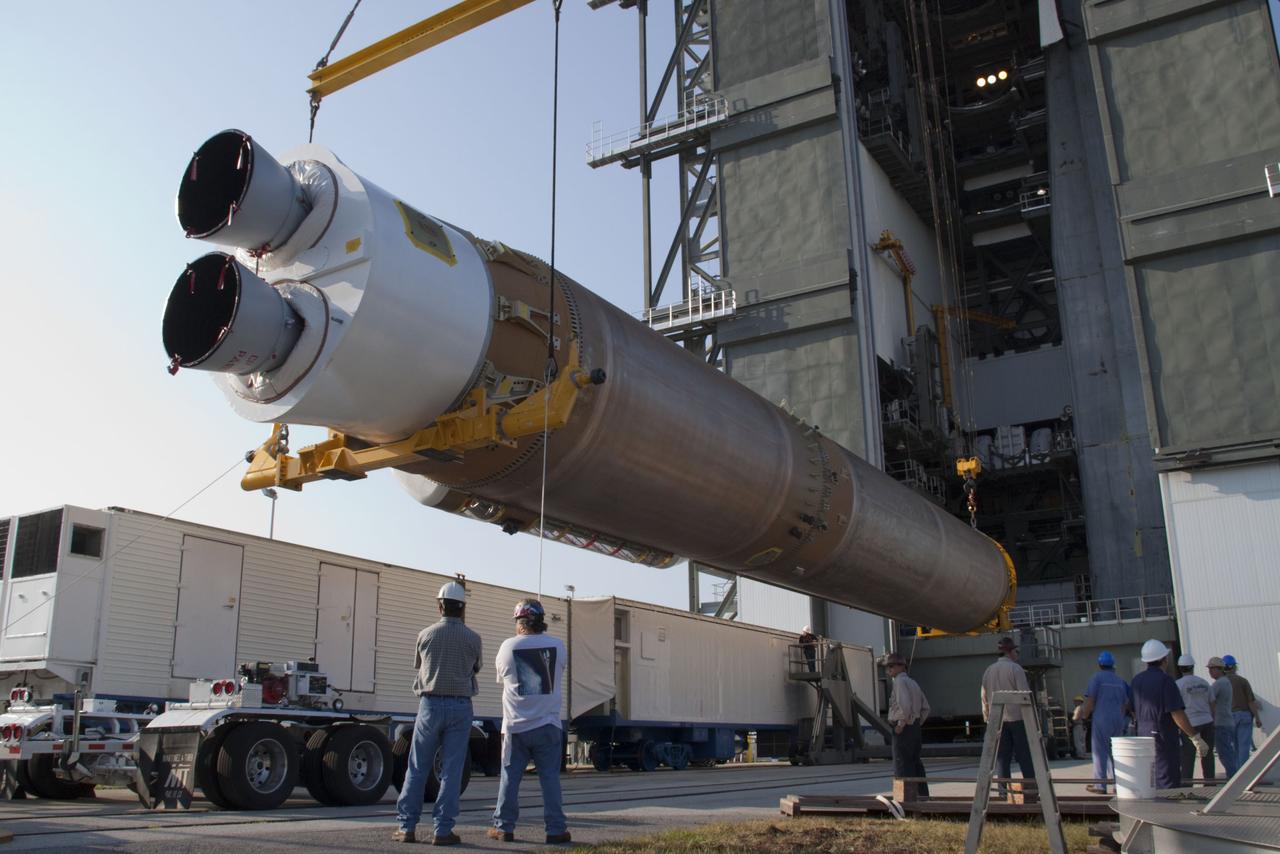
CAPE CANAVERAL, Fla. -- At Cape Canaveral Air Force Station in Florida, workers use an overhead crane to lift the first stage of a United Launch Alliance Atlas V rocket into the Vertical Integration Facility at Launch Complex 41. NASA's Juno spacecraft is scheduled to launch aboard an Atlas V from Cape Canaveral, Fla. Aug. 5.The solar-powered spacecraft will orbit Jupiter's poles 33 times to find out more about the gas giant's origins, structure, atmosphere and magnetosphere and investigate the existence of a solid planetary core. For more information visit: www.nasa.gov/juno. Photo credit: NASA/Jack Pfaller
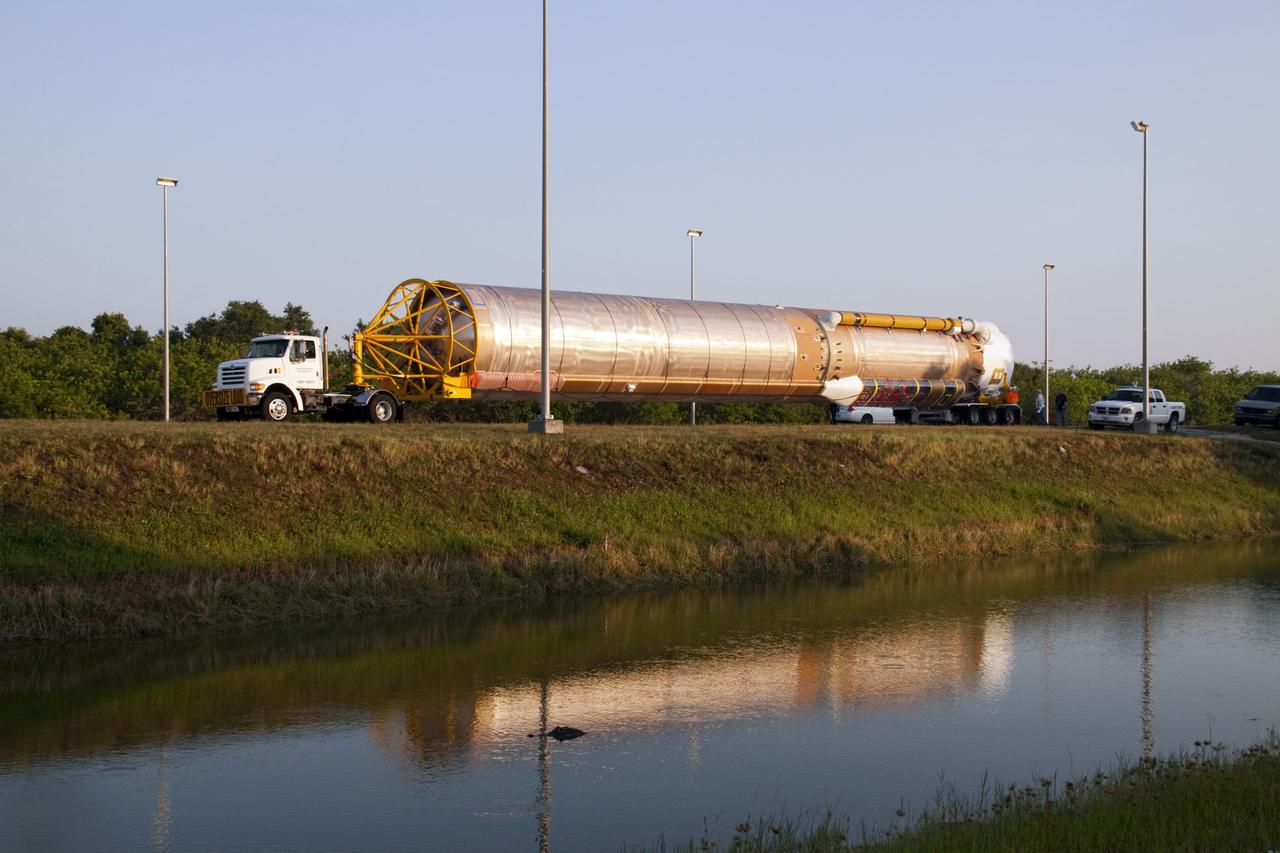
CAPE CANAVERAL, Fla. -- At Cape Canaveral Air Force Station in Florida, the first stage of a United Launch Alliance Atlas V rocket is being transported from its hangar at the Atlas Spaceflight Operations Center to Launch Complex 41. NASA's Juno spacecraft is scheduled to launch aboard an Atlas V from Cape Canaveral, Fla. Aug. 5.The solar-powered spacecraft will orbit Jupiter's poles 33 times to find out more about the gas giant's origins, structure, atmosphere and magnetosphere and investigate the existence of a solid planetary core. For more information visit: www.nasa.gov/juno. Photo credit: NASA/Jack Pfaller
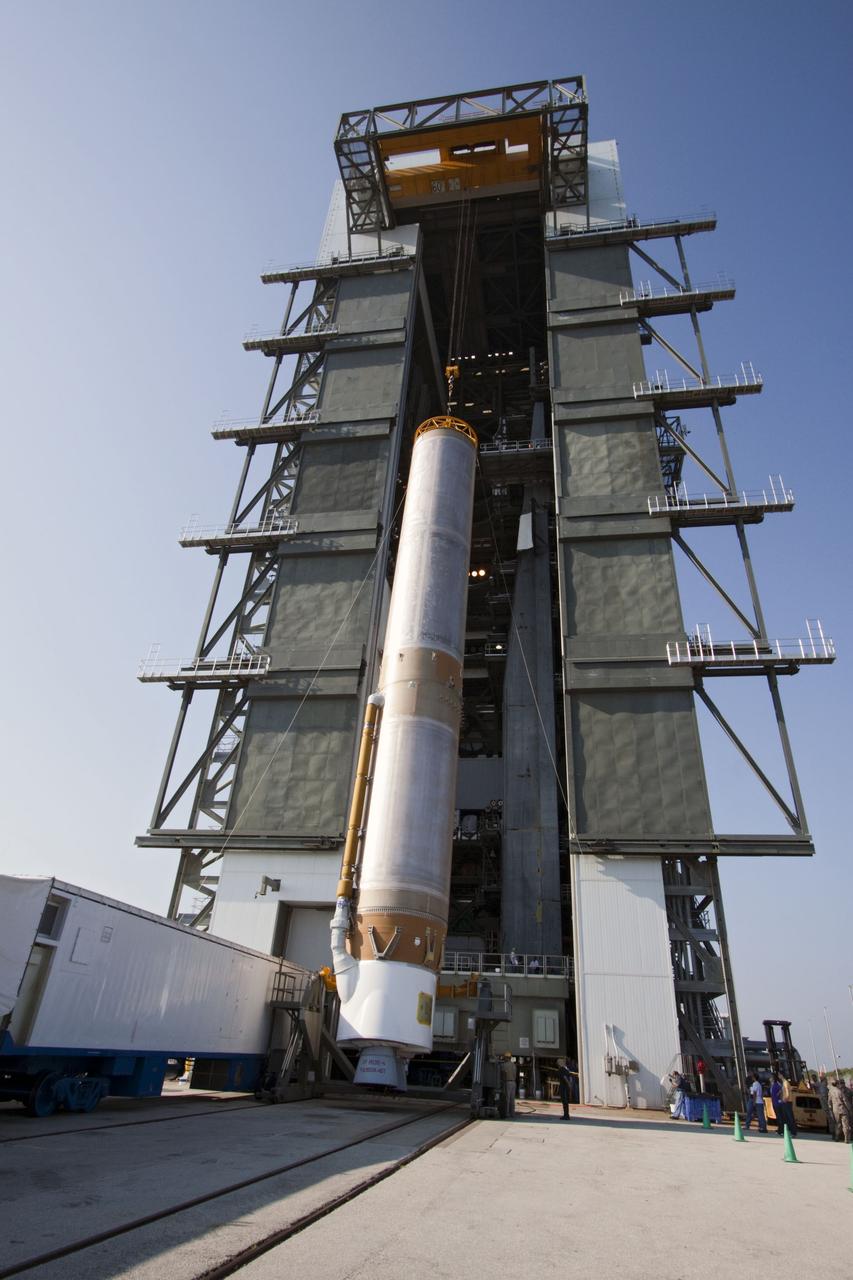
CAPE CANAVERAL, Fla. -- At Cape Canaveral Air Force Station in Florida, workers use an overhead crane to lift the first stage of a United Launch Alliance Atlas V rocket into the Vertical Integration Facility at Launch Complex 41. NASA's Juno spacecraft is scheduled to launch aboard an Atlas V from Cape Canaveral, Fla. Aug. 5.The solar-powered spacecraft will orbit Jupiter's poles 33 times to find out more about the gas giant's origins, structure, atmosphere and magnetosphere and investigate the existence of a solid planetary core. For more information visit: www.nasa.gov/juno. Photo credit: NASA/Jack Pfaller
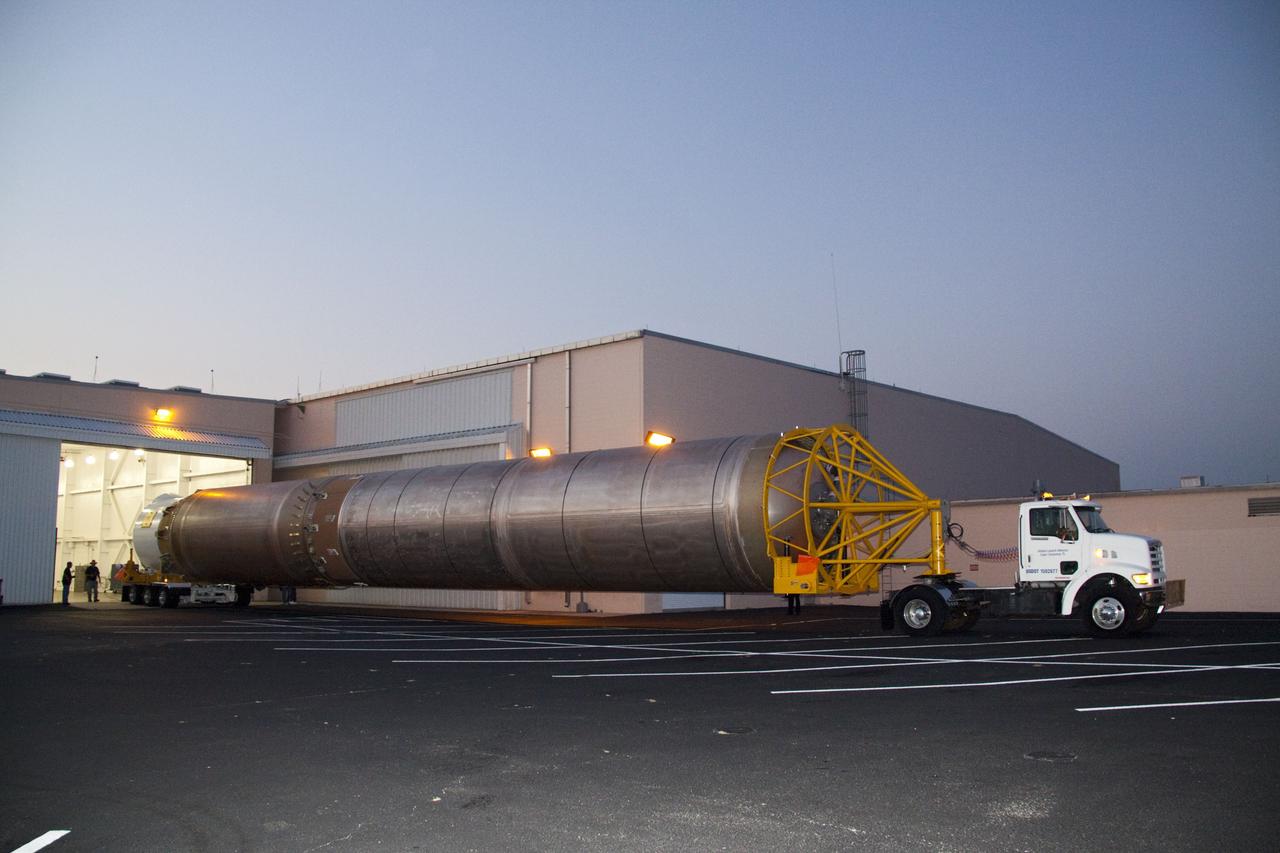
CAPE CANAVERAL, Fla. -- At Cape Canaveral Air Force Station in Florida, the first stage of a United Launch Alliance Atlas V rocket is being transported from its hangar at the Atlas Spaceflight Operations Center to Launch Complex 41. NASA's Juno spacecraft is scheduled to launch aboard an Atlas V from Cape Canaveral, Fla. Aug. 5.The solar-powered spacecraft will orbit Jupiter's poles 33 times to find out more about the gas giant's origins, structure, atmosphere and magnetosphere and investigate the existence of a solid planetary core. For more information visit: www.nasa.gov/juno. Photo credit: NASA/Jack Pfaller
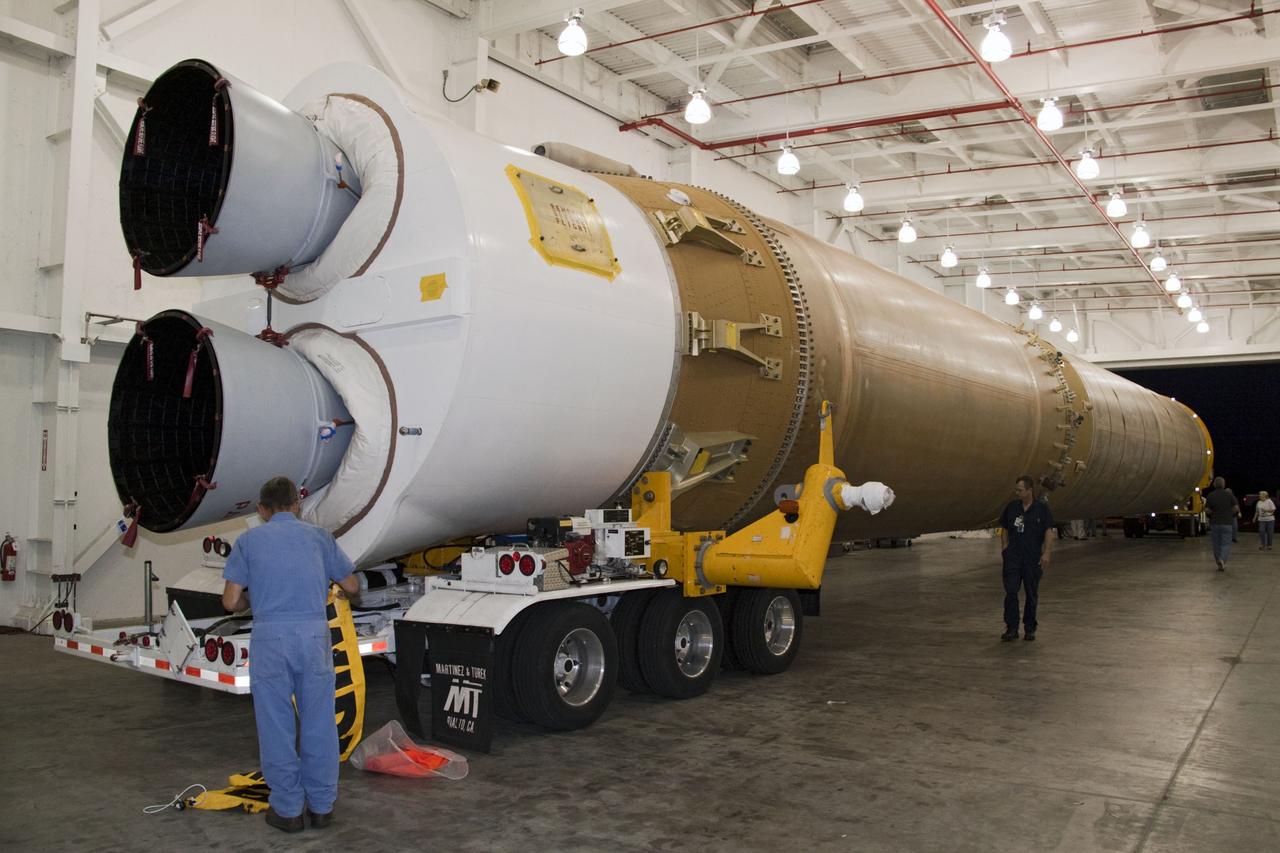
CAPE CANAVERAL, Fla. -- At Cape Canaveral Air Force Station in Florida, workers prepare the first stage of a United Launch Alliance Atlas V rocket for transport from its hangar at the Atlas Spaceflight Operations Center to Launch Complex 41. NASA's Juno spacecraft is scheduled to launch aboard an Atlas V from Cape Canaveral, Fla. Aug. 5.The solar-powered spacecraft will orbit Jupiter's poles 33 times to find out more about the gas giant's origins, structure, atmosphere and magnetosphere and investigate the existence of a solid planetary core. For more information visit: www.nasa.gov/juno. Photo credit: NASA/Jack Pfaller
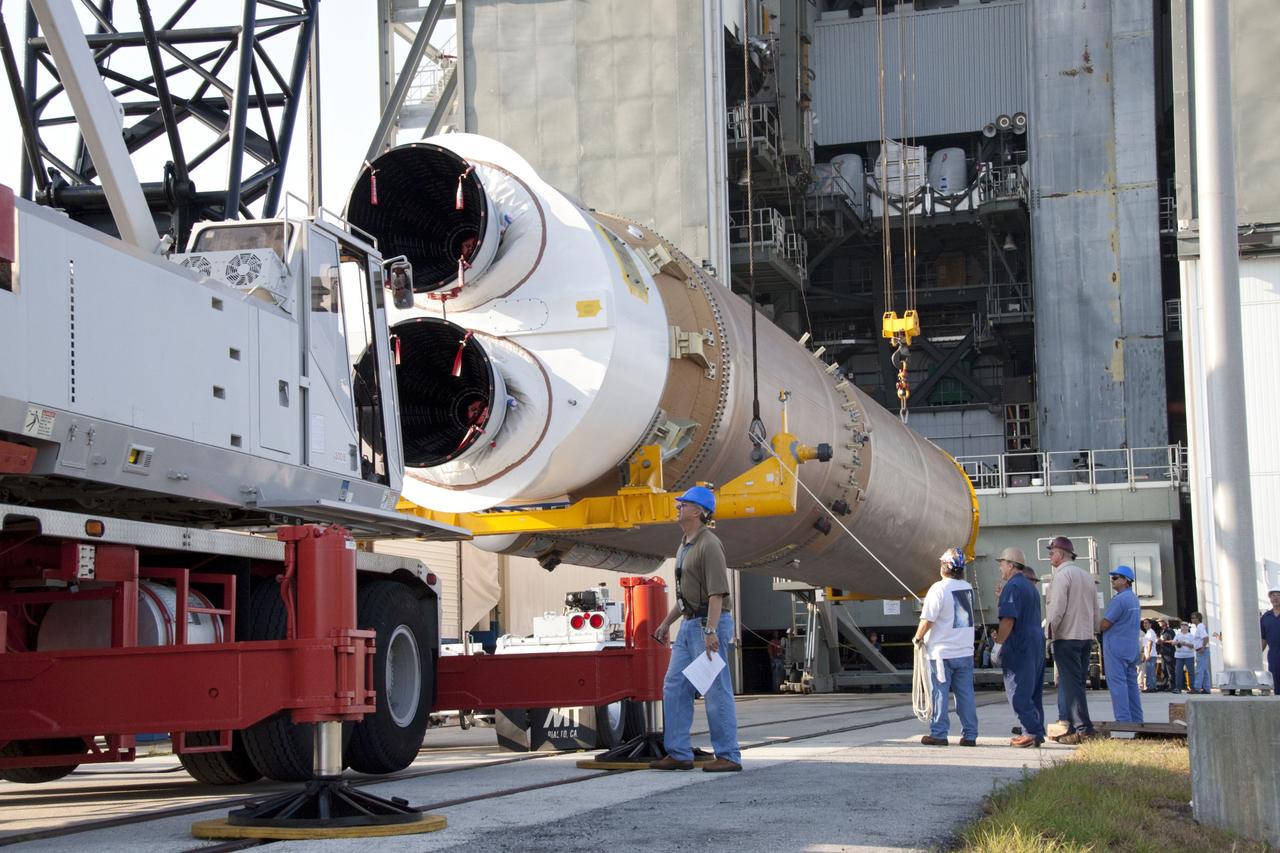
CAPE CANAVERAL, Fla. -- At Cape Canaveral Air Force Station in Florida, workers use an overhead crane to lift the first stage of a United Launch Alliance Atlas V rocket into the Vertical Integration Facility at Launch Complex 41. NASA's Juno spacecraft is scheduled to launch aboard an Atlas V from Cape Canaveral, Fla. Aug. 5.The solar-powered spacecraft will orbit Jupiter's poles 33 times to find out more about the gas giant's origins, structure, atmosphere and magnetosphere and investigate the existence of a solid planetary core. For more information visit: www.nasa.gov/juno. Photo credit: NASA/Jack Pfaller

CAPE CANAVERAL, Fla. -- At Cape Canaveral Air Force Station in Florida, workers prepare the first stage of a United Launch Alliance Atlas V rocket for transport from its hangar at the Atlas Spaceflight Operations Center to Launch Complex 41. NASA's Juno spacecraft is scheduled to launch aboard an Atlas V from Cape Canaveral, Fla. Aug. 5.The solar-powered spacecraft will orbit Jupiter's poles 33 times to find out more about the gas giant's origins, structure, atmosphere and magnetosphere and investigate the existence of a solid planetary core. For more information visit: www.nasa.gov/juno. Photo credit: NASA/Jack Pfaller
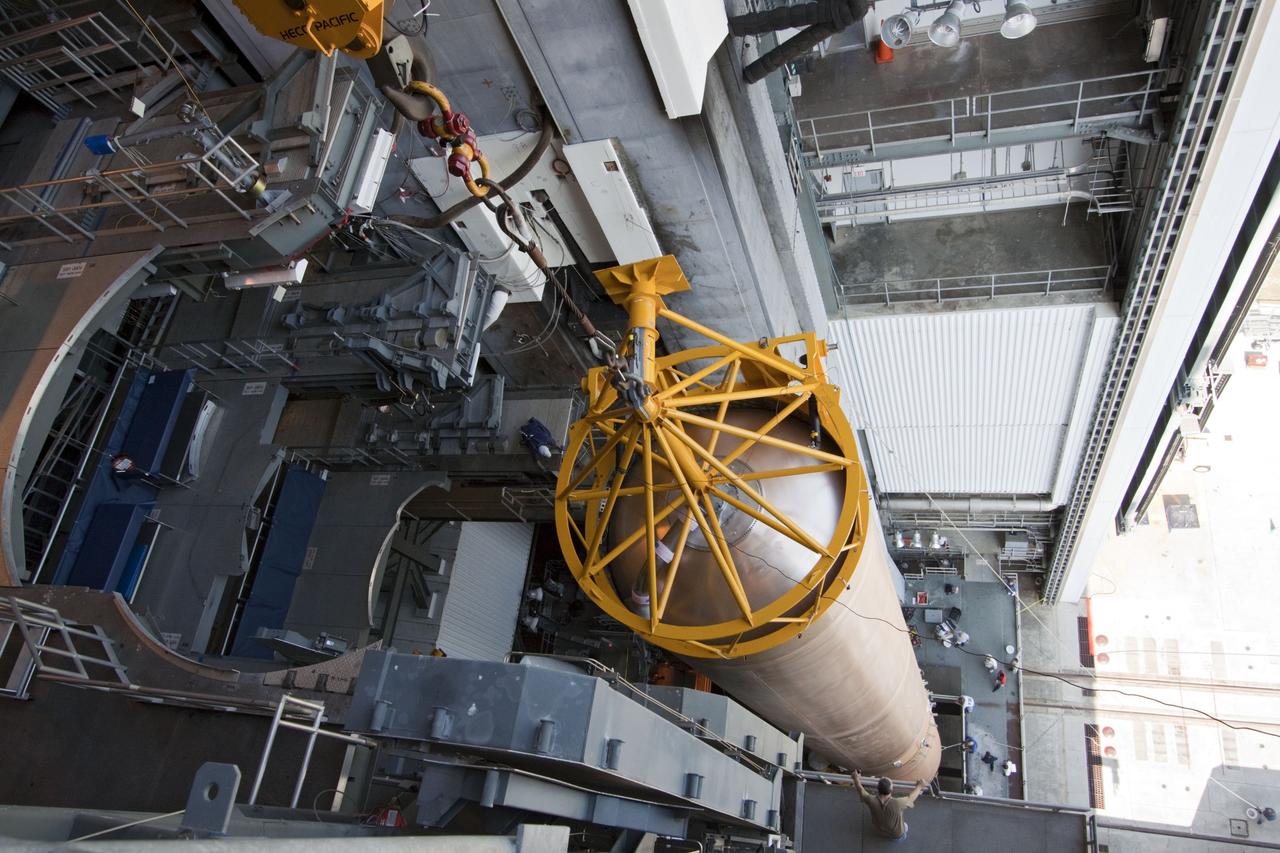
CAPE CANAVERAL, Fla. -- At Cape Canaveral Air Force Station in Florida, workers use an overhead crane to lift the first stage of a United Launch Alliance Atlas V rocket into the Vertical Integration Facility at Launch Complex 41. NASA's Juno spacecraft is scheduled to launch aboard an Atlas V from Cape Canaveral, Fla. Aug. 5.The solar-powered spacecraft will orbit Jupiter's poles 33 times to find out more about the gas giant's origins, structure, atmosphere and magnetosphere and investigate the existence of a solid planetary core. For more information visit: www.nasa.gov/juno. Photo credit: NASA/Jack Pfaller
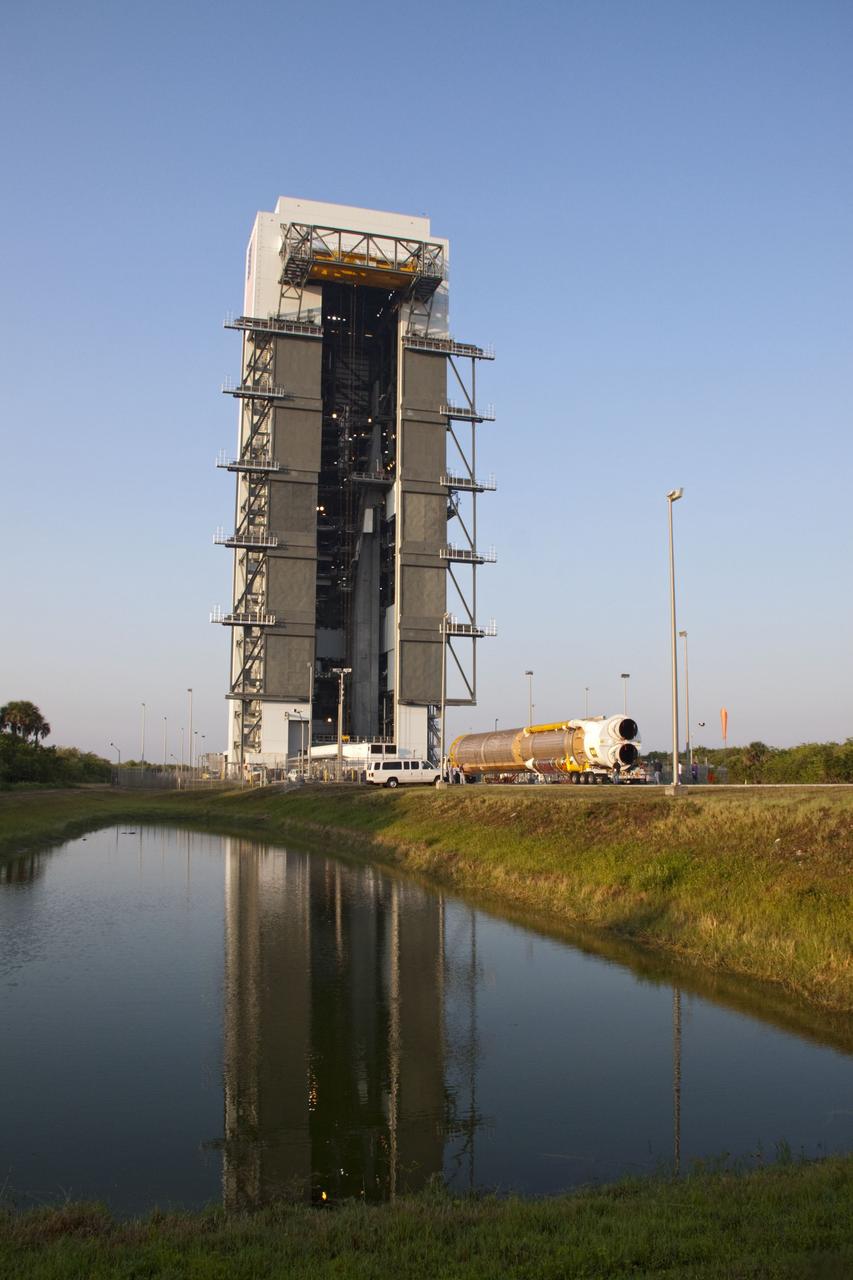
CAPE CANAVERAL, Fla. -- At Cape Canaveral Air Force Station in Florida, the first stage of a United Launch Alliance Atlas V rocket has arrived at Launch Complex 41. NASA's Juno spacecraft is scheduled to launch aboard an Atlas V from Cape Canaveral, Fla. Aug. 5.The solar-powered spacecraft will orbit Jupiter's poles 33 times to find out more about the gas giant's origins, structure, atmosphere and magnetosphere and investigate the existence of a solid planetary core. For more information visit: www.nasa.gov/juno. Photo credit: NASA/Jack Pfaller
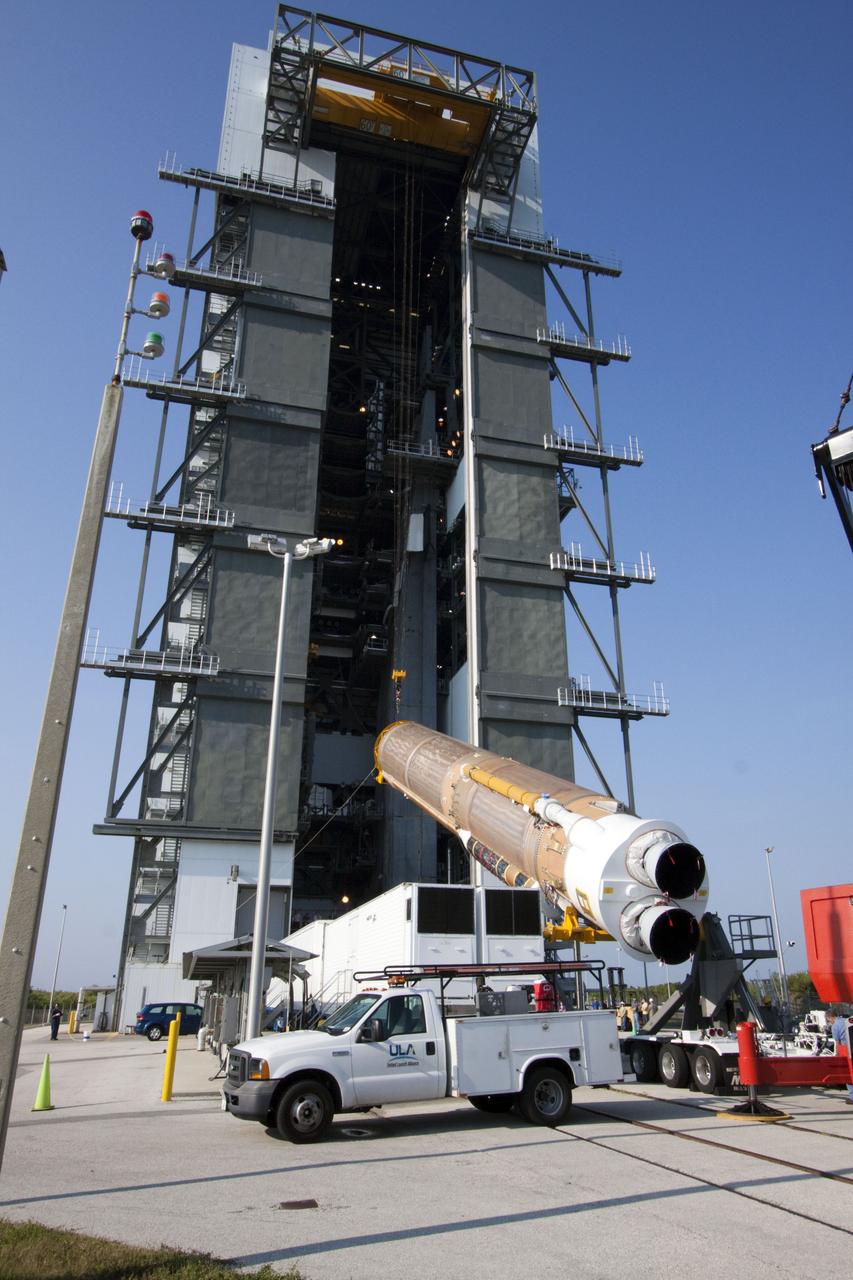
CAPE CANAVERAL, Fla. -- At Cape Canaveral Air Force Station in Florida, workers use an overhead crane to lift the first stage of a United Launch Alliance Atlas V rocket into the Vertical Integration Facility at Launch Complex 41. NASA's Juno spacecraft is scheduled to launch aboard an Atlas V from Cape Canaveral, Fla. Aug. 5.The solar-powered spacecraft will orbit Jupiter's poles 33 times to find out more about the gas giant's origins, structure, atmosphere and magnetosphere and investigate the existence of a solid planetary core. For more information visit: www.nasa.gov/juno. Photo credit: NASA/Jack Pfaller
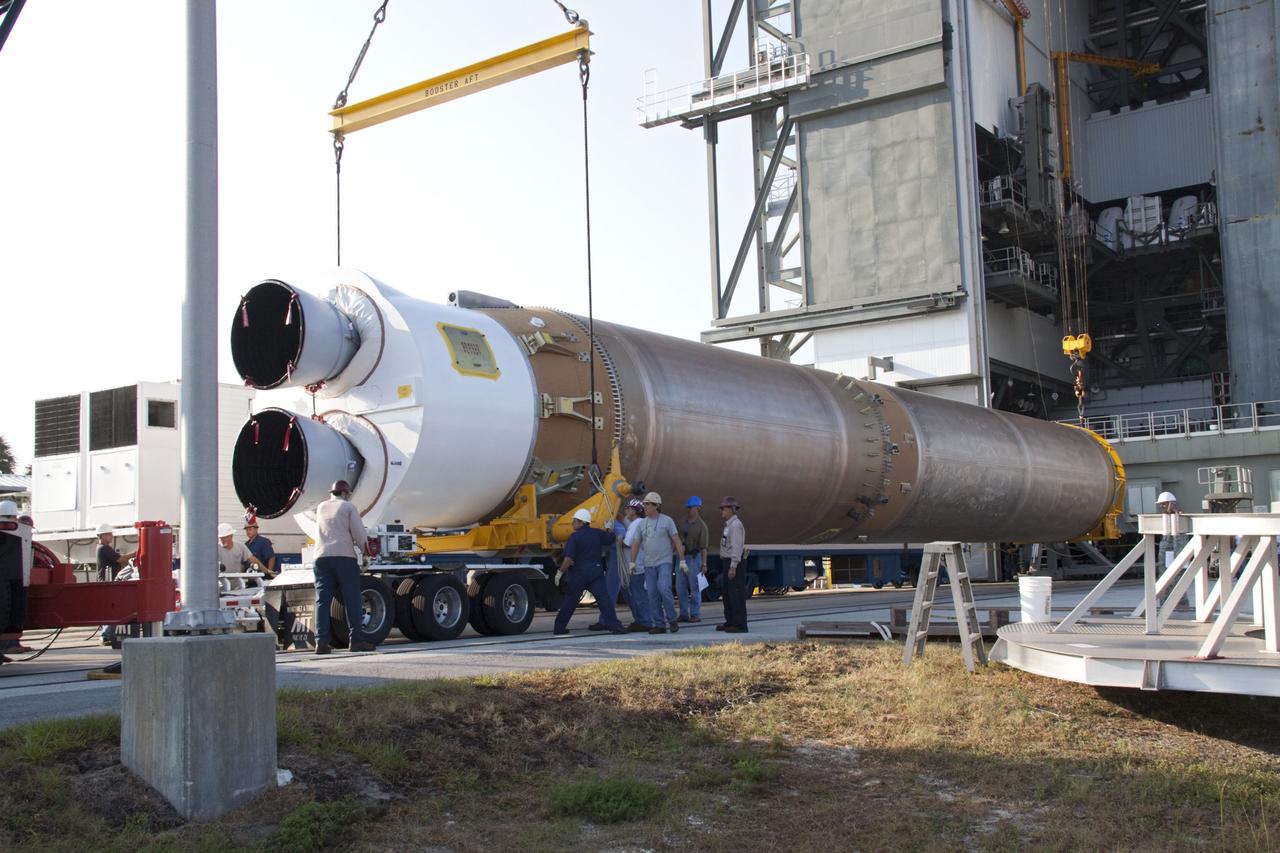
CAPE CANAVERAL, Fla. -- At Cape Canaveral Air Force Station in Florida, workers prepare the first stage of a United Launch Alliance Atlas V rocket to be lifted into the Vertical Integration Facility at Launch Complex 41. NASA's Juno spacecraft is scheduled to launch aboard an Atlas V from Cape Canaveral, Fla. Aug. 5.The solar-powered spacecraft will orbit Jupiter's poles 33 times to find out more about the gas giant's origins, structure, atmosphere and magnetosphere and investigate the existence of a solid planetary core. For more information visit: www.nasa.gov/juno. Photo credit: NASA/Jack Pfaller

CAPE CANAVERAL, Fla. -- At Cape Canaveral Air Force Station in Florida, workers use an overhead crane to lift the first stage of a United Launch Alliance Atlas V rocket into the Vertical Integration Facility at Launch Complex 41. NASA's Juno spacecraft is scheduled to launch aboard an Atlas V from Cape Canaveral, Fla. Aug. 5.The solar-powered spacecraft will orbit Jupiter's poles 33 times to find out more about the gas giant's origins, structure, atmosphere and magnetosphere and investigate the existence of a solid planetary core. For more information visit: www.nasa.gov/juno. Photo credit: NASA/Jack Pfaller
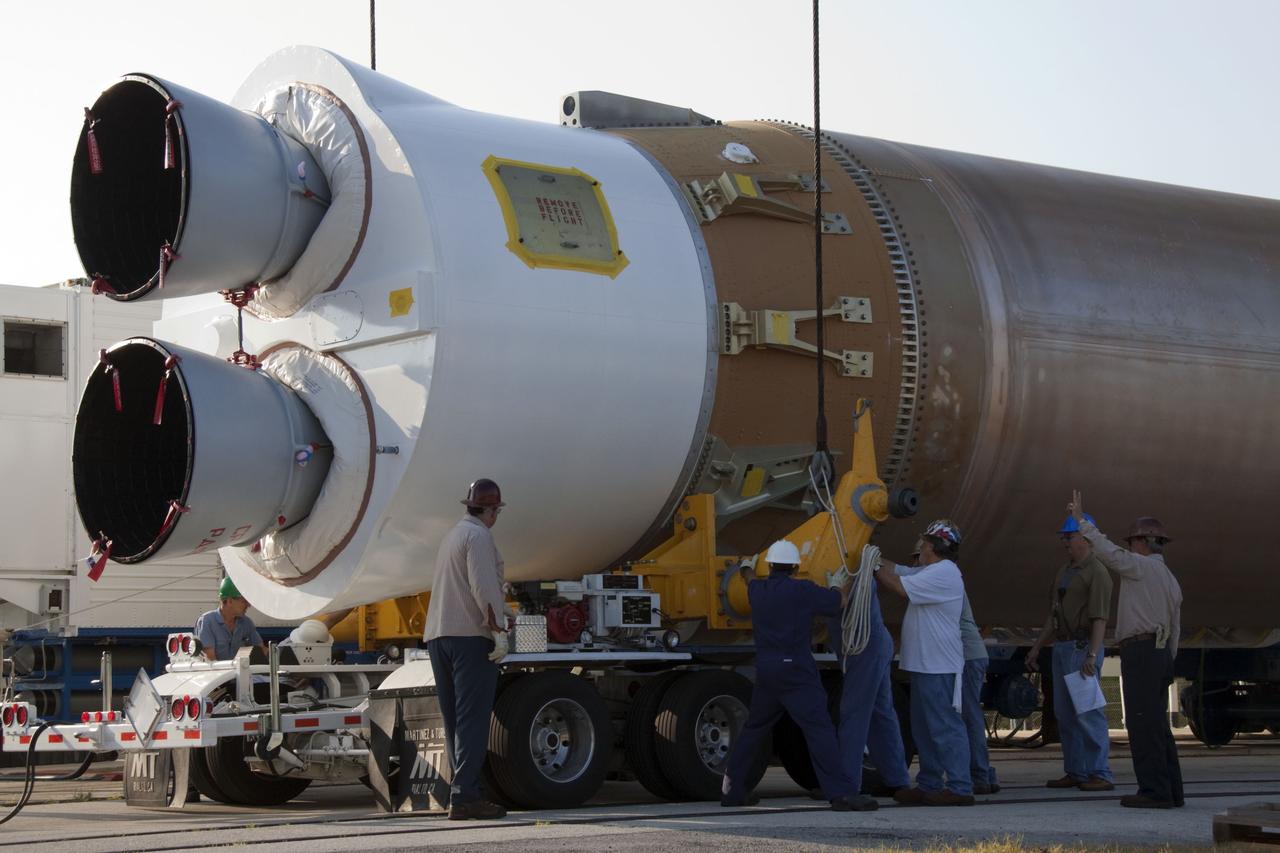
CAPE CANAVERAL, Fla. -- At Cape Canaveral Air Force Station in Florida, workers prepare the first stage of a United Launch Alliance Atlas V rocket to be lifted into the Vertical Integration Facility at Launch Complex 41. NASA's Juno spacecraft is scheduled to launch aboard an Atlas V from Cape Canaveral, Fla. Aug. 5.The solar-powered spacecraft will orbit Jupiter's poles 33 times to find out more about the gas giant's origins, structure, atmosphere and magnetosphere and investigate the existence of a solid planetary core. For more information visit: www.nasa.gov/juno. Photo credit: NASA/Jack Pfaller
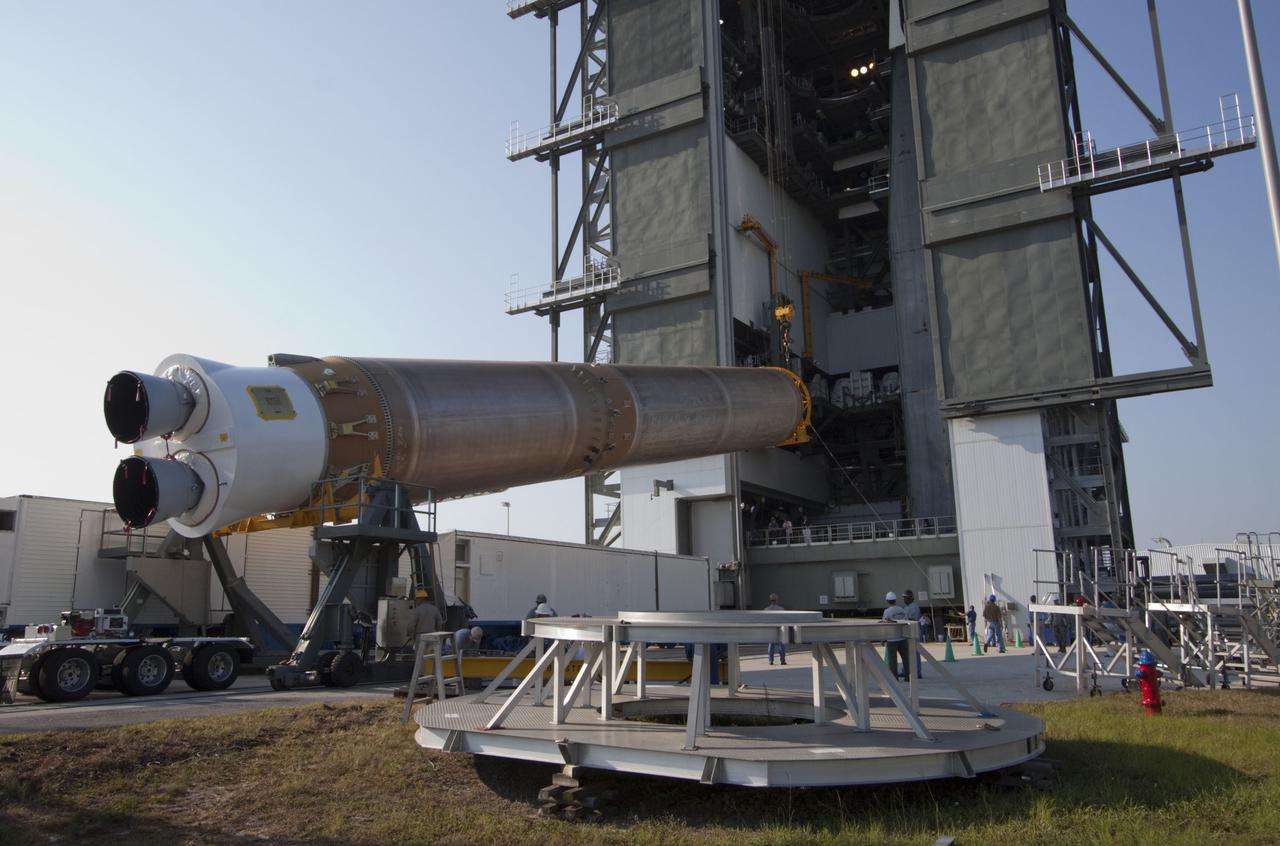
CAPE CANAVERAL, Fla. -- At Cape Canaveral Air Force Station in Florida, workers use an overhead crane to lift the first stage of a United Launch Alliance Atlas V rocket into the Vertical Integration Facility at Launch Complex 41. NASA's Juno spacecraft is scheduled to launch aboard an Atlas V from Cape Canaveral, Fla. Aug. 5.The solar-powered spacecraft will orbit Jupiter's poles 33 times to find out more about the gas giant's origins, structure, atmosphere and magnetosphere and investigate the existence of a solid planetary core. For more information visit: www.nasa.gov/juno. Photo credit: NASA/Jack Pfaller
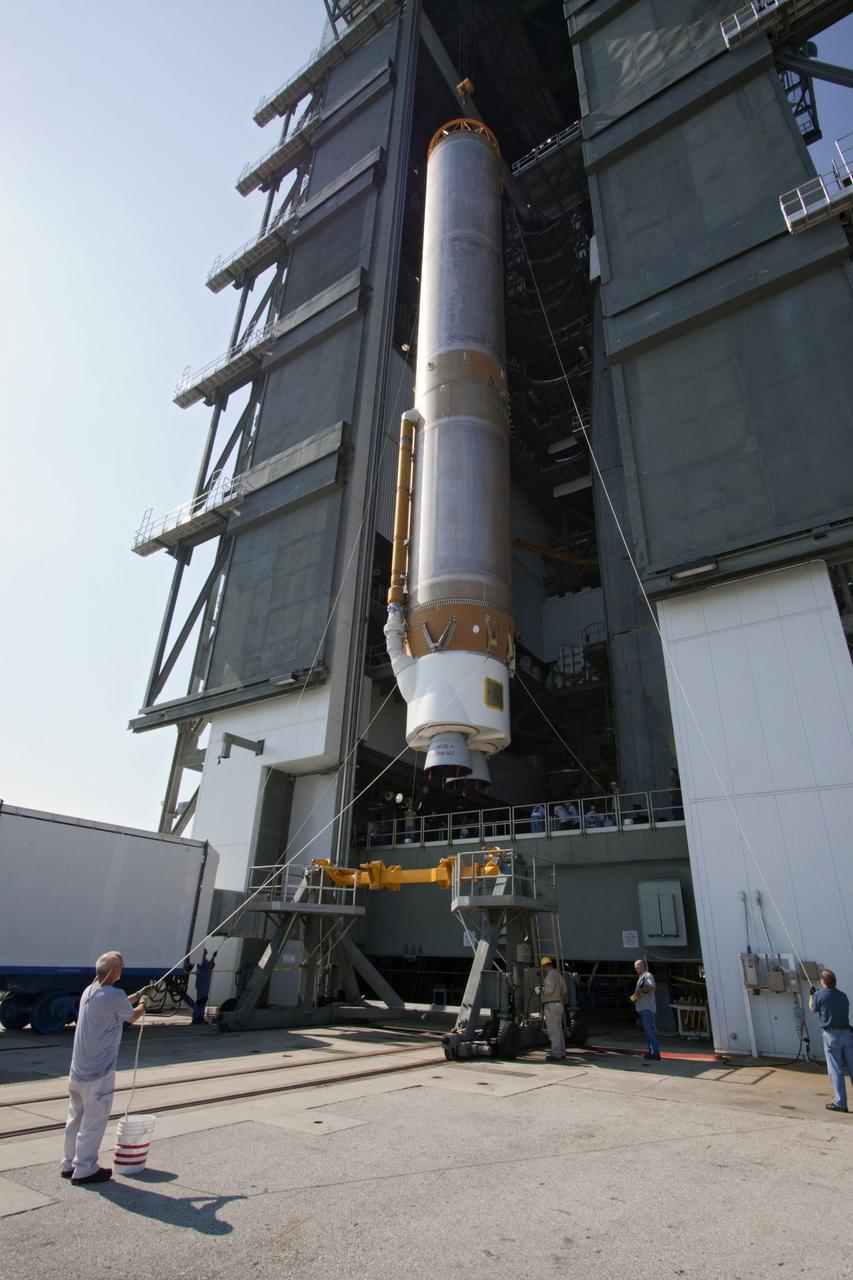
CAPE CANAVERAL, Fla. -- At Cape Canaveral Air Force Station in Florida, workers use an overhead crane to lift the first stage of a United Launch Alliance Atlas V rocket into the Vertical Integration Facility at Launch Complex 41. NASA's Juno spacecraft is scheduled to launch aboard an Atlas V from Cape Canaveral, Fla. Aug. 5.The solar-powered spacecraft will orbit Jupiter's poles 33 times to find out more about the gas giant's origins, structure, atmosphere and magnetosphere and investigate the existence of a solid planetary core. For more information visit: www.nasa.gov/juno. Photo credit: NASA/Jack Pfaller
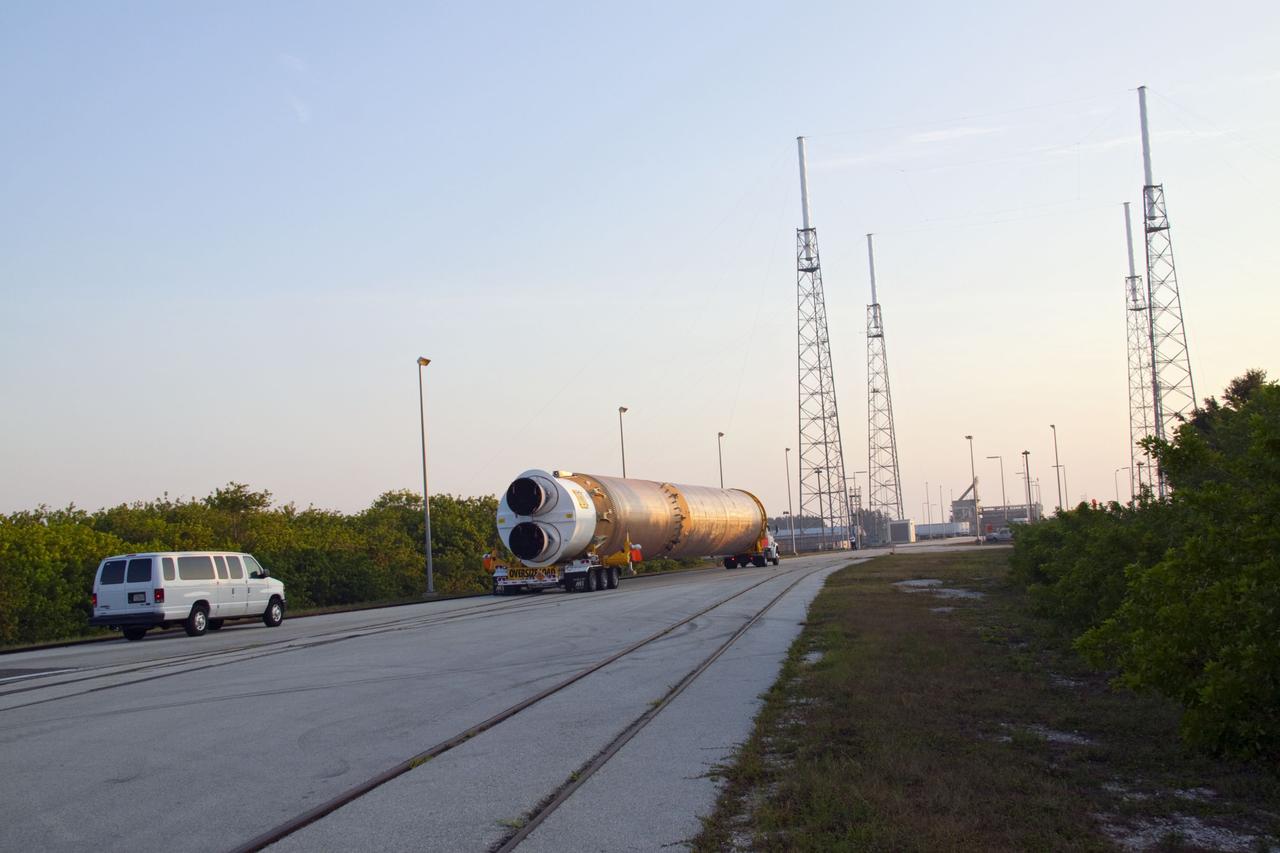
CAPE CANAVERAL, Fla. -- At Cape Canaveral Air Force Station in Florida, the first stage of a United Launch Alliance Atlas V rocket is being transported from its hangar at the Atlas Spaceflight Operations Center to Launch Complex 41. NASA's Juno spacecraft is scheduled to launch aboard an Atlas V from Cape Canaveral, Fla. Aug. 5.The solar-powered spacecraft will orbit Jupiter's poles 33 times to find out more about the gas giant's origins, structure, atmosphere and magnetosphere and investigate the existence of a solid planetary core. For more information visit: www.nasa.gov/juno. Photo credit: NASA/Jack Pfaller
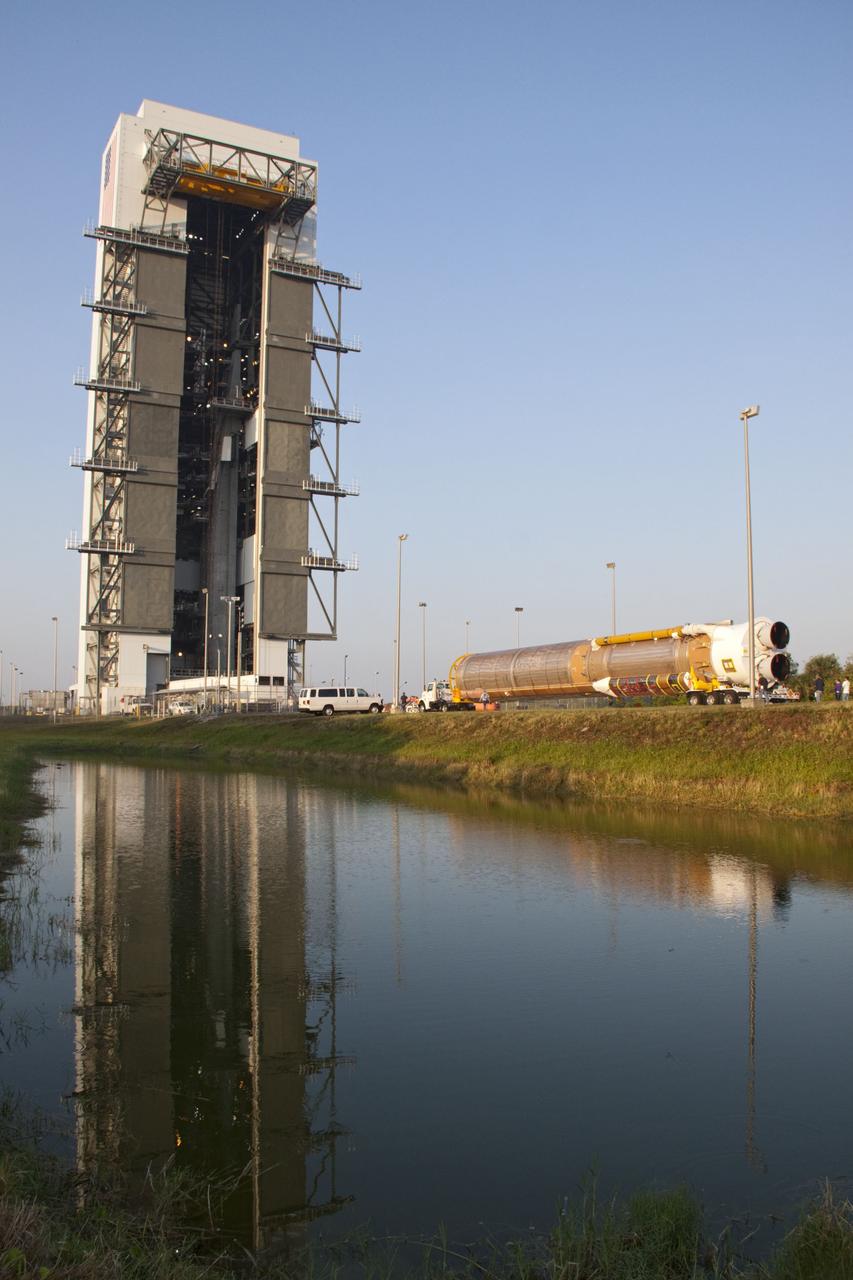
CAPE CANAVERAL, Fla. -- At Cape Canaveral Air Force Station in Florida, the first stage of a United Launch Alliance Atlas V rocket has arrived at Launch Complex 41. NASA's Juno spacecraft is scheduled to launch aboard an Atlas V from Cape Canaveral, Fla. Aug. 5.The solar-powered spacecraft will orbit Jupiter's poles 33 times to find out more about the gas giant's origins, structure, atmosphere and magnetosphere and investigate the existence of a solid planetary core. For more information visit: www.nasa.gov/juno. Photo credit: NASA/Jack Pfaller
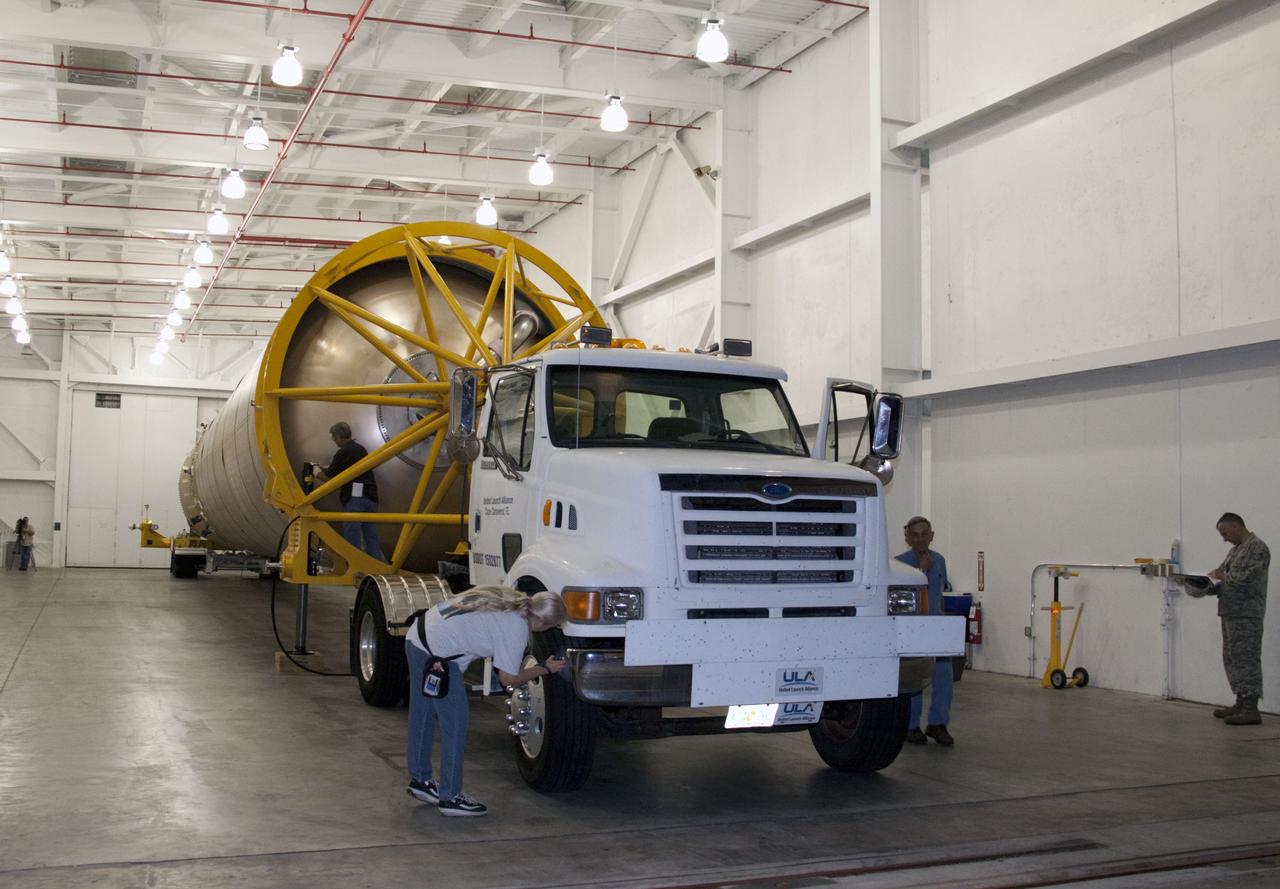
CAPE CANAVERAL, Fla. -- At Cape Canaveral Air Force Station in Florida, workers prepare the first stage of a United Launch Alliance Atlas V rocket for transport from its hangar at the Atlas Spaceflight Operations Center to Launch Complex 41. NASA's Juno spacecraft is scheduled to launch aboard an Atlas V from Cape Canaveral, Fla. Aug. 5.The solar-powered spacecraft will orbit Jupiter's poles 33 times to find out more about the gas giant's origins, structure, atmosphere and magnetosphere and investigate the existence of a solid planetary core. For more information visit: www.nasa.gov/juno. Photo credit: NASA/Jack Pfaller

CAPE CANAVERAL, Fla. -- At Cape Canaveral Air Force Station in Florida, workers use an overhead crane to lift the first stage of a United Launch Alliance Atlas V rocket into the Vertical Integration Facility at Launch Complex 41. NASA's Juno spacecraft is scheduled to launch aboard an Atlas V from Cape Canaveral, Fla. Aug. 5.The solar-powered spacecraft will orbit Jupiter's poles 33 times to find out more about the gas giant's origins, structure, atmosphere and magnetosphere and investigate the existence of a solid planetary core. For more information visit: www.nasa.gov/juno. Photo credit: NASA/Jack Pfaller
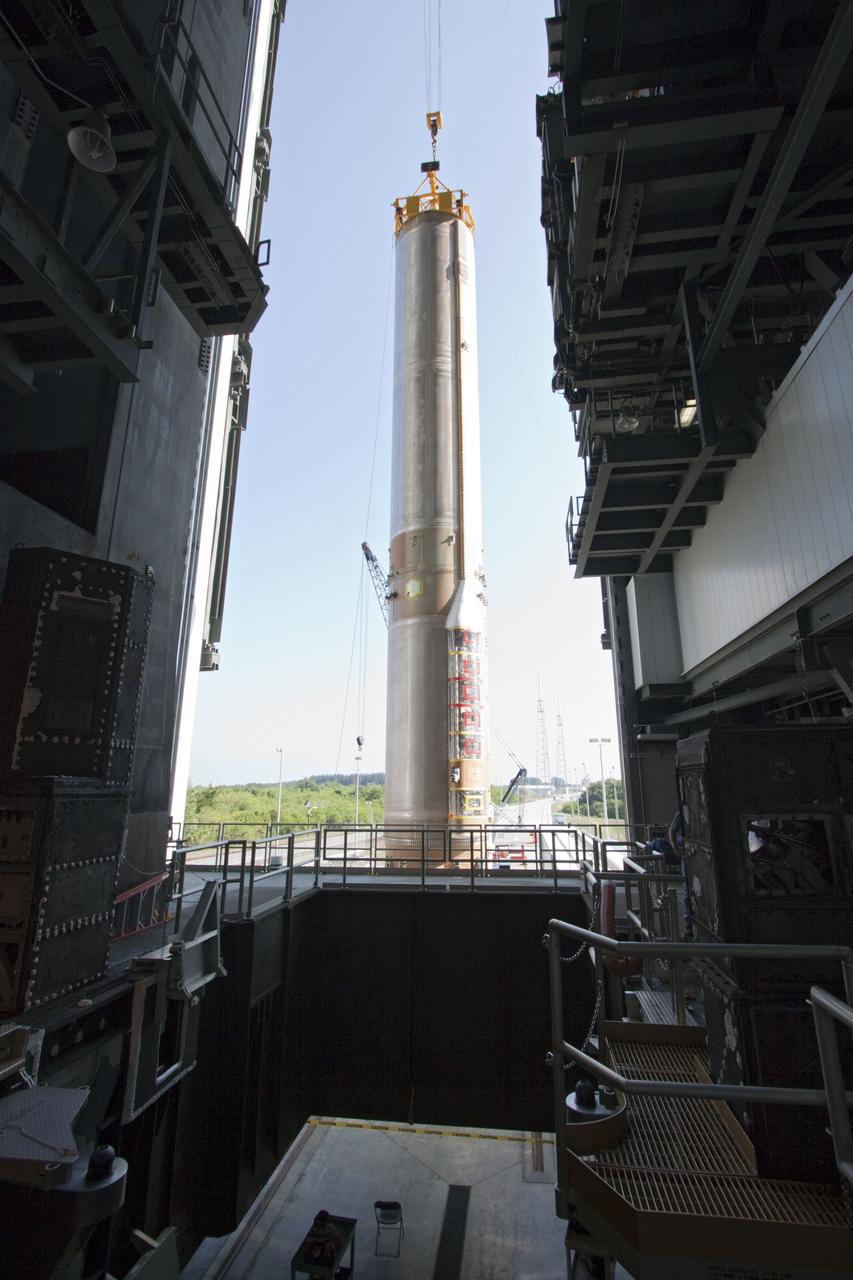
CAPE CANAVERAL, Fla. -- At Cape Canaveral Air Force Station in Florida, workers use an overhead crane to lift the first stage of a United Launch Alliance Atlas V rocket into the Vertical Integration Facility at Launch Complex 41. NASA's Juno spacecraft is scheduled to launch aboard an Atlas V from Cape Canaveral, Fla. Aug. 5.The solar-powered spacecraft will orbit Jupiter's poles 33 times to find out more about the gas giant's origins, structure, atmosphere and magnetosphere and investigate the existence of a solid planetary core. For more information visit: www.nasa.gov/juno. Photo credit: NASA/Jack Pfaller
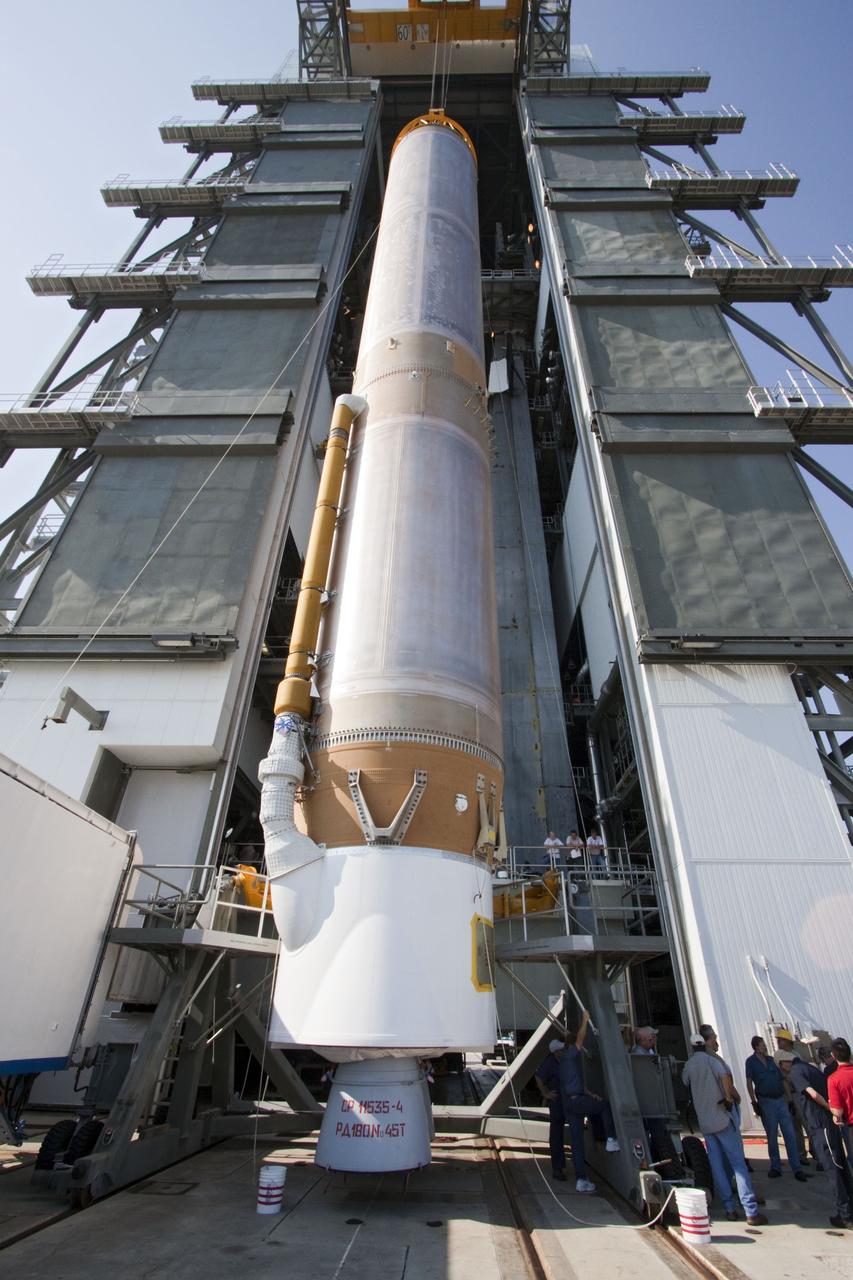
CAPE CANAVERAL, Fla. -- At Cape Canaveral Air Force Station in Florida, workers use an overhead crane to lift the first stage of a United Launch Alliance Atlas V rocket into the Vertical Integration Facility at Launch Complex 41. NASA's Juno spacecraft is scheduled to launch aboard an Atlas V from Cape Canaveral, Fla. Aug. 5.The solar-powered spacecraft will orbit Jupiter's poles 33 times to find out more about the gas giant's origins, structure, atmosphere and magnetosphere and investigate the existence of a solid planetary core. For more information visit: www.nasa.gov/juno. Photo credit: NASA/Jack Pfaller
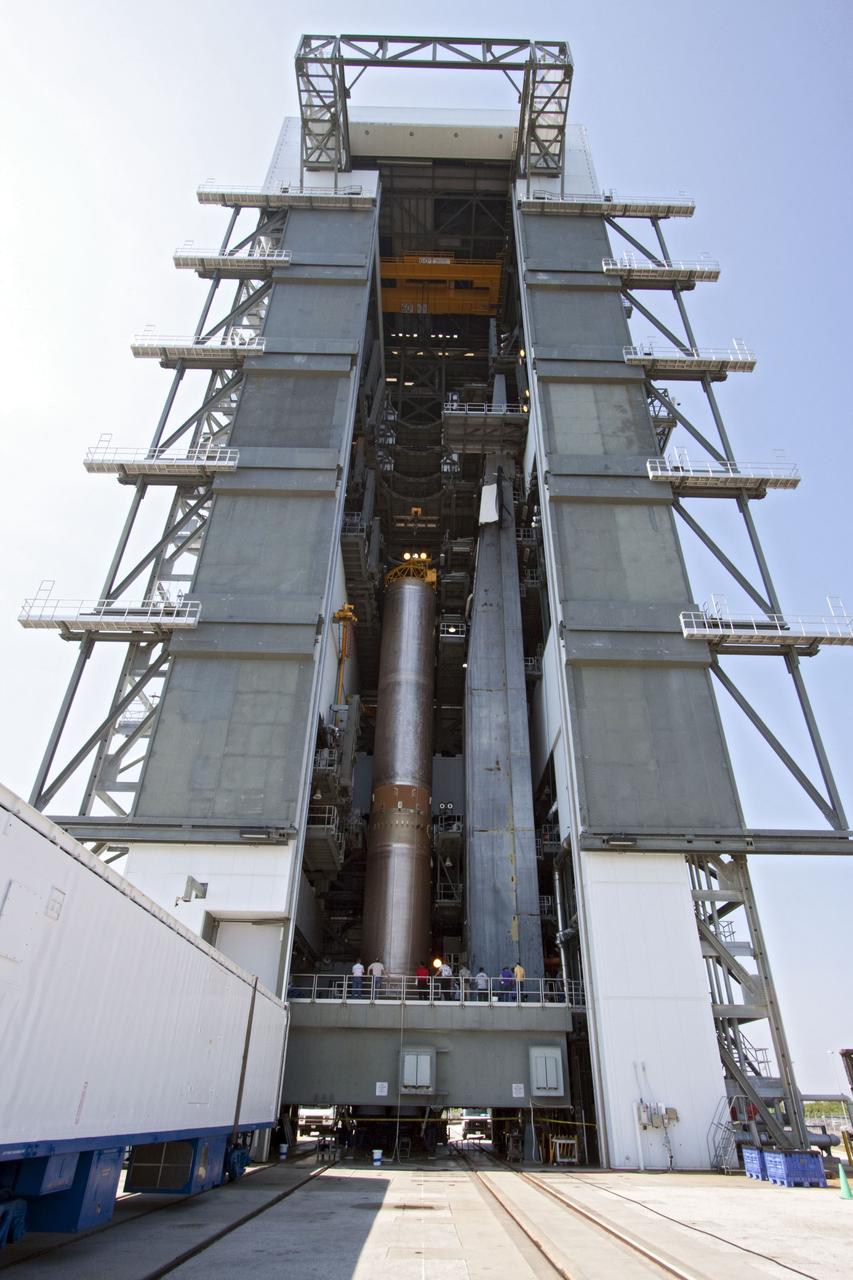
CAPE CANAVERAL, Fla. -- At Cape Canaveral Air Force Station in Florida, workers use an overhead crane to lift the first stage of a United Launch Alliance Atlas V rocket into the Vertical Integration Facility at Launch Complex 41. NASA's Juno spacecraft is scheduled to launch aboard an Atlas V from Cape Canaveral, Fla. Aug. 5.The solar-powered spacecraft will orbit Jupiter's poles 33 times to find out more about the gas giant's origins, structure, atmosphere and magnetosphere and investigate the existence of a solid planetary core. For more information visit: www.nasa.gov/juno. Photo credit: NASA/Jack Pfaller