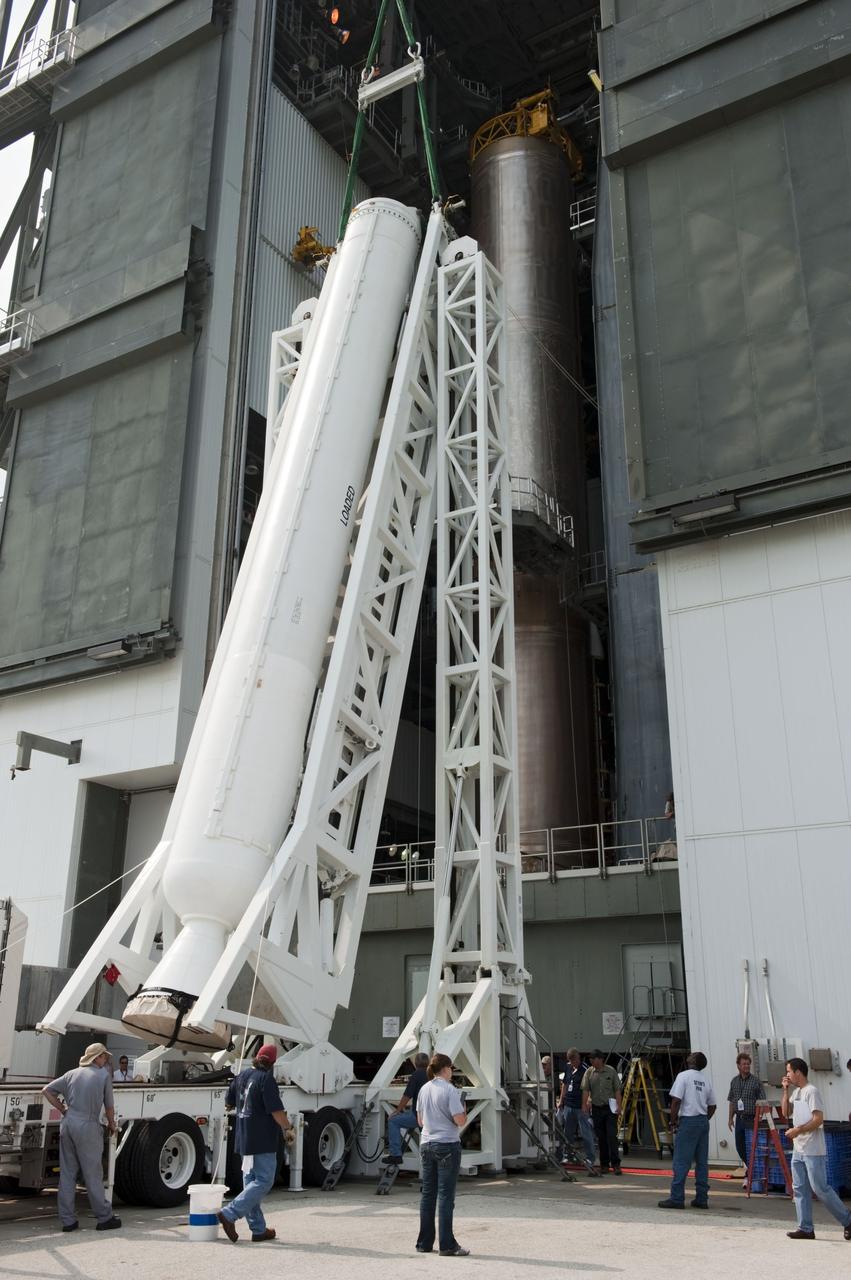
CAPE CANAVERAL, Fla. -- At Cape Canaveral Air Force Station in Florida, workers using an overhead crane lift a solid rocket motor into the Vertical Integration Facility at Launch Complex 41. It then will be attached to the United Launch Alliance Atlas V booster stage, already at the pad. NASA's Juno spacecraft is scheduled to launch aboard an Atlas V from Cape Canaveral, Fla. Aug. 5.The solar-powered spacecraft will orbit Jupiter's poles 33 times to find out more about the gas giant's origins, structure, atmosphere and magnetosphere and investigate the existence of a solid planetary core. For more information visit: www.nasa.gov/juno. Photo credit: NASA/Kim Shiflett
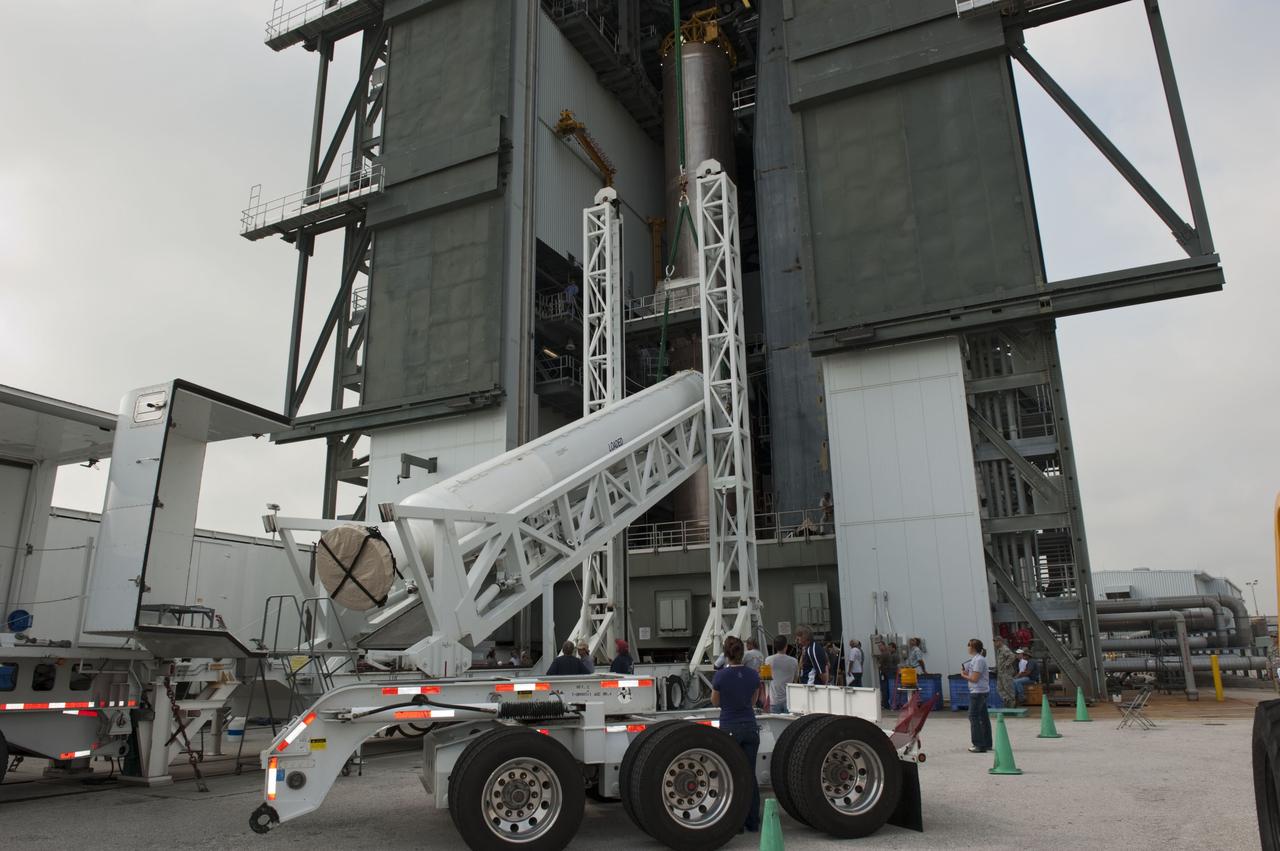
CAPE CANAVERAL, Fla. -- At Cape Canaveral Air Force Station in Florida, workers using an overhead crane lift a solid rocket motor into the Vertical Integration Facility at Launch Complex 41. It then will be attached to the United Launch Alliance Atlas V booster stage, already at the pad. NASA's Juno spacecraft is scheduled to launch aboard an Atlas V from Cape Canaveral, Fla. Aug. 5.The solar-powered spacecraft will orbit Jupiter's poles 33 times to find out more about the gas giant's origins, structure, atmosphere and magnetosphere and investigate the existence of a solid planetary core. For more information visit: www.nasa.gov/juno. Photo credit: NASA/Kim Shiflett
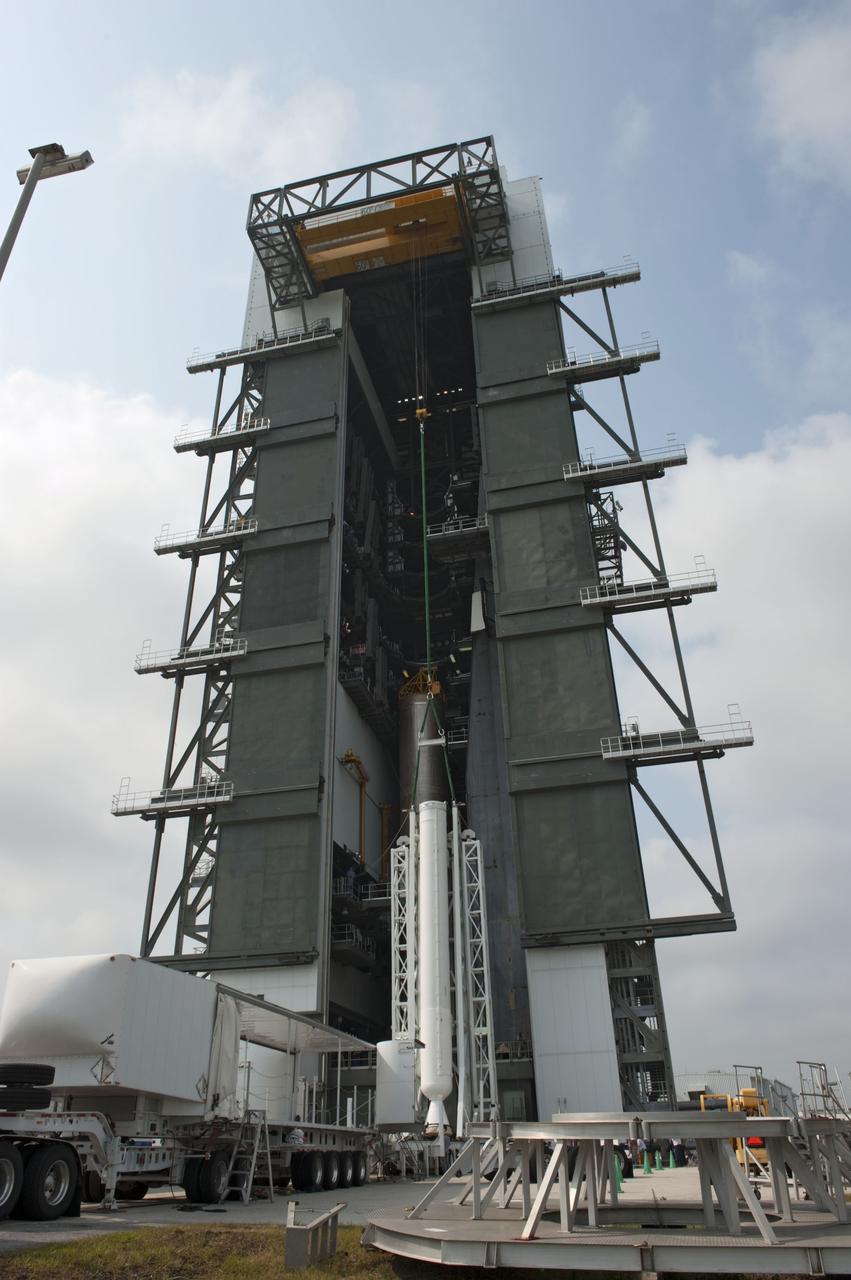
CAPE CANAVERAL, Fla. -- At Cape Canaveral Air Force Station in Florida, workers using an overhead crane lift a solid rocket motor into the Vertical Integration Facility at Launch Complex 41. It then will be attached to the United Launch Alliance Atlas V booster stage, already at the pad. NASA's Juno spacecraft is scheduled to launch aboard an Atlas V from Cape Canaveral, Fla. Aug. 5.The solar-powered spacecraft will orbit Jupiter's poles 33 times to find out more about the gas giant's origins, structure, atmosphere and magnetosphere and investigate the existence of a solid planetary core. For more information visit: www.nasa.gov/juno. Photo credit: NASA/Kim Shiflett
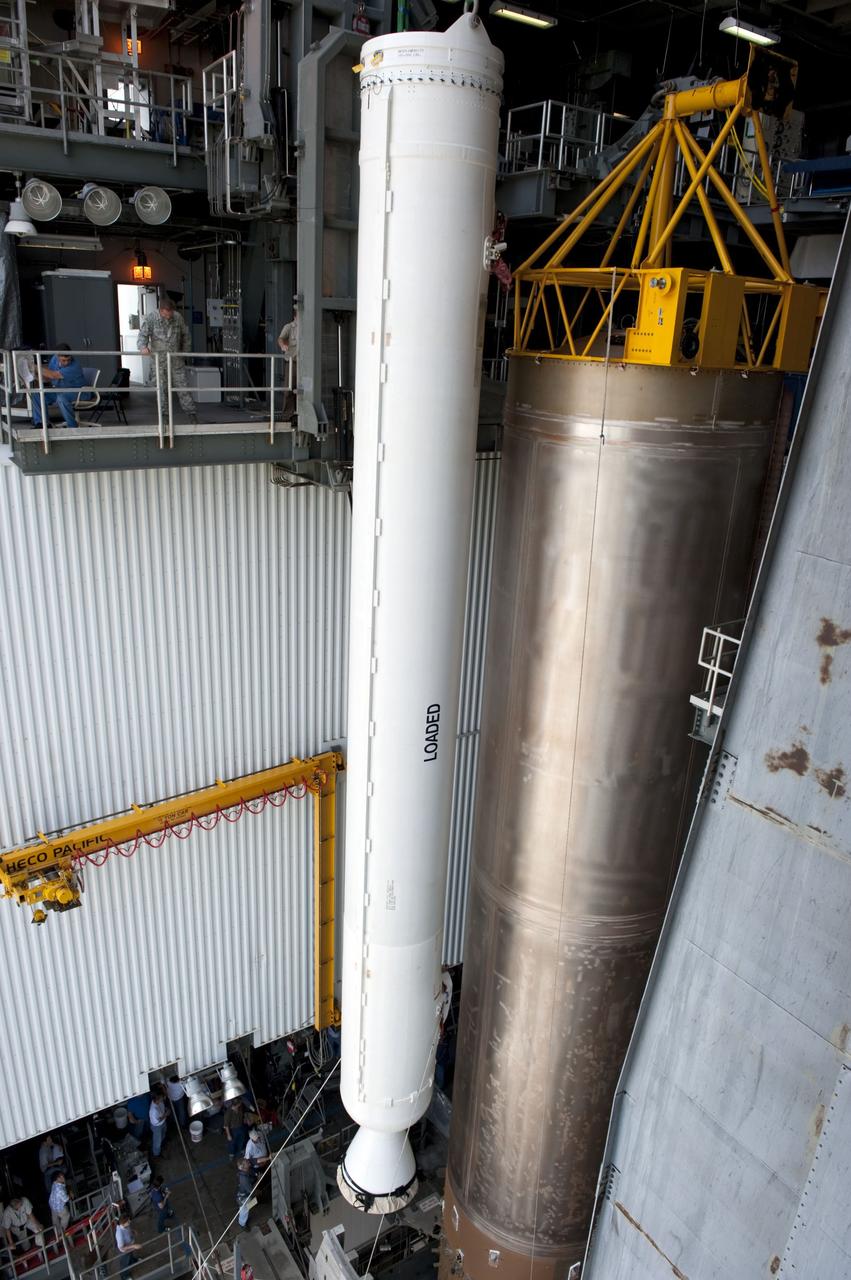
CAPE CANAVERAL, Fla. -- At Cape Canaveral Air Force Station in Florida, workers using an overhead crane lift a solid rocket motor into the Vertical Integration Facility at Launch Complex 41. It then will be attached to the United Launch Alliance Atlas V booster stage, already at the pad. NASA's Juno spacecraft is scheduled to launch aboard an Atlas V from Cape Canaveral, Fla. Aug. 5.The solar-powered spacecraft will orbit Jupiter's poles 33 times to find out more about the gas giant's origins, structure, atmosphere and magnetosphere and investigate the existence of a solid planetary core. For more information visit: www.nasa.gov/juno. Photo credit: NASA/Kim Shiflett
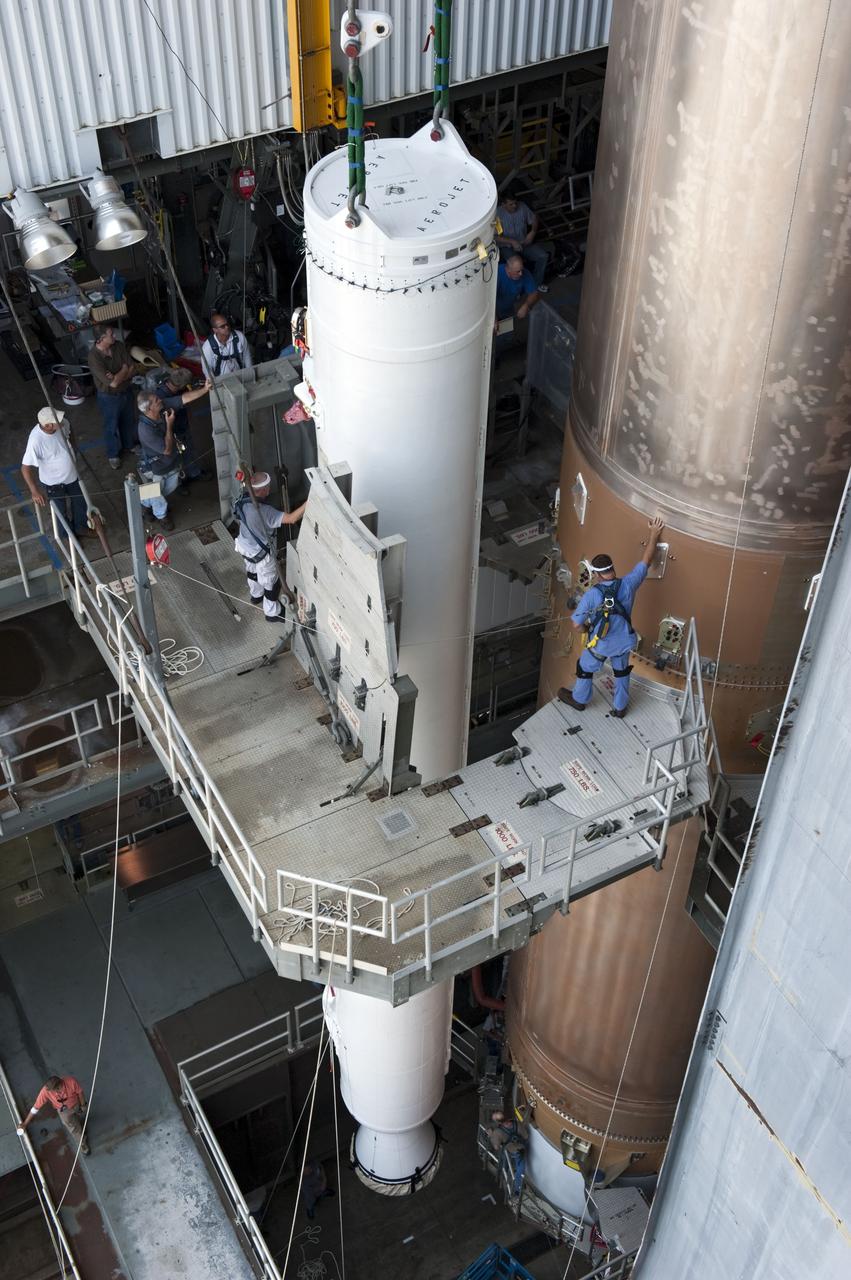
CAPE CANAVERAL, Fla. -- At Cape Canaveral Air Force Station in Florida, workers using an overhead crane guide a solid rocket motor into position in the Vertical Integration Facility at Launch Complex 41. It then will be attached to the United Launch Alliance Atlas V booster stage, already at the pad. NASA's Juno spacecraft is scheduled to launch aboard an Atlas V from Cape Canaveral, Fla. Aug. 5.The solar-powered spacecraft will orbit Jupiter's poles 33 times to find out more about the gas giant's origins, structure, atmosphere and magnetosphere and investigate the existence of a solid planetary core. For more information visit: www.nasa.gov/juno. Photo credit: NASA/Kim Shiflett
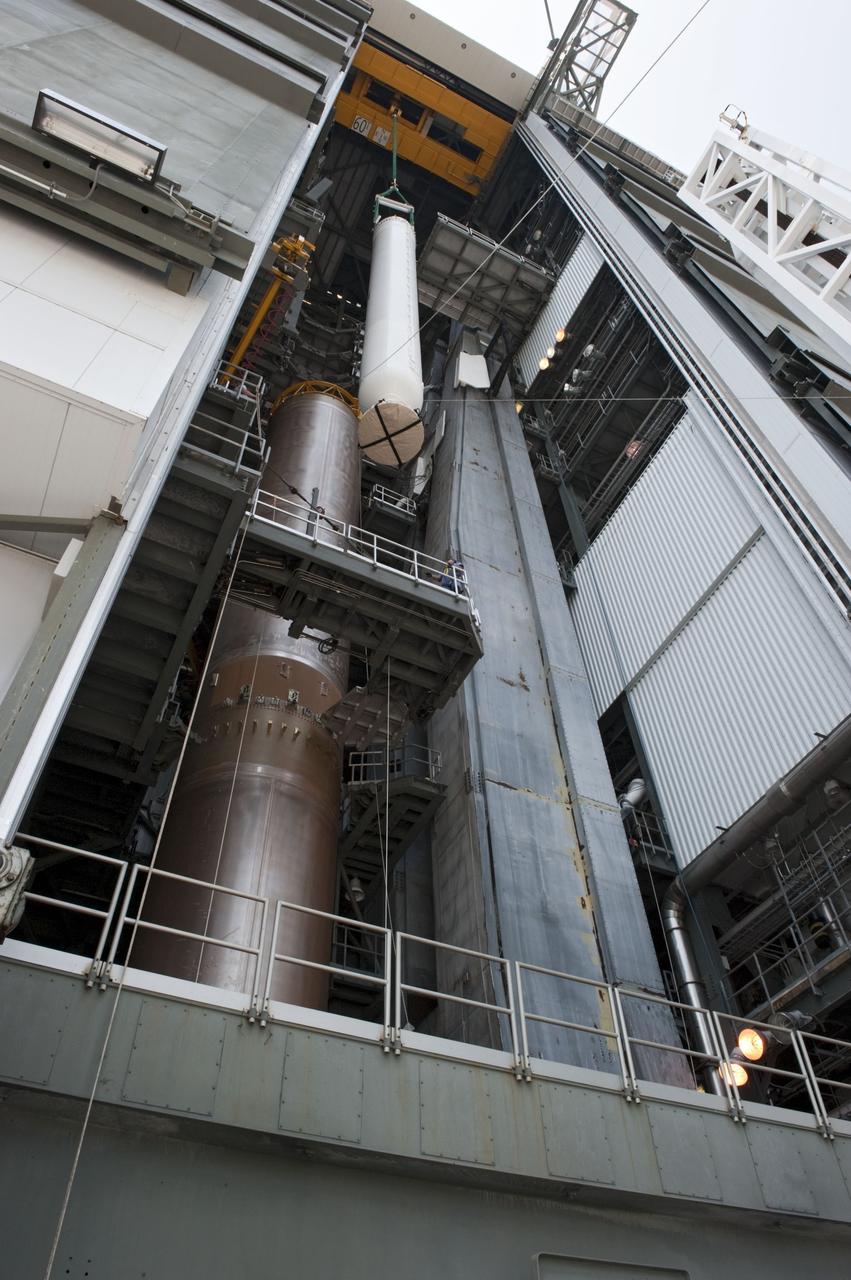
CAPE CANAVERAL, Fla. -- At Cape Canaveral Air Force Station in Florida, workers using an overhead crane lift a solid rocket motor into the Vertical Integration Facility at Launch Complex 41. It then will be attached to the United Launch Alliance Atlas V booster stage, already at the pad. NASA's Juno spacecraft is scheduled to launch aboard an Atlas V from Cape Canaveral, Fla. Aug. 5.The solar-powered spacecraft will orbit Jupiter's poles 33 times to find out more about the gas giant's origins, structure, atmosphere and magnetosphere and investigate the existence of a solid planetary core. For more information visit: www.nasa.gov/juno. Photo credit: NASA/Kim Shiflett
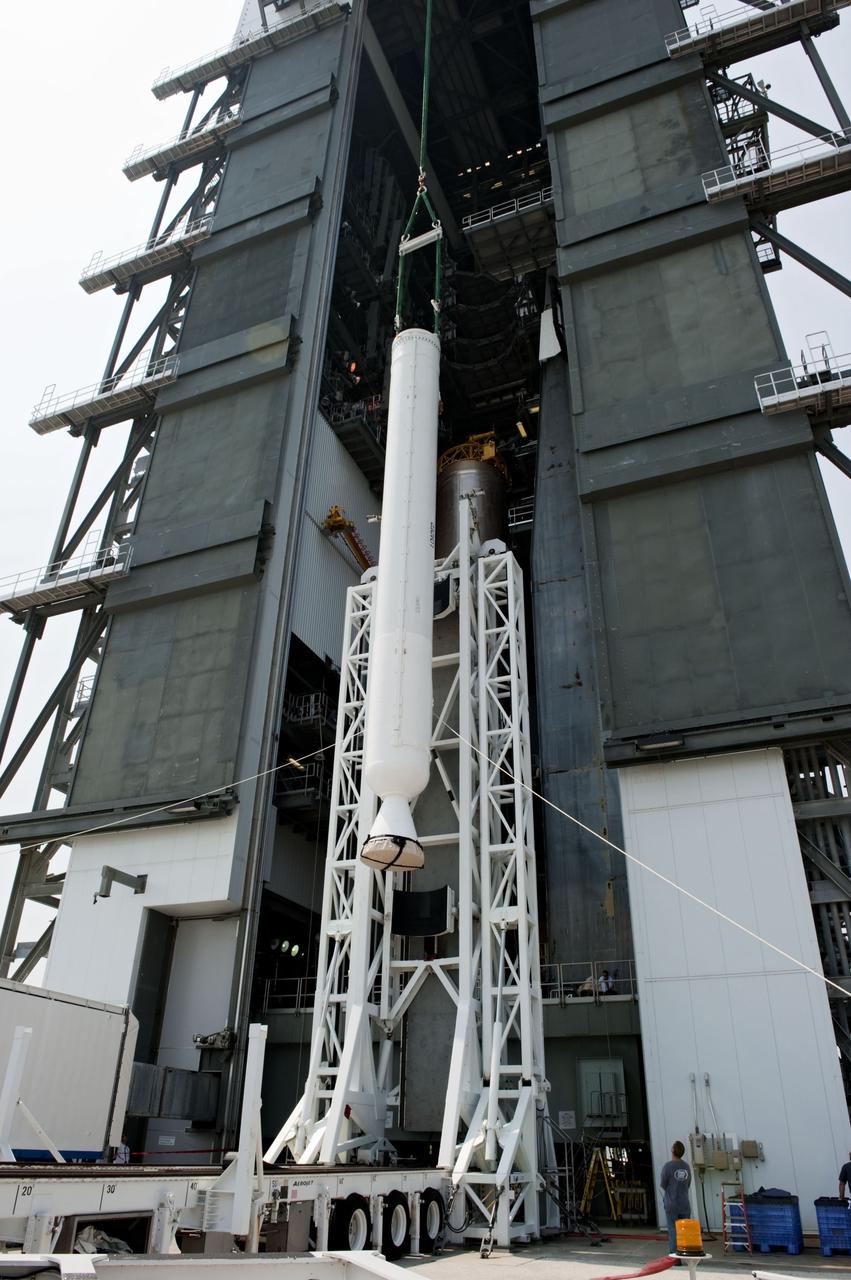
CAPE CANAVERAL, Fla. -- At Cape Canaveral Air Force Station in Florida, workers using an overhead crane lift a solid rocket motor into the Vertical Integration Facility at Launch Complex 41. It then will be attached to the United Launch Alliance Atlas V booster stage, already at the pad. NASA's Juno spacecraft is scheduled to launch aboard an Atlas V from Cape Canaveral, Fla. Aug. 5.The solar-powered spacecraft will orbit Jupiter's poles 33 times to find out more about the gas giant's origins, structure, atmosphere and magnetosphere and investigate the existence of a solid planetary core. For more information visit: www.nasa.gov/juno. Photo credit: NASA/Kim Shiflett
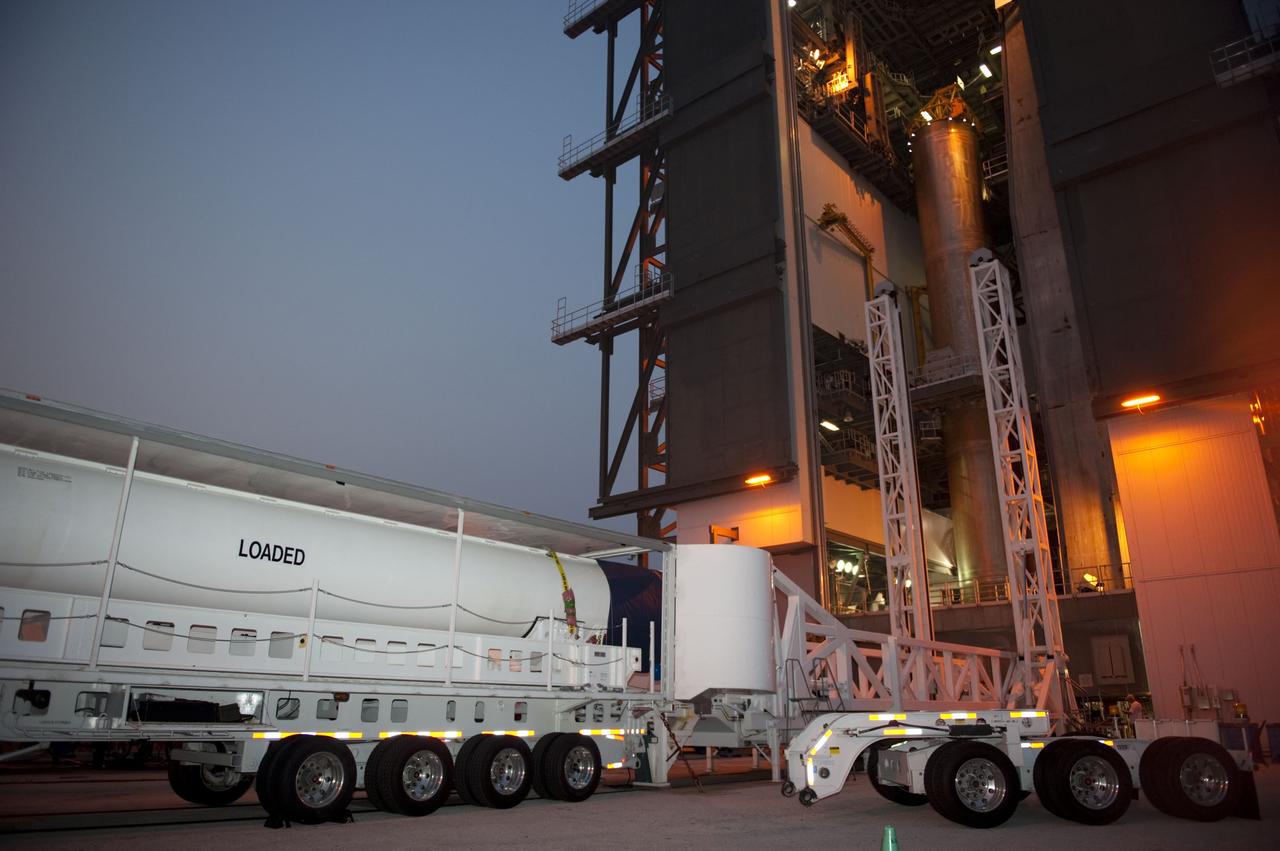
CAPE CANAVERAL, Fla. -- At Cape Canaveral Air Force Station in Florida, workers deliver a solid rocket motor to the Vertical Integration Facility at Launch Complex 41. It then will be lifted into position and attached to the United Launch Alliance Atlas V booster stage, already at the pad. NASA's Juno spacecraft is scheduled to launch aboard an Atlas V from Cape Canaveral, Fla. Aug. 5.The solar-powered spacecraft will orbit Jupiter's poles 33 times to find out more about the gas giant's origins, structure, atmosphere and magnetosphere and investigate the existence of a solid planetary core. For more information visit: www.nasa.gov/juno. Photo credit: NASA/Kim Shiflett
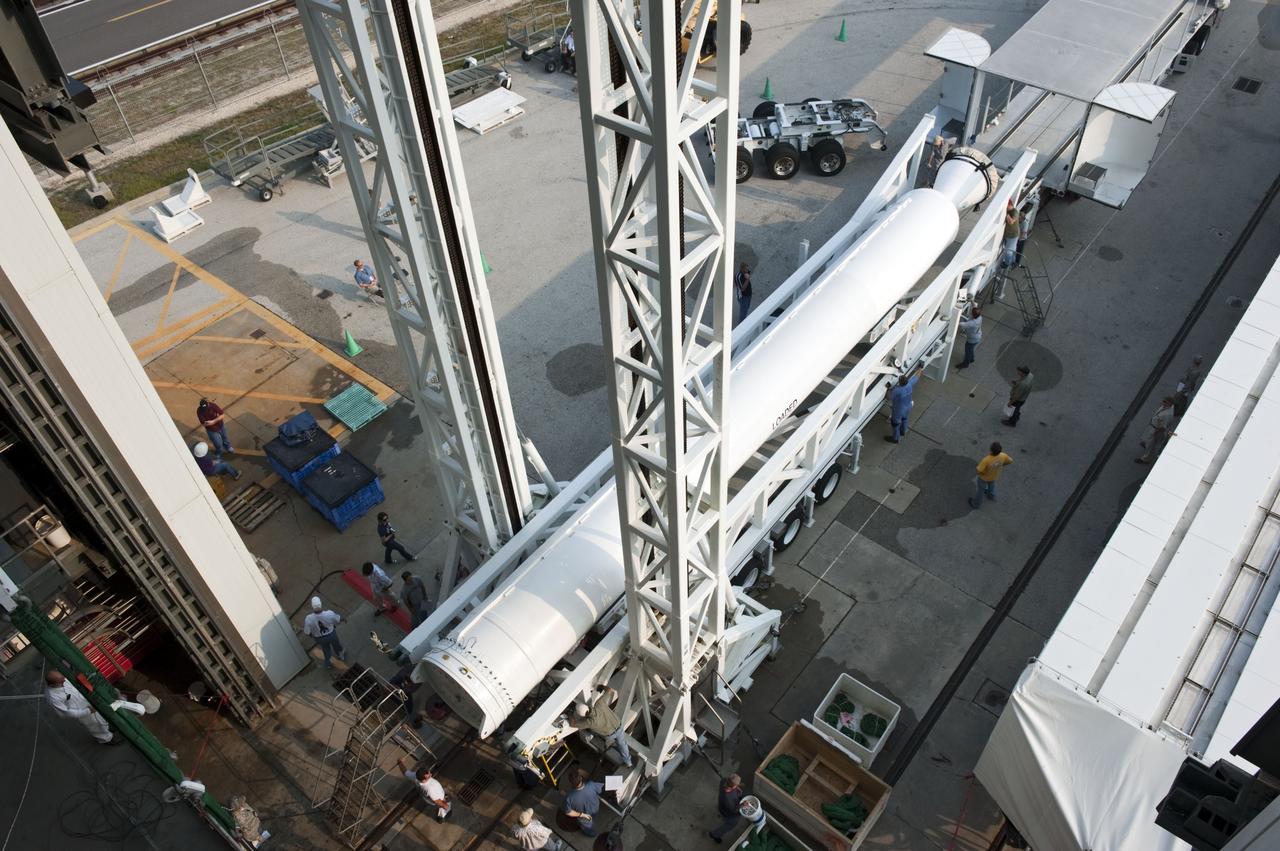
CAPE CANAVERAL, Fla. -- At Cape Canaveral Air Force Station in Florida, workers prepare a solid rocket motor for lifting into the Vertical Integration Facility at Launch Complex 41. It then will be attached to the United Launch Alliance Atlas V booster stage, already at the pad. NASA's Juno spacecraft is scheduled to launch aboard an Atlas V from Cape Canaveral, Fla. Aug. 5.The solar-powered spacecraft will orbit Jupiter's poles 33 times to find out more about the gas giant's origins, structure, atmosphere and magnetosphere and investigate the existence of a solid planetary core. For more information visit: www.nasa.gov/juno. Photo credit: NASA/Kim Shiflett
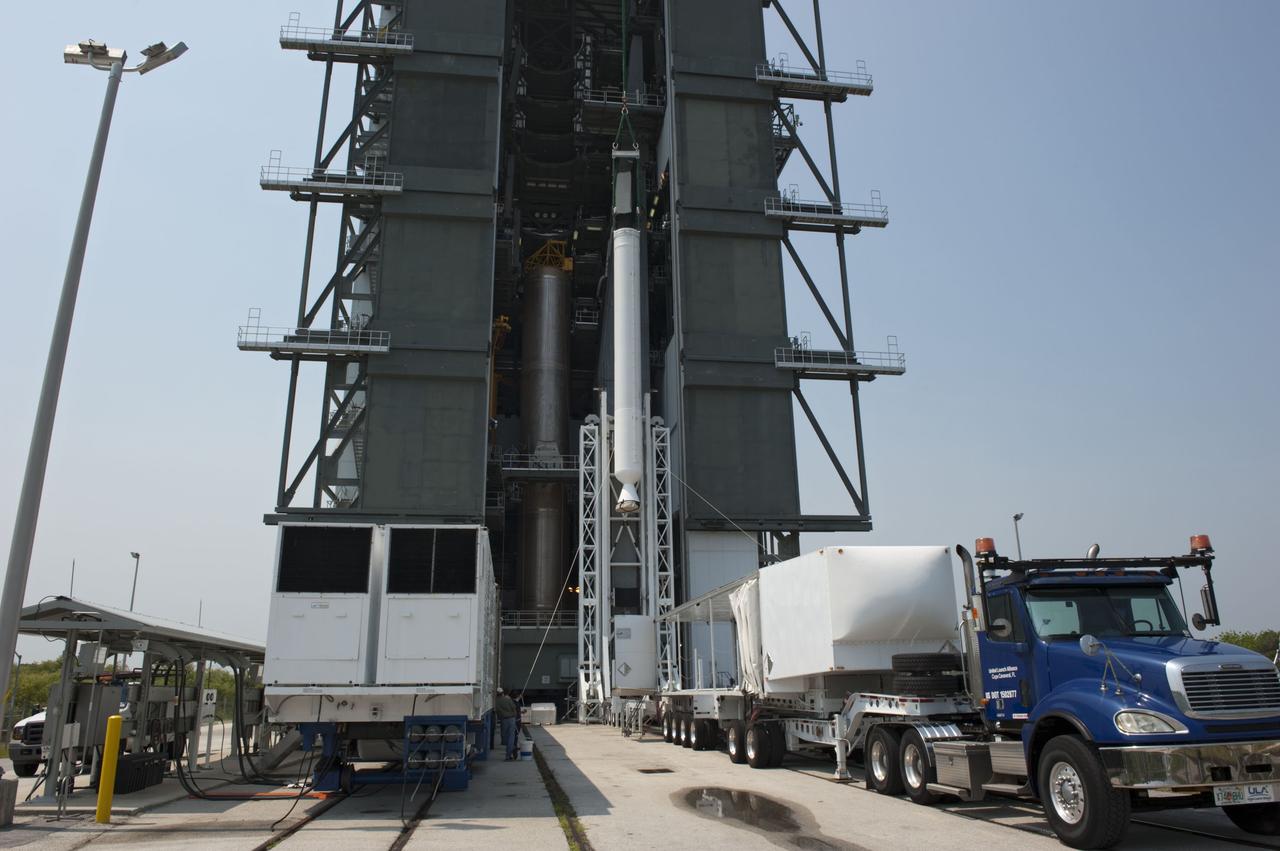
CAPE CANAVERAL, Fla. -- At Cape Canaveral Air Force Station in Florida, workers using an overhead crane lift a solid rocket motor into the Vertical Integration Facility at Launch Complex 41. It then will be attached to the United Launch Alliance Atlas V booster stage, already at the pad. NASA's Juno spacecraft is scheduled to launch aboard an Atlas V from Cape Canaveral, Fla. Aug. 5.The solar-powered spacecraft will orbit Jupiter's poles 33 times to find out more about the gas giant's origins, structure, atmosphere and magnetosphere and investigate the existence of a solid planetary core. For more information visit: www.nasa.gov/juno. Photo credit: NASA/Kim Shiflett
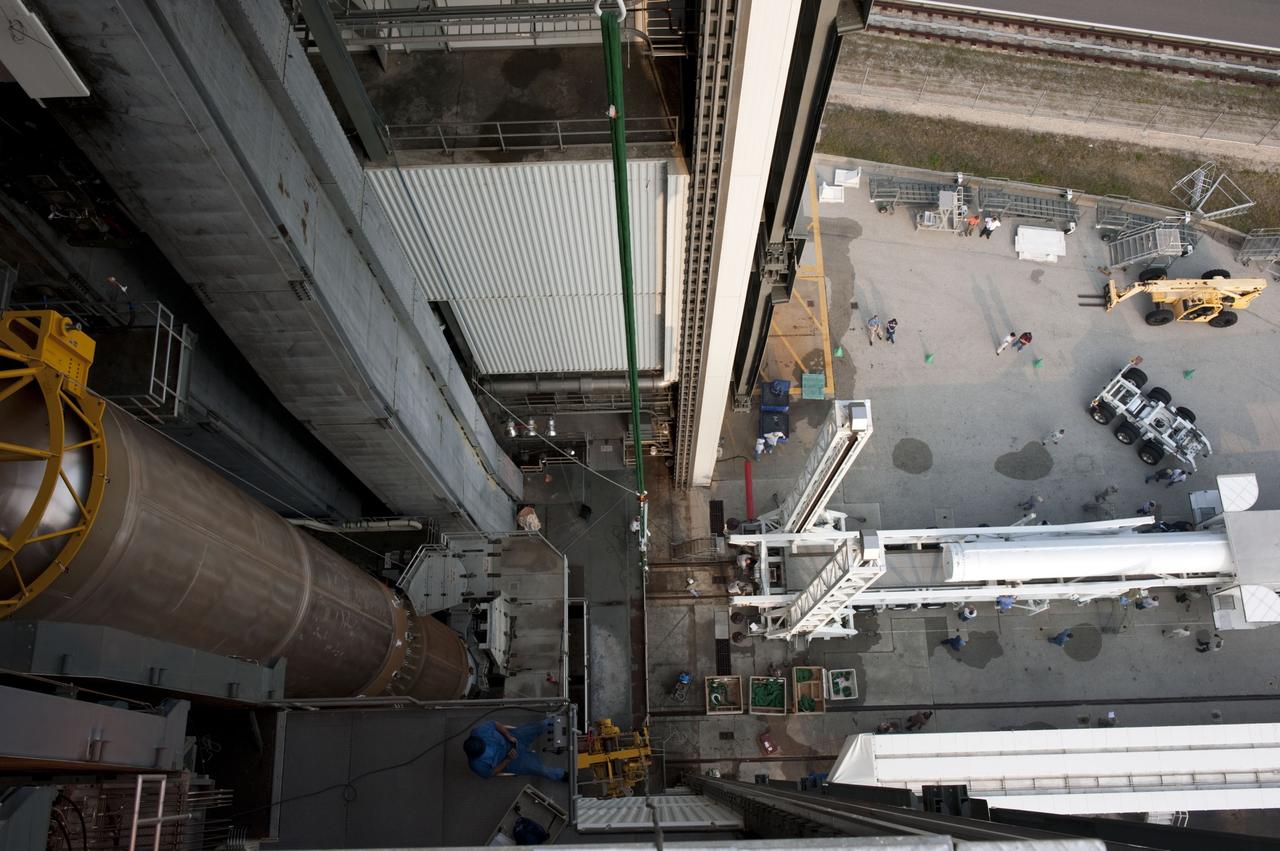
CAPE CANAVERAL, Fla. -- At Cape Canaveral Air Force Station in Florida, workers prepare a solid rocket motor for lifting into the Vertical Integration Facility at Launch Complex 41. It then will be attached to the United Launch Alliance Atlas V booster stage, already at the pad. NASA's Juno spacecraft is scheduled to launch aboard an Atlas V from Cape Canaveral, Fla. Aug. 5.The solar-powered spacecraft will orbit Jupiter's poles 33 times to find out more about the gas giant's origins, structure, atmosphere and magnetosphere and investigate the existence of a solid planetary core. For more information visit: www.nasa.gov/juno. Photo credit: NASA/Kim Shiflett
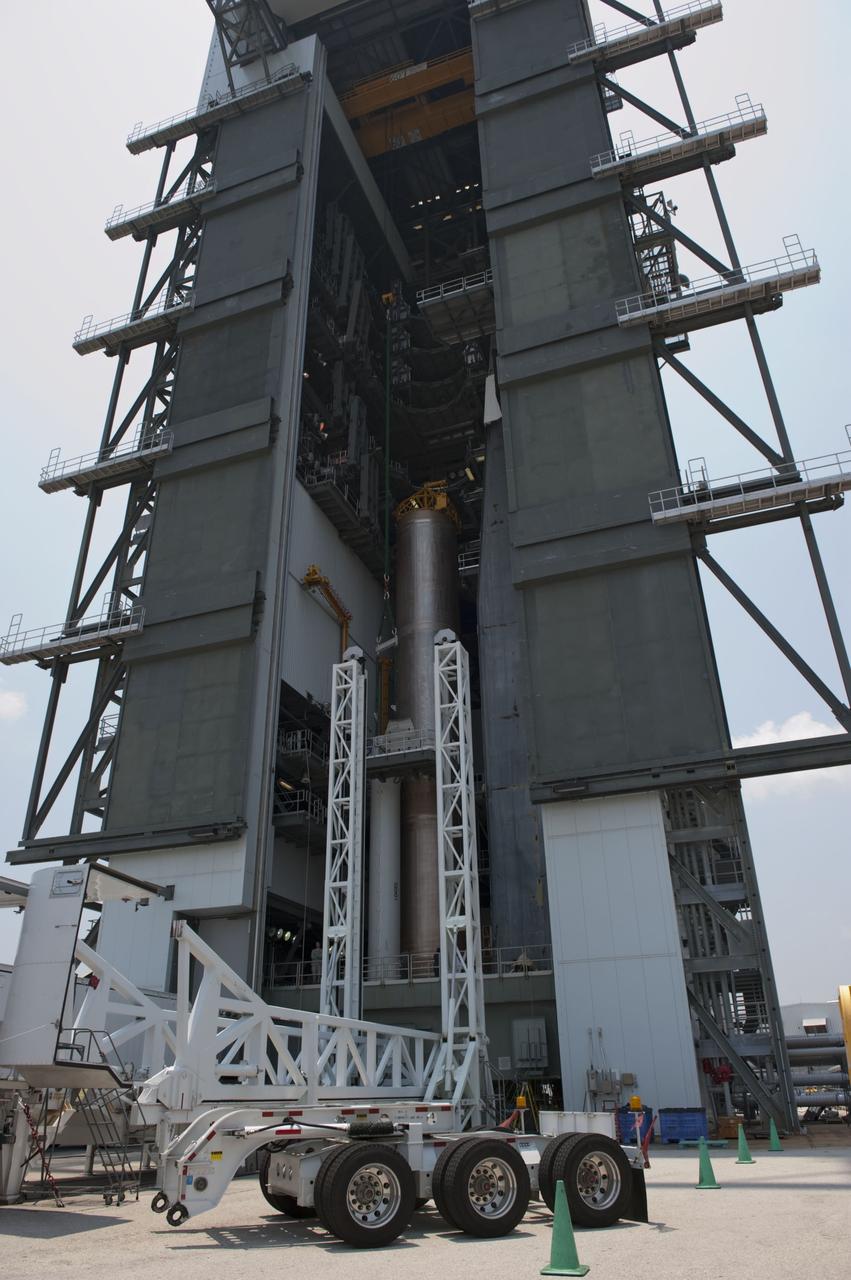
CAPE CANAVERAL, Fla. -- At Cape Canaveral Air Force Station in Florida, a solid rocket motor now is in position to be attached to the United Launch Alliance Atlas V booster stage already in the Vertical Integration Facility at Launch complex 41. NASA's Juno spacecraft is scheduled to launch aboard an Atlas V from Cape Canaveral, Fla. Aug. 5.The solar-powered spacecraft will orbit Jupiter's poles 33 times to find out more about the gas giant's origins, structure, atmosphere and magnetosphere and investigate the existence of a solid planetary core. For more information visit: www.nasa.gov/juno. Photo credit: NASA/Kim Shiflett
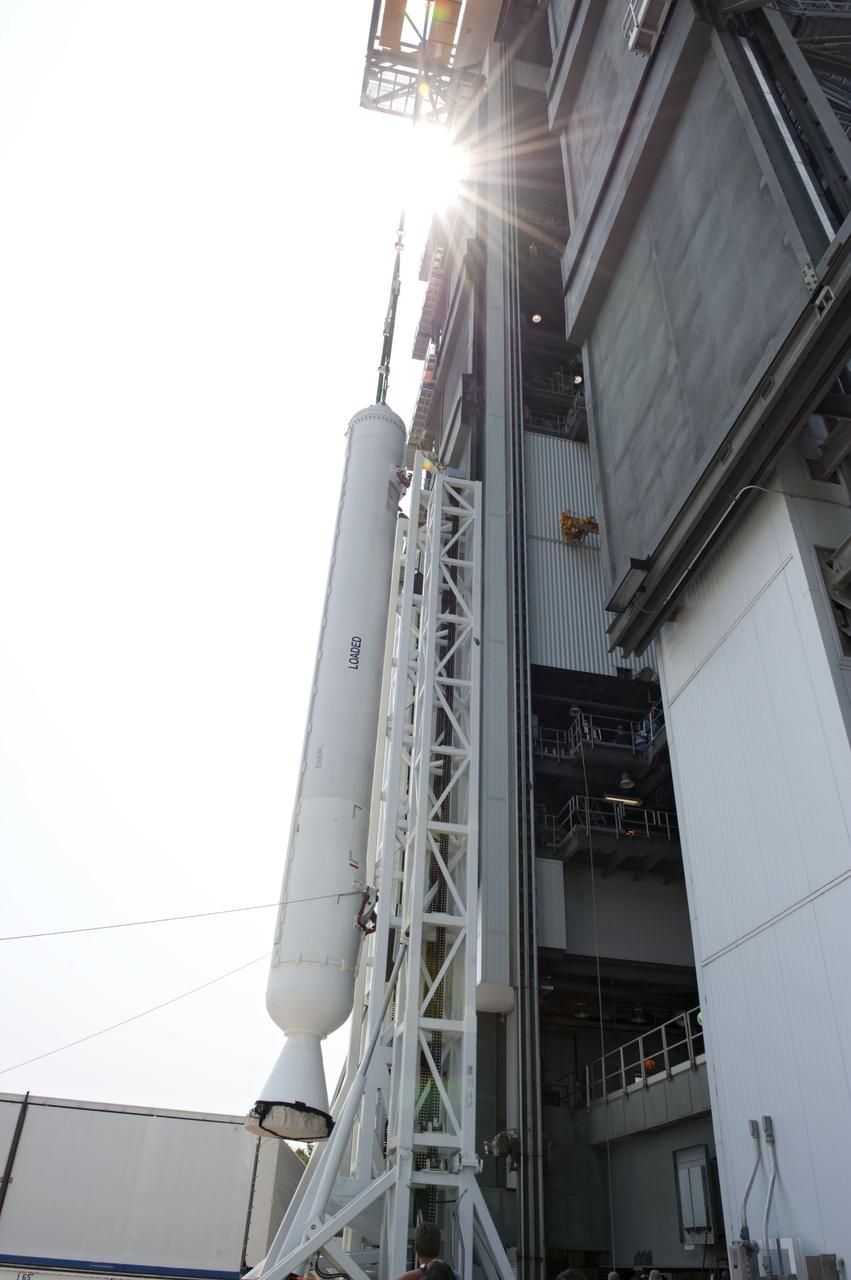
CAPE CANAVERAL, Fla. -- At Cape Canaveral Air Force Station in Florida, workers using an overhead crane lift a solid rocket motor into the Vertical Integration Facility at Launch Complex 41. It then will be attached to the United Launch Alliance Atlas V booster stage, already at the pad. NASA's Juno spacecraft is scheduled to launch aboard an Atlas V from Cape Canaveral, Fla. Aug. 5.The solar-powered spacecraft will orbit Jupiter's poles 33 times to find out more about the gas giant's origins, structure, atmosphere and magnetosphere and investigate the existence of a solid planetary core. For more information visit: www.nasa.gov/juno. Photo credit: NASA/Kim Shiflett
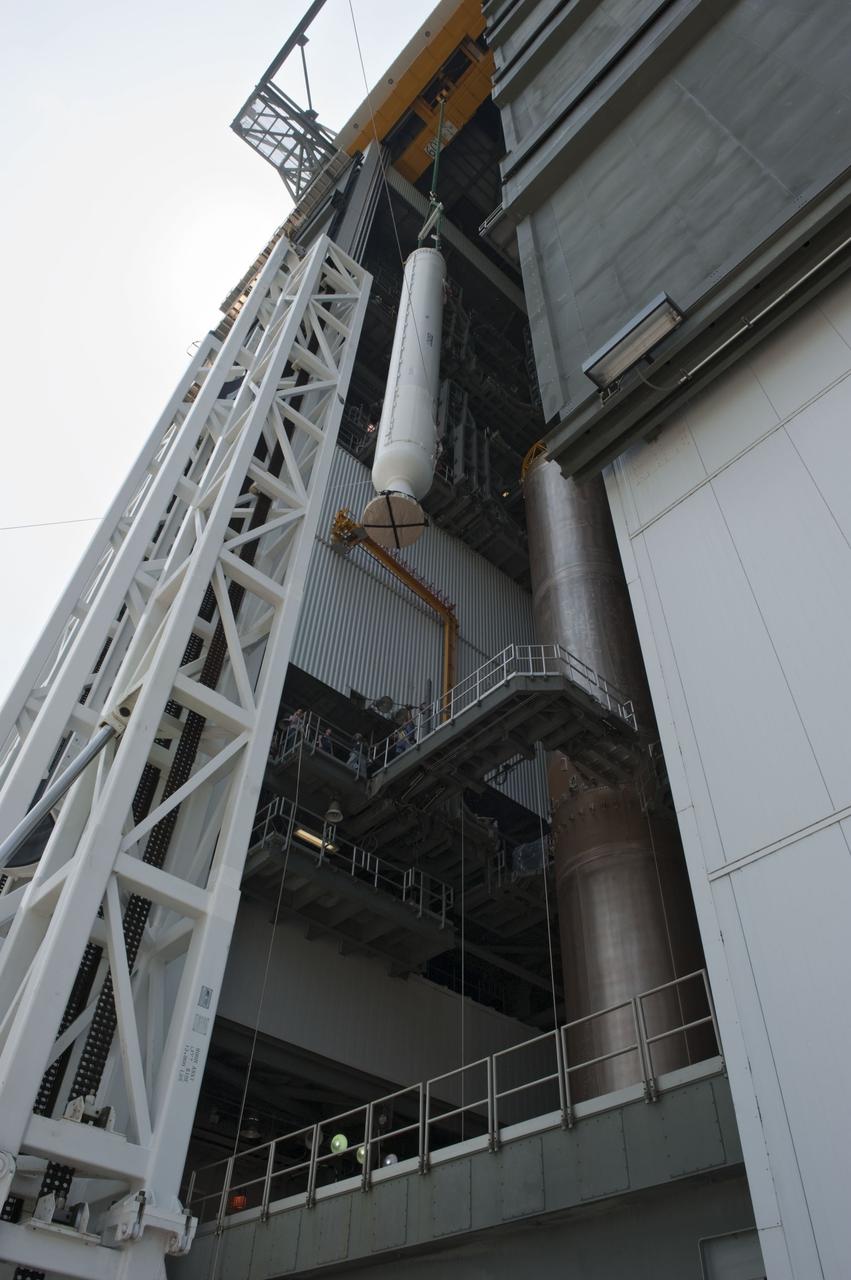
CAPE CANAVERAL, Fla. -- At Cape Canaveral Air Force Station in Florida, workers using an overhead crane lift a solid rocket motor into the Vertical Integration Facility at Launch Complex 41. It then will be attached to the United Launch Alliance Atlas V booster stage, already at the pad. NASA's Juno spacecraft is scheduled to launch aboard an Atlas V from Cape Canaveral, Fla. Aug. 5.The solar-powered spacecraft will orbit Jupiter's poles 33 times to find out more about the gas giant's origins, structure, atmosphere and magnetosphere and investigate the existence of a solid planetary core. For more information visit: www.nasa.gov/juno. Photo credit: NASA/Kim Shiflett
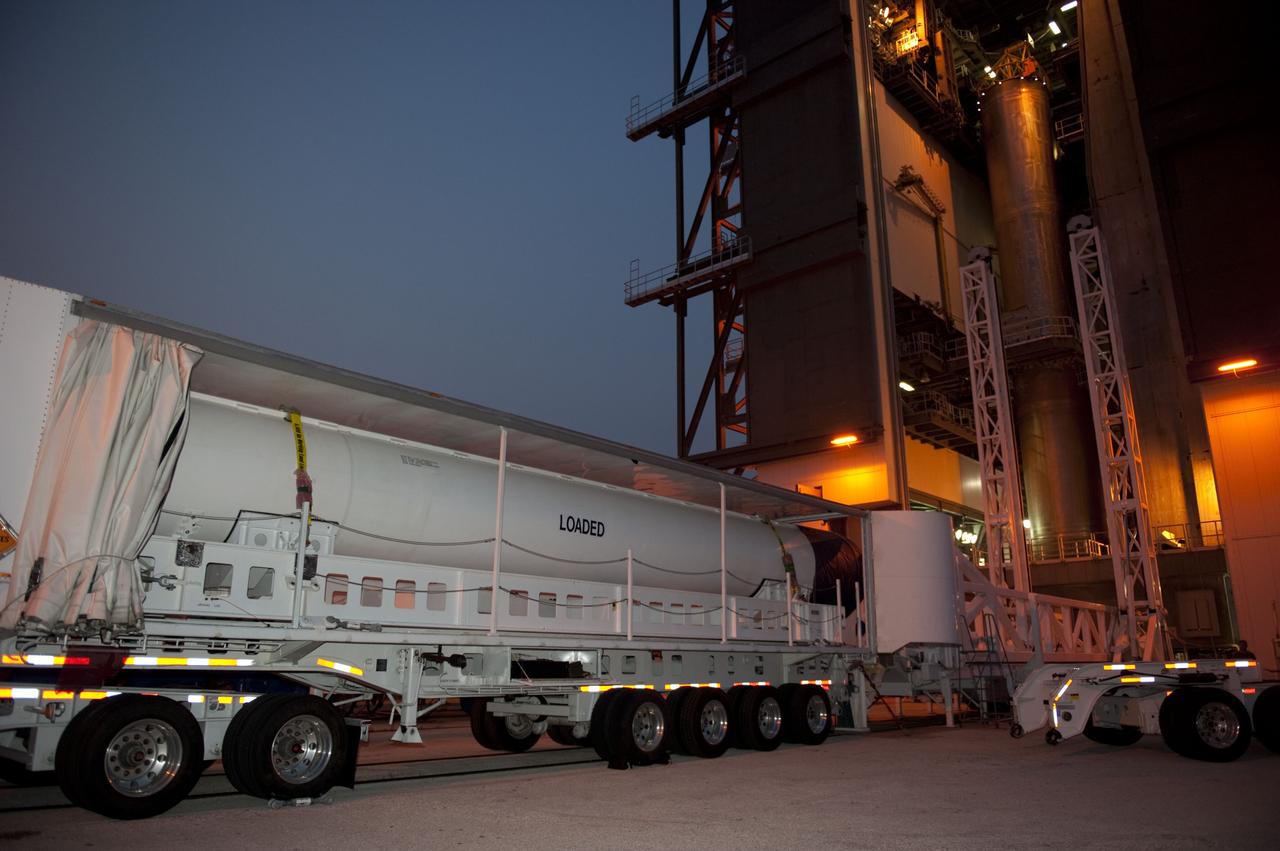
CAPE CANAVERAL, Fla. -- At Cape Canaveral Air Force Station in Florida, workers deliver a solid rocket motor to the Vertical Integration Facility at Launch Complex 41. It then will be lifted into position and attached to the United Launch Alliance Atlas V booster stage, already at the pad. NASA's Juno spacecraft is scheduled to launch aboard an Atlas V from Cape Canaveral, Fla. Aug. 5.The solar-powered spacecraft will orbit Jupiter's poles 33 times to find out more about the gas giant's origins, structure, atmosphere and magnetosphere and investigate the existence of a solid planetary core. For more information visit: www.nasa.gov/juno. Photo credit: NASA/Kim Shiflett
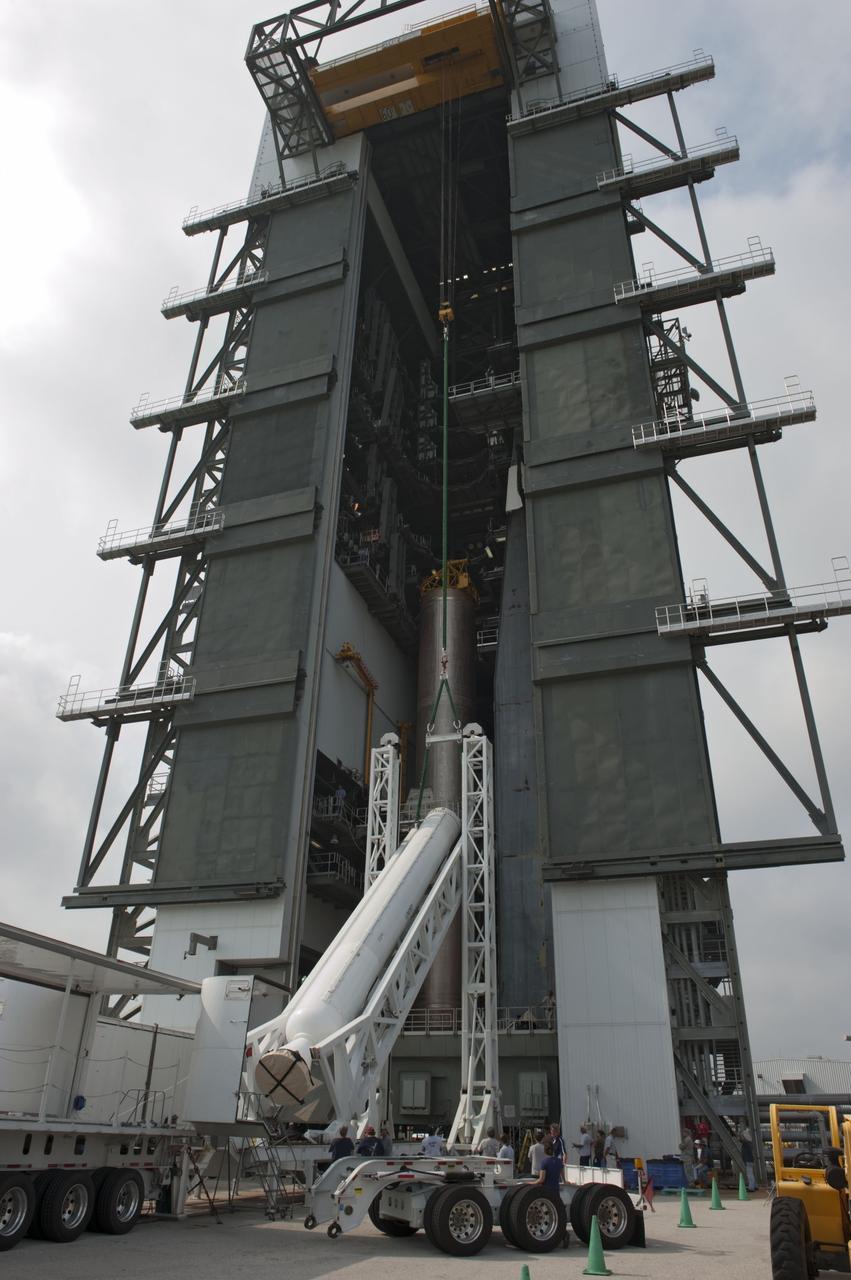
CAPE CANAVERAL, Fla. -- At Cape Canaveral Air Force Station in Florida, workers using an overhead crane lift a solid rocket motor into the Vertical Integration Facility at Launch Complex 41. It then will be attached to the United Launch Alliance Atlas V booster stage, already at the pad. NASA's Juno spacecraft is scheduled to launch aboard an Atlas V from Cape Canaveral, Fla. Aug. 5.The solar-powered spacecraft will orbit Jupiter's poles 33 times to find out more about the gas giant's origins, structure, atmosphere and magnetosphere and investigate the existence of a solid planetary core. For more information visit: www.nasa.gov/juno. Photo credit: NASA/Kim Shiflett
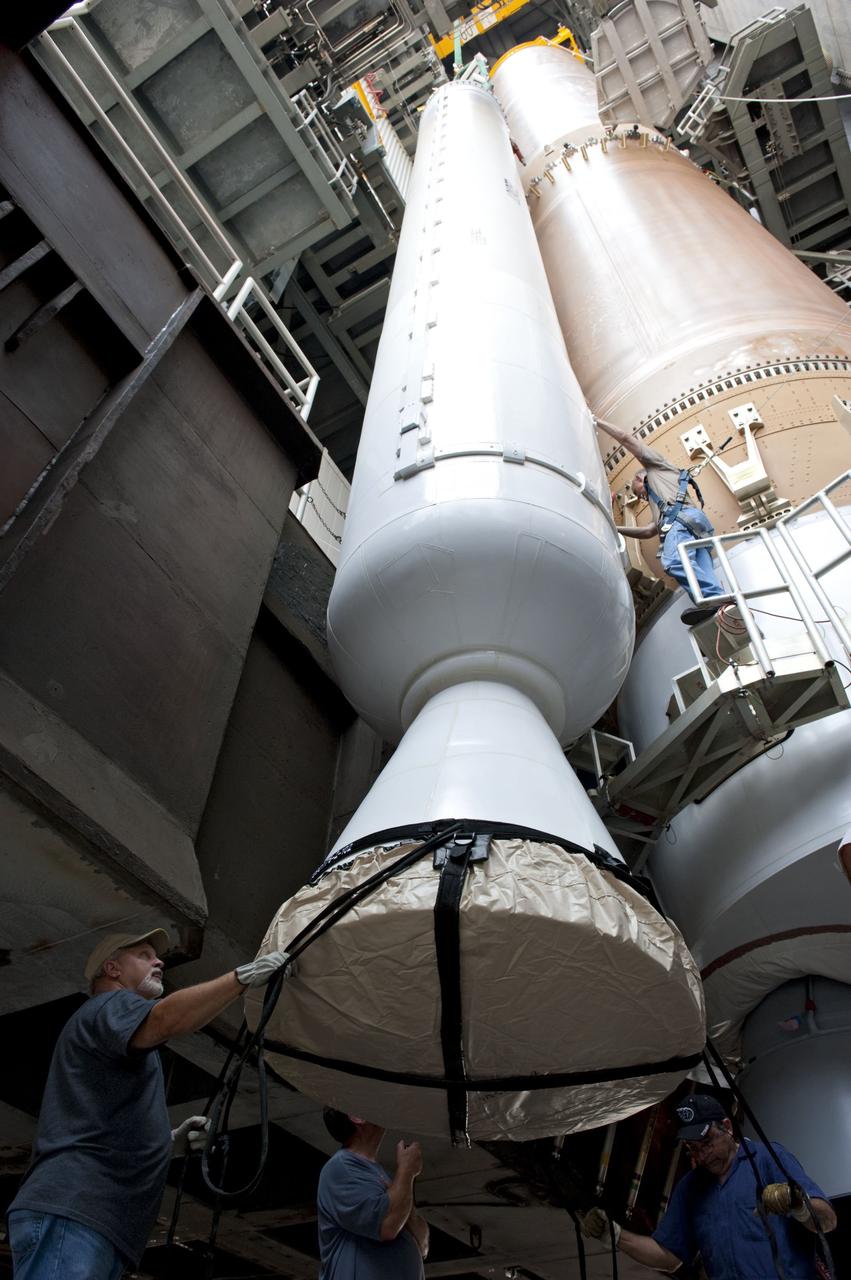
CAPE CANAVERAL, Fla. -- At Cape Canaveral Air Force Station in Florida, workers using an overhead crane guide a solid rocket motor into position in the Vertical Integration Facility at Launch Complex 41. It then will be attached to the United Launch Alliance Atlas V booster stage, already at the pad. NASA's Juno spacecraft is scheduled to launch aboard an Atlas V from Cape Canaveral, Fla. Aug. 5.The solar-powered spacecraft will orbit Jupiter's poles 33 times to find out more about the gas giant's origins, structure, atmosphere and magnetosphere and investigate the existence of a solid planetary core. For more information visit: www.nasa.gov/juno. Photo credit: NASA/Kim Shiflett
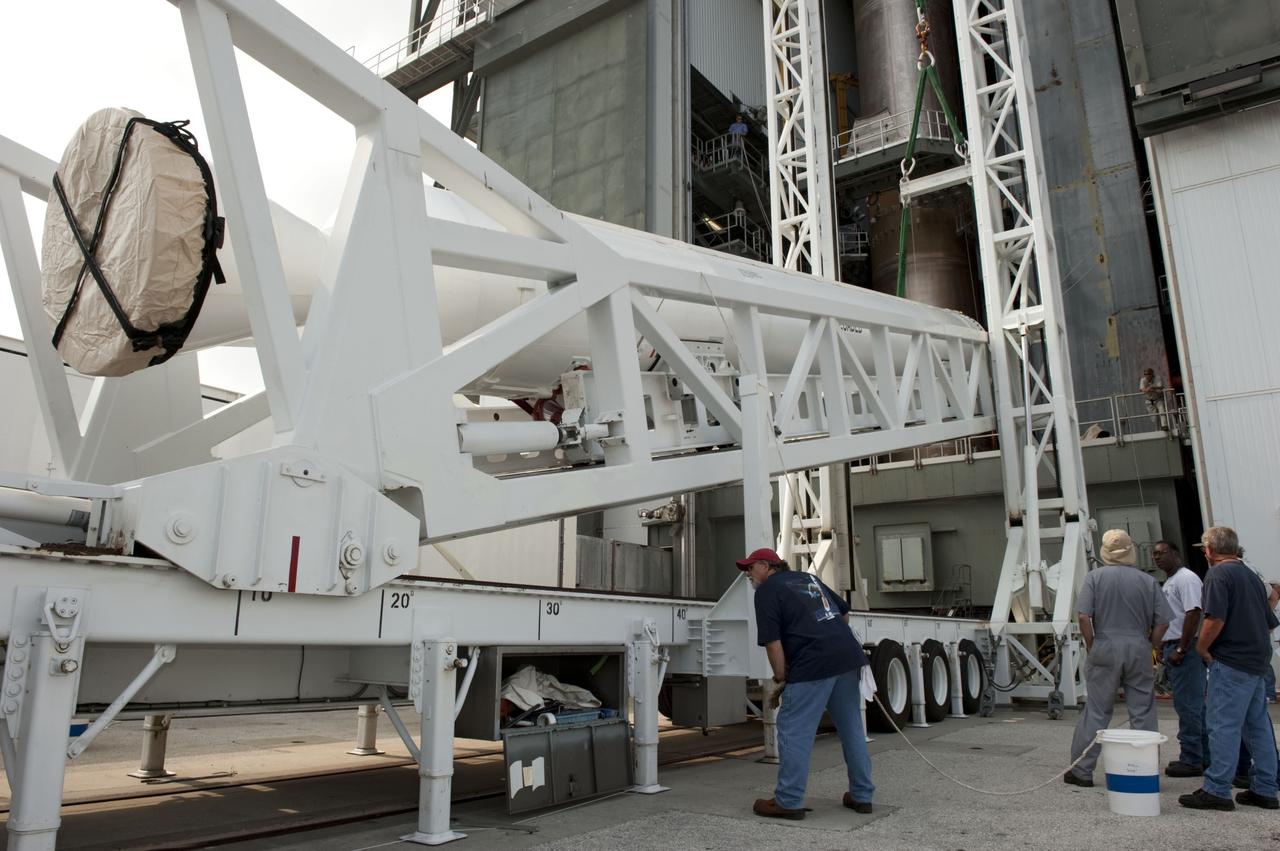
CAPE CANAVERAL, Fla. -- At Cape Canaveral Air Force Station in Florida, workers using an overhead crane lift a solid rocket motor into the Vertical Integration Facility at Launch Complex 41. It then will be attached to the United Launch Alliance Atlas V booster stage, already at the pad. NASA's Juno spacecraft is scheduled to launch aboard an Atlas V from Cape Canaveral, Fla. Aug. 5.The solar-powered spacecraft will orbit Jupiter's poles 33 times to find out more about the gas giant's origins, structure, atmosphere and magnetosphere and investigate the existence of a solid planetary core. For more information visit: www.nasa.gov/juno. Photo credit: NASA/Kim Shiflett
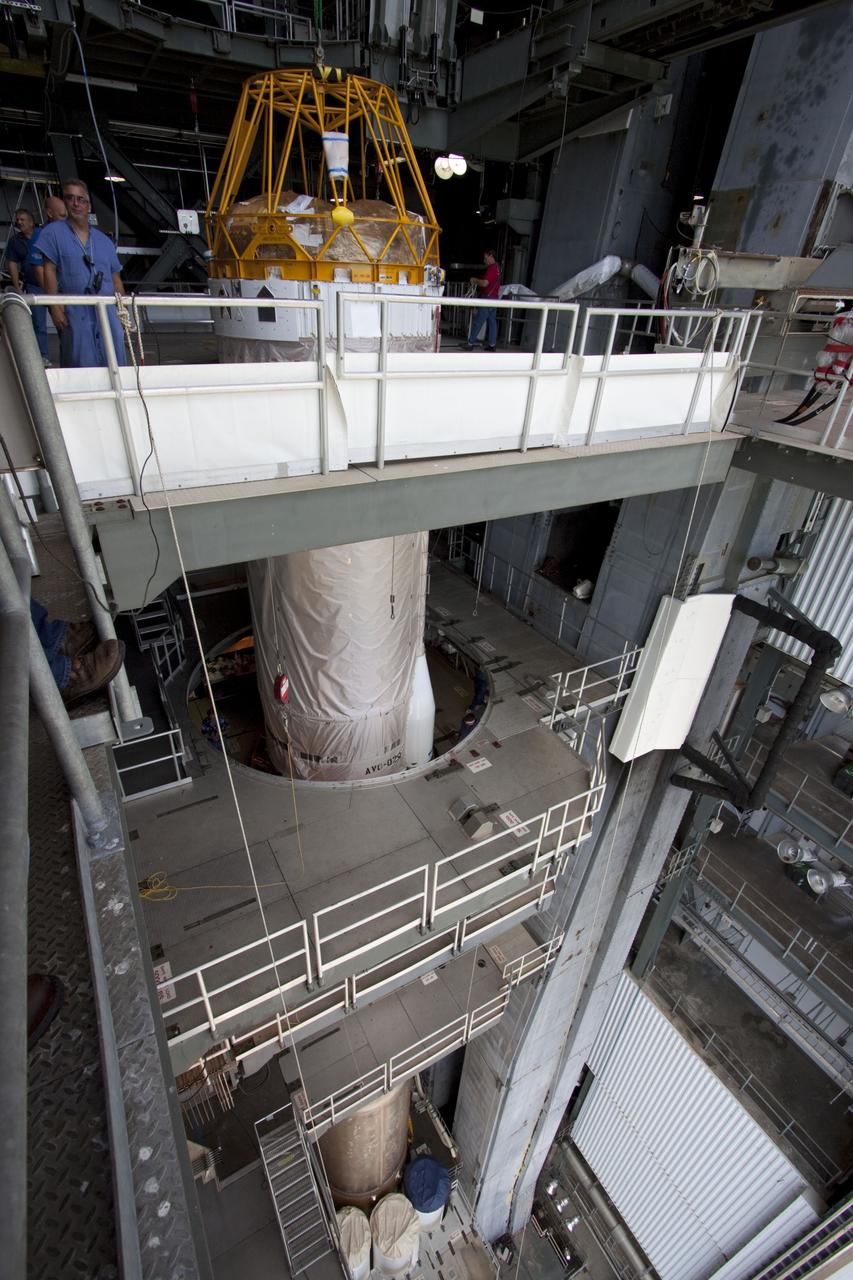
CAPE CANAVERAL, Fla. -- At Launch Complex 41 at Cape Canaveral Air Force Station in Florida, the Centaur upper stage for the United Launch Alliance Atlas V, slated to launch NASA's Juno spacecraft, is in position in the Vertical Integration Facility (VIF). It then will be attached to the Atlas V booster stage, already at the pad. Juno is scheduled to launch aboard an Atlas V from Cape Canaveral, Fla. Aug. 5.The solar-powered spacecraft will orbit Jupiter's poles 33 times to find out more about the gas giant's origins, structure, atmosphere and magnetosphere and investigate the existence of a solid planetary core. For more information visit: www.nasa.gov/juno. Photo credit: NASA/Jim Grossmann
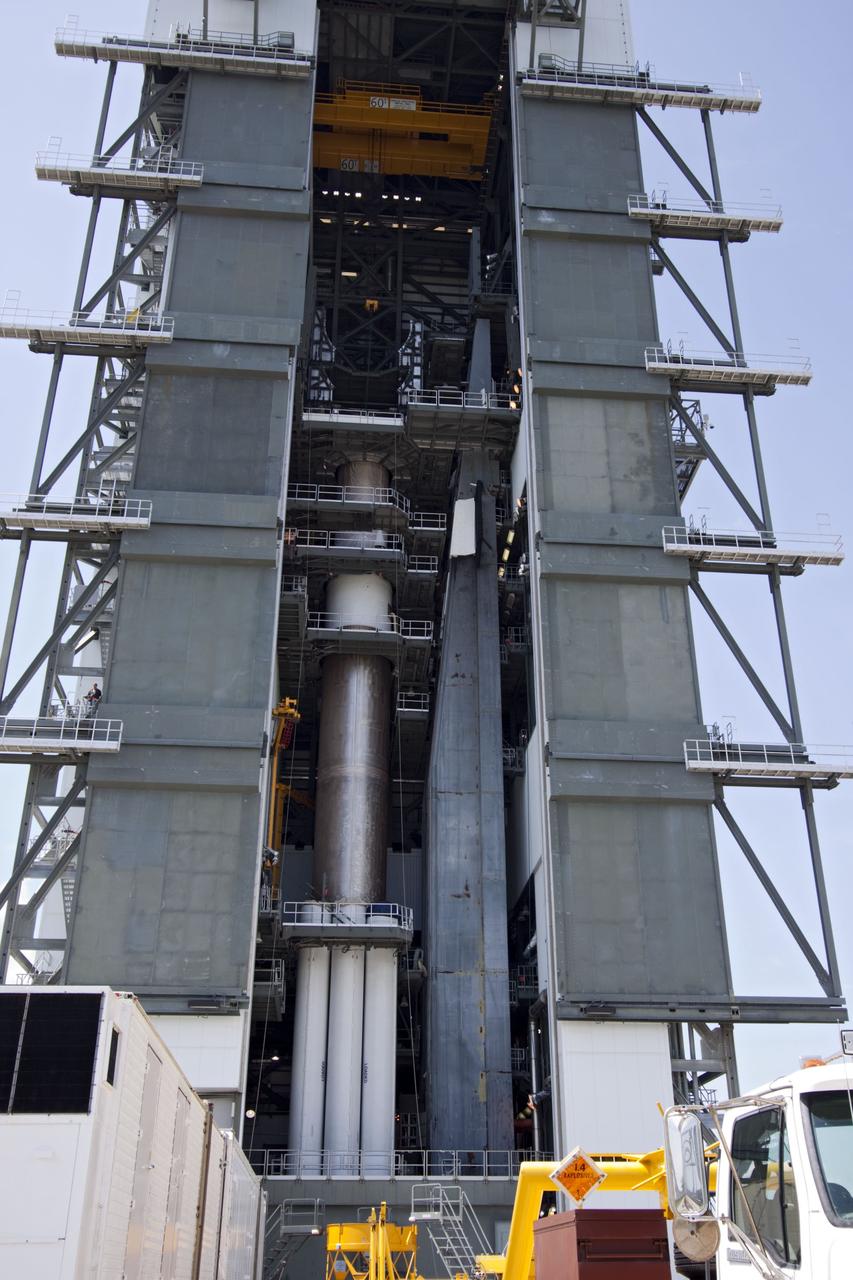
CAPE CANAVERAL, Fla. -- At Launch Complex 41 at Cape Canaveral Air Force Station in Florida, the Centaur upper stage for the United Launch Alliance Atlas V, slated to launch NASA's Juno spacecraft, is in position in the Vertical Integration Facility (VIF). It then will be attached to the Atlas V booster stage, already at the pad. Juno is scheduled to launch aboard an Atlas V from Cape Canaveral, Fla. Aug. 5.The solar-powered spacecraft will orbit Jupiter's poles 33 times to find out more about the gas giant's origins, structure, atmosphere and magnetosphere and investigate the existence of a solid planetary core. For more information visit: www.nasa.gov/juno. Photo credit: NASA/Jim Grossmann
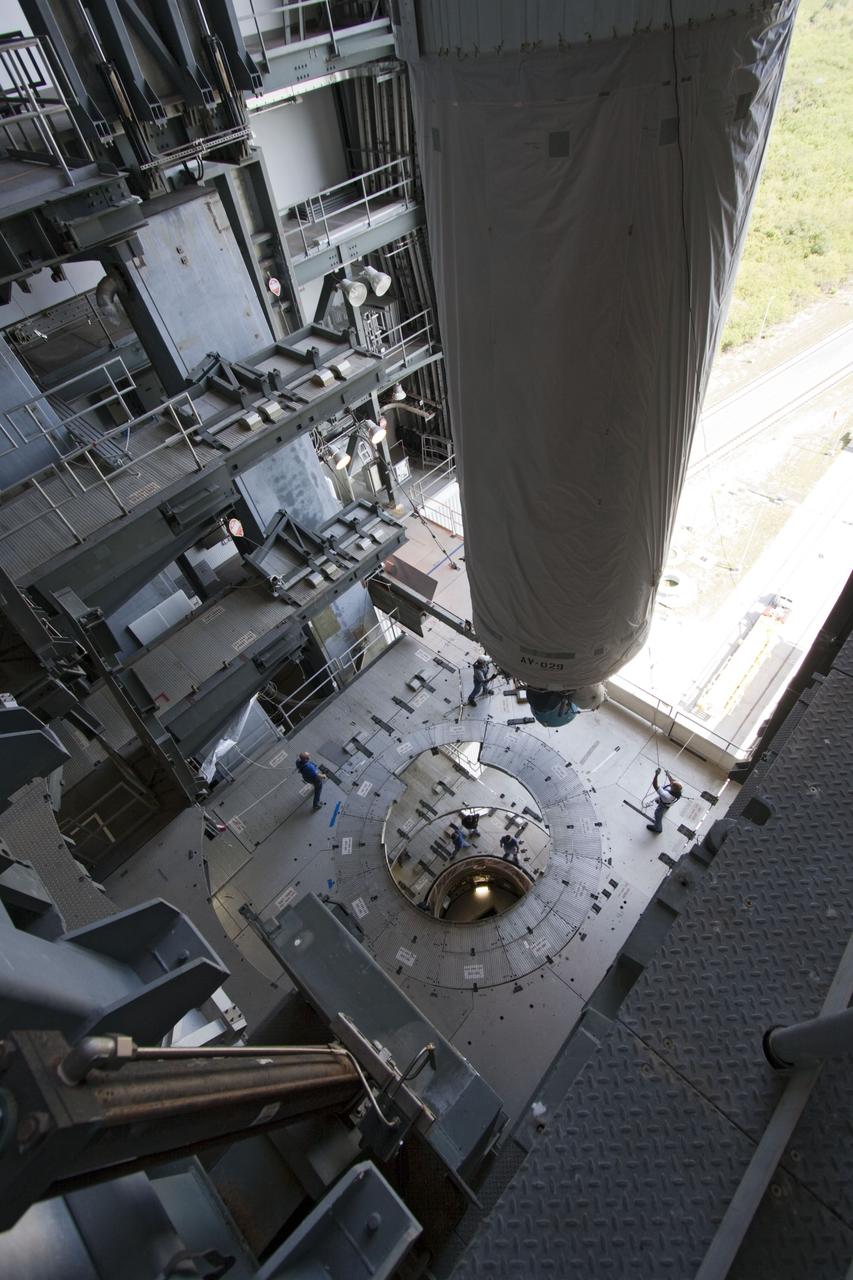
CAPE CANAVERAL, Fla. -- At Launch Complex 41 at Cape Canaveral Air Force Station in Florida, workers guide an overhead crane as it lifts the Centaur upper stage for the United Launch Alliance Atlas V, slated to launch NASA's Juno spacecraft, into the Vertical Integration Facility (VIF). After in position in the VIF it will be attached to the Atlas V booster stage, already at the pad. Juno is scheduled to launch aboard an Atlas V from Cape Canaveral, Fla. Aug. 5.The solar-powered spacecraft will orbit Jupiter's poles 33 times to find out more about the gas giant's origins, structure, atmosphere and magnetosphere and investigate the existence of a solid planetary core. For more information visit: www.nasa.gov/juno. Photo credit: NASA/Jim Grossmann
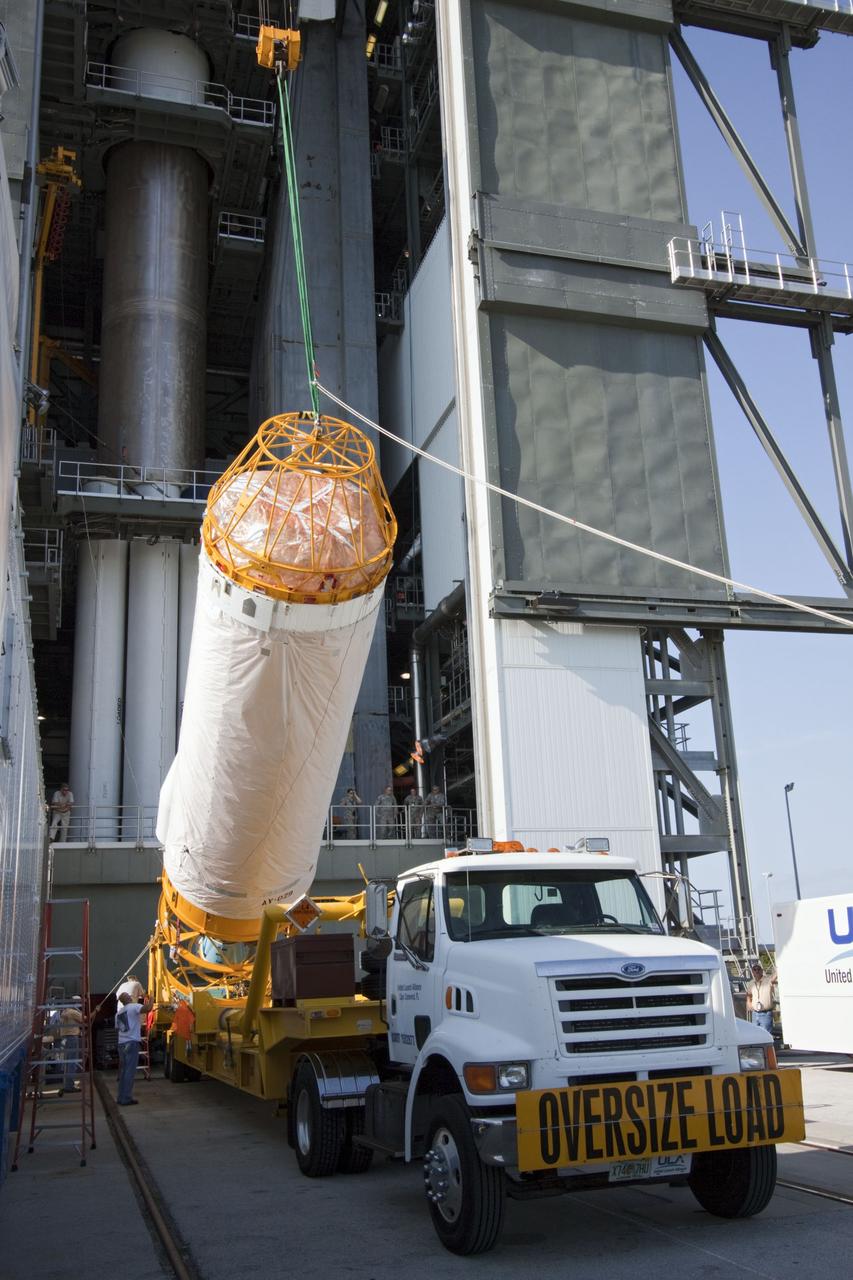
CAPE CANAVERAL, Fla. -- At Launch Complex 41 at Cape Canaveral Air Force Station in Florida, an overhead crane lifts the Centaur upper stage for the United Launch Alliance Atlas V, slated to launch NASA's Juno spacecraft, into the Vertical Integration Facility (VIF). After in position in the VIF it will be attached to the Atlas V booster stage, already at the pad. Juno is scheduled to launch aboard an Atlas V from Cape Canaveral, Fla. Aug. 5.The solar-powered spacecraft will orbit Jupiter's poles 33 times to find out more about the gas giant's origins, structure, atmosphere and magnetosphere and investigate the existence of a solid planetary core. For more information visit: www.nasa.gov/juno. Photo credit: NASA/Jim Grossmann
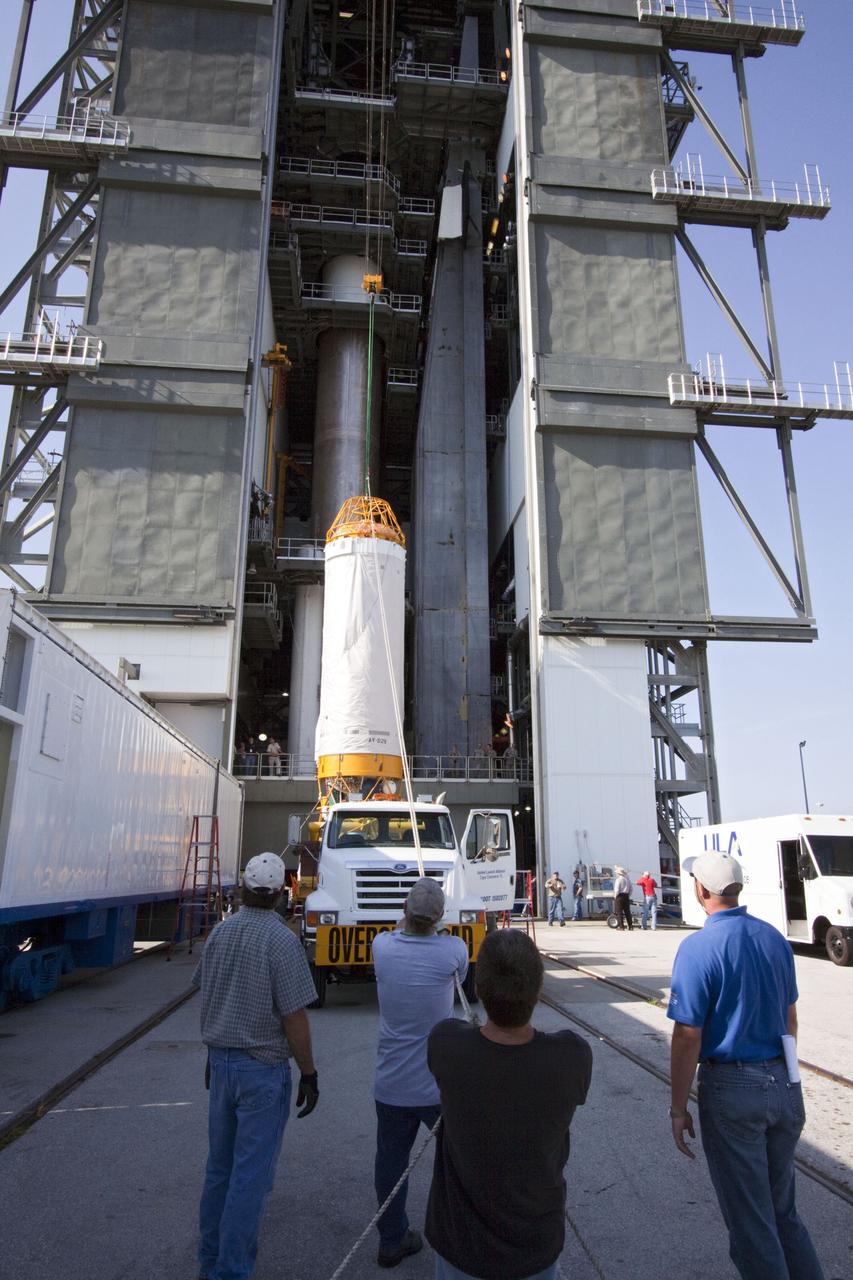
CAPE CANAVERAL, Fla. -- At Launch Complex 41 at Cape Canaveral Air Force Station in Florida, workers guide an overhead crane as it lifts the Centaur upper stage for the United Launch Alliance Atlas V, slated to launch NASA's Juno spacecraft, into the Vertical Integration Facility (VIF). After in position in the VIF it will be attached to the Atlas V booster stage, already at the pad. Juno is scheduled to launch aboard an Atlas V from Cape Canaveral, Fla. Aug. 5.The solar-powered spacecraft will orbit Jupiter's poles 33 times to find out more about the gas giant's origins, structure, atmosphere and magnetosphere and investigate the existence of a solid planetary core. For more information visit: www.nasa.gov/juno. Photo credit: NASA/Jim Grossmann
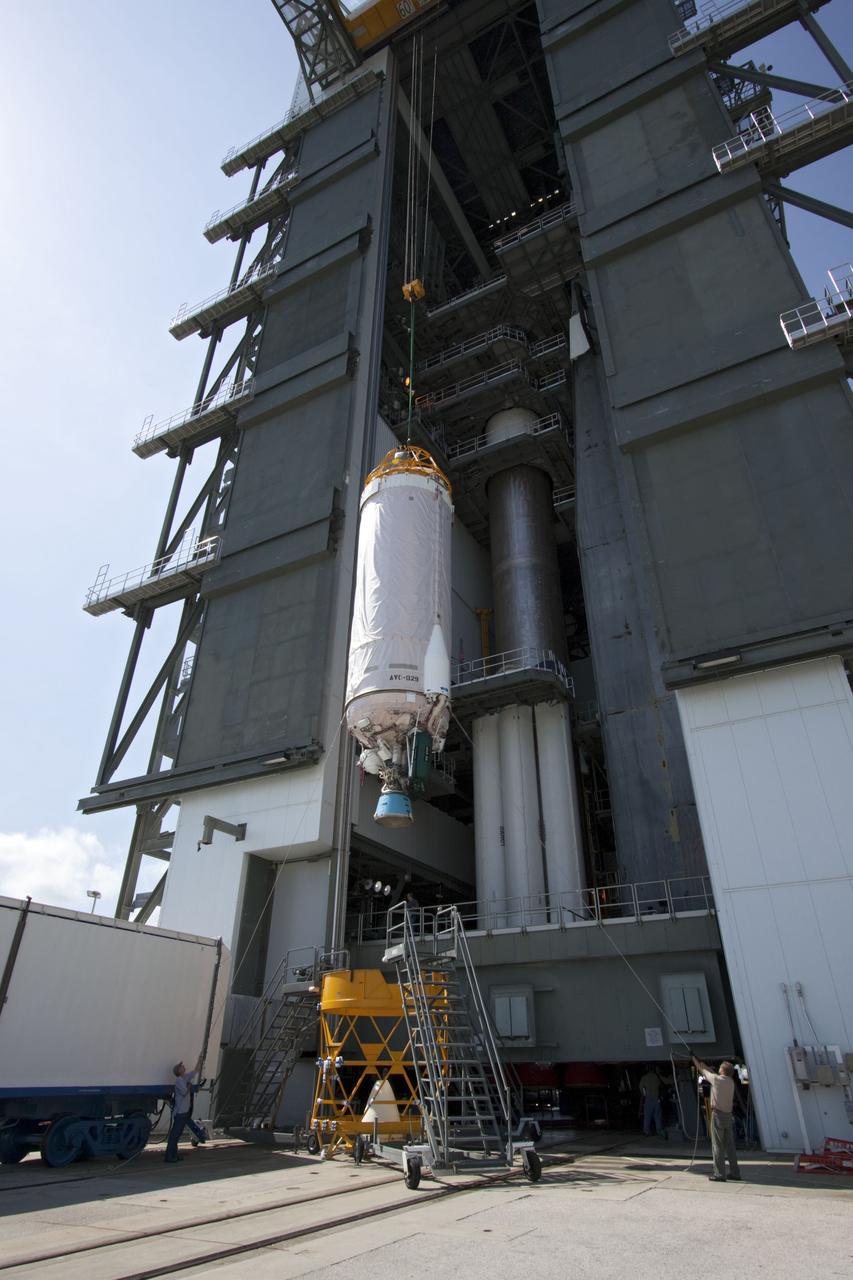
CAPE CANAVERAL, Fla. -- At Launch Complex 41 at Cape Canaveral Air Force Station in Florida, workers guide an overhead crane as it lifts the Centaur upper stage for the United Launch Alliance Atlas V, slated to launch NASA's Juno spacecraft, into the Vertical Integration Facility (VIF). After in position in the VIF it will be attached to the Atlas V booster stage, already at the pad. Juno is scheduled to launch aboard an Atlas V from Cape Canaveral, Fla. Aug. 5.The solar-powered spacecraft will orbit Jupiter's poles 33 times to find out more about the gas giant's origins, structure, atmosphere and magnetosphere and investigate the existence of a solid planetary core. For more information visit: www.nasa.gov/juno. Photo credit: NASA/Jim Grossmann
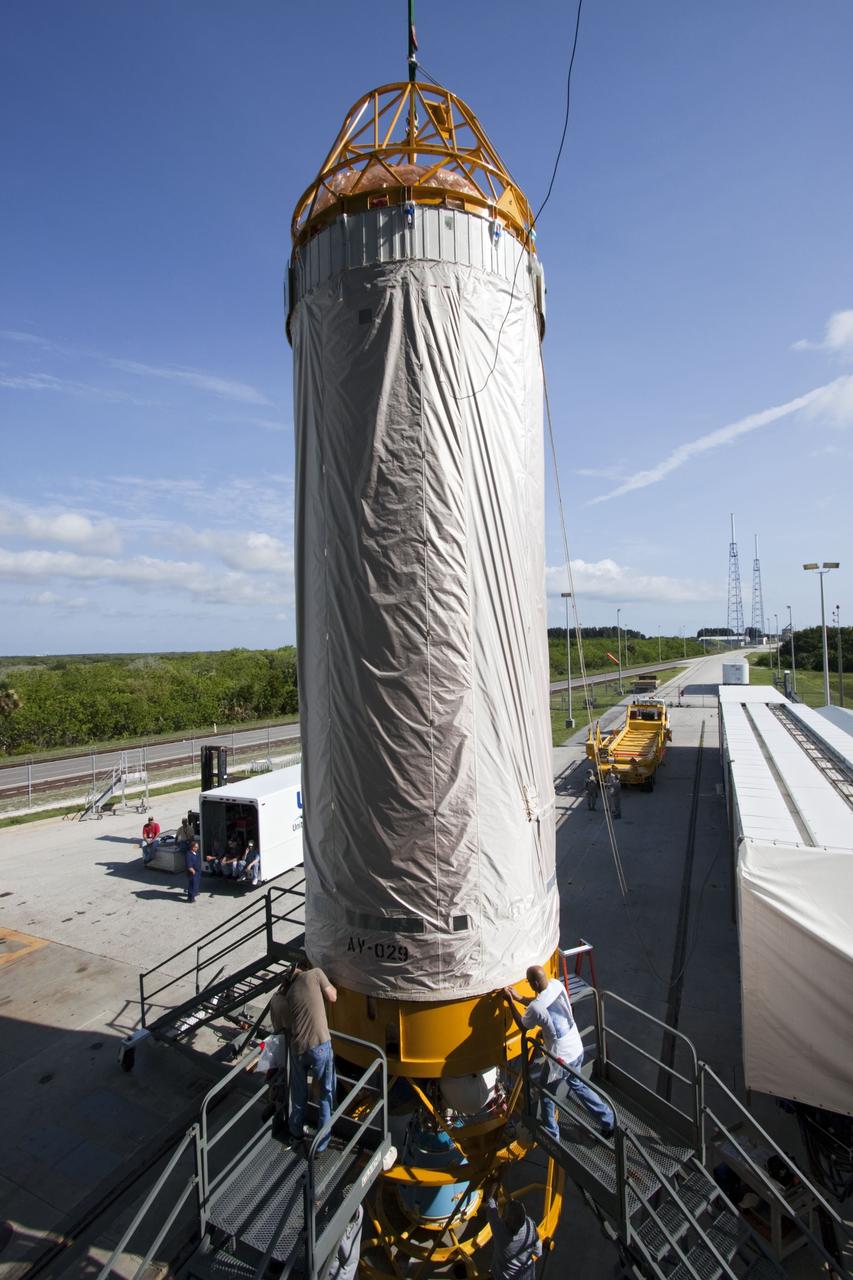
CAPE CANAVERAL, Fla. -- At Launch Complex 41 at Cape Canaveral Air Force Station in Florida, workers roll down the protective cover on the Centaur upper stage for the United Launch Alliance Atlas V, slated to launch NASA's Juno spacecraft, as it lifted into the Vertical Integration Facility (VIF). After in position in the VIF it will be attached to the Atlas V booster stage, already at the pad. Juno is scheduled to launch aboard an Atlas V from Cape Canaveral, Fla. Aug. 5.The solar-powered spacecraft will orbit Jupiter's poles 33 times to find out more about the gas giant's origins, structure, atmosphere and magnetosphere and investigate the existence of a solid planetary core. For more information visit: www.nasa.gov/juno. Photo credit: NASA/Jim Grossmann
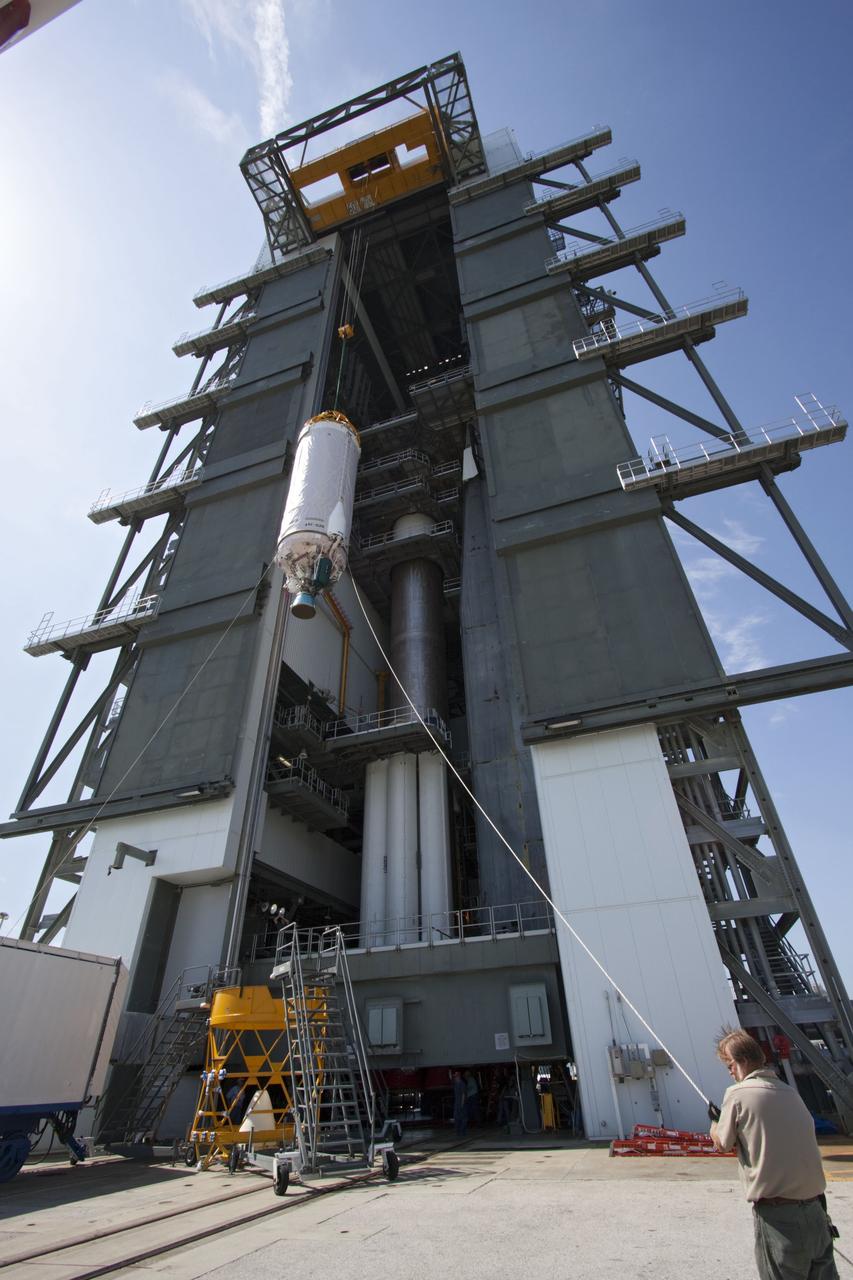
CAPE CANAVERAL, Fla. -- At Launch Complex 41 at Cape Canaveral Air Force Station in Florida, workers guide an overhead crane as it lifts the Centaur upper stage for the United Launch Alliance Atlas V, slated to launch NASA's Juno spacecraft, into the Vertical Integration Facility (VIF). After in position in the VIF it will be attached to the Atlas V booster stage, already at the pad. Juno is scheduled to launch aboard an Atlas V from Cape Canaveral, Fla. Aug. 5.The solar-powered spacecraft will orbit Jupiter's poles 33 times to find out more about the gas giant's origins, structure, atmosphere and magnetosphere and investigate the existence of a solid planetary core. For more information visit: www.nasa.gov/juno. Photo credit: NASA/Jim Grossmann
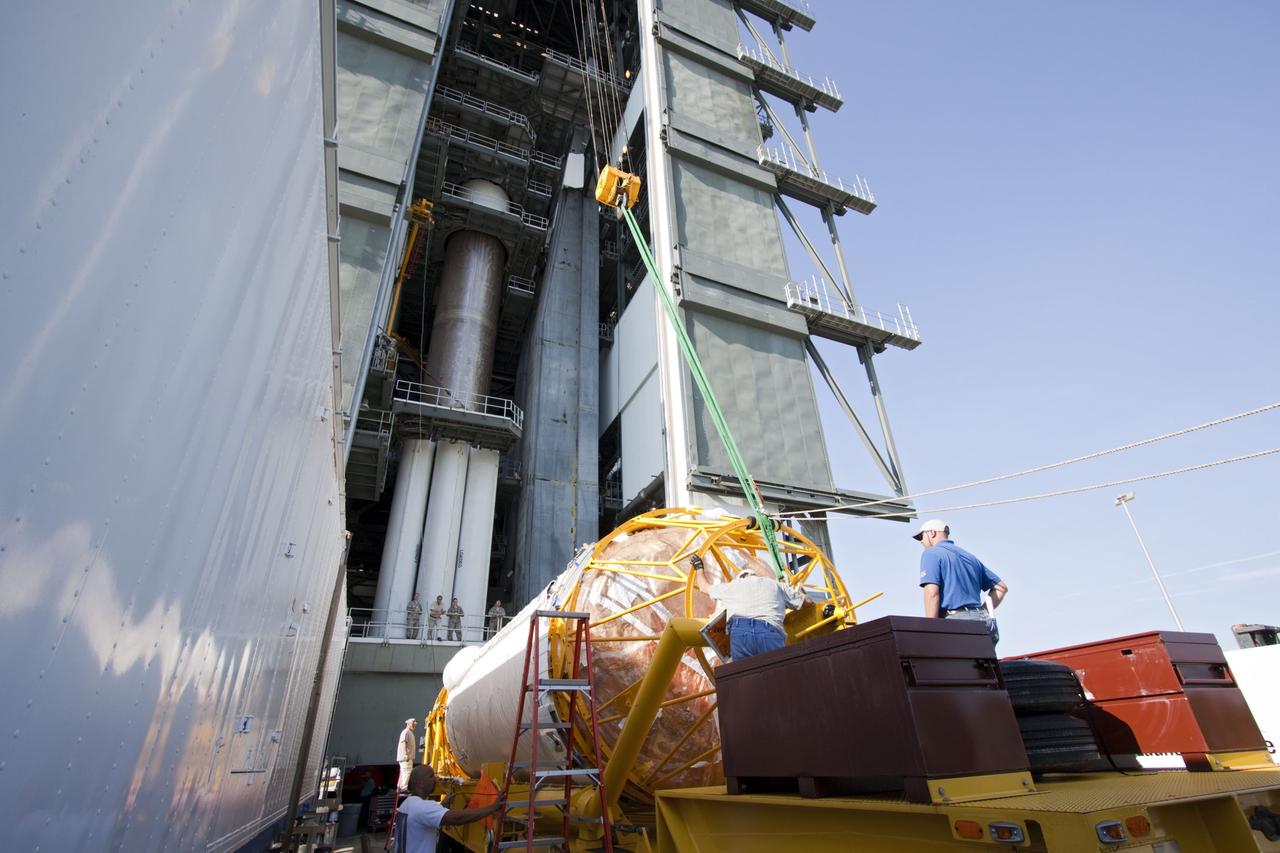
CAPE CANAVERAL, Fla. -- At Launch Complex 41 at Cape Canaveral Air Force Station in Florida, workers attach an overhead crane to the Centaur upper stage for the United Launch Alliance Atlas V, slated to launch NASA's Juno spacecraft, into the Vertical Integration Facility (VIF). After in position in the VIF it will be attached to the Atlas V booster stage, already at the pad. Juno is scheduled to launch aboard an Atlas V from Cape Canaveral, Fla. Aug. 5.The solar-powered spacecraft will orbit Jupiter's poles 33 times to find out more about the gas giant's origins, structure, atmosphere and magnetosphere and investigate the existence of a solid planetary core. For more information visit: www.nasa.gov/juno. Photo credit: NASA/Jim Grossmann
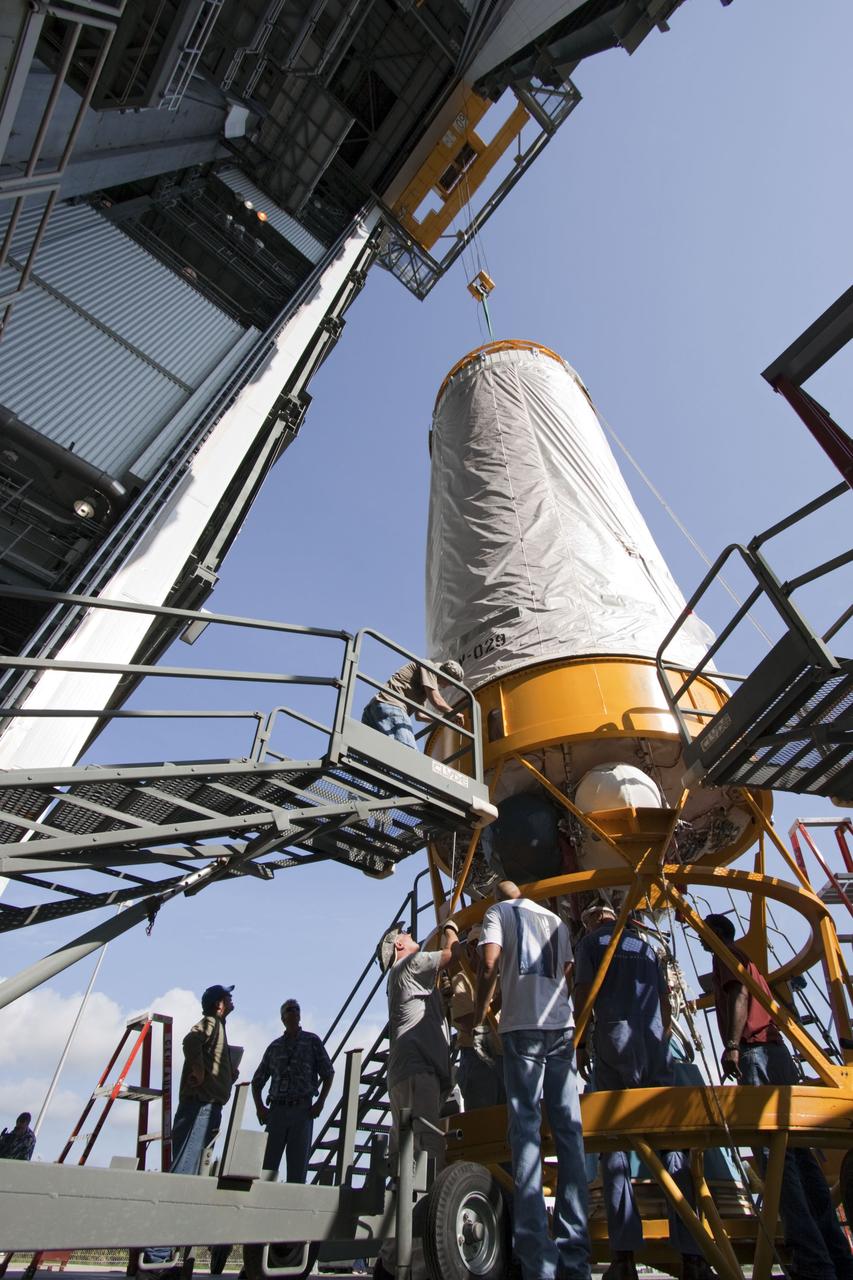
CAPE CANAVERAL, Fla. -- At Launch Complex 41 at Cape Canaveral Air Force Station in Florida, workers guide an overhead crane as it lifts the Centaur upper stage for the United Launch Alliance Atlas V, slated to launch NASA's Juno spacecraft, into the Vertical Integration Facility (VIF). After in position in the VIF it will be attached to the Atlas V booster stage, already at the pad. Juno is scheduled to launch aboard an Atlas V from Cape Canaveral, Fla. Aug. 5.The solar-powered spacecraft will orbit Jupiter's poles 33 times to find out more about the gas giant's origins, structure, atmosphere and magnetosphere and investigate the existence of a solid planetary core. For more information visit: www.nasa.gov/juno. Photo credit: NASA/Jim Grossmann
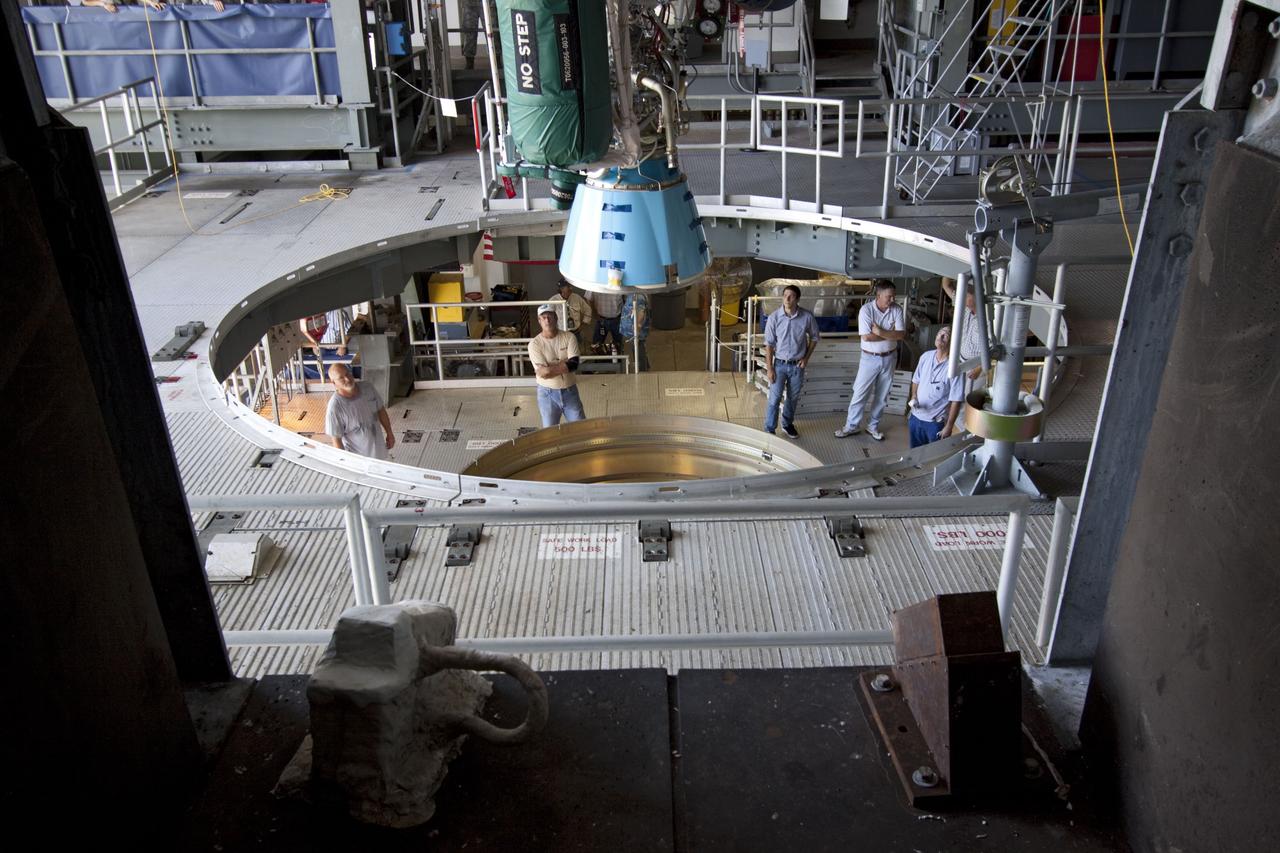
CAPE CANAVERAL, Fla. -- At Launch Complex 41 at Cape Canaveral Air Force Station in Florida, workers monitor an overhead crane as it lowers the Centaur upper stage for the United Launch Alliance Atlas V, slated to launch NASA's Juno spacecraft, into position in the Vertical Integration Facility (VIF). It then will be attached to the Atlas V booster stage, already at the pad. Juno is scheduled to launch aboard an Atlas V from Cape Canaveral, Fla. Aug. 5.The solar-powered spacecraft will orbit Jupiter's poles 33 times to find out more about the gas giant's origins, structure, atmosphere and magnetosphere and investigate the existence of a solid planetary core. For more information visit: www.nasa.gov/juno. Photo credit: NASA/Jim Grossmann