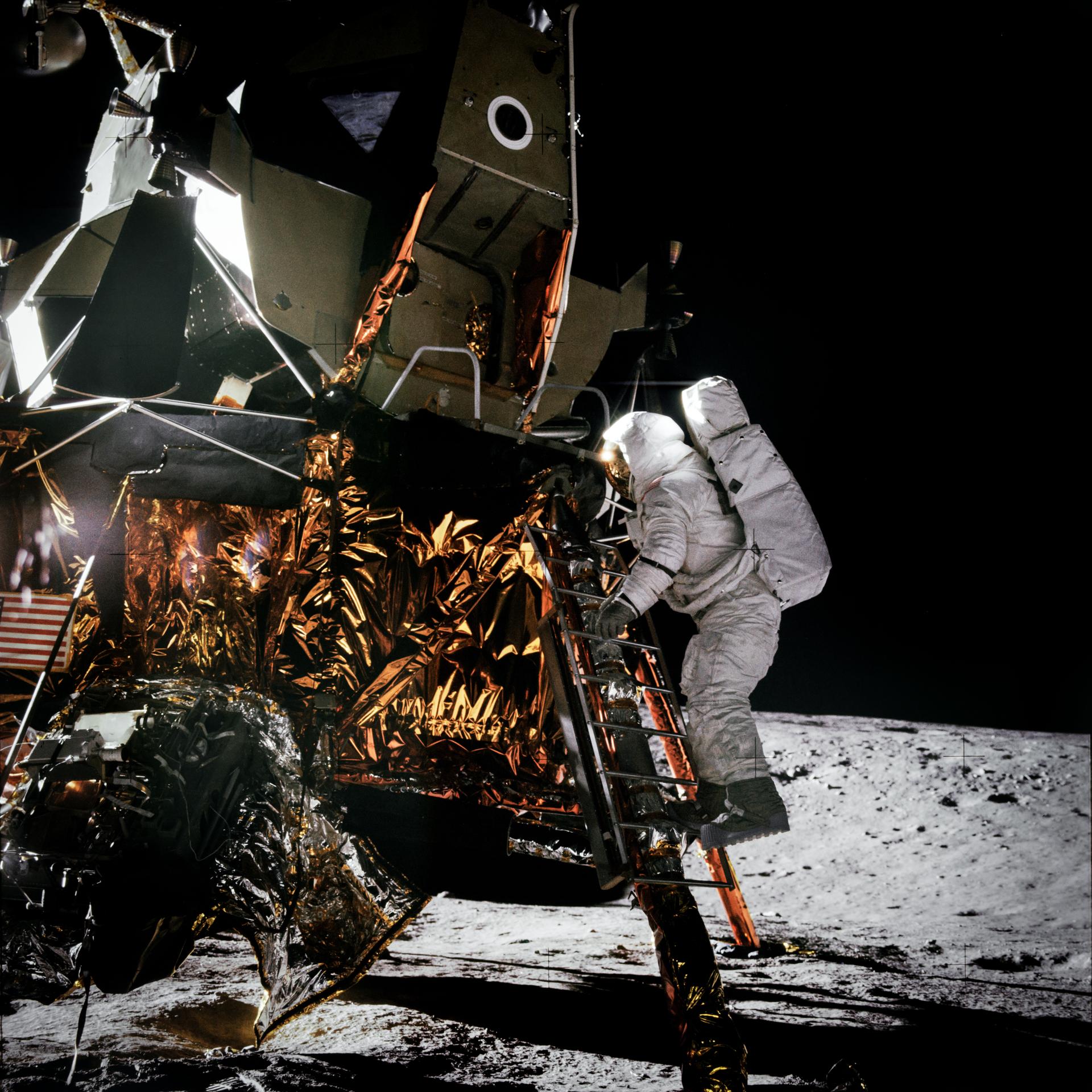
AS12-46-6728 (19 Nov. 1969) --- Astronaut Alan L. Bean, lunar module pilot for the Apollo 12 mission, is about to step off the ladder of the Lunar Module to join astronaut Charles Conrad Jr., mission commander, in extravehicular activity (EVA). Conrad and Bean descended in the Apollo 12 LM to explore the moon while astronaut Richard F. Gordon Jr., command module pilot, remained with the Command and Service Modules in lunar orbit.
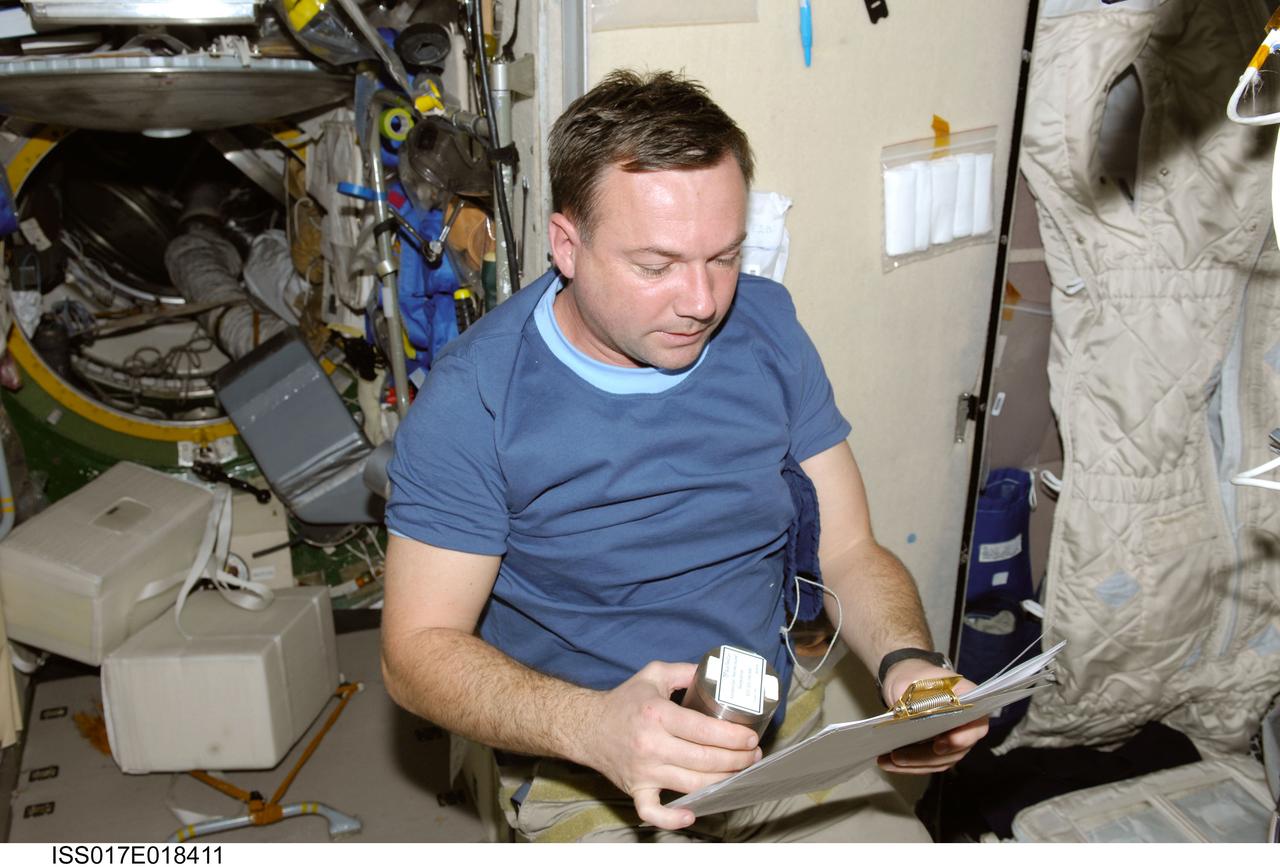
ISS017-E-018411 (15 Oct. 2008) --- Russian Federal Space Agency cosmonaut Yury Lonchakov, Expedition 18 flight engineer, looks over a procedures checklist while holding Space Science P/L Crystallizer Module-1 experiment hardware in the Zvezda Service Module of the International Space Station.
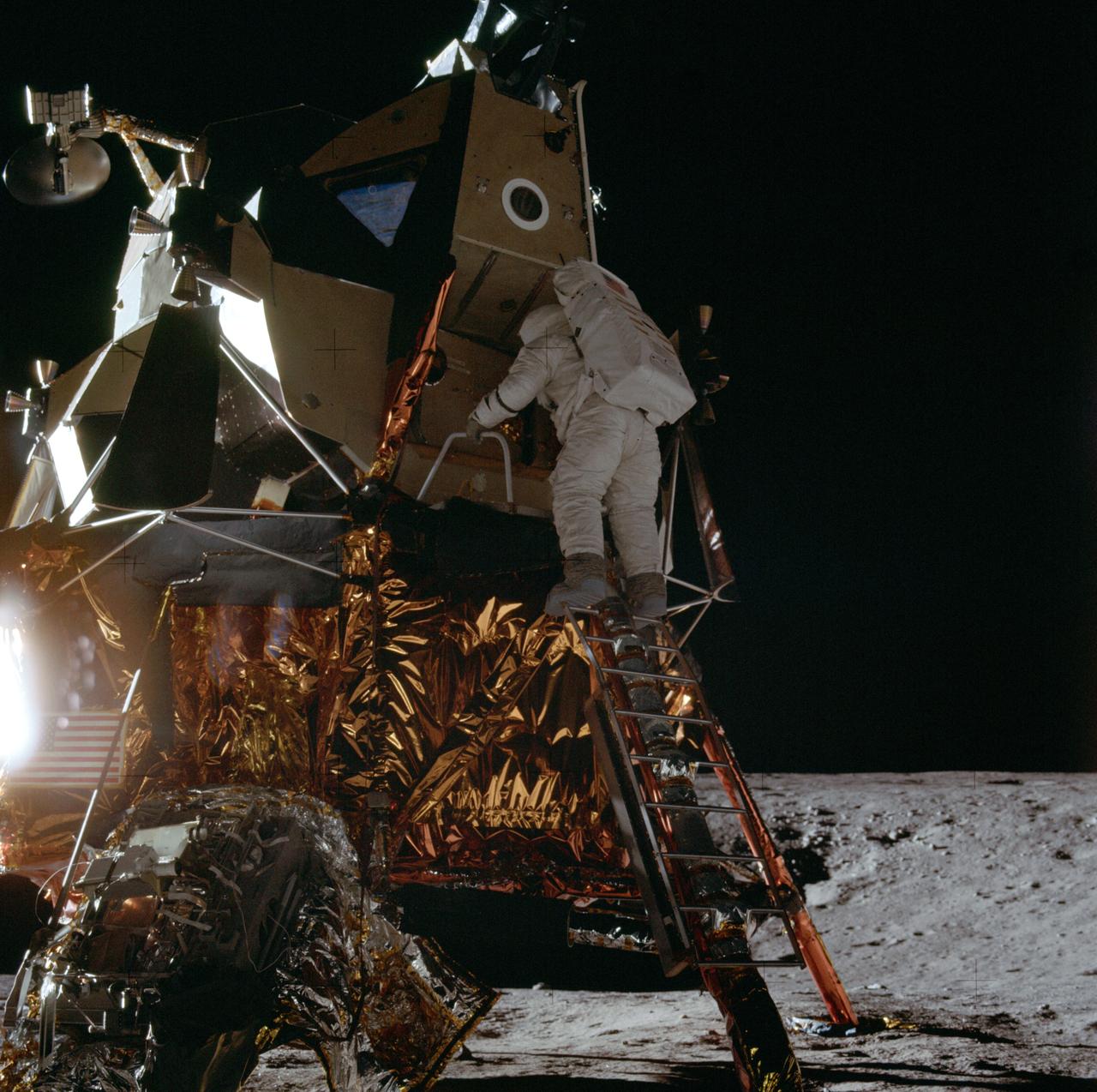
AS12-46-6726 (19 Nov. 1969) --- Astronaut Alan L. Bean, lunar module pilot for the Apollo 12 mission, starts down the ladder of the Lunar Module (LM) to join astronaut Charles Conrad Jr., mission commander, in extravehicular activity (EVA). While astronauts Conrad and Bean descended in the LM "Intrepid" to explore the Ocean of Storms region of the moon, astronaut Richard F. Gordon Jr., command module pilot, remained with the Command and Service Modules (CSM) "Yankee Clipper" in lunar orbit.
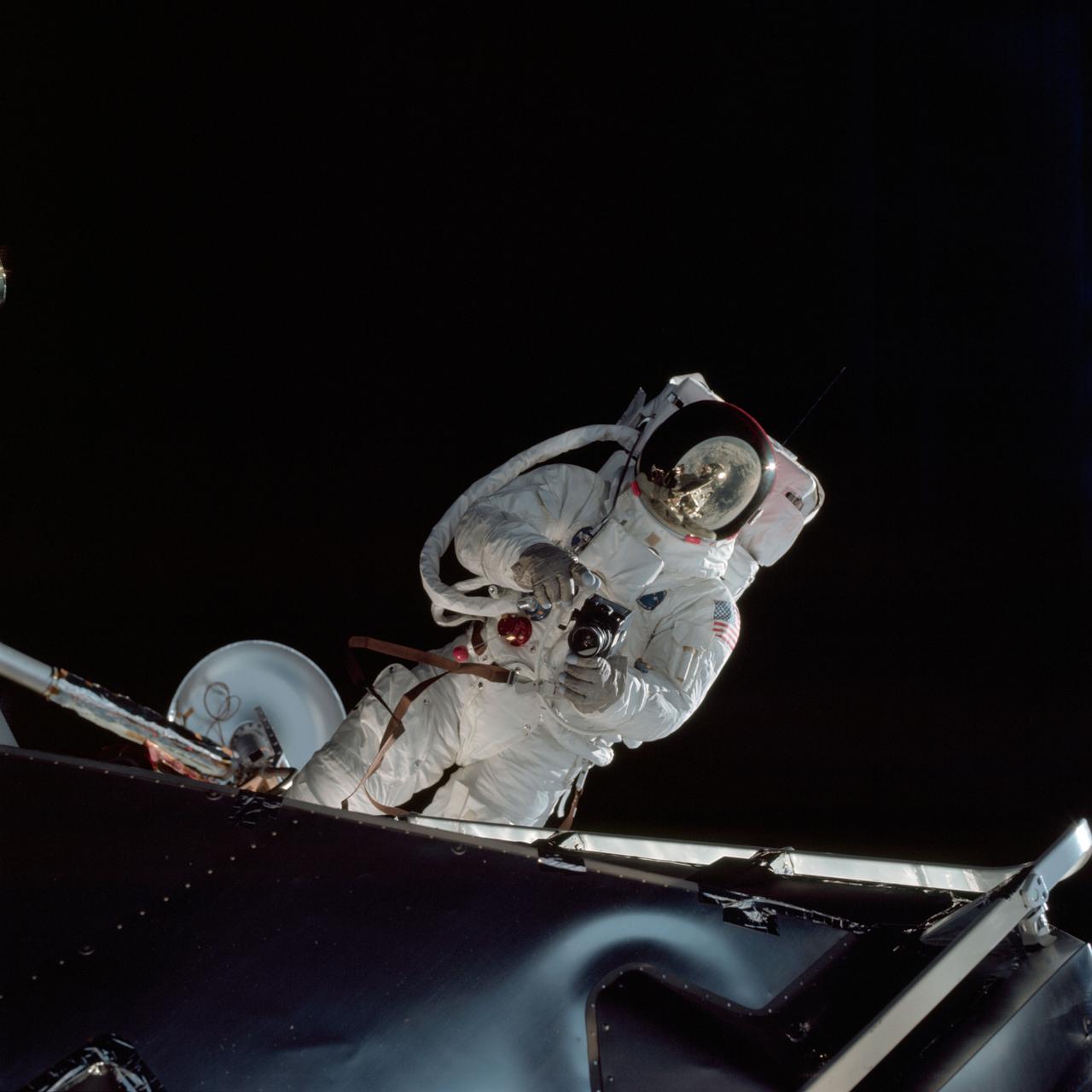
Astronaut Russell L. Schweickart, lunar module pilot, operates a 70mm Hasselblad camera during his extravehicular activity on the fourth day of the Apollo 9 earth-orbital mission. The Command/Service Module and the Lunar Module 3 "Spider" are docked. This view was taken form the Command Module "Gumdrop". Schweickart, wearing an Extravehicular Mobility Unit (EMU), is standing in "golden slippers" on the Lunar Module porch. On his back, partially visible, are a Portable Life Support System (PLSS) and an Oxygen Purge System (OPS). Film magazine was A,film type was SO-368 Ektachrome with 0.460 - 0.710 micrometers film / filter transmittance response and haze filter,80mm lens.
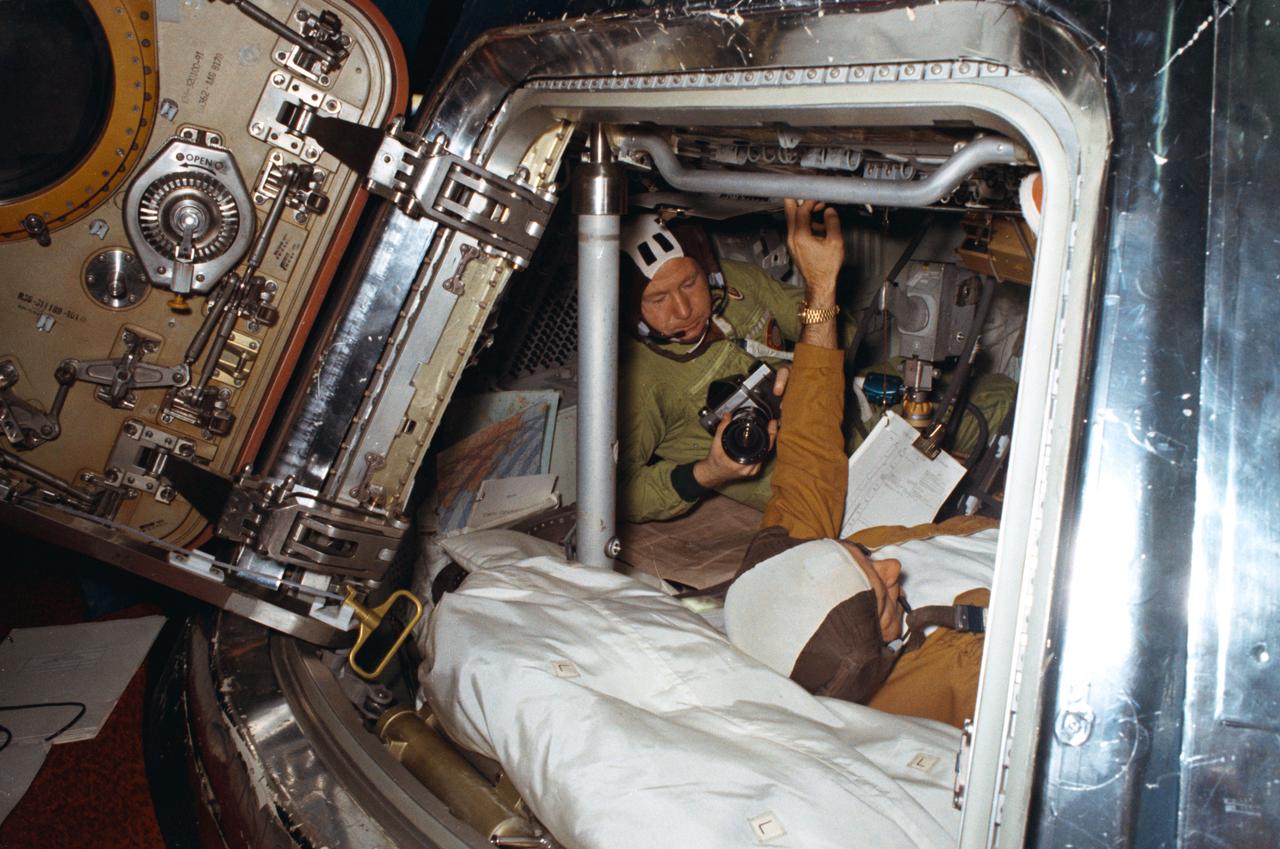
S75-21720 (14 Feb. 1975) --- Astronaut Alan L. Bean (foreground) and cosmonaut Aleksey A. Leonov participate in Apollo-Soyuz Test Project joint crew training in Building 35 at NASA's Johnson Space Center. They are in the Apollo Command Module trainer. The training session simulated activities on the first day in Earth orbit. Bean is the commander of the American ASTP backup crew. Leonov is the commander of the Soviet ASTP first (prime) crew.
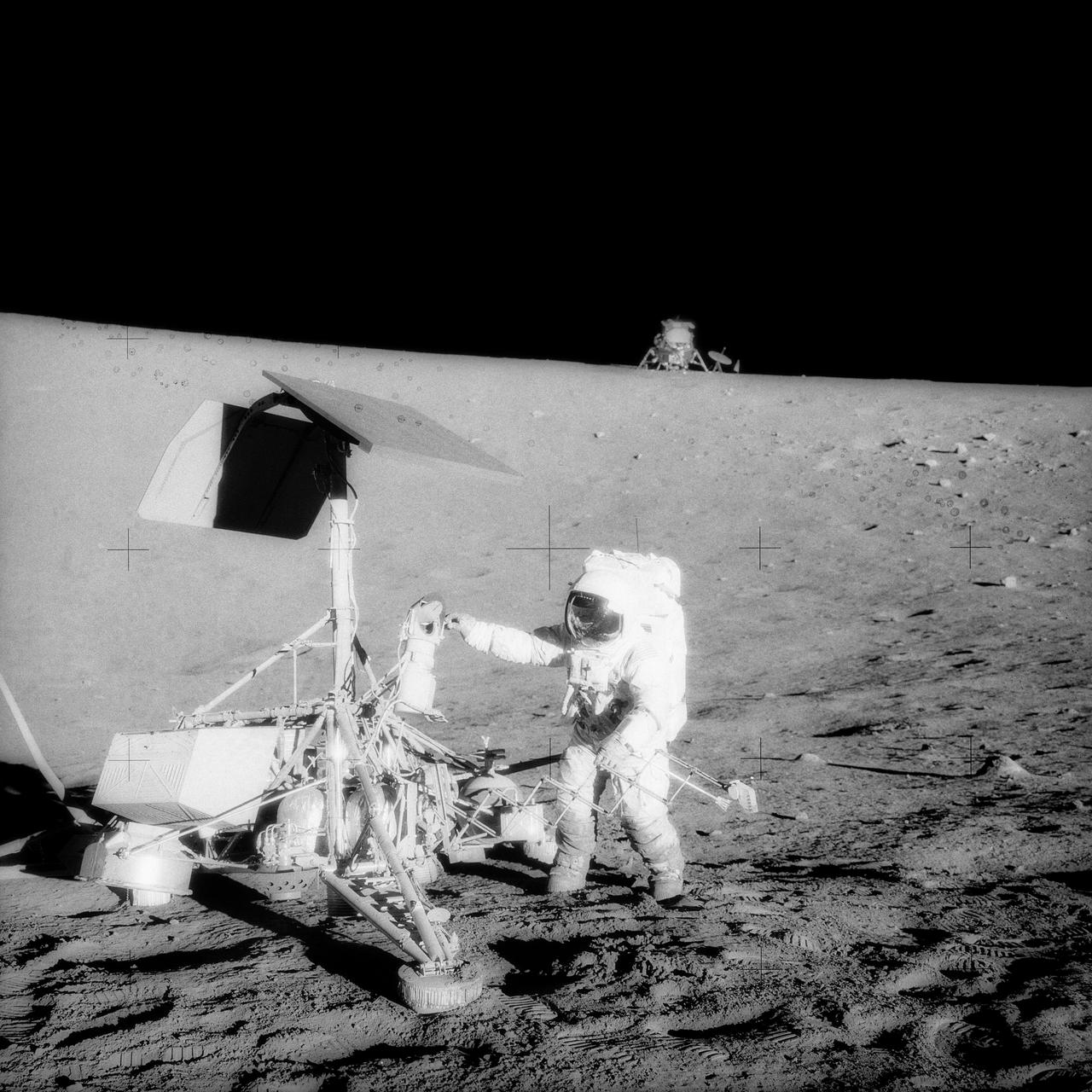
AS12-48-7134 (20 Nov. 1969) --- This unusual photograph, taken during the second Apollo 12 extravehicular activity (EVA), shows two U.S. spacecraft on the surface of the moon. The Apollo 12 Lunar Module (LM) is in the background. The unmanned Surveyor 3 spacecraft is in the foreground. The Apollo 12 LM, with astronauts Charles Conrad Jr. and Alan L. Bean aboard, landed about 600 feet from Surveyor 3 in the Ocean of Storms. The television camera and several other pieces were taken from Surveyor 3 and brought back to Earth for scientific examination. Here, Conrad examines the Surveyor's TV camera prior to detaching it. Astronaut Richard F. Gordon Jr. remained with the Apollo 12 Command and Service Modules (CSM) in lunar orbit while Conrad and Bean descended in the LM to explore the moon. Surveyor 3 soft-landed on the moon on April 19, 1967.
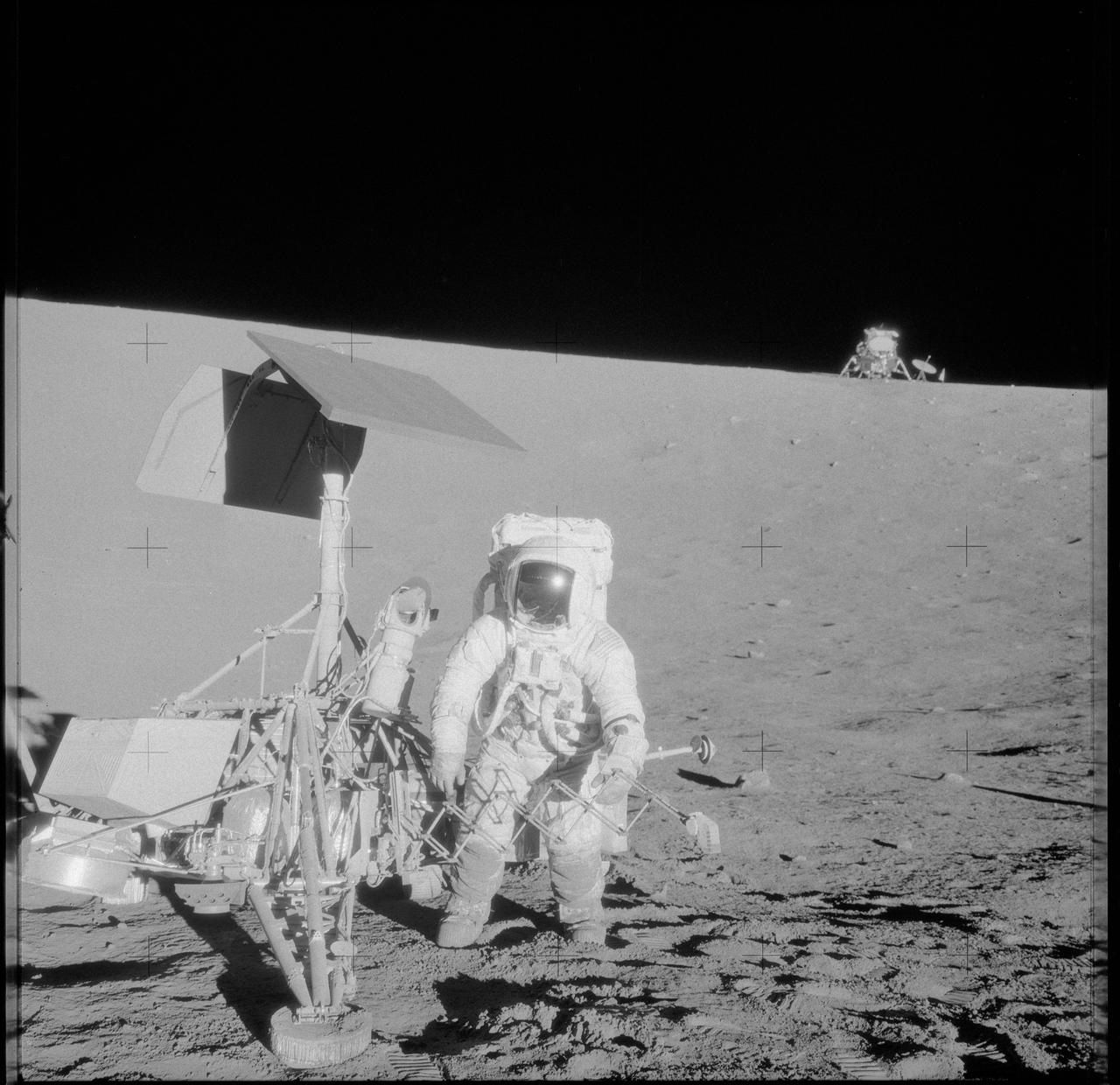
AS12-48-7136 (20 Nov. 1969) --- Astronaut Charles Conrad Jr., commander, examines the unmanned Surveyor 3 spacecraft during the second Apollo 12 extravehicular activity (EVA). In the background is the lunar module, parked where the crew had landed it in the Ocean of Storms only 600 feet from Surveyor 3. This series of pictures documents the only occasion wherein Apollo astronauts landed near or had hands-on contact with another spacecraft which had arrived on the moon's surface well ahead of them. This picture was taken by astronaut Alan L. Bean, lunar module pilot. The television camera and several other pieces were taken from Surveyor 3 and brought back to Earth for scientific examination. Surveyor 3 soft-landed on the moon on April 19, 1967. Astronaut Richard F. Gordon Jr., command module pilot, remained with the Command and Service Modules (CSM) in lunar orbit while astronauts Conrad and Bean descended in the LM to explore the moon. Photo credit: NASA
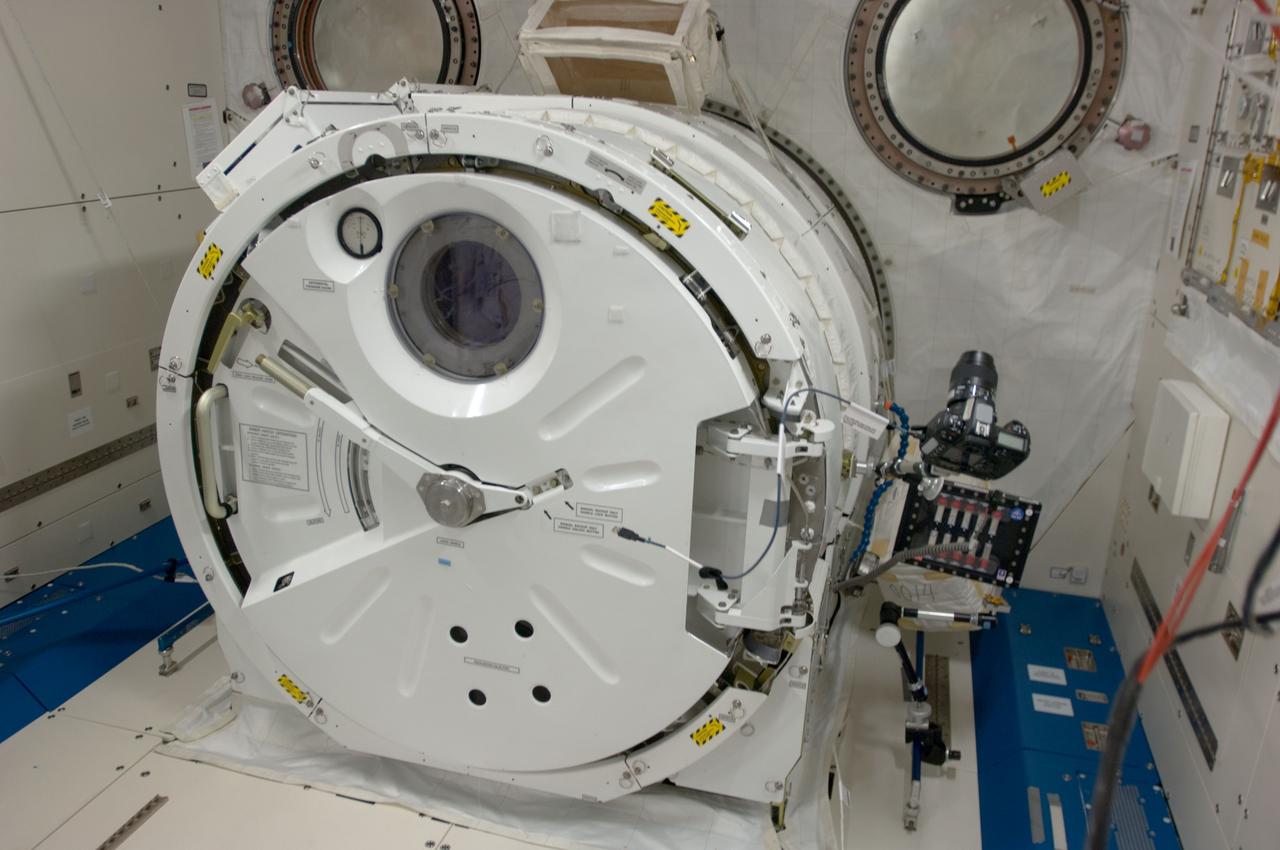
View of internal airlock (A/L) in the Japanese Experiment Module (JEM) Pressurized Module (JPM). Photo was taken during Expedition 34.
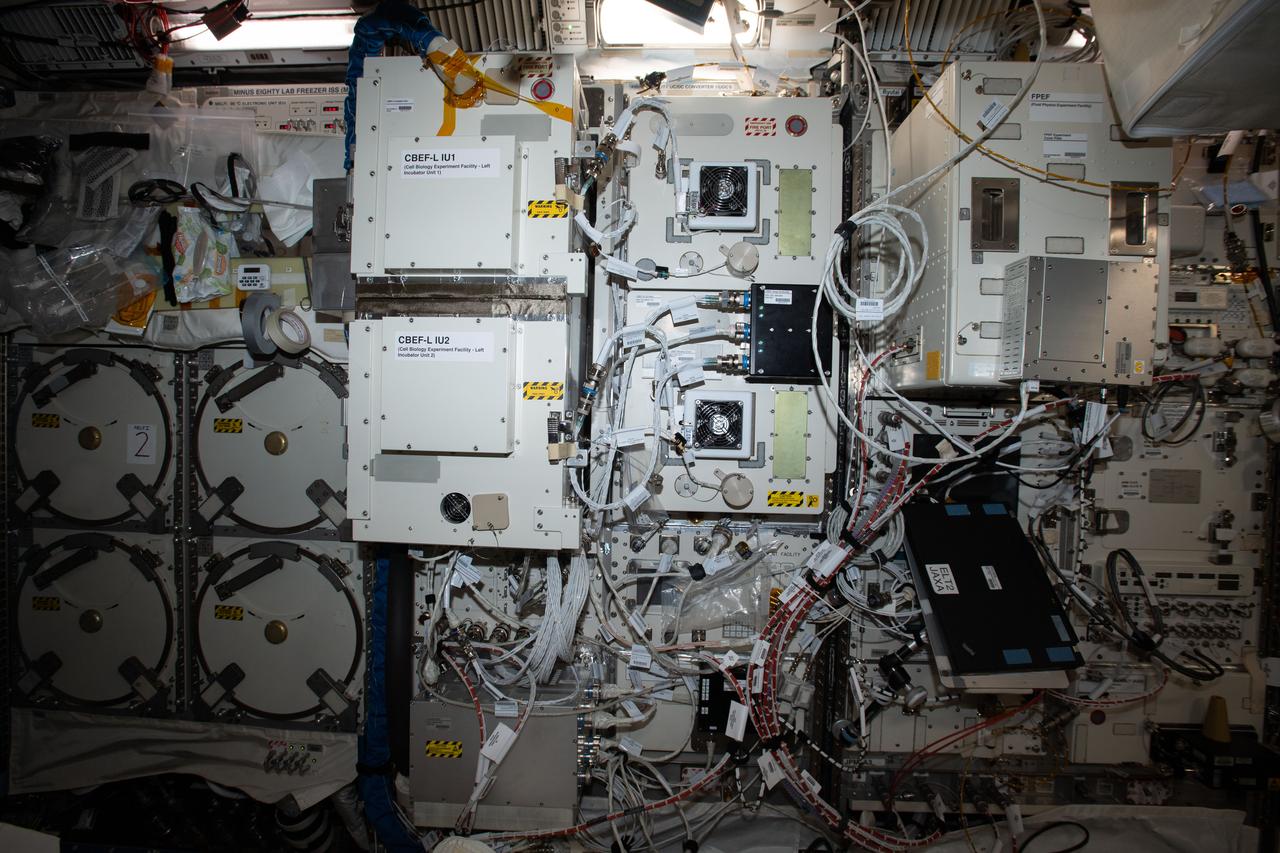
iss062e103684 (3/21/2020) --- A view of the rack containing CBEF-L (Cell Biology Experiment Facility-L) IU1 and CBEF-L IU2 in the Japanese Experiment Module (JEM) Pressurized Module (JPM). aboard the International Space Station (ISS). Cell Biology Experiment Facility-L (CBEF-L) is a Japan Aerospace Exploration Agency (JAXA) new subrack facility, which is an upgraded facility of the original Cell Biology Experiment Facility (CBEF) currently aboard the International Space Station (ISS). CBEF-L provides new capabilities with additional new resources such as Full High Definition video interface, Ethernet, 24 VDC power supply, and a larger diameter centrifugal test environment. By using the original CBEF and CBEF-L as one facility for the same experiment, the payload user is provided with an upgraded experimental environment that can handle the processing of more experimental samples for a wider array of experiments.
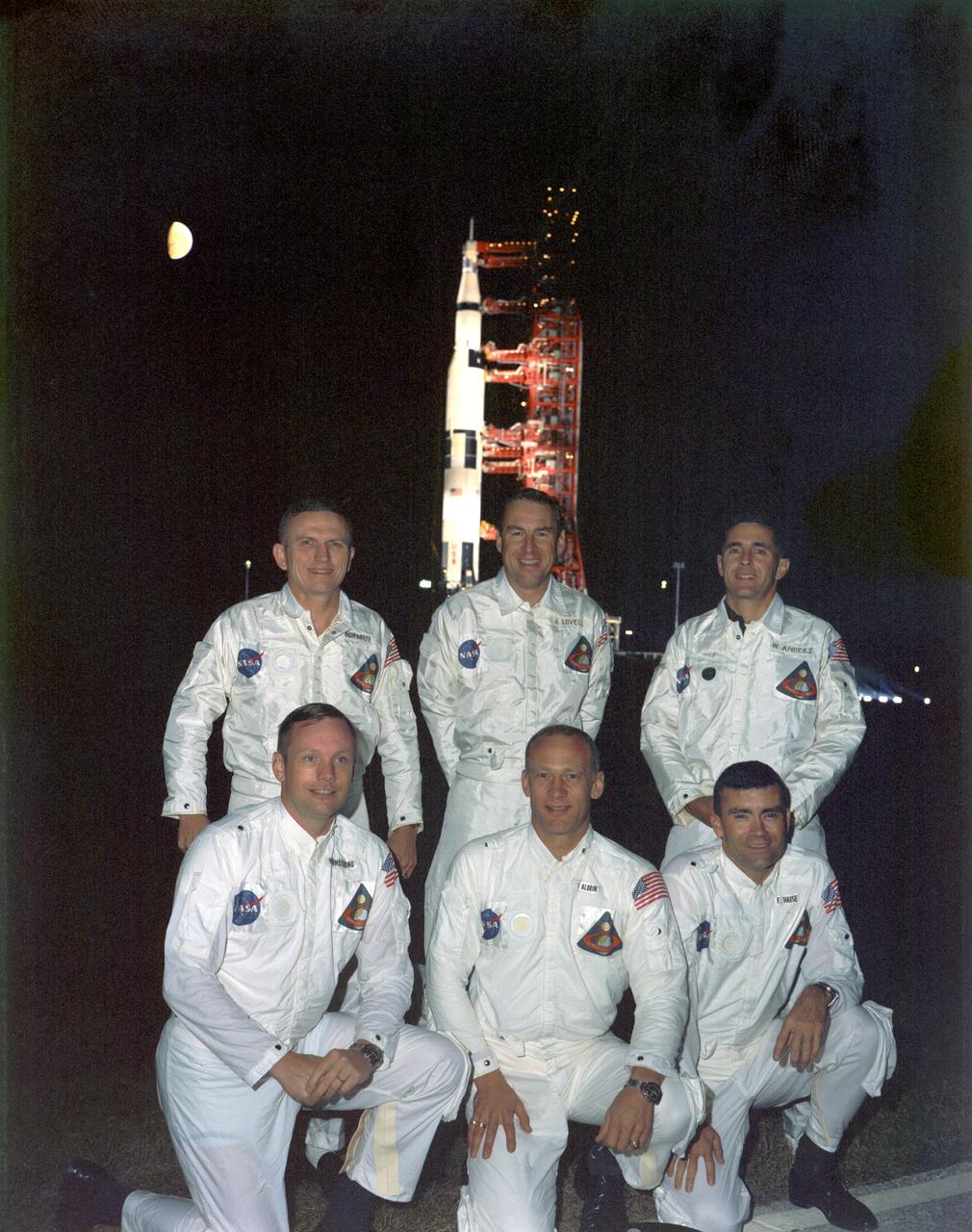
View of the Apollo 8 primary and backup crew portrait with the spacecraft at night in the background. Back row: (l.-r.) Frank Borman, commander, James A. Lovell, command module pilot and William A. Anders, lunar module pilot. Front row: (l.-r.) Neil A. Armstrong, commander, Edwin E. Aldrin, command module pilot and Fred W. Haise Jr., lunar module pilot. Original Photo number is KSC-68C-8017.
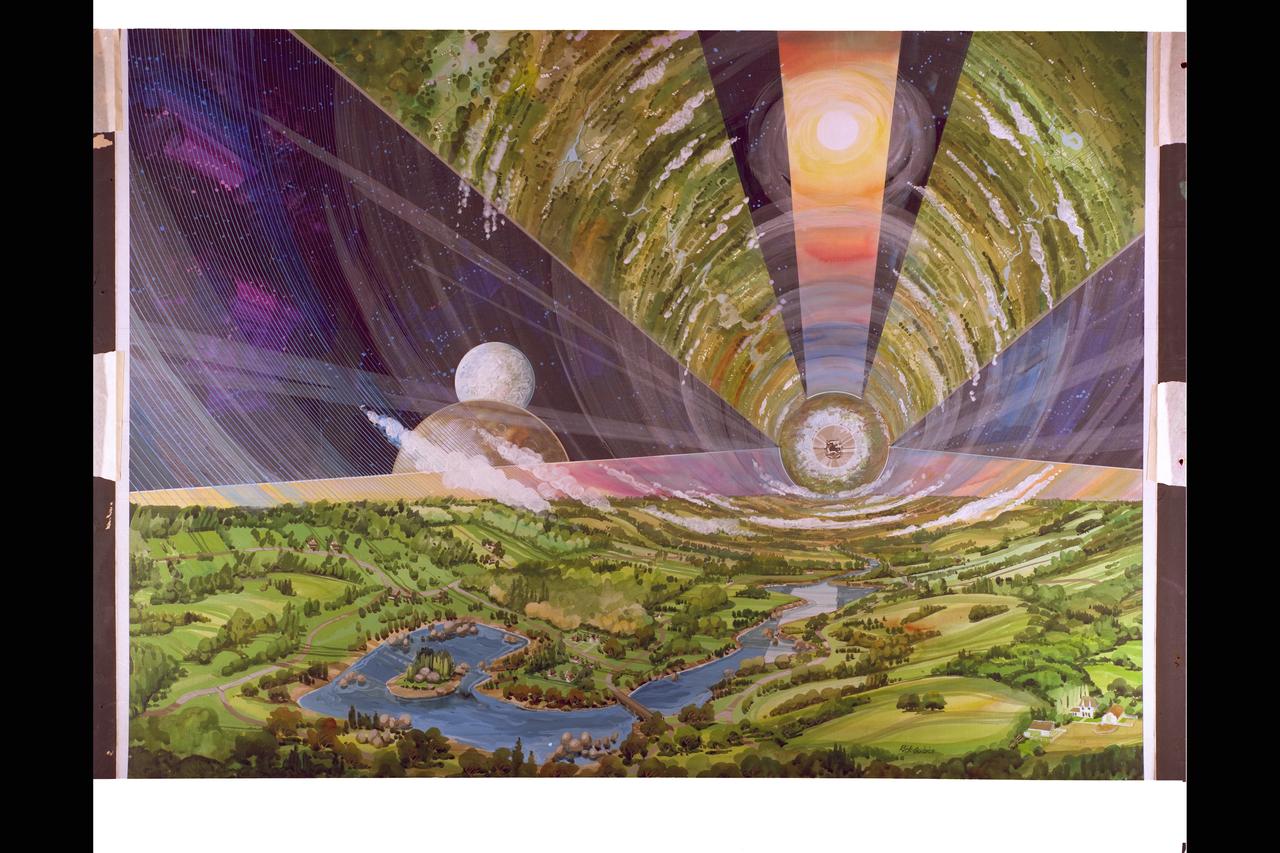
Artist: Rick Guidice interior of Torus wheel (L-5) Space Colonization Module
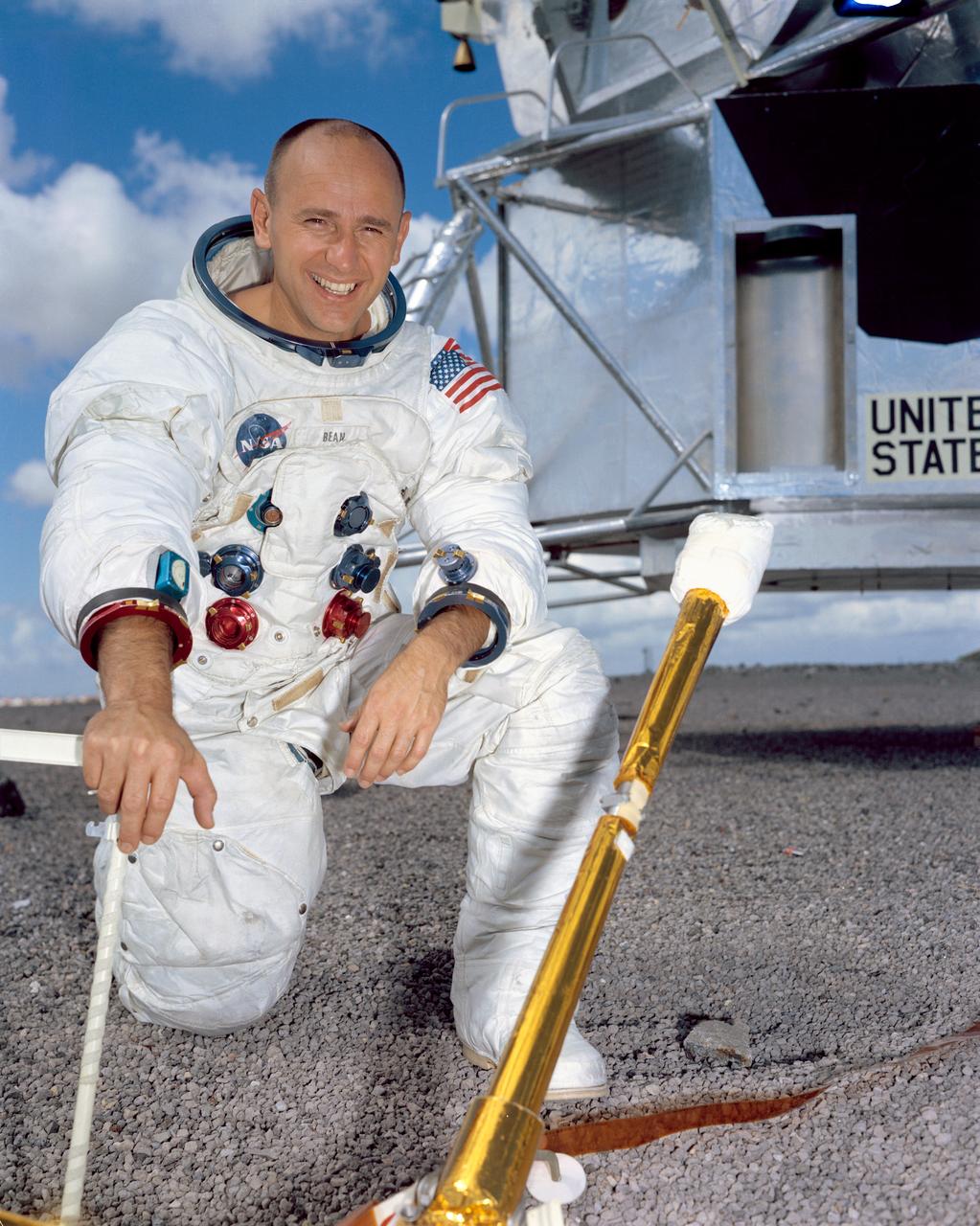
S69-38859 (September 1969) --- Astronaut Alan L. Bean, Apollo 12 lunar module pilot.
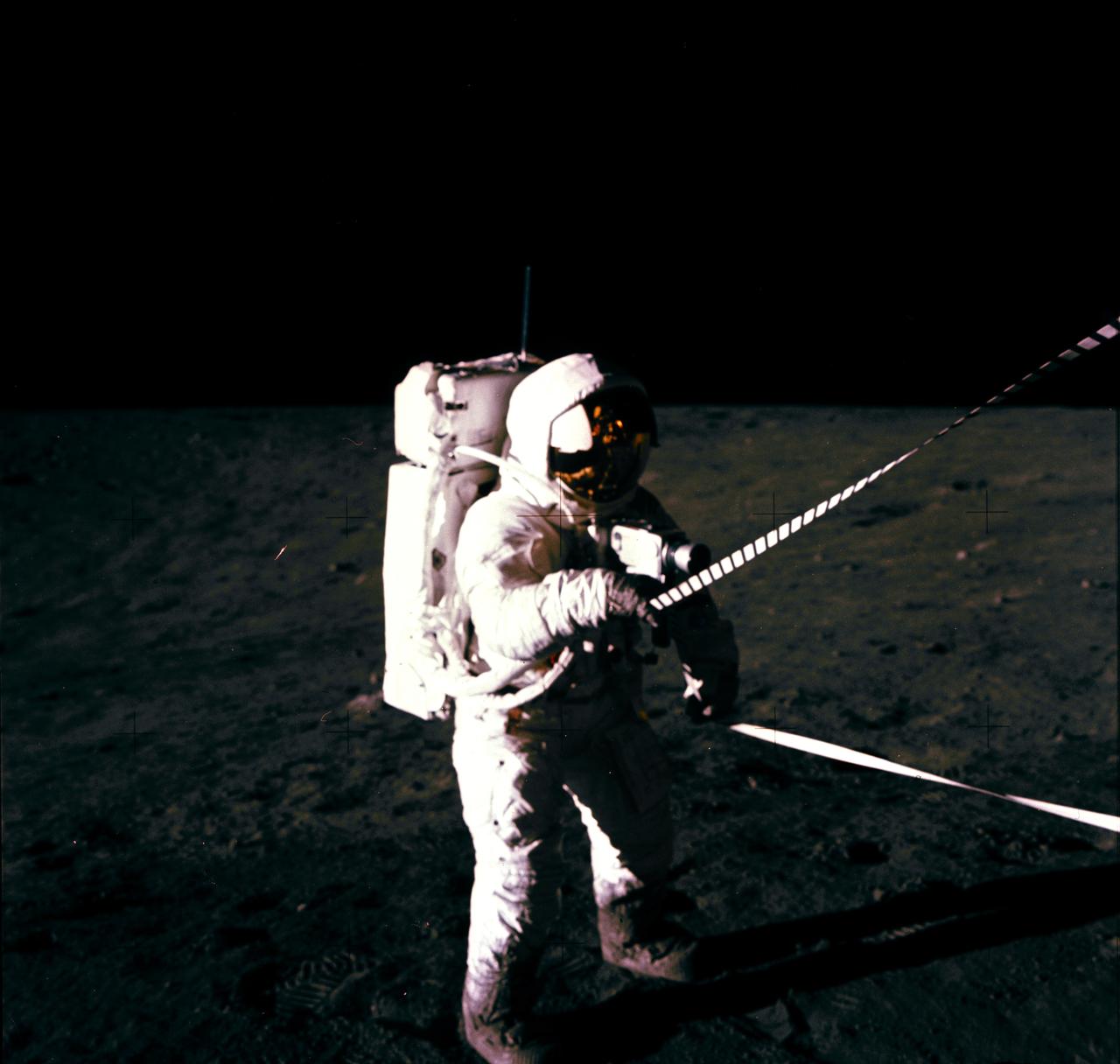
Astronaut Charles Conrad Jr., commander, uses the lunar equipment conveyer (LEC) at the Lunar Module during the Apollo 12 extravehicular activity on the lunar surface. This photograph was taken by Astronaut Alan L. Bean, lunar module pilot.
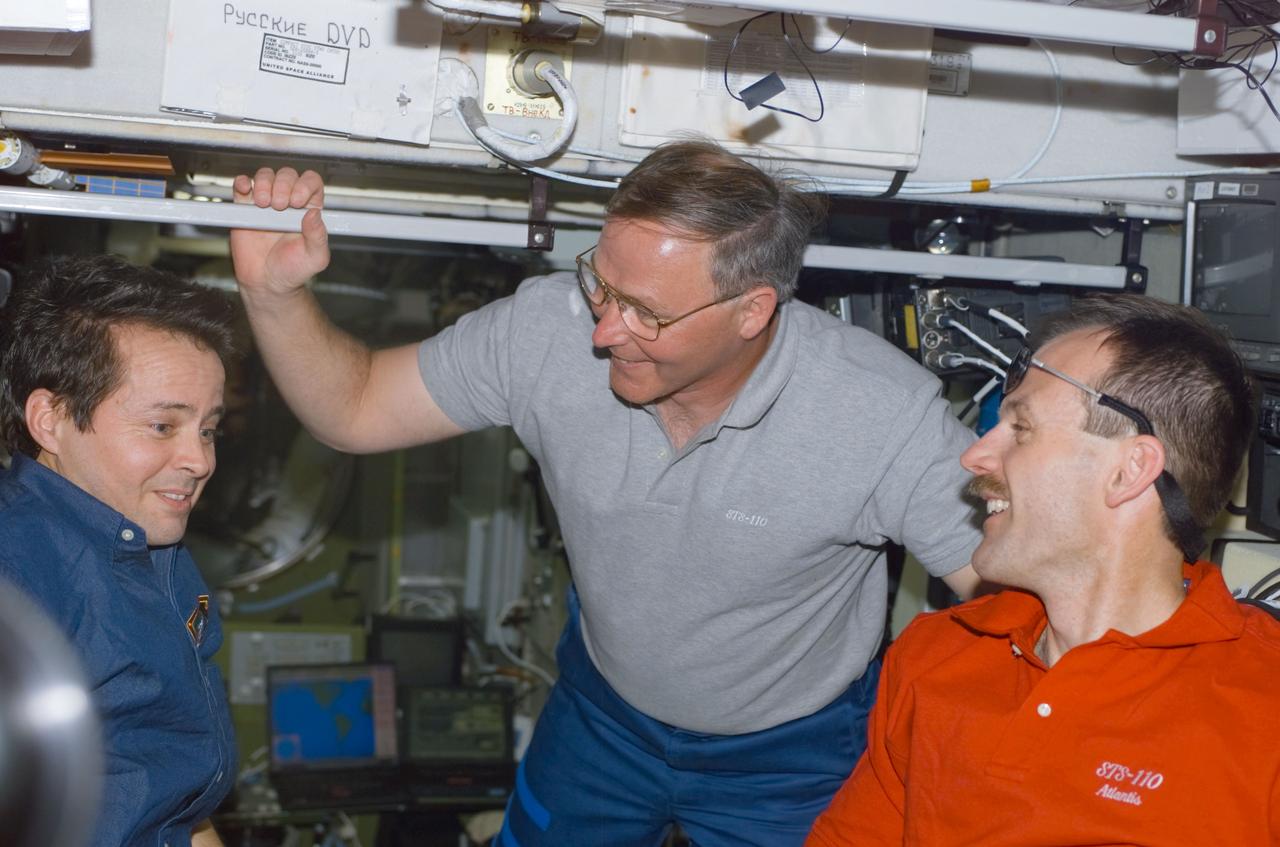
STS110-E-5122 (10 April 2002) --- Astronauts Daniel W. Bursch (left), Expedition Four flight engineer, Jerry L. Ross and Steven L. Smith, both STS-110 mission specialists, converse in the Zvezda Service Module on the International Space Station (ISS). The image was taken with a digital still camera.
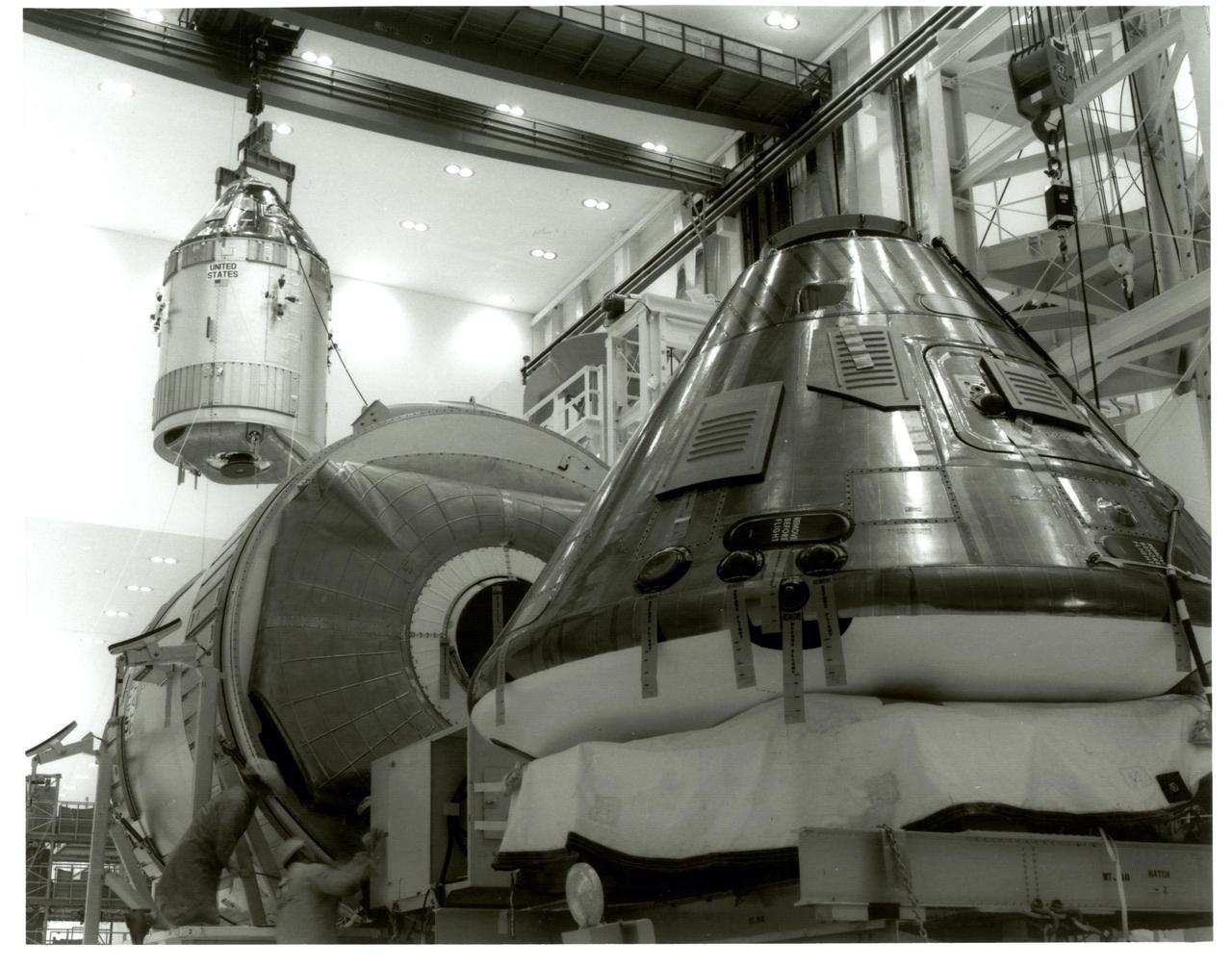
KENNEDY SPACE CENTER, FLA. - The Command Module 107 and Service Module, which are going to be used for the Apollo 11 mission, are moved from Chamber "L" to the work stand in preparation for the first manned lunar landing. Also shown in the background is the Command Module 108, which is going to be used for the Apollo 12 lunar landing mission.
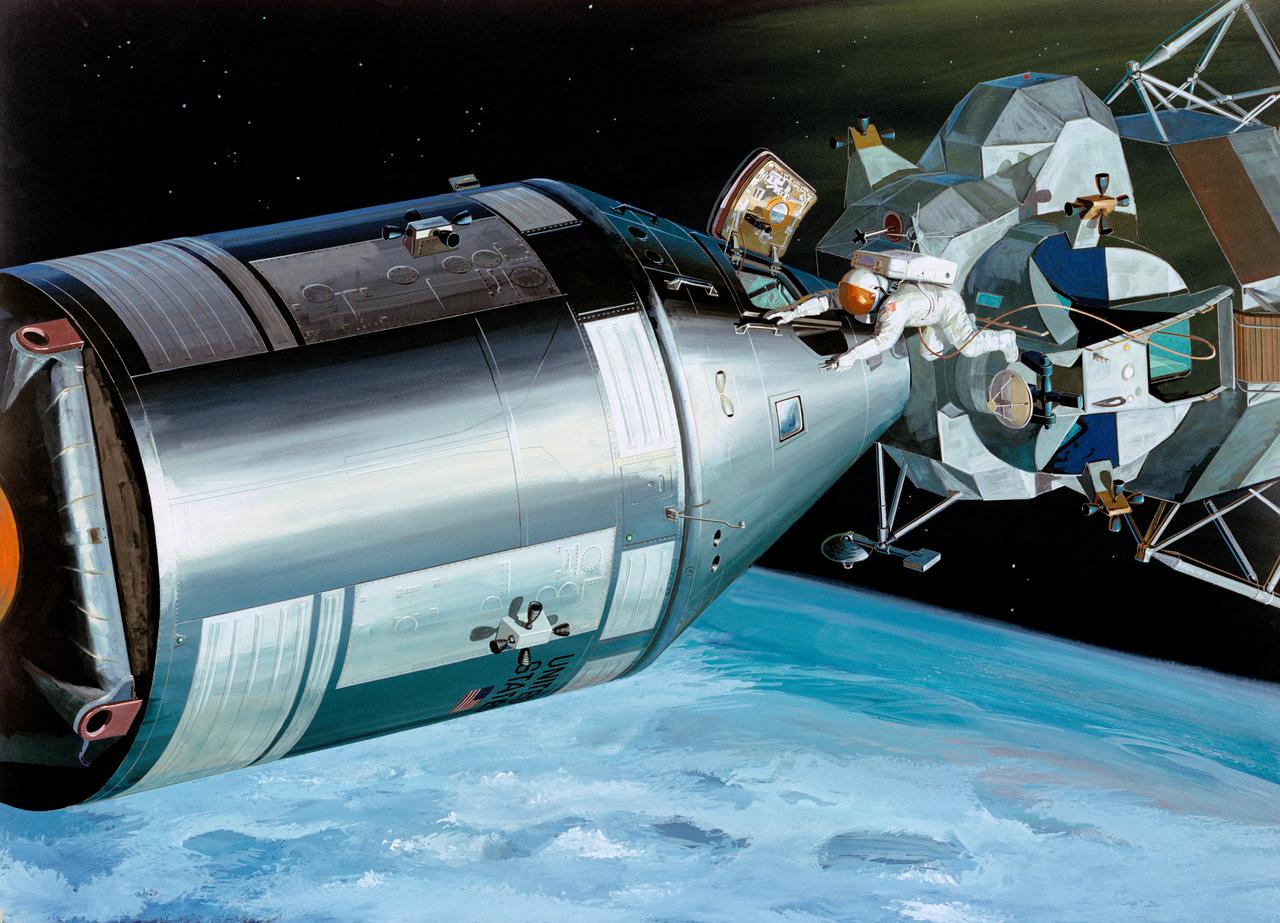
S69-18547 (1969) --- North American Rockwell artist's concept illustrating a part of the planned Apollo 9 extravehicular activity on the fourth day of the mission as the Command and Service Modules are docked to the Lunar Module. The figure performing the EVA represents astronaut Russell L. Schweickart, Apollo 9 lunar module pilot.

S69-17590 (18 Dec. 1968) --- These three astronauts are the prime crew of the Apollo 9 (Spacecraft 104/ Lunar Module 3/ Saturn 504) space mission. Left to right, are James A. McDivitt, commander; David R. Scott, command module pilot; and Russell L. Schweickart, lunar module pilot.
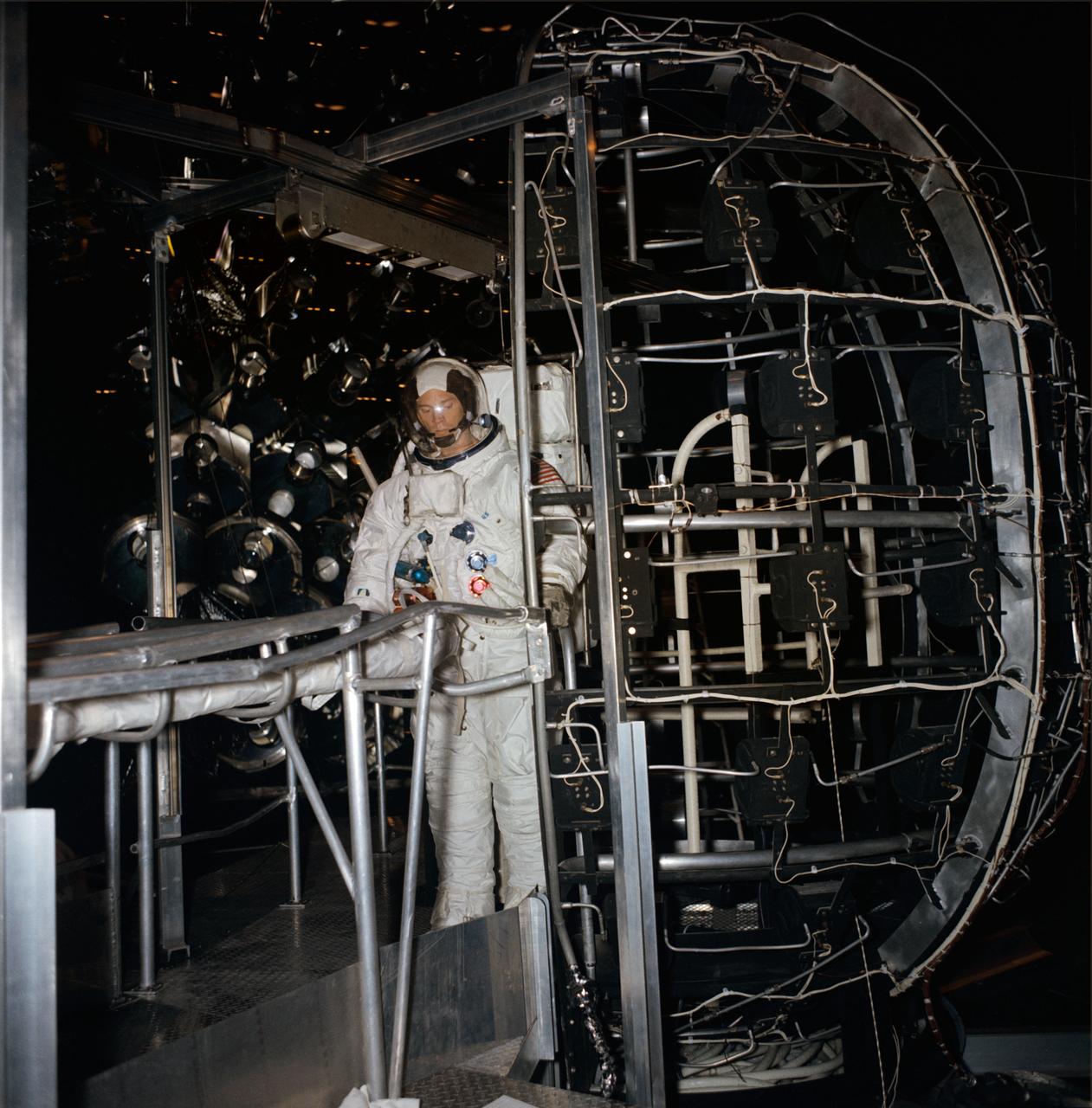
S68-55391 (11 Dec. 1968) --- Astronaut Russell L. Schweickart, lunar module pilot of the Apollo 9 (Spacecraft 104/Lunar Module 3/Saturn 504) space mission, is seen inside Chamber "A," Space Environment Simulation Laboratory, Building 32, participating in dry run activity in preparation for extravehicular activity which is scheduled in Chamber "A." The purpose of the scheduled training is to familiarize the crewmen with the operation of EVA equipment in a simulated space environment. In addition, metabolic and workload profiles will be simulated on each crewman. Astronauts Schweickart and Alan L. Bean, backup lunar module pilot, are scheduled to receive thermal-vacuum training simulating Earth-orbital EVA.
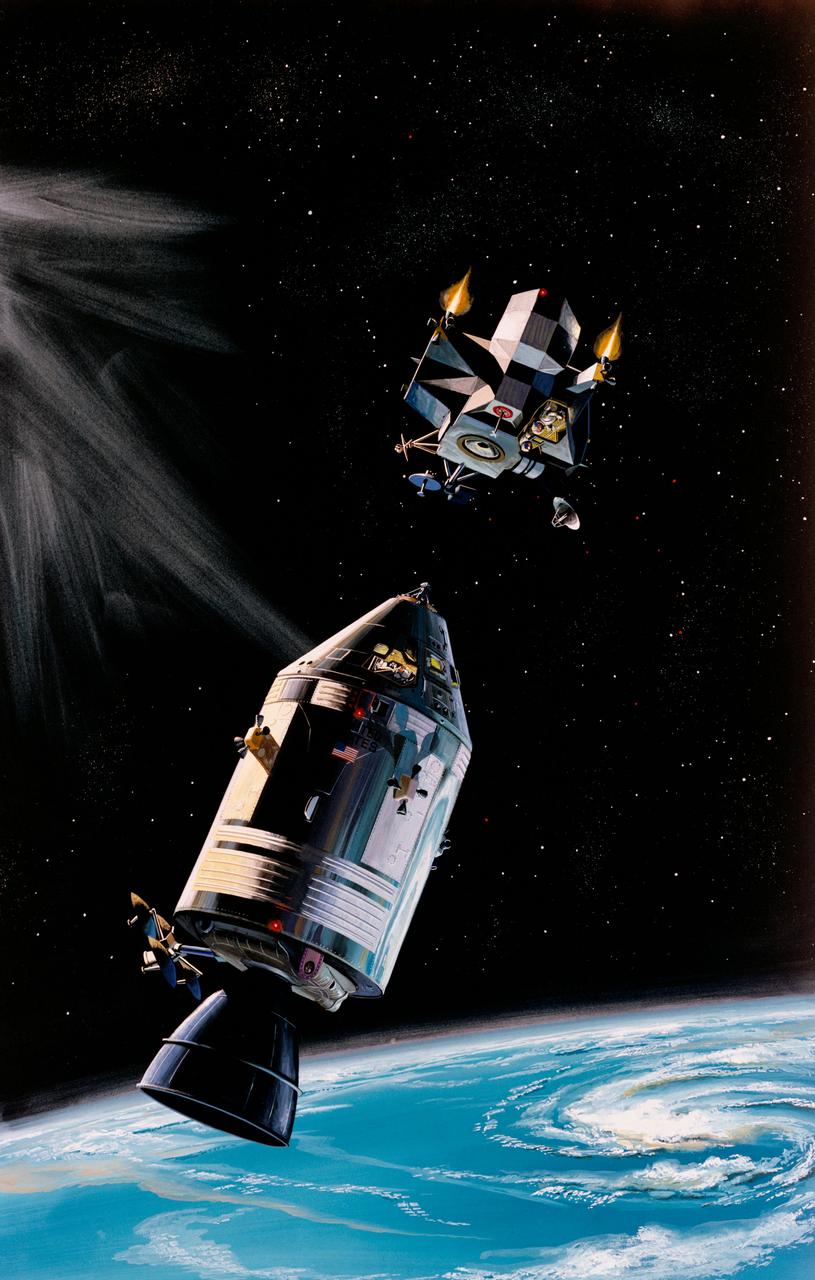
S69-18546 (February 1969) --- North American Rockwell artist's concept illustrating the docking of the Lunar Module ascent stage with the Command and Service Modules during the Apollo 9 mission. The two figures in the Lunar Module represent astronauts James A. McDivitt, Apollo 9 commander; and Russell L. Schweickart, lunar module pilot. The figure in the Command Module represents astronaut David R. Scott, command module pilot. The Apollo 9 mission will evaluate spacecraft lunar module systems performance during manned Earth-orbital flight.
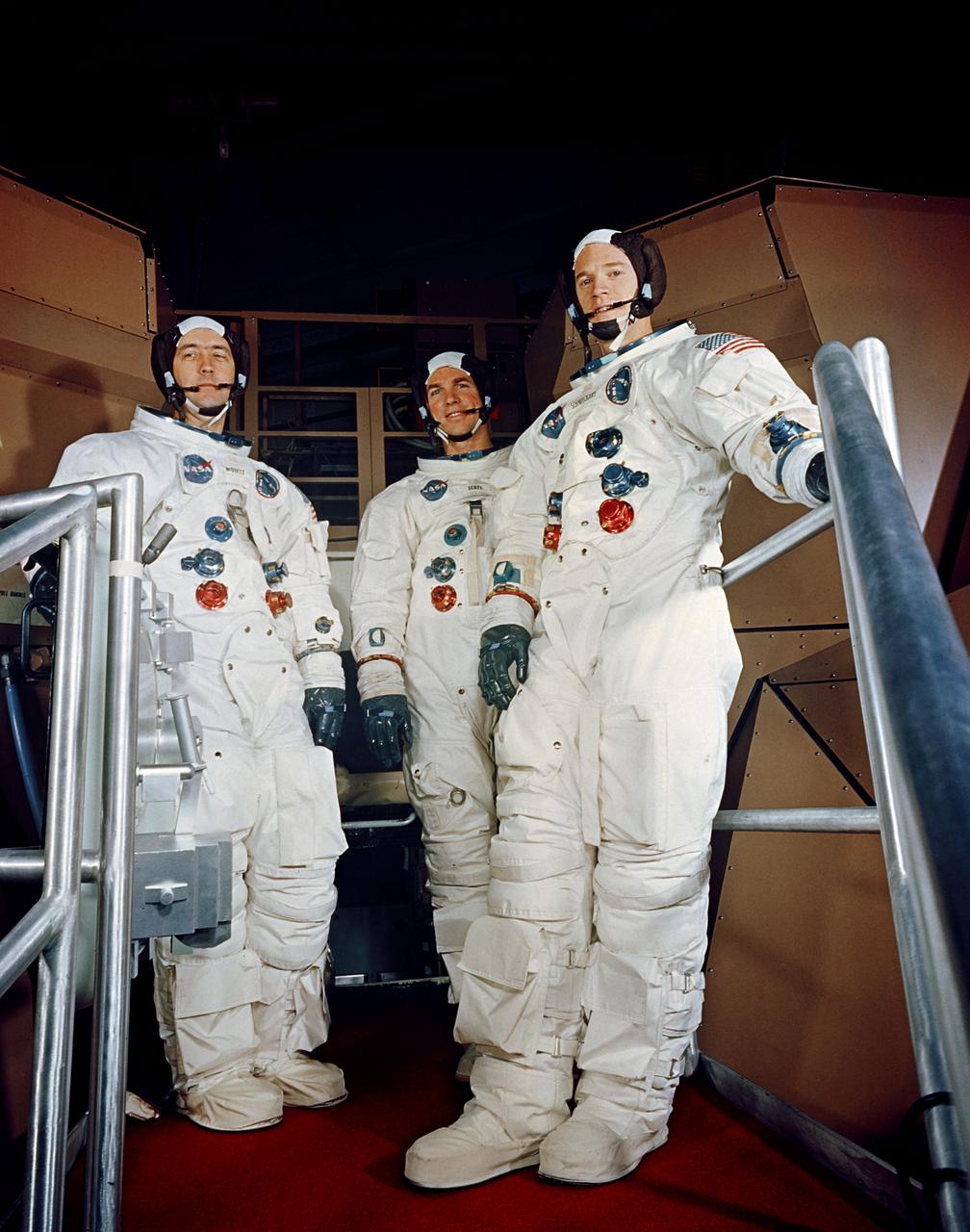
S69-19983 (17 Feb. 1969) --- The Apollo 9 crew is shown suited up for a simulated flight in the Apollo Mission Simulator at the Kennedy Space Center (KSC). Left to right are astronauts James A. McDivitt, commander; David R. Scott, command module pilot; and Russell L. Schweickart, lunar module pilot.
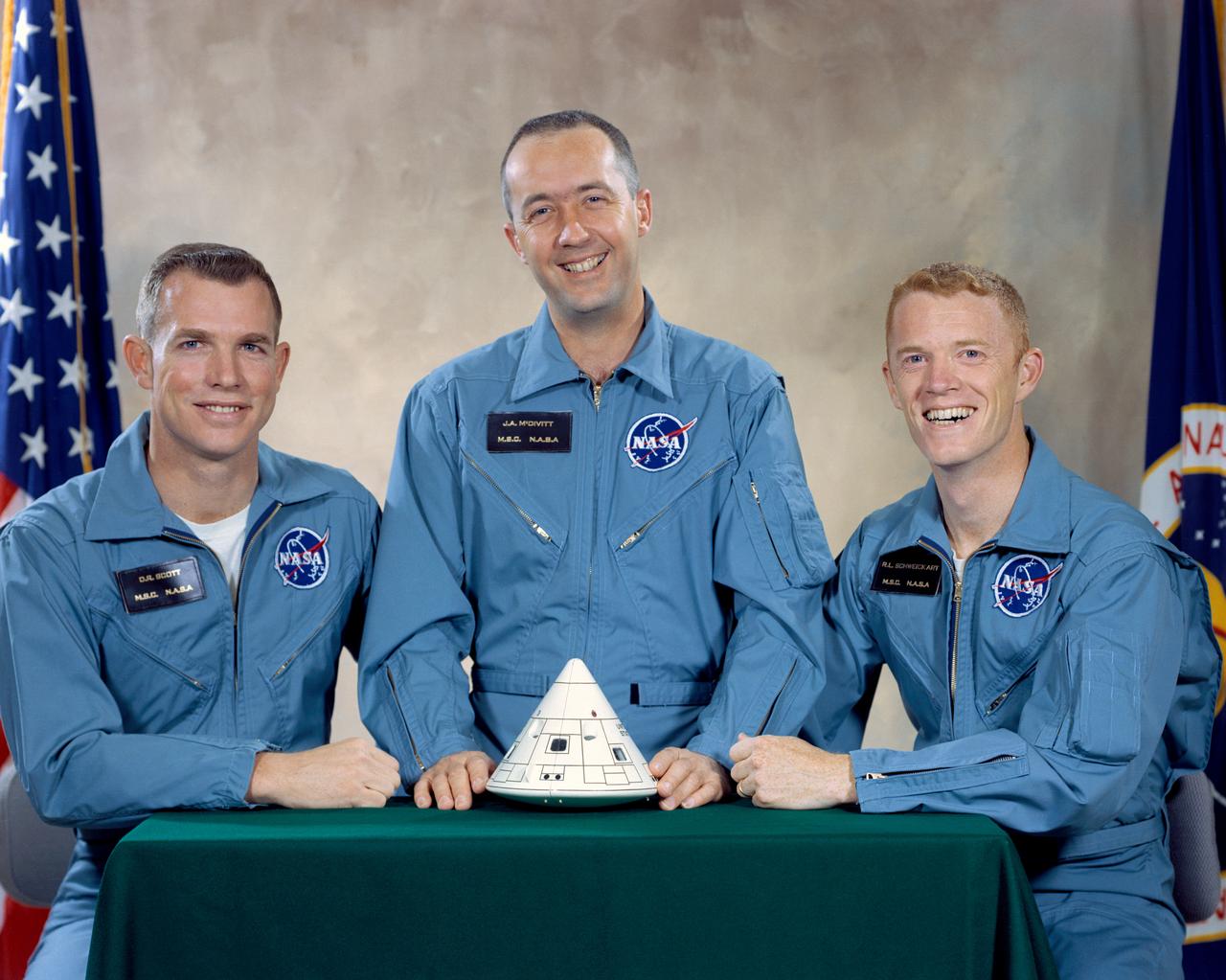
S66-30237 (March 1966) --- These three astronauts have been named as the prime crew of the Apollo 9 mission. They are (left to right) David R. Scott, command module pilot; James A. McDivitt, commander; and Russell L. Schweickart, lunar module pilot.
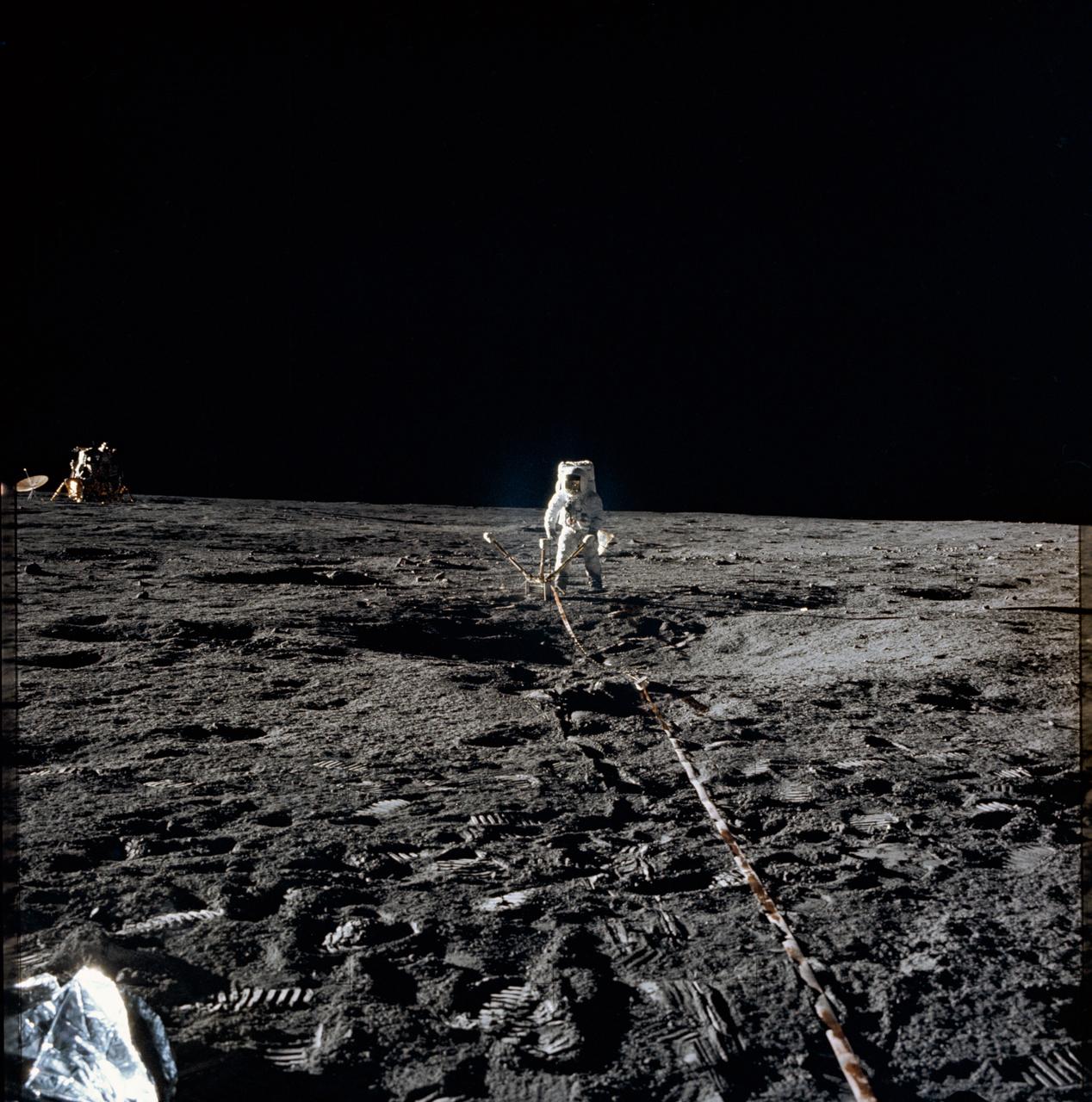
Astronaut Alan L. Bean, lunar module pilot, deploys the Lunar Surface Magnetometer (LSM) during the first Apollo 12 extravehicular activity on the Moon. The LSM is a component of the Apollo Lunar Surface Experiments Package (ALSEP). The Lunar Module can be seen in the left background.
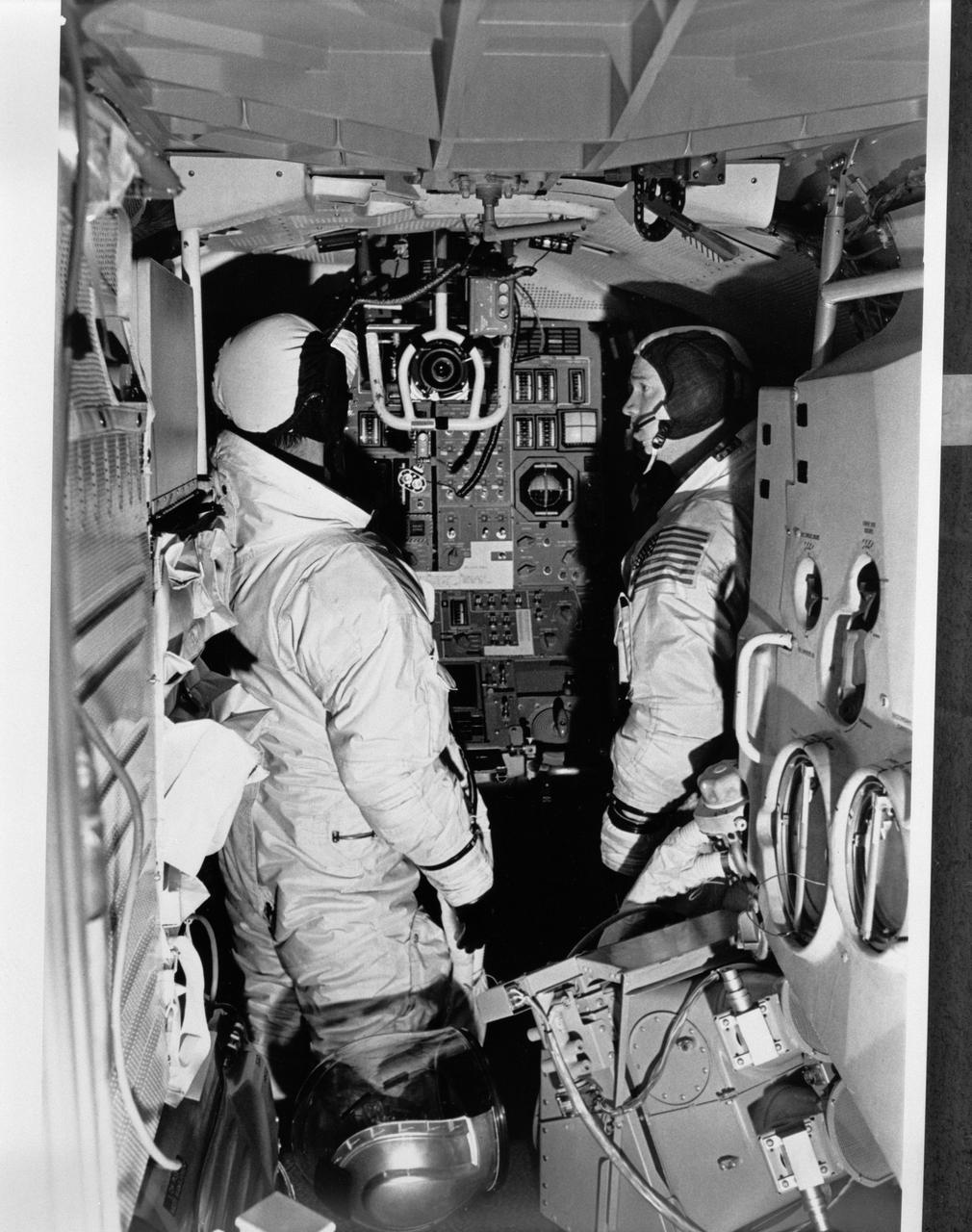
S69-19858 (December 1968) --- Two members of the Apollo 9 prime crew participate in simulation training in the Apollo Lunar Module Mission Simulator (LMMS) at the Kennedy Space Center (KSC). On the left is astronaut James A. McDivitt, commander; and on the right is astronaut Russell L. Schweickart, lunar module pilot.
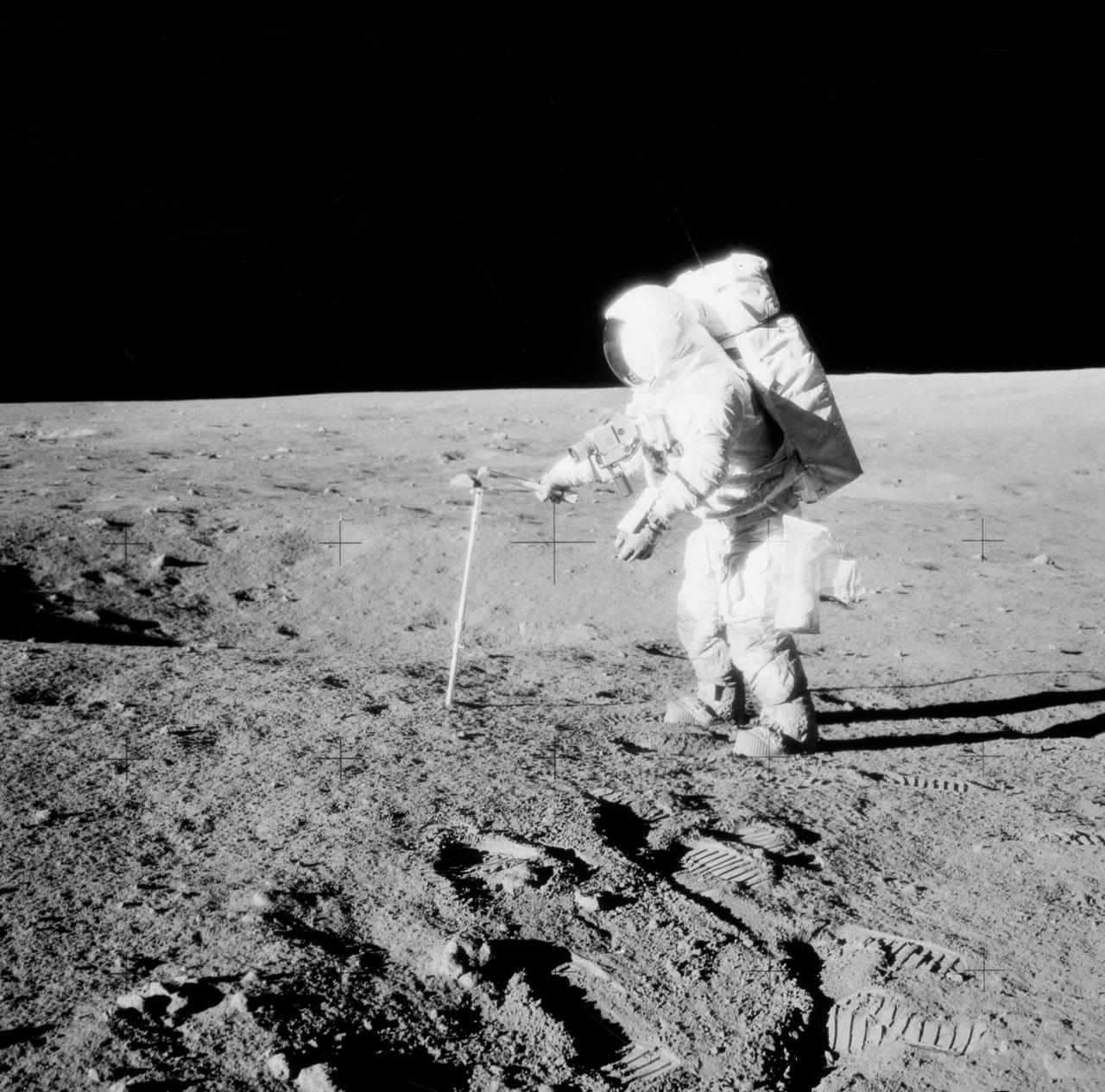
AS12-49-7286 (20 Nov. 1969) --- Astronaut Alan L. Bean, lunar module pilot, drives a core sample tube into the lunar surface during the Apollo 12 extravehicular activity. Good view of lunar soil.
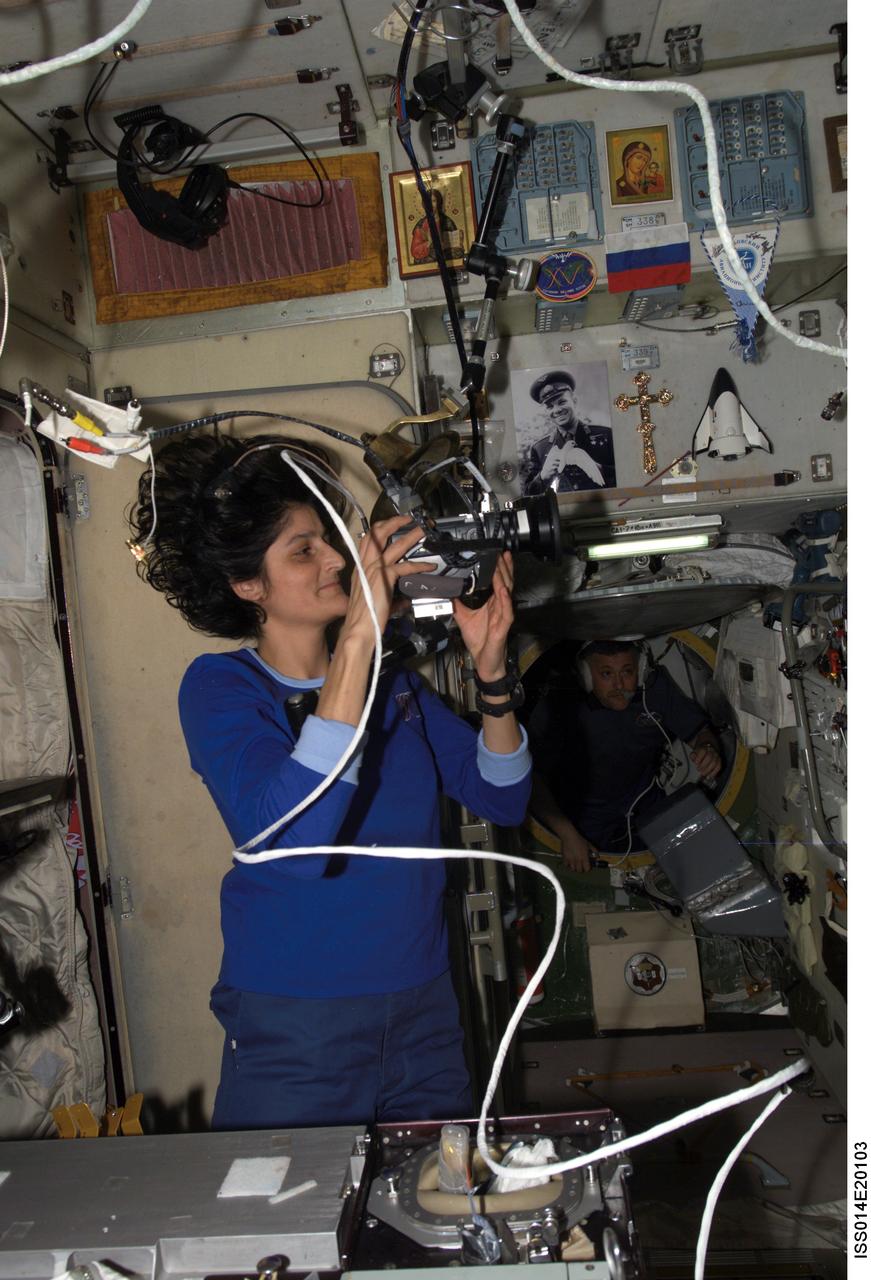
ISS014-E-20103 (21 April 2007) --- Astronaut Sunita L. Williams, Expedition 14/15 flight engineer, sets up a video camera in the Zvezda Service Module of the International Space Station.
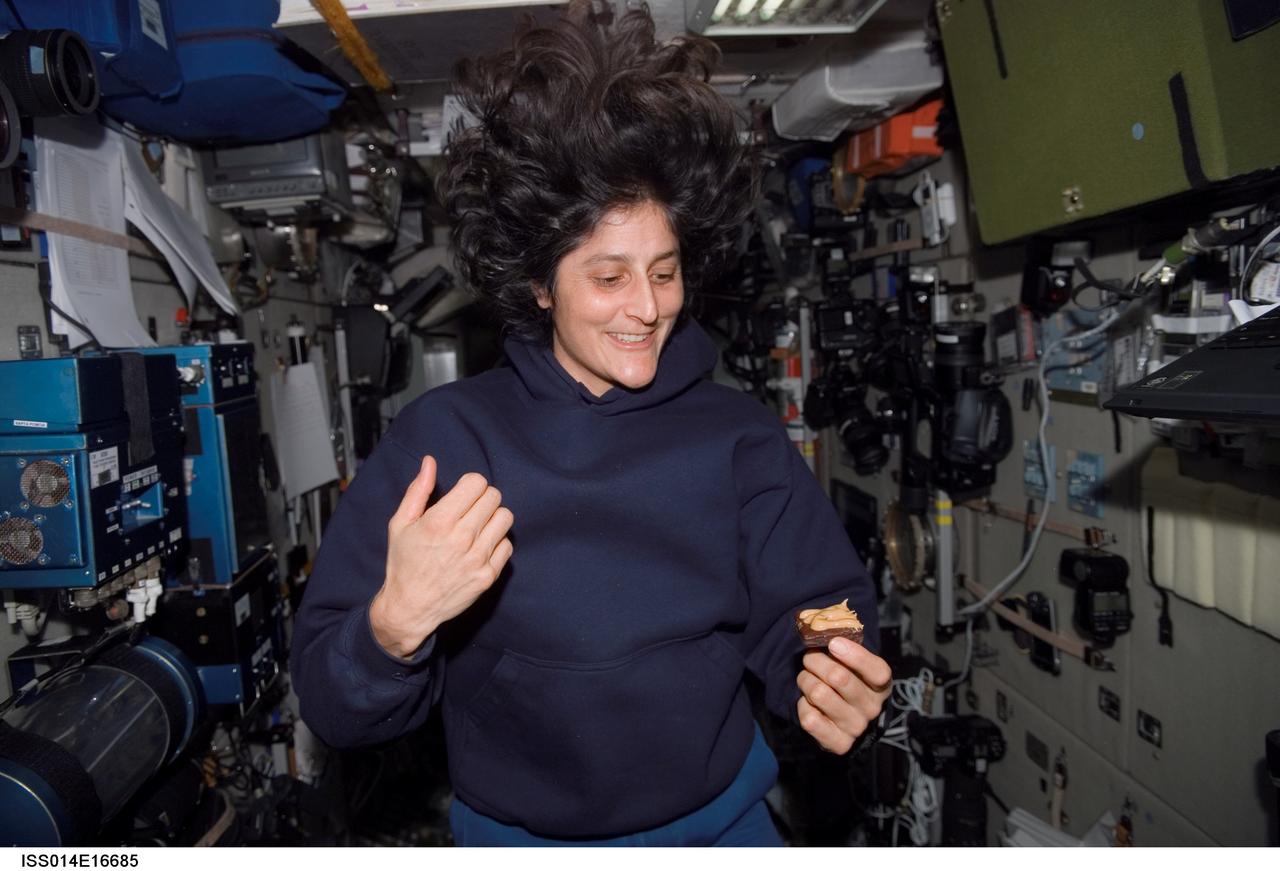
ISS014-E-16685 (12 March 2007) --- Astronaut Sunita L. Williams, Expedition 14 flight engineer, takes a snack break near the galley in the Zvezda Service Module of the International Space Station.
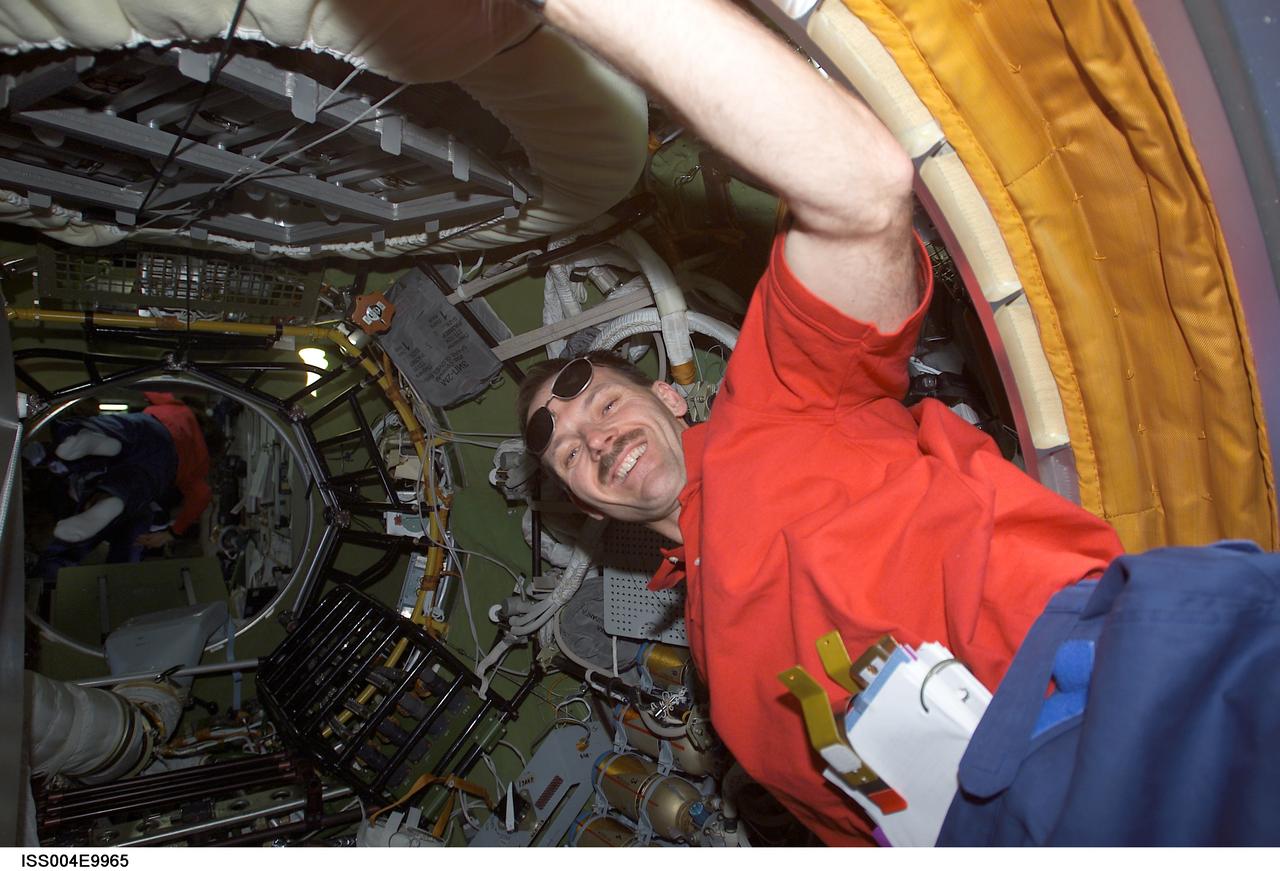
ISS004-E-9965 (10 April 2002) --- Astronaut Steven L. Smith, STS-110 mission specialist, enters the Zvezda Service Module’s transfer compartment on the International Space Station (ISS).
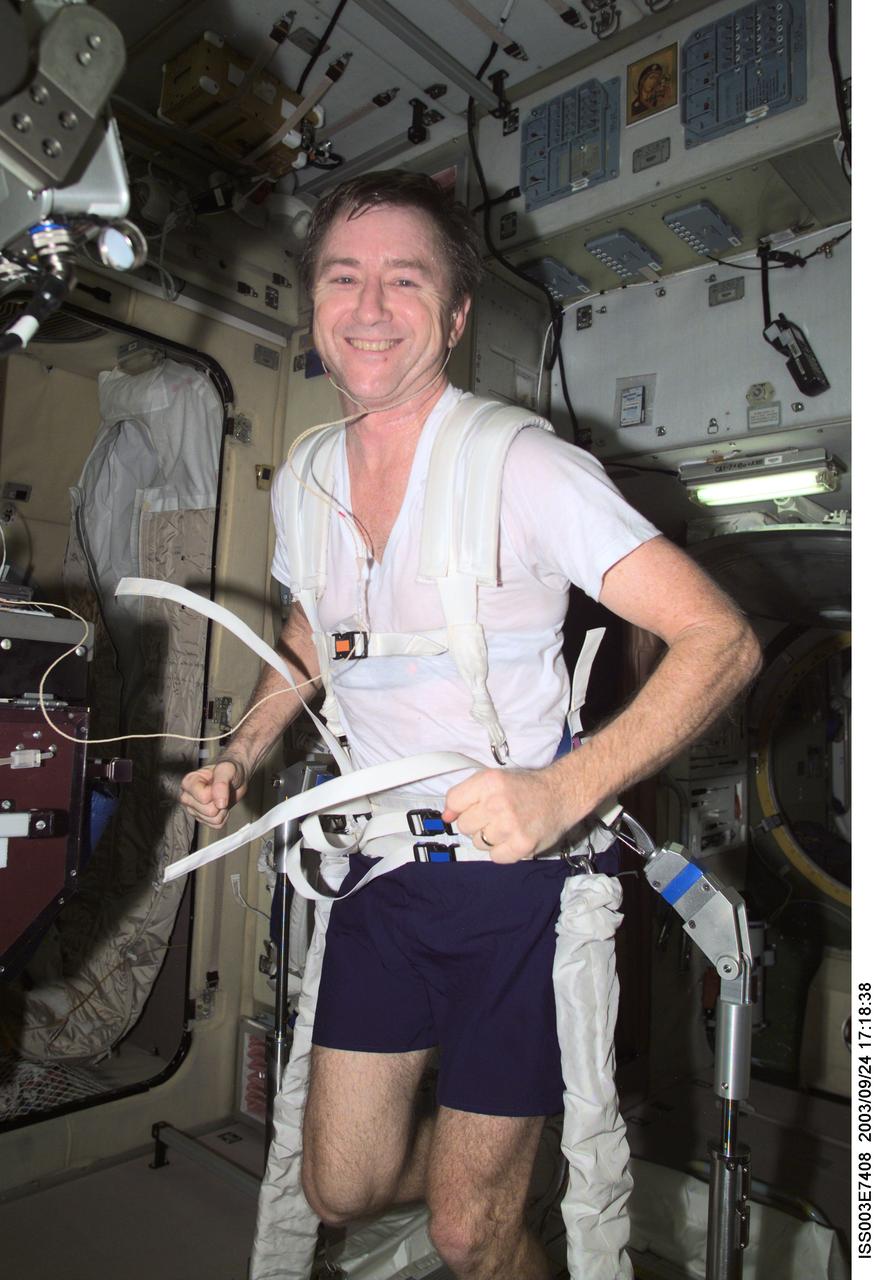
ISS003-E-7408 (October 2001) --- Astronaut Frank L. Culbertson, Jr., Expedition Three mission commander, exercises on a treadmill in the Zvezda Service Module on the International Space Station (ISS). This image was taken with a digital still camera.
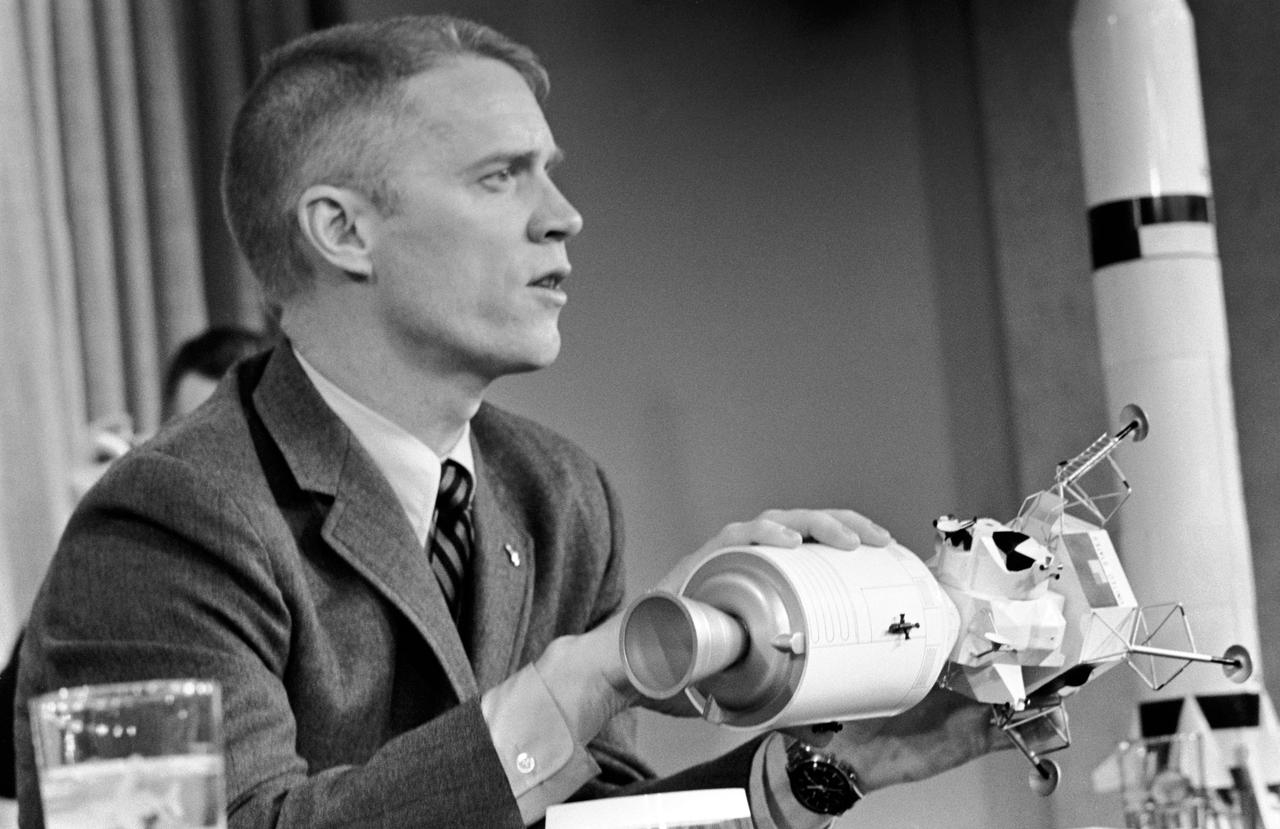
S69-17615 (25 Jan. 1969) --- Astronaut Russell L. Schweickart, lunar module pilot of the Apollo 9 prime crew, participates in a press conference at the Grumman Aircraft Engineering Corporation. Grumman is the contractor to NASA for the Lunar Module. Schweickart is holding a model of a docked Lunar Module/Command and Service Modules. The Apollo 9 mission will evaluate spacecraft lunar module systems performance during manned Earth-orbital flight.
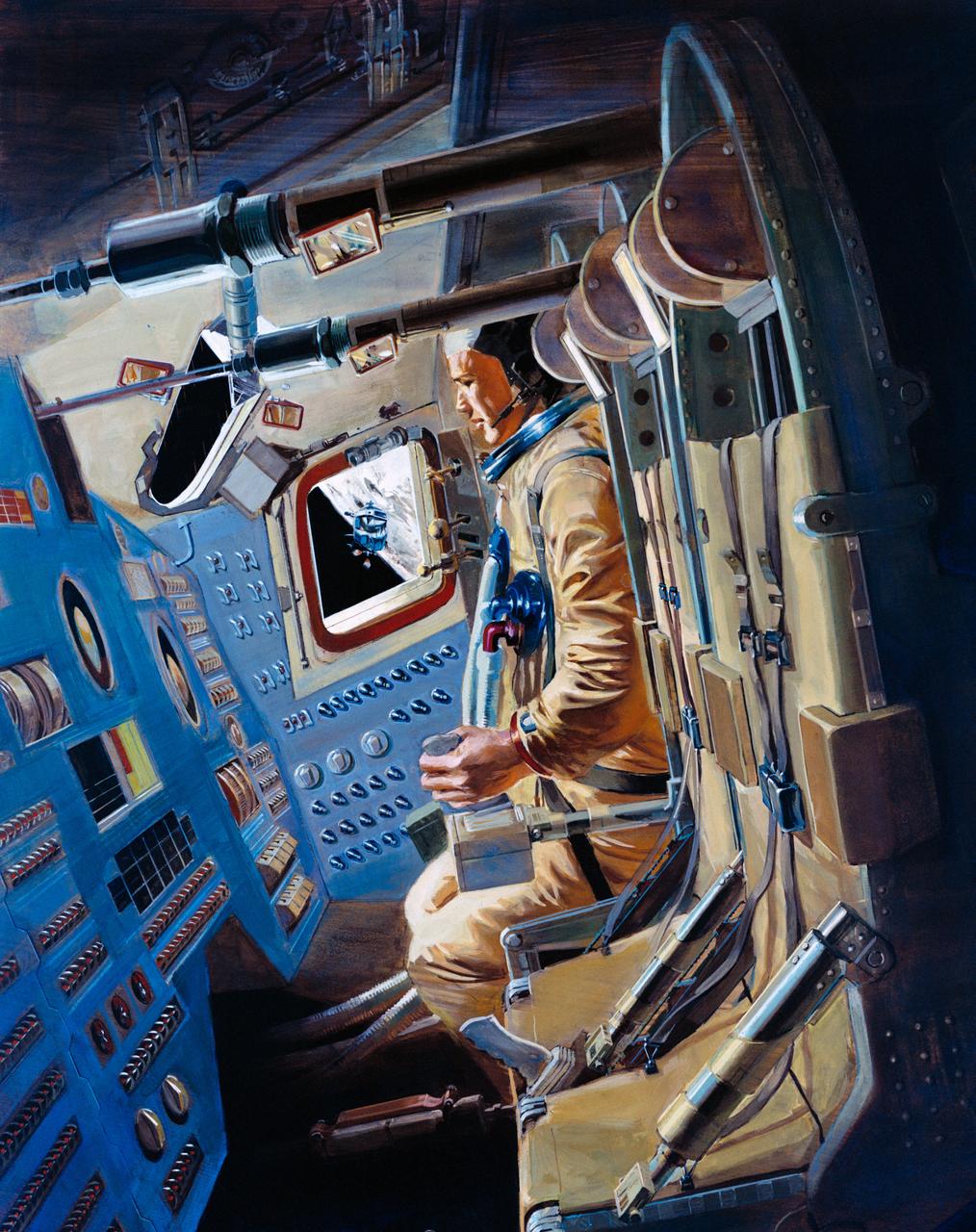
S69-58005 (10 Nov. 1969) --- An artist's concept of the Apollo 12 Command Module's (CM) interior, with the command module pilot at the controls. The Apollo 12 Lunar Module (LM) and a portion of the lunar surface are seen out of the window. Astronaut Richard F. Gordon Jr. will maneuver the Apollo 12 Command and Service Modules (CSM) in lunar orbit while astronauts Charles Conrad Jr., commander, and Alan L. Bean, lunar module pilot, explore the moon.
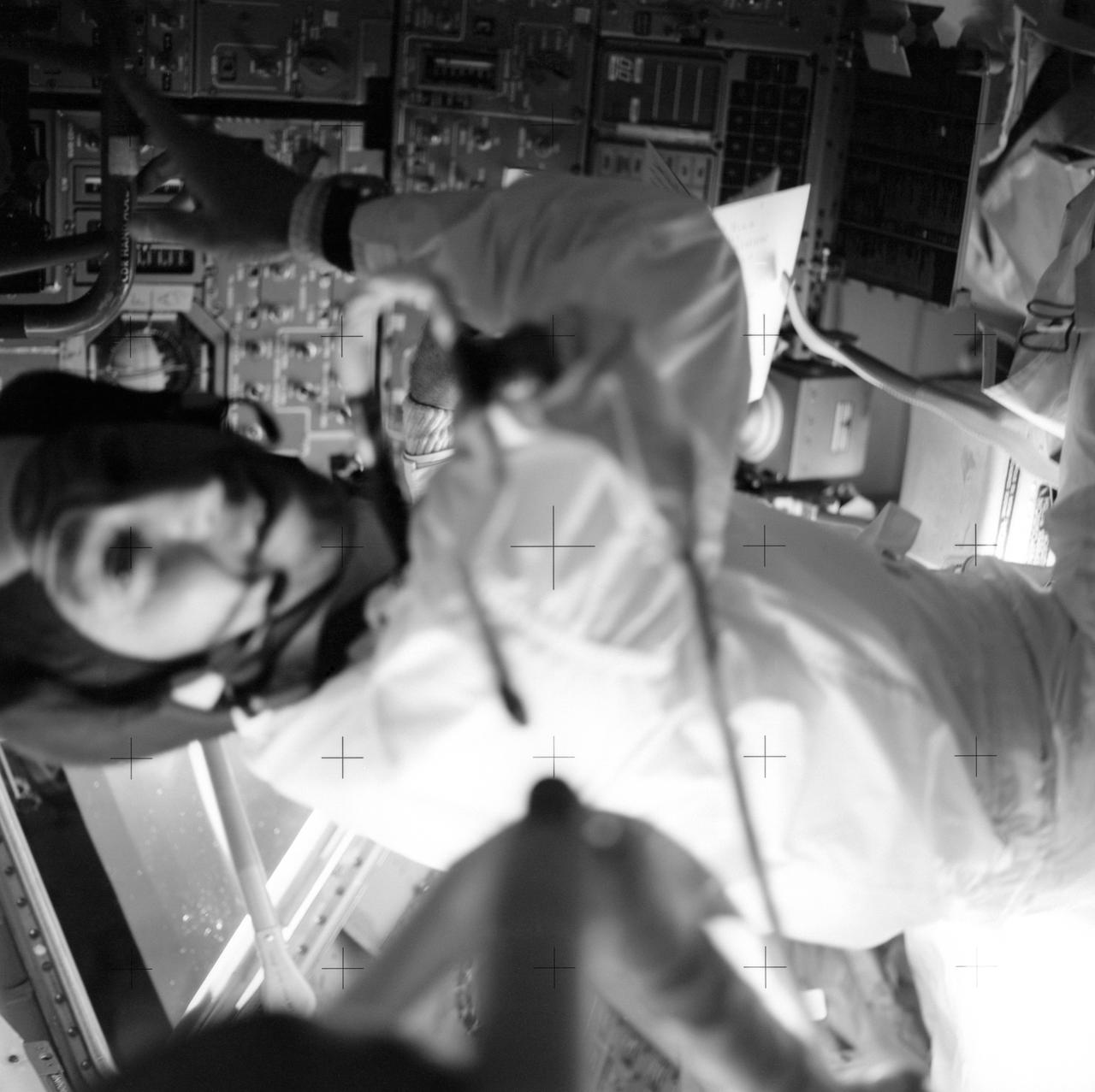
AS13-59-8484 (April 1970) --- Astronaut James A. Lovell Jr., commander, is pictured at his position in the Lunar Module (LM). The Apollo 13 crew of astronauts Lovell; John L. Swigert Jr., command module pilot; and Fred W. Haise Jr., lunar module pilot, relied on the LM as a "lifeboat". The dependence on the LM was caused by an apparent explosion of oxygen tank number two in the Service Module (SM). The LM was jettisoned just prior to Earth re-entry by the Command Module (CM).

KENNEDY SPACE CENTER, FLA. -- In the Space Station Processing Facility at NASA's Kennedy Space Center, workers maneuver a crane into place above the integrated cargo carrier-lite, or ICC-L. The carrier will be lifted and placed in the payload canister for mission STS-122. Joining the primary payload, the Columbus module, the ICC-L is an unpressurized cross-bay carrier providing launch and return transportation with the space shuttle. The ICC-L carries three elements: a nitrogen tank assembly that is part of the external active thermal control system on the International Space Station, the European technology Exposure Facility composed of nine science instruments and an autonomous temperature measurement unit, and the SOLAR payload designed for sun observation. The SOLAR will be transferred and stowed on the Columbus module during the third spacewalk of the mission. STS-122 is targeted for launch on Dec. 6 on space shuttle Atlantis. Photo credit: NASA/Amanda Diller
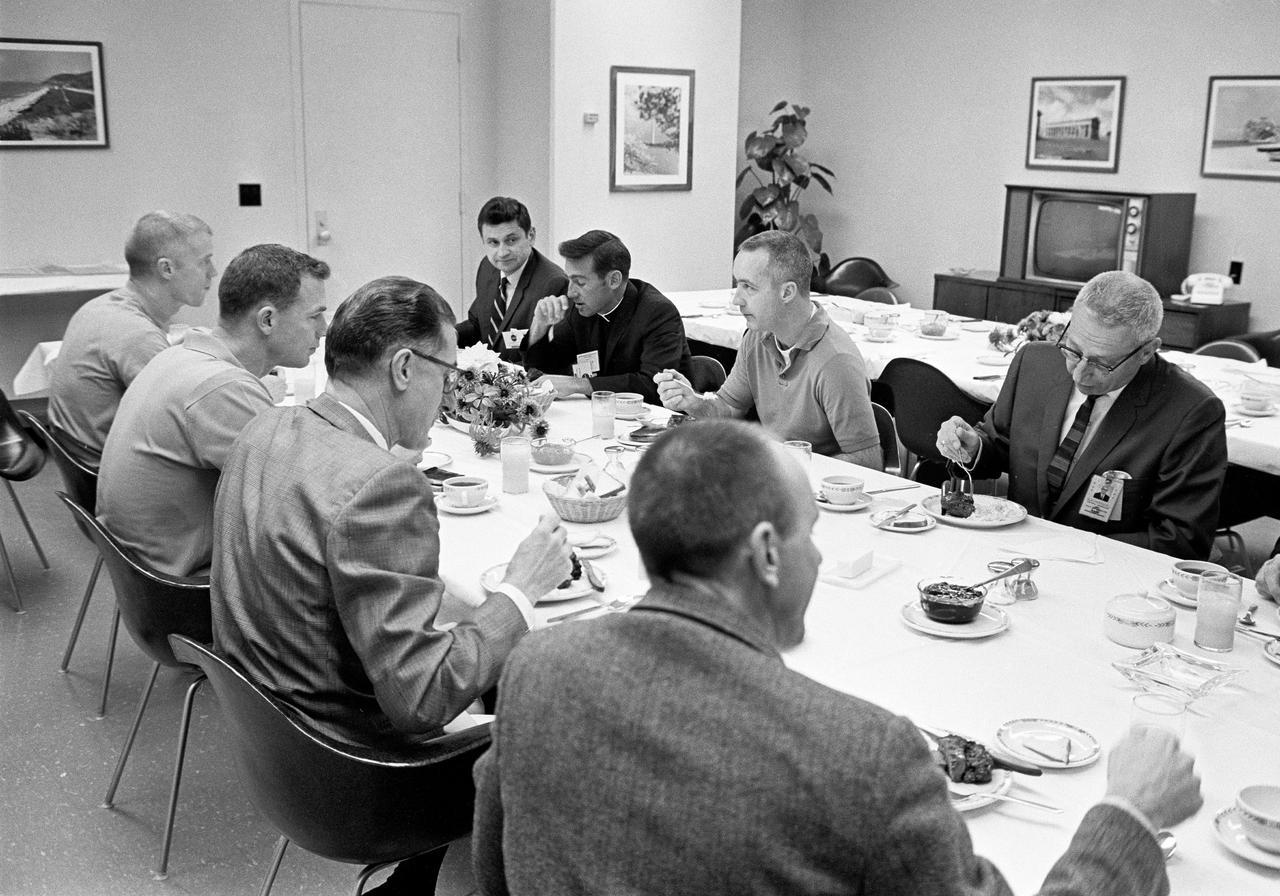
CAPE CANAVERAL, Fla. -- Apollo 9 astronauts James A. McDivitt, David R. Scott, and Russell L. Schweickart breakfast today with mission officials in their crew quarters at the Kennedy Space Center a few hours prior to their scheduled launch into Earth orbit. Seated in the foreground, left to right, are astronauts Schweickart and Scott Brig. Gen. C. H. Bolendar, manager, Lunar Module and backup Lunar Module Pilot Alan L. Bean. Across the table, left to right, George Skurla, Grumman Aircraft Base Manager at the Spaceport McDivitt's clergyman from his home church at Nassau Bay, Texas, The Rev. Laurence Connelly McDivitt and Kenneth Kleinknecht, manager, Command and Service Modules at the Manned Spacecraft Center. Grumman builds the two-man lunar module spacecraft that will be tested during the planned 10-day space mission. Photo credit: NASA
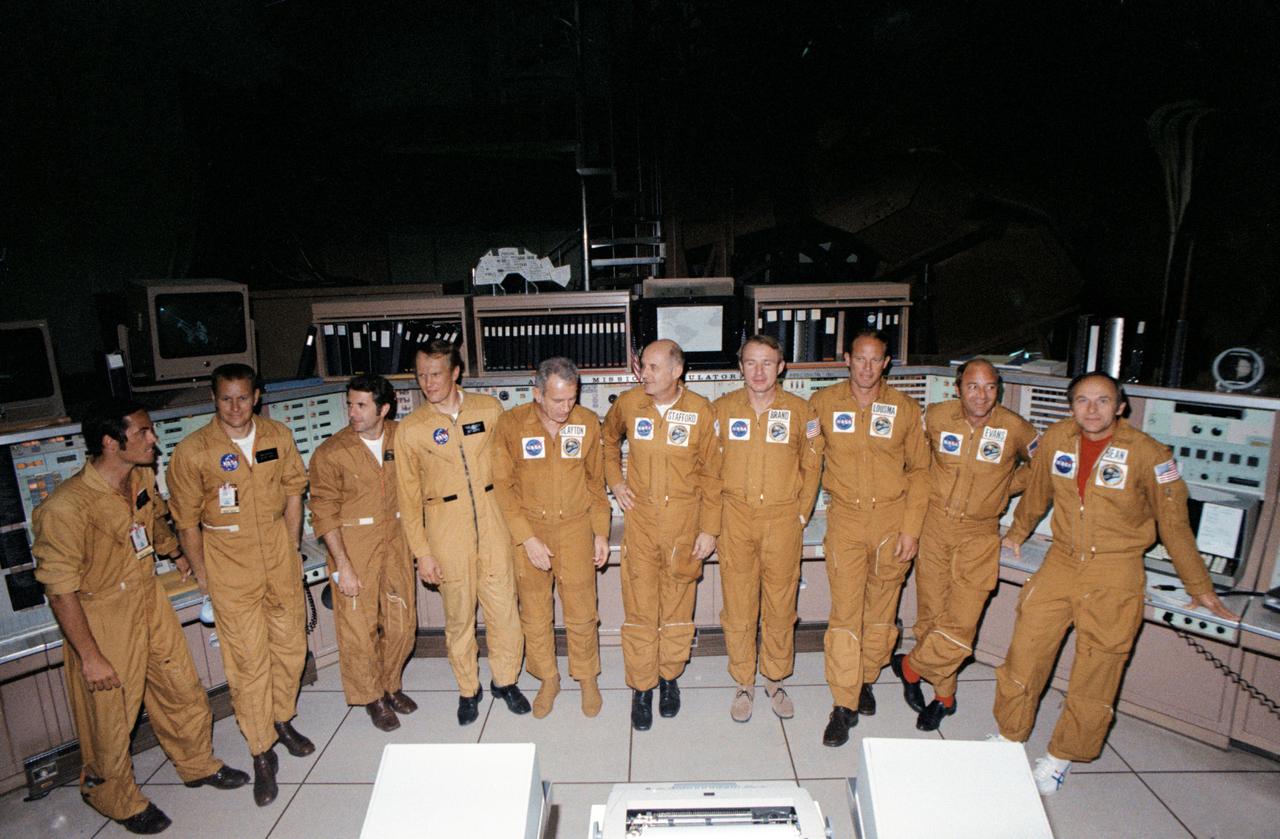
S75-28361 (9 July 1975) --- These ten American astronauts compose the U.S. prime crew, the backup crew and the crew support team for the joint U.S.-USSR Apollo-Soyuz Test Project docking mission in Earth orbit. They are, left to right, Robert L. Crippen, support team; Robert F. Overmyer, support team; Richard H. Truly, support team; Karol J. Bobko, support team; Donald K. Slayton, prime crew docking module pilot; Thomas P. Stafford, prime crew commander; Vance D. Brand, prime crew command module pilot; Jack R. Lousma, backup crew docking module pilot; Ronald E. Evans, backup crew command module pilot; and Alan L. Bean, backup crew commander. They are photographed by the Apollo Mission Simulator console in Building 5 at NASA's Johnson Space Center.
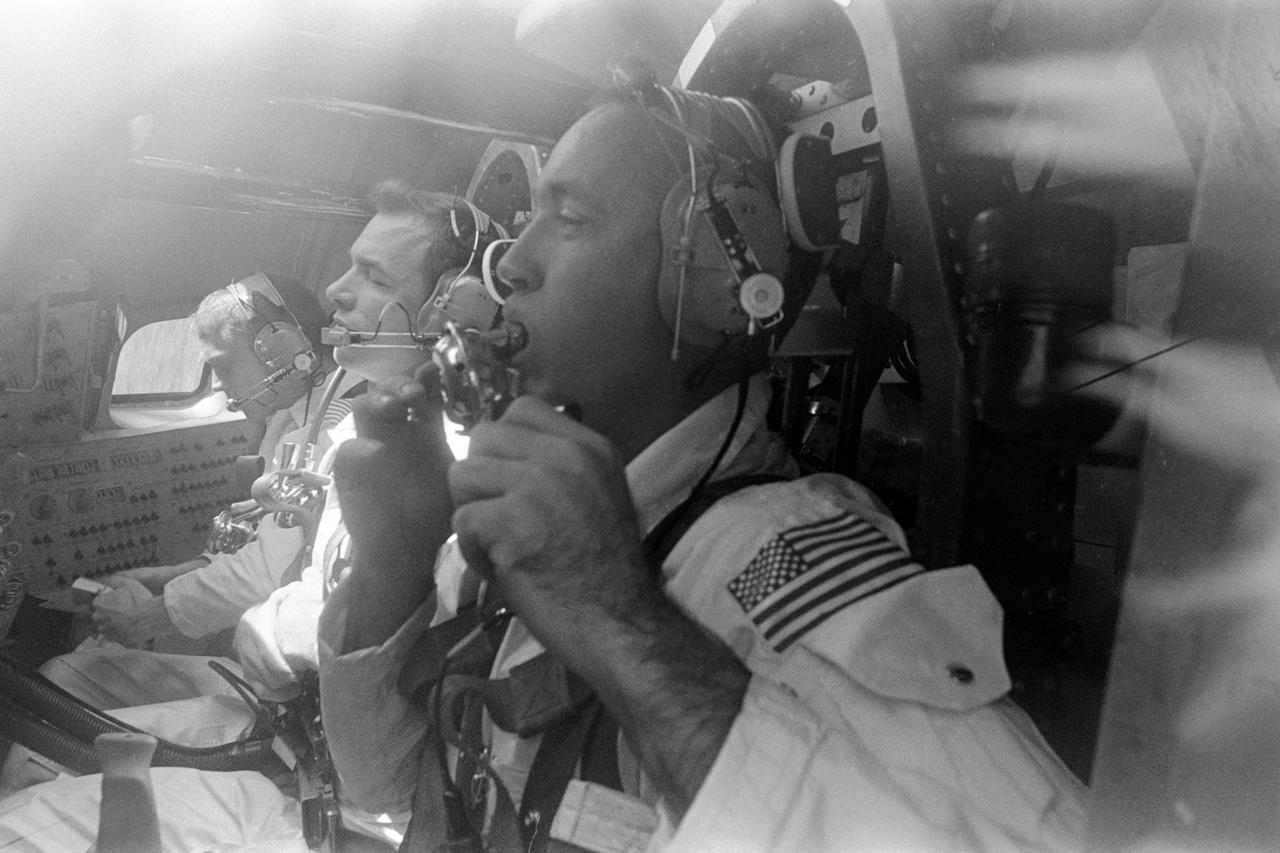
S68-54850 (5 Nov. 1968) --- The prime crew of the Apollo 9 (Spacecraft 104/Lunar Module 3/Saturn 504) space mission are seen inside an Apollo command module boilerplate during water egress training activity in the Gulf of Mexico. From foreground, are astronauts James A. McDivitt, commander; David R. Scott, command module pilot; and Russell L. Schweickart, lunar module pilot.
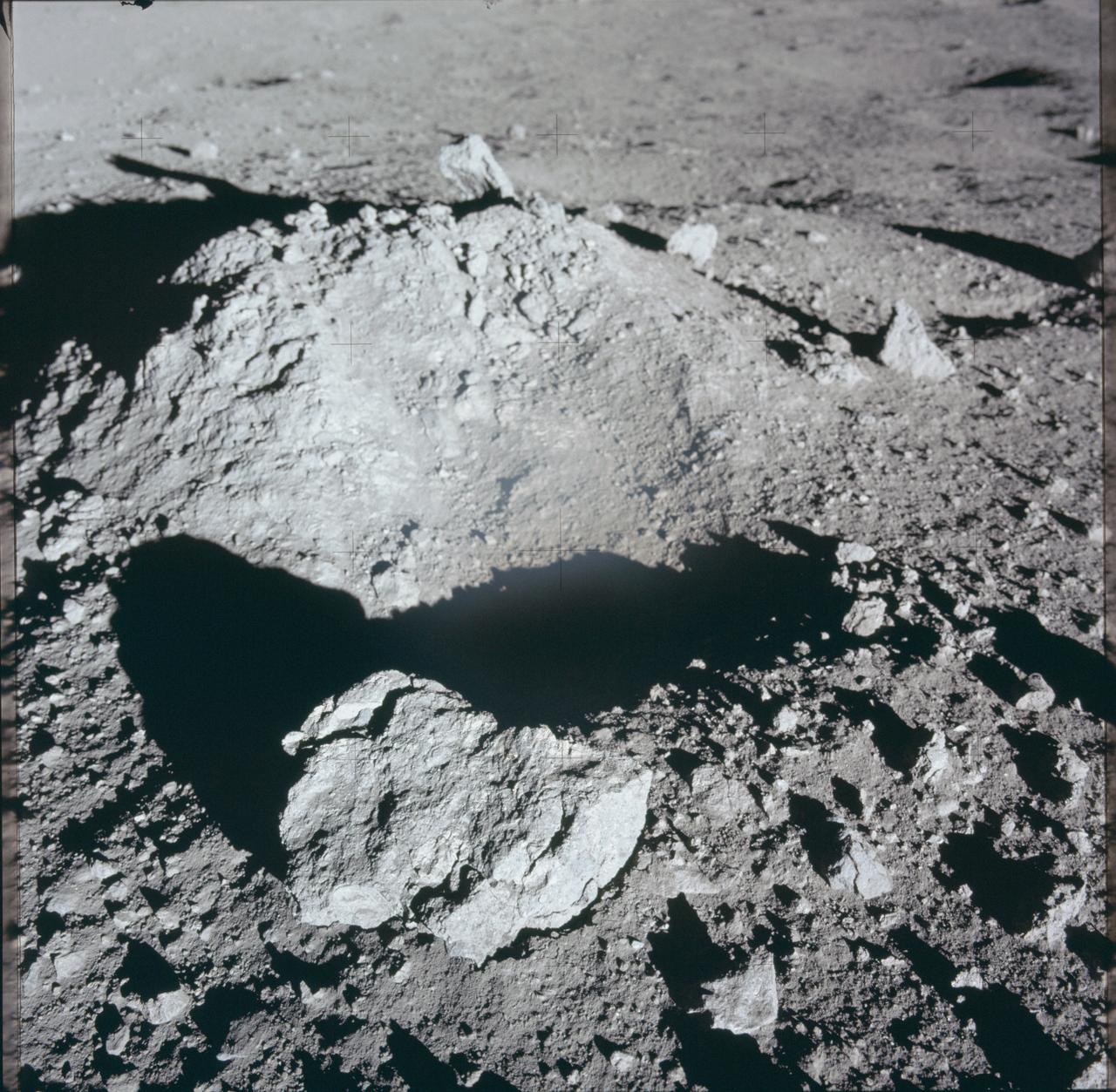
AS12-46-6825 (19 Nov. 1969) --- Close-up view of a lunar rock, small crater, and lunar mound as photographed during the Apollo 12 extravehicular activity (EVA). Astronaut Richard F. Gordon Jr., command module pilot, remained with the Apollo 12 Command and Service Modules (CSM) in lunar orbit while astronauts Charles Conrad Jr., commander, and Alan L. Bean, lunar module pilot, descended in the Lunar Module (LM) to explore the moon.
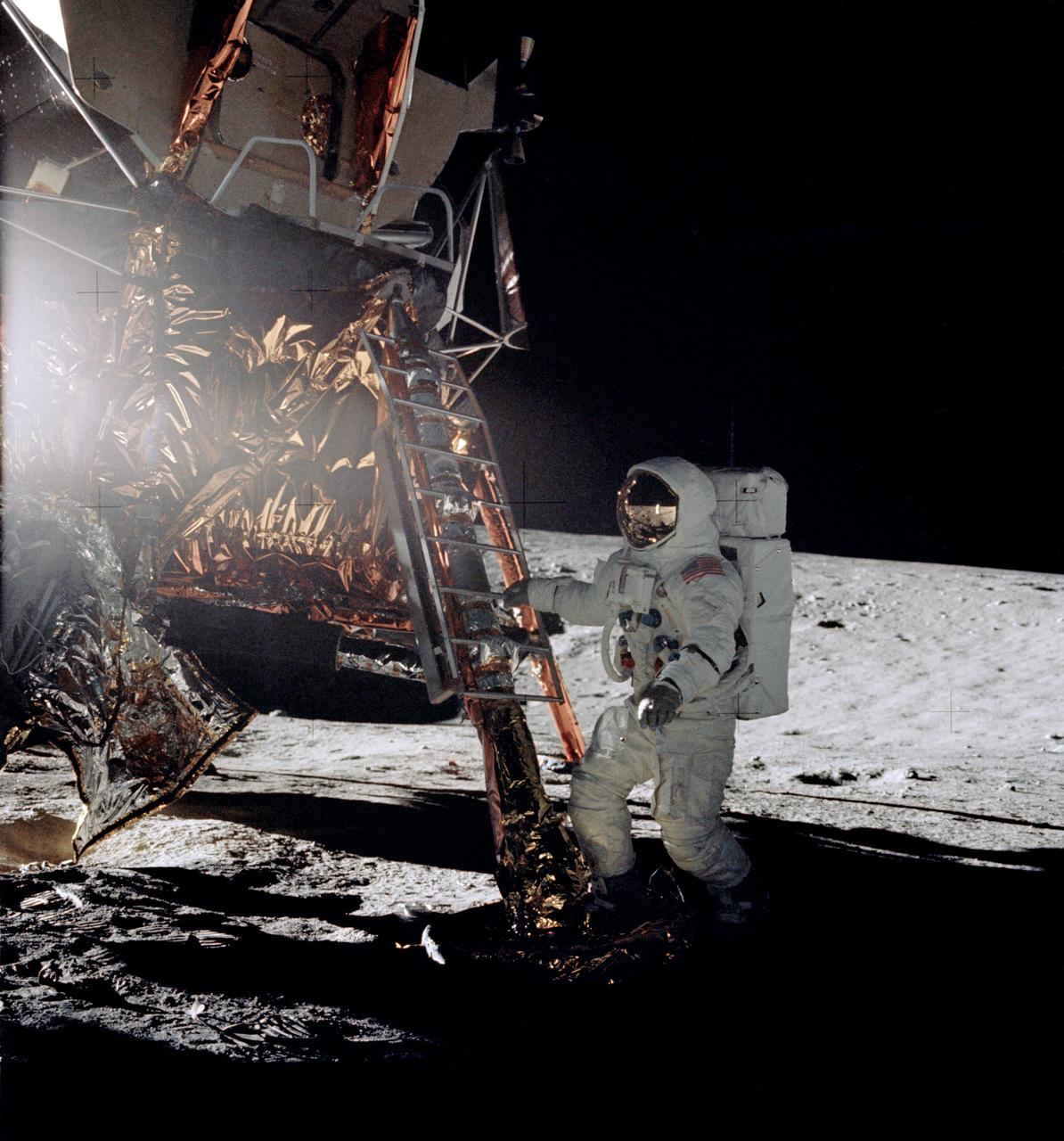
AS12-46-6729 (19 Nov. 1969) --- Astronaut Alan L. Bean, lunar module pilot for the Apollo 12 lunar landing mission, steps from the ladder of the Lunar Module to join astronaut Charles Conrad Jr., commander, in extravehicular activity on Nov. 19, 1969. Astronaut Richard F. Gordon Jr., command module pilot, remained with the Command and Service Modules in lunar orbit.
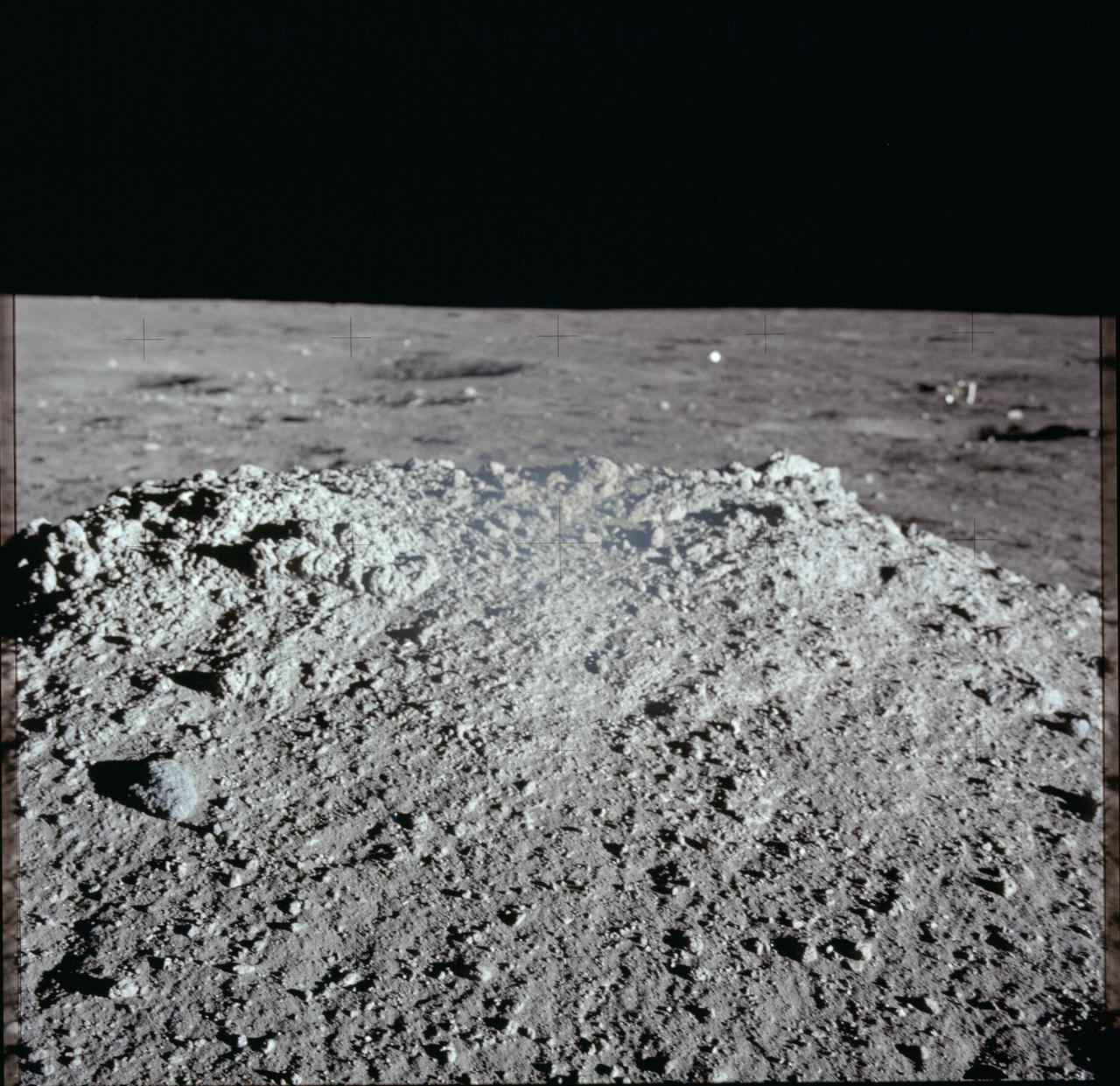
AS12-46-6832 (19 Nov. 1969) --- A close-up view of a lunar mound as photographed during the Apollo 12 extravehicular activity (EVA) on the lunar surface. Astronaut Richard F. Gordon Jr., command module pilot, remained with the Apollo 12 Command and Service Modules (CSM) in lunar orbit while astronauts Charles Conrad Jr., commander, and Alan L. Bean, lunar module pilot, descended in the Lunar Module (LM) to explore the moon.
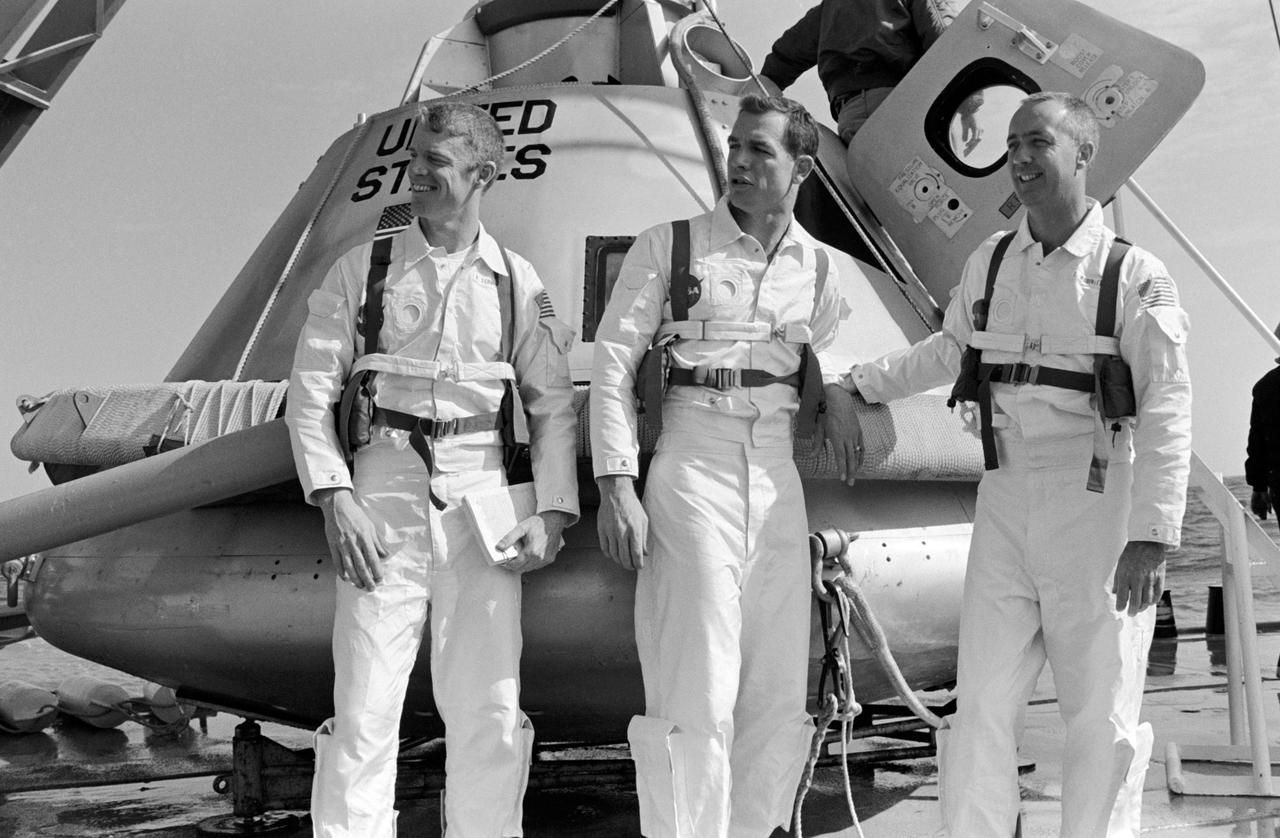
S68-54841 (5 Nov. 1968) --- The prime crew of the Apollo 9 (Spacecraft 104/Lunar Module 3/Saturn 504) space mission stands on the deck of the NASA Motor Vessel Retriever (MVR) prior to participating in water egress training in the Gulf of Mexico. Left to right, are astronauts Russell L. Schweickart, lunar module pilot; David R. Scott, command module pilot; and James A. McDivitt, commander. In background is the Apollo Command Module (CM) boilerplate which was used in the training exercise.
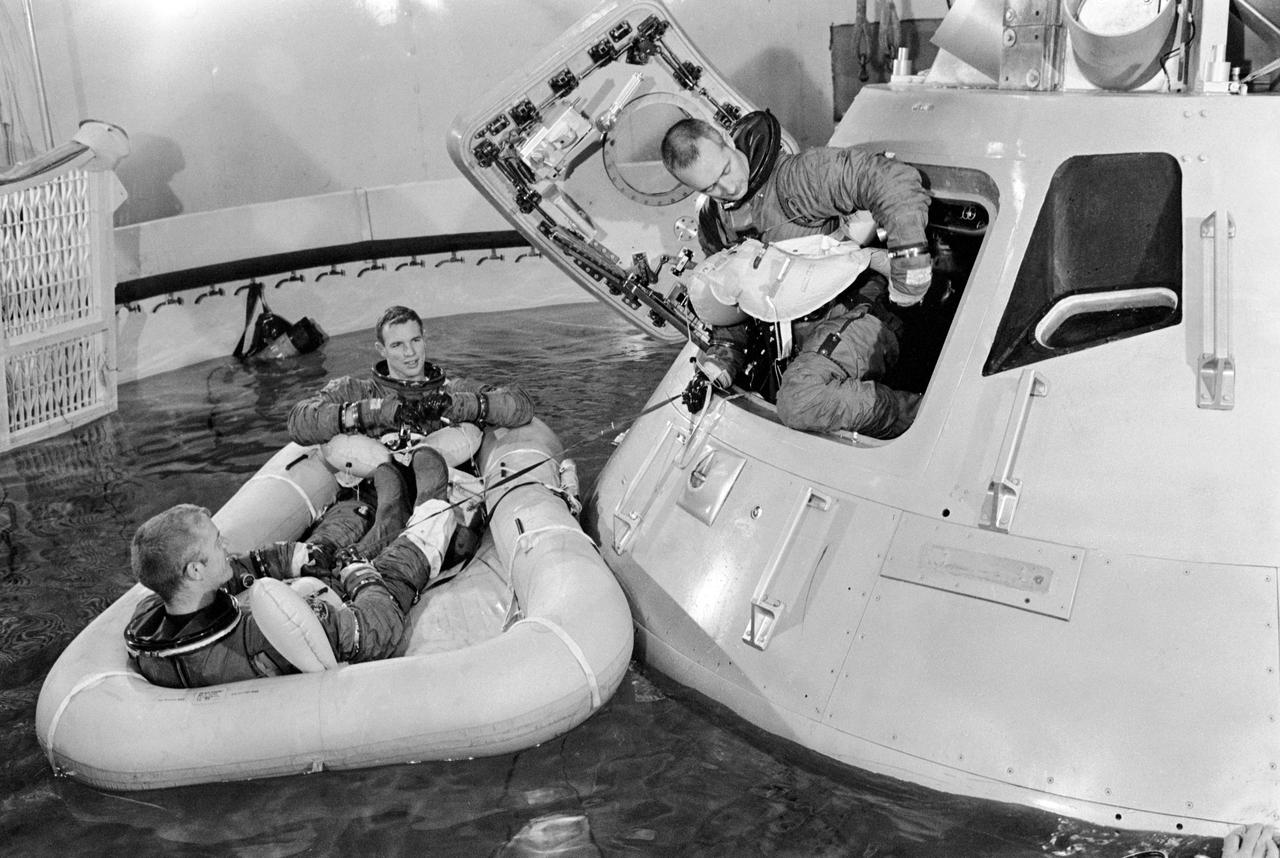
S68-54859 (November 1968) --- The prime crew of the Apollo 9 (Spacecraft 104/Lunar Module 3/Saturn 504) space mission participates in water egress training in a tank in Building 260 at the Manned Spacecraft Center. Egressing the Apollo command module boilerplate is astronaut James A. McDivitt, commander. In life raft are astronauts David R. Scott (background), command module pilot; and Russell L. Schweickart, lunar module pilot.
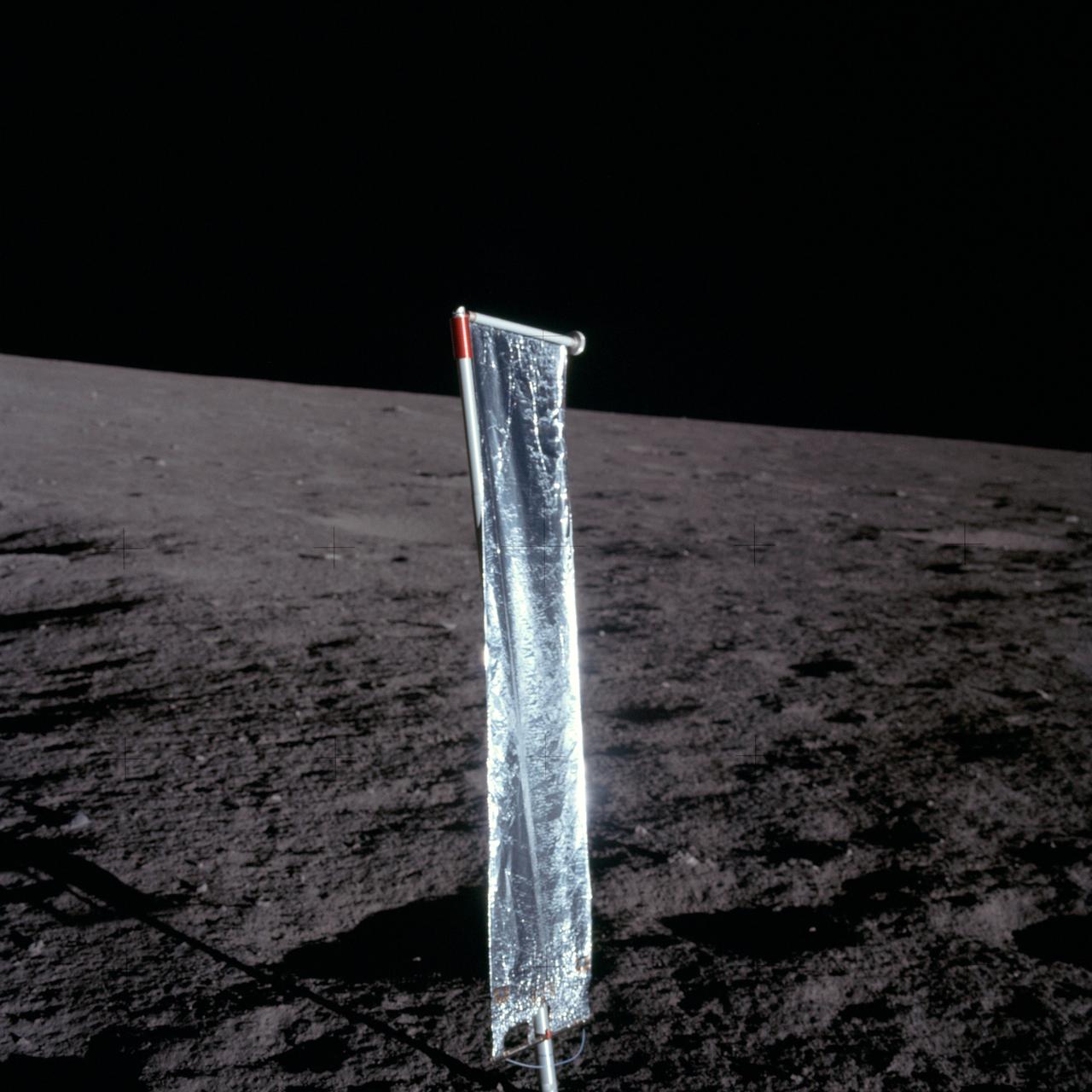
AS12-47-6898 (19 Nov. 1969) --- A close-up view of the Solar Wind Composition device. Astronaut Alan L. Bean, lunar module pilot, took this photograph, after having deployed the device. Astronauts Charles Conrad Jr., commander, and Bean descended in the Apollo 12 Lunar Module (LM) to explore the moon, while astronaut Richard F. Gordon Jr., command module pilot, remained in lunar orbit with the Command and Service Modules (CSM).
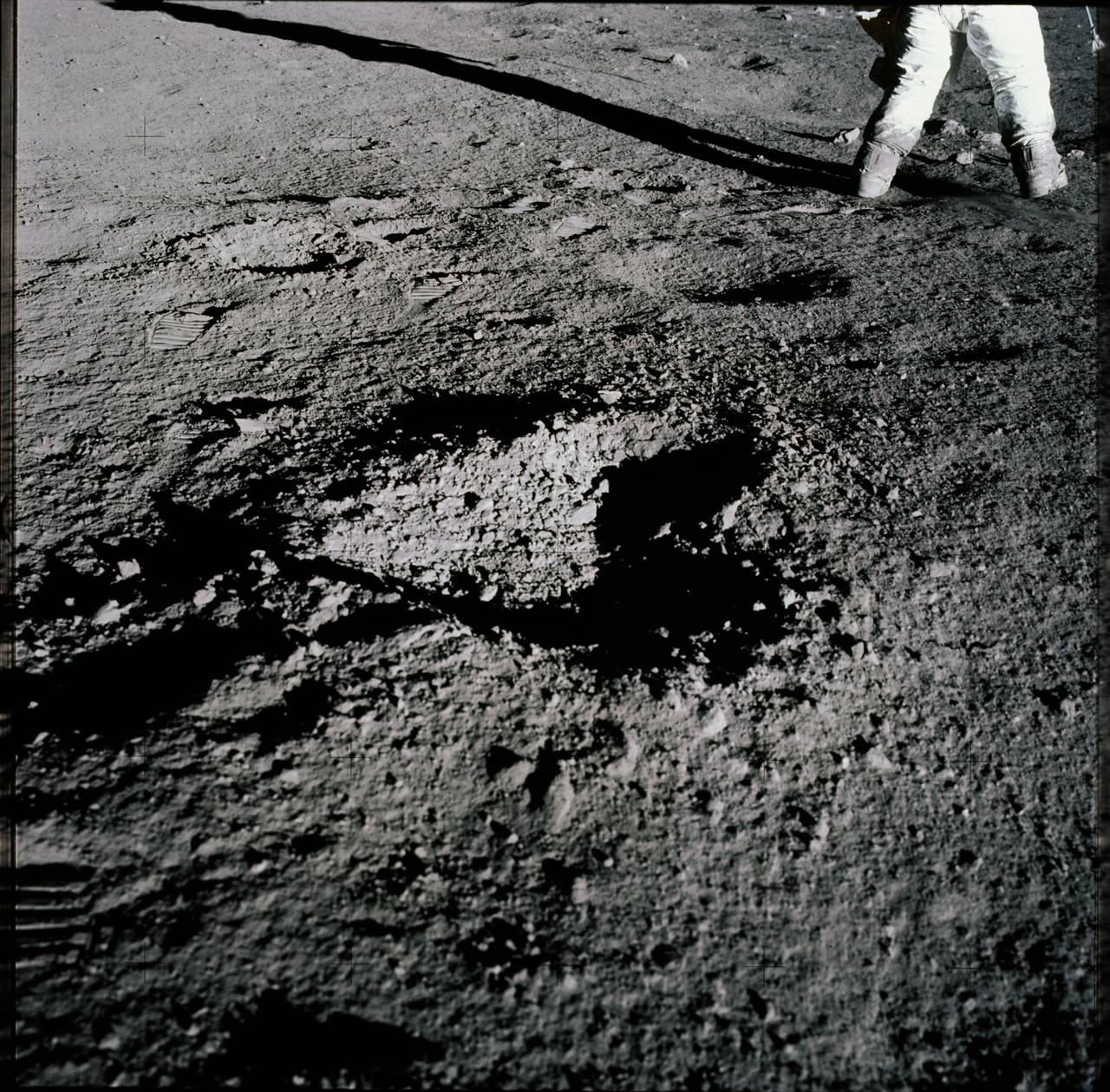
AS12-47-6938 (19 Nov. 1969) --- A close-up view of a heart-shaped depression (crater) in the lunar surface, as photographed during the Apollo 12 extravehicular activity (EVA). The legs of astronaut Charles Conrad Jr., commander, can be seen in the background. Astronaut Richard F. Gordon Jr., command module pilot, remained with the Command and Service Modules (CSM) in lunar orbit while astronauts Conrad and Alan L. Bean, lunar module pilot, descended in the Lunar Module (LM) to explore the moon.
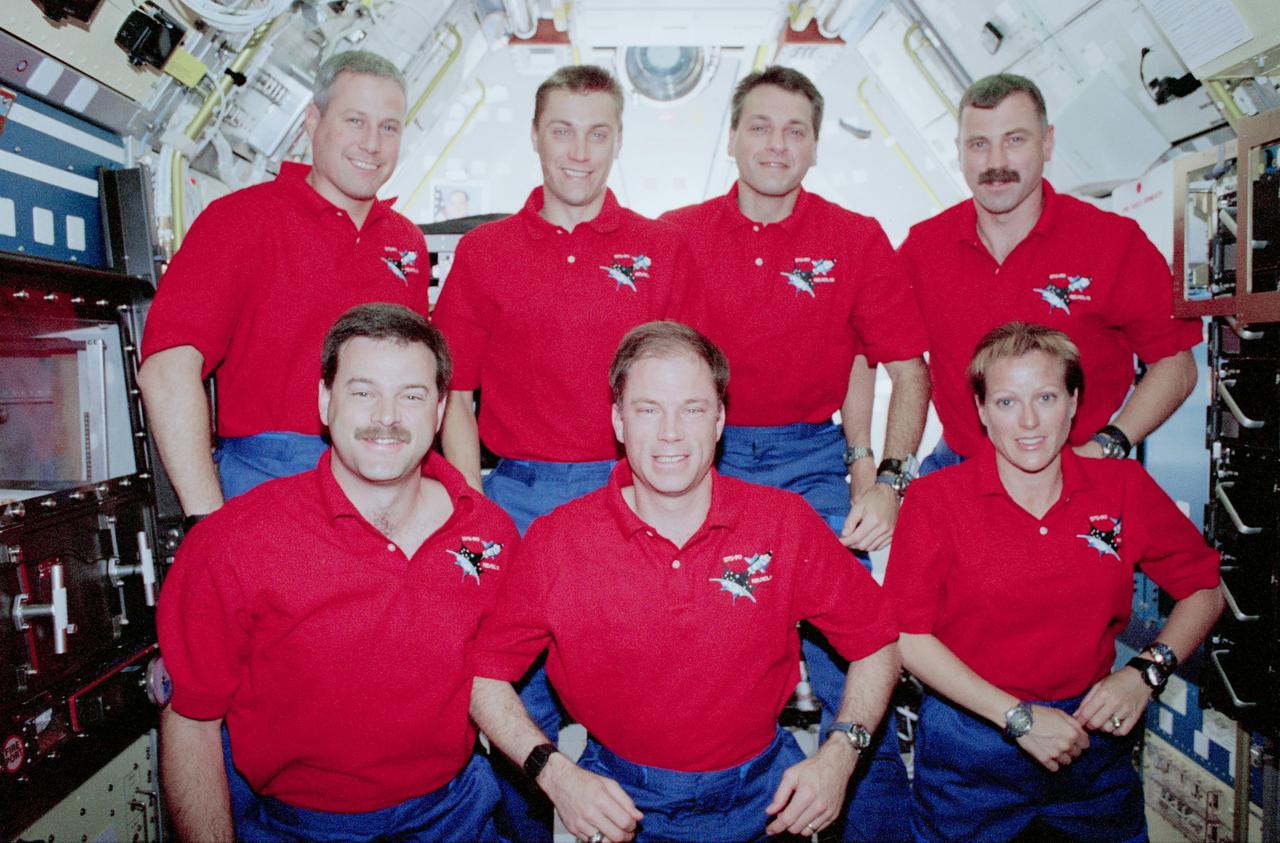
STS-90 crew crew portrait.. The various crew portraits were taken in the Spacelab module and include: back row (l.-r.) Payload specialists Jay Buckey and James Pawelczyk, Payload commander Richard Linnehan and Mission specialist Dafydd Rhys Williams. Bottom row (l.-r.) Pilot Scott Altman, Mission commander Richard Searfoss and Mission specialist Kathryn Hire. View 023 was selected by the crew for use in their postflight presentation.
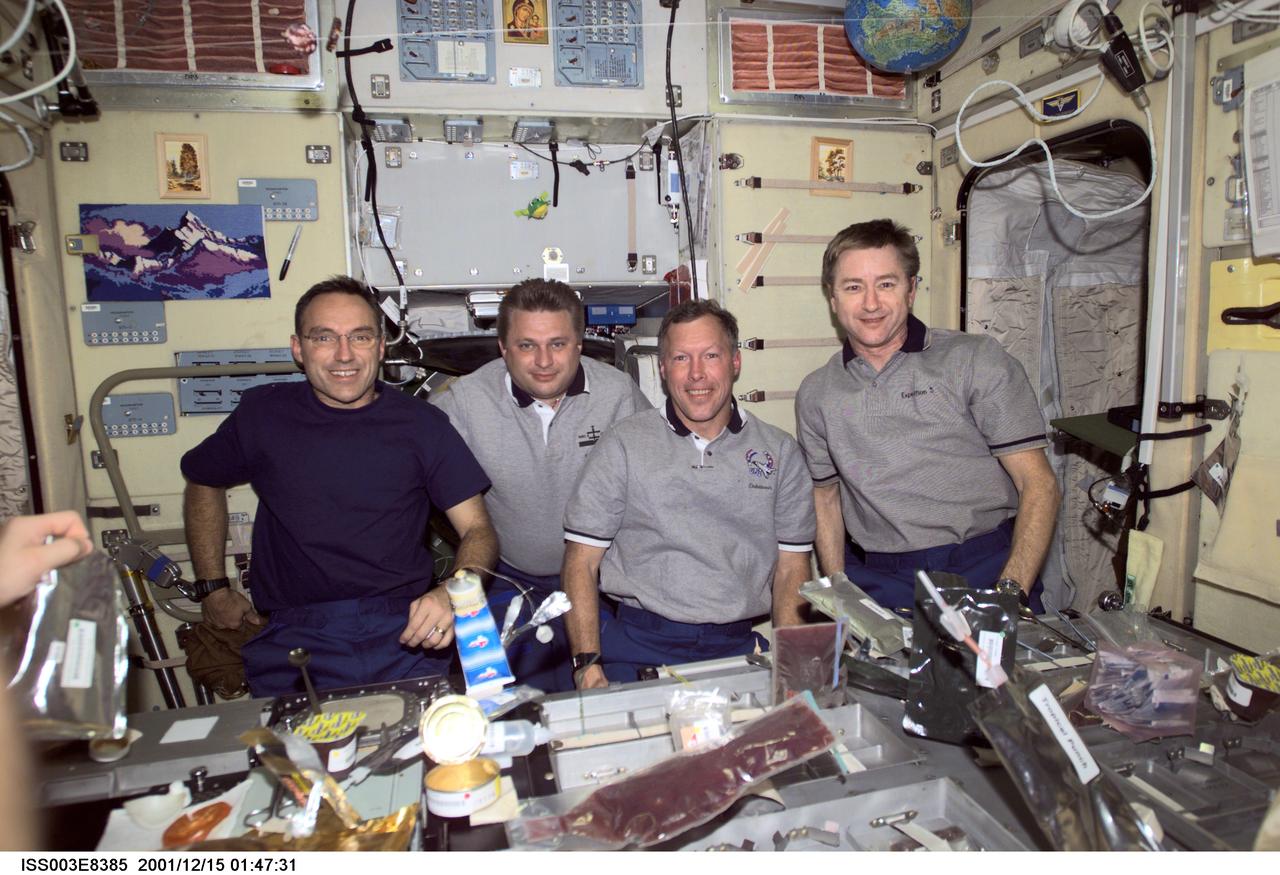
ISS003-E-8385 (15 December 2001) --- Astronaut Carl E. Walz (left), Expedition Four flight engineer; cosmonaut Yuri I. Onufrienko, Expedition Four mission commander; along with astronauts Dominic L. Gorie, STS-108 mission commander, and Frank L. Culbertson, Jr., Expedition Three mission commander, pose for a group photo in the Zvezda Service Module on the International Space Station (ISS). Various food items are visible in the foreground. The image was taken with a digital still camera.
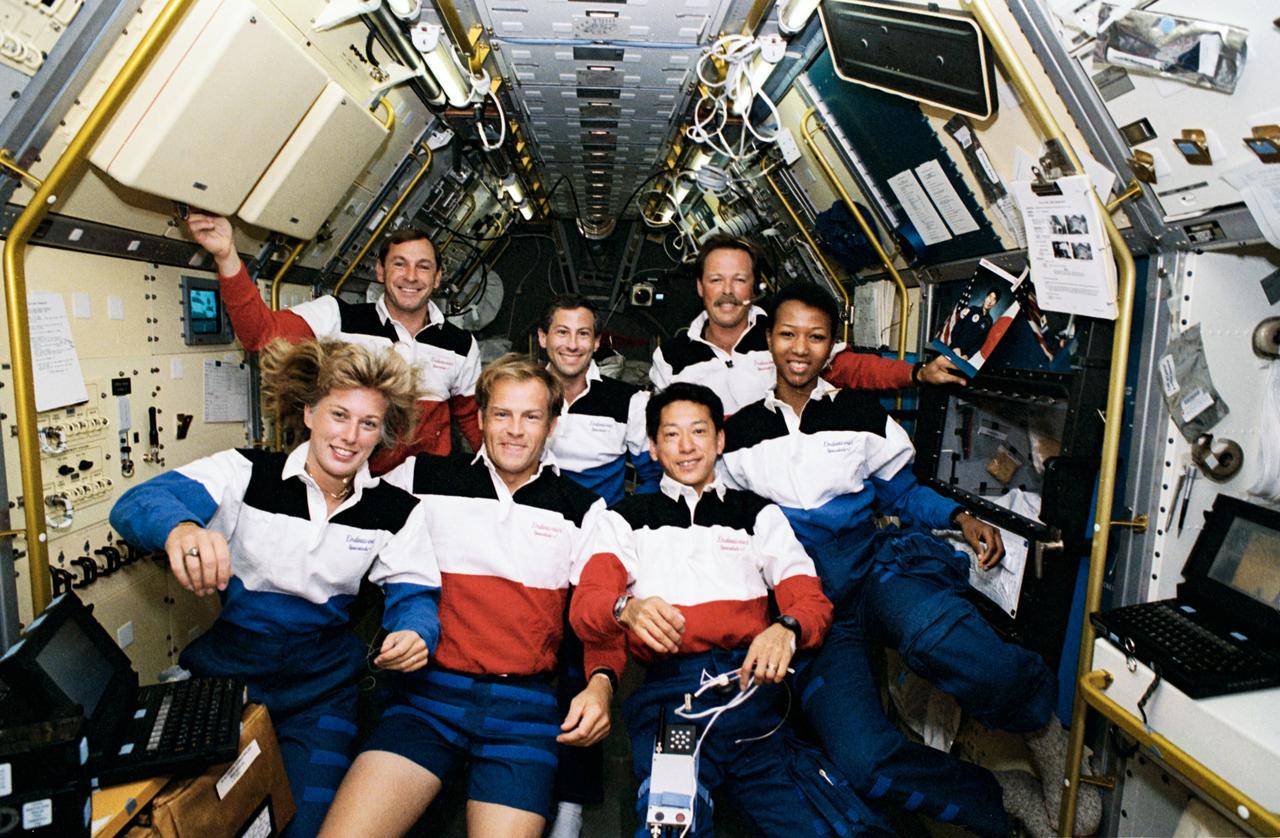
STS047-12-002 (12 - 20 Sept 1992) --- The crew members assemble for their traditional in-flight portrait in this 35mm frame photographed in the Science Module aboard the Earth-orbiting Space Shuttle Endeavour. Left to right (front) are N. Jan Davis, Mark C. Lee and Mamoru Mohri; and (rear) Curtis L. Brown, Jr., Jerome (Jay) Apt, Robert L. Gibson and Mae C. Jemison. The seven spent eight days in space in support of the Spacelab-J mission.
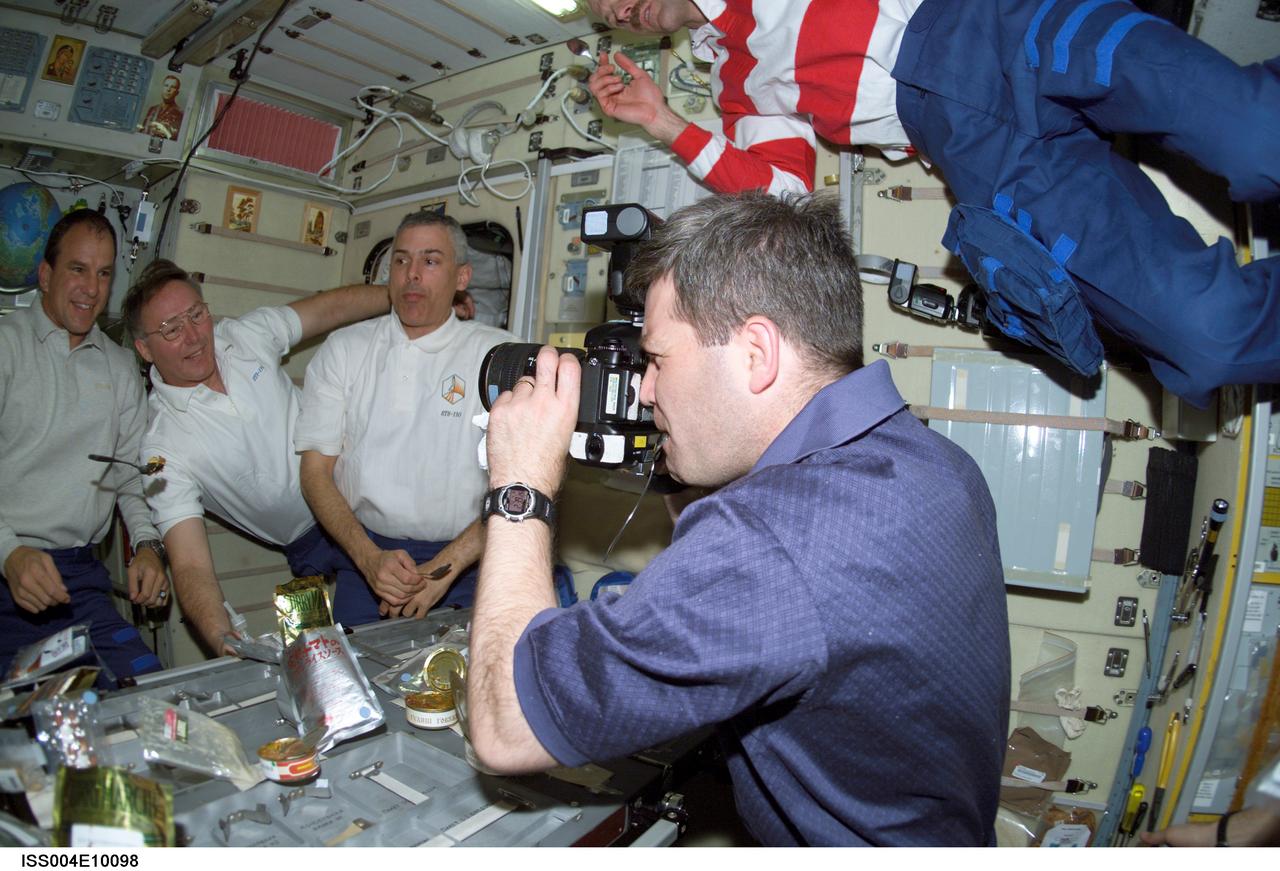
ISS004-E-10098 (16 April 2002) --- Astronaut Stephen N. Frick, STS-110 pilot, photographs crewmates in the Zvezda Service Module on the International Space Station (ISS). From the left are astronauts Michael J. Bloomfield, STS-110 mission commander, Jerry L. Ross and Lee M. E. Morin, both mission specialists. Astronaut Steven L. Smith, STS-110 mission specialist, floats above.
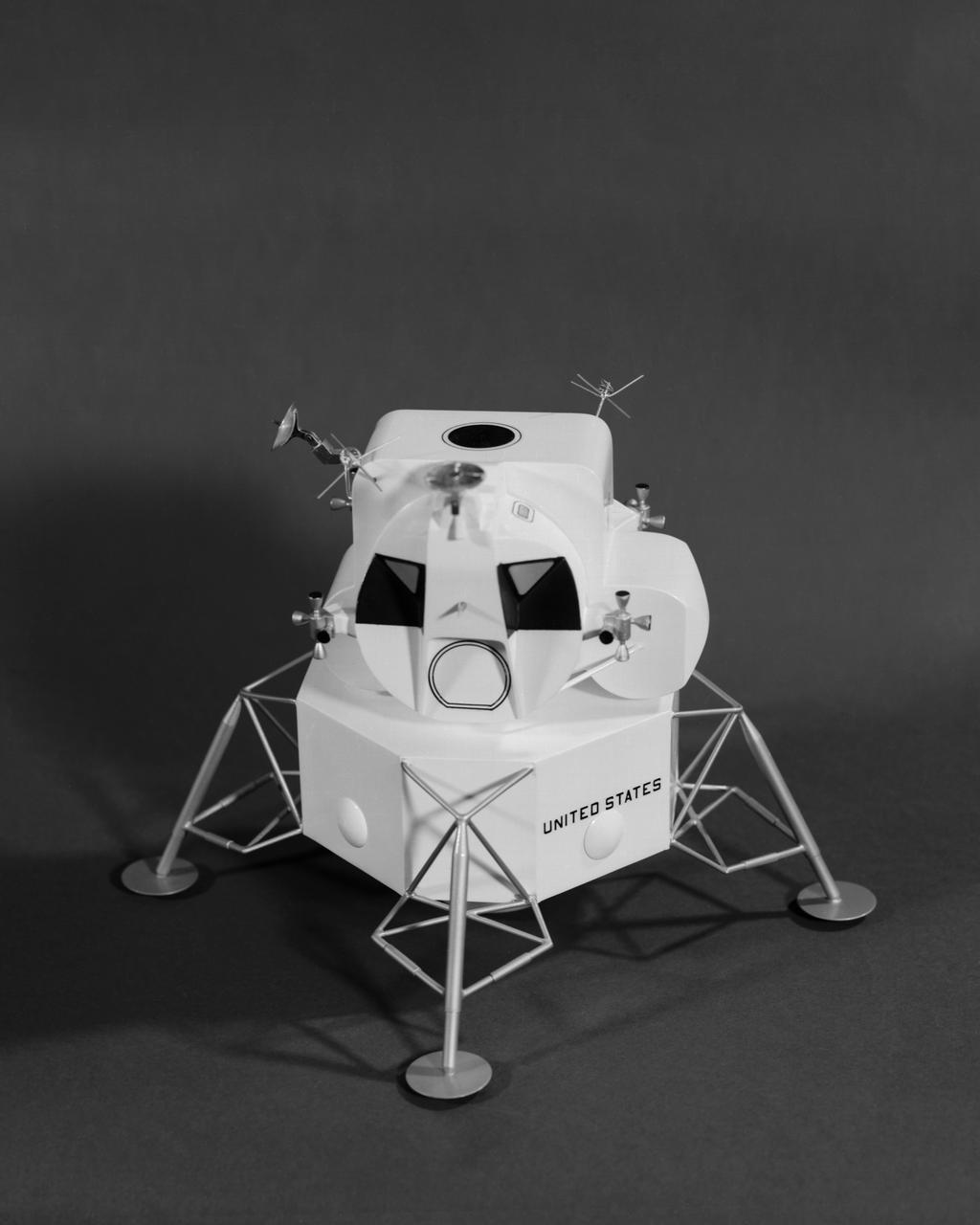
The lunar module design underwent gradual evolution from the first configuration proposed by Grumman in 1962. This model is the 1964 version. Langley had the task of building a simulator for the astronauts to practice lunar landings. The configuration of the initial vehicle used with the Lunar Landing Research Facility (LLRF) was changed in 1967 to more accurately reflect the standing position of the astronauts, cockpit arrangement, instrumentation, controls and field of view.
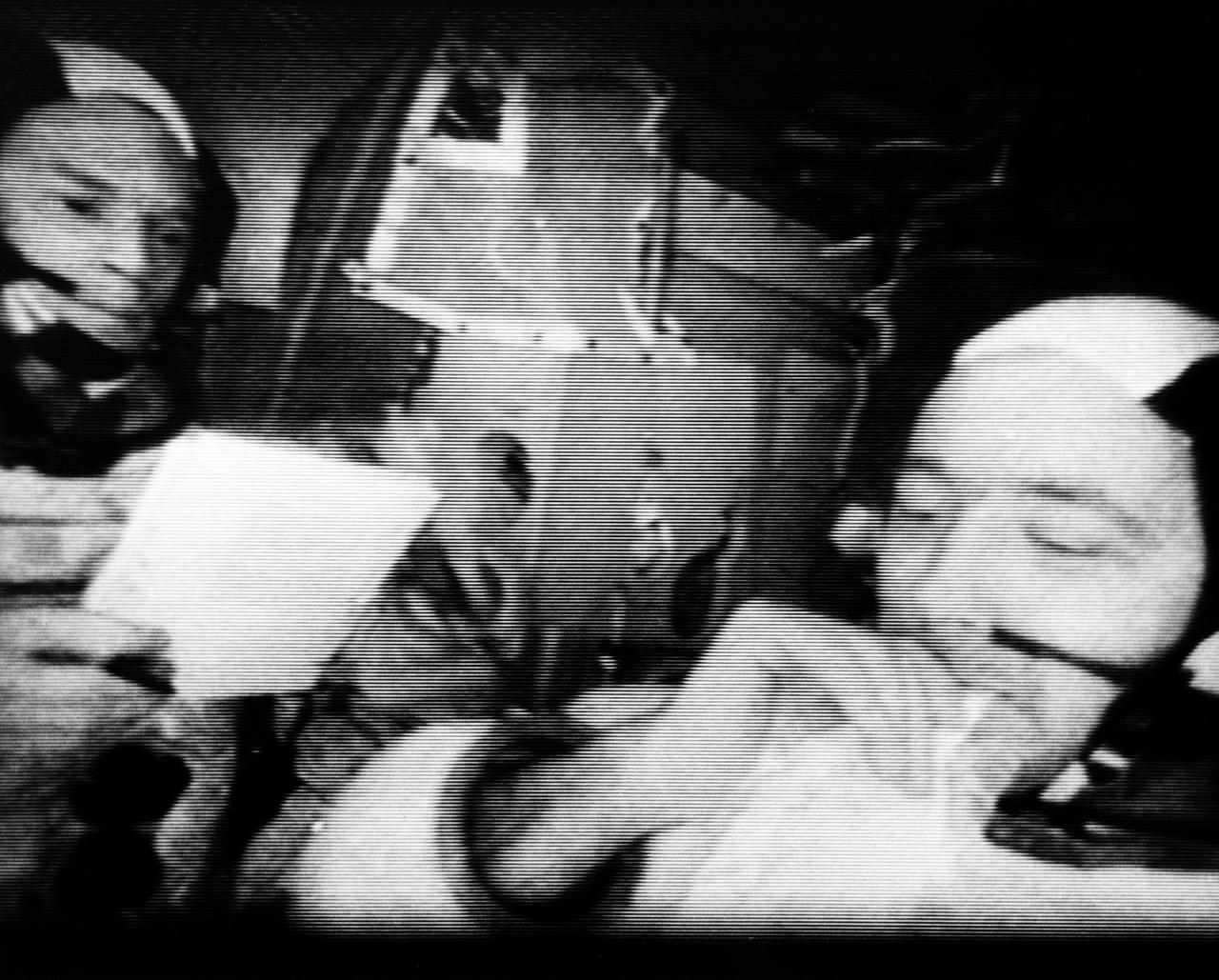
S69-26698 (March 1969) --- A photograph from a live television transmission from Apollo 9. This view shows the interior of the Lunar Module "Spider." Astronaut James A. McDivitt, Apollo 9 commander, is in right foreground. In left background is astronaut Russell L. Schweickart, lunar module pilot. At this moment Apollo 9 was orbiting Earth with the Command Module docked nose-to-nose with the Lunar Module. Astronaut David R. Scott, command module pilot, remained at the controls in the Command Module "Gumdrop" while the other two astronauts checked out the Lunar Module.
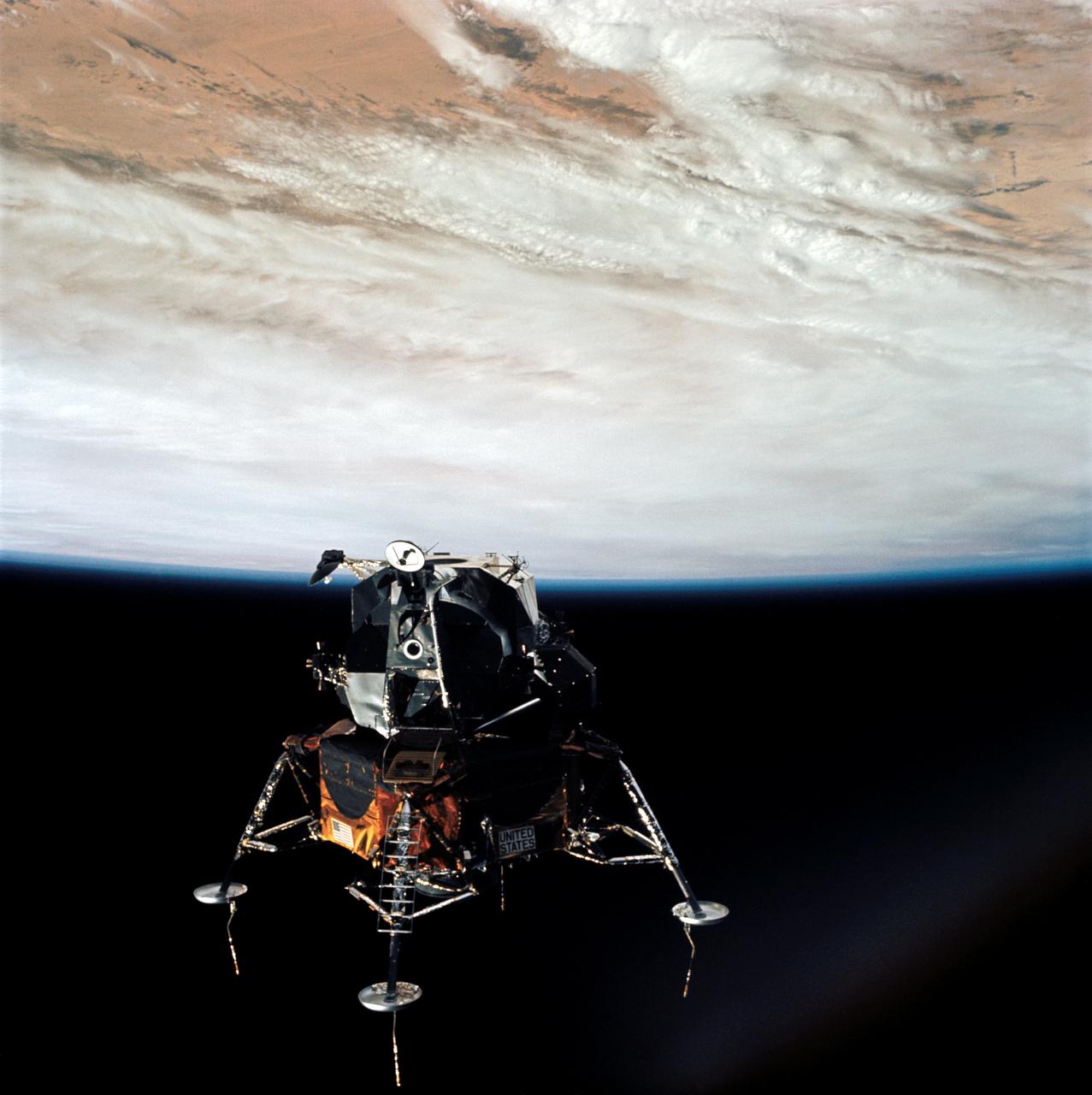
AS09-21-3212 (7 March 1969) --- A view of the Apollo 9 Lunar Module (LM), "Spider", in a lunar landing configuration, as photographed from the Command and Service Modules (CSM) on the fifth day of the Apollo 9 Earth-orbital mission. The landing gear on the "Spider" has been deployed. Lunar surface probes (sensors) extend out from landing gear foot pads. Inside the "Spider" were astronauts James A. McDivitt, Apollo 9 commander, and Russell L. Schweickart, lunar module pilot. Astronaut David R. Scott, command module pilot, remained at the controls in the Command Module (CM), "Gumdrop", while the other two astronauts checked out the Lunar Module.
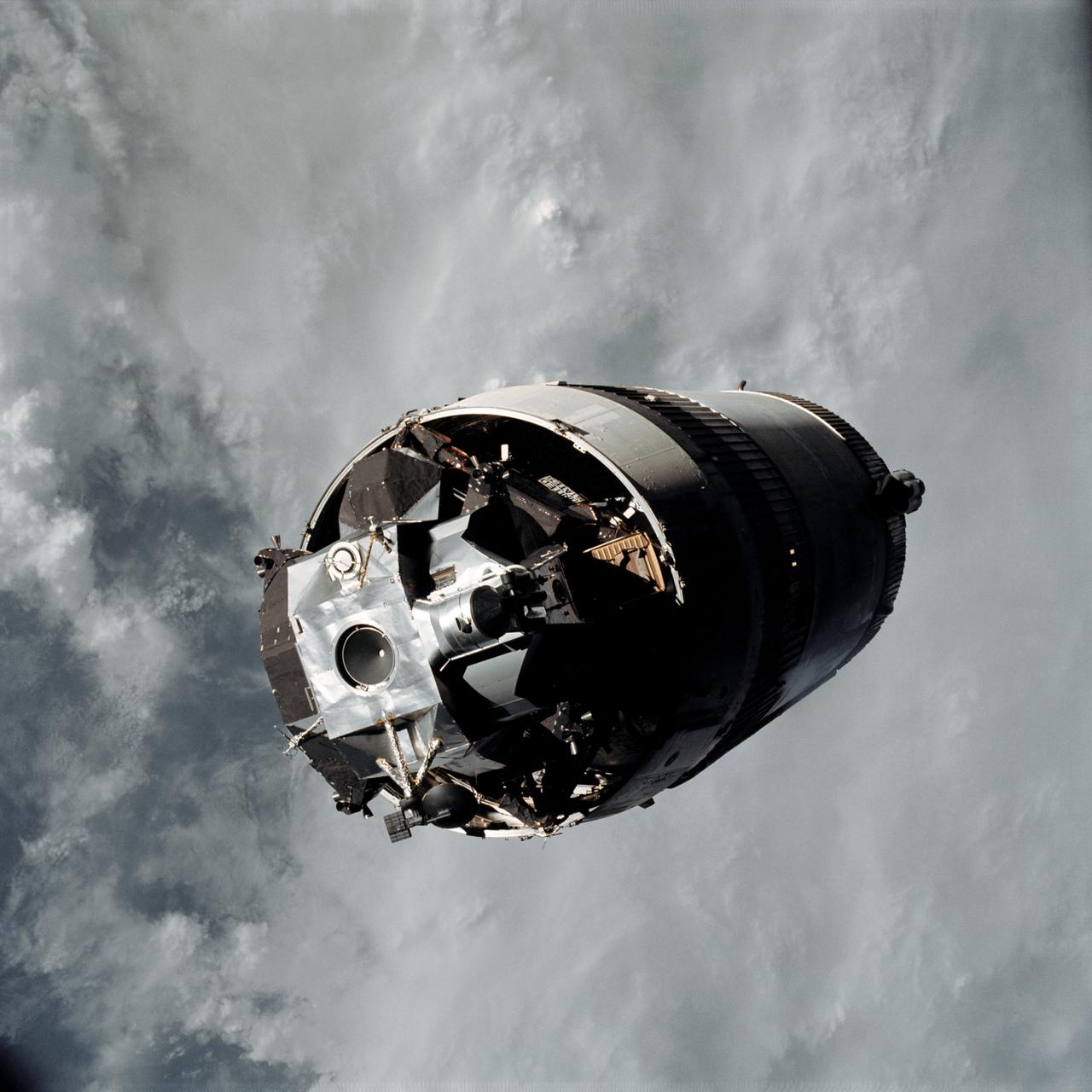
AS09-19-2919 (3 March 1969) --- The Lunar Module (LM) "Spider", still attached to the Saturn V third (S-IVB) stage, is photographed from the Command and Service Modules (CSM) "Gumdrop" on the first day of the Apollo 9 Earth-orbital mission. This picture was taken following CSM/LM-S-IVB separation and prior to LM extraction from the S-IVB. The Spacecraft Lunar Module Adapter (SLA) panels have already been jettisoned. Inside the Command Module were astronauts James A. McDivitt, commander; David R. Scott, command module pilot; and Russell L. Schweickart, lunar module pilot.
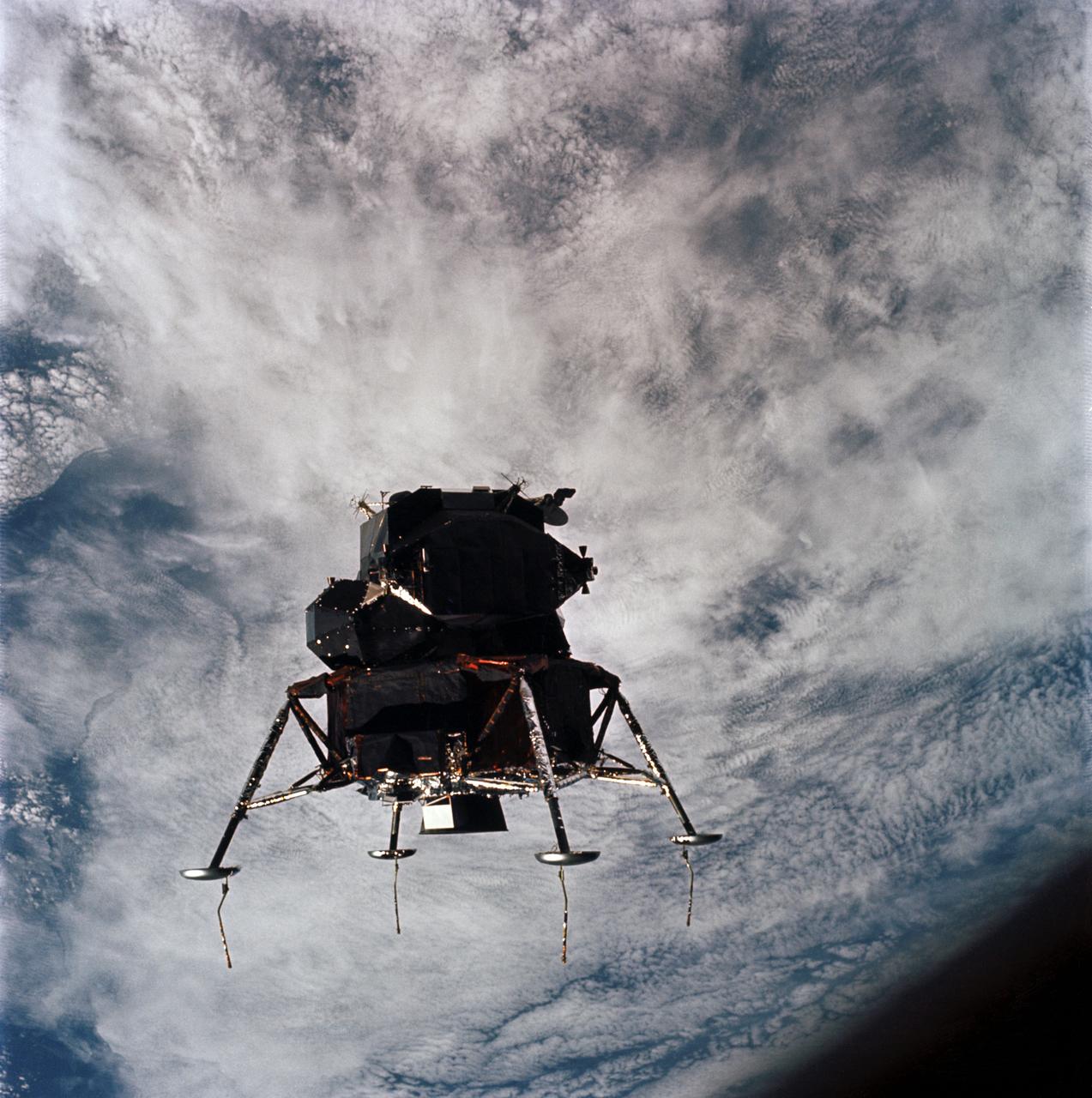
AS09-21-3199 (7 March 1969) --- Excellent view of the Apollo 9 Lunar Module, "Spider," in a lunar landing configuration, as photographed from the Command and Service Modules on the fifth day of the Apollo 9 Earth-orbital mission. The landing gear on the "Spider" has been deployed. Lunar surface probes (sensors) extend out from the landing gear foot pads. Inside the "Spider" were astronauts James A. McDivitt, Apollo 9 commander; and Russell L. Schweickart, lunar module pilot. Astronaut David R. Scott, command module pilot, remained at the controls in the Command Module, "Gumdrop," while the other two astronauts checked out the Lunar Module.
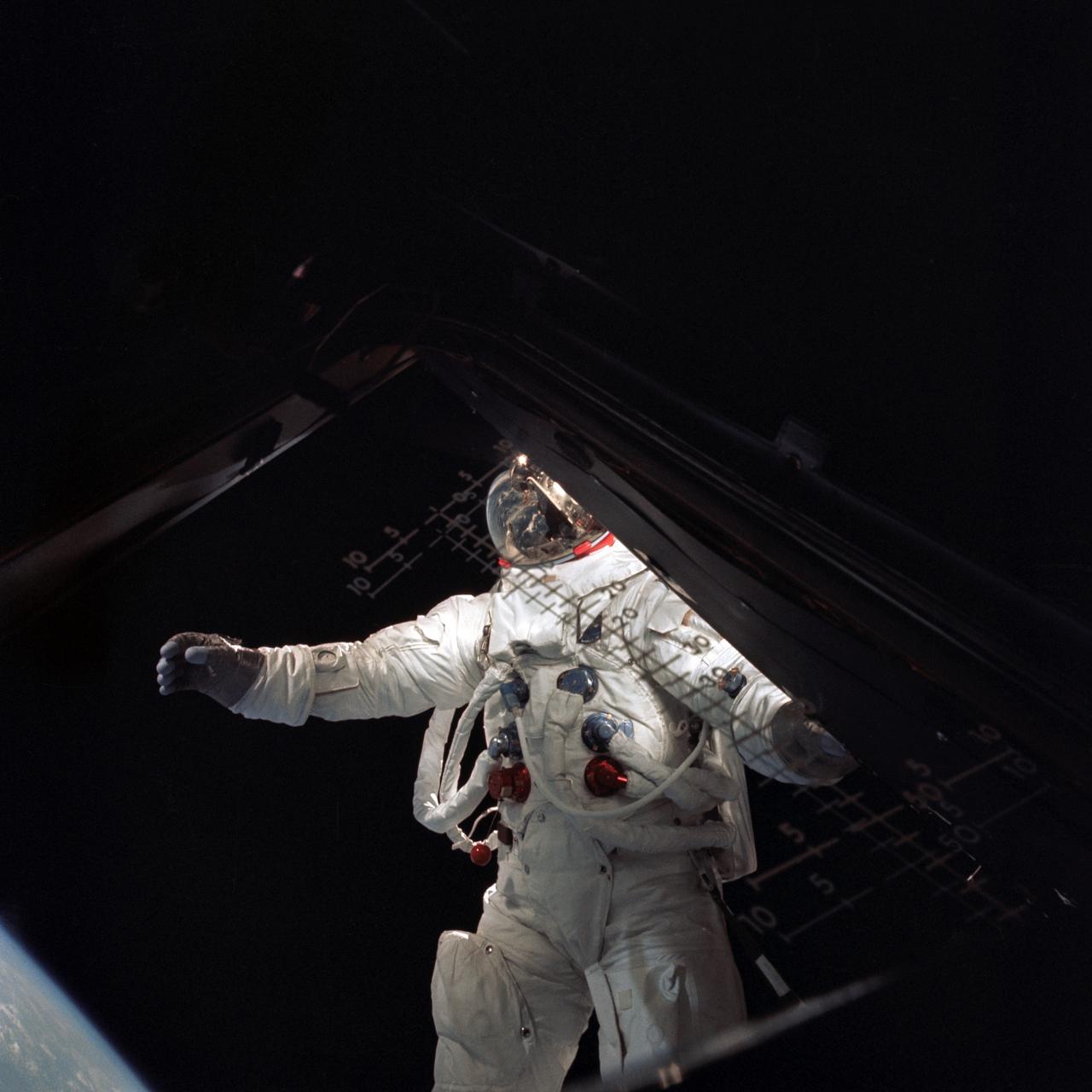
AS09-20-3094 (6 March 1969) --- Astronaut Russell L. Schweickart, lunar module pilot, stands in "golden slippers" on the Lunar Module porch during his extravehicular activity on the fourth day of the Apollo 9 Earth-orbital mission. This photograph was taken from inside the Lunar Module "Spider". The Command and Service Modules were docked to the LM. Schweickart is wearing an Extravehicular Mobility Unit (EMU). Inside the "Spider" was astronaut James A. McDivitt, Apollo 9 crew commander. Astronaut David R. Scott, command module pilot, remained at the controls of the Command Module, "Gumdrop."
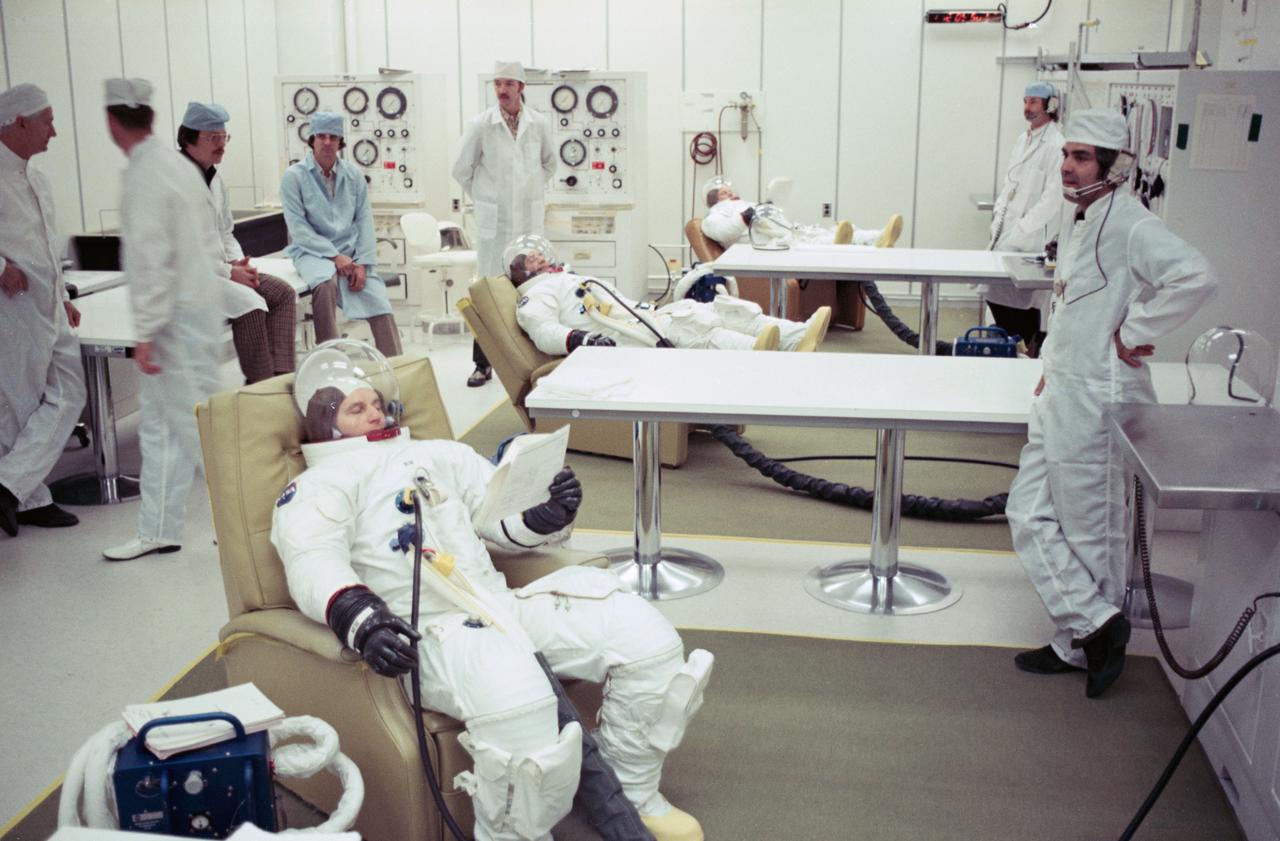
S75-21063 (January 1975) --- The three members of the American ASTP backup crew are suited up for the testing of the Apollo spacecraft at the Kennedy Space Center. They are (from foreground) astronauts Alan L. Bean, commander; Ronald E. Evans, command module pilot; and Jack R. Lousma, docking module pilot. Later, they entered the Apollo Command Module in an altitude chamber for tests of spacecraft systems. The testing was in preparation for the joint U.S.?USSR Apollo-Soyuz Test Project docking mission in Earth orbit scheduled for July 1975.
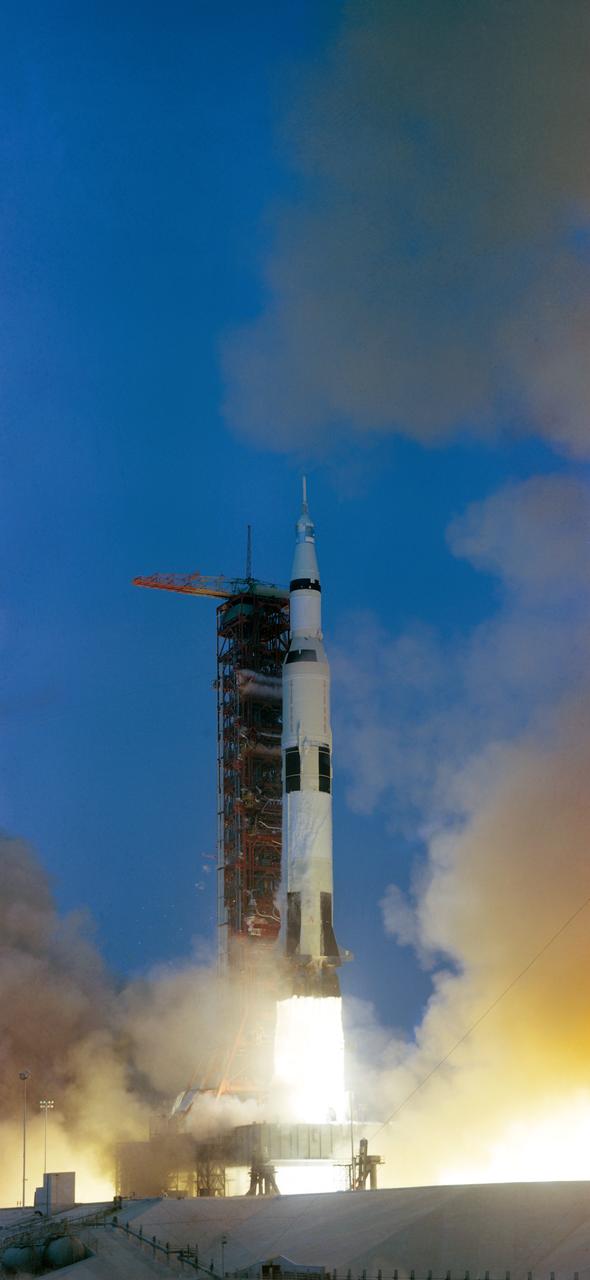
S70-34853 (11 April 1970) --- The Apollo 13 (Spacecraft 109/Lunar Module 7/Saturn 508) space vehicle is launched from Pad A, Launch Complex 39, Kennedy Space Center (KSC), at 2:13 p.m. (EST), April 11, 1970. The crew of the National Aeronautics and Space Administration's (NASA) third lunar landing mission are astronauts James A., Lovell Jr., commander; John L. Swigert Jr., command module pilot; and Fred W. Haise Jr., lunar module pilot.
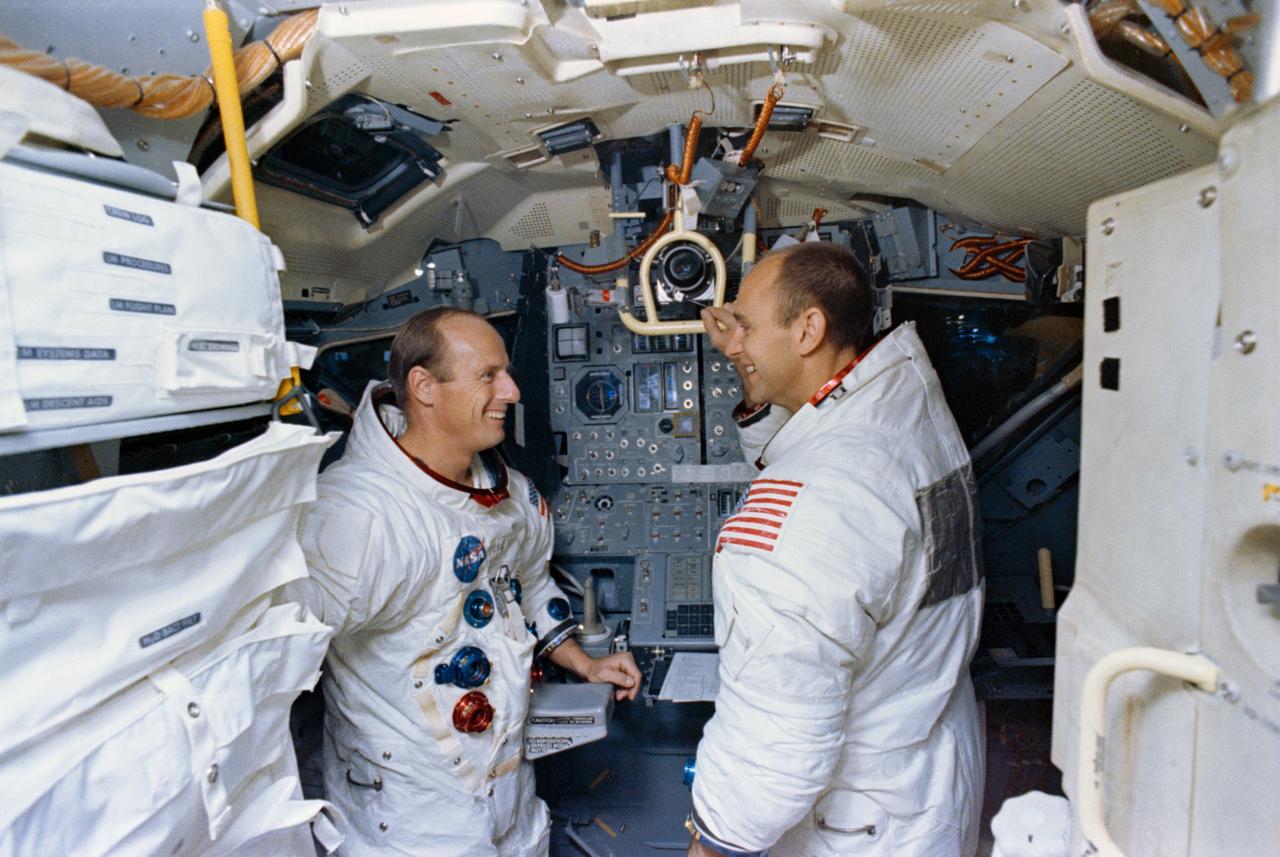
S69-56699 (22 Oct. 1969) --- Astronauts Charles Conrad Jr. (left), Apollo 12 commander; and Alan L. Bean, lunar module pilot, are shown in the Apollo Lunar Module Mission Simulator during simulator training at the Kennedy Space Center (KSC). Apollo 12 will be the National Aeronautics and Space Administration's (NASA) second lunar landing mission. The third Apollo 12 crewmember will be astronaut Richard F. Gordon Jr., command module pilot.
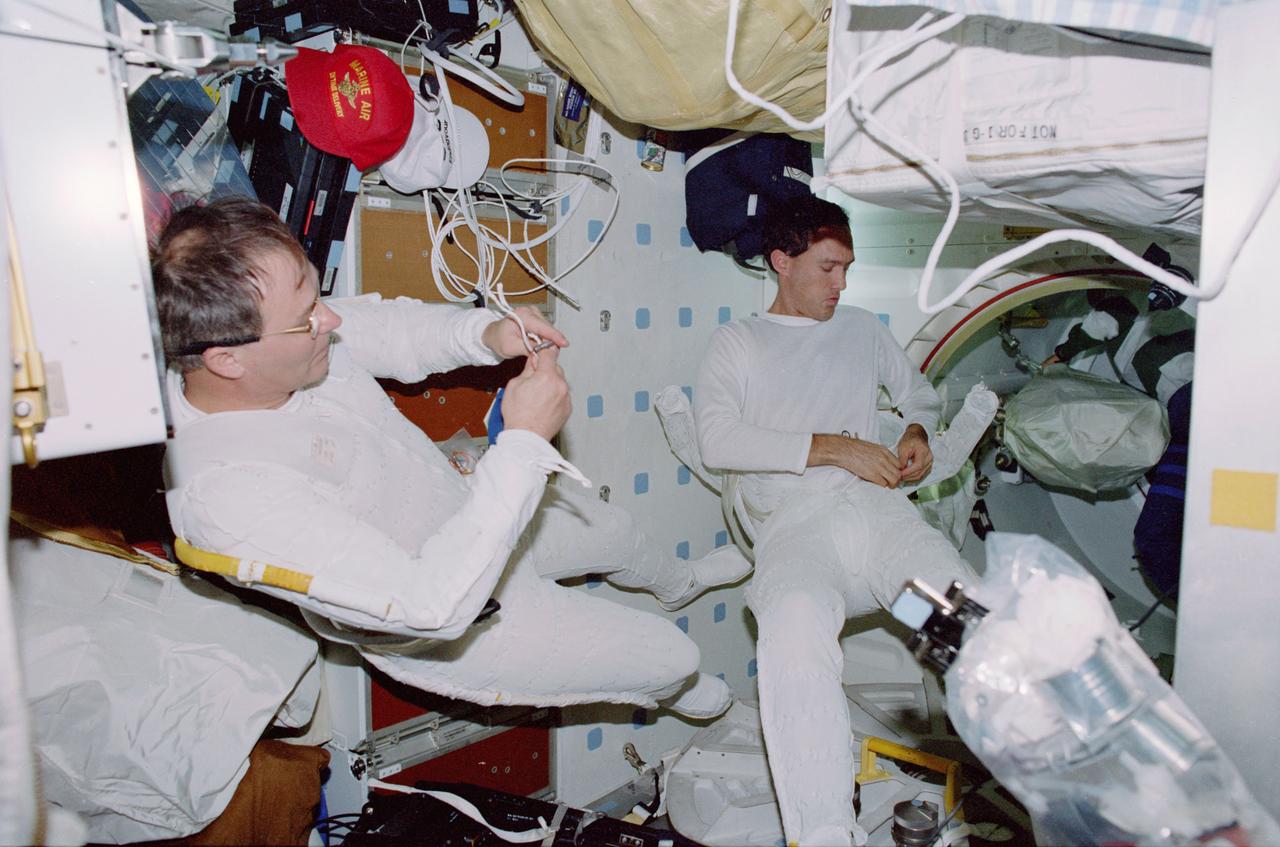
STS088-319-031 (4-15 December 1998) --- Astronauts Jerry L. Ross (left) and James H. Newman, both mission specialists, are pictured in their thermal undergarments prior to the first extravehicular activity (EVA) for the mission. They went on to complete a total of three such spacewalks designed to help prepare the recently-connected Russian-built FGB Module (Zarya) and the United States-built Unity Module (Node 1), the first two modules for the International Space Station (ISS).
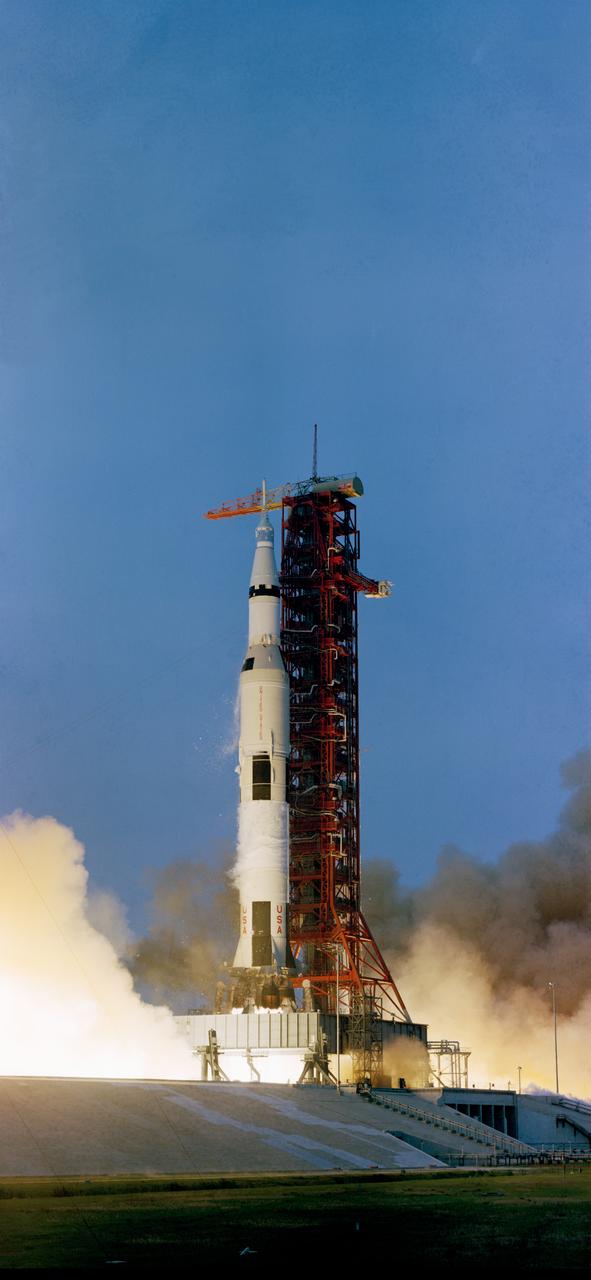
S70-34852 (11 April 1970) --- The Apollo 13 (Spacecraft 109/Lunar Module 7/Saturn 508) space vehicle is launched from Pad A Launch Complex 39, Kennedy Space Center (KSC), at 2:13 p.m. (EST), April 11, 1970. The crew of the National Aeronautics and Space Administration's (NASA) third lunar landing mission are astronauts James A. Lovell Jr., commander; John L. Swigert Jr., command module pilot; and Fred W. Haise Jr., lunar module pilot.

S68-50977 (20 Nov. 1968) --- The Apollo 9 prime crew participates in water egress training in the Gulf of Mexico. Apollo Command Module Boilerplate 1102 was used in the training. Egressing the boilerplate is astronaut David R. Scott, command module pilot. Inside the boilerplate, out of view, are astronauts James A. McDivitt, commander; and Russell L. Schweickart, lunar module pilot. A team of MSC swimmers assisted in the exercise. The inflated bags were used to upright the boilerplate prior to egress.
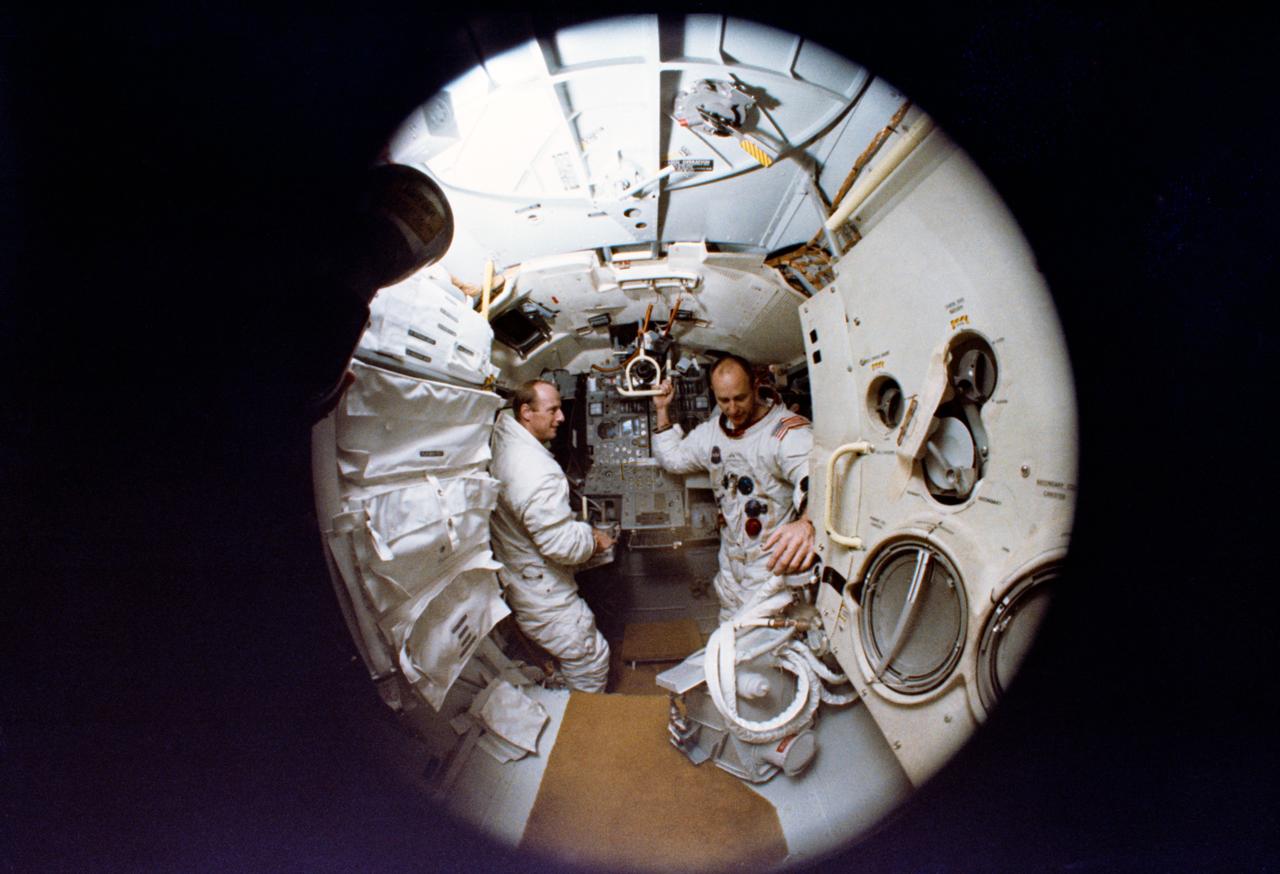
S69-56700 (22 Oct. 1969) --- A fish-eye lens view of astronauts Charles Conrad Jr. (on left), Apollo 12 commander, and Alan L. Bean, lunar module pilot, inside the Apollo Lunar Module Mission Simulator during simulator training at the Kennedy Space Center (KSC). Apollo 12 will be the National Aeronautics and Space Administration's (NASA) second lunar landing mission. The third Apollo 12 crewmember will be astronaut Richard F. Gordon Jr., command module pilot.
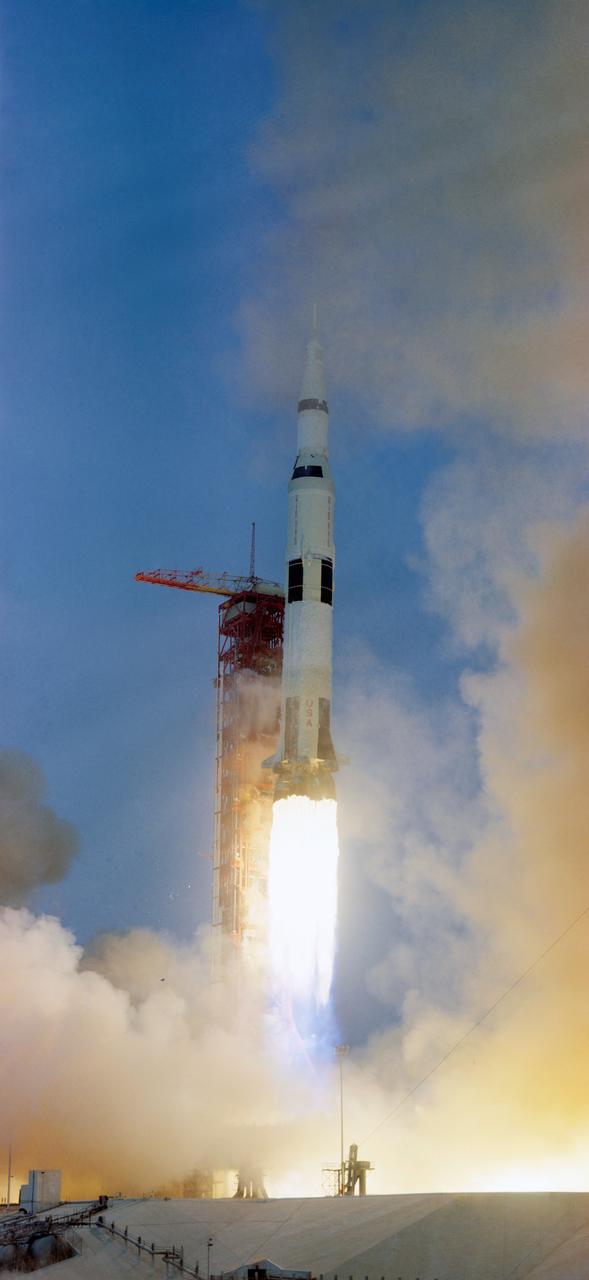
S70-34854 (11 April 1970) --- The Apollo 13 (Spacecraft 109/Lunar Module 7/Saturn 508) space vehicle is launched from Pad A, Launch Complex 39, Kennedy Space Center (KSC), at 2:13 p.m. (EST), April 11, 1970. The crew of the National Aeronautics and Space Administration's (NASA) third lunar landing mission are astronauts James A. Lovell Jr., commander; John L. Swigert Jr., command module pilot; and Fred W. Haise Jr., lunar module pilot.

S70-34855 (11 April 1970) --- The Apollo 13 (Spacecraft 109/Lunar Module 7/Saturn 508) space vehicle is launched from Pad A, Launch Complex 39, Kennedy Space Center (KSC), at 2:13 p.m. (EST), April 11, 1970. The crew of the National Aeronautics and Space Administration's (NASA) third lunar landing mission are astronauts James A., Lovell Jr., commander; John L. Swigert Jr., command module pilot; and Fred W. Haise Jr., lunar module pilot.
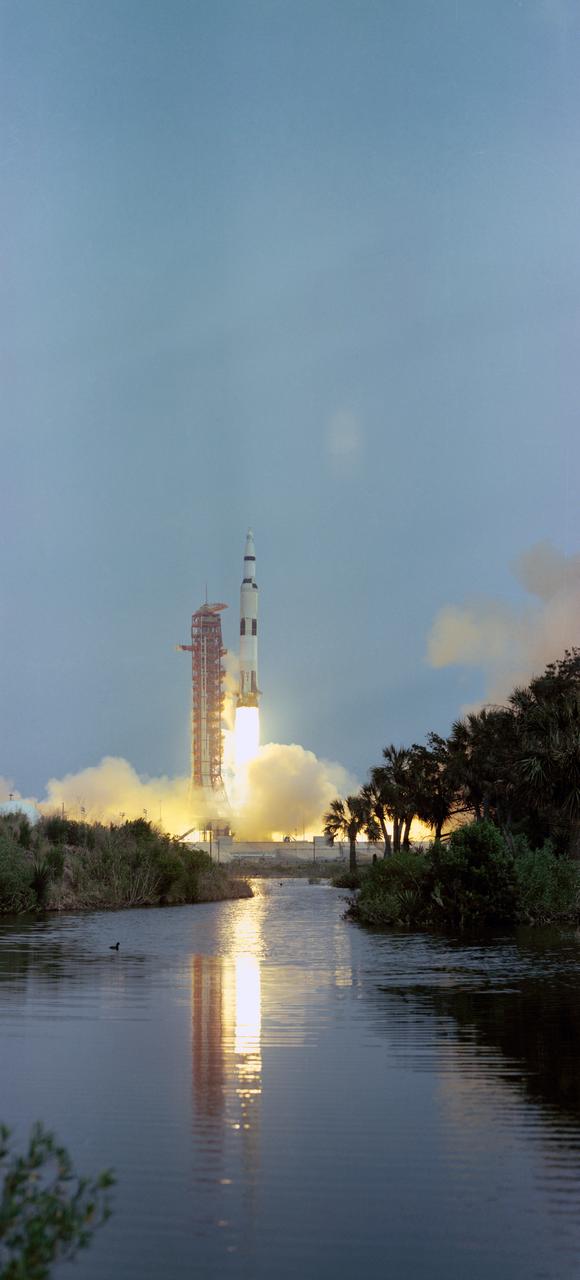
S70-38747 (11 April 1970) --The Apollo 13 (Spacecraft 109/Lunar Module 7/Saturn 508) space vehicle is launched from Pad A, Launch Complex 39, Kennedy Space Center (KSC), at 2:13 p.m. (EST), April 11, 1970. The crew of the National Aeronautics and Space Administration's (NASA) third lunar landing mission is astronauts James A. Lovell Jr., commander; John L. Swigert Jr., command module pilot; and Fred W. Haise Jr., lunar module pilot.
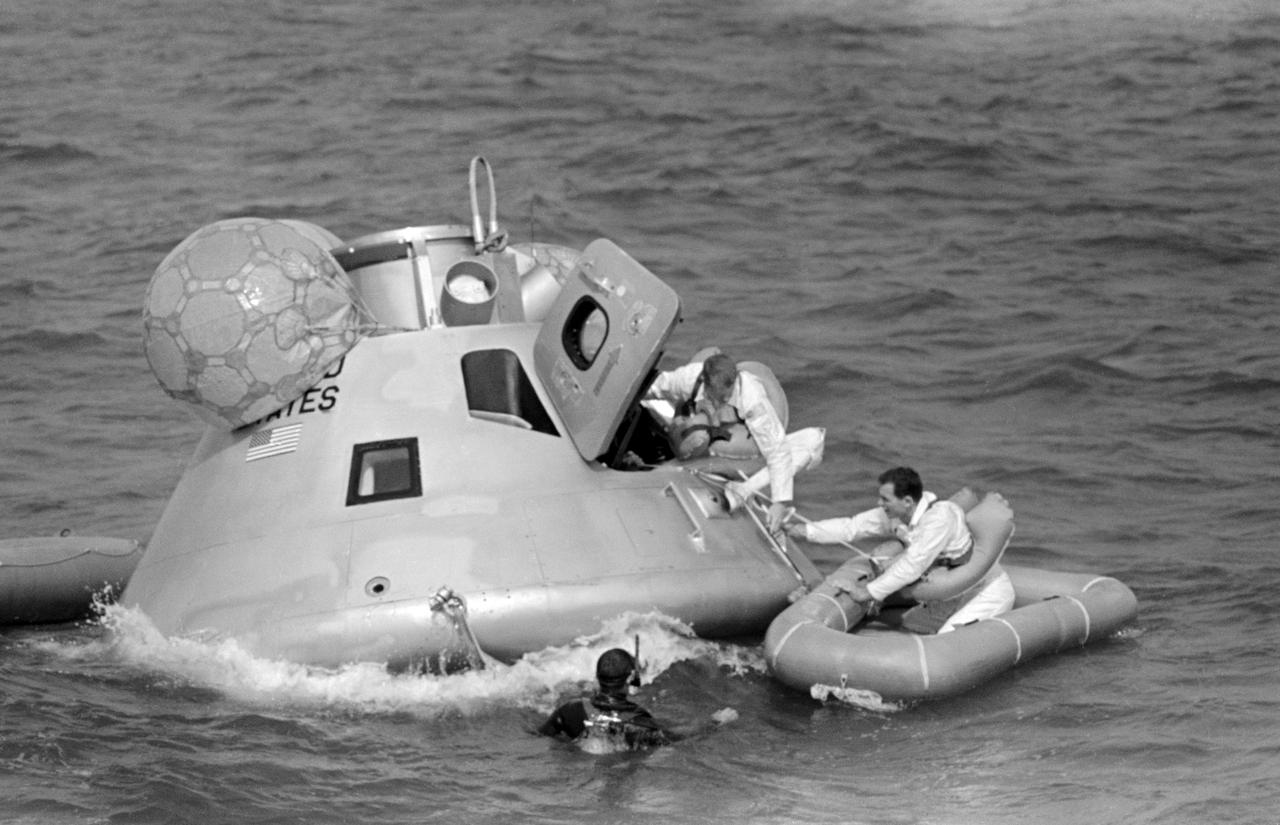
S68-50960 (20 Nov. 1968) --- The Apollo 9 prime crew participates in water egress training in the Gulf of Mexico. Apollo Command Module Boilerplate 1102 was used in the training. In life raft is astronaut David R. Scott, command module pilot. Egressing the boilerplate is astronaut Russell L. Schweickart, lunar module pilot. Still inside boilerplate, out of view, is astronaut James A. McDivitt, commander. A team of MSC swimmers assisted in the exercise. The inflated bags were used to upright the boilerplate prior to egress.
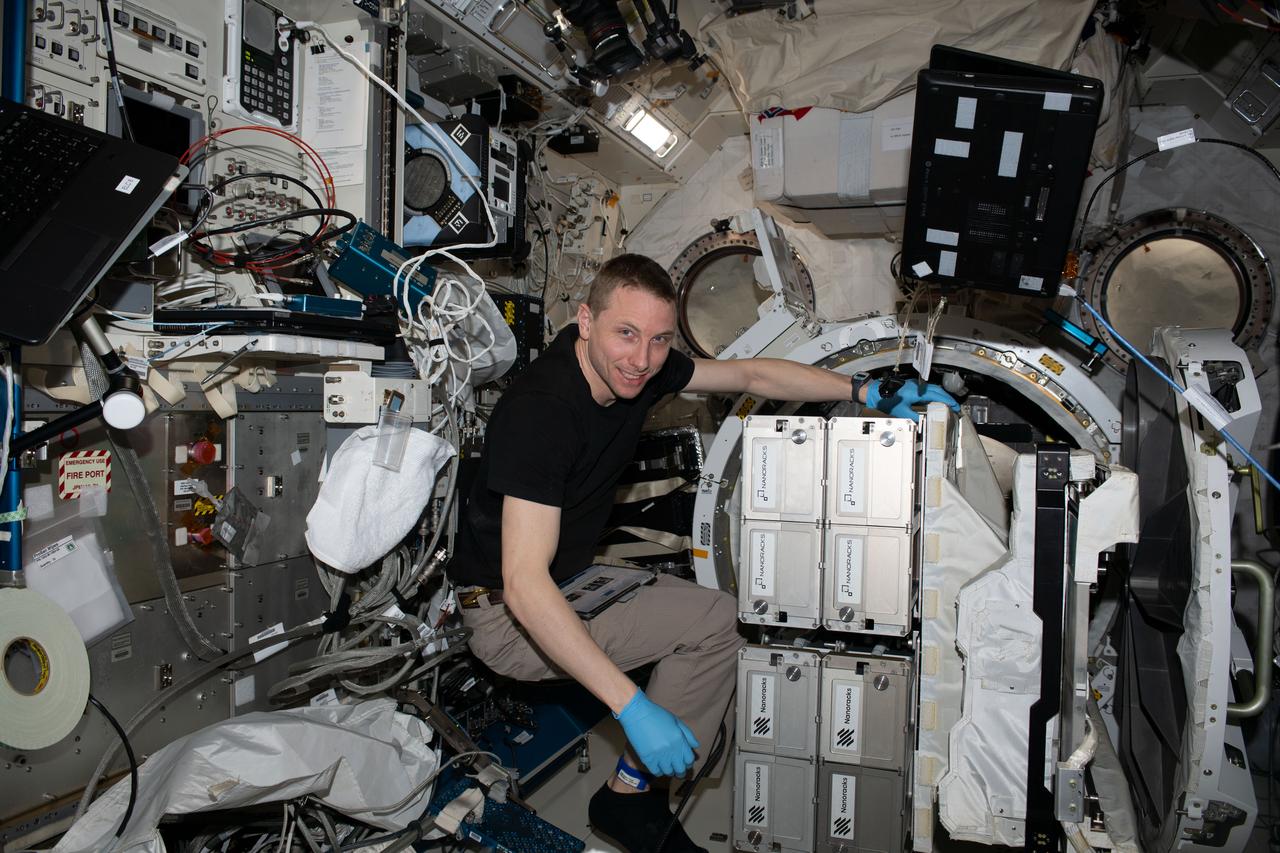
iss069e030663 (July 10, 2023) --- NASA astronaut and Expedition 69 Flight Engineer Woody Hoburg removes the NanoRacks CubeSat Deployer from the Kibo laboratory module's airlock.
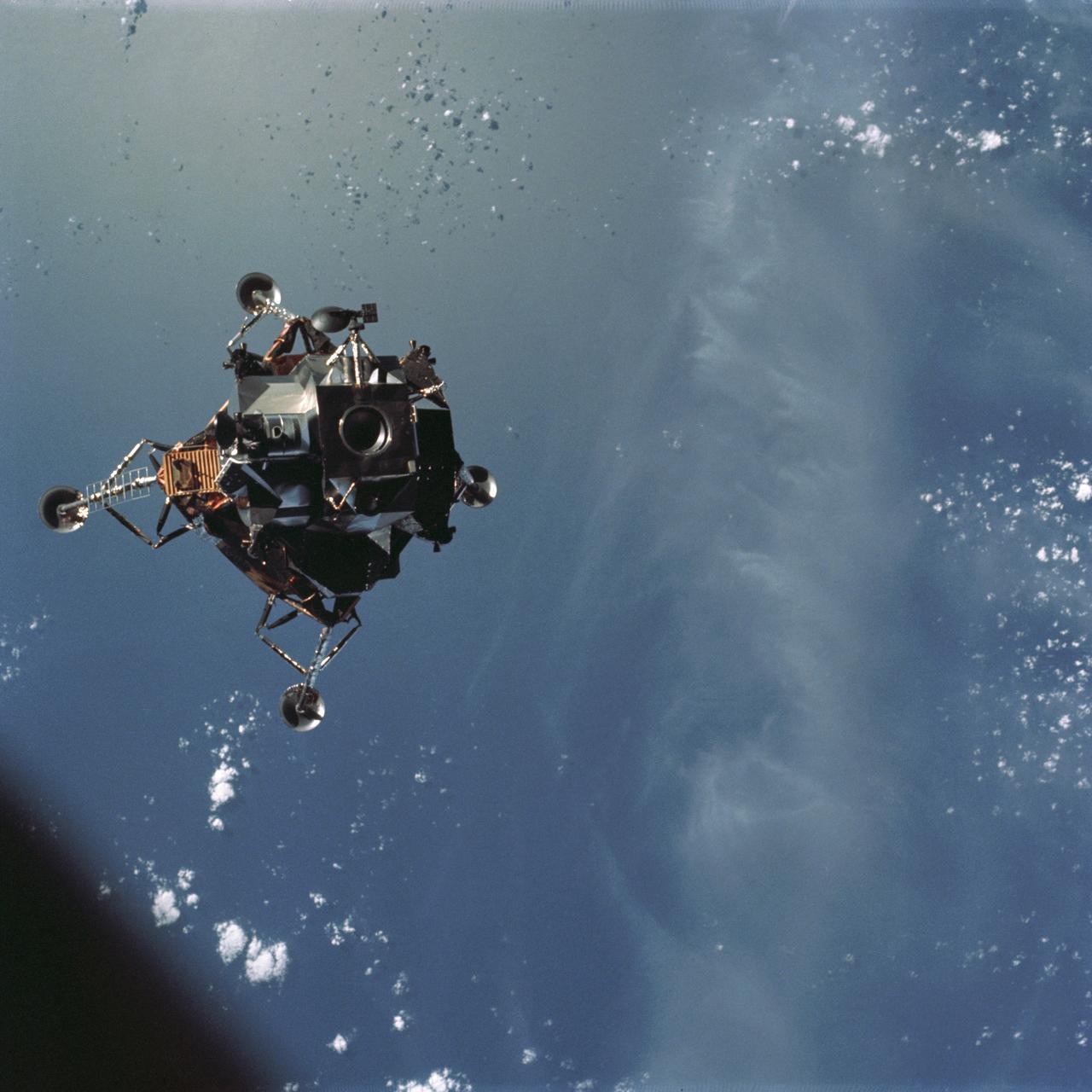
AS09-21-3181 (7 March 1969) --- A View of the Apollo 9 Lunar Module (LM), "Spider," in a lunar lading configuration, as photographed from the Command and Service Modules (CSM) on the fifth day of the Apollo 9 Earth-orbital mission. The landing gear on the "Spider" has been deployed. Inside the "Spider" were astronauts James A. McDivitt, Apollo 9 commander; and Russell L. Schweickart, lunar module pilot. Astronaut David R. Scott, command module pilot, remained at the controls in the Command Module (CM), "Gumdrop," while the other two astronauts checked out the LM.
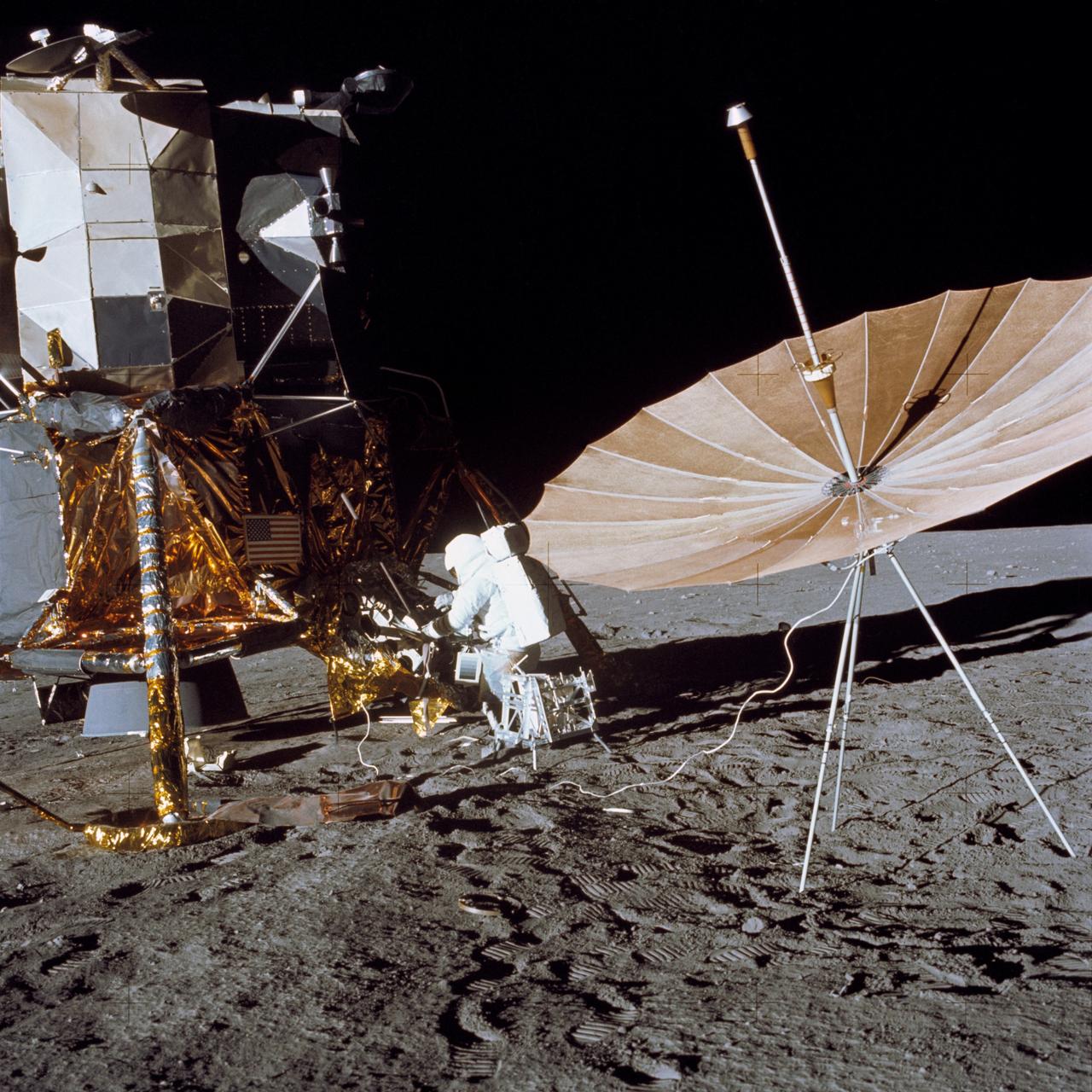
AS12-47-6988 (19 Nov. 1969) --- Astronaut Charles Conrad Jr., commander of the Apollo 12 lunar landing mission, stands at the Module Equipment Stowage Assembly (MESA) on the Lunar Module (LM) following the first Apollo 12 extravehicular activity (EVA) on the lunar surface. The erectable S-band antenna is already deployed at right. The carrier for the Apollo Lunar Hand Tools (ALHT) is near Conrad. While astronauts Conrad and Alan L. Bean, lunar module pilot, descended in the LM to explore the lunar surface, astronaut Richard F. Gordon Jr., command module pilot, remained with the Command and Service Modules (CSM) in lunar orbit.
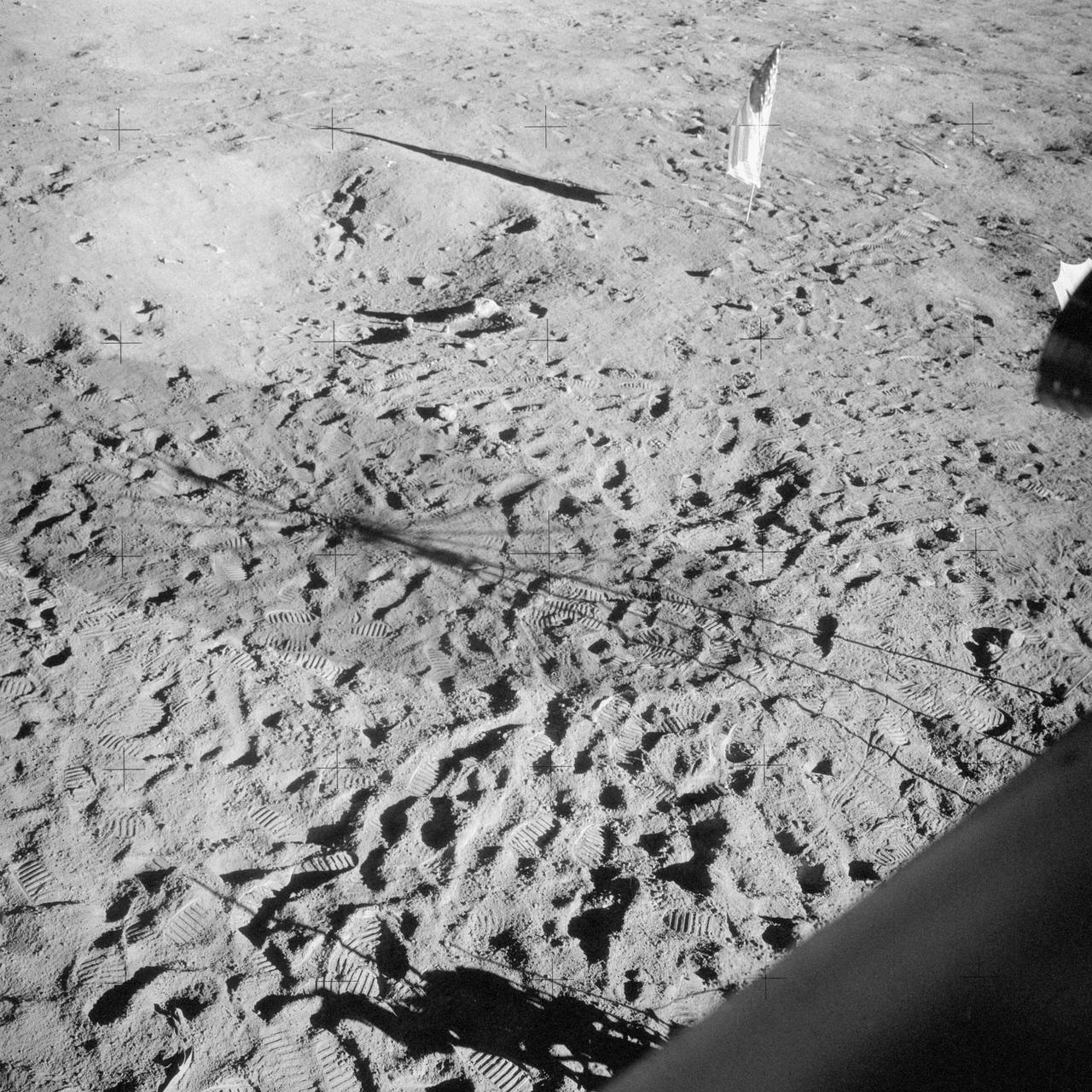
AS12-48-7160 (19-20 Nov. 1969) --- This view of the lunar surface was taken by one of the two astronauts on the Apollo 12 mission during their extravehicular activity. Seen in this view are the U.S. flag, several astronaut footprints, and a small crater near their Lunar Module landing site. Astronaut Charles Conrad Jr., commander, and Alan L. Bean, lunar module pilot, descended in the Lunar Module to explore the lunar surface. Astronaut Richard F. Gordon Jr., command module pilot, remained with Command and Service Modules in lunar orbit.

AS09-20-3064 (6 March 1969) --- Excellent view of the docked Apollo 9 Command and Service Modules (CSM) and Lunar Module (LM), with Earth in the background, during astronaut David R. Scott's stand-up extravehicular activity (EVA), on the fourth day of the Apollo 9 Earth-orbital mission. Scott, command module pilot, is standing in the open hatch of the Command Module (CM). Astronaut Russell L. Schweickart, lunar module pilot, took this photograph of Scott from the porch of the LM. Inside the LM was astronaut James A. McDivitt, Apollo 9 commander.
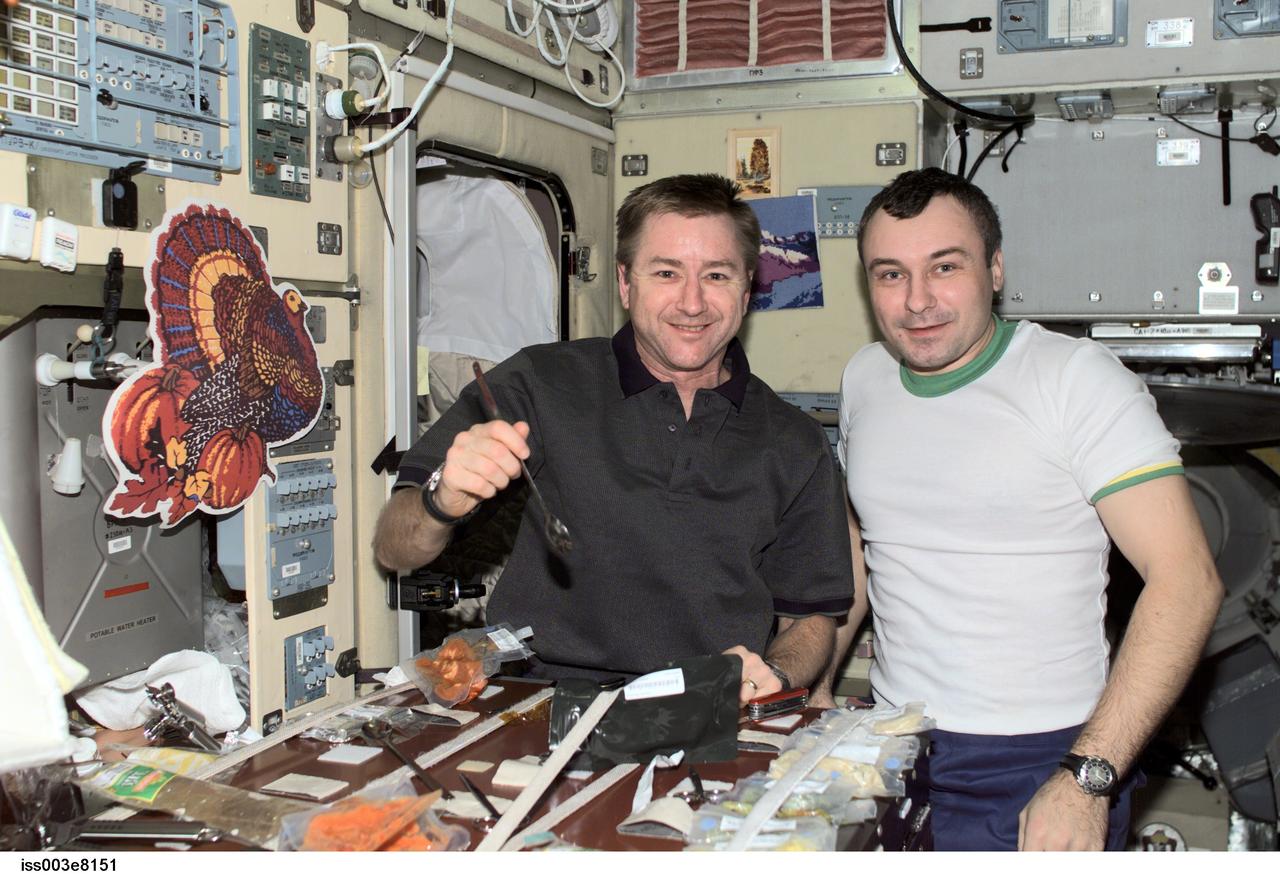
ISS003-E-08151 (22 November 2001) --- Astronaut Frank L. Culbertson (left), Expedition 3 mission commander, and cosmonaut Vladimir N. Dezhurov, flight engineer representing Rosaviakosmos, eat a Thanksgiving meal in the Zvezda Service Module on the International Space Station (ISS).
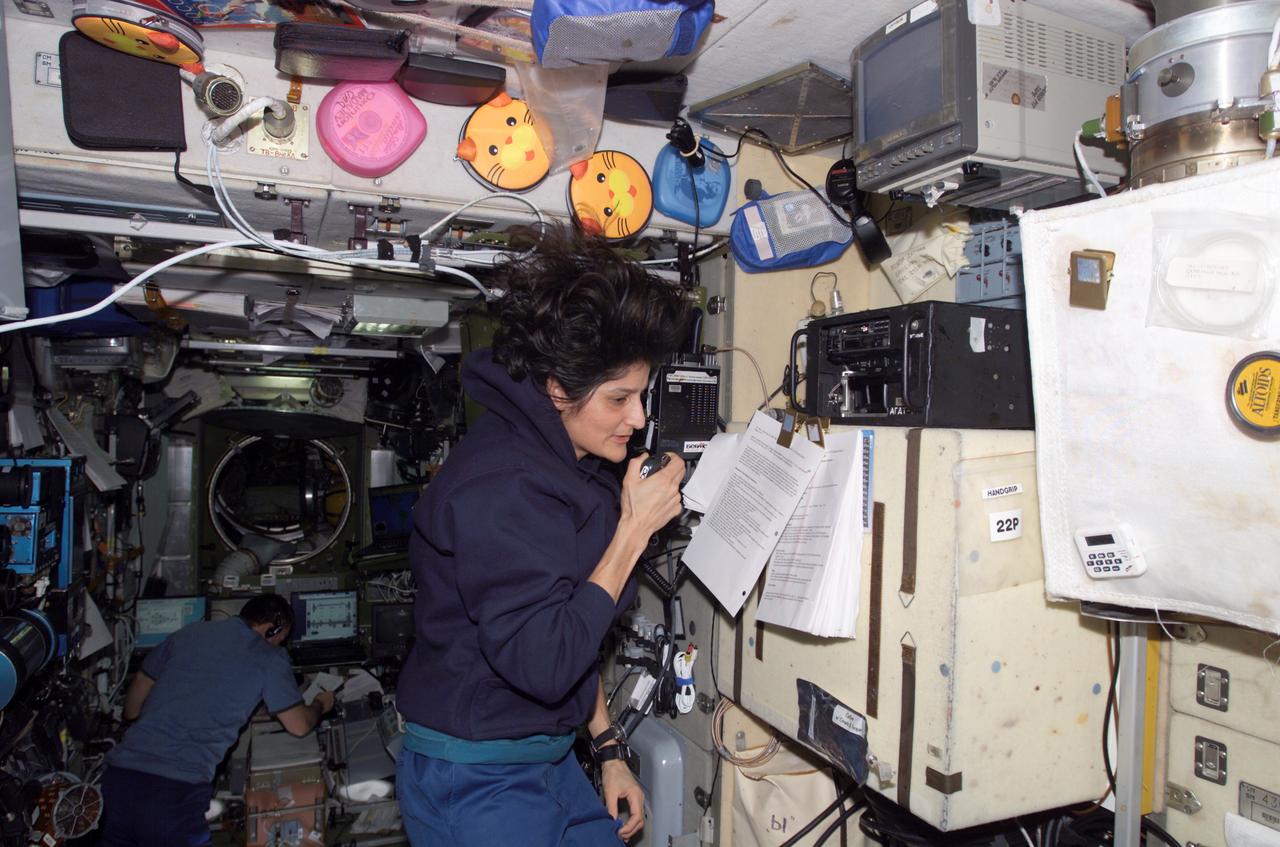
ISS014-E-18306 (27 March 2007) --- Astronaut Sunita L. Williams, Expedition 14 flight engineer, talks with students at the International School of Brussels in Belgium during an Amateur Radio on the International Space Station (ARISS) contact in the Zvezda Service Module.
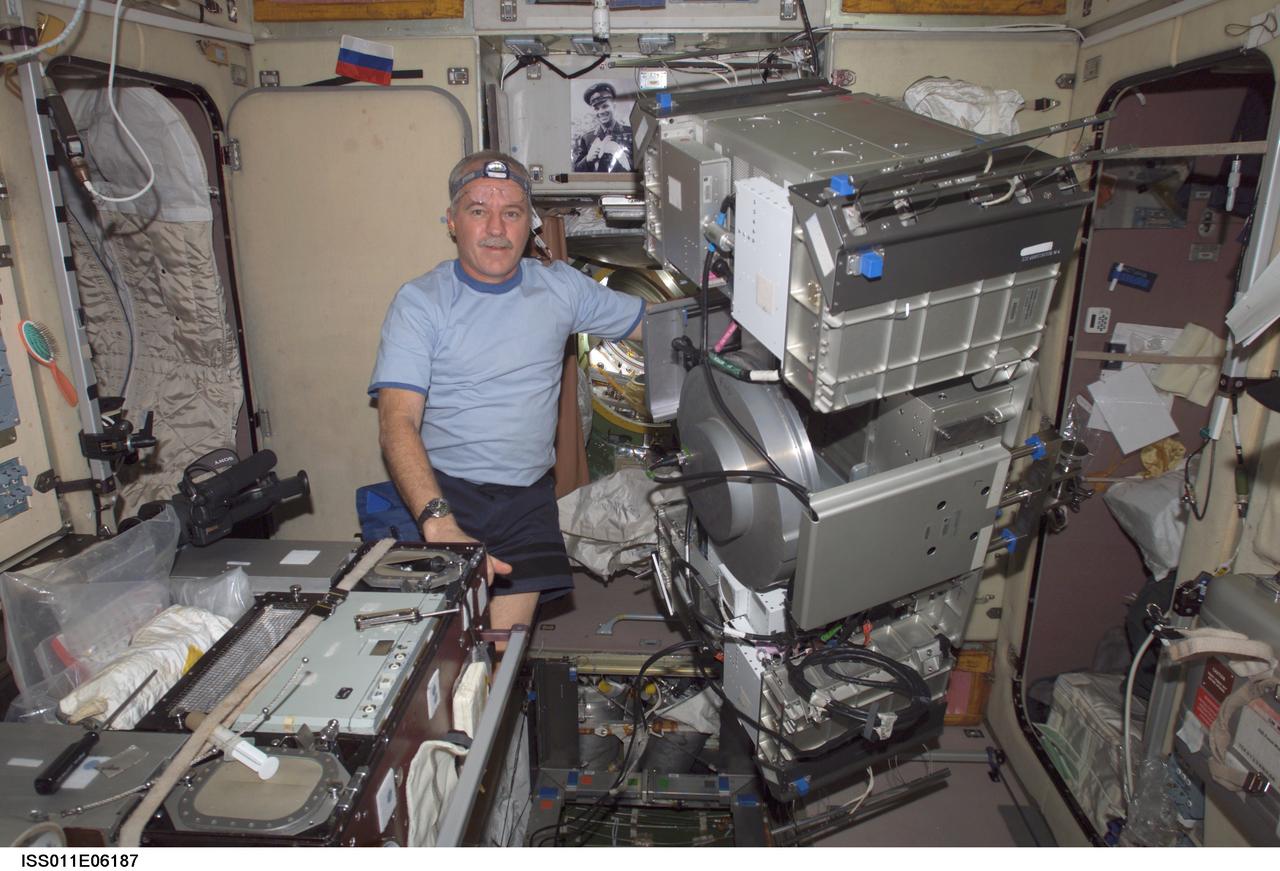
ISS011-E-06187 (16 May 2005) --- Astronaut John L. Phillips, Expedition 11 NASA ISS science officer and flight engineer, poses for a photo with the Treadmill Vibration Isolation System (TVIS) removed from the Zvezda Service Module floor during an In-Flight Maintenance (IFM) on the International Space Station (ISS).
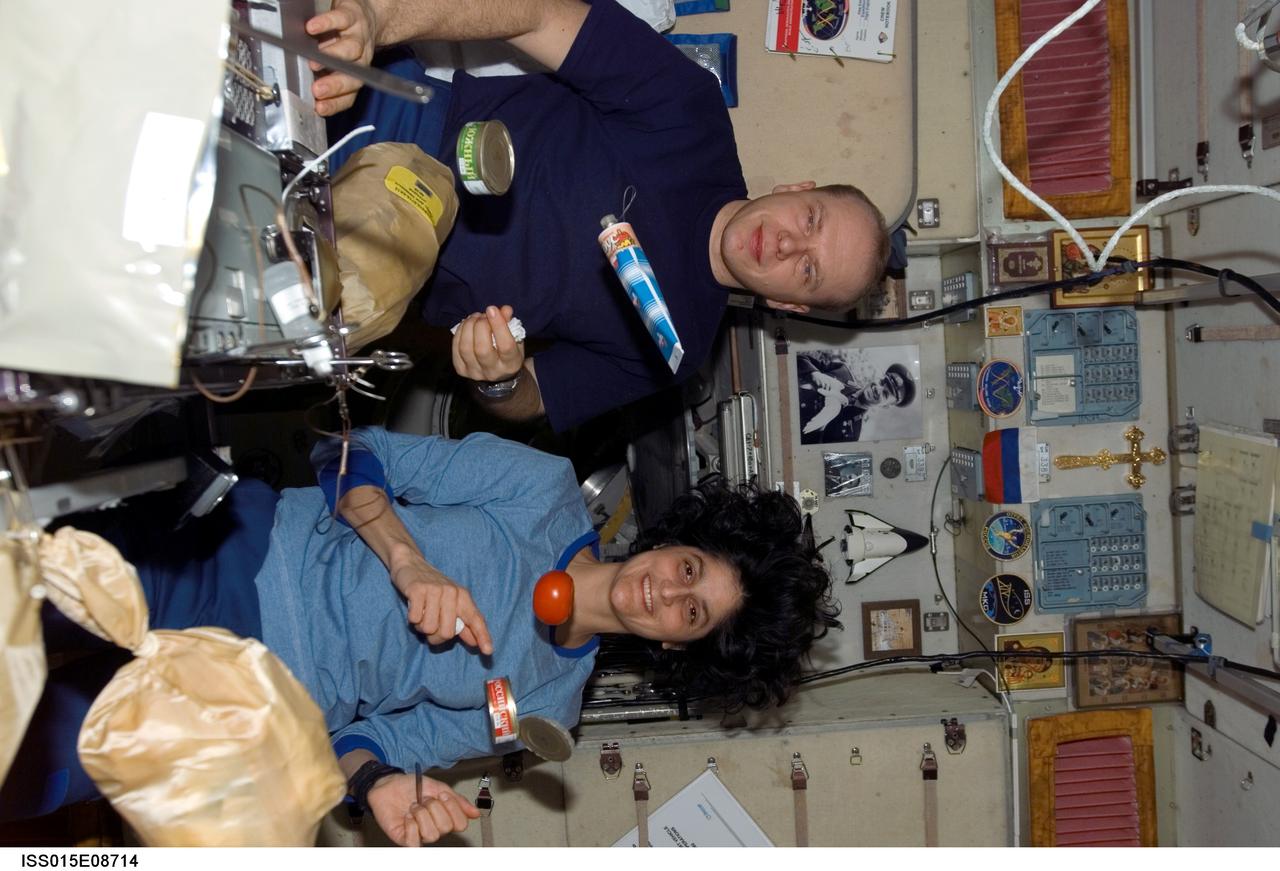
ISS015-E-08714 (15 May 2007) --- Cosmonaut Oleg V. Kotov, Expedition 15 flight engineer representing Russia's Federal Space Agency; and astronaut Sunita L. Williams, flight engineer, share a meal near the galley in the Zvezda Service Module of the International Space Station.
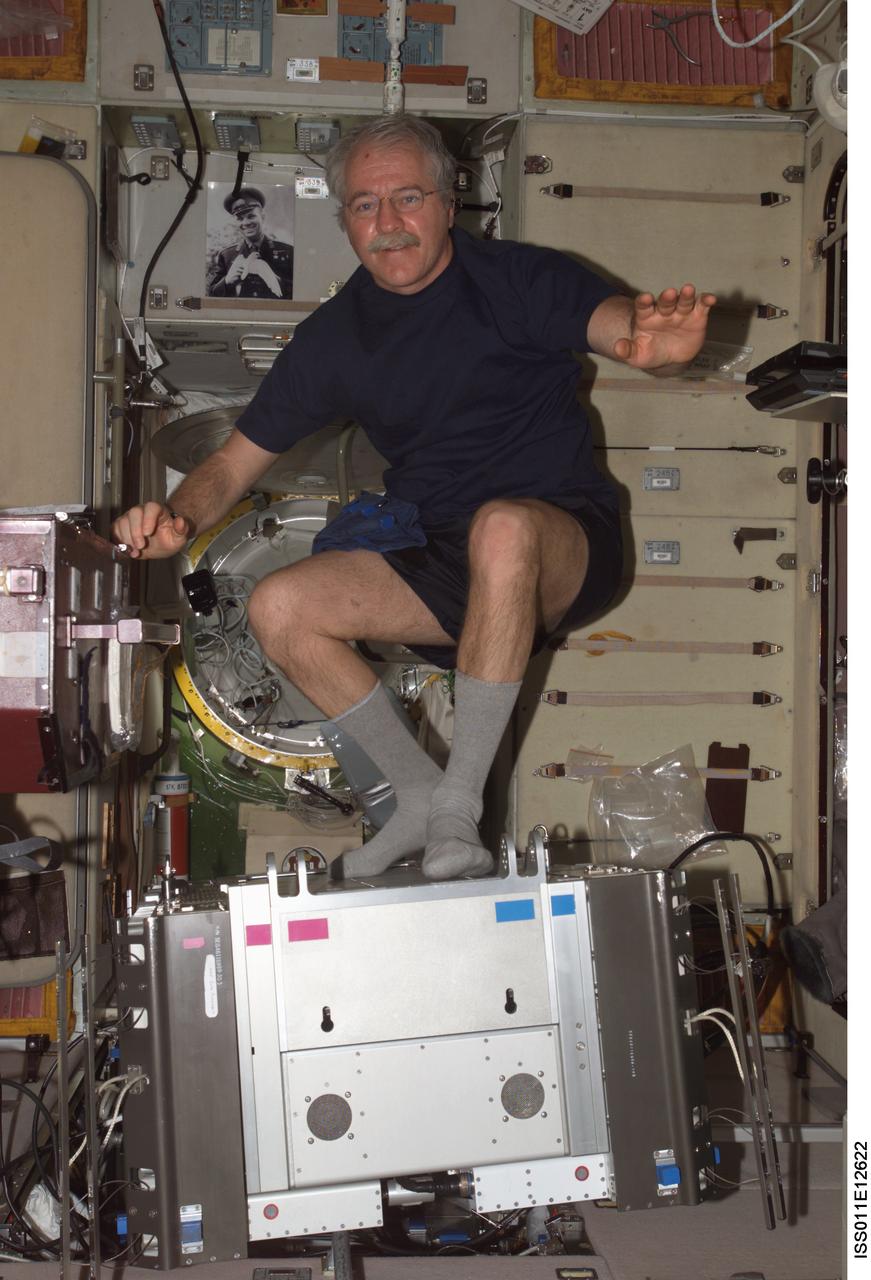
ISS011-E-12622 (7 September 2005) --- Astronaut John L. Phillips, Expedition 11 NASA Space Station science officer and flight engineer, poses with a portion of the Treadmill Vibration Isolation System (TVIS) during In-Flight Maintenance (IFM) in the Zvezda Service Module of the International Space Station.
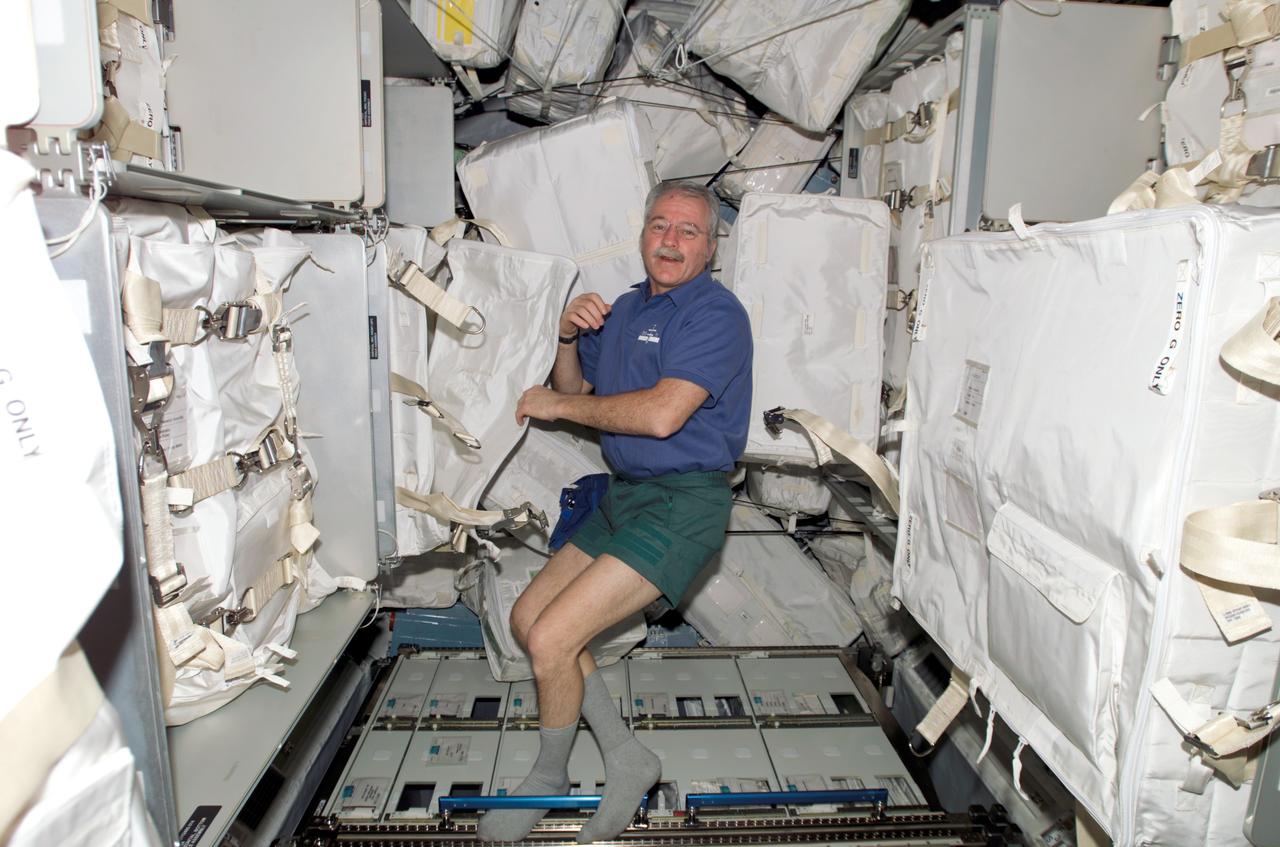
ISS011-E-11364 (31 July 2005) --- Astronaut John L. Phillips, Expedition 11 NASA Space Station science officer and flight engineer, participates in the movement of supplies and equipment inside Raffaello, the Italian Space Agency-built Multipurpose Logistics Module (MPLM) to the international space station.
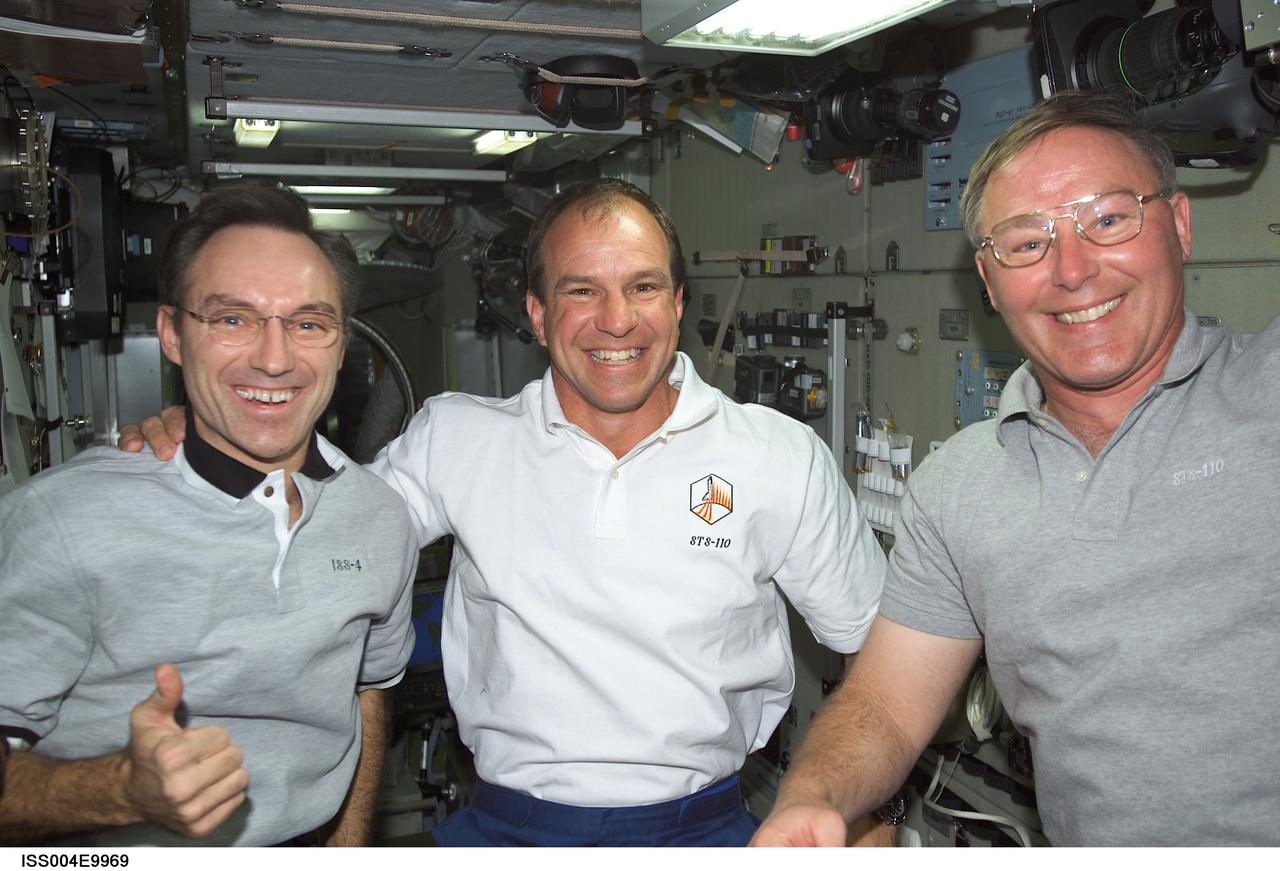
ISS004-E-9969 (10 April 2002) --- Astronauts Carl E. Walz (left), Expedition Four flight engineer, Michael J. Bloomfield and Jerry L. Ross, STS-110 mission commander and mission specialist, respectively, are photographed in the Zvezda Service Module on the International Space Station (ISS).
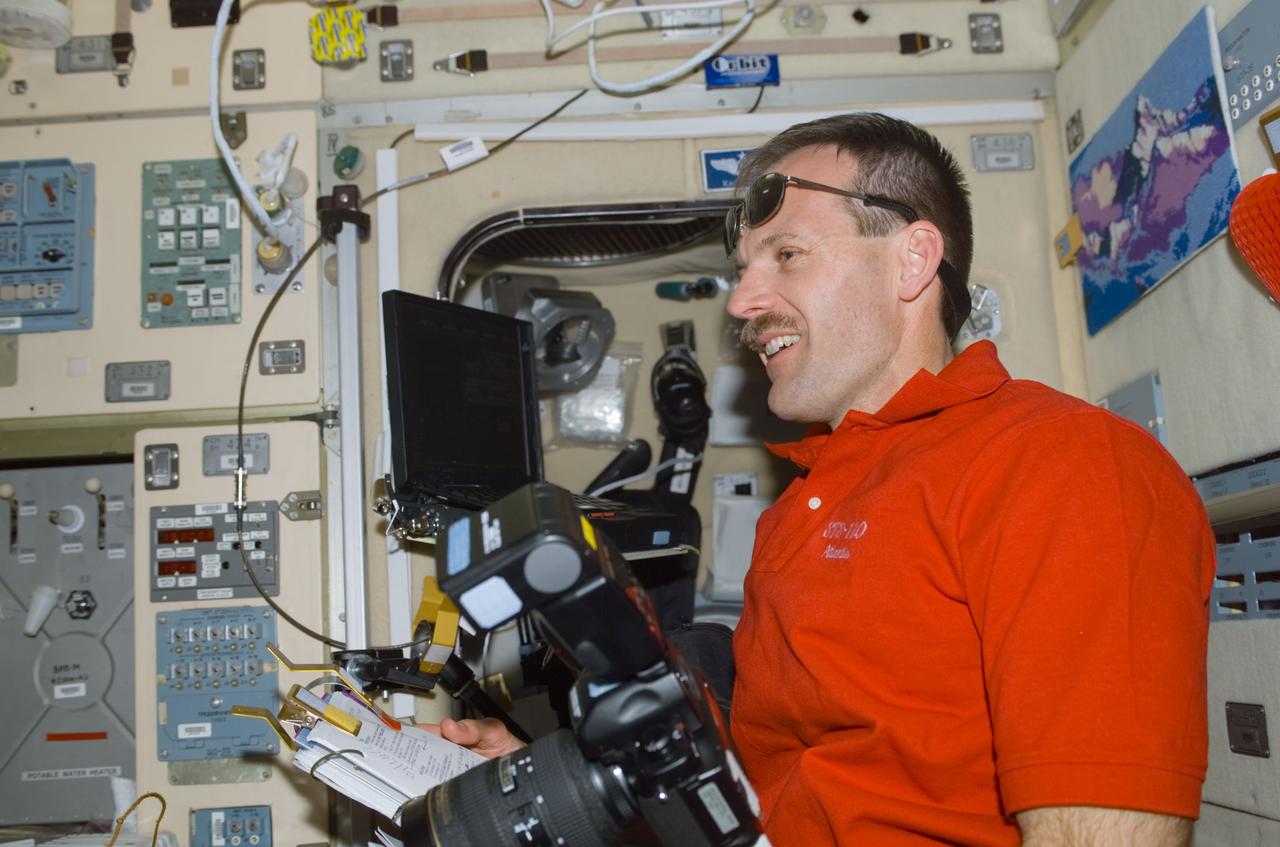
STS110-E-5131 (10 April 2002) --- Astronaut Steven L. Smith, STS-110 mission specialist, holds a still camera and a procedures checklist in the Zvezda Service Module on the International Space Station (ISS). The image was taken with a digital still camera.
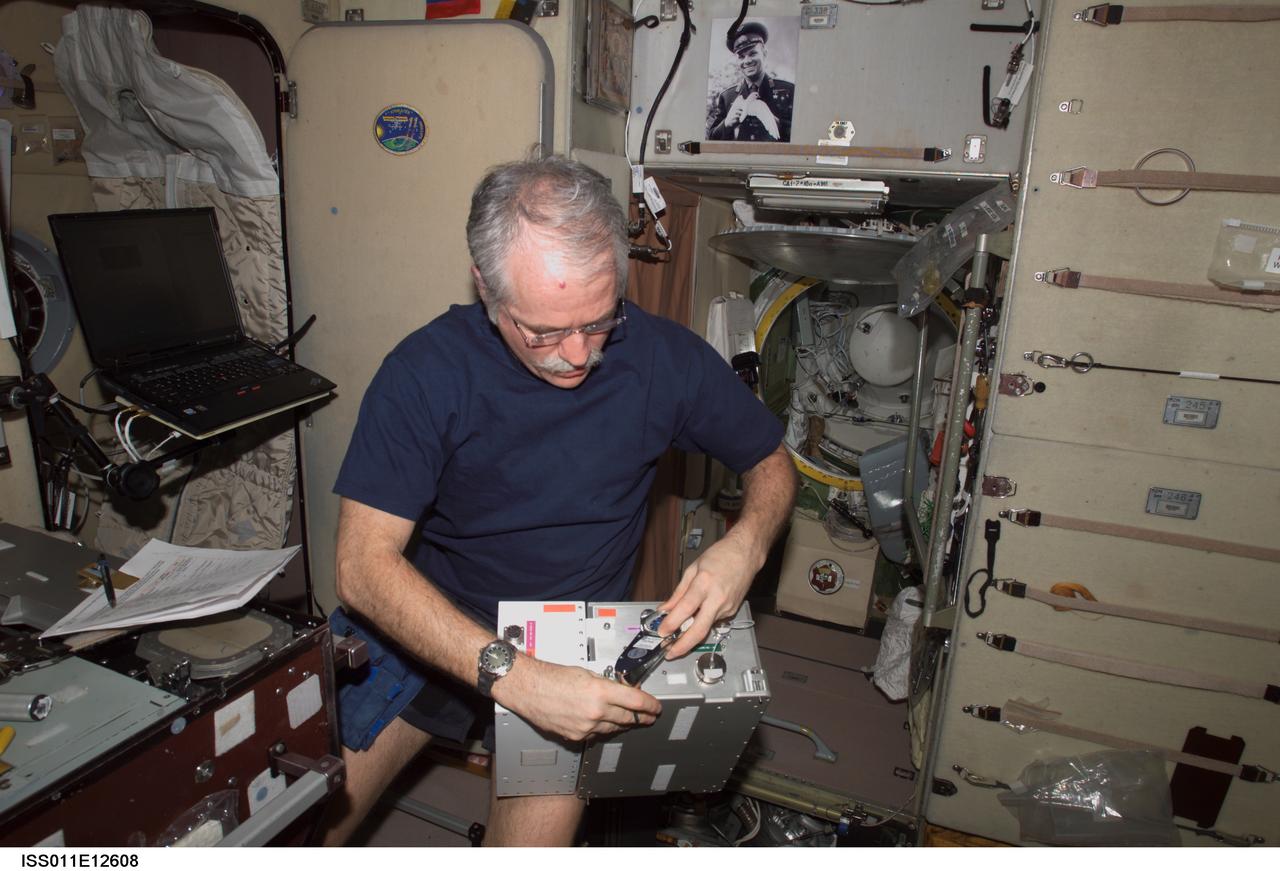
ISS011-E-12608 (7 September 2005) --- Astronaut John L. Phillips, Expedition 11 NASA Space Station science officer and flight engineer, works with a portion of the Treadmill Vibration Isolation System (TVIS) during In-Flight Maintenance (IFM) in the Zvezda Service Module of the International Space Station.

ISS014-E-10591 (28 Dec. 2006) --- Astronaut Sunita L. Williams, Expedition 14 flight engineer, equipped with a bungee harness, exercises on the Treadmill Vibration Isolation System (TVIS) in the Zvezda Service Module of the International Space Station.
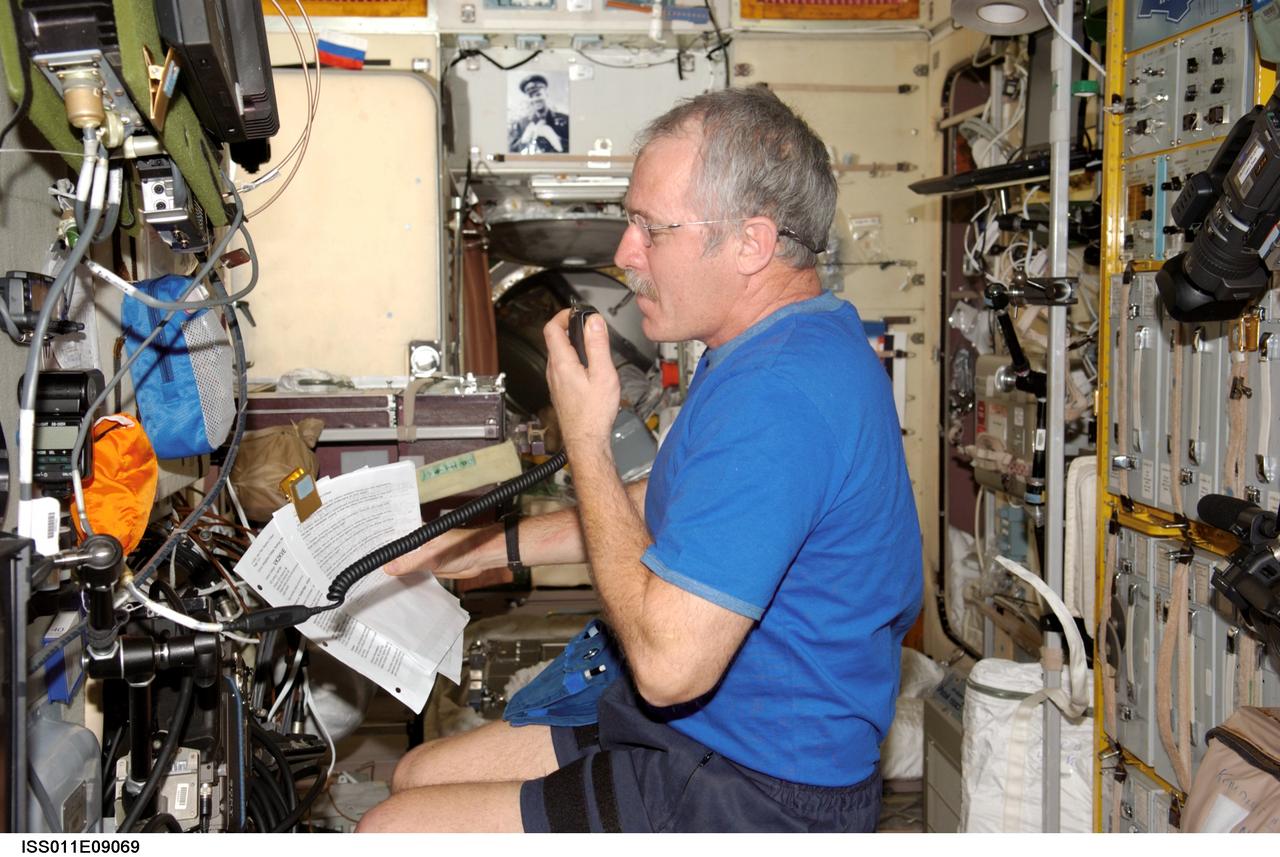
ISS011-E-09069 (2 June 2005) --- Astronaut John L. Phillips, Expedition 11 NASA ISS science officer and flight engineer, uses amateur radio equipment in the Zvezda Service Module of the International Space Station (ISS) while speaking with students from Brigidine College in Sydney, Australia.
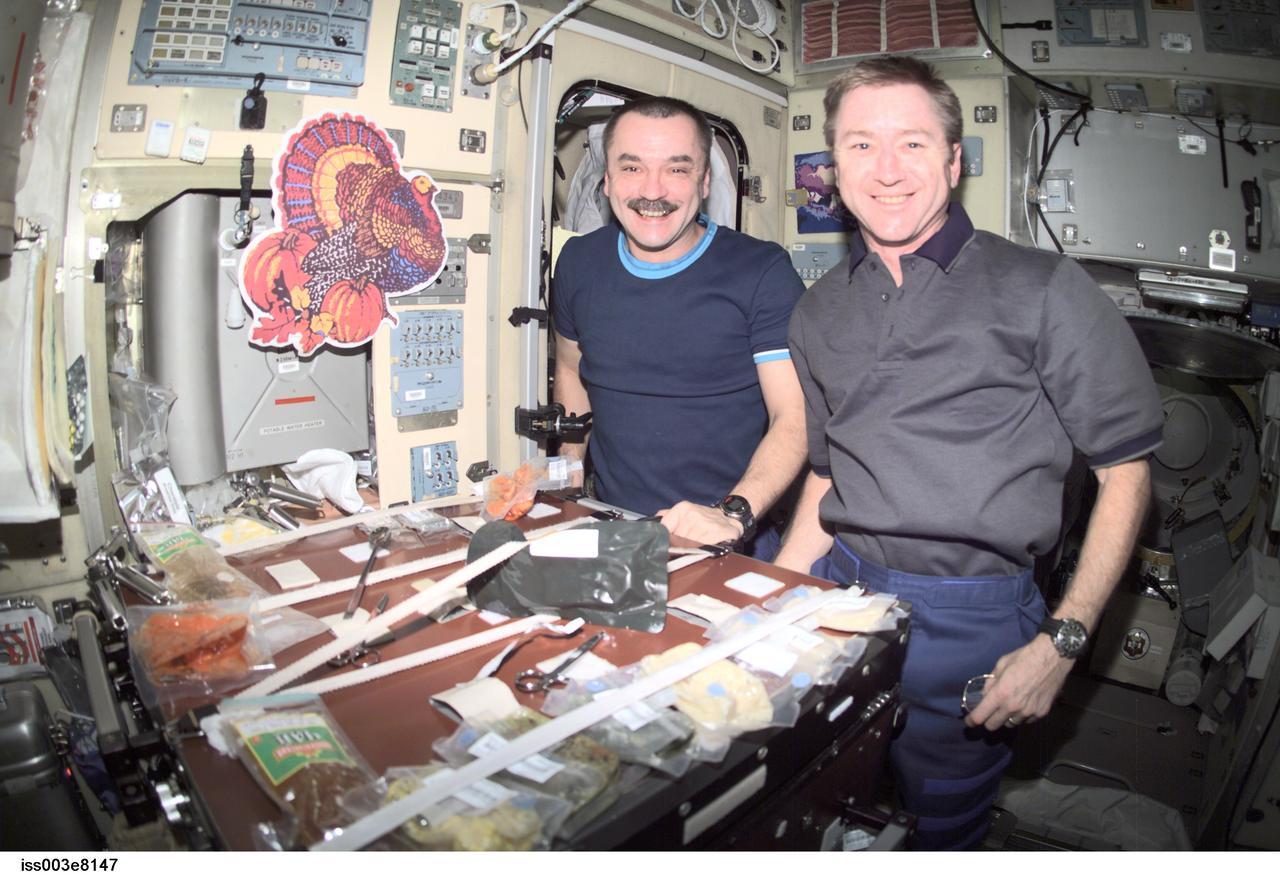
ISS003-E-08147 (22 November 2001) --- Cosmonaut Mikhail Tyurin (left), Expedition 3 flight engineer, and astronaut Frank L. Culbertson, mission commander, eat a Thanksgiving meal in the Zvezda Service Module on the International Space Station (ISS). Tyurin represents Rosaviakosmos.
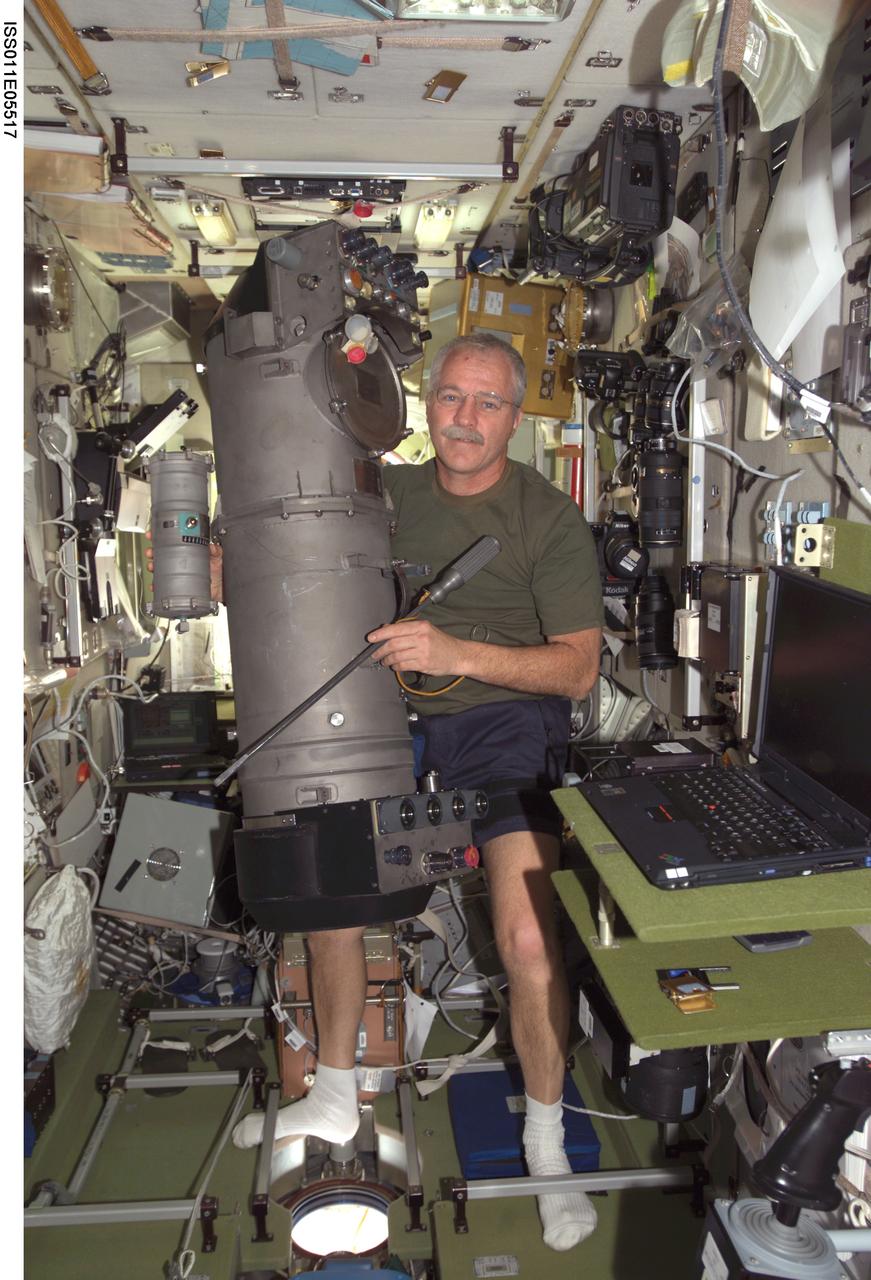
ISS011-E-05517 (5 May 2005) --- Astronaut John L. Phillips, Expedition 11 NASA ISS science officer and flight engineer, working on the Elektron oxygen-generation system in the Zvezda Service Module that has worked intermittently aboard the International Space Station (ISS).
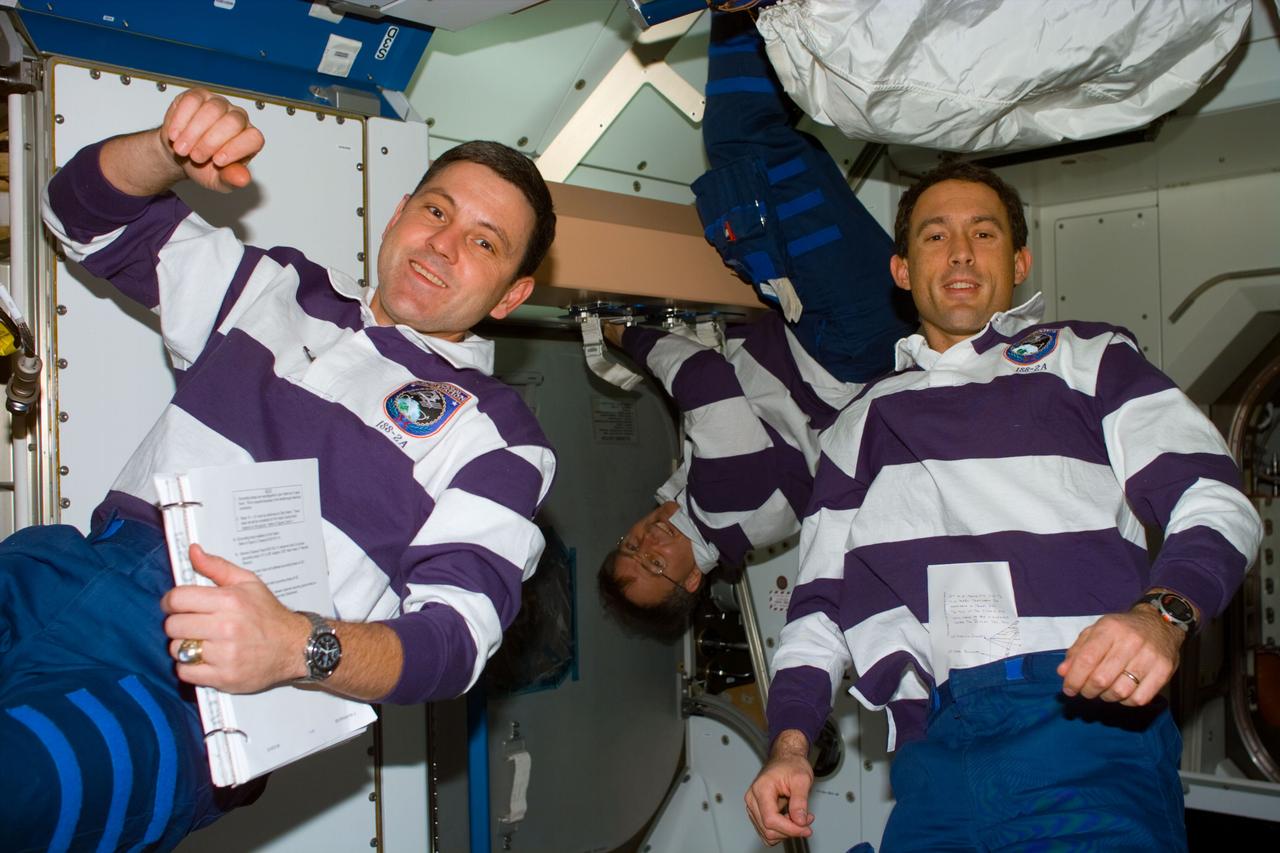
S88-E-5124 (12-11-98) --- From the left, astronauts Robert D. Cabana, Jerry L. Ross and James H. Newman are pictured during work to ready the Unity connecting module for its ISS role. The photo was taken with an electronic still camera (ESC) at 00:23:27 GMT, Dec. 11.
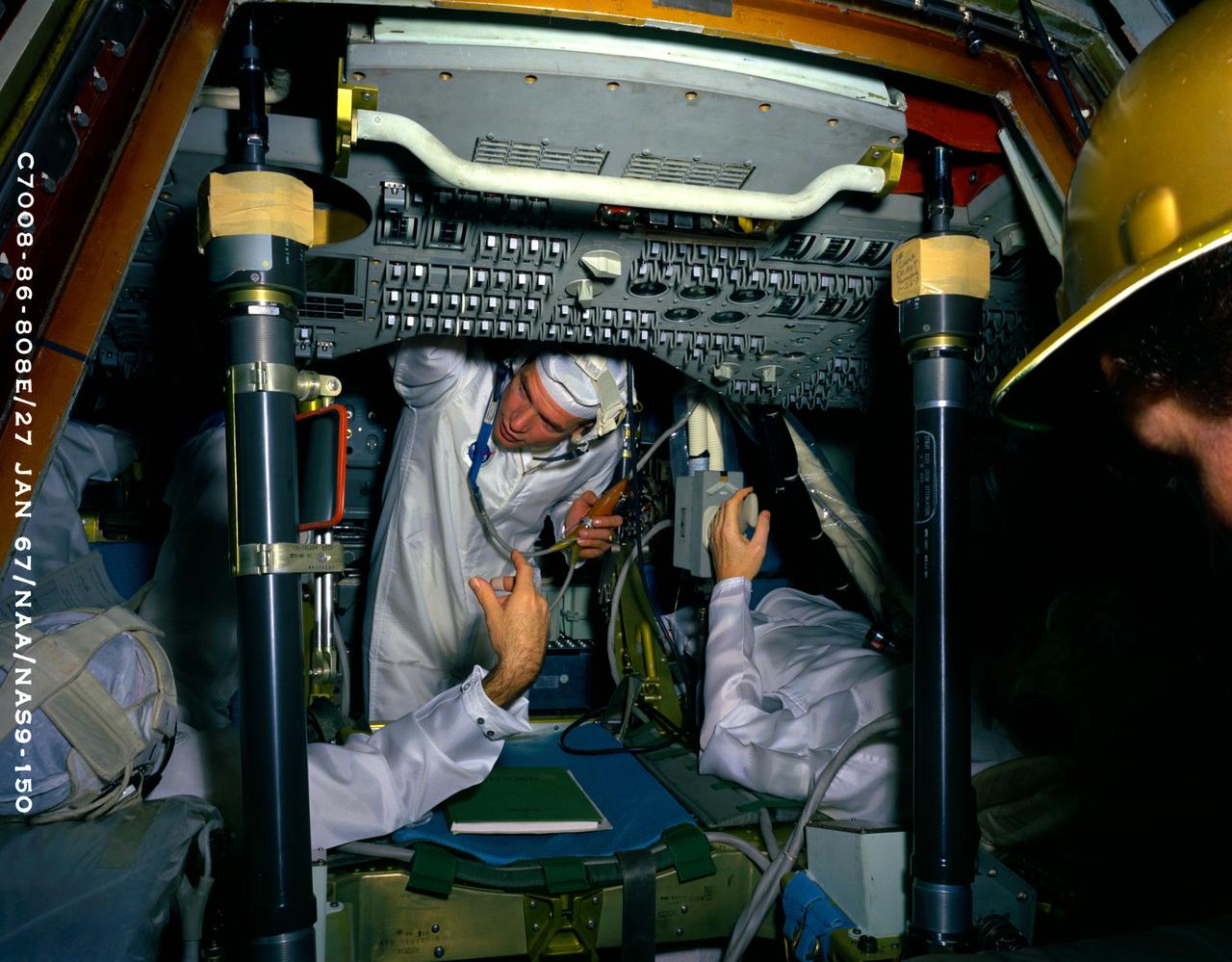
S67-23078 (27 Jan. 1967) --- Three astronauts (later to be named the Apollo 9 prime crew) in Apollo spacecraft 101 Command module during Apollo crew compartment fit and function test. Left to right are astronauts James A. McDivitt, David R. Scott, and Russell L. Schweickart.
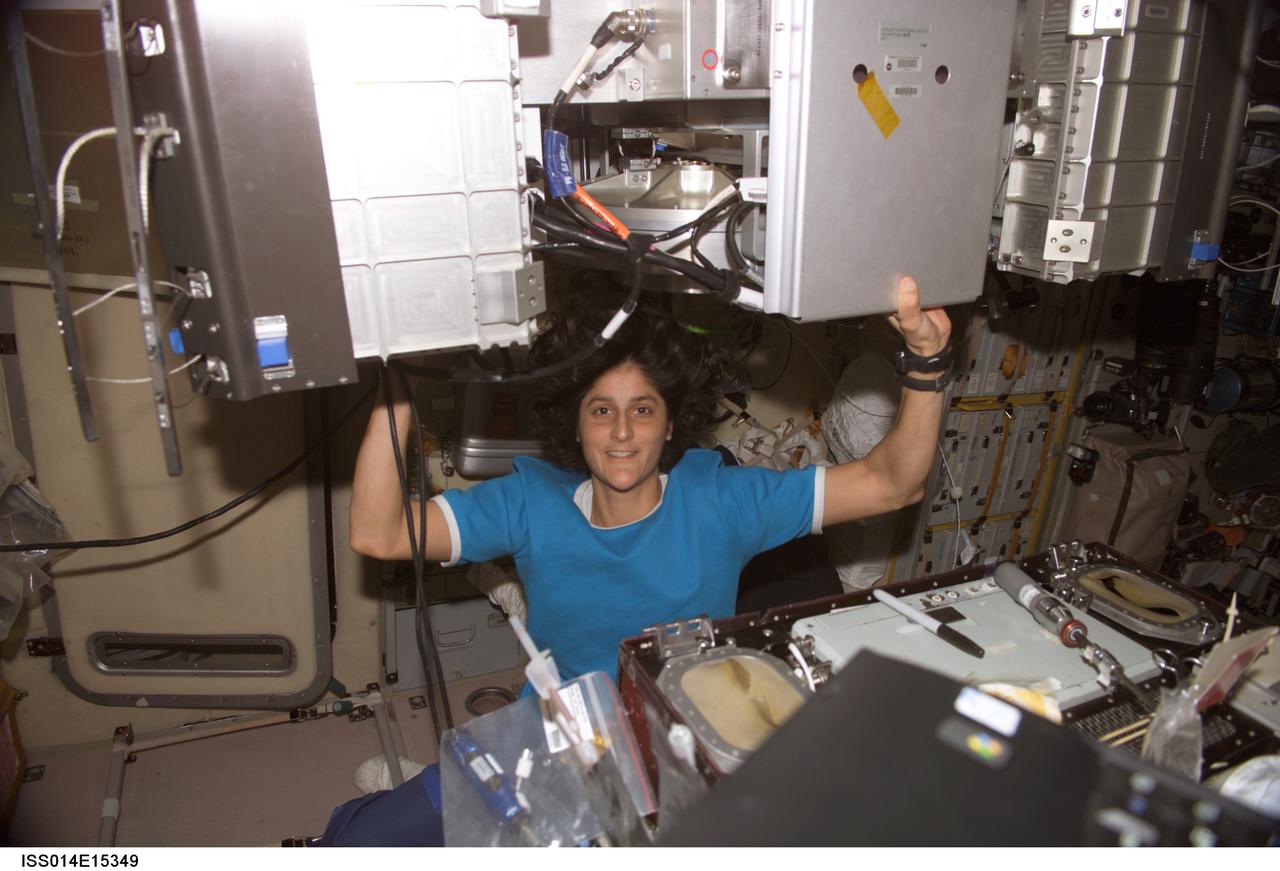
ISS014-E-15349 (27 Feb. 2007) --- Assisted by the weightlessness of space, astronaut Sunita L. Williams, Expedition 14 flight engineer, hoists the Treadmill Vibration Isolation System (TVIS). She took a moment to pose for a photo during routine in-flight maintenance (IFM) on TVIS in the Zvezda Service Module of the International Space Station.
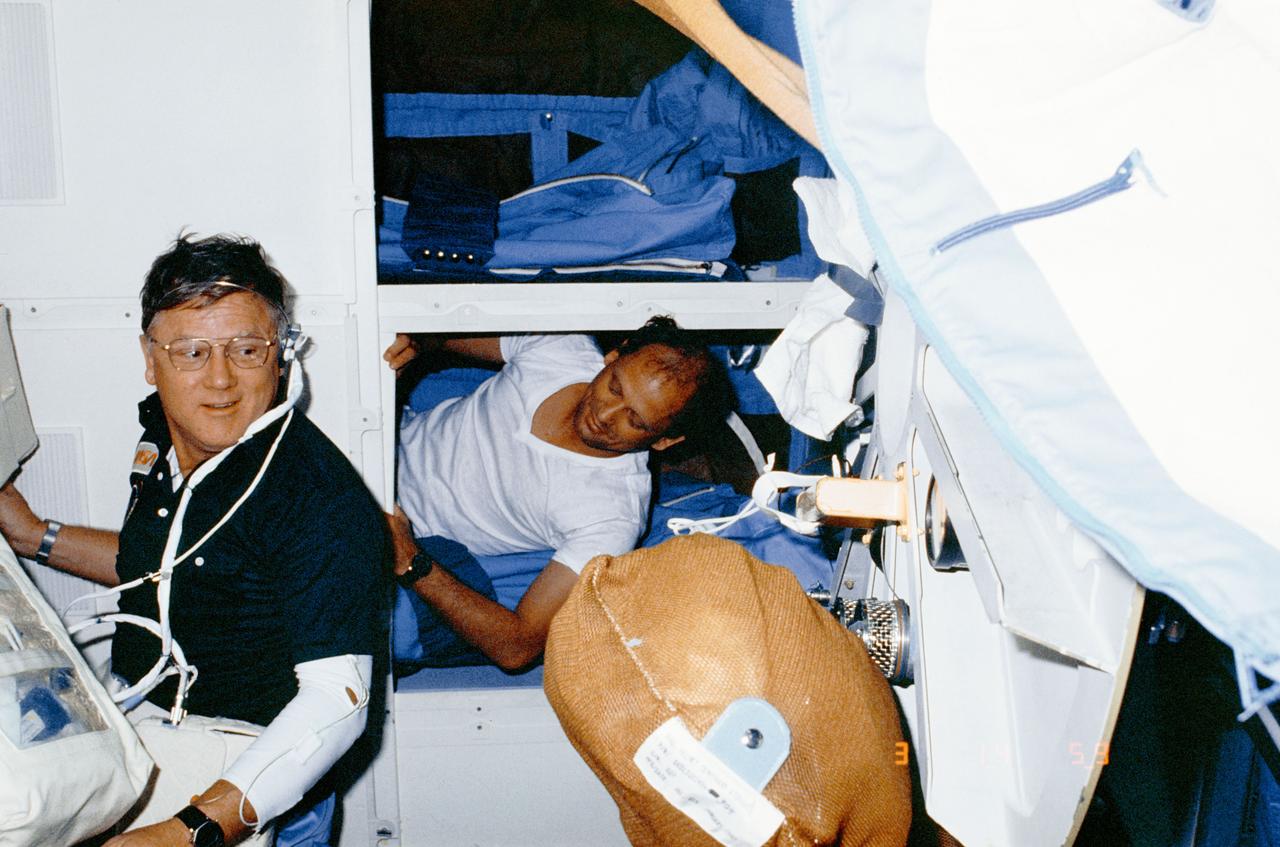
Astronaut Norman E. Thagard, mission specialist for the "silver" team, rests on the middeck while the "gold" team is on duty in the science module. Don L. Lind, left, "gold" team member, meanwhile participates in autogenic feedback training (AFT), designed to help flight crewmembers overcome the effects of zero-gravity adaptation.
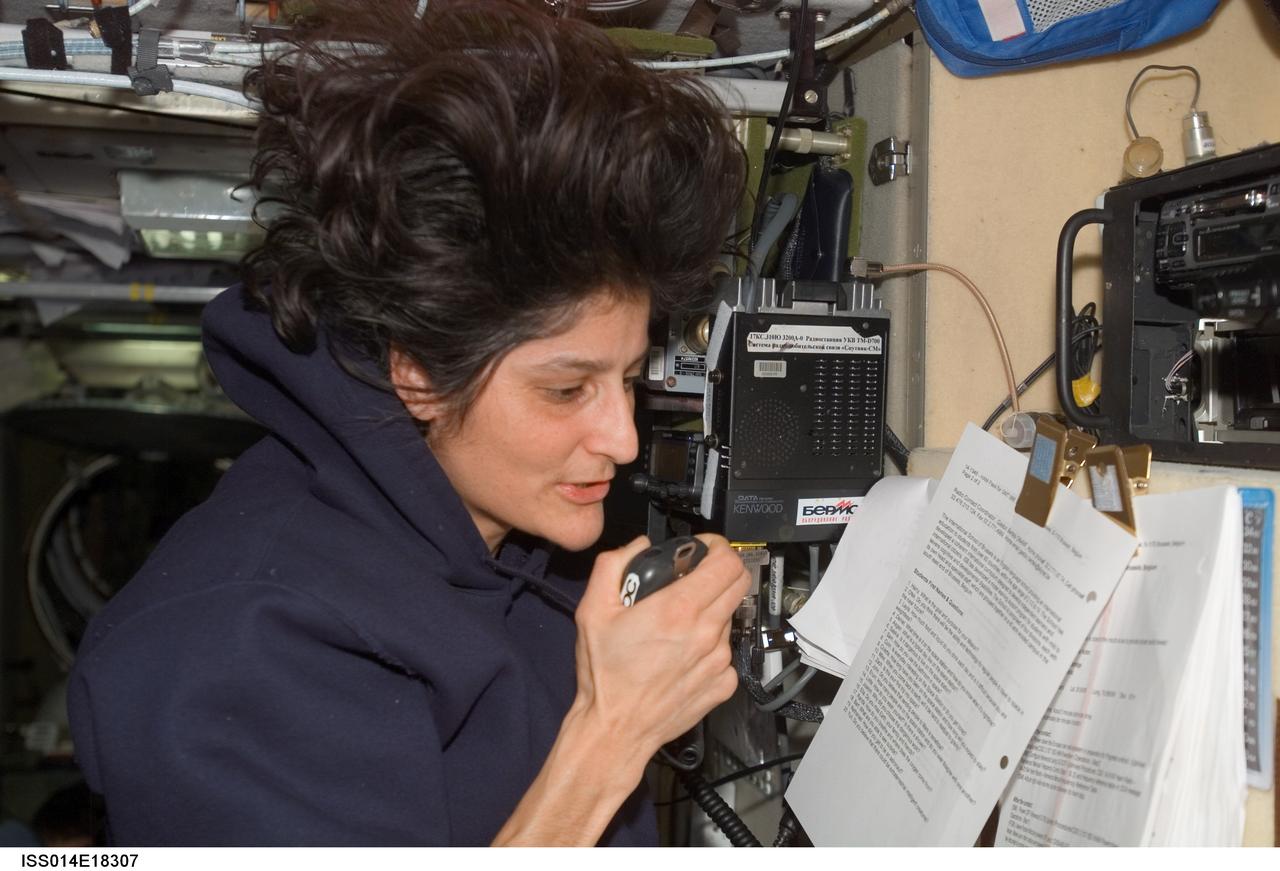
ISS014-E-18307 (27 March 2007) --- Astronaut Sunita L. Williams, Expedition 14 flight engineer, talks with students at the International School of Brussels in Belgium during an Amateur Radio on the International Space Station (ARISS) contact in the Zvezda Service Module.
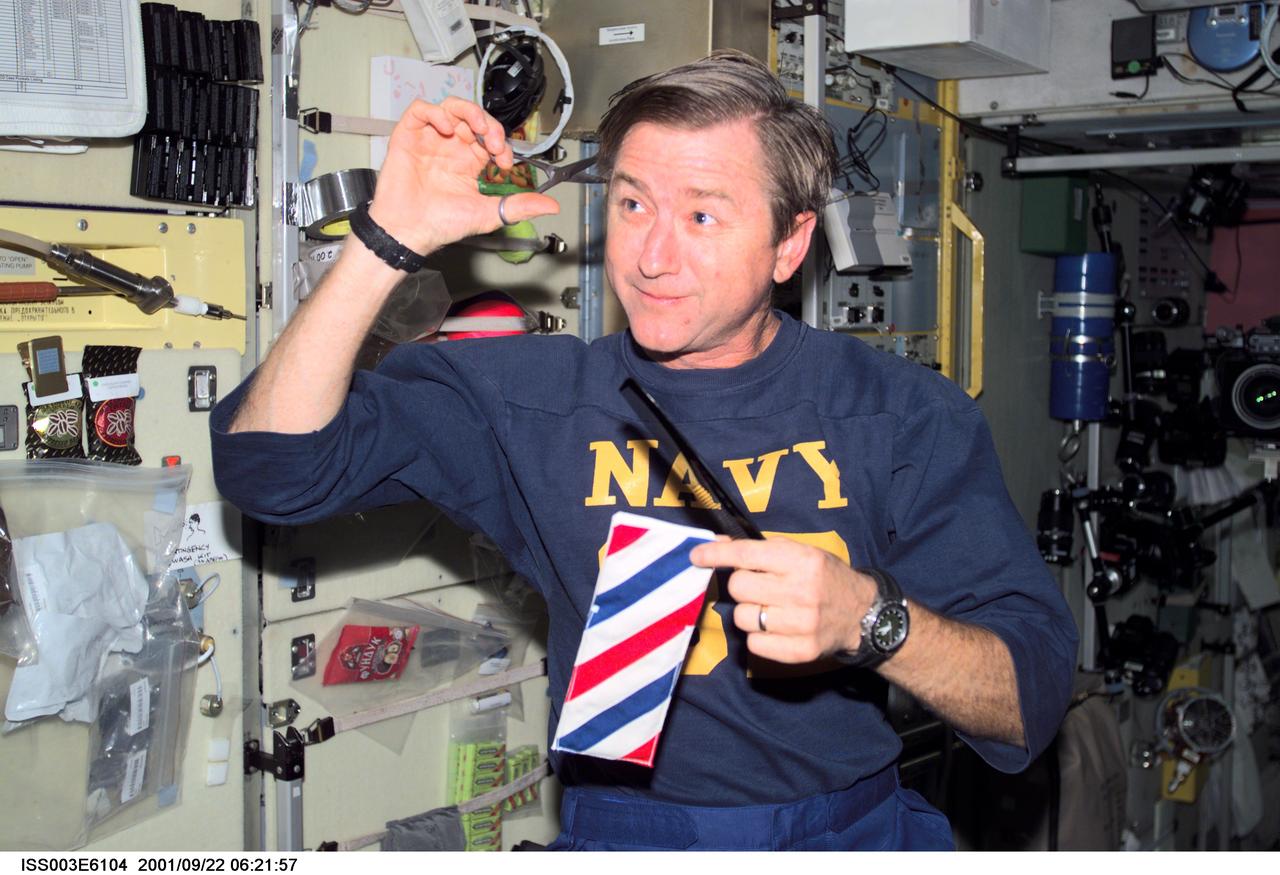
ISS003-E-6104 (22 September 2001) --- Astronaut Frank L. Culbertson, Jr., Expedition Three mission commander, cuts his hair in the Zvezda Service Module on the International Space Station (ISS). This picture was taken with a digital still camera.
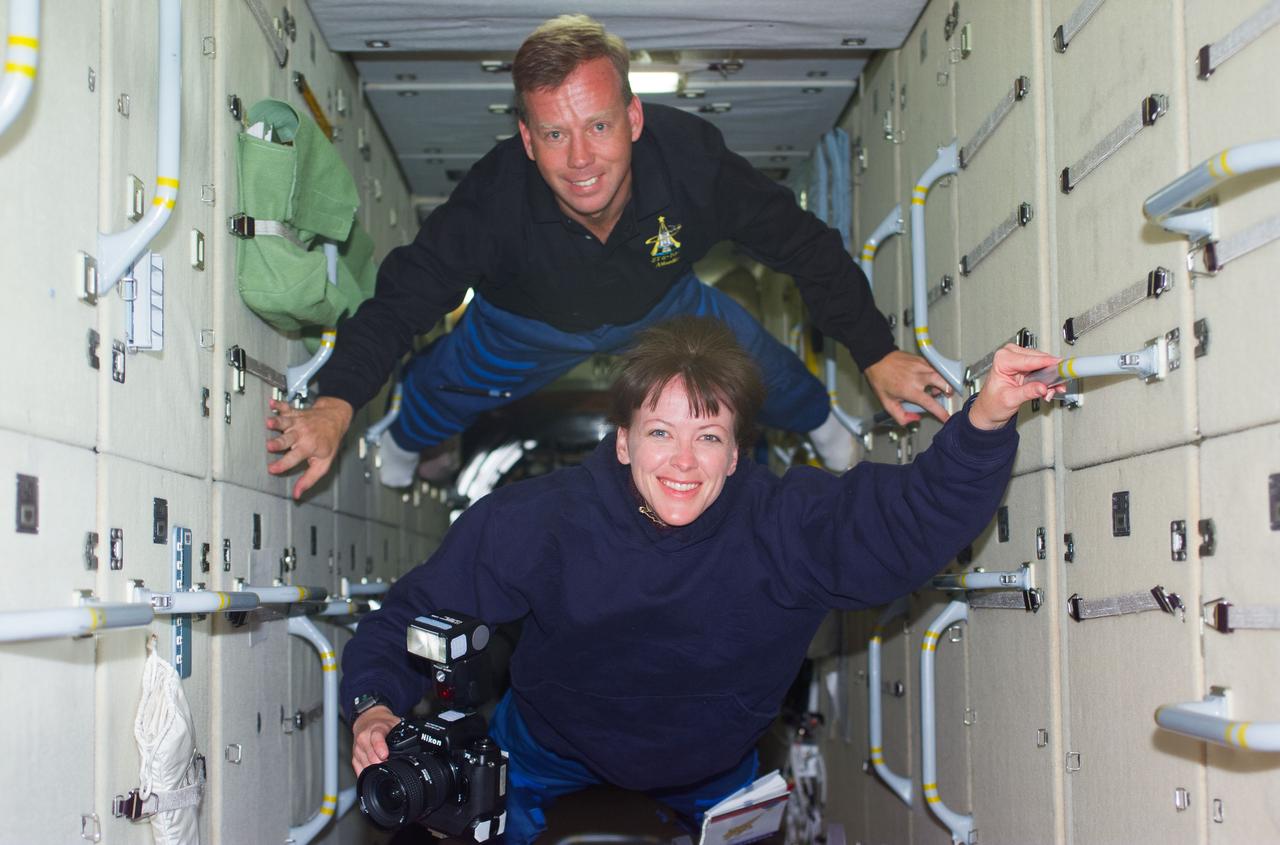
S104-E-5058 (14 July 2001) --- STS-104 crewmembers Steven W. Lindsey, mission commander, and Janet L. Kavandi, mission specialist, travel through the Zarya module during their visit to the International Space Station (ISS).
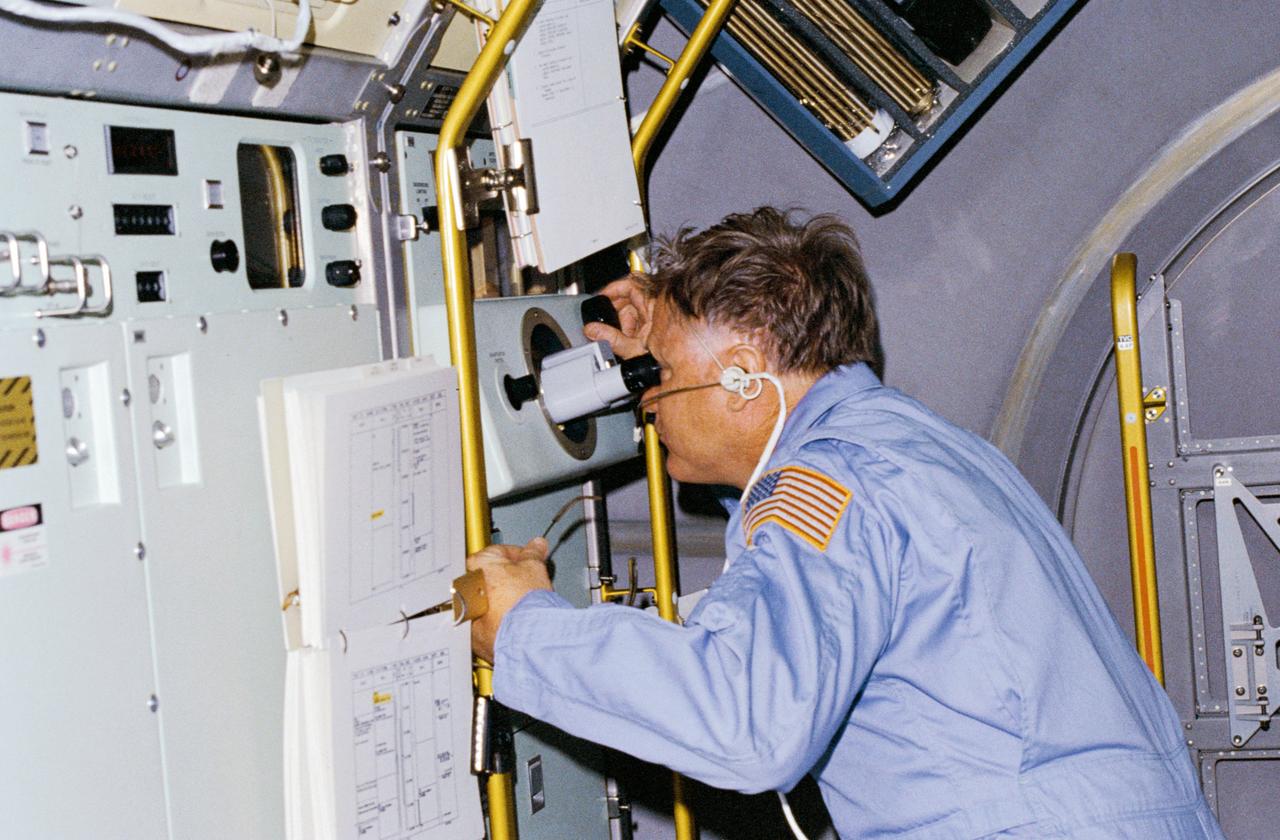
51B-01-007 (30 April 1985) --- Astronaut Don L. Lind, 51-B Spacelab 3 mission specialist, observes the growth of mercuric iodide crystal in the vapor crystal growth system (VCGS) on the Spacelab 3 science module aboard the orbiter Challenger.
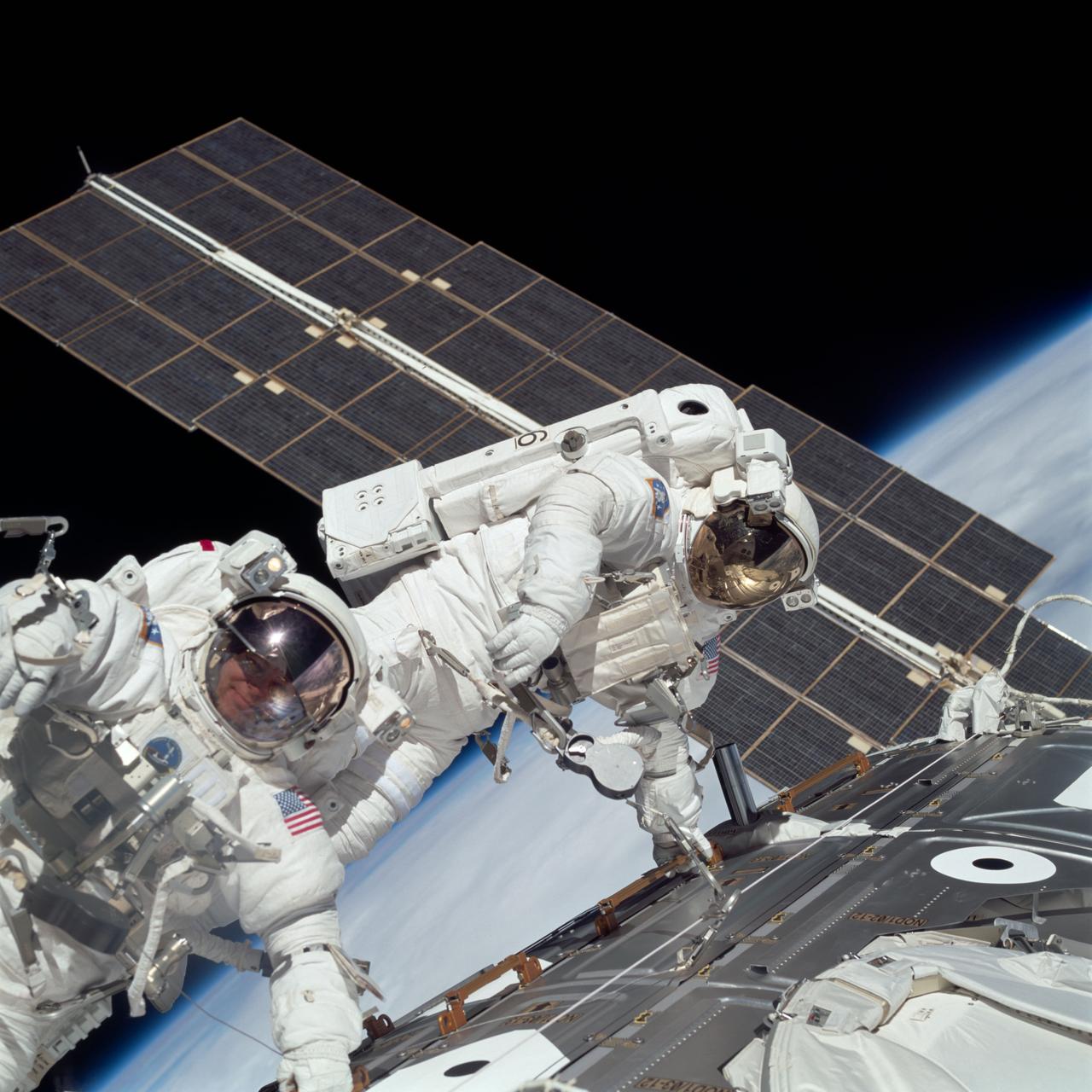
STS088-702-024 (4-15 Dec. 1998) --- Astronauts Jerry L. Ross (left) and James H. Newman, both mission specialists, work together on the final of three space walks of the STS-88 mission. One of the solar panels of the Russian-built Zarya module runs through the frame.
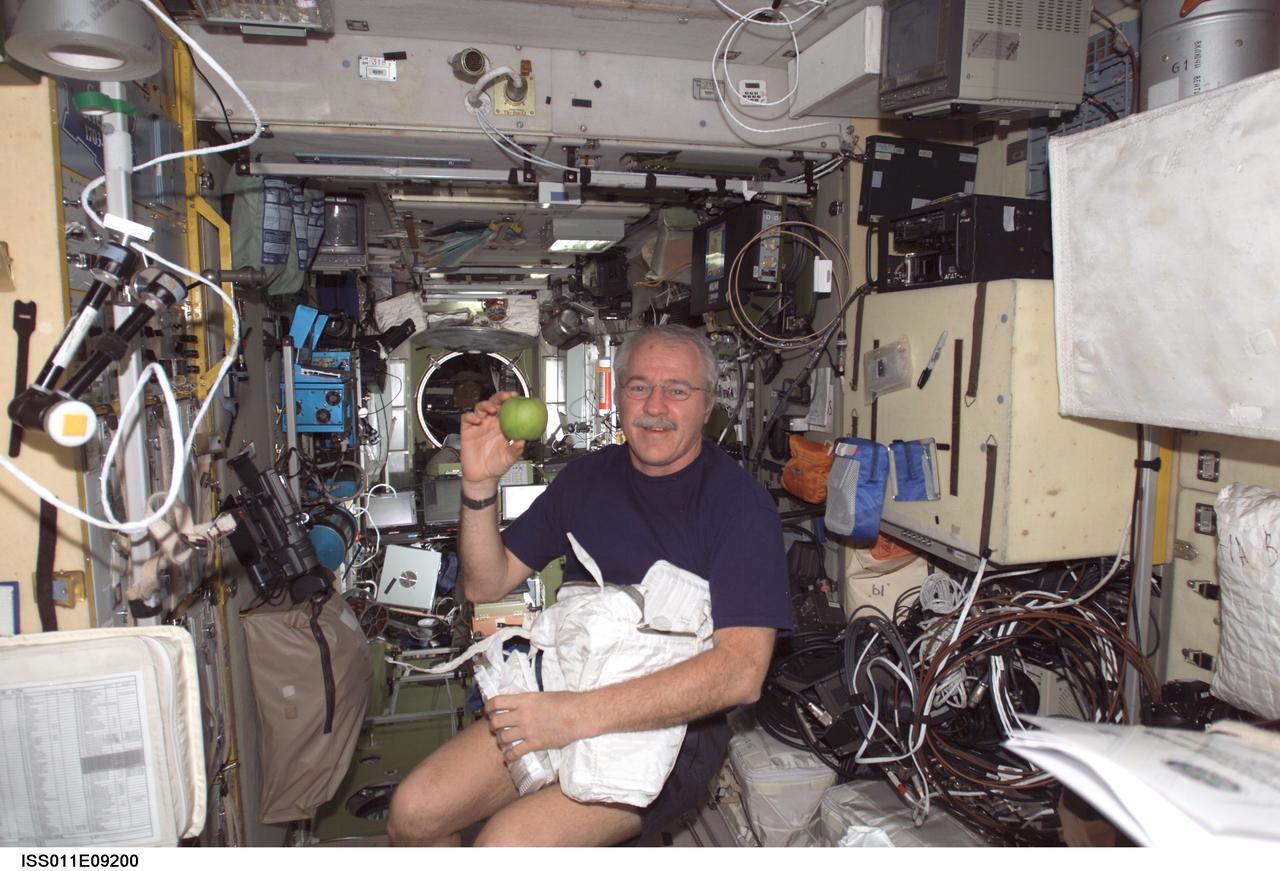
ISS011-E-09200 (19 June 2005) --- Astronaut John L. Phillips, Expedition 11 NASA space station science officer and flight engineer, holds small packages of supplies and fruit in the Zvezda Service Module of the International Space Station, which he un-stowed from the docked Progress 18 supply vehicle.
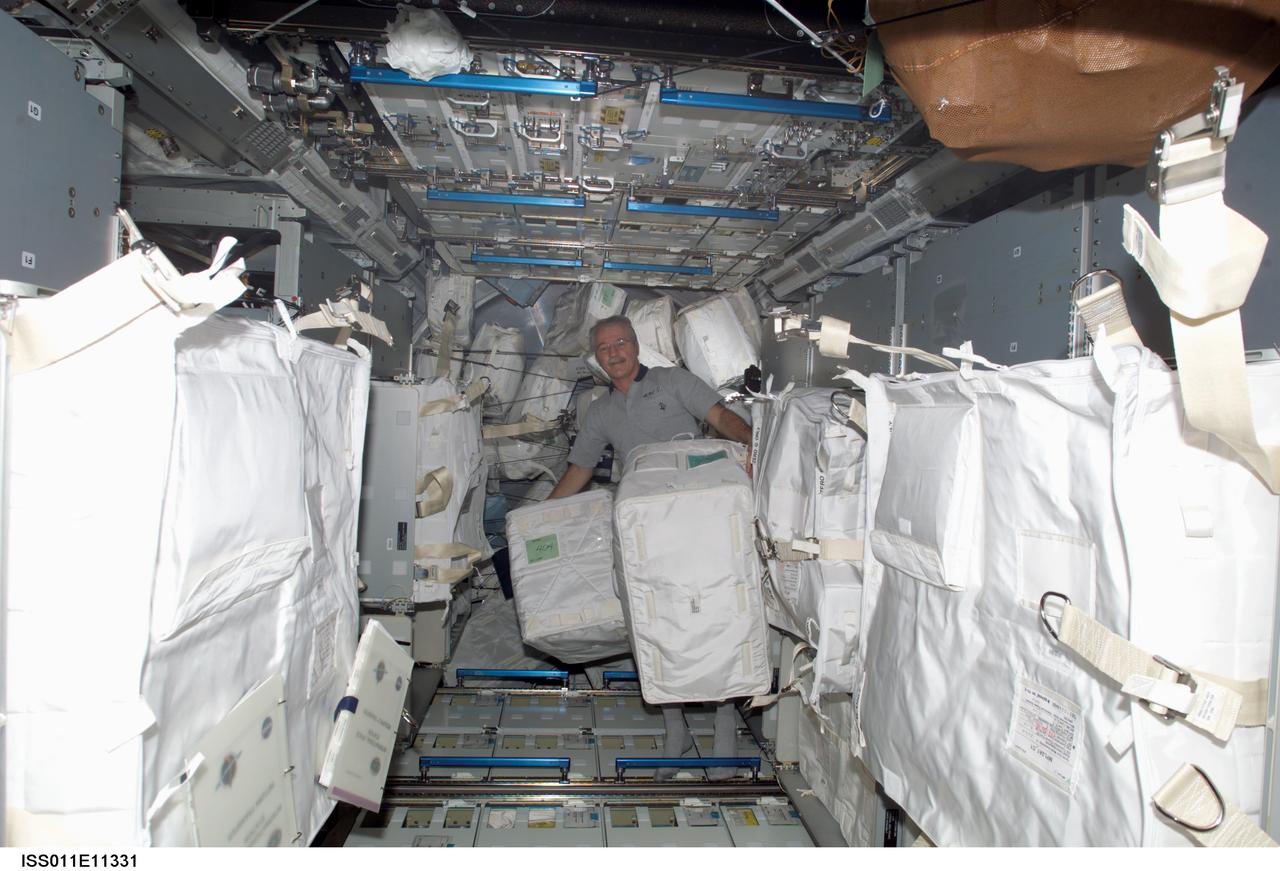
ISS011-E-11331 (30 July 2005) --- Astronaut John L. Phillips, Expedition 11 NASA space station science officer and flight engineer, retrieves supplies from the Raffaello Multi-Purpose Logistics Module (MPLM), which was brought to Earth-orbit by the seven-member STS-114 crew of the space shuttle Discovery.
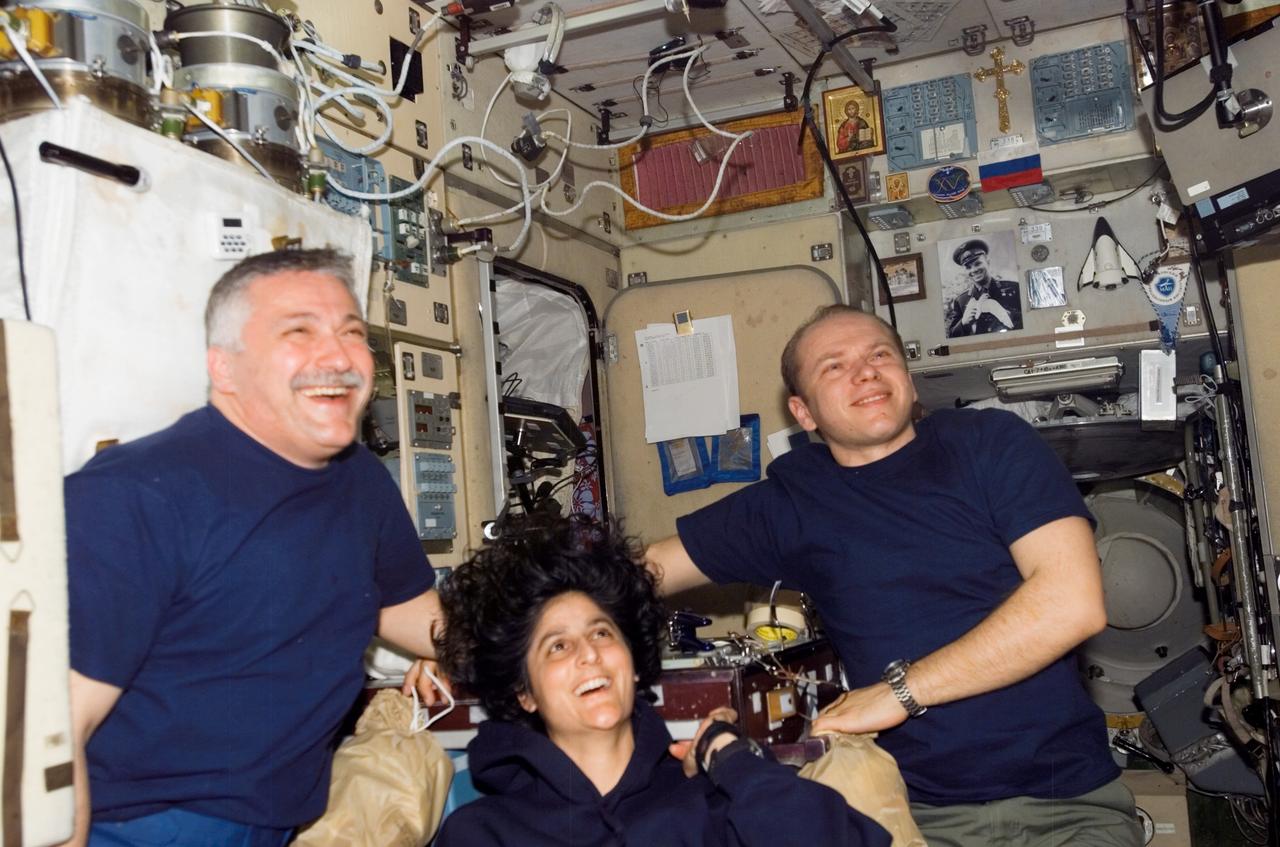
ISS015-E-08237 (27 April 2007) --- Cosmonauts Fyodor N. Yurchikhin (left), Oleg V. Kotov (right), Expedition 15 commander and flight engineer, respectively, and astronaut Sunita L. Williams, flight engineer, photographed during a teleconference in the Zvezda Service Module of the International Space Station.
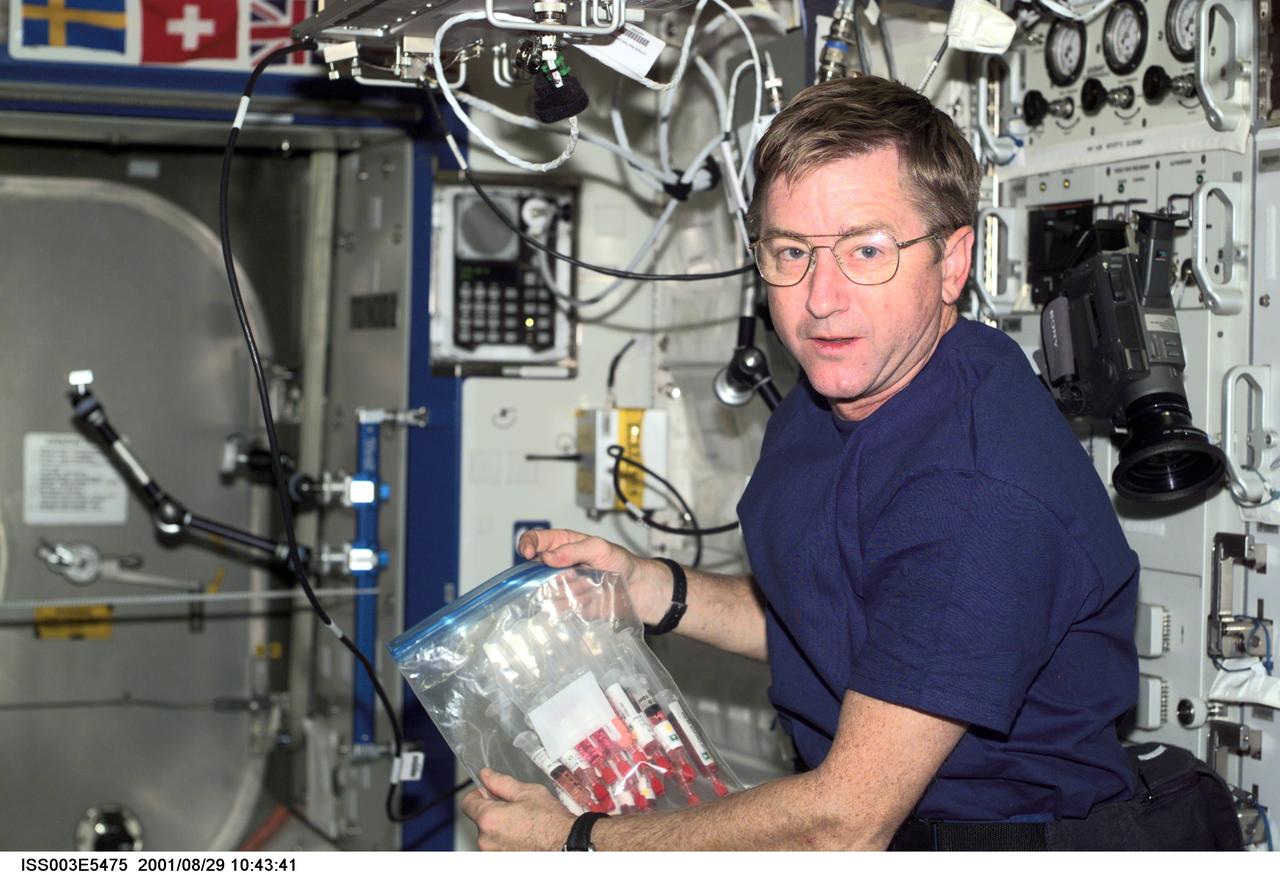
ISS003-E-5475 (29 August 2001) --- Astronaut Frank L. Culbertson, Expedition Three mission commander, holds a syringe kit to be used in the Quad Tissue Culture Module Assemblies (QTCMA) for the Biotechnology Specimen Temperature Controller (BSTC) experiment in the U.S. Laboratory.
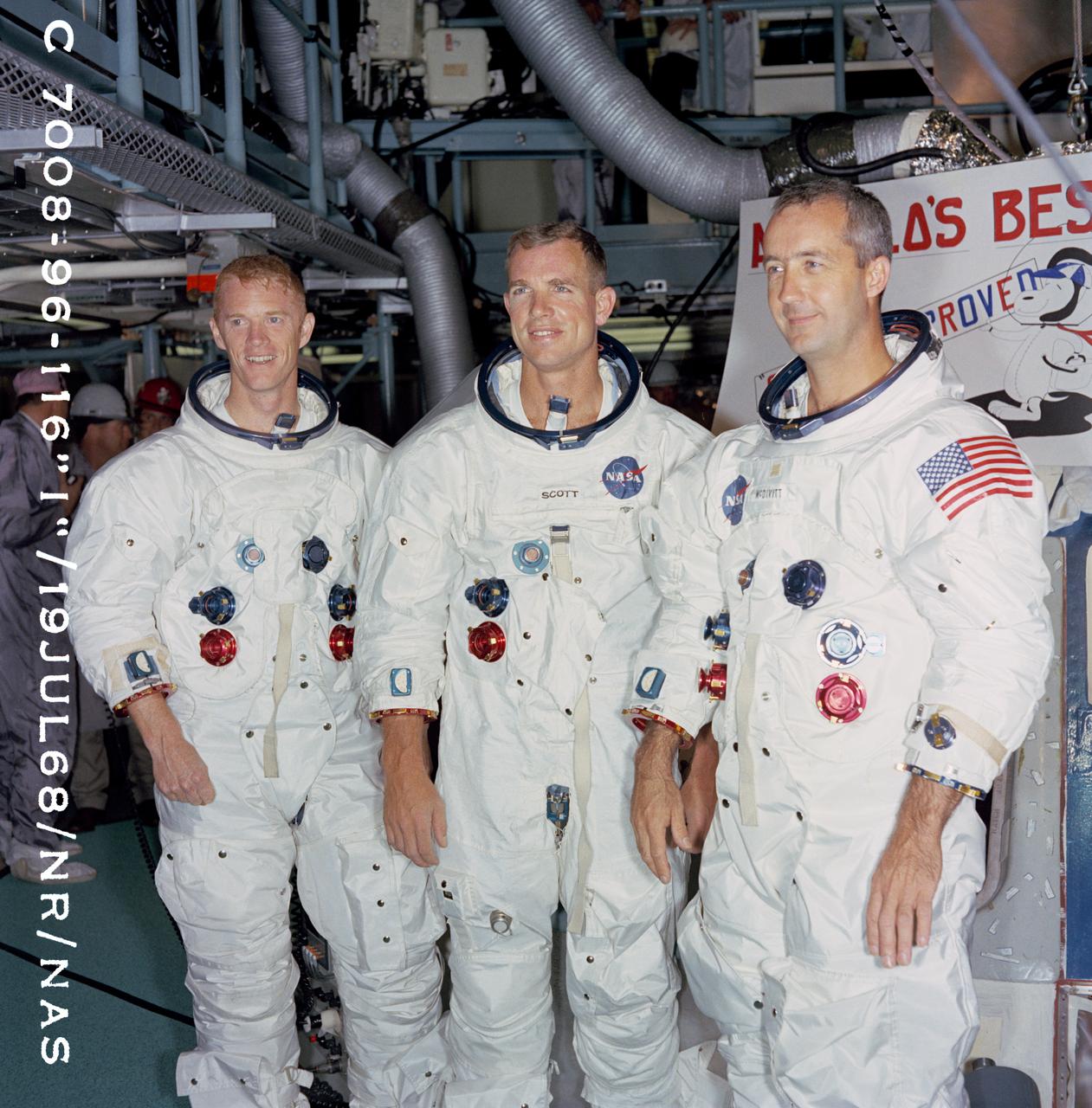
S68-42164 (19 July 1968) --- The prime crew of the third manned Apollo space mission stands in front of the Apollo Command Module 103 after egress during crew compartment fit and function test activity. Left to right are astronauts Russell L. Schweickart, David R. Scott, and James A. McDivitt.
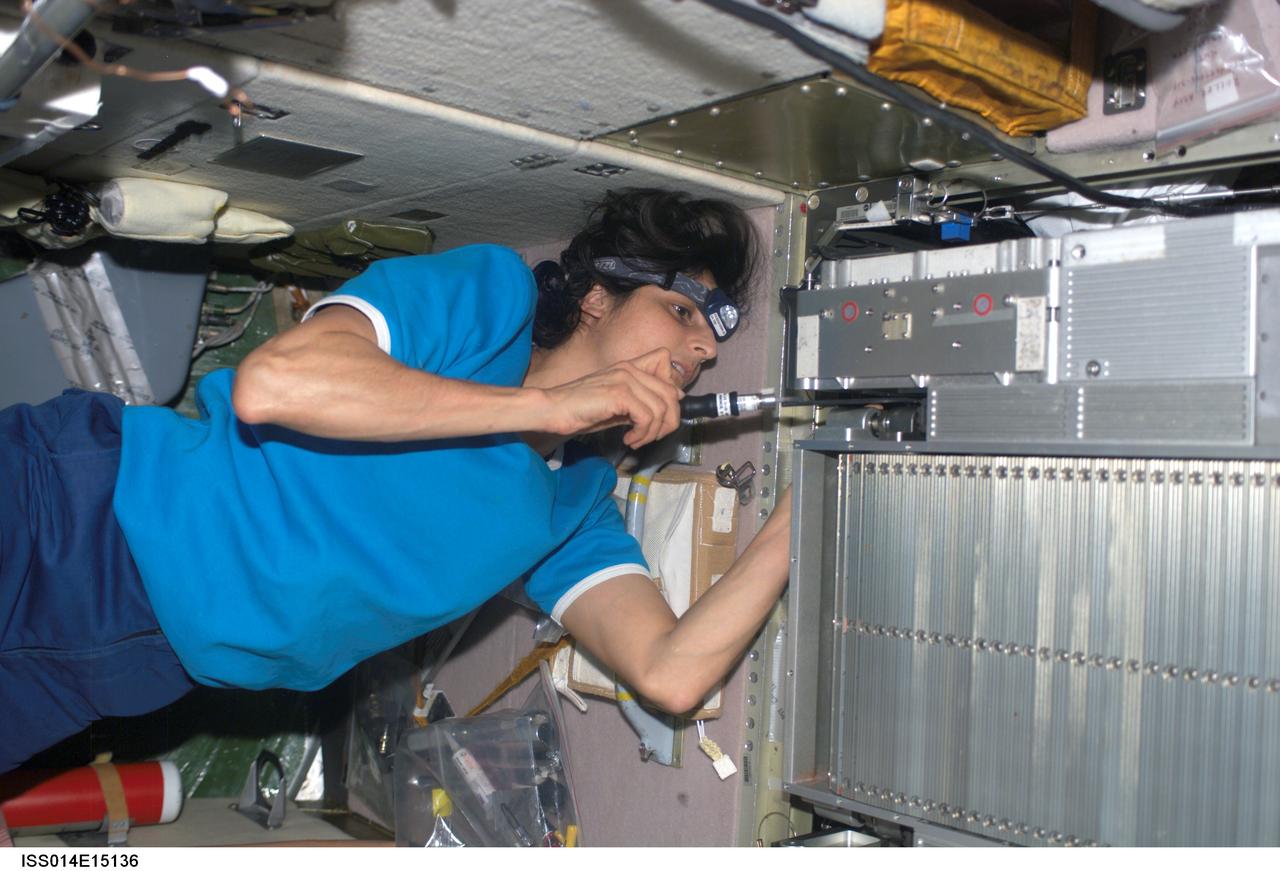
ISS014-E-15136 (26 Feb. 2007) --- Astronaut Sunita L. Williams, Expedition 14 flight engineer, performs maintenance work on the Treadmill Vibration Isolation System (TVIS) during routine in-flight maintenance (IFM) in the Zvezda Service Module of the International Space Station.
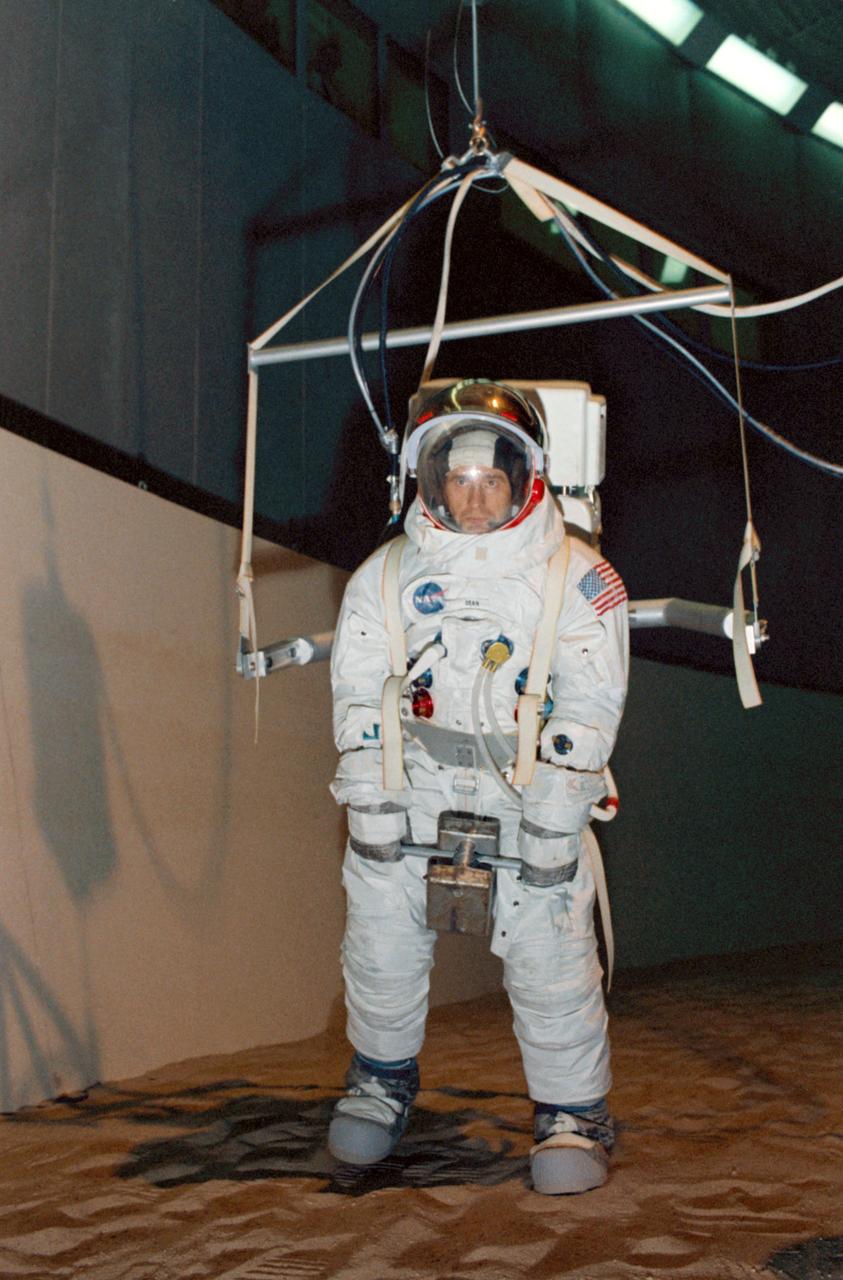
S69-56059 (24 Oct. 1969) --- Astronaut Alan L. Bean, lunar module pilot of the Apollo 12 lunar landing mission, participates in lunar surface simulation training in Building 29 at the Manned Spacecraft Center (MSC). Bean is strapped to a one-sixth gravity simulator.
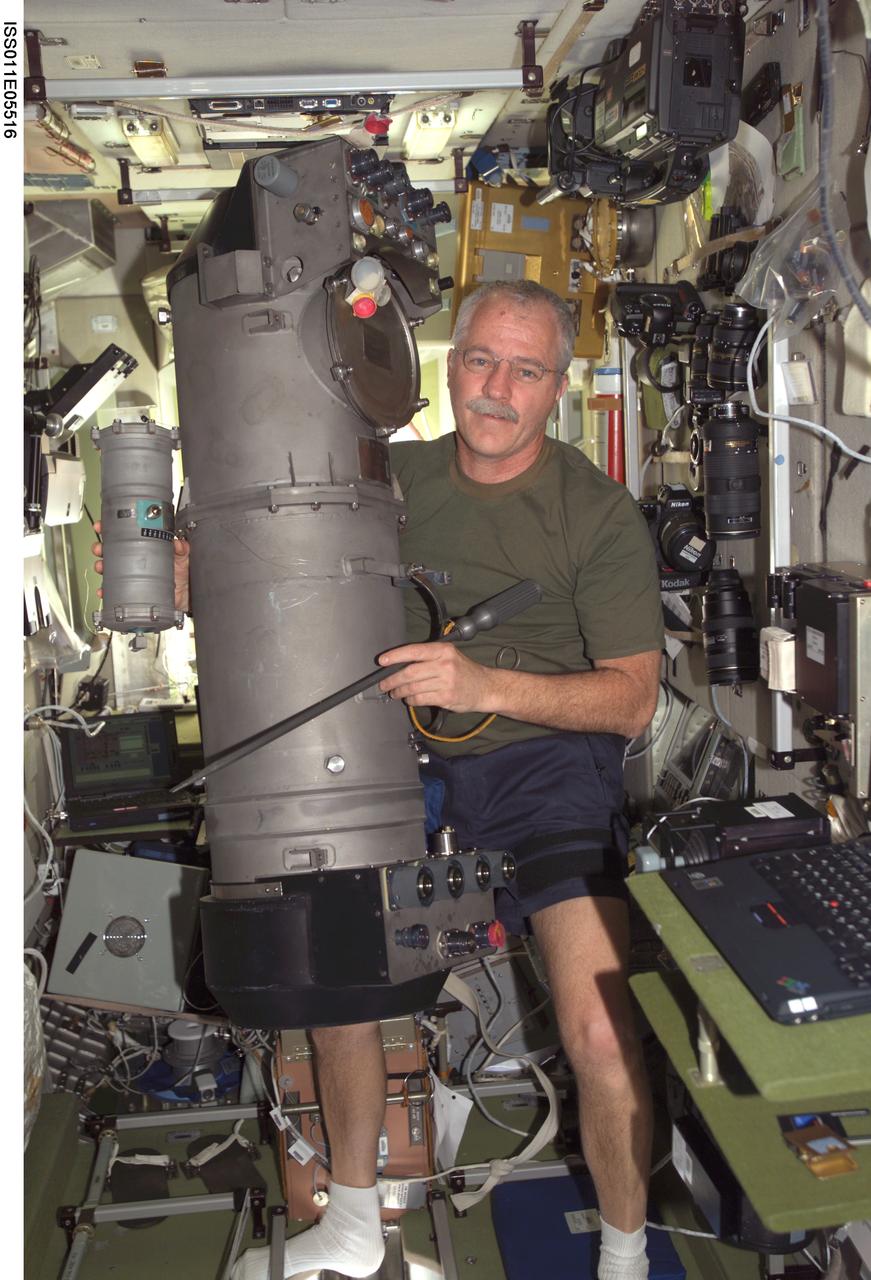
ISS011-E-05516 (5 May 2005) --- Astronaut John L. Phillips, Expedition 11 NASA ISS science officer and flight engineer, working on the Elektron oxygen-generation system in the Zvezda Service Module that has worked intermittently aboard the International Space Station (ISS).
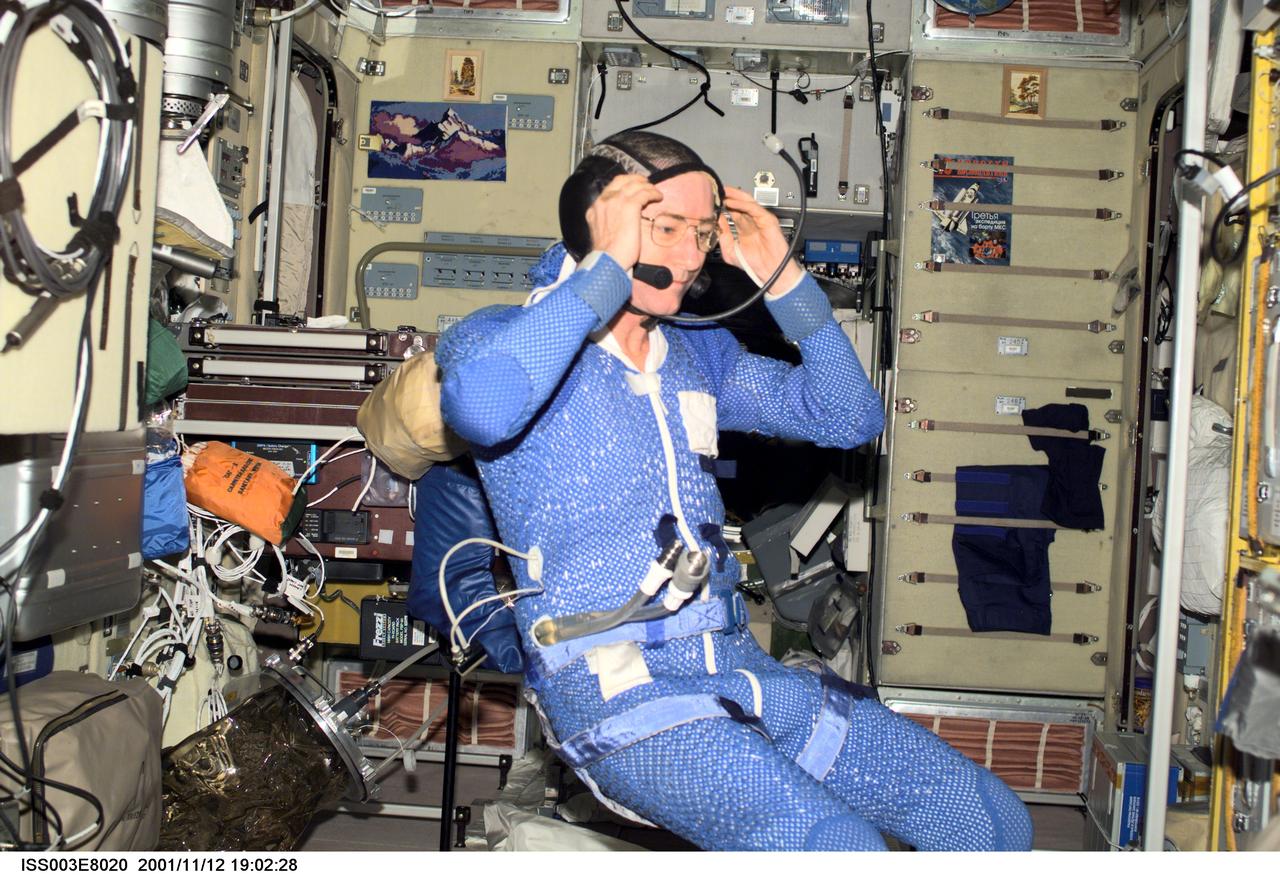
ISS003-E-8020 (12 November 2001) --- Astronaut Frank L. Culbertson, Jr., Expedition Three mission commander, wearing thermal undergarment, adjusts his communication headgear in the Zvezda Service Module on the International Space Station (ISS). This image was taken with a digital still camera.
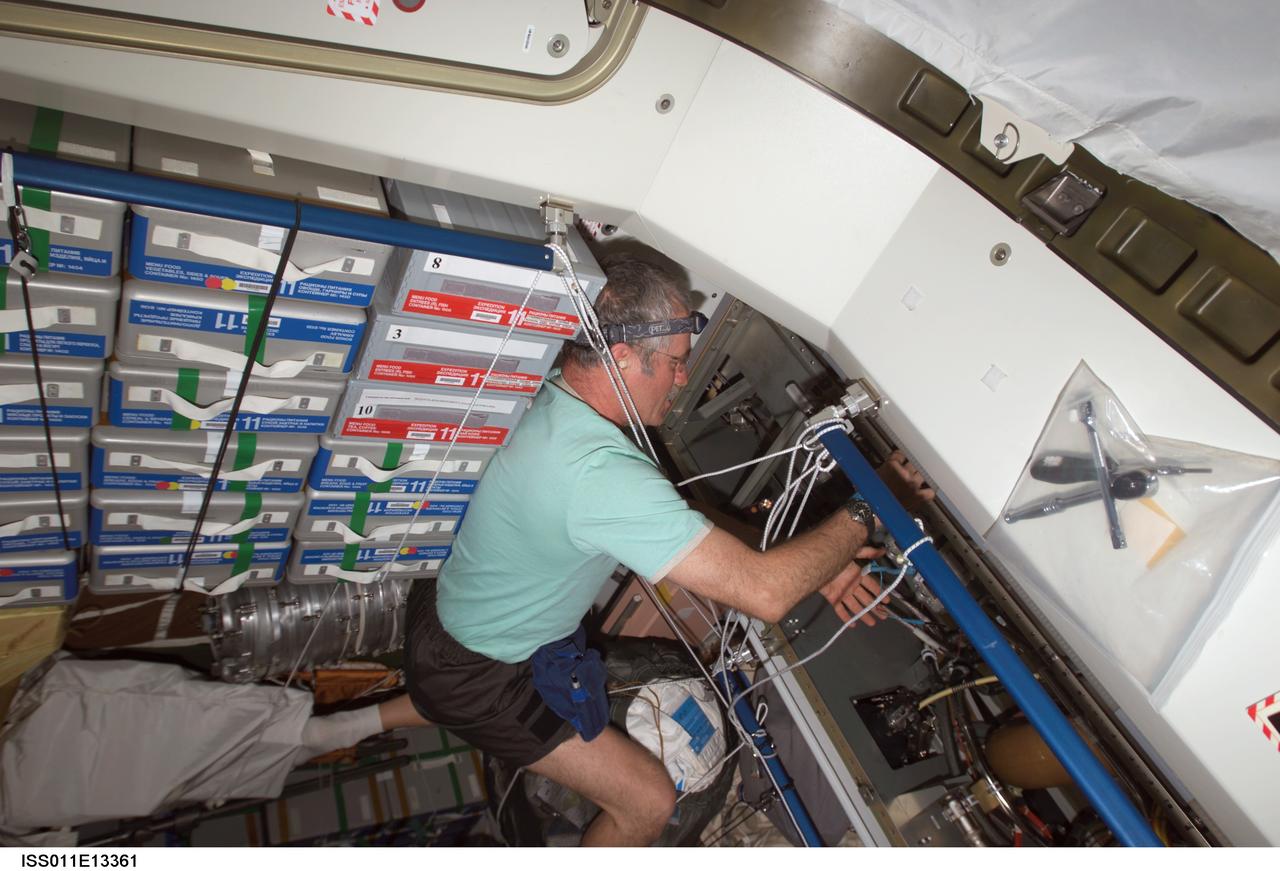
ISS011-E-13361 (20 September 2005) --- Astronaut John L. Phillips, Expedition 11 NASA science officer and flight engineer, performs a Remote Power Control Module (RPCM) remove and replacement in the Unity node of the international space station.