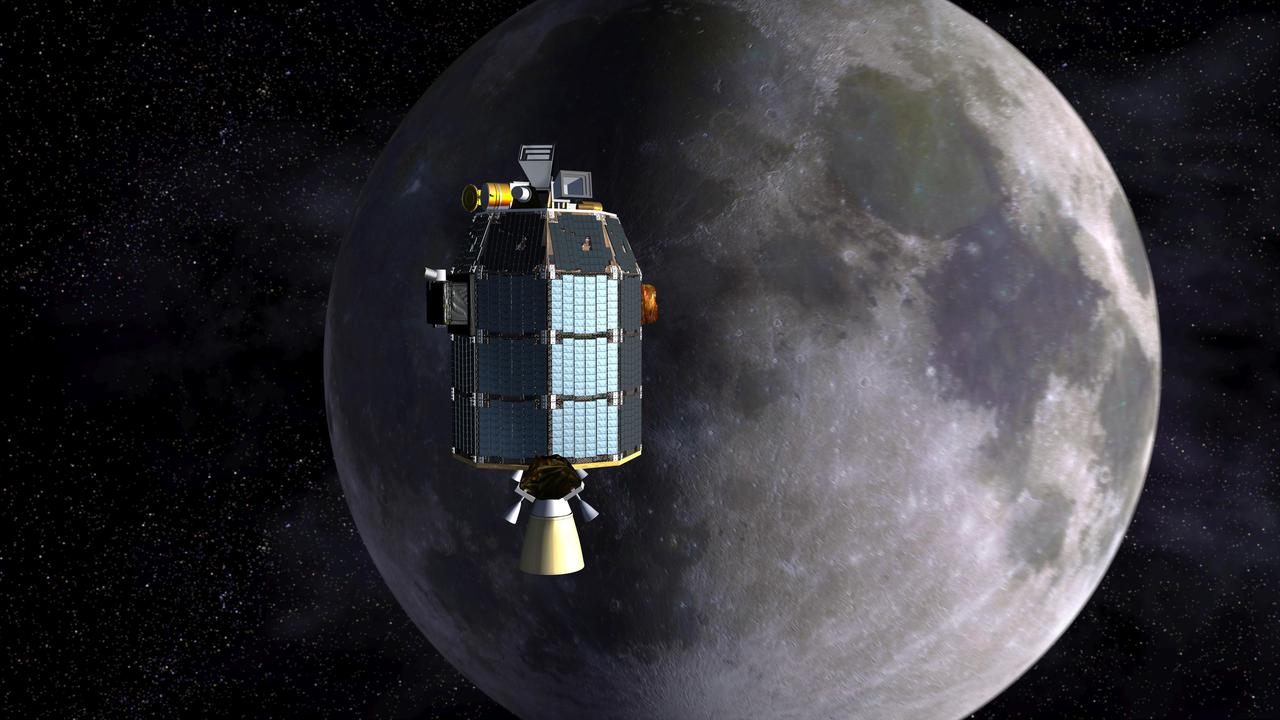
This is an artist depiction of NASA Lunar Atmosphere and Dust Environment Explorer LADEE observatory as it approaches lunar orbit. http://photojournal.jpl.nasa.gov/catalog/PIA18160
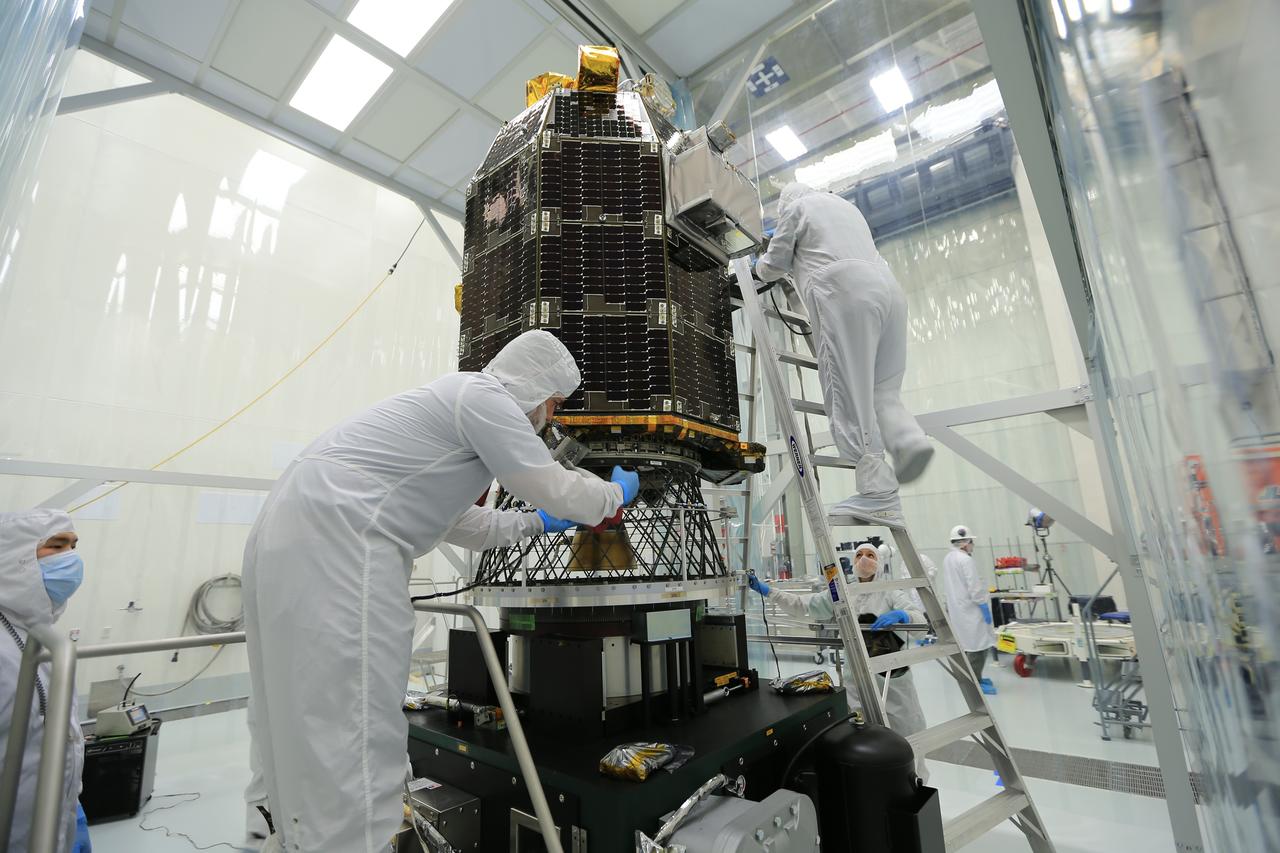
NASA's Lunar Atmosphere and Dust Environment Explorer (LADEE) spacecraft being prepared in the clean room at Wallops Flight Facility. Credit: NASA ----- What is LADEE? The Lunar Atmosphere and Dust Environment Explorer (LADEE) is designed to study the Moon's thin exosphere and the lunar dust environment. An "exosphere" is an atmosphere that is so thin and tenuous that molecules don't collide with each other. Studying the Moon's exosphere will help scientists understand other planetary bodies with exospheres too, like Mercury and some of Jupiter's bigger moons. The orbiter will determine the density, composition and temporal and spatial variability of the Moon's exosphere to help us understand where the species in the exosphere come from and the role of the solar wind, lunar surface and interior, and meteoric infall as sources. The mission will also examine the density and temporal and spatial variability of dust particles that may get lofted into the atmosphere. The mission also will test several new technologies, including a modular spacecraft bus that may reduce the cost of future deep space missions and demonstrate two-way high rate laser communication for the first time from the Moon. LADEE now is ready to launch when the window opens on Sept. 6, 2013. Read more: <a href="http://www.nasa.gov/ladee" rel="nofollow">www.nasa.gov/ladee</a> <b><a href="http://www.nasa.gov/audience/formedia/features/MP_Photo_Guidelines.html" rel="nofollow">NASA image use policy.</a></b> <b><a href="http://www.nasa.gov/centers/goddard/home/index.html" rel="nofollow">NASA Goddard Space Flight Center</a></b> enables NASA’s mission through four scientific endeavors: Earth Science, Heliophysics, Solar System Exploration, and Astrophysics. Goddard plays a leading role in NASA’s accomplishments by contributing compelling scientific knowledge to advance the Agency’s mission. <b>Follow us on <a href="http://twitter.com/NASA_GoddardPix" rel="nofollow">Twitter</a></b> <b>Like us on <a href="http://www.facebook.com/pages/Greenbelt-MD/NASA-Goddard/395013845897?ref=tsd" rel="nofollow">Facebook</a></b> <b>Find us on <a href="http://instagram.com/nasagoddard?vm=grid" rel="nofollow">Instagram</a></b>
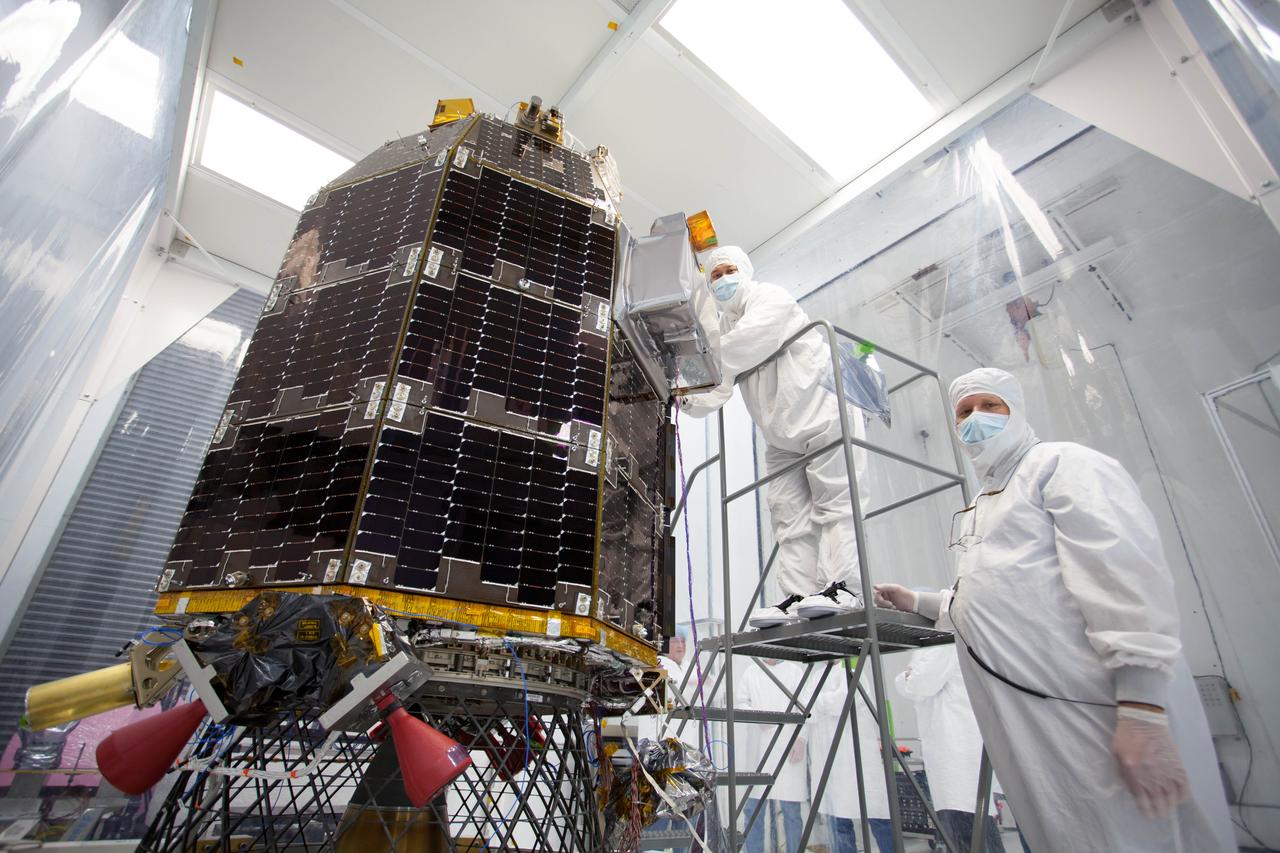
Engineers at NASA's Ames Research Center, Moffett Field, Calif., prepare NASA's Lunar Atmosphere and Dust Environment Explorer (LADEE) Observatory for acoustic environmental testing. Credit: NASA/Ames ----- What is LADEE? The Lunar Atmosphere and Dust Environment Explorer (LADEE) is designed to study the Moon's thin exosphere and the lunar dust environment. An "exosphere" is an atmosphere that is so thin and tenuous that molecules don't collide with each other. Studying the Moon's exosphere will help scientists understand other planetary bodies with exospheres too, like Mercury and some of Jupiter's bigger moons. The orbiter will determine the density, composition and temporal and spatial variability of the Moon's exosphere to help us understand where the species in the exosphere come from and the role of the solar wind, lunar surface and interior, and meteoric infall as sources. The mission will also examine the density and temporal and spatial variability of dust particles that may get lofted into the atmosphere. The mission also will test several new technologies, including a modular spacecraft bus that may reduce the cost of future deep space missions and demonstrate two-way high rate laser communication for the first time from the Moon. LADEE now is ready to launch when the window opens on Sept. 6, 2013. Read more: <a href="http://www.nasa.gov/ladee" rel="nofollow">www.nasa.gov/ladee</a> <b><a href="http://www.nasa.gov/audience/formedia/features/MP_Photo_Guidelines.html" rel="nofollow">NASA image use policy.</a></b> <b><a href="http://www.nasa.gov/centers/goddard/home/index.html" rel="nofollow">NASA Goddard Space Flight Center</a></b> enables NASA’s mission through four scientific endeavors: Earth Science, Heliophysics, Solar System Exploration, and Astrophysics. Goddard plays a leading role in NASA’s accomplishments by contributing compelling scientific knowledge to advance the Agency’s mission. <b>Follow us on <a href="http://twitter.com/NASA_GoddardPix" rel="nofollow">Twitter</a></b> <b>Like us on <a href="http://www.facebook.com/pages/Greenbelt-MD/NASA-Goddard/395013845897?ref=tsd" rel="nofollow">Facebook</a></b> <b>Find us on <a href="http://instagram.com/nasagoddard?vm=grid" rel="nofollow">Instagram</a></b>
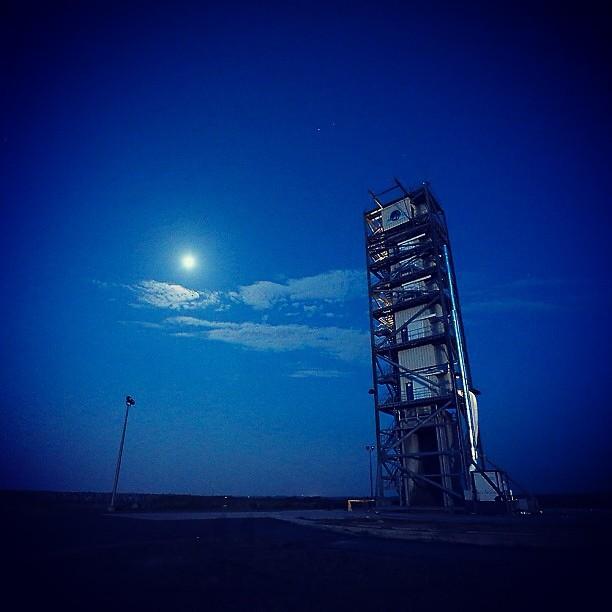
This image shows an evening view gantry at Pad 0B at the Mid-Atlantic Regional Spaceport, at NASA's Wallops Flight Facility in Wallops Island, Va., on Sept. 4, 2013. In this photograph, the gantry surrounds the Minotaur V rocket that will launch NASA LADEE. The gantry is now removed and the Minotaur is getting ready to launch LADEE at 11:27 p.m. EDT tonight. Image credit: NASA Wallops/Patrick Black
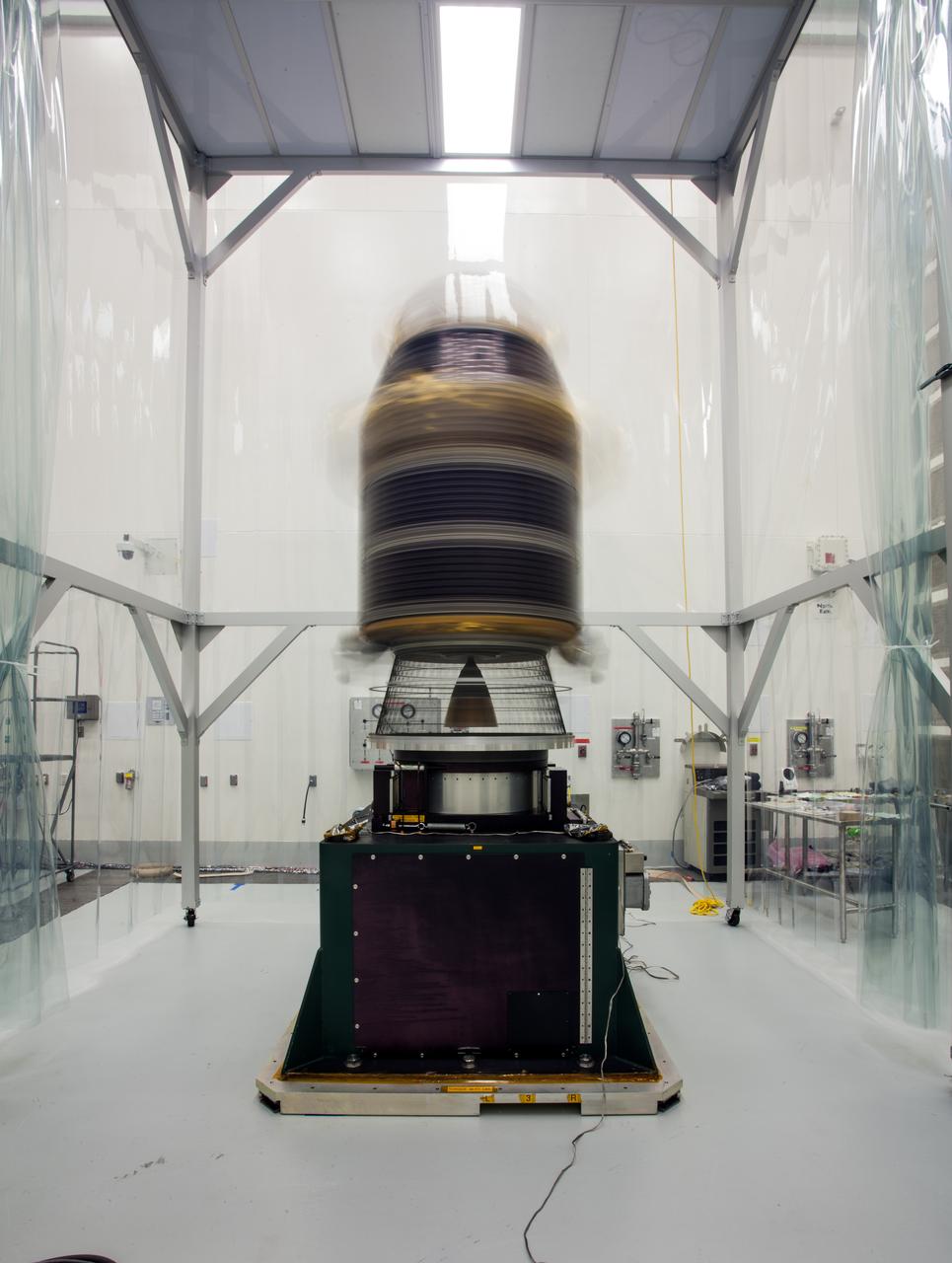
During preparations for NASA's Lunar Atmosphere and Dust Environment Explorer (LADEE) observatory launch on Sept. 6, 2013, the spacecraft went through final preparations and close-outs, which included checking alignment after its cross-country shipment, checking the propulsion system for leaks, inspecting and repairing solar panels, and final electrical tests. After these activities were completed, more challenging portions of the launch preparations began: spin testing and fueling. To make sure that the spacecraft is perfectly balanced for flight, engineers mounted it onto a spin table and rotate it at high speeds, approximately one revolution per second. The team measured any offsets during the spinning, and then added small weights to the spacecraft to balance it. Once the spacecraft was balanced dry, the team loaded the propulsion tanks with fuel, oxidizer, and pressurant. The spin testing was performed again "wet," or with fuel, in order to see if the balance changed with the full fuel tanks. Engineers from NASA's Ames Research Center in Moffett Field, Calif., have now successfully completed launch preparation activities for LADEE, which has been encapsulated into the nose-cone of the Minotaur V rocket at NASA's Wallops Flight Facility in Virginia. LADEE is ready to launch when the window opens on Friday. Image Credit: NASA ----- What is LADEE? The Lunar Atmosphere and Dust Environment Explorer (LADEE) is designed to study the Moon's thin exosphere and the lunar dust environment. An "exosphere" is an atmosphere that is so thin and tenuous that molecules don't collide with each other. Studying the Moon's exosphere will help scientists understand other planetary bodies with exospheres too, like Mercury and some of Jupiter's bigger moons. The orbiter will determine the density, composition and temporal and spatial variability of the Moon's exosphere to help us understand where the species in the exosphere come from and the role of the solar wind, lunar surface and interior, and meteoric infall as sources. The mission will also examine the density and temporal and spatial variability of dust particles that may get lofted into the atmosphere. The mission also will test several new technologies, including a modular spacecraft bus that may reduce the cost of future deep space missions and demonstrate two-way high rate laser communication for the first time from the Moon. LADEE now is ready to launch when the window opens on Sept. 6, 2013. Read more: <a href="http://www.nasa.gov/ladee" rel="nofollow">www.nasa.gov/ladee</a> <b><a href="http://www.nasa.gov/audience/formedia/features/MP_Photo_Guidelines.html" rel="nofollow">NASA image use policy.</a></b> <b><a href="http://www.nasa.gov/centers/goddard/home/index.html" rel="nofollow">NASA Goddard Space Flight Center</a></b> enables NASA’s mission through four scientific endeavors: Earth Science, Heliophysics, Solar System Exploration, and Astrophysics. Goddard plays a leading role in NASA’s accomplishments by contributing compelling scientific knowledge to advance the Agency’s mission. <b>Follow us on <a href="http://twitter.com/NASA_GoddardPix" rel="nofollow">Twitter</a></b> <b>Like us on <a href="http://www.facebook.com/pages/Greenbelt-MD/NASA-Goddard/395013845897?ref=tsd" rel="nofollow">Facebook</a></b> <b>Find us on <a href="http://instagram.com/nasagoddard?vm=grid" rel="nofollow">Instagram</a></b>
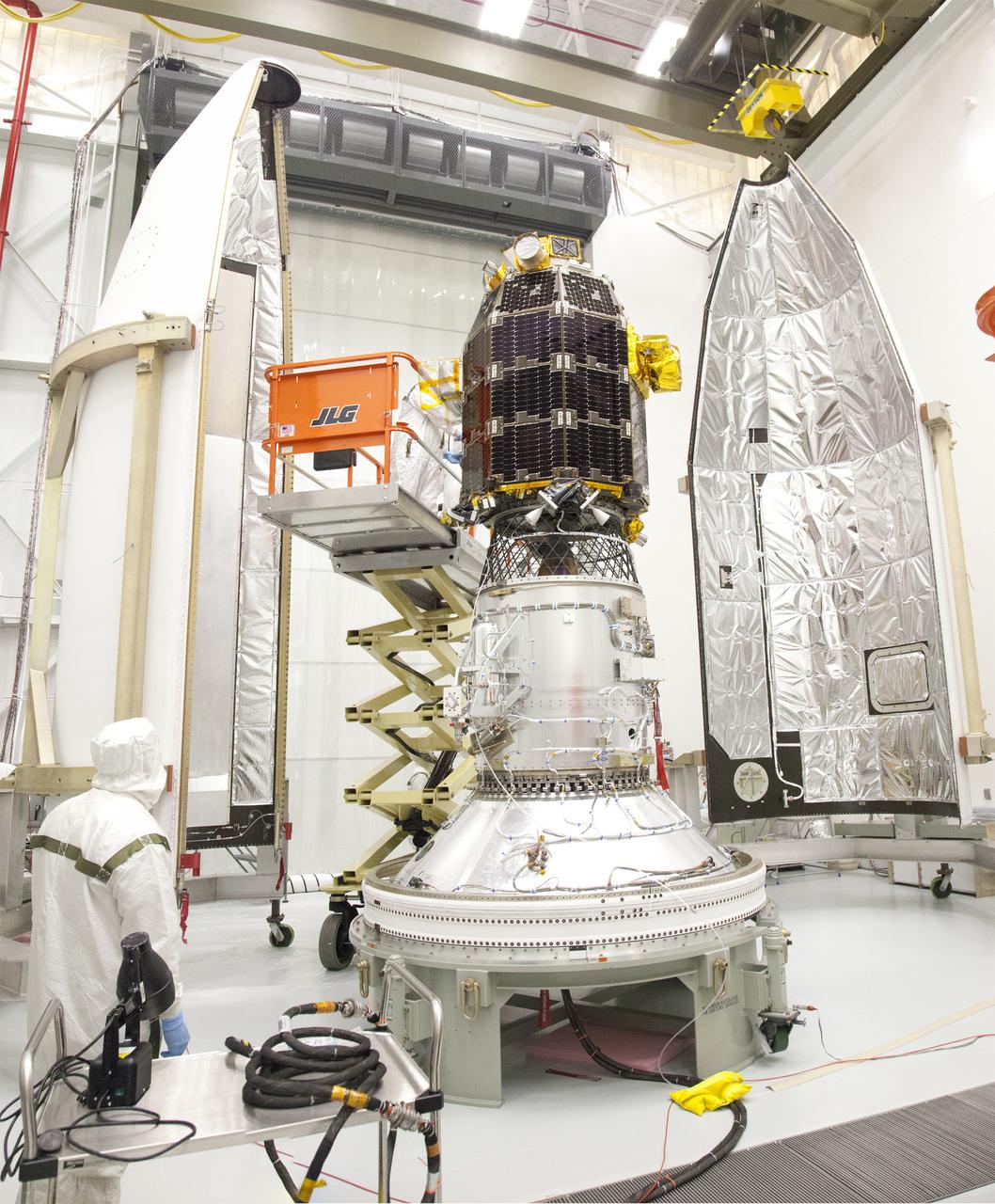
Engineers at NASA's Wallops Flight Facility in Virginia prepare to encapsulate the LADEE spacecraft into the fairing of the Minotaur V launch vehicle nose-cone. Credit: NASA/Wallops/Terry Zaperach ----- What is LADEE? The Lunar Atmosphere and Dust Environment Explorer (LADEE) is designed to study the Moon's thin exosphere and the lunar dust environment. An "exosphere" is an atmosphere that is so thin and tenuous that molecules don't collide with each other. Studying the Moon's exosphere will help scientists understand other planetary bodies with exospheres too, like Mercury and some of Jupiter's bigger moons. The orbiter will determine the density, composition and temporal and spatial variability of the Moon's exosphere to help us understand where the species in the exosphere come from and the role of the solar wind, lunar surface and interior, and meteoric infall as sources. The mission will also examine the density and temporal and spatial variability of dust particles that may get lofted into the atmosphere. The mission also will test several new technologies, including a modular spacecraft bus that may reduce the cost of future deep space missions and demonstrate two-way high rate laser communication for the first time from the Moon. LADEE now is ready to launch when the window opens on Sept. 6, 2013. Read more: <a href="http://www.nasa.gov/ladee" rel="nofollow">www.nasa.gov/ladee</a> <b><a href="http://www.nasa.gov/audience/formedia/features/MP_Photo_Guidelines.html" rel="nofollow">NASA image use policy.</a></b> <b><a href="http://www.nasa.gov/centers/goddard/home/index.html" rel="nofollow">NASA Goddard Space Flight Center</a></b> enables NASA’s mission through four scientific endeavors: Earth Science, Heliophysics, Solar System Exploration, and Astrophysics. Goddard plays a leading role in NASA’s accomplishments by contributing compelling scientific knowledge to advance the Agency’s mission. <b>Follow us on <a href="http://twitter.com/NASA_GoddardPix" rel="nofollow">Twitter</a></b> <b>Like us on <a href="http://www.facebook.com/pages/Greenbelt-MD/NASA-Goddard/395013845897?ref=tsd" rel="nofollow">Facebook</a></b> <b>Find us on <a href="http://instagram.com/nasagoddard?vm=grid" rel="nofollow">Instagram</a></b>
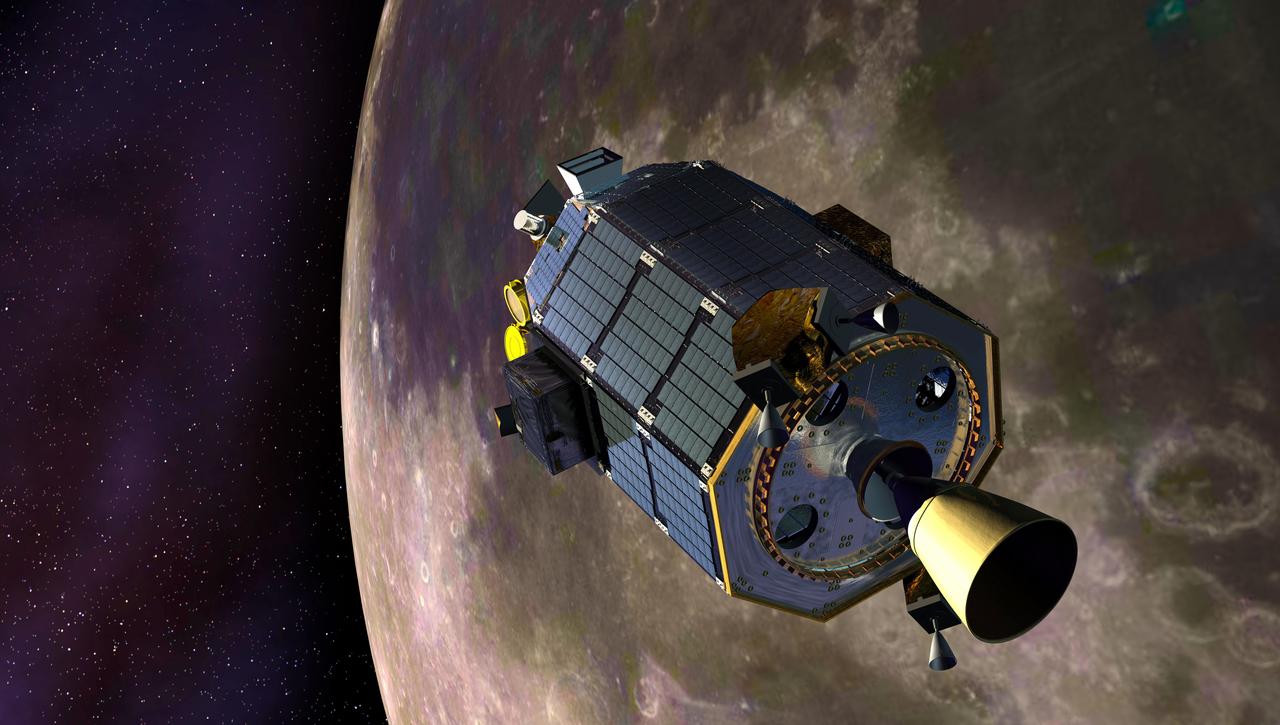
An artist's concept showing the Lunar Atmosphere and Dust Environment Explorer (LADEE) spacecraft is seen orbiting the moon as it prepares to fire its maneuvering thrusters to maintain a safe orbital altitude. Credit: NASA Ames / Dana Berry ----- What is LADEE? The Lunar Atmosphere and Dust Environment Explorer (LADEE) is designed to study the Moon's thin exosphere and the lunar dust environment. An "exosphere" is an atmosphere that is so thin and tenuous that molecules don't collide with each other. Studying the Moon's exosphere will help scientists understand other planetary bodies with exospheres too, like Mercury and some of Jupiter's bigger moons. The orbiter will determine the density, composition and temporal and spatial variability of the Moon's exosphere to help us understand where the species in the exosphere come from and the role of the solar wind, lunar surface and interior, and meteoric infall as sources. The mission will also examine the density and temporal and spatial variability of dust particles that may get lofted into the atmosphere. The mission also will test several new technologies, including a modular spacecraft bus that may reduce the cost of future deep space missions and demonstrate two-way high rate laser communication for the first time from the Moon. LADEE now is ready to launch when the window opens on Sept. 6, 2013. Read more: <a href="http://www.nasa.gov/ladee" rel="nofollow">www.nasa.gov/ladee </a> <b><a href="http://www.nasa.gov/audience/formedia/features/MP_Photo_Guidelines.html" rel="nofollow">NASA image use policy.</a></b> <b><a href="http://www.nasa.gov/centers/goddard/home/index.html" rel="nofollow">NASA Goddard Space Flight Center</a></b> enables NASA’s mission through four scientific endeavors: Earth Science, Heliophysics, Solar System Exploration, and Astrophysics. Goddard plays a leading role in NASA’s accomplishments by contributing compelling scientific knowledge to advance the Agency’s mission. <b>Follow us on <a href="http://twitter.com/NASA_GoddardPix" rel="nofollow">Twitter</a></b> <b>Like us on <a href="http://www.facebook.com/pages/Greenbelt-MD/NASA-Goddard/395013845897?ref=tsd" rel="nofollow">Facebook</a></b> <b>Find us on <a href="http://instagram.com/nasagoddard?vm=grid" rel="nofollow">Instagram</a></b>
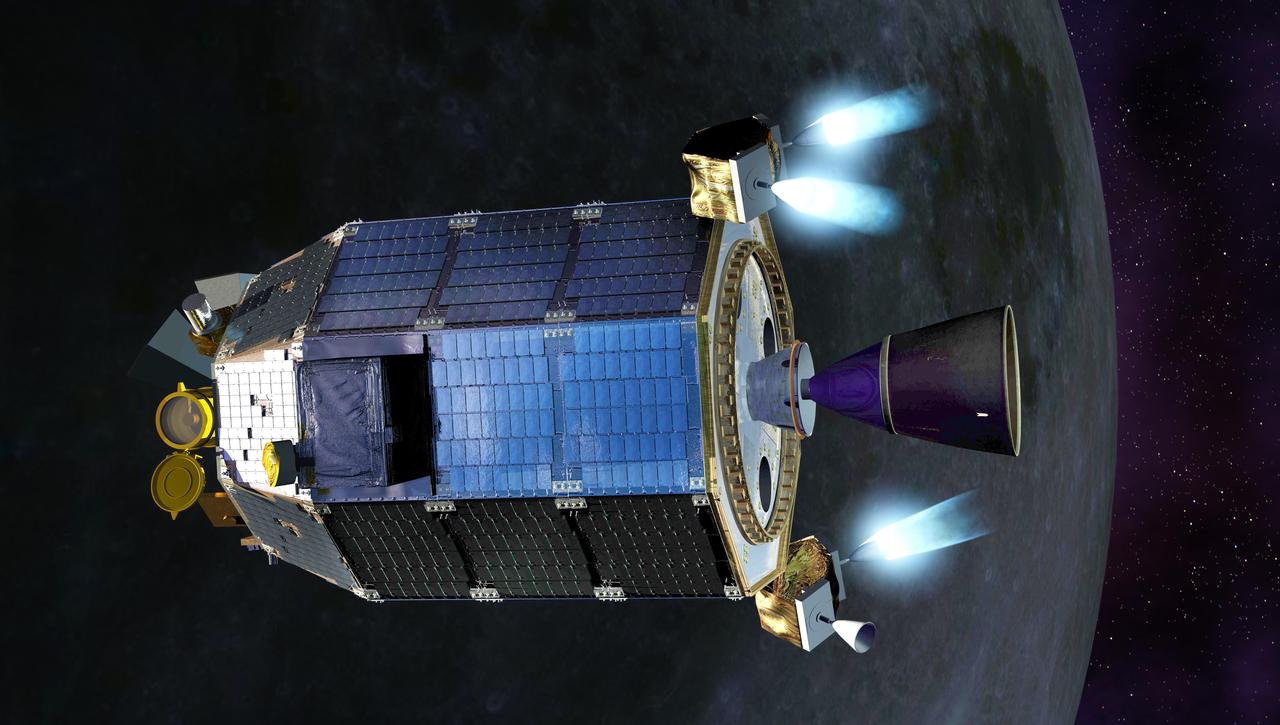
An artist's concept of NASA's Lunar Atmosphere and Dust Environment Explorer (LADEE) spacecraft firing its maneuvering thrusters in order to maintain a safe altitude as it orbits the moon. Credit: NASA Ames / Dana Berry ----- What is LADEE? The Lunar Atmosphere and Dust Environment Explorer (LADEE) is designed to study the Moon's thin exosphere and the lunar dust environment. An "exosphere" is an atmosphere that is so thin and tenuous that molecules don't collide with each other. Studying the Moon's exosphere will help scientists understand other planetary bodies with exospheres too, like Mercury and some of Jupiter's bigger moons. The orbiter will determine the density, composition and temporal and spatial variability of the Moon's exosphere to help us understand where the species in the exosphere come from and the role of the solar wind, lunar surface and interior, and meteoric infall as sources. The mission will also examine the density and temporal and spatial variability of dust particles that may get lofted into the atmosphere. The mission also will test several new technologies, including a modular spacecraft bus that may reduce the cost of future deep space missions and demonstrate two-way high rate laser communication for the first time from the Moon. LADEE now is ready to launch when the window opens on Sept. 6, 2013. Read more: <a href="http://www.nasa.gov/ladee" rel="nofollow">www.nasa.gov/ladee</a> <b><a href="http://www.nasa.gov/audience/formedia/features/MP_Photo_Guidelines.html" rel="nofollow">NASA image use policy.</a></b> <b><a href="http://www.nasa.gov/centers/goddard/home/index.html" rel="nofollow">NASA Goddard Space Flight Center</a></b> enables NASA’s mission through four scientific endeavors: Earth Science, Heliophysics, Solar System Exploration, and Astrophysics. Goddard plays a leading role in NASA’s accomplishments by contributing compelling scientific knowledge to advance the Agency’s mission. <b>Follow us on <a href="http://twitter.com/NASA_GoddardPix" rel="nofollow">Twitter</a></b> <b>Like us on <a href="http://www.facebook.com/pages/Greenbelt-MD/NASA-Goddard/395013845897?ref=tsd" rel="nofollow">Facebook</a></b> <b>Find us on <a href="http://instagram.com/nasagoddard?vm=grid" rel="nofollow">Instagram</a></b>
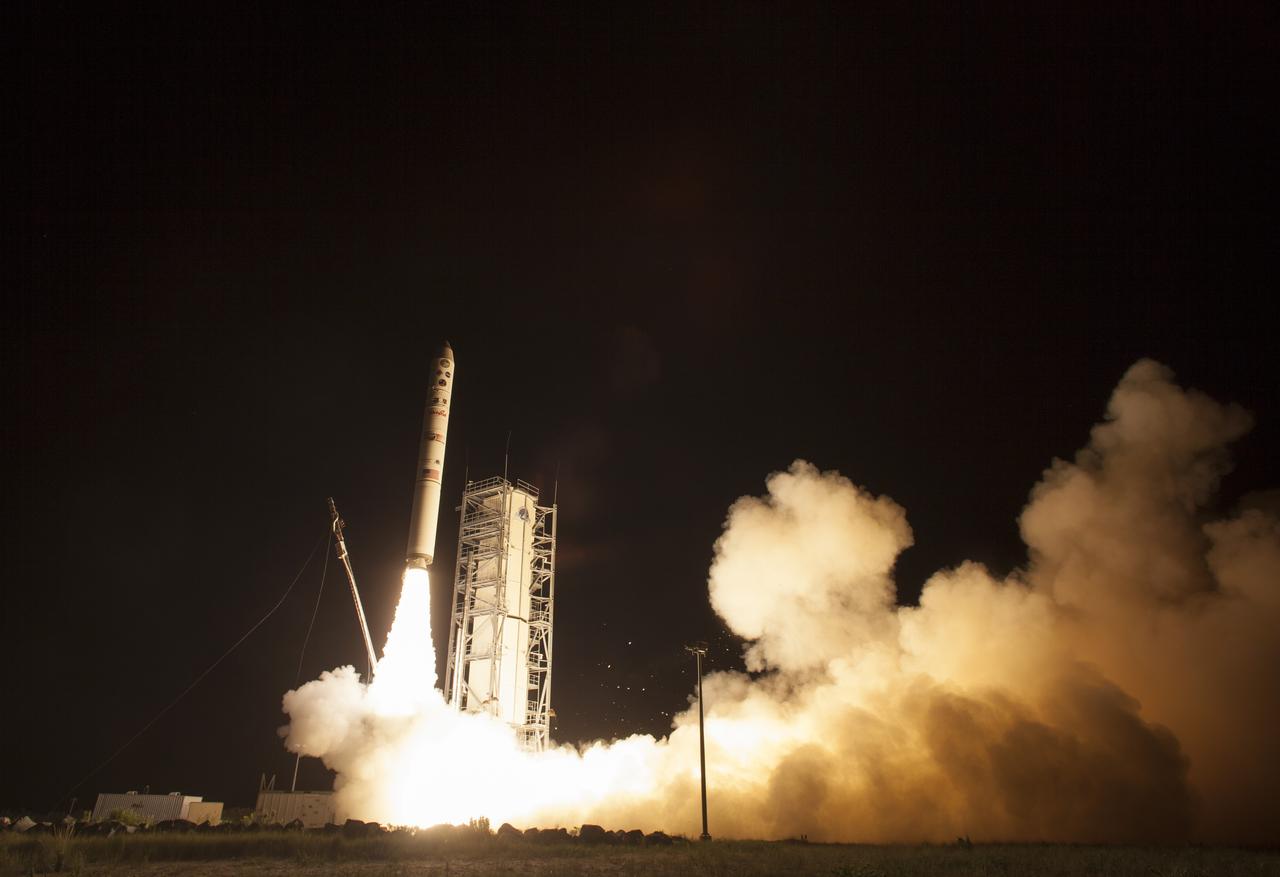
NASA's Lunar Atmosphere and Dust Environment Explorer (LADEE) observatory launches aboard the Minotaur V rocket from the Mid-Atlantic Regional Spaceport (MARS) at NASA's Wallops Flight Facility, Friday, Sept. 6, 2013 in Virginia. LADEE is a robotic mission that will orbit the moon where it will provide unprecedented information about the environment around the moon and give scientists a better understanding of other planetary bodies in our solar system and beyond. Photo Credit: (NASA/Carla Cioffi)
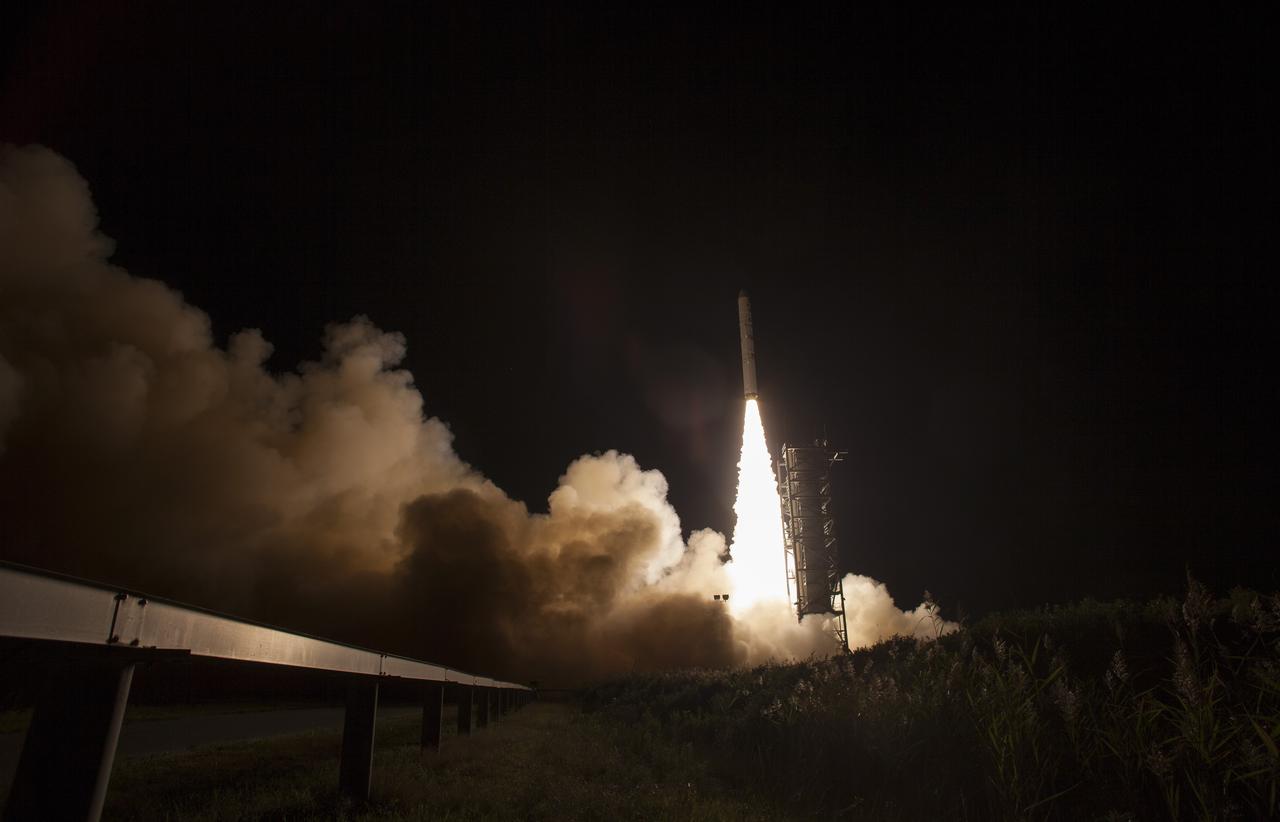
NASA's Lunar Atmosphere and Dust Environment Explorer (LADEE) observatory launches aboard the Minotaur V rocket from the Mid-Atlantic Regional Spaceport (MARS) at NASA's Wallops Flight Facility, Friday, Sept. 6, 2013 in Virginia. LADEE is a robotic mission that will orbit the moon where it will provide unprecedented information about the environment around the moon and give scientists a better understanding of other planetary bodies in our solar system and beyond. Photo Credit: (NASA/Carla Cioffi)
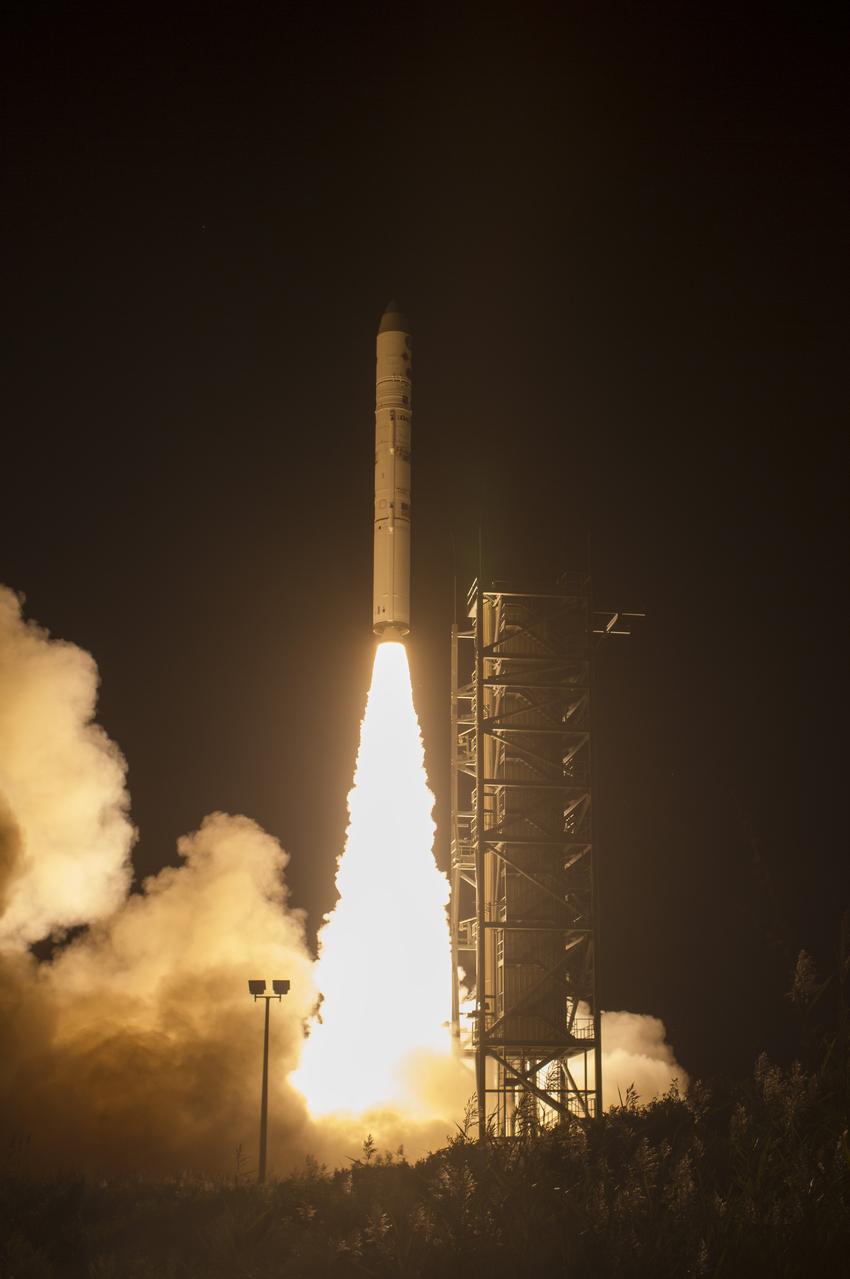
NASA's Lunar Atmosphere and Dust Environment Explorer (LADEE) observatory launches aboard the Minotaur V rocket from the Mid-Atlantic Regional Spaceport (MARS) at NASA's Wallops Flight Facility, Friday, Sept. 6, 2013 in Virginia. LADEE is a robotic mission that will orbit the moon where it will provide unprecedented information about the environment around the moon and give scientists a better understanding of other planetary bodies in our solar system and beyond. Photo Credit: (NASA/Carla Cioffi)
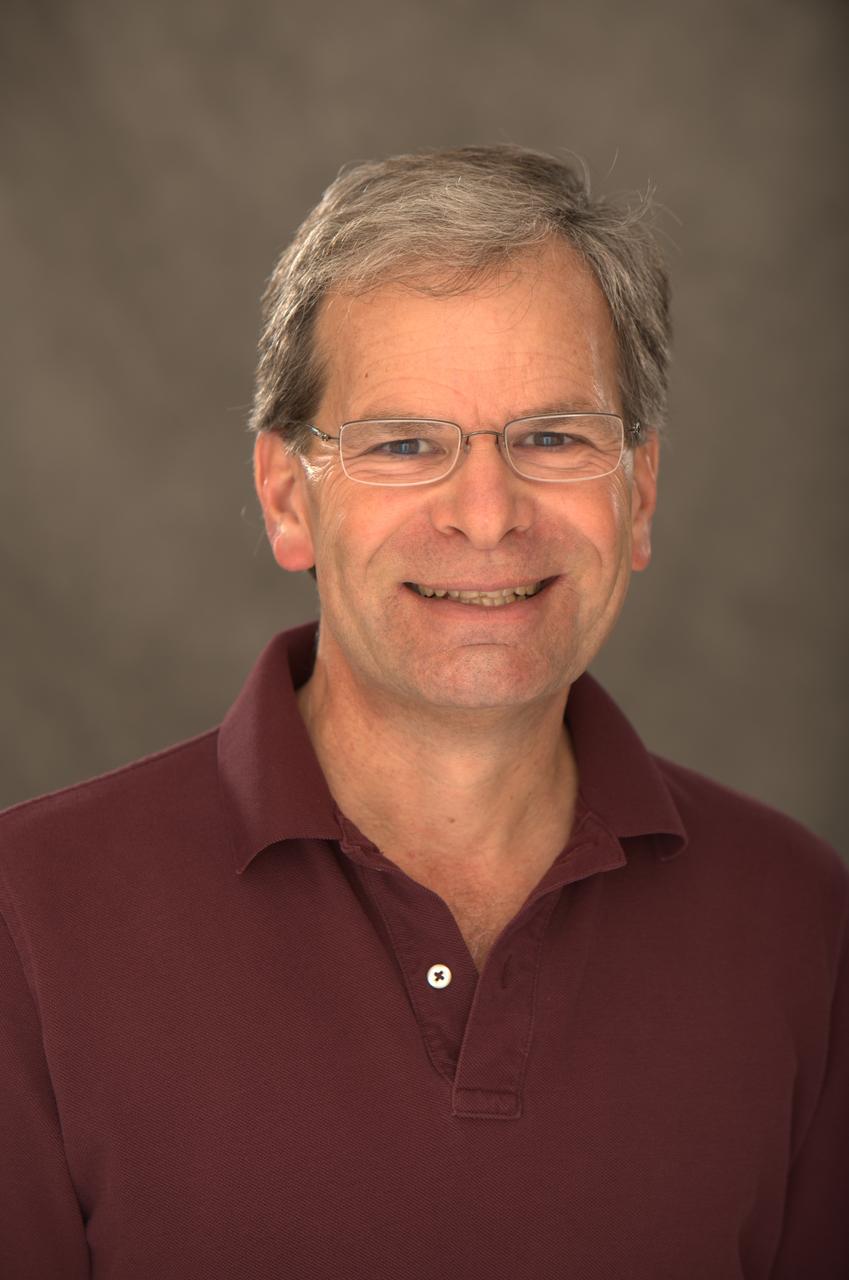
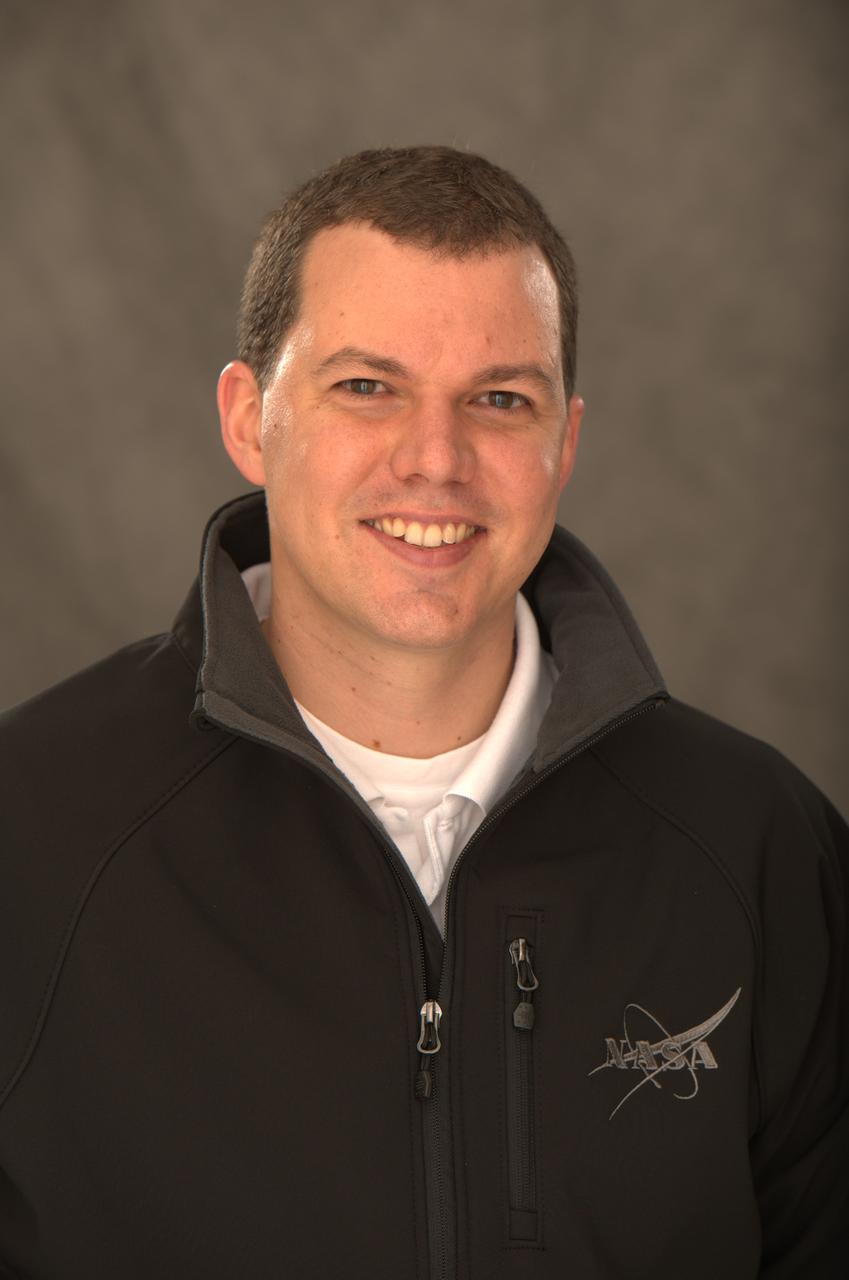
LADEE them member Richard Elpic, Project Scientist
LADEE them member Steve Spremo, Deputy Mission Manager
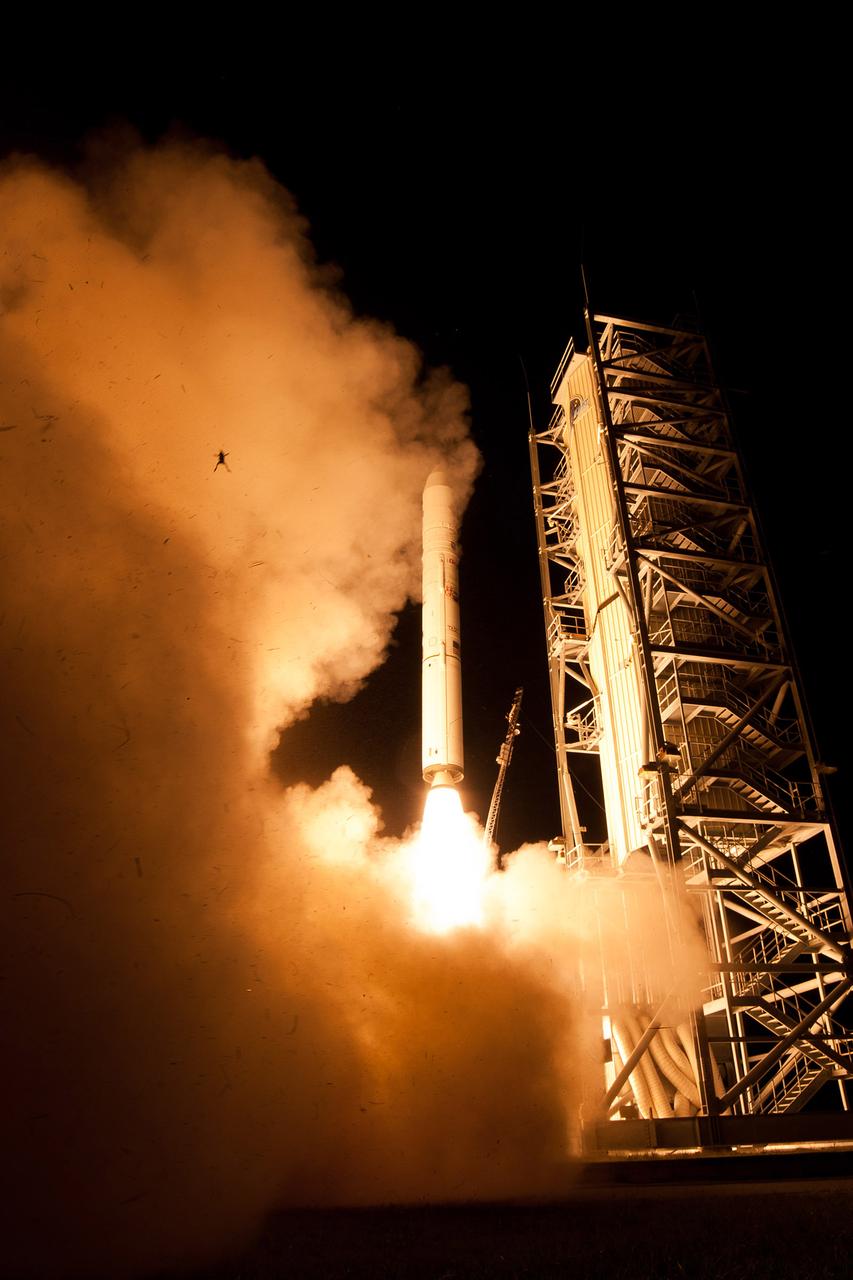
A still camera on a sound trigger captured this intriguing photo of an airborne frog as NASA's LADEE spacecraft lifts off from Pad 0B at Wallops Flight Facility in Virginia. The photo team confirms the frog is real and was captured in a single frame by one of the remote cameras used to photograph the launch. The condition of the frog, however, is uncertain. Credit: NASA/Wallops Flight Facility/Chris Perry A still camera on a sound trigger captured this intriguing photo of an airborne frog as NASA's LADEE spacecraft lifts off from Pad 0B at Wallops Flight Facility in Virginia. The photo team confirms the frog is real and was captured in a single frame by one of the remote cameras used to photograph the launch. The condition of the frog, however, is uncertain. Credit: NASA Wallops Flight Facility/Chris Perry <b><a href="http://www.nasa.gov/audience/formedia/features/MP_Photo_Guidelines.html" rel="nofollow">NASA image use policy.</a></b> <b><a href="http://www.nasa.gov/centers/goddard/home/index.html" rel="nofollow">NASA Goddard Space Flight Center</a></b> enables NASA’s mission through four scientific endeavors: Earth Science, Heliophysics, Solar System Exploration, and Astrophysics. Goddard plays a leading role in NASA’s accomplishments by contributing compelling scientific knowledge to advance the Agency’s mission. <b>Follow us on <a href="http://twitter.com/NASA_GoddardPix" rel="nofollow">Twitter</a></b> <b>Like us on <a href="http://www.facebook.com/pages/Greenbelt-MD/NASA-Goddard/395013845897?ref=tsd" rel="nofollow">Facebook</a></b> <b>Find us on <a href="http://instagram.com/nasagoddard?vm=grid" rel="nofollow">Instagram</a></b>
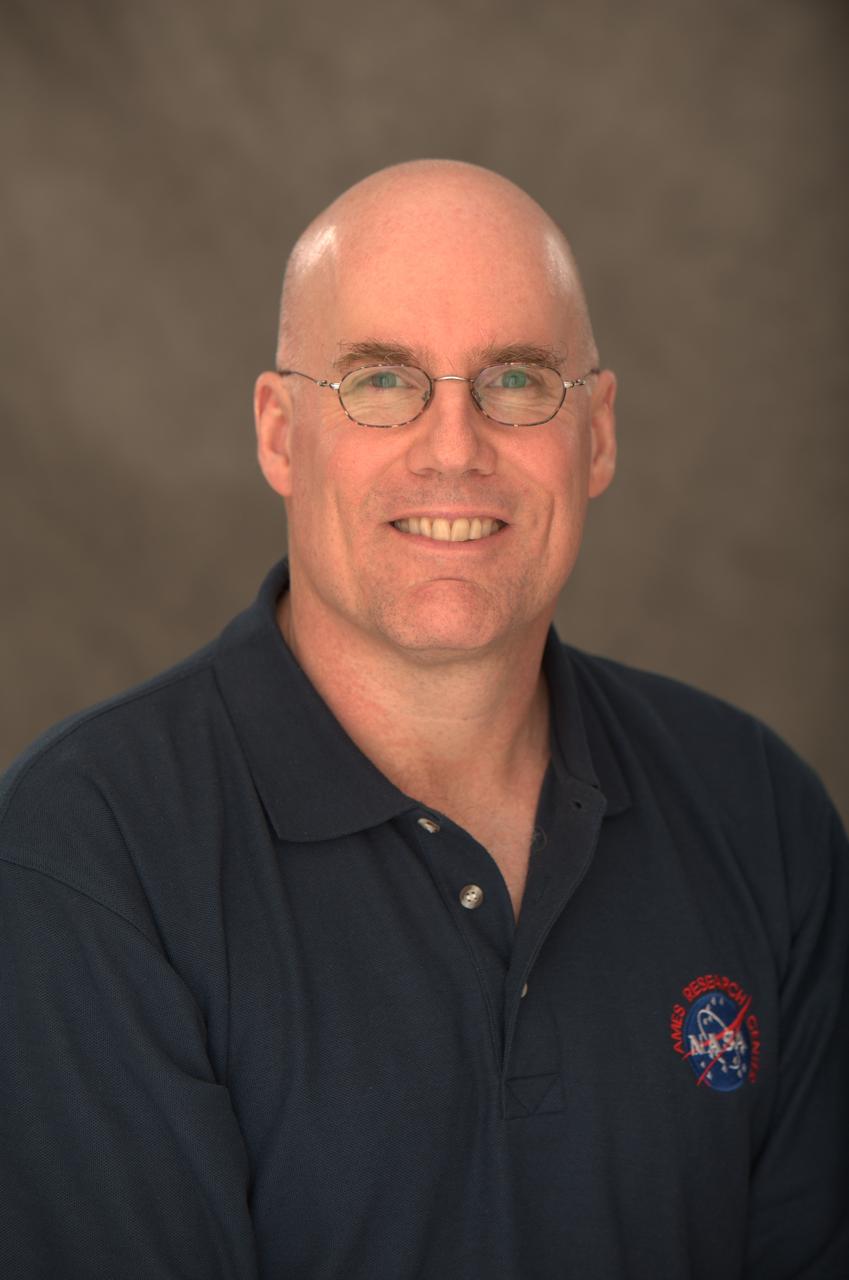
LADEE them member Butler Hine, Mission Manager
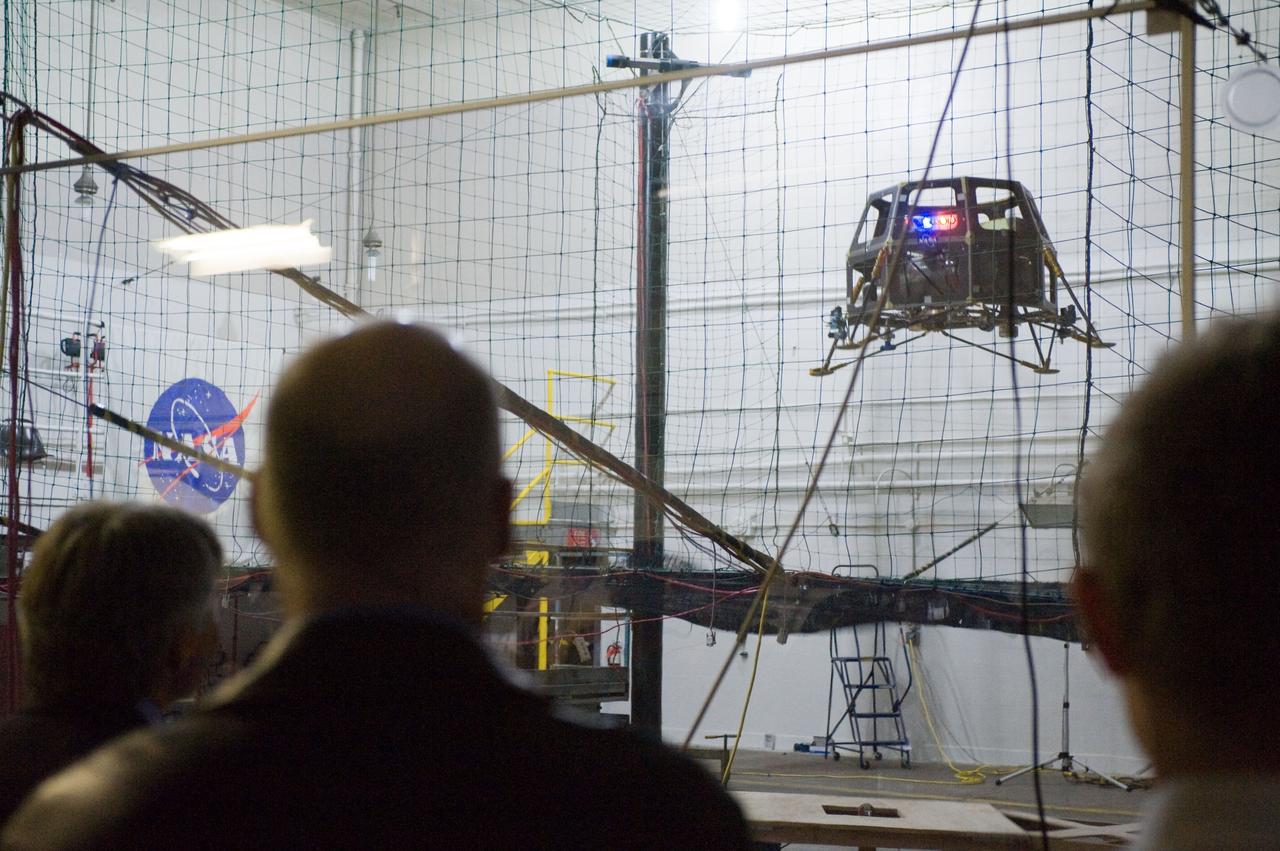
Lord Drayson, Minister of State for Science, United Kingdom visits Ames Research Center, Moffett Field, Calif. LADEE facility at Ames.
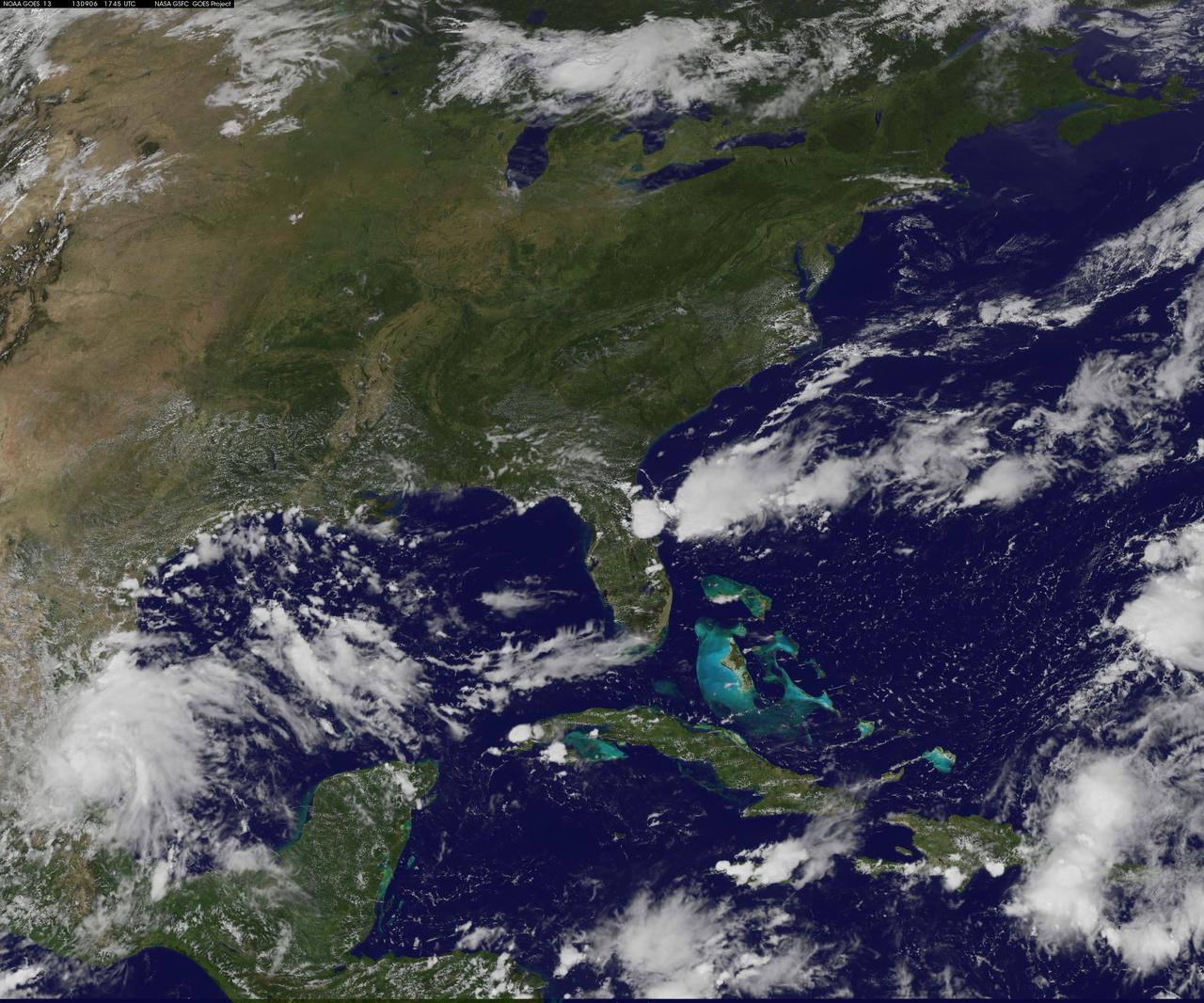
NASA's Wallops Flight Facility is located on Wallops Island, Va. and is the site of tonight's moon mission launch. Satellite imagery from NOAA's GOES-East satellite shows that high pressure remains in control over the Mid-Atlantic region, providing an almost cloud-free sky. This visible image of the Mid-Atlantic was captured by NOAA's GOES-East satellite at 17:31 UTC/1:31 p.m. EDT and shows some fair weather clouds over the Delmarva Peninsula (which consists of the state of Delaware and parts of Maryland and Virginia - which together is "Delmarva") and eastern Virginia and North Carolina. Most of the region is cloud-free, making for a perfect viewing night to see a launch. NOAA operates GOES-East and NASA's GOES Project at the NASA Goddard Space Flight Center in Greenbelt, Md. creates images and animations from the data. NOAA's National Weather Service forecast for tonight, Sept. 6 calls for winds blowing from the east to 11 mph, with clear skies and overnight temperatures dropping to the mid-fifties. The Lunar Atmosphere and Dust Environment Explorer, known as LADEE (pronounced like "laddie"), launches tonight at 11:27 p.m. EDT from Pad 0B at the Mid-Atlantic Regional Spaceport, at NASA Wallops and will be visible along the Mid-Atlantic with tonight's perfect weather conditions. LADEE is managed by NASA's Ames Research Center in Moffett Field, Calif. This will be the first launch to lunar orbit from NASA Wallops and the first launch of a Minotaur V rocket – the biggest ever launched from Wallops. NASA's LADEE is a robotic mission that will orbit the moon to gather detailed information about the lunar atmosphere, conditions near the surface and environmental influences on lunar dust. A thorough understanding of these characteristics will address long-standing unknowns, and help scientists understand other planetary bodies as well. LADEE also carries an important secondary payload, the Lunar Laser Communication Demonstration, or LLCD, which will help us open a new era of space communications by becoming NASA's first high rate, two-way, space laser system. Live coverage of the launch can be seen beginning at 9:30 p.m. EDT on NASA-TV at: <a href="http://www.nasa.gov/ntv" rel="nofollow">www.nasa.gov/ntv</a> For more information about LADEE, visit: <a href="http://www.nasa.gov/ladee" rel="nofollow">www.nasa.gov/ladee</a> <b><a href="http://www.nasa.gov/audience/formedia/features/MP_Photo_Guidelines.html" rel="nofollow">NASA image use policy.</a></b> <b><a href="http://www.nasa.gov/centers/goddard/home/index.html" rel="nofollow">NASA Goddard Space Flight Center</a></b> enables NASA’s mission through four scientific endeavors: Earth Science, Heliophysics, Solar System Exploration, and Astrophysics. Goddard plays a leading role in NASA’s accomplishments by contributing compelling scientific knowledge to advance the Agency’s mission. <b>Follow us on <a href="http://twitter.com/NASA_GoddardPix" rel="nofollow">Twitter</a></b> <b>Like us on <a href="http://www.facebook.com/pages/Greenbelt-MD/NASA-Goddard/395013845897?ref=tsd" rel="nofollow">Facebook</a></b> <b>Find us on <a href="http://instagram.com/nasagoddard?vm=grid" rel="nofollow">Instagram</a></b>
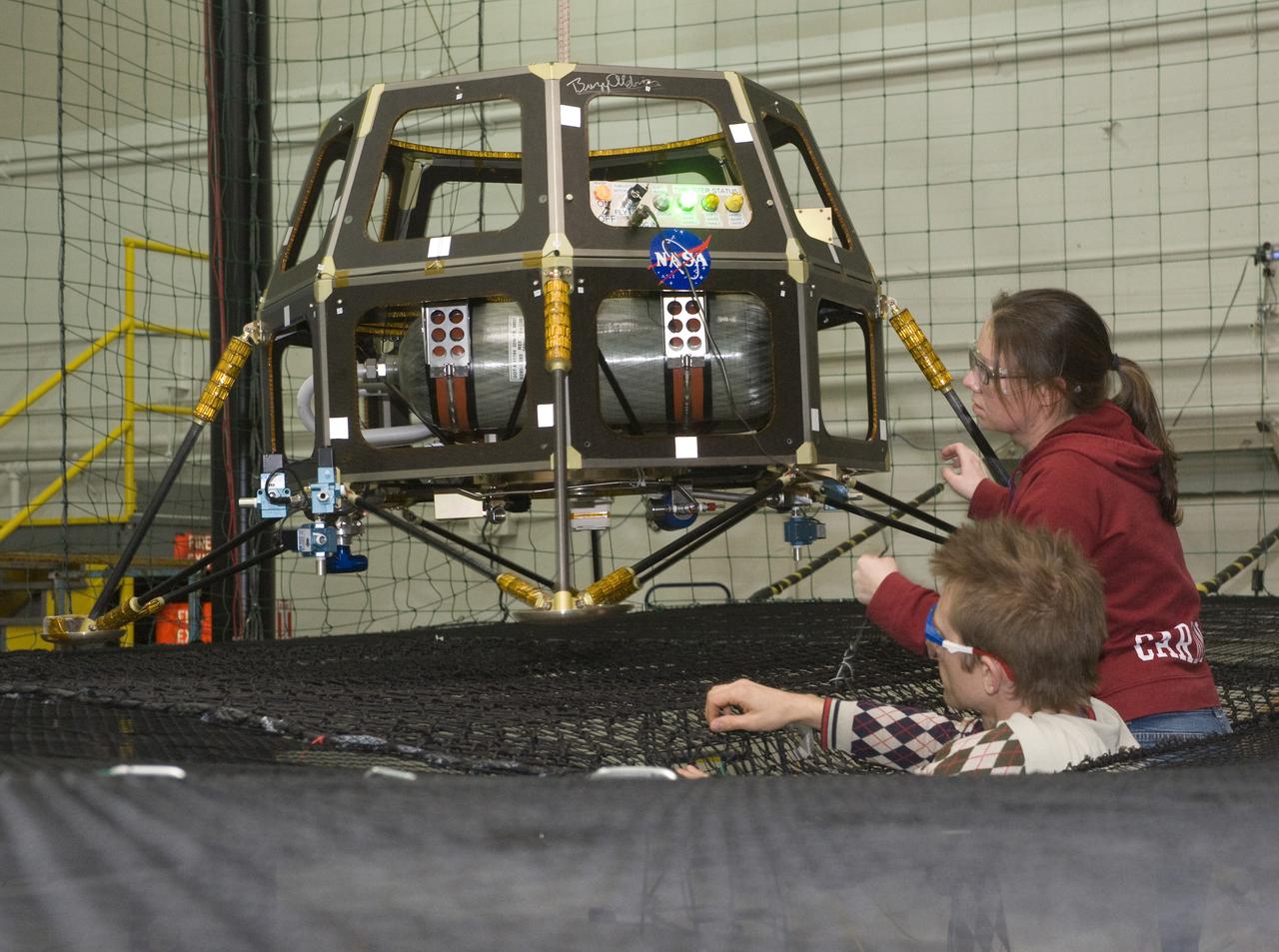
Lunar Atmosphere and Dust Environment Explorer (LADEE) Project in Building 45 Modular Common Spacecraft Bus as a hover test vehicle, here they are installing spacecraft electronics & payloads. with Chris Boshuizen (in plaid) and Eleanor Crane (in red)
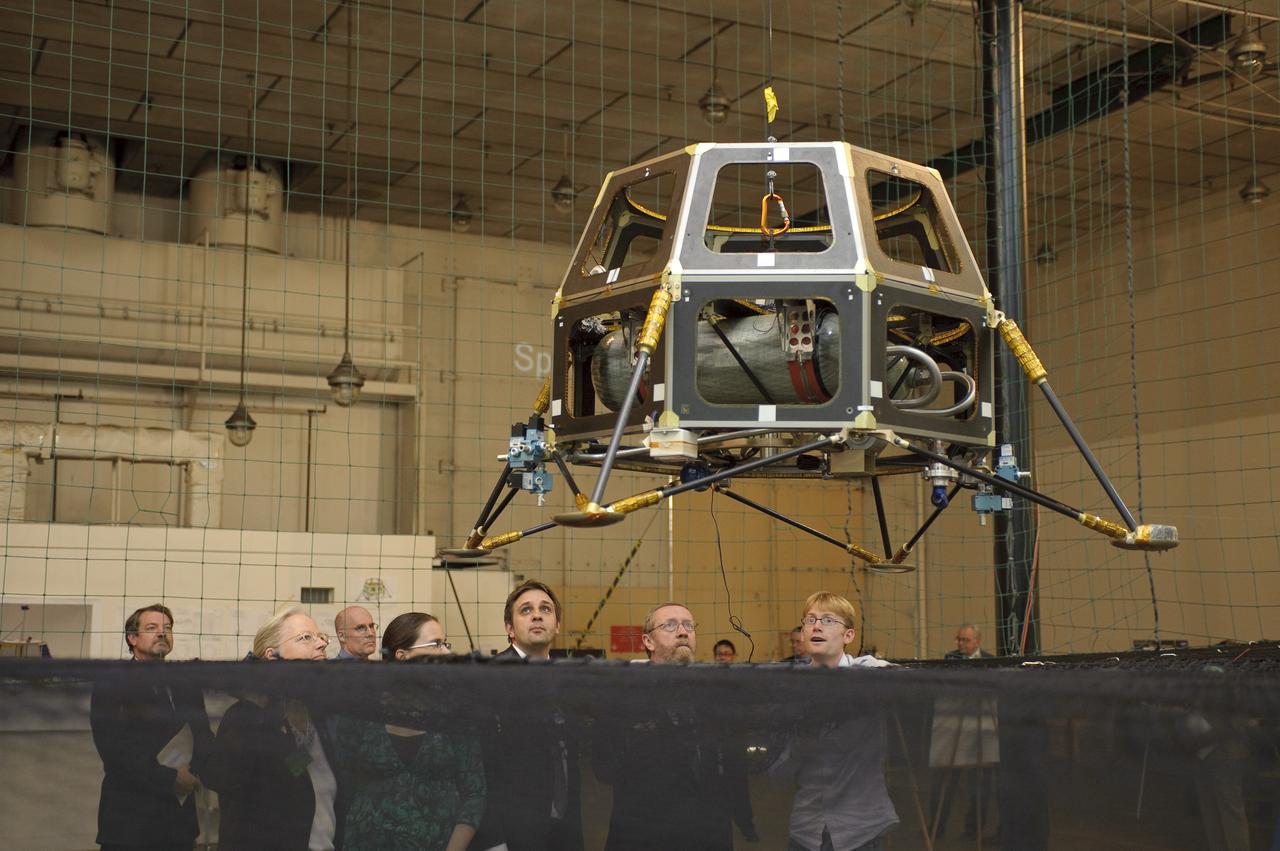
Professor John Beddington, UK (United Kingdom) Government Chief Scientist Advisor visit to Ames on tour of the Small Satellites area Bldg 45 (and a lunar lander prototype LADEE)
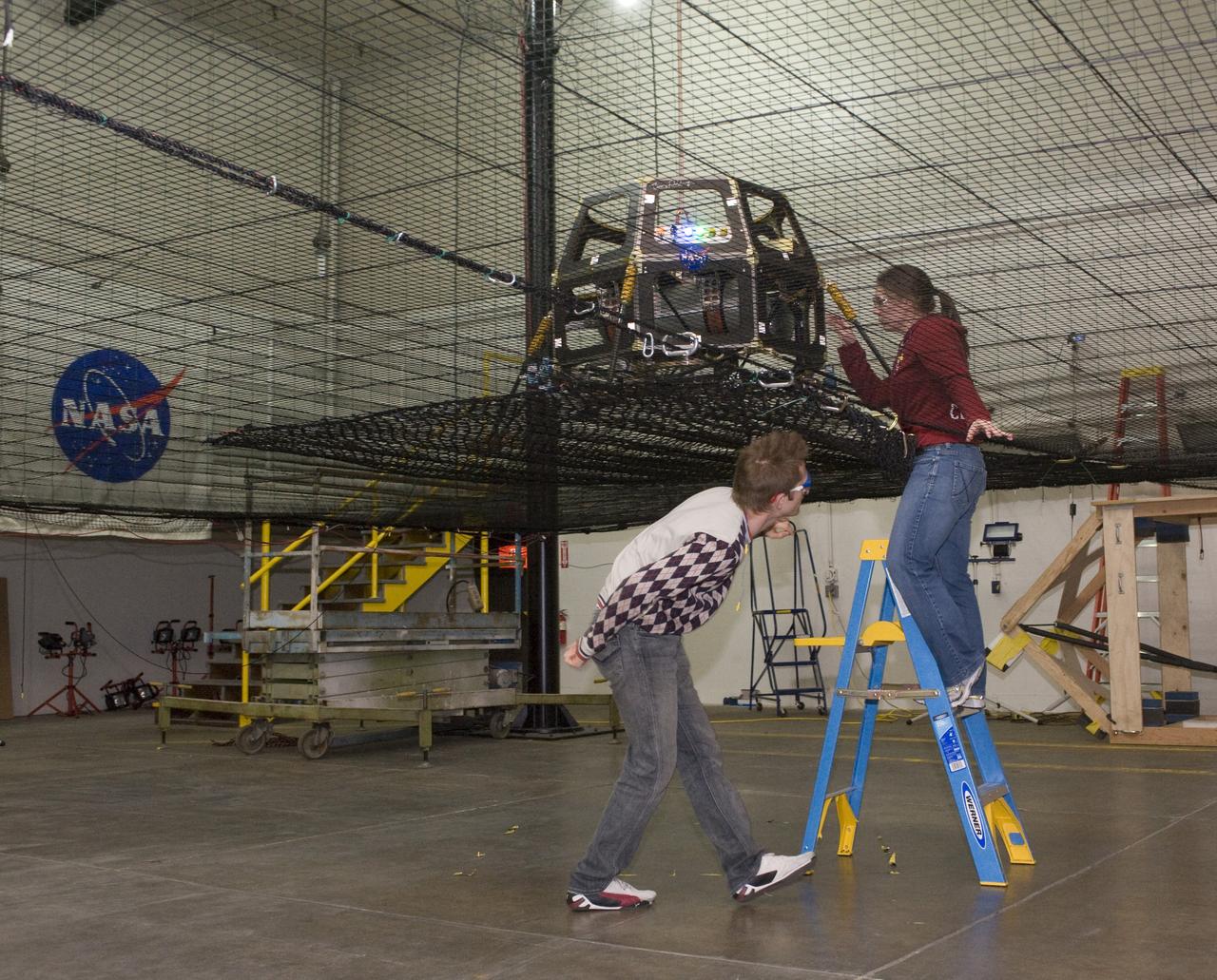
Lunar Atmosphere and Dust Environment Explorer (LADEE) Project in Building 45 Modular Common Spacecraft Bus as a hover test vehicle, here they are installing spacecraft electronics & payloads. with Chris Boshuizen (in plaid) and Eleanor Crane (in red)
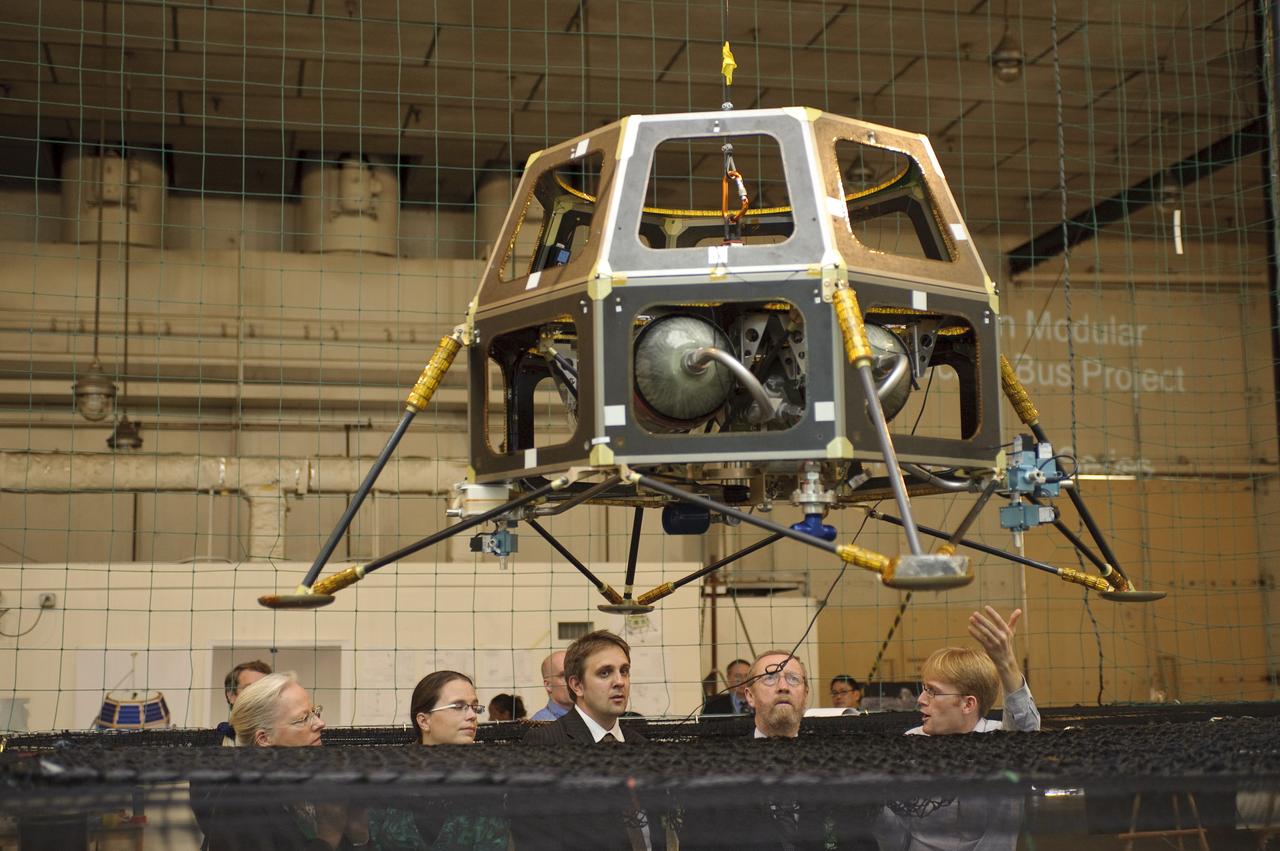
Professor John Beddington, UK (United Kingdom) Government Chief Scientist Advisor visit to Ames on tour of the Small Satellites area Bldg 45 (and a lunar lander prototype LADEE)
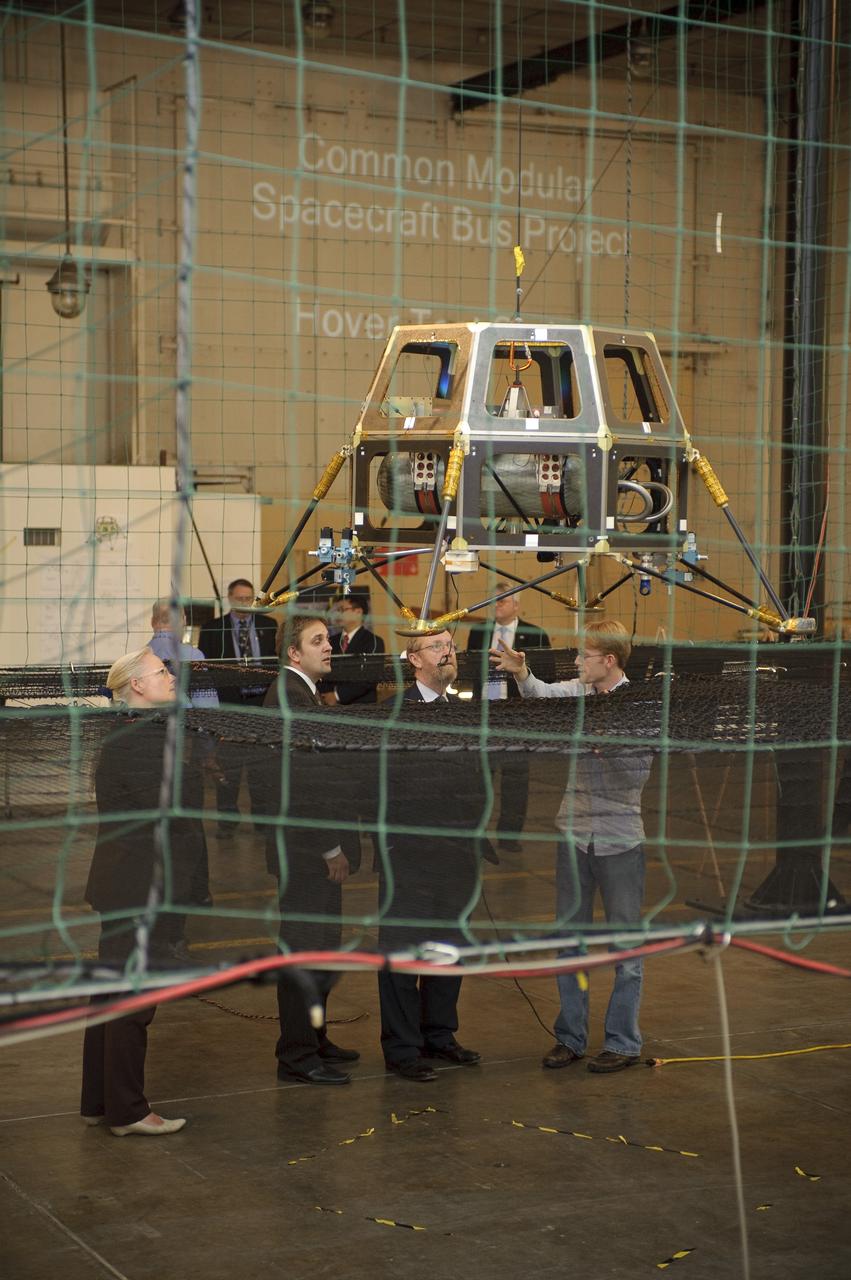
Professor John Beddington, UK (United Kingdom) Government Chief Scientist Advisor visit to Ames on tour of the Small Satellites area Bldg 45 (and a lunar lander prototype LADEE)
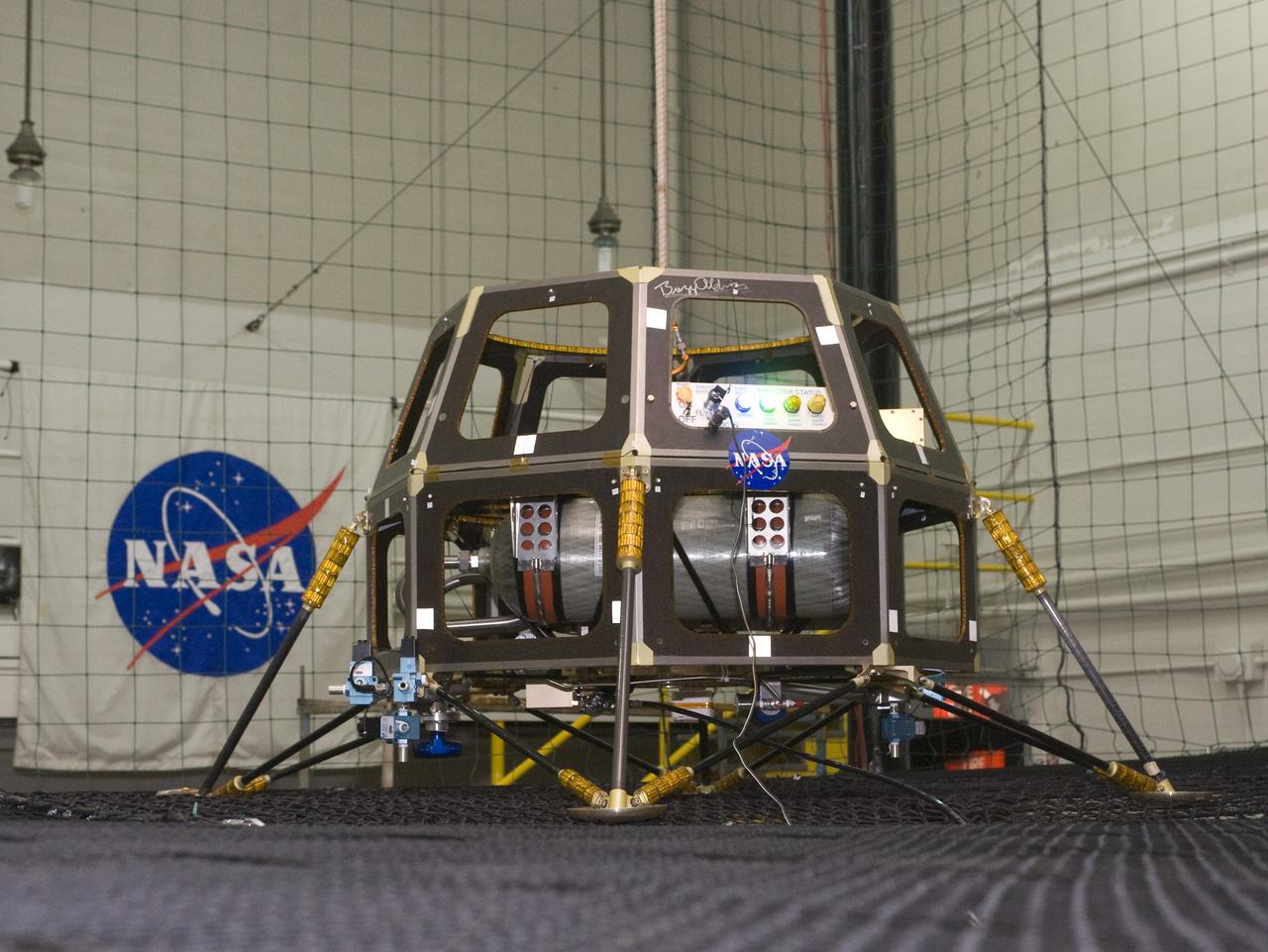
Lunar Atmosphere and Dust Environment Explorer (LADEE) Project in Building 45 Modular Common Spacecraft Bus as a hover test vehicle, here they are installing spacecraft electronics & payloads.

NASA Lunar Atmosphere and Dust Environment Explorer (LADEE) Program Scientist Sarah Noble talks during a NASA Social about the LADEE mission at NASA Wallops Flight Facility, Thursday, Sept. 5, 2013 on Wallops Island, VA. Fifty of NASA's social media followers are attending a two-day event in support of the LADEE launch. Data from LADEE will provide unprecedented information about the environment around the moon and give scientists a better understanding of other planetary bodies in our solar system and beyond. LADEE is scheduled to launch at 11:27 p.m. Friday, Sept. 6, from NASA's Wallops Flight Facility. Photo Credit: (NASA/Carla Cioffi)
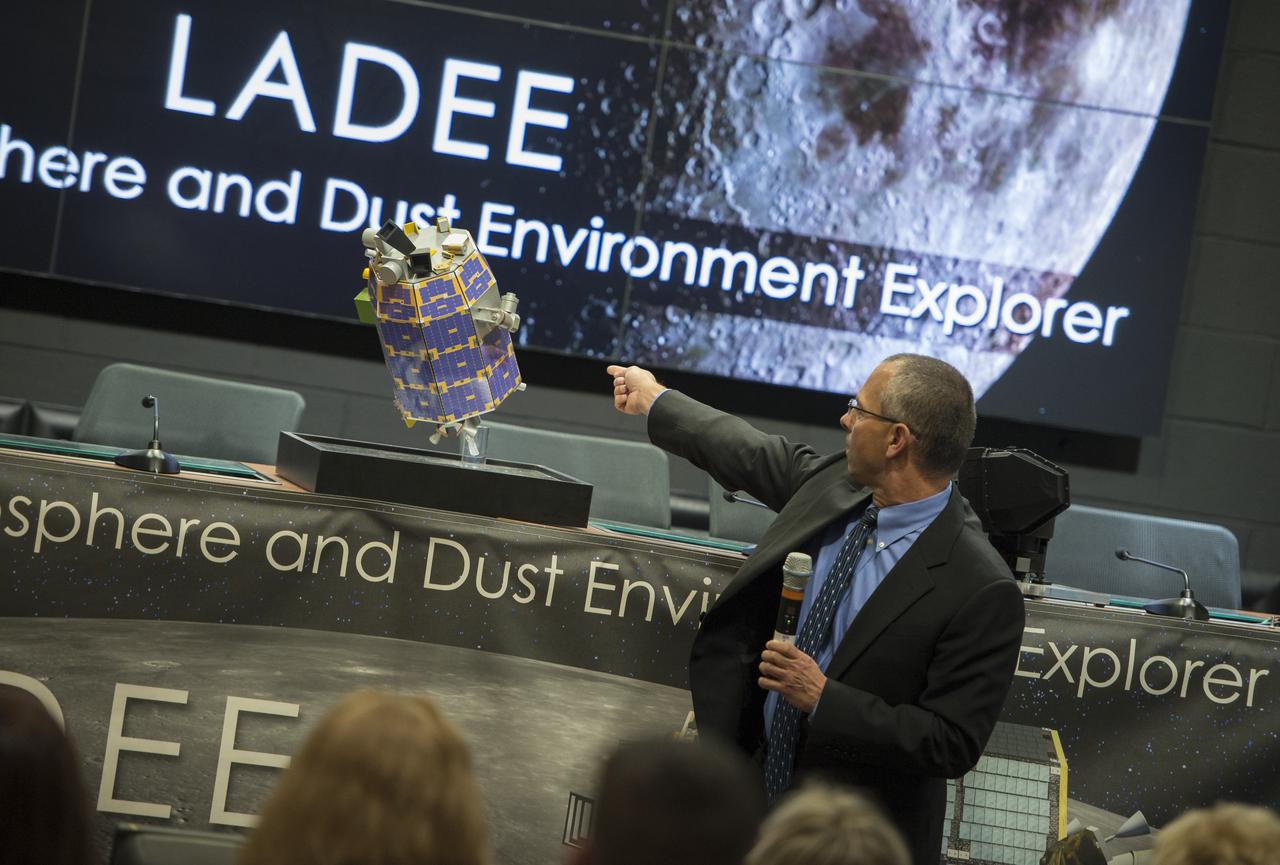
Bob Barber, Lunar Atmosphere and Dust Environment Explorer (LADEE) Spacecraft Systems Engineer at NASA Ames Research Center, points to a model of the LADEE spacecraft a NASA Social, Thursday, Sept. 5, 2013 at NASA Wallops Flight Facility in Virginia. Fifty of NASA's social media followers are attending a two-day event in support of the LADEE launch. Data from LADEE will provide unprecedented information about the environment around the moon and give scientists a better understanding of other planetary bodies in our solar system and beyond. LADEE is scheduled to launch at 11:27 p.m. Friday, Sept. 6, from NASA's Wallops Flight Facility. Photo Credit: (NASA/Carla Cioffi)

A participant at a NASA Social on the Lunar Atmosphere and Dust Environment Explorer (LADEE) mission asks NASA Associate Administrator for the Science Mission Directorate John Grunsfeld a question, Thursday, Sept. 5, 2013 on Wallops Island, VA. Fifty of NASA's social media followers are attending a two-day event in support of the LADEE launch. Data from LADEE will provide unprecedented information about the environment around the moon and give scientists a better understanding of other planetary bodies in our solar system and beyond. LADEE is scheduled to launch at 11:27 p.m. Friday, Sept. 6, from NASA's Wallops Flight Facility. Photo Credit: (NASA/Carla Cioffi)

Jason Townsend, NASA's Deputy Social Media Manager, kicks off the Lunar Atmosphere and Dust Environment Explorer (LADEE) NASA Social at Wallops Flight Facility, Thursday, Sept. 5, 2013 on Wallops Island, VA. Fifty of NASA's social media followers are attending a two-day event in support of the LADEE launch. Data from LADEE will provide unprecedented information about the environment around the moon and give scientists a better understanding of other planetary bodies in our solar system and beyond. LADEE is scheduled to launch at 11:27 p.m. Friday, Sept. 6, from NASA's Wallops Flight Facility. Photo Credit: (NASA/Carla Cioffi)

A participant at a NASA Social on the Lunar Atmosphere and Dust Environment Explorer (LADEE) mission asks a question, Thursday, Sept. 5, 2013 on Wallops Island, VA. Fifty of NASA's social media followers are attending a two-day event in support of the LADEE launch. Data from LADEE will provide unprecedented information about the environment around the moon and give scientists a better understanding of other planetary bodies in our solar system and beyond. LADEE is scheduled to launch at 11:27 p.m. Friday, Sept. 6, from NASA's Wallops Flight Facility. Photo Credit: (NASA/Carla Cioffi)

NASA Associate Administrator for the Science Mission Directorate John Grunsfeld talks during a NASA Social about the Lunar Atmosphere and Dust Environment Explorer (LADEE) mission at the NASA Wallops Flight Facility, Thursday, Sept. 5, 2013 on Wallops Island, VA. Fifty of NASA's social media followers are attending a two-day event in support of the LADEE launch. Data from LADEE will provide unprecedented information about the environment around the moon and give scientists a better understanding of other planetary bodies in our solar system and beyond. LADEE is scheduled to launch at 11:27 p.m. Friday, Sept. 6, from NASA's Wallops Flight Facility. Photo Credit: (NASA/Carla Cioffi)

NASA Associate Administrator for the Science Mission Directorate John Grunsfeld is seen in a video monitor during a NASA Social about the Lunar Atmosphere and Dust Environment Explorer (LADEE) mission at the NASA Wallops Flight Facility, Thursday, Sept. 5, 2013 on Wallops Island, VA. Fifty of NASA's social media followers are attending a two-day event in support of the LADEE launch. Data from LADEE will provide unprecedented information about the environment around the moon and give scientists a better understanding of other planetary bodies in our solar system and beyond. LADEE is scheduled to launch at 11:27 p.m. Friday, Sept. 6, from NASA's Wallops Flight Facility. Photo Credit: (NASA/Carla Cioffi)
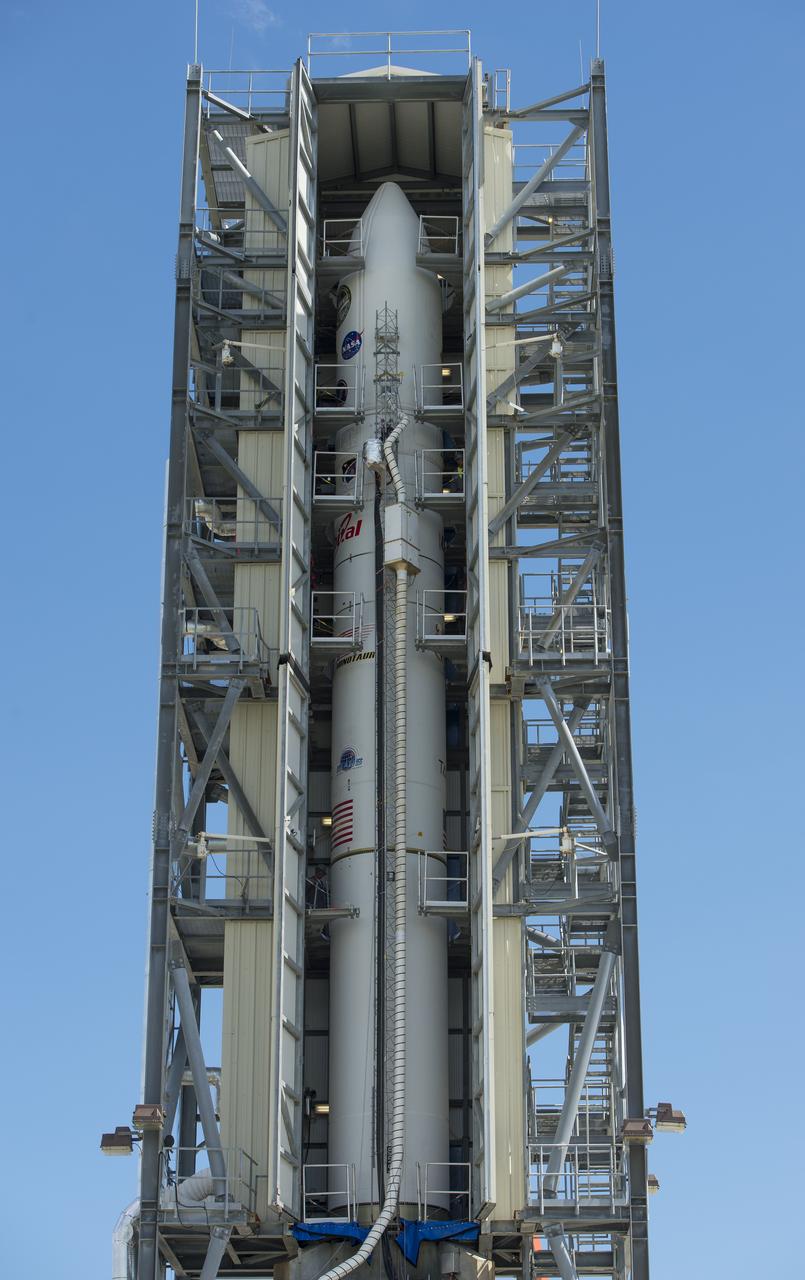
The doors of the gantry support structure are opened to reveal the Minotaur V rocket on Pad 0B at the Mid-Atlantic Regional Spaceport (MARS) at NASA's Wallops Flight Facility, Friday, Sept. 6, 2013 in Virginia. The Minotaur V will launch NASA's Lunar Atmosphere and Dust Environment Explorer (LADEE). LADEE is a robotic mission that will orbit the moon where it will provide unprecedented information about the environment around the moon and give scientists a better understanding of other planetary bodies in our solar system and beyond. LADEE is scheduled to launch at 11:27 p.m. Friday, Sept. 6, from NASA's Wallops Flight Facility. Photo Credit: (NASA/Carla Cioffi)
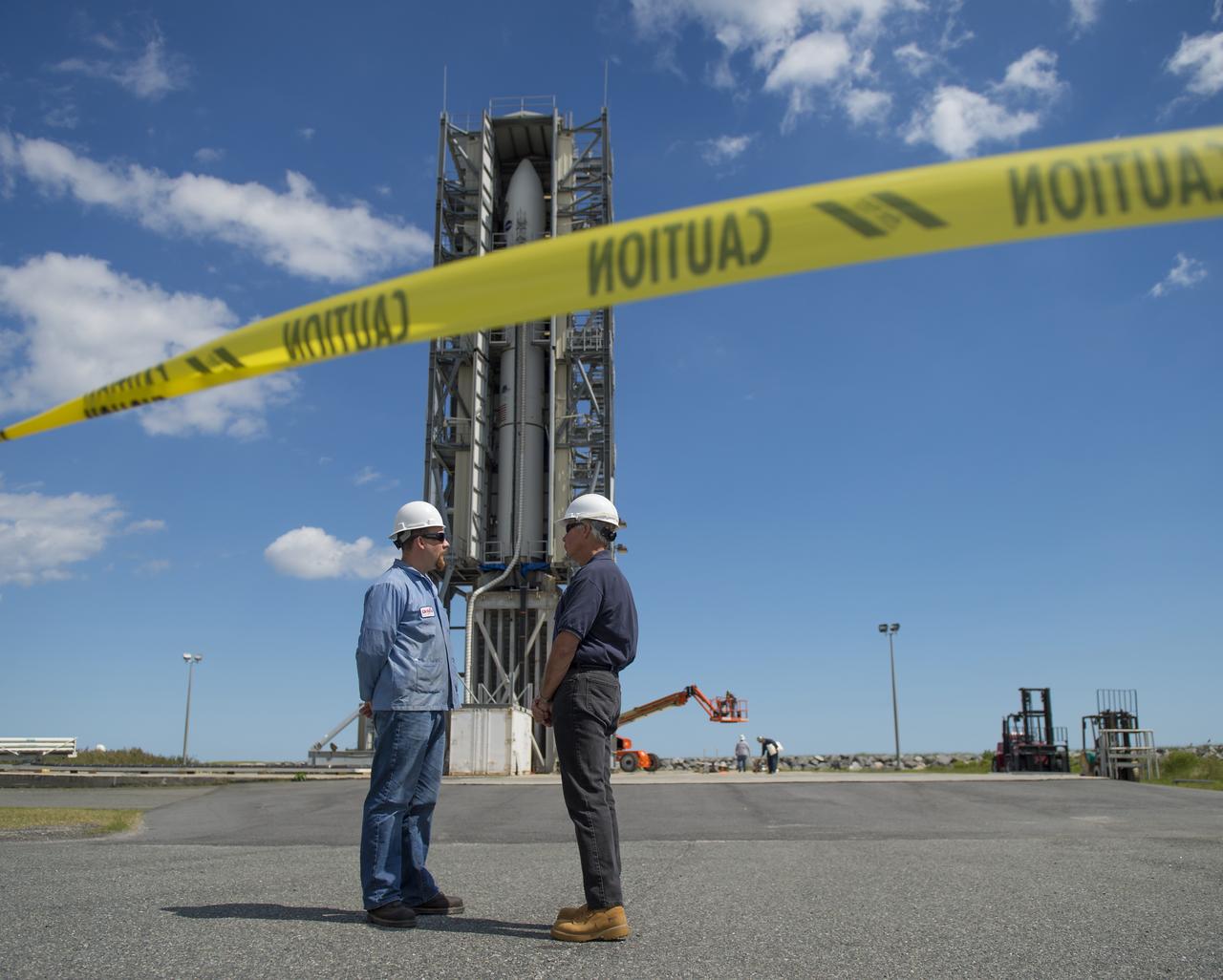
The doors of the gantry support structure are opened to reveal the Minotaur V rocket on Pad 0B at the Mid-Atlantic Regional Spaceport (MARS) at NASA's Wallops Flight Facility, Friday, Sept. 6, 2013 in Virginia. The Minotaur V will launch NASA's Lunar Atmosphere and Dust Environment Explorer (LADEE). LADEE is a robotic mission that will orbit the moon where it will provide unprecedented information about the environment around the moon and give scientists a better understanding of other planetary bodies in our solar system and beyond. LADEE is scheduled to launch at 11:27 p.m. Friday, Sept. 6, from NASA's Wallops Flight Facility. Photo Credit: (NASA/Carla Cioffi)
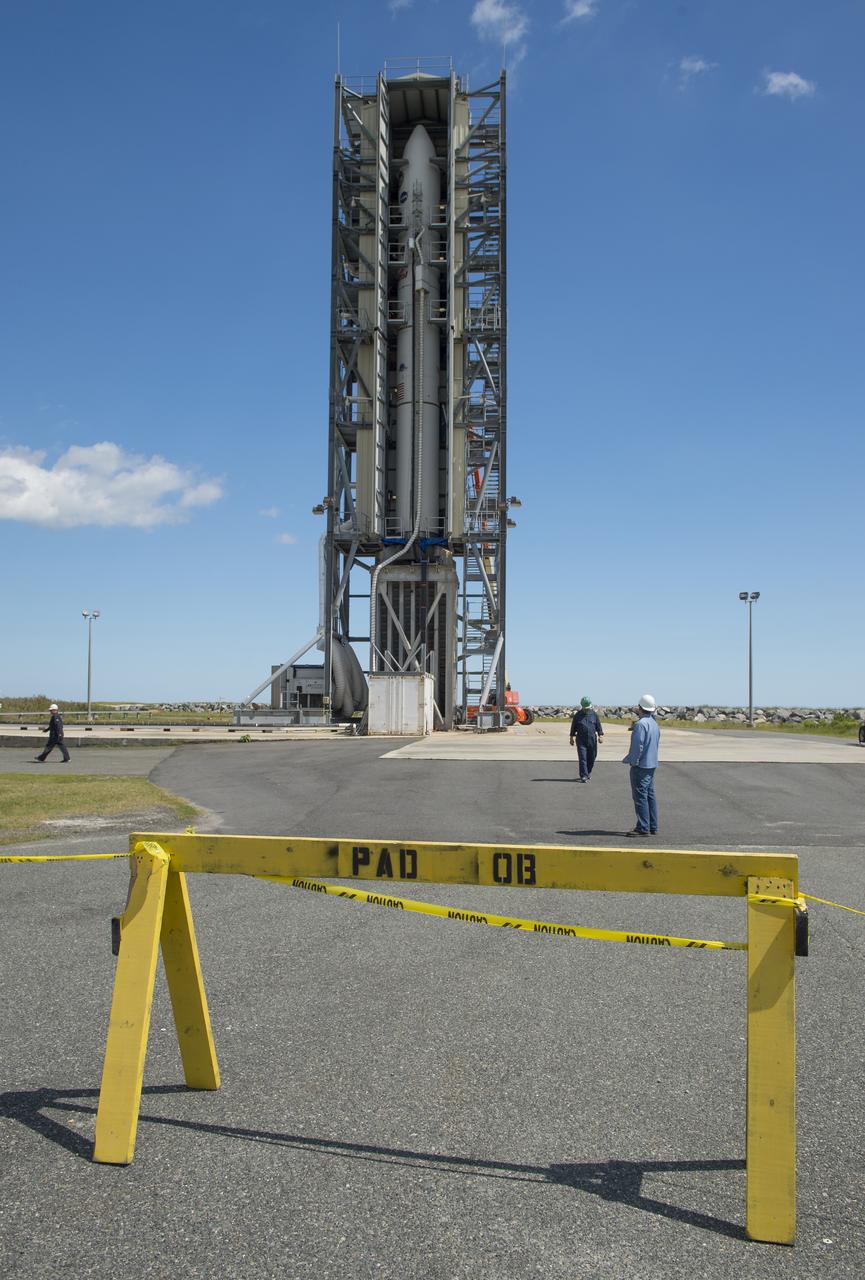
The doors of the gantry support structure are opened to reveal the Minotaur V rocket on Pad 0B at the Mid-Atlantic Regional Spaceport (MARS) at NASA's Wallops Flight Facility, Friday, Sept. 6, 2013 in Virginia. The Minotaur V will launch NASA's Lunar Atmosphere and Dust Environment Explorer (LADEE). LADEE is a robotic mission that will orbit the moon where it will provide unprecedented information about the environment around the moon and give scientists a better understanding of other planetary bodies in our solar system and beyond. LADEE is scheduled to launch at 11:27 p.m. Friday, Sept. 6, from NASA's Wallops Flight Facility. Photo Credit: (NASA/Carla Cioffi)
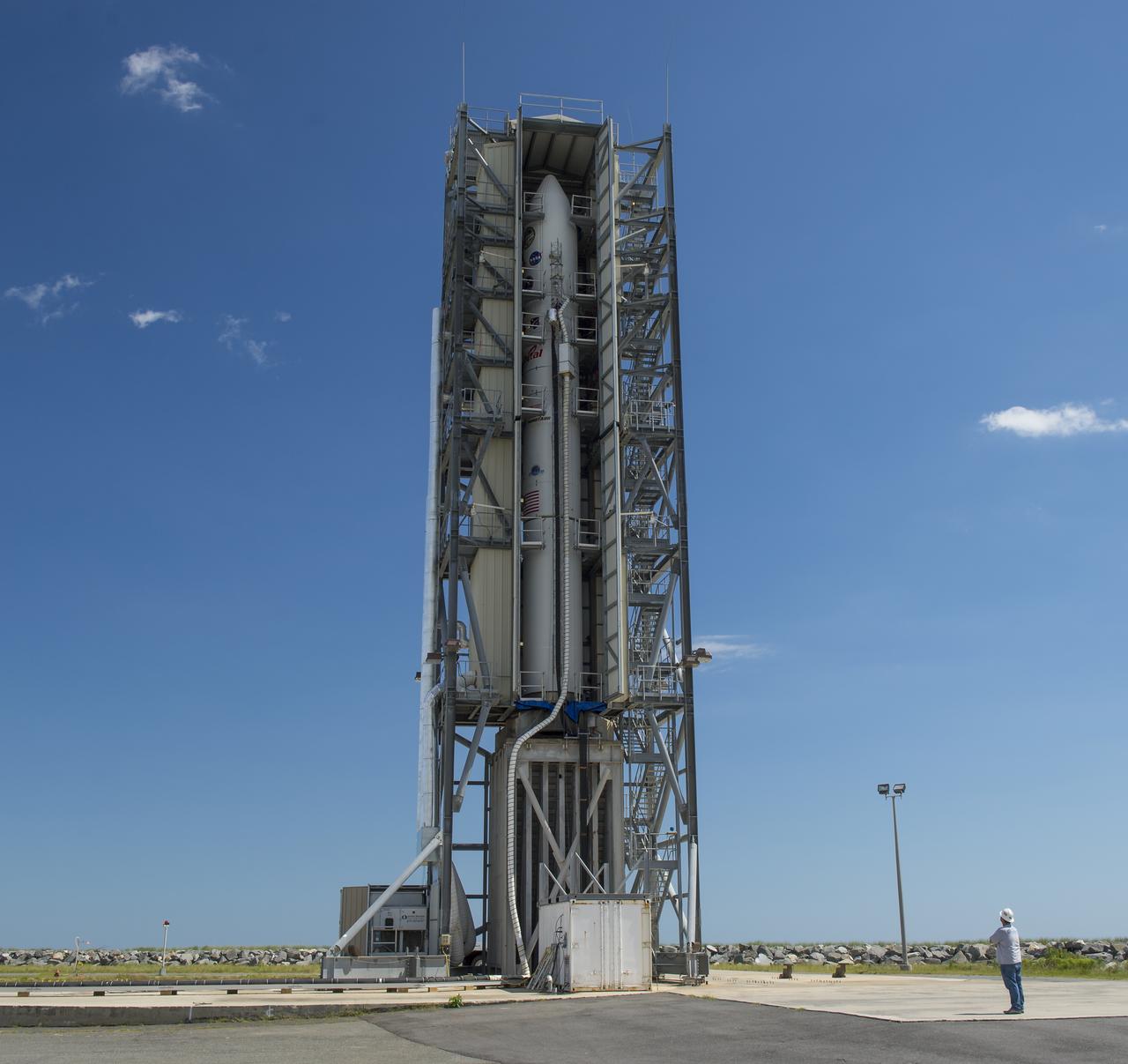
The doors of the gantry support structure are opened to reveal the Minotaur V rocket on Pad 0B at the Mid-Atlantic Regional Spaceport (MARS) at NASA's Wallops Flight Facility, Friday, Sept. 6, 2013 in Virginia. The Minotaur V will launch NASA's Lunar Atmosphere and Dust Environment Explorer (LADEE). LADEE is a robotic mission that will orbit the moon where it will provide unprecedented information about the environment around the moon and give scientists a better understanding of other planetary bodies in our solar system and beyond. LADEE is scheduled to launch at 11:27 p.m. Friday, Sept. 6, from NASA's Wallops Flight Facility. Photo Credit: (NASA/Carla Cioffi)
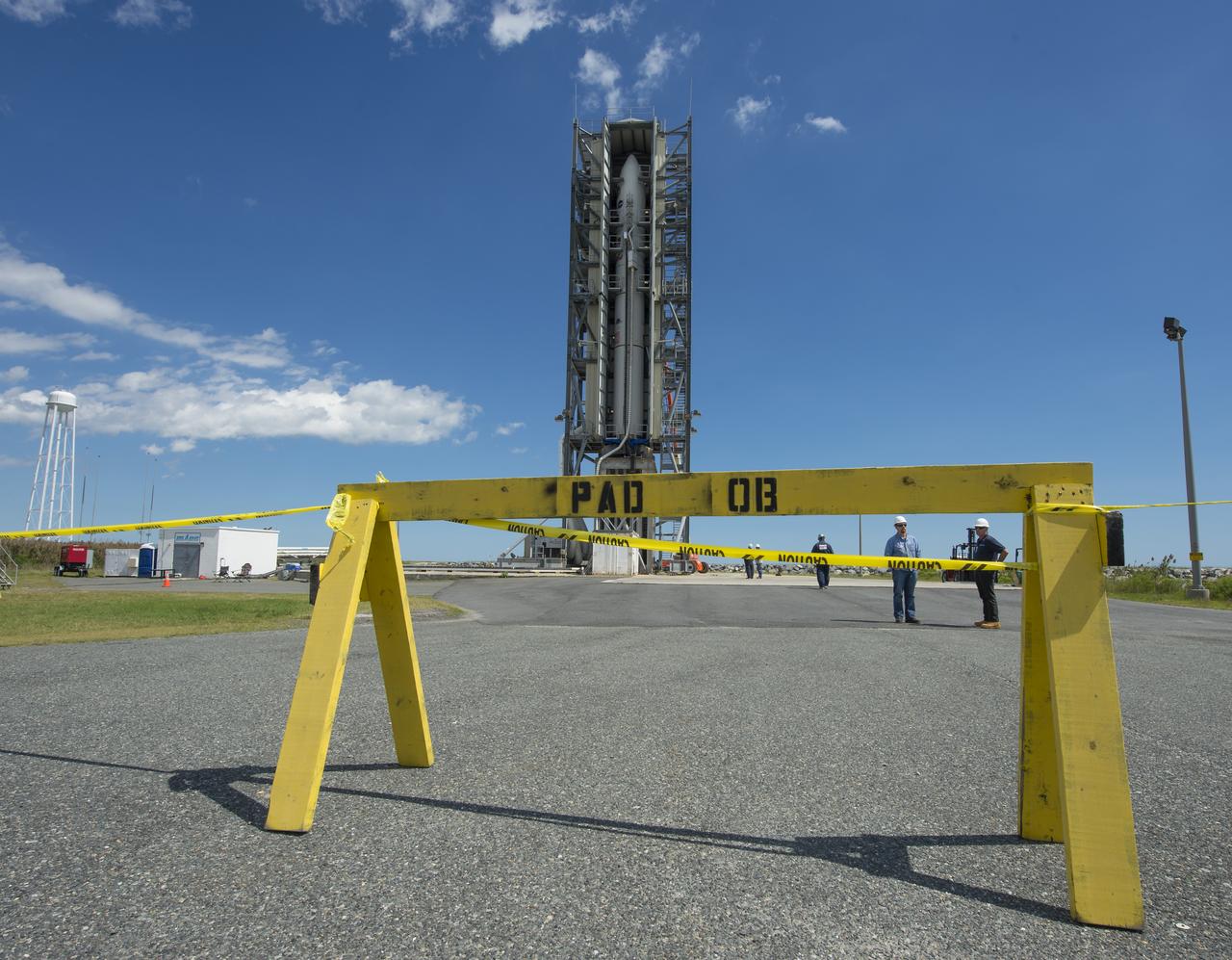
The doors of the gantry support structure are opened to reveal the Minotaur V rocket on Pad 0B at the Mid-Atlantic Regional Spaceport (MARS) at NASA's Wallops Flight Facility, Friday, Sept. 6, 2013 in Virginia. The Minotaur V will launch NASA's Lunar Atmosphere and Dust Environment Explorer (LADEE). LADEE is a robotic mission that will orbit the moon where it will provide unprecedented information about the environment around the moon and give scientists a better understanding of other planetary bodies in our solar system and beyond. LADEE is scheduled to launch at 11:27 p.m. Friday, Sept. 6, from NASA's Wallops Flight Facility. Photo Credit: (NASA/Carla Cioffi)
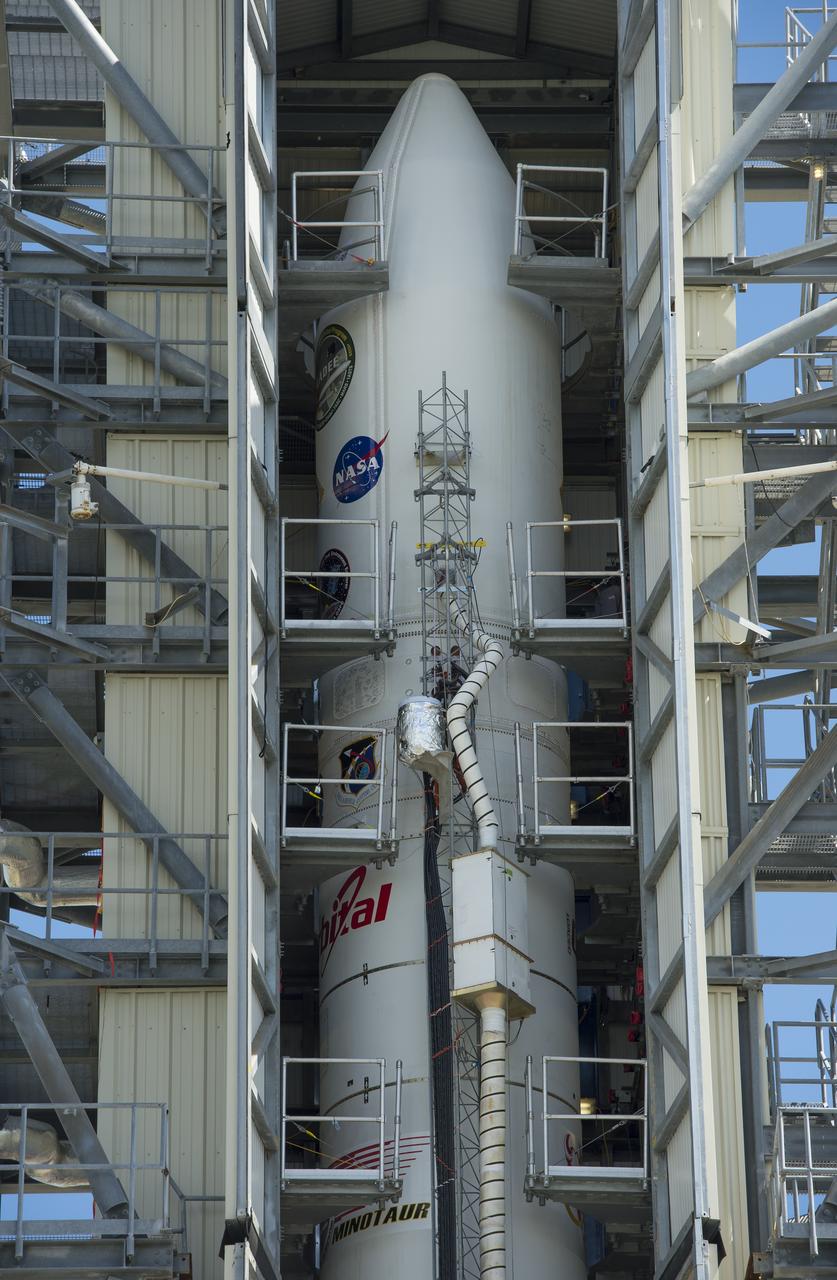
The doors of the gantry support structure are opened to reveal the Minotaur V rocket on Pad 0B at the Mid-Atlantic Regional Spaceport (MARS) at NASA's Wallops Flight Facility, Friday, Sept. 6, 2013 in Virginia. The Minotaur V will launch NASA's Lunar Atmosphere and Dust Environment Explorer (LADEE). LADEE is a robotic mission that will orbit the moon where it will provide unprecedented information about the environment around the moon and give scientists a better understanding of other planetary bodies in our solar system and beyond. LADEE is scheduled to launch at 11:27 p.m. Friday, Sept. 6, from NASA's Wallops Flight Facility. Photo Credit: (NASA/Carla Cioffi)
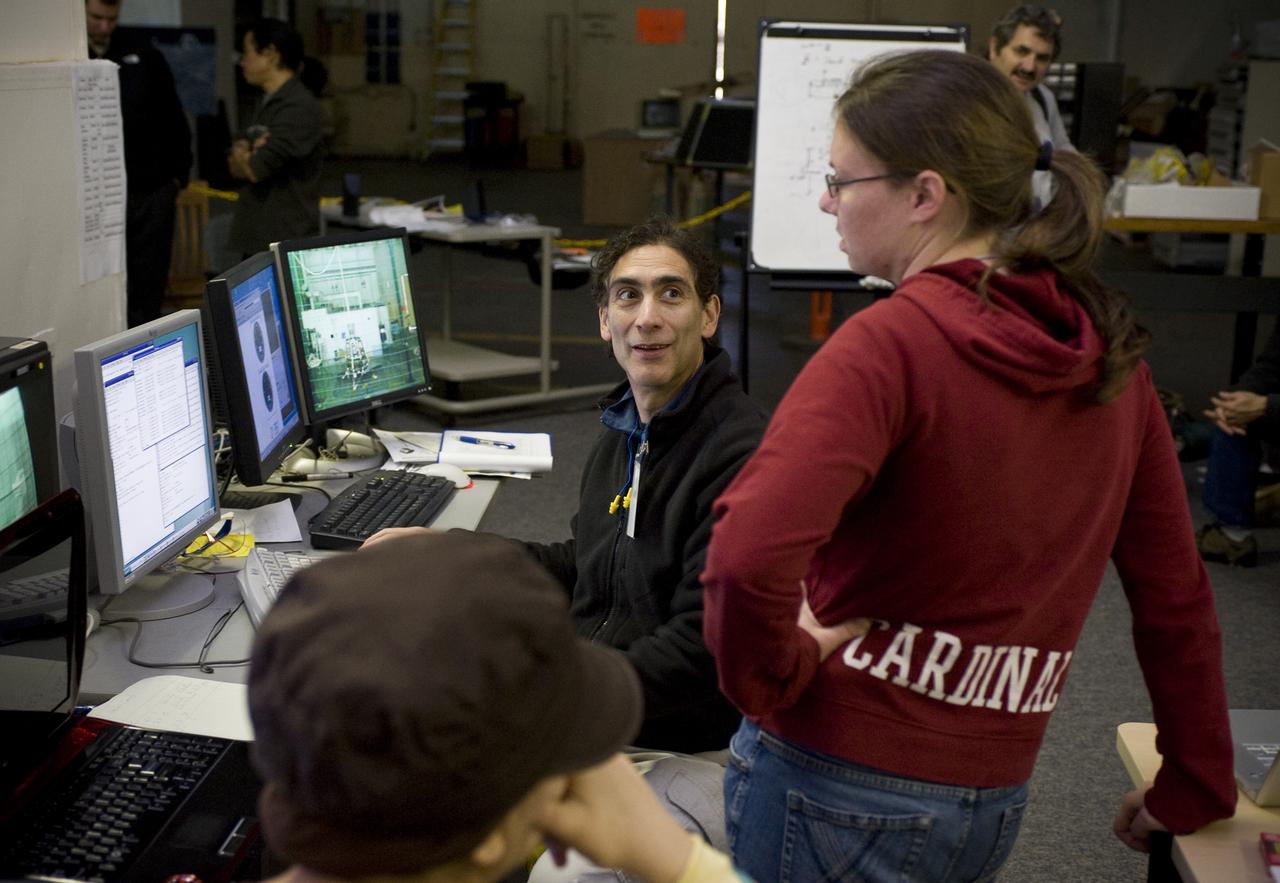
Lunar Atmosphere and Dust Environment Explorer (LADEE) Project in Building 45 Modular Common Spacecraft Bus as a hover test vehicle, here they are installing spacecraft electronics & payloads. Whith Doug Forman (seated) and Eleanor Crane (standing)
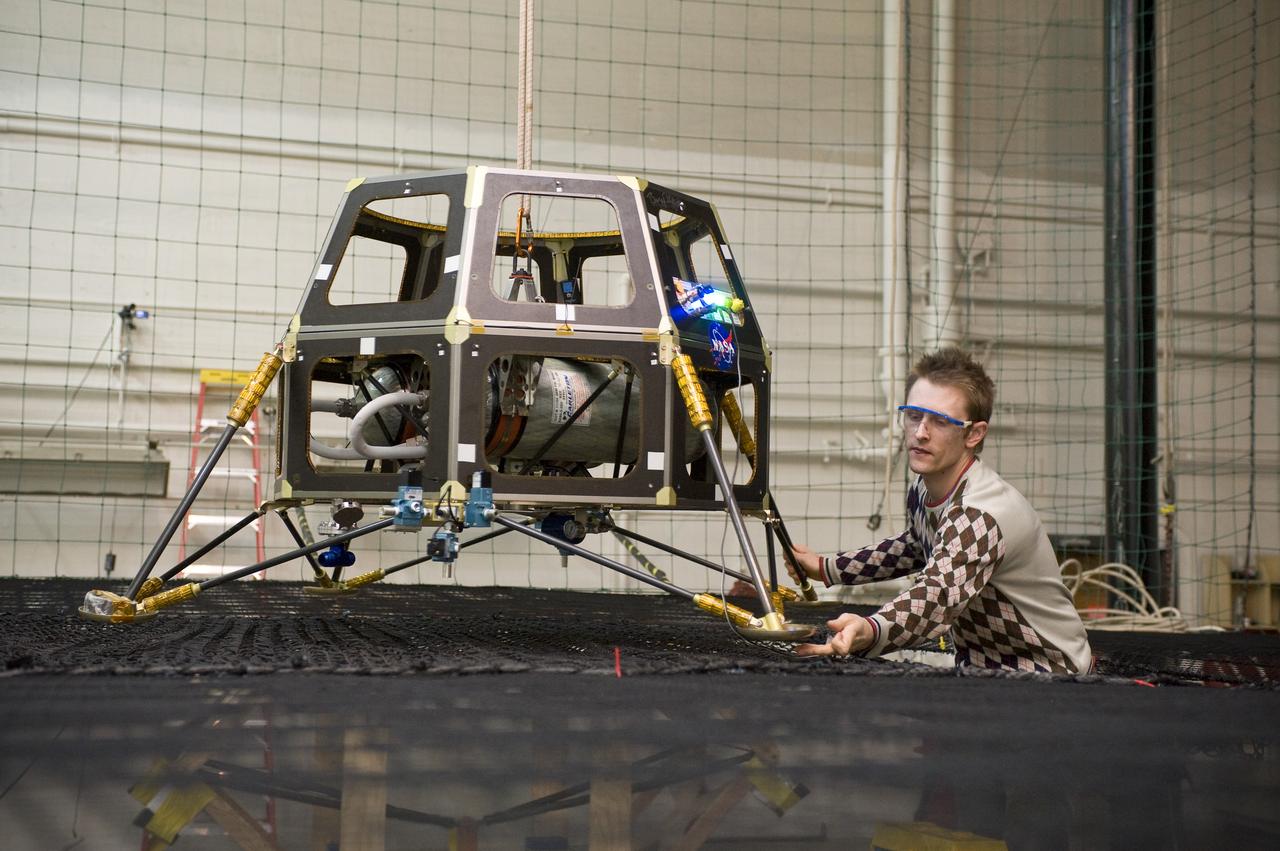
Lunar Atmosphere and Dust Environment Explorer (LADEE) Project in Building 45 Modular Common Spacecraft Bus as a hover test vehicle, here they are installing spacecraft electronics & payloads. With Chris Boshuizen
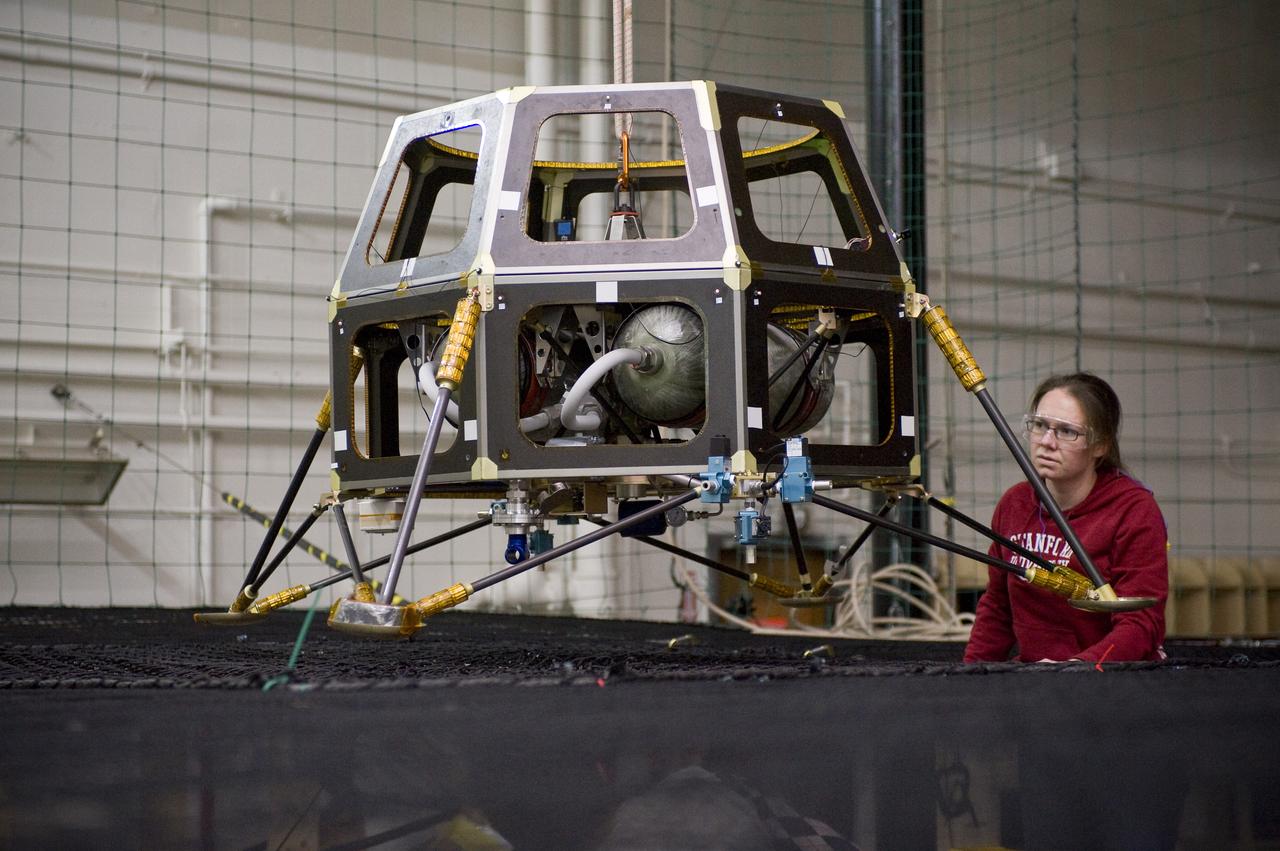
Lunar Atmosphere and Dust Environment Explorer (LADEE) Project in Building 45 Modular Common Spacecraft Bus as a hover test vehicle, here they are installing spacecraft electronics & payloads. With Eleanor Crane.
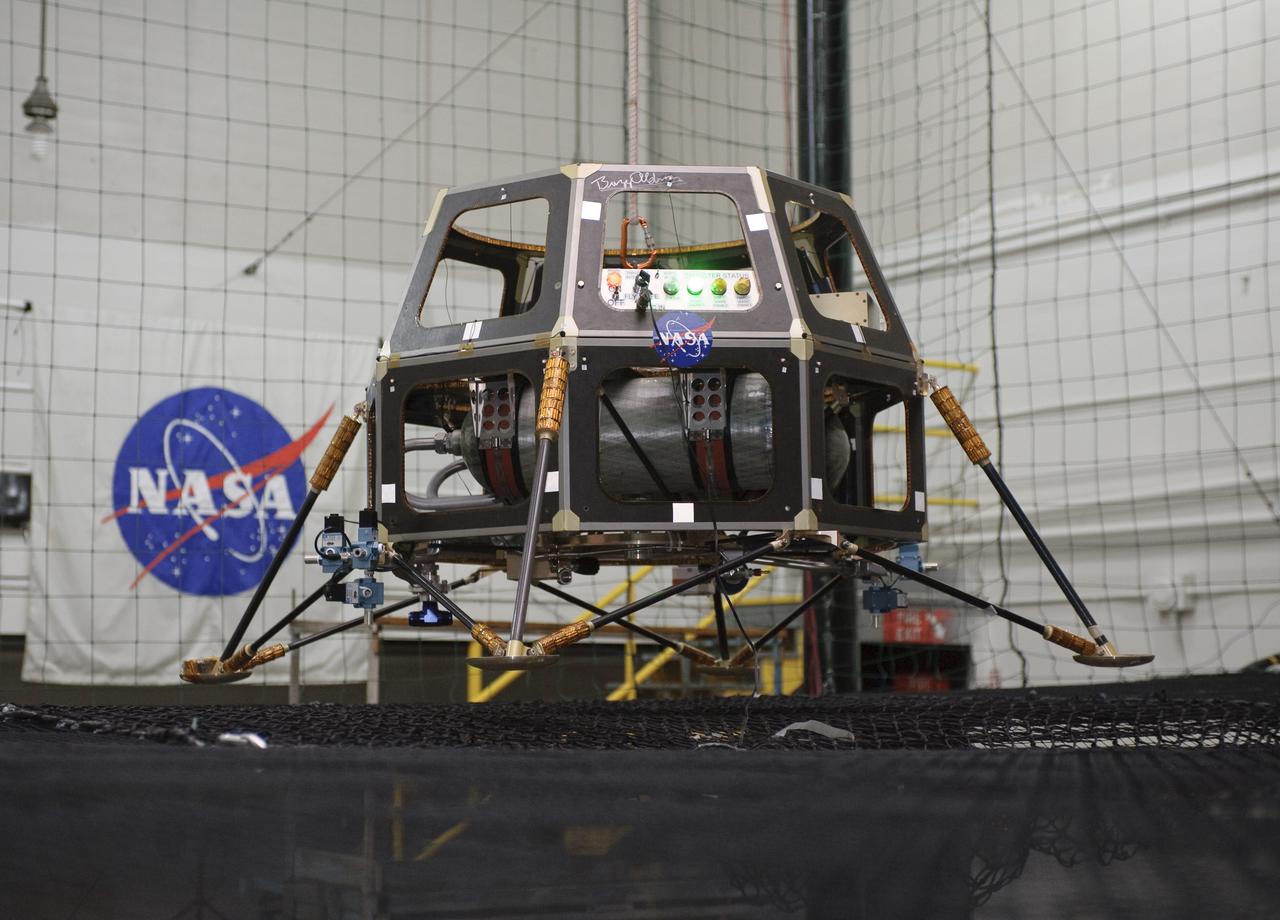
Lunar Atmosphere and Dust Environment Explorer (LADEE) Project in Building 45 Modular Common Spacecraft Bus as a hover test vehicle, here they are installing spacecraft electronics & payloads.
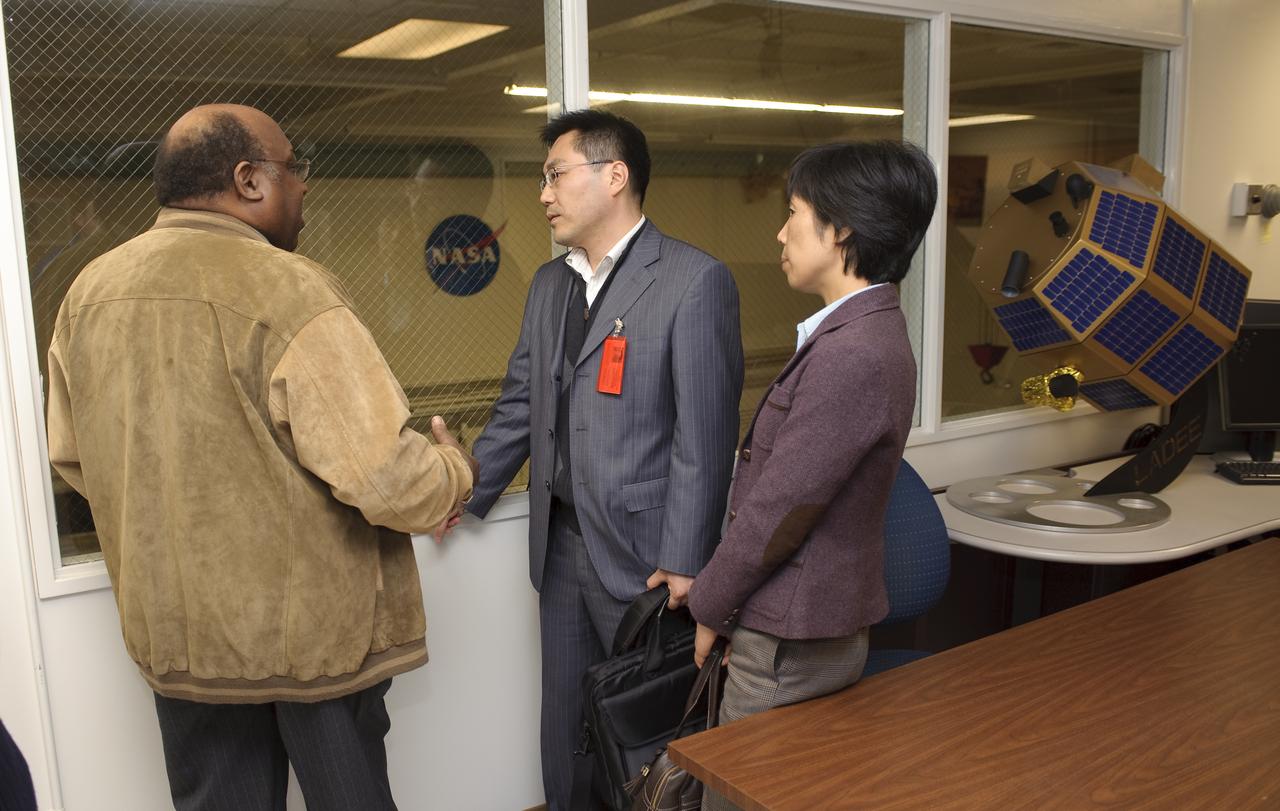
Korean High Level Delegation Visit Ames Certer Director and various Senior staff: John Hines, Ames Center Chief Technologist (middel left) explains operations at the LADEE lab to Soon-Duk Bae, Deputy Director, Big Science Policy Division, Ministry of Educaiton, Science Technology, Young-Mok Hyun, Deputy Director, Space Development Division, Ministry of Educaiton, Science Technology, Seorium Lee, Senior Researcher, International Relations Korea Aerospace Research Institute.
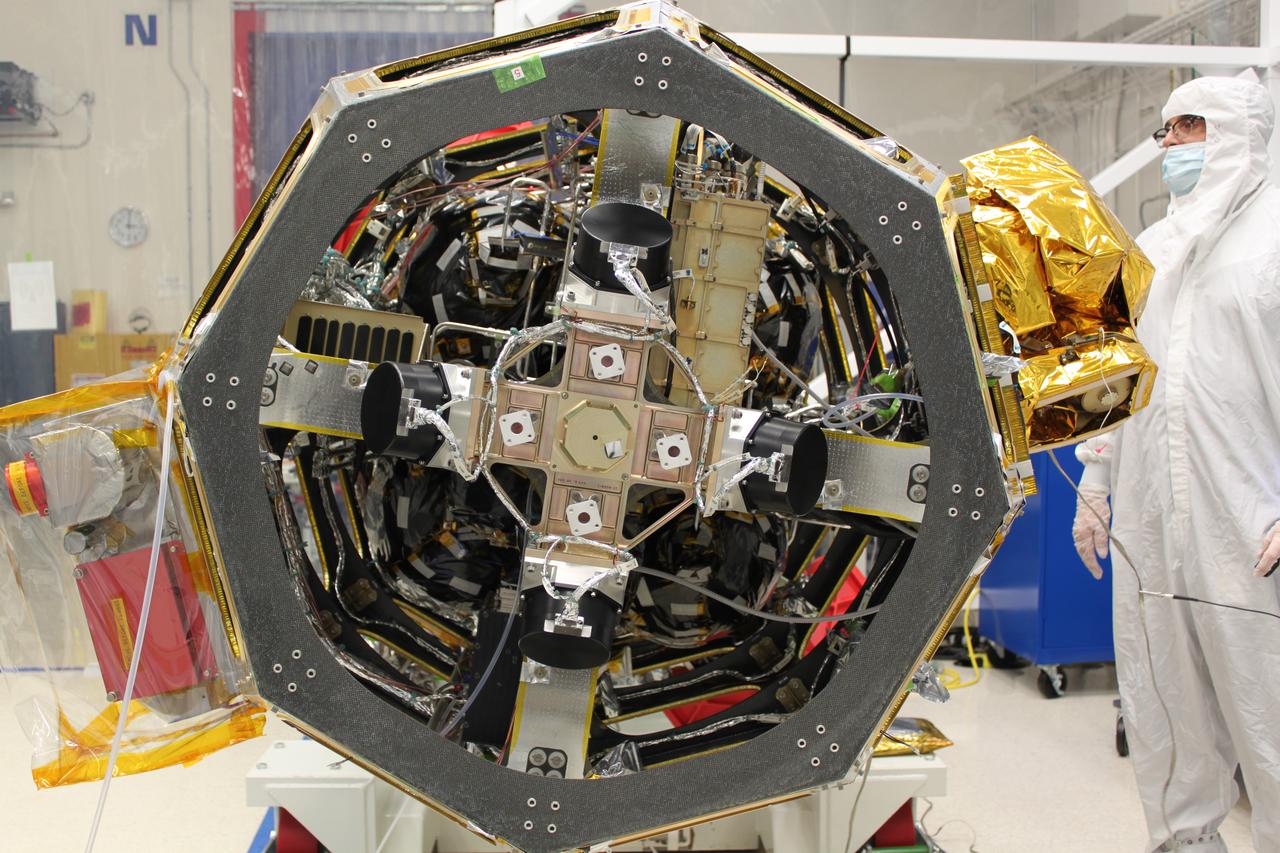
A new NASA-developed, laser-based space communication system will enable higher rates of satellite communications similar in capability to high-speed fiber optic networks on Earth. The space terminal for the Lunar Laser Communication Demonstration (LLCD), NASA's first high-data-rate laser communication system, was recently integrated onto the Lunar Atmosphere and Dust Environment Explorer (LADEE) spacecraft. LLCD will demonstrate laser communications from lunar orbit to Earth at six times the rate of the best modern-day advanced radio communication systems. Credit: NASA ----- What is LADEE? The Lunar Atmosphere and Dust Environment Explorer (LADEE) is designed to study the Moon's thin exosphere and the lunar dust environment. An "exosphere" is an atmosphere that is so thin and tenuous that molecules don't collide with each other. Studying the Moon's exosphere will help scientists understand other planetary bodies with exospheres too, like Mercury and some of Jupiter's bigger moons. The orbiter will determine the density, composition and temporal and spatial variability of the Moon's exosphere to help us understand where the species in the exosphere come from and the role of the solar wind, lunar surface and interior, and meteoric infall as sources. The mission will also examine the density and temporal and spatial variability of dust particles that may get lofted into the atmosphere. The mission also will test several new technologies, including a modular spacecraft bus that may reduce the cost of future deep space missions and demonstrate two-way high rate laser communication for the first time from the Moon. LADEE now is ready to launch when the window opens on Sept. 6, 2013. Read more: <a href="http://www.nasa.gov/ladee" rel="nofollow">www.nasa.gov/ladee</a> <b><a href="http://www.nasa.gov/audience/formedia/features/MP_Photo_Guidelines.html" rel="nofollow">NASA image use policy.</a></b> <b><a href="http://www.nasa.gov/centers/goddard/home/index.html" rel="nofollow">NASA Goddard Space Flight Center</a></b> enables NASA’s mission through four scientific endeavors: Earth Science, Heliophysics, Solar System Exploration, and Astrophysics. Goddard plays a leading role in NASA’s accomplishments by contributing compelling scientific knowledge to advance the Agency’s mission. <b>Follow us on <a href="http://twitter.com/NASA_GoddardPix" rel="nofollow">Twitter</a></b> <b>Like us on <a href="http://www.facebook.com/pages/Greenbelt-MD/NASA-Goddard/395013845897?ref=tsd" rel="nofollow">Facebook</a></b> <b>Find us on <a href="http://instagram.com/nasagoddard?vm=grid" rel="nofollow">Instagram</a></b>
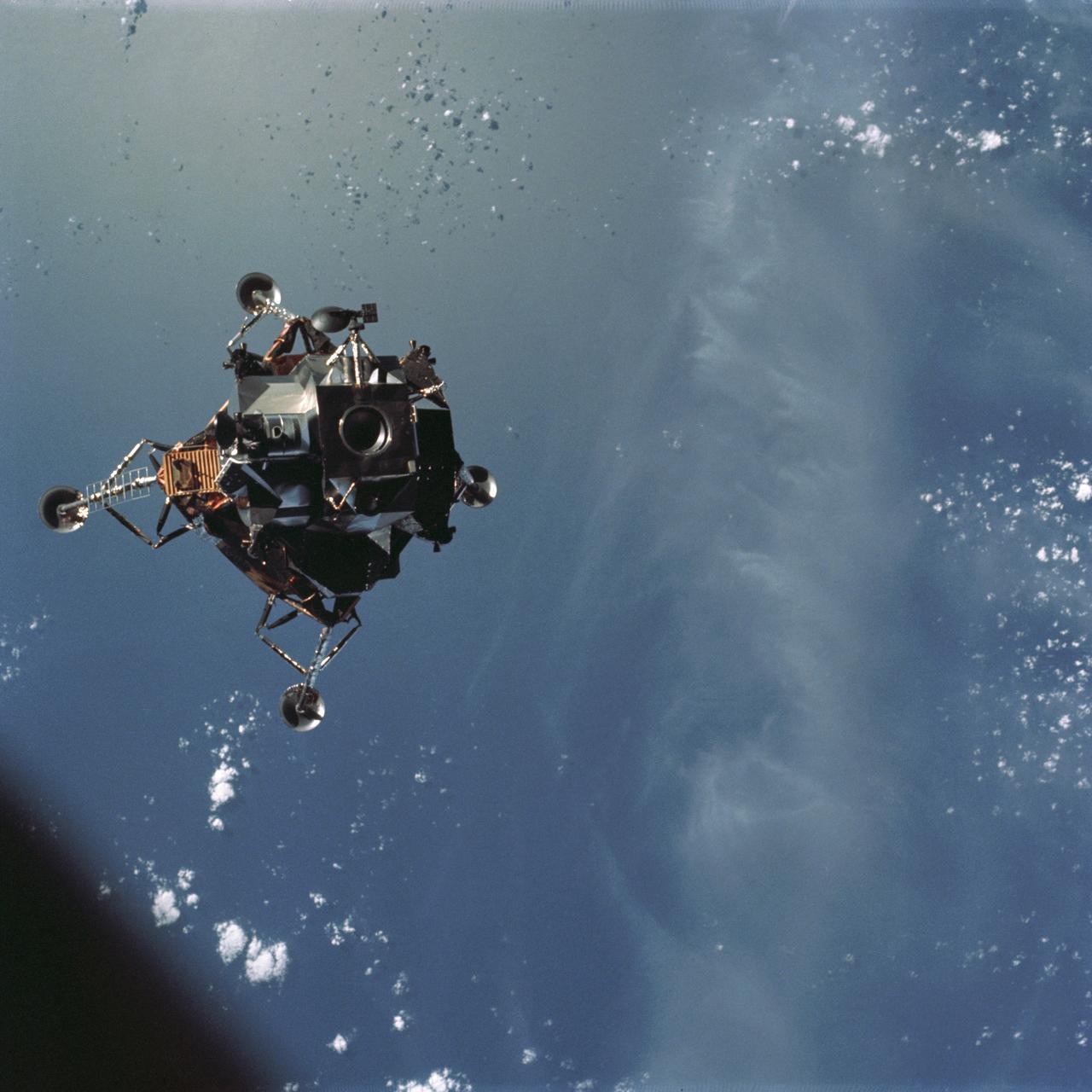
AS09-21-3181 (7 March 1969) --- A View of the Apollo 9 Lunar Module (LM), "Spider," in a lunar lading configuration, as photographed from the Command and Service Modules (CSM) on the fifth day of the Apollo 9 Earth-orbital mission. The landing gear on the "Spider" has been deployed. Inside the "Spider" were astronauts James A. McDivitt, Apollo 9 commander; and Russell L. Schweickart, lunar module pilot. Astronaut David R. Scott, command module pilot, remained at the controls in the Command Module (CM), "Gumdrop," while the other two astronauts checked out the LM.