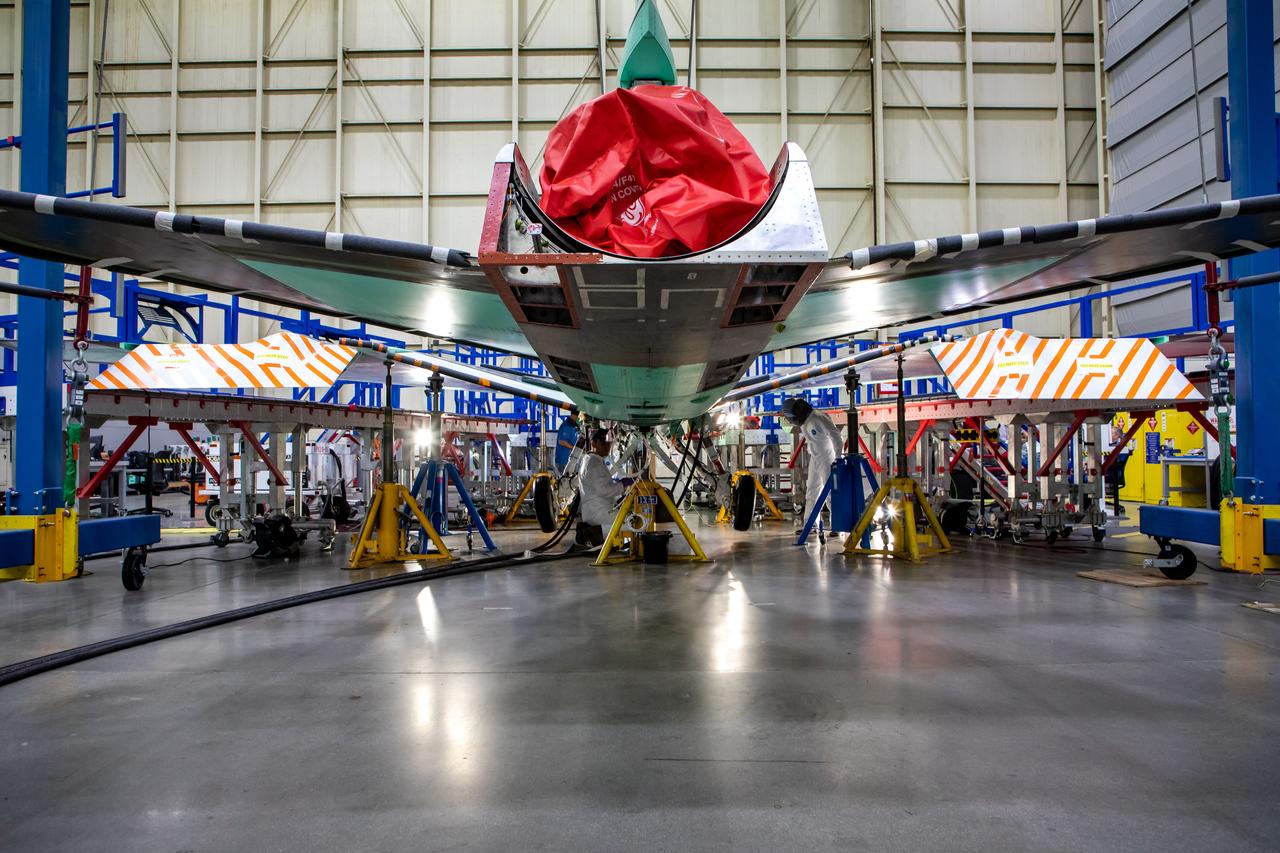
Technicians perform landing gear checkout testing at Lockheed Martin Skunk Works in Palmdale, California. These tests make sure that all the parts of X-59’s landing gear and doors are working in the correct order. The X-59 is the centerpiece of NASA’s Quesst mission, which could help enable commercial supersonic air travel over land.
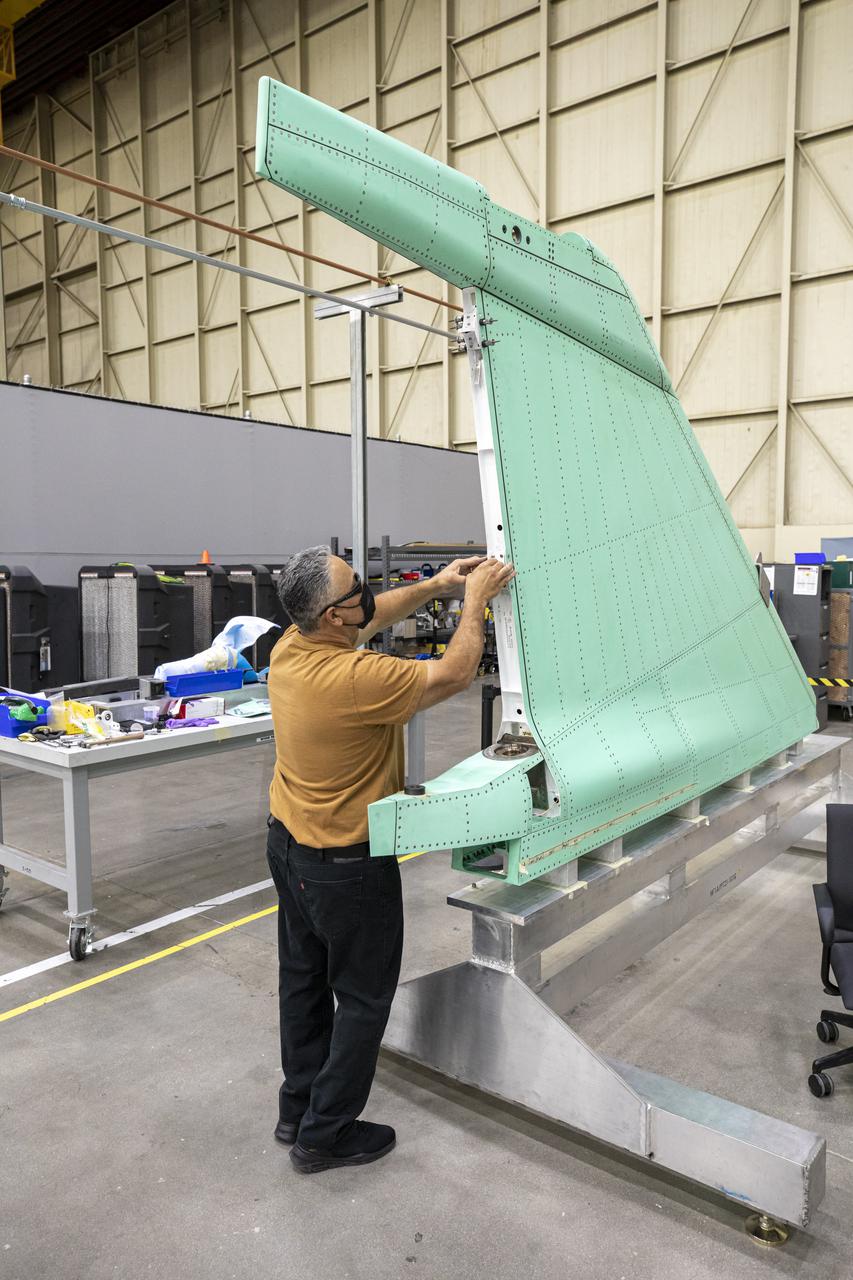
A technician is shown working on the X-59 vertical tail prior to installation at Lockheed Martin Skunk Works in Palmdale, California. The aircraft will fly to demonstrate the ability to fly supersonic while reducing the loud sonic boom to a quiet sonic thump. Lockheed Martin Photography By Garry Tice 1011 Lockheed Way, Palmdale, Ca. 93599 Event: SEG 530 Vertical Tail, Landing Gear Bay Doors Date: 4/28/2021
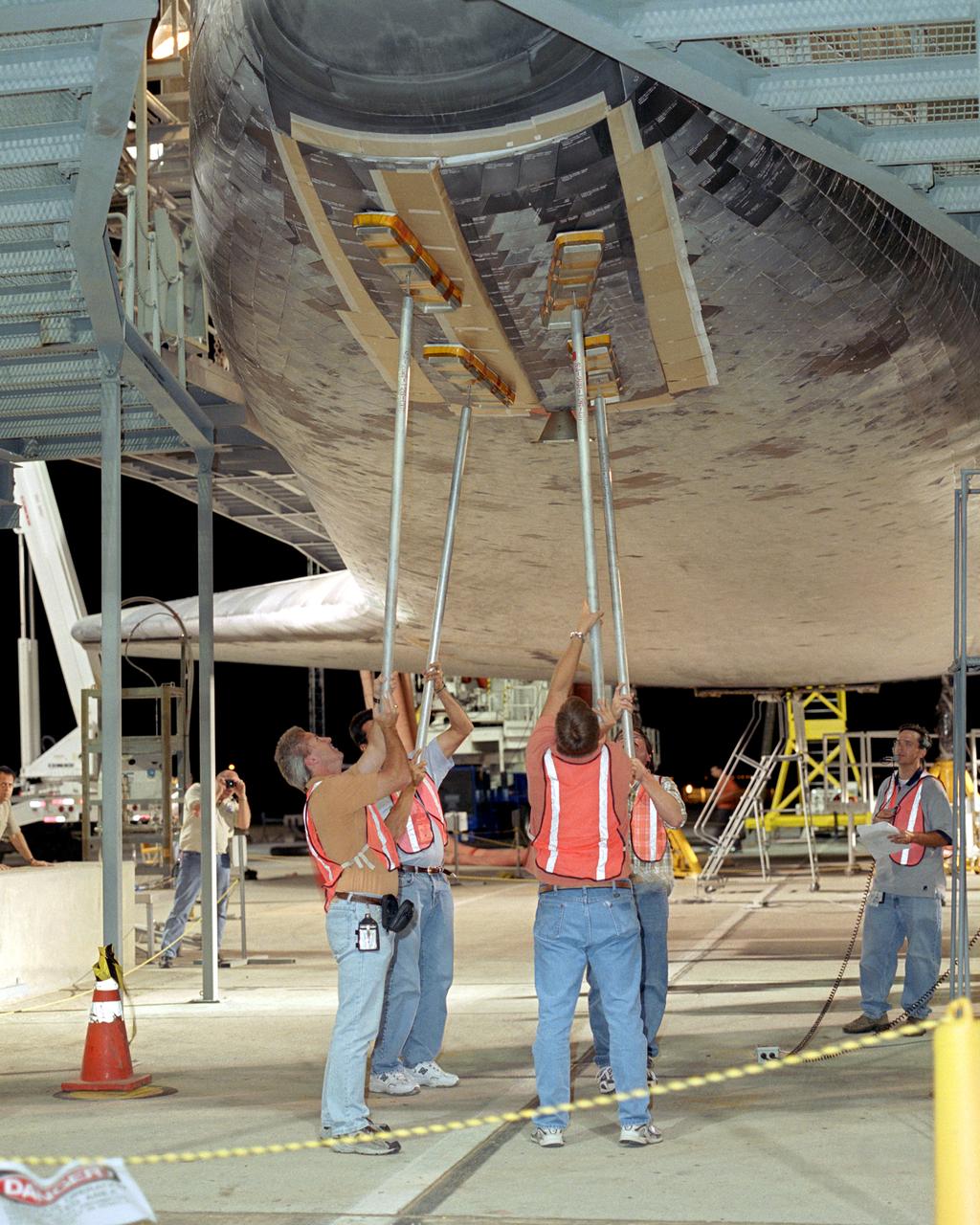
Closing the landing gear doors is one of the final servicing steps before lifting of the Space Shuttle Discovery and mating it to NASA's 747 can begin. After being raised in the gantry-like Mate-Demate Device (MDD), Discovery will be mounted on NASA's modified Boeing 747 Shuttle Carrier Aircraft, or SCA, for the return flight to the Kennedy Space Center in Florida. Space Shuttle Discovery landed safely at NASA's Dryden Flight Research Center at Edwards Air Force Base in California at 5:11:22 a.m. PDT, August 9, 2005, following the very successful 14-day STS-114 return to flight mission. During their two weeks in space, Commander Eileen Collins and her six crewmates tested out new safety procedures and delivered supplies and equipment the International Space Station. Discovery spent two weeks in space, where the crew demonstrated new methods to inspect and repair the Shuttle in orbit. The crew also delivered supplies, outfitted and performed maintenance on the International Space Station. A number of these tasks were conducted during three spacewalks. In an unprecedented event, spacewalkers were called upon to remove protruding gap fillers from the heat shield on Discovery's underbelly. In other spacewalk activities, astronauts installed an external platform onto the Station's Quest Airlock and replaced one of the orbital outpost's Control Moment Gyroscopes. Inside the Station, the STS-114 crew conducted joint operations with the Expedition 11 crew. They unloaded fresh supplies from the Shuttle and the Raffaello Multi-Purpose Logistics Module. Before Discovery undocked, the crews filled Raffeallo with unneeded items and returned to Shuttle payload bay. Discovery launched on July 26 and spent almost 14 days on orbit.
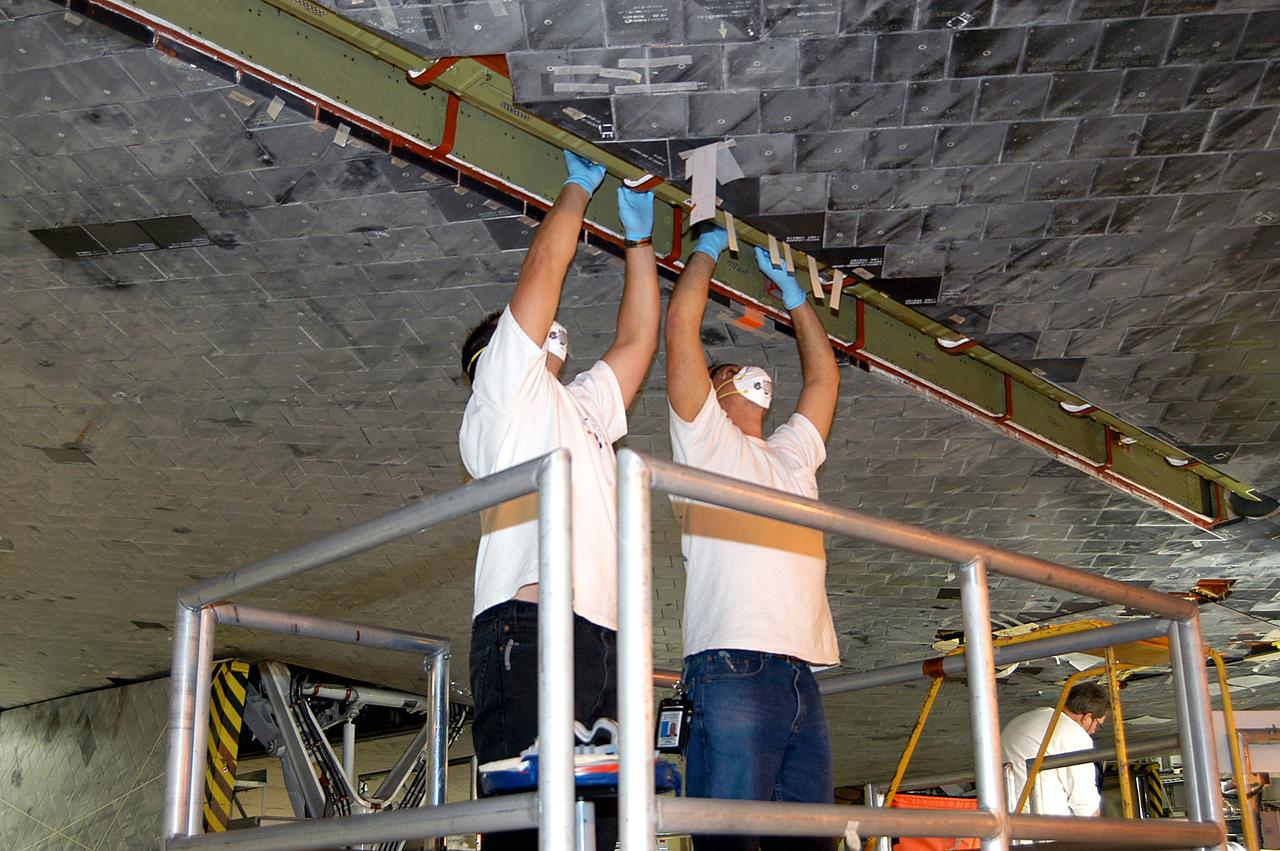
KENNEDY SPACE CENTER, FLA. - In the Orbiter Processing Facility, technicians work on insulation tiles near the landing gear door of orbiter Discovery. The orbiter is now being prepared for eventual launch on a future mission.
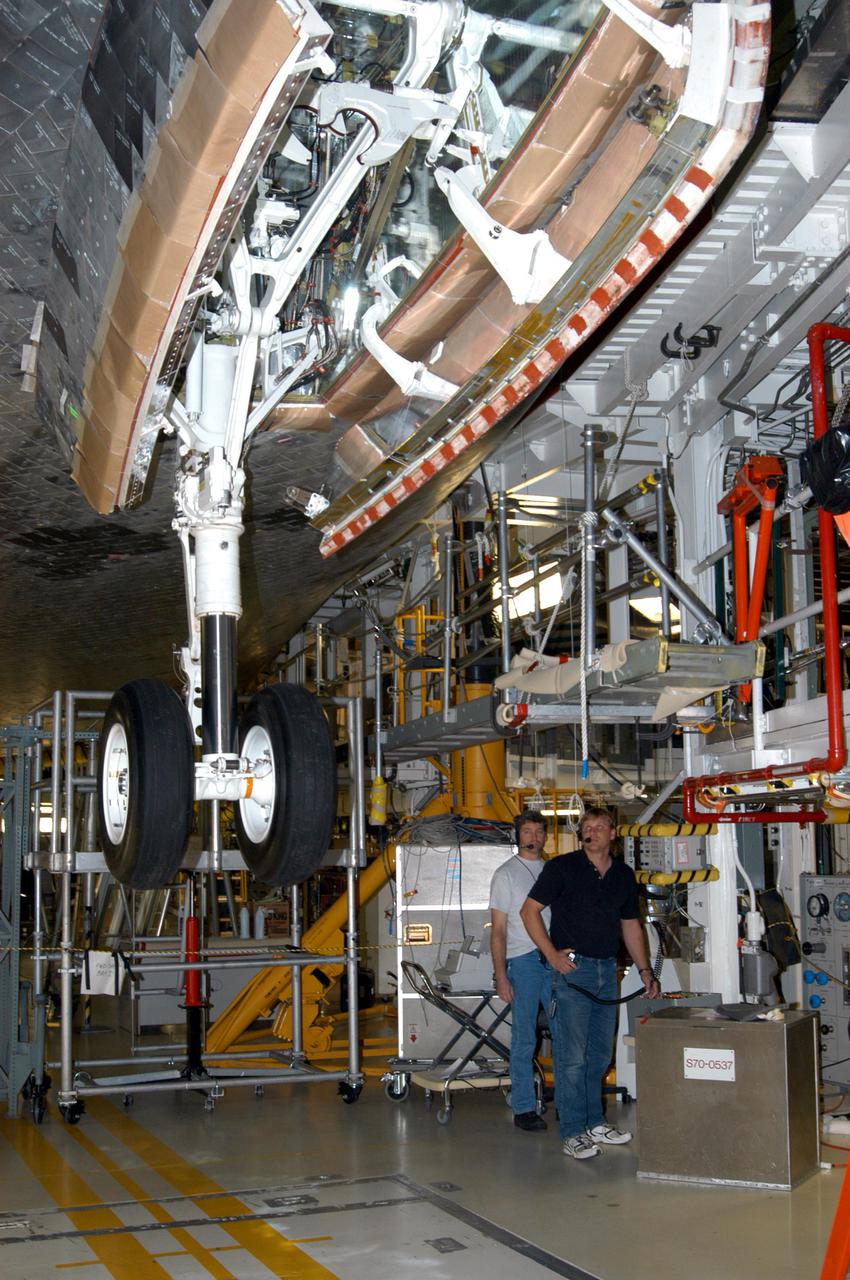
KENNEDY SPACE CENTER, FLA. - In the Orbiter Processing Facility at NASA’s Kennedy Space Center, United Space Alliance technicians Terry Williams (left) and Ron Delaney retract the nose landing gear on Space Shuttle Atlantis. Compression measurements will be taken of the newly installed nose landing gear thermal barrier seal with the gear in position in its wheel well and the landing gear doors closed. Atlantis is being processed for launch on the second Return to Flight mission, STS-121, which is scheduled to fly in July.
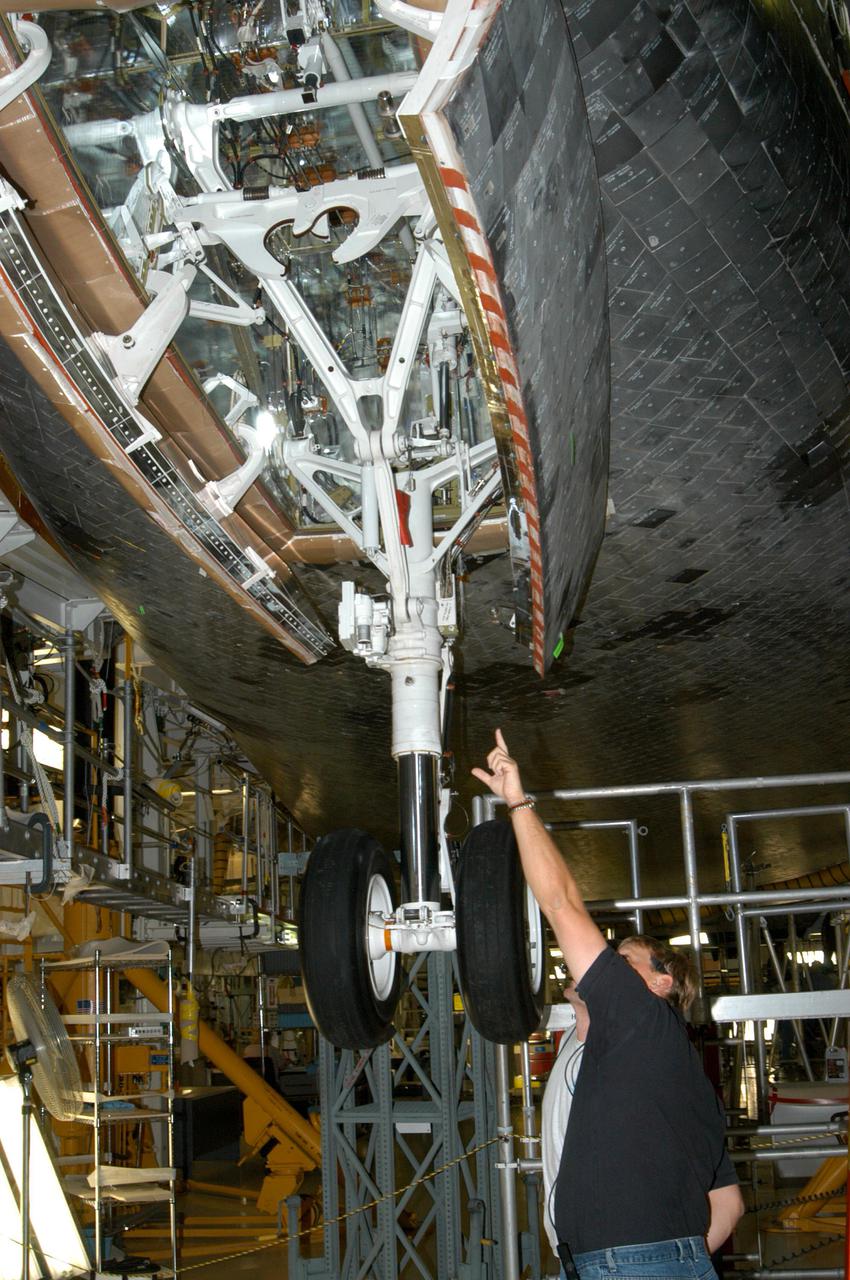
KENNEDY SPACE CENTER, FLA. - In the Orbiter Processing Facility at NASA’s Kennedy Space Center, United Space Alliance technicians Terry Williams (left) and Ron Delaney examine Space Shuttle Atlantis before retracting the nose landing gear. Compression measurements will be taken of the newly installed nose landing gear thermal barrier seal with the gear in position in its wheel well and the landing gear doors closed. Atlantis is being processed for launch on the second Return to Flight mission, STS-121, which is scheduled to fly in July.
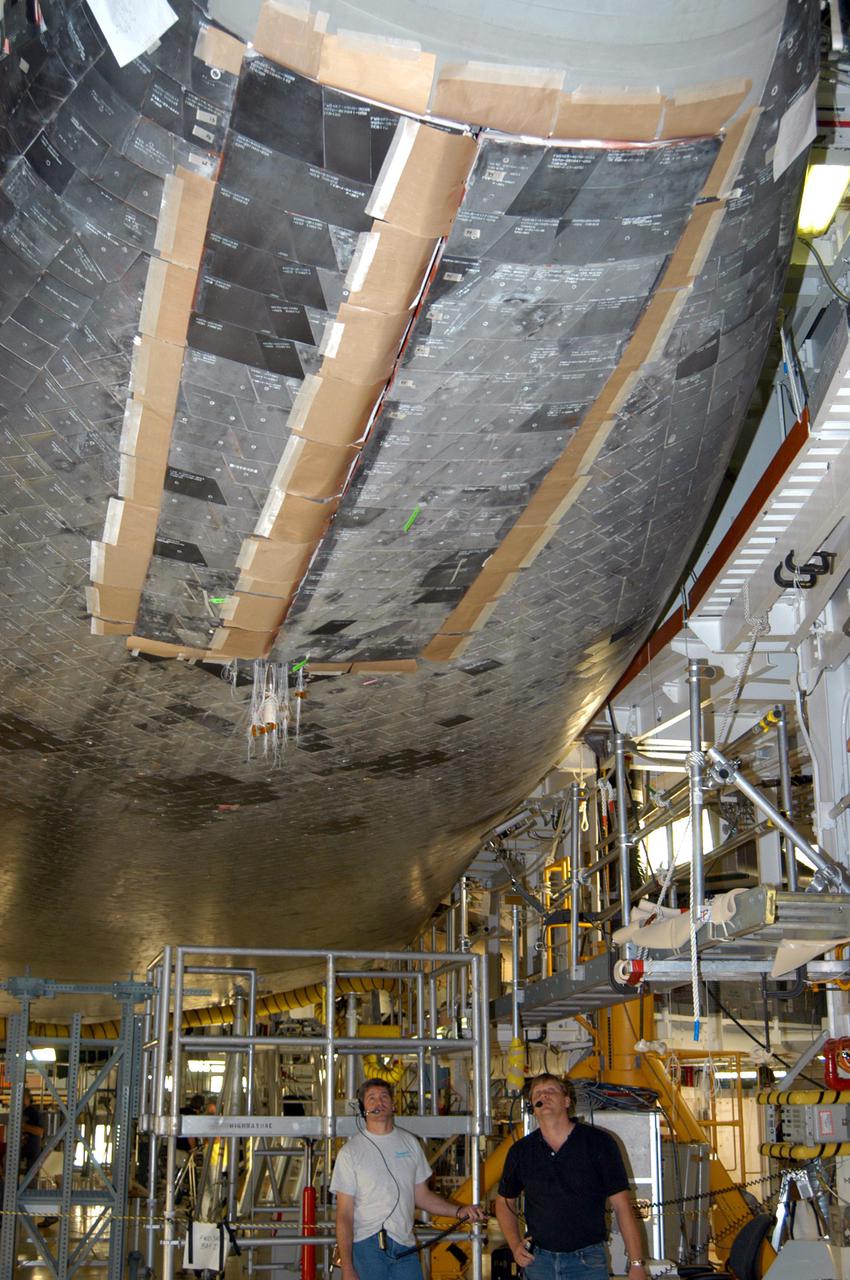
KENNEDY SPACE CENTER, FLA. - In the Orbiter Processing Facility at NASA’s Kennedy Space Center, the nose landing gear on Space Shuttle Atlantis is retracted under the supervision of United Space Alliance technicians Terry Williams (left) and Ron Delaney. Compression measurements are being taken of the newly installed nose landing gear thermal barrier seal with the gear in position in its wheel well and the landing gear doors closed. Atlantis is being processed for launch on the second Return to Flight mission, STS-121, which is scheduled to fly in July.
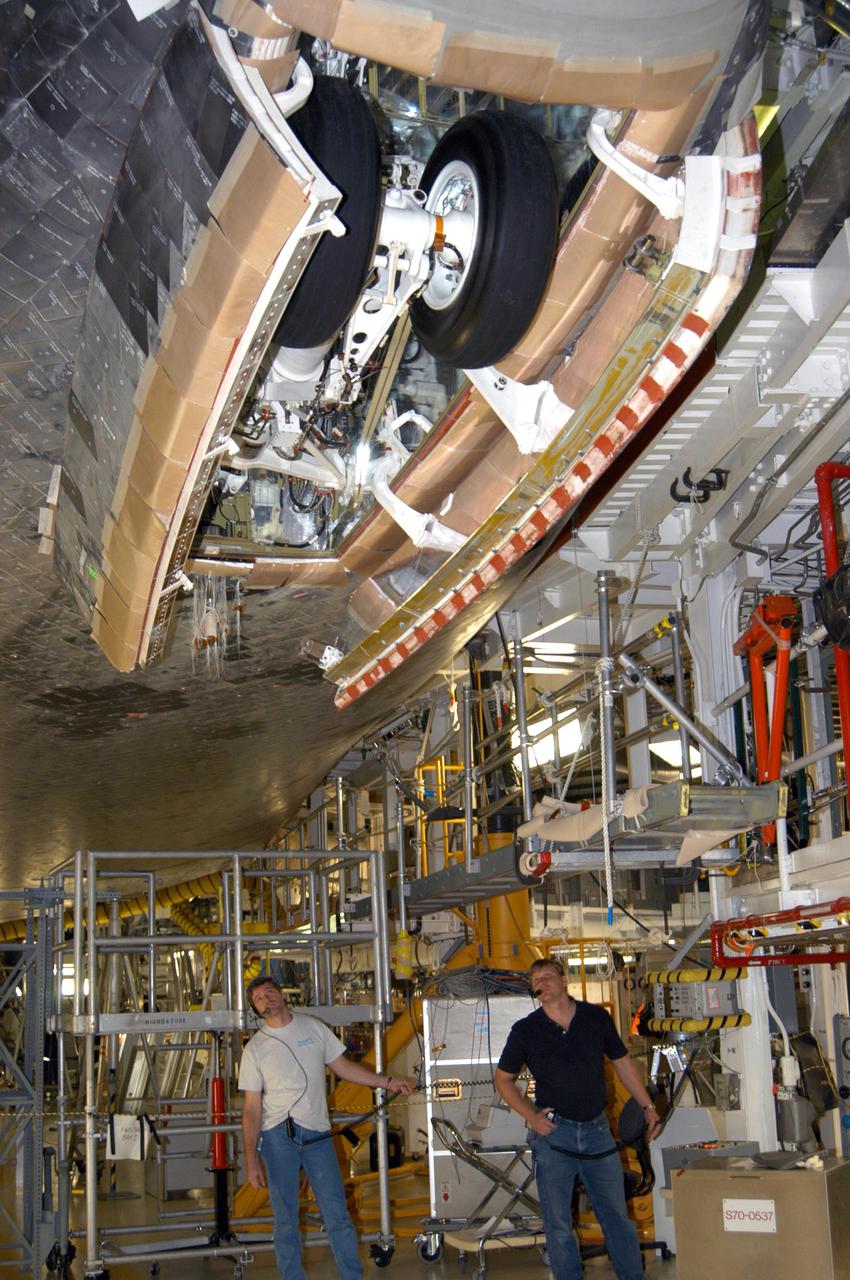
KENNEDY SPACE CENTER, FLA. - In the Orbiter Processing Facility at NASA’s Kennedy Space Center, United Space Alliance technicians Terry Williams (left) and Ron Delaney retract the nose landing gear on Space Shuttle Atlantis. Compression measurements will be taken of the newly installed nose landing gear thermal barrier seal with the gear in position in its wheel well and the landing gear doors closed. Atlantis is being processed for launch on the second Return to Flight mission, STS-121, which is scheduled to fly in July.
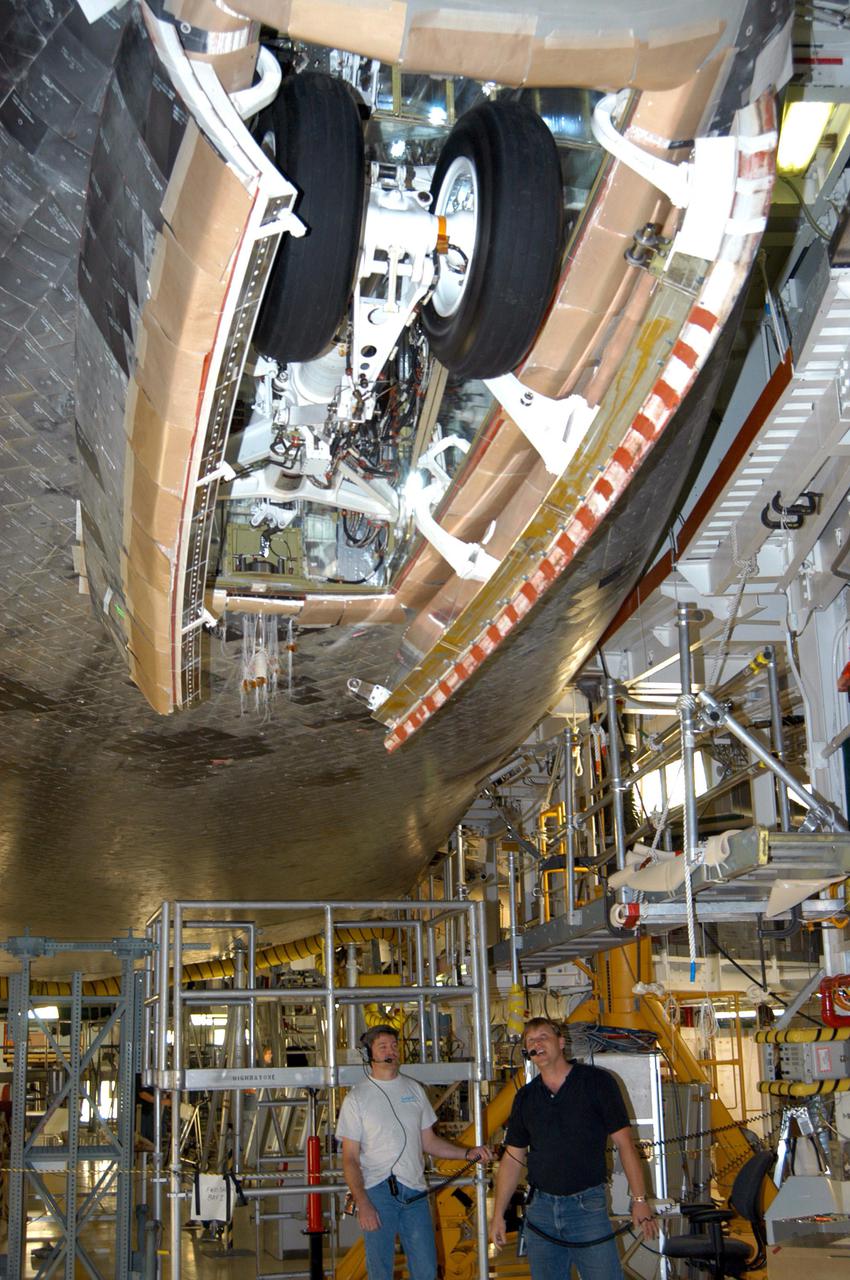
KENNEDY SPACE CENTER, FLA. - In the Orbiter Processing Facility at NASA’s Kennedy Space Center, United Space Alliance technicians Terry Williams (left) and Ron Delaney retract the nose landing gear on Space Shuttle Atlantis. Compression measurements will be taken of the newly installed nose landing gear thermal barrier seal with the gear in position in its wheel well and the landing gear doors closed. Atlantis is being processed for launch on the second Return to Flight mission, STS-121, which is scheduled to fly in July.
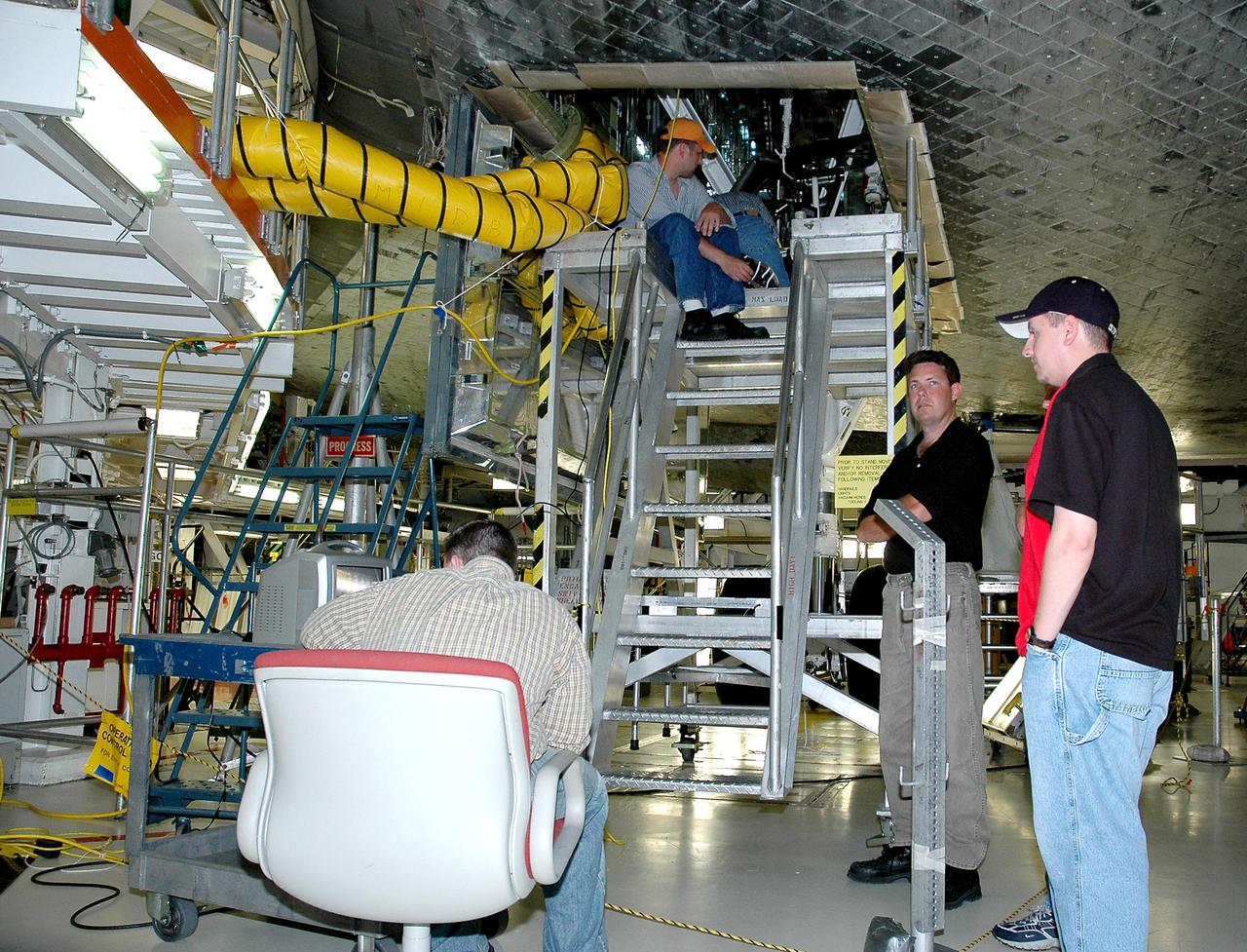
KENNEDY SPACE CENTER, FLA. - On Orbiter Atlantis in NASA’s Orbiter Processing Facility, bay 1, Charles Wassen, orbiter inspector, on steps in the open door of the main landing gear helps with boroscope inspection on the retract link assembly. At left in the chair, Dave Rumpf, materials and processing engineer, observes results on a monitor. At right are Jessie McEnulty (in hat), mechanisms engineer, and Tony Glass, orbiter inspector, a member of the micro inspection team. To lower the main landing gear, a mechanical linkage released by each gear actuates the doors to the open position. The landing gear reach the full-down and extended position with 10 seconds and are locked in the down position by spring-loaded downlock bungees Atlantis is scheduled to launch in September 2005 on the second Return to Flight mission, STS-121.

CAPE CANAVERAL, Fla. – Technician latch the doors closed over the nose gear during a landing gear functional test on space shuttle Atlantis in Orbiter Processing Facility-2, where the shuttle is undergoing transition and retirement processing. Photo credit: NASA/Jim Grossmann
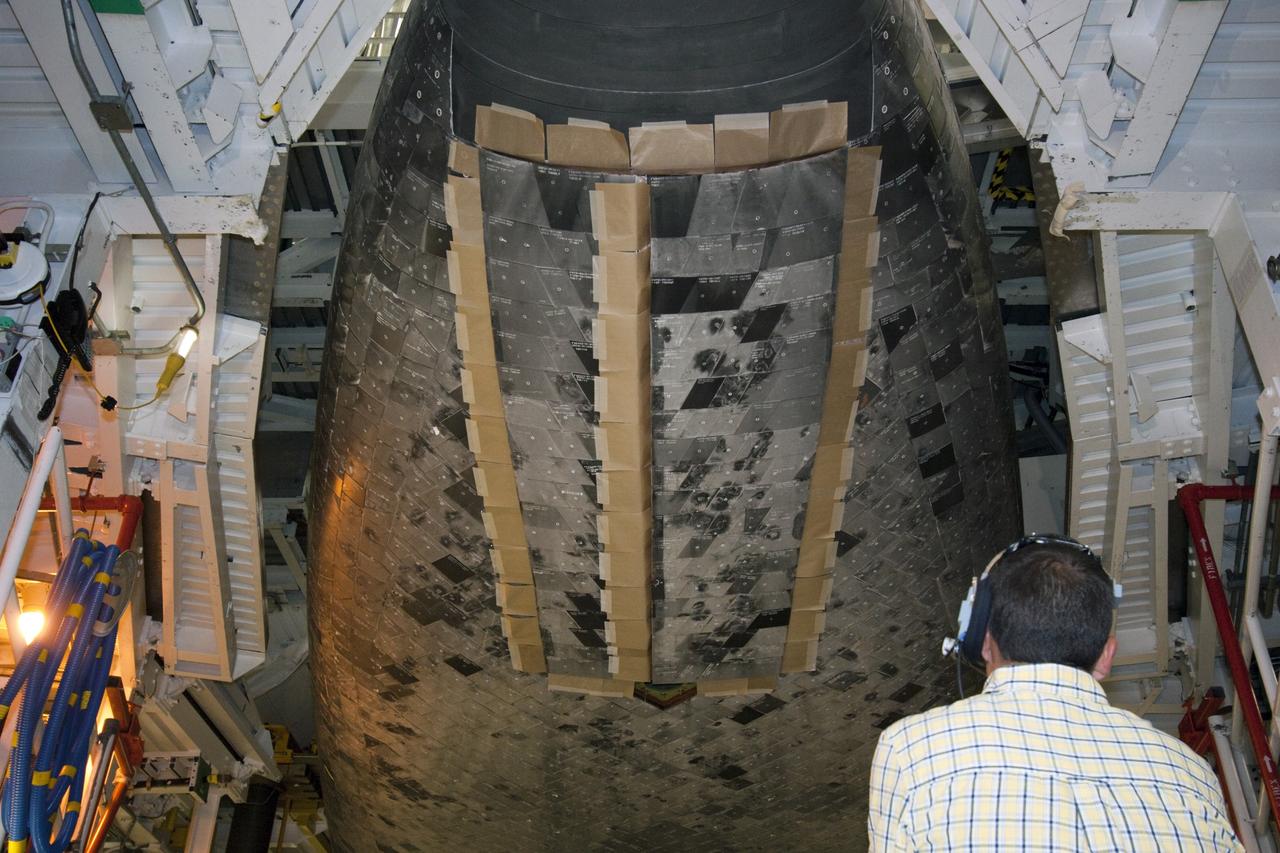
CAPE CANAVERAL, Fla. – A technician surveys the closed doors over the nose gear on space shuttle Atlantis as it is stowed during a landing gear functional test in Orbiter Processing Facility-2, where the shuttle is undergoing transition and retirement processing. Photo credit: NASA/Jim Grossmann
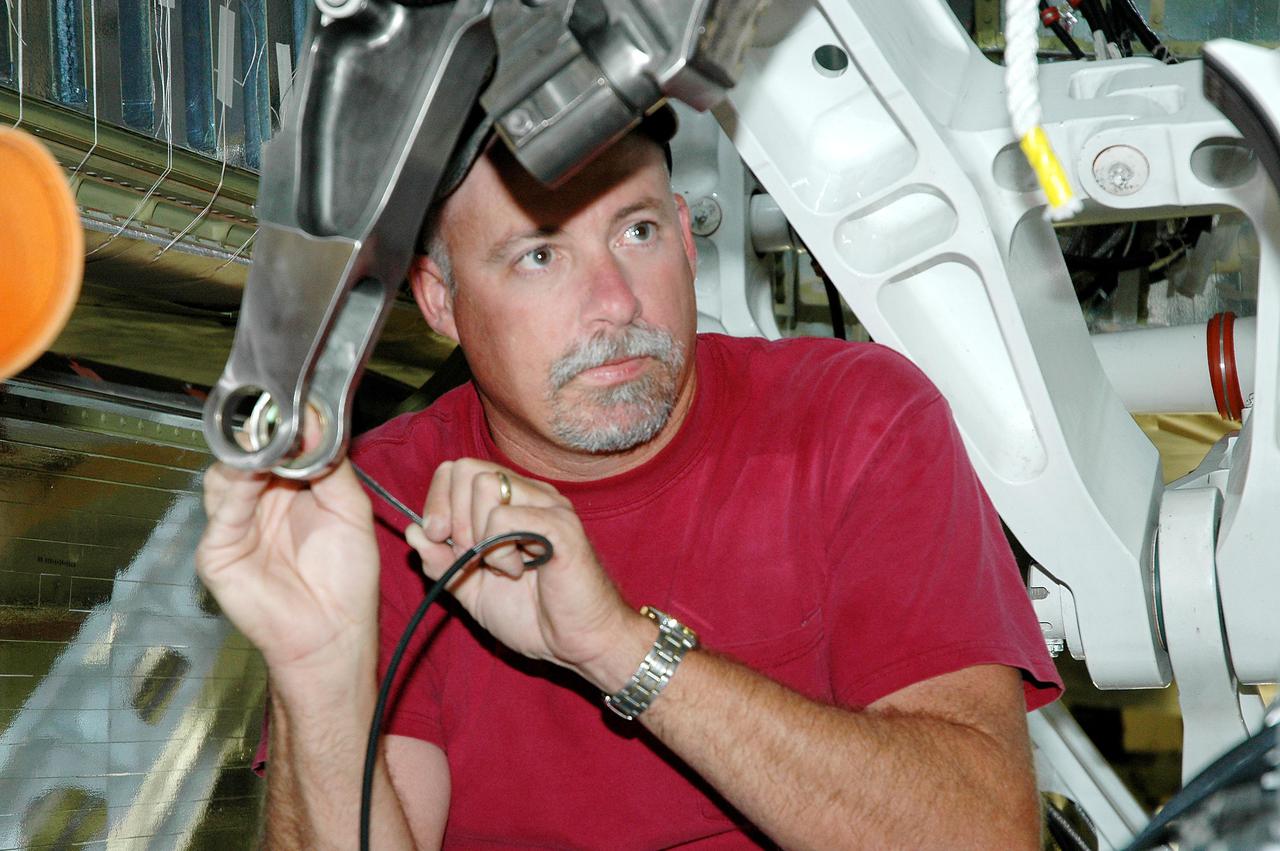
KENNEDY SPACE CENTER, FLA. - On Orbiter Atlantis in NASA’s Orbiter Processing Facility, bay 1, Scott Minnick, lead inspector for micro inspection team, inspects the area where the retract link assembly would be installed on the right-hand main landing gear. Last week a small crack was found on the right-hand assembly. To lower the main landing gear, a mechanical linkage released by each gear actuates the doors to the open position. The landing gear reach the full-down and extended position with 10 seconds and are locked in the down position by spring-loaded downlock bungees Atlantis is scheduled to launch in September 2005 on the second Return to Flight mission, STS-121.
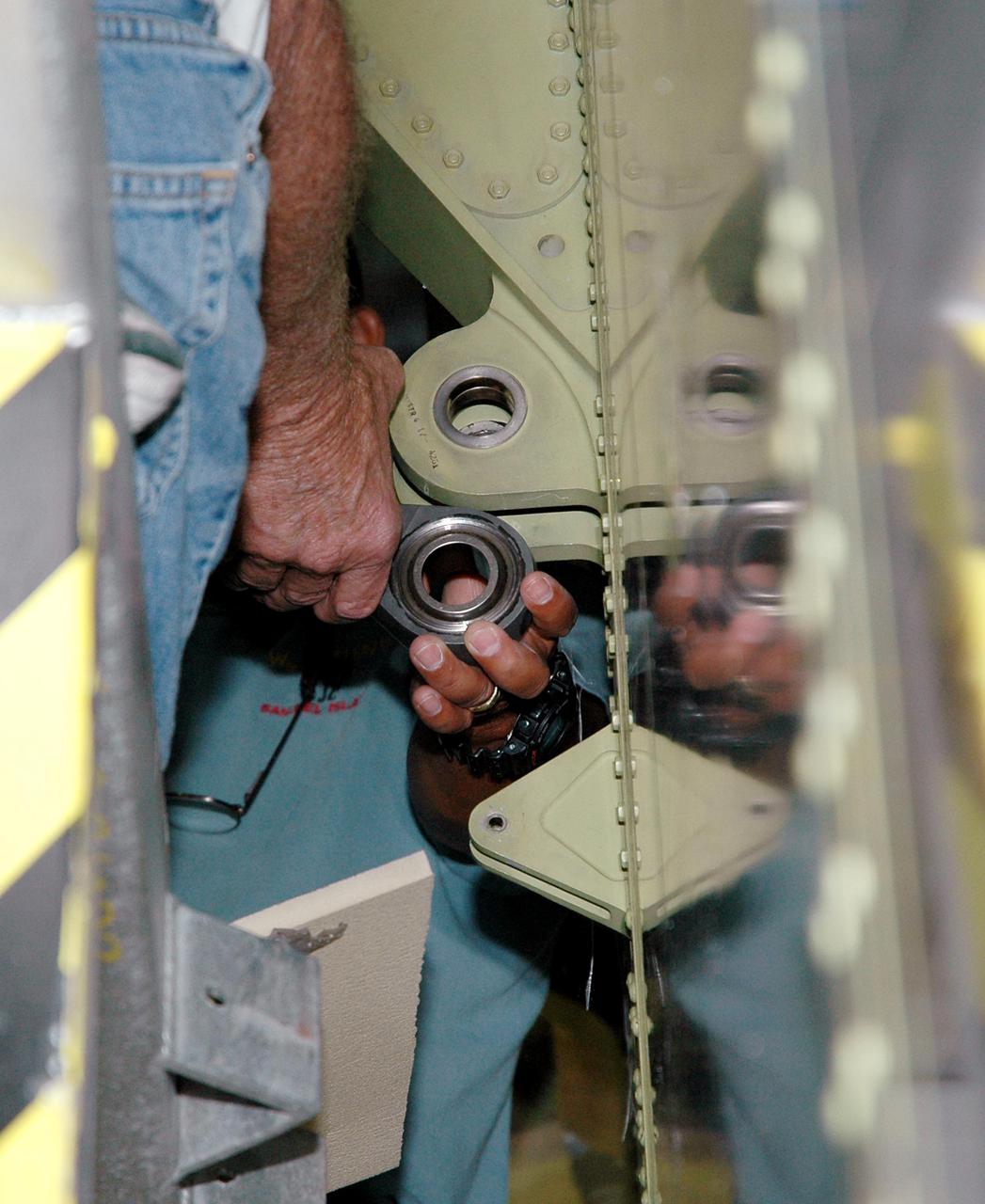
KENNEDY SPACE CENTER, FLA. - Inside the wheel well behind Atlantis’ right-hand main landing gear, workers (left) install a new retract link (at right is a reflection). The link replaces one in which a small crack was recently found. To lower the main landing gear, a mechanical linkage released by each gear actuates the doors to the open position. The landing gear reach the full-down and extended position with 10 seconds and are locked in the down position by spring-loaded downlock bungees Atlantis is scheduled to launch in September 2005 on the second Return to Flight mission, STS-121.
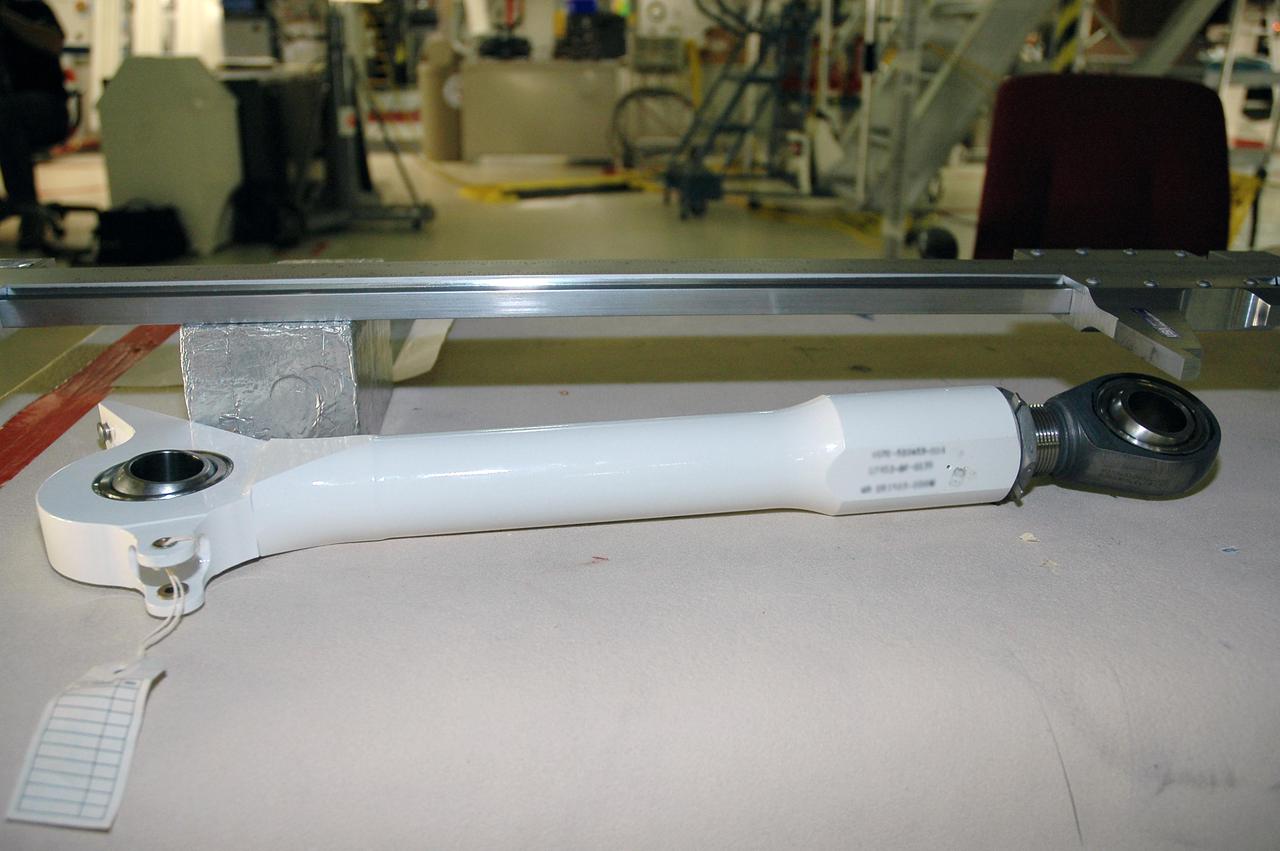
KENNEDY SPACE CENTER, FLA. - In the Orbiter Processing Facility at NASA’s Kennedy Space Center, this replacement retract link will be installed on orbiter Atlantis’ right-hand main landing gear. A small crack was found recently on the retract link assembly. To lower the main landing gear, a mechanical linkage released by each gear actuates the doors to the open position. The landing gear reach the full-down and extended position with 10 seconds and are locked in the down position by spring-loaded downlock bungees Atlantis is scheduled to launch in September 2005 on the second Return to Flight mission, STS-121.
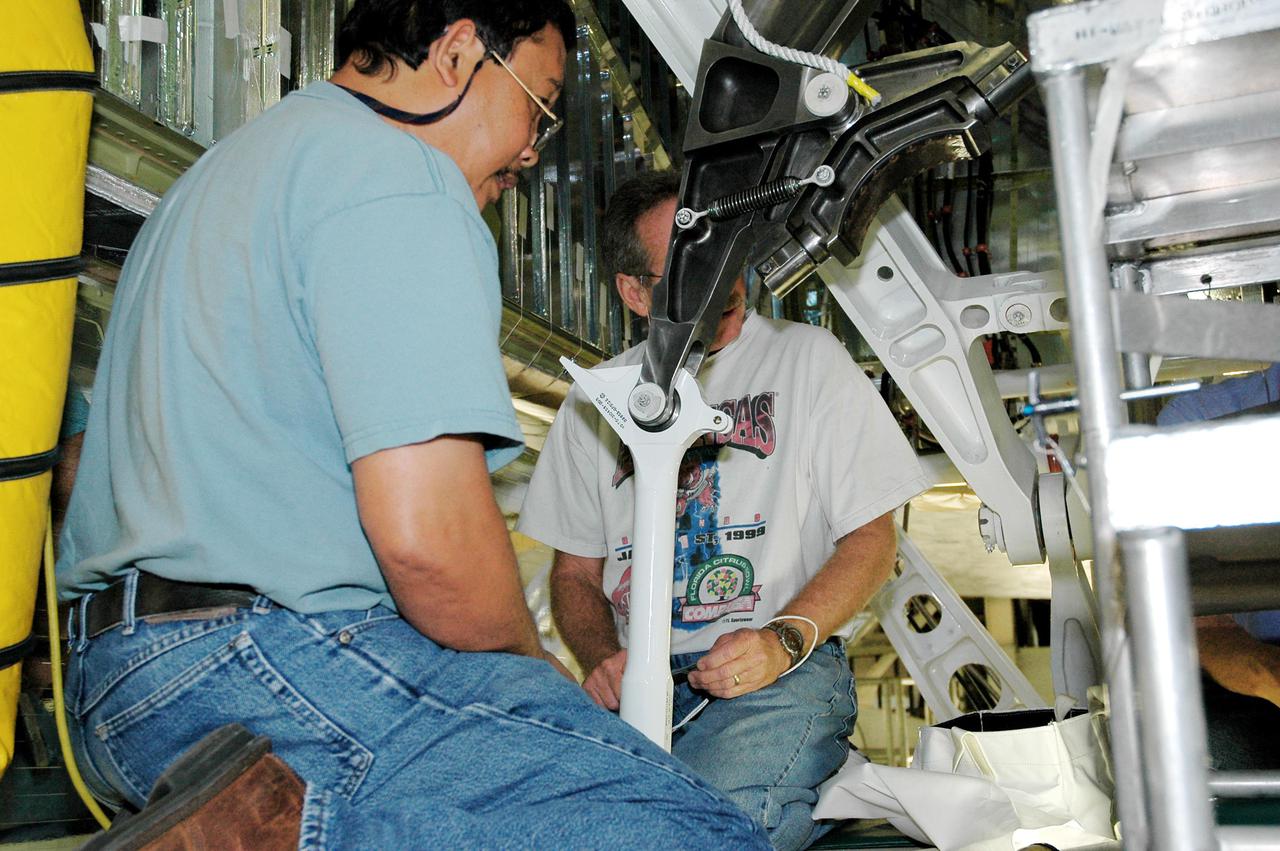
KENNEDY SPACE CENTER, FLA. - Inside the wheel well behind Atlantis’ right-hand main landing gear, workers attaches one end of a retract link. It replaces one in which a small crack was recently found. To lower the main landing gear, a mechanical linkage released by each gear actuates the doors to the open position. The landing gear reach the full-down and extended position with 10 seconds and are locked in the down position by spring-loaded downlock bungees Atlantis is scheduled to launch in September 2005 on the second Return to Flight mission, STS-121.
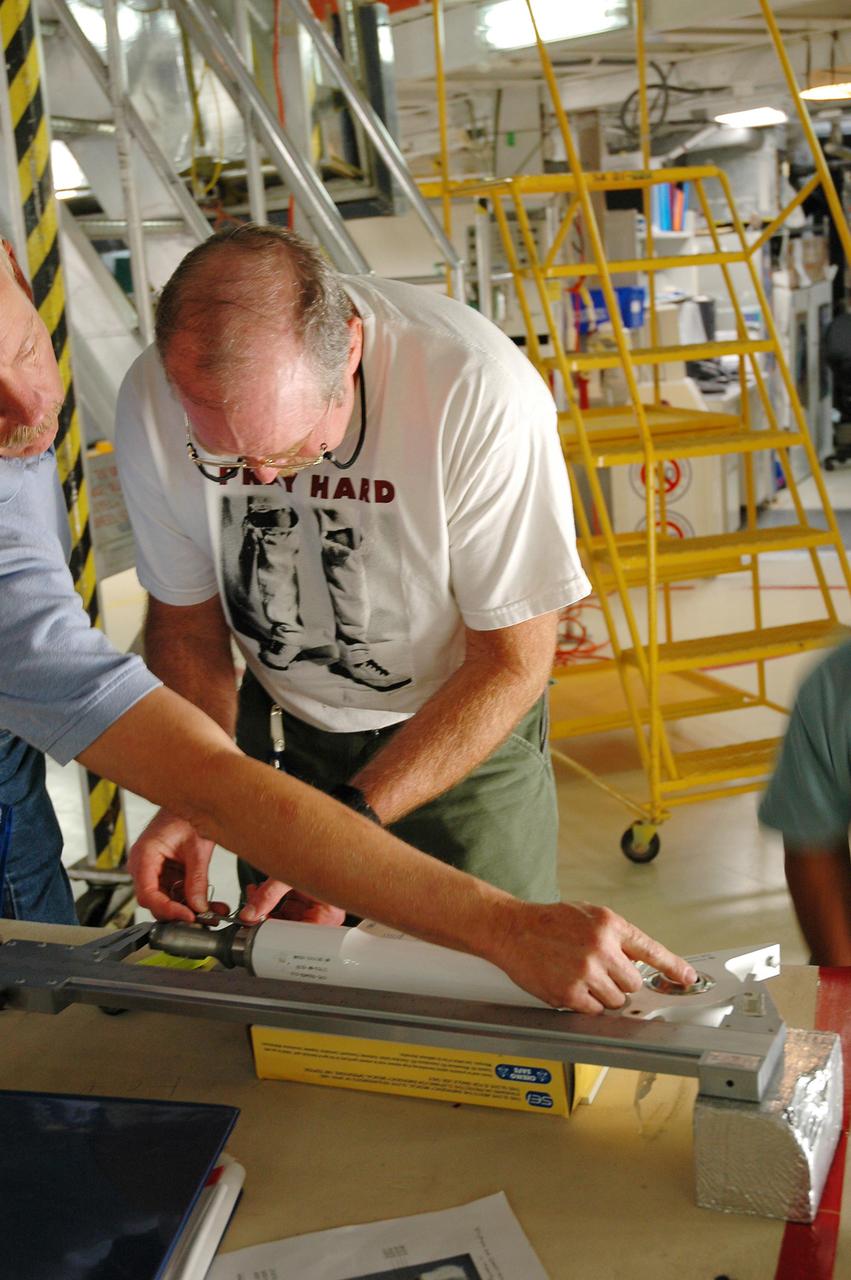
KENNEDY SPACE CENTER, FLA. - In the Orbiter Processing Facility at NASA’s Kennedy Space Center, workers prepare a replacement retract link for installation on orbiter Atlantis’ right-hand main landing gear. A small crack was found recently on the retract link assembly. To lower the main landing gear, a mechanical linkage released by each gear actuates the doors to the open position. The landing gear reach the full-down and extended position with 10 seconds and are locked in the down position by spring-loaded downlock bungees Atlantis is scheduled to launch in September 2005 on the second Return to Flight mission, STS-121.
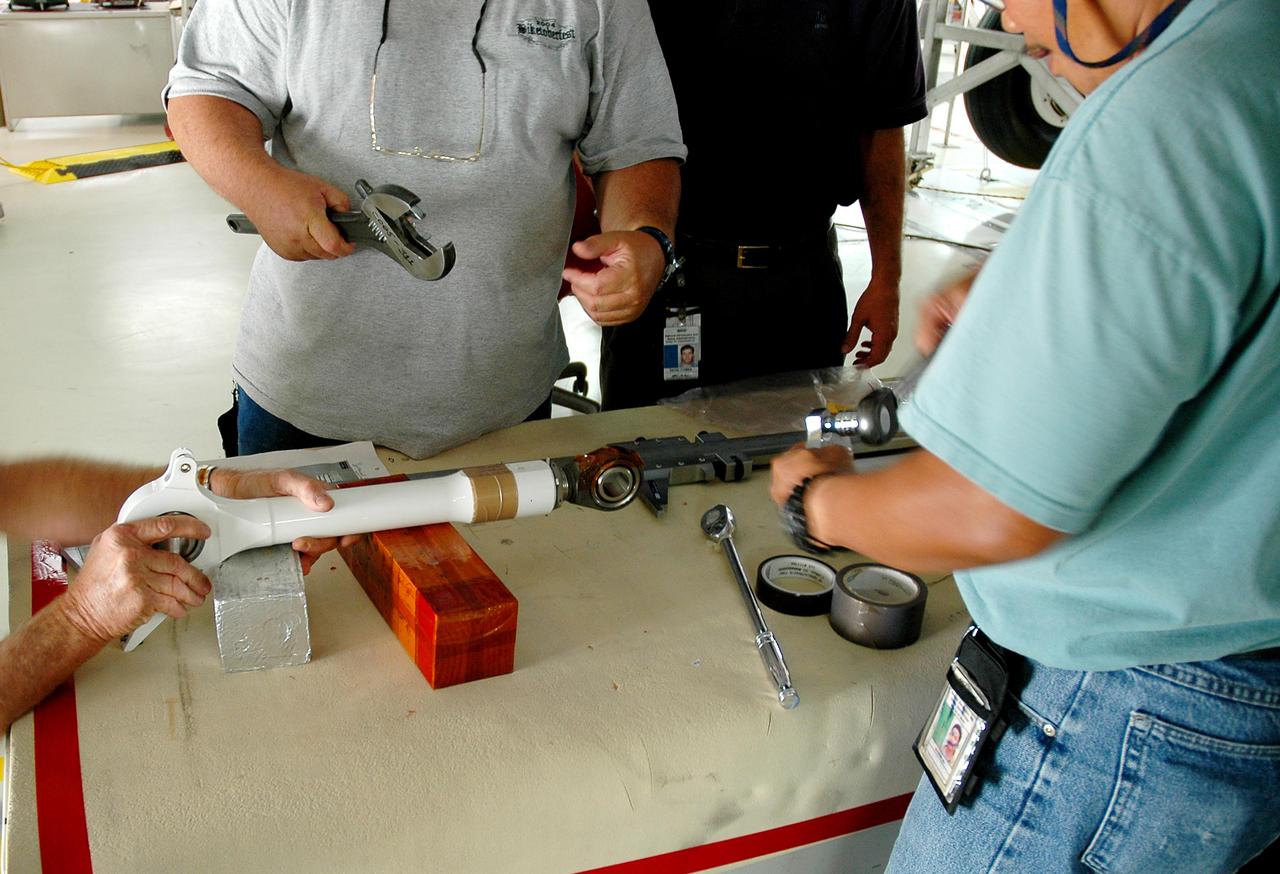
KENNEDY SPACE CENTER, FLA. - In the Orbiter Processing Facility at NASA’s Kennedy Space Center, workers prepare a replacement retract link for installation on orbiter Atlantis’ right-hand main landing gear. A small crack was found recently on the retract link assembly. To lower the main landing gear, a mechanical linkage released by each gear actuates the doors to the open position. The landing gear reach the full-down and extended position with 10 seconds and are locked in the down position by spring-loaded downlock bungees Atlantis is scheduled to launch in September 2005 on the second Return to Flight mission, STS-121.
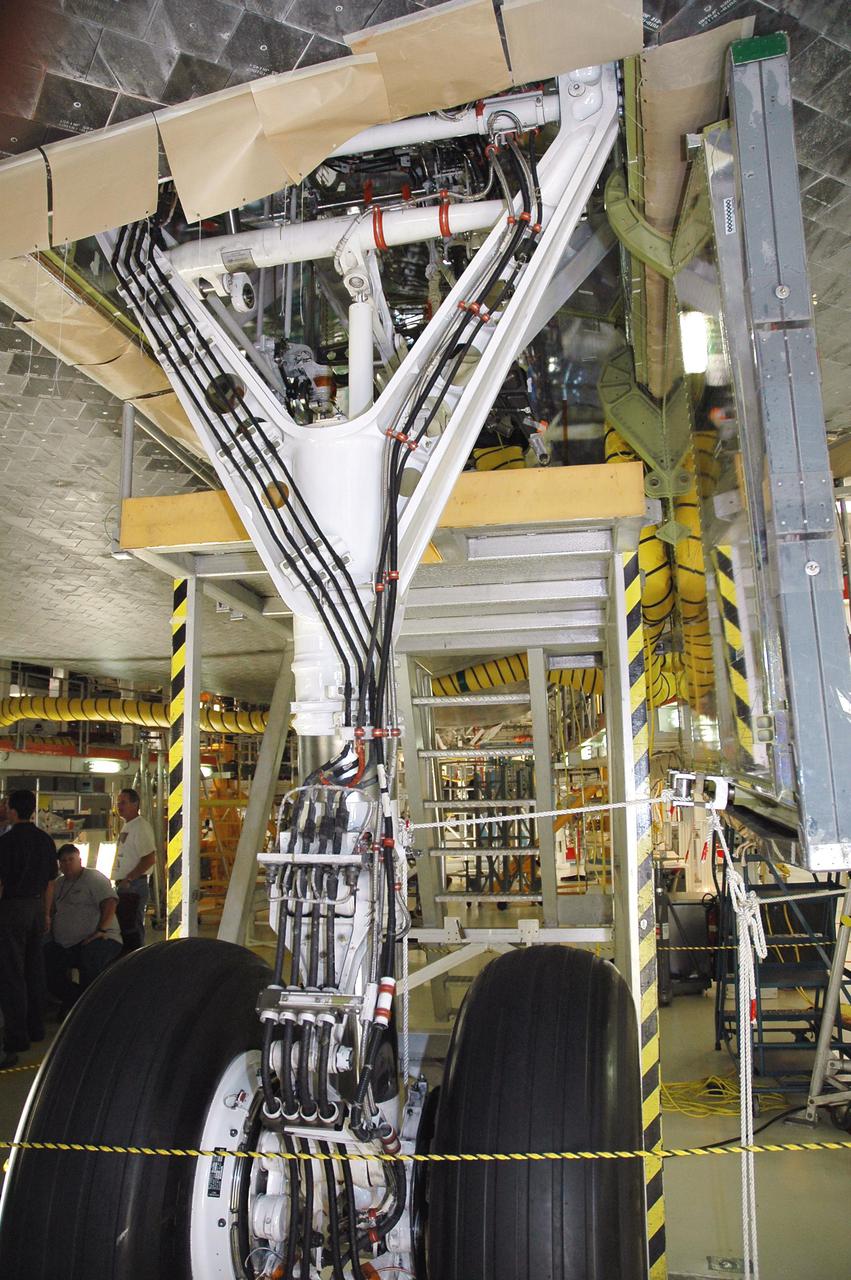
KENNEDY SPACE CENTER, FLA. - Inside the wheel well behind Atlantis’ right-hand main landing gear shown here, a replacement retract link is being installed. A small crack was found recently on the retract link assembly. To lower the main landing gear, a mechanical linkage released by each gear actuates the doors to the open position. The landing gear reach the full-down and extended position with 10 seconds and are locked in the down position by spring-loaded downlock bungees Atlantis is scheduled to launch in September 2005 on the second Return to Flight mission, STS-121.
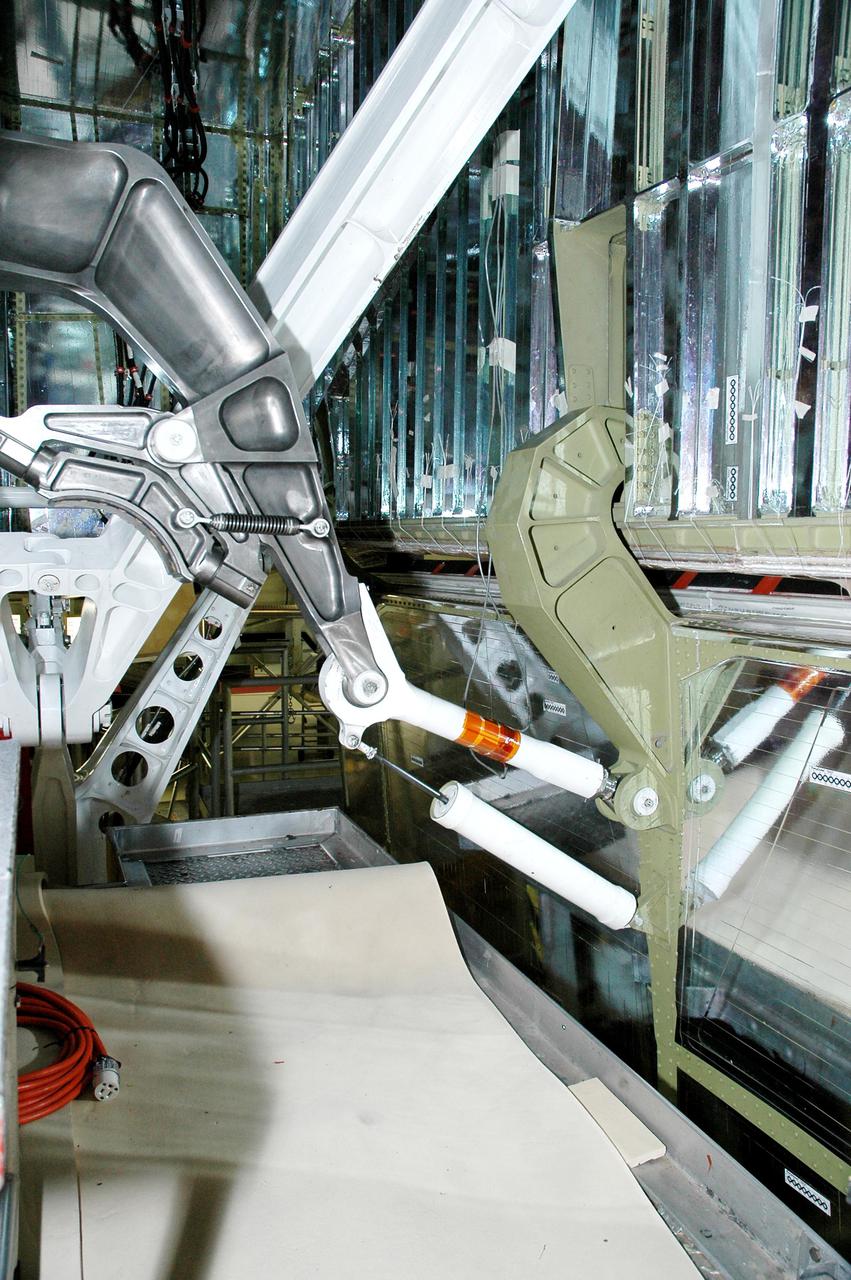
KENNEDY SPACE CENTER, FLA. - On Orbiter Atlantis in NASA’s Orbiter Processing Facility, bay 1, a retract link assembly (upper and lower white rods) is on the left-hand main landing gear. Last week a small crack was found on the right-hand assembly. To lower the main landing gear, a mechanical linkage released by each gear actuates the doors to the open position. The landing gear reach the full-down and extended position with 10 seconds and are locked in the down position by spring-loaded downlock bungees Atlantis is scheduled to launch in September 2005 on the second Return to Flight mission, STS-121.

KENNEDY SPACE CENTER, FLA. - In the Thermal Protection System Facility, Tim Wright, engineering manager with United Space Alliance, tests a new tile, called "Boeing replacement insulation" or "BRI-18." The new tiles will gradually replace older tiles around main landing gear doors, external tank doors and nose landing gear doors. Currently, 10 tiles have been processed inside the facility. Discovery will receive the first BRI-18 tiles. Technicians inside the Orbiter Processing Facility are performing fit checks and will begin bonding the tiles to the vehicle this month. The raw material is manufactured by The Boeing Company in Huntington Beach, Calif. Replacing older tile with the BRI-18 tile in strategic areas is one of the Columbia Accident Investigation Board's recommendations to strengthen the orbiters. The tiles are more impact resistant than previous designs, enhancing the crew’s safety.
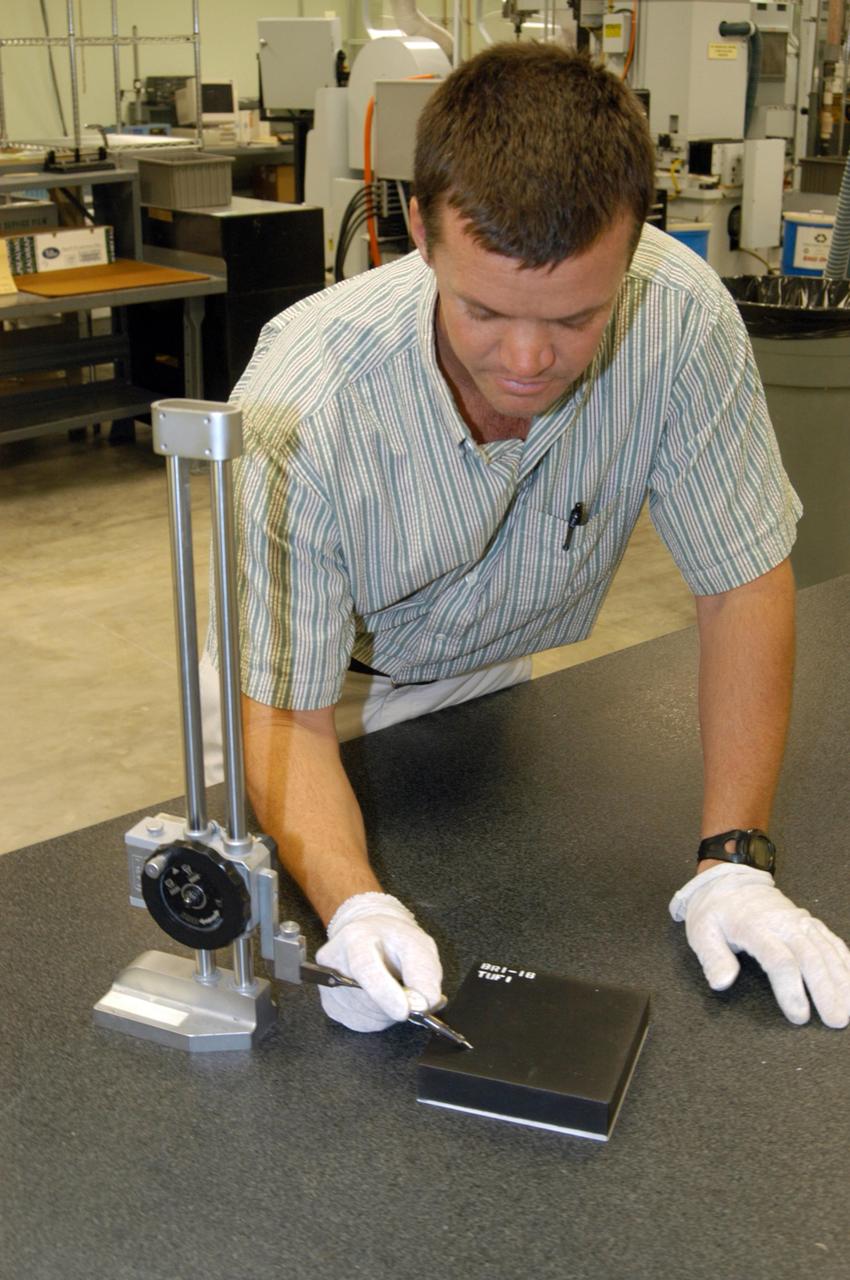
KENNEDY SPACE CENTER, FLA. - In the Thermal Protection System Facility, Tim Wright, engineering manager with United Space Alliance, tests a new tile, called "Boeing replacement insulation" or "BRI-18." The new tiles will gradually replace older tiles around main landing gear doors, external tank doors and nose landing gear doors. Currently, 10 tiles have been processed inside the facility. Discovery will receive the first BRI-18 tiles. Technicians inside the Orbiter Processing Facility are performing fit checks and will begin bonding the tiles to the vehicle this month. The raw material is manufactured by The Boeing Company in Huntington Beach, Calif. Replacing older tile with the BRI-18 tile in strategic areas is one of the Columbia Accident Investigation Board's recommendations to strengthen the orbiters. The tiles are more impact resistant than previous designs, enhancing the crew’s safety.
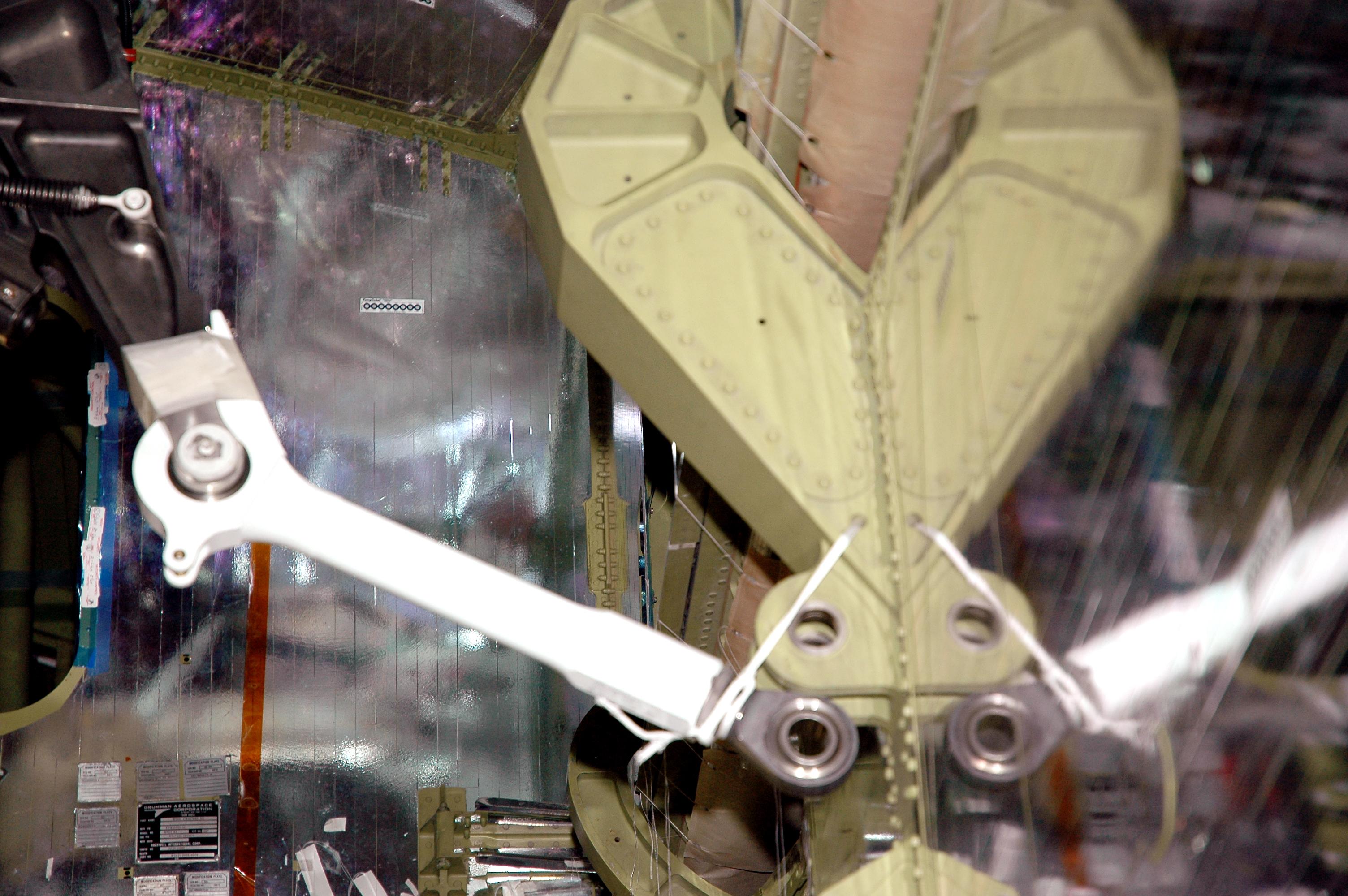
KENNEDY SPACE CENTER, FLA. - In the Orbiter Processing Facility at NASA’s Kennedy Space Center, a replacement retract link (left) is being installed because a small crack was found recently on the retract link assembly. One end of the link is tethered until it is attached. At right is a blurred reflection on a plastic barrier. To lower the main landing gear, a mechanical linkage released by each gear actuates the doors to the open position. The landing gear reach the full-down and extended position with 10 seconds and are locked in the down position by spring-loaded downlock bungees Atlantis is scheduled to launch in September 2005 on the second Return to Flight mission, STS-121.
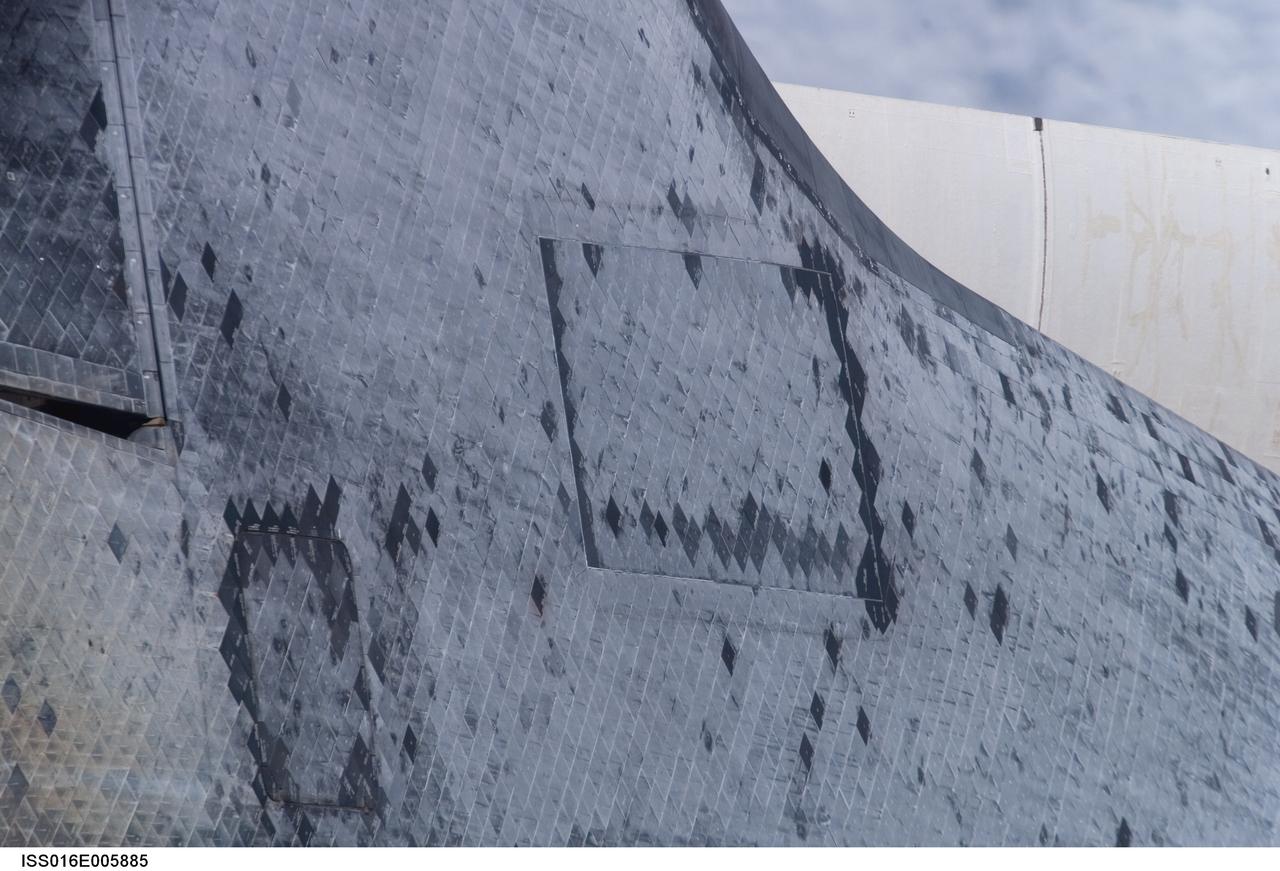
ISS016-E-005885 (25 Oct. 2007) --- The underside of the Space Shuttle Discovery is featured in this image photographed by an Expedition 16 crewmember during a backflip maneuver performed by the approaching visitors (STS-120) to the International Space Station. Visible are a landing gear door (large square at center) and an external tank (ET) umbilical door (lower left).
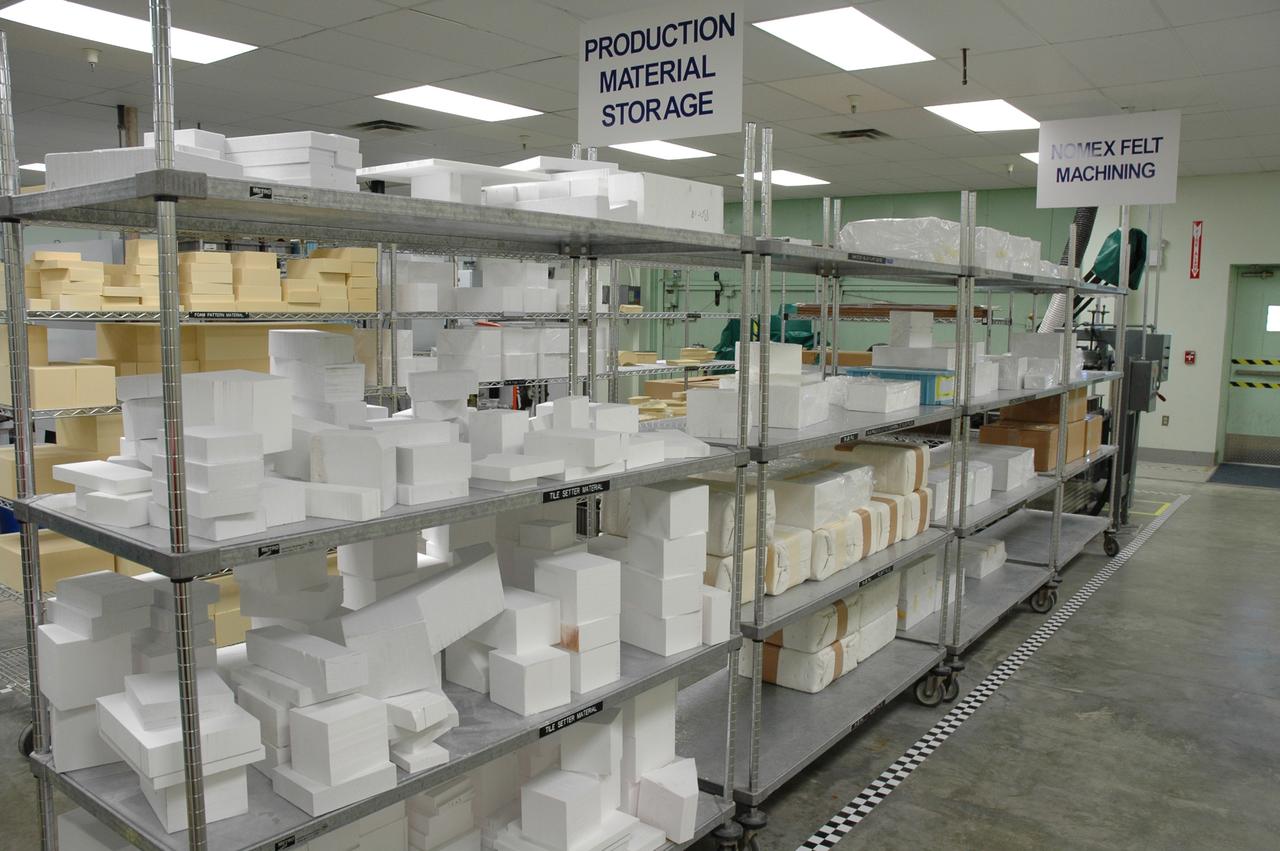
CAPE CANAVERAL, Fla. – In the Tile Shop at NASA's Kennedy Space Center, shelves are stacked with Boeing Rigid Insulation-18, or BRI-18, tiles. BRI-18 is the strongest material used for thermal insulation on the orbiters and, when coated to produce toughened unipiece fibrous insulation, provides a tile with extremely high-impact resistance. It is replacing tiles on areas of the vehicle where impact risk is high. These areas include the landing gear doors, the wing leading edge and the external tank doors. Photo credit: NASA/Jim Grossmann
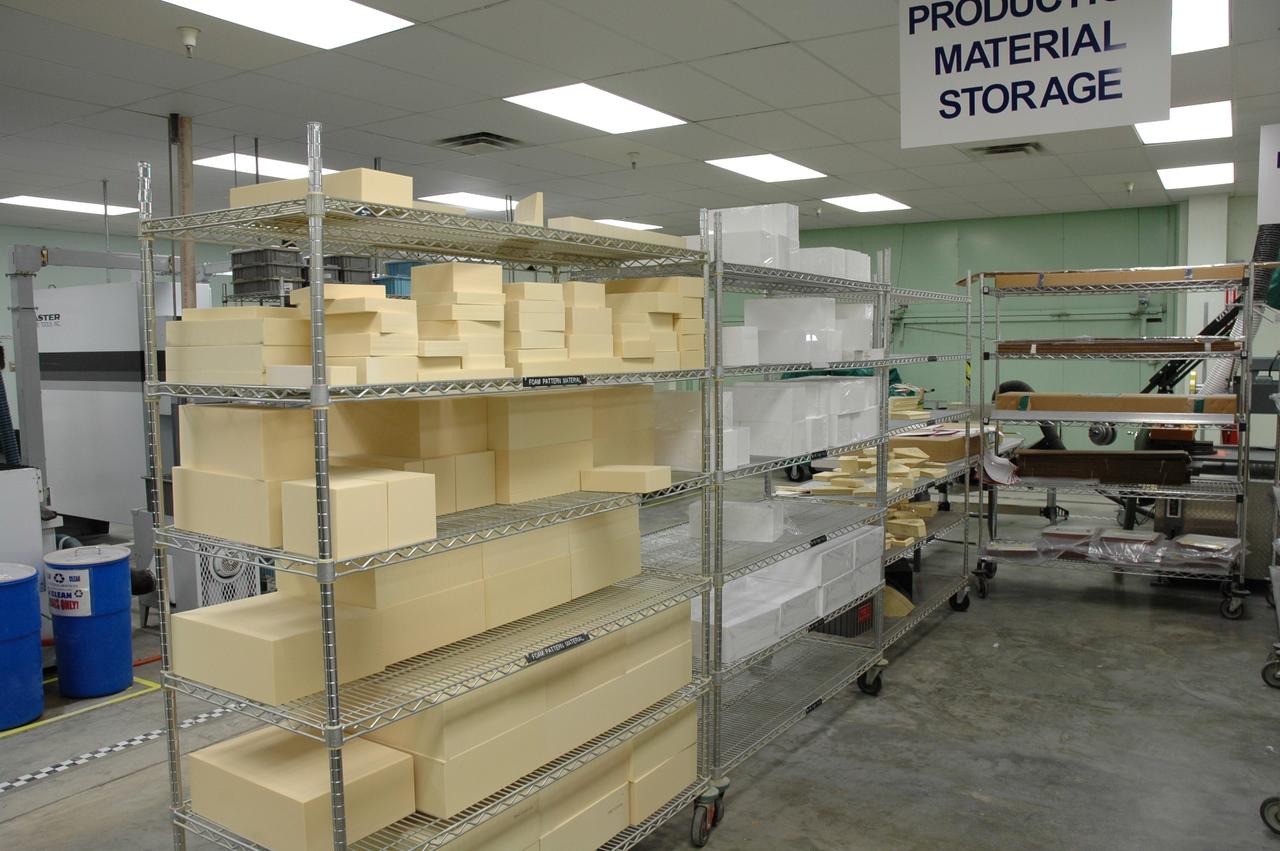
CAPE CANAVERAL, Fla. – In the Tile Shop at NASA's Kennedy Space Center, shelves are stacked with Boeing Rigid Insulation-18, or BRI-18, tiles. BRI-18 is the strongest material used for thermal insulation on the orbiters and, when coated to produce toughened unipiece fibrous insulation, provides a tile with extremely high-impact resistance. It is replacing tiles on areas of the vehicle where impact risk is high. These areas include the landing gear doors, the wing leading edge and the external tank doors. Photo credit: NASA/Jim Grossmann
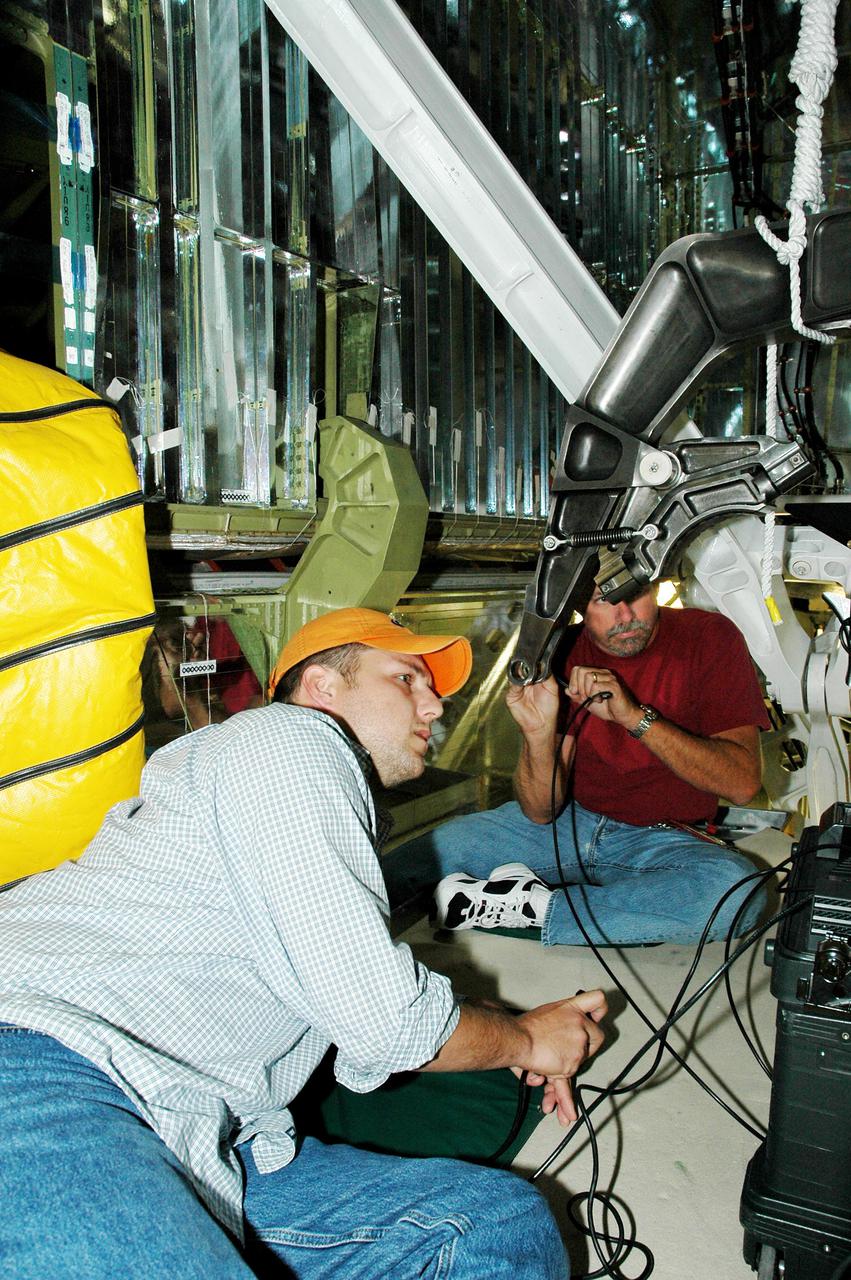
KENNEDY SPACE CENTER, FLA. - On Orbiter Atlantis in NASA’s Orbiter Processing Facility, bay 1, the retract link assembly on the right-hand main landing gear has been removed and will be replaced. Performing boroscope inspection are Charles Wassen, orbiter inspector, and Scott Minnick, lead inspector for micro inspection team. Last week a small crack was found on the right-hand assembly. To lower the main landing gear, a mechanical linkage released by each gear actuates the doors to the open position. The landing gear reach the full-down and extended position with 10 seconds and are locked in the down position by spring-loaded downlock bungees Atlantis is scheduled to launch in September 2005 on the second Return to Flight mission, STS-121.
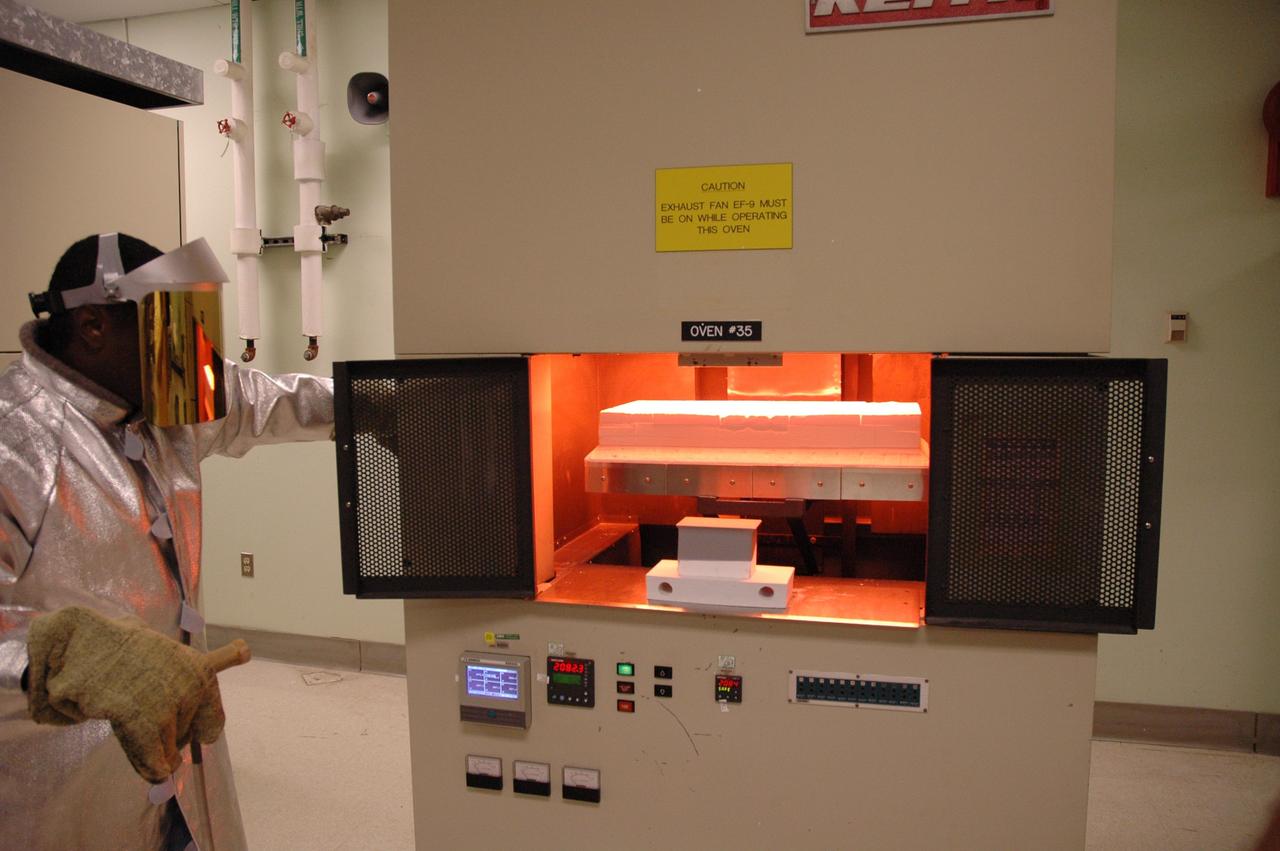
CAPE CANAVERAL, Fla. – In the tile shop at NASA's Kennedy Space Center, a worker reaches for the door to close the oven with the Boeing Replacement Insulation 18, or BRI-18, tile inside. The tile will be baked at 2,200 degrees Fahrenheit to cure the ceramic coating, part of the process to prepare the tiles for installation on space shuttles. BRI-18 is the strongest material used for thermal insulation on the orbiters and, when coated to produce toughened unipiece fibrous insulation, provides a tile with extremely high-impact resistance. It is replacing other tiles on areas of the vehicle where impact risk is high, such as the landing gear doors, the wing leading edge and the external tank doors. Photo credit: NASA/Jim Grossmann
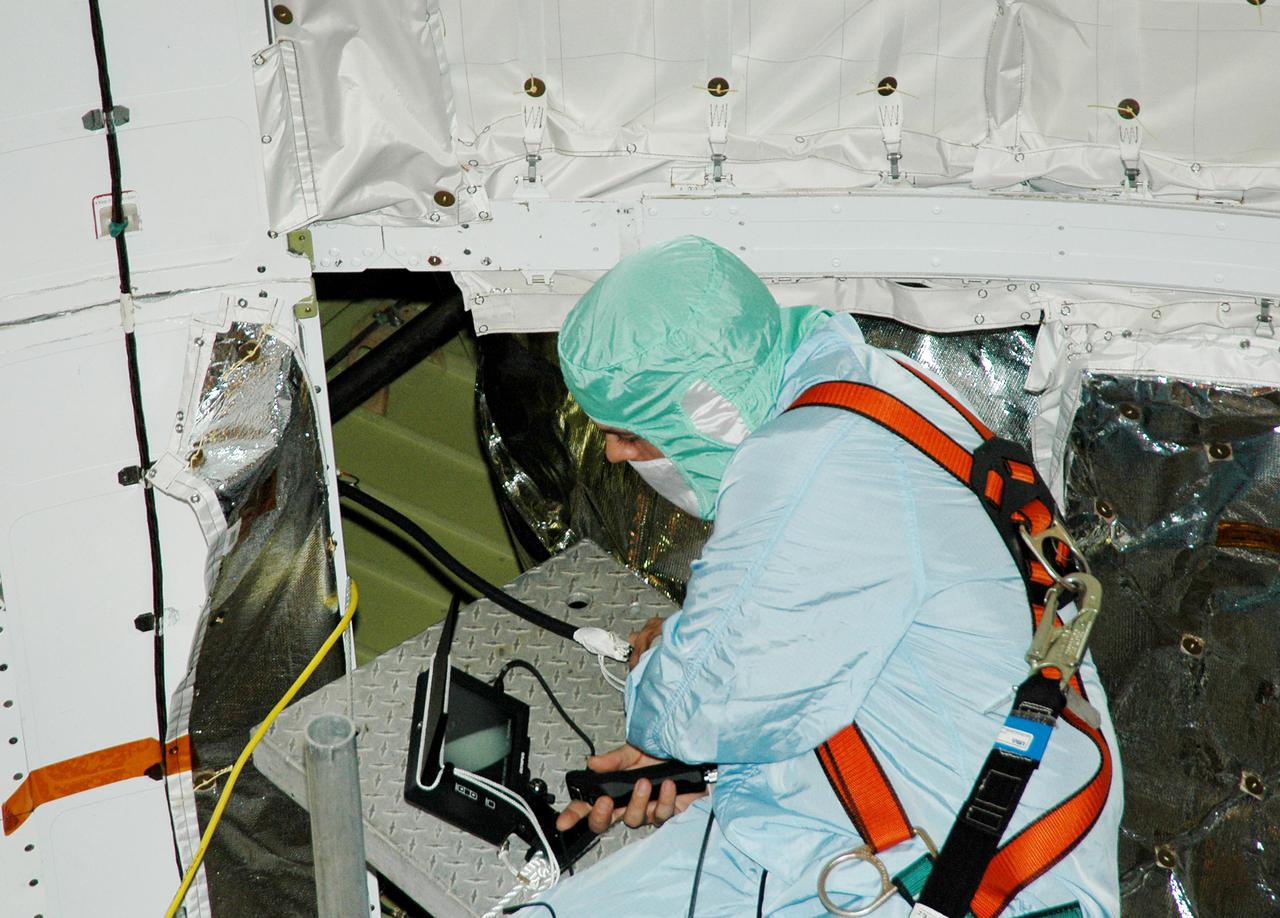
KENNEDY SPACE CENTER, FLA. - At Launch Complex 39B, a technician in Space Shuttle Discovery's payload bay performs a borescope inspection of the retract link assembly on the orbiter's main landing gear door. The inspection is a precautionary measure after a small crack was found in a retract link assembly on the right-hand main landing gear on orbiter Atlantis. An initial review of the closeout photos of the link assembly on Discovery did not reveal any cracks. Discovery is scheduled to return the Space Shuttle fleet to operational status on mission STS-114. This additional work does not impact the launch planning window of July 13-31.
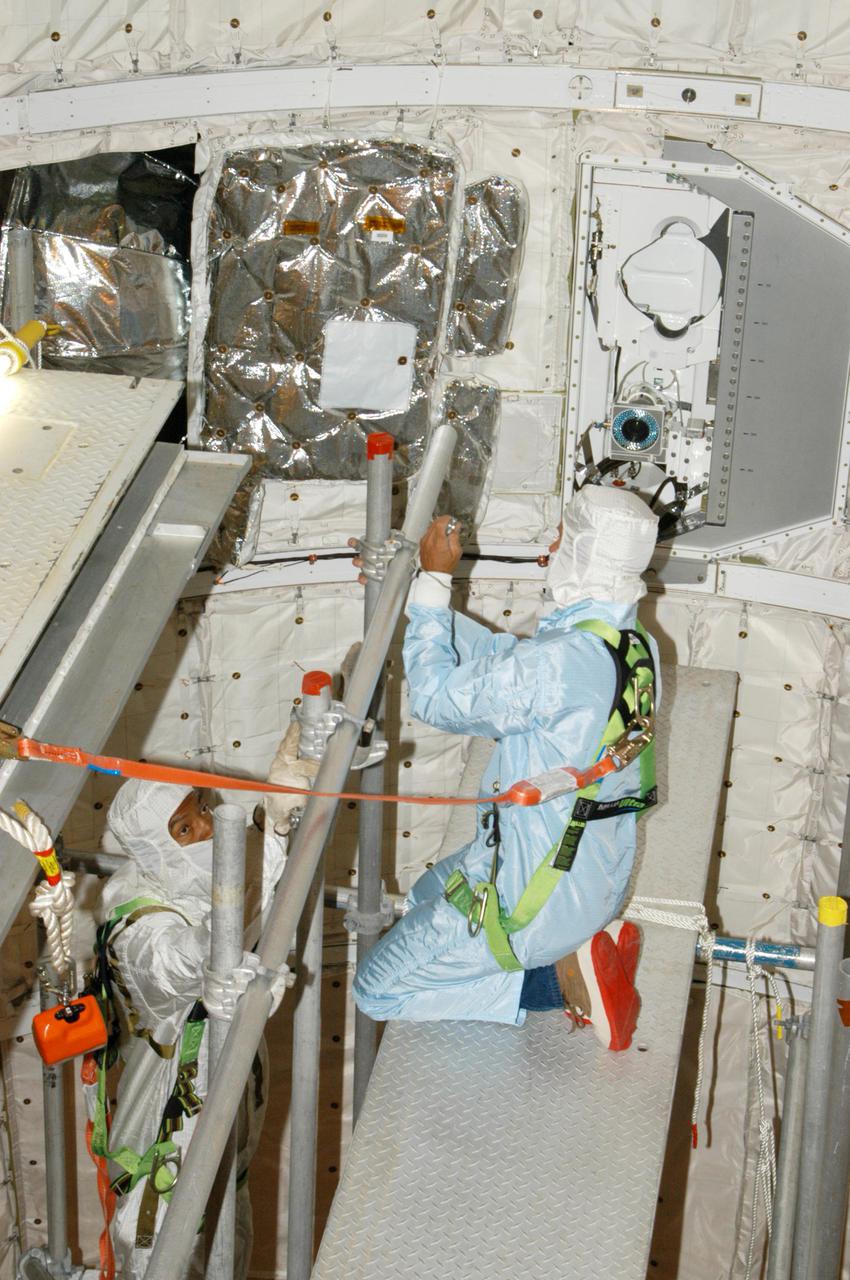
KENNEDY SPACE CENTER, FLA. - At Launch Complex 39B, technicians construct a platform in Space Shuttle Discovery's payload bay to support an upcoming borescope inspection of the retract link assembly on the orbiter's main landing gear door. The inspection is a precautionary measure after a small crack was found in a retract link assembly on the right-hand main landing gear on orbiter Atlantis. An initial review of the closeout photos of the link assembly on Discovery did not reveal any cracks. Discovery is scheduled to return the Space Shuttle fleet to operational status on mission STS-114. This additional work does not impact the launch planning window of July 13-31.
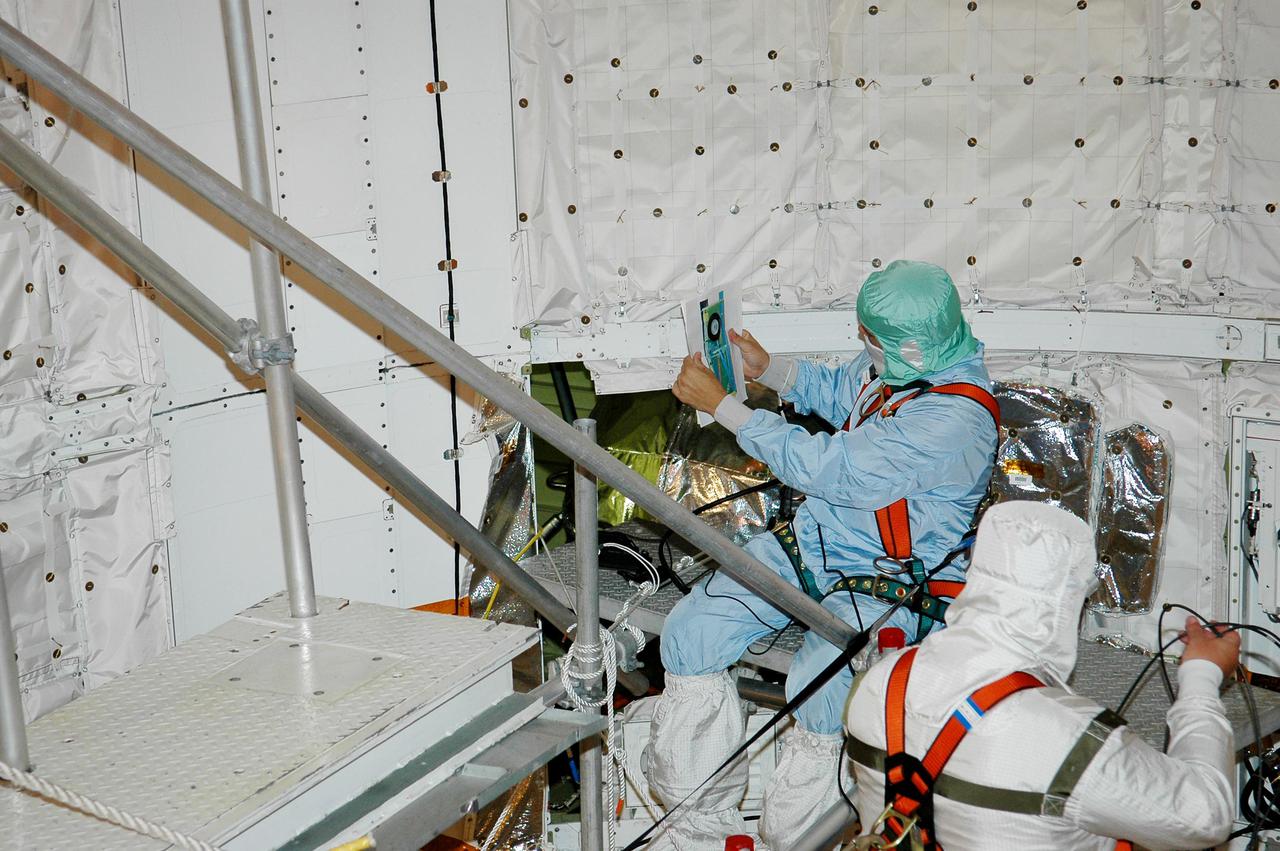
KENNEDY SPACE CENTER, FLA. - At Launch Complex 39B, a technician in Space Shuttle Discovery's payload bay studies a photo of the retract link assembly on the orbiter's main landing gear door prior to conducting a borescope inspection. The inspection is a precautionary measure after a small crack was found in a retract link assembly on the right-hand main landing gear on orbiter Atlantis. An initial review of the closeout photos of the link assembly on Discovery did not reveal any cracks. Discovery is scheduled to return the Space Shuttle fleet to operational status on mission STS-114. This additional work does not impact the launch planning window of July 13-31.
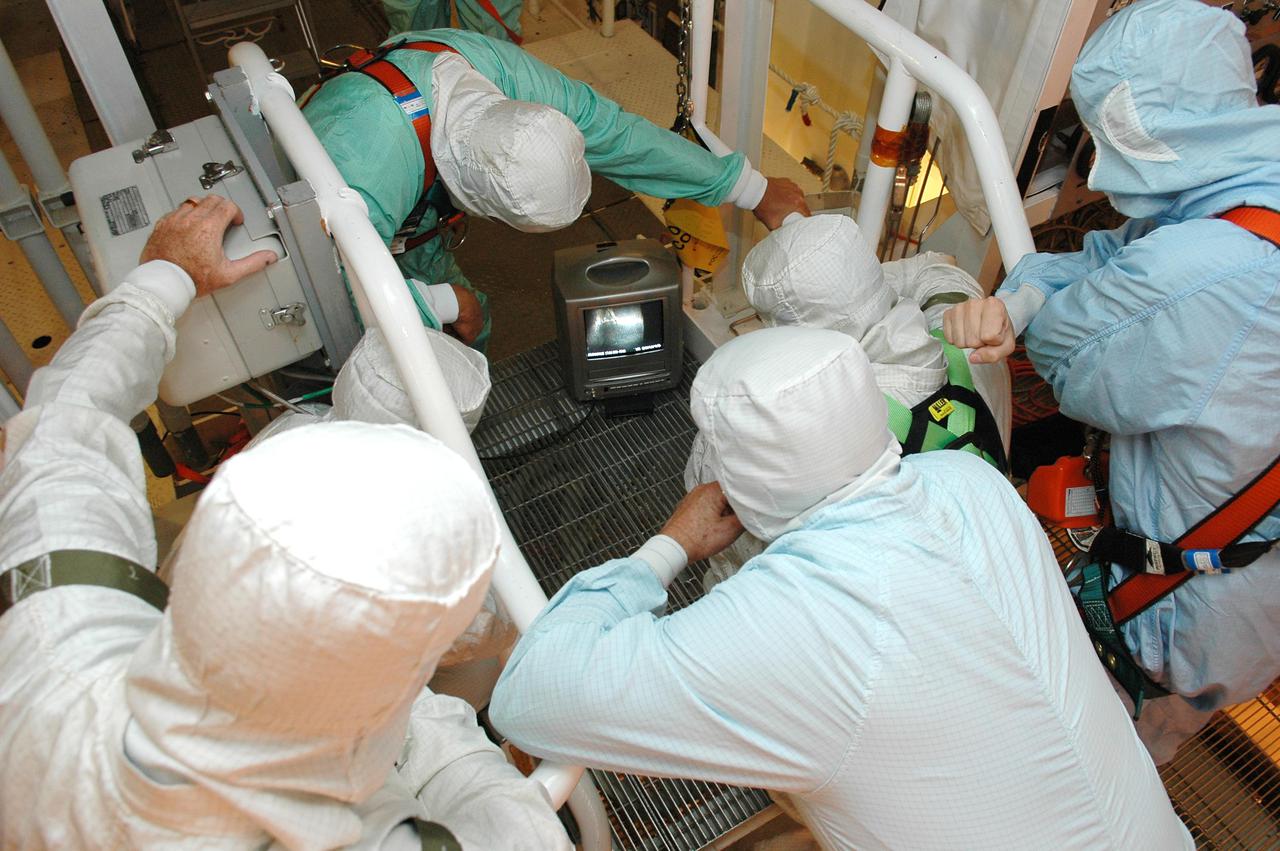
KENNEDY SPACE CENTER, FLA. - At Launch Complex 39B, technicians in Space Shuttle Discovery's payload bay perform a borescope inspection of the retract link assembly on the orbiter's main landing gear door. The inspection is a precautionary measure after a small crack was found in a retract link assembly on the right-hand main landing gear on orbiter Atlantis. An initial review of the closeout photos of the link assembly on Discovery did not reveal any cracks. Discovery is scheduled to return the Space Shuttle fleet to operational status on mission STS-114. This additional work does not impact the launch planning window of July 13-31.
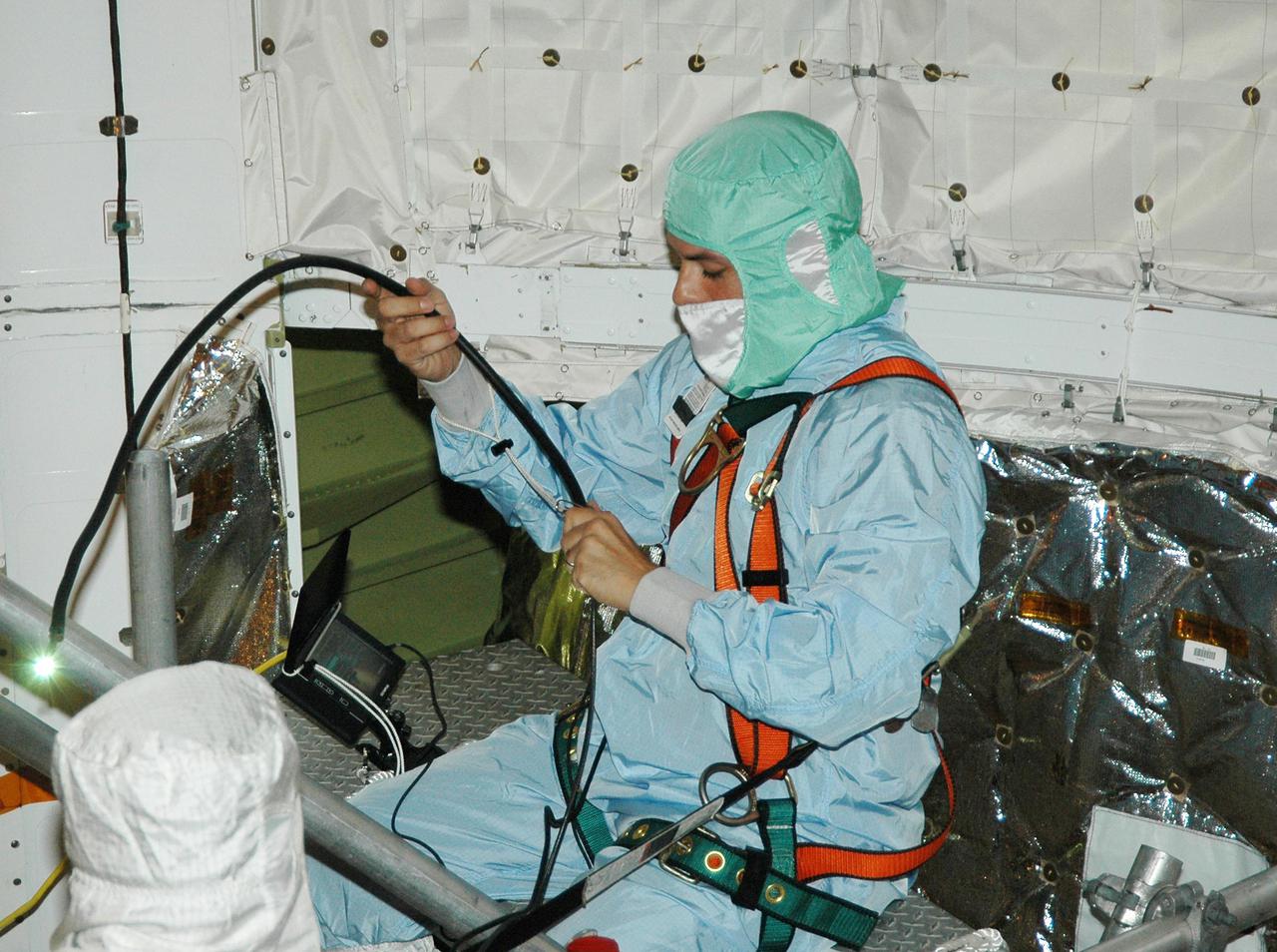
KENNEDY SPACE CENTER, FLA. - At Launch Complex 39B, a technician in Space Shuttle Discovery's payload bay prepares a borescope for an inspection of the retract link assembly on the orbiter's main landing gear door. The inspection is a precautionary measure after a small crack was found in a retract link assembly on the right-hand main landing gear on orbiter Atlantis. An initial review of the closeout photos of the link assembly on Discovery did not reveal any cracks. Discovery is scheduled to return the Space Shuttle fleet to operational status on mission STS-114. This additional work does not impact the launch planning window of July 13-31.
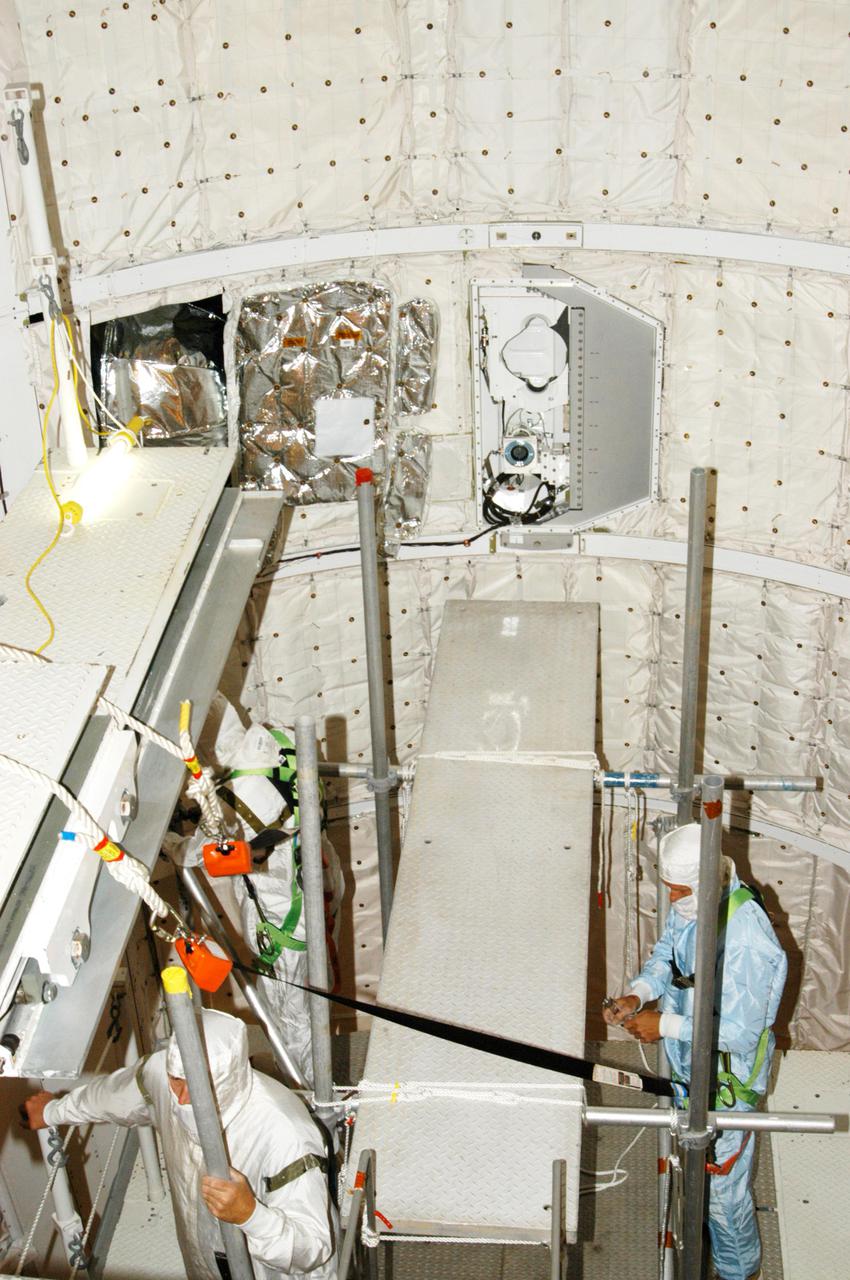
KENNEDY SPACE CENTER, FLA. - At Launch Complex 39B, technicians construct a platform in Space Shuttle Discovery's payload bay to support an upcoming borescope inspection of the retract link assembly on the orbiter's main landing gear door. The inspection is a precautionary measure after a small crack was found in a retract link assembly on the right-hand main landing gear on orbiter Atlantis. An initial review of the closeout photos of the link assembly on Discovery did not reveal any cracks. Discovery is scheduled to return the Space Shuttle fleet to operational status on mission STS-114. This additional work does not impact the launch planning window of July 13-31.
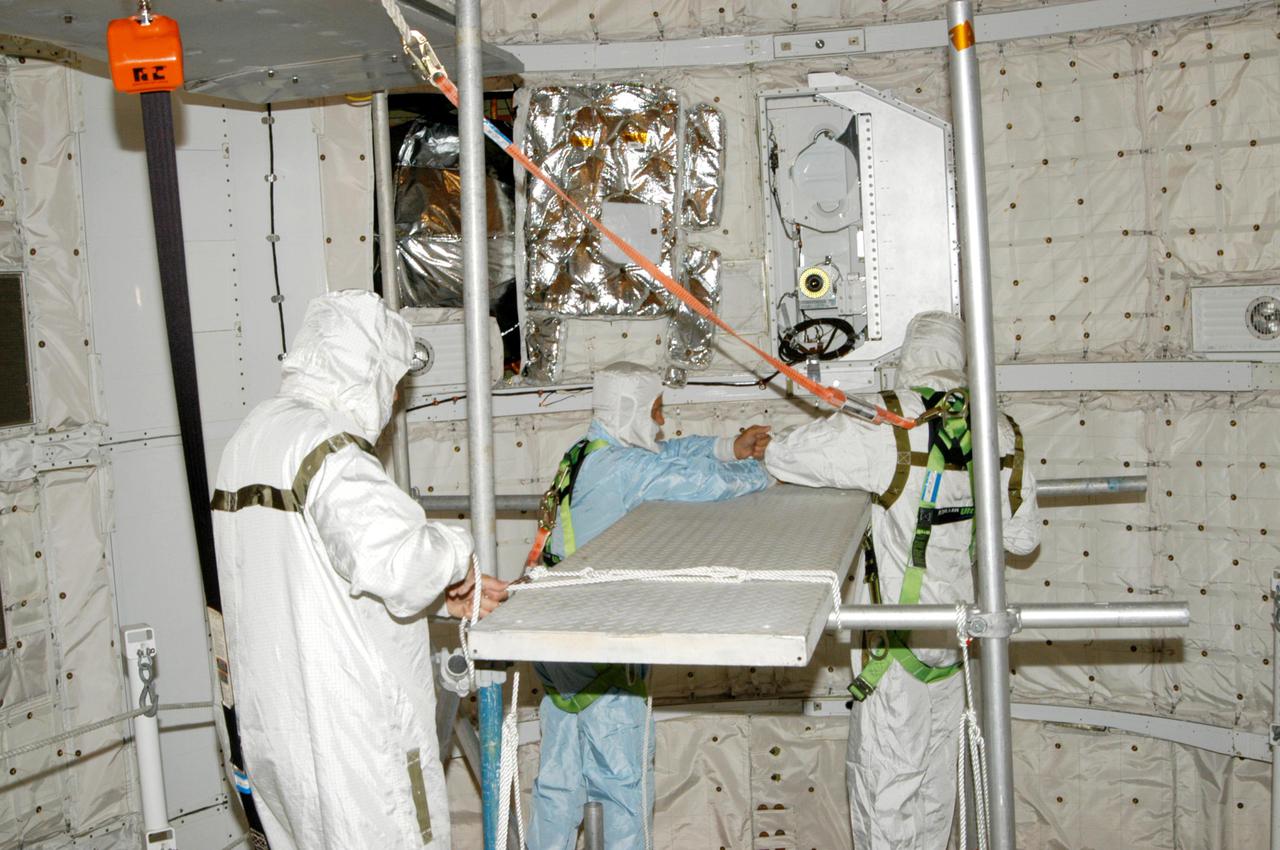
KENNEDY SPACE CENTER, FLA. - At Launch Complex 39B, technicians construct a platform in Space Shuttle Discovery's payload bay to support an upcoming borescope inspection of the retract link assembly on the orbiter's main landing gear door. The inspection is a precautionary measure after a small crack was found in a retract link assembly on the right-hand main landing gear on orbiter Atlantis. An initial review of the closeout photos of the link assembly on Discovery did not reveal any cracks. Discovery is scheduled to return the Space Shuttle fleet to operational status on mission STS-114. This additional work does not impact the launch planning window of July 13-31.
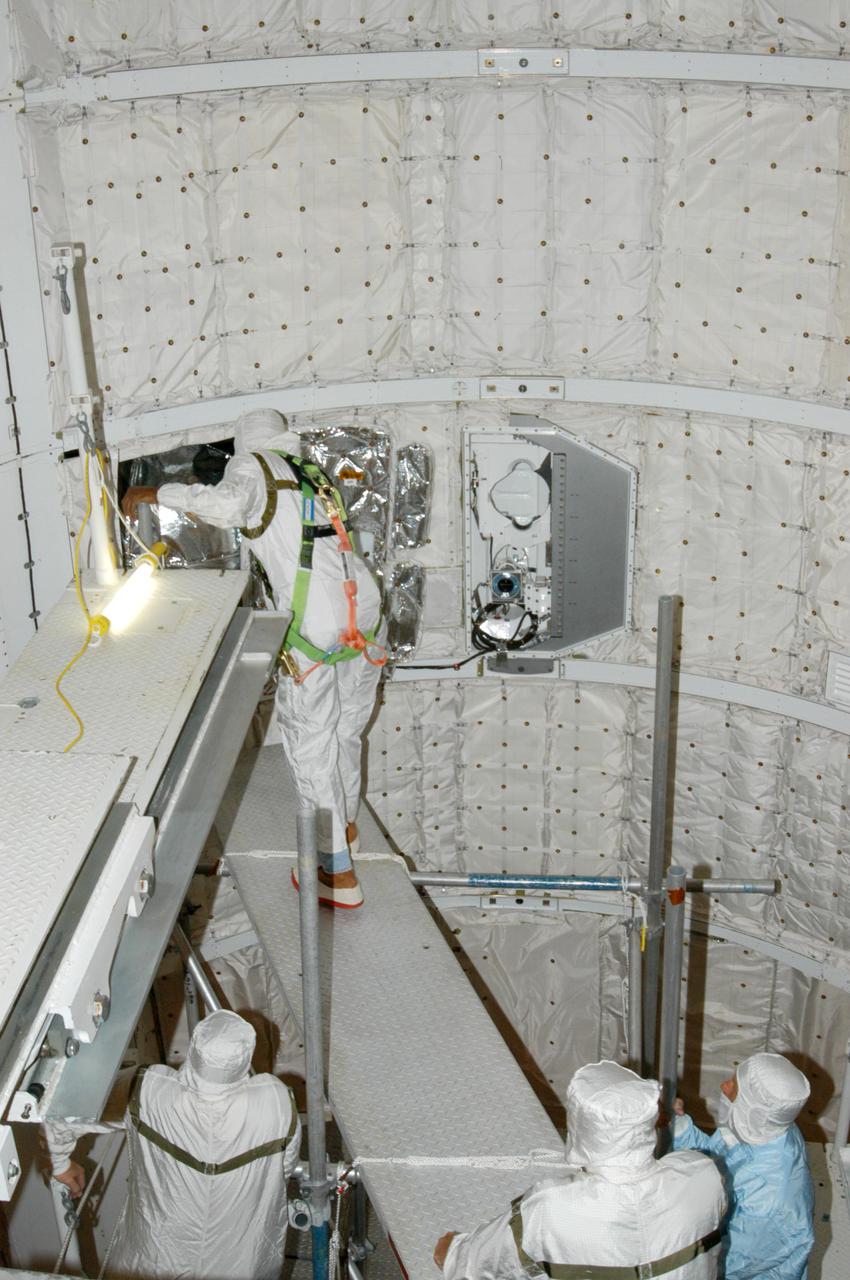
KENNEDY SPACE CENTER, FLA. - At Launch Complex 39B, technicians construct a platform in Space Shuttle Discovery's payload bay to support an upcoming borescope inspection of the retract link assembly on the orbiter's main landing gear door. The inspection is a precautionary measure after a small crack was found in a retract link assembly on the right-hand main landing gear on orbiter Atlantis. An initial review of the closeout photos of the link assembly on Discovery did not reveal any cracks. Discovery is scheduled to return the Space Shuttle fleet to operational status on mission STS-114. This additional work does not impact the launch planning window of July 13-31.
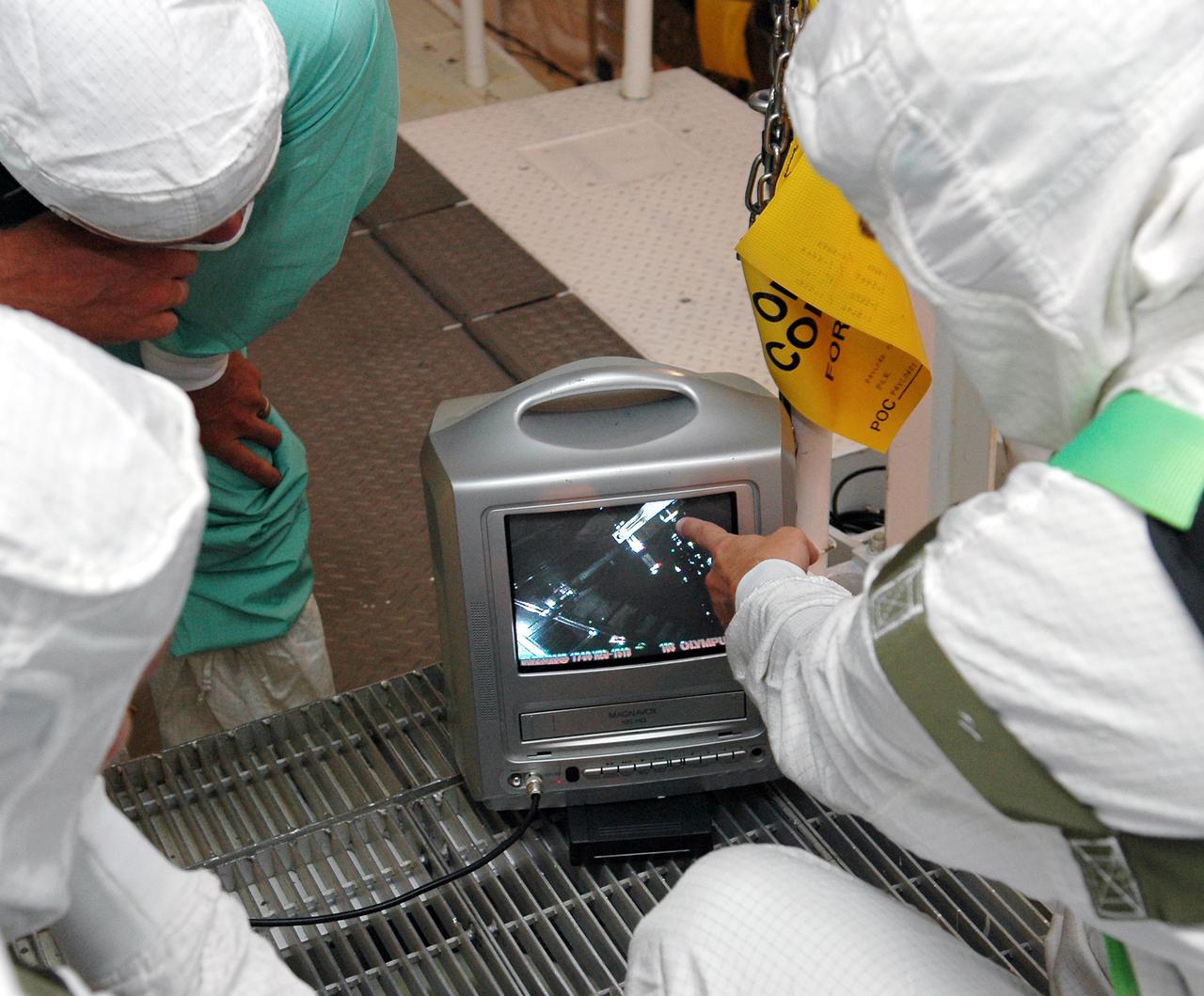
KENNEDY SPACE CENTER, FLA. - At Launch Complex 39B, technicians in Space Shuttle Discovery's payload bay monitor the images received during a borescope inspection of the retract link assembly on the orbiter's main landing gear door. The inspection is a precautionary measure after a small crack was found in a retract link assembly on the right-hand main landing gear on orbiter Atlantis. An initial review of the closeout photos of the link assembly on Discovery did not reveal any cracks. Discovery is scheduled to return the Space Shuttle fleet to operational status on mission STS-114. This additional work does not impact the launch planning window of July 13-31.
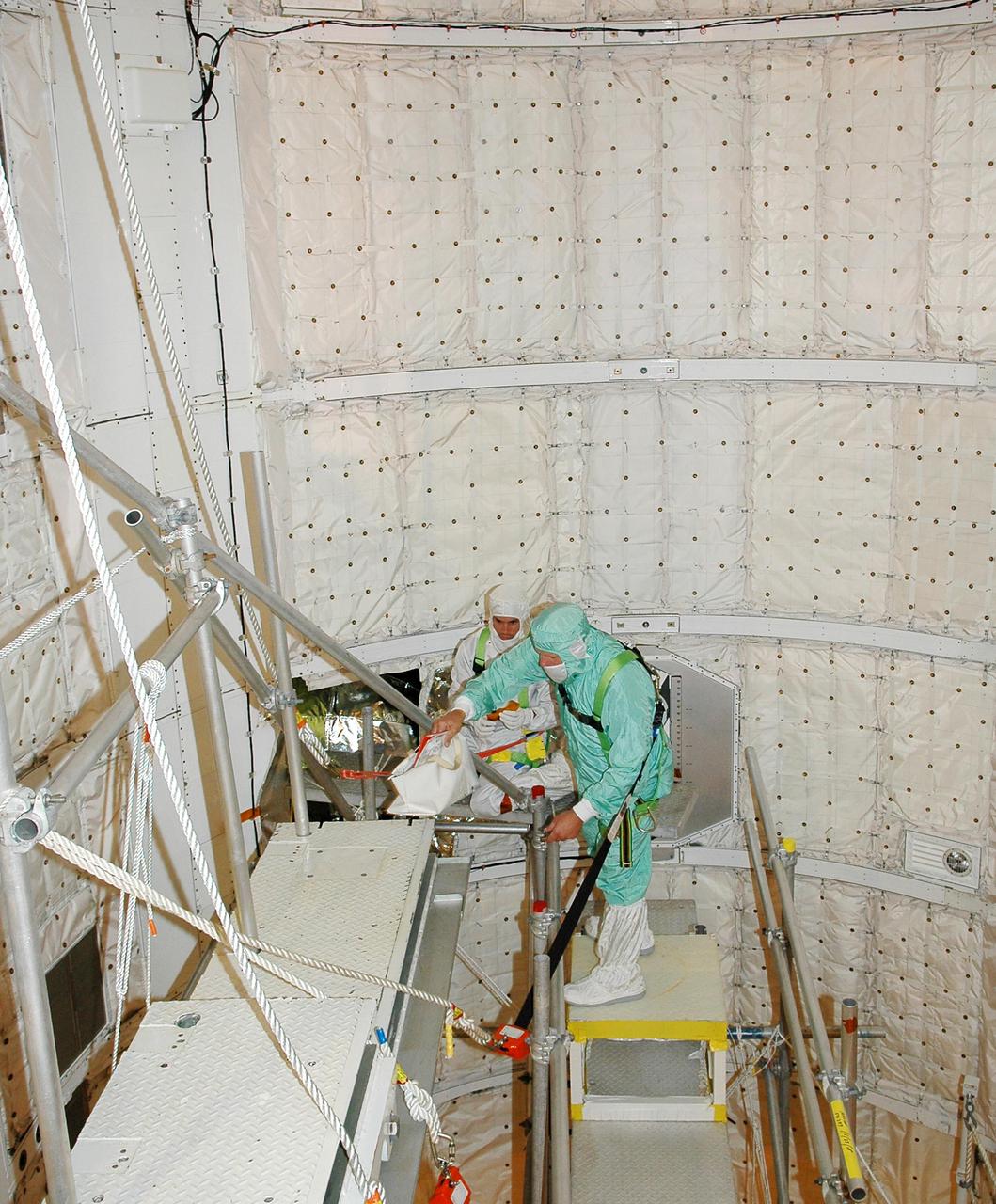
KENNEDY SPACE CENTER, FLA. - At Launch Complex 39B, technicians enter Space Shuttle Discovery's payload bay and prepare to conduct a borescope inspection of the retract link assembly on the orbiter's main landing gear door. The inspection is a precautionary measure after a small crack was found in a retract link assembly on the right-hand main landing gear on orbiter Atlantis. An initial review of the closeout photos of the link assembly on Discovery did not reveal any cracks. Discovery is scheduled to return the Space Shuttle fleet to operational status on mission STS-114. This additional work does not impact the launch planning window of July 13-31.
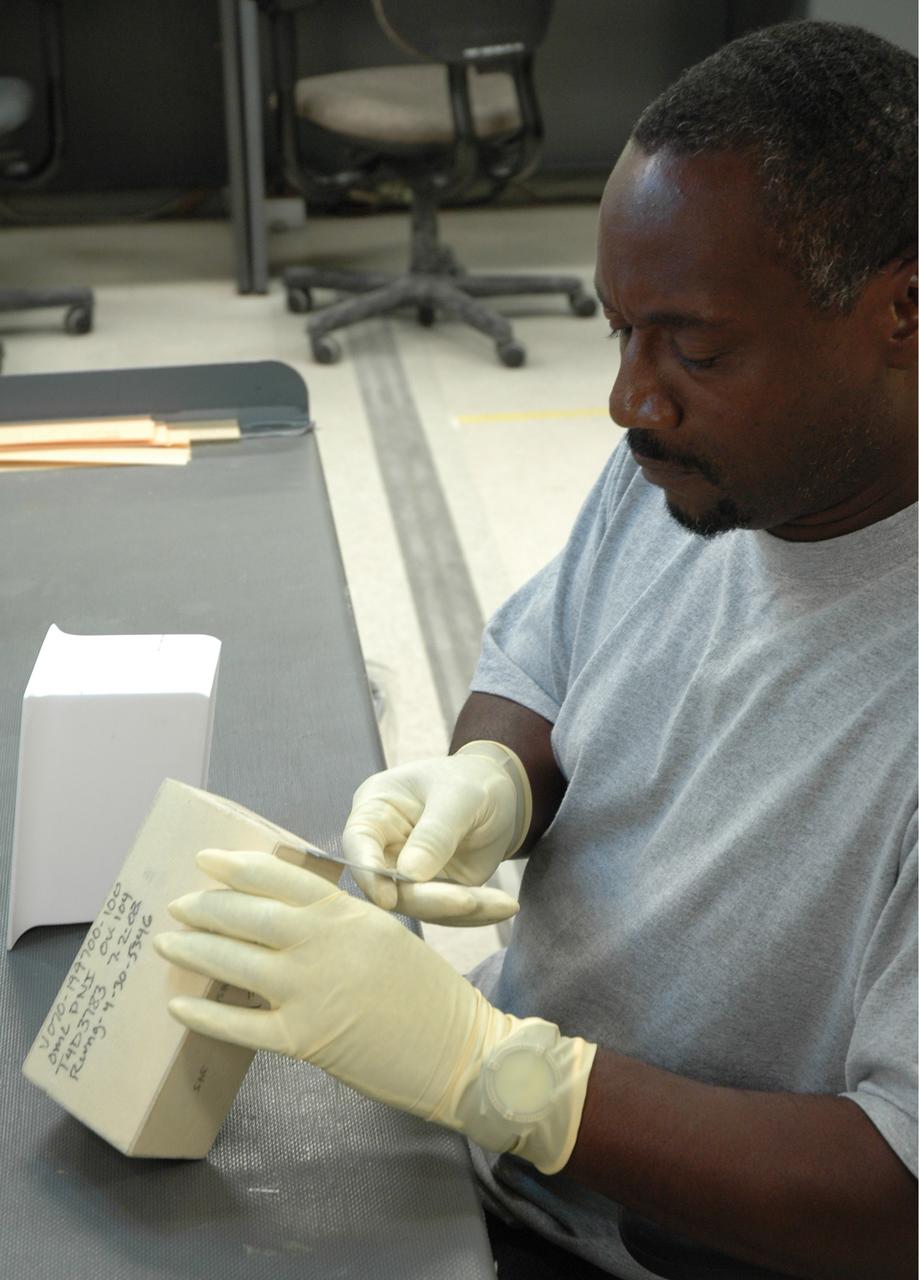
CAPE CANAVERAL, Fla. – In the Tile Shop at NASA's Kennedy Space Center, a United Space Alliance technician checks a Boeing Rigid Insulation-18, or BRI-18, tile. BRI-18 is the strongest material used for thermal insulation on the orbiters and, when coated to produce toughened unipiece fibrous insulation, provides a tile with extremely high-impact resistance. It is replacing tiles on areas of the vehicle where impact risk is high. These areas include the landing gear doors, the wing leading edge and the external tank doors. Photo credit: NASA/Jim Grossmann
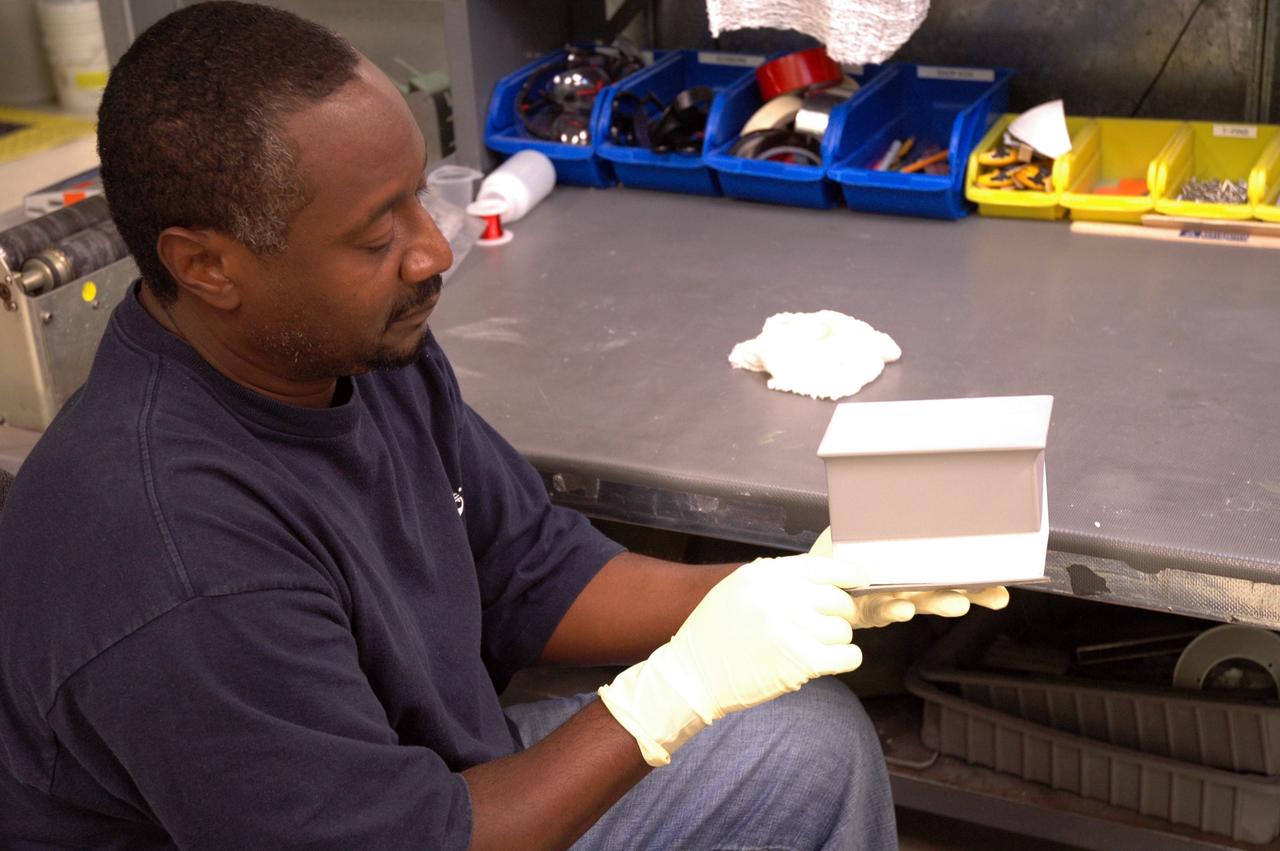
CAPE CANAVERAL, Fla. – In the tile shop at NASA's Kennedy Space Center, a worker holds one of the Boeing Replacement Insulation 18, or BRI-18, tiles being prepared for installation on space shuttles. BRI-18 is the strongest material used for thermal insulation on the orbiters and, when coated to produce toughened unipiece fibrous insulation, provides a tile with extremely high-impact resistance. It is replacing other tiles on areas of the vehicle where impact risk is high, such as the landing gear doors, the wing leading edge and the external tank doors. Photo credit: NASA/Jim Grossmann
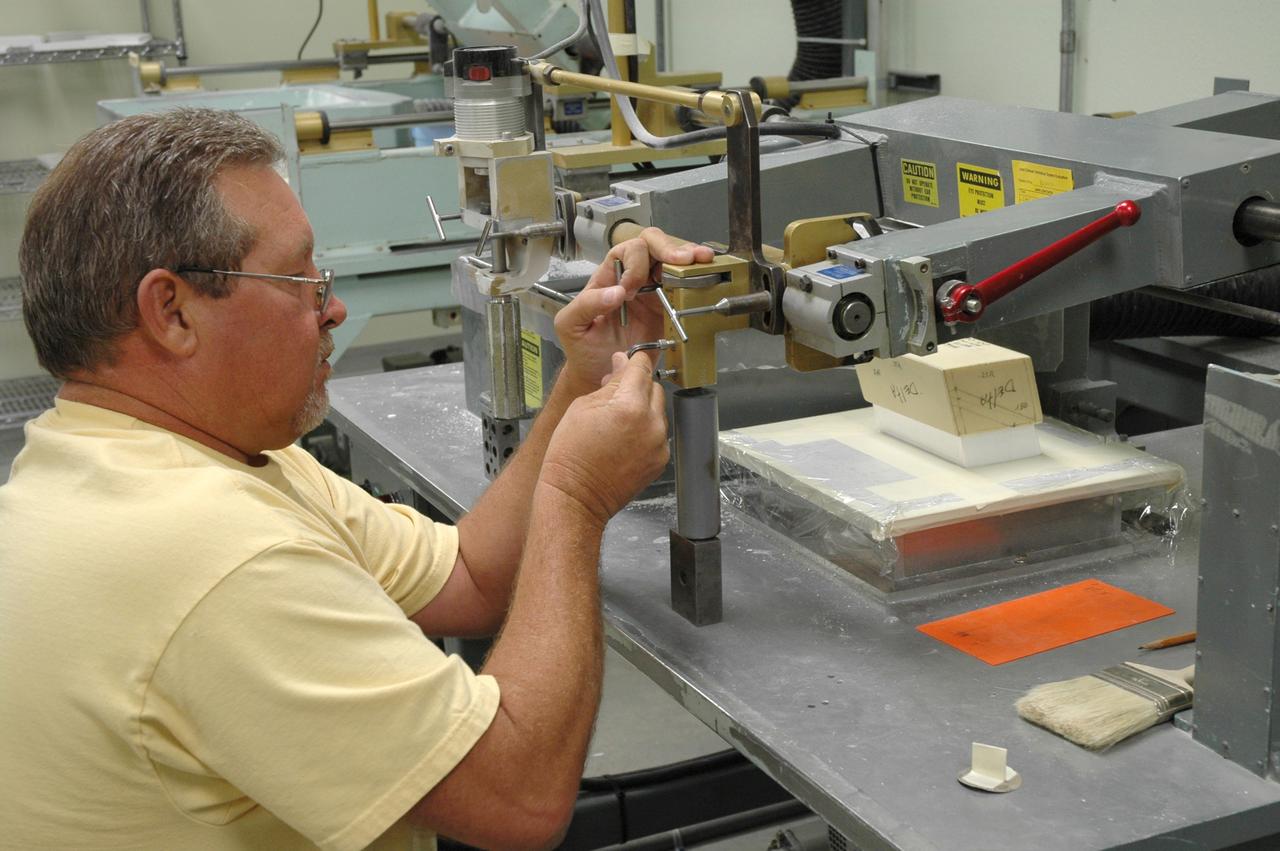
CAPE CANAVERAL, Fla. – In the Tile Shop at NASA's Kennedy Space Center, a United Space Alliance machinist, Tony Rollins, is setting up the tracer mill to machine the Boeing Rigid Insulation-18, or BRI-18, tile. BRI-18 is the strongest material used for thermal insulation on the orbiters and, when coated to produce toughened unipiece fibrous insulation, provides a tile with extremely high-impact resistance. It is replacing tiles on areas of the vehicle where impact risk is high. These areas include the landing gear doors, the wing leading edge and the external tank doors. Photo credit: NASA/Jim Grossmann

CAPE CANAVERAL, Fla. – In the tile shop at NASA's Kennedy Space Center, United Space Alliance technician Damon Petty appies a TUFI coating to Boeing Rigid Insulation-18, or BRI-18, tile. BRI-18 is the strongest material used for thermal insulation on the orbiters and, when coated to produce toughened unipiece fibrous insulation, provides a tile with extremely high-impact resistance. It is replacing other tiles on areas of the vehicle where impact risk is high, such as the landing gear doors, the wing leading edge and the external tank doors. Photo credit: NASA/Jim Grossmann
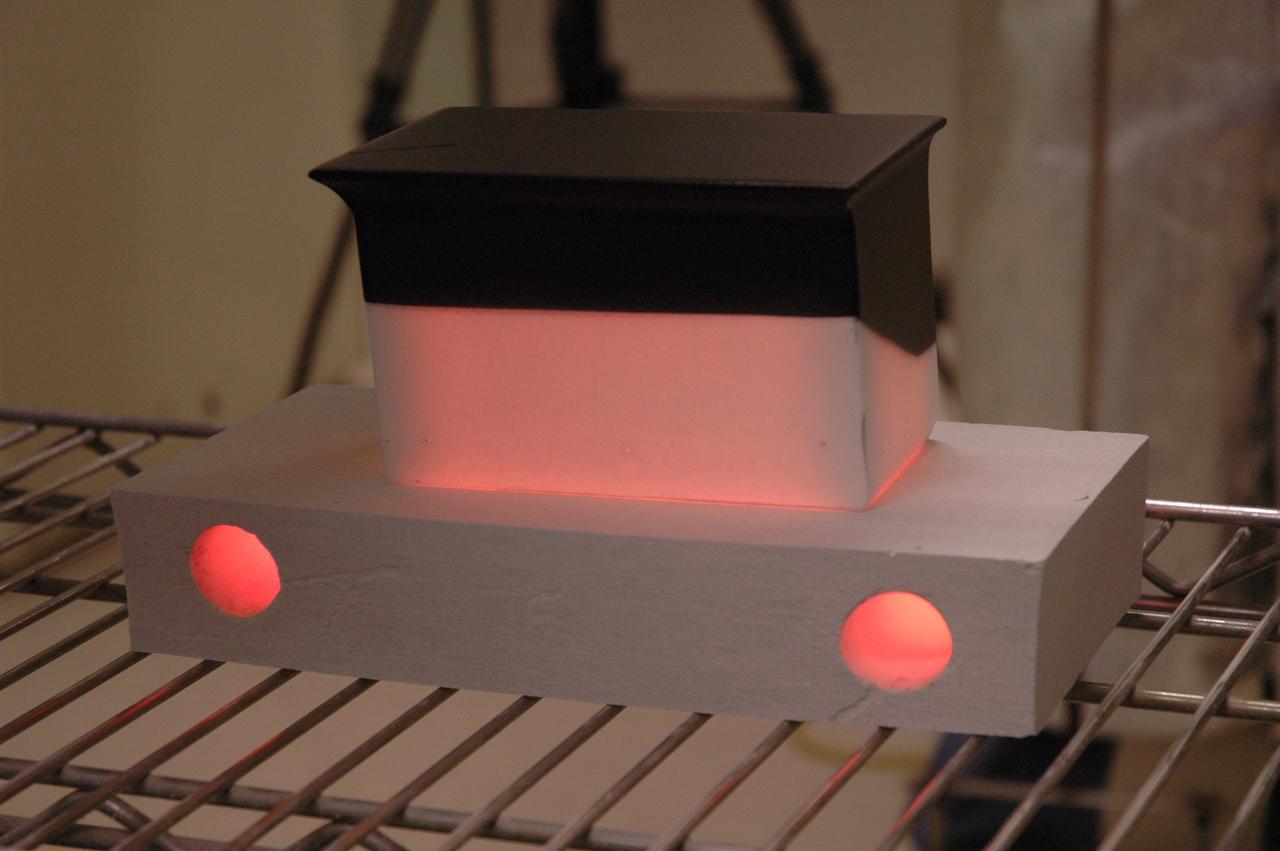
CAPE CANAVERAL, Fla. – In the tile shop at NASA's Kennedy Space Center, a Boeing Replacement Insulation 18, or BRI-18, tile still glows after being baked in a 2,200-degree oven. The baking is part of the process to prepare the tiles for installation on space shuttles. BRI-18 is the strongest material used for thermal insulation on the orbiters and, when coated to produce toughened unipiece fibrous insulation, provides a tile with extremely high-impact resistance. It is replacing other tiles on areas of the vehicle where impact risk is high, such as the landing gear doors, the wing leading edge and the external tank doors. Photo credit: NASA/Jim Grossmann
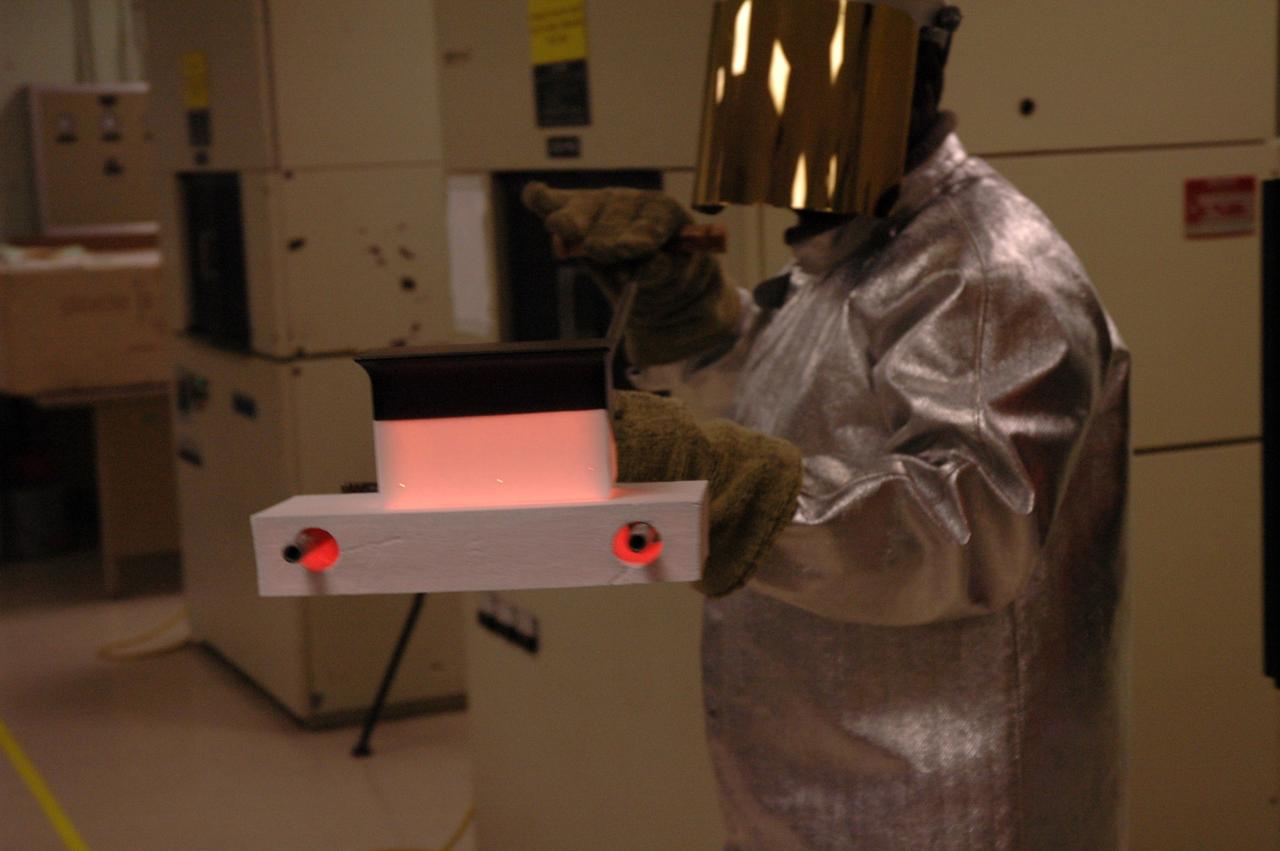
CAPE CANAVERAL, Fla. – In the tile shop at NASA's Kennedy Space Center, a worker removes a Boeing Replacement Insulation 18, or BRI-18, tile from a 2,200-degree oven. The baking is part of the process to prepare the tiles for installation on space shuttles. BRI-18 is the strongest material used for thermal insulation on the orbiters and, when coated to produce toughened unipiece fibrous insulation, provides a tile with extremely high-impact resistance. It is replacing other tiles on areas of the vehicle where impact risk is high, such as the landing gear doors, the wing leading edge and the external tank doors. Photo credit: NASA/Jim Grossmann
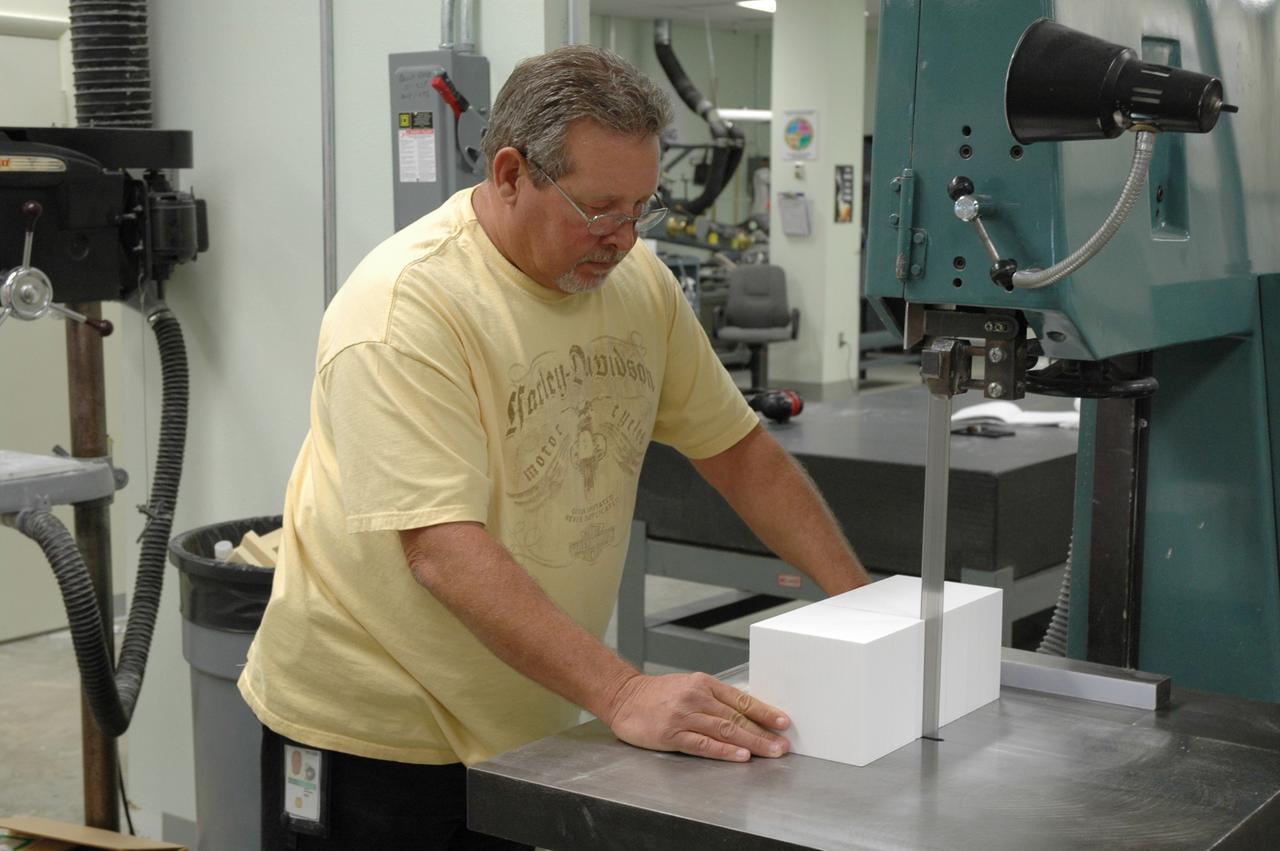
CAPE CANAVERAL, Fla. – In the Tile Shop at NASA's Kennedy Space Center, a United Space Alliance technician cuts a block of Boeing Rigid Insulation-18, or BRI-18, tile. BRI-18 is the strongest material used for thermal insulation on the orbiters and, when coated to produce toughened unipiece fibrous insulation, provides a tile with extremely high-impact resistance. It is replacing tiles on areas of the vehicle where impact risk is high. These areas include the landing gear doors, the wing leading edge and the external tank doors. Photo credit: NASA/Jim Grossmann
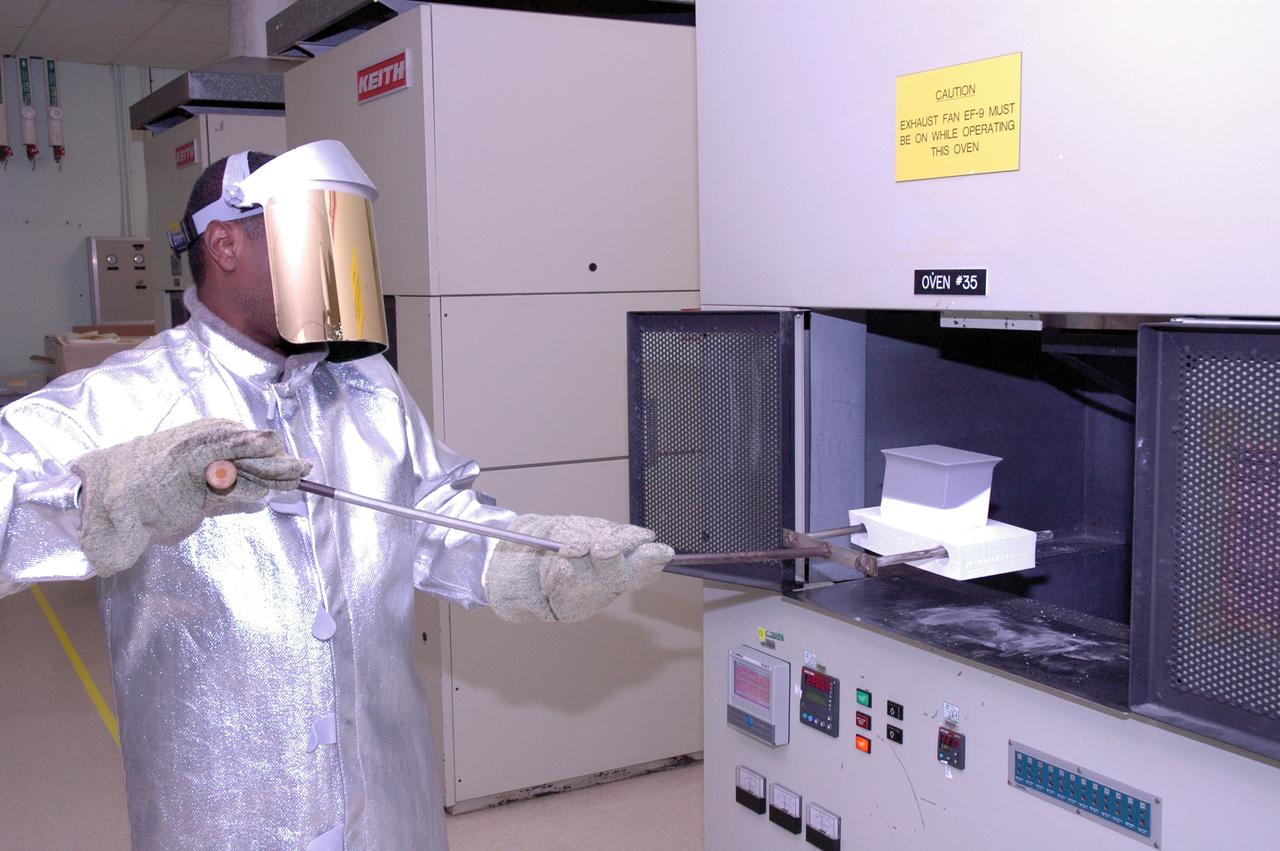
CAPE CANAVERAL, Fla. – In the tile shop at NASA's Kennedy Space Center, a worker places a Boeing Replacement Insulation 18, or BRI-18, tile in the oven. The tile will be baked at 2,200 degrees Fahrenheit to cure the ceramic coating, part of the process to prepare the tiles for installation on space shuttles. BRI-18 is the strongest material used for thermal insulation on the orbiters and, when coated to produce toughened unipiece fibrous insulation, provides a tile with extremely high-impact resistance. It is replacing other tiles on areas of the vehicle where impact risk is high, such as the landing gear doors, the wing leading edge and the external tank doors. Photo credit: NASA/Jim Grossmann
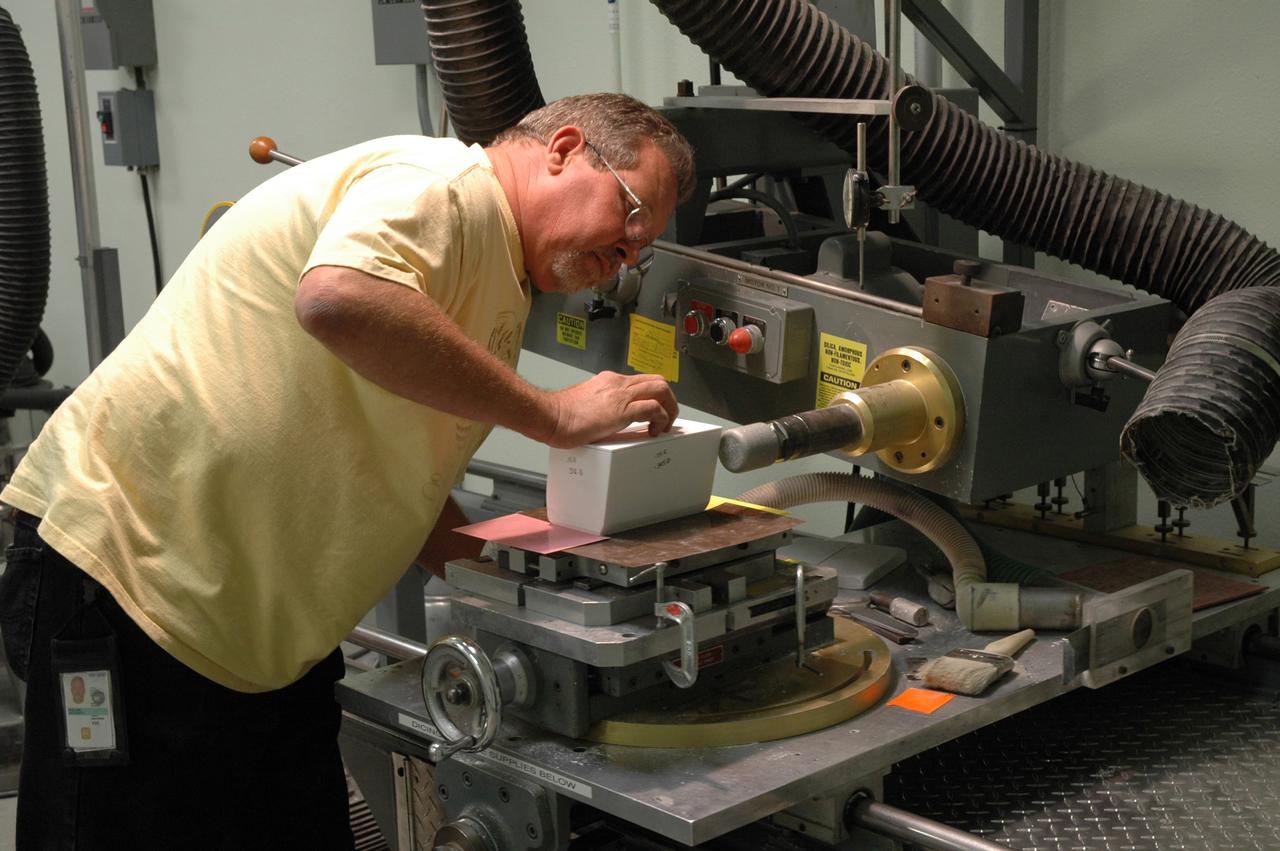
CAPE CANAVERAL, Fla. – In the Tile Shop at NASA's Kennedy Space Center, a United Space Alliance technician checks the Boeing Rigid Insulation-18, or BRI-18, tile he cut. BRI-18 is the strongest material used for thermal insulation on the orbiters and, when coated to produce toughened unipiece fibrous insulation, provides a tile with extremely high-impact resistance. It is replacing tiles on areas of the vehicle where impact risk is high. These areas include the landing gear doors, the wing leading edge and the external tank doors. Photo credit: NASA/Jim Grossmann
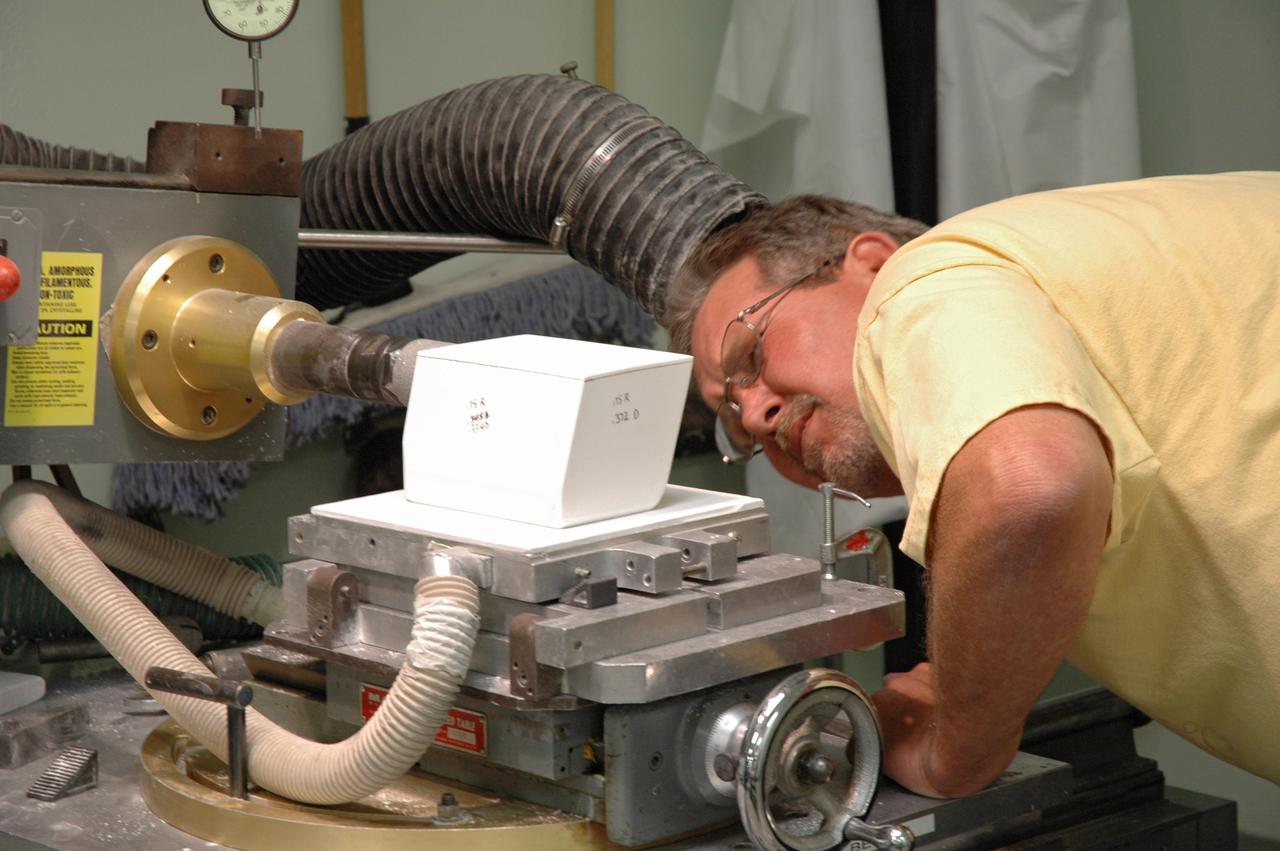
CAPE CANAVERAL, Fla. – In the Tile Shop at NASA's Kennedy Space Center, a United Space Alliance technician checks the shape of Boeing Rigid Insulation-18, or BRI-18, tile he cut. BRI-18 is the strongest material used for thermal insulation on the orbiters and, when coated to produce toughened unipiece fibrous insulation, provides a tile with extremely high-impact resistance. It is replacing tiles on areas of the vehicle where impact risk is high. These areas include the landing gear doors, the wing leading edge and the external tank doors. Photo credit: NASA/Jim Grossmann
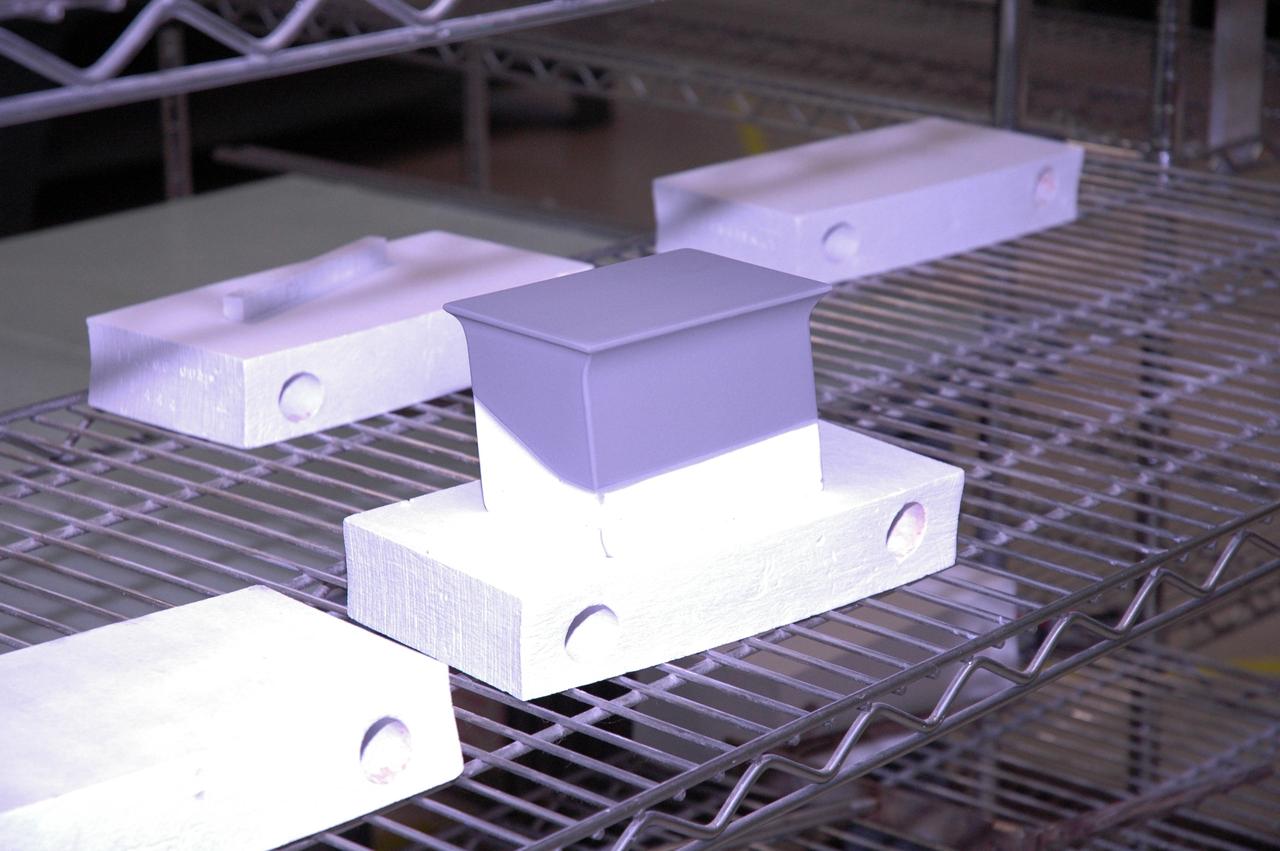
CAPE CANAVERAL, Fla. – In the tile shop at NASA's Kennedy Space Center, a Boeing Replacement Insulation 18, or BRI-18, tile is ready to be baked at 2,200 degrees Fahrenheit to cure the ceramic coating, part of the process to prepare the tiles for installation on space shuttles. BRI-18 is the strongest material used for thermal insulation on the orbiters and, when coated to produce toughened unipiece fibrous insulation, provides a tile with extremely high-impact resistance. It is replacing other tiles on areas of the vehicle where impact risk is high, such as the landing gear doors, the wing leading edge and the external tank doors. Photo credit: NASA/Jim Grossmann
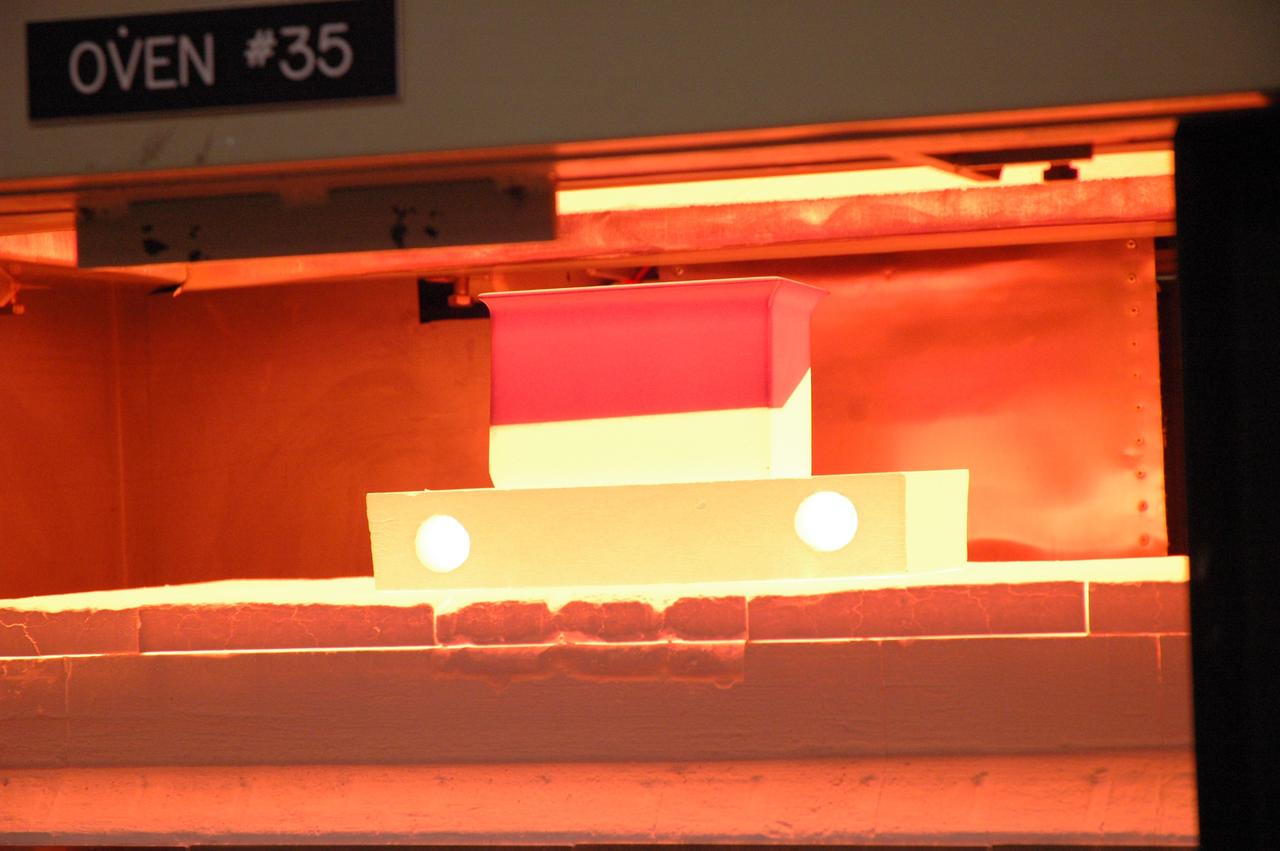
CAPE CANAVERAL, Fla. – In the tile shop at NASA's Kennedy Space Center, a Boeing Replacement Insulation 18, or BRI-18, tile bakes in a 2,200-degree oven to cure the ceramic coating. The baking is part of the process to prepare the tiles for installation on space shuttles. BRI-18 is the strongest material used for thermal insulation on the orbiters and, when coated to produce toughened unipiece fibrous insulation, provides a tile with extremely high-impact resistance. It is replacing other tiles on areas of the vehicle where impact risk is high, such as the landing gear doors, the wing leading edge and the external tank doors. Photo credit: NASA/Jim Grossmann
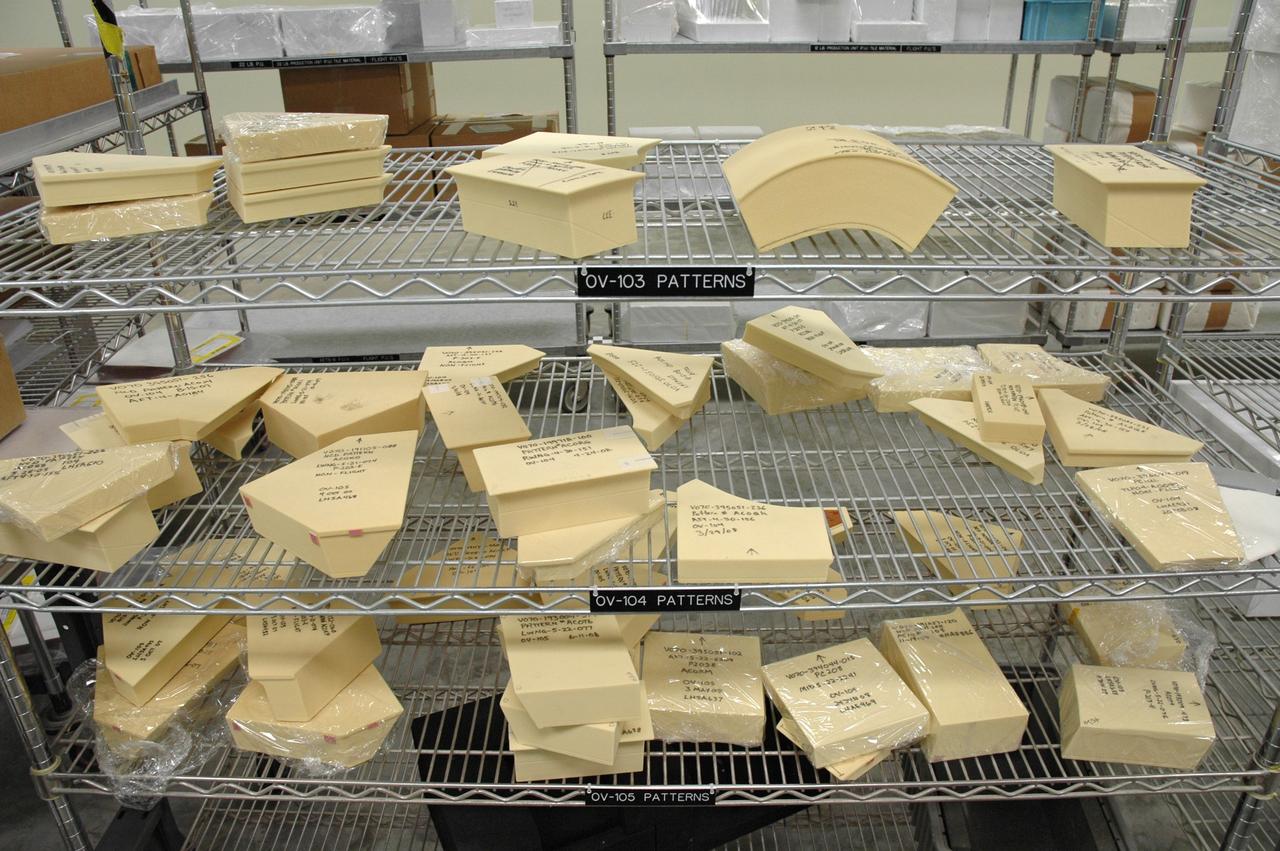
CAPE CANAVERAL, Fla. – In the Tile Shop at NASA's Kennedy Space Center, Boeing Rigid Insulation-18, or BRI-18, tiles of different shapes await use on the three orbiters: Discovery, Atlantis and Endeavour. BRI-18 is the strongest material used for thermal insulation on the orbiters and, when coated to produce toughened unipiece fibrous insulation, provides a tile with extremely high-impact resistance. It is replacing tiles on areas of the vehicle where impact risk is high. These areas include the landing gear doors, the wing leading edge and the external tank doors. Photo credit: NASA/Jim Grossmann
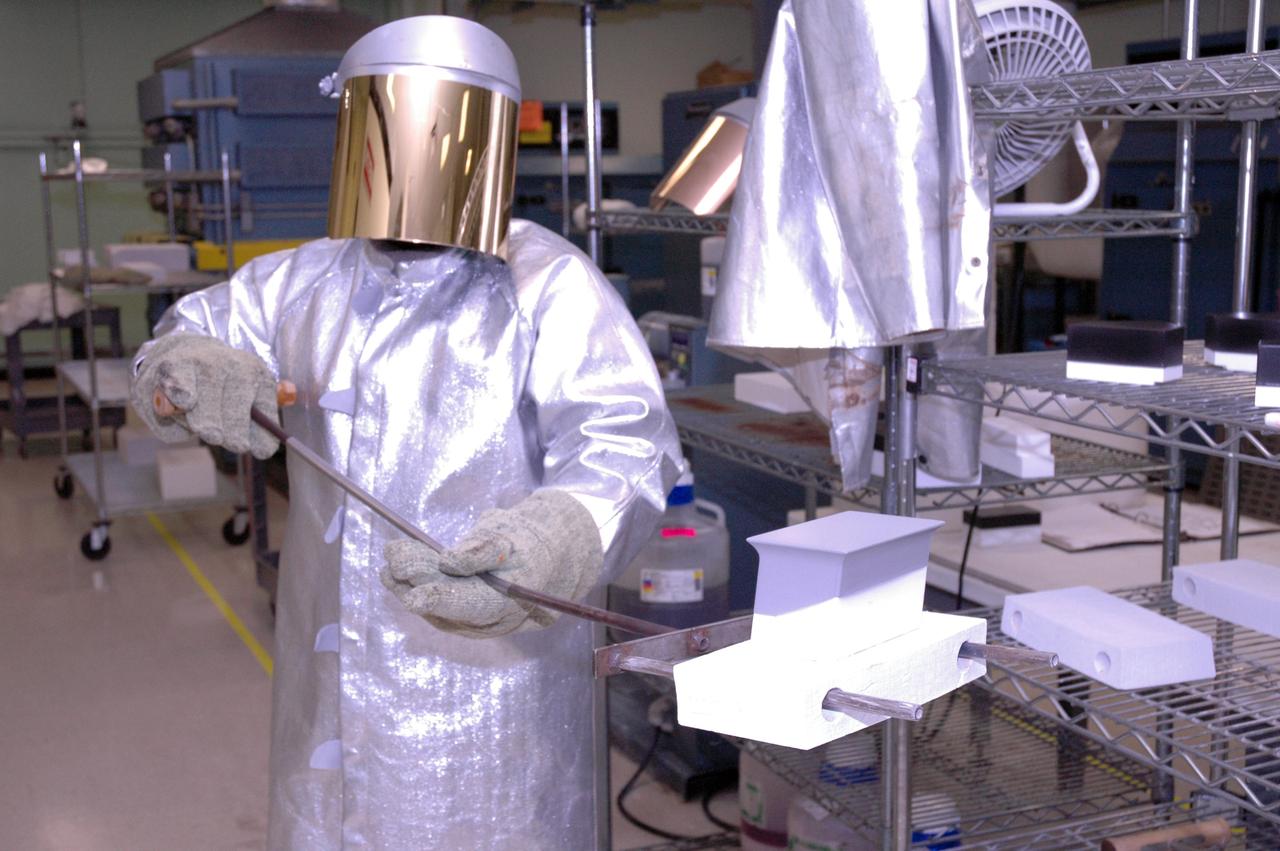
CAPE CANAVERAL, Fla. – In the tile shop at NASA's Kennedy Space Center, a worker is ready to place a Boeing Replacement Insulation 18, or BRI-18, tile in the oven. The tile will be baked at 2,200 degrees Fahrenheit to cure the ceramic coating, part of the process to prepare the tiles for installation on space shuttles. BRI-18 is the strongest material used for thermal insulation on the orbiters and, when coated to produce toughened unipiece fibrous insulation, provides a tile with extremely high-impact resistance. It is replacing other tiles on areas of the vehicle where impact risk is high, such as the landing gear doors, the wing leading edge and the external tank doors. Photo credit: NASA/Jim Grossmann
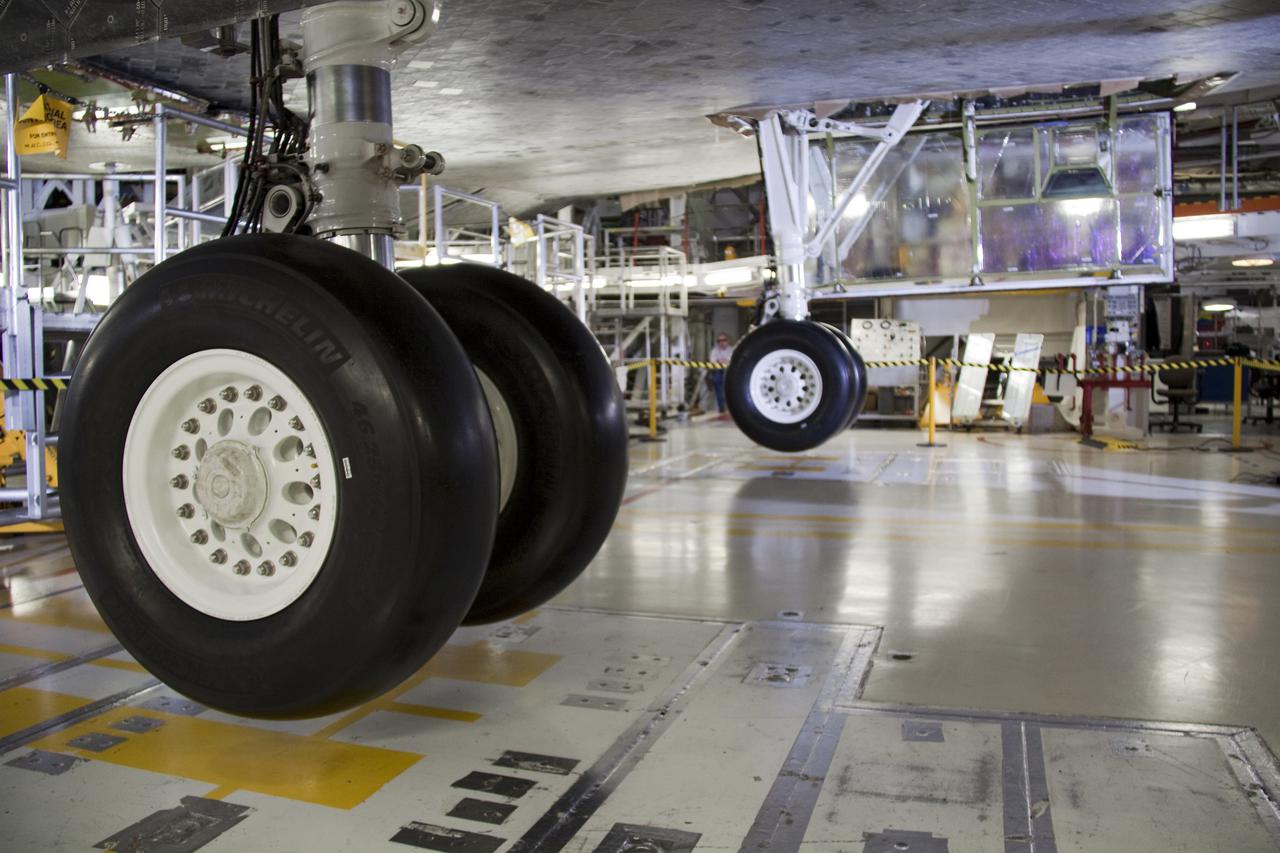
CAPE CANAVERAL, Fla. – In Orbiter Processing Facility-1 at NASA's Kennedy Space Center in Florida, space shuttle Atlantis' rear landing gears are extended and appear to hover over the clean room floor during processing of the shuttle. Changes to the thermal protection system tiles on the periphery of the landing gear doors necessitate that the gears be extended to ensure the doors open properly without obstruction. The practice is standard procedure between shuttle flights. The six-member crew of space shuttle Atlantis' STS-132 mission will deliver an Integrated Cargo Carrier and the Russian-built Mini-Research Module-1, known as Rassvet, to the International Space Station. The second in a series of new pressurized components for Russia, Rassvet will be permanently attached to the Earth-facing port of the Zarya control module. Rassvet, which translates to 'dawn,' will be used for cargo storage and provide an additional docking port to the station. STS-132 is the 34th mission to the station and the 132nd shuttle mission overall. Launch is targeted for May 14. For information on the STS-132 mission, visit http:__www.nasa.gov_mission_pages_shuttle_shuttlemissions_sts132_index.html. Photo credit: NASA_Gianni Woods
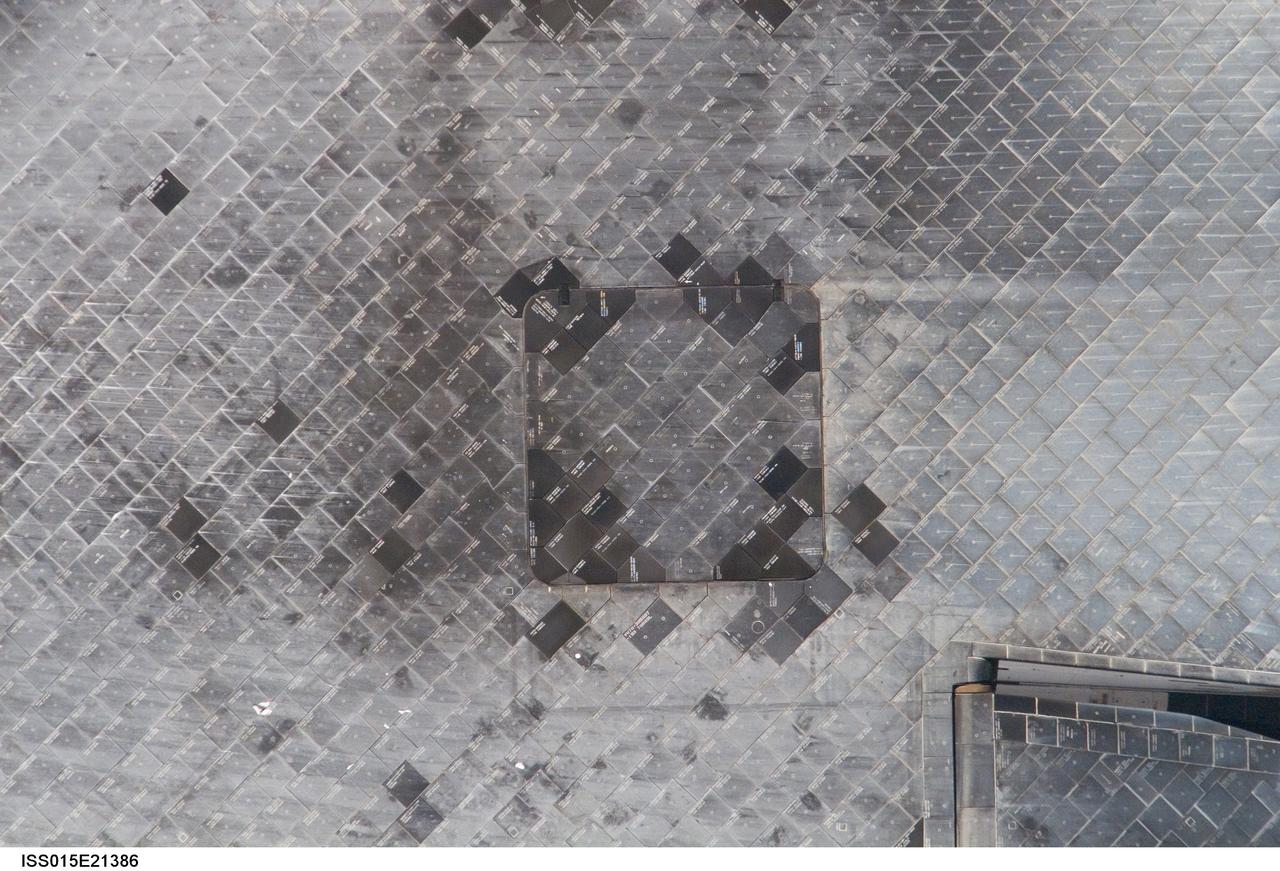
ISS015-E-21386 (10 Aug. 2007) --- This photo of the underside of the Space Shuttle Endeavour was taken from the International Space Station during a back flip and careful survey by crewmembers onboard the orbital outpost. After ground studies, mission managers suspect debris came off Endeavour's external fuel tank one minute after liftoff on Wednesday and struck tiles on the shuttle's underside, near the right main landing gear door.
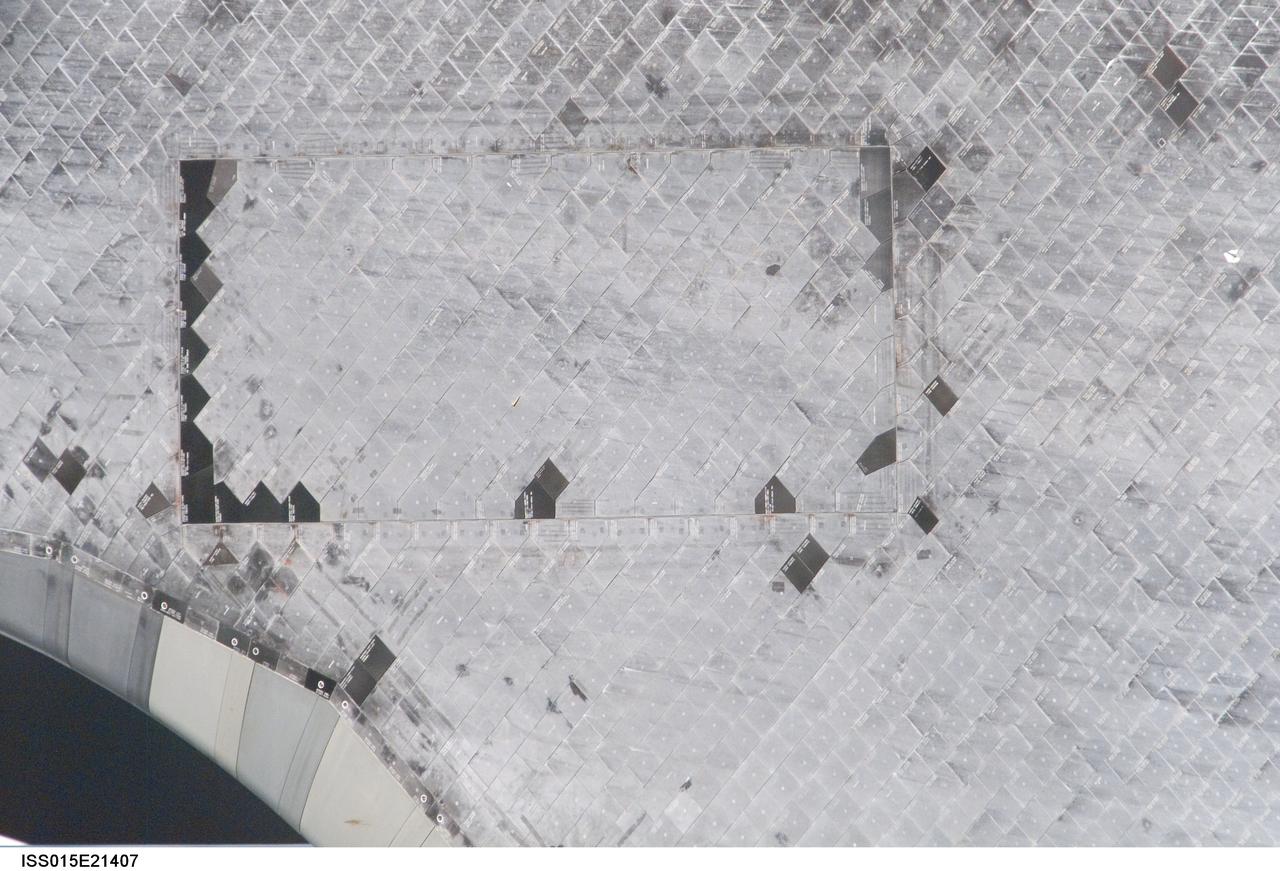
ISS015-E-21407 (10 Aug. 2007) --- This photo of the underside of the Space Shuttle Endeavour was taken from the International Space Station during a back flip and careful survey by crewmembers onboard the orbital outpost. After ground studies, mission managers suspect debris came off Endeavour's external fuel tank one minute after liftoff on Wednesday and struck tiles on the shuttle's underside, near the right main landing gear door.
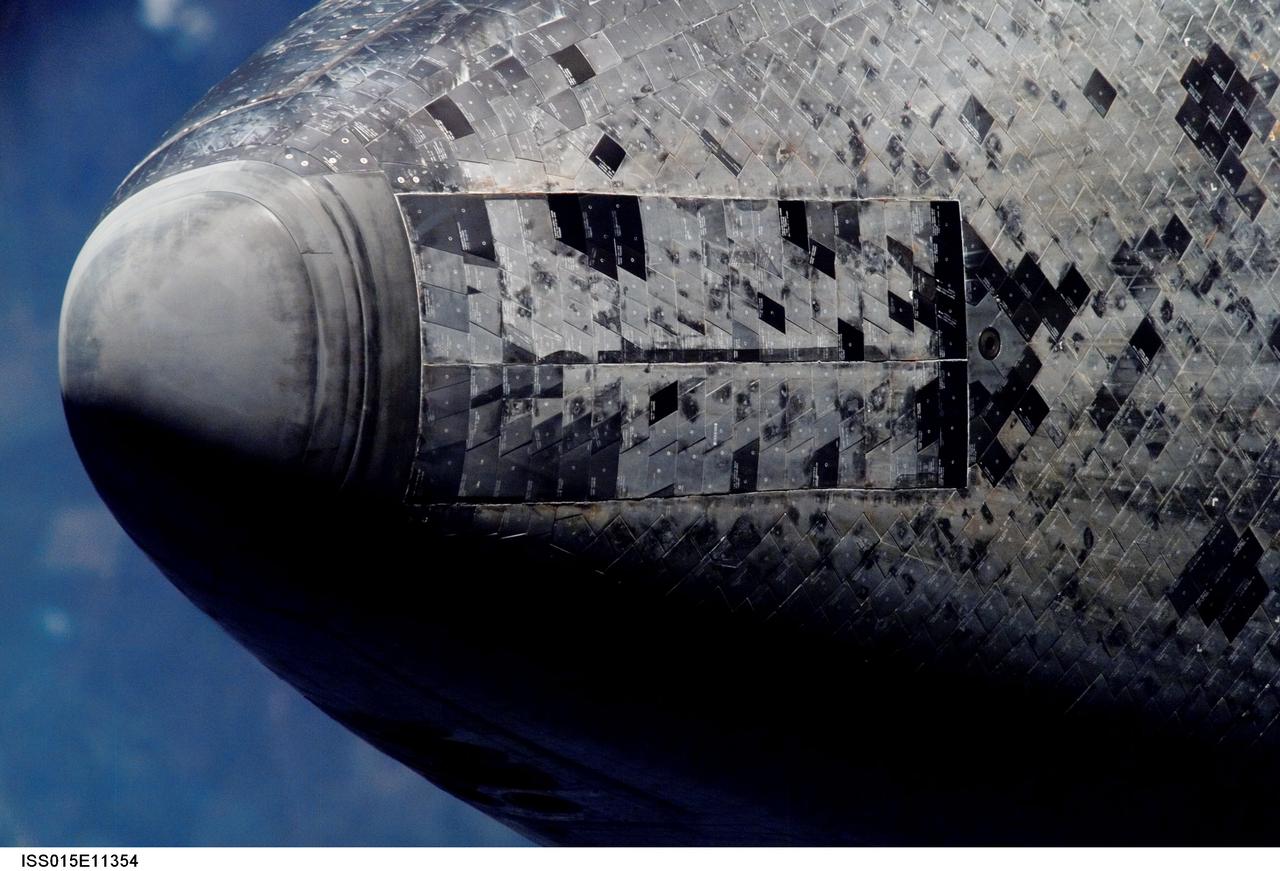
ISS015-E-11354 (10 June 2007) --- This is one of a series of images photographed with a digital still camera using an 800mm focal length featuring the different areas of the Space Shuttle Atlantis as it approached the International Space Station and performed a back-flip to accommodate close scrutiny by eyeballs and cameras. This image shows a view of the underside of nose/nosecap and forward landing gear doors. Distance from the station and shuttle at this time was approximately 600 feet.

KENNEDY SPACE CENTER, FLA. -- In the Orbiter Processing Facility, United Space Alliance employee Harrell Watts installs Thermal Protection System tiles on a main landing gear door of Space Shuttle orbiter Enterprise (OV-101). Sections of Enterprise were borrowed from the Smithsonian Institution's Air and Space Museum where the orbiter is being stored at the Washington Dulles International Airport. Enterprise was the first orbiter built in the Shuttle fleet and was used to conduct the Approach and Landing Test Program before the first powered Shuttle flight. After the tile installation is complete, the sections will be transferred to the Southwest Research Institute for testing requested by the Columbia Accident Investigation Board.
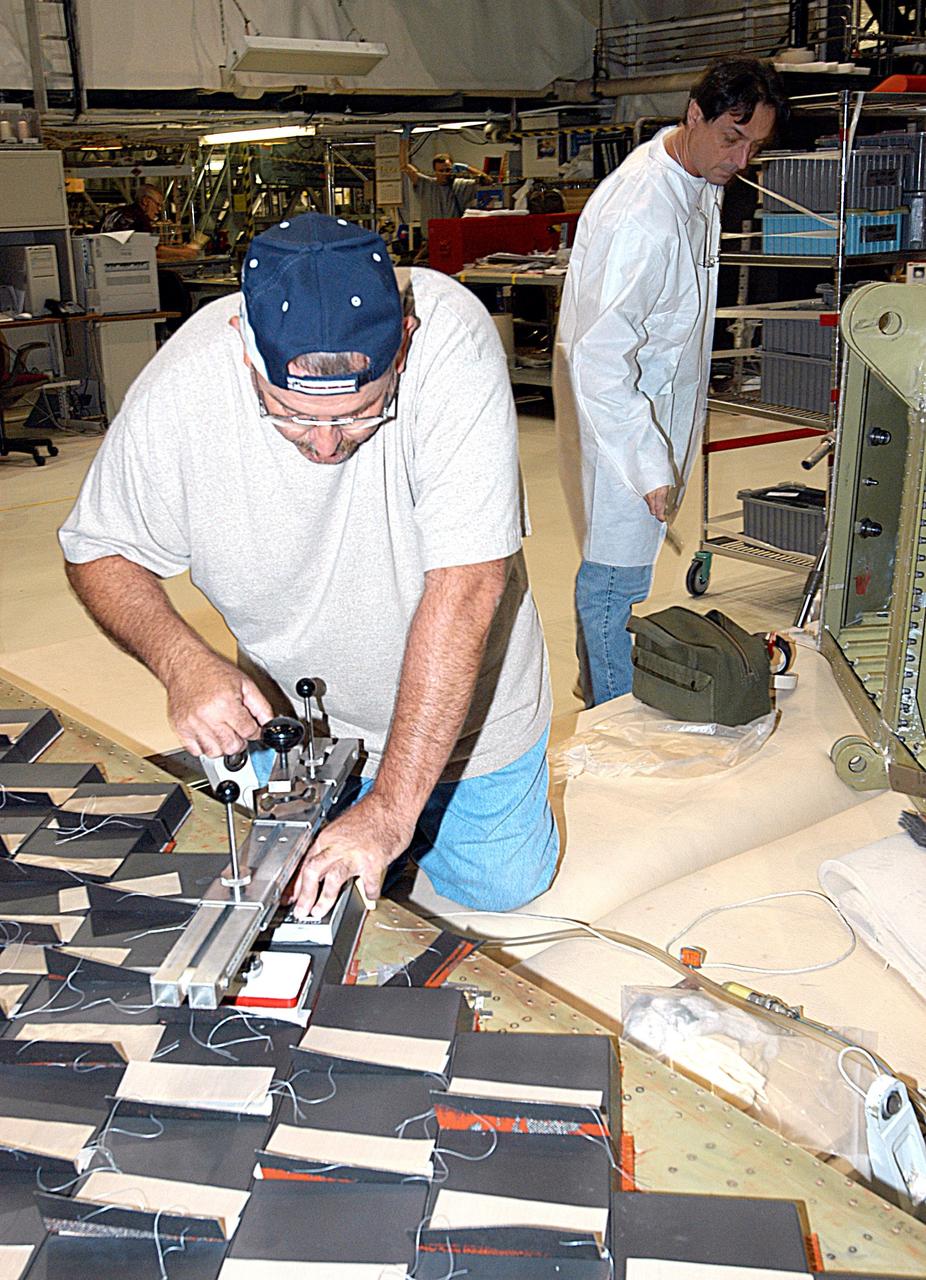
KENNEDY SPACE CENTER, FLA. -- In the Orbiter Processing Facility, United Space Alliance employee Dave Sanborn (left) conducts a bond verification test on Thermal Protection System tiles installed on a main landing gear door of Space Shuttle orbiter Enterprise (OV-101). Sections of Enterprise were borrowed from the Smithsonian Institution's Air and Space Museum where the orbiter is being stored at the Washington Dulles International Airport. Enterprise was the first orbiter built in the Shuttle fleet and was used to conduct the Approach and Landing Test Program before the first powered Shuttle flight. After the tile installation is complete, the sections will be transferred to the Southwest Research Institute for testing requested by the Columbia Accident Investigation Board.
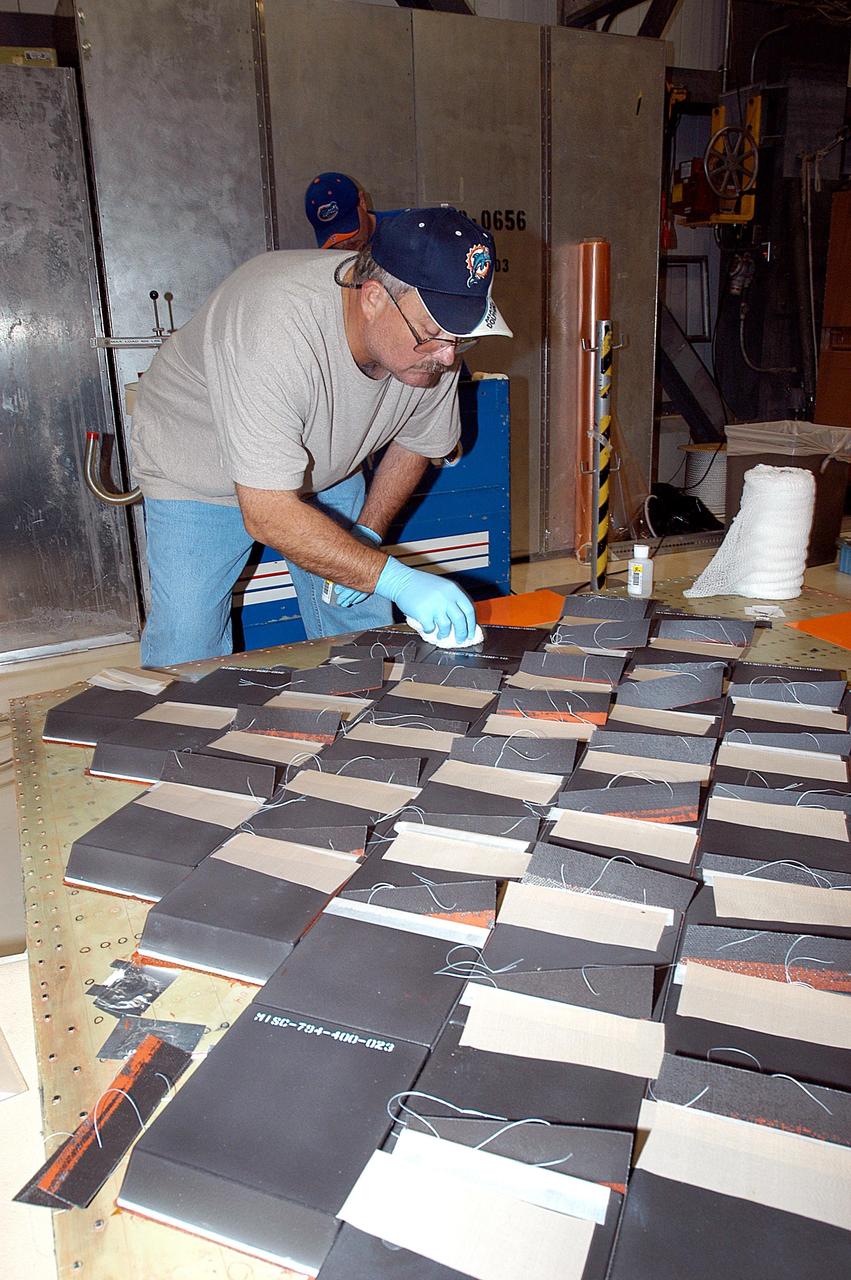
KENNEDY SPACE CENTER, FLA. -- In the Orbiter Processing Facility, United Space Alliance employee Dave Sanborn installs Thermal Protection System tiles on a main landing gear door of Space Shuttle orbiter Enterprise (OV-101). Sections of Enterprise were borrowed from the Smithsonian Institution's Air and Space Museum where the orbiter is being stored at the Washington Dulles International Airport. Enterprise was the first orbiter built in the Shuttle fleet and was used to conduct the Approach and Landing Test Program before the first powered Shuttle flight. After the tile installation is complete, the sections will be transferred to the Southwest Research Institute for testing requested by the Columbia Accident Investigation Board.
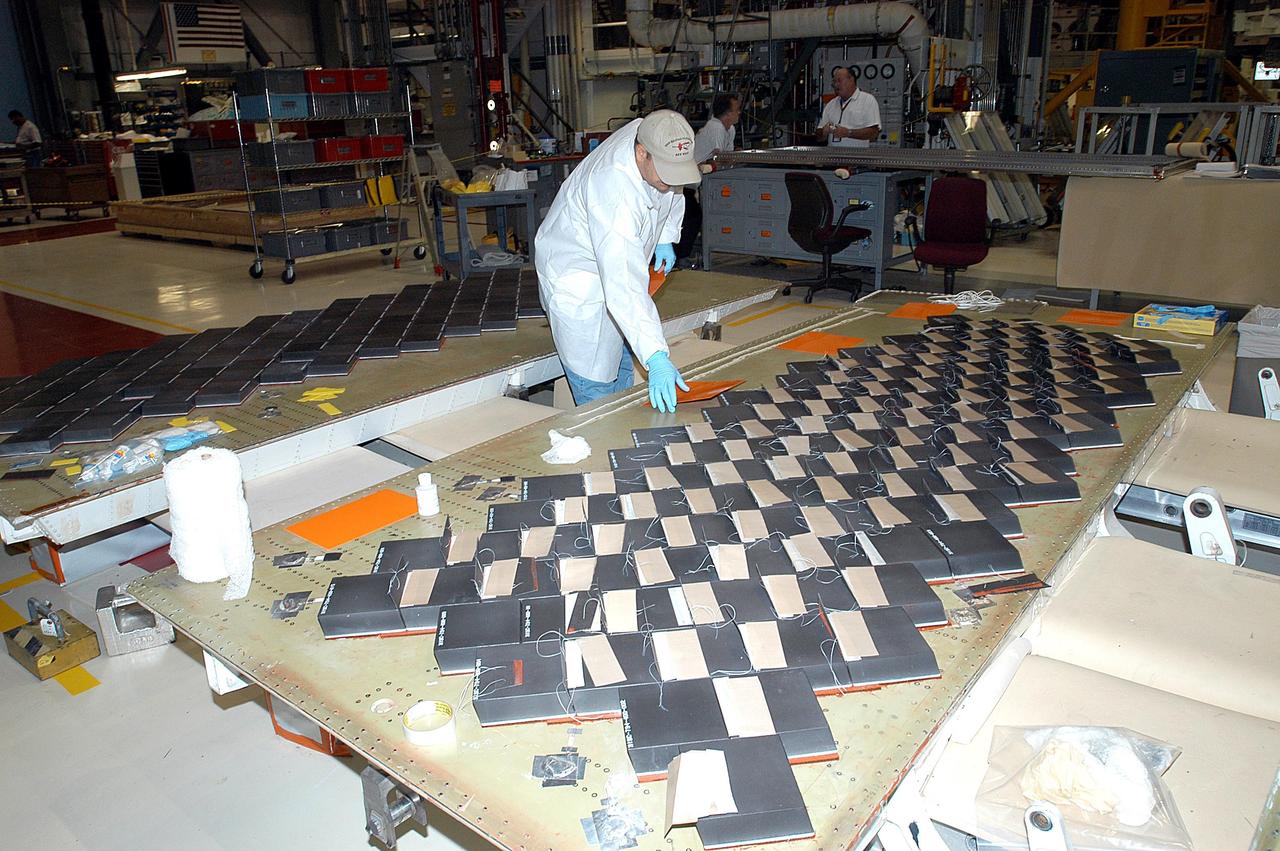
KENNEDY SPACE CENTER, FLA. -- In the Orbiter Processing Facility, United Space Alliance employee Mike Cote works on installing Thermal Protection System tiles on a main landing gear door of Space Shuttle orbiter Enterprise (OV-101). Sections of Enterprise were borrowed from the Smithsonian Institution's Air and Space Museum where the orbiter is being stored at the Washington Dulles International Airport. Enterprise was the first orbiter built in the Shuttle fleet and was used to conduct the Approach and Landing Test Program before the first powered Shuttle flight. After the tile installation is complete, the sections will be transferred to the Southwest Research Institute for testing requested by the Columbia Accident Investigation Board.
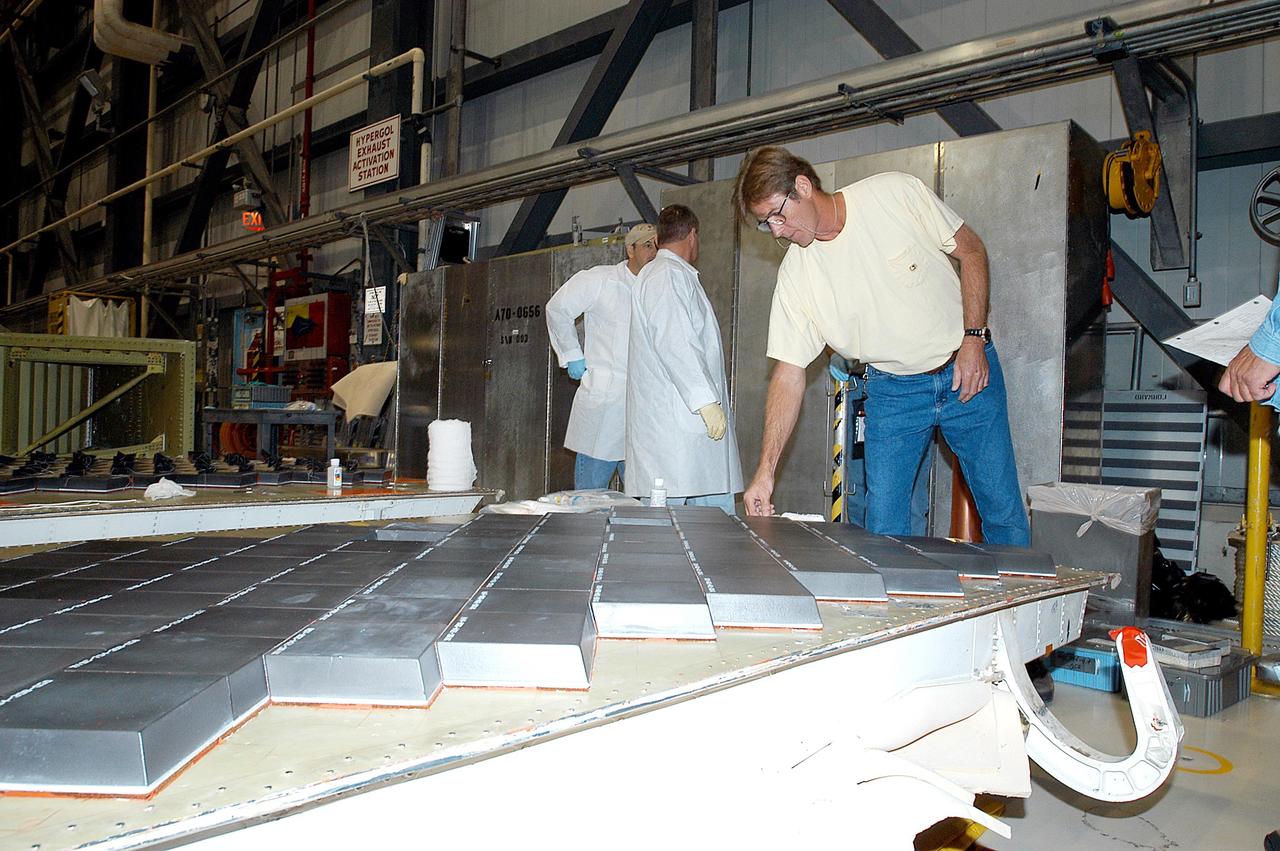
KENNEDY SPACE CENTER, FLA. -- In the Orbiter Processing Facility, United Space Alliance employee Harrell Watts (right) installs Thermal Protection System tiles on a main landing gear door of Space Shuttle orbiter Enterprise (OV-101). Sections of Enterprise were borrowed from the Smithsonian Institution's Air and Space Museum where the orbiter is being stored at the Washington Dulles International Airport. Enterprise was the first orbiter built in the Shuttle fleet and was used to conduct the Approach and Landing Test Program before the first powered Shuttle flight. After the tile installation is complete, the sections will be transferred to the Southwest Research Institute for testing requested by the Columbia Accident Investigation Board.
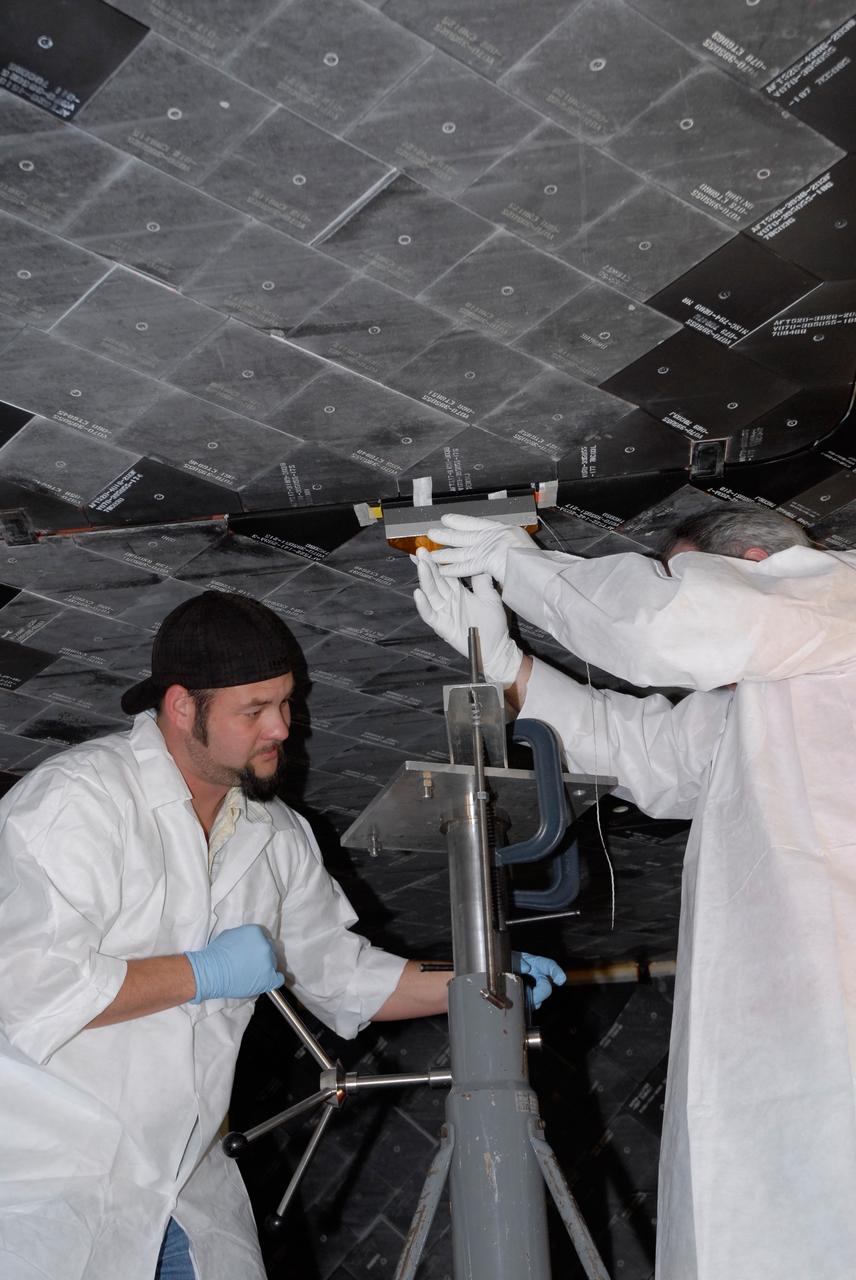
CAPE CANAVERAL, Fla. – Inside Orbiter Processing Facility 2 at NASA's Kennedy Space Center, United Space Alliance technicians install Boeing Replacement Insulation 18, or BRI-18, tile on space shuttle Endeavour during processing activities. BRI-18 is the strongest material used for thermal insulation on the orbiters and, when coated to produce toughened unipiece fibrous insulation, provides a tile with extremely high-impact resistance. It is replacing other tiles on areas of the vehicle where impact risk is high, such as the landing gear doors, the wing leading edge and the external tank doors. Endeavour will deliver a multi-purpose logistics module to the International Space Station on its STS-126 mission. Launch is targeted for Nov. 10. Photo credit: NASA/Jack Pfaller
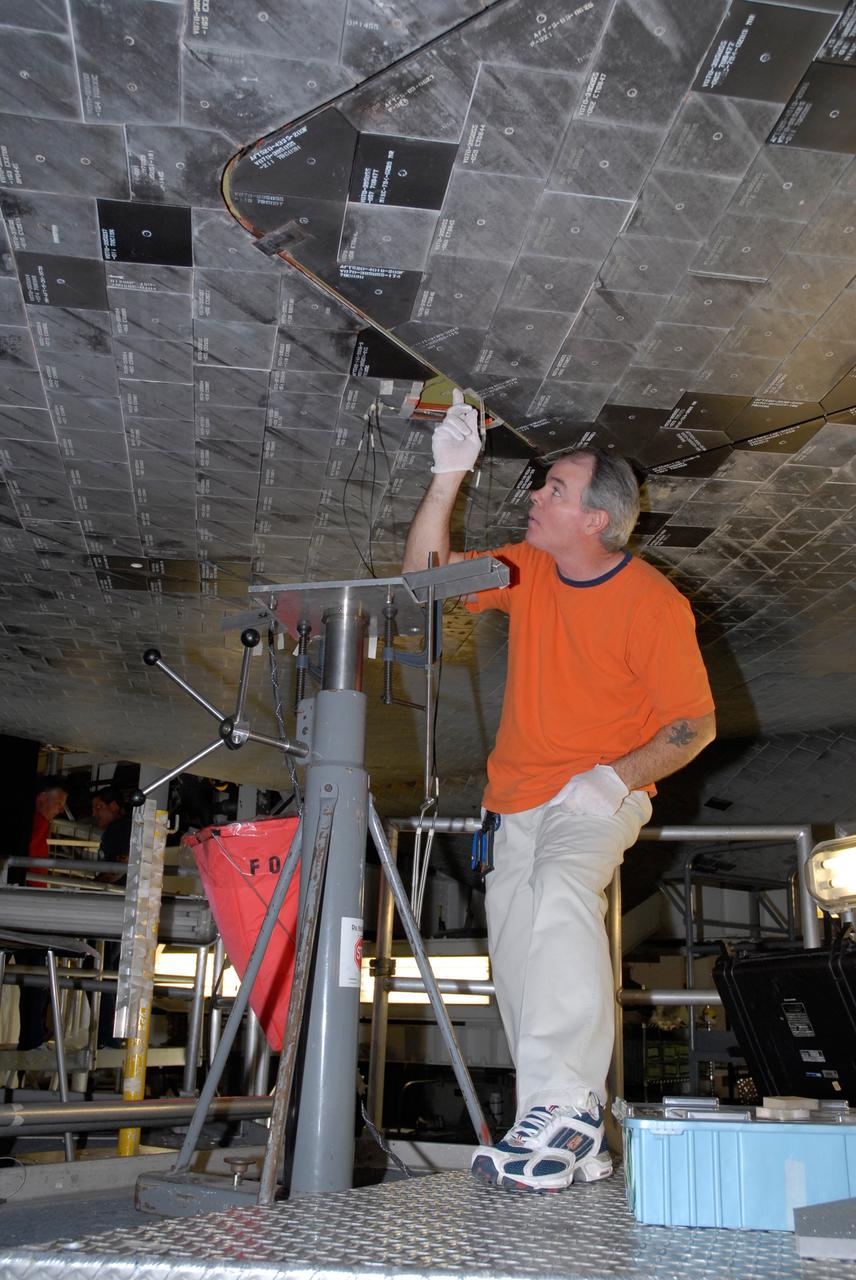
CAPE CANAVERAL, Fla. – Inside Orbiter Processing Facility 2 at NASA's Kennedy Space Center, a United Space Alliance technician installs Boeing Replacement Insulation 18, or BRI-18, tile on space shuttle Endeavour during processing activities. BRI-18 is the strongest material used for thermal insulation on the orbiters and, when coated to produce toughened unipiece fibrous insulation, provides a tile with extremely high-impact resistance. It is replacing other tiles on areas of the vehicle where impact risk is high, such as the landing gear doors, the wing leading edge and the external tank doors. Endeavour will deliver a multi-purpose logistics module to the International Space Station on its STS-126 mission. Launch is targeted for Nov. 10. Photo credit: NASA/Jack Pfaller
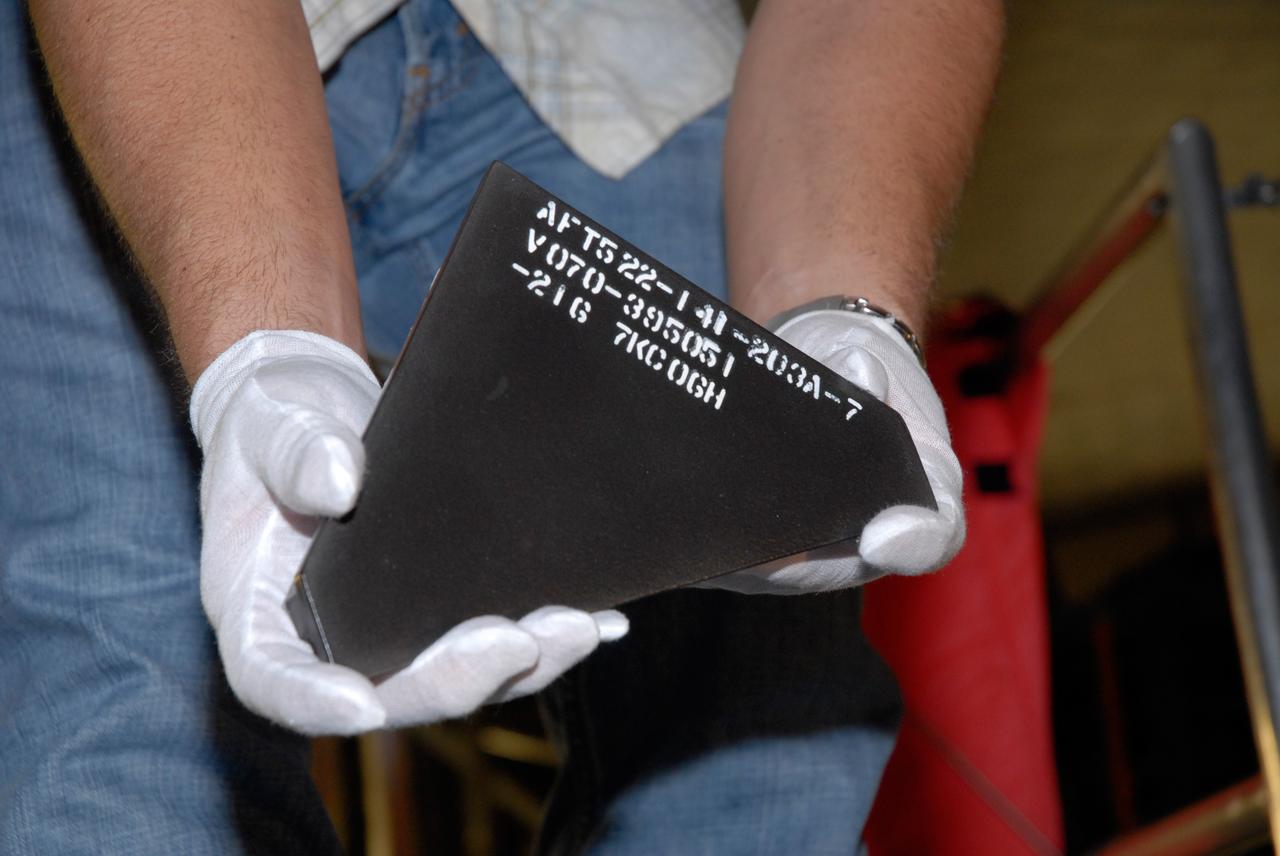
CAPE CANAVERAL, Fla. – Inside Orbiter Processing Facility 2 at NASA's Kennedy Space Center, a United Space Alliance technician holds one of the Boeing Replacement Insulation 18, or BRI-18, tile that will be installed on space shuttle Endeavour during processing activities. BRI-18 is the strongest material used for thermal insulation on the orbiters and, when coated to produce toughened unipiece fibrous insulation, provides a tile with extremely high-impact resistance. It is replacing other tiles on areas of the vehicle where impact risk is high, such as the landing gear doors, the wing leading edge and the external tank doors. Endeavour will deliver a multi-purpose logistics module to the International Space Station on its STS-126 mission. Launch is targeted for Nov. 10. Photo credit: NASA/Jack Pfaller
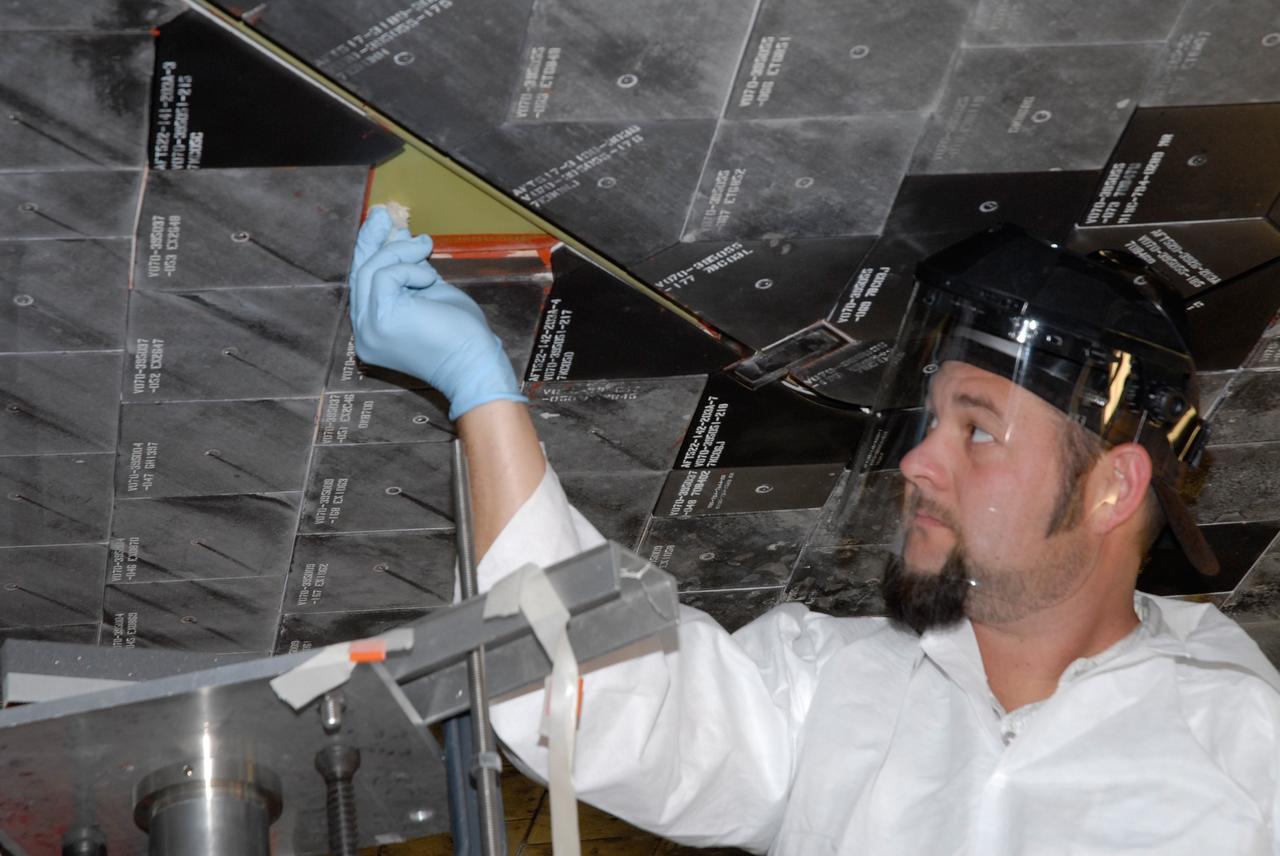
CAPE CANAVERAL, Fla. – Inside Orbiter Processing Facility 2 at NASA's Kennedy Space Center, a United Space Alliance technician installs Boeing Replacement Insulation 18, or BRI-18, tile on space shuttle Endeavour during processing activities. BRI-18 is the strongest material used for thermal insulation on the orbiters and, when coated to produce toughened unipiece fibrous insulation, provides a tile with extremely high-impact resistance. It is replacing other tiles on areas of the vehicle where impact risk is high, such as the landing gear doors, the wing leading edge and the external tank doors. Endeavour will deliver a multi-purpose logistics module to the International Space Station on its STS-126 mission. Launch is targeted for Nov. 10. Photo credit: NASA/Jack Pfaller
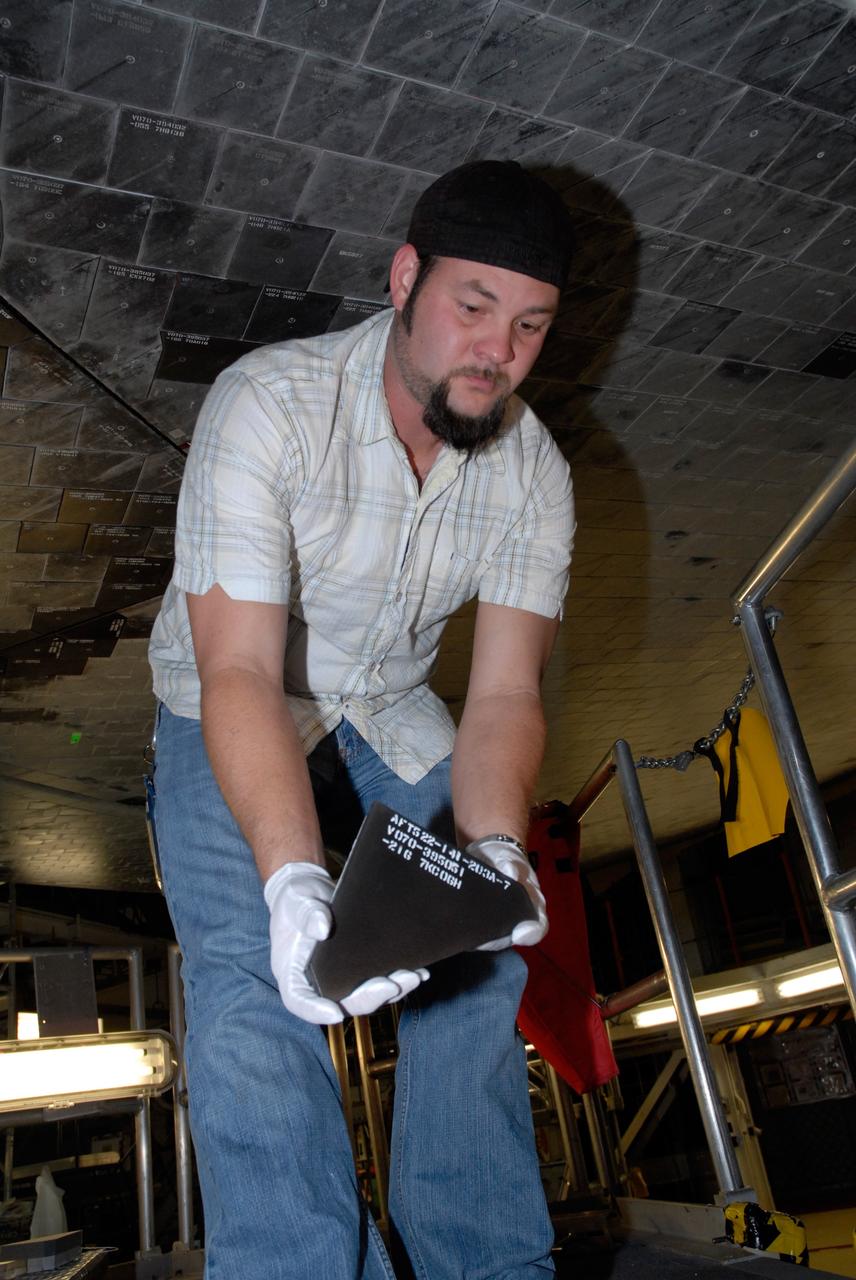
CAPE CANAVERAL, Fla. – Inside Orbiter Processing Facility 2 at NASA's Kennedy Space Center, a United Space Alliance technician holds one of the Boeing Replacement Insulation 18, or BRI-18, tile that will be installed on space shuttle Endeavour during processing activities. BRI-18 is the strongest material used for thermal insulation on the orbiters and, when coated to produce toughened unipiece fibrous insulation, provides a tile with extremely high-impact resistance. It is replacing other tiles on areas of the vehicle where impact risk is high, such as the landing gear doors, the wing leading edge and the external tank doors. Endeavour will deliver a multi-purpose logistics module to the International Space Station on its STS-126 mission. Launch is targeted for Nov. 10. Photo credit: NASA/Jack Pfaller
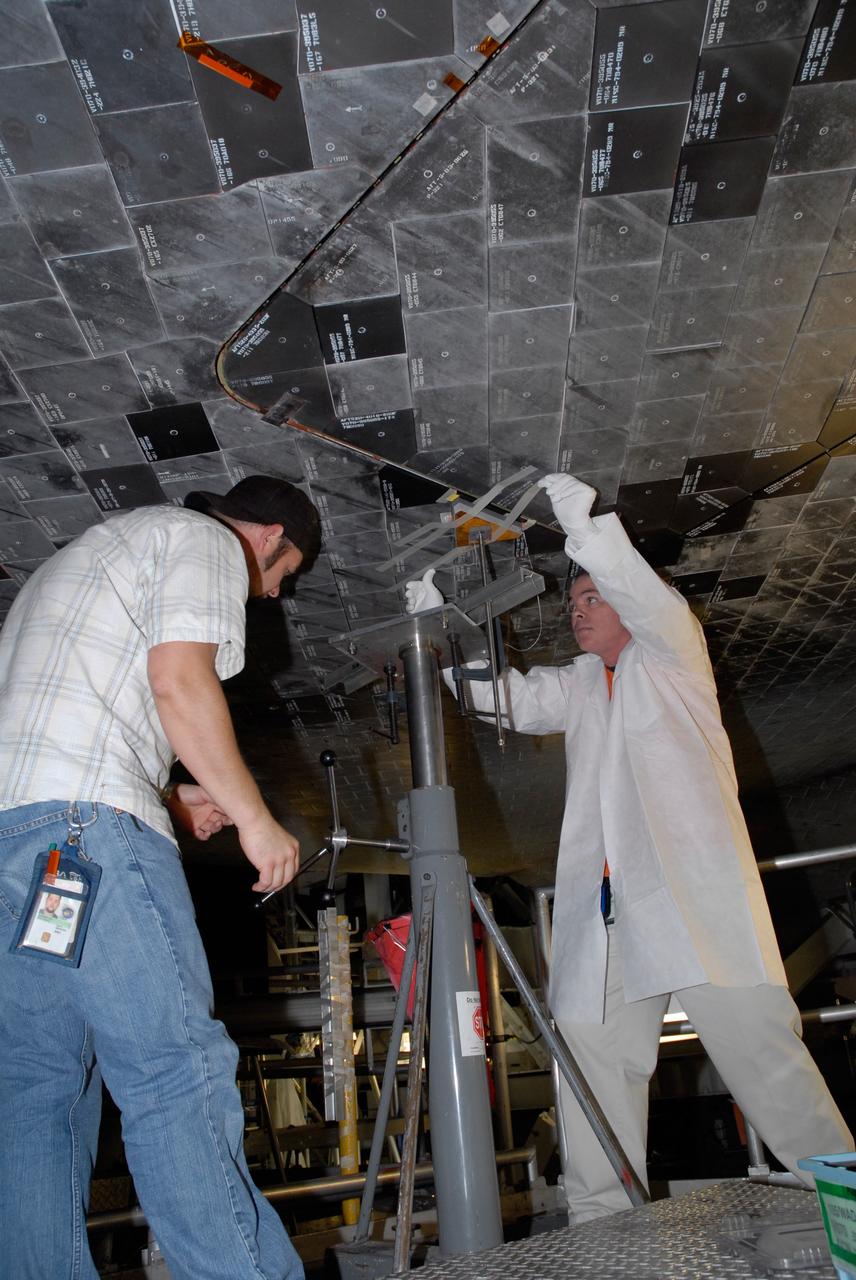
CAPE CANAVERAL, Fla. – Inside Orbiter Processing Facility 2 at NASA's Kennedy Space Center, United Space Alliance technicians install Boeing Replacement Insulation 18, or BRI-18, tile on space shuttle Endeavour during processing activities. BRI-18 is the strongest material used for thermal insulation on the orbiters and, when coated to produce toughened unipiece fibrous insulation, provides a tile with extremely high-impact resistance. It is replacing other tiles on areas of the vehicle where impact risk is high, such as the landing gear doors, the wing leading edge and the external tank doors. Endeavour will deliver a multi-purpose logistics module to the International Space Station on its STS-126 mission. Launch is targeted for Nov. 10. Photo credit: NASA/Jack Pfaller
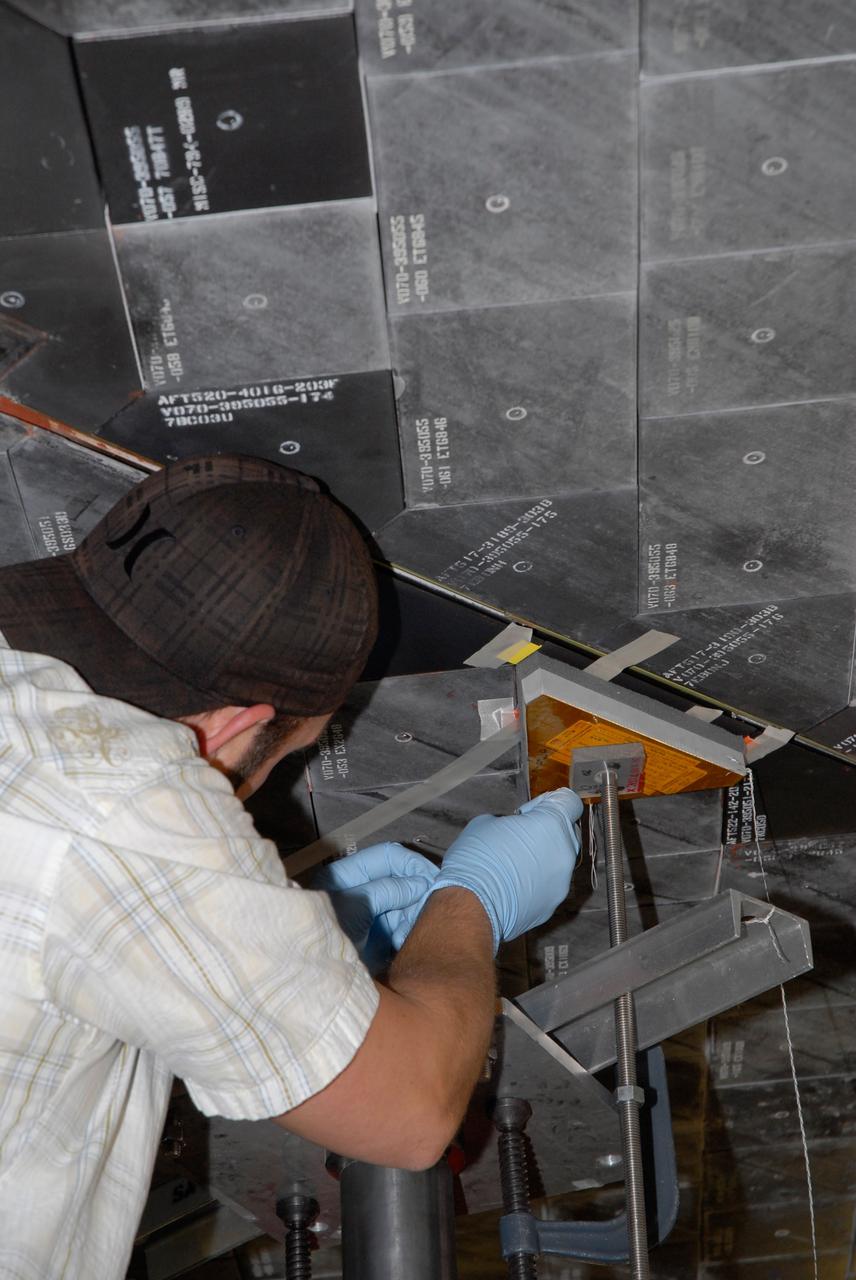
CAPE CANAVERAL, Fla. – Inside Orbiter Processing Facility 2 at NASA's Kennedy Space Center, a United Space Alliance technician installs Boeing Replacement Insulation 18, or BRI-18, tile on space shuttle Endeavour during processing activities. BRI-18 is the strongest material used for thermal insulation on the orbiters and, when coated to produce toughened unipiece fibrous insulation, provides a tile with extremely high-impact resistance. It is replacing other tiles on areas of the vehicle where impact risk is high, such as the landing gear doors, the wing leading edge and the external tank doors. Endeavour will deliver a multi-purpose logistics module to the International Space Station on its STS-126 mission. Launch is targeted for Nov. 10. Photo credit: NASA/Jack Pfaller
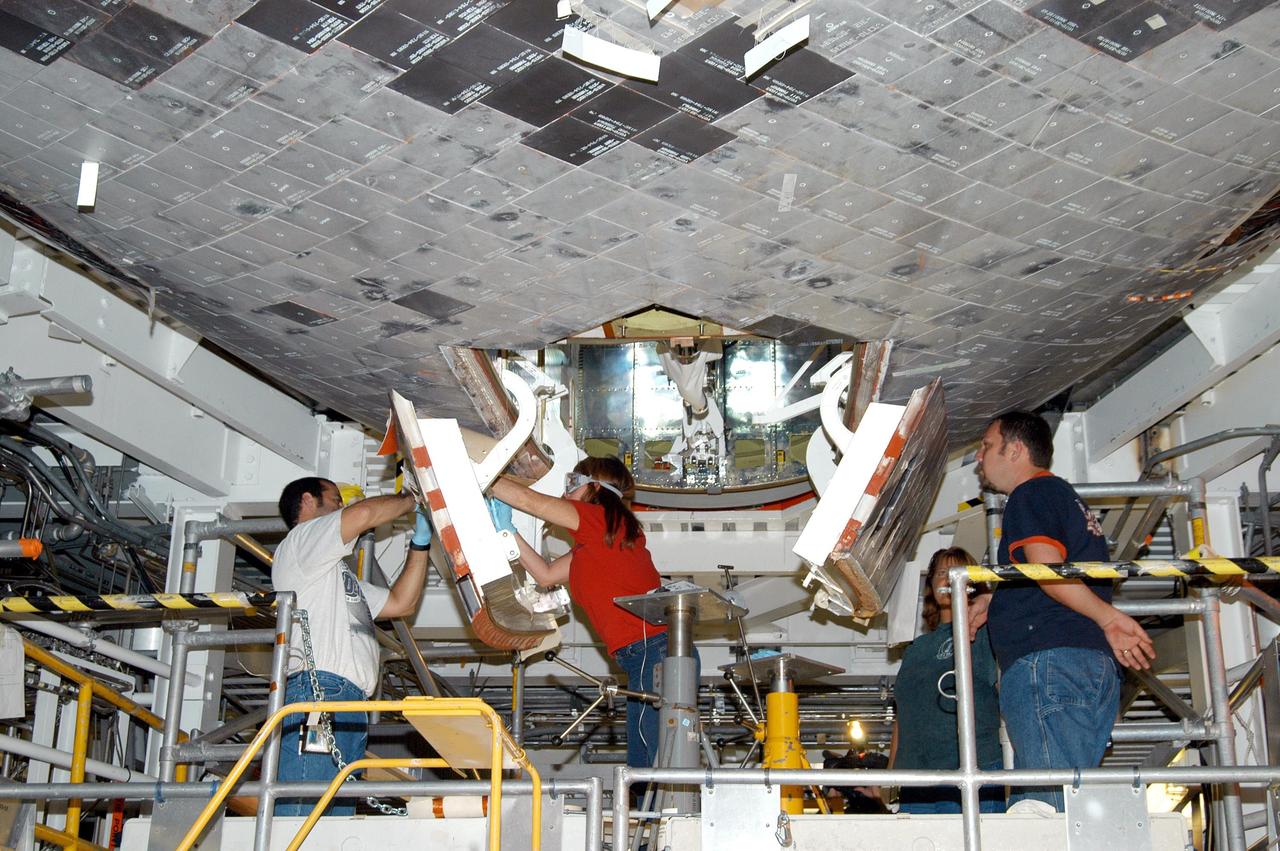
KENNEDY SPACE CENTER, FLA. - Workers in the Orbiter Processing Facility prepare to close the nose wheel doors on Atlantis in preparation for the expected impact of Hurricane Frances on Saturday. Preparations at KSC include powering down the Space Shuttle orbiters, closing their payload bay doors and stowing their landing gear. They are also taking precautions against flooding by moving spacecraft hardware off the ground and sandbagging facilities. The Orbiter Processing Facility is constructed of concrete and steel and was designed to withstand winds of 105 mph. The Vehicle Assembly Building is constructed of concrete and steel and was designed to withstand winds of 125 mph. Other payload and flight hardware support facilities can endure winds of 110 mph. Launch pads and the Payload Hazardous Servicing Facility can withstand 125-mph winds.
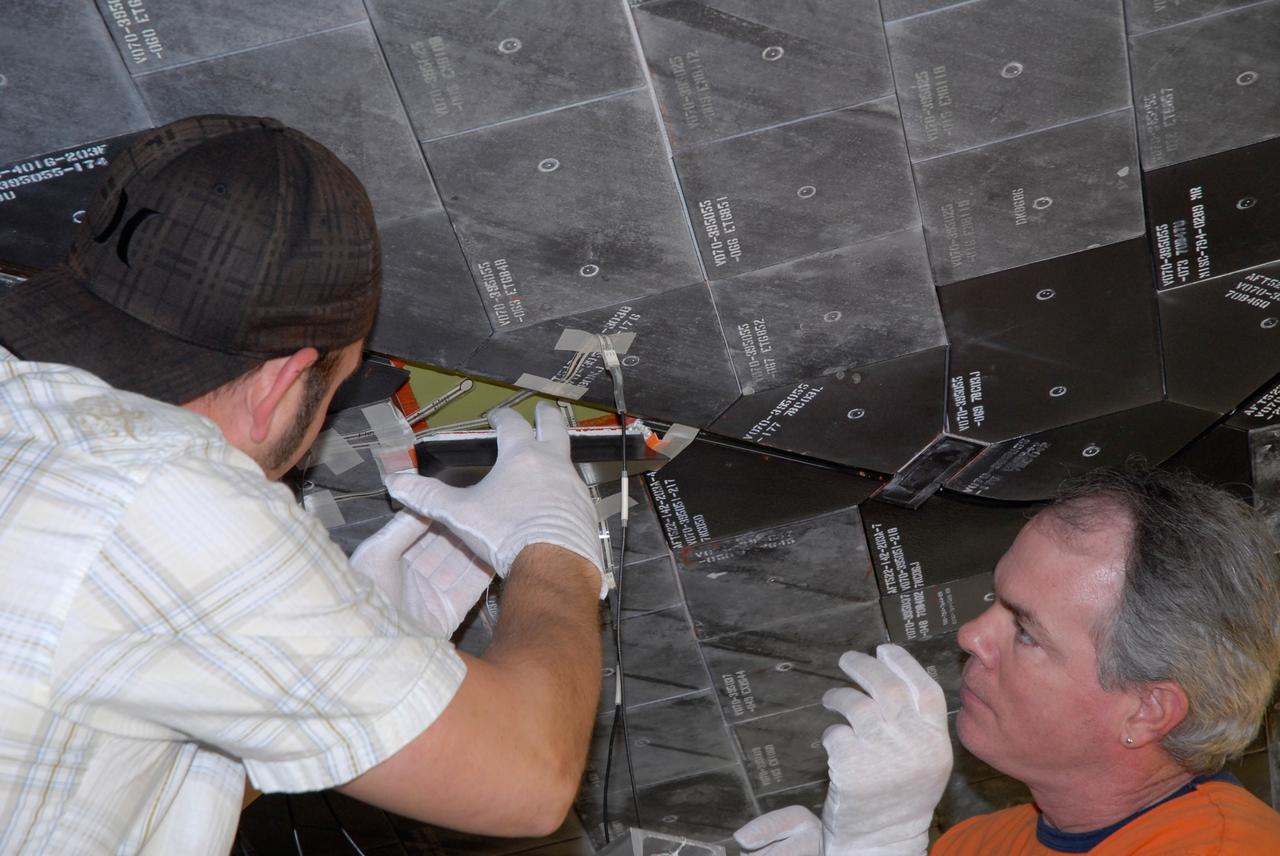
CAPE CANAVERAL, Fla. – Inside Orbiter Processing Facility 2 at NASA's Kennedy Space Center, United Space Alliance technicians install Boeing Replacement Insulation 18, or BRI-18, tile on space shuttle Endeavour during processing activities. BRI-18 is the strongest material used for thermal insulation on the orbiters and, when coated to produce toughened unipiece fibrous insulation, provides a tile with extremely high-impact resistance. It is replacing other tiles on areas of the vehicle where impact risk is high, such as the landing gear doors, the wing leading edge and the external tank doors. Endeavour will deliver a multi-purpose logistics module to the International Space Station on its STS-126 mission. Launch is targeted for Nov. 10. Photo credit: NASA/Jack Pfaller
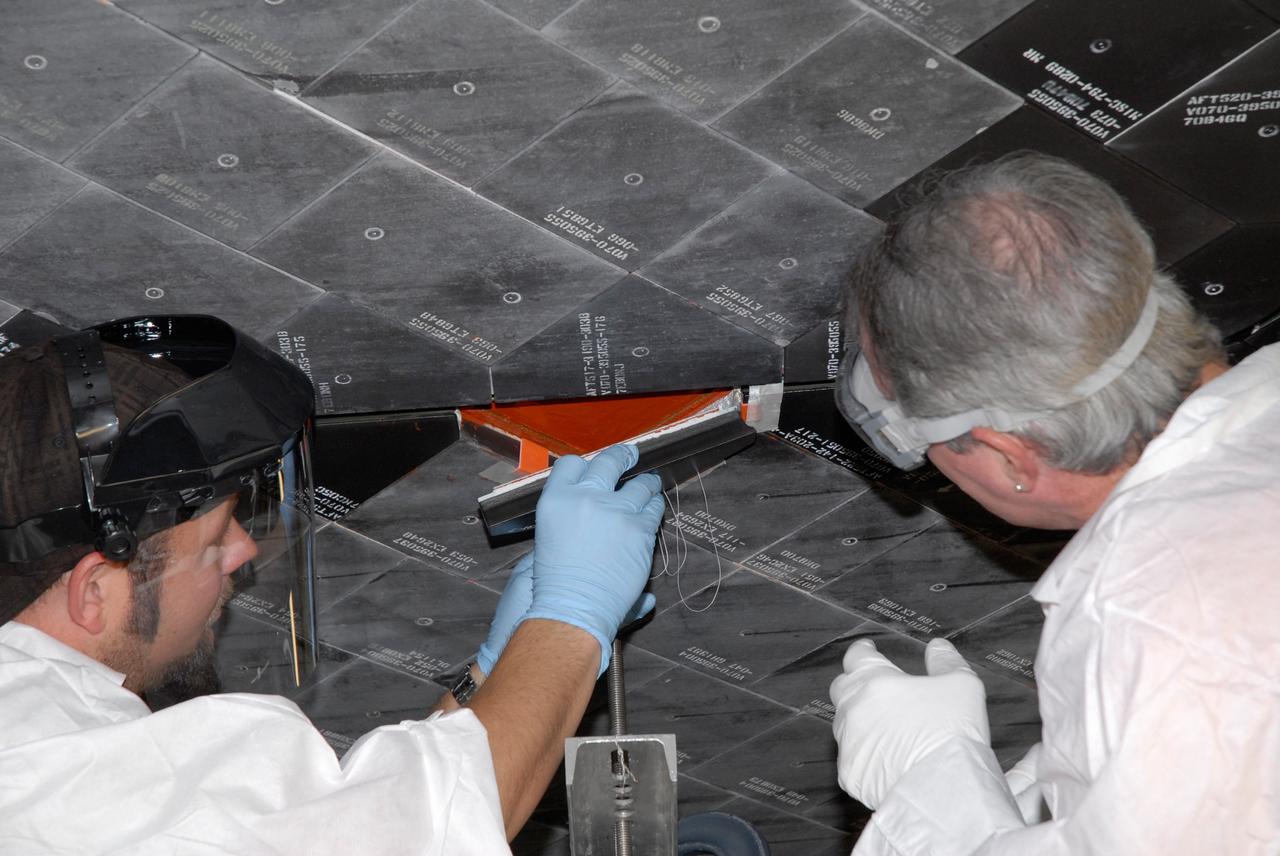
CAPE CANAVERAL, Fla. – Inside Orbiter Processing Facility 2 at NASA's Kennedy Space Center, United Space Alliance technicians install Boeing Replacement Insulation 18, or BRI-18, tile on space shuttle Endeavour during processing activities. BRI-18 is the strongest material used for thermal insulation on the orbiters and, when coated to produce toughened unipiece fibrous insulation, provides a tile with extremely high-impact resistance. It is replacing other tiles on areas of the vehicle where impact risk is high, such as the landing gear doors, the wing leading edge and the external tank doors. Endeavour will deliver a multi-purpose logistics module to the International Space Station on its STS-126 mission. Launch is targeted for Nov. 10. Photo credit: NASA/Jack Pfaller
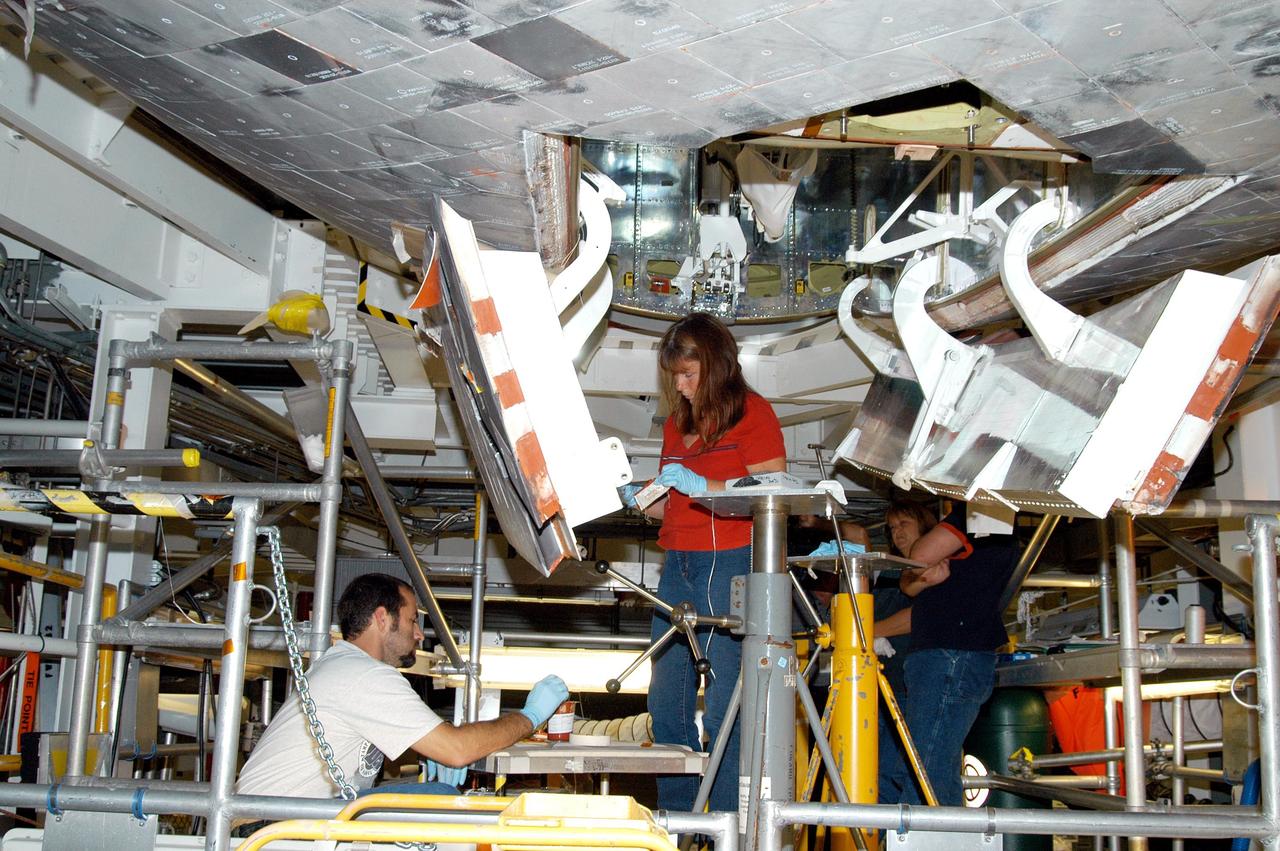
KENNEDY SPACE CENTER, FLA. - Workers in the Orbiter Processing Facility prepare to close the nose wheel doors on Atlantis in preparation for the expected impact of Hurricane Frances on Saturday. Preparations at KSC include powering down the Space Shuttle orbiters, closing their payload bay doors and stowing their landing gear. They are also taking precautions against flooding by moving spacecraft hardware off the ground and sandbagging facilities. The Orbiter Processing Facility is constructed of concrete and steel and was designed to withstand winds of 105 mph. The Vehicle Assembly Building is constructed of concrete and steel and was designed to withstand winds of 125 mph. Other payload and flight hardware support facilities can endure winds of 110 mph. Launch pads and the Payload Hazardous Servicing Facility can withstand 125-mph winds.
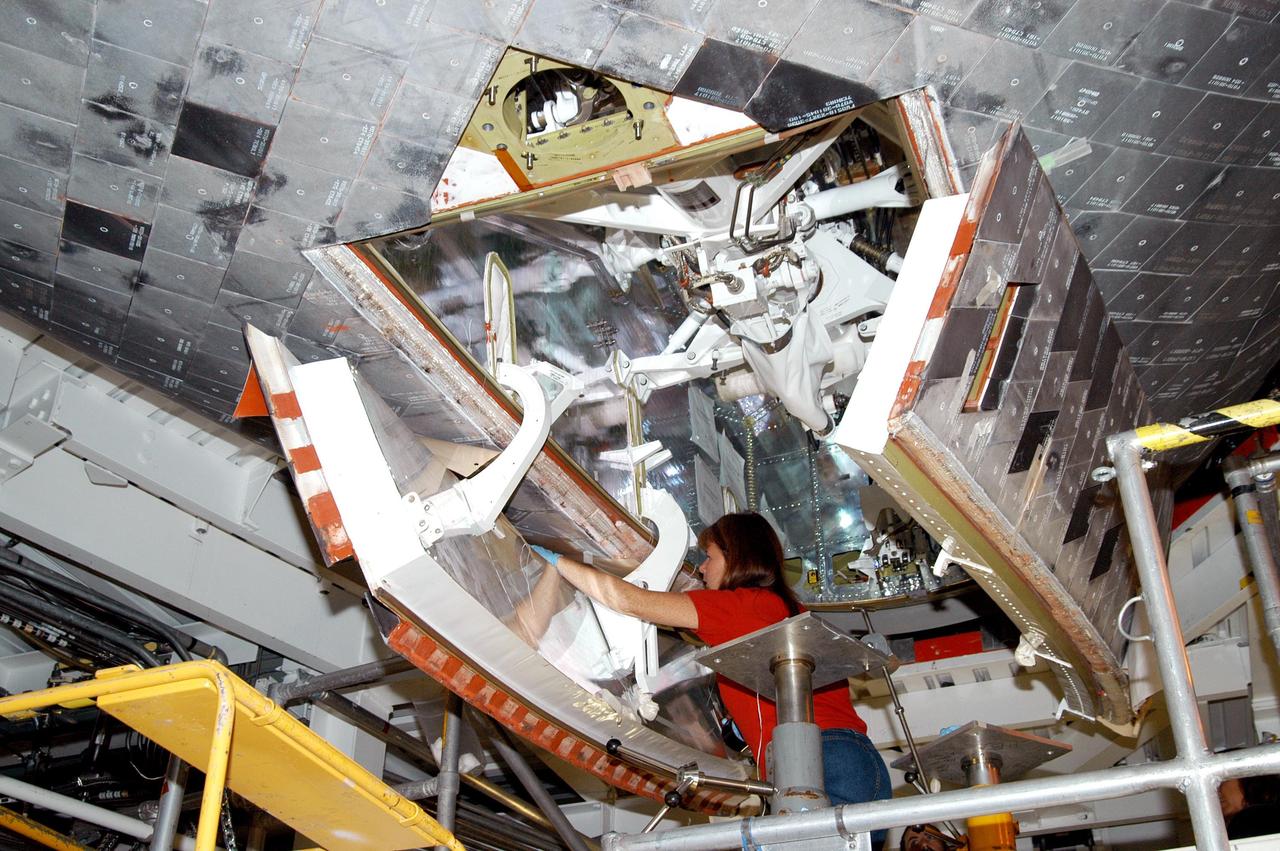
KENNEDY SPACE CENTER, FLA. - Workers in the Orbiter Processing Facility prepare to close the nose wheel doors on Atlantis in preparation for the expected impact of Hurricane Frances on Saturday. Preparations at KSC include powering down the Space Shuttle orbiters, closing their payload bay doors and stowing their landing gear. They are also taking precautions against flooding by moving spacecraft hardware off the ground and sandbagging facilities. The Orbiter Processing Facility is constructed of concrete and steel and was designed to withstand winds of 105 mph. The Vehicle Assembly Building is constructed of concrete and steel and was designed to withstand winds of 125 mph. Other payload and flight hardware support facilities can endure winds of 110 mph. Launch pads and the Payload Hazardous Servicing Facility can withstand 125-mph winds.
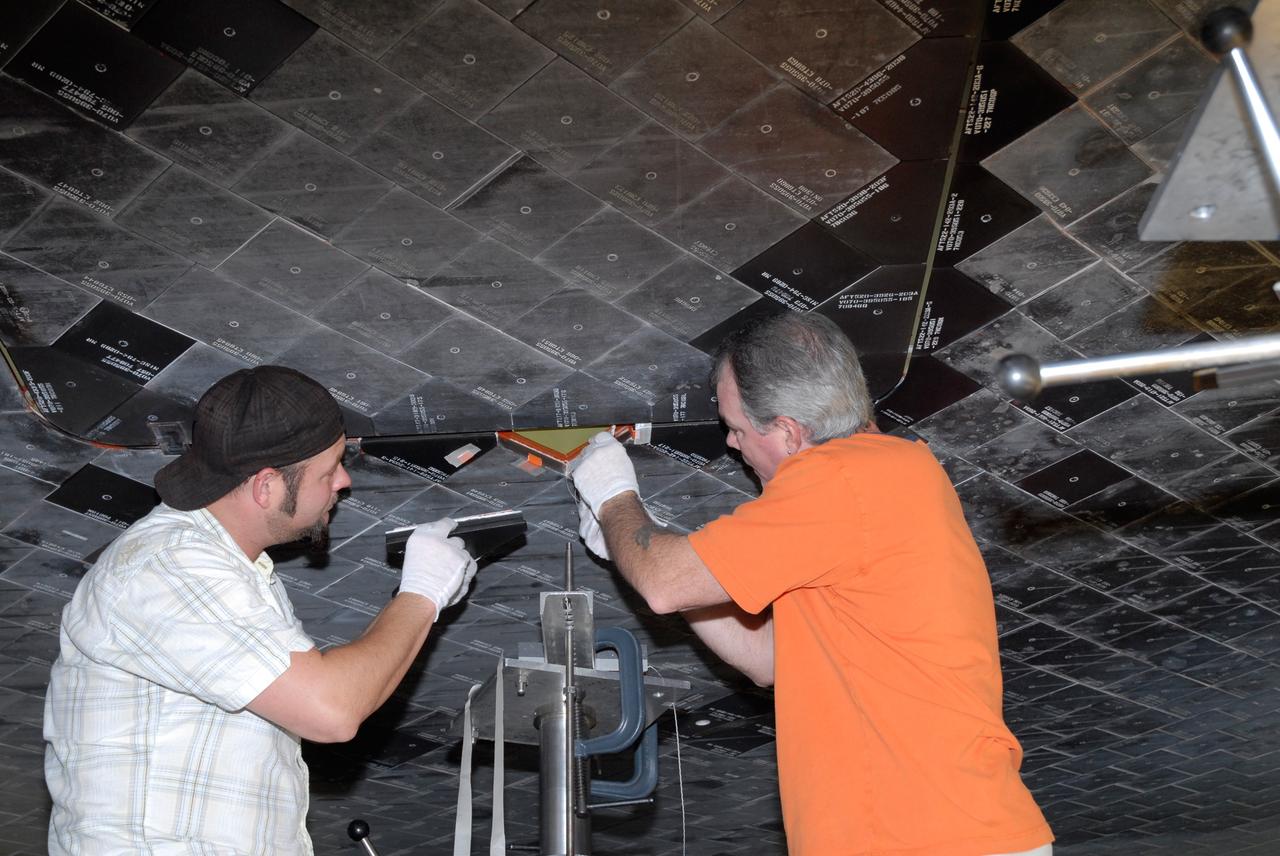
CAPE CANAVERAL, Fla. – Inside Orbiter Processing Facility 2 at NASA's Kennedy Space Center, United Space Alliance technicians install Boeing Replacement Insulation 18, or BRI-18, tile on space shuttle Endeavour during processing activities. BRI-18 is the strongest material used for thermal insulation on the orbiters and, when coated to produce toughened unipiece fibrous insulation, provides a tile with extremely high-impact resistance. It is replacing other tiles on areas of the vehicle where impact risk is high, such as the landing gear doors, the wing leading edge and the external tank doors. Endeavour will deliver a multi-purpose logistics module to the International Space Station on its STS-126 mission. Launch is targeted for Nov. 10. Photo credit: NASA/Jack Pfaller
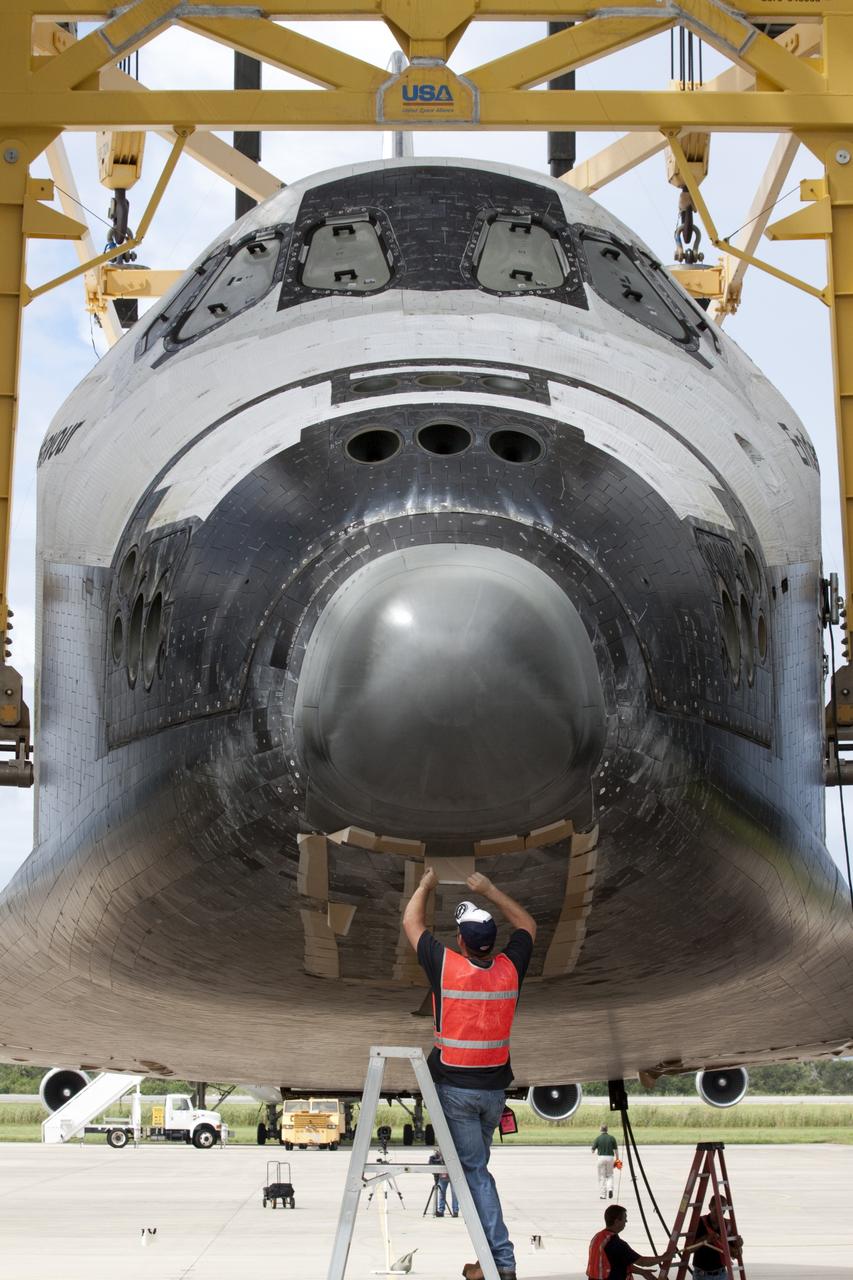
CAPE CANAVERAL, Fla. – A United Space Alliance technician secures the doors on space shuttle Endeavour's nose gear as it is lifted into the mate-demate device at the Shuttle Landing Facility at NASA's Kennedy Space Center in Florida. The shuttle will be positioned and connected to the top of NASA's Shuttle Carrier Aircraft, or SCA, with the aid of the device. The SCA, a modified 747 jetliner, will fly Endeavour to Los Angeles where it will be placed on public display at the California Science Center. This is the final ferry flight scheduled in the Space Shuttle Program era. For more information on the shuttles' transition and retirement, visit http://www.nasa.gov/transition. Photo credit: NASA/Kim Shiflett
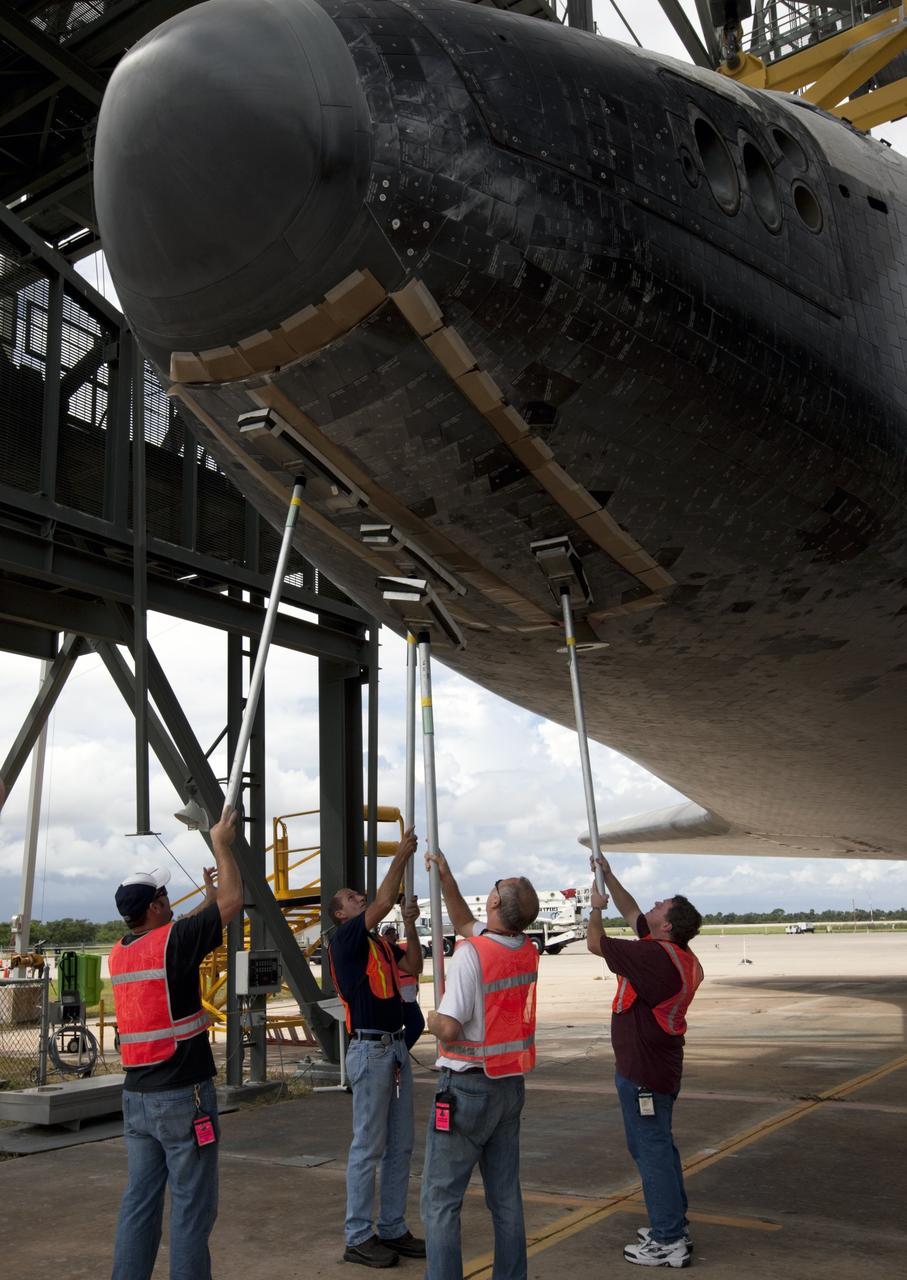
CAPE CANAVERAL, Fla. – United Space Alliance technicians manually close the doors on space shuttle Endeavour's nose gear as it is lifted into the mate-demate device at the Shuttle Landing Facility at NASA's Kennedy Space Center in Florida. The shuttle will be positioned and connected to the top of NASA's Shuttle Carrier Aircraft, or SCA, with the aid of the device. The SCA, a modified 747 jetliner, will fly Endeavour to Los Angeles where it will be placed on public display at the California Science Center. This is the final ferry flight scheduled in the Space Shuttle Program era. For more information on the shuttles' transition and retirement, visit http://www.nasa.gov/transition. Photo credit: NASA/Kim Shiflett
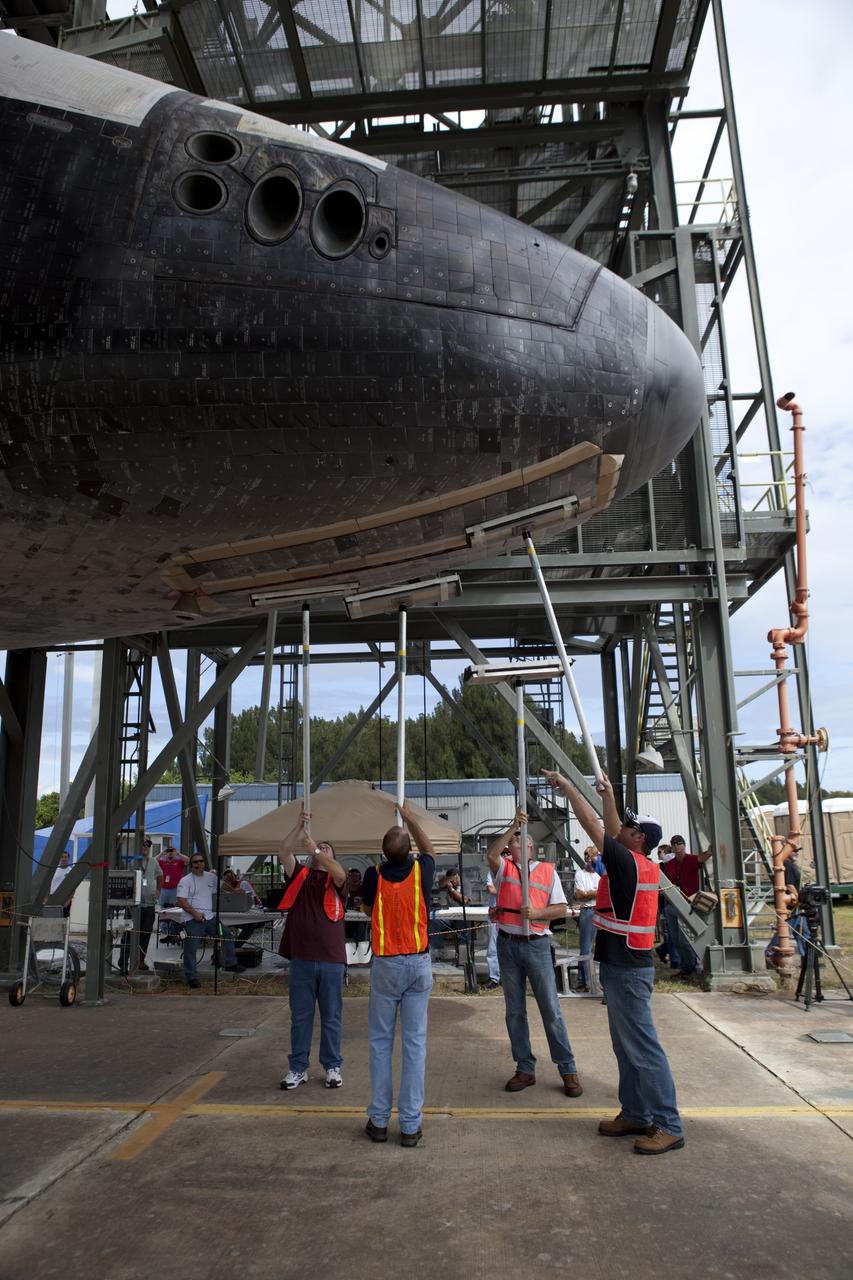
CAPE CANAVERAL, Fla. – United Space Alliance technicians manually close the doors on space shuttle Endeavour's nose gear as it is lifted into the mate-demate device at the Shuttle Landing Facility at NASA's Kennedy Space Center in Florida. The shuttle will be positioned and connected to the top of NASA's Shuttle Carrier Aircraft, or SCA, with the aid of the device. The SCA, a modified 747 jetliner, will fly Endeavour to Los Angeles where it will be placed on public display at the California Science Center. This is the final ferry flight scheduled in the Space Shuttle Program era. For more information on the shuttles' transition and retirement, visit http://www.nasa.gov/transition. Photo credit: NASA/Dimitri Gerondidakis
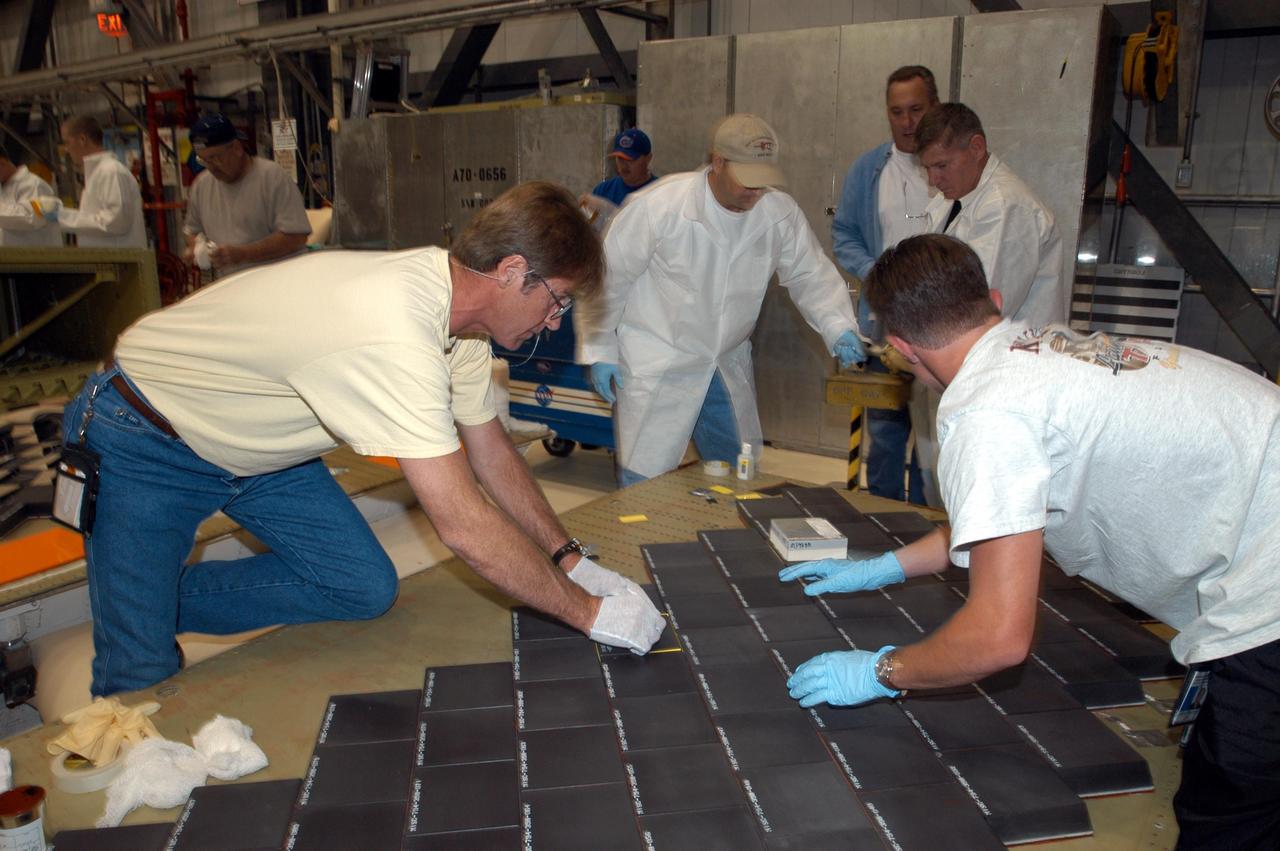
KENNEDY SPACE CENTER, FLA. -- In the Orbiter Processing Facility, United Space Alliance employees (from left) Harrell Watts, Mike Cote, and Jason Levandusky install Thermal Protection System tiles on a main landing gear door of Space Shuttle orbiter Enterprise (OV-101). Sections of Enterprise were borrowed from the Smithsonian Institution's Air and Space Museum where the orbiter is being stored at the Washington Dulles International Airport. Enterprise was the first orbiter built in the Shuttle fleet and was used to conduct the Approach and Landing Test Program before the first powered Shuttle flight. After the tile installation is complete, the sections will be transferred to the Southwest Research Institute for testing requested by the Columbia Accident Investigation Board.
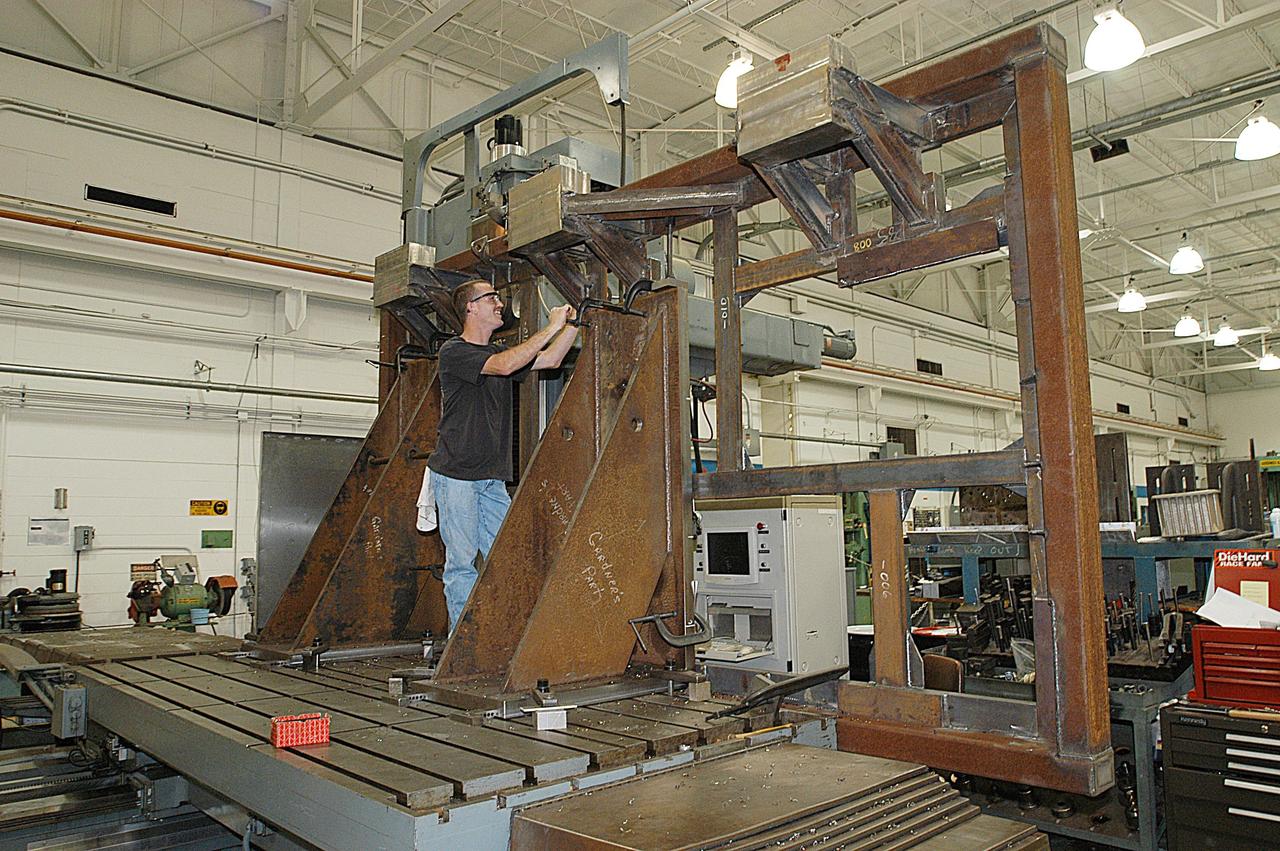
KENNEDY SPACE CENTER, FLA. -- United Space Alliance technician Matt Boonstra works on a main landing gear door mounting fixture in the Launch Equipment Shop. The fixture is being used to support the Columbia mishap investigation. A simulated orbiter wing and several test panels, along with sections of Space Shuttle orbiter Enterprise (OV-101), will be transferred to the Southwest Research Institute for testing after Thermal Protection System (TPS) tile installation on them is complete. The testing has been requested by the Columbia Accident Investigation Board. For this initiative, sections of Enterprise were borrowed from the Smithsonian Institution's Air and Space Museum where the orbiter is being stored at the Washington Dulles International Airport. Enterprise was the first orbiter built in the Shuttle fleet and was used to conduct the Approach and Landing Test Program before the first powered Shuttle flight.
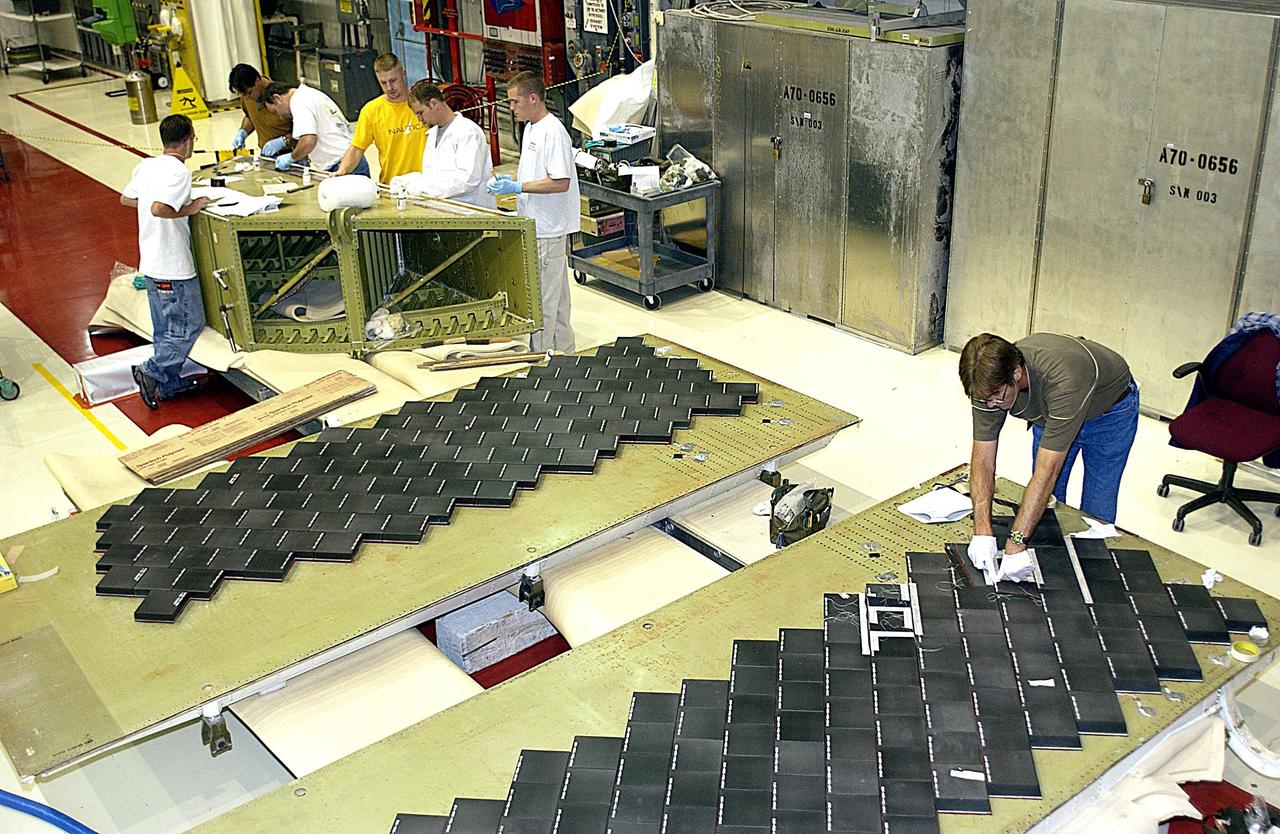
KENNEDY SPACE CENTER, FLA. -- In the Orbiter Processing Facility (OPF), United Space Alliance (USA) employee Harrell Watts (right) installs Thermal Protection System (TPS) tiles on a main landing gear door of Space Shuttle orbiter Enterprise (OV-101). In the background, other USA employees, members of the OPF midbody TPS crew, prepare to install TPS tile on a simulated orbiter wing. The wing and the sections of Enterprise will be transferred to the Southwest Research Institute for testing after the tile installation is complete. The testing has been requested by the Columbia Accident Investigation Board. Sections of Enterprise were borrowed from the Smithsonian Institution's Air and Space Museum where the orbiter is being stored at the Washington Dulles International Airport. Enterprise was the first orbiter built in the Shuttle fleet and was used to conduct the Approach and Landing Test Program before the first powered Shuttle flight.
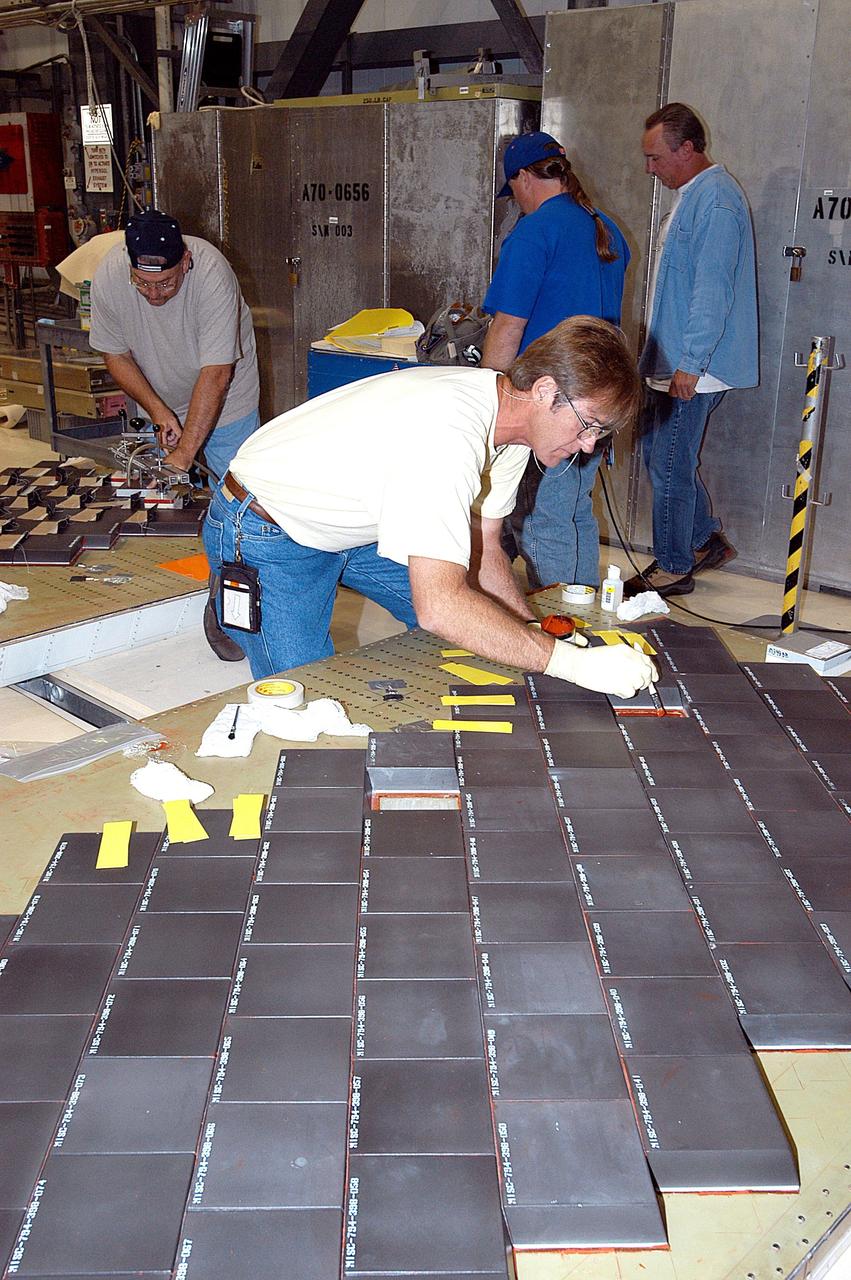
KENNEDY SPACE CENTER, FLA. -- In the Orbiter Processing Facility, United Space Alliance employee Harrell Watts applies RTV, a room-temperature vulcanizing silicone adhesive, to a main landing gear door of Space Shuttle orbiter Enterprise (OV-101) on which Thermal Protection System tiles are being installed. Sections of Enterprise were borrowed from the Smithsonian Institution's Air and Space Museum where the orbiter is being stored at the Washington Dulles International Airport. Enterprise was the first orbiter built in the Shuttle fleet and was used to conduct the Approach and Landing Test Program before the first powered Shuttle flight. After the tile installation is complete, the sections will be transferred to the Southwest Research Institute for testing requested by the Columbia Accident Investigation Board.
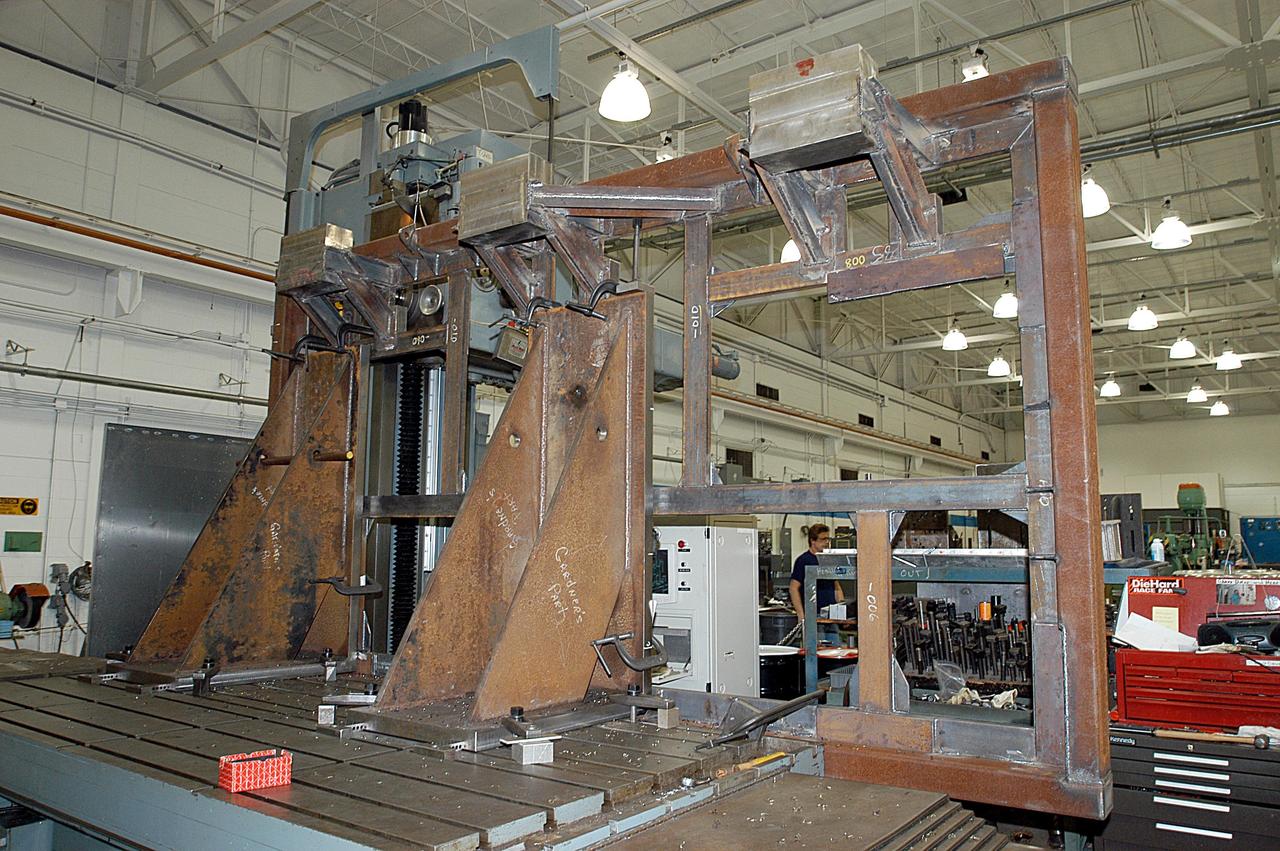
KENNEDY SPACE CENTER, FLA. -- A main landing gear door mounting fixture in the Launch Equipment Shop is being used to support the Columbia mishap investigation. A simulated orbiter wing and several test panels, along with sections of Space Shuttle orbiter Enterprise (OV-101), will be transferred to the Southwest Research Institute for testing after Thermal Protection System (TPS) tile installation is complete. The testing has been requested by the Columbia Accident Investigation Board. For this initiative, sections of Enterprise were borrowed from the Smithsonian Institution's Air and Space Museum where the orbiter is being stored at the Washington Dulles International Airport. Enterprise was the first orbiter built in the Shuttle fleet and was used to conduct the Approach and Landing Test Program before the first powered Shuttle flight.
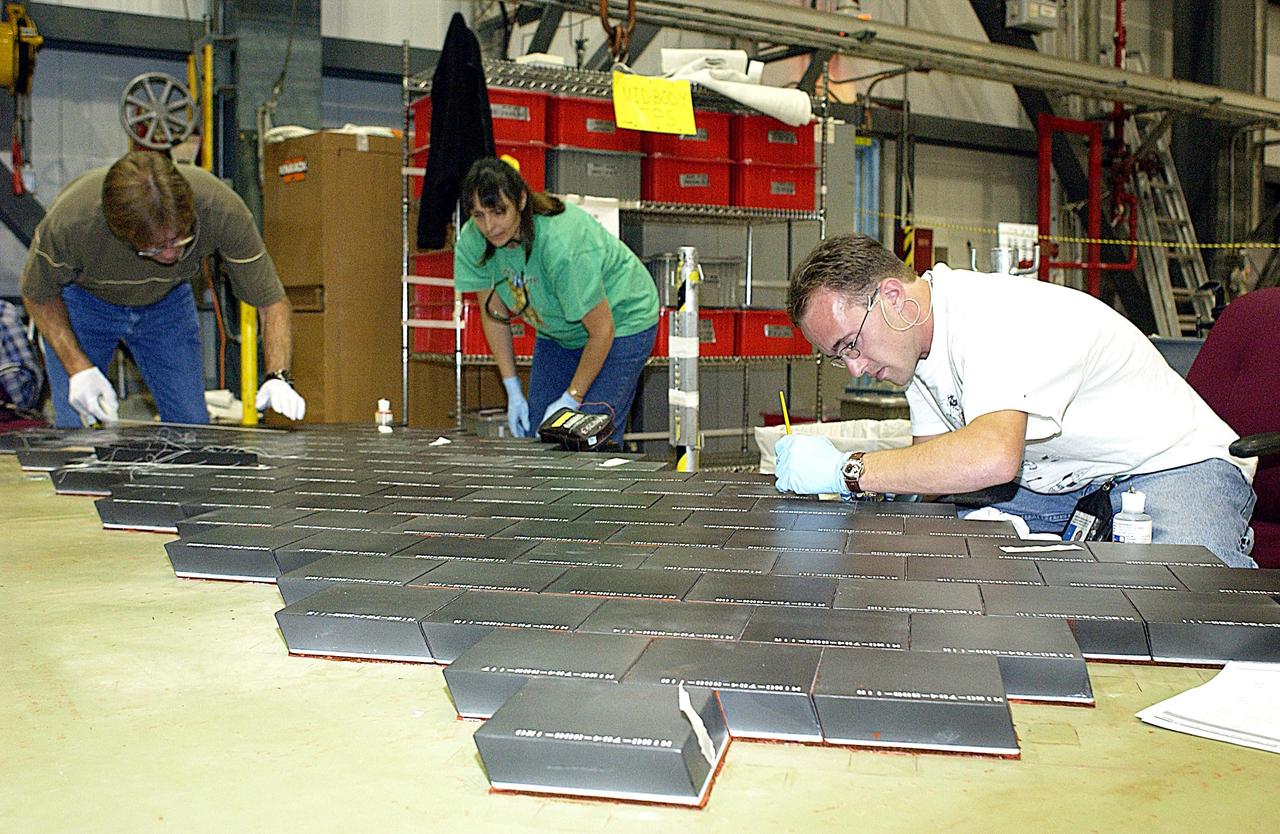
KENNEDY SPACE CENTER, FLA. -- In the Orbiter Processing Facility, United Space Alliance employees (from left) Harrell Watts, Lynn Wozniak, and Jason Levandusky install Thermal Protection System tiles on a main landing gear door of Space Shuttle orbiter Enterprise (OV-101). Sections of Enterprise were borrowed from the Smithsonian Institution's Air and Space Museum where the orbiter is being stored at the Washington Dulles International Airport. Enterprise was the first orbiter built in the Shuttle fleet and was used to conduct the Approach and Landing Test Program before the first powered Shuttle flight. After the tile installation is complete, the sections will be transferred to the Southwest Research Institute for testing requested by the Columbia Accident Investigation Board.
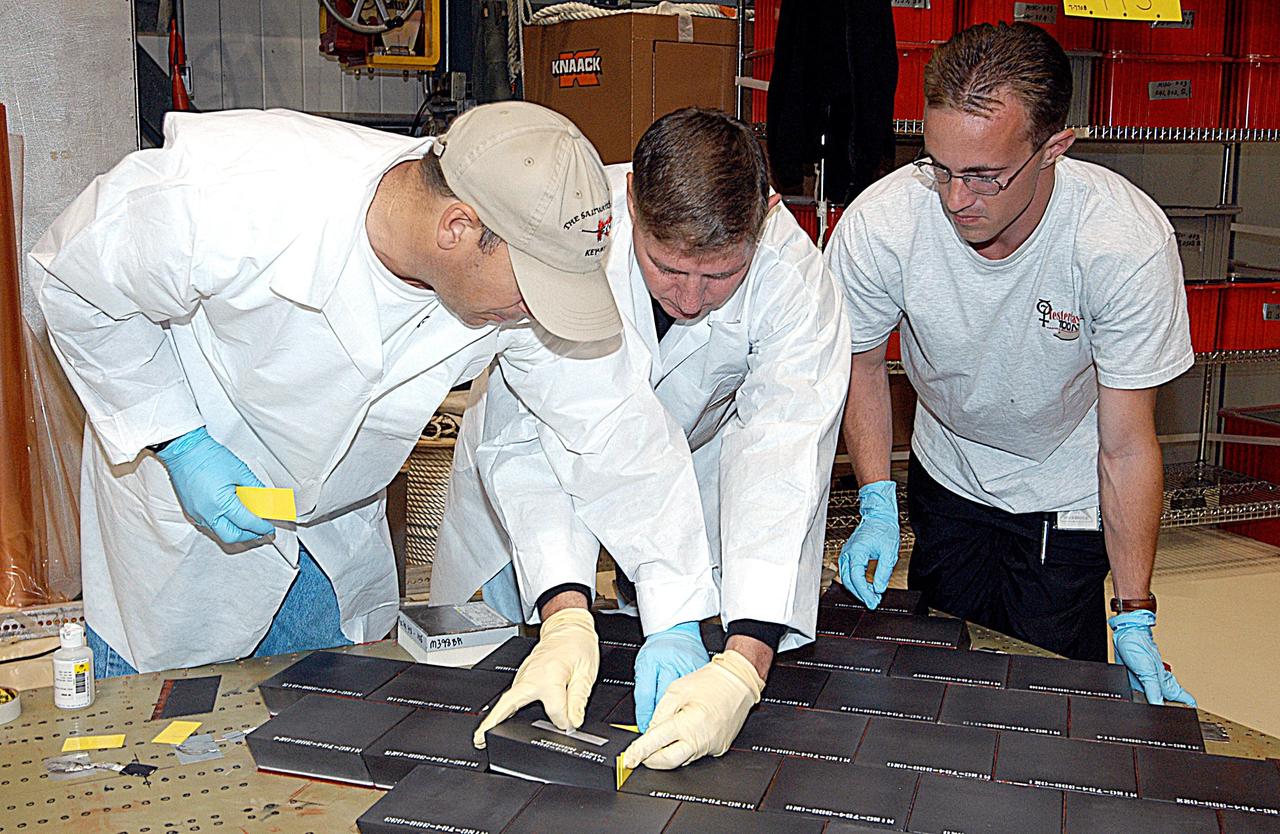
KENNEDY SPACE CENTER, FLA. -- In the Orbiter Processing Facility, United Space Alliance employees (from left) Mike Cote, Tom Baggitt, and Jason Levandusky install Thermal Protection System tiles on a main landing gear door of Space Shuttle orbiter Enterprise (OV-101). Sections of Enterprise were borrowed from the Smithsonian Institution's Air and Space Museum where the orbiter is being stored at the Washington Dulles International Airport. Enterprise was the first orbiter built in the Shuttle fleet and was used to conduct the Approach and Landing Test Program before the first powered Shuttle flight. After the tile installation is complete, the sections will be transferred to the Southwest Research Institute for testing requested by the Columbia Accident Investigation Board.
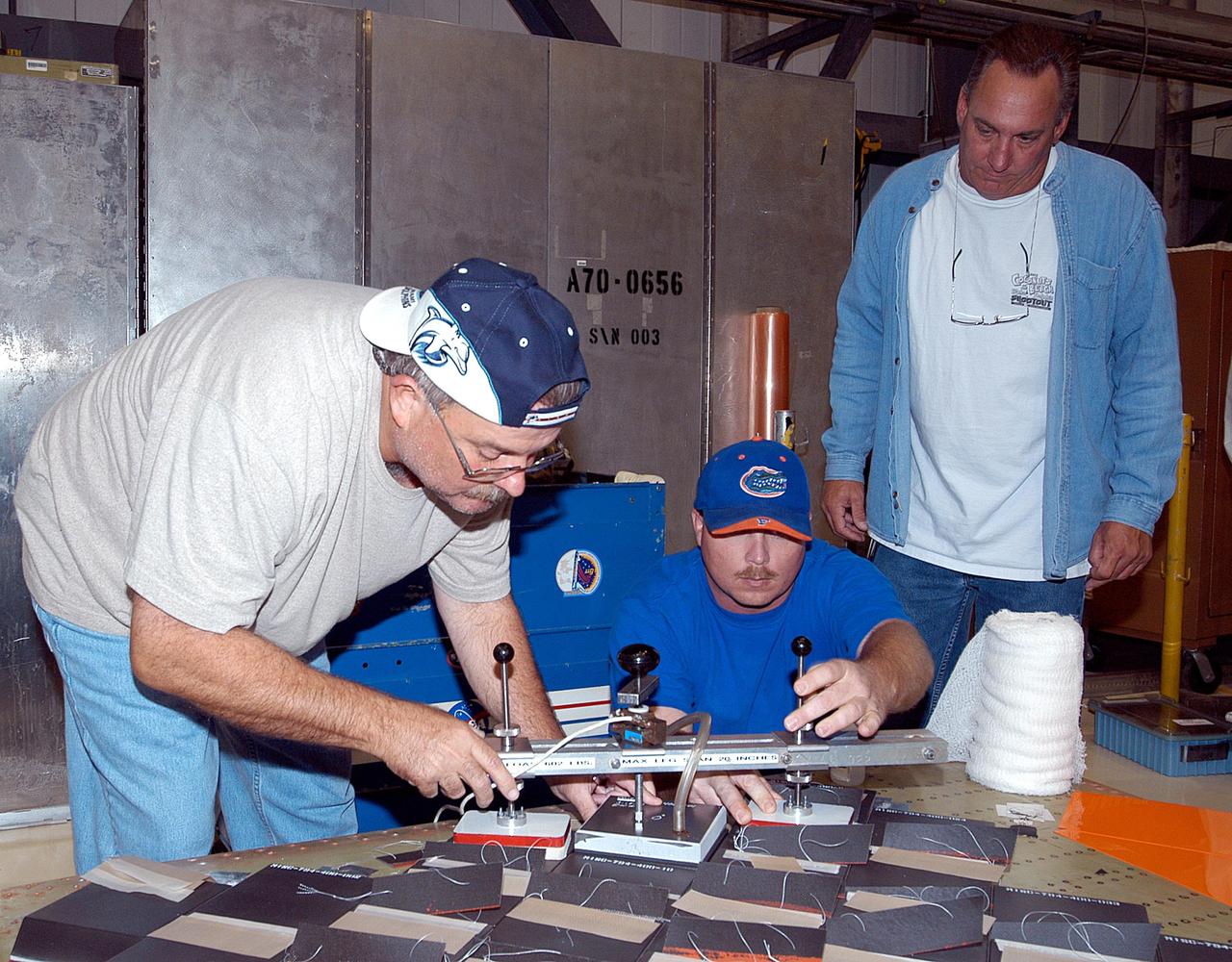
KENNEDY SPACE CENTER, FLA. -- In the Orbiter Processing Facility, United Space Alliance employees (from left) Dave Sanborn, Butch Lato, and Bill Brooks conduct a bond verification test on Thermal Protection System tiles newly installed on a main landing gear door of Space Shuttle orbiter Enterprise (OV-101). Sections of Enterprise were borrowed from the Smithsonian Institution's Air and Space Museum where the orbiter is being stored at the Washington Dulles International Airport. Enterprise was the first orbiter built in the Shuttle fleet and was used to conduct the Approach and Landing Test Program before the first powered Shuttle flight. After the tile installation is complete, the sections will be transferred to the Southwest Research Institute for testing requested by the Columbia Accident Investigation Board.
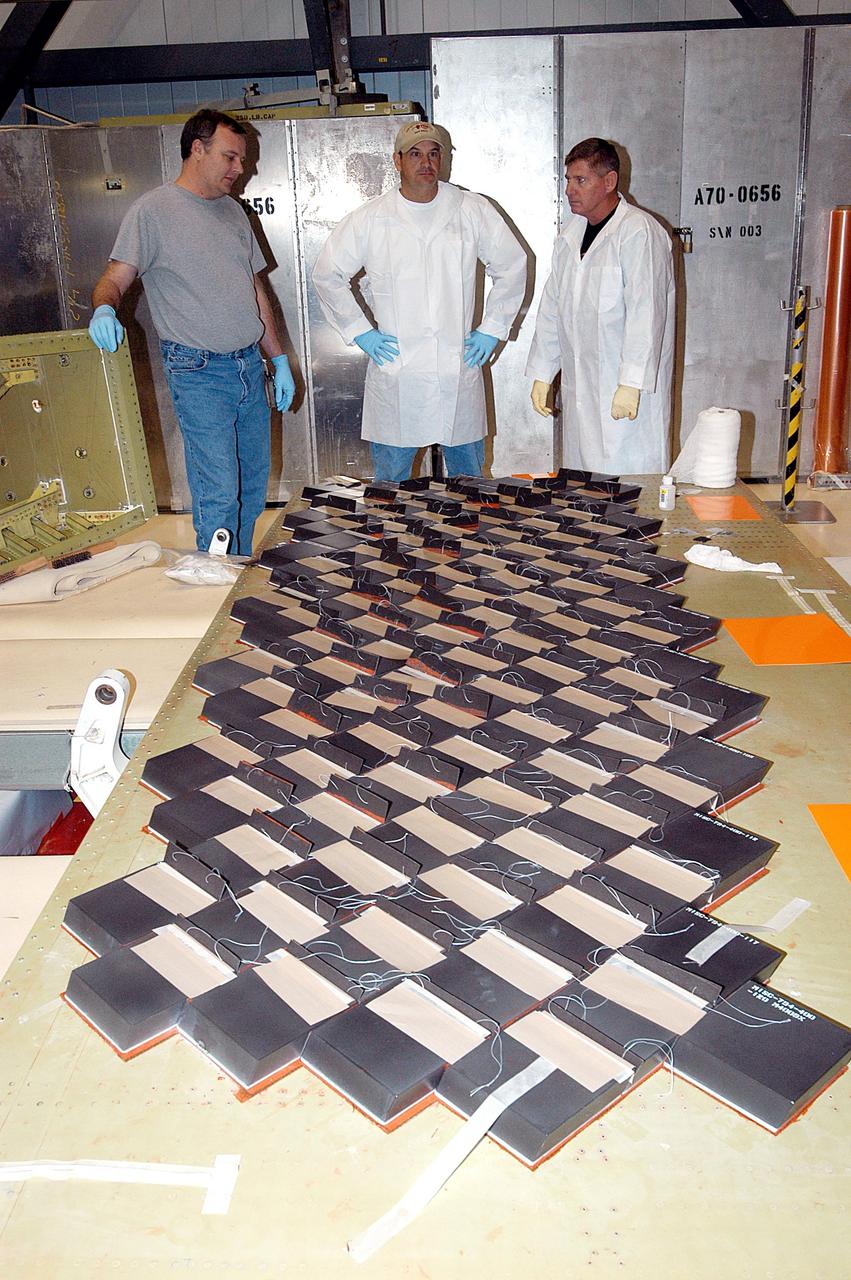
KENNEDY SPACE CENTER, FLA. -- In the Orbiter Processing Facility, United Space Alliance employees (from left) John Kuhn, Mike Cote, and Tom Baggitt discuss the installation of Thermal Protection System tiles on a main landing gear door of Space Shuttle orbiter Enterprise (OV-101). Sections of Enterprise were borrowed from the Smithsonian Institution's Air and Space Museum where the orbiter is being stored at the Washington Dulles International Airport. Enterprise was the first orbiter built in the Shuttle fleet and was used to conduct the Approach and Landing Test Program before the first powered Shuttle flight. After the tile installation is complete, the sections will be transferred to the Southwest Research Institute for testing requested by the Columbia Accident Investigation Board.
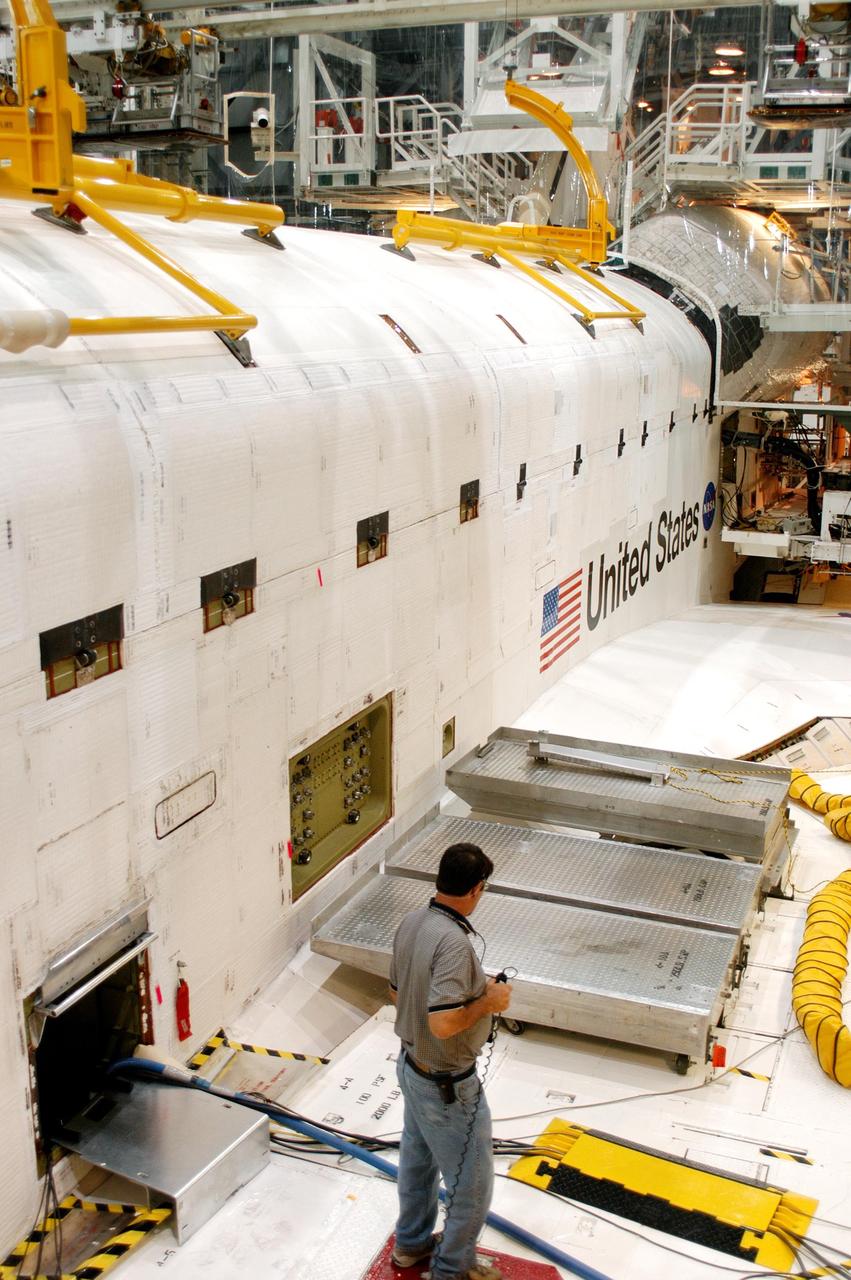
KENNEDY SPACE CENTER, FLA. - In the Orbiter Processing Facility, a worker checks out part of Atlantis after payload bay doors were closed in preparation for the expected impact of Hurricane Frances on Saturday. Other preparations at KSC include powering down the Space Shuttle orbiters and stowing the landing gear. Workers are also taking precautions against flooding by moving spacecraft hardware off the ground and sandbagging facilities. The Orbiter Processing Facility is constructed of concrete and steel and was designed to withstand winds of 105 mph. The Vehicle Assembly Building is constructed of concrete and steel and was designed to withstand winds of 125 mph. Other payload and flight hardware support facilities can endure winds of 110 mph. Launch pads and the Payload Hazardous Servicing Facility can withstand 125-mph winds.
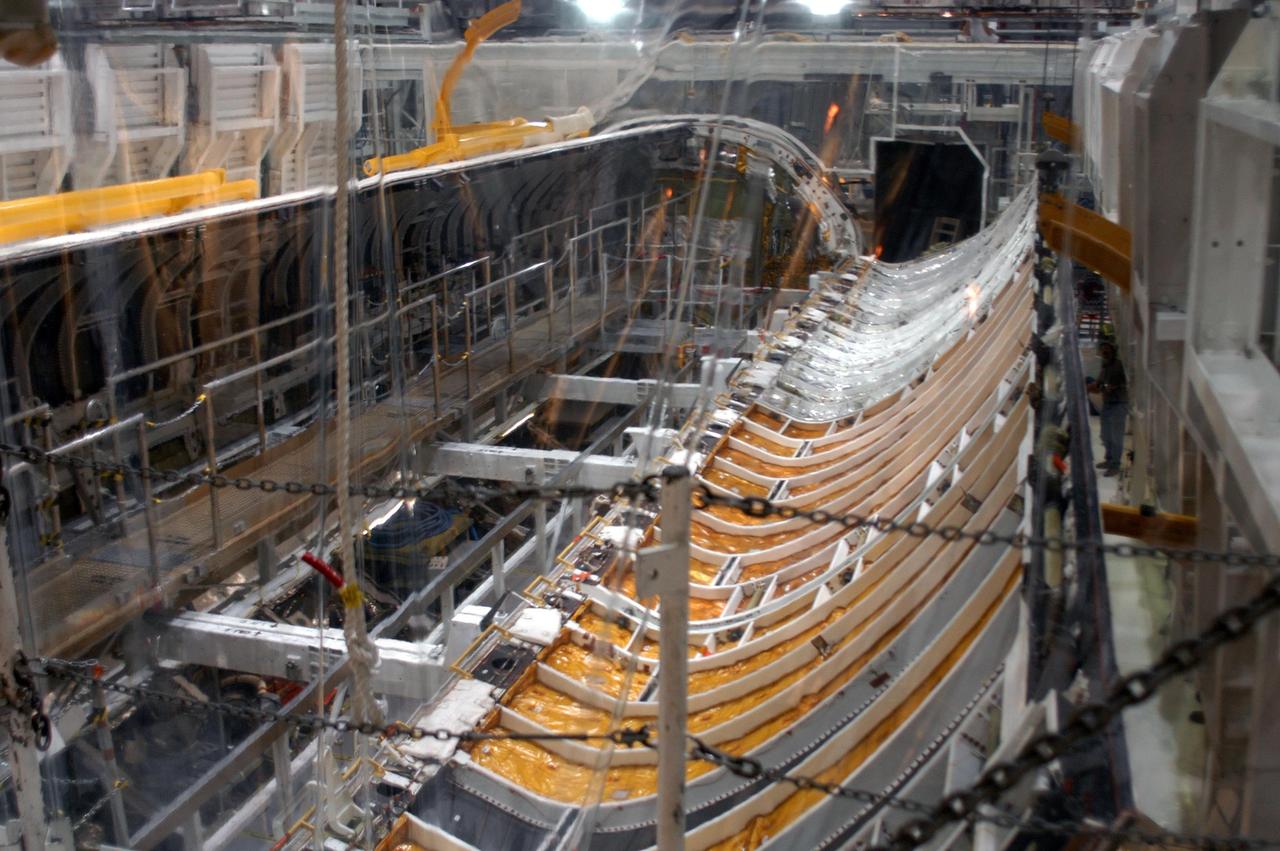
KENNEDY SPACE CENTER, FLA. - In the Orbiter Processing Facility, the payload bay doors on Atlantis are being closed in preparation for the expected impact of Hurricane Frances on Saturday. Other preparations at KSC include powering down the Space Shuttle orbiters and stowing the landing gear. Workers are also taking precautions against flooding by moving spacecraft hardware off the ground and sandbagging facilities. The Orbiter Processing Facility is constructed of concrete and steel and was designed to withstand winds of 105 mph. The Vehicle Assembly Building is constructed of concrete and steel and was designed to withstand winds of 125 mph. Other payload and flight hardware support facilities can endure winds of 110 mph. Launch pads and the Payload Hazardous Servicing Facility can withstand 125-mph winds.
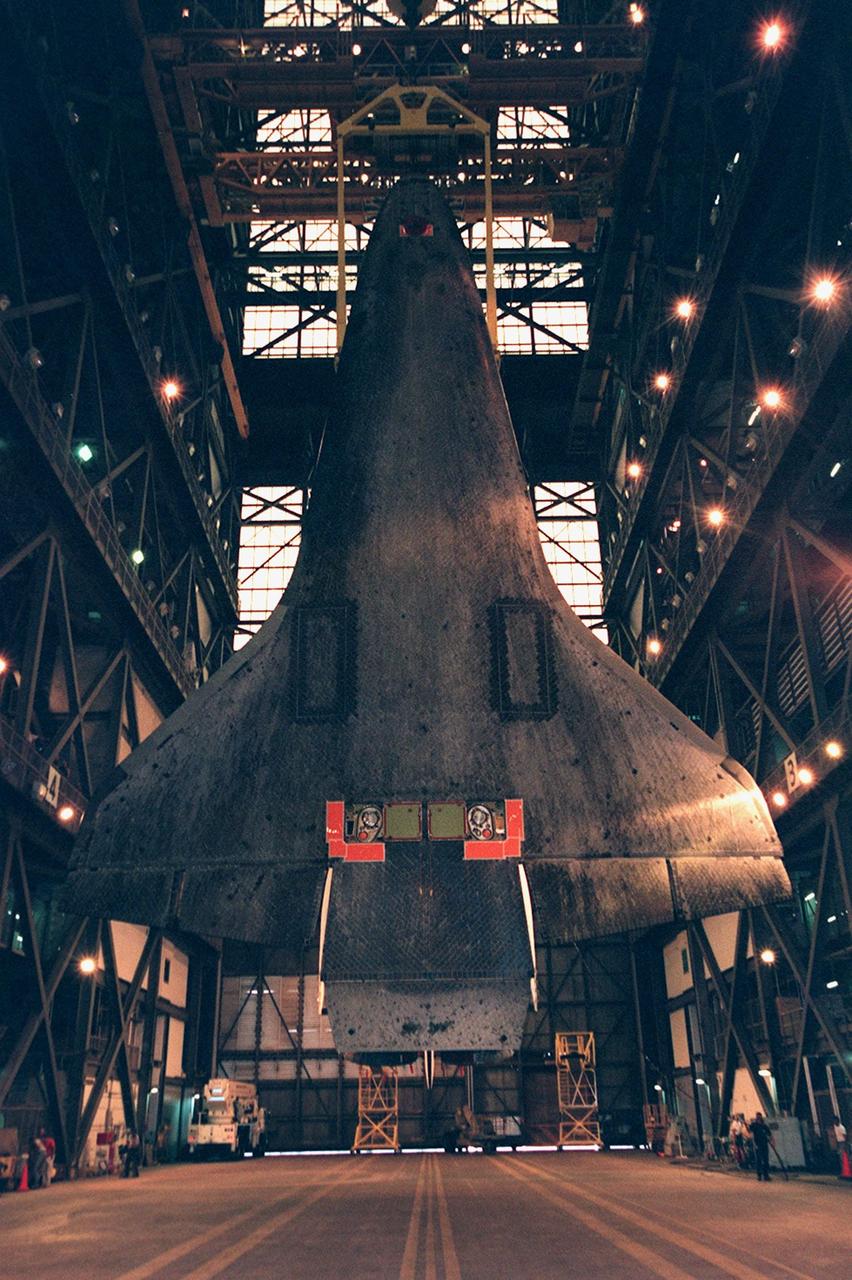
KENNEDY SPACE CENTER, FLA. -- In the transfer aisle of the Vehicle Assembly Building (VAB), the orbiter Atlantis hangs suspended vertically from an overhead crane. Shown is the underside of the orbiter. The black-outlined rectangles near the wings are the location of the main landing gear doors. At the lower end, the two squares centered between the red corners are two of the connection points for the external tank. Another connection is at the top of the underside, between the two red areas shown there. The 122-foot-long orbiter is easily accommodated inside the 525-foot-tall, 518-foot-wide VAB. Atlantis will be mated with its external tank and solid rocket boosters before being transported to Launch Pad 39A. Atlantis will fly on mission STS-101 to the International Space Station, where its crew of seven will prepare the Station for the arrival of the next pressurized module, the Russian-built Zvezda. Atlantis is expected to launch no earlier than April 17, 2000
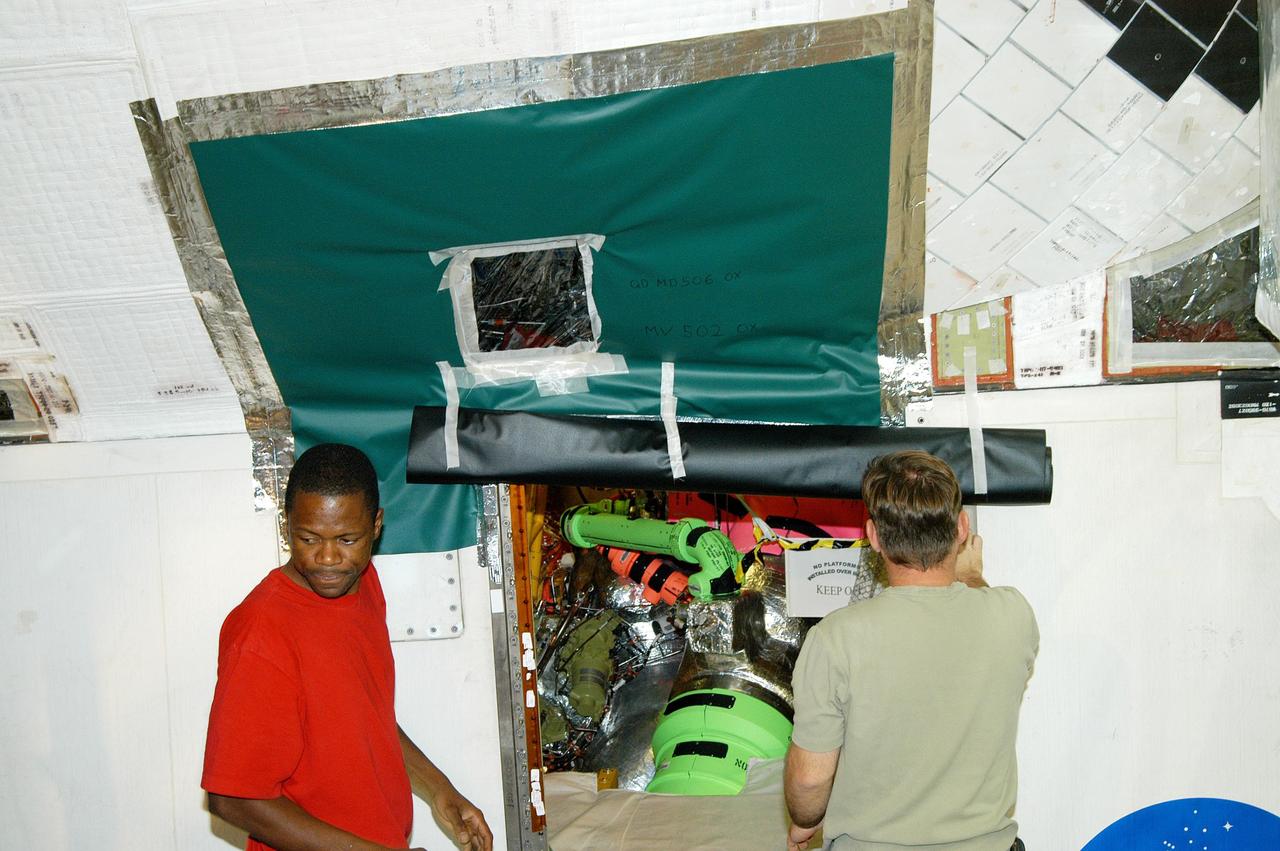
KENNEDY SPACE CENTER, FLA. - Workers in the Orbiter Processing Facility cover up areas of Atlantis, preparing for the expected impact of Hurricane Frances on Saturday. Other preparations at KSC include powering down the Space Shuttle orbiters, closing the payload bay doors and stowing the landing gear. Workers are also taking precautions against flooding by moving spacecraft hardware off the ground and sandbagging facilities. The Orbiter Processing Facility is constructed of concrete and steel and was designed to withstand winds of 105 mph. The Vehicle Assembly Building is constructed of concrete and steel and was designed to withstand winds of 125 mph. Other payload and flight hardware support facilities can endure winds of 110 mph. Launch pads and the Payload Hazardous Servicing Facility can withstand 125-mph winds.
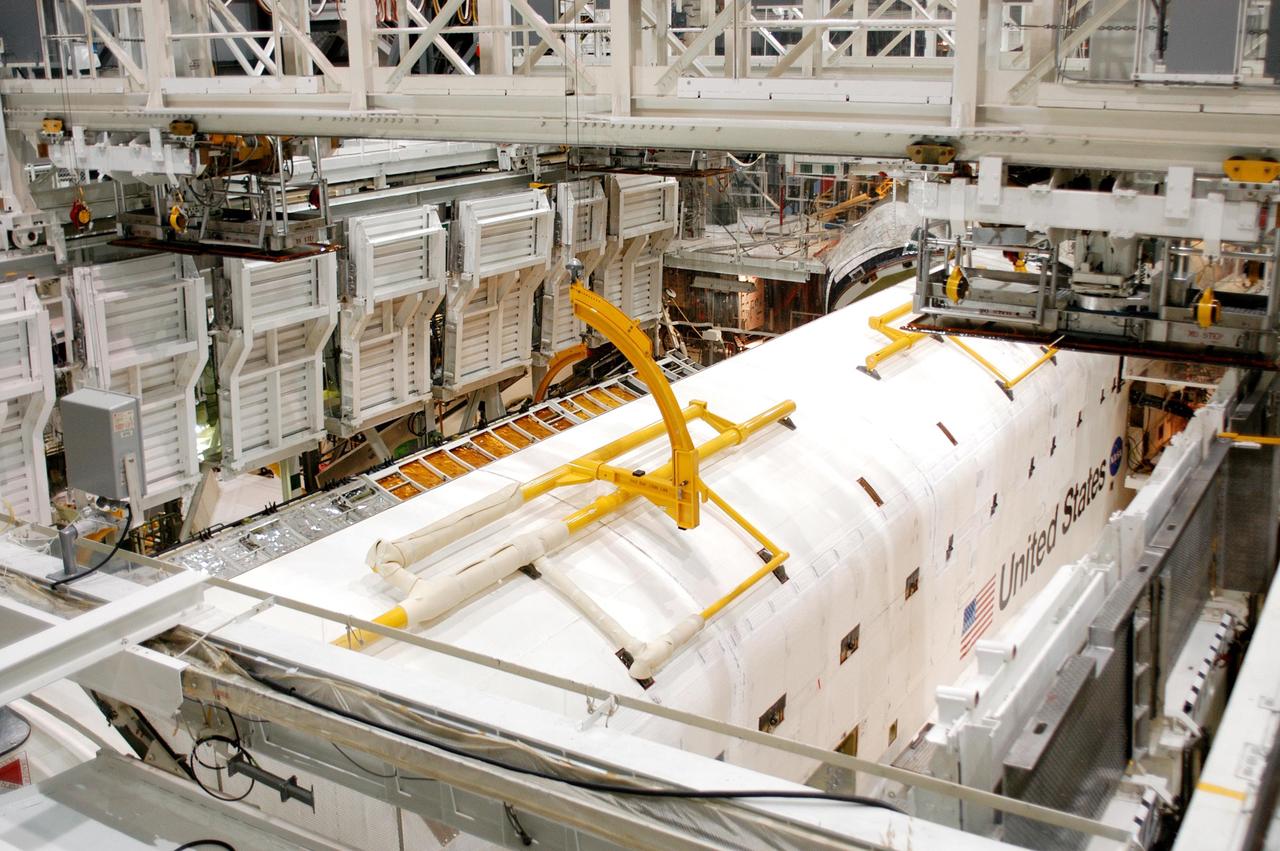
KENNEDY SPACE CENTER, FLA. - In the Orbiter Processing Facility, the payload bay doors on Atlantis are being closed in preparation for the expected impact of Hurricane Frances on Saturday. Other preparations at KSC include powering down the Space Shuttle orbiters and stowing the landing gear. Workers are also taking precautions against flooding by moving spacecraft hardware off the ground and sandbagging facilities. The Orbiter Processing Facility is constructed of concrete and steel and was designed to withstand winds of 105 mph. The Vehicle Assembly Building is constructed of concrete and steel and was designed to withstand winds of 125 mph. Other payload and flight hardware support facilities can endure winds of 110 mph. Launch pads and the Payload Hazardous Servicing Facility can withstand 125-mph winds.
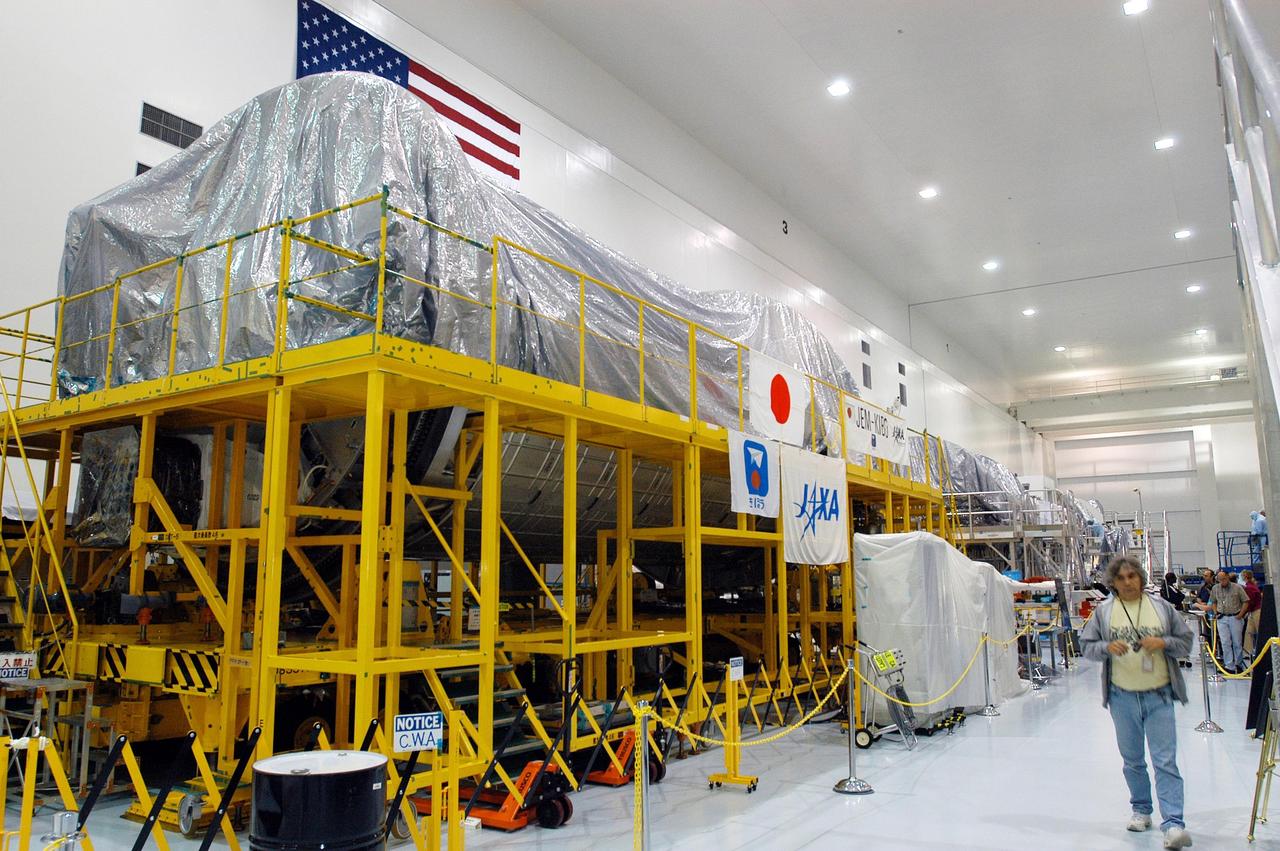
KENNEDY SPACE CENTER, FLA. - In the Space Station Processing Facility, modules wrapped in plastic line one wall. The modules and equipment are being covered in preparation for the expected impact of Hurricane Frances on Saturday. KSC workers also have powered down the Space Shuttle orbiters, closed their payload bay doors and stowed the landing gear. They are also taking precautions against flooding by moving spacecraft hardware off the ground and sandbagging facilities. The SSPF can withstand sustained winds of 110 mph and wind gusts up to 132 mph. The Orbiter Processing Facility is constructed of concrete and steel and was designed to withstand winds of 105 mph. The Vehicle Assembly Building is constructed of concrete and steel and was designed to withstand winds of 125 mph. Other payload and flight hardware support facilities can endure winds of 110 mph. Launch pads and the Payload Hazardous Servicing Facility can withstand 125-mph winds.
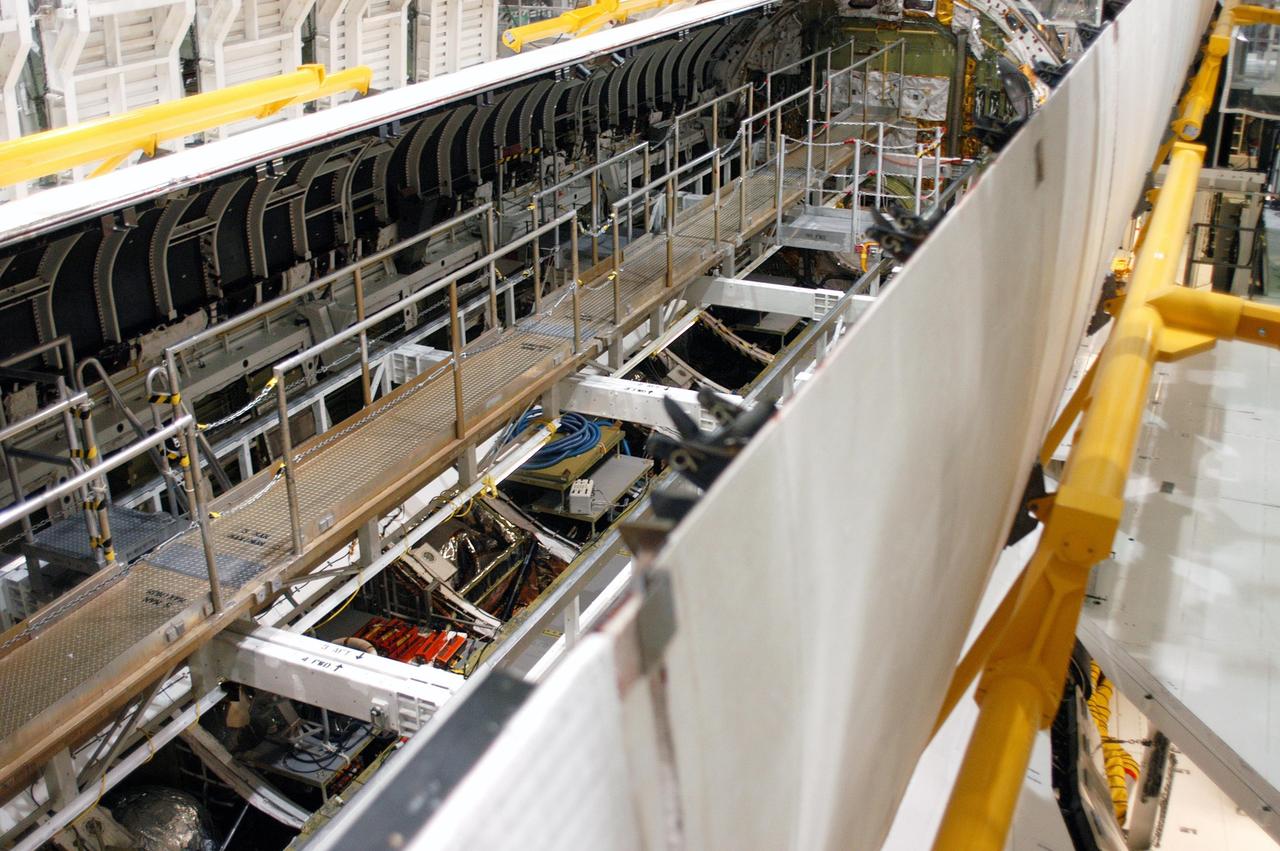
KENNEDY SPACE CENTER, FLA. - In the Orbiter Processing Facility, the payload bay doors on Atlantis are being closed in preparation for the expected impact of Hurricane Frances on Saturday. Other preparations at KSC include powering down the Space Shuttle orbiters and stowing the landing gear. Workers are also taking precautions against flooding by moving spacecraft hardware off the ground and sandbagging facilities. The Orbiter Processing Facility is constructed of concrete and steel and was designed to withstand winds of 105 mph. The Vehicle Assembly Building is constructed of concrete and steel and was designed to withstand winds of 125 mph. Other payload and flight hardware support facilities can endure winds of 110 mph. Launch pads and the Payload Hazardous Servicing Facility can withstand 125-mph winds.
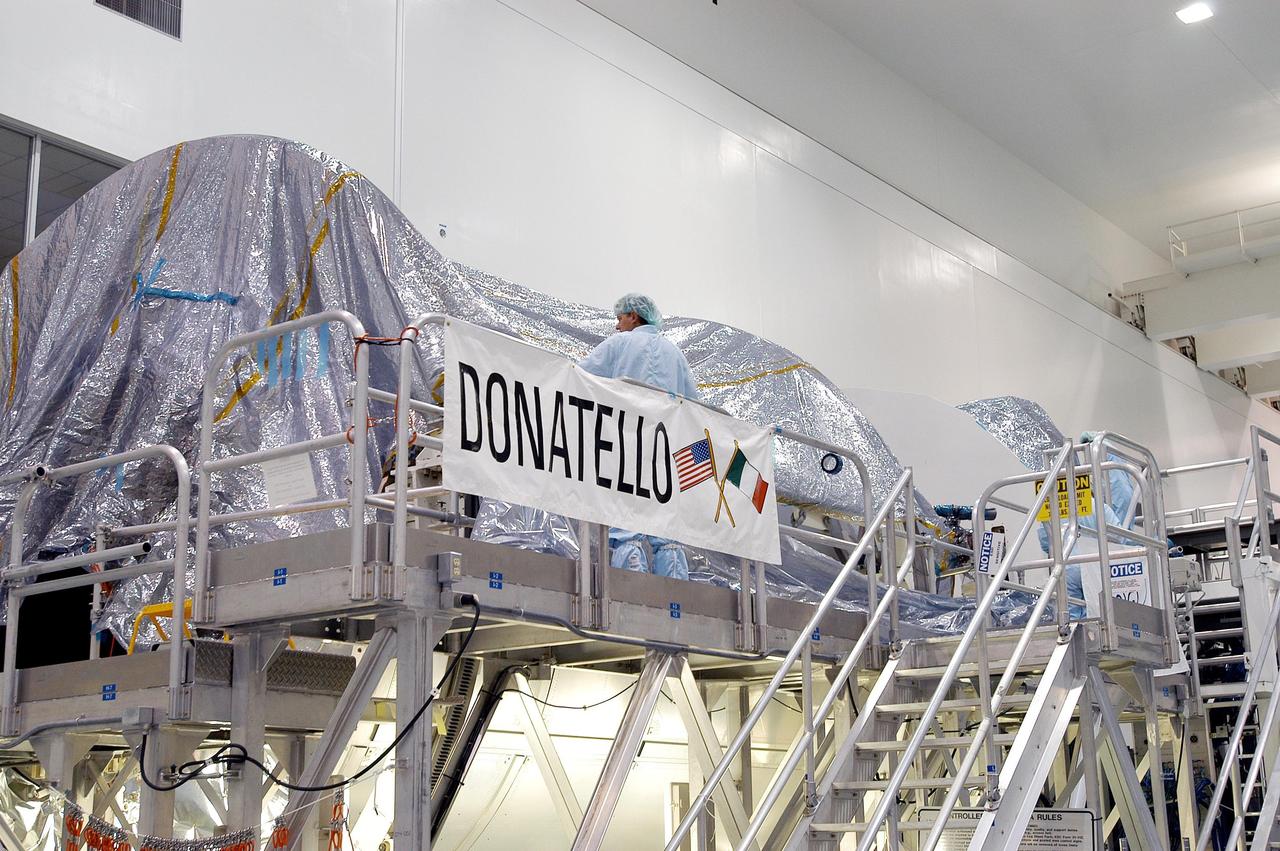
KENNEDY SPACE CENTER, FLA. - In the Space Station Processing Facility, workers cover with plastic the Multi-Purpose Logistics Module Donatello in preparation for the expected impact of Hurricane Frances on Saturday. Other modules and equipment are being covered as well. Workers also have powered down the Space Shuttle orbiters, closed their payload bay doors and stowed the landing gear. They are also taking precautions against flooding by moving spacecraft hardware off the ground and sandbagging facilities. The SSPF can withstand sustained winds of 110 mph and wind gusts up to 132 mph. The Orbiter Processing Facility is constructed of concrete and steel and was designed to withstand winds of 105 mph. The Vehicle Assembly Building is constructed of concrete and steel and was designed to withstand winds of 125 mph. Other payload and flight hardware support facilities can endure winds of 110 mph. Launch pads and the Payload Hazardous Servicing Facility can withstand 125-mph winds.
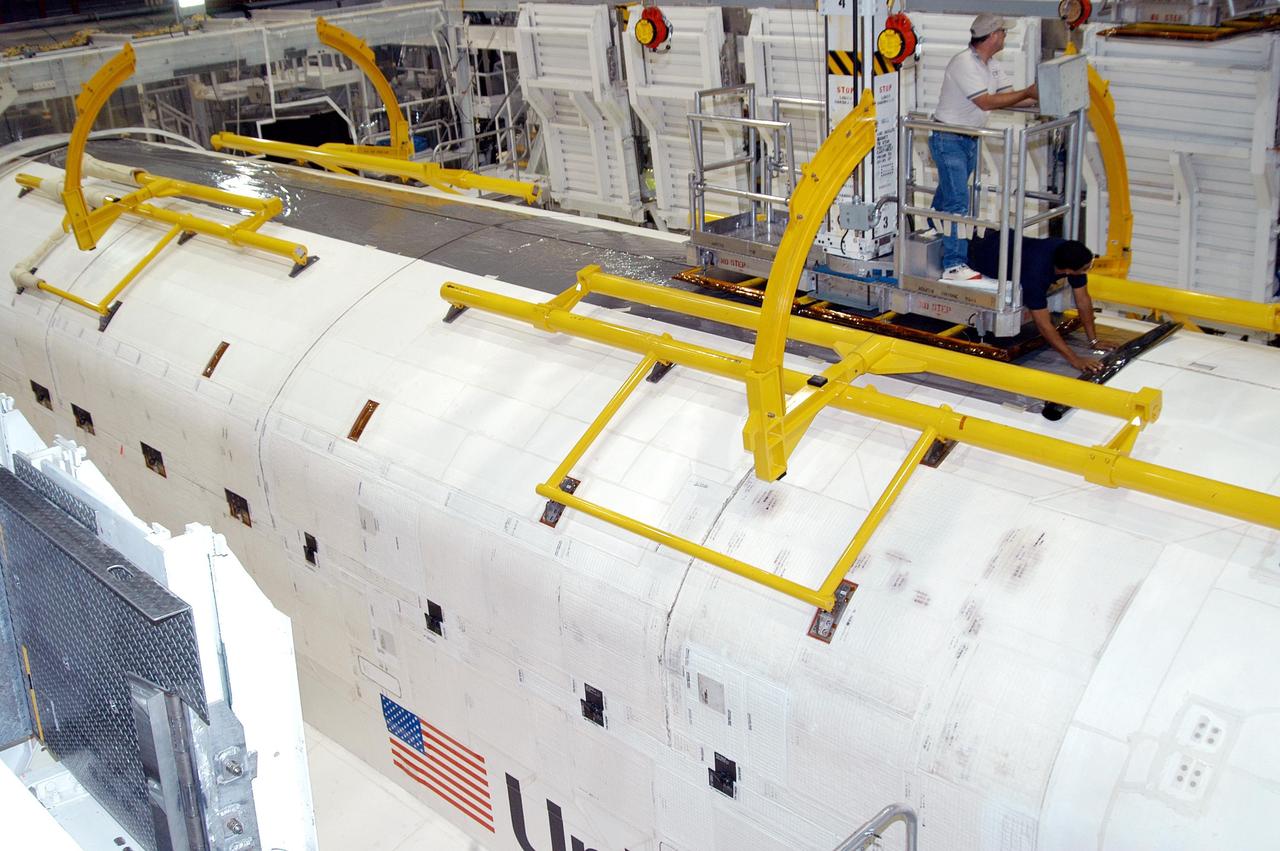
KENNEDY SPACE CENTER, FLA. - Workers in the Orbiter Processing Facility finish Hurricane preparations on the payload bay doors of Atlantis. Preparing for the expected impact of Hurricane Frances on Saturday, workers also powered down the Space Shuttle orbiters, and stowed the landing gear. They are also taking precautions against flooding by moving spacecraft hardware off the ground and sandbagging facilities. The Orbiter Processing Facility is constructed of concrete and steel and was designed to withstand winds of 105 mph. The Vehicle Assembly Building is constructed of concrete and steel and was designed to withstand winds of 125 mph. Other payload and flight hardware support facilities can endure winds of 110 mph. Launch pads and the Payload Hazardous Servicing Facility can withstand 125-mph winds.
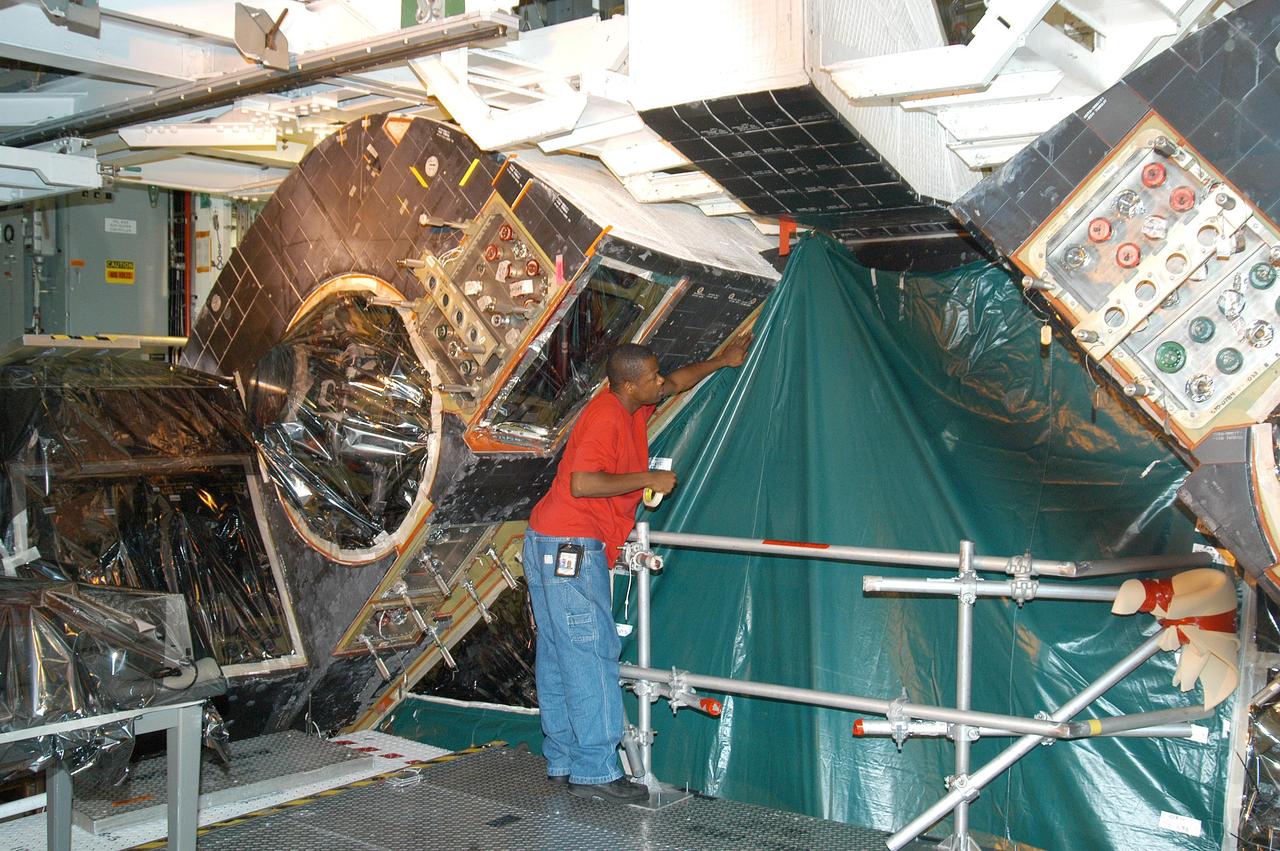
KENNEDY SPACE CENTER, FLA. - Workers in the Orbiter Processing Facility cover up areas of Atlantis with plastic, preparing for the expected impact of Hurricane Frances on Saturday. Other preparations at KSC include powering down the Space Shuttle orbiters, closing the payload bay doors and stowing the landing gear. Workers are also taking precautions against flooding by moving spacecraft hardware off the ground and sandbagging facilities. The Orbiter Processing Facility is constructed of concrete and steel and was designed to withstand winds of 105 mph. The Vehicle Assembly Building is constructed of concrete and steel and was designed to withstand winds of 125 mph. Other payload and flight hardware support facilities can endure winds of 110 mph. Launch pads and the Payload Hazardous Servicing Facility can withstand 125-mph winds.

KENNEDY SPACE CENTER, FLA. - Workers in the Orbiter Processing Facility cover up areas of Atlantis with plastic, preparing for the expected impact of Hurricane Frances on Saturday. Other preparations at KSC include powering down the Space Shuttle orbiters, closing the payload bay doors and stowing the landing gear. Workers are also taking precautions against flooding by moving spacecraft hardware off the ground and sandbagging facilities. The Orbiter Processing Facility is constructed of concrete and steel and was designed to withstand winds of 105 mph. The Vehicle Assembly Building is constructed of concrete and steel and was designed to withstand winds of 125 mph. Other payload and flight hardware support facilities can endure winds of 110 mph. Launch pads and the Payload Hazardous Servicing Facility can withstand 125-mph winds.
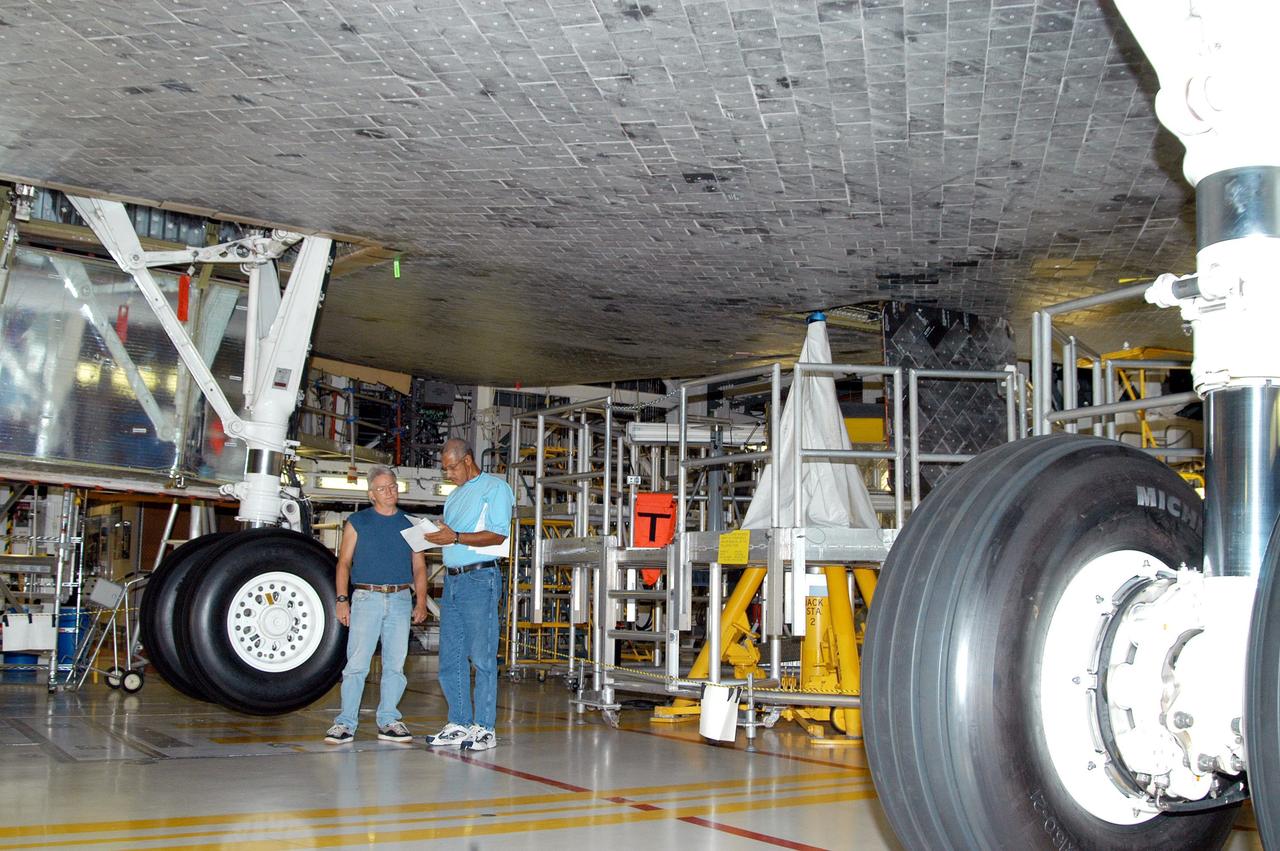
KENNEDY SPACE CENTER, FLA. - Workers in the Orbiter Processing Facility prepare to stow the landing gear on the orbiter Atlantis in preparation for the expected impact of Hurricane Frances on Saturday. Other preparations at KSC include powering down the Space Shuttle orbiters, and closing their payload bay doors. Workers are also taking precautions against flooding by moving spacecraft hardware off the ground and sandbagging facilities. The Orbiter Processing Facility is constructed of concrete and steel and was designed to withstand winds of 105 mph. The Vehicle Assembly Building is constructed of concrete and steel and was designed to withstand winds of 125 mph. Other payload and flight hardware support facilities can endure winds of 110 mph. Launch pads and the Payload Hazardous Servicing Facility can withstand 125-mph winds.
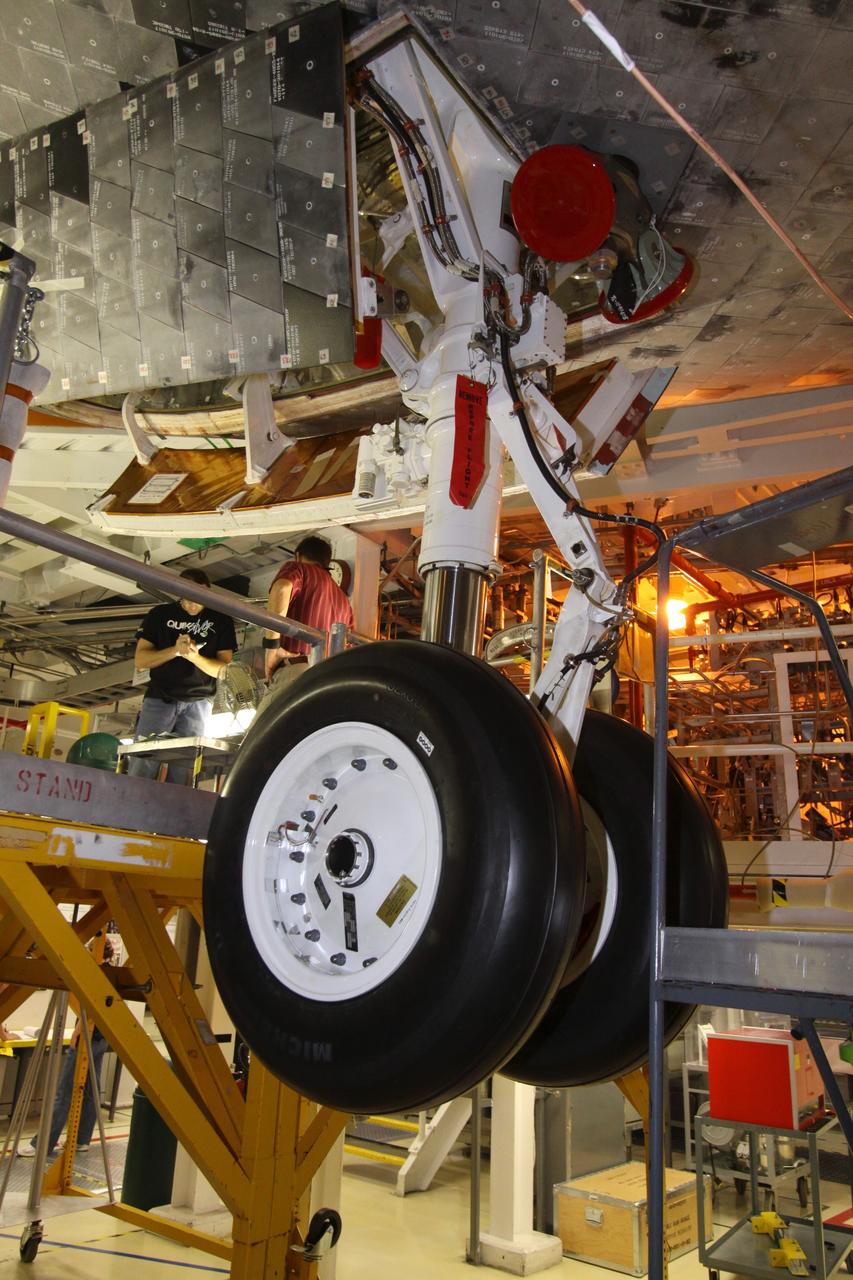
CAPE CANAVERAL, Fla. – In Orbiter Processing Facility-2 at NASA's Kennedy Space Center in Florida, workers verify that the processing of space shuttle Endeavour is complete, its payload bay doors are closed, and it is ready for its move to the Vehicle Assembly Building. This close-up is of Endeavour's nose-wheel landing gear and tires. The move, or "rollover," is targeted for Dec. 12. The Tranquility module, the payload for Endeavour's STS-130 mission to the International Space Station, will be installed in the payload bay after the shuttle has reached the pad. Endeavour's launch is targeted for Feb. 4, 2010. For information on the STS-130 mission and crew, visit http://www.nasa.gov/mission_pages/shuttle/shuttlemissions/sts130/index.html. Photo credit: NASA/Jack Pfaller
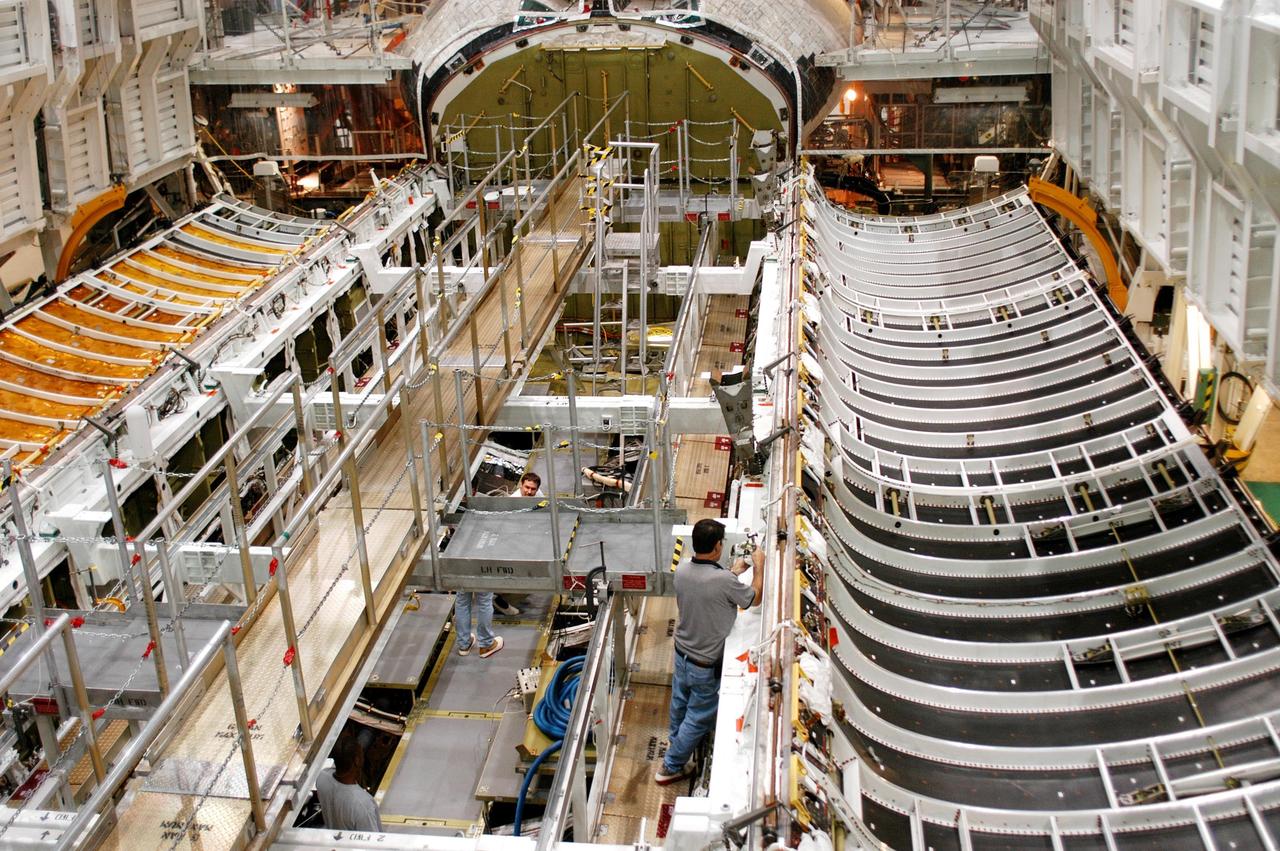
KENNEDY SPACE CENTER, FLA. - In the Orbiter Processing Facility, workers prepare to close the payload bay doors on Atlantis in preparation for the expected impact of Hurricane Frances on Saturday. Other preparations at KSC include powering down the Space Shuttle orbiters and stowing the landing gear. Workers are also taking precautions against flooding by moving spacecraft hardware off the ground and sandbagging facilities. The Orbiter Processing Facility is constructed of concrete and steel and was designed to withstand winds of 105 mph. The Vehicle Assembly Building is constructed of concrete and steel and was designed to withstand winds of 125 mph. Other payload and flight hardware support facilities can endure winds of 110 mph. Launch pads and the Payload Hazardous Servicing Facility can withstand 125-mph winds.