
Employees watch the last planned space shuttle main engine test firing.

The last planned space shuttle main engine test firing takes place on July 29, 2009.

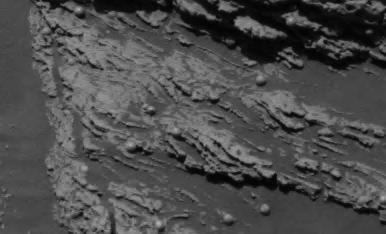
Columbia Hills at Last!
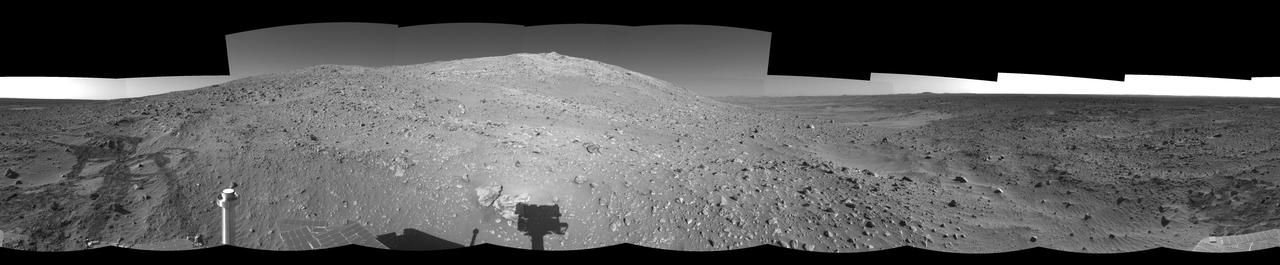
Columbia Hills at Last! Left Eye
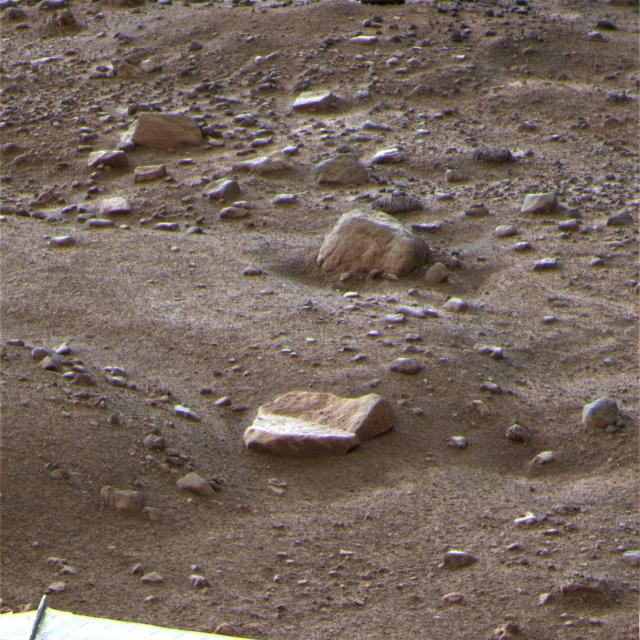
One Last Look at the Martian Arctic
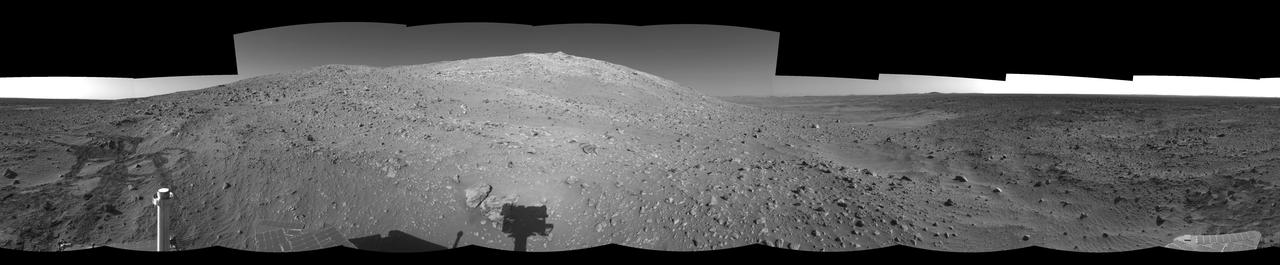
Columbia Hills at Last! Right Eye

Galileo Last View of Tvashtar, Io
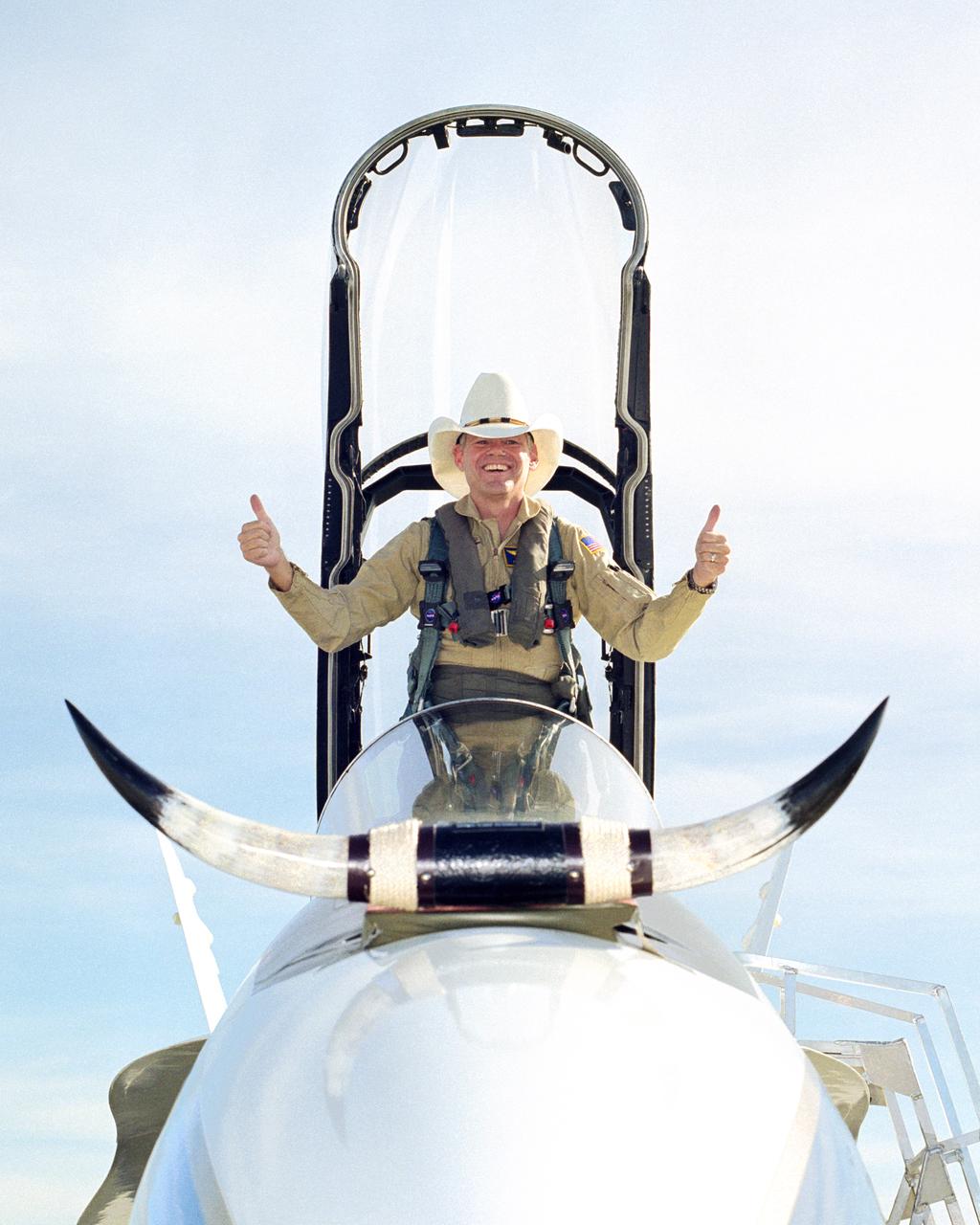
In a lighter mood, Ed Schneider gives a "thumbs-up" after his last flight at the Dryden Flight Research Center on September 19, 2000. Schneider arrived at the NASA Ames-Dryden Flight Research Facility on July 5, 1982, as a Navy Liaison Officer, becoming a NASA research pilot one year later. He has been project pilot for the F-18 High Angle-of-Attack program (HARV), the F-15 aeronautical research aircraft, the NASA B-52 launch aircraft, and the SR-71 "Blackbird" aircraft. He also participated in such programs as the F-8 Digital Fly-By-Wire, the FAA/NASA 720 Controlled Impact Demonstration, the F-14 Automatic Rudder Interconnect and Laminar Flow, and the F-104 Aeronautical Research and Microgravity projects.

Last
Last
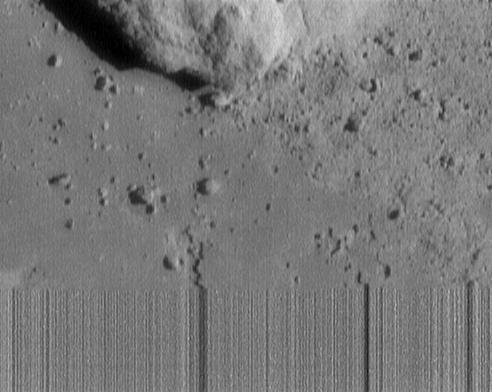
Final Eros Images: Last, Closest Image of Eros
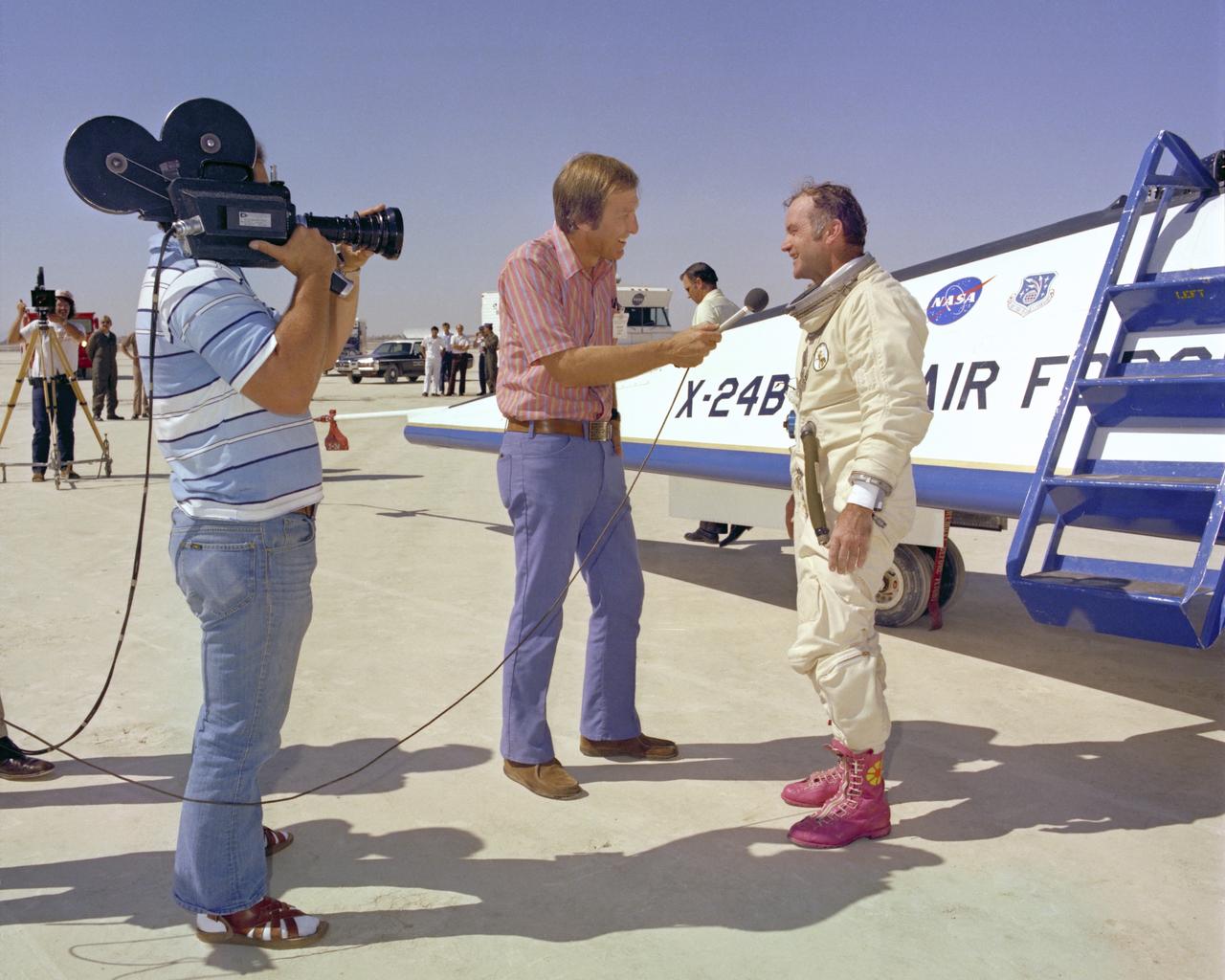
A TV reporter interviews NASA test pilot Bill Dana, wearing his infamous pink boots with yellow daisy decals, after the last powered flight of the X-24B.
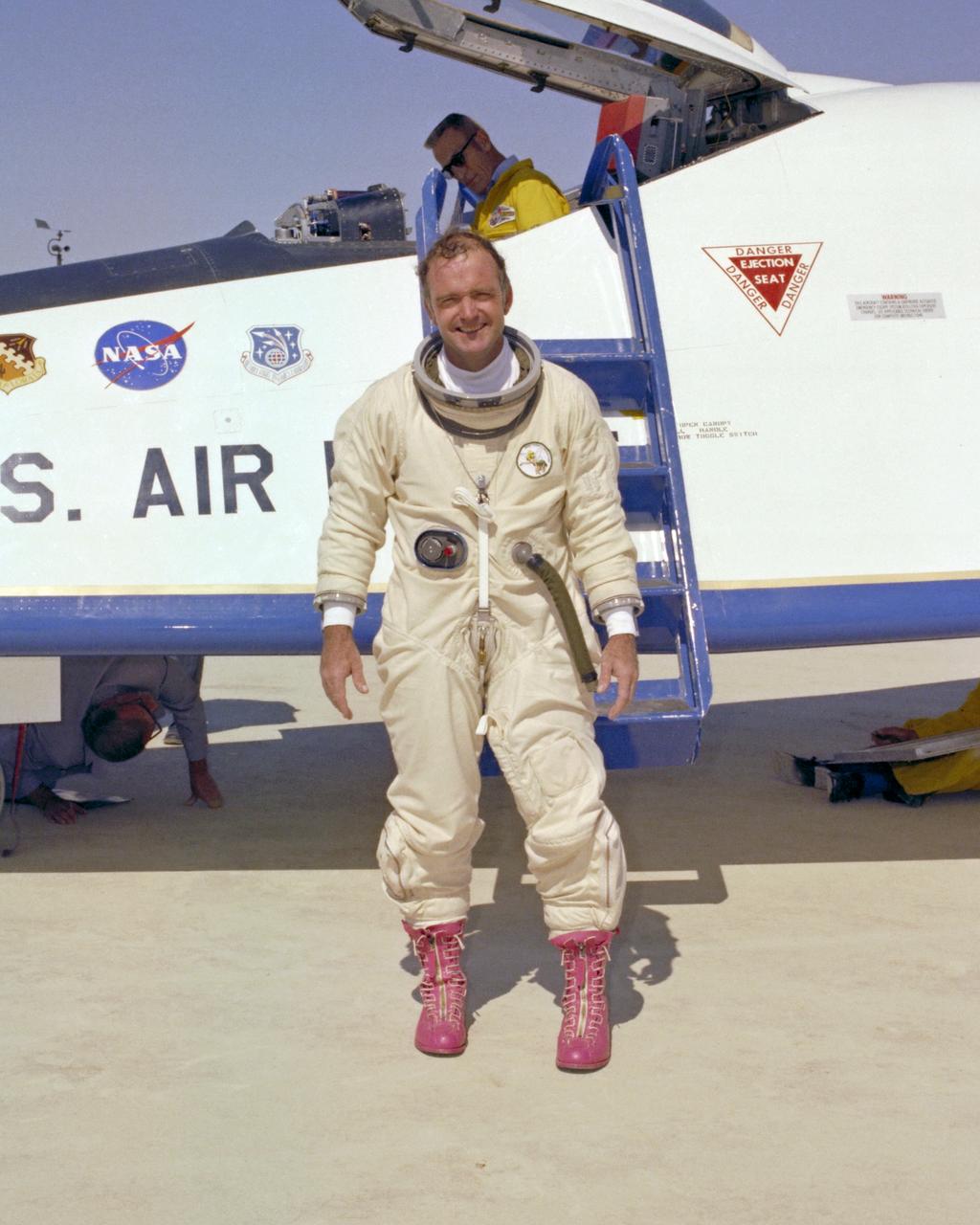
NASA test pilot Bill Dana, resplendent in pink boots and pressure suit, was all smiles following the last powered flight of the X-24B on Sept. 23, 1975.

Five of Five: The Last Scene in a High-resolution Color Mosaic

This is one of the last images ever taken by NASA's InSight Mars lander. Captured on Dec. 11, 2022, the 1,436th Martian day, or sol, of the mission, it shows InSight's seismometer on the Red Planet's surface. https://photojournal.jpl.nasa.gov/catalog/PIA25680
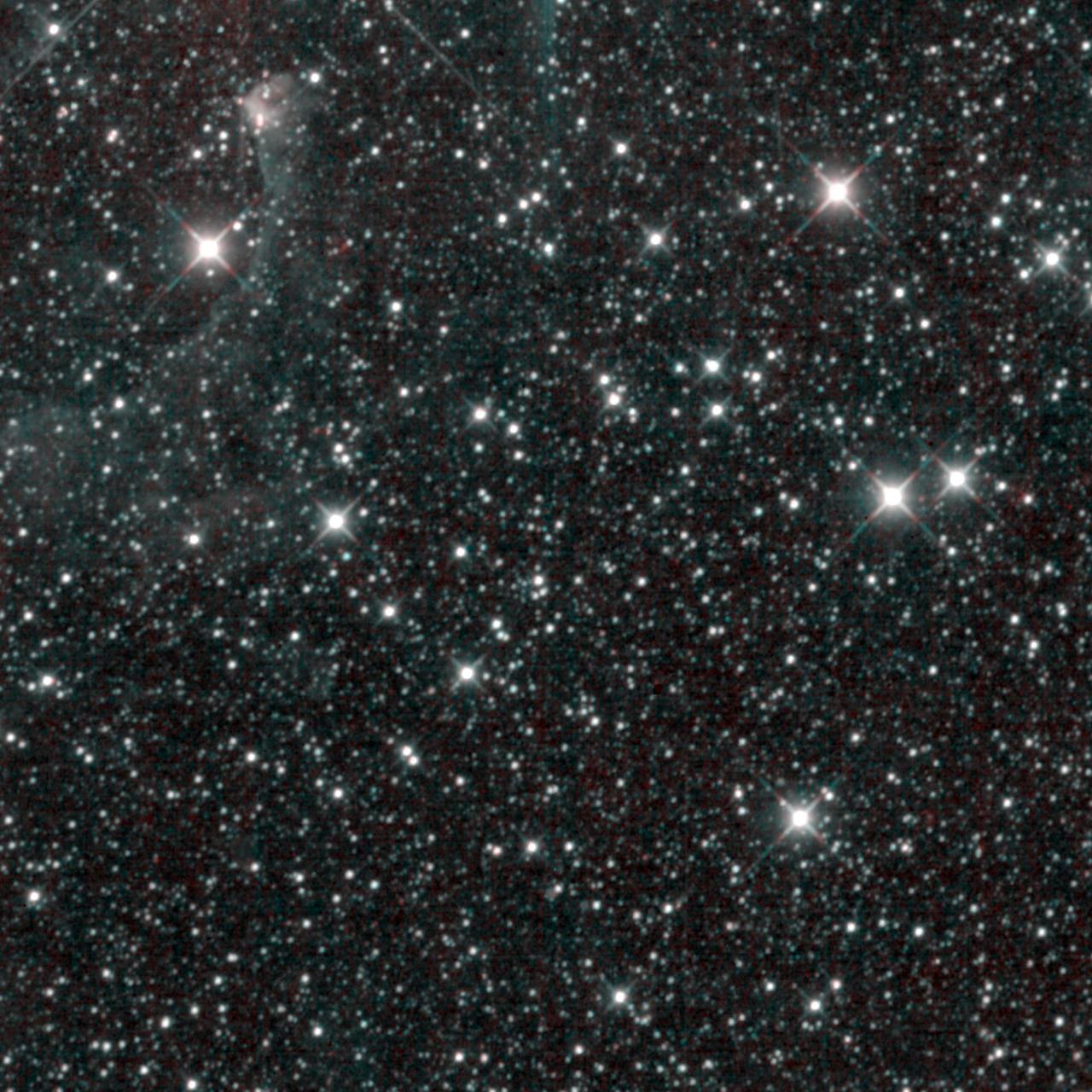
On the morning of February 1, 2011, NASA Wide-field Infrared Survey Explorer, or WISE, took its last snapshot of the sky. WISE final picture shows thousands of stars in a patch of the Milky Way galaxy in the constellation Perseus.
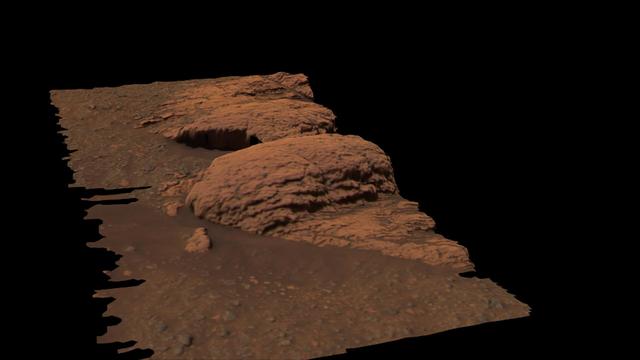
Rare Glance at Last
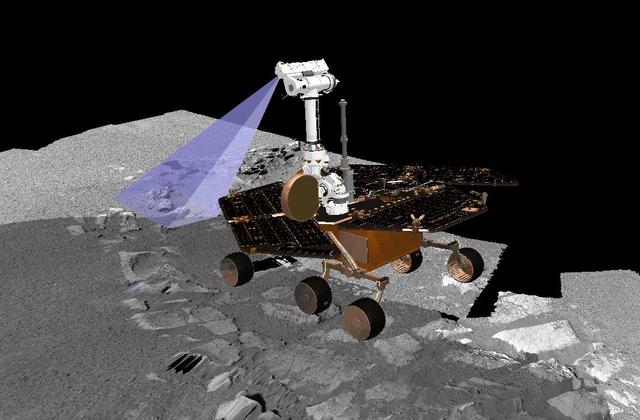
Pre-Planning the Last
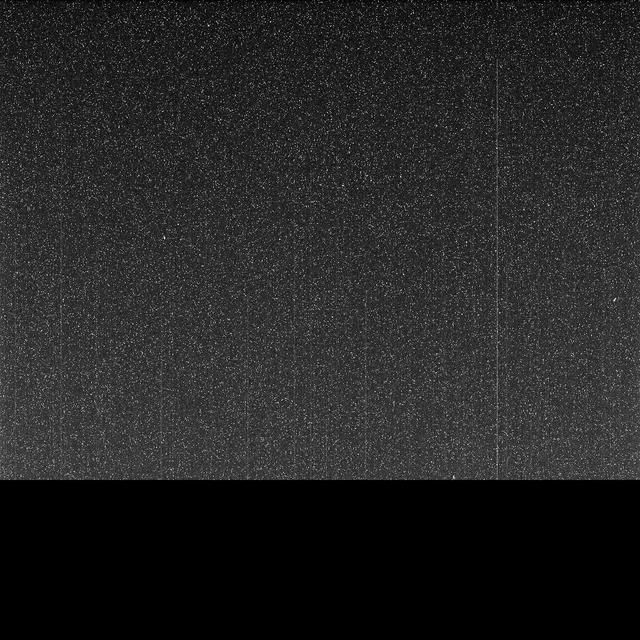
Taken on June 10, 2018 (the 5,111th Martian day, or sol, of the mission) this "noisy", incomplete image was the last data NASA's Opportunity rover sent back from Perseverance Valley on Mars. The partial, full-frame image from the Panoramic Camera (Pancam) was sent up to NASA's Mars Reconnaissance Orbiter around 9:45 a.m. PDT (12:45 p.m. EDT) to relay back to Earth as an intense dust storm darkened the skies around the solar-powered rover. The image was received on Earth at around 10:05 a.m. PDT (1:05 p.m. EDT). Opportunity took this image with the left eye of the Pancam, with its solar filter pointed at the Sun. But since the dust storm blotted out the Sun, the image is dark. The white speckles are noise from the camera. All Pancam images have noise in them, but the darkness makes it more apparent. The transmission stopped before the full image was transmitted, leaving the bottom of the image incomplete, represented here as black pixels. While this partial full-frame image was the last that Opportunity transmitted, it was not actually the last set of images from Opportunity. This image was taken at around 9:30 a.m. PDT (12:30 p.m. EDT) on June 10, 2018. Another set of images (PIA22930) was taken about three minutes later. The thumbnail versions of the last images taken were transmitted, but the rover lost contact before transmitting the full-frame versions. https://photojournal.jpl.nasa.gov/catalog/PIA22929

These two thumbnail images, with the ghostly dot of a faint Sun near the middle of each, are the last images NASA's Opportunity rover took on Mars as a dust storm darkened the sky. These images from the left and right eyes of the Panoramic Camera (Pancam) were used to estimate how opaque the atmosphere was (a measurement known as "tau") on Opportunity's final day of operation. With a tau of about 10.8 on that day, scientists knew that only a tiny amount of sunlight was getting through the dust. The left and right Pancam eyes had camera filters that typically help with geological investigations: 440-nanometer (deep blue) and 750-nanometer (red to infrared) filters, respectively. These filters would normally result in overexposed images, but with such weak sunlight, scientists were able to point the Pancams at the Sun and determine the tau. The left Pancam image (Figure 1) has more wavy gradations. In the right Pancam image (Figure 2), the Sun appears as the larger whitish feature in the middle of the frame. These images were taken in Perseverance Valley around 9:33 a.m. PDT (12:33 a.m. EDT) on June 10, 2018 (the 5,111st Martian day, or sol, of Opportunity's mission). These thumbnails were not the last images transmitted by the rover: The last image sent (PIA22929) is a partial full-frame image of a dark sky. While full-frame image versions are typically sent after thumbnails, the full-frame versions of these images with faint spots of sun were never transmitted. https://photojournal.jpl.nasa.gov/catalog/PIA22930
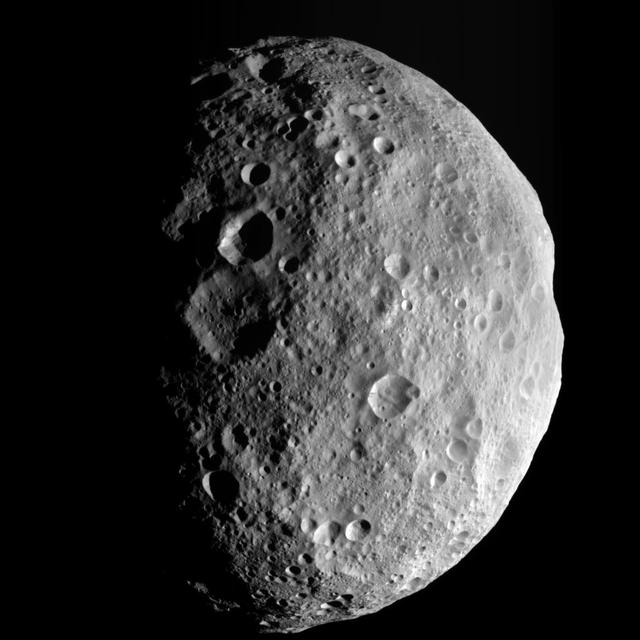
This image is from the last sequence of images NASA Dawn spacecraft obtained of the giant asteroid Vesta, looking down at Vesta north pole as it was departing. Dawn escaped from Vesta orbit on Sept. 4, 2012 PDT Sept. 5, 2012 CET.
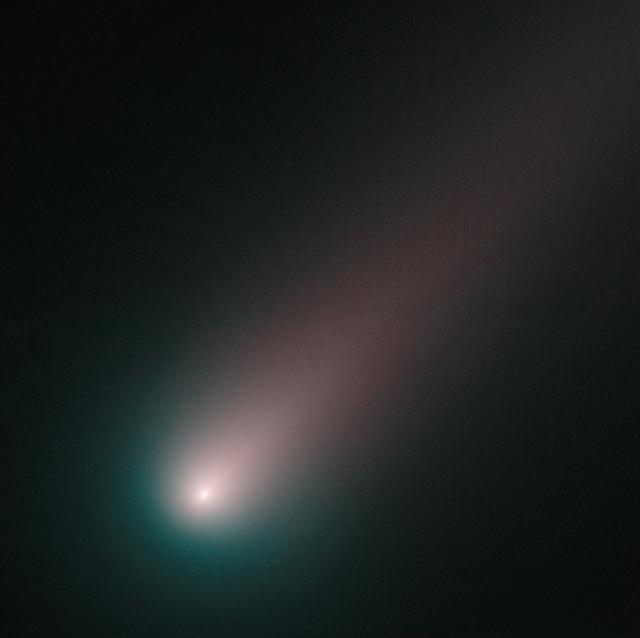
As of mid-November, ISON is officially upon us. Using Hubble, we've taken our closest look yet at the innermost region of the comet, where geysers of sublimating ice are fueling a spectacular tail. Made from observations on November 2nd, the image combines pictures of ISON taken through blue and red filters. As we expect, the round coma around ISON's nucleus is blue and the tail has a redder hue. Ice and gas in the coma reflect blue light from the Sun, while dust grains in the tail reflect more red light than blue light. This is the most color separation we've seen so far in ISON -- that's because the comet, nearer than ever to the Sun, is brighter and more structured than ever before. We've certainly come a long way since Hubble started observing Comet ISON, way back in April. Of course, our eight-month retrospective pales in comparison with ISON's own journey, which started some 10,000 years ago in the Oort cloud. ISON will come closest to the Sun on November 28, a point in its orbit known as perihelion. What's remarkable here is that the entire ISON, this awesome, shimmery space tadpole, is being produced from a dusty ball of ice estimated to be a few kilometers in diameter. Compared to ISON's full extent, Hubble's latest image is tiny. It only shows the very base of the tail. Yet even in this closest closeup we've ever had, a single pixel spans 24 km across the comet. Now that Comet ISON is close, amateur astromers rule the day. But Hubble observations, including this latest image, are still providing key insights into the science and spectacle of a comet we hope will continue to impress. Credit: NASA, ESA, and the Hubble Heritage Team (STScI/AURA) -------- More details on Comet ISON: Comet ISON began its trip from the Oort cloud region of our solar system and is now travelling toward the sun. The comet will reach its closest approach to the sun on Thanksgiving Day -- 28 Nov 2013 -- skimming just 730,000 miles above the sun's surface. If it comes around the sun without breaking up, the comet will be visible in the Northern Hemisphere with the naked eye, and from what we see now, ISON is predicted to be a particularly bright and beautiful comet. Catalogued as C/2012 S1, Comet ISON was first spotted 585 million miles away in September 2012. This is ISON's very first trip around the sun, which means it is still made of pristine matter from the earliest days of the solar system’s formation, its top layers never having been lost by a trip near the sun. Comet ISON is, like all comets, a dirty snowball made up of dust and frozen gases like water, ammonia, methane and carbon dioxide -- some of the fundamental building blocks that scientists believe led to the formation of the planets 4.5 billion years ago. NASA has been using a vast fleet of spacecraft, instruments, and space- and Earth-based telescope, in order to learn more about this time capsule from when the solar system first formed. The journey along the way for such a sun-grazing comet can be dangerous. A giant ejection of solar material from the sun could rip its tail off. Before it reaches Mars -- at some 230 million miles away from the sun -- the radiation of the sun begins to boil its water, the first step toward breaking apart. And, if it survives all this, the intense radiation and pressure as it flies near the surface of the sun could destroy it altogether. This collection of images show ISON throughout that journey, as scientists watched to see whether the comet would break up or remain intact. The comet reaches its closest approach to the sun on Thanksgiving Day -- Nov. 28, 2013 -- skimming just 730,000 miles above the sun’s surface. If it comes around the sun without breaking up, the comet will be visible in the Northern Hemisphere with the naked eye, and from what we see now, ISON is predicted to be a particularly bright and beautiful comet. ISON stands for International Scientific Optical Network, a group of observatories in ten countries who have organized to detect, monitor, and track objects in space. ISON is
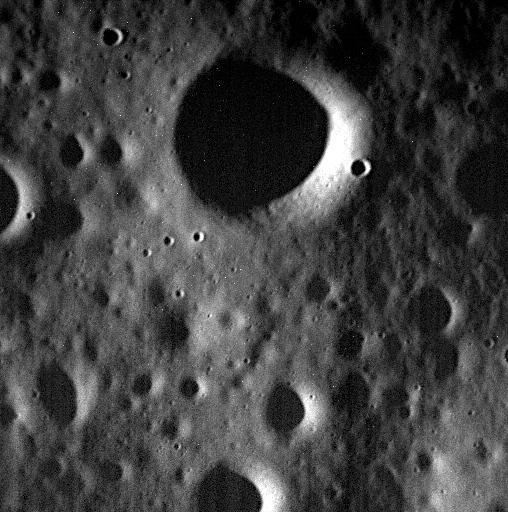
This image, acquired yesterday, is one of MESSENGER's last. Today, the spacecraft will complete its highly successful orbital mission and impact the surface of Mercury. View this image for details of MESSENGER's impact location. Impact is expected at 19:26:02 UTC (3:26:02 pm EDT) but will occur out of sight and communication with the Earth. The MESSENGER team will try to establish communications with the spacecraft when its orbit would allow it to be visible from Earth. The inability to establish communications between MESSENGER and the scheduled Earth-based tracking antenna will provide the first confirmation that the spacecraft has impacted the surface. After about 30 minutes following the predicted Mercury impact time, the team plans to announce whether MESSENGER's orbital mission has come to an end. Date acquired: April 29, 2015 Image Mission Elapsed Time (MET): 72595737 Image ID: 8414772 Instrument: Narrow Angle Camera (NAC) of the Mercury Dual Imaging System (MDIS) Center Latitude: 69.46° Center Longitude: 229.49° E Resolution: 1.7 meters/pixel Scale: The largest crater in this image has a diameter of 330 meters (0.2 miles) http://photojournal.jpl.nasa.gov/catalog/PIA19445
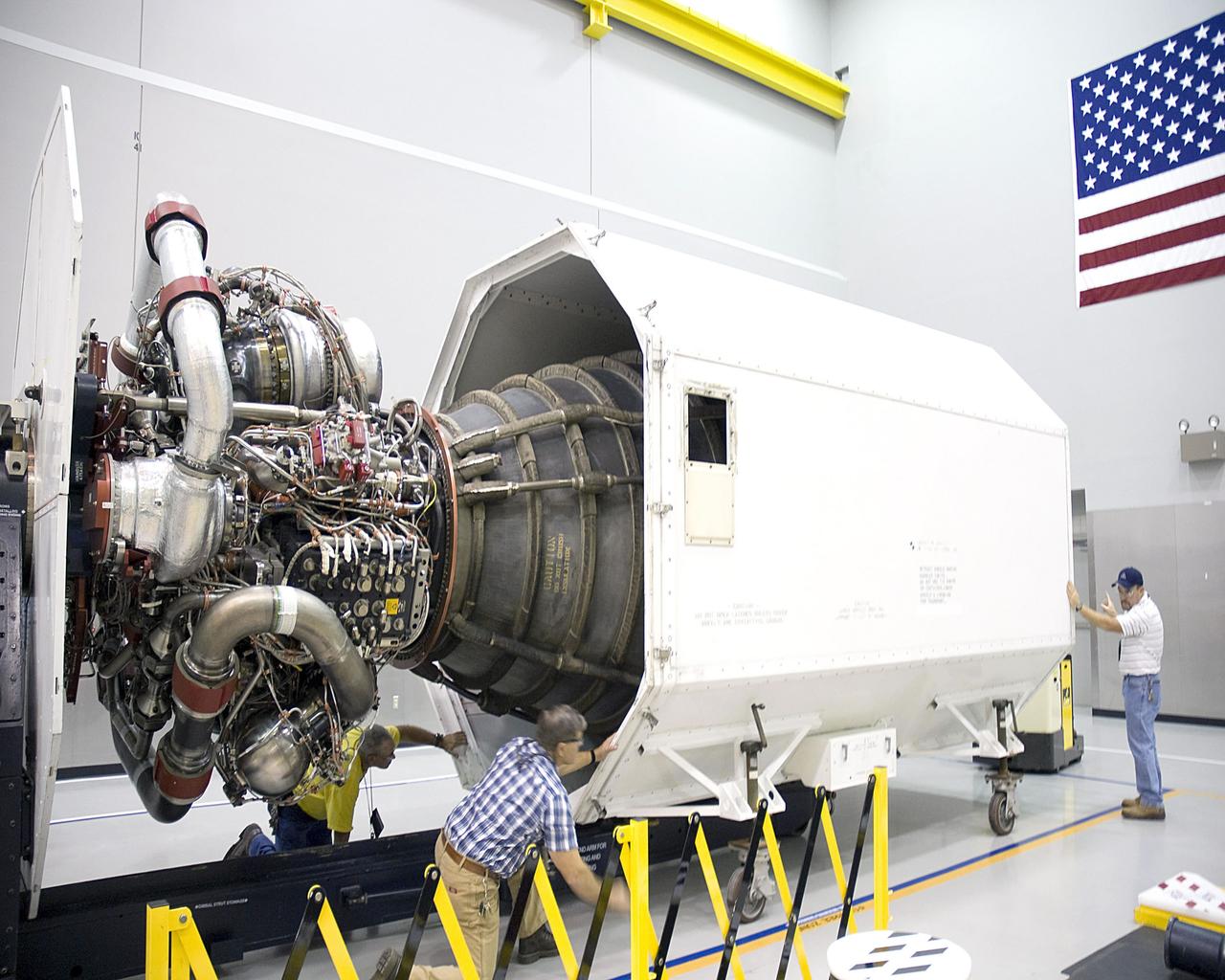
Workers at Stennis Space Center examine space shuttle main engine 2061 upon its arrival Oct. 1. The engine was to be the last shuttle flight engine to be scheduled for testing at Stennis.
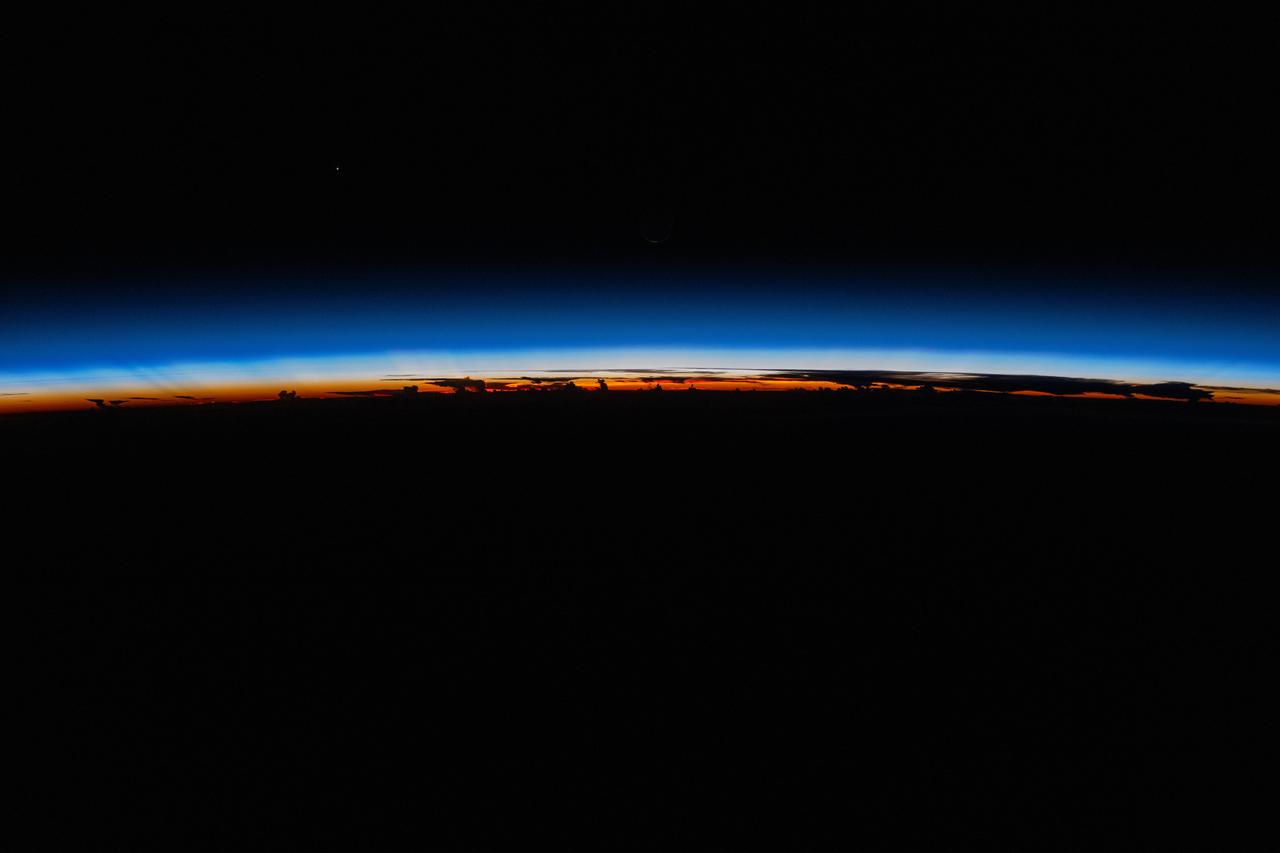
iss071e310017 (July 6, 2024) -- The last rays of an orbital sunset shine a striking orange against Earth's blue glow as the International Space Station orbited 255 miles above The Philippines.
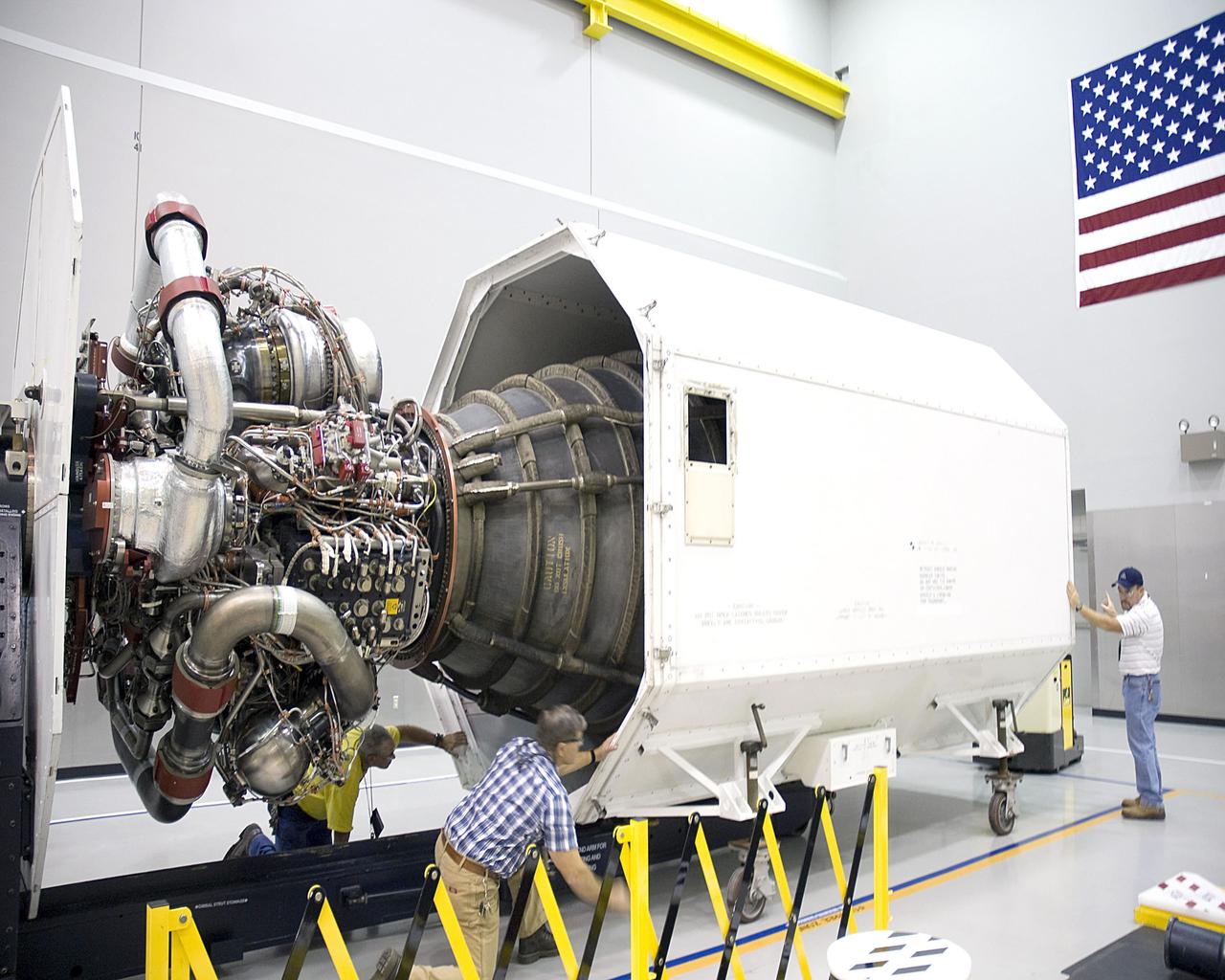
Workers at Stennis Space Center examine space shuttle main engine 2061 upon its arrival Oct. 1. The engine was to be the last shuttle flight engine to be scheduled for testing at Stennis.

This photo of Ceres and the bright regions in Occator Crater was one of the last views NASA's Dawn spacecraft transmitted before it depleted its remaining hydrazine and completed its mission. This view, which faces south, was captured on Sept. 1, 2018 at an altitude of 2,340 miles (3,370 kilometers) as the spacecraft was ascending in its elliptical orbit. At its lowest point, the orbit dipped down to only about 22 miles (35 kilometers), which allowed Dawn to acquire very high-resolution images in this final phase of its mission. Some of the close-up images of Occator Crater are shown here. Occator Crater is 57 miles (92 kilometers) across and 2.5 miles (4 kilometers) deep and holds the brightest area on Ceres, Cerealia Facula in its center and Vinalia Faculae in its western side. This region has been the subject of intense interest since Dawn's approach to the dwarf planet in early 2015. https://photojournal.jpl.nasa.gov/catalog/PIA22485
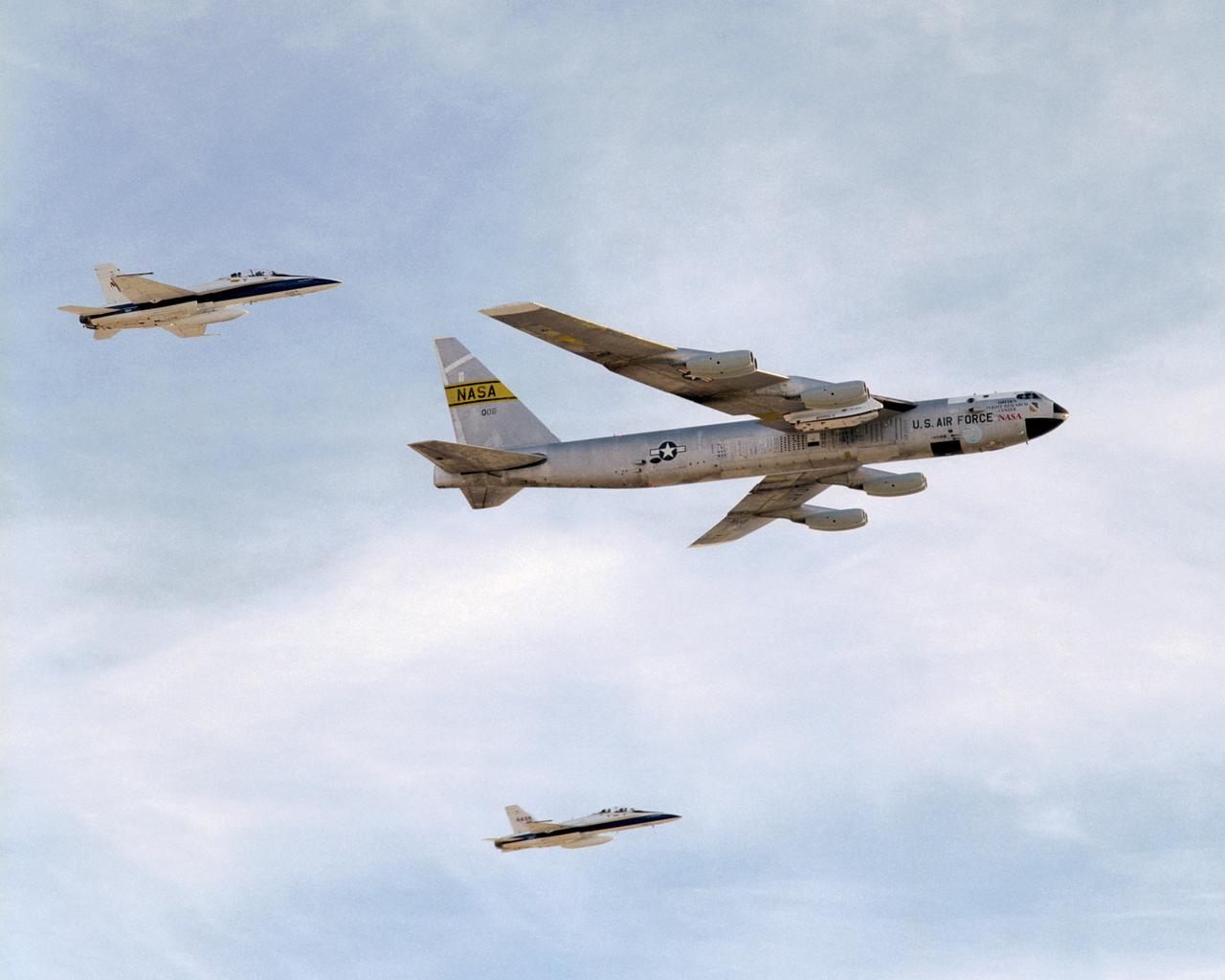
NASA's B-52B mothership, escorted by two F-18s, makes a final flyover after its last research mission that launched the X-43A on its record Mach 9.6 flight.

Shadowed by two F/A-18s, NASA Dryden's venerable NB-52B is saluted by employees as it makes its final flyover after the last X-43A launch in November 2004.
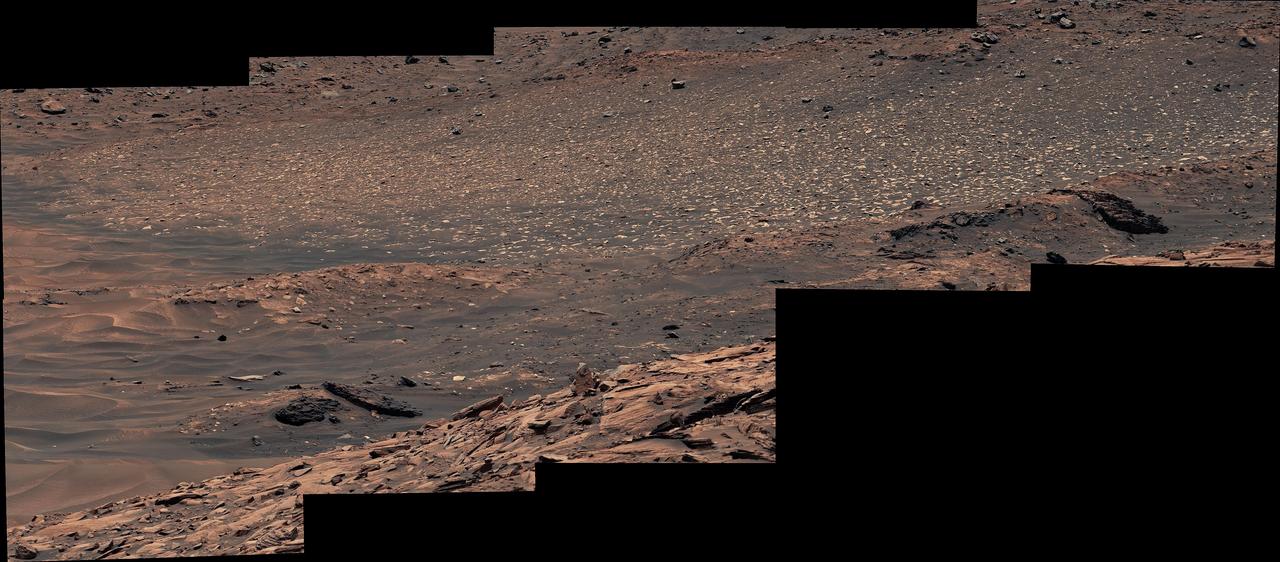
NASA's Curiosity Mars rover used its Mast Camera, or Mastcam, to capture this last look at a field of bright white sulfur stones before leaving Gediz Vallis channel. The field was where the rover made the first discovery of pure sulfur on Mars by driving over a rock and cracking it open to reveal the yellow crystals inside. Scientists are still unsure exactly why these pure sulfur rocks formed here. This panorama is made up of eight images captured on Oct. 11, 2024, the 4,331st Martian day, or sol, of the mission. The color has been adjusted to match lighting conditions as the human eye would see them on Earth. https://photojournal.jpl.nasa.gov/catalog/PIA26210
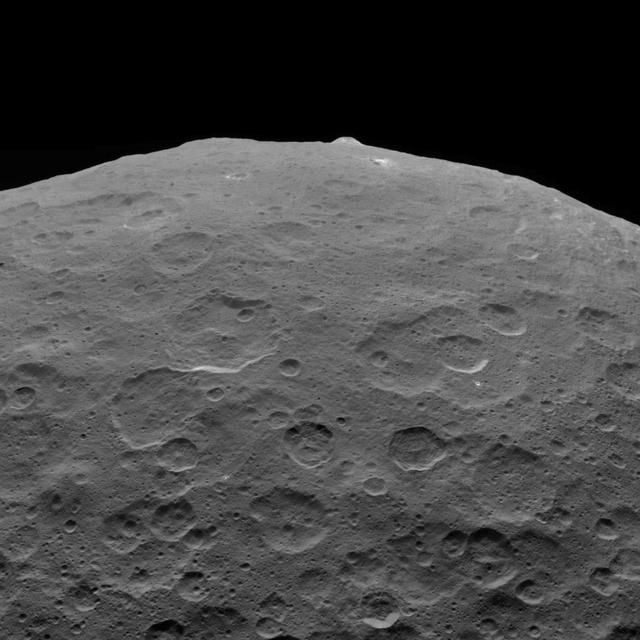
This photo of Ceres and one of its key landmarks, Ahuna Mons, was one of the last views Dawn transmitted before it depleted its remaining hydrazine and completed its mission. This view, which faces south, was captured on Sept. 1, 2018 at an altitude of 2,220 miles (3,570 kilometers) as the spacecraft was ascending in its elliptical orbit. At its lowest point, the orbit dipped down to only about 22 miles (35 kilometers), which allowed Dawn to acquire very high-resolution images in this final phase of its mission. Some of the close-up images of Ceres are shown here. Ahuna Mons is about 12 miles (20 kilometers) across and 2.5 miles (4 kilometers) high and displays sodium carbonate along its flanks. This is the most recent of a potential two dozen cryovolcanoes whose remnants are found across Ceres' surface. https://photojournal.jpl.nasa.gov/catalog/PIA22769
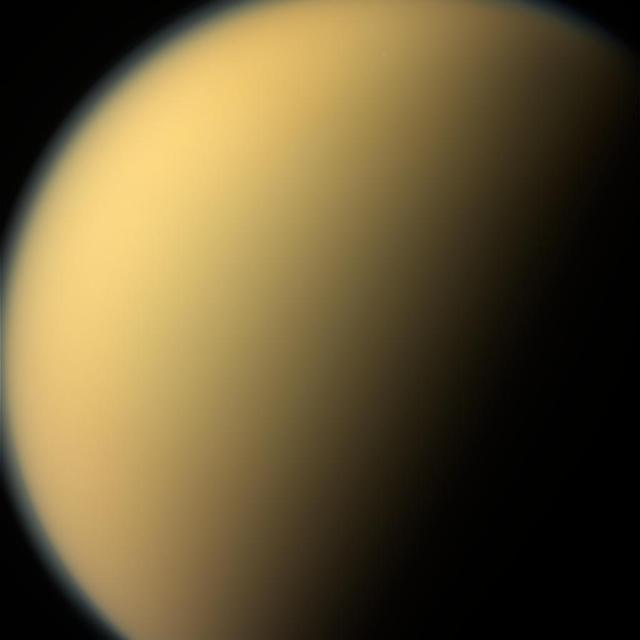
As it glanced around the Saturn system one final time, NASA's Cassini spacecraft captured this view of the planet's giant moon Titan. Interest in mysterious Titan was a major motivating factor to return to Saturn with Cassini-Huygens following the Voyager mission flybys of the early 1980s. Cassini and its Huygens probe, supplied by European Space Agency, revealed the moon to be every bit as fascinating as scientists had hoped. These views were obtained by Cassini's narrow-angle camera on Sept. 13, 2017. They are among the last images Cassini sent back to Earth. This natural color view, made from images taken using red, green and blue spectral filters, shows Titan much as Voyager saw it -- a mostly featureless golden orb, swathed in a dense atmospheric haze. An enhanced-color view (Figure 1) adds to this color a separate view taken using a spectral filter (centered at 938 nanometers) that can partially see through the haze. The views were acquired at a distance of 481,000 miles (774,000 kilometers) from Titan. The image scale is about 3 miles (5 kilometers) per pixel. https://photojournal.jpl.nasa.gov/catalog/PIA21890

Veterans of the X-15 flight research program, most of them now retired, reunited at Dryden on the 40th anniversary of the last X-15 flight on Oct. 24, 1968 for a historical colloquium on the X-15 by noted aerospace historian and author Dennis Jenkins on Oct. 24, 2008. Gathered in front of the replica of X-15 #3 the were (from left) Johnny Armstrong, Betty Love, Paul Reukauf, Bob Hoey, Dave Stoddard, Dean Webb, Vince Capasso, Bill Dana (who flew the last flight), John McTigue and T.D. Barnes. Jenkins, the author of "X-15: Extending the Frontiers of Flight," maintained during his presentation that despite setbacks, the X-15 program became the most successful of all the X-plane research programs due to the can-do, fix-the-problem and go-fly-again attitude of the X-15's cadre of engineers and technicians.
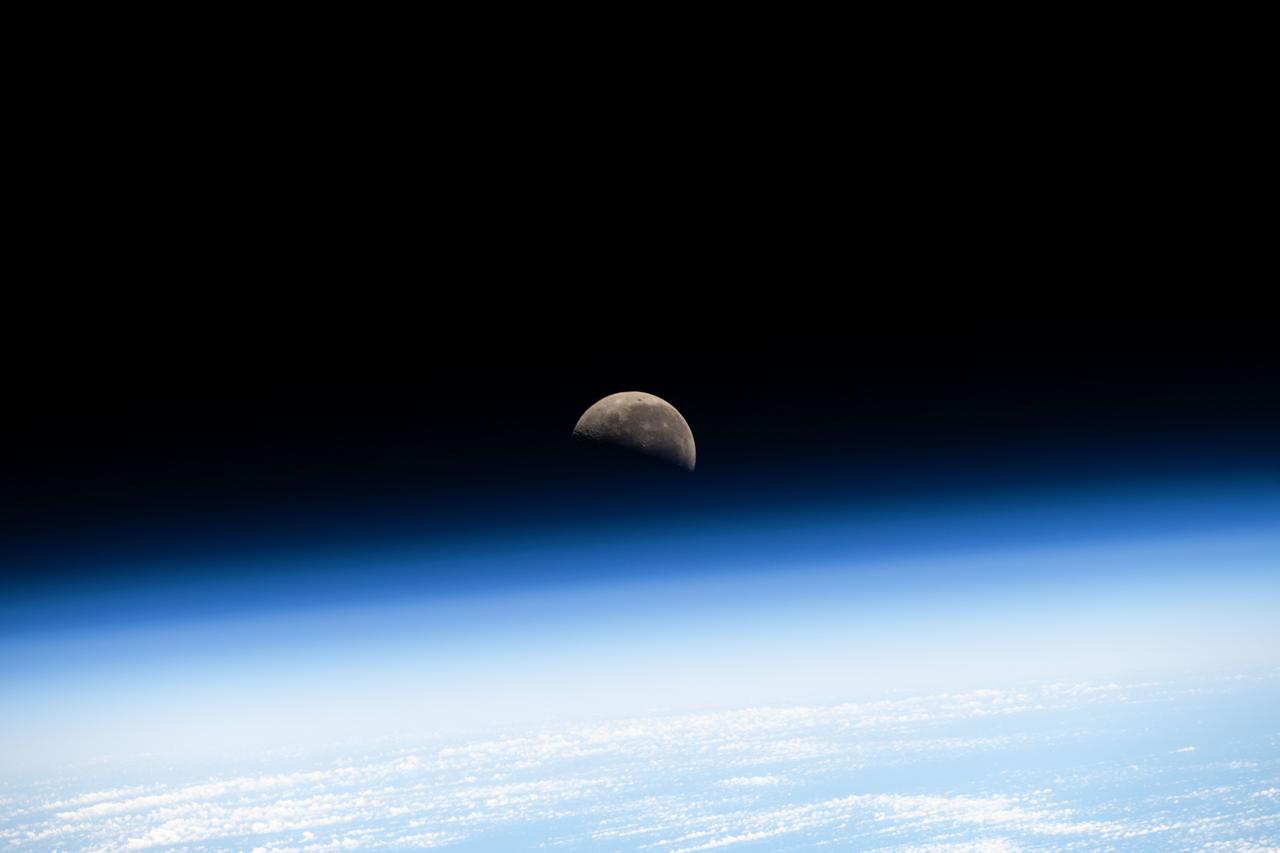
iss073e0077872 (May 20, 2025) --- The Last Quarter Moon is pictured above Earth's atmosphere from the International Space Station as it soared 260 miles over the Pacific Ocean southwest of Panama on the Latin American continent.
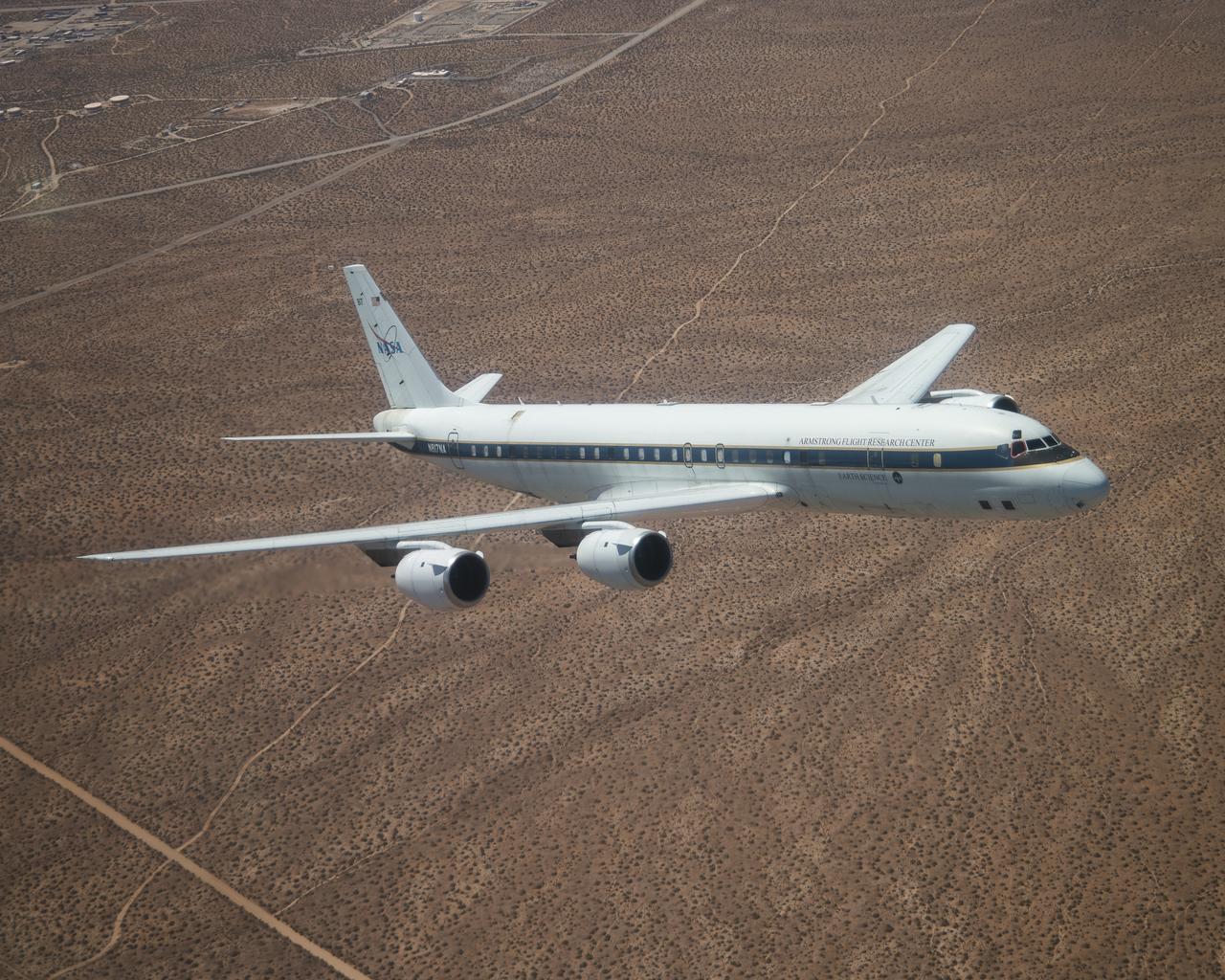
The DC-8 flies for the last time from NASA’s Armstrong Flight Research Center Building 703 in Palmdale, California, before it retires to Idaho State University in Pocatello, Idaho. The DC-8 will provide real-world experience to train future aircraft technicians at the college’s Aircraft Maintenance Technology Program.
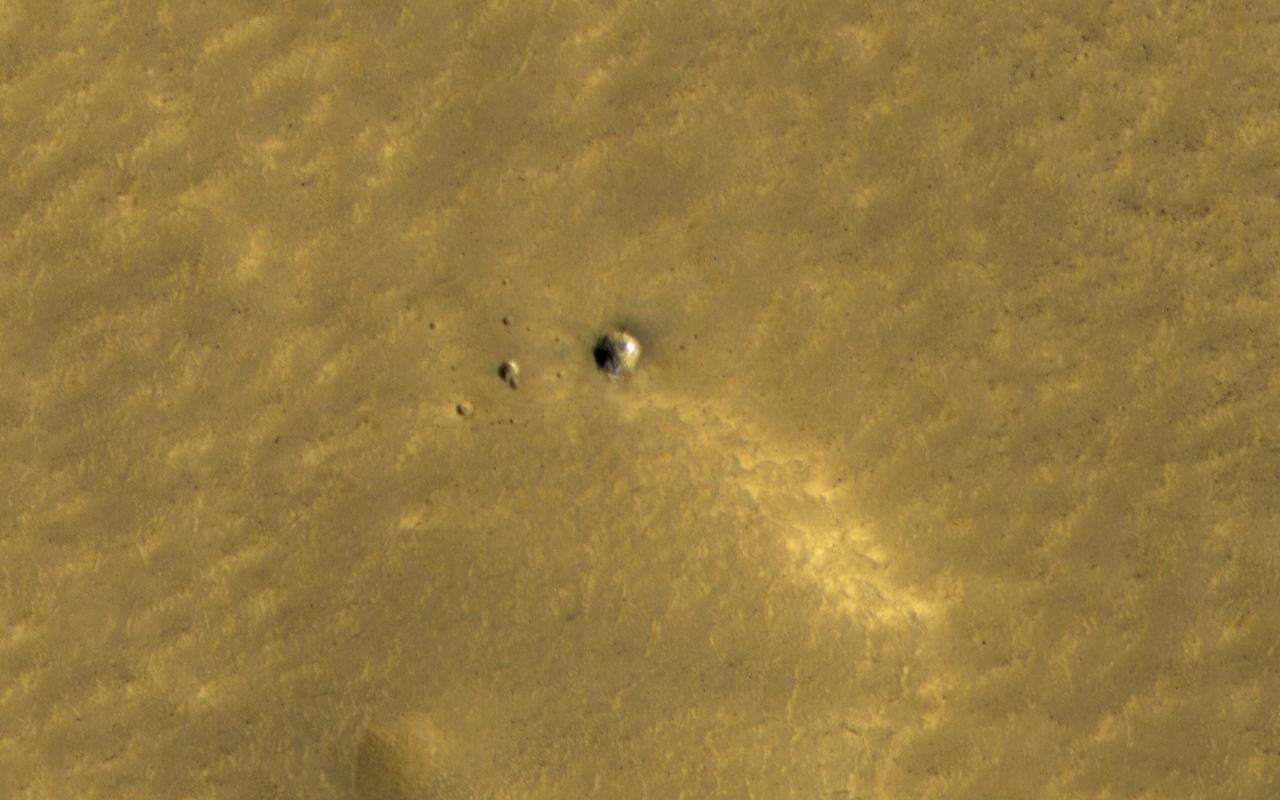
The HiRISE and Context Camera instruments on the Mars Reconnaissance Orbiter have worked together to image many new impact craters that have formed within the last few years. At middle and high latitudes, these craters often dig up ice, which is initially bright and then fades away as it sublimates. A small crater here was first seen by HiRISE in 2010, and some of the ice is still bright over a decade later. A theory suggests that many millimeters of ice should have been lost in that time. Since we can still see the ice, it must be very clean, without much dust or debris mixed in. How many changes can you spot? https://photojournal.jpl.nasa.gov/catalog/PIA24693
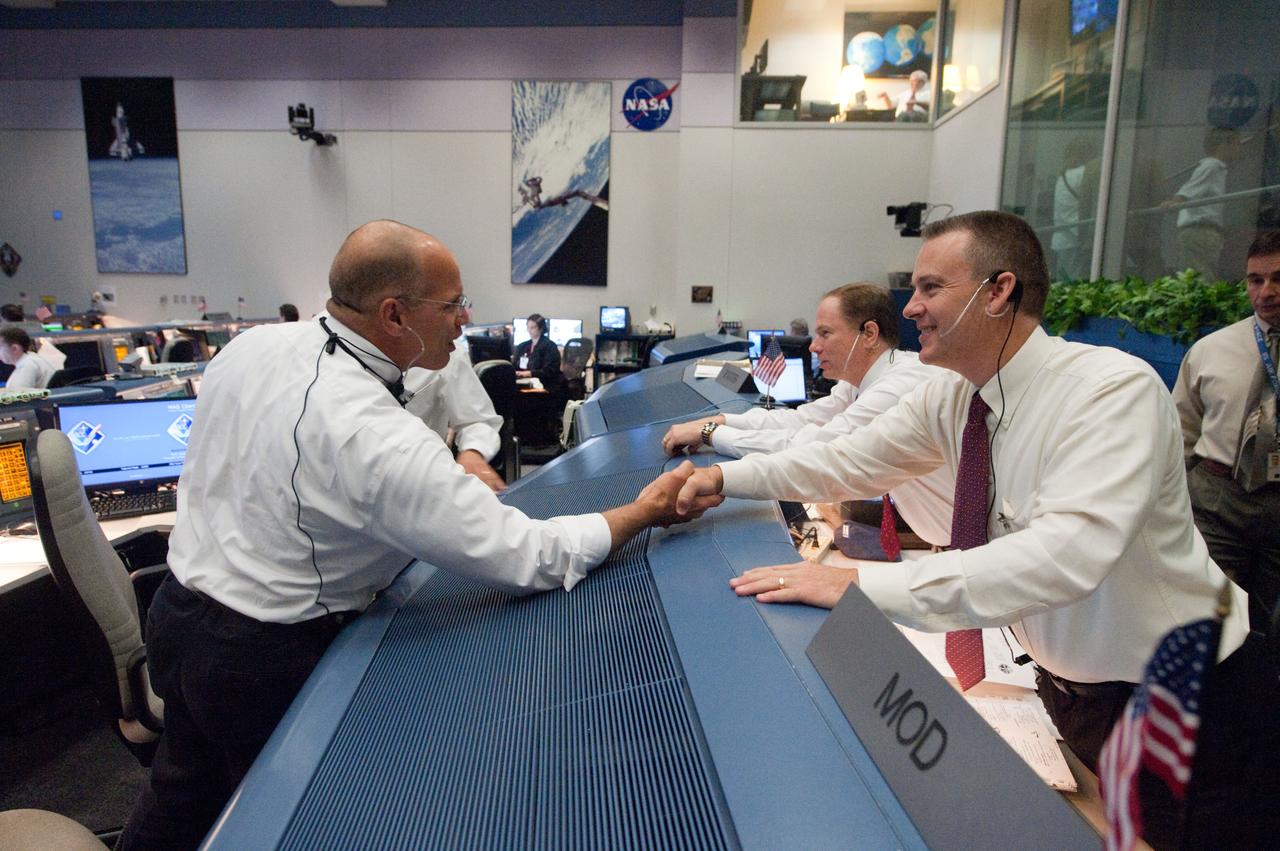
Photo Date: 7-8-2011 Subject: STS135 flight controllers on console during last shuttle mission Location: B. 30S WFCR and SMG Photographer: Bill Stafford
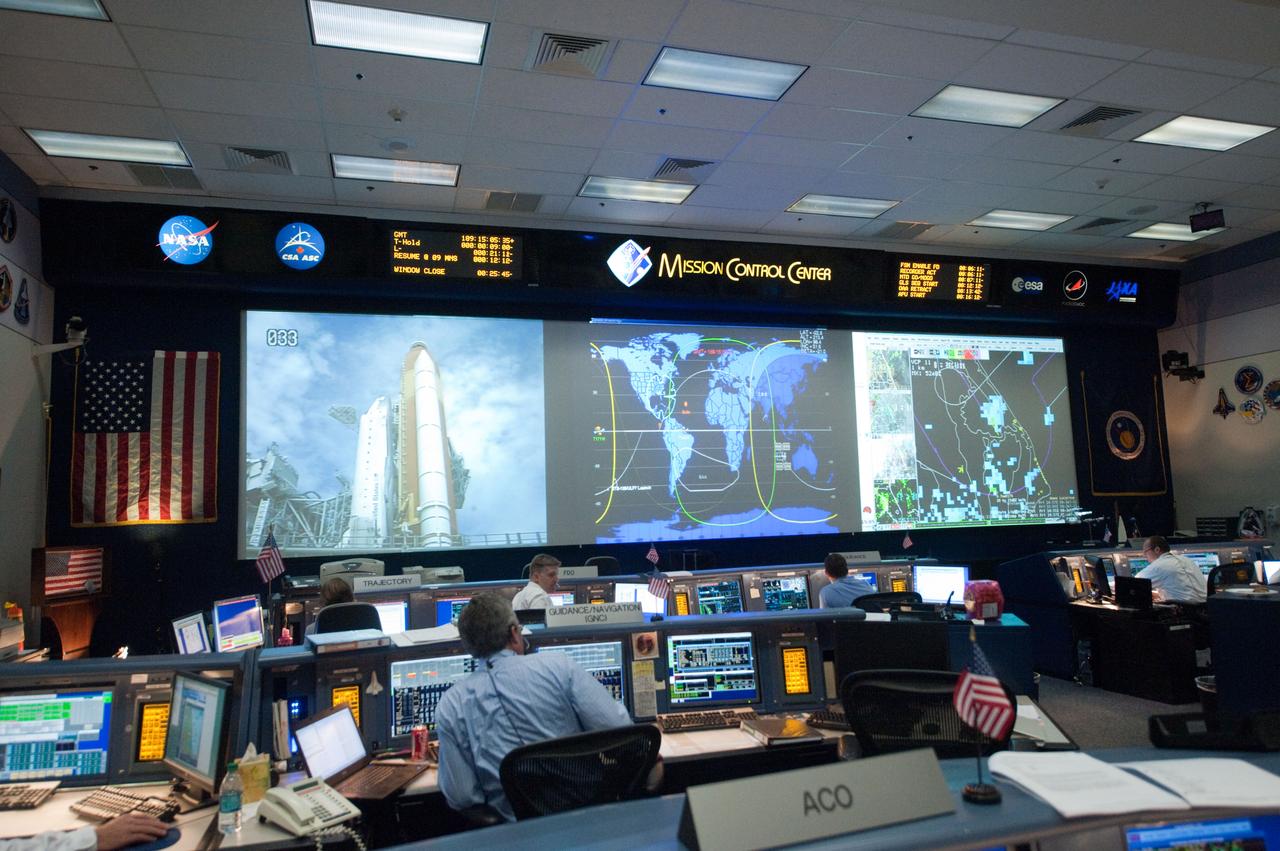
Photo Date: 7-8-2011 Subject: STS135 flight controllers on console during last shuttle mission Location: B. 30S WFCR and SMG Photographer: Bill Stafford
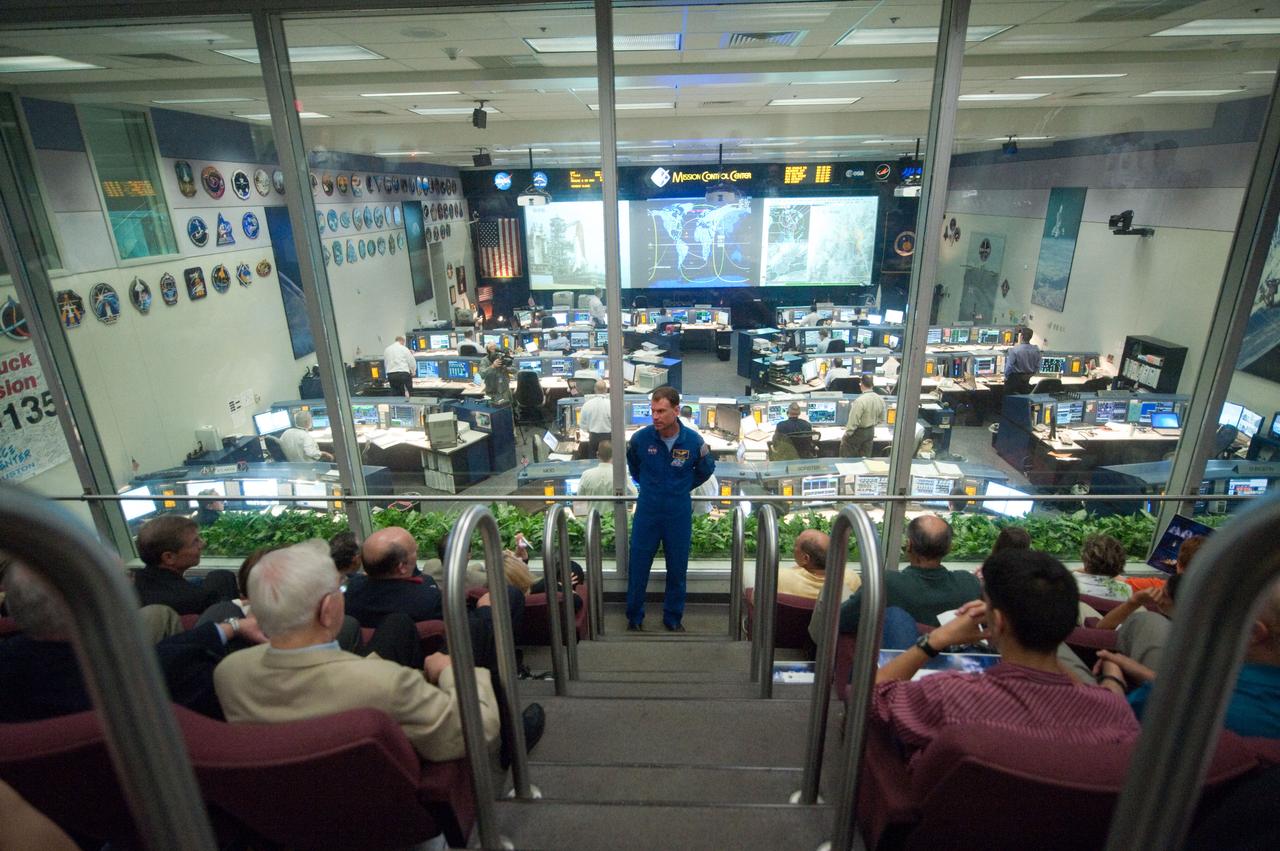
Photo Date: 7-8-2011 Subject: STS135 flight controllers on console during last shuttle mission Location: B. 30S WFCR and SMG Photographer: Bill Stafford
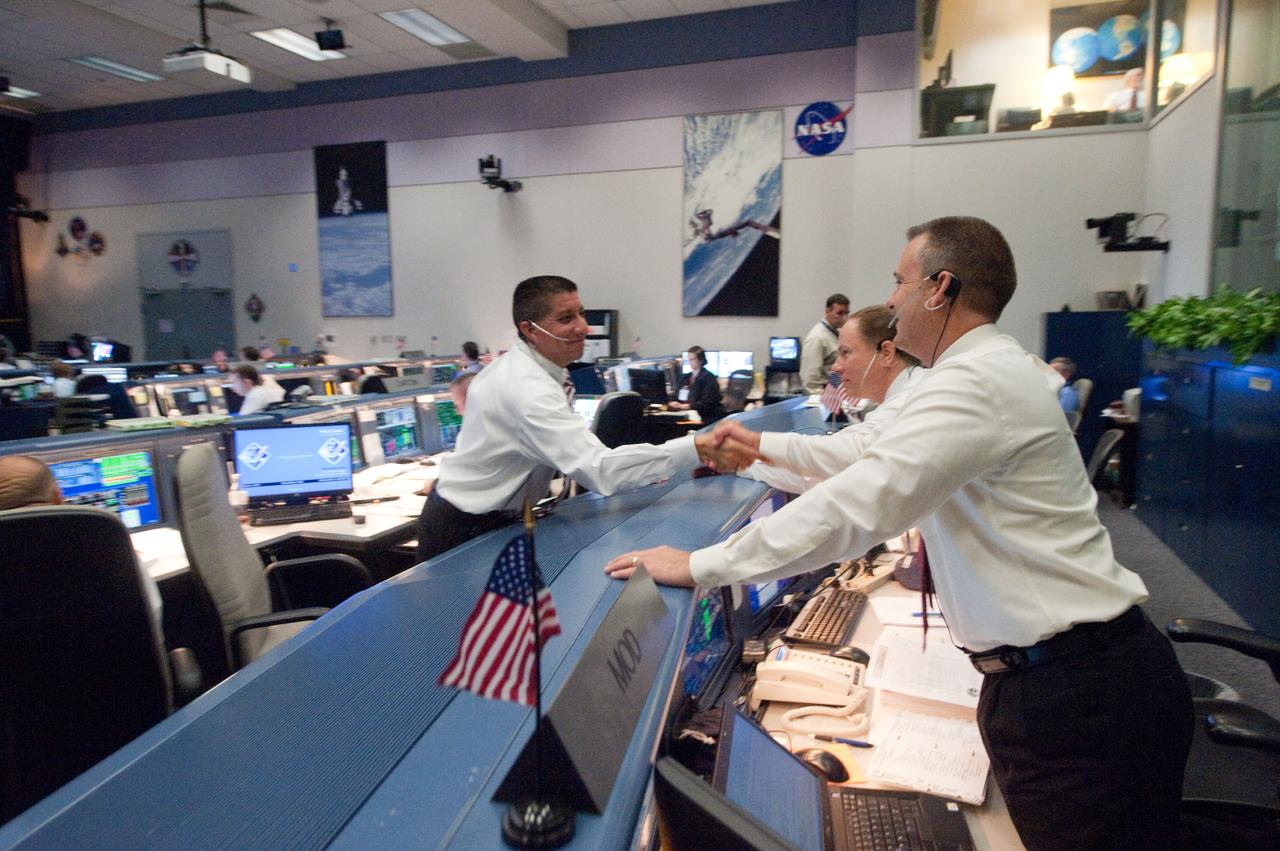
Photo Date: 7-8-2011 Subject: STS135 flight controllers on console during last shuttle mission Location: B. 30S WFCR and SMG Photographer: Bill Stafford
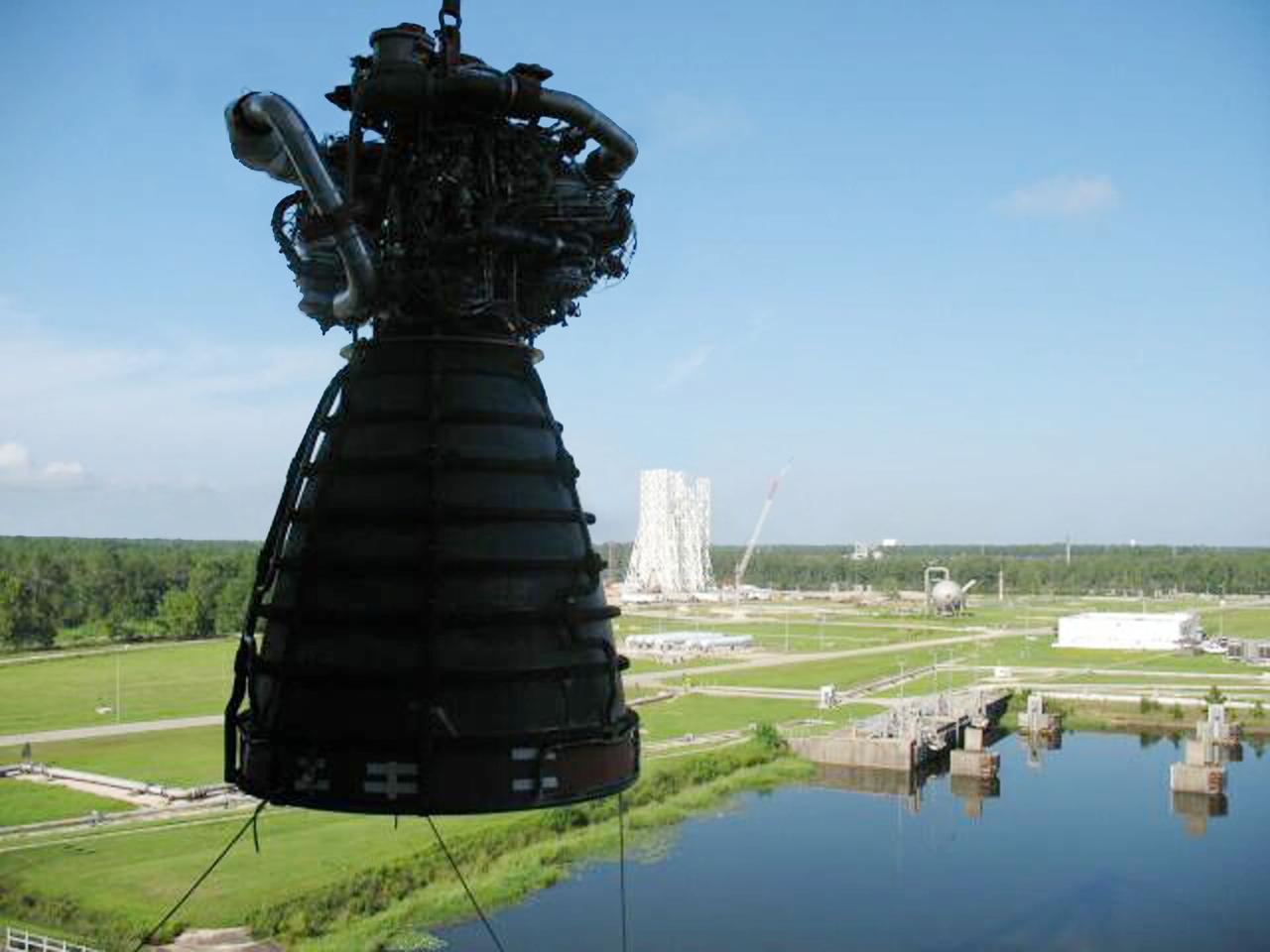
Space shuttle main engine No. 0525 is lifted from the A-2 Test Stand at Stennis Space Center against the backdrop of the new A-3 Test Stand under construction, offering a glimpse of the past and future in the nation's space exploration program. With the shuttle program set to end in 2010, Stennis conducted the last planned space shuttle main engine test on July 29 and now is deactivating the A-2 Test Stand to a safe 'standby' status.
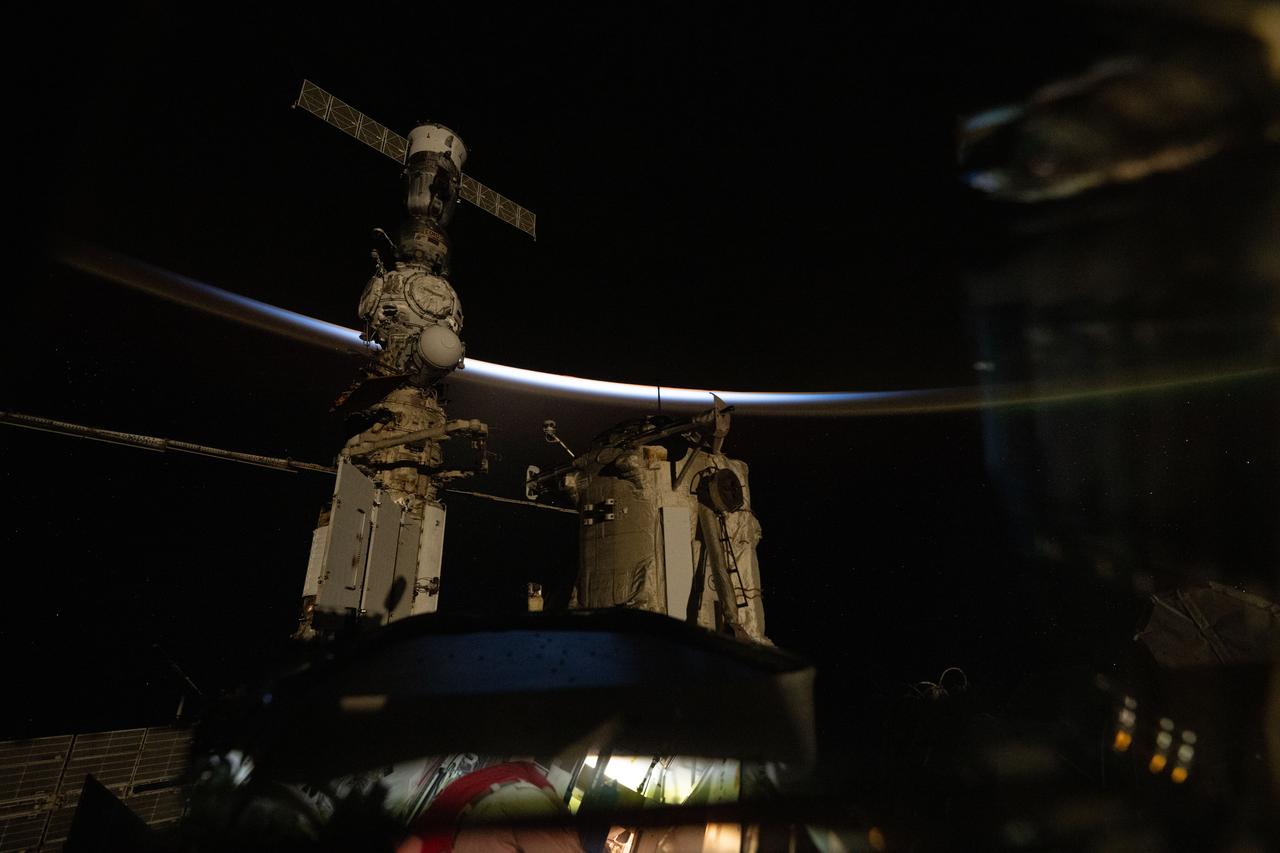
iss073e0690720 (Aug. 12, 2025) --- The last rays of an orbital sunset outline Earth's horizon revealing faint orange and blue hues and an atmospheric glow in this photograph from the International Space Station as it orbited 268 miles above the Indian Ocean. In the foreground, is the orbital outpost's Roscosmos segment including the Rassvet module, the Nauka science module, and the Prichal module with the docked Soyuz MS-27 spacecraft.
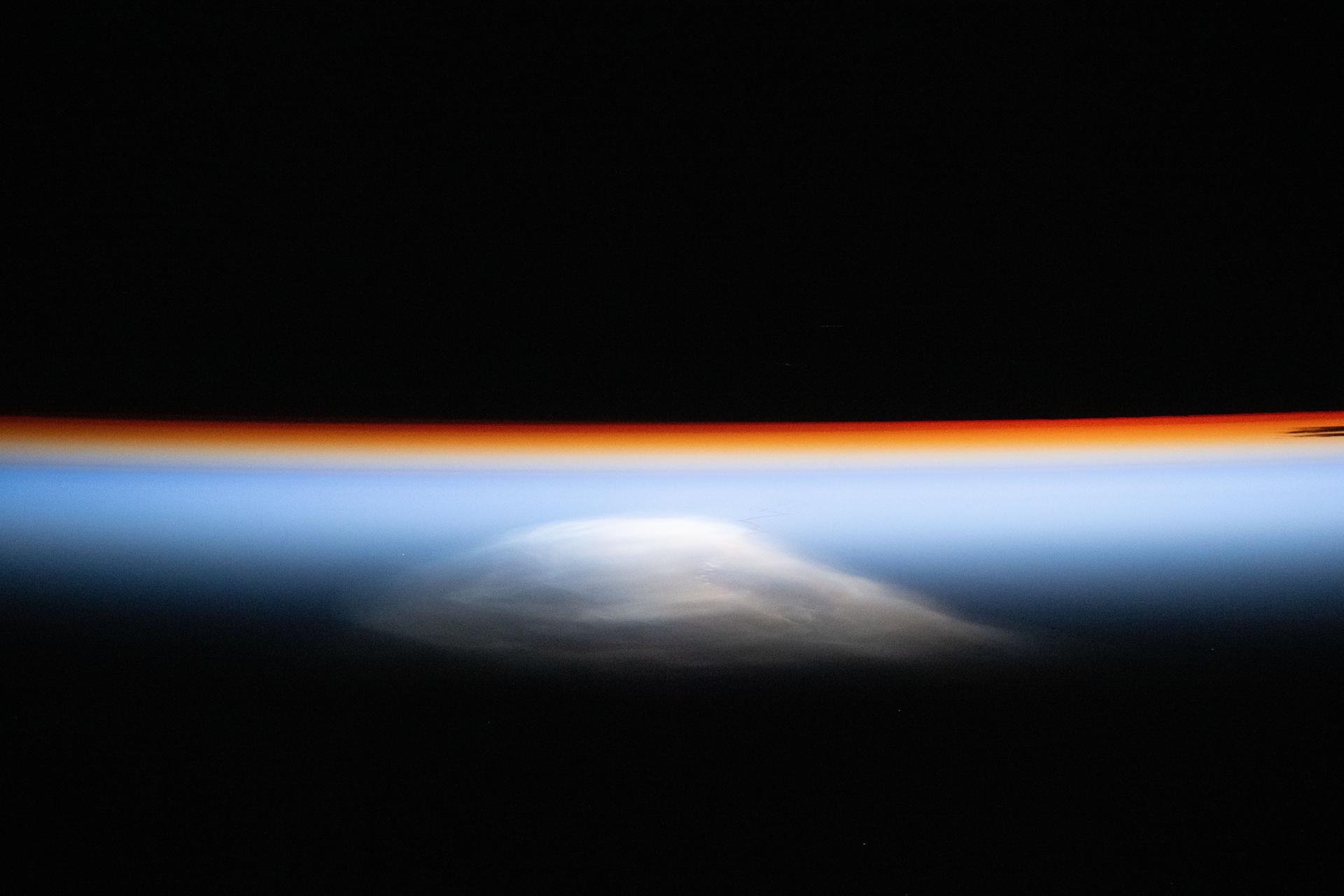
iss072e757530 (March 6, 2025) --- The last rays of an orbital sunset outline Earth’s horizon as a thin orange layer fades into blue, illuminating the atmosphere before nightfall. The wispy white feature above the atmosphere is the engine plume from the Ariane 6 rocket, launched earlier on its first operational mission from Kourou, French Guiana. This unique photograph was captured from the International Space Station at approximately 8:51 p.m. local time as it orbited 257 miles above the Atlantic Ocean, east of the British Virgin Islands.
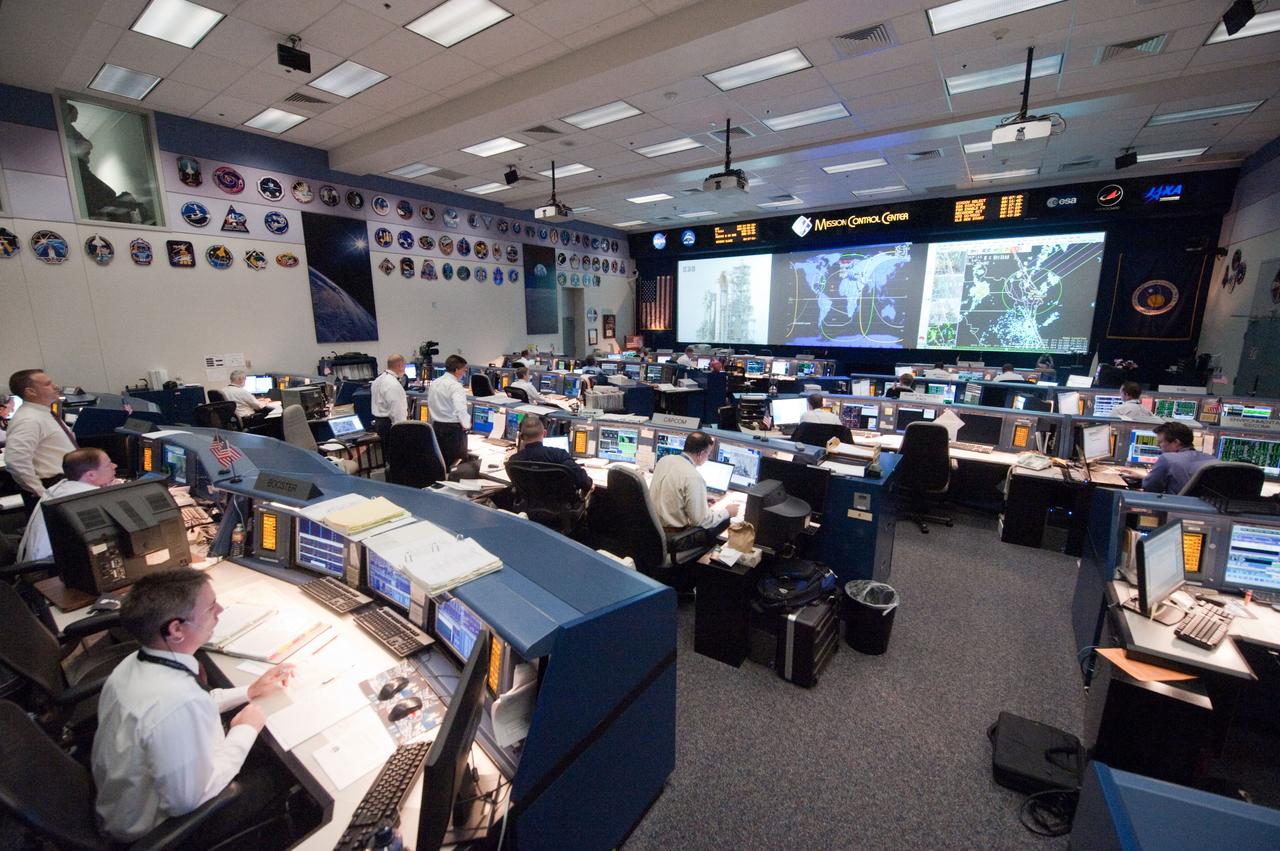
PHOTO DATE: 08 July 2011 LOCATION: Bldg. 30 south - WFCR, SMG SUBJECT: STS-135 Flight Controllers on Console during last space shuttle launch WORK ORDER: 01815-BS___07-08-11-STS 135 LAUNCH WFCR PHOTOGRAPHER: Bill Stafford

PHOTO DATE: 08 July 2011 LOCATION: Bldg. 30 south - WFCR, SMG SUBJECT: STS-135 Flight Controllers on Console during last space shuttle launch WORK ORDER: 01815-BS___07-08-11-STS 135 LAUNCH WFCR PHOTOGRAPHER: Bill Stafford
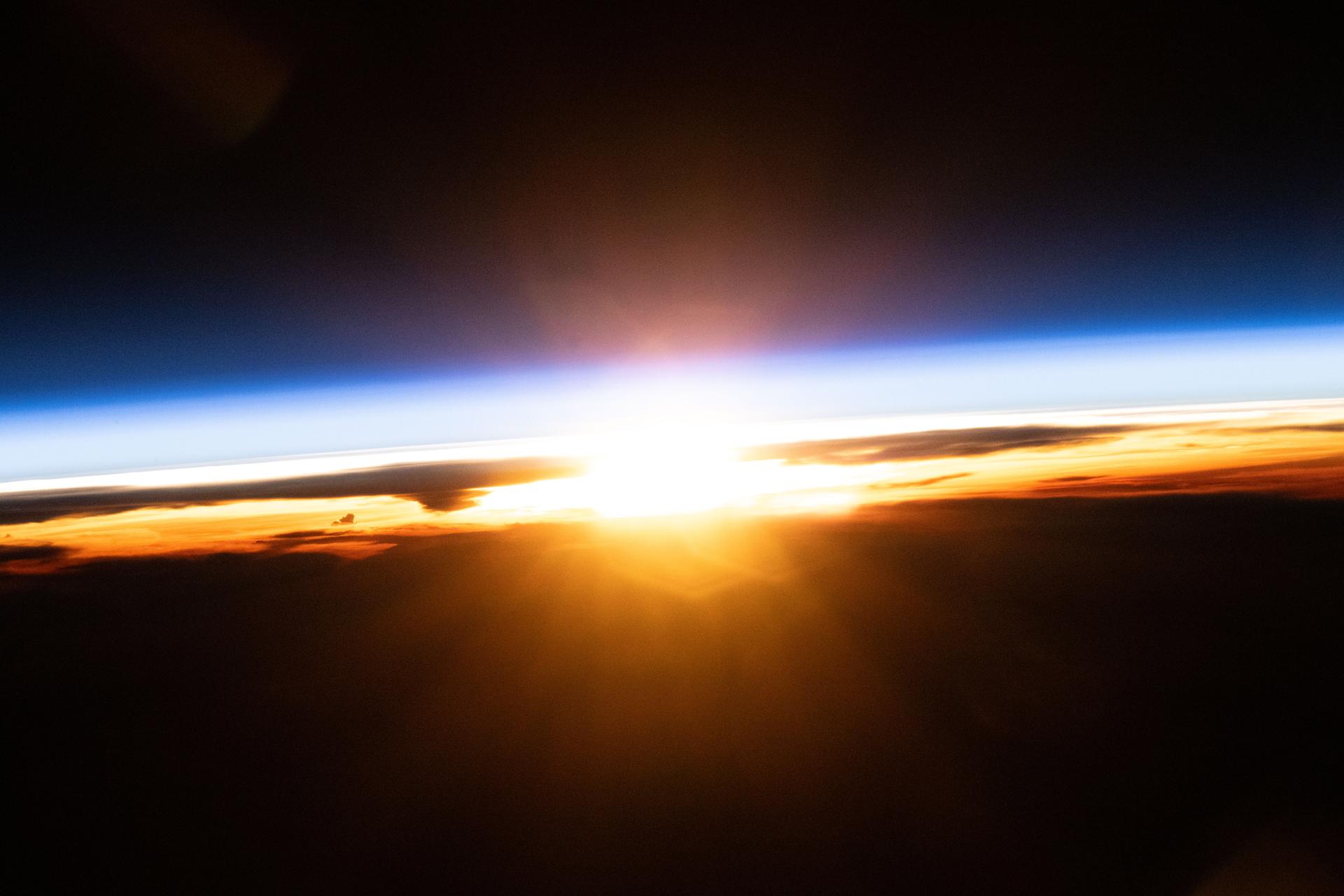
iss074e0556690 (May 5, 2026) --- The last rays of an orbital sunset illuminate Earth's atmosphere and the cloud tops in this photograph from the International Space Station as it orbited 258 miles above the Pacific Ocean north of Papua New Guinea. Credit: NASA/Jessica Meir

PHOTO DATE: 08 July 2011 LOCATION: Bldg. 30 south - WFCR, SMG SUBJECT: STS-135 Flight Controllers on Console during last space shuttle launch WORK ORDER: 01815-BS___07-08-11-STS 135 LAUNCH WFCR PHOTOGRAPHER: Bill Stafford
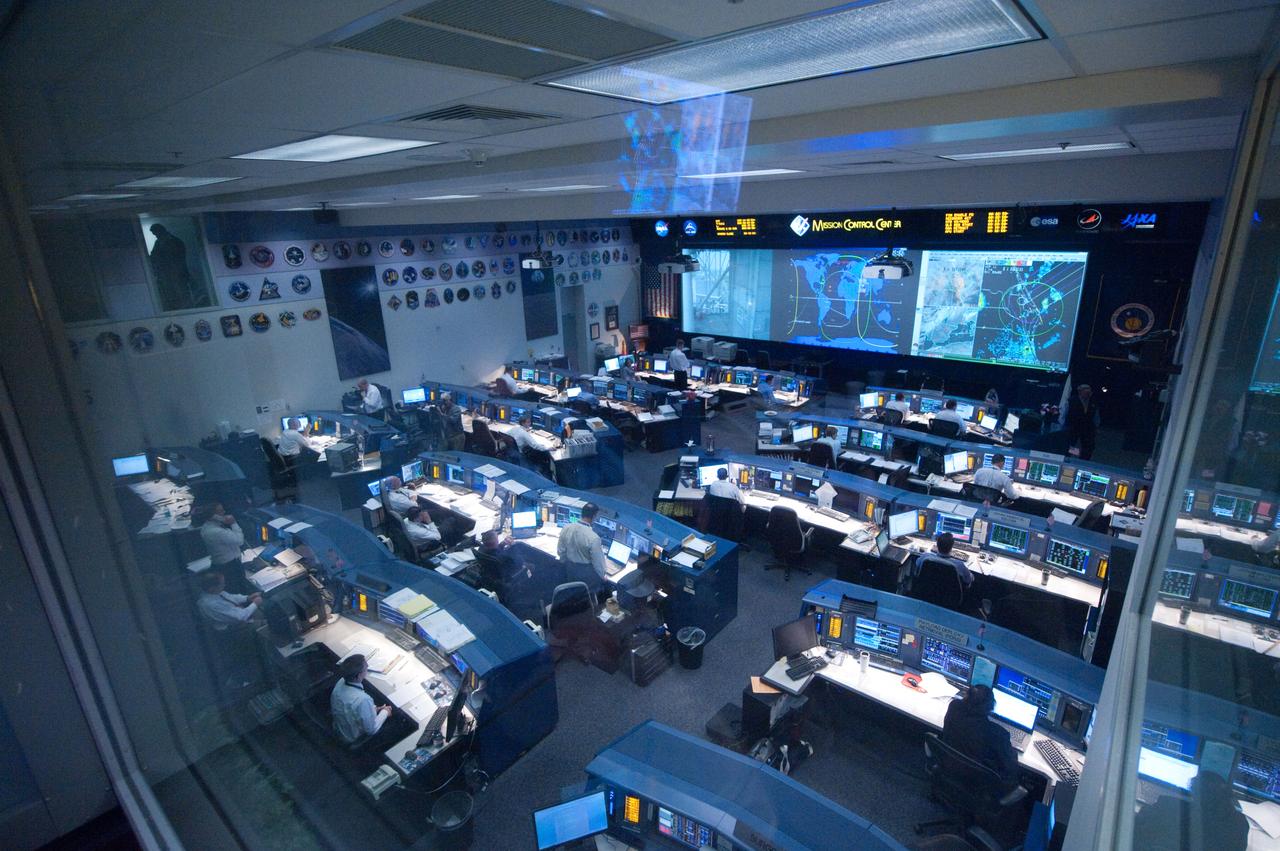
PHOTO DATE: 08 July 2011 LOCATION: Bldg. 30 south - WFCR, SMG SUBJECT: STS-135 Flight Controllers on Console during last space shuttle launch WORK ORDER: 01815-BS___07-08-11-STS 135 LAUNCH WFCR PHOTOGRAPHER: Bill Stafford

PHOTO DATE: 08 July 2011 LOCATION: Bldg. 30 south - WFCR, SMG SUBJECT: STS-135 Flight Controllers on Console during last space shuttle launch WORK ORDER: 01815-BS___07-08-11-STS 135 LAUNCH WFCR PHOTOGRAPHER: Bill Stafford

NASA Cassini spacecraft captured the first lightning flashes on Saturn. The storm that generated the lightning lasted from January to October 2009, making it the longest-lasting lightning storm known in the solar system.
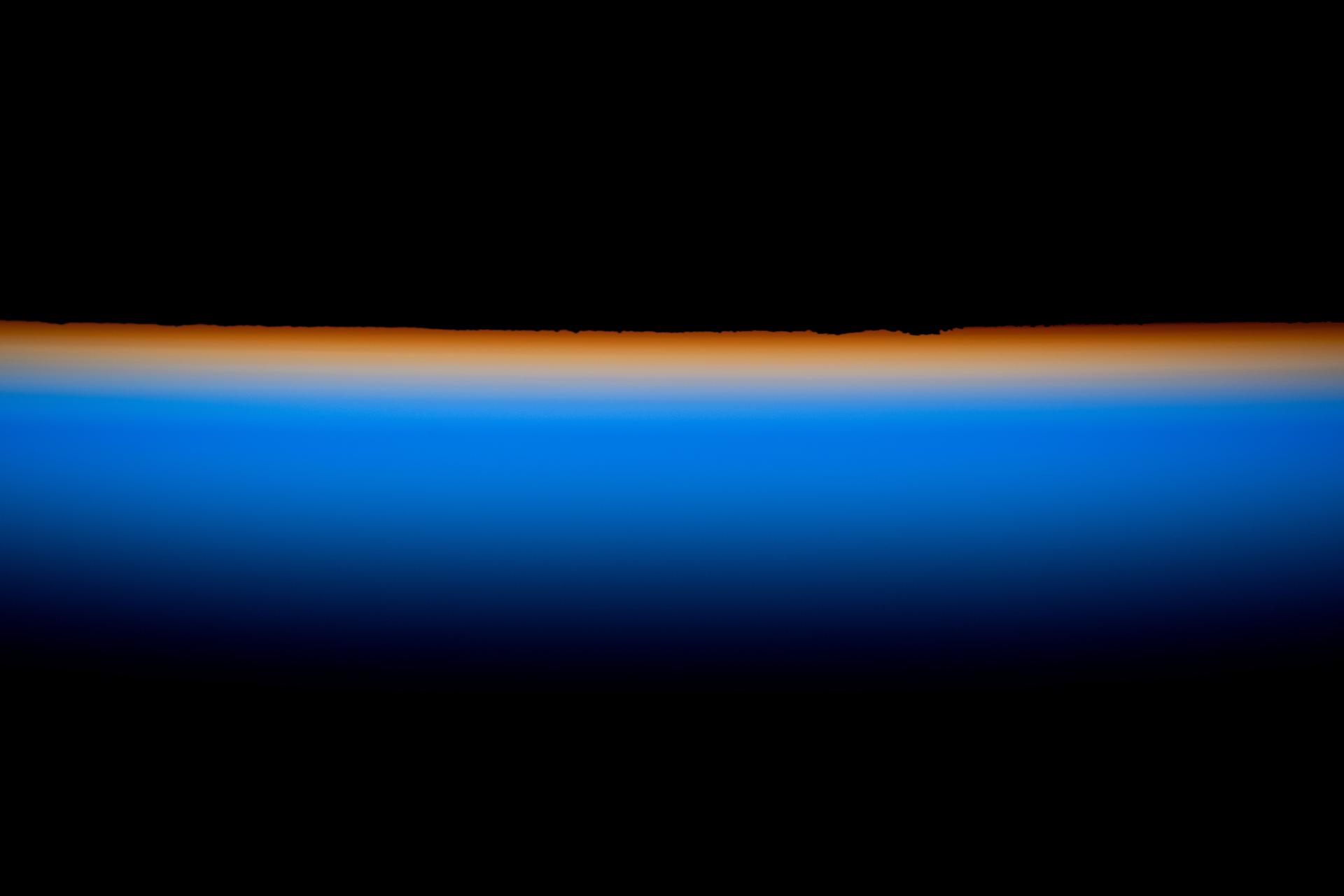
iss073e0763521 (Sept. 7, 2025) --- The last rays of an orbital sunset outline Earth’s horizon with a thin orange hue that fades into the blue atmosphere before dissipating into the darkness of space. The International Space Station was orbiting 262 miles above the border region between Mongolia and China at approximately 10:16 p.m. local time when this image was captured.
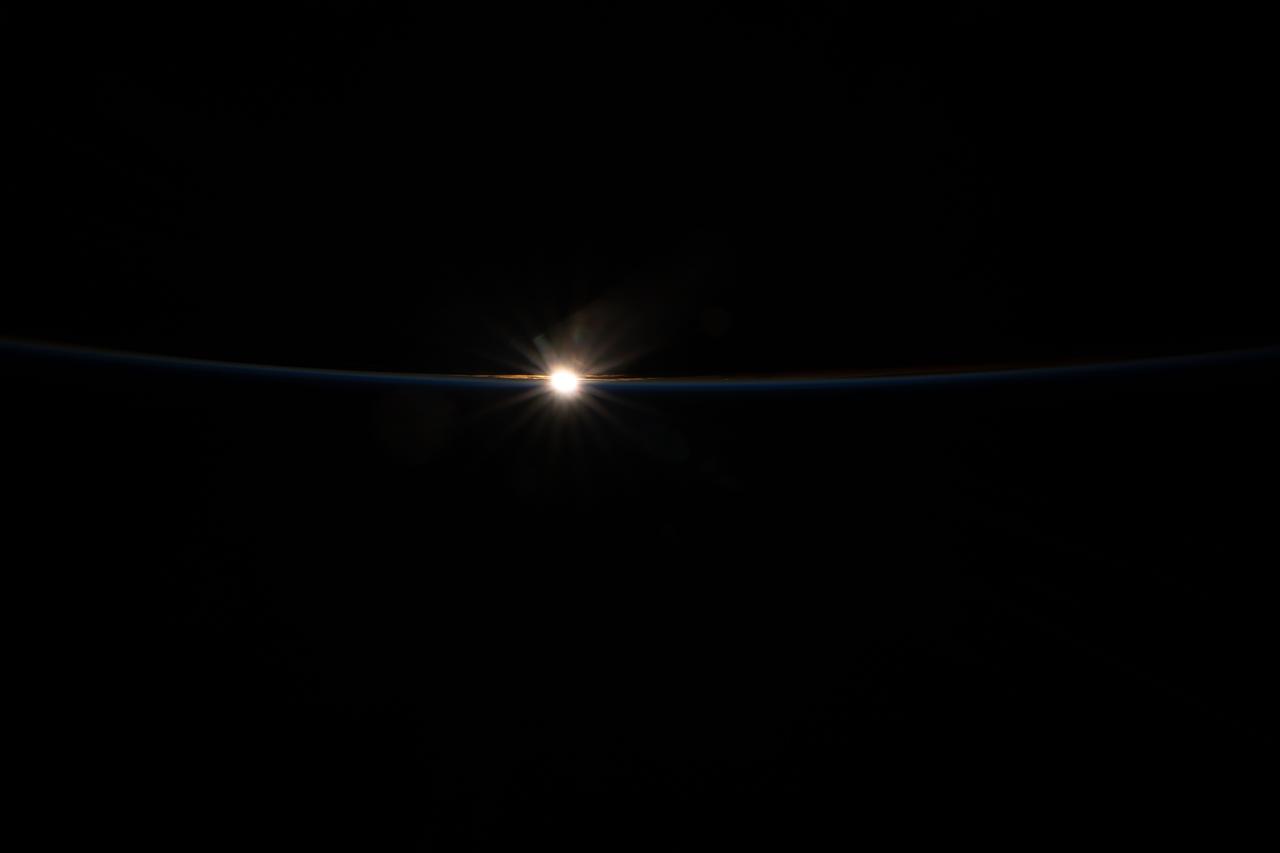
iss073e0776129 (Sept. 8, 2025) --- The last rays of an orbital sunset fade above Earth’s horizon, faintly illuminating the cloud tops and revealing the thin blue line of the atmosphere. The International Space Station was orbiting 262 miles above the Pacific Ocean, roughly midway between Hawaii and Alaska, at approximately 10:45 p.m. local time when this image was captured.

iss073e0982783 (Oct. 26, 2025) --- A red-yellow airglow blankets Earth as the last rays of an orbital sunset illuminate the atmosphere in this photograph from the International Space Station as it orbited 262 miles above the South Atlantic Ocean.
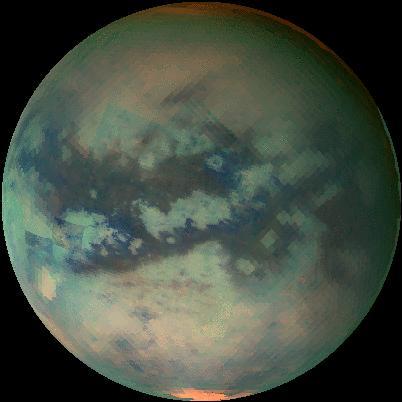
This movie of Titan shows data taken with Cassini visual and infrared mapping spectrometer during the last three flybys of Titan
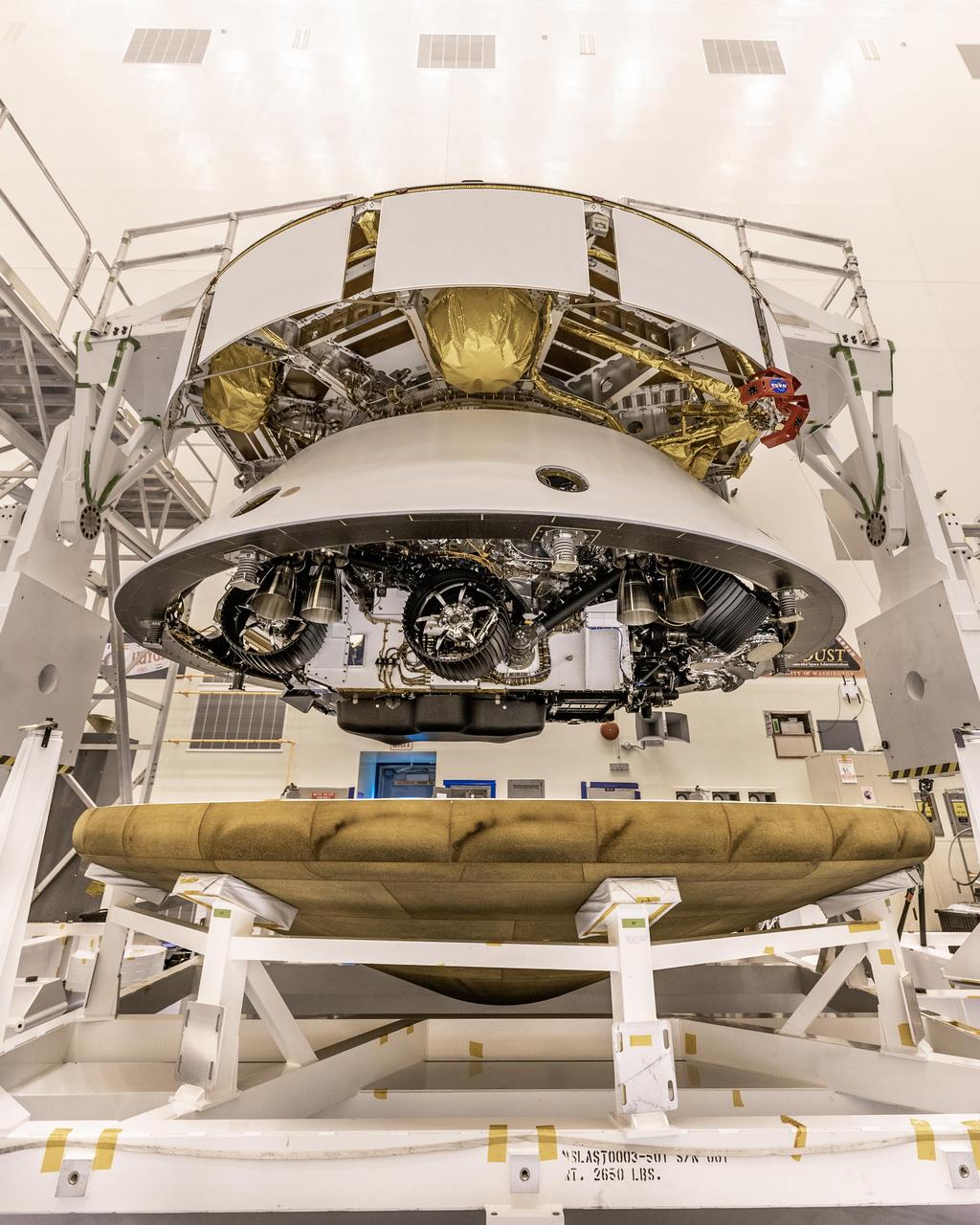
The Mars 2020 Perseverance rover mission's disk-shaped cruise stage sits atop the bell-shaped back shell, which contains the powered descent stage and Perseverance rover. Below is the brass-colored heat shield that is about to be attached to the back shell. The image was taken on May 28, 2020, at Kennedy Space Center in Florida. The next time the back shell and cruise stage will separate will be about 6 miles (9 kilometers) above Mars' Jezero Crater on Feb. 18, 2021. https://photojournal.jpl.nasa.gov/catalog/PIA23925
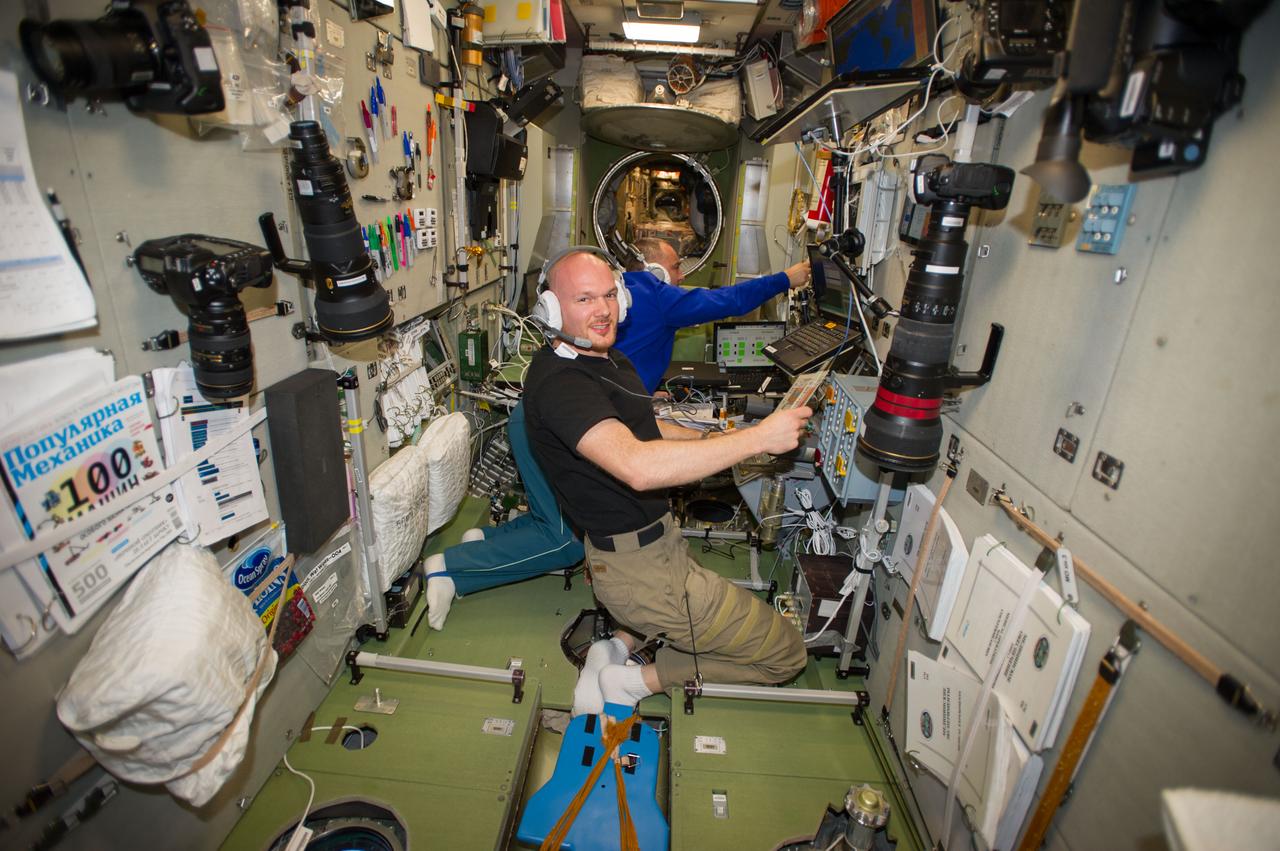
ISS040-E-089627 (7 Aug. 2014) --- In the International Space Station?s Zvezda Service Module, European Space Agency astronaut Alexander Gerst (foreground) and Russian cosmonaut Alexander Skvortsov, both Expedition 40 flight engineers, participate in a training session in preparation for the rendezvous and docking of ESA?s fifth and final Automated Transfer Vehicle (ATV-5). Nicknamed the ?Georges Lemaitre? in honor of the Belgian physicist and astronomer who first proposed the Big Bang theory, ATV-5 will deliver more than seven tons of scientific experiments, food and other supplies when it docks to the aft end of Zvezda on Aug. 12.
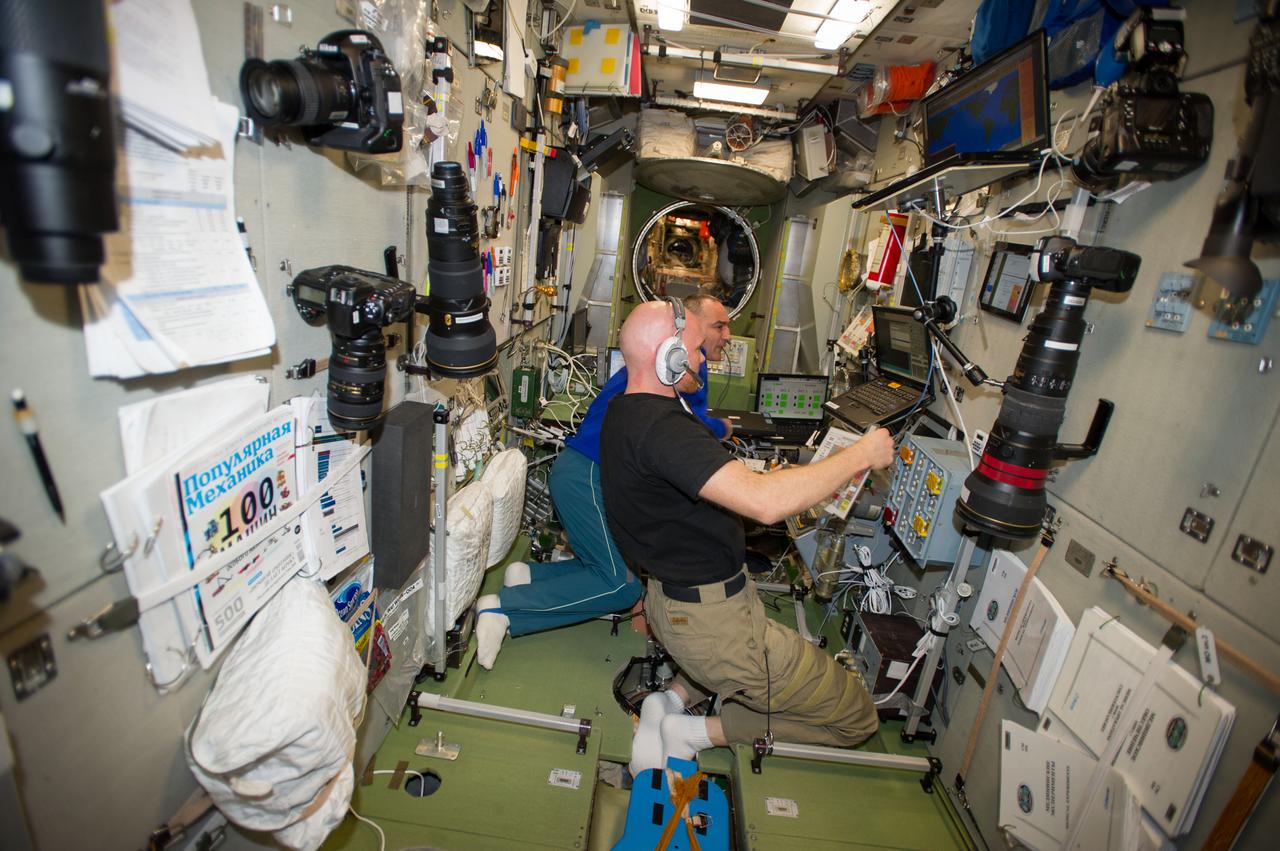
ISS040-E-089629 (7 Aug. 2014) --- In the International Space Station?s Zvezda Service Module, European Space Agency astronaut Alexander Gerst (foreground) and Russian cosmonaut Alexander Skvortsov, both Expedition 40 flight engineers, participate in a training session in preparation for the rendezvous and docking of ESA?s fifth and final Automated Transfer Vehicle (ATV-5). Nicknamed the ?Georges Lemaitre? in honor of the Belgian physicist and astronomer who first proposed the Big Bang theory, ATV-5 will deliver more than seven tons of scientific experiments, food and other supplies when it docks to the aft end of Zvezda on Aug. 12.
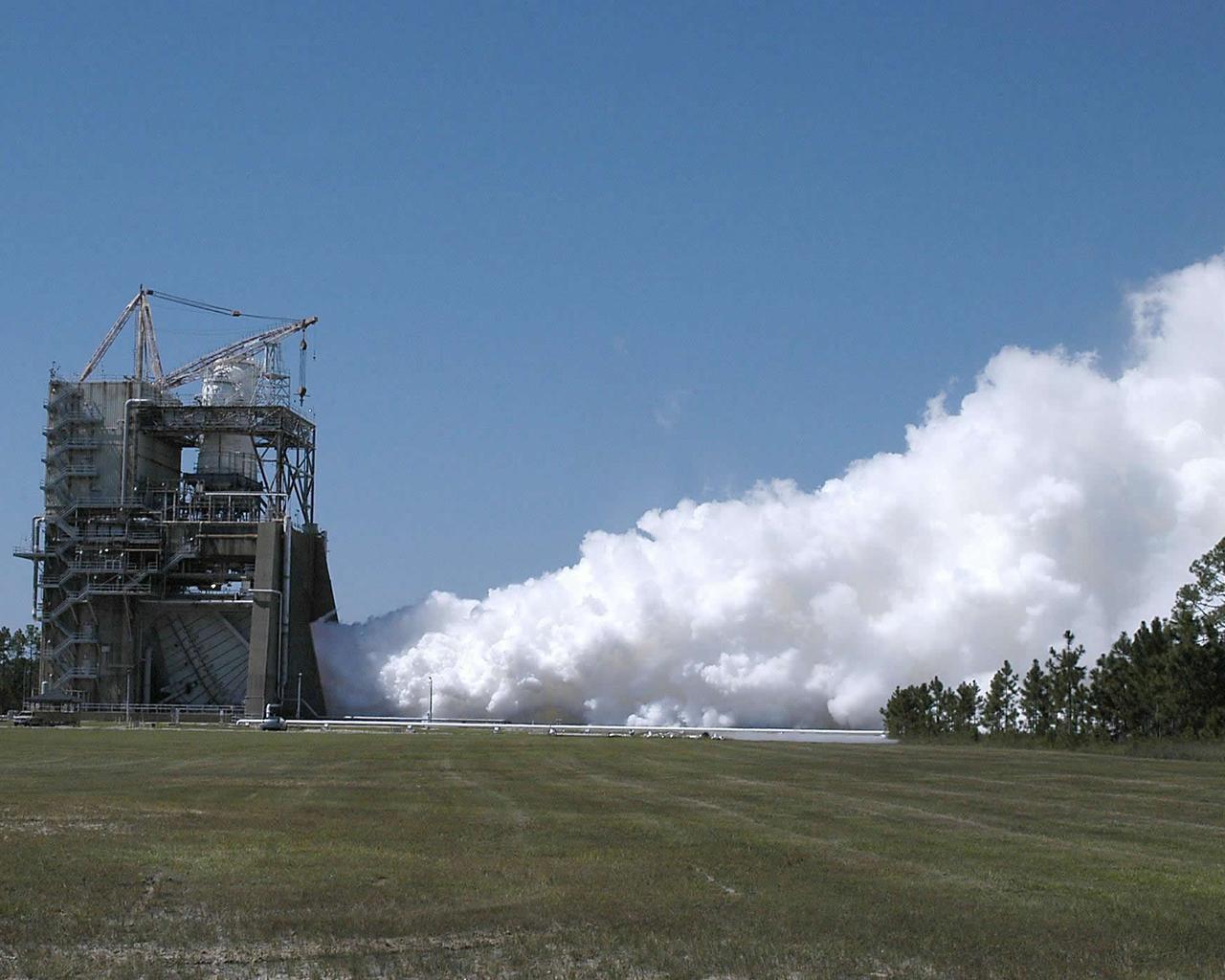
The Stennis Space Center conducted the final space shuttle main engine test on its A-1 Test Stand Friday. The A-1 Test Stand was the site of the first test on a shuttle main engine in 1975. Stennis will continue testing shuttle main engines on its A-2 Test Stand through the end of the Space Shuttle Program in 2010. The A-1 stand begins a new chapter in its operational history in October. It will be temporarily decommissioned to convert it for testing the J-2X engine, which will power the upper stage of NASA's new crew launch vehicle, the Ares I. Although this ends the stand's work on the Space Shuttle Program, it will soon be used for the rocket that will carry America's next generation human spacecraft, Orion.
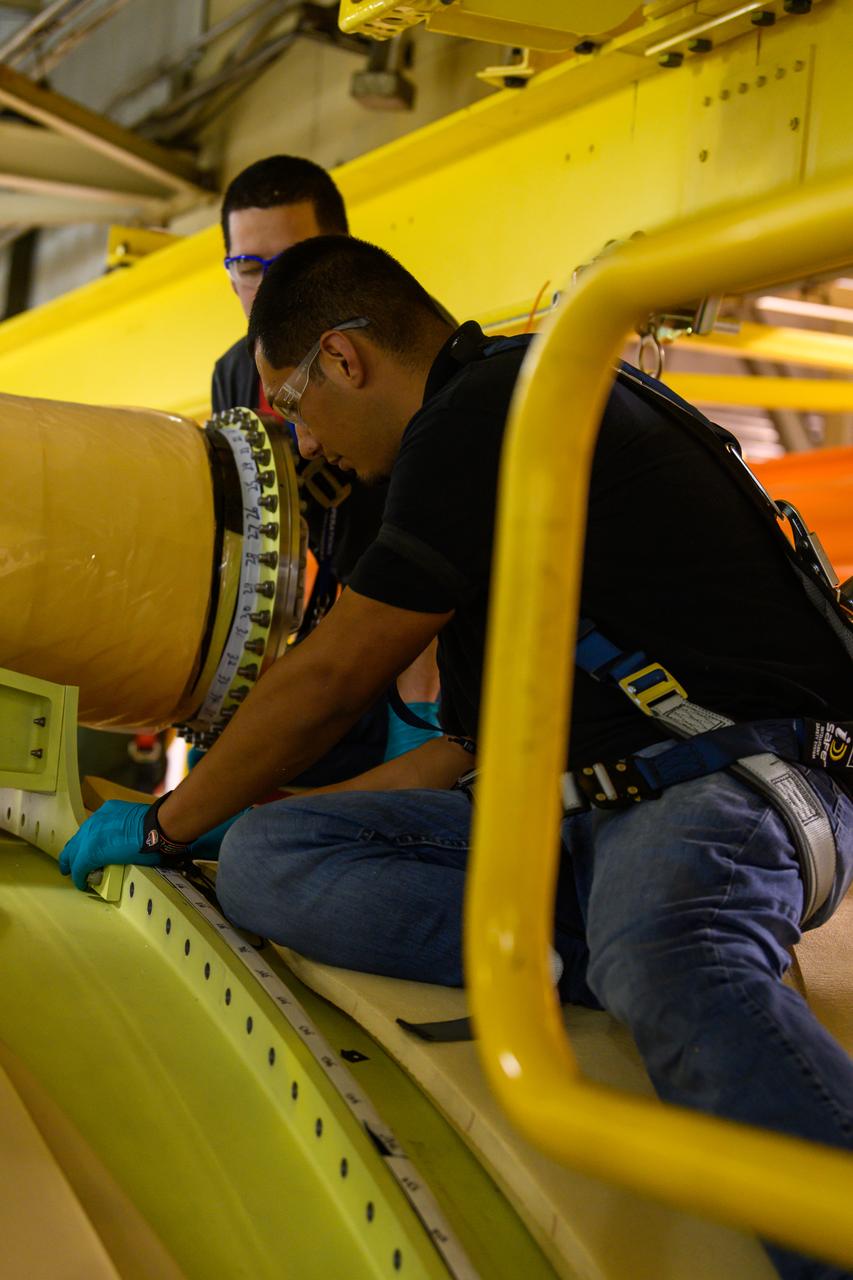
NASA finished assembling and joining the main structural components for the largest rocket stage the agency has built since the Saturn V that sent Apollo astronauts to the Moon. Engineers at the agency’s Michoud Assembly Facility in New Orleans connected the last of the five sections of the Space Launch System (SLS) rocket core stage Sept. 19. The stage will produce 2 million pounds of thrust to send Artemis I, the first flight SLS and NASA’s Orion spacecraft to the Moon. The engine section is located at the bottom of the 212-foot-tall stage and houses the four RS-25 engines. The core stage’s two liquid propellant tanks and four RS-25 engines will produce more than 2 million pounds of thrust to send the SLS rocket and Orion on the Artemis lunar missions. The engine section houses the four RS-25 engines and includes vital systems for mounting, controlling and delivering fuel form the propellant tanks to the rocket’s engines. Offering more payload mass, volume capability and energy to speed missions through space, the SLS rocket, along with NASA’s Gateway in lunar orbit and Orion, is part of NASA’s backbone for deep space exploration and the Artemis lunar program. No other rocket is capable of carrying astronauts in Orion around the Moon in a single mission.
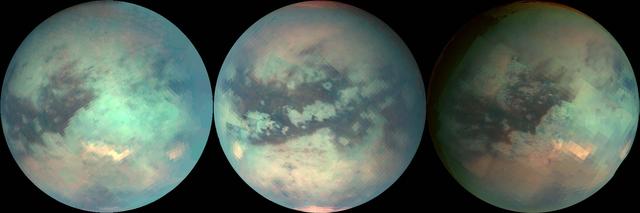
The three mosaics shown here were composed with data from Cassini visual and infrared mapping spectrometer taken during the last three Titan flybys
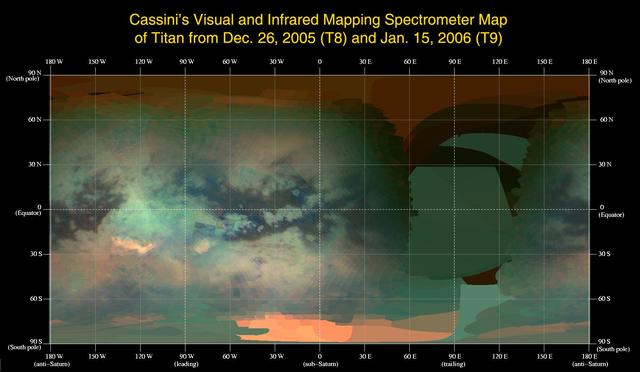
This global infrared map of Titan was composed with data from Cassini visual and infrared mapping spectrometer taken during the last two Titan flybys
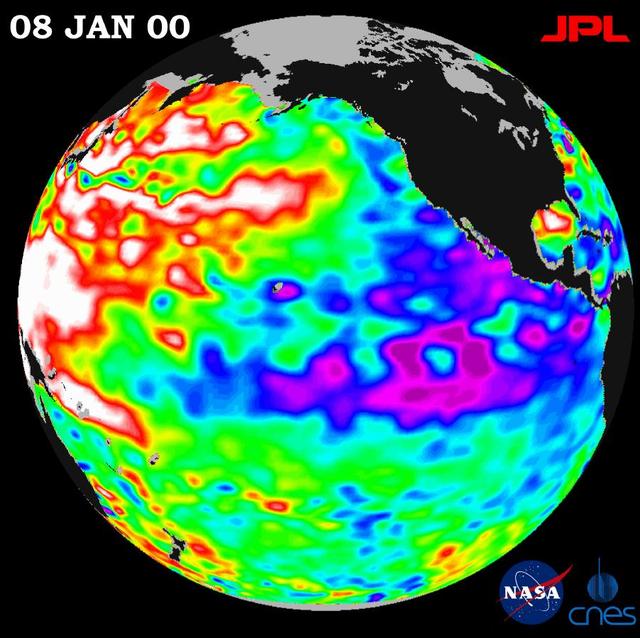
A giant horseshoe pattern of higher than normal sea-surface heights developing over the last year is beginning to dominate the entire western Pacific and Asiatic oceans.
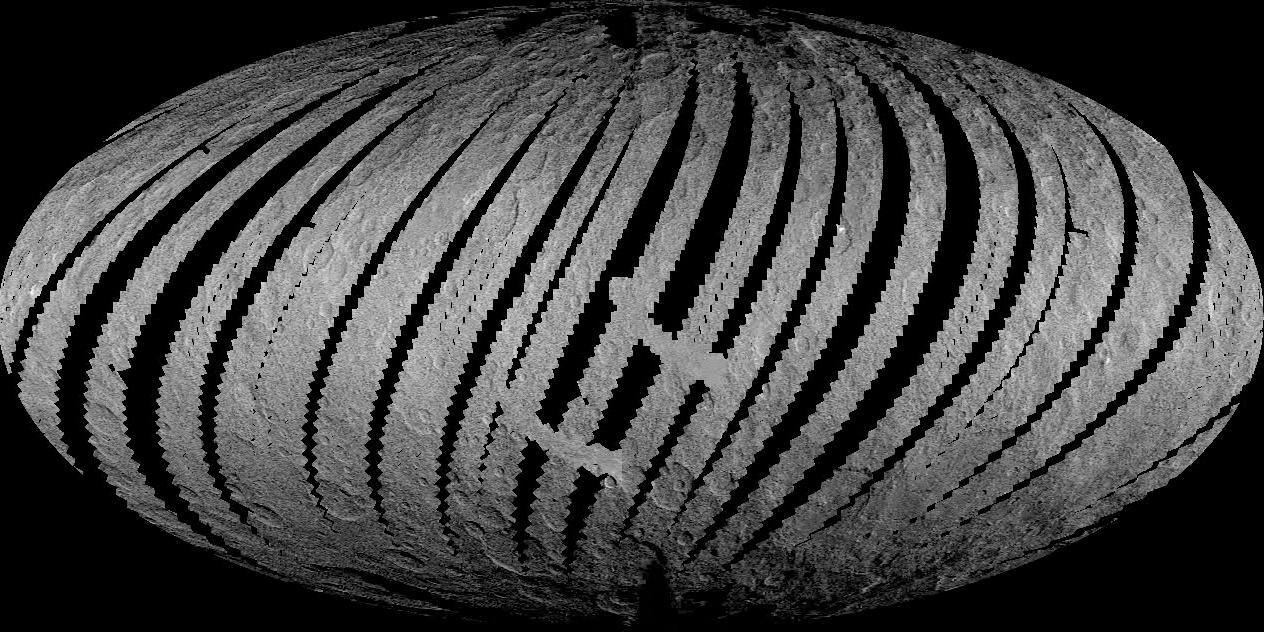
This frame from a movie shows that the brightest area on Ceres, located in Occator Crater, was one of the last features to be imaged as NASA Dawn progressively built its map.
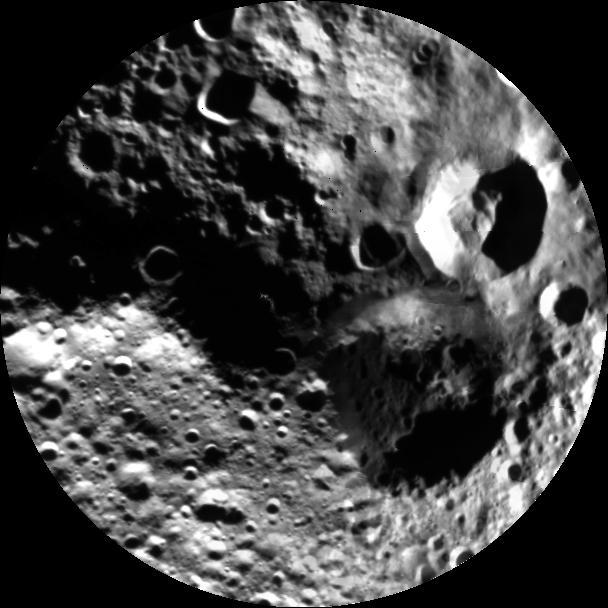
This image from NASA Dawn mission shows a shadowy view of the northern hemisphere of the giant asteroid Vesta during Dawn last look back.
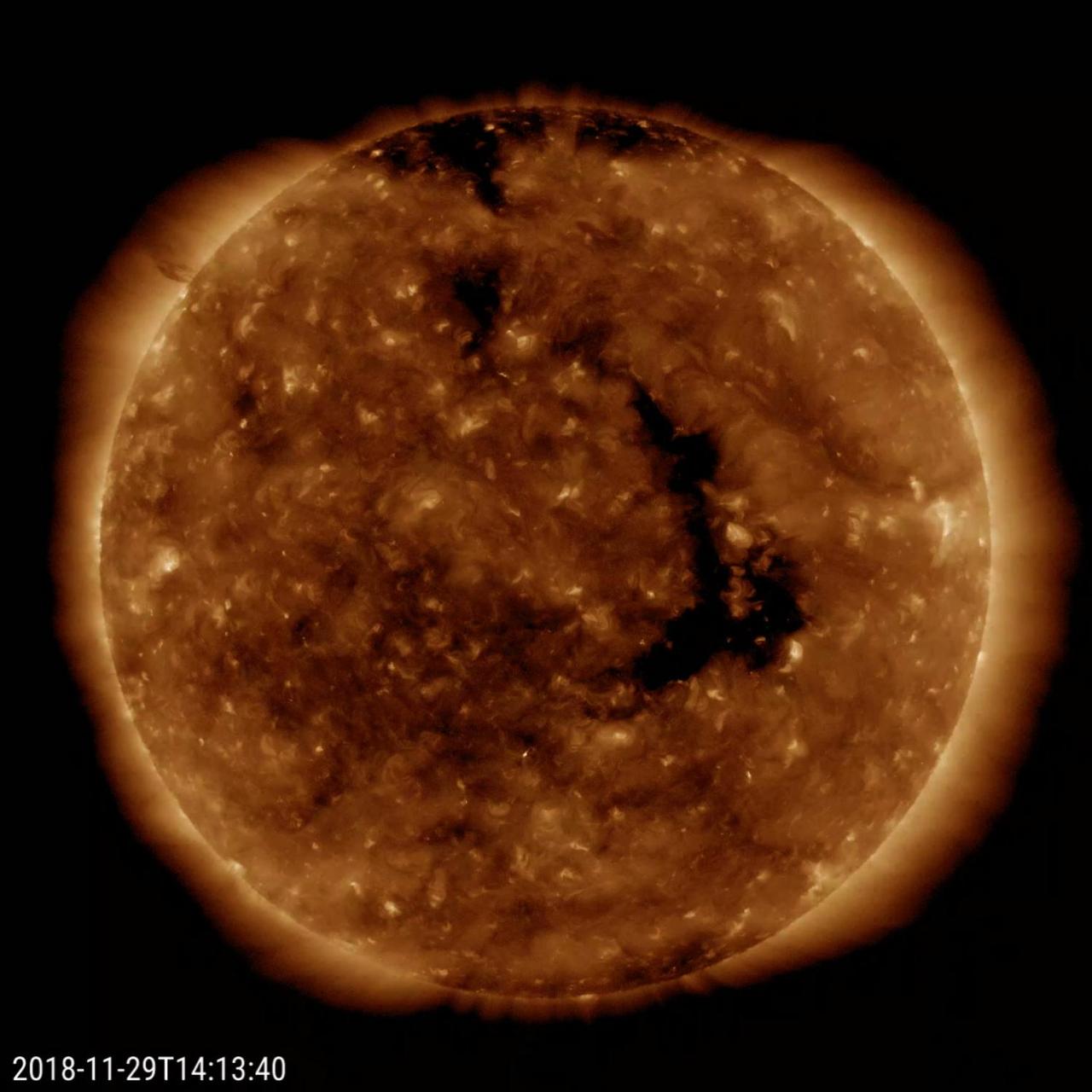
A long-lasting coronal hole has again rotated around to face the Earth (Nov. 28-30, 2018). This persistent hole - the elongated dark region seen in the still image - first appeared in July and has been observed each rotation of the Sun since. Coronal holes are the source of high-speed solar wind; when this one faced Earth, it sparked outbursts of aurora some of which were observed in our northern tier states. Coronal holes are magnetically open regions on the Sun that can last from days to months, although this one has lasted longer than most. The time-lapse video, taken in a wavelength of extreme ultraviolet light, covers about two days of activity. Movies available at https://photojournal.jpl.nasa.gov/catalog/PIA18144
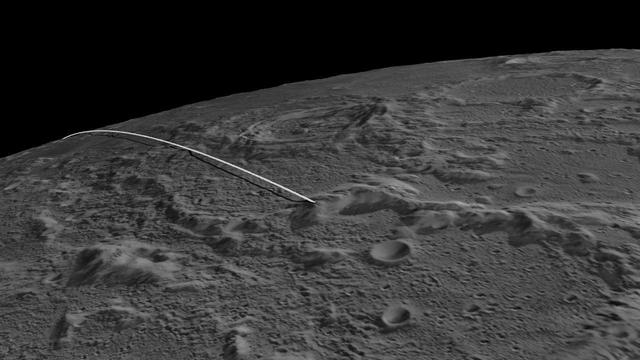
This image shows the final flight path for NASA twin Gravity Recovery and Interior Laboratory GRAIL mission spacecraft, which will impact the moon on Dec. 17, 2012, around 2:28 p.m. PST.

Recent sea-level height data from NASA Jason-2 oceanography satellite show a weakening of trade winds in western and central equatorial Pacific during late-January through February has triggered yet another strong, eastward-moving Kelvin wave.
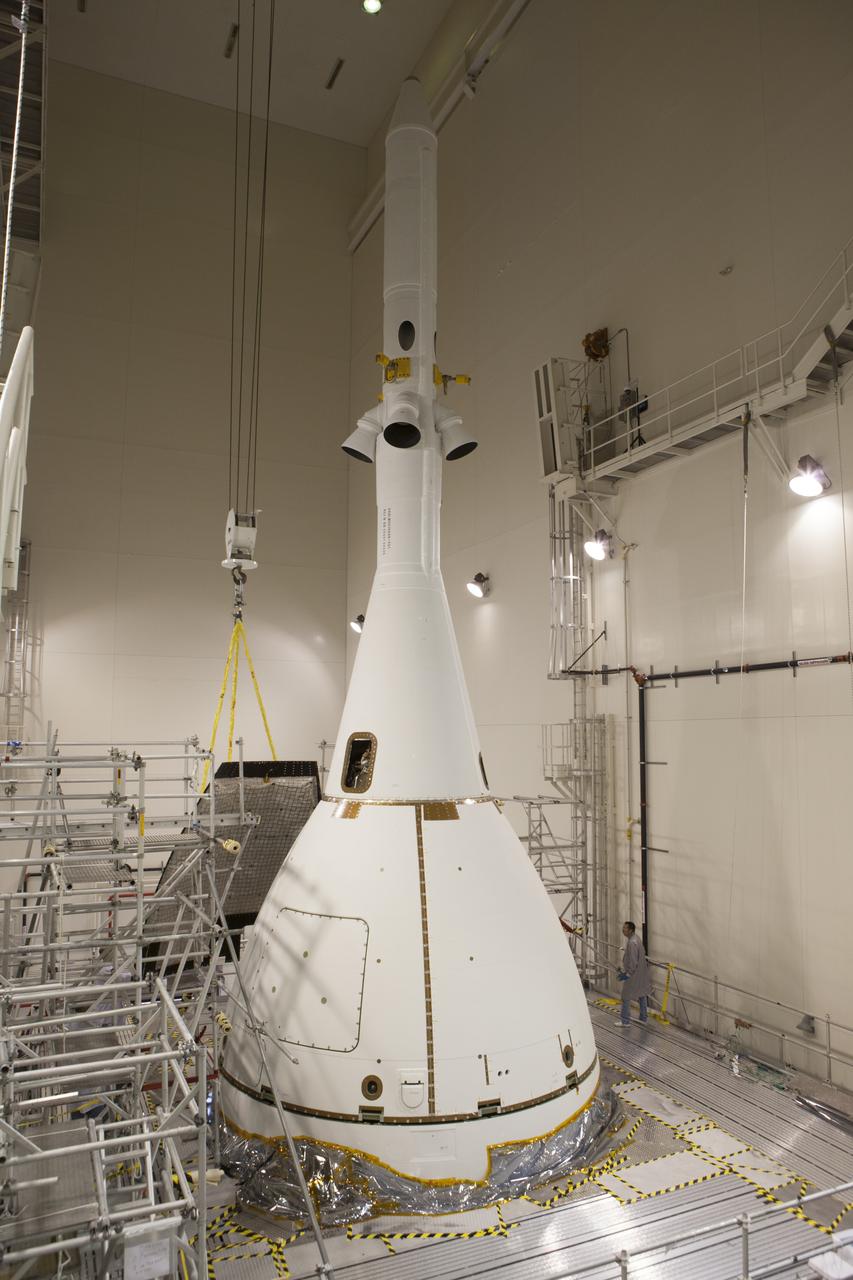
Inside the Launch Abort System Facility at NASA’s Kennedy Space Center in Florida, a crane brings the fourth and final Ogive panel closer for installation on Orion's Launch Abort System. The panels will smooth the airflow over the conical spacecraft to limit sound and vibration, which will make for a much smoother ride for the astronauts who will ride inside Orion in the future. The work marked the final major assembly steps for the spacecraft before it is transported to Space Launch Complex 37 at Cape Canaveral Air Force Station in November. Orion is the exploration spacecraft designed to carry astronauts to destinations not yet explored by humans, including an asteroid and Mars. It will have emergency abort capability, sustain the crew during space travel and provide safe re-entry from deep space return velocities. The first unpiloted flight test of Orion is scheduled to launch in December 2014 atop a United Launch Alliance Delta IV Heavy rocket, and in 2018 on NASA’s Space Launch System rocket.
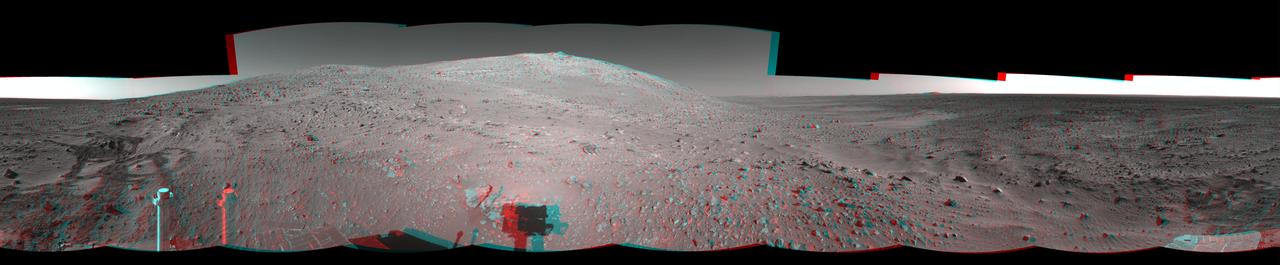
NASA Mars Exploration Rover took the images that make up this 360-degree mosaic anaglyph highlighting Spirit arrival at the base of the Columbia Hills. 3D glasses are necessary to view this image.
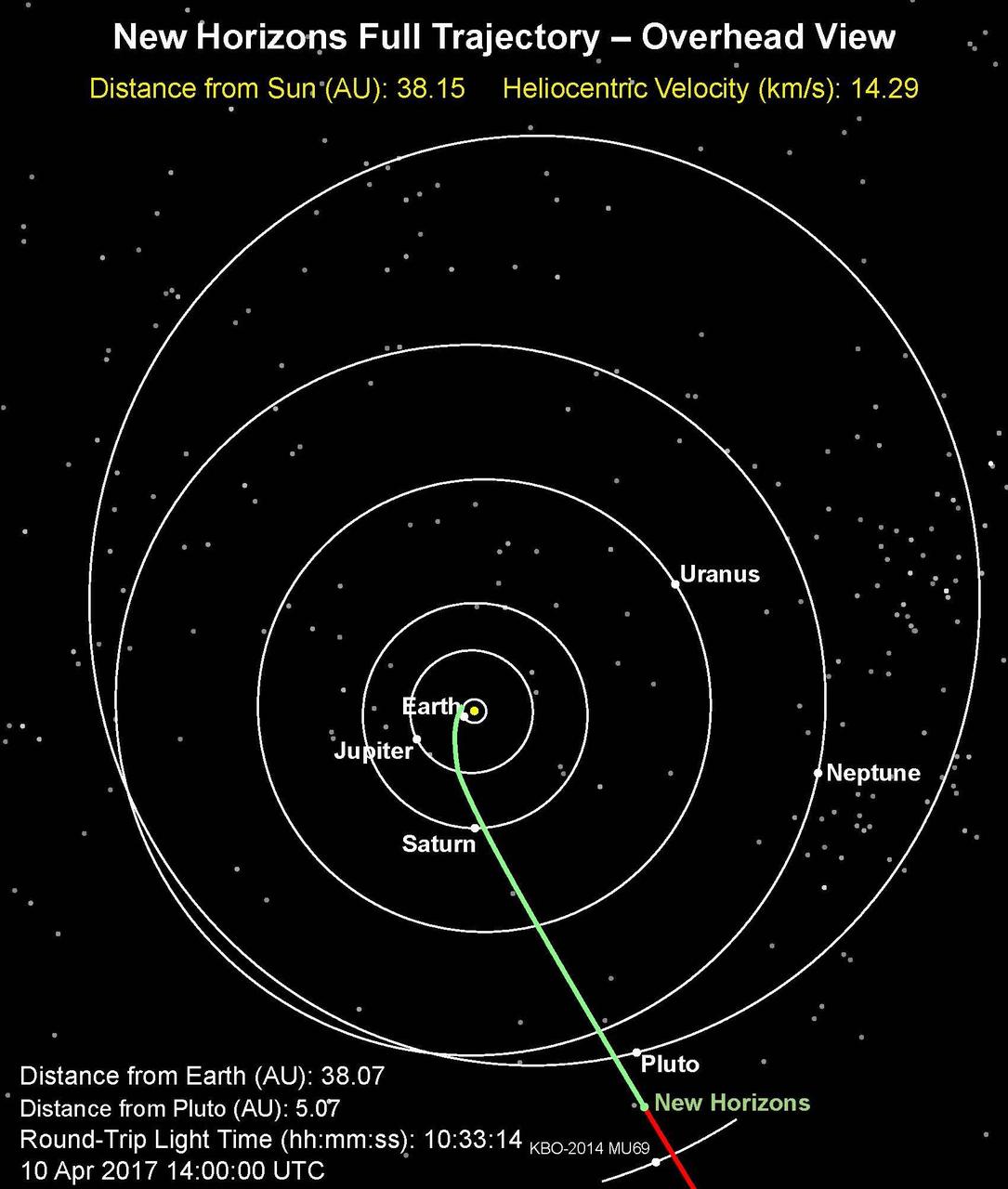
This is an overhead view of NASA's New Horizons full trajectory; the spacecraft has entered a hibernation phase on April 7 that will last until early September. The full article is available at https://photojournal.jpl.nasa.gov/catalog/PIA21589
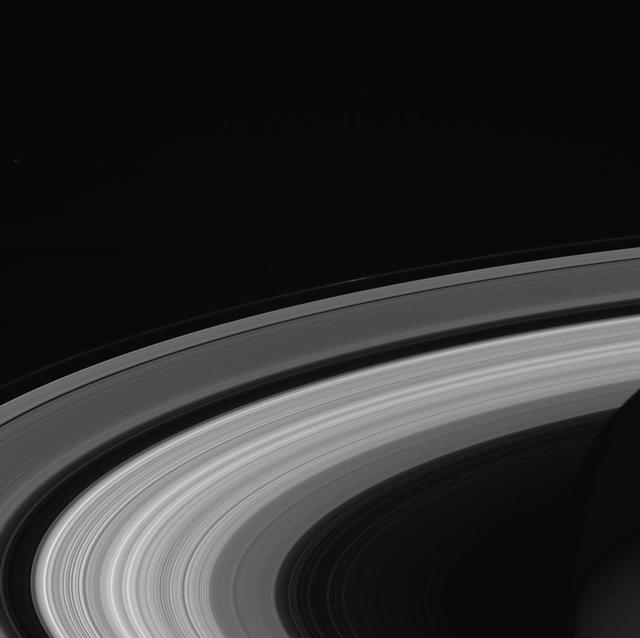
This image of Saturn's rings was taken by NASA's Cassini spacecraft on Sept. 13, 2017. It is among the last images Cassini sent back to Earth. The view was taken in visible red light using the Cassini spacecraft wide-angle camera at a distance of 684,000 miles (1.1 million kilometers) from Saturn. https://photojournal.jpl.nasa.gov/catalog/PIA21891
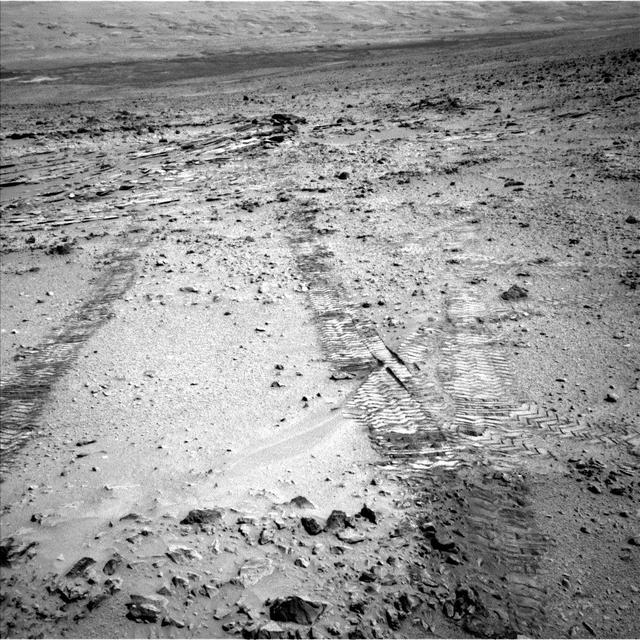
This view from the left Navigation Camera Navcam of NASA Mars Rover Curiosity looks back at wheel tracks made during the first drive away from the last science target in the Glenelg area.

This graphic illustrates where astronomers at last found oxygen molecules in space -- near the star-forming core of the Orion nebula. The squiggly lines, or spectra, reveal the signatures of oxygen molecules, detected by ESA Hershel Space Observatory.

This image shows the northern part of central New York State, a landscape sculpted by the ice sheets of the last ice age. Lake Ontario runs across the top of the image.
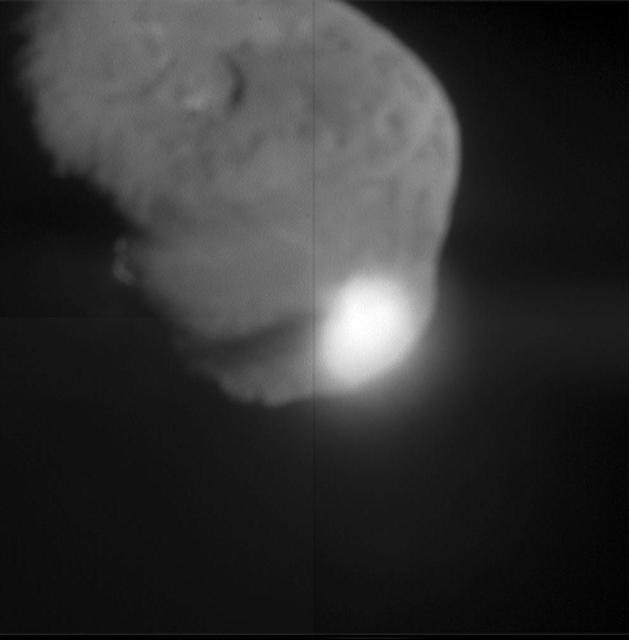
When NASA Deep Impact probe collided with Tempel 1, a bright, small flash was created, which rapidly expanded above the surface of the comet. This flash lasted for more than a second.

Australia is the only continent without any current volcanic activity, but it hosts one of the world largest extinct volcanoes, the Tweed Volcano. Rock dating methods indicate that eruptions here lasted about three million years.
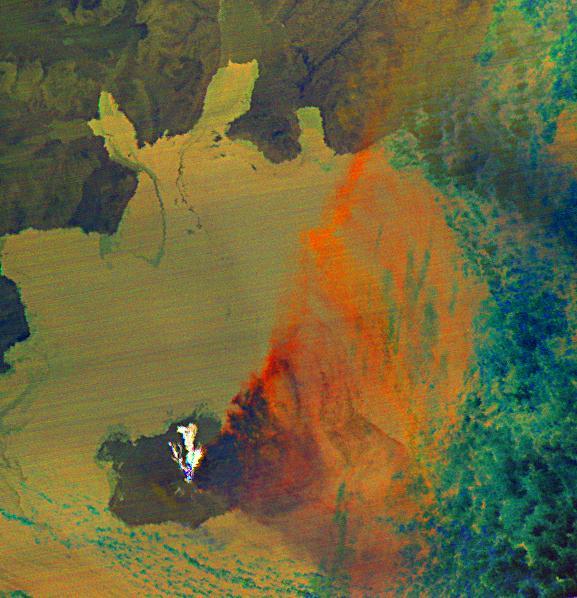
Since last spring, the U.S. Geological Survey Alaska Volcano Observatory AVO has detected increasing volcanic unrest at Augustine Volcano in Cook Inlet, Alaska near Anchorage. This image is from NASA Terra spacecraft.

Pluto nearly fills the frame in this image from NASA New Horizons spacecraft, taken on July 13, 2015. This is the last and most detailed image sent to Earth before the spacecraft closest approach to Pluto on July 14.
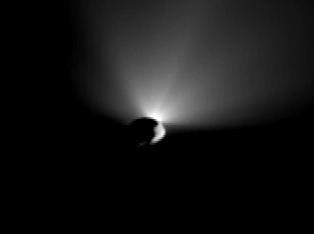
NASA Deep Impact flyby spacecraft took this image after it turned around to capture last shots of a receding comet Tempel 1. Earlier, the mission probe had smashed into the surface of Tempel 1.

Since the weak El Niño event of last winter, the equatorial Pacific has cooled and oceanographers have been on a La Niña watch. Thus far, equatorial waters have seesawed between cooling and the present slight warming.

As the last step in a series of inspections of the Mars Hand Lens Imager MAHLI aboard NASA Mars rover Curiosity, this camera reclosable dust cover was opened for the first time on Sept. 8, 2012.

NASA Spitzer Space Telescope has at last found buckyballs resembling soccer balls in space shown in this artist concept using Hubble picture of the NGC 2440 nebula. Hubble image cred: NASA, ESA, STScI

This MOC image shows dunes in the martian north polar region. The dunes are composed of dark, coarse sand. The white areas around the dunes are the last remaining areas of seasonal carbon dioxide frost cover
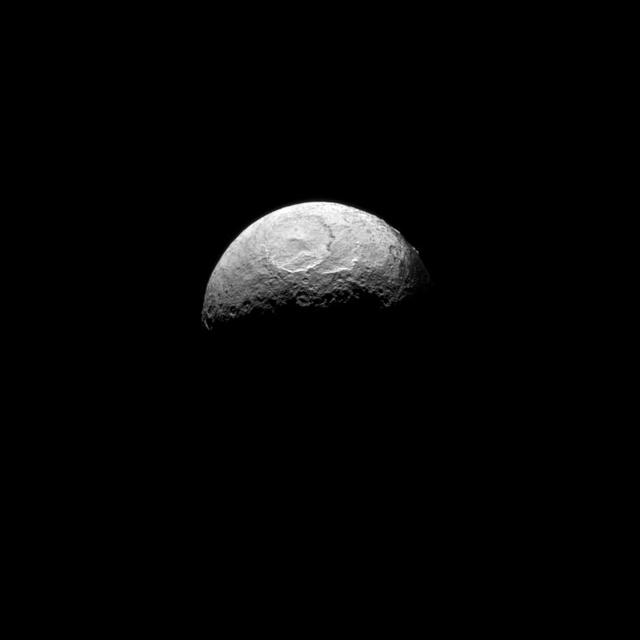
NASA Cassini spacecraft takes one of its last good looks at Iapetus, a Saturnian moon known for its yin-yang-like, bright-and-dark color pattern.
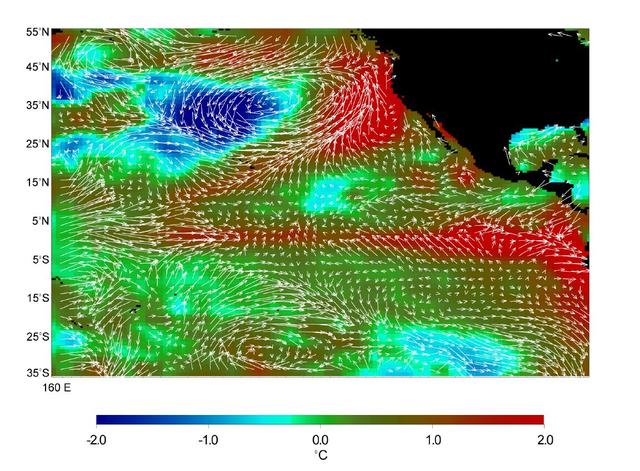
This image displays wind measurements taken by the satellite-borne NASA Scatterometer NSCAT during the last 10 days of May 1997, showing the relationship between the ocean and the atmosphere at the onset of the 1997-98 El Niño condition.
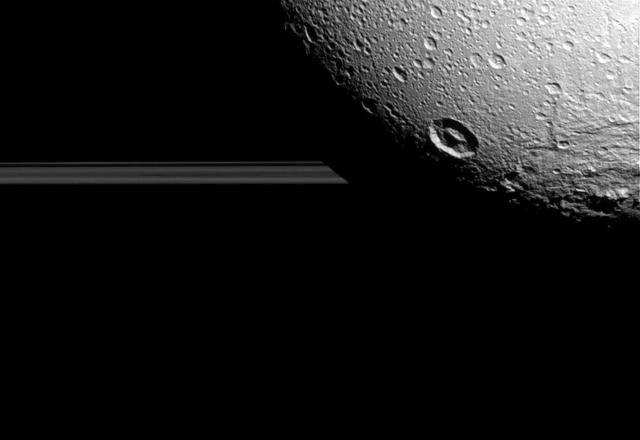
Saturn moon Dione hangs in front of Saturn rings in this view taken by NASA Cassini spacecraft during the inbound leg of its last close flyby of the icy moon.
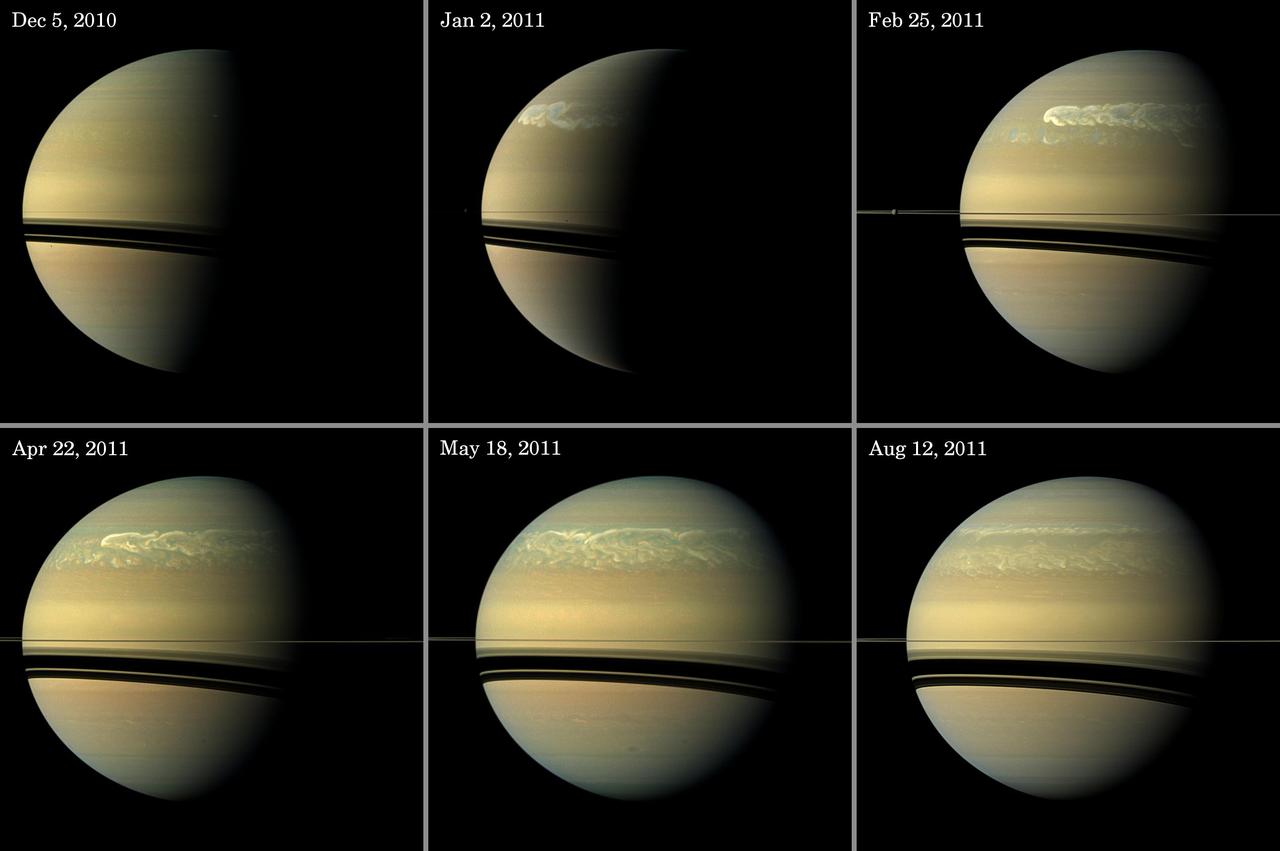
The biggest, most long-lasting Saturnian storm seen by either NASA Cassini or Voyager spacecraft roils the atmosphere of the gas giant in this nearly true-color mosaic of Cassini images.
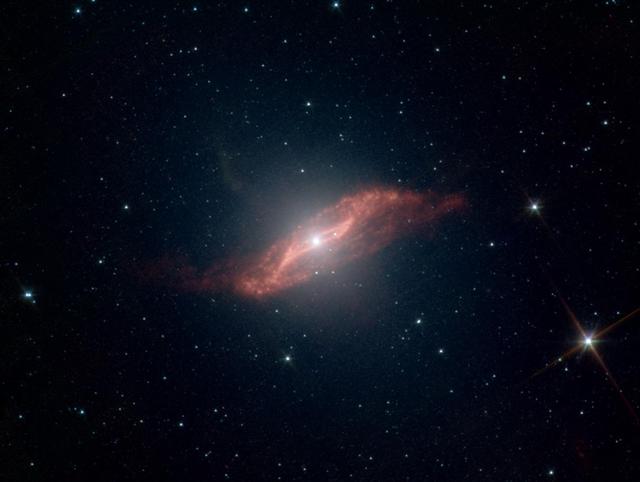
This image taken by NASA Spitzer Space Telescope shows in unprecedented detail the galaxy Centaurus A last big meal: a spiral galaxy seemingly twisted into a parallelogram-shaped structure of dust.
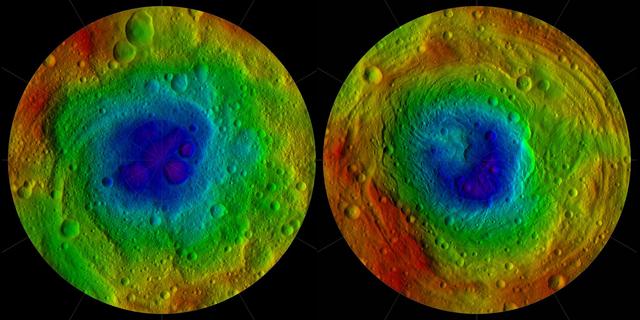
This image from NASA Dawn mission shows the topography of the northern and southern hemispheres of the giant asteroid Vesta, updated with pictures obtained during Dawn last look back.
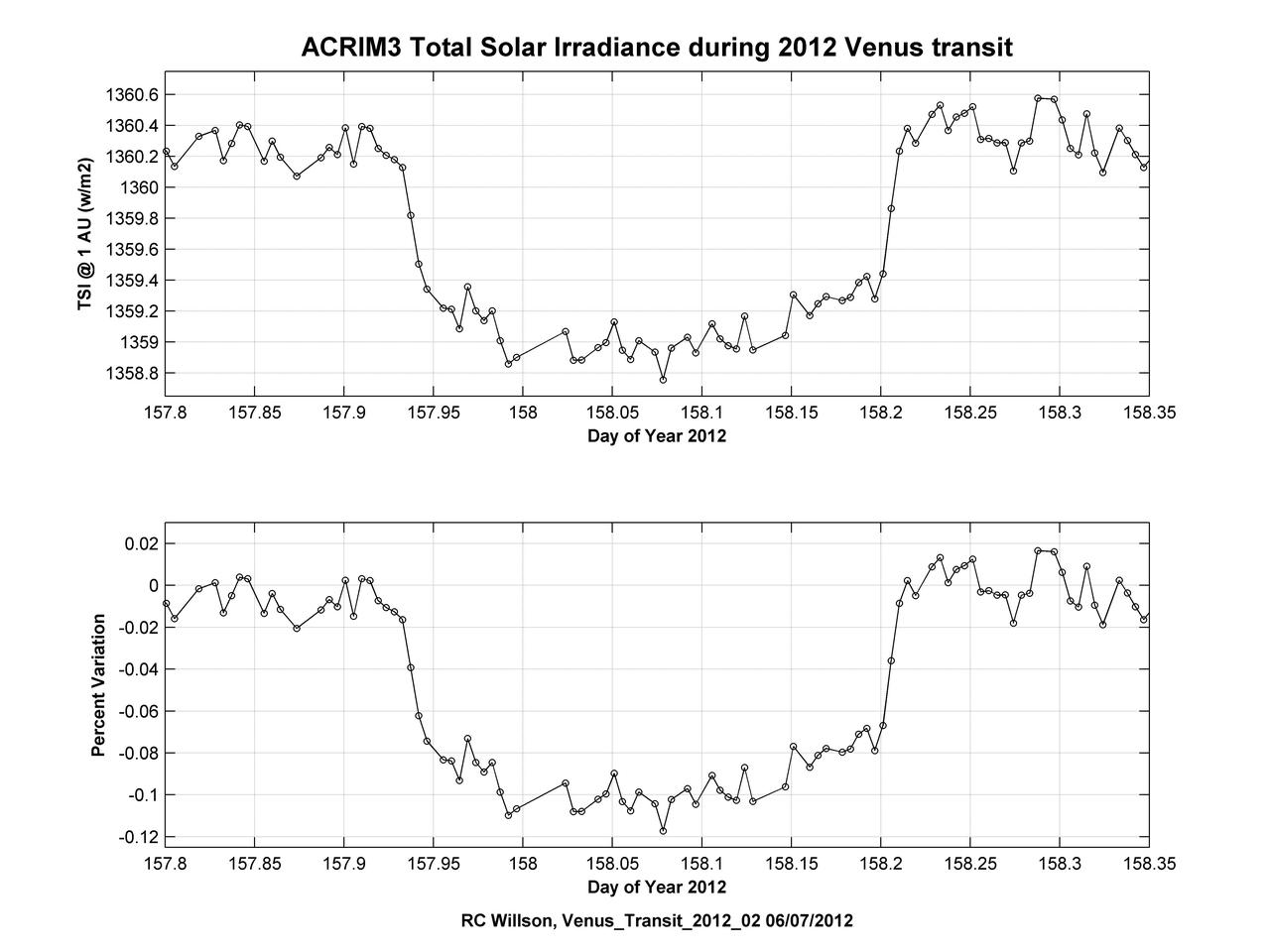
Observations of the total solar irradiance made with the ACRIM3 instrument on NASA ACRIMSAT satellite on June 5 and 6, 2012, tracked the effect of the transit of Venus, which lasted about six hours.

During the last weeks of March 2003, unusually high and widespread aerosol pollution was detected over Europe by several satellite-borne instruments aboard NASA Terra satellite.
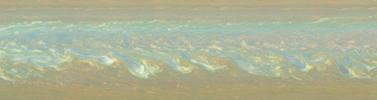
The biggest, most long-lasting Saturnian storm seen by either NASA Cassini or Voyager spacecraft roils the atmosphere of the gas giant in this nearly true-color mosaic of Cassini images.
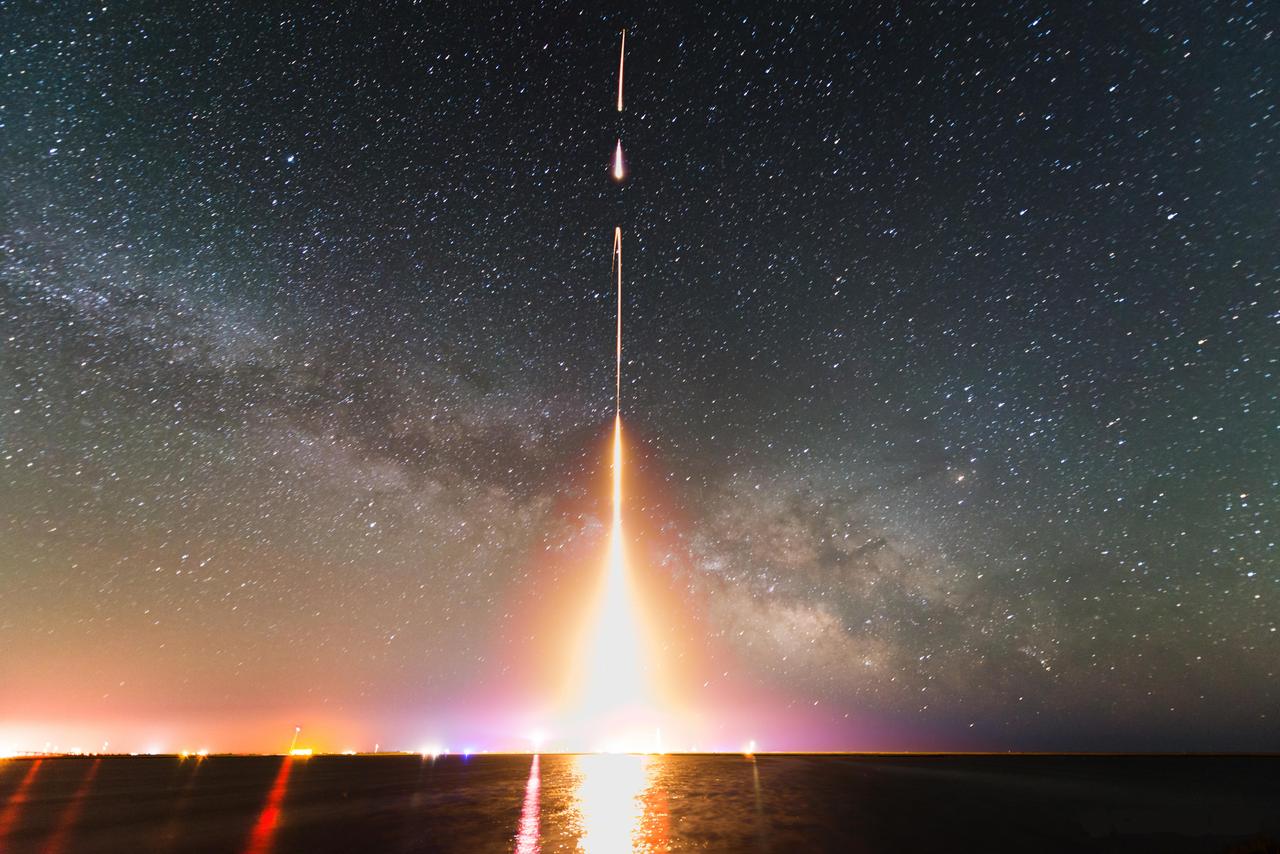
A time-lapse photograph of the CIBER rocket launch, taken from NASA Wallops Flight Facility in Virginia in 2013. This was the last of four launches of the Cosmic Infrared Background Experiment CIBER.

Since last spring, the U.S. Geological Survey Alaska Volcano Observatory AVO has detected increasing volcanic unrest at Augustine Volcano in Cook Inlet, Alaska near Anchorage. This image is from NASA Terra spacecraft.

Researchers using NASA Stratospheric Observatory for Infrared Astronomy SOFIA have captured infrared images of the last exhalations of a dying sun-like star. This image is of the planetary Nebula M2-9.
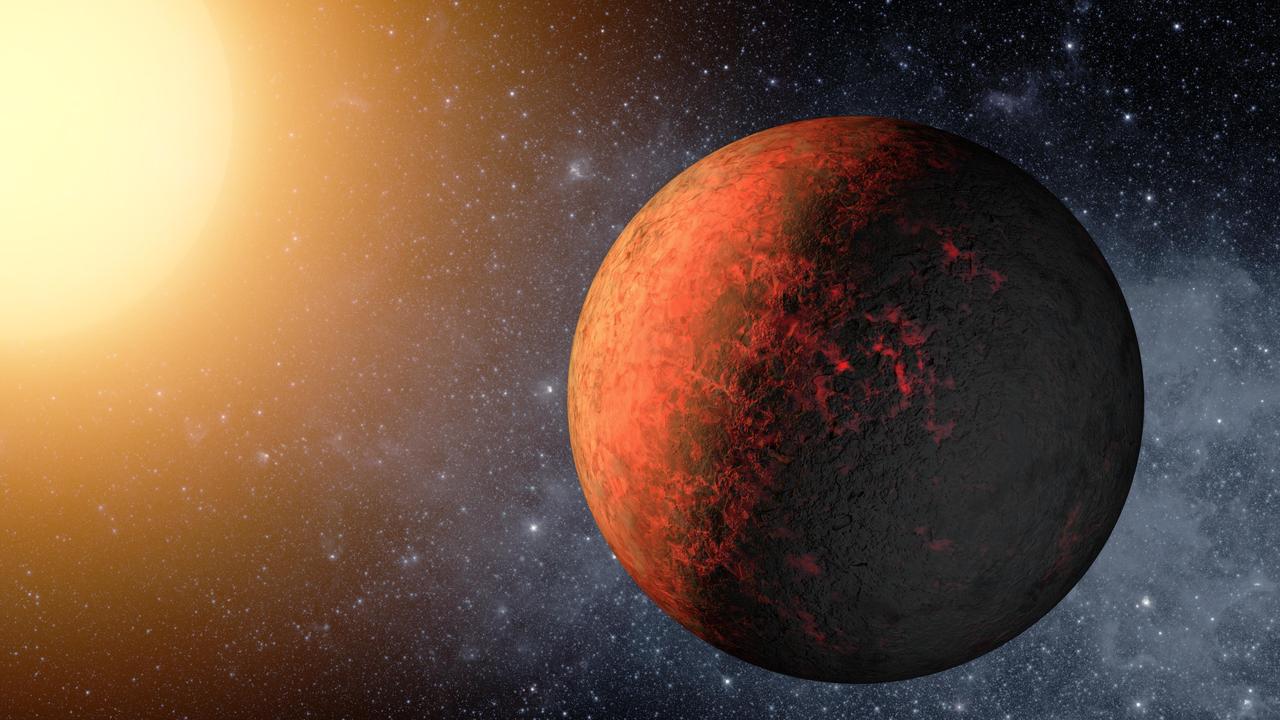
Kepler-20e is the first planet smaller than the Earth discovered to orbit a star other than the sun. A year on Kepler-20e only lasts 6 days, as it is much closer to its host star than the Earth is to the sun.

Extremely heavy rains fell at the end of February 2012 in the northern Algerian province of El Tarf, near the Tunisian border. The rainfall total was the greatest recorded in the last 30 years. This image is from NASA Terra spacecraft.
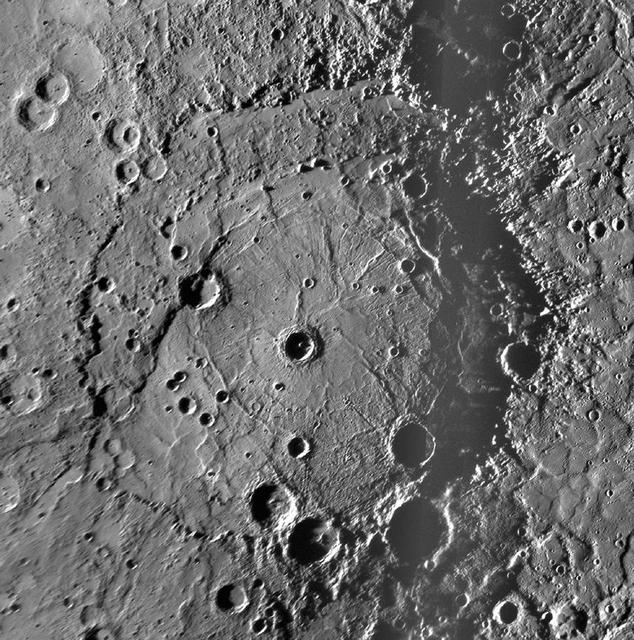
This NAC mosaic of the newly discovered Rembrandt impact basin was presented last week during a NASA media teleconference. The number per area and size distribution of impact craters superposed on Rembrandt rim indicates that it is one of the younges

This MOC image shows gullies a portion of a flood-carved canyon within the larger Kasei Valles system on Mars. This canyon is the result of the very last flood event that poured through the Kasei valleys, long ago
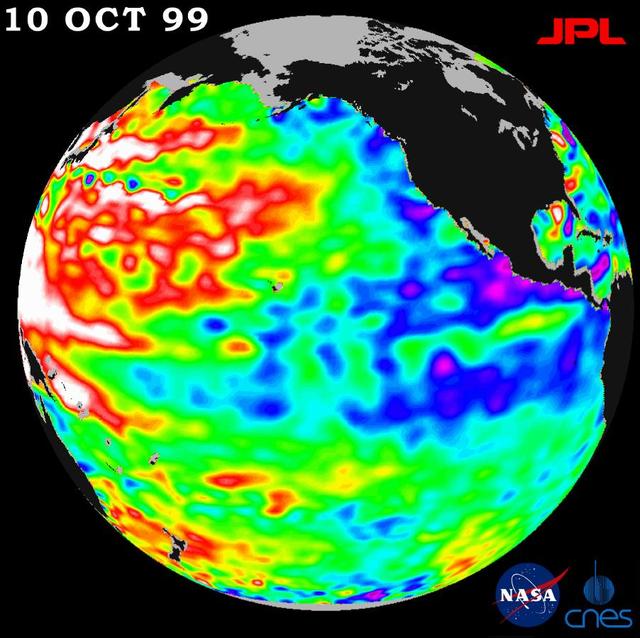
A repeat of last year mild La Niña conditions -- with a stormy winter in the Pacific Northwest and a dry winter in the southwestern United States -- will be the likely outcome of sea-surface heights observed by NASA TOPEX/Poseidon satellite.