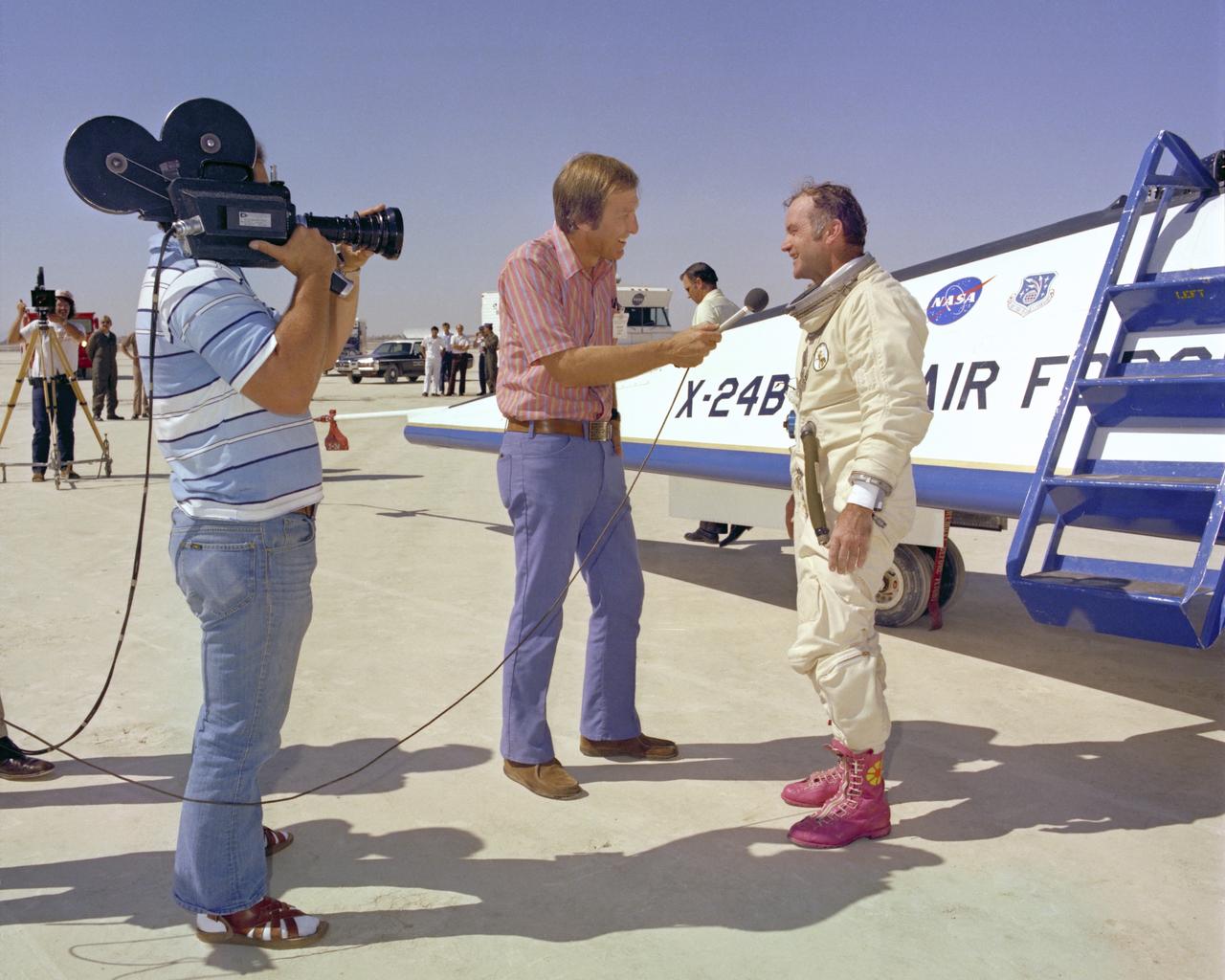
A TV reporter interviews NASA test pilot Bill Dana, wearing his infamous pink boots with yellow daisy decals, after the last powered flight of the X-24B.
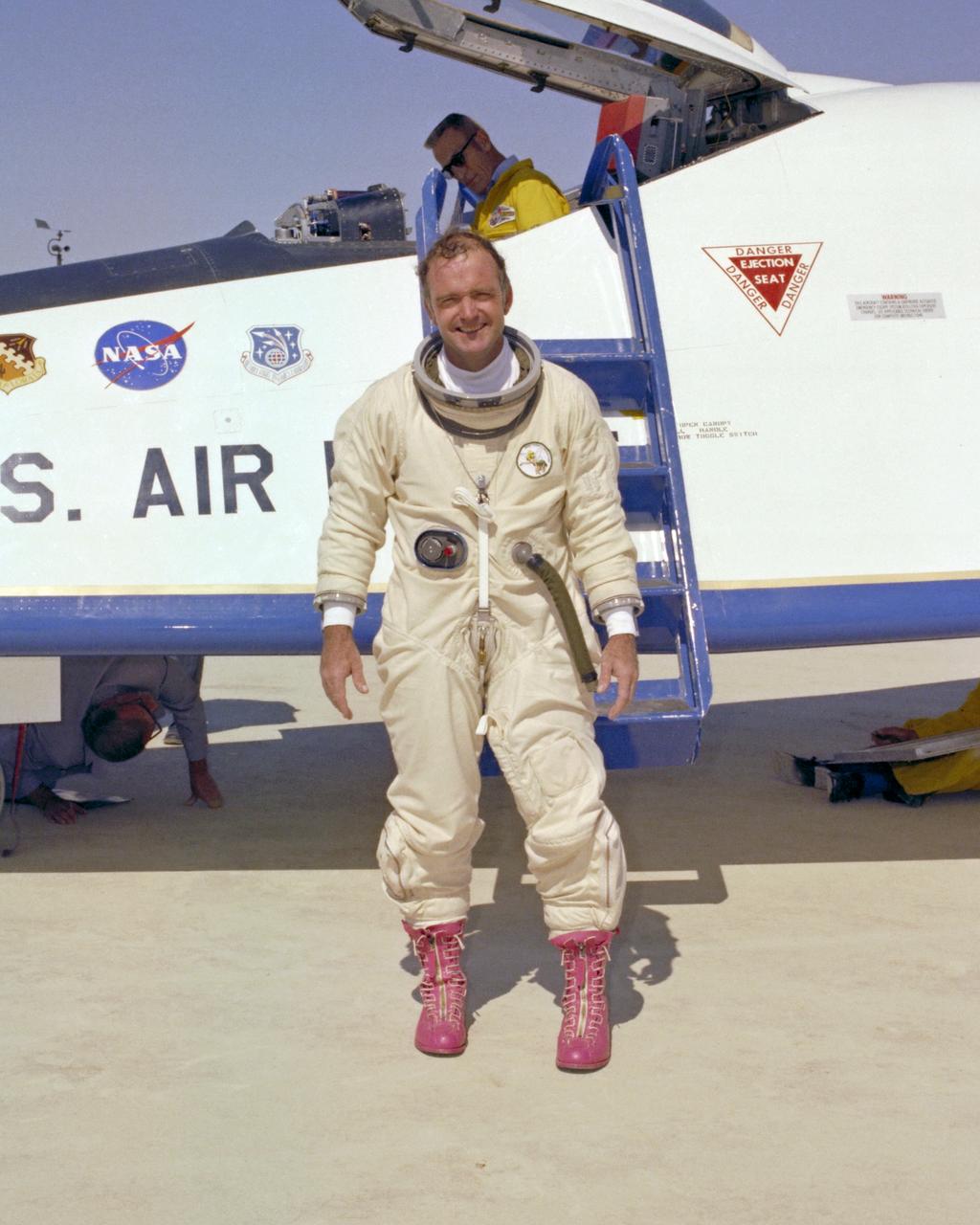
NASA test pilot Bill Dana, resplendent in pink boots and pressure suit, was all smiles following the last powered flight of the X-24B on Sept. 23, 1975.
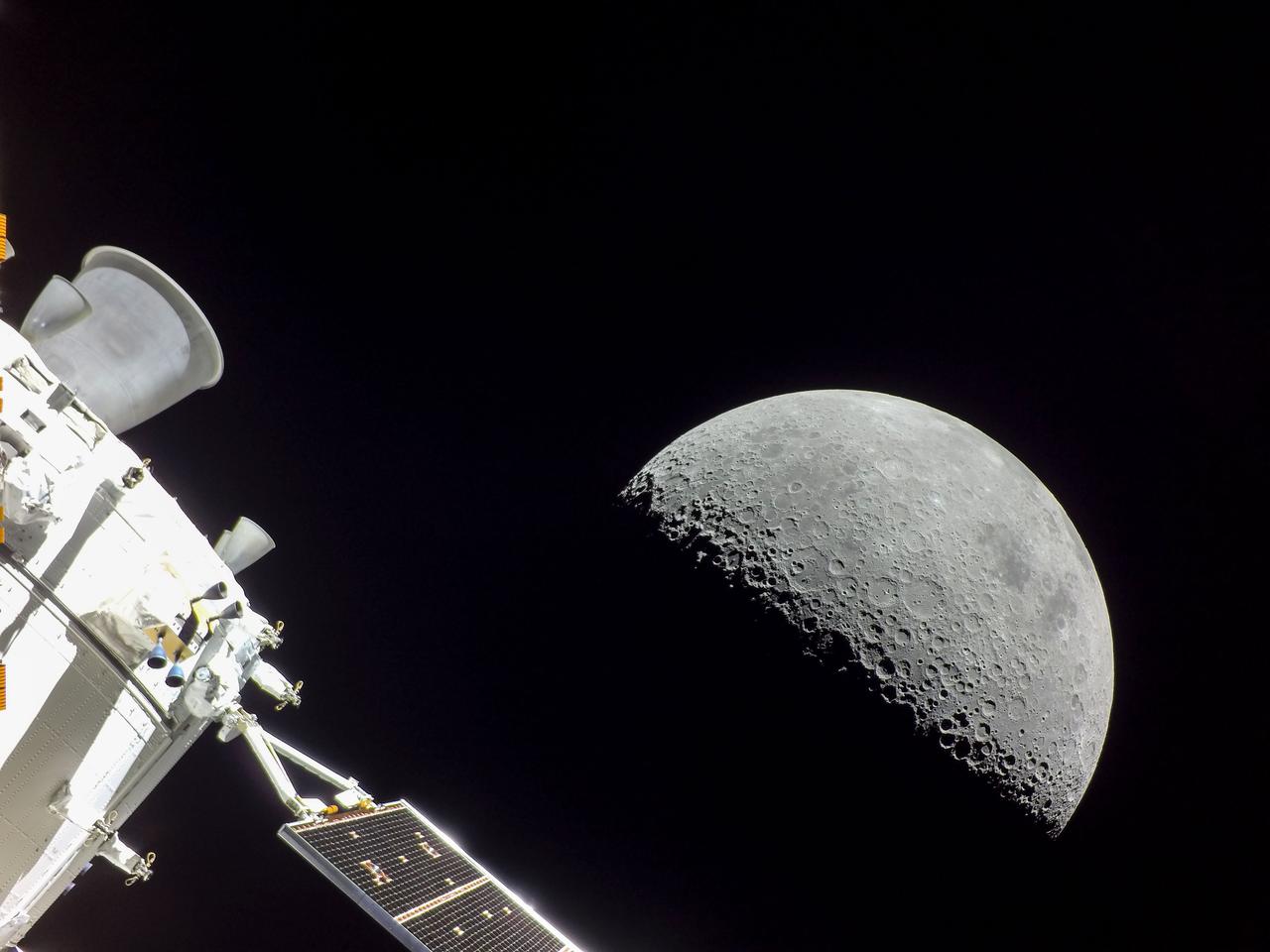
art001e002071 (Dec. 5, 2022) On flight day 20 of the Artemis I mission, Orion captured the Moon on the day of return powered flyby. The burn, which lasted 3 minutes, 27 seconds, committed the spacecraft to a Dec. 11 splashdown.
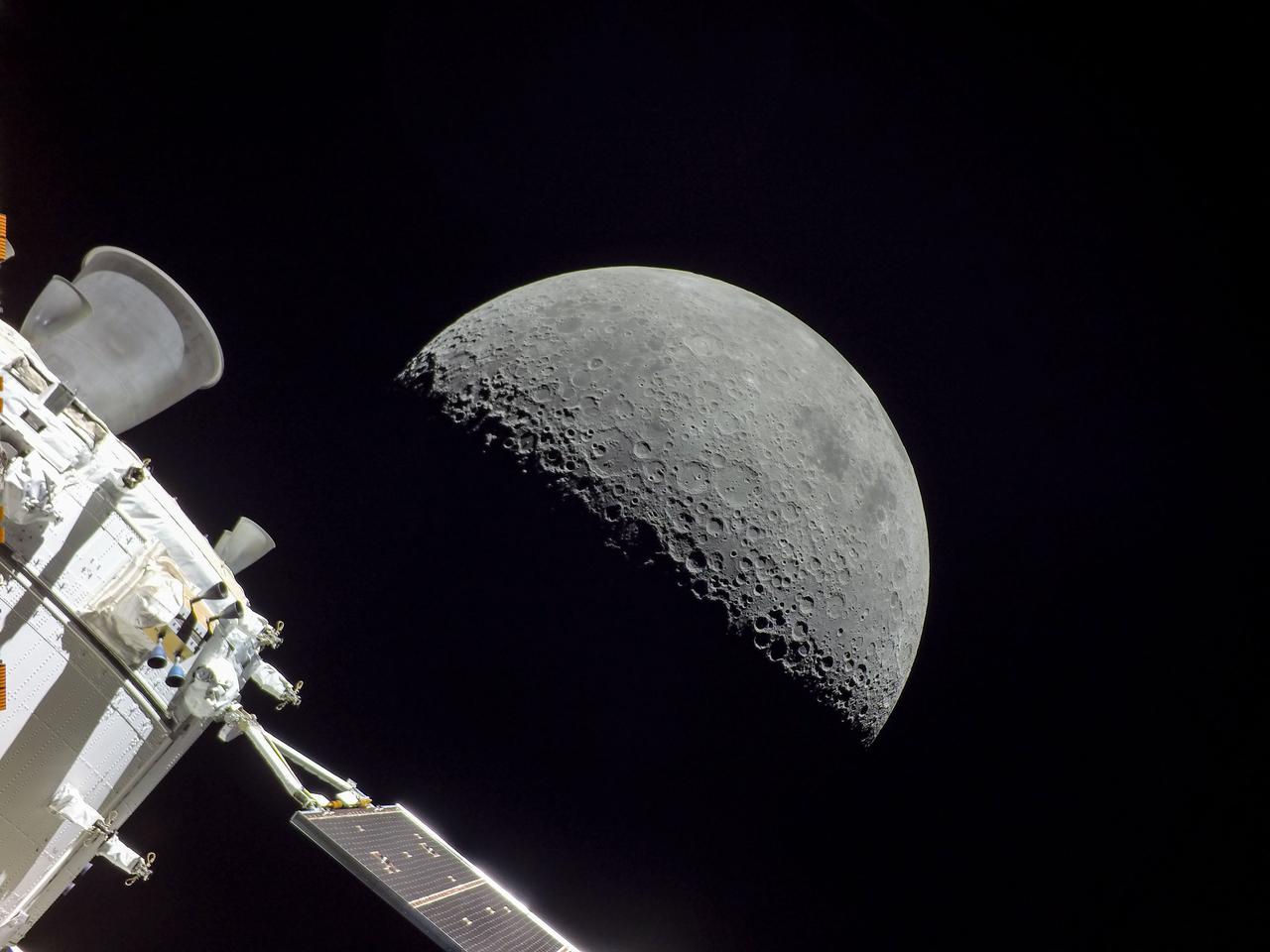
art001e002070 (Dec. 5, 2022) On flight day 20 of the Artemis I mission, Orion captured the Moon on the day of return powered flyby. The burn, which lasted 3 minutes, 27 seconds, committed the spacecraft to a Dec. 11 splashdown.
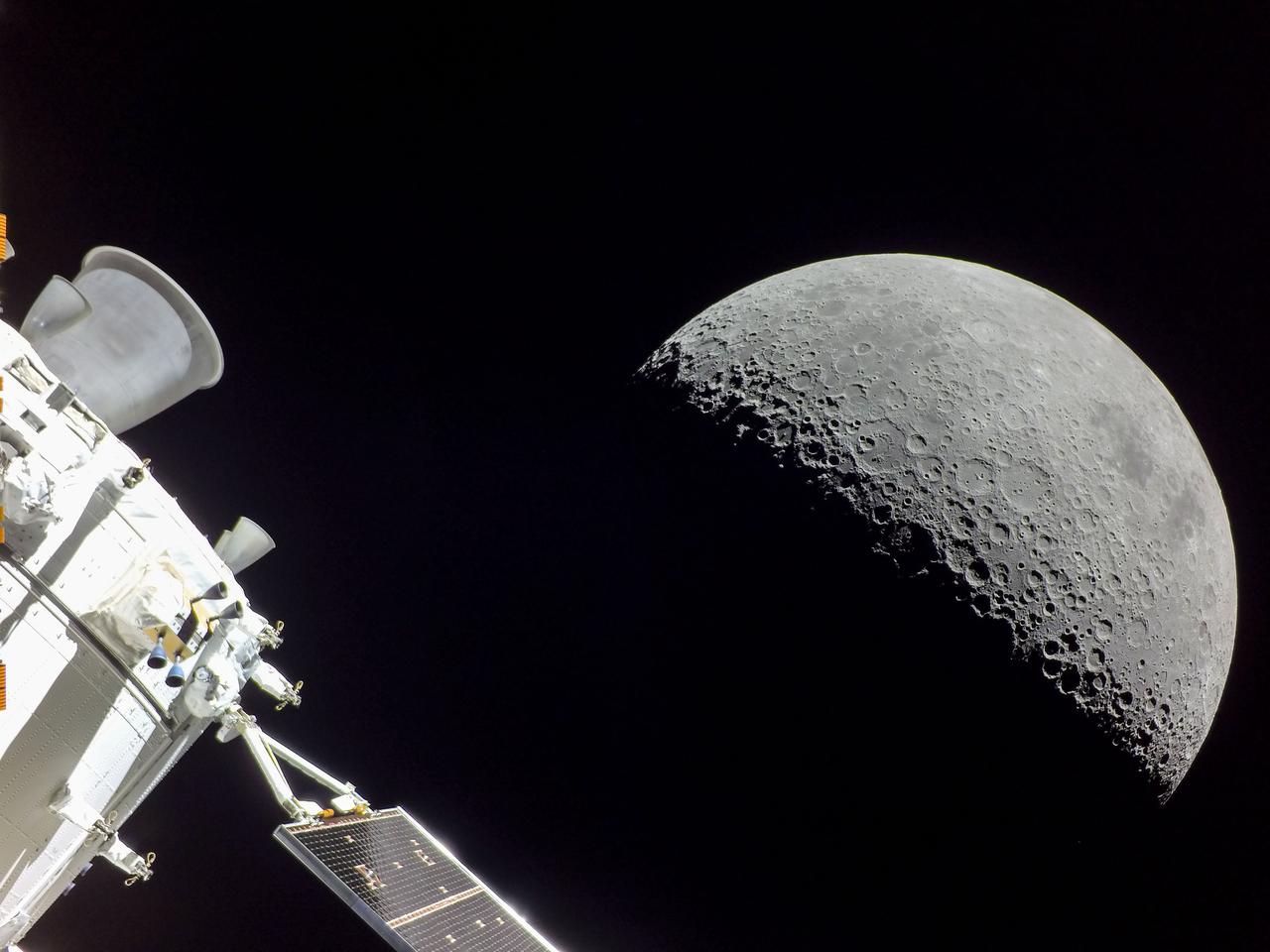
art001e002069 (Dec. 5, 2022) On flight day 20 of the Artemis I mission, Orion captured the Moon on the day of return powered flyby. The burn, which lasted 3 minutes, 27 seconds, committed the spacecraft to a Dec. 11 splashdown.
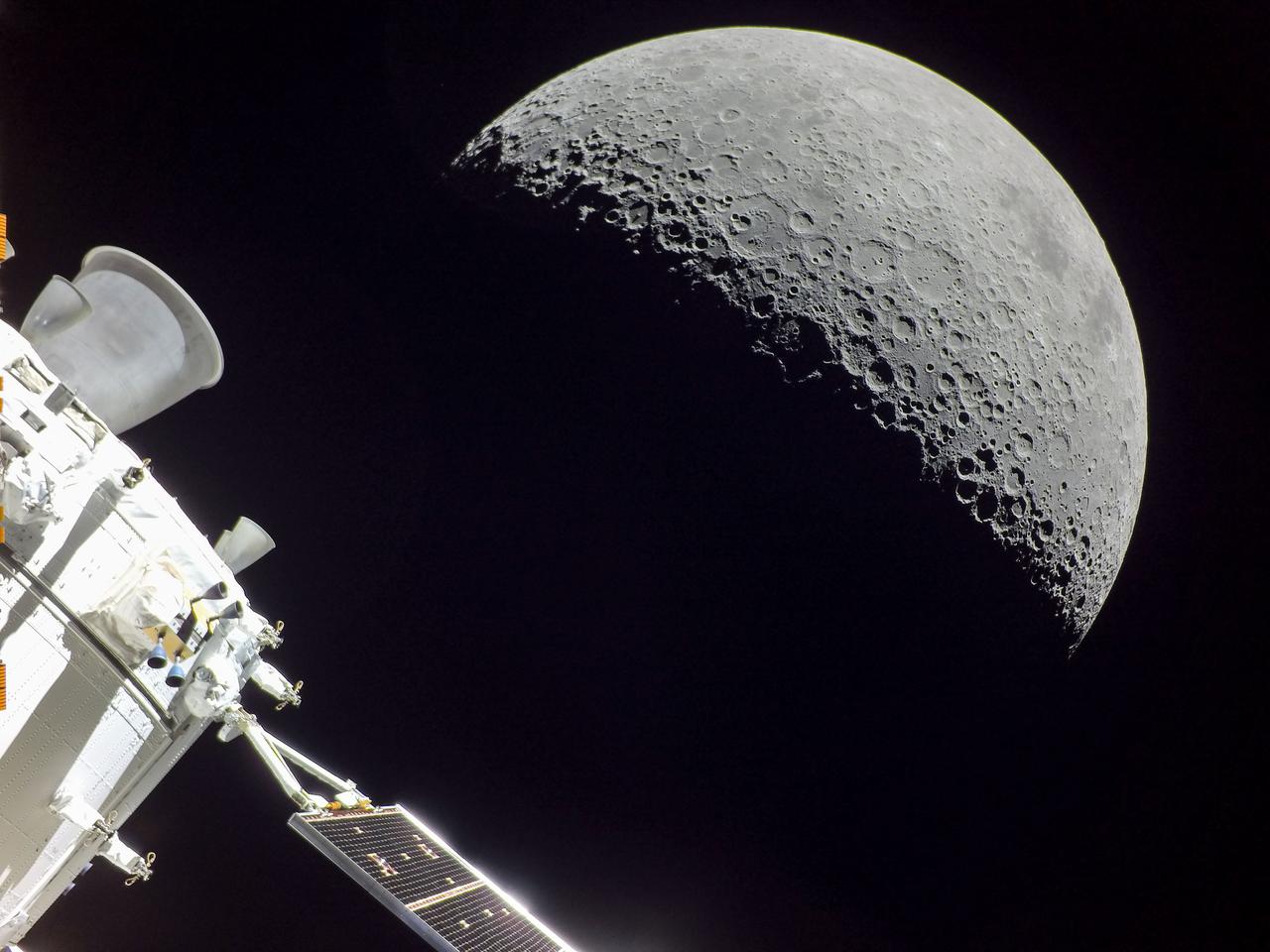
art001e002067 (Dec. 5, 2022) On flight day 20 of the Artemis I mission, Orion captured the Moon on the day of return powered flyby. The burn, which lasted 3 minutes, 27 seconds, committed the spacecraft to a Dec. 11 splashdown.
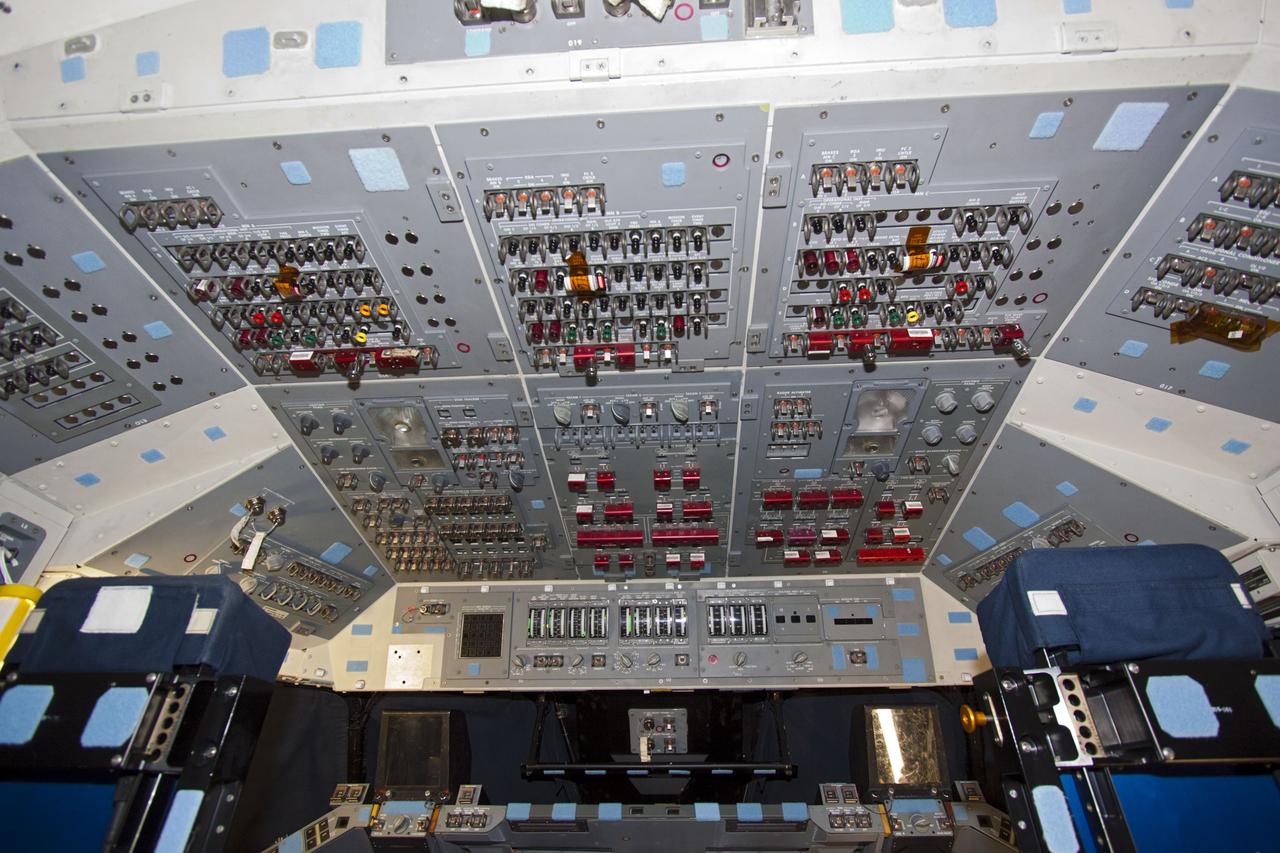
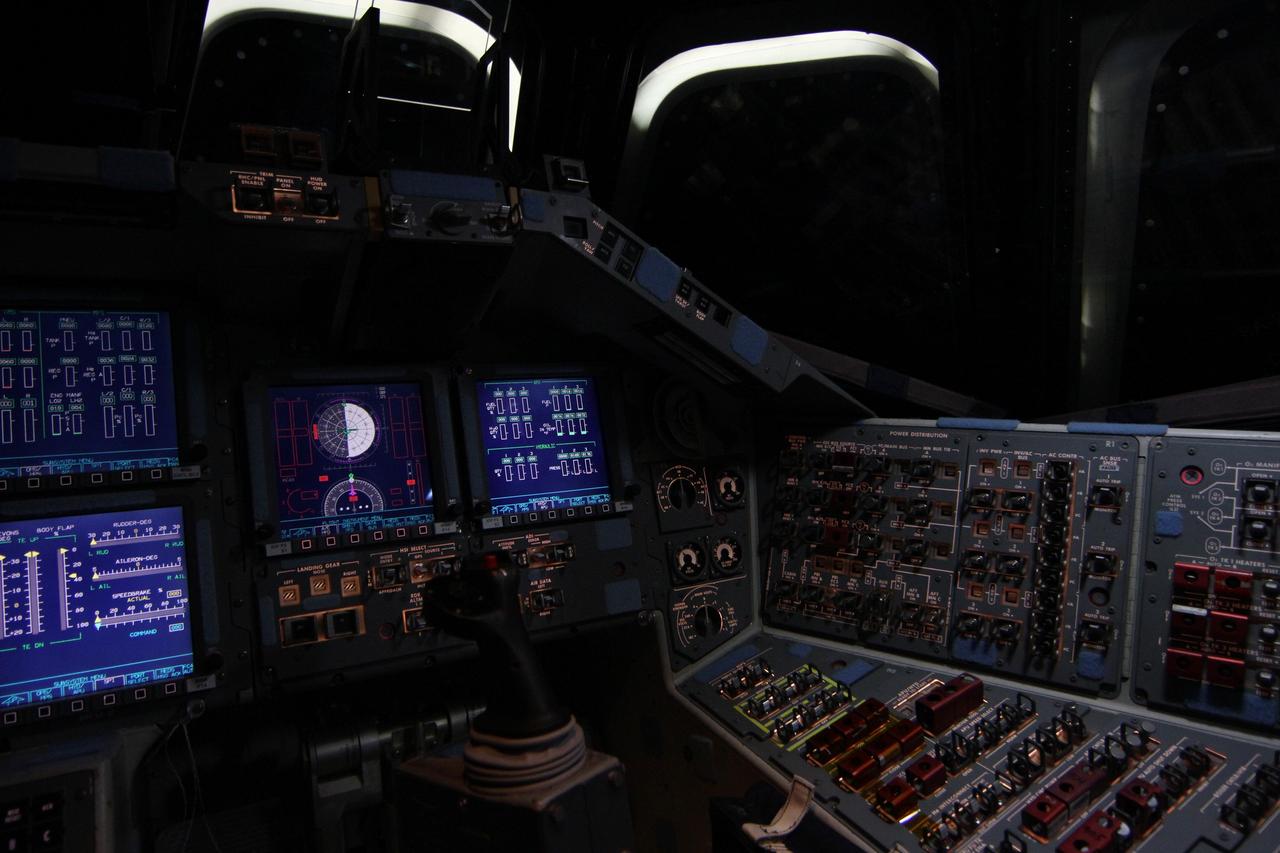
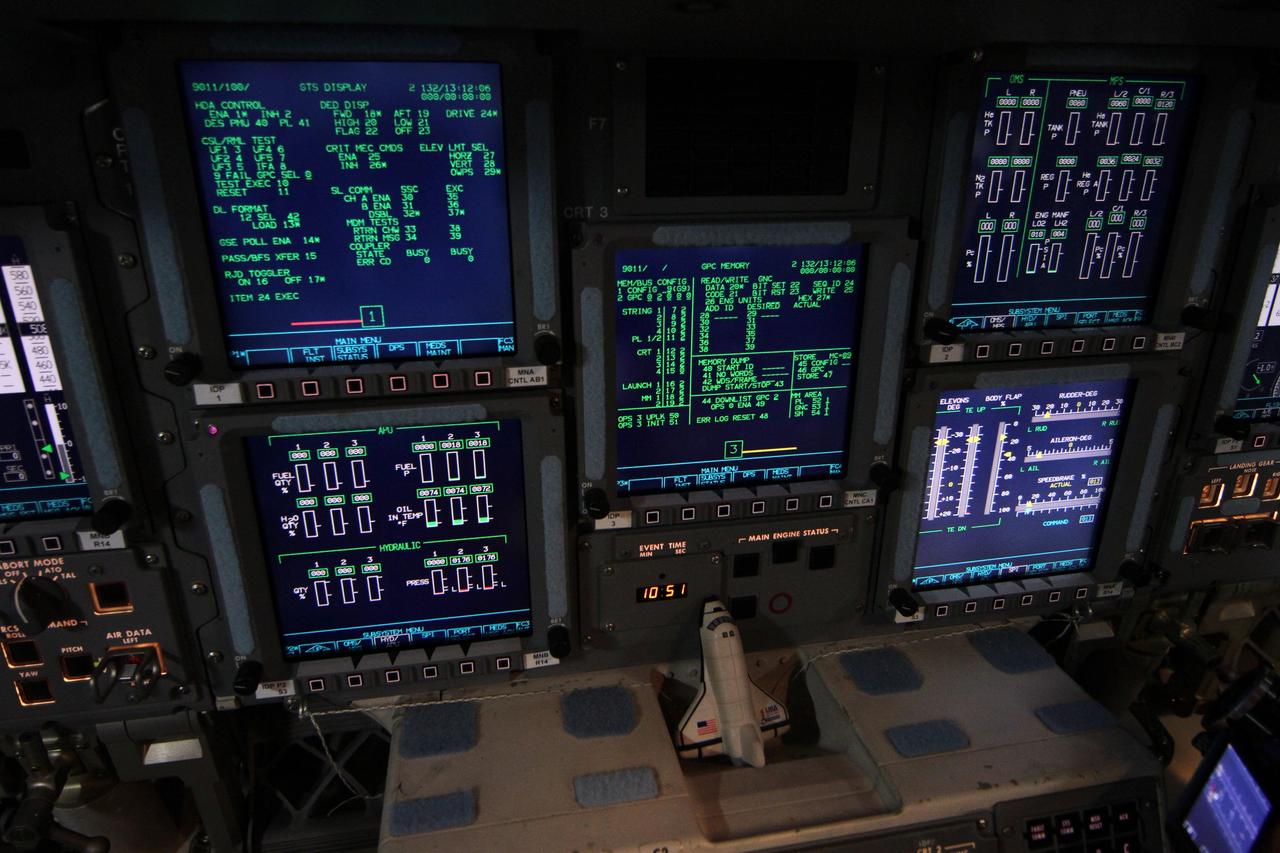
CAPE CANAVERAL, Fla. – In Orbiter Processing Facility-2 at NASA's Kennedy Space Center in Florida, a plethora of switches fills the control panel on the flight deck of space shuttle Atlantis. The flight deck is illuminated one last time as preparations are made for the shuttle's final power down during Space Shuttle Program transition and retirement activities. Atlantis is being prepared for public display in 2013 at the Kennedy Space Center Visitor Complex. For more information, visit http://www.nasa.gov/shuttle. Photo credit: NASA/Jim Grossmann
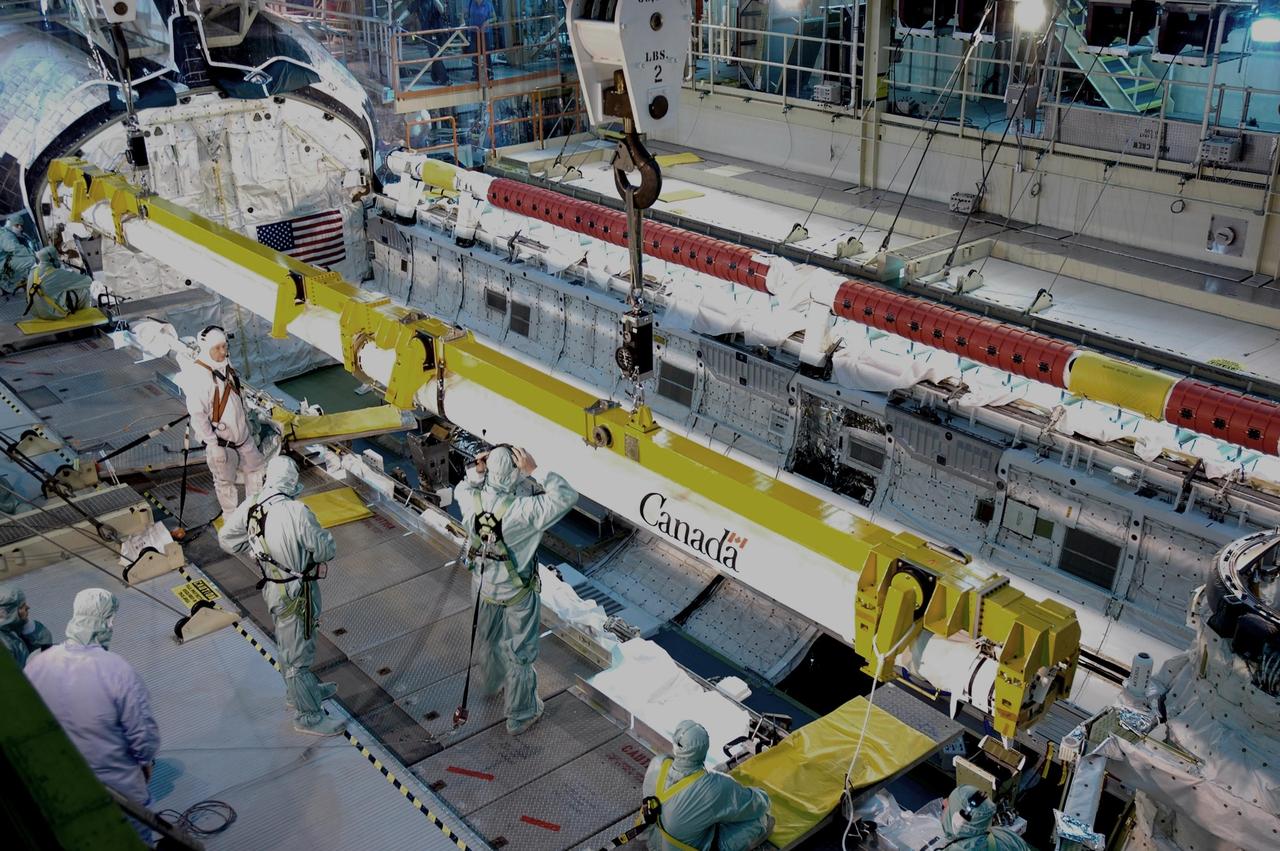
KENNEDY SPACE CENTER, FLA. - Suspended by cables in bay 3 of the Orbiter Processing Facility, the orbiter boom sensor system is lowered toward its place in Discovery's payload bay. It was removed last week in order to inspect the power system, which is routine after every flight. Discovery returned from mission STS-121 in late July, and is now being processed for mission STS-116, scheduled to launch in mid-December. Photo credit: NASA/Jim Grossmann
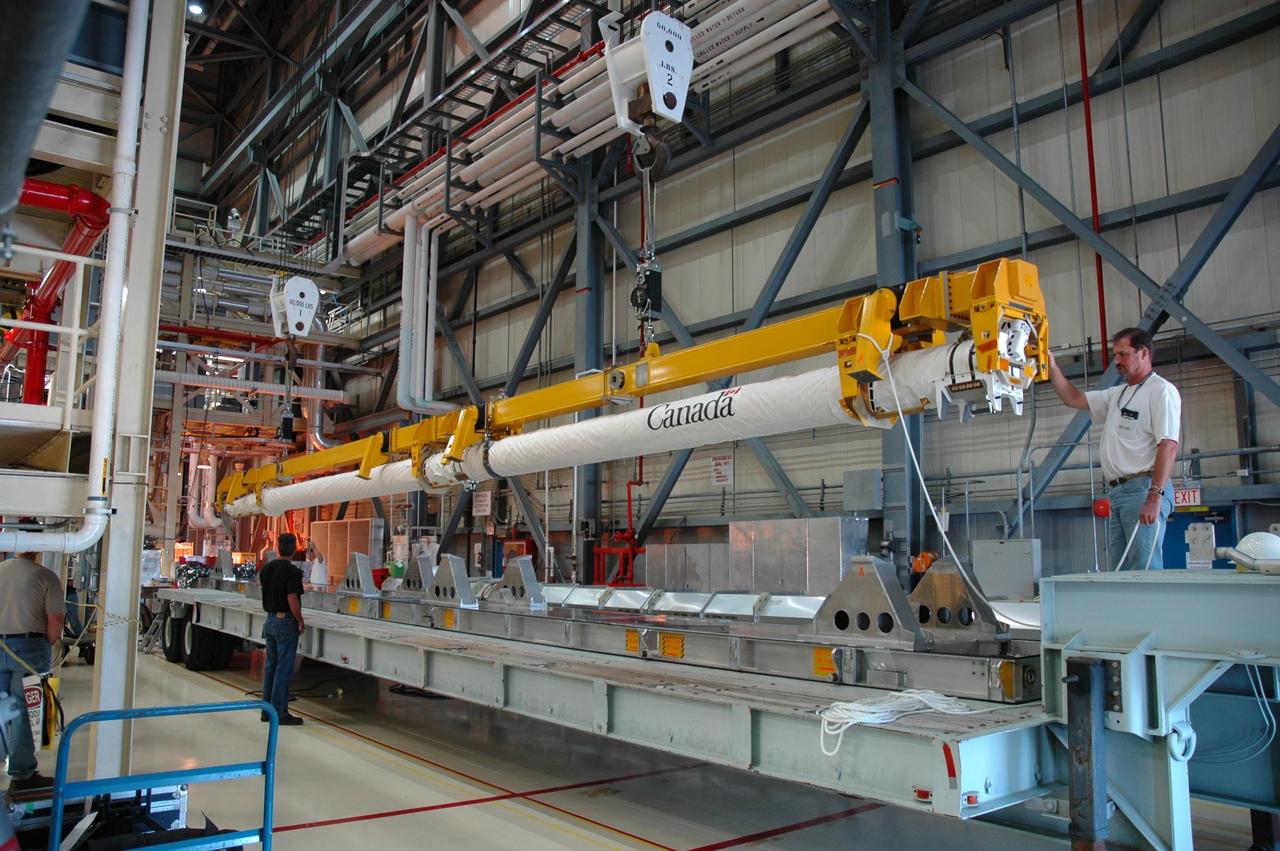
KENNEDY SPACE CENTER, FLA. - In bay 3 of the Orbiter Processing Facility, the orbiter boom sensor system (OBSS) is lifted off a stand. The boom will be reinstalled in Discovery's payload bay. It was removed last week in order to inspect the power system, which is routine after every flight. Discovery returned from mission STS-121 in late July, and is now being processed for mission STS-116, scheduled to launch in mid-December. Photo credit: NASA/Jim Grossmann
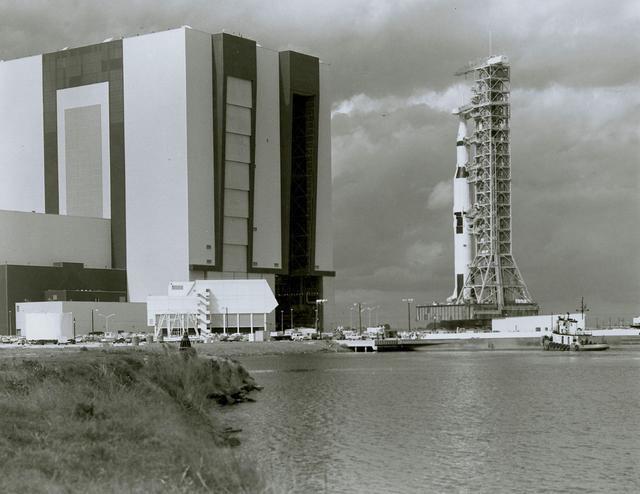
Apollo 6, the second and last of the unmarned Saturn V test flights, is slowly transported past the Vehicle Assembly Building on the way to launch pad 39-A. The towering 363-foot Saturn V was a multi-stage, multi-engine launch vehicle standing taller than the Statue of Liberty. Altogether, the Saturn V engines produced as much power as 85 Hoover Dams.
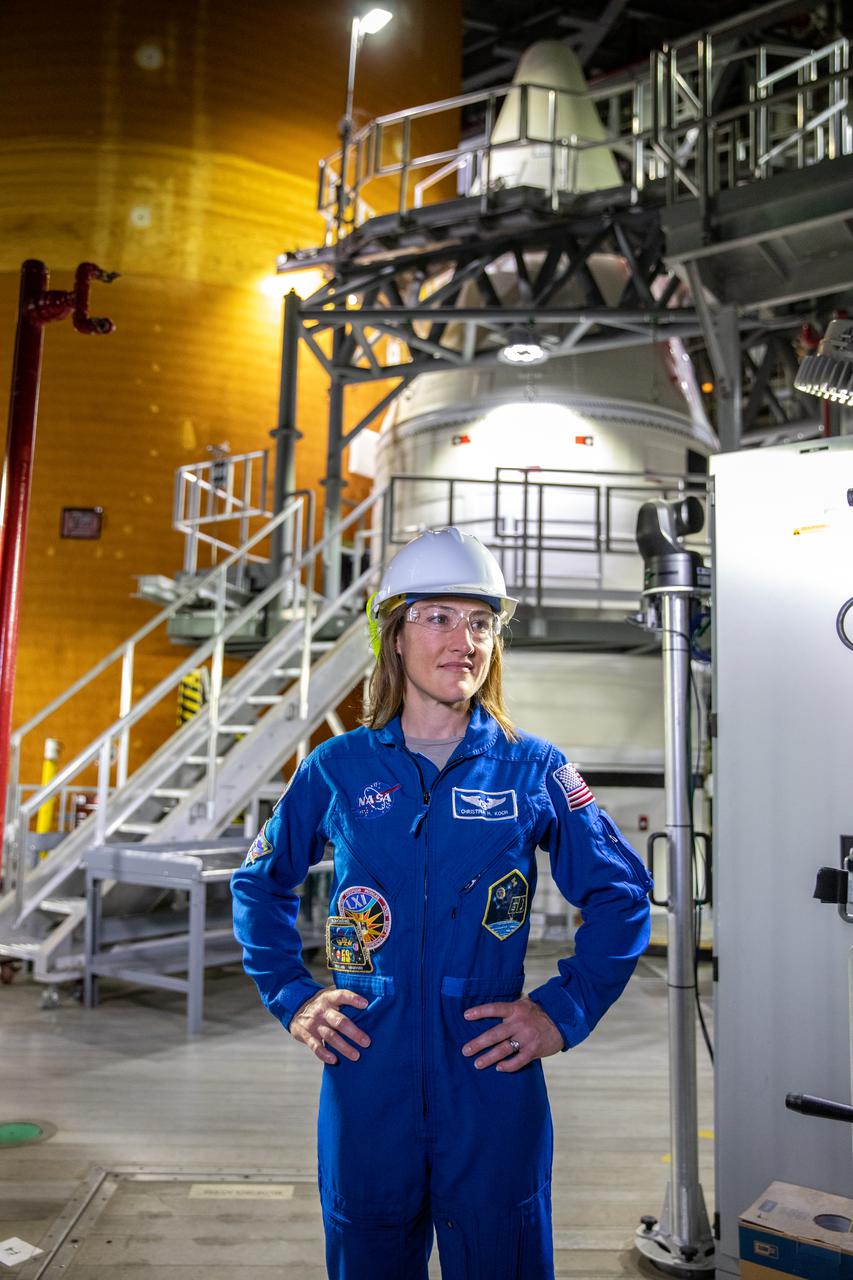
NASA astronaut Christina Koch stands inside Kennedy Space Center’s Vehicle Assembly Building on July 14, 2021, in front of the agency’s Space Launch System (SLS) rocket that will power the Orion spacecraft on the Artemis I mission later this year. Artemis I will be an uncrewed flight test of Orion and SLS as an integrated system ahead of missions with astronauts. Under Artemis, NASA aims to land the first woman and first person of color on the Moon and establish a long-lasting presence on and around the Moon while preparing for human missions to Mars.
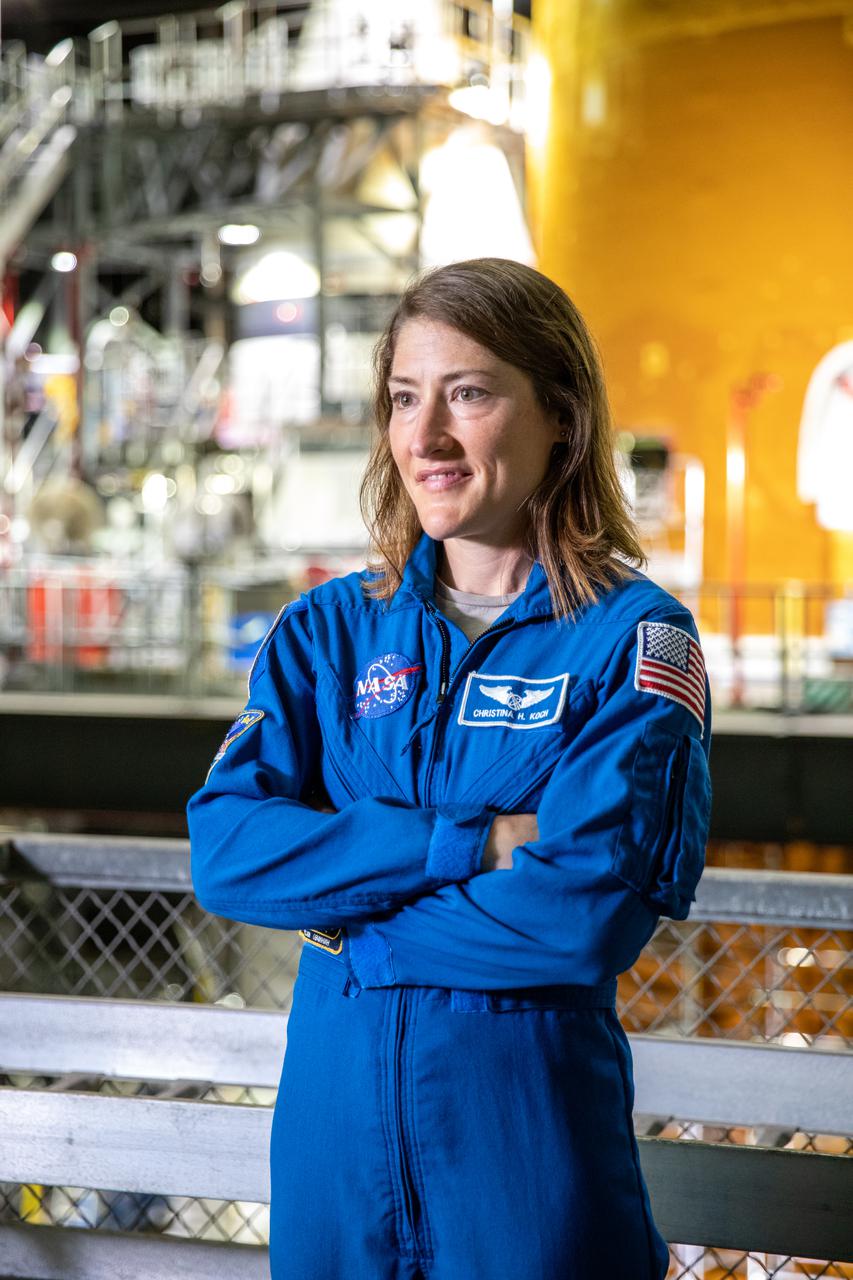
NASA astronaut Christina Koch stands inside Kennedy Space Center’s Vehicle Assembly Building on July 14, 2021, in front of the agency’s Space Launch System (SLS) rocket that will power the Orion spacecraft on the Artemis I mission later this year. Artemis I will be an uncrewed flight test of Orion and SLS as an integrated system ahead of missions with astronauts. Under Artemis, NASA aims to land the first woman and first person of color on the Moon and establish a long-lasting presence on and around the Moon while preparing for human missions to Mars.
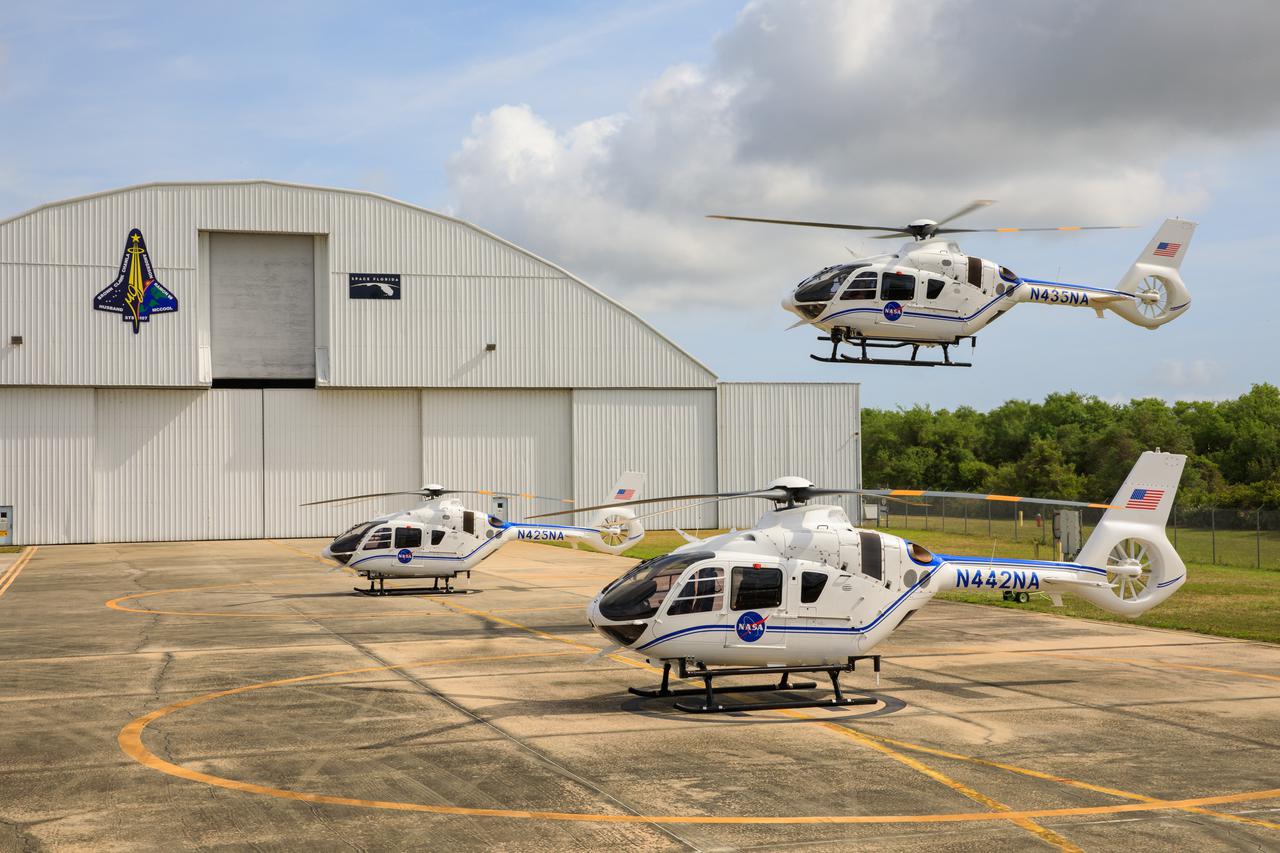
The third and final Airbus H135 helicopter touches down at the Launch and Landing Facility runway at NASA’s Kennedy Space Center in Florida on March 26, 2021, completing the upgraded fleet of aircraft used for security operations. The Airbus H135 helicopters replace the Bell Huey 2 aircraft that had been in service at Kennedy for the last 30 years. Maintained by the Flight Operations team, these new helicopters provide a number of technological and safety advantages over the Hueys, such as more lifting power, greater stability in the air, and expanded medical capabilities.
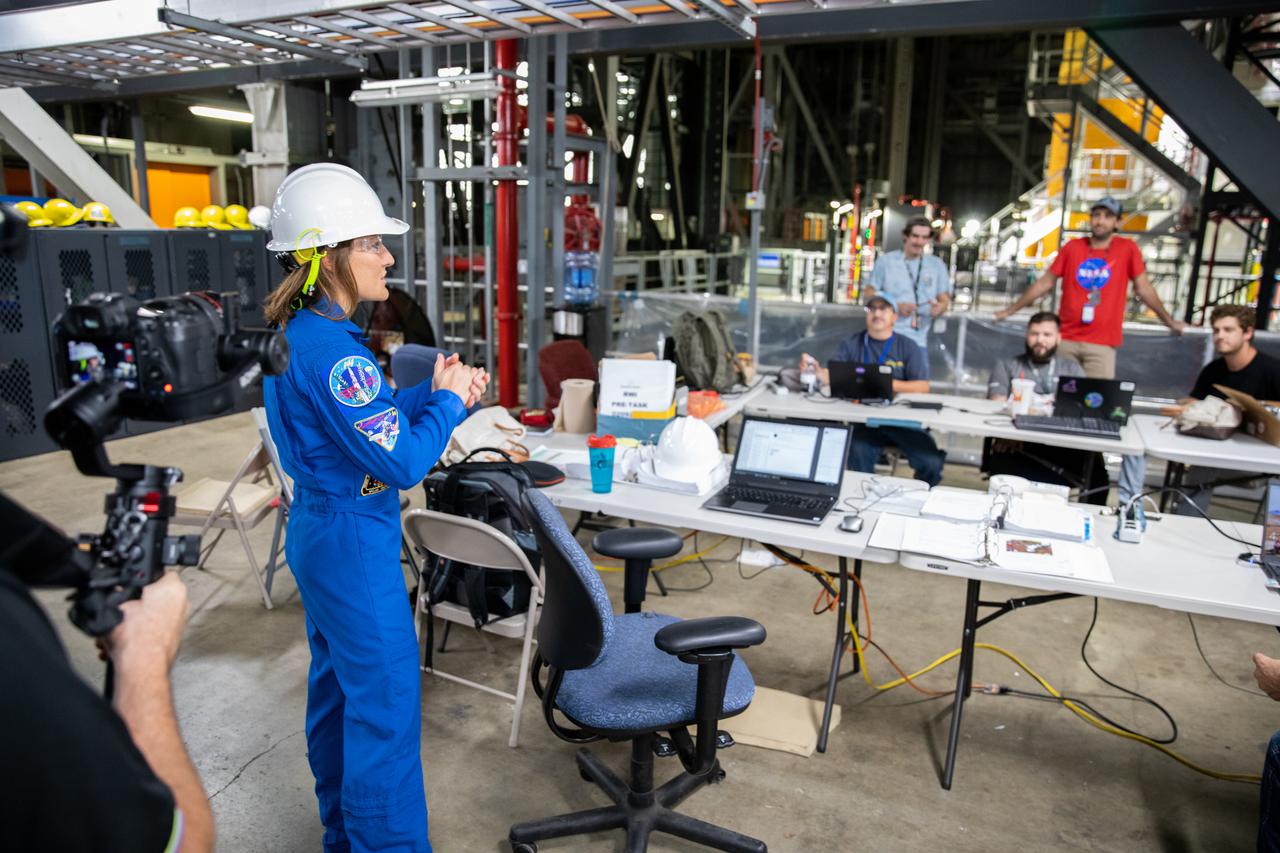
NASA astronaut Christina Koch stands inside Kennedy Space Center’s Vehicle Assembly Building on July 14, 2021, in front of the agency’s Space Launch System (SLS) rocket that will power the Orion spacecraft on the Artemis I mission later this year. Artemis I will be an uncrewed flight test of Orion and SLS as an integrated system ahead of missions with astronauts. Under Artemis, NASA aims to land the first woman and first person of color on the Moon and establish a long-lasting presence on and around the Moon while preparing for human missions to Mars.
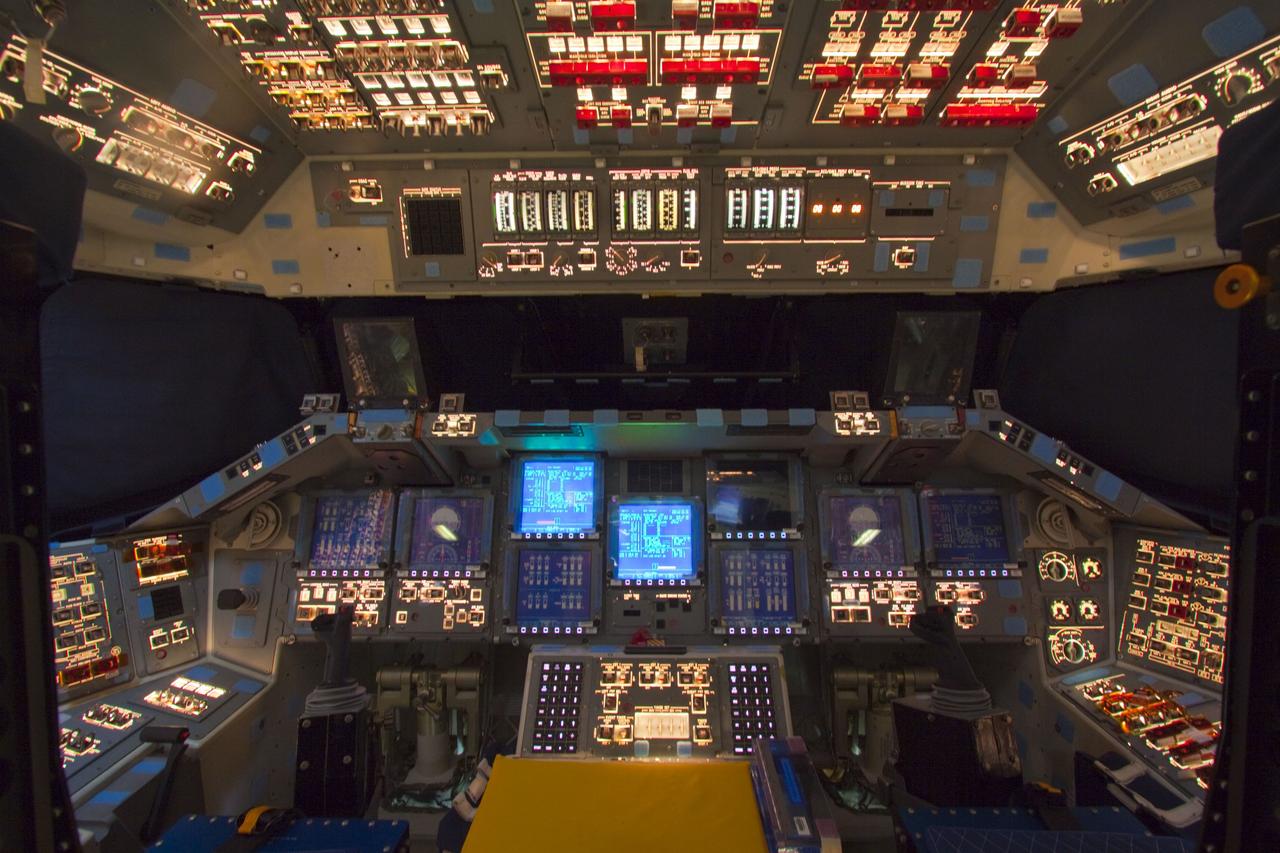
CAPE CANAVERAL, Fla. – In Orbiter Processing Facility-2 at NASA's Kennedy Space Center in Florida, the flight deck of space shuttle Atlantis is illuminated one last time during preparations to power down Atlantis during Space Shuttle Program transition and retirement activities. Atlantis is being prepared for public display in 2013 at the Kennedy Space Center Visitor Complex. For more information, visit http://www.nasa.gov/shuttle. Photo credit: NASA/Jim Grossmann
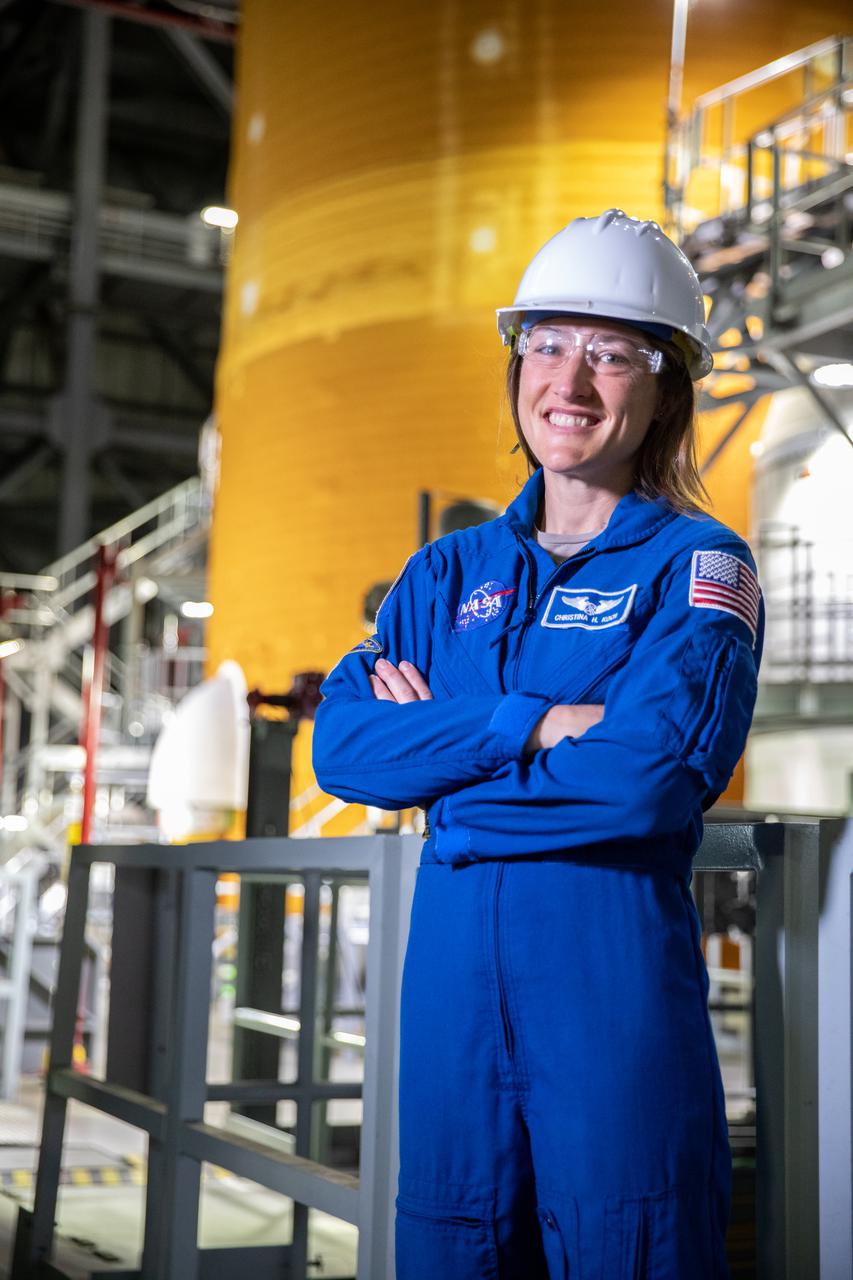
NASA astronaut Christina Koch stands inside Kennedy Space Center’s Vehicle Assembly Building on July 14, 2021, in front of the agency’s Space Launch System (SLS) rocket that will power the Orion spacecraft on the Artemis I mission later this year. Artemis I will be an uncrewed flight test of Orion and SLS as an integrated system ahead of missions with astronauts. Under Artemis, NASA aims to land the first woman and first person of color on the Moon and establish a long-lasting presence on and around the Moon while preparing for human missions to Mars.
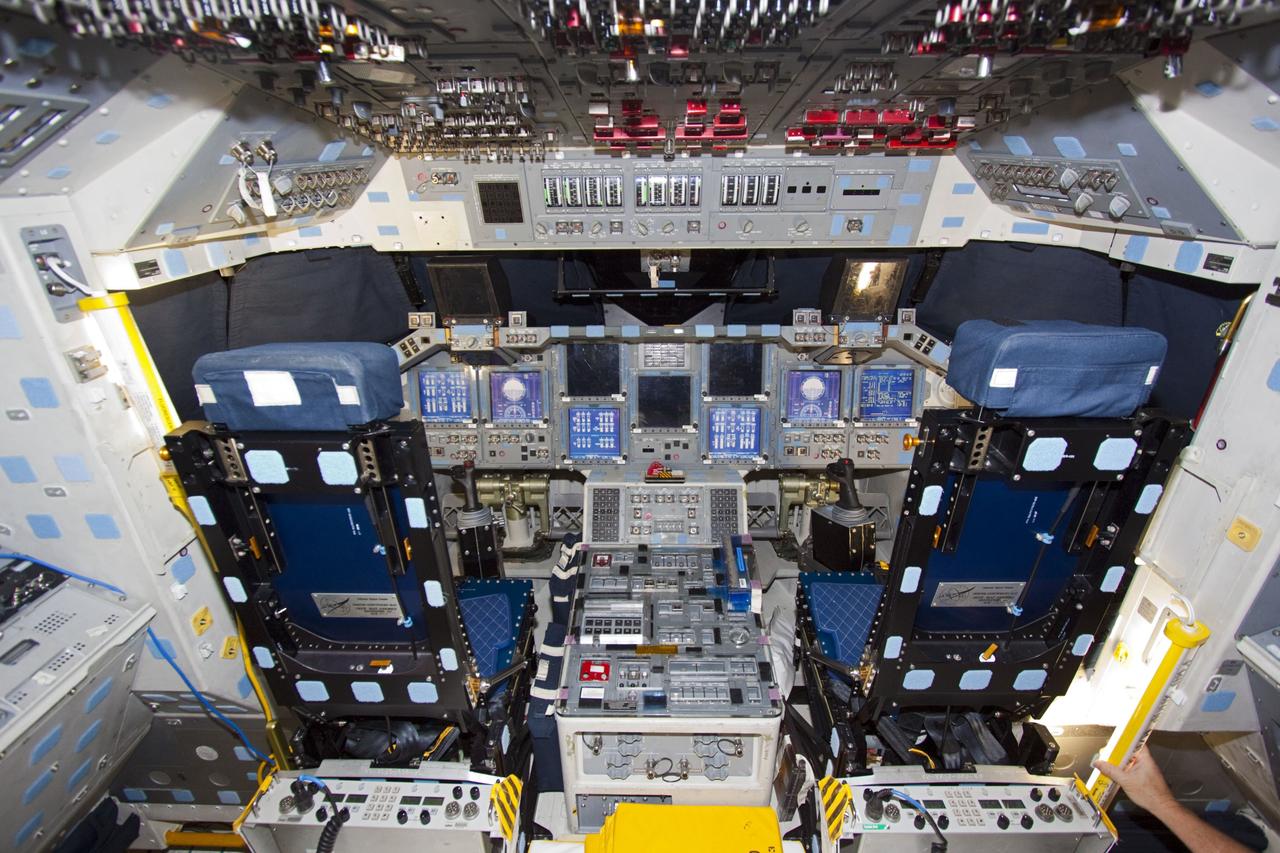
CAPE CANAVERAL, Fla. – In Orbiter Processing Facility-2 at NASA's Kennedy Space Center in Florida, the flight deck of space shuttle Atlantis is illuminated one last time as preparations are made for the shuttle's final power down during Space Shuttle Program transition and retirement activities. Atlantis is being prepared for public display in 2013 at the Kennedy Space Center Visitor Complex. For more information, visit http://www.nasa.gov/shuttle. Photo credit: NASA/Jim Grossmann
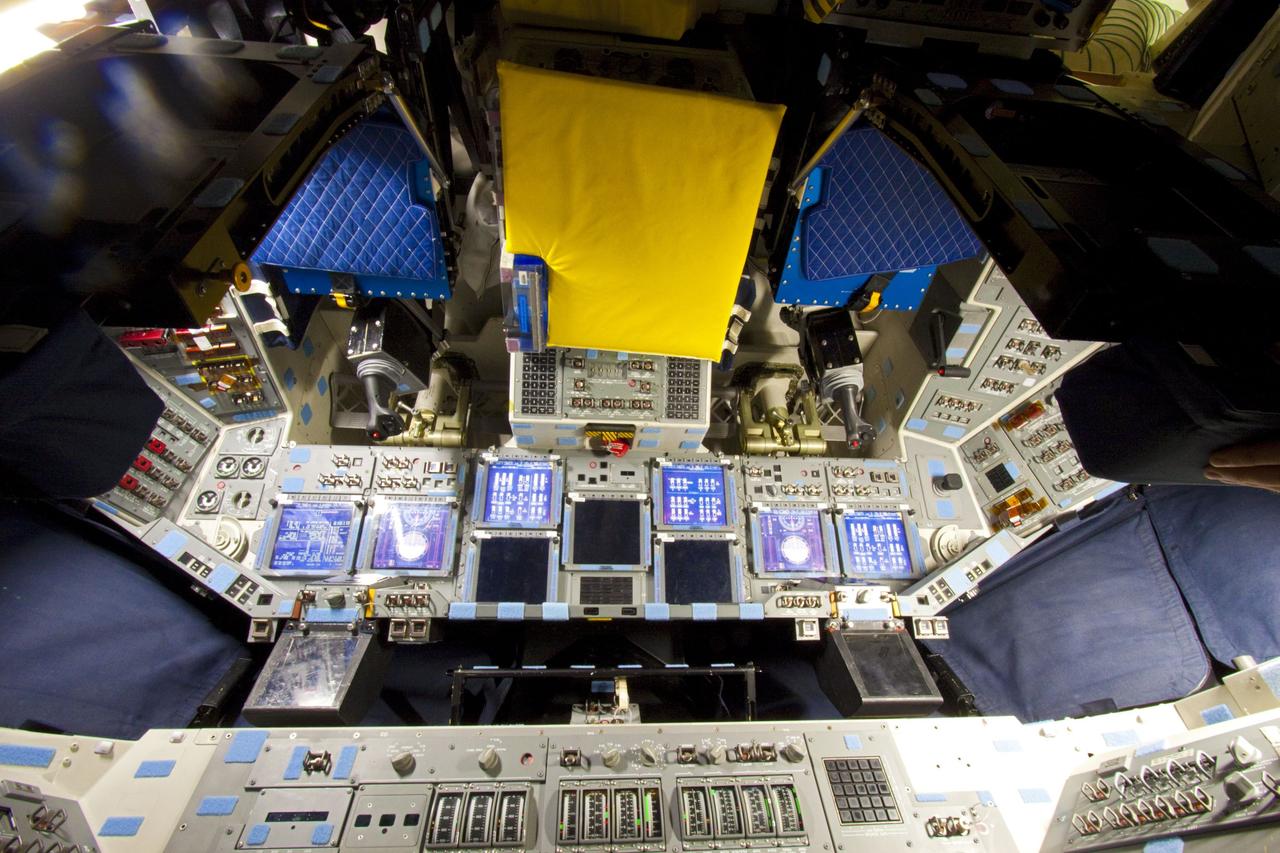
CAPE CANAVERAL, Fla. – In Orbiter Processing Facility-2 at NASA's Kennedy Space Center in Florida, the flight deck of space shuttle Atlantis is brightly lit one last time as preparations are made for the shuttle's final power down during Space Shuttle Program transition and retirement activities. Atlantis is being prepared for public display in 2013 at the Kennedy Space Center Visitor Complex. For more information, visit http://www.nasa.gov/shuttle. Photo credit: NASA/Jim Grossmann
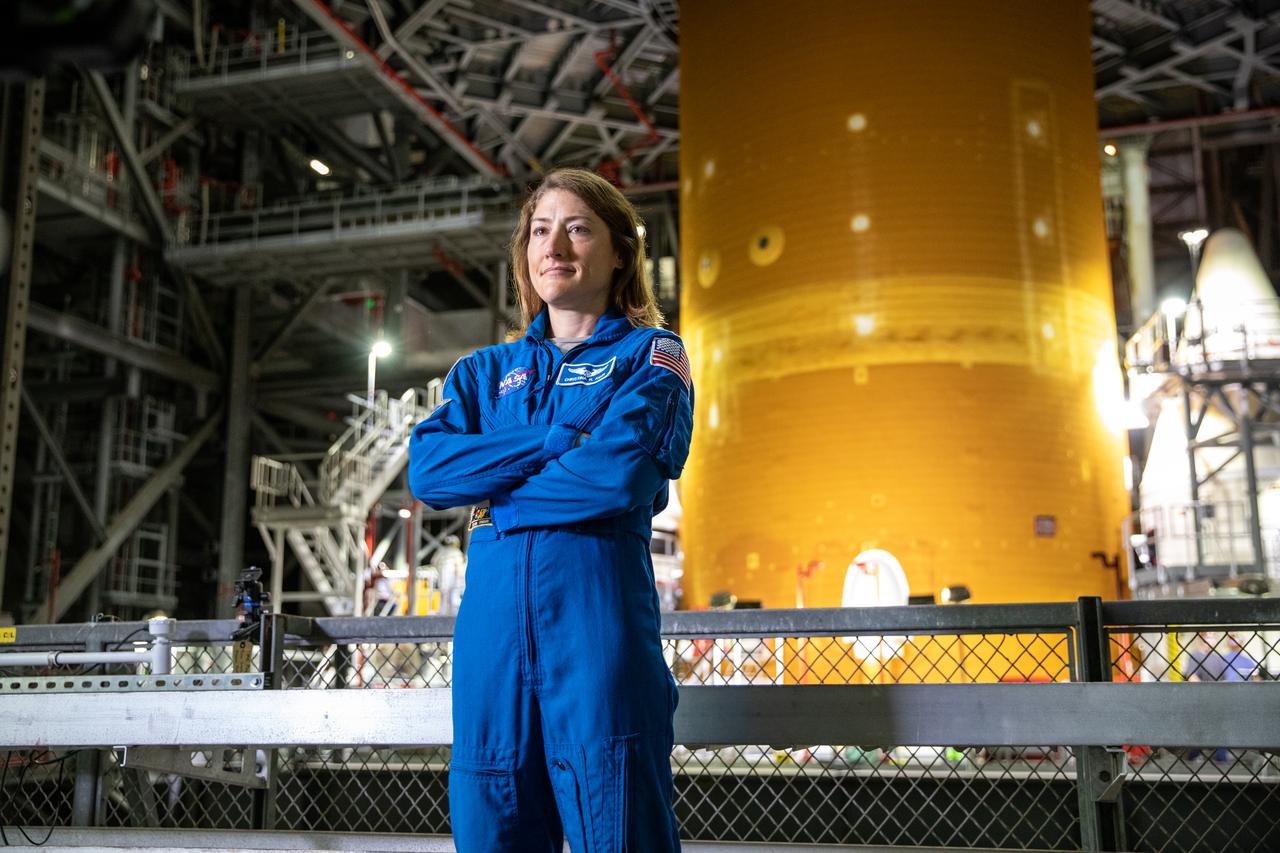
NASA astronaut Christina Koch stands inside Kennedy Space Center’s Vehicle Assembly Building on July 14, 2021, in front of the agency’s Space Launch System (SLS) rocket that will power the Orion spacecraft on the Artemis I mission later this year. Artemis I will be an uncrewed flight test of Orion and SLS as an integrated system ahead of missions with astronauts. Under Artemis, NASA aims to land the first woman and first person of color on the Moon and establish a long-lasting presence on and around the Moon while preparing for human missions to Mars.

CAPE CANAVERAL, Fla. – In Orbiter Processing Facility-2 at NASA's Kennedy Space Center in Florida, the flight deck of space shuttle Atlantis is illuminated one last time during preparations to power down the shuttle during Space Shuttle Program transition and retirement activities. Atlantis is being prepared for public display in 2013 at the Kennedy Space Center Visitor Complex. For more information, visit http://www.nasa.gov/shuttle. Photo credit: NASA/Jim Grossmann
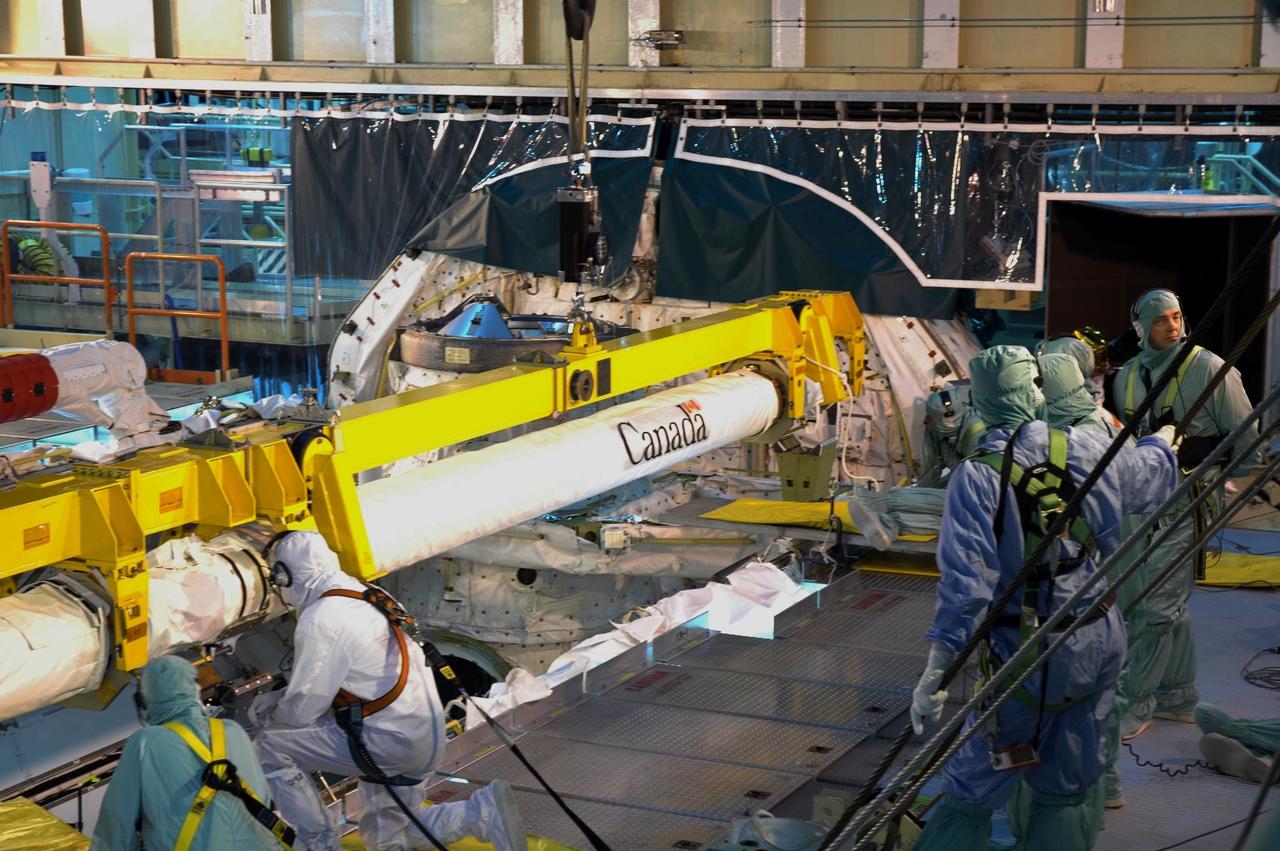
KENNEDY SPACE CENTER, FLA. - Workers in bay 3 of the Orbiter Processing Facility check the progress of the orbiter boom sensor system as it is lowered into place in Discovery's payload bay. It was removed last week in order to inspect the power system, which is routine after every flight. Discovery returned from mission STS-121 in late July, and is now being processed for mission STS-116, scheduled to launch in mid-December. Photo credit: NASA/Jim Grossmann
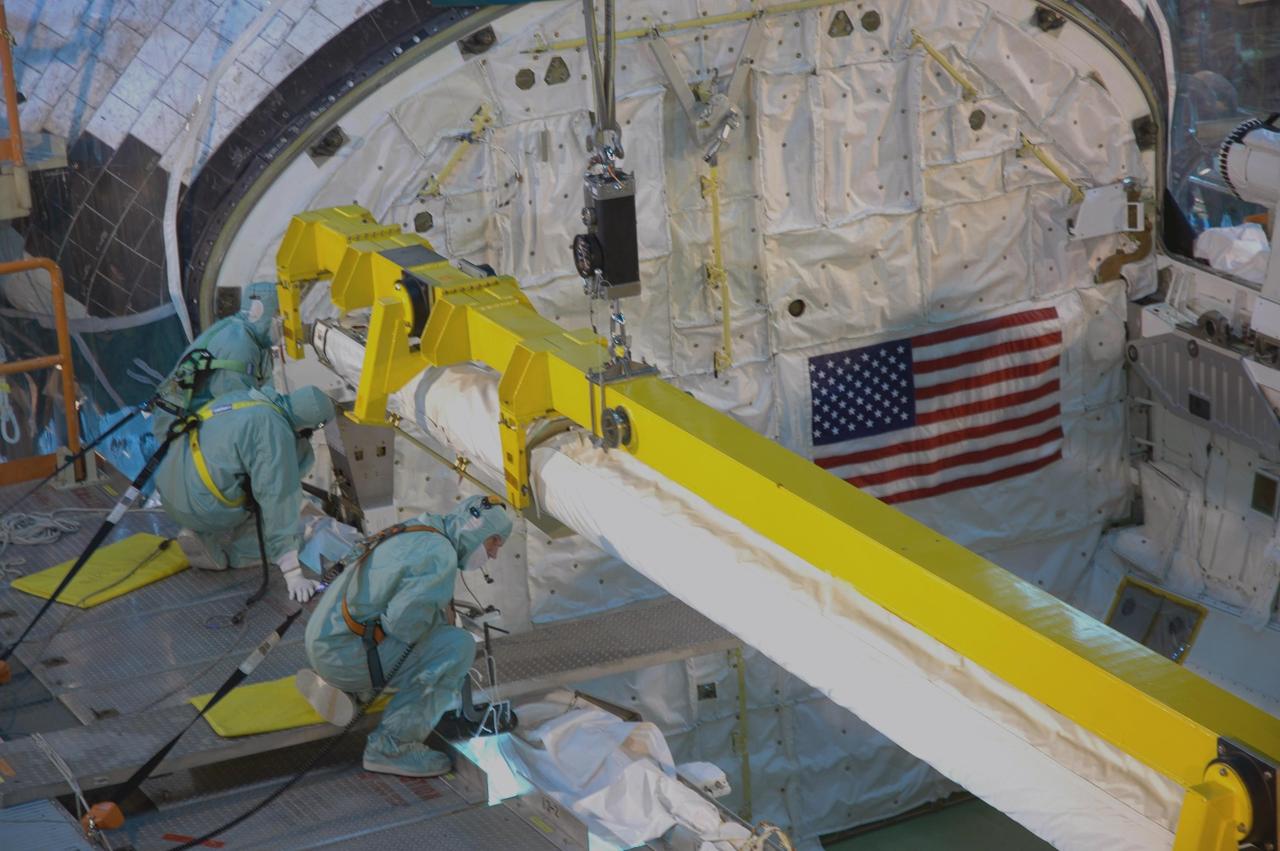
KENNEDY SPACE CENTER, FLA. - Workers in bay 3 of the Orbiter Processing Facility check the installation of the orbiter boom sensor system in Discovery's payload bay. The boom was removed last week in order to inspect the power system, which is routine after every flight. Discovery returned from mission STS-121 in late July, and is now being processed for mission STS-116, scheduled to launch in mid-December. Photo credit: NASA/Jim Grossmann
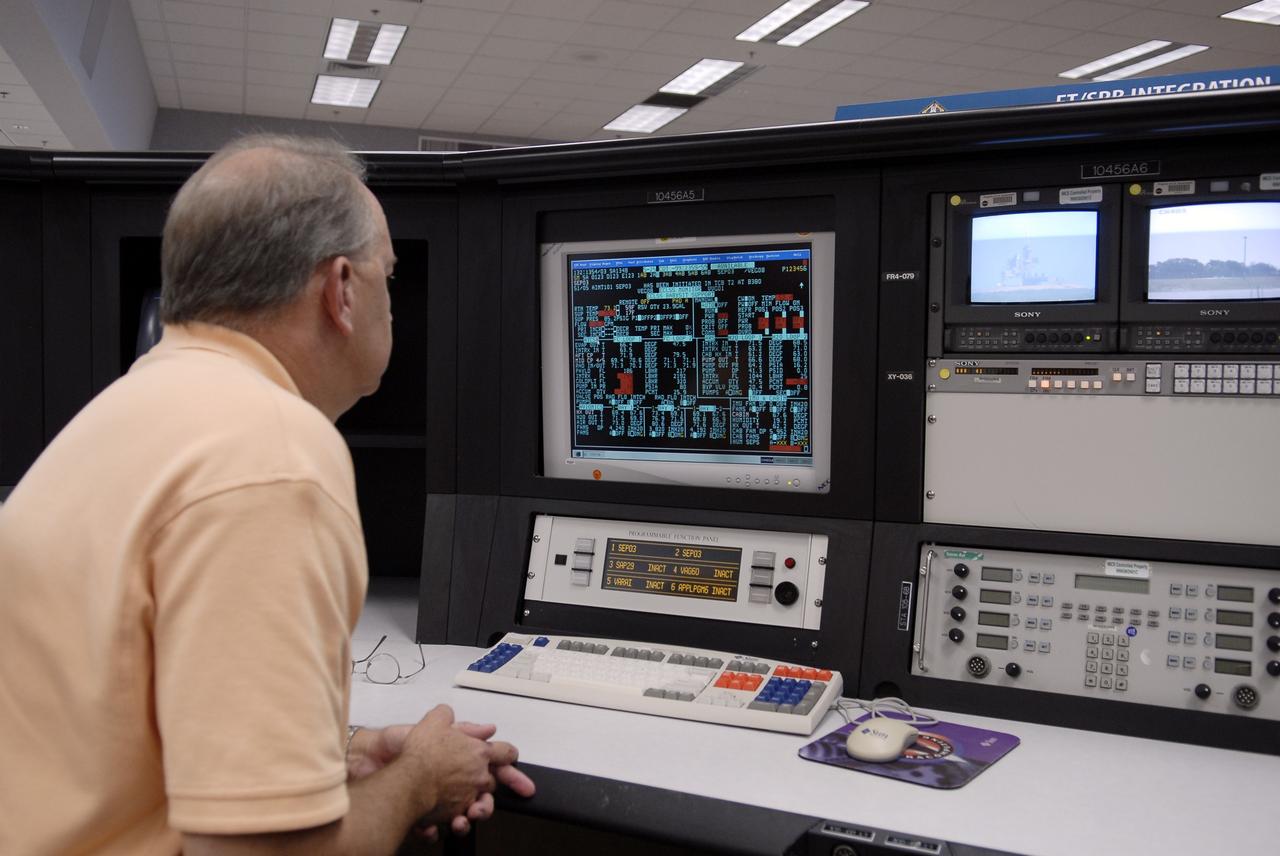
CAPE CANAVERAL, Fla. – Pat Simpkins, director of Engineering for NASA at Kennedy Space Center in Florida, monitors the final power down of space shuttle Endeavour from the Firing Room 4 Integration Console in the Launch Control Center. The Integration Console manages all orbiter systems including those needed for shuttle power up and launch. Endeavour’s power down is under way in in Orbiter Processing Facility-2. Endeavour is being prepared for public display at the California Science Center in Los Angeles. Its ferry flight to California is targeted for mid-September. Endeavour was the last space shuttle added to NASA’s orbiter fleet. Over the course of its 19-year career, Endeavour spent 299 days in space during 25 missions. For more information, visit http://www.nasa.gov/transition. Photo credit: NASA/Tim Jacobs
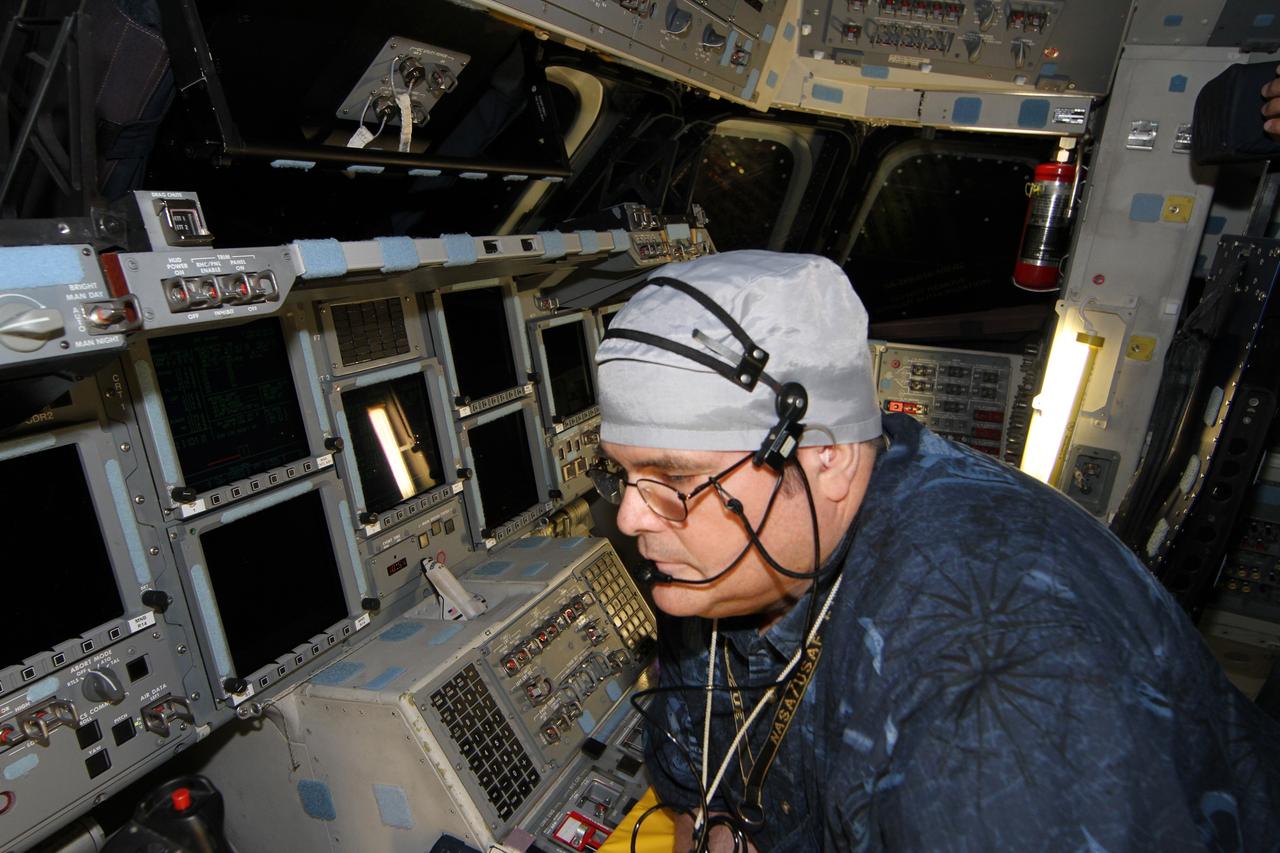
CAPE CANAVERAL, Fla. – In Orbiter Processing Facility-2 at NASA’s Kennedy Space Center in Florida, United Space Alliance spacecraft operator Bill Powers monitors the consoles on space shuttle Endeavour’s flight deck as operations to power down the shuttle for the final time get under way. Endeavour is being prepared for public display at the California Science Center in Los Angeles. Its ferry flight to California is targeted for mid-September. Endeavour was the last space shuttle added to NASA’s orbiter fleet. Over the course of its 19-year career, Endeavour spent 299 days in space during 25 missions. For more information, visit http://www.nasa.gov/transition. Photo credit: NASA/Ben Smegelsky
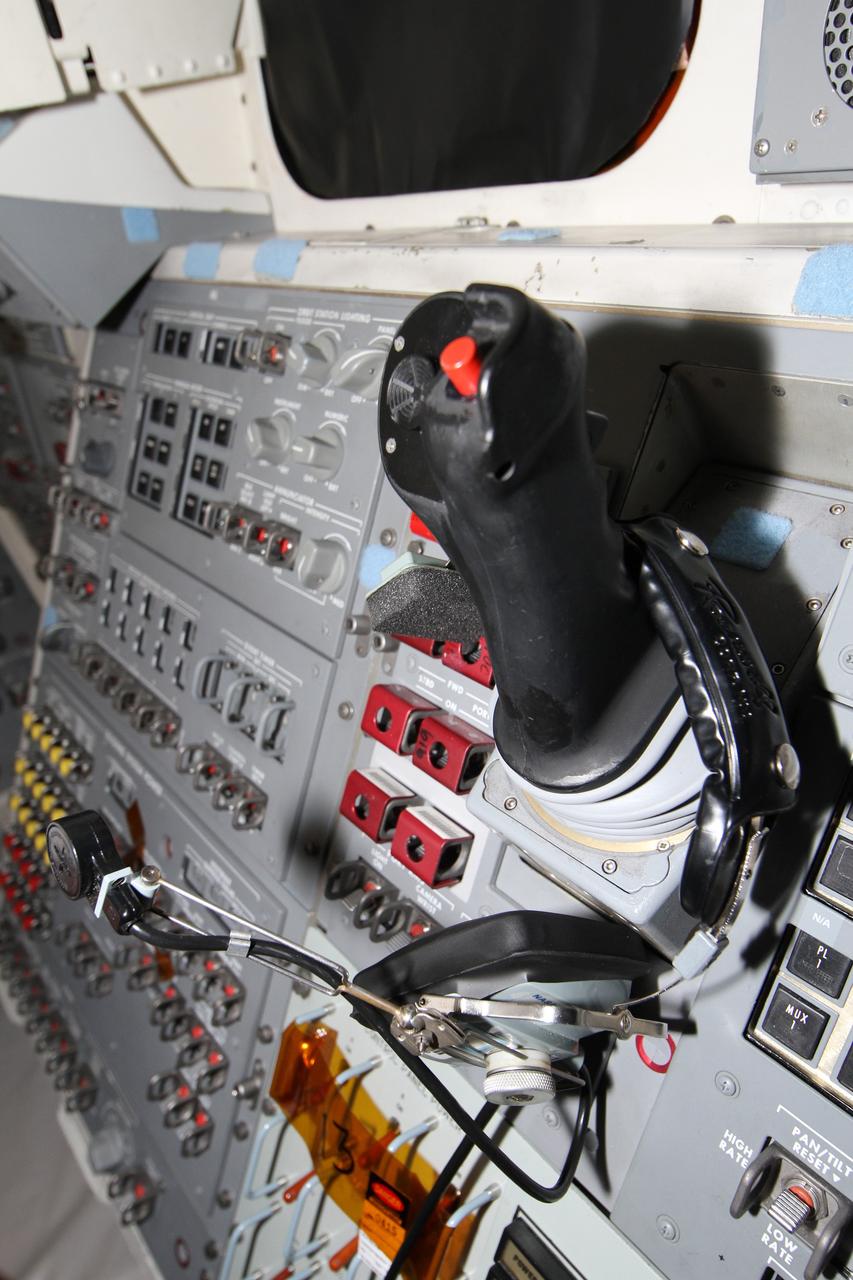
CAPE CANAVERAL, Fla. – Communication no longer required between Orbiter Processing Facility-2 and the Launch Control Center at NASA’s Kennedy Space Center in Florida, a headset is left on a console on space shuttle Endeavour’s flight deck after the shuttle is powered down for the final time. Endeavour is being prepared for public display at the California Science Center in Los Angeles. Its ferry flight to California is targeted for mid-September. Endeavour was the last space shuttle added to NASA’s orbiter fleet. Over the course of its 19-year career, Endeavour spent 299 days in space during 25 missions. For more information, visit http://www.nasa.gov/transition. Photo credit: NASA/Ben Smegelsky
CAPE CANAVERAL, Fla. – In Orbiter Processing Facility-2 at NASA’s Kennedy Space Center in Florida, the consoles on space shuttle Endeavour’s flight deck are illuminated for the final time during operations to power down the shuttle. Endeavour is being prepared for public display at the California Science Center in Los Angeles. Its ferry flight to California is targeted for mid-September. Endeavour was the last space shuttle added to NASA’s orbiter fleet. Over the course of its 19-year career, Endeavour spent 299 days in space during 25 missions. For more information, visit http://www.nasa.gov/transition. Photo credit: NASA/Ben Smegelsky
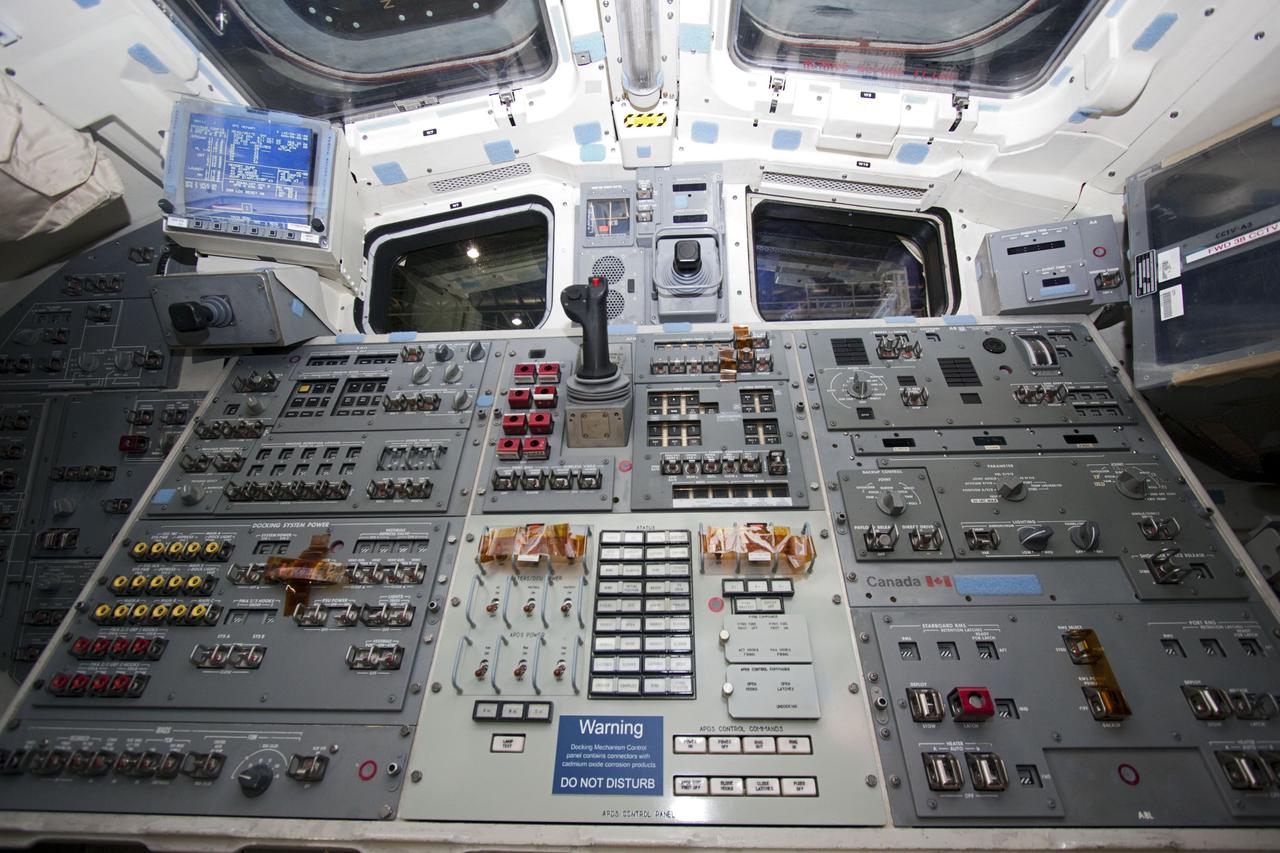
CAPE CANAVERAL, Fla. – In Orbiter Processing Facility-2 at NASA's Kennedy Space Center in Florida, the controller used during docking to the airlock of space shuttle Atlantis stands among the switches filling the control panel on the flight deck. The flight deck is illuminated one last time as preparations are made for the shuttle's final power down during Space Shuttle Program transition and retirement activities. Atlantis is being prepared for public display in 2013 at the Kennedy Space Center Visitor Complex. For more information, visit http://www.nasa.gov/shuttle. Photo credit: NASA/Jim Grossmann
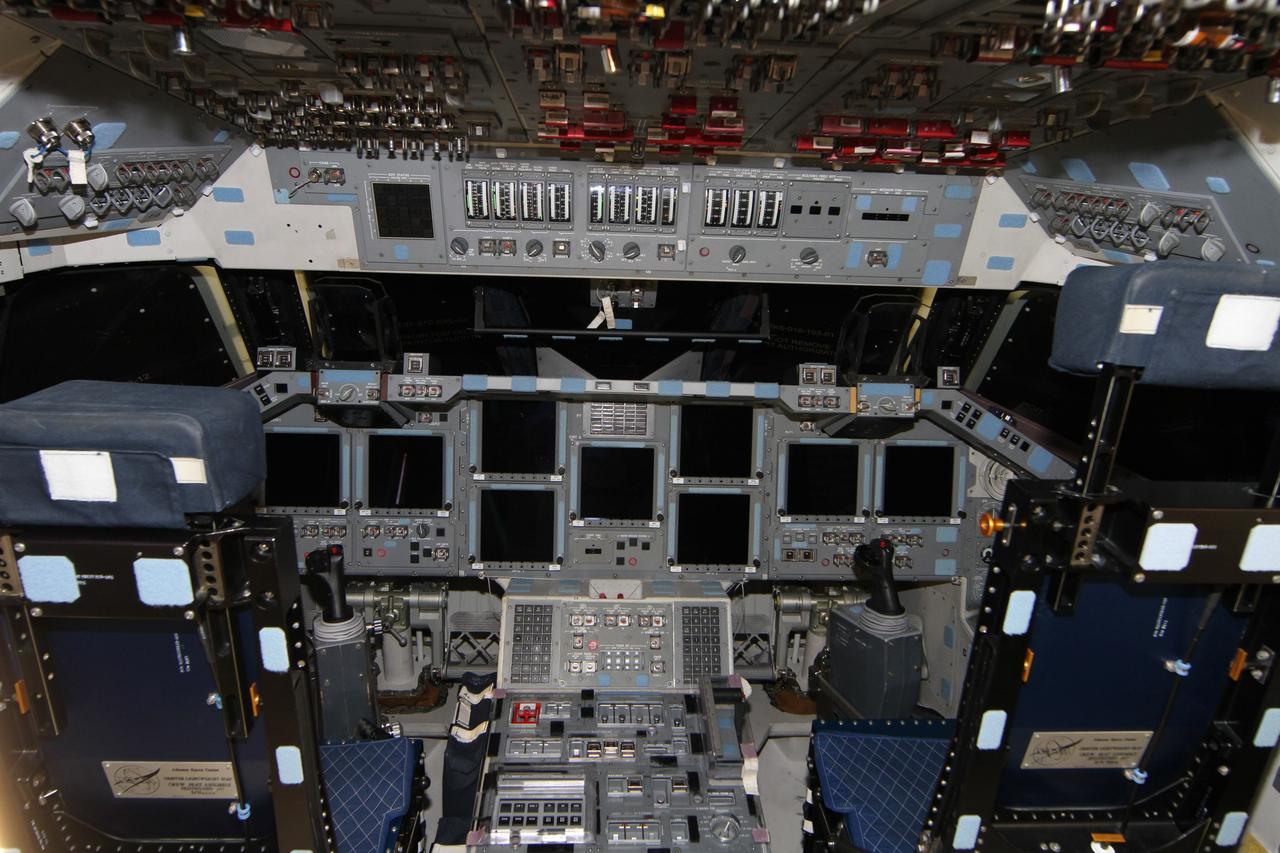
CAPE CANAVERAL, Fla. – In Orbiter Processing Facility-2 at NASA’s Kennedy Space Center in Florida, the consoles on space shuttle Endeavour’s flight deck have gone dark after the shuttle is powered down for the final time. Endeavour is being prepared for public display at the California Science Center in Los Angeles. Its ferry flight to California is targeted for mid-September. Endeavour was the last space shuttle added to NASA’s orbiter fleet. Over the course of its 19-year career, Endeavour spent 299 days in space during 25 missions. For more information, visit http://www.nasa.gov/transition. Photo credit: NASA/Ben Smegelsky
CAPE CANAVERAL, Fla. – In Orbiter Processing Facility-2 at NASA’s Kennedy Space Center in Florida, the consoles on space shuttle Endeavour’s flight deck are illuminated for the final time during operations to power down the shuttle. Endeavour is being prepared for public display at the California Science Center in Los Angeles. Its ferry flight to California is targeted for mid-September. Endeavour was the last space shuttle added to NASA’s orbiter fleet. Over the course of its 19-year career, Endeavour spent 299 days in space during 25 missions. For more information, visit http://www.nasa.gov/transition. Photo credit: NASA/Ben Smegelsky
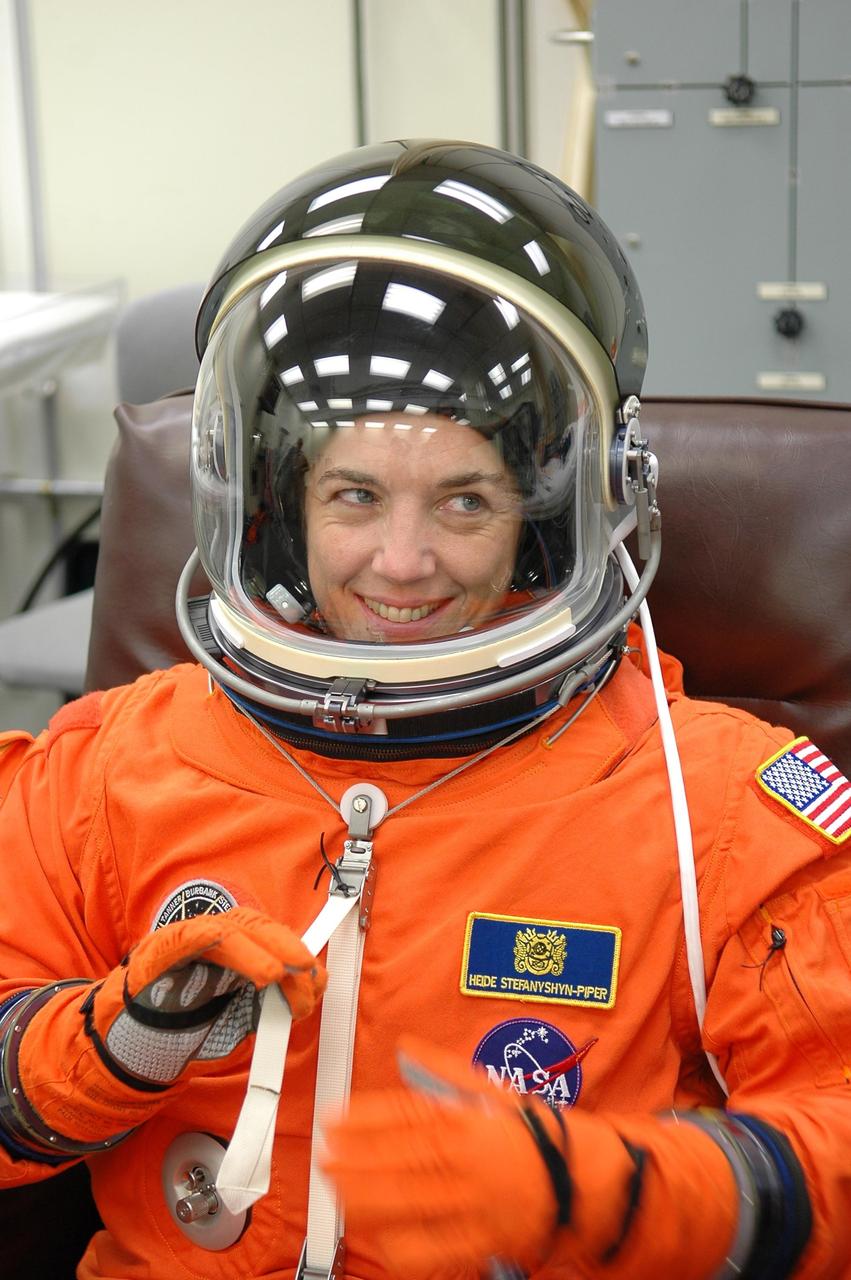
KENNEDY SPACE CENTER, FLA. - STS-115 Mission Specialist Heidemarie Stefanyshyn-Piper gives one last tug on the strap of her launch suit. Piper is making her first flight on a shuttle. She and other crew members are checking their launch suits and apparatus before the launch on Aug. 27. Mission STS-115 is scheduled to lift off about 4:30 p.m. Aug. 27 on Space Shuttle Atlantis. The crew will deliver and install the P3/P4 segment to the port side of the integrated truss system on the International Space Station. The truss includes a new set of photovoltaic solar arrays. When unfurled to their full length of 240 feet, the arrays will provide additional power for the station in preparation for the delivery of international science modules over the next two years. The mission is expected to last 11 days and includes three scheduled spacewalks. Photo credit: NASA/Kim Shiflett
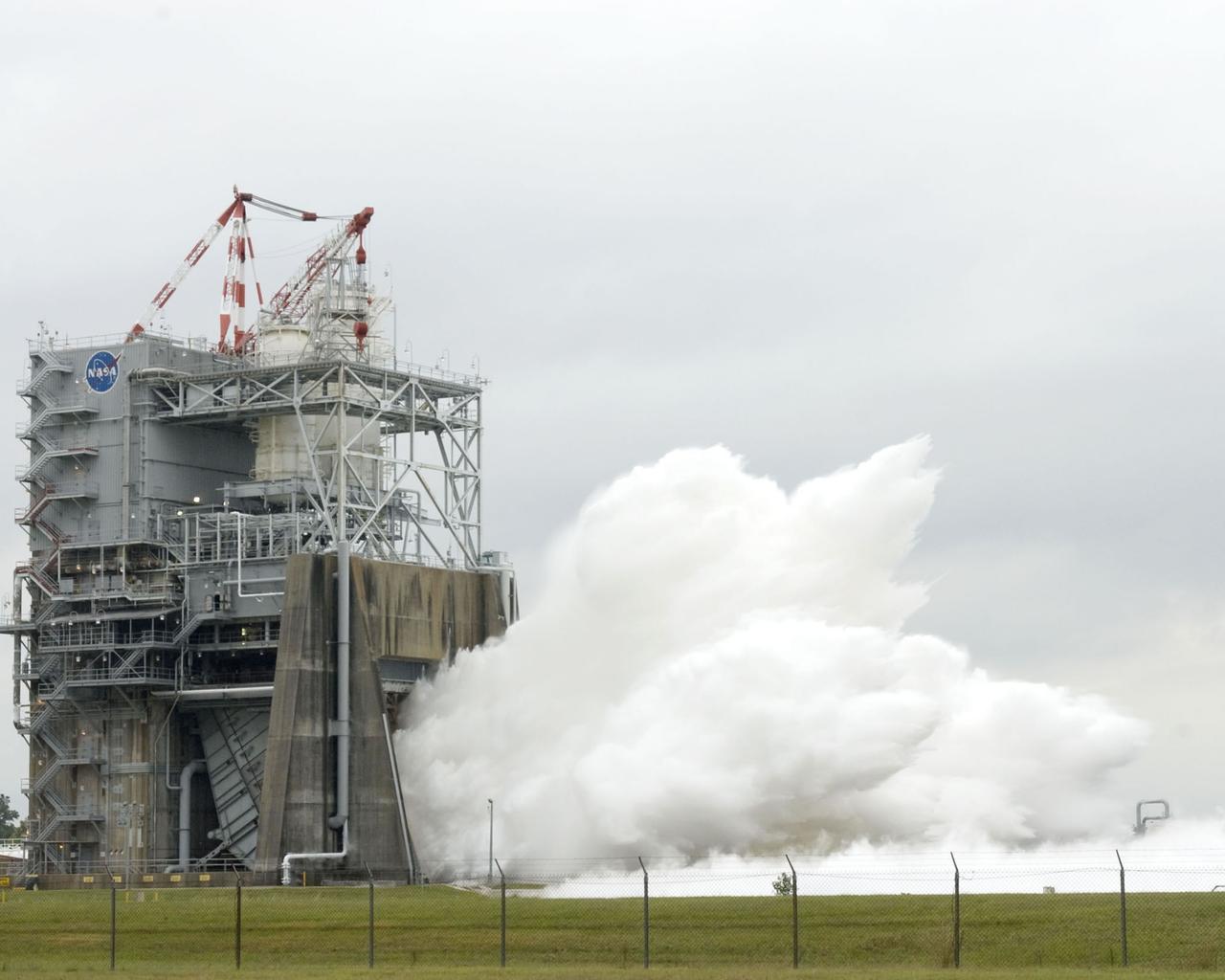
Steam blasts out of the A-2 Test Stand at Stennis Space Center on Oct. 22 as engineers begin a certification test on engine 2061, the last space shuttle main flight engine scheduled to be built. Since 1975, Stennis has tested every space shuttle main engine used in the program - about 50 engines in all. Those engines have powered more than 120 shuttle missions - and no mission has failed as a result of engine malfunction. For the remainder of 2008 and throughout 2009, Stennis will continue testing of various space shuttle main engine components.
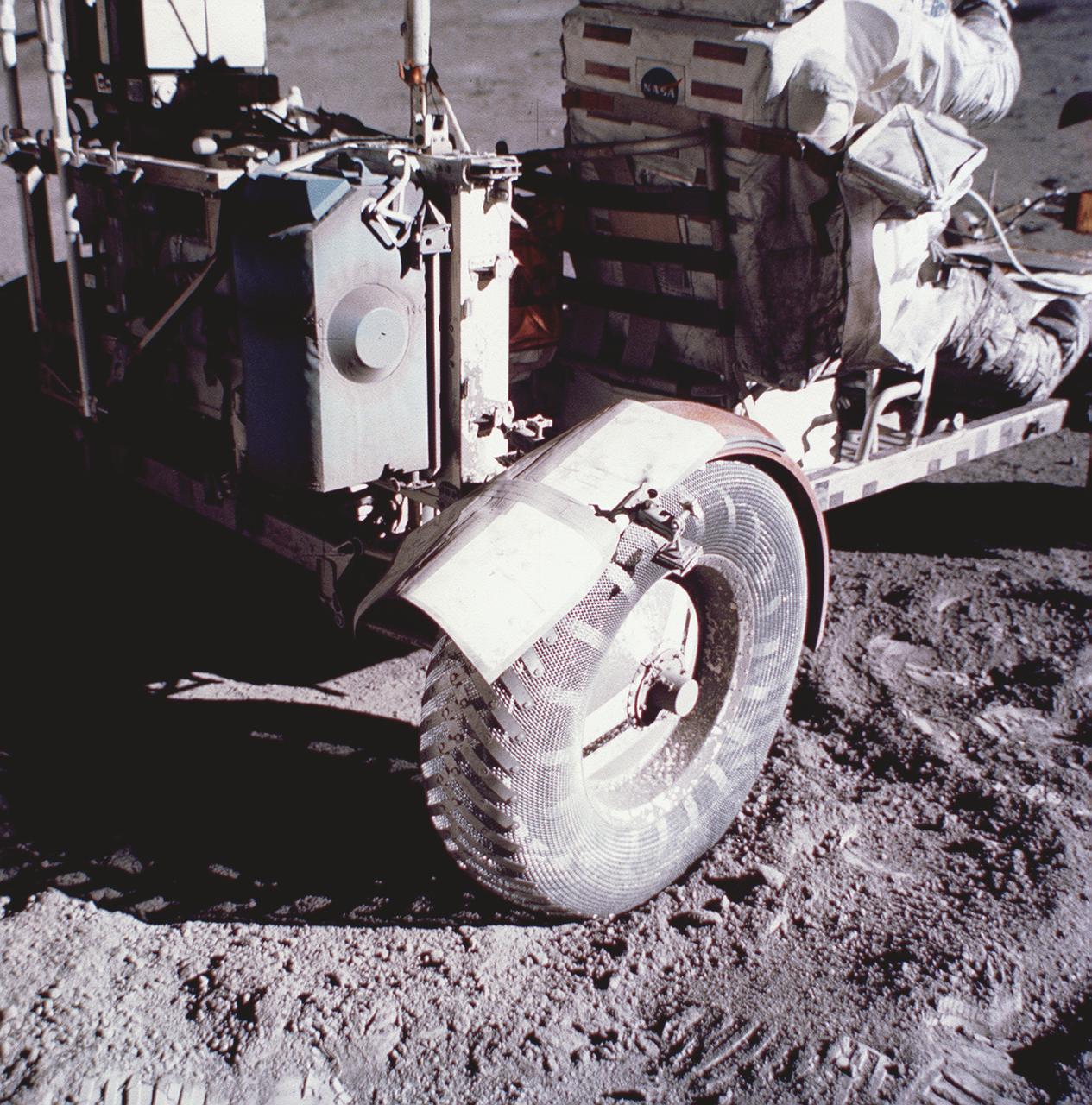
This photograph taken during the Apollo 17 mission (the last mission of the Apollo Program), depicts stiff plasticized maps being taped together and fastened by clamps to patch a broken fender of the Lunar Roving Vehicle (LRV). Powered by battery, the lightweight electric car greatly increased the range of mobility and productivity on the scientific traverses for astronauts. It weighed 462 pounds (77 pounds on the Moon) and could carry two suited astronauts, their gear and cameras, and several hundred pounds of bagged samples. The LRV's mobility was quite high. It could climb and descend slopes of about 25 degrees. The LRV was designed and developed by the Marshall Space Flight Center and built by the Boeing Company.
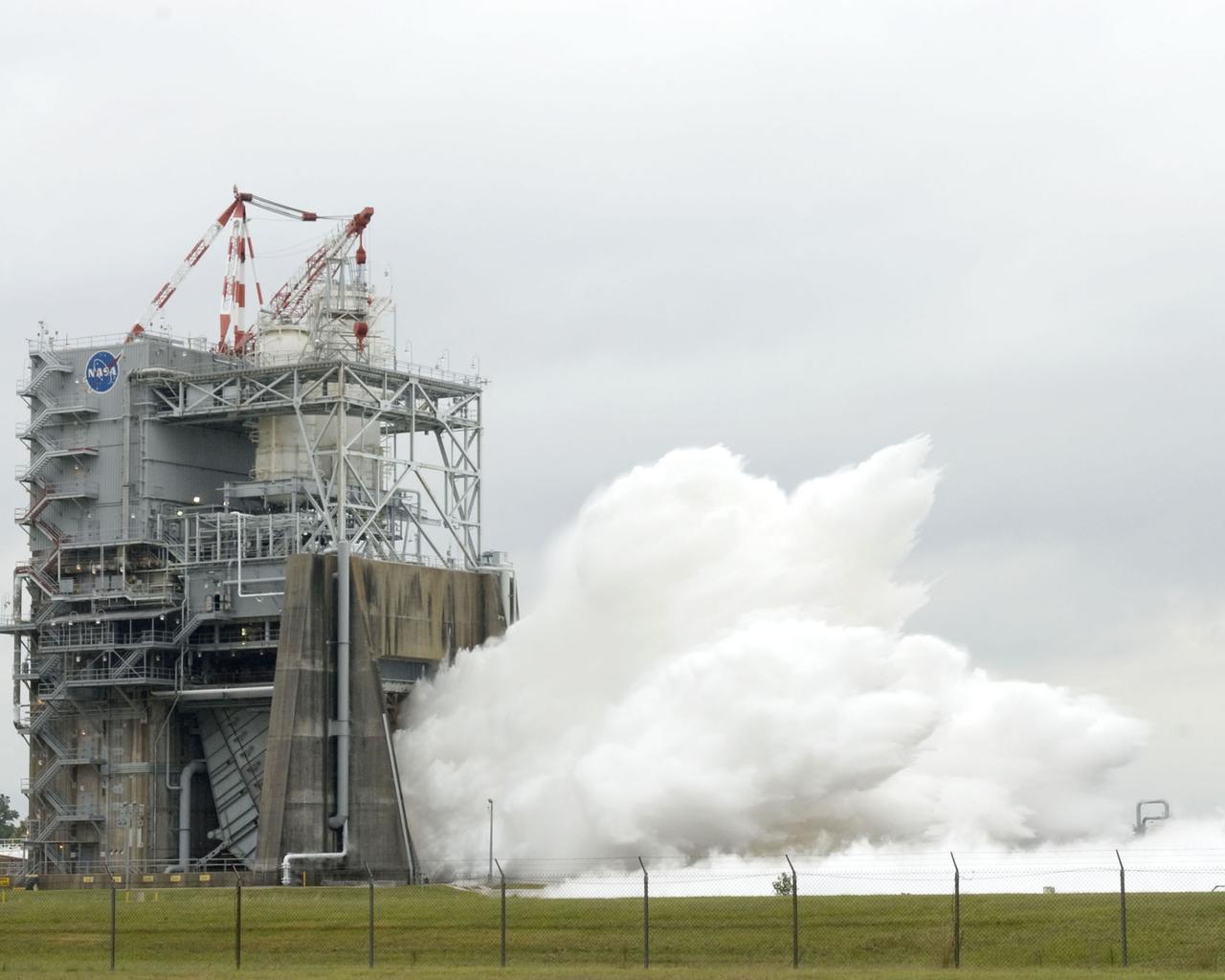
Steam blasts out of the A-2 Test Stand at Stennis Space Center on Oct. 22 as engineers begin a certification test on engine 2061, the last space shuttle main flight engine scheduled to be built. Since 1975, Stennis has tested every space shuttle main engine used in the program - about 50 engines in all. Those engines have powered more than 120 shuttle missions - and no mission has failed as a result of engine malfunction. For the remainder of 2008 and throughout 2009, Stennis will continue testing of various space shuttle main engine components.
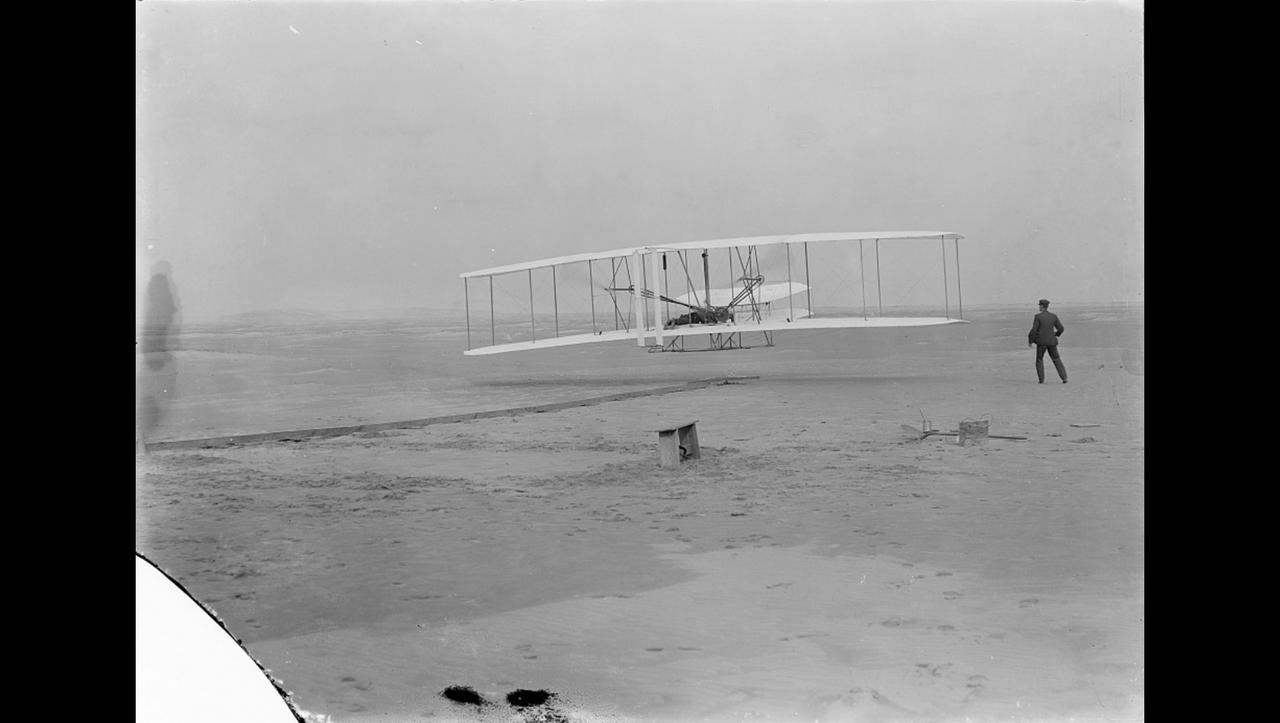
Orville Wright makes the first powered, controlled flight on Earth as his brother Wilbur looks on in this image taken at Kitty Hawk, North Carolina, on Dec. 17, 1903. Orville Wright covered 120 feet in 12 seconds during the first flight. The Wright brothers made four flights that day, each longer than the last. A small amount of the material that covered the wing of the aircraft, Flyer 1, during the first flight was flown to Mars aboard NASA's Ingenuity Mars Helicopter. An insulative tape was used to wrap the small swatch of fabric around a cable located underneath the helicopter's solar panel. Ingenuity is scheduled to attempt the first powered, controlled flight on another planet in April 2021. The Wrights had been using the same type of material – an unbleached muslin called "Pride of the West" – to cover their glider and aircraft wings since 1901. A different piece of the material, along with a small splinter of wood, from the Flyer 1 was flown to the Moon and back aboard Apollo 11. The image was taken by John Daniels, a member of the U.S. Life-Saving Station in Kill Devil Hills, North Carolina. Until the day of the flight, Daniels had never seen a camera. https://photojournal.jpl.nasa.gov/catalog/PIA24434
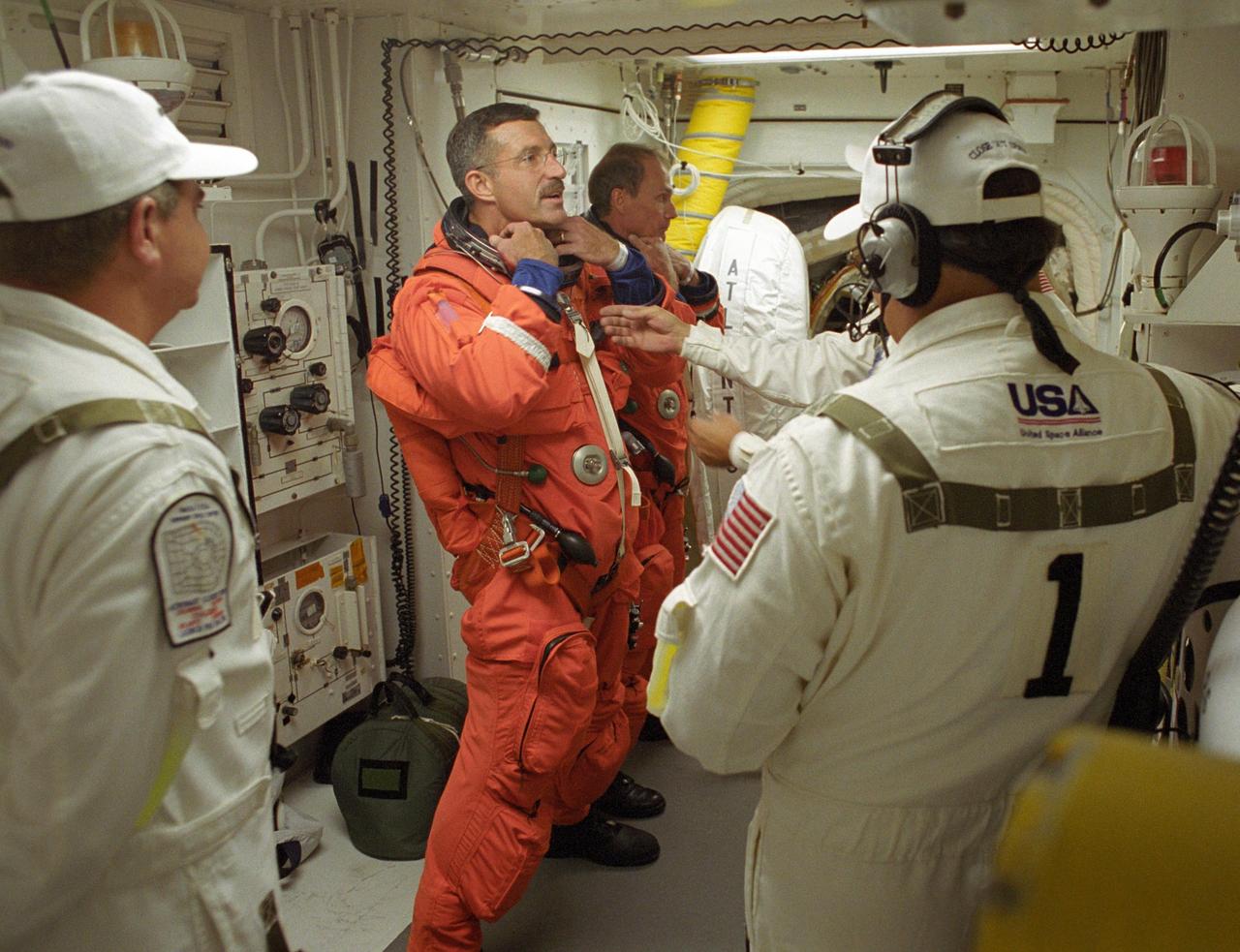
KENNEDY SPACE CENTER, FLA. - STS-115 Mission Specialists Daniel Burbank (left) and Steven MacLean get help with their launch suits from the closeout crew before entering Space Shuttle Atlantis. Both astronauts are making their second shuttle flights. MacLean is with the Canadian Space Agency. During the mission, Atlantis' astronauts will deliver and install the 17.5-ton, bus-sized P3/P4 integrated truss segment on the station. The girder-like truss includes a set of giant solar arrays, batteries and associated electronics and will provide one-fourth of the total power-generation capability for the completed station. This mission is the 116th space shuttle flight, the 27th flight for orbiter Atlantis, and the 19th U.S. flight to the International Space Station. STS-115 is scheduled to last 11 days with a planned landing at KSC

KENNEDY SPACE CENTER, FLA. - In the White Room on Launch Pad 39B, STS-115 Commander Brent Jett gets help with his launch suit from the closeout crew before entering Space Shuttle Atlantis. Jett is making his fourth shuttle flight. During the mission, Atlantis' astronauts will deliver and install the 17.5-ton, bus-sized P3/P4 integrated truss segment on the station. The girder-like truss includes a set of giant solar arrays, batteries and associated electronics and will provide one-fourth of the total power-generation capability for the completed station. This mission is the 116th space shuttle flight, the 27th flight for orbiter Atlantis, and the 19th U.S. flight to the International Space Station. STS-115 is scheduled to last 11 days with a planned landing at KSC.
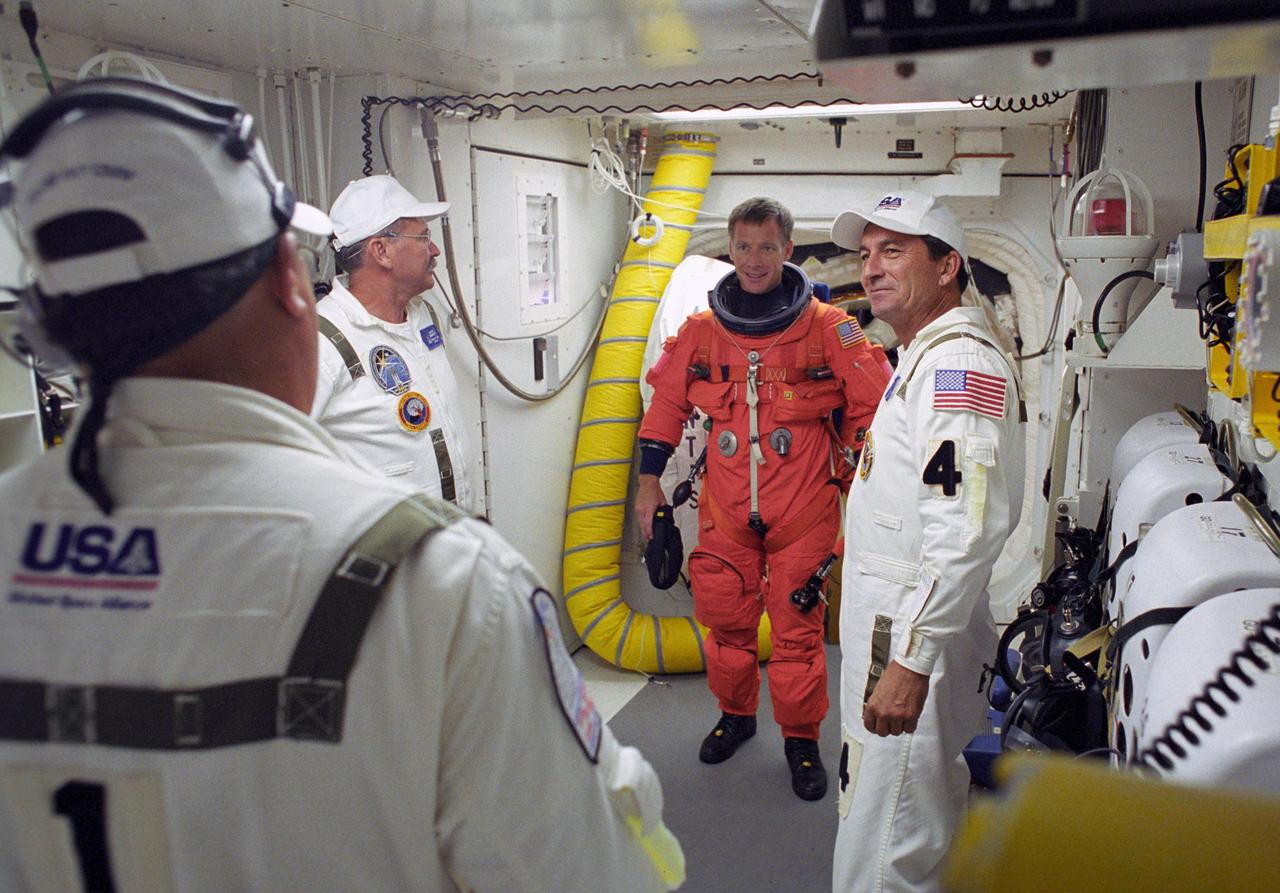
KENNEDY SPACE CENTER, FLA. - In the White Room on Launch Pad 39B, STS-115 Pilot Christopher Ferguson talks with the closeout crew before entering Space Shuttle Atlantis. Ferguson is making his first shuttle flight. During the mission, Atlantis' astronauts will deliver and install the 17.5-ton, bus-sized P3/P4 integrated truss segment on the station. The girder-like truss includes a set of giant solar arrays, batteries and associated electronics and will provide one-fourth of the total power-generation capability for the completed station. This mission is the 116th space shuttle flight, the 27th flight for orbiter Atlantis, and the 19th U.S. flight to the International Space Station. STS-115 is scheduled to last 11 days with a planned landing at KSC.
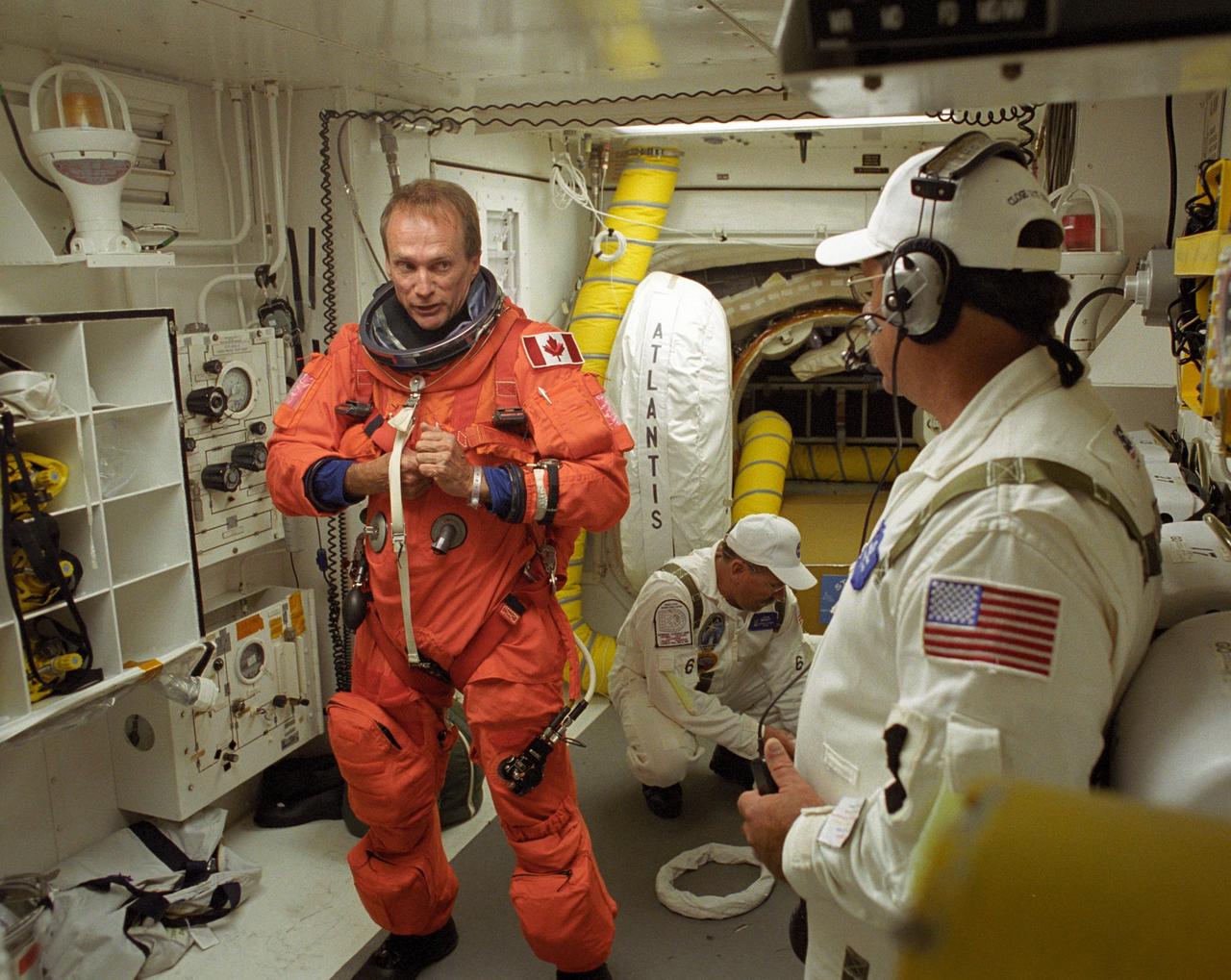
KENNEDY SPACE CENTER, FLA. - In the White Room on Launch Pad 39B, STS-115 Mission Specialist Steven MacLean adjusts his launch suit while talking with the closeout crew. MacLean, who represents the Canadian Space Agency, is making his second shuttle flight. During the mission, Atlantis' astronauts will deliver and install the 17.5-ton, bus-sized P3/P4 integrated truss segment on the station. The girder-like truss includes a set of giant solar arrays, batteries and associated electronics and will provide one-fourth of the total power-generation capability for the completed station. This mission is the 116th space shuttle flight, the 27th flight for orbiter Atlantis, and the 19th U.S. flight to the International Space Station. STS-115 is scheduled to last 11 days with a planned landing at KSC
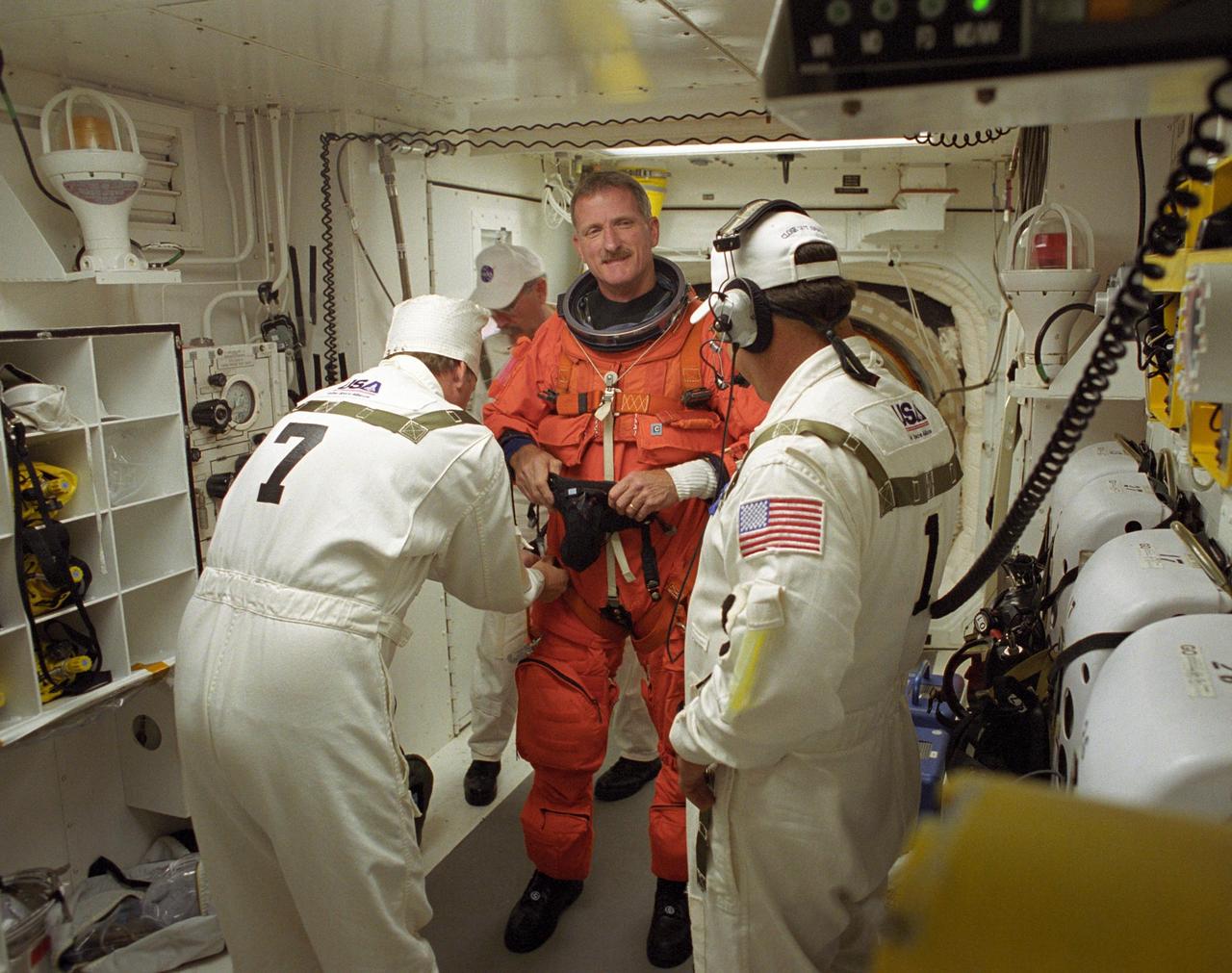
KENNEDY SPACE CENTER, FLA. - In the White Room on Launch Pad 39B, STS-115 Mission Specialist Joseph Tanner gets help with his launch suit from the closeout crew before entering Space Shuttle Atlantis. Tanner is making his fourth shuttle flight. During the mission, Atlantis' astronauts will deliver and install the 17.5-ton, bus-sized P3/P4 integrated truss segment on the station. The girder-like truss includes a set of giant solar arrays, batteries and associated electronics and will provide one-fourth of the total power-generation capability for the completed station. This mission is the 116th space shuttle flight, the 27th flight for orbiter Atlantis, and the 19th U.S. flight to the International Space Station. STS-115 is scheduled to last 11 days with a planned landing at KSC.
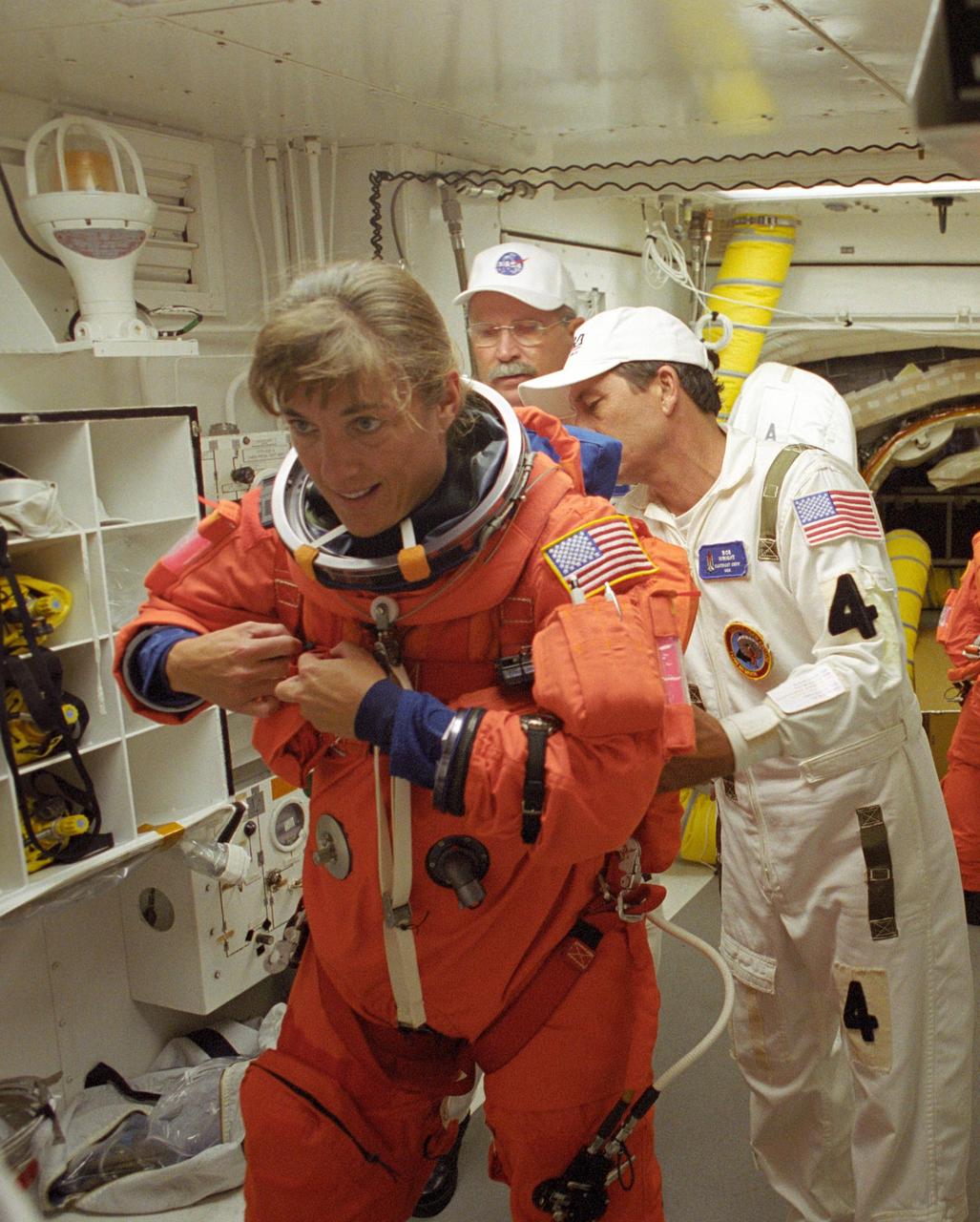
KENNEDY SPACE CENTER, FLA. - In the White Room on Launch Pad 39B, STS-115 Mission Specialist Heidemarie Stefanyshyn-Piper gets help with her launch suit from the closeout crew before entering Space Shuttle Atlantis. Piper is making her first shuttle flight. During the mission, Atlantis' astronauts will deliver and install the 17.5-ton, bus-sized P3/P4 integrated truss segment on the station. The girder-like truss includes a set of giant solar arrays, batteries and associated electronics and will provide one-fourth of the total power-generation capability for the completed station. This mission is the 116th space shuttle flight, the 27th flight for orbiter Atlantis, and the 19th U.S. flight to the International Space Station. STS-115 is scheduled to last 11 days with a planned landing at KSC
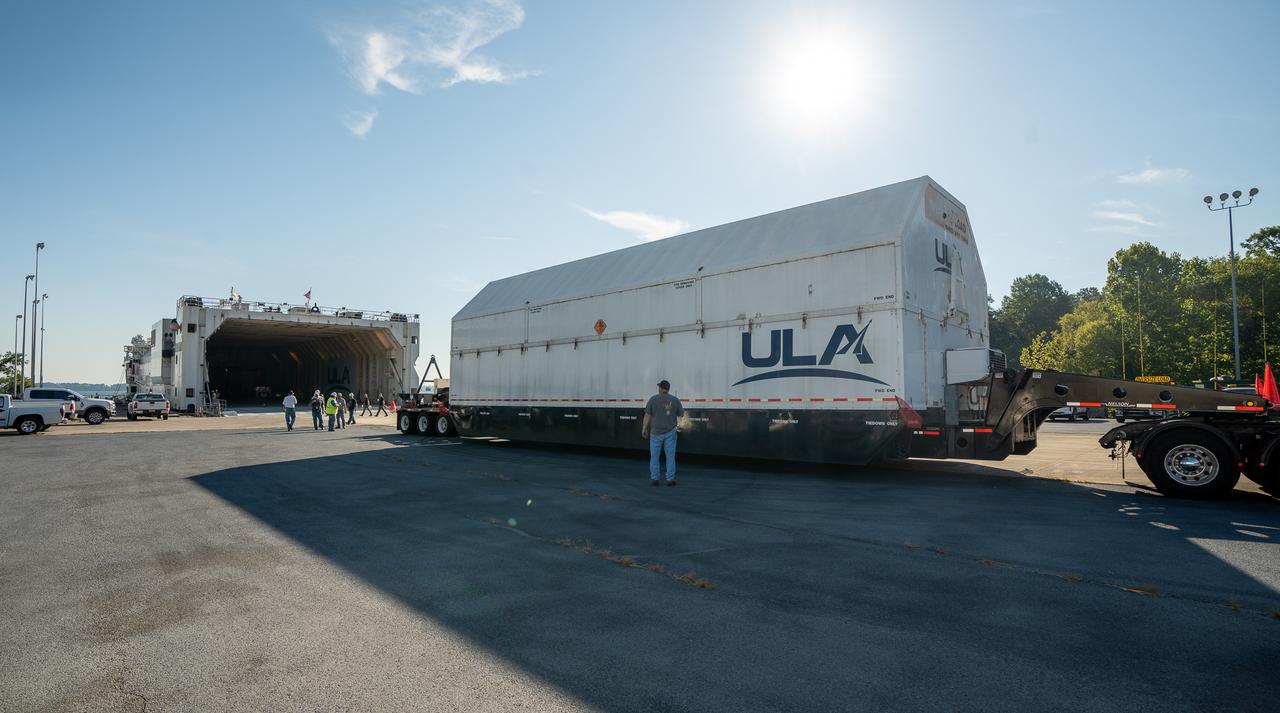
These images and videos show how crews in Alabama prepared the ICPS (interim cryogenic propulsion stage) for NASA’s SLS (Space Launch System) rocket for shipment to Florida between July 29-31. The ICPS in the photos and videos will help power NASA’s Artemis III mission to the Moon. The SLS upper stage is manufactured by United Launch Alliance at its facility in Decatur. Its RL10 engine is produced by Aerojet Rocketdyne, the SLS engines lead contractor, in West Palm Beach, Florida. ULA is working with Boeing, the SLS core stage and exploration upper stage lead contractor, to develop ICPS. ULA’s R/S RocketShip is transporting the flight hardware to its sister facility in Florida near NASA’s Kennedy Space Center for final checkouts. The ICPS for Artemis III is the last of its kind as SLS transitions to its next, more powerful Block 1B configuration with an upgraded upper stage beginning with Artemis IV. NASA is working to land the first woman and first person of color on the Moon under Artemis. SLS is part of NASA’s backbone for deep space exploration, along with Orion and the Gateway in orbit around the Moon. SLS is the only rocket that can send Orion, astronauts, and supplies to the Moon in a single mission.
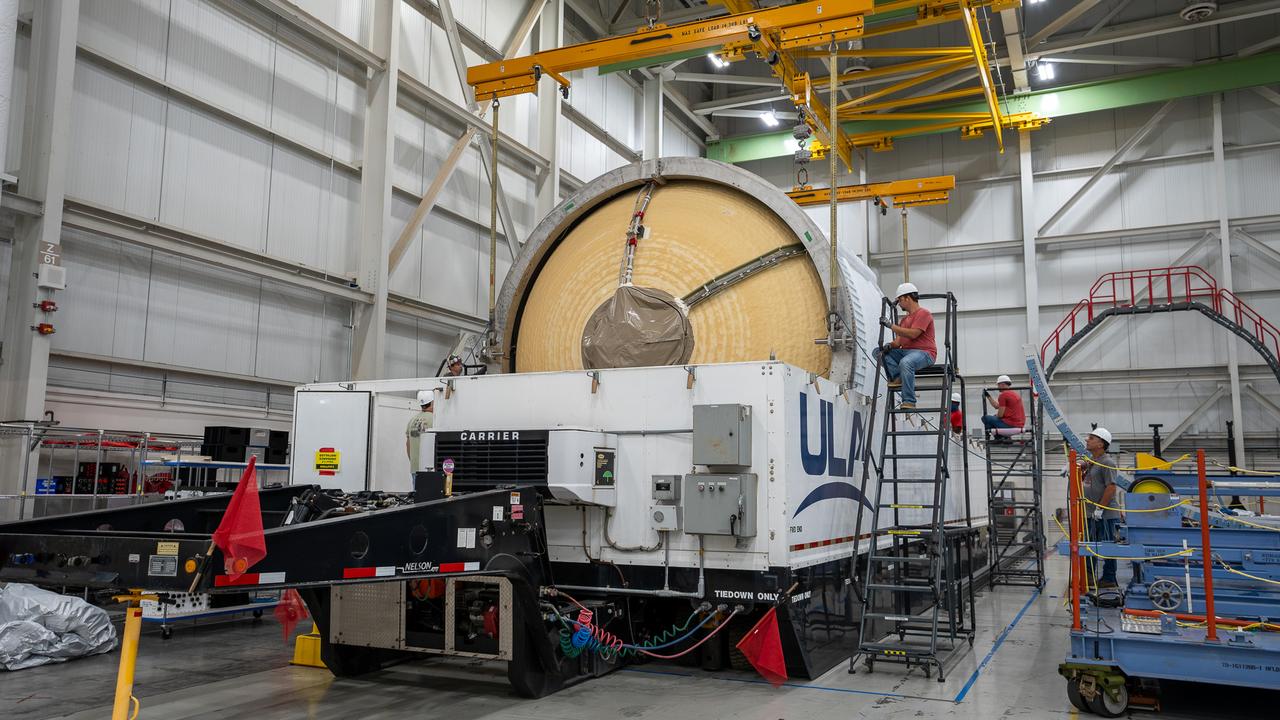
These images and videos show how crews in Alabama prepared the ICPS (interim cryogenic propulsion stage) for NASA’s SLS (Space Launch System) rocket for shipment to Florida between July 29-31. The ICPS in the photos and videos will help power NASA’s Artemis III mission to the Moon. The SLS upper stage is manufactured by United Launch Alliance at its facility in Decatur. Its RL10 engine is produced by Aerojet Rocketdyne, the SLS engines lead contractor, in West Palm Beach, Florida. ULA is working with Boeing, the SLS core stage and exploration upper stage lead contractor, to develop ICPS. ULA’s R/S RocketShip is transporting the flight hardware to its sister facility in Florida near NASA’s Kennedy Space Center for final checkouts. The ICPS for Artemis III is the last of its kind as SLS transitions to its next, more powerful Block 1B configuration with an upgraded upper stage beginning with Artemis IV. NASA is working to land the first woman and first person of color on the Moon under Artemis. SLS is part of NASA’s backbone for deep space exploration, along with Orion and the Gateway in orbit around the Moon. SLS is the only rocket that can send Orion, astronauts, and supplies to the Moon in a single mission.

These images and videos show how crews in Alabama prepared the ICPS (interim cryogenic propulsion stage) for NASA’s SLS (Space Launch System) rocket for shipment to Florida between July 29-31. The ICPS in the photos and videos will help power NASA’s Artemis III mission to the Moon. The SLS upper stage is manufactured by United Launch Alliance at its facility in Decatur. Its RL10 engine is produced by Aerojet Rocketdyne, the SLS engines lead contractor, in West Palm Beach, Florida. ULA is working with Boeing, the SLS core stage and exploration upper stage lead contractor, to develop ICPS. ULA’s R/S RocketShip is transporting the flight hardware to its sister facility in Florida near NASA’s Kennedy Space Center for final checkouts. The ICPS for Artemis III is the last of its kind as SLS transitions to its next, more powerful Block 1B configuration with an upgraded upper stage beginning with Artemis IV. NASA is working to land the first woman and first person of color on the Moon under Artemis. SLS is part of NASA’s backbone for deep space exploration, along with Orion and the Gateway in orbit around the Moon. SLS is the only rocket that can send Orion, astronauts, and supplies to the Moon in a single mission.
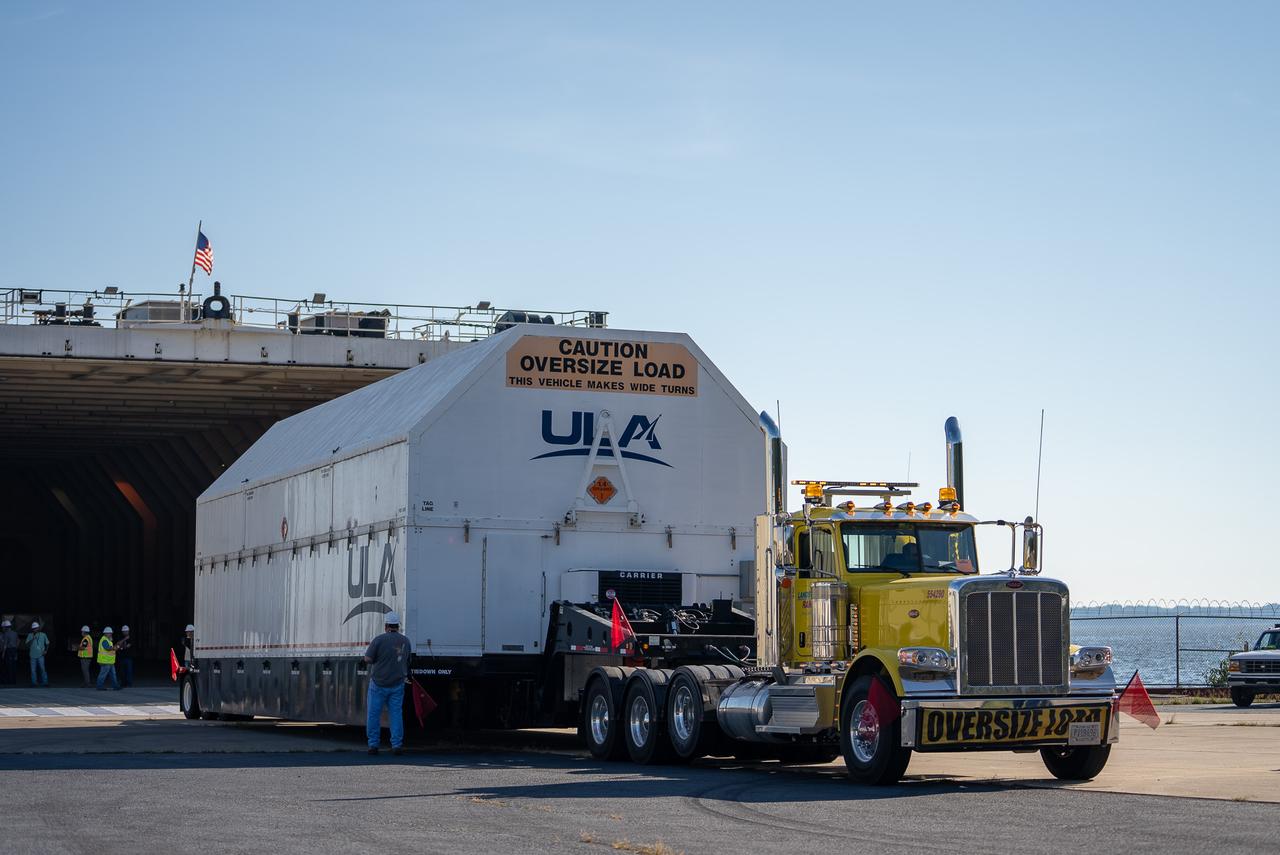
These images and videos show how crews in Alabama prepared the ICPS (interim cryogenic propulsion stage) for NASA’s SLS (Space Launch System) rocket for shipment to Florida between July 29-31. The ICPS in the photos and videos will help power NASA’s Artemis III mission to the Moon. The SLS upper stage is manufactured by United Launch Alliance at its facility in Decatur. Its RL10 engine is produced by Aerojet Rocketdyne, the SLS engines lead contractor, in West Palm Beach, Florida. ULA is working with Boeing, the SLS core stage and exploration upper stage lead contractor, to develop ICPS. ULA’s R/S RocketShip is transporting the flight hardware to its sister facility in Florida near NASA’s Kennedy Space Center for final checkouts. The ICPS for Artemis III is the last of its kind as SLS transitions to its next, more powerful Block 1B configuration with an upgraded upper stage beginning with Artemis IV. NASA is working to land the first woman and first person of color on the Moon under Artemis. SLS is part of NASA’s backbone for deep space exploration, along with Orion and the Gateway in orbit around the Moon. SLS is the only rocket that can send Orion, astronauts, and supplies to the Moon in a single mission.
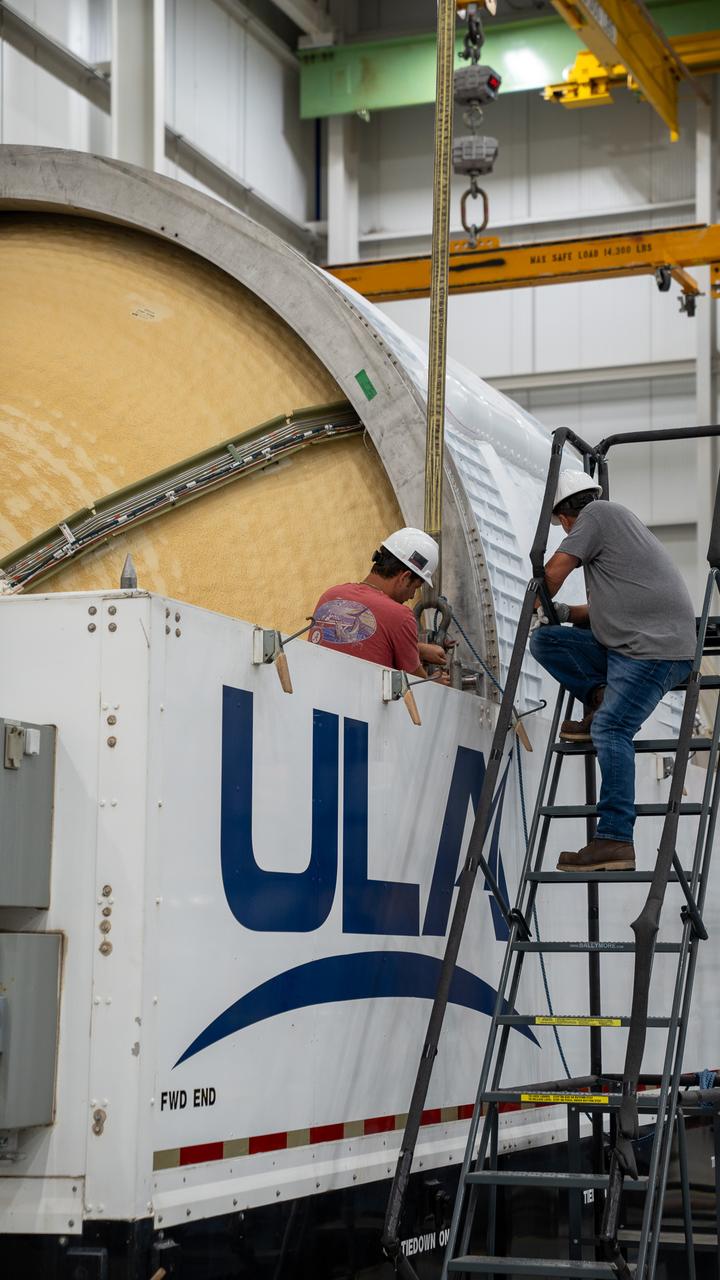
These images and videos show how crews in Alabama prepared the ICPS (interim cryogenic propulsion stage) for NASA’s SLS (Space Launch System) rocket for shipment to Florida between July 29-31. The ICPS in the photos and videos will help power NASA’s Artemis III mission to the Moon. The SLS upper stage is manufactured by United Launch Alliance at its facility in Decatur. Its RL10 engine is produced by Aerojet Rocketdyne, the SLS engines lead contractor, in West Palm Beach, Florida. ULA is working with Boeing, the SLS core stage and exploration upper stage lead contractor, to develop ICPS. ULA’s R/S RocketShip is transporting the flight hardware to its sister facility in Florida near NASA’s Kennedy Space Center for final checkouts. The ICPS for Artemis III is the last of its kind as SLS transitions to its next, more powerful Block 1B configuration with an upgraded upper stage beginning with Artemis IV. NASA is working to land the first woman and first person of color on the Moon under Artemis. SLS is part of NASA’s backbone for deep space exploration, along with Orion and the Gateway in orbit around the Moon. SLS is the only rocket that can send Orion, astronauts, and supplies to the Moon in a single mission.
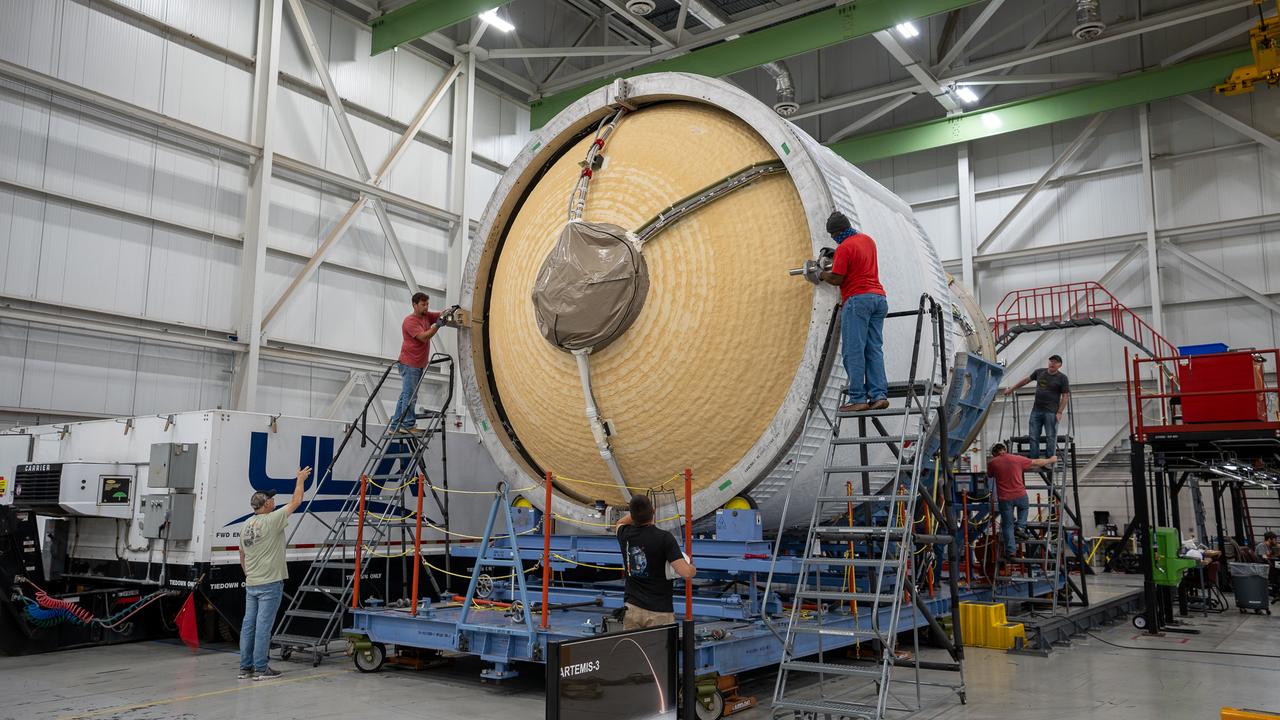
These images and videos show how crews in Alabama prepared the ICPS (interim cryogenic propulsion stage) for NASA’s SLS (Space Launch System) rocket for shipment to Florida between July 29-31. The ICPS in the photos and videos will help power NASA’s Artemis III mission to the Moon. The SLS upper stage is manufactured by United Launch Alliance at its facility in Decatur. Its RL10 engine is produced by Aerojet Rocketdyne, the SLS engines lead contractor, in West Palm Beach, Florida. ULA is working with Boeing, the SLS core stage and exploration upper stage lead contractor, to develop ICPS. ULA’s R/S RocketShip is transporting the flight hardware to its sister facility in Florida near NASA’s Kennedy Space Center for final checkouts. The ICPS for Artemis III is the last of its kind as SLS transitions to its next, more powerful Block 1B configuration with an upgraded upper stage beginning with Artemis IV. NASA is working to land the first woman and first person of color on the Moon under Artemis. SLS is part of NASA’s backbone for deep space exploration, along with Orion and the Gateway in orbit around the Moon. SLS is the only rocket that can send Orion, astronauts, and supplies to the Moon in a single mission.
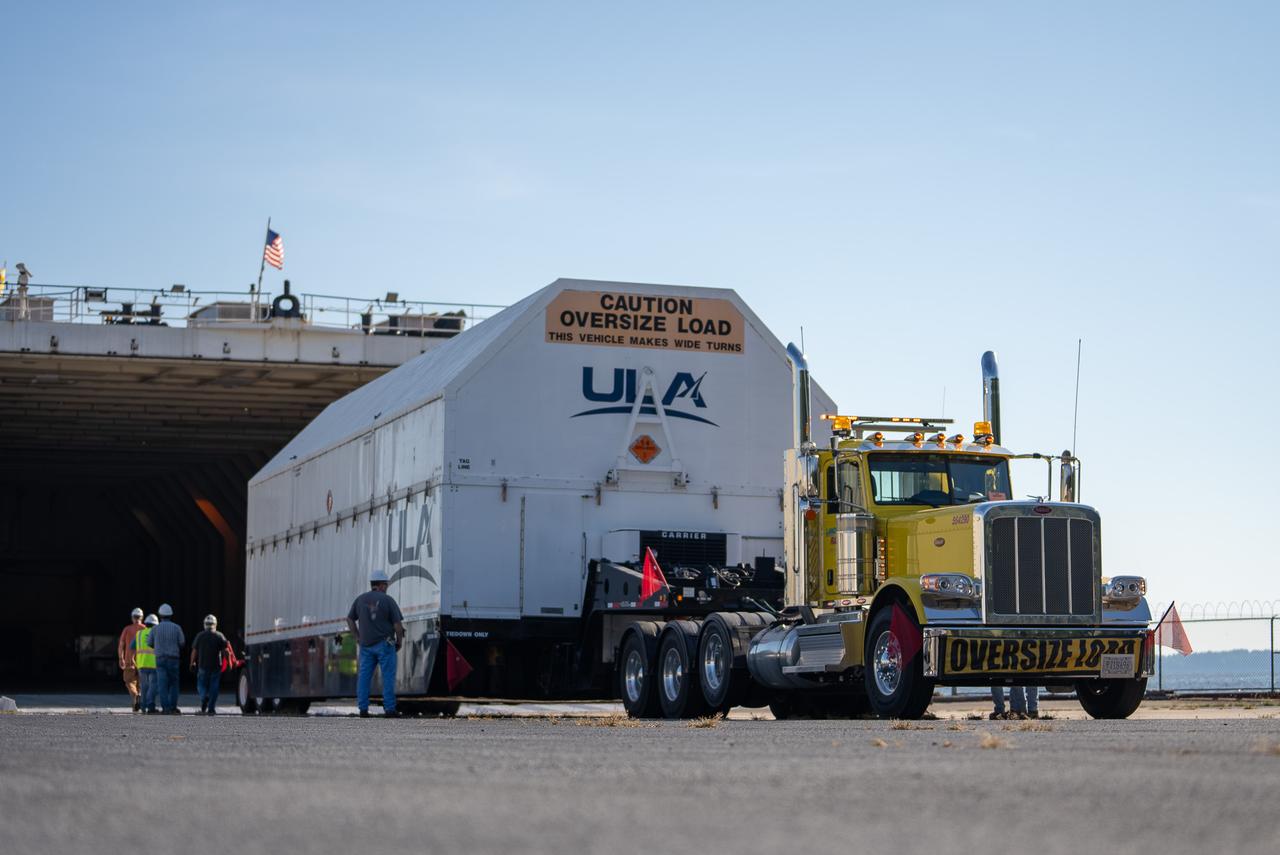
These images and videos show how crews in Alabama prepared the ICPS (interim cryogenic propulsion stage) for NASA’s SLS (Space Launch System) rocket for shipment to Florida between July 29-31. The ICPS in the photos and videos will help power NASA’s Artemis III mission to the Moon. The SLS upper stage is manufactured by United Launch Alliance at its facility in Decatur. Its RL10 engine is produced by Aerojet Rocketdyne, the SLS engines lead contractor, in West Palm Beach, Florida. ULA is working with Boeing, the SLS core stage and exploration upper stage lead contractor, to develop ICPS. ULA’s R/S RocketShip is transporting the flight hardware to its sister facility in Florida near NASA’s Kennedy Space Center for final checkouts. The ICPS for Artemis III is the last of its kind as SLS transitions to its next, more powerful Block 1B configuration with an upgraded upper stage beginning with Artemis IV. NASA is working to land the first woman and first person of color on the Moon under Artemis. SLS is part of NASA’s backbone for deep space exploration, along with Orion and the Gateway in orbit around the Moon. SLS is the only rocket that can send Orion, astronauts, and supplies to the Moon in a single mission.
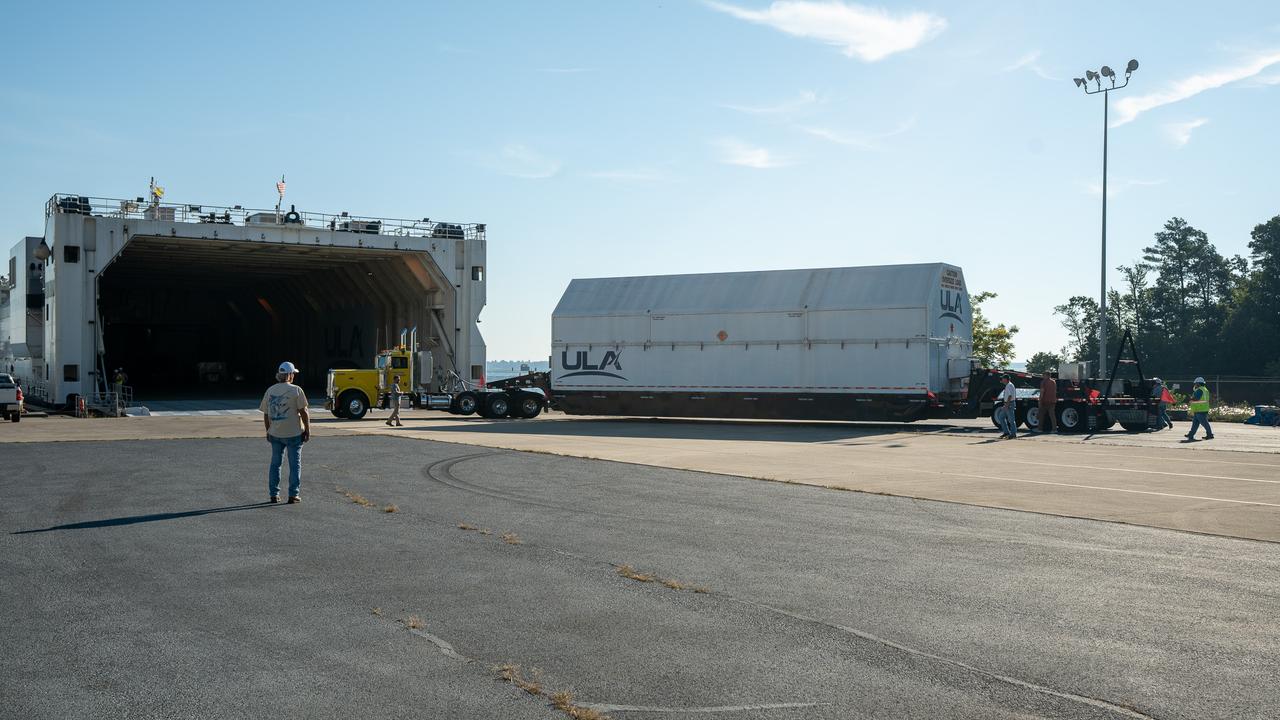
These images and videos show how crews in Alabama prepared the ICPS (interim cryogenic propulsion stage) for NASA’s SLS (Space Launch System) rocket for shipment to Florida between July 29-31. The ICPS in the photos and videos will help power NASA’s Artemis III mission to the Moon. The SLS upper stage is manufactured by United Launch Alliance at its facility in Decatur. Its RL10 engine is produced by Aerojet Rocketdyne, the SLS engines lead contractor, in West Palm Beach, Florida. ULA is working with Boeing, the SLS core stage and exploration upper stage lead contractor, to develop ICPS. ULA’s R/S RocketShip is transporting the flight hardware to its sister facility in Florida near NASA’s Kennedy Space Center for final checkouts. The ICPS for Artemis III is the last of its kind as SLS transitions to its next, more powerful Block 1B configuration with an upgraded upper stage beginning with Artemis IV. NASA is working to land the first woman and first person of color on the Moon under Artemis. SLS is part of NASA’s backbone for deep space exploration, along with Orion and the Gateway in orbit around the Moon. SLS is the only rocket that can send Orion, astronauts, and supplies to the Moon in a single mission.
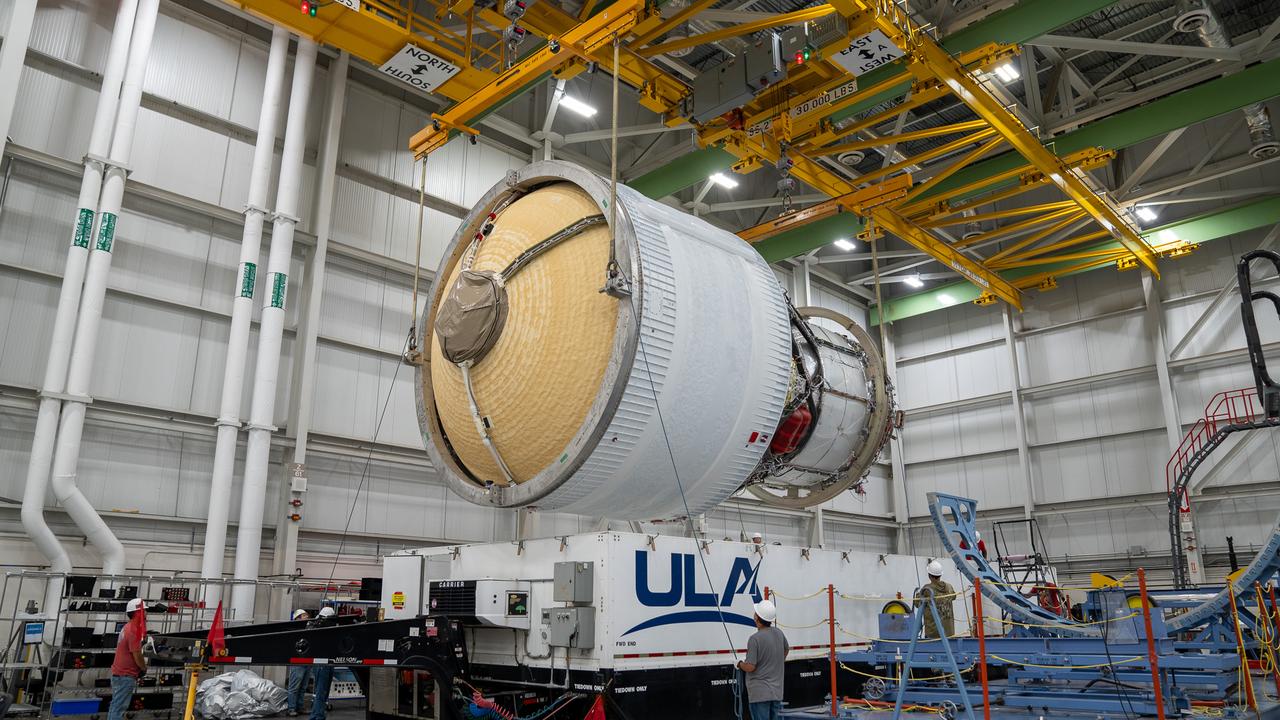
These images and videos show how crews in Alabama prepared the ICPS (interim cryogenic propulsion stage) for NASA’s SLS (Space Launch System) rocket for shipment to Florida between July 29-31. The ICPS in the photos and videos will help power NASA’s Artemis III mission to the Moon. The SLS upper stage is manufactured by United Launch Alliance at its facility in Decatur. Its RL10 engine is produced by Aerojet Rocketdyne, the SLS engines lead contractor, in West Palm Beach, Florida. ULA is working with Boeing, the SLS core stage and exploration upper stage lead contractor, to develop ICPS. ULA’s R/S RocketShip is transporting the flight hardware to its sister facility in Florida near NASA’s Kennedy Space Center for final checkouts. The ICPS for Artemis III is the last of its kind as SLS transitions to its next, more powerful Block 1B configuration with an upgraded upper stage beginning with Artemis IV. NASA is working to land the first woman and first person of color on the Moon under Artemis. SLS is part of NASA’s backbone for deep space exploration, along with Orion and the Gateway in orbit around the Moon. SLS is the only rocket that can send Orion, astronauts, and supplies to the Moon in a single mission.
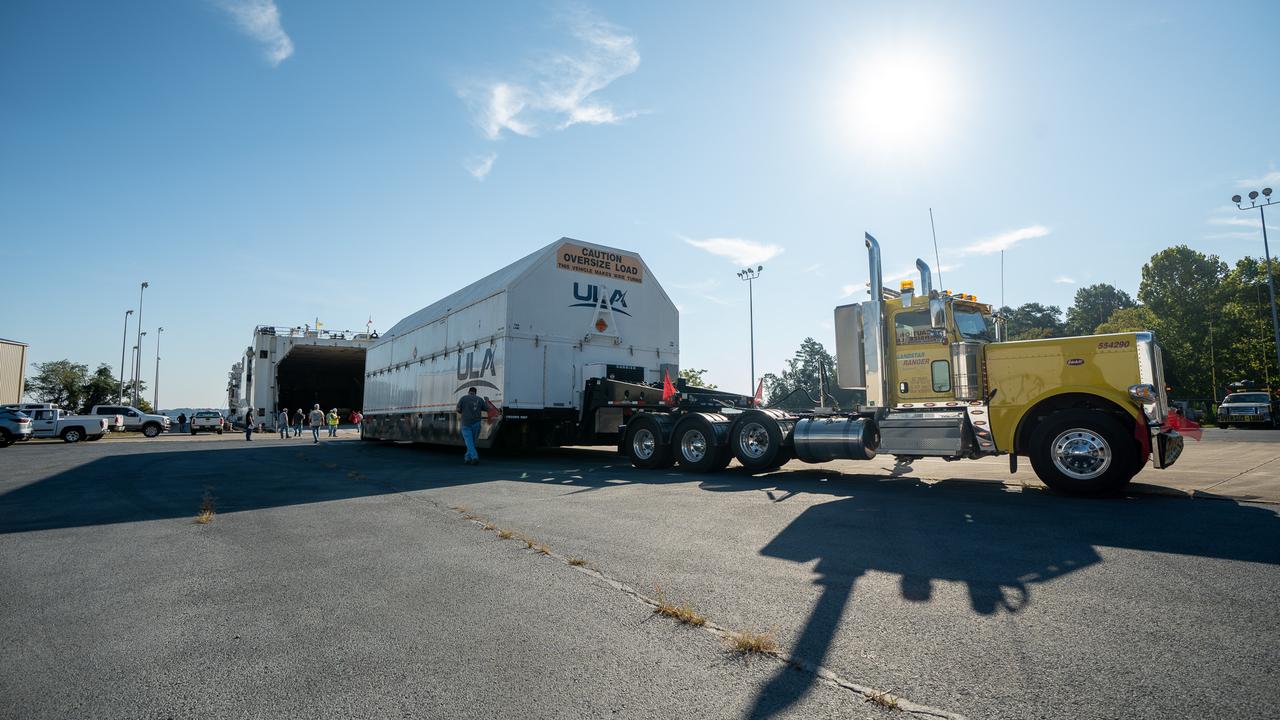
These images and videos show how crews in Alabama prepared the ICPS (interim cryogenic propulsion stage) for NASA’s SLS (Space Launch System) rocket for shipment to Florida between July 29-31. The ICPS in the photos and videos will help power NASA’s Artemis III mission to the Moon. The SLS upper stage is manufactured by United Launch Alliance at its facility in Decatur. Its RL10 engine is produced by Aerojet Rocketdyne, the SLS engines lead contractor, in West Palm Beach, Florida. ULA is working with Boeing, the SLS core stage and exploration upper stage lead contractor, to develop ICPS. ULA’s R/S RocketShip is transporting the flight hardware to its sister facility in Florida near NASA’s Kennedy Space Center for final checkouts. The ICPS for Artemis III is the last of its kind as SLS transitions to its next, more powerful Block 1B configuration with an upgraded upper stage beginning with Artemis IV. NASA is working to land the first woman and first person of color on the Moon under Artemis. SLS is part of NASA’s backbone for deep space exploration, along with Orion and the Gateway in orbit around the Moon. SLS is the only rocket that can send Orion, astronauts, and supplies to the Moon in a single mission.
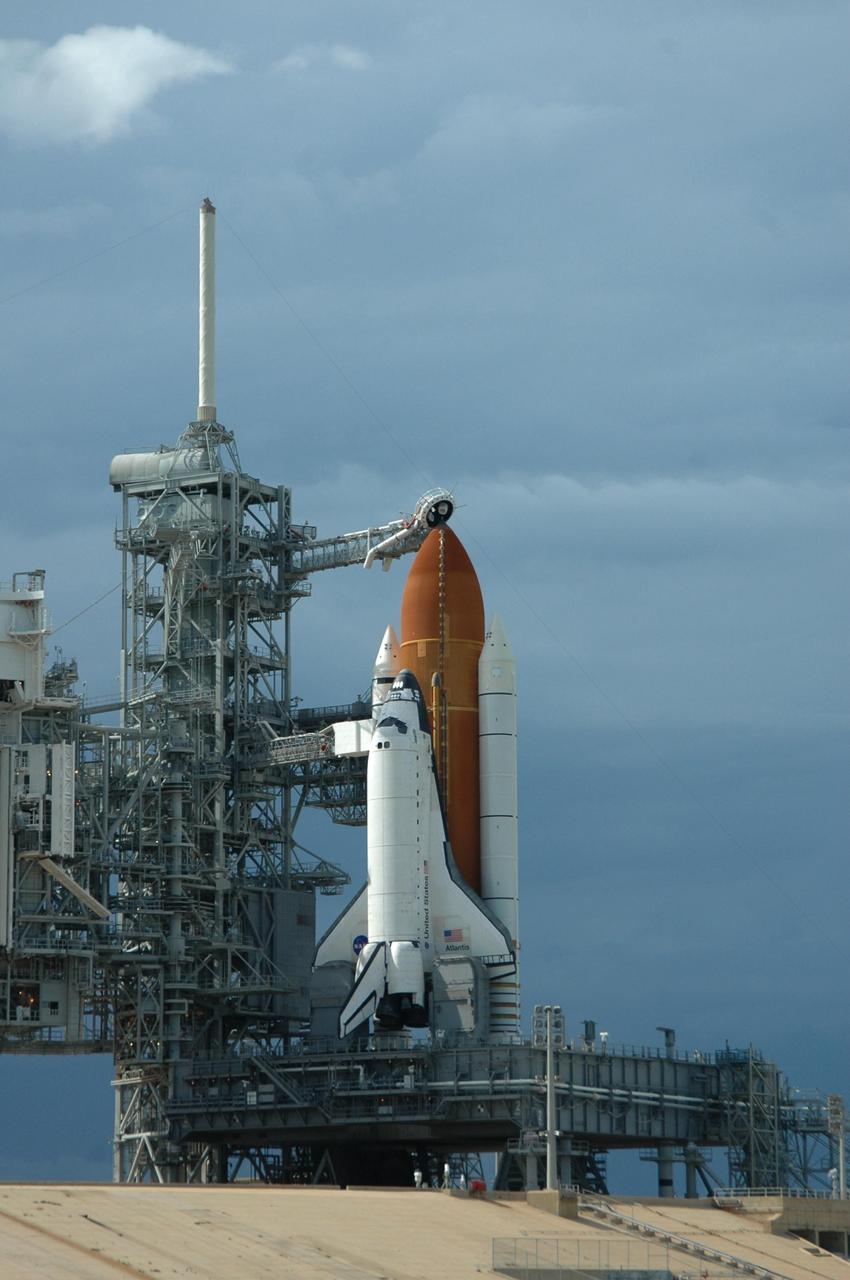
KENNEDY SPACE CENTER, FLA. - Storm clouds gather behind Space Shuttle Atlantis on Launch Pad 39B. Atlantis was originally scheduled to launch on Aug. 27, but a scrub was called by mission managers due to a concern with fuel cell 1. Towering above the shuttle is the 80-foot lightning mast. During the STS-115 mission, Atlantis' astronauts will deliver and install the 17.5-ton, bus-sized P3/P4 integrated truss segment on the station. The girder-like truss includes a set of giant solar arrays, batteries and associated electronics and will provide one-fourth of the total power-generation capability for the completed station. This mission is the 116th space shuttle flight, the 27th flight for orbiter Atlantis, and the 19th U.S. flight to the International Space Station. STS-115 is scheduled to last 11 days with a planned landing at KSC. Photo credit: NASA/Ken Thornsley
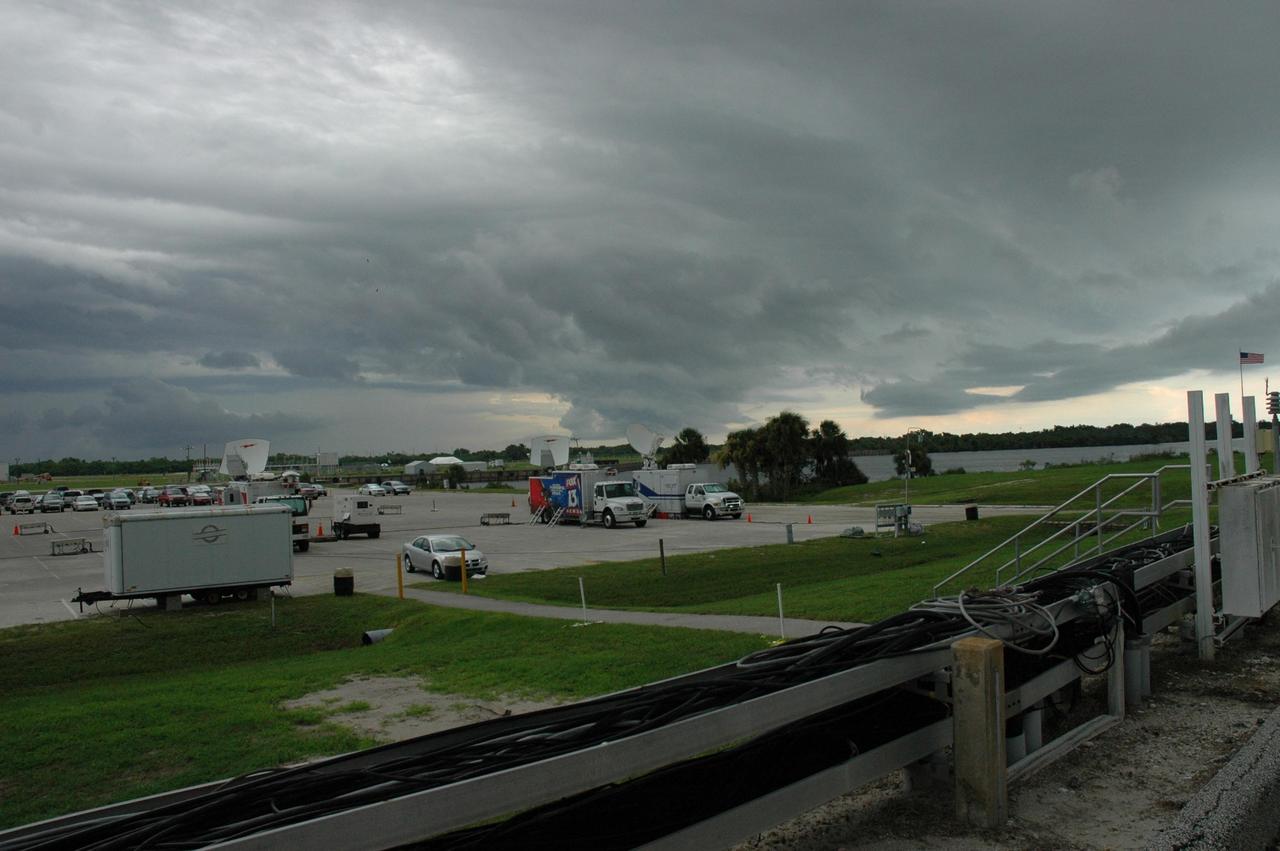
KENNEDY SPACE CENTER, FLA. - Menacing storm clouds roll through the Launch Complex 39 Area at NASA's Kennedy Space Center. Seen in the photo is the lower parking lot for the NASA News Center where the media's vehicles and satellite trucks are situated the day before (L-1) the second scheduled launch attempt for Space Shuttle Atlantis on mission STS-115. During the STS-115 mission, Atlantis' astronauts will deliver and install the 17.5-ton, bus-sized P3/P4 integrated truss segment on the station. The girder-like truss includes a set of giant solar arrays, batteries and associated electronics and will provide one-fourth of the total power-generation capability for the completed station. This mission is the 116th space shuttle flight, the 27th flight for orbiter Atlantis, and the 19th U.S. flight to the International Space Station. STS-115 is scheduled to last 11 days with a planned landing at KSC. Photo credit: NASA/Troy Cryder
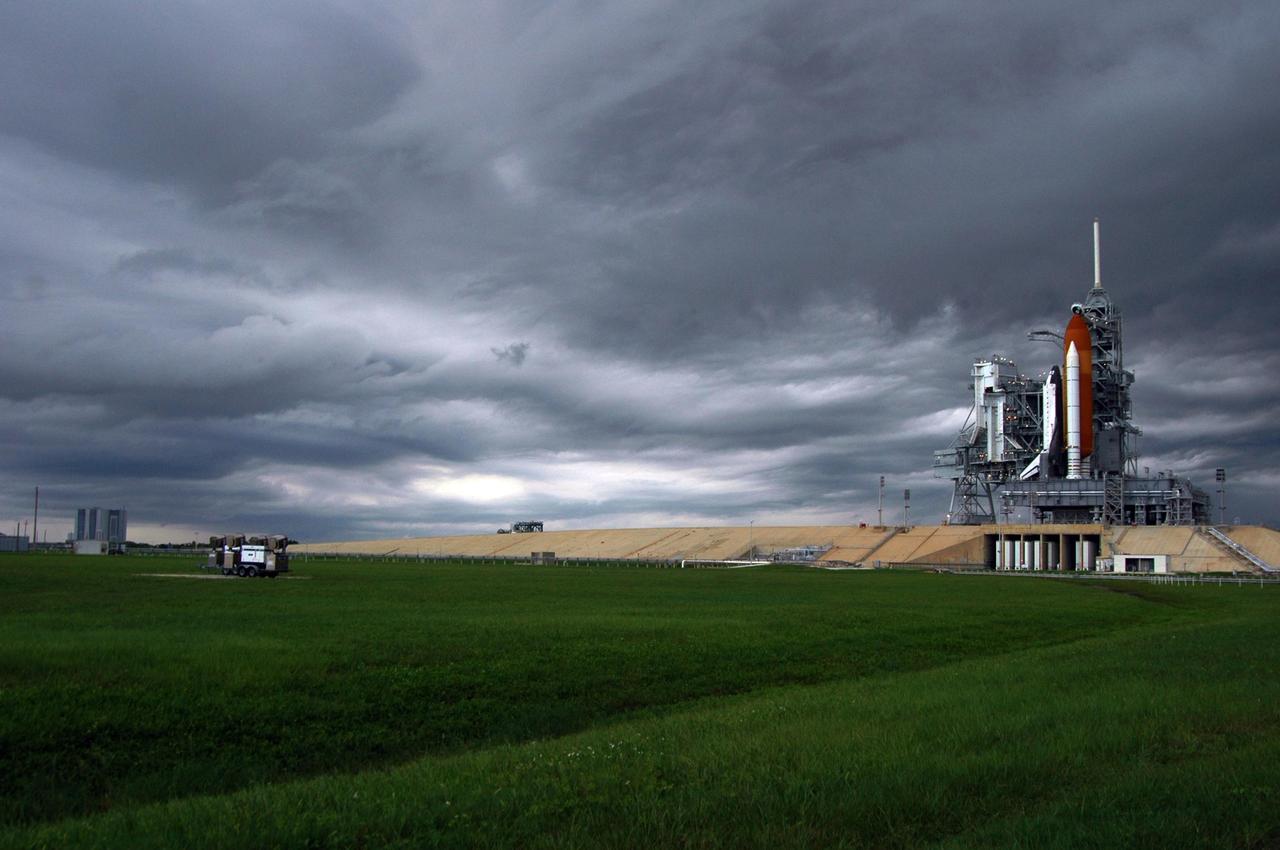
KENNEDY SPACE CENTER, FLA. - Storm clouds roll across Launch Pad 39B where Space Shuttle Atlantis still sits on the pad. Atlantis was originally scheduled to launch Aug. 27, but a scrub was called by mission managers due to a concern with fuel cell 1. Towering above the shuttle is the 80-foot lightning mast. During the STS-115 mission, Atlantis' astronauts will deliver and install the 17.5-ton, bus-sized P3/P4 integrated truss segment on the station. The girder-like truss includes a set of giant solar arrays, batteries and associated electronics and will provide one-fourth of the total power-generation capability for the completed station. This mission is the 116th space shuttle flight, the 27th flight for orbiter Atlantis, and the 19th U.S. flight to the International Space Station. STS-115 is scheduled to last 11 days with a planned landing at KSC. Photo credit: NASA/Ken Thornsley
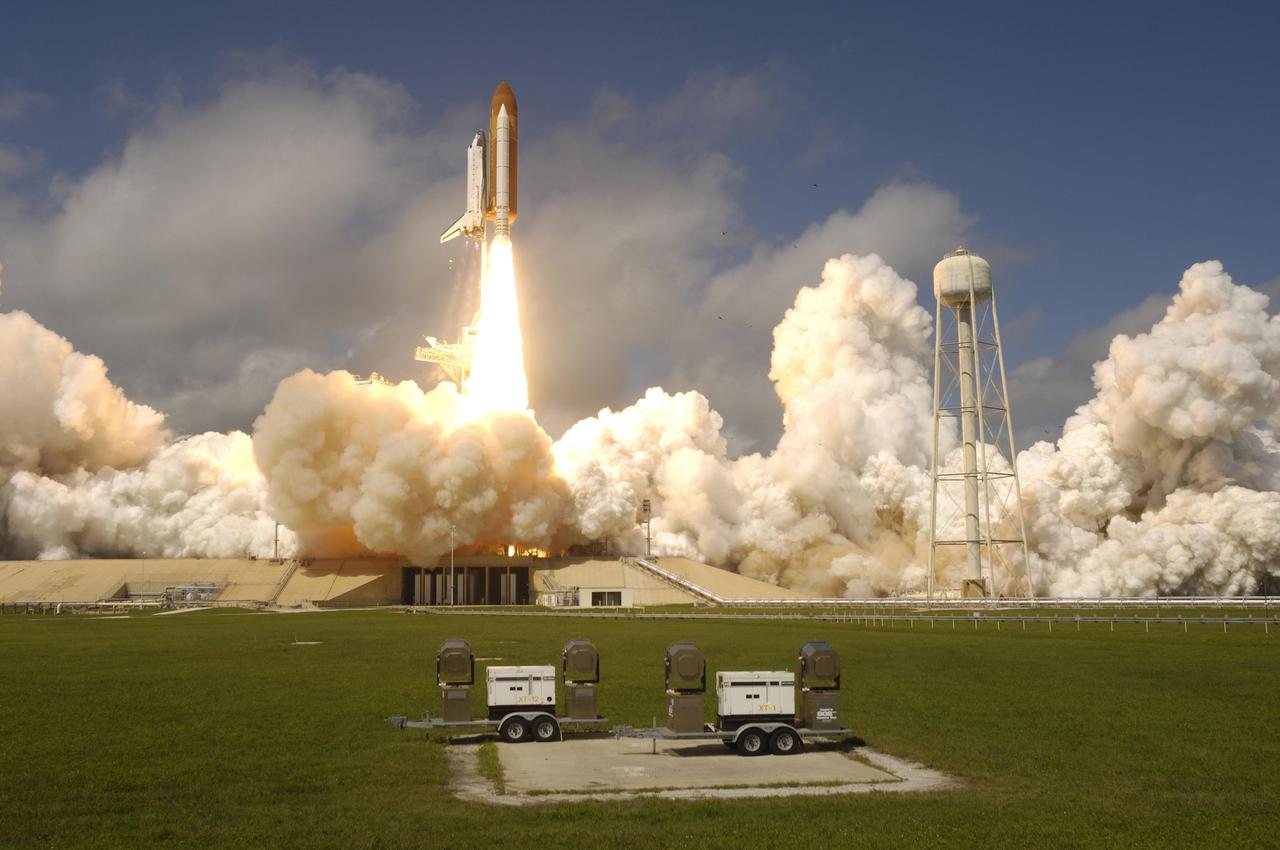
KENNEDY SPACE CENTER, FLA. - Smoke and steam billow across Launch Pad 39B as Space Shuttle Atlantis hurtles into the sky for its rendezvous with the International Space Station on mission STS-115. Liftoff was on-time at 11:14:55 a.m. EDT. After several earlier launch attempts were scrubbed due to weather and technical concerns, this launch was executed perfectly. Mission STS-115 is the 116th space shuttle flight, the 27th flight for orbiter Atlantis, and the 19th U.S. flight to the International Space Station. During the mission, Atlantis' astronauts will deliver and install the 17.5-ton, bus-sized P3/P4 integrated truss segment on the station. The girder-like truss includes a set of giant solar arrays, batteries and associated electronics and will provide one-fourth of the total power-generation capability for the completed station. STS-115 is scheduled to last 11 days with a planned landing at KSC. Photo courtesy of Nikon/Scott Andrews
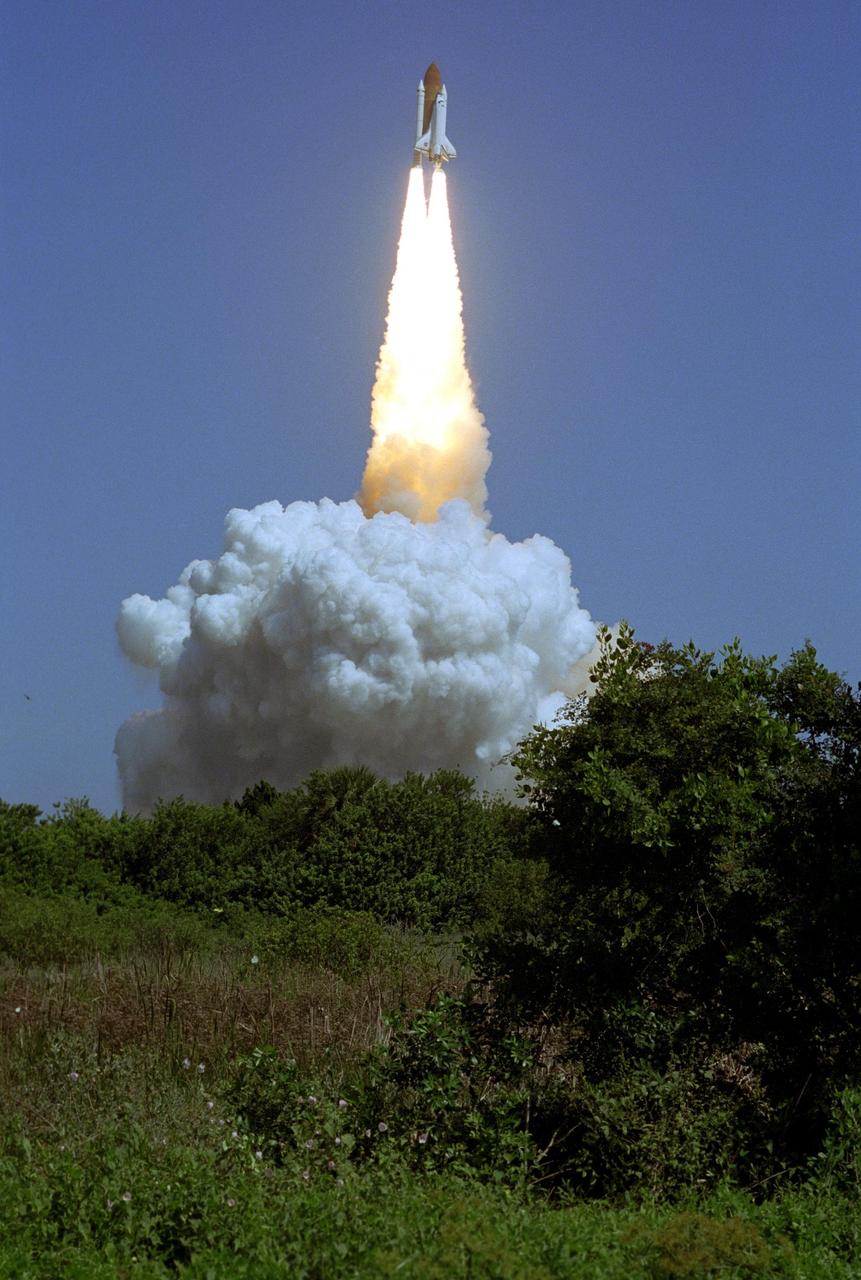
KENNEDY SPACE CENTER, FLA. - Space Shuttle Atlantis appears to spring out of the shrubbery near Launch Pad 39B. Atlantis is heading for a rendezvous with the International Space Station on mission STS-115. Liftoff was on-time at 11:14:55 a.m. EDT. After several launch attempts were scrubbed due to weather and technical concerns, this launch was executed perfectly. Mission STS-115 is the 116th space shuttle flight, the 27th flight for orbiter Atlantis, and the 19th U.S. flight to the International Space Station. During the mission, Atlantis' astronauts will deliver and install the 17.5-ton, bus-sized P3/P4 integrated truss segment on the station. The girder-like truss includes a set of giant solar arrays, batteries and associated electronics and will provide one-fourth of the total power-generation capability for the completed station. STS-115 is scheduled to last 11 days with a planned landing at KSC
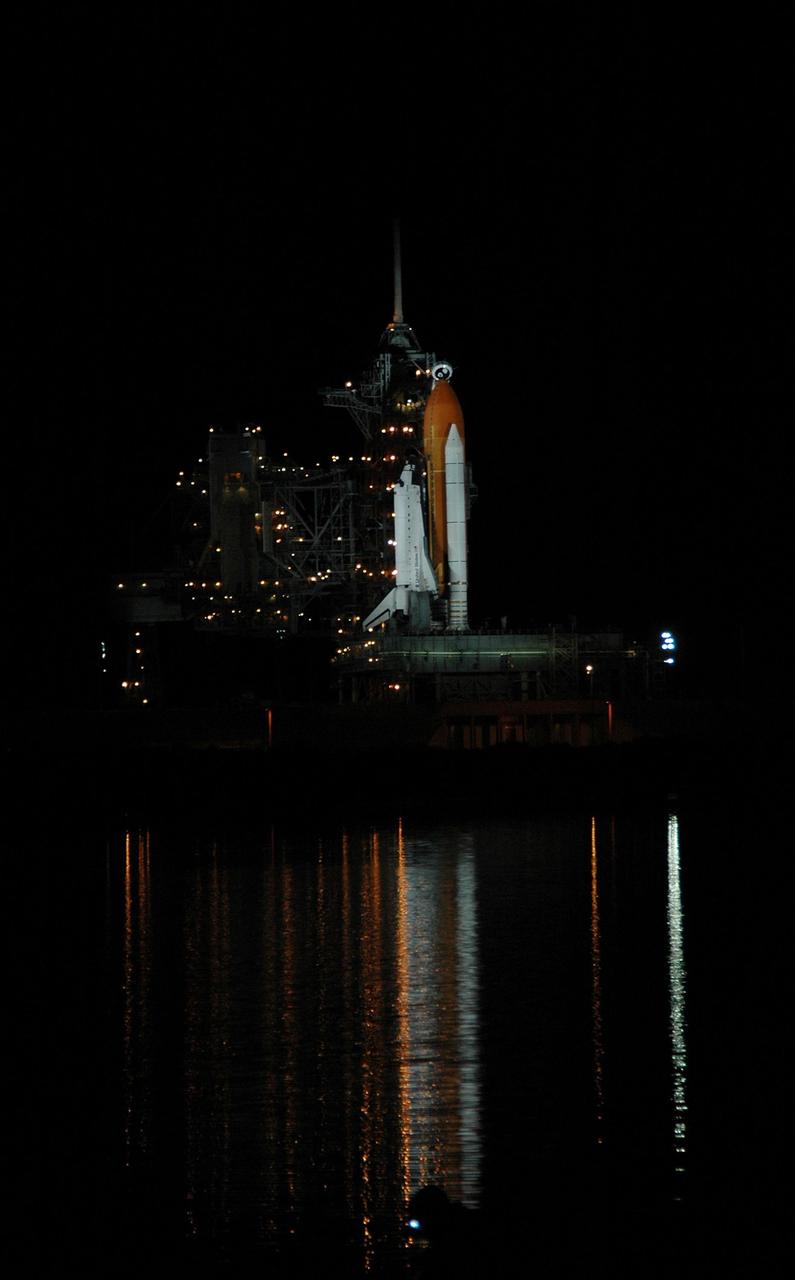
KENNEDY SPACE CENTER, FLA. - The lights on Launch Pad 39B paint columns of light in the water next to the pad where Space Shuttle Atlantis is illuminated. Atlantis was originally scheduled to launch on Aug. 27, but a scrub was called by mission managers due to a concern with fuel cell 1. Atlantis is scheduled to lift off at 11:41 a.m. EDT Sept. 8. During the STS-115 mission, Atlantis' astronauts will deliver and install the 17.5-ton, bus-sized P3/P4 integrated truss segment on the station. The girder-like truss includes a set of giant solar arrays, batteries and associated electronics and will provide one-fourth of the total power-generation capability for the completed station. This mission is the 116th space shuttle flight, the 27th flight for orbiter Atlantis, and the 19th U.S. flight to the ISS. STS-115 is scheduled to last 11 days with a planned landing at KSC. Photo credit: NASA/Ken Thornsley

KENNEDY SPACE CENTER, FLA. -Through a haze of clouds, Space Shuttle Atlantis hurtles toward space for a rendezvous with the International Space Station on mission STS-115. Liftoff was on-time at 11:14:55 a.m. EDT. After launch attempts were scrubbed Aug. 27 and 29 and Sept. 3 and 8 due to weather and technical concerns, this launch was executed perfectly. Mission STS-115 is the 116th space shuttle flight, the 27th flight for orbiter Atlantis, and the 19th U.S. flight to the International Space Station. During the mission, Atlantis' astronauts will deliver and install the 17.5-ton, bus-sized P3/P4 integrated truss segment on the station. The girder-like truss includes a set of giant solar arrays, batteries and associated electronics and will provide one-fourth of the total power-generation capability for the completed station. STS-115 is scheduled to last 11 days with a planned landing at KSC. Photo courtesy of Nikon/Scott Andrews
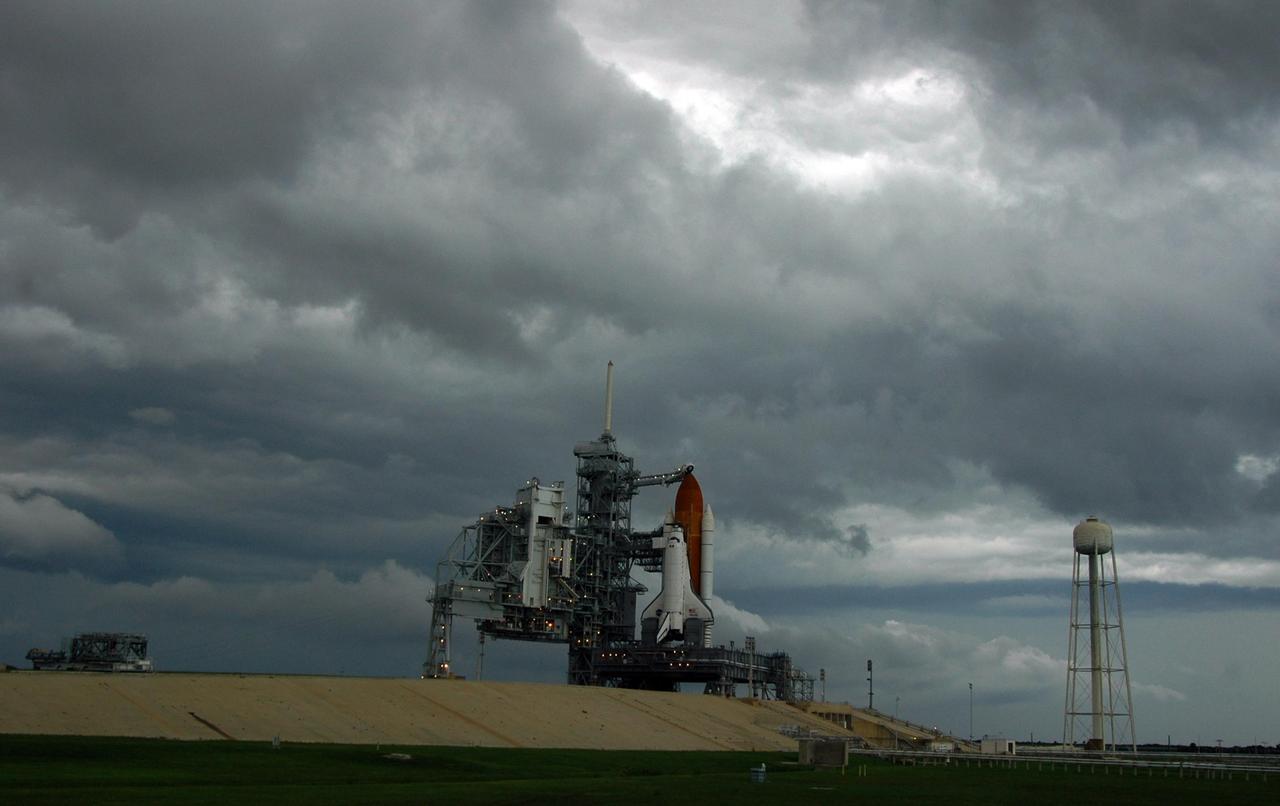
KENNEDY SPACE CENTER, FLA. - Storm clouds fill the sky from Launch Pad 39B, at right, west beyond the Vehicle Assembly Building. Space Shuttle Atlantis still sits on the pad after a scrub was called Aug. 27 due to a concern with fuel cell 1. Towering above the shuttle is the 80-foot lightning mast. During the STS-115 mission, Atlantis' astronauts will deliver and install the 17.5-ton, bus-sized P3/P4 integrated truss segment on the station. The girder-like truss includes a set of giant solar arrays, batteries and associated electronics and will provide one-fourth of the total power-generation capability for the completed station. This mission is the 116th space shuttle flight, the 27th flight for orbiter Atlantis, and the 19th U.S. flight to the International Space Station. STS-115 is scheduled to last 11 days with a planned landing at KSC. Photo credit: NASA/Ken Thornsley
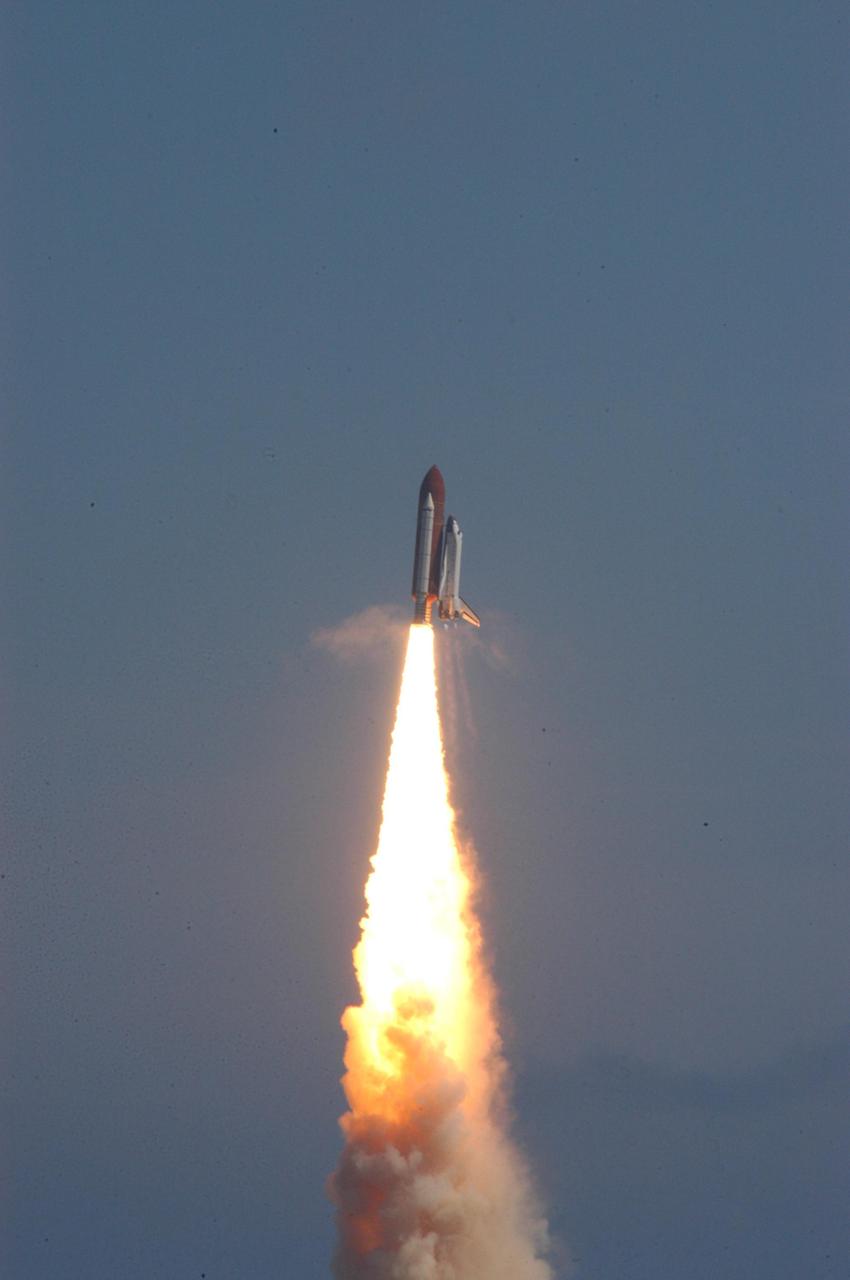
KENNEDY SPACE CENTER, FLA. - The fiery launch of Space Shuttle Atlantis makes a perfect picture against the blue Florida sky as Atlantis heads for a rendezvous with the International Space Station on mission STS-115. After launch attempts were scrubbed Aug. 27 and 29 and Sept. 3 and 8 due to weather and technical concerns, this launch was executed perfectly. During the STS-115 mission, Atlantis' astronauts will deliver and install the 17.5-ton, bus-sized P3/P4 integrated truss segment on the station. The girder-like truss includes a set of giant solar arrays, batteries and associated electronics and will provide one-fourth of the total power-generation capability for the completed station. This mission is the 116th space shuttle flight, the 27th flight for orbiter Atlantis, and the 19th U.S. flight to the ISS. STS-115 is scheduled to last 11 days with a planned landing at KSC. Photo credit: NASA/George Shelton
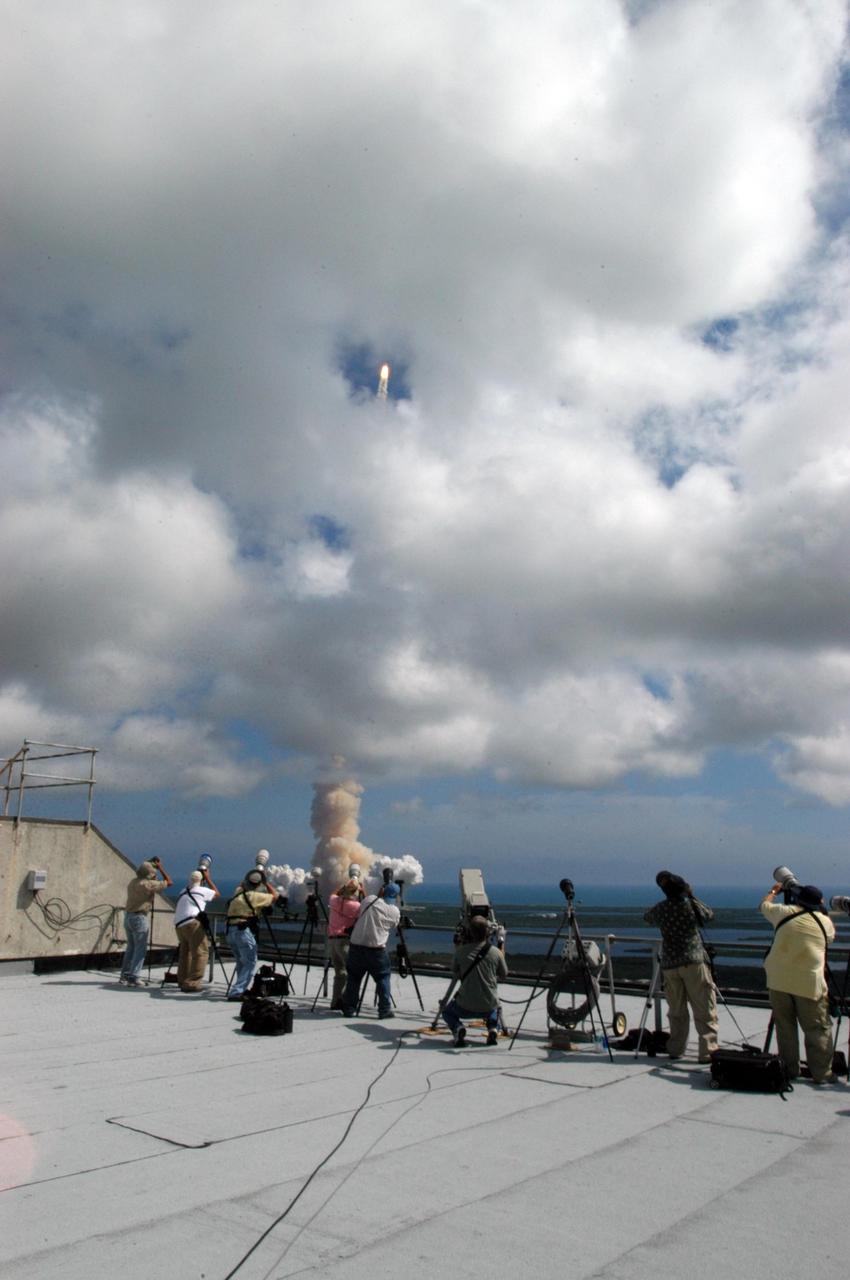
KENNEDY SPACE CENTER, FLA. - A phalanx of photographers line the roof of the Vehicle Assembly Building as Space Shuttle Atlantis roars off the launch pad at 11:14:55 a.m. EDT for a rendezvous with the International Space Station on mission STS-115. After launch attempts were scrubbed Aug. 27 and 29 and Sept. 3 and 8 due to weather and technical concerns, this launch was executed perfectly. During the STS-115 mission, Atlantis' astronauts will deliver and install the 17.5-ton, bus-sized P3/P4 integrated truss segment on the station. The girder-like truss includes a set of giant solar arrays, batteries and associated electronics and will provide one-fourth of the total power-generation capability for the completed station. This mission is the 116th space shuttle flight, the 27th flight for orbiter Atlantis, and the 19th U.S. flight to the ISS. STS-115 is scheduled to last 11 days with a planned landing at KSC. Photo credit: NASA/George Shelton

KENNEDY SPACE CENTER, FLA. - A heavy bank of storm clouds gather behind Space Shuttle Atlantis on Launch Pad 39B. Atlantis was originally scheduled to launch Aug. 27, but a scrub was called by mission managers due to a concern with fuel cell 1. Towering above the shuttle is the 80-foot lightning mast. During the STS-115 mission, Atlantis' astronauts will deliver and install the 17.5-ton, bus-sized P3/P4 integrated truss segment on the station. The girder-like truss includes a set of giant solar arrays, batteries and associated electronics and will provide one-fourth of the total power-generation capability for the completed station. This mission is the 116th space shuttle flight, the 27th flight for orbiter Atlantis, and the 19th U.S. flight to the International Space Station. STS-115 is scheduled to last 11 days with a planned landing at KSC. Photo credit: NASA/Ken Thornsley
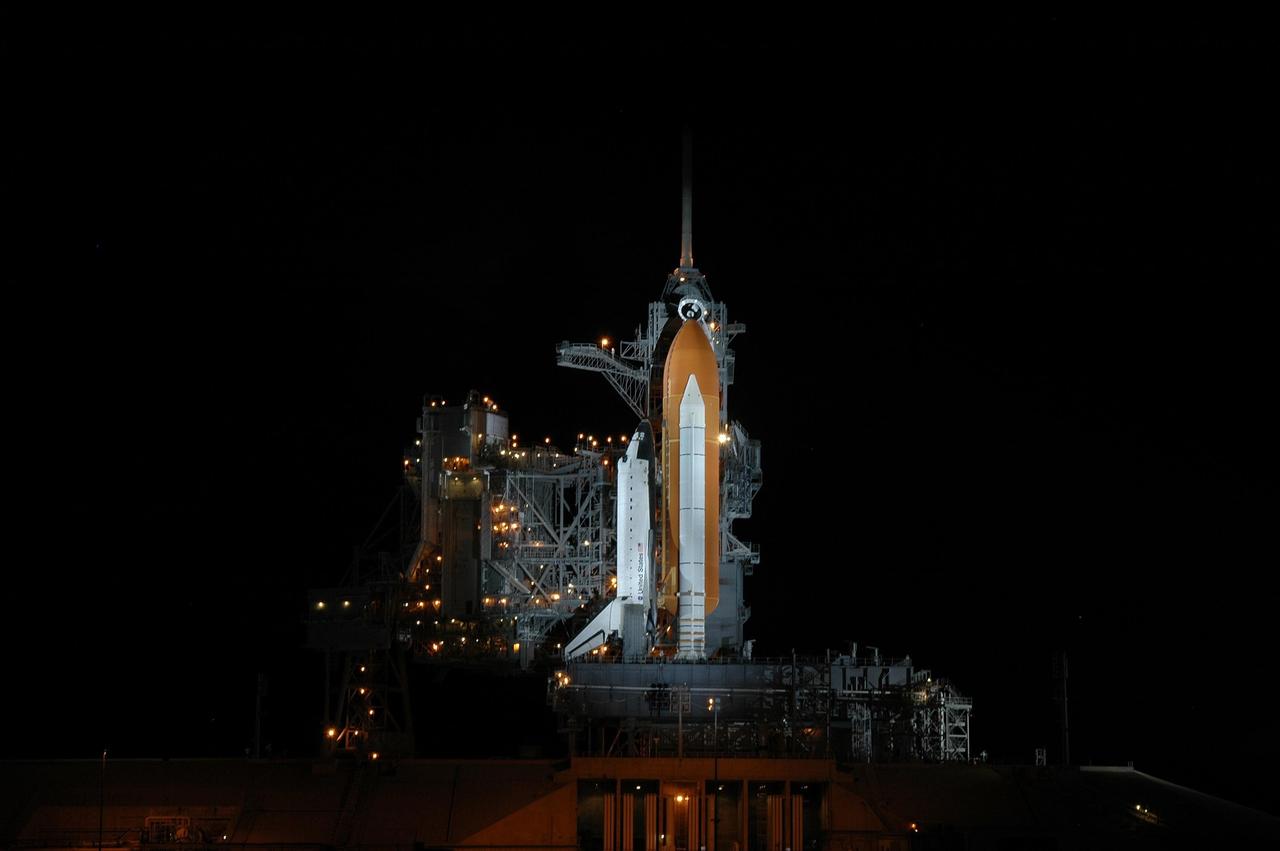
KENNEDY SPACE CENTER, FLA. - Space Shuttle Atlantis is bathed in light on Launch Pad 39B. Atlantis was originally scheduled to launch at 12:29 p.m. EDT on this date, but a 24-hour scrub was called by mission managers due to a concern with Fuel Cell 1. During the STS-115 mission, Atlantis' astronauts will deliver and install the 17.5-ton, bus-sized P3/P4 integrated truss segment on the station. The girder-like truss includes a set of giant solar arrays, batteries and associated electronics and will provide one-fourth of the total power-generation capability for the completed station. This mission is the 116th space shuttle flight, the 27th flight for orbiter Atlantis, and the 19th U.S. flight to the International Space Station. STS-115 is scheduled to last 11 days with a planned landing at KSC. Photo credit: NASA/Jim Grossmann
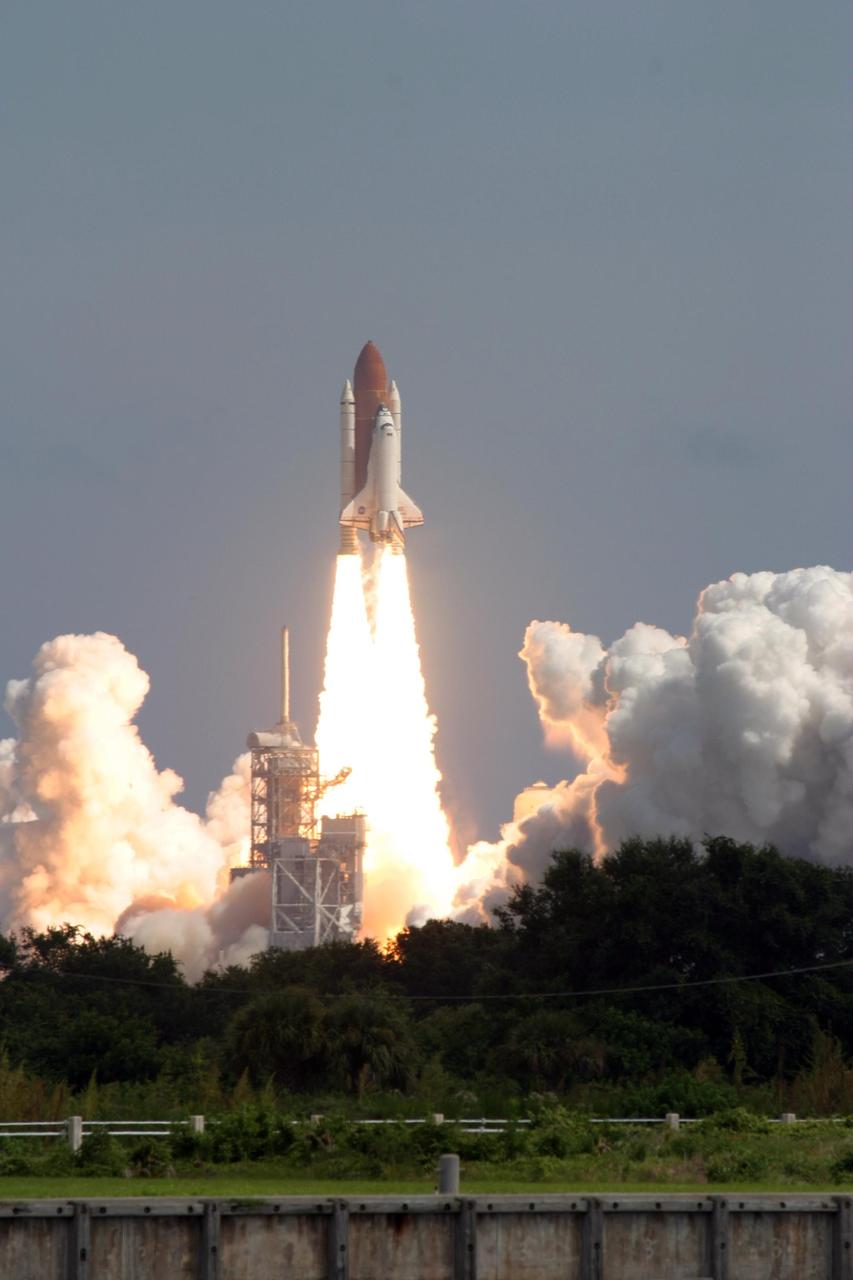
KENNEDY SPACE CENTER, FLA. - With a fiery liftoff, Space Shuttle Atlantis roars off the launch pad for a rendezvous with the International Space Station on mission STS-115. After launch attempts were scrubbed Aug. 27 and 29 and Sept. 3 and 8 due to weather and technical concerns, this launch was executed perfectly. During the STS-115 mission, Atlantis' astronauts will deliver and install the 17.5-ton, bus-sized P3/P4 integrated truss segment on the station. The girder-like truss includes a set of giant solar arrays, batteries and associated electronics and will provide one-fourth of the total power-generation capability for the completed station. This mission is the 116th space shuttle flight, the 27th flight for orbiter Atlantis, and the 19th U.S. flight to the ISS. STS-115 is scheduled to last 11 days with a planned landing at KSC. Photo credit: NASA/Dennis Sabo
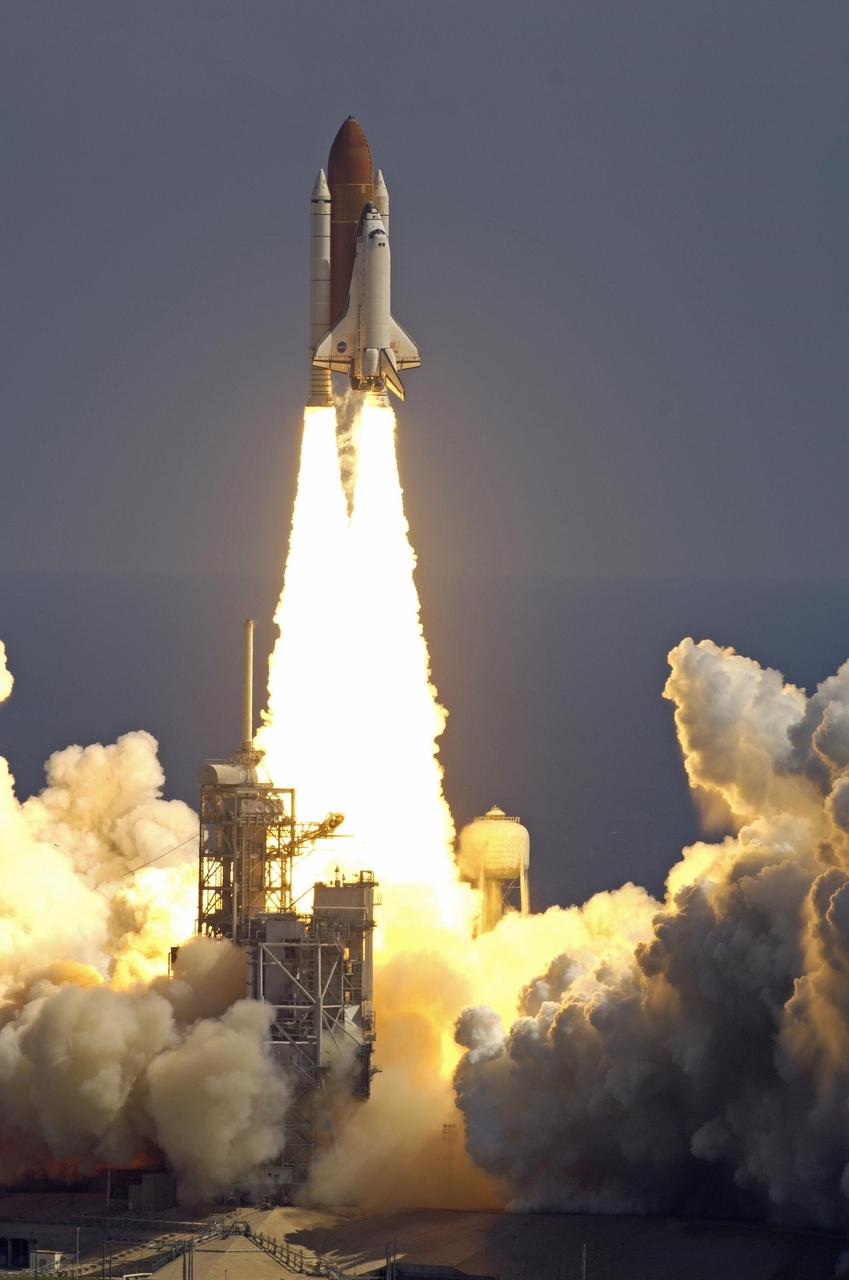
KENNEDY SPACE CENTER, FLA. - Flaming rockets propel Space Shuttle Atlantis into the sky for a rendezvous with the International Space Station on mission STS-115. Liftoff was on-time at 11:14:55 a.m. EDT. After launch attempts were scrubbed Aug. 27 and 29 and Sept. 3 and 8 due to weather and technical concerns, this launch was executed perfectly. Mission STS-115 is the 116th space shuttle flight, the 27th flight for orbiter Atlantis, and the 19th U.S. flight to the International Space Station. During the mission, Atlantis' astronauts will deliver and install the 17.5-ton, bus-sized P3/P4 integrated truss segment on the station. The girder-like truss includes a set of giant solar arrays, batteries and associated electronics and will provide one-fourth of the total power-generation capability for the completed station. STS-115 is scheduled to last 11 days with a planned landing at KSC. Photo courtesy of Nikon/Scott Andrews
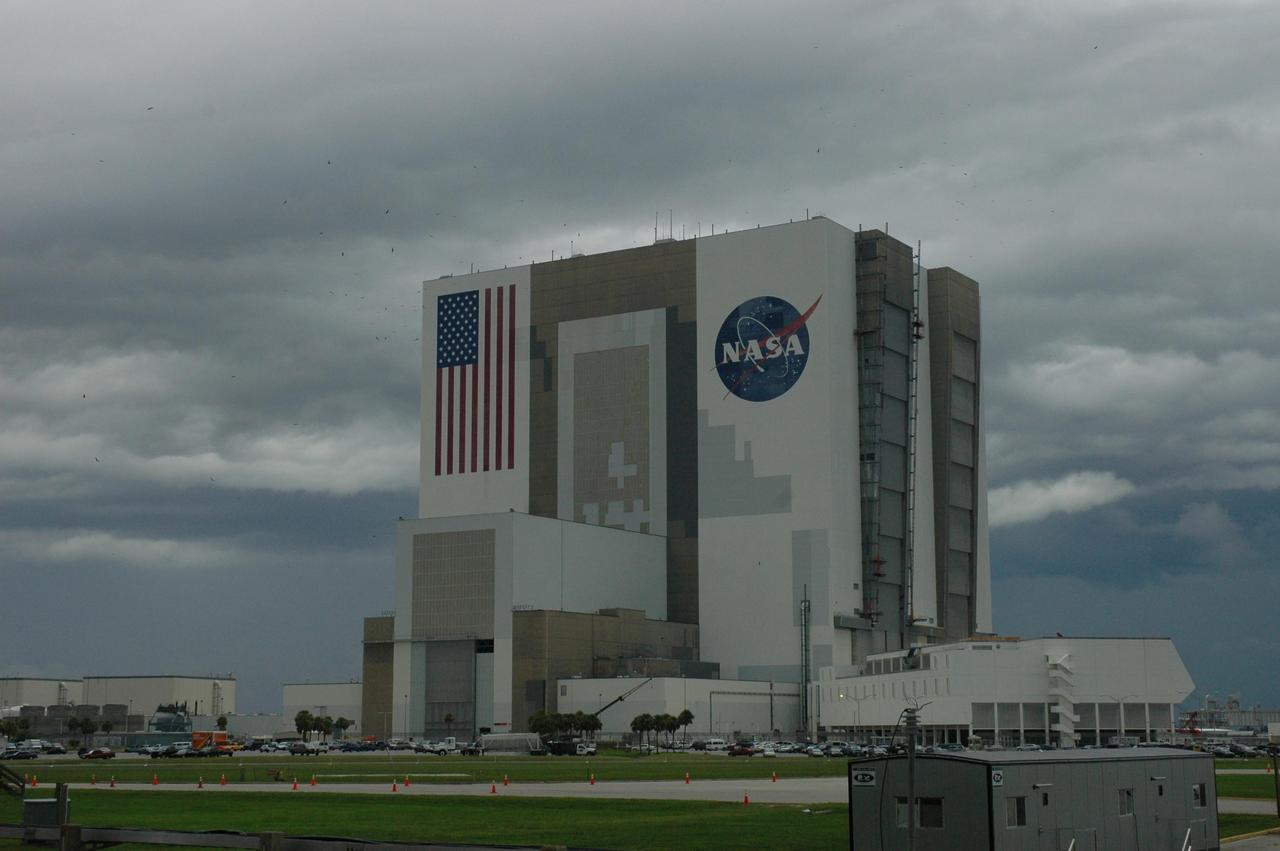
KENNEDY SPACE CENTER, FLA. - Storm clouds fill the sky behind the Vehicle Assembly Building on the day before (L-1) the second scheduled launch attempt for Space Shuttle Atlantis on mission STS-115. During the STS-115 mission, Atlantis' astronauts will deliver and install the 17.5-ton, bus-sized P3/P4 integrated truss segment on the station. The girder-like truss includes a set of giant solar arrays, batteries and associated electronics and will provide one-fourth of the total power-generation capability for the completed station. This mission is the 116th space shuttle flight, the 27th flight for orbiter Atlantis, and the 19th U.S. flight to the International Space Station. STS-115 is scheduled to last 11 days with a planned landing at KSC. Photo credit: NASA/Troy Cryder
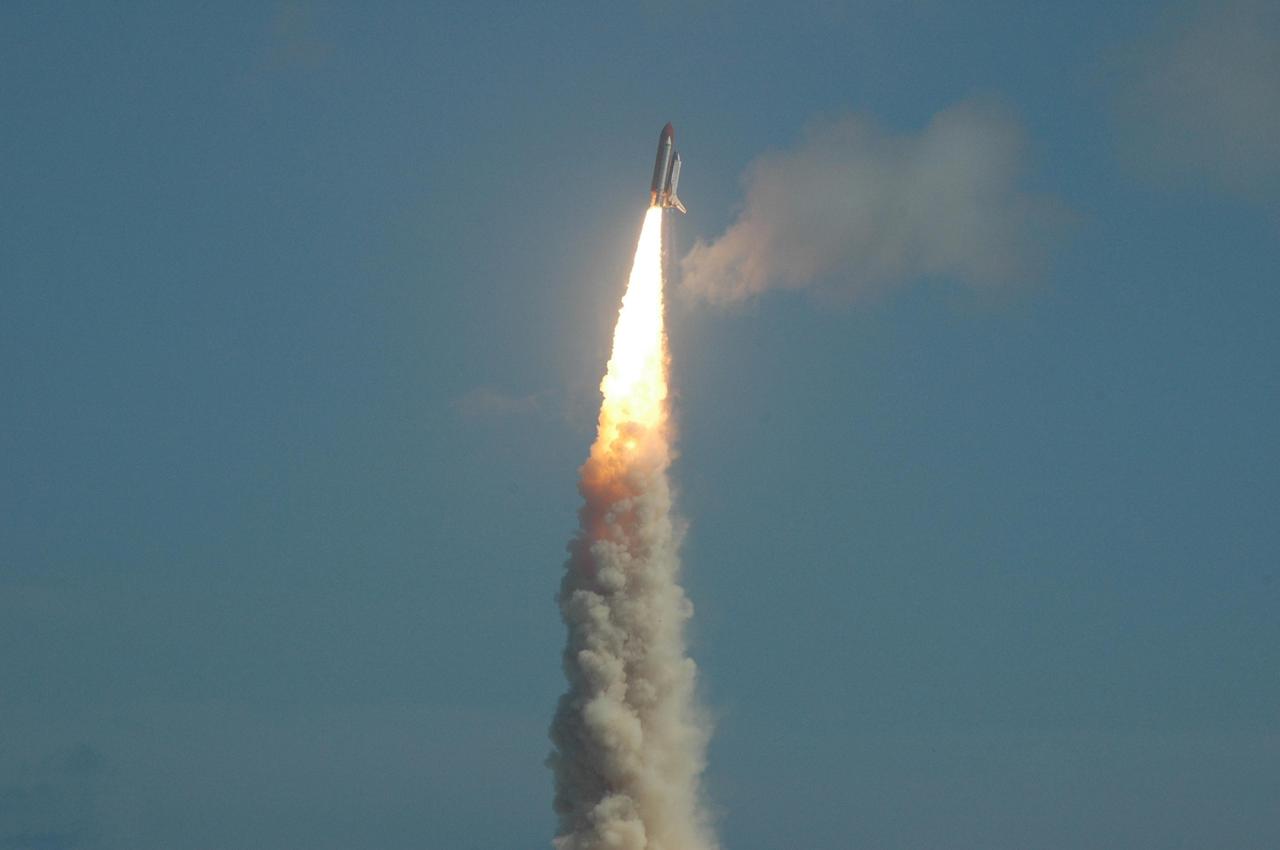
KENNEDY SPACE CENTER, FLA. - Through a slight haze of clouds, Space Shuttle Atlantis hurtles toward space for a rendezvous with the International Space Station on mission STS-115. Liftoff was on-time at 11:14:55 a.m. EDT. After launch attempts were scrubbed Aug. 27 and 29 and Sept. 3 and 8 due to weather and technical concerns, this launch was executed perfectly. Mission STS-115 is the 116th space shuttle flight, the 27th flight for orbiter Atlantis, and the 19th U.S. flight to the International Space Station. During the mission, Atlantis' astronauts will deliver and install the 17.5-ton, bus-sized P3/P4 integrated truss segment on the station. The girder-like truss includes a set of giant solar arrays, batteries and associated electronics and will provide one-fourth of the total power-generation capability for the completed station. STS-115 is scheduled to last 11 days with a planned landing at KSC. Photo credit: NASA/Ken Thornsley
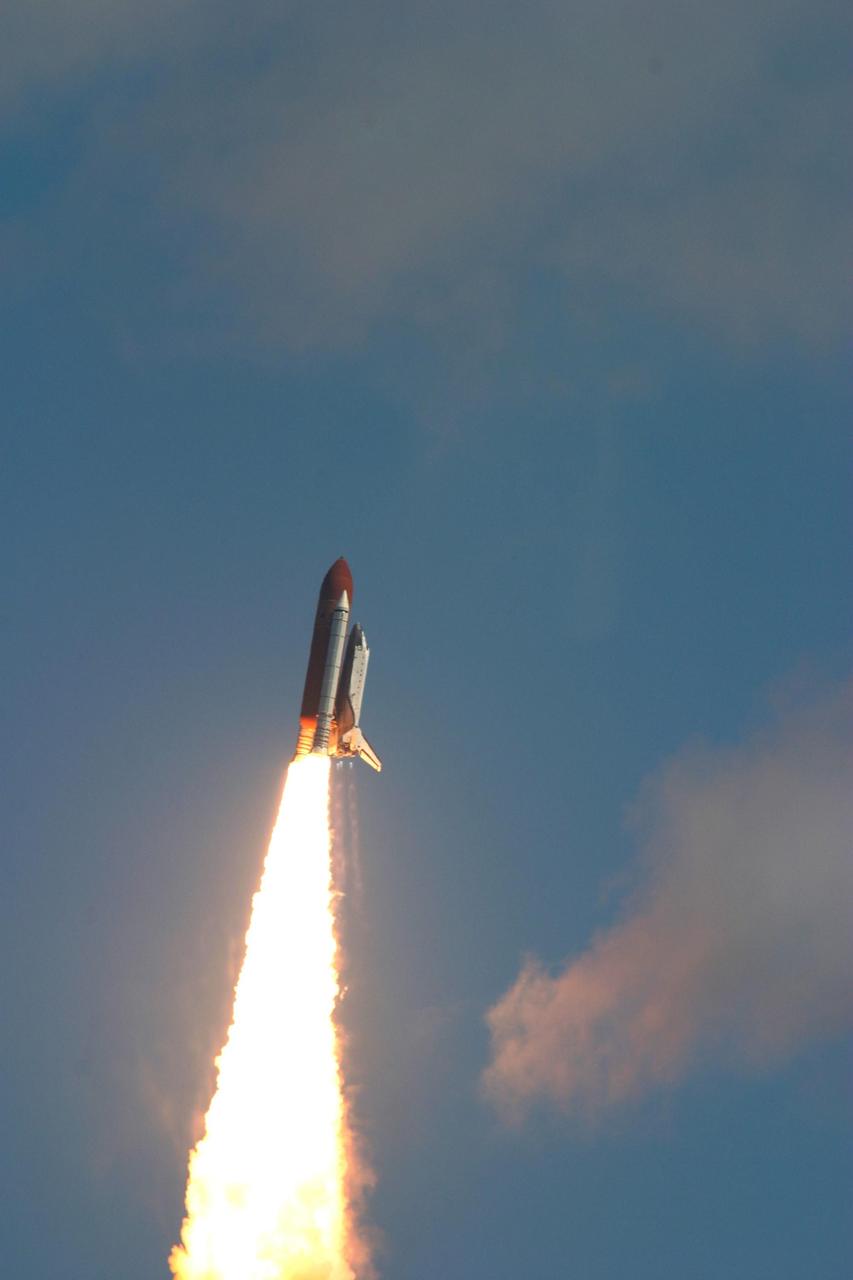
KENNEDY SPACE CENTER, FLA. - Looking like a work of art, Space Shuttle Atlantis roars into the blue Florida sky atop a column of fire for a rendezvous with the International Space Station on mission STS-115. After launch attempts were scrubbed Aug. 27 and 29 and Sept. 3 and 8 due to weather and technical concerns, this launch was executed perfectly. During the STS-115 mission, Atlantis' astronauts will deliver and install the 17.5-ton, bus-sized P3/P4 integrated truss segment on the station. The girder-like truss includes a set of giant solar arrays, batteries and associated electronics and will provide one-fourth of the total power-generation capability for the completed station. This mission is the 116th space shuttle flight, the 27th flight for orbiter Atlantis, and the 19th U.S. flight to the ISS. STS-115 is scheduled to last 11 days with a planned landing at KSC. Photo credit: NASA/Dennis Sabo
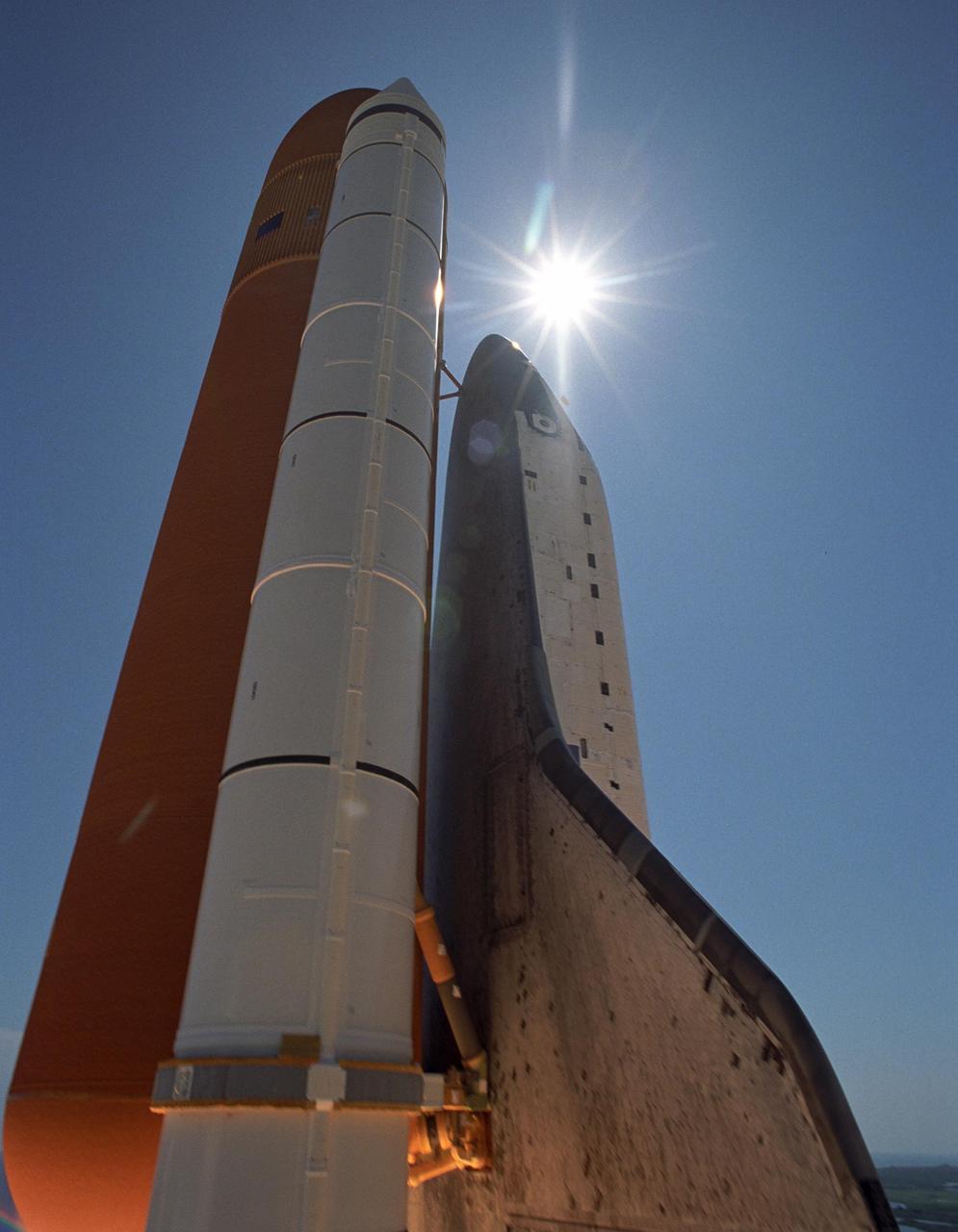
KENNEDY SPACE CENTER, FLA. - The sun radiates on Space Shuttle Atlantis as it heads for space on mission STS-115 to the International Space Station. Liftoff was on-time at 11:14:55 a.m. EDT. After several launch attempts were scrubbed due to weather and technical concerns, this launch was executed perfectly. Mission STS-115 is the 116th space shuttle flight, the 27th flight for orbiter Atlantis, and the 19th U.S. flight to the International Space Station. During the mission, Atlantis' astronauts will deliver and install the 17.5-ton, bus-sized P3/P4 integrated truss segment on the station. The girder-like truss includes a set of giant solar arrays, batteries and associated electronics and will provide one-fourth of the total power-generation capability for the completed station. STS-115 is scheduled to last 11 days with a planned landing at KSC.
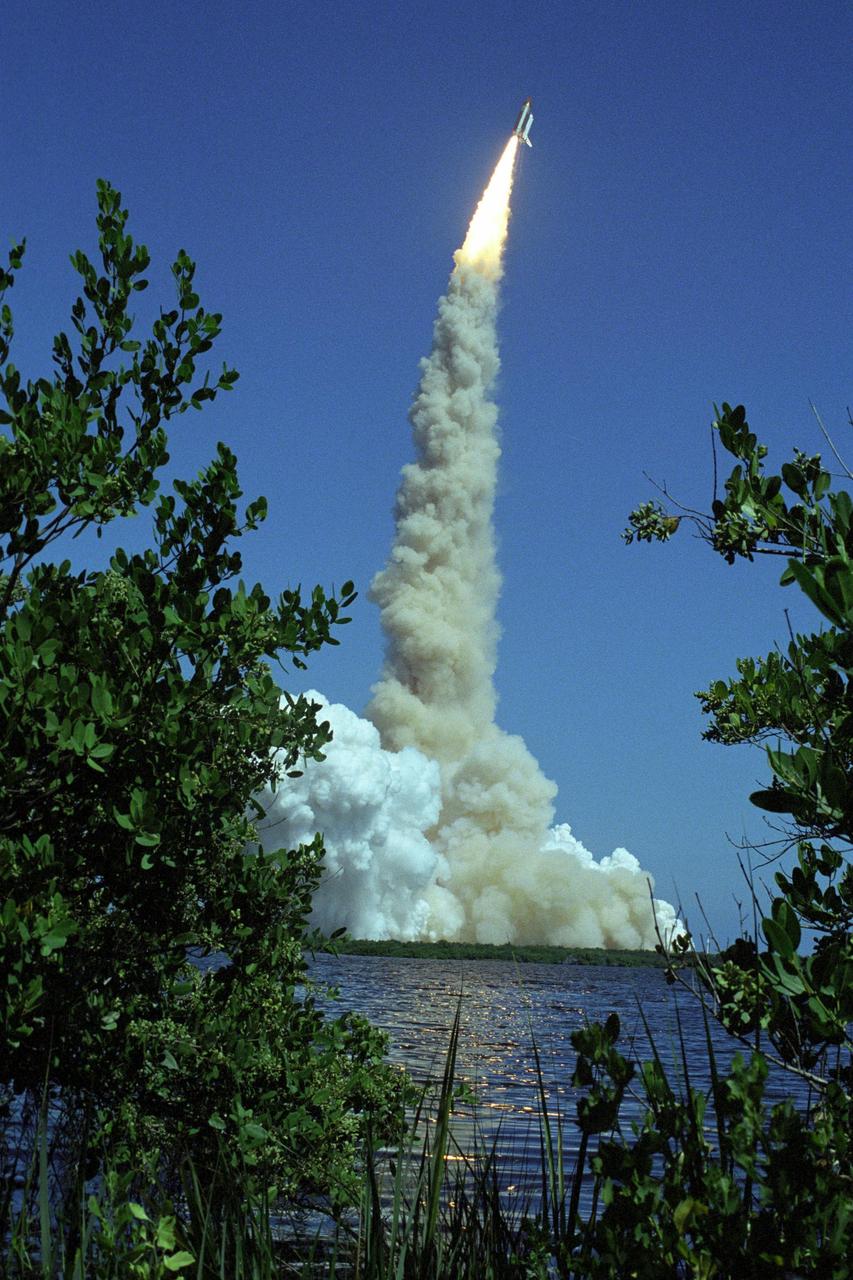
KENNEDY SPACE CENTER, FLA. - Trailing fire and a plume of smoke, Space Shuttle Atlantis leaves a dance of lights on nearby water as it hurtles toward space for a rendezvous with the International Space Station on mission STS-115. Liftoff was on-time at 11:14:55 a.m. EDT. After several launch attempts were scrubbed due to weather and technical concerns, this launch was executed perfectly. Mission STS-115 is the 116th space shuttle flight, the 27th flight for orbiter Atlantis, and the 19th U.S. flight to the International Space Station. During the mission, Atlantis' astronauts will deliver and install the 17.5-ton, bus-sized P3/P4 integrated truss segment on the station. The girder-like truss includes a set of giant solar arrays, batteries and associated electronics and will provide one-fourth of the total power-generation capability for the completed station. STS-115 is scheduled to last 11 days with a planned landing at KSC
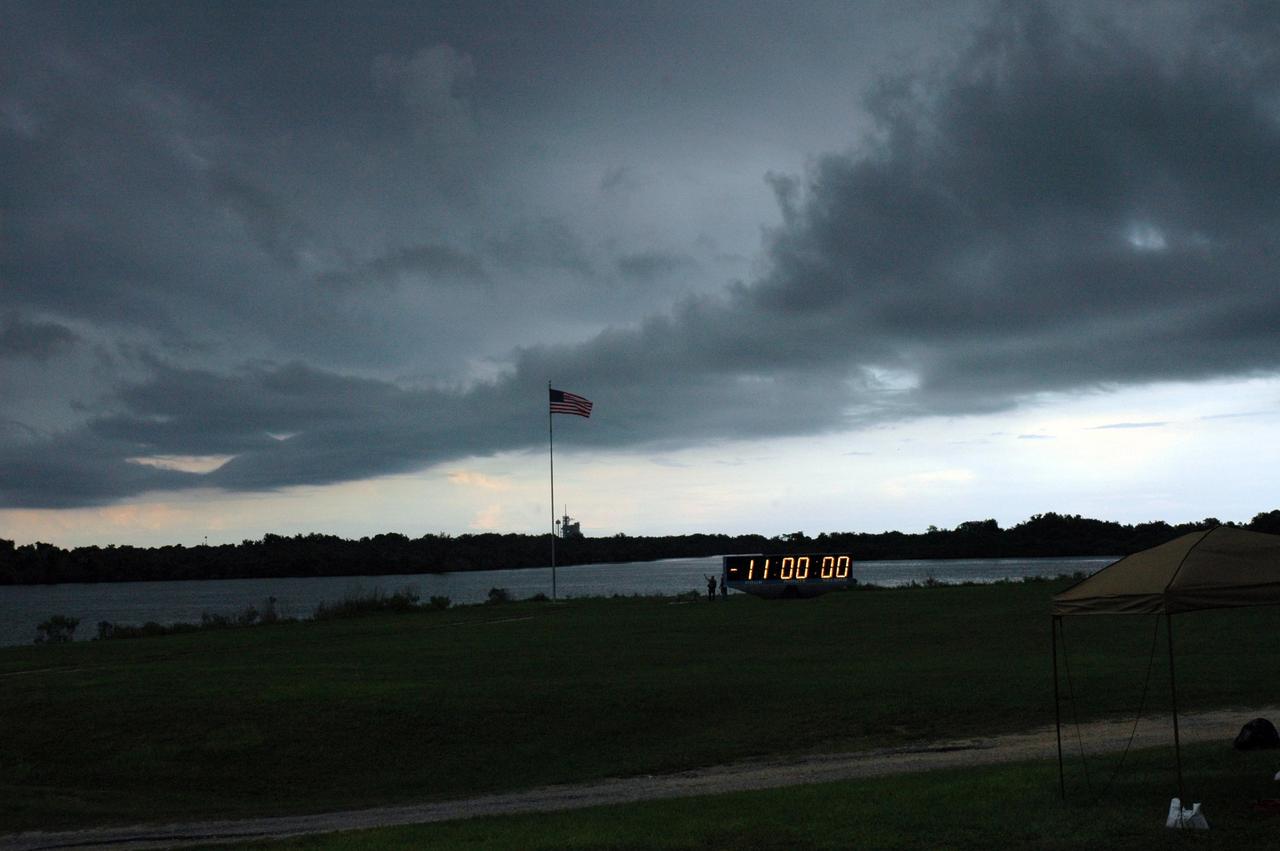
KENNEDY SPACE CENTER, FLA. - Menacing storm clouds roll through the Launch Complex 39 Area at NASA's Kennedy Space Center. Framed between the horizon and the clouds is Space Shuttle Atlantis on Launch Pad 39B. The flag in the foreground is at the NASA News Center, near the countdown clock. During the STS-115 mission, Atlantis' astronauts will deliver and install the 17.5-ton, bus-sized P3/P4 integrated truss segment on the station. The girder-like truss includes a set of giant solar arrays, batteries and associated electronics and will provide one-fourth of the total power-generation capability for the completed station. This mission is the 116th space shuttle flight, the 27th flight for orbiter Atlantis, and the 19th U.S. flight to the International Space Station. STS-115 is scheduled to last 11 days with a planned landing at KSC. Photo credit: NASA/Troy Cryder
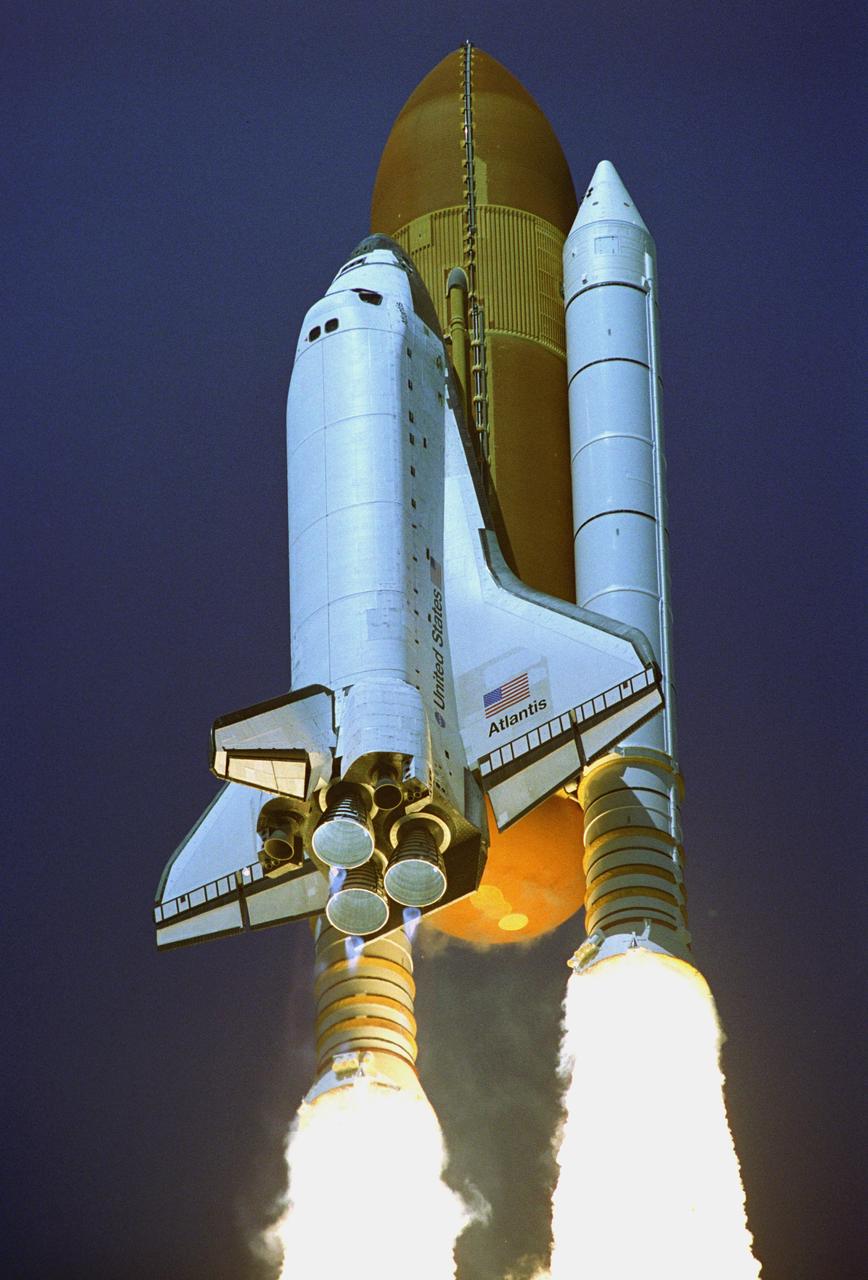
KENNEDY SPACE CENTER, FLA. - Twin columns of fire propel Space Shuttle Atlantis into a clear blue sky after liftoff from Launch Pad 39B. Atlantis is heading for a rendezvous with the International Space Station on mission STS-115. Liftoff was on-time at 11:14:55 a.m. EDT. After several launch attempts were scrubbed due to weather and technical concerns, this launch was executed perfectly. Mission STS-115 is the 116th space shuttle flight, the 27th flight for orbiter Atlantis, and the 19th U.S. flight to the International Space Station. During the mission, Atlantis' astronauts will deliver and install the 17.5-ton, bus-sized P3/P4 integrated truss segment on the station. The girder-like truss includes a set of giant solar arrays, batteries and associated electronics and will provide one-fourth of the total power-generation capability for the completed station. STS-115 is scheduled to last 11 days with a planned landing at KSC
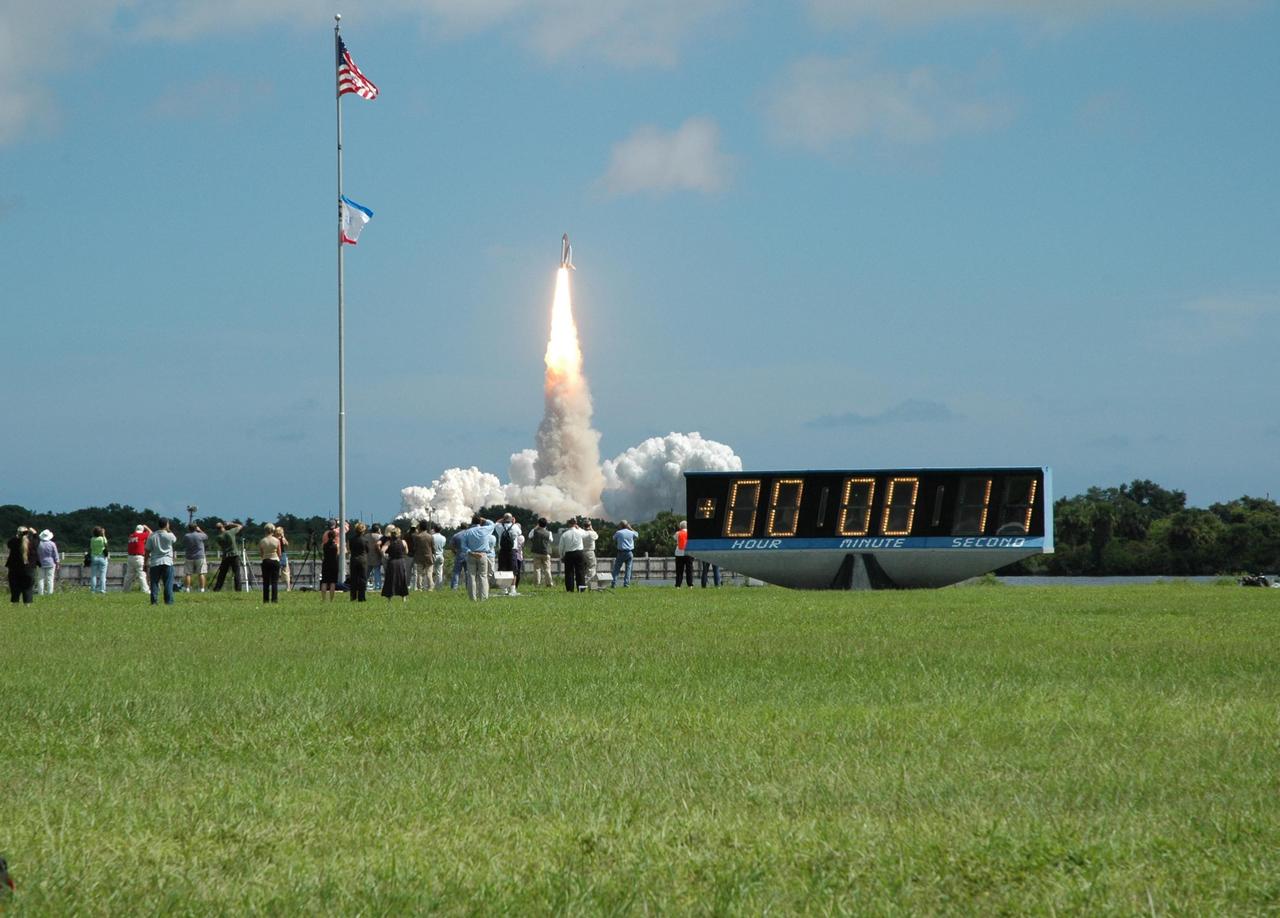
KENNEDY SPACE CENTER, FLA. - Space Shuttle Atlantis roars off the launch pad for a rendezvous with the International Space Station on mission STS-115. In the foreground is the countdown clock, marking launch and mission-elapsed time, on the grounds of the NASA News Center. After launch attempts were scrubbed Aug. 27 and 29 and Sept. 3 and 8 due to weather and technical concerns, this launch was executed perfectly. During the STS-115 mission, Atlantis' astronauts will deliver and install the 17.5-ton, bus-sized P3/P4 integrated truss segment on the station. The girder-like truss includes a set of giant solar arrays, batteries and associated electronics and will provide one-fourth of the total power-generation capability for the completed station. This mission is the 116th space shuttle flight, the 27th flight for orbiter Atlantis, and the 19th U.S. flight to the ISS. STS-115 is scheduled to last 11 days with a planned landing at KSC. Photo credit: NASA/Webb Dillard
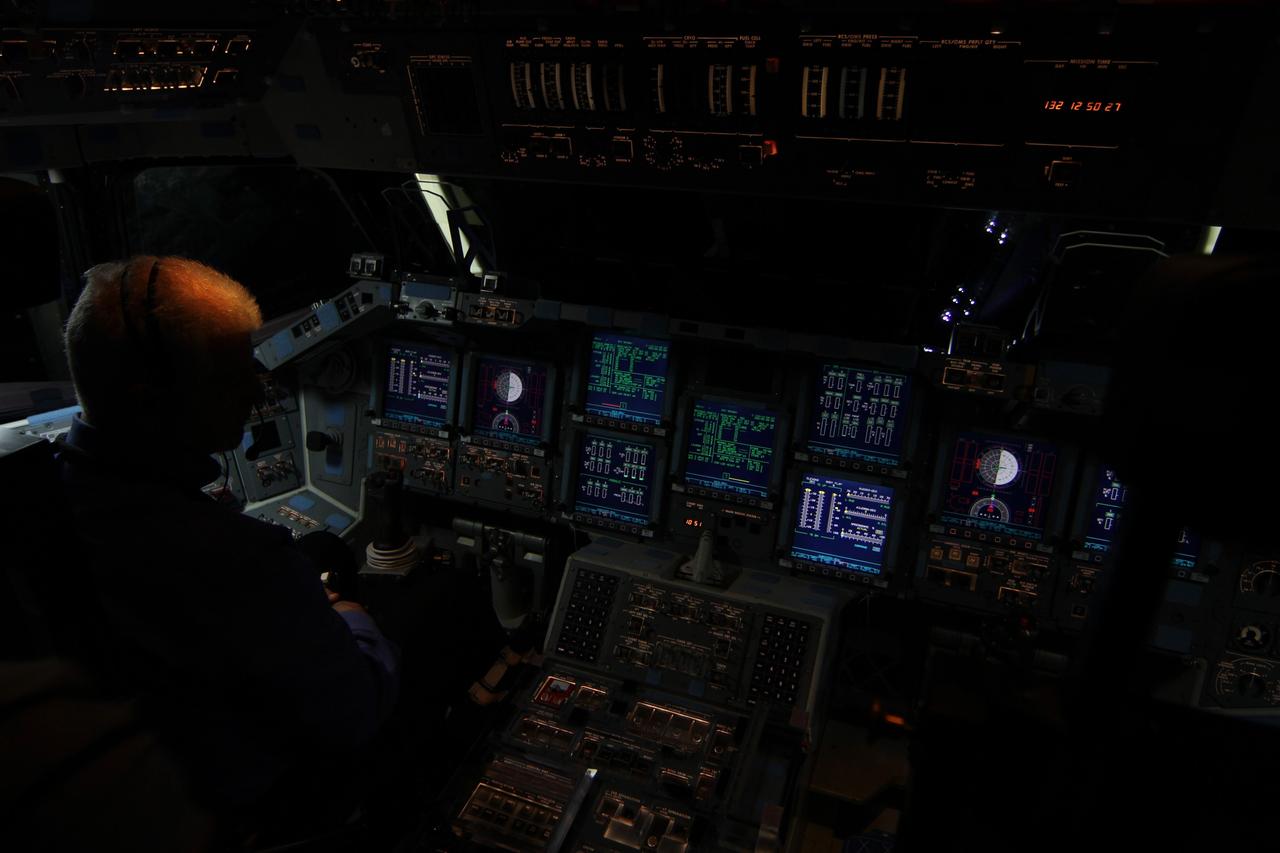
CAPE CANAVERAL, Fla. – In Orbiter Processing Facility-2 at NASA’s Kennedy Space Center in Florida, United Space Alliance manager Walter “Buddy” McKenzie monitors the consoles on space shuttle Endeavour’s flight deck as operations to power down the shuttle for the final time get under way. Endeavour is being prepared for public display at the California Science Center in Los Angeles. Its ferry flight to California is targeted for mid-September. Endeavour was the last space shuttle added to NASA’s orbiter fleet. Over the course of its 19-year career, Endeavour spent 299 days in space during 25 missions. For more information, visit http://www.nasa.gov/transition. Photo credit: NASA/Ben Smegelsky
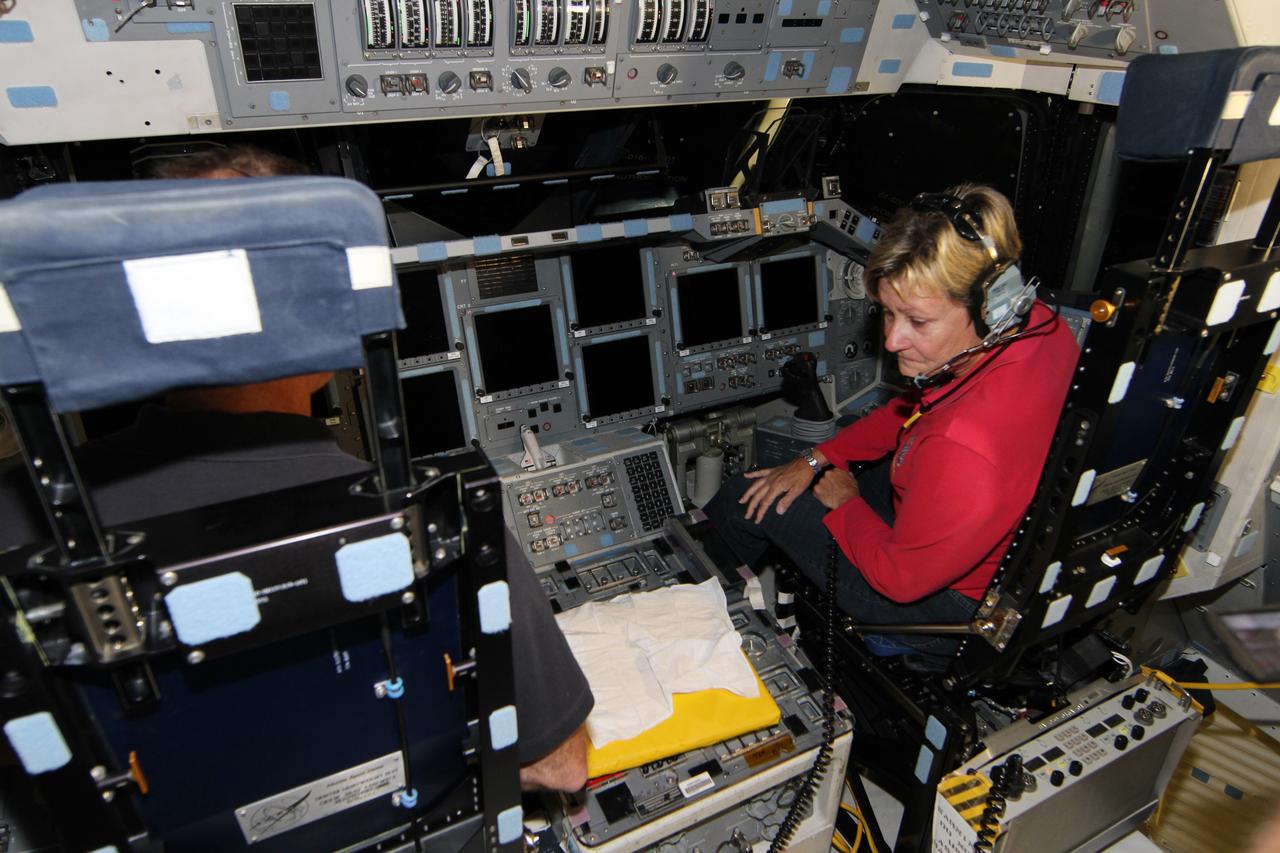
CAPE CANAVERAL, Fla. – In Orbiter Processing Facility-2 at NASA’s Kennedy Space Center in Florida, United Space Alliance OV-105 operations chief Mike Parrish, left, and associate operations chief Pat Leslie complete their respective tasks on space shuttle Endeavour’s flight deck as the shuttle is powered down for the final time. Endeavour is being prepared for public display at the California Science Center in Los Angeles. Its ferry flight to California is targeted for mid-September. Endeavour was the last space shuttle added to NASA’s orbiter fleet. Over the course of its 19-year career, Endeavour spent 299 days in space during 25 missions. For more information, visit http://www.nasa.gov/transition. Photo credit: NASA/Ben Smegelsky
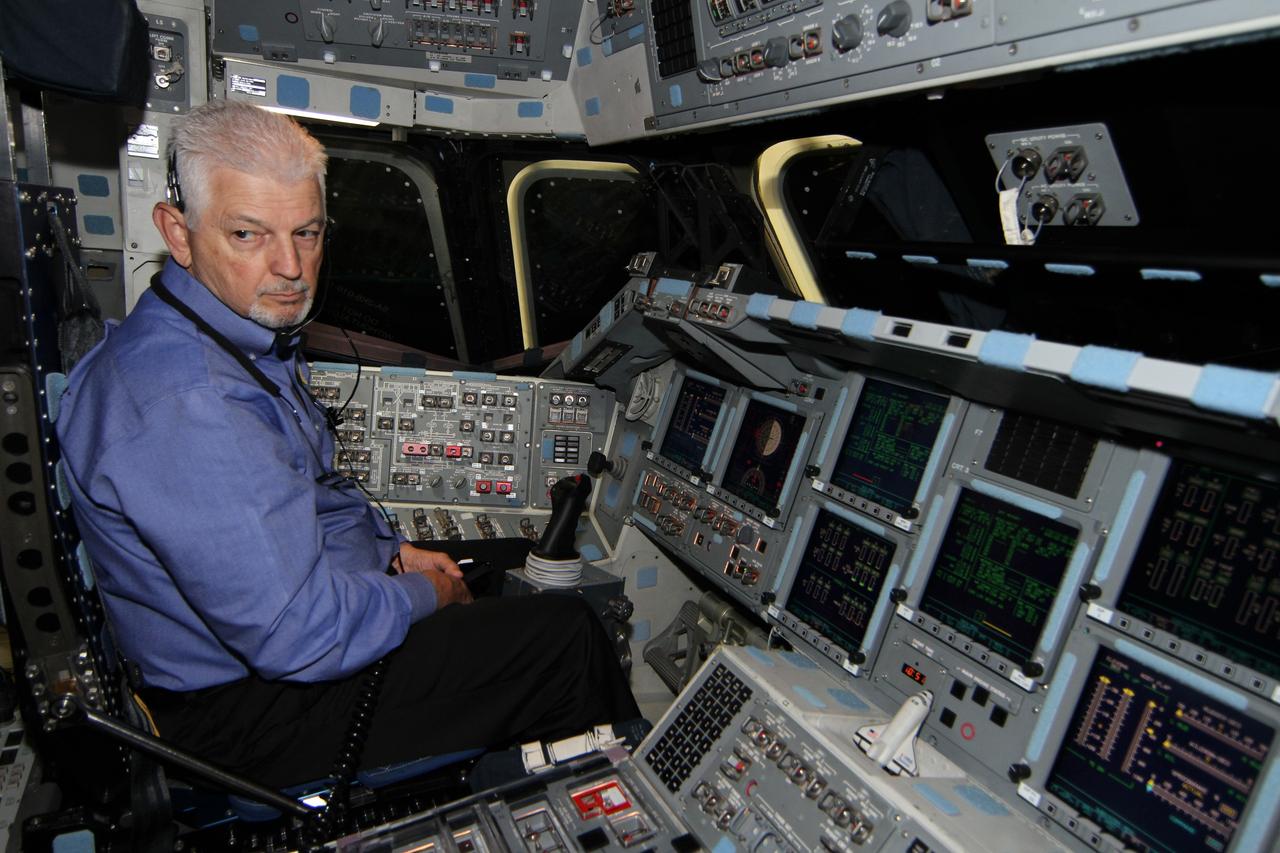
CAPE CANAVERAL, Fla. – In Orbiter Processing Facility-2 at NASA’s Kennedy Space Center in Florida, United Space Alliance manager Walter “Buddy” McKenzie monitors the consoles on space shuttle Endeavour’s flight deck as operations to power down the shuttle for the final time get under way. Endeavour is being prepared for public display at the California Science Center in Los Angeles. Its ferry flight to California is targeted for mid-September. Endeavour was the last space shuttle added to NASA’s orbiter fleet. Over the course of its 19-year career, Endeavour spent 299 days in space during 25 missions. For more information, visit http://www.nasa.gov/transition. Photo credit: NASA/Ben Smegelsky
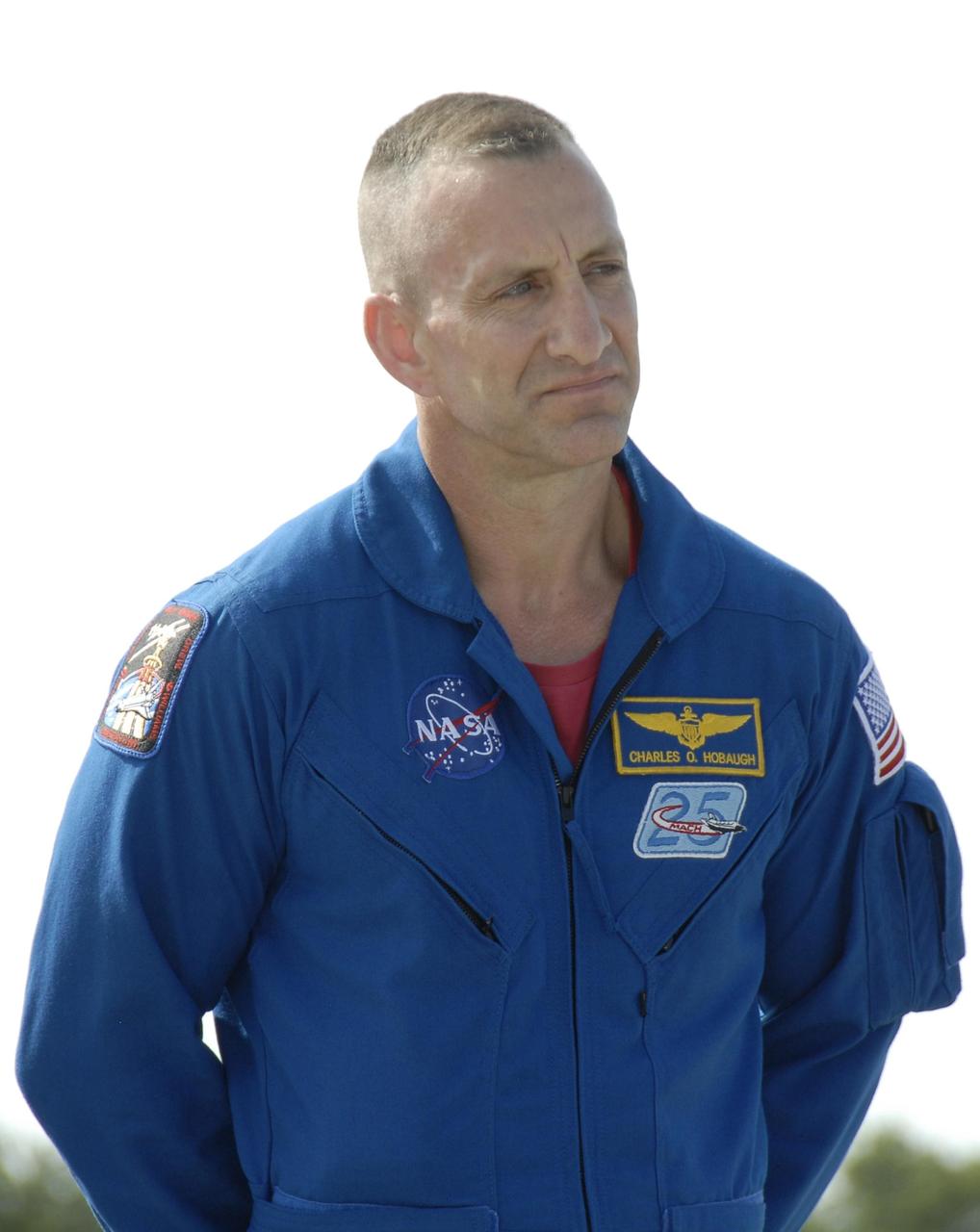
KENNEDY SPACE CENTER, FLA. -- The STS-118 crew arrives at Kennedy Space Center's Shuttle Landing Facility to prepare for launch on Aug. 8 aboard Space Shuttle Endeavour. Seen here is Pilot Charlie Hobaugh. Endeavour's STS-118 mission is the 22nd shuttle flight to the International Space Station. It will continue space station construction by delivering a third starboard truss segment, S5. Other payloads include the SPACEHAB module, making its last voyage, and the external stowage platform 3 with a control moment gyroscope on it. The flight will include at least three spacewalks. The crew will also debut a new system that enables docked shuttles to draw electrical power from the station to extend visits to the outpost. NASA/Kim Shiflett
CAPE CANAVERAL, Fla. – In Orbiter Processing Facility-2 at NASA’s Kennedy Space Center in Florida, United Space Alliance OV-105 operations chief Mike Parrish, left, and associate operations chief Pat Leslie turn off consoles on space shuttle Endeavour’s flight deck for the final time during operations to power down the shuttle. Endeavour is being prepared for public display at the California Science Center in Los Angeles. Its ferry flight to California is targeted for mid-September. Endeavour was the last space shuttle added to NASA’s orbiter fleet. Over the course of its 19-year career, Endeavour spent 299 days in space during 25 missions. For more information, visit http://www.nasa.gov/transition. Photo credit: NASA/Ben Smegelsky
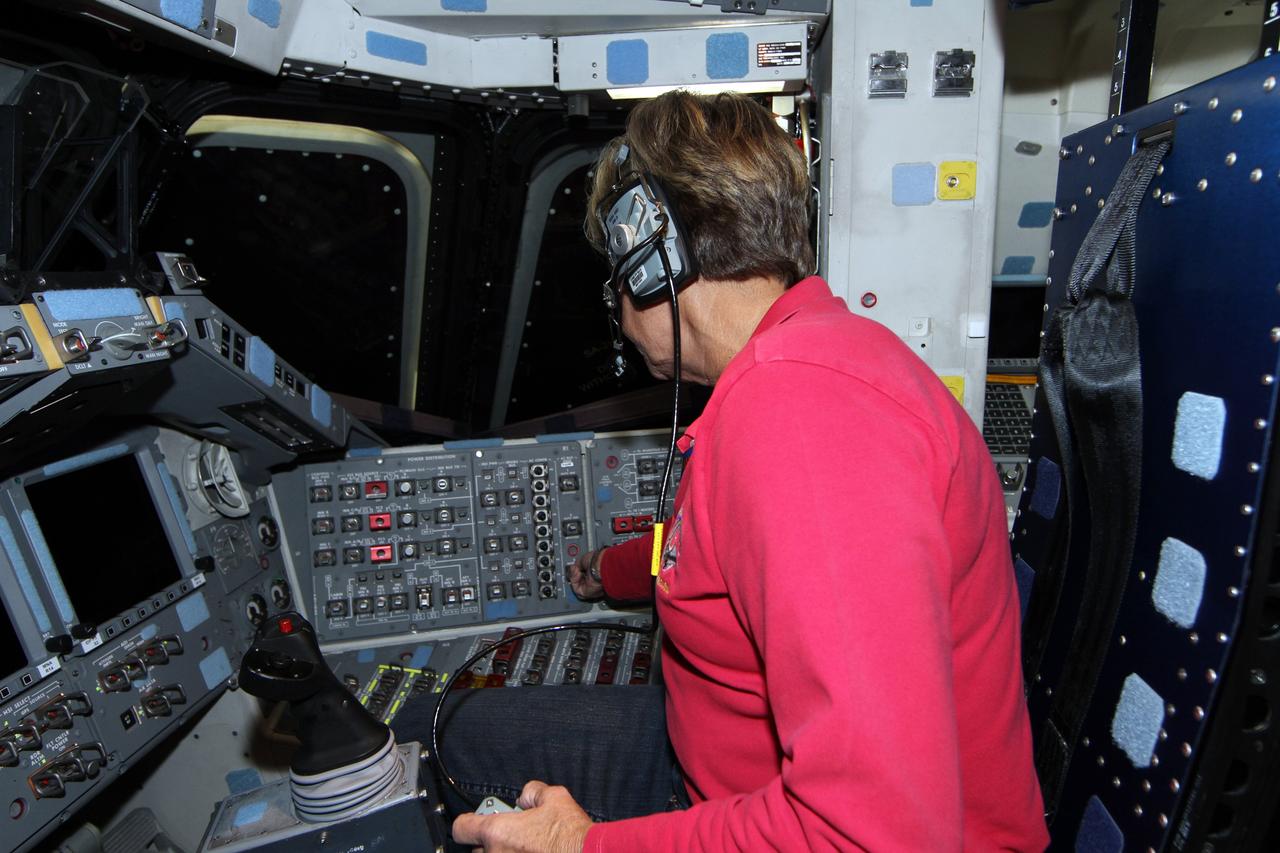
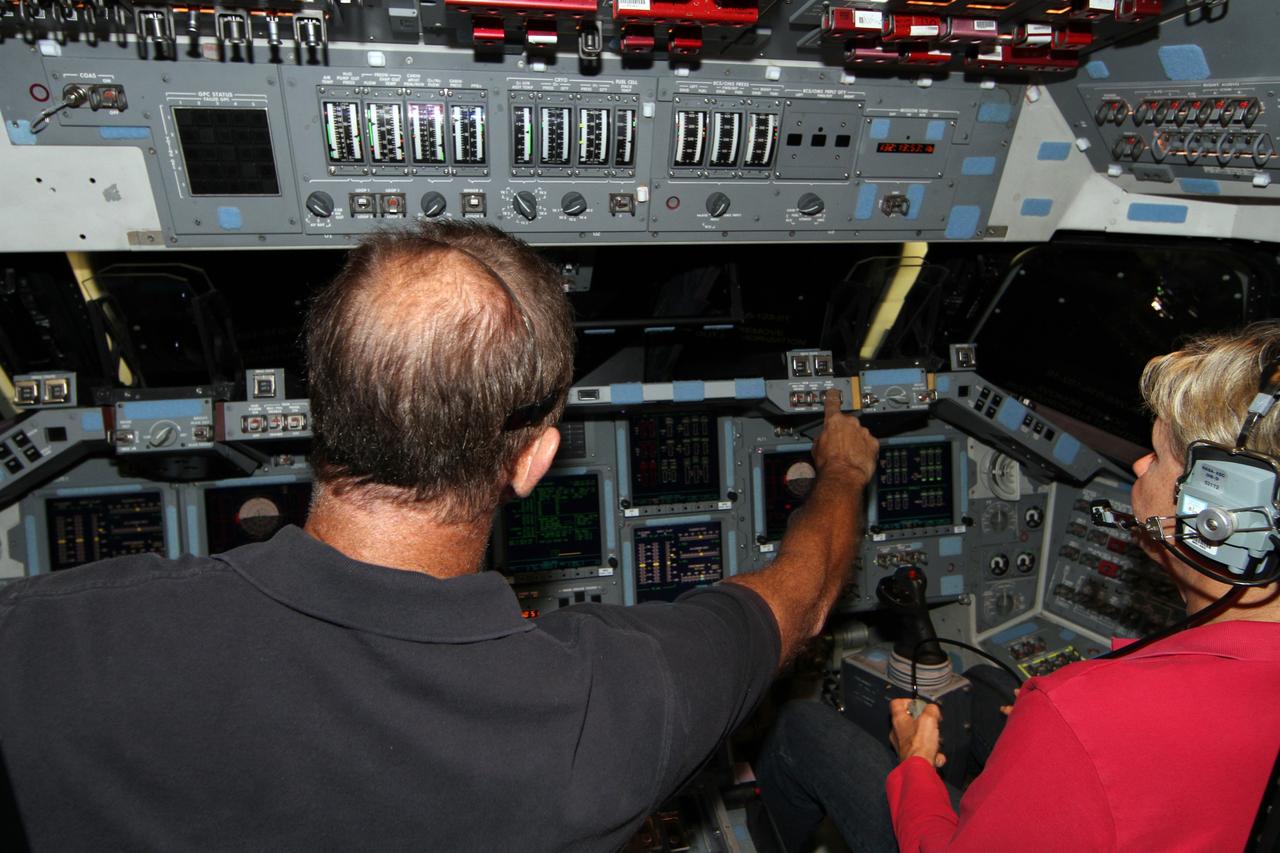
CAPE CANAVERAL, Fla. – In Orbiter Processing Facility-2 at NASA’s Kennedy Space Center in Florida, United Space Alliance associate operations chief Pat Leslie toggles the switches to turn off consoles on space shuttle Endeavour’s flight deck for the final time during operations to power down the shuttle. Endeavour is being prepared for public display at the California Science Center in Los Angeles. Its ferry flight to California is targeted for mid-September. Endeavour was the last space shuttle added to NASA’s orbiter fleet. Over the course of its 19-year career, Endeavour spent 299 days in space during 25 missions. For more information, visit http://www.nasa.gov/transition. Photo credit: NASA/Ben Smegelsky

KENNEDY SPACE CENTER, FLA. -- The STS-118 crew arrives at Kennedy Space Center's Shuttle Landing Facility to prepare for launch on Aug. 8 aboard Space Shuttle Endeavour. Seen here is Mission Specialist Rick Mastracchio as he talks to media representatives. Endeavour's STS-118 mission is the 22nd shuttle flight to the International Space Station. It will continue space station construction by delivering a third starboard truss segment, S5. Other payloads include the SPACEHAB module, making its last voyage, and the external stowage platform 3 with a control moment gyroscope on it. The flight will include at least three spacewalks. The crew will also debut a new system that enables docked shuttles to draw electrical power from the station to extend visits to the outpost. Photo credit: NASA/Kim Shiflett

KENNEDY SPACE CENTER, FLA. -- The STS-118 crew arrives at Kennedy Space Center's Shuttle Landing Facility to prepare for launch on Aug. 8 aboard Space Shuttle Endeavour. From left are Commander Scott Kelly, Pilot Charlie Hobaugh, and Mission Specialists Tracy Caldwell, Rick Mastracchio, Dave Williams (with the Canadian Space Agency), Barbara Morgan and Alvin Drew. Endeavour's STS-118 mission is the 22nd shuttle flight to the International Space Station. It will continue space station construction by delivering a third starboard truss segment, S5. Other payloads include the SPACEHAB module, making its last voyage, and the external stowage platform 3 with a control moment gyroscope on it. The flight will include at least three spacewalks. The crew will also debut a new system that enables docked shuttles to draw electrical power from the station to extend visits to the outpost. Photo credit: NASA/Kim Shiflett
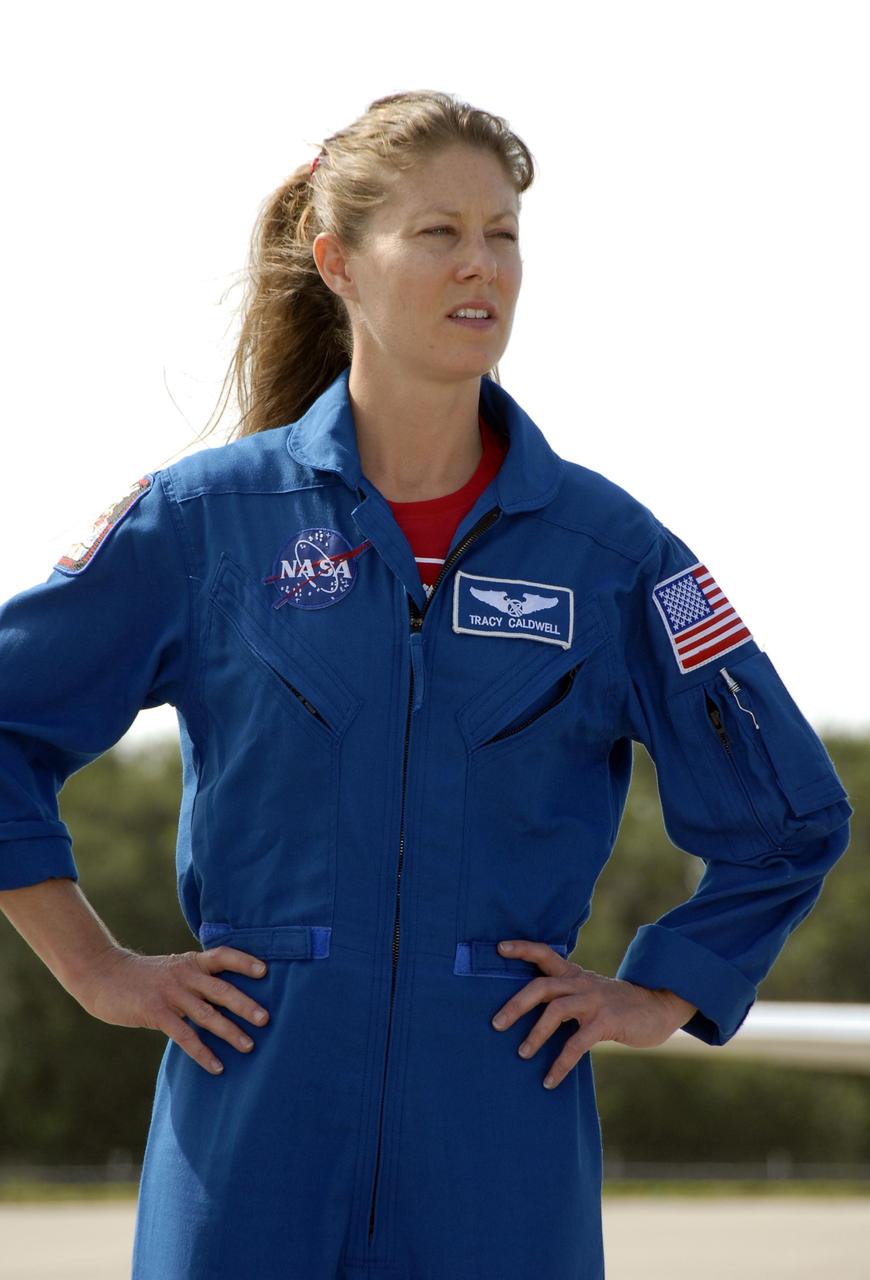
KENNEDY SPACE CENTER, FLA. -- The STS-118 crew arrives at Kennedy Space Center's Shuttle Landing Facility to prepare for launch on Aug. 8 aboard Space Shuttle Endeavour. Seen here is Mission Specialist Tracy Caldwell as she talks to the media. Endeavour's STS-118 mission is the 22nd shuttle flight to the International Space Station. It will continue space station construction by delivering a third starboard truss segment, S5. Other payloads include the SPACEHAB module, making its last voyage, and the external stowage platform 3 with a control moment gyroscope on it. The flight will include at least three spacewalks. The crew will also debut a new system that enables docked shuttles to draw electrical power from the station to extend visits to the outpost. NASA/Kim Shiflett
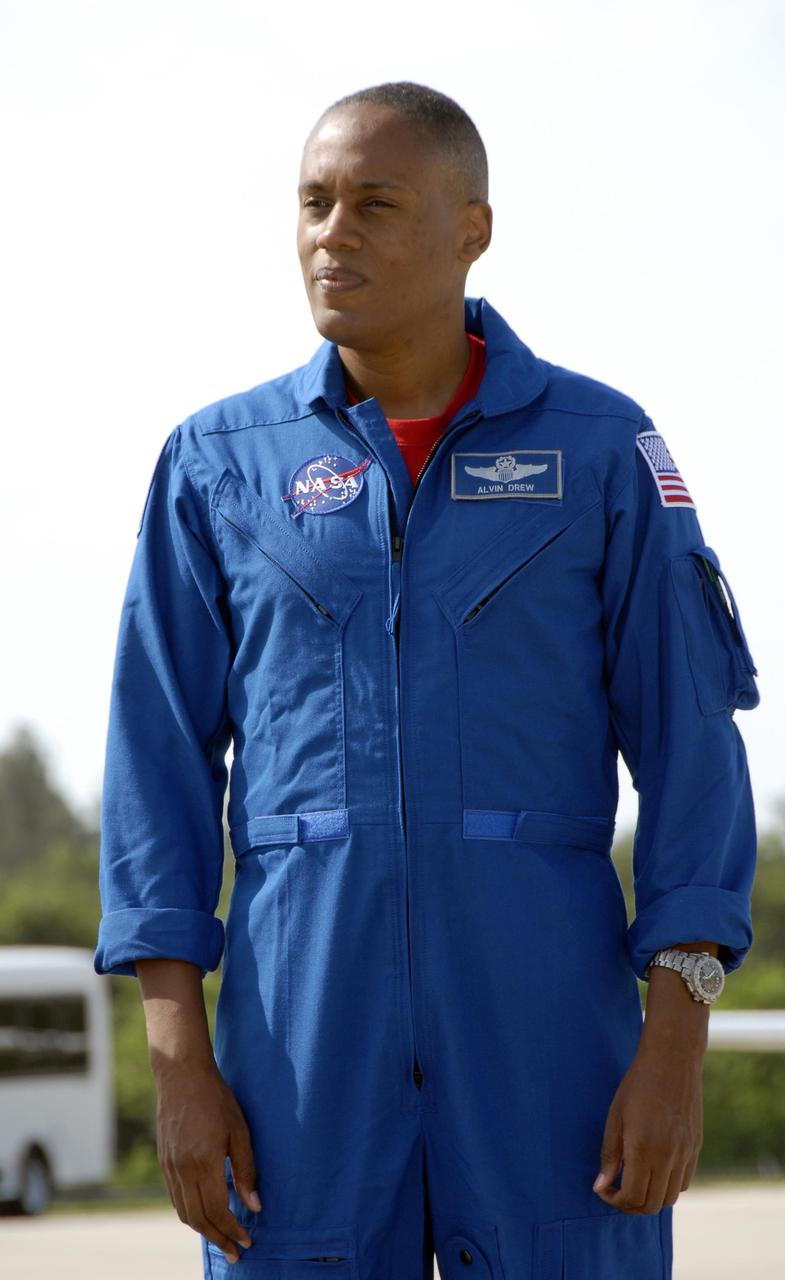
KENNEDY SPACE CENTER, FLA. -- The STS-118 crew arrives at Kennedy Space Center's Shuttle Landing Facility to prepare for launch on Aug. 8 aboard Space Shuttle Endeavour. Seen here is Mission Specialist Alvin Drew as he talks to the media. Endeavour's STS-118 mission is the 22nd shuttle flight to the International Space Station. It will continue space station construction by delivering a third starboard truss segment, S5. Other payloads include the SPACEHAB module, making its last voyage, and the external stowage platform 3 with a control moment gyroscope on it. The flight will include at least three spacewalks. The crew will also debut a new system that enables docked shuttles to draw electrical power from the station to extend visits to the outpost. NASA/Kim Shiflett
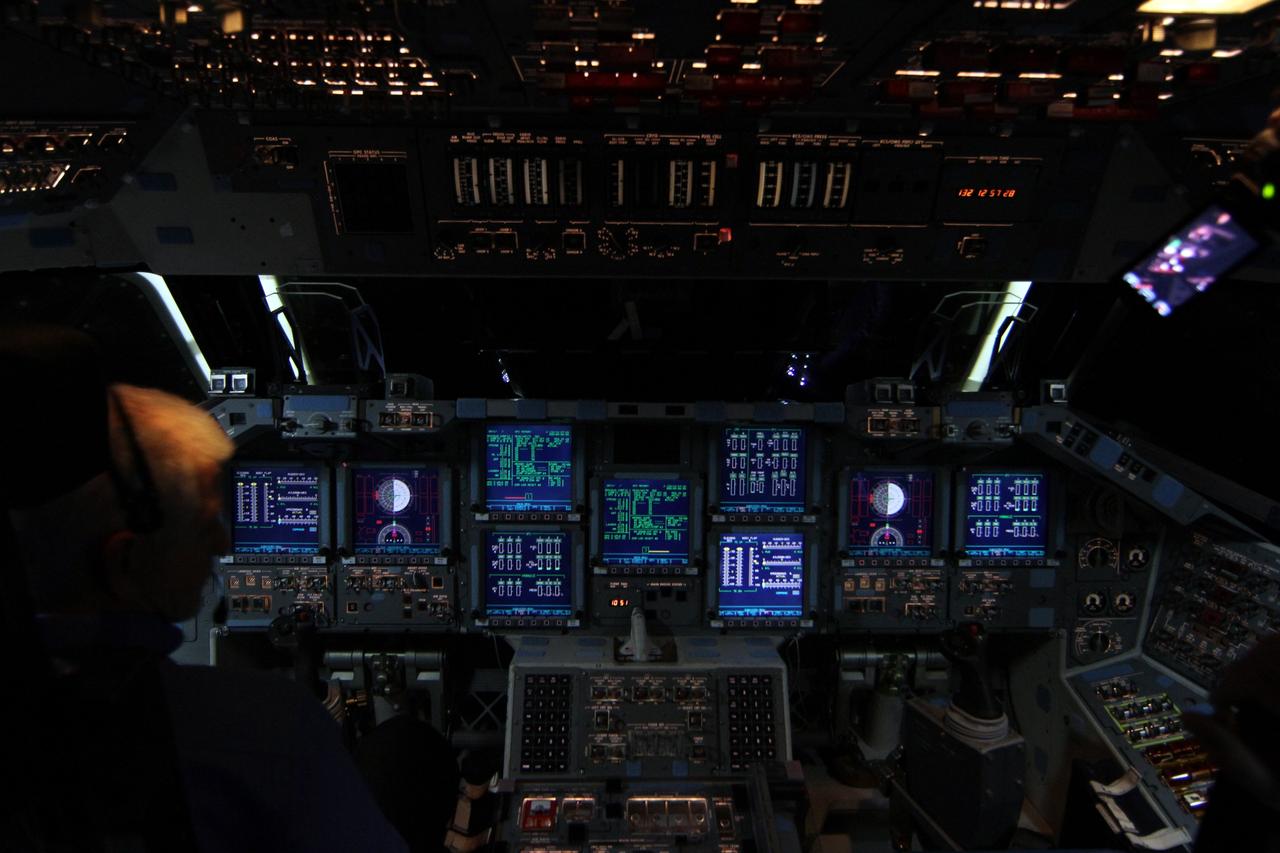
CAPE CANAVERAL, Fla. – In Orbiter Processing Facility-2 at NASA’s Kennedy Space Center in Florida, United Space Alliance manager Walter “Buddy” McKenzie monitors the consoles on space shuttle Endeavour’s flight deck as operations to power down the shuttle for the final time get under way. Endeavour is being prepared for public display at the California Science Center in Los Angeles. Its ferry flight to California is targeted for mid-September. Endeavour was the last space shuttle added to NASA’s orbiter fleet. Over the course of its 19-year career, Endeavour spent 299 days in space during 25 missions. For more information, visit http://www.nasa.gov/transition. Photo credit: NASA/Ben Smegelsky
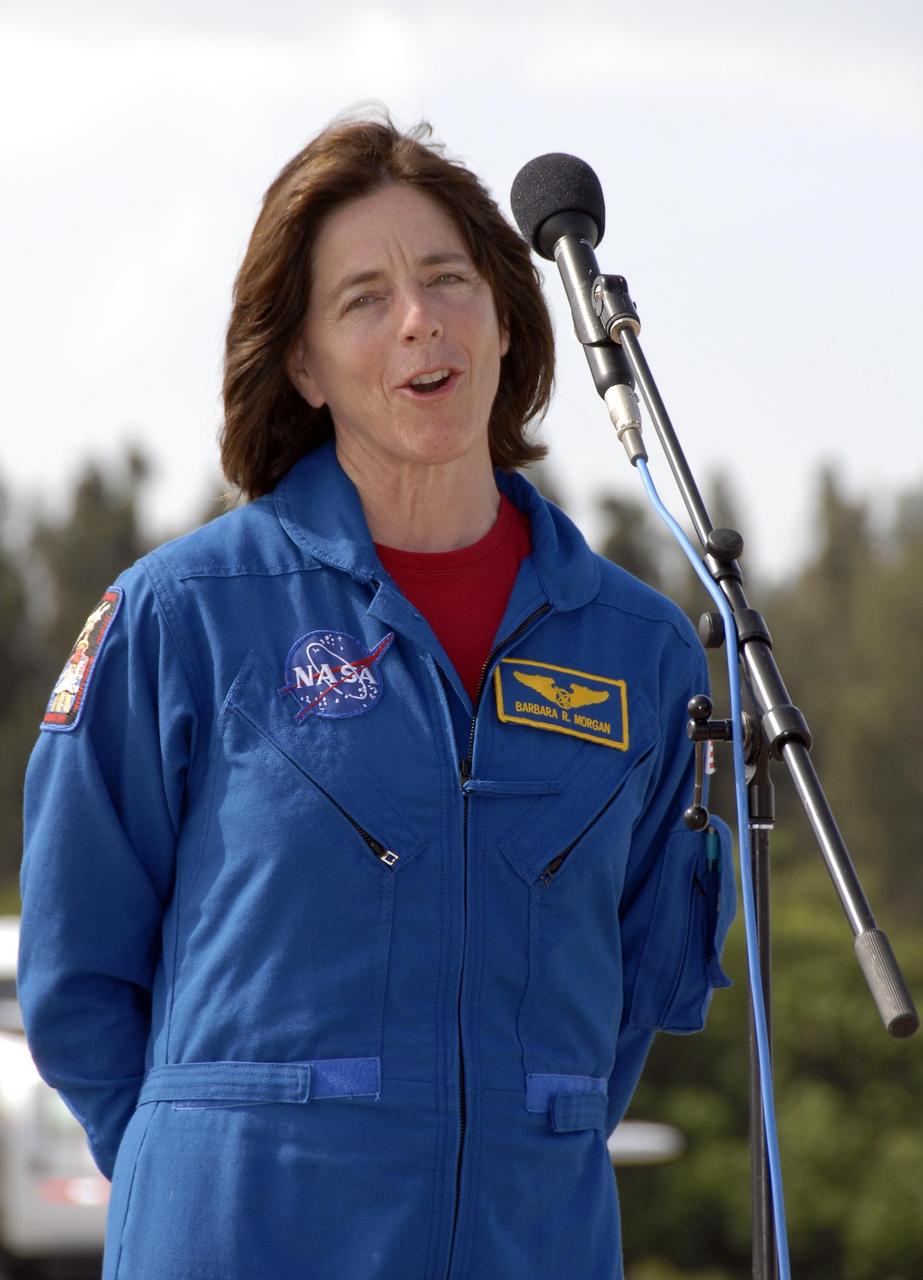
KENNEDY SPACE CENTER, FLA. -- The STS-118 crew arrives at Kennedy Space Center's Shuttle Landing Facility to prepare for launch on Aug. 8 aboard Space Shuttle Endeavour. Seen here is Mission Specialist Barbara Morgan, NASA's first educator astronaut. Endeavour's STS-118 mission is the 22nd shuttle flight to the International Space Station. It will continue space station construction by delivering a third starboard truss segment, S5. Other payloads include the SPACEHAB module, making its last voyage, and the external stowage platform 3 with a control moment gyroscope on it. The flight will include at least three spacewalks. The crew will also debut a new system that enables docked shuttles to draw electrical power from the station to extend visits to the outpost. Photo credit: NASA/Kim Shiflett
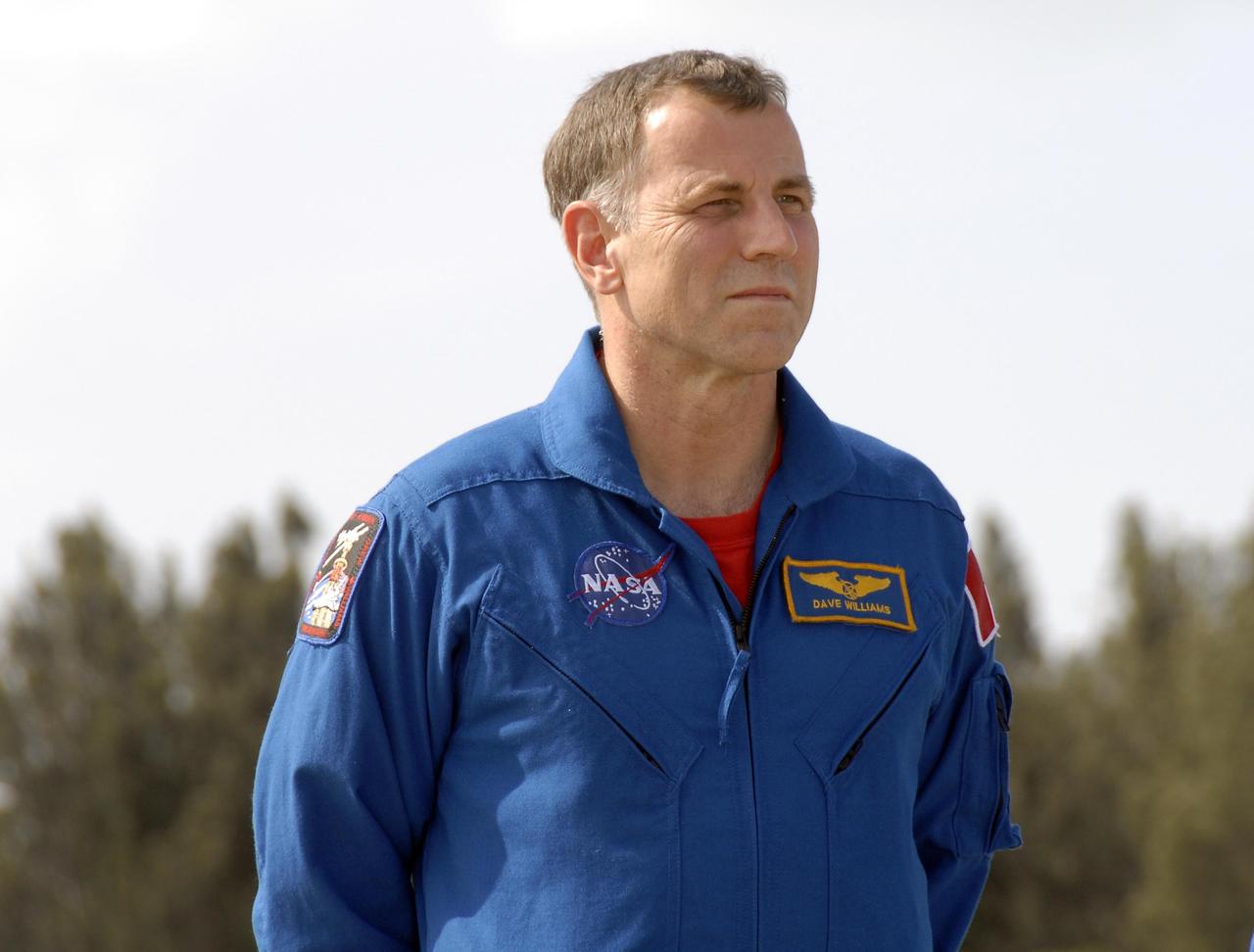
KENNEDY SPACE CENTER, FLA. -- The STS-118 crew arrives at Kennedy Space Center's Shuttle Landing Facility to prepare for launch on Aug. 8 aboard Space Shuttle Endeavour. Seen here is Mission Specialist Dave Williams, with the Canadian Space Agency. Endeavour's STS-118 mission is the 22nd shuttle flight to the International Space Station. It will continue space station construction by delivering a third starboard truss segment, S5. Other payloads include the SPACEHAB module, making its last voyage, and the external stowage platform 3 with a control moment gyroscope on it. The flight will include at least three spacewalks. The crew will also debut a new system that enables docked shuttles to draw electrical power from the station to extend visits to the outpost. Photo credit: NASA/Kim Shiflett
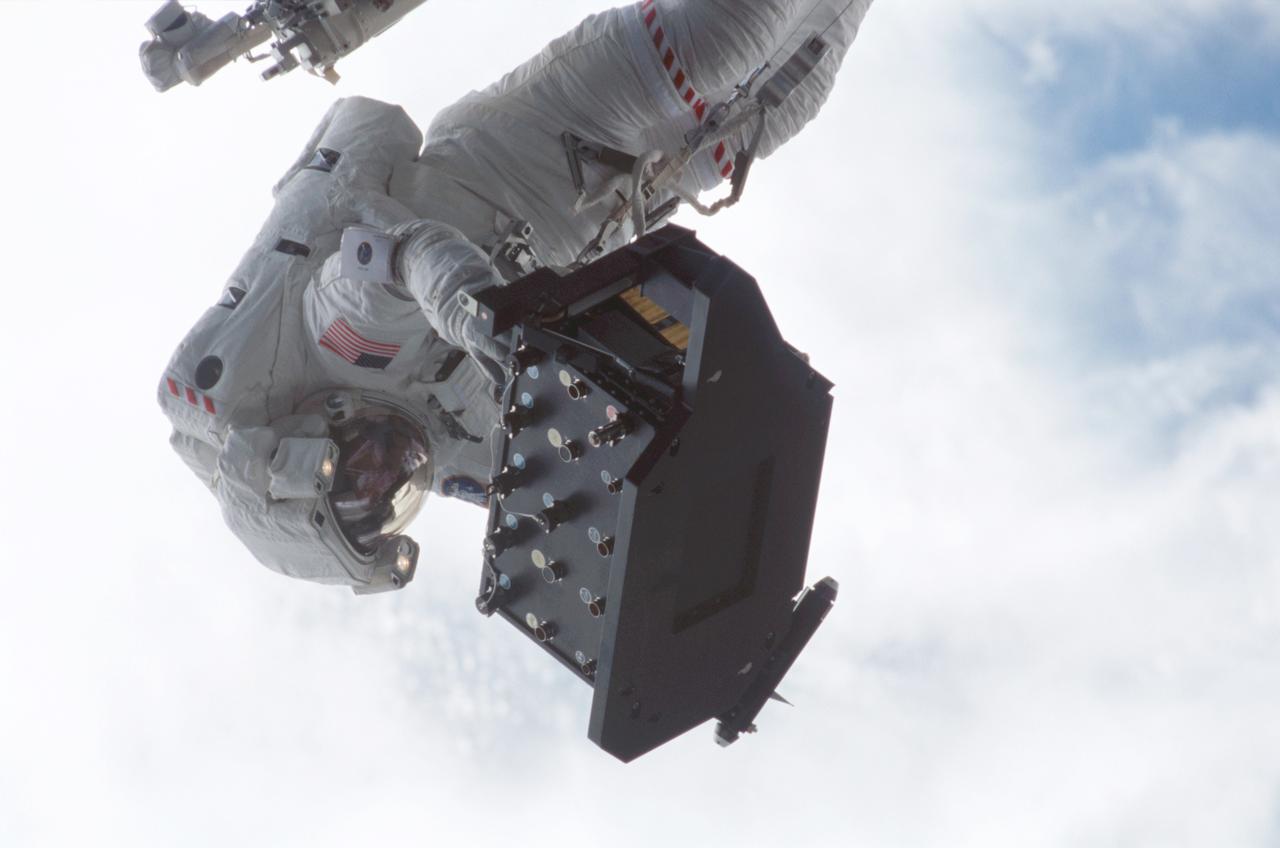
STS-109 Astronaut Michael J. Massimino, mission specialist, perched on the Shuttle's robotic arm, is preparing to install the Electronic Support Module (ESM) in the aft shroud of the Hubble Space telescope (HST), with the assistance of astronaut James H. Newman (out of frame). The module will support a new experimental cooling system to be installed during the next day's fifth and final space walk of the mission. That cooling system is designed to bring the telescope's Near-Infrared Camera and Multi Spectrometer (NICMOS) back to life the which had been dormant since January 1999 when its original coolant ran out. The Space Shuttle Columbia STS-109 mission lifted off March 1, 2002 with goals of repairing and upgrading the Hubble Space Telescope (HST). The Marshall Space Flight Center in Huntsville, Alabama had the responsibility for the design, development, and construction of the HST, which is the most powerful and sophisticated telescope ever built. In addition to the installation of the experimental cooling system for the Hubble's Near-Infrared Camera and NICMOS, STS-109 upgrades to the HST included replacement of the solar array panels, replacement of the power control unit (PCU), and replacement of the Faint Object Camera (FOC) with a new advanced camera for Surveys (ACS). Lasting 10 days, 22 hours, and 11 minutes, the STS-109 mission was the 108th flight overall in NASA's Space Shuttle Program.
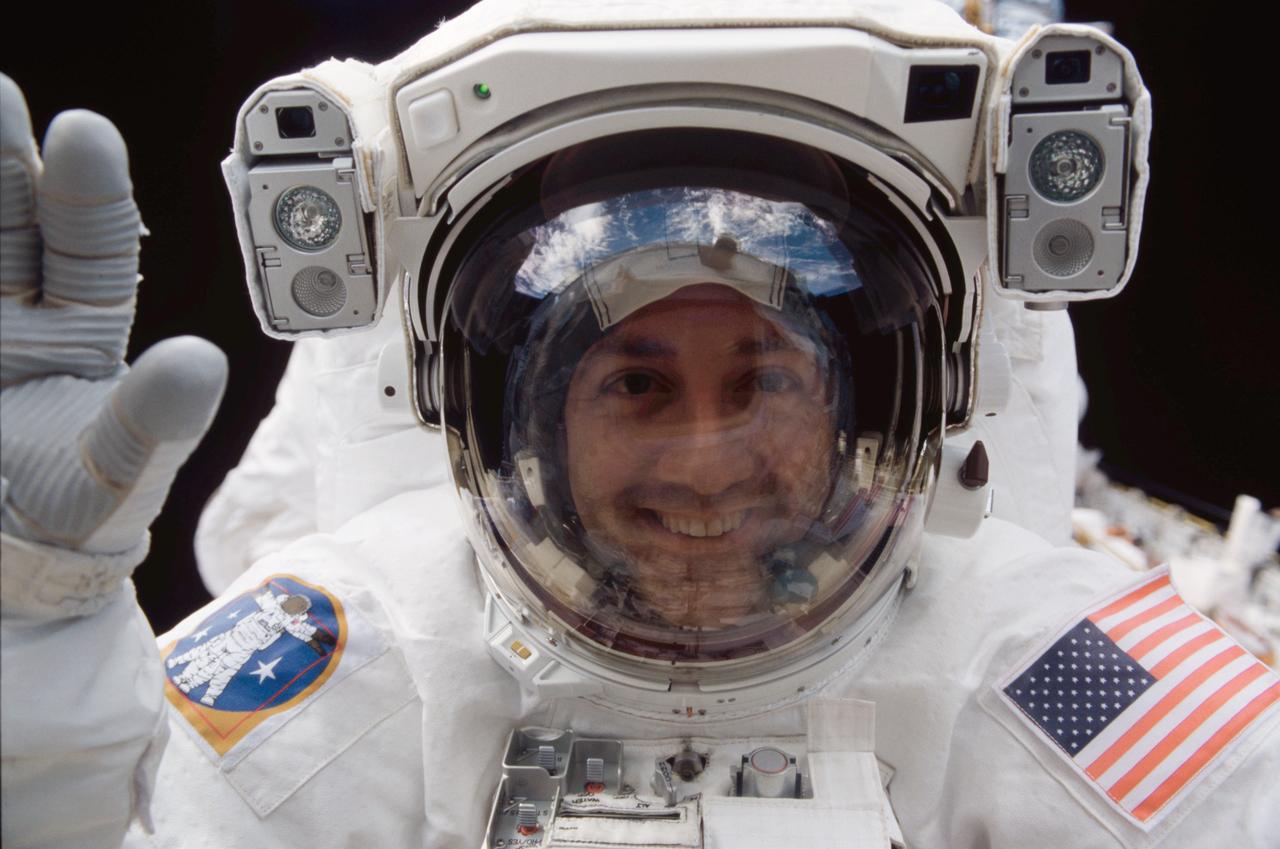
STS-109 Astronauts Michael J. Massimino and James H. Newman were making their second extravehicular activity (EVA) of their mission when astronaut Massimino, mission specialist, peered into Columbia's crew cabin during a brief break from work on the Hubble Space Telescope (HST). The HST is latched down just a few feet behind him in Columbia's cargo bay. The Space Shuttle Columbia STS-109 mission lifted off March 1, 2002 with goals of repairing and upgrading the Hubble Space Telescope (HST). STS-109 upgrades to the HST included: replacement of the solar array panels; replacement of the power control unit (PCU); replacement of the Faint Object Camera (FOC) with a new advanced camera for Surveys (ACS); and installation of the experimental cooling system for the Hubble's Near-Infrared Camera and Multi-object Spectrometer (NICMOS), which had been dormant since January 1999 when its original coolant ran out. The Marshall Space Flight Center in Huntsville, Alabama had the responsibility for the design, development, and construction of the HST, which is the most powerful and sophisticated telescope ever built. Lasting 10 days, 22 hours, and 11 minutes, the STS-109 mission was the 108th flight overall in NASA's Space Shuttle Program.
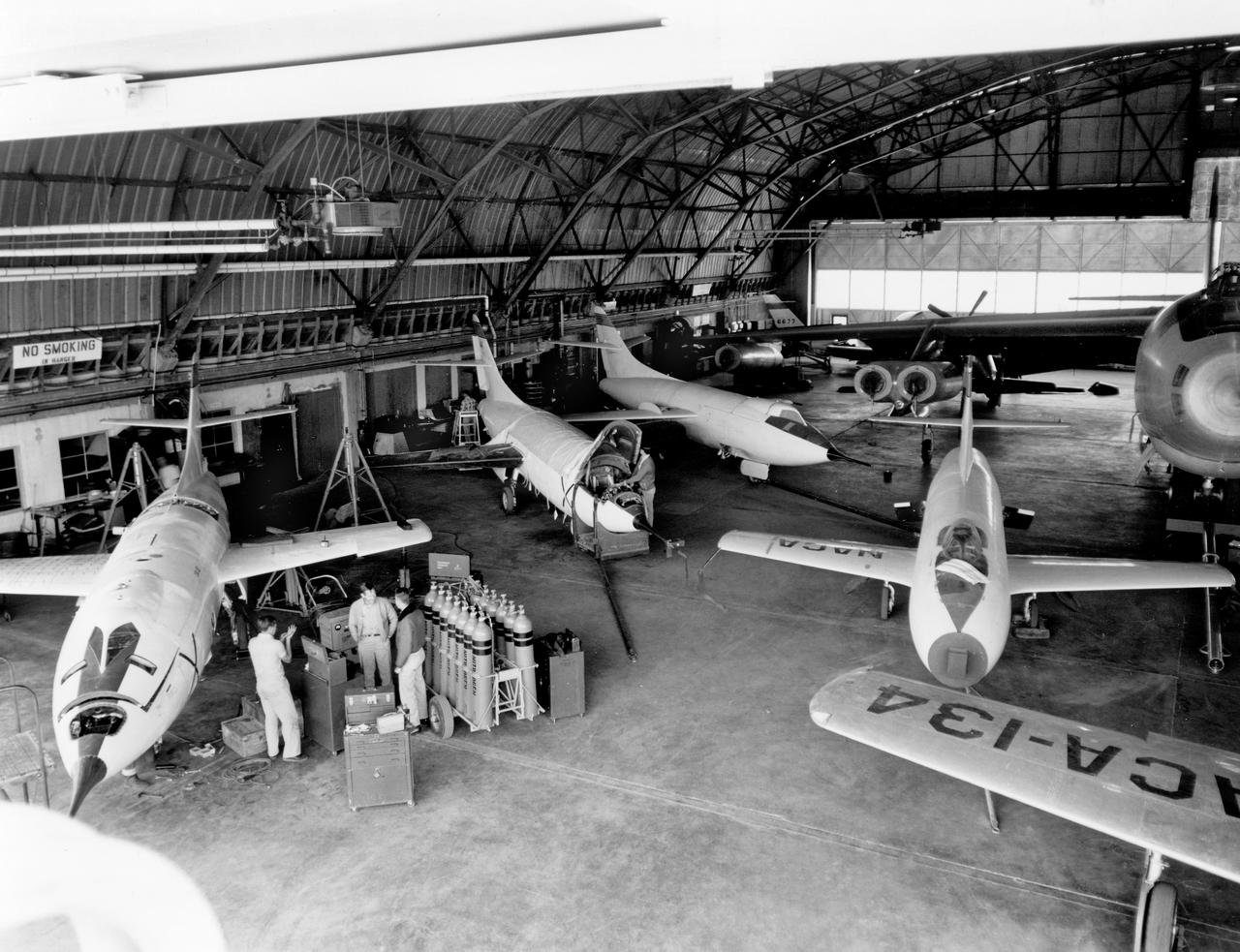
The aircraft in this 1953 photo of the National Advisory Committee for Aeronautics (NACA) hangar at South Base of Edwards Air Force Base showed the wide range of research activities being undertaken. On the left side of the hangar are the three D-558-2 research aircraft. These were designed to test swept wings at supersonic speeds approaching Mach 2. The front D-558-2 is the third built (NACA 145/Navy 37975). It has been modified with a leading-edge chord extension. This was one of a number of wing modifications, using different configurations of slats and/or wing fences, to ease the airplane's tendency to pitch-up. NACA 145 had both a jet and a rocket engine. The middle aircraft is NACA 144 (Navy 37974), the second built. It was all-rocket powered, and Scott Crossfield made the first Mach 2 flight in this aircraft on November 20, 1953. The aircraft in the back is D-558-2 number 1. NACA 143 (Navy 37973) was also carried both a jet and a rocket engine in 1953. It had been used for the Douglas contractor flights, then was turned over to the NACA. The aircraft was not converted to all-rocket power until June 1954. It made only a single NACA flight before NACA's D-558-2 program ended in 1956. Beside the three D-558-2s is the third D-558-1. Unlike the supersonic D-558-2s, it was designed for flight research at transonic speeds, up to Mach 1. The D-558-1 was jet-powered, and took off from the ground. The D-558-1's handling was poor as it approached Mach 1. Given the designation NACA 142 (Navy 37972), it made a total of 78 research flights, with the last in June 1953. In the back of the hangar is the X-4 (Air Force 46-677). This was a Northrop-built research aircraft which tested a swept wing design without horizontal stabilizers. The aircraft proved unstable in flight at speeds above Mach 0.88. The aircraft showed combined pitching, rolling, and yawing motions, and the design was considered unsuitable. The aircraft, the second X-4 built, was then used as a pilot traine

Jody Singer, director of NASA’s Marshall Space Flight Center in Huntsville, Alabama, joins local government officials and others as the Marshall move team prepares to transport the Artemis I launch vehicle stage adapter for the agency’s Space Launch System (SLS) rocket. Huntsville-based Teledyne Brown Engineering built the launch vehicle stage adapter at a state-of-the-art manufacturing facility at Marshall. Teledyne officials joined Singer to see the adapter one last time before it heads to the barge. This is the last piece of Marshall-built SLS rocket hardware set for delivery to Kennedy in preparation of the Artemis I mission to the Moon. A move team led by Marshall’s Center Operations will transport the adapter from the manufacturing facility to NASA’s Pegasus barge. The barge will take the adapter to NASA’s Kennedy Space Center in Florida for assembly and launch. Other parts of the Artemis I SLS rocket that were manufactured in Alabama include the Orion stage adapter built by Marshall teams and the Interim Cryogenic Propulsion Stage, which was built by Boeing and United Launch Alliance in Decatur, Alabama and will provide the power to send Orion to the Moon.

Jody Singer, director of NASA’s Marshall Space Flight Center in Huntsville, Alabama, joins local government officials and others as the Marshall move team prepares to transport the Artemis I launch vehicle stage adapter for the agency’s Space Launch System (SLS) rocket. Huntsville-based Teledyne Brown Engineering built the launch vehicle stage adapter at a state-of-the-art manufacturing facility at Marshall. Teledyne officials joined Singer to see the adapter one last time before it heads to the barge. This is the last piece of Marshall-built SLS rocket hardware set for delivery to Kennedy in preparation of the Artemis I mission to the Moon. A move team led by Marshall’s Center Operations will transport the adapter from the manufacturing facility to NASA’s Pegasus barge. The barge will take the adapter to NASA’s Kennedy Space Center in Florida for assembly and launch. Other parts of the Artemis I SLS rocket that were manufactured in Alabama include the Orion stage adapter built by Marshall teams and the Interim Cryogenic Propulsion Stage, which was built by Boeing and United Launch Alliance in Decatur, Alabama and will provide the power to send Orion to the Moon.

Jody Singer, director of NASA’s Marshall Space Flight Center in Huntsville, Alabama, joins local government officials and others as the Marshall move team prepares to transport the Artemis I launch vehicle stage adapter for the agency’s Space Launch System (SLS) rocket. Huntsville-based Teledyne Brown Engineering built the launch vehicle stage adapter at a state-of-the-art manufacturing facility at Marshall. Teledyne officials joined Singer to see the adapter one last time before it heads to the barge. This is the last piece of Marshall-built SLS rocket hardware set for delivery to Kennedy in preparation of the Artemis I mission to the Moon. A move team led by Marshall’s Center Operations will transport the adapter from the manufacturing facility to NASA’s Pegasus barge. The barge will take the adapter to NASA’s Kennedy Space Center in Florida for assembly and launch. Other parts of the Artemis I SLS rocket that were manufactured in Alabama include the Orion stage adapter built by Marshall teams and the Interim Cryogenic Propulsion Stage, which was built by Boeing and United Launch Alliance in Decatur, Alabama and will provide the power to send Orion to the Moon.
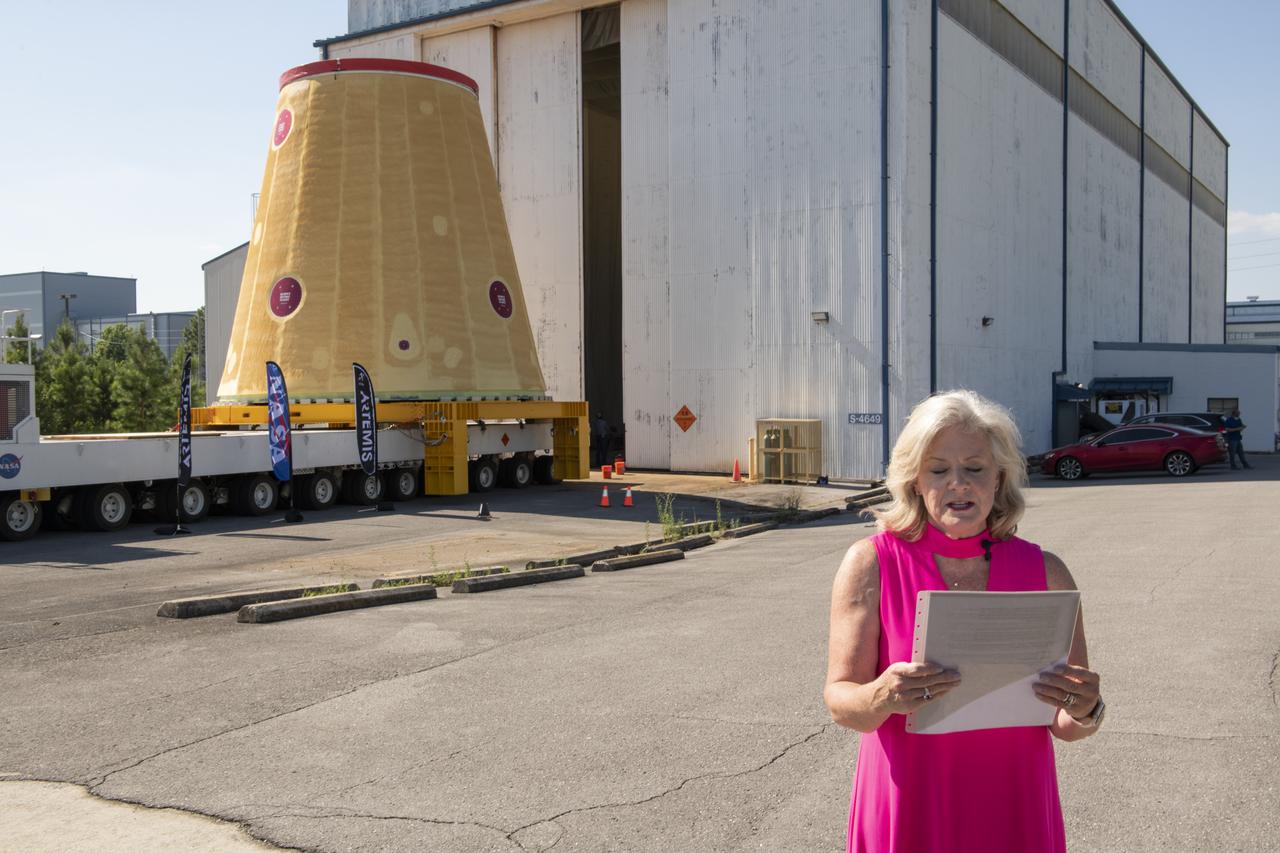
Jody Singer, director of NASA’s Marshall Space Flight Center in Huntsville, Alabama, joins local government officials and others as the Marshall move team prepares to transport the Artemis I launch vehicle stage adapter for the agency’s Space Launch System (SLS) rocket. Huntsville-based Teledyne Brown Engineering built the launch vehicle stage adapter at a state-of-the-art manufacturing facility at Marshall. Teledyne officials joined Singer to see the adapter one last time before it heads to the barge. This is the last piece of Marshall-built SLS rocket hardware set for delivery to Kennedy in preparation of the Artemis I mission to the Moon. A move team led by Marshall’s Center Operations will transport the adapter from the manufacturing facility to NASA’s Pegasus barge. The barge will take the adapter to NASA’s Kennedy Space Center in Florida for assembly and launch. Other parts of the Artemis I SLS rocket that were manufactured in Alabama include the Orion stage adapter built by Marshall teams and the Interim Cryogenic Propulsion Stage, which was built by Boeing and United Launch Alliance in Decatur, Alabama and will provide the power to send Orion to the Moon.
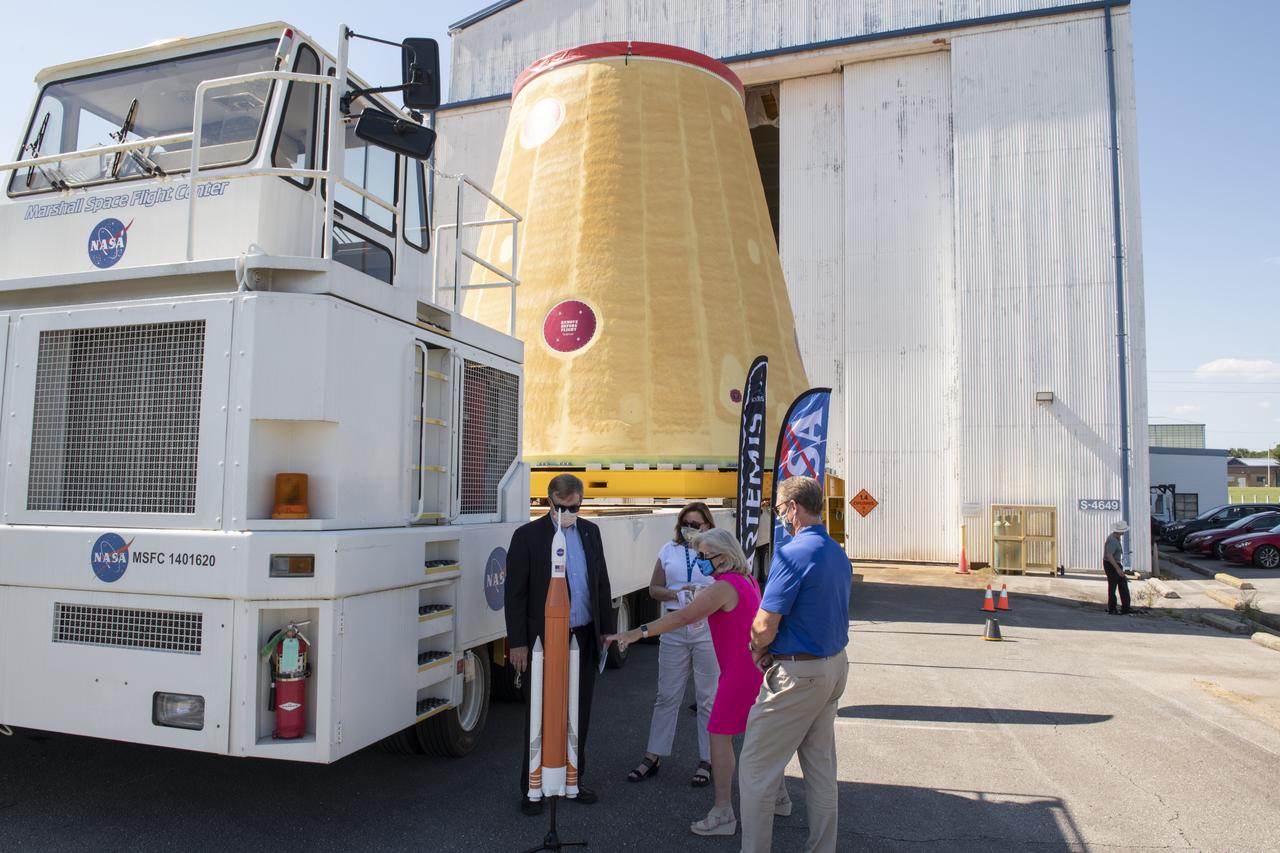
Jody Singer, director of NASA’s Marshall Space Flight Center in Huntsville, Alabama, joins local government officials and others as the Marshall move team prepares to transport the Artemis I launch vehicle stage adapter for the agency’s Space Launch System (SLS) rocket. Huntsville-based Teledyne Brown Engineering built the launch vehicle stage adapter at a state-of-the-art manufacturing facility at Marshall. Teledyne officials joined Singer to see the adapter one last time before it heads to the barge. This is the last piece of Marshall-built SLS rocket hardware set for delivery to Kennedy in preparation of the Artemis I mission to the Moon. A move team led by Marshall’s Center Operations will transport the adapter from the manufacturing facility to NASA’s Pegasus barge. The barge will take the adapter to NASA’s Kennedy Space Center in Florida for assembly and launch. Other parts of the Artemis I SLS rocket that were manufactured in Alabama include the Orion stage adapter built by Marshall teams and the Interim Cryogenic Propulsion Stage, which was built by Boeing and United Launch Alliance in Decatur, Alabama and will provide the power to send Orion to the Moon.
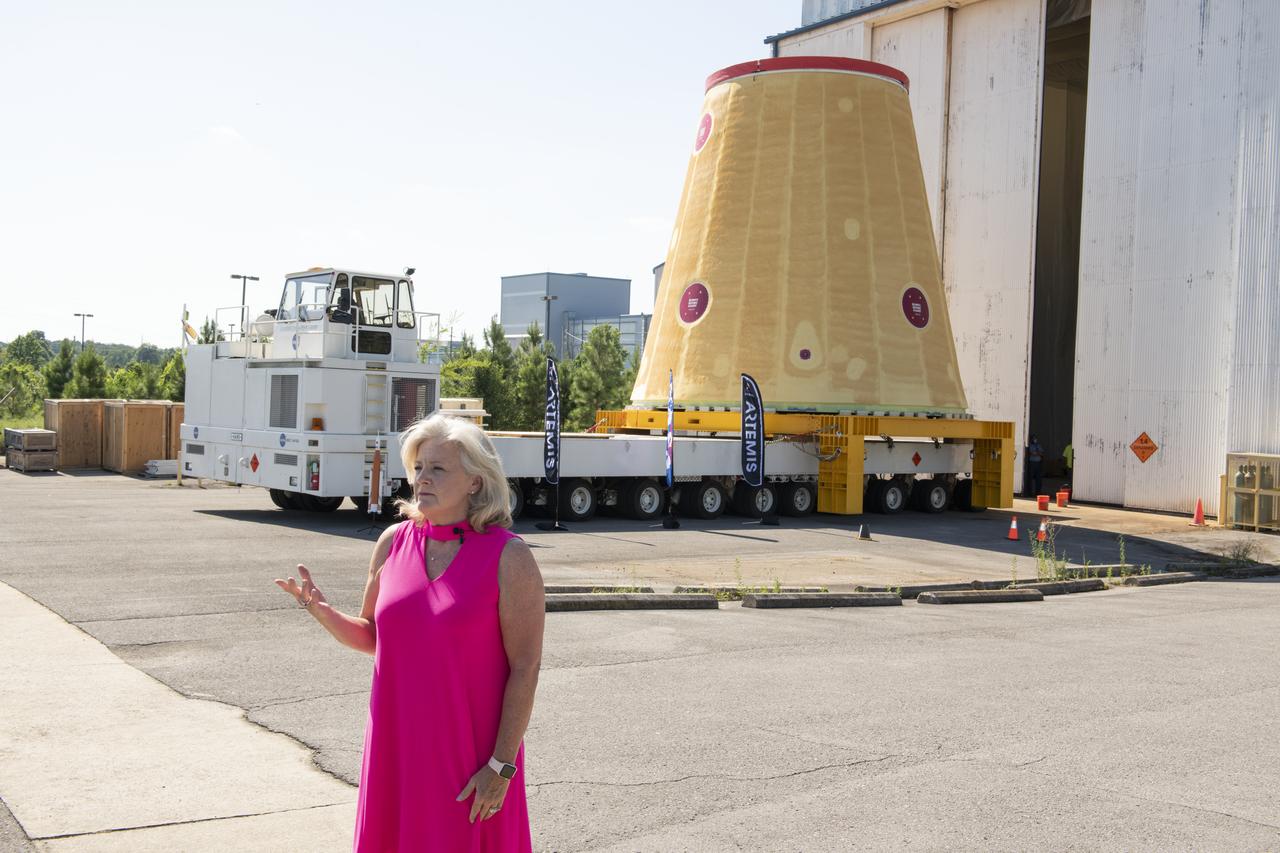
Jody Singer, director of NASA’s Marshall Space Flight Center in Huntsville, Alabama, joins local government officials and others as the Marshall move team prepares to transport the Artemis I launch vehicle stage adapter for the agency’s Space Launch System (SLS) rocket. Huntsville-based Teledyne Brown Engineering built the launch vehicle stage adapter at a state-of-the-art manufacturing facility at Marshall. Teledyne officials joined Singer to see the adapter one last time before it heads to the barge. This is the last piece of Marshall-built SLS rocket hardware set for delivery to Kennedy in preparation of the Artemis I mission to the Moon. A move team led by Marshall’s Center Operations will transport the adapter from the manufacturing facility to NASA’s Pegasus barge. The barge will take the adapter to NASA’s Kennedy Space Center in Florida for assembly and launch. Other parts of the Artemis I SLS rocket that were manufactured in Alabama include the Orion stage adapter built by Marshall teams and the Interim Cryogenic Propulsion Stage, which was built by Boeing and United Launch Alliance in Decatur, Alabama and will provide the power to send Orion to the Moon.
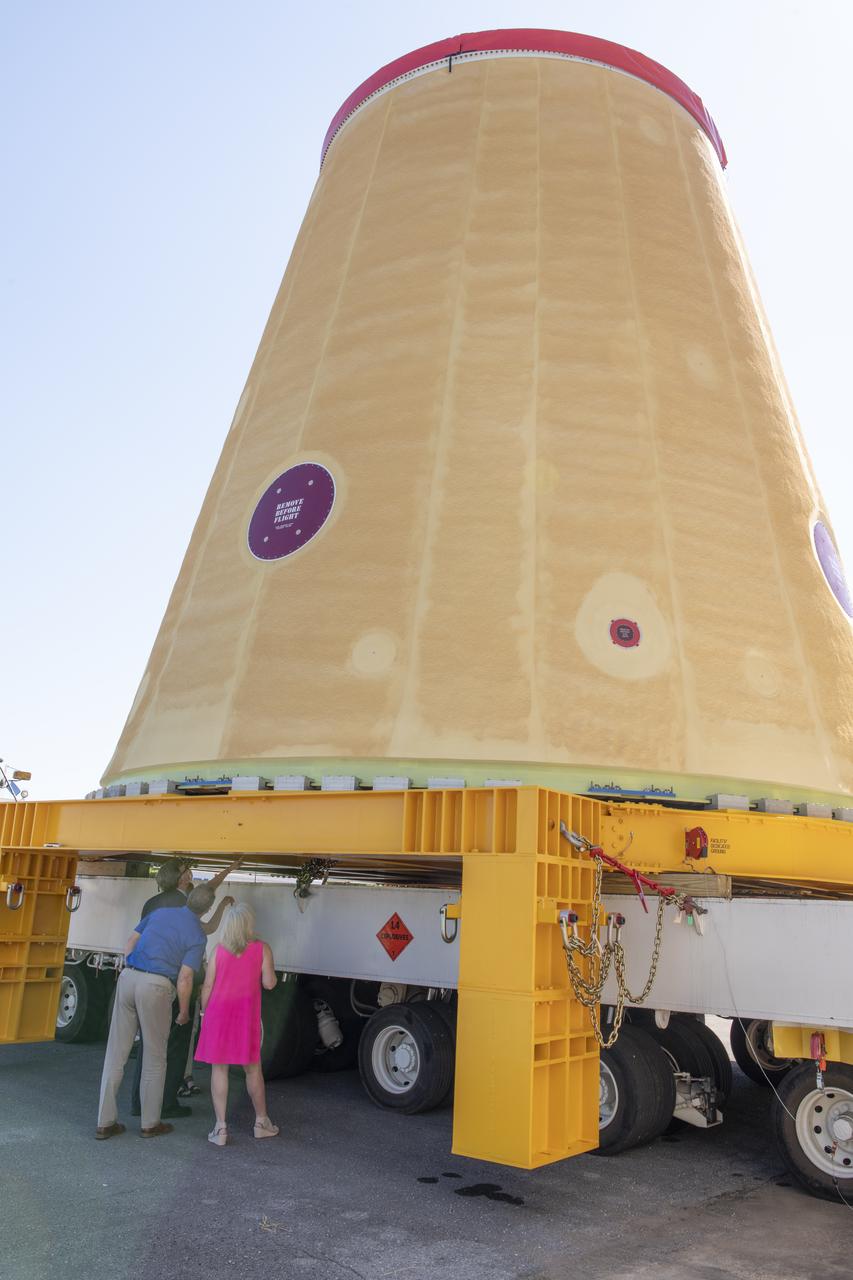
Jody Singer, director of NASA’s Marshall Space Flight Center in Huntsville, Alabama, joins local government officials and others as the Marshall move team prepares to transport the Artemis I launch vehicle stage adapter for the agency’s Space Launch System (SLS) rocket. Huntsville-based Teledyne Brown Engineering built the launch vehicle stage adapter at a state-of-the-art manufacturing facility at Marshall. Teledyne officials joined Singer to see the adapter one last time before it heads to the barge. This is the last piece of Marshall-built SLS rocket hardware set for delivery to Kennedy in preparation of the Artemis I mission to the Moon. A move team led by Marshall’s Center Operations will transport the adapter from the manufacturing facility to NASA’s Pegasus barge. The barge will take the adapter to NASA’s Kennedy Space Center in Florida for assembly and launch. Other parts of the Artemis I SLS rocket that were manufactured in Alabama include the Orion stage adapter built by Marshall teams and the Interim Cryogenic Propulsion Stage, which was built by Boeing and United Launch Alliance in Decatur, Alabama and will provide the power to send Orion to the Moon.
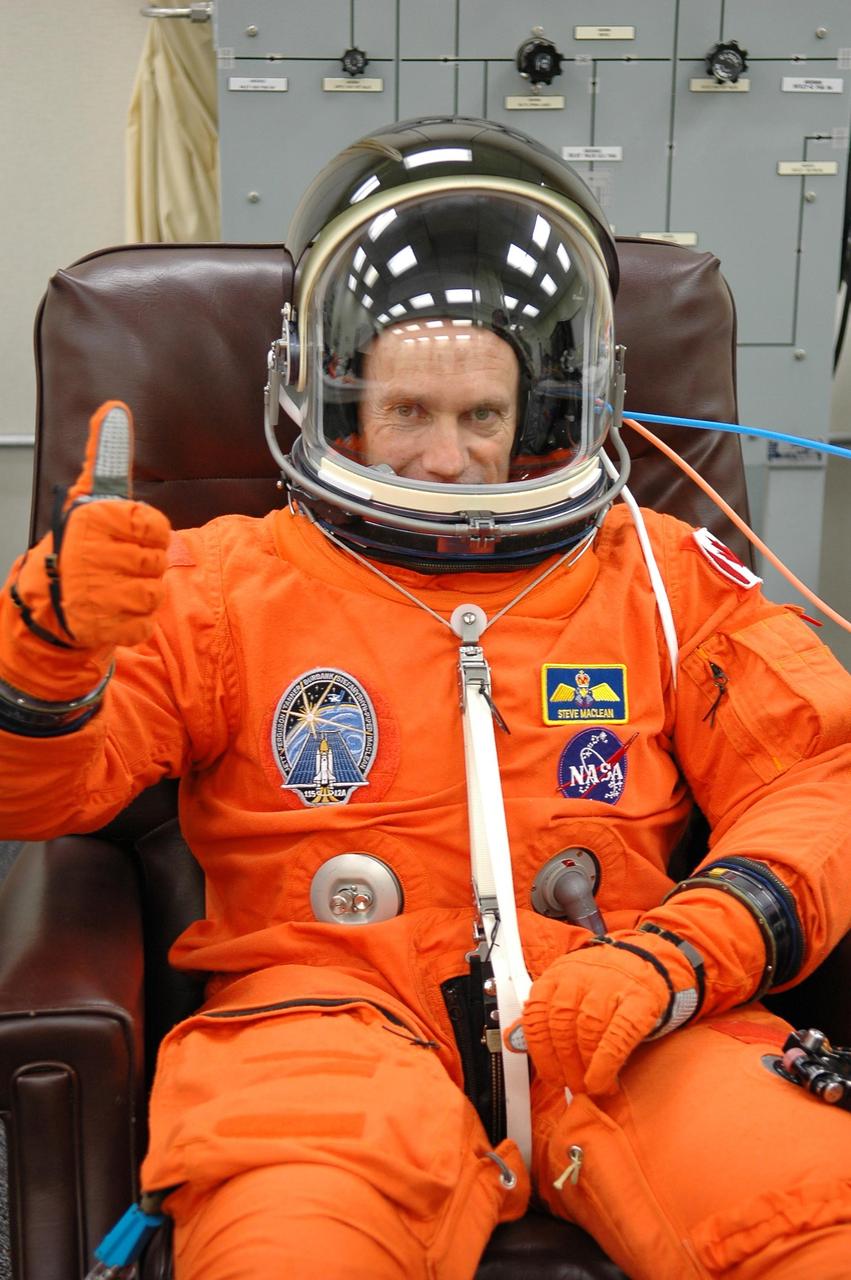
KENNEDY SPACE CENTER, FLA. - During suit check, STS-115 Mission Specialist Steven MacLean signals confidence about the launch on Space Shuttle Atlantis on Aug. 27. MacLean, who represents the Canadian Space Agency, will be making his second flight on a shuttle. Mission STS-115 is scheduled to lift off about 4:30 p.m. Aug. 27. The crew will deliver and install the P3/P4 segment to the port side of the integrated truss system on the International Space Station. The truss includes a new set of photovoltaic solar arrays. When unfurled to their full length of 240 feet, the arrays will provide additional power for the station in preparation for the delivery of international science modules over the next two years. The mission is expected to last 11 days and includes three scheduled spacewalks. Photo credit: NASA/Kim Shiflett
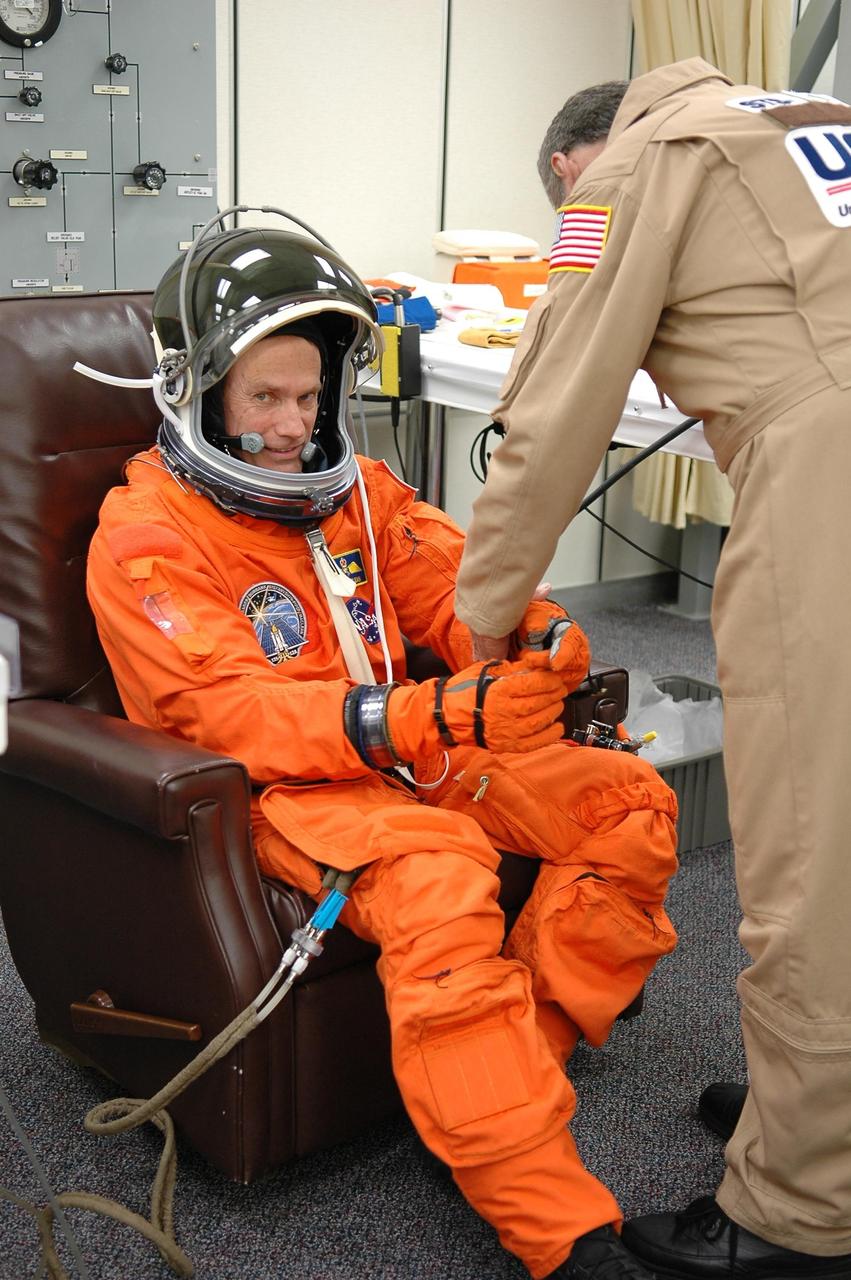
KENNEDY SPACE CENTER, FLA. - STS-115 Mission Specialist Steven MacLean has his launch suit checked for fit before the launch on Aug. 27. MacLean, who represents the Canadian Space Agency, will be making his second flight on a shuttle. Mission STS-115 is scheduled to lift off about 4:30 p.m. Aug. 27 on Space Shuttle Atlantis. The crew will deliver and install the P3/P4 segment to the port side of the integrated truss system on the International Space Station. The truss includes a new set of photovoltaic solar arrays. When unfurled to their full length of 240 feet, the arrays will provide additional power for the station in preparation for the delivery of international science modules over the next two years. The mission is expected to last 11 days and includes three scheduled spacewalks. Photo credit: NASA/Kim Shiflett

KENNEDY SPACE CENTER, FLA. - STS-115 Mission Specialist Heidemarie Stefanyshyn-Piper checks the equipment on the head set in her launch suit. Piper is making her first flight on a shuttle. She and other crew members are checking their launch suits and apparatus before the launch on Space Shuttle Atlantis on Aug. 27. Mission STS-115 is scheduled to lift off about 4:30 p.m. Aug. 27. The crew will deliver and install the P3/P4 segment to the port side of the integrated truss system on the International Space Station. The truss includes a new set of photovoltaic solar arrays. When unfurled to their full length of 240 feet, the arrays will provide additional power for the station in preparation for the delivery of international science modules over the next two years. The mission is expected to last 11 days and includes three scheduled spacewalks. Photo credit: NASA/Kim Shiflett
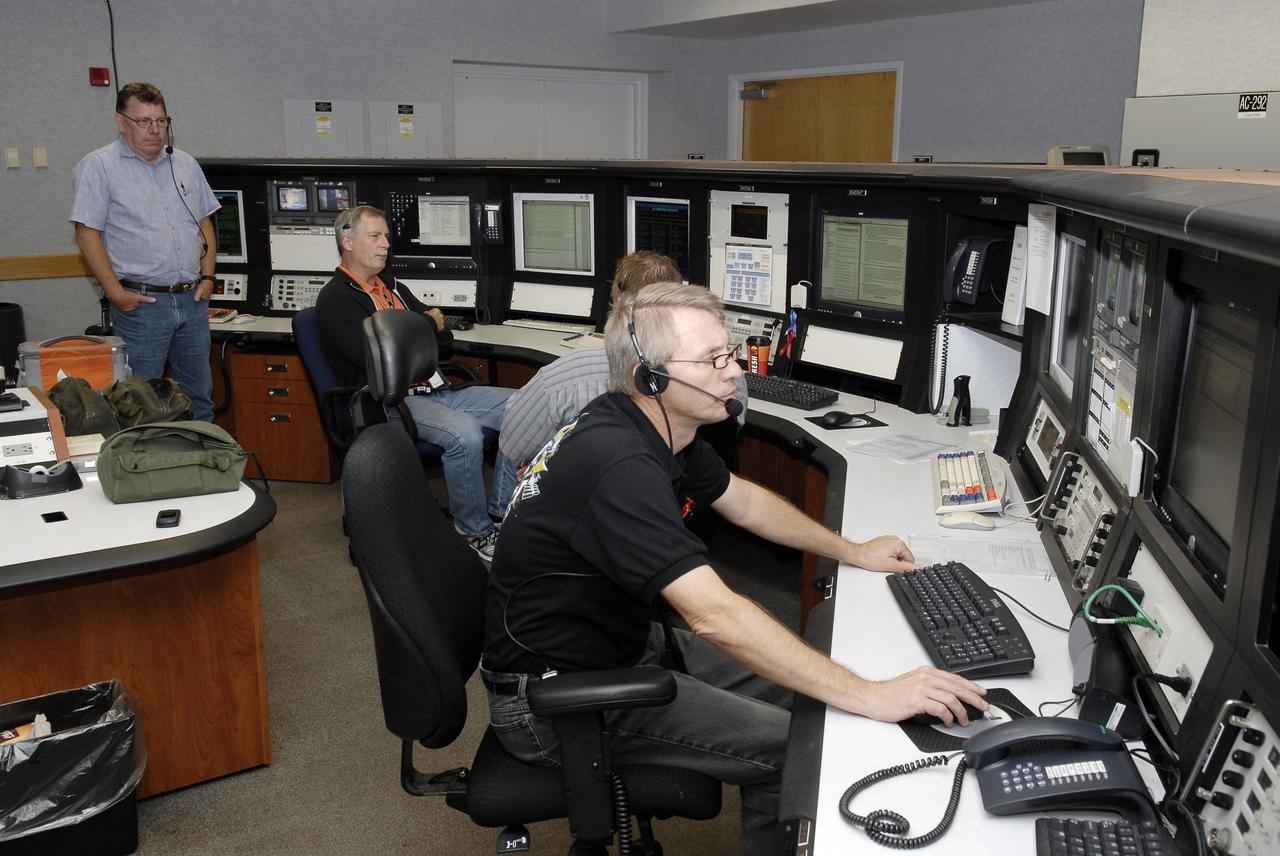
CAPE CANAVERAL, Fla. – United Space Alliance test conductors monitor the Firing Room 4 Master Console in the Launch Control Center as operations to power down space shuttle Endeavour for the final time are under way in Orbiter Processing Facility-2 at NASA’s Kennedy Space Center in Florida. From left are Dave Martin, Gary Lewis, Ethan Waldron, and John Robb. The overall health and status of the shuttle’s Launch Processing System is overseen and controlled from the Master Console. Endeavour is being prepared for public display at the California Science Center in Los Angeles. Its ferry flight to California is targeted for mid-September. Endeavour was the last space shuttle added to NASA’s orbiter fleet. Over the course of its 19-year career, Endeavour spent 299 days in space during 25 missions. For more information, visit http://www.nasa.gov/transition. Photo credit: NASA/Tim Jacobs

KENNEDY SPACE CENTER, FLA. - STS-115 Mission Specialist Heidemarie Stefanyshyn-Piper is all smiles about final preparations for launch on Space Shuttle Atlantis on Aug. 27. Piper is making her first flight on a shuttle. She and other crew members are checking the fit of their launch suits. Mission STS-115 is scheduled to lift off about 4:30 p.m. Aug. 27. The crew will deliver and install the P3/P4 segment to the port side of the integrated truss system on the International Space Station. The truss includes a new set of photovoltaic solar arrays. When unfurled to their full length of 240 feet, the arrays will provide additional power for the station in preparation for the delivery of international science modules over the next two years. The mission is expected to last 11 days and includes three scheduled spacewalks. Photo credit: NASA/Kim Shiflett