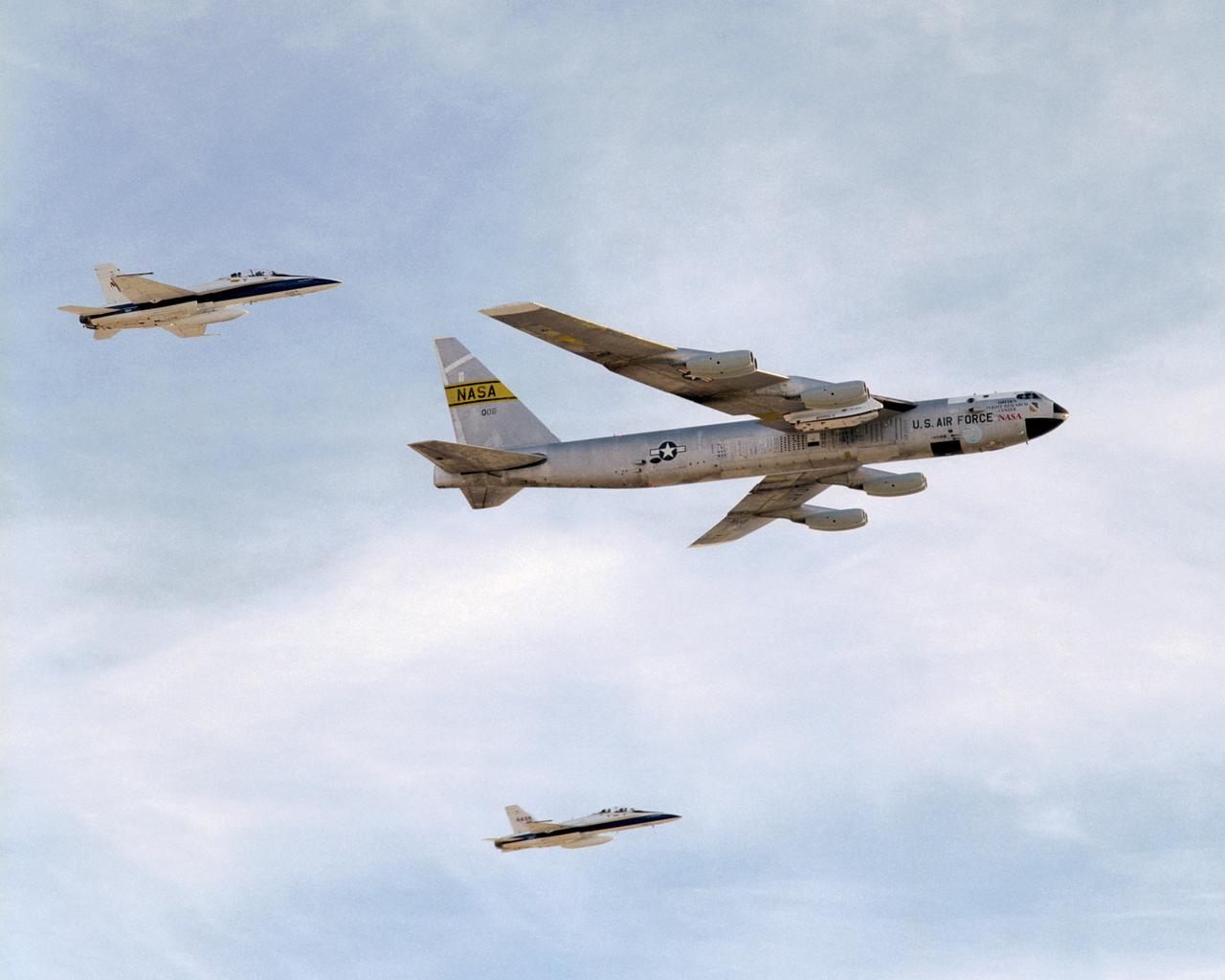
NASA's B-52B mothership, escorted by two F-18s, makes a final flyover after its last research mission that launched the X-43A on its record Mach 9.6 flight.
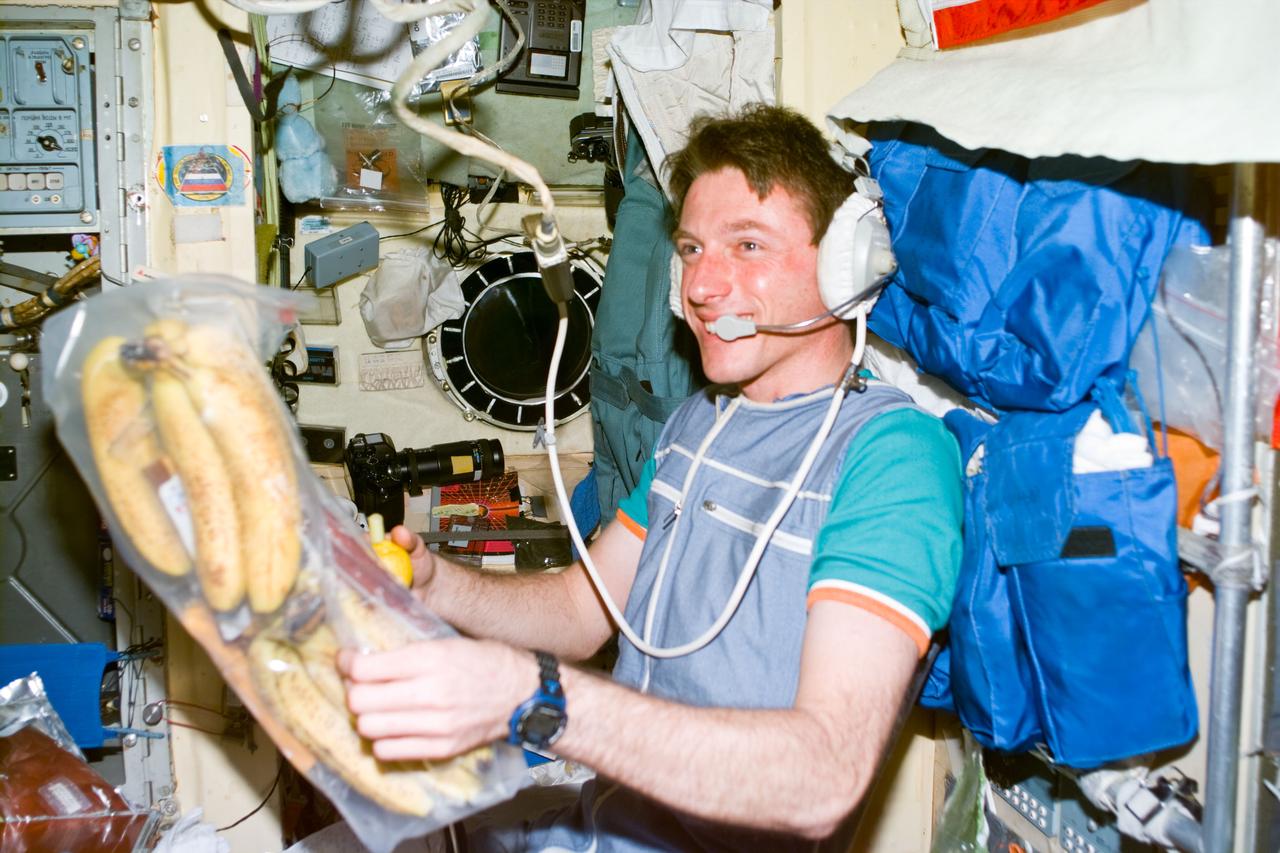
S86-E-5299 (27 Sept. 1997) --- Astronaut C. Michael Foale, cosmonaut guest researcher, shows his pleasure over a package of fresh fruit brought aboard Russia?s Mir Space Station by the STS-86 crew aboard the space shuttle Atlantis. This photograph captures Foale in his last hours as a cosmonaut guest researcher aboard Mir. Astronaut David A. Wolf, mission specialist, will replace Foale onboard the Mir, as cosmonaut guest researcher. This photograph was taken with the Electronic Still Camera (ESC) at 23:11:26 GMT on Sept. 27, 1997. Photo credit: NASA
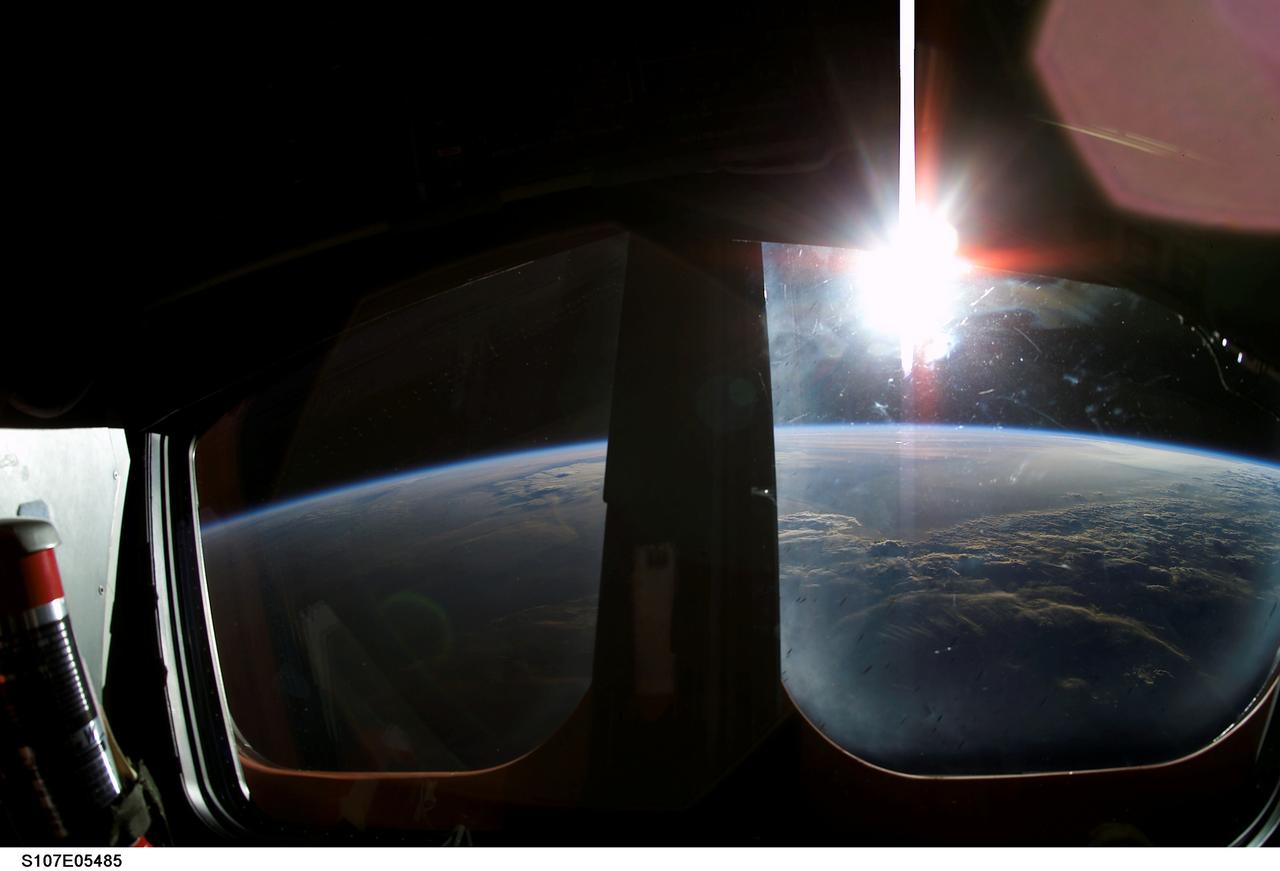
This sunrise was captured from the crew cabin of the Space Shuttle Orbiter Columbia on the STS-107 mission. Launched January 16, 2003, STS-107 was strictly a multidiscipline microgravity and Earth science research mission involving 80-plus International experiments performed during 16-days, many of which were managed by the Marshall Space Flight Center in Huntsville, Alabama. The majority of the research was conducted in the Shuttle's mid deck, the area directly under the cockpit, in the new SPACEHAB Research Double Module. This was the first flight for that module, which doubled the volume available for experiments and significantly increased the amount and complexity of research from the last dedicated Shuttle science mission, STS-95, flown in 1998 with a single SPACEHAB module. The pressurized module was carried in Columbia's payload bay and was accessible to the crew via a turnel from the Shuttle's mid deck.
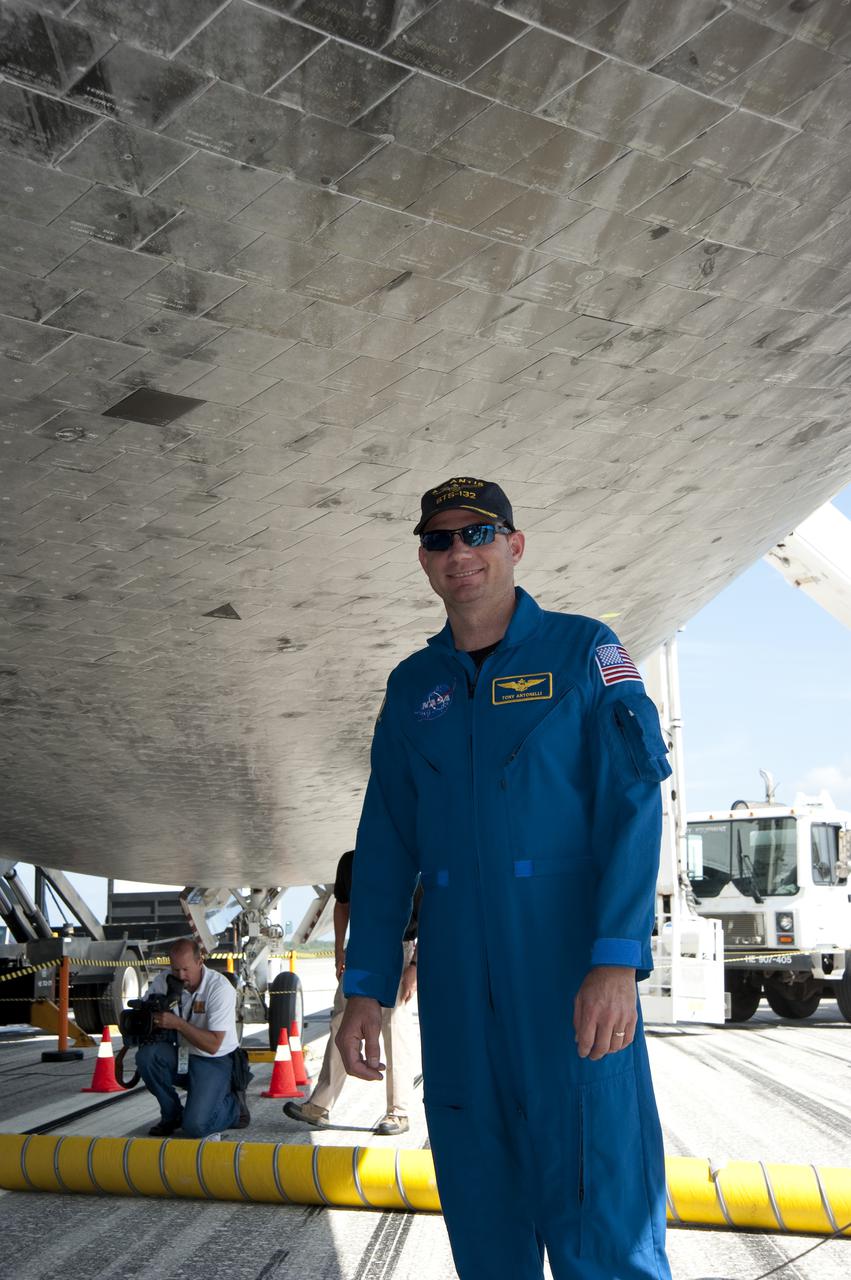
CAPE CANAVERAL, Fla. - STS-132 Pilot Tony Antonelli pauses for a photo underneath space shuttle Atlantis after landing at the Shuttle Landing Facility at NASA's Kennedy Space Center in Florida. The six-member STS-132 crew carried the Russian-built Mini Research Module-1 to the space station. STS-132 is the 34th shuttle mission to the station, the 132nd shuttle mission overall and the last planned flight for Atlantis. For information on the STS-132 mission and crew, visit www.nasa.gov_mission_pages_shuttle_shuttlemissions_sts132_index.html. Photo credit: NASA_Kim Shiflett
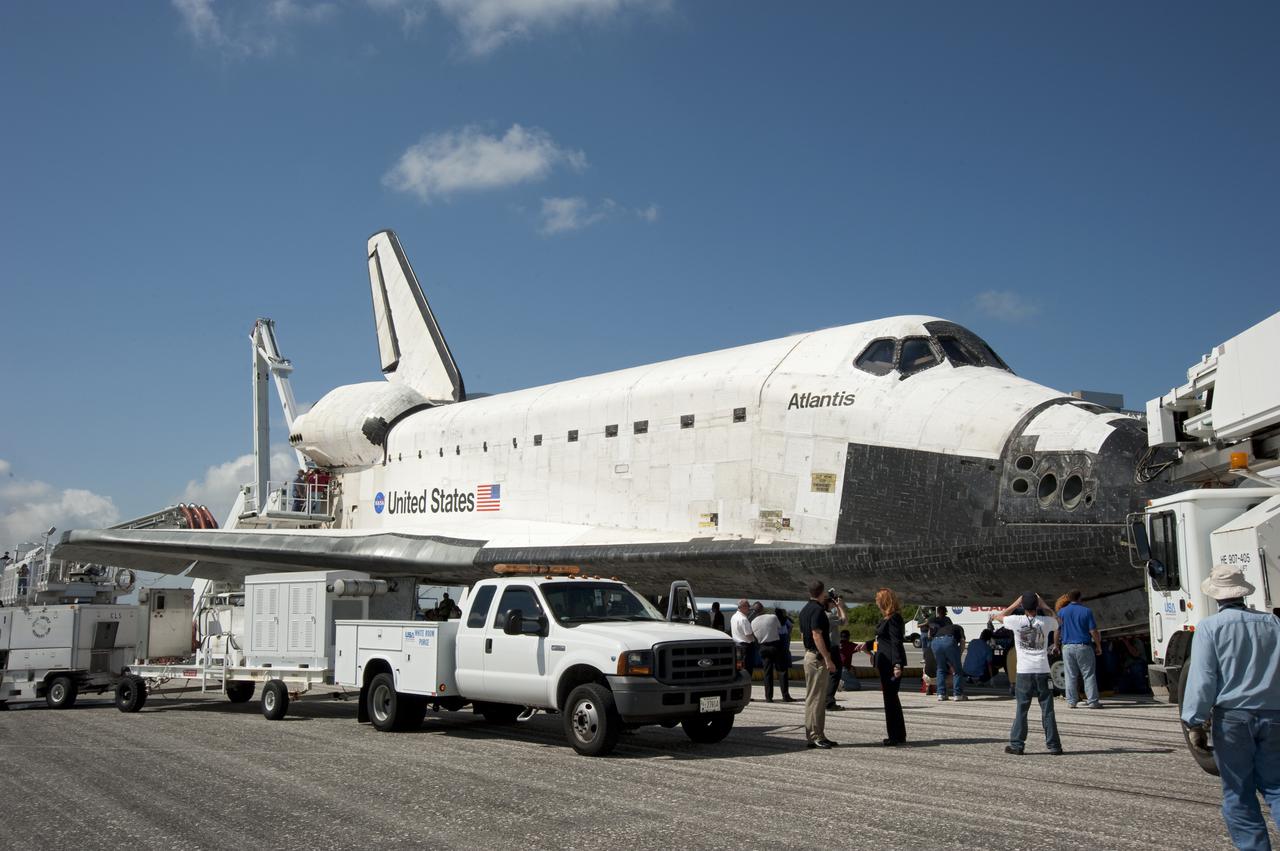
CAPE CANAVERAL, Fla. - Space shuttle Atlantis stands ready to be towed back to Orbiter Processing Facility-1 after a smooth touchdown at the Shuttle Landing Facility at NASA's Kennedy Space Center in Florida. The six-member STS-132 crew carried the Russian-built Mini Research Module-1 to the space station. STS-132 is the 34th shuttle mission to the station, the 132nd shuttle mission overall and the last planned flight for Atlantis. For information on the STS-132 mission and crew, visit www.nasa.gov_mission_pages_shuttle_shuttlemissions_sts132_index.html. Photo credit: NASA_Kim Shiflett
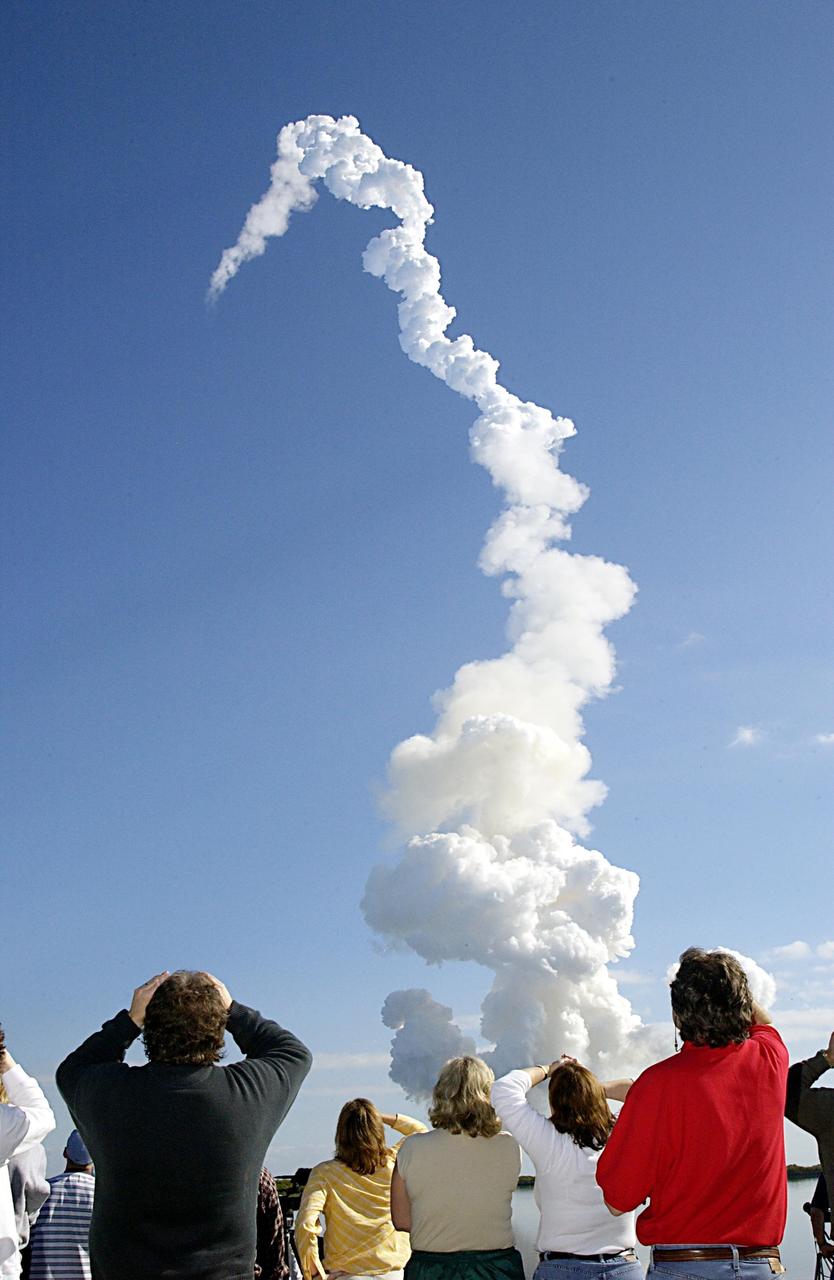
KENNEDY SPACE CENTER, FLA. -- After a perfect launch, spectators try to catch a last glimpse of Space Shuttle Columbia, barely visible at the top end of the twisted column of smoke. Following a flawless and uneventful countdown, liftoff occurred on-time at 10:39 a.m. EST. Headed for a 16-day research mission, Columbia's crew will be taking part in more than 80 experiment, including FREESTAR (Fast Reaction Experiments Enabling Science, Technology, Applications and Research) and the SHI Research Double Module (SHI/RDM), known as SPACEHAB. Experiments on the module range from material sciences to life sciences. This mission is the first Shuttle mission of 2003. Mission STS-107 is the 28th flight of the orbiter Columbia and the 113th flight overall in NASA's Space Shuttle program.
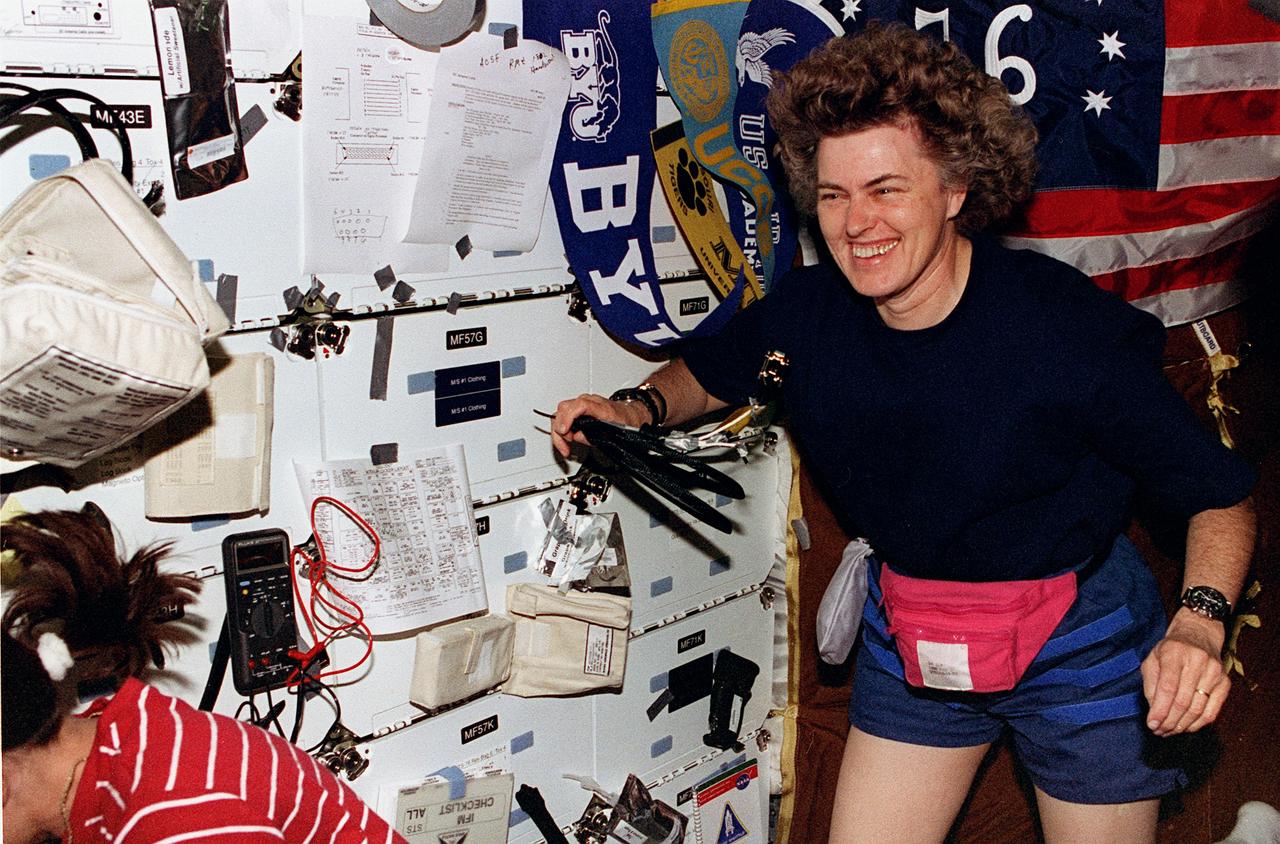
STS076-370-005 (22-31 March 1996) --- Astronaut Shannon W. Lucid, mission specialist and future cosmonaut guest researcher, appears to enjoy her last hours aboard the Space Shuttle Atlantis before becoming a crew member supporting the Mir-21 mission aboard the Russia's Mir Space Station. Astronaut Linda M. Godwin is partially visible at left as she works at one of the mid deck lockers.
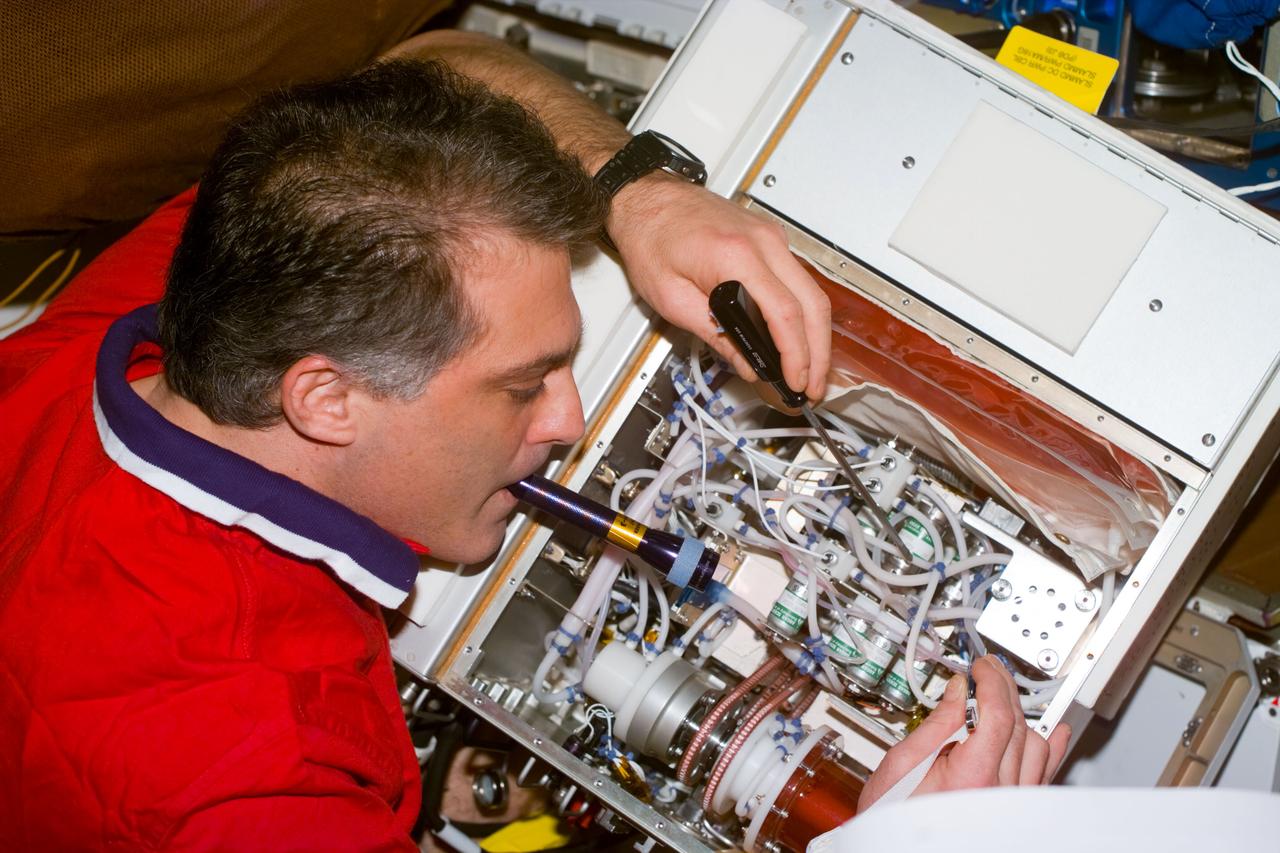
S89-E-5274 (26 Jan 1998) --- This Electronic Still Camera (ESC) image shows astronaut David A. Wolf, mission specialist and cosmonaut guest researcher, holding a pen light in his teeth to get better lighting in this piece of equipment, he is working on onboard the Space Shuttle Endeavour. Wolf is being replaced by astronaut Andrew S. W. Thomas as the cosmonaut guest researcher onboard Russia's Mir Space Station. Thomas will be the last American astronaut to serve onboard the Mir. This ESC view was taken on January 26, 1998, at 14:28:06 GMT.
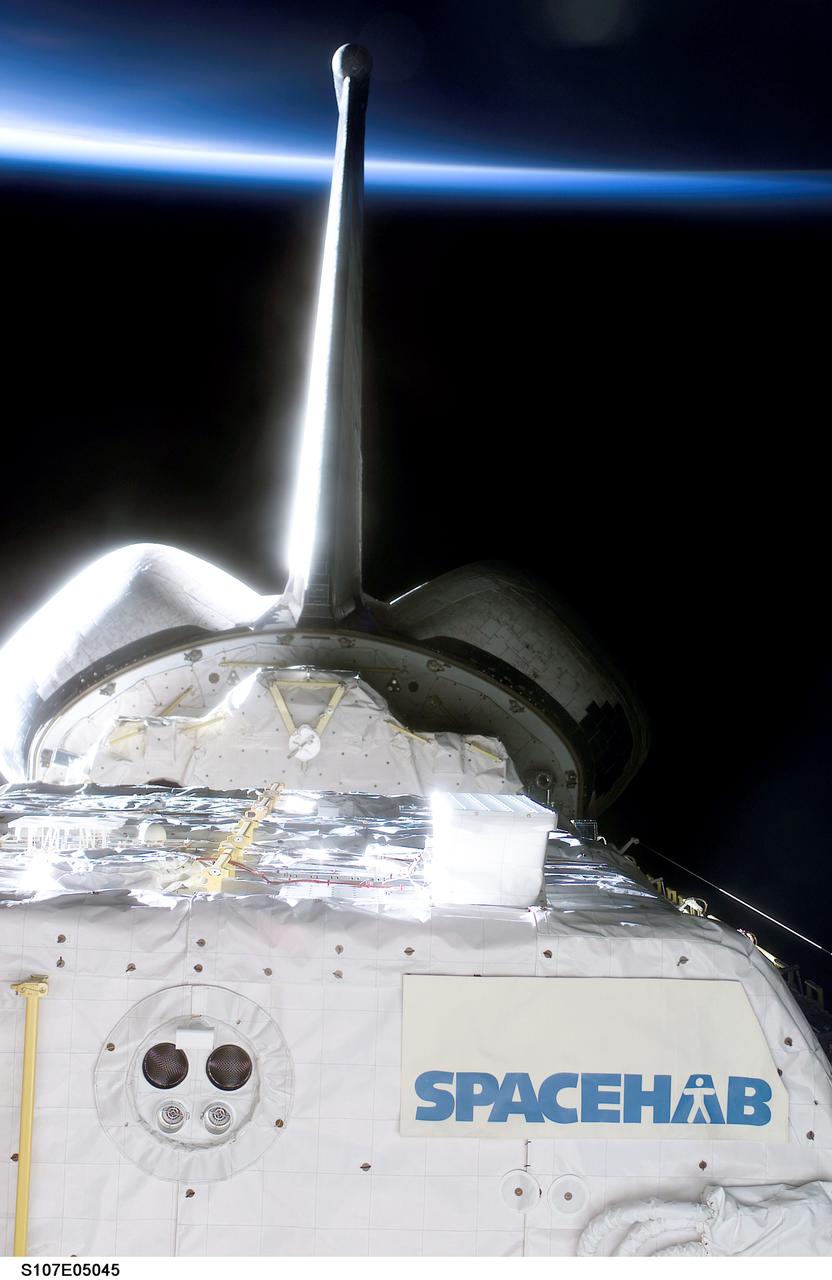
The Space Shuttle Orbiter Columbia STS-107 mission, launched January 16, 2003, is strictly a multidiscipline microgravity and Earth science research mission involving 80-plus International experiments tp be performed during 16-days, many of which will be managed by the Marshall Space Flight Center in Huntsville, Alabama. The majority of the research will be conducted in the Shuttle's middeck, the area directly under the cockpit, and in the new SPACEHAB Research Double Module. This is the first flight for that module, which doubles the volume available for experiments and significantly increases the amount and complexity of research from the last dedicated Shuttle science mission, STS-95, flown in 1998 with a single SPACEHAB module. The pressurized module is carried in Columbia's payload bay and is accessible to the crew via a turnel from the Shuttle's middeck. This onboard photo shows the SPACEHAB Research Double Module in Columbia's payload bay, back dropped by the shuttle vertical stabilizer, the blackness of space, and a thin slice of Earth's horizon. The first shuttle mission in 2003, the STS-107 mission marks the 113th flight overall in NASA's Space Shuttle program, and the 28th flight of the Space Shuttle Orbiter Columbia.
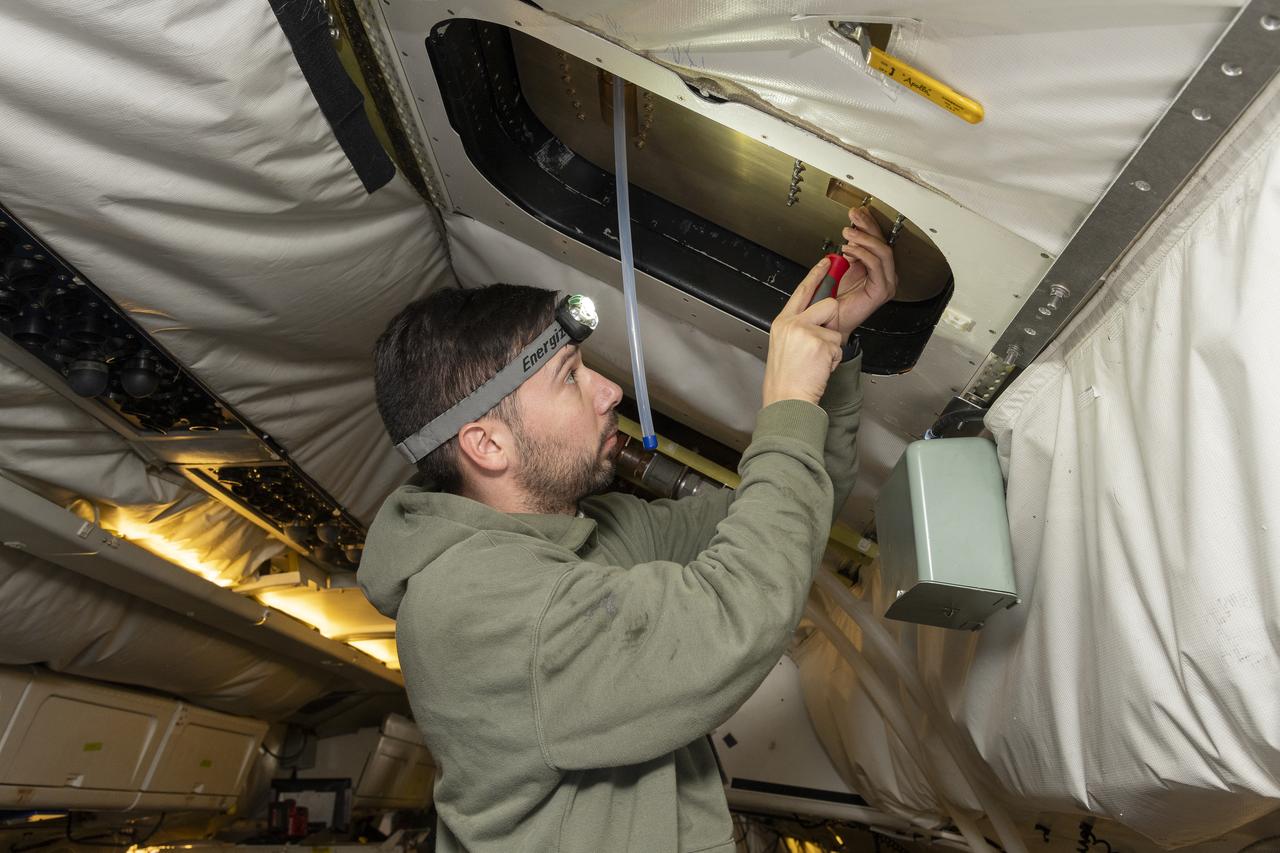
Isac Mata, engineering technician at NASA’s Armstrong Flight Research Center, attends to the interior of the DC-8 aircraft at Building 703 in Palmdale, CA. The DC-8 aircraft is prepared for its last mission, ASIA-AQ (Airborne and Satellite Investigation of Asian Air Quality), that will collect detailed air quality data over several locations in Asia to improve the understanding of local air quality in collaboration with local scientists, air quality agencies, and government partners
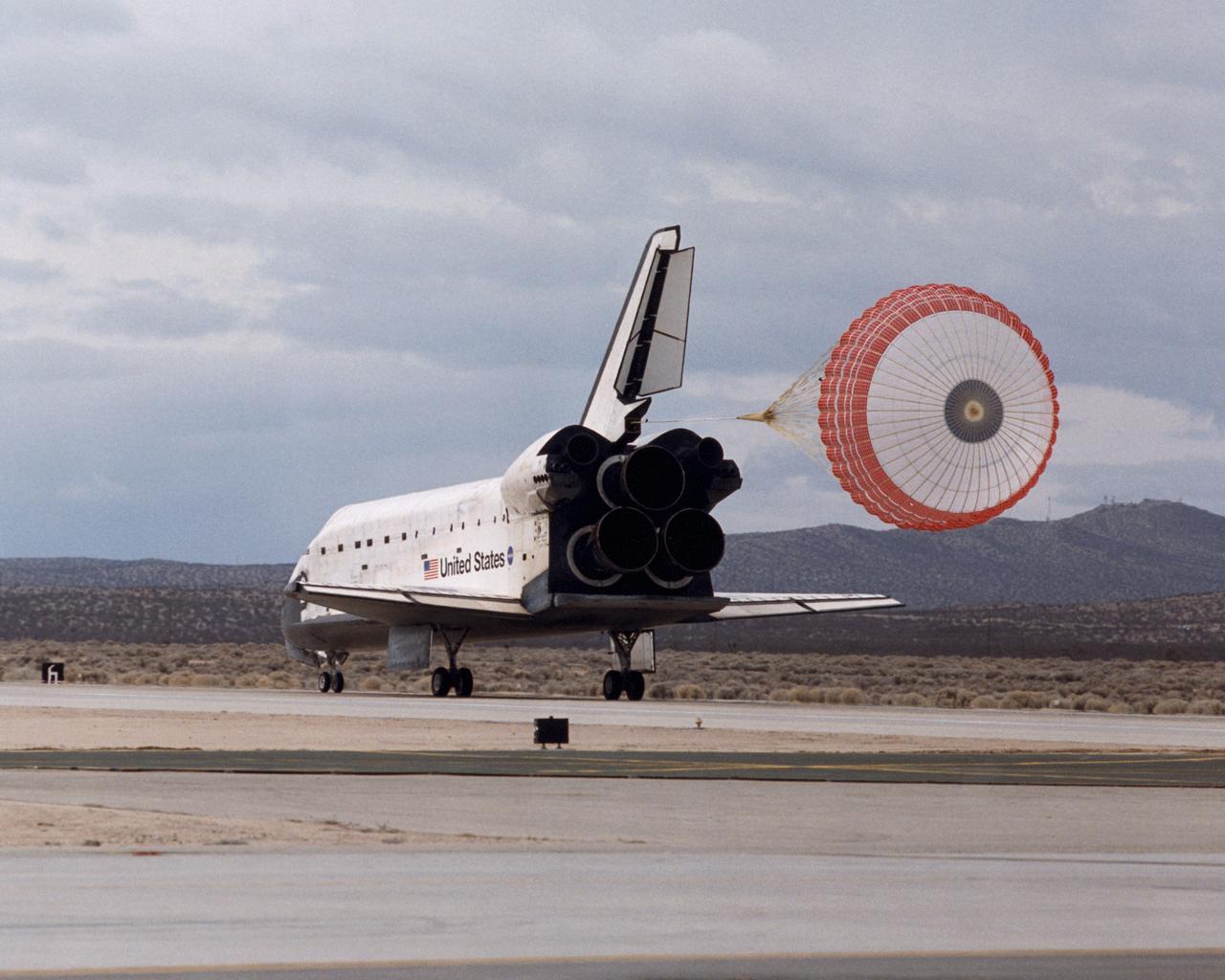
Space Shuttle Atlantis landed at 12:33 p.m. February 20 on the runway at Edwards Air Force Base, California, where NASA's Dryden Flight Research Center is located. The mission, which began February 7, logged 5.3 million miles as the shuttle orbited earth while delivering the Destiny science laboratory to the International Space Station. Inclement weather conditions in Florida prompted the decision to land Atlantis at Edwards. The last time a space shuttle landed at Edwards was Oct. 24, 2000.
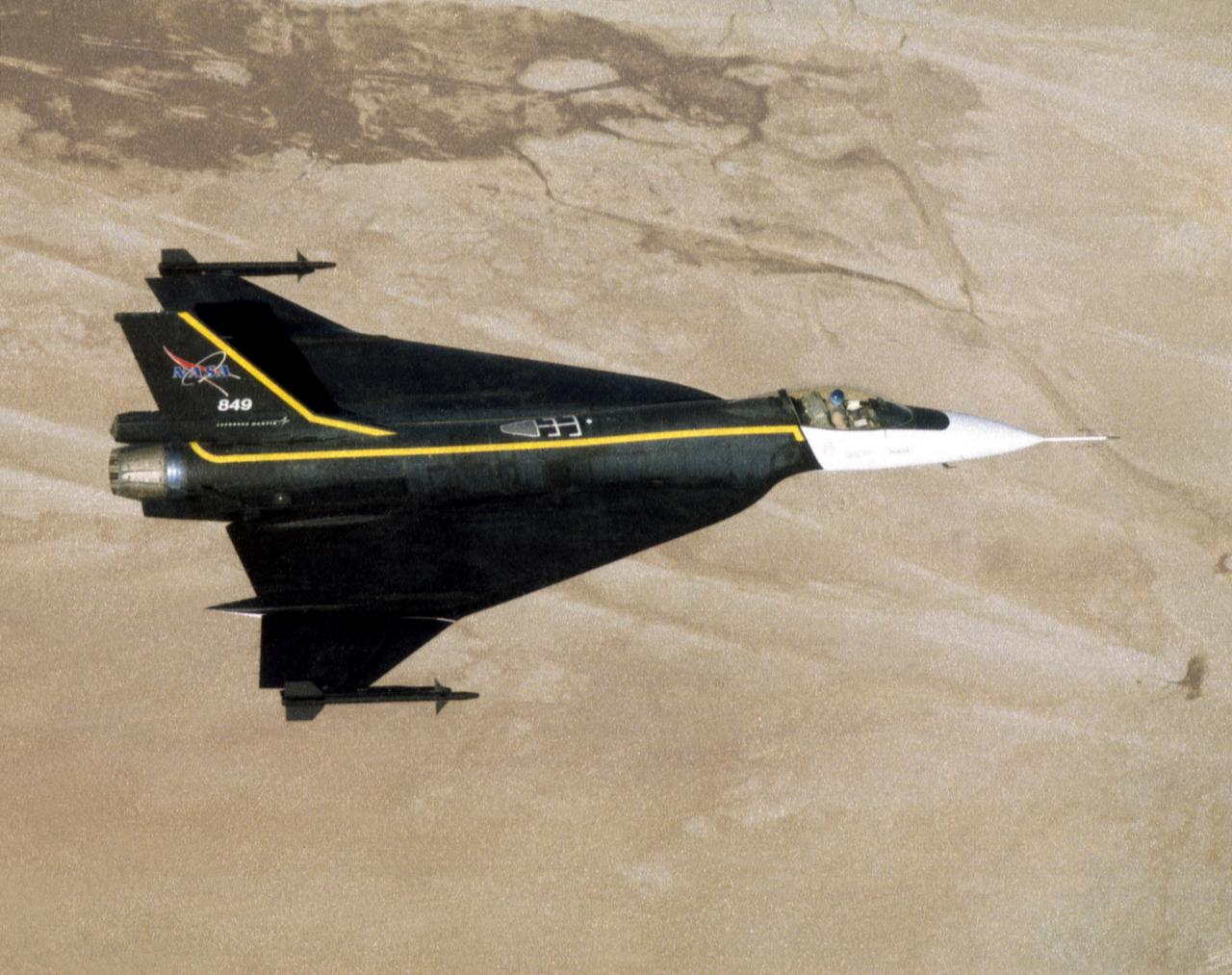
An image of the F-16XL #1 during its functional flight check of the Digital Flight Control System (DFCS) on December 16, 1997. The mission was flown by NASA research pilot Dana Purifoy, and lasted 1 hour and 25 minutes. The tests included pilot familiarly, functional check, and handling qualities evaluation maneuvers to a speed of Mach 0.6 and 300 knots. Purifoy completed all the briefed data points with no problems, and reported that the DFCS handled as well, if not better than the analog computer system that it replaced.
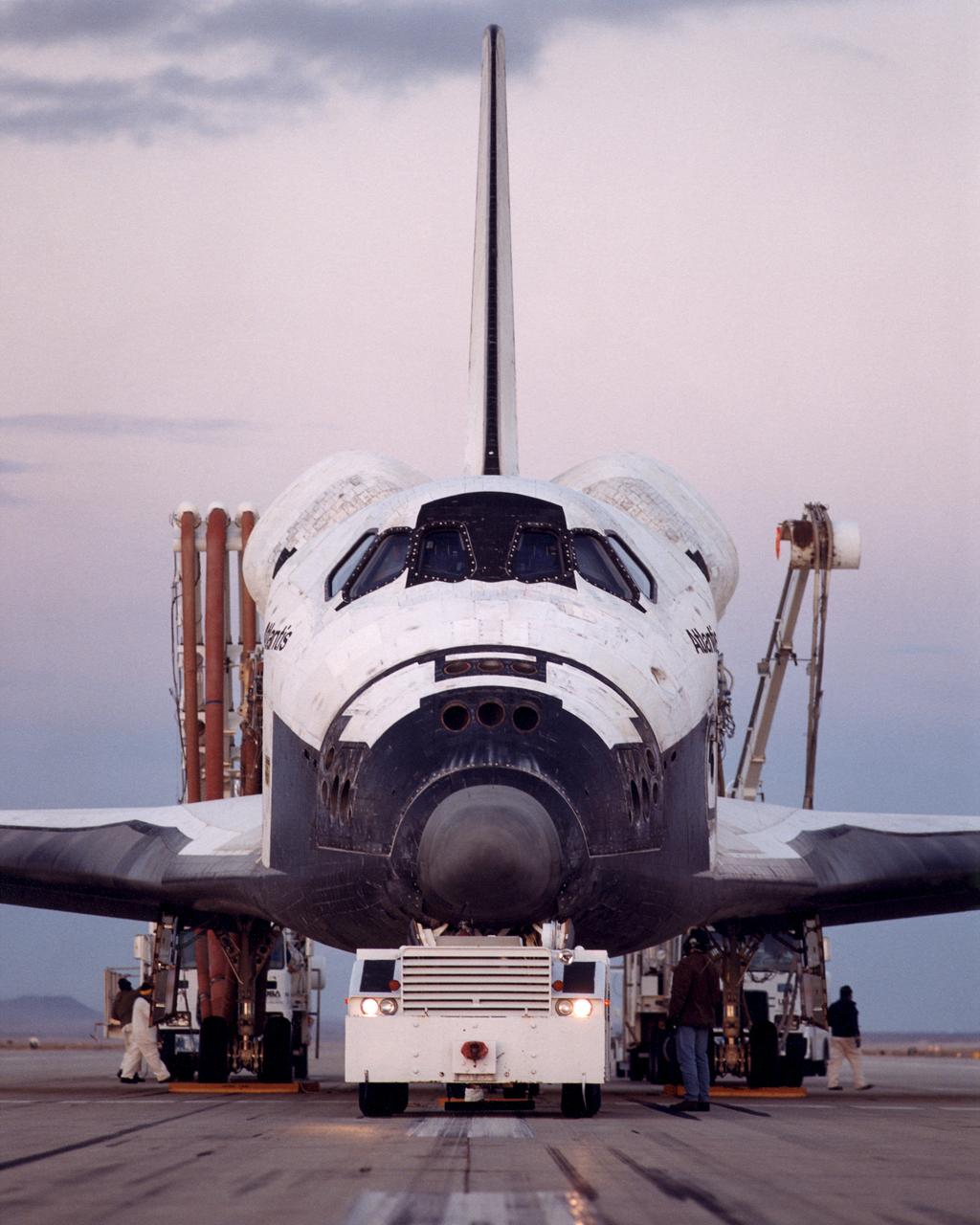
Space Shuttle Atlantis landed at 12:33 p.m. February 20, 2001, on the runway at Edwards Air Force Base, California, where NASA's Dryden Flight Research Center is located. The mission, which began February 7, logged 5.3 million miles as the shuttle orbited earth while delivering the Destiny science laboratory to the International Space Station. Inclement weather conditions in Florida prompted the decision to land Atlantis at Edwards. The last time a space shuttle landed at Edwards was Oct. 24, 2000.
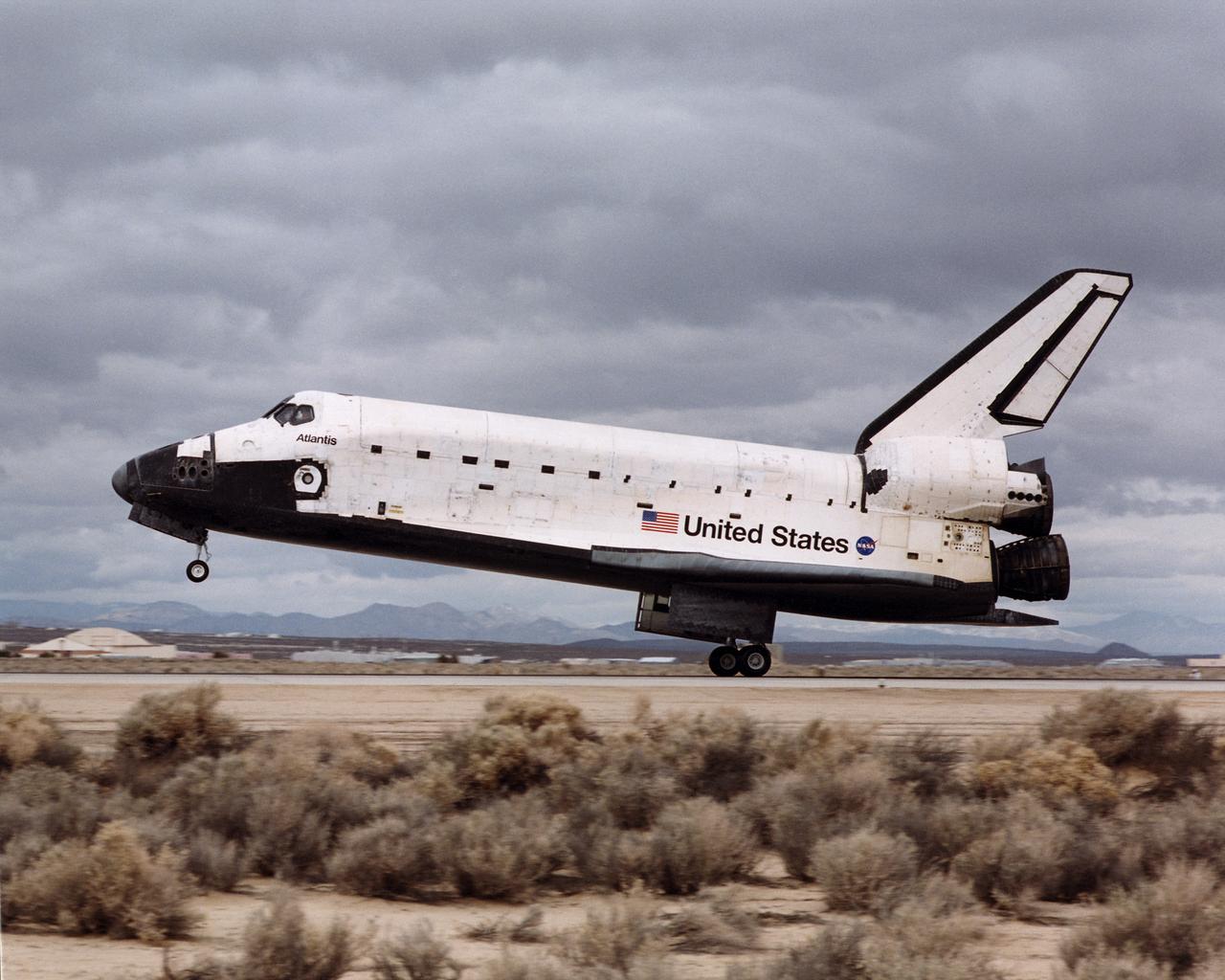
Space Shuttle Atlantis landed at 12:33 p.m. February 20, 2001, on the runway at Edwards Air Force Base, California, where NASA's Dryden Flight Research Center is located. The mission, which began February 7, logged 5.3 million miles as the shuttle orbited earth while delivering the Destiny science laboratory to the International Space Station. Inclement weather conditions in Florida prompted the decision to land Atlantis at Edwards. The last time a space shuttle landed at Edwards was Oct. 24, 2000.
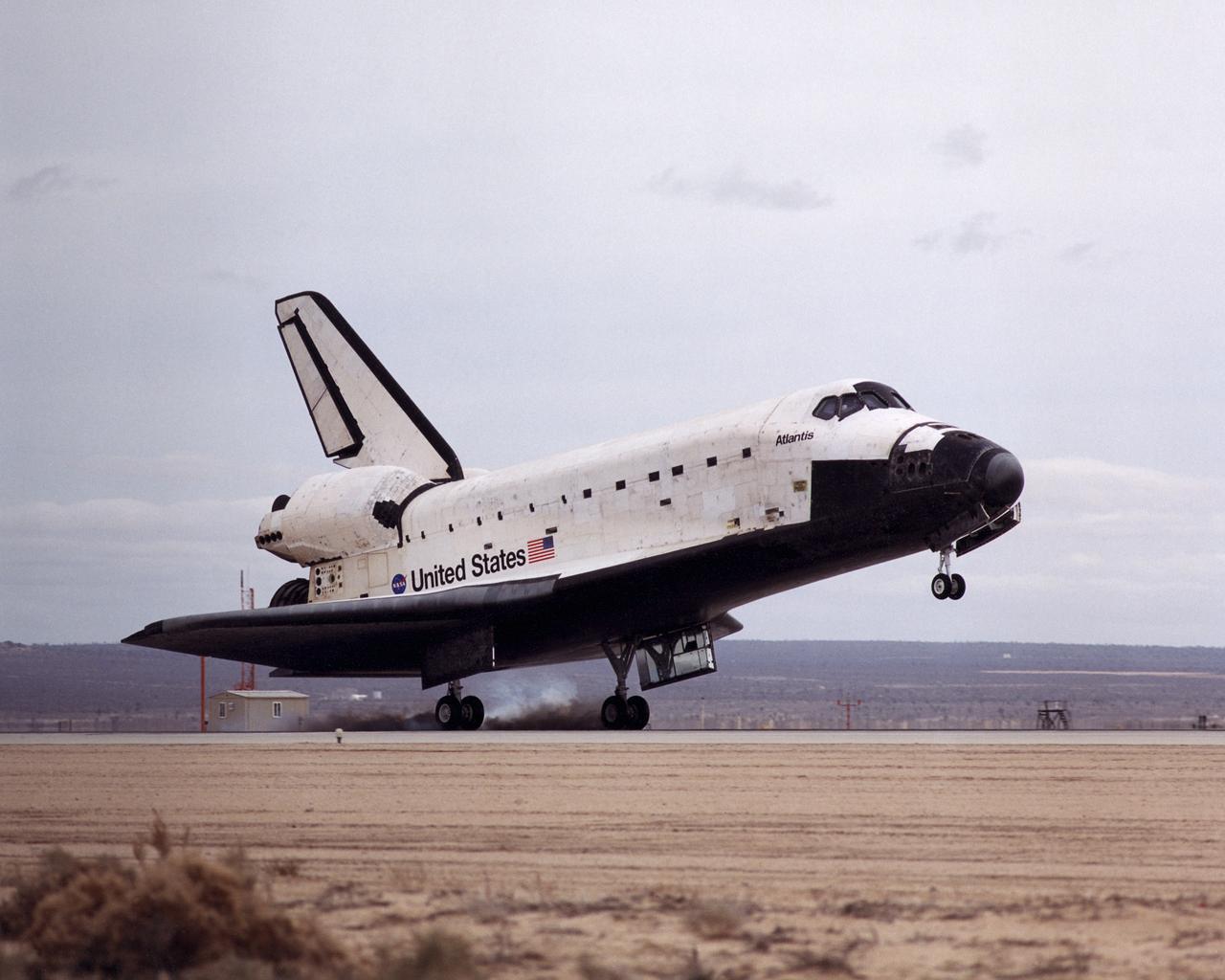
Space Shuttle Atlantis landed at 12:33 p.m. February 20, 2001, on the runway at Edwards Air Force Base, California, where NASA's Dryden Flight Research Center is located. The mission, which began February 7, logged 5.3 million miles as the shuttle orbited earth while delivering the Destiny science laboratory to the International Space Station. Inclement weather conditions in Florida prompted the decision to land Atlantis at Edwards. The last time a space shuttle landed at Edwards was Oct. 24, 2000.
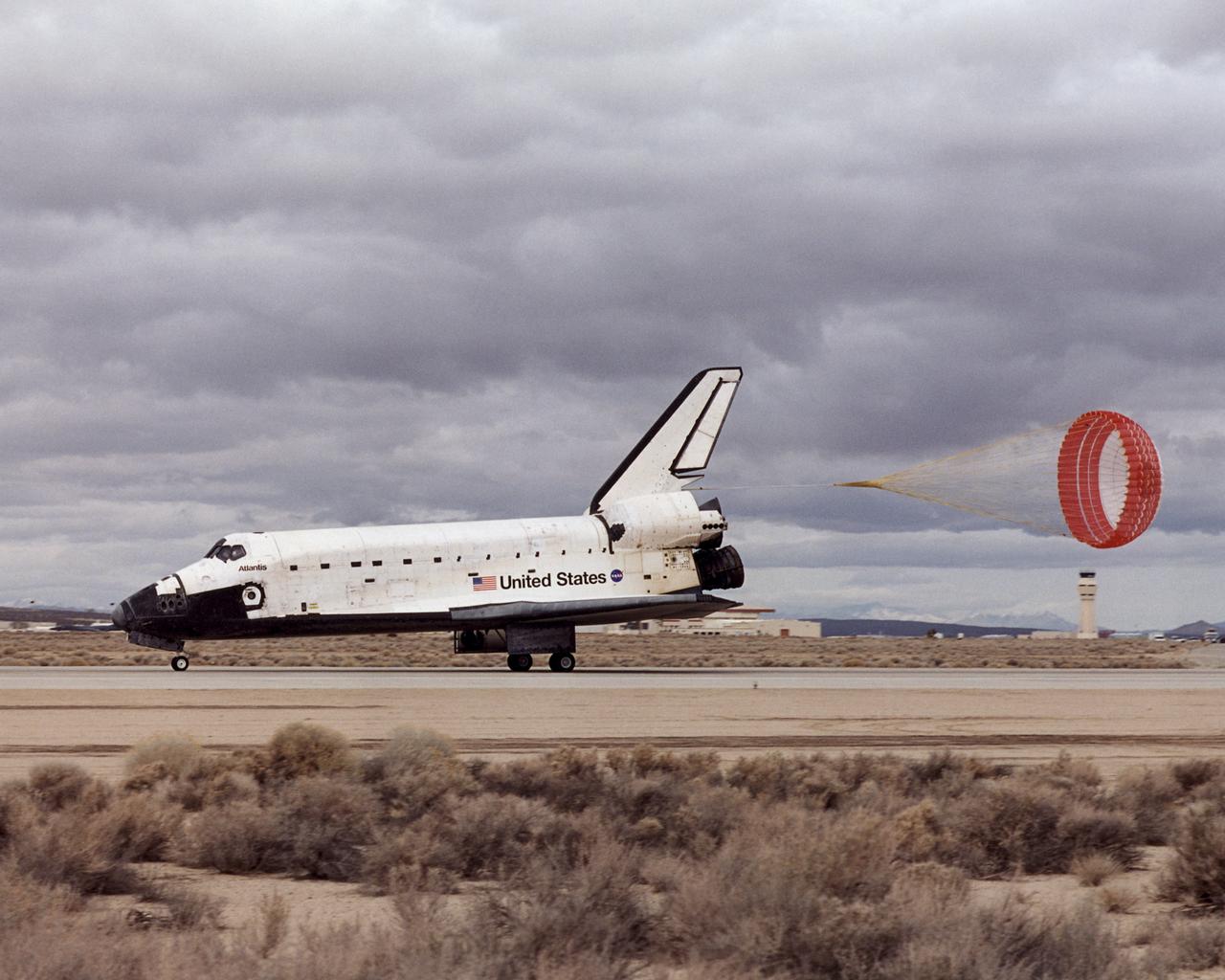
Space Shuttle Atlantis landed at 12:33 p.m. February 20, 2001, on the runway at Edwards Air Force Base, California, where NASA's Dryden Flight Research Center is located. The mission, which began February 7, logged 5.3 million miles as the shuttle orbited earth while delivering the Destiny science laboratory to the International Space Station. Inclement weather conditions in Florida prompted the decision to land Atlantis at Edwards. The last time a space shuttle landed at Edwards was Oct. 24, 2000.
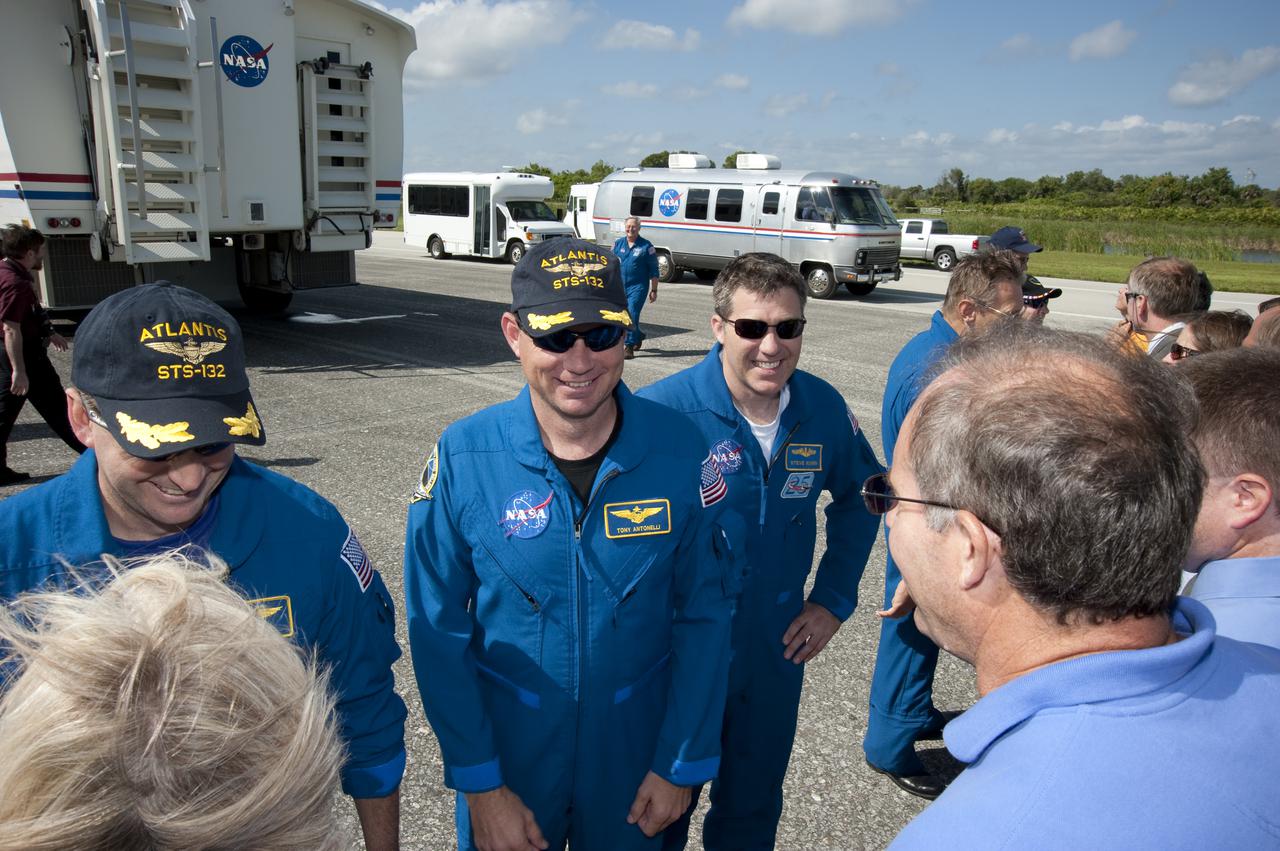
CAPE CANAVERAL, Fla. - At NASA's Kennedy Space Center in Florida, workers greet STS-132 Commander Ken Ham , left, Pilot Tony Antonelli and Mission Specialist Steve Bowen on the Shuttle Landing Facility. Atlantis wrapped up its 4.8-million-mile STS-132 mission to the International Space Station at 8:48 a.m. EDT. The six-member STS-132 crew carried the Russian-built Mini Research Module-1 to the space station. STS-132 is the 34th shuttle mission to the station, the 132nd shuttle mission overall and the last planned flight for Atlantis. For information on the STS-132 mission and crew, visit www.nasa.gov_mission_pages_shuttle_shuttlemissions_sts132_index.html. Photo credit: NASA_Kim Shiflett
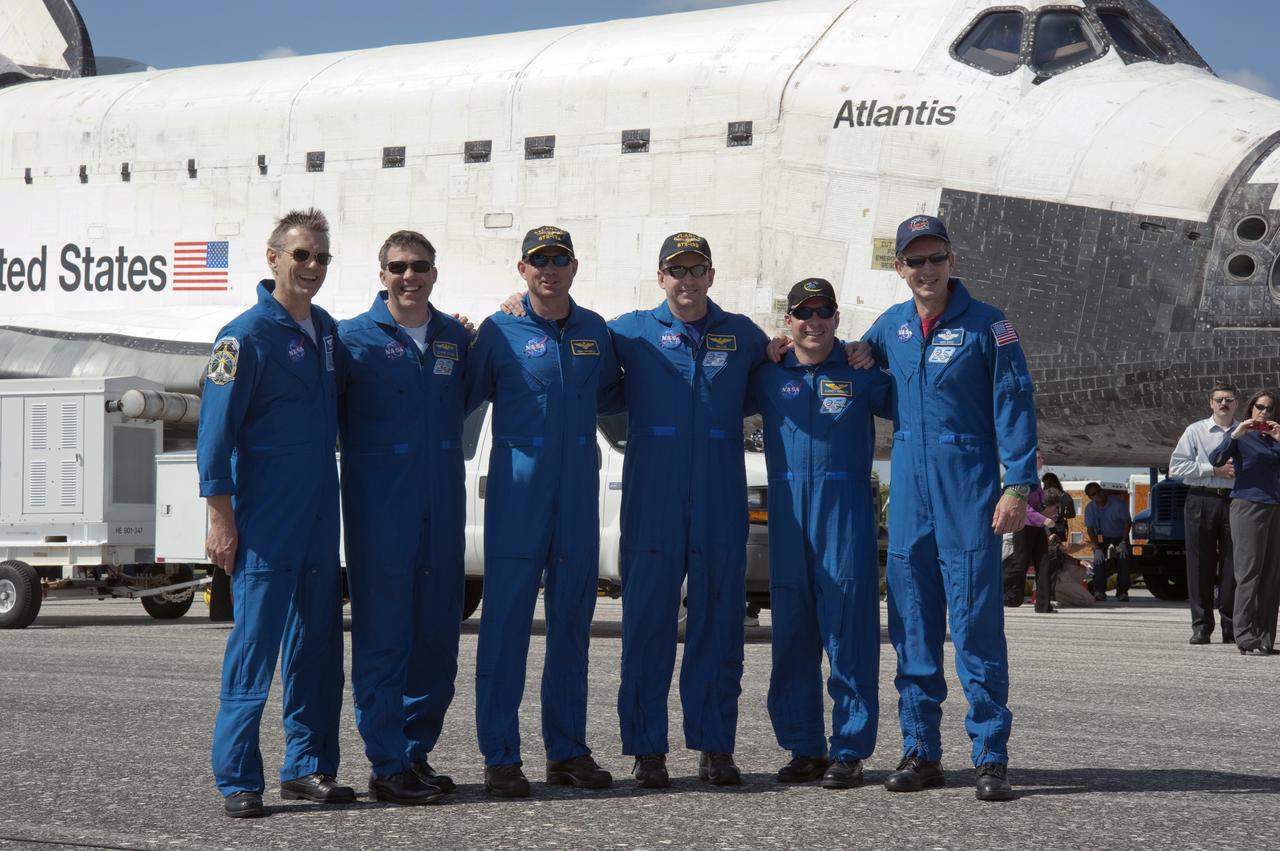
CAPE CANAVERAL, Fla. - At the Shuttle Landing Facility at NASA's Kennedy Space Center in Florida, the STS-132 crew members of space shuttle Atlantis pause for a post-landing photo opportunity. From left are Mission Specialists Piers Sellers and Steve Bowen; Pilot Tony Antonelli; Commander Ken Ham; and Mission Specialists Garrett Reisman and Michael Good. The six-member STS-132 crew carried the Russian-built Mini Research Module-1 to the space station. STS-132 is the 34th shuttle mission to the station, the 132nd shuttle mission overall and the last planned flight for Atlantis. For information on the STS-132 mission and crew, visit www.nasa.gov_mission_pages_shuttle_shuttlemissions_sts132_index.html. Photo credit: NASA_Kim Shiflett
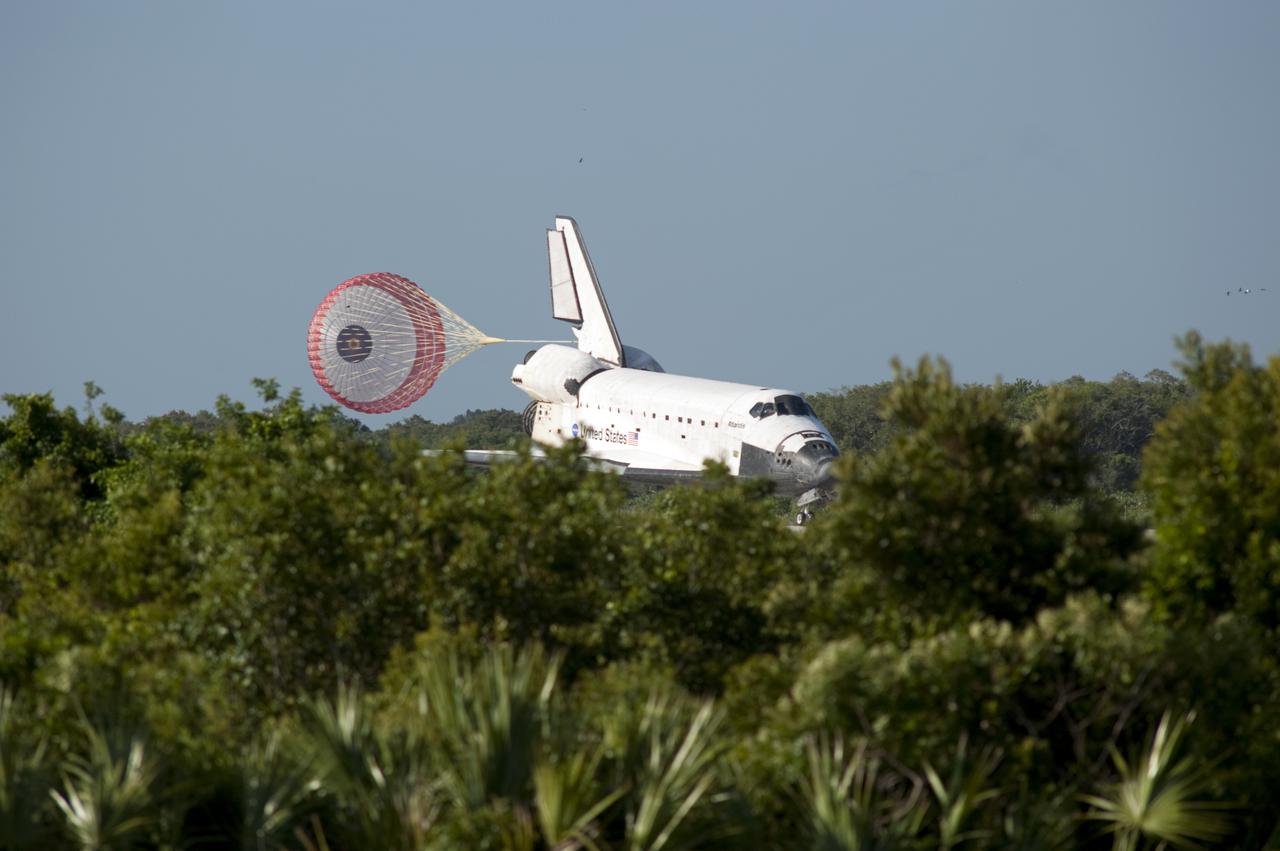
CAPE CANAVERAL, Fla. - Space shuttle Atlantis' drag chute slows the vehicle as it rolls down Runway 33 at the Shuttle Landing Facility at NASA's Kennedy Space Center in Florida. Landing was at 8:48 a.m. EDT, completing the 12-day STS-132 mission to the International Space Station. The six-member STS-132 crew carried the Russian-built Mini Research Module-1 to the International Space Station. STS-132 is the 34th shuttle mission to the station, the 132nd shuttle mission overall and the last planned flight for Atlantis. For information on the STS-132 mission and crew, visit www.nasa.gov_mission_pages_shuttle_shuttlemissions_sts132_index.html. Photo credit: NASA_Rusty Backer
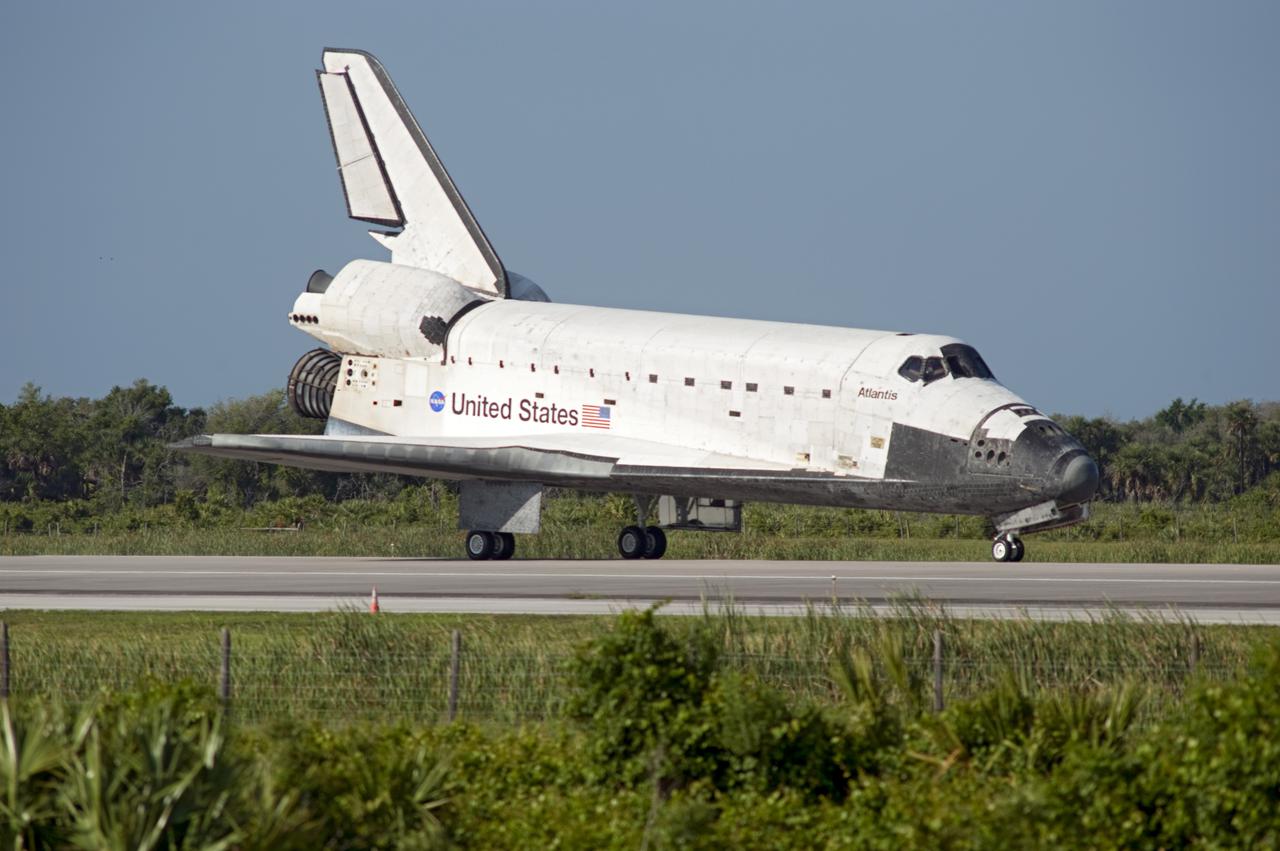
CAPE CANAVERAL, Fla. - Space shuttle Atlantis rolls to a stop on Runway 33 at the Shuttle Landing Facility at NASA's Kennedy Space Center in Florida. Landing was at 8:48 a.m. EDT, completing the 12-day STS-132 mission to the International Space Station. The six-member STS-132 crew carried the Russian-built Mini Research Module-1 to the International Space Station. STS-132 is the 34th shuttle mission to the station, the 132nd shuttle mission overall and the last planned flight for Atlantis. For information on the STS-132 mission and crew, visit www.nasa.gov_mission_pages_shuttle_shuttlemissions_sts132_index.html. Photo credit: NASA_Rusty Backer
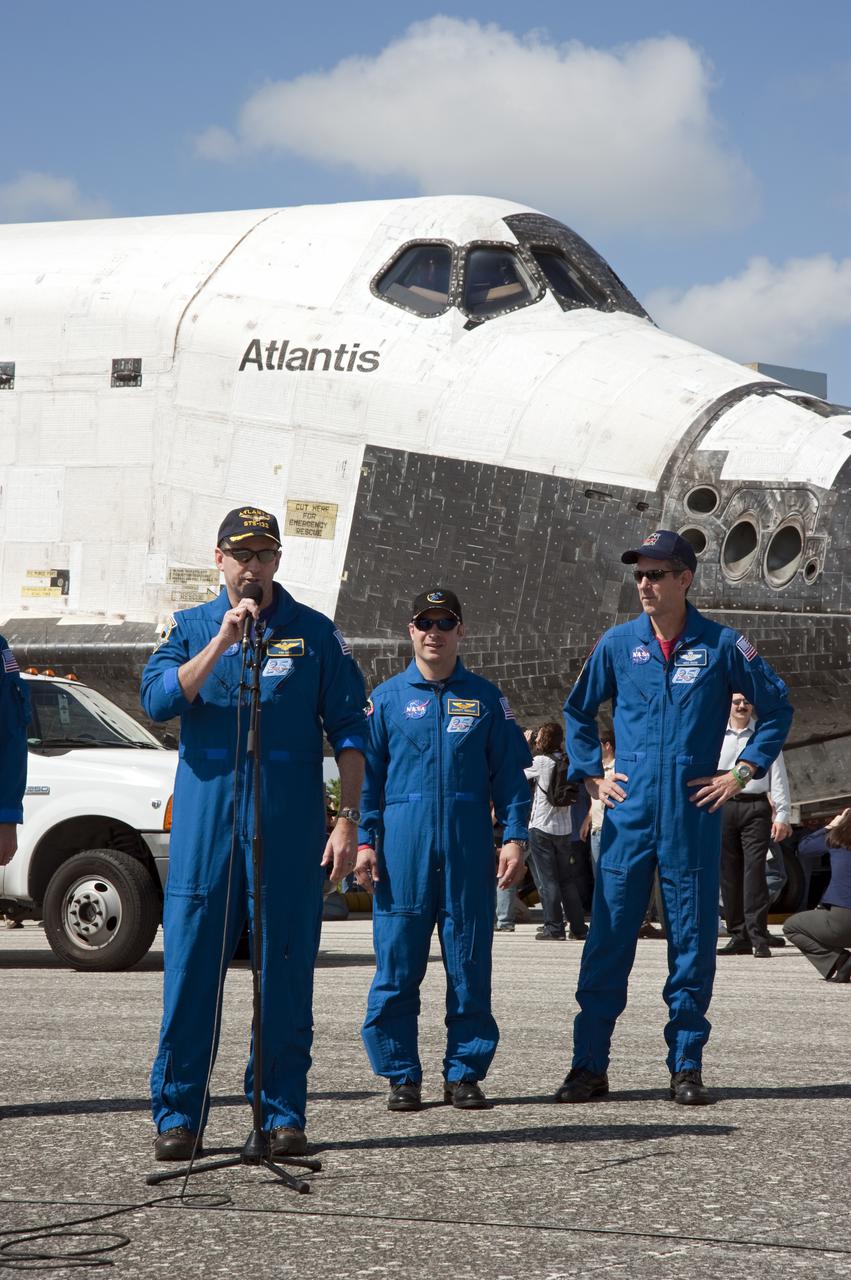
CAPE CANAVERAL, Fla. - STS-132 Commander Ken Ham speaks to the media after landing space shuttle Atlantis at the Shuttle Landing Facility at NASA's Kennedy Space Center in Florida. Behind Ham is STS-132 Mission Specialists Garrett Reisman (center) and Michael Good. The six-member STS-132 crew carried the Russian-built Mini Research Module-1 to the space station. STS-132 is the 34th shuttle mission to the station, the 132nd shuttle mission overall and the last planned flight for Atlantis. For information on the STS-132 mission and crew, visit www.nasa.gov_mission_pages_shuttle_shuttlemissions_sts132_index.html. Photo credit: NASA_Kim Shiflett
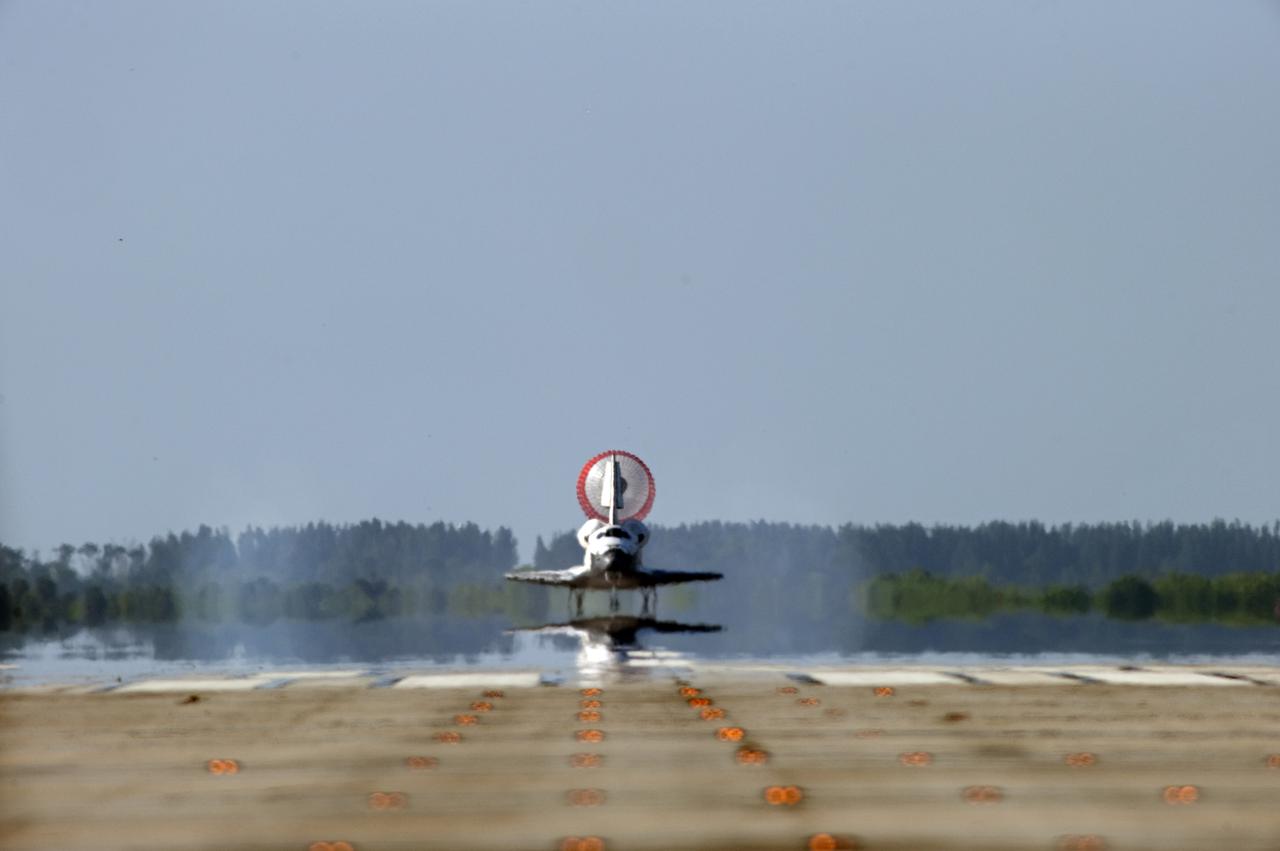
CAPE CANAVERAL, Fla. - With its drag chute unfurled, space shuttle Atlantis rolls down Runway 33 at the Shuttle Landing Facility at NASA's Kennedy Space Center in Florida. Landing was at 8:48 a.m. EDT, completing the 12-day STS-132 mission to the International Space Station. The six-member STS-132 crew carried the Russian-built Mini Research Module-1 to the space station. STS-132 is the 34th shuttle mission to the station, the 132nd shuttle mission overall and the last planned flight for Atlantis. For information on the STS-132 mission and crew, visit www.nasa.gov_mission_pages_shuttle_shuttlemissions_sts132_index.html. Photo credit: NASA_Sandra Joseph and Carl Winebarger
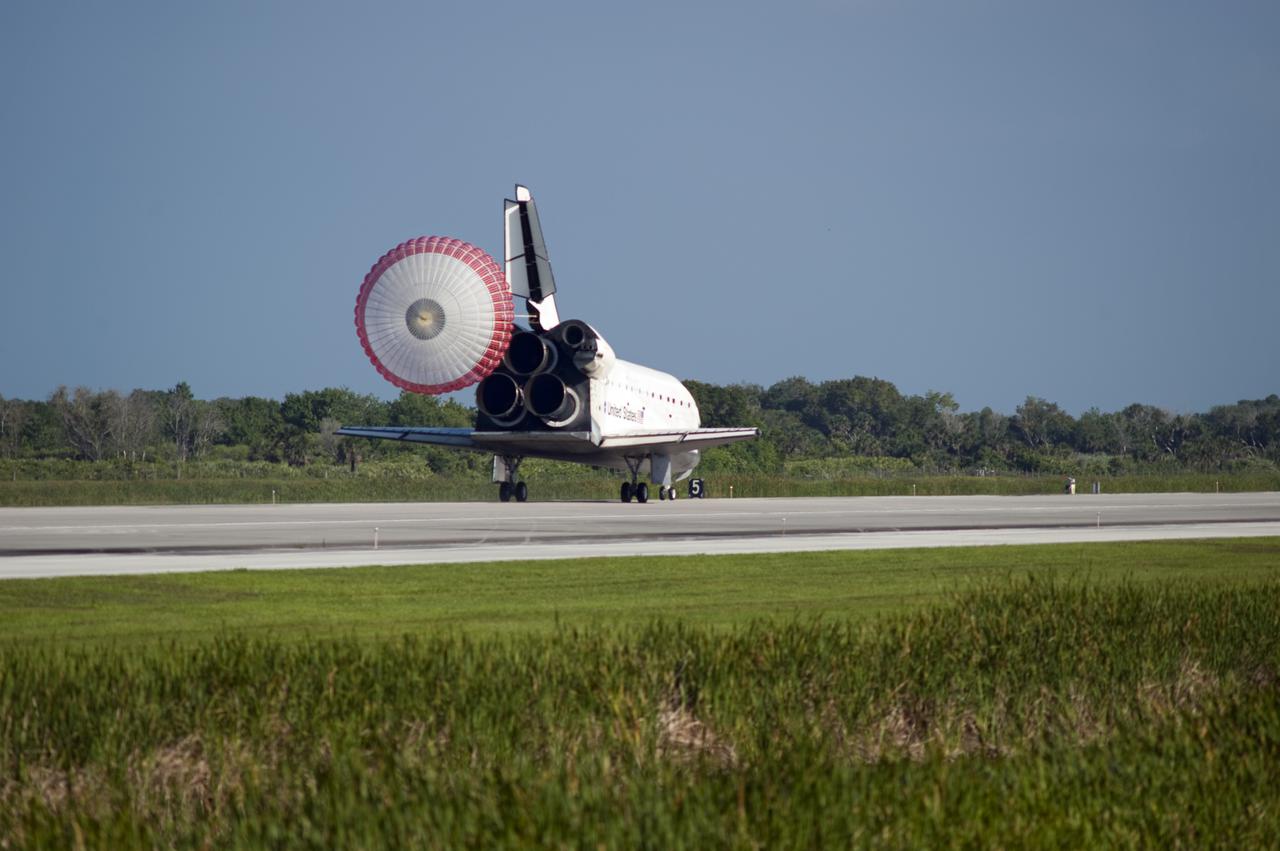
CAPE CANAVERAL, Fla. - Space shuttle Atlantis' drag chute slows the vehicle as it rolls to a stop on Runway 33 at the Shuttle Landing Facility at NASA's Kennedy Space Center in Florida. Landing was at 8:48 a.m. EDT, completing the 12-day STS-132 mission to the International Space Station. The six-member STS-132 crew carried the Russian-built Mini Research Module-1 to the International Space Station. STS-132 is the 34th shuttle mission to the station, the 132nd shuttle mission overall and the last planned flight for Atlantis. For information on the STS-132 mission and crew, visit www.nasa.gov_mission_pages_shuttle_shuttlemissions_sts132_index.html. Photo credit: NASA_Tony Gray
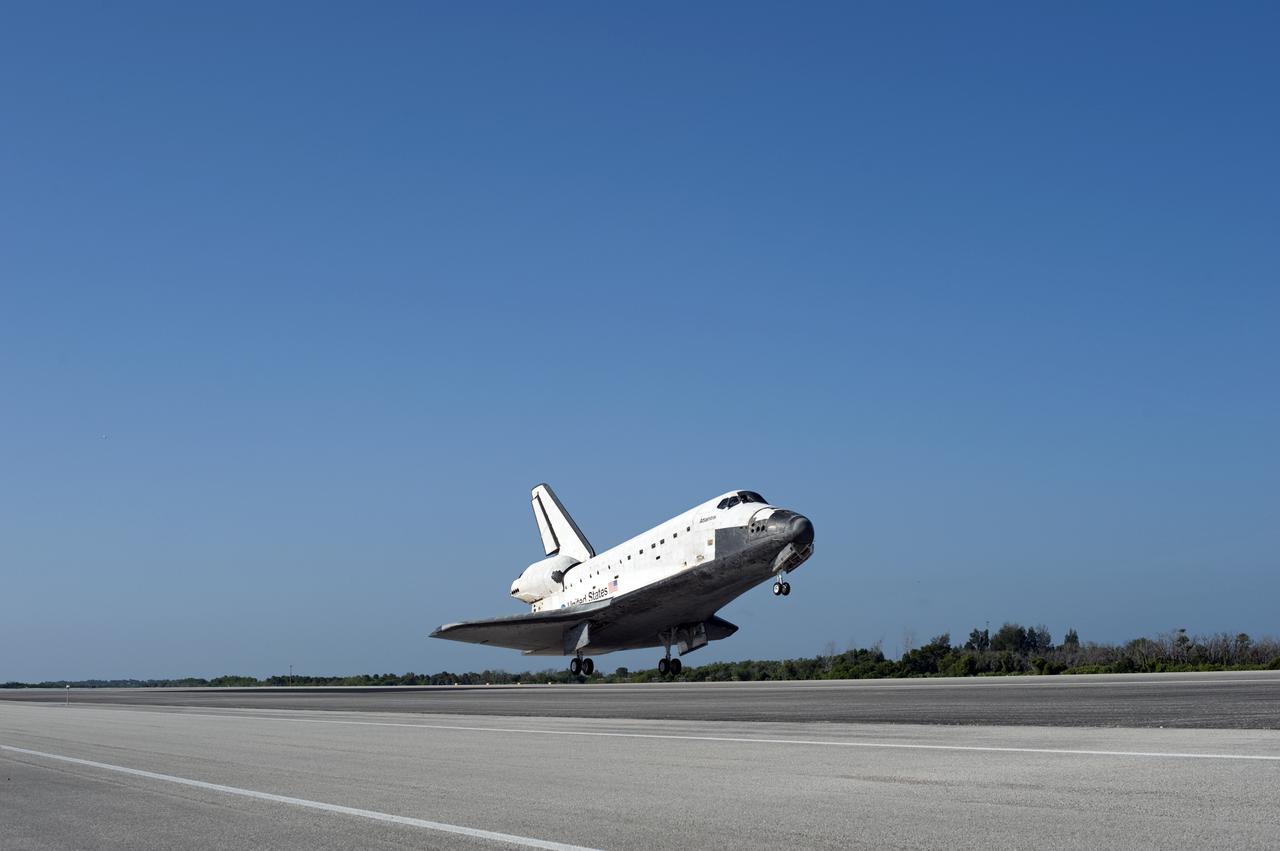
CAPE CANAVERAL, Fla. - Back dropped by a crystal-clear blue sky, space shuttle Atlantis' belly is visible as it approaches Runway 33 at the Shuttle Landing Facility at NASA's Kennedy Space Center in Florida. Landing was at 8:48 a.m. EDT, completing the 12-day STS-132 mission to the International Space Station. The six-member STS-132 crew carried the Russian-built Mini Research Module-1 to the space station. STS-132 is the 34th shuttle mission to the station, the 132nd shuttle mission overall and the last planned flight for Atlantis. For information on the STS-132 mission and crew, visit www.nasa.gov_mission_pages_shuttle_shuttlemissions_sts132_index.html. Photo credit: NASA_Tony Gray and Tom Farrar
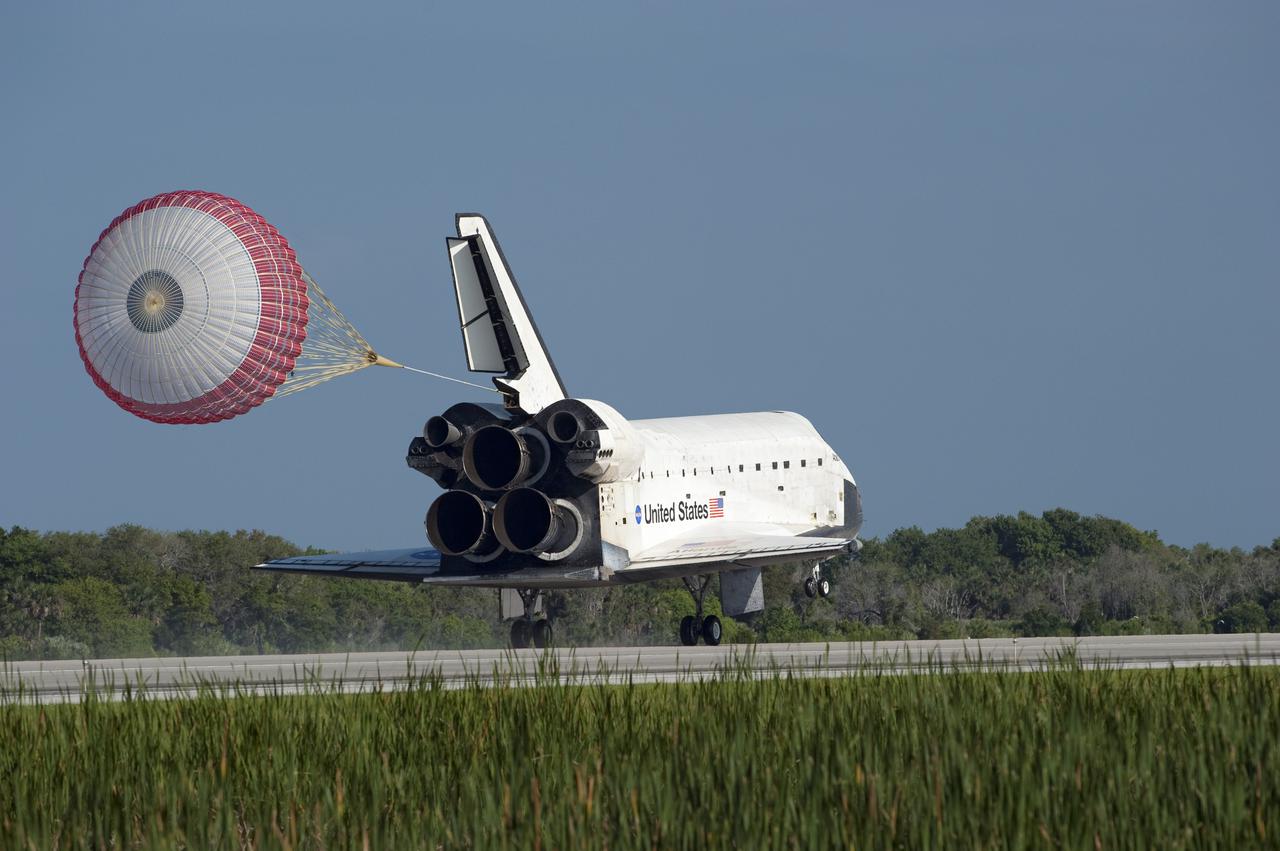
CAPE CANAVERAL, Fla. - Space shuttle Atlantis' drag chute slows the vehicle as its main gear touches down on Runway 33 at the Shuttle Landing Facility at NASA's Kennedy Space Center in Florida. Landing was at 8:48 a.m. EDT, completing the 12-day STS-132 mission to the International Space Station. The six-member STS-132 crew carried the Russian-built Mini Research Module-1 to the space station. STS-132 is the 34th shuttle mission to the station, the 132nd shuttle mission overall and the last planned flight for Atlantis. For information on the STS-132 mission and crew, visit www.nasa.gov_mission_pages_shuttle_shuttlemissions_sts132_index.html. Photo credit: NASA_Tom Joseph
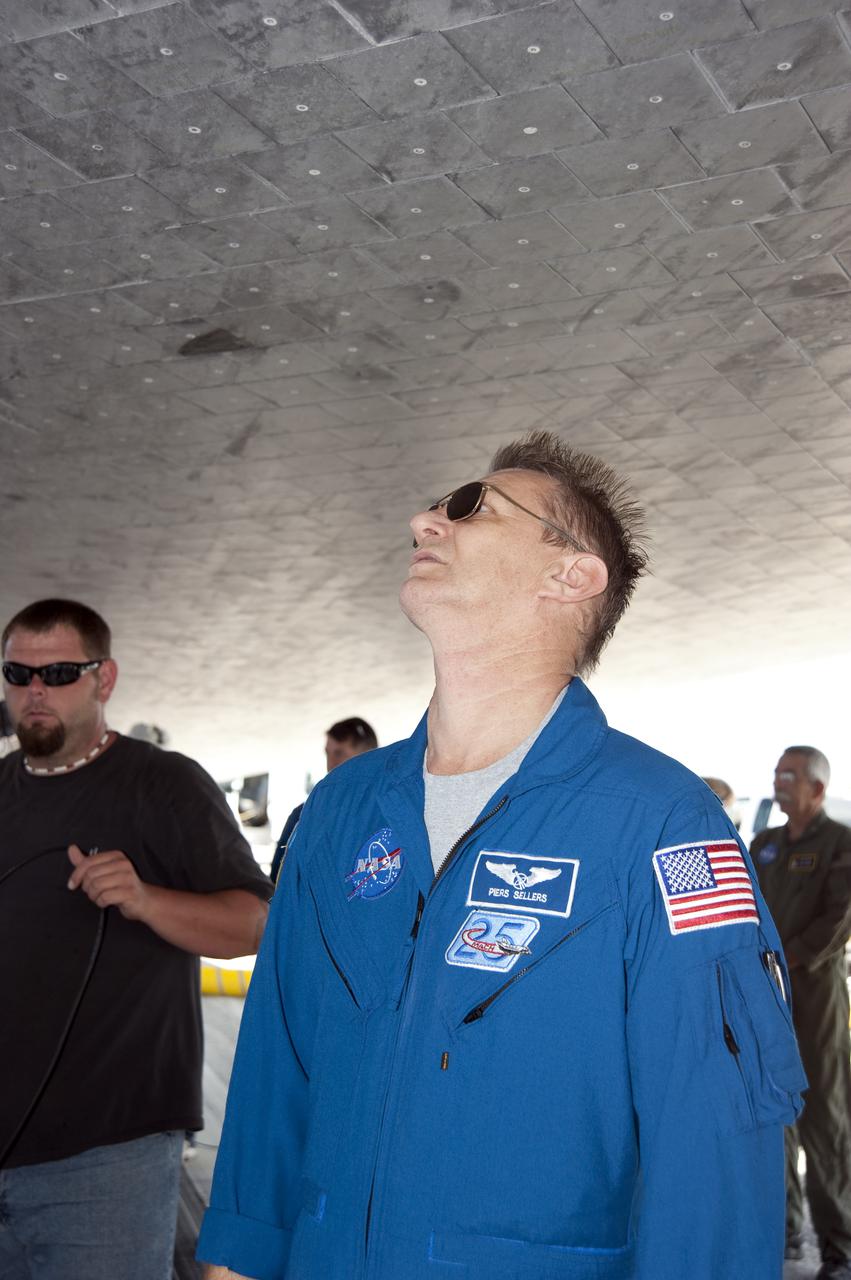
CAPE CANAVERAL, Fla. - STS-132 Mission Specialist Piers Sellers takes an up-close look at the underside of space shuttle Atlantis after its picture-perfect touchdown at the Shuttle Landing Facility at NASA's Kennedy Space Center in Florida. The six-member STS-132 crew carried the Russian-built Mini Research Module-1 to the space station. STS-132 is the 34th shuttle mission to the station, the 132nd shuttle mission overall and the last planned flight for Atlantis. For information on the STS-132 mission and crew, visit www.nasa.gov_mission_pages_shuttle_shuttlemissions_sts132_index.html. Photo credit: NASA_Kim Shiflett
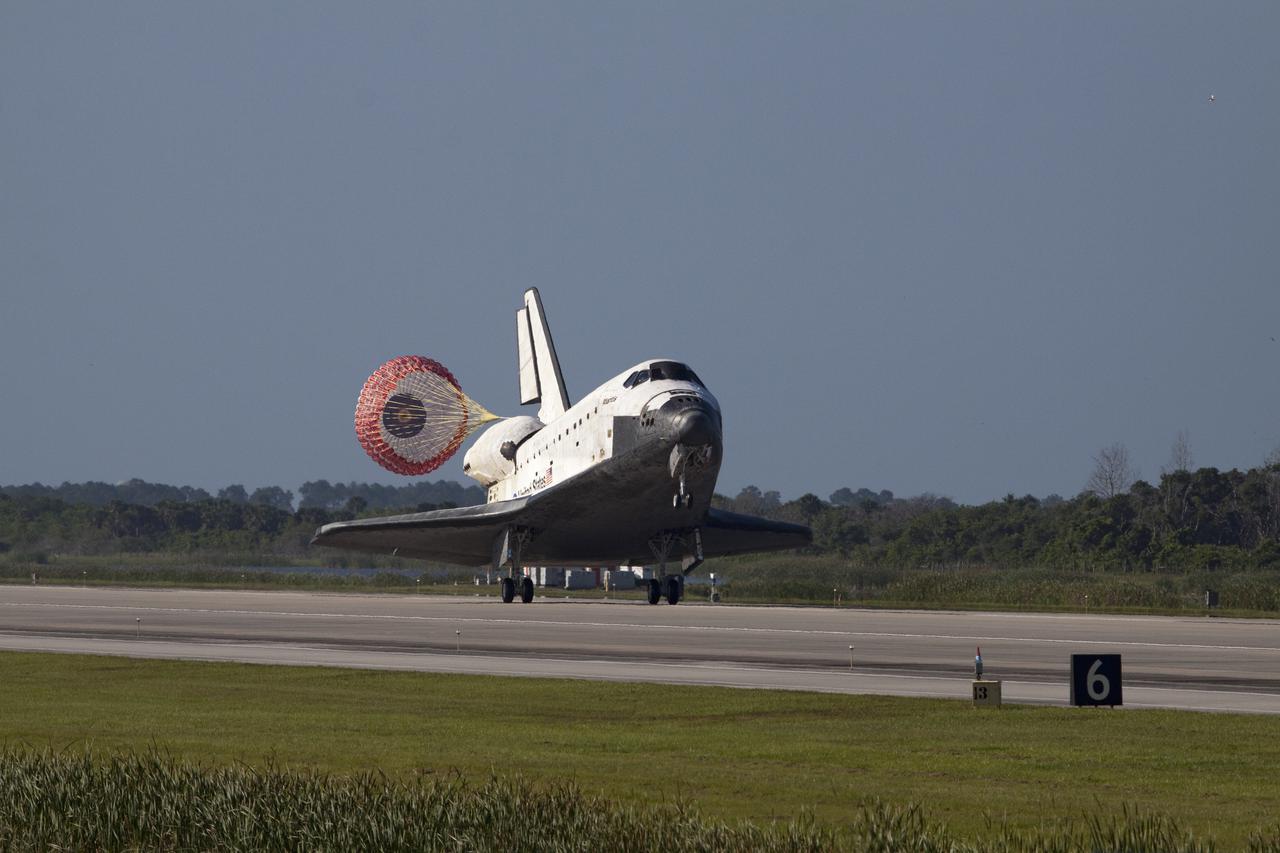
CAPE CANAVERAL, Fla. - With its drag chute unfurled, space shuttle Atlantis rolls down Runway 33 at the Shuttle Landing Facility at NASA's Kennedy Space Center in Florida. Landing was at 8:48 a.m. EDT, completing the 12-day STS-132 mission to the International Space Station. The six-member STS-132 crew carried the Russian-built Mini Research Module-1 to the space station. STS-132 is the 34th shuttle mission to the station, the 132nd shuttle mission overall and the last planned flight for Atlantis. For information on the STS-132 mission and crew, visit www.nasa.gov_mission_pages_shuttle_shuttlemissions_sts132_index.html. Photo credit: NASA_Jack Pfaller
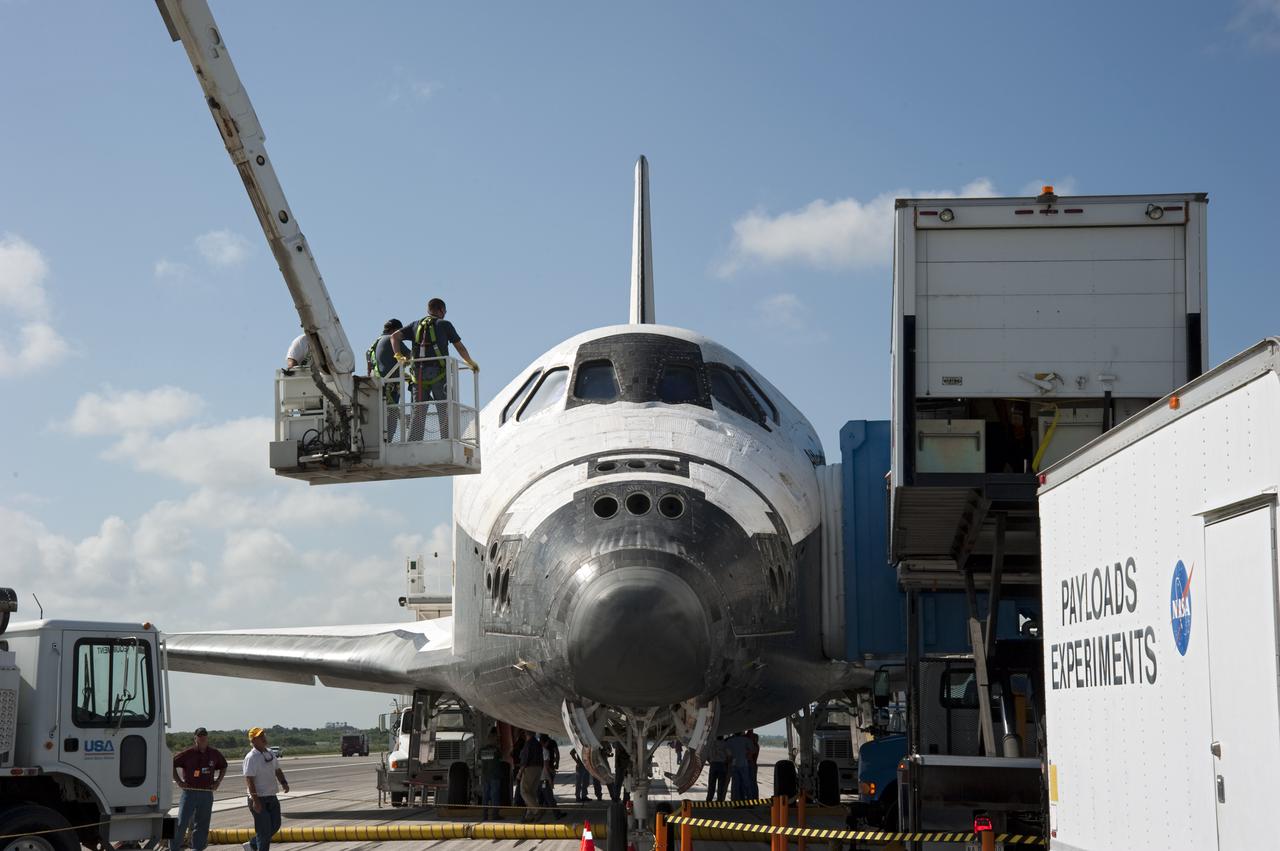
CAPE CANAVERAL, Fla. - At NASA's Kennedy Space Center in Florida, workers begin to 'safe' space shuttle Atlantis on the Shuttle Landing Facility's Runway 33 after its STS-132 mission to the International Space Station. The six-member STS-132 crew carried the Russian-built Mini Research Module-1 to the space station. STS-132 is the 34th shuttle mission to the station, the 132nd shuttle mission overall and the last planned flight for Atlantis. For information on the STS-132 mission and crew, visit www.nasa.gov_mission_pages_shuttle_shuttlemissions_sts132_index.html. Photo credit: NASA_Kim Shiflett
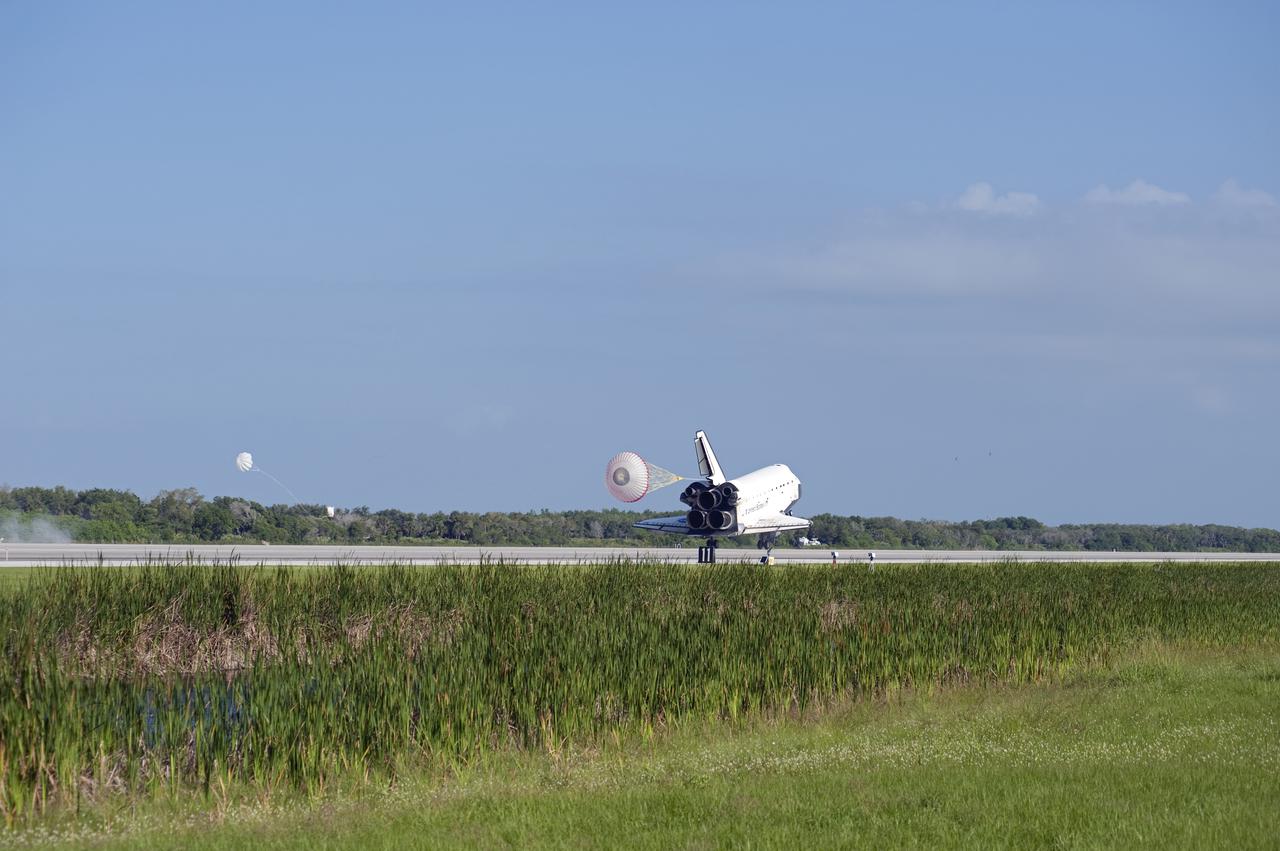
CAPE CANAVERAL, Fla. - Space shuttle Atlantis touches down on Runway 33 at the Shuttle Landing Facility at NASA's Kennedy Space Center in Florida. Landing was at 8:48 a.m. EDT, completing the 12-day STS-132 mission to the International Space Station. The six-member STS-132 crew carried the Russian-built Mini Research Module-1 to the space station. STS-132 is the 34th shuttle mission to the station, the 132nd shuttle mission overall and the last planned flight for Atlantis. For information on the STS-132 mission and crew, visit www.nasa.gov_mission_pages_shuttle_shuttlemissions_sts132_index.html. Photo credit: NASA_Thomas Farrar Jr.
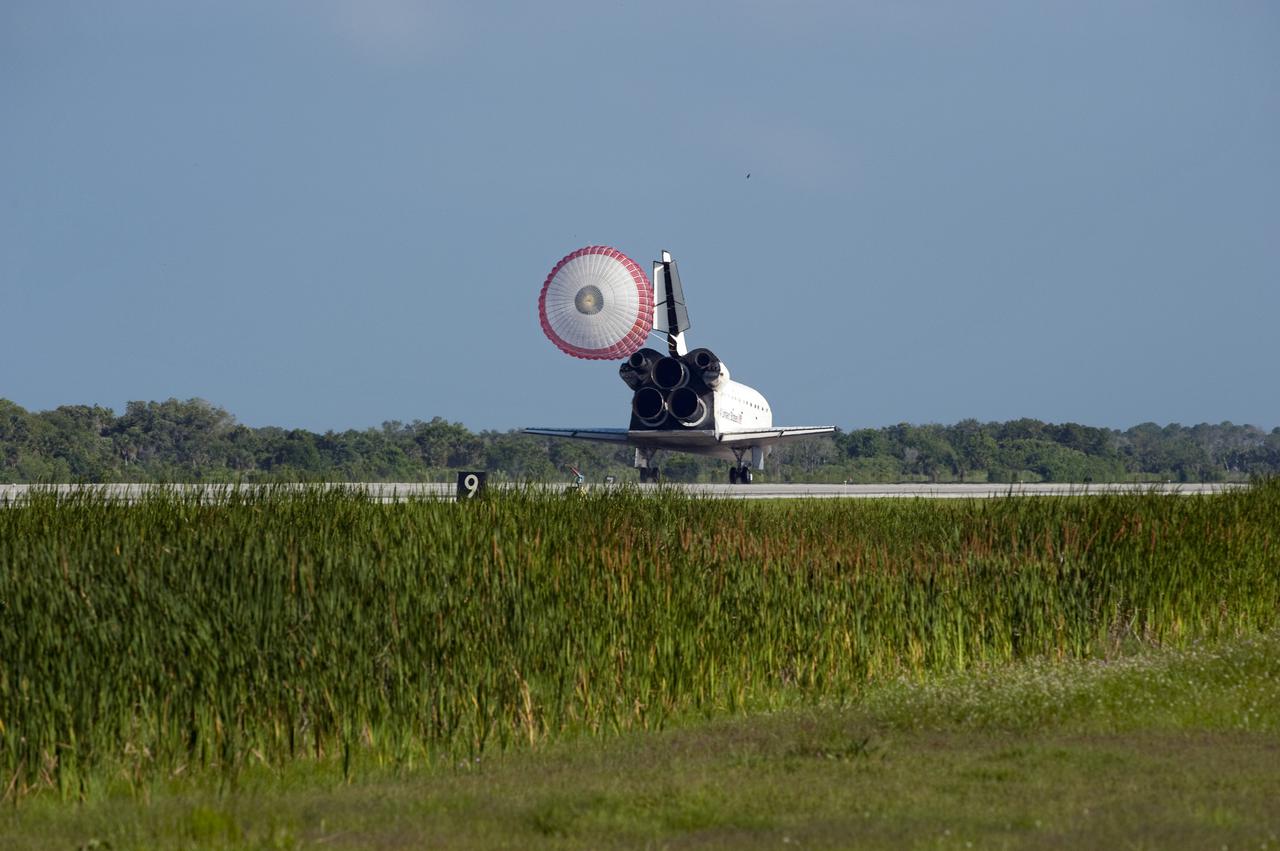
CAPE CANAVERAL, Fla. - Space shuttle Atlantis' drag chute slows the vehicle at it rolls to a stop on Runway 33 at the Shuttle Landing Facility at NASA's Kennedy Space Center in Florida. Landing was at 8:48 a.m. EDT, completing the 12-day STS-132 mission to the International Space Station. The six-member STS-132 crew carried the Russian-built Mini Research Module-1 to the space station. STS-132 is the 34th shuttle mission to the station, the 132nd shuttle mission overall and the last planned flight for Atlantis. For information on the STS-132 mission and crew, visit www.nasa.gov_mission_pages_shuttle_shuttlemissions_sts132_index.html. Photo credit: NASA_Tom Joseph
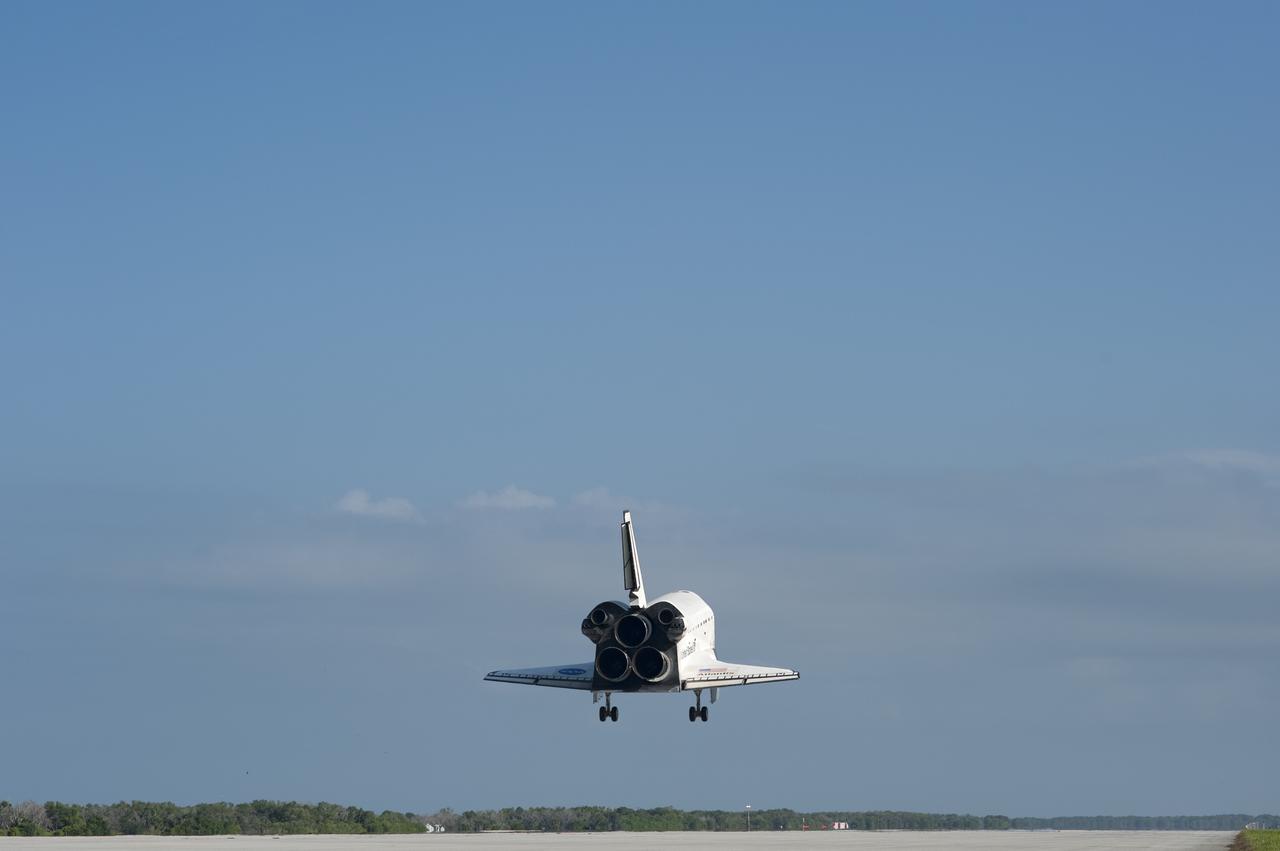
CAPE CANAVERAL, Fla. - Space shuttle Atlantis nears touchdown on Runway 33 at the Shuttle Landing Facility at NASA's Kennedy Space Center in Florida. Landing was at 8:48 a.m. EDT, completing the 12-day STS-132 mission to the International Space Station. The six-member STS-132 crew carried the Russian-built Mini Research Module-1 to the space station. STS-132 is the 34th shuttle mission to the station, the 132nd shuttle mission overall and the last planned flight for Atlantis. For information on the STS-132 mission and crew, visit www.nasa.gov_mission_pages_shuttle_shuttlemissions_sts132_index.html. Photo credit: NASA_Tony Gray and Tom Farrar
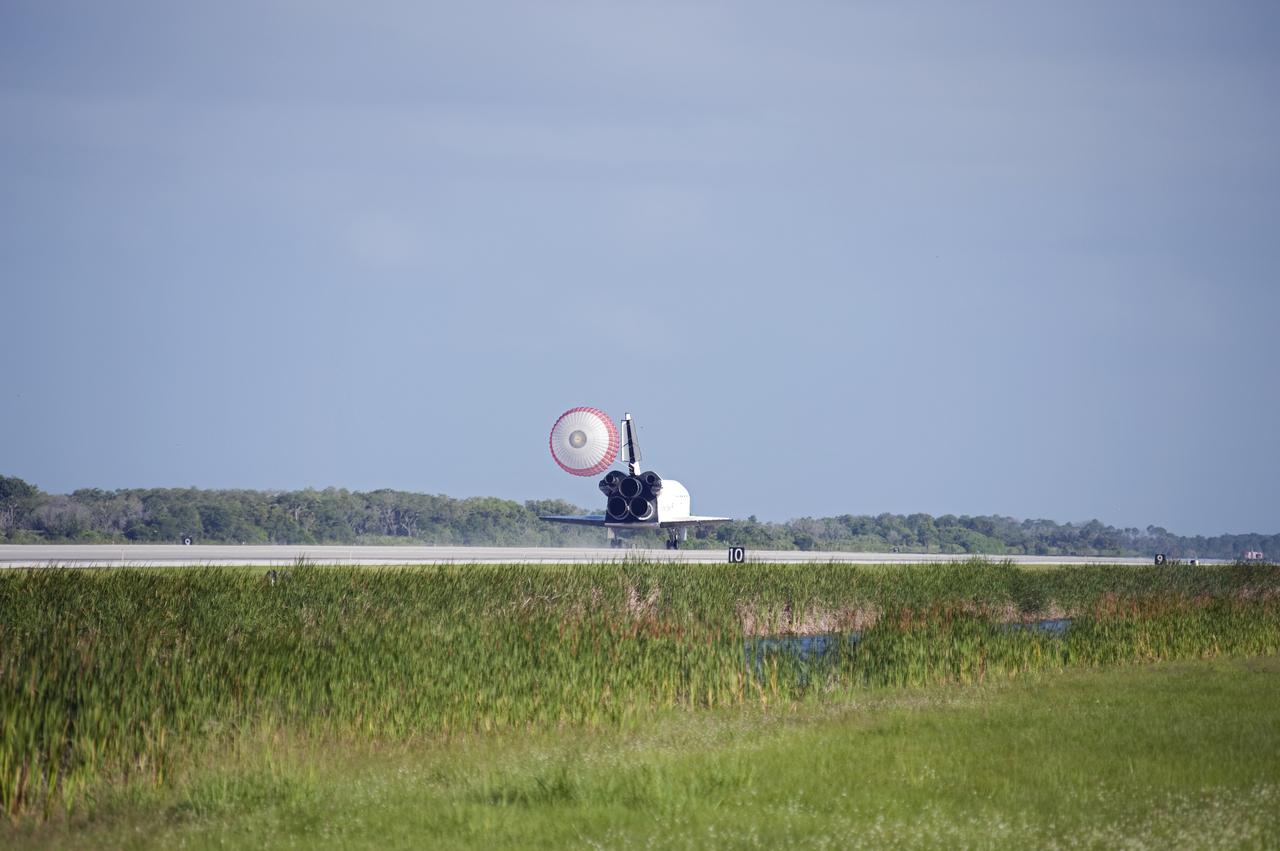
CAPE CANAVERAL, Fla. - Space shuttle Atlantis' drag chute slows the vehicle as it rolls down Runway 33 at the Shuttle Landing Facility at NASA's Kennedy Space Center in Florida. Landing was at 8:48 a.m. EDT, completing the 12-day STS-132 mission to the International Space Station. The six-member STS-132 crew carried the Russian-built Mini Research Module-1 to the space station. STS-132 is the 34th shuttle mission to the station, the 132nd shuttle mission overall and the last planned flight for Atlantis. For information on the STS-132 mission and crew, visit www.nasa.gov_mission_pages_shuttle_shuttlemissions_sts132_index.html. Photo credit: NASA_Thomas Farrar Jr.

CAPE CANAVERAL, Fla. - STS-132 Mission Specialist Piers Sellers participates in a news conference in the Press Site auditorium at NASA's Kennedy Space Center in Florida on landing day. Space shuttle Atlantis touched down on the Shuttle Landing Facility's Runway 33 at 8:48 a.m. EDT, completing a 4.8-million mile mission to the International Space Station. STS-132 carried the Russian-built Mini Research Module-1 to the space station. STS-132 is the 34th shuttle mission to the station, the 132nd shuttle mission overall and the last planned flight for Atlantis. For more information, visit www.nasa.gov_mission_pages_shuttle_shuttlemissions_sts132_index.html. Photo credit: NASA_Cory Huston

CAPE CANAVERAL, Fla. - STS-132 Pilot Tony Antonelli, left, and Mission Specialists Garrett Reisman and Michael Good participate in a news conference in the Press Site auditorium at NASA's Kennedy Space Center in Florida on landing day. Space shuttle Atlantis touched down on the Shuttle Landing Facility's Runway 33 at 8:48 a.m. EDT, completing a 4.8-million mile mission to the International Space Station. STS-132 carried the Russian-built Mini Research Module-1 to the space station. STS-132 is the 34th shuttle mission to the station, the 132nd shuttle mission overall and the last planned flight for Atlantis. For more information, visit www.nasa.gov_mission_pages_shuttle_shuttlemissions_sts132_index.html. Photo credit: NASA_Cory Huston
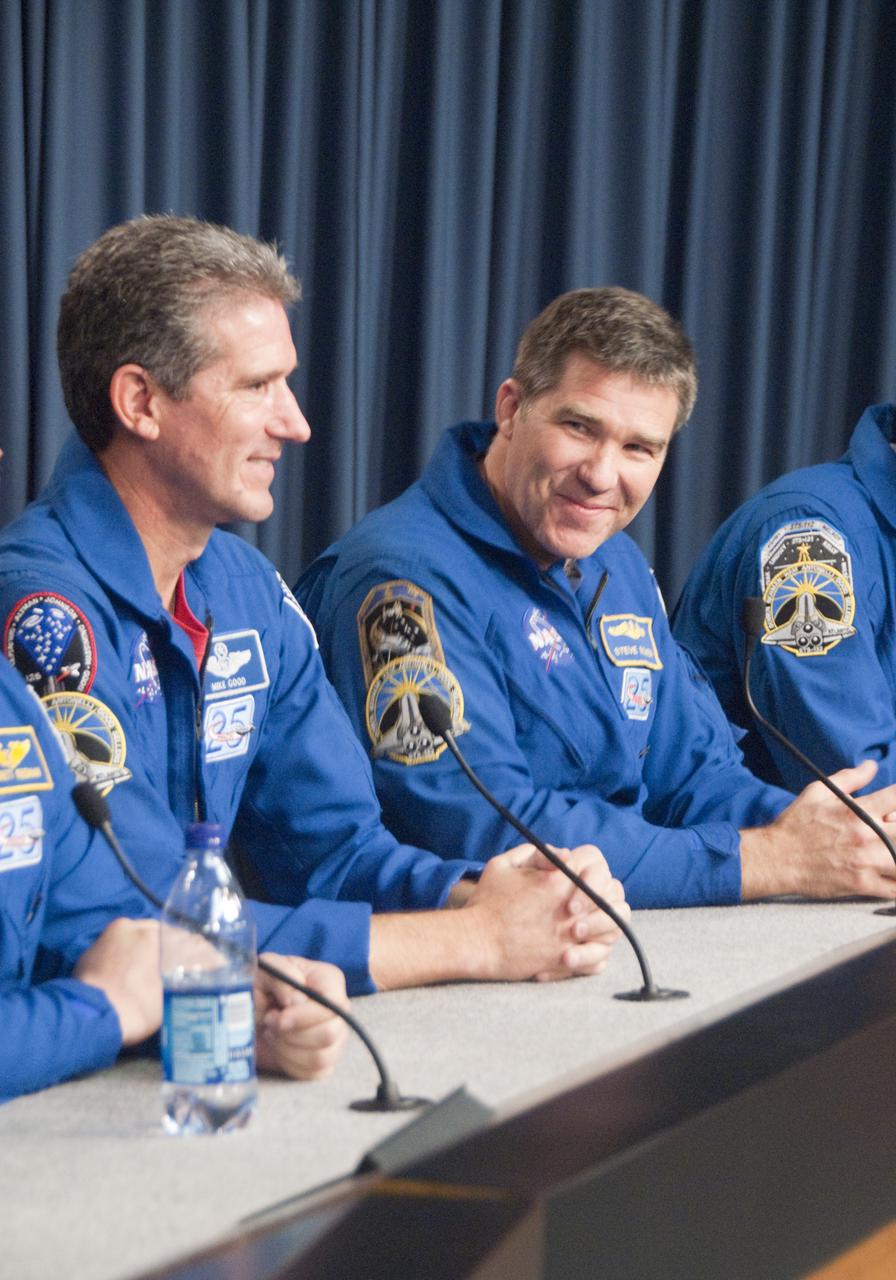
CAPE CANAVERAL, Fla. - STS-132 Mission Specialists Michael Good, left, and Steve Bowen participate in a news conference in the Press Site auditorium at NASA's Kennedy Space Center in Florida on landing day. Space shuttle Atlantis touched down on the Shuttle Landing Facility's Runway 33 at 8:48 a.m. EDT, completing a 4.8-million mile mission to the International Space Station. STS-132 carried the Russian-built Mini Research Module-1 to the space station. STS-132 is the 34th shuttle mission to the station, the 132nd shuttle mission overall and the last planned flight for Atlantis. For more information, visit www.nasa.gov_mission_pages_shuttle_shuttlemissions_sts132_index.html. Photo credit: NASA_Cory Huston

CAPE CANAVERAL, Fla. - Coming in from the southeast, space shuttle Atlantis touches down on Runway 33 at the Shuttle Landing Facility at NASA's Kennedy Space Center in Florida. Landing was at 8:48 a.m. EDT, completing the 12-day STS-132 mission to the International Space Station. The six-member STS-132 crew carried the Russian-built Mini Research Module-1 to the space station. STS-132 is the 34th shuttle mission to the station, the 132nd shuttle mission overall and the last planned flight for Atlantis. For information on the STS-132 mission and crew, visit www.nasa.gov_mission_pages_shuttle_shuttlemissions_sts132_index.html. Photo credit: NASA_Sandra Joseph and Carl Winebarger
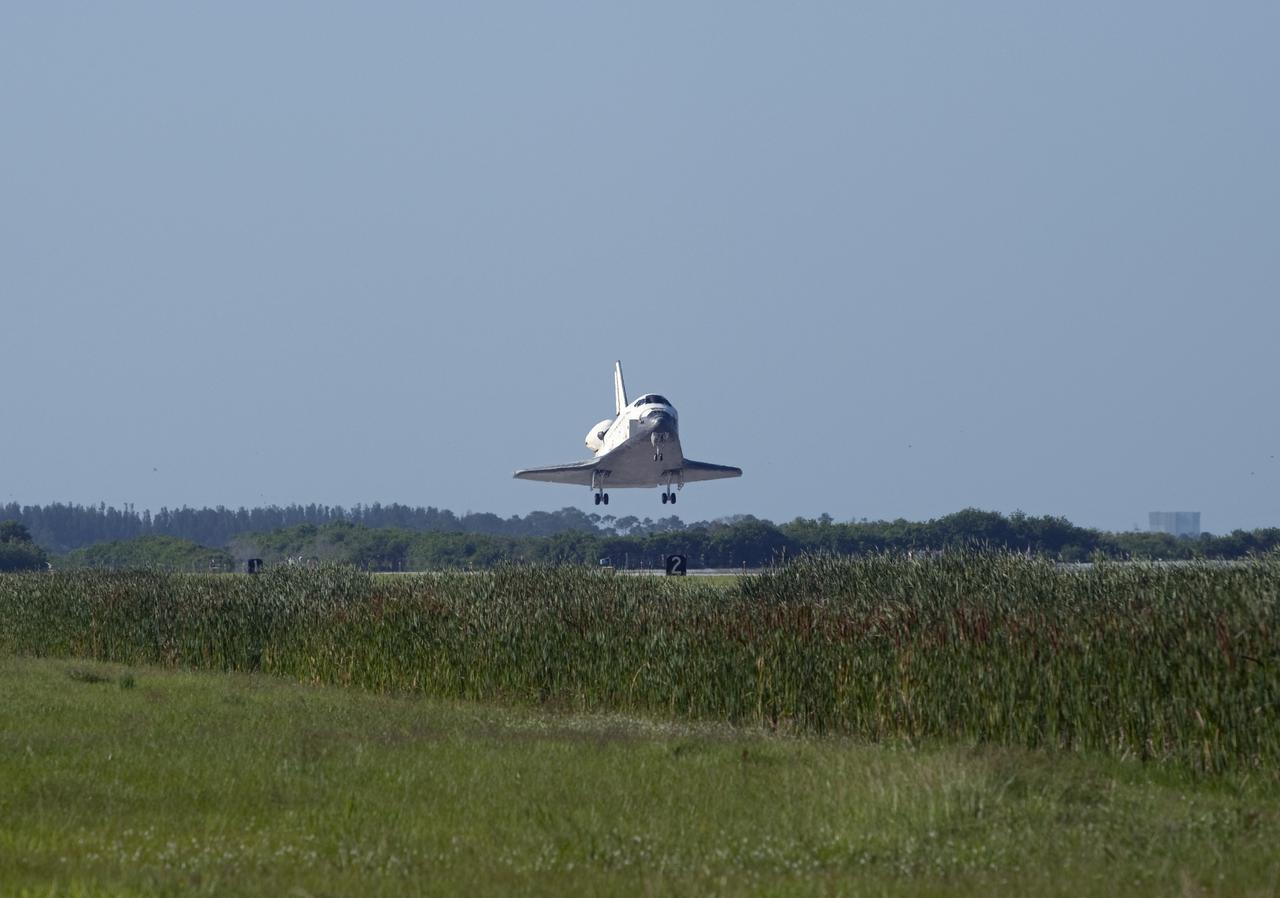
CAPE CANAVERAL, Fla. - Coming in from the southeast, space shuttle Atlantis approaches Runway 33 at the Shuttle Landing Facility at NASA's Kennedy Space Center in Florida. Landing was at 8:48 a.m. EDT, completing the 12-day STS-132 mission to the International Space Station. The six-member STS-132 crew carried the Russian-built Mini Research Module-1 to the space station. STS-132 is the 34th shuttle mission to the station, the 132nd shuttle mission overall and the last planned flight for Atlantis. For information on the STS-132 mission and crew, visit www.nasa.gov_mission_pages_shuttle_shuttlemissions_sts132_index.html. Photo credit: NASA_Tom Joseph
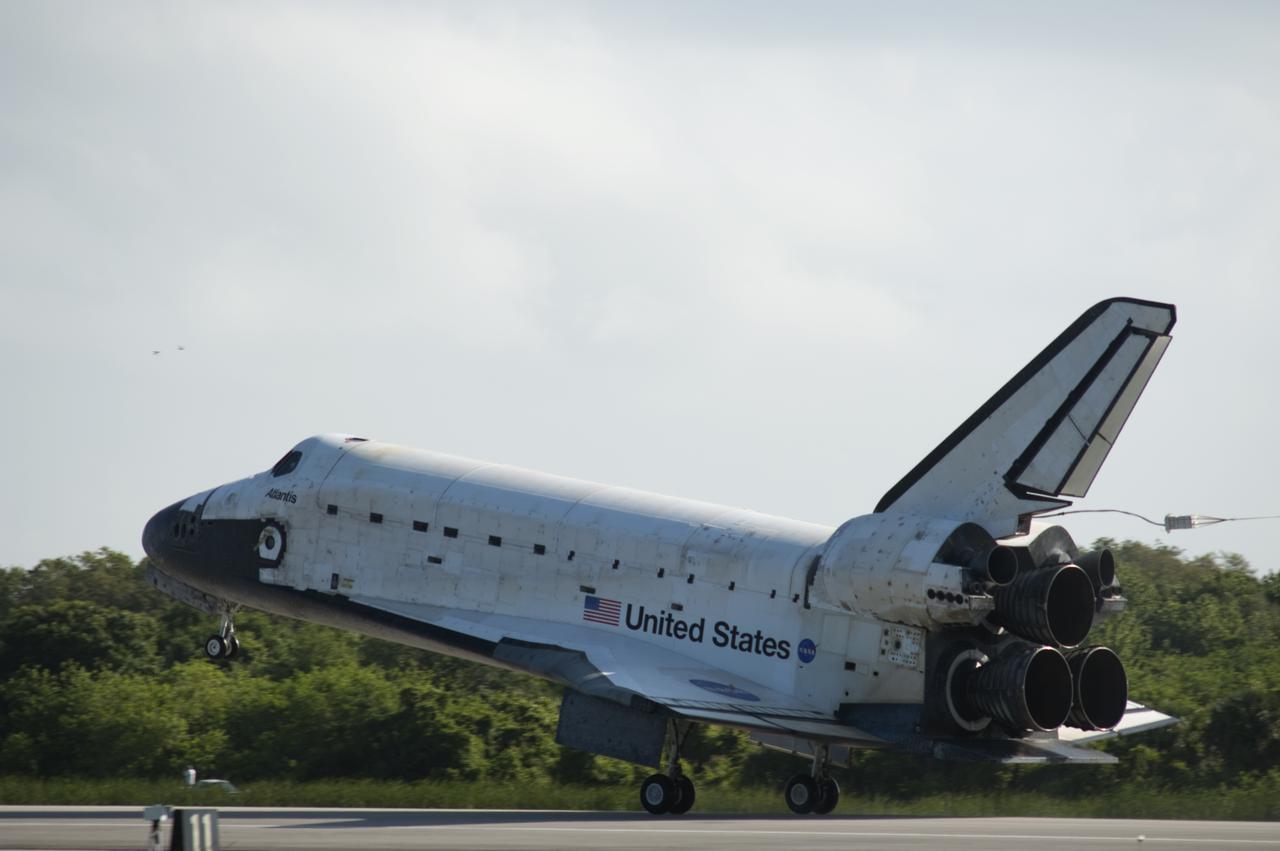
CAPE CANAVERAL, Fla. - Space shuttle Atlantis' main gear touches down on Runway 33 at the Shuttle Landing Facility at NASA's Kennedy Space Center in Florida. Landing was at 8:48 a.m. EDT, completing the 12-day STS-132 mission to the International Space Station. The six-member STS-132 crew carried the Russian-built Mini Research Module-1 to the International Space Station. STS-132 is the 34th shuttle mission to the station, the 132nd shuttle mission overall and the last planned flight for Atlantis. For information on the STS-132 mission and crew, visit www.nasa.gov_mission_pages_shuttle_shuttlemissions_sts132_index.html. Photo credit: NASA_Rick Wetherington
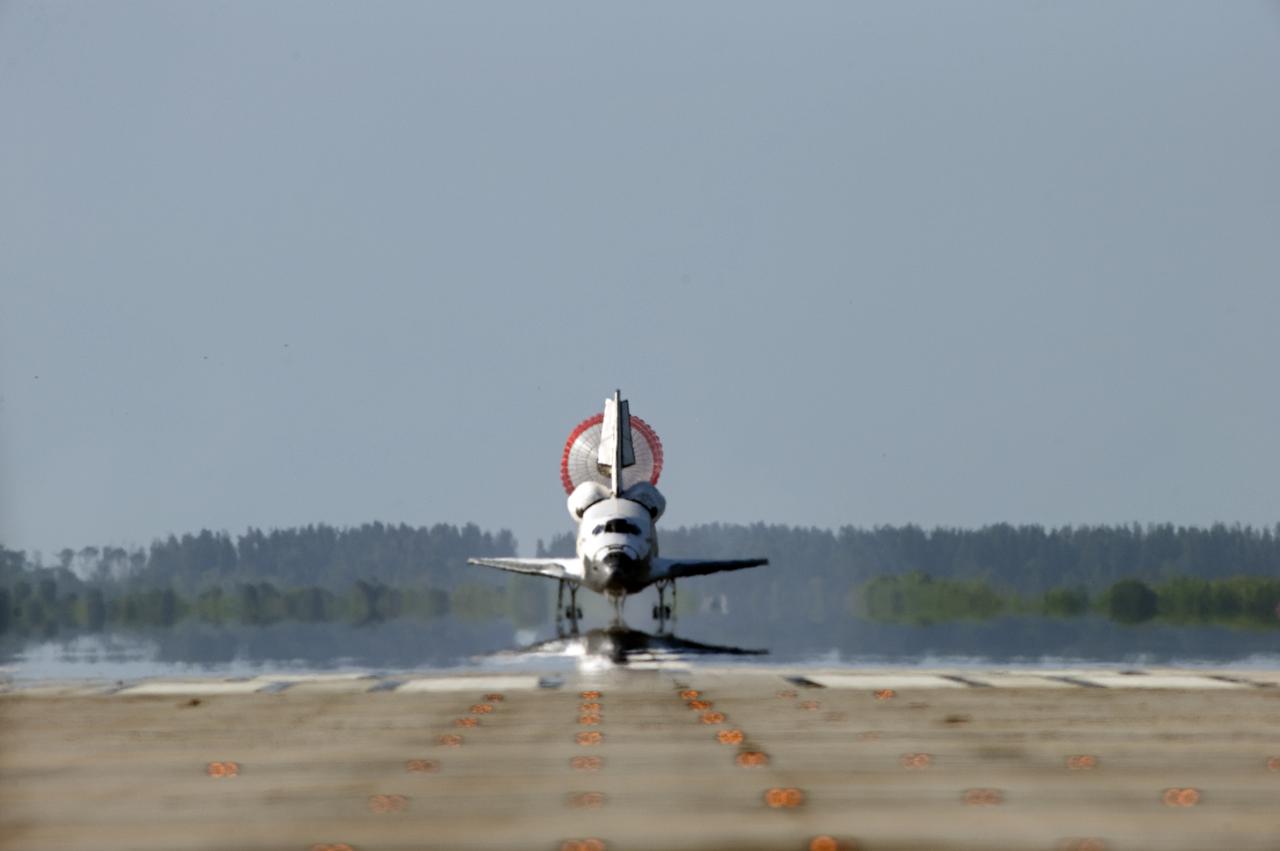
CAPE CANAVERAL, Fla. - With its drag chute unfurled, space shuttle Atlantis rolls down Runway 33 at the Shuttle Landing Facility at NASA's Kennedy Space Center in Florida. Landing was at 8:48 a.m. EDT, completing the 12-day STS-132 mission to the International Space Station. The six-member STS-132 crew carried the Russian-built Mini Research Module-1 to the space station. STS-132 is the 34th shuttle mission to the station, the 132nd shuttle mission overall and the last planned flight for Atlantis. For information on the STS-132 mission and crew, visit www.nasa.gov_mission_pages_shuttle_shuttlemissions_sts132_index.html. Photo credit: NASA_Sandra Joseph and Carl Winebarger
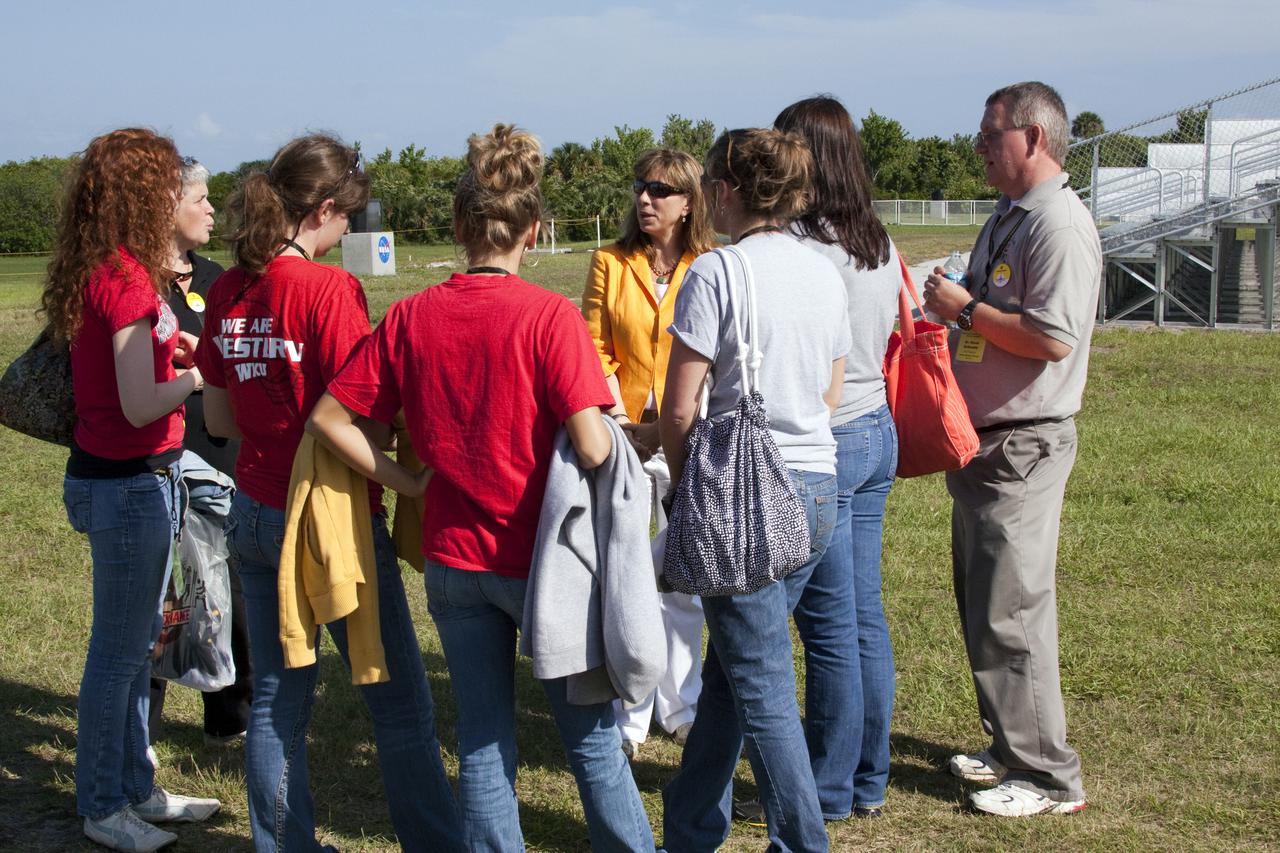
CAPE CANAVERAL, Fla. - At Kennedy Space Center in Florida, NASA Deputy Administrator Lori Garver talks with students from Western Kentucky University who are at the center for NASA's first Lunabotics Mining Competition on May 27-28. Atlantis wrapped up its 4.8-million-mile STS-132 mission to the International Space Station at 8:48 a.m. The six-member STS-132 crew carried the Russian-built Mini Research Module-1 to the space station. STS-132 is the 34th shuttle mission to the station, the 132nd shuttle mission overall and the last planned flight for Atlantis. For information on the STS-132 mission and crew, visit www.nasa.gov_mission_pages_shuttle_shuttlemissions_sts132_index.html. Photo credit: NASA_Jack Pfaller
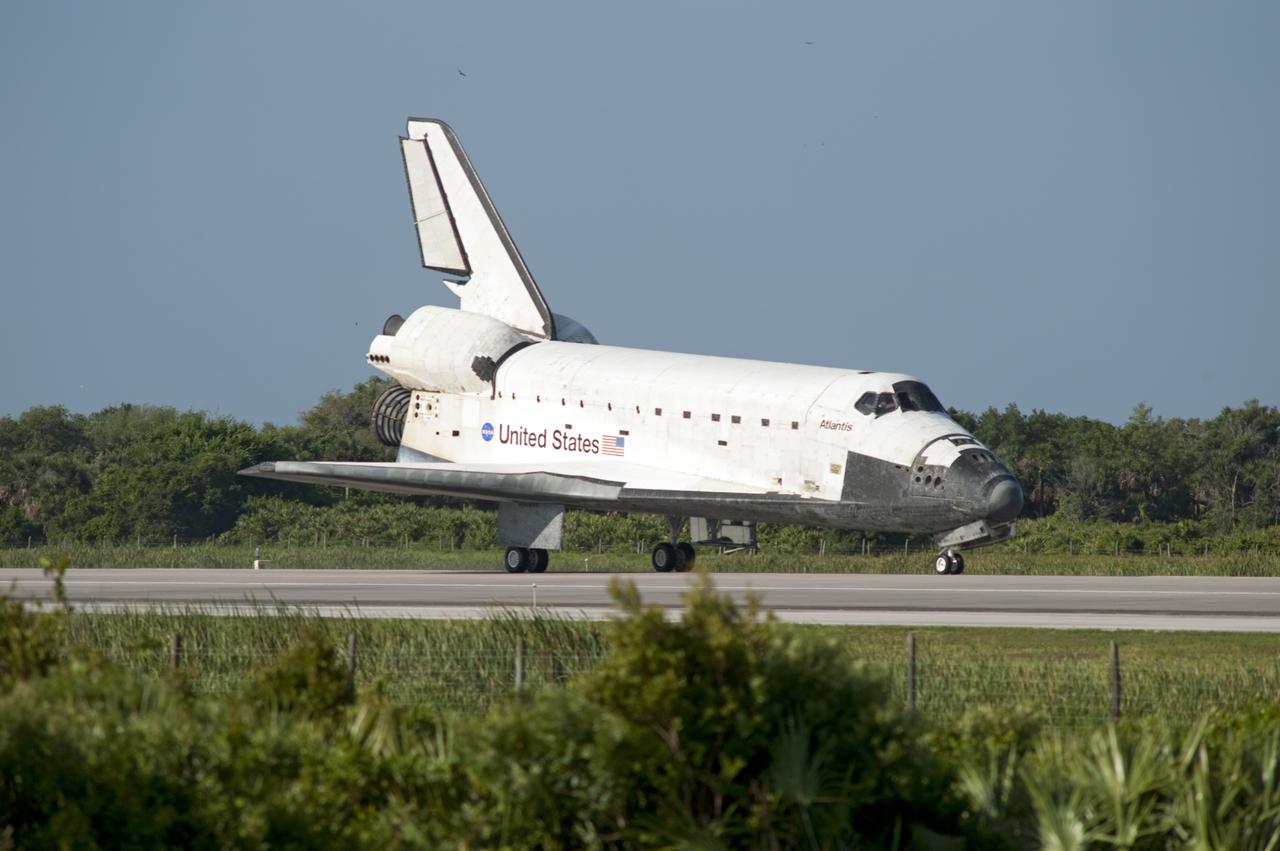
CAPE CANAVERAL, Fla. - Space shuttle Atlantis rolls to a stop on Runway 33 at the Shuttle Landing Facility at NASA's Kennedy Space Center in Florida. Landing was at 8:48 a.m. EDT, completing the 12-day STS-132 mission to the International Space Station. The six-member STS-132 crew carried the Russian-built Mini Research Module-1 to the International Space Station. STS-132 is the 34th shuttle mission to the station, the 132nd shuttle mission overall and the last planned flight for Atlantis. For information on the STS-132 mission and crew, visit www.nasa.gov_mission_pages_shuttle_shuttlemissions_sts132_index.html. Photo credit: NASA_Rusty Backer
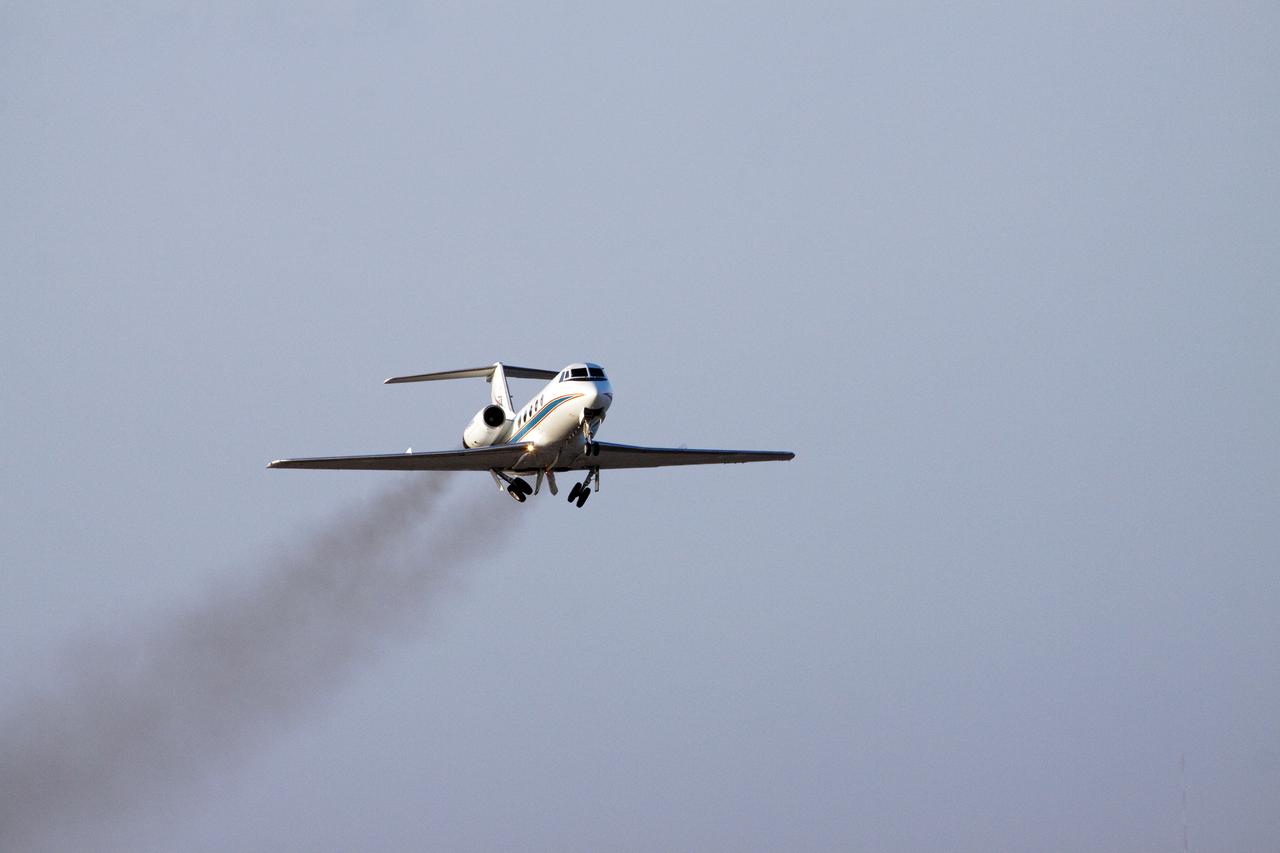
CAPE CANAVERAL, Fla. - NASA's Shuttle Training Aircraft flies weather reconnaissance for space shuttle Atlantis over Runway 33 at the Shuttle Landing Facility at NASA's Kennedy Space Center in Florida. Landing of Atlantis was at 8:48 a.m. EDT, completing the 12-day STS-132 mission to the International Space Station. The six-member STS-132 crew carried the Russian-built Mini Research Module-1 to the space station. STS-132 is the 34th shuttle mission to the station, the 132nd shuttle mission overall and the last planned flight for Atlantis. For information on the STS-132 mission and crew, visit www.nasa.gov_mission_pages_shuttle_shuttlemissions_sts132_index.html. Photo credit: NASA_Jack Pfaller
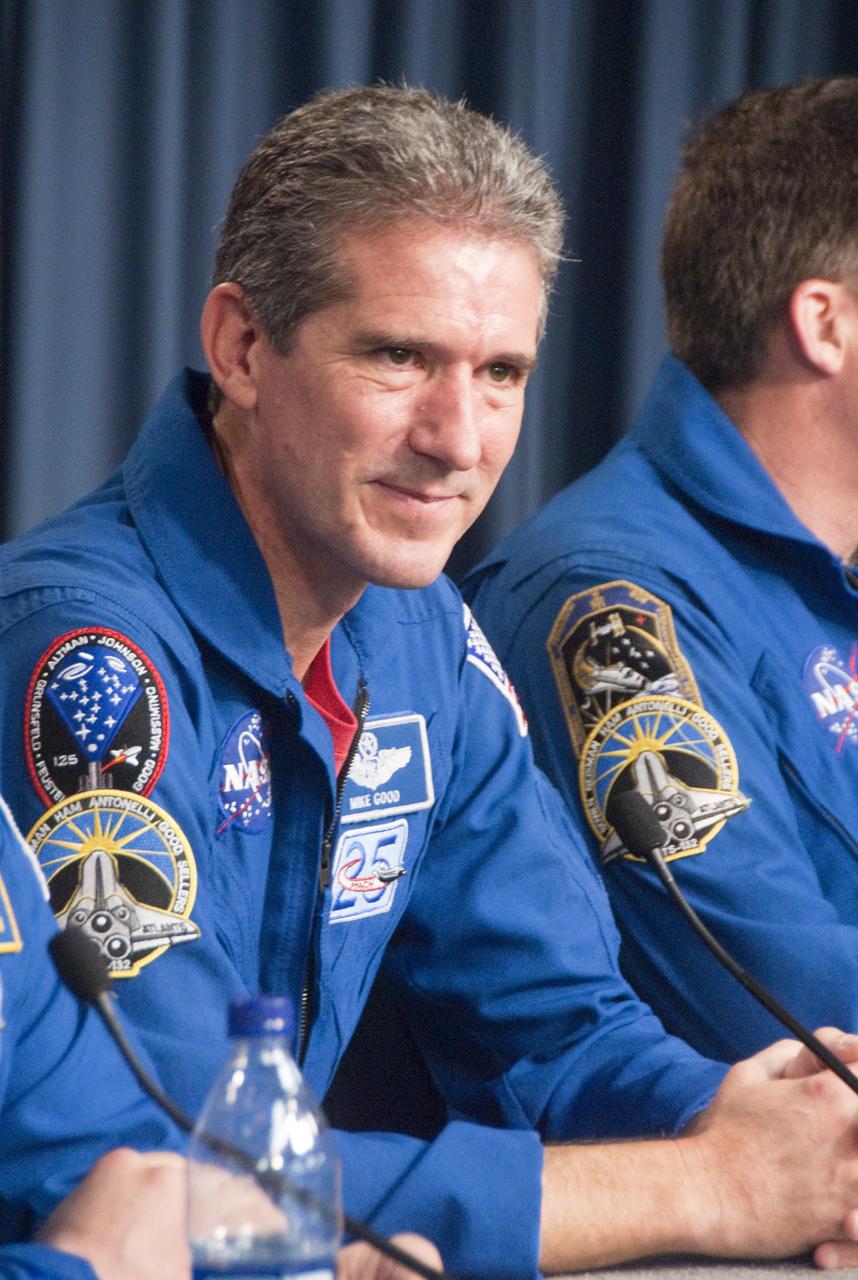
CAPE CANAVERAL, Fla. - STS-132 Mission Specialist Michael Good participates in a news conference in the Press Site auditorium at NASA's Kennedy Space Center in Florida on landing day. Space shuttle Atlantis touched down on the Shuttle Landing Facility's Runway 33 at 8:48 a.m. EDT, completing a 4.8-million mile mission to the International Space Station. STS-132 carried the Russian-built Mini Research Module-1 to the space station. STS-132 is the 34th shuttle mission to the station, the 132nd shuttle mission overall and the last planned flight for Atlantis. For more information, visit www.nasa.gov_mission_pages_shuttle_shuttlemissions_sts132_index.html. Photo credit: NASA_Cory Huston
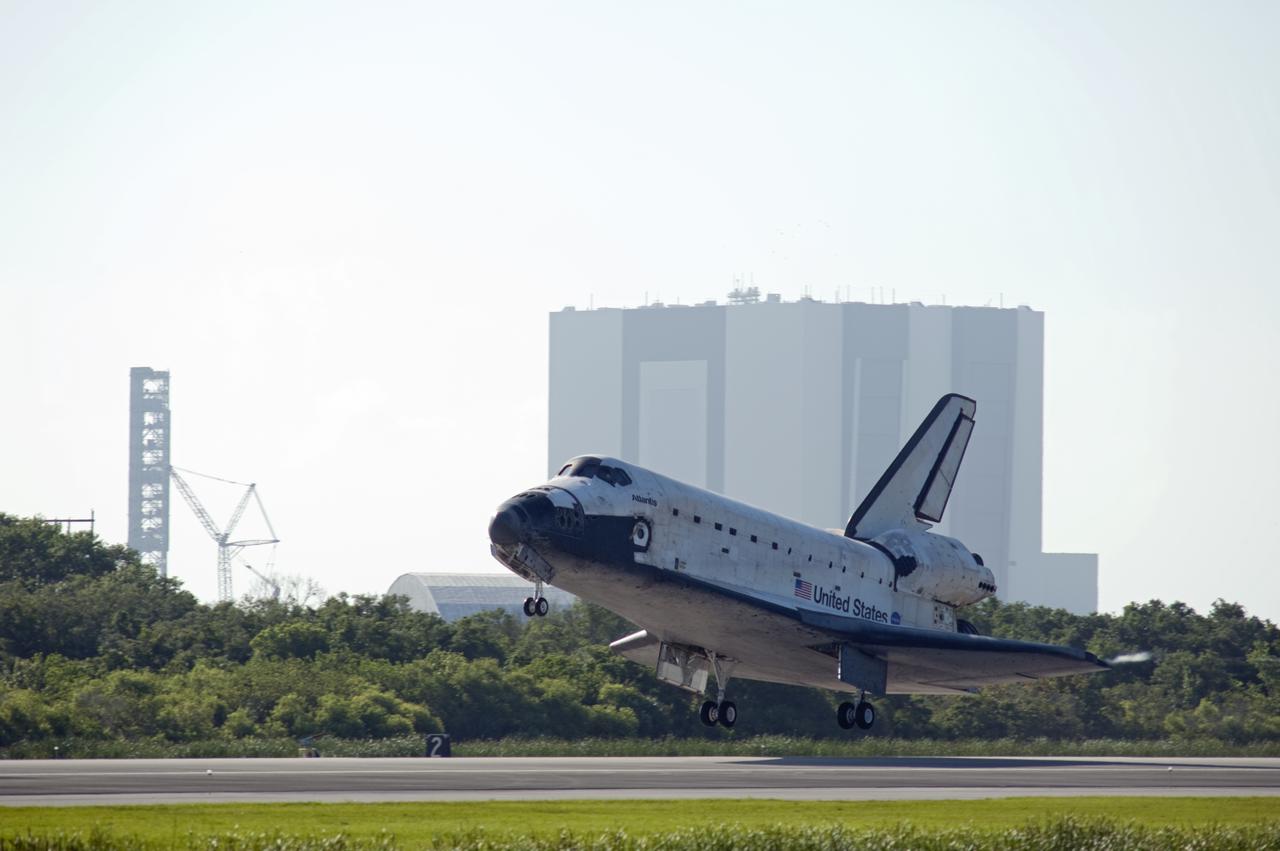
CAPE CANAVERAL, Fla. - Space shuttle Atlantis whooshes past the Vehicle Assembly Building and NASA's new mobile launcher as it nears touchdown on Runway 33 at Kennedy Space Center's Shuttle Landing Facility in Florida. Landing was at 8:48 a.m. EDT, completing the 12-day STS-132 mission to the International Space Station. The six-member STS-132 crew carried the Russian-built Mini Research Module-1 to the International Space Station. STS-132 is the 34th shuttle mission to the station, the 132nd shuttle mission overall and the last planned flight for Atlantis. For information on the STS-132 mission and crew, visit www.nasa.gov_mission_pages_shuttle_shuttlemissions_sts132_index.html. Photo credit: NASA_Rick Wetherington
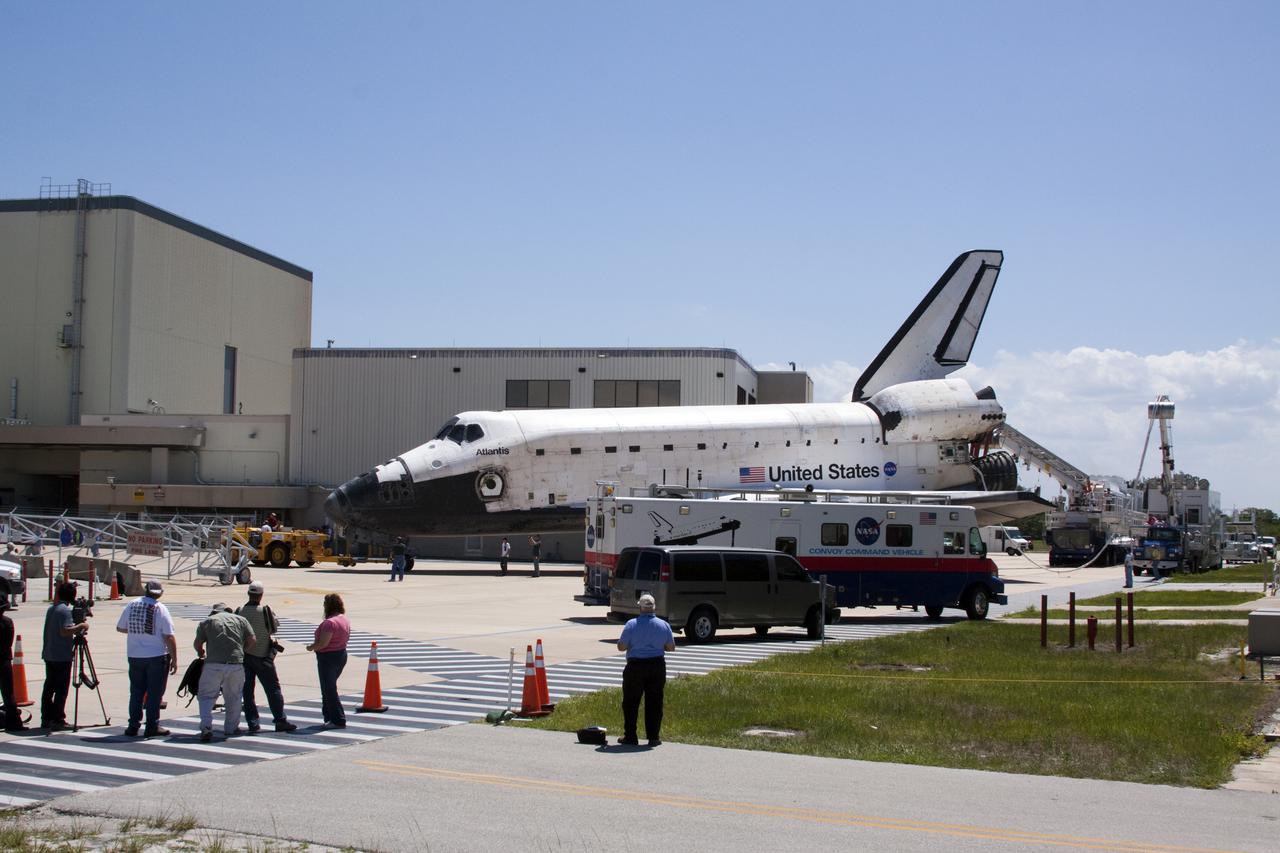
CAPE CANAVERAL, Fla. - At NASA's Kennedy Space Center in Florida, space shuttle Atlantis makes its slow trek from the Shuttle Landing Facility to Orbiter Processing Facility-1. Atlantis touched down on Runway 33 after 12 days in space, completing the 4.8-million mile STS-132 mission to the International Space Station. The six-member STS-132 crew carried the Russian-built Mini Research Module-1 to the space station. STS-132 is the 34th shuttle mission to the station, the 132nd shuttle mission overall and the last planned flight for Atlantis. For information on the STS-132 mission and crew, visit www.nasa.gov_mission_pages_shuttle_shuttlemissions_sts132_index.html. Photo credit: NASA_Jack Pfaller
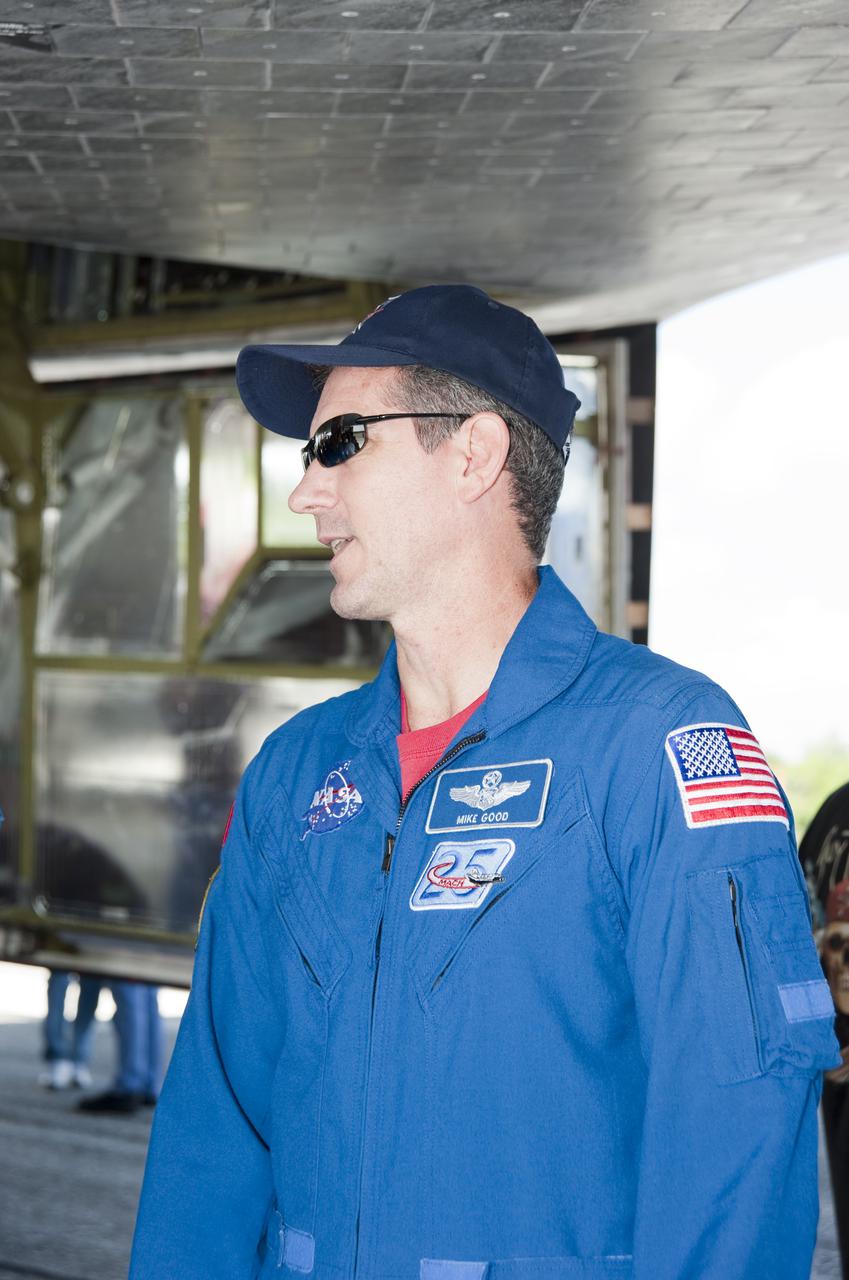
CAPE CANAVERAL, Fla. - At the Shuttle Landing Facility at NASA's Kennedy Space Center in Florida , STS-132 Mission Specialist Michael Good inspects the thermal protection system tiles under space shuttle Atlantis following its successful landing. The six-member STS-132 crew carried the Russian-built Mini Research Module-1 to the space station. STS-132 is the 34th shuttle mission to the station, the 132nd shuttle mission overall and the last planned flight for Atlantis. For information on the STS-132 mission and crew, visit www.nasa.gov_mission_pages_shuttle_shuttlemissions_sts132_index.html. Photo credit: NASA_Kim Shiflett
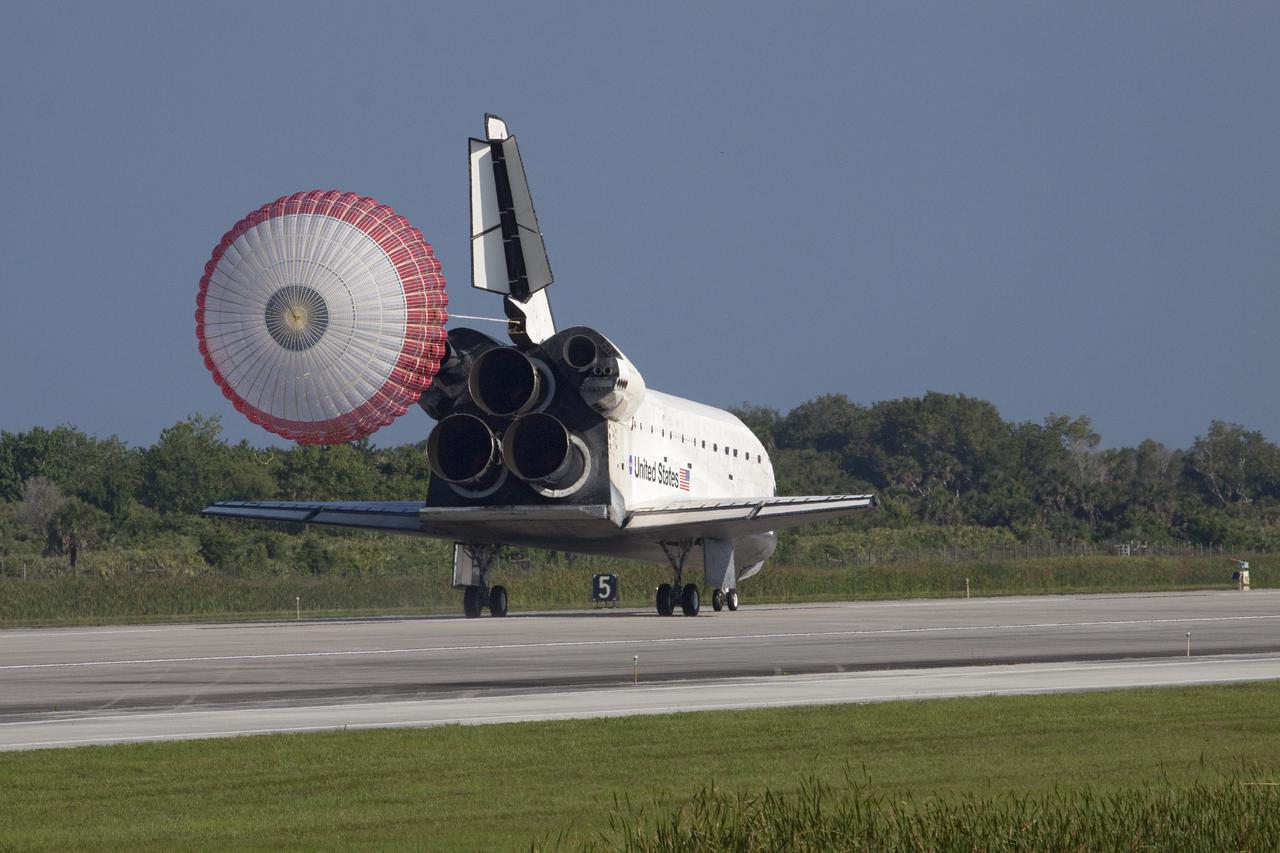
CAPE CANAVERAL, Fla. - With its drag chute unfurled, space shuttle Atlantis rolls down Runway 33 at the Shuttle Landing Facility at NASA's Kennedy Space Center in Florida. Landing was at 8:48 a.m. EDT, completing the 12-day STS-132 mission to the International Space Station. The six-member STS-132 crew carried the Russian-built Mini Research Module-1 to the space station. STS-132 is the 34th shuttle mission to the station, the 132nd shuttle mission overall and the last planned flight for Atlantis. For information on the STS-132 mission and crew, visit www.nasa.gov_mission_pages_shuttle_shuttlemissions_sts132_index.html. Photo credit: NASA_Jack Pfaller
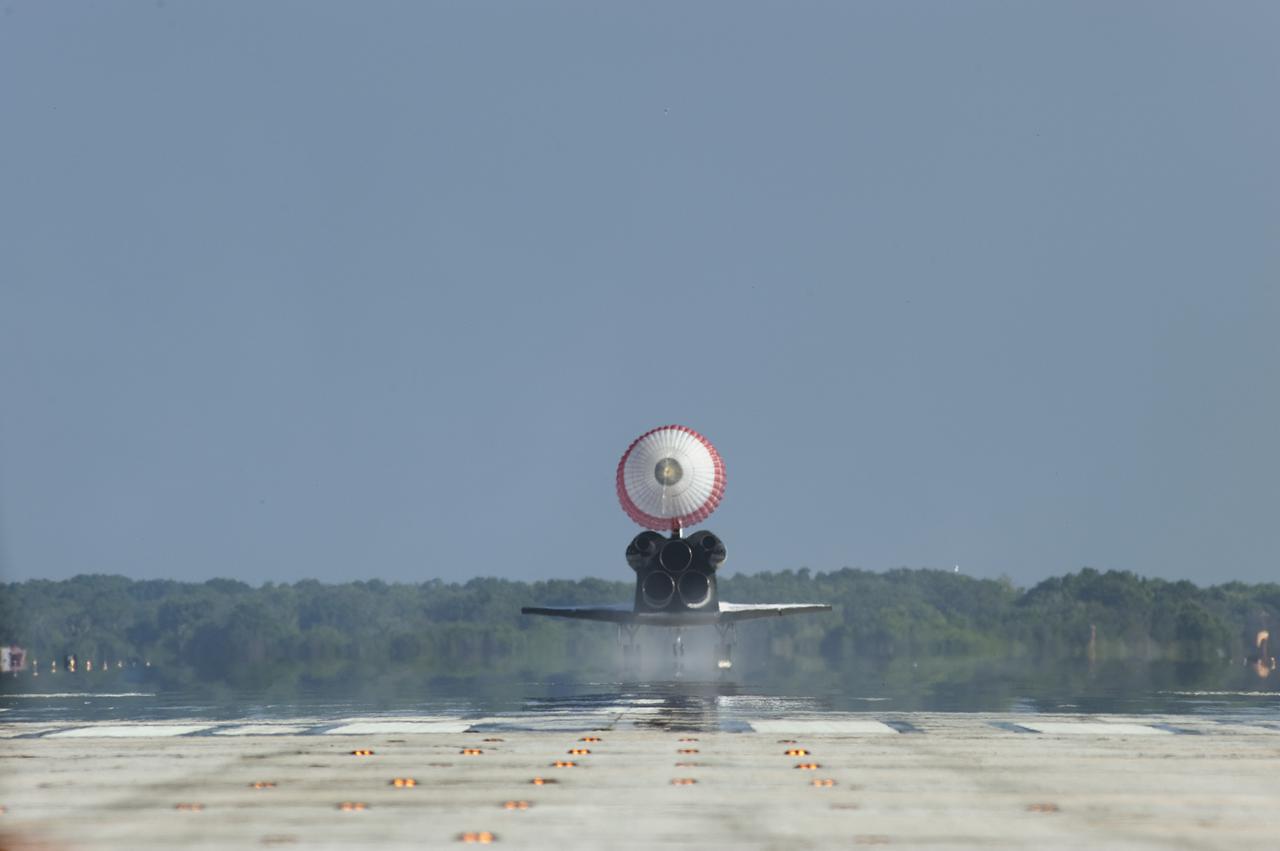
CAPE CANAVERAL, Fla. - With its drag chute unfurled, space shuttle Atlantis rolls down Runway 33 at the Shuttle Landing Facility at NASA's Kennedy Space Center in Florida. Landing was at 8:48 a.m. EDT, completing the 12-day STS-132 mission to the International Space Station. The six-member STS-132 crew carried the Russian-built Mini Research Module-1 to the space station. STS-132 is the 34th shuttle mission to the station, the 132nd shuttle mission overall and the last planned flight for Atlantis. For information on the STS-132 mission and crew, visit www.nasa.gov_mission_pages_shuttle_shuttlemissions_sts132_index.html. Photo credit: NASA_Tony Gray and Tom Farrar

CAPE CANAVERAL, Fla. - Space shuttle Atlantis' main gear touches down on Runway 33 at the Shuttle Landing Facility at NASA's Kennedy Space Center in Florida. Landing was at 8:48 a.m. EDT, completing the 12-day STS-132 mission to the International Space Station. The six-member STS-132 crew carried the Russian-built Mini Research Module-1 to the space station. STS-132 is the 34th shuttle mission to the station, the 132nd shuttle mission overall and the last planned flight for Atlantis. For information on the STS-132 mission and crew, visit www.nasa.gov_mission_pages_shuttle_shuttlemissions_sts132_index.html. Photo credit: NASA_Tom Joseph
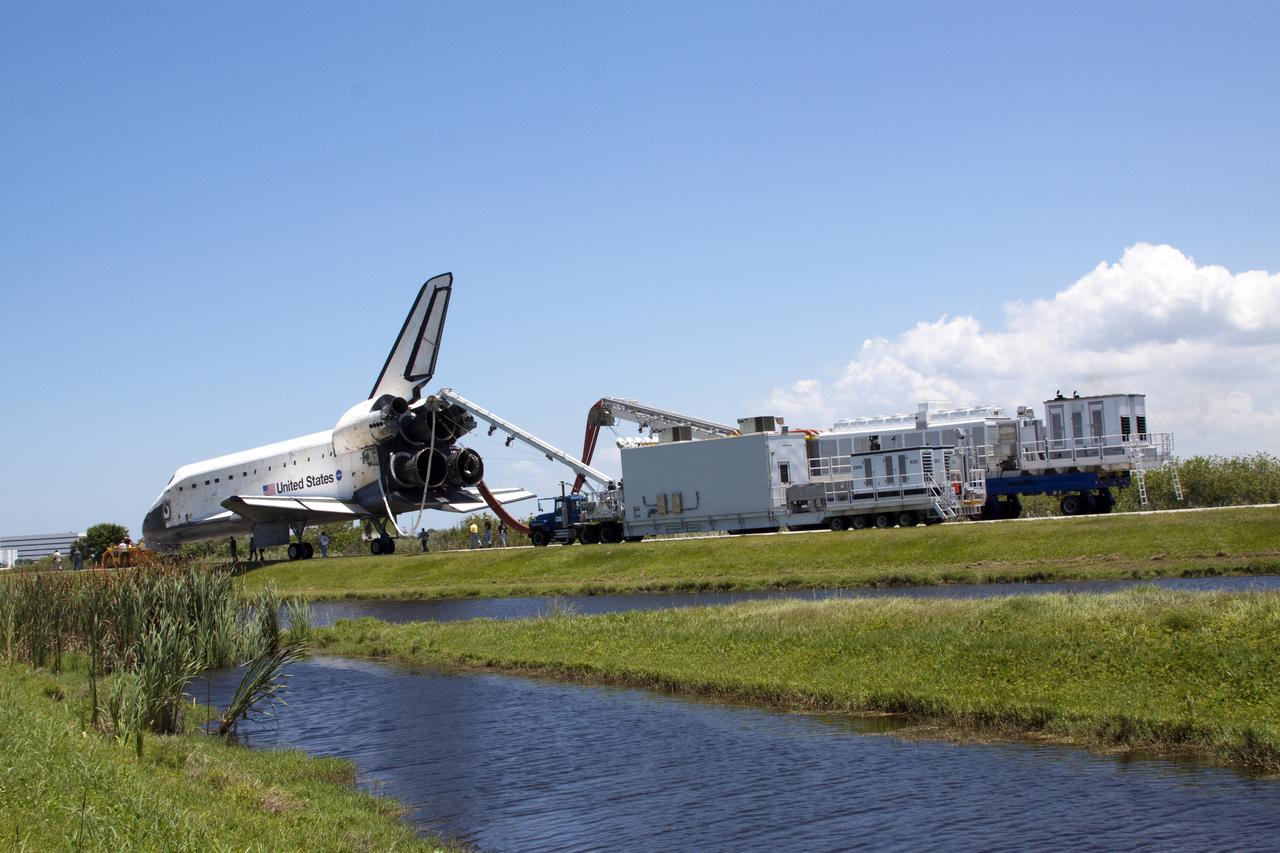
CAPE CANAVERAL, Fla. - At NASA's Kennedy Space Center in Florida, space shuttle Atlantis makes its slow trek from the Shuttle Landing Facility to Orbiter Processing Facility-1. Atlantis touched down on Runway 33 after 12 days in space, completing the 4.8-million mile STS-132 mission to the International Space Station. The six-member STS-132 crew carried the Russian-built Mini Research Module-1 to the space station. STS-132 is the 34th shuttle mission to the station, the 132nd shuttle mission overall and the last planned flight for Atlantis. For information on the STS-132 mission and crew, visit www.nasa.gov_mission_pages_shuttle_shuttlemissions_sts132_index.html. Photo credit: NASA_Jack Pfaller
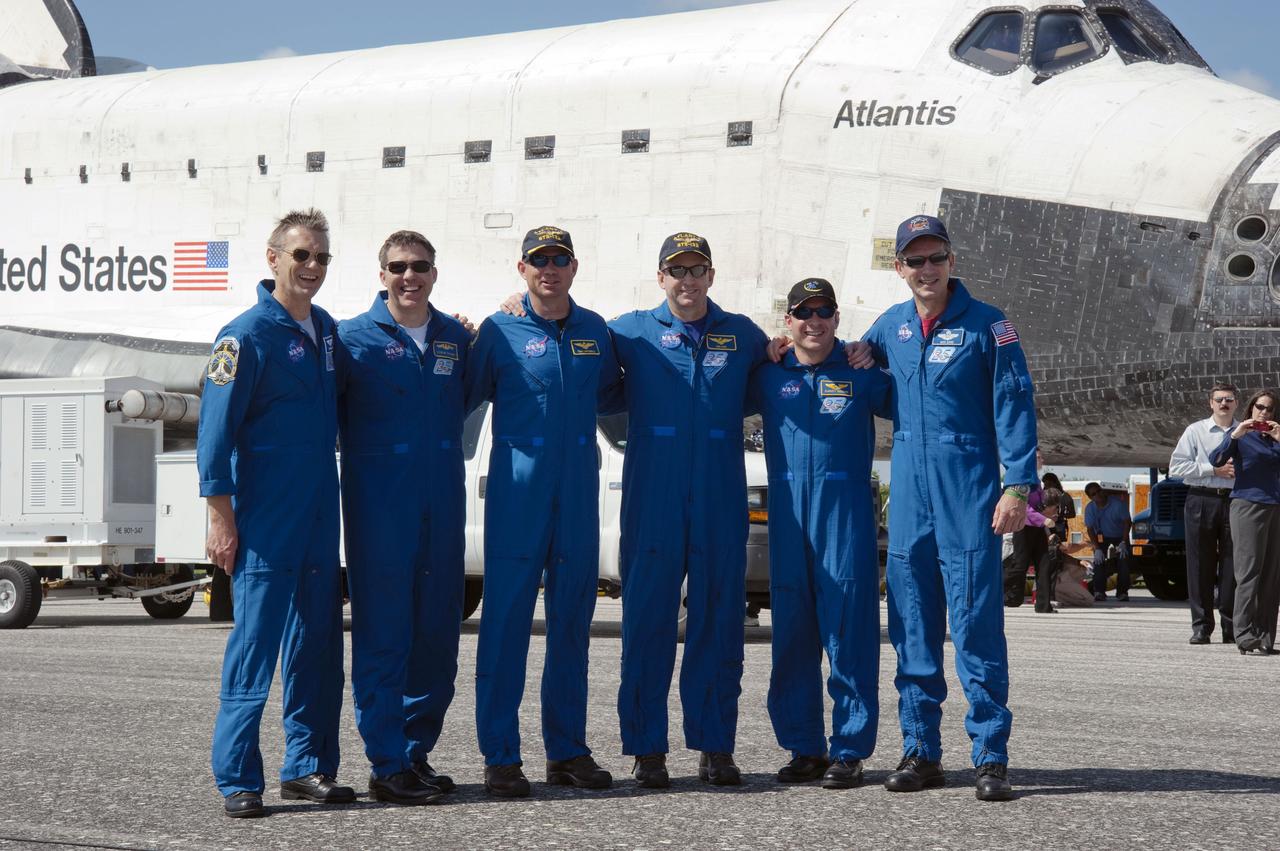
STS132-S-154 (26 May 2010) --- At the Shuttle Landing Facility at NASA's Kennedy Space Center in Florida, the STS-132 crew members of space shuttle Atlantis pause for a post-landing photo opportunity. From left are NASA astronauts Piers Sellers and Steve Bowen, both mission specialists; Tony Antonelli, pilot; Ken Ham, commander; and Garrett Reisman and Michael Good, both mission specialists. The six-member STS-132 crew carried the Russian-built Mini Research Module 1 to the space station. STS-132 is the 34th shuttle mission to the station, the 132nd shuttle mission overall and the last planned flight for Atlantis.
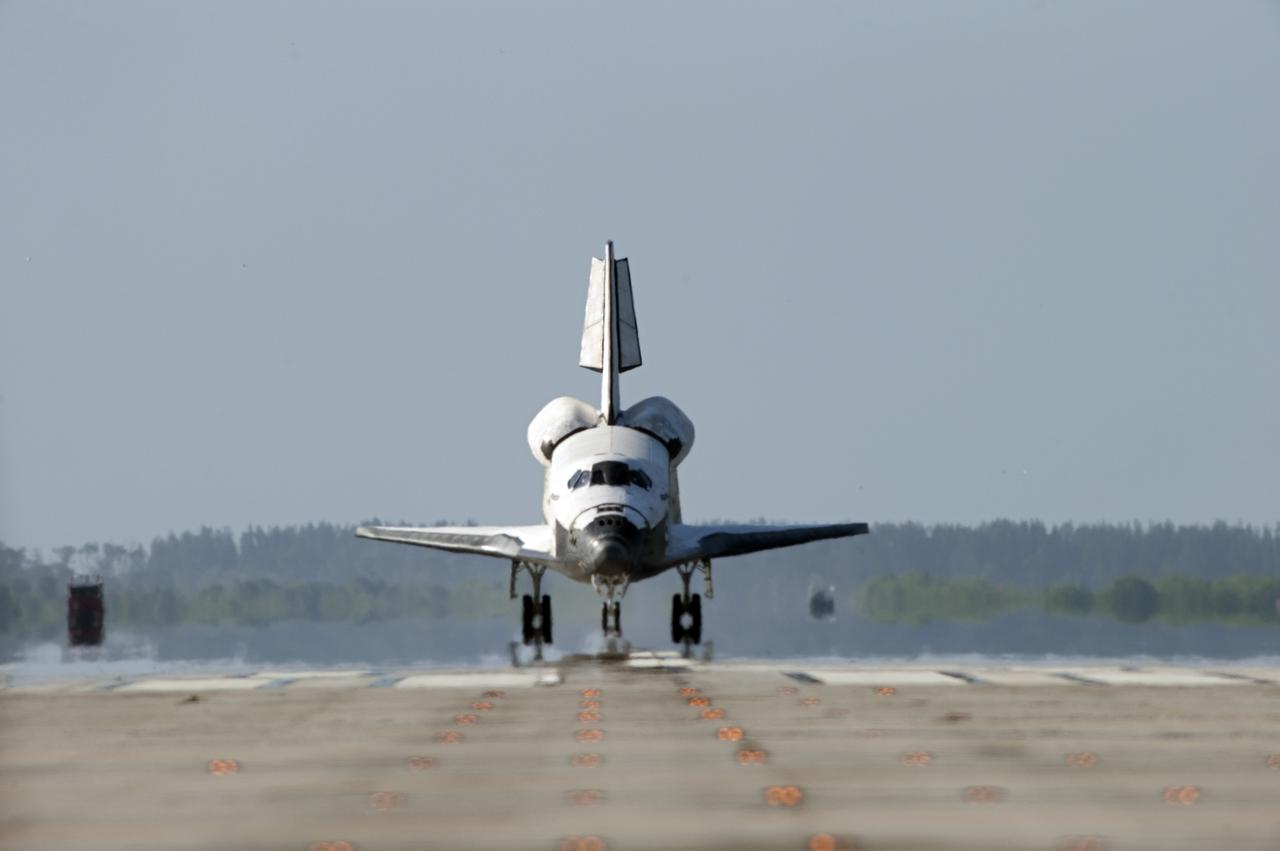
CAPE CANAVERAL, Fla. - Space shuttle Atlantis rolls down Runway 33 at the Shuttle Landing Facility at NASA's Kennedy Space Center in Florida. Landing was at 8:48 a.m. EDT, completing the 12-day STS-132 mission to the International Space Station. The six-member STS-132 crew carried the Russian-built Mini Research Module-1 to the space station. STS-132 is the 34th shuttle mission to the station, the 132nd shuttle mission overall and the last planned flight for Atlantis. For information on the STS-132 mission and crew, visit www.nasa.gov_mission_pages_shuttle_shuttlemissions_sts132_index.html. Photo credit: NASA_Sandra Joseph and Carl Winebarger
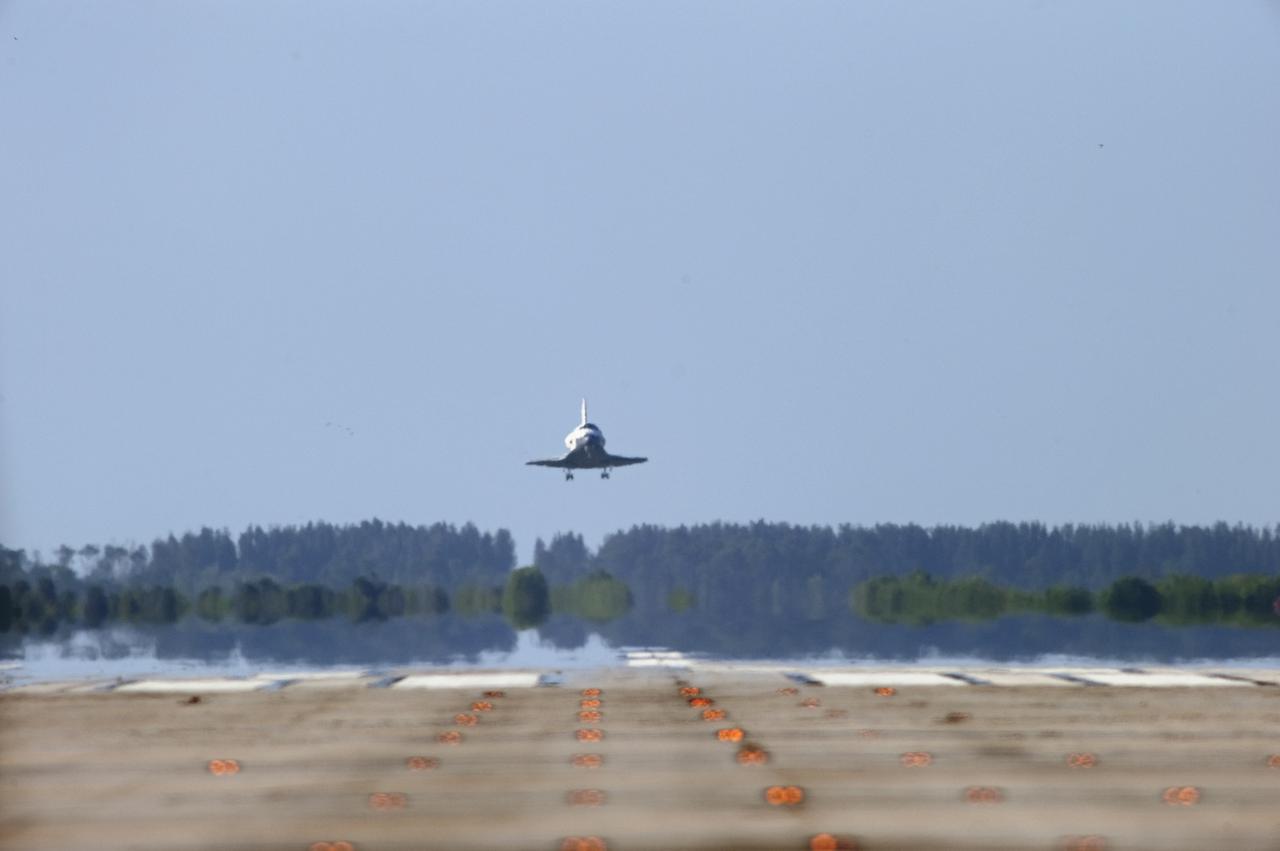
CAPE CANAVERAL, Fla. - Coming in from the southeast, space shuttle Atlantis approaches Runway 33 at the Shuttle Landing Facility at NASA's Kennedy Space Center in Florida. Landing was at 8:48 a.m. EDT, completing the 12-day STS-132 mission to the International Space Station. The six-member STS-132 crew carried the Russian-built Mini Research Module-1 to the space station. STS-132 is the 34th shuttle mission to the station, the 132nd shuttle mission overall and the last planned flight for Atlantis. For information on the STS-132 mission and crew, visit www.nasa.gov_mission_pages_shuttle_shuttlemissions_sts132_index.html. Photo credit: NASA_Sandra Joseph and Carl Winebarger
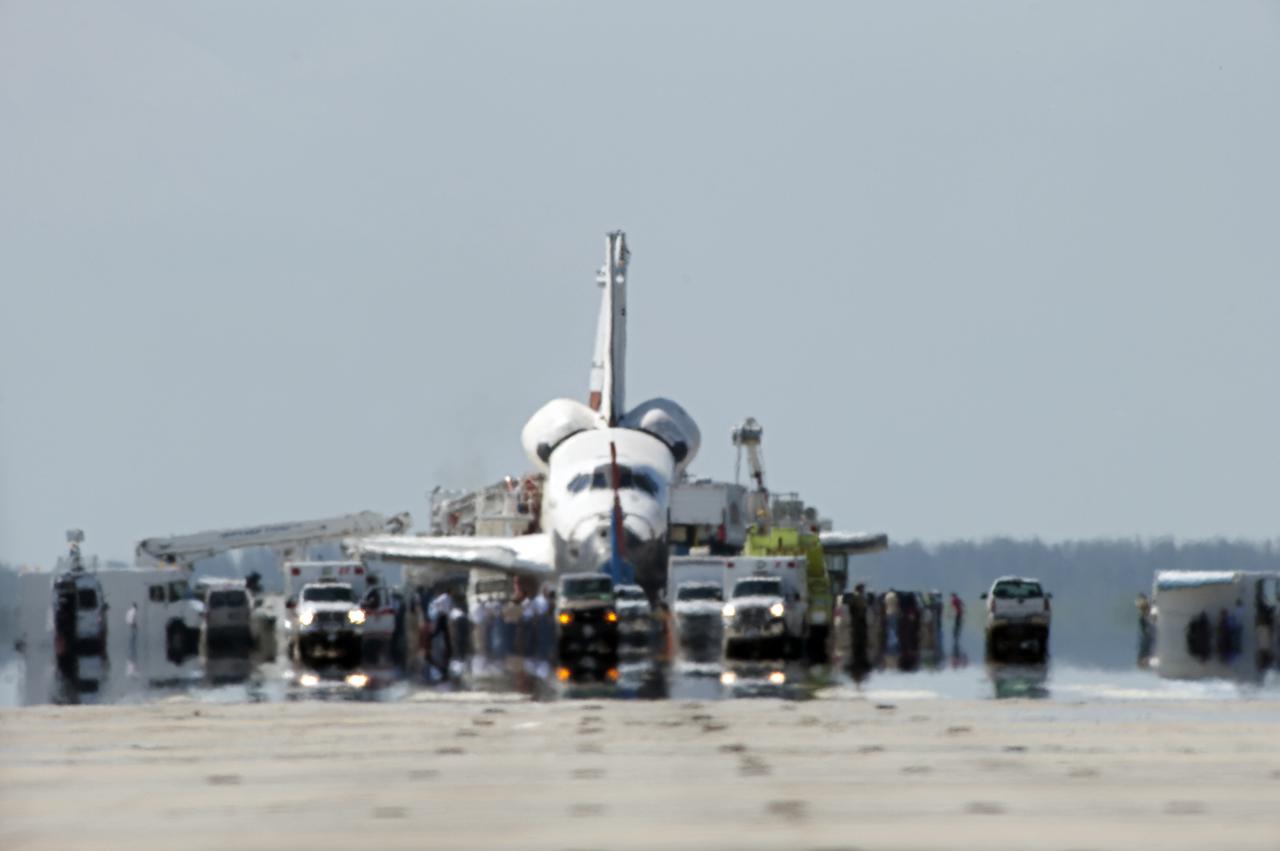
CAPE CANAVERAL, Fla. - A convoy of safing and emergency vehicles meet space shuttle Atlantis on Runway 33 at the Shuttle Landing Facility at NASA's Kennedy Space Center in Florida. Landing was at 8:48 a.m. EDT, completing the 12-day STS-132 mission to the International Space Station. The six-member STS-132 crew carried the Russian-built Mini Research Module-1 to the space station. STS-132 is the 34th shuttle mission to the station, the 132nd shuttle mission overall and the last planned flight for Atlantis. For information on the STS-132 mission and crew, visit www.nasa.gov_mission_pages_shuttle_shuttlemissions_sts132_index.html. Photo credit: NASA_Sandra Joseph and Carl Winebarger
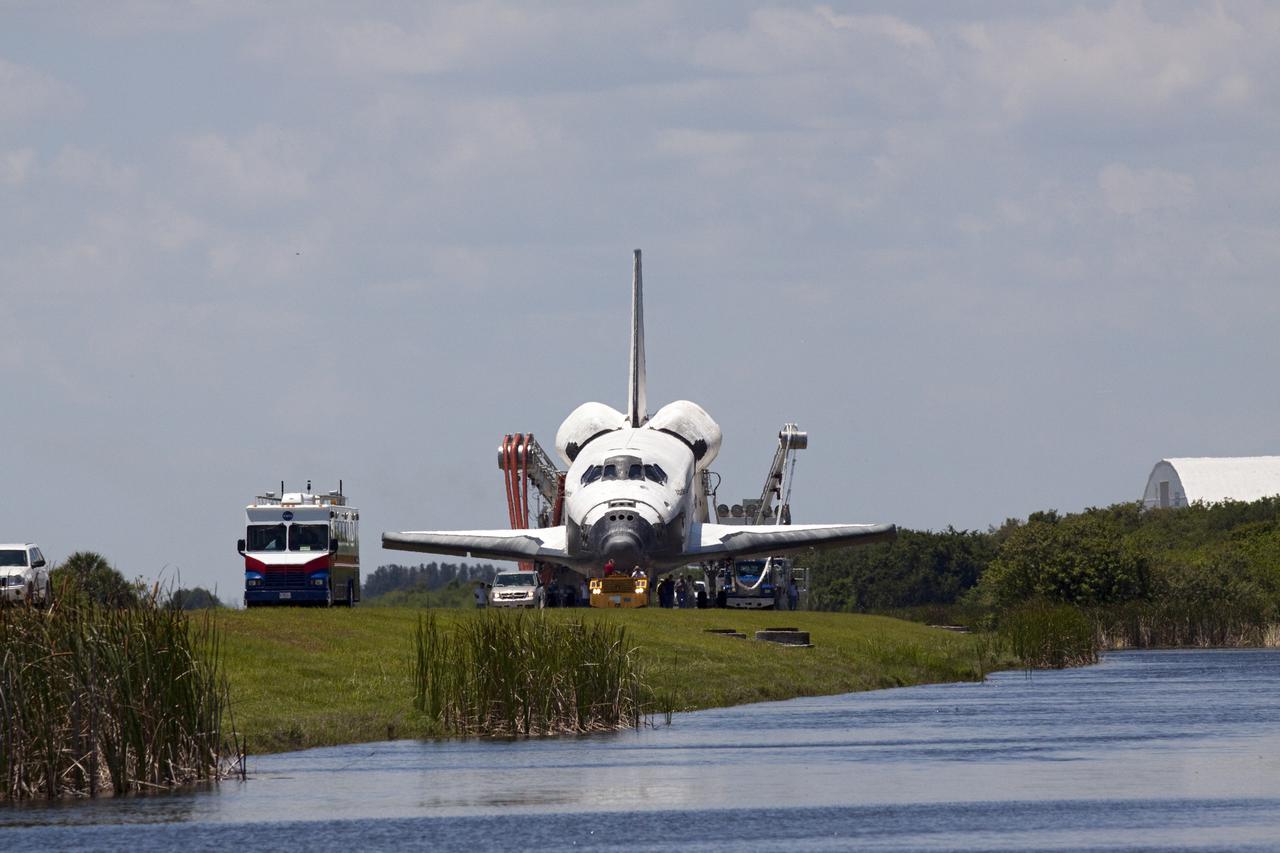
CAPE CANAVERAL, Fla. - At NASA's Kennedy Space Center in Florida, space shuttle Atlantis makes its slow trek from the Shuttle Landing Facility to Orbiter Processing Facility-1. Atlantis touched down on Runway 33 after 12 days in space, completing the 4.8-million mile STS-132 mission to the International Space Station. The six-member STS-132 crew carried the Russian-built Mini Research Module-1 to the space station. STS-132 is the 34th shuttle mission to the station, the 132nd shuttle mission overall and the last planned flight for Atlantis. For information on the STS-132 mission and crew, visit www.nasa.gov_mission_pages_shuttle_shuttlemissions_sts132_index.html. Photo credit: NASA_Jack Pfaller
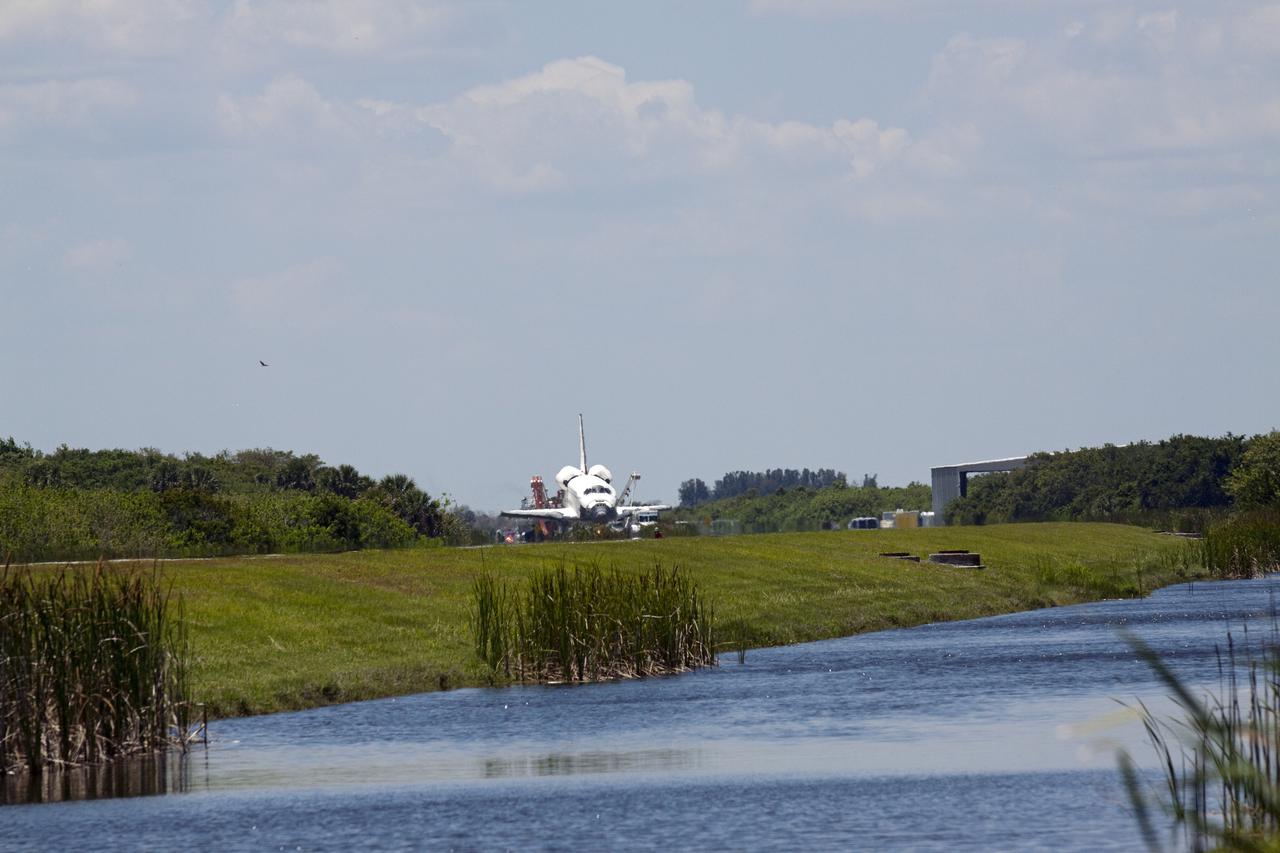
CAPE CANAVERAL, Fla. - At NASA's Kennedy Space Center in Florida, space shuttle Atlantis makes its slow trek from the Shuttle Landing Facility to Orbiter Processing Facility-1. Atlantis touched down on Runway 33 after 12 days in space, completing the 4.8-million mile STS-132 mission to the International Space Station. The six-member STS-132 crew carried the Russian-built Mini Research Module-1 to the space station. STS-132 is the 34th shuttle mission to the station, the 132nd shuttle mission overall and the last planned flight for Atlantis. For information on the STS-132 mission and crew, visit www.nasa.gov_mission_pages_shuttle_shuttlemissions_sts132_index.html. Photo credit: NASA_Jack Pfaller
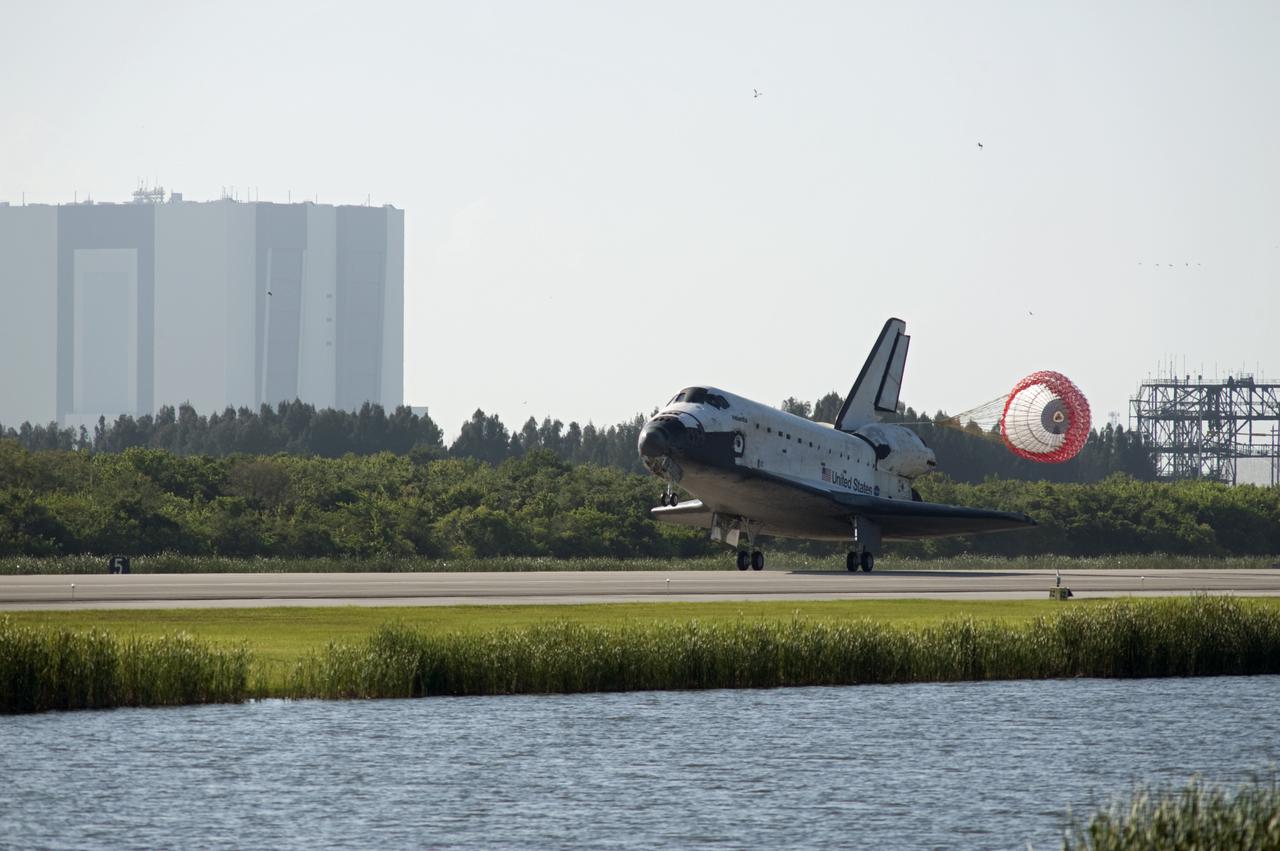
CAPE CANAVERAL, Fla. - Space shuttle Atlantis' drag chute slows the vehicle as it rolls down Runway 33 at the Shuttle Landing Facility at NASA's Kennedy Space Center in Florida. Landing was at 8:48 a.m. EDT, completing the 12-day STS-132 mission to the International Space Station. The six-member STS-132 crew carried the Russian-built Mini Research Module-1 to the space station. STS-132 is the 34th shuttle mission to the station, the 132nd shuttle mission overall and the last planned flight for Atlantis. For information on the STS-132 mission and crew, visit www.nasa.gov_mission_pages_shuttle_shuttlemissions_sts132_index.html. Photo credit: NASA_Sandra Joseph
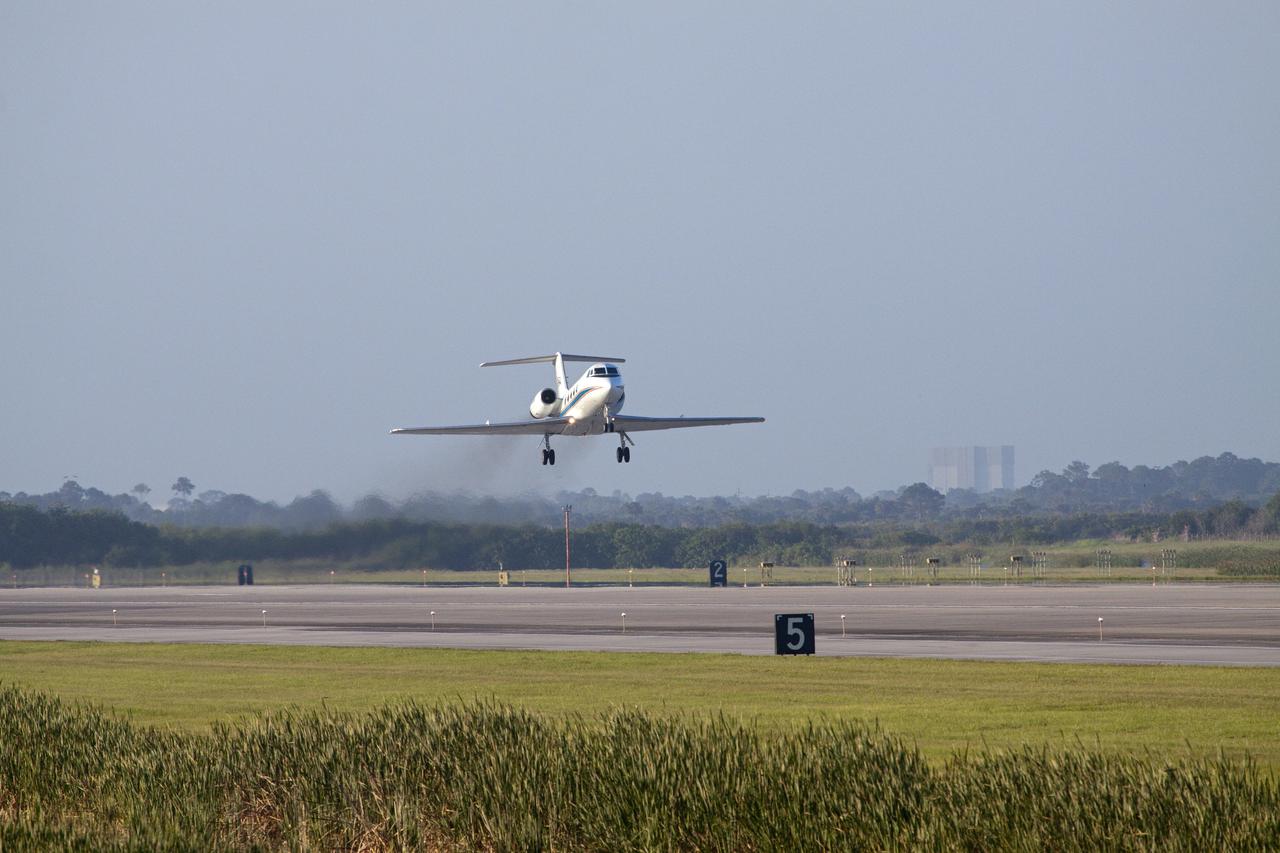
CAPE CANAVERAL, Fla. - NASA's Shuttle Training Aircraft flies weather reconnaissance for space shuttle Atlantis over Runway 33 at the Shuttle Landing Facility at NASA's Kennedy Space Center in Florida. Landing of Atlantis was at 8:48 a.m. EDT, completing the 12-day STS-132 mission to the International Space Station. The six-member STS-132 crew carried the Russian-built Mini Research Module-1 to the space station. STS-132 is the 34th shuttle mission to the station, the 132nd shuttle mission overall and the last planned flight for Atlantis. For information on the STS-132 mission and crew, visit www.nasa.gov_mission_pages_shuttle_shuttlemissions_sts132_index.html. Photo credit: NASA_Jack Pfaller
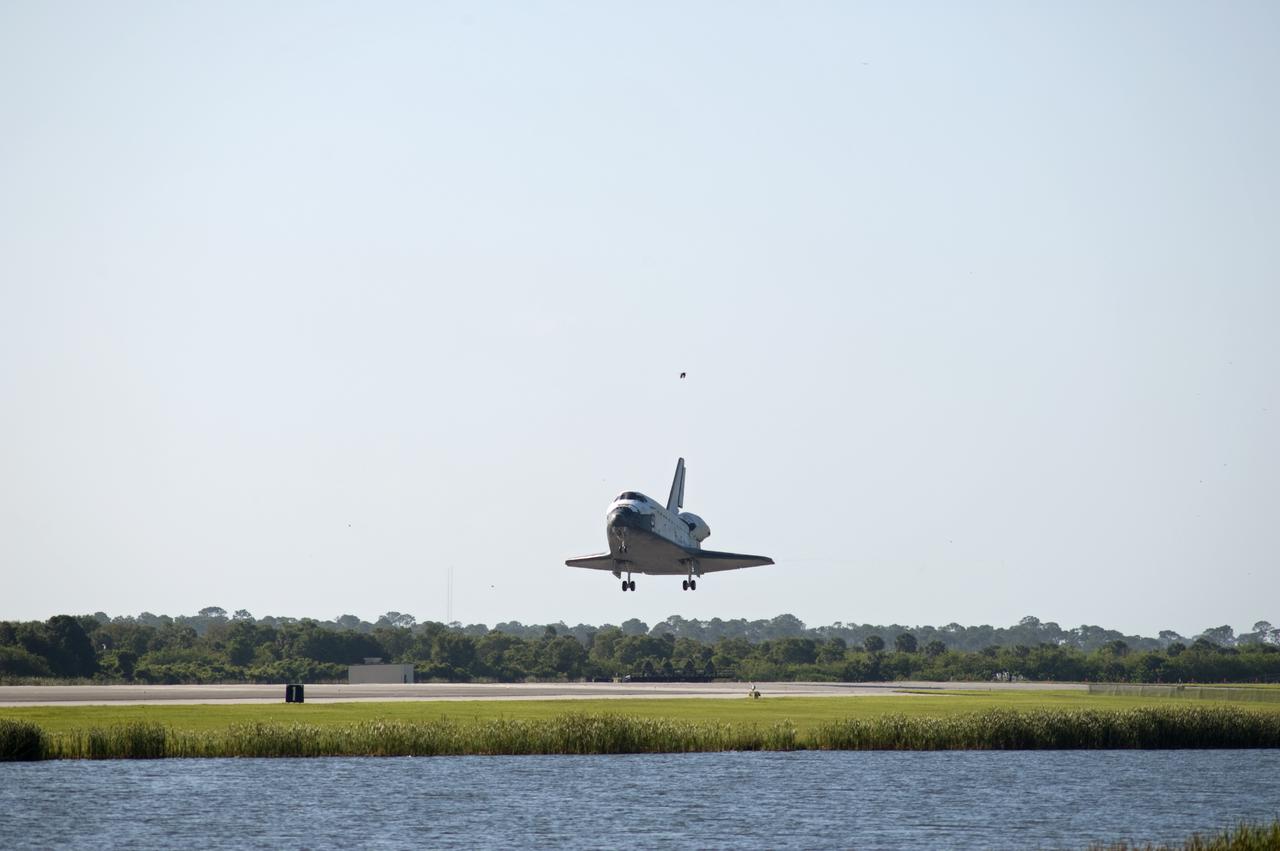
CAPE CANAVERAL, Fla. - A bird escorts space shuttle Atlantis toward Runway 33 at the Shuttle Landing Facility at NASA's Kennedy Space Center in Florida. Landing was at 8:48 a.m. EDT, completing the 12-day STS-132 mission to the International Space Station. The six-member STS-132 crew carried the Russian-built Mini Research Module-1 to the International Space Station. STS-132 is the 34th shuttle mission to the station, the 132nd shuttle mission overall and the last planned flight for Atlantis. For information on the STS-132 mission and crew, visit www.nasa.gov_mission_pages_shuttle_shuttlemissions_sts132_index.html. Photo credit: NASA_Rick Wetherington
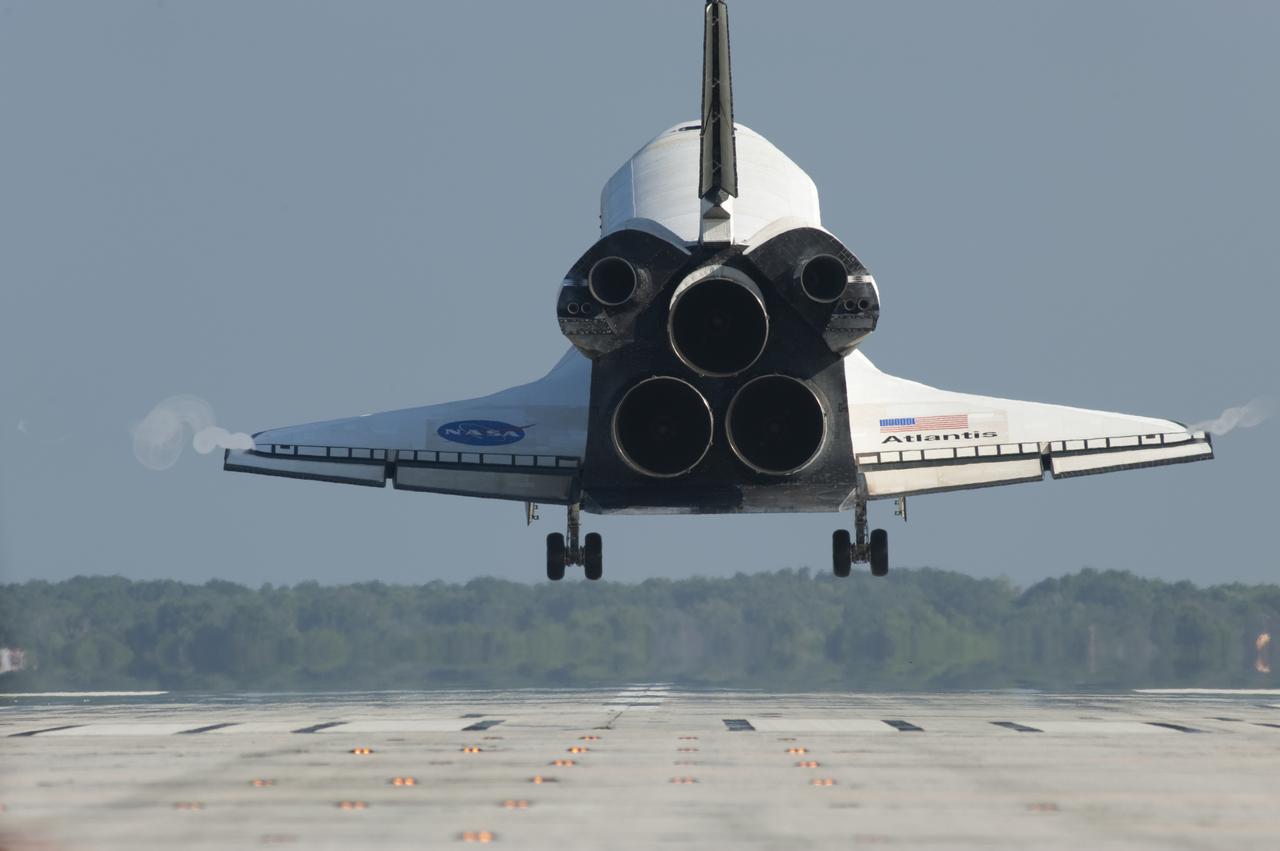
CAPE CANAVERAL, Fla. - Space shuttle Atlantis nears touchdown on Runway 33 at the Shuttle Landing Facility at NASA's Kennedy Space Center in Florida. Landing was at 8:48 a.m. EDT, completing the 12-day STS-132 mission to the International Space Station. The six-member STS-132 crew carried the Russian-built Mini Research Module-1 to the space station. STS-132 is the 34th shuttle mission to the station, the 132nd shuttle mission overall and the last planned flight for Atlantis. For information on the STS-132 mission and crew, visit www.nasa.gov_mission_pages_shuttle_shuttlemissions_sts132_index.html. Photo credit: NASA_Tony Gray and Tom Farrar
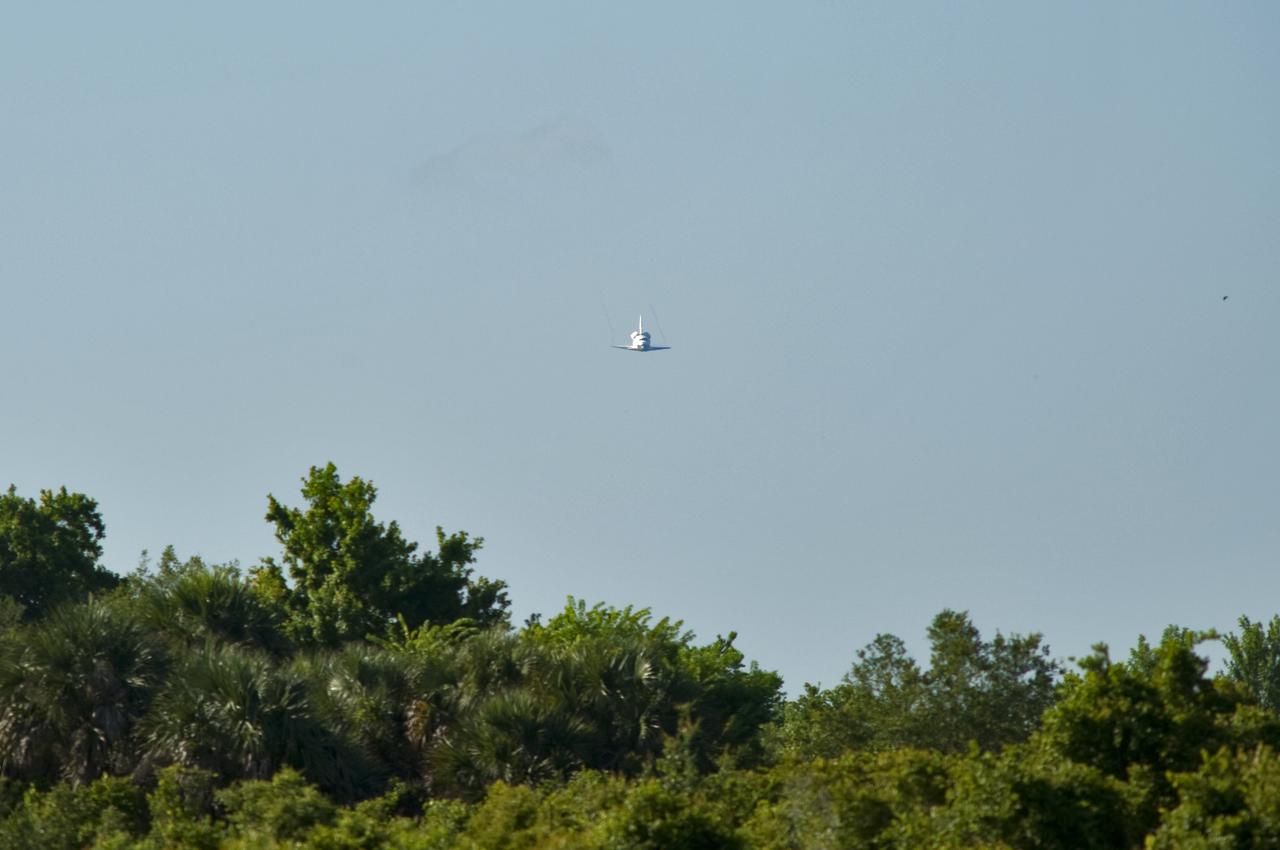
CAPE CANAVERAL, Fla. - Coming in from the southeast, space shuttle Atlantis approaches Runway 33 at the Shuttle Landing Facility at NASA's Kennedy Space Center in Florida. Landing was at 8:48 a.m. EDT, completing the 12-day STS-132 mission to the International Space Station. The six-member STS-132 crew carried the Russian-built Mini Research Module-1 to the International Space Station. STS-132 is the 34th shuttle mission to the station, the 132nd shuttle mission overall and the last planned flight for Atlantis. For information on the STS-132 mission and crew, visit www.nasa.gov_mission_pages_shuttle_shuttlemissions_sts132_index.html. Photo credit: NASA_Rusty Backer
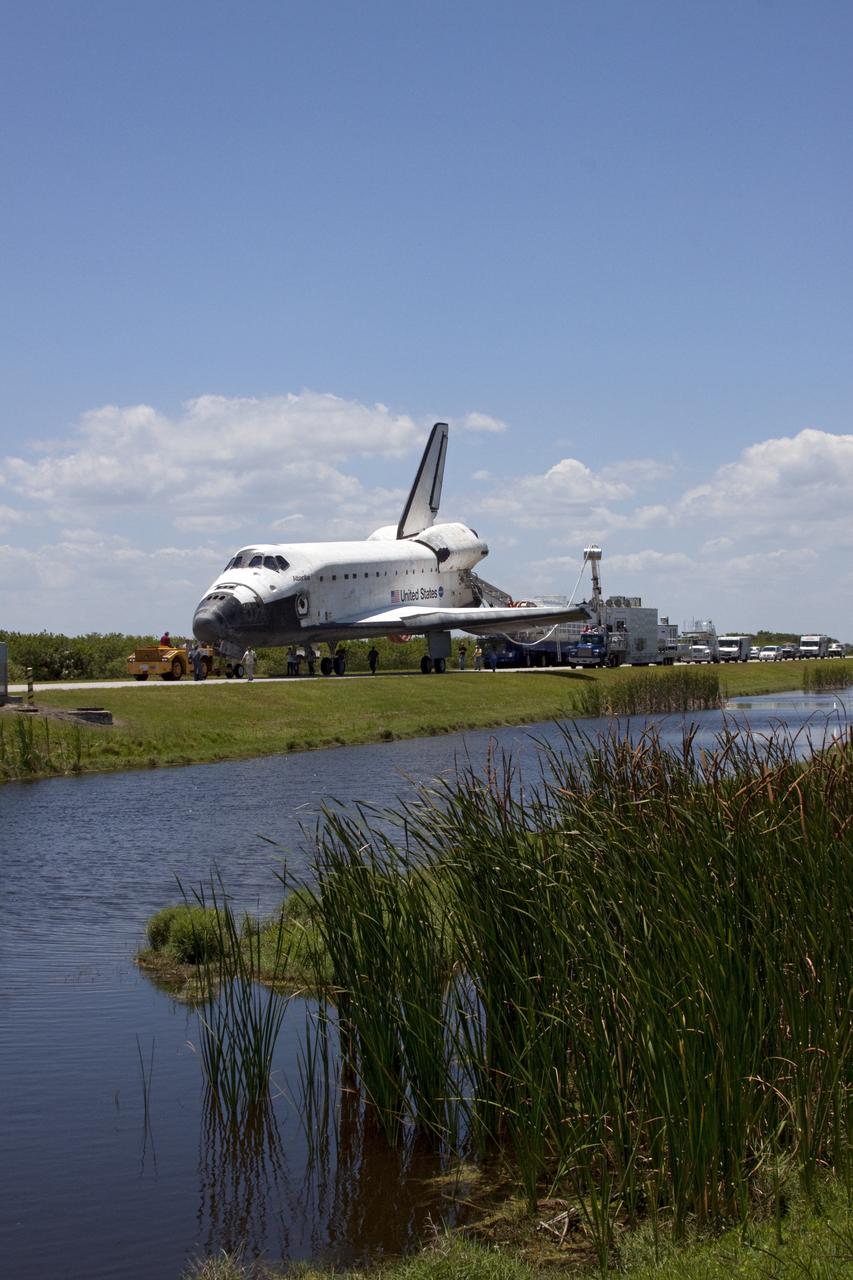
CAPE CANAVERAL, Fla. - At NASA's Kennedy Space Center in Florida, space shuttle Atlantis makes its slow trek from the Shuttle Landing Facility to Orbiter Processing Facility-1. Atlantis touched down on Runway 33 after 12 days in space, completing the 4.8-million mile STS-132 mission to the International Space Station. The six-member STS-132 crew carried the Russian-built Mini Research Module-1 to the space station. STS-132 is the 34th shuttle mission to the station, the 132nd shuttle mission overall and the last planned flight for Atlantis. For information on the STS-132 mission and crew, visit www.nasa.gov_mission_pages_shuttle_shuttlemissions_sts132_index.html. Photo credit: NASA_Jack Pfaller
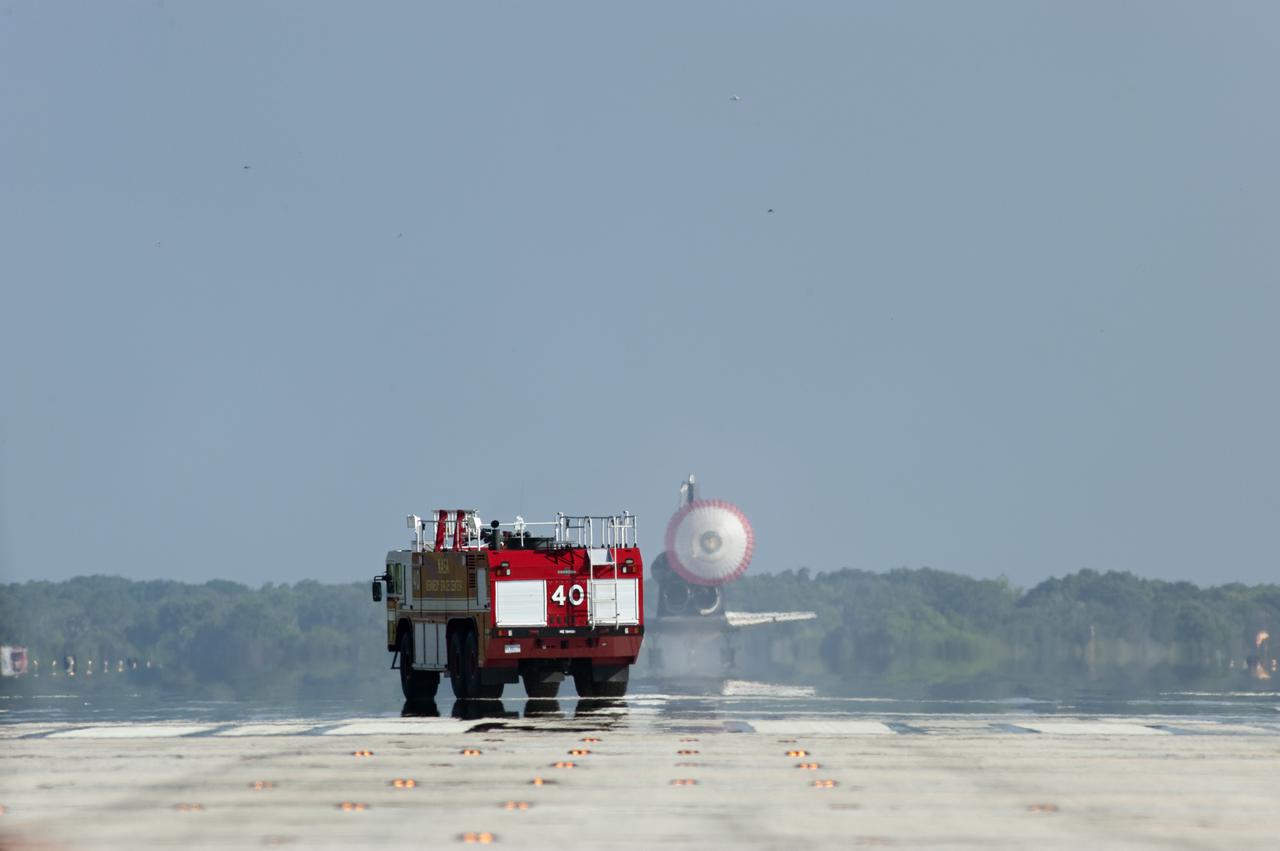
CAPE CANAVERAL, Fla. - NASA's Fire Rescue Services vehicle drives toward space shuttle Atlantis on Runway 33 at the Shuttle Landing Facility at NASA's Kennedy Space Center in Florida. Landing was at 8:48 a.m. EDT, completing the 12-day STS-132 mission to the International Space Station. The six-member STS-132 crew carried the Russian-built Mini Research Module-1 to the space station. STS-132 is the 34th shuttle mission to the station, the 132nd shuttle mission overall and the last planned flight for Atlantis. For information on the STS-132 mission and crew, visit www.nasa.gov_mission_pages_shuttle_shuttlemissions_sts132_index.html. Photo credit: NASA_Tony Gray and Tom Farrar

CAPE CANAVERAL, Fla. - Space shuttle Atlantis touches down on Runway 33 at the Shuttle Landing Facility at NASA's Kennedy Space Center in Florida. Landing was at 8:48 a.m. EDT, completing the 12-day STS-132 mission to the International Space Station. The six-member STS-132 crew carried the Russian-built Mini Research Module-1 to the space station. STS-132 is the 34th shuttle mission to the station, the 132nd shuttle mission overall and the last planned flight for Atlantis. For information on the STS-132 mission and crew, visit www.nasa.gov_mission_pages_shuttle_shuttlemissions_sts132_index.html. Photo credit: NASA_Sandra Joseph
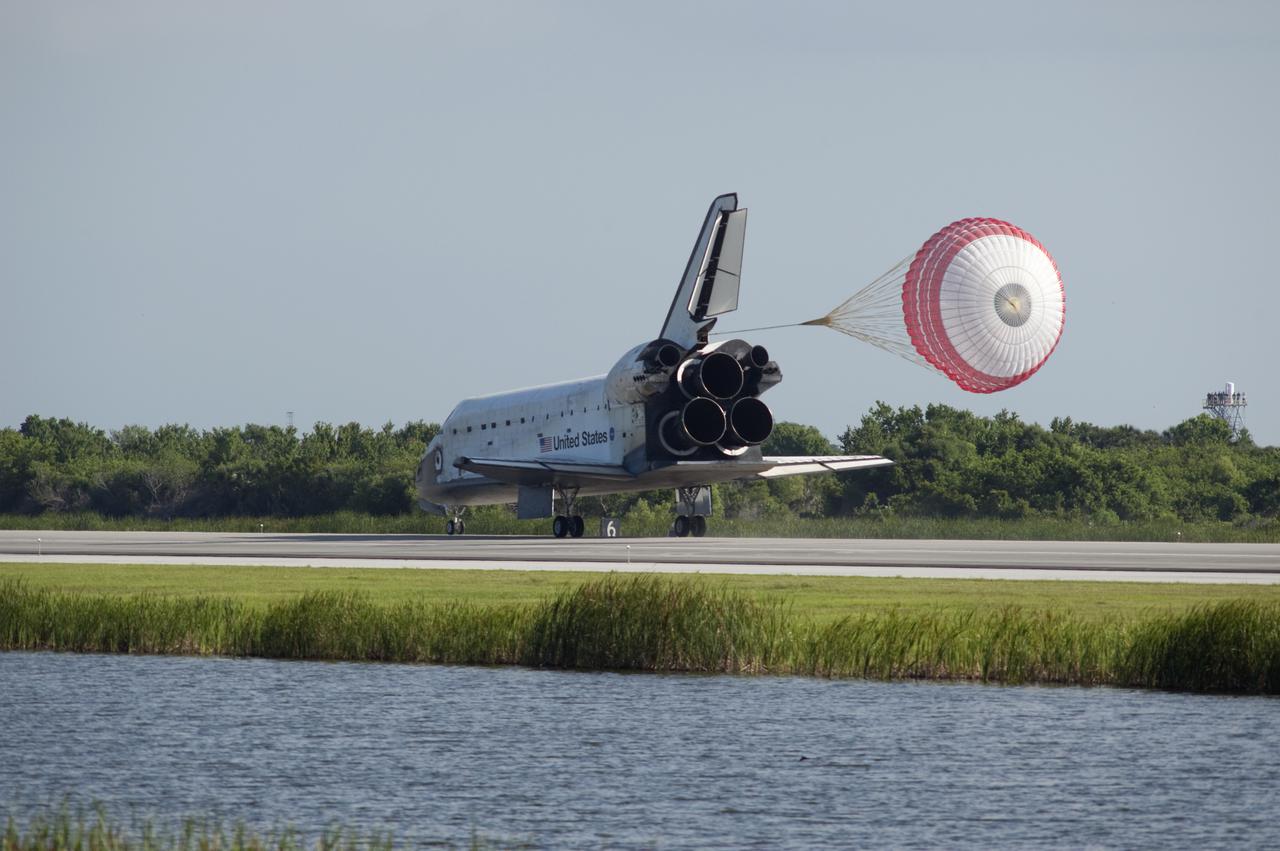
CAPE CANAVERAL, Fla. - Space shuttle Atlantis' drag chute slows the vehicle as it rolls down Runway 33 at the Shuttle Landing Facility at NASA's Kennedy Space Center in Florida. Landing was at 8:48 a.m. EDT, completing the 12-day STS-132 mission to the International Space Station. The six-member STS-132 crew carried the Russian-built Mini Research Module-1 to the space station. STS-132 is the 34th shuttle mission to the station, the 132nd shuttle mission overall and the last planned flight for Atlantis. For information on the STS-132 mission and crew, visit www.nasa.gov_mission_pages_shuttle_shuttlemissions_sts132_index.html. Photo credit: NASA_Sandra Joseph
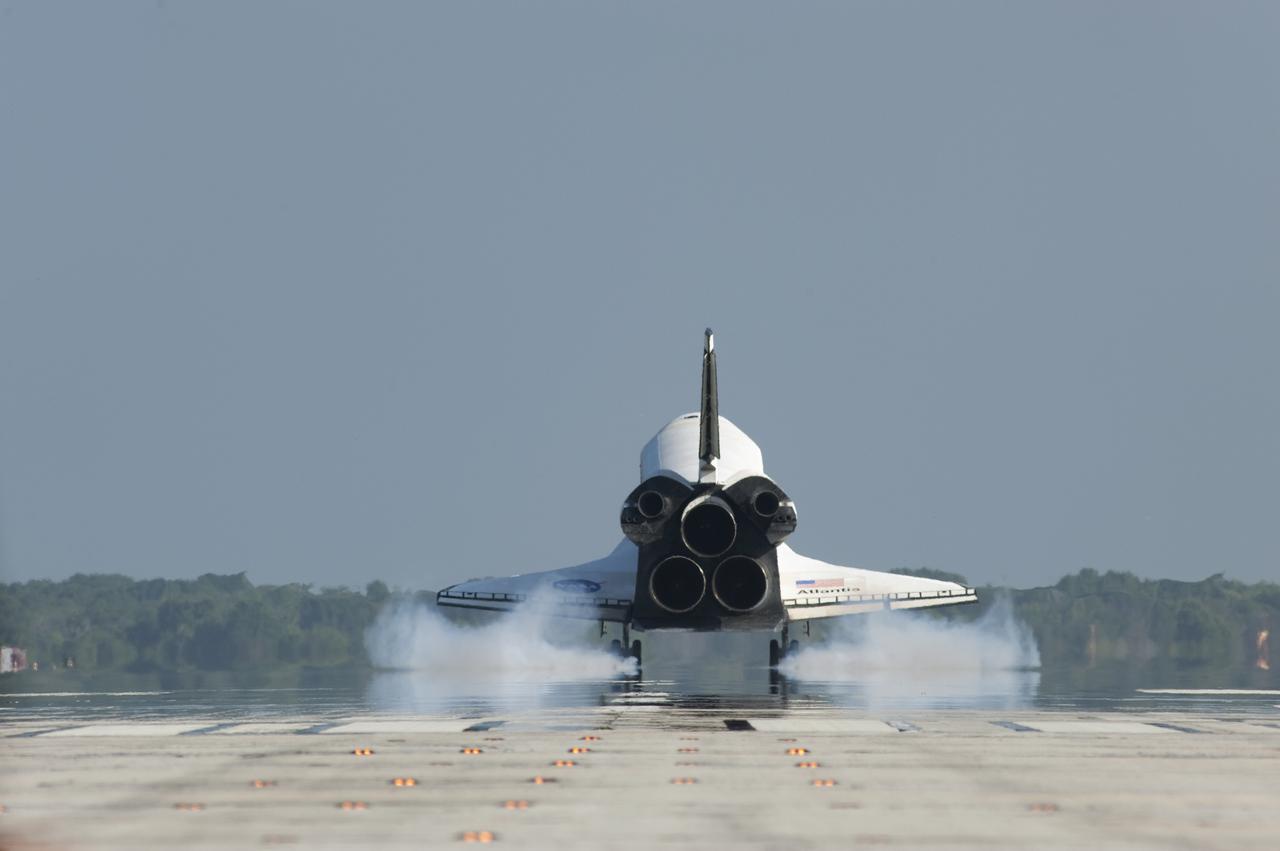
CAPE CANAVERAL, Fla. - Space shuttle Atlantis touches down on Runway 33 at the Shuttle Landing Facility at NASA's Kennedy Space Center in Florida. Landing was at 8:48 a.m. EDT, completing the 12-day STS-132 mission to the International Space Station. The six-member STS-132 crew carried the Russian-built Mini Research Module-1 to the space station. STS-132 is the 34th shuttle mission to the station, the 132nd shuttle mission overall and the last planned flight for Atlantis. For information on the STS-132 mission and crew, visit www.nasa.gov_mission_pages_shuttle_shuttlemissions_sts132_index.html. Photo credit: NASA_Tony Gray and Tom Farrar
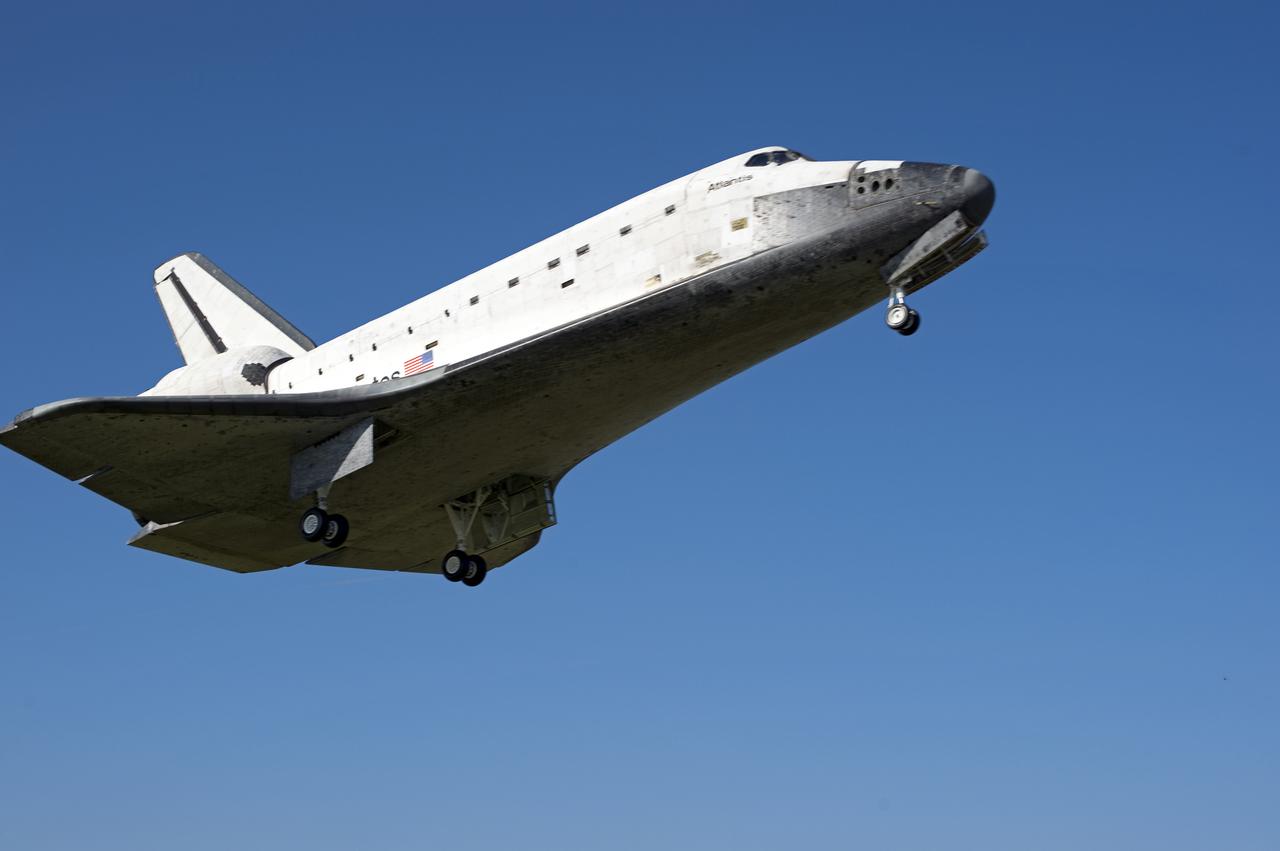
CAPE CANAVERAL, Fla. - Coming in from the southeast, space shuttle Atlantis' belly is visible in a crystal-clear blue sky as it approaches Runway 33 at the Shuttle Landing Facility at NASA's Kennedy Space Center in Florida. Landing was at 8:48 a.m. EDT, completing the 12-day STS-132 mission to the International Space Station. The six-member STS-132 crew carried the Russian-built Mini Research Module-1 to the space station. STS-132 is the 34th shuttle mission to the station, the 132nd shuttle mission overall and the last planned flight for Atlantis. For information on the STS-132 mission and crew, visit www.nasa.gov_mission_pages_shuttle_shuttlemissions_sts132_index.html. Photo credit: NASA_Tony Gray and Tom Farrar

CAPE CANAVERAL, Fla. - STS-132 Mission Specialists Garrett Riesman, left, and Michael Good participate in a news conference in the Press Site auditorium at NASA's Kennedy Space Center in Florida on landing day. Space shuttle Atlantis touched down on the Shuttle Landing Facility's Runway 33 at 8:48 a.m. EDT, completing a 4.8-million mile mission to the International Space Station. STS-132 carried the Russian-built Mini Research Module-1 to the space station. STS-132 is the 34th shuttle mission to the station, the 132nd shuttle mission overall and the last planned flight for Atlantis. For more information, visit www.nasa.gov_mission_pages_shuttle_shuttlemissions_sts132_index.html. Photo credit: NASA_Cory Huston
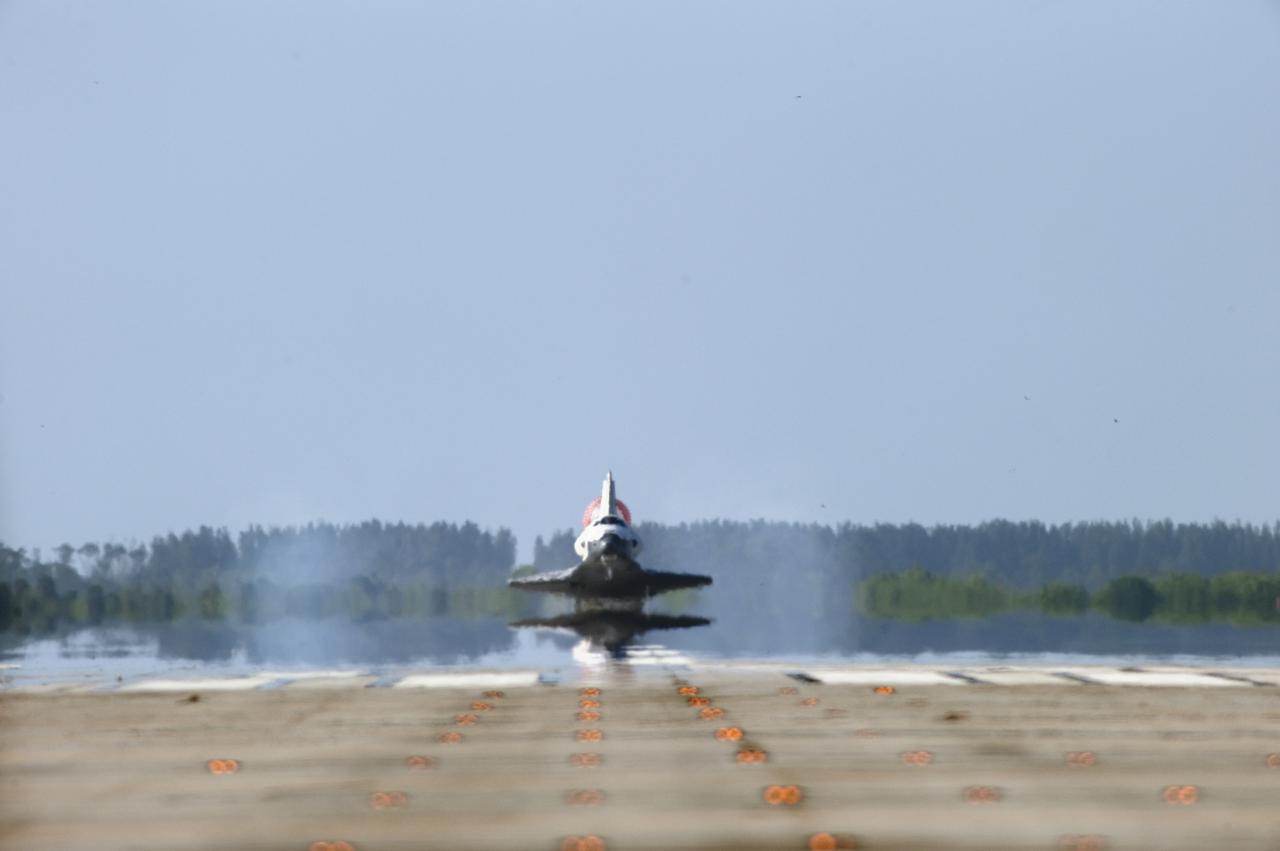
CAPE CANAVERAL, Fla. - Coming in from the southeast, space shuttle Atlantis touches down on Runway 33 at the Shuttle Landing Facility at NASA's Kennedy Space Center in Florida. Landing was at 8:48 a.m. EDT, completing the 12-day STS-132 mission to the International Space Station. The six-member STS-132 crew carried the Russian-built Mini Research Module-1 to the space station. STS-132 is the 34th shuttle mission to the station, the 132nd shuttle mission overall and the last planned flight for Atlantis. For information on the STS-132 mission and crew, visit www.nasa.gov_mission_pages_shuttle_shuttlemissions_sts132_index.html. Photo credit: NASA_Sandra Joseph and Carl Winebarger
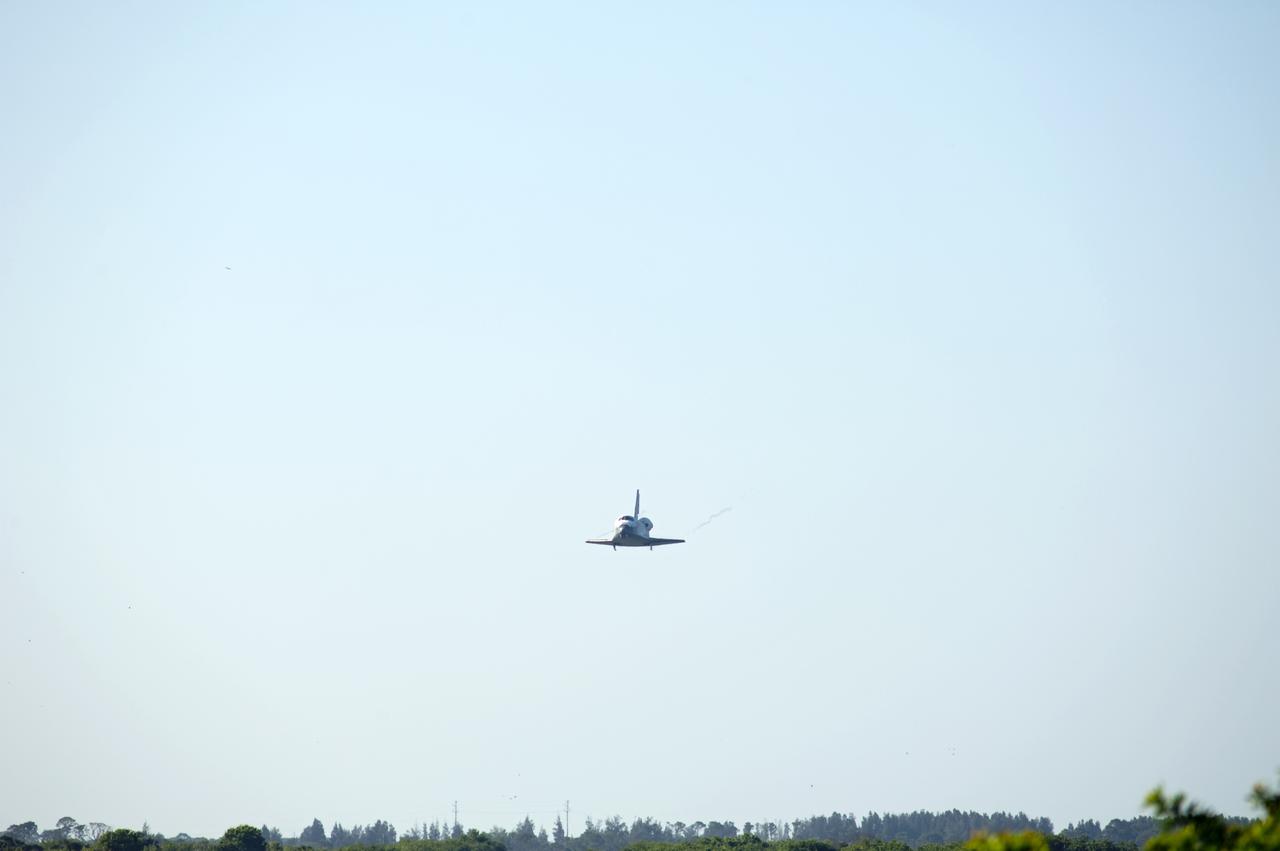
CAPE CANAVERAL, Fla. - Coming in from the southeast, space shuttle Atlantis approaches Runway 33 at the Shuttle Landing Facility at NASA's Kennedy Space Center in Florida. Landing was at 8:48 a.m. EDT, completing the 12-day STS-132 mission to the International Space Station. The six-member STS-132 crew carried the Russian-built Mini Research Module-1 to the space station. STS-132 is the 34th shuttle mission to the station, the 132nd shuttle mission overall and the last planned flight for Atlantis. For information on the STS-132 mission and crew, visit www.nasa.gov_mission_pages_shuttle_shuttlemissions_sts132_index.html. Photo credit: NASA_Sandra Joseph
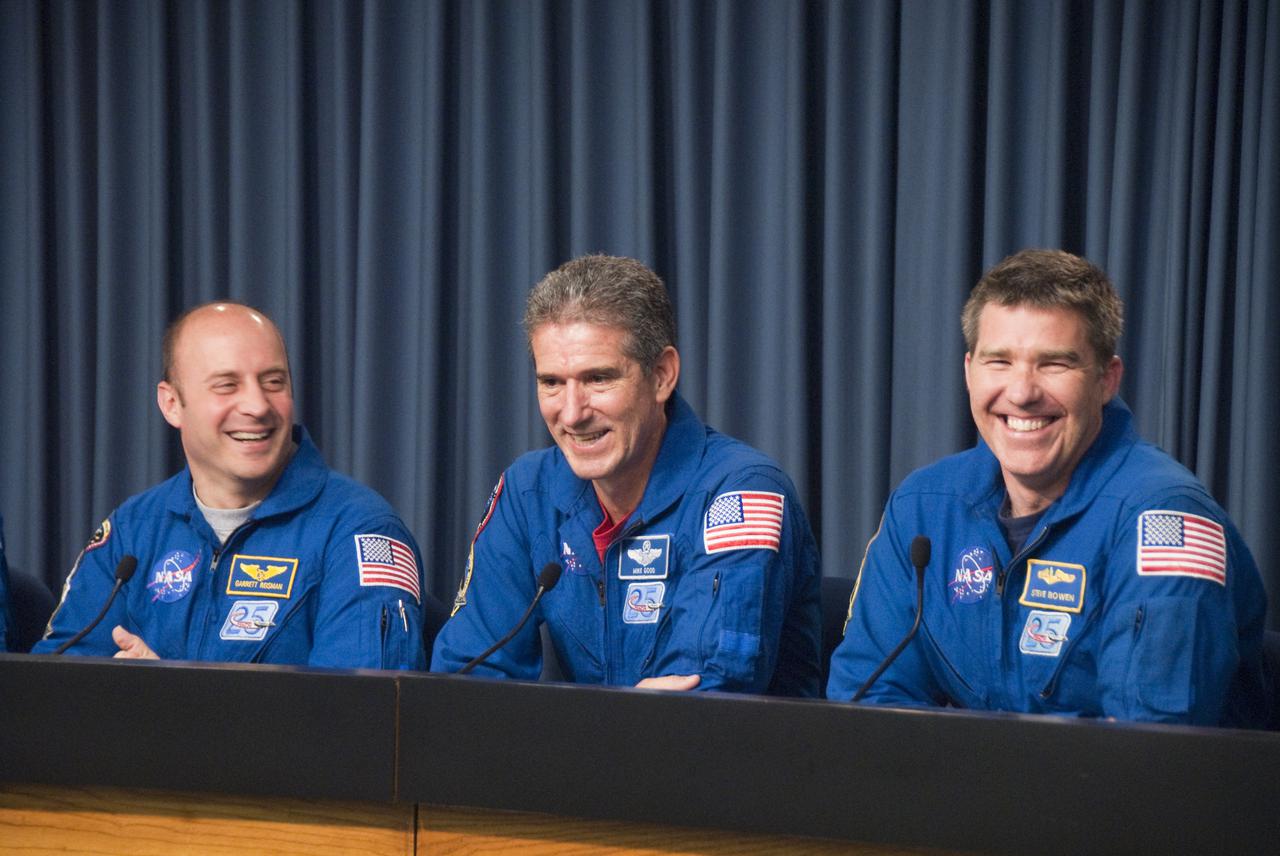
CAPE CANAVERAL, Fla. - STS-132 Mission Specialists Garrett Reisman, left, Michael Good and Steve Bowen participate in a news conference in the Press Site auditorium at NASA's Kennedy Space Center in Florida on landing day. Space shuttle Atlantis touched down on the Shuttle Landing Facility's Runway 33 at 8:48 a.m. EDT, completing a 4.8-million mile mission to the International Space Station. STS-132 carried the Russian-built Mini Research Module-1 to the space station. STS-132 is the 34th shuttle mission to the station, the 132nd shuttle mission overall and the last planned flight for Atlantis. For more information, visit www.nasa.gov_mission_pages_shuttle_shuttlemissions_sts132_index.html. Photo credit: NASA_Cory Huston
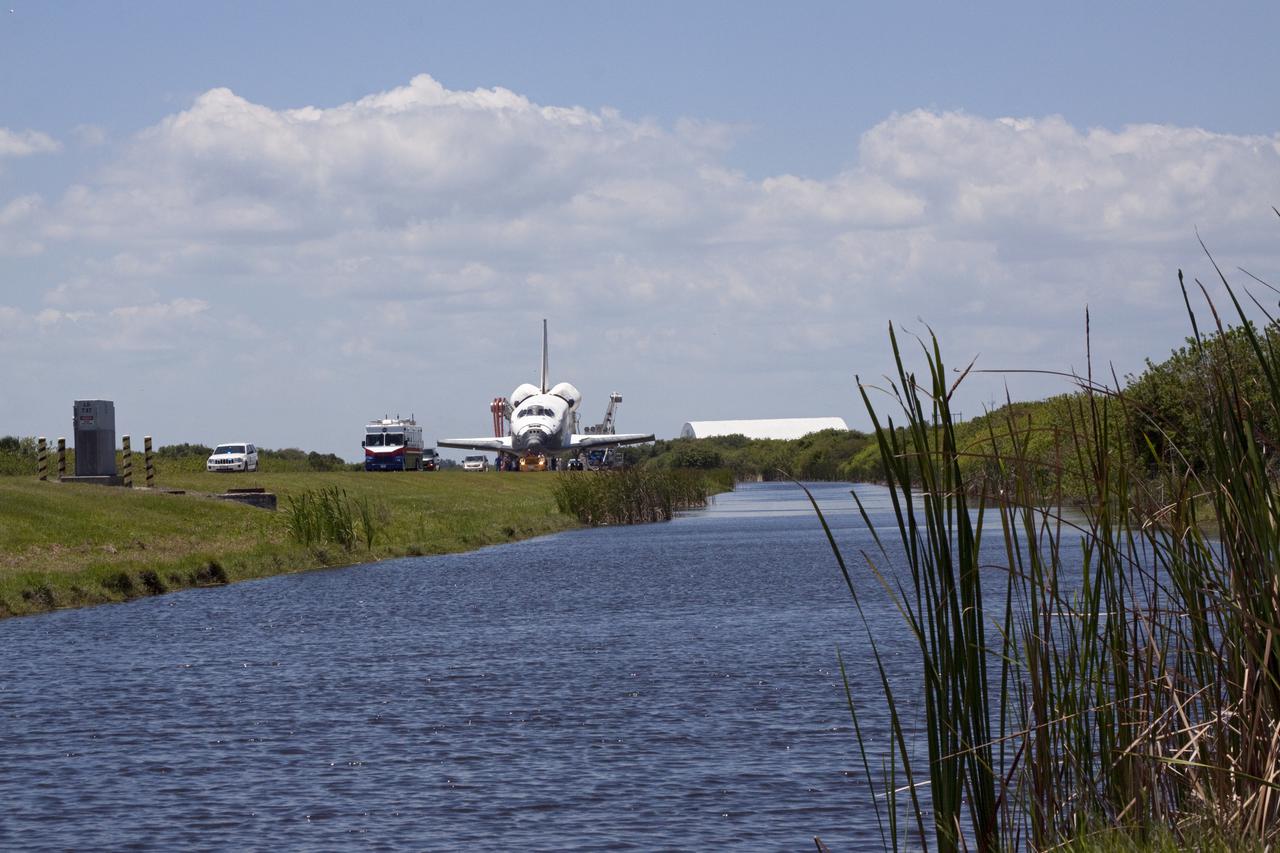
CAPE CANAVERAL, Fla. - At NASA's Kennedy Space Center in Florida, space shuttle Atlantis makes its slow trek from the Shuttle Landing Facility to Orbiter Processing Facility-1. Atlantis touched down on Runway 33 after 12 days in space, completing the 4.8-million mile STS-132 mission to the International Space Station. The six-member STS-132 crew carried the Russian-built Mini Research Module-1 to the space station. STS-132 is the 34th shuttle mission to the station, the 132nd shuttle mission overall and the last planned flight for Atlantis. For information on the STS-132 mission and crew, visit www.nasa.gov_mission_pages_shuttle_shuttlemissions_sts132_index.html. Photo credit: NASA_Jack Pfaller
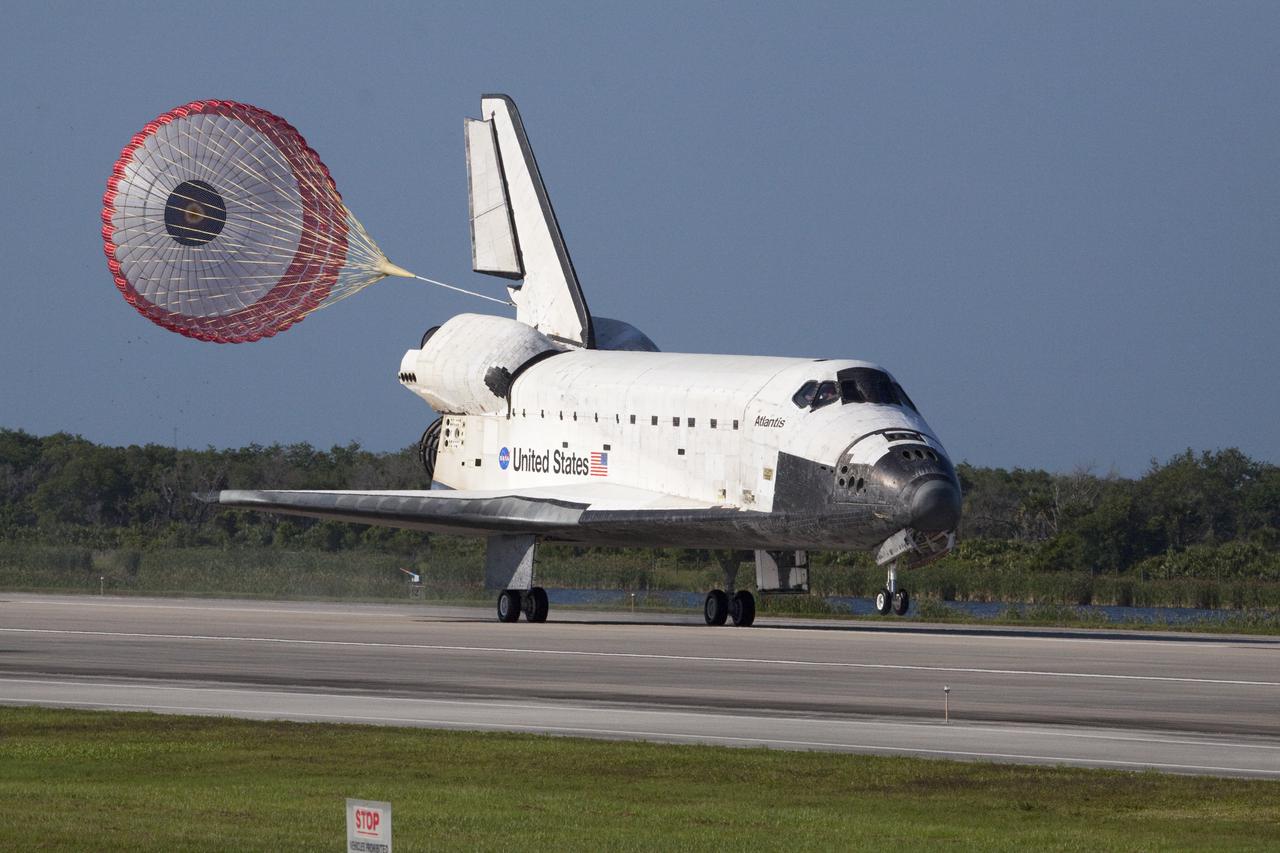
CAPE CANAVERAL, Fla. - With its drag chute unfurled, space shuttle Atlantis rolls down Runway 33 at the Shuttle Landing Facility at NASA's Kennedy Space Center in Florida. Landing was at 8:48 a.m. EDT, completing the 12-day STS-132 mission to the International Space Station. The six-member STS-132 crew carried the Russian-built Mini Research Module-1 to the space station. STS-132 is the 34th shuttle mission to the station, the 132nd shuttle mission overall and the last planned flight for Atlantis. For information on the STS-132 mission and crew, visit www.nasa.gov_mission_pages_shuttle_shuttlemissions_sts132_index.html. Photo credit: NASA_Jack Pfaller
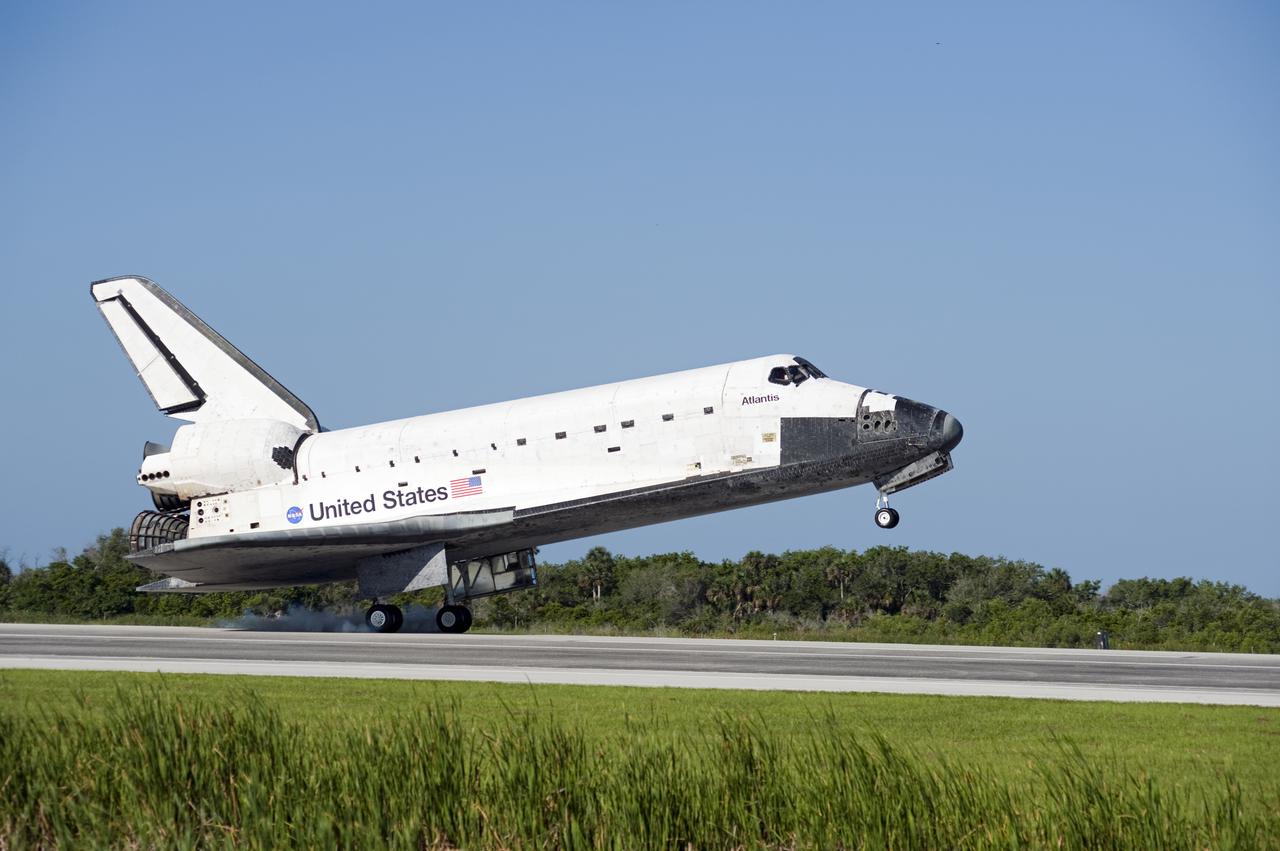
CAPE CANAVERAL, Fla. - Space shuttle Atlantis' main gear touches down on Runway 33 at the Shuttle Landing Facility at NASA's Kennedy Space Center in Florida. Landing was at 8:48 a.m. EDT, completing the 12-day STS-132 mission to the International Space Station. The six-member STS-132 crew carried the Russian-built Mini Research Module-1 to the space station. STS-132 is the 34th shuttle mission to the station, the 132nd shuttle mission overall and the last planned flight for Atlantis. For information on the STS-132 mission and crew, visit www.nasa.gov_mission_pages_shuttle_shuttlemissions_sts132_index.html. Photo credit: NASA_Thomas Farrar Jr.
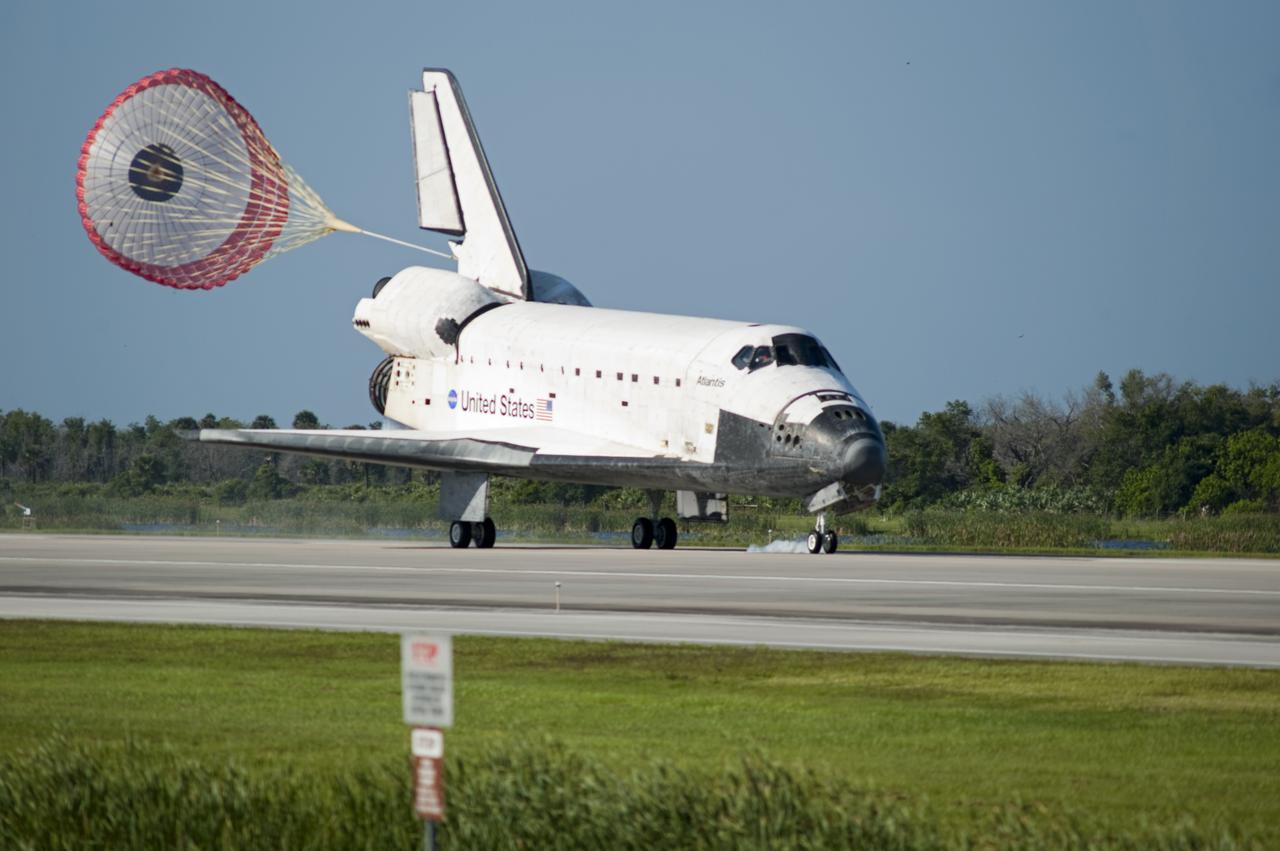
CAPE CANAVERAL, Fla. - Space shuttle Atlantis' drag chute slows the vehicle as it rolls to a stop on Runway 33 at the Shuttle Landing Facility at NASA's Kennedy Space Center in Florida. Landing was at 8:48 a.m. EDT, completing the 12-day STS-132 mission to the International Space Station. The six-member STS-132 crew carried the Russian-built Mini Research Module-1 to the International Space Station. STS-132 is the 34th shuttle mission to the station, the 132nd shuttle mission overall and the last planned flight for Atlantis. For information on the STS-132 mission and crew, visit www.nasa.gov_mission_pages_shuttle_shuttlemissions_sts132_index.html. Photo credit: NASA_Tony Gray
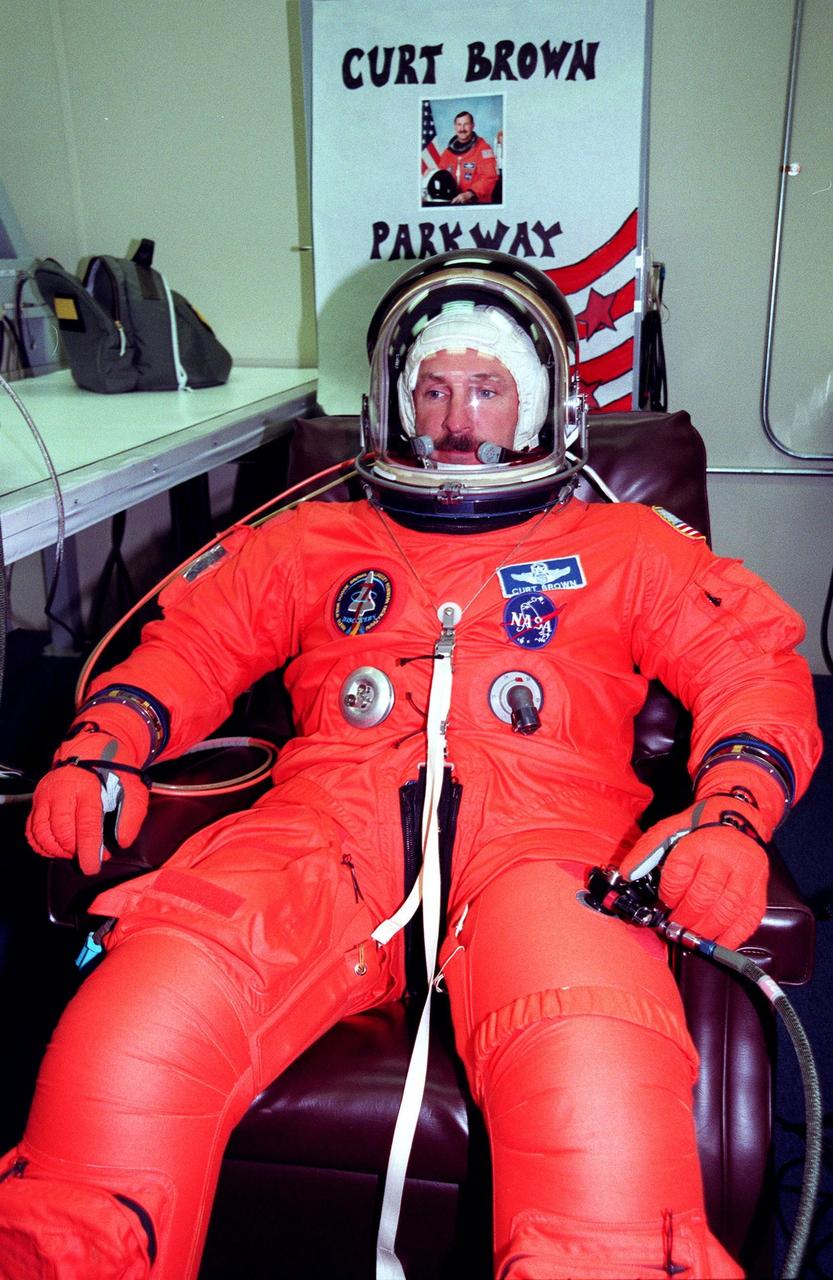
STS-95 Mission Commander Curtis L. Brown Jr. tests his flight suit in the Operations and Checkout Building. The final fitting takes place prior to the crew walkout and transport to Launch Pad 39B. Targeted for launch at 2 p.m. EST on Oct. 29, the mission is expected to last 8 days, 21 hours and 49 minutes, and return to KSC at 11:49 a.m. EST on Nov. 7. The STS-95 mission includes research payloads such as the Spartan solar-observing deployable spacecraft, the Hubble Space Telescope Orbital Systems Test Platform, the International Extreme Ultraviolet Hitchhiker, as well as the SPACEHAB single module with experiments on space flight and the aging process
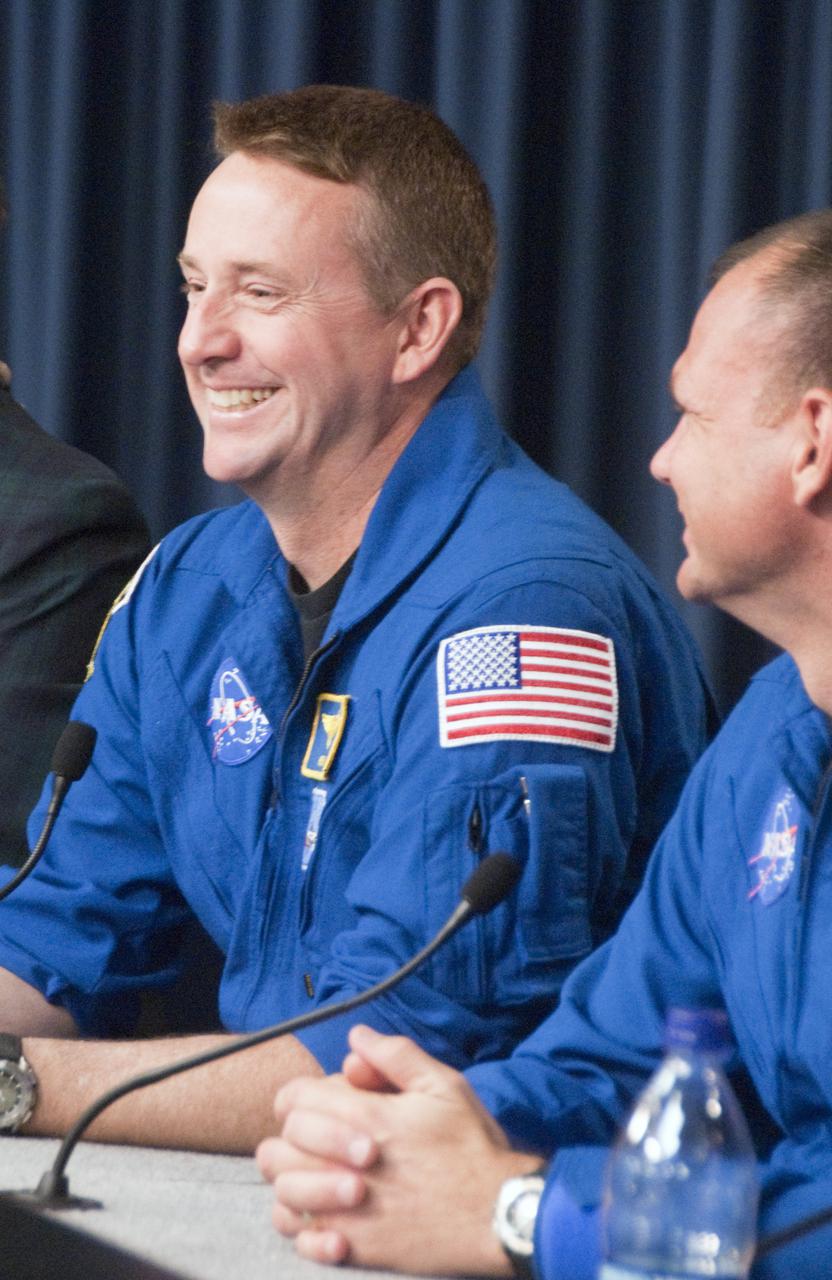
CAPE CANAVERAL, Fla. - STS-132 Commander Ken Ham, left, and Pilot Tony Antonelli participate in a news conference in the Press Site auditorium at NASA's Kennedy Space Center in Florida on landing day. Space shuttle Atlantis touched down on the Shuttle Landing Facility's Runway 33 at 8:48 a.m. EDT, completing a 4.8-million mile mission to the International Space Station. STS-132 carried the Russian-built Mini Research Module-1 to the space station. STS-132 is the 34th shuttle mission to the station, the 132nd shuttle mission overall and the last planned flight for Atlantis. For more information, visit www.nasa.gov_mission_pages_shuttle_shuttlemissions_sts132_index.html. Photo credit: NASA_Cory Huston
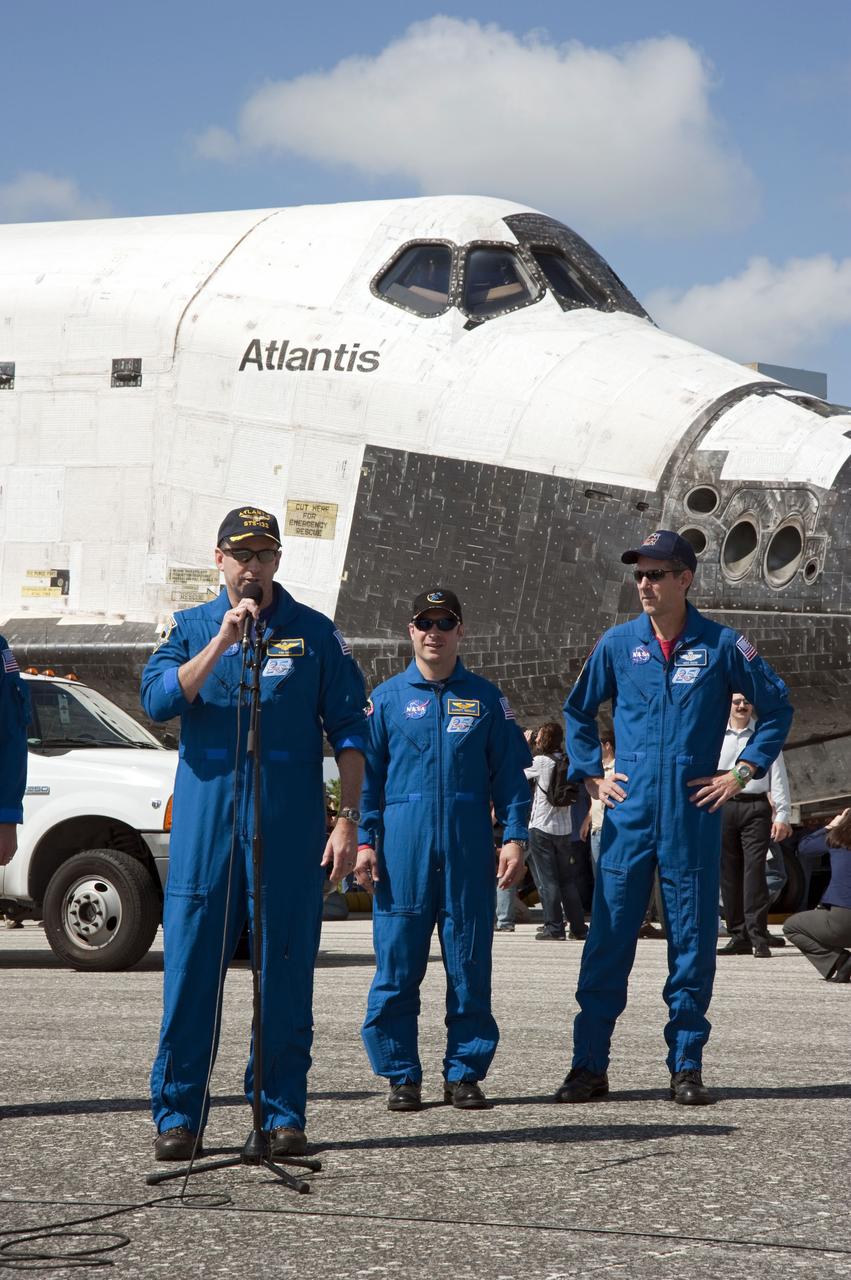
STS132-S-153 (26 May 2010) --- NASA astronaut Ken Ham, STS-132 commander, speaks to the media after landing space shuttle Atlantis at the Shuttle Landing Facility at NASA's Kennedy Space Center in Florida. Behind Ham are astronauts Garrett Reisman (center) and Michael Good, both mission specialists. The six-member STS-132 crew carried the Russian-built Mini Research Module 1 to the space station. STS-132 is the 34th shuttle mission to the station, the 132nd shuttle mission overall and the last planned flight for Atlantis.
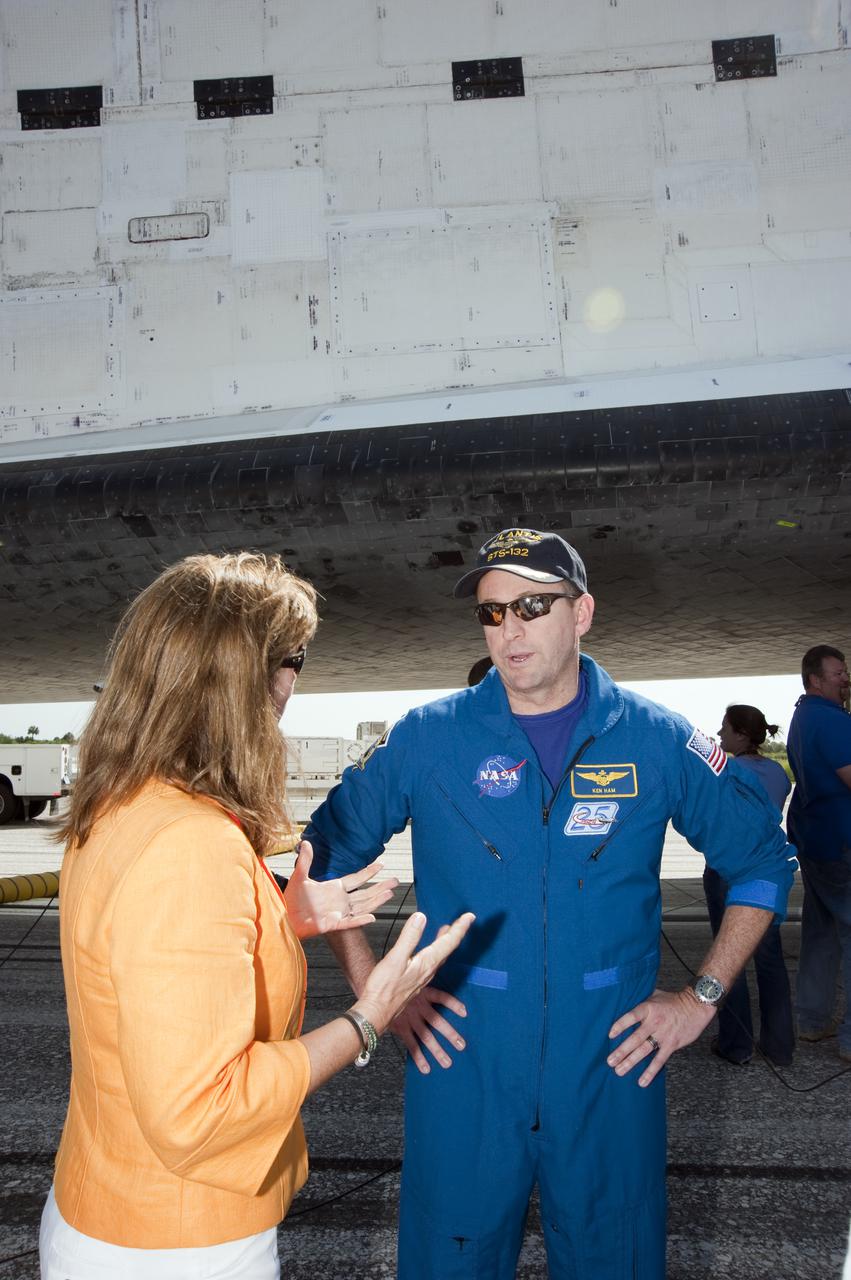
CAPE CANAVERAL, Fla. - At the Shuttle Landing Facility at NASA's Kennedy Space Center in Florida, NASA Deputy Administrator Lori Garver and STS-132 Commander Ken Ham talk following space shuttle Atlantis' landing. The six-member STS-132 crew carried the Russian-built Mini Research Module-1 to the space station. STS-132 is the 34th shuttle mission to the station, the 132nd shuttle mission overall and the last planned flight for Atlantis. For information on the STS-132 mission and crew, visit www.nasa.gov_mission_pages_shuttle_shuttlemissions_sts132_index.html. Photo credit: NASA_Kim Shiflett
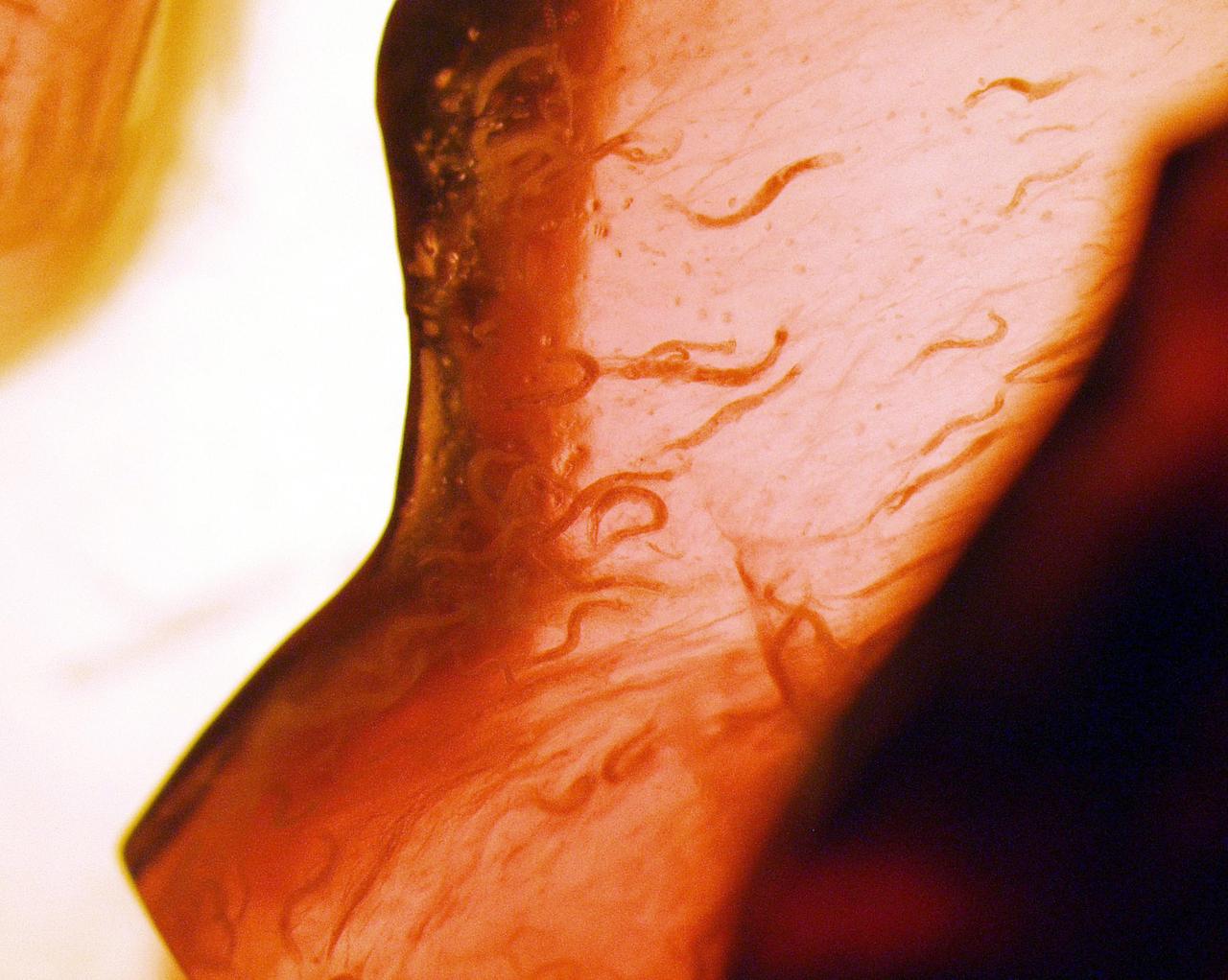
KENNEDY SPACE CENTER, FLA. - C. elegans nemotodes (round worms) undergo examination by project scientists. These specimens were found in a Biological Research in Canisters (BRIC) container, a middeck experiment that was among the Columbia debris recovered in East Texas. The worms are descendants of those that were part of an experiment that flew on Columbia's last mission, STS-107. The experiment was designed to verify a new synthetic nutrient solution for an International Space Station (ISS) "model" specimen planned to be used extensively for ISS gene expression studies and was sponsored by the NASA Ames Research Center. Scientists are now looking over the experiment at KSC to determine if it will yield any scientific results. The investigation into the cause of the Columbia accident is ongoing. (Photo Credit: Volker Kern, NASA Ames Research Center)
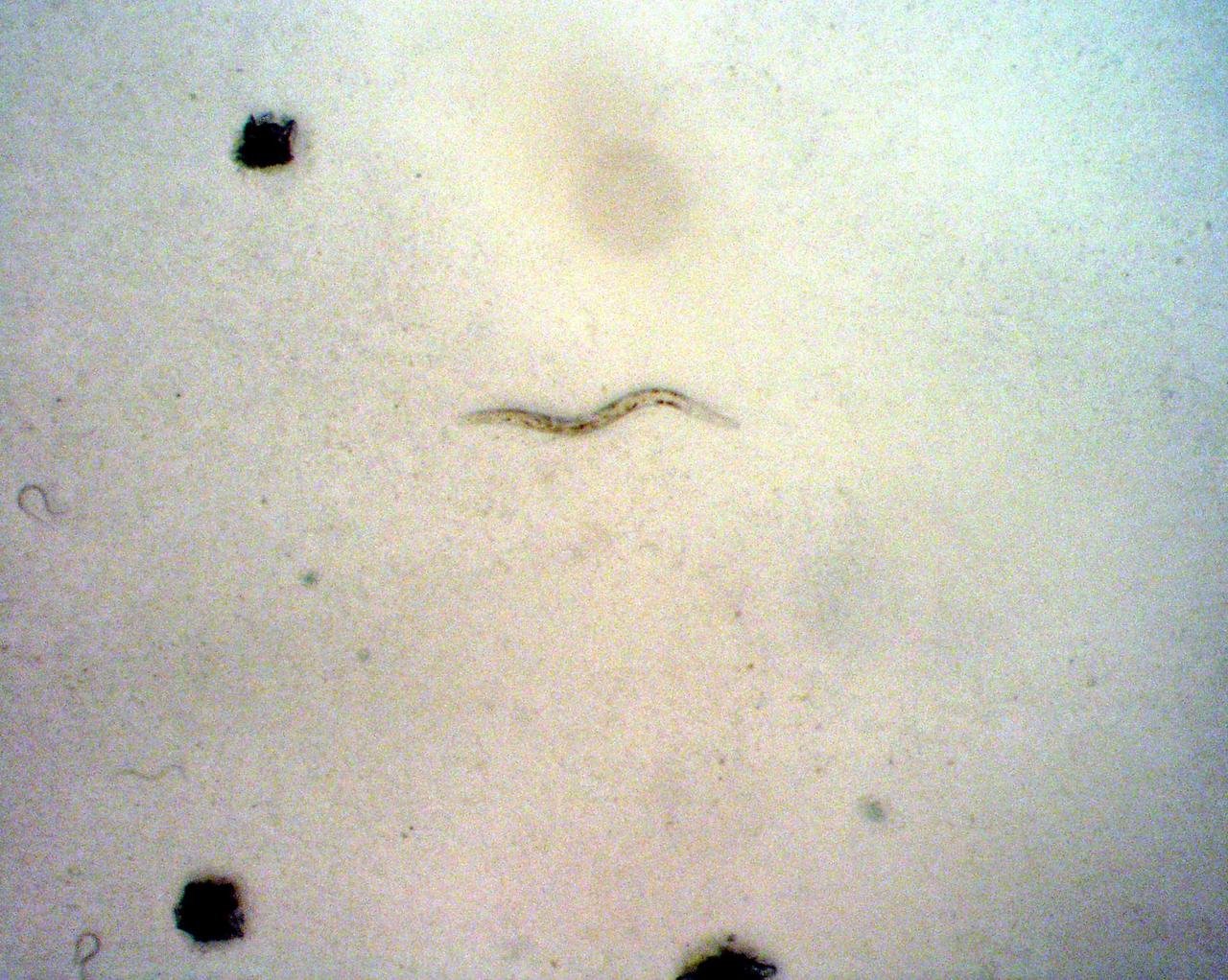
KENNEDY SPACE CENTER, FLA. - C. elegans nemotodes (round worms) undergo examination by project scientists. These specimens were found in a Biological Research in Canisters (BRIC) container, a middeck experiment that was among the Columbia debris recovered in East Texas. The worms are descendants of those that were part of an experiment that flew on Columbia's last mission, STS-107. The experiment was designed to verify a new synthetic nutrient solution for an International Space Station (ISS) "model" specimen planned to be used extensively for ISS gene expression studies and was sponsored by the NASA Ames Research Center. Scientists are now looking over the experiment at KSC to determine if it will yield any scientific results. The investigation into the cause of the Columbia accident is ongoing. (Photo Credit: Volker Kern, NASA Ames Research Center)
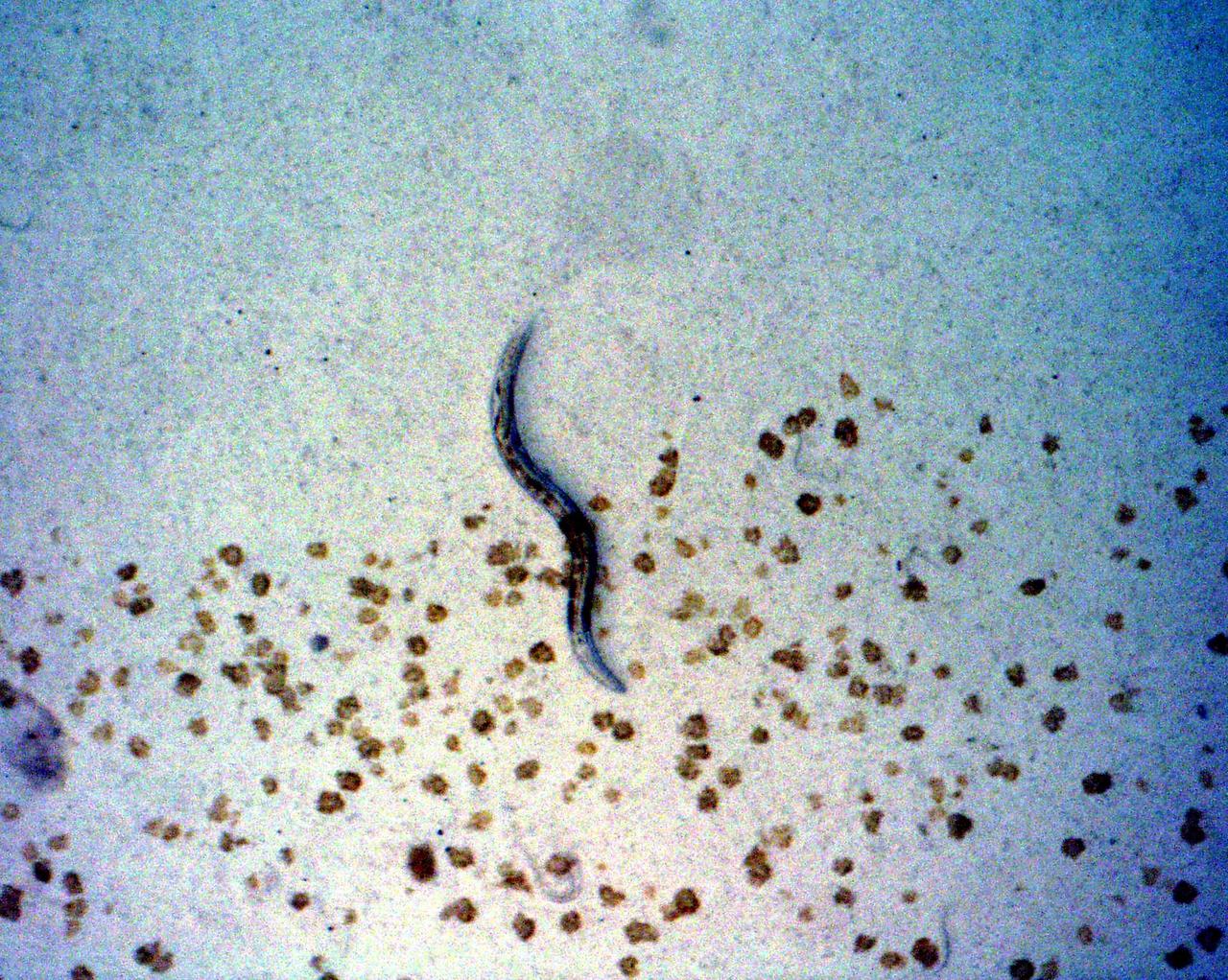
KENNEDY SPACE CENTER, FLA. - C. elegans nemotodes (round worms) undergo examination by project scientists. These specimens were found in a Biological Research in Canisters (BRIC) container, a middeck experiment that was among the Columbia debris recovered in East Texas. The worms are descendants of those that were part of an experiment that flew on Columbia's last mission, STS-107. The experiment was designed to verify a new synthetic nutrient solution for an International Space Station (ISS) "model" specimen planned to be used extensively for ISS gene expression studies and was sponsored by the NASA Ames Research Center. Scientists are now looking over the experiment at KSC to determine if it will yield any scientific results. The investigation into the cause of the Columbia accident is ongoing. (Photo Credit: Volker Kern, NASA Ames Research Center)
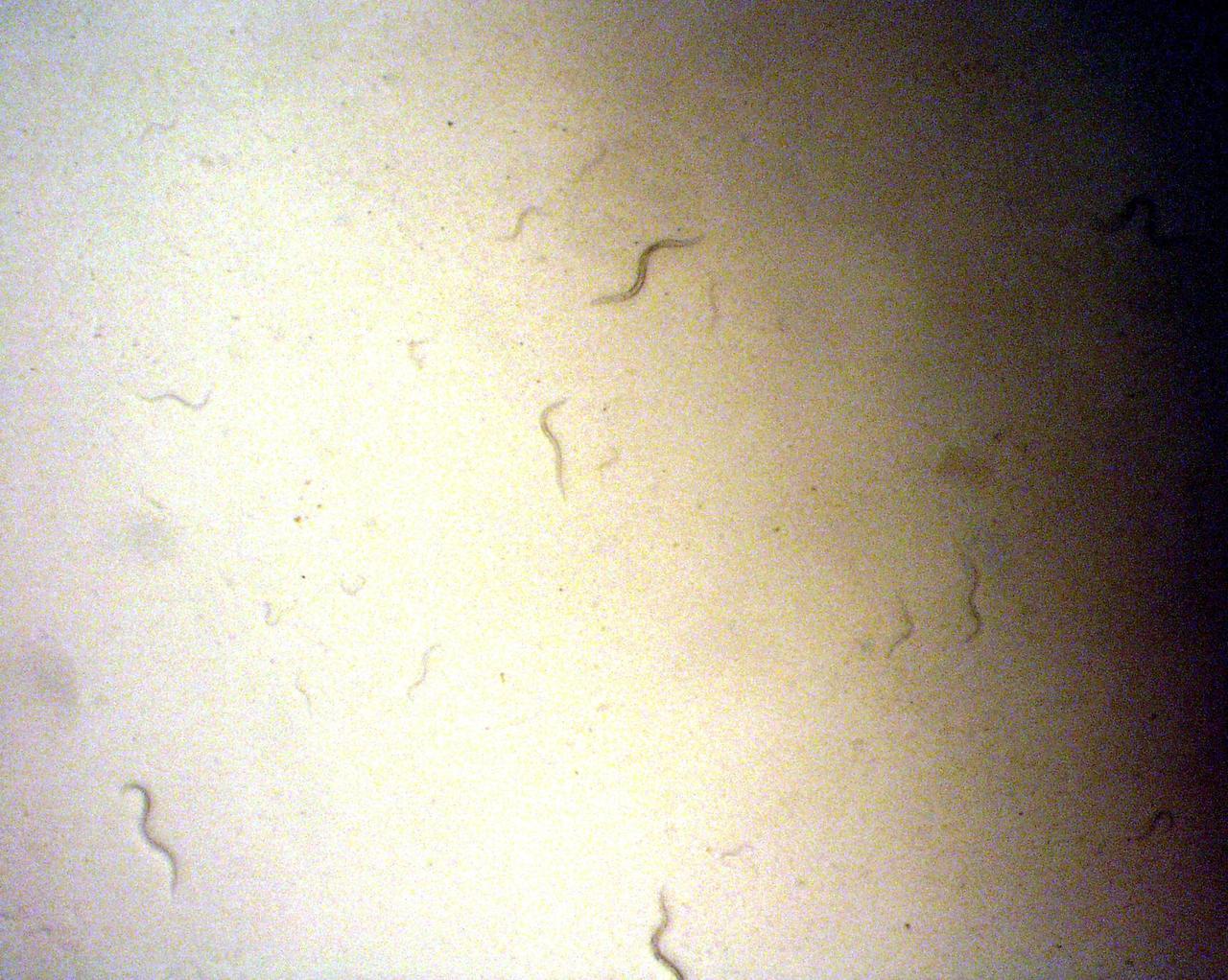
KENNEDY SPACE CENTER, FLA. - C. elegans nemotodes (round worms) undergo examination by project scientists. These specimens were found in a Biological Research in Canisters (BRIC) container, a middeck experiment that was among the Columbia debris recovered in East Texas. The worms are descendants of those that were part of an experiment that flew on Columbia's last mission, STS-107. The experiment was designed to verify a new synthetic nutrient solution for an International Space Station (ISS) "model" specimen planned to be used extensively for ISS gene expression studies and was sponsored by the NASA Ames Research Center. Scientists are now looking over the experiment at KSC to determine if it will yield any scientific results. The investigation into the cause of the Columbia accident is ongoing. (Photo Credit: Volker Kern, NASA Ames Research Center)
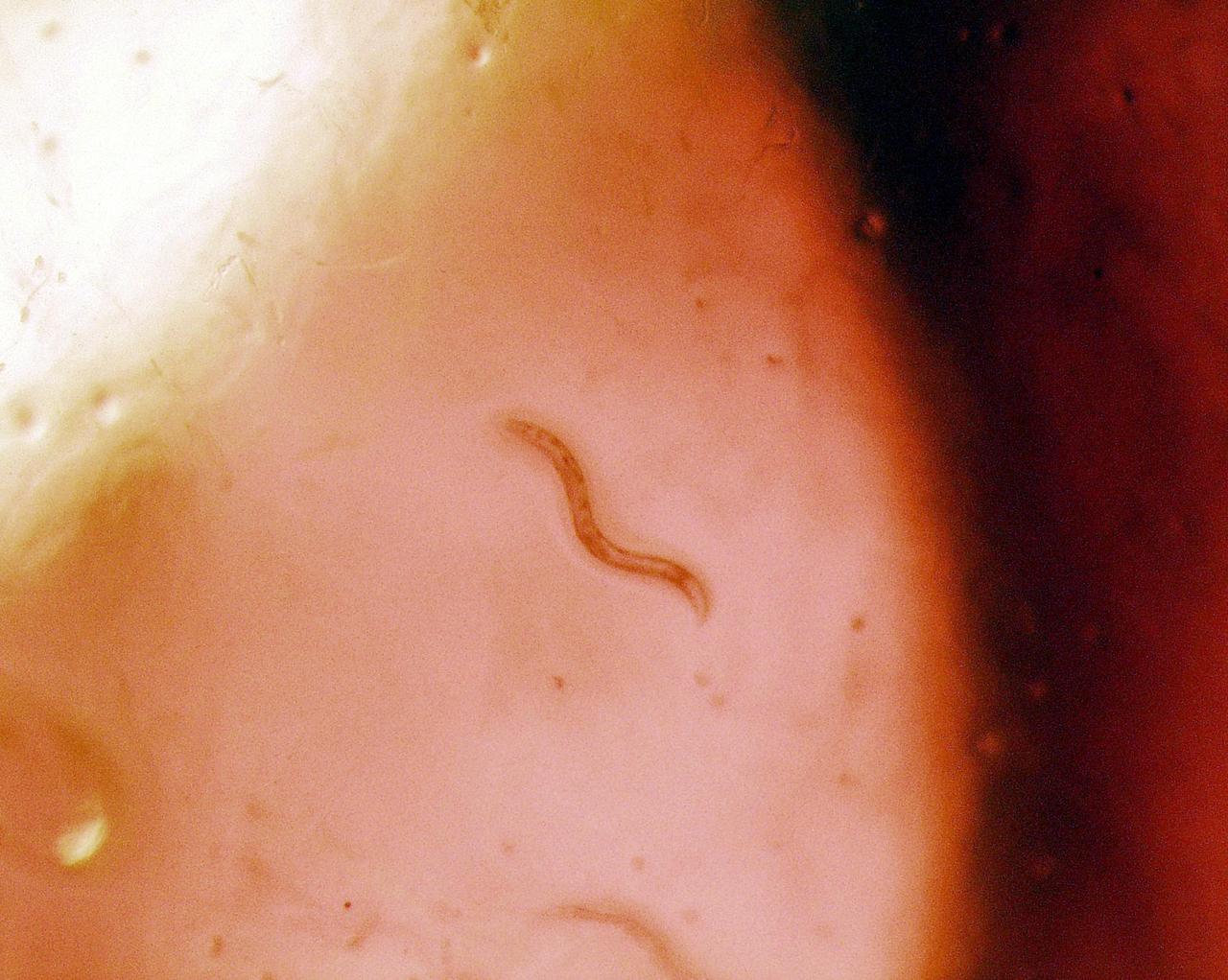
KENNEDY SPACE CENTER, FLA. - C. elegans nemotodes (round worms) undergo examination by project scientists. These specimens were found in a Biological Research in Canisters (BRIC) container, a middeck experiment that was among the Columbia debris recovered in East Texas. The worms are descendants of those that were part of an experiment that flew on Columbia's last mission, STS-107. The experiment was designed to verify a new synthetic nutrient solution for an International Space Station (ISS) "model" specimen planned to be used extensively for ISS gene expression studies and was sponsored by the NASA Ames Research Center. Scientists are now looking over the experiment at KSC to determine if it will yield any scientific results. The investigation into the cause of the Columbia accident is ongoing. (Photo Credit: Volker Kern, NASA Ames Research Center)
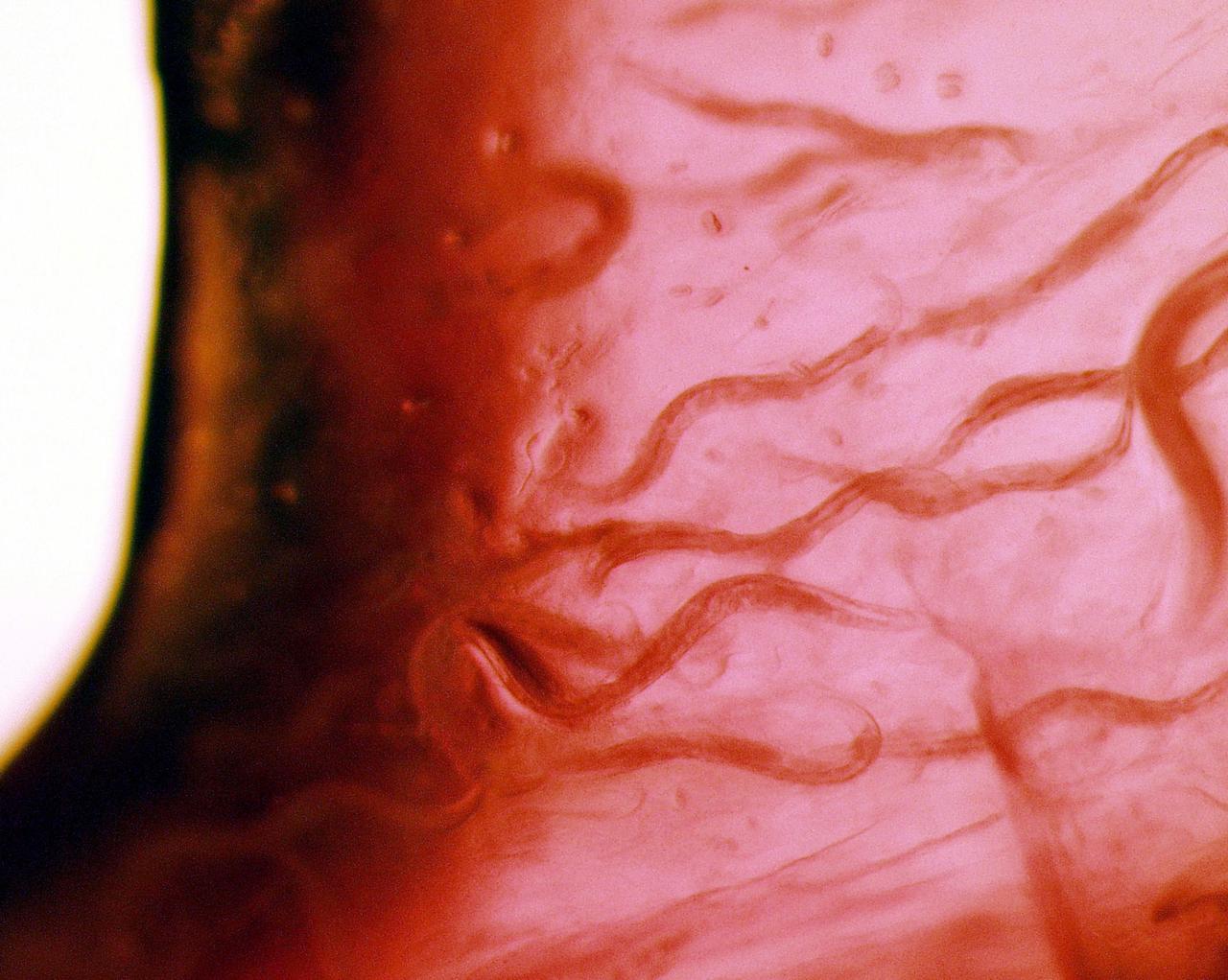
KENNEDY SPACE CENTER, FLA. - C. elegans nemotodes (round worms) undergo examination by project scientists. These specimens were found in a Biological Research in Canisters (BRIC) container, a middeck experiment that was among the Columbia debris recovered in East Texas. The worms are descendants of those that were part of an experiment that flew on Columbia's last mission, STS-107. The experiment was designed to verify a new synthetic nutrient solution for an International Space Station (ISS) "model" specimen planned to be used extensively for ISS gene expression studies and was sponsored by the NASA Ames Research Center. Scientists are now looking over the experiment at KSC to determine if it will yield any scientific results. The investigation into the cause of the Columbia accident is ongoing. (Photo Credit: Volker Kern, NASA Ames Research Center)
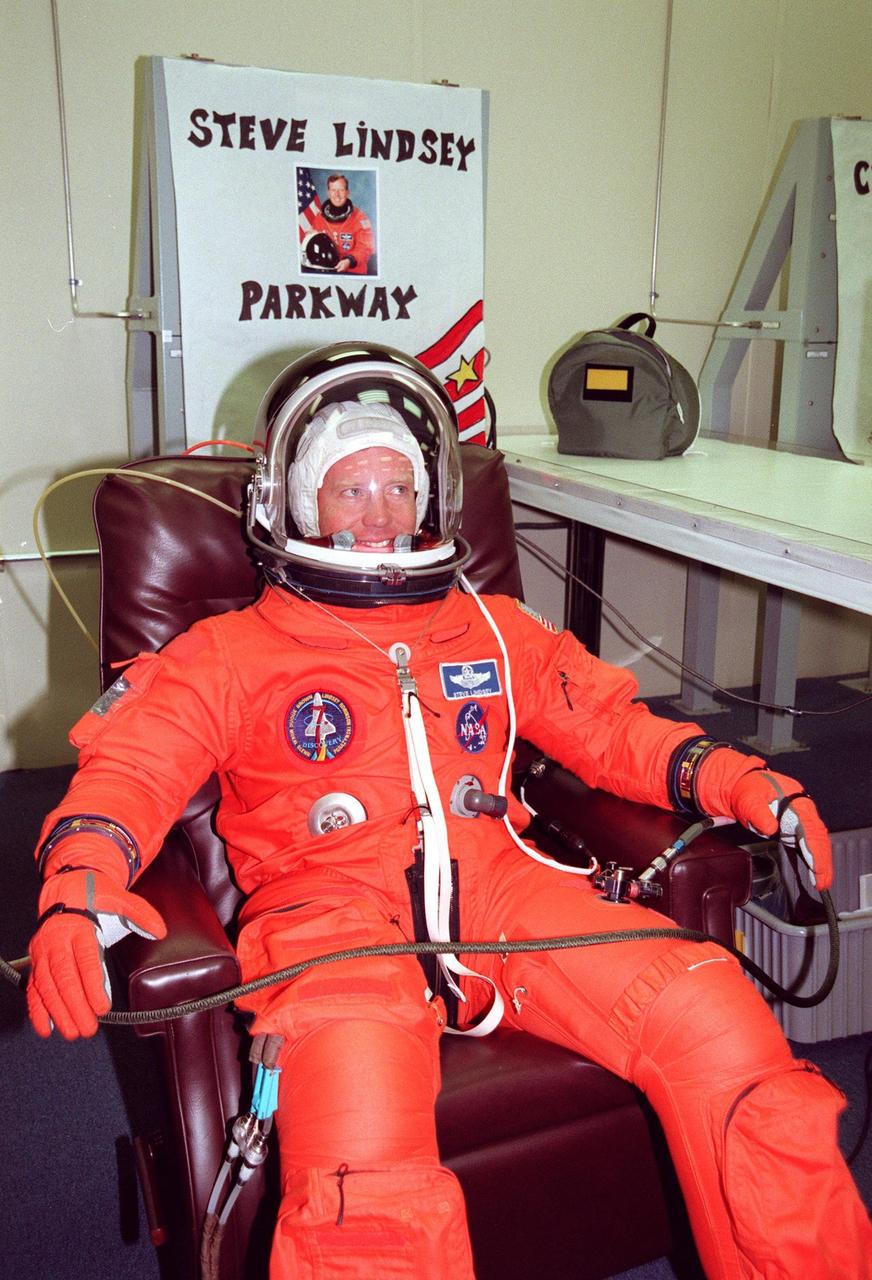
STS-95 Pilot Steven W. Lindsey tests his flight suit in the Operations and Checkout Building. The final fitting takes place prior to the crew walkout and transport to Launch Pad 39B. Targeted for launch at 2 p.m. EST on Oct. 29, the mission is expected to last 8 days, 21 hours and 49 minutes, and return to KSC at 11:49 a.m. EST on Nov. 7. The STS-95 mission includes research payloads such as the Spartan solar-observing deployable spacecraft, the Hubble Space Telescope Orbital Systems Test Platform, the International Extreme Ultraviolet Hitchhiker, as well as the SPACEHAB single module with experiments on space flight and the aging process
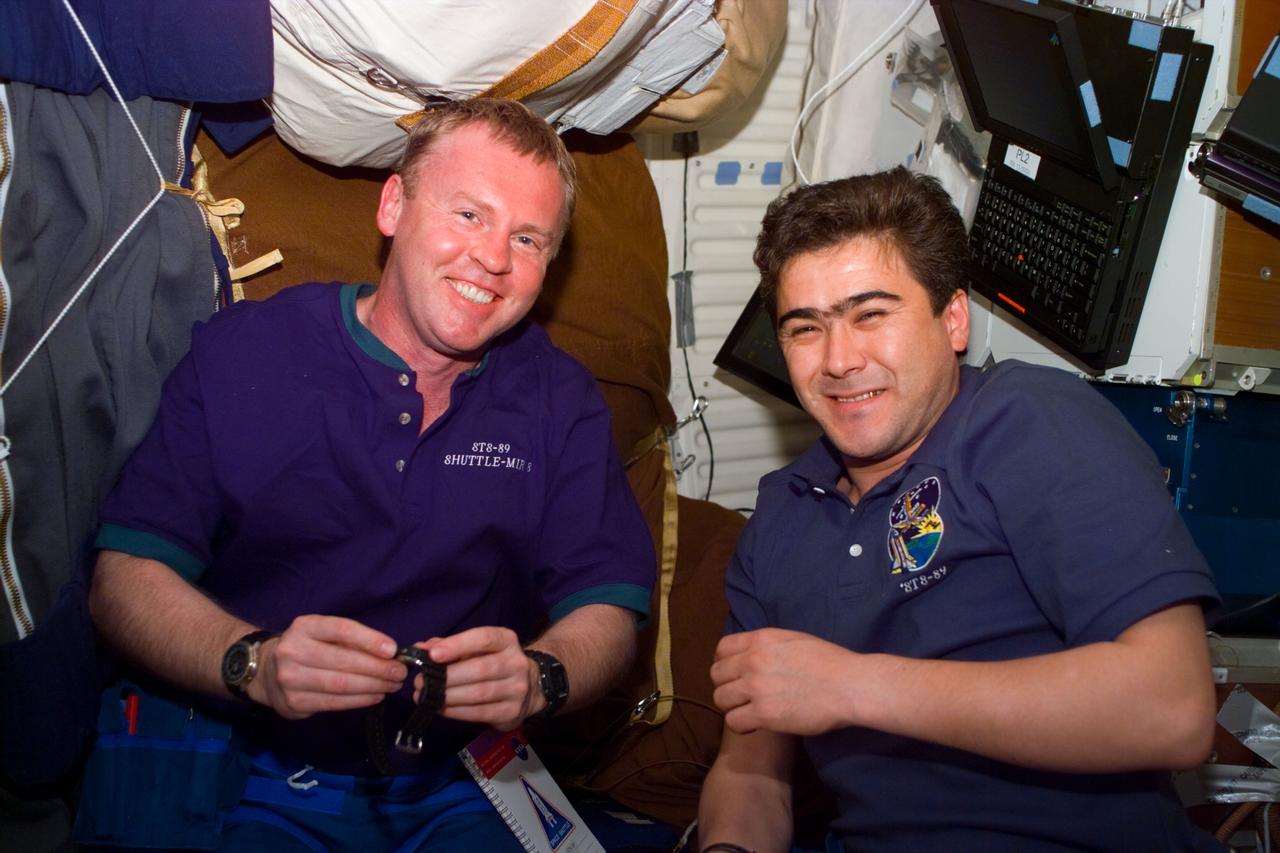
S89-E-5098 (24 Jan 1998) --- Astronauts Andrew S. W. Thomas (left) and Salizan S. Sharipov, STS-89 mission specialists, are pictured onboard the Space Shuttle Endeavour during early hours of the next to last planned U.S./Russia docking mission leading up to the International Space Station (ISS). Thomas will be replacing astronaut David A. Wolf as the Mir Space Station's final U.S. cosmonaut guest researcher later in the week, following docking of Mir and Endeavour. Sharipov represents the Russian Space Agency (RSA). The scene was photographed with an Electronic Still Camera (ESC) at 5:15:46 GMT, January 24, 1998.
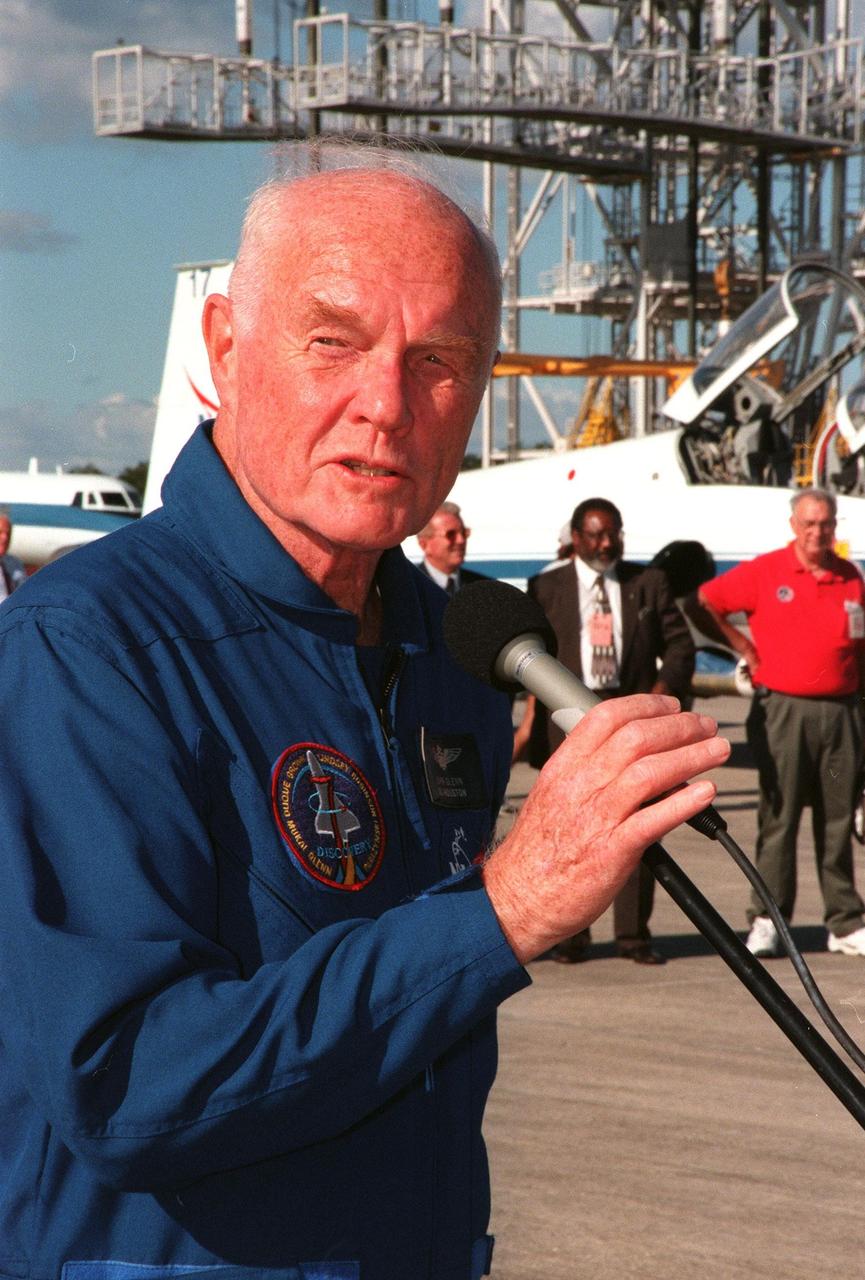
STS-95 Payload Specialist John H. Glenn Jr., senator from Ohio, talks to the media after the crew's arrival at the Shuttle Landing Facility to make final preparations for their launch. Targeted for liftoff at 2 p.m. on Oct. 29, the STS-95 mission includes research payloads such as the Spartan solar-observing deployable spacecraft, the Hubble Space Telescope Orbital Systems Test Platform, the International Extreme Ultraviolet Hitchhiker, as well as the SPACEHAB single module with experiments on space flight and the aging process. The mission is expected to last 8 days, 21 hours and 49 minutes, and return to KSC on Nov. 7
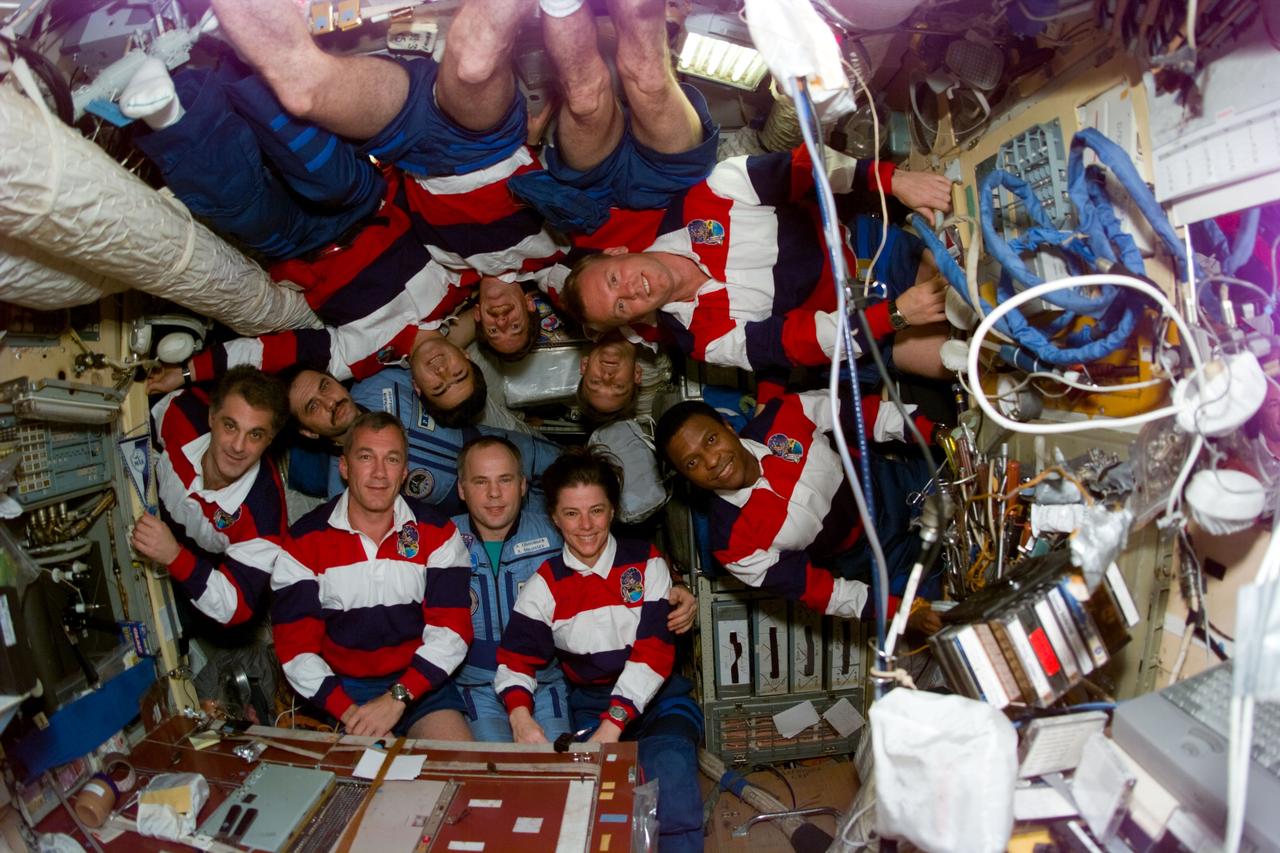
S89-E-5304 (26 Jan 1998) --- This Electronic Still Camera (ESC) image shows the STS-89 and Mir-24 crews posing for their traditional in-flight crew portrait. They are left to right, astronaut David A. Wolf, former cosmonaut guest researcher; cosmonaut Pavel V. Vinogradov, Mir-24 flight engineer; astronaut Terrence W. Wilcutt, STS-89 commander; cosmonaut Salizan S. Sharipov, payload specialist representing the Russian Space Agency (RSA); cosmonaut Anatoliy Y. Solovyev, Mir-24 commander; astronaut James F. Reilly, mission specialist; mission specialist Bonnie J. Dunbar, payload commander; astronaut Andrew S. W. Thomas (top right), cosmonaut guest researcher; astronaut Joe F. Edwards, Jr., pilot; and astronaut Michael P. Anderson, mission specialist. This marks the eighth Shuttle/Mir docking mission. Thomas, replacing Wolf as cosmonaut guest researcher, will be the last American astronaut to serve a tour onboard Mir. Crew members Solovyev and Dunbar worked together during STS-71, the first Shuttle/Mir docking mission. This ESC view was taken on January 26, 1998, at 15:45:43 MET.
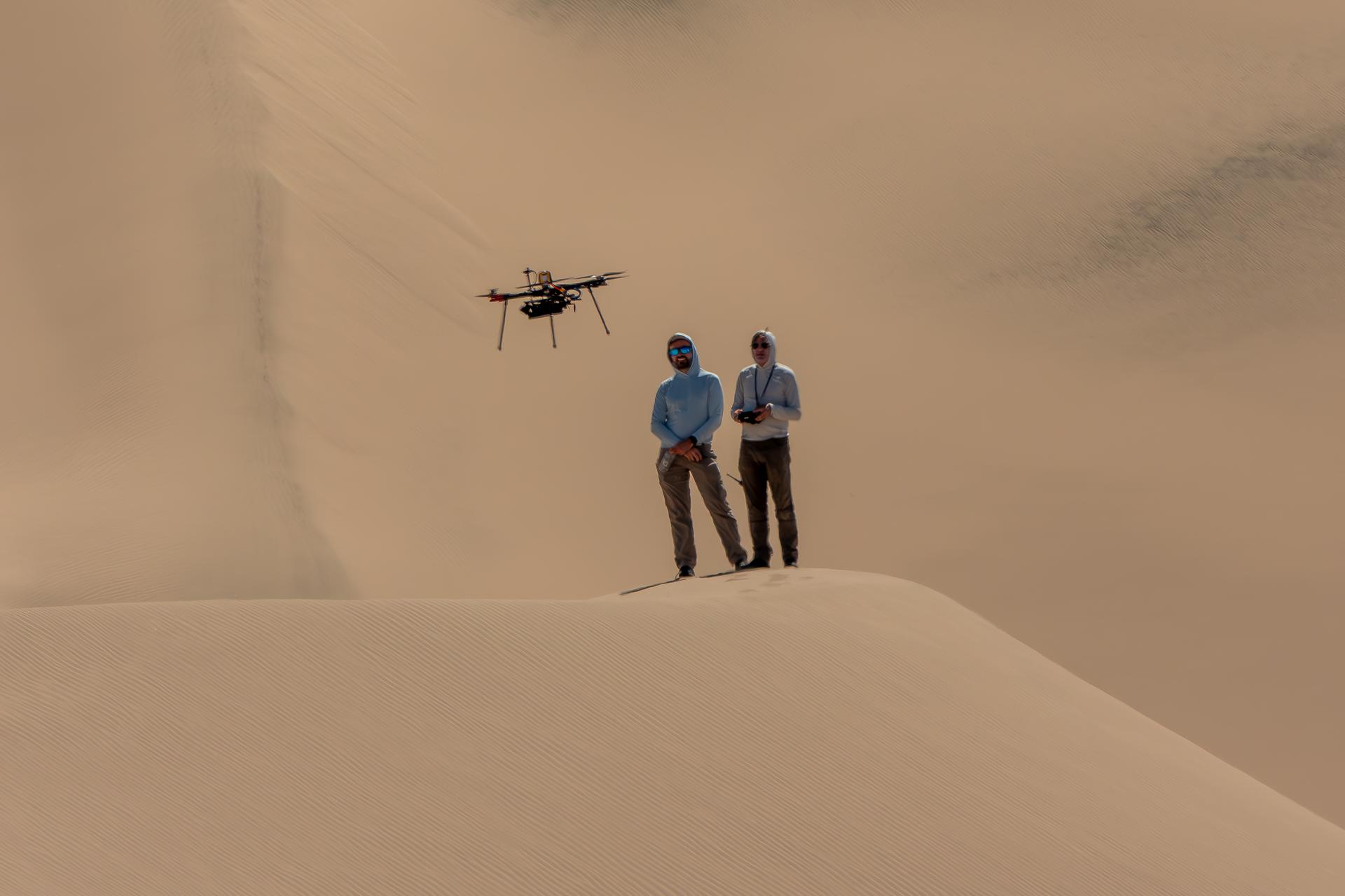
The work was among 25 projects funded by NASA’s Mars Exploration Program this past year to push the limits of future technologies. Sand dunes confused the navigation algorithm of the Ingenuity Mars helicopter during several of its last flights, including its 72nd and final flight on the Red Planet in January 2024. The navigation software in development would help future rotorcraft track the surface of especially bland, featureless terrain similar to the barren Dumont Dunes. Tests also included flights over a region in Death Valley called Mars Hill, which is littered with rubbly volcanic rocks and has been used by NASA’s Mars researchers since the 1970s, during preparations for the Viking lander missions.
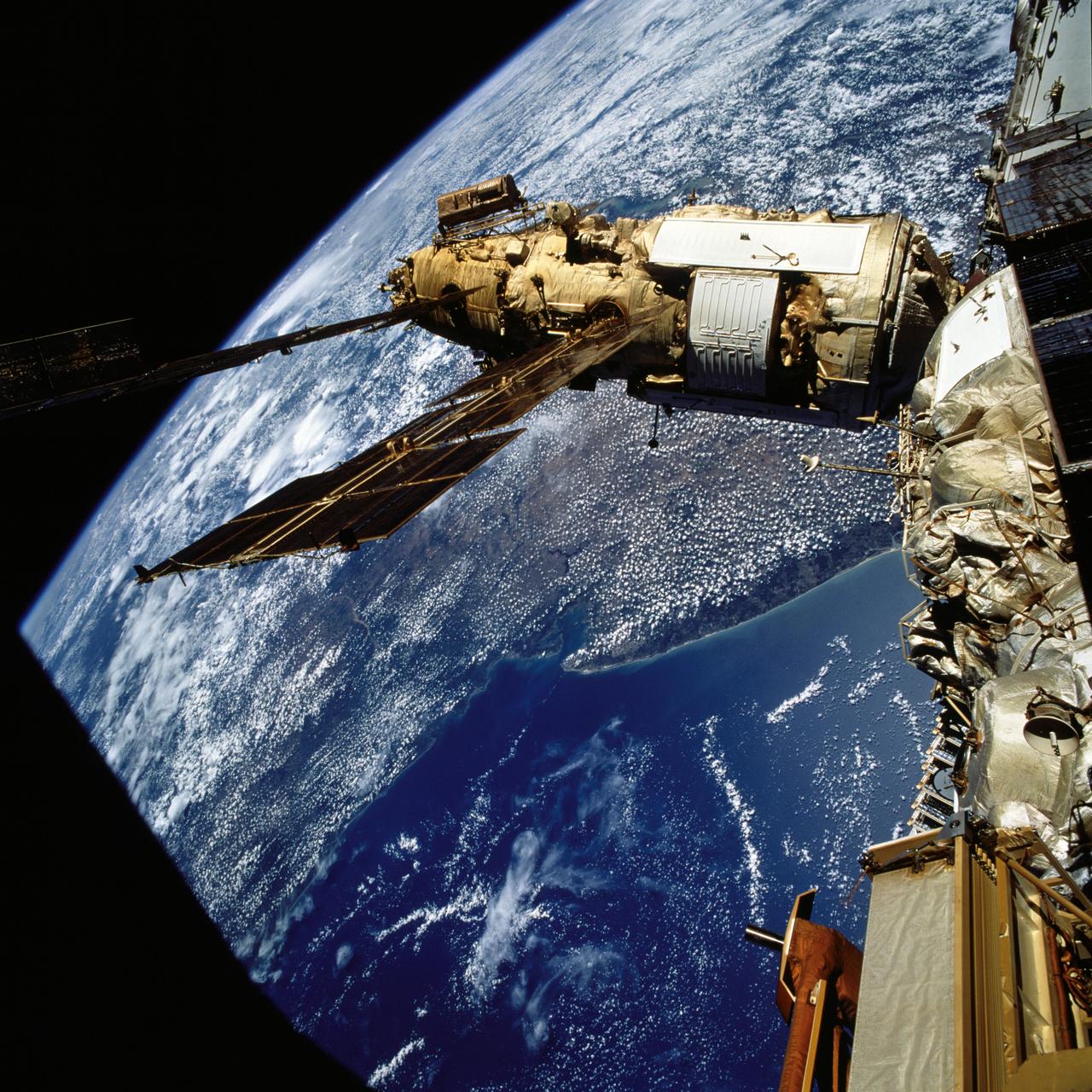
STS076-708-038 (22 - 31 March 1996) --- The crew took this 70mm picture of Russia's Mir Space Station over Australia. The crew docked the Space Shuttle Atlantis with the Mir Space Station on March 23, 1996, at which time astronaut Shannon W. Lucid joined the Mir-21 crew to begin the first leg of her 140-day stay aboard Mir, as a cosmonaut guest researcher. The Spacehab Module shared the cargo bay during part of the mission with the Docking Module (DM). The DM was connected to Mir, following a March 23, 1996, docking. The DM was delivered last year to Mir by the STS-74 crew.
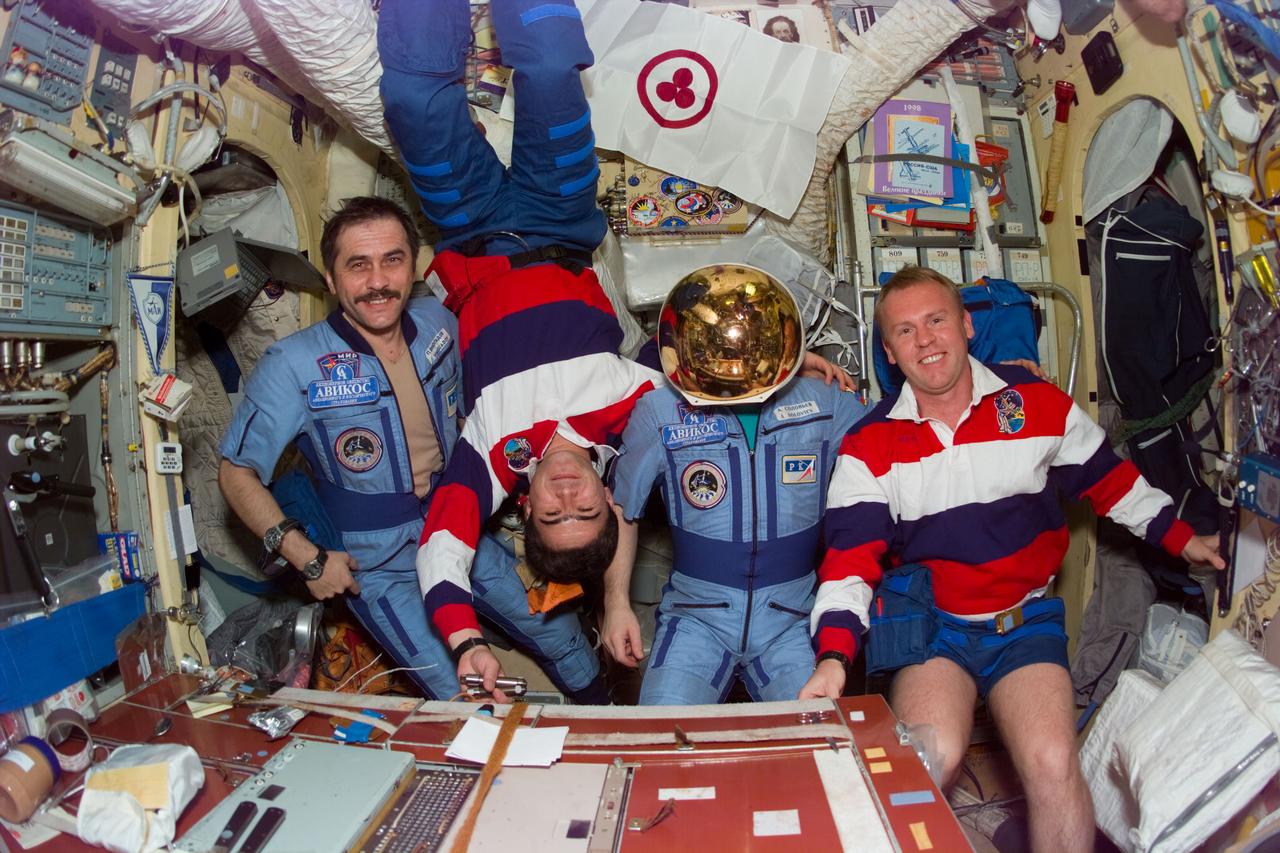
S89-E-5307 (26 Jan. 1998) --- This photo, taken on Jan. 26, 1998, shows various crewmembers posing onboard the Russia's Mir space station, during the eighth Shuttle/Mir docking mission. They are left to right, cosmonaut Pavel V. Vinogradov, Mir-24 flight engineer; cosmonaut Salizhan S. Sharipov, STS-89 payload specialist representing the Russian Space Agency (RSA); cosmonaut Anatoliy Y. Solovyev, Mir-24 commander, wearing the space helmet; and astronaut Andrew S. W. Thomas, cosmonaut guest researcher. Thomas, replacing astronaut David A. Wolf (out frame) as cosmonaut guest researcher, will be the last American astronaut to serve a tour onboard the Mir.
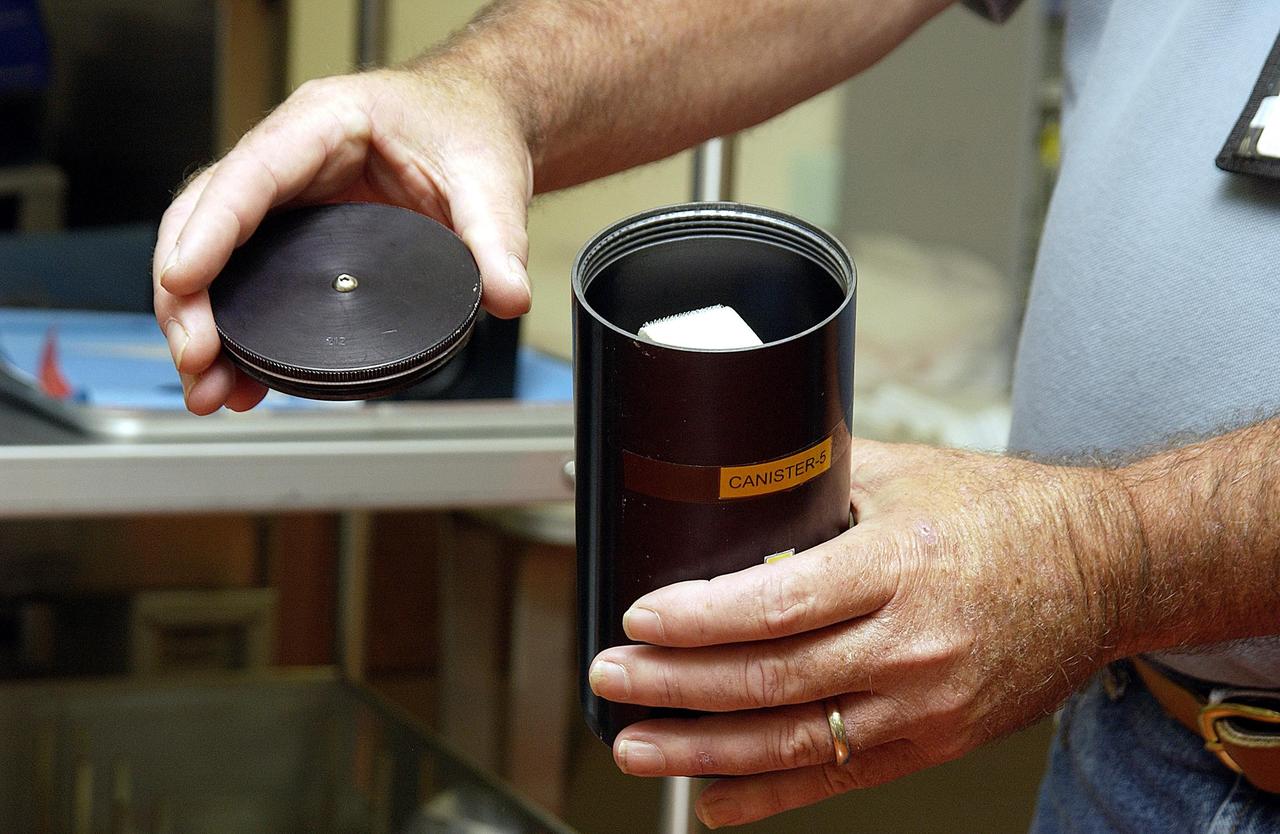
KENNEDY SPACE CENTER, FLA. - NASA Project Manager Fred Ahmay holds a Biological Research in Canisters (BRIC) container in which C. elegans nemotodes (round worms) were found. The container was part of a middeck experiment that was among the Columbia debris recovered in East Texas. The worms are descendants of those that were part of an experiment that flew on Columbia's last mission, STS-107. The experiment was designed to verify a new synthetic nutrient solution for an International Space Station (ISS) "model" specimen planned to be used extensively for ISS gene expression studies and was sponsored by the NASA Ames Research Center. Scientists are now looking over the experiment at KSC to determine if it will yield any scientific results. The investigation into the cause of the Columbia accident is ongoing.
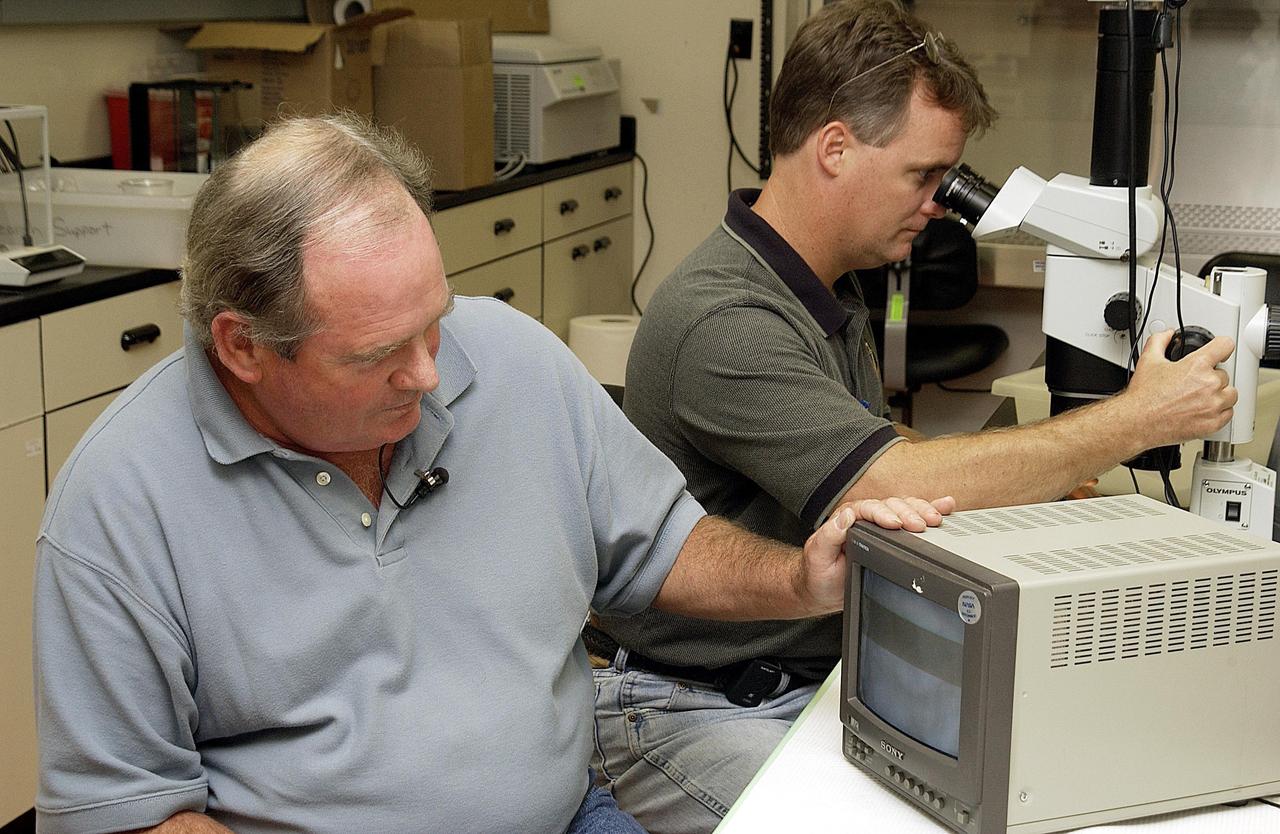
KENNEDY SPACE CENTER, FLA. - NASA Project Manager Fred Ahmay (left) and Bionetics Project Engineer William McLamb examine C. elegans nemotodes (round worms) using a microscope. These specimens were found in a Biological Research in Canisters (BRIC) container, a middeck experiment that was among the Columbia debris recovered in East Texas. The worms are descendants of those that were part of an experiment that flew on Columbia's last mission, STS-107. The experiment was designed to verify a new synthetic nutrient solution for an International Space Station (ISS) "model" specimen planned to be used extensively for ISS gene expression studies and was sponsored by the NASA Ames Research Center. Scientists are now looking over the experiment at KSC to determine if it will yield any scientific results. The investigation into the cause of the Columbia accident is ongoing.
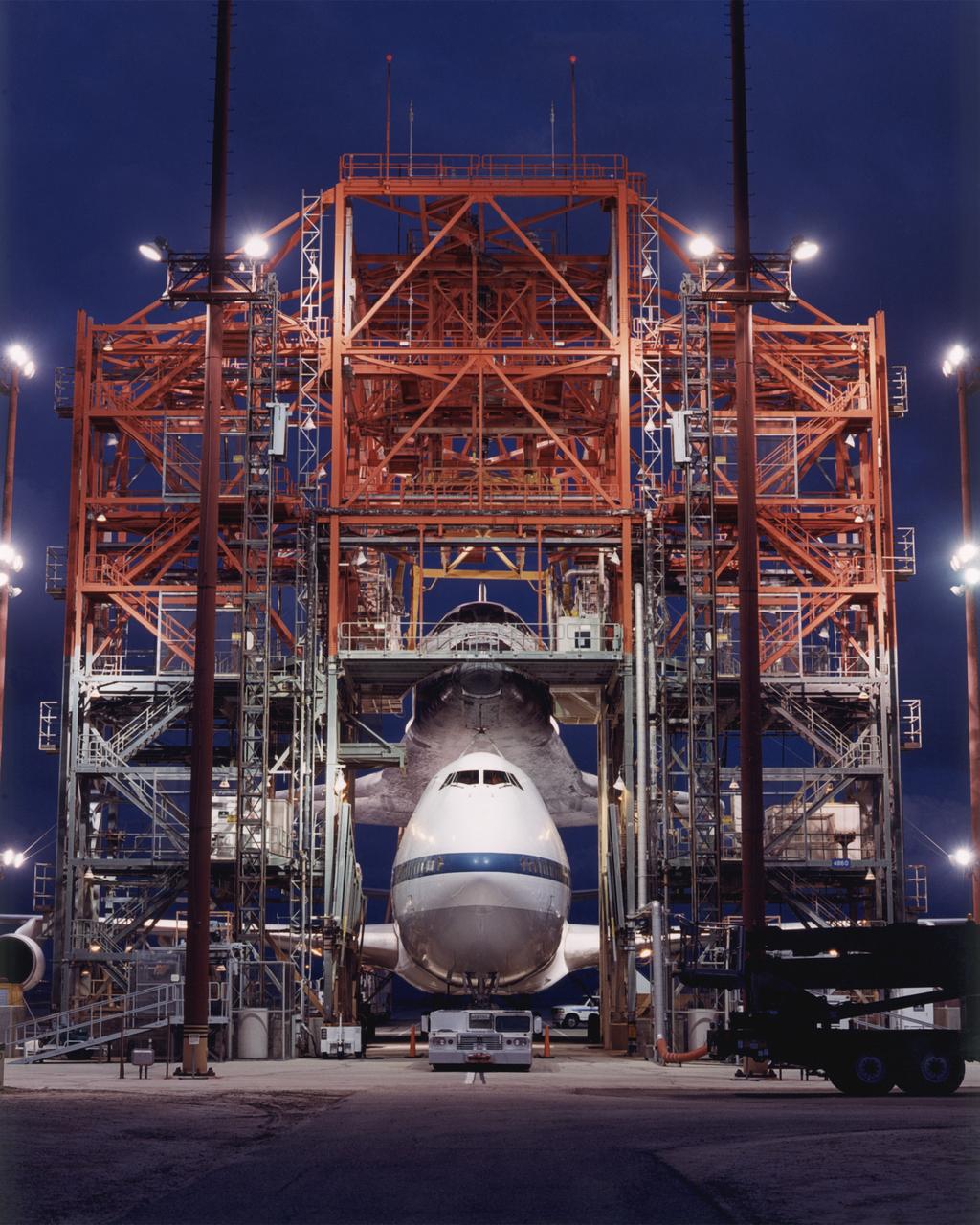
The Space Shuttle Atlantis is centered in the Mate-Demate Device (MDD) at NASA's Dryden Flight Research Center at Edwards, California. The gantry-like MDD structure is used for servicing the shuttle orbiters in preparation for their ferry flight back to the Kennedy Space Center in Florida, including mounting the shuttle atop NASA's modified Boeing 747 Shuttle Carrier Aircraft. Space Shuttle Atlantis landed at 12:33 p.m. February 20, 2001, on the runway at Edwards Air Force Base, California, where NASA's Dryden Flight Research Center is located. The mission, which began February 7, logged 5.3 million miles as the shuttle orbited earth while delivering the Destiny science laboratory to the International Space Station. Inclement weather conditions in Florida prompted the decision to land Atlantis at Edwards. The last time a space shuttle landed at Edwards was Oct. 24, 2000.
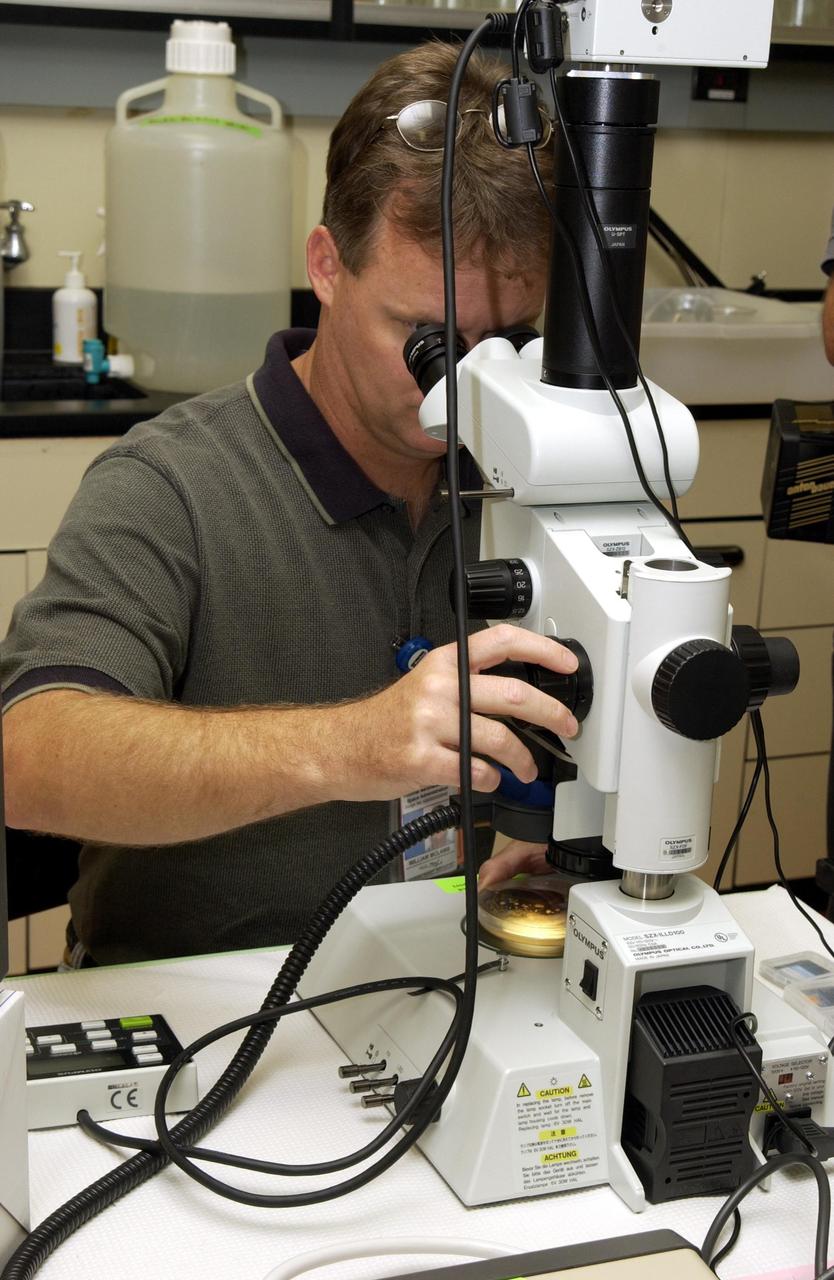
KENNEDY SPACE CENTER, FLA. - NASA Project Manager Guy Ethridge examines C. elegans nemotodes (round worms) under a microscope. These specimens were found in a Biological Research in Canisters (BRIC) container, a middeck experiment that was among the Columbia debris recovered in East Texas. The worms are descendants of those that were part of an experiment that flew on Columbia's last mission, STS-107. The experiment was designed to verify a new synthetic nutrient solution for an International Space Station (ISS) "model" specimen planned to be used extensively for ISS gene expression studies and was sponsored by the NASA Ames Research Center. Scientists are now looking over the experiment at KSC to determine if it will yield any scientific results. The investigation into the cause of the Columbia accident is ongoing.
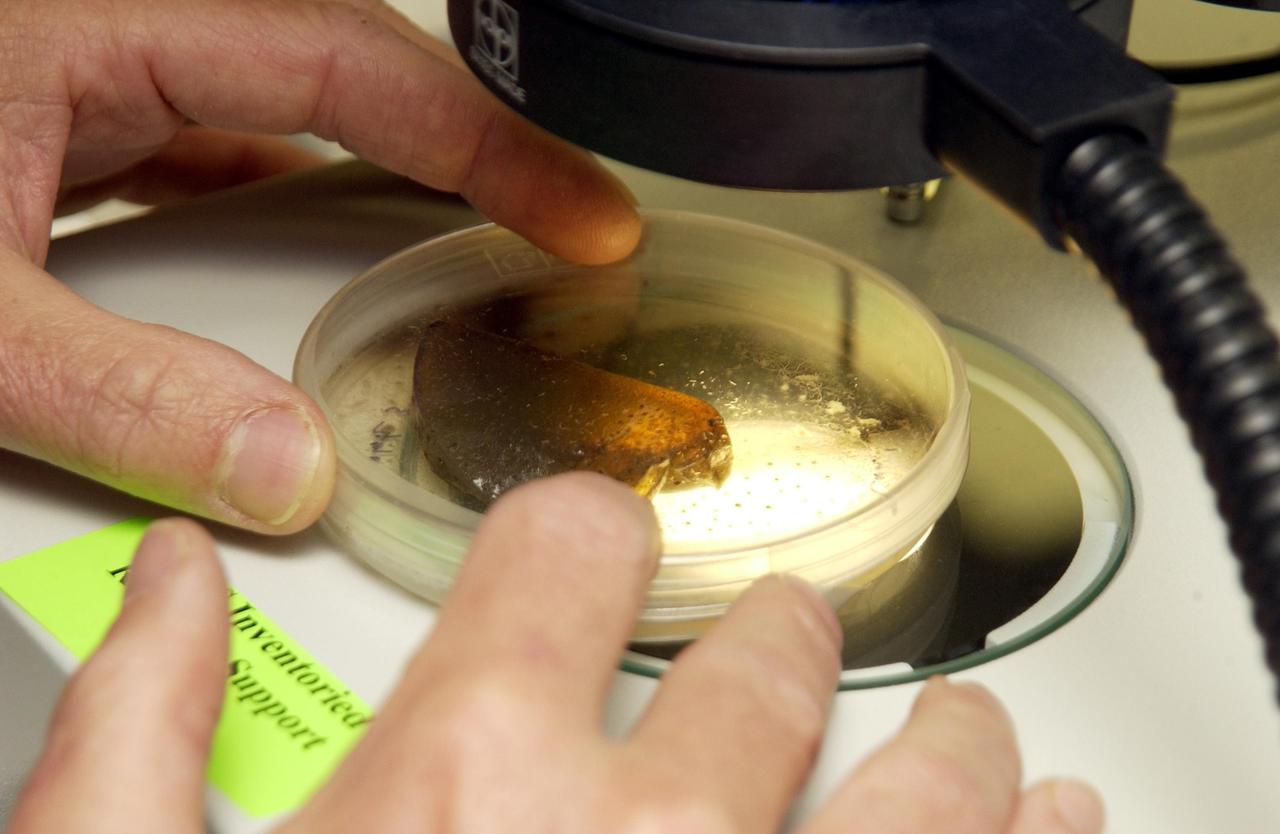
KENNEDY SPACE CENTER, FLA. - A petri dish containing C. elegans nemotodes (round worms) is prepared for examination by project scientists. These specimens were found in a Biological Research in Canisters (BRIC) container, a middeck experiment that was among the Columbia debris recovered in East Texas. The worms are descendants of those that were part of an experiment that flew on Columbia's last mission, STS-107. The experiment was designed to verify a new synthetic nutrient solution for an International Space Station (ISS) "model" specimen planned to be used extensively for ISS gene expression studies and was sponsored by the NASA Ames Research Center. Scientists are now looking over the experiment at KSC to determine if it will yield any scientific results. The investigation into the cause of the Columbia accident is ongoing.
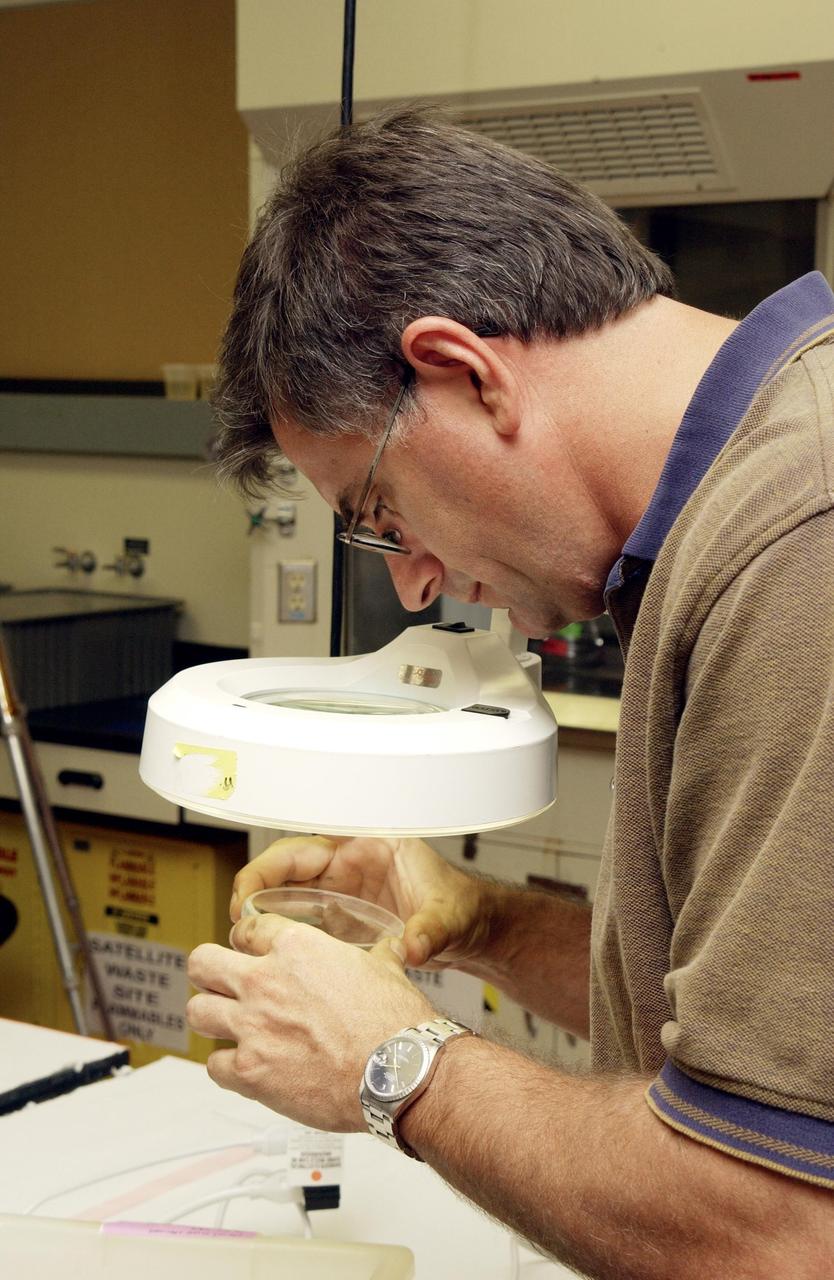
KENNEDY SPACE CENTER, FLA. - Bionetics Project Engineer William McLamb examines a petri dish containing C. elegans nemotodes (round worms). These specimens were found in a Biological Research in Canisters (BRIC) container, a middeck experiment that was among the Columbia debris recovered in East Texas. The worms are descendants of those that were part of an experiment that flew on Columbia's last mission, STS-107. The experiment was designed to verify a new synthetic nutrient solution for an International Space Station (ISS) "model" specimen planned to be used extensively for ISS gene expression studies and was sponsored by the NASA Ames Research Center. Scientists are now looking over the experiment at KSC to determine if it will yield any scientific results. The investigation into the cause of the Columbia accident is ongoing.
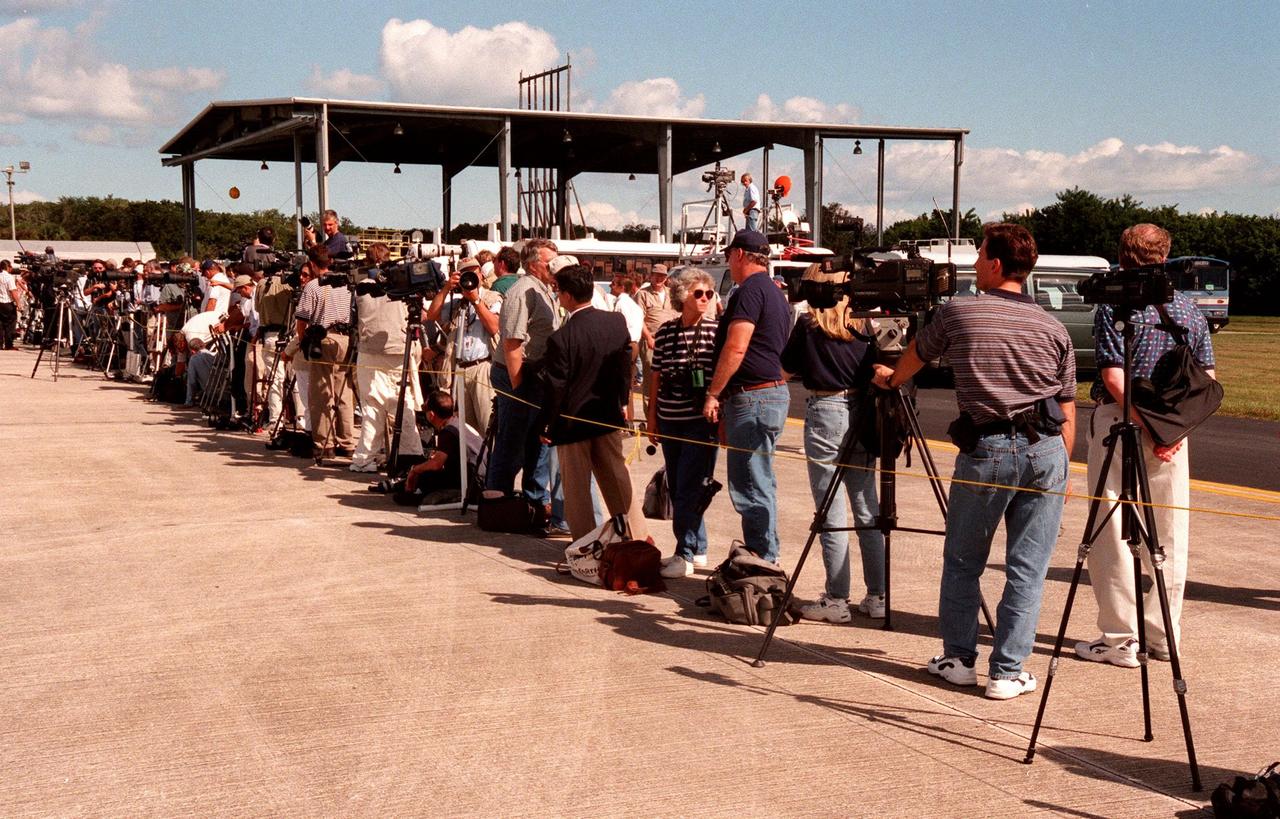
Waiting for the arrival of the STS-95 crewmembers at the Shuttle Landing Facility are 137 media representatives, a small sampling of more than 3,000 expected to attend the launch on Oct. 29. Flying into KSC to make final preparations for their launch were Mission Commander Curtis L. Brown Jr., Pilot Steven W. Lindsey, Mission Specialist Scott E. Parazynski, Mission Specialist Stephen K. Robinson, Mission Specialist Pedro Duque, with the European Space Agency (ESA), and Payload Specialist Chiaki Mukai, with the National Space Development Agency of Japan (NASDA). The STS-95 mission includes research payloads such as the Spartan solar-observing deployable spacecraft, the Hubble Space Telescope Orbital Systems Test Platform, the International Extreme Ultraviolet Hitchhiker, as well as the SPACEHAB single module with experiments on space flight and the aging process. The mission is expected to last 8 days, 21 hours and 49 minutes, and return to KSC on Nov. 7

CAPE CANAVERAL, Fla. - The crew of space shuttle Atlantis' STS-132 mission to the International Space Station participates in a news conference in the Press Site auditorium at NASA's Kennedy Space Center in Florida on landing day. From left are Commander Ken Ham, Pilot Tony Antonelli, and Mission Specialists Garrett Reisman, Michael Good, Steve Bowen and Piers Sellers. Atlantis touched down on the Shuttle Landing Facility's Runway 33 at 8:48 a.m. EDT, completing a 4.8-million mile mission. STS-132 carried the Russian-built Mini Research Module-1 to the space station. STS-132 is the 34th shuttle mission to the station, the 132nd shuttle mission overall and the last planned flight for Atlantis. For more information, visit www.nasa.gov_mission_pages_shuttle_shuttlemissions_sts132_index.html. Photo credit: NASA_Cory Huston