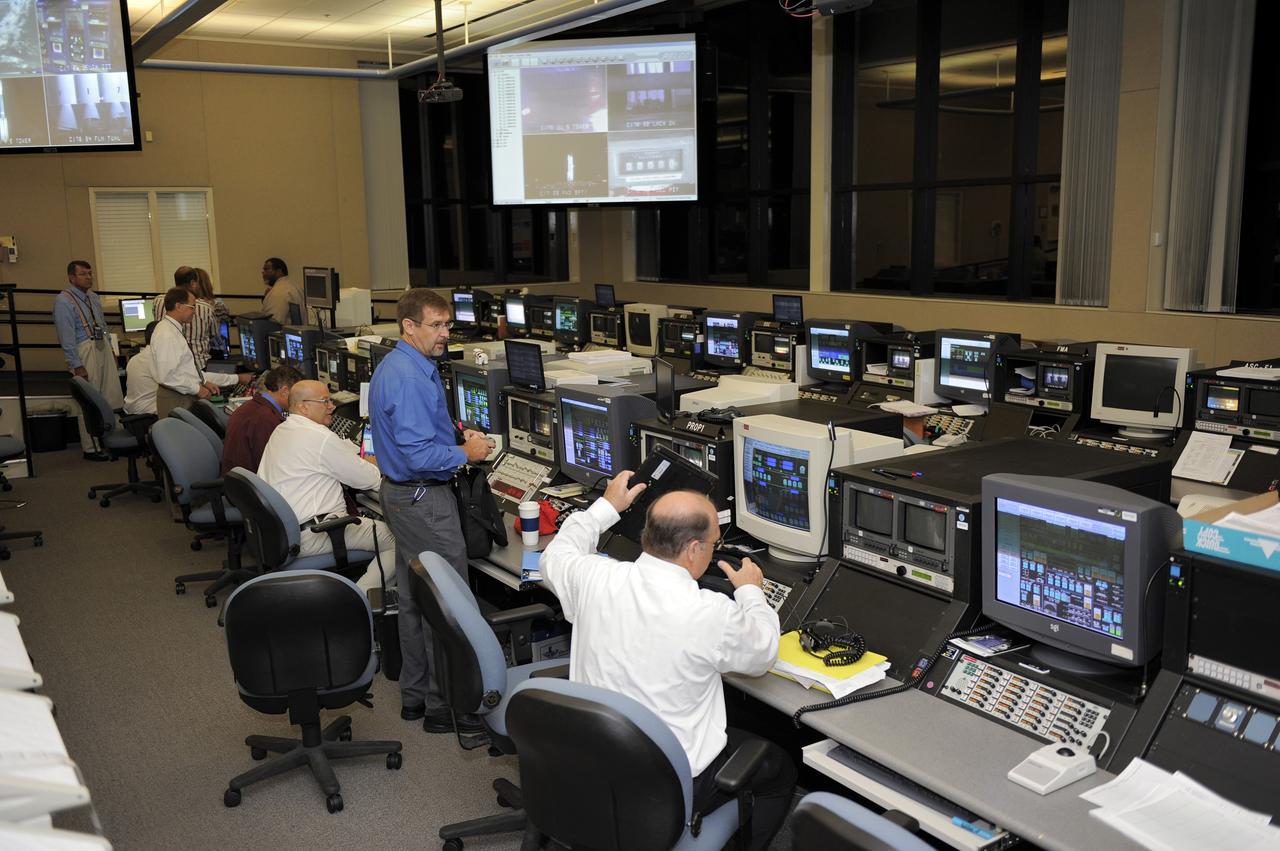
CAPE CANAVERAL, Fla. -- On Cape Canaveral Air Force Station in Florida, United Launch Alliance (ULA) personnel in the Delta Operations Building prepare for the launch of NASA's Gravity Recovery and Interior Laboratory mission aboard a ULA Delta II Heavy rocket. Physical control of the rocket is maintained from the building, located about a mile from Space Launch Complex 17B. The room functions as a "soft blockhouse" and is the room from which the computer-generated command to launch the rocket is issued two seconds before liftoff. Launch is scheduled for 8:37:06 a.m. EDT Sept. 8. GRAIL will fly twin spacecraft in tandem around the moon to precisely measure and map variations in the moon's gravitational field. The mission will provide the most accurate global gravity field to date for any planet, including Earth. For more information, visit http://www.nasa.gov/grail. Photo credit: NASA/Kim Shiflett
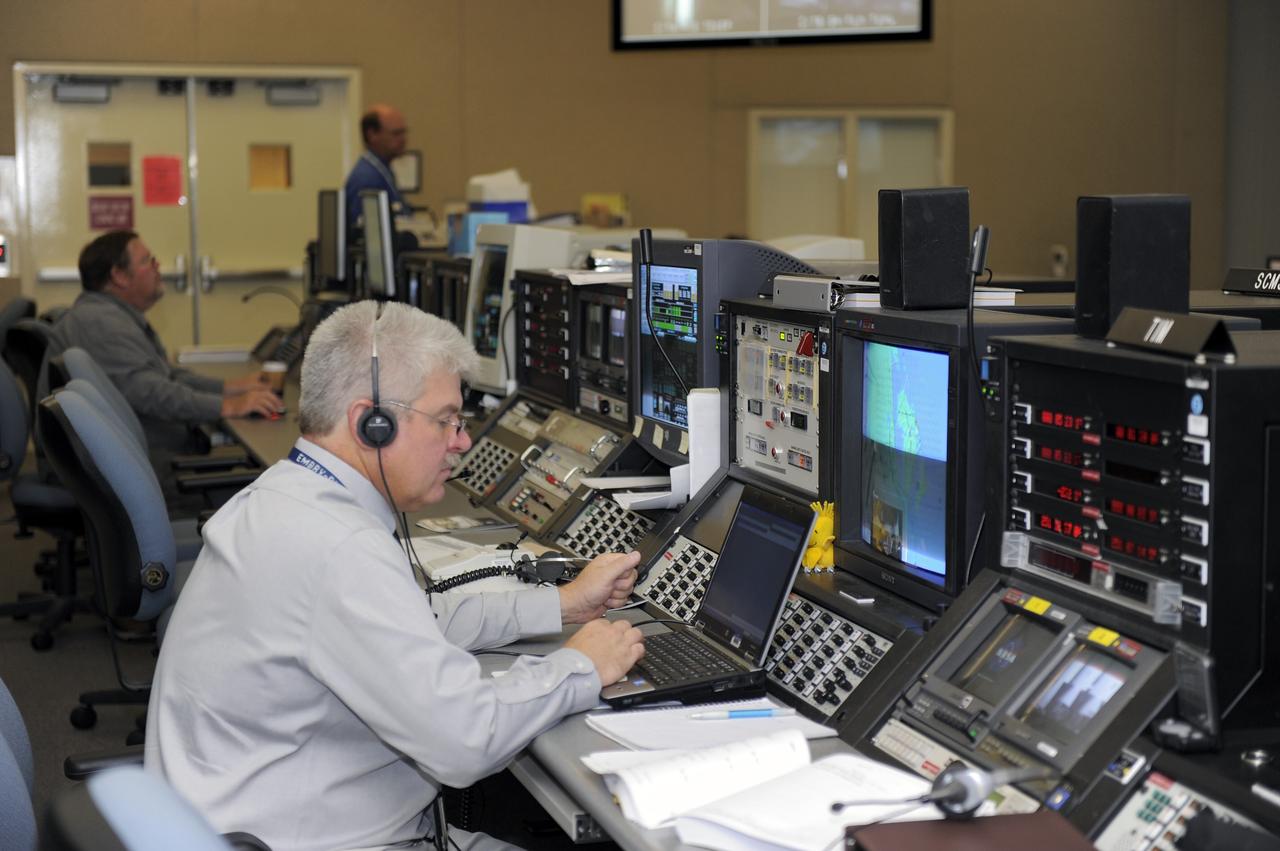
CAPE CANAVERAL, Fla. -- On Cape Canaveral Air Force Station in Florida, United Launch Alliance (ULA) personnel in the Delta Operations Building prepare for the launch of NASA's Gravity Recovery and Interior Laboratory mission aboard a ULA Delta II Heavy rocket. Physical control of the rocket is maintained from the building, located about a mile from Space Launch Complex 17B. The room functions as a "soft blockhouse" and is the room from which the computer-generated command to launch the rocket is issued two seconds before liftoff. Launch is scheduled for 8:37:06 a.m. EDT Sept. 8. GRAIL will fly twin spacecraft in tandem around the moon to precisely measure and map variations in the moon's gravitational field. The mission will provide the most accurate global gravity field to date for any planet, including Earth. For more information, visit http://www.nasa.gov/grail. Photo credit: NASA/Kim Shiflett
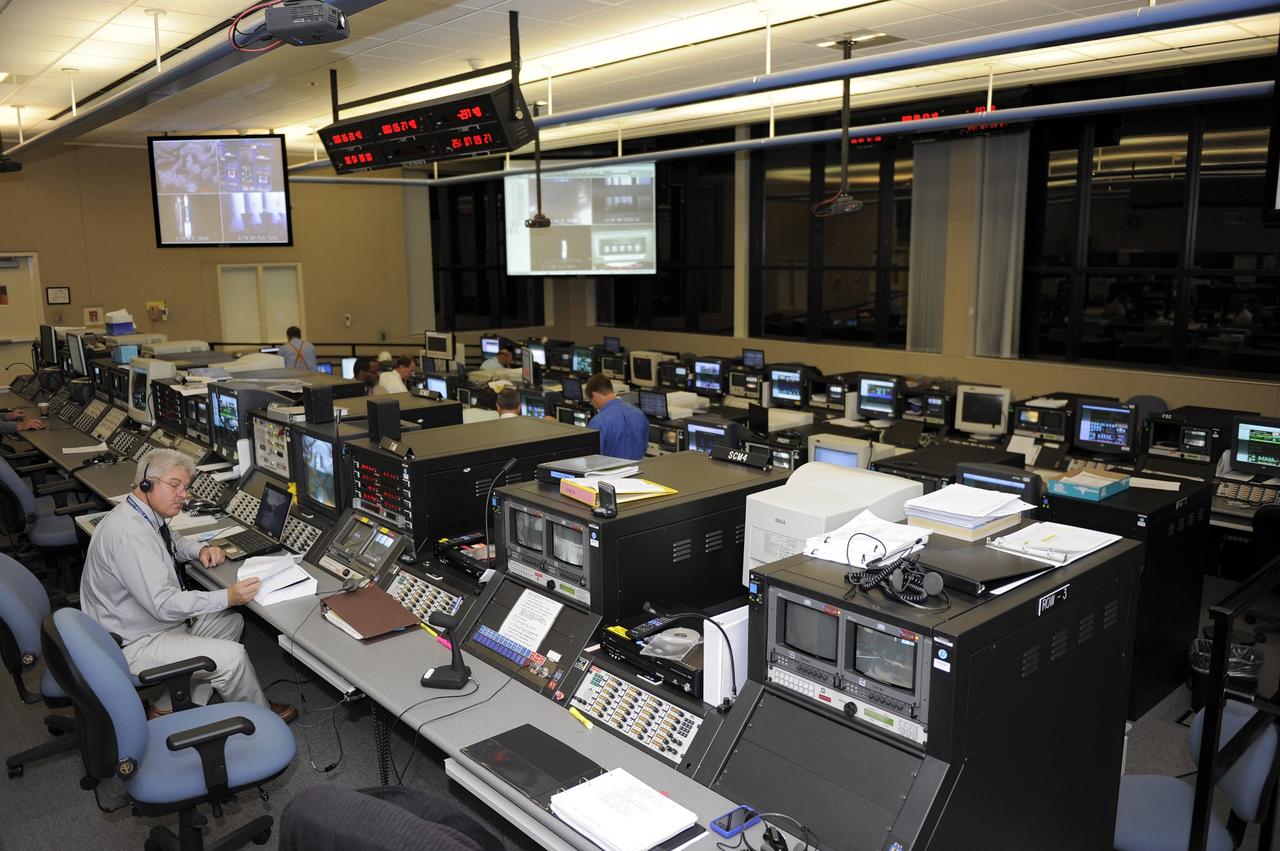
CAPE CANAVERAL, Fla. -- On Cape Canaveral Air Force Station in Florida, United Launch Alliance (ULA) personnel in the Delta Operations Building prepare for the launch of NASA's Gravity Recovery and Interior Laboratory mission aboard a ULA Delta II Heavy rocket. Physical control of the rocket is maintained from the building, located about a mile from Space Launch Complex 17B. The room functions as a "soft blockhouse" and is the room from which the computer-generated command to launch the rocket is issued two seconds before liftoff. Launch is scheduled for 8:37:06 a.m. EDT Sept. 8. GRAIL will fly twin spacecraft in tandem around the moon to precisely measure and map variations in the moon's gravitational field. The mission will provide the most accurate global gravity field to date for any planet, including Earth. For more information, visit http://www.nasa.gov/grail. Photo credit: NASA/Kim Shiflett
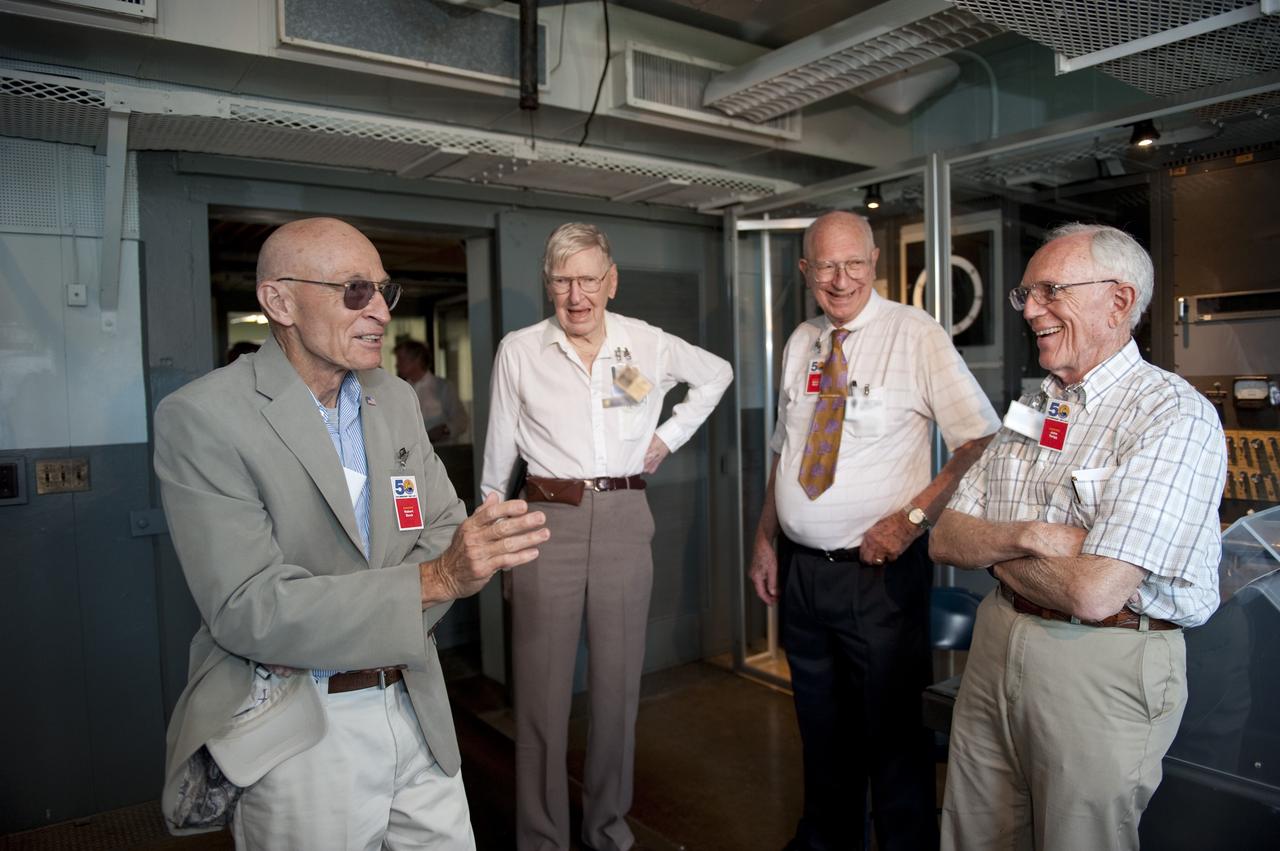
CAPE CANAVERAL, Fla. -- On Cape Canaveral Air Force Station in Florida, invited guests tour the blockhouse at Complex 5/6 during a celebration of Alan Shepard's historic flight 50 years ago. From left are Robert Sieck, former shuttle launch director; Andy Anderson, former manager for communications in the Mercury Mission Control Center; Bob Moser, former chief test conductor for the Mercury-Redstone launches; and John Twigg, former backup chief test conductor for the Mercury-Redstone launches. The celebration was held at the launch site of the first U.S. manned spaceflight May 5, 1961, to mark the 50th anniversary of the flight. Fifty years ago, astronaut Alan Shepard lifted off inside the Mercury capsule, "Freedom 7," atop an 82-foot-tall Mercury-Redstone rocket at 9:34 a.m. EST, sending him on a remarkably successful, 15-minute suborbital flight. The event was attended by more than 200 workers from the original Mercury program and included a re-creation of Shepard's flight and recovery, as well as a tribute to his contributions as a moonwalker on the Apollo 14 lunar mission. For more information, visit www.nasa.gov/topics/history/milestones/index.html. Photo credit: NASA/Kim Shiflett