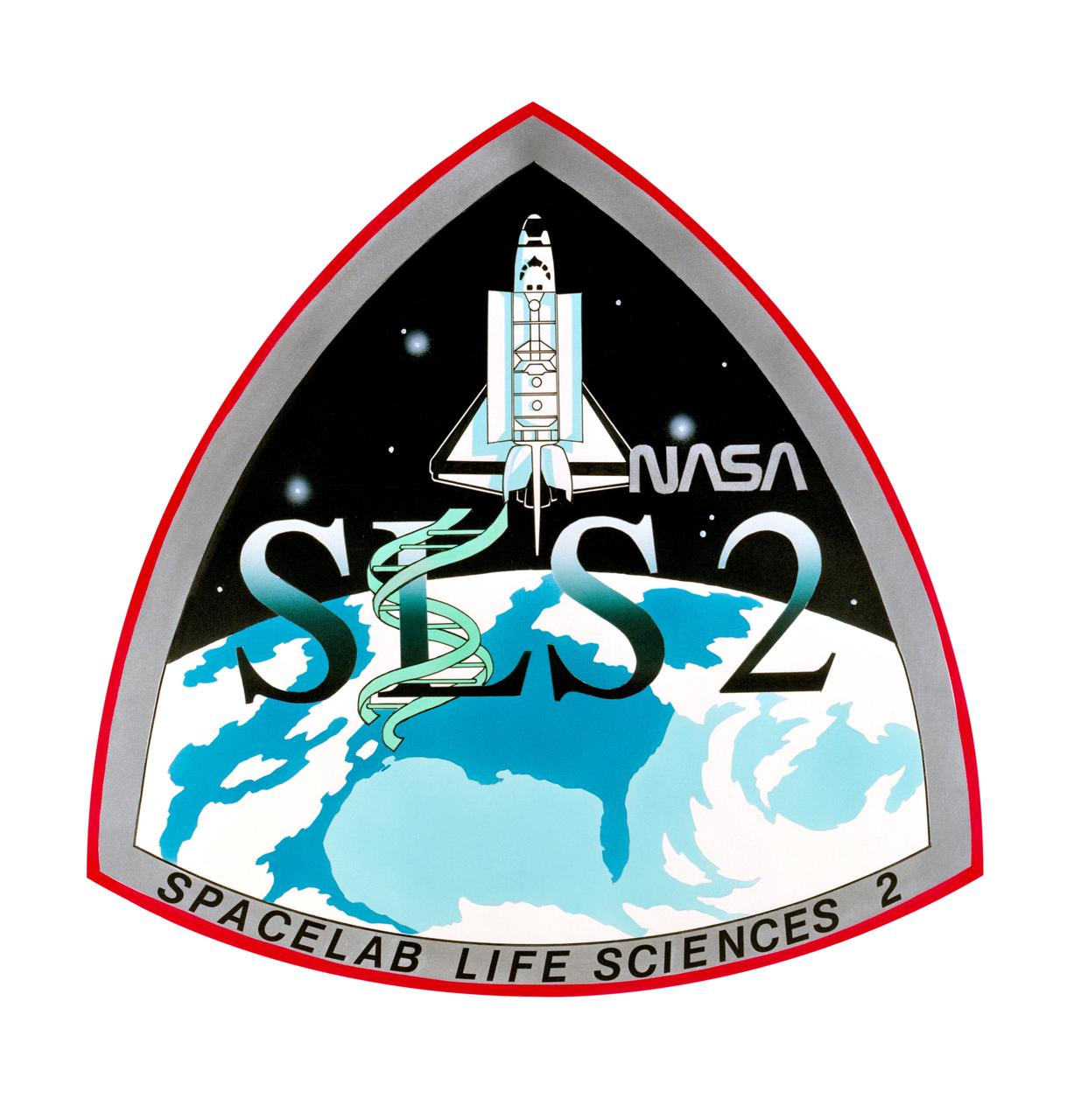
S93-26894 (March 1993) --- Spacelab Life Sciences 2, scheduled to fly as the major payload on the STS-58 mission, is represented with this logo. As in the case of SLS-1, which flew in space in June of 1991, this Spacelab mission will be devoted to life sciences and will carry a crew of experts in the associated disciplines.
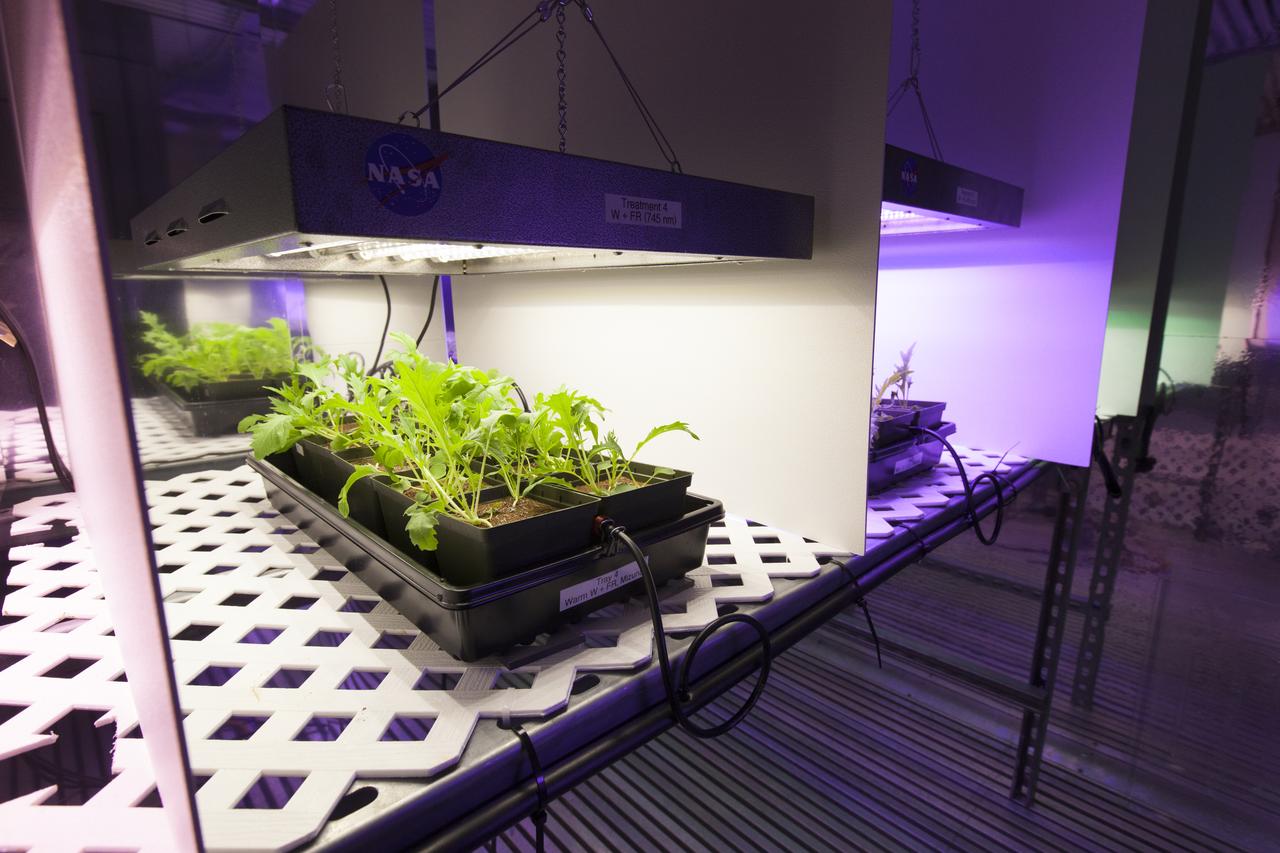
In the Space Life Sciences Laboratory at NASA's Kennedy Space Center in Florida, student interns are joining agency scientists, contributing in the area of plant growth research for food production in space. The agency attracts its future workforce through the NASA Internship, Fellowships and Scholarships, or NIFS, Program.

In the Space Life Sciences Laboratory at NASA's Kennedy Space Center in Florida, student interns are joining agency scientists, contributing in the area of plant growth research for food production in space. The agency attracts its future workforce through the NASA Internship, Fellowships and Scholarships, or NIFS, Program.

In the Space Life Sciences Laboratory at NASA's Kennedy Space Center in Florida, student interns are joining agency scientists, contributing in the area of plant growth research for food production in space. The agency attracts its future workforce through the NASA Internship, Fellowships and Scholarships, or NIFS, Program.
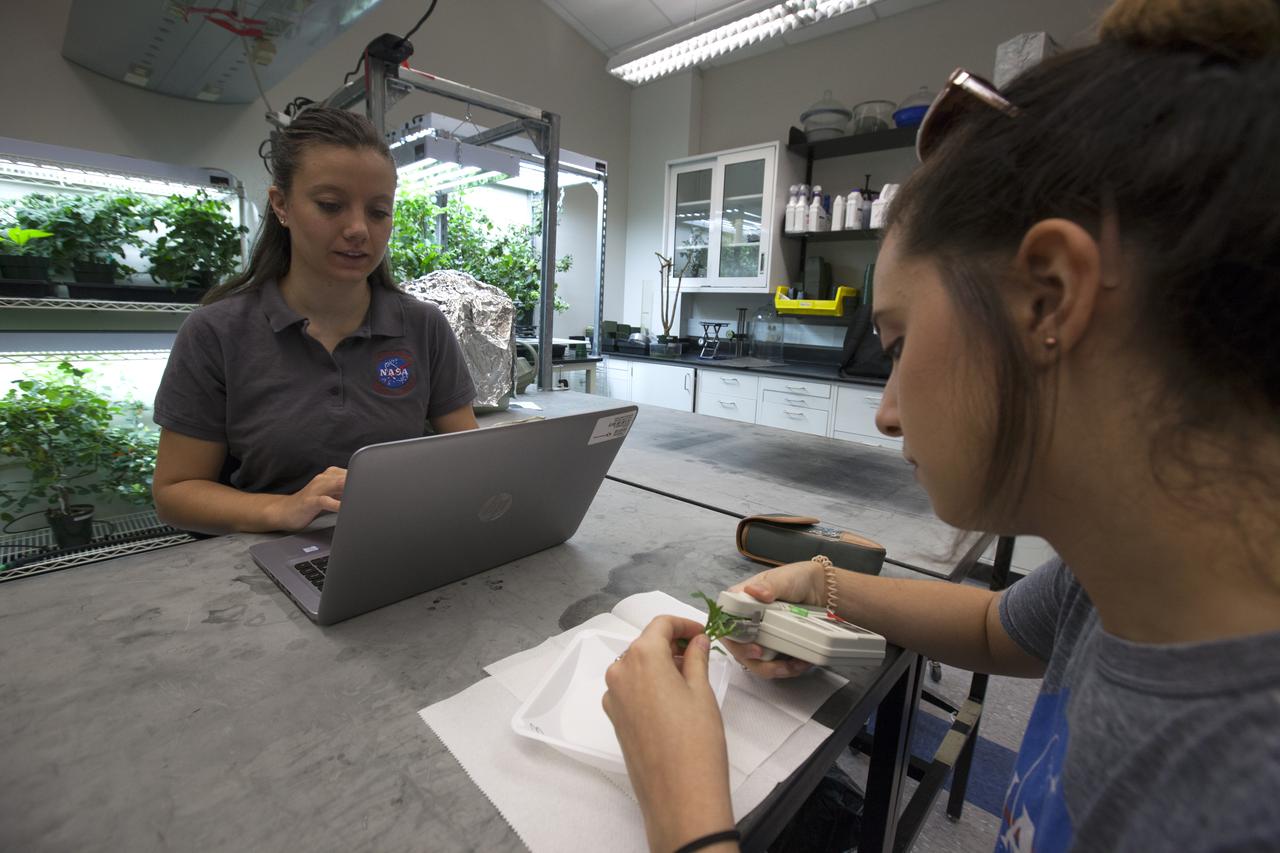
In the Space Life Sciences Laboratory at NASA's Kennedy Space Center in Florida, student interns such as Ayla Grandpre, left, and Payton Barnwell are joining agency scientists, contributing in the area of plant growth research for food production in space. Grandpre is pursuing a degree in computer science and chemistry at Rocky Mountain College in Billings, Montana. Barnwell is a mechanical engineering and nanotechnology major at Florida Polytechnic University. The agency attracts its future workforce through the NASA Internship, Fellowships and Scholarships, or NIFS, Program.
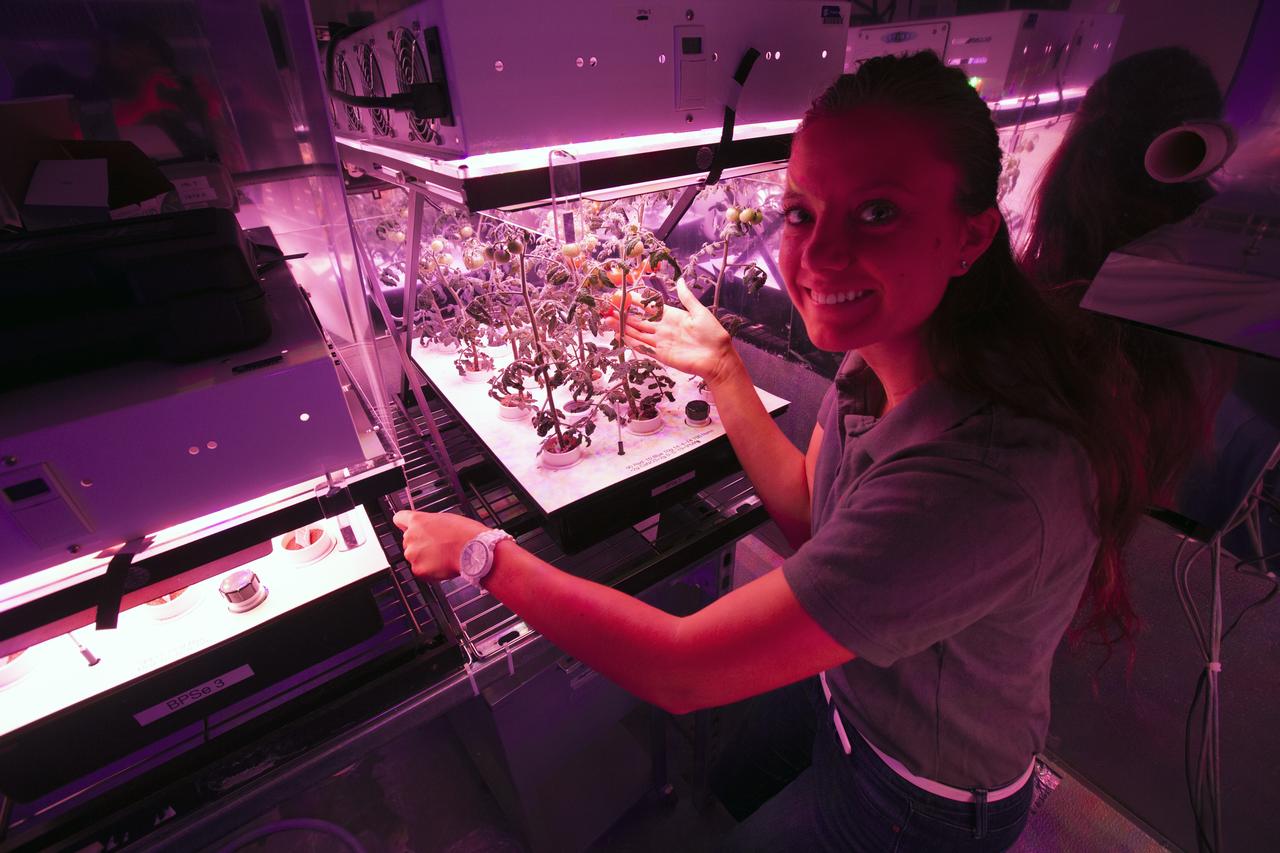
In the Space Life Sciences Laboratory at NASA's Kennedy Space Center in Florida, student interns such as Ayla Grandpre are joining agency scientists, contributing in the area of plant growth research for food production in space. Grandpre is majoring in computer science and chemistry at Rocky Mountain College in Billings, Montana. The agency attracts its future workforce through the NASA Internship, Fellowships and Scholarships, or NIFS, Program.
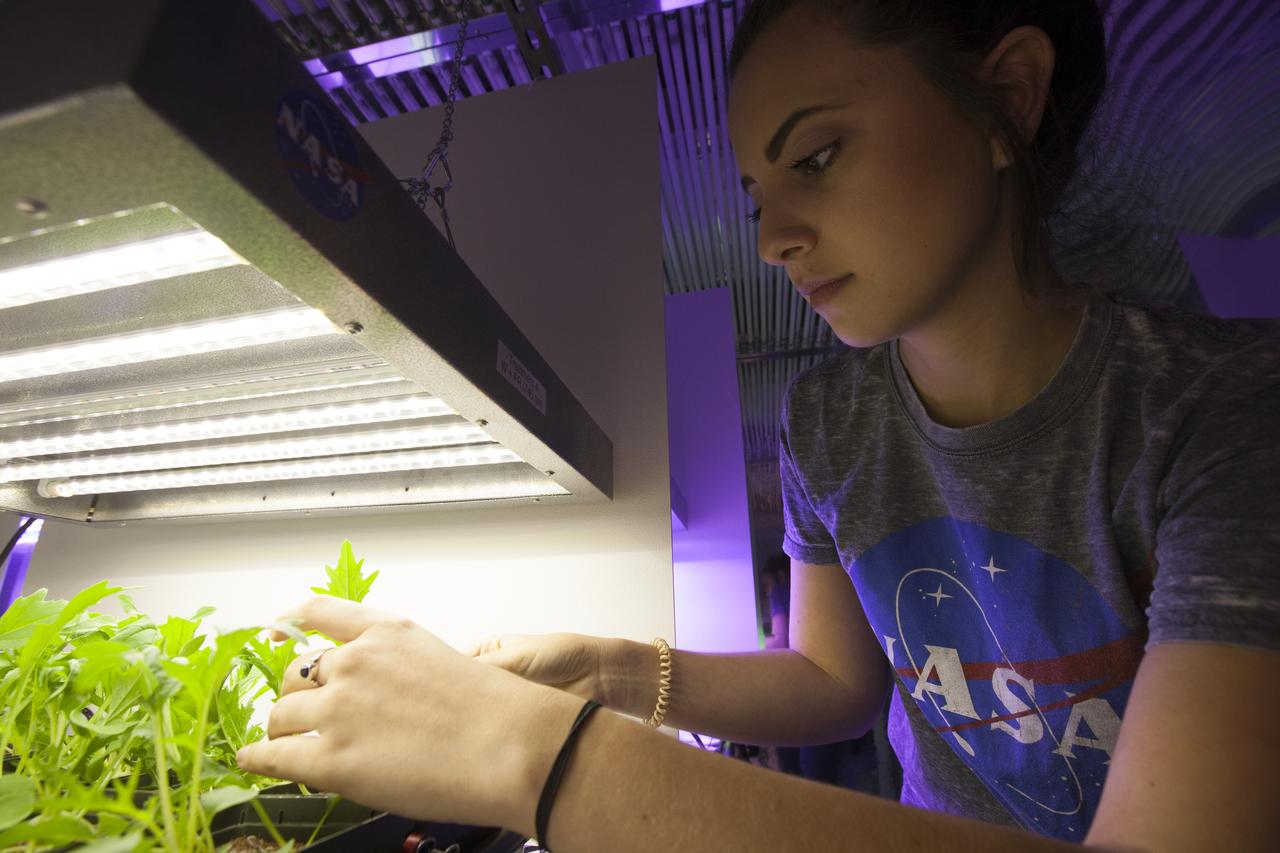
In the Space Life Sciences Laboratory at NASA's Kennedy Space Center in Florida, student interns such as Payton Barnwell are joining agency scientists, contributing in the area of plant growth research for food production in space. Barnwell is a mechanical engineering and nanotechnology major at Florida Polytechnic University. The agency attracts its future workforce through the NASA Internship, Fellowships and Scholarships, or NIFS, Program.
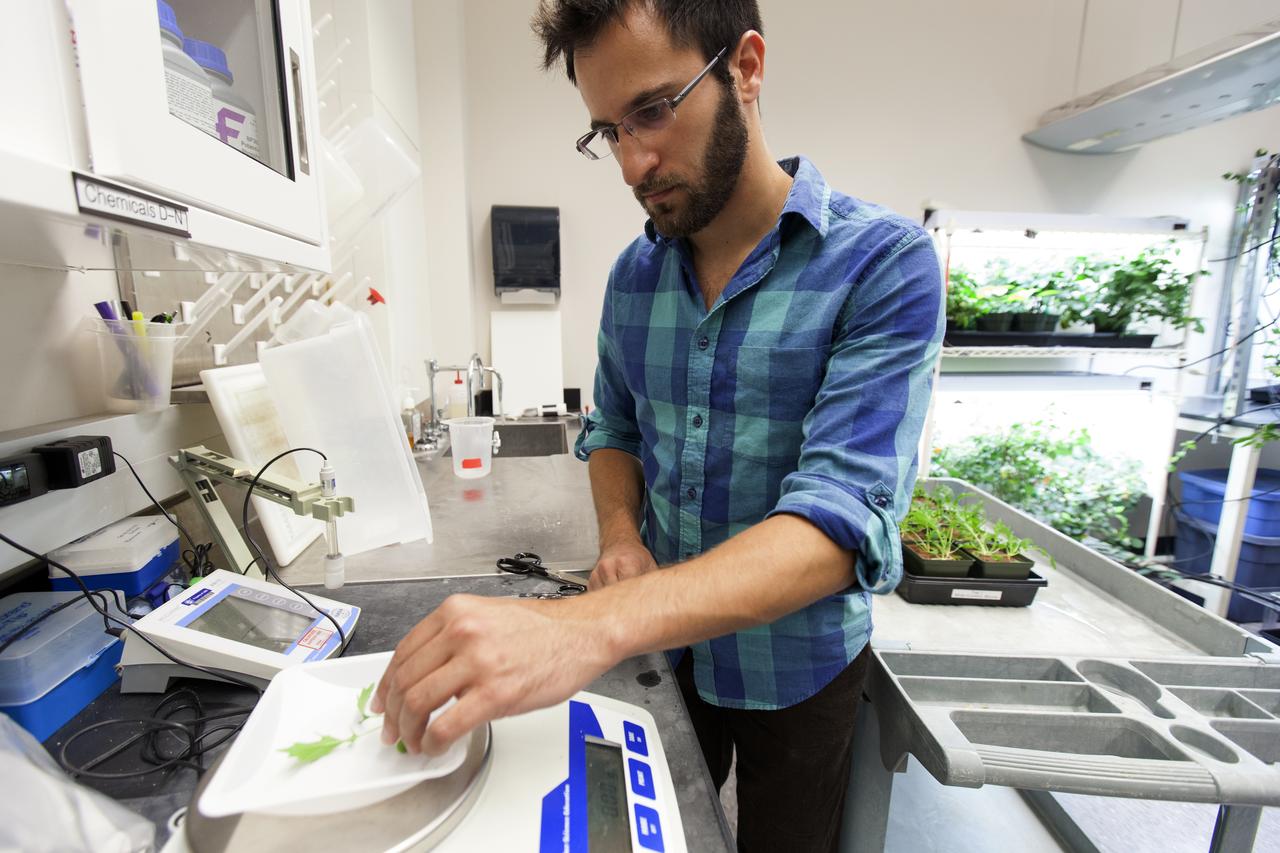
In the Space Life Sciences Laboratory at NASA's Kennedy Space Center in Florida, student interns such as Alex Litvin are joining agency scientists, contributing in the area of plant growth research for food production in space. Litvin is pursuing doctorate in horticulture at Iowa State University. The agency attracts its future workforce through the NASA Internship, Fellowships and Scholarships, or NIFS, Program.
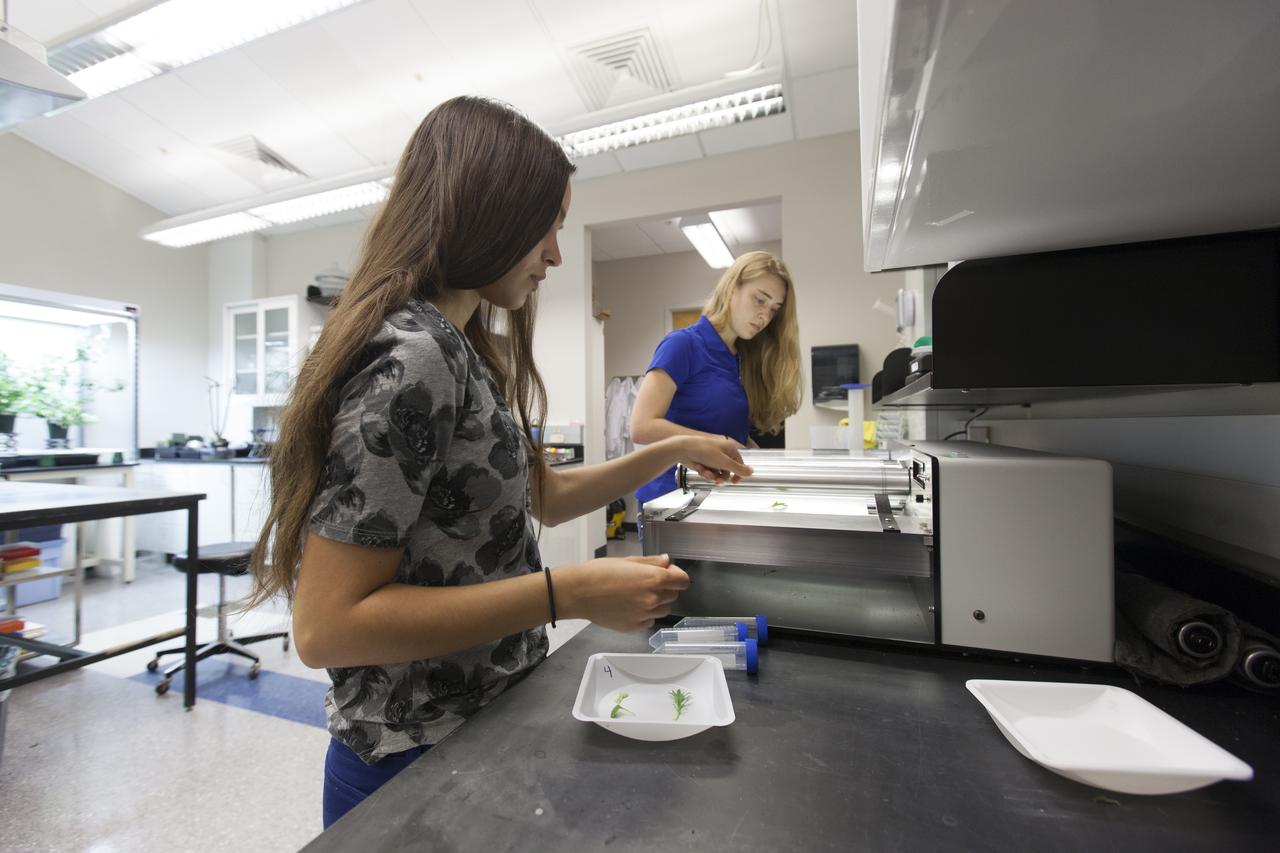
In the Space Life Sciences Laboratory at NASA's Kennedy Space Center in Florida, student interns such as Emma Boehm, left, and Jessica Scotten are joining agency scientists, contributing in the area of plant growth research for food production in space. Boehm is pursuing a degree in ecology and evolution at the University of Minnesota. Scotten is majoring in microbiology at Oregon State University. The agency attracts its future workforce through the NASA Internship, Fellowships and Scholarships, or NIFS, Program.
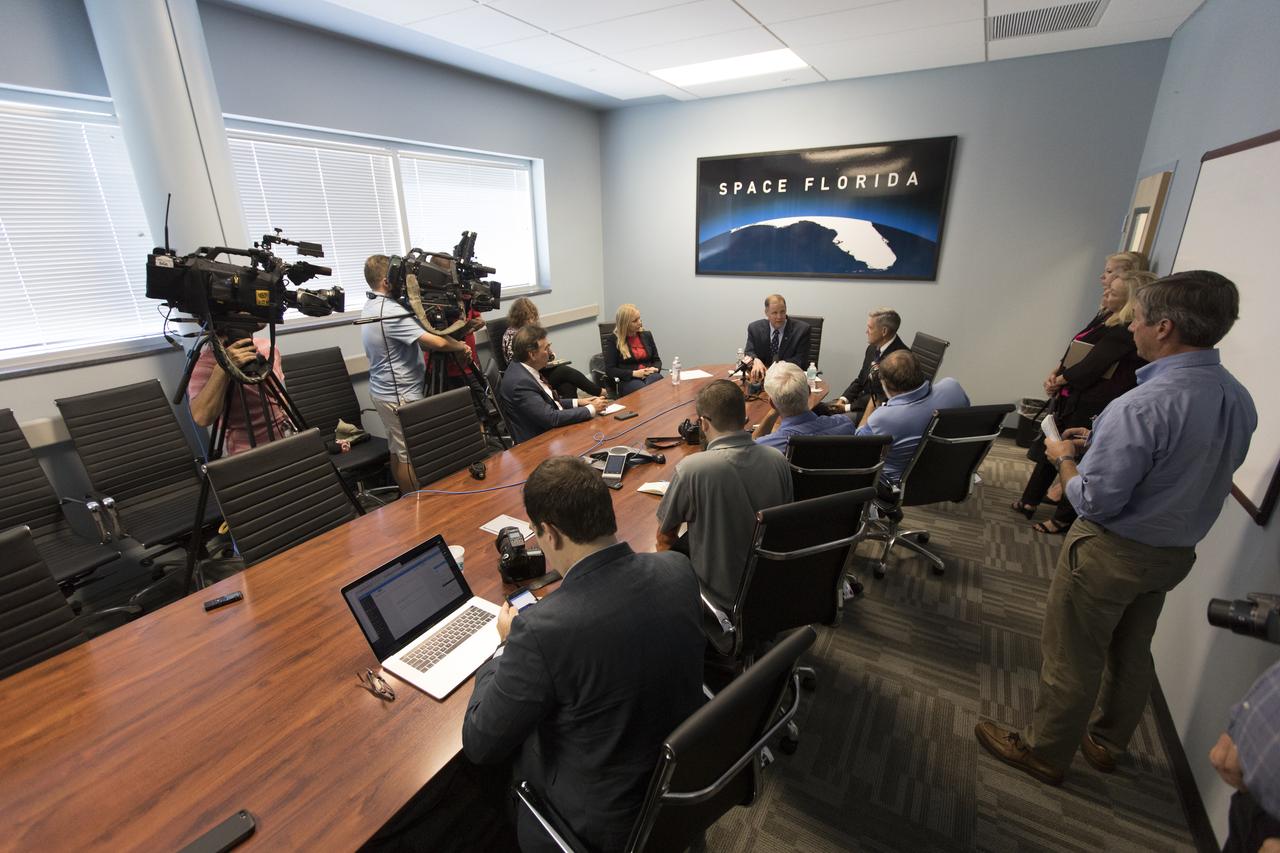
NASA Administrator Jim Bridenstine, seated, far end of the table, center, talks with members of the local media in a conference room inside the Space Life Sciences Laboratory during his tour of Kennedy Space Center in Florida, on Aug. 7, 2018. Seated next to him is Kennedy Center Director Bob Cabana. The administrator toured Kennedy facilities and received updates on various center accomplishments.
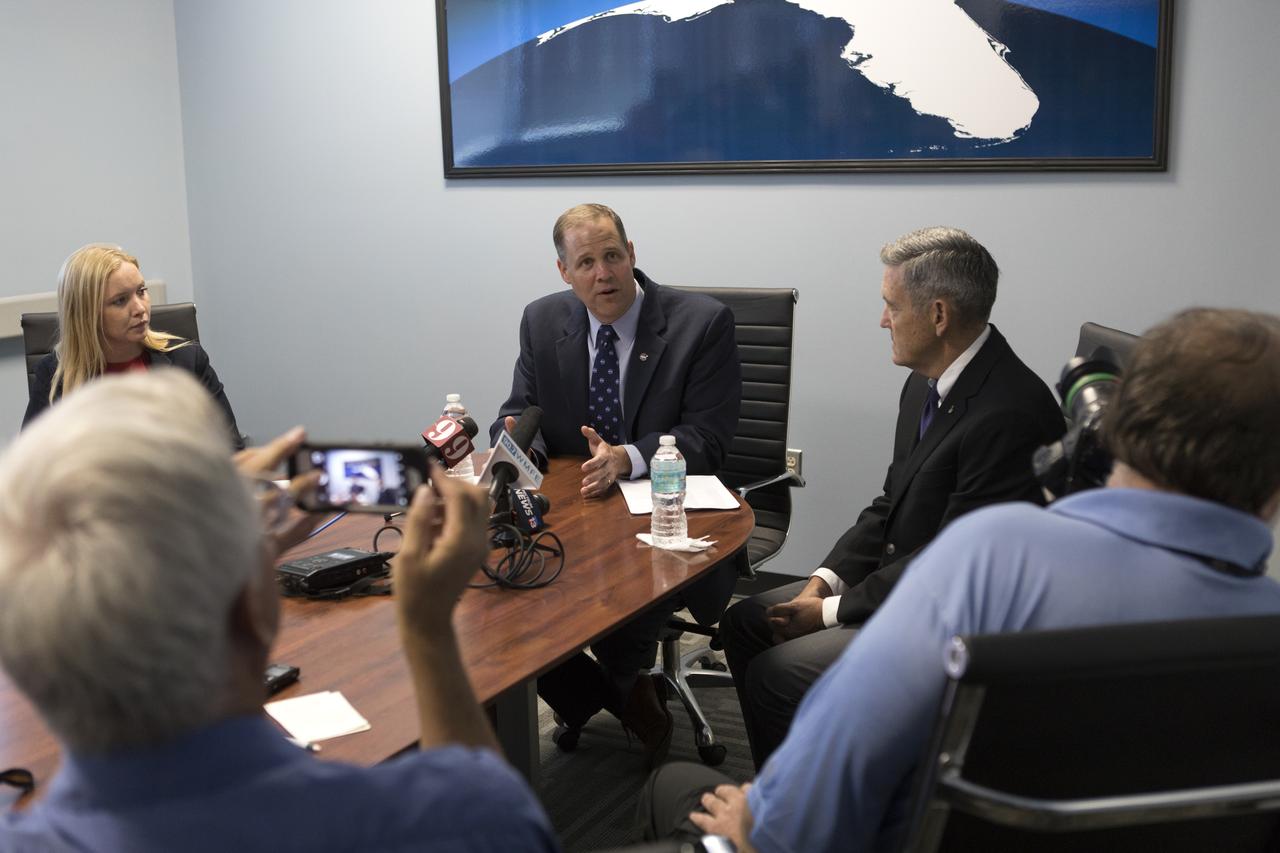
NASA Administrator Jim Bridenstine, center, talks with members of the local media in a conference room inside the Space Life Sciences Laboratory during his tour of Kennedy Space Center in Florida, on Aug. 7, 2018. Seated at right is Kennedy Center Director Bob Cabana. The administrator toured Kennedy facilities and received updates on various center accomplishments.
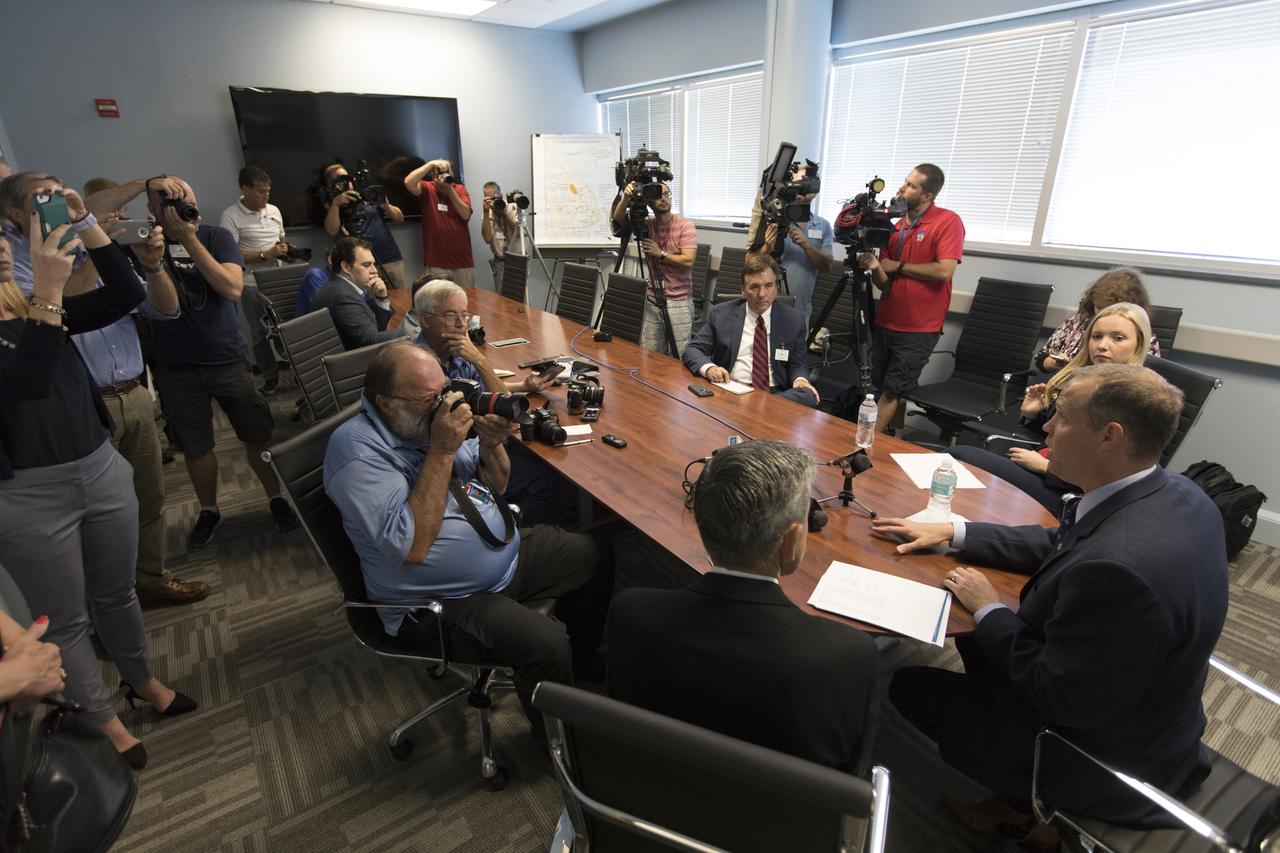
NASA Administrator Jim Bridenstine, seated at far right, talks with members of the local media in a conference room inside the Space Life Sciences Laboratory during his tour of Kennedy Space Center in Florida, on Aug. 7, 2018. Seated at his left is Kennedy Center Director Bob Cabana. The administrator toured Kennedy facilities and received updates on various center accomplishments.
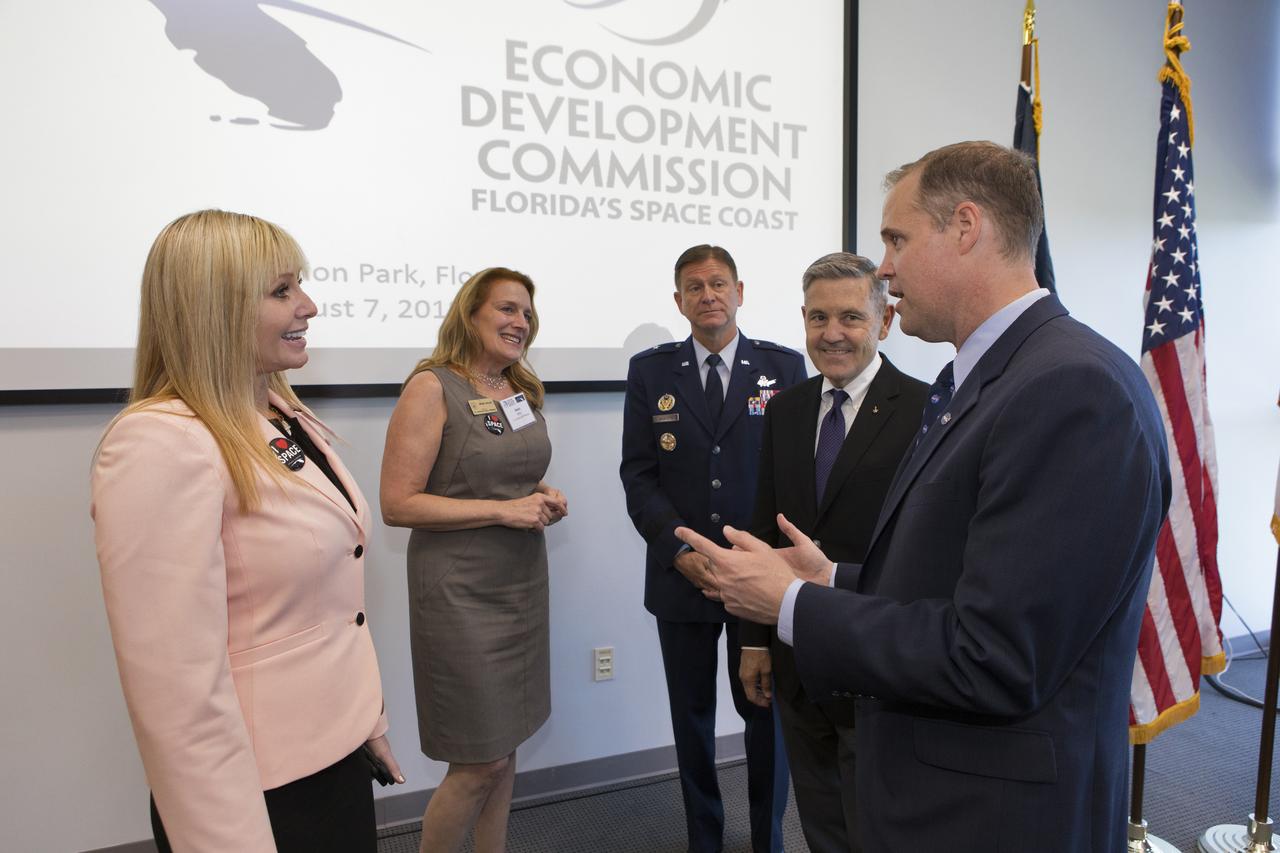
NASA Administrator Jim Bridenstine, far right, talks with participants of an Economic Development Commission roundtable discussion hosted by Space Florida at the Space Life Sciences Laboratory on Aug. 7, 2018, near NASA's Kennedy Space Center in Florida. In view next to Bridenstine is Kennedy Center Director Bob Cabana, and Brigadier General Wayne Monteith, commander, 45th Space Wing, and director, Eastern Range, at Patrick Air Force Base in Florida. The administrator also toured Kennedy facilities and received updates on various center accomplishments.

NASA Administrator Jim Bridenstine, center, facing away from the camera, participates in an Economic Development Commission roundtable discussion hosted by Space Florida at the Space Life Sciences Laboratory on Aug. 7, 2018, near NASA's Kennedy Space Center in Florida. At right is Kennedy Center Director Bob Cabana. The administrator also toured Kennedy facilities and received updates on various center accomplishments.
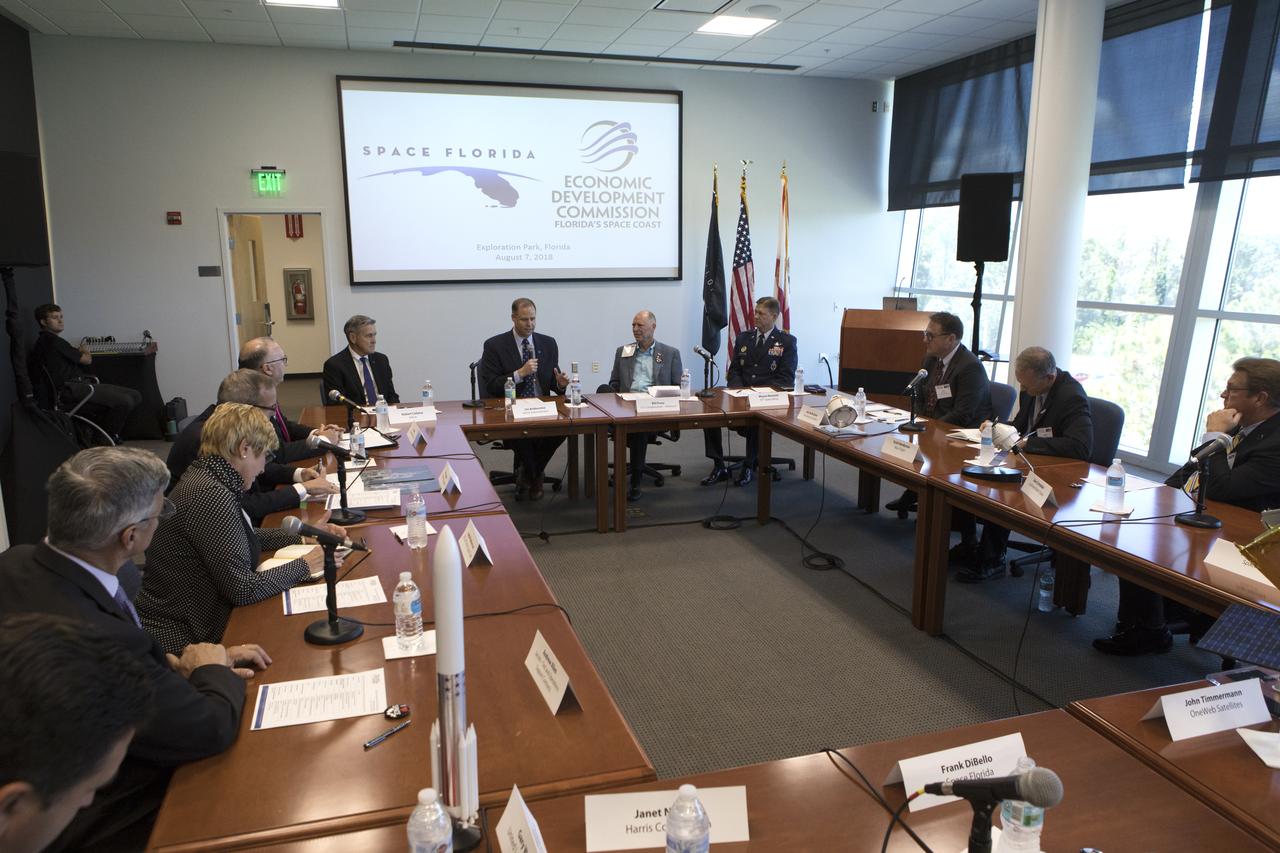
NASA Administrator Jim Bridenstine, seated at the far table, center, participates in an Economic Development Commission roundtable discussion hosted by Space Florida at the Space Life Sciences Laboratory on Aug. 7, 2018, near NASA's Kennedy Space Center in Florida. Seated at left is Kennedy Center Director Bob Cabana. Seated at right is U.S. Rep. Bill Posey, and Brigadier General Wayne Monteith, commander, 45th Space Wing, and director, Eastern Range, Patrick Air Force Base in Florida. The administrator also toured Kennedy facilities and received updates on various center accomplishments.
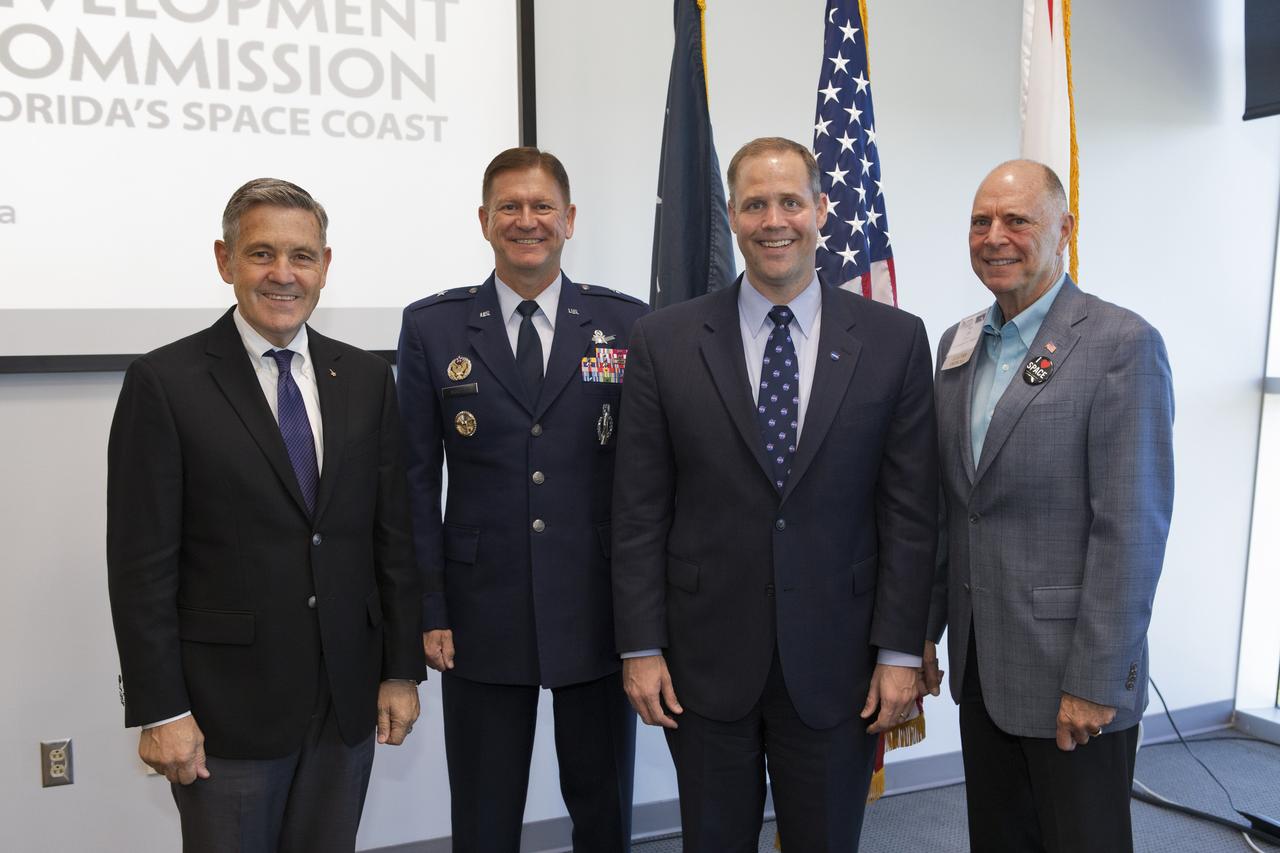
NASA Administrator Jim Bridenstine, second from right, participates in an Economic Development Commission roundtable discussion hosted by Space Florida at the Space Life Sciences Laboratory on Aug. 7, 2018, near NASA's Kennedy Space Center in Florida. With him, from left, are Kennedy Center Director Bob Cabana; Brigadier General Wayne Monteith, commander, 45th Space Wing, and director, Eastern Range, Patrick Air Force Base in Florida; and U.S. Rep. Bill Posey. The administrator also toured Kennedy facilities and received updates on various center accomplishments.
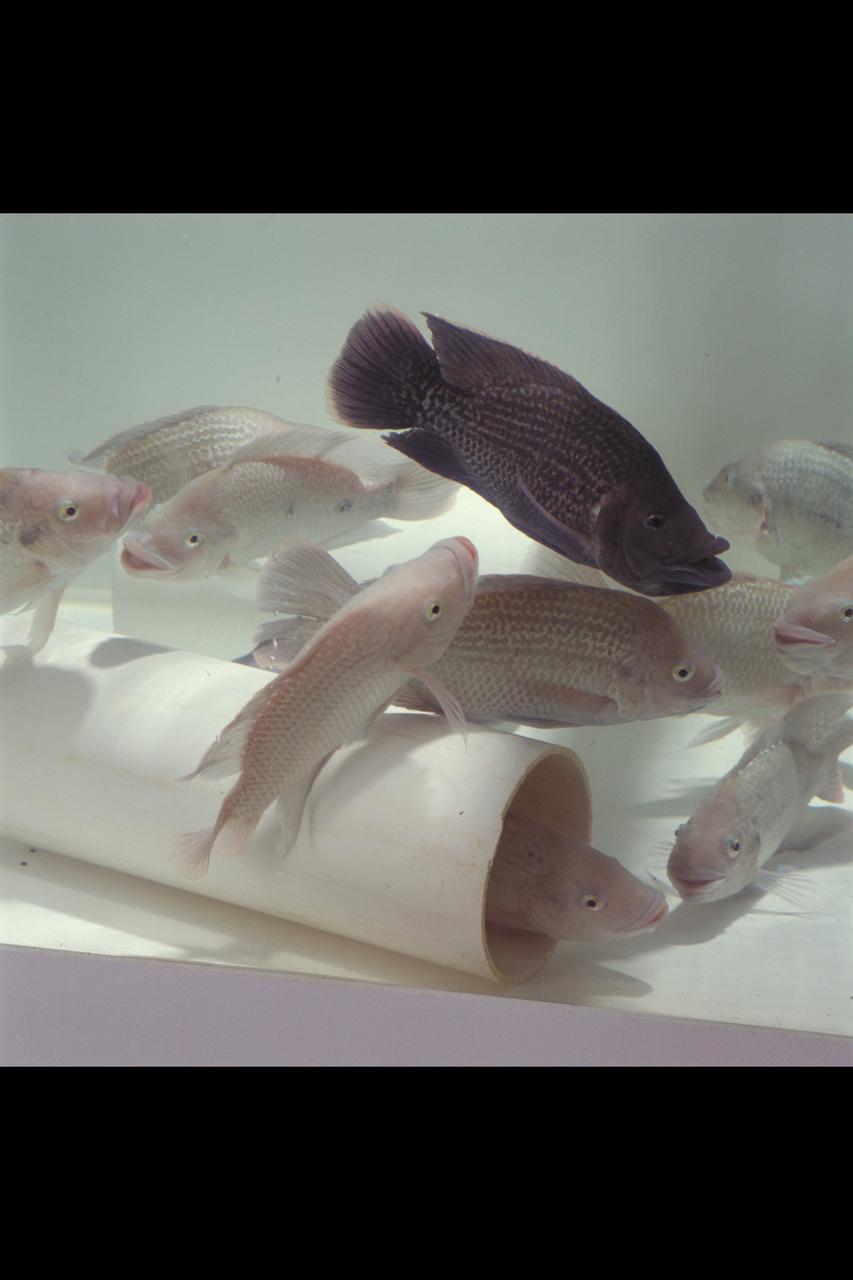
Ames Life Sciences Experiments: Tilapia fish Aquaculture
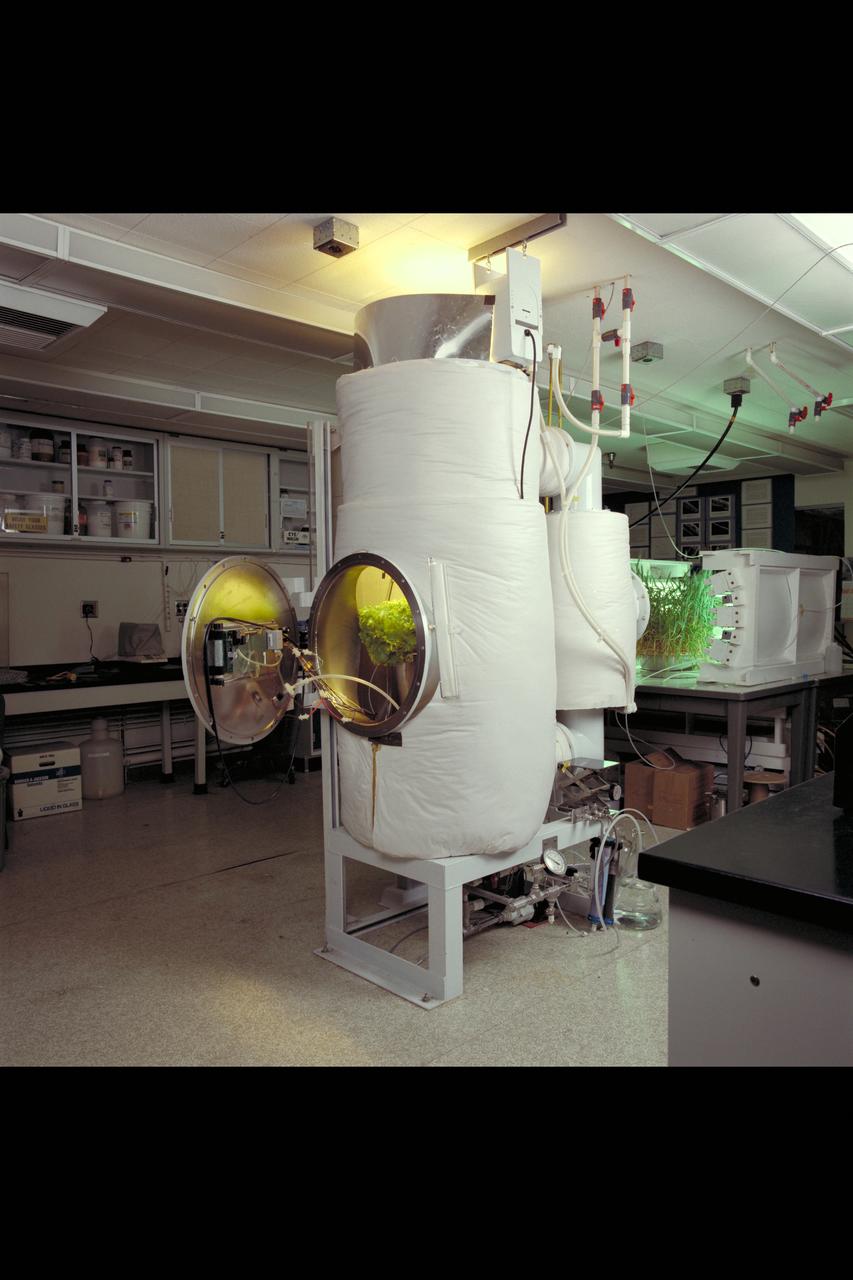
Ames Life Sciences Experiments: Plant Volatile Chamber
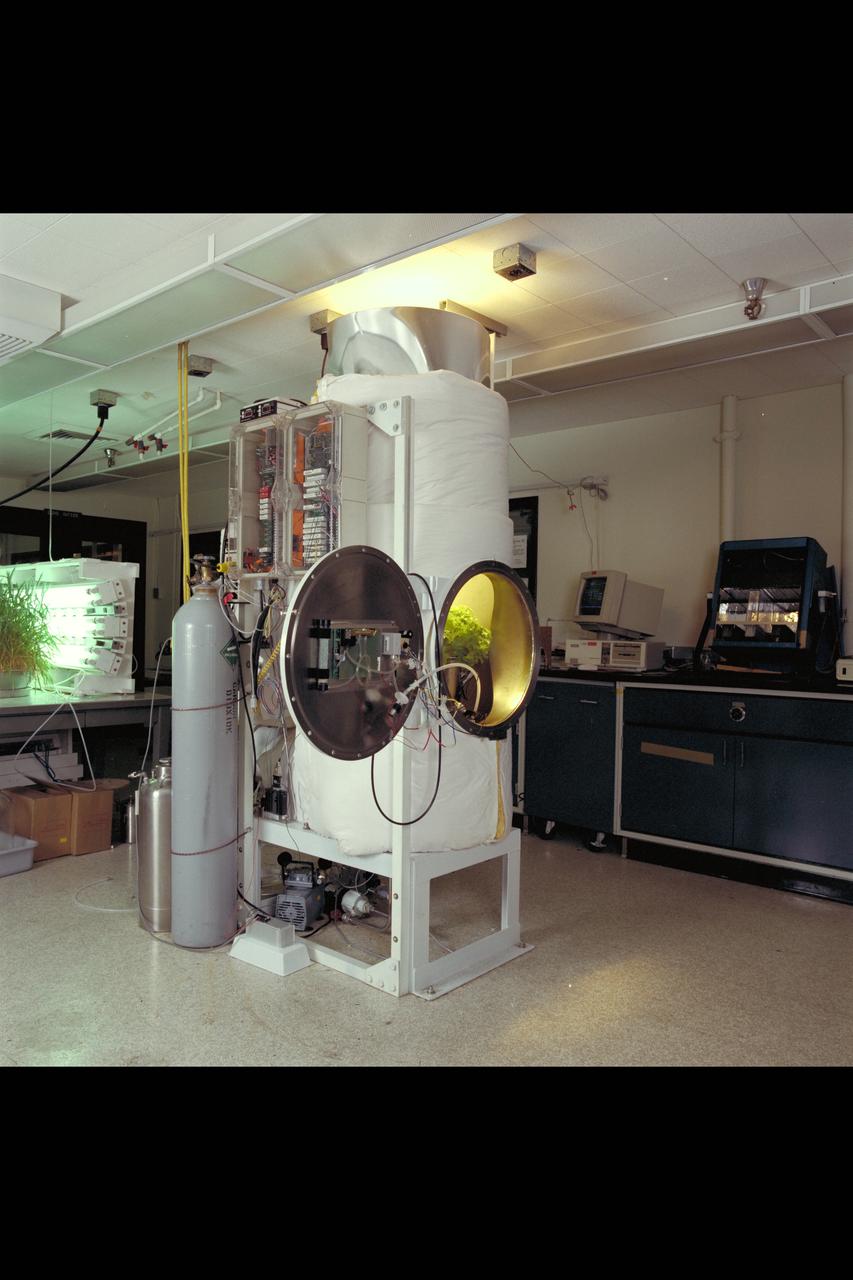
Ames Life Sciences Experiments: plant volatile chamber
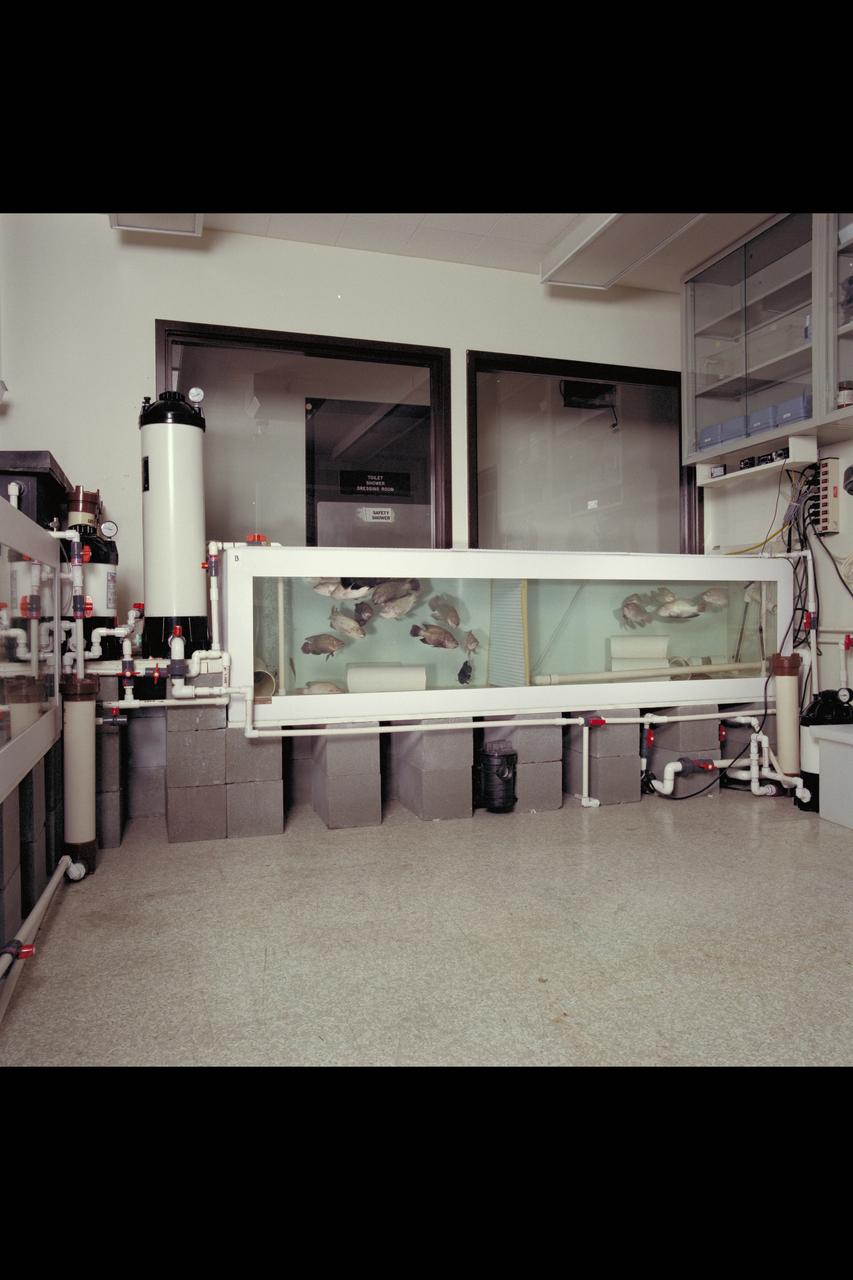
Ames Life Sciences Experiments: Tilapia fish Aquaculture
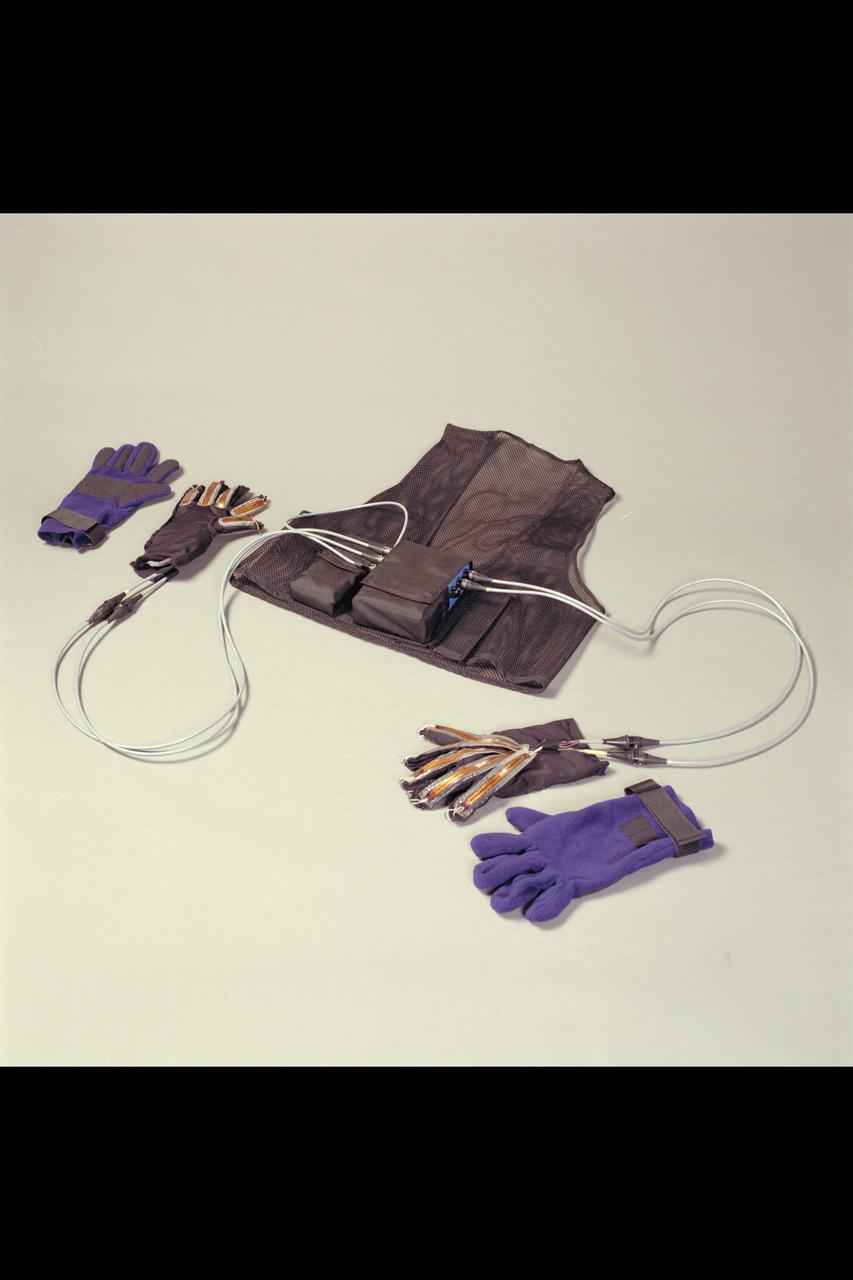
Ames Life Sciences Experiments: Polar gloves and vest
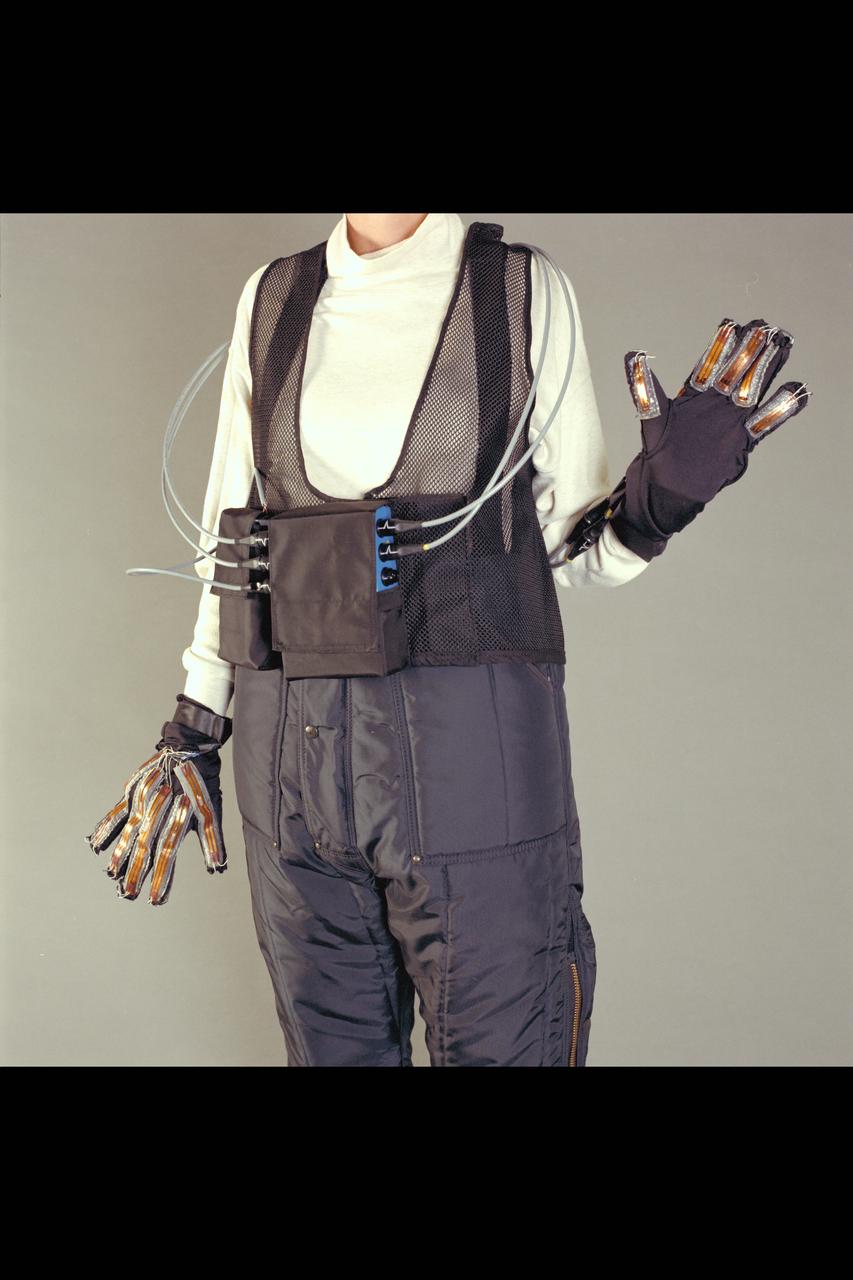
Ames Life Sciences Experiments: Polar gloves and vest with Ann McMormack
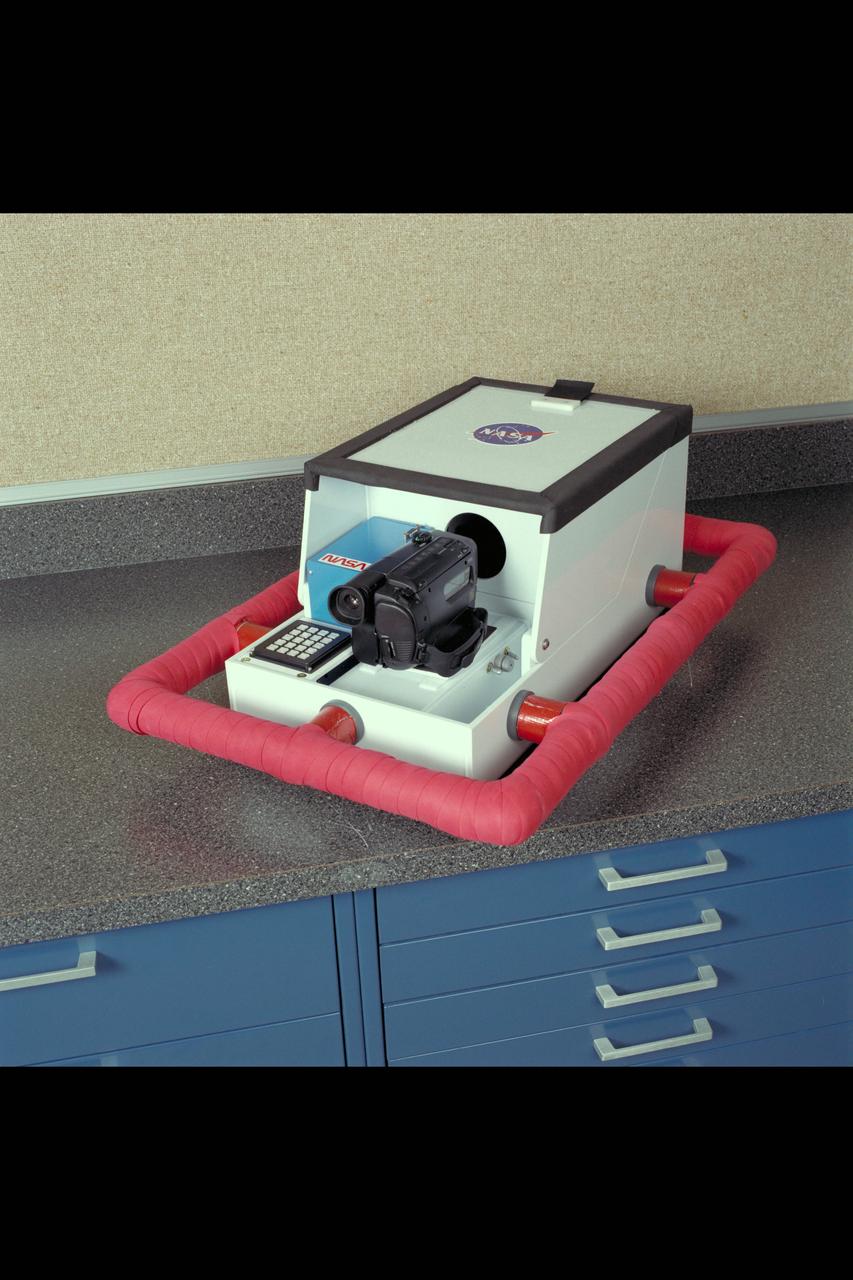
Ames Life Sciences Experiments: free floater test bed
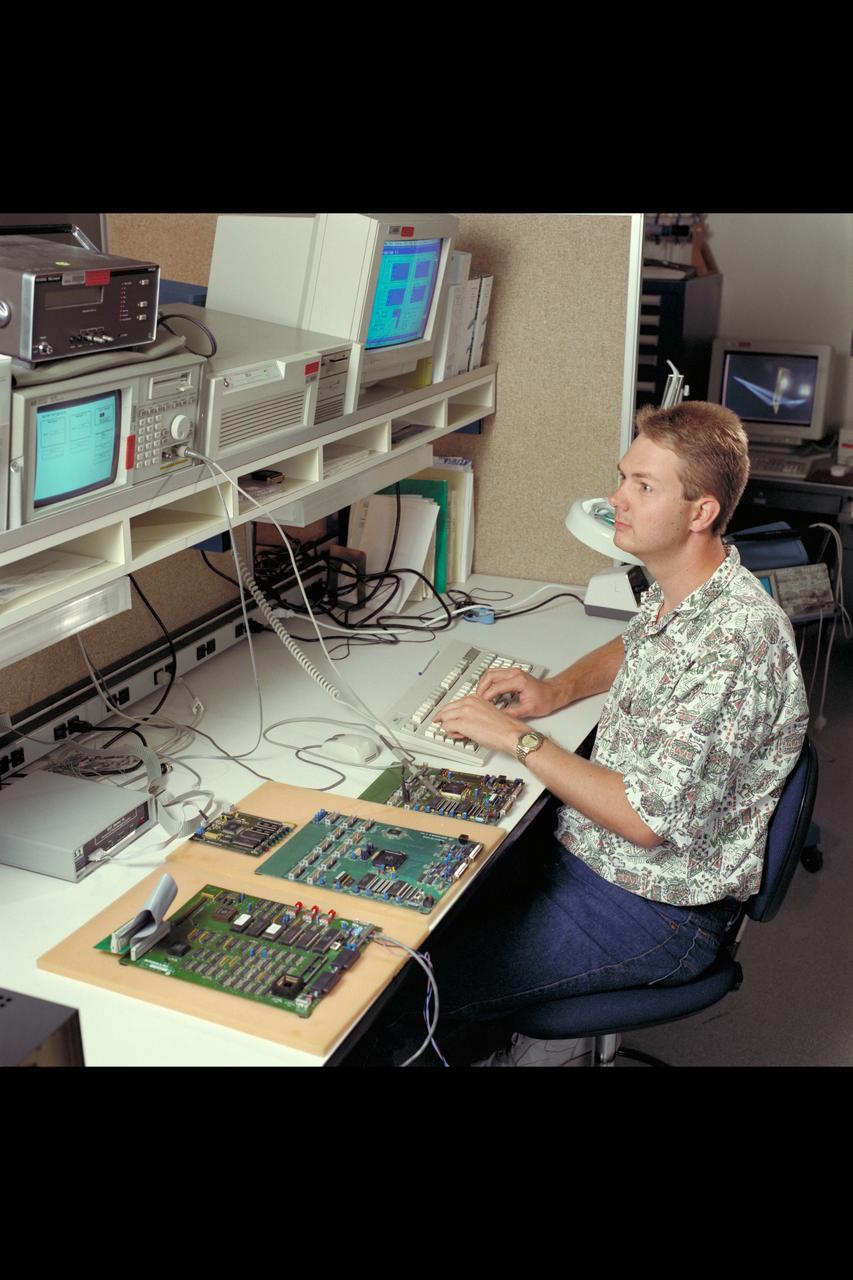
Ames Life Sciences Experiments: Craig VonWaaden, plant growth lab
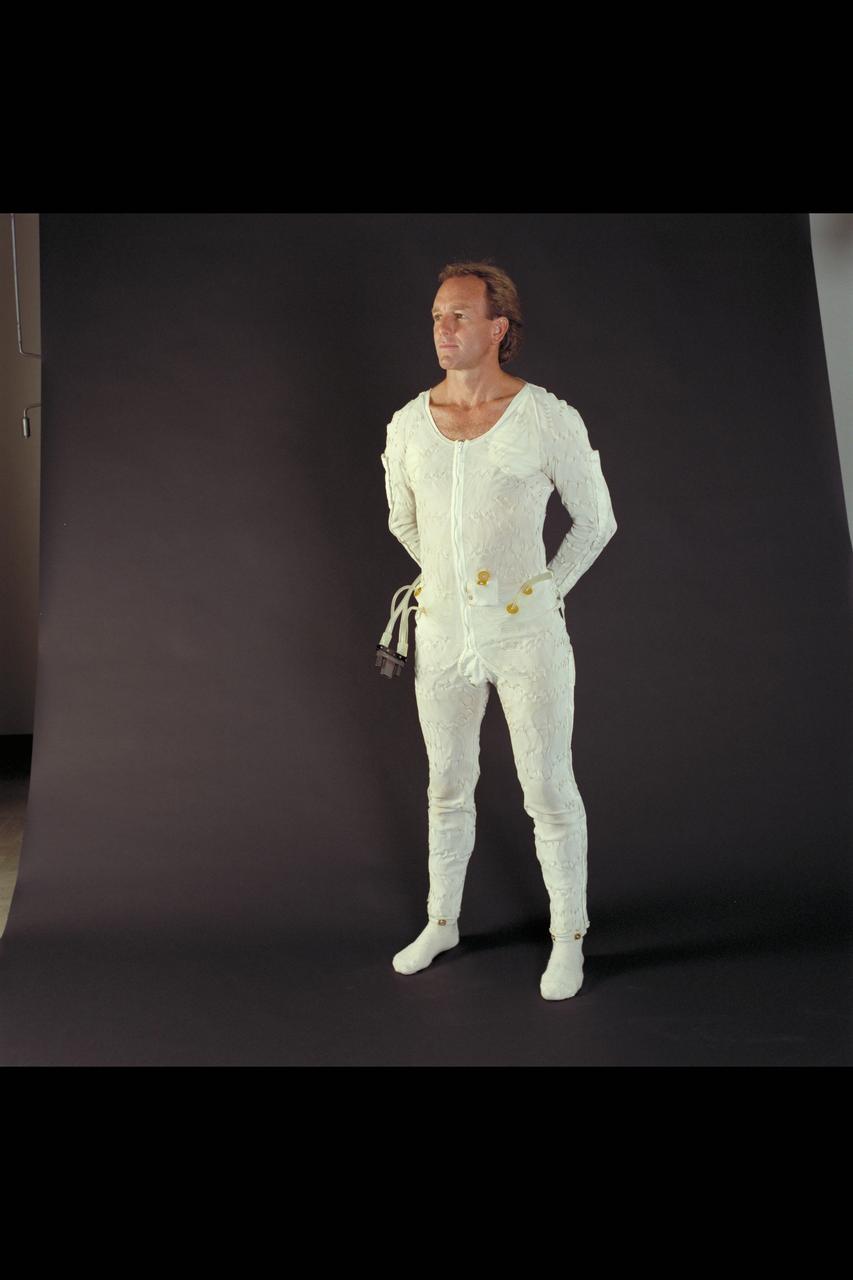
Ames Life Sciences Experiments: Liquid cooling garment with Phil Culbertson
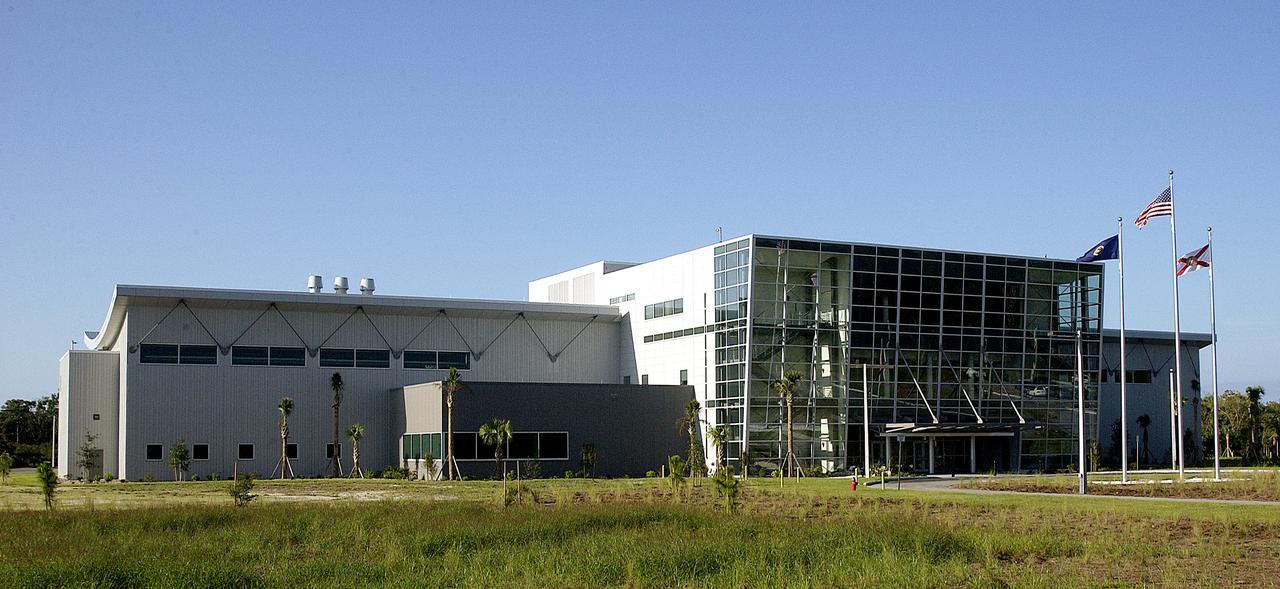
The Space Life Sciences Lab (SLSL), formerly known as the Space Experiment Research and Processing Laboratory (SERPL), is a state-of-the-art facility built for ISS biotechnology research. Developed as a partnership between NASA-KSC and the State of Florida, NASA’s life sciences contractor is the primary tenant of the facility, leasing space to conduct flight experiment processing and NASA-sponsored research. About 20 percent of the facility will be available for use by Florida’s university researchers through the Florida Space Research Institute.
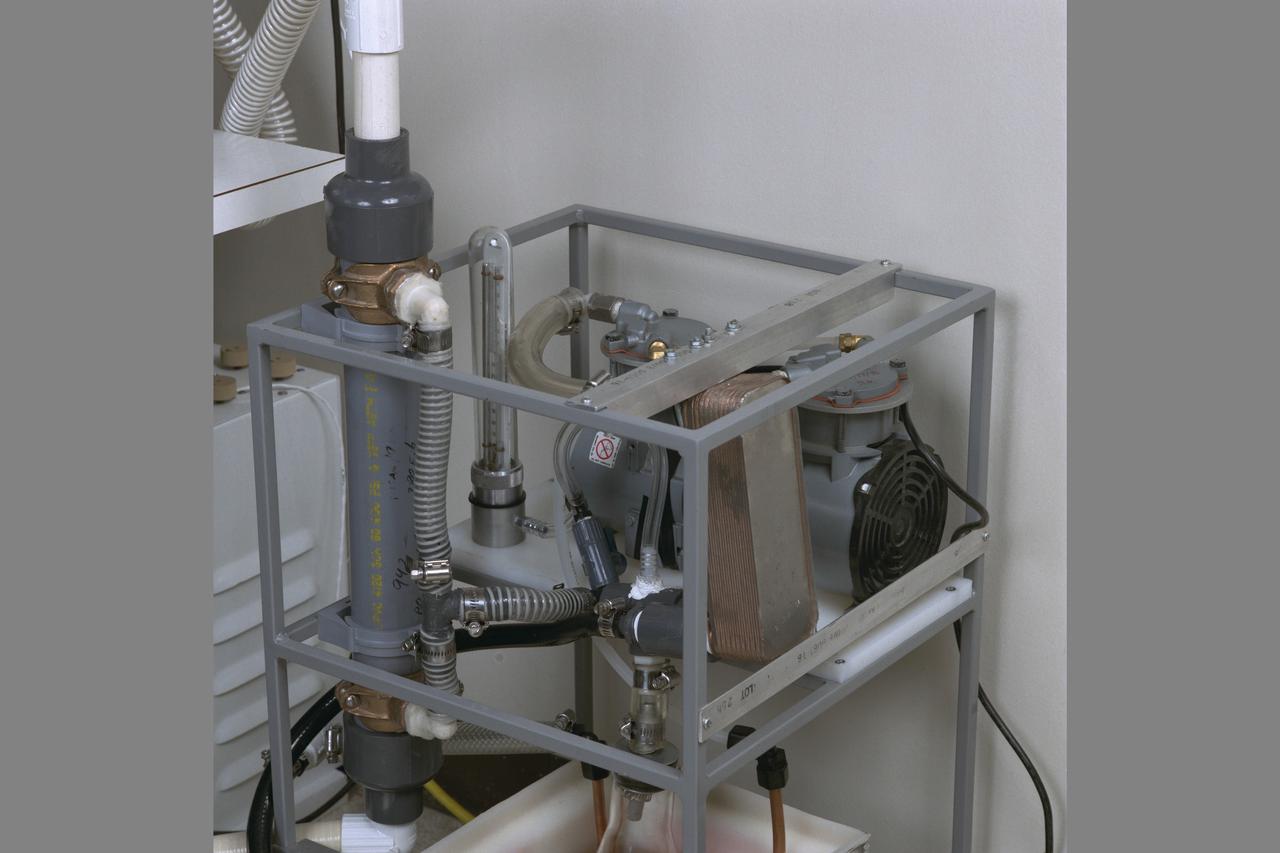
Life Sciences documentation of Salad Machine being developed at NASA Ames Research Center, Moffett Field, Calif. for use in long duration space flight or on distant outposts.
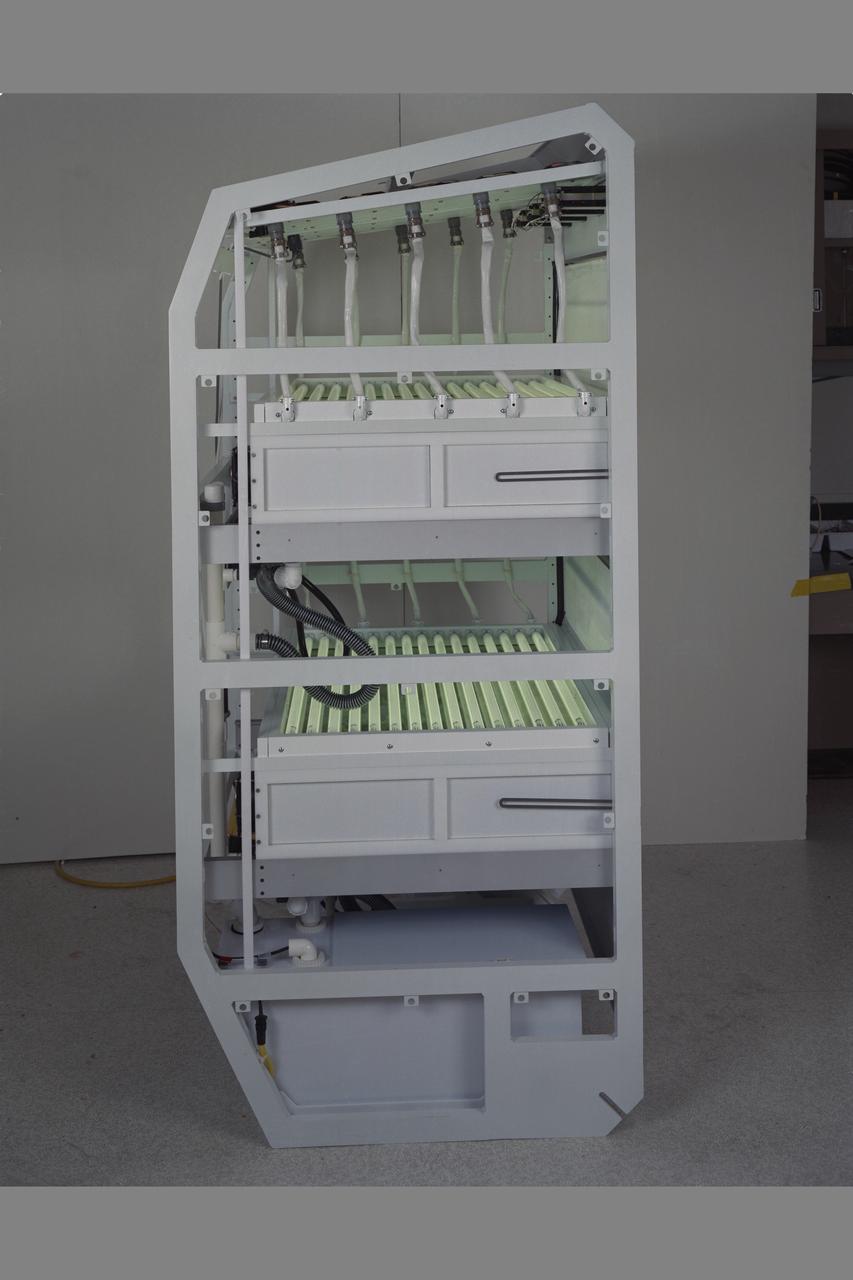
Life Sciences documentation of Salad Machine being developed at NASA Ames Research Center, Moffett Field, Calif. for use in long duration space flight or on distant outposts.
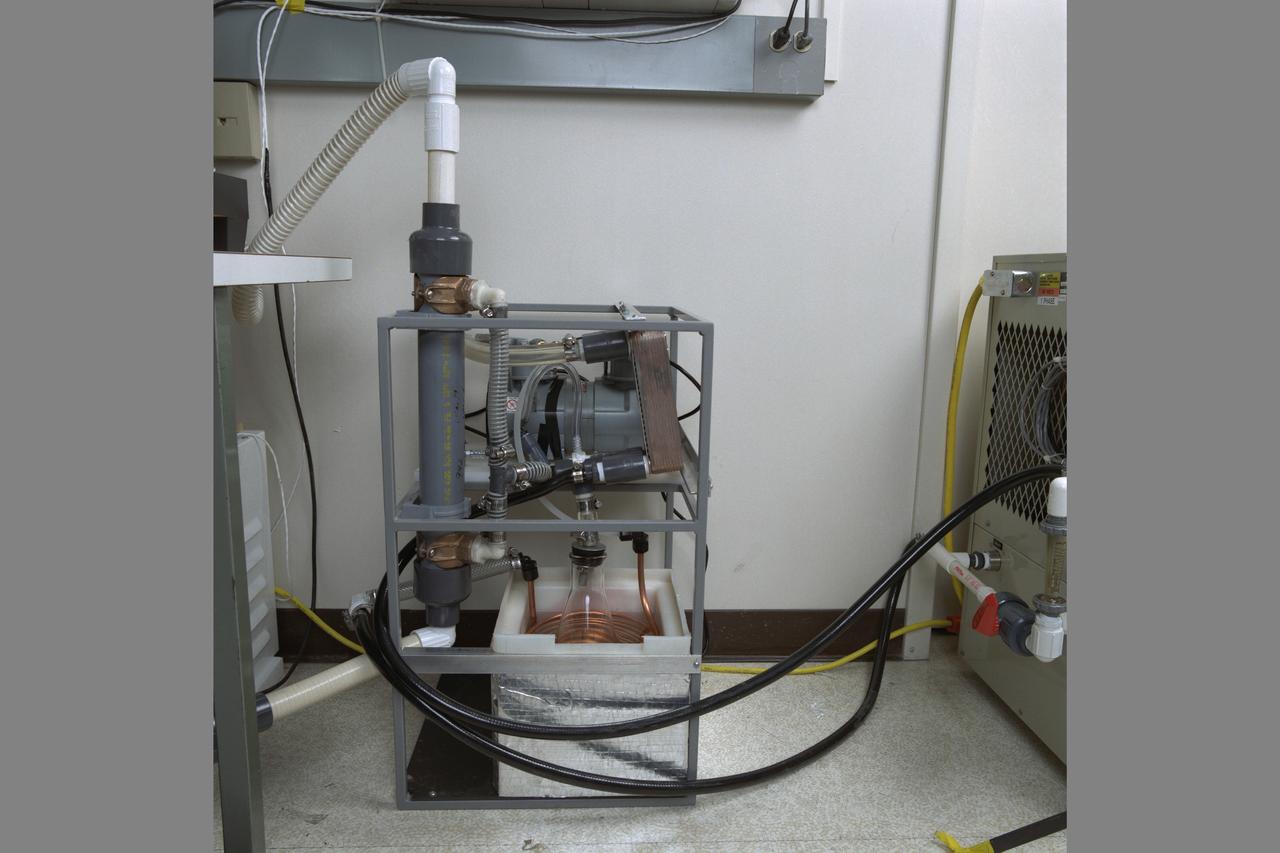
Life Sciences documentation of Salad Machine being developed at NASA Ames Research Center, Moffett Field, Calif. for use in long duration space flight or on distant outposts.
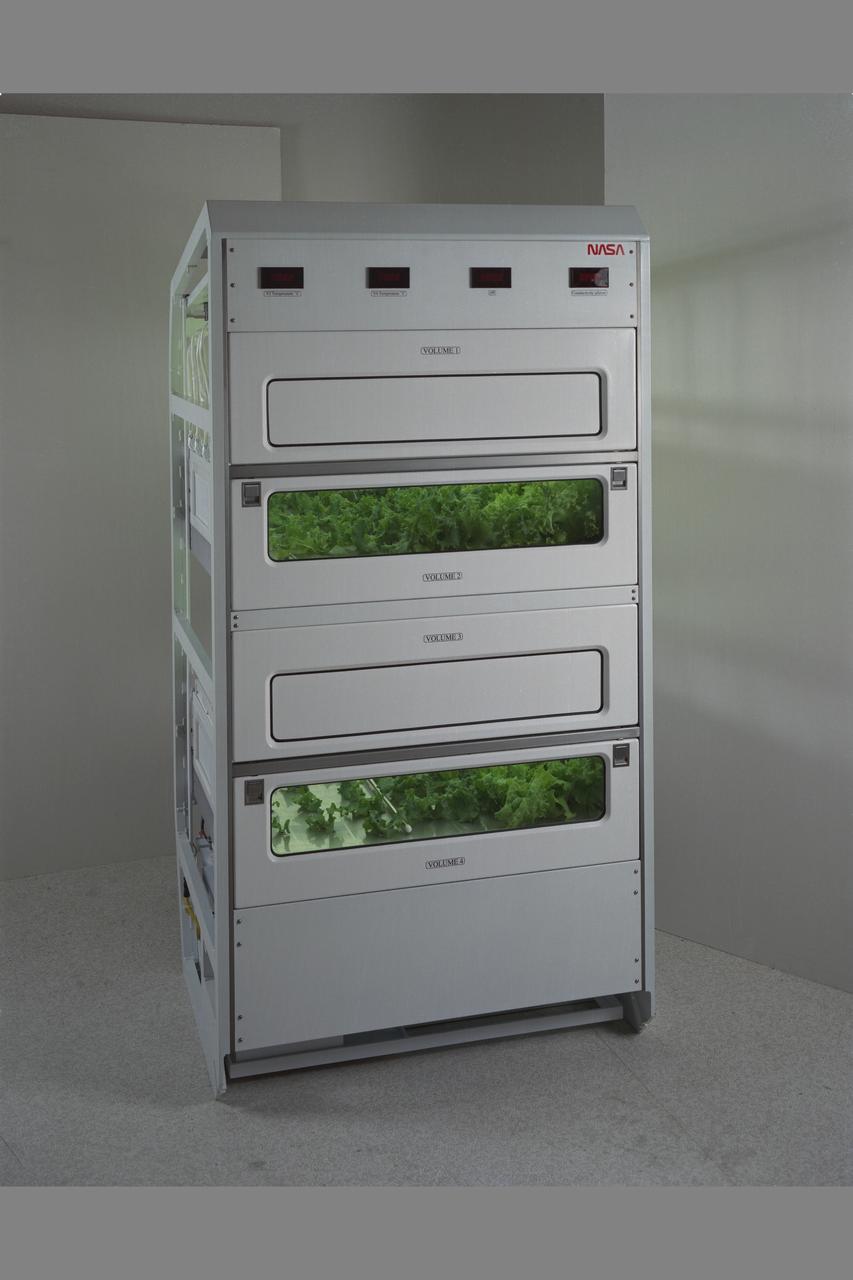
Life Sciences documentation of Salad Machine being developed at NASA Ames Research Center, Moffett Field, Calif. for use in long duration space flight or on distant outposts.
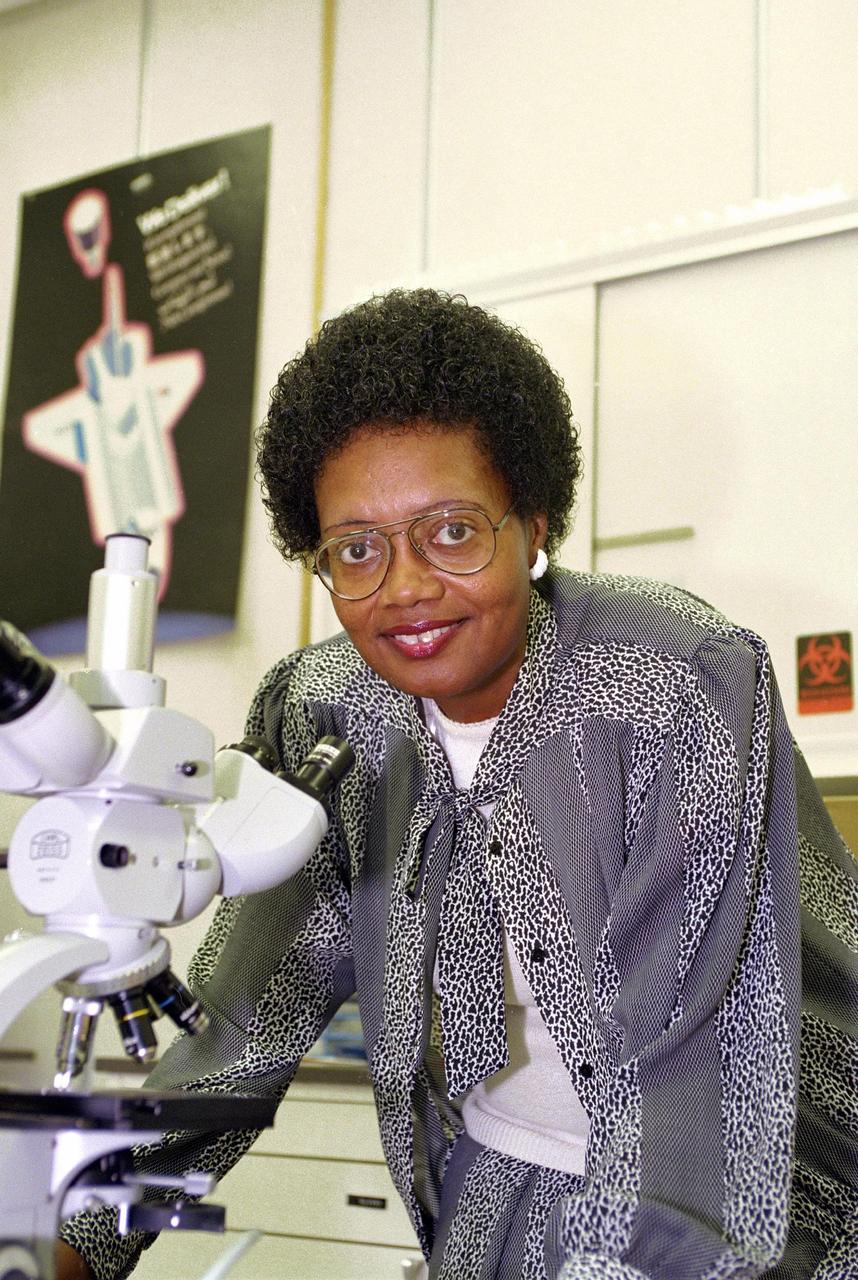
KENNEDY SPACE CENTER, FLA. -- Dr. Irene Duhart Long is the director, Biomedical Operations and Research Office, at the Kennedy Space Center effective July 24, 1994. She is responsible for the program management of the center's aerospace and occupational medicine, life sciences research, environmental health programs and the operations management of the life sciences support facilities. Dr. Long also is responsible for providing the coordinating medical, environmental monitoring and environmental health support to launch and landing activities and day-to-day institutional functions.
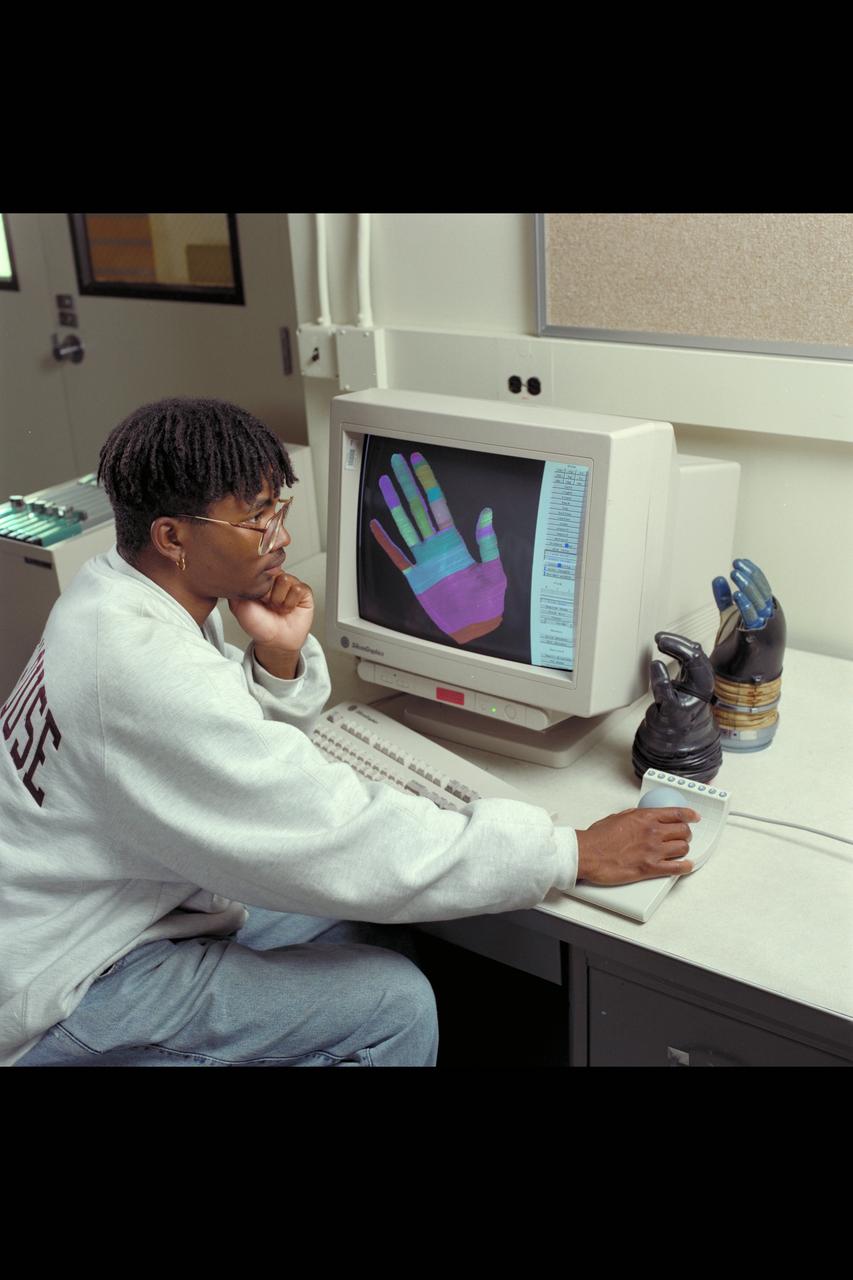
Ames Life Sciences Experiments: Cedi Snowden at Silicon Graphics with AX-5 spacesuit glove

This image of the Space Shuttle Orbiter Atlantis, with cargo bay doors open showing Spacelab Module for the Spacelab Life Science and the docking port, was photographed from the Russian Mir Space Station during STS-71 mission. The STS-71 mission performed the first docking with the Russian Mir Space Station to exchange crews. The Mir 19 crew, cosmonauts Anatoly Solovyev and Nikolai Budarin, replaced the Mir 18 crew, cosmonauts Valdamir Dezhurov and Gernady Strekalov, and astronaut Norman Thagard. Astronaut Thagard was launched aboard a Soyuz spacecraft in March 1995 for a three-month stay on the Mir Space Station as part of the Mir 18 crew. The Orbiter Atlantis was modified to carry a docking system compatible with the Mir Space Station. The Orbiter also carried a Spacelab module for the Spacelab Life Science mission in the payload bay in which various life science experiments and data collection took place throughout the 10-day mission.
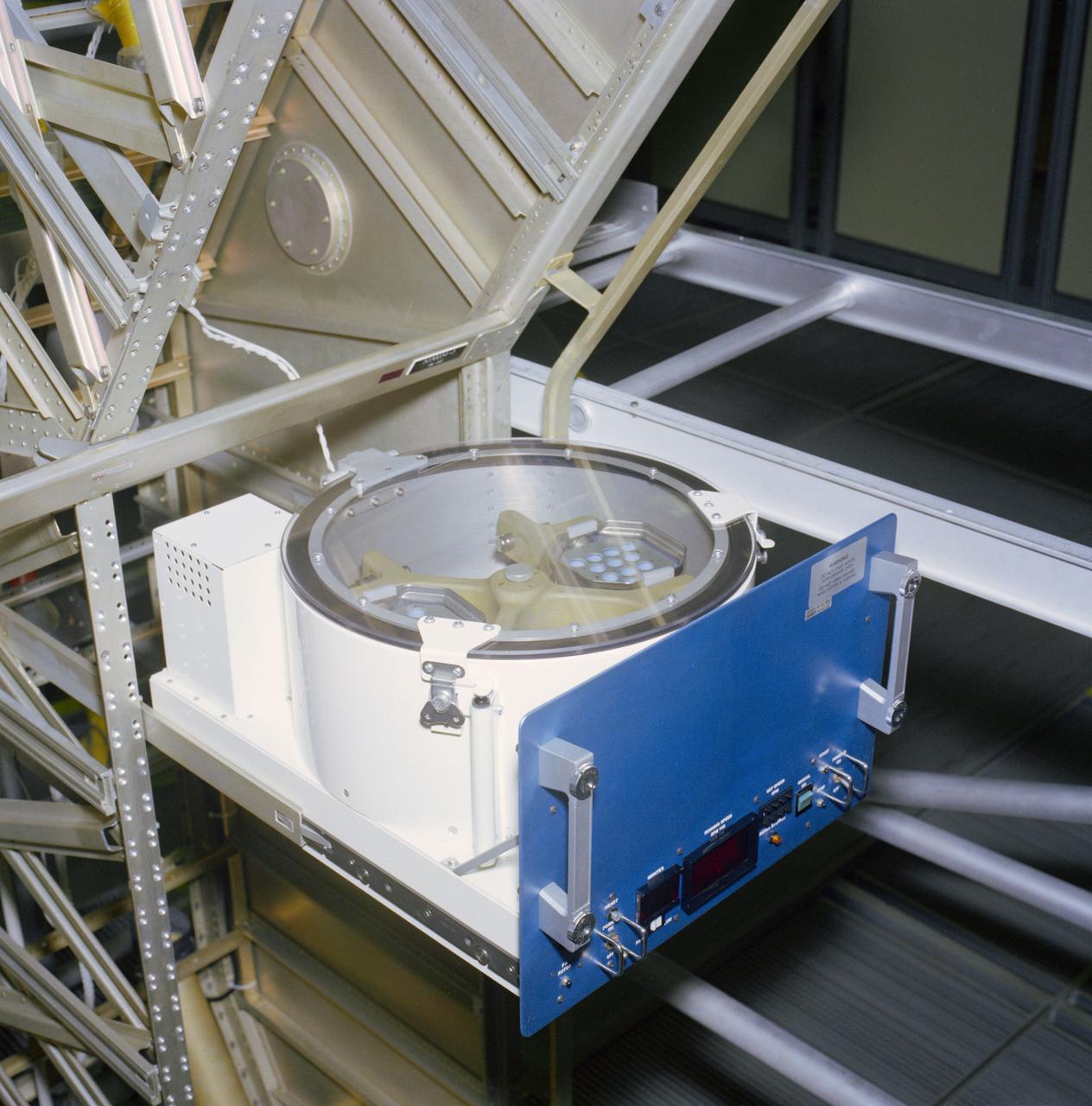
S81-25565 (Feb 1981) --- Expected to be a busy item of flight hardware on the Spacelab Life Sciences (SLS-1) mission is this low-gravity centrifuge. To be flown onboard Columbia for STS-40, the centrifuge is able to simulate several gravity levels (0.5 g, 1.0 g, 1.5 g. and 2.0 g). Blood samples, taken during the flight, will be placed in the centrifuge, fixed for post flight analysis and transferred to a freezer.
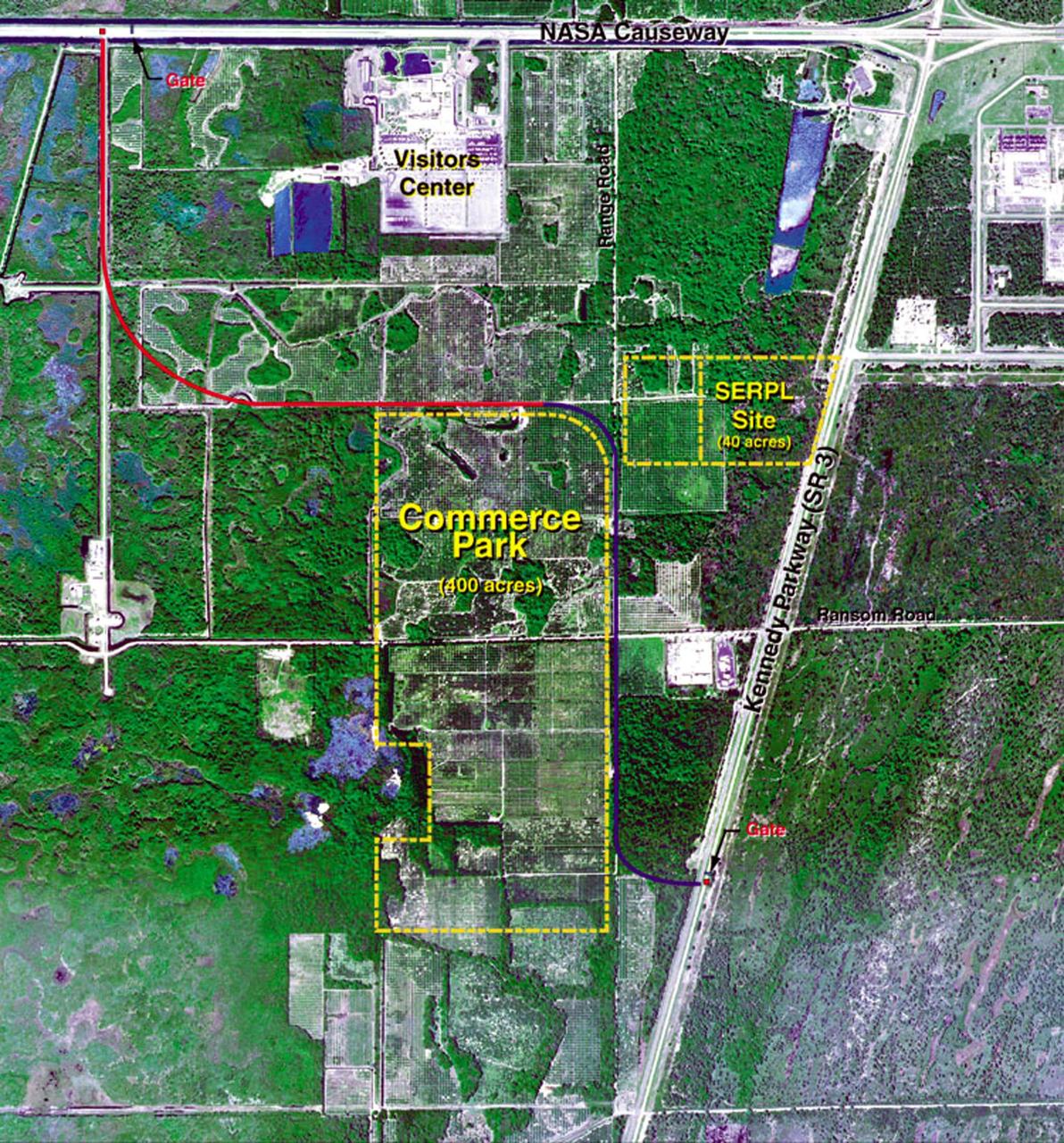
This diagram shows the planned locations of the Space Experiment Research and Processing Laboratory (SERPL) and the Space Station Commerce Park at Kennedy Space Center. The SERPL is a planned 100,000-square-foot laboratory that will provide expanded and upgraded facilities for hosting International Space Station experiment processing. In addition, it will provide better support for other biological and life sciences payload processing at KSC. It will serve as a magnet facility for the planned 400-acre Commerce Park.
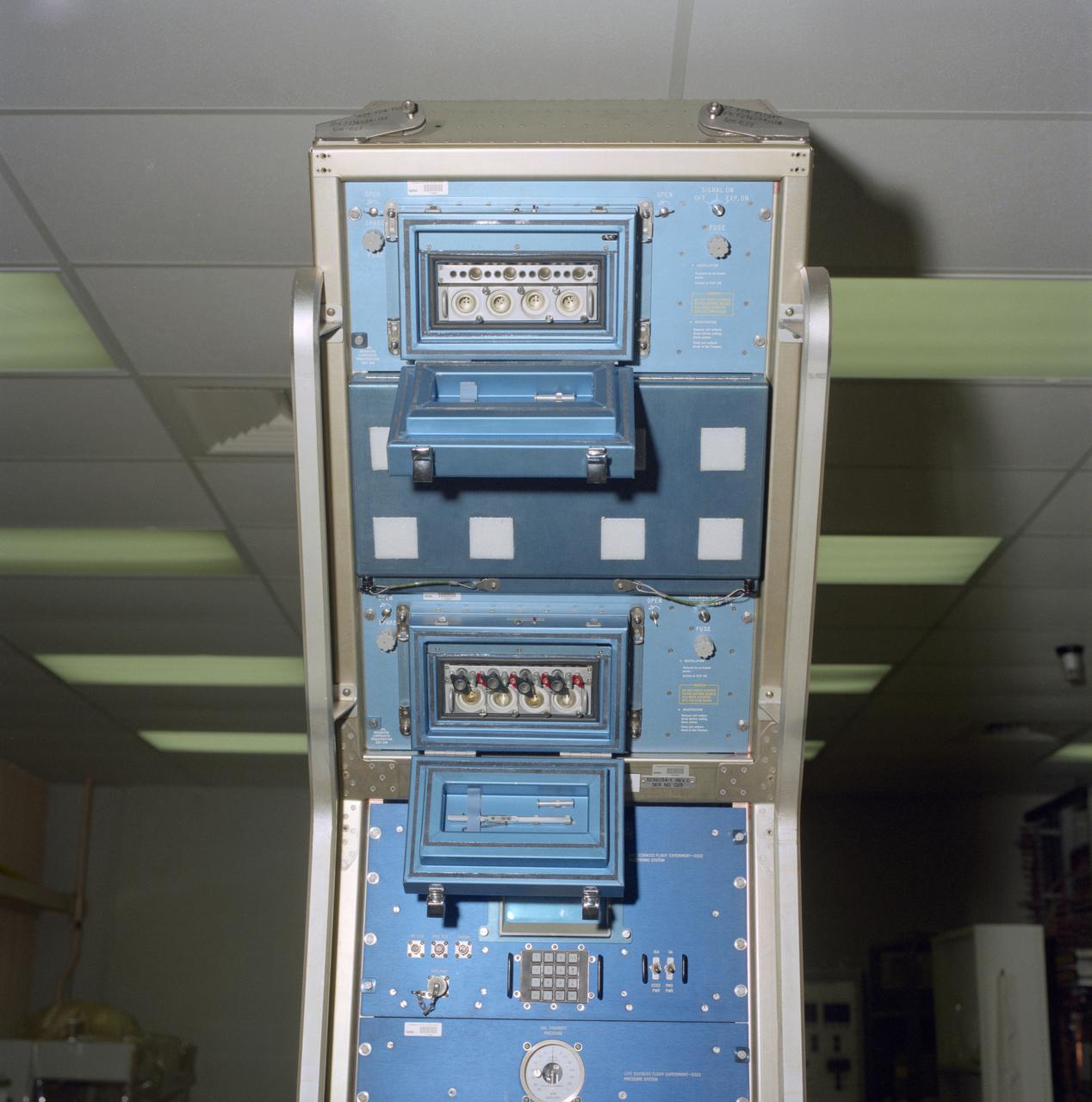
S84-43683 (26 Nov 1984) --- This vertically positioned rectangular piece of hardware, scheduled to fly on the science module of Spacelab Life Sciences-1, is important to the immunology investigation on the mission. Called Lymphocyte Proliferation in Weightlessness (Experiment 240), the test was developed by Dr. Augosto Cogoli of the Institute of Biotechnology, Gruppe Weltraum Biologie, in Zurich, Switzerland. It represents a continuation of previous Spacelab experiments by examining the effects of weightlessness on lymphocyte activation. Cultures will be grown in the microgravity incubators on the pictured hardware.
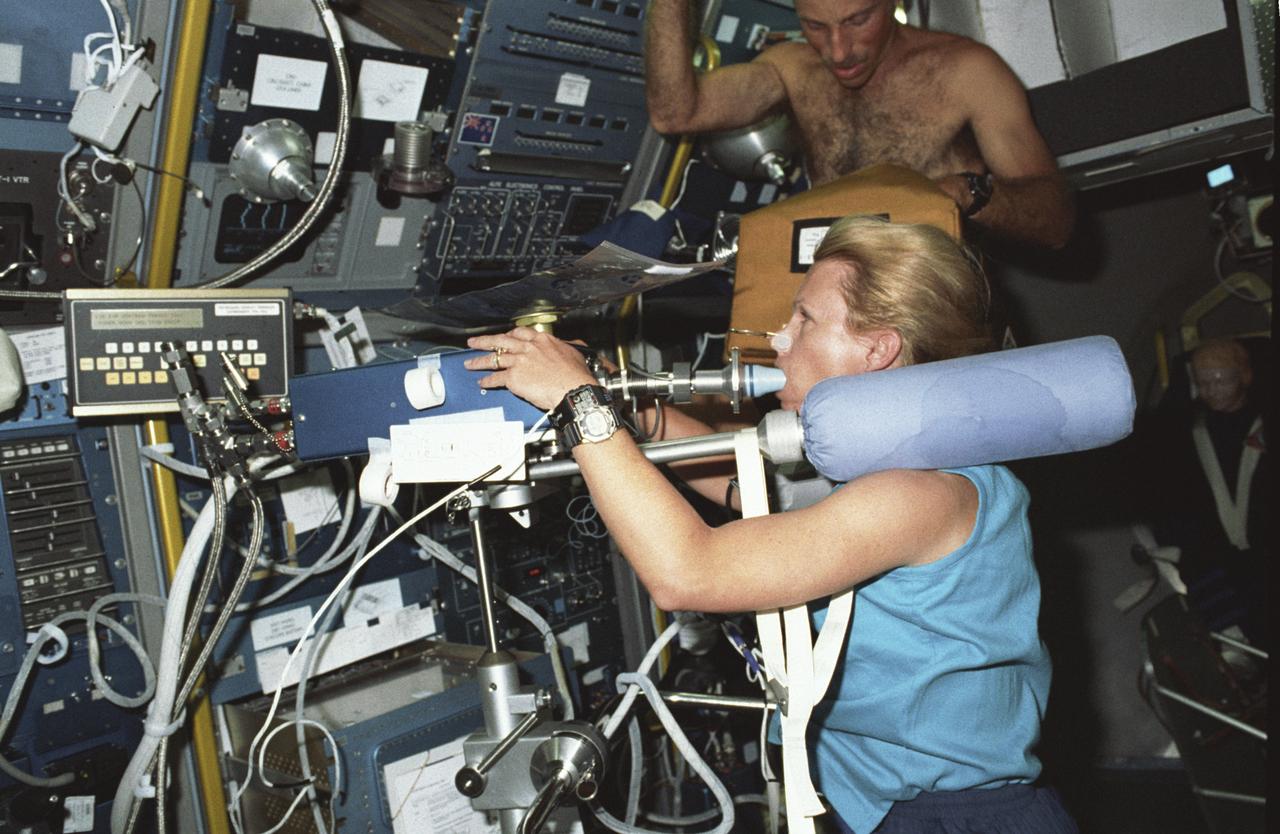
Spacelab Life Science -1 (SLS-1) was the first Spacelab mission dedicated solely to life sciences. The main purpose of the SLS-1 mission was to study the mechanisms, magnitudes, and time courses of certain physiological changes that occur during space flight, to investigate the consequences of the body's adaptation to microgravity and readjustment to Earth's gravity, and bring the benefits back home to Earth. The mission was designed to explore the responses of the heart, lungs, blood vessels, kidneys, and hormone-secreting glands to microgravity and related body fluid shifts; examine the causes of space motion sickness; and study changes in the muscles, bones, and cells. This photograph shows astronaut Rhea Seddon conducting an inflight study of the Cardiovascular Deconditioning experiment by breathing into the cardiovascular rebreathing unit. This experiment focused on the deconditioning of the heart and lungs and changes in cardiopulmonary function that occur upon return to Earth. By using noninvasive techniques of prolonged expiration and rebreathing, investigators can determine the amount of blood pumped out of the heart (cardiac output), the ease with which blood flows through all the vessels (total peripheral resistance), oxygen used and carbon dioxide released by the body, and lung function and volume changes. SLS-1 was launched aboard the Space Shuttle Orbiter Columbia (STS-40) on June 5, 1995.
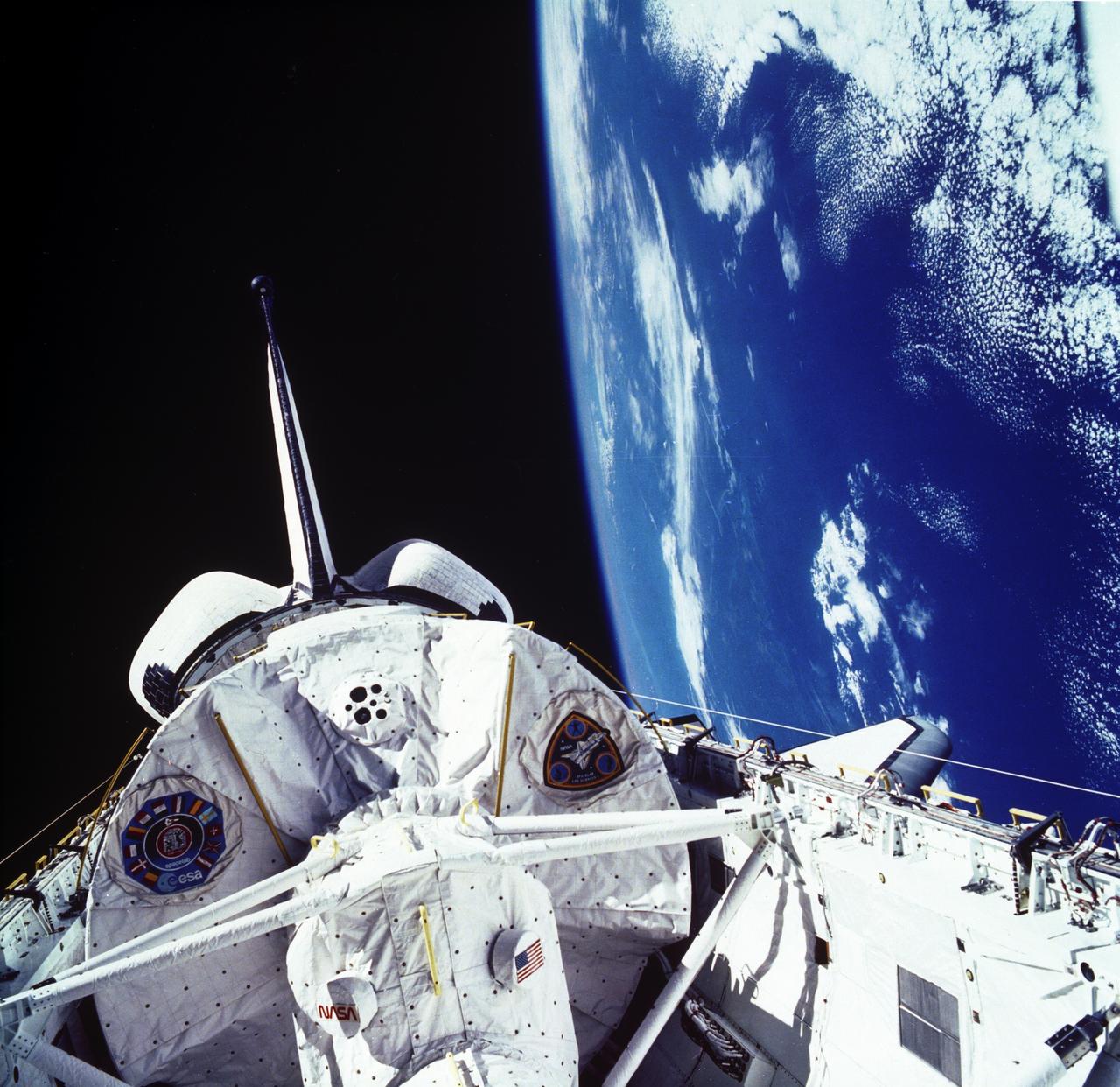
The laboratory module in the cargo bay of the Space Shuttle Orbiter Columbia was photographed during the Spacelab Life Science-1 (SLS-1) mission. SLS-1 was the first Spacelab mission dedicated solely to life sciences. The main purpose of the SLS-1 mission was to study the mechanisms, magnitudes, and time courses of certain physiological changes that occur during space flight, to investigate the consequences of the body's adaptation to microgravity and readjustment to Earth's gravity, and to bring the benefits back home to Earth. The mission was designed to explore the responses of the heart, lungs, blood vessels, kidneys, and hormone-secreting glands to microgravity and related body fluid shifts; examine the causes of space motion sickness; and study changes in the muscles, bones and cells. The five body systems being studied were: The Cardiovascular/Cardiopulmonary System (heart, lungs, and blood vessels), the Renal/Endocrine System (kidney and hormone-secreting organs), the Immune System (white blood cells), the Musculoskeletal System (muscles and bones), and the Neurovestibular System (brain and nerves, eyes, and irner ear). The SLS-1 was launched aboard the Space Shuttle Orbiter Columbia (STS-40) on June 5, 1995.

Inside the Space Life Sciences Lab at NASA’s Kennedy Space Center in Florida, researchers plant pepper seeds in a science carrier on April 8, 2021, in preparation for the Plant Habitat-04 (PH-04) experiment. The seeds will fly to the International Space Station on SpaceX’s 22nd Commercial Resupply Services (CRS-22) mission. When the experiment starts, astronauts will grow the pepper seeds in the Advanced Plant Habitat (APH) growth chamber, which will monitor the experiment with more than 180 sensors. The astronauts will observe plant growth for about four months and conduct two harvests to study whether microgravity affects growth, flavor, or texture. Since peppers take longer to germinate, grow, and develop than previous crops grown in space, the PH-04 experiment also will test the durability and reliability of the various systems within the APH.

A researcher from NASA’s Kennedy Space Center in Florida prepares pepper seeds for planting inside science carriers on April 8, 2021, inside the Space Life Sciences Lab for the Plant Habitat-04 (PH-04) experiment. The seeds will fly to the International Space Station on SpaceX’s 22nd Commercial Resupply Services (CRS-22) mission. When the experiment starts, astronauts will grow the pepper seeds in the Advanced Plant Habitat (APH) growth chamber, which will monitor the experiment with more than 180 sensors. The astronauts will observe plant growth for about four months and conduct two harvests to study whether microgravity affects growth, flavor, or texture. Since peppers take longer to germinate, grow, and develop than previous crops grown in space, the PH-04 experiment also will test the durability and reliability of the various systems within the APH.

A researcher from NASA’s Kennedy Space Center in Florida prepares pepper seeds for planting inside science carriers on April 8, 2021, inside the Space Life Sciences Lab for the Plant Habitat-04 (PH-04) experiment. The seeds will fly to the International Space Station on SpaceX’s 22nd Commercial Resupply Services (CRS-22) mission. When the experiment starts, astronauts will grow the pepper seeds in the Advanced Plant Habitat (APH) growth chamber, which will monitor the experiment with more than 180 sensors. The astronauts will observe plant growth for about four months and conduct two harvests to study whether microgravity affects growth, flavor, or texture. Since peppers take longer to germinate, grow, and develop than previous crops grown in space, the PH-04 experiment also will test the durability and reliability of the various systems within the APH.

Inside the Space Life Sciences Lab at NASA’s Kennedy Space Center in Florida, a researcher plants pepper seeds in science carriers on April 8, 2021, in preparation for the Plant Habitat-04 (PH-04) experiment. The seeds will fly to the International Space Station on SpaceX’s 22nd Commercial Resupply Services (CRS-22) mission. When the experiment starts, astronauts will grow the pepper seeds in the Advanced Plant Habitat (APH) growth chamber, which will monitor the experiment with more than 180 sensors. The astronauts will observe plant growth for about four months and conduct two harvests to study whether microgravity affects growth, flavor, or texture. Since peppers take longer to germinate, grow, and develop than previous crops grown in space, the PH-04 experiment also will test the durability and reliability of the various systems within the APH.

A close-up photo of a pepper seed prepared by researchers at NASA’s Kennedy Space Center in Florida is shown before it’s planted inside a science carrier on April 8, 2021, inside the Space Life Sciences Lab for the Plant Habitat-04 (PH-04) experiment. The seeds will fly to the International Space Station on SpaceX’s 22nd Commercial Resupply Services (CRS-22) mission. When the experiment starts, astronauts will grow the pepper seeds in the Advanced Plant Habitat (APH) growth chamber, which will monitor the experiment with more than 180 sensors. The astronauts will observe plant growth for about four months and conduct two harvests to study whether microgravity affects growth, flavor, or texture. Since peppers take longer to germinate, grow, and develop than previous crops grown in space, the PH-04 experiment also will test the durability and reliability of the various systems within the APH.

A researcher from NASA’s Kennedy Space Center in Florida prepares pepper seeds for planting inside science carriers on April 8, 2021, inside the Space Life Sciences Lab for the Plant Habitat-04 (PH-04) experiment. The seeds will fly to the International Space Station on SpaceX’s 22nd Commercial Resupply Services (CRS-22) mission. When the experiment starts, astronauts will grow the pepper seeds in the Advanced Plant Habitat (APH) growth chamber, which will monitor the experiment with more than 180 sensors. The astronauts will observe plant growth for about four months and conduct two harvests to study whether microgravity affects growth, flavor, or texture. Since peppers take longer to germinate, grow, and develop than previous crops grown in space, the PH-04 experiment also will test the durability and reliability of the various systems within the APH.
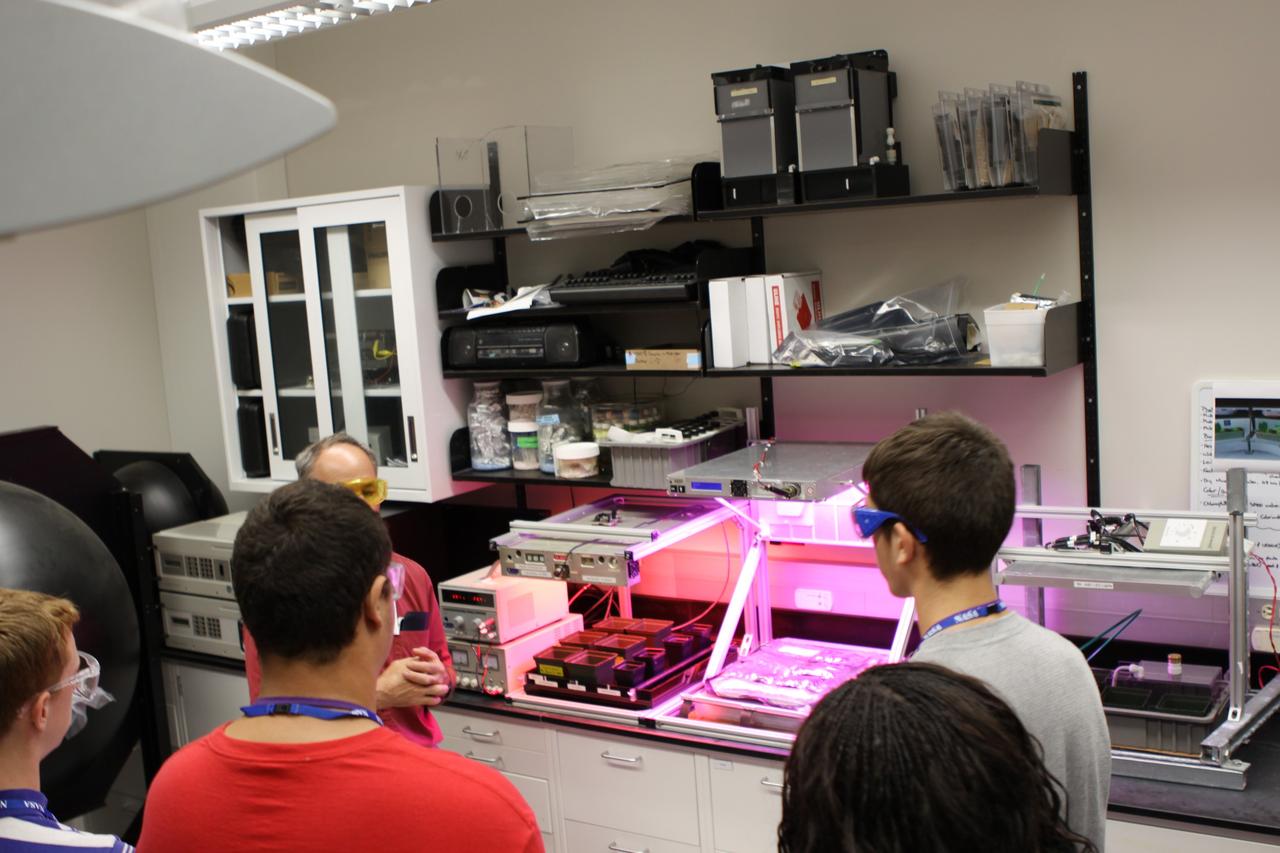
CAPE CANAVERAL, Fla. – Dr. Ray Wheeler explains a system for growing salad crops in space to students in the Life Support and Habitation Systems Lab at the Space Life Sciences Lab facility. The 26 honor students in chemistry and biology and their teachers got a chance to visit a number of high-tech labs at Kennedy Space Center as part of an effort to encourage students in the areas of science, technology, engineering and math. The tenth and eleventh grade students from Terry Parker High School in Jacksonville, Fla., visited a number of vastly different labs during their one-day tour. The group's visit to Kennedy was hosted by the Education Office as part of a nationwide effort by the National Lab Network to help introduce the nation's students to science careers. Photo credit: NASA/Jim Grossmann
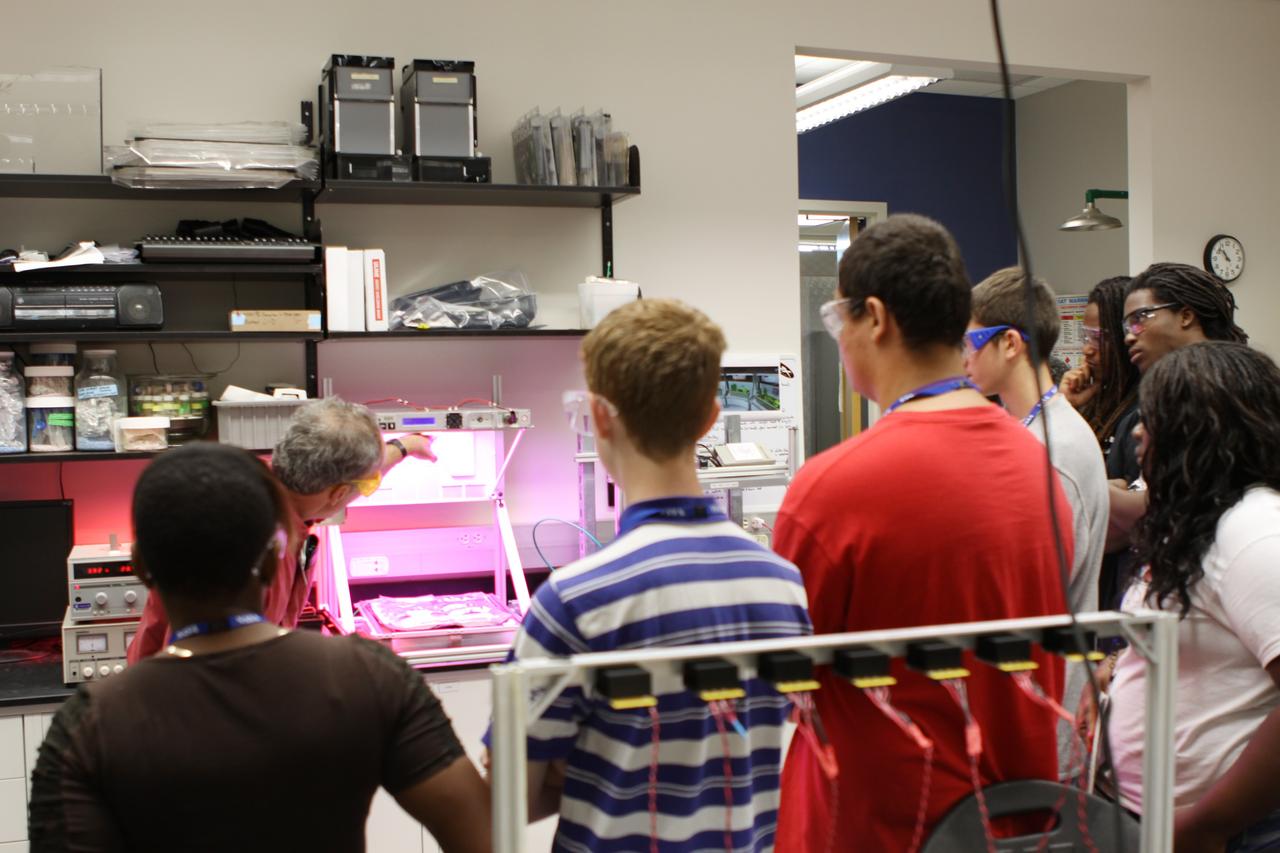
CAPE CANAVERAL, Fla. – Dr. Ray Wheeler explains a system for growing salad crops in space to students in the Life Support and Habitation Systems Lab at the Space Life Sciences Lab facility. The 26 honor students in chemistry and biology and their teachers got a chance to visit a number of high-tech labs at Kennedy Space Center as part of an effort to encourage students in the areas of science, technology, engineering and math. The tenth and eleventh grade students from Terry Parker High School in Jacksonville, Fla., visited a number of vastly different labs during their one-day tour. The group's visit to Kennedy was hosted by the Education Office as part of a nationwide effort by the National Lab Network to help introduce the nation's students to science careers. Photo credit: NASA/Jim Grossmann
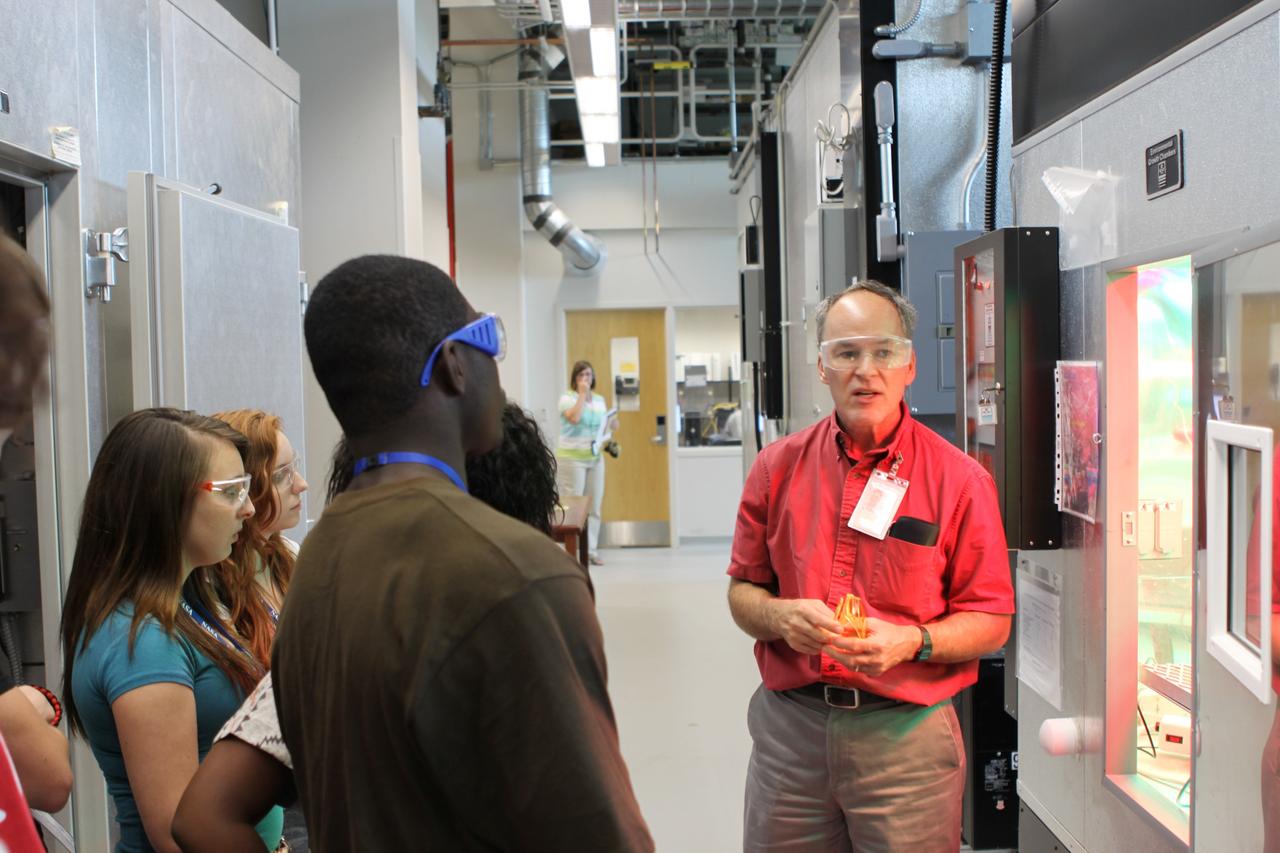
CAPE CANAVERAL, Fla. – Dr. Ray Wheeler explains a plant growth chamber to students in the Life Support and Habitation Systems Lab at the Space Life Sciences Lab facility. The 26 honor students in chemistry and biology and their teachers got a chance to visit a number of high-tech labs at Kennedy Space Center as part of an effort to encourage students in the areas of science, technology, engineering and math. The tenth and eleventh grade students from Terry Parker High School in Jacksonville, Fla., visited a number of vastly different labs during their one-day tour. The group's visit to Kennedy was hosted by the Education Office as part of a nationwide effort by the National Lab Network to help introduce the nation's students to science careers. Photo credit: NASA/Jim Grossmann
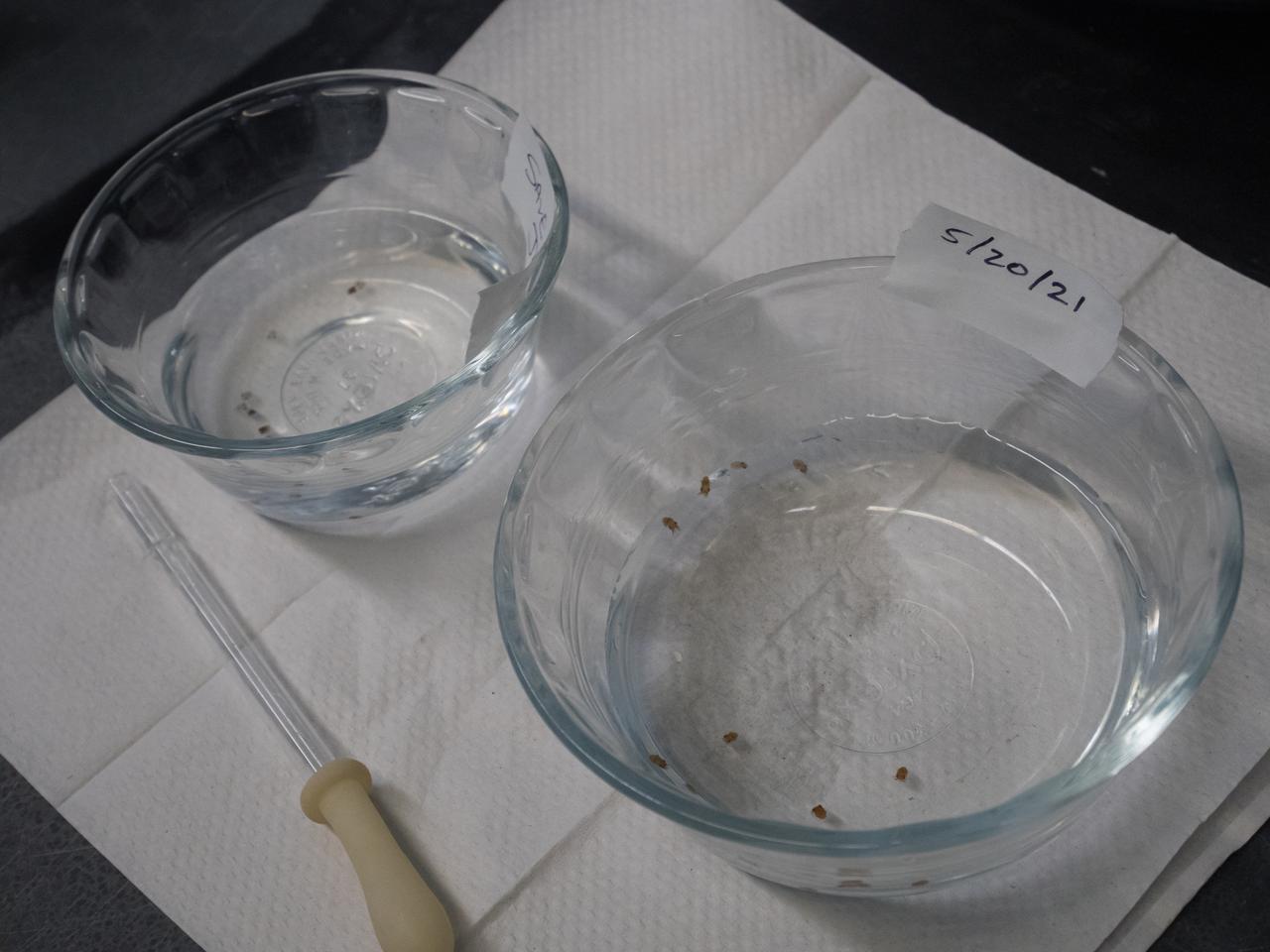
Inside the Space Life Sciences Laboratory at NASA’s Kennedy Space Center in Florida, bobtail squid are part of preparations on May 20, 2021, for the Understanding of Microgravity on Animal-Microbe Interactions (UMAMI) experiment that will launch to the International Space Station aboard SpaceX’s 22nd Commercial Resupply Services mission. The experiment will examine the effects of spaceflight on the molecular and chemical interactions between beneficial microbes and their animal hosts. Animals, including humans, rely on microbes to maintain a healthy digestive and immune system. UMAMI is one of several experiments bound for the space station in the Dragon capsule atop the SpaceX Falcon 9 rocket. The mission is scheduled to lift off from Launch Complex 39A on June 3.
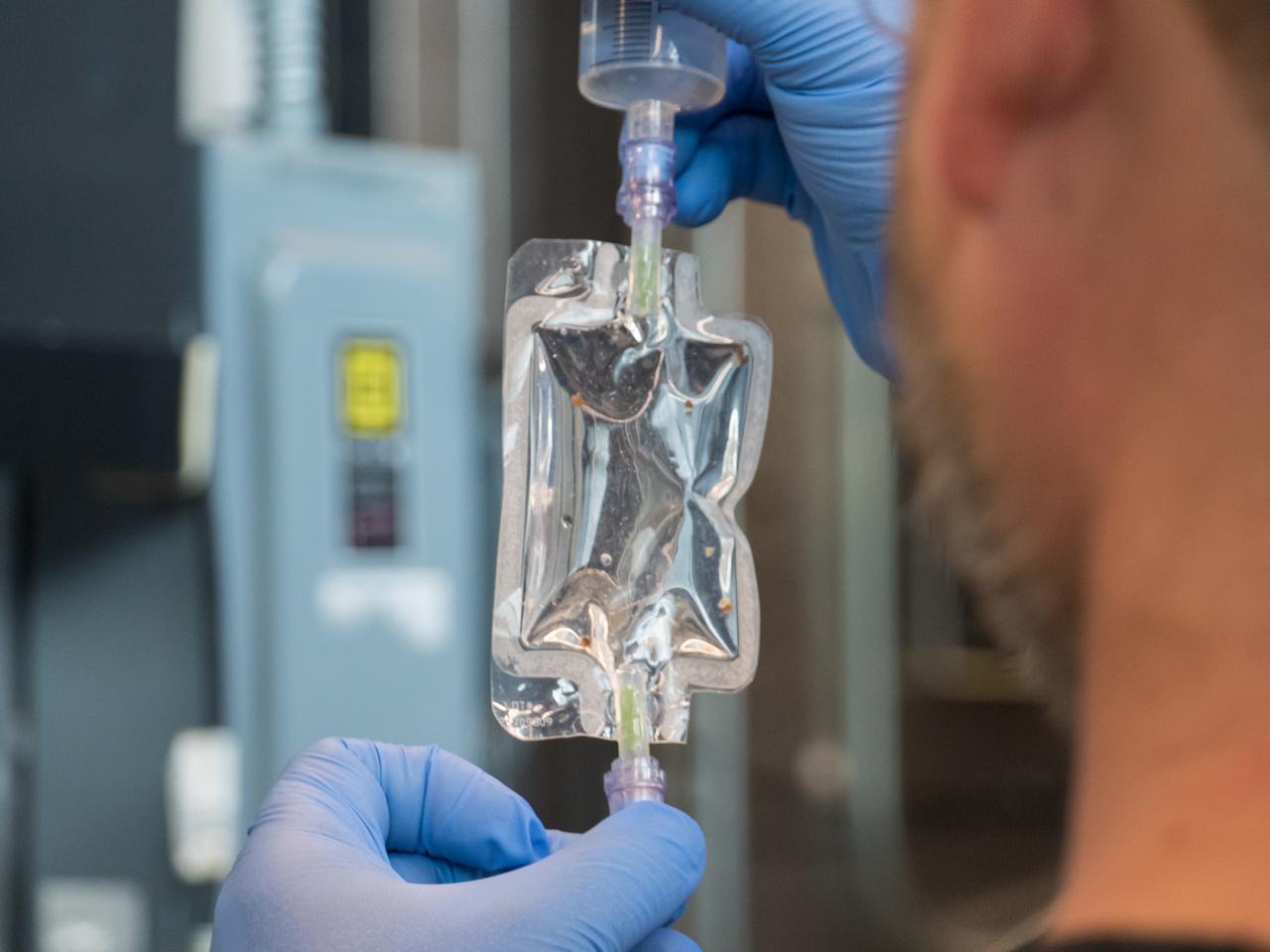
Inside the Space Life Sciences Laboratory at NASA’s Kennedy Space Center in Florida, Dr. Eric Koch, a postdoctoral fellow at the University of Florida, demonstrates preparations for bobtail squid on May 20, 2021, for a trip to the International Space Station aboard SpaceX’s 22nd Commercial Resupply Services mission. The experiment will examine the effects of spaceflight on the molecular and chemical interactions between beneficial microbes and their animal hosts. Amimals, including humans, rely on microbes to maintain a healthy digestive and immune system. UMAMI is one of several experiments bound for the space station in the Dragon capsule atop the SpaceX Falcon 9 rocket. The mission is scheduled to lift off from Launch Complex 39A on June 3.
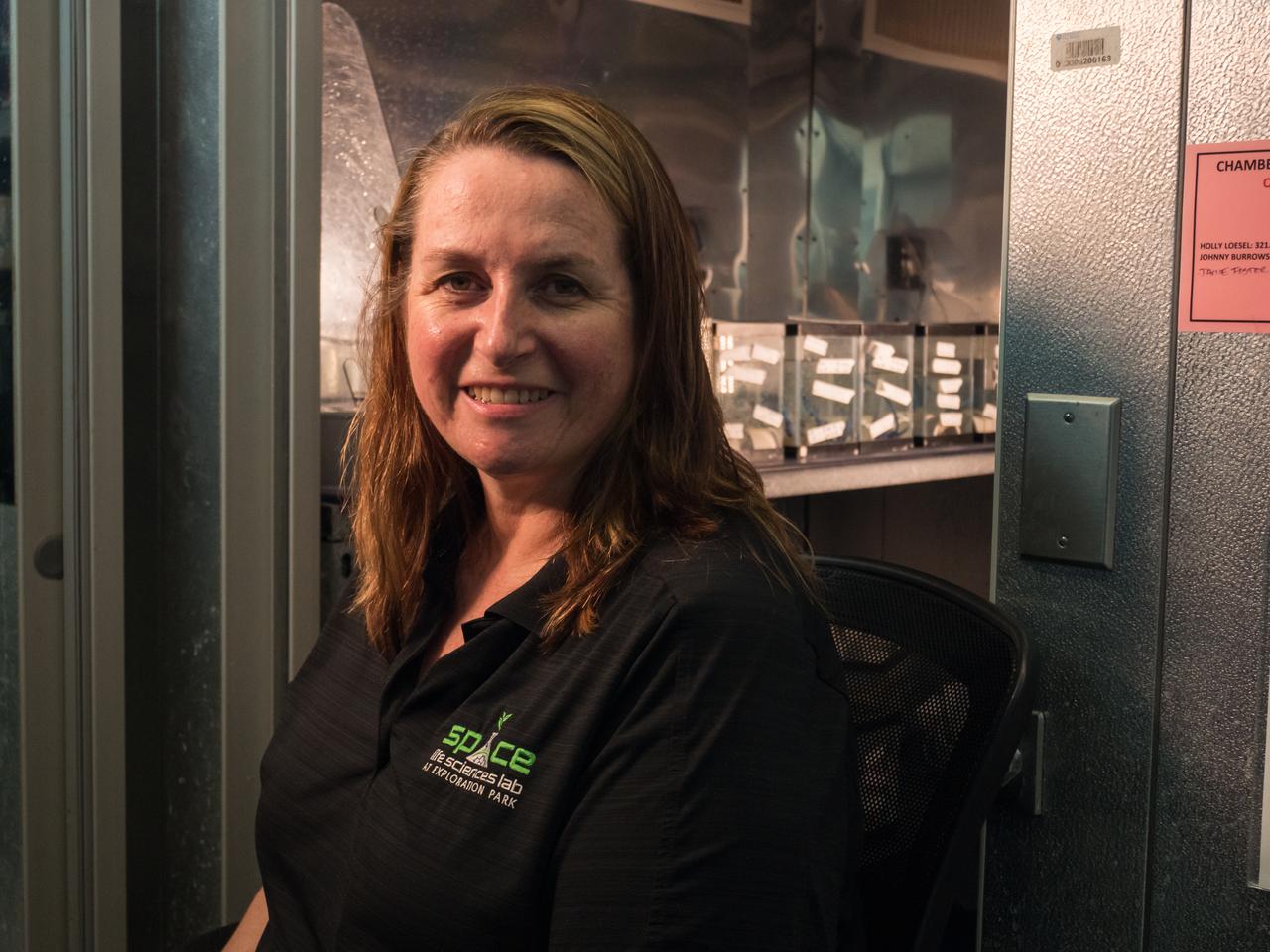
Inside the Space Life Sciences Laboratory at NASA’s Kennedy Space Center in Florida, bobtail squid are part of preparations on May 20, 2021, for the Understanding of Microgravity on Animal-Microbe Interactions (UMAMI) experiment that will launch to the International Space Station aboard SpaceX’s 22nd Commercial Resupply Services mission. The experiment will examine the effects of spaceflight on the molecular and chemical interactions between beneficial microbes and their animal hosts. Amimals, including humans, rely on microbes to maintain a healthy digestive and immune system. UMAMI is one of several experiments bound for the space station in the Dragon capsule atop the SpaceX Falcon 9 rocket. The mission is scheduled to lift off from Launch Complex 39A on June 3.
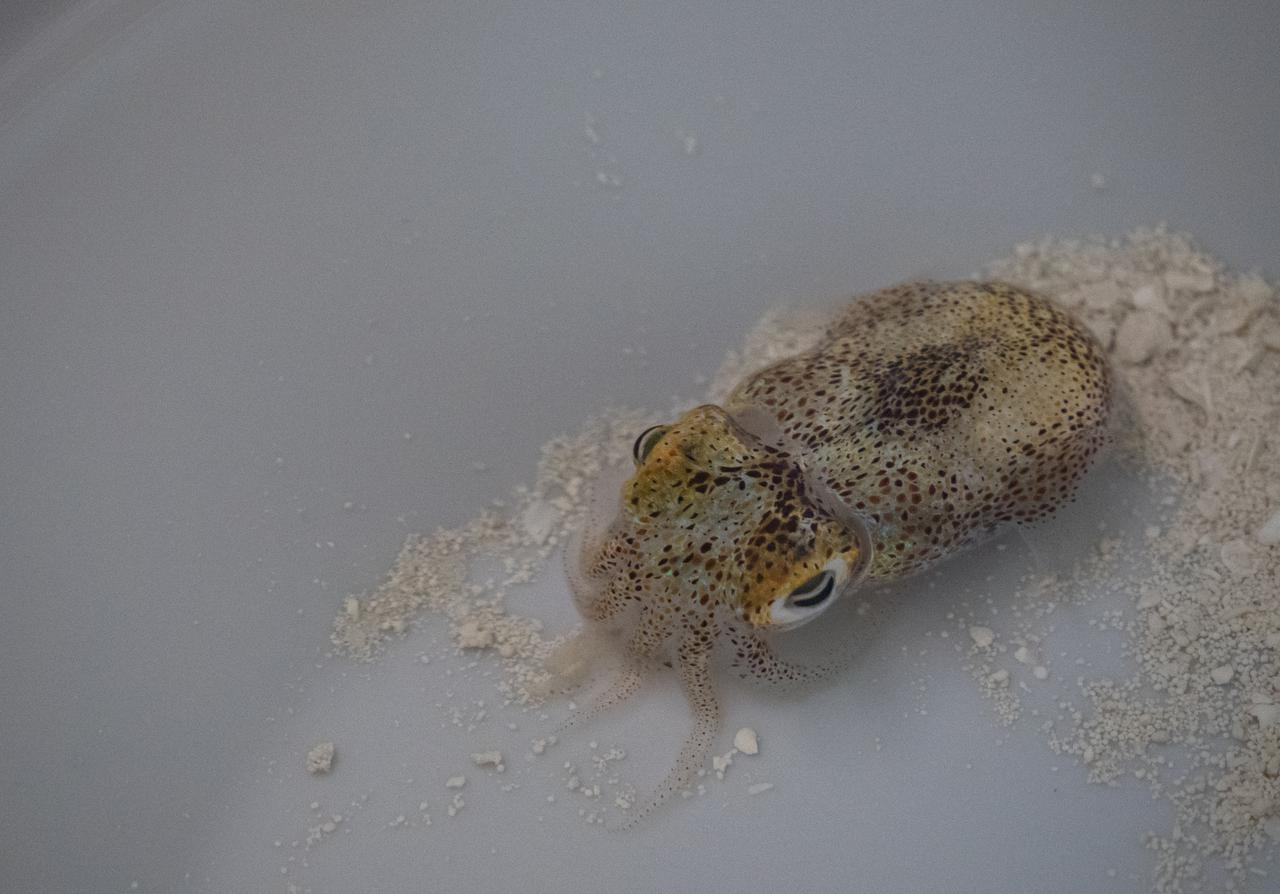
Inside the Space Life Sciences Laboratory at NASA’s Kennedy Space Center in Florida, bobtail squid are part of preparations on May 20, 2021, for the Understanding of Microgravity on Animal-Microbe Interactions (UMAMI) experiment that will launch to the International Space Station aboard SpaceX’s 22nd Commercial Resupply Services mission. The experiment will examine the effects of spaceflight on the molecular and chemical interactions between beneficial microbes and their animal hosts. Amimals, including humans, rely on microbes to maintain a healthy digestive and immune system. UMAMI is one of several experiments bound for the space station in the Dragon capsule atop the SpaceX Falcon 9 rocket. The mission is scheduled to lift off from Launch Complex 39A on June 3.

Inside the Space Life Sciences Laboratory at NASA’s Kennedy Space Center in Florida, Dr. Eric Koch, a postdoctoral fellow at the University of Florida, demonstrates preparations for bobtail squid on May 20, 2021, for a trip to the International Space Station aboard SpaceX’s 22nd Commercial Resupply Services mission. The experiment will examine the effects of spaceflight on the molecular and chemical interactions between beneficial microbes and their animal hosts. Amimals, including humans, rely on microbes to maintain a healthy digestive and immune system. UMAMI is one of several experiments bound for the space station in the Dragon capsule atop the SpaceX Falcon 9 rocket. The mission is scheduled to lift off from Launch Complex 39A on June 3.
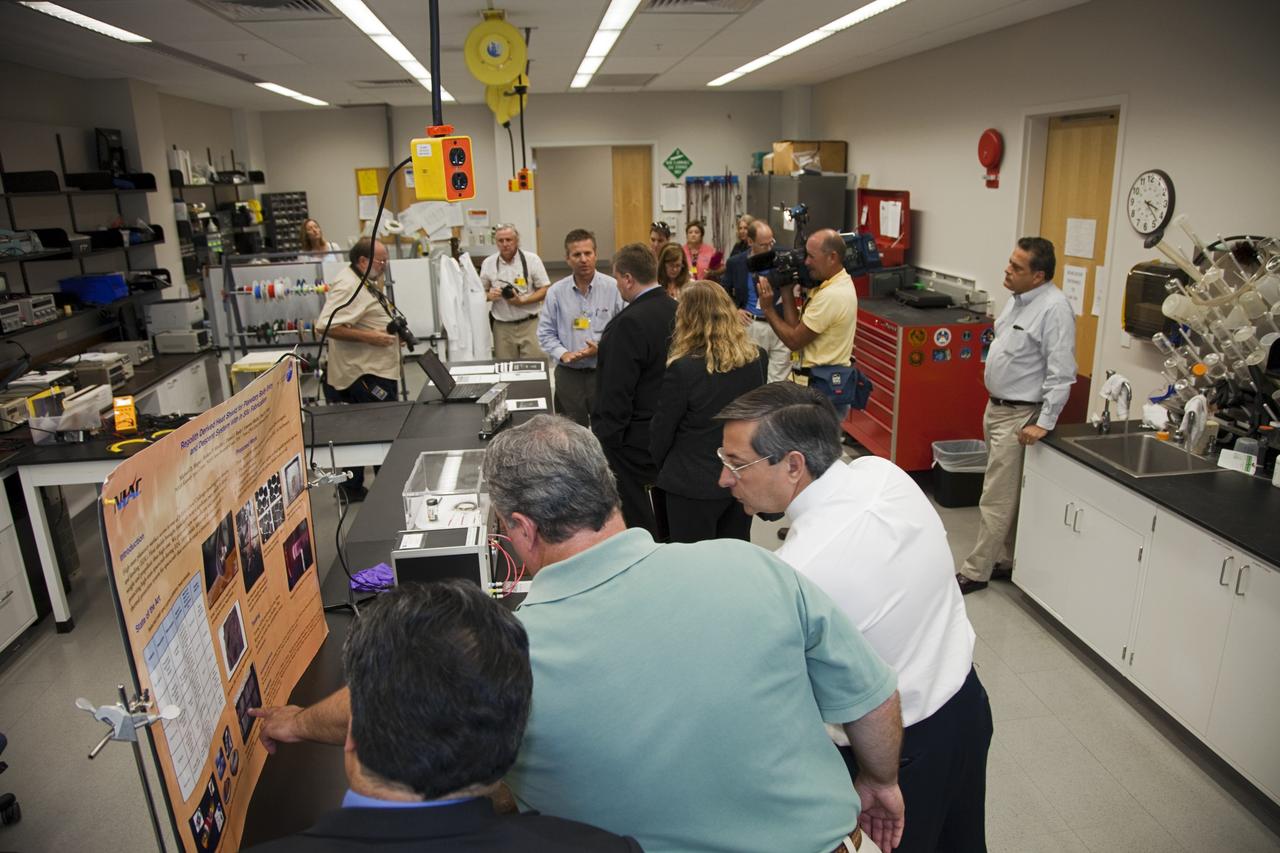
CAPE CANAVERAl, Fla. - Robert Mueller, left, explains differences in lunar, Martian and Earth soil using simulants to Dr. Mason Peck, NASA's chief Technologist, during a tour of the Space Life Sciences Laboratory at Kennedy. Peck toured the lab facility during a visit to the space center. Photo credit: NASA/Frankie Martin
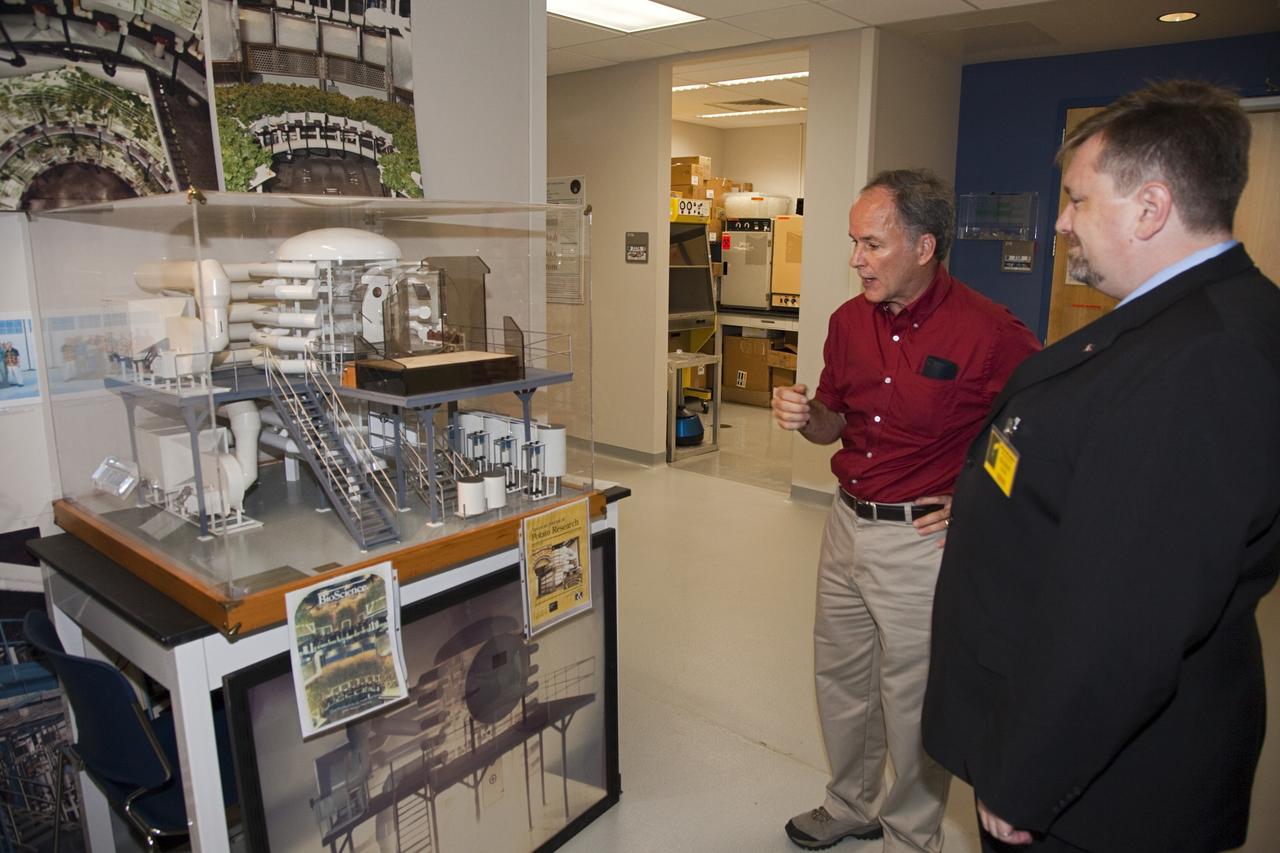
CAPE CANAVERAl, Fla. - Dr. Ray Wheeler, left, explains plant growth experimentation facilities to Dr. Mason Peck, NASA's chief Technologist, during a tour of the Space Life Sciences Laboratory at Kennedy. Peck toured the lab facility during a visit to the space center. Photo credit: NASA/Frankie Martin

CAPE CANAVERAl, Fla. - Dr. Mason Peck, NASA's chief Technologist, saw some plant experiments during a tour of the Space Life Sciences Laboratory at Kennedy. Peck toured the lab facility during a visit to the space center. Photo credit: NASA/Frankie Martin
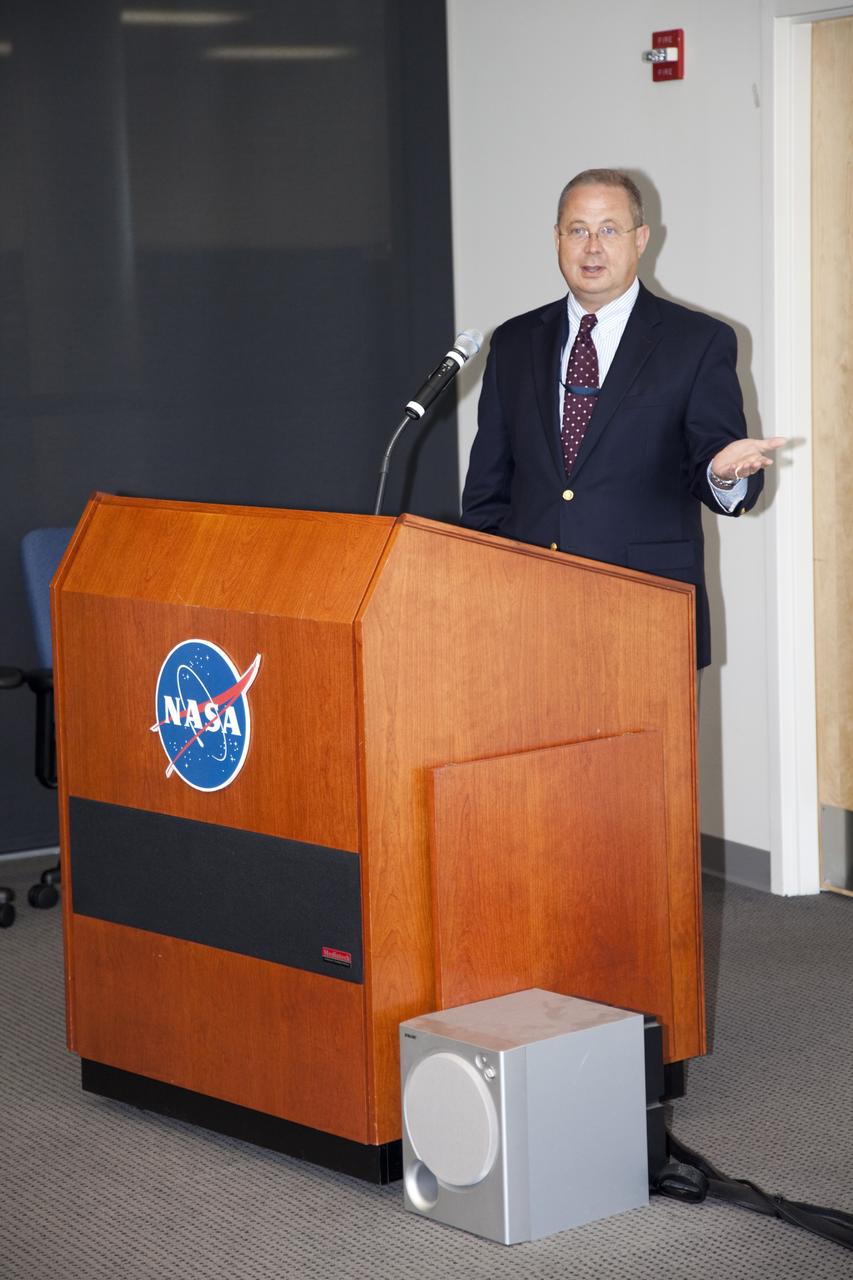
CAPE CANAVERAl, Fla. - James Stanley, chief technologist for Qinetiq North America, speaks during a visit by Dr. Mason Peck, NASA's chief Technologist, to Kennedy Space Center's Space Life Sciences Laboratory. Peck toured the lab facility during a visit to the space center. Photo credit: NASA/Frankie Martin
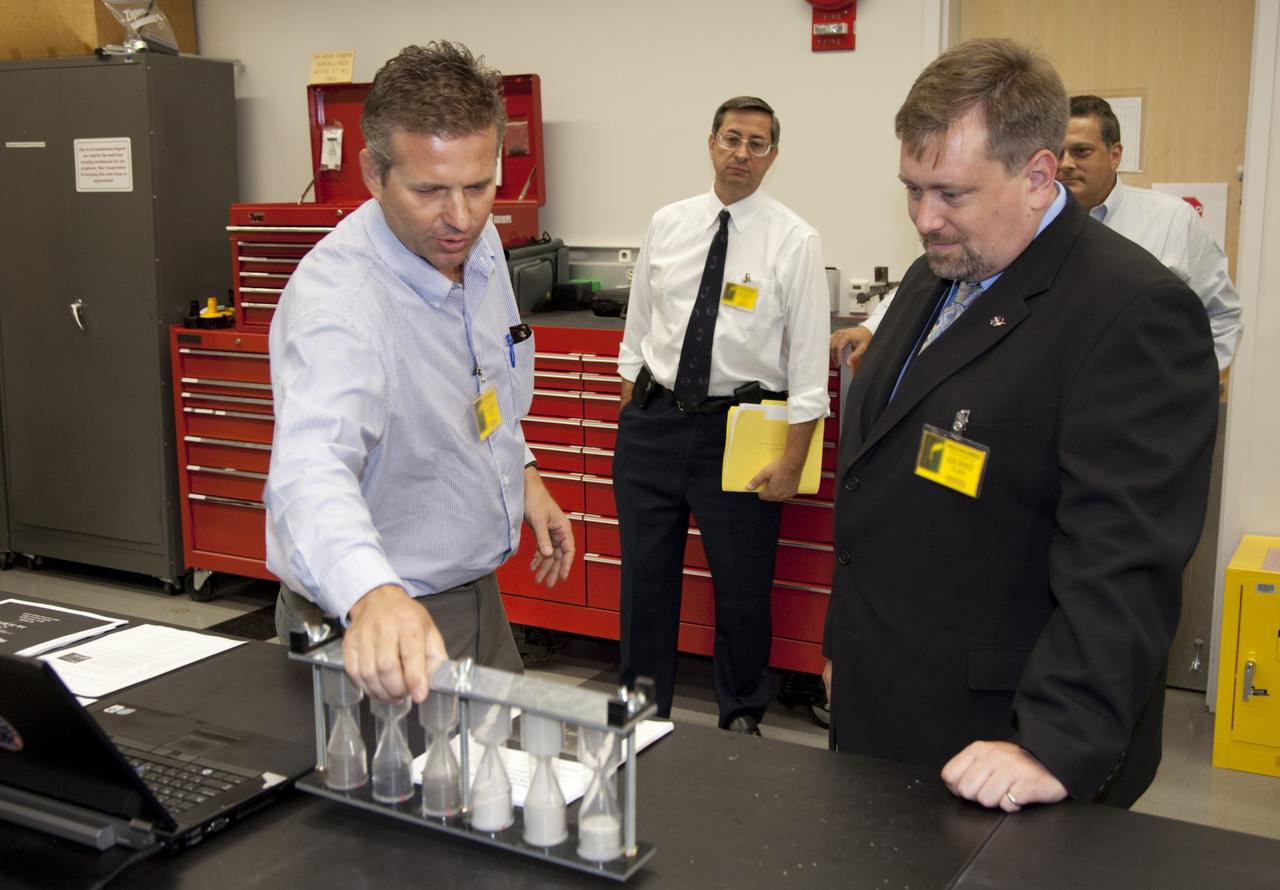
CAPE CANAVERAl, Fla. - Robert Mueller, left, explains differences in lunar, Martian and Earth soil using simulants to Dr. Mason Peck, NASA's chief Technologist, during a tour of the Space Life Sciences Laboratory at Kennedy. Peck toured the lab facility during a visit to the space center. Photo credit: NASA/Frankie Martin
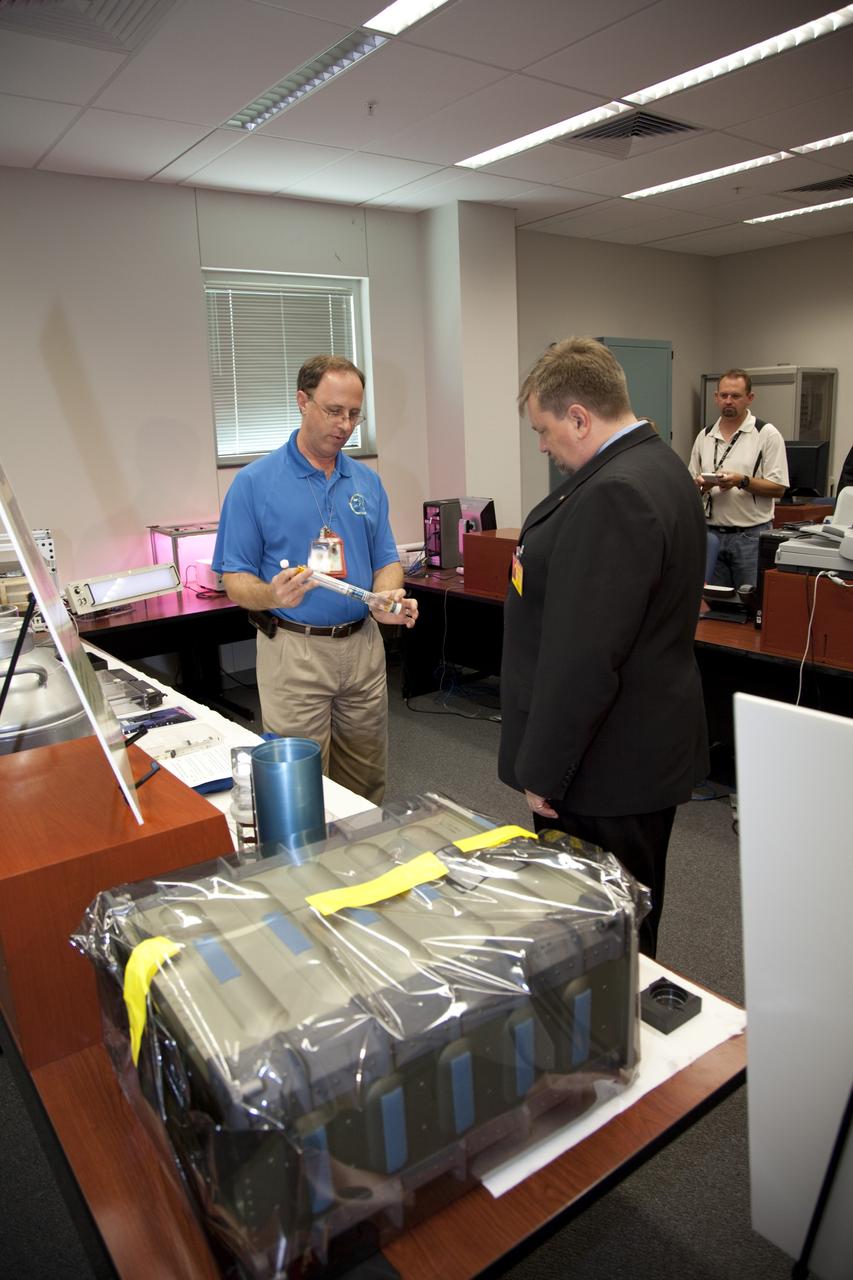
CAPE CANAVERAL, Fla. – David Reed, left, explains an innovation developed at NASA's Kennedy Space Center to Mason Peck, center, NASA's chief Technologist, during Pecks' tour of the Space Life Sciences Laboratory at Kennedy. Peck toured the lab facility during a visit to the space center. Photo credit: NASA/Frankie Martin
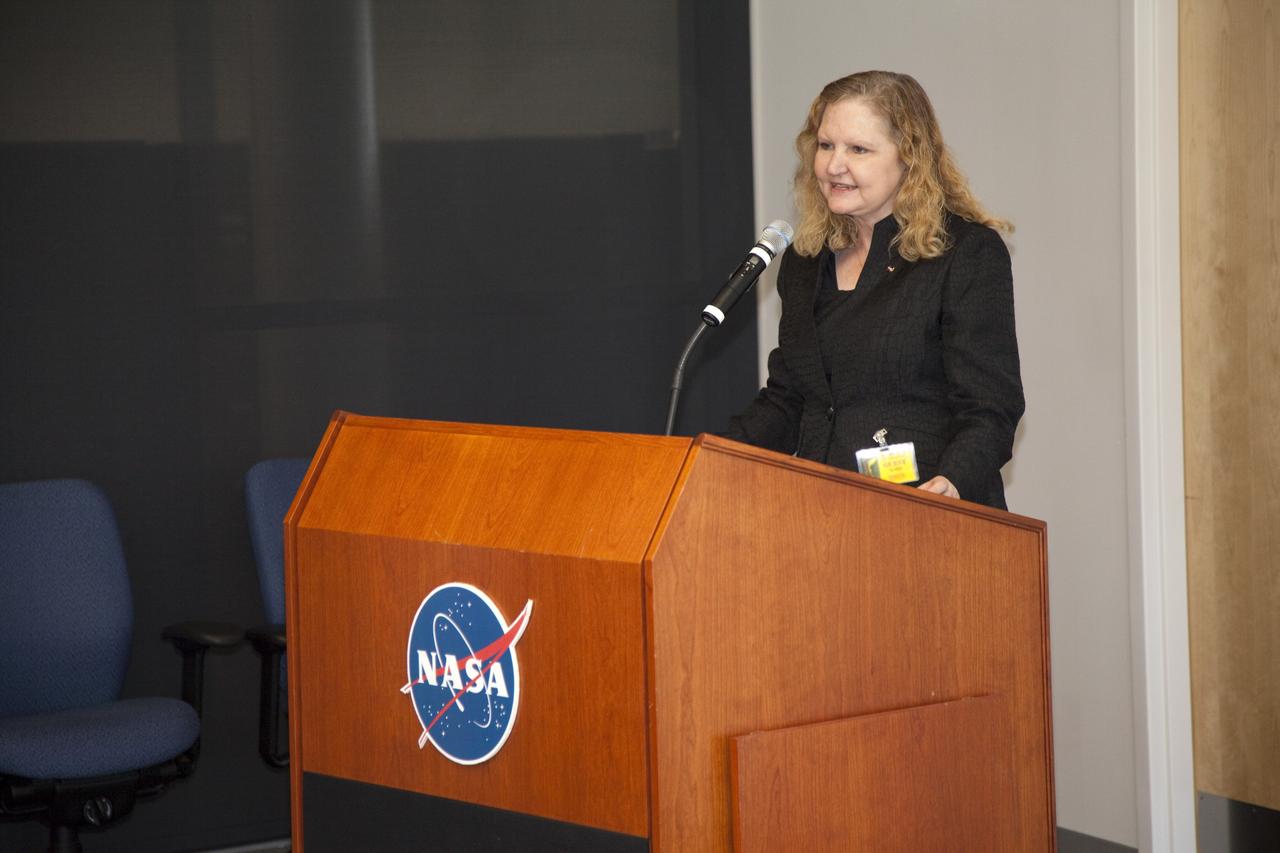
CAPE CANAVERAl, Fla. - Karen L. Thompson, chief technologist for Kennedy Space Center, speaks during a visit by Dr. Mason Peck, NASA's chief Technologist, to to Kennedy Space Center's Space Life Sciences Laboratory. Peck toured the lab facility during a visit to the space center. Photo credit: NASA/Frankie Martin
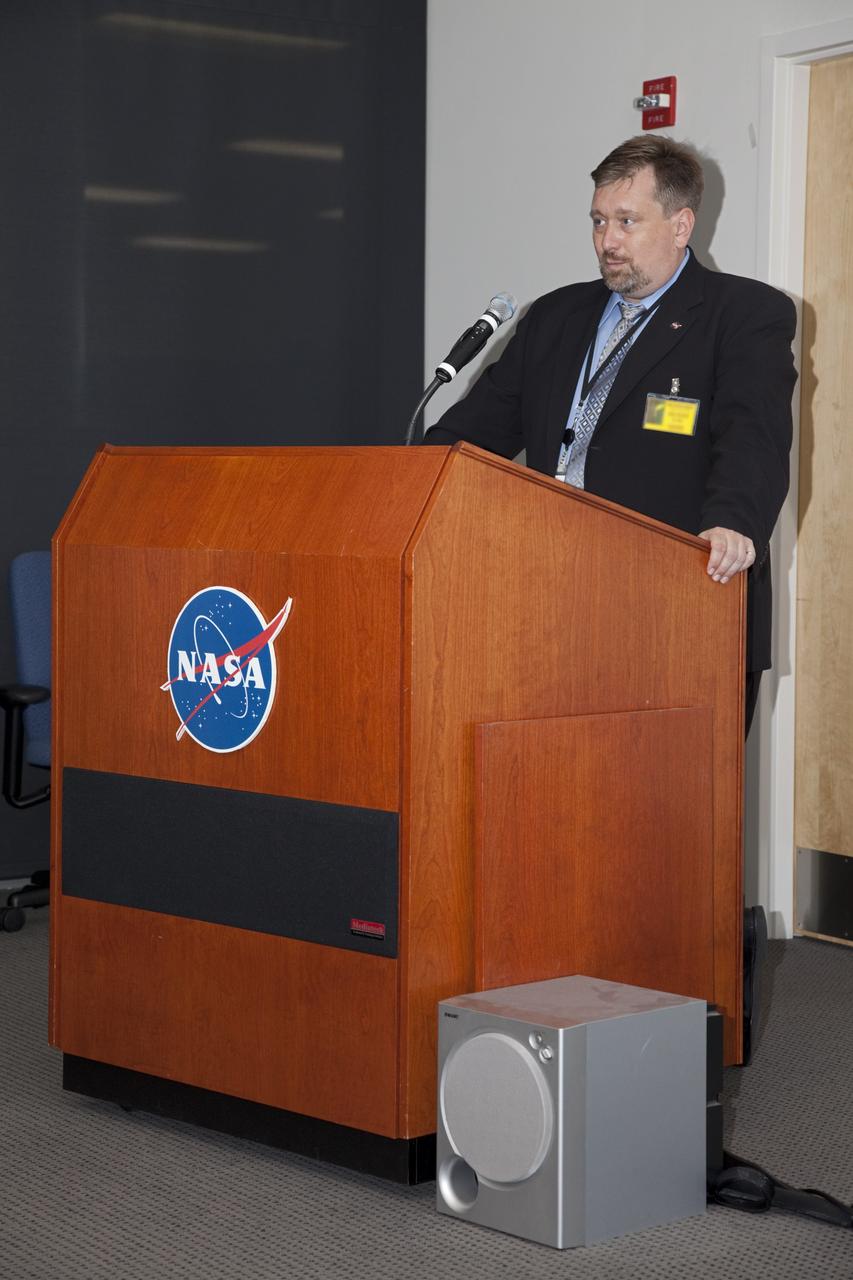
CAPE CANAVERAl, Fla. - Dr. Mason Peck, NASA's chief Technologist, speaks during a visit to the Space Life Sciences Laboratory at Kennedy Space Center. Peck toured the lab facility during a visit to the space center. Photo credit: NASA/Frankie Martin
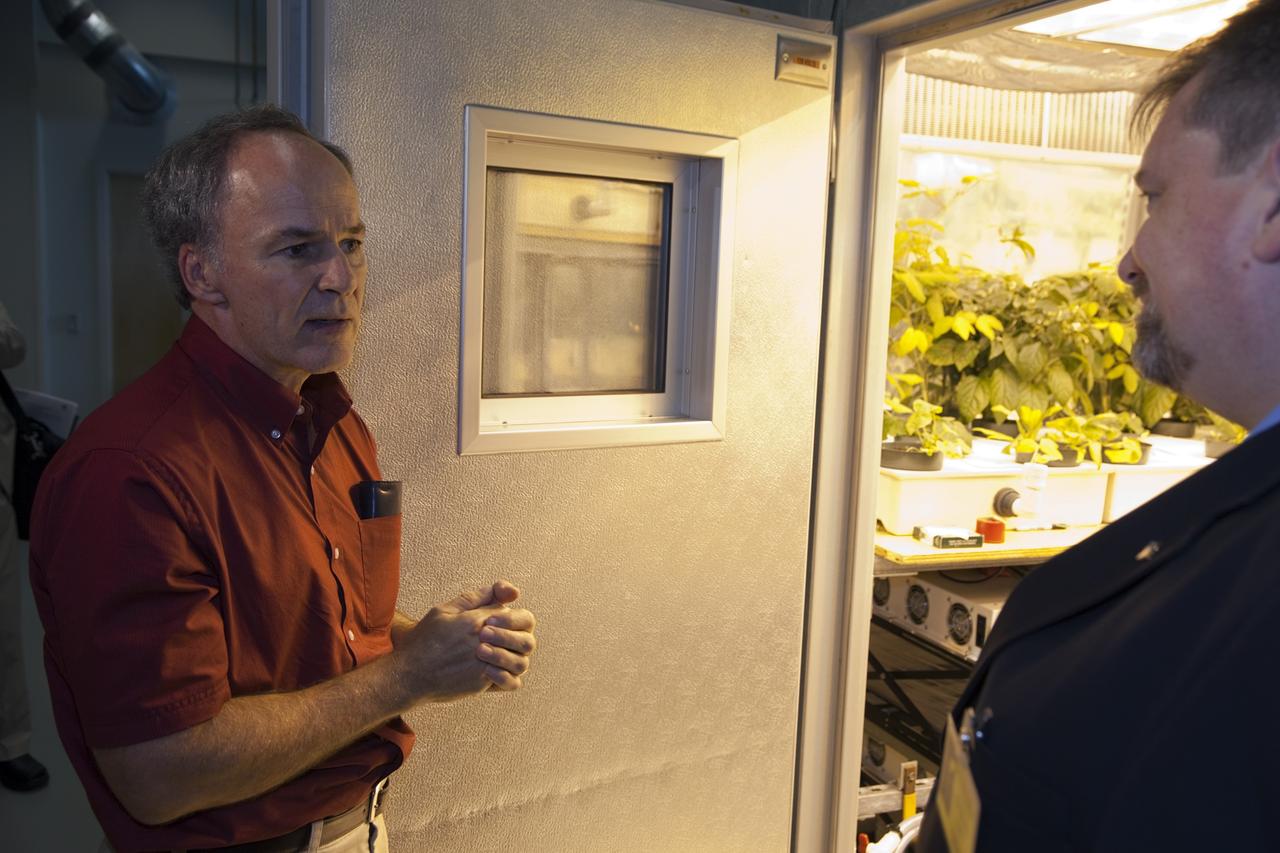
CAPE CANAVERAl, Fla. - Dr. Ray Wheeler, left, explains a plant experiment to Dr. Mason Peck, NASA's chief Technologist, during a tour of the Space Life Sciences Laboratory at Kennedy. Peck toured the lab facility during a visit to the space center. Photo credit: NASA/Frankie Martin
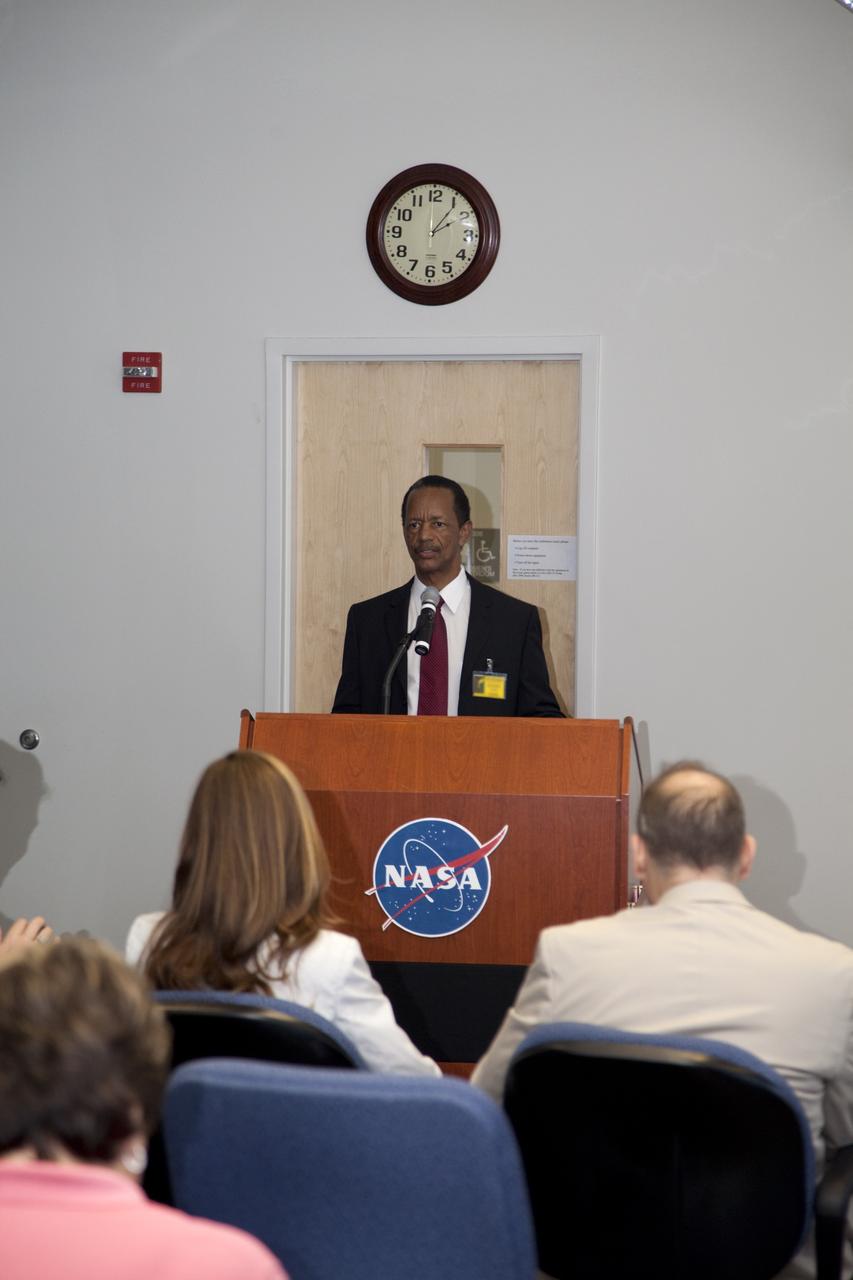
CAPE CANAVERAl, Fla. - Martin Belson, president and CEO of Diversified Industries CEIS, speaks during a visit by Dr. Mason Peck, NASA's chief Technologist, to Kennedy Space Center's Space Life Sciences Laboratory. Peck toured the lab facility during a visit to the space center. Photo credit: NASA/Frankie Martin
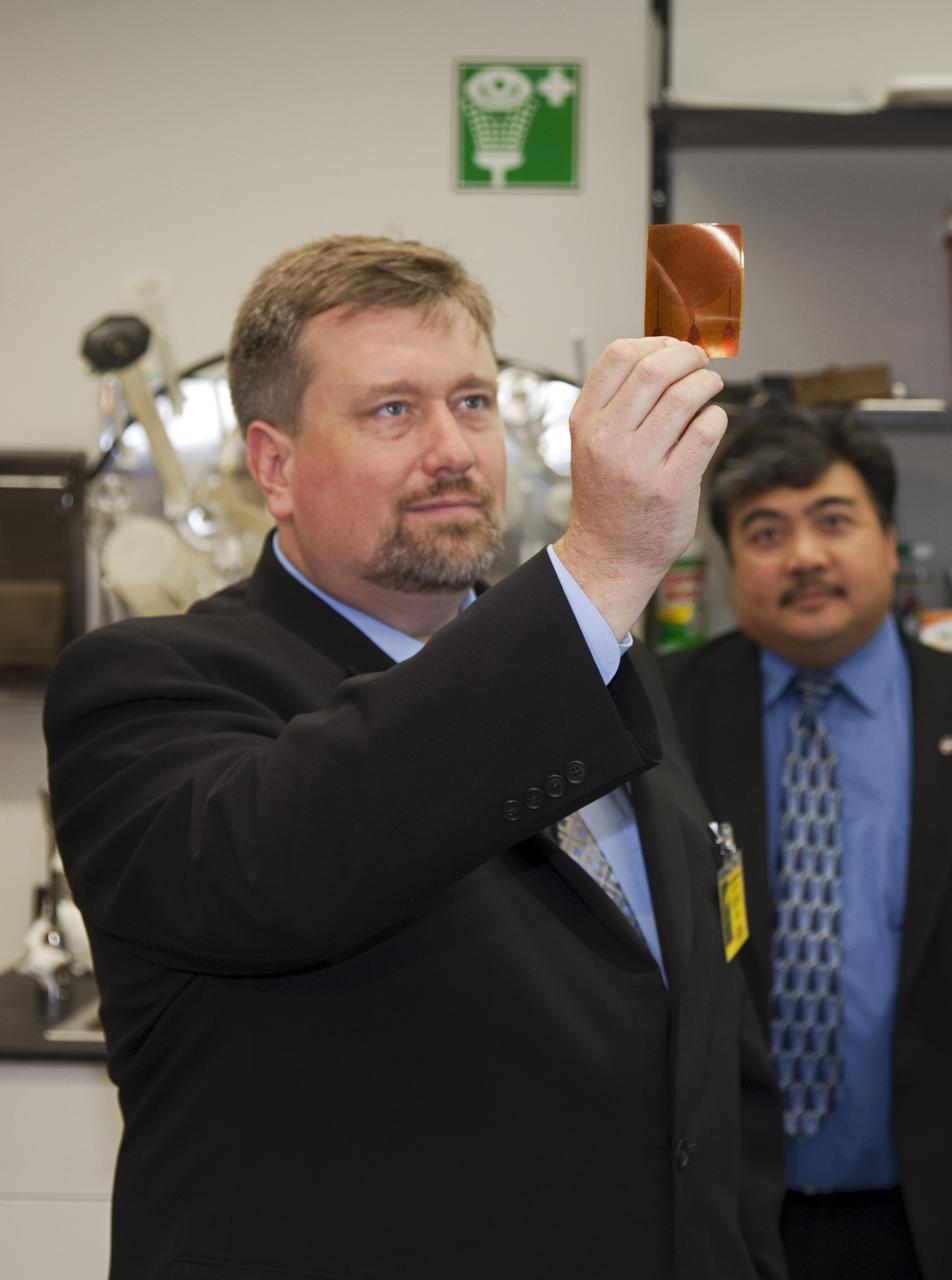
CAPE CANAVERAl, Fla. - Dr. Mason Peck, left, NASA's chief Technologist, examines an innovative conductive material during a tour of the Space Life Sciences Laboratory at Kennedy. Peck toured the lab facility during a visit to the space center. Photo credit: NASA/Frankie Martin
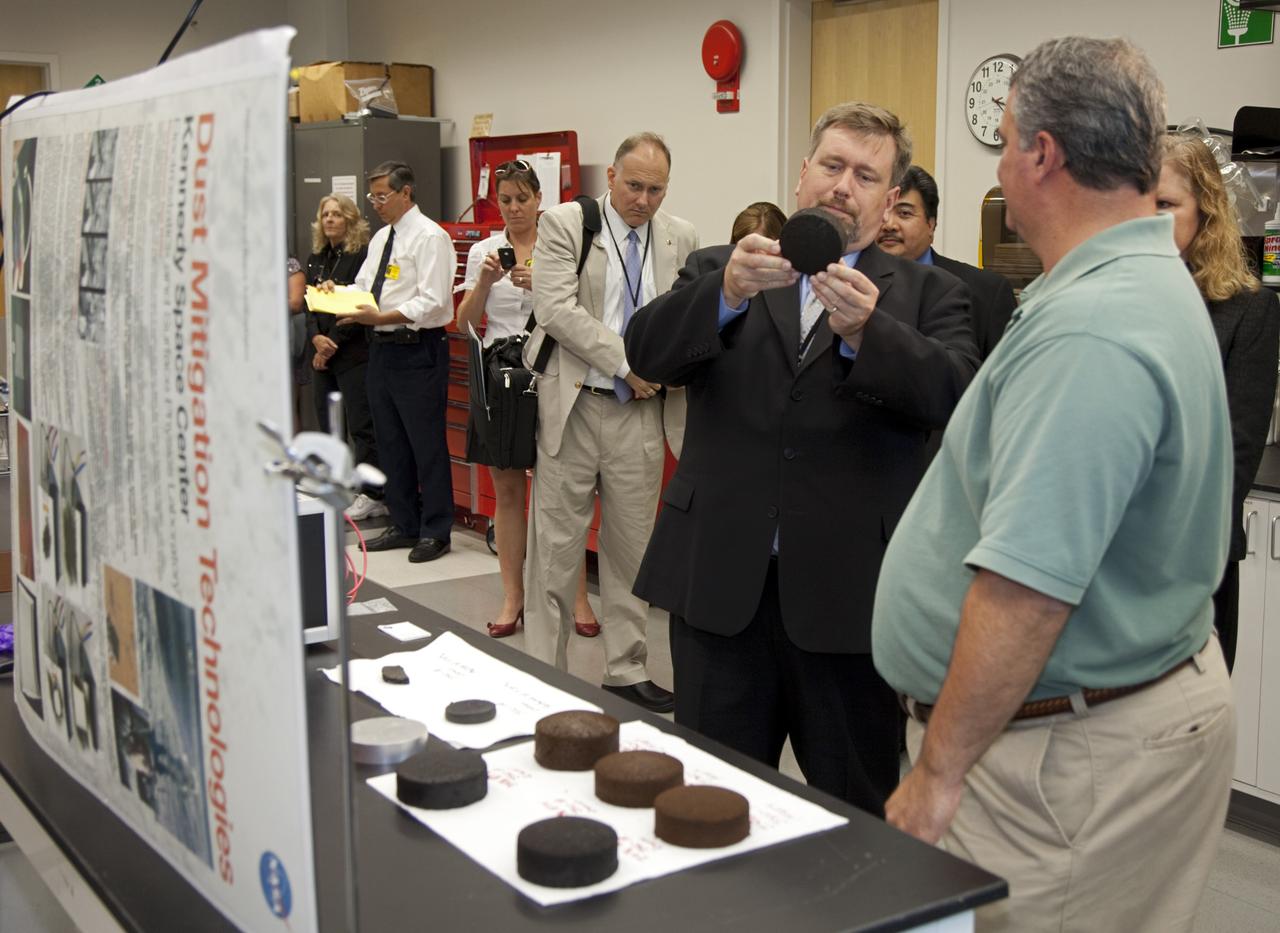
CAPE CANAVERAl, Fla. - Dr. Mason Peck, center, NASA's chief Technologist, listens as Michael Hogue, right, explains an innovation during Pecks' tour of the Space Life Sciences Laboratory at Kennedy. Peck toured the lab facility during a visit to the space center. Photo credit: NASA/Frankie Martin
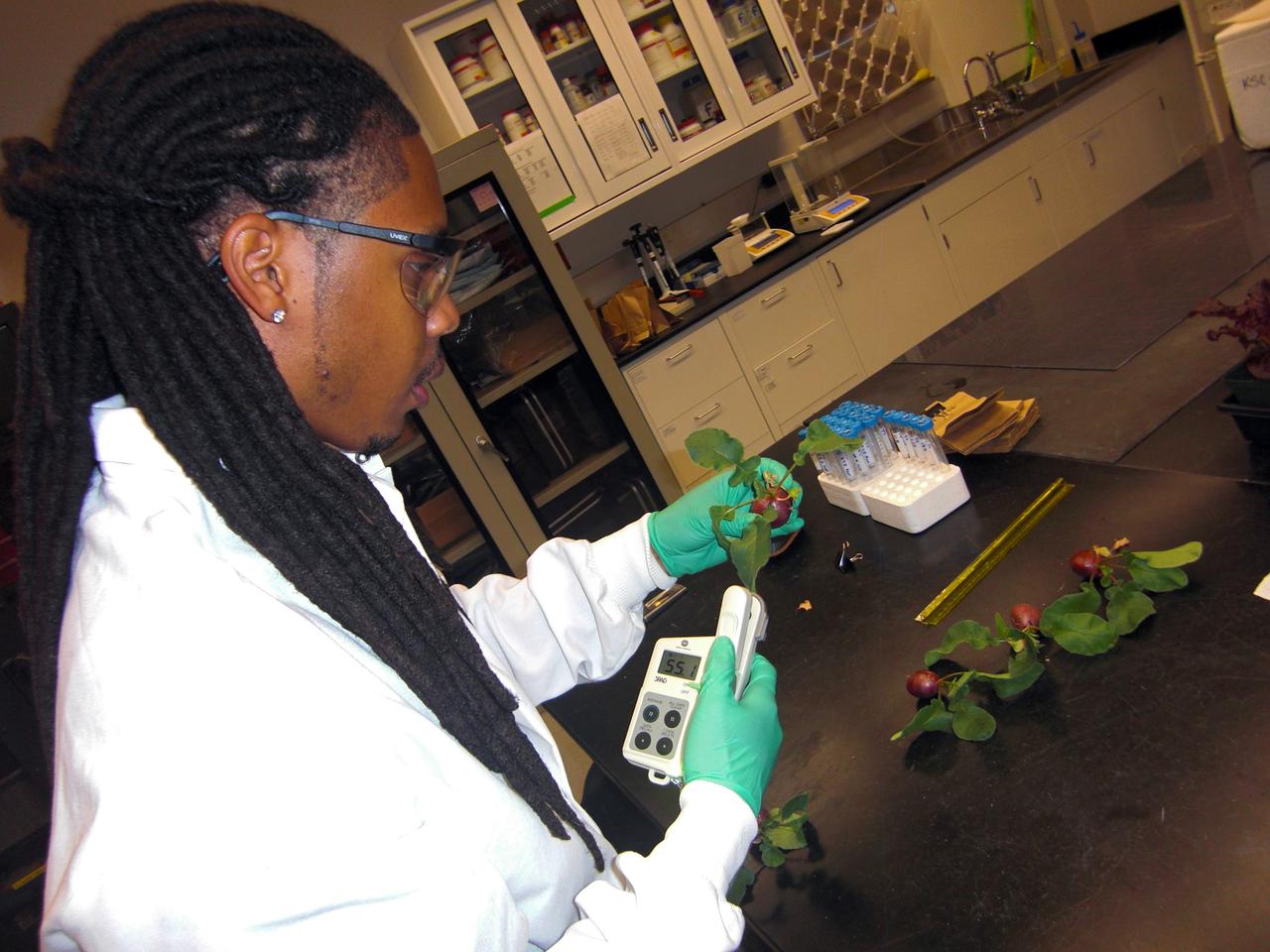
CAPE CANAVERAL, Fla. – Inside the Space Life Sciences Laboratory, or SLSL, at NASA’s Kennedy Space Center in Florida, Dr. Matthew Mickens, a plant biologist from North Carolina Agriculture and Technical State University in North Carolina, measures radish plants that were just harvested from a plant growth chamber. The plants were grown under red and blue LED lights. The plant experiment at Kennedy is part of the Advanced Exploration Systems, or AES, program in NASA’s Human Exploration and Operations Mission Directorate. This plant experiment studies the effects of different types of lighting on plants such as radishes and leaf lettuce. Results of these studies will help provide information on how to grow food sources for deep space exploration missions. AES projects pioneer new approaches for rapidly developing prototype systems, demonstrating key capabilities and validating operational concepts for future human missions beyond Earth orbit. Photo credit: NASA/Frank Ochoa-Gonzales
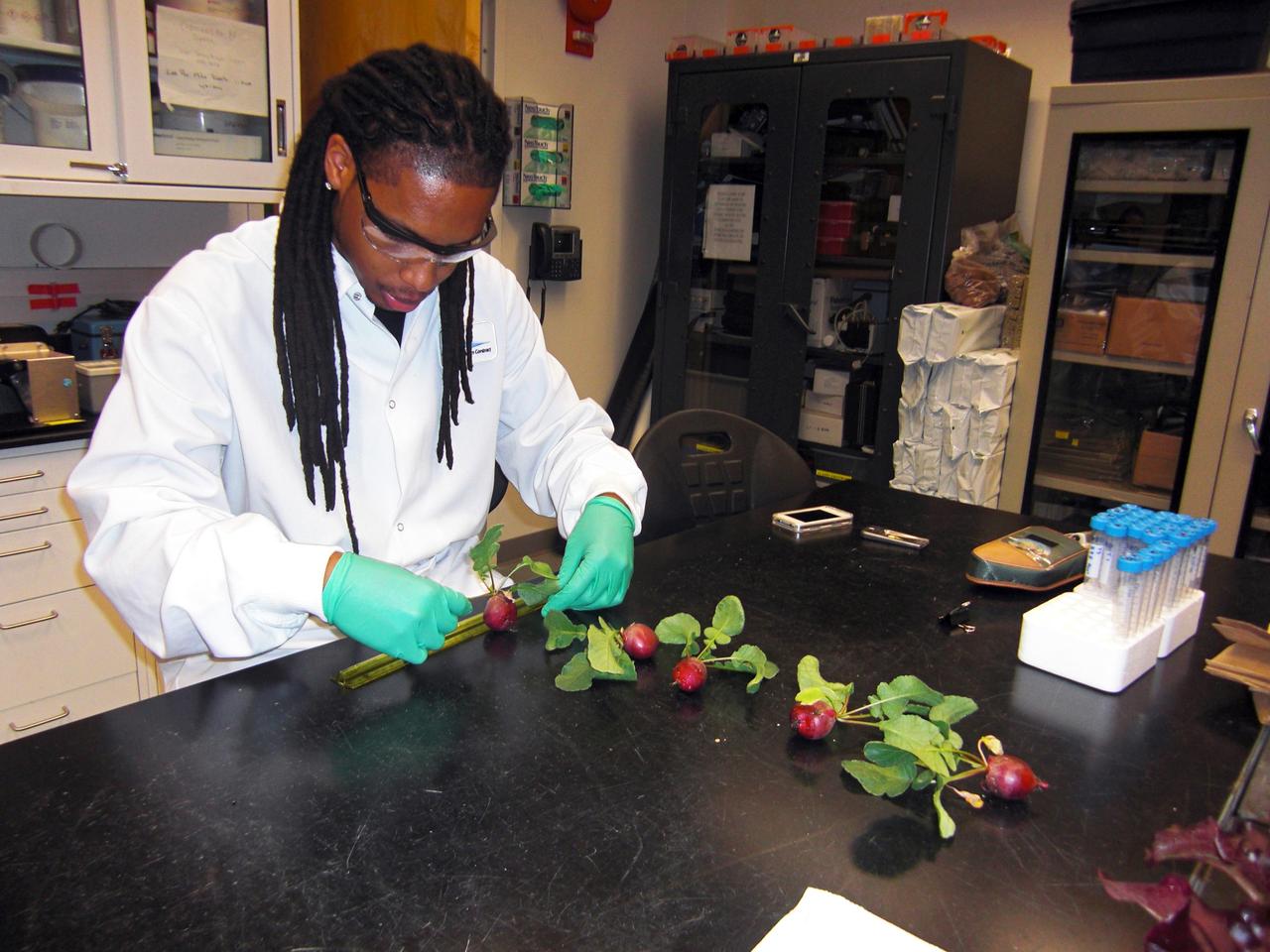
CAPE CANAVERAL, Fla. – Inside the Space Life Sciences Laboratory, or SLSL, at NASA’s Kennedy Space Center in Florida, Dr. Matthew Mickens, a plant biologist from North Carolina Agriculture and Technical State University in North Carolina, measures radish plants that were just harvested from a plant growth chamber. The plants were grown under red and blue LED lights. The plant experiment at Kennedy is part of the Advanced Exploration Systems, or AES, program in NASA’s Human Exploration and Operations Mission Directorate. This plant experiment studies the effects of different types of lighting on plants such as radishes and leaf lettuce. Results of these studies will help provide information on how to grow food sources for deep space exploration missions. AES projects pioneer new approaches for rapidly developing prototype systems, demonstrating key capabilities and validating operational concepts for future human missions beyond Earth orbit. Photo credit: NASA/Frank Ochoa-Gonzales
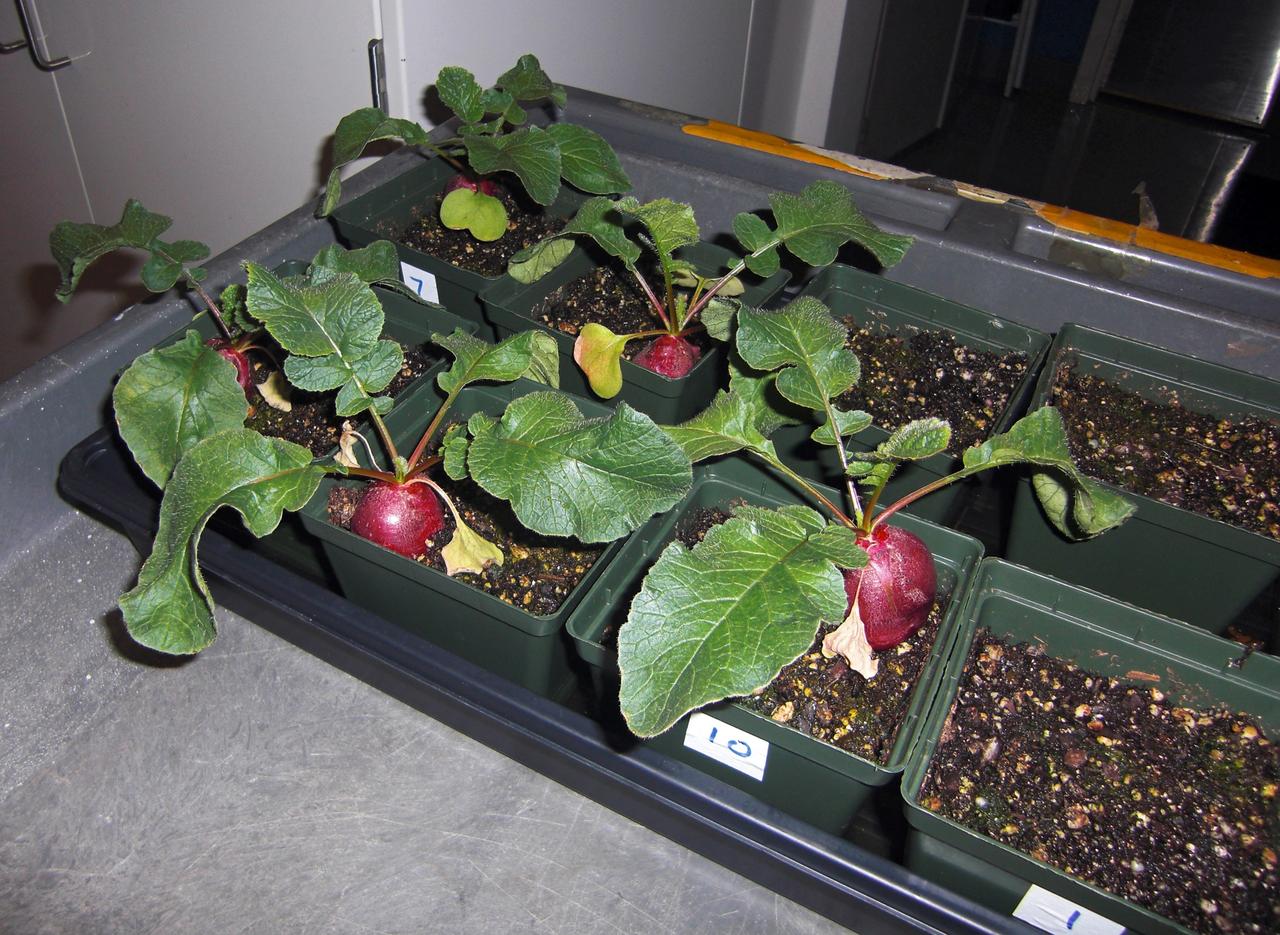
CAPE CANAVERAL, Fla. – Inside the Space Life Sciences Laboratory, or SLSL, at NASA’s Kennedy Space Center in Florida, radish plants are being harvested in a plant growth chamber. The plants were grown under red and blue LED lights. The plant experiment at Kennedy is part of the Advanced Exploration Systems, or AES, program in NASA’s Human Exploration and Operations Mission Directorate. This plant experiment studies the effects of different types of lighting on plants such as radishes and leaf lettuce. Results of these studies will help provide information on how to grow food sources for deep space exploration missions. AES projects pioneer new approaches for rapidly developing prototype systems, demonstrating key capabilities and validating operational concepts for future human missions beyond Earth orbit. Photo credit: NASA/Frank Ochoa-Gonzales
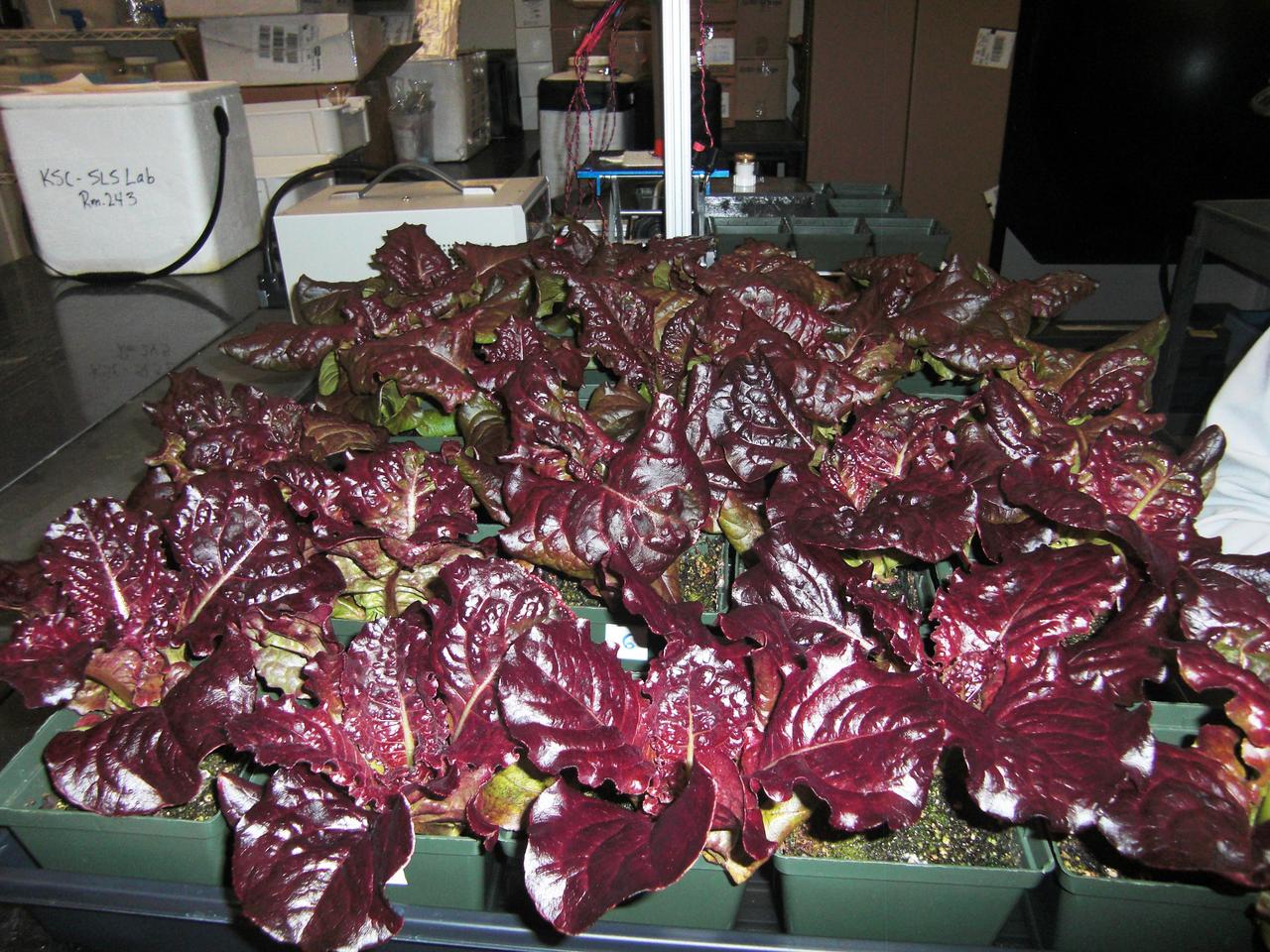
CAPE CANAVERAL, Fla. – Inside the Space Life Sciences Laboratory, or SLSL, at NASA’s Kennedy Space Center in Florida, red leaf lettuce plants were harvested from a plant growth chamber. The plants were grown under red and blue LED lights. The plant experiment at Kennedy is part of the Advanced Exploration Systems, or AES, program in NASA’s Human Exploration and Operations Mission Directorate. This plant experiment studies the effects of different types of lighting on plants such as radishes and leaf lettuce. Results of these studies will help provide information on how to grow food sources for deep space exploration missions. AES projects pioneer new approaches for rapidly developing prototype systems, demonstrating key capabilities and validating operational concepts for future human missions beyond Earth orbit. Photo credit: NASA/Frank Ochoa-Gonzales
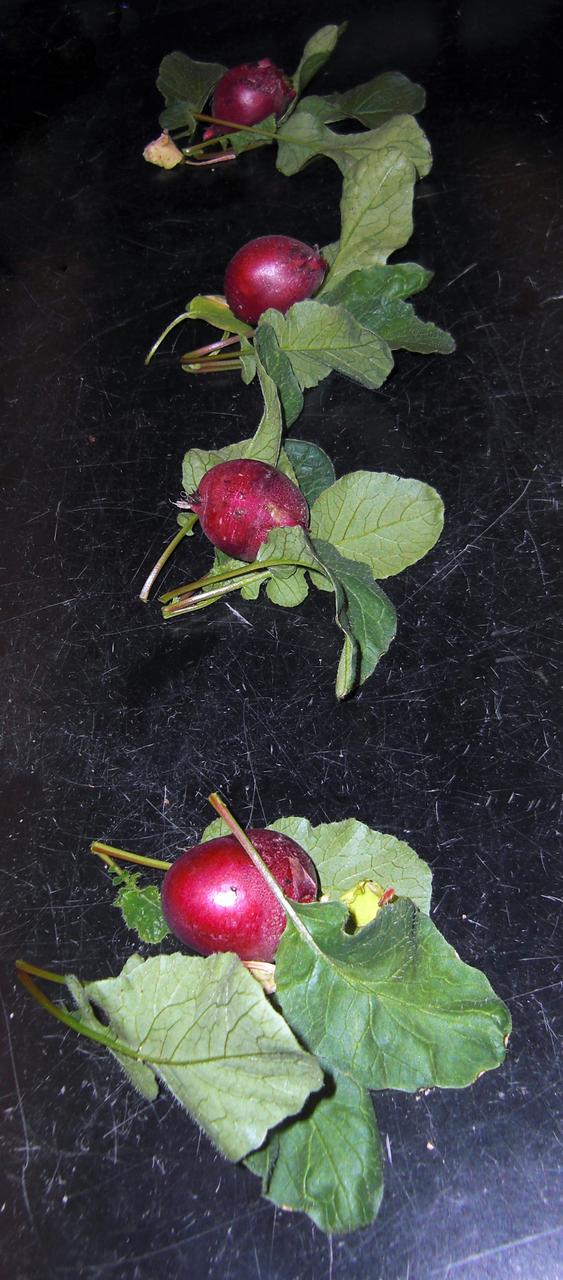
CAPE CANAVERAL, Fla. – Inside the Space Life Sciences Laboratory, or SLSL, at NASA’s Kennedy Space Center in Florida, radish plants were harvested from a plant growth chamber. The plants were grown under red and blue LED lights. The plant experiment at Kennedy is part of the Advanced Exploration Systems, or AES, program in NASA’s Human Exploration and Operations Mission Directorate. This plant experiment studies the effects of different types of lighting on plants such as radishes and leaf lettuce. Results of these studies will help provide information on how to grow food sources for deep space exploration missions. AES projects pioneer new approaches for rapidly developing prototype systems, demonstrating key capabilities and validating operational concepts for future human missions beyond Earth orbit. Photo credit: NASA/Frank Ochoa-Gonzales
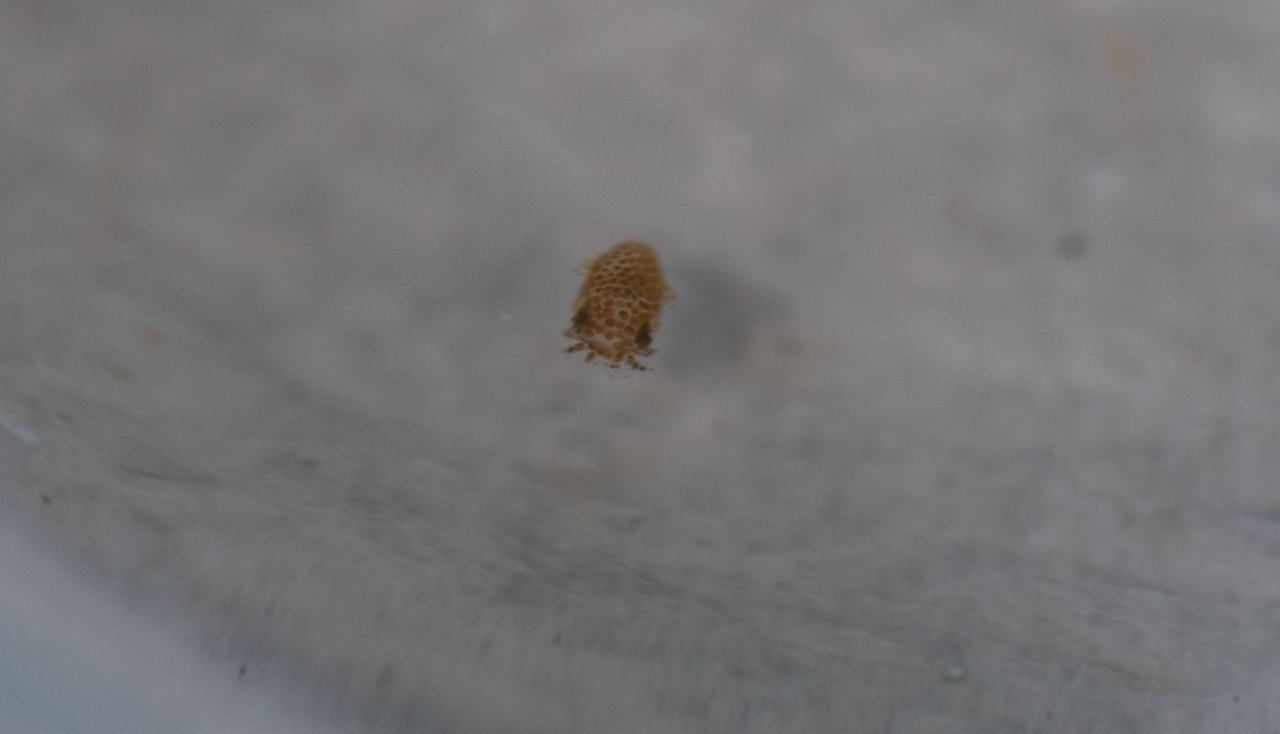
Inside the Space Life Sciences Laboratory at NASA’s Kennedy Space Center in Florida, Jamie Foster, principal investigator on the Understanding of Microgravity on Animal-Microbe Interactions (UMAMI) experiment, demonstrates preparations for bobtail squid on May 20, 2021, for a trip to the International Space Station aboard SpaceX’s 22nd Commercial Resupply Services mission. The experiment will examine the effects of spaceflight on the molecular and chemical interactions between beneficial microbes and their animal hosts. Amimals, including humans, rely on microbes to maintain a healthy digestive and immune system. UMAMI is one of several experiments bound for the space station in the Dragon capsule atop the SpaceX Falcon 9 rocket. The mission is scheduled to lift off from Launch Complex 39A on June 3.
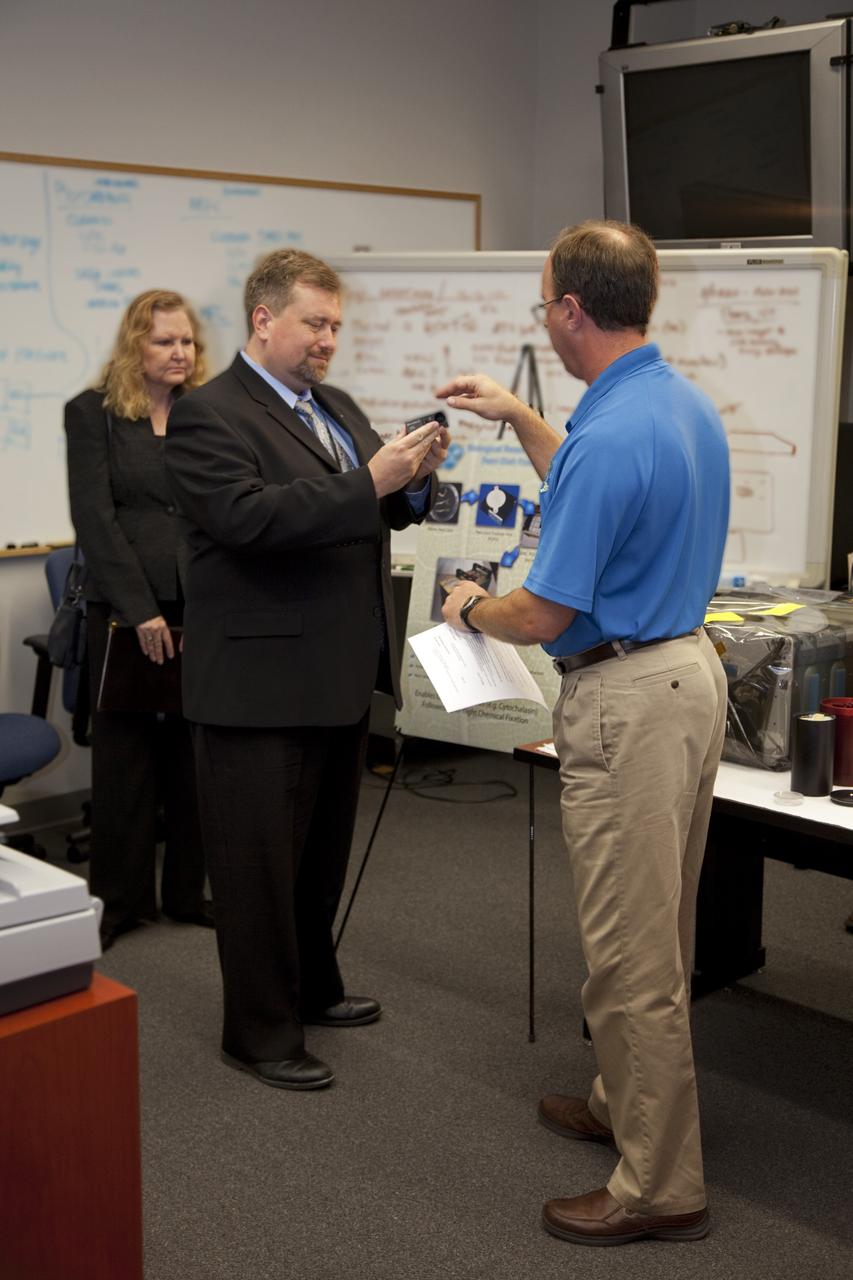
CAPE CANAVERAL, Fla. – Dr. Mason Peck, center, NASA's chief Technologist, listens as David Reed, right, explains an innovation during Pecks' tour of the Space Life Sciences Laboratory at Kennedy. Karen L. Thompson, chief technologist for Kennedy Space Center, looks on. Peck toured the lab facility during a visit to the space center. Photo credit: NASA/Frankie Martin
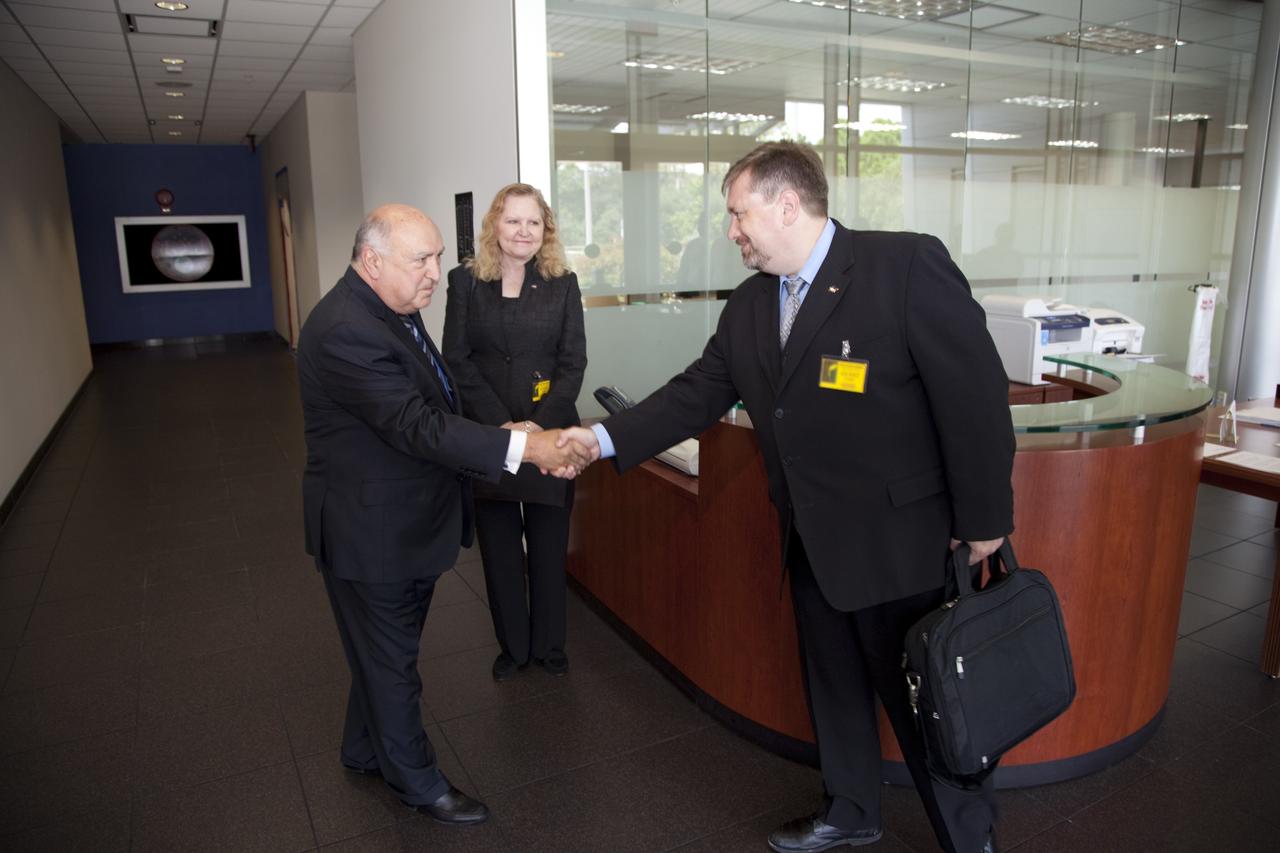
CAPE CANAVERAL, Fla. – Dr. Mason Peck, right, NASA's chief Technologist, greets Frank DiBello, president and CEO of Space Florida as Karen L. Thompson, chief technologist for Kennedy Space Center, looks on. Space Florida manages the Space Life Sciences Laboratory at Kennedy. Peck toured the lab facility during a visit to the space center. Photo credit: NASA/Frankie Martin
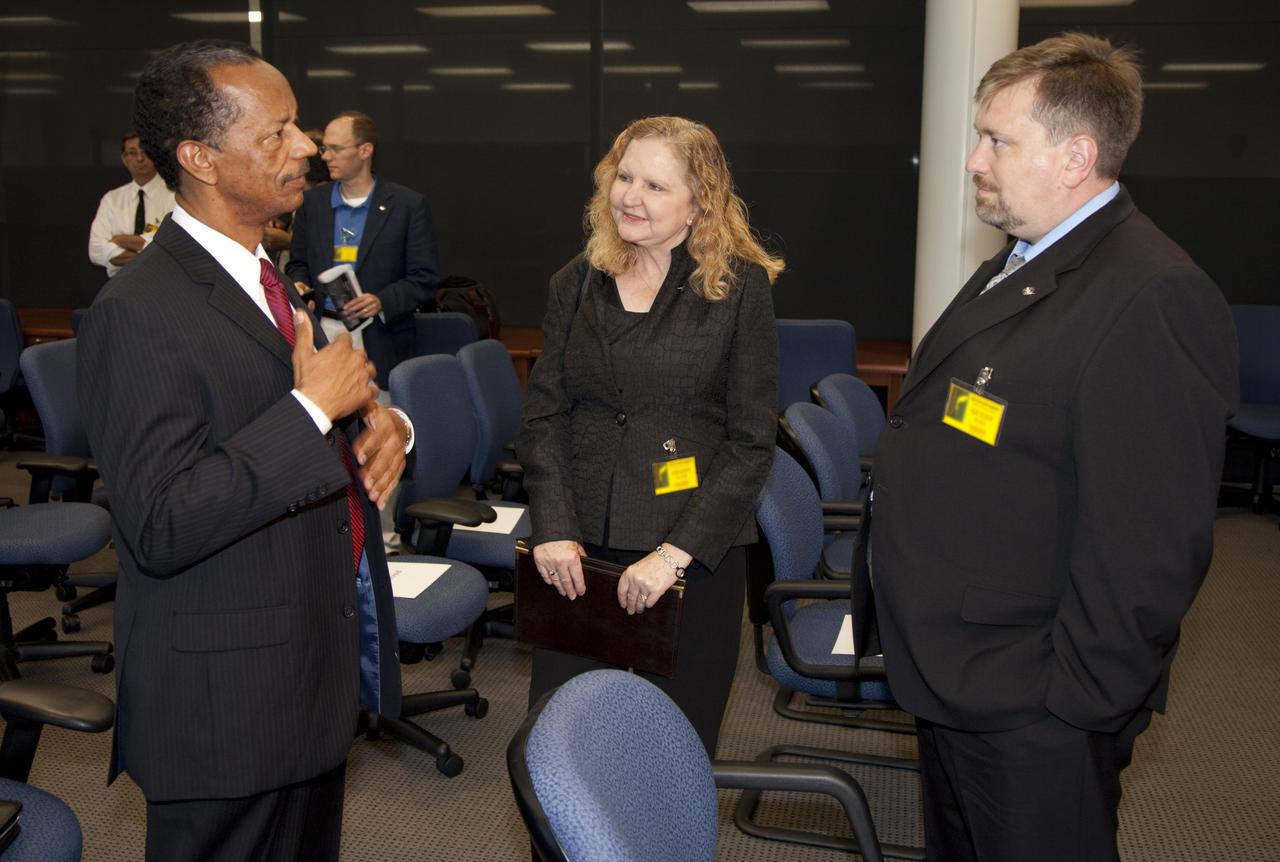
CAPE CANAVERAl, Fla. - Dr. Mason Peck, right, NASA's chief Technologist, talks with Martin Belson, president and CEO of Diversified Industries CEIS, as Karen L. Thompson, chief technologist for Kennedy Space Center, looks on. Peck toured Kennedy Space Center's Space Life Sciences Laboratory during a visit to the space center. Photo credit: NASA/Frankie Martin
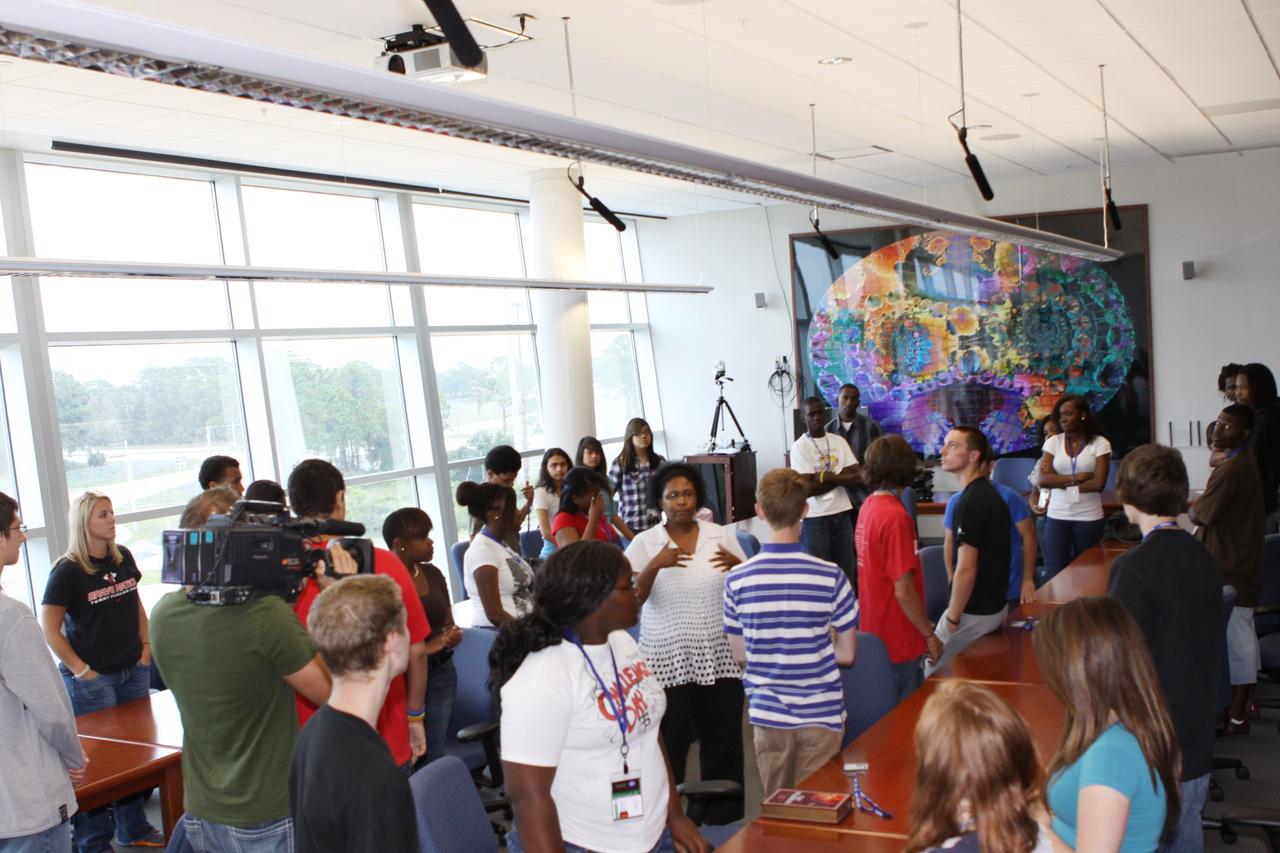
CAPE CANAVERAL, Fla. – Dr. LaNetra C. Tate, center, materials engineer at Kennedy Space Center, is surrounded by students as she welcomes them for their tour of the Space Life Sciences Lab facilities. The 26 honor students in chemistry and biology and their teachers got a chance to visit a number of high-tech labs at Kennedy as part of an effort to encourage students in the areas of science, technology, engineering and math. The tenth and eleventh grade students from Terry Parker High School in Jacksonville, Fla., visited a number of vastly different labs during their one-day tour. The group's visit to Kennedy was hosted by the Education Office as part of a nationwide effort by the National Lab Network to help introduce the nation's students to science careers. Photo credit: NASA/Jim Grossmann
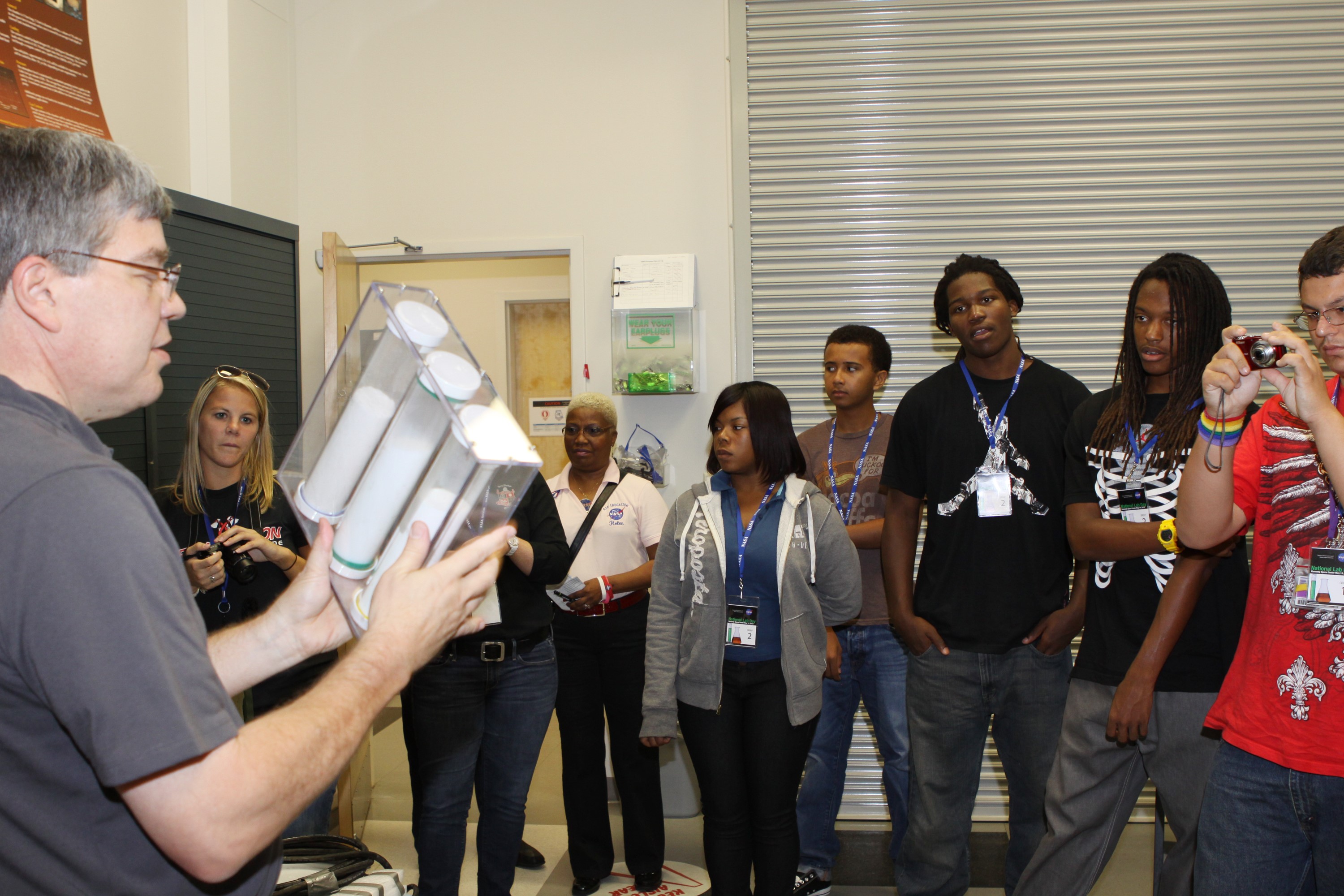
CAPE CANAVERAL, Fla. – Dr. Phil Metzger demonstrates an experiment to study the physics of granular materials to students in the Granular Physics and Regolith Operations Lab at the Space Life Sciences Lab facility. The 26 honor students in chemistry and biology and their teachers got a chance to visit a number of high-tech labs at Kennedy Space Center as part of an effort to encourage students in the areas of science, technology, engineering and math. The tenth and eleventh grade students from Terry Parker High School in Jacksonville, Fla., visited a number of vastly different labs during their one-day tour. The group's visit to Kennedy was hosted by the Education Office as part of a nationwide effort by the National Lab Network to help introduce the nation's students to science careers. Photo credit: NASA/Jim Grossmann
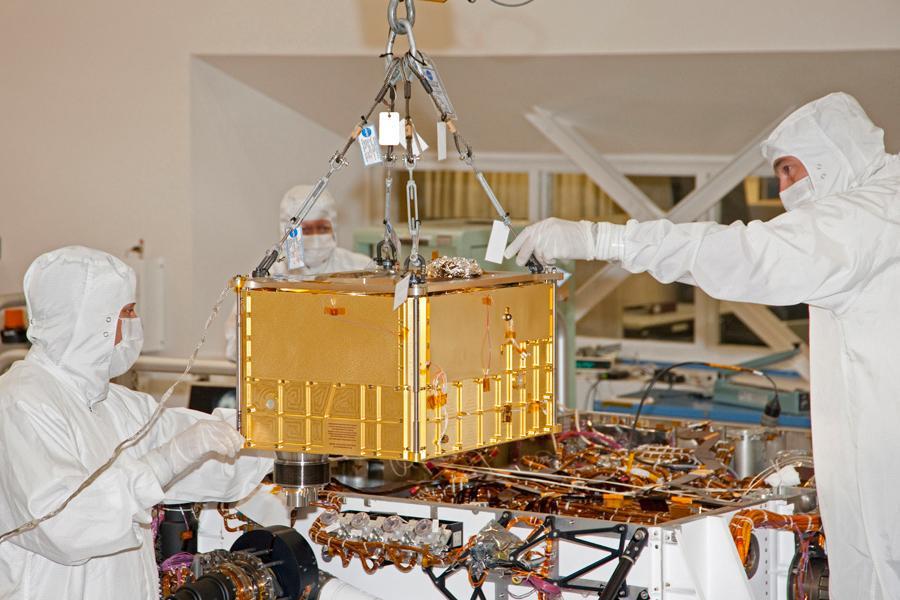
NASA Sample Analysis at Mars SAM instrument, largest of the 10 science instruments for NASA Mars Science Laboratory mission, will examine samples of Martian rocks, soil and atmosphere for information about chemicals that are important to life.
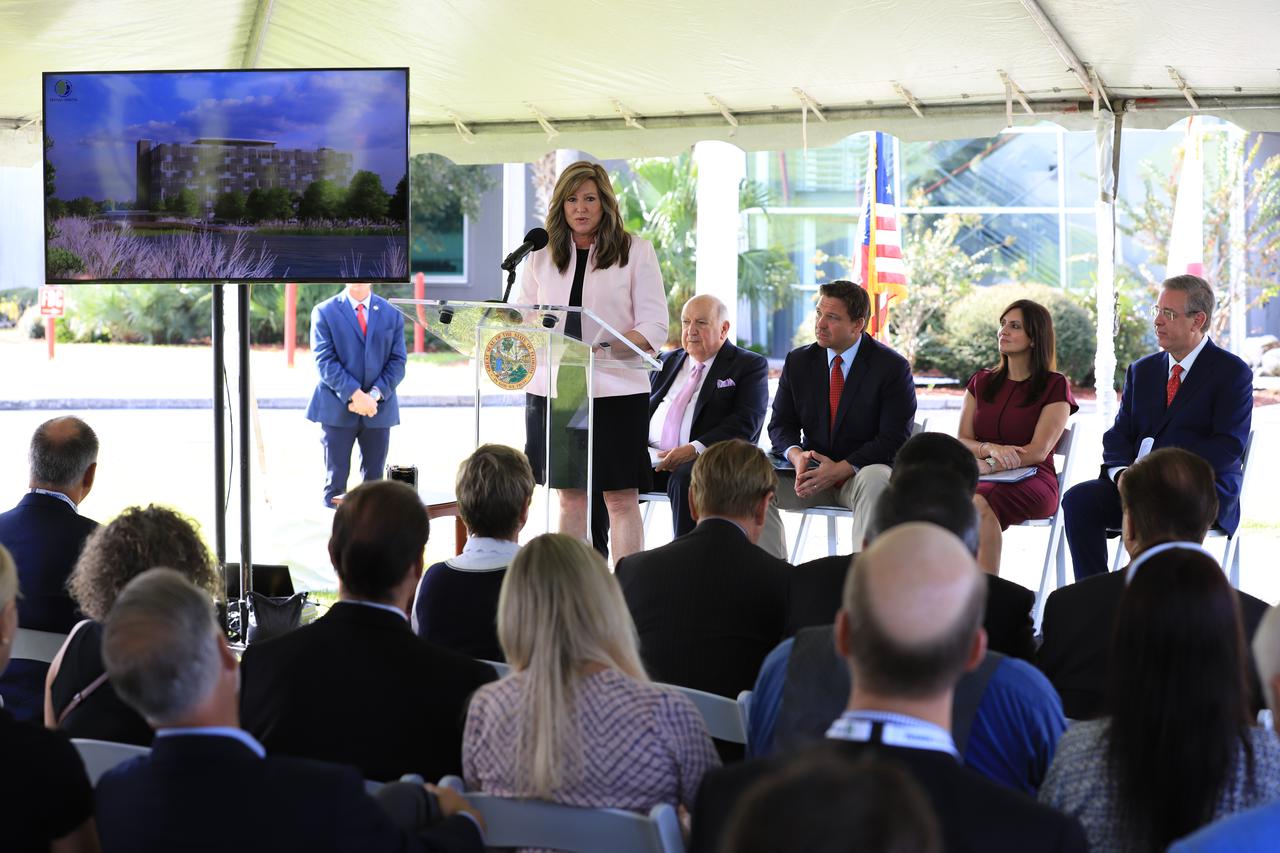
Kennedy Space Center Associate Director, Technical, Jennifer Kunz speaks at an event Sept. 27, 2021, announcing that Terran Orbital will locate its Commercial Spacecraft and Constellation Facility on NASA’s Kennedy Space Center in Florida. The new manufacturing facility will be built near the center’s Launch and Landing Facility, which is being managed and developed by Space Florida under a long-term agreement with NASA. Terran Orbital develops end-to-end satellite solutions as well as commercial spacecraft. The 660,000 square foot manufacturing facility will consist of ten automated and augmented hangers capable of producing thousands of different types of space vehicles and electro-mechanical devices per year. The project is expected to create about 2,100 new jobs, with a planned completion date in 2025. The announcement ceremony was held at Space Florida’s Space Life Sciences Lab in Exploration Park, Florida. Seated directly behind Kunz is Space Florida President and CEO Frank DiBello (left) and Florida Gov. Ron DeSantis (second from left).
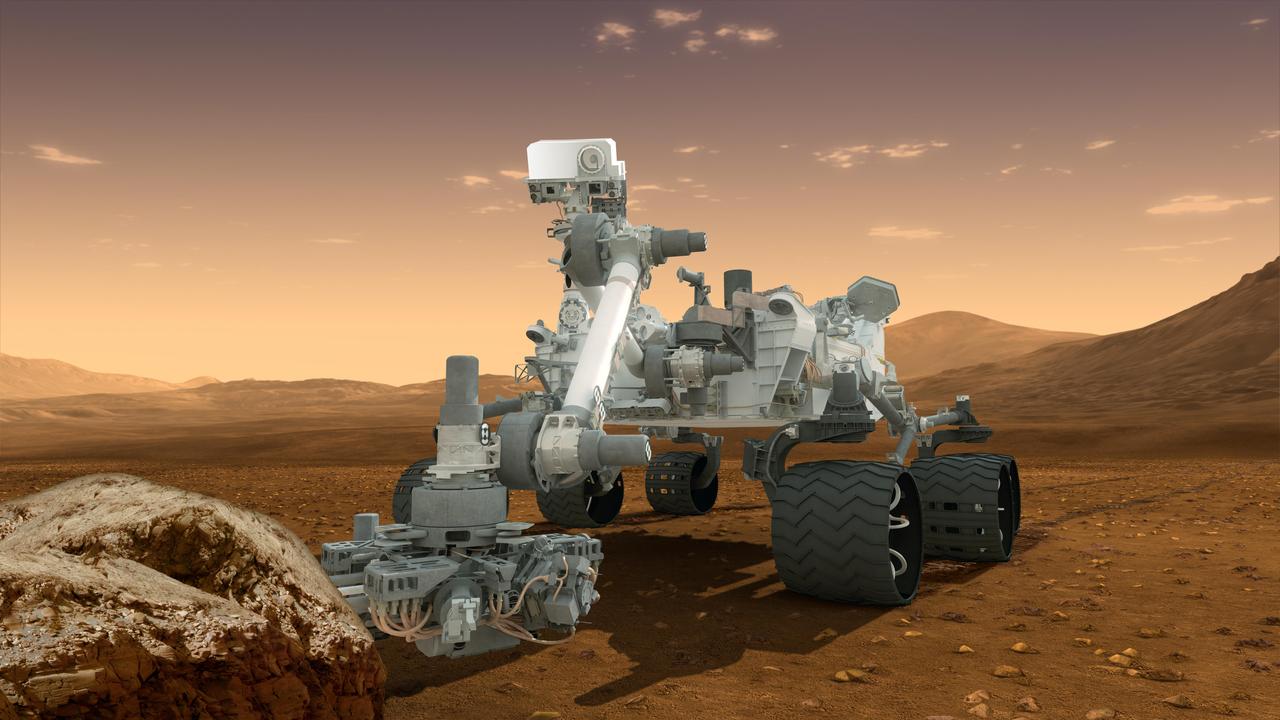
This artist concept features NASA Mars Science Laboratory Curiosity rover, a mobile robot for investigating Mars past or present ability to sustain microbial life.
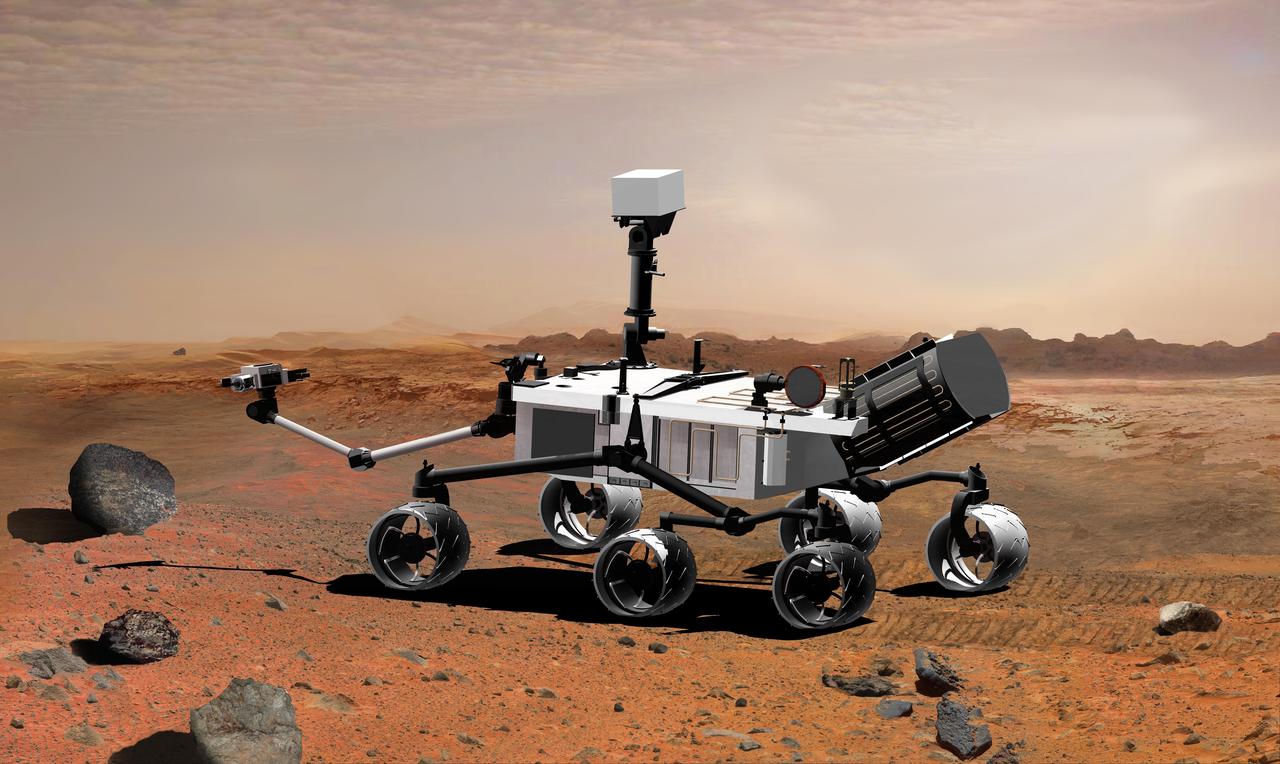
NASA Mars Science Laboratory, a mobile robot for investigating Mars past or present ability to sustain microbial life, is in development for a launch opportunity in 2011 previously 2009.
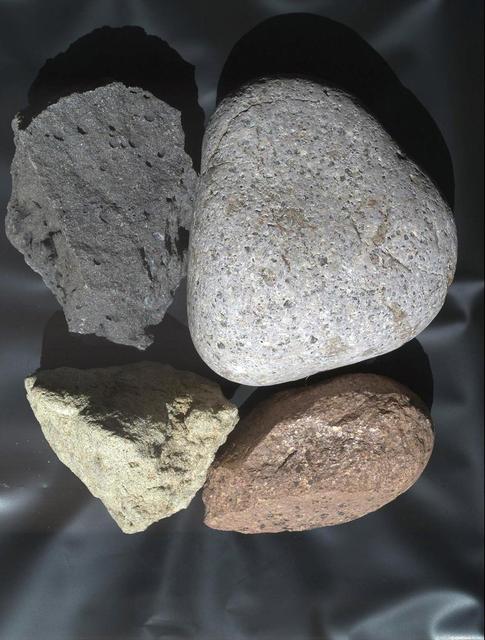
This view of terrestrial rocks was taken by a testing twin -- the life test unit -- of Mars Hand Lens Imager MAHLI camera on NASA Mars Science Laboratory.
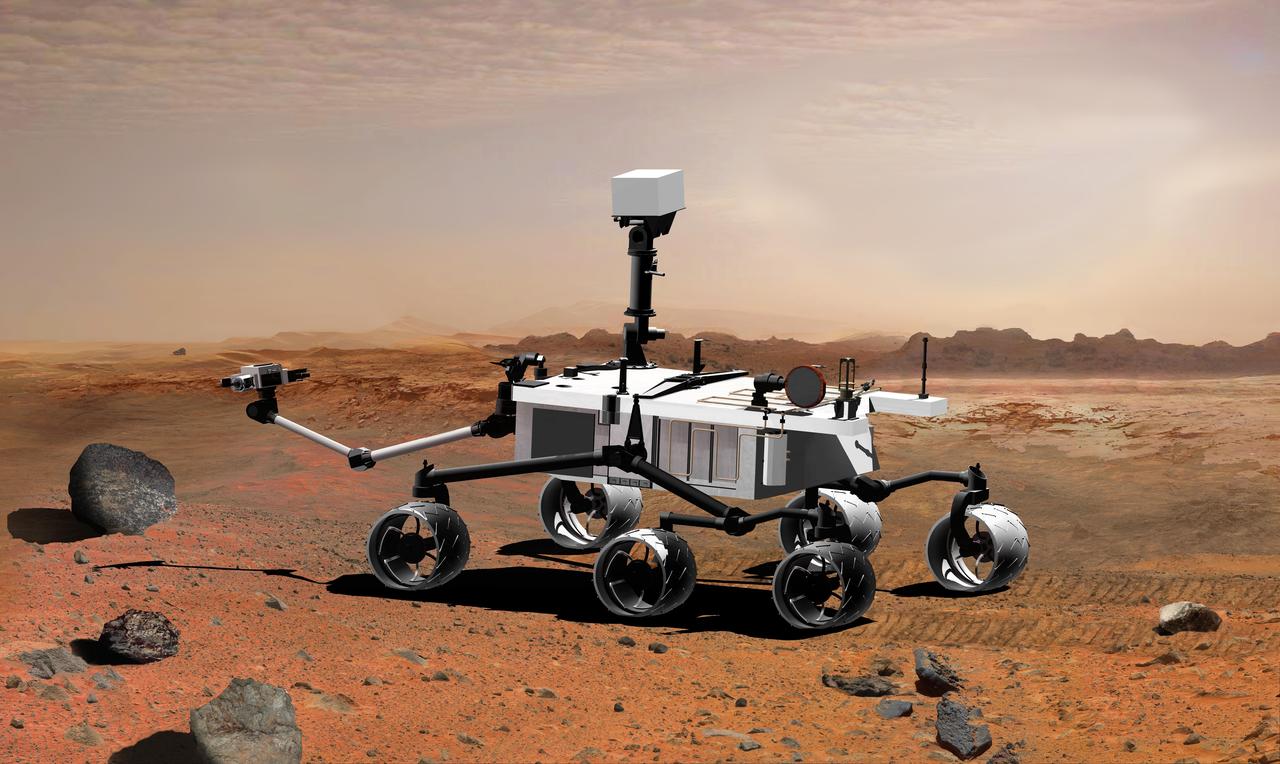
NASA Mars Science Laboratory, a mobile robot for investigating Mars past or present ability to sustain microbial life, is in development for a launch opportunity in 2011 previously 2009.
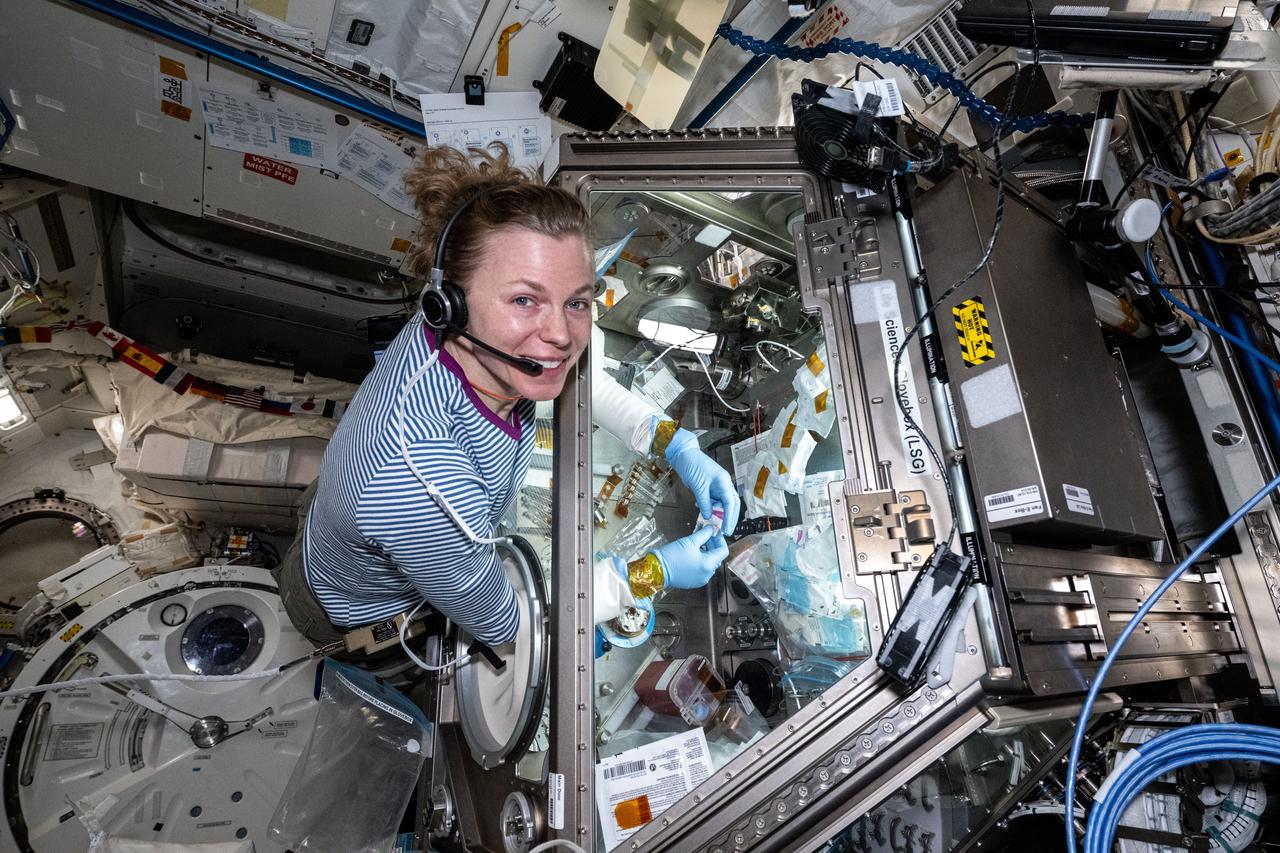
iss073e0548846 (Aug. 28, 2025) --- NASA astronaut and Expedition 73 Flight Engineer Zena Cardman processes bone cell samples inside the Kibo laboratory module's Life Science Glovebox. She was exploring the molecular mechanisms of space-induced bone loss for an investigation that could help the human skeletal system adapt to spaceflight and lead to advanced treatments for aging conditions and bone diseases on Earth.
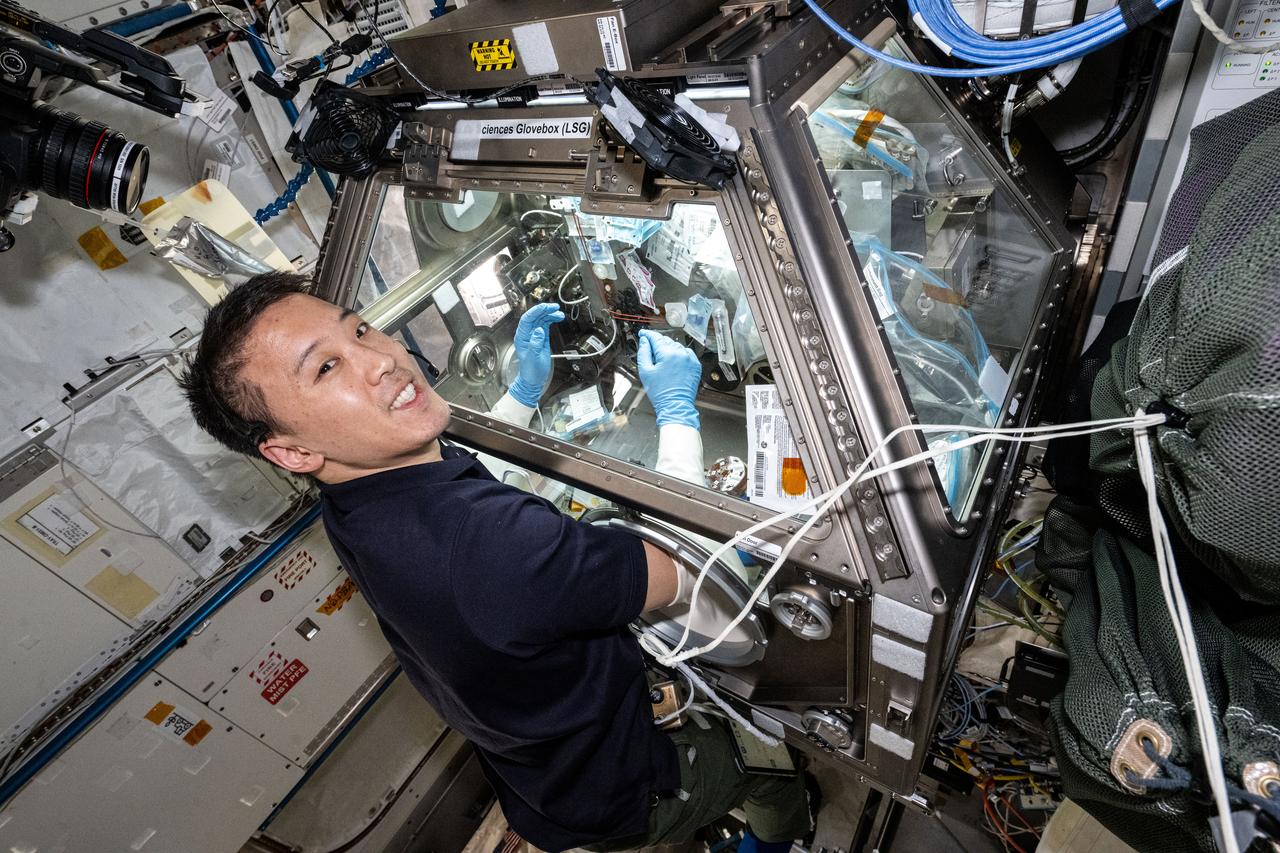
iss073e0548857 (Aug. 28, 2025) --- NASA astronaut and Expedtion 73 Flight Engineer Jonny Kim processes bone cell samples inside the Kibo laboratory module's Life Science Glovebox. He was exploring the molecular mechanisms of space-induced bone loss for an investigation that could help the human skeletal system adapt to spaceflight and lead to advanced treatments for aging conditions and bone diseases on Earth.
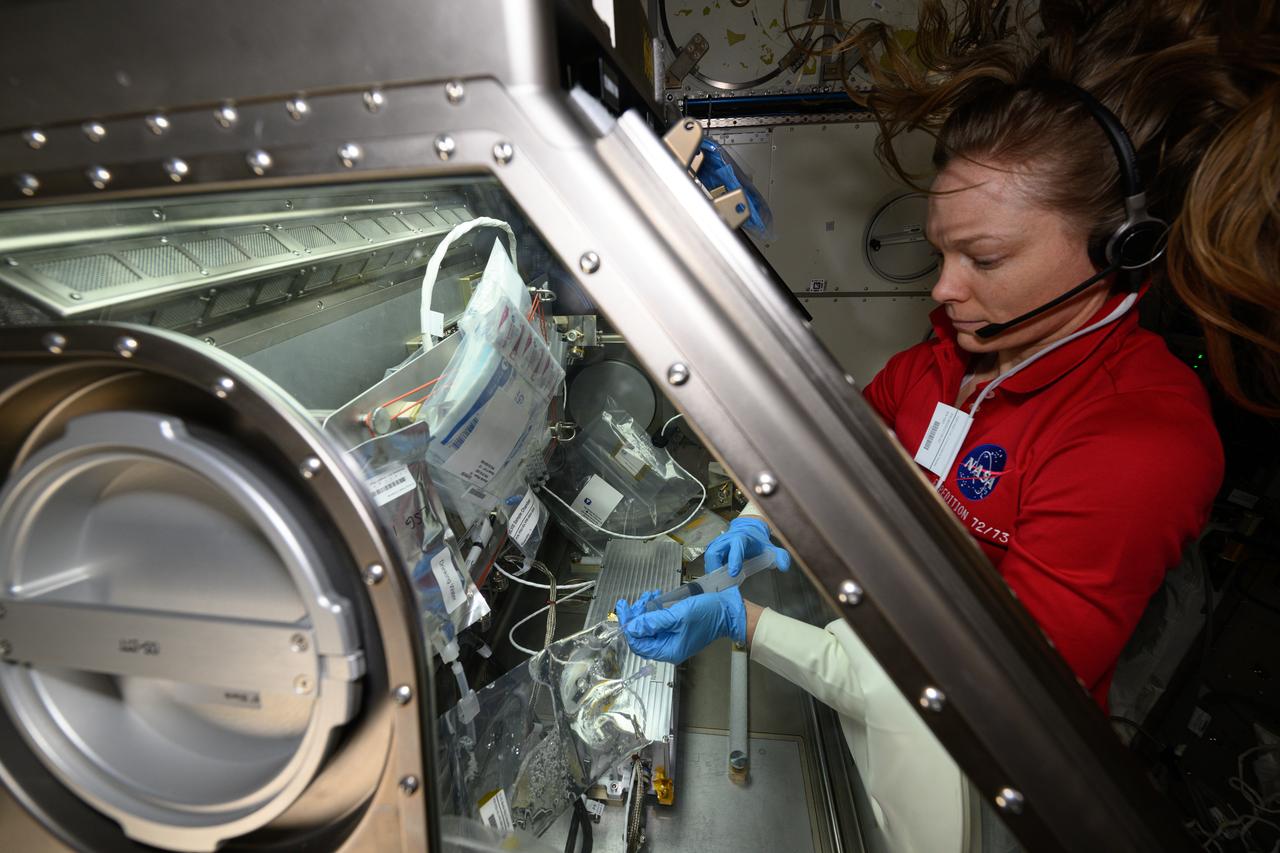
iss073e0118830 (May 30, 2025) --- NASA astronaut and Expedition 73 Flight Engineer Nichole Ayers conducts research operations inside the Kibo laboratory module's Life Science Glovebox aboard the International Space Station. Ayers was processing samples of deep-sea bacteria to test a specialized 3D microscope for its ability to monitor water quality, detect potentially infectious organisms, and study liquid mixtures and microorganisms in space and on Earth.
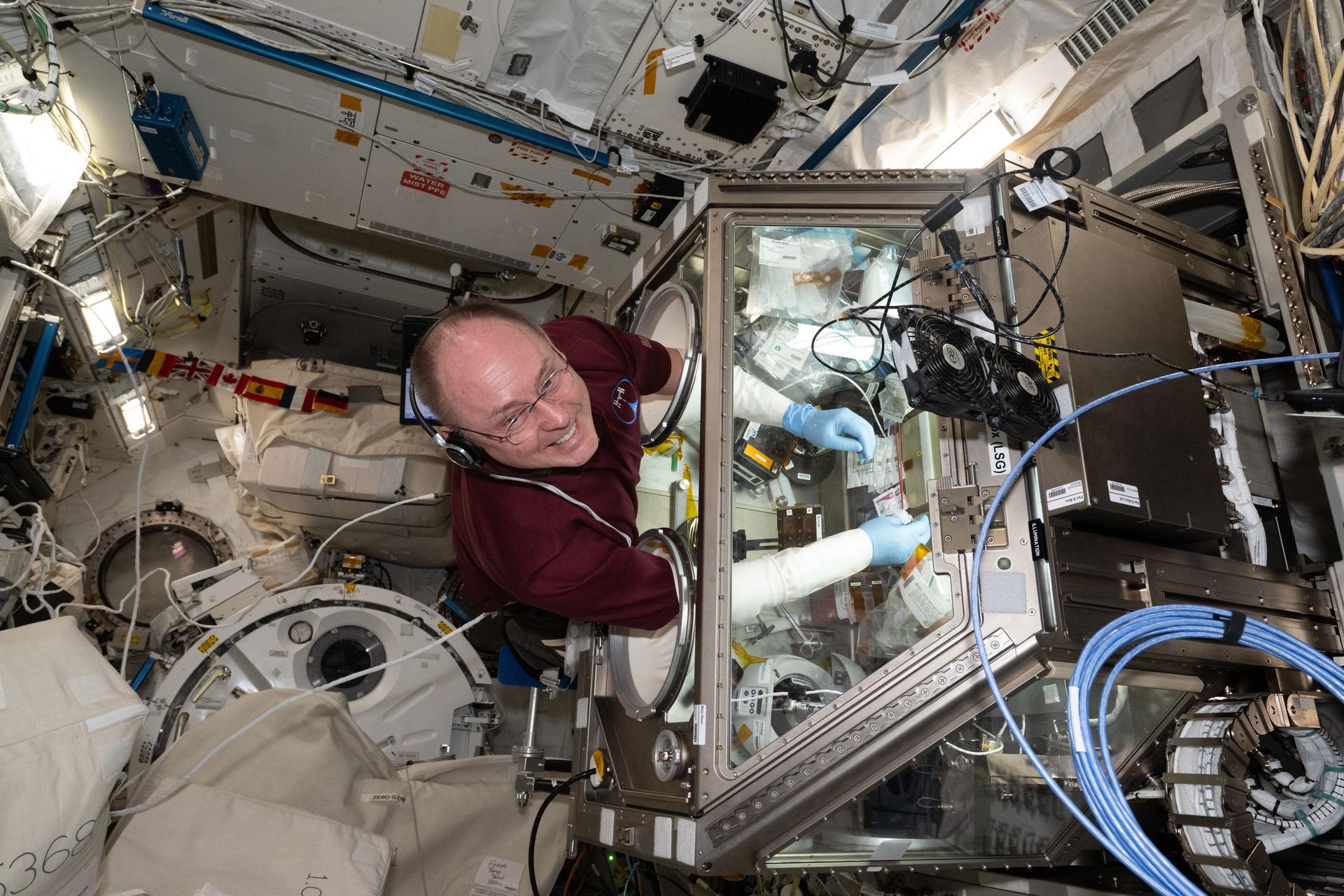
iss073e1046752 (Oct. 31, 2025) --- NASA astronaut and Expedition 73 Flight Engineer Mike Fincke conducts research operations inside the Life Science Glovebox aboard the International Space Station’s Kibo laboratory module. Fincke was assisting scientists in studying the behavior, growth, and differentiation of stem cells, and how they can be converted into brain or heart cells in microgravity. The results could lead to advancements in crew health monitoring and drug manufacturing in space, as well as new treatments for heart and neurodegenerative diseases on Earth.
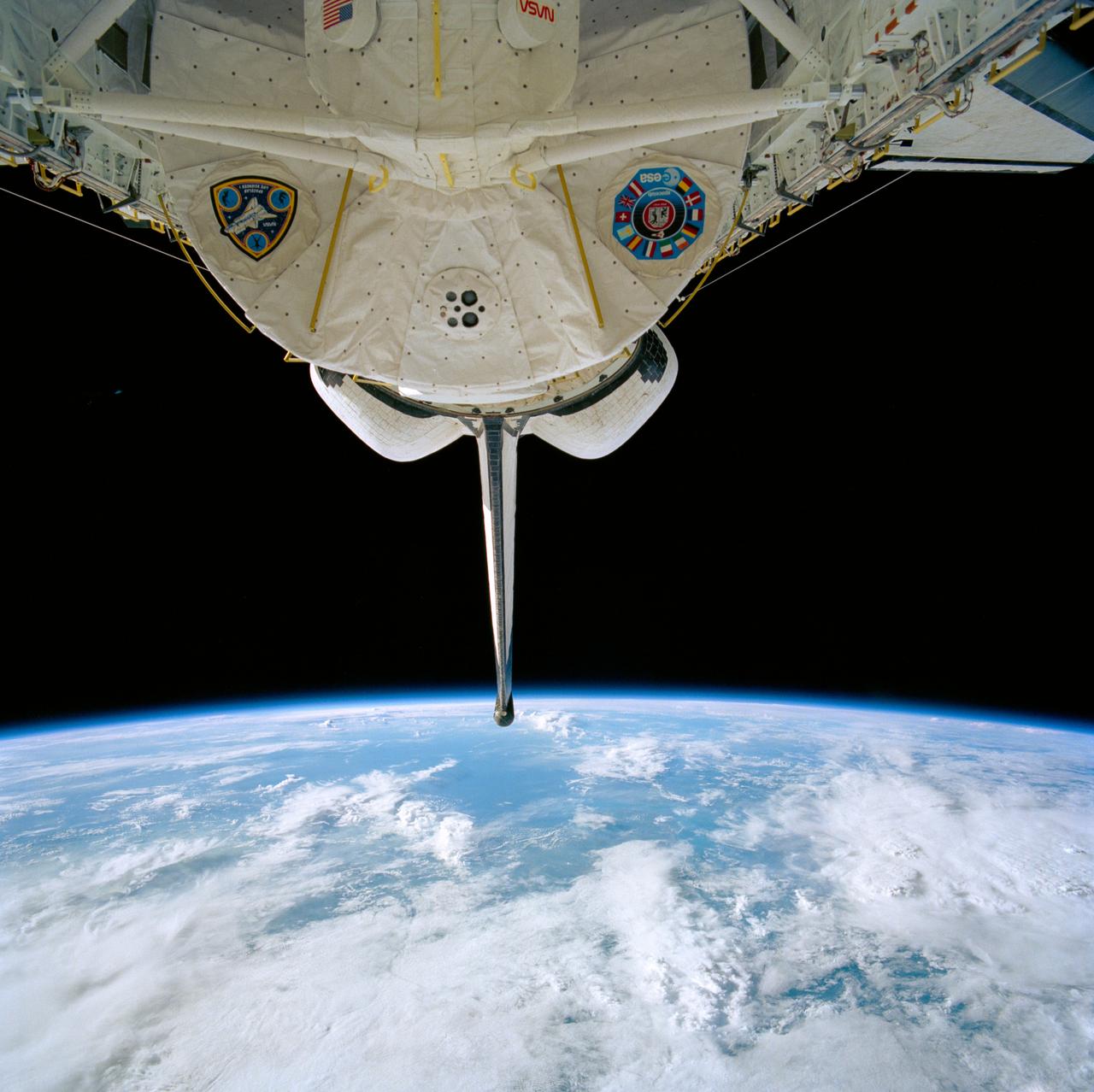
STS040-610-010 (5-14 June 1991) --- The blue and white Earth forms the backdrop for this scene of the Spacelab Life Sciences (SLS-1) module in the cargo bay of the Earth-orbiting Columbia. The view was photographed through Columbia's aft flight deck windows with a handheld Rolleiflex camera. Seven crewmembers spent nine days in space aboard Columbia. Part of the tunnel/airlock system that linked them to the SLS-1 module is seen in center foreground.
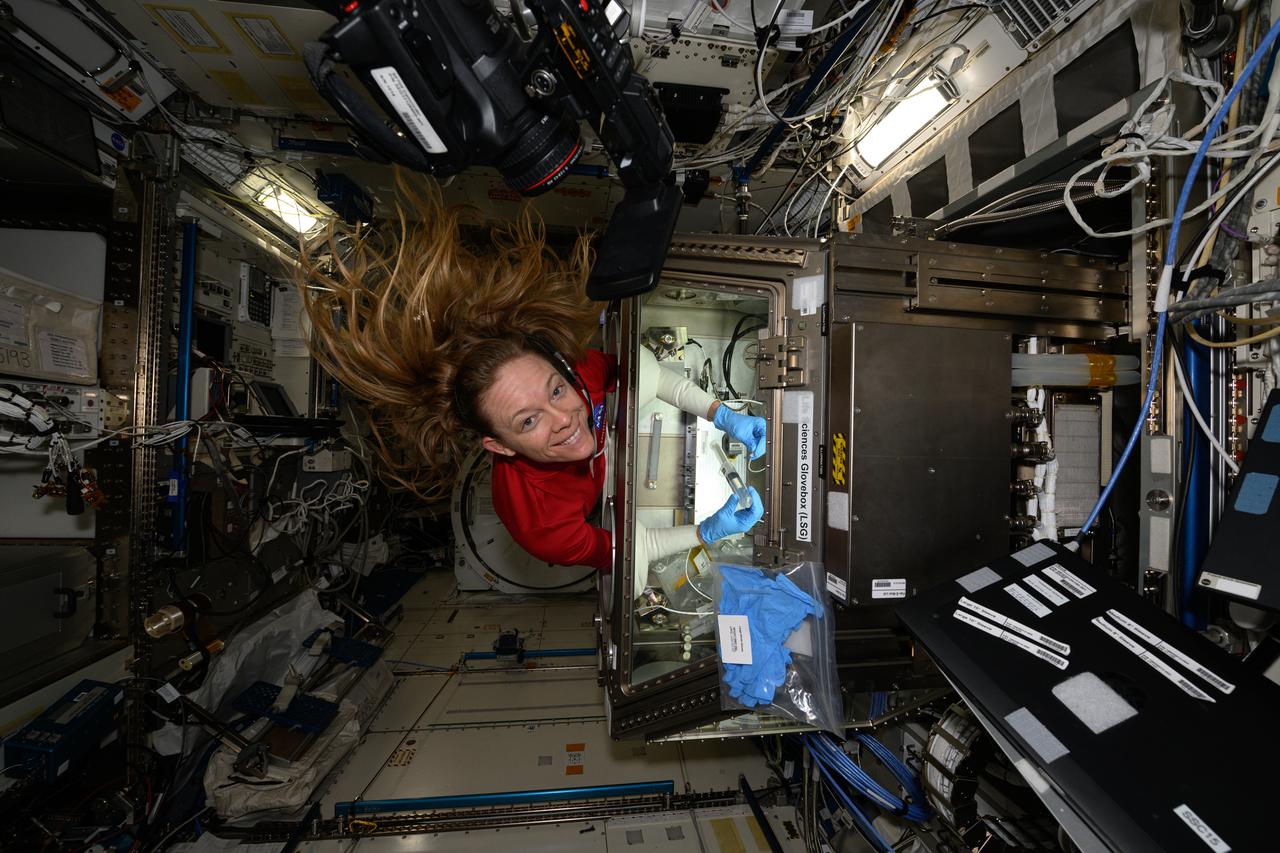
iss073e0118821 (May 30, 2025) --- NASA astronaut and Expedition 73 Flight Engineer Nichole Ayers conducts research operations inside the Kibo laboratory module's Life Science Glovebox aboard the International Space Station. Ayers was processing samples of deep-sea bacteria to test a specialized 3D microscope for its ability to monitor water quality, detect potentially infectious organisms, and study liquid mixtures and microorganisms in space and on Earth.

Jeff Greulich, DynCorp life support technician, adjusts a prototype helmet on pilot Craig Bomben at NASA Dryden Flight Research Center, Edwards, Calif. Built by Gentex Corp., Carbondale, Pa., the helmet was evaluated by five NASA pilots during the summer and fall of 2002. The objective was to obtain data on helmet fit, comfort and functionality. The inner helmet of the modular system is fitted to the individual crewmember. The outer helmet features a fully integrated spectral mounted helmet display and a binocular helmet mounted display. The helmet will be adaptable to all flying platforms. The Dryden evaluation was overseen by the Center's Life Support office. Assessments have taken place during normal proficiency flights and some air-to-air combat maneuvering. Evaluation platforms included the F-18, B-52 and C-12. The prototype helmet is being developed by the Naval Air Science and Technology Office and the Aircrew Systems Program Office, Patuxent River, Md.
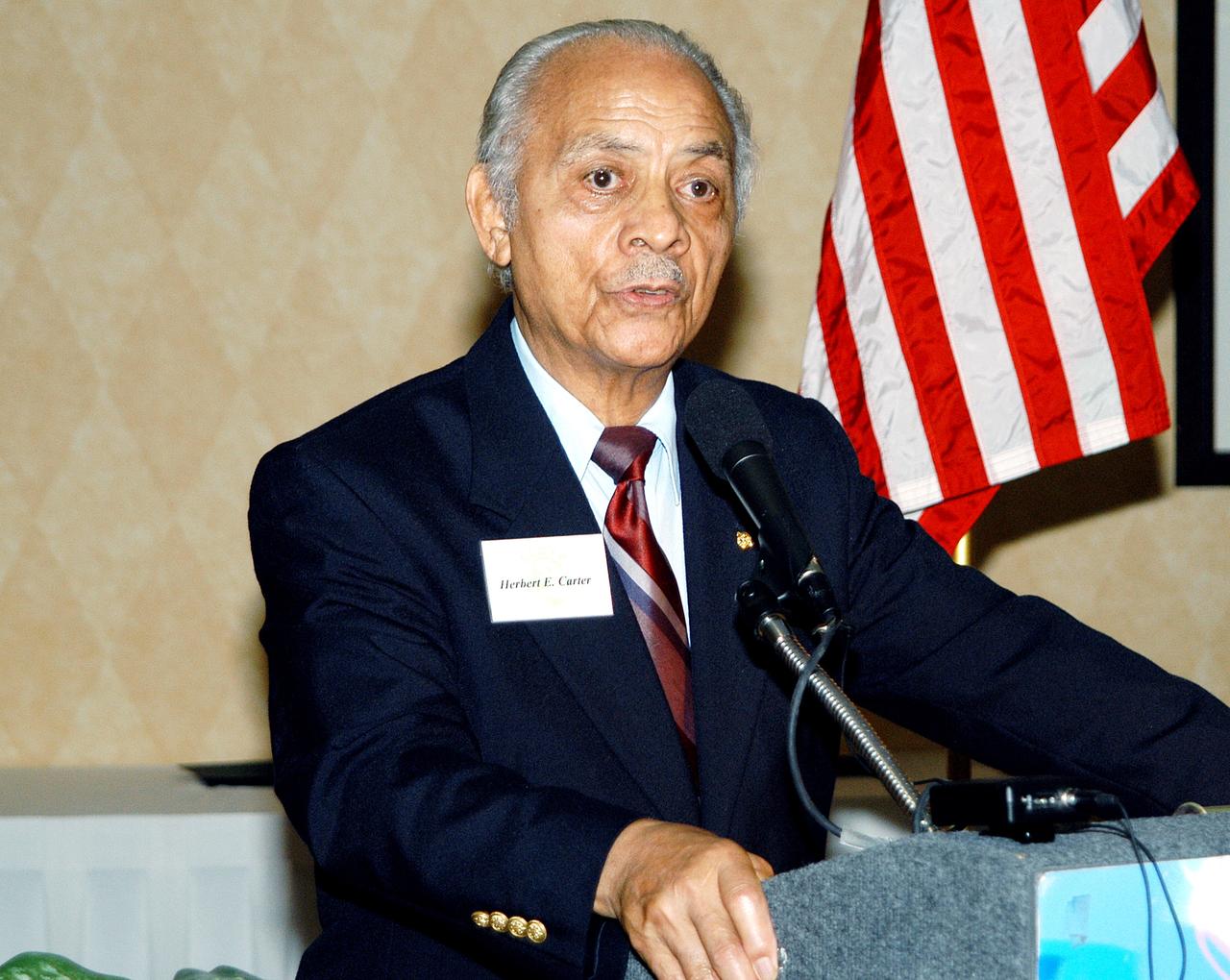
KENNEDY SPACE CENTER, FLA. - Col. (Ret.) Herbert E. Carter, one of the Tuskegee Airmen, speaks to guests at a dinner sponsored by the KSC Spaceflight and Life Sciences Office.

KENNEDY SPACE CENTER, FLA. - Col. (Ret.) Herbert E. Carter, one of the Tuskegee Airmen, speaks to guests at a dinner sponsored by the KSC Spaceflight and Life Sciences Office.
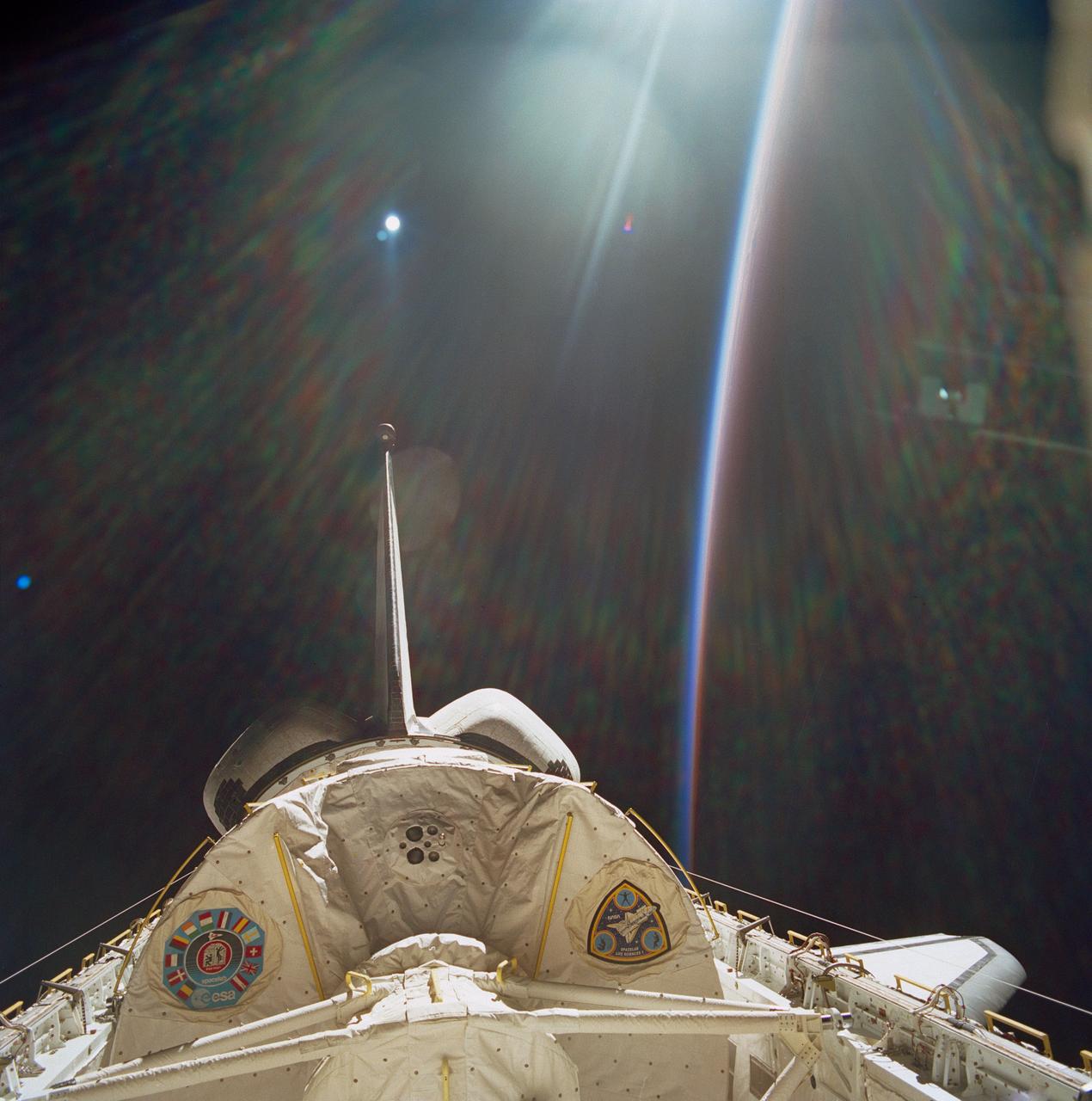
STS040-612-005 (5-14 June 1991) --- This view showing the Spacelab Life Sciences (SLS-1) module in Columbia's cargo bay was taken through windows on the aft flight deck. Under some lighting conditions the multi-layered Shuttle windows have internal reflections that provide a kaleidoscopic effect. In this image the sunrays as seen on the clouds also appear to be present in space. Note how the white sunlight toward the Sun at the Earth's limb becomes separated into the colors of the visible spectrum towards that part of the limb further into darkness due to atmosphere acting as a natural prism.
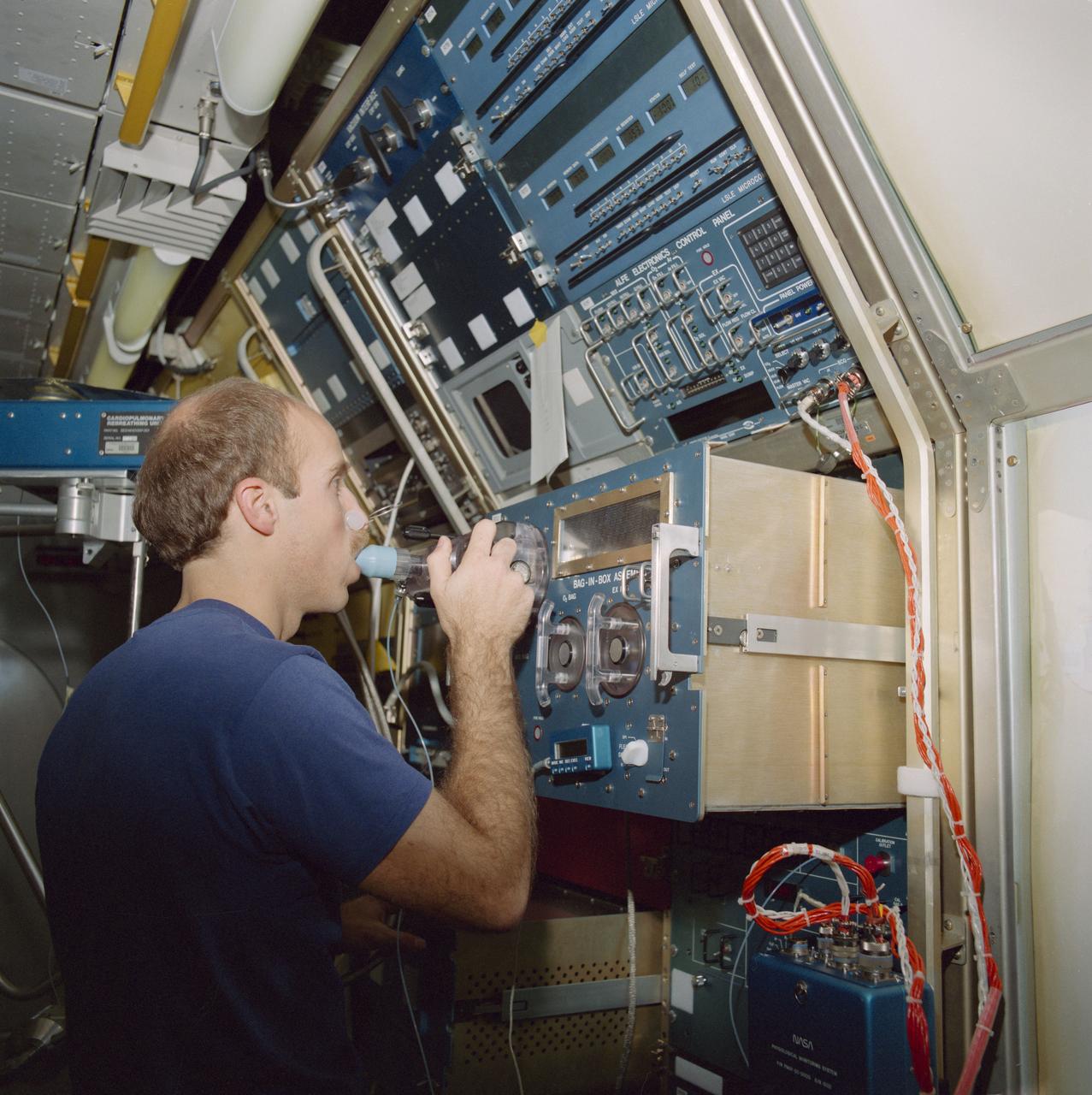
S85-26582 (Feb 1985) --- Training on the rebreathing assembly, astronaut James P. Bagian, STS-40 mission specialist, inhales a predetermined gas composition. A gas analyzer mass spectrometer determines the composition of the gases he exhales. The rebreathing assembly and gas analyzer system are part of an investigation that explores how lung function is altered. Dr. Bagian will be joined by two other mission specialists, the mission commander, the pilot and two payload specialists for the scheduled 10-day Spacelab Life Sciences-1 (SLS-1) mission. The flight is totally dedicated to biological and medical experimentation.
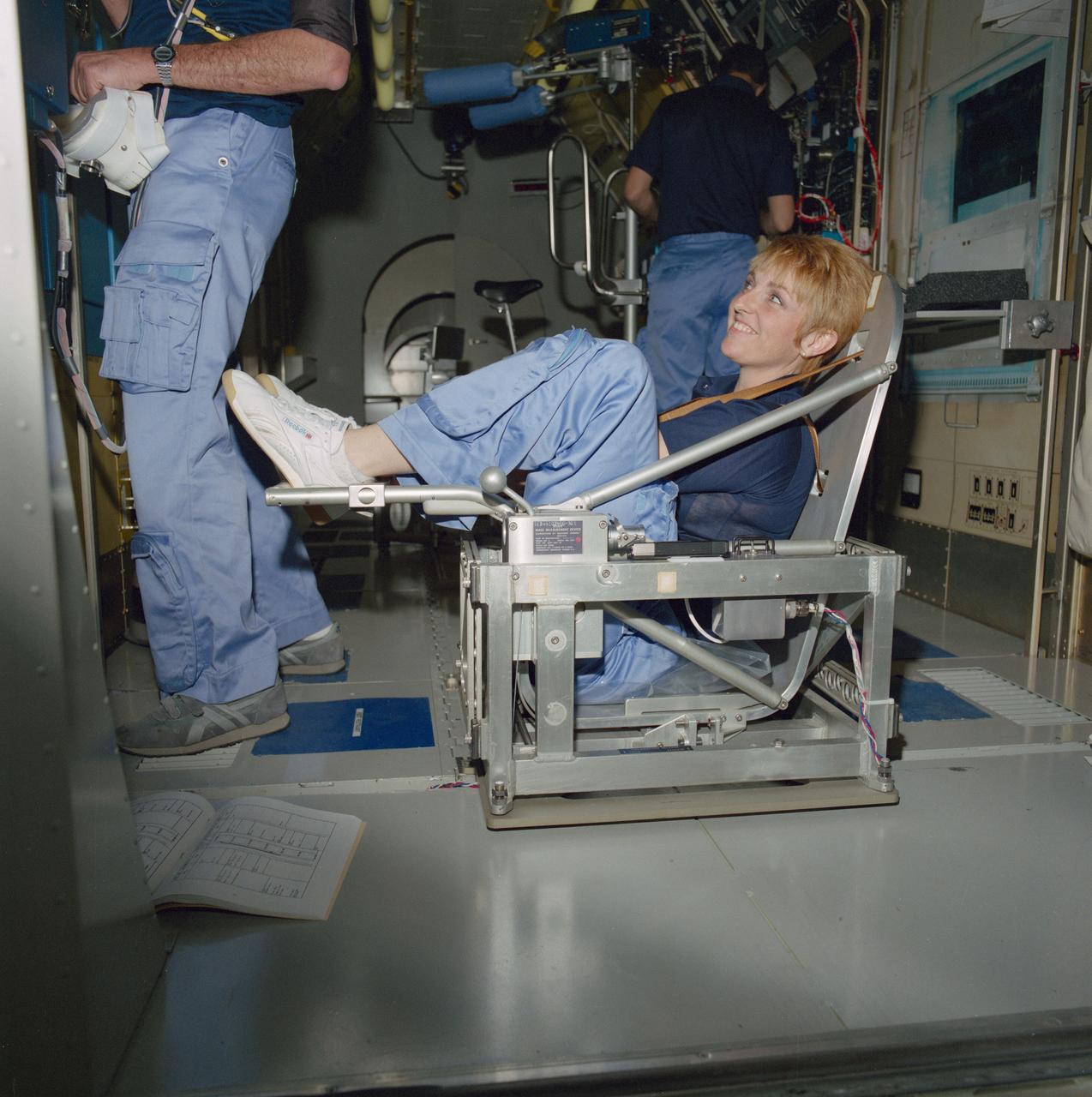
S85-26553 (Feb 1985) --- STS-40/SLS-1 payload specialist Millie Hughes-Fulford sits strapped in the special device scientists have developed for determining mass on orbit. As the chair swings back and forth, a timer records how much the crewmember's mass retards the chair's movement. Dr. Hughes-Fulford will be joined by three mission specialists, the mission commander, the pilot and a second payload specialist for the scheduled 10-day Spacelab Life Sciences-1 (SLS-1) mission. The flight is totally dedicated to biological and medical experimentation.
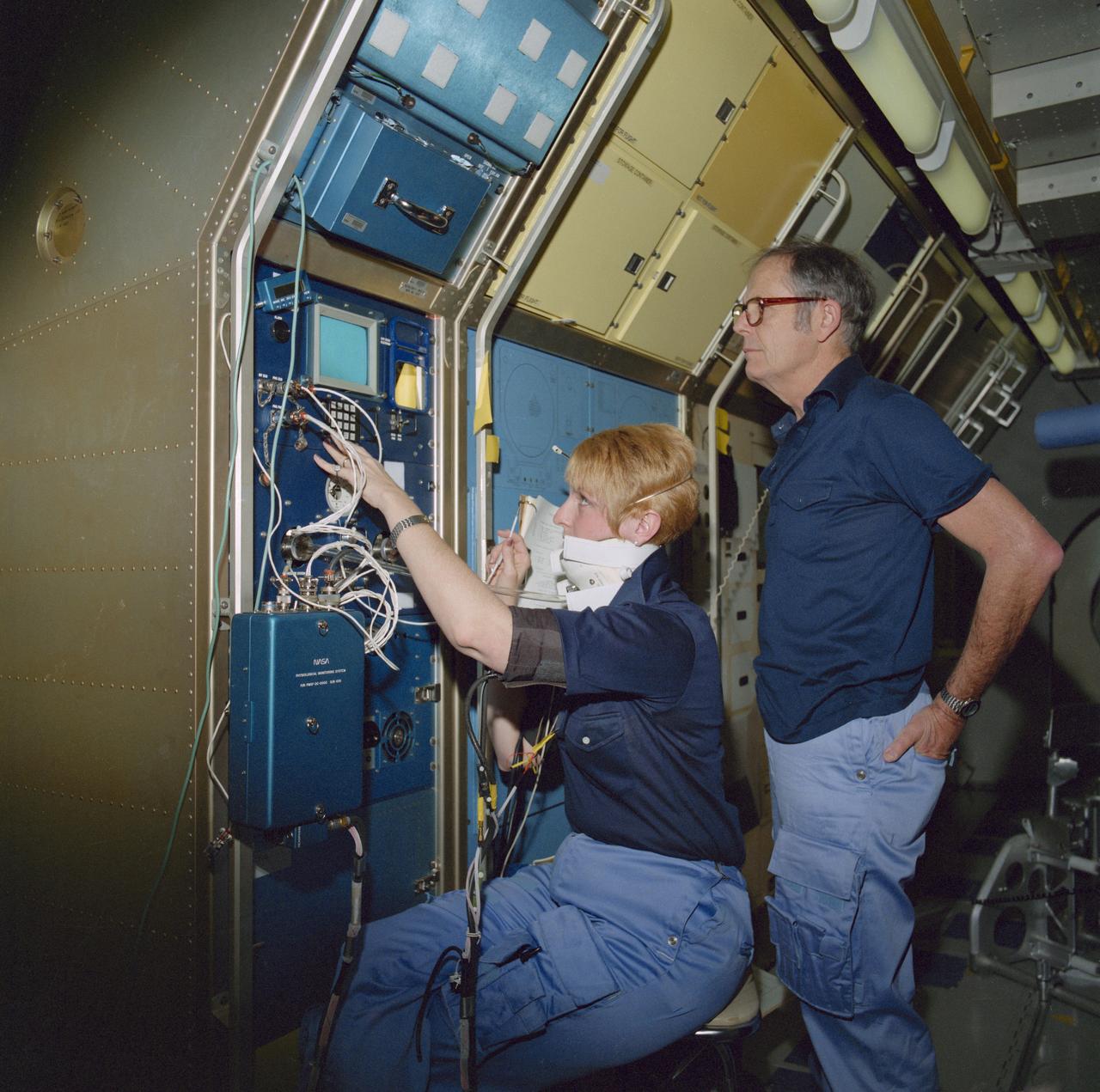
S85-26571 (Feb 1985) --- Wearing a special collar, Millie Hughes-Fulford, payload specialist, practices medical test operations scheduled for the Spacelab Life Sciences (SLS-1) mission. Robert Ward Phillips, backup payload specialist, looks on. The collar, called the baroflex neck pressure chamber, is designed to stimulate the bioceptors in the carotid artery, one of the two main arteries that supply blood to the head.
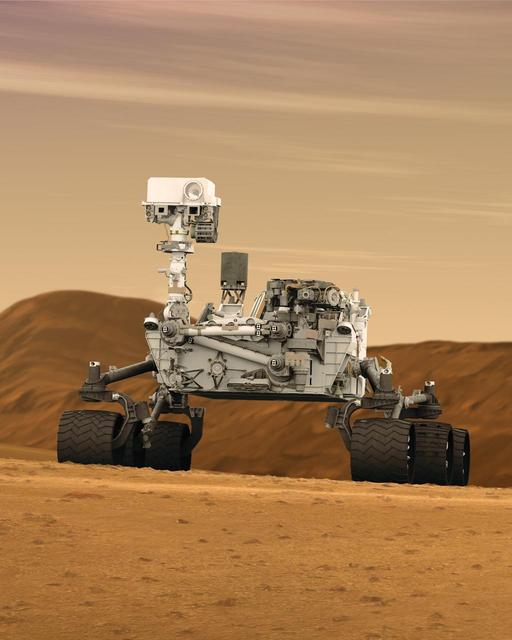
This artist concept features NASA Mars Science Laboratory Curiosity rover, a mobile robot for investigating Mars past or present ability to sustain microbial life. Curiosity is being tested in preparation for launch in the fall of 2011.
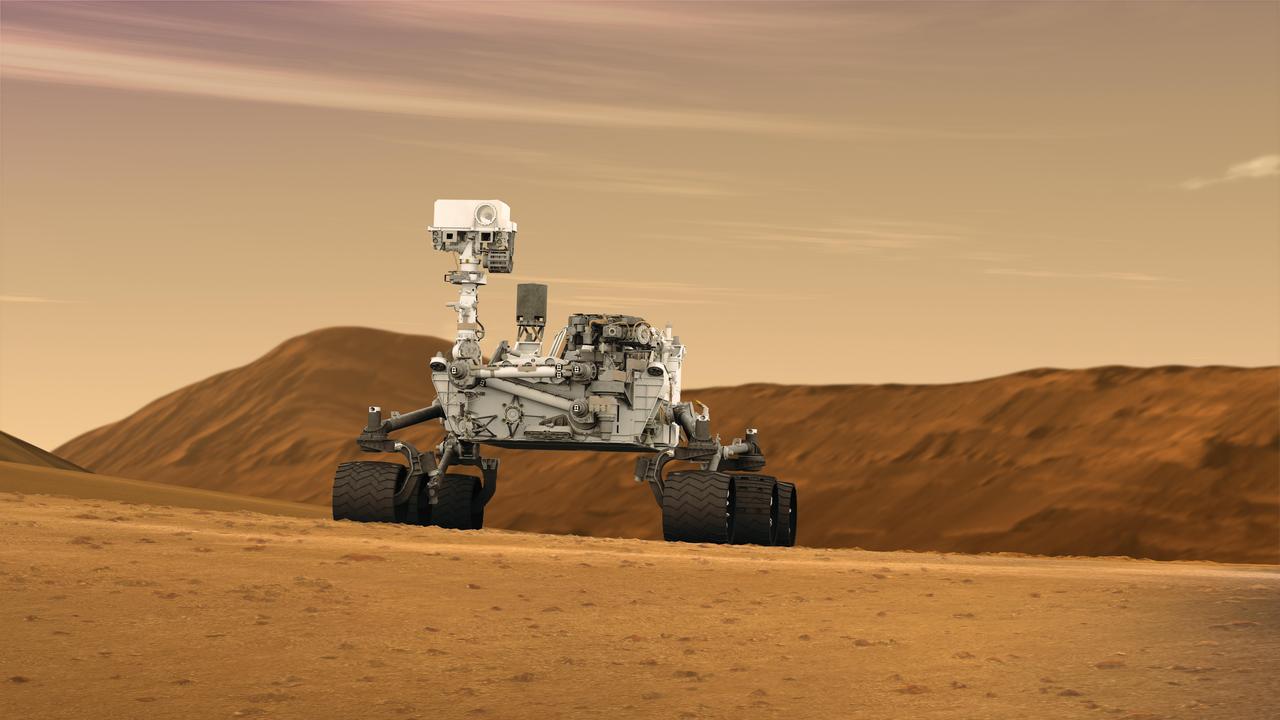
This artist concept features NASA Mars Science Laboratory Curiosity rover, a mobile robot for investigating Mars past or present ability to sustain microbial life. Curiosity is being tested in preparation for launch in the fall of 2011.
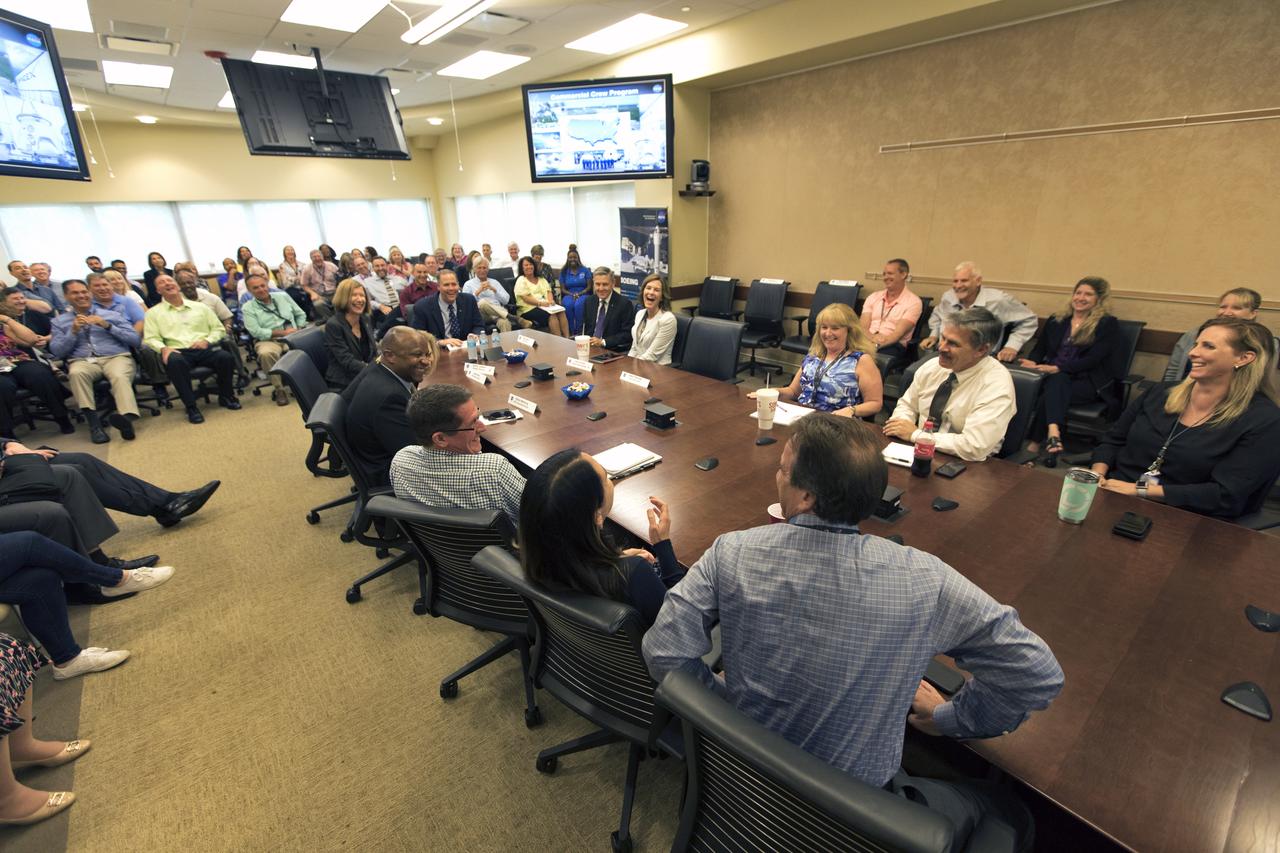
NASA Administrator Jim Bridenstine, seated at the far end of table, center, visited the agency's Kennedy Space Center in Florida, on Aug. 7, 2018. Bridenstine talked with Commercial Crew Program (CCP) leadership inside a conference room at the Operations and Checkout Building. At right is Kennedy Center Director Bob Cabana. At left is Kathy Lueders, CCP manager. The administrator also toured facilities and received updates on the program.
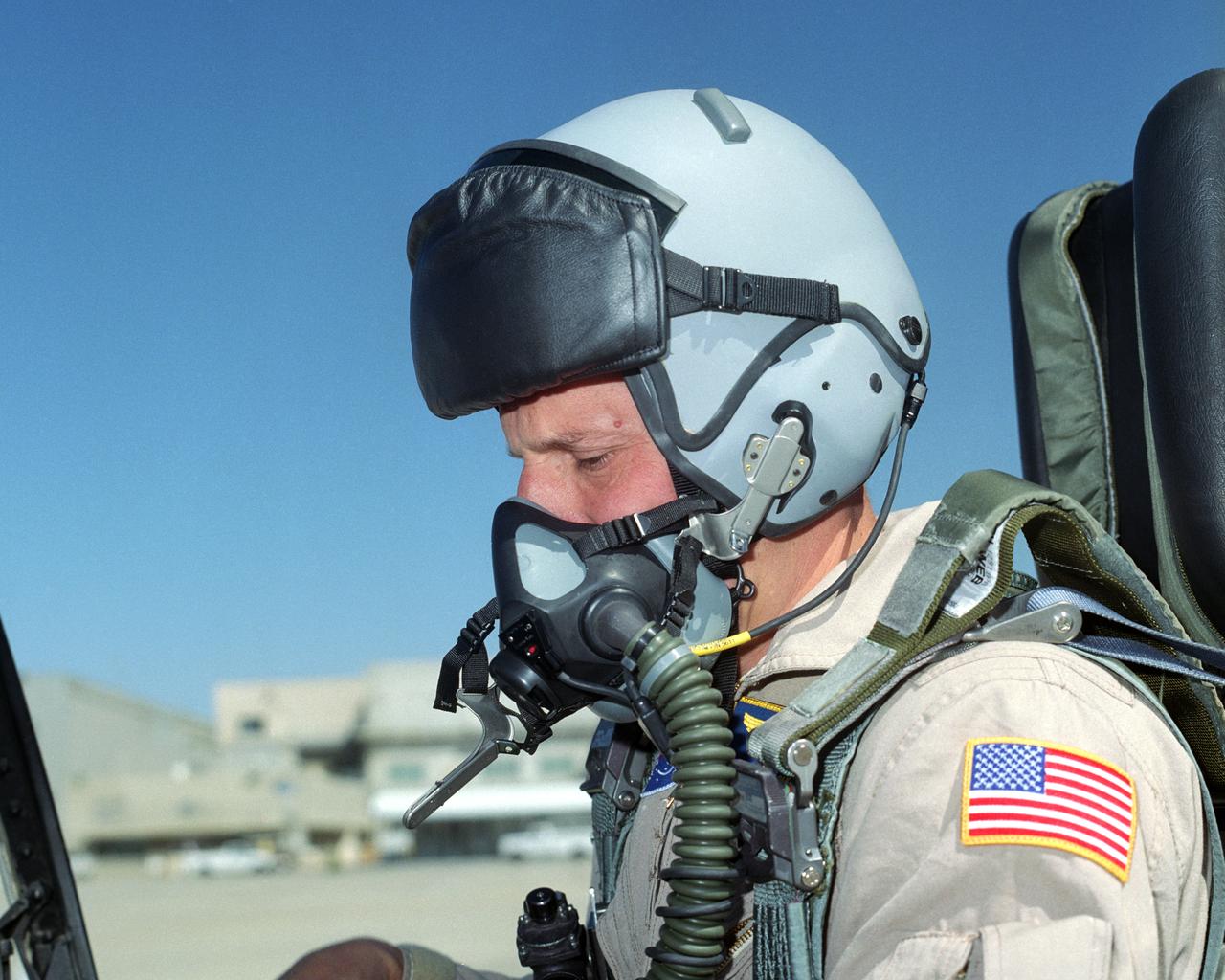
Research pilots from the NASA Dryden Flight Research Center, Edwards, Calif., tested a prototype two-part helmet. Built by Gentex Corp., Carbondale, Pa., the helmet was evaluated by five NASA pilots during the summer and fall of 2002. The objective was to obtain data on helmet fit, comfort and functionality. The inner helmet of the modular system is fitted to the individual crewmember. The outer helmet features a fully integrated spectral mounted helmet display and a binocular helmet mounted display. The helmet will be adaptable to all flying platforms. The Dryden evaluation was overseen by the Center's Life Support office. Assessments have taken place during normal proficiency flights and some air-to-air combat maneuvering. Evaluation platforms included the F-18, B-52 and C-12. The prototype helmet is being developed by the Naval Air Science and Technology Office and the Aircrew Systems Program Office, Patuxent River, Md.
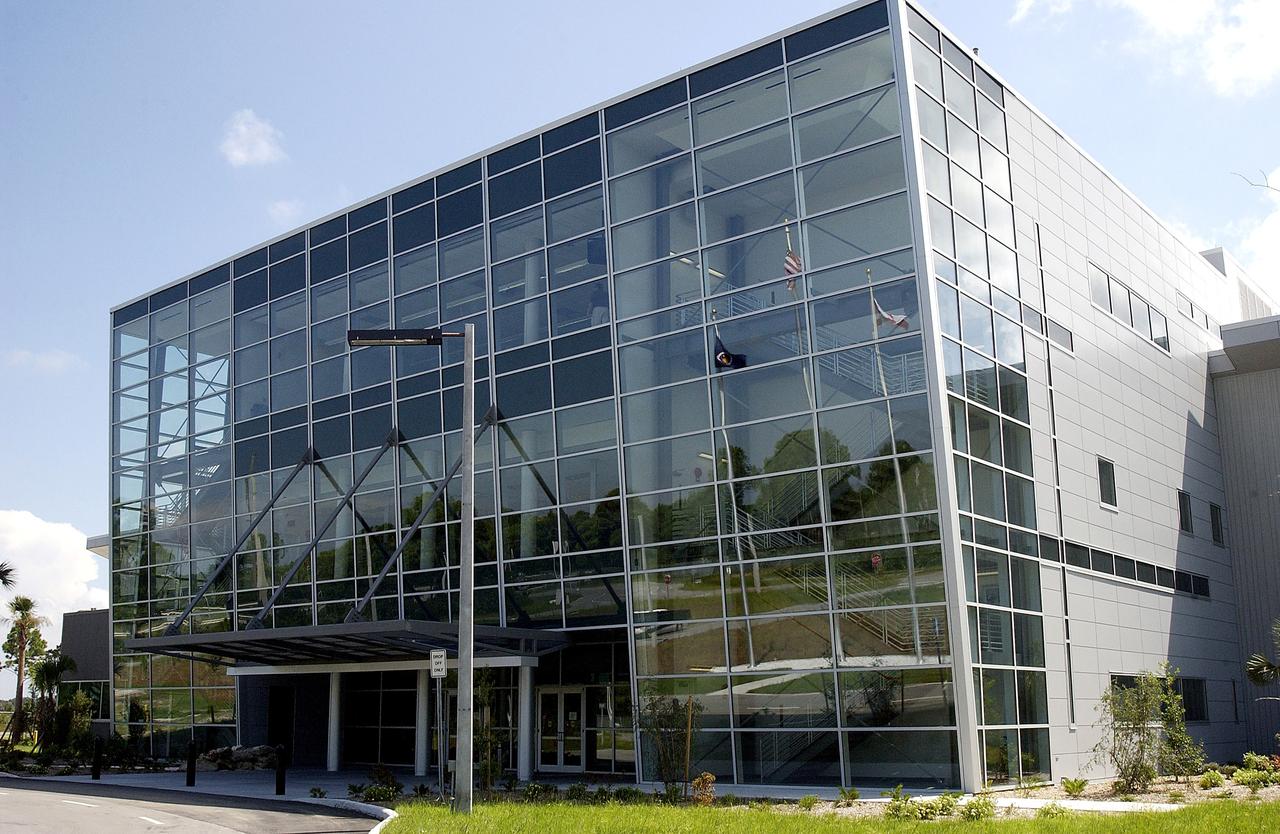
KENNEDY SPACE CENTER, FLA. - The Space Life Sciences Lab (SLSL), formerly known as the Space Experiment Research and Processing Laboratory (SERPL), is nearing completion. The new lab is a state-of-the-art facility being built for ISS biotechnology research. Developed as a partnership between NASA-KSC and the State of Florida, NASA’s life sciences contractor will be the primary tenant of the facility, leasing space to conduct flight experiment processing and NASA-sponsored research. About 20 percent of the facility will be available for use by Florida’s university researchers through the Florida Space Research Institute.
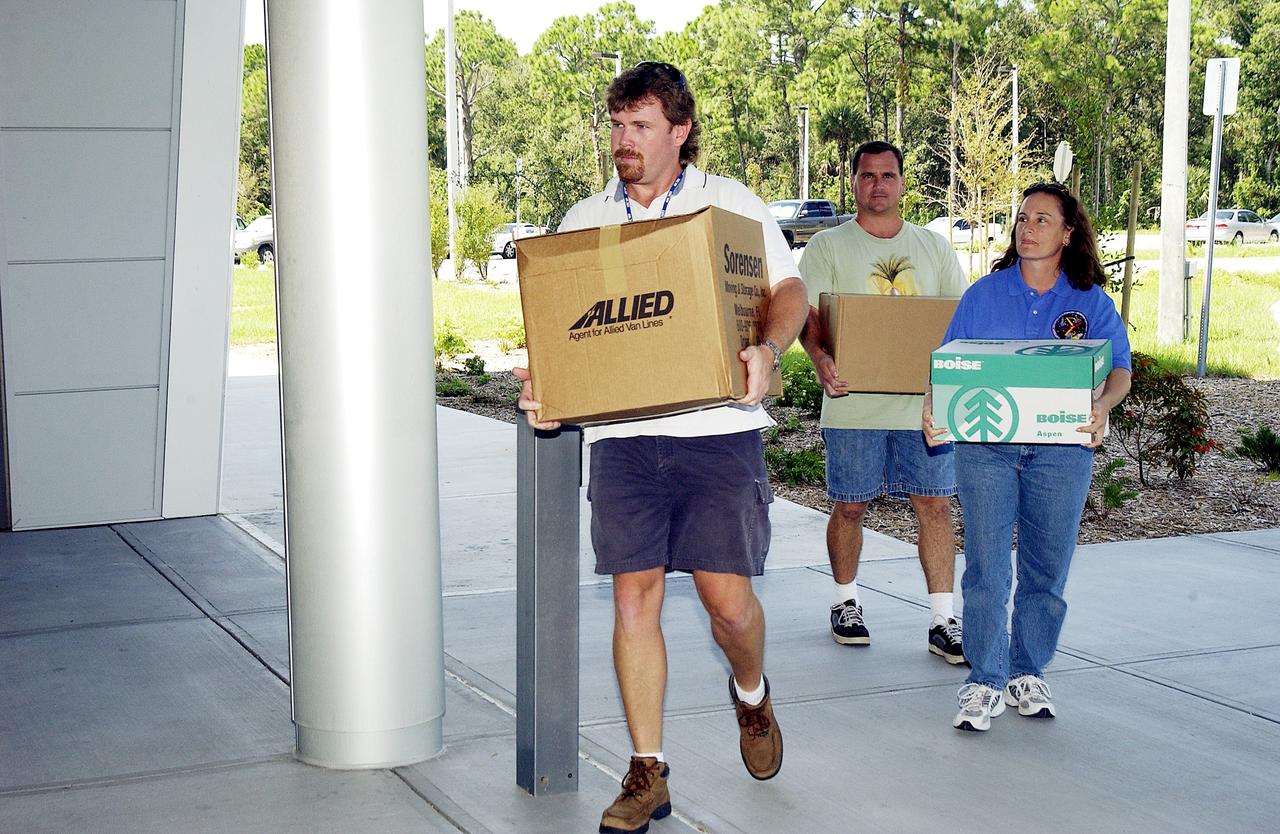
KENNEDY SPACE CENTER, FLA. - Dynamac employees (from left) Larry Burns, Debbie Wells and Neil Yorio carry boxes of hardware into the Space Life Sciences Lab (SLSL), formerly known as the Space Experiment Research and Processing Laboratory (SERPL). They are transferring equipment from Hangar L. The new lab is a state-of-the-art facility being built for ISS biotechnology research. Developed as a partnership between NASA-KSC and the State of Florida, NASA’s life sciences contractor will be the primary tenant of the facility, leasing space to conduct flight experiment processing and NASA-sponsored research. About 20 percent of the facility will be available for use by Florida’s university researchers through the Florida Space Research Institute.