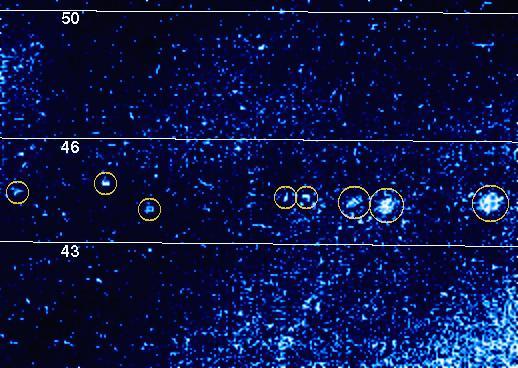
Jovian Lightning
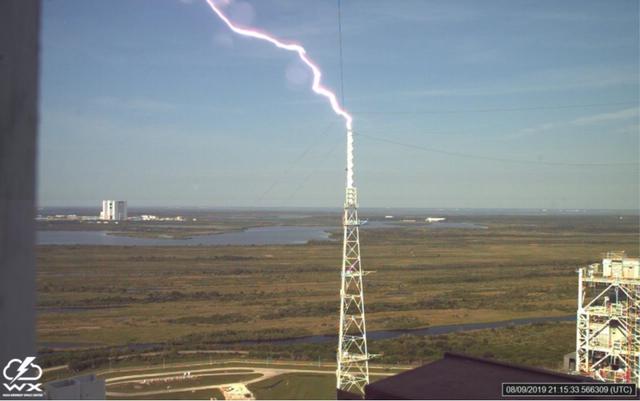
A lightning strike is recorded at Launch Complex 39B at NASA’s Kennedy Space Center in Florida in August 2019. The event was captured by high-speed cameras stationed at the pad and mobile launcher using a special filter called a “clear day frame,” which provides an overlay of the raw frame on a reference image. At pad 39B, there are three, 600-foot-tall masts with overhead wires used to transmit electrical energy around the perimeter of the pad to provide lightning protection for launch vehicles as they are processed and launched from the pad.
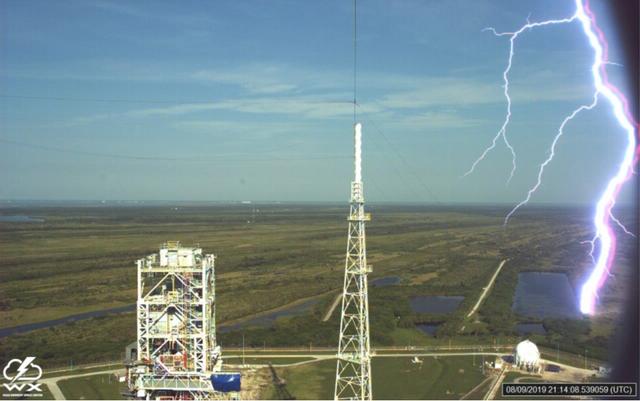
A lightning strike is recorded at Launch Complex 39B at NASA’s Kennedy Space Center in Florida in August 2019. The event was captured by high-speed cameras stationed at the pad and mobile launcher using a special filter called a “clear day frame,” which provides an overlay of the raw frame on a reference image. At pad 39B, there are three, 600-foot-tall masts with overhead wires used to transmit electrical energy around the perimeter of the pad to provide lightning protection for launch vehicles as they are processed and launched from the pad.
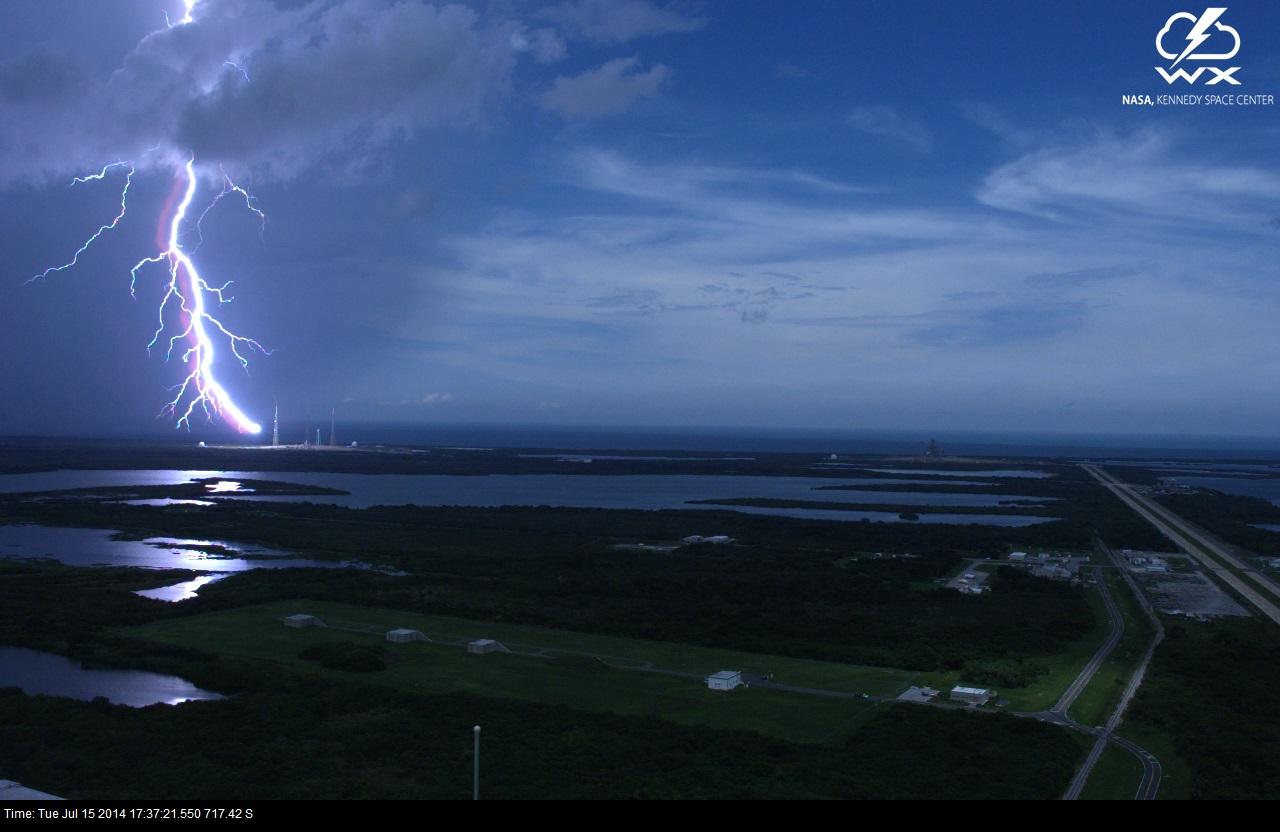
A lightning strike is recorded at Launch Complex 39B at NASA’s Kennedy Space Center in Florida in July 2014. The event was captured by high-speed camera from the iconic Vehicle Assembly Building. At pad 39B, there are three, 600-foot-tall masts with overhead wires used to transmit electrical energy around the perimeter of the pad to provide lightning protection for launch vehicles as they are processed and launched from the pad.
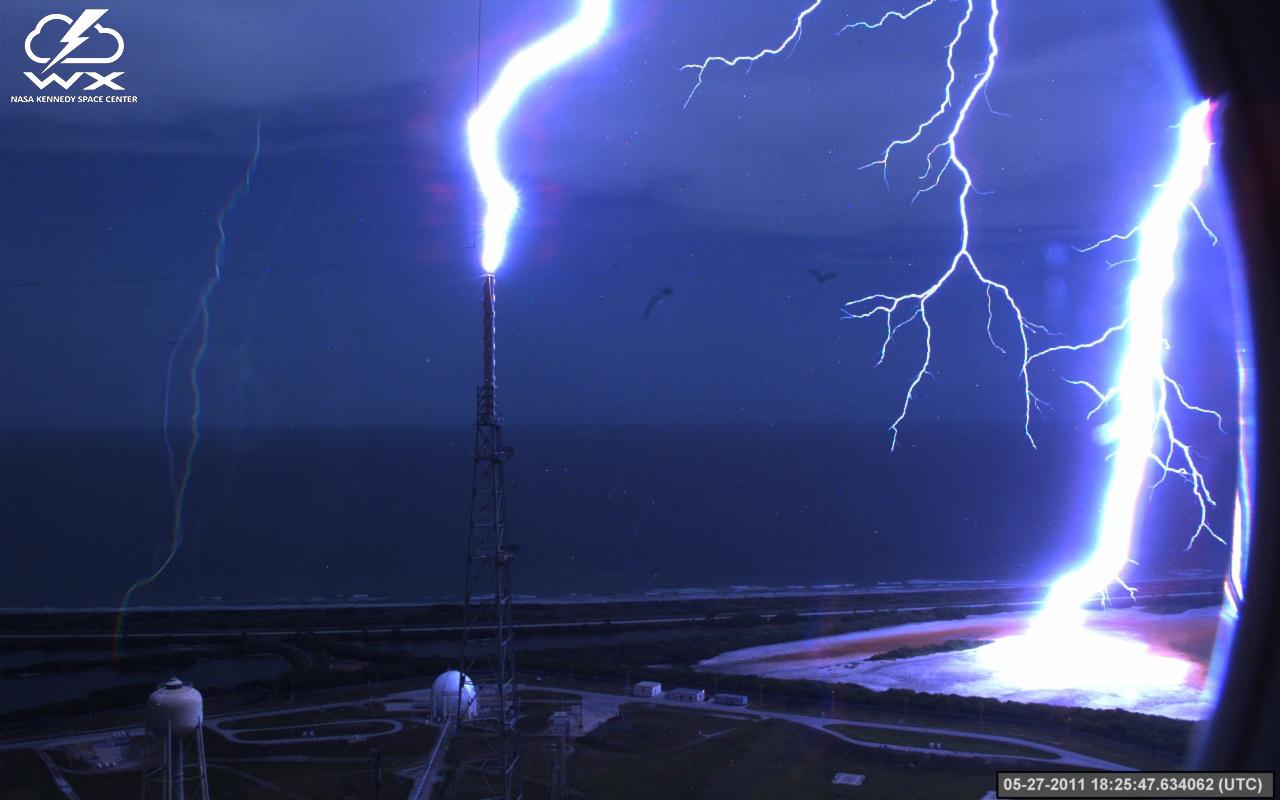
A lightning strike is recorded at Launch Complex 39B at NASA’s Kennedy Space Center in Florida in May 2011. The event was captured by high-speed cameras stationed at the pad and mobile launcher. At pad 39B, there are three, 600-foot-tall masts with overhead wires used to transmit electrical energy around the perimeter of the pad to provide lightning protection for launch vehicles as they are processed and launched from the pad.
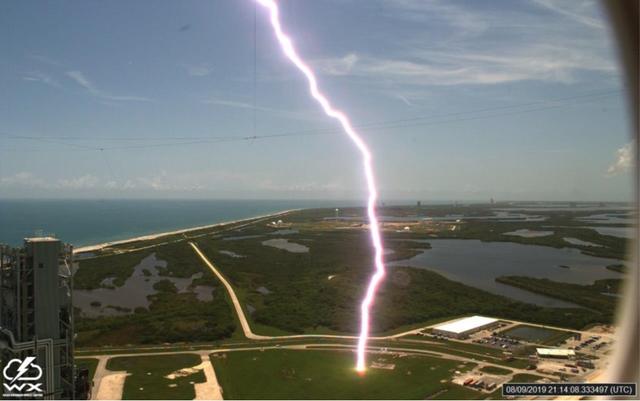
A lightning strike is recorded at Launch Complex 39B at NASA’s Kennedy Space Center in Florida in August 2019. The event was captured by high-speed cameras stationed at the pad and mobile launcher using a special filter called a “clear day frame,” which provides an overlay of the raw frame on a reference image. At pad 39B, there are three, 600-foot-tall masts with overhead wires used to transmit electrical energy around the perimeter of the pad to provide lightning protection for launch vehicles as they are processed and launched from the pad.
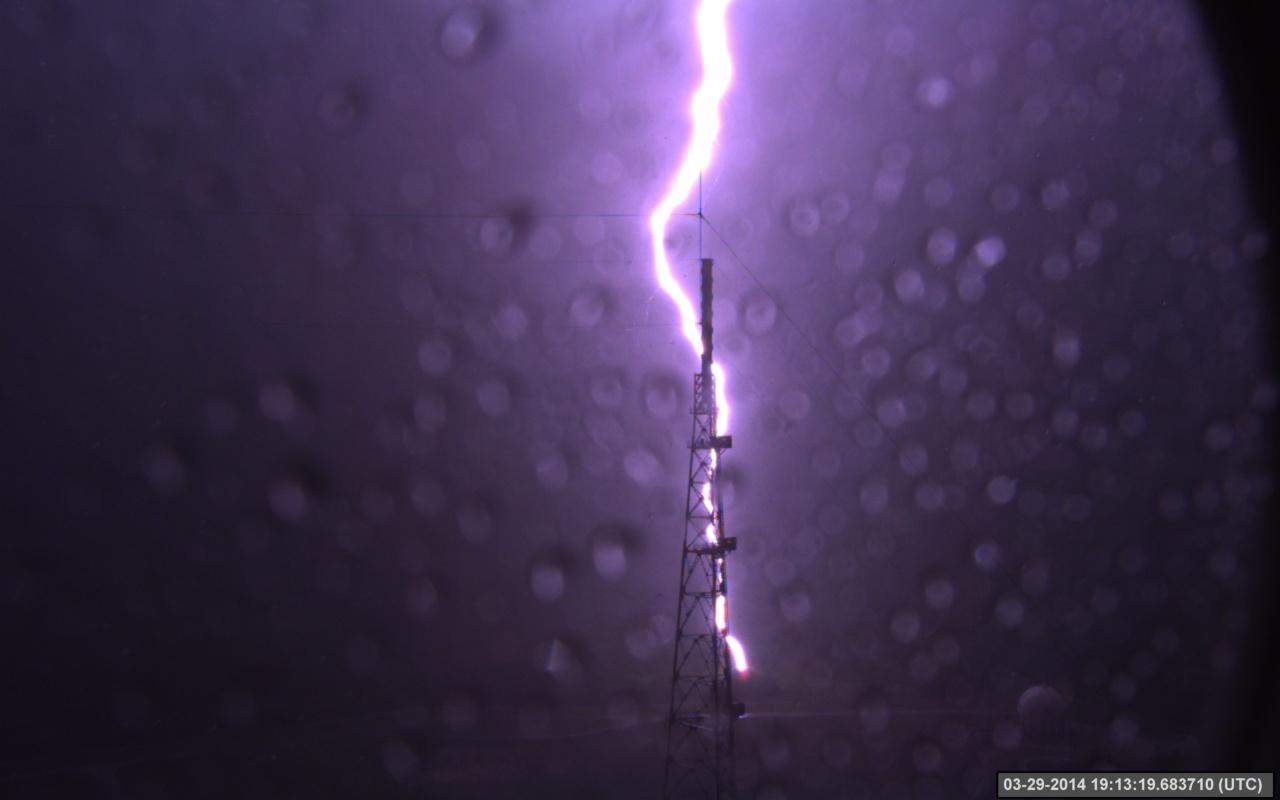
A lightning strike is recorded at Launch Complex 39B at NASA’s Kennedy Space Center in Florida in March 2014. The event was captured by high-speed cameras stationed at the pad and mobile launcher. At pad 39B, there are three, 600-foot-tall masts with overhead wires used to transmit electrical energy around the perimeter of the pad to provide lightning protection for launch vehicles as they are processed and launched from the pad.
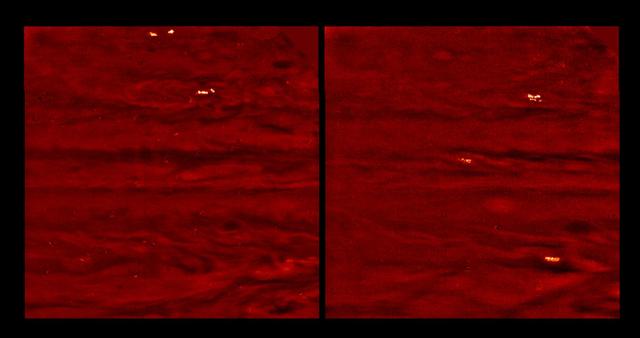
Jovian Lightning and Moonlit Clouds
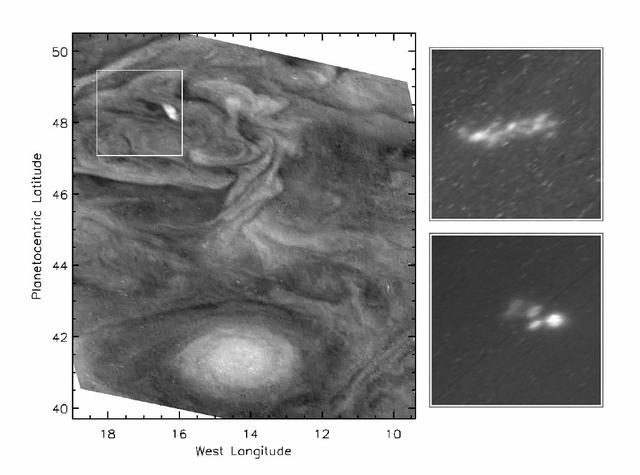
Jovian Lightning and the Daytime Storm
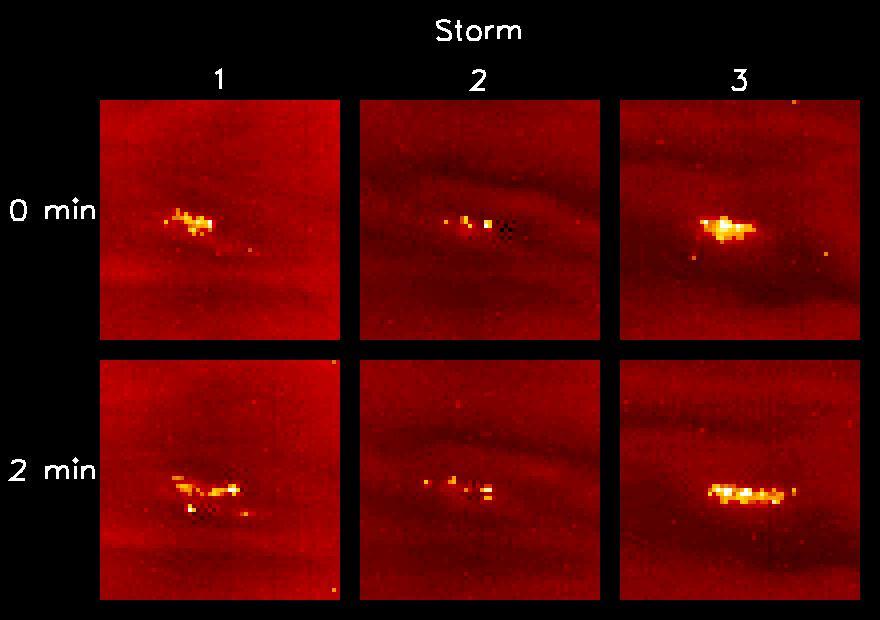
Changing Lightning Storms on Jupiter

Lightning, Crackles and Pops
Lightning Strikes at Saturn

NASA Cassini spacecraft captured the first lightning flashes on Saturn. The storm that generated the lightning lasted from January to October 2009, making it the longest-lasting lightning storm known in the solar system.
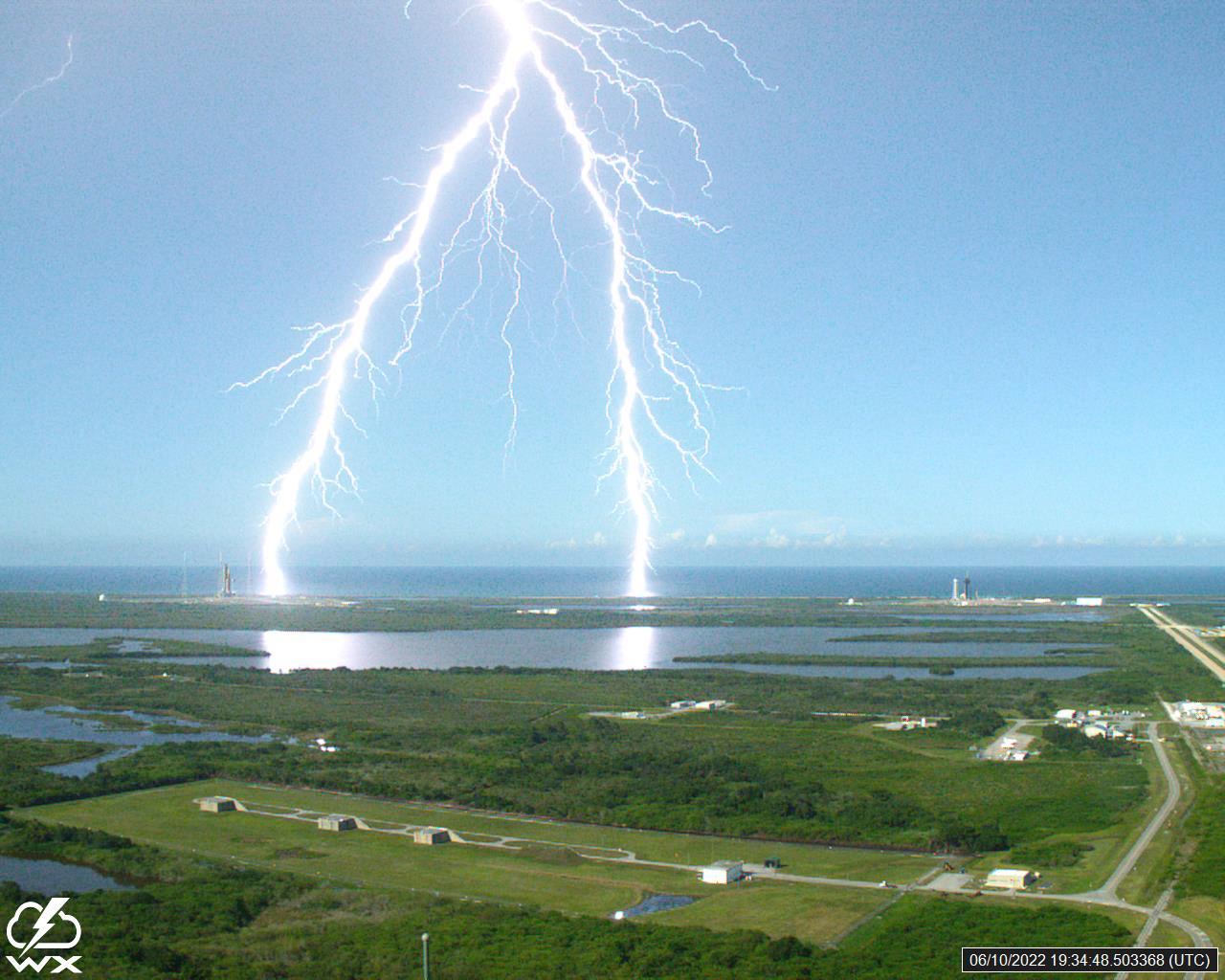
A lightning strike was recorded at Launch Complex 39B at NASA’s Kennedy Space Center in Florida on June 10, 2022. NASA’s Space Launch System (SLS) and Orion spacecraft atop the mobile launcher are on the launch pad in preparation for the Artemis I mission. The lightning strike was recorded by cameras stationed at the pad and mobile launcher using a special filter called a “clear day frame,” which provides an overlay of the raw frame on a reference image. Artemis I will be the first integrated test of the SLS and Orion spacecraft. In later missions, NASA will land the first woman and the first woman of color on the surface of the Moon, paving the way for a long-term lunar presence and serving as a steppingstone on the way to Mars.
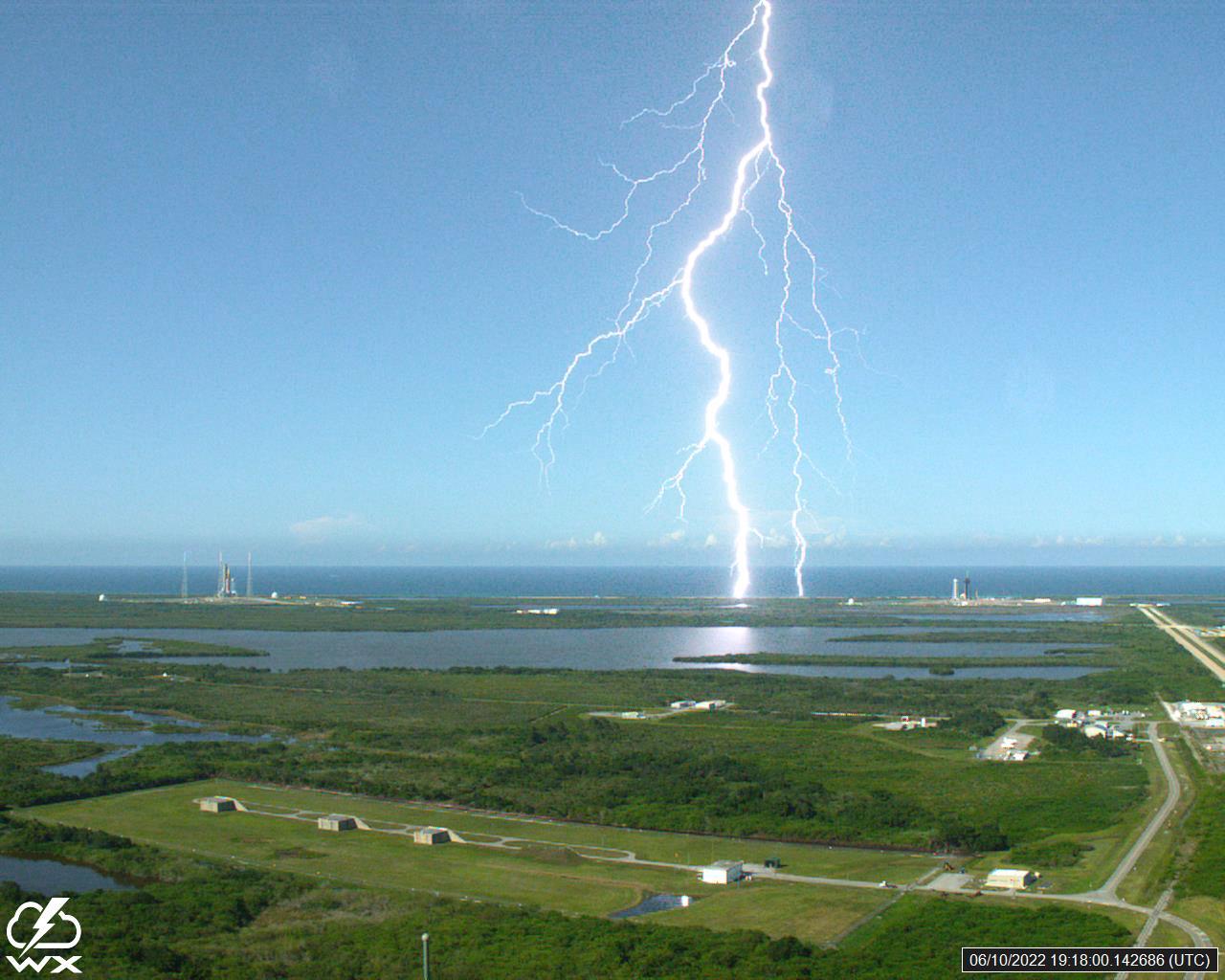
A lightning strike was recorded at Launch Complex 39B at NASA’s Kennedy Space Center in Florida on June 10, 2022. NASA’s Space Launch System (SLS) and Orion spacecraft atop the mobile launcher are on the launch pad in preparation for the Artemis I mission. The lightning strike was recorded by cameras stationed at the pad and mobile launcher using a special filter called a “clear day frame,” which provides an overlay of the raw frame on a reference image. Artemis I will be the first integrated test of the SLS and Orion spacecraft. In later missions, NASA will land the first woman and the first woman of color on the surface of the Moon, paving the way for a long-term lunar presence and serving as a steppingstone on the way to Mars.

A lightning strike was recorded at Launch Complex 39B at NASA’s Kennedy Space Center in Florida on Sept. 14, 2022. NASA’s Space Launch System (SLS) and Orion spacecraft atop the mobile launcher are on the launch pad in preparation for the Artemis I mission. The lightning strike was recorded by cameras stationed at the pad and mobile launcher using a special filter called a “clear day frame,” which provides an overlay of the raw frame on a reference image. Artemis I will be the first integrated test of the SLS and Orion spacecraft. In later missions, NASA will land the first woman and the first woman of color on the surface of the Moon, paving the way for a long-term lunar presence and serving as a steppingstone on the way to Mars.
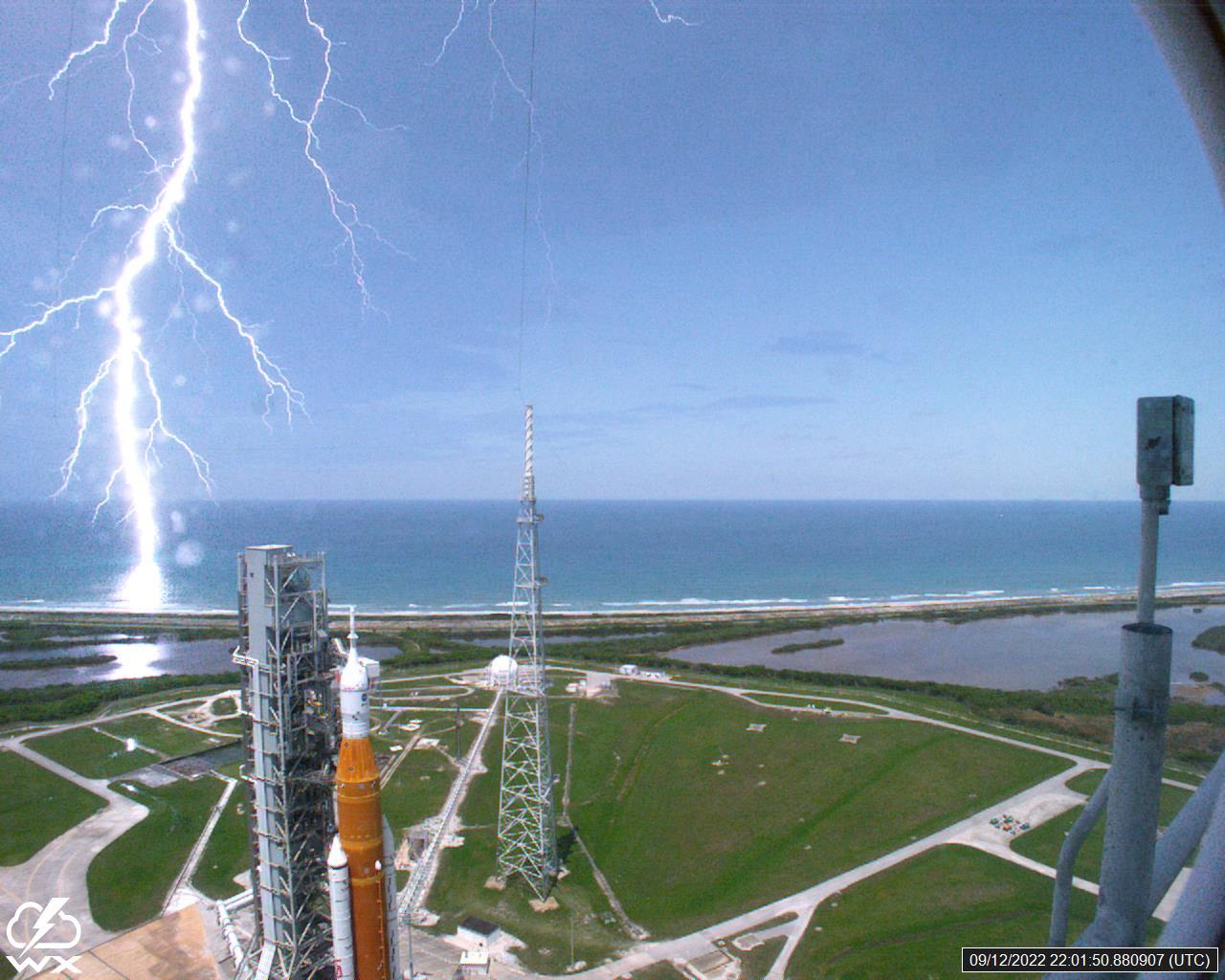
A lightning strike was recorded at Launch Complex 39B at NASA’s Kennedy Space Center in Florida on Sept. 12, 2022. NASA’s Space Launch System (SLS) and Orion spacecraft atop the mobile launcher are in view on the launch pad in preparation for the Artemis I mission. The lightning strike was recorded by cameras stationed at the pad and mobile launcher using a special filter called a “clear day frame,” which provides an overlay of the raw frame on a reference image. Artemis I will be the first integrated test of the SLS and Orion spacecraft. In later missions, NASA will land the first woman and the first woman of color on the surface of the Moon, paving the way for a long-term lunar presence and serving as a steppingstone on the way to Mars.
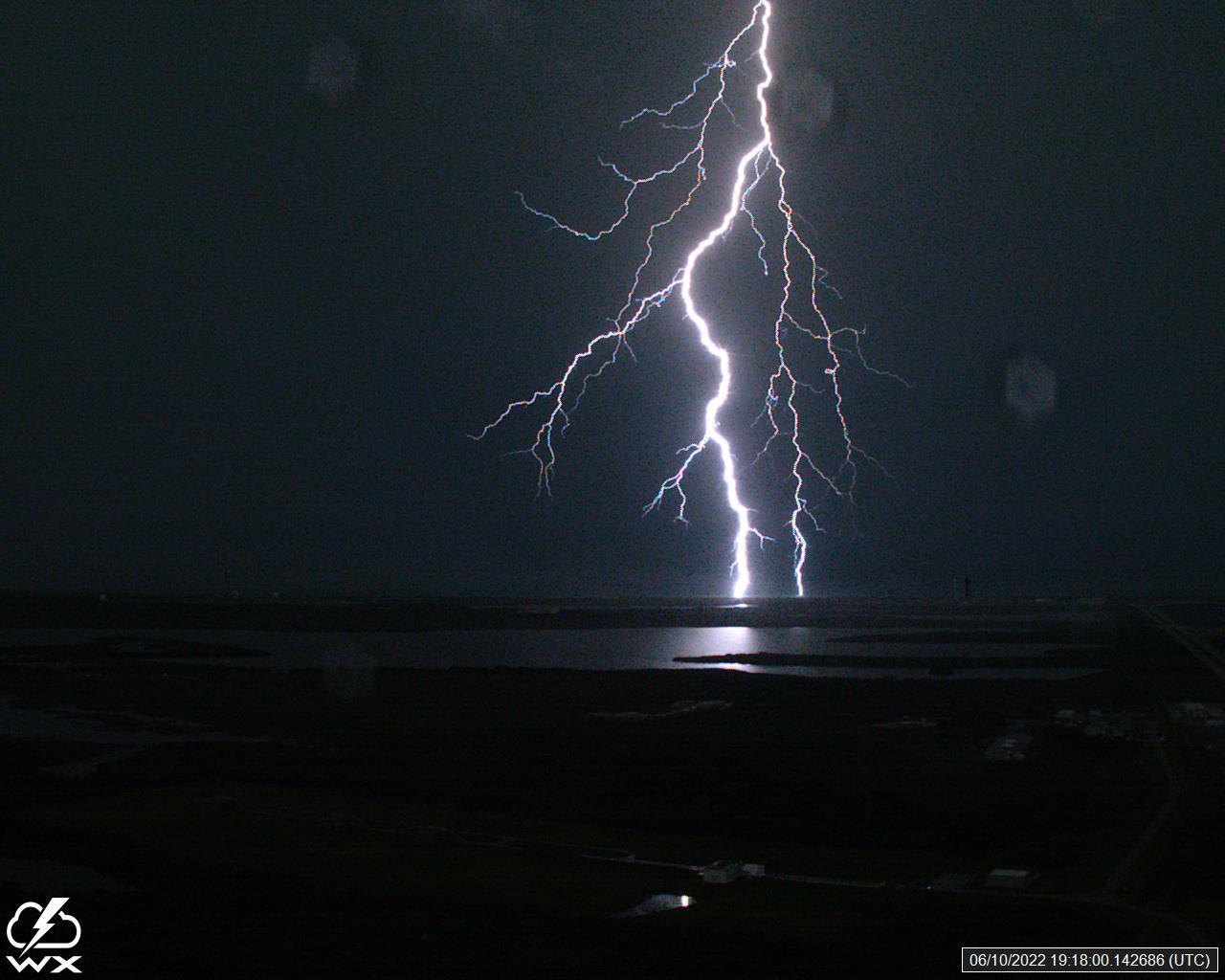
A lightning strike was recorded at Launch Complex 39B at NASA’s Kennedy Space Center in Florida on June 10, 2022. NASA’s Space Launch System (SLS) and Orion spacecraft atop the mobile launcher are on the launch pad in preparation for the Artemis I mission. The lightning strike was recorded by cameras stationed at the pad and mobile launcher using a special filter called a “clear day frame,” which provides an overlay of the raw frame on a reference image. Artemis I will be the first integrated test of the SLS and Orion spacecraft. In later missions, NASA will land the first woman and the first woman of color on the surface of the Moon, paving the way for a long-term lunar presence and serving as a steppingstone on the way to Mars.
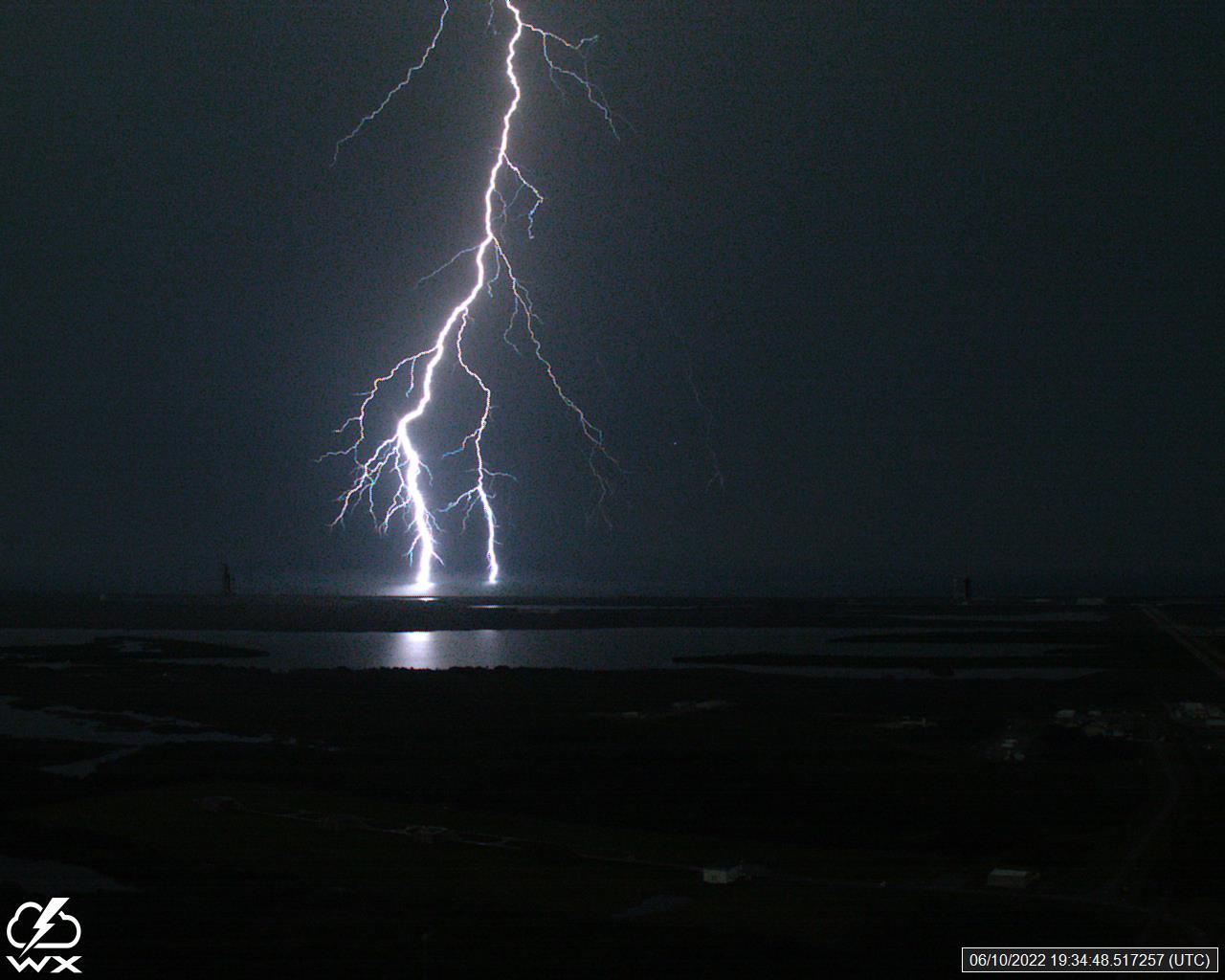
A lightning strike was recorded at Launch Complex 39B at NASA’s Kennedy Space Center in Florida on June 10, 2022. NASA’s Space Launch System (SLS) and Orion spacecraft atop the mobile launcher are on the launch pad in preparation for the Artemis I mission. The lightning strike was recorded by cameras stationed at the pad and mobile launcher using a special filter called a “clear day frame,” which provides an overlay of the raw frame on a reference image. Artemis I will be the first integrated test of the SLS and Orion spacecraft. In later missions, NASA will land the first woman and the first woman of color on the surface of the Moon, paving the way for a long-term lunar presence and serving as a steppingstone on the way to Mars.
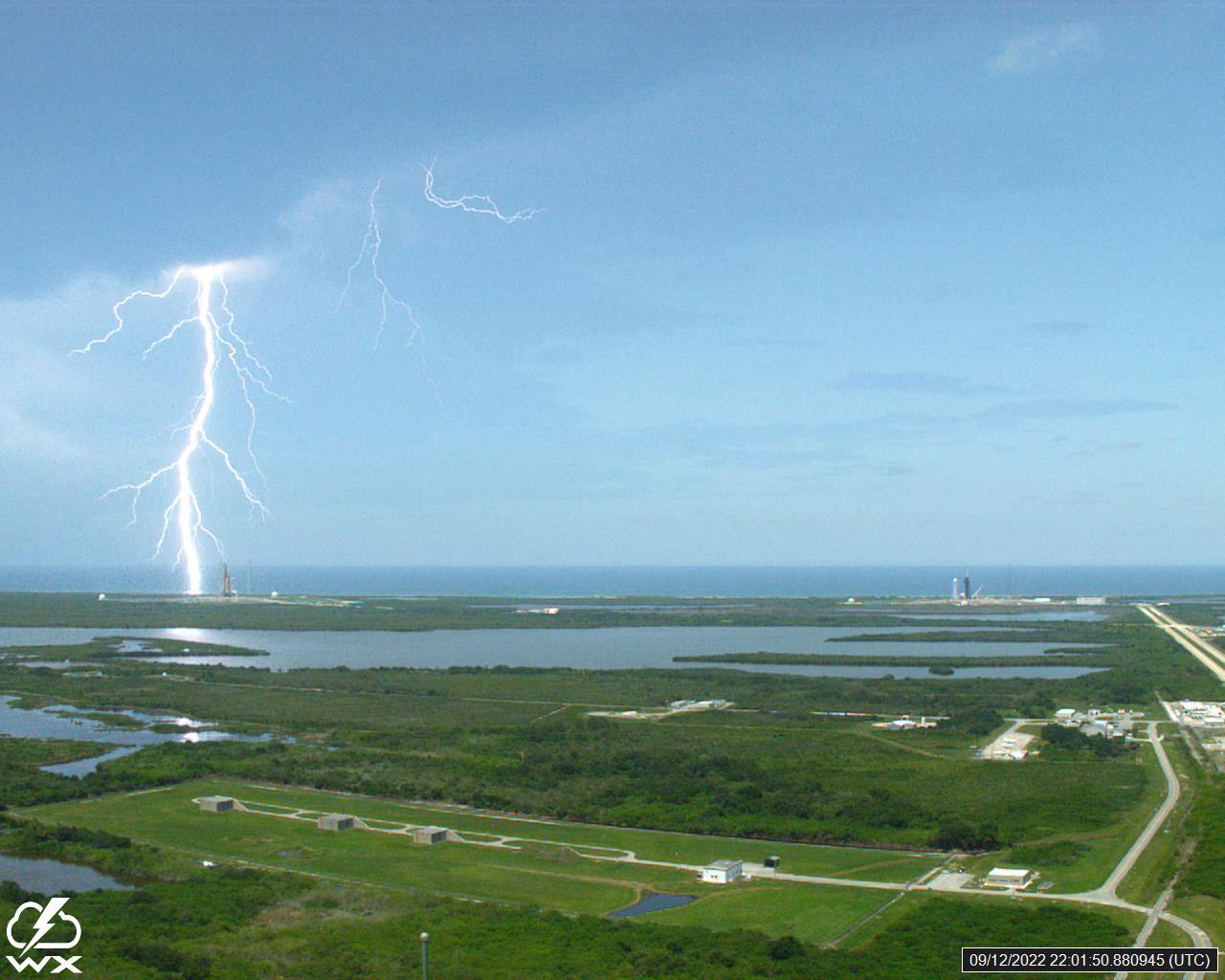
A lightning strike was recorded at Launch Complex 39B at NASA’s Kennedy Space Center in Florida on Sept. 12, 2022. NASA’s Space Launch System (SLS) and Orion spacecraft atop the mobile launcher are on the launch pad in preparation for the Artemis I mission. The lightning strike was recorded by cameras stationed at the pad and mobile launcher using a special filter called a “clear day frame,” which provides an overlay of the raw frame on a reference image. Artemis I will be the first integrated test of the SLS and Orion spacecraft. In later missions, NASA will land the first woman and the first woman of color on the surface of the Moon, paving the way for a long-term lunar presence and serving as a steppingstone on the way to Mars.
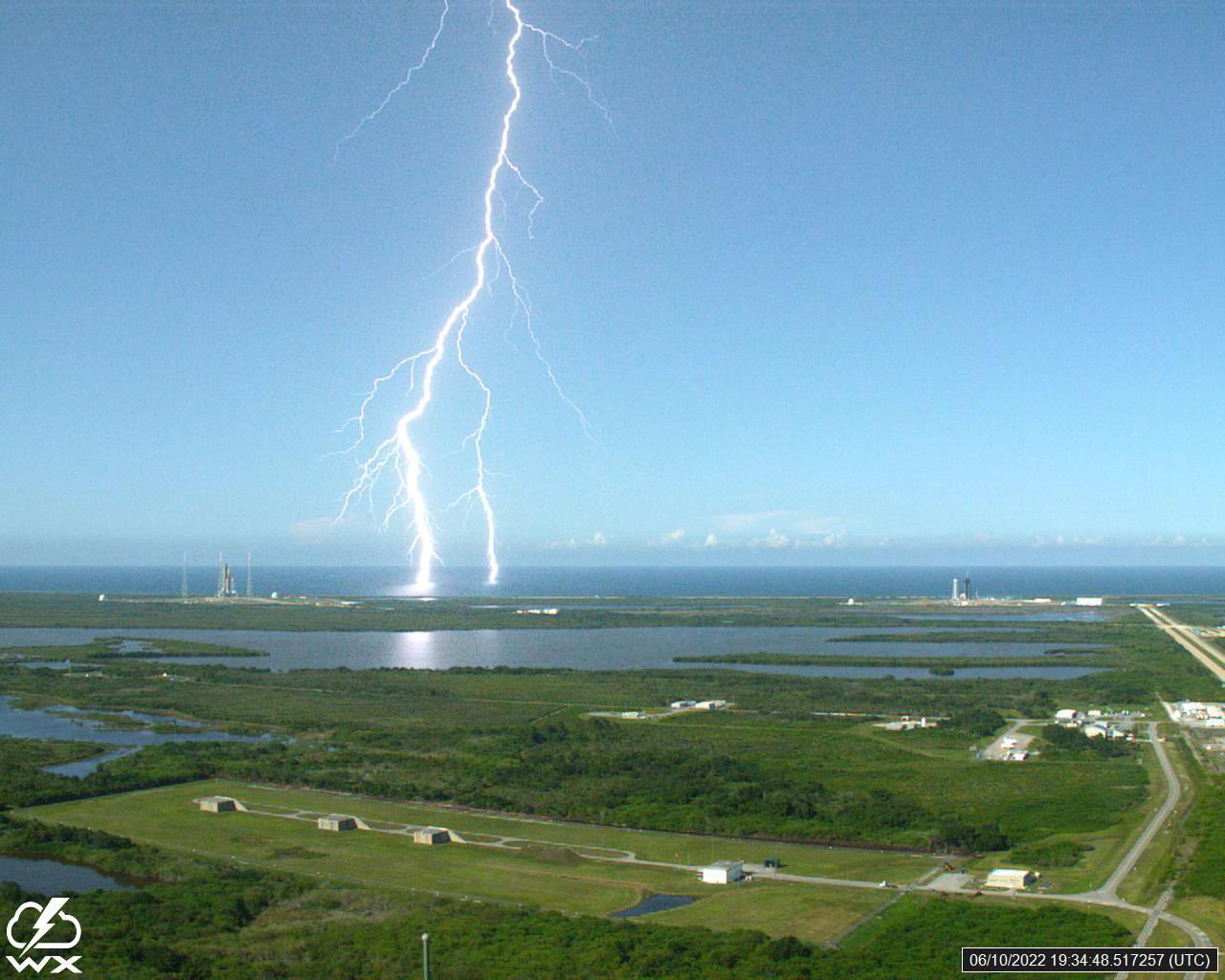
A lightning strike was recorded at Launch Complex 39B at NASA’s Kennedy Space Center in Florida on June 10, 2022. NASA’s Space Launch System (SLS) and Orion spacecraft atop the mobile launcher are on the launch pad in preparation for the Artemis I mission. The lightning strike was recorded by cameras stationed at the pad and mobile launcher using a special filter called a “clear day frame,” which provides an overlay of the raw frame on a reference image. Artemis I will be the first integrated test of the SLS and Orion spacecraft. In later missions, NASA will land the first woman and the first woman of color on the surface of the Moon, paving the way for a long-term lunar presence and serving as a steppingstone on the way to Mars.
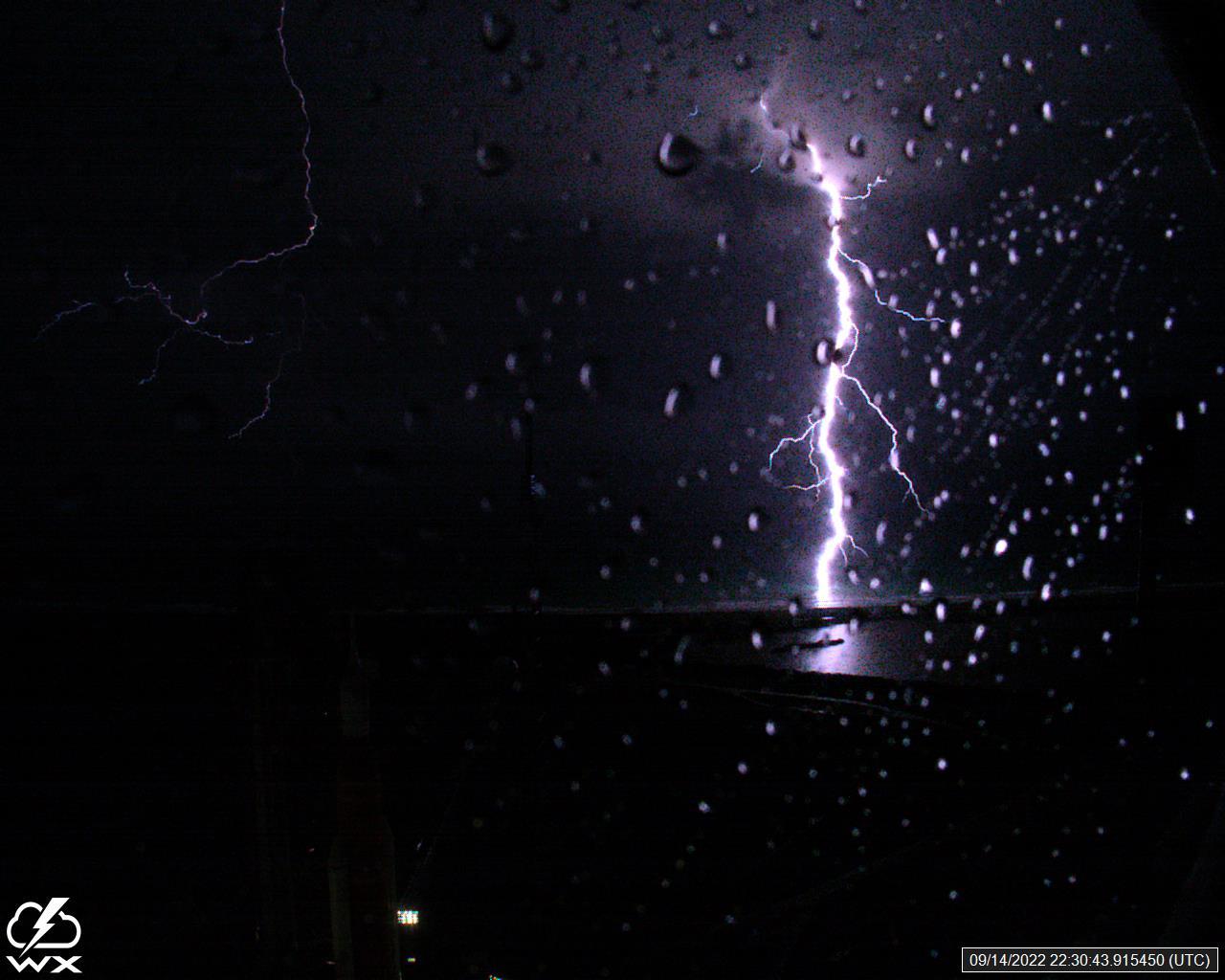
A lightning strike was recorded at Launch Complex 39B at NASA’s Kennedy Space Center in Florida on Sept. 14, 2022. NASA’s Space Launch System (SLS) and Orion spacecraft atop the mobile launcher are on the launch pad in preparation for the Artemis I mission. The lightning strike was recorded by cameras stationed at the pad and mobile launcher using a special filter called a “clear day frame,” which provides an overlay of the raw frame on a reference image. Artemis I will be the first integrated test of the SLS and Orion spacecraft. In later missions, NASA will land the first woman and the first woman of color on the surface of the Moon, paving the way for a long-term lunar presence and serving as a steppingstone on the way to Mars.

A lightning strike was recorded at Launch Complex 39B at NASA’s Kennedy Space Center in Florida on June 10, 2022. NASA’s Space Launch System (SLS) and Orion spacecraft atop the mobile launcher are on the launch pad in preparation for the Artemis I mission. The lightning strike was recorded by cameras stationed at the pad and mobile launcher using a special filter called a “clear day frame,” which provides an overlay of the raw frame on a reference image. Artemis I will be the first integrated test of the SLS and Orion spacecraft. In later missions, NASA will land the first woman and the first woman of color on the surface of the Moon, paving the way for a long-term lunar presence and serving as a steppingstone on the way to Mars.
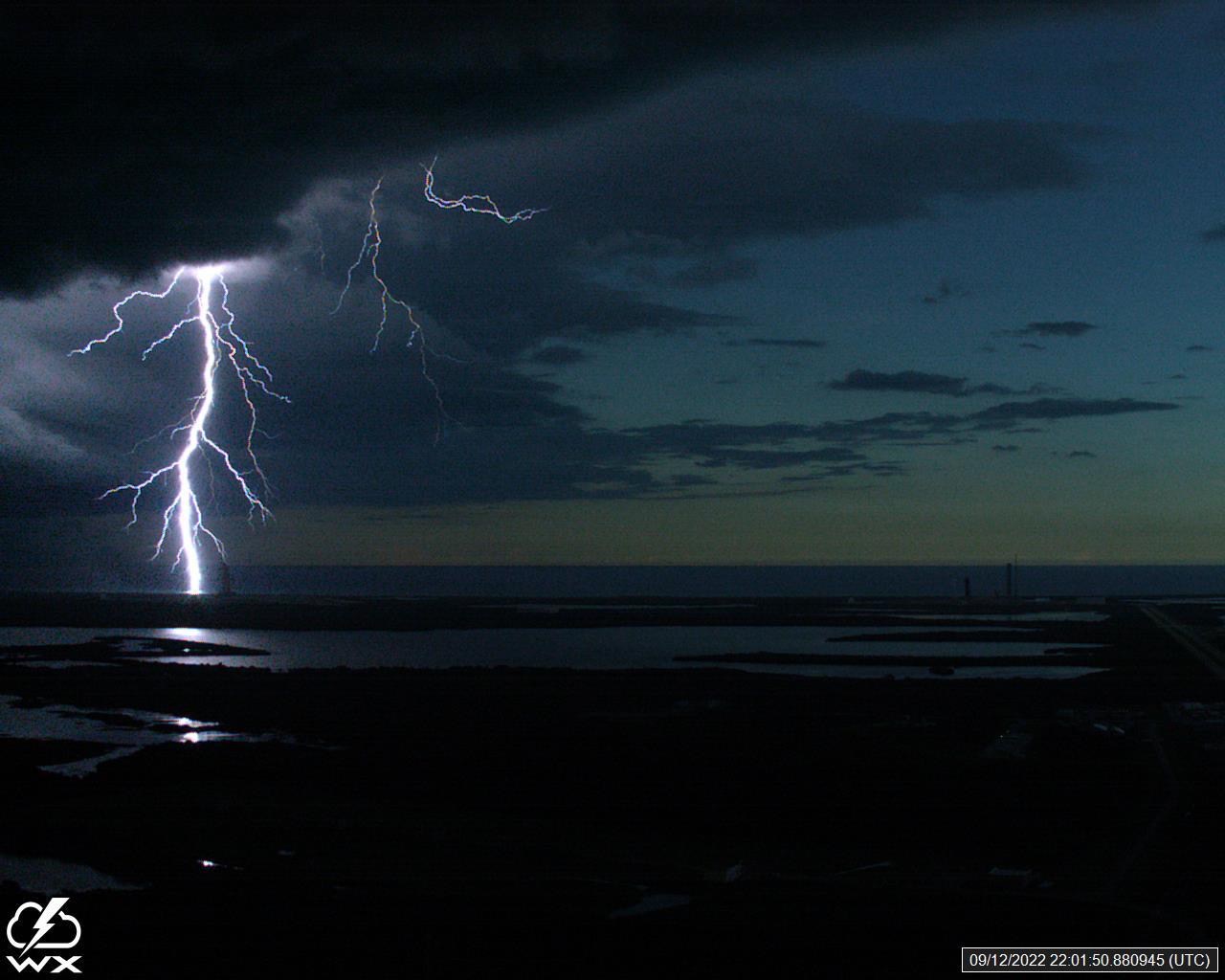
A lightning strike was recorded at Launch Complex 39B at NASA’s Kennedy Space Center in Florida on Sept. 12, 2022. NASA’s Space Launch System (SLS) and Orion spacecraft atop the mobile launcher are on the launch pad in preparation for the Artemis I mission. The lightning strike was recorded by cameras stationed at the pad and mobile launcher using a special filter called a “clear day frame,” which provides an overlay of the raw frame on a reference image. Artemis I will be the first integrated test of the SLS and Orion spacecraft. In later missions, NASA will land the first woman and the first woman of color on the surface of the Moon, paving the way for a long-term lunar presence and serving as a steppingstone on the way to Mars.
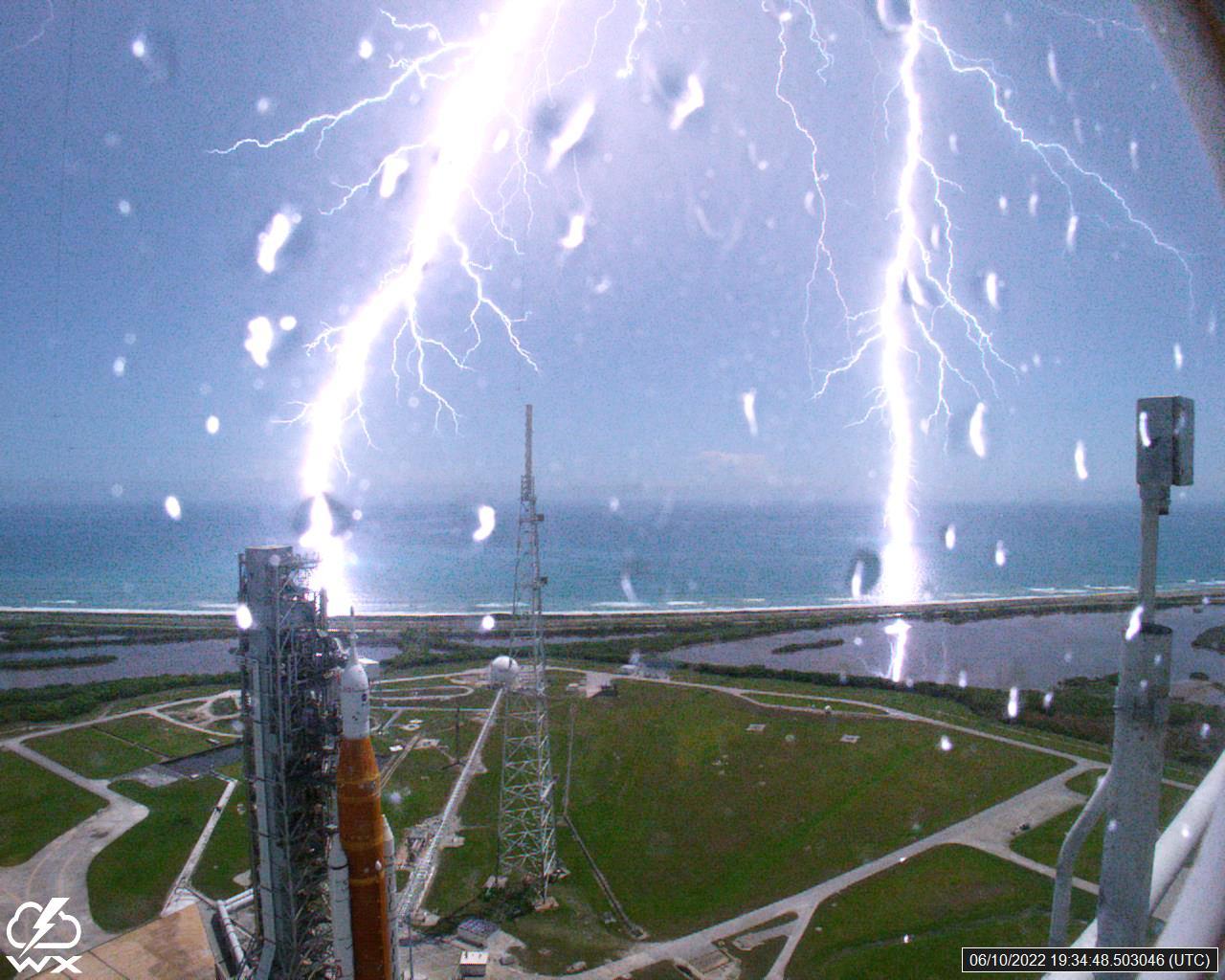
Lightning strikes were recorded at Launch Complex 39B at NASA’s Kennedy Space Center in Florida on June 10, 2022. NASA’s Space Launch System (SLS) and Orion spacecraft atop the mobile launcher are in view on the launch pad in preparation for the Artemis I mission. The lightning strike was recorded by cameras stationed at the pad and mobile launcher using a special filter called a “clear day frame,” which provides an overlay of the raw frame on a reference image. Artemis I will be the first integrated test of the SLS and Orion spacecraft. In later missions, NASA will land the first woman and the first woman of color on the surface of the Moon, paving the way for a long-term lunar presence and serving as a steppingstone on the way to Mars.
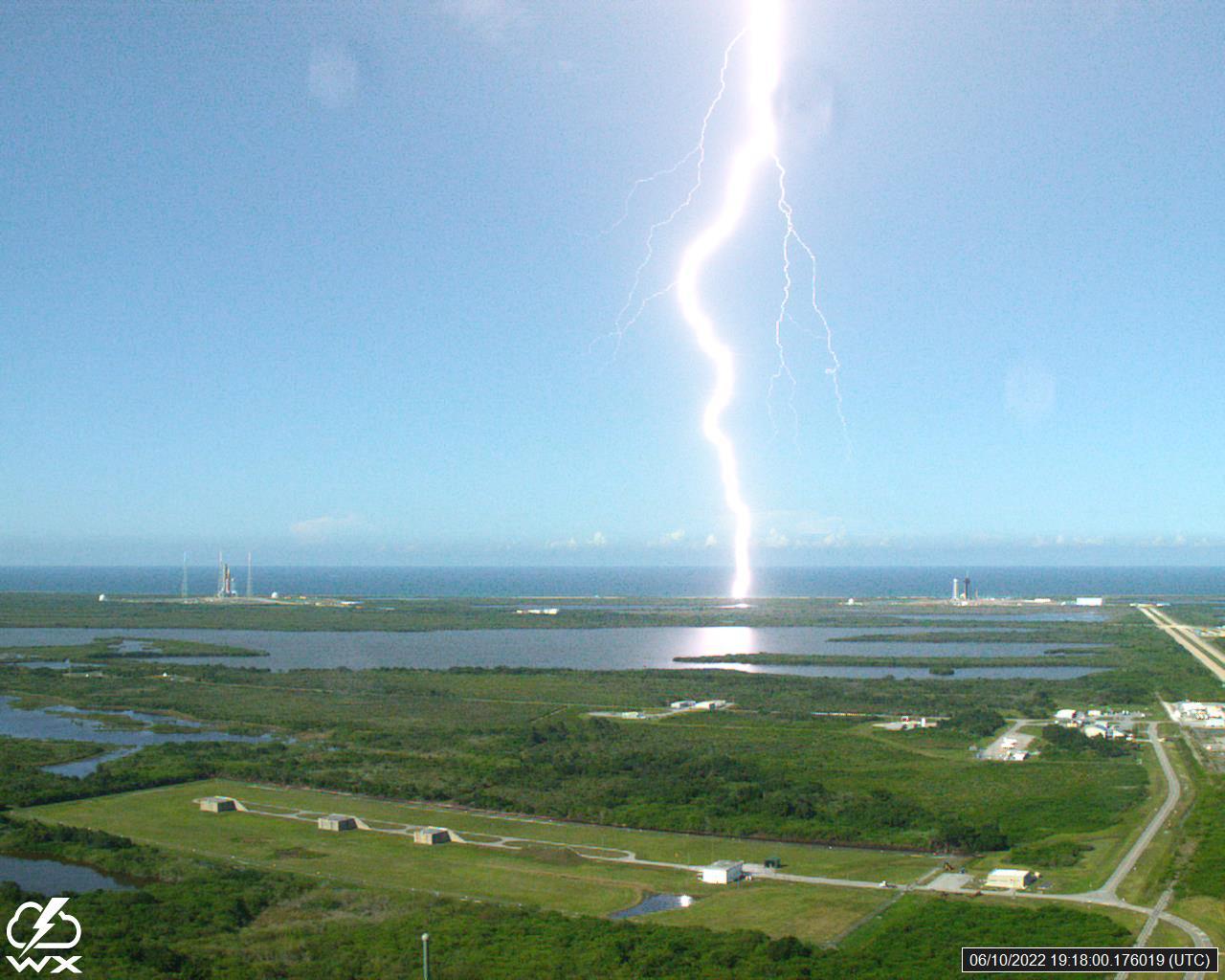
A lightning strike was recorded at Launch Complex 39B at NASA’s Kennedy Space Center in Florida on June 10, 2022. NASA’s Space Launch System (SLS) and Orion spacecraft atop the mobile launcher are on the launch pad in preparation for the Artemis I mission. The lightning strike was recorded by cameras stationed at the pad and mobile launcher using a special filter called a “clear day frame,” which provides an overlay of the raw frame on a reference image. Artemis I will be the first integrated test of the SLS and Orion spacecraft. In later missions, NASA will land the first woman and the first woman of color on the surface of the Moon, paving the way for a long-term lunar presence and serving as a steppingstone on the way to Mars.
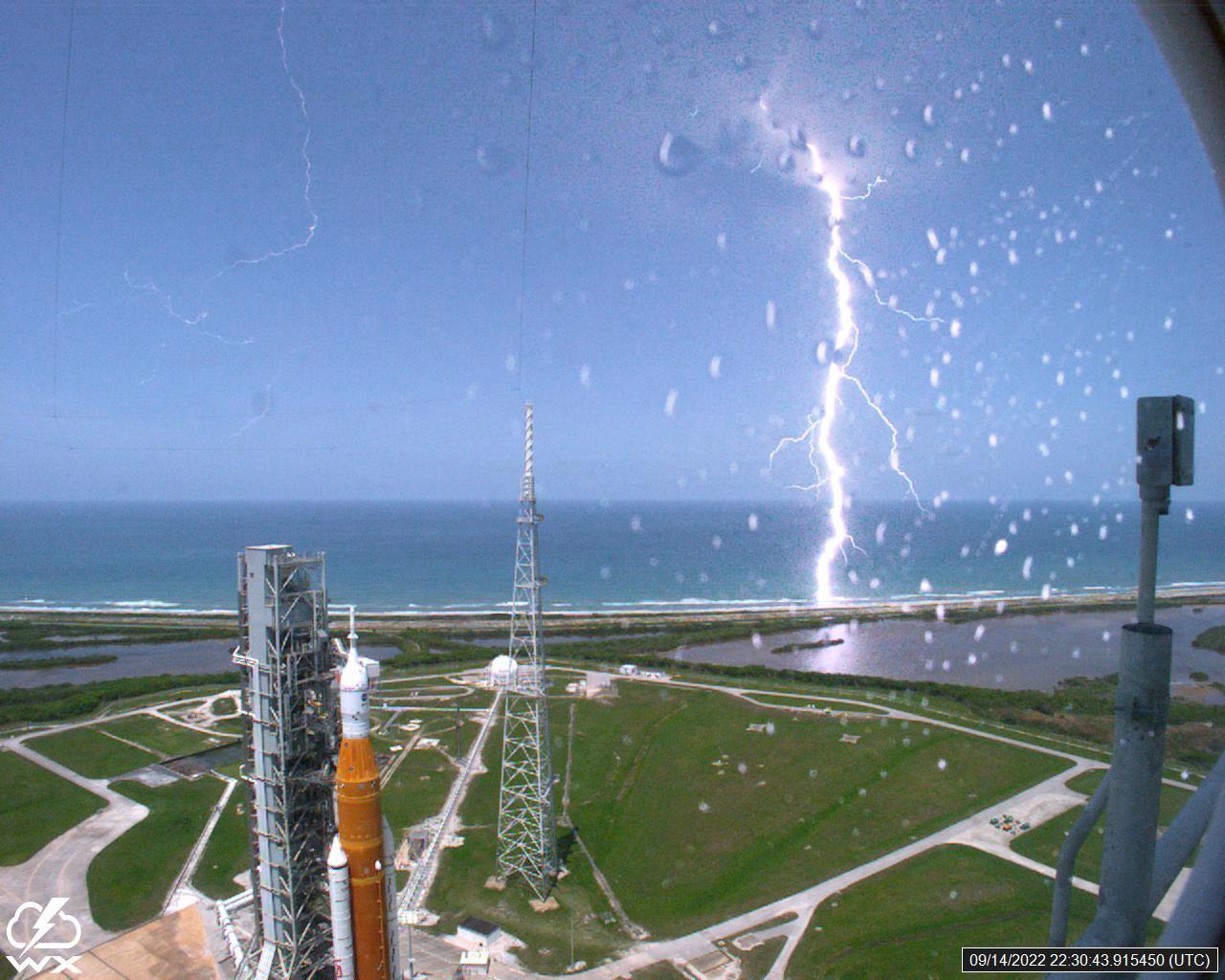
A lightning strike was recorded at Launch Complex 39B at NASA’s Kennedy Space Center in Florida on Sept. 14, 2022. NASA’s Space Launch System (SLS) and Orion spacecraft atop the mobile launcher are in view on the launch pad in preparation for the Artemis I mission. The lightning strike was recorded by cameras stationed at the pad and mobile launcher using a special filter called a “clear day frame,” which provides an overlay of the raw frame on a reference image. Artemis I will be the first integrated test of the SLS and Orion spacecraft. In later missions, NASA will land the first woman and the first woman of color on the surface of the Moon, paving the way for a long-term lunar presence and serving as a steppingstone on the way to Mars.
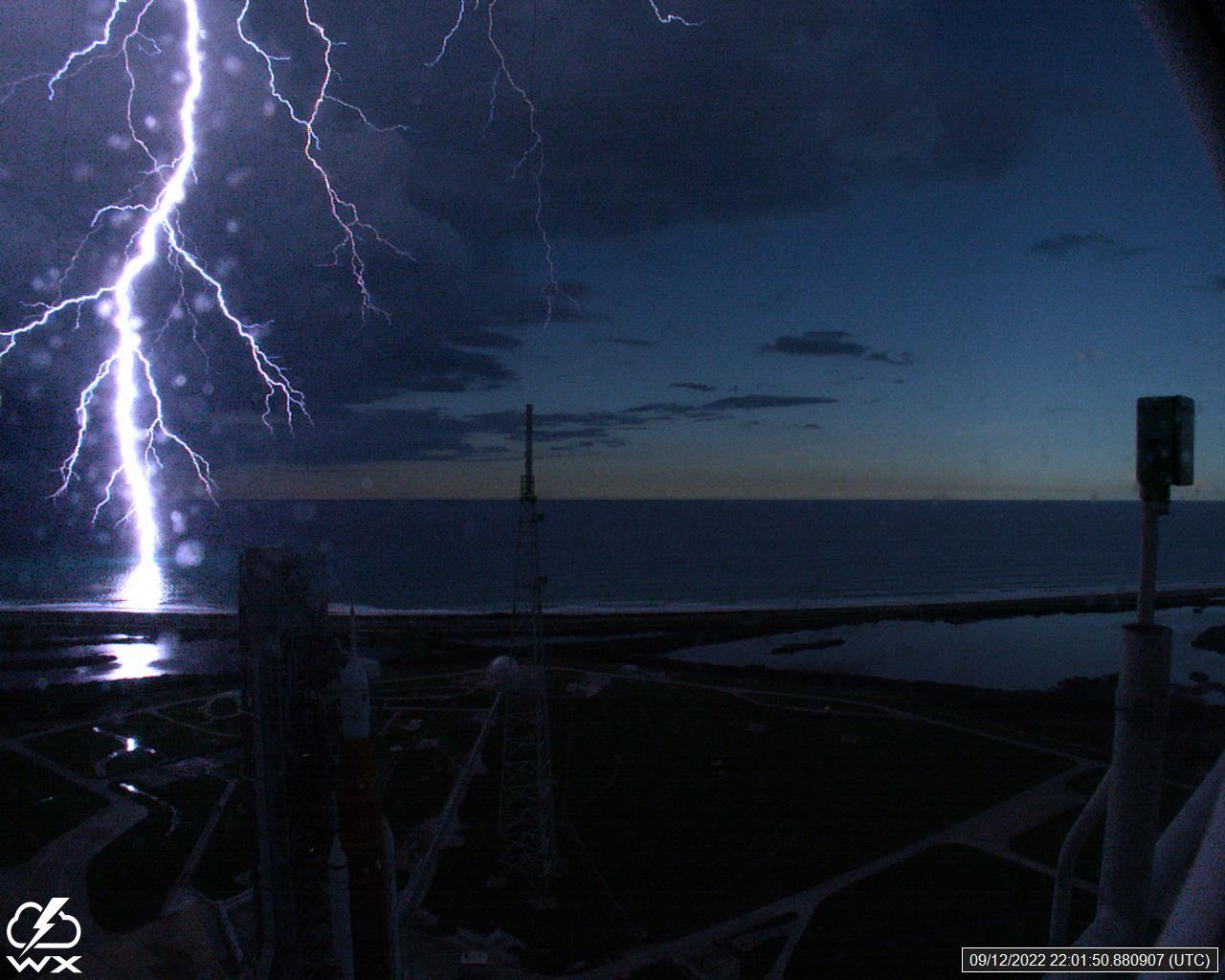
A lightning strike was recorded at Launch Complex 39B at NASA’s Kennedy Space Center in Florida on Sept. 12, 2022. NASA’s Space Launch System (SLS) and Orion spacecraft atop the mobile launcher are on the launch pad in preparation for the Artemis I mission. The lightning strike was recorded by cameras stationed at the pad and mobile launcher using a special filter called a “clear day frame,” which provides an overlay of the raw frame on a reference image. Artemis I will be the first integrated test of the SLS and Orion spacecraft. In later missions, NASA will land the first woman and the first woman of color on the surface of the Moon, paving the way for a long-term lunar presence and serving as a steppingstone on the way to Mars.
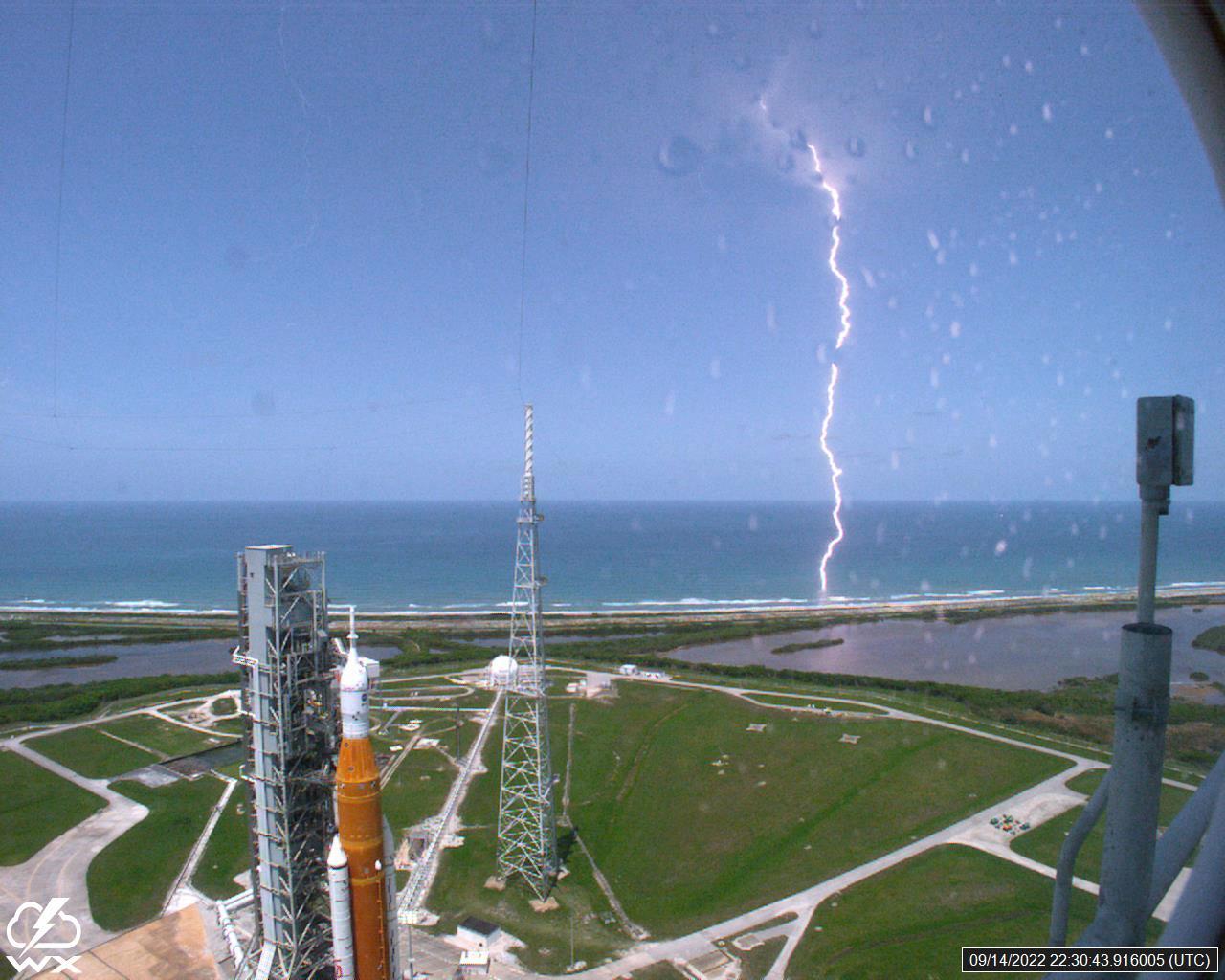
A lightning strike was recorded at Launch Complex 39B at NASA’s Kennedy Space Center in Florida on Sept. 14, 2022. NASA’s Space Launch System (SLS) and Orion spacecraft atop the mobile launcher are in view on the launch pad in preparation for the Artemis I mission. The lightning strike was recorded by cameras stationed at the pad and mobile launcher using a special filter called a “clear day frame,” which provides an overlay of the raw frame on a reference image. Artemis I will be the first integrated test of the SLS and Orion spacecraft. In later missions, NASA will land the first woman and the first woman of color on the surface of the Moon, paving the way for a long-term lunar presence and serving as a steppingstone on the way to Mars.
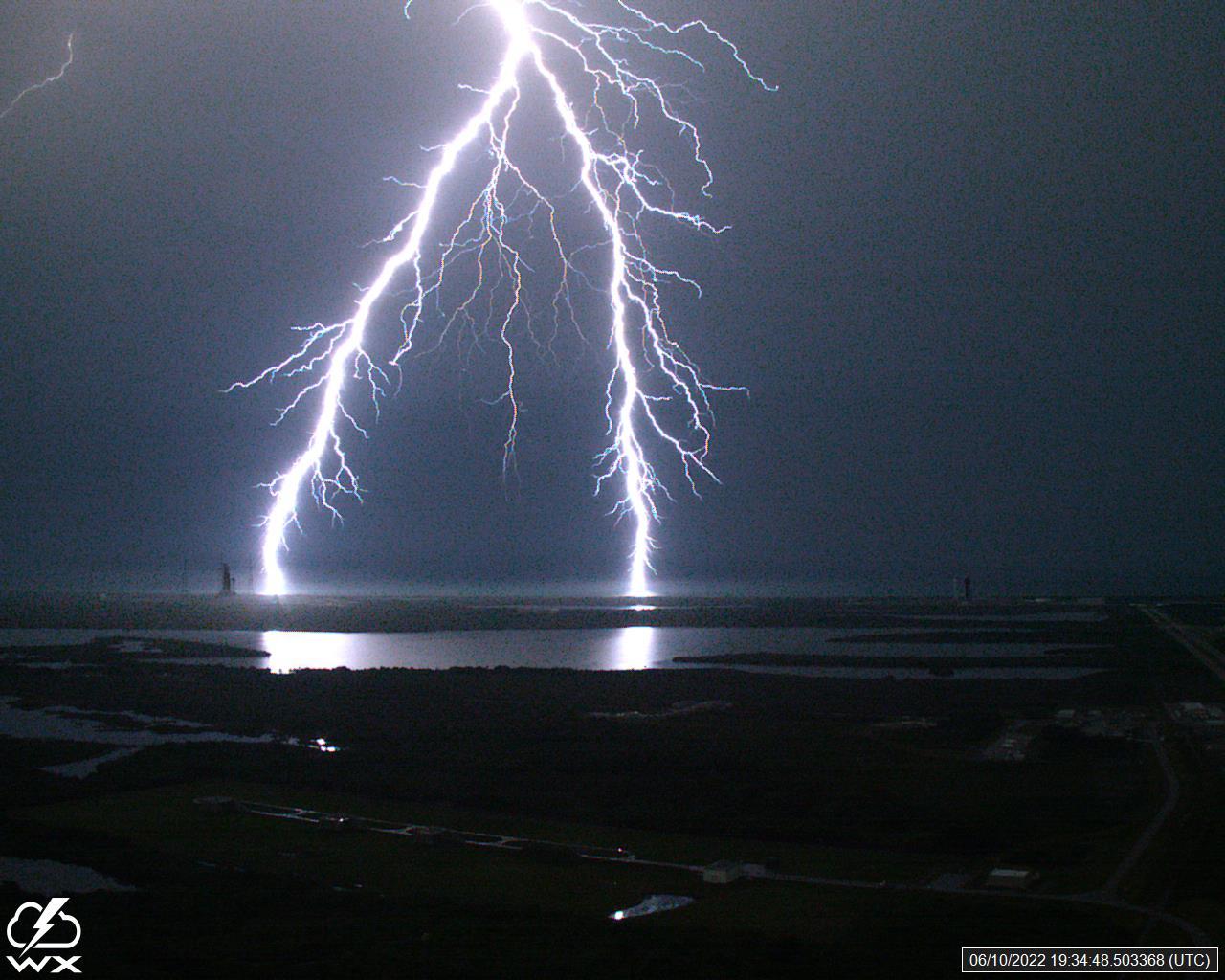
A lightning strike was recorded at Launch Complex 39B at NASA’s Kennedy Space Center in Florida on June 10, 2022. NASA’s Space Launch System (SLS) and Orion spacecraft atop the mobile launcher are on the launch pad in preparation for the Artemis I mission. The lightning strike was recorded by cameras stationed at the pad and mobile launcher using a special filter called a “clear day frame,” which provides an overlay of the raw frame on a reference image. Artemis I will be the first integrated test of the SLS and Orion spacecraft. In later missions, NASA will land the first woman and the first woman of color on the surface of the Moon, paving the way for a long-term lunar presence and serving as a steppingstone on the way to Mars.
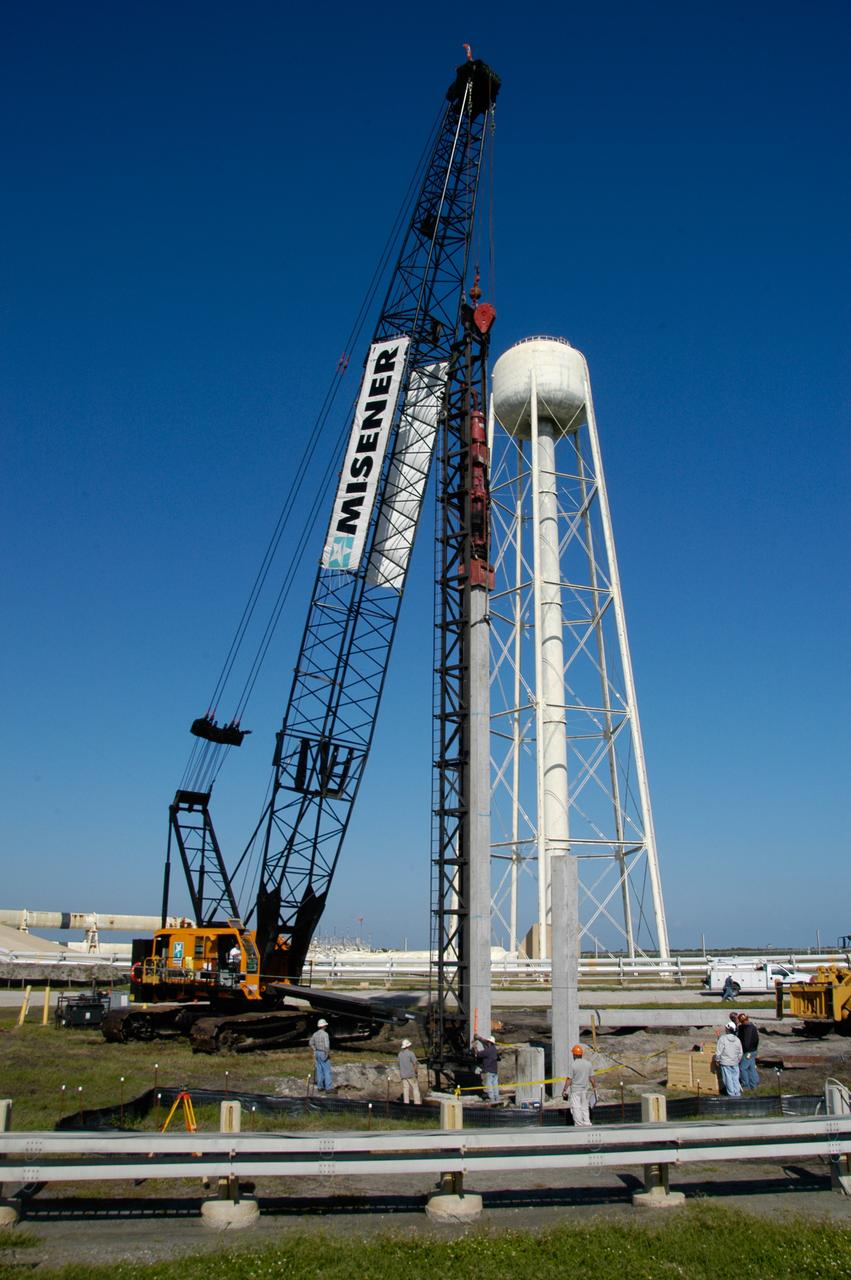
On Launch Pad 39B at NASA's Kennedy Space Center, the crane crawler puts a piling into place to be pounded into the ground to help construct lightning towers for the Constellation Program and Ares/Orion launches. Pad B will be the site of the first Ares vehicle launch, including Ares I-X which is scheduled for April 2009.

On Launch Pad 39B at NASA's Kennedy Space Center, the crane crawler lifts a piling off a truck. The piling will be pounded into the ground to help construct lightning towers for the Constellation Program and Ares/Orion launches. Pad B will be the site of the first Ares vehicle launch, including Ares I-X which is scheduled for April 2009.
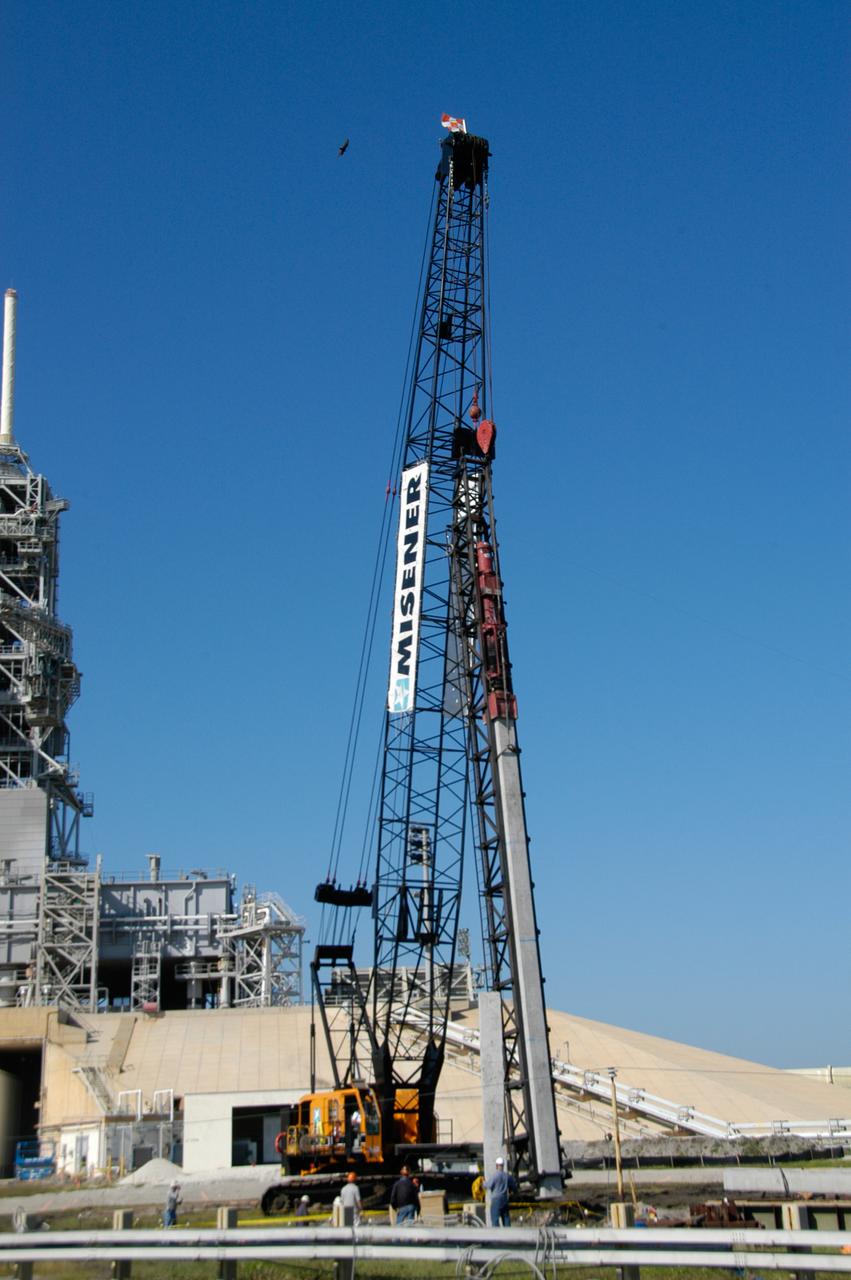
On Launch Pad 39B at NASA's Kennedy Space Center, the crane crawler lifts a piling into place to be pounded into the ground to help construct lightning towers for the Constellation Program and Ares/Orion launches. Pad B will be the site of the first Ares vehicle launch, including Ares I-X which is scheduled for April 2009.
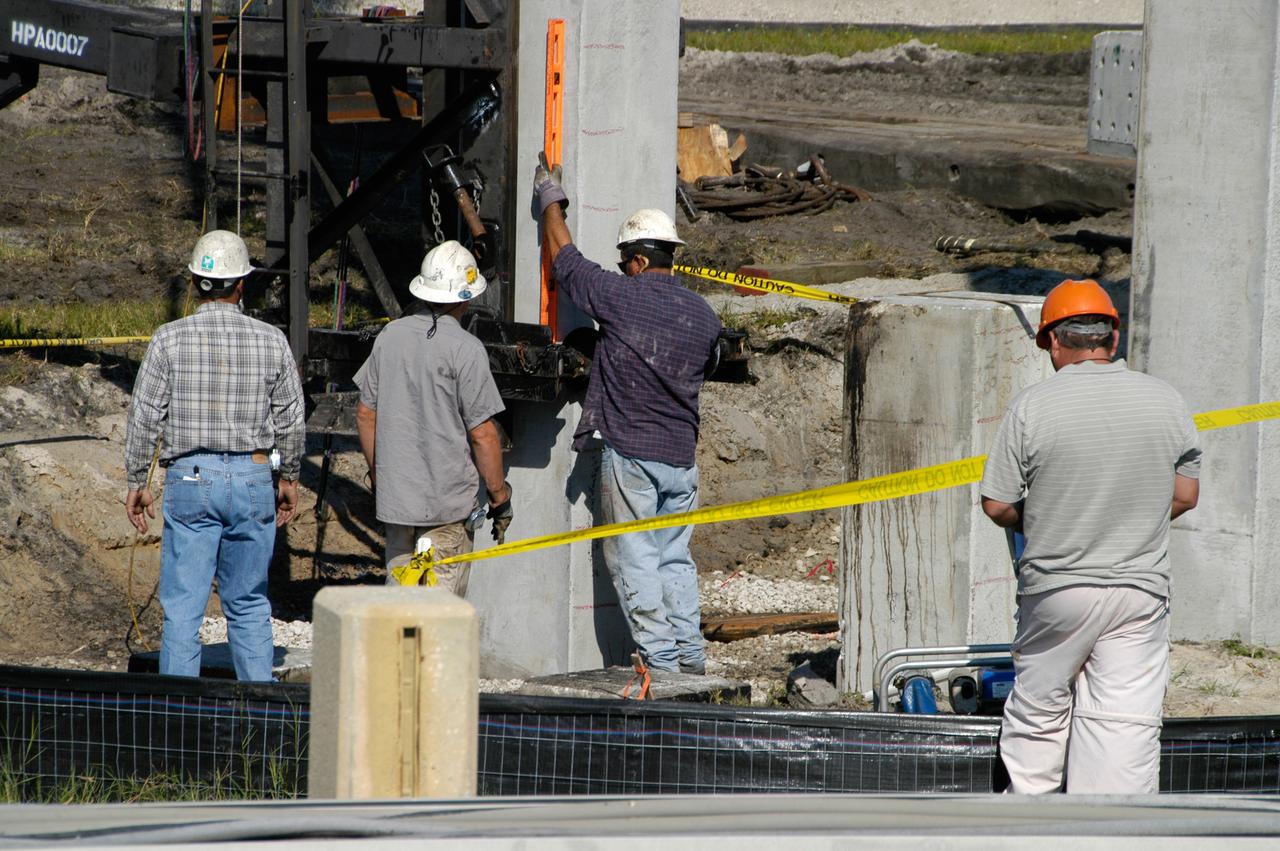
On Launch Pad 39B at NASA's Kennedy Space Center, workers measure the piling being pounded into the ground to help construct lightning towers for the Constellation Program and Ares/Orion launches. Pad B will be the site of the first Ares vehicle launch, including Ares I-X which is scheduled for April 2009.
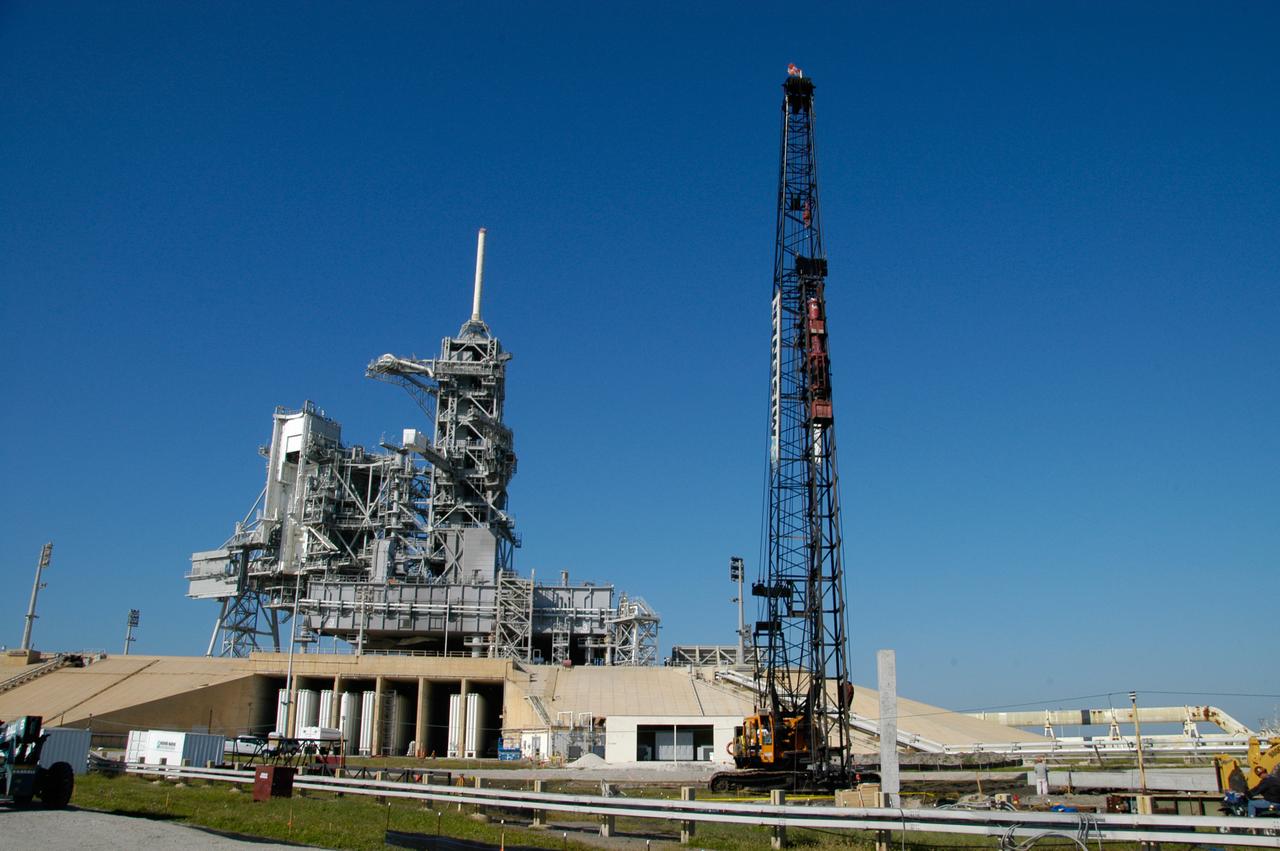
On Launch Pad 39B at NASA's Kennedy Space Center, pilings are being pounded into the ground to help construct lightning towers for the Constellation Program and Ares/Orion launches. Pad B will be the site of the first Ares vehicle launch, including Ares I-X which is scheduled for April 2009.
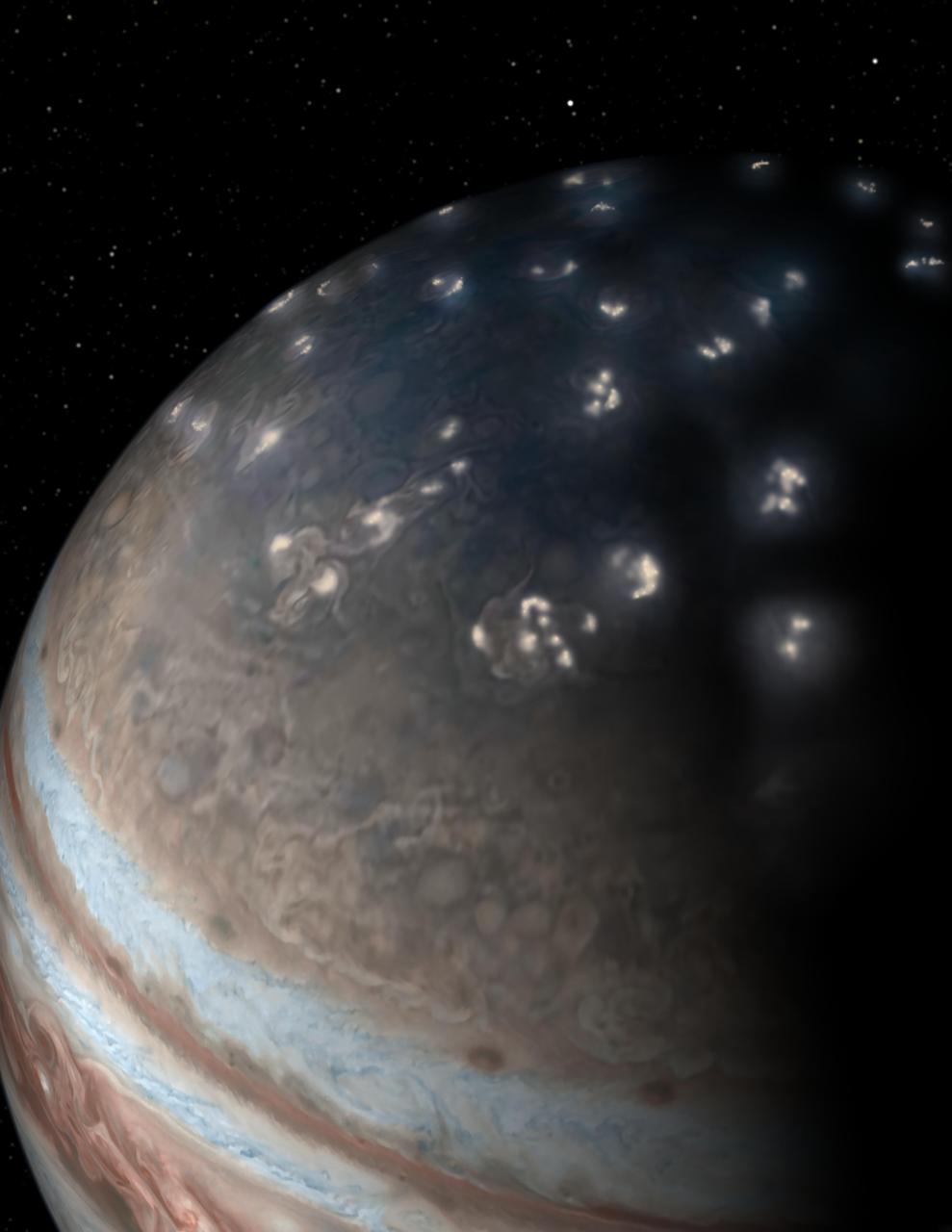
This artist's concept of lightning distribution in Jupiter's northern hemisphere incorporates a JunoCam image with artistic embellishments. Data from NASA's Juno mission indicates that most of the lightning activity on Jupiter is near its poles. https://photojournal.jpl.nasa.gov/catalog/PIA22474
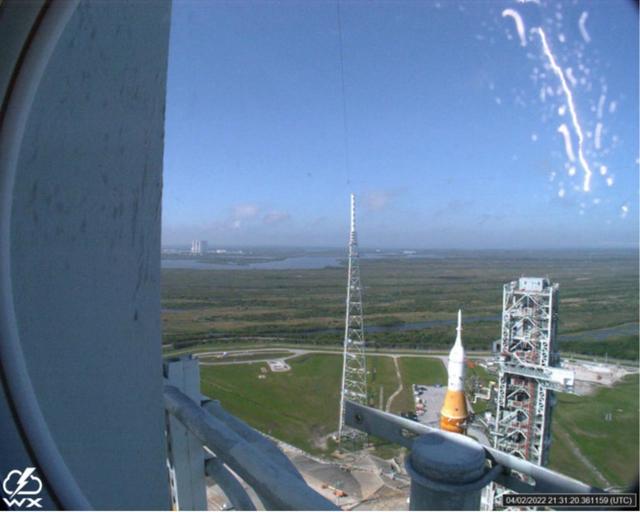
A lightning strike was recorded at Launch Complex 39B at NASA’s Kennedy Space Center in Florida during the evening of April 2, 2022. NASA’s Space Launch System (SLS) and Orion spacecraft were undergoing a prelaunch test called a wet dress rehearsal at the pad for the Artemis I mission. The lightning strike was recorded by cameras stationed at the pad and mobile launcher using a special filter called a “clear day frame,” which provides an overlay of the raw frame on a reference image. Artemis I will be the first integrated test of the SLS and Orion spacecraft. In later missions, NASA will land the first woman and the first woman of color on the surface of the Moon, paving the way for a long-term lunar presence and serving as a steppingstone on the way to Mars.
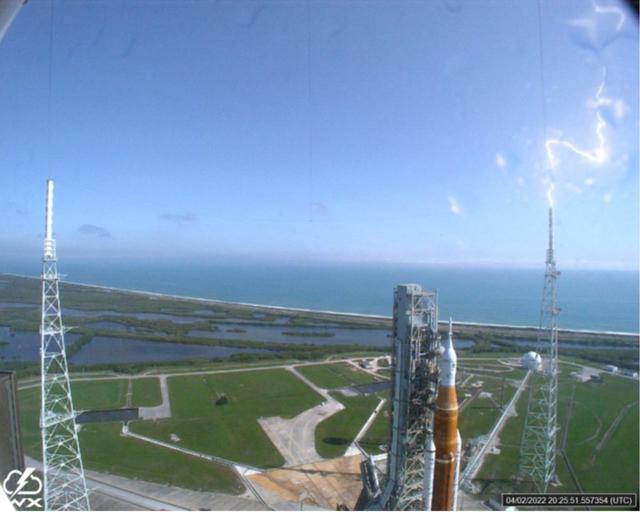
A lightning strike was recorded at Launch Complex 39B at NASA’s Kennedy Space Center in Florida during the evening of April 2, 2022. NASA’s Space Launch System (SLS) and Orion spacecraft were undergoing a prelaunch test called a wet dress rehearsal at the pad for the Artemis I mission. The lightning strike was recorded by cameras stationed at the pad and mobile launcher using a special filter called a “clear day frame,” which provides an overlay of the raw frame on a reference image. Artemis I will be the first integrated test of the SLS and Orion spacecraft. In later missions, NASA will land the first woman and the first woman of color on the surface of the Moon, paving the way for a long-term lunar presence and serving as a steppingstone on the way to Mars.
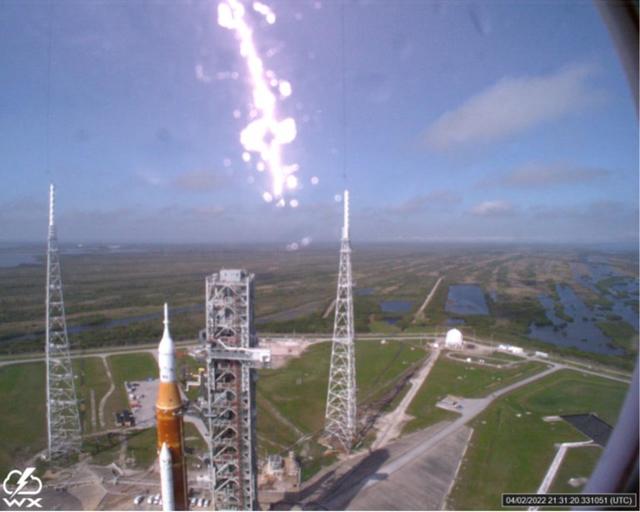
A lightning strike was recorded at Launch Complex 39B at NASA’s Kennedy Space Center in Florida during the evening of April 2, 2022. NASA’s Space Launch System (SLS) and Orion spacecraft were undergoing a prelaunch test called a wet dress rehearsal at the pad for the Artemis I mission. The lightning strike was recorded by cameras stationed at the pad and mobile launcher using a special filter called a “clear day frame,” which provides an overlay of the raw frame on a reference image. Artemis I will be the first integrated test of the SLS and Orion spacecraft. In later missions, NASA will land the first woman and the first woman of color on the surface of the Moon, paving the way for a long-term lunar presence and serving as a steppingstone on the way to Mars.
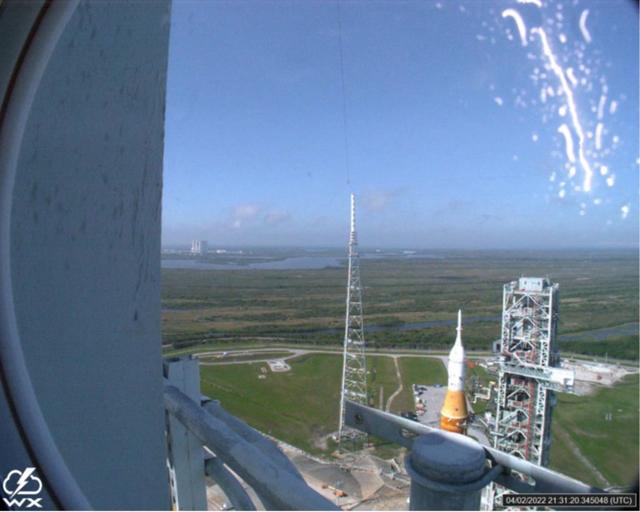
A lightning strike was recorded at Launch Complex 39B at NASA’s Kennedy Space Center in Florida during the evening of April 2, 2022. NASA’s Space Launch System (SLS) and Orion spacecraft were undergoing a prelaunch test called a wet dress rehearsal at the pad for the Artemis I mission. The lightning strike was recorded by cameras stationed at the pad and mobile launcher using a special filter called a “clear day frame,” which provides an overlay of the raw frame on a reference image. Artemis I will be the first integrated test of the SLS and Orion spacecraft. In later missions, NASA will land the first woman and the first woman of color on the surface of the Moon, paving the way for a long-term lunar presence and serving as a steppingstone on the way to Mars.
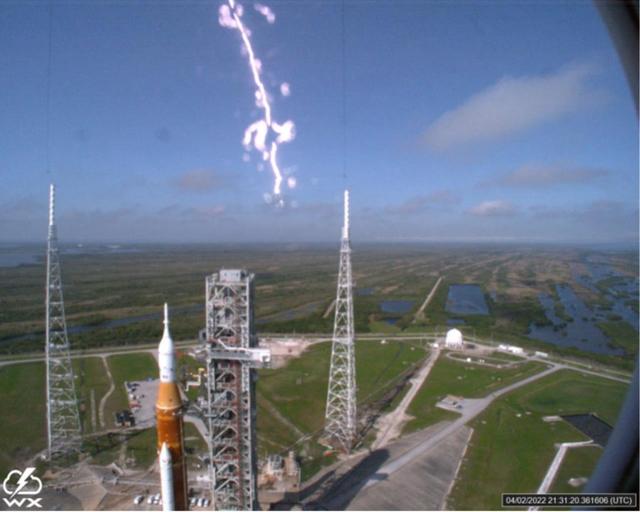
A lightning strike was recorded at Launch Complex 39B at NASA’s Kennedy Space Center in Florida during the evening of April 2, 2022. NASA’s Space Launch System (SLS) and Orion spacecraft were undergoing a prelaunch test called a wet dress rehearsal at the pad for the Artemis I mission. The lightning strike was recorded by cameras stationed at the pad and mobile launcher using a special filter called a “clear day frame,” which provides an overlay of the raw frame on a reference image. Artemis I will be the first integrated test of the SLS and Orion spacecraft. In later missions, NASA will land the first woman and the first woman of color on the surface of the Moon, paving the way for a long-term lunar presence and serving as a steppingstone on the way to Mars.
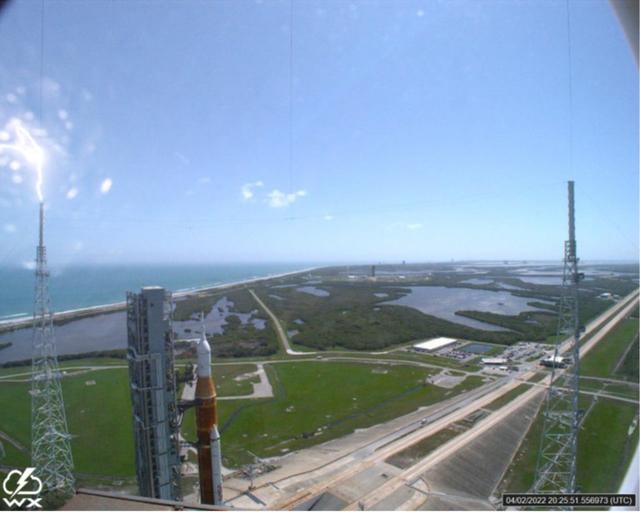
A lightning strike was recorded at Launch Complex 39B at NASA’s Kennedy Space Center in Florida during the evening of April 2, 2022. NASA’s Space Launch System (SLS) and Orion spacecraft were undergoing a prelaunch test called a wet dress rehearsal at the pad for the Artemis I mission. The lightning strike was recorded by cameras stationed at the pad and mobile launcher using a special filter called a “clear day frame,” which provides an overlay of the raw frame on a reference image. Artemis I will be the first integrated test of the SLS and Orion spacecraft. In later missions, NASA will land the first woman and the first woman of color on the surface of the Moon, paving the way for a long-term lunar presence and serving as a steppingstone on the way to Mars.
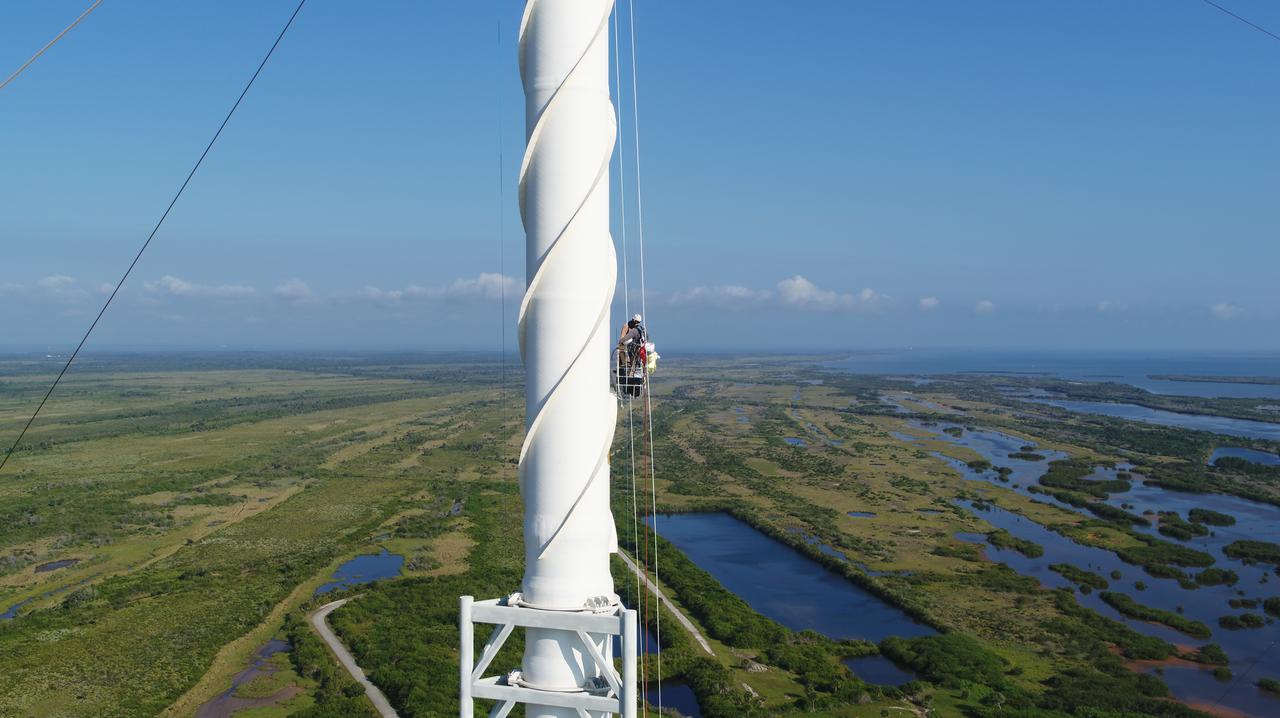
Workers prepare the surface of one of the three lightning protection system towers for painting at Exploration Ground Systems’ Launch Complex 39B at NASA’s Kennedy Space Center in Florida on May 30, 2019. The old paint was removed by the most recent hurricane. Pad 39B is the site of future launches of the agency’s Space Launch System rocket with the Orion spacecraft on Artemis missions. The 600-foot-tall lightning towers will help prevent lightning strikes at the pad during prelaunch and launch activities.
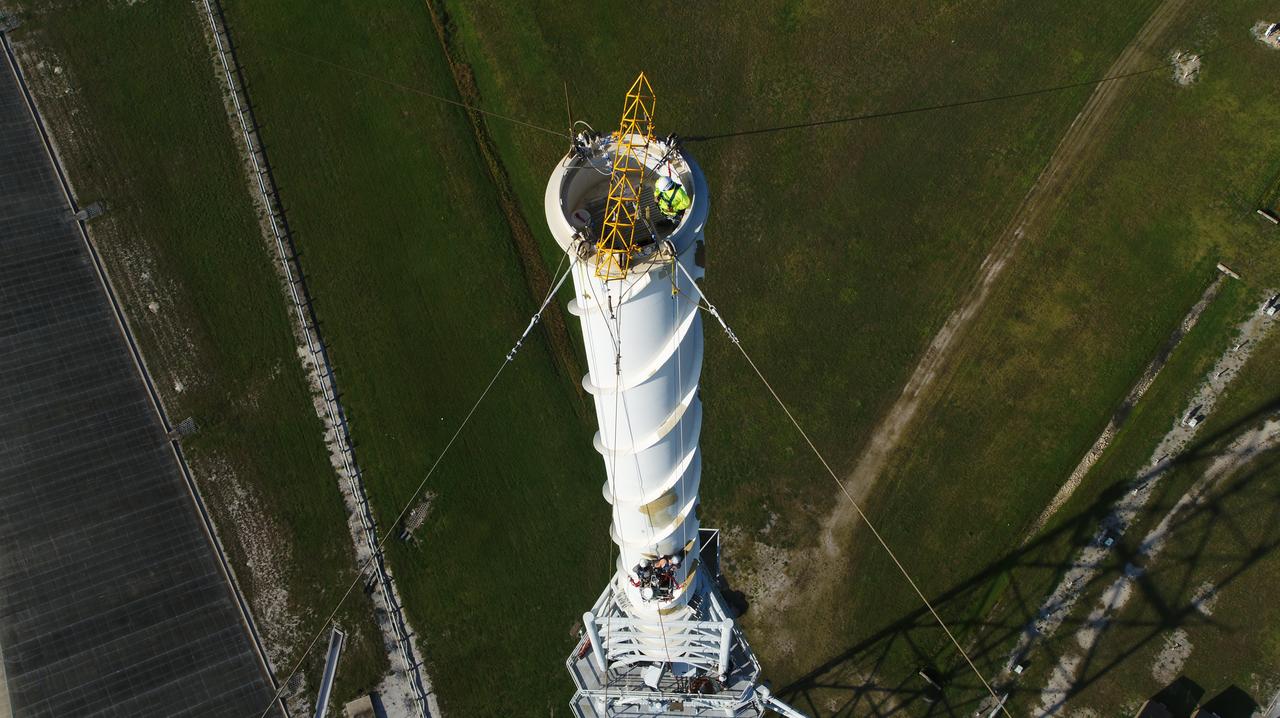
An aerial view shows workers preparing the surface of one of the three lightning protection system towers for painting at Exploration Ground Systems’ Launch Complex 39B at NASA’s Kennedy Space Center in Florida on May 30, 2019. The old paint was removed by the most recent hurricane. Pad 39B is the site of future launches of the agency’s Space Launch System rocket with the Orion spacecraft on Artemis missions. The 600-foot-tall lightning towers will help prevent lightning strikes at the pad during prelaunch and launch activities.
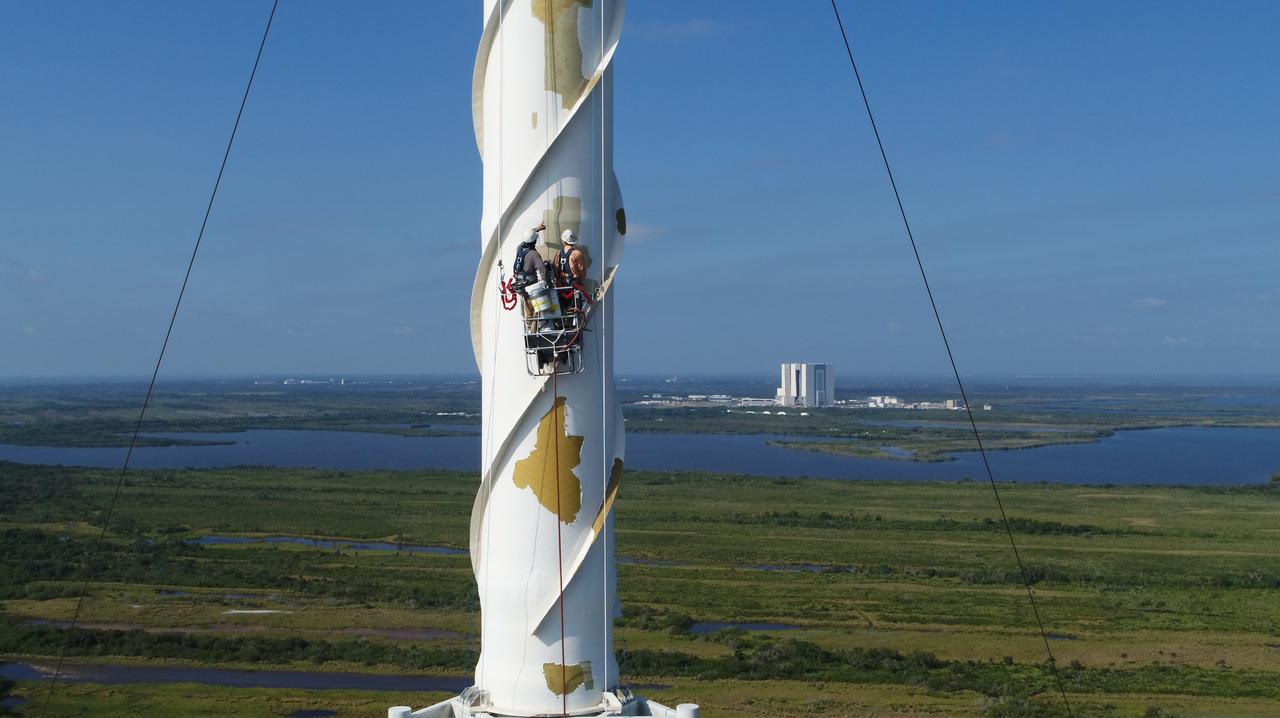
An aerial view shows workers preparing the surface of one of the three lightning protection system towers for painting at Exploration Ground Systems’ Launch Complex 39B at NASA’s Kennedy Space Center in Florida on May 30, 2019. The old paint was removed by the most recent hurricane. Pad 39B is the site of future launches of the agency’s Space Launch System rocket with the Orion spacecraft on Artemis missions. The 600-foot-tall lightning towers will help prevent lightning strikes at the pad during prelaunch and launch activities.
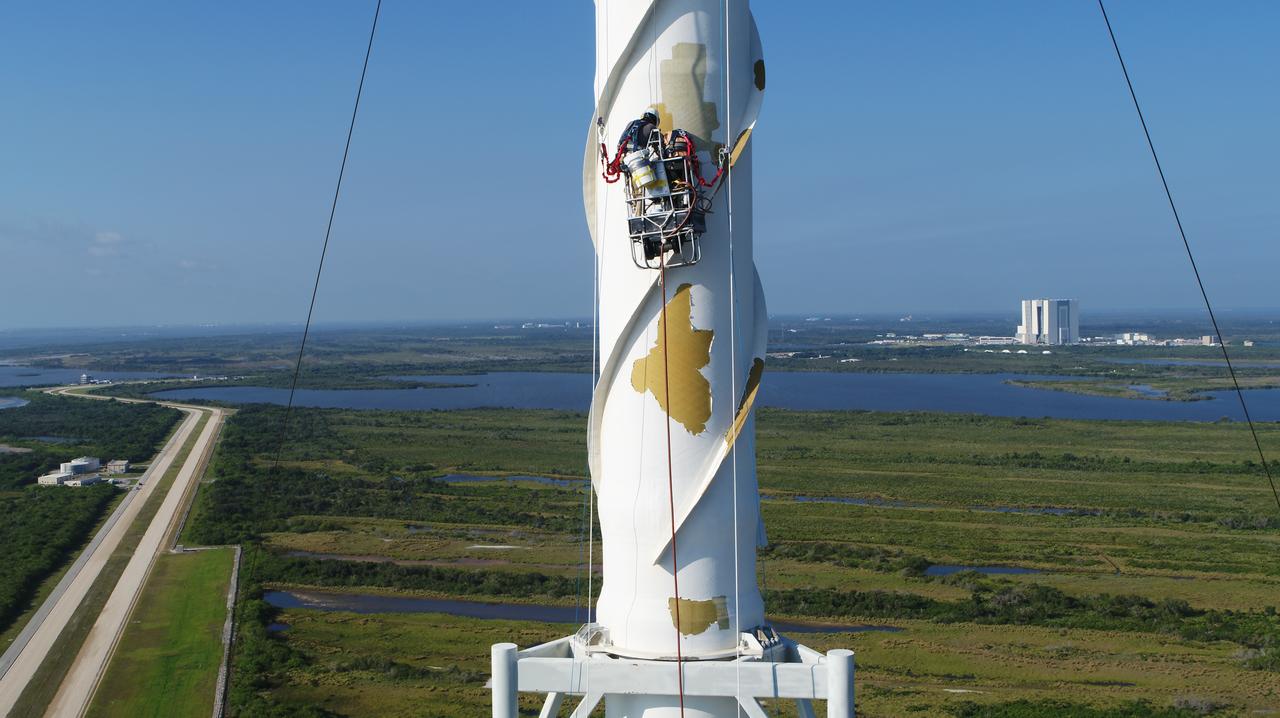
Workers prepare the surface of one of the three lightning protection system towers for painting at Exploration Ground Systems’ Launch Complex 39B at NASA’s Kennedy Space Center in Florida on May 30, 2019. The old paint was removed by the most recent hurricane. Pad 39B is the site of future launches of the agency’s Space Launch System rocket with the Orion spacecraft on Artemis missions. The 600-foot-tall lightning towers will help prevent lightning strikes at the pad during prelaunch and launch activities.
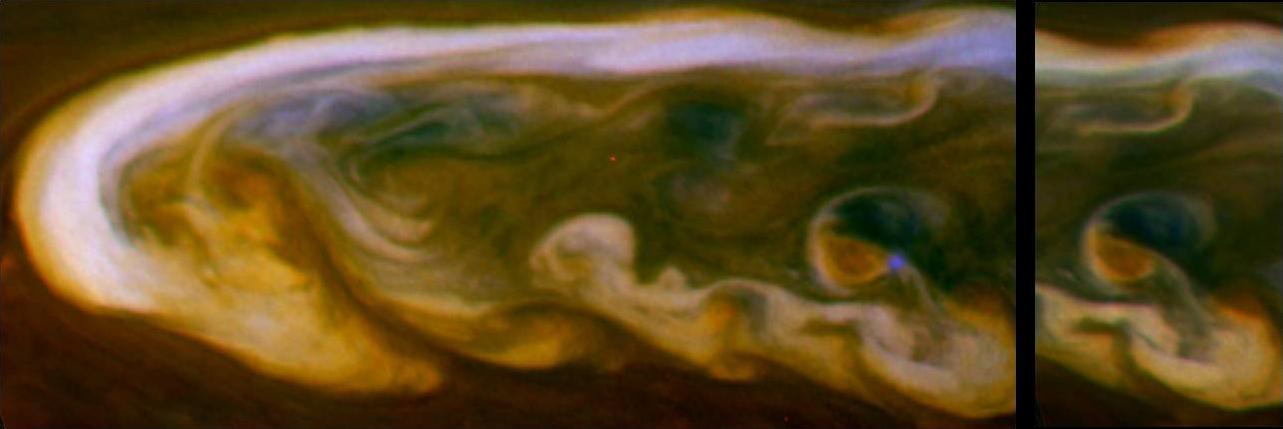
These false-color mosaics from NASA Cassini spacecraft capture lightning striking within the huge storm that encircled Saturn northern hemisphere for much of 2011.
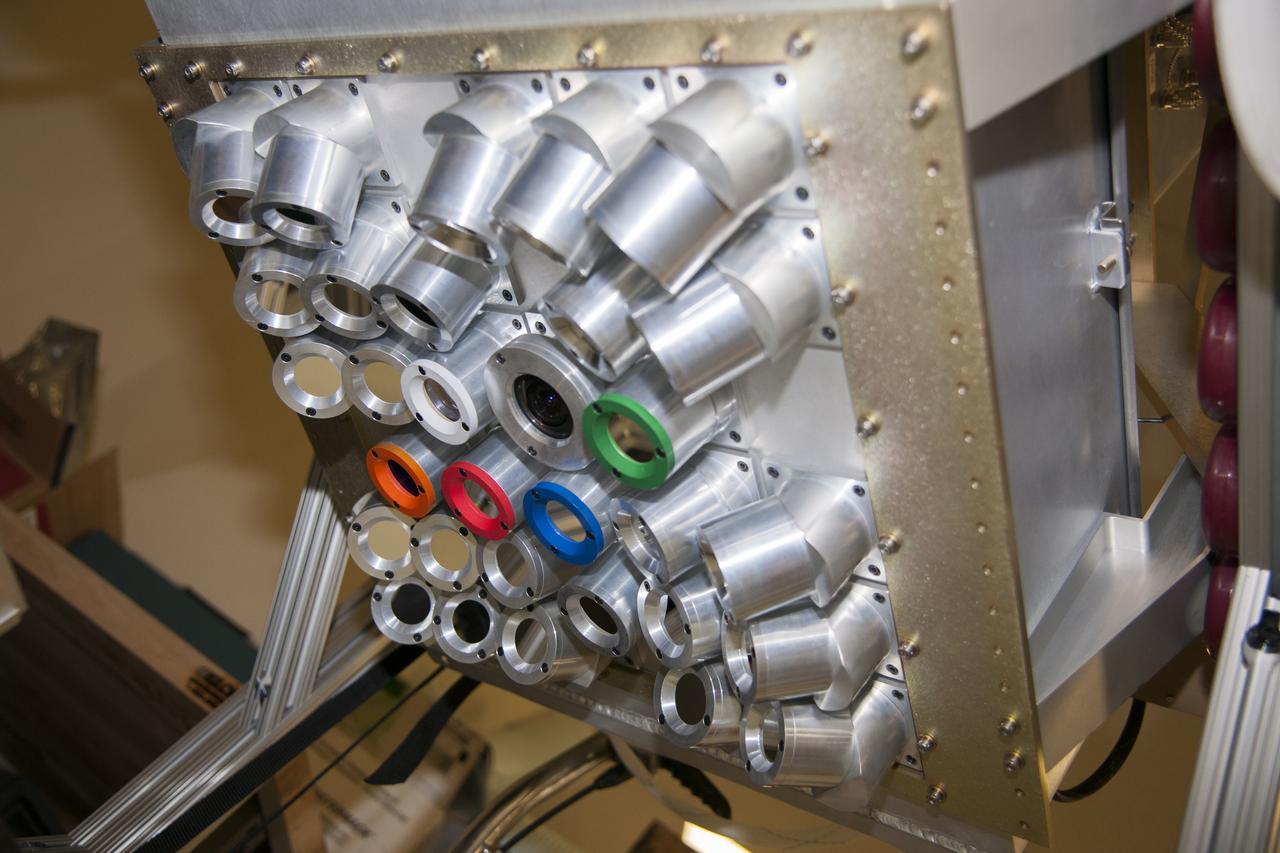
The Fly’s Eye Geostationary Lightning Mapper Simulator will map lightning strikes using 30 photometers, instruments that measure the intensity of light.
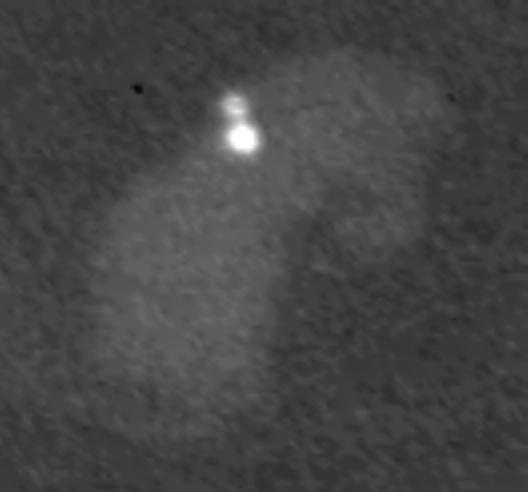
This image from NASA Cassini spacecraft, the first of its kind, shows lightning on Saturn night side flashing in a cloud that is illuminated by light from Saturn rings.
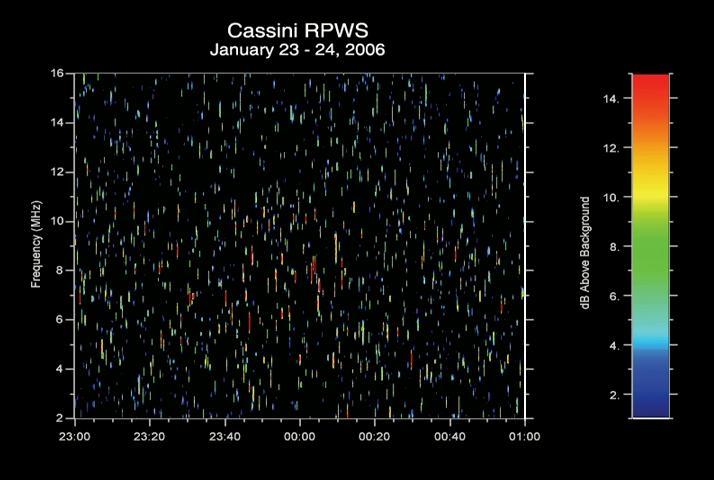
Lightning sounds from Saturn can be heard via radio signals received by the radio and plasma wave science instrument on the Cassini spacecraft
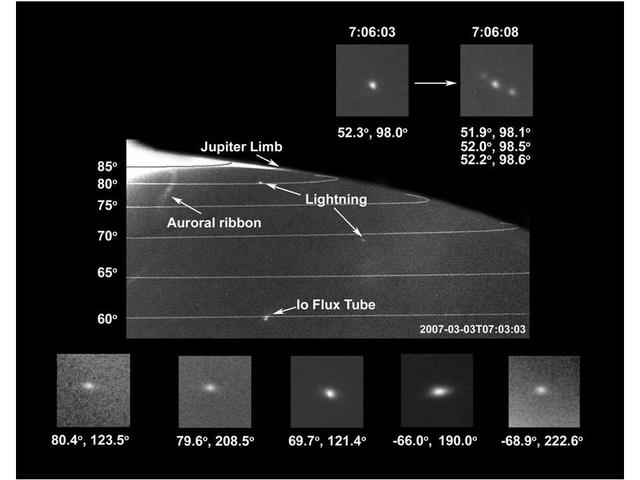
Images taken by the New Horizons Long-Range Reconnaissance Imager LORRI of Jupiter night side showed lightning strikes. Each trike is probably the cumulative brightness of multiple strikes.
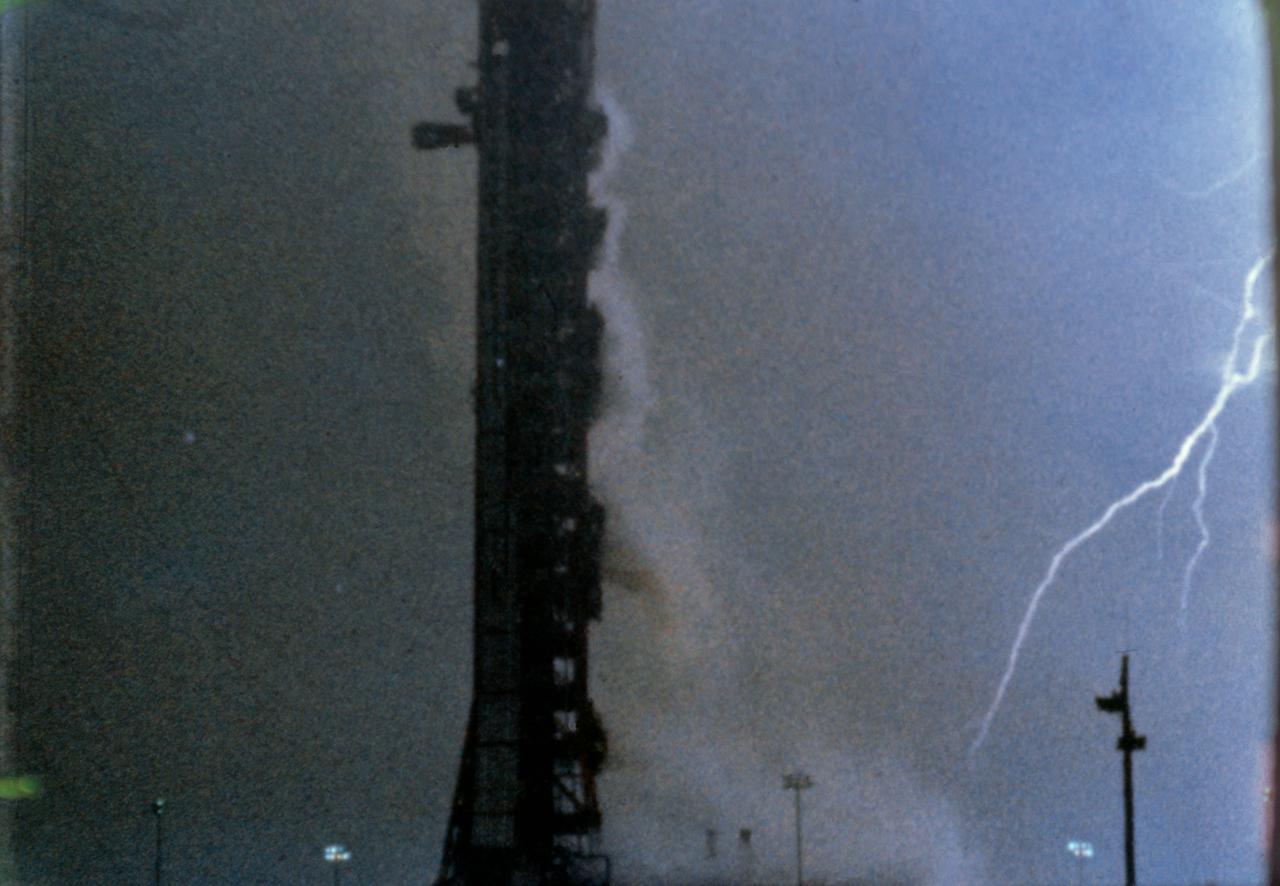
View of lightning striking near Pod 39A during the launch of Apollo XII from 16mm film. 1. APOLLO XII - LAUNCH (LIGHTNING) KENNEDY SPACE CENTER, FL
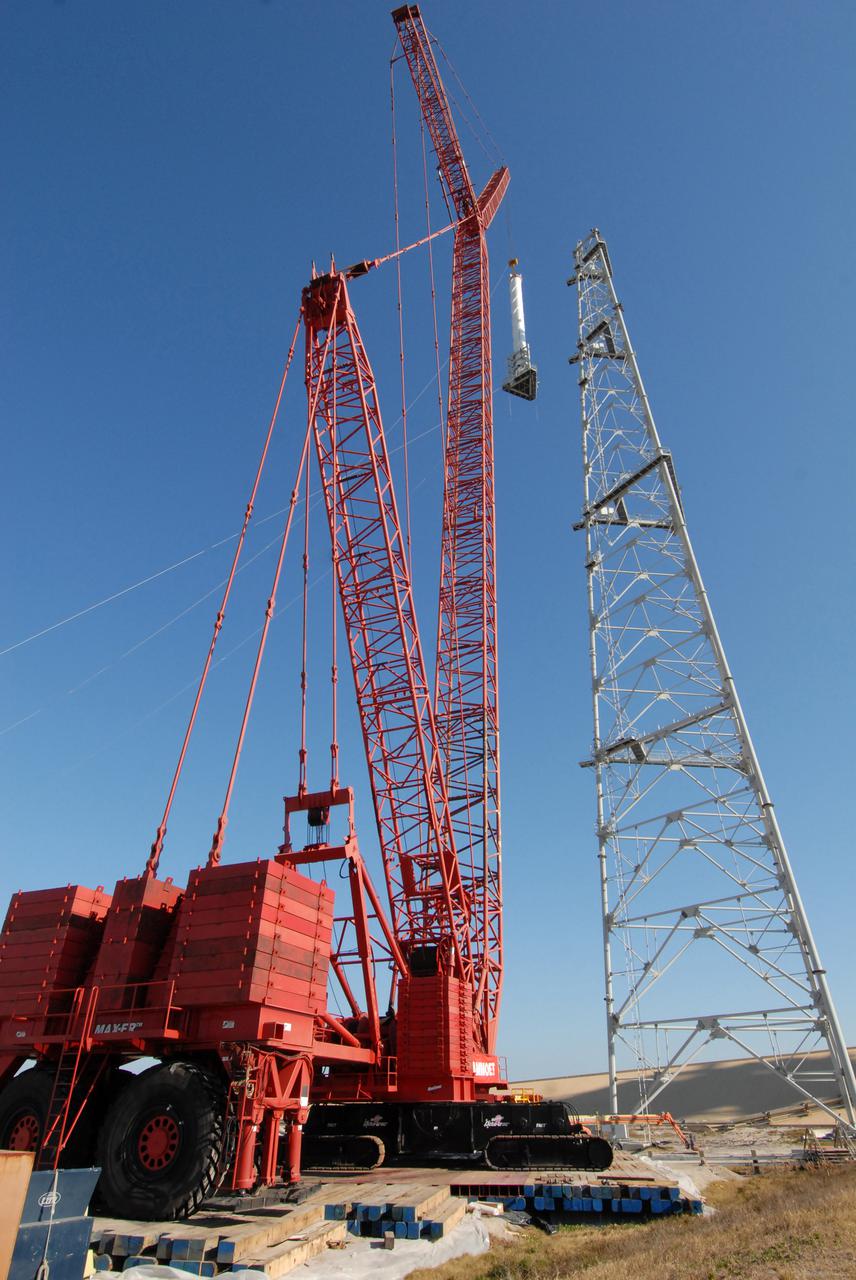
CAPE CANAVERAL, Fla. – On Launch Pad 39B at NASA's Kennedy Space Center in Florida, a crane lifts a 100-foot fiberglass lightning mast alongside the 500-foot tower where it will be installed. The tower is one of three being constructed for the Constellation Program and Ares_Orion launches. This improved lightning protection system allows for the taller height of the Ares I rocket compared to the space shuttle. Pad 39B will be the site of the first Ares vehicle launch, including the Ares I-X test flight that is targeted for July 2009.
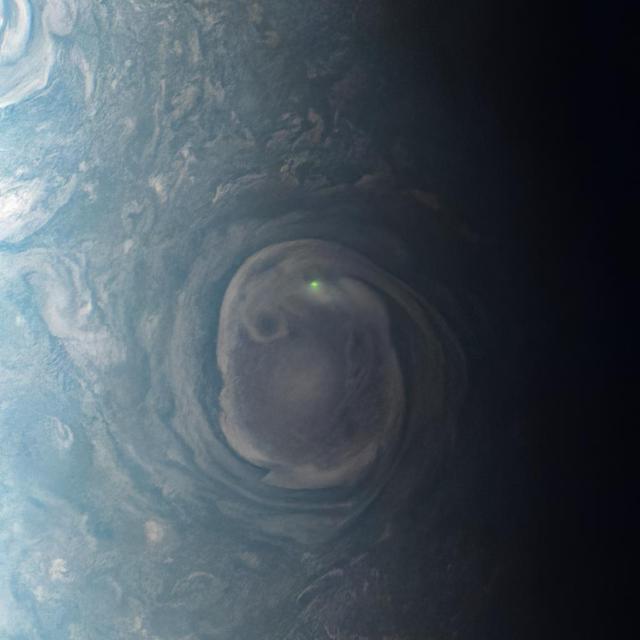
In this view of a vortex near Jupiter's north pole, NASA's Juno mission observed the glow from a bolt of lightning. On Earth, lightning bolts originate from water clouds, and happen most frequently near the equator, while on Jupiter lightning likely also occurs in clouds containing an ammonia-water solution, and can be seen most often near the poles. In the coming months, Juno's orbits will repeatedly take it close to Jupiter as the spacecraft passes over the giant planet's night side, which will provide even more opportunities for Juno's suite of science instruments to catch lightning in the act. Juno captured this view as Juno completed its 31st close flyby of Jupiter on Dec. 30, 2020. In 2022, Citizen scientist Kevin M. Gill processed the image from raw data from the JunoCam instrument aboard the spacecraft. At the time the raw image was taken, Juno was about 19,900 miles (32,000 kilometers) above Jupiter's cloud tops, at a latitude of about 78 degrees as it approached the planet. https://photojournal.jpl.nasa.gov/catalog/PIA25020
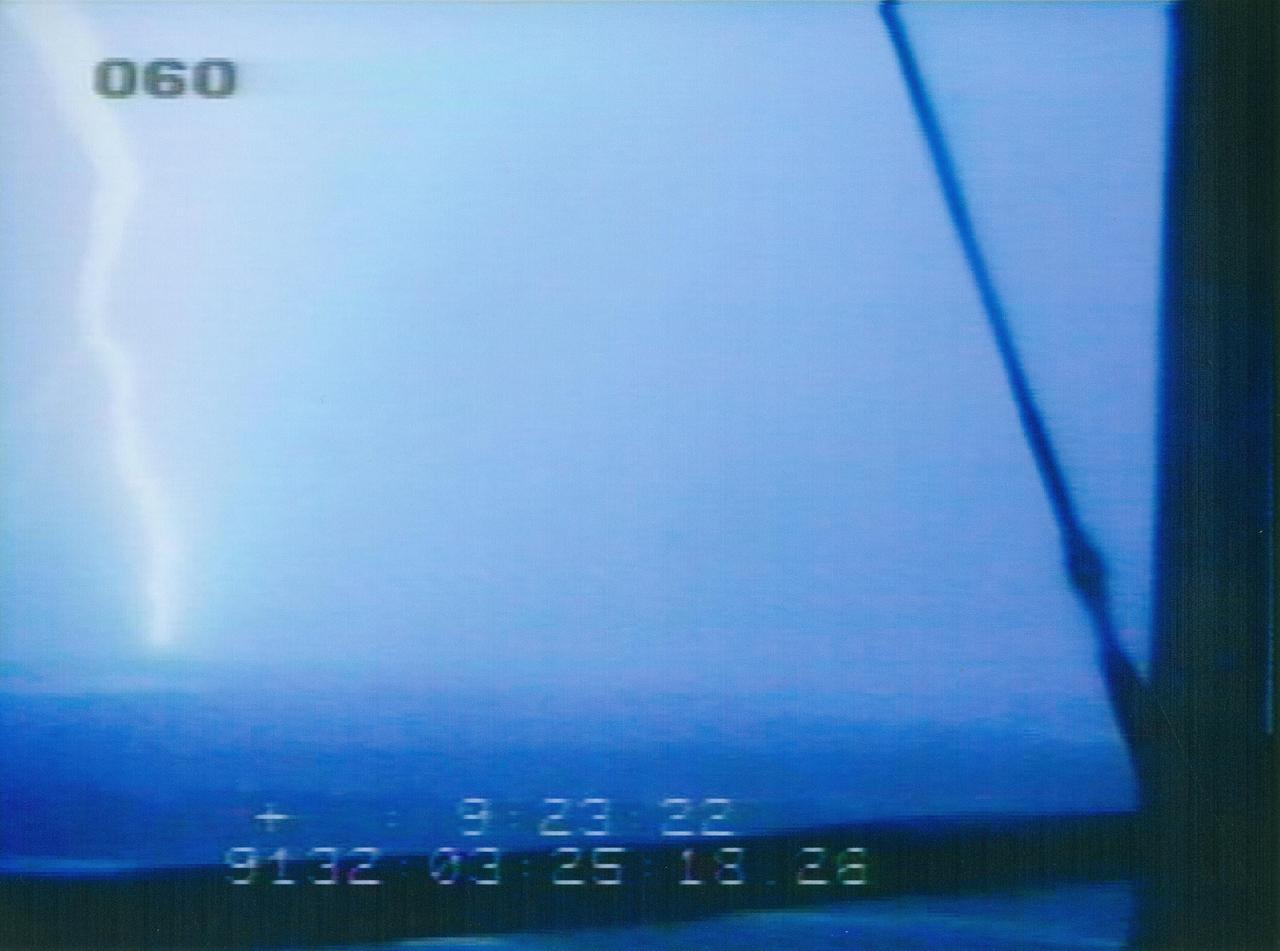
CAPE CANAVERAL, Fla. – This photo taken from Launch Pad 39A at NASA's Kennedy Space Center in Florida shows one of two lightning strikes that occurred on May 11 around 11 p.m. within a third of a mile of space shuttle Endeavour on Launch Pad 39B. Engineers and safety personnel evaluated data and performed a walkdown of the pad and determined there is no damage to the vehicle or the pad. The images are from Kennedy's Operational Television cameras which can be used to triangulate the location of lightning strikes. Other detection systems include the Cloud-To-Ground Lightning Surveillance System, Strikenet/National Lightning Detection Network, Lightning Induced Voltage Instrumentation System and the Catenary Wire Lightning Instrumentation System. Endeavour is standing by on the pad, prepared for liftoff in the unlikely event that a rescue mission is necessary during space shuttle Atlantis' STS-125 mission to service NASA's Hubble Space Telescope. Photo credit: NASA
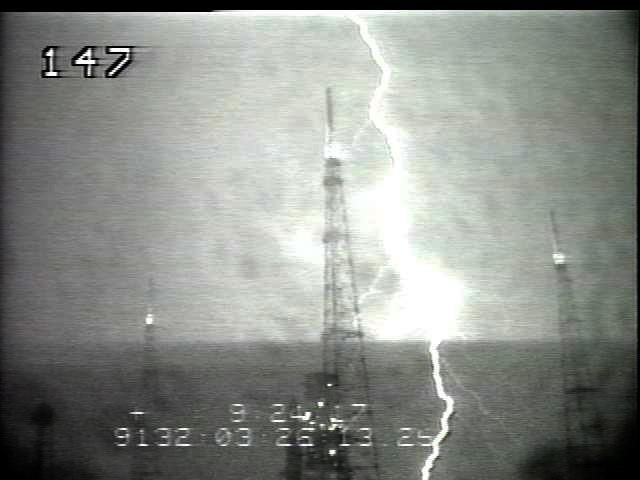
CAPE CANAVERAL, Fla. – This photo shows one of two lightning strikes that occurred on May 11 around 11 p.m. within a third of a mile of space shuttle Endeavour on Launch Pad 39B at NASA's Kennedy Space Center in Florida. Engineers and safety personnel evaluated data and performed a walkdown of the pad and determined there is no damage to the vehicle or the pad. The images are from Kennedy's Operational Television cameras which can be used to triangulate the location of lightning strikes. Other detection systems include the Cloud-To-Ground Lightning Surveillance System, Strikenet/National Lightning Detection Network, Lightning Induced Voltage Instrumentation System and the Catenary Wire Lightning Instrumentation System. Endeavour is standing by on the pad, prepared for liftoff in the unlikely event that a rescue mission is necessary during space shuttle Atlantis' STS-125 mission to service NASA's Hubble Space Telescope. Photo credit: NASA
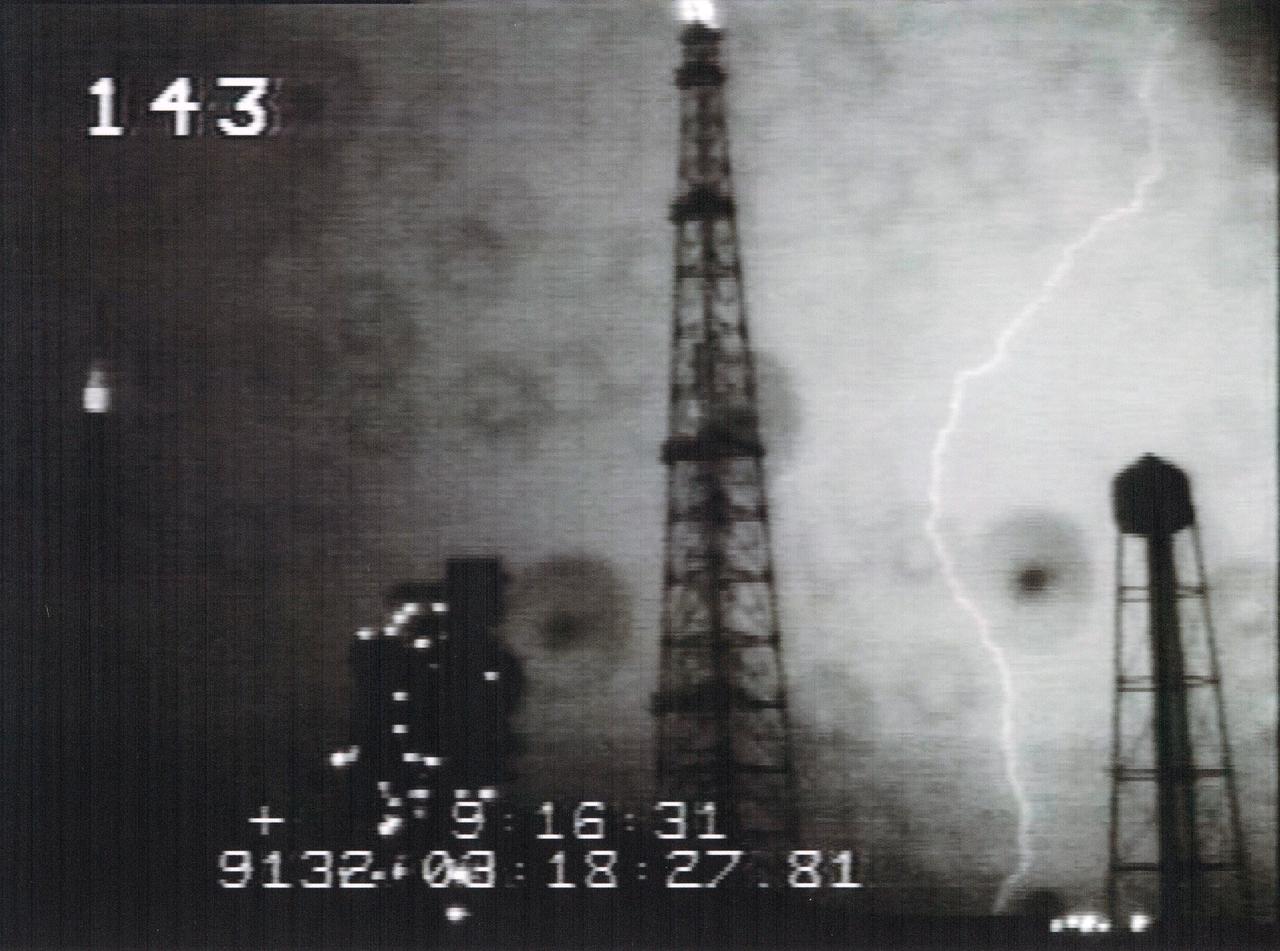
CAPE CANAVERAL, Fla. – This photo shows one of two lightning strikes that occurred on May 11 around 11 p.m. within a third of a mile of space shuttle Endeavour on Launch Pad 39B at NASA's Kennedy Space Center in Florida. Engineers and safety personnel evaluated data and performed a walkdown of the pad and determined there is no damage to the vehicle or the pad. The images are from Kennedy's Operational Television cameras which can be used to triangulate the location of lightning strikes. Other detection systems include the Cloud-To-Ground Lightning Surveillance System, Strikenet/National Lightning Detection Network, Lightning Induced Voltage Instrumentation System and the Catenary Wire Lightning Instrumentation System. Endeavour is standing by on the pad, prepared for liftoff in the unlikely event that a rescue mission is necessary during space shuttle Atlantis' STS-125 mission to service NASA's Hubble Space Telescope. Photo credit: NASA
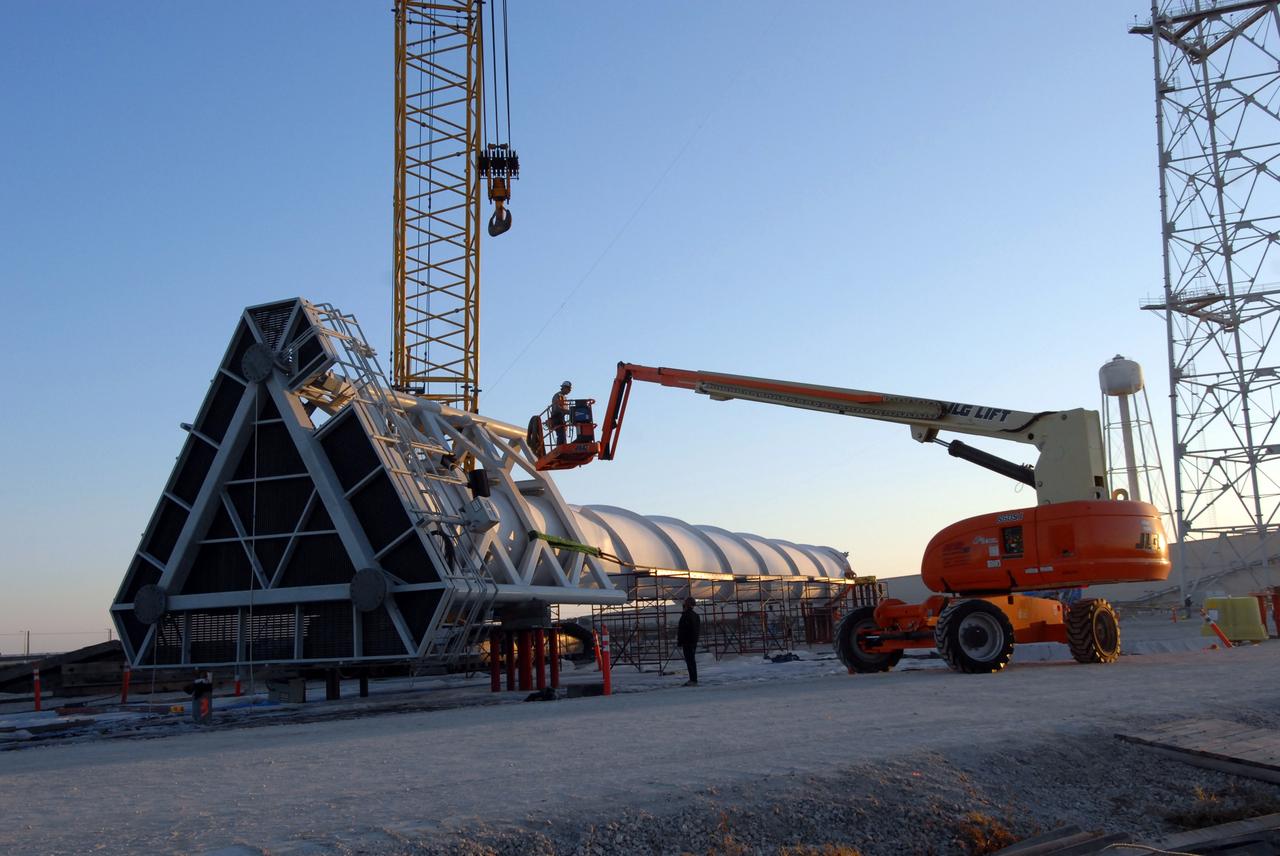
CAPE CANAVERAL, Fla. – Construction of the towers on Launch Pad 39B at NASA's Kennedy Space Center in Florida continues on the new lightning protection system for the Constellation Program and Ares/Orion launches. Here, a 100-foot fiberglass lightning mast is being prepared to be lifted on top of one of the 500-foot towers. The mast will support a wire catenary system. This improved lightning protection system allows for the taller height of the Ares I rocket compared to the space shuttle. Pad 39B will be the site of the first Ares vehicle launch, including the Ares I-X test flight that is targeted for July 2009.
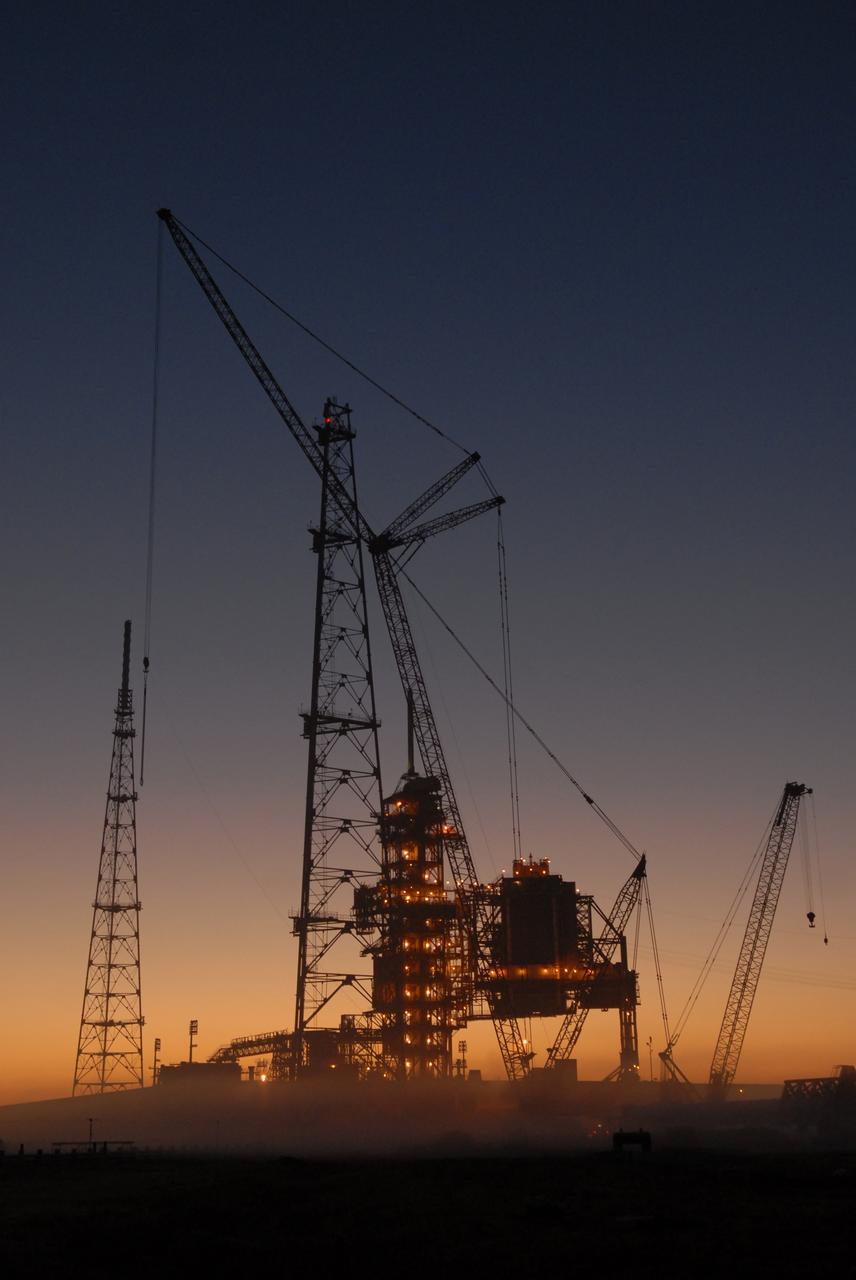
CAPE CANAVERAL, Fla. – In the rosy dawn light, construction of the towers on Launch Pad 39B at NASA's Kennedy Space Center in Florida continues on the new lightning protection system for the Constellation Program and Ares/Orion launches. Each of the three new lightning towers will be 500 feet tall with an additional 100-foot fiberglass mast atop supporting a wire catenary system. This improved lightning protection system allows for the taller height of the Ares I rocket compared to the space shuttle. Pad 39B will be the site of the first Ares vehicle launch, including the Ares I-X test flight that is targeted for July 2009.
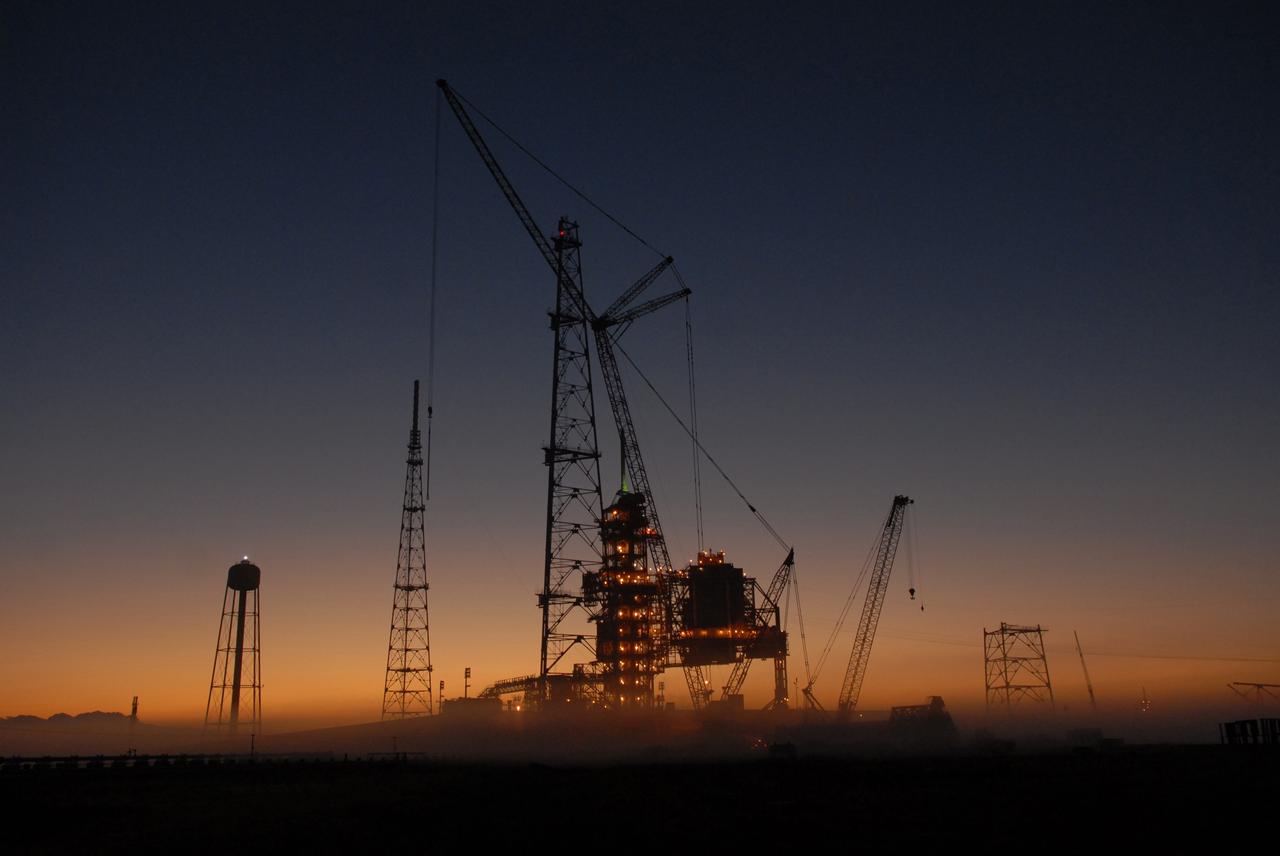
CAPE CANAVERAL, Fla. – In the rosy dawn light, construction of the towers on Launch Pad 39B at NASA's Kennedy Space Center in Florida continues on the new lightning protection system for the Constellation Program and Ares/Orion launches. Each of the three new lightning towers will be 500 feet tall with an additional 100-foot fiberglass mast atop supporting a wire catenary system. This improved lightning protection system allows for the taller height of the Ares I rocket compared to the space shuttle. Pad 39B will be the site of the first Ares vehicle launch, including the Ares I-X test flight that is targeted for July 2009.
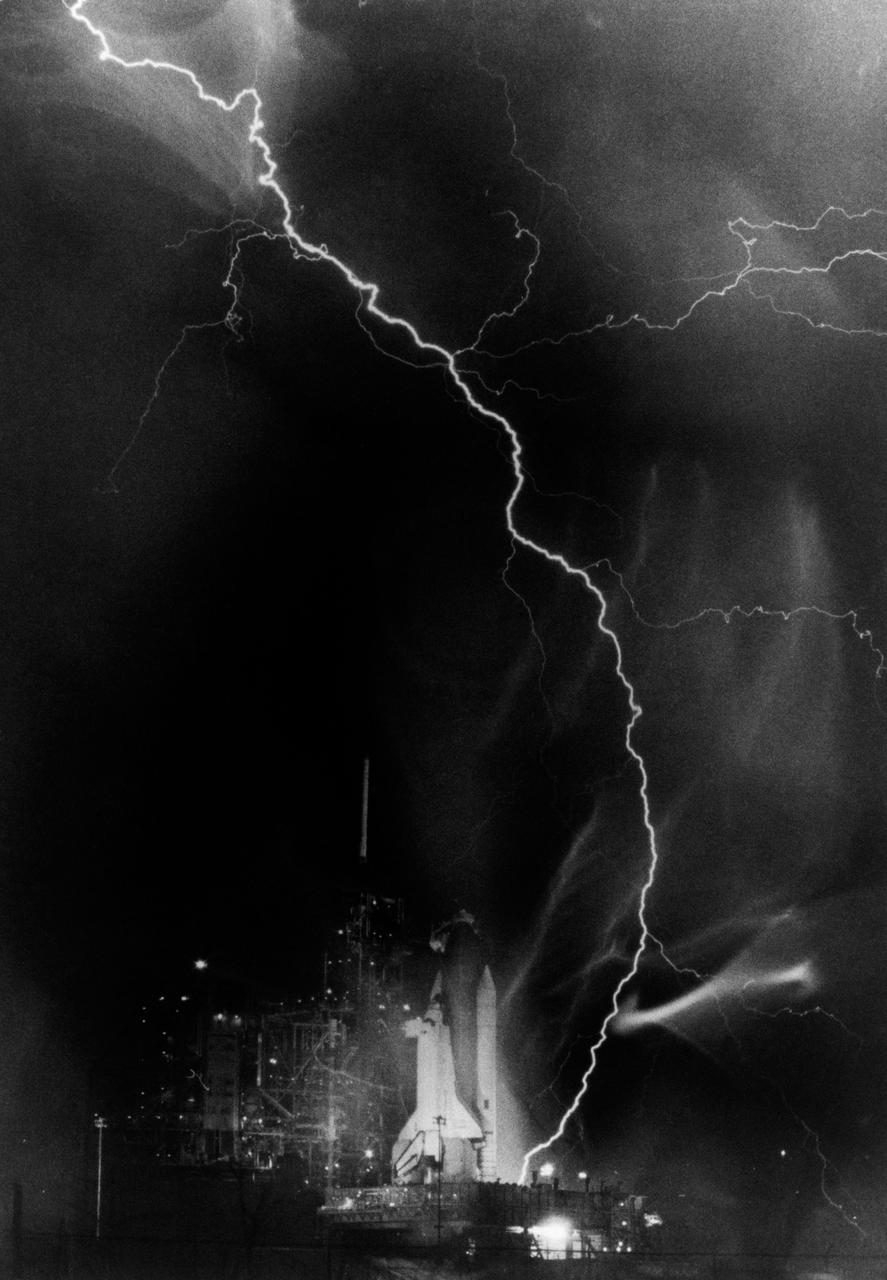
Lightning across the sky with Shuttle at launch pad on 08/30/1983. KSC, FL
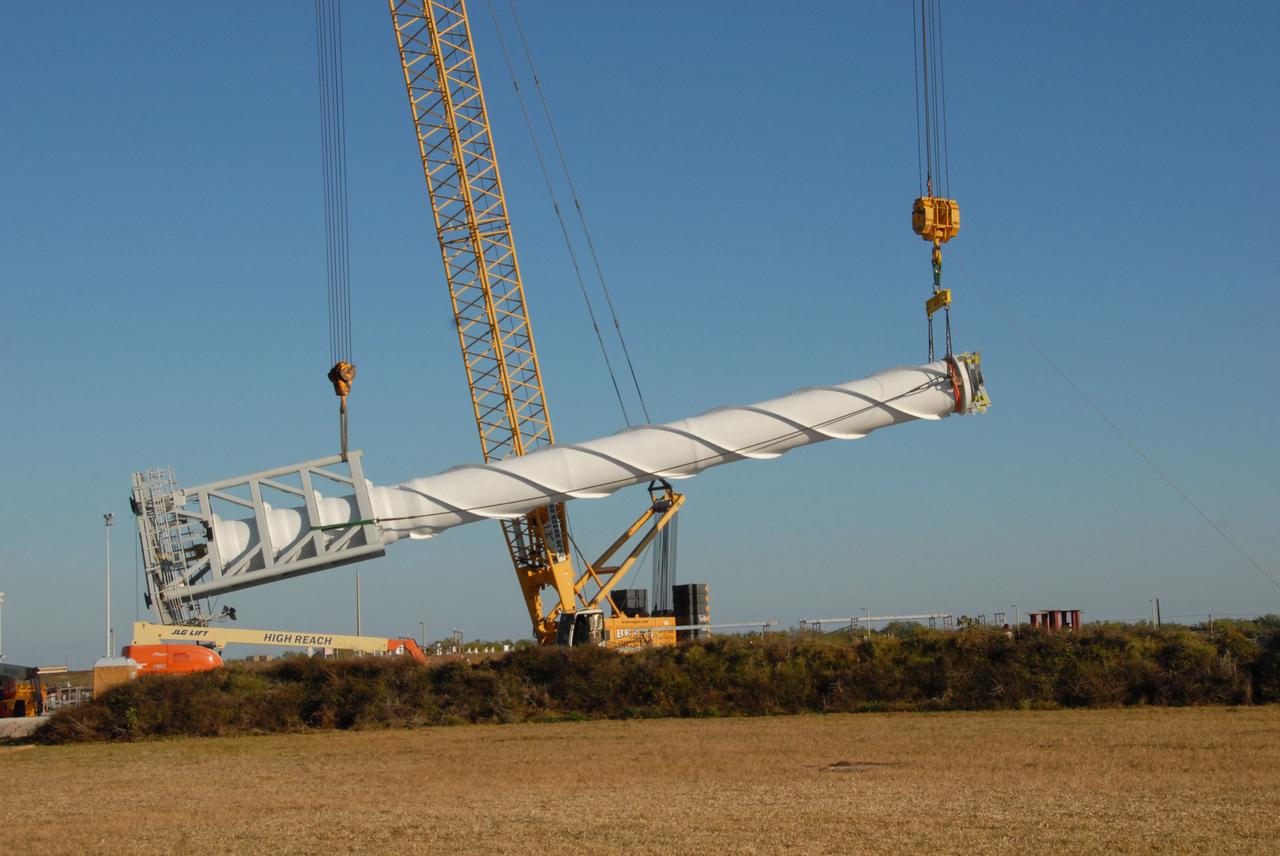
CAPE CANAVERAL, Fla. – On Launch Pad 39B at NASA's Kennedy Space Center in Florida, a crane lifts a 100-foot fiberglass lightning mast that will be placed on top of one of the 500-foot towers being constructed for the Constellation Program and Ares/Orion launches. This improved lightning protection system allows for the taller height of the Ares I rocket compared to the space shuttle. Pad 39B will be the site of the first Ares vehicle launch, including the Ares I-X test flight that is targeted for July 2009.
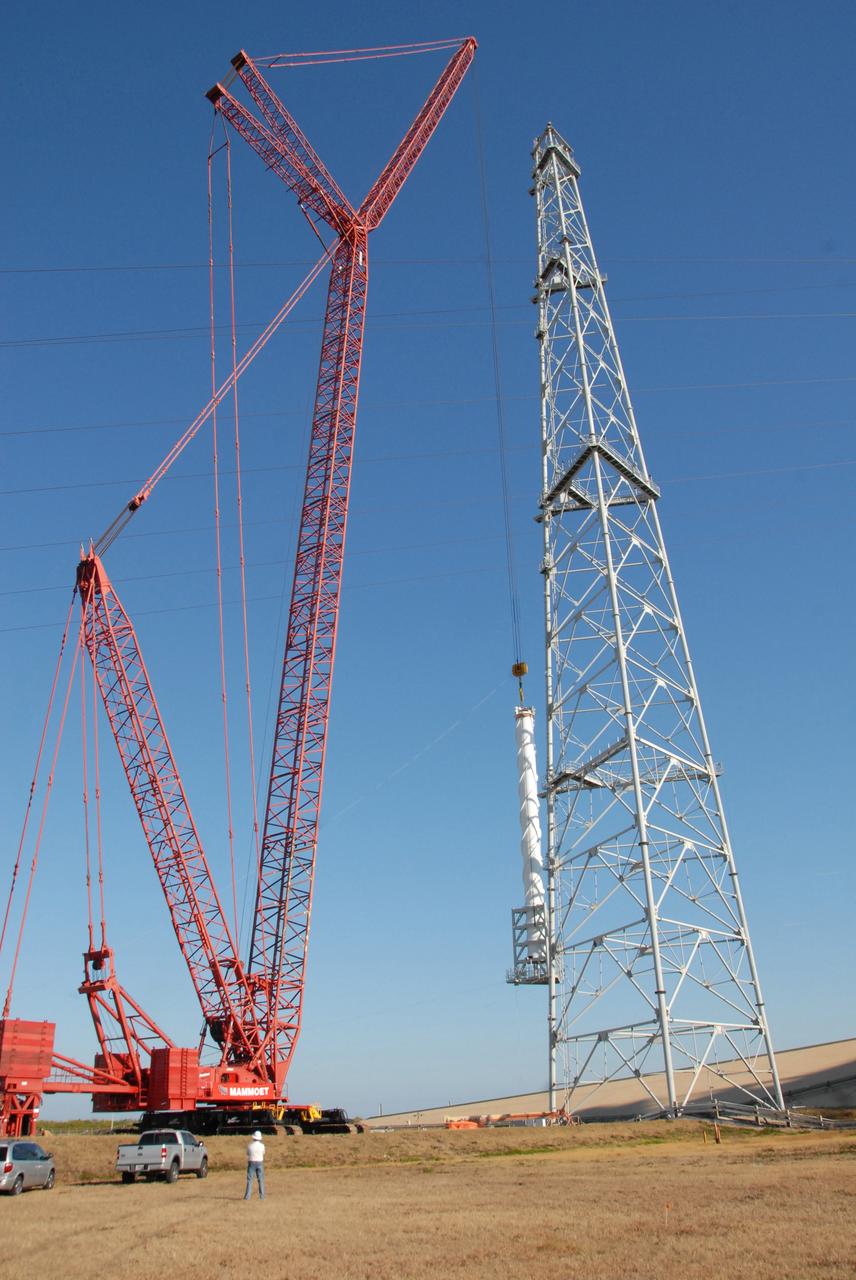
CAPE CANAVERAL, Fla. – On Launch Pad 39B at NASA's Kennedy Space Center in Florida, a crane begins lifting a 100-foot fiberglass lightning mast to place it on top of one of the 500-foot towers being constructed for the Constellation Program and Ares/Orion launches. This improved lightning protection system allows for the taller height of the Ares I rocket compared to the space shuttle. Pad 39B will be the site of the first Ares vehicle launch, including the Ares I-X test flight that is targeted for July 2009.
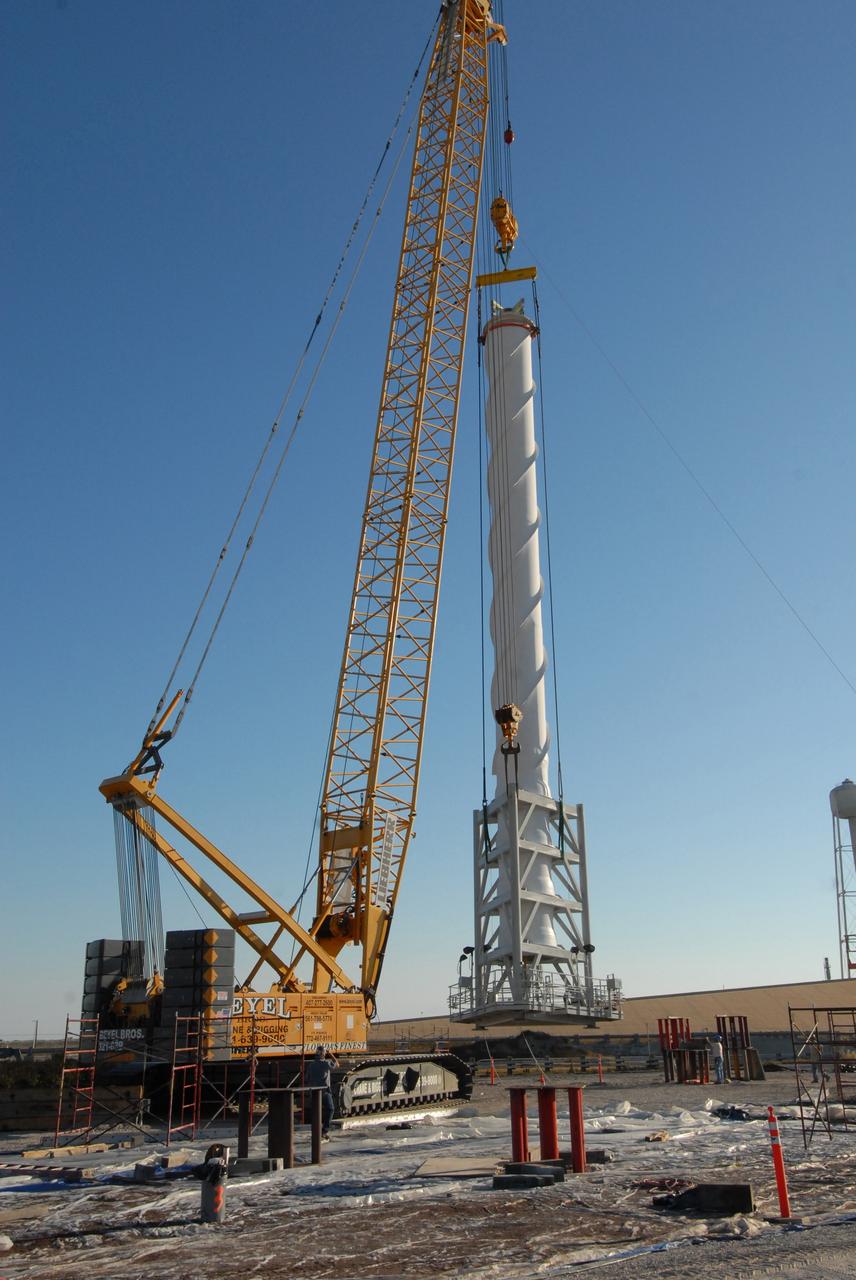
CAPE CANAVERAL, Fla. – On Launch Pad 39B at NASA's Kennedy Space Center in Florida, a crane holds a 100-foot fiberglass lightning mast that will be placed on top of one of the 500-foot towers being constructed for the Constellation Program and Ares/Orion launches. This improved lightning protection system allows for the taller height of the Ares I rocket compared to the space shuttle. Pad 39B will be the site of the first Ares vehicle launch, including the Ares I-X test flight that is targeted for July 2009.
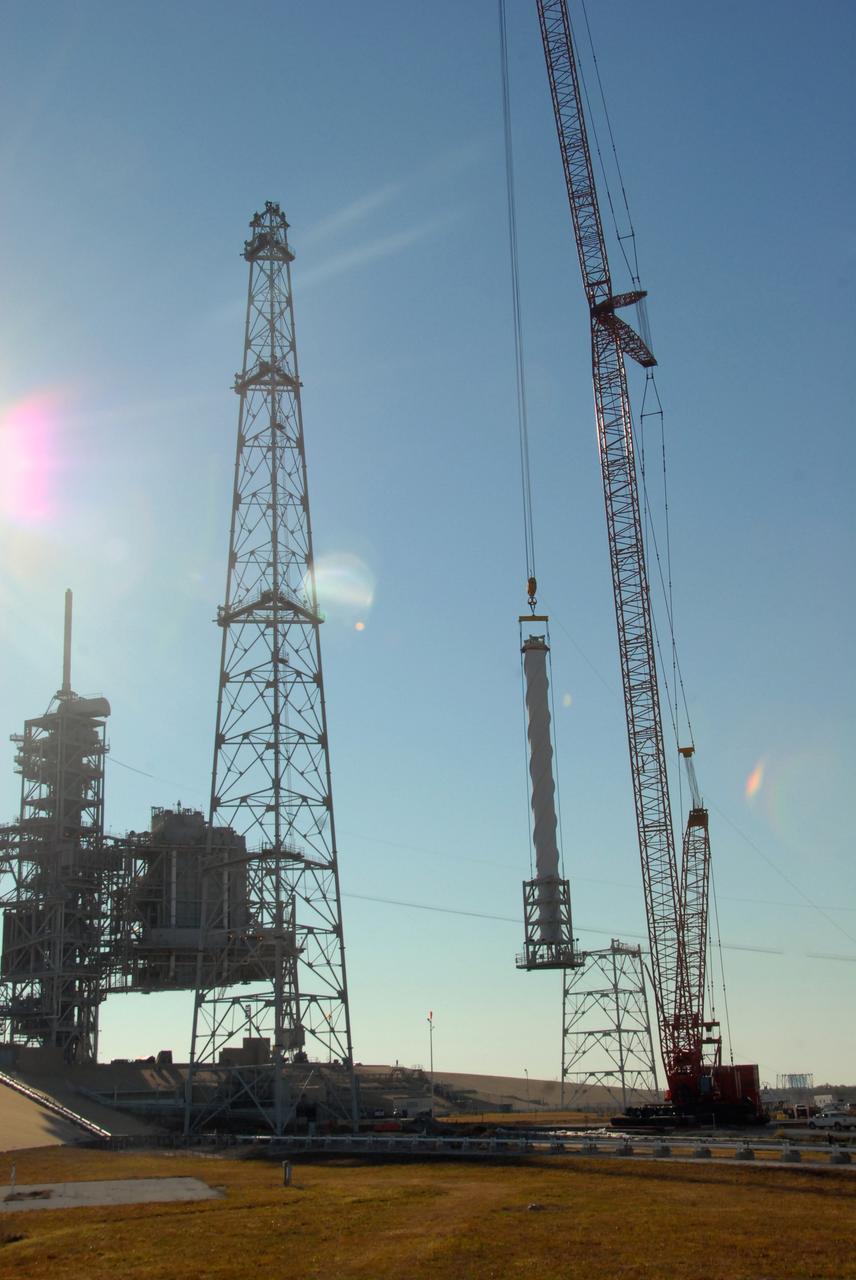
CAPE CANAVERAL, Fla. – On Launch Pad 39B at NASA's Kennedy Space Center in Florida, a crane begins lifting a 100-foot fiberglass lightning mast to place it on top of one of the 500-foot towers being constructed for the Constellation Program and Ares/Orion launches. This improved lightning protection system allows for the taller height of the Ares I rocket compared to the space shuttle. Pad 39B will be the site of the first Ares vehicle launch, including the Ares I-X test flight that is targeted for July 2009.
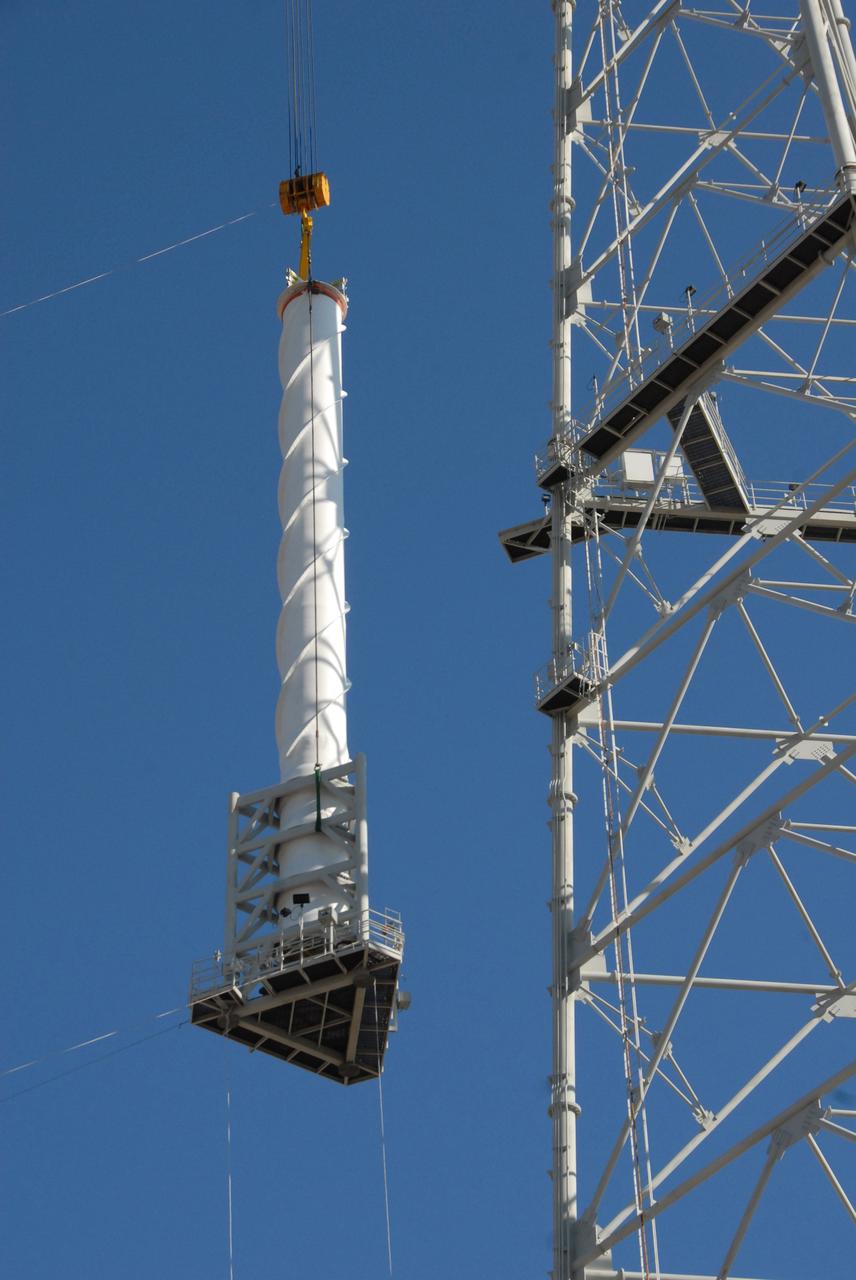
CAPE CANAVERAL, Fla. – On Launch Pad 39B at NASA's Kennedy Space Center in Florida, a crane lifts a 100-foot fiberglass lightning mast alongside the 500-foot tower where it will be installed. The tower is one of three being constructed for the Constellation Program and Ares/Orion launches. This improved lightning protection system allows for the taller height of the Ares I rocket compared to the space shuttle. Pad 39B will be the site of the first Ares vehicle launch, including the Ares I-X test flight that is targeted for July 2009.
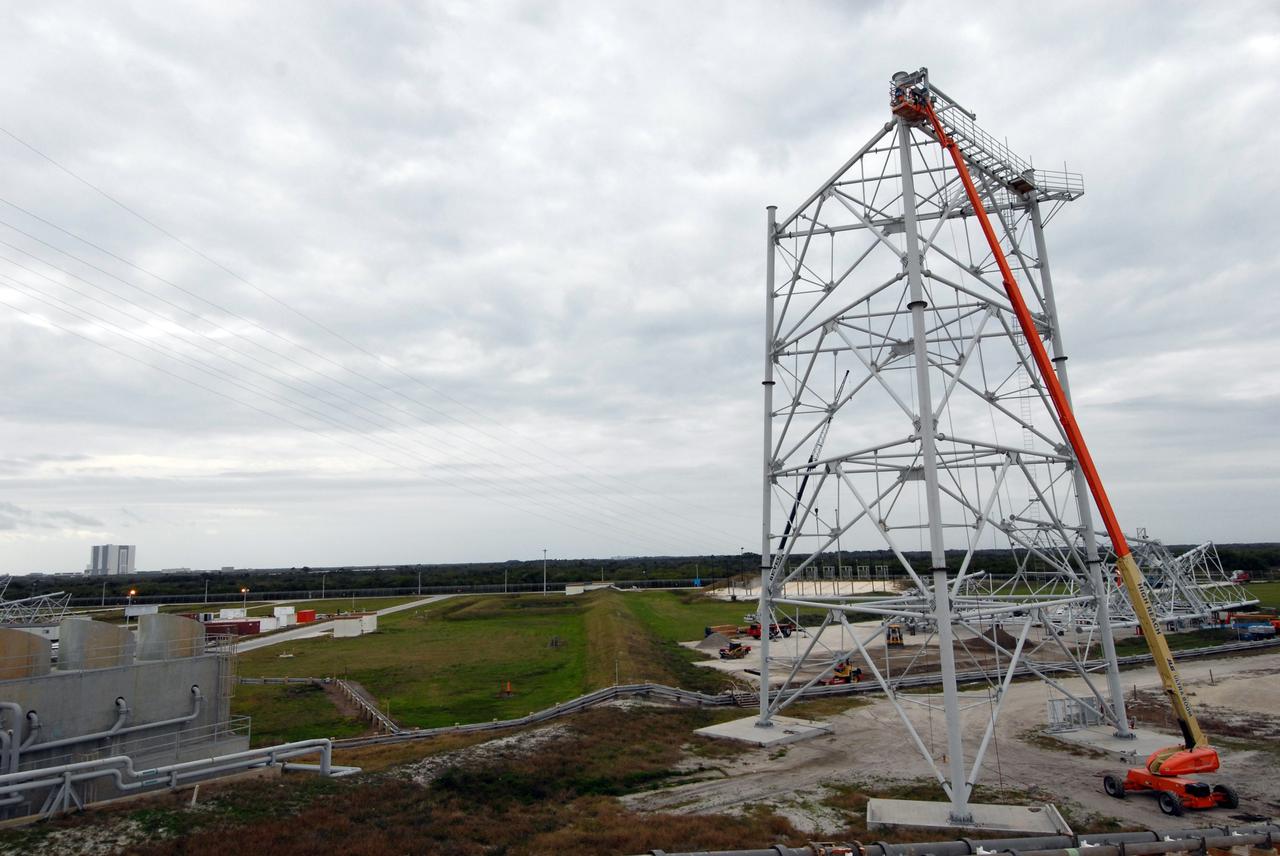
CAPE CANAVERAL, Fla. – CAPE CANAVERAL, Fla. -- On Launch Pad 39B at NASA's Kennedy Space Center in Florida, another lightning tower is being constructed as part of the new lightning protection system for the Constellation Program and Ares/Orion launches. Each of the three new lightning towers will be 500 feet tall with an additional 100-foot fiberglass mast atop supporting a wire catenary system. This improved lightning protection system allows for the taller height of the Ares I rocket compared to the space shuttle. Pad 39B will be the site of the first Ares vehicle launch, including the Ares I-X test flight that is targeted for July 2009. Photo credit: NASA/Troy Cryder
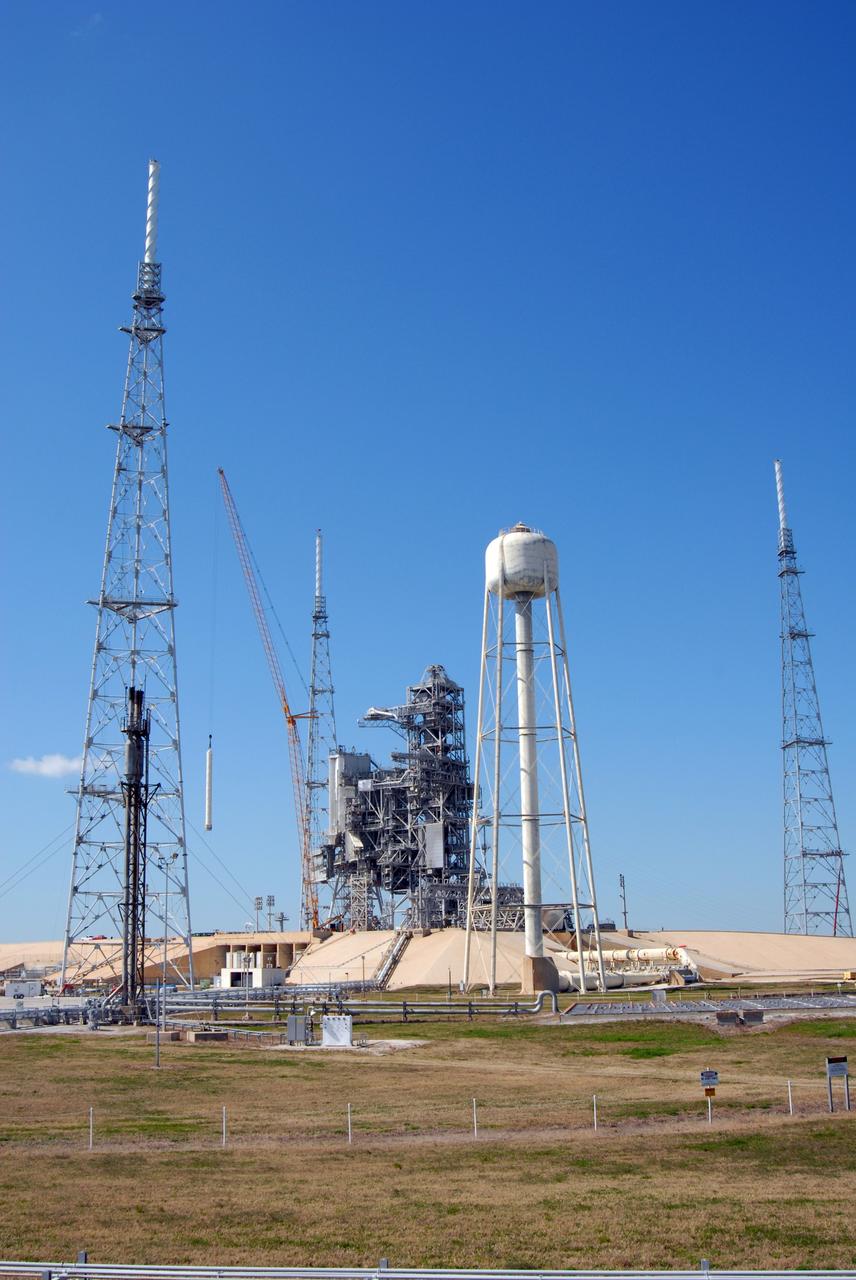
CAPE CANAVERAL, Fla. – On Launch Pad 39B at NASA's Kennedy Space Center in Florida, a crane has removed the 80-foot lightning mast from the top of the fixed service structure. The mast is no longer needed with the erection of the three lightning towers around the pad. Pad 39B will be the site of the first Ares vehicle launch, including the Ares I-X test flight that is targeted for July 2009. The three new lightning towers are 500 feet tall with an additional 100-foot fiberglass mast atop supporting a wire catenary system. This improved lightning protection system allows for the taller height of the Ares I rocket compared to the space shuttle. Photo credit: NASA/Amanda Diller
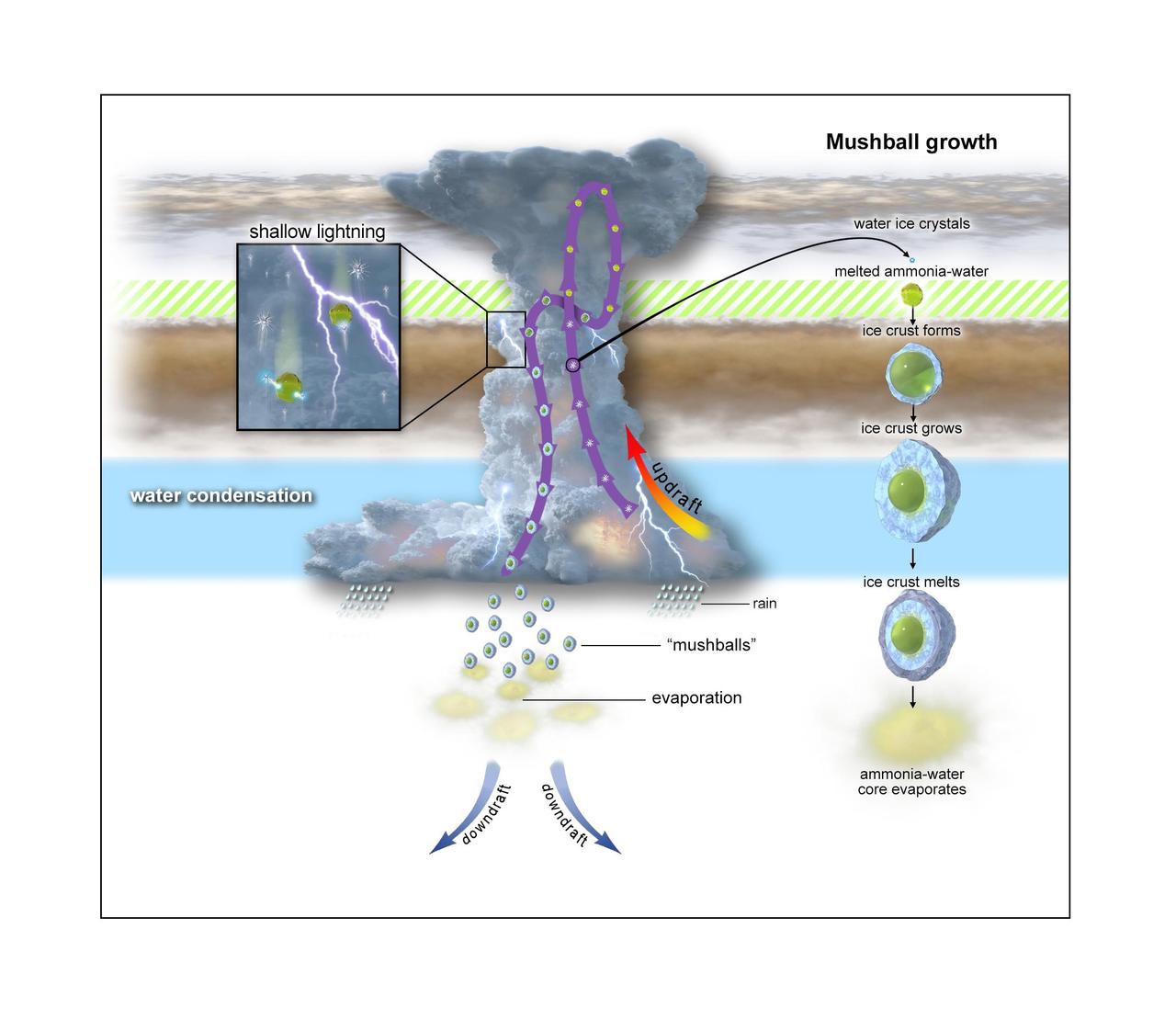
This graphic depicts the evolutionary process of "shallow lightning" and ammonia-water hailstones called "mushballs." An anvil-shaped thunderstorm cloud originates about 40 miles (65 kilometers) below Jupiter's visible cloud deck. Powered by water-based moist convection, the cloud generates strong updrafts that move liquid water and water ice particles upward. About 12 miles (19 kilometers) up, temperatures are so low that all of the water particles turn to ice. Still climbing, the ice particles cross a region located about 14 miles (23 kilometers) below the upper clouds, where temperatures are between minus 121 degrees Fahrenheit (minus 85 degrees Celsius) and minus 150 degrees Fahrenheit (minus 100 degrees Celsius), (depicted as green-hashed layer). At that point, ammonia vapor in the atmosphere acts like an antifreeze, melting the water-ice crystals, transforming them into ammonia-water liquid droplets which then grow and gather a solid icy shell to become mushballs. Once big enough, these slushy hailstones fall down, transporting both ammonia and water into Jupiter's deep atmosphere where the mushballs eventually evaporate. https://photojournal.jpl.nasa.gov/catalog/PIA24042
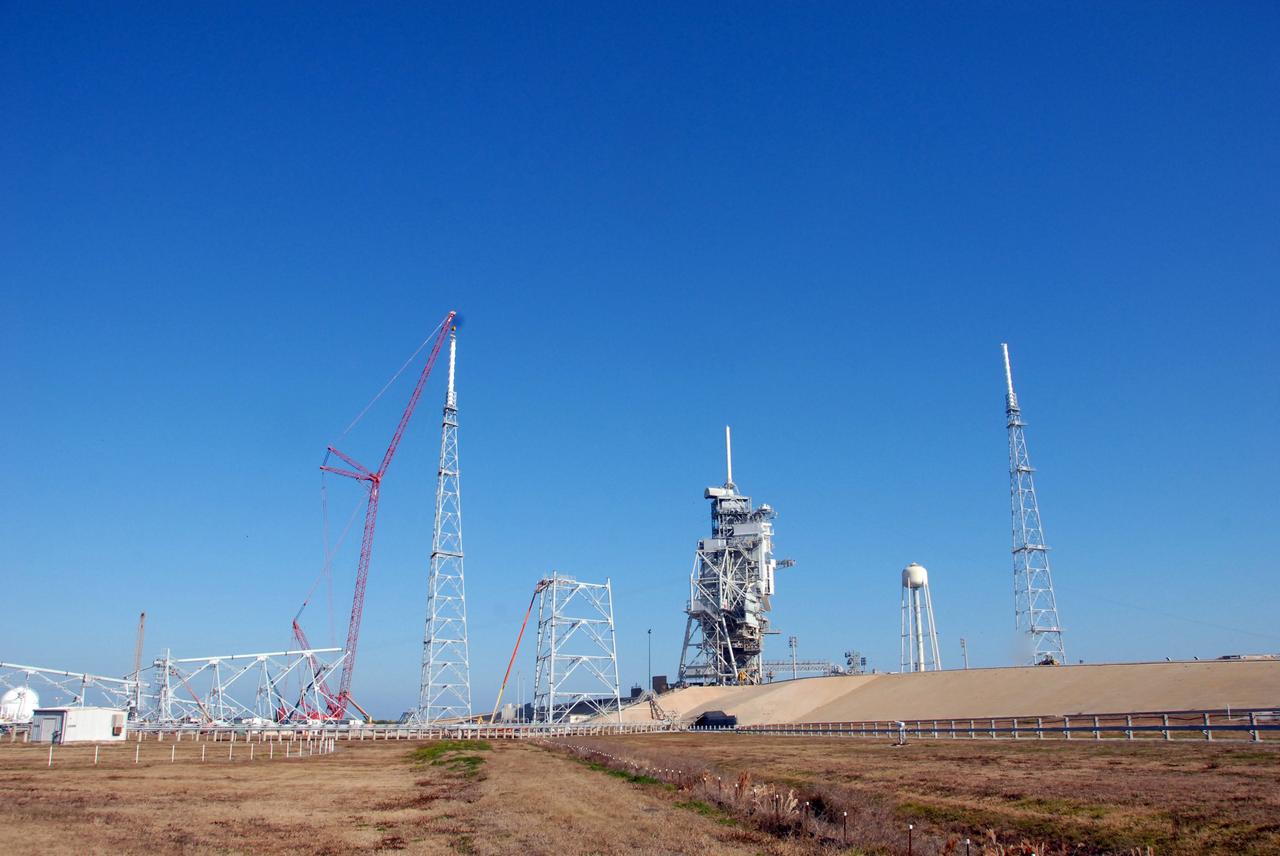
CAPE CANAVERAL, Fla. – On Launch Pad 39B at NASA's Kennedy Space Center in Florida, a crane places a 100-foot fiberglass lightning mast on top of the 500-foot tower. The tower is one of three being constructed for the Constellation Program and Ares/Orion launches. Another tower is seen at right. This improved lightning protection system allows for the taller height of the Ares I rocket compared to the space shuttle. Pad 39B will be the site of the first Ares vehicle launch, including the Ares I-X test flight that is targeted for July 2009. Photo credit: NASA/Jack Pfaller
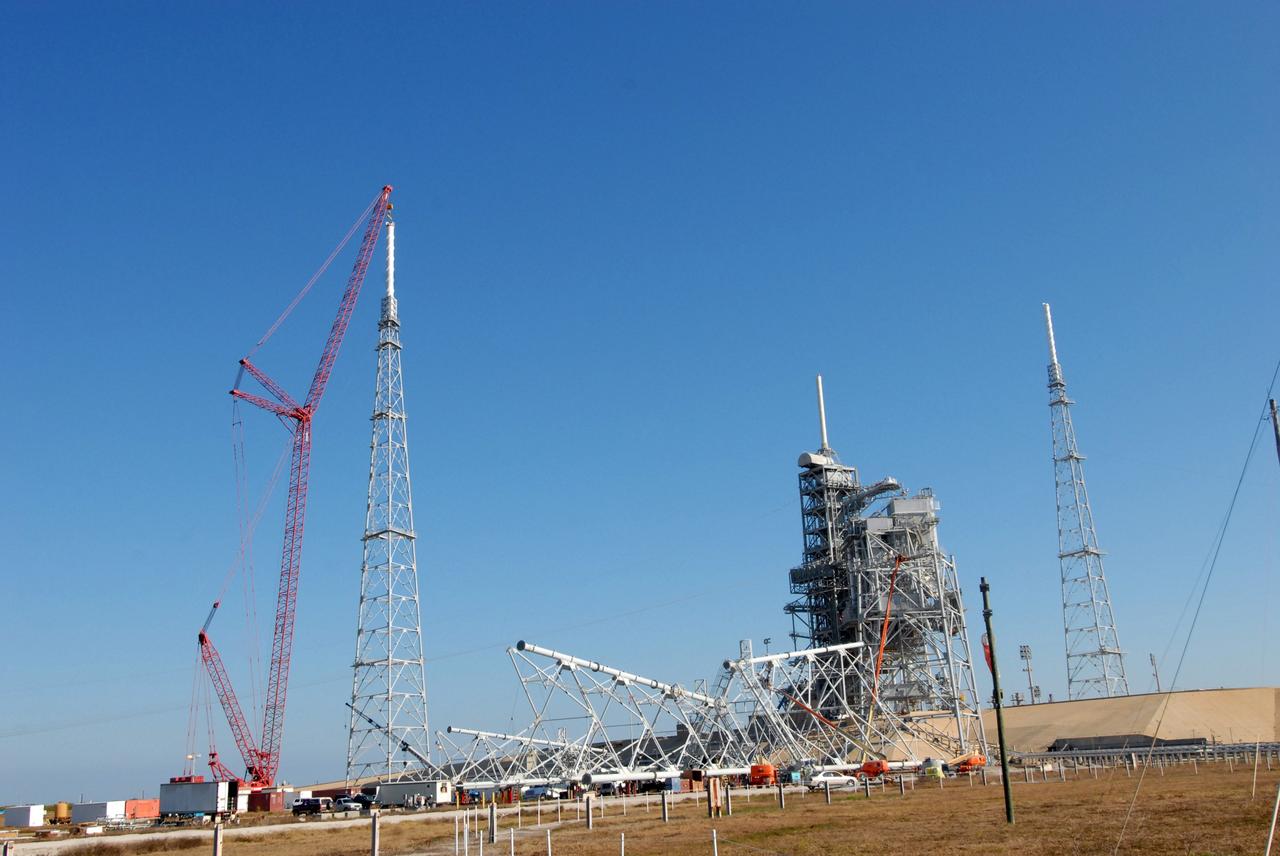
CAPE CANAVERAL, Fla. – On Launch Pad 39B at NASA's Kennedy Space Center in Florida, a crane places a 100-foot fiberglass lightning mast on top of the 500-foot tower. The tower is one of three being constructed for the Constellation Program and Ares/Orion launches. Another tower is seen at right. This improved lightning protection system allows for the taller height of the Ares I rocket compared to the space shuttle. Pad 39B will be the site of the first Ares vehicle launch, including the Ares I-X test flight that is targeted for July 2009.
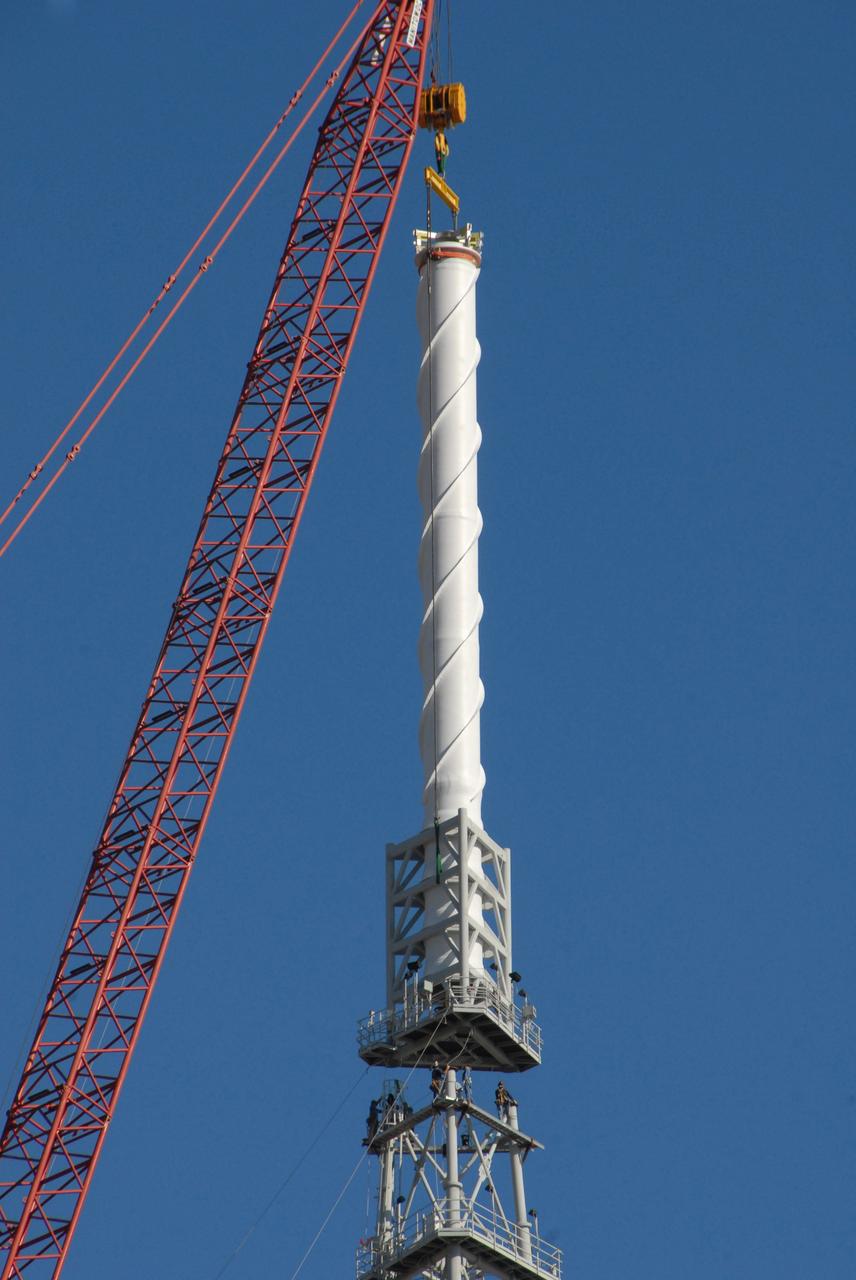
CAPE CANAVERAL, Fla. – On Launch Pad 39B at NASA's Kennedy Space Center in Florida, a crane places a 100-foot fiberglass lightning mast on top of the 500-foot tower. The tower is one of three being constructed for the Constellation Program and Ares/Orion launches. This improved lightning protection system allows for the taller height of the Ares I rocket compared to the space shuttle. Pad 39B will be the site of the first Ares vehicle launch, including the Ares I-X test flight that is targeted for July 2009. Photo credit: NASA/Jack Pfaller
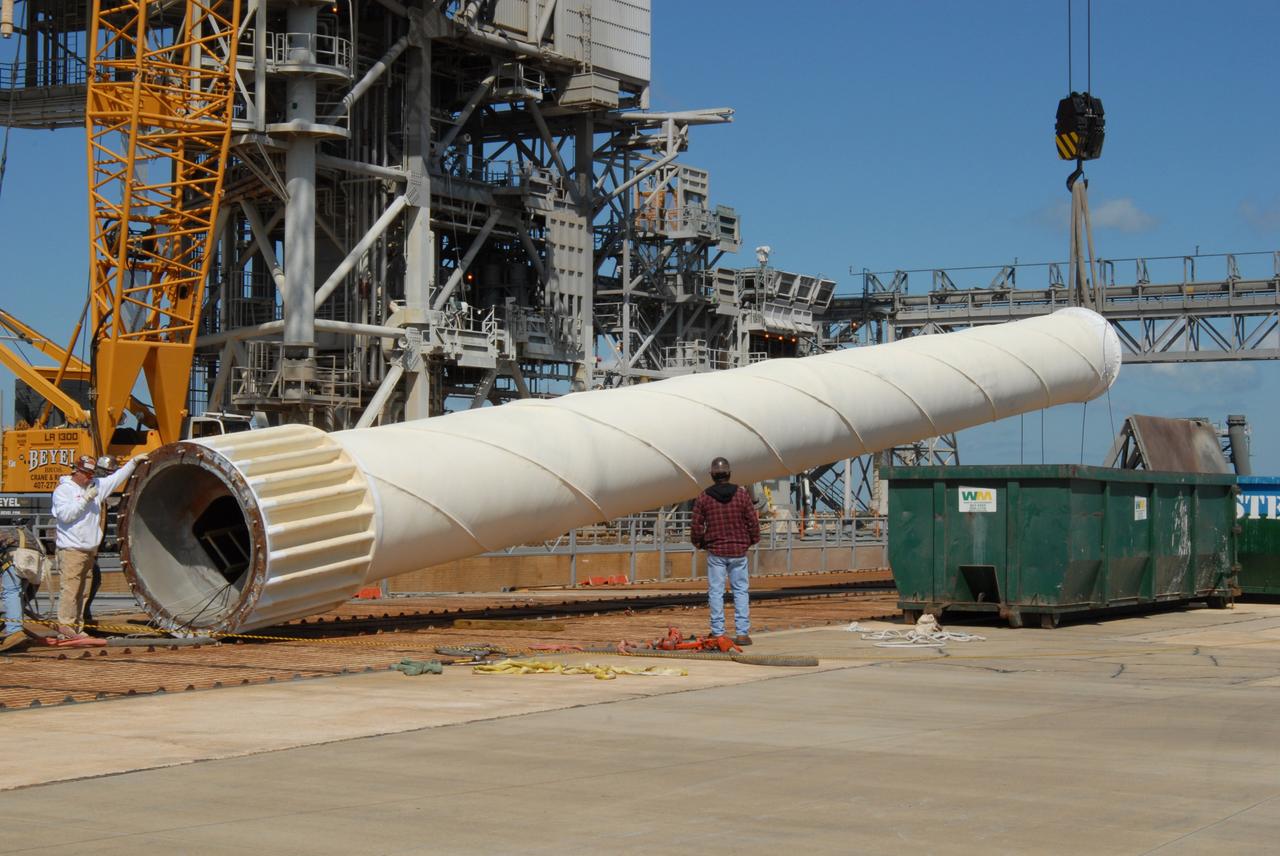
CAPE CANAVERAL, Fla. – On Launch Pad 39B at NASA's Kennedy Space Center in Florida, the 80-foot lightning mast removed from the top of the fixed service structure (behind it) is lowered onto the pad surface. The mast is no longer needed with the erection of the three lightning towers around the pad. Pad 39B will be the site of the first Ares vehicle launch, including the Ares I-X test flight that is targeted for July 2009. The three new lightning towers are 500 feet tall with an additional 100-foot fiberglass mast atop supporting a wire catenary system. This improved lightning protection system allows for the taller height of the Ares I rocket compared to the space shuttle. Photo credit: NASA/Amanda Diller
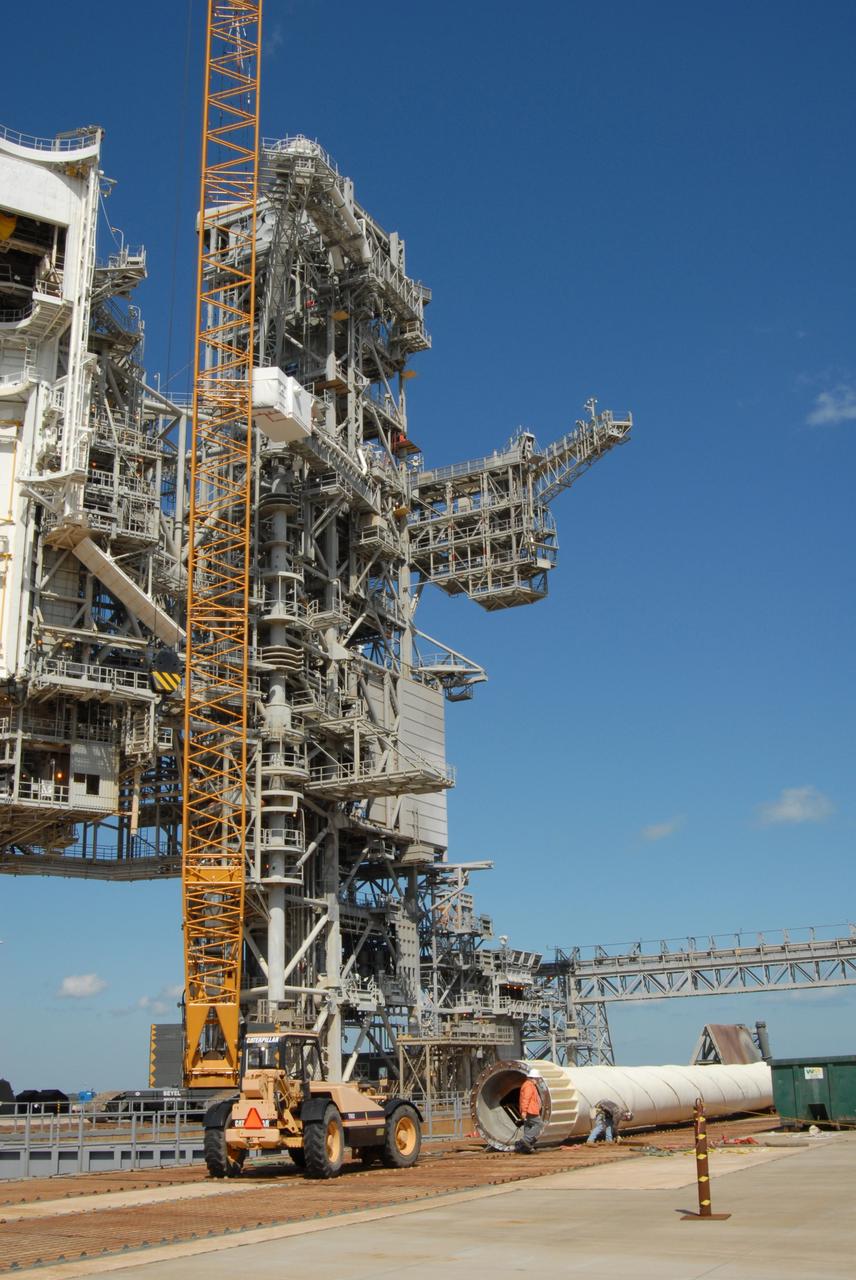
CAPE CANAVERAL, Fla. – On Launch Pad 39B at NASA's Kennedy Space Center in Florida, the 80-foot lightning mast removed from the top of the fixed service structure (center) rests on the pad surface. The mast is no longer needed with the erection of the three lightning towers around the pad. Pad 39B will be the site of the first Ares vehicle launch, including the Ares I-X test flight that is targeted for July 2009. The three new lightning towers are 500 feet tall with an additional 100-foot fiberglass mast atop supporting a wire catenary system. This improved lightning protection system allows for the taller height of the Ares I rocket compared to the space shuttle. Photo credit: NASA/Amanda Diller
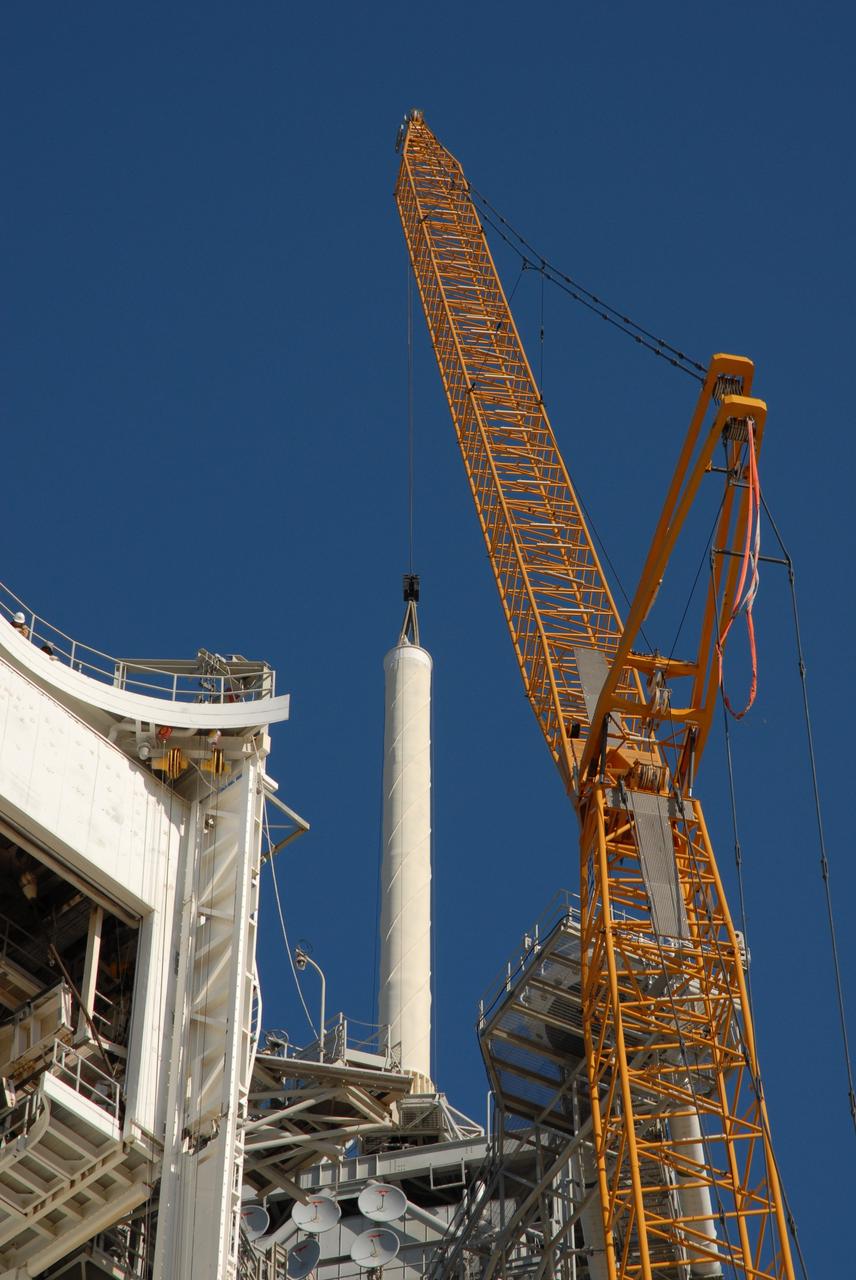
CAPE CANAVERAL, Fla. – On Launch Pad 39B at NASA's Kennedy Space Center in Florida, a crane is being used to remove the 80-foot lightning mast from the top of the fixed service structure. The mast is no longer needed with the erection of the three lightning towers around the pad. Pad 39B will be the site of the first Ares vehicle launch, including the Ares I-X test flight that is targeted for July 2009. The three new lightning towers are 500 feet tall with an additional 100-foot fiberglass mast atop supporting a wire catenary system. This improved lightning protection system allows for the taller height of the Ares I rocket compared to the space shuttle. Photo credit: NASA/Amanda Diller
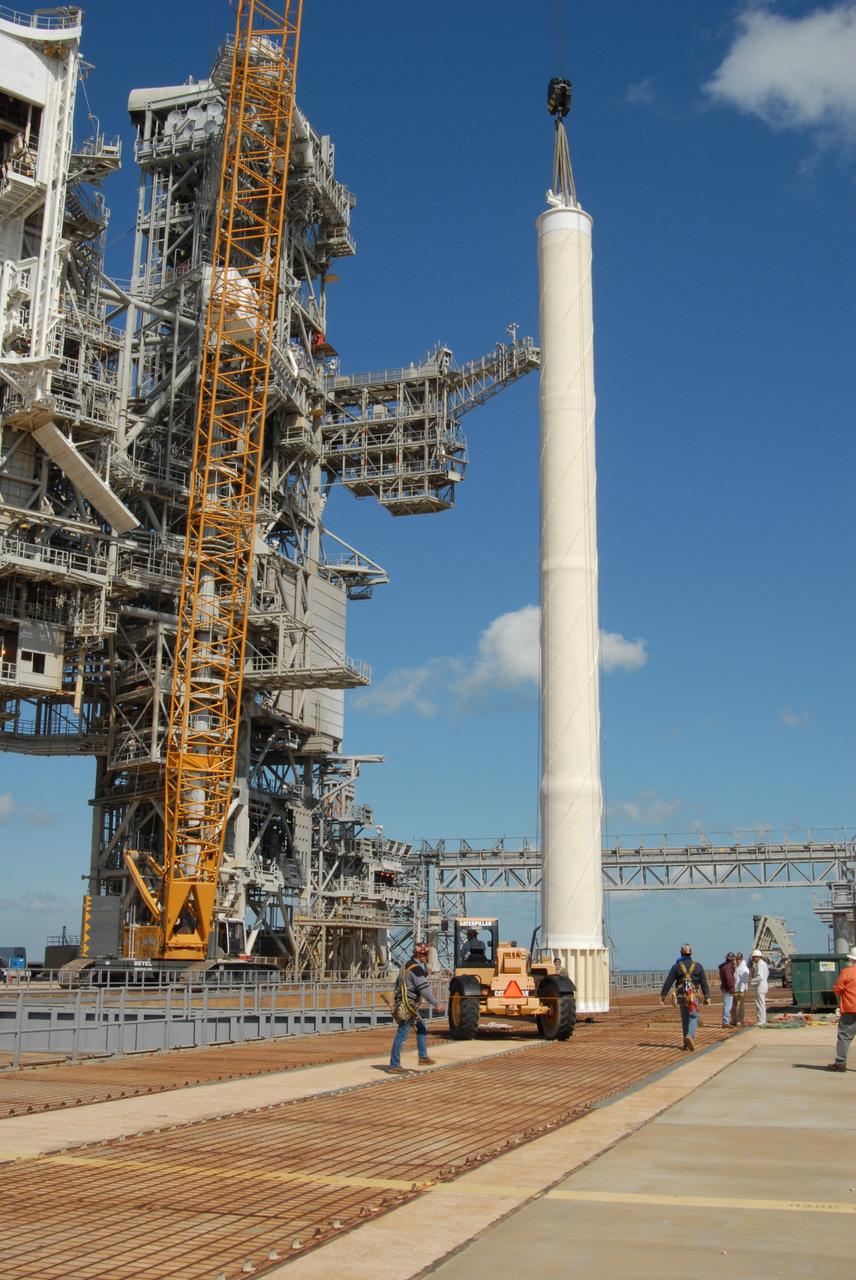
CAPE CANAVERAL, Fla. – On Launch Pad 39B at NASA's Kennedy Space Center in Florida, a crane lowers the 80-foot lightning mast removed from the top of the fixed service structure (left) onto the pad surface. The mast is no longer needed with the erection of the three lightning towers around the pad. Pad 39B will be the site of the first Ares vehicle launch, including the Ares I-X test flight that is targeted for July 2009. The three new lightning towers are 500 feet tall with an additional 100-foot fiberglass mast atop supporting a wire catenary system. This improved lightning protection system allows for the taller height of the Ares I rocket compared to the space shuttle. Photo credit: NASA/Amanda Diller
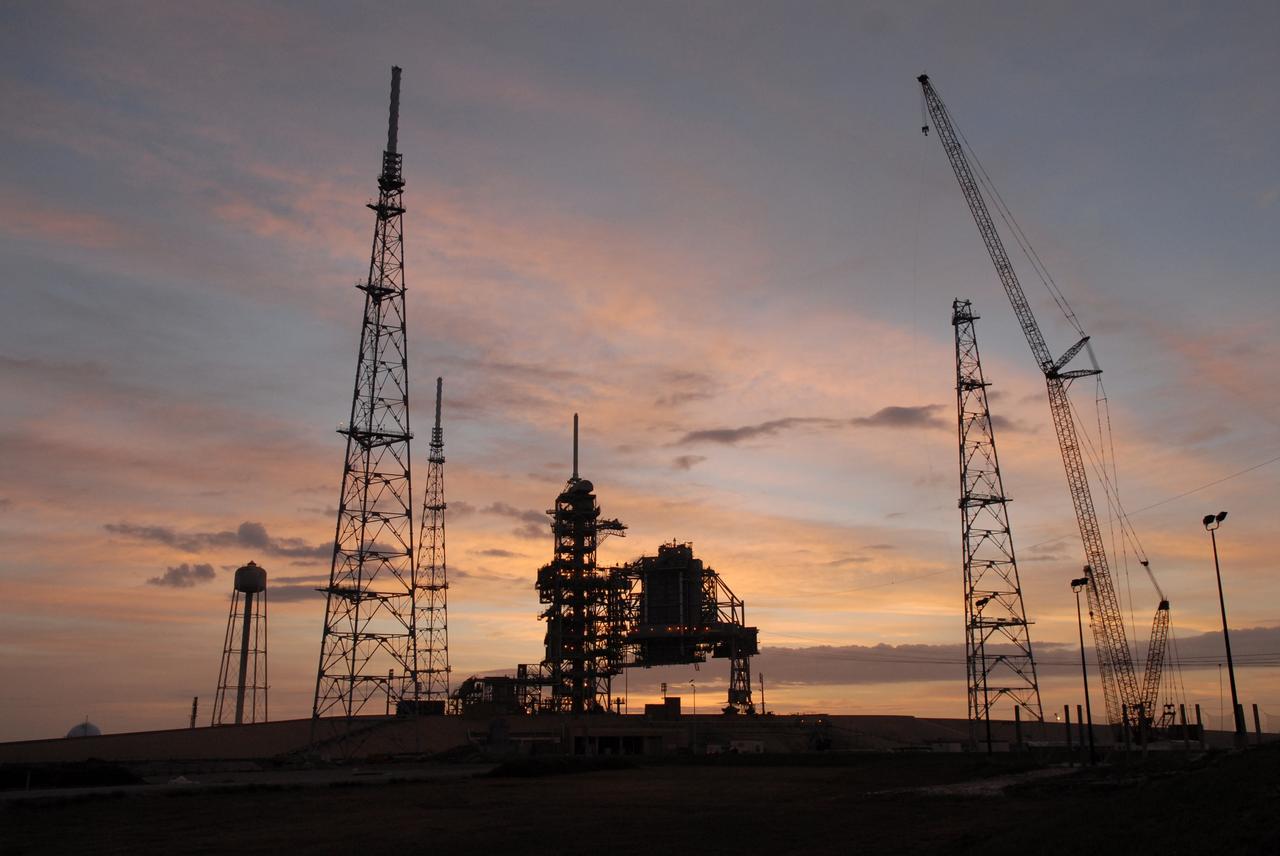
CAPE CANAVERAL, Fla. – The faint sunrise sky over NASA's Kennedy Space Center casts the newly erected lightning towers on Launch Pad 39B in silhouette. The two towers at left contain the lightning mast on top; the one at right does not. At center are the fixed and rotating service structures that have served the Space Shuttle Program. The new lightning protection system is being built for the Constellation Program and Ares/Orion launches. Each of the towers is 500 feet tall with an additional 100-foot fiberglass mast atop supporting a wire catenary system. This improved lightning protection system allows for the taller height of the Ares I rocket compared to the space shuttle. Pad 39B will be the site of the first Ares vehicle launch, including the Ares I-X test flight that is targeted for July 2009. Photo credit: NASA/Jack Pfaller
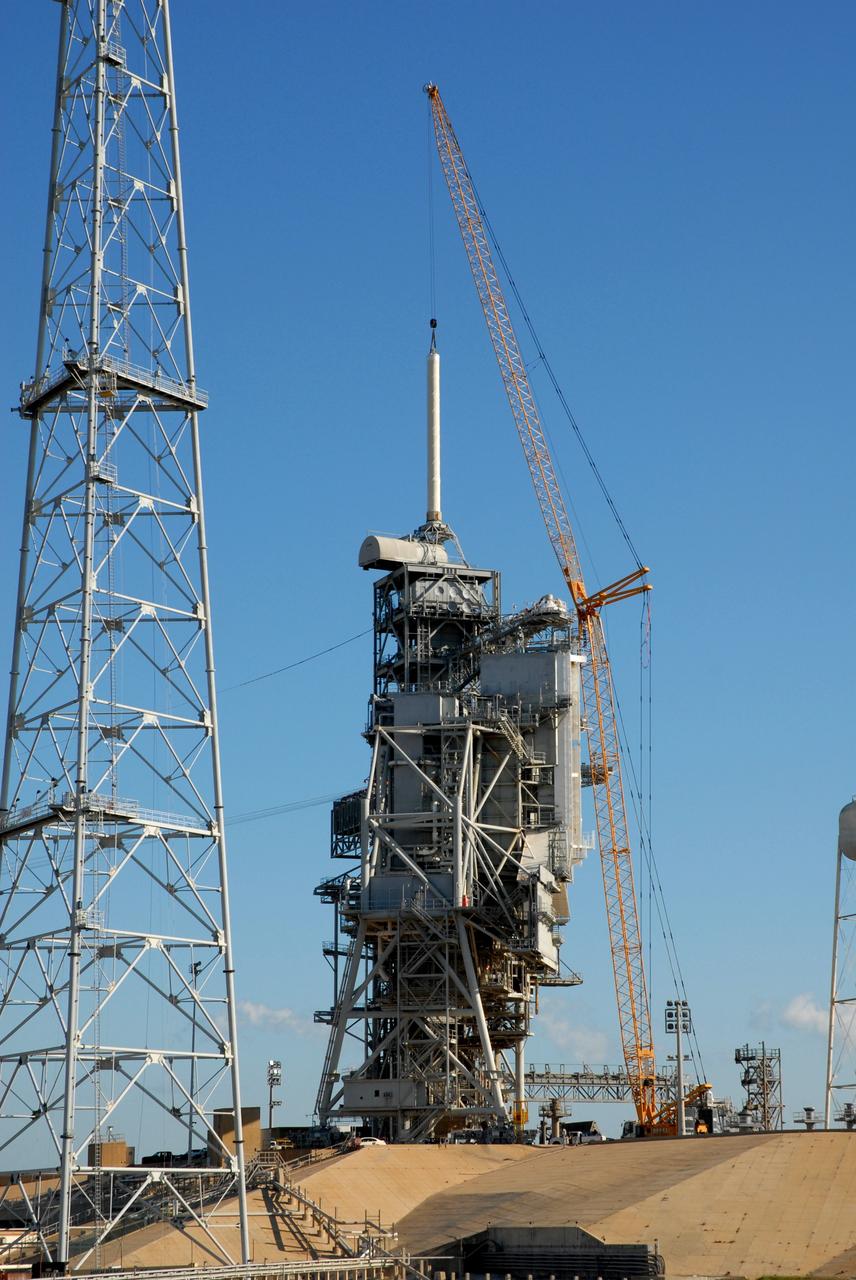
CAPE CANAVERAL, Fla. – On Launch Pad 39B at NASA's Kennedy Space Center in Florida, a crane is being used to remove the 80-foot lightning mast from the top of the fixed service structure. The mast is no longer needed with the erection of the three lightning towers around the pad. Pad 39B will be the site of the first Ares vehicle launch, including the Ares I-X test flight that is targeted for July 2009. The three new lightning towers are 500 feet tall with an additional 100-foot fiberglass mast atop supporting a wire catenary system. This improved lightning protection system allows for the taller height of the Ares I rocket compared to the space shuttle. Photo credit: NASA/Amanda Diller
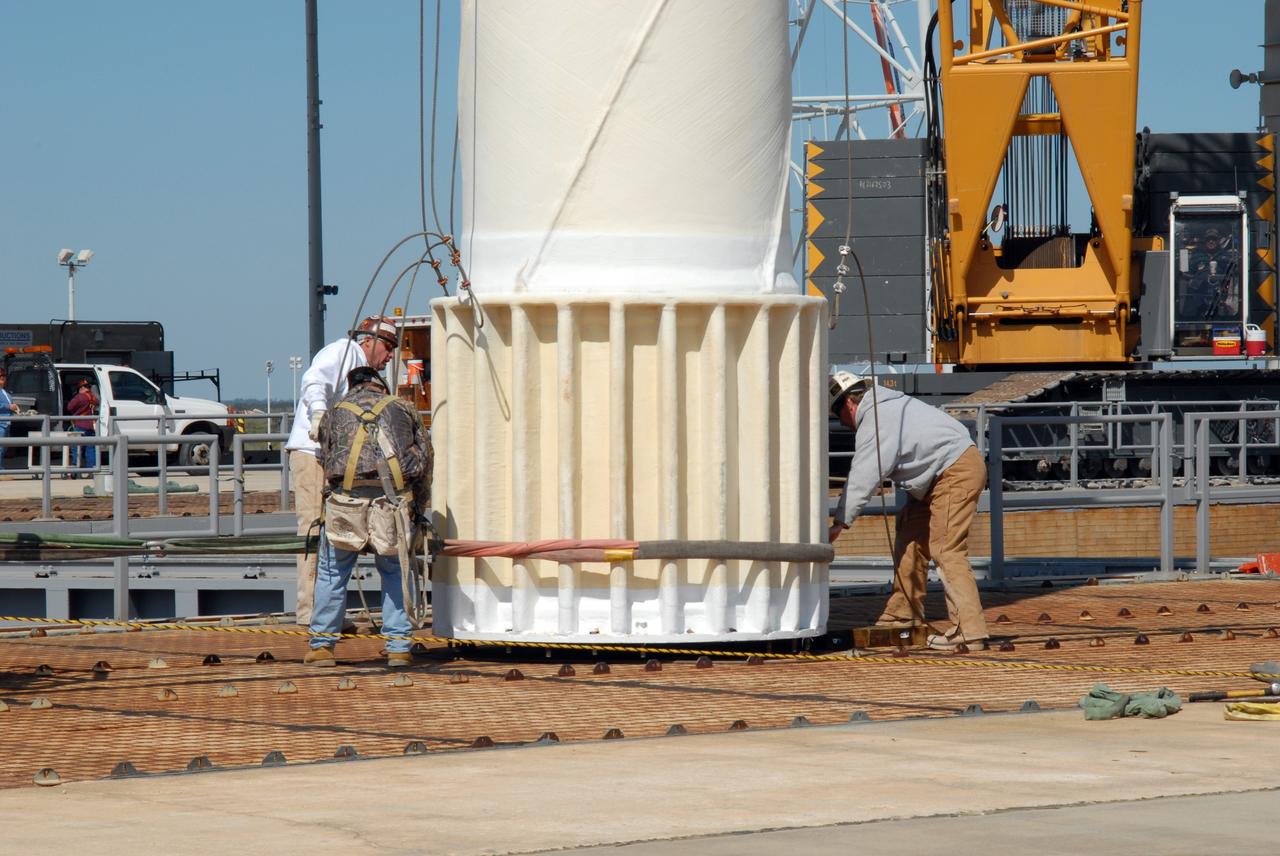
CAPE CANAVERAL, Fla. – On Launch Pad 39B at NASA's Kennedy Space Center in Florida, workers attach more cables to the 80-foot lightning mast removed from the top of the fixed service structure. The mast will be lowered to horizontal for transport from the pad. The mast is no longer needed with the erection of the three lightning towers around the pad. Pad 39B will be the site of the first Ares vehicle launch, including the Ares I-X test flight that is targeted for July 2009. The three new lightning towers are 500 feet tall with an additional 100-foot fiberglass mast atop supporting a wire catenary system. This improved lightning protection system allows for the taller height of the Ares I rocket compared to the space shuttle. Photo credit: NASA/Amanda Diller
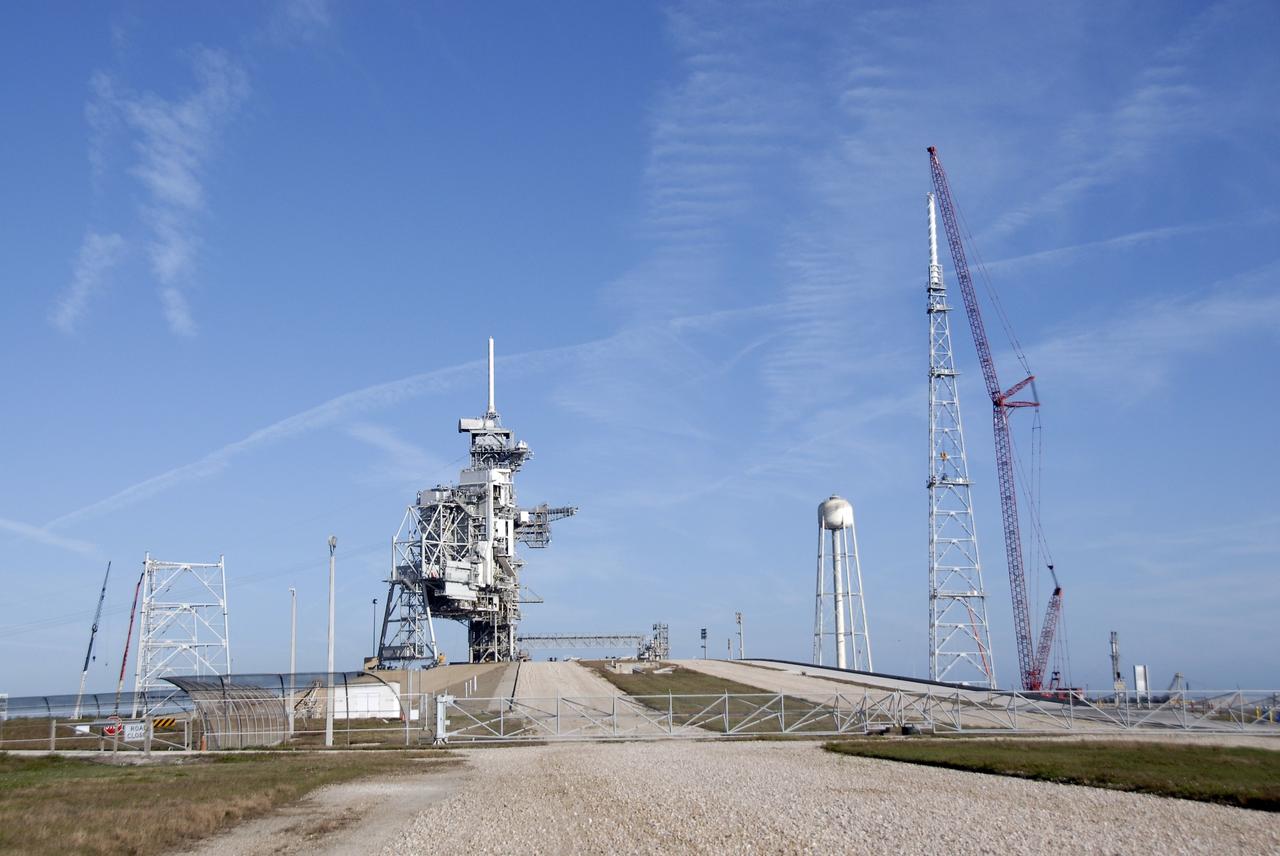
CAPE CANAVERAL, Fla. – On Launch Pad 39B at NASA's Kennedy Space Center in Florida, a crane places the 100-foot fiberglass mast atop the new lightning tower constructed on the pad. The towers are part of the new lightning protection system for the Constellation Program and Ares/Orion launches. At left of the service structures is another tower under construction. Each of the three new lightning towers will be 500 feet tall with the additional 100-foot fiberglass mast atop supporting a wire catenary system. This improved lightning protection system allows for the taller height of the Ares I rocket compared to the space shuttle. Pad 39B will be the site of the first Ares vehicle launch, including the Ares I-X test flight that is targeted for July 2009. Photo credit: NASA/Kim Shiflett
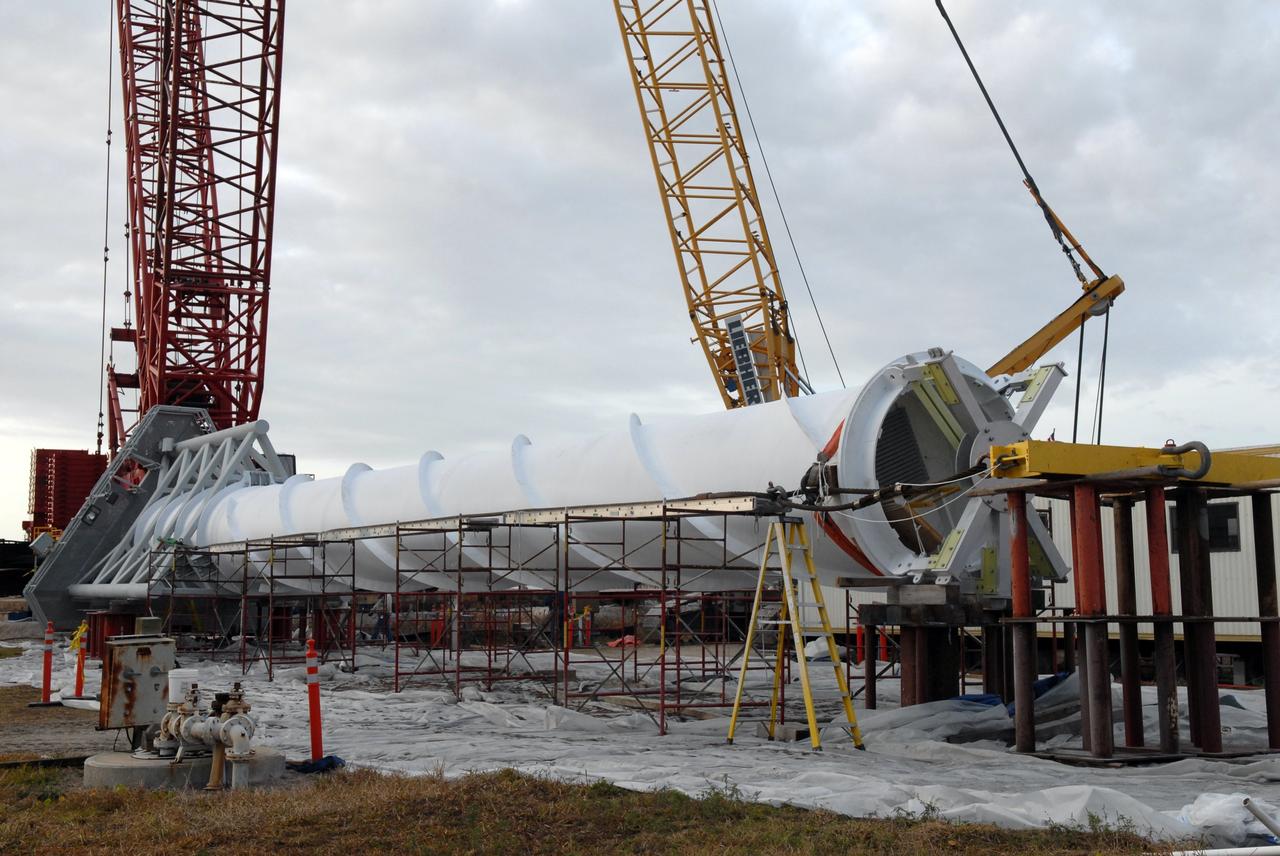
CAPE CANAVERAL, Fla. – A lightning mast remains to be lifted atop the third and final lightning tower erected on Launch Pad 39B at NASA's Kennedy Space Center. Three towers surround the pad. The new lightning protection system is being built for the Constellation Program and Ares/Orion launches. Each of the towers is 500 feet tall with an additional 100-foot fiberglass mast atop supporting a wire catenary system. This improved lightning protection system allows for the taller height of the Ares I rocket compared to the space shuttle. Pad 39B will be the site of the first Ares vehicle launch, including the Ares I-X test flight that is targeted for July 2009. Photo credit: NASA/Jack Pfaller
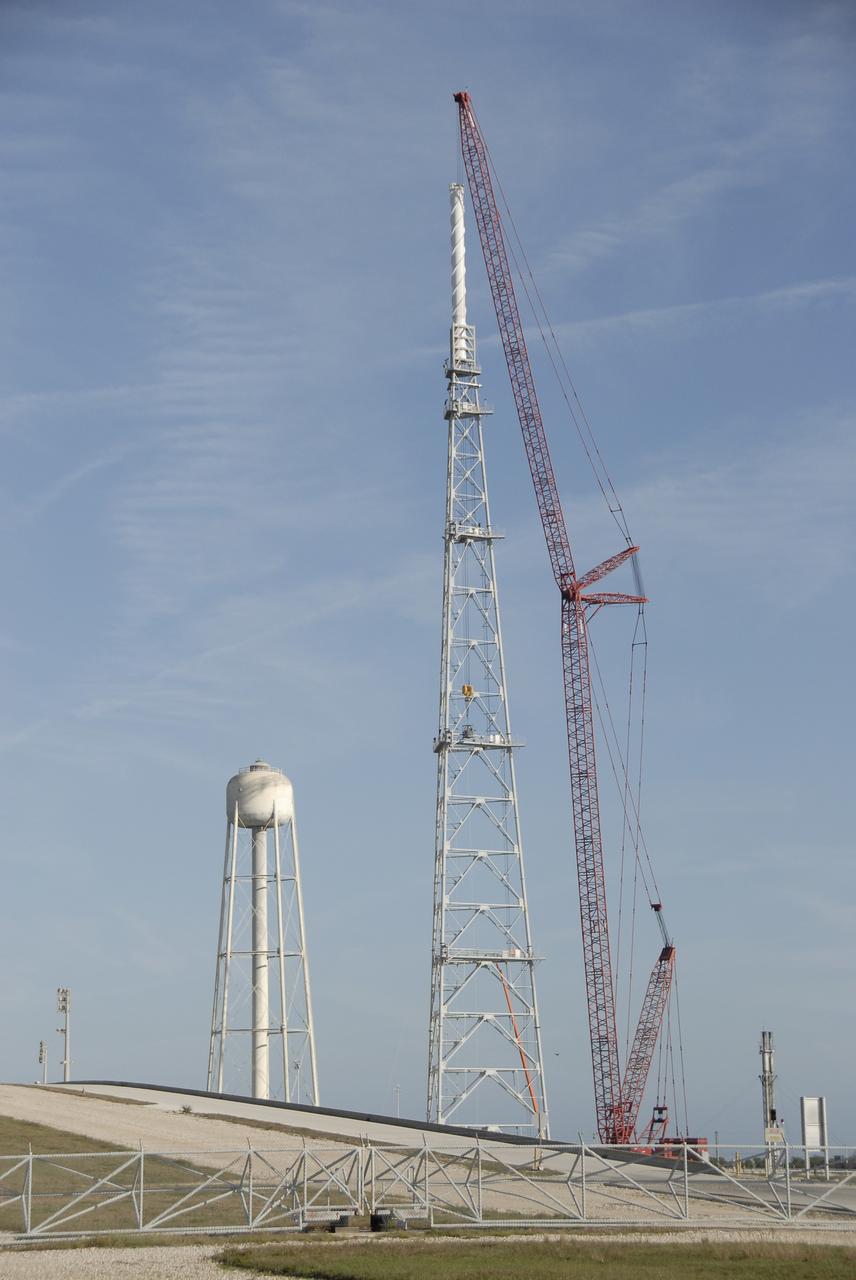
CAPE CANAVERAL, Fla. – On Launch Pad 39B at NASA's Kennedy Space Center in Florida, a crane places the 100-foot fiberglass mast atop the new lightning tower constructed on the pad. The towers are part of the new lightning protection system for the Constellation Program and Ares/Orion launches. Each of the three new lightning towers will be 500 feet tall with the additional 100-foot fiberglass mast atop supporting a wire catenary system. This improved lightning protection system allows for the taller height of the Ares I rocket compared to the space shuttle. Pad 39B will be the site of the first Ares vehicle launch, including the Ares I-X test flight that is targeted for July 2009. Photo credit: NASA/Kim Shiflett
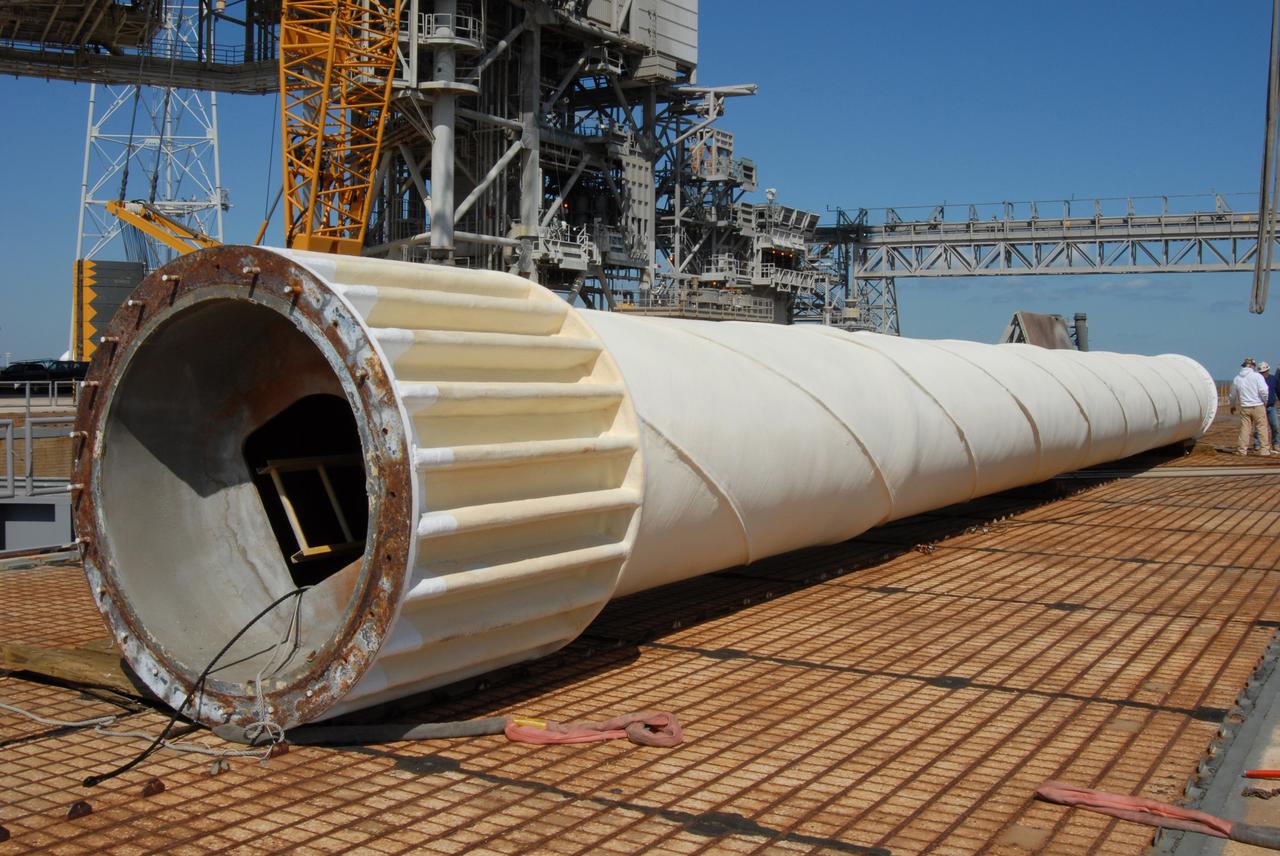
CAPE CANAVERAL, Fla. – On Launch Pad 39B at NASA's Kennedy Space Center in Florida, the 80-foot lightning mast removed from the top of the fixed service structure (left) rests on the pad surface. The mast is no longer needed with the erection of the three lightning towers around the pad. Pad 39B will be the site of the first Ares vehicle launch, including the Ares I-X test flight that is targeted for July 2009. The three new lightning towers are 500 feet tall with an additional 100-foot fiberglass mast atop supporting a wire catenary system. This improved lightning protection system allows for the taller height of the Ares I rocket compared to the space shuttle. Photo credit: NASA/Amanda Diller

CAPE CANAVERAL, Fla. – On Launch Pad 39B at NASA's Kennedy Space Center in Florida, a crane places the 100-foot fiberglass mast atop the new lightning tower constructed on the pad. The towers are part of the new lightning protection system for the Constellation Program and Ares/Orion launches. Each of the three new lightning towers will be 500 feet tall with the additional 100-foot fiberglass mast atop supporting a wire catenary system. This improved lightning protection system allows for the taller height of the Ares I rocket compared to the space shuttle. Pad 39B will be the site of the first Ares vehicle launch, including the Ares I-X test flight that is targeted for July 2009. Photo credit: NASA/Kim Shiflett
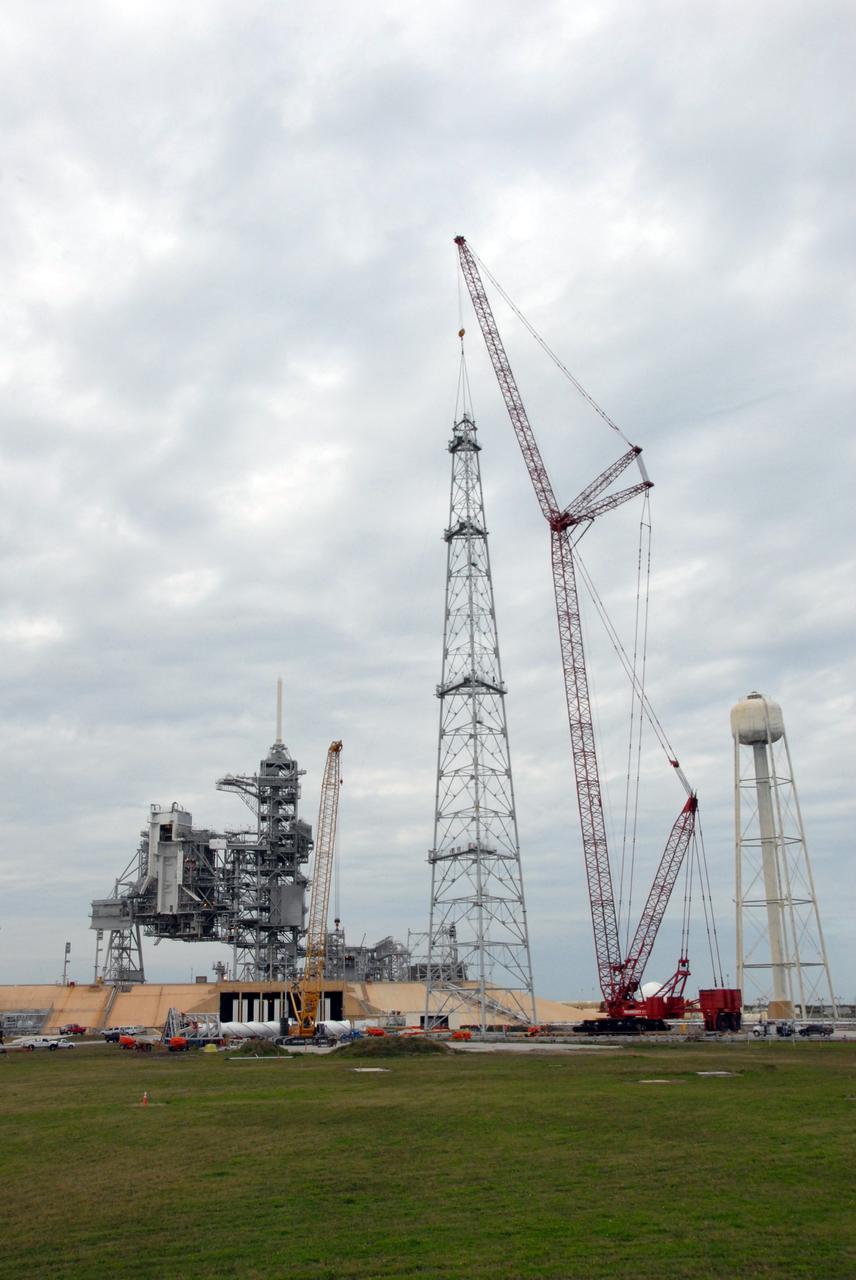
CAPE CANAVERAL, Fla. – On Launch Pad 39B at NASA's Kennedy Space Center in Florida, a crane completes construction of one of the towers in the new lightning protection system for the Constellation Program and Ares/Orion launches. Each of the three new lightning towers will be 500 feet tall with an additional 100-foot fiberglass mast atop supporting a wire catenary system. This improved lightning protection system allows for the taller height of the Ares I rocket compared to the space shuttle. Pad 39B will be the site of the first Ares vehicle launch, including the Ares I-X test flight that is targeted for July 2009. Photo credit: NASA/Troy Cryder
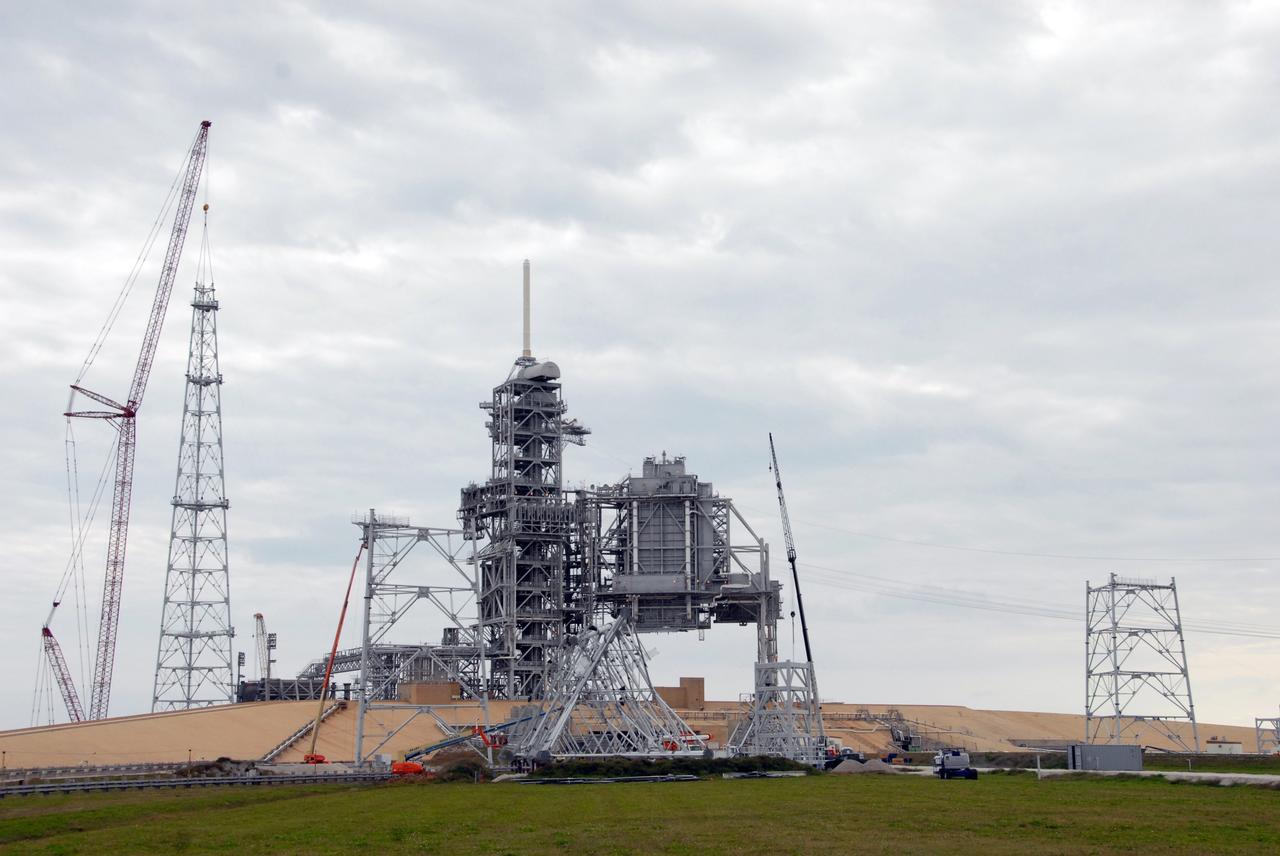
CAPE CANAVERAL, Fla. – On Launch Pad 39B at NASA's Kennedy Space Center in Florida, a crane (at left) completes construction of one of the towers in the new lightning protection system for the Constellation Program and Ares/Orion launches. At right, another tower is being constructed. Each of the three new lightning towers will be 500 feet tall with an additional 100-foot fiberglass mast atop supporting a wire catenary system. This improved lightning protection system allows for the taller height of the Ares I rocket compared to the space shuttle. Pad 39B will be the site of the first Ares vehicle launch, including the Ares I-X test flight that is targeted for July 2009. Photo credit: NASA/Troy Cryder
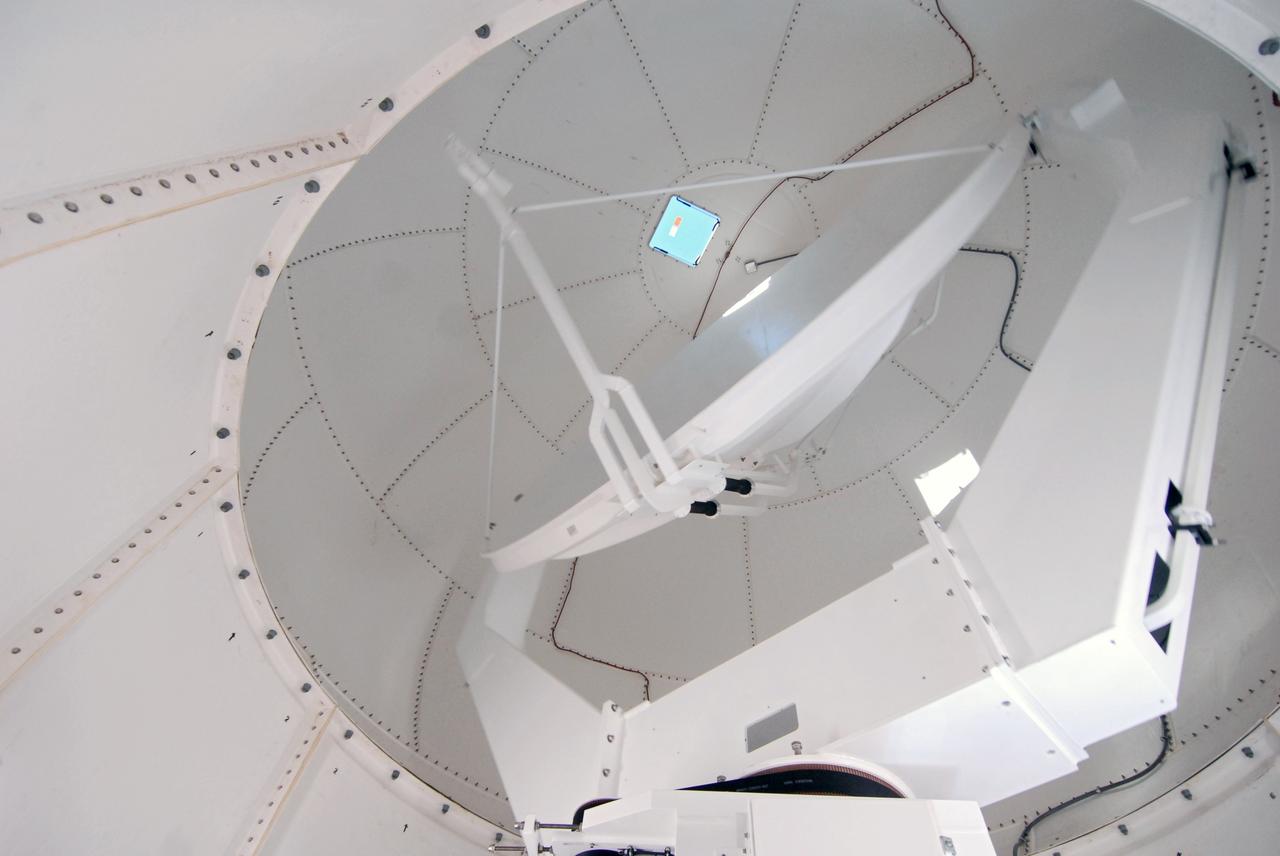
CAPE CANAVERAL, Fla. -- A closeup of the replacement weather Doppler radar being installed in a remote field located west of NASA's Kennedy Space Center in Florida. The tower is 100 feet high; the radome is 22 feet in diameter, the antenna 14 feet in diameter. It rotates at 6 rpm. The structure can withstand 130 mph winds. It is undergoing initial testing and expected to become operational in the summer. The weather radar is essential in issuing lightning and other severe weather warnings and vital in evaluating lightning launch commit criteria for space shuttle and rocket launches. Photo credit: NASA/Troy Cryder
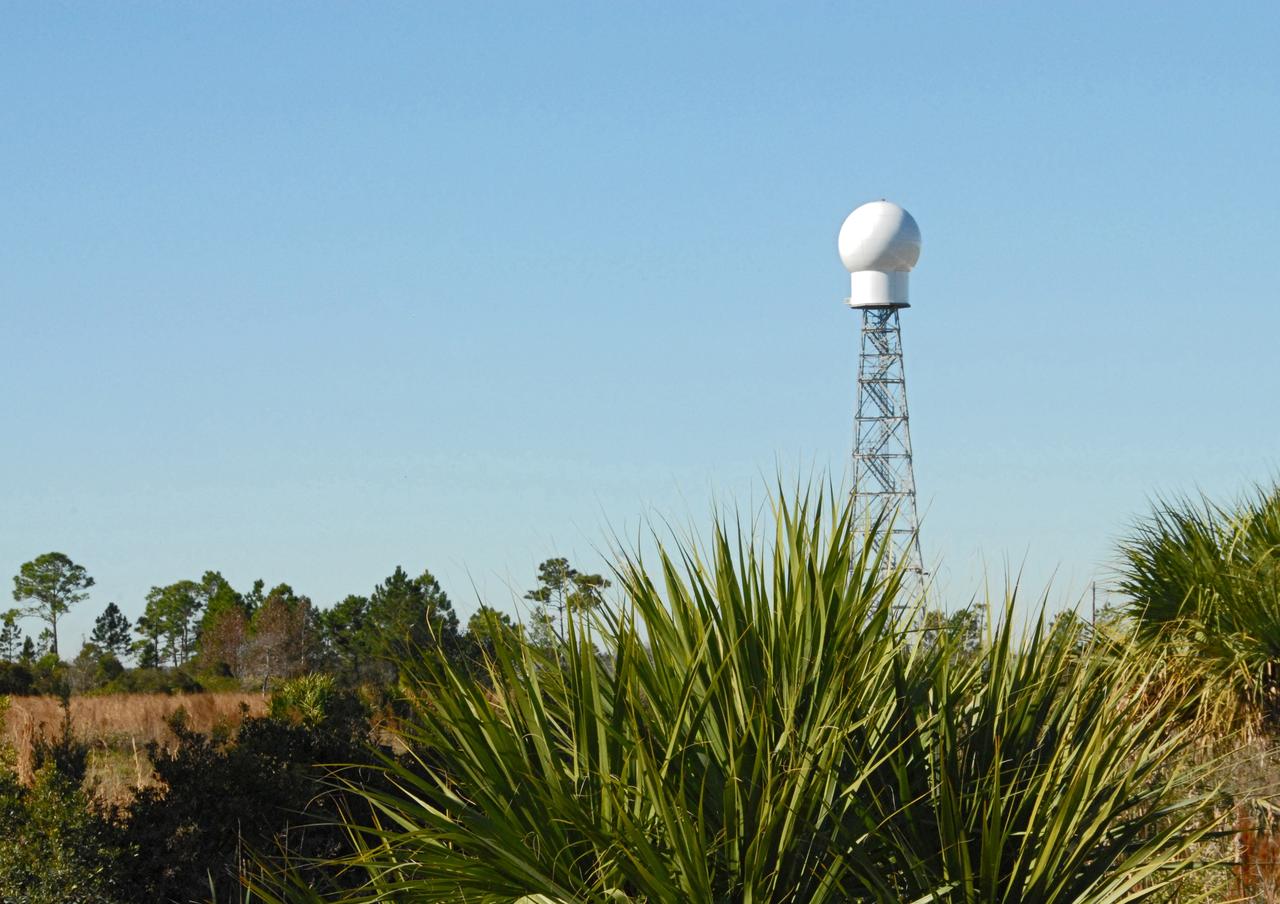
CAPE CANAVERAL, Fla. -- A replacement weather Doppler radar has been installed on top of this tower in a remote field located west of NASA's Kennedy Space Center in Florida. The radome houses the rotating antenna and pedestal and protects them from the elements. The tower is 100 feet high; the radome is 22 feet in diameter, the antenna 14 feet in diameter. It rotates at 6 rpm. The structure can withstand 130 mph winds. It is undergoing initial testing and expected to become operational in the summer. The weather radar is essential in issuing lightning and other severe weather warnings and vital in evaluating lightning launch commit criteria for space shuttle and rocket launches. Photo credit: NASA/Troy Cryder
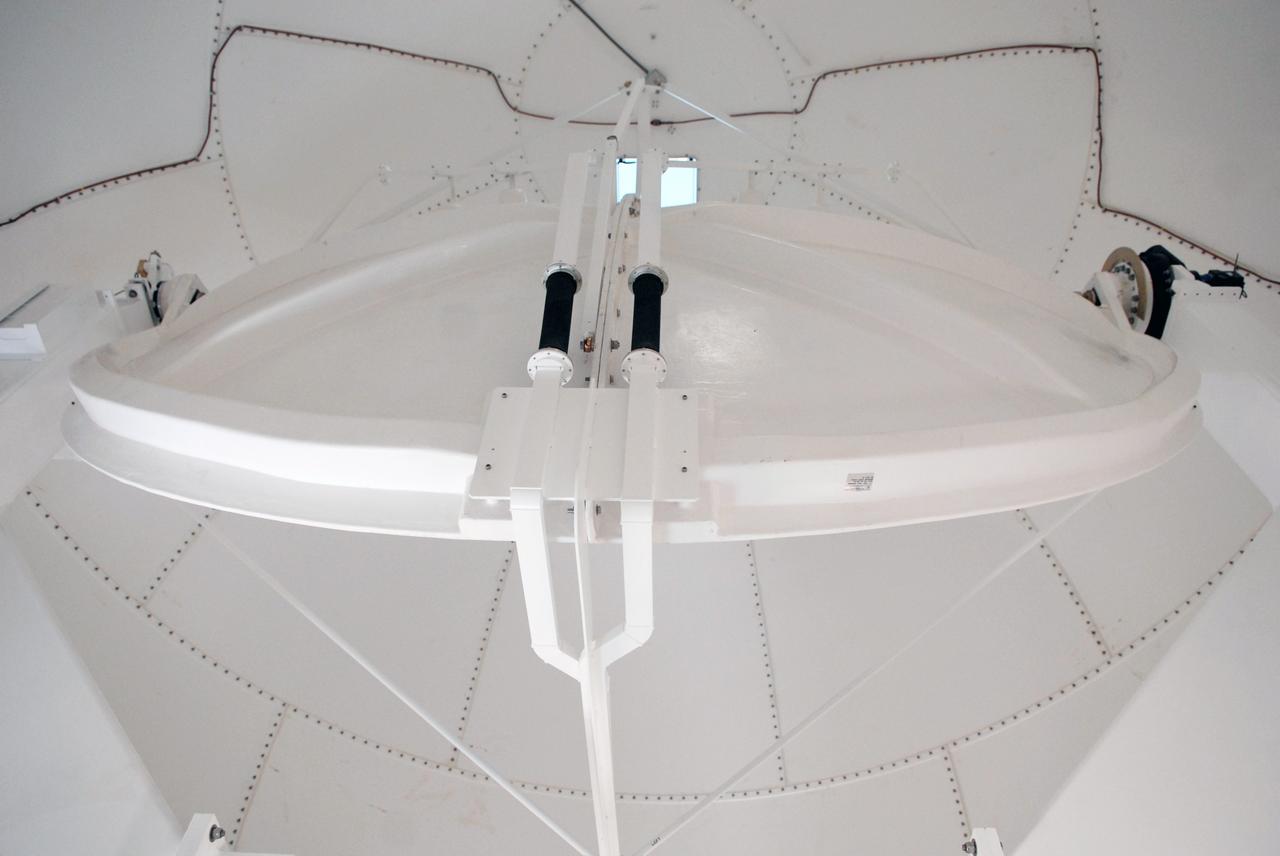
CAPE CANAVERAL, Fla. -- A closeup of the replacement weather Doppler radar being installed in a remote field located west of NASA's Kennedy Space Center in Florida. The tower is 100 feet high; the radome is 22 feet in diameter, the antenna 14 feet in diameter. It rotates at 6 rpm. The structure can withstand 130 mph winds. It is undergoing initial testing and expected to become operational in the summer. The weather radar is essential in issuing lightning and other severe weather warnings and vital in evaluating lightning launch commit criteria for space shuttle and rocket launches. Photo credit: NASA/Troy Cryder
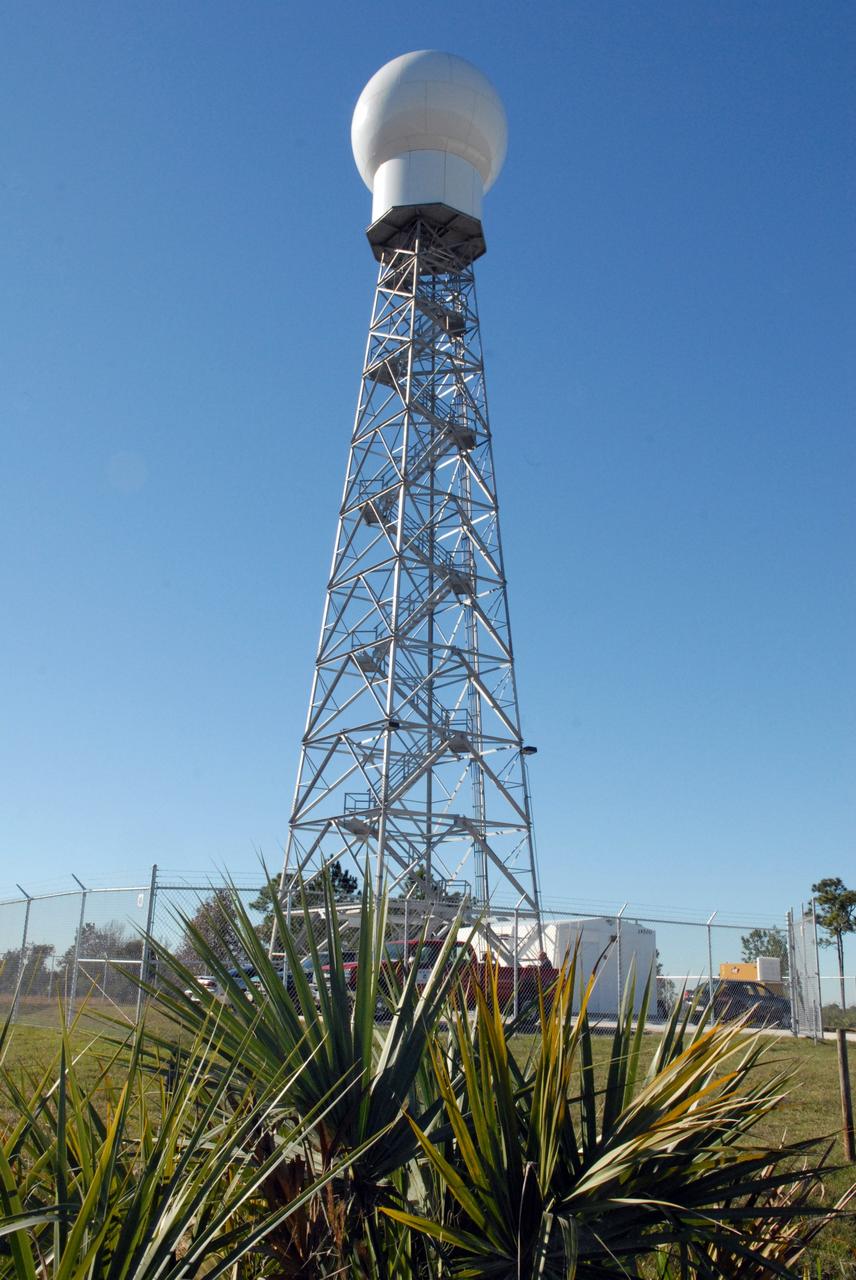
CAPE CANAVERAL, Fla. -- A replacement weather Doppler radar has been installed on top of this tower in a remote field located west of NASA's Kennedy Space Center in Florida. The radome houses the rotating antenna and pedestal and protects them from the elements. The tower is 100 feet high; the radome is 22 feet in diameter, the antenna 14 feet in diameter. It rotates at 6 rpm. The structure can withstand 130 mph winds. It is undergoing initial testing and expected to become operational in the summer. The weather radar is essential in issuing lightning and other severe weather warnings and vital in evaluating lightning launch commit criteria for space shuttle and rocket launches. Photo credit: NASA/Troy Cryder
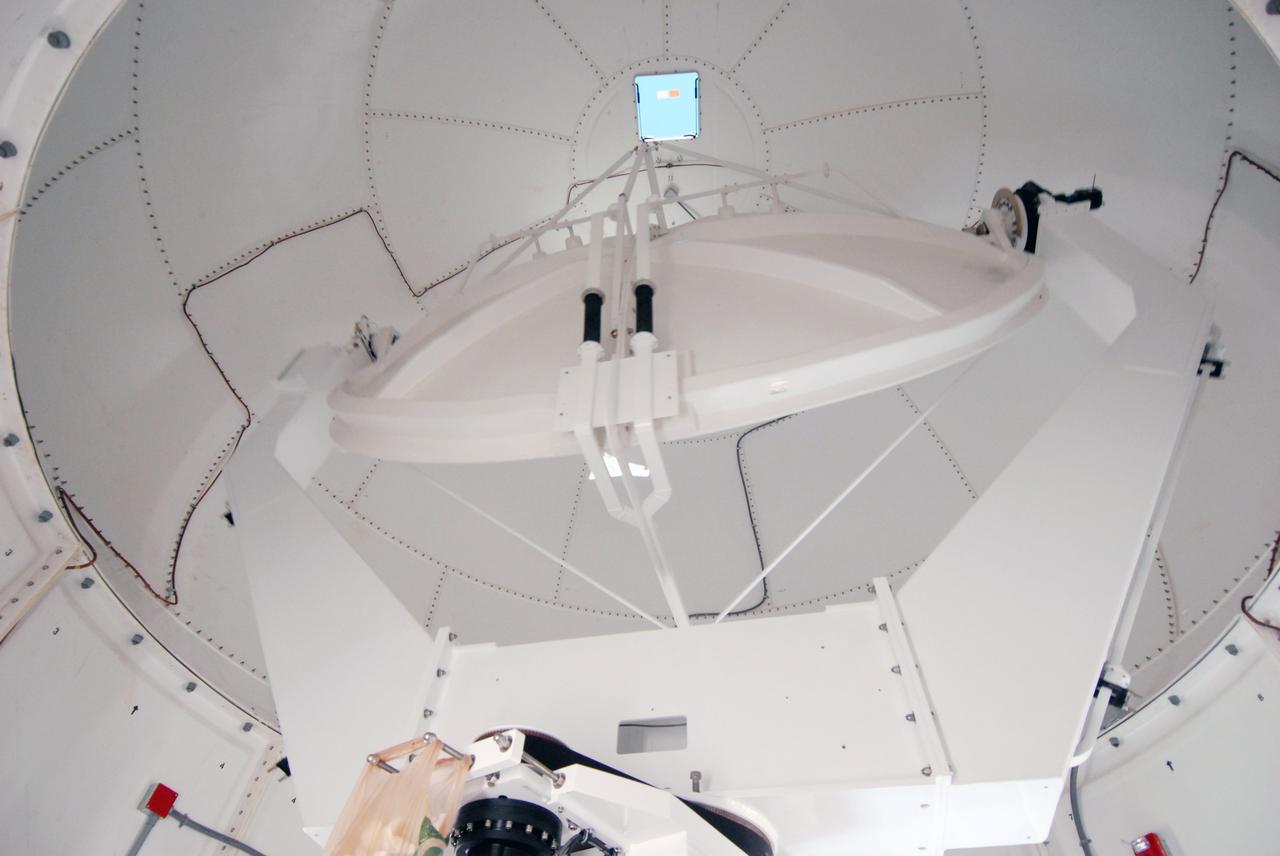
CAPE CANAVERAL, Fla. -- A closeup of the replacement weather Doppler radar being installed in a remote field located west of NASA's Kennedy Space Center in Florida. The tower is 100 feet high; the radome is 22 feet in diameter, the antenna 14 feet in diameter. It rotates at 6 rpm. The structure can withstand 130 mph winds. It is undergoing initial testing and expected to become operational in the summer. The weather radar is essential in issuing lightning and other severe weather warnings and vital in evaluating lightning launch commit criteria for space shuttle and rocket launches. Photo credit: NASA/Troy Cryder
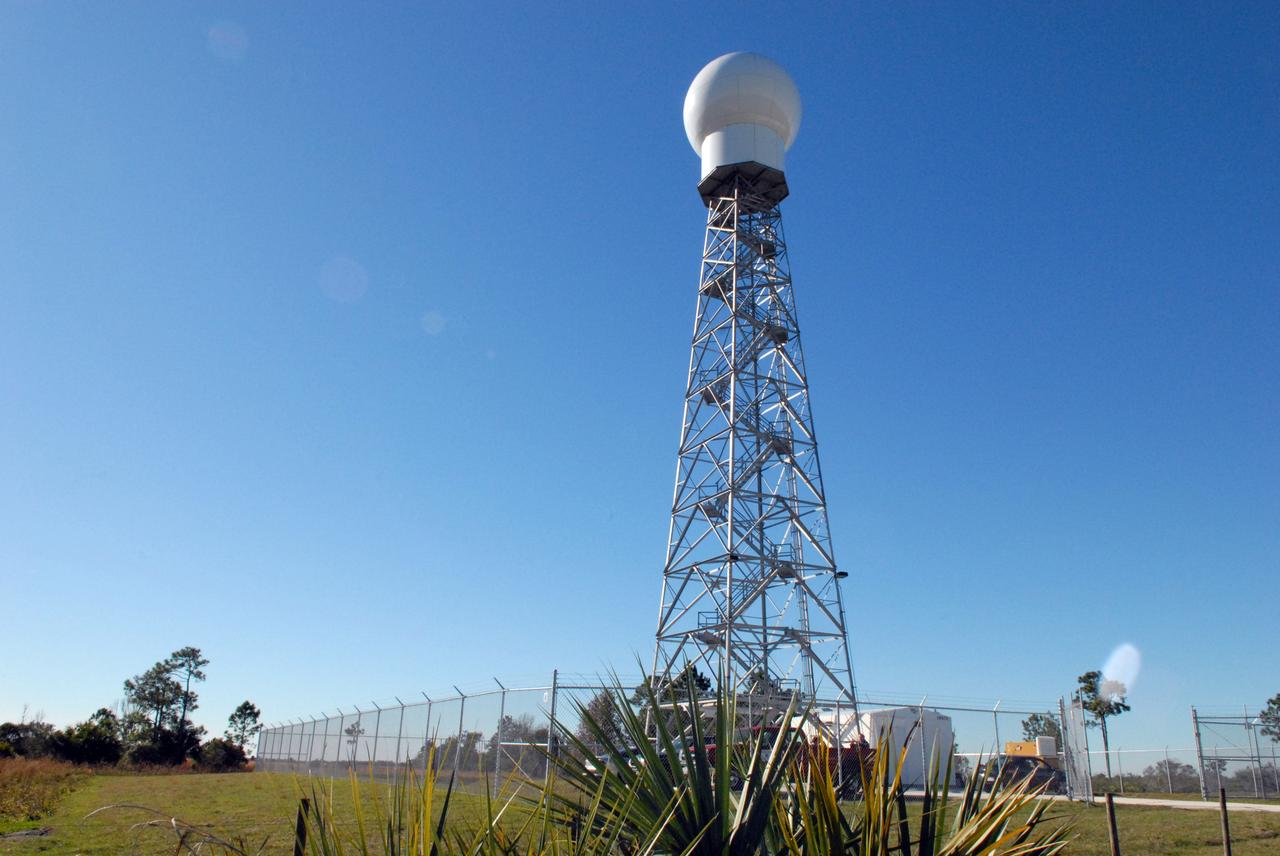
CAPE CANAVERAL, Fla. -- A replacement weather Doppler radar has been installed on top of this tower in a remote field located west of NASA's Kennedy Space Center in Florida. The radome houses the rotating antenna and pedestal and protects them from the elements. The tower is 100 feet high; the radome is 22 feet in diameter, the antenna 14 feet in diameter. It rotates at 6 rpm. The structure can withstand 130 mph winds. It is undergoing initial testing and expected to become operational in the summer. The weather radar is essential in issuing lightning and other severe weather warnings and vital in evaluating lightning launch commit criteria for space shuttle and rocket launches. Photo credit: NASA/Troy Cryder
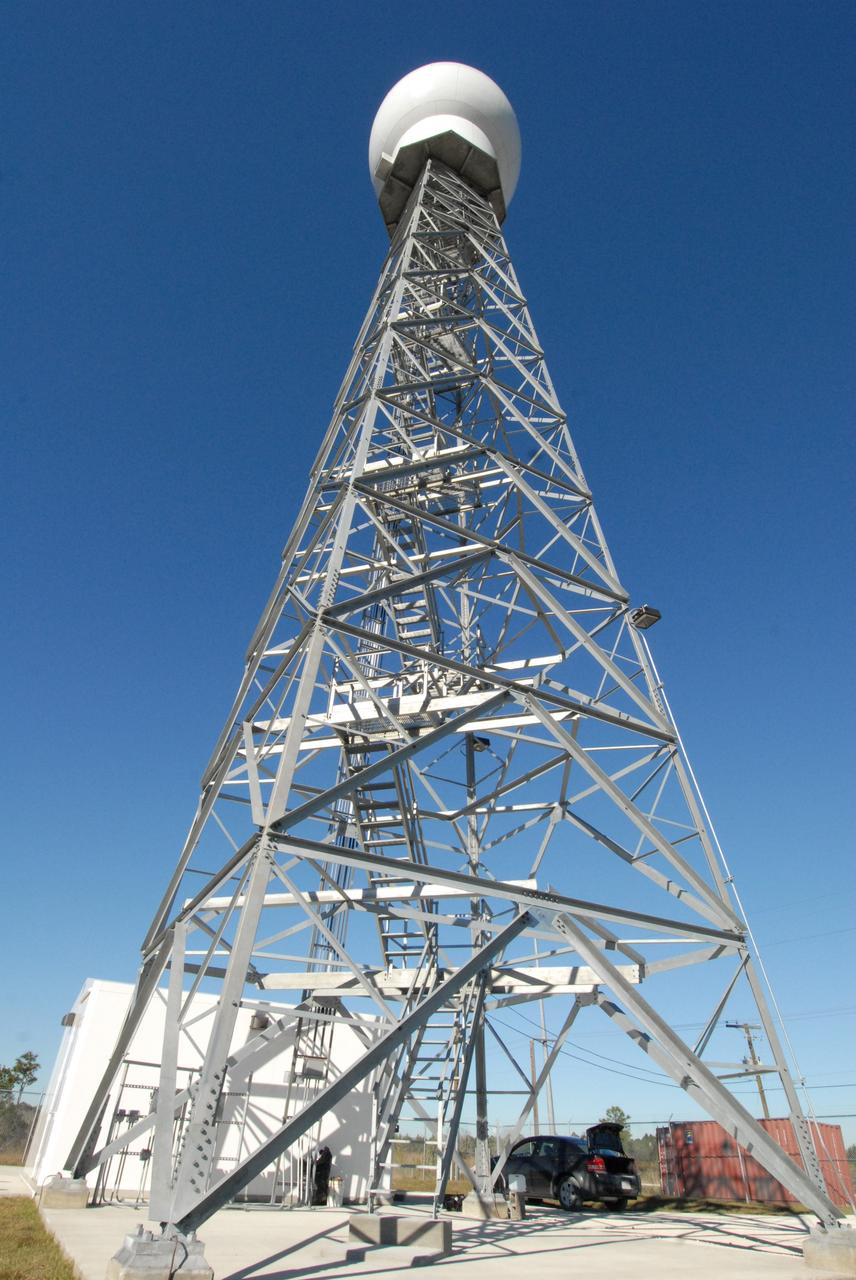
CAPE CANAVERAL, Fla. -- A replacement weather Doppler radar has been installed in the radome on top of this tower in a remote field located west of NASA's Kennedy Space Center in Florida. The dome houses the rotating antenna and pedestal and protects them from the elements. The tower is 100 feet high; the radome is 22 feet in diameter, the antenna 14 feet in diameter. It rotates at 6 rpm. The structure can withstand 130 mph winds. It is undergoing initial testing and expected to become operational in the summer. The weather radar is essential in issuing lightning and other severe weather warnings and vital in evaluating lightning launch commit criteria for space shuttle and rocket launches. Photo credit: NASA/Troy Cryder
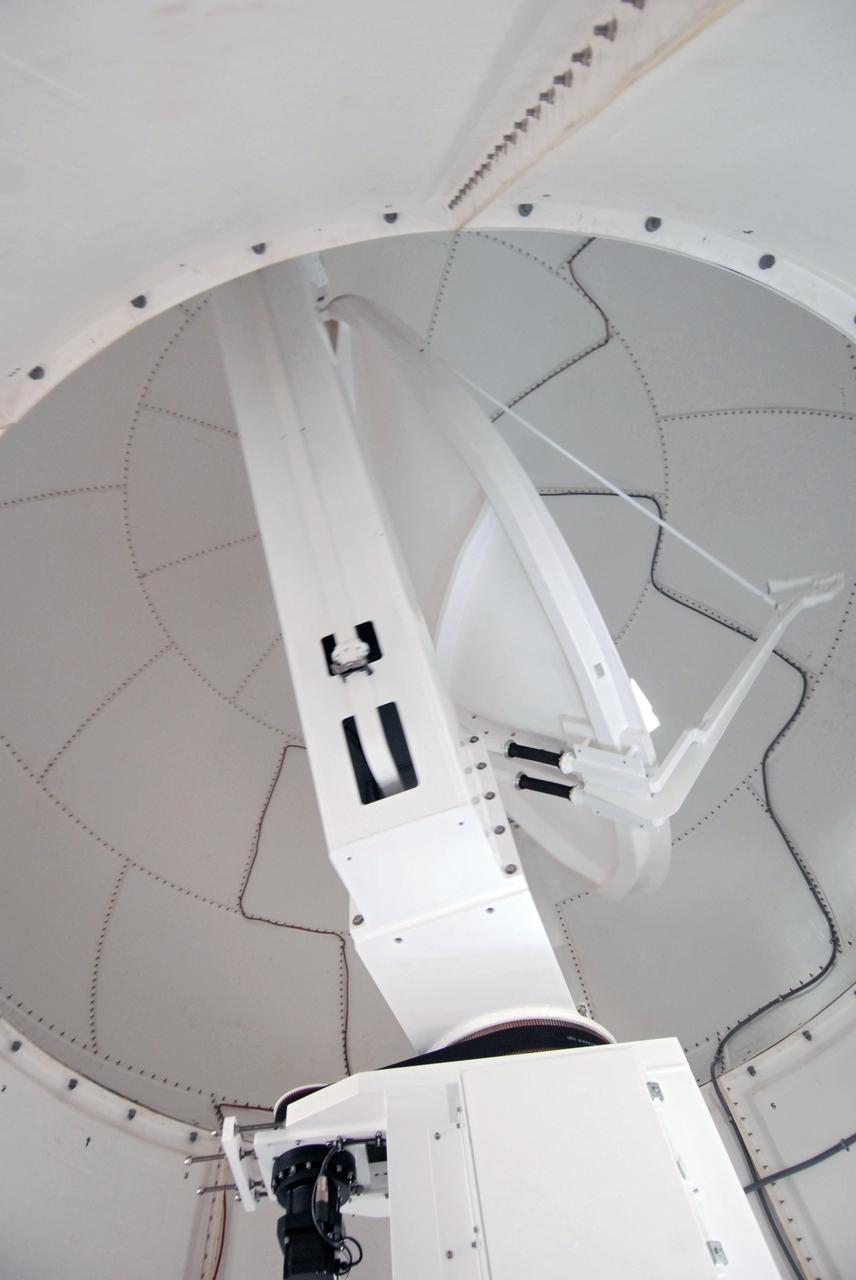
CAPE CANAVERAL, Fla. -- A closeup of the replacement weather Doppler radar being installed in a remote field located west of NASA's Kennedy Space Center in Florida. The tower is 100 feet high; the radome is 22 feet in diameter, the antenna 14 feet in diameter. It rotates at 6 rpm. The structure can withstand 130 mph winds. It is undergoing initial testing and expected to become operational in the summer. The weather radar is essential in issuing lightning and other severe weather warnings and vital in evaluating lightning launch commit criteria for space shuttle and rocket launches. Photo credit: NASA/Troy Cryder
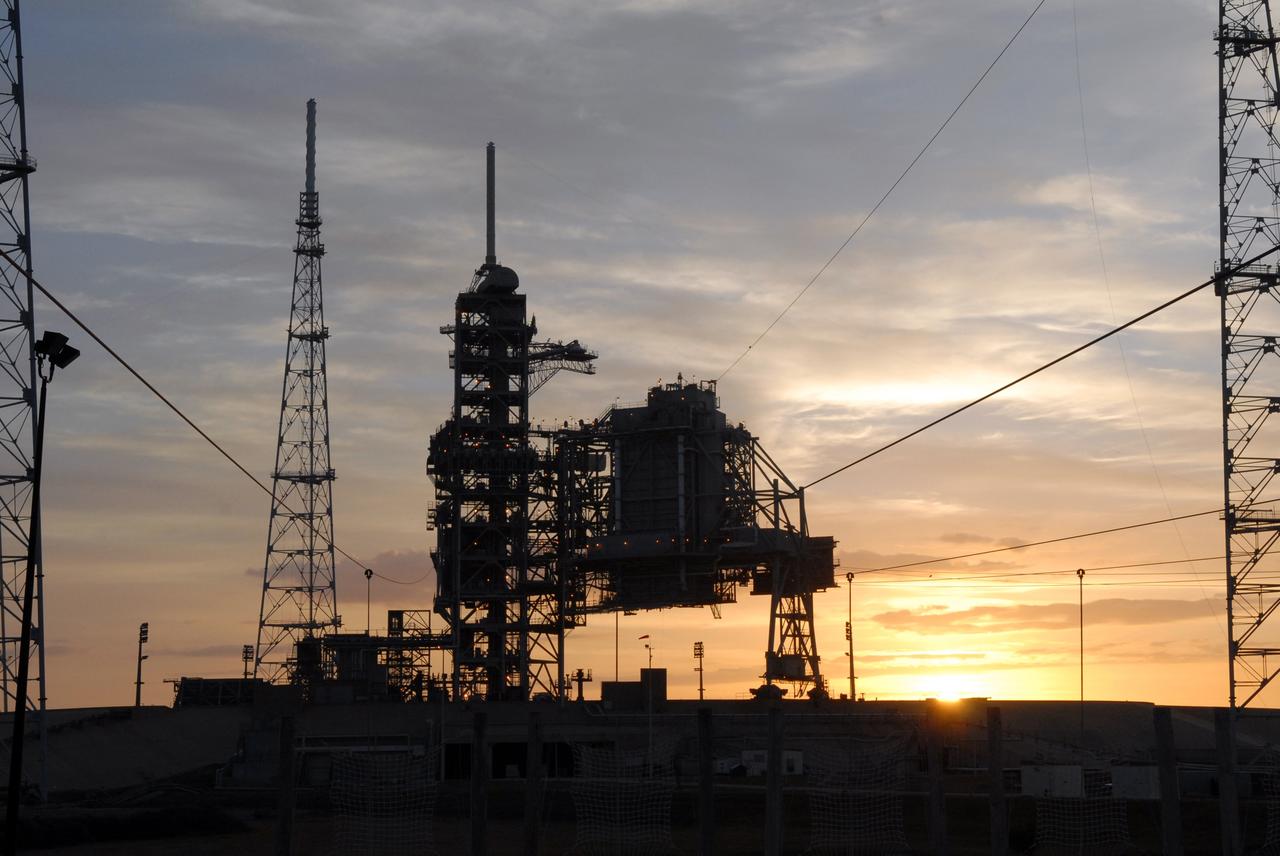
CAPE CANAVERAL, Fla. – The faint sunrise sky over NASA's Kennedy Space Center casts the newly erected lightning towers on Launch Pad 39B in silhouette. They surround the fixed and rotating service structures at center that have served the Space Shuttle Program. The new lightning protection system is being built for the Constellation Program and Ares/Orion launches. Each of the towers is 500 feet tall with an additional 100-foot fiberglass mast atop supporting a wire catenary system. This improved lightning protection system allows for the taller height of the Ares I rocket compared to the space shuttle. Pad 39B will be the site of the first Ares vehicle launch, including the Ares I-X test flight that is targeted for July 2009. Photo credit: NASA/Jack Pfaller
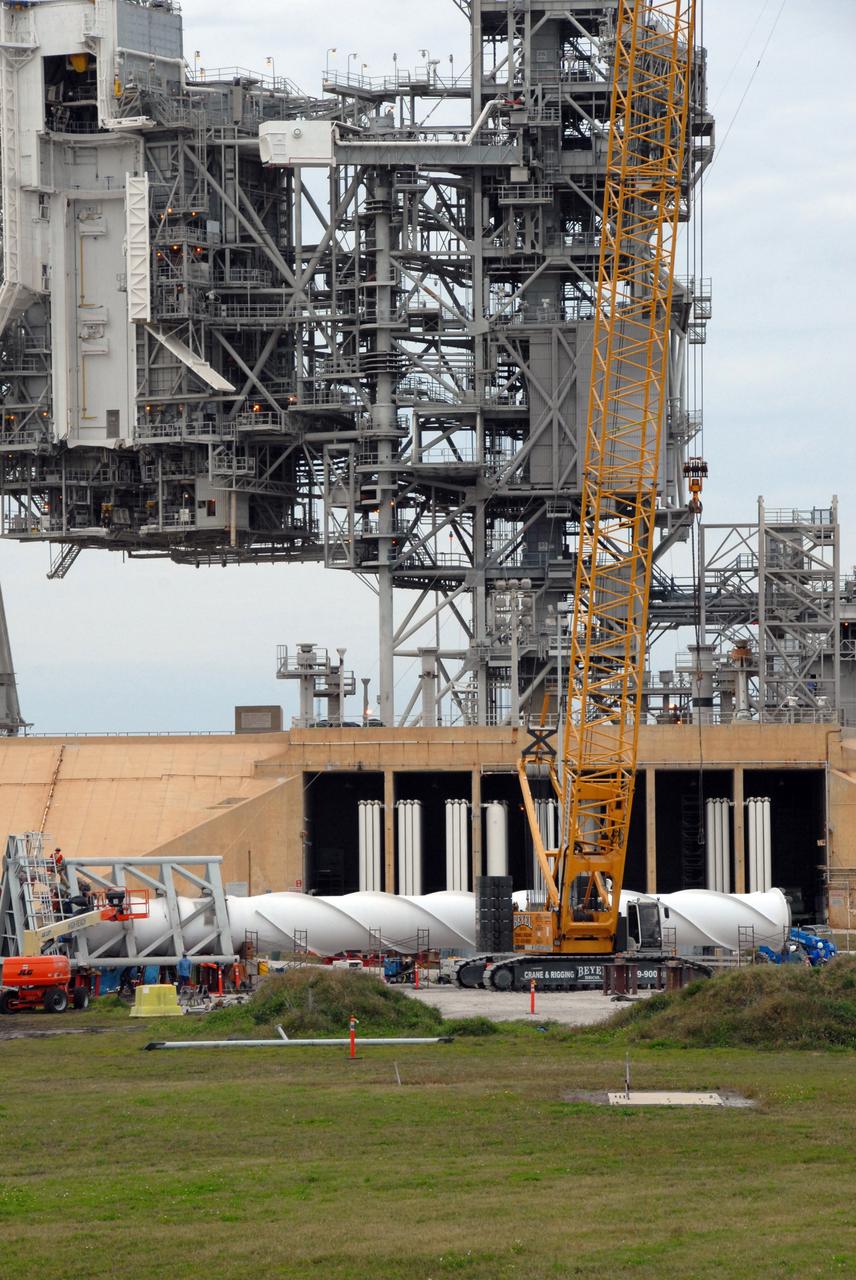
CAPE CANAVERAL, Fla. – On Launch Pad 39B at NASA's Kennedy Space Center in Florida, equipment surrounds the service structures for the construction of towers in the new lightning protection system for the Constellation Program and Ares/Orion launches. In the foreground is part of the giant crane used to place segments on the towers. Each of the three new lightning towers will be 500 feet tall with an additional 100-foot fiberglass mast (seen on the ground) atop supporting a wire catenary system. This improved lightning protection system allows for the taller height of the Ares I rocket compared to the space shuttle. Pad 39B will be the site of the first Ares vehicle launch, including the Ares I-X test flight that is targeted for July 2009. Photo credit: NASA/Troy Cryder
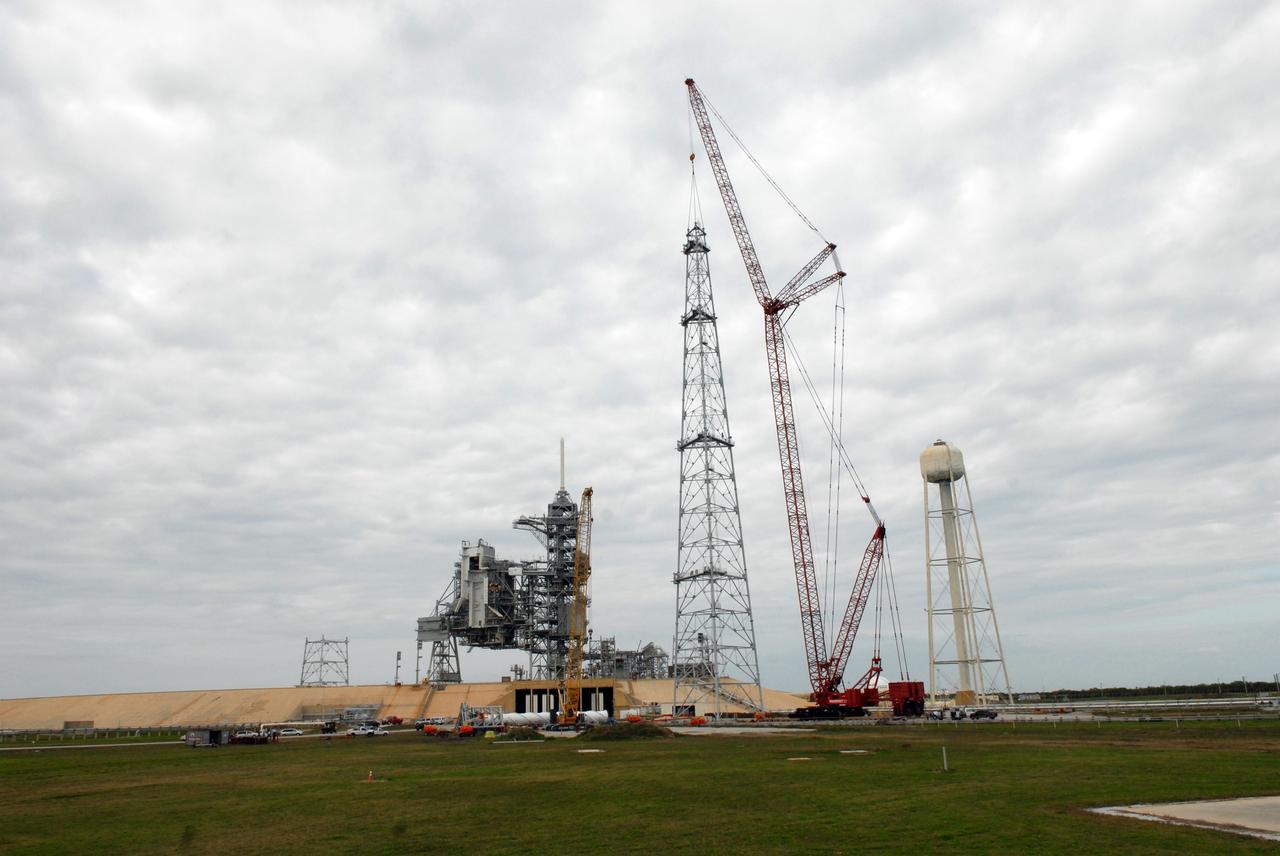
CAPE CANAVERAL, Fla. – On Launch Pad 39B at NASA's Kennedy Space Center in Florida, a crane completes construction of one of the towers in the new lightning protection system for the Constellation Program and Ares/Orion launches. Other towers are being constructed at left and behind the service structures on the pad. Each of the three new lightning towers will be 500 feet tall with an additional 100-foot fiberglass mast atop supporting a wire catenary system. This improved lightning protection system allows for the taller height of the Ares I rocket compared to the space shuttle. Pad 39B will be the site of the first Ares vehicle launch, including the Ares I-X test flight that is targeted for July 2009. Photo credit: NASA/Troy Cryder
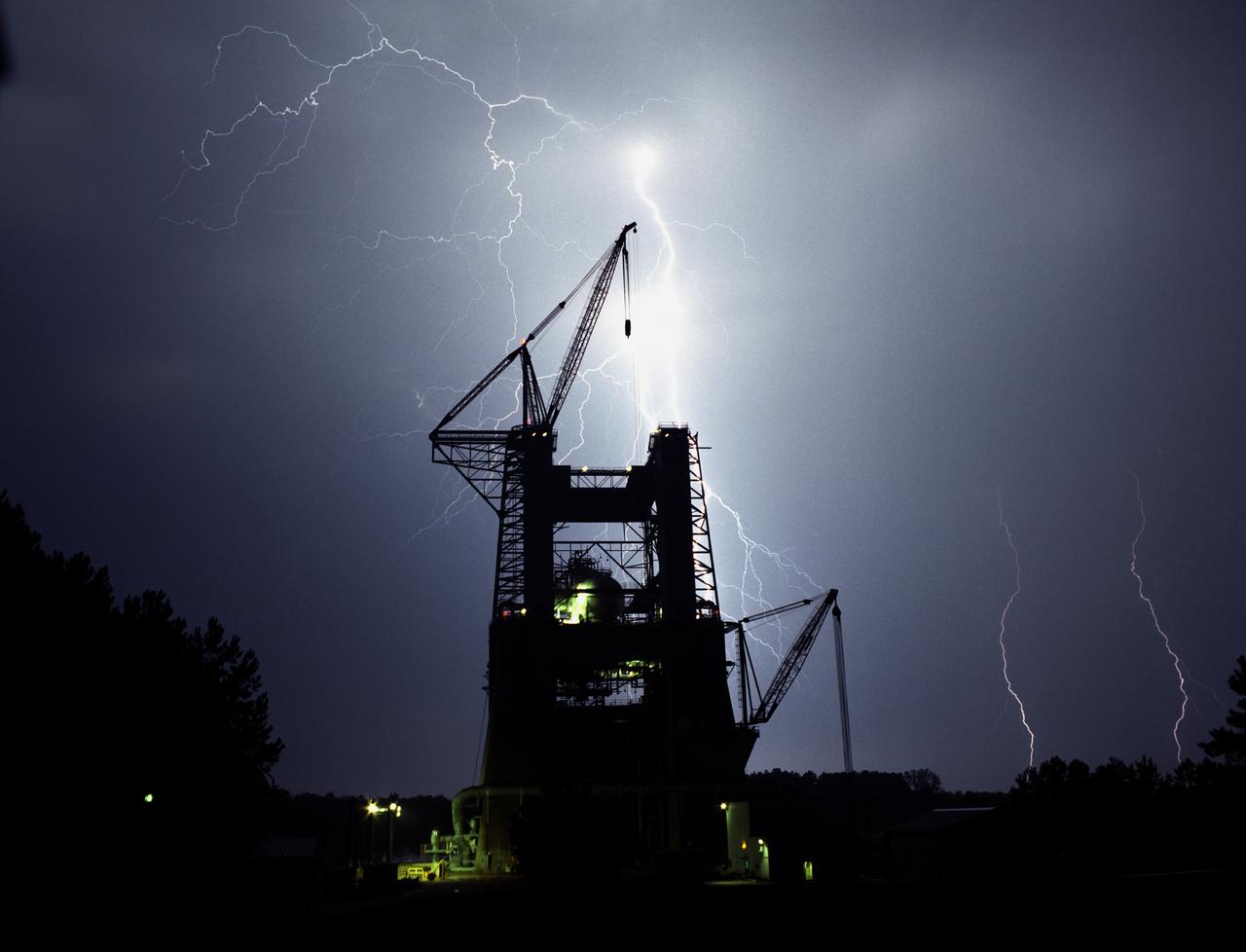
Multiple lightning bolts struck the Technology Test Bed, formerly the S-IC Static Test Stand, at the Marshall Space Flight Center (MSFC) during a thunderstorm. This spectacular image of lightning was photographed by MSFC photographer Dernis Olive on August 29, 1990.
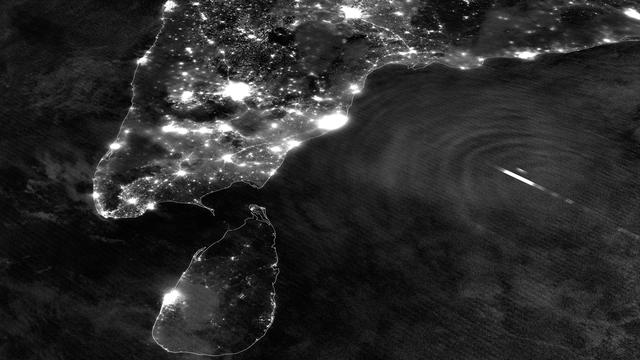
Tropical Cyclone Mahasen is moving north through the Indian Ocean along a track that places landfall along the Bangladesh coast on May 16th around 1200Z. On May 13, 2013 the Suomi NPP satellite caught an interesting glimpse of the storm as it moved off the eastern coast of India. The VIIRS Day-Night Band was able to resolve lightning flashes towards the center of the storm, along with mesopheric gravity waves emanating outwards like ripples in a pond. These gravity waves are of particular interest to air traffic controllers so assist in identifying areas of turbulence. Since the moon was in a new phase, the lights and other surface features of India and Sri Lanka are clearly visible, though the clouds of TC Mahasen are not - a tradeoff that occurs as the amount of moonlight cycles throughout the month. Credit: NASA/NOAA <b><a href="http://www.nasa.gov/audience/formedia/features/MP_Photo_Guidelines.html" rel="nofollow">NASA image use policy.</a></b> <b><a href="http://www.nasa.gov/centers/goddard/home/index.html" rel="nofollow">NASA Goddard Space Flight Center</a></b> enables NASA’s mission through four scientific endeavors: Earth Science, Heliophysics, Solar System Exploration, and Astrophysics. Goddard plays a leading role in NASA’s accomplishments by contributing compelling scientific knowledge to advance the Agency’s mission. <b>Follow us on <a href="http://twitter.com/NASA_GoddardPix" rel="nofollow">Twitter</a></b> <b>Like us on <a href="http://www.facebook.com/pages/Greenbelt-MD/NASA-Goddard/395013845897?ref=tsd" rel="nofollow">Facebook</a></b> <b>Find us on <a href="http://instagram.com/nasagoddard?vm=grid" rel="nofollow">Instagram</a></b>
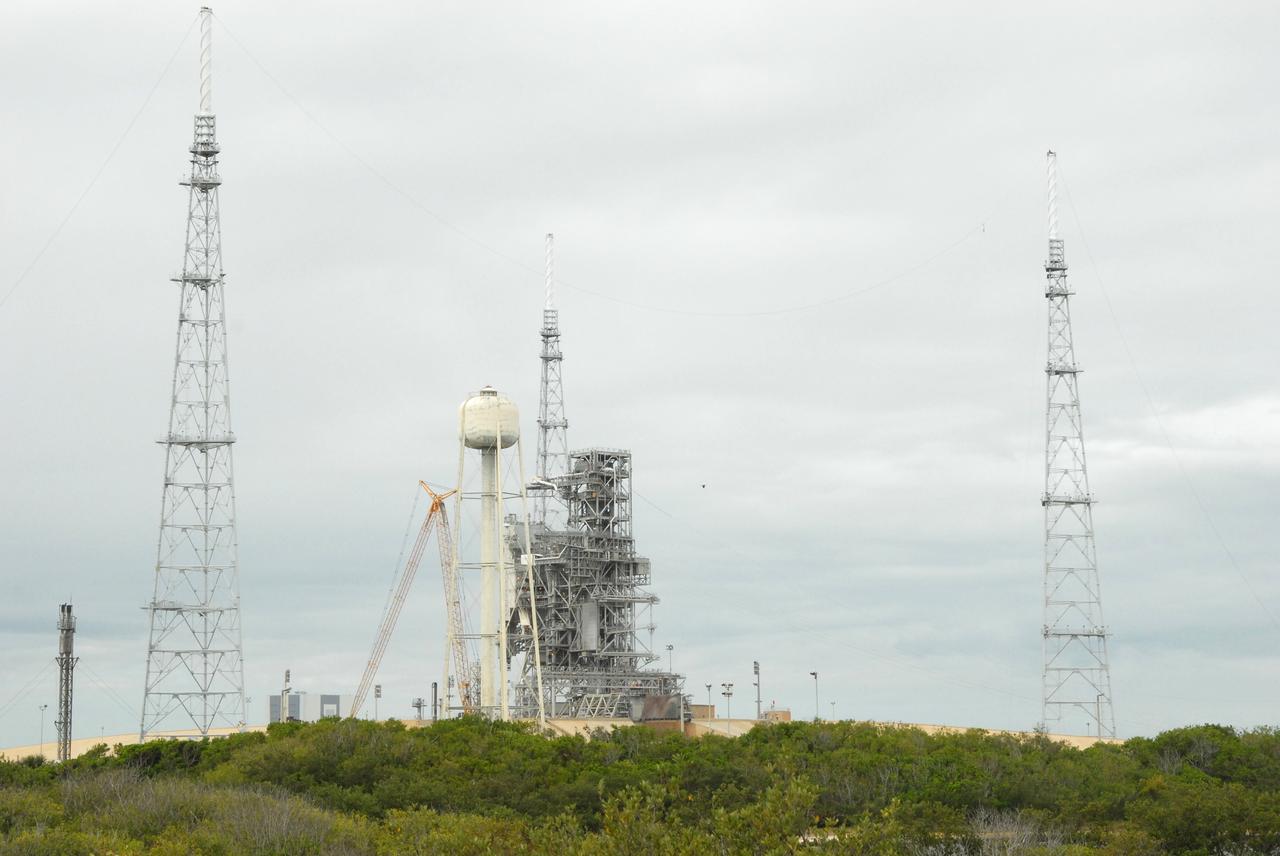
CAPE CANAVERAL, Fla. – On Launch Pad 39B at NASA's Kennedy Space Center in Florida, catenary wires are being suspended from the lighting masts on the lightning towers. The catenary wire system under development for the Constellation Program’s next-generation vehicles will significantly increase the shielding level, providing better protection, and further separate the electrical current from vital launch hardware. The system will help avoid delays to the launch schedule by collecting more information on the strike for analysis by launch managers. Photo credit: NASA/Jack Pfaller