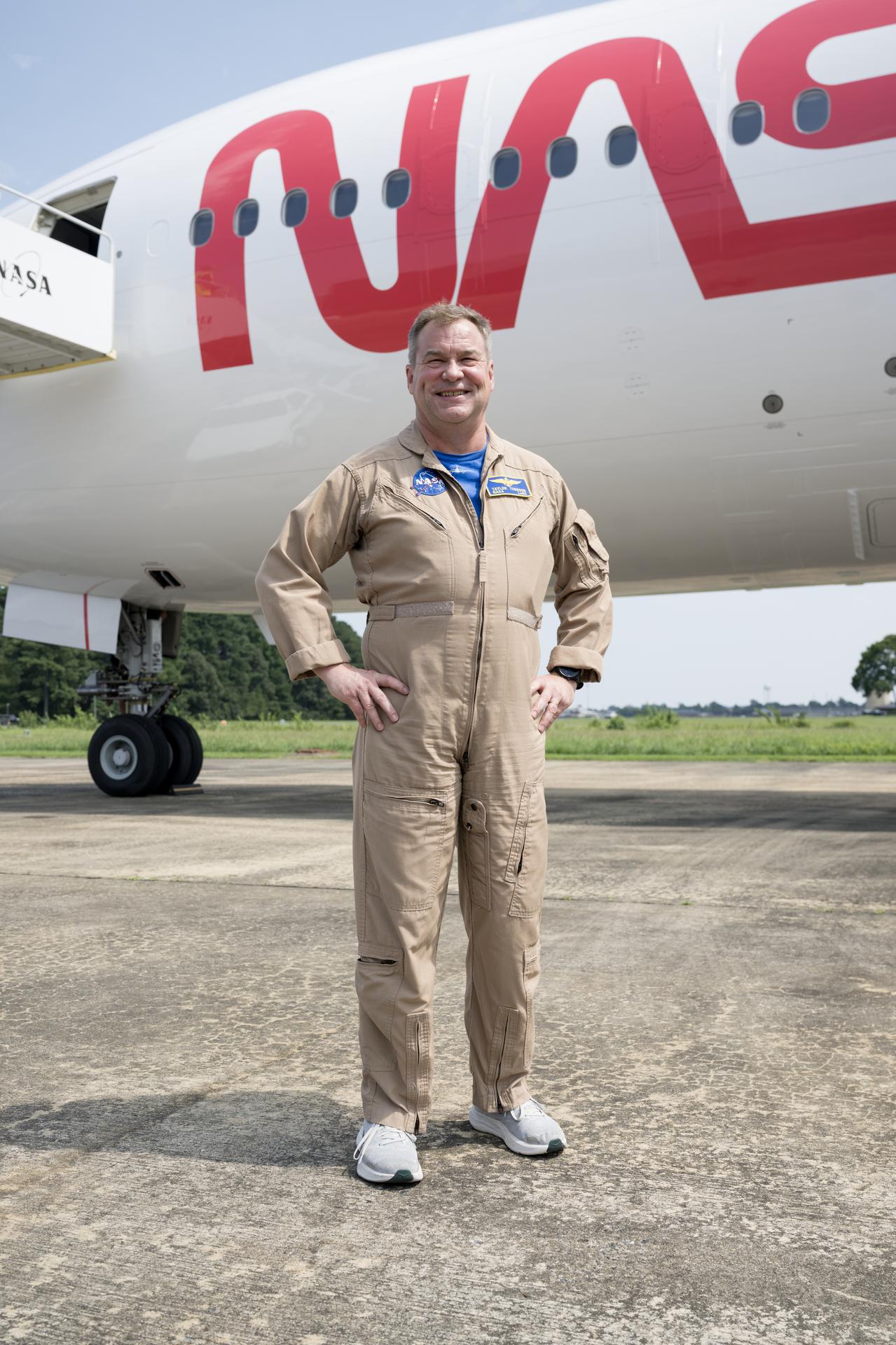
NASA B777-200ER (N577NA) arrived at Langley Research Center’s Hangar with new paint livery Aug 12. It was flown by NASA pilot Taylor Thorson, as this marks his final flight. Photo Credit NASA/ Mark Knopp
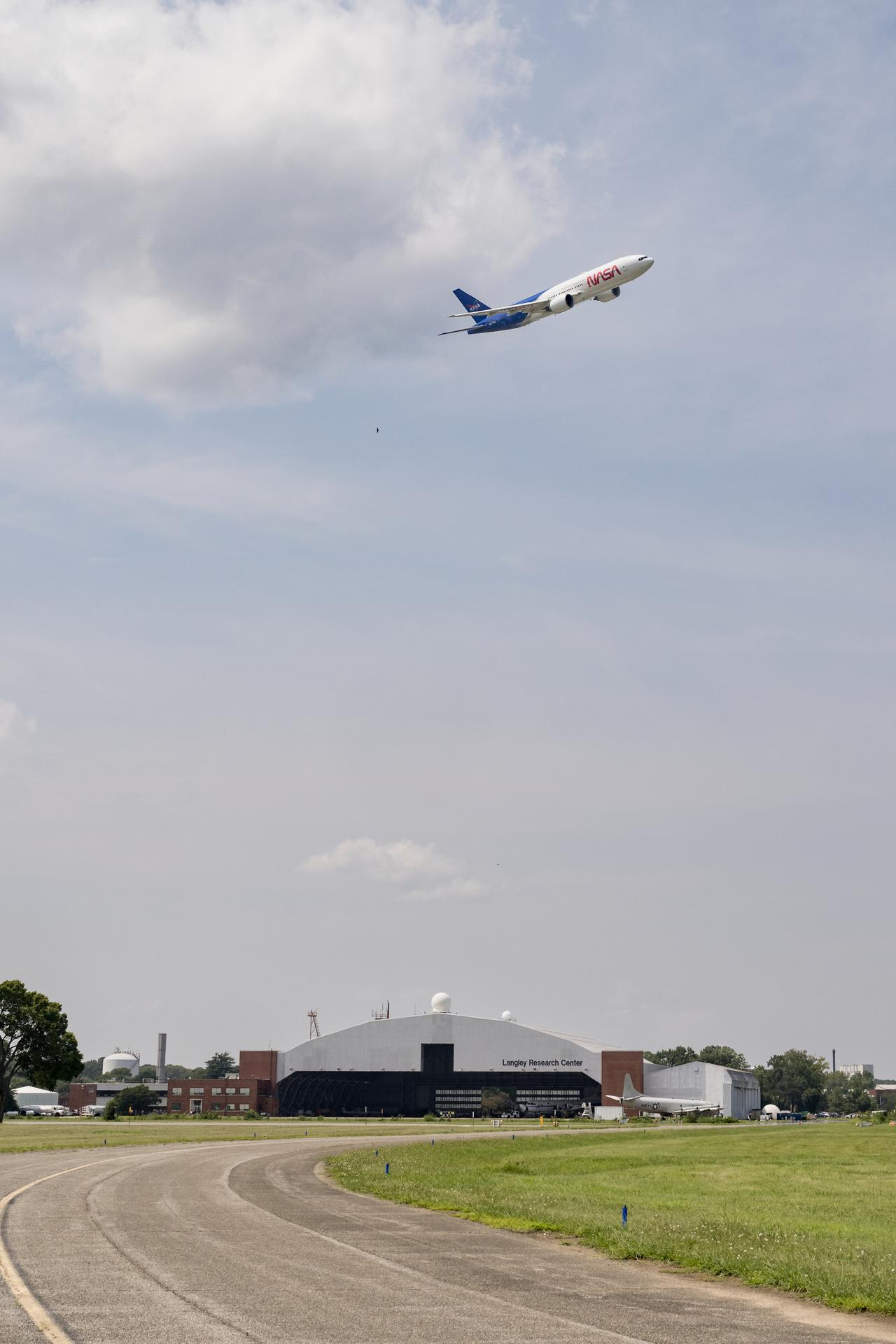
NASA B777-200ER (N577NA) arrived at Langley Research Center’s Hangar with new paint livery Aug 12. It was flown by NASA pilot Taylor Thorson, as this marks his final flight. Photo Credit NASA/ Mark Knopp
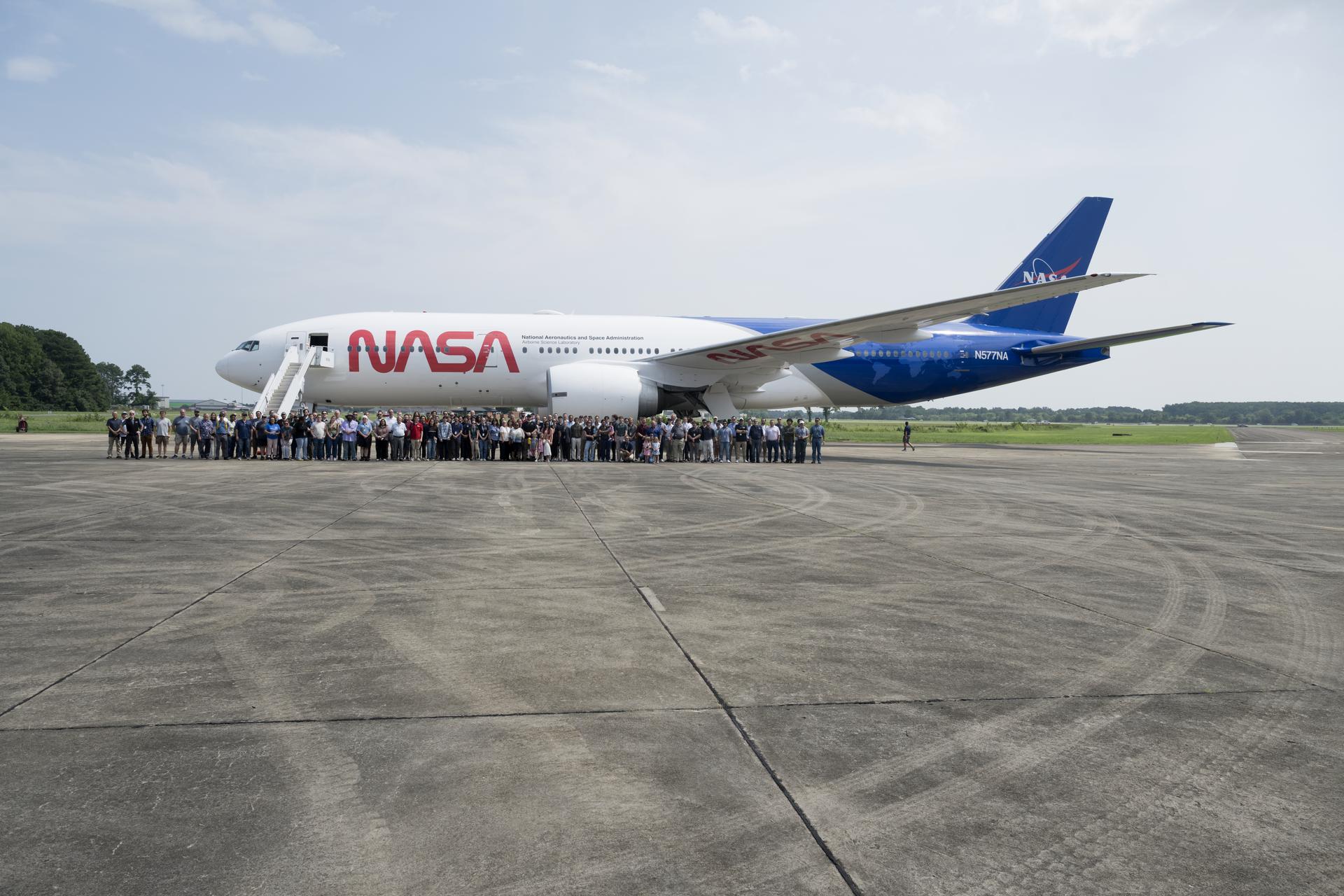
NASA B777-200ER (N577NA) arrived at Langley Research Center’s Hangar with new paint livery Aug 12. It was flown by NASA pilot Taylor Thorson, as this marks his final flight. Photo Credit NASA/ Mark Knopp
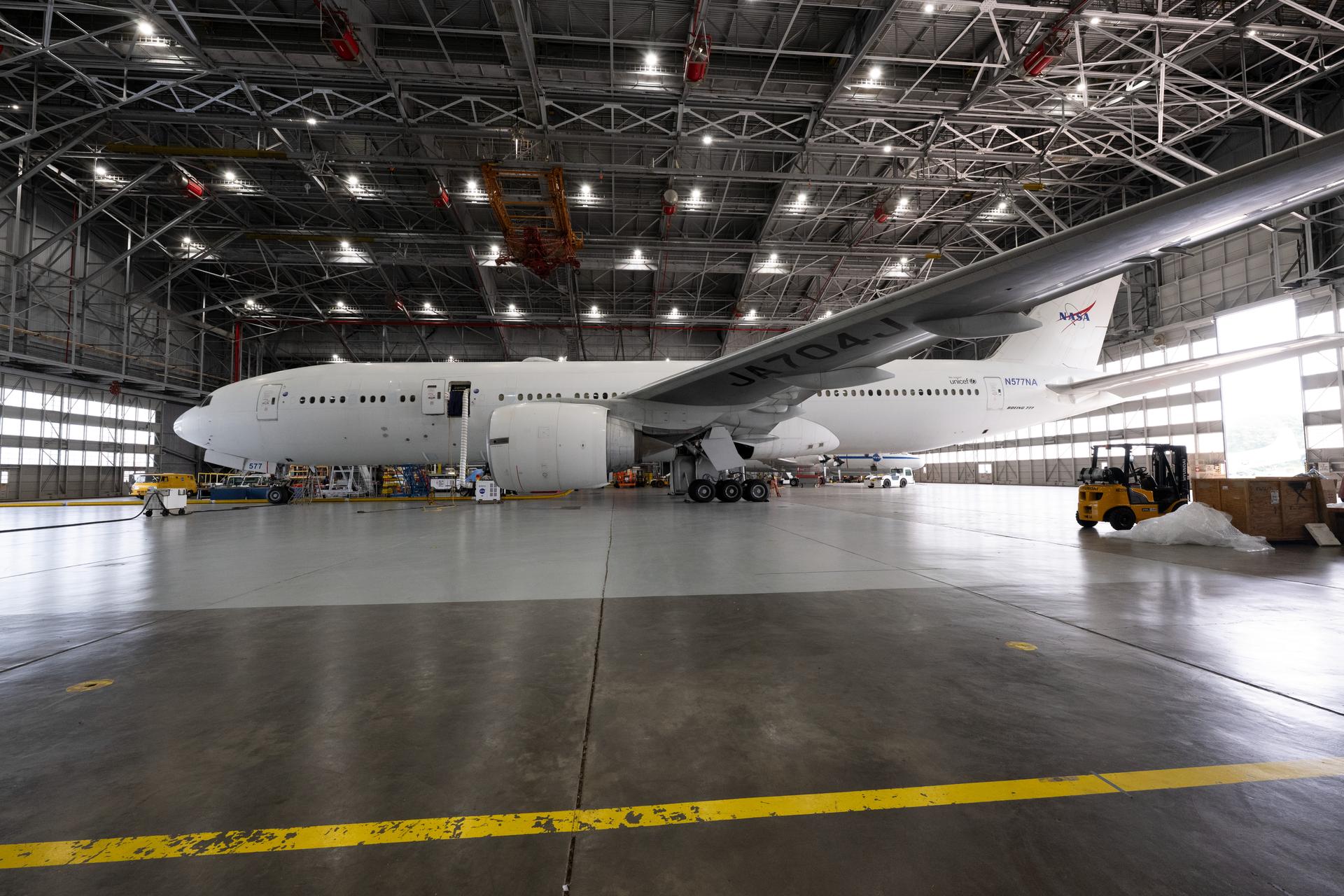
Before Langley's B777 aircraft departed Langley Research Center to received its NASA livery (paint job), it received ground maintenance in the hangar on center. Photo Credit NASA/Ryan Hill
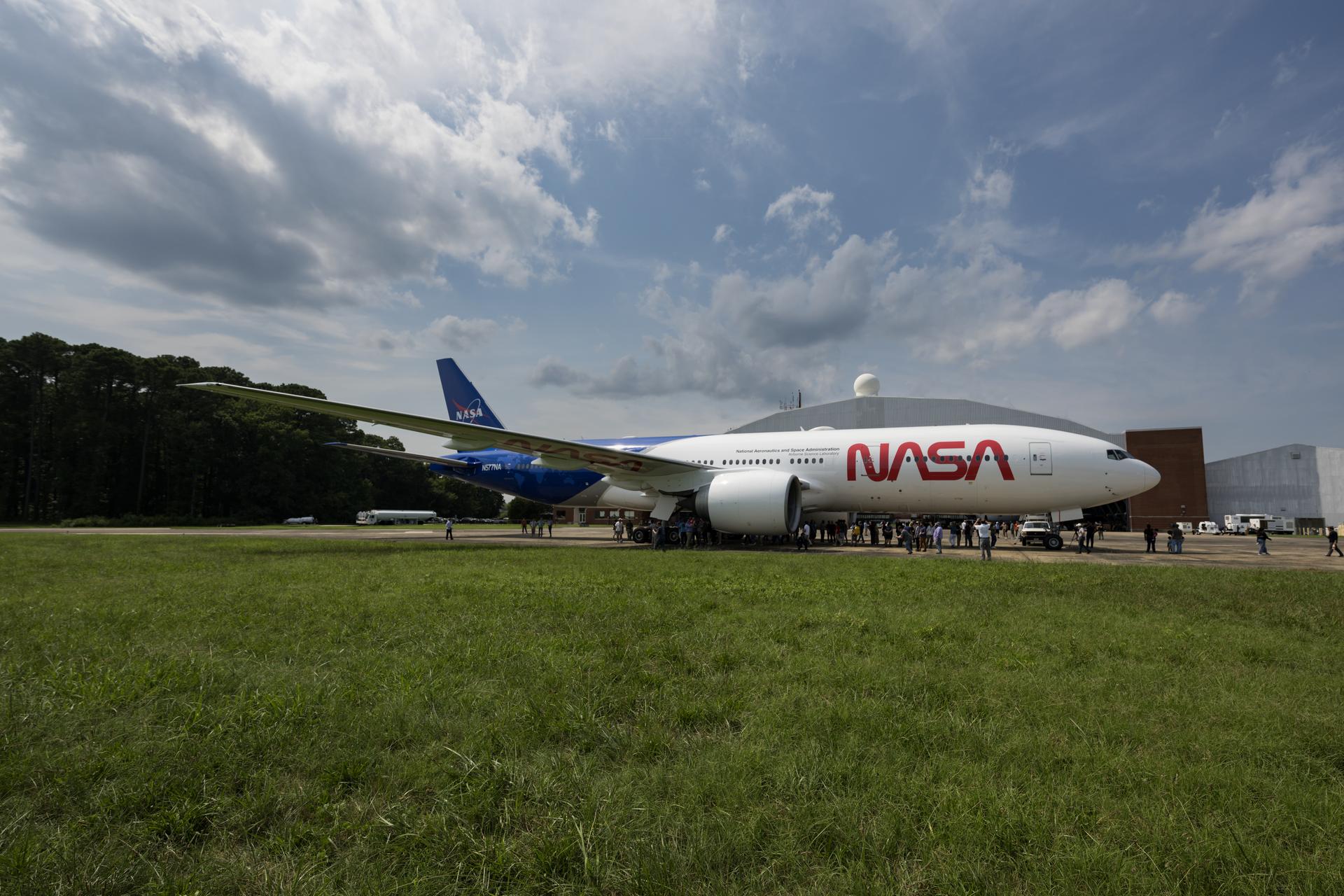
NASA B777-200ER (N577NA) arrived at Langley Research Center’s Hangar with new paint livery Aug 12. It was flown by NASA pilot Taylor Thorson, as this marks his final flight. Photo Credit NASA/ Mark Knopp
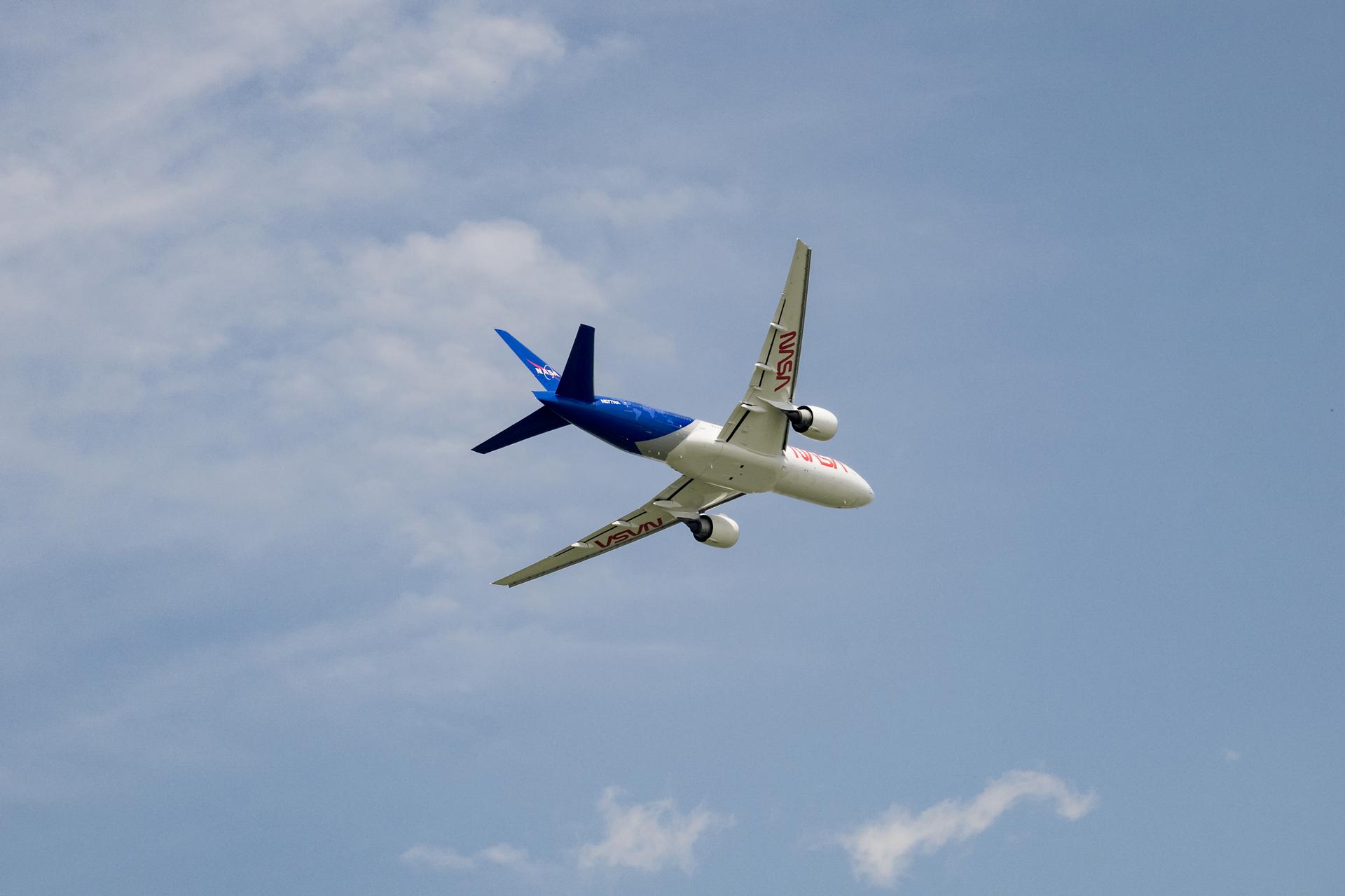
NASA B777-200ER (N577NA) arrived at Langley Research Center’s Hangar with new paint livery Aug 12. It was flown by NASA pilot Taylor Thorson, as this marks his final flight. Photo Credit NASA/ Mark Knopp
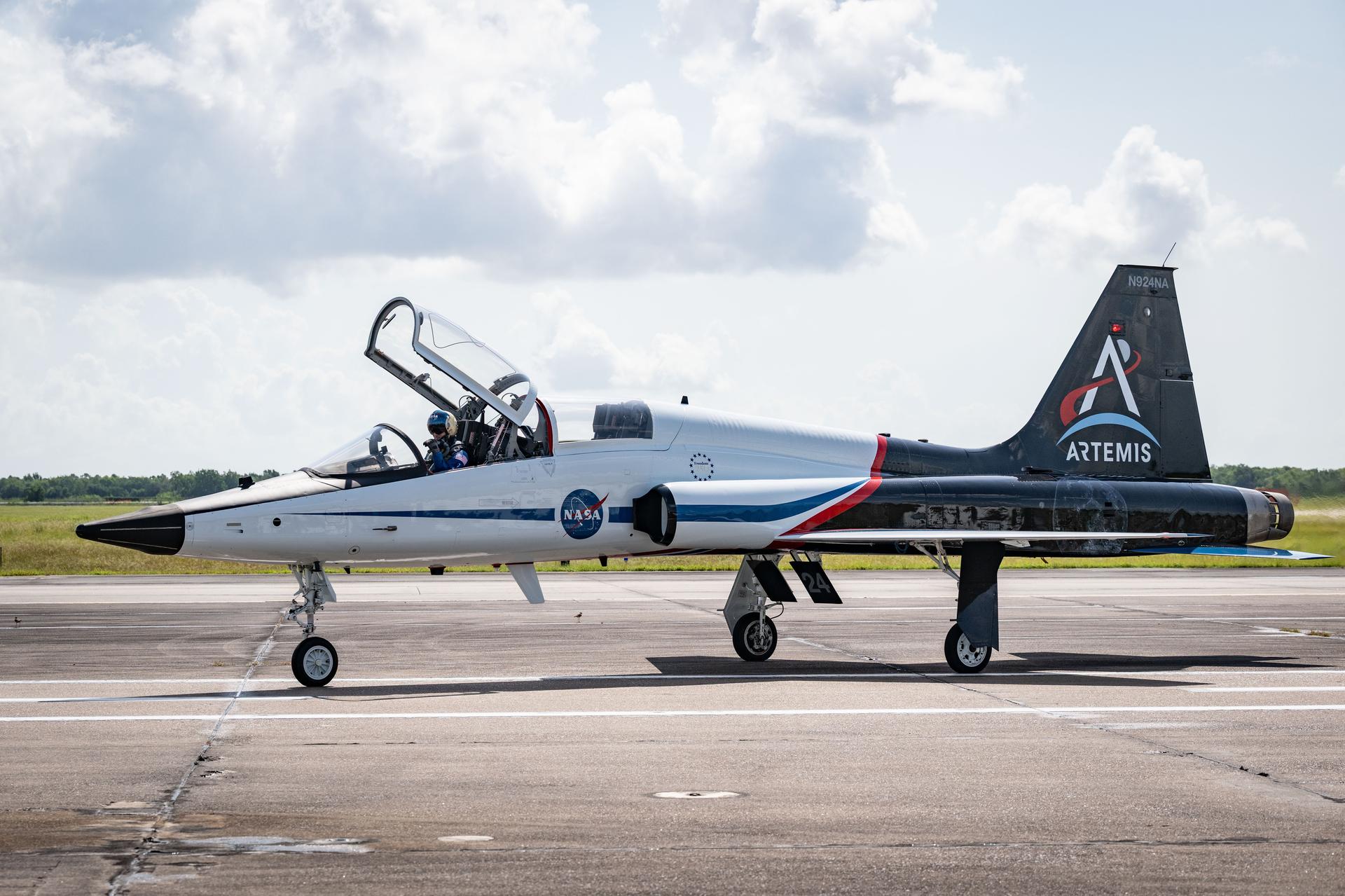
jsc2026e407798 (Aug. 7, 2026) - NASA's T-38 N924NA debuted an updated livery honoring the Artemis Program. Astronauts fly in T-38s to train for making real-time decisions in a high-stakes, operational environment. This helps prepare them for the fast-paced mission moments they’ll experience on future spaceflights to the International Space Station or the Moon and beyond. Credit: NASA/James Blair
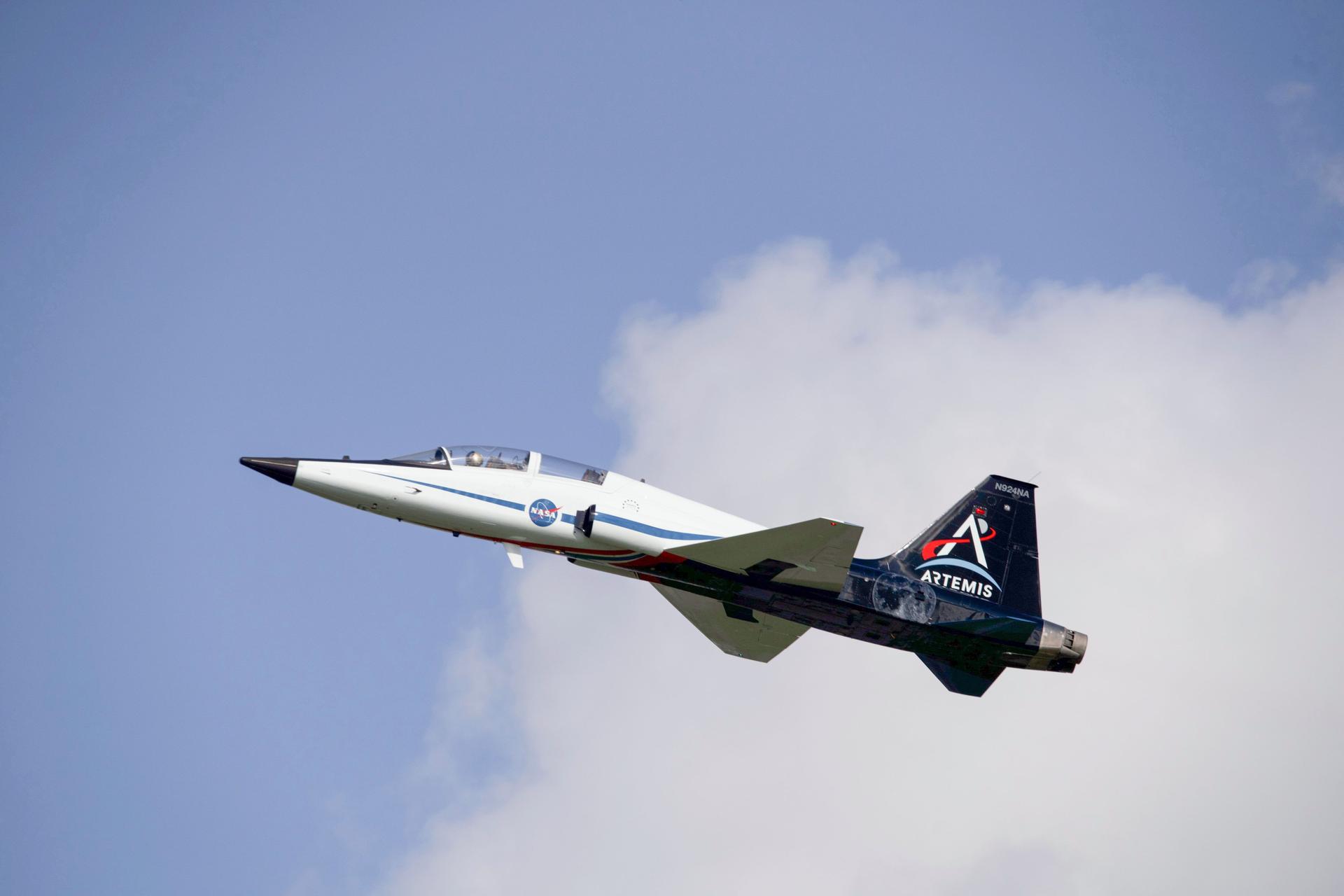
jsc2026e410176 (Aug. 6, 2026) - NASA's T-38 N924NA debuted an updated livery honoring the Artemis Program. Astronauts fly in T-38s to train for making real-time decisions in a high-stakes, operational environment. This helps prepare them for the fast-paced mission moments they’ll experience on future spaceflights to the International Space Station or the Moon and beyond. Credit: NASA/Brendan "Finnie" Finnegan
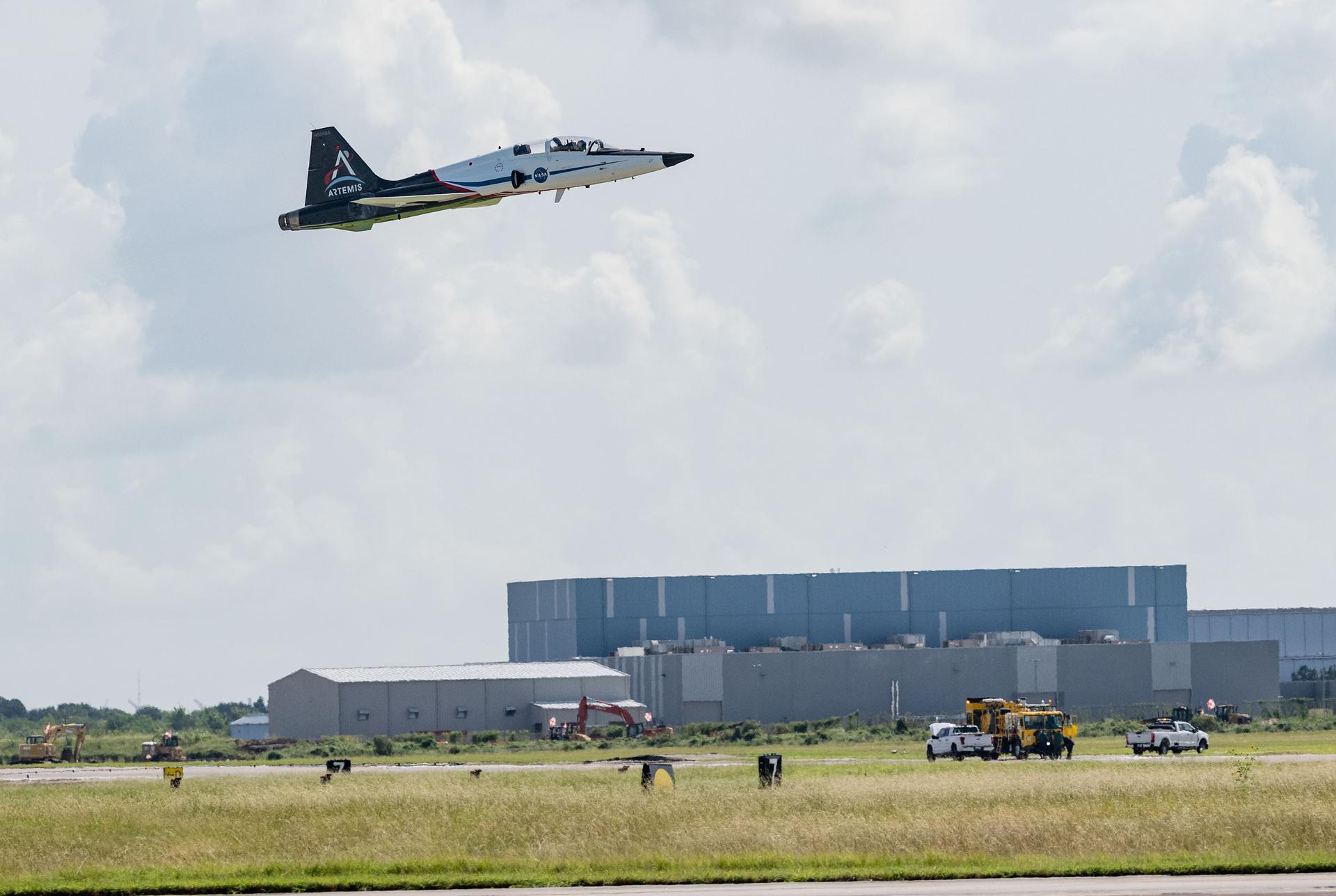
jsc2026e407795 (Aug. 7, 2026) - NASA's T-38 N924NA debuted an updated livery honoring the Artemis Program. Astronauts fly in T-38s to train for making real-time decisions in a high-stakes, operational environment. This helps prepare them for the fast-paced mission moments they’ll experience on future spaceflights to the International Space Station or the Moon and beyond. Credit: NASA/James Blair
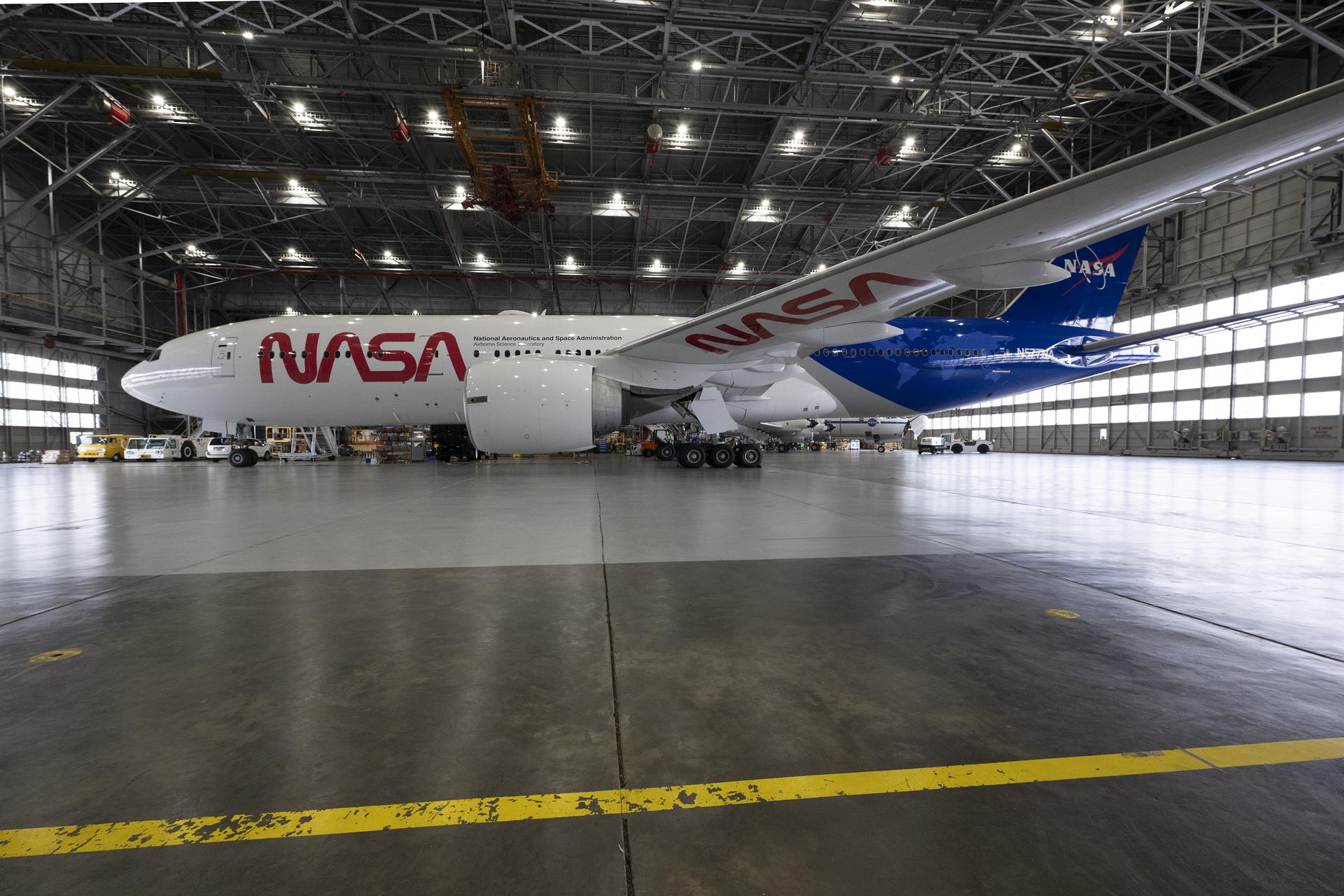
NASA's B777 aircraft returned to NASA Langley Research Center in Hampton, Virginia on Aug 12th with its new livery or paint job. It will now continue its maintenance and instrument integration schedule to prepare for its initial airborne science flights in 2027. Photo Credit NASA/Ryan Hill
NASA Langley's B777 aircraft before it departs Langley Research Center to receive its new livery (paint job), prior to its departure on July 16th, it received ground maintenance in the center’s hangar. (Photo Credit NASA/ Mark Knopp)
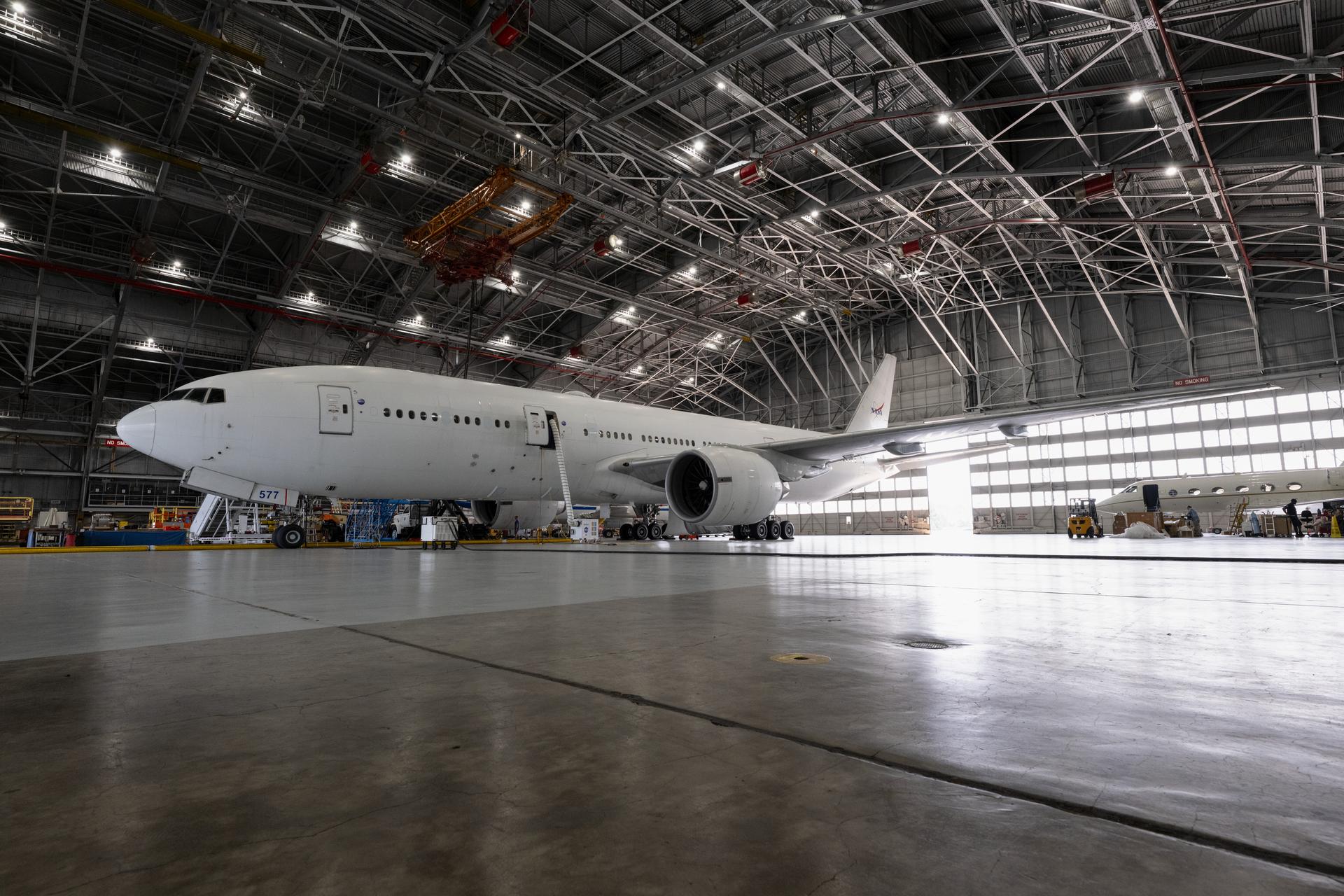
NASA Langley's B777 aircraft before it departs Langley Research Center to receive its new livery (paint job), prior to its departure on July 16th, it received ground maintenance in the center’s hangar. (Photo Credit NASA/ Ryan Hill)
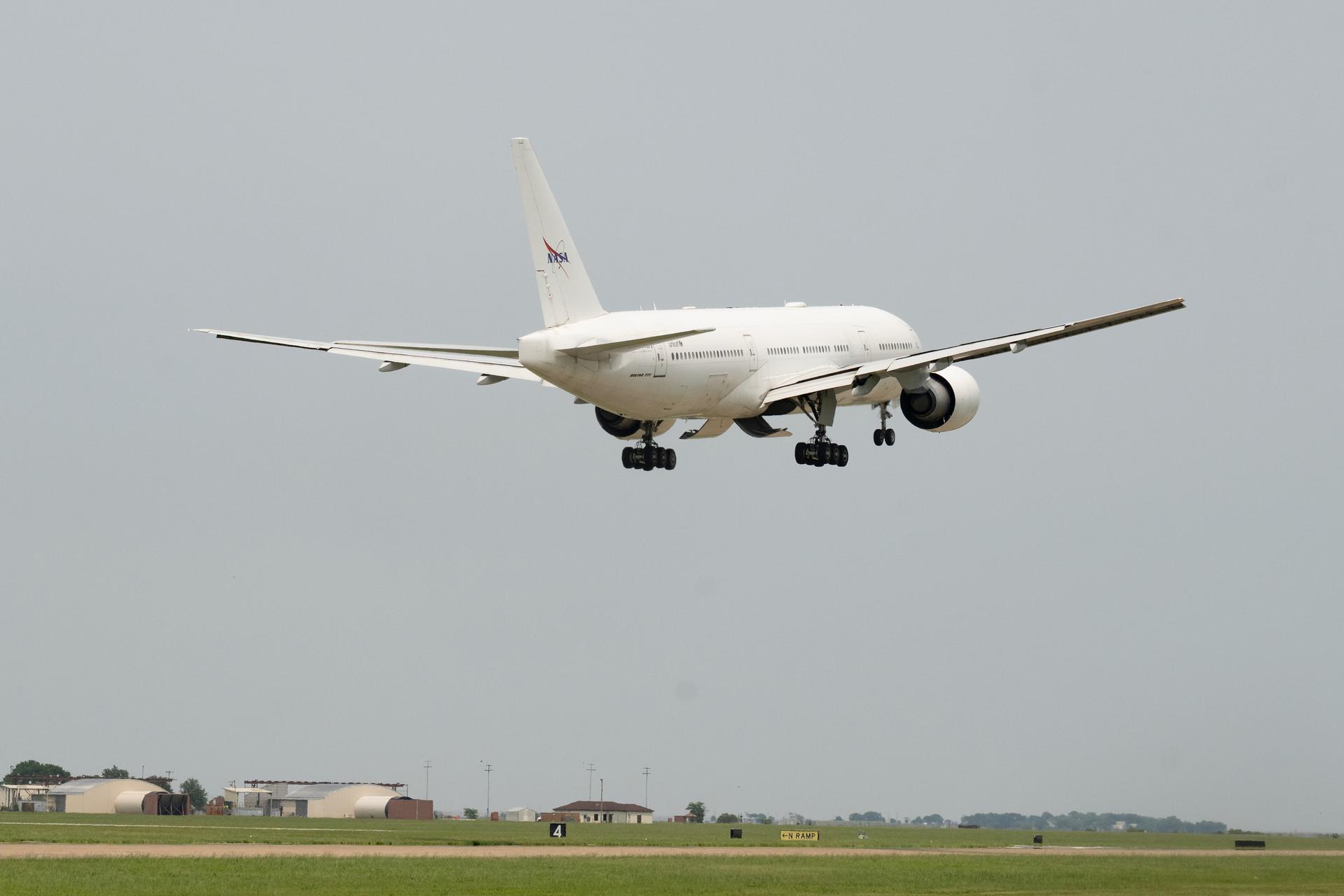
NASA Langley's B777 aircraft before it departs Langley Research Center to receive its new livery (paint job), prior to its departure on July 16th, it received ground maintenance in the center’s hangar. (Photo Credit NASA/ Mark Knopp)
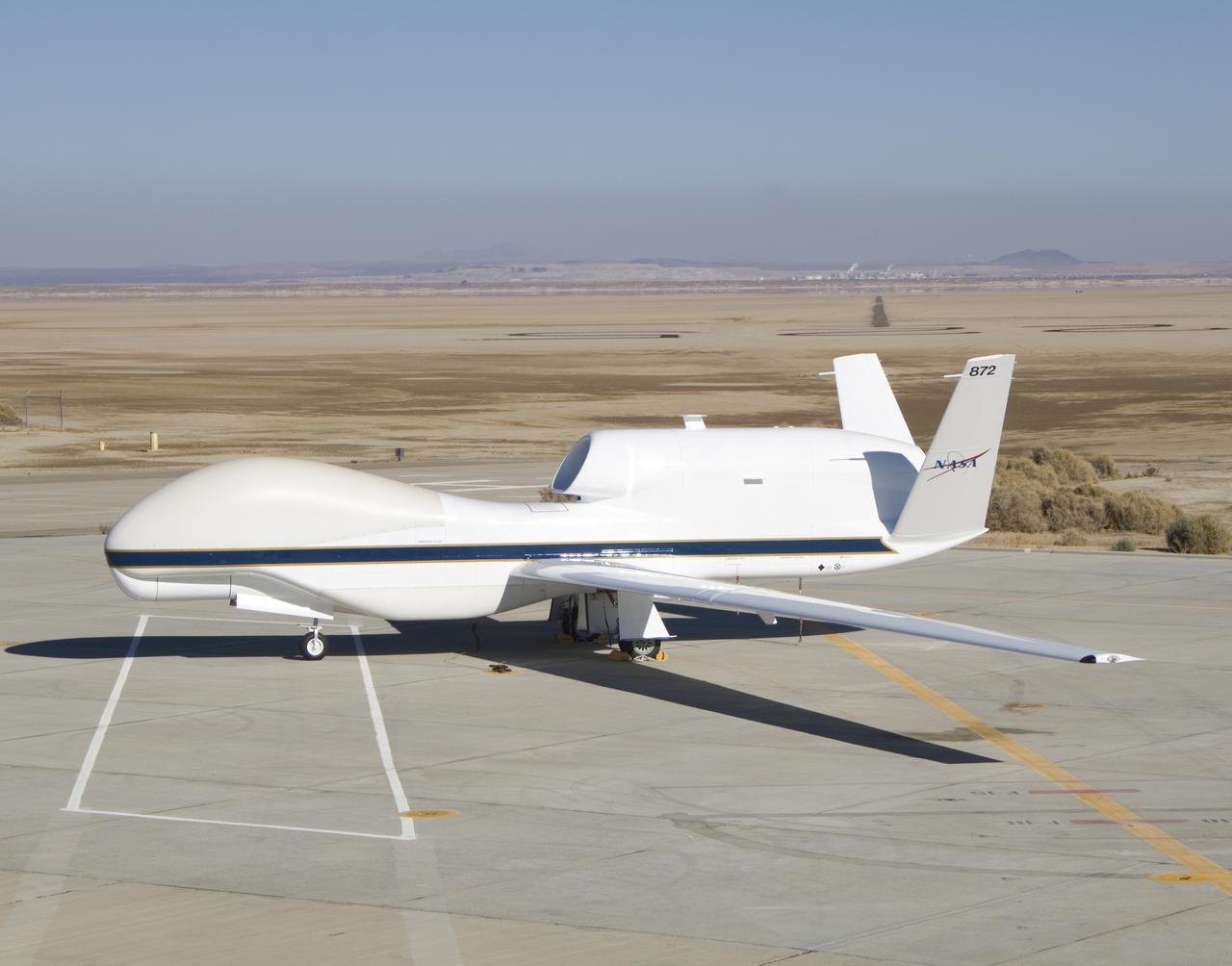
In its new white-and-blue NASA livery, an early development model of the Global Hawk unmanned aircraft rests on the ramp at the Dryden Flight Research Center.
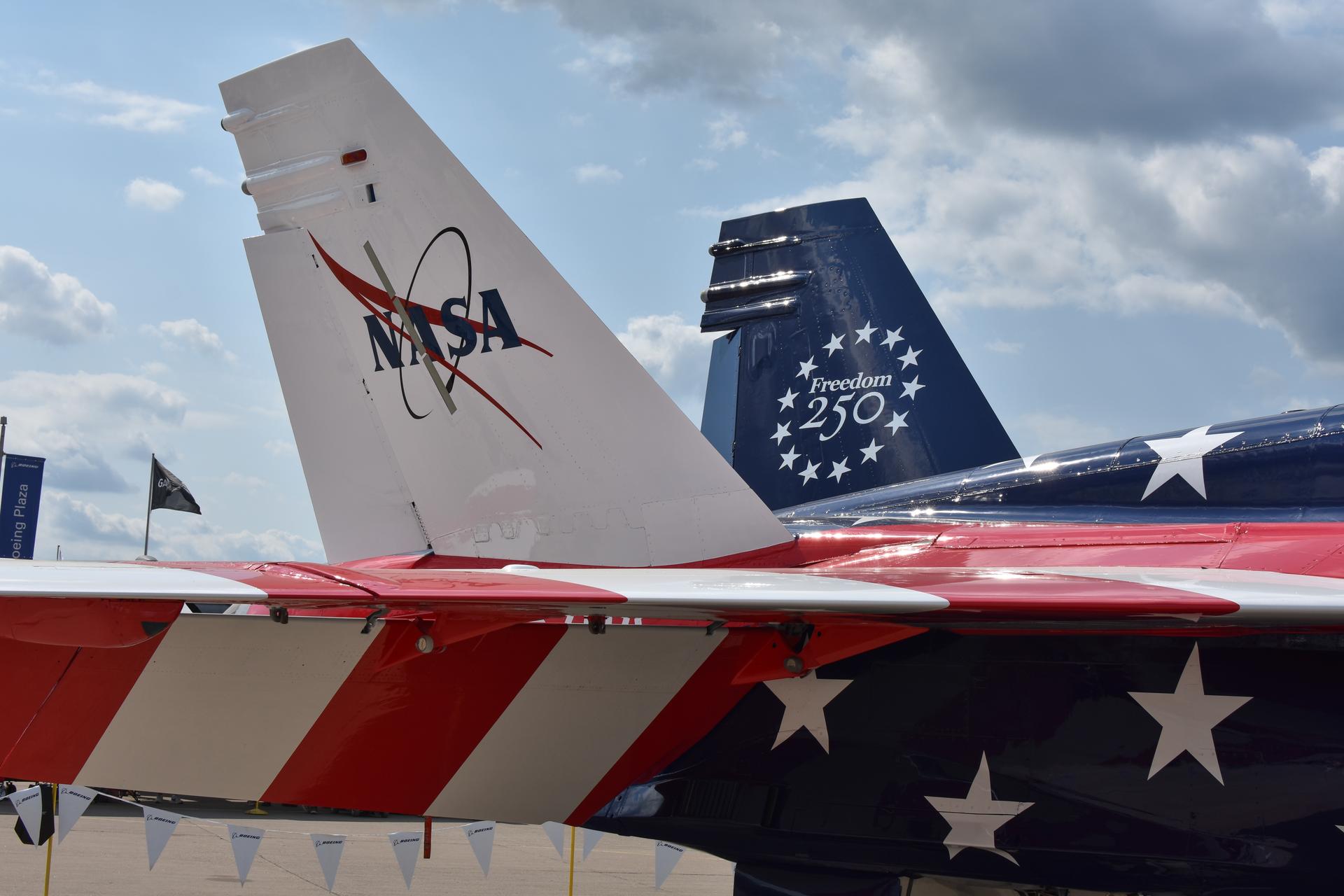
NASA’s F/A-18 aircraft painted with new red, white, and blue livery to celebrate America’s 250th birthday is shown on display at Boeing Plaza at the 2026 Experimental Aircraft Association (EAA) AirVenture air show in Oshkosh, Wisconsin, on Friday, July 24, 2026.
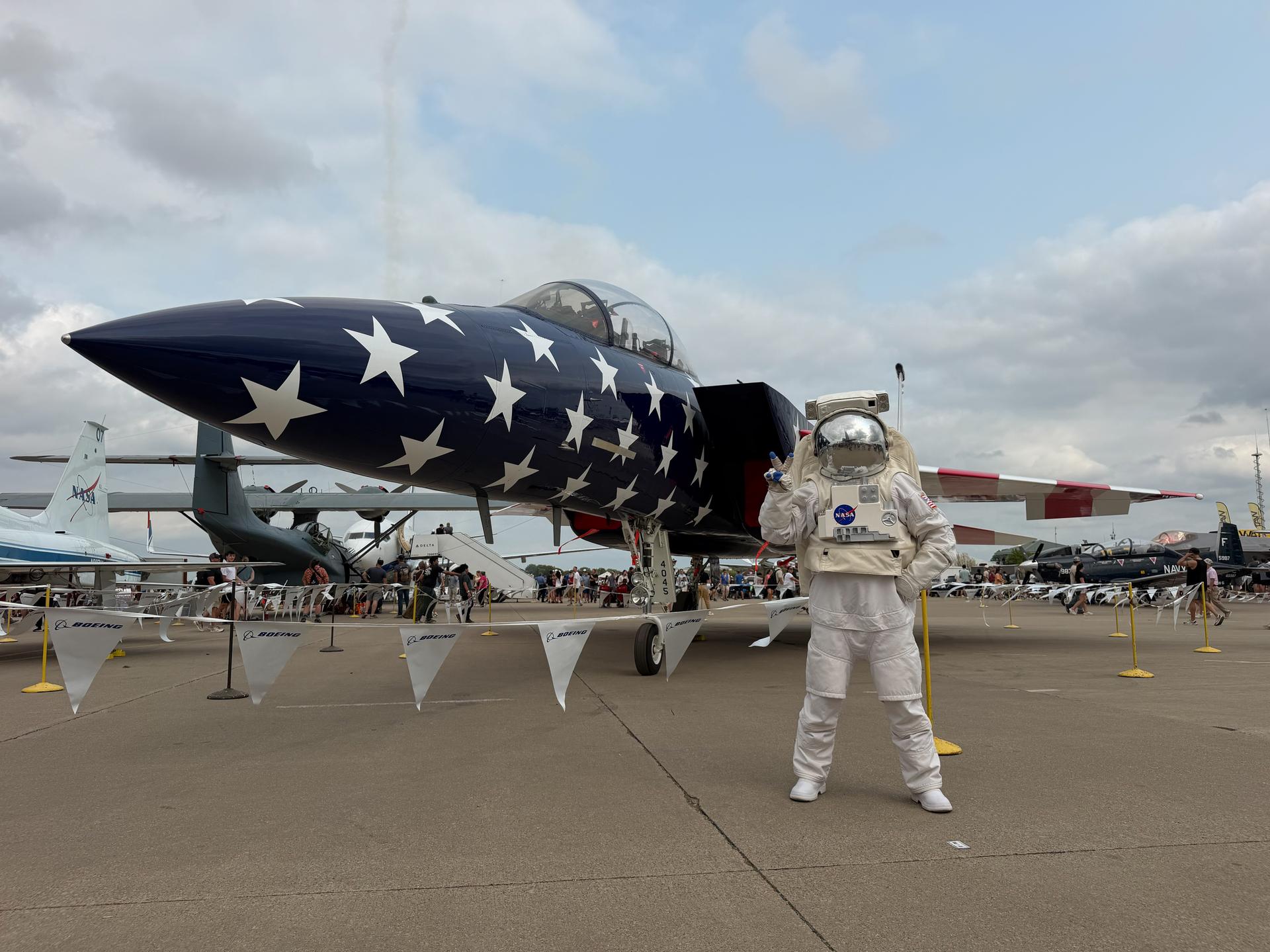
NASA’s Spacey Casey poses in front of NASA’s F-15 painted with new red, white, and blue livery to celebrate America’s 250th birthday at the Boeing Plaza at the 2026 Experimental Aircraft Association (EAA) AirVenture air show in Oshkosh, Wisconsin, on Saturday, July 26, 2026.
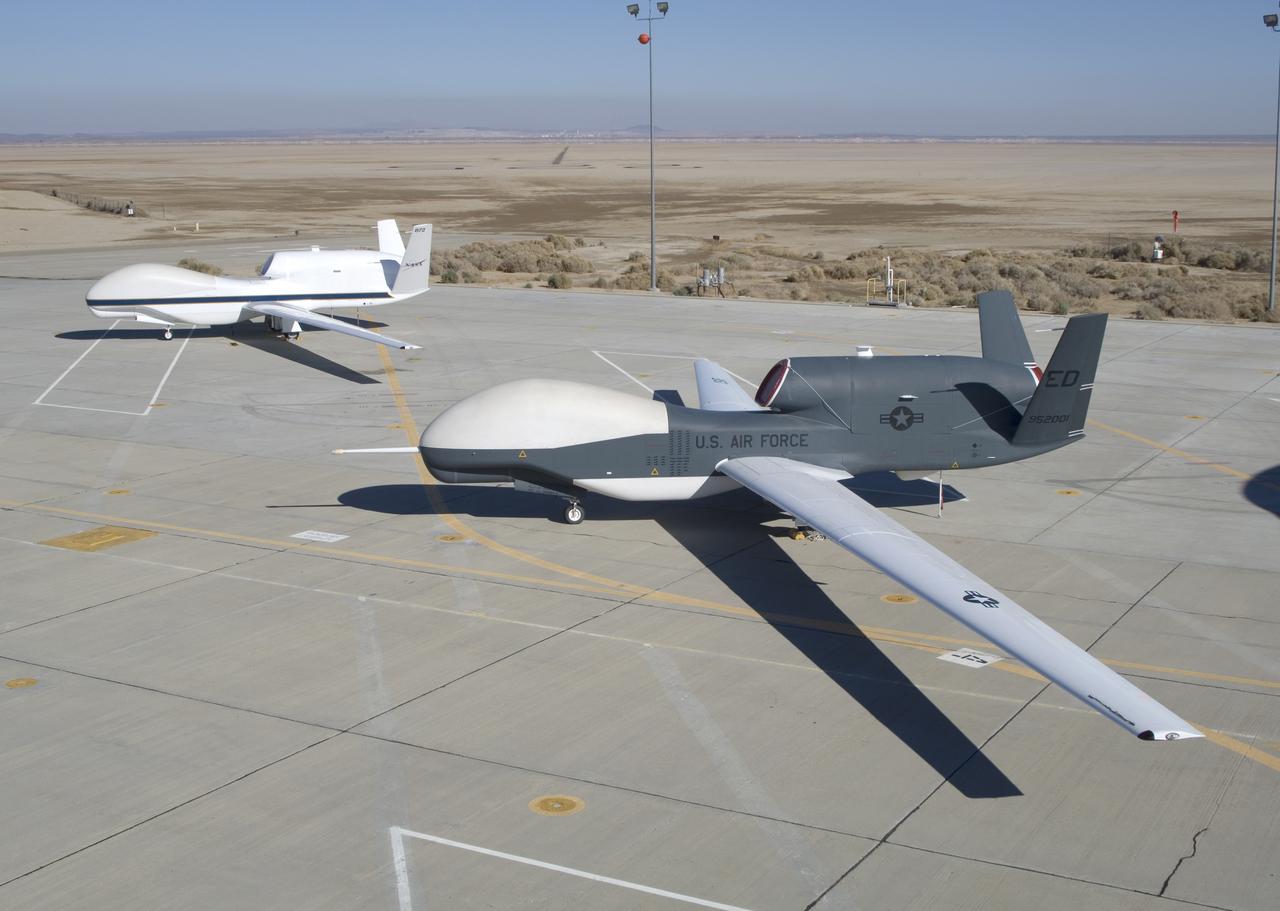
NASA's two Global Hawks, one sporting a NASA paint scheme, the other in its prior Air Force livery, are shown on the ramp at the Dryden Flight Research Center.
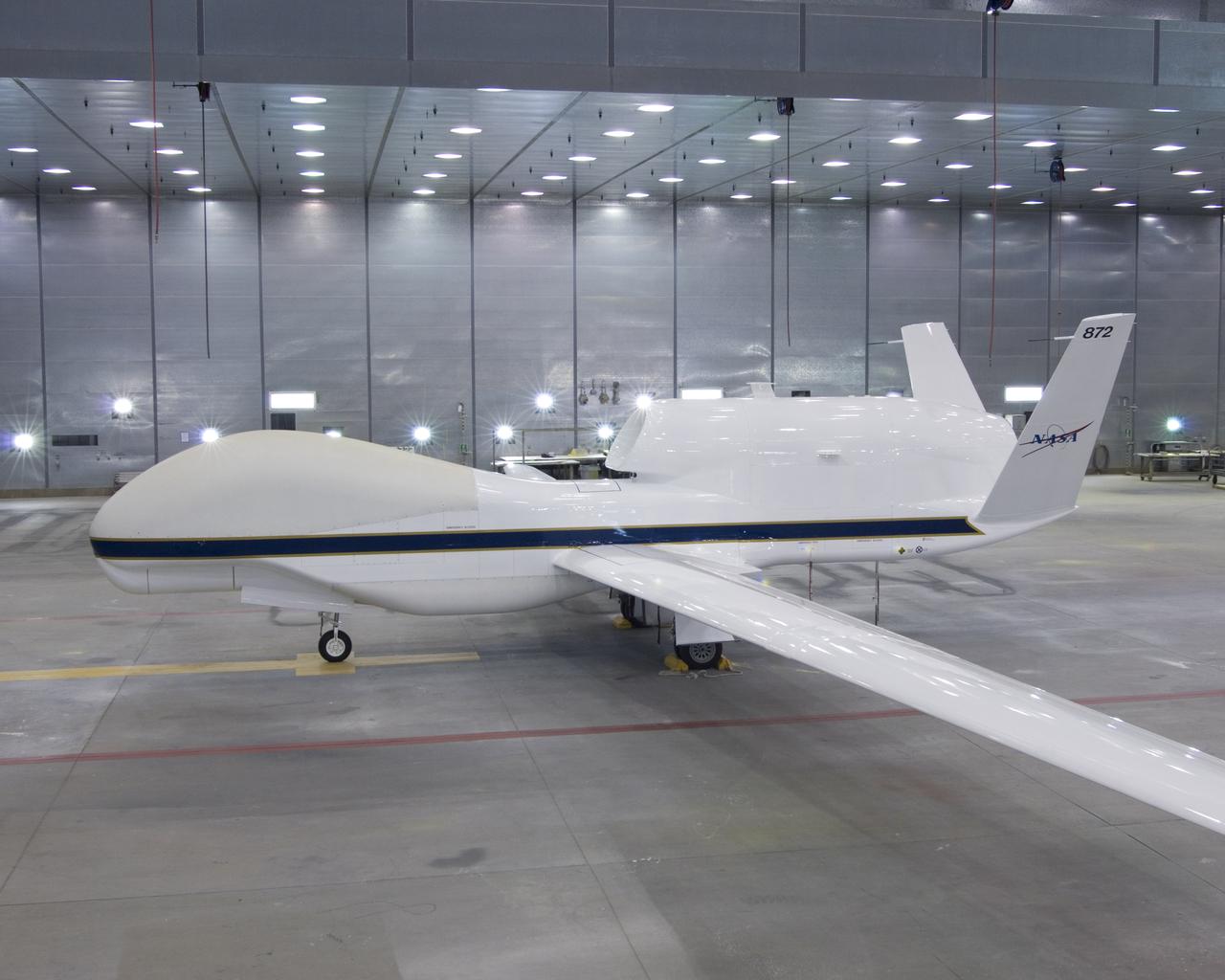
One of NASA's two Global Hawk unmanned aircraft shows off its new blue-and-white livery shortly after being repainted in the Edwards Air Force Base paint hangar.
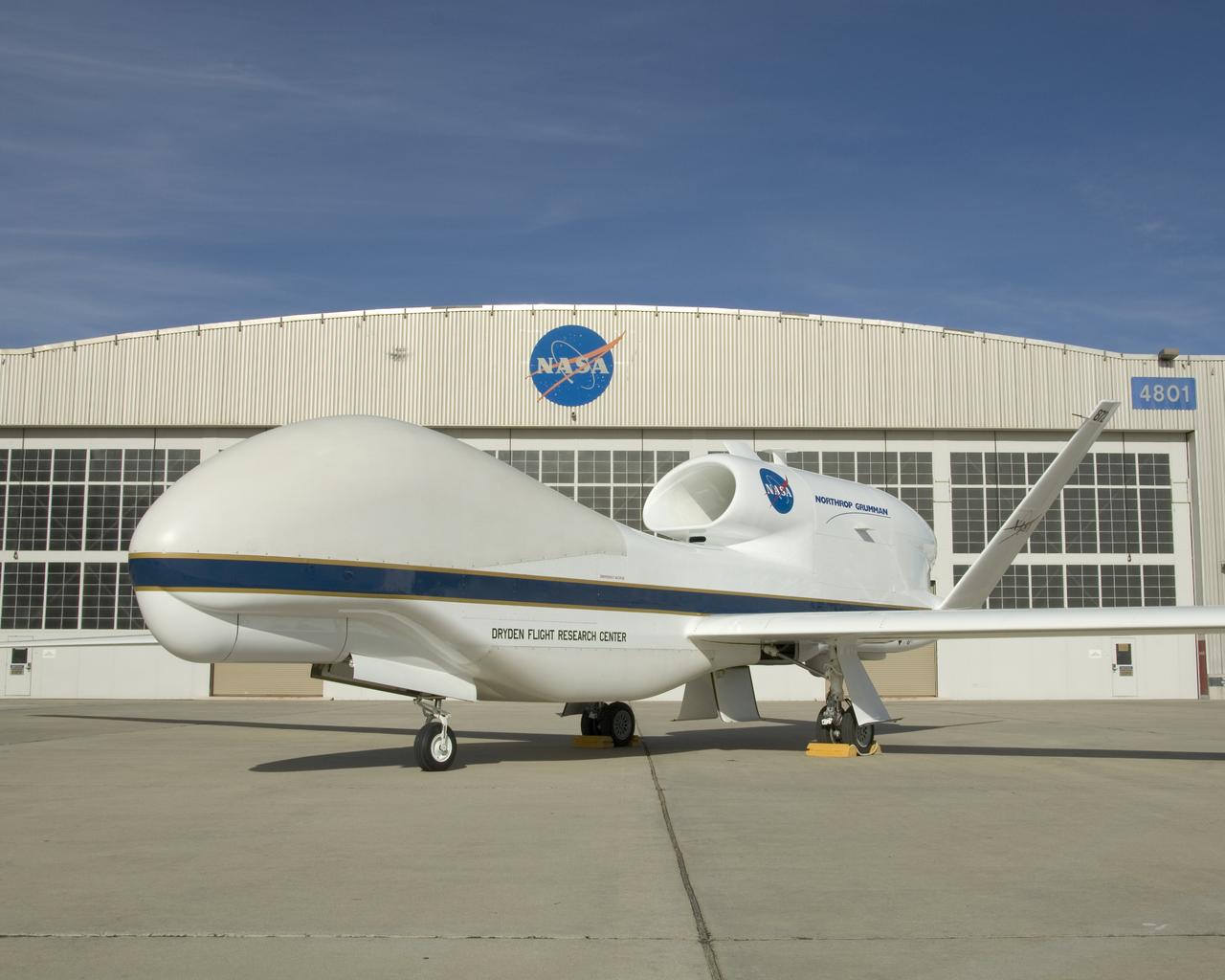
One of NASA's two Global Hawk unmanned high-altitude aircraft shows off its blue-and-white livery in front of its hangar at NASA's Dryden Flight Research Center.
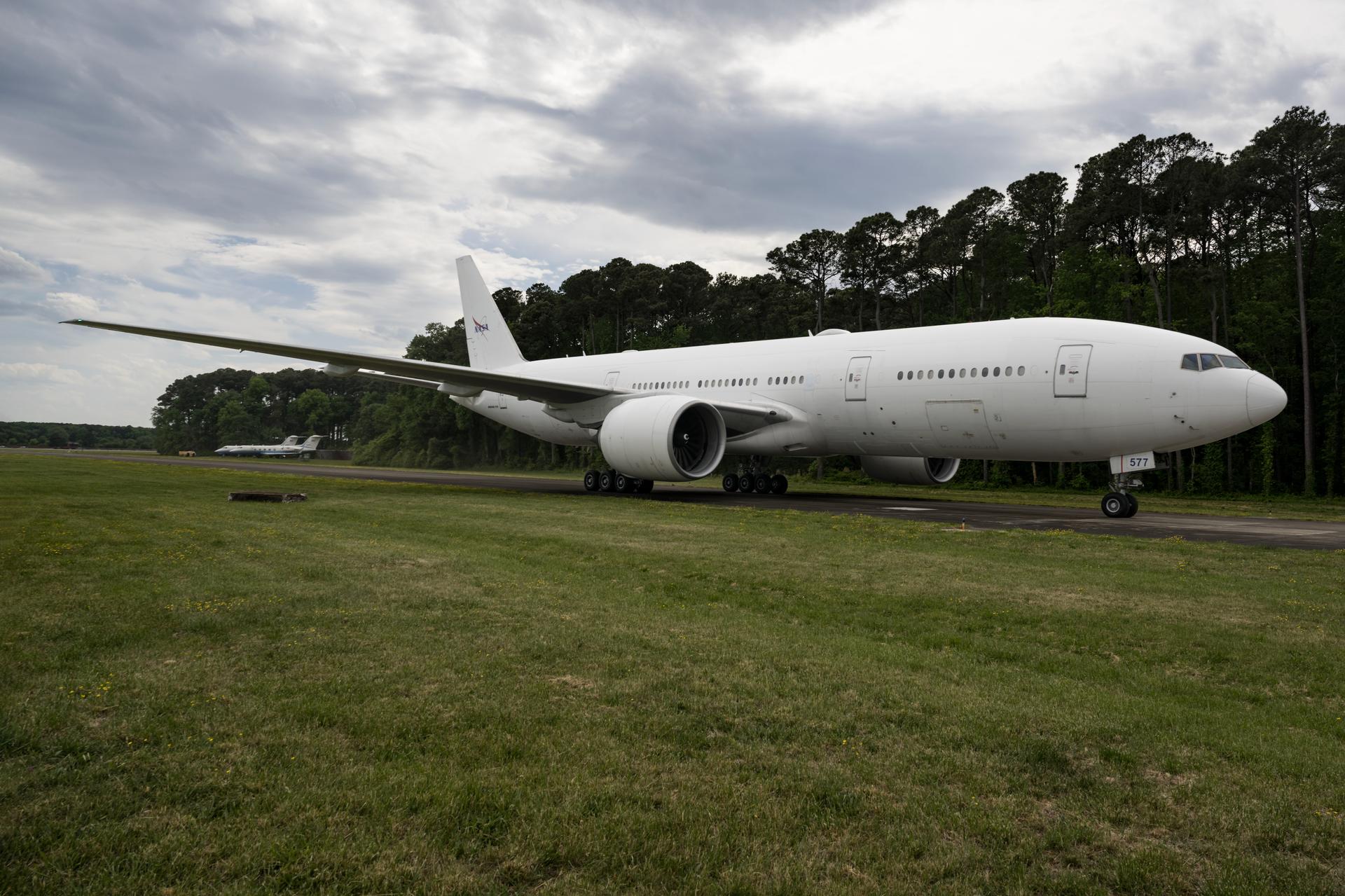
NASA Langley's B777 aircraft before it departs Langley Research Center to receive its new livery (paint job), prior to its departure on July 16th, it received ground maintenance in the center’s hangar. (Photo Credit NASA/ Mark Knopp)
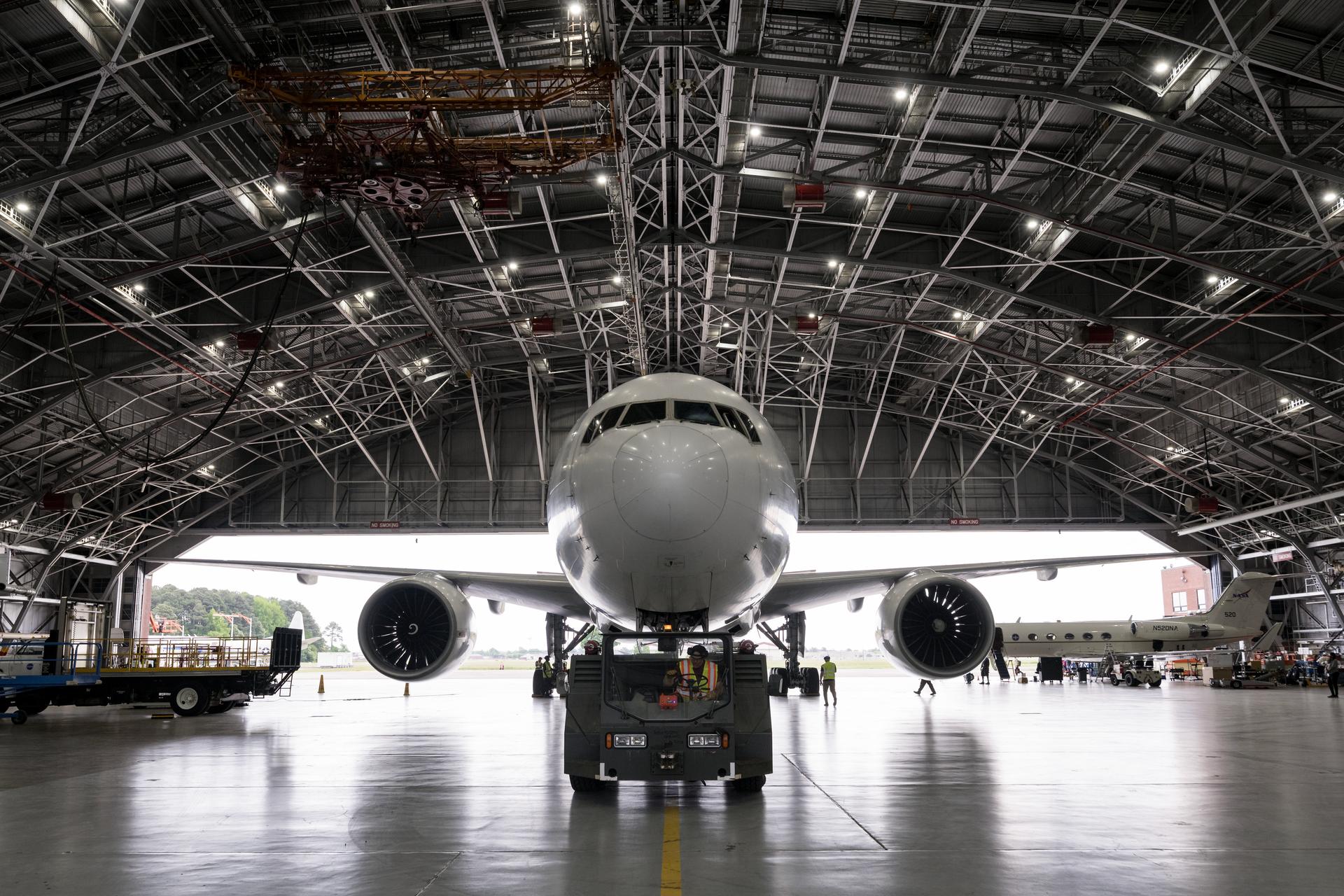
NASA Langley's B777 aircraft before it departs Langley Research Center to receive its new livery (paint job), prior to its departure on July 16th, it received ground maintenance in the center’s hangar. (Photo Credit NASA/ Mark Knopp)
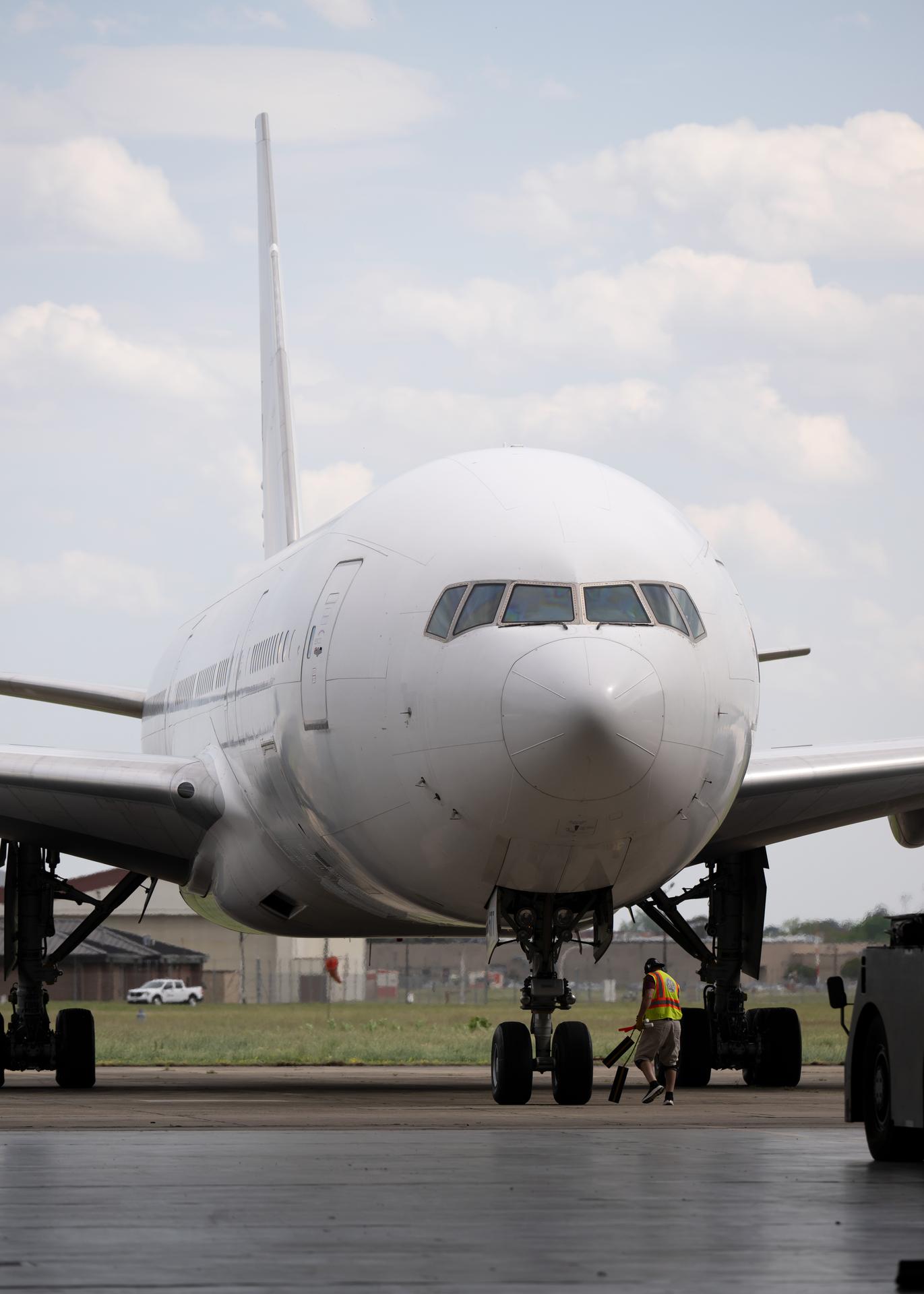
NASA Langley's B777 aircraft before it departs Langley Research Center to receive its new livery (paint job), prior to its departure on July 16th, it received ground maintenance in the center’s hangar. (Photo Credit NASA/ Ryan Hill)
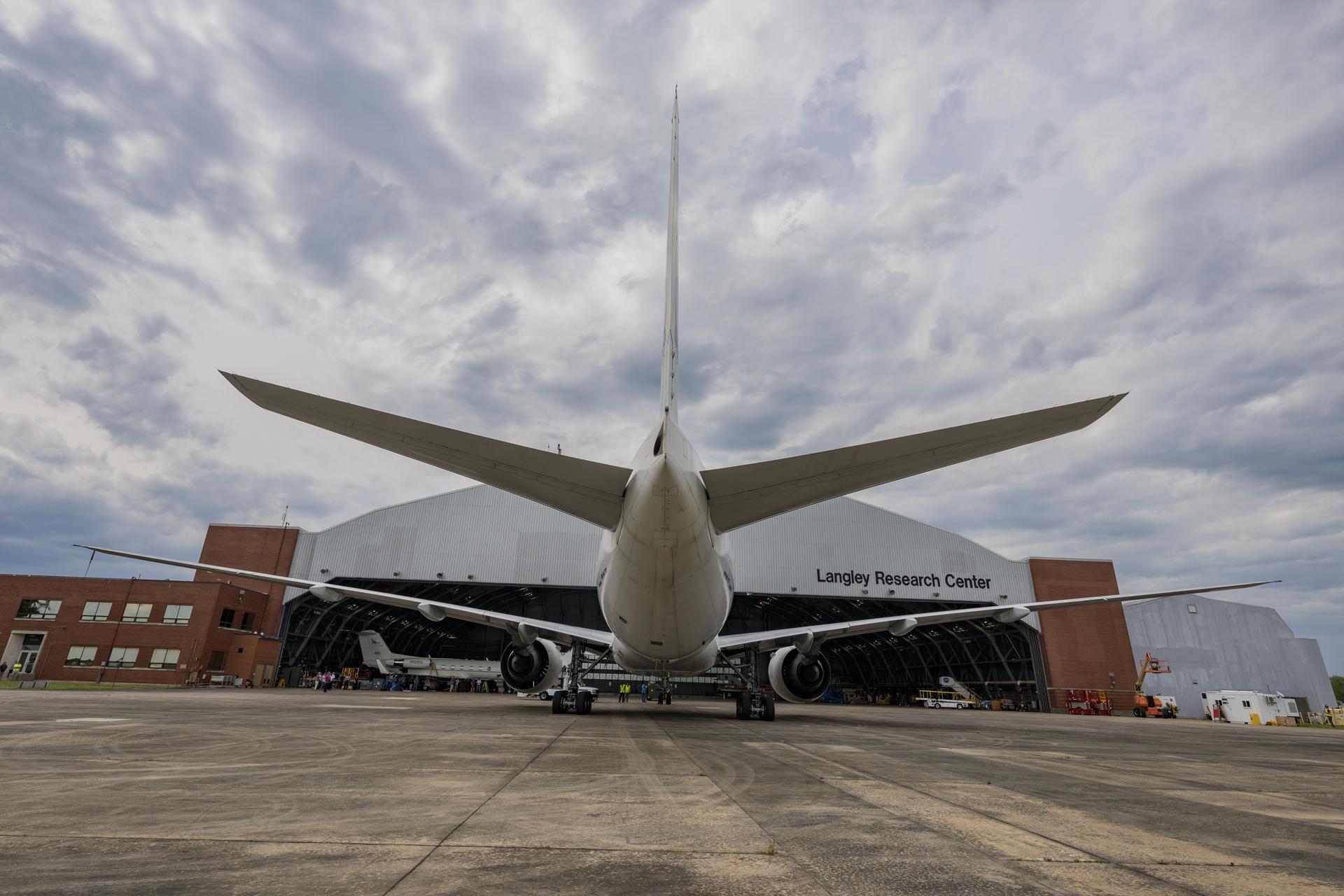
NASA Langley's B777 aircraft before it departs Langley Research Center to receive its new livery (paint job), prior to its departure on July 16th, it received ground maintenance in the center’s hangar. (Photo Credit NASA/ Mark Knopp)
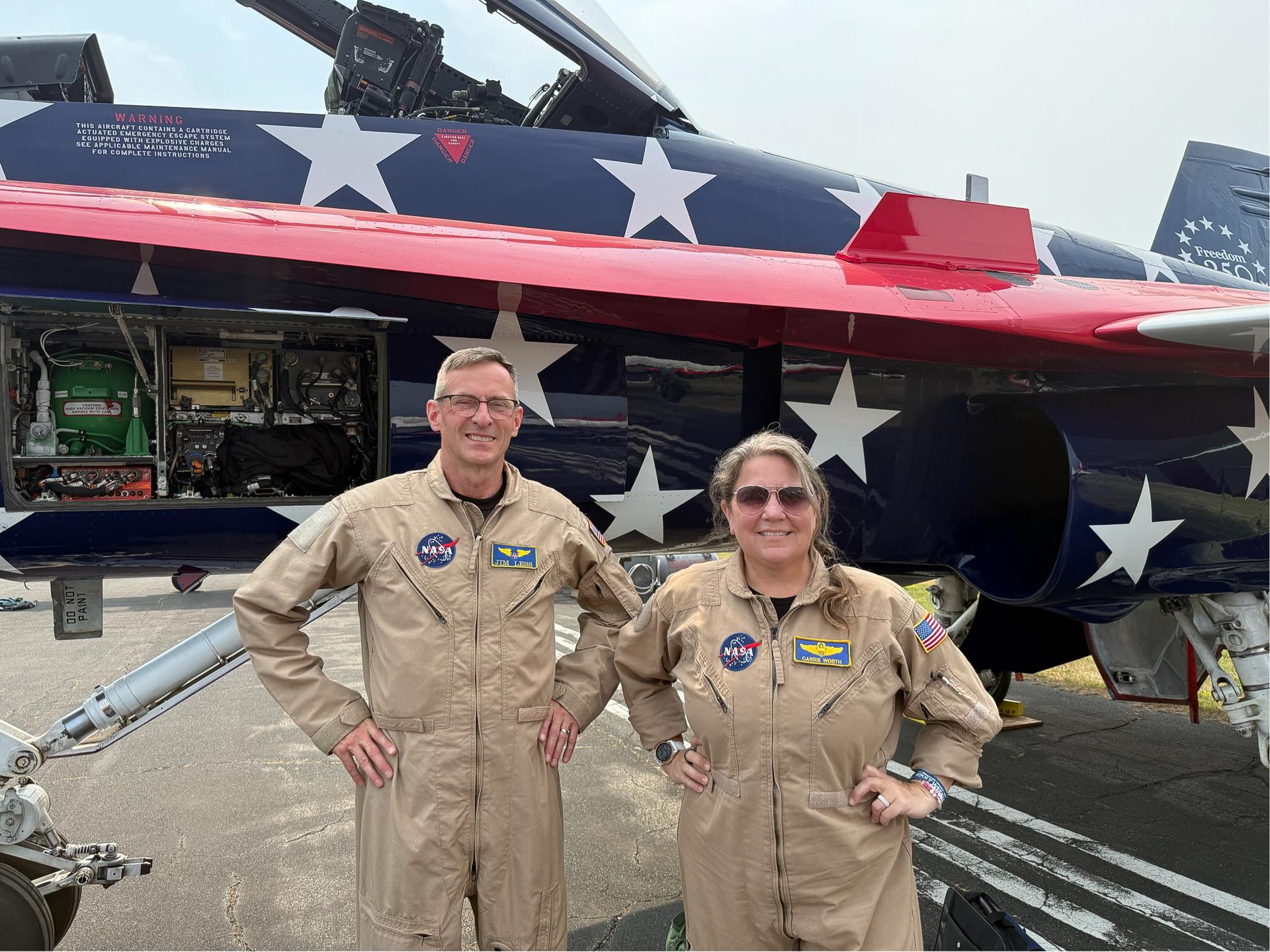
NASA test pilot Jim “Clue” Less and NASA research pilot Carrie Worth stand in front of an F/A-18 Hornet with special patriotic livery celebrating America 250, including navy blue-and-white star covered fuselages and red-and-white striped wings at the 2026 Experimental Aircraft Association (EAA) AirVenture air show in Oshkosh, Wisconsin, on Saturday, July 26, 2026.
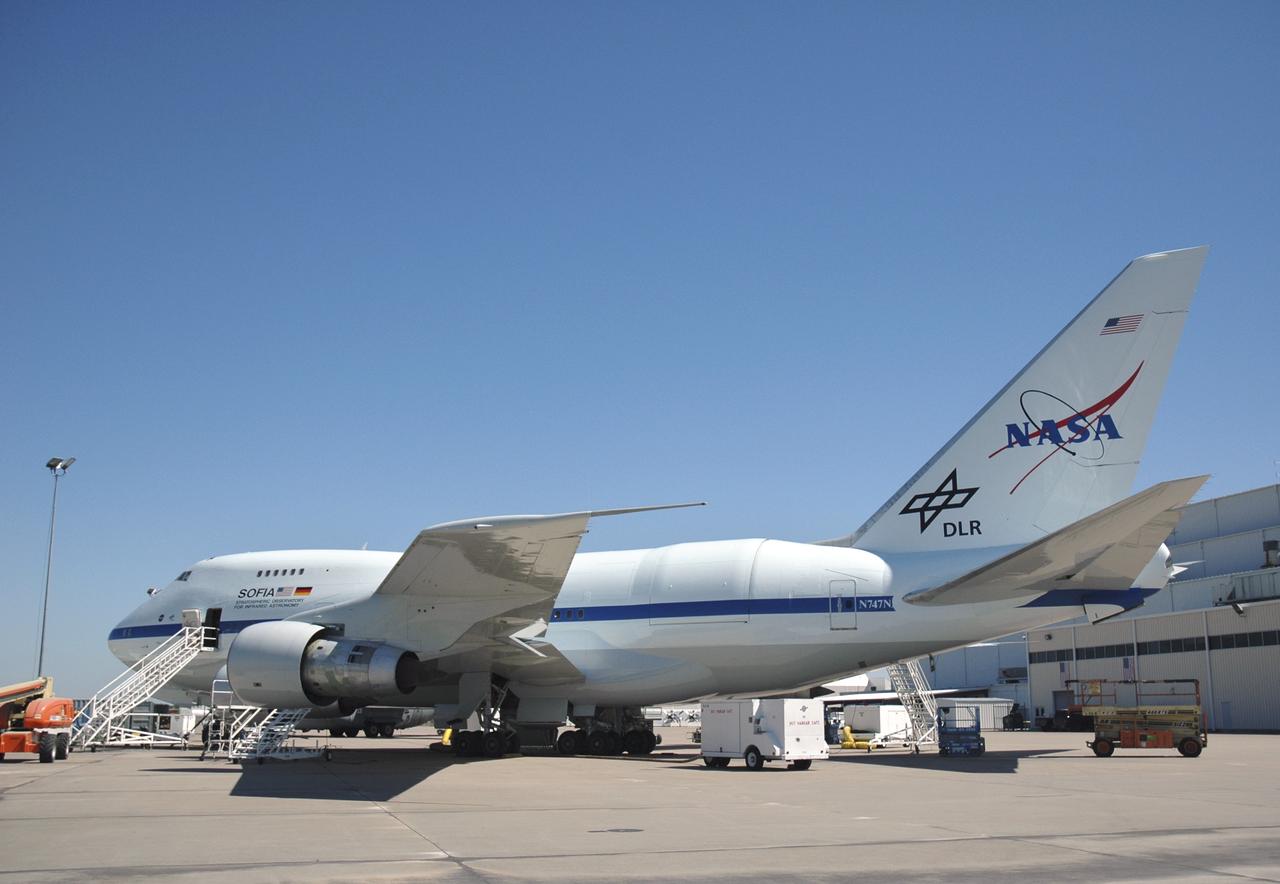
NASA's freshly painted Stratospheric Observatory for Infrared Astronomy (SOFIA) 747SP is shown at L-3 Communications Integrated Systems' facility in Waco, Texas, where major modifications and installation was performed. The observatory, which features a German-built 100-inch (2.5 meter) diameter infrared telescope weighing 20 tons, is approaching the flight test phase as part of a joint program by NASA and DLR Deutsches Zentrum fuer Luft- und Raumfahrt (German Aerospace Center). SOFIA's science and mission operations are being planned jointly by Universities Space Research Association (USRA) and the Deutsches SOFIA Institut (DSI). Once operational, SOFIA will be the world's primary infrared observatory during a mission lasting up to 20 years, as well as an outstanding laboratory for developing and testing instrumentation and detector technology.
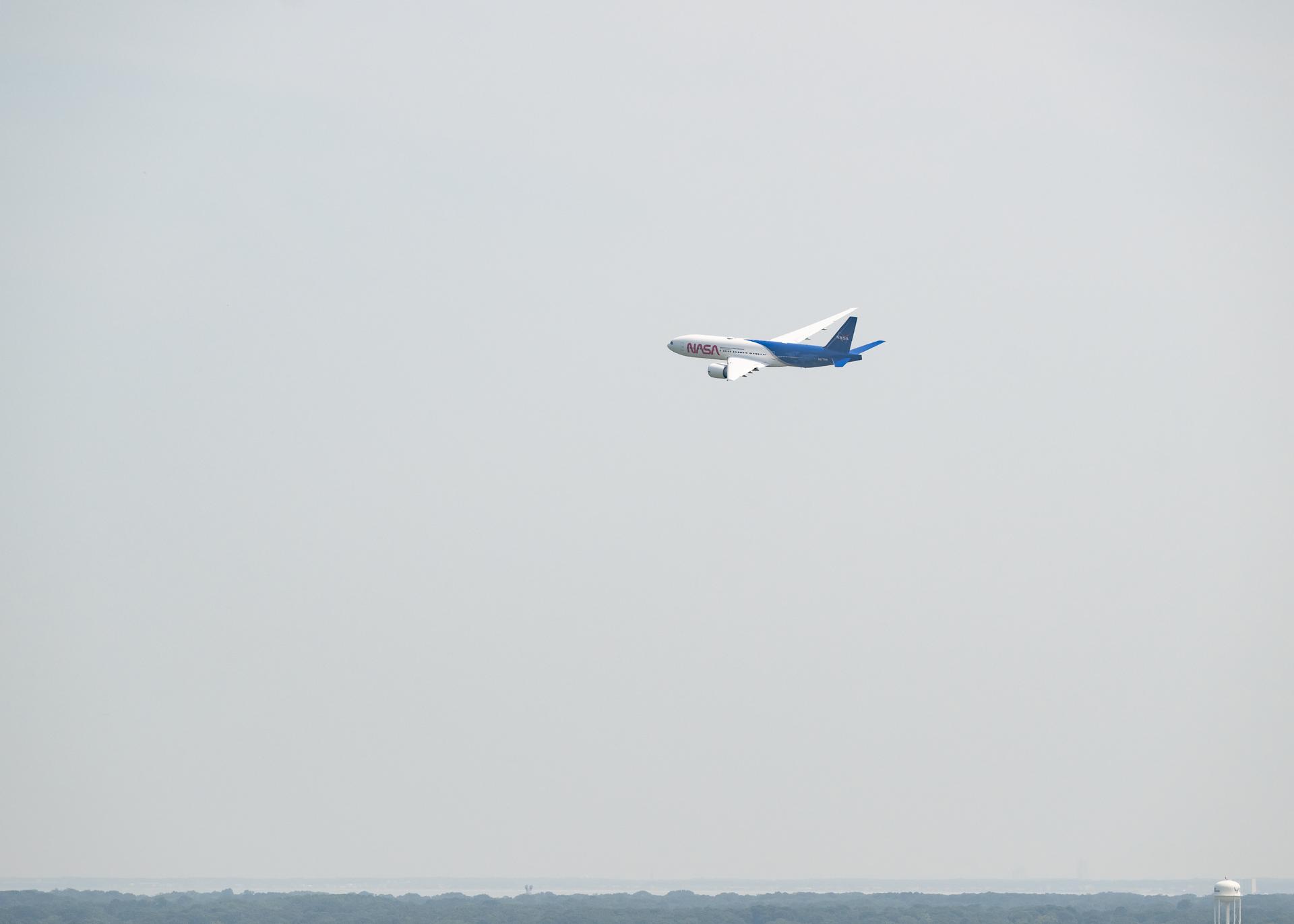
NASA's B777 aircraft returning to NASA Langley Research Center the 31st of July in Hampton, Virginia after a new paint job. It will now continue its maintenance and instrument integration schedule to prepare for its initial airborne science flights in 2027. (Photo Credit NASA/ Ryan Hill)
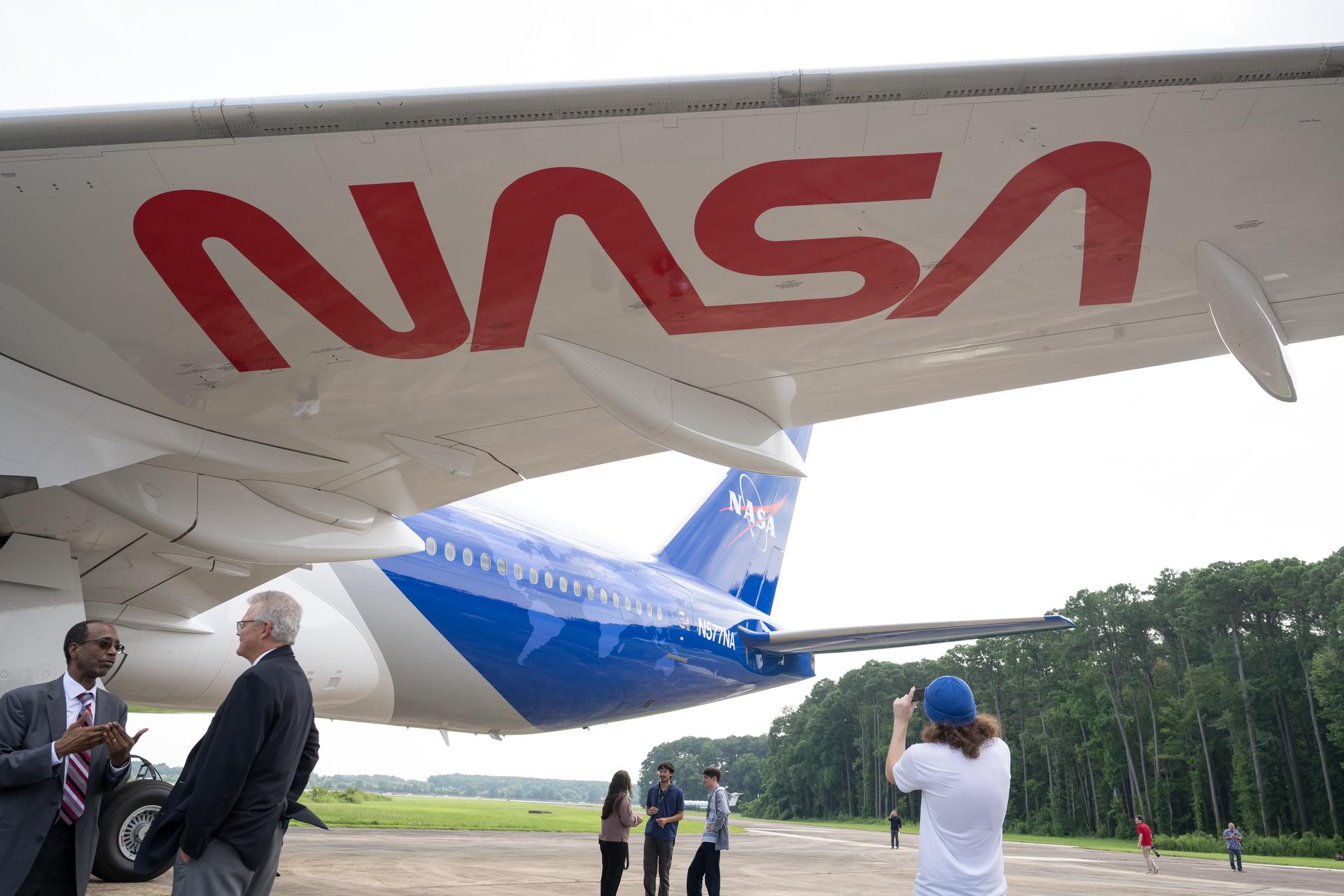
NASA's B777 aircraft returning to NASA Langley Research Center the 31st of July in Hampton, Virginia after a new paint job. It will now continue its maintenance and instrument integration schedule to prepare for its initial airborne science flights in 2027. Photo Credit NASA/ Ryan Hill)
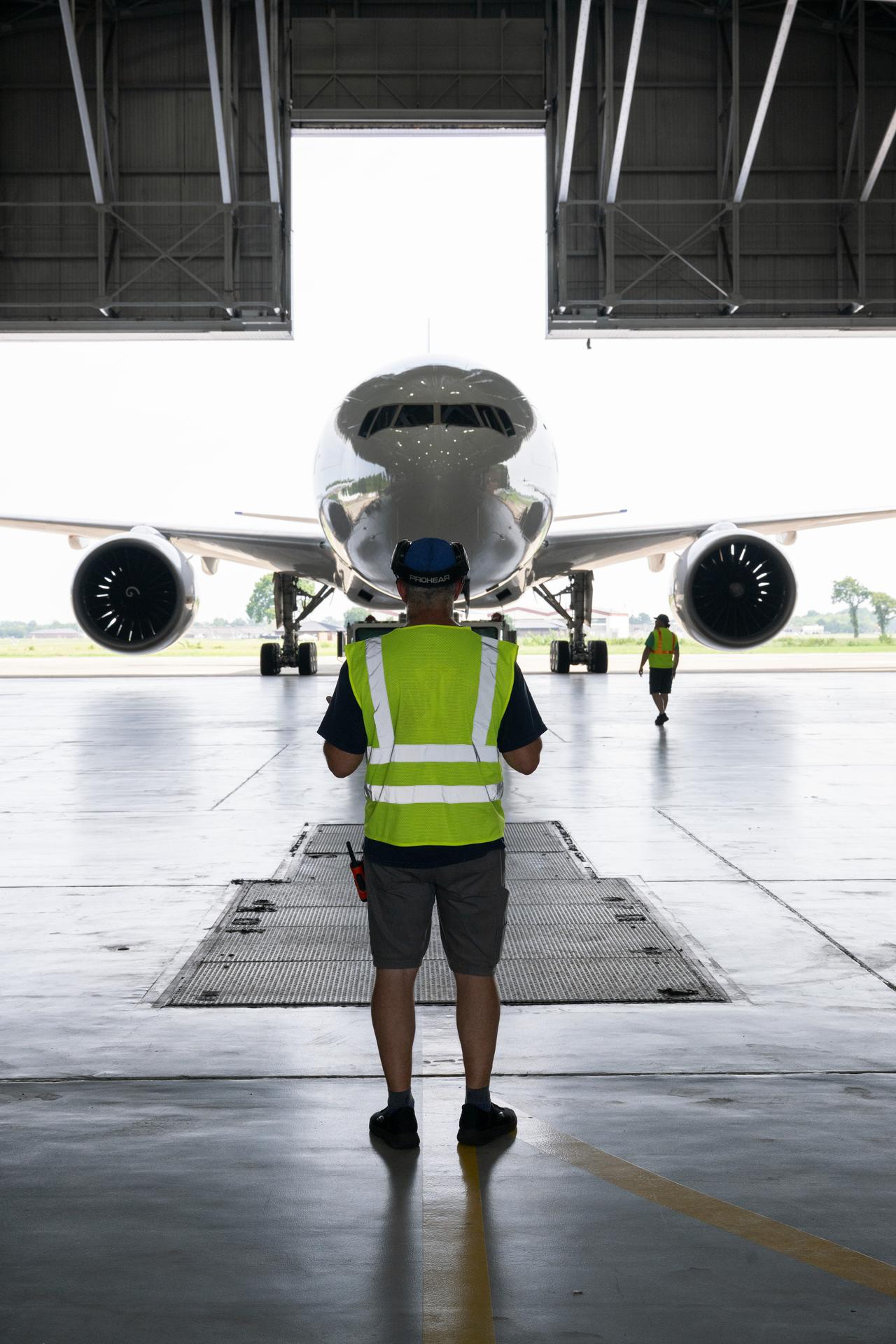
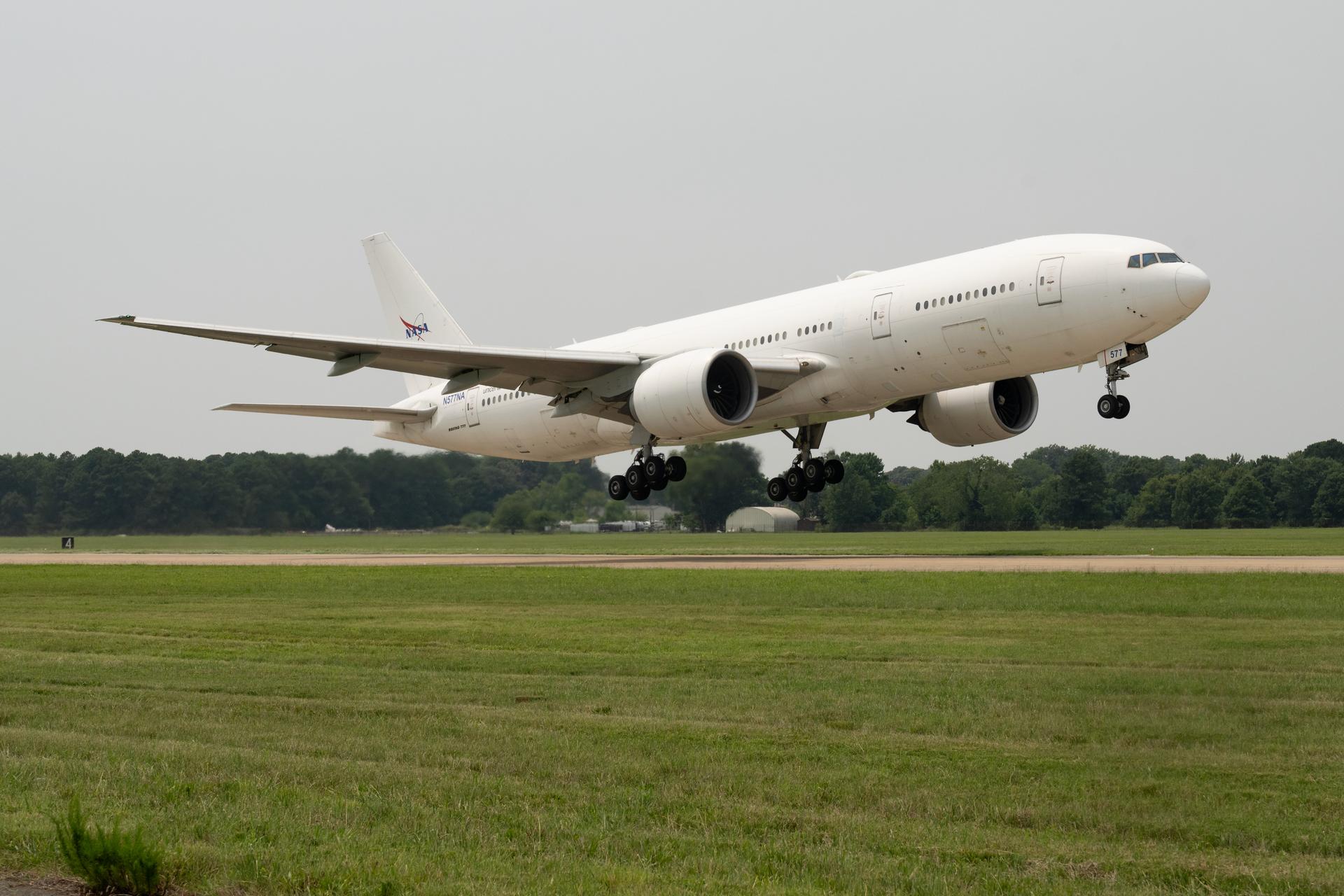
NASA's B777 aircraft as it returns to NASA Langley Research Center the 31st of July in Hampton, Virginia. It will now continue its maintenance and instrument integration schedule to prepare for its initial airborne science flights in 2027. Photo Credit NASA/ Ryan Hill)
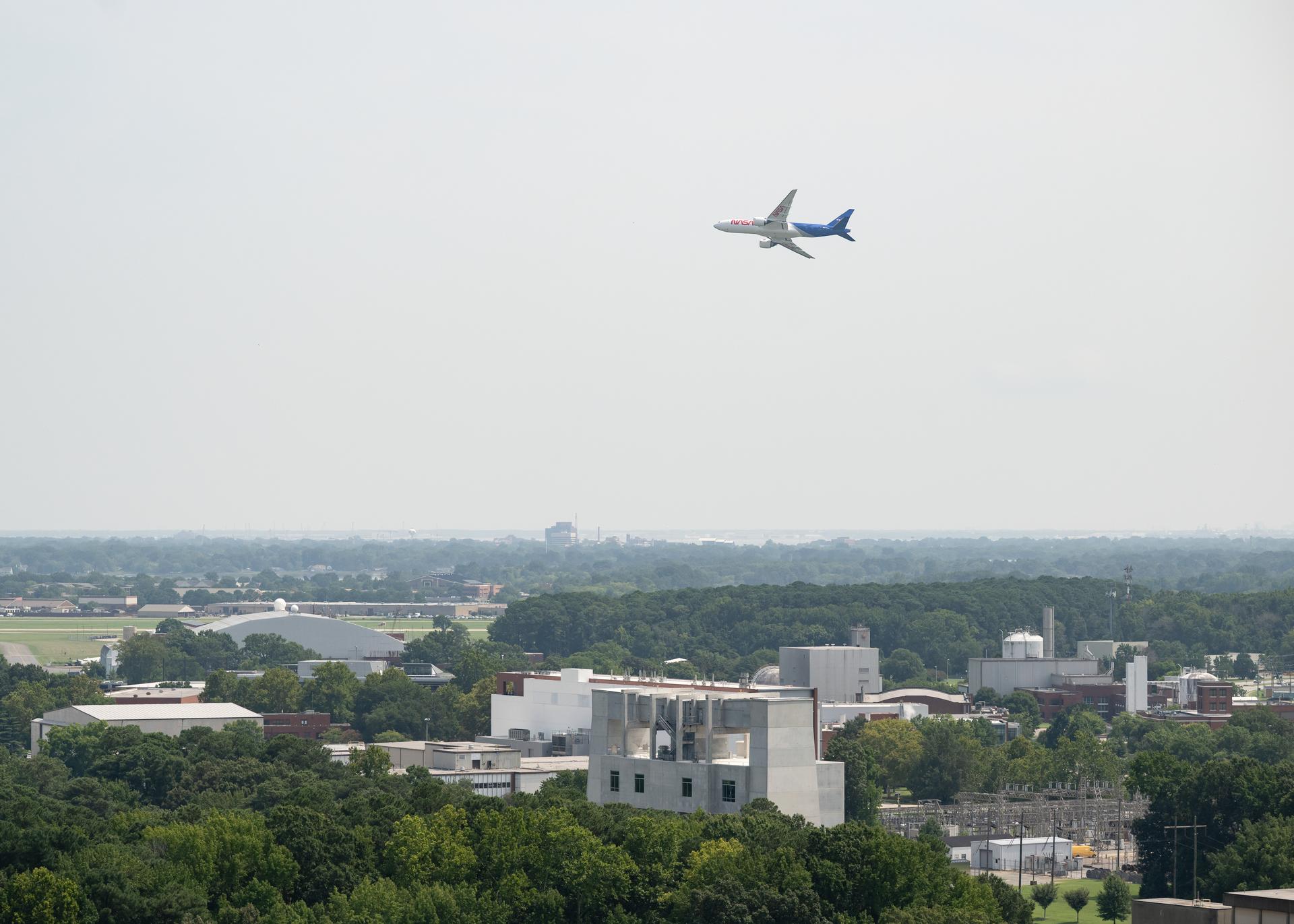
NASA's B777 aircraft returning to NASA Langley Research Center the 31st of July in Hampton, Virginia after a new paint job. It will now continue its maintenance and instrument integration schedule to prepare for its initial airborne science flights in 2027. (Photo Credit NASA/ Ryan Hill)
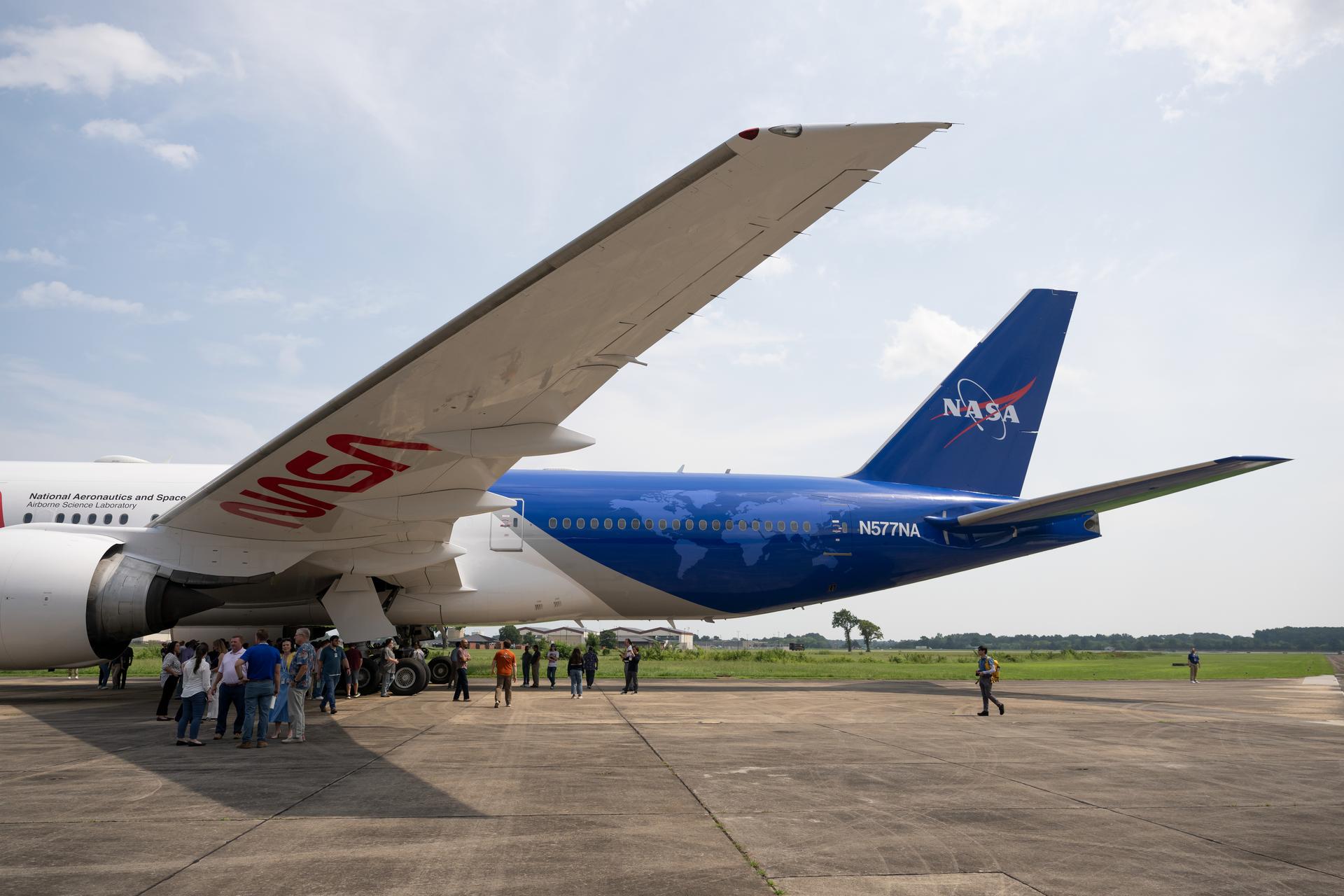
NASA's B777 aircraft returning to NASA Langley Research Center the 31st of July in Hampton, Virginia after a new paint job. It will now continue its maintenance and instrument integration schedule to prepare for its initial airborne science flights in 2027. Photo Credit NASA/ Ryan Hill)
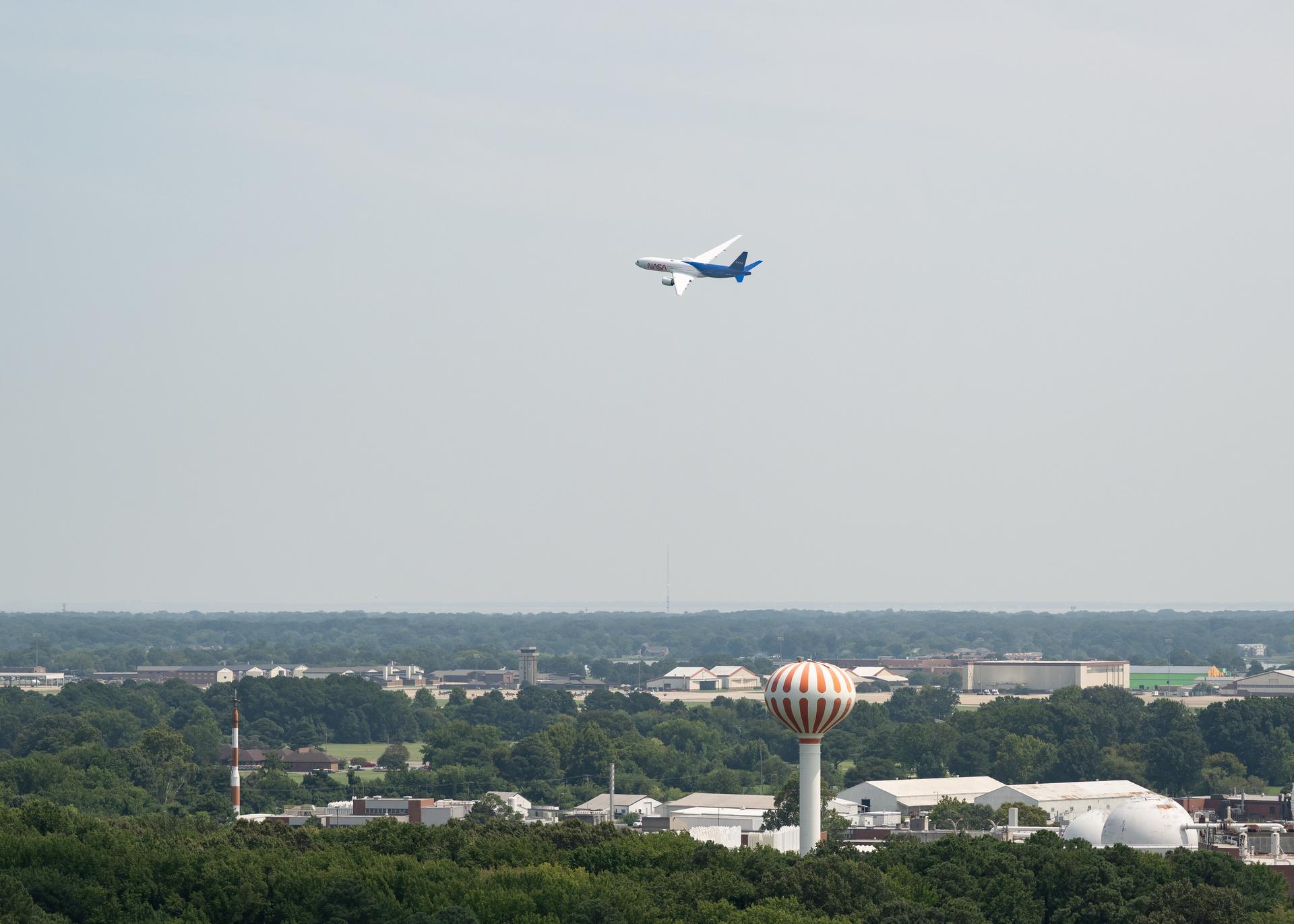
NASA's B777 aircraft returning to NASA Langley Research Center the 31st of July in Hampton, Virginia after a new paint job. It will now continue its maintenance and instrument integration schedule to prepare for its initial airborne science flights in 2027. Photo Credit NASA/ Ryan Hill)
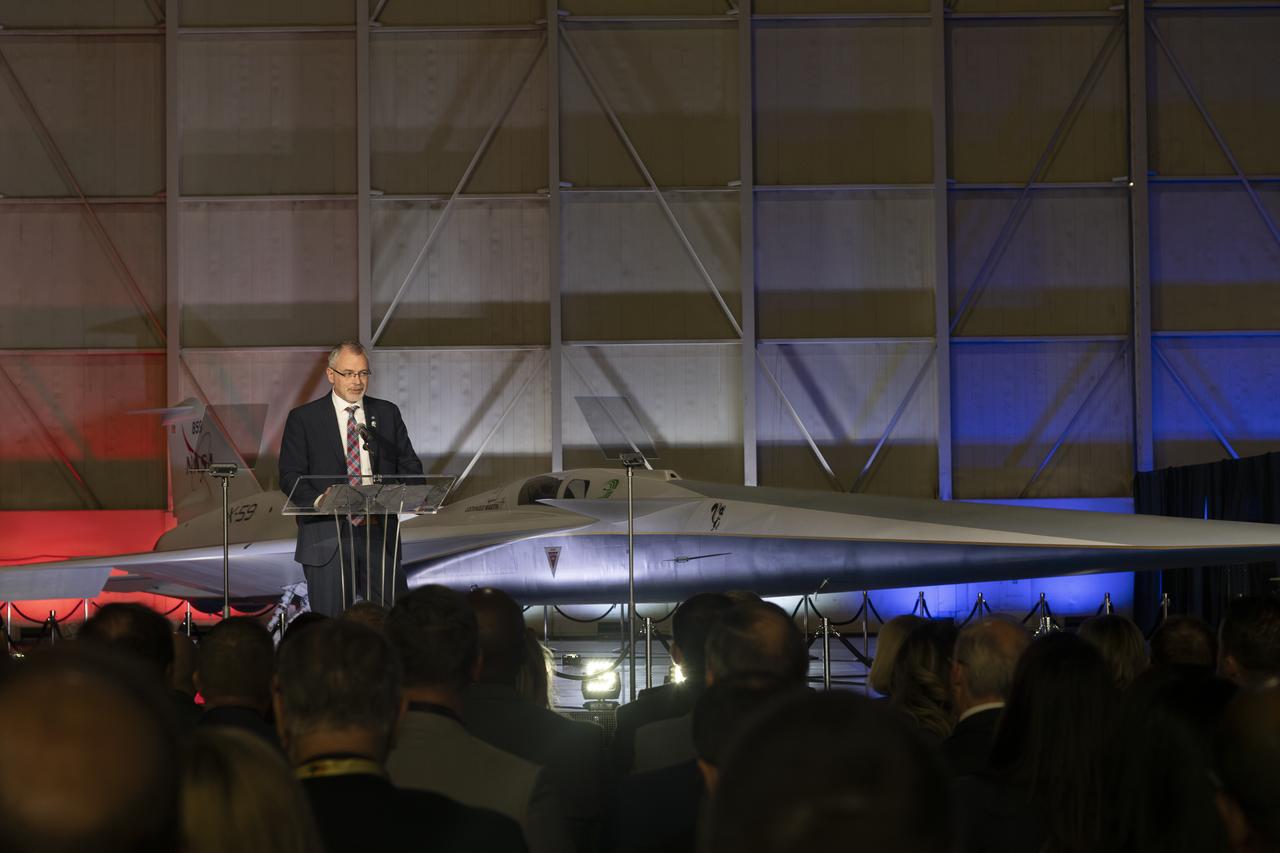
NASA Associate Administrator Jim Free speaks on stage following the unveiling of the agency’s X-59 quiet supersonic research aircraft at a January 12, 2024 event at Lockheed Martin Skunk Works in Palmdale, California. The X-59 is the centerpiece of NASA’s Quesst mission, which seeks to solve one of the major barriers to supersonic flight over land, currently banned in the United States, by making sonic booms quieter.
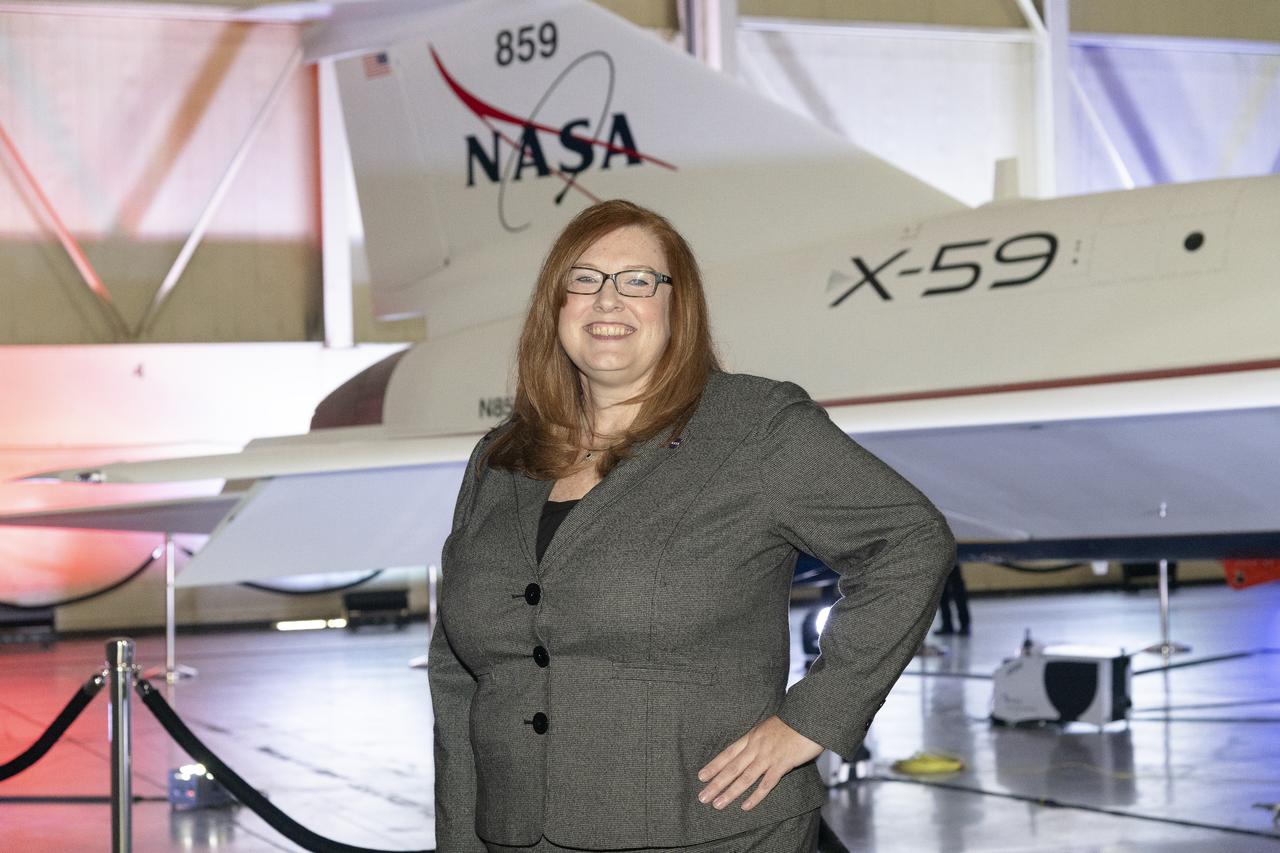
NASA’s project manager for the Low Boom Flight Demonstrator project, Cathy Bahm, poses in front of the agency’s X-59 quiet supersonic research aircraft at a January 12, 2024 event at Lockheed Martin Skunk Works in Palmdale, California. The X-59 is the centerpiece of NASA’s Quesst mission, which seeks to solve one of the major barriers to supersonic flight over land, currently banned in the United States, by making sonic booms quieter.

NASA Deputy Administrator Pam Melroy speaks on stage immediately following the unveiling of the agency’s X-59 quiet supersonic research aircraft at a January 12, 2024 event at Lockheed Martin Skunk Works in Palmdale, California. The X-59 is the centerpiece of NASA’s Quesst mission, which seeks to solve one of the major barriers to supersonic flight over land, currently banned in the United States, by making sonic booms quieter.
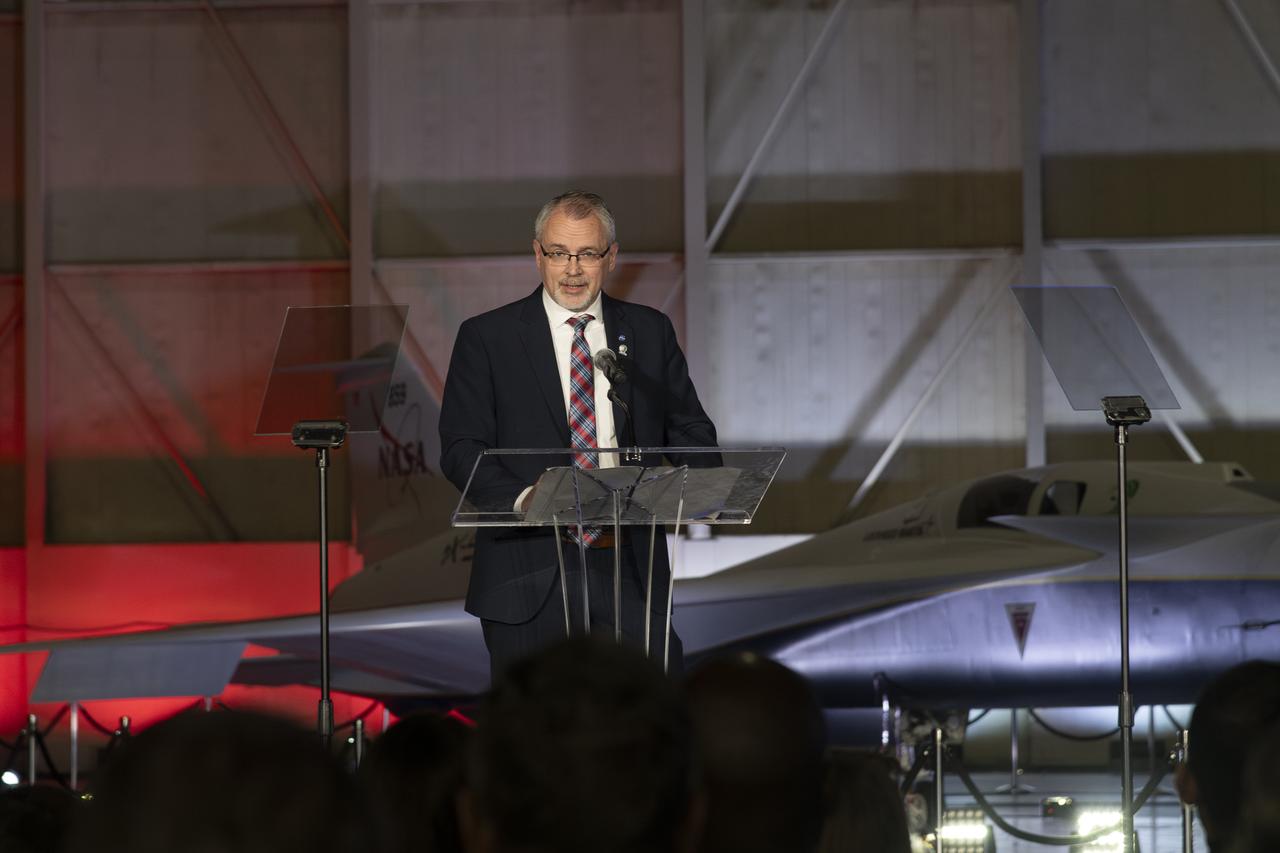
NASA Associate Administrator Jim Free speaks on stage following the unveiling of the agency’s X-59 quiet supersonic research aircraft at a January 12, 2024 event at Lockheed Martin Skunk Works in Palmdale, California. The X-59 is the centerpiece of NASA’s Quesst mission, which seeks to solve one of the major barriers to supersonic flight over land, currently banned in the United States, by making sonic booms quieter.
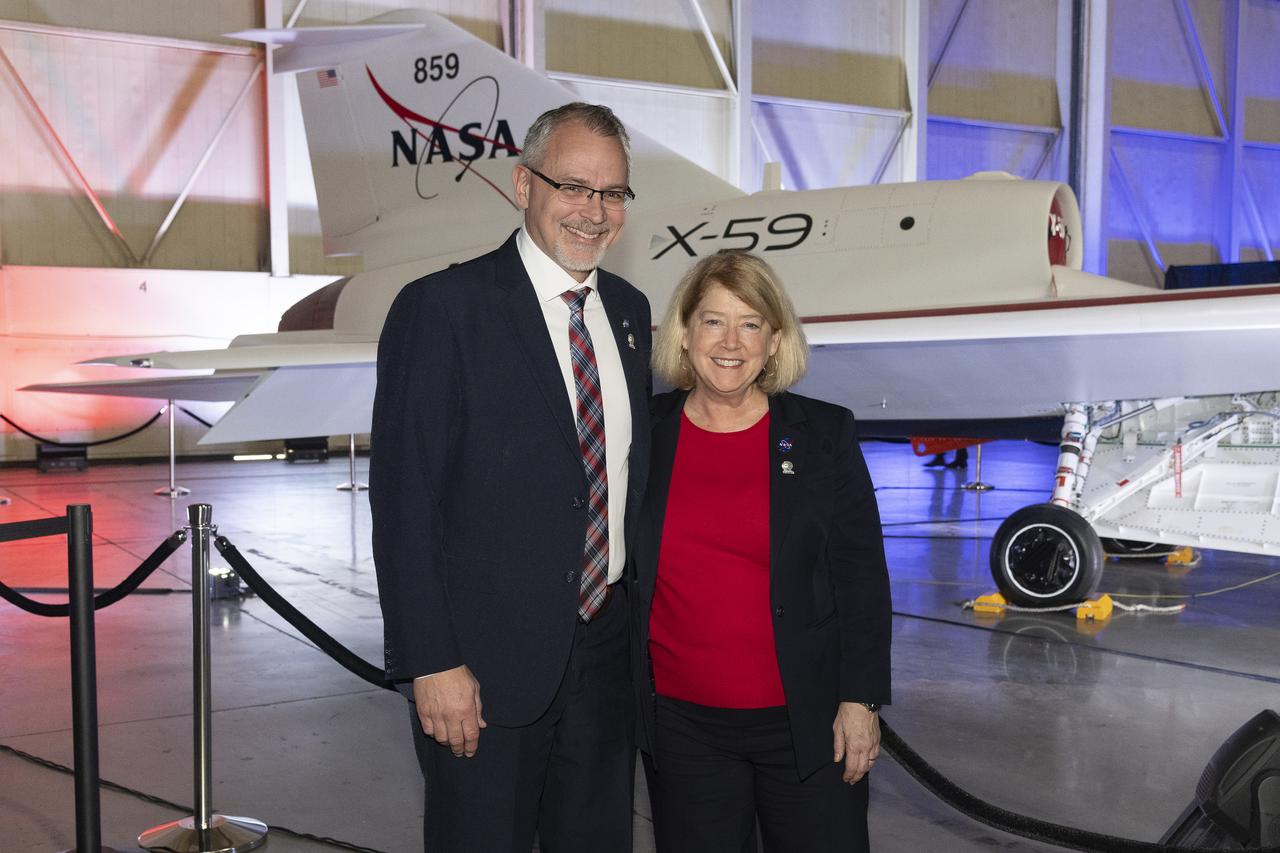
NASA Associate Administrator Jim Free (left) and Deputy Administrator Pam Melroy (right) stand in front of the newly unveiled X-59 quiet supersonic research aircraft at a January 12, 2024 event at Lockheed Martin Skunk Works in Palmdale, California. The X-59 is the centerpiece of NASA’s Quesst mission, which seeks to solve one of the major barriers to supersonic flight over land, currently banned in the United States, by making sonic booms quieter.
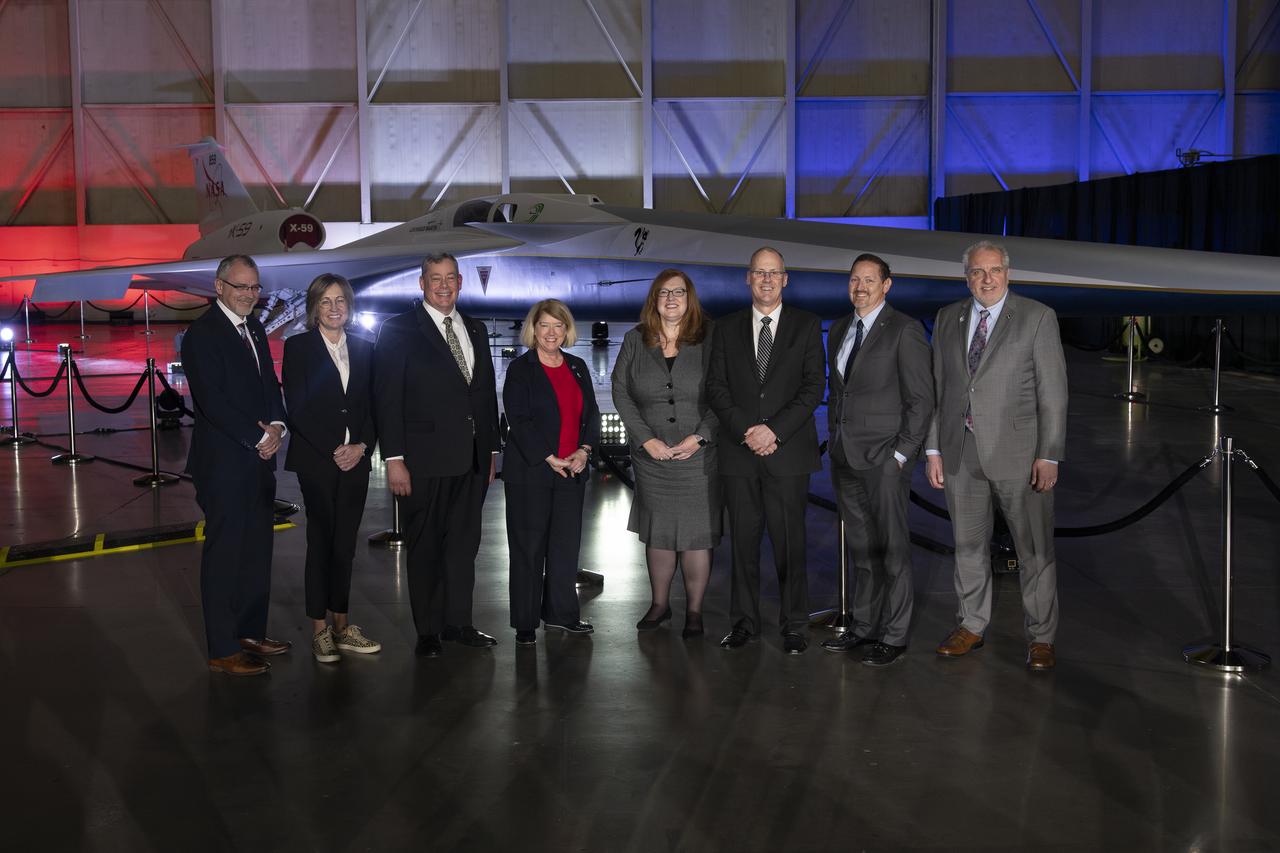
(from left to right) NASA Associate Administrator Jim Free, California Senior Economic Advisor to the Governor Dee Dee Myers, Lockheed Martin Executive Vice President of Aeronautics Greg Ulmer, NASA Deputy Administrator Pam Melroy, Low Boom Flight Demonstrator Project Manager Cathy Bahm, Lockheed Martin X-59 Project Manager David Richardson, Lockheed Martin Skunk Works Vice President and General Manager John Clark, and NASA Associate Administrator for the Aeronautics Research Mission Directorate Bob Pearce pose in front of the agency’s X-59 quiet supersonic research aircraft at a January 12, 2024 event at Lockheed Martin Skunk Works in Palmdale, California. The X-59 is the centerpiece of NASA’s Quesst mission, which seeks to solve one of the major barriers to supersonic flight over land, currently banned in the United States, by making sonic booms quieter.
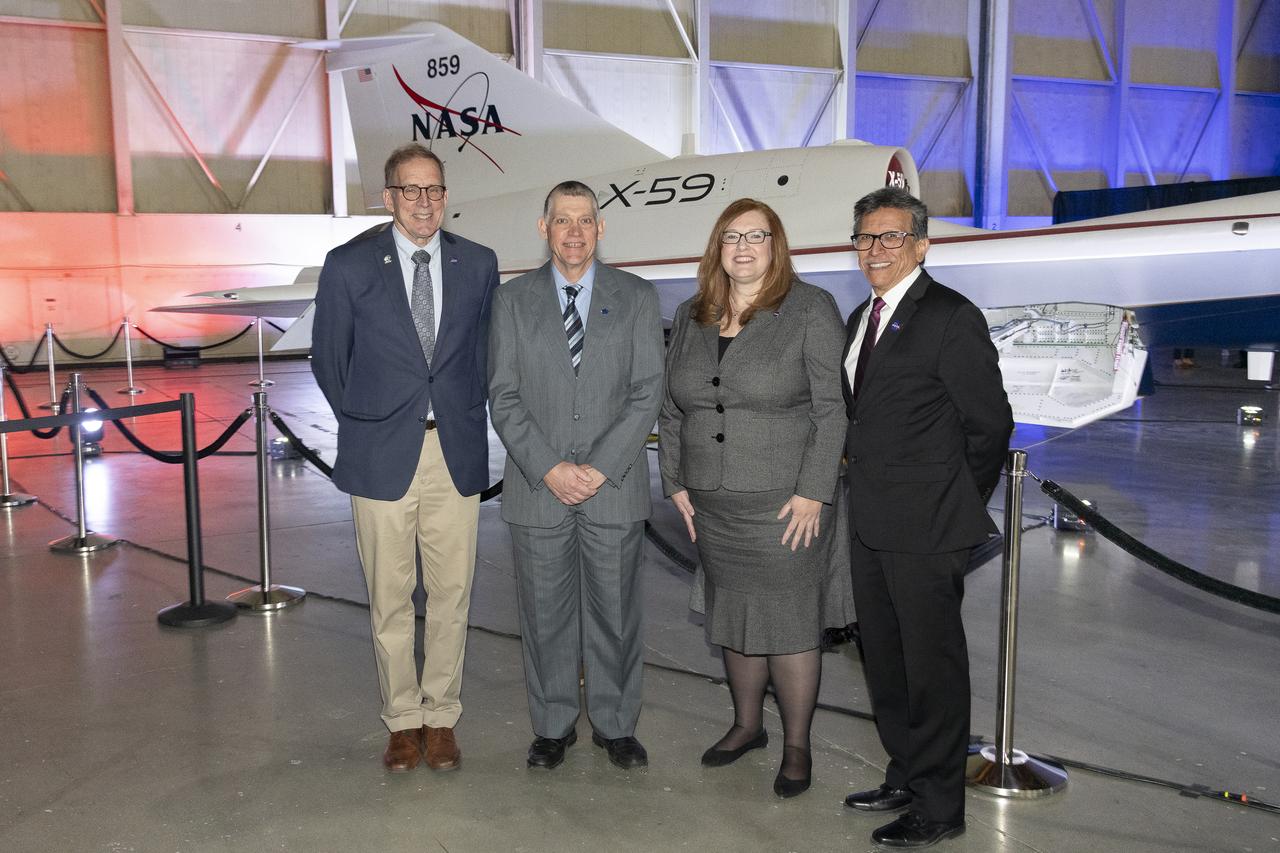
(from left to right), Quesst Mission Integration Manager Peter Coen, Chief Engineer Jay Brandon, Low Boom Flight Demonstrator Project Manager Cathy Bahm, and Structures Lead Dr. Walt Silva pose in front of the agency’s X-59 quiet supersonic research aircraft at a January 12, 2024 event at Lockheed Martin Skunk Works in Palmdale, California. The X-59 is the centerpiece of NASA’s Quesst mission, which seeks to solve one of the major barriers to supersonic flight over land, currently banned in the United States, by making sonic booms quieter.
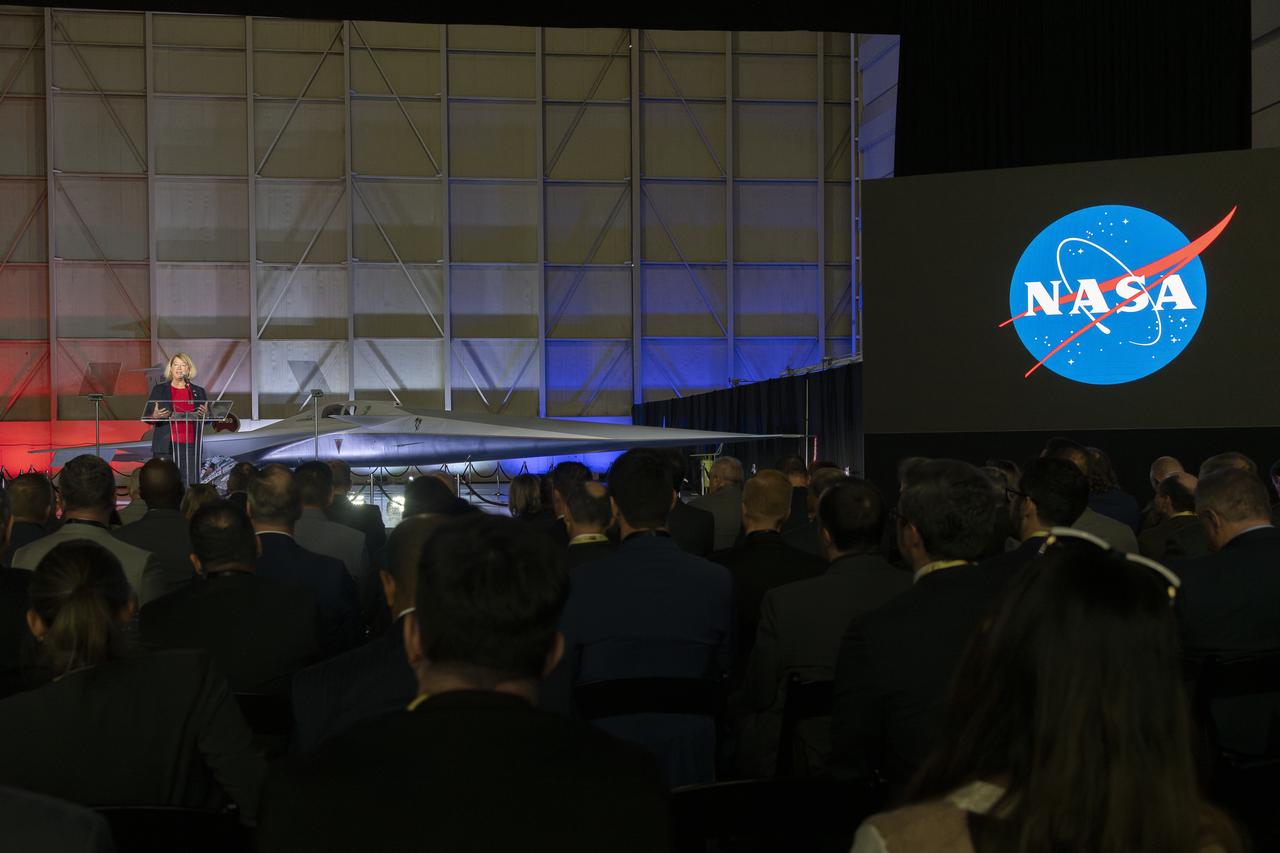
NASA Deputy Administrator Pam Melroy speaks on stage immediately following the unveiling of the agency’s X-59 quiet supersonic research aircraft at a January 12, 2024 event at Lockheed Martin Skunk Works in Palmdale, California. The X-59 is the centerpiece of NASA’s Quesst mission, which seeks to solve one of the major barriers to supersonic flight over land, currently banned in the United States, by making sonic booms quieter.
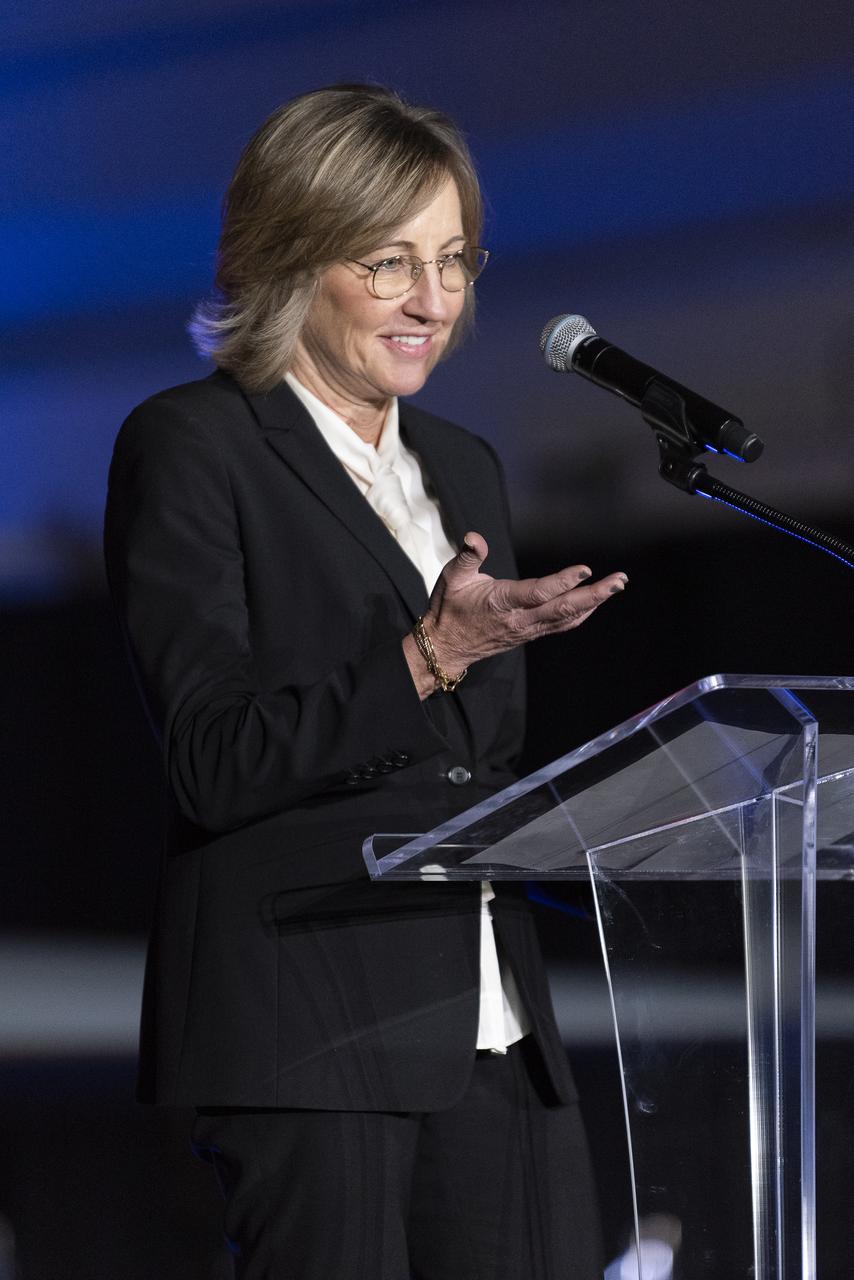
California Senior Economic Advisor to the Governor Dee Dee Myers speaks on stage following the unveiling of the agency’s X-59 quiet supersonic research aircraft at a January 12, 2024 event at Lockheed Martin Skunk Works in Palmdale, California. The X-59 is the centerpiece of NASA’s Quesst mission, which seeks to solve one of the major barriers to supersonic flight over land, currently banned in the United States, by making sonic booms quieter.
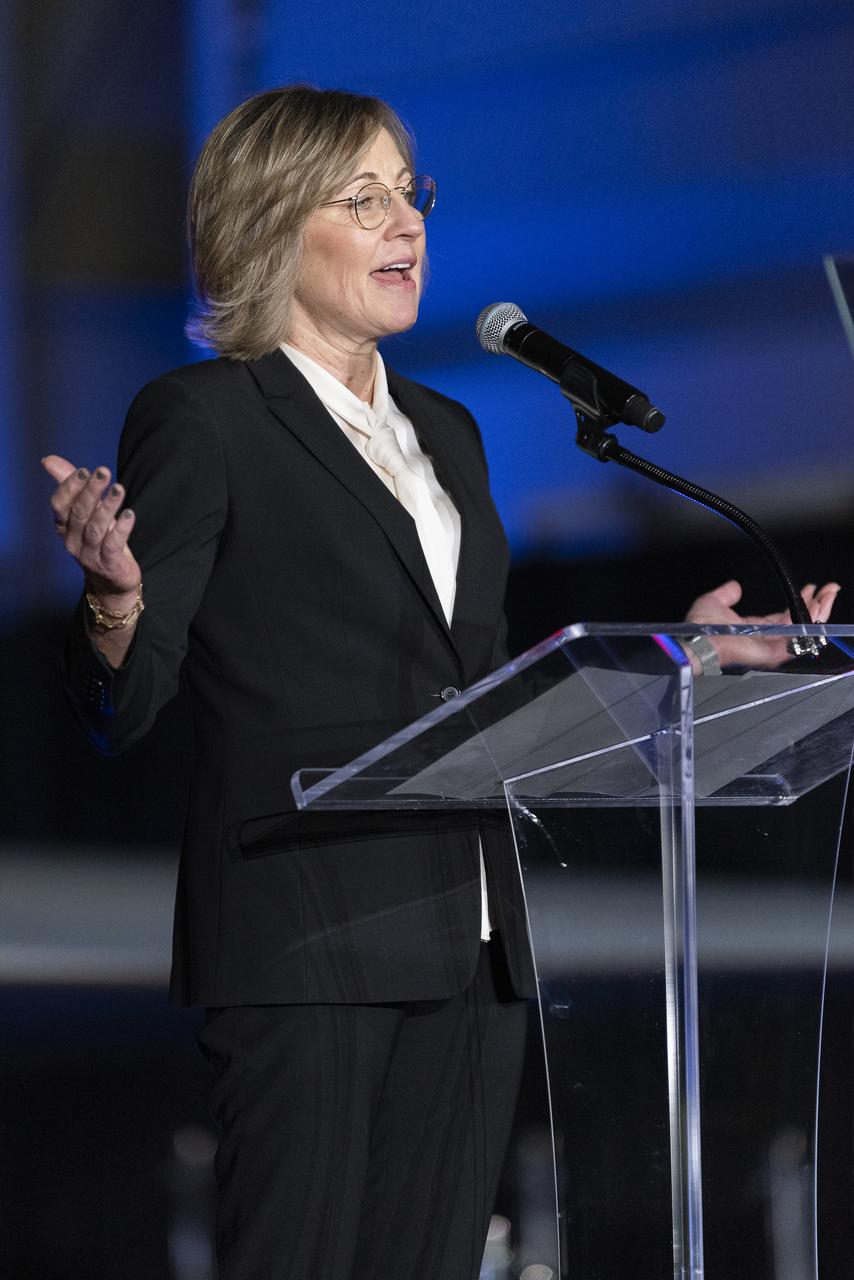
California Senior Economic Advisor to the Governor Dee Dee Myers speaks on stage following the unveiling of the agency’s X-59 quiet supersonic research aircraft at a January 12, 2024 event at Lockheed Martin Skunk Works in Palmdale, California. The X-59 is the centerpiece of NASA’s Quesst mission, which seeks to solve one of the major barriers to supersonic flight over land, currently banned in the United States, by making sonic booms quieter.
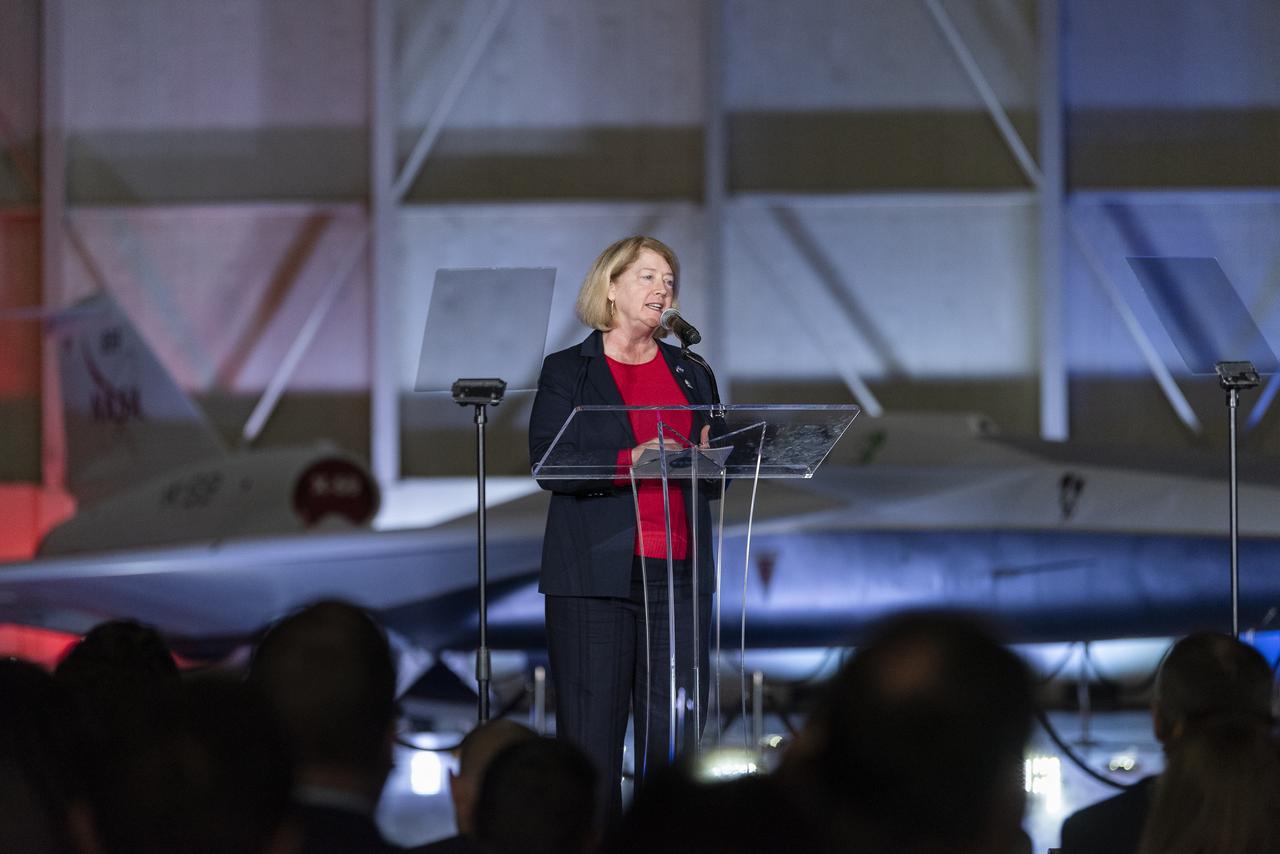
NASA Deputy Administrator Pam Melroy speaks on stage immediately following the unveiling of the agency’s X-59 quiet supersonic research aircraft at a January 12, 2024 event at Lockheed Martin Skunk Works in Palmdale, California. The X-59 is the centerpiece of NASA’s Quesst mission, which seeks to solve one of the major barriers to supersonic flight over land, currently banned in the United States, by making sonic booms quieter.
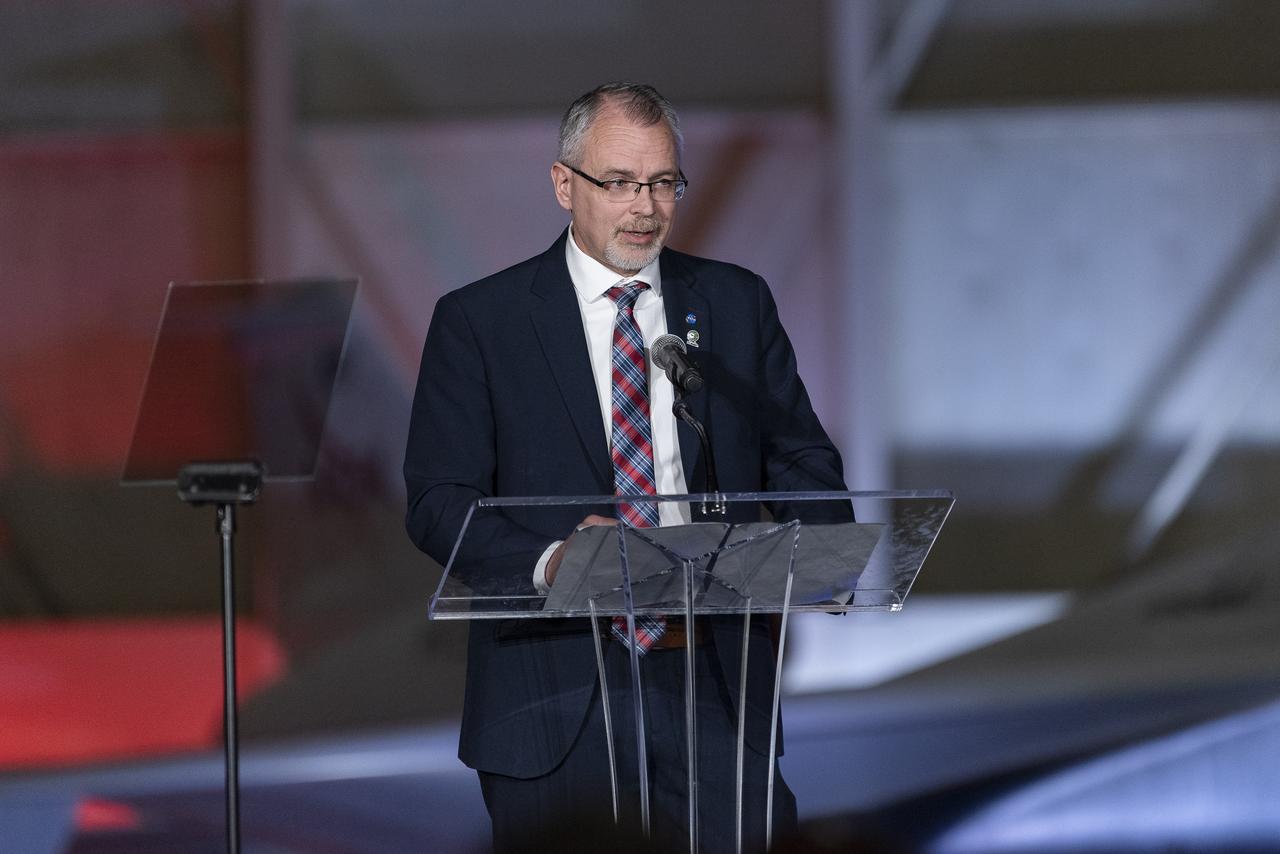
NASA Associate Administrator Jim Free speaks on stage following the unveiling of the agency’s X-59 quiet supersonic research aircraft at a January 12, 2024 event at Lockheed Martin Skunk Works in Palmdale, California. The X-59 is the centerpiece of NASA’s Quesst mission, which seeks to solve one of the major barriers to supersonic flight over land, currently banned in the United States, by making sonic booms quieter.
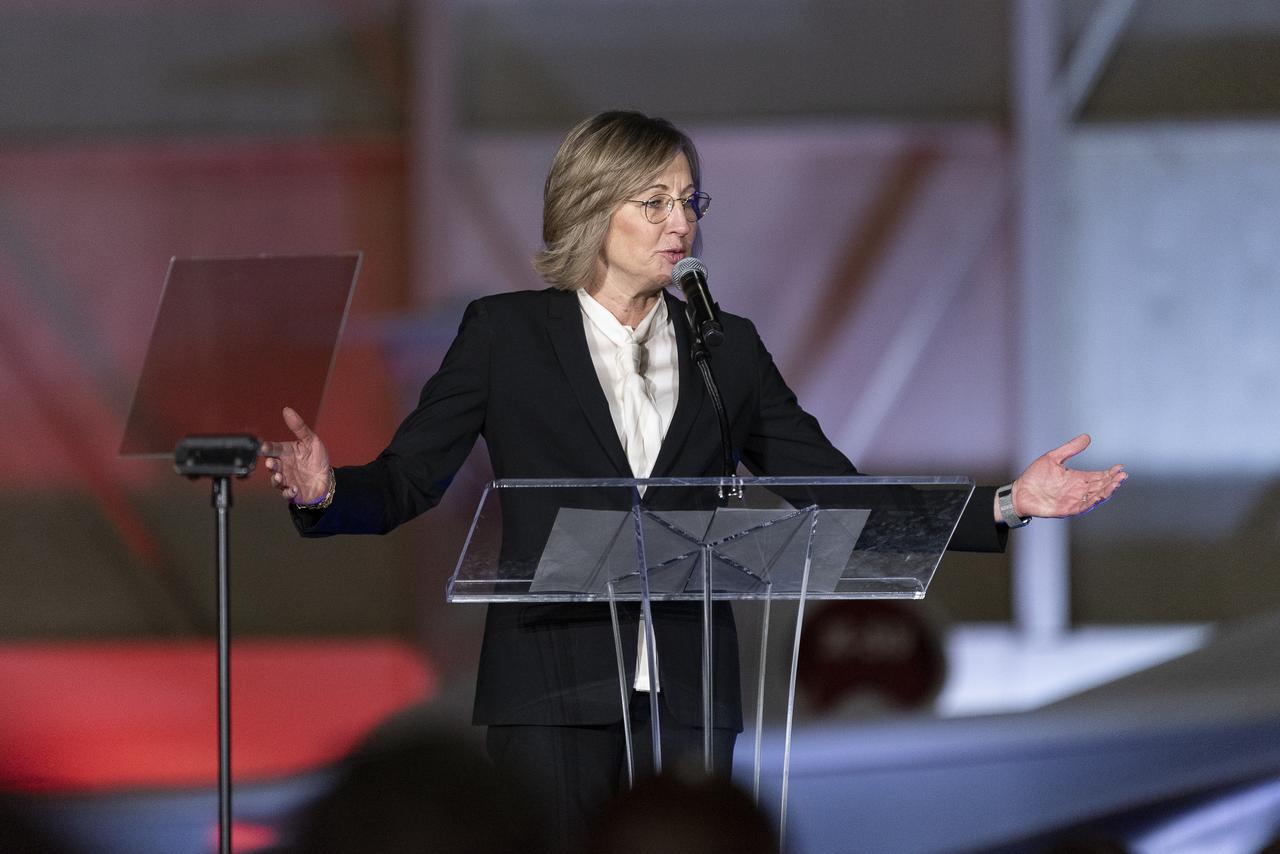
California Senior Economic Advisor to the Governor Dee Dee Myers speaks on stage following the unveiling of the agency’s X-59 quiet supersonic research aircraft at a January 12, 2024 event at Lockheed Martin Skunk Works in Palmdale, California. The X-59 is the centerpiece of NASA’s Quesst mission, which seeks to solve one of the major barriers to supersonic flight over land, currently banned in the United States, by making sonic booms quieter.
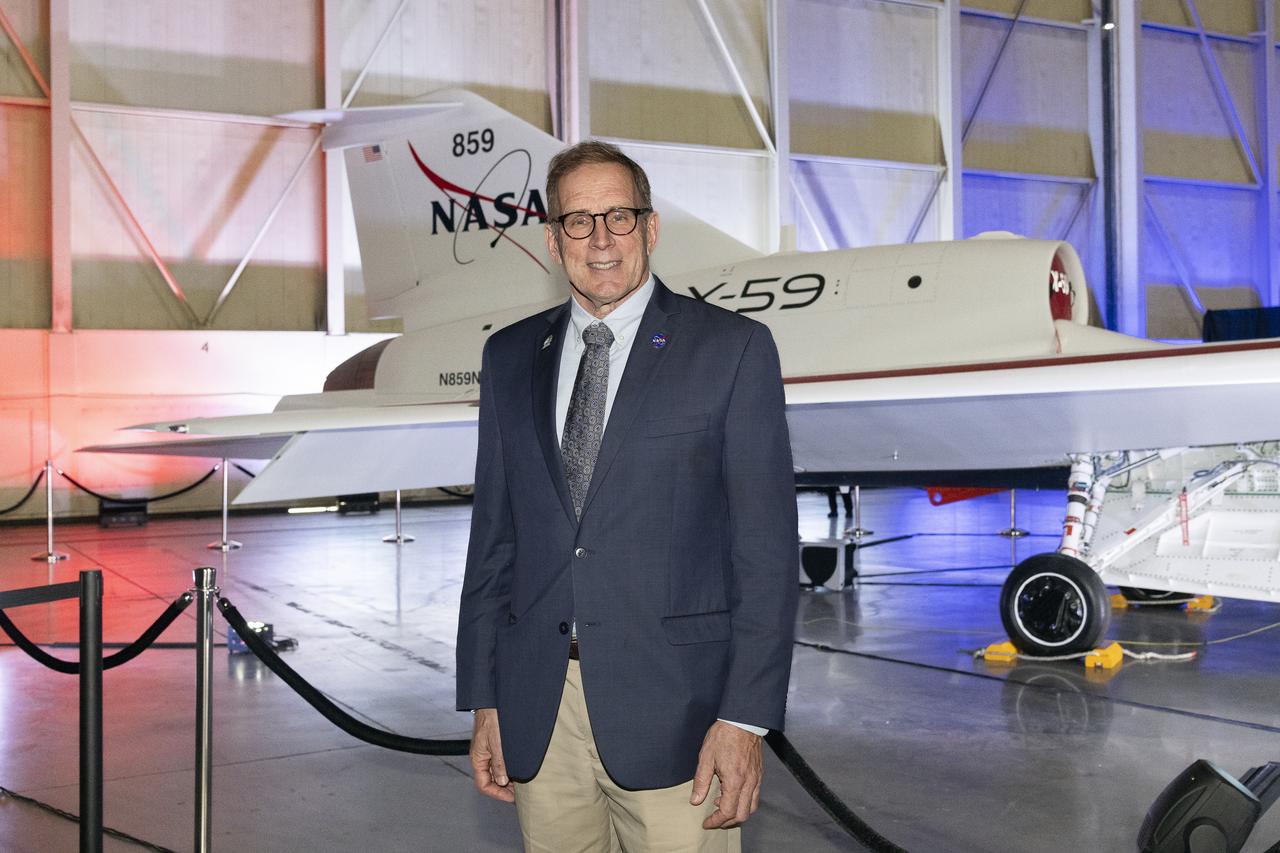
NASA’s mission integration manager for the Quesst mission, Peter Coen, poses in front of the agency’s X-59 quiet supersonic research aircraft at a January 12, 2024 event at Lockheed Martin Skunk Works in Palmdale, California. The X-59 is the centerpiece of NASA’s Quesst mission, which seeks to solve one of the major barriers to supersonic flight over land, currently banned in the United States, by making sonic booms quieter.
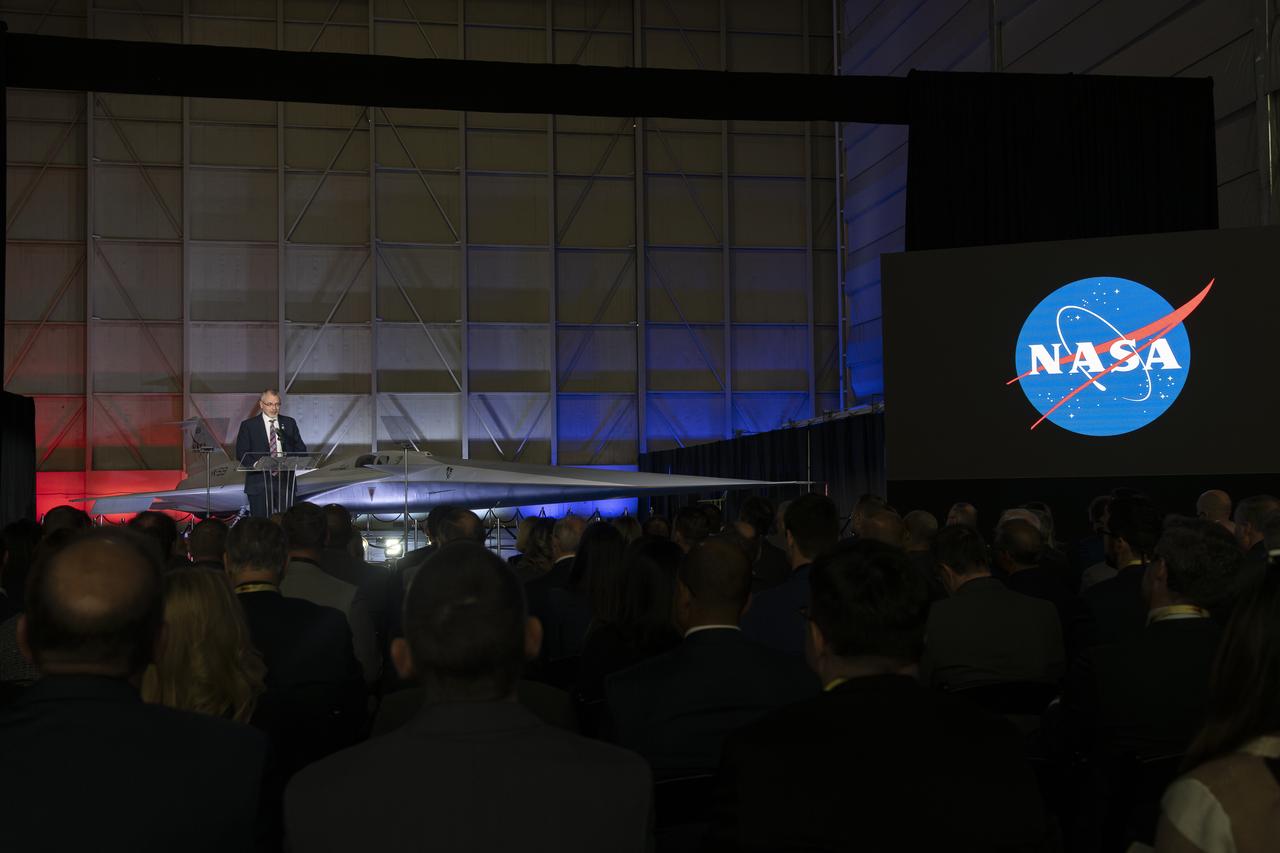
NASA Associate Administrator Jim Free speaks on stage following the unveiling of the agency’s X-59 quiet supersonic research aircraft at a January 12, 2024 event at Lockheed Martin Skunk Works in Palmdale, California. The X-59 is the centerpiece of NASA’s Quesst mission, which seeks to solve one of the major barriers to supersonic flight over land, currently banned in the United States, by making sonic booms quieter.
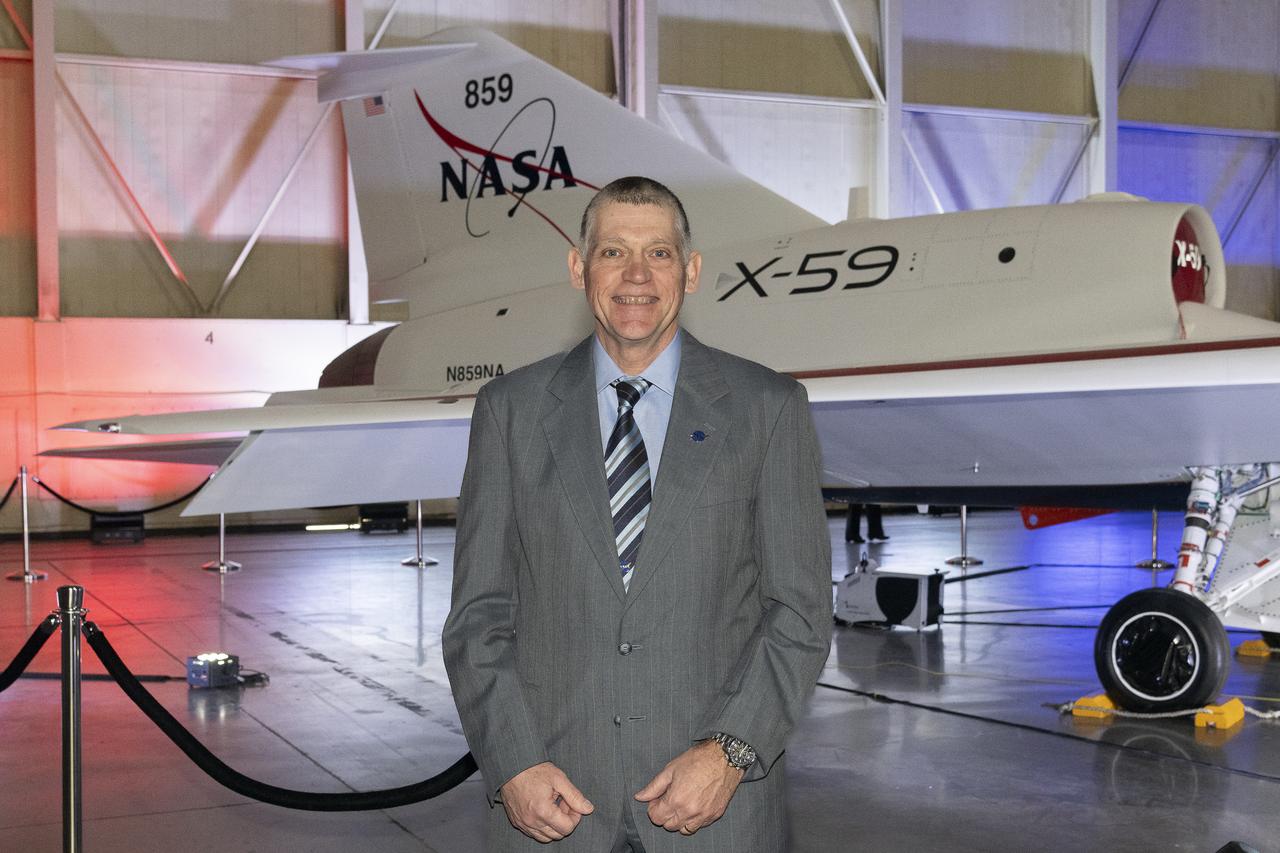
NASA’s chief engineer for the Low Boom Flight Demonstrator project, Jay Brandon, poses in front of the agency’s X-59 quiet supersonic research aircraft at a January 12, 2024 event at Lockheed Martin Skunk Works in Palmdale, California. The X-59 is the centerpiece of NASA’s Quesst mission, which seeks to solve one of the major barriers to supersonic flight over land, currently banned in the United States, by making sonic booms quieter.
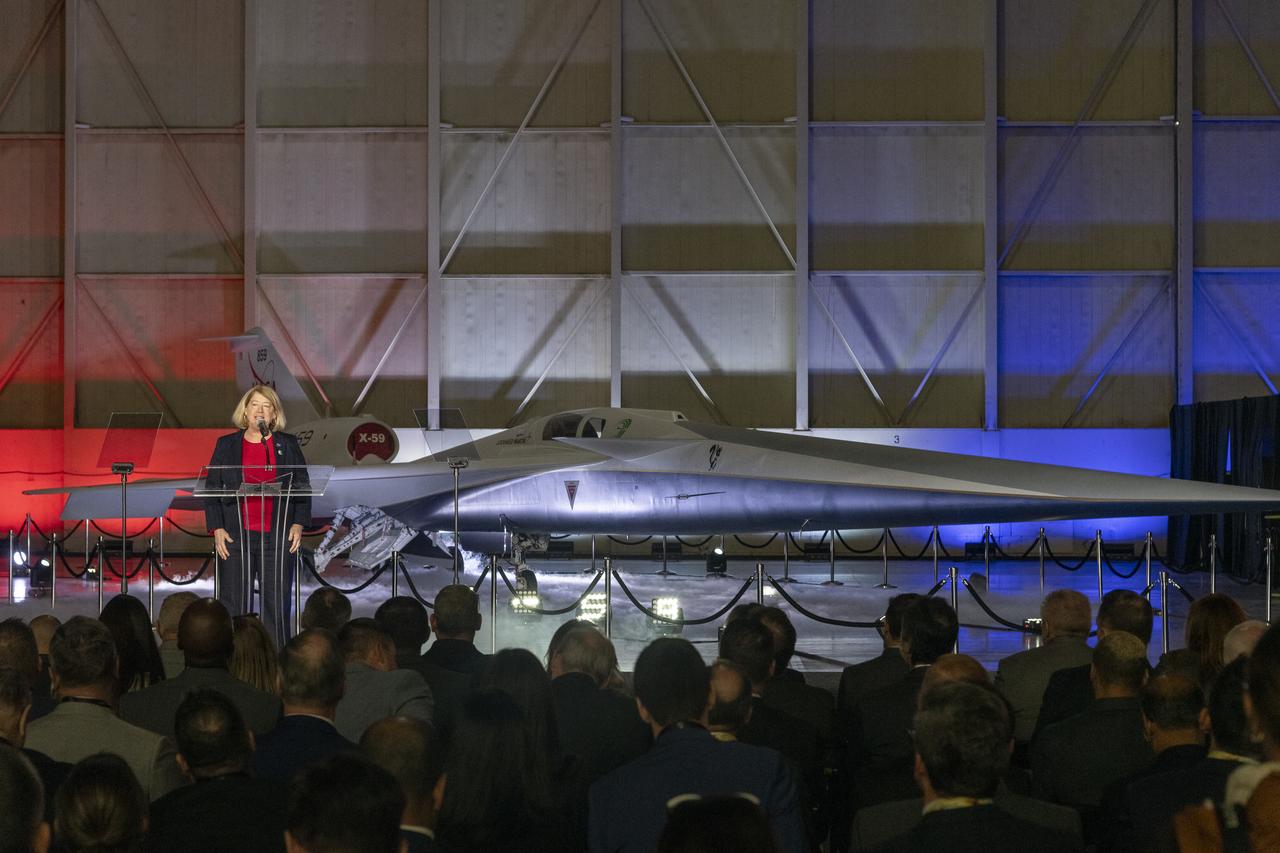
NASA Deputy Administrator Pam Melroy speaks on stage immediately following the unveiling of the agency’s X-59 quiet supersonic research aircraft at a January 12, 2024 event at Lockheed Martin Skunk Works in Palmdale, California. The X-59 is the centerpiece of NASA’s Quesst mission, which seeks to solve one of the major barriers to supersonic flight over land, currently banned in the United States, by making sonic booms quieter.
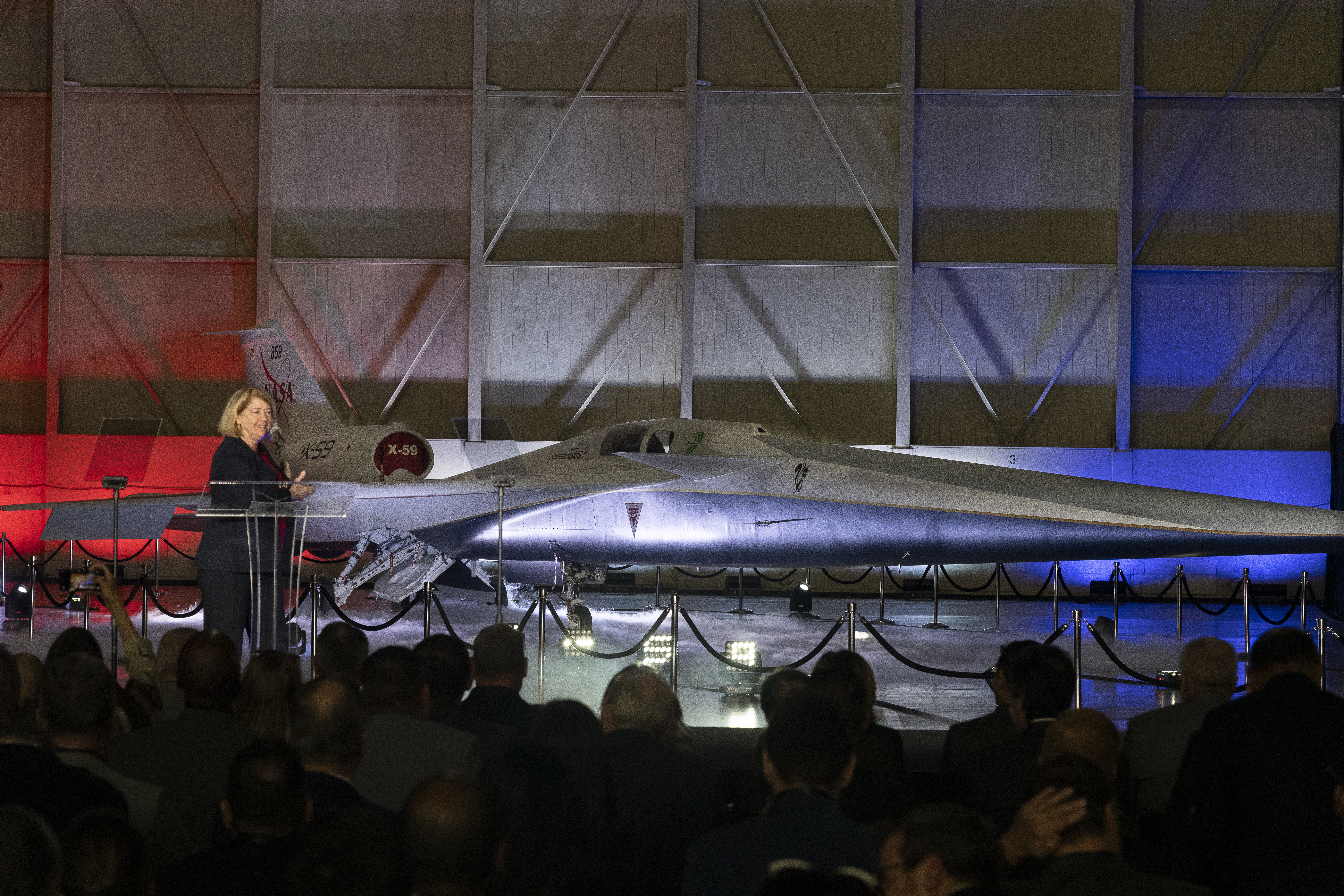
NASA Deputy Administrator Pam Melroy speaks on stage immediately following the unveiling of the agency’s X-59 quiet supersonic research aircraft at a January 12, 2024 event at Lockheed Martin Skunk Works in Palmdale, California. The X-59 is the centerpiece of NASA’s Quesst mission, which seeks to solve one of the major barriers to supersonic flight over land, currently banned in the United States, by making sonic booms quieter.
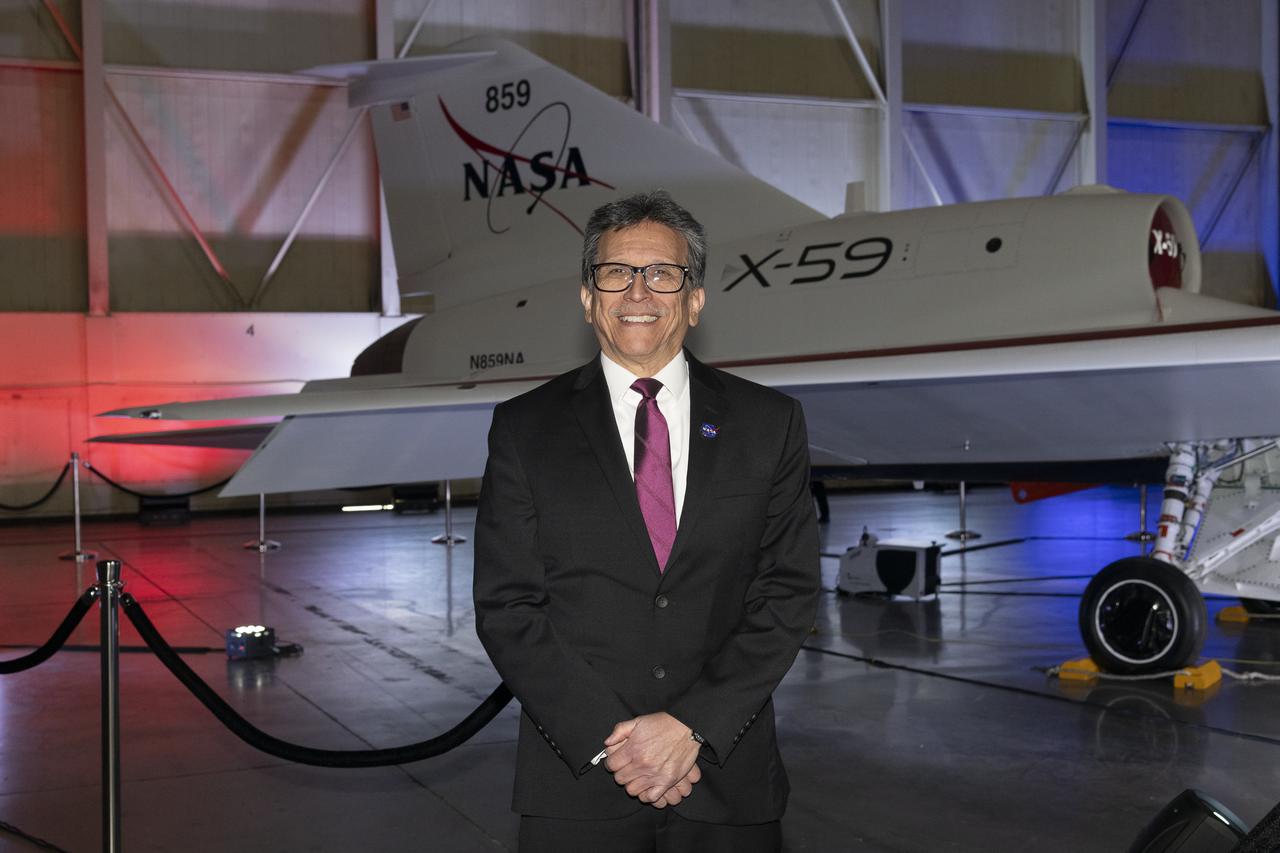
NASA’s structures lead for the X-59, Dr. Walt Silva, poses in front of the agency’s X-59 quiet supersonic research aircraft at a January 12, 2024 event at Lockheed Martin Skunk Works in Palmdale, California. The X-59 is the centerpiece of NASA’s Quesst mission, which seeks to solve one of the major barriers to supersonic flight over land, currently banned in the United States, by making sonic booms quieter.