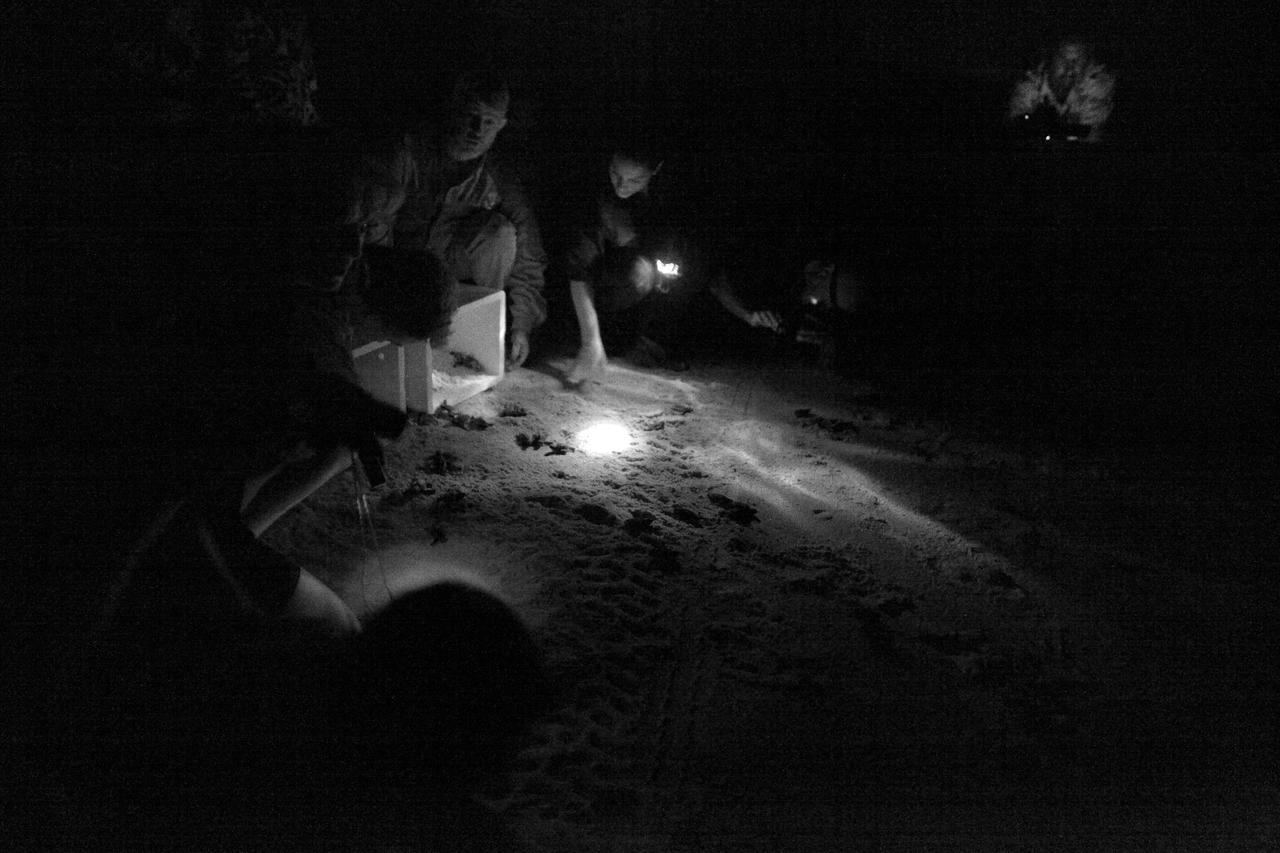
CAPE CANAVERAL, Fla. -- Hatchlings from endangered loggerhead turtle eggs, brought from beaches along the northern U.S. Gulf Coast, are being released into the Atlantic Ocean at Playalinda Beach, adjacent to the Merritt Island National Wildlife Refuge within NASA's Kennedy Space Center in Florida. The release and relocation work is part of an effort by the U.S. Fish and Wildlife Service, the Florida Fish and Wildlife Conservation Commission, the National Park Service, NOAA, FedEx and conservationists to help minimize the risk to this year's sea turtle hatchlings from impacts of the BP Deepwater Horizon oil spill in the Gulf of Mexico. This plan involves carefully moving an anticipated 700 nests deposited on Florida Panhandle and Alabama beaches during the next several months. Note: The photos were shot using an infrared filter to protect the hatchlings. Photo credit: NASA_Dimitri Gerondidakis
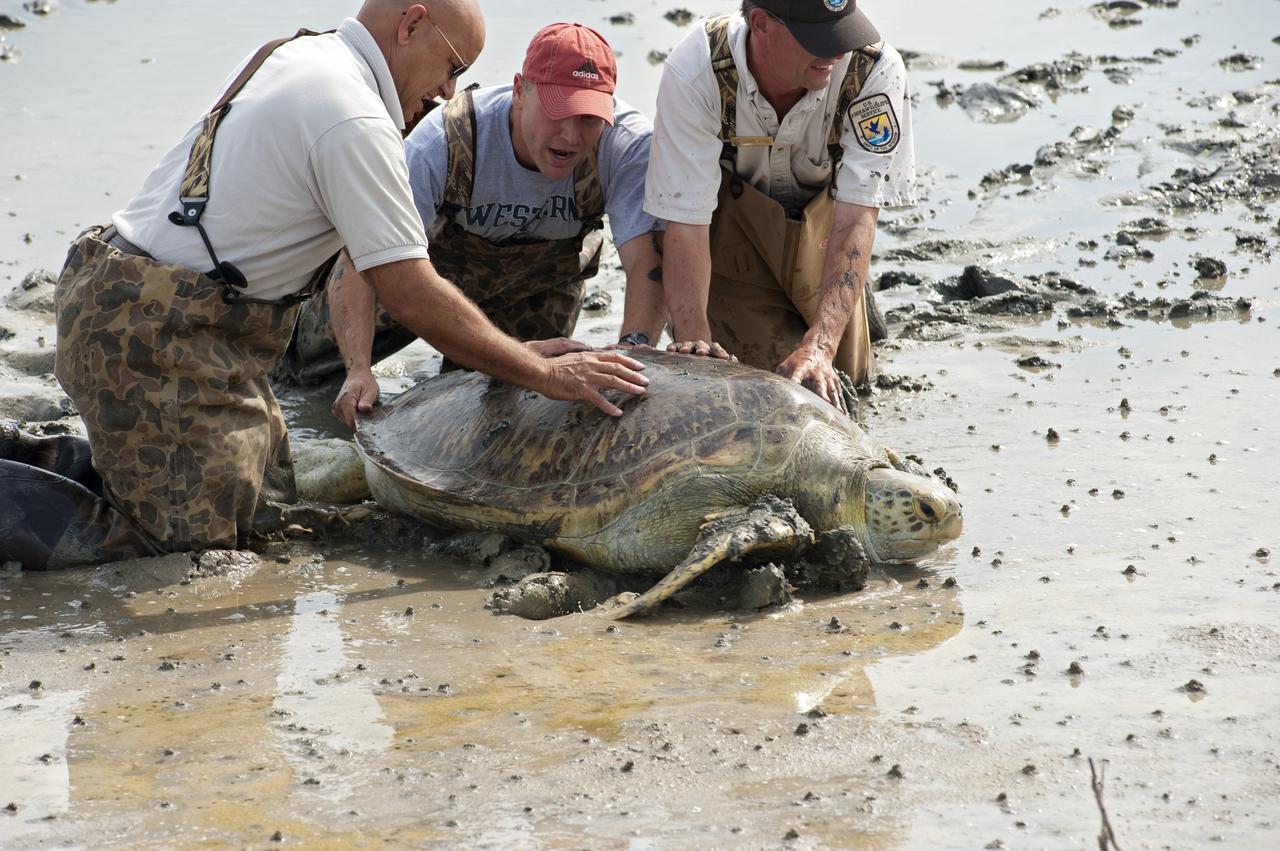
LOGGERHEAD SEA TURTLE RESCUE FOR RELEASE - MINWR
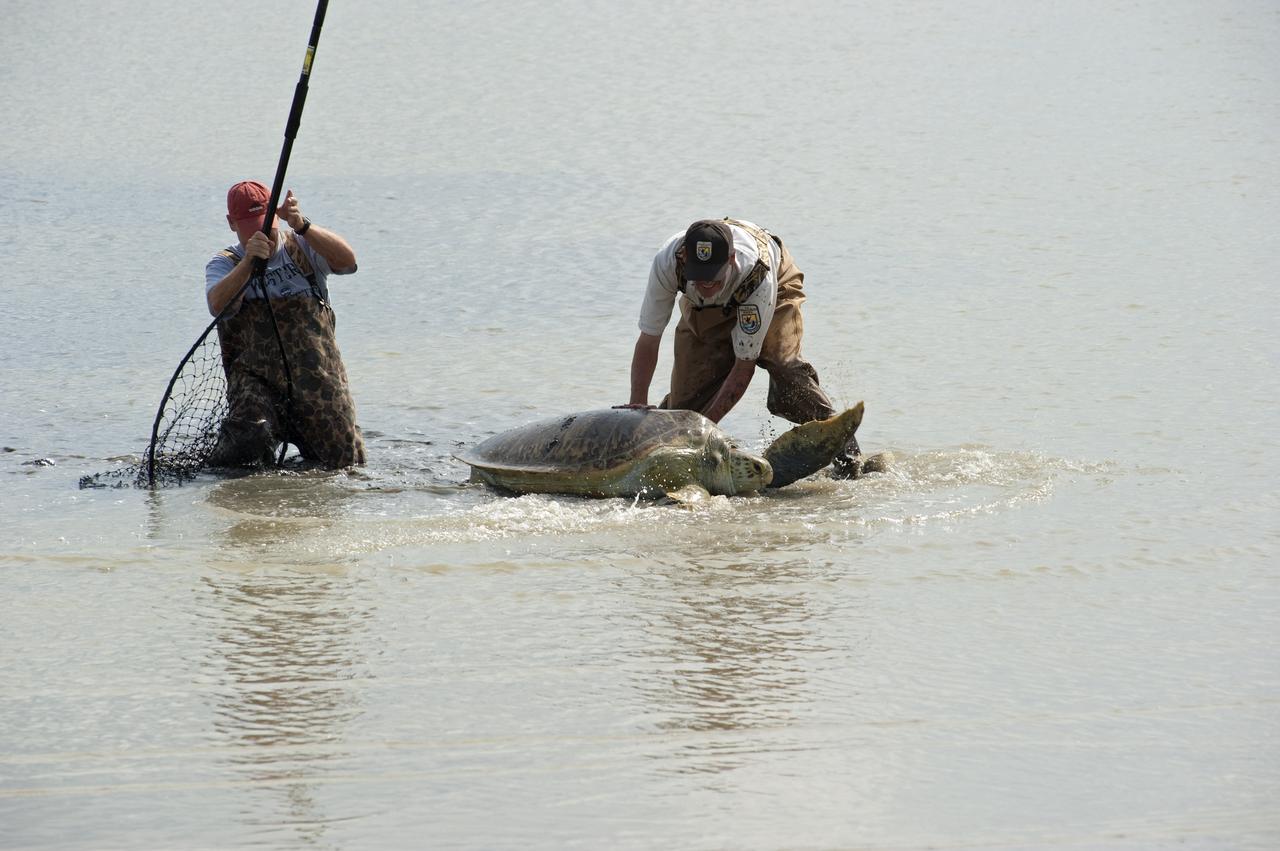
LOGGERHEAD SEA TURTLE RESCUE FOR RELEASE - MINWR
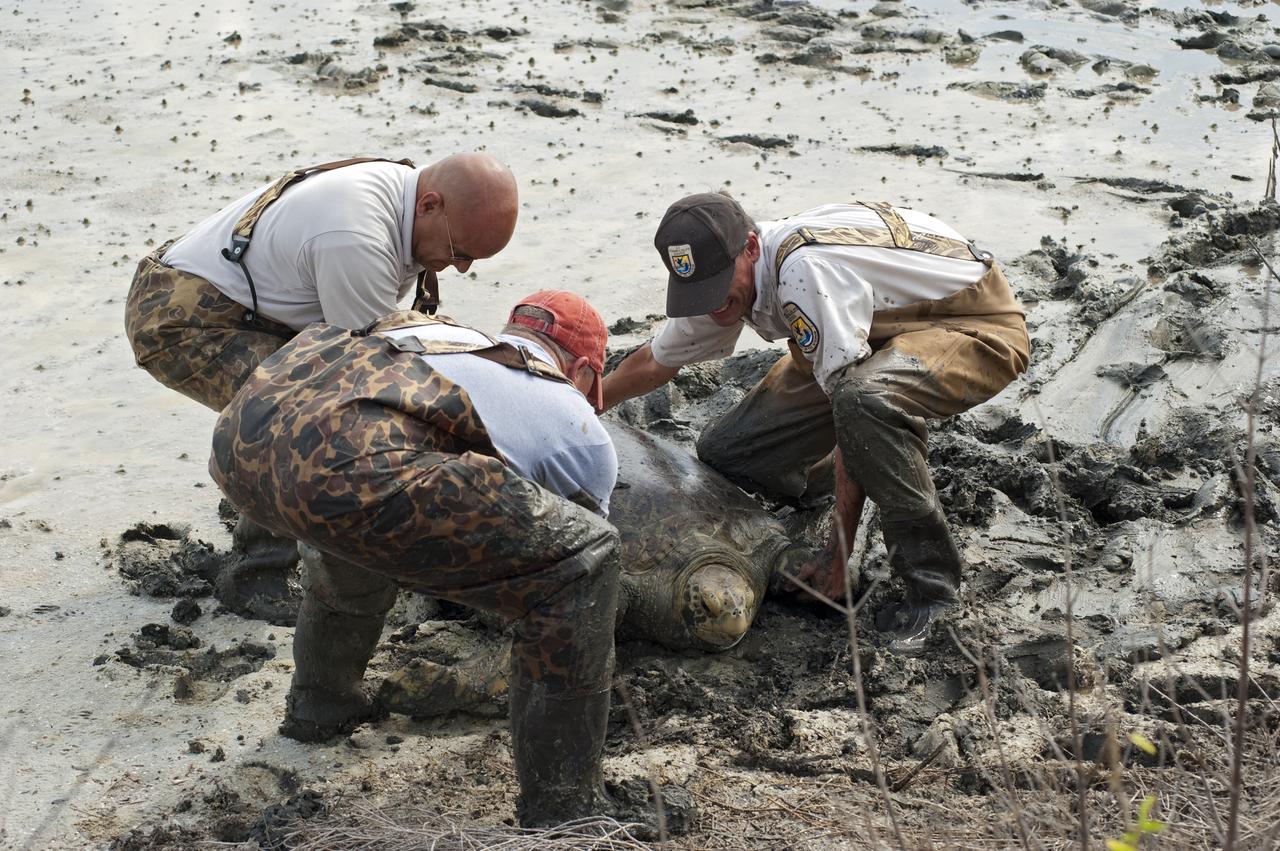
LOGGERHEAD SEA TURTLE RESCUE FOR RELEASE - MINWR
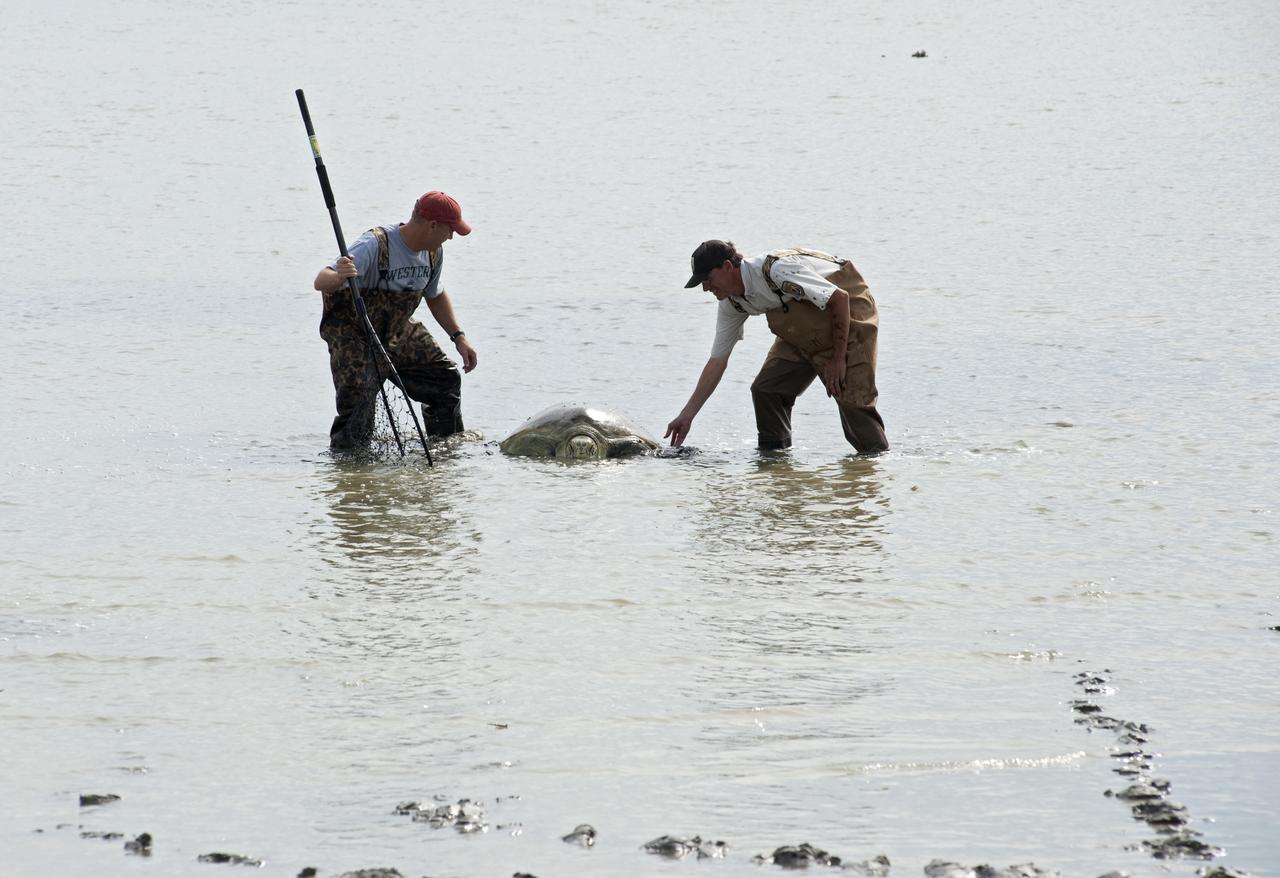
LOGGERHEAD SEA TURTLE RESCUE FOR RELEASE - MINWR
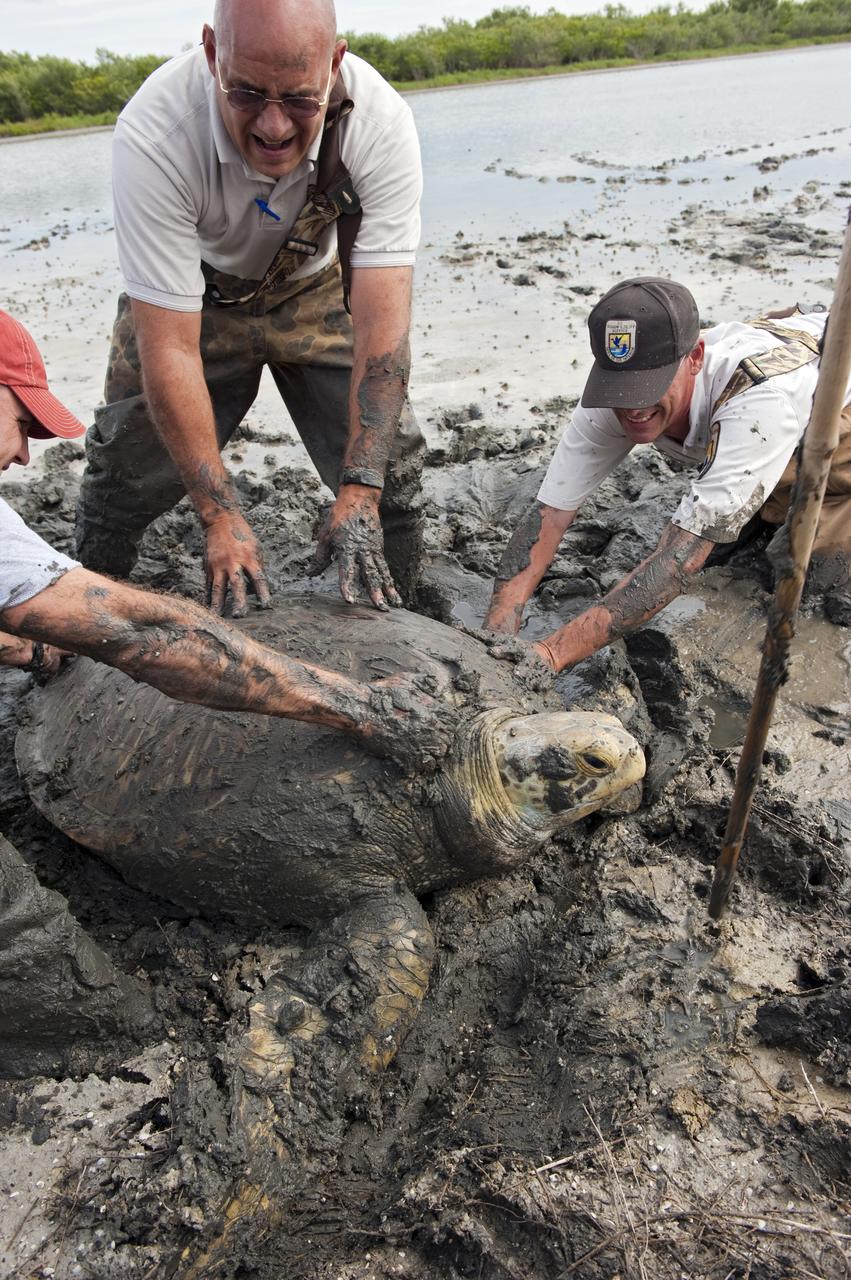
LOGGERHEAD SEA TURTLE RESCUE FOR RELEASE - MINWR
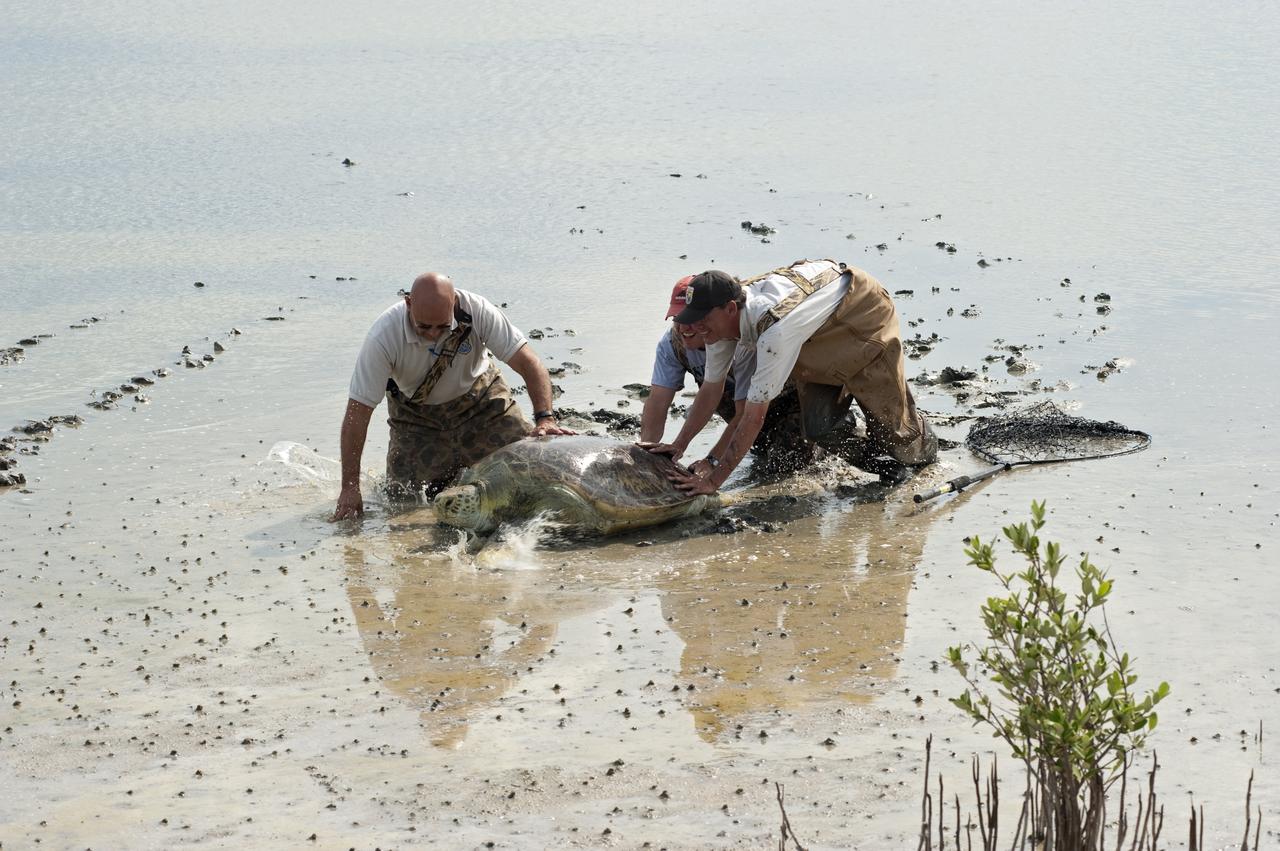
LOGGERHEAD SEA TURTLE RESCUE FOR RELEASE - MINWR
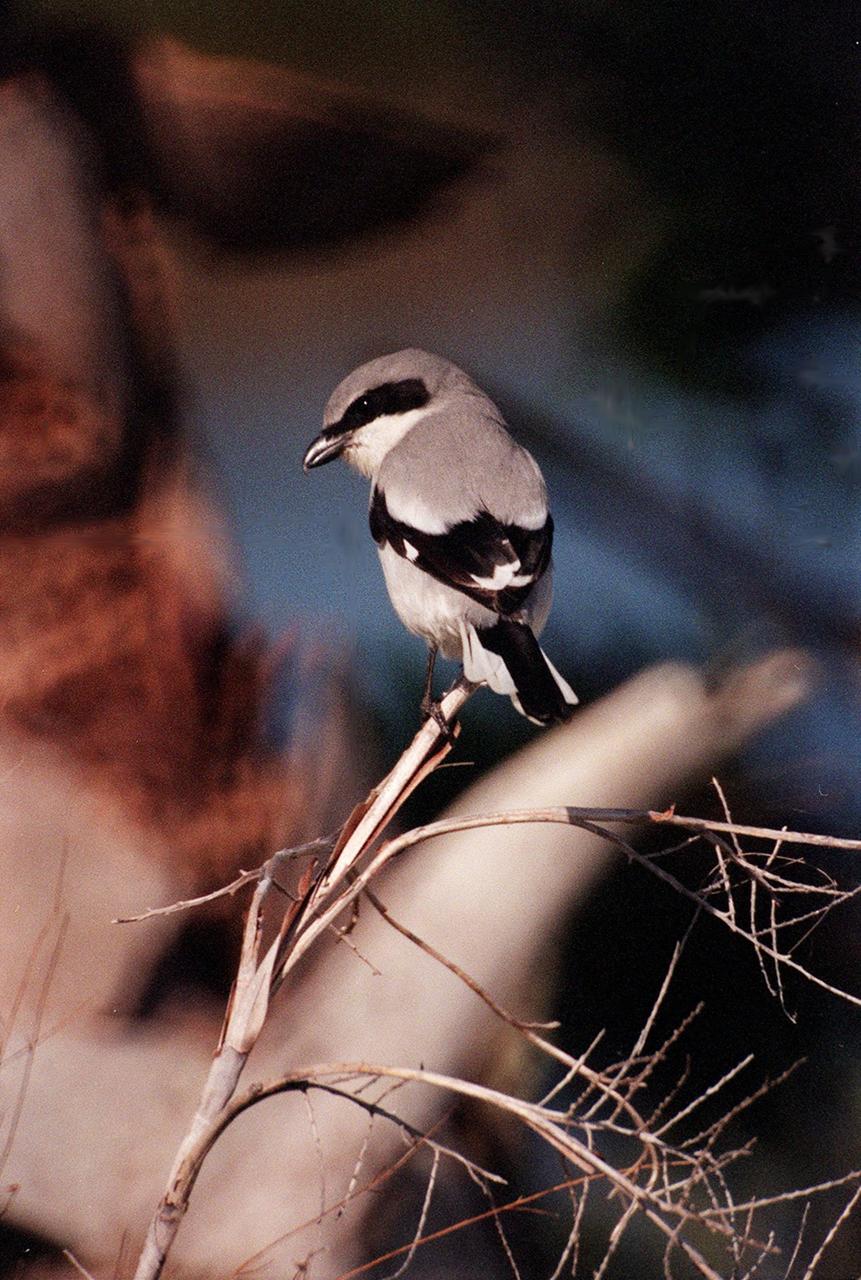
KENNEDY SPACE CENTER, FLA. -- A loggerhead shrike perches on a branch in the Merritt Island National Wildlife Refuge, which shares a boundary with Kennedy Space Center. The loggerhead shrike prefers grasslands, orchards and open areas with scattered trees throughout a range extending from southern Canada to southern Florida and the Gulf Coast. The Refuge encompasses 92,000 acres that are a habitat for more than 331 species of birds, 31 mammals, 117 fishes, and 65 amphibians and reptiles. The marshes and open water of the refuge provide wintering areas for 23 species of migratory waterfowl, as well as a year-round home for great blue herons, great egrets, wood storks, cormorants, brown pelicans and other species of marsh and shore birds, as well as a variety of insects
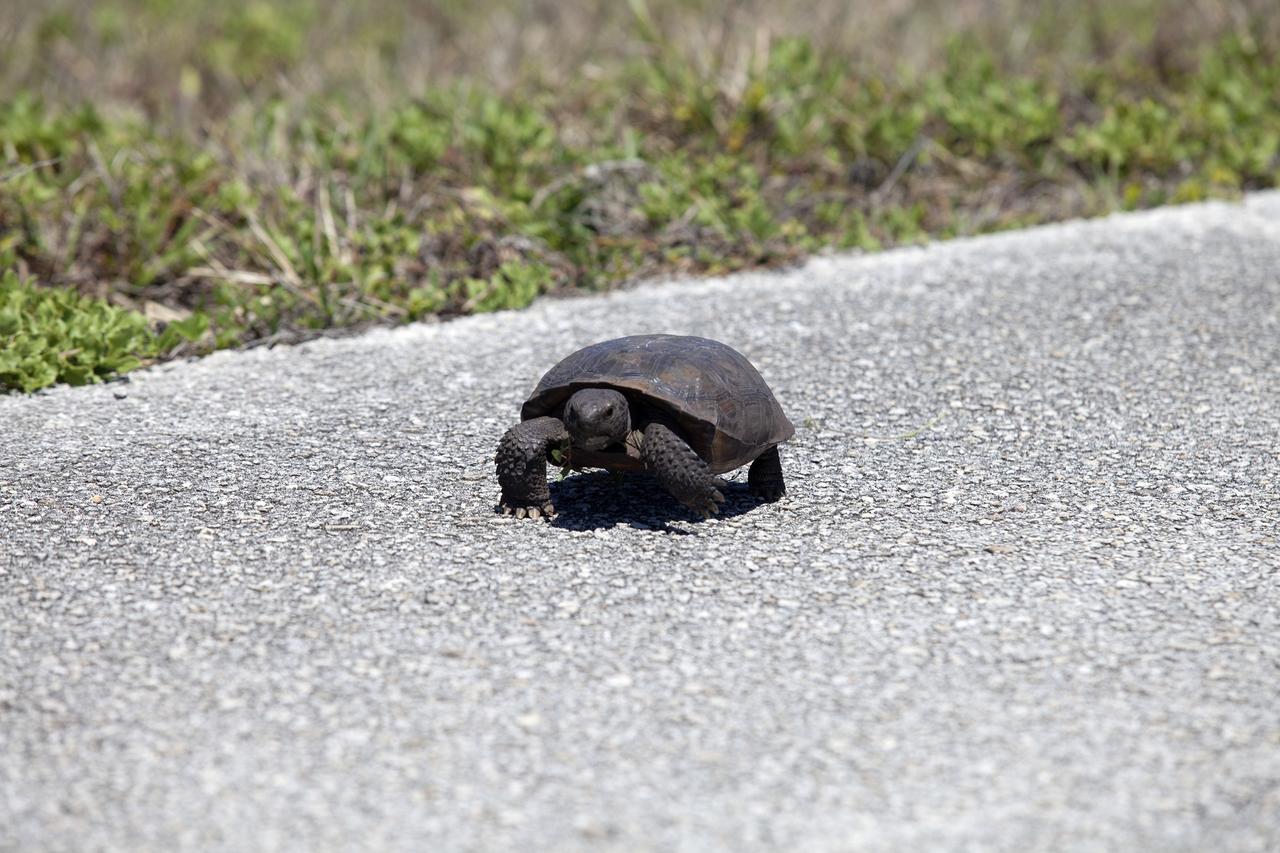
CAPE CANAVERAL, Fla. -- Why did the gopher tortoise cross the road? To get to the other side of the Launch Pad 39B beach road on NASA's Kennedy Space Center in Florida, of course. Gopher tortoises are dry-land turtles that live in scrub, dry hammock, pine flatwood, coastal grassland and dune habitats. The undeveloped property on Kennedy Space Center is managed by the U.S. Fish and Wildlife Service through the Merritt Island National Wildlife Refuge. Currently, gopher tortoises are protected in some states by federal law under the Endangered Species Act ESA. The refuge provides a habitat for 14 species federally listed as threatened or endangered, including the leatherback, green, Kemps Ridley, loggerhead and Atlantic hawksbill turtles. For information on the refuge, visit http://www.fws.gov/merrittisland/Index.html. For more information on the gopher tortoise, visit http://www.fws.gov/northflorida/GopherTortoise/Gopher_Tortoise_Fact_Sheet.html. Photo credit: NASA/Daniel Casper
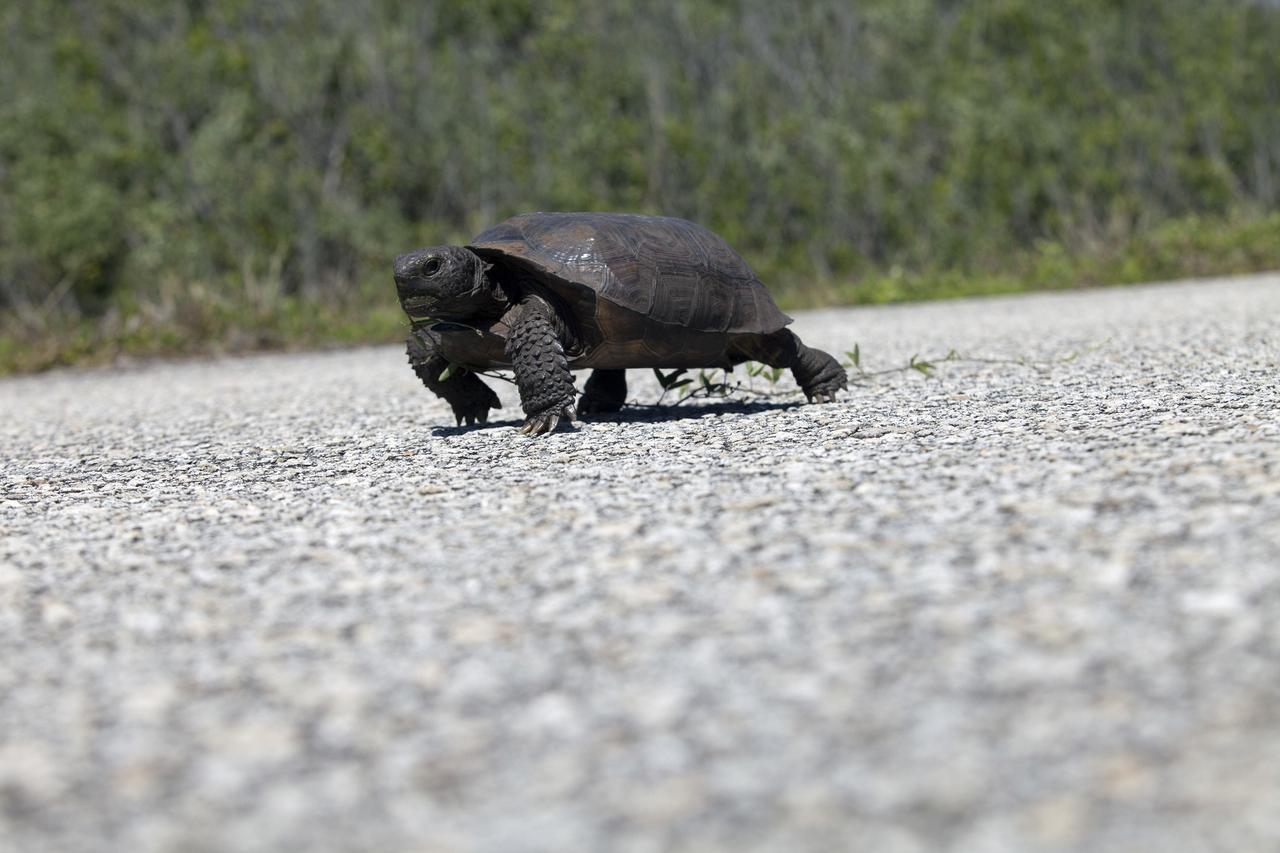
CAPE CANAVERAL, Fla. -- A gopher tortoise ambles along the Launch Pad 39B beach road on NASA's Kennedy Space Center in Florida. Gopher tortoises are dry-land turtles that live in scrub, dry hammock, pine flatwood, coastal grassland and dune habitats. The undeveloped property on Kennedy Space Center is managed by the U.S. Fish and Wildlife Service through the Merritt Island National Wildlife Refuge. Currently, gopher tortoises are protected in some states by federal law under the Endangered Species Act ESA. The refuge provides a habitat for 14 species federally listed as threatened or endangered, including the leatherback, green, Kemps Ridley, loggerhead and Atlantic hawksbill turtles. For information on the refuge, visit http://www.fws.gov/merrittisland/Index.html. For more information on the gopher tortoise, visit http://www.fws.gov/northflorida/GopherTortoise/Gopher_Tortoise_Fact_Sheet.html. Photo credit: NASA/Daniel Casper
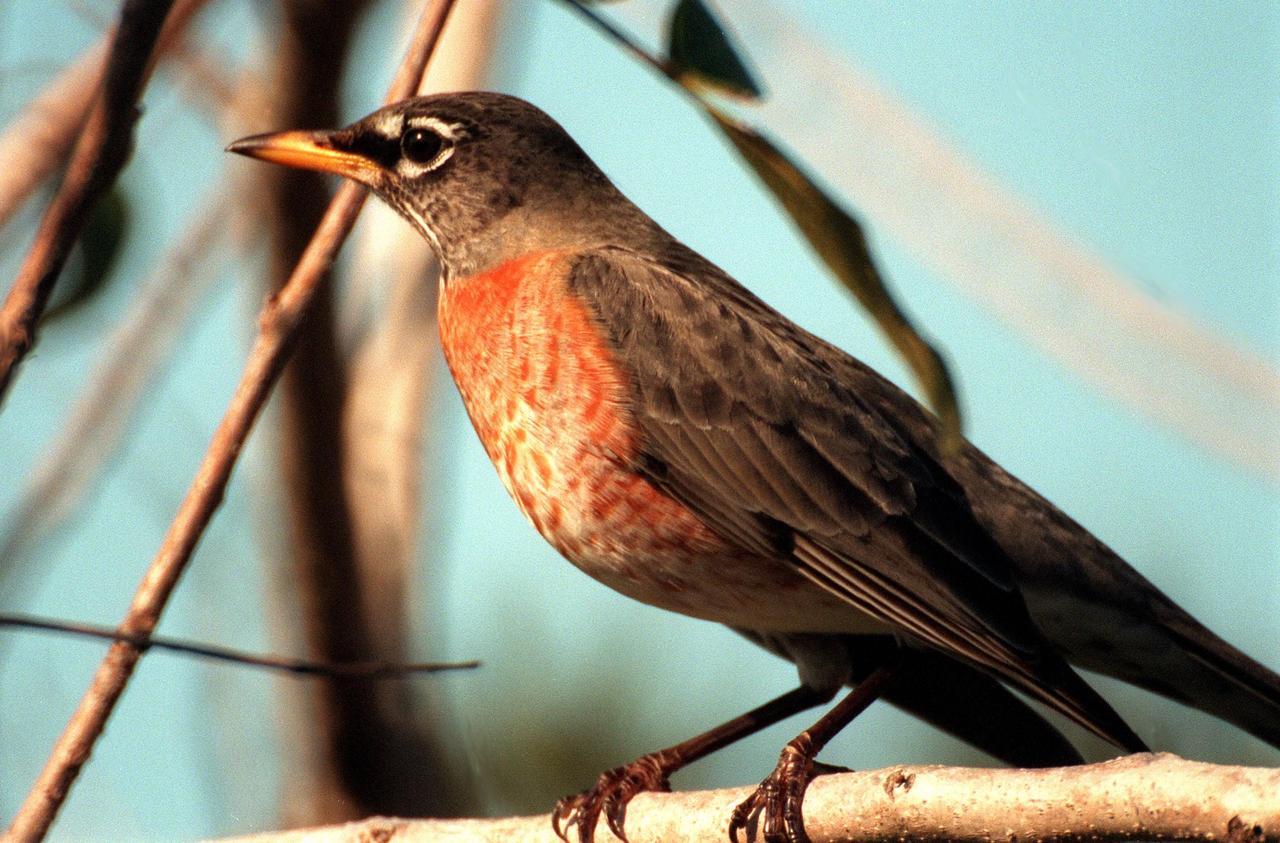
KENNEDY SPACE CENTER, FLA. -- A robin perches on a branch in the Merritt Island National <a href="http://www-pao.ksc.nasa.gov/kscpao/captions/subjects/wildlife.htm">Wildlife </a>Refuge, which shares a boundary with the space center. Robins range throughout North America, from Alaska to Florida. Although considered a harbinger of spring, they do winter in northern states, frequenting cedar bogs and swamps. They also winter in Florida, where they often can be seen in flocks of hundreds near KSC and the wildlife refuge, which comprises 92,000 acres, ranging from hardwood hammocks and pine flatwoods to fresh-water impoundments, salt-water estuaries and brackish marshes. The diverse landscape provides habitat for more than 310 species of birds, 25 mammals, 117 fishes, and 65 amphibians and reptiles, including such endangered species as Southern bald eagles, wood storks, Florida scrub jays, Atlantic loggerhead and leatherback turtles, osprey, and nearly 5,000 alligators
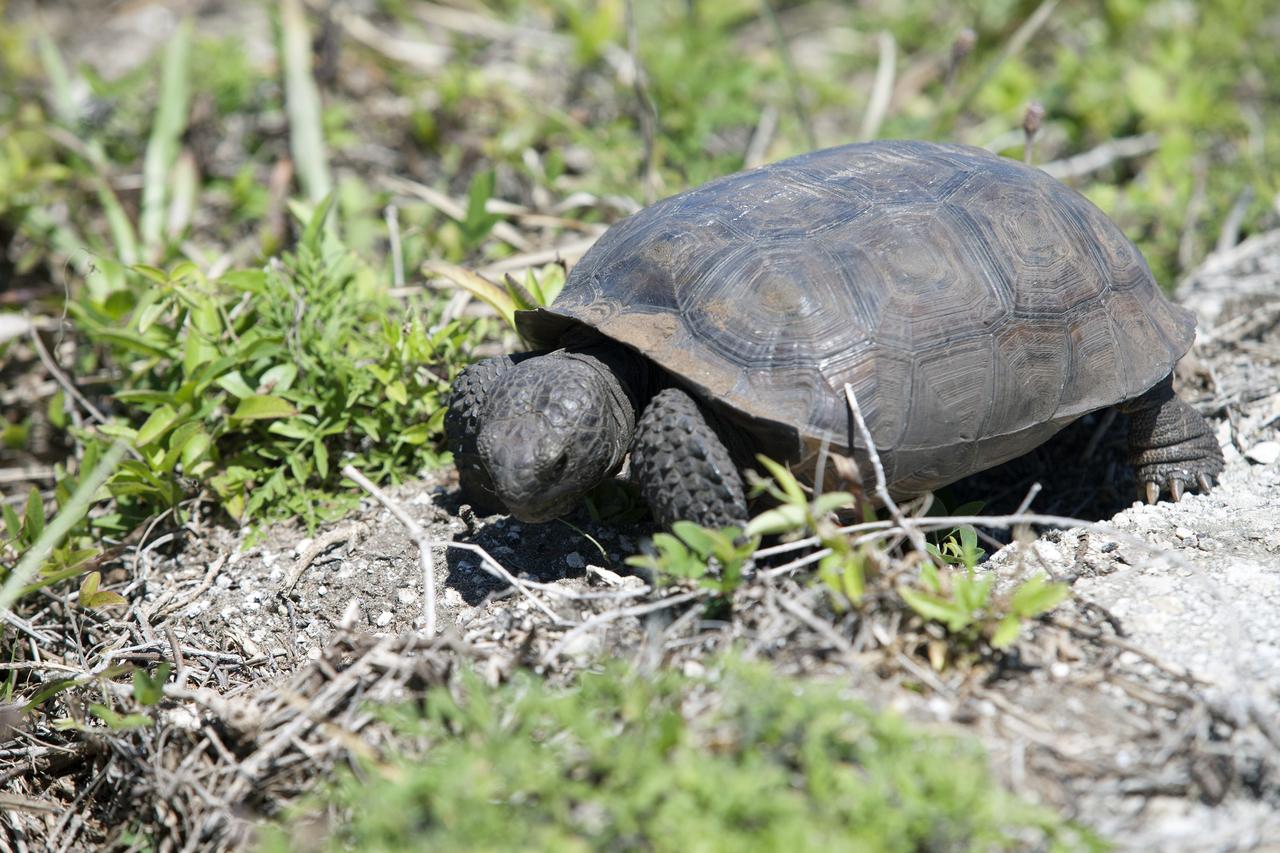
CAPE CANAVERAL, Fla. -- A gopher tortoise stops for lunch beside the Launch Pad 39B beach road on NASA's Kennedy Space Center in Florida. Gopher tortoises are dry-land turtles that live in scrub, dry hammock, pine flatwood, coastal grassland and dune habitats. The undeveloped property on Kennedy Space Center is managed by the U.S. Fish and Wildlife Service through the Merritt Island National Wildlife Refuge. Currently, gopher tortoises are protected in some states by federal law under the Endangered Species Act ESA. The refuge provides a habitat for 14 species federally listed as threatened or endangered, including the leatherback, green, Kemps Ridley, loggerhead and Atlantic hawksbill turtles. For information on the refuge, visit http://www.fws.gov/merrittisland/Index.html. For more information on the gopher tortoise, visit http://www.fws.gov/northflorida/GopherTortoise/Gopher_Tortoise_Fact_Sheet.html. Photo credit: NASA/Daniel Casper
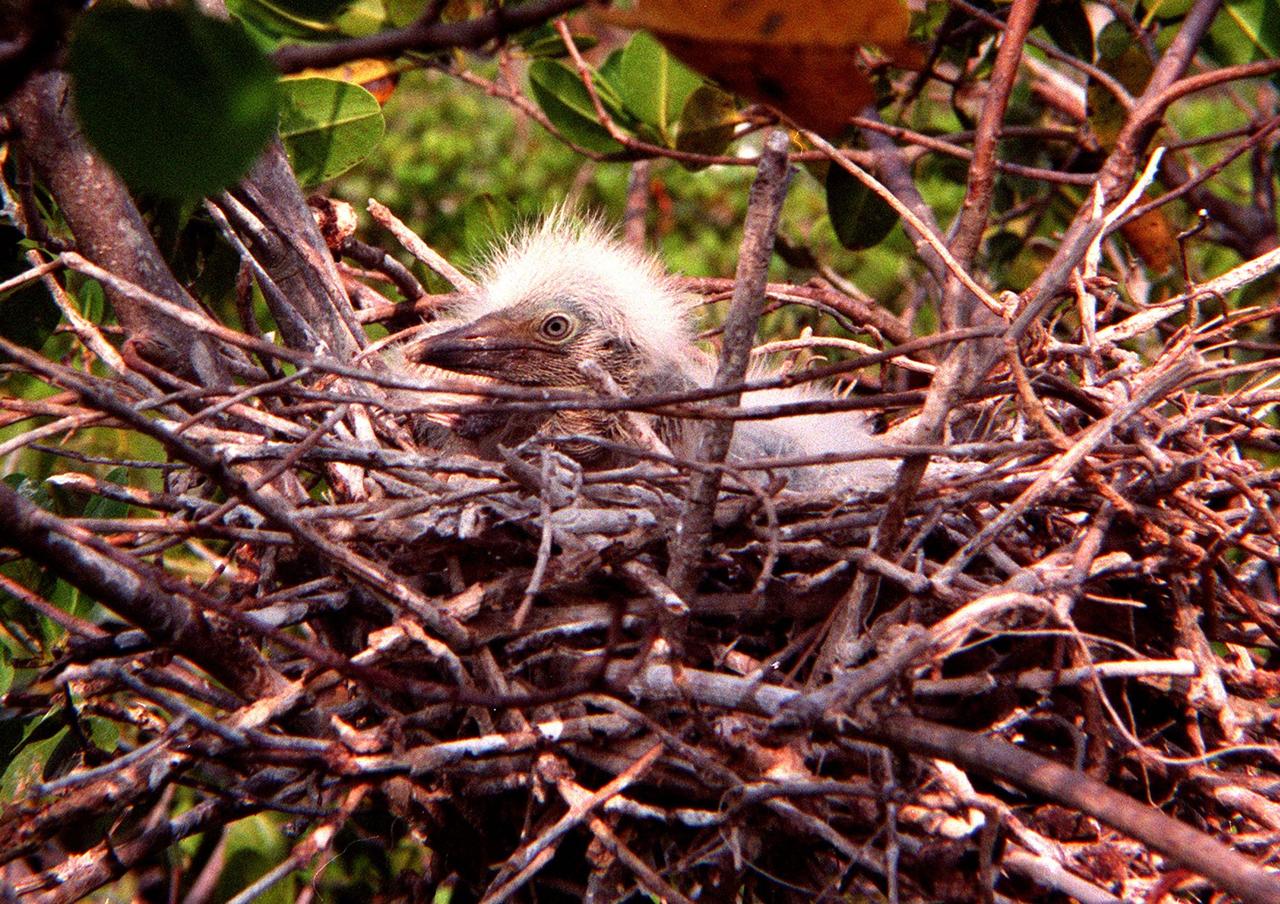
KENNEDY SPACE CENTER, FLA. -- Its newly grown, wispy feathers reflecting light like a halo, an unidentified baby bird waits, probably for its next meal, in its stick-assembled nest. The nest is in the Merritt Island National Wildlife Refuge, which shares a boundary with KSC. Hardwood hammocks and pine flatwoods share the 92,000-acre refuge with fresh-water impoundments, salt-water estuaries and brackish marshes. The diverse landscape provides habitat for more than 310 species of birds, 25 mammals, 117 fishes, and 65 amphibians and reptiles, including such endangered species as Southern bald eagles, wood storks, Florida scrub jays, Atlantic loggerhead and leatherback turtles, osprey, and nearly 5,000 alligators
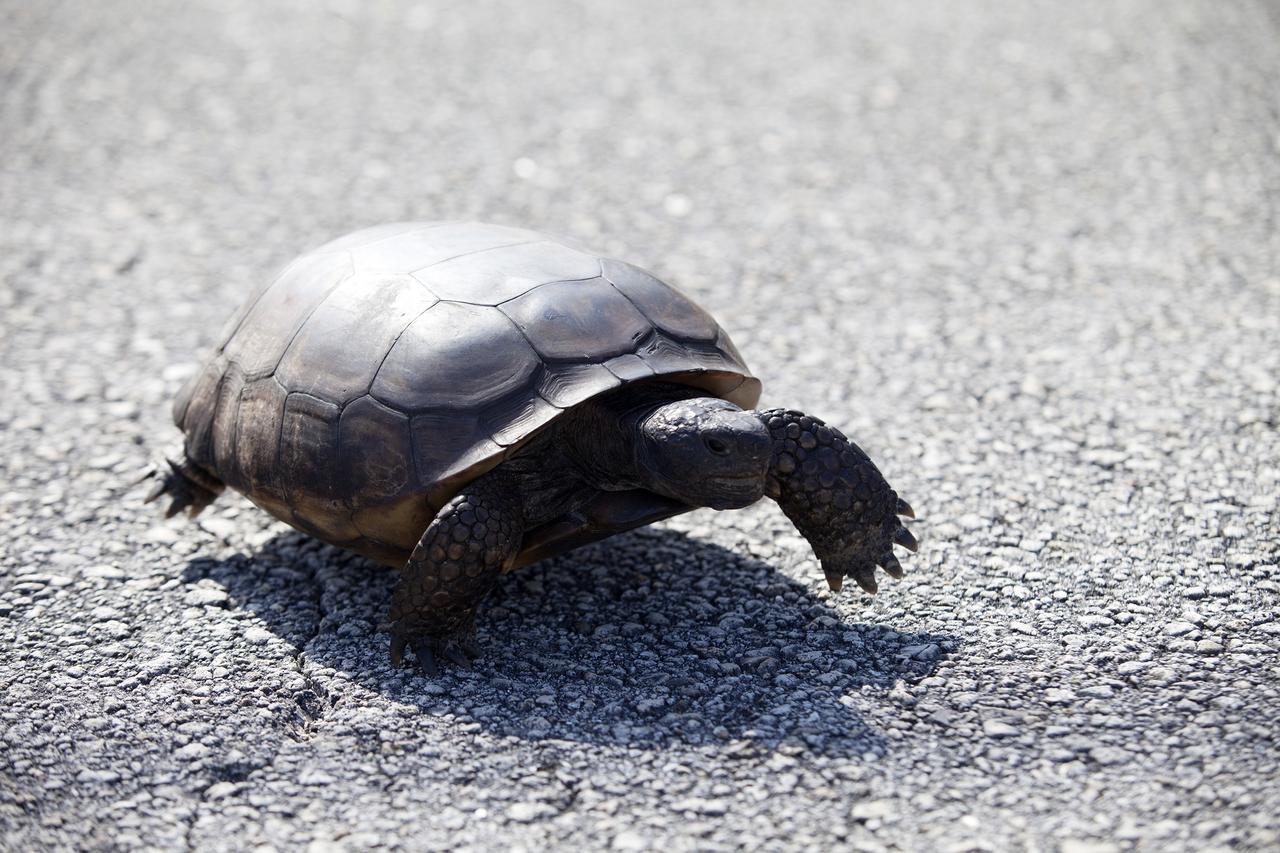
CAPE CANAVERAL, Fla. -- This gopher tortoise almost seems to float above the pavement as it hastens along the road at NASA's Kennedy Space Center in Florida. Gopher tortoises are dry-land turtles that live in scrub, dry hammock, pine flatwood, coastal grassland and dune habitats. The undeveloped property on Kennedy Space Center is managed by the U.S. Fish and Wildlife Service through the Merritt Island National Wildlife Refuge. Currently, gopher tortoises are protected in some states by federal law under the Endangered Species Act ESA. The refuge provides a habitat for 14 species federally listed as threatened or endangered, including the leatherback, green, Kemps Ridley, loggerhead and Atlantic hawksbill turtles. For information on the refuge, visit http://www.fws.gov/merrittisland/Index.html. For more information on the gopher tortoise, visit http://www.fws.gov/northflorida/GopherTortoise/Gopher_Tortoise_Fact_Sheet.html. Photo credit: NASA/Daniel Casper
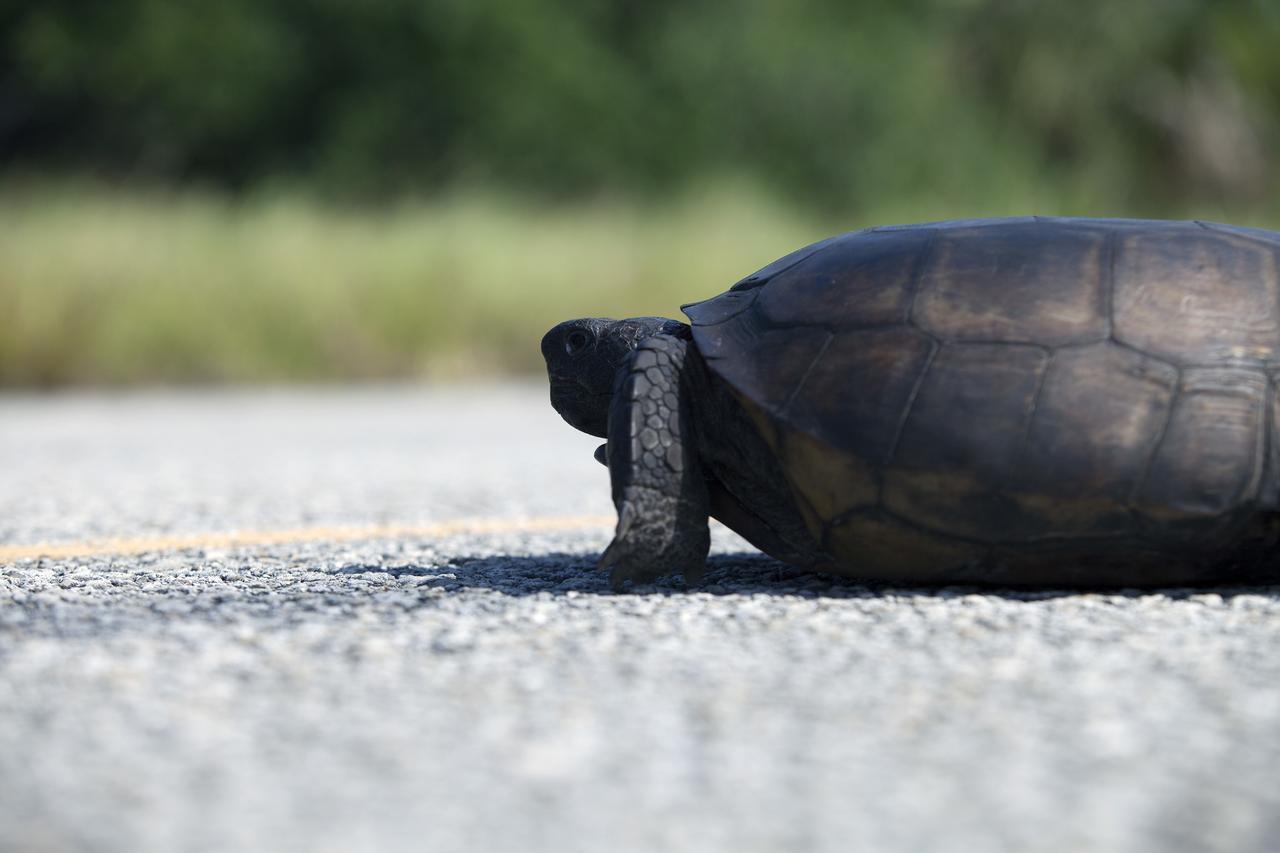
CAPE CANAVERAL, Fla. -- A gopher tortoise lumbers down the roadway at NASA's Kennedy Space Center in Florida. Gopher tortoises are dry-land turtles that live in scrub, dry hammock, pine flatwood, coastal grassland and dune habitats. The undeveloped property on Kennedy Space Center is managed by the U.S. Fish and Wildlife Service through the Merritt Island National Wildlife Refuge. Currently, gopher tortoises are protected in some states by federal law under the Endangered Species Act ESA. The refuge provides a habitat for 14 species federally listed as threatened or endangered, including the leatherback, green, Kemps Ridley, loggerhead and Atlantic hawksbill turtles. For information on the refuge, visit http://www.fws.gov/merrittisland/Index.html. For more information on the gopher tortoise, visit http://www.fws.gov/northflorida/GopherTortoise/Gopher_Tortoise_Fact_Sheet.html. Photo credit: NASA/Daniel Casper
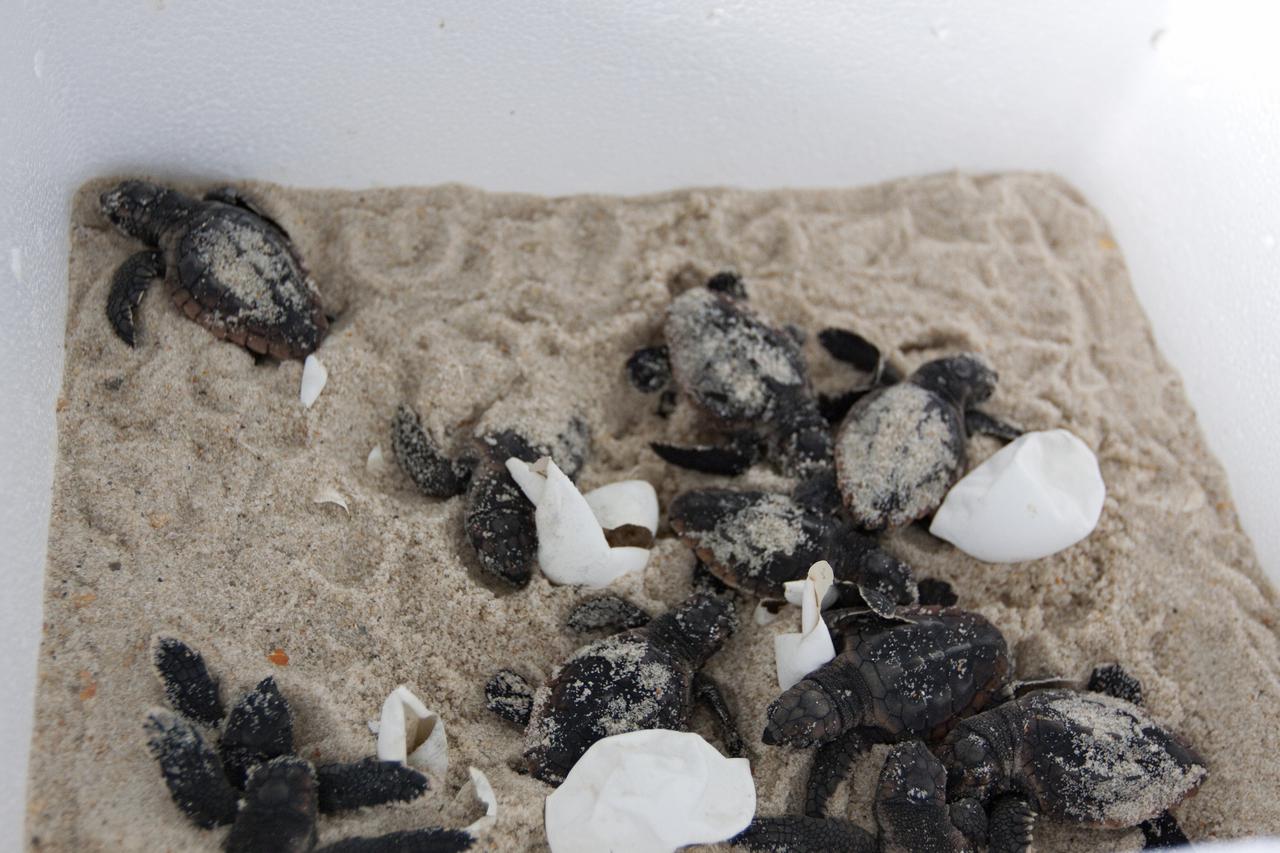
CAPE CANAVERAL, Fla. -- In a climate-controlled facility at NASA's Kennedy Space Center in Florida, newly-hatched Loggerhead turtles emerge from their eggs brought from beaches along the northern U.S. Gulf Coast. The eggs will be monitored by biologists and hatchery workers until incubation is complete. The hatchlings will be released at different points along a 100-mile stretch of the Atlantic Ocean shoreline. That includes beaches adjacent to the Merritt Island National Wildlife Refuge, which is located inside Kennedy. The release and relocation work is part of an effort by the U.S. Fish and Wildlife Service, the Florida Fish and Wildlife Conservation Commission, the National Park Service, NOAA, FedEx and conservationists to help minimize the risk to this year's sea turtle hatchlings from impacts of the BP Deepwater Horizon oil spill in the Gulf of Mexico. This plan involves carefully moving an anticipated 700 nests during the next several months. Photo credit: NASA_Troy Cryder
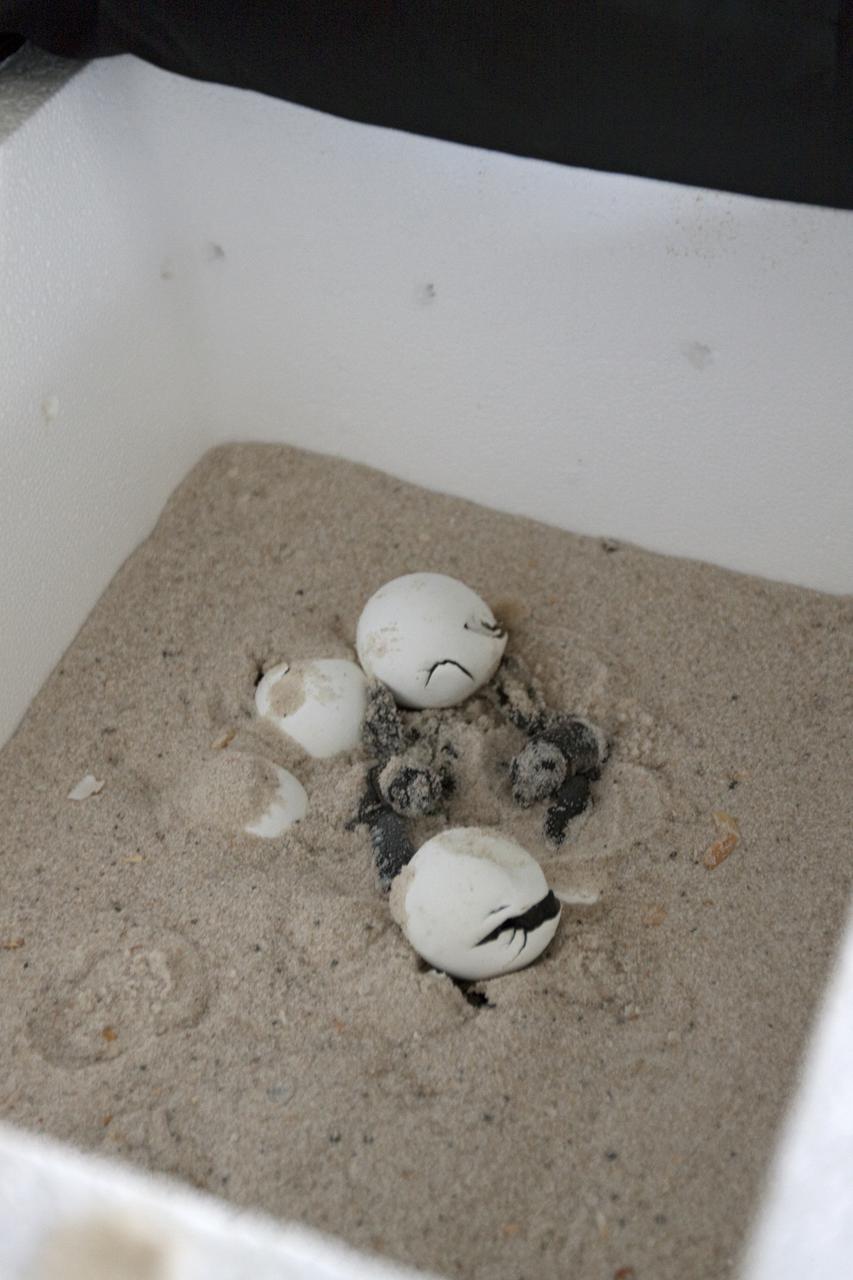
CAPE CANAVERAL, Fla. -- In a secure, climate-controlled facility at NASA's Kennedy Space Center in Florida, newly-hatched Loggerhead turtles emerge from their eggs brought from beaches along the northern U.S. Gulf Coast. The eggs will be monitored by biologists and hatchery workers until incubation is complete. The hatchlings will be released at different points along a 100-mile stretch of the Atlantic Ocean shoreline. That includes beaches adjacent to the Merritt Island National Wildlife Refuge, which is located inside Kennedy. The release and relocation work is part of an effort by the U.S. Fish and Wildlife Service, the Florida Fish and Wildlife Conservation Commission, the National Park Service, NOAA, FedEx and conservationists to help minimize the risk to this year's sea turtle hatchlings from impacts of the BP Deepwater Horizon oil spill in the Gulf of Mexico. This plan involves carefully moving an anticipated 700 nests during the next several months. Photo credit: NASA_Troy Cryder
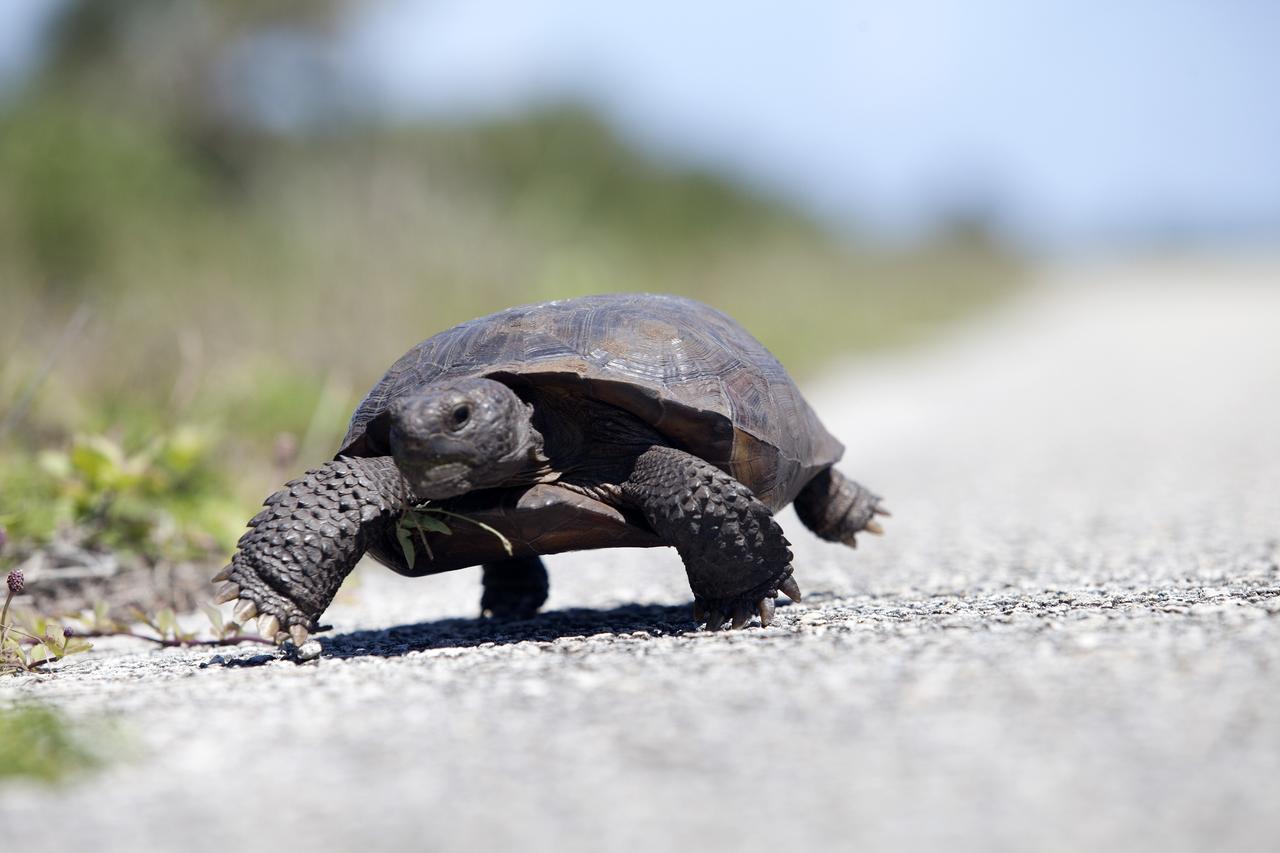
CAPE CANAVERAL, Fla. -- Slow and steady wins the race for this gopher tortoise, ambling along the Launch Pad 39B beach road on NASA's Kennedy Space Center in Florida. Gopher tortoises are dry-land turtles that live in scrub, dry hammock, pine flatwood, coastal grassland and dune habitats. The undeveloped property on Kennedy Space Center is managed by the U.S. Fish and Wildlife Service through the Merritt Island National Wildlife Refuge. Currently, gopher tortoises are protected in some states by federal law under the Endangered Species Act ESA. The refuge provides a habitat for 14 species federally listed as threatened or endangered, including the leatherback, green, Kemps Ridley, loggerhead and Atlantic hawksbill turtles. For information on the refuge, visit http://www.fws.gov/merrittisland/Index.html. For more information on the gopher tortoise, visit http://www.fws.gov/northflorida/GopherTortoise/Gopher_Tortoise_Fact_Sheet.html. Photo credit: NASA/Daniel Casper
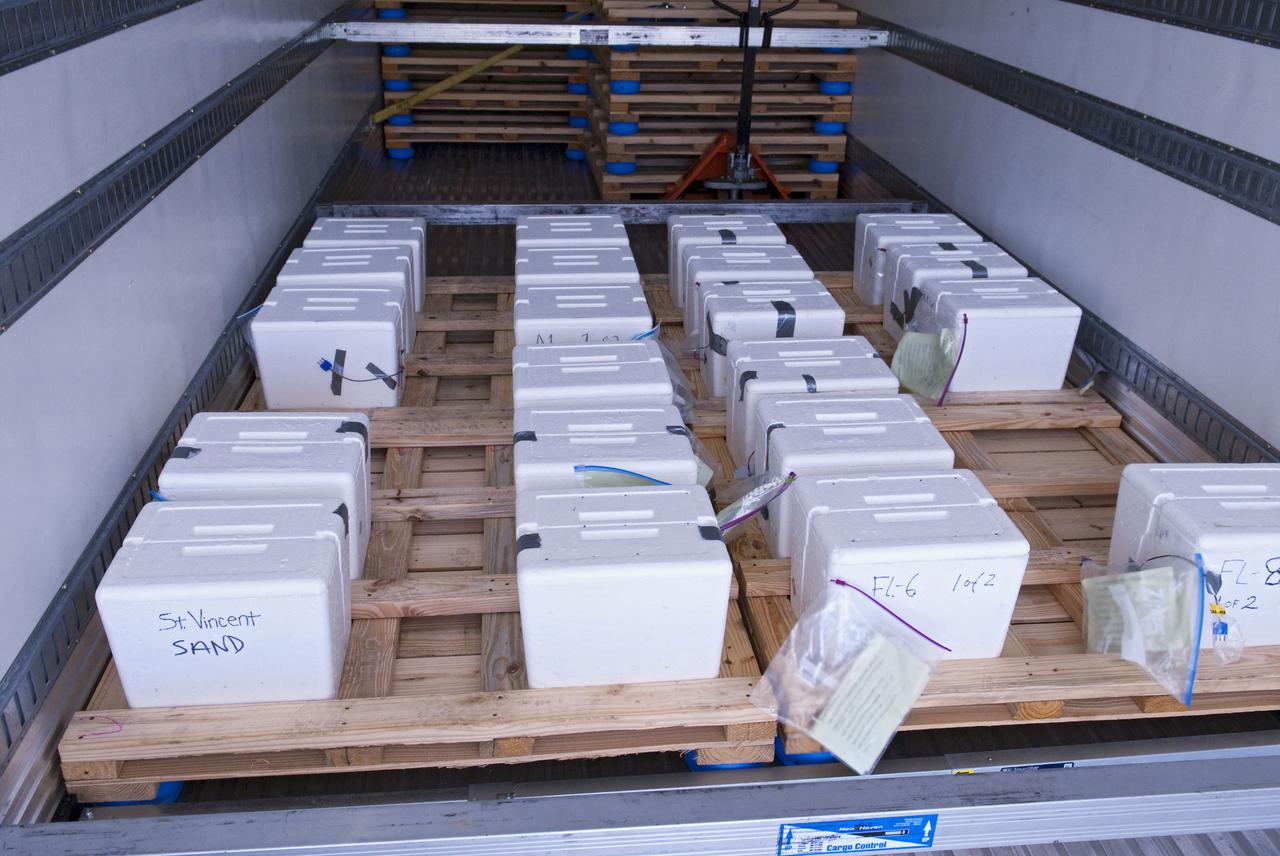
CAPE CANAVERAL, Fla. -- A new batch of endangered sea turtle eggs brought from beaches along the northern U.S. Gulf Coast arrive at NASA's Kennedy Space Center in Florida. Nests of Kemp’s ridley and Loggerhead turtle eggs from Gulf Shores, Ala., and various Florida Gulf Coast beaches are being transported by a specially equipped FedEx truck to a secure, climate-controlled facility at Kennedy. They will be monitored by biologists and hatchery workers until incubation is complete. The hatchlings will be released at different points along a 100-mile stretch of the Atlantic Ocean shoreline. That includes beaches adjacent to the Merritt Island National Wildlife Refuge, which is located inside Kennedy. The release and relocation work is part of an effort by the U.S. Fish and Wildlife Service, the Florida Fish and Wildlife Conservation Commission, the National Park Service, NOAA, FedEx and conservationists to help minimize the risk to this year’s sea turtle hatchlings from impacts of the BP Deepwater Horizon oil spill in the Gulf of Mexico. This plan involves carefully moving an anticipated 700 nests during the next several months. Photo credit: NASA_Ben Smegelsky

KENNEDY SPACE CENTER, FLA. -- A sandpiper wades the water in the Merritt Island National <a href="http://www-pao.ksc.nasa.gov/kscpao/captions/subjects/wildlife.htm">Wildlife </a> Refuge, which shares a boundary with the space center. Sandpipers are usually seen foraging on the beach or margins of lakes, ponds, marshes or streams. The open waters of the Wildlife Refuge provide wintering areas for 23 species of migratory waterfowl as well as a year-round home for great blue herons, great egrets, wood storks, cormorants, brown pelicans and other species of marsh and shore birds. The refuge comprises 92,000 acres, ranging from fresh-water impoundments, salt-water estuaries and brackish marshes to hardwood hammocks and pine flatwoods. The diverse landscape provides habitat for more than 310 species of birds, 25 mammals, 117 fishes, and 65 amphibians and reptiles, including such endangered species as Southern bald eagles, wood storks, Florida scrub jays, Atlantic loggerhead and leatherback turtles, osprey, and nearly 5,000 alligators
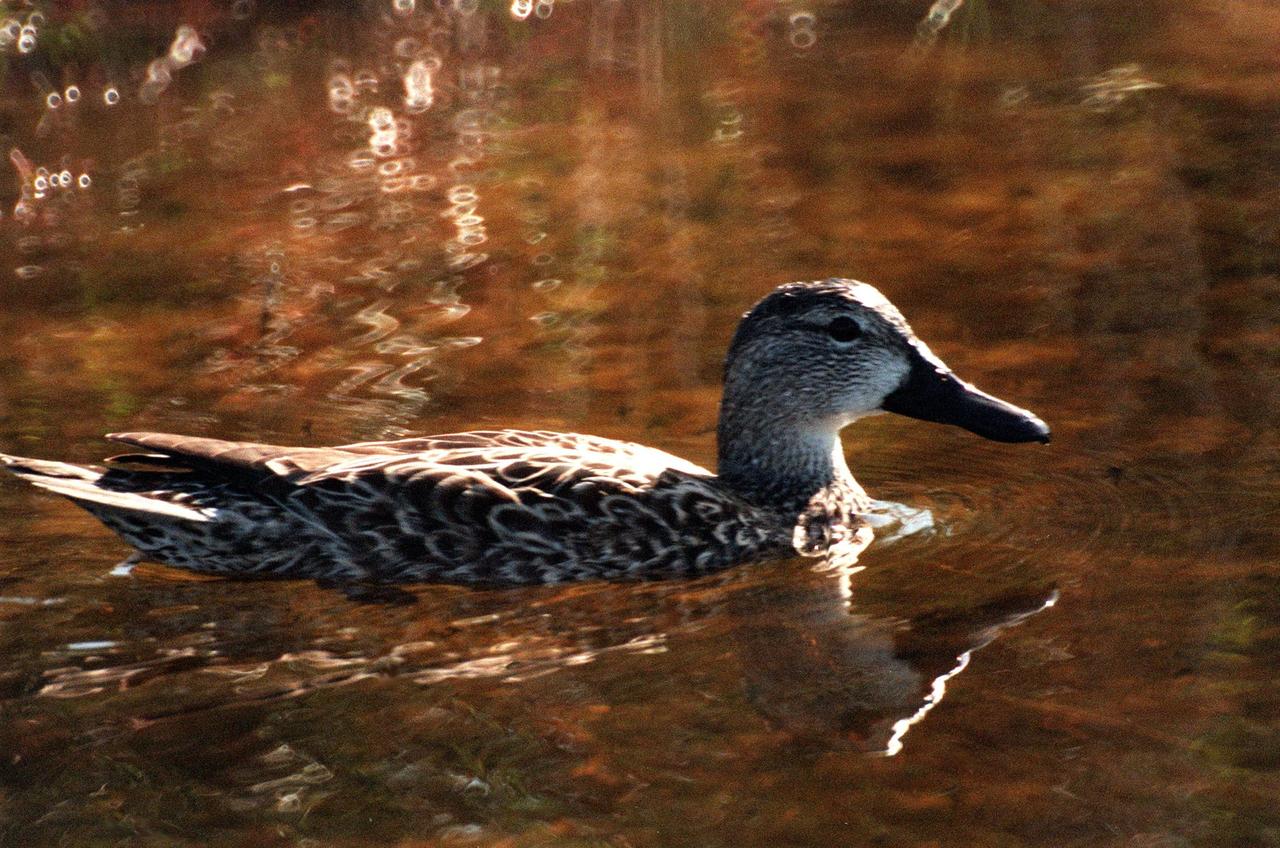
KENNEDY SPACE CENTER, FLA. -- A pintail duck swims calmly in the waters of the Merritt Island National <a href="http://www-pao.ksc.nasa.gov/kscpao/captions/subjects/wildlife.htm">Wildlife </a>Refuge, which shares a boundary with the space center. The pintail can be found in marshes, prairie ponds and tundra, and salt marshes in winter. They range from Alaska and Greenland south to Central America and the West Indies. The open waters of the Wildlife Refuge provide wintering areas for 23 species of migratory waterfowl as well as a year-round home for great blue herons, great egrets, wood storks, cormorants, brown pelicans and other species of marsh and shore birds. The refuge comprises 92,000 acres, ranging from fresh-water impoundments, salt-water estuaries and brackish marshes to hardwood hammocks and pine flatwoods. The diverse landscape provides habitat for more than 310 species of birds, 25 mammals, 117 fishes, and 65 amphibians and reptiles, including such endangered species as Southern bald eagles, wood storks, Florida scrub jays, Atlantic loggerhead and leatherback turtles, osprey, and nearly 5,000 alligators