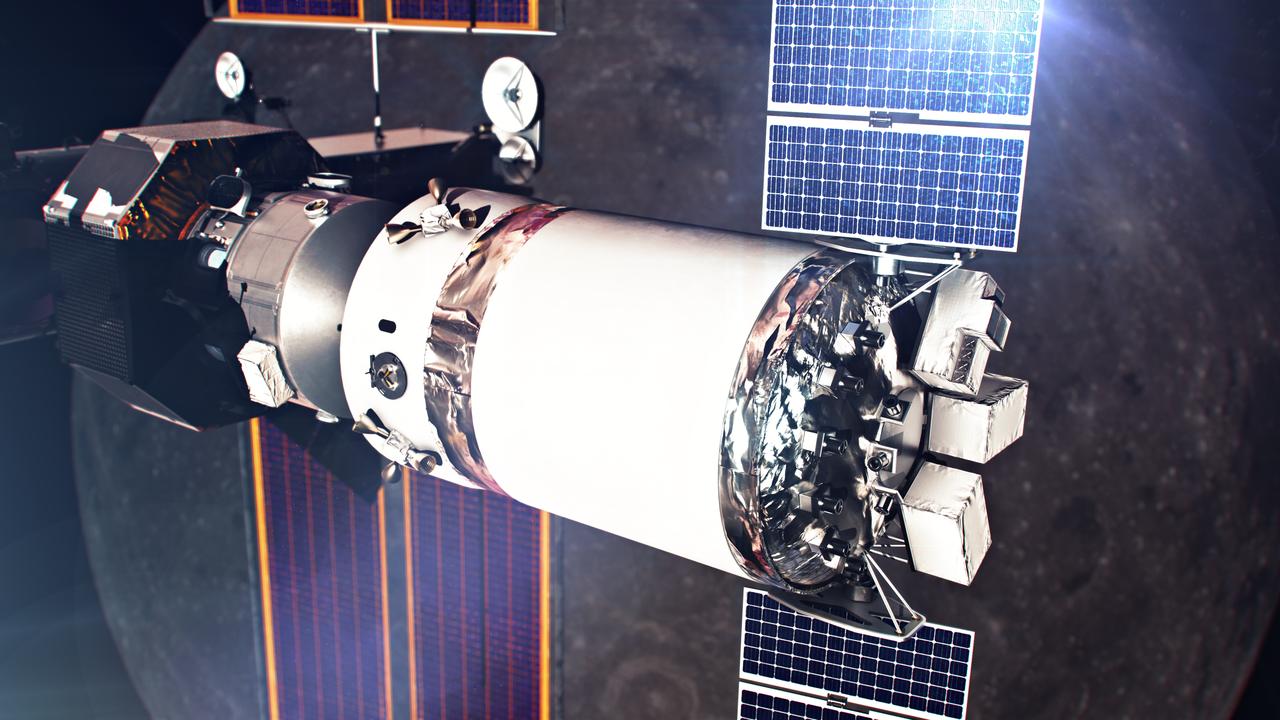
NASA has awarded the first Gateway Logistics Services contract to SpaceX to deliver cargo, experiments and other supplies to Gateway for the Artemis IV mission in September 2028, the first time that crew will travel to Gateway.
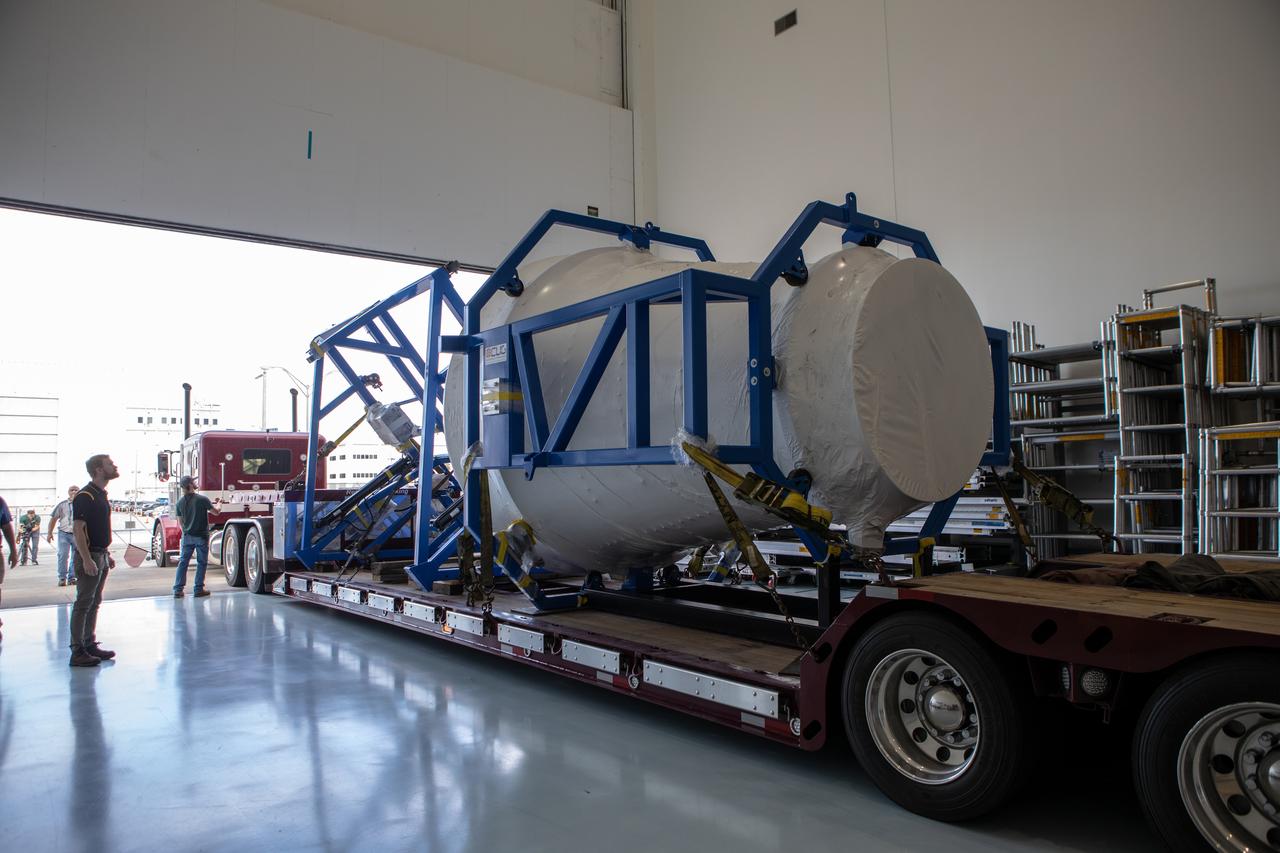
A truck carrying the cargo logistics module for Sierra Nevada Corporation’s Dream Chaser, the company’s reusable spaceplane, enters the Space Station Processing Facility high bay at NASA’s Kennedy Space Center in Florida on Aug. 27, 2019. The cargo module – a 15-foot attachment to Dream Chaser – provides extra storage for payloads and provides cargo disposal upon re-entry into Earth’s atmosphere. Dream Chaser will deliver more than 12,000 pounds of cargo to the International Space Station under the agency’s Commercial Resupply Services 2 contract. The spacecraft and cargo module will begin resupply and return services missions to the space station in late 2021.
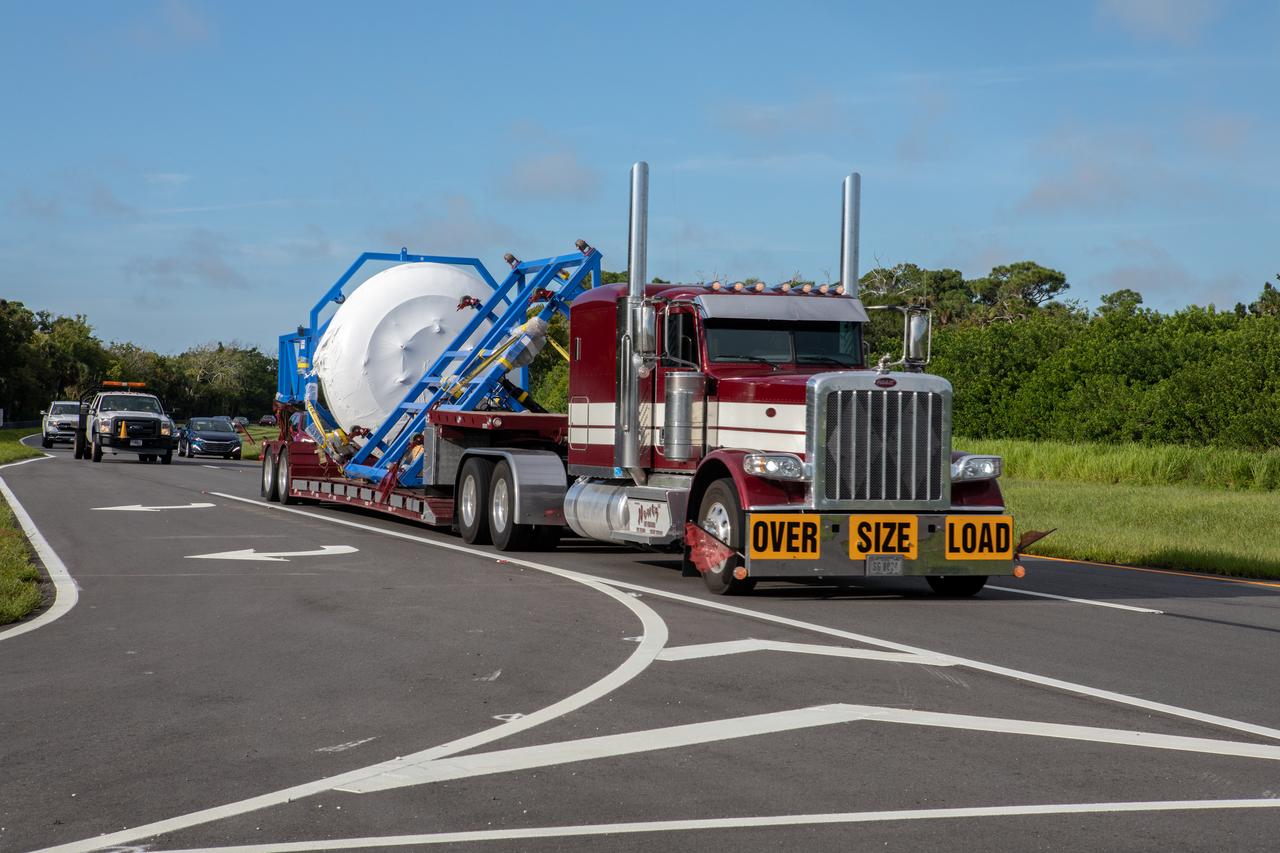
The cargo logistics module for Sierra Nevada Corporation’s Dream Chaser, the company’s reusable spaceplane, is in transit to the Space Station Processing Facility at NASA’s Kennedy Space Center in Florida on Aug. 27, 2019. The cargo module – a 15-foot attachment to Dream Chaser – provides extra storage for payloads and provides cargo disposal upon re-entry into Earth’s atmosphere. Dream Chaser will deliver more than 12,000 pounds of cargo to the International Space Station under NASA’s Commercial Resupply Services 2 contract. The spacecraft and cargo module will begin resupply and return services missions to the space station in late 2021.
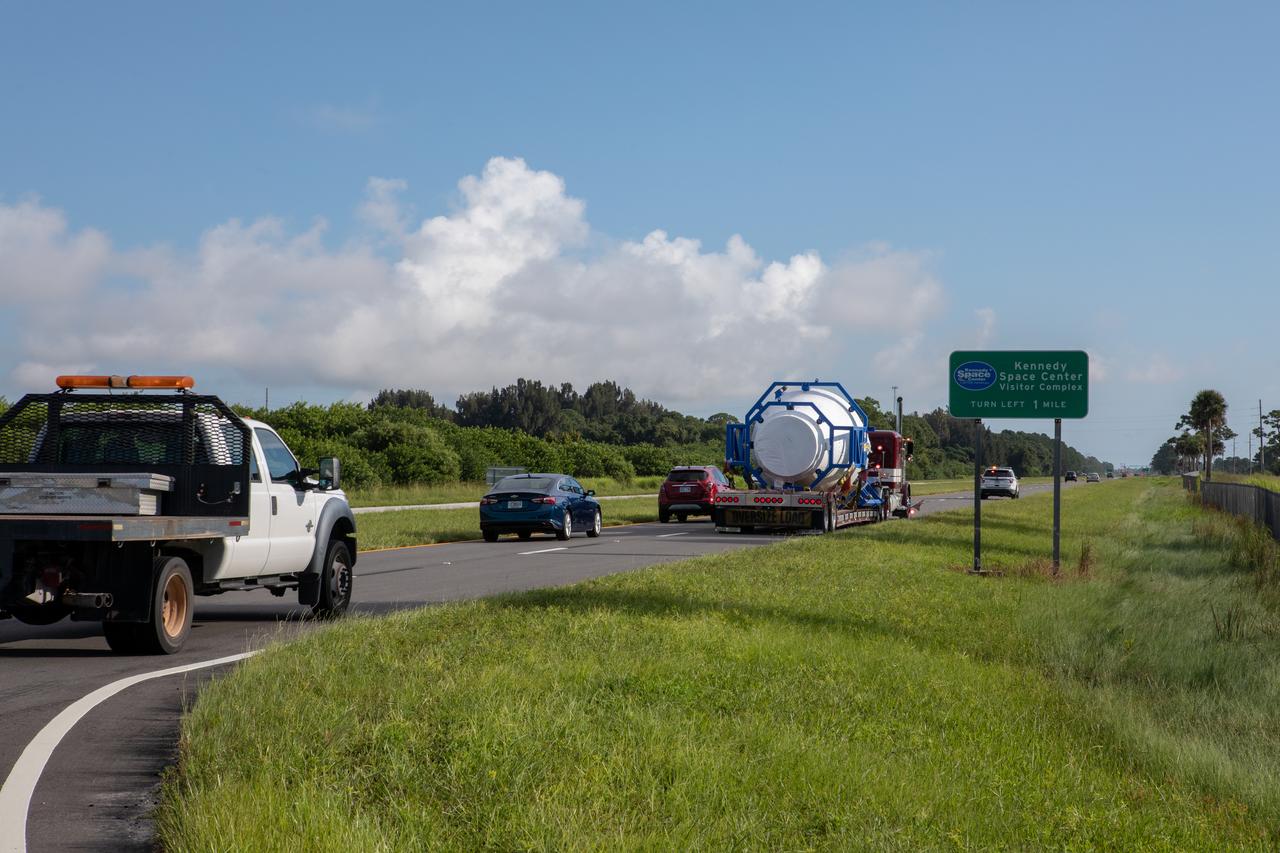
The cargo logistics module for Sierra Nevada Corporation’s Dream Chaser, the company’s reusable spaceplane, arrives at NASA’s Kennedy Space Center in Florida on Aug. 27, 2019. The cargo module – secured atop a truck – is being taken to Kennedy’s Space Station Processing Facility. A 15-foot attachment to Dream Chaser, the cargo module provides extra storage for payloads and provides cargo disposal upon re-entry into Earth’s atmosphere. Dream Chaser will deliver more than 12,000 pounds of cargo to the International Space Station under NASA’s Commercial Resupply Services 2 contract. The spacecraft and cargo module will begin resupply and return services missions to the space station in late 2021.
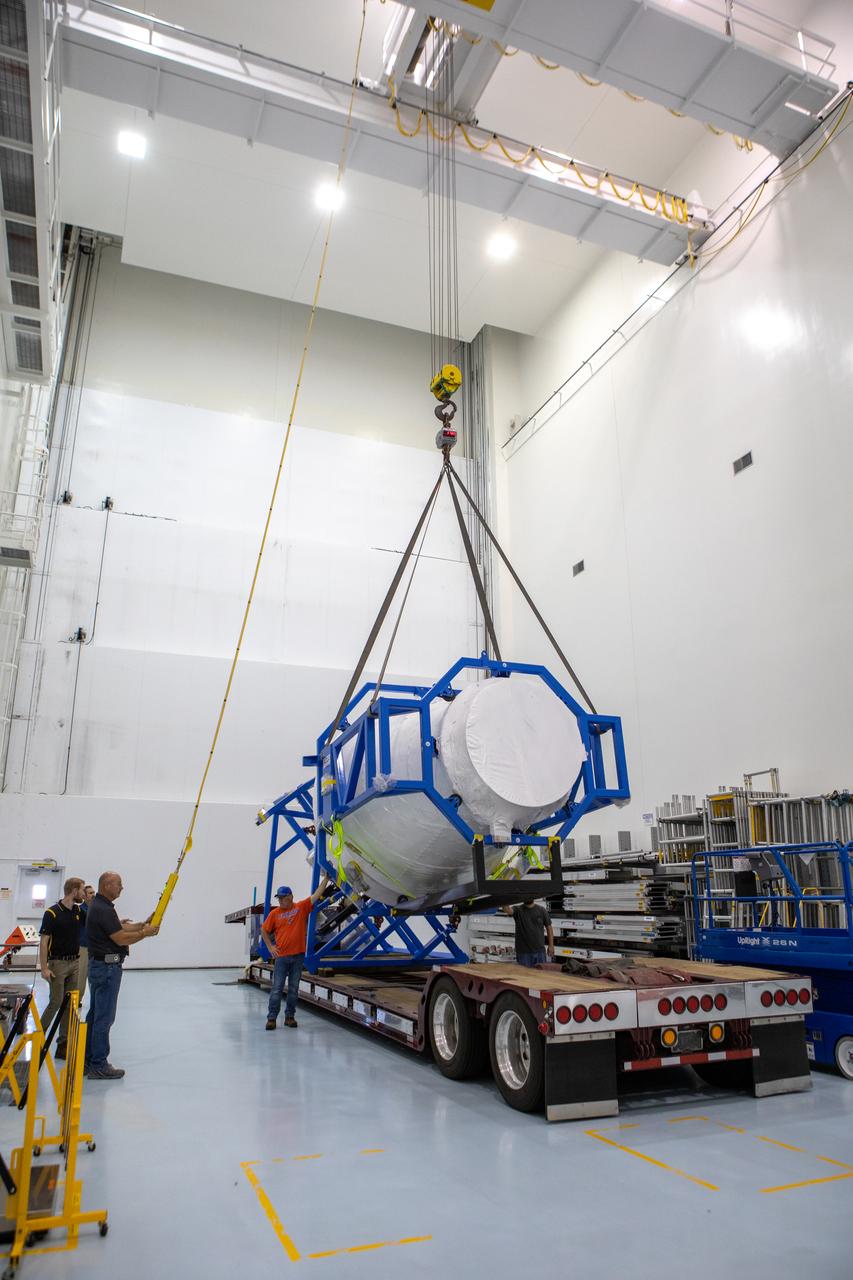
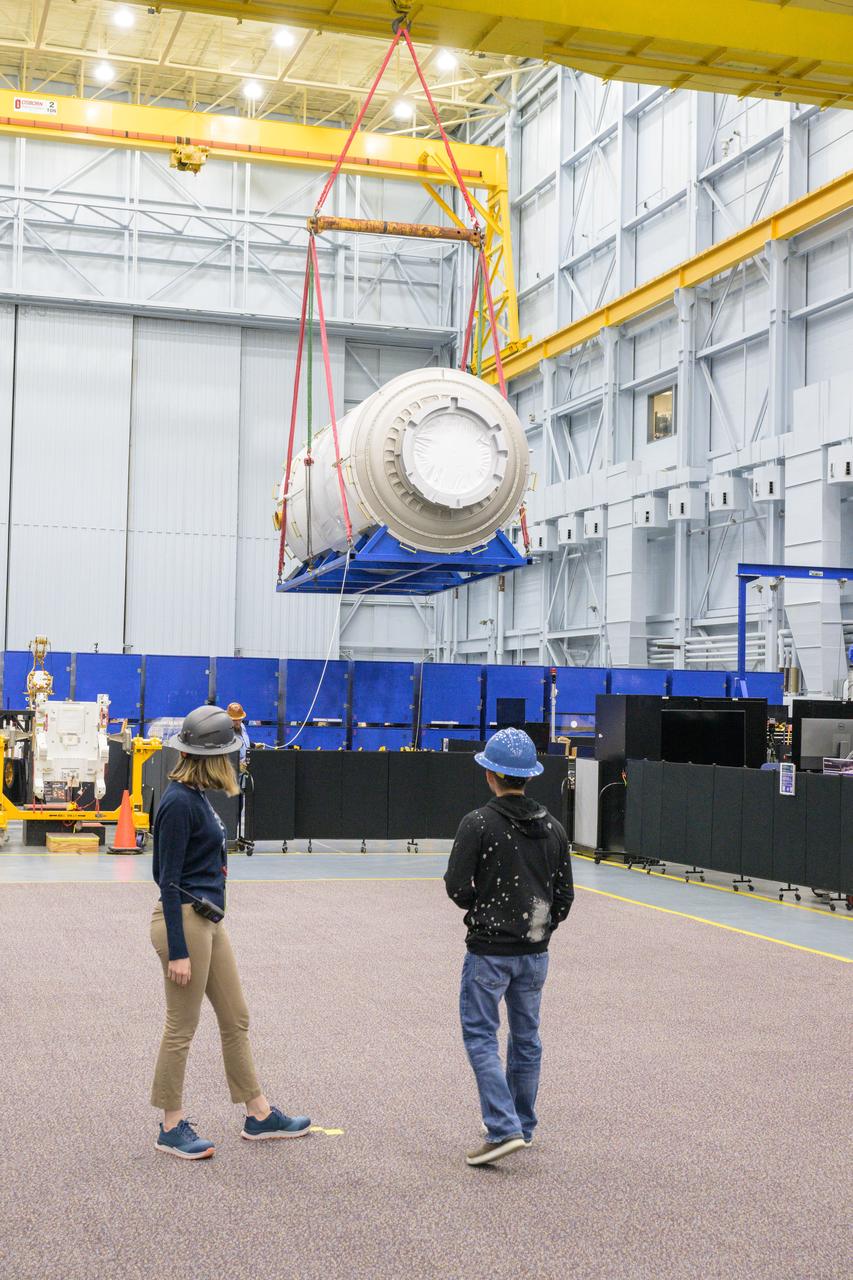
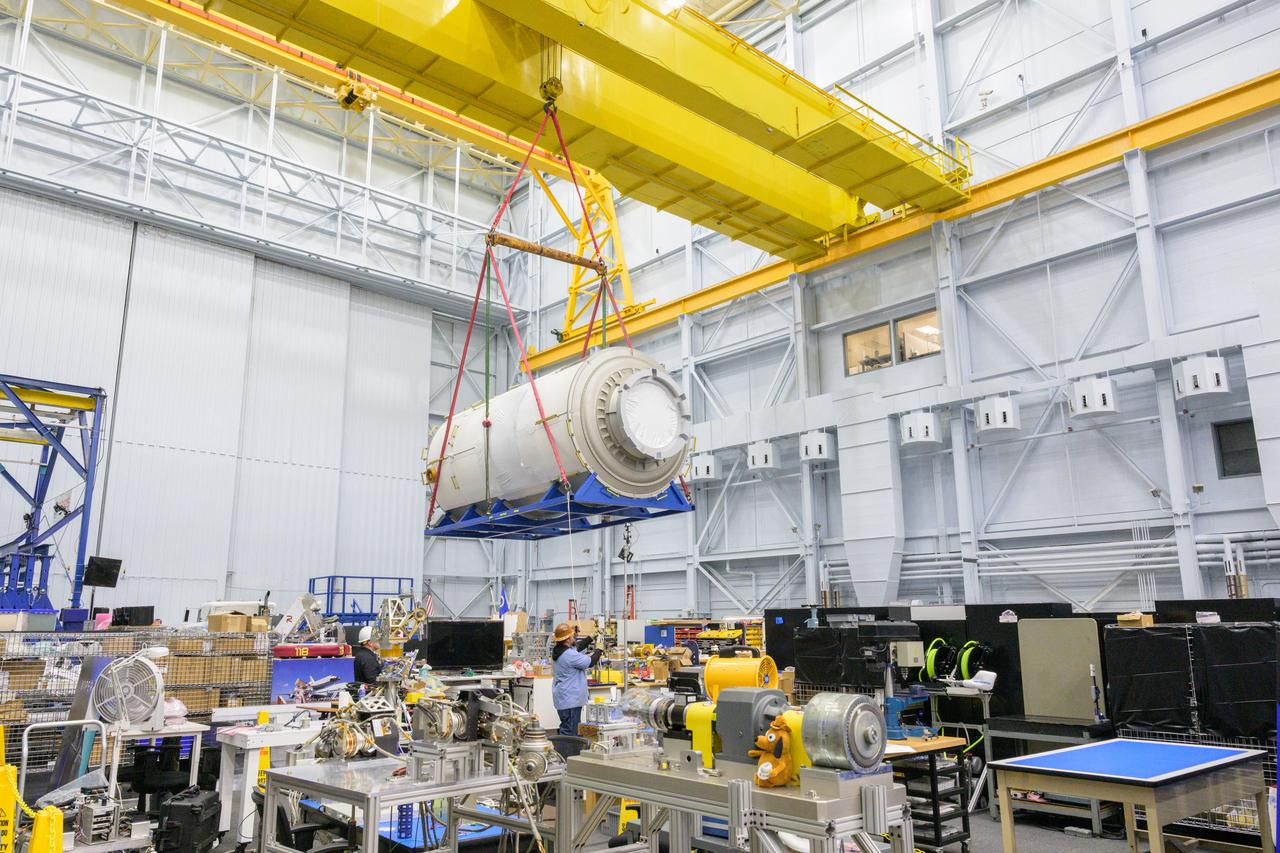
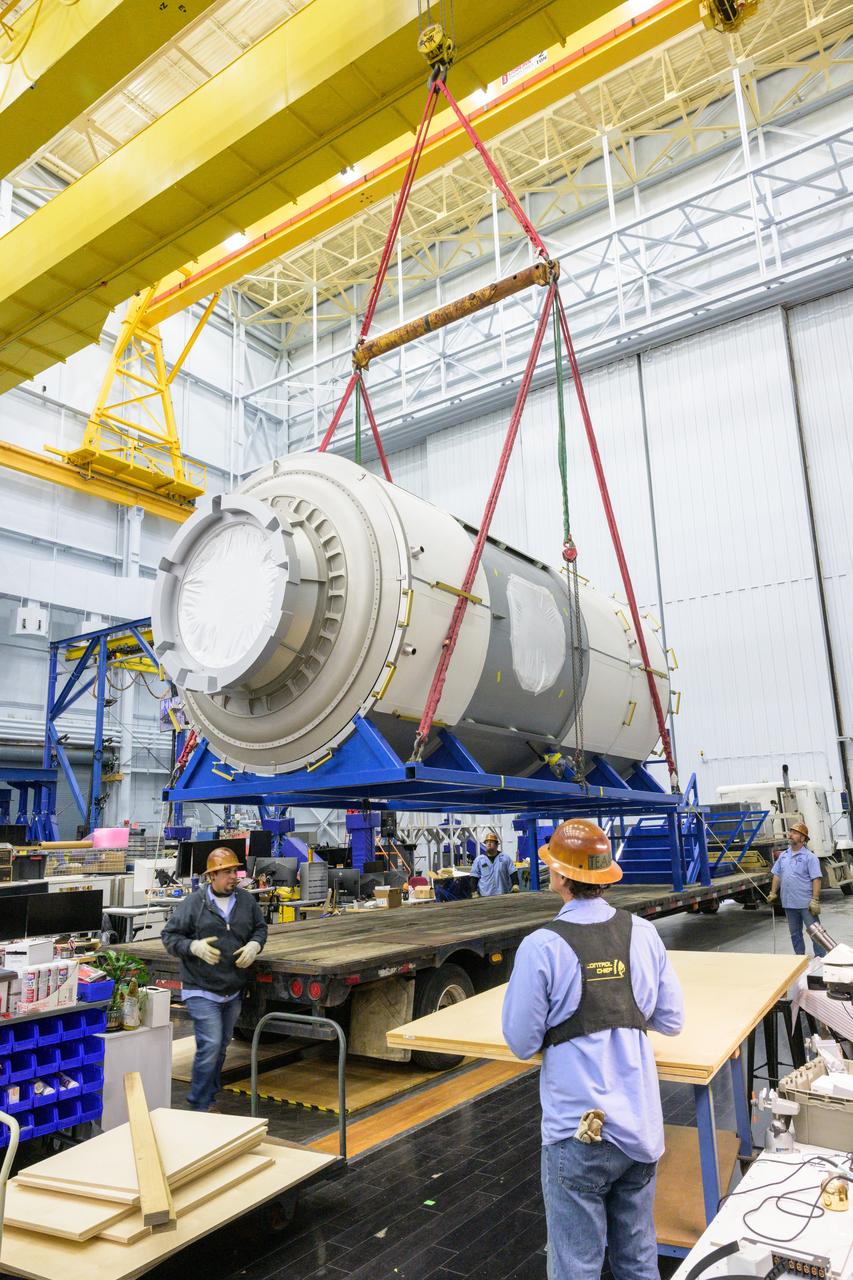
The cargo logistics module for Sierra Nevada Corporation’s Dream Chaser, the company’s reusable spaceplane, is lifted from the bed of a truck following its arrival at the Space Station Processing Facility high bay at NASA’s Kennedy Space Center in Florida on Aug. 27, 2019. The cargo module – a 15-foot attachment to Dream Chaser – provides extra storage for payloads and provides cargo disposal upon re-entry into Earth’s atmosphere. Dream Chaser will deliver more than 12,000 pounds of cargo to the International Space Station under the agency’s Commercial Resupply Services 2 contract. The spacecraft and cargo module will begin resupply and return services missions to the space station in late 2021.
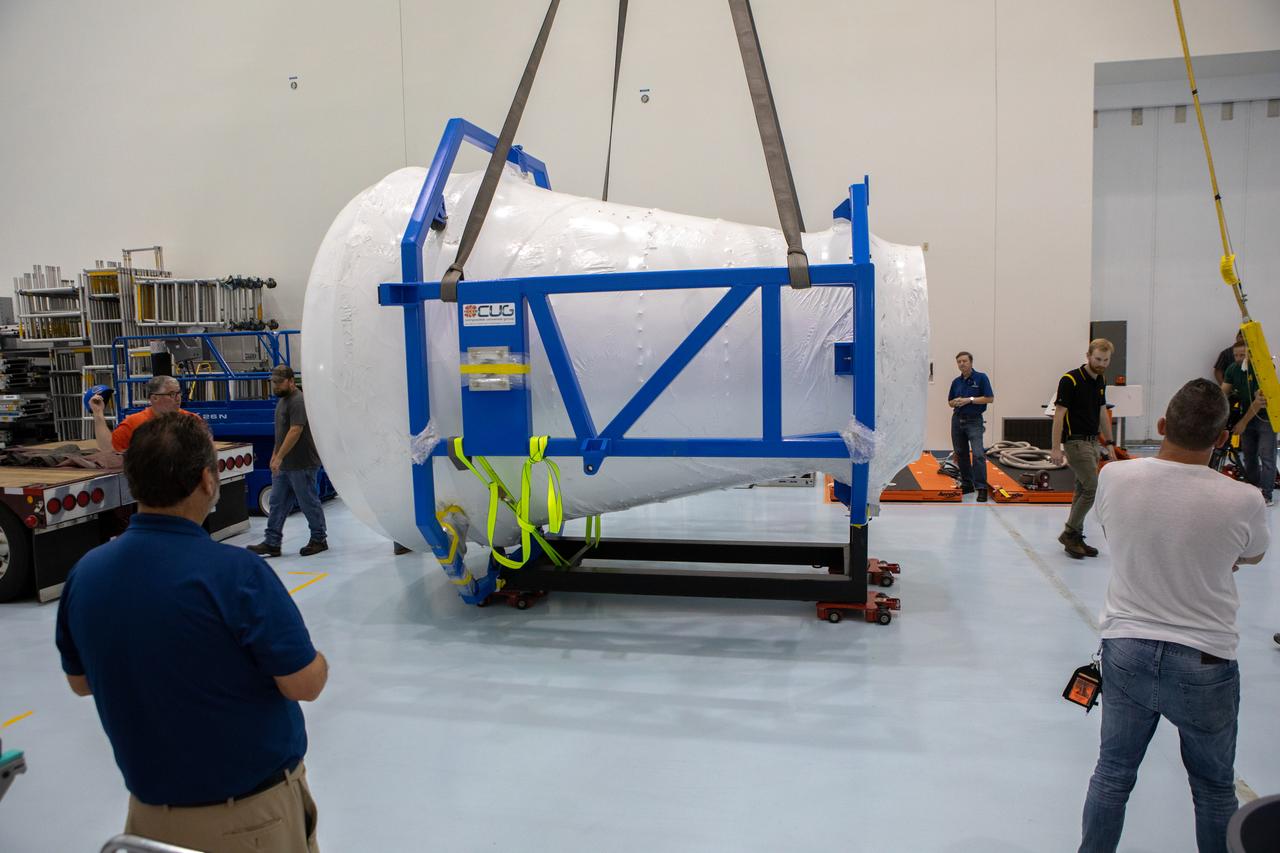
The cargo logistics module for Sierra Nevada Corporation’s Dream Chaser, the company’s reusable spaceplane, arrives at the Space Station Processing Facility high bay at NASA’s Kennedy Space Center in Florida on Aug. 27, 2019. The cargo module – a 15-foot attachment to Dream Chaser – provides extra storage for payloads and provides cargo disposal upon re-entry into Earth’s atmosphere. Dream Chaser will deliver more than 12,000 pounds of cargo to the International Space Station under the agency’s Commercial Resupply Services 2 contract. The spacecraft and cargo module will begin resupply and return services missions to the space station in late 2021.
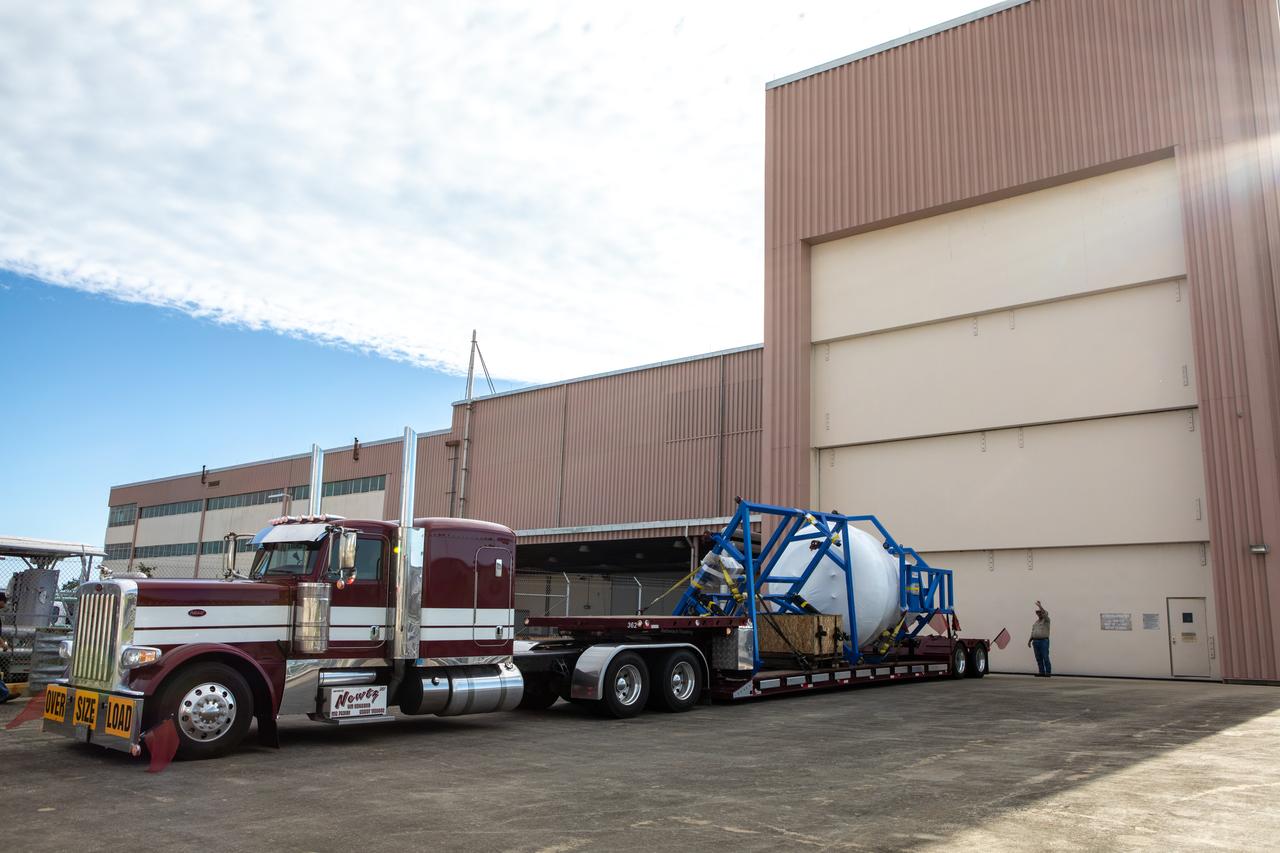
A truck carrying the cargo logistics module for Sierra Nevada Corporation’s Dream Chaser, the company’s reusable spaceplane, arrives at the Space Station Processing Facility high bay entrance at NASA’s Kennedy Space Center in Florida on Aug. 27, 2019. The cargo module – a 15-foot attachment to Dream Chaser – provides extra storage for payloads and provides cargo disposal upon re-entry into Earth’s atmosphere. Dream Chaser will deliver more than 12,000 pounds of cargo to the International Space Station under the agency’s Commercial Resupply Services 2 contract. The spacecraft and cargo module will begin resupply and return services missions to the space station in late 2021.
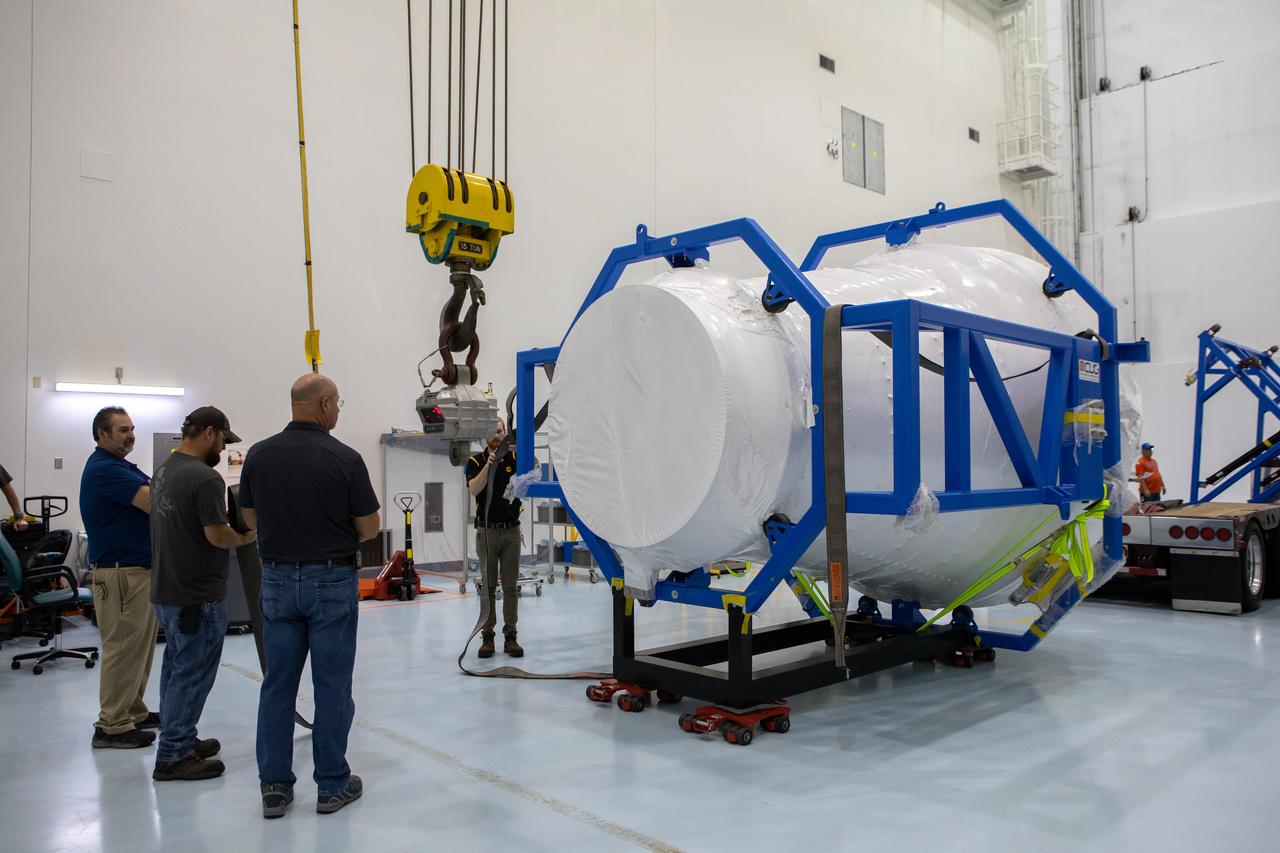
The cargo logistics module for Sierra Nevada Corporation’s Dream Chaser, the company’s reusable spaceplane, is photographed inside the Space Station Processing Facility high bay at NASA’s Kennedy Space Center in Florida following its arrival on Aug. 27, 2019. The cargo module – a 15-foot attachment to Dream Chaser – provides extra storage for payloads and provides cargo disposal upon re-entry into Earth’s atmosphere. Dream Chaser will deliver more than 12,000 pounds of cargo to the International Space Station under the agency’s Commercial Resupply Services 2 contract. The spacecraft and cargo module will begin resupply and return services missions to the space station in late 2021.
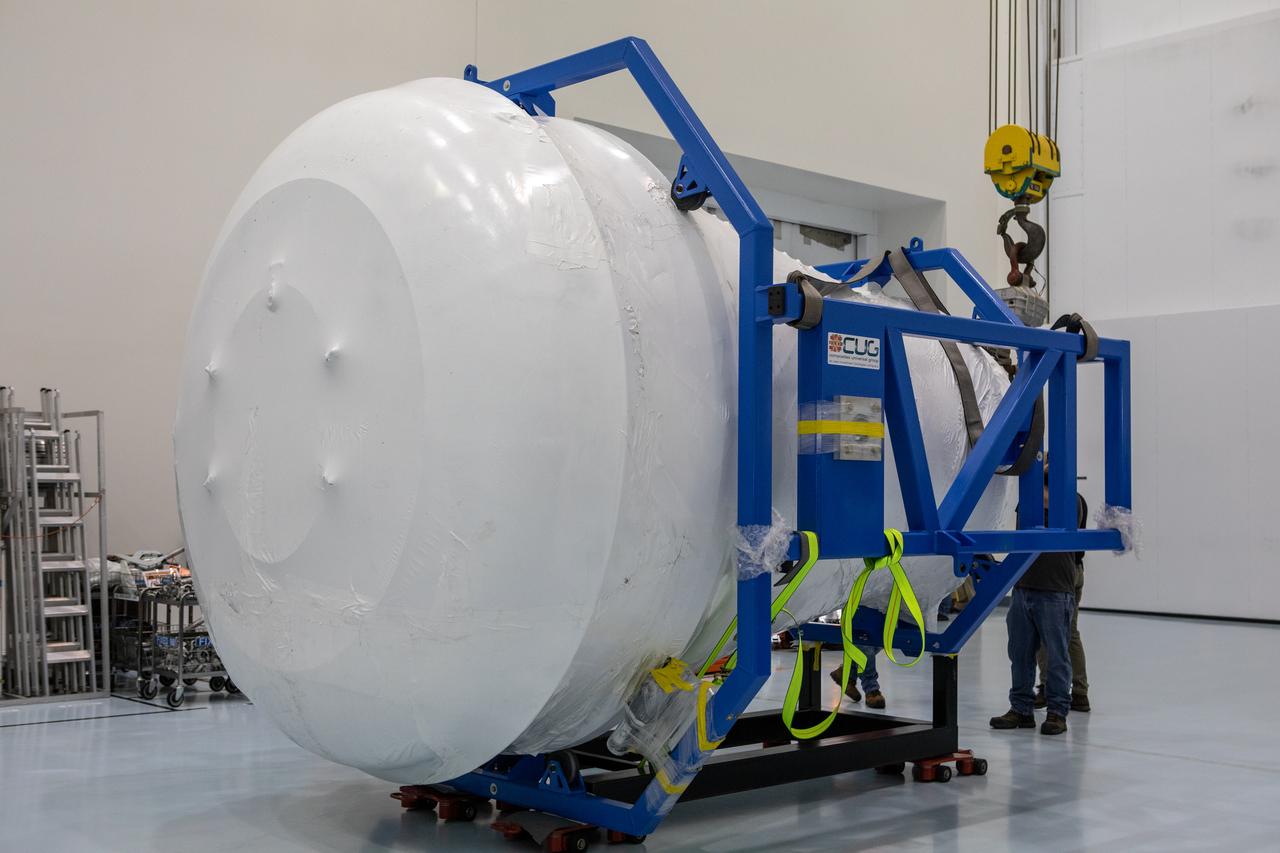
The cargo logistics module for Sierra Nevada Corporation’s Dream Chaser, the company’s reusable spaceplane, is photographed inside the Space Station Processing Facility high bay at NASA’s Kennedy Space Center in Florida following its arrival on Aug. 27, 2019. The cargo module – a 15-foot attachment to Dream Chaser – provides extra storage for payloads and provides cargo disposal upon re-entry into Earth’s atmosphere. Dream Chaser will deliver more than 12,000 pounds of cargo to the International Space Station under the agency’s Commercial Resupply Services 2 contract. The spacecraft and cargo module will begin resupply and return services missions to the space station in late 2021.
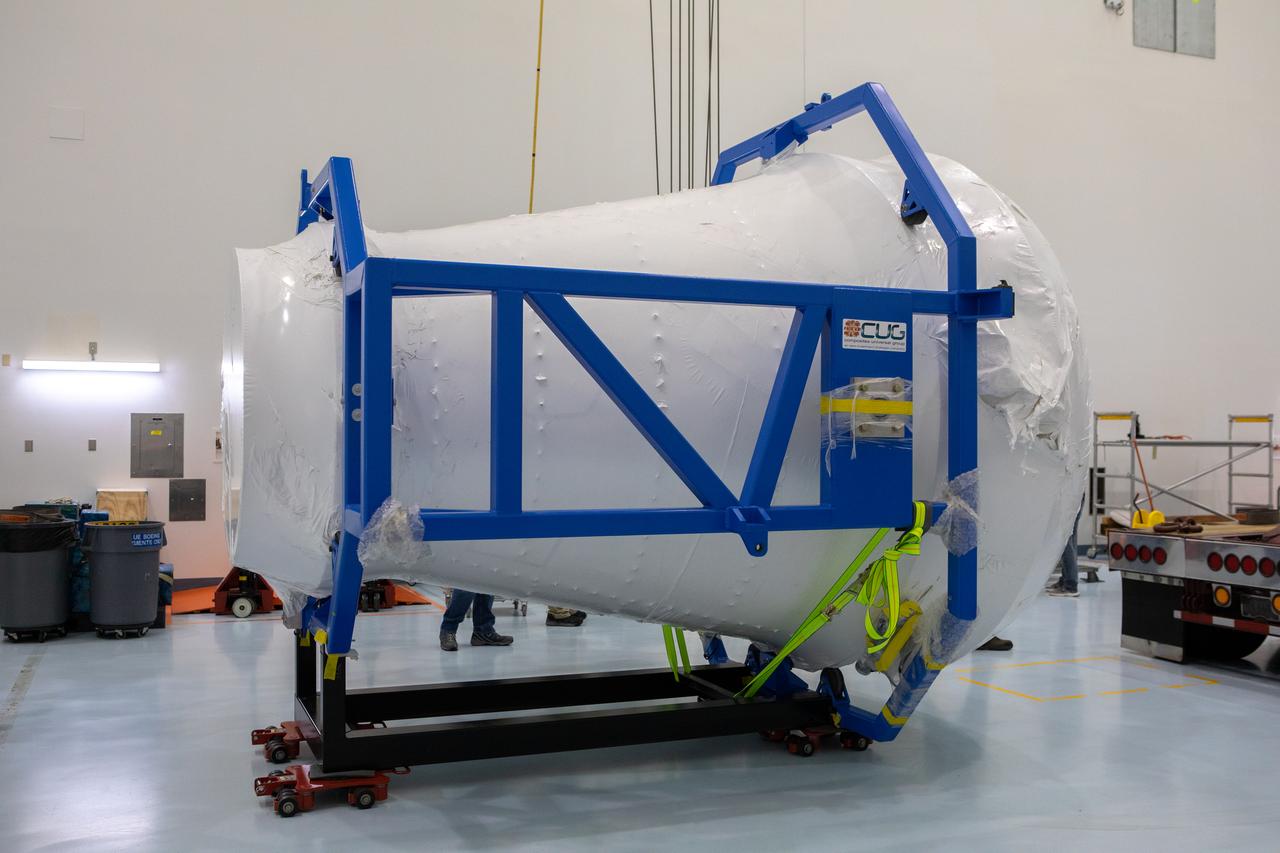
The cargo logistics module for Sierra Nevada Corporation’s Dream Chaser, the company’s reusable spaceplane, is photographed inside the Space Station Processing Facility high bay at NASA’s Kennedy Space Center in Florida following its arrival on Aug. 27, 2019. The cargo module – a 15-foot attachment to Dream Chaser – provides extra storage for payloads and provides cargo disposal upon re-entry into Earth’s atmosphere. Dream Chaser will deliver more than 12,000 pounds of cargo to the International Space Station under the agency’s Commercial Resupply Services 2 contract. The spacecraft and cargo module will begin resupply and return services missions to the space station in late 2021.

iss050e041989 (2/14/2017) --- Photo documentation of the Radio Frequency Identification (RFID) cable installation in the U.S. Laboratory aboard the International Space Station (ISS). The RFID-Enabled Autonomous Logistics Management (REALM) (RFID Logistics Awareness) investigation tests a radio-based inventory control system to keep track of everything inside the football-field-sized ISS. Some aspects of the technology are commonly used on Earth, but other aspects are experimental in nature.
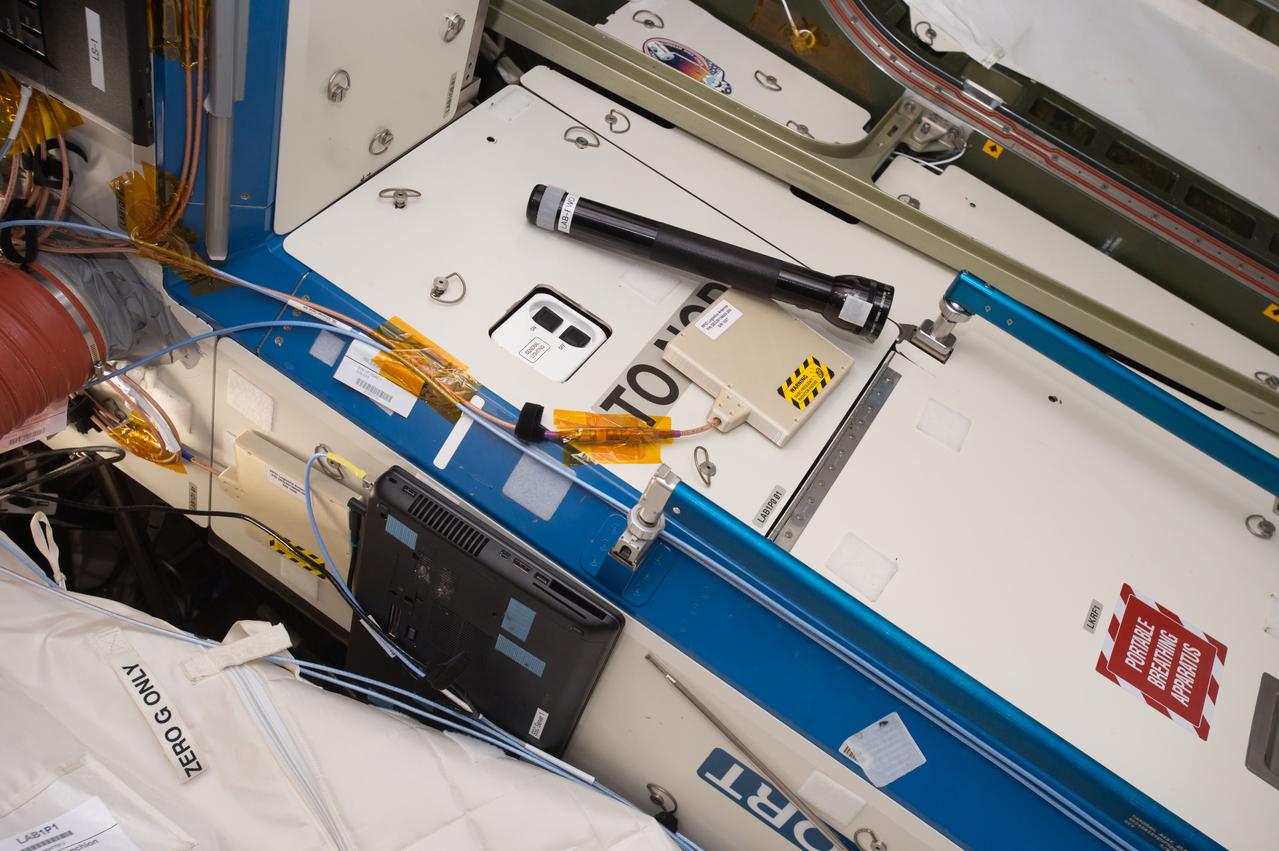
iss050e041985 (2/14/2017) --- Photo documentation of the Radio Frequency Identification (RFID) cable installation in the U.S. Laboratory aboard the International Space Station (ISS). The RFID-Enabled Autonomous Logistics Management (REALM) (RFID Logistics Awareness) investigation tests a radio-based inventory control system to keep track of everything inside the football-field-sized ISS. Some aspects of the technology are commonly used on Earth, but other aspects are experimental in nature.
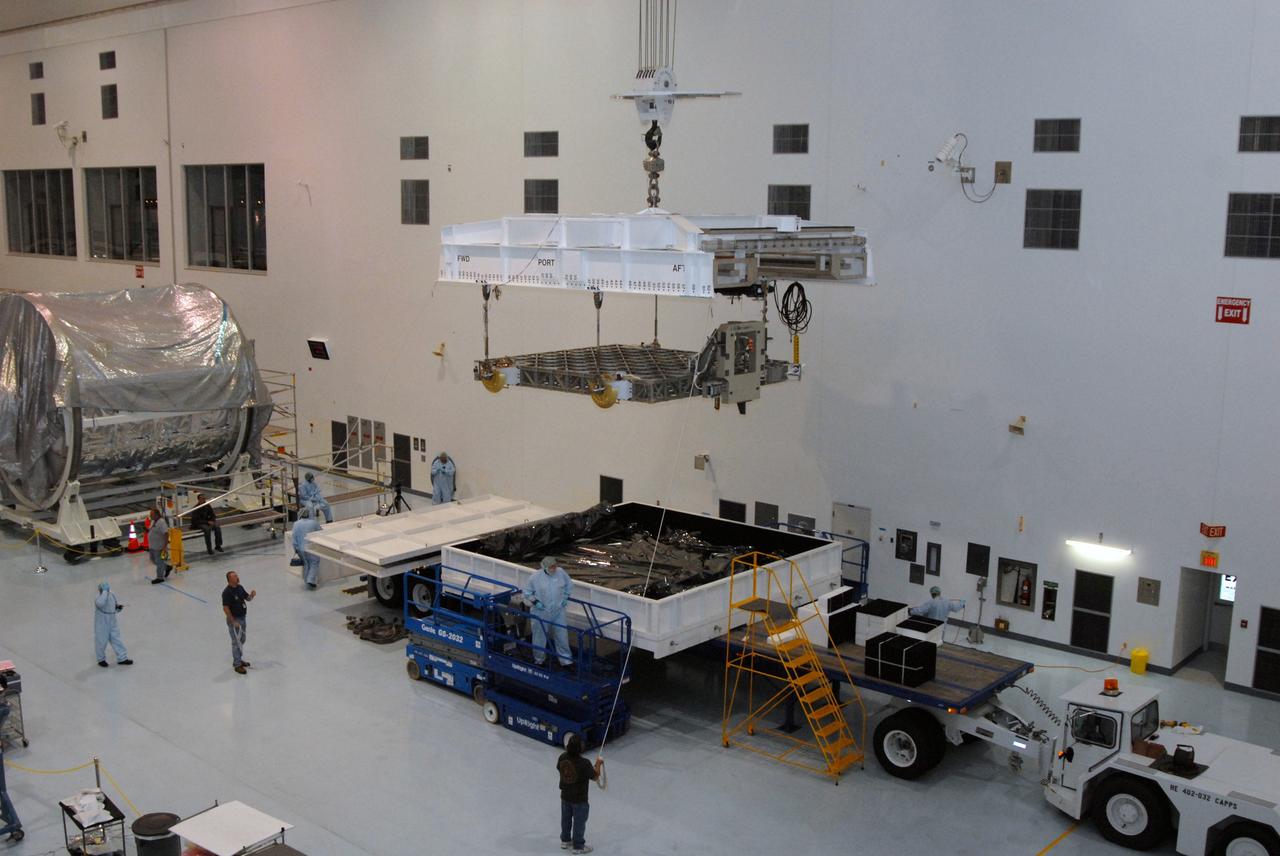
CAPE CANAVERAL, Fla. – Inside the Space Station Processing Facility at NASA's Kennedy Space Center in Florida, a crane lifts the EXPRESS Logistics Carrier tomove it to a stand. The carrier is part of the payload on space shuttle Atlantis, which will deliver to the International Space Station components including two spare gyroscopes, two nitrogen tank assemblies, two pump modules, an ammonia tank assembly and a spare latching end effector for the station's robotic arm. STS-129 is targeted to launch Nov. 12. Photo credit: NASA/Tim Jacobs
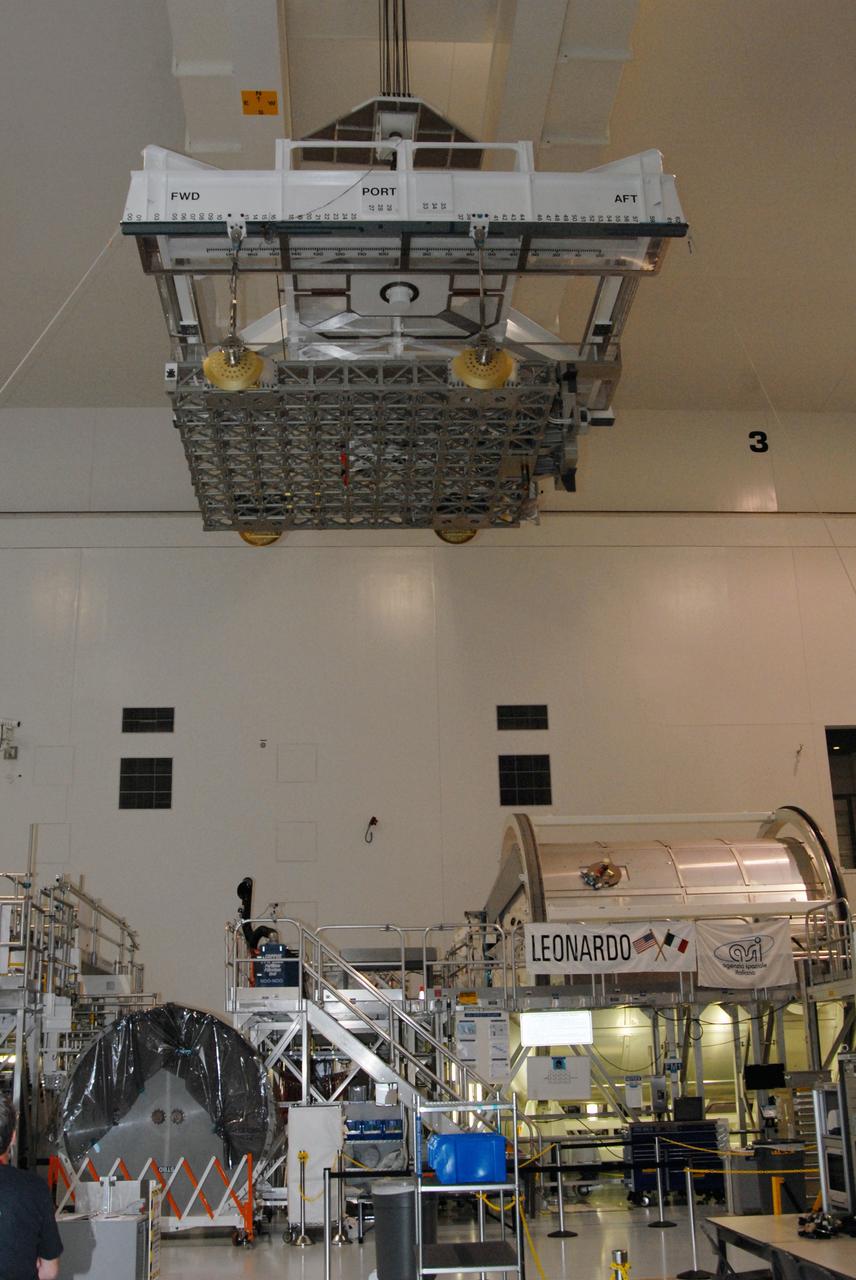
CAPE CANAVERAL, Fla. – Inside the Space Station Processing Facility at NASA's Kennedy Space Center in Florida, a crane carries the EXPRESS Logistics Carrier toward a stand. The carrier is part of the payload on space shuttle Atlantis, which will deliver to the International Space Station components including two spare gyroscopes, two nitrogen tank assemblies, two pump modules, an ammonia tank assembly and a spare latching end effector for the station's robotic arm. STS-129 is targeted to launch Nov. 12. Photo credit: NASA/Tim Jacobs
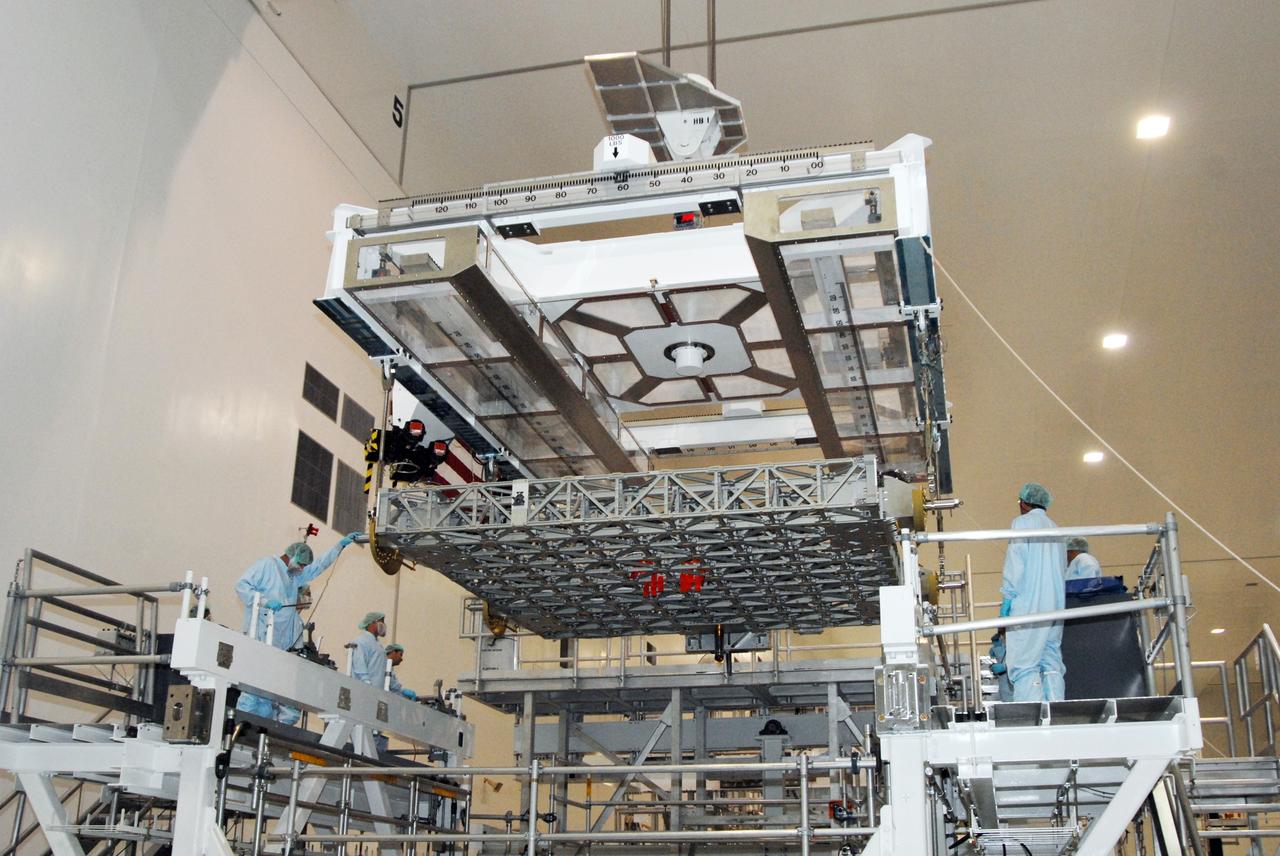
CAPE CANAVERAL, Fla. – Inside the Space Station Processing Facility at NASA's Kennedy Space Center in Florida, a crane lowers the EXPRESS Logistics Carrier onto a stand. The carrier is part of the payload on space shuttle Atlantis, which will deliver to the International Space Station components including two spare gyroscopes, two nitrogen tank assemblies, two pump modules, an ammonia tank assembly and a spare latching end effector for the station's robotic arm. STS-129 is targeted to launch Nov. 12. Photo credit: NASA/Tim Jacobs

Northrop Grumman and subcontractor Thales Alenia Space complete fabrication work on the Habitation and Logistics Outpost (HALO) module, one of two of the Gateway Space Station's habitation elements where astronauts will live and work in lunar orbit during deep space Artemis missions.
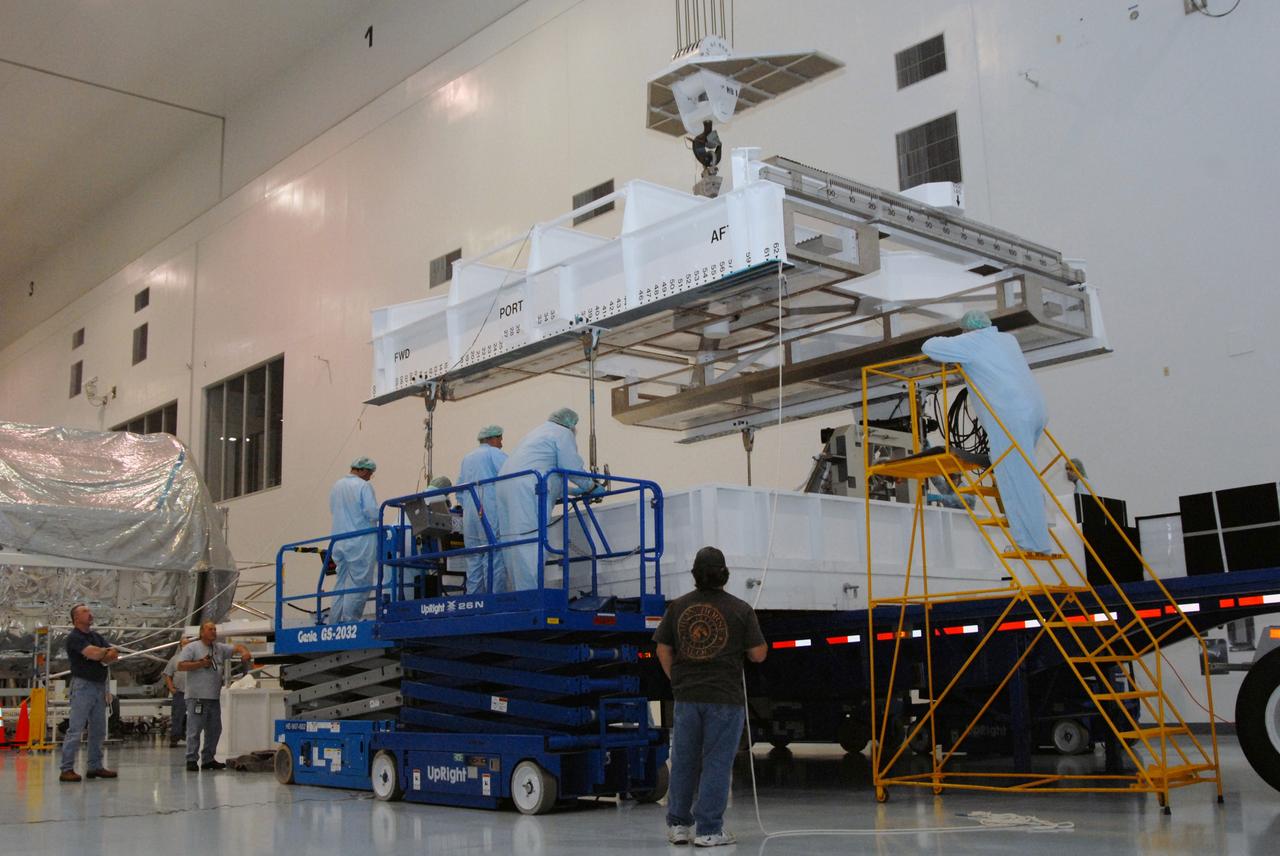
CAPE CANAVERAL, Fla. – Inside the Space Station Processing Facility at NASA's Kennedy Space Center in Florida, a strongback crane is lowered toward the EXPRESS Logistics Carrier to lift it to a stand. The carrier is part of the payload on space shuttle Atlantis, which will deliver to the International Space Station components including two spare gyroscopes, two nitrogen tank assemblies, two pump modules, an ammonia tank assembly and a spare latching end effector for the station's robotic arm. STS-129 is targeted to launch Nov. 12. Photo credit: NASA/Tim Jacobs
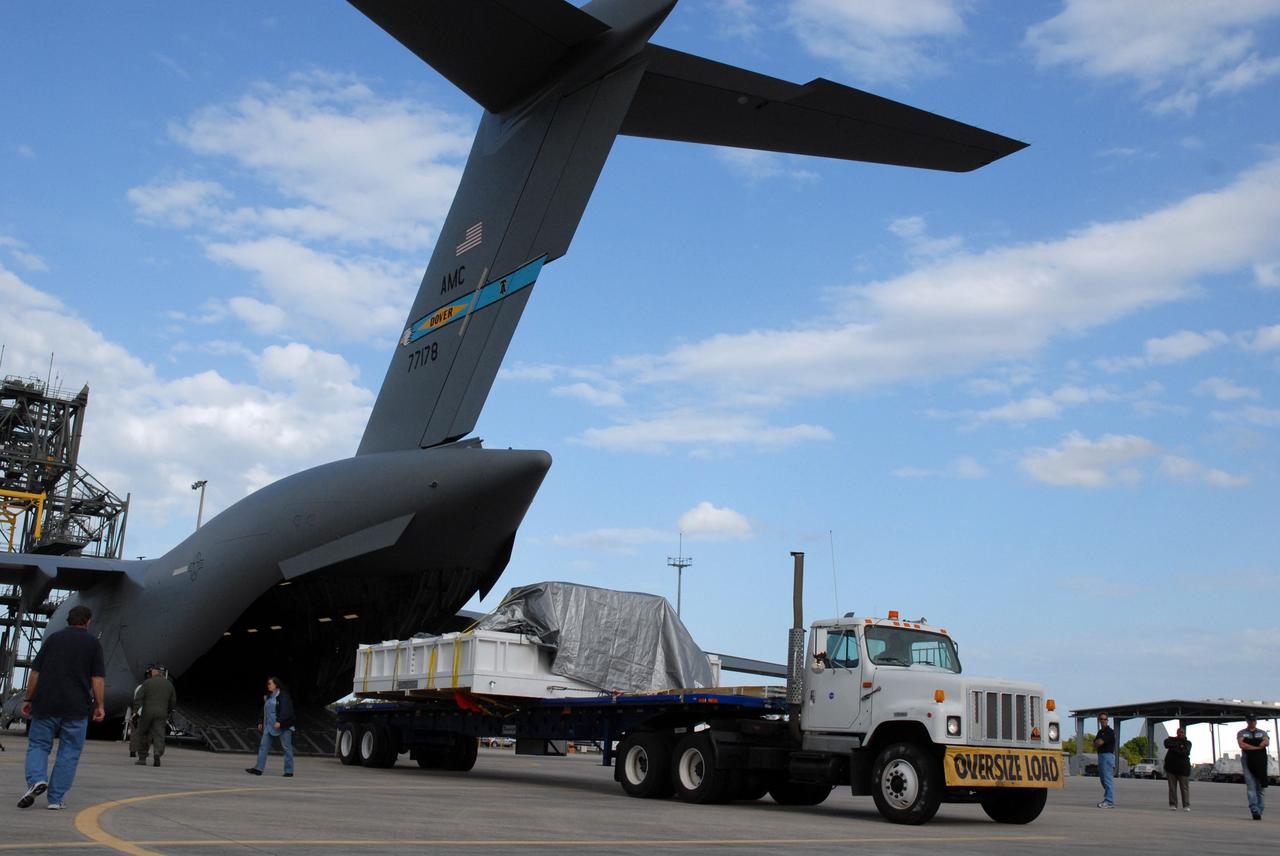
CAPE CANAVERAL, Fla. – The truck carrying the EXPRESS Logistics Carrier for the STS-129 mission pulls away from the C-17 cargo plane that delivered it to NASA's Kennedy Space Center in Florida. The carrier is part of the payload on space shuttle Atlantis, which will deliver to the International Space Station components including two spare gyroscopes, two nitrogen tank assemblies, two pump modules, an ammonia tank assembly and a spare latching end effector for the station's robotic arm. STS-129 is targeted to launch Nov. 12. Photo credit: NASA/Tim Jacobs
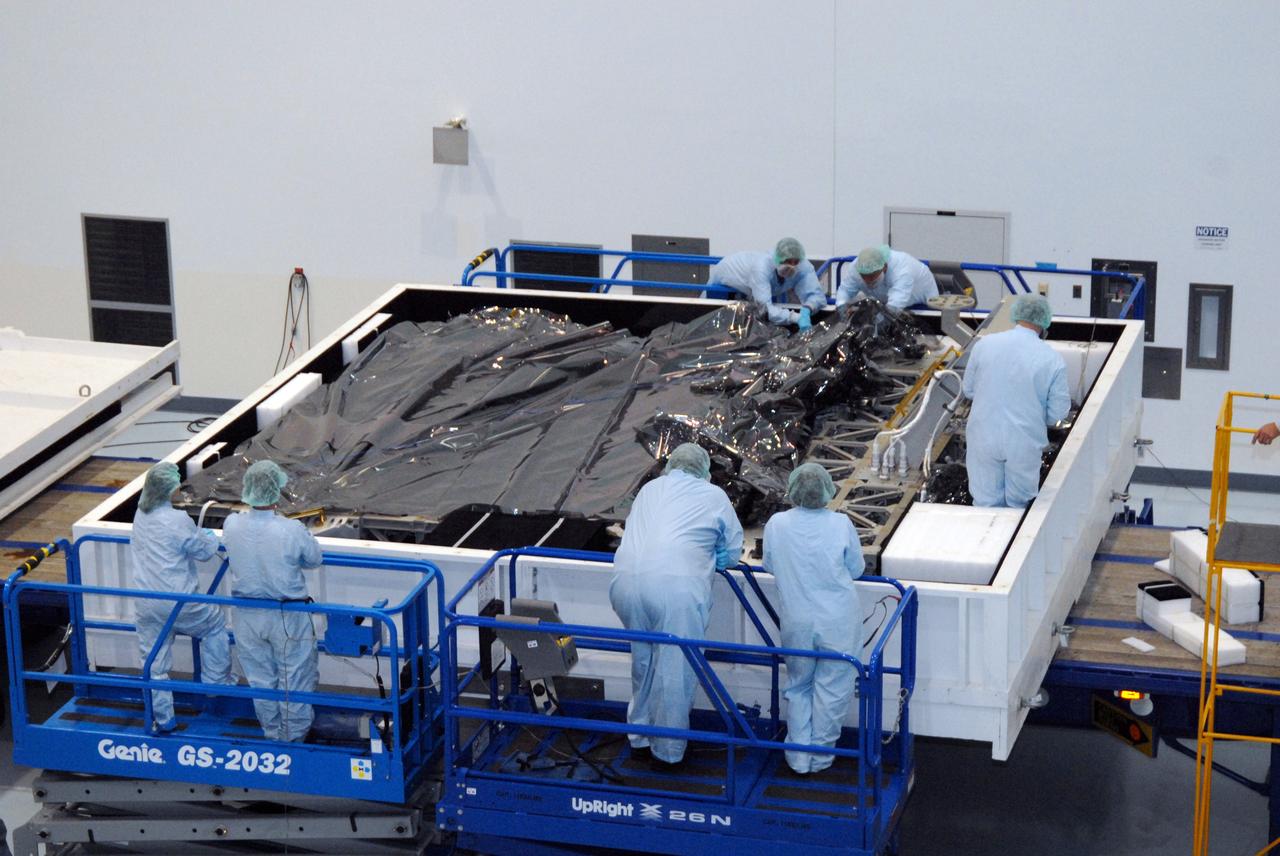
CAPE CANAVERAL, Fla. – Inside the Space Station Processing Facility at NASA's Kennedy Space Center in Florida, technicians remove the cover from around the EXPRESS Logistics Carrier for the STS-129 mission. The carrier is part of the payload on space shuttle Atlantis, which will deliver to the International Space Station components including two spare gyroscopes, two nitrogen tank assemblies, two pump modules, an ammonia tank assembly and a spare latching end effector for the station's robotic arm. STS-129 is targeted to launch Nov. 12. Photo credit: NASA/Tim Jacobs
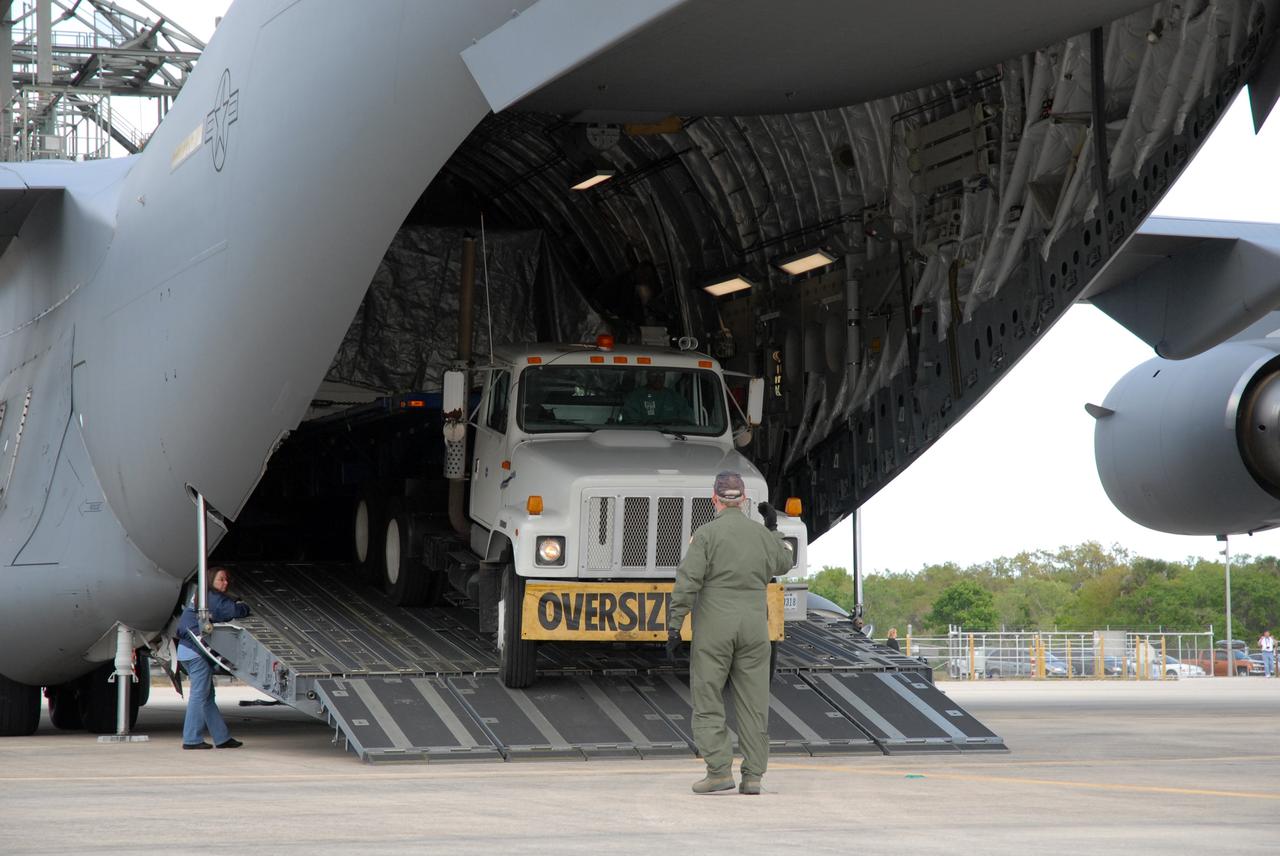
CAPE CANAVERAL, Fla. – On the Shuttle Landing Facility at NASA's Kennedy Space Center in Florida, a truck carrying the EXPRESS Logistics Carrier for the STS-129 mission drives out of the open rear of the C-17 cargo plane. The carrier is part of the payload on space shuttle Atlantis, which will deliver to the International Space Station components including two spare gyroscopes, two nitrogen tank assemblies, two pump modules, an ammonia tank assembly and a spare latching end effector for the station's robotic arm. STS-129 is targeted to launch Nov. 12. Photo credit: NASA/Tim Jacobs
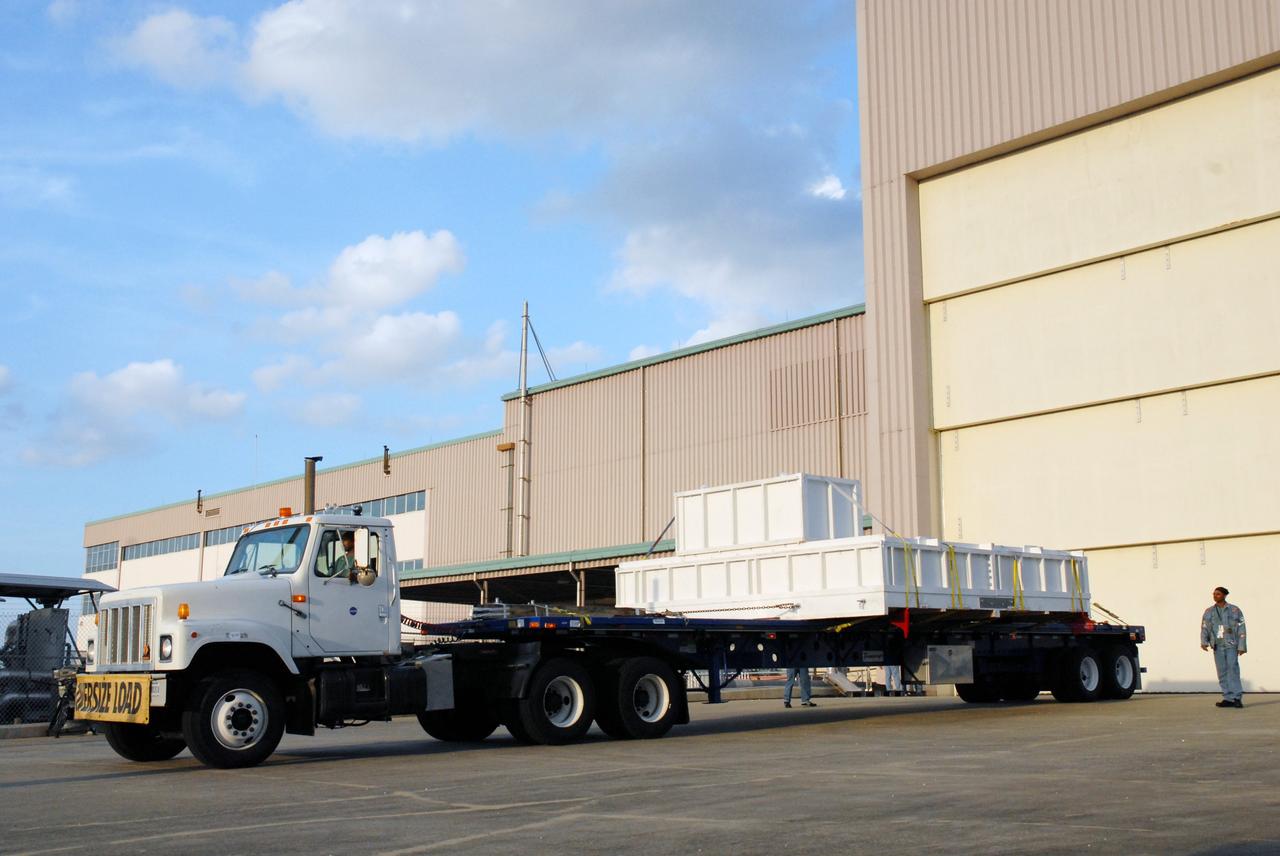
CAPE CANAVERAL, Fla. – The truck carrying the EXPRESS Logistics Carrier for the STS-129 mission arrives at the Space Station Processing Facility at NASA's Kennedy Space Center in Florida. The carrier is part of the payload on space shuttle Atlantis, which will deliver to the International Space Station components including two spare gyroscopes, two nitrogen tank assemblies, two pump modules, an ammonia tank assembly and a spare latching end effector for the station's robotic arm. STS-129 is targeted to launch Nov. 12. Photo credit: NASA/Tim Jacobs
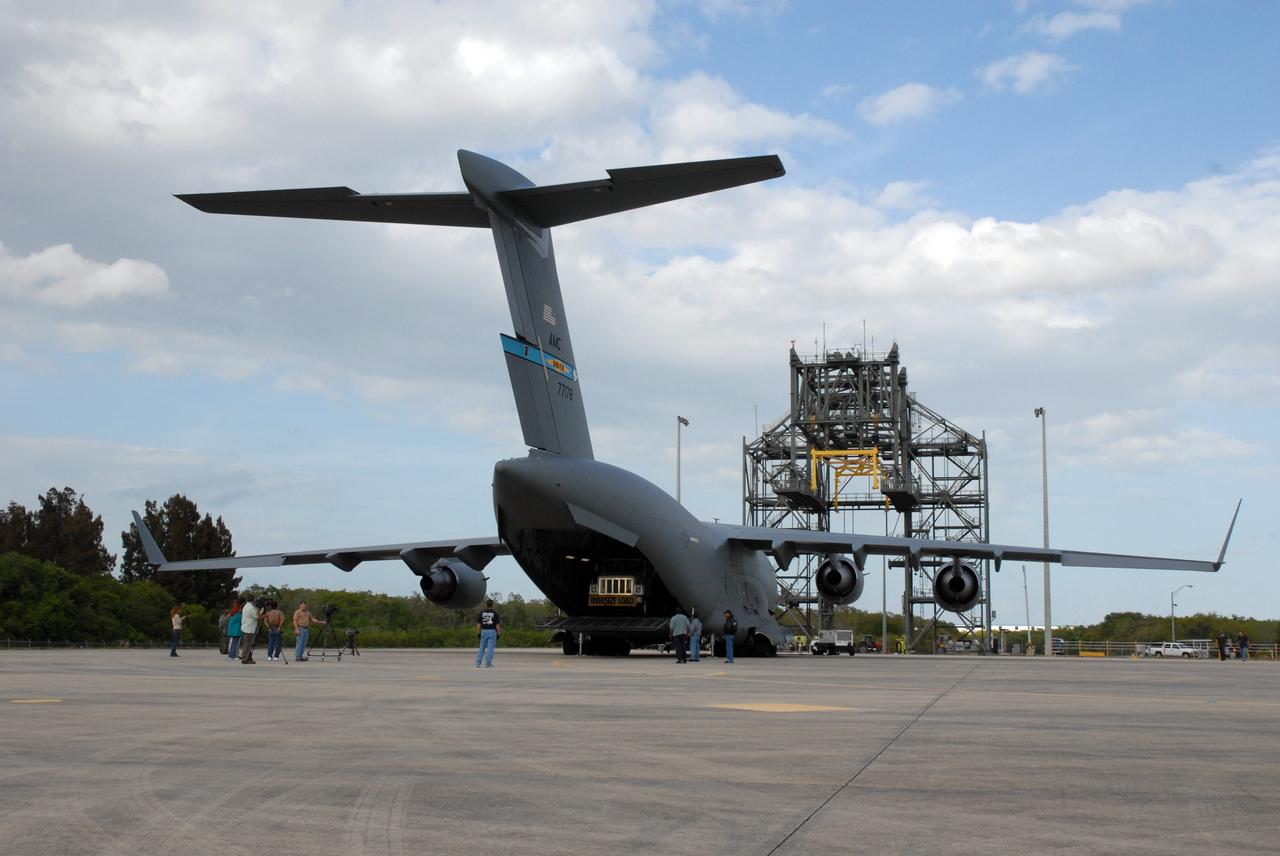
CAPE CANAVERAL, Fla. – A C-17 cargo plane arrives at the Shuttle Landing Facility at NASA's Kennedy Space Center in Florida with its cargo of the EXPRESS Logistics Carrier for the STS-129 mission. In the background is the mate/demate device used to separate a space shuttle from the Shuttle Carrier Aircraft. The carrier is part of the payload on space shuttle Atlantis, which will deliver to the International Space Station components including two spare gyroscopes, two nitrogen tank assemblies, two pump modules, an ammonia tank assembly and a spare latching end effector for the station's robotic arm. STS-129 is targeted to launch Nov. 12. Photo credit: NASA/Tim Jacobs
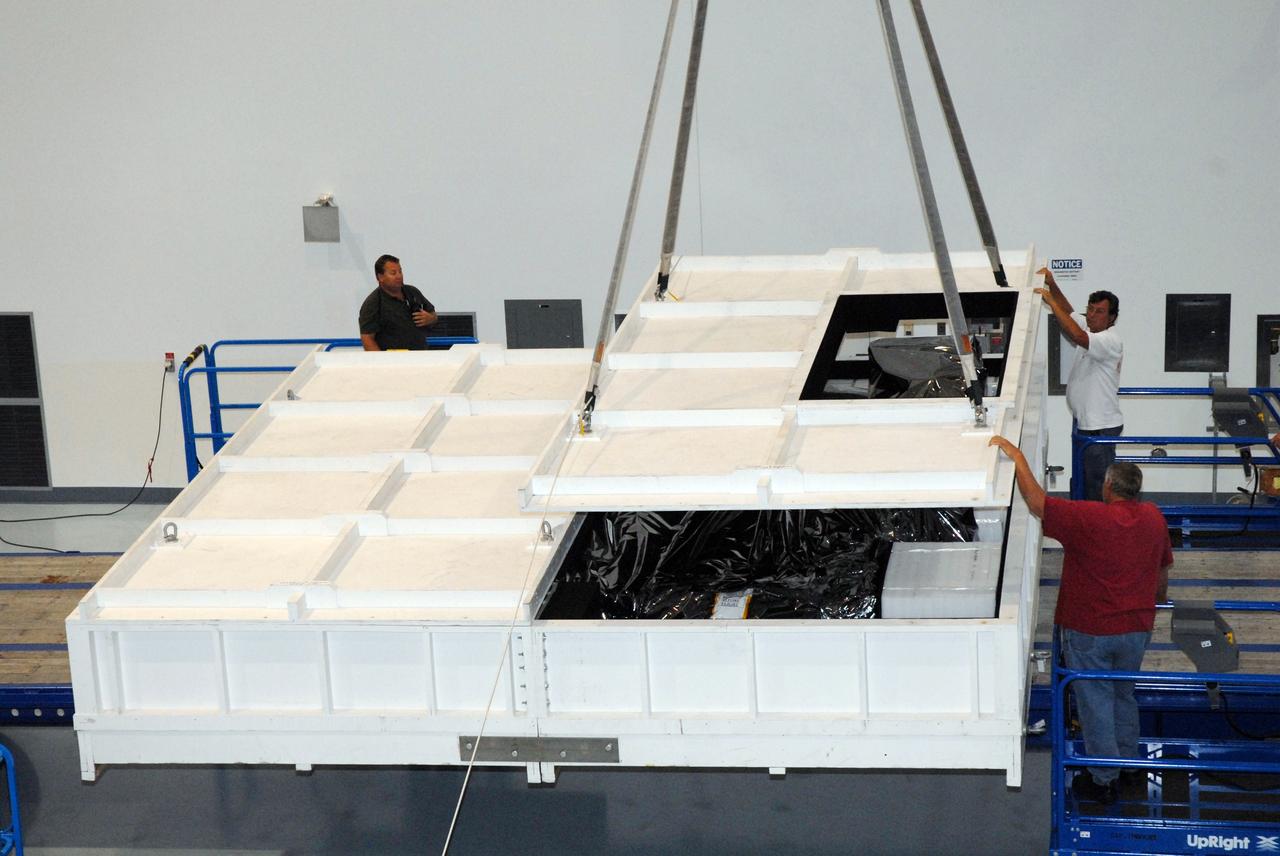
CAPE CANAVERAL, Fla. – Inside the Space Station Processing Facility at NASA's Kennedy Space Center in Florida, workers begin removing the shipping container from around the EXPRESS Logistics Carrier for the STS-129 mission. The carrier is part of the payload on space shuttle Atlantis, which will deliver to the International Space Station components including two spare gyroscopes, two nitrogen tank assemblies, two pump modules, an ammonia tank assembly and a spare latching end effector for the station's robotic arm. STS-129 is targeted to launch Nov. 12. Photo credit: NASA/Tim Jacobs
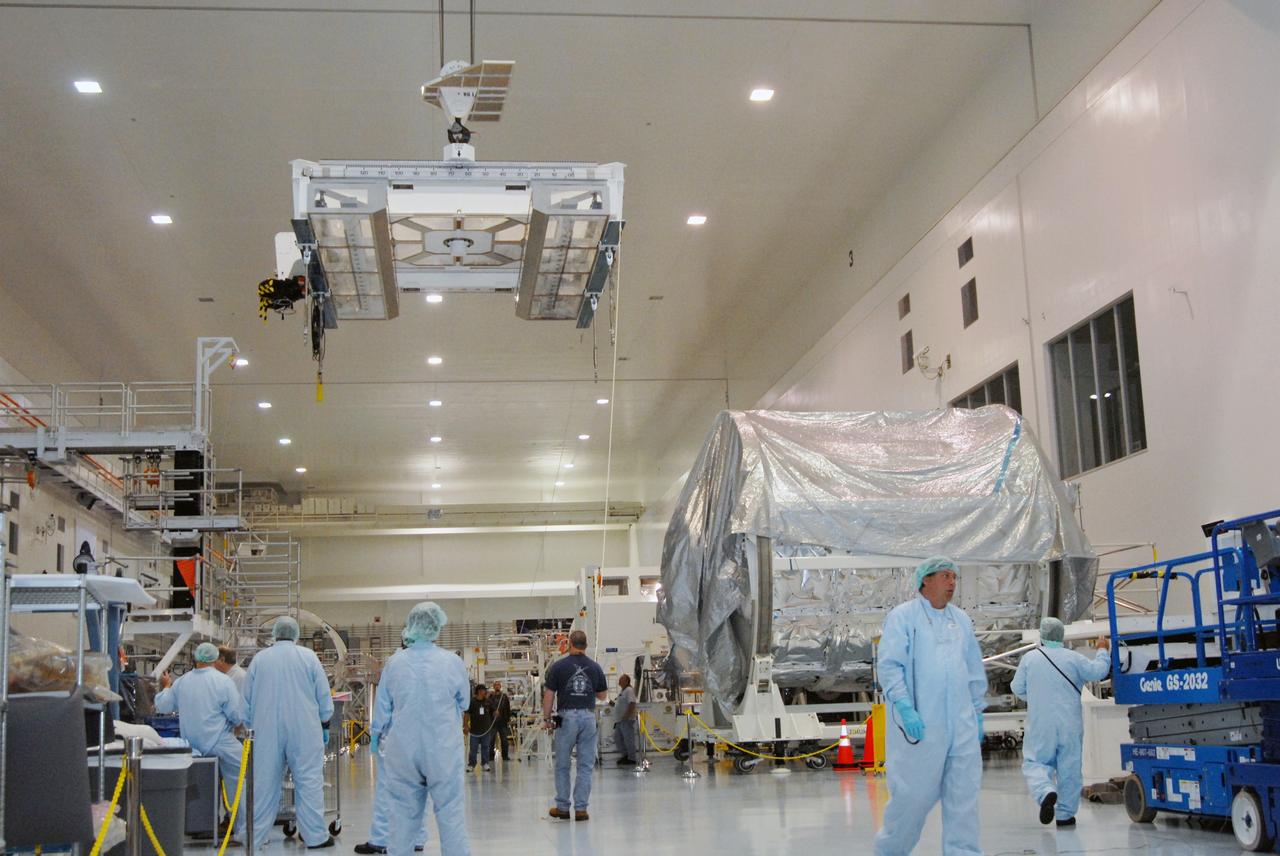
CAPE CANAVERAL, Fla. – Inside the Space Station Processing Facility at NASA's Kennedy Space Center in Florida, a strongback crane is being moved to the EXPRESS Logistics Carrier to lift it to a stand. The carrier is part of the payload on space shuttle Atlantis, which will deliver to the International Space Station components including two spare gyroscopes, two nitrogen tank assemblies, two pump modules, an ammonia tank assembly and a spare latching end effector for the station's robotic arm. STS-129 is targeted to launch Nov. 12. Photo credit: NASA/Tim Jacobs
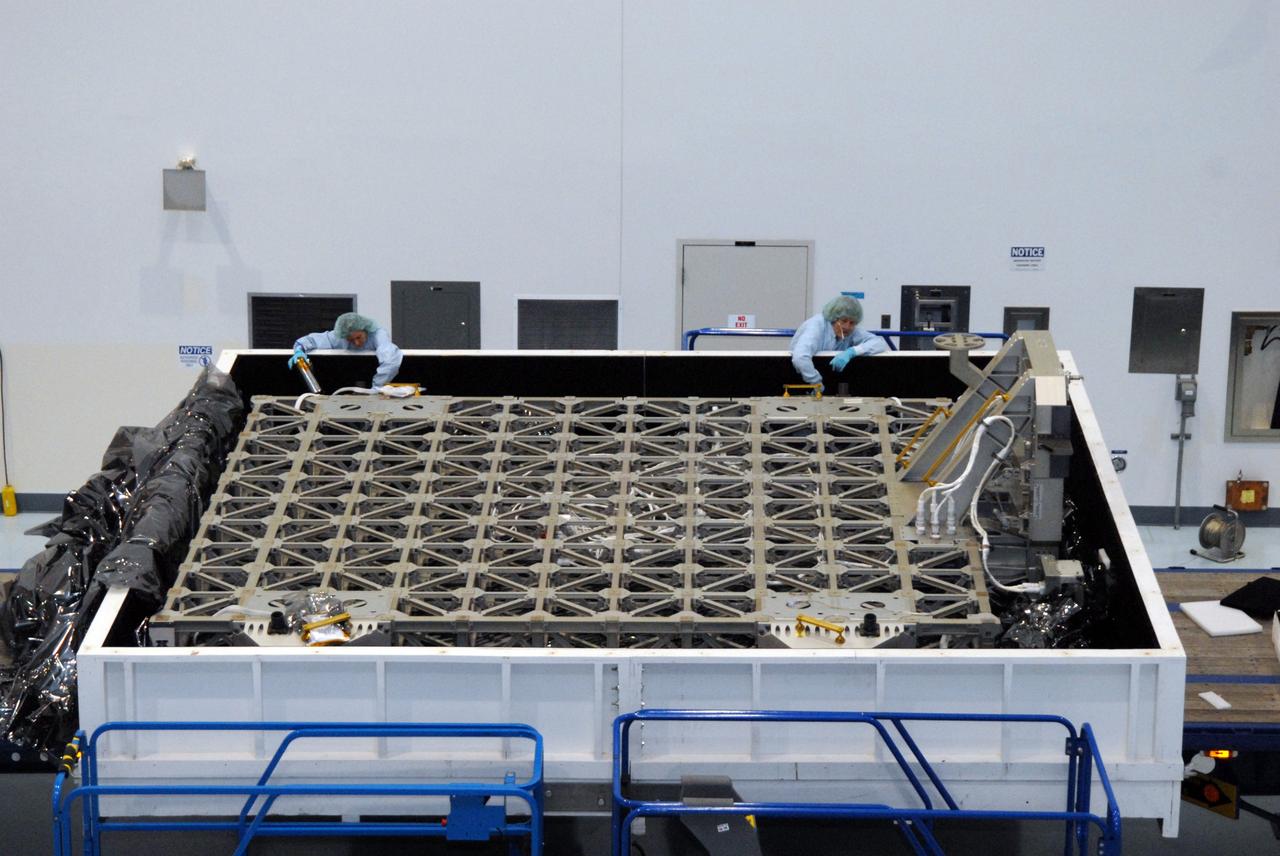
CAPE CANAVERAL, Fla. – Inside the Space Station Processing Facility at NASA's Kennedy Space Center in Florida, technicians check the EXPRESS Logistics Carrier for the STS-129 mission after its cover was removed. The carrier is part of the payload on space shuttle Atlantis, which will deliver to the International Space Station components including two spare gyroscopes, two nitrogen tank assemblies, two pump modules, an ammonia tank assembly and a spare latching end effector for the station's robotic arm. STS-129 is targeted to launch Nov. 12. Photo credit: NASA/Tim Jacobs
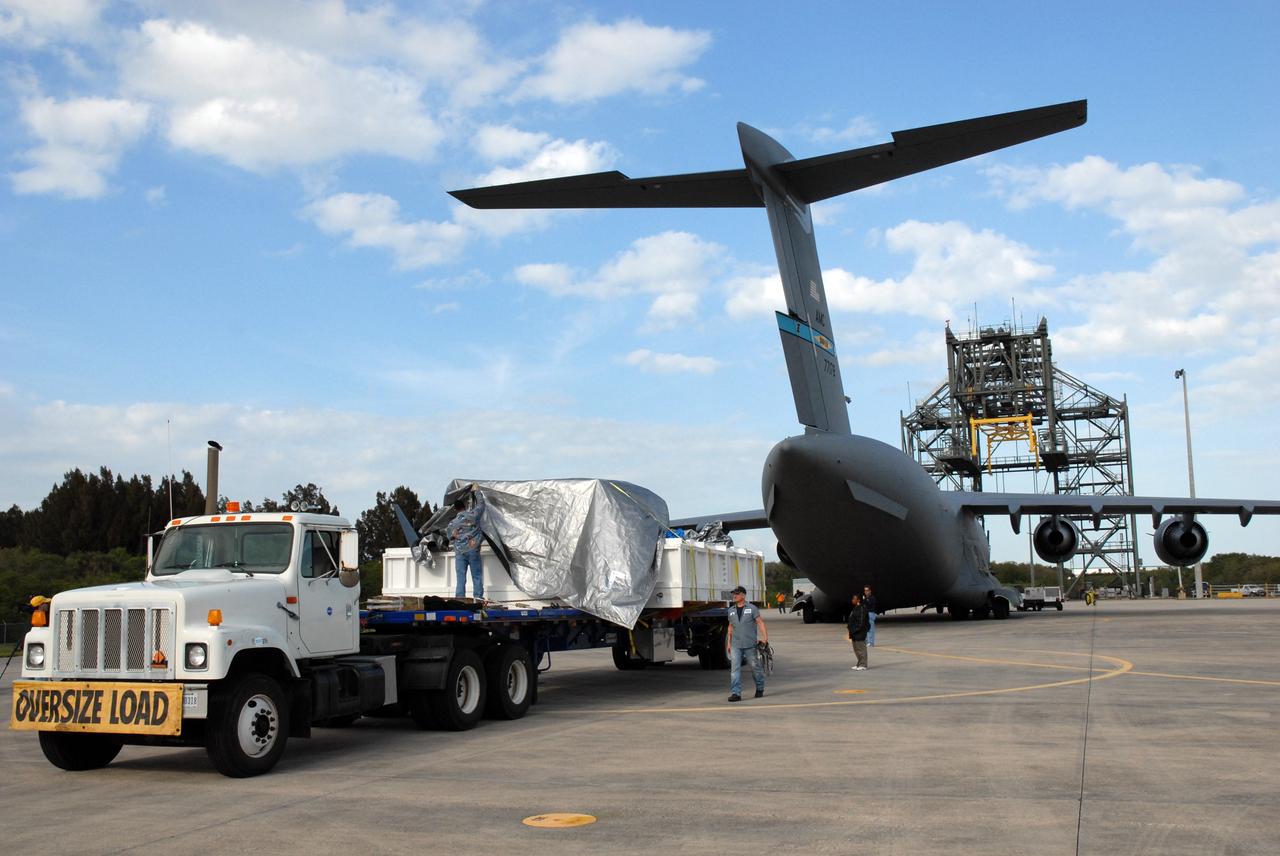
CAPE CANAVERAL, Fla. – On the Shuttle Landing Facility at NASA's Kennedy Space Center in Florida, a worker removes a cover from the EXPRESS Logistics Carrier for the STS-129 mission. The truck and carrier arrived on the C-17 cargo plane in the background. The carrier is part of the payload on space shuttle Atlantis, which will deliver to the International Space Station components including two spare gyroscopes, two nitrogen tank assemblies, two pump modules, an ammonia tank assembly and a spare latching end effector for the station's robotic arm. STS-129 is targeted to launch Nov. 12. Photo credit: NASA/Tim Jacobs
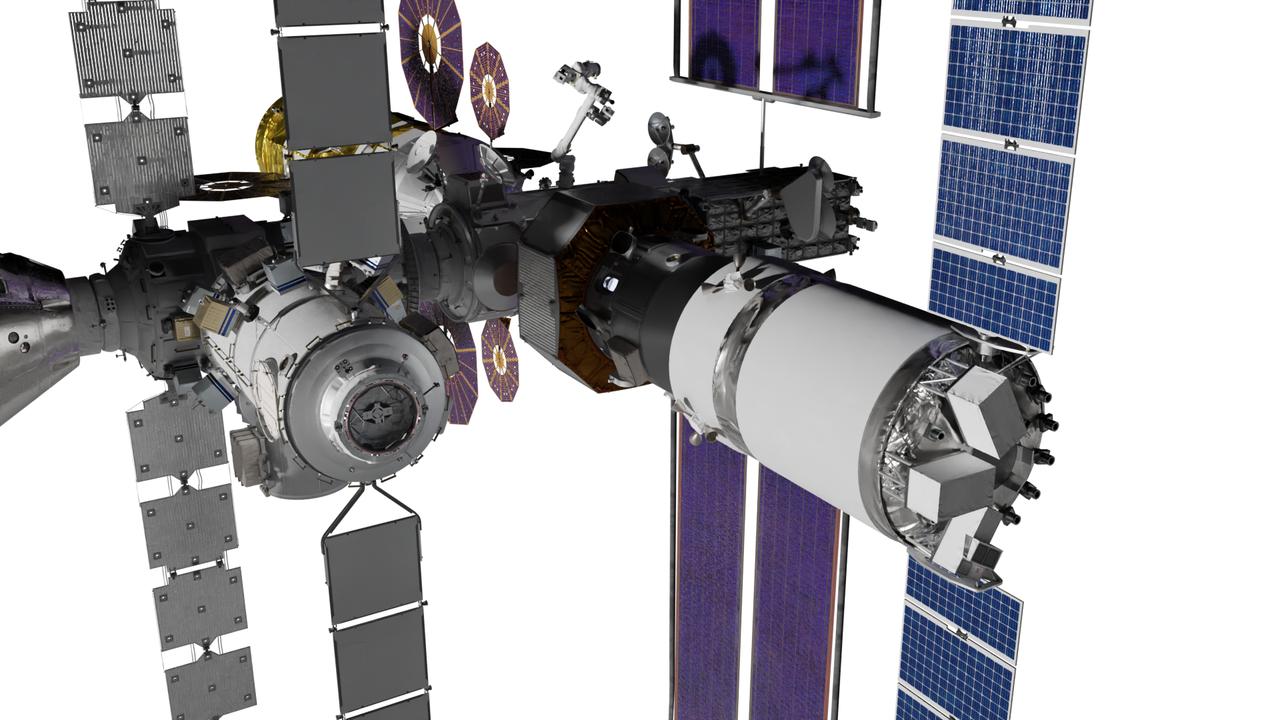
An artist’s rendering displays a configuration of the lunar-orbiting Gateway space station’s modules and visiting spacecraft. The core elements of Gateway consist of the Habitation and Logistics Outpost (HALO) element, the Power and Propulsion Element (PPE), and Lunar I-Hab. Visiting vehicles include the Orion spacecraft, the Logistics Module, and the Human Landing System. Gateway is built in collaboration with NASA’s commercial and international partners to serve as a multiuse space port for lunar science as humanity’s first place to live and work in lunar orbit.
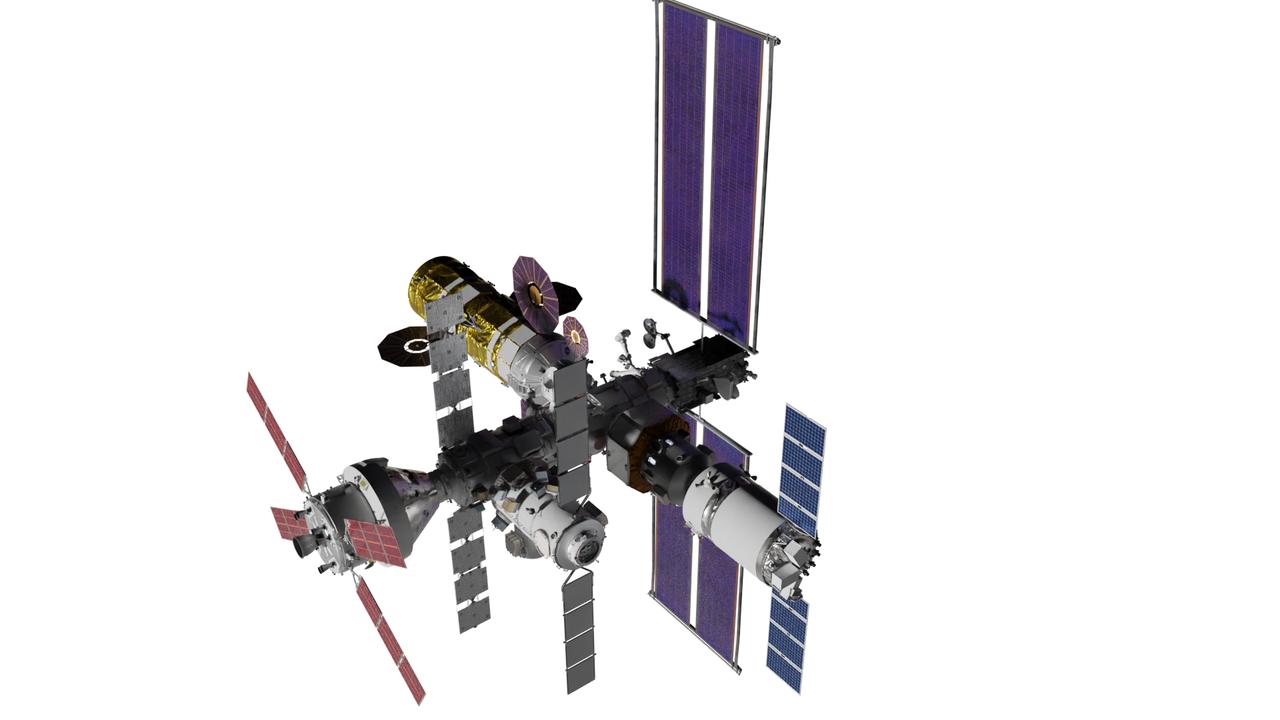
An artist’s rendering displays a configuration of the lunar-orbiting Gateway space station’s modules and visiting spacecraft. The core elements of Gateway consist of the Habitation and Logistics Outpost (HALO) element, the Power and Propulsion Element (PPE), and Lunar I-Hab. Visiting vehicles include the Orion spacecraft, the Logistics Module, and the Human Landing System. Gateway is built in collaboration with NASA’s commercial and international partners to serve as a multiuse space port for lunar science as humanity’s first place to live and work in lunar orbit.
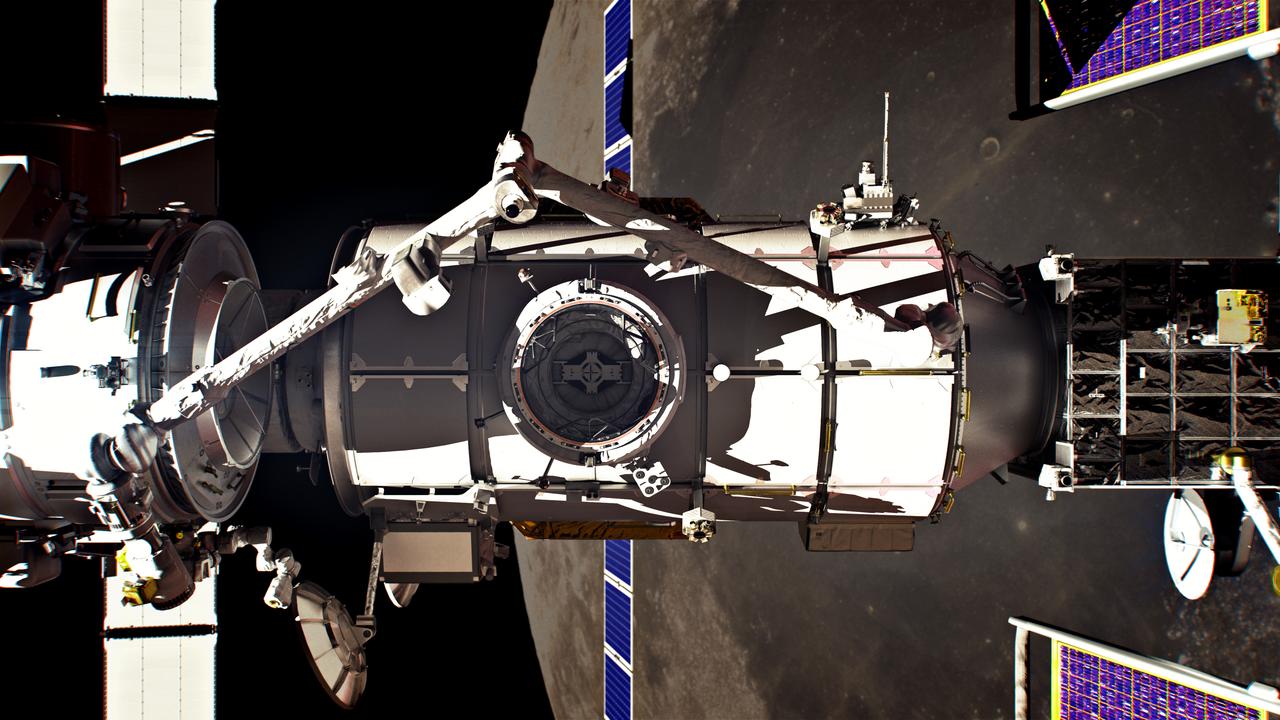
A close-up image of Gateway's Habitation and Logistics Outpost (HALO) module, one of two of the space station's habitation elements. HALO is provided by Northrop Grumman and is where astronauts will live, conduct science, and prepare for lunar surface missions.
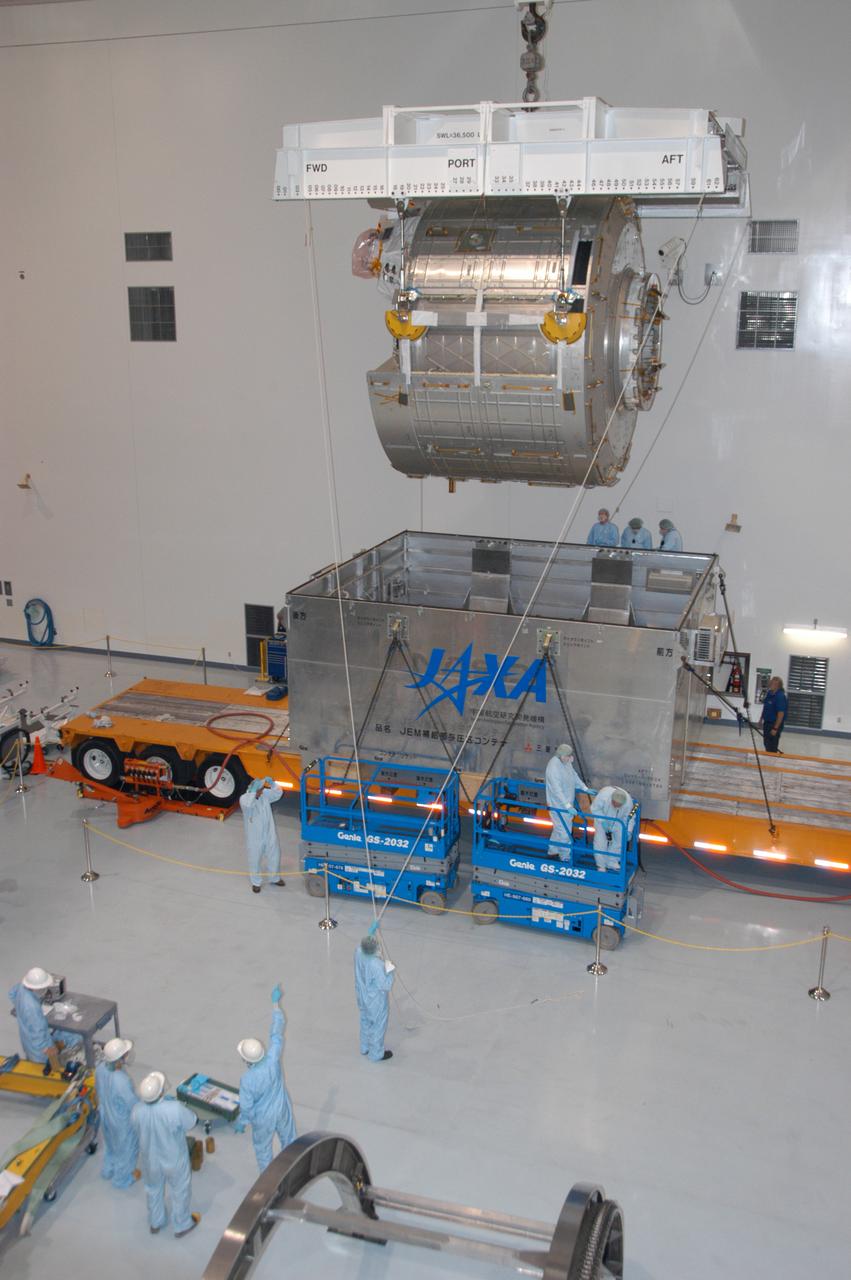
The JEM Experiment Logistics Module Pressurized Section is lifted from its shipping crate in the Space Station Processing Facility. The module will be moved to a scale for weight and center-of-gravity measurements and then to a work stand. The logistics module is one of the components of the Japanese Experiment Module or JEM, also known as Kibo, which means "hope" in Japanese. Kibo comprises six components: two research facilities -- the Pressurized Module and Exposed Facility; a Logistics Module attached to each of them; a Remote Manipulator System; and an Inter-Orbit Communication System unit. Kibo also has a scientific airlock through which experiments are transferred and exposed to the external environment of space. Kibo is Japan's first human space facility and its primary contribution to the station. Kibo will enhance the unique research capabilities of the orbiting complex by providing an additional environment in which astronauts can conduct science experiments. The various components of JEM will be assembled in space over the course of three Space Shuttle missions. The first of those three missions, STS-123, will carry the Experiment Logistics Module Pressurized Section aboard the Space Shuttle Endeavour, targeted for launch in 2007.
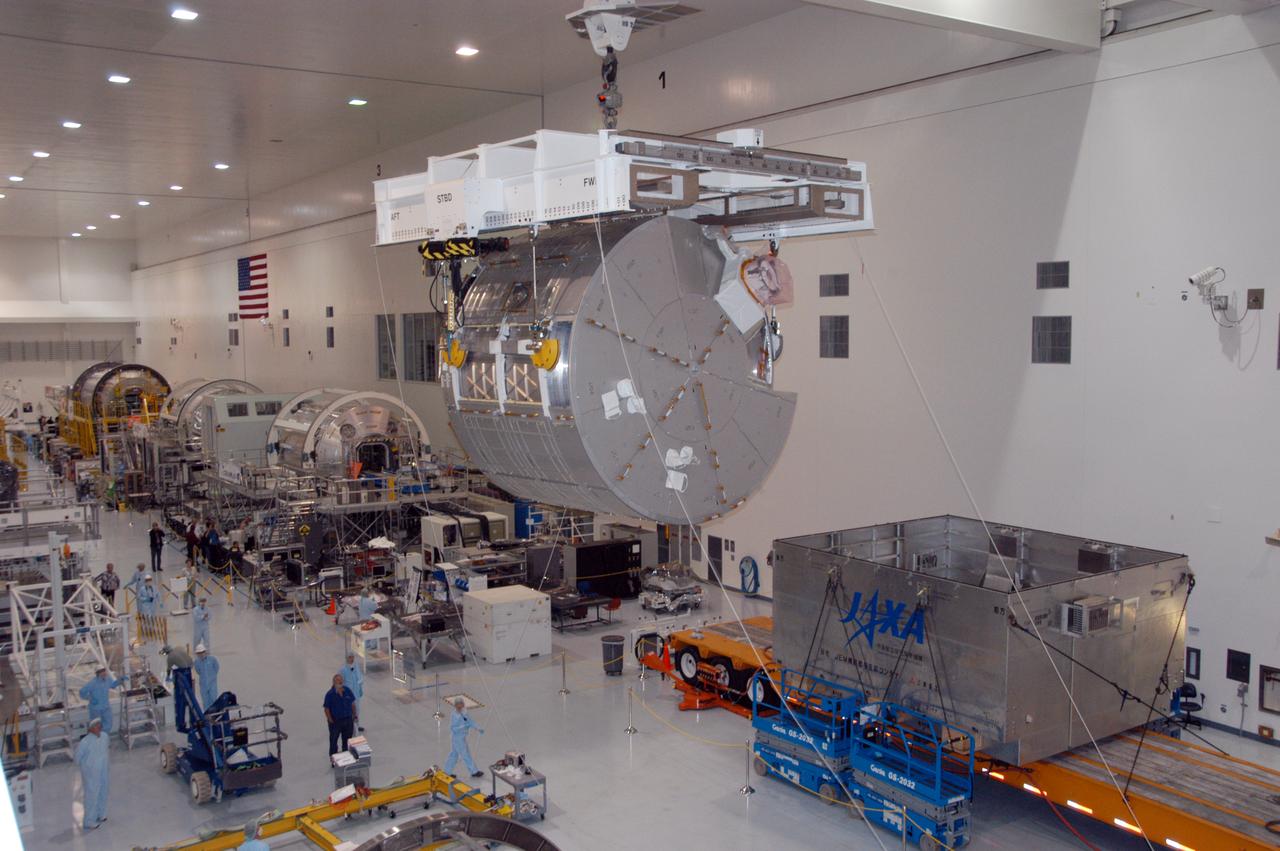
An overhead crane moves the JEM Experiment Logistics Module Pressurized Section above the floor of the Space Station Processing Facility to a scale for weight and center-of-gravity measurements. The module will then be moved to a work stand. The logistics module is one of the components of the Japanese Experiment Module or JEM, also known as Kibo, which means "hope" in Japanese. Kibo comprises six components: two research facilities -- the Pressurized Module and Exposed Facility; a Logistics Module attached to each of them; a Remote Manipulator System; and an Inter-Orbit Communication System unit. Kibo also has a scientific airlock through which experiments are transferred and exposed to the external environment of space. Kibo is Japan's first human space facility and its primary contribution to the station. Kibo will enhance the unique research capabilities of the orbiting complex by providing an additional environment in which astronauts can conduct science experiments. The various components of JEM will be assembled in space over the course of three Space Shuttle missions. The first of those three missions, STS-123, will carry the Experiment Logistics Module Pressurized Section aboard the Space Shuttle Endeavour, targeted for launch in 2007.
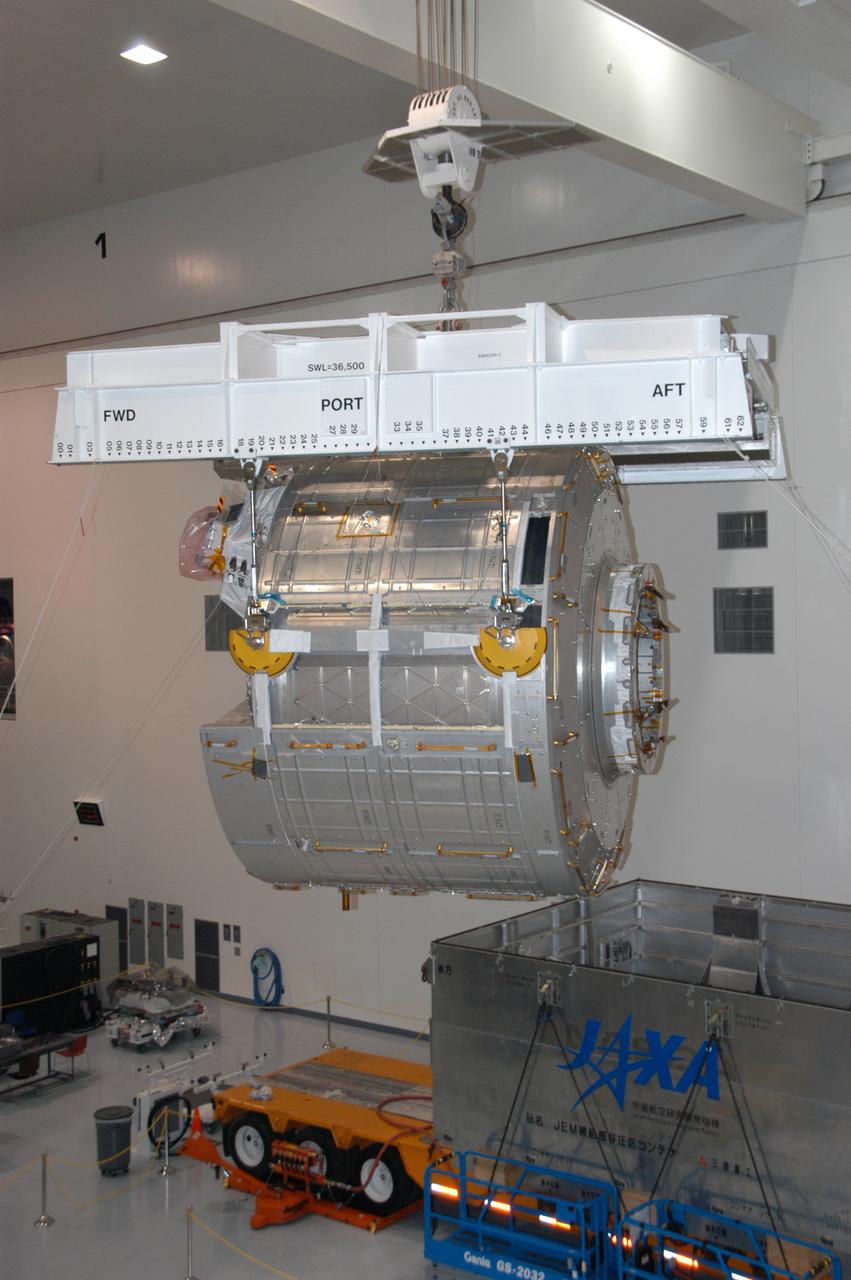
In the Space Station Processing Facility, an overhead crane lifts the JEM Experiment Logistics Module Pressurized Section from its shipping container and moves it toward a scale for weight and center-of-gravity measurements. The module will then be moved to a work stand. The logistics module is one of the components of the Japanese Experiment Module or JEM, also known as Kibo, which means "hope" in Japanese. Kibo comprises six components: two research facilities -- the Pressurized Module and Exposed Facility; a Logistics Module attached to each of them; a Remote Manipulator System; and an Inter-Orbit Communication System unit. Kibo also has a scientific airlock through which experiments are transferred and exposed to the external environment of space. Kibo is Japan's first human space facility and its primary contribution to the station. Kibo will enhance the unique research capabilities of the orbiting complex by providing an additional environment in which astronauts can conduct science experiments. The various components of JEM will be assembled in space over the course of three Space Shuttle missions. The first of those three missions, STS-123, will carry the Experiment Logistics Module Pressurized Section aboard the Space Shuttle Endeavour, targeted for launch in 2007.
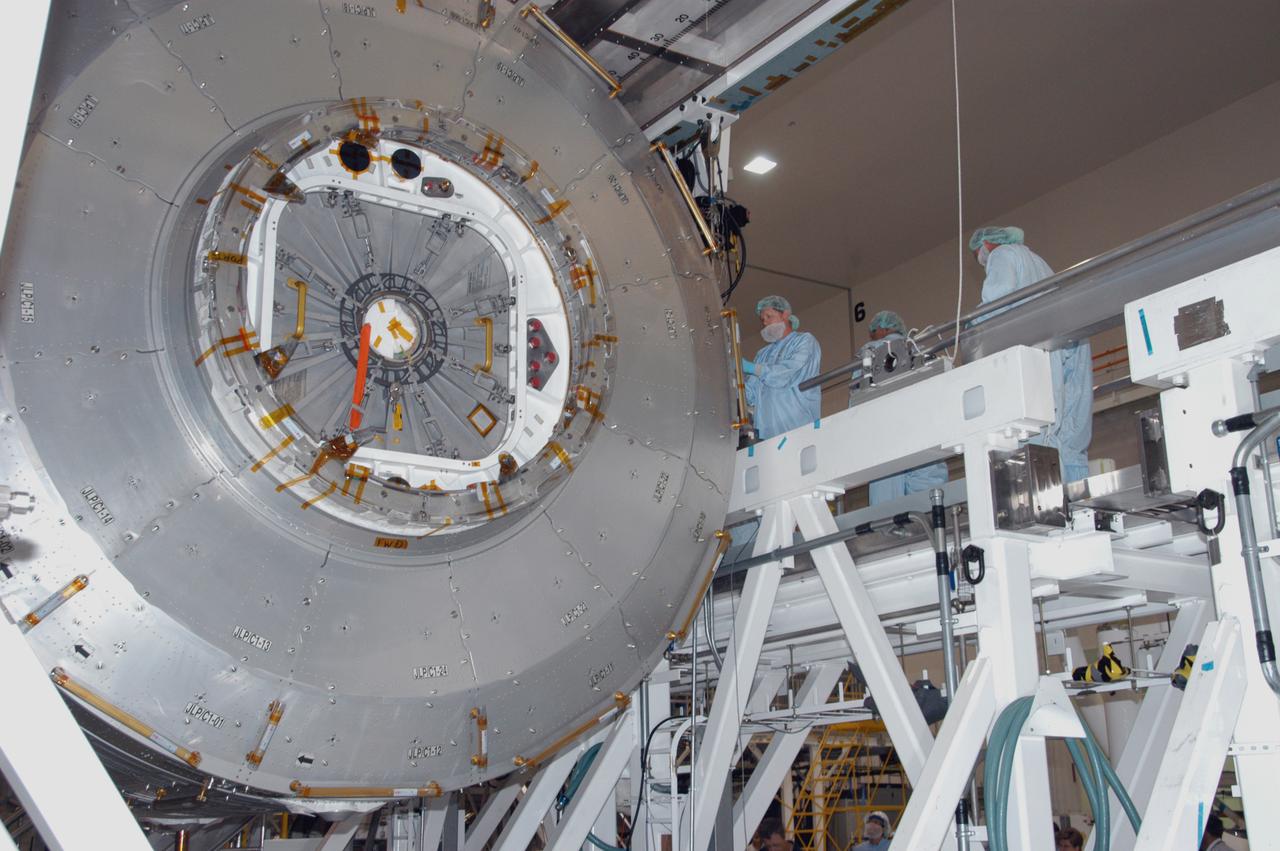
In the Space Station Processing Facility, the JEM Experiment Logistics Module Pressurized Section is lowered onto a scale for weight and center-of-gravity measurements. The module will then be moved to a work stand. The logistics module is one of the components of the Japanese Experiment Module or JEM, also known as Kibo, which means "hope" in Japanese. Kibo comprises six components: two research facilities -- the Pressurized Module and Exposed Facility; a Logistics Module attached to each of them; a Remote Manipulator System; and an Inter-Orbit Communication System unit. Kibo also has a scientific airlock through which experiments are transferred and exposed to the external environment of space. Kibo is Japan's first human space facility and its primary contribution to the station. Kibo will enhance the unique research capabilities of the orbiting complex by providing an additional environment in which astronauts can conduct science experiments. The various components of JEM will be assembled in space over the course of three Space Shuttle missions. The first of those three missions, STS-123, will carry the Experiment Logistics Module Pressurized Section aboard the Space Shuttle Endeavour, targeted for launch in 2007.
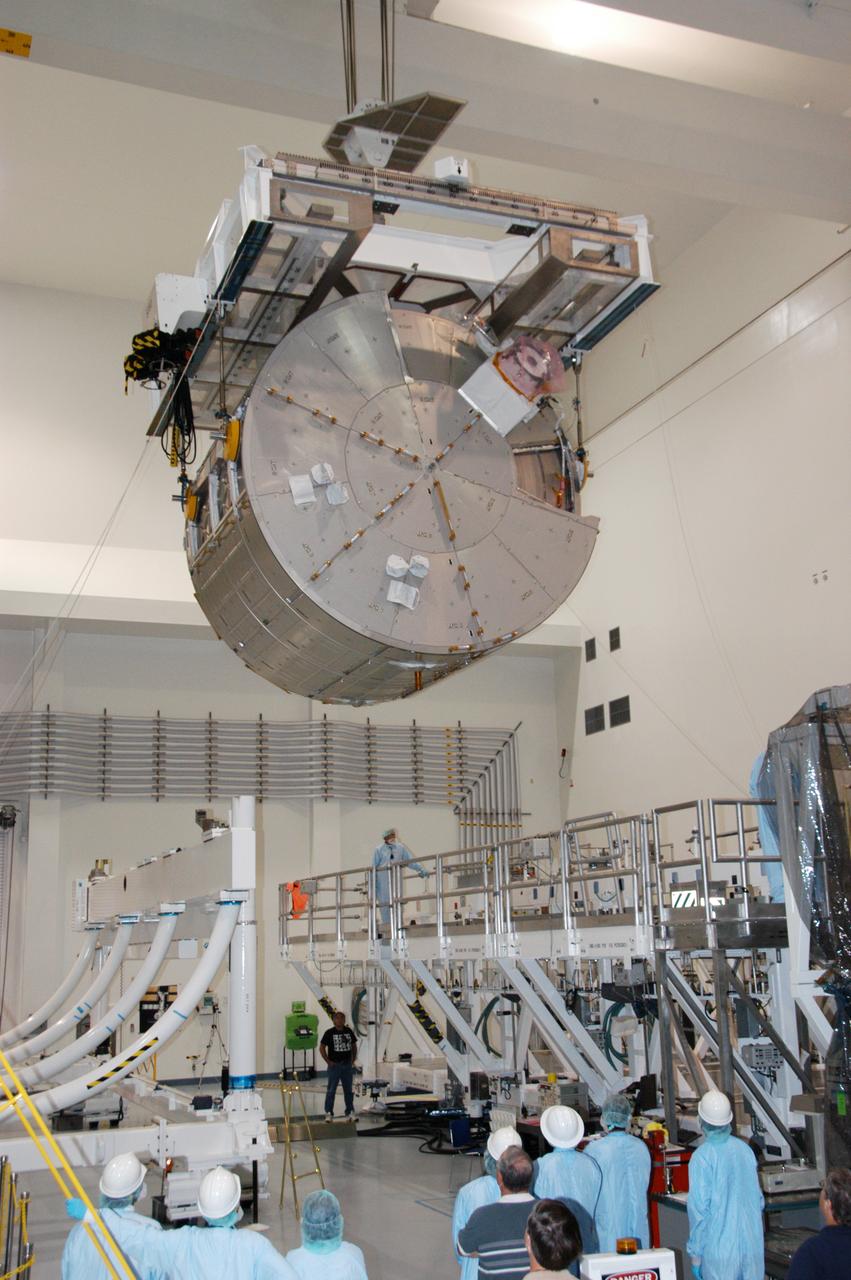
In the Space Station Processing Facility, an overhead crane moves the JEM Experiment Logistics Module Pressurized Section toward a scale (at left) for weight and center-of-gravity measurements. The module will then be moved to a work stand. The logistics module is one of the components of the Japanese Experiment Module or JEM, also known as Kibo, which means "hope" in Japanese. Kibo comprises six components: two research facilities -- the Pressurized Module and Exposed Facility; a Logistics Module attached to each of them; a Remote Manipulator System; and an Inter-Orbit Communication System unit. Kibo also has a scientific airlock through which experiments are transferred and exposed to the external environment of space. Kibo is Japan's first human space facility and its primary contribution to the station. Kibo will enhance the unique research capabilities of the orbiting complex by providing an additional environment in which astronauts can conduct science experiments. The various components of JEM will be assembled in space over the course of three Space Shuttle missions. The first of those three missions, STS-123, will carry the Experiment Logistics Module Pressurized Section aboard the Space Shuttle Endeavour, targeted for launch in 2007.
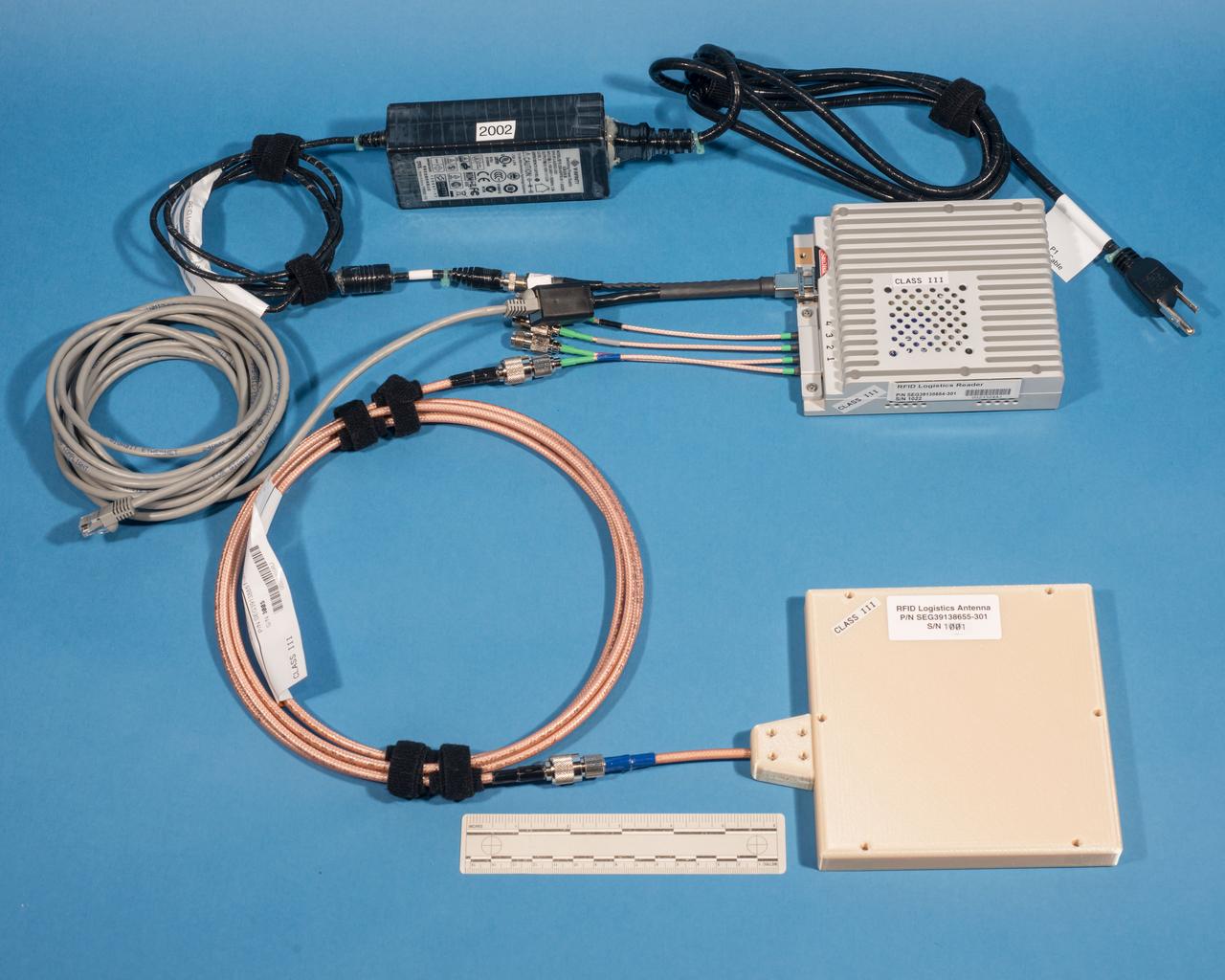
jsc2016e107373 (8/29/2016) --- Photographic documentation taken of REALM-1 (ISS OPNOM RFID Logistics) flight hardware in bldg 14 prior to delivery for launch. The RFID-Enabled Autonomous Logistics Management (REALM) (RFID Logistics Awareness) investigation tests a radio-based inventory control system to keep track of everything inside the football-field-sized ISS. Some aspects of the technology are commonly used on Earth, but other aspects are experimental in nature.
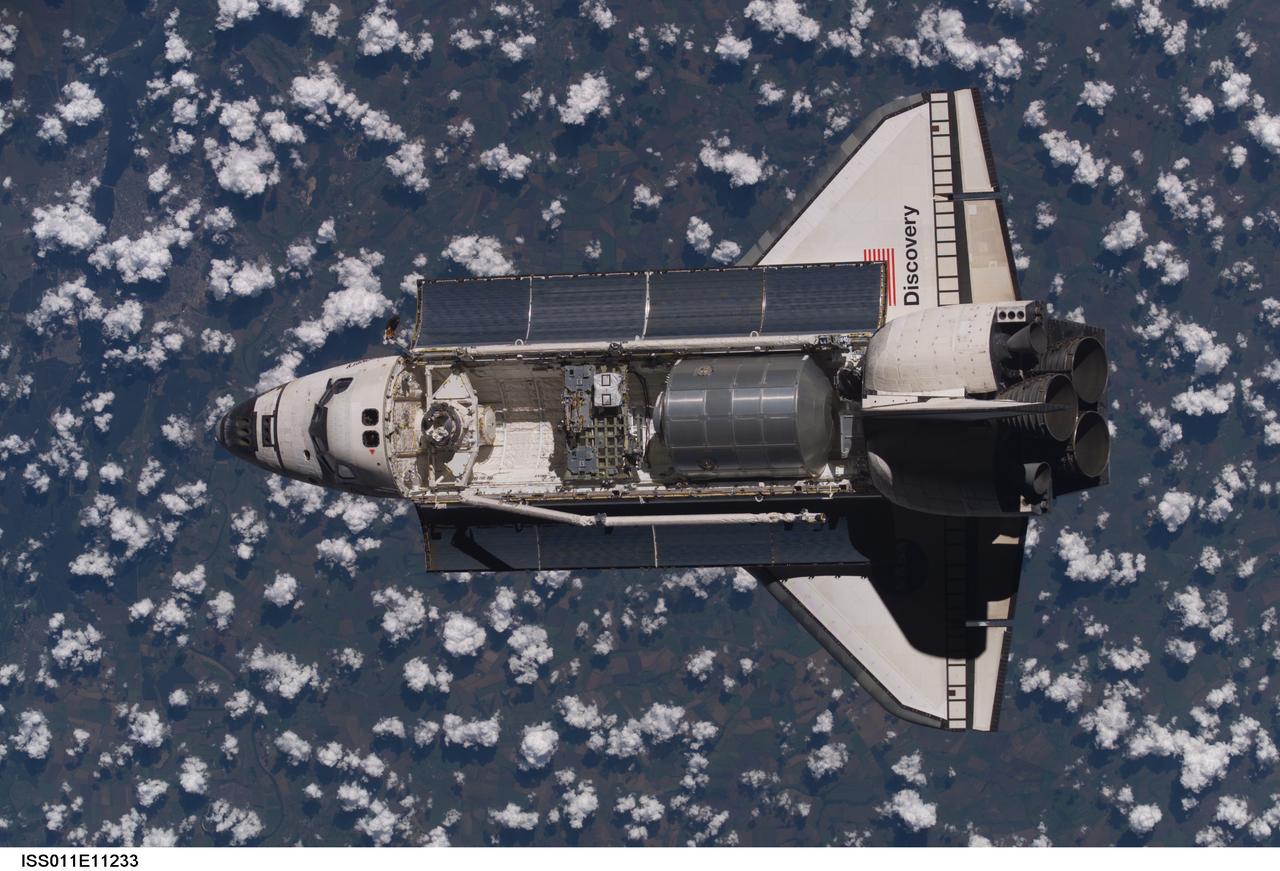
Launched on July 26, 2005 from the Kennedy Space Center in Florida, STS-114 was classified as Logistics Flight 1. Among the Station-related activities of the mission were the delivery of new supplies and the replacement of one of the orbital outpost's Control Moment Gyroscopes (CMGs). STS-114 also carried the Raffaello Multi-Purpose Logistics Module (MPLM) and the External Stowage Platform-2. Back dropped by popcorn-like clouds, the MPLM can be seen in the cargo bay as Discovery undergoes rendezvous and docking operations. Cosmonaut Sergei K. Kriklev, Expedition 11 Commander, and John L. Phillips, NASA Space Station officer and flight engineer photographed the spacecraft from the International Space Station (ISS).
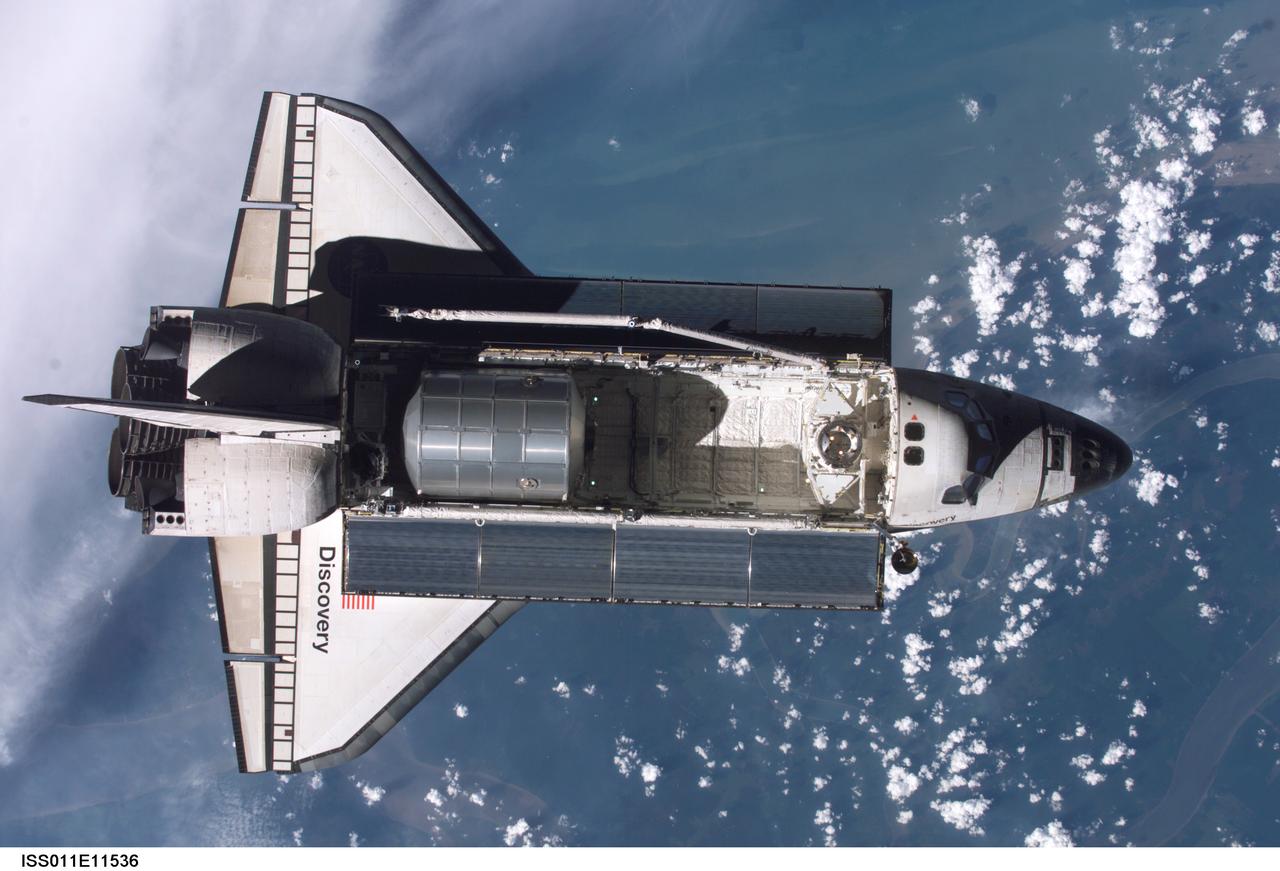
Launched on July 26 2005 from the Kennedy Space Center in Florida, STS-114 was classified as Logistics Flight 1. Among the Station-related activities of the mission were the delivery of new supplies and the replacement of one of the orbital outpost's Control Moment Gyroscopes (CMGs). STS-114 also carried the Raffaello Multi-Purpose Logistics Module (MPLM) and the External Stowage Platform-2. Back dropped by popcorn-like clouds, the MPLM can be seen in the cargo bay as Discovery undergoes rendezvous and docking operations. Cosmonaut Sergei K. Kriklev, Expedition 11 Commander, and John L. Phillips, NASA Space Station officer and flight engineer photographed the spacecraft from the International Space Station (ISS).
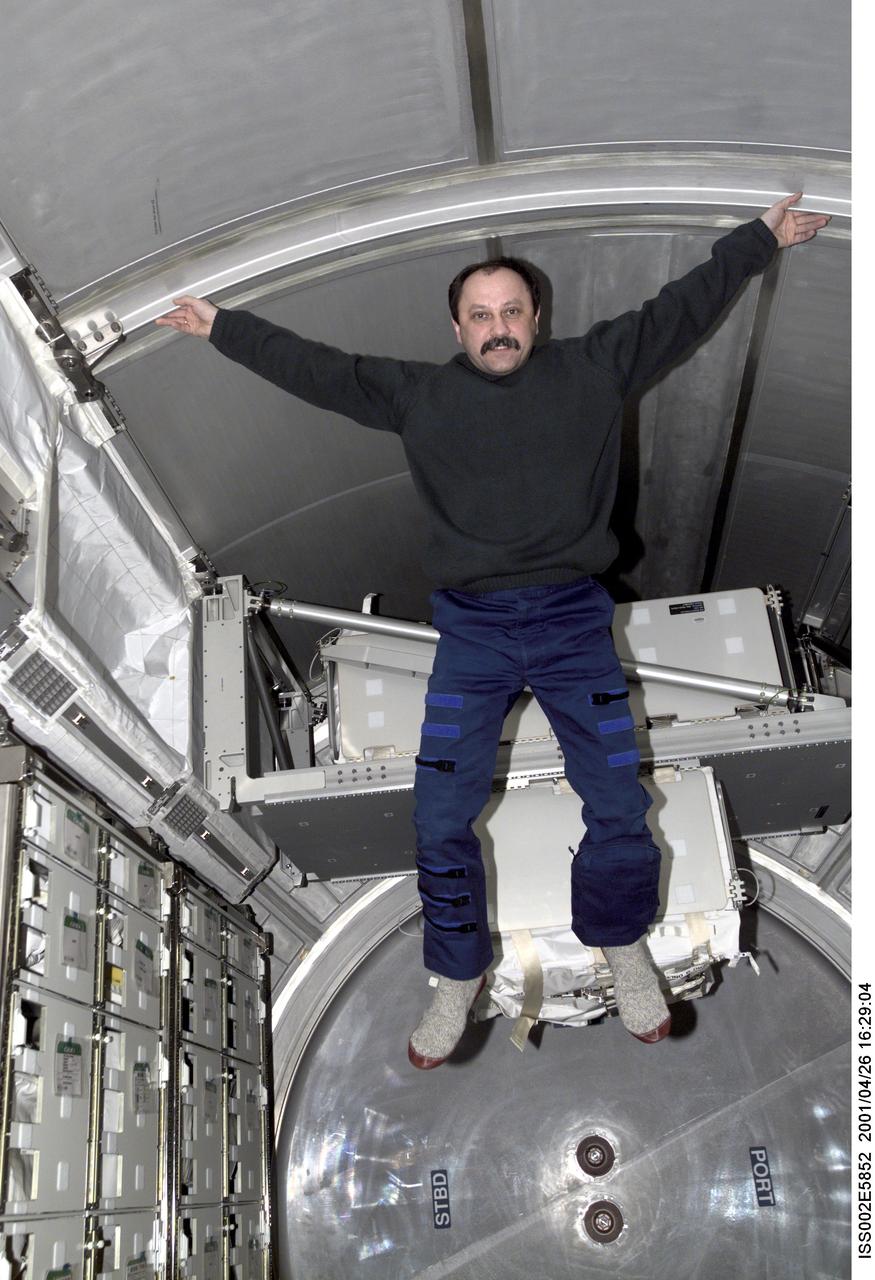
ISS002-E-5852 (26 April 2001) --- Yury V. Usachev of Rosaviakosmos, Expedtion Two mission commander, enjoys the extra space provided by the Multipurpose Logistics Module (MPLM) Raphaello which was mated to the International Space Station (ISS) during the STS-100 mission. The image was taken with a digital still camera.
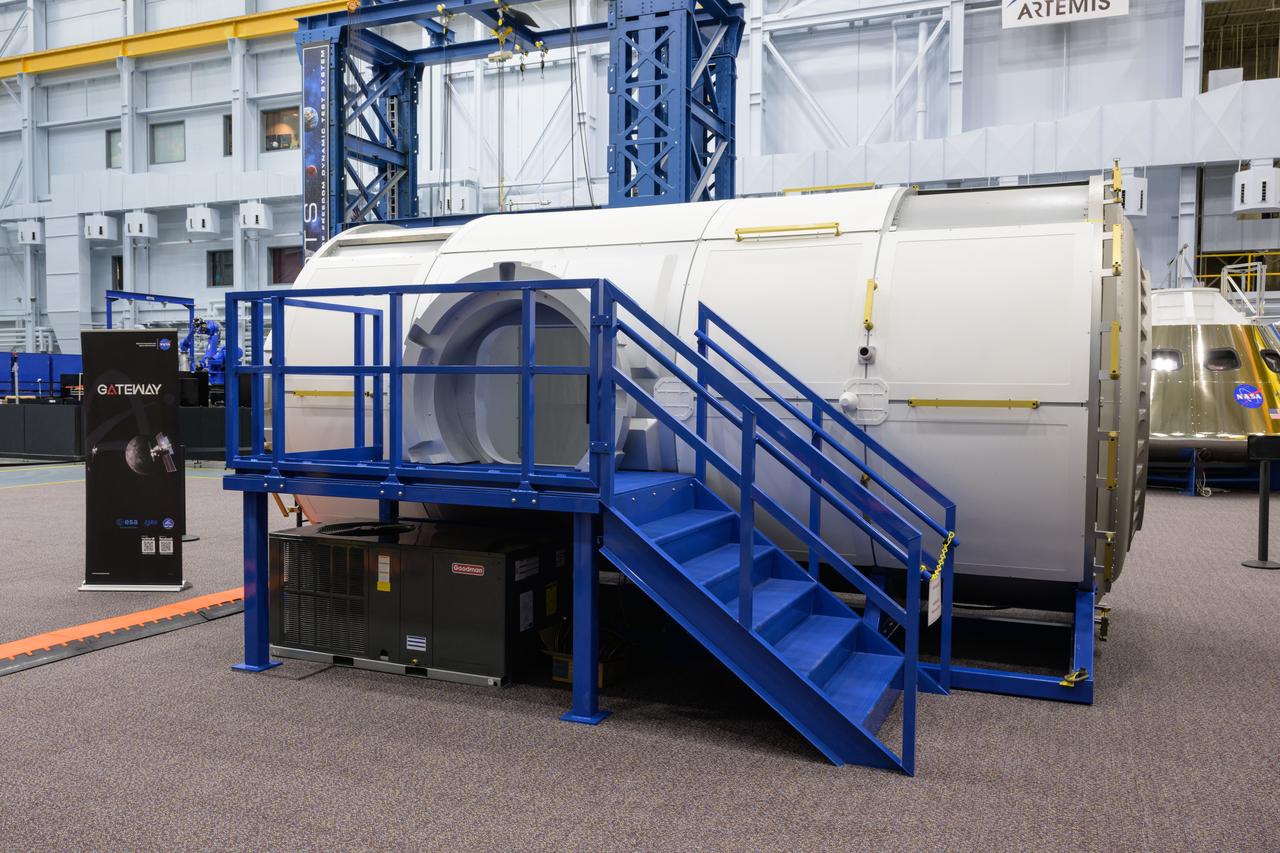
Date: 12-22-2022 Location. Bldg 9, SVMF Subject: Habitation and Logistics Outpost (HALO) Mockup at Space Vehicle Mockup Facility (SVMF). Photographer: James Blair
Date: 12/21/2022 Location: Bldg 9, SVMF Subject: Installation of Habitation and Logistics Outpost (HALO) Mockup at Space Vehicle Mockup Facility (SVMF). Photographer: James Blair
/jsc2022e095728 (2)~medium.jpg)
Date: 12/21/2022 Location: Bldg 9, SVMF Subject: Installation of Habitation and Logistics Outpost (HALO) Mockup at Space Vehicle Mockup Facility (SVMF). Photographer: James Blair
Date: 12/21/2022 Location: Bldg 9, SVMF Subject: Installation of Habitation and Logistics Outpost (HALO) Mockup at Space Vehicle Mockup Facility (SVMF). Photographer: James Blair
Date: 12/21/2022 Location: Bldg 9, SVMF Subject: Installation of Habitation and Logistics Outpost (HALO) Mockup at Space Vehicle Mockup Facility (SVMF). Photographer: James Blair
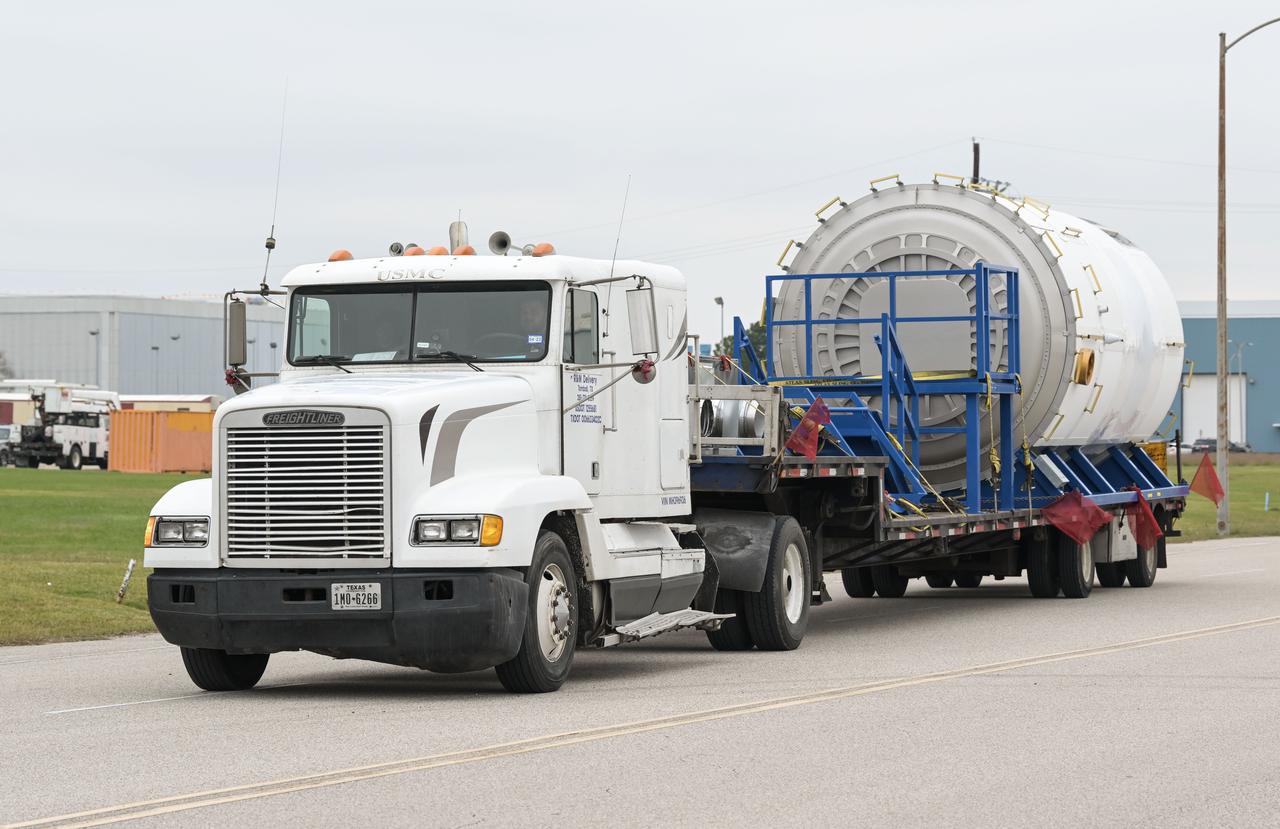
Date: 12/21/2022 Location: Bldg 9, SVMF Subject: Installation of Habitation and Logistics Outpost (HALO) Mockup at Space Vehicle Mockup Facility (SVMF). Photographer: James Blair
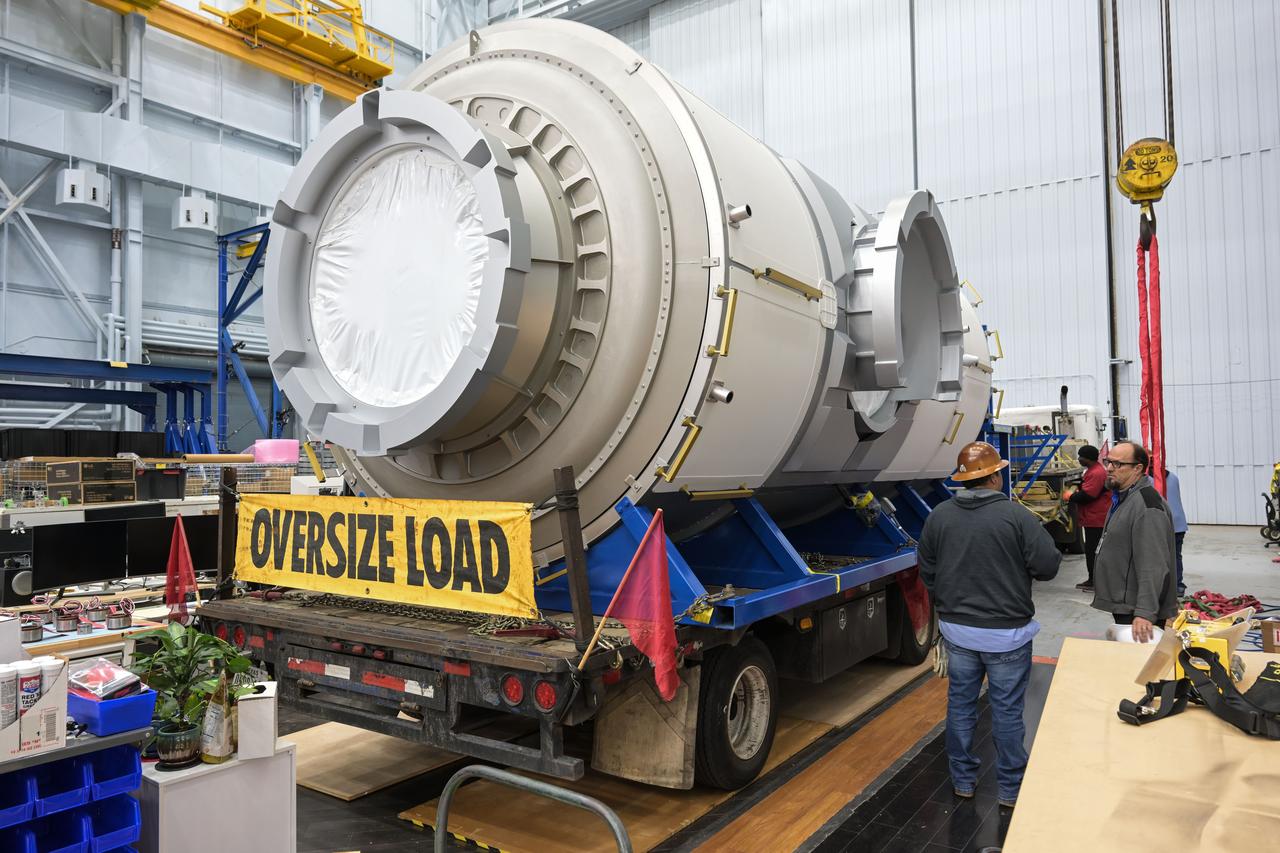
Date: 12/21/2022 Location: Bldg 9, SVMF Subject: Installation of Habitation and Logistics Outpost (HALO) Mockup at Space Vehicle Mockup Facility (SVMF). Photographer: James Blair
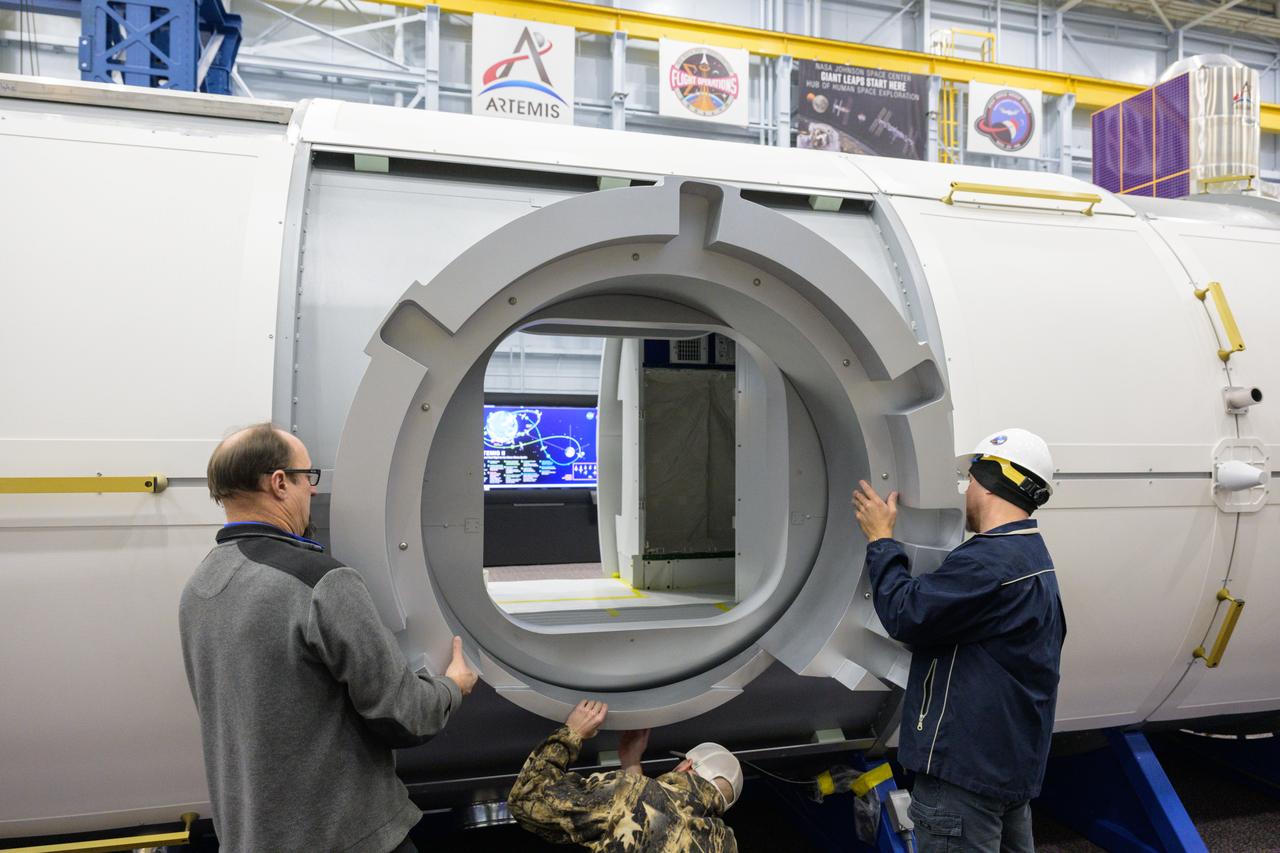
Date: 12/21/2022 Location: Bldg 9, SVMF Subject: Installation of Habitation and Logistics Outpost (HALO) Mockup at Space Vehicle Mockup Facility (SVMF). Photographer: James Blair
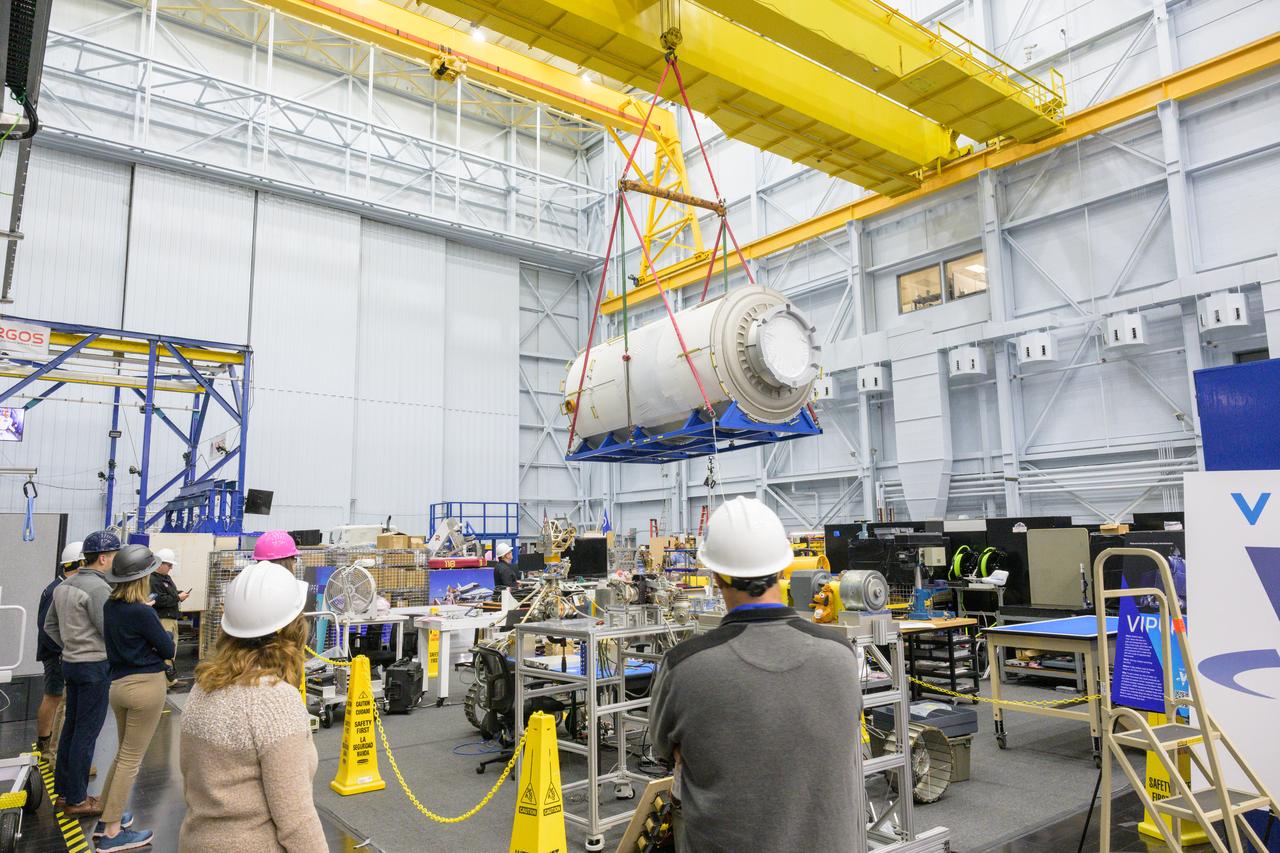
Date: 12/21/2022 Location: Bldg 9, SVMF Subject: Installation of Habitation and Logistics Outpost (HALO) Mockup at Space Vehicle Mockup Facility (SVMF). Photographer: James Blair
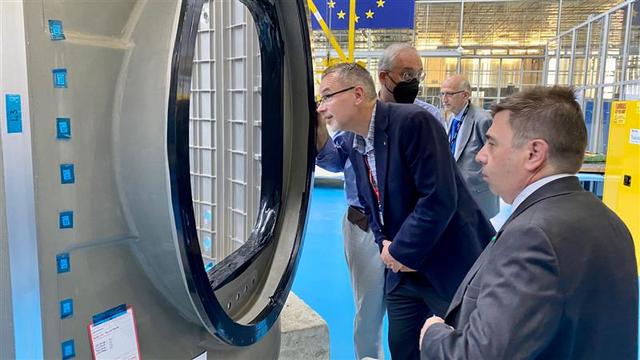
Northrop Grumman and subcontractor Thales Alenia Space complete fabrication work on the Habitation and Logistics Outpost (HALO) module, one of two of the Gateway Space Station's habitation elements where astronauts will live and work in lunar orbit during deep space Artemis missions.
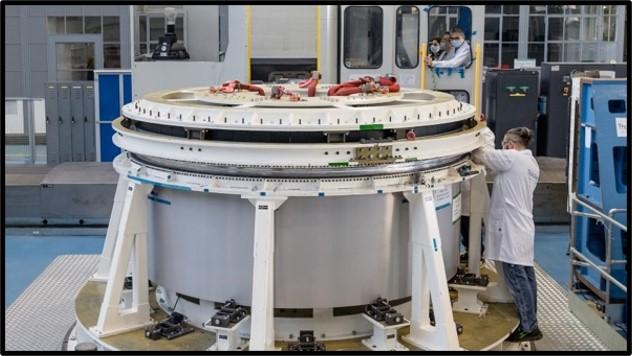
Northrop Grumman and subcontractor Thales Alenia Space complete fabrication work on the Habitation and Logistics Outpost (HALO) module, one of two of the Gateway Space Station's habitation elements where astronauts will live and work in lunar orbit during deep space Artemis missions.
1/TASI image from Dan (1)1~medium.jpg)
Northrop Grumman and subcontractor Thales Alenia Space complete fabrication work on the Habitation and Logistics Outpost (HALO) module, one of two of the Gateway Space Station's habitation elements where astronauts will live and work in lunar orbit during deep space Artemis missions.

Gateway's HALO (Habitation and Logistics Outpost) module is one of four of Gateway's pressurized modules where international teams of astronauts will live, conduct science, and prepare for missions to the lunar South Pole region from Gateway. HALO is provided by Northrop Grumman.
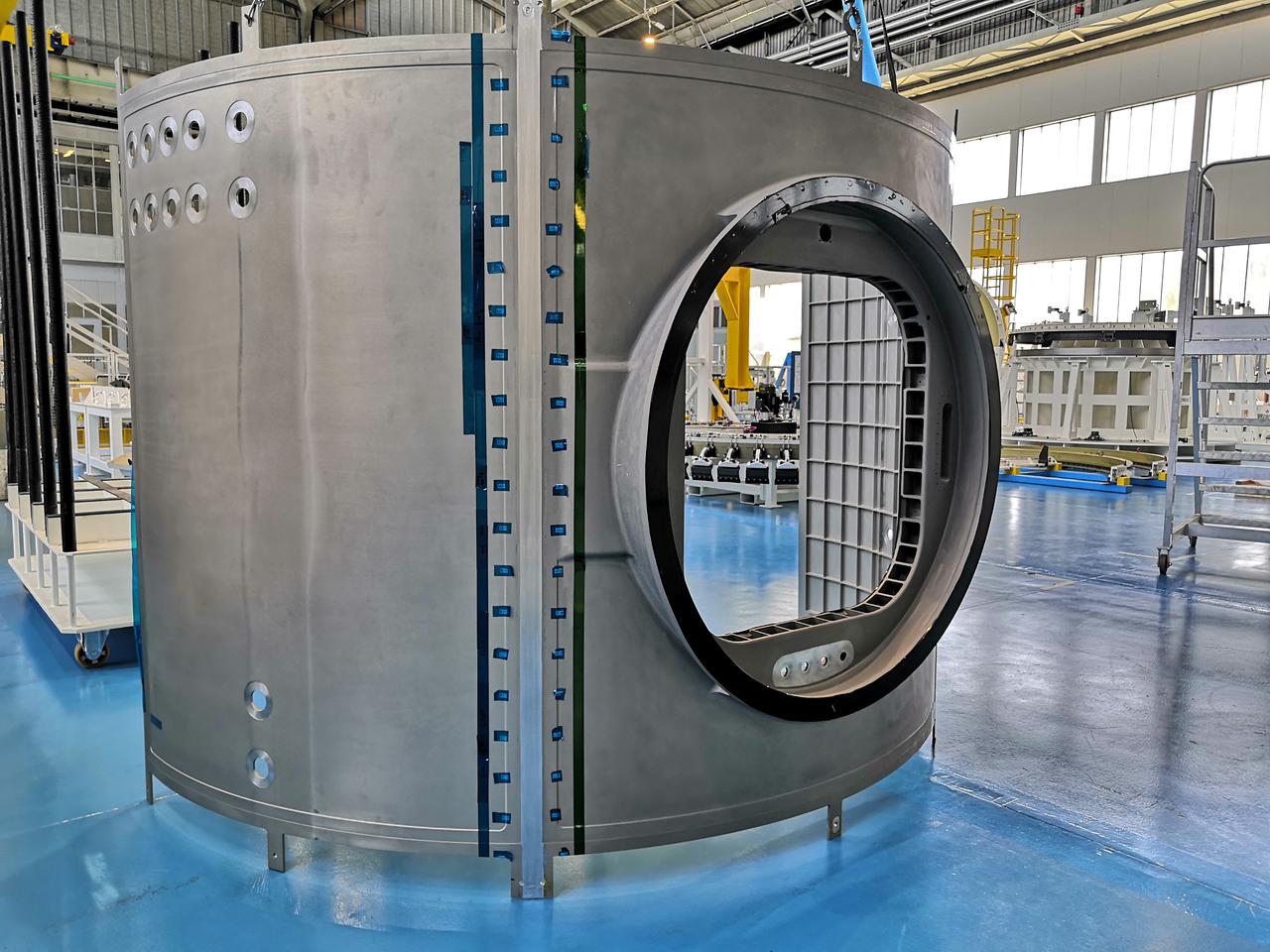
Northrop Grumman and subcontractor Thales Alenia Space complete fabrication work on the Habitation and Logistics Outpost (HALO) module, one of two of the Gateway Space Station's habitation elements where astronauts will live and work in lunar orbit during deep space Artemis missions.

Northrop Grumman and subcontractor Thales Alenia Space complete fabrication work on the Habitation and Logistics Outpost (HALO) module, one of two of the Gateway Space Station's habitation elements where astronauts will live and work in lunar orbit during deep space Artemis missions.
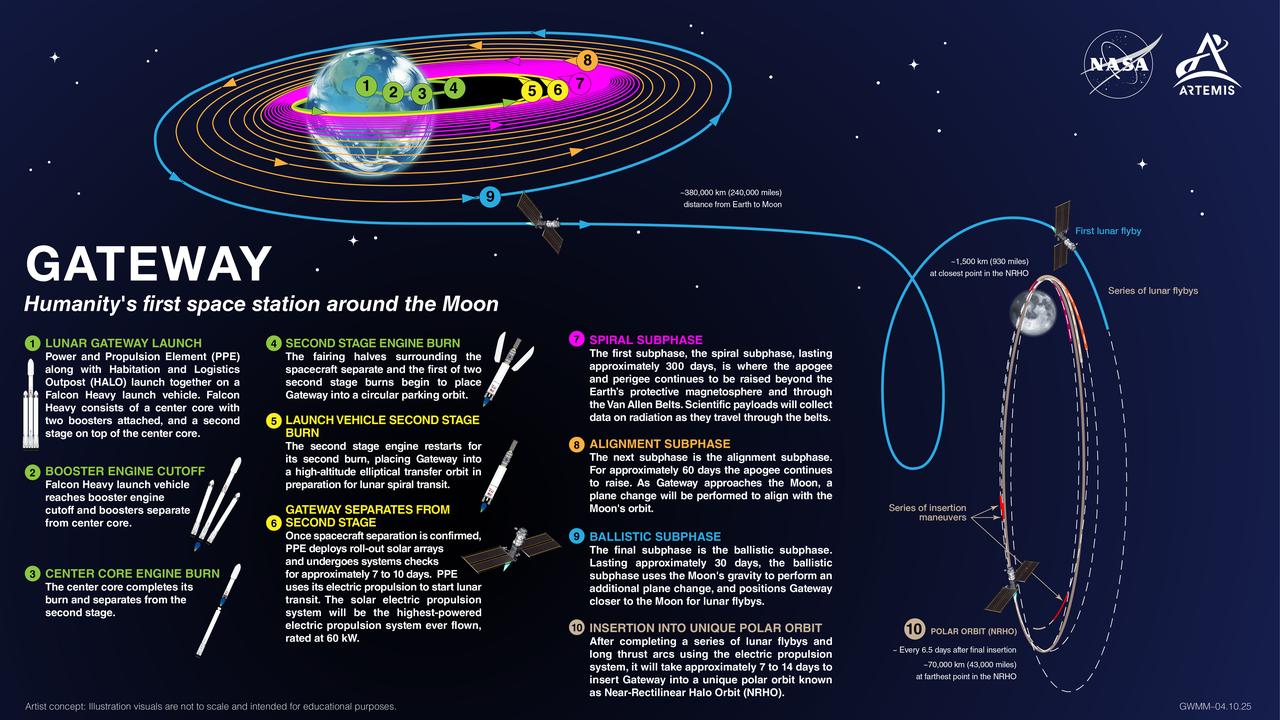
The Lunar Gateway Launch, mapped. Gateway's first elements, the Power and Propulsion Element and HALO (Habitation and Logistics Outpost), will launch together to lunar orbit, where they’ll set the stage for Artemis IV: the first Gateway assembly mission. During this milestone mission, the Artemis IV crew will deliver the European Space Agency's Lunar I-Hab, dock it to HALO, and enter the space station for the very first time. NASA is currently targeting a 2027 launch for HALO and the Power and Propulsion Element. This timeline allows for the roughly year-long journey to lunar orbit and ensures everything is in place ahead of Artemis IV.
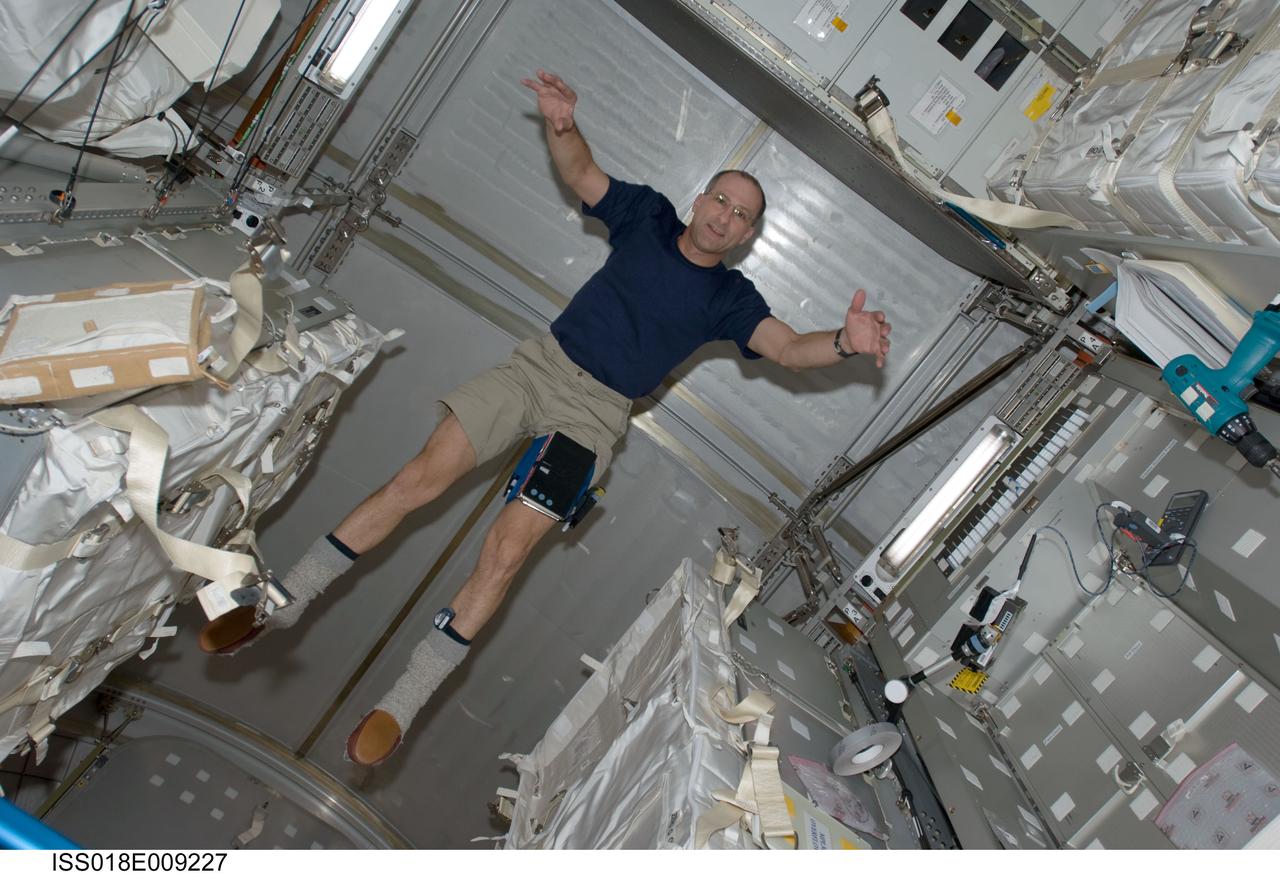
ISS018-E-009227 (18 Nov. 2008) --- Astronaut Donald Pettit, STS-126 mission specialist, floats in the Leonardo Multi-Purpose Logistics Module attached to the Earth-facing port of the International Space Station's Harmony node while Space Shuttle Endeavour is docked with the station.

Tessa Keating is a public affairs specialist in the Office of Communications at NASA’s Stennis Space Center. Keating plans onsite logistics, serves as a protocol officer, and coordinates the Space Flight Awareness Program for NASA Stennis and the NASA Shared Services Center.
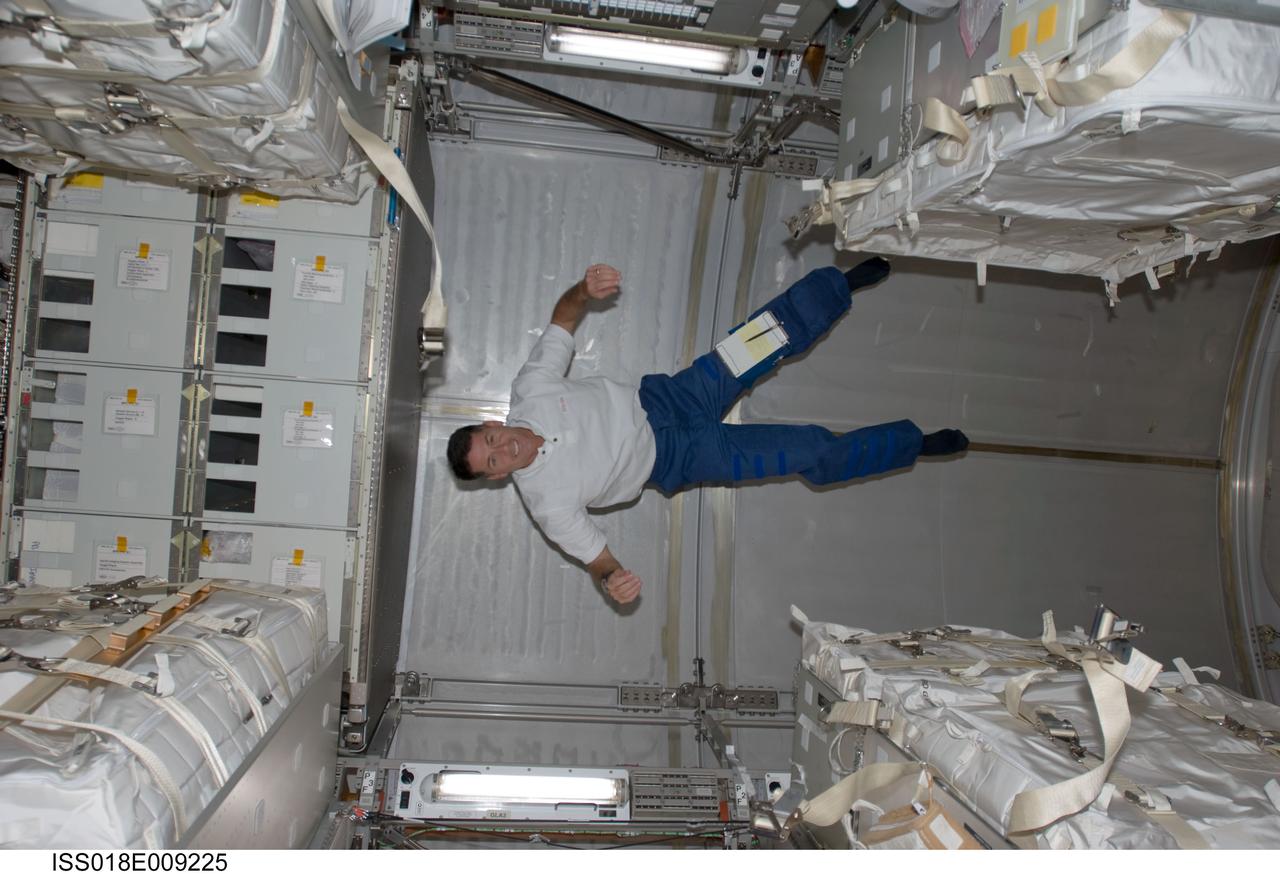
ISS018-E-009225 (18 Nov. 2008) --- Astronaut Shane Kimbrough, STS-126 mission specialist, floats in the Leonardo Multi-Purpose Logistics Module attached to the Earth-facing port of the International Space Station's Harmony node while Space Shuttle Endeavour is docked with the station.
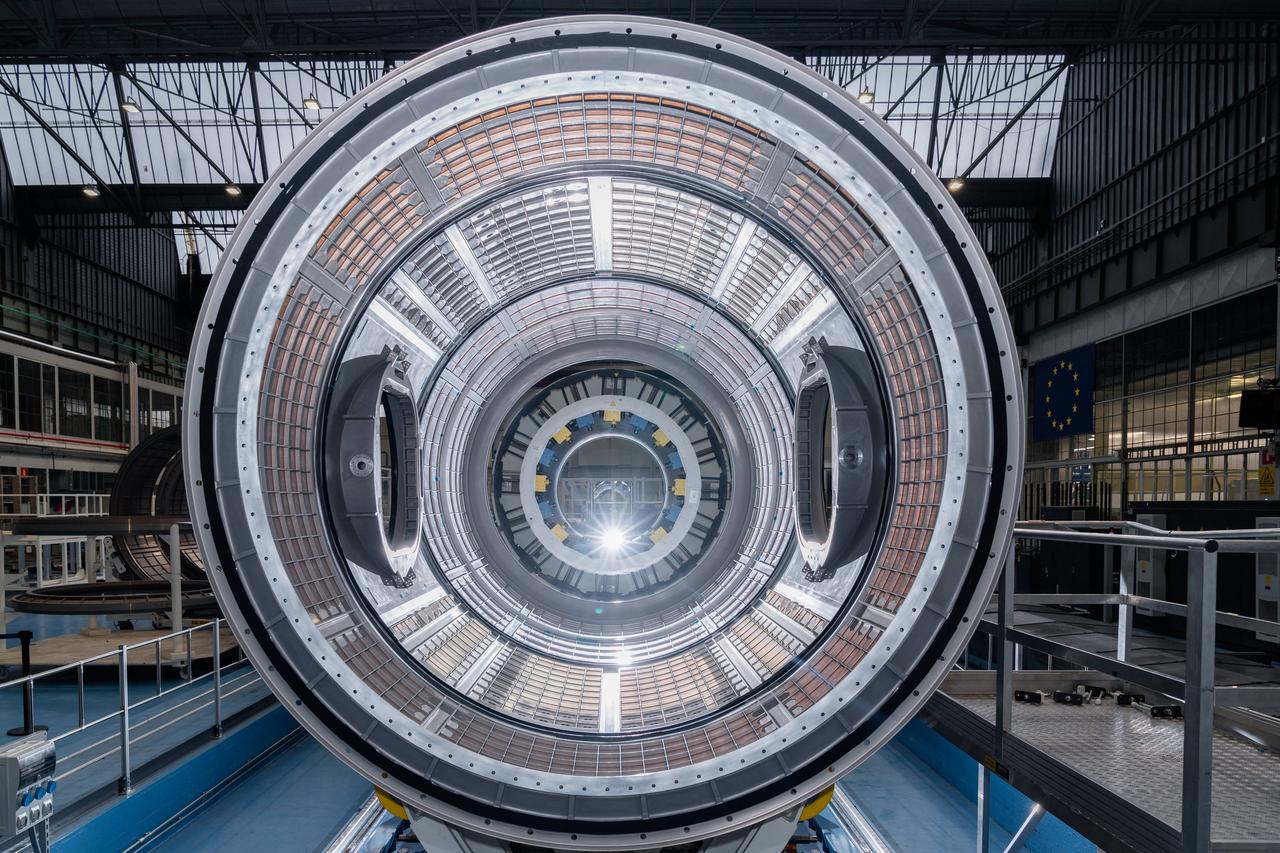
The primary structure of the Gateway space station's HALO (Habitation and Logistics Outpost) module is one step closer to launch following welding completion in Turin, Italy. HALO is one of four Gateway modules where astronauts will live, conduct science, and prepare for lunar surface missions. NASA is partnering with Northrop Grumman and their subcontractor Thales Alenia Space to develop HALO.
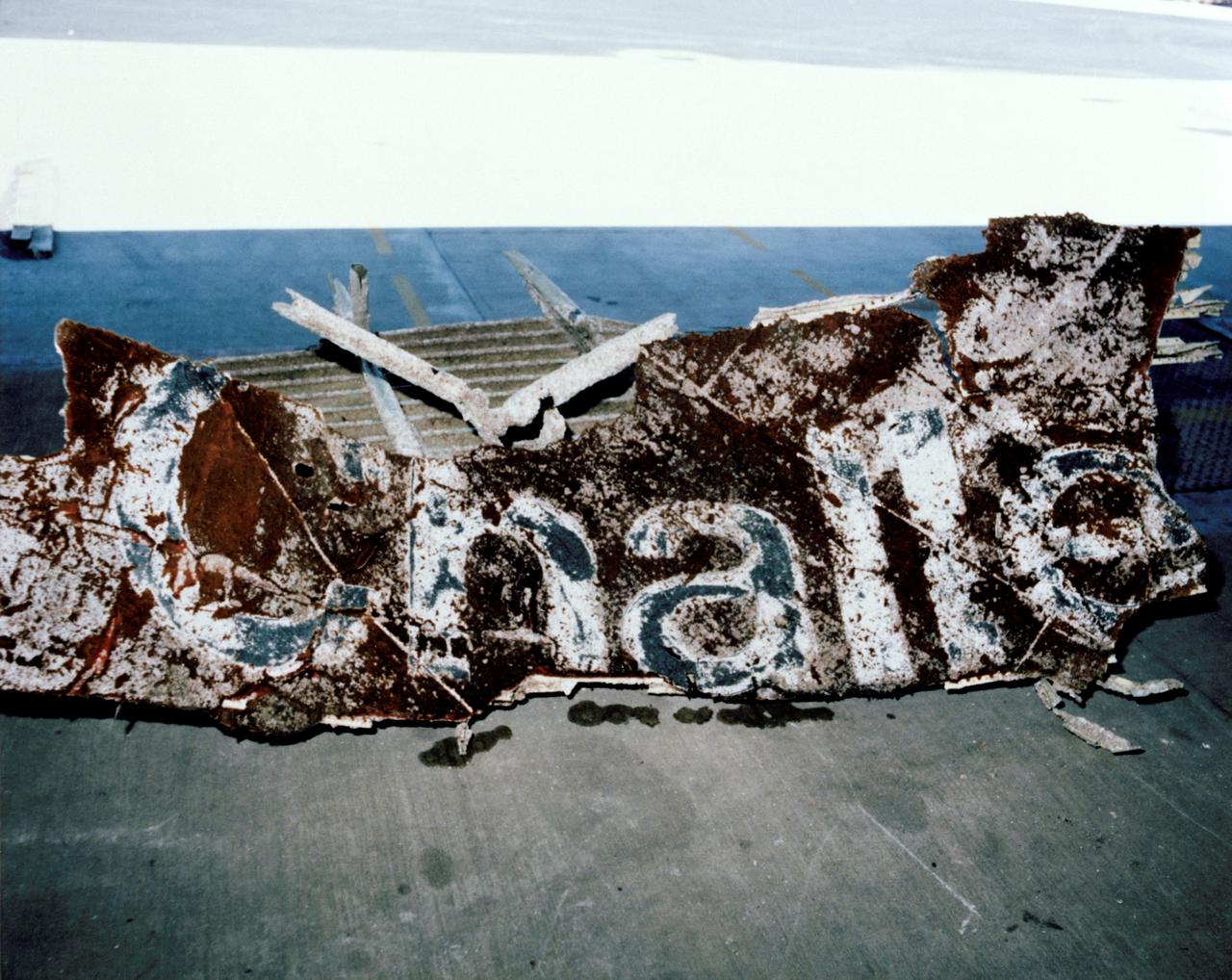
51L-10187 (18 April 1986) --- A 9'7" x 16' segment of Challenger's right wing is unloaded at the Logistics Facility after being off-loaded from the rescue and salvage ship USS Opportune. It was located and recovered by Navy divers from the Opportune about 12 nautical miles northeast of Cape Canaveral in 70 feet of water. Photo credit: NASA
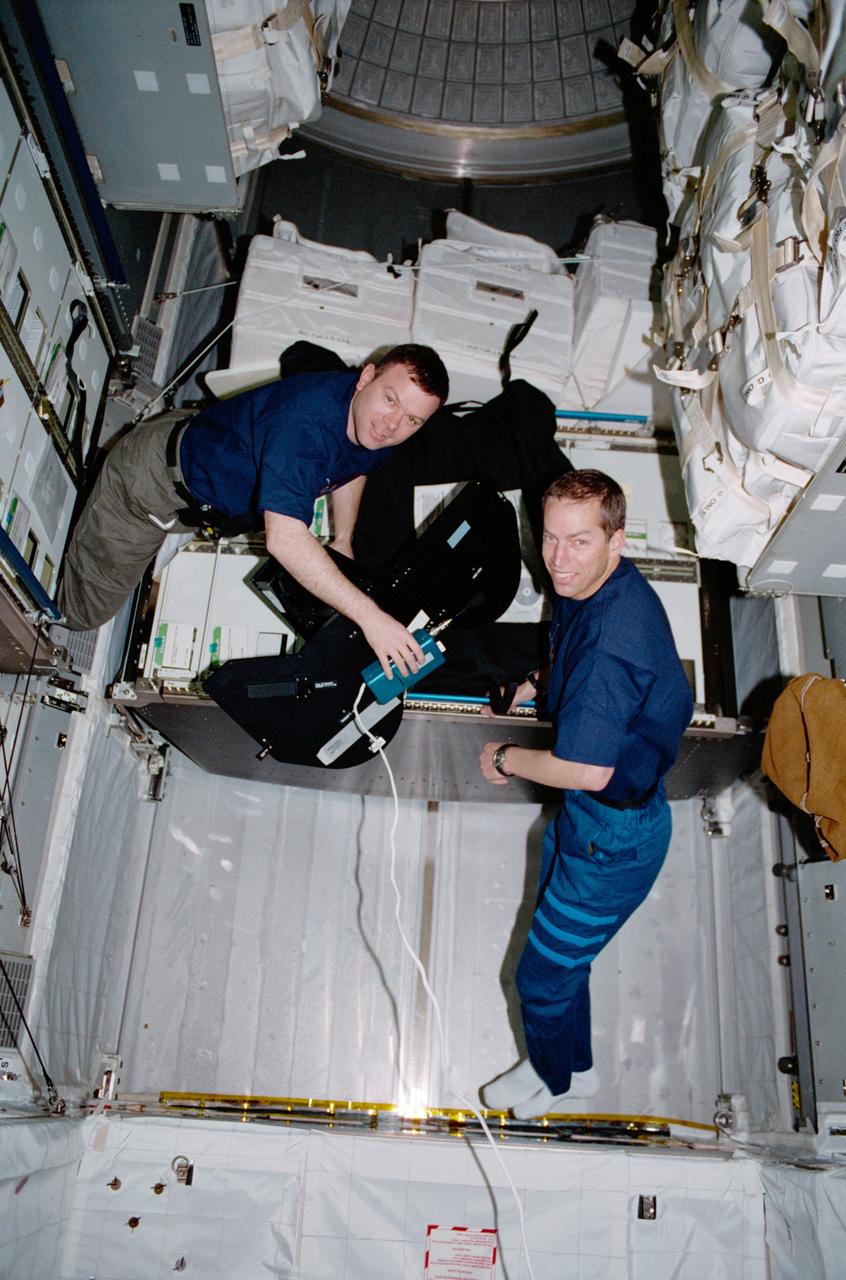
Pilot James M. Kelly (left) and Commander James D. Wetherbee for the STS-102 mission, participate in the movement of supplies inside Leonardo, the Italian Space Agency built Multipurpose Logistics Module (MPLM). In this particular photograph, the two are handling a film magazine for the IMAX cargo bay camera. The primary cargo of the STS-102 mission, the Leonardo MPLM is the first of three such pressurized modules that will serve as the International Space Station's (ISS') moving vans, carrying laboratory racks filled with equipment, experiments, and supplies to and from the Station aboard the Space Shuttle. The cylindrical module is approximately 21-feet long and 15- feet in diameter, weighing almost 4.5 tons. It can carry up to 10 tons of cargo in 16 standard Space Station equipment racks. Of the 16 racks the module can carry, 5 can be furnished with power, data, and fluid to support refrigerators or freezers. In order to function as an attached station module as well as a cargo transport, the logistics module also includes components that provide life support, fire detection and suppression, electrical distribution, and computer functions. The eighth station assembly flight, the STS-102 mission also served as a crew rotation flight. It delivered the Expedition Two crew to the Station and returned the Expedition One crew back to Earth.
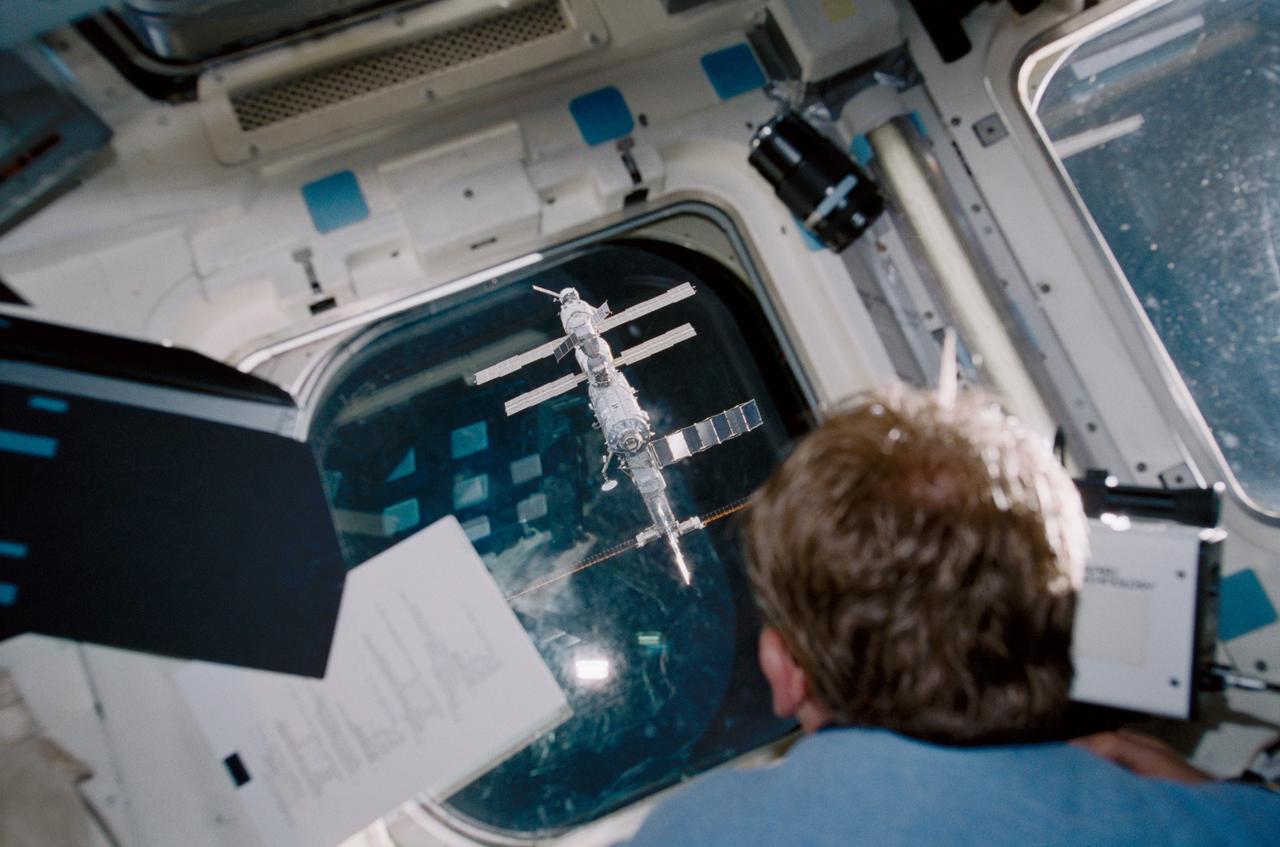
STS-102 astronaut and mission specialist, Andrew S.W. Thomas, gazes through an aft window of the Space Shuttle Orbiter Discovery as it approaches the docking bay of the International Space Station (ISS). Launched March 8, 2001, STS-102's primary cargo was the Leonardo, the Italian Space Agency-built Multipurpose Logistics Module (MPLM). The Leonardo MPLM is the first of three such pressurized modules that will serve as the ISS's moving vans, carrying laboratory racks filled with equipment, experiments, and supplies to and from the Station aboard the Space Shuttle. The cylindrical module is approximately 21-feet long and 15- feet in diameter, weighing almost 4.5 tons. It can carry up to 10 tons of cargo in 16 standard Space Station equipment racks. Of the 16 racks the module can carry, 5 can be furnished with power, data, and fluid to support refrigerators or freezers. In order to function as an attached station module as well as a cargo transport, the logistics module also includes components that provide life support, fire detection and suppression, electrical distribution, and computer functions. NASA's 103rd overall mission and the 8th Space Station Assembly Flight, STS-102 mission also served as a crew rotation flight. It delivered the Expedition Two crew to the Station and returned the Expedition One crew back to Earth.
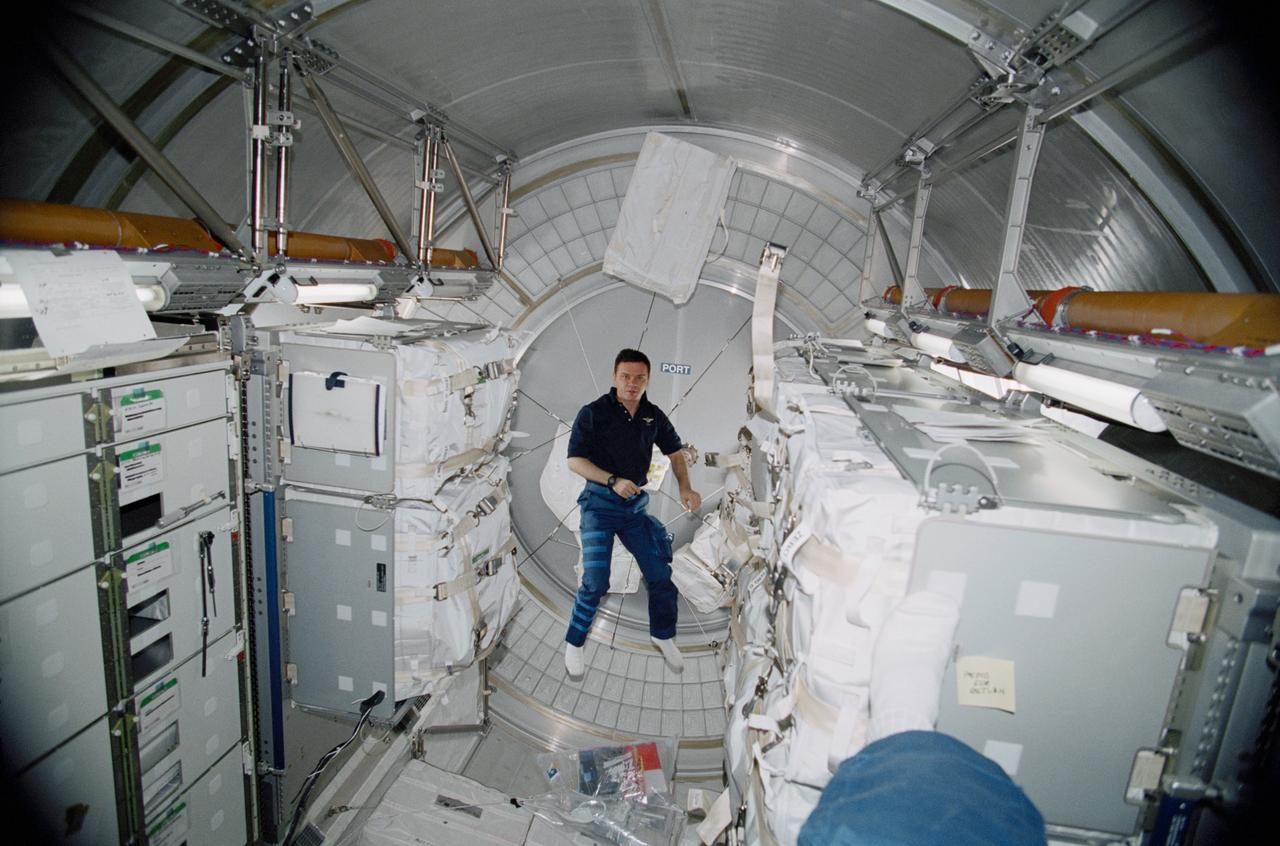
A crewmember of Expedition One, cosmonaut Yuri P. Gidzenko, is dwarfed by transient hardware aboard Leonardo, the Italian Space Agency-built Multi-Purpose Logistics Module (MPLM), a primary cargo of the STS-102 mission. The Leonardo MPLM is the first of three such pressurized modules that will serve as the International Space Station's (ISS's) moving vans, carrying laboratory racks filled with equipment, experiments and supplies to and from the Space Station aboard the Space Shuttle. The cylindrical module is approximately 21-feet long and 15- feet in diameter, weighing almost 4.5 tons. It can carry up to 10 tons of cargo into 16 standard Space Station equipment racks. Of the 16 racks the module can carry, 5 can be furnished with power, data, and fluid to support refrigerators or freezers. In order to function as an attached station module as well as a cargo transport, the logistics module also includes components that provide life support, fire detection and suppression, electrical distribution, and computer functions. The eighth Shuttle mission to visit the ISS, the STS-102 mission served as a crew rotation flight. It delivered the Expedition Two crew to the Station and returned the Expedition One crew back to Earth.
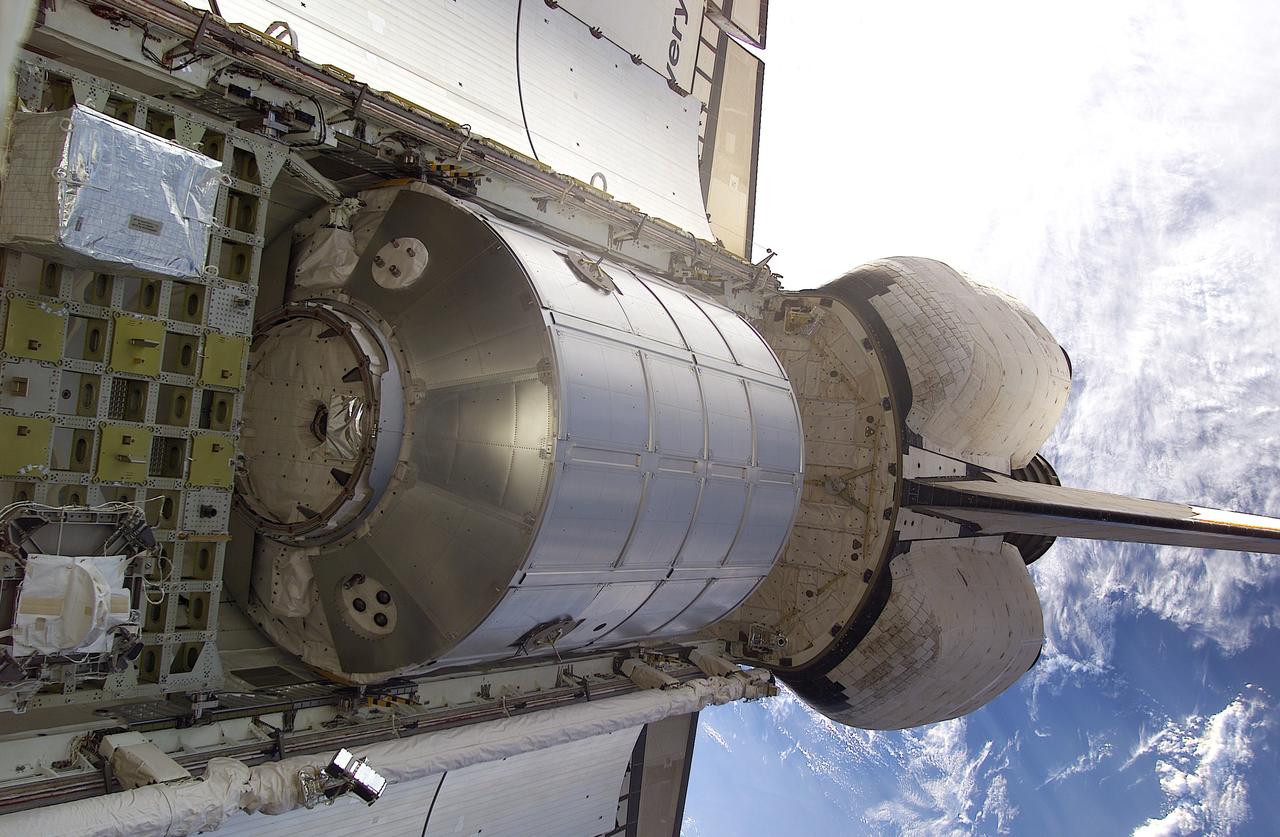
This in-orbit close up shows the Italian Space Agency-built multipurpose Logistics Module (MPLM), Leonardo, the primary cargo of the STS-102 mission, resting in the payload bay of the Space Shuttle Orbiter Discovery. The Leonardo MPLM is the first of three such pressurized modules that will serve as the International Space Station's (ISS') moving vans, carrying laboratory racks filled with equipment, experiments, and supplies to and from the Station aboard the Space Shuttle. The cylindrical module is approximately 21-feet long and 15- feet in diameter, weighing almost 4.5 tons. It can carry up to 10 tons of cargo in 16 standard Space Station equipment racks. Of the 16 racks the module can carry, 5 can be furnished with power, data, and fluid to support refrigerators or freezers. In order to function as an attached station module as well as a cargo transport, the logistics module also includes components that provide life support, fire detection and suppression, electrical distribution, and computer functions. The eighth station assembly flight and NASA's 103rd overall flight, STS-102 launched March 8, 2001 for an almost 13 day mission.
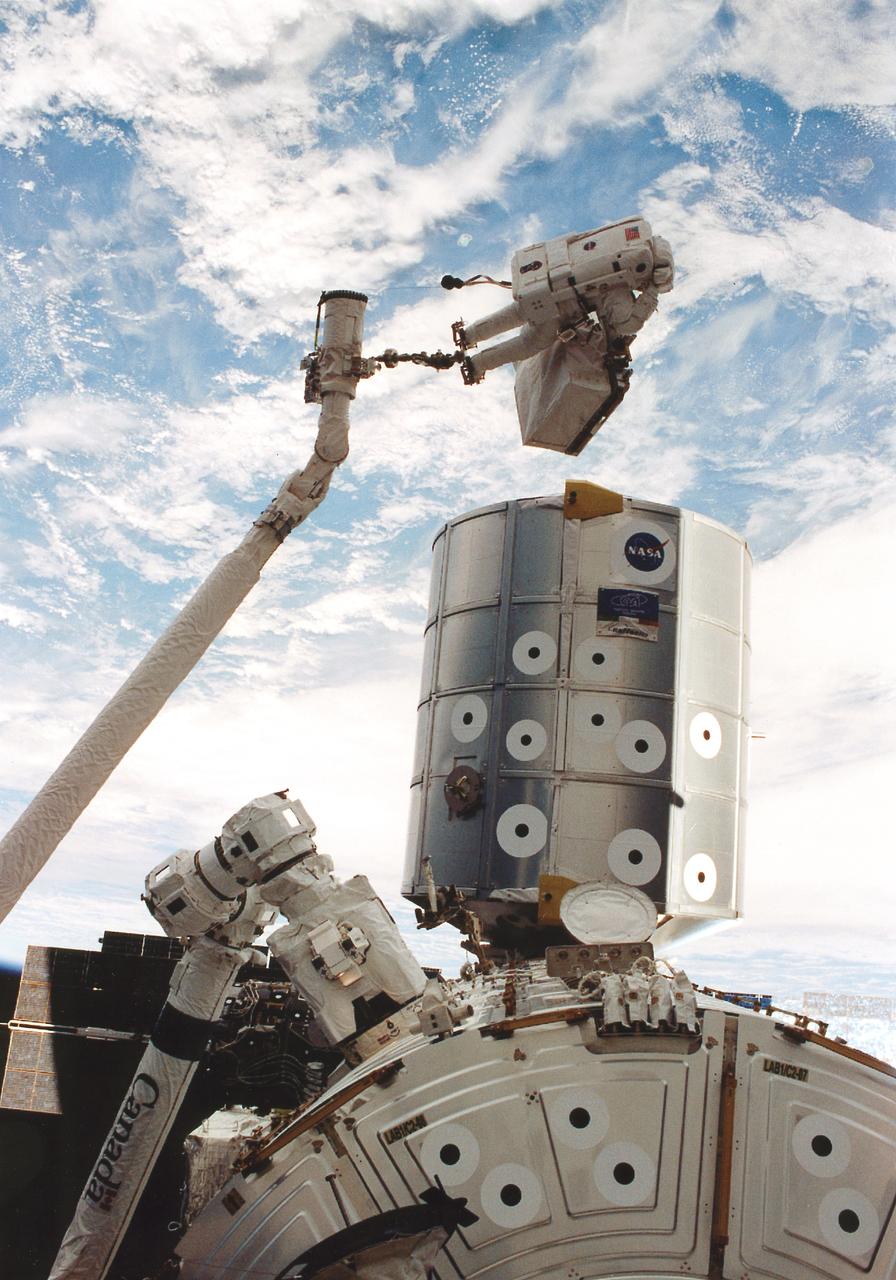
This is a Space Shuttle STS-100 mission onboard photograph. Astronaut Scott Parazynski totes a Direct Current Switching Unit while anchored on the end of the Canadian-built Remote Manipulator System (RMS) robotic arm. The RMS is in the process of moving Parazynski to the exterior of the Destiny laboratory (right foreground), where he will secure the spare unit, a critical part of the station's electrical system, to the stowage platform in case future crews will need it. Also in the photograph are the Italian-built Raffaello multipurpose Logistics Module (center) and the new Canadarm2 (lower right) or Space Station Remote Manipulator System.
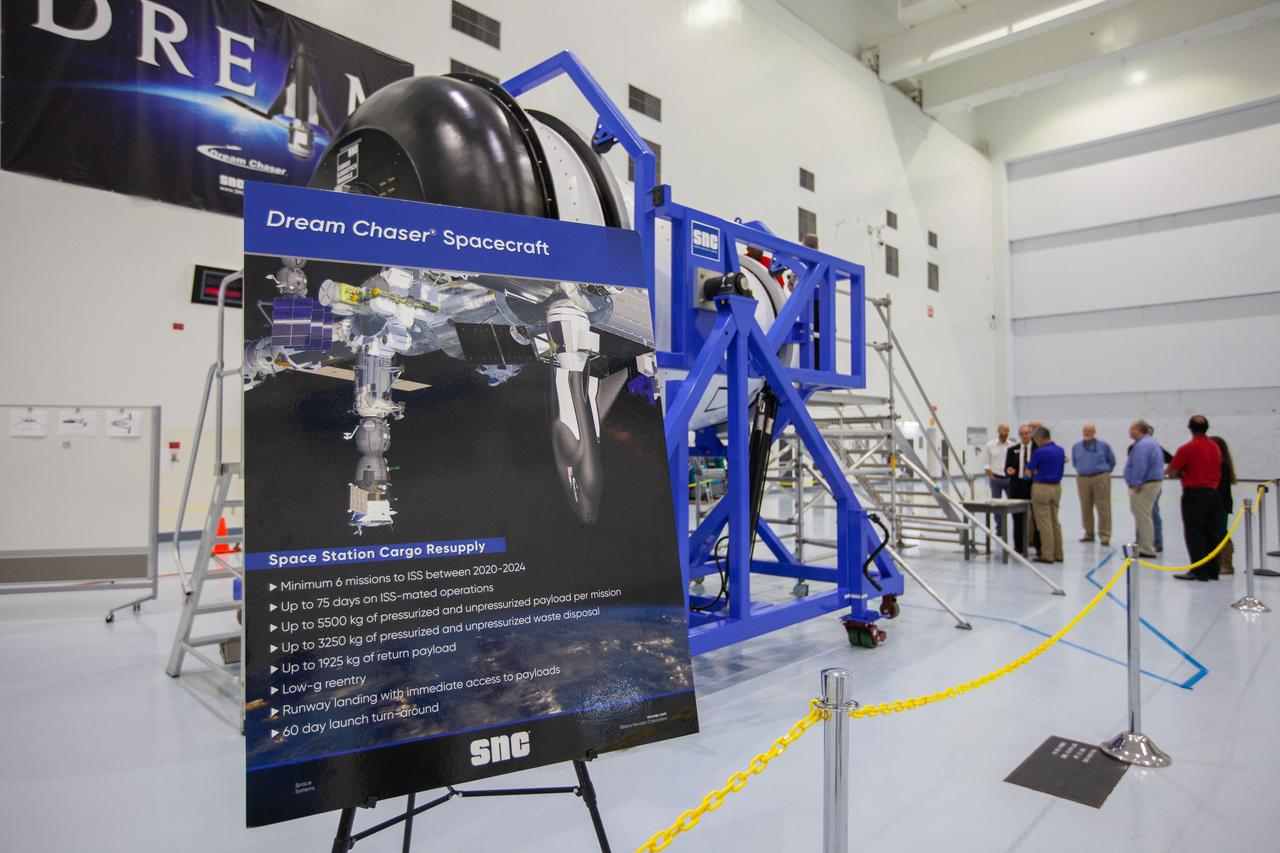
A mockup of the cargo logistics module for Sierra Nevada Corporation’s Dream Chaser, the company’s reusable spaceplane, arrived at the Space Station Processing Facility (SSPF) at NASA’s Kennedy Space Center in Florida in August. On Sept. 20, 2019, senior leadership had the opportunity to view the cargo module in the SSPF high bay. The SSPF is providing support for current and future NASA and commercial provider programs, including Commercial Resupply Services, Artemis 1, sending the first woman and next man to the Moon, and deep space destinations including Mars.
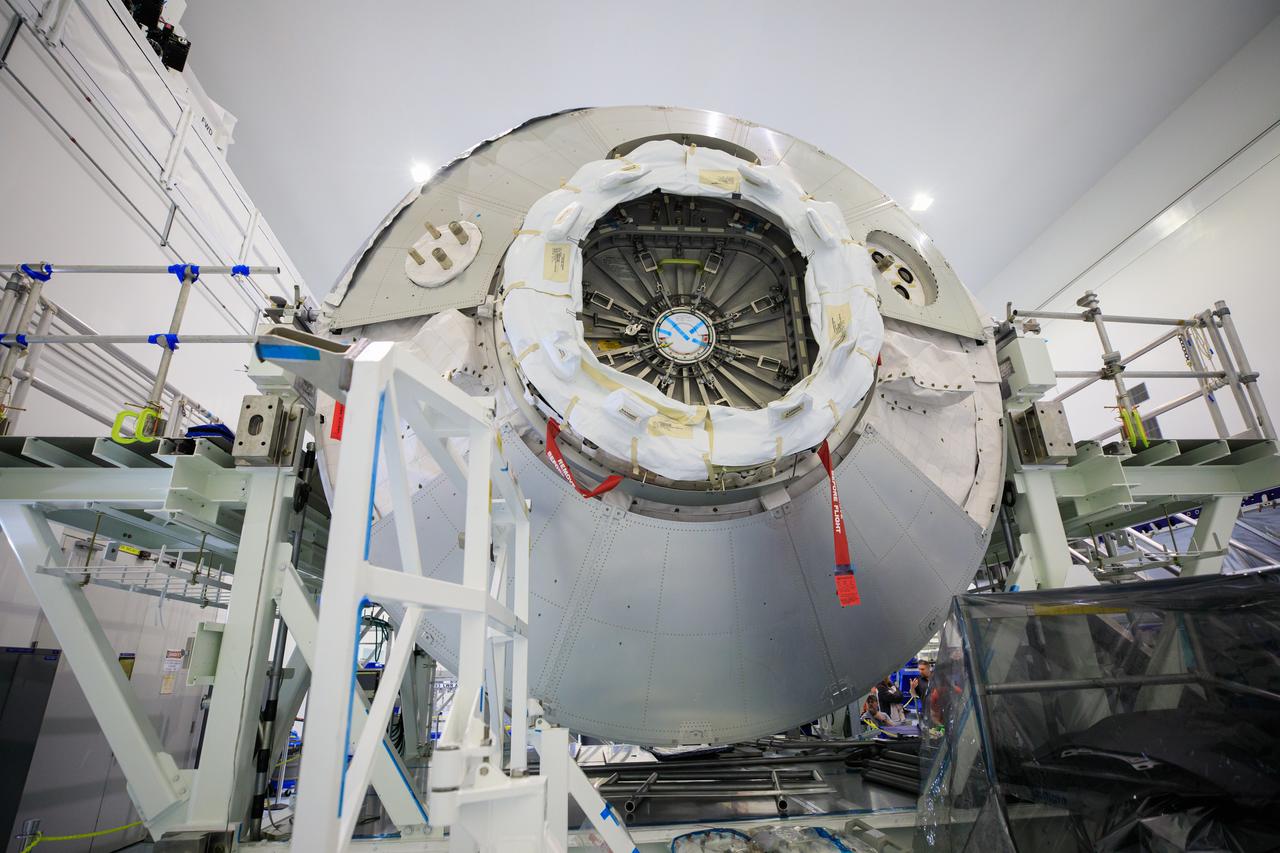
The Multi-Purpose Logistics Module (MPLM), used during the Space Shuttle Program to transfer cargo to and from the International Space Station, is secured in a stand inside the Space Station Processing Facility high bay at NASA’s Kennedy Space Center in Florida on April 20, 2023. The MPLM is being prepared for transport to Ellington Field in Houston, where it will then be transported by road to Axiom’s facility near Ellington to be utilized to further commercialization of space. Three MPLMs were built by Thales Alenia Space Italia (TASI) for the Italian Space Agency (ASI) and named after Italian masters (Leonardo, Raffaello, and Donatello). Only two ever flew to the space station, Leonardo and Raffaello, with Axiom intending to use Raffaello as a future element that will attach to a segment being built by the company for addition to the space station.
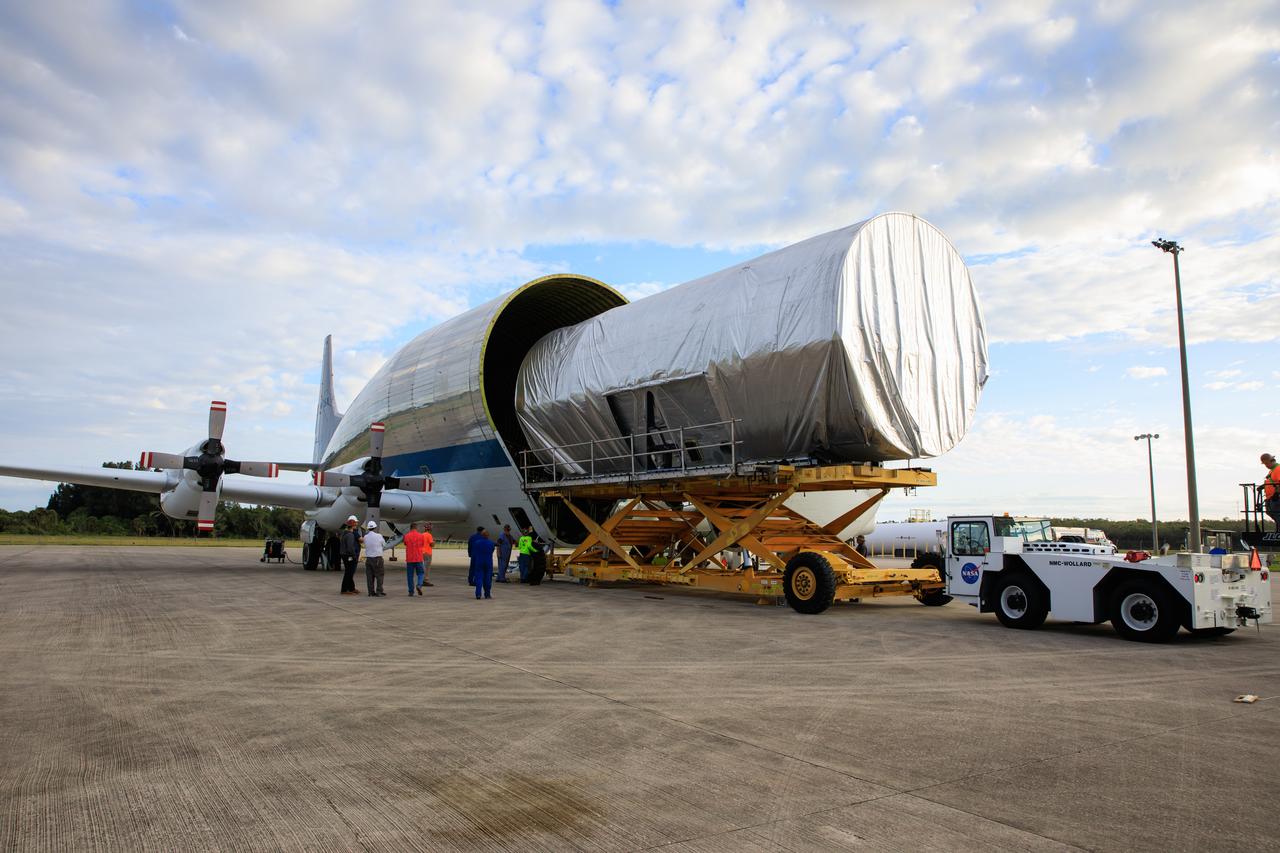
The Multi-Purpose Logistics Module (MPLM), used during the Space Shuttle Program to transfer cargo to and from the International Space Station, is loaded into NASA's Super Guppy aircraft at the Launch and Landing Facility runway at Kennedy Space Center in Florida on April 25, 2023. The MPLM will be transported to Ellington Field in Houston, where it will then be transported by road to Axiom’s facility near Ellington to be utilized to further commercialization of space. Three MPLMs were built by Thales Alenia Space Italia (TASI) for the Italian Space Agency (ASI) and named after Italian masters (Leonardo, Raffaello, and Donatello). Only two ever flew to the space station, Leonardo and Raffaello, with Axiom intending to use the Raffaello module as a future element that will attach to a segment being built by the company for addition to the station.
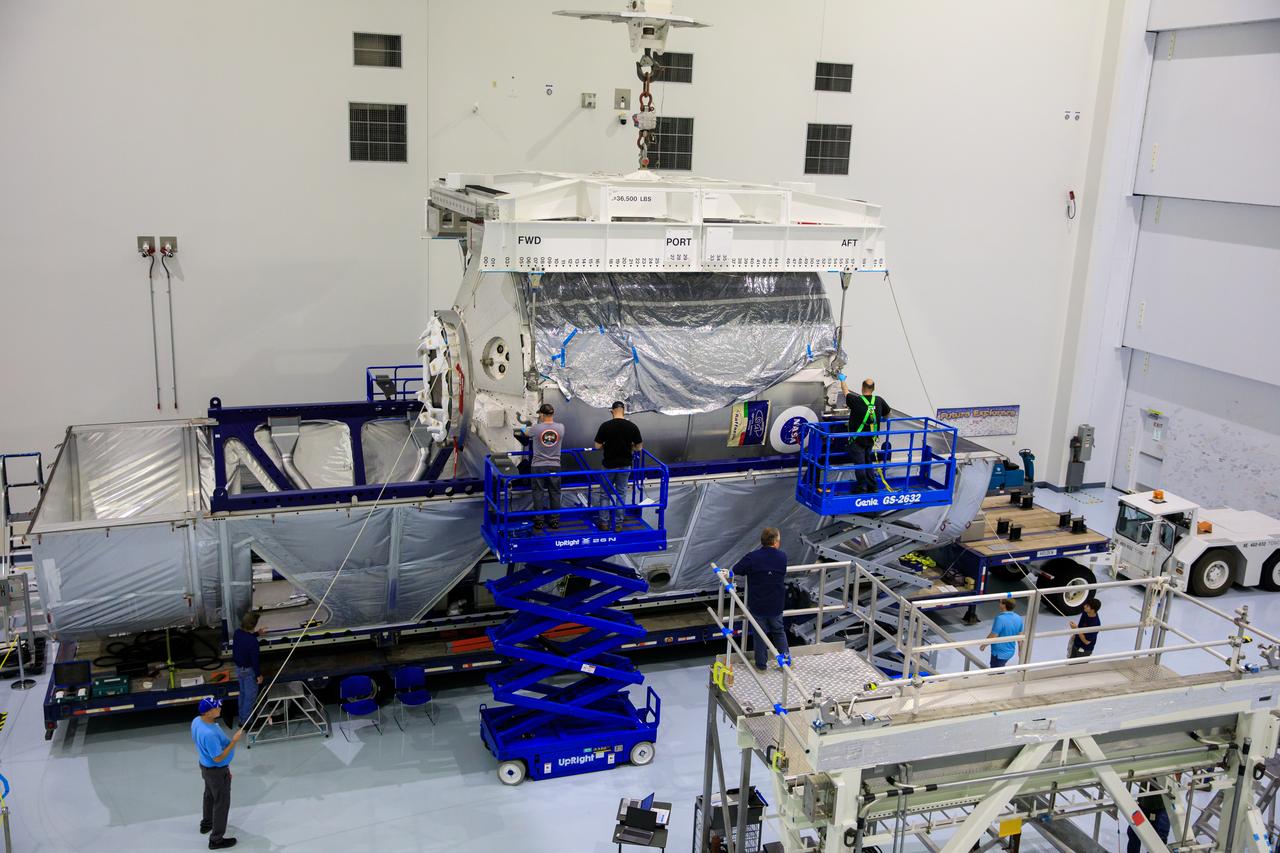
The Multi-Purpose Logistics Module (MPLM), used during the Space Shuttle Program to transfer cargo to and from the International Space Station, is lowered by crane into its transport container inside the Space Station Processing Facility high bay at NASA’s Kennedy Space Center in Florida on April 20, 2023. The MPLM is being prepared for transport to Ellington Field in Houston, where it will then be transported by road to Axiom’s facility near Ellington to be utilized to further commercialization of space. Three MPLMs were built by Thales Alenia Space Italia (TASI) for the Italian Space Agency (ASI) and named after Italian masters (Leonardo, Raffaello, and Donatello). Only two ever flew to the space station, Leonardo and Raffaello, with Axiom intending to use Raffaello as a future element that will attach to a segment being built by the company for addition to the space station.
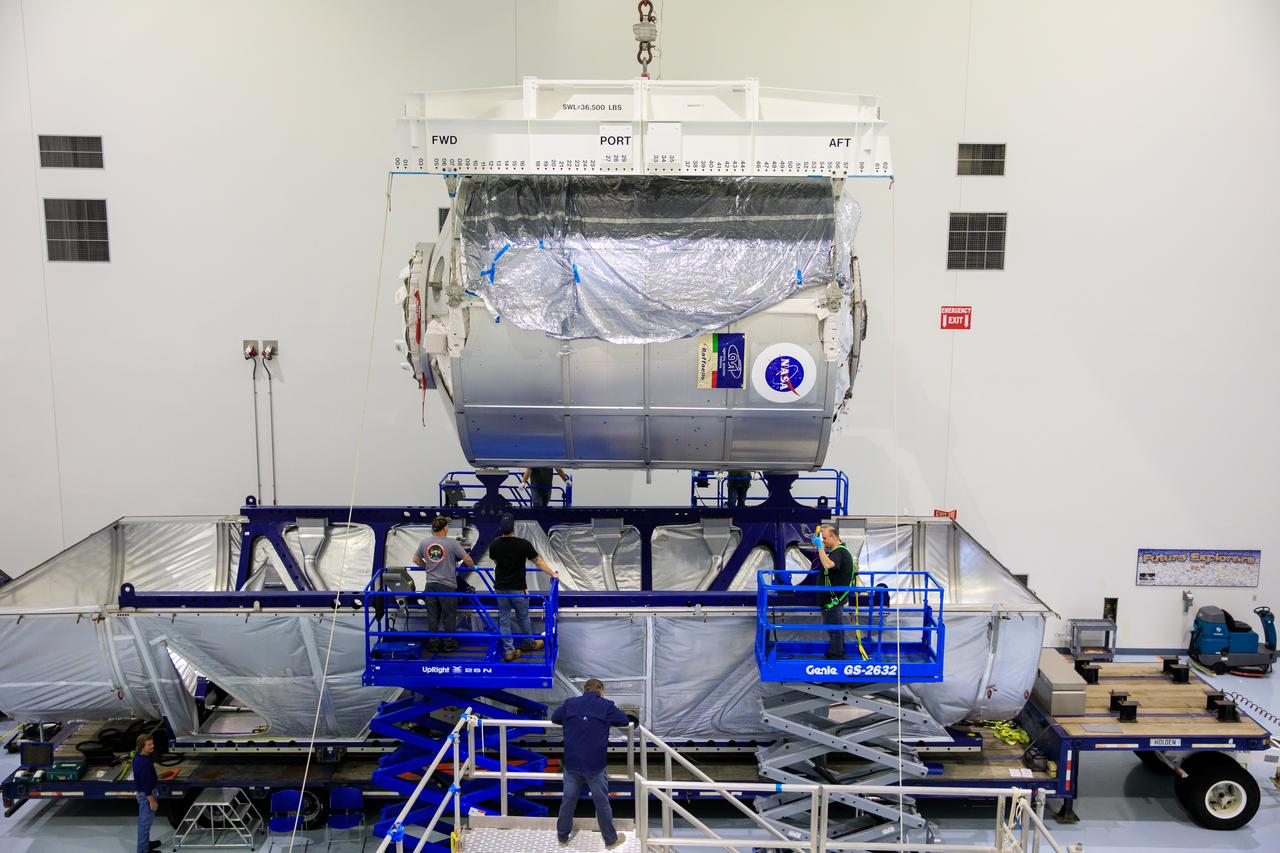
The Multi-Purpose Logistics Module (MPLM), used during the Space Shuttle Program to transfer cargo to and from the International Space Station, is lowered by crane into its transport container inside the Space Station Processing Facility high bay at NASA’s Kennedy Space Center in Florida on April 20, 2023. The MPLM is being prepared for transport to Ellington Field in Houston, where it will then be transported by road to Axiom’s facility near Ellington to be utilized to further commercialization of space. Three MPLMs were built by Thales Alenia Space Italia (TASI) for the Italian Space Agency (ASI) and named after Italian masters (Leonardo, Raffaello, and Donatello). Only two ever flew to the space station, Leonardo and Raffaello, with Axiom intending to use Raffaello as a future element that will attach to a segment being built by the company for addition to the space station.
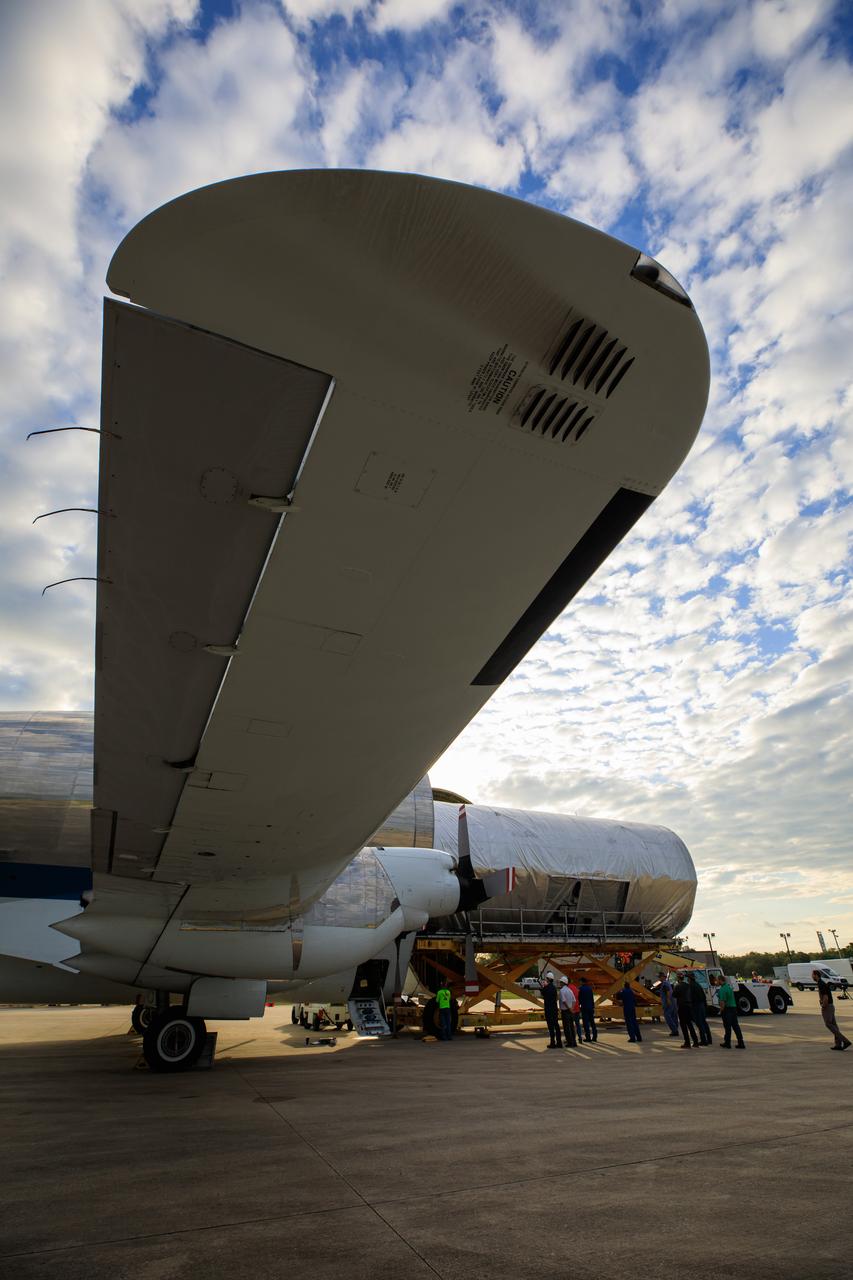
The Multi-Purpose Logistics Module (MPLM), used during the Space Shuttle Program to transfer cargo to and from the International Space Station, is loaded into NASA's Super Guppy aircraft at the Launch and Landing Facility runway at Kennedy Space Center in Florida on April 25, 2023. The MPLM will be transported to Ellington Field in Houston, where it will then be transported by road to Axiom’s facility near Ellington to be utilized to further commercialization of space. Three MPLMs were built by Thales Alenia Space Italia (TASI) for the Italian Space Agency (ASI) and named after Italian masters (Leonardo, Raffaello, and Donatello). Only two ever flew to the space station, Leonardo and Raffaello, with Axiom intending to use the Raffaello module as a future element that will attach to a segment being built by the company for addition to the station.
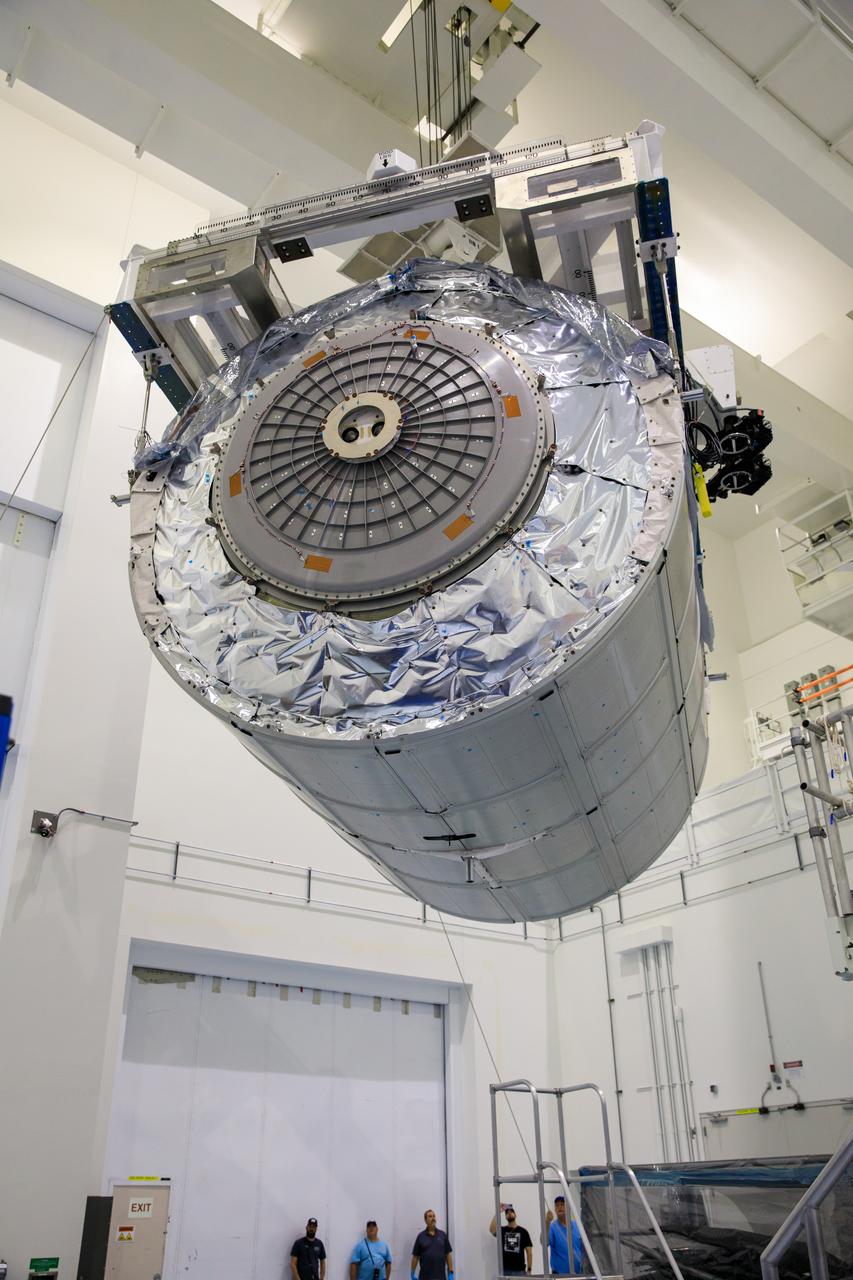
The Multi-Purpose Logistics Module (MPLM), used during the Space Shuttle Program to transfer cargo to and from the International Space Station, is moved by crane inside the Space Station Processing Facility high bay at NASA’s Kennedy Space Center in Florida on April 20, 2023. The MPLM is being prepared for transport to Ellington Field in Houston, where it will then be transported by road to Axiom’s facility near Ellington to be utilized to further commercialization of space. Three MPLMs were built by Thales Alenia Space Italia (TASI) for the Italian Space Agency (ASI) and named after Italian masters (Leonardo, Raffaello, and Donatello). Only two ever flew to the space station, Leonardo and Raffaello, with Axiom intending to use Raffaello as a future element that will attach to a segment being built by the company for addition to the space station.
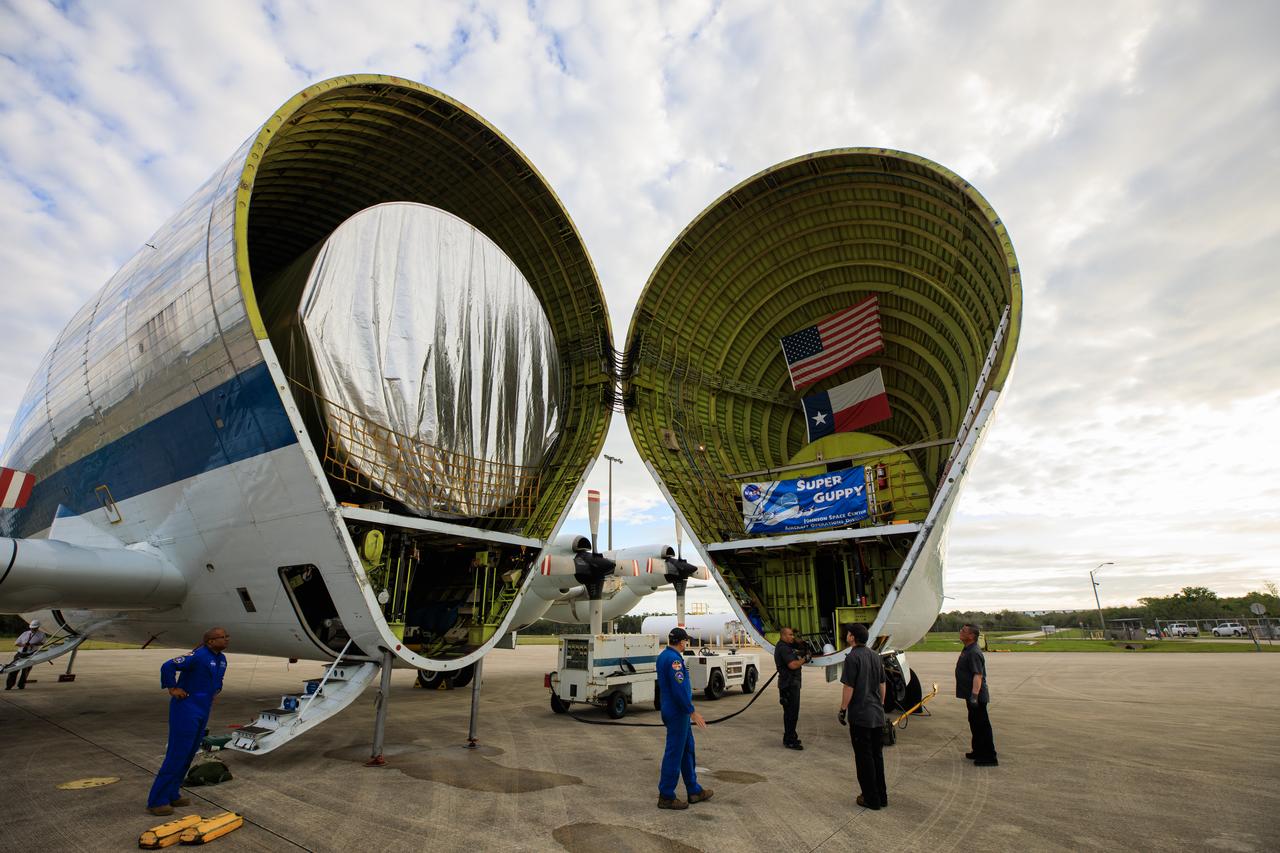
The Multi-Purpose Logistics Module (MPLM), used during the Space Shuttle Program to transfer cargo to and from the International Space Station, is loaded into NASA's Super Guppy aircraft at the Launch and Landing Facility runway at Kennedy Space Center in Florida on April 25, 2023. The MPLM will be transported to Ellington Field in Houston, where it will then be transported by road to Axiom’s facility near Ellington to be utilized to further commercialization of space. Three MPLMs were built by Thales Alenia Space Italia (TASI) for the Italian Space Agency (ASI) and named after Italian masters (Leonardo, Raffaello, and Donatello). Only two ever flew to the space station, Leonardo and Raffaello, with Axiom intending to use the Raffaello module as a future element that will attach to a segment being built by the company for addition to the station.
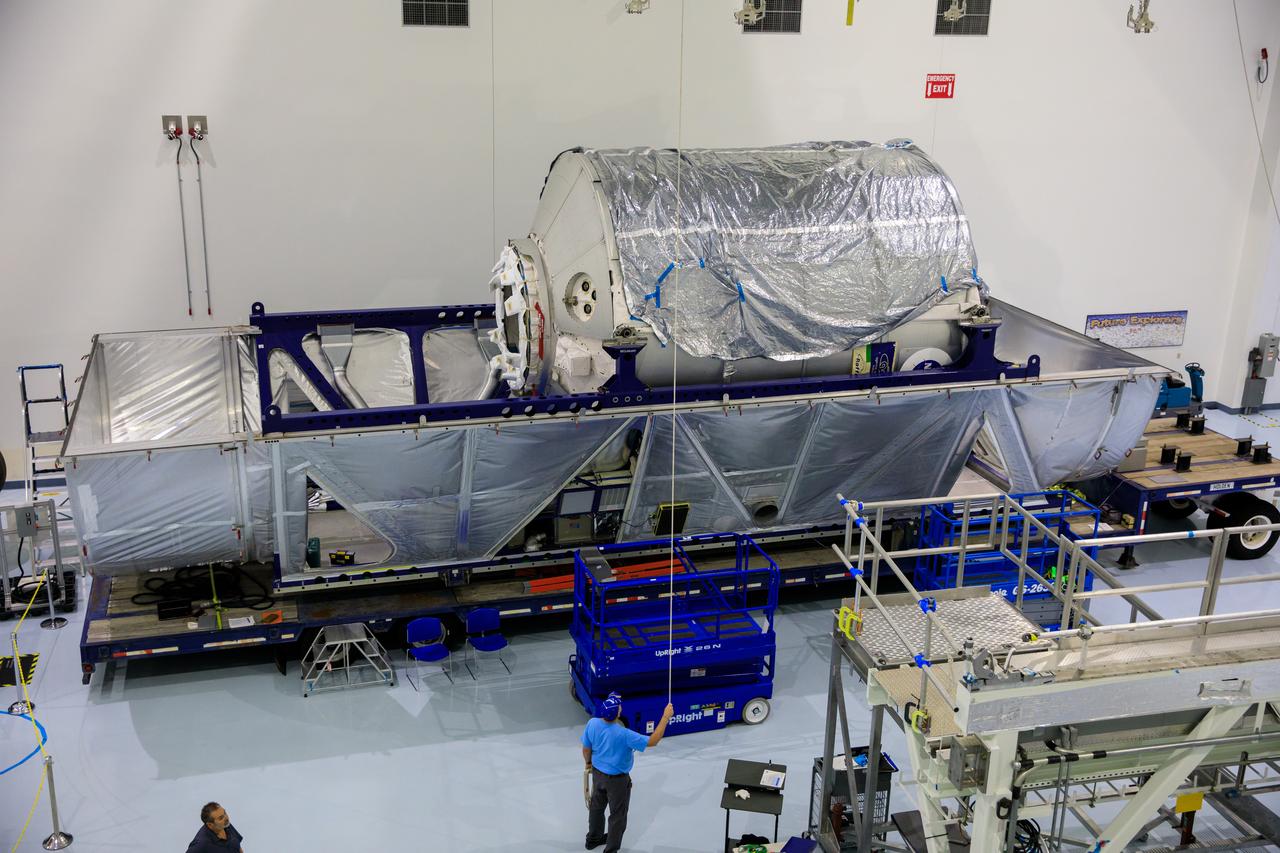
The Multi-Purpose Logistics Module (MPLM), used during the Space Shuttle Program to transfer cargo to and from the International Space Station, is secured in its transport container inside the Space Station Processing Facility high bay at NASA’s Kennedy Space Center in Florida on April 20, 2023. The MPLM is being prepared for transport to Ellington Field in Houston, where it will then be transported by road to Axiom’s facility near Ellington to be utilized to further commercialization of space. Three MPLMs were built by Thales Alenia Space Italia (TASI) for the Italian Space Agency (ASI) and named after Italian masters (Leonardo, Raffaello, and Donatello). Only two ever flew to the space station, Leonardo and Raffaello, with Axiom intending to use Raffaello as a future element that will attach to a segment being built by the company for addition to the space station.
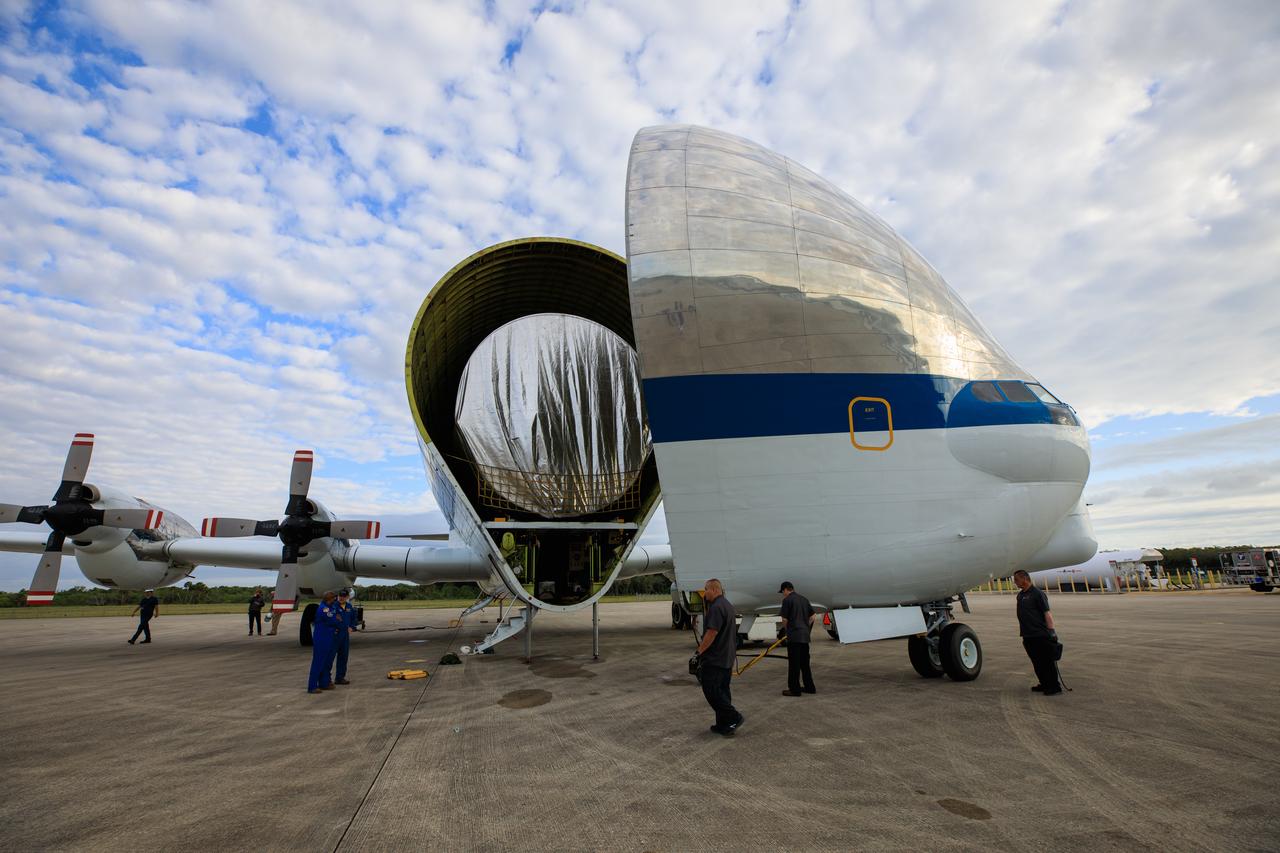
The Multi-Purpose Logistics Module (MPLM), used during the Space Shuttle Program to transfer cargo to and from the International Space Station, is loaded into NASA's Super Guppy aircraft at the Launch and Landing Facility runway at Kennedy Space Center in Florida on April 25, 2023. The MPLM will be transported to Ellington Field in Houston, where it will then be transported by road to Axiom’s facility near Ellington to be utilized to further commercialization of space. Three MPLMs were built by Thales Alenia Space Italia (TASI) for the Italian Space Agency (ASI) and named after Italian masters (Leonardo, Raffaello, and Donatello). Only two ever flew to the space station, Leonardo and Raffaello, with Axiom intending to use the Raffaello module as a future element that will attach to a segment being built by the company for addition to the station.

NASA's Super Guppy aircraft lifts off from the Launch and Landing Facility runway at Kennedy Space Center in Florida on April 25, 2023. Carrying the Multi-Purpose Logistics Module (MPLM), used during the Space Shuttle Program to transfer cargo to and from the International Space Station, the aircraft is transporting the module to Ellington Field in Houston, where it will then be transported by road to Axiom’s facility near Ellington to be utilized to further commercialization of space. Three MPLMs were built by Thales Alenia Space Italia (TASI) for the Italian Space Agency (ASI) and named after Italian masters (Leonardo, Raffaello, and Donatello). Only two ever flew to the space station, Leonardo and Raffaello, with Axiom intending to use the Raffaello module as a future element that will attach to a segment being built by the company for addition to the station.
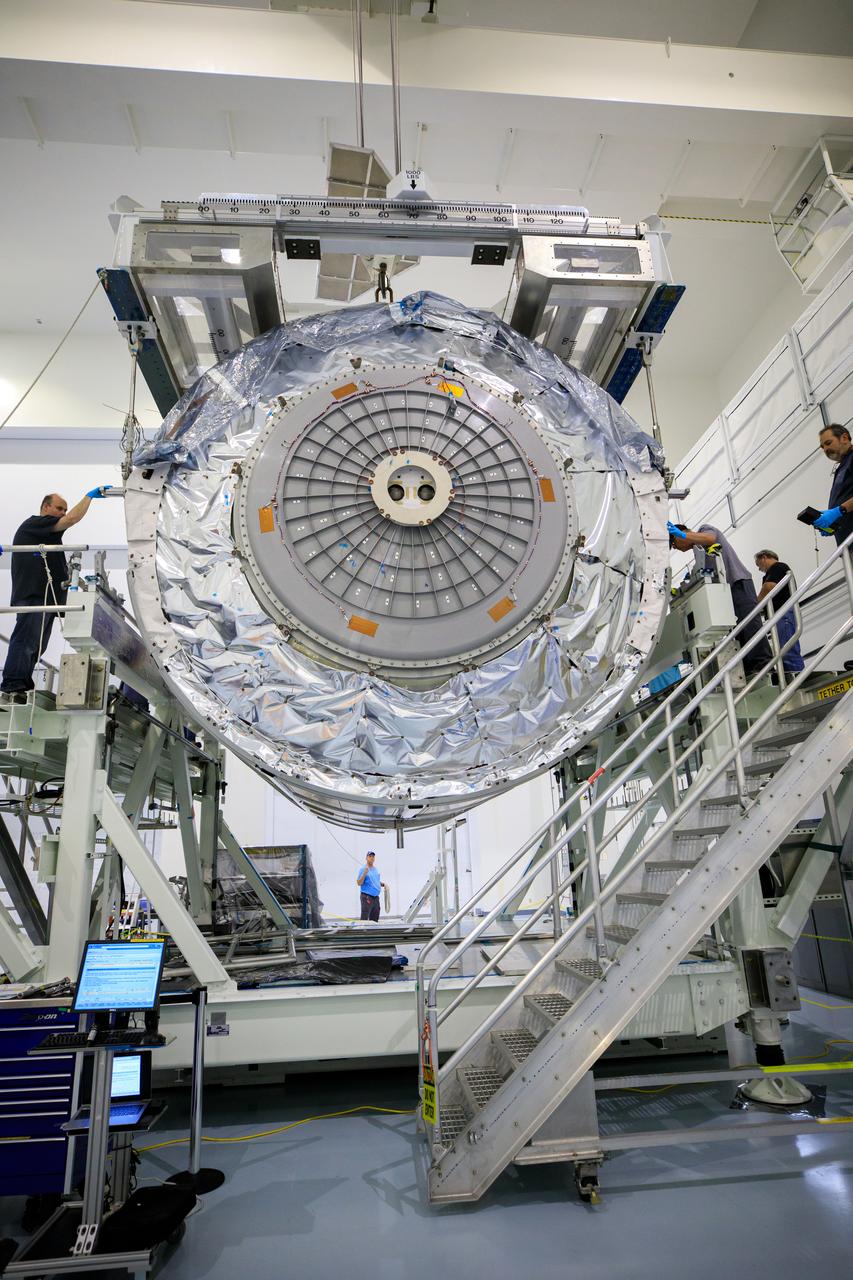
The Multi-Purpose Logistics Module (MPLM), used during the Space Shuttle Program to transfer cargo to and from the International Space Station, is hoisted up by crane inside the Space Station Processing Facility high bay at NASA’s Kennedy Space Center in Florida on April 20, 2023. The MPLM is being prepared for transport to Ellington Field in Houston, where it will then be transported by road to Axiom’s facility near Ellington to be utilized to further commercialization of space. Three MPLMs were built by Thales Alenia Space Italia (TASI) for the Italian Space Agency (ASI) and named after Italian masters (Leonardo, Raffaello, and Donatello). Only two ever flew to the space station, Leonardo and Raffaello, with Axiom intending to use Raffaello as a future element that will attach to a segment being built by the company for addition to the space station.
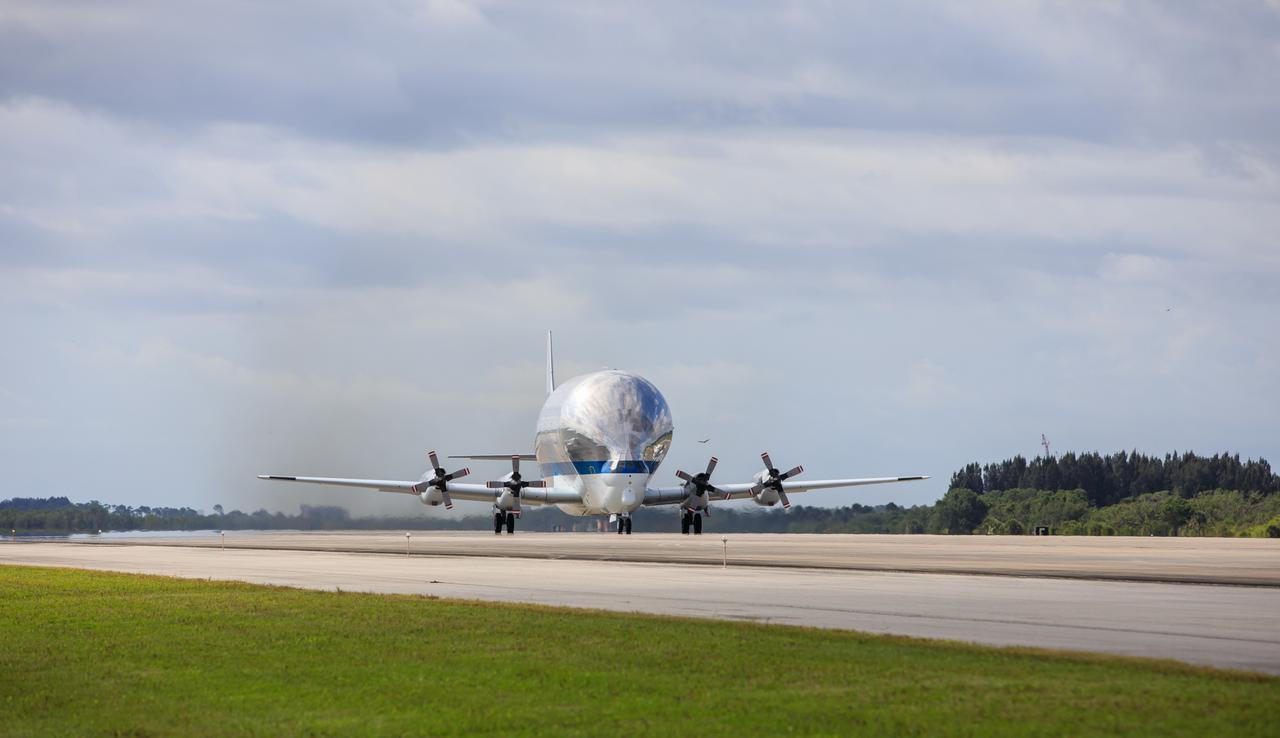
NASA's Super Guppy aircraft lifts off from the Launch and Landing Facility runway at Kennedy Space Center in Florida on April 25, 2023. Carrying the Multi-Purpose Logistics Module (MPLM), used during the Space Shuttle Program to transfer cargo to and from the International Space Station, the aircraft is transporting the module to Ellington Field in Houston, where it will then be transported by road to Axiom’s facility near Ellington to be utilized to further commercialization of space. Three MPLMs were built by Thales Alenia Space Italia (TASI) for the Italian Space Agency (ASI) and named after Italian masters (Leonardo, Raffaello, and Donatello). Only two ever flew to the space station, Leonardo and Raffaello, with Axiom intending to use the Raffaello module as a future element that will attach to a segment being built by the company for addition to the station.
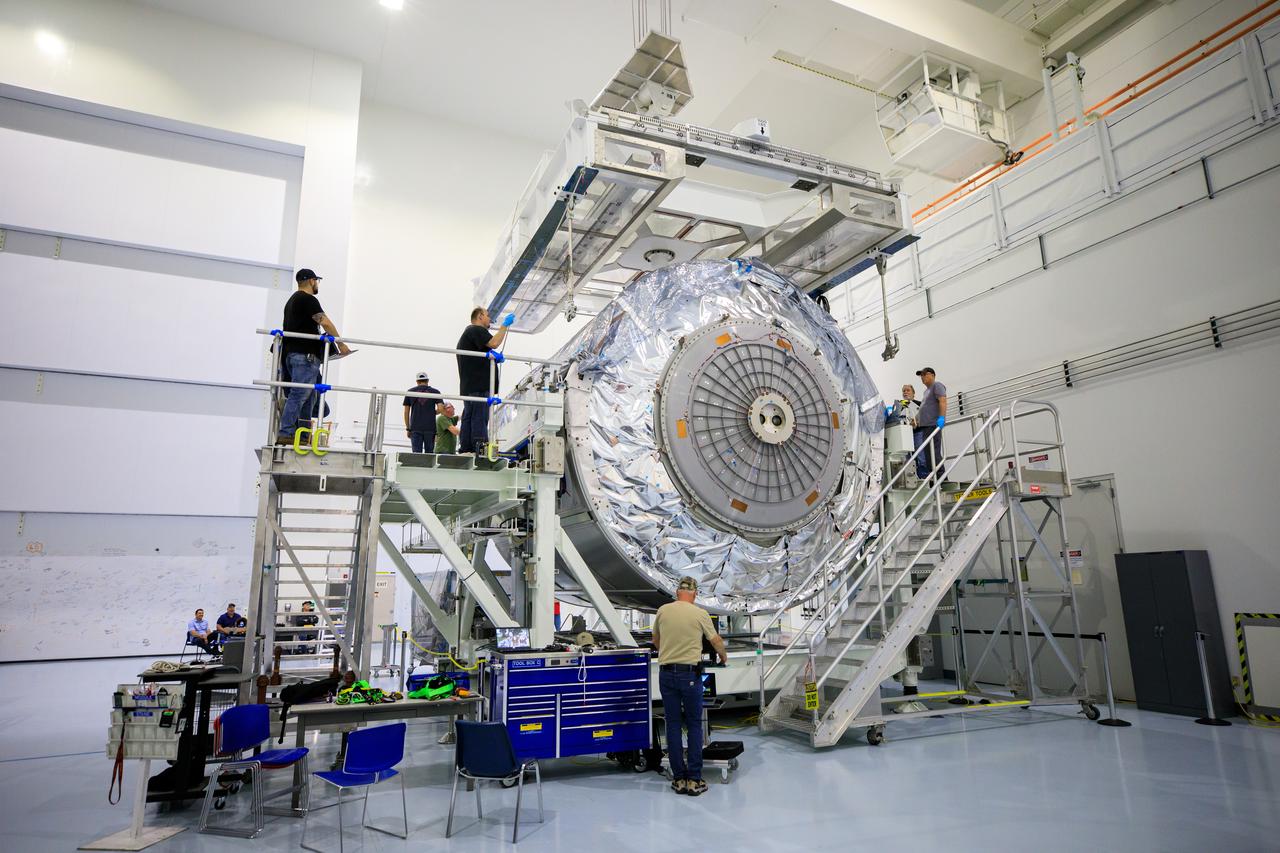
The Multi-Purpose Logistics Module (MPLM), used during the Space Shuttle Program to transfer cargo to and from the International Space Station, is lifted by crane inside the Space Station Processing Facility high bay at NASA’s Kennedy Space Center in Florida on April 20, 2023. The MPLM is being prepared for transport to Ellington Field in Houston, where it will then be transported by road to Axiom’s facility near Ellington to be utilized to further commercialization of space. Three MPLMs were built by Thales Alenia Space Italia (TASI) for the Italian Space Agency (ASI) and named after Italian masters (Leonardo, Raffaello, and Donatello). Only two ever flew to the space station, Leonardo and Raffaello, with Axiom intending to use Raffaello as a future element that will attach to a segment being built by the company for addition to the space station.
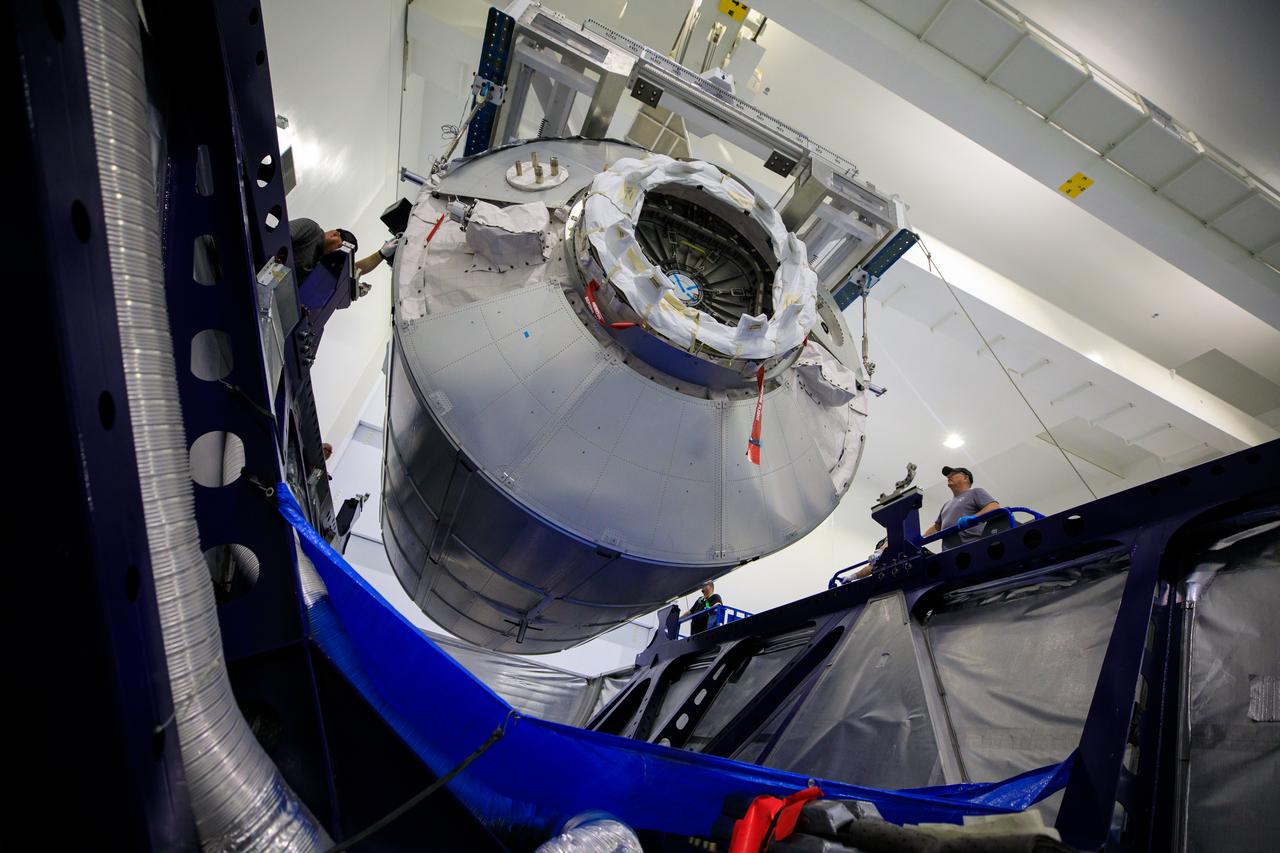
The Multi-Purpose Logistics Module (MPLM), used during the Space Shuttle Program to transfer cargo to and from the International Space Station, is lowered by crane into its transport container inside the Space Station Processing Facility high bay at NASA’s Kennedy Space Center in Florida on April 20, 2023. The MPLM is being prepared for transport to Ellington Field in Houston, where it will then be transported by road to Axiom’s facility near Ellington to be utilized to further commercialization of space. Three MPLMs were built by Thales Alenia Space Italia (TASI) for the Italian Space Agency (ASI) and named after Italian masters (Leonardo, Raffaello, and Donatello). Only two ever flew to the space station, Leonardo and Raffaello, with Axiom intending to use Raffaello as a future element that will attach to a segment being built by the company for addition to the space station.

Gateway’s HALO (Habitation and Logistics Outpost) at Northrop Grumman’s facility in Gilbert, Arizona, on April 4, 2025, shortly after its arrival from Thales Alenia Space in Turin, Italy.
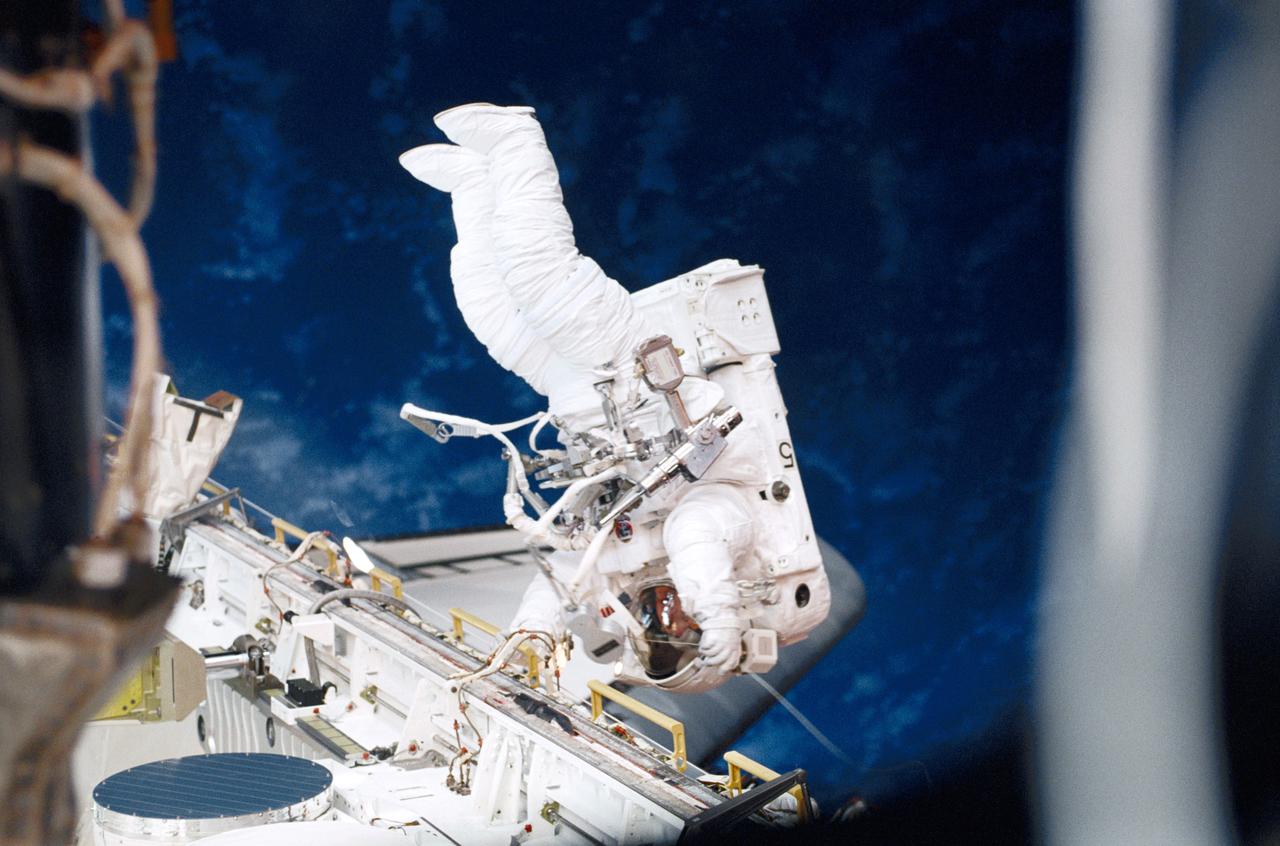
STS-102 mission astronaut Susan J. Helms translates along the longerons of the Space Shuttle Discovery during the first of two space walks. During this walk, the Pressurized Mating Adapter 3 was prepared for repositioning from the Unity Module's Earth-facing berth to its port-side berth to make room for the Leonardo multipurpose Logistics Module (MPLM), supplied by the Italian Space Agency. The Leonardo MPLM is the first of three such pressurized modules that will serve as the International Space Station's (ISS') moving vans, carrying laboratory racks filled with equipment, experiments, and supplies to and from the Station aboard the Space Shuttle. The cylindrical module is approximately 21-feet long and 15- feet in diameter, weighing almost 4.5 tons. It can carry up to 10 tons of cargo in 16 standard Space Station equipment racks. Of the 16 racks the module can carry, 5 can be furnished with power, data, and fluid to support refrigerators or freezers. In order to function as an attached station module as well as a cargo transport, the logistics module also includes components that provide life support, fire detection and suppression, electrical distribution, and computer functions. NASA's 103rd overall mission and the 8th Space Station Assembly Flight, STS-102 mission also served as a crew rotation flight. It delivered the Expedition Two crew to the Station and returned the Expedition One crew back to Earth.

With the Vehicle Assembly Building in the background, the three specially designed, fully electric, environmentally friendly crew transportation vehicles for Artemis missions arrived at NASA’s Kennedy Space Center in Florida on July 11, 2023. The zero-emission vehicles, which will carry astronauts to Launch Complex 39B for Artemis missions, were delivered by the manufacturer, Canoo Technologies Inc. of Torrance, California.
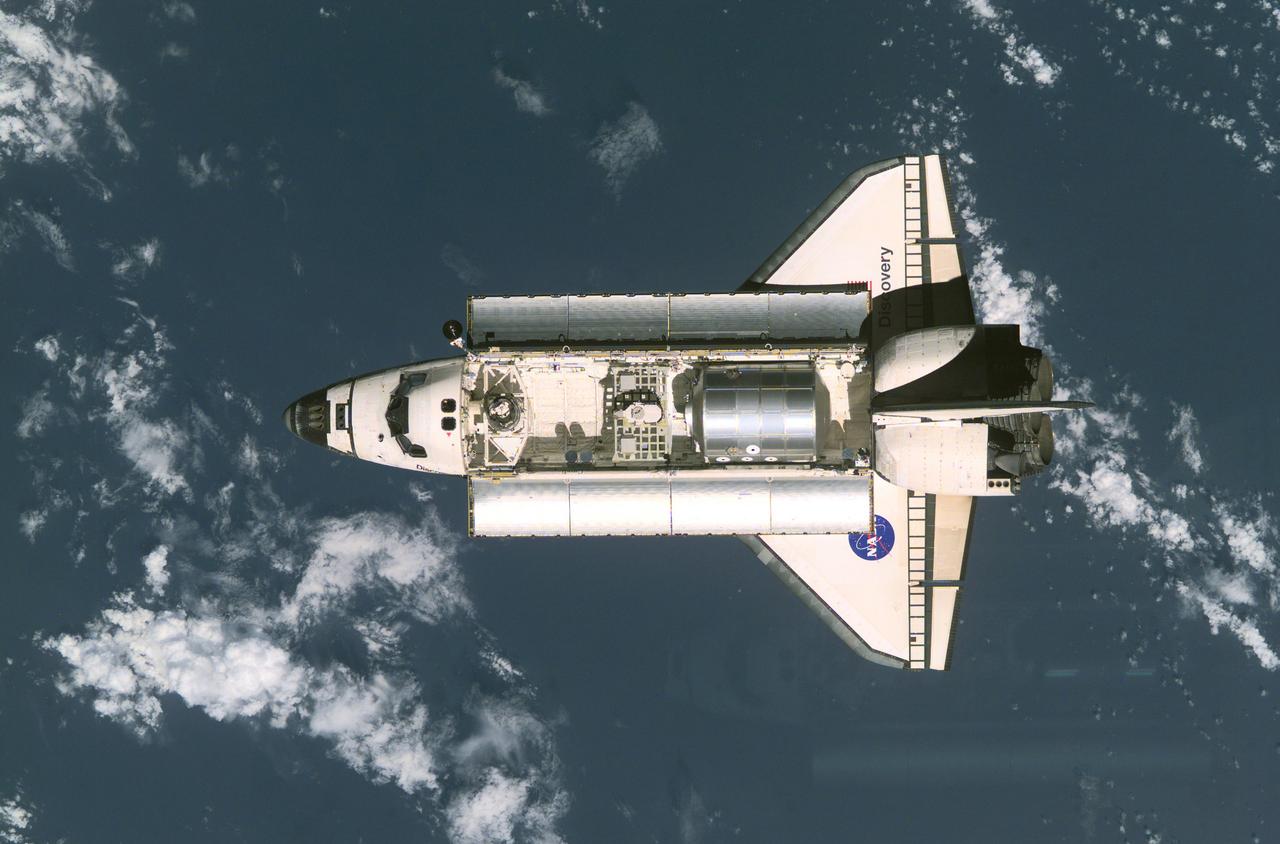
This is a view of the Space Shuttle Discovery as it approaches the International Space Station (ISS) during the STS-105 mission. Visible in the payload bay of Discovery are the Multipurpose Logistics Module (MPLM) Leonardo at right, which stores various supplies and experiments to be transferred into the ISS; at center, the Integrated Cargo Carrier (ICC) which carries the Early Ammonia Servicer (EAS); and two Materials International Space Station Experiment (MISSE) containers at left. Aboard Discovery were the ISS Expedition Three crew, who were to replace the Expedition Two crew that had been living on the ISS for the past five months.
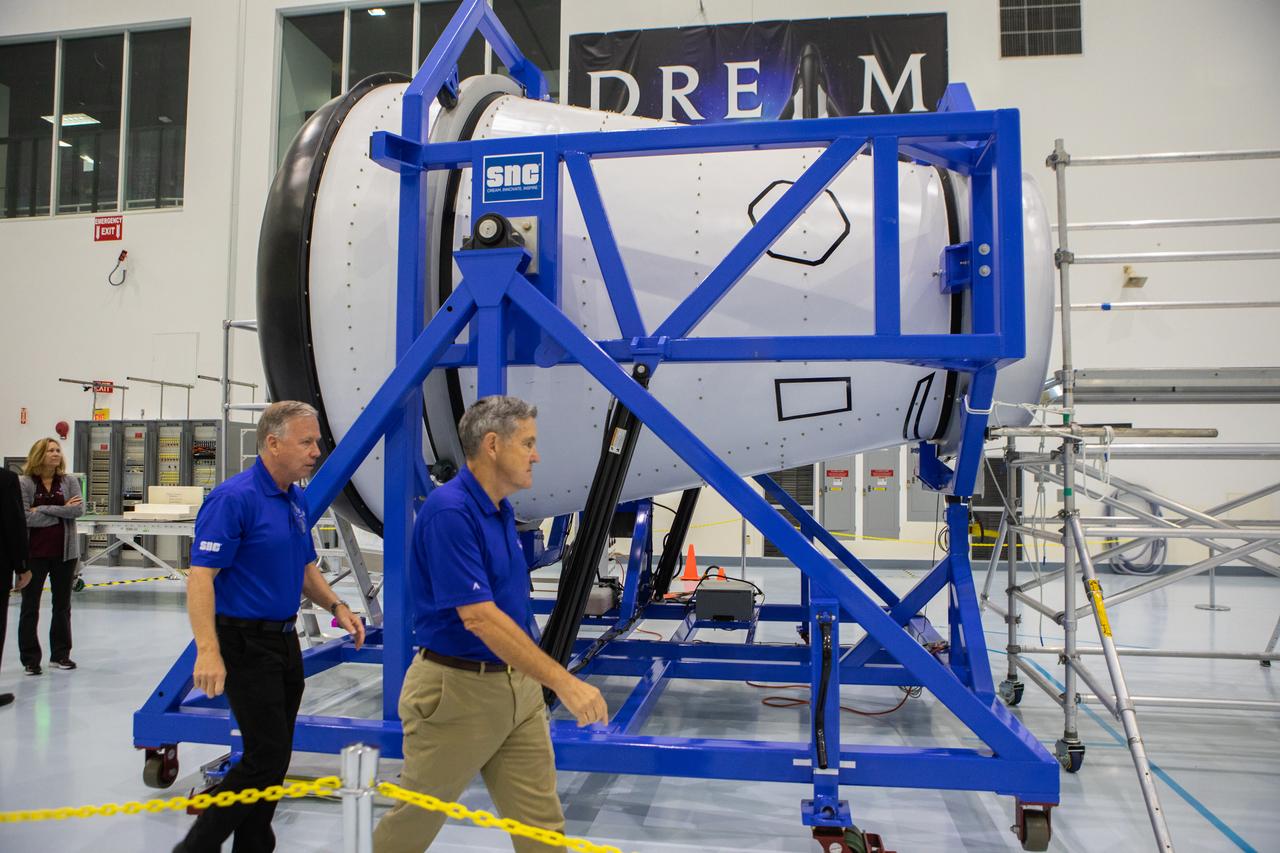
A mockup of the cargo logistics module for Sierra Nevada Corporation’s Dream Chaser, the company’s reusable spaceplane, arrived at the Space Station Processing Facility (SSPF) at NASA’s Kennedy Space Center in Florida in August. On Sept. 20, 2019, senior leadership had the opportunity to view the cargo module in the SSPF high bay. Kennedy Center Director Bob Cabana, at right, views the cargo module with Steve Lindsey, vice president, Space Exploration Systems, Sierra Nevada Corporation. The SSPF is providing support for current and future NASA and commercial provider programs, including Commercial Resupply Services, Artemis 1, sending the first woman and next man to the Moon, and deep space destinations including Mars.
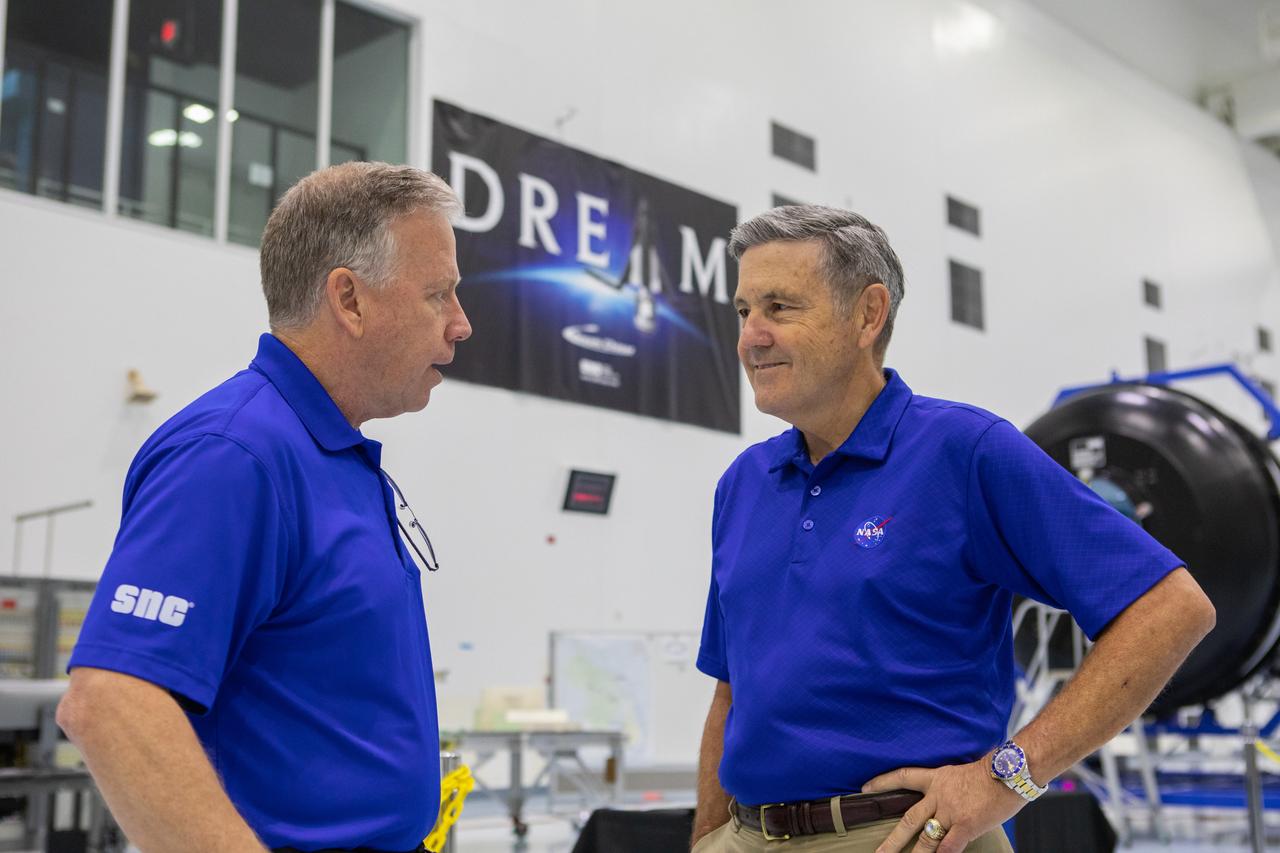
A mockup of the cargo logistics module for Sierra Nevada Corporation’s Dream Chaser, the company’s reusable spaceplane, arrived at the Space Station Processing Facility (SSPF) at NASA’s Kennedy Space Center in Florida in August. On Sept. 20, 2019, senior leadership had the opportunity to view the cargo module in the SSPF high bay. Kennedy Center Director Bob Cabana, at right, speaks with Steve Lindsey, vice president, Space Exploration Systems, Sierra Nevada Corporation. The SSPF is providing support for current and future NASA and commercial provider programs, including Commercial Resupply Services, Artemis 1, sending the first woman and next man to the Moon, and deep space destinations including Mars.
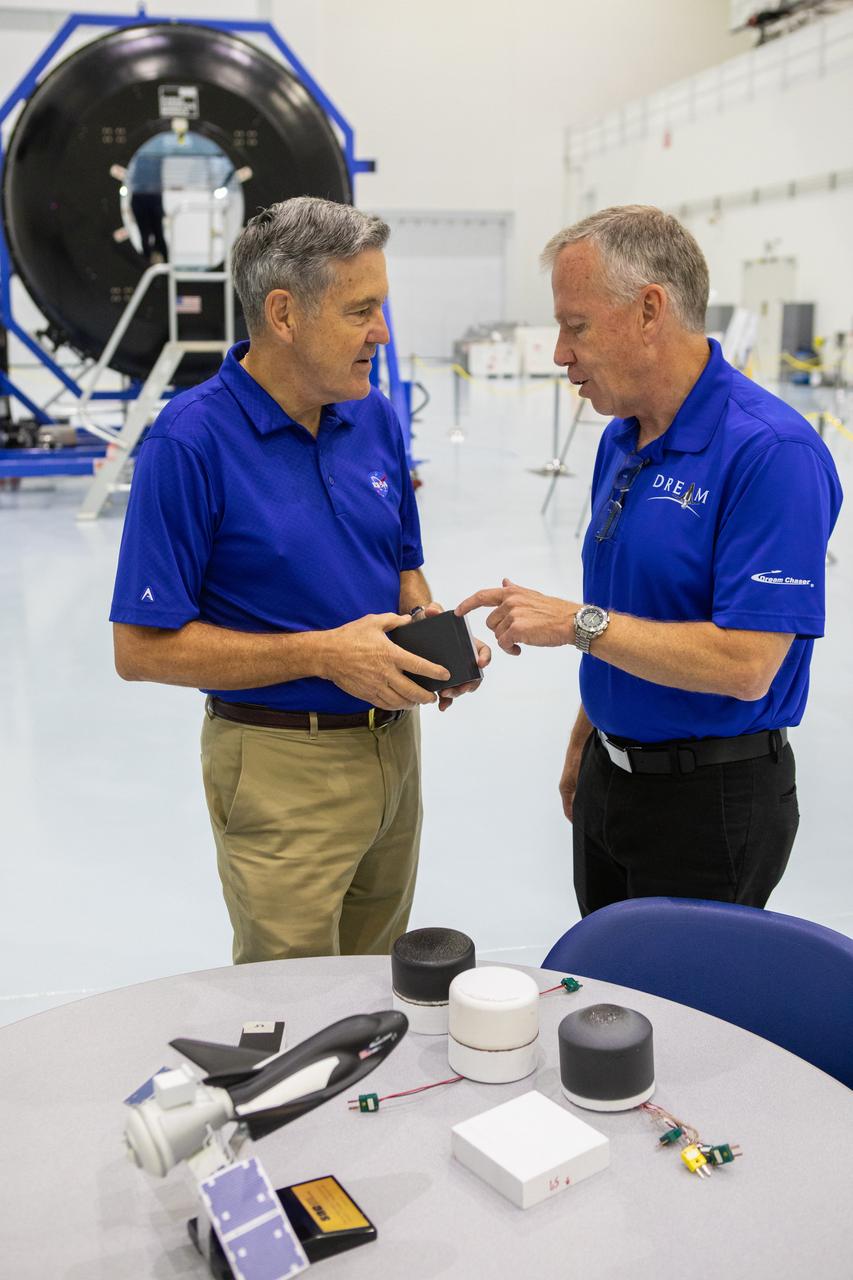
A mockup of the cargo logistics module for Sierra Nevada Corporation’s Dream Chaser, the company’s reusable spaceplane, arrived at the Space Station Processing Facility (SSPF) at NASA’s Kennedy Space Center in Florida in August. On Sept. 20, 2019, senior leadership had the opportunity to view the cargo module in the SSPF high bay. Kennedy Center Director Bob Cabana, left, speaks to Steve Lindsey, vice president, Space Exploration Systems, Sierra Nevada Corporation. The SSPF is providing support for current and future NASA and commercial provider programs, including Commercial Resupply Services, Artemis 1, sending the first woman and next man to the Moon, and deep space destinations including Mars.
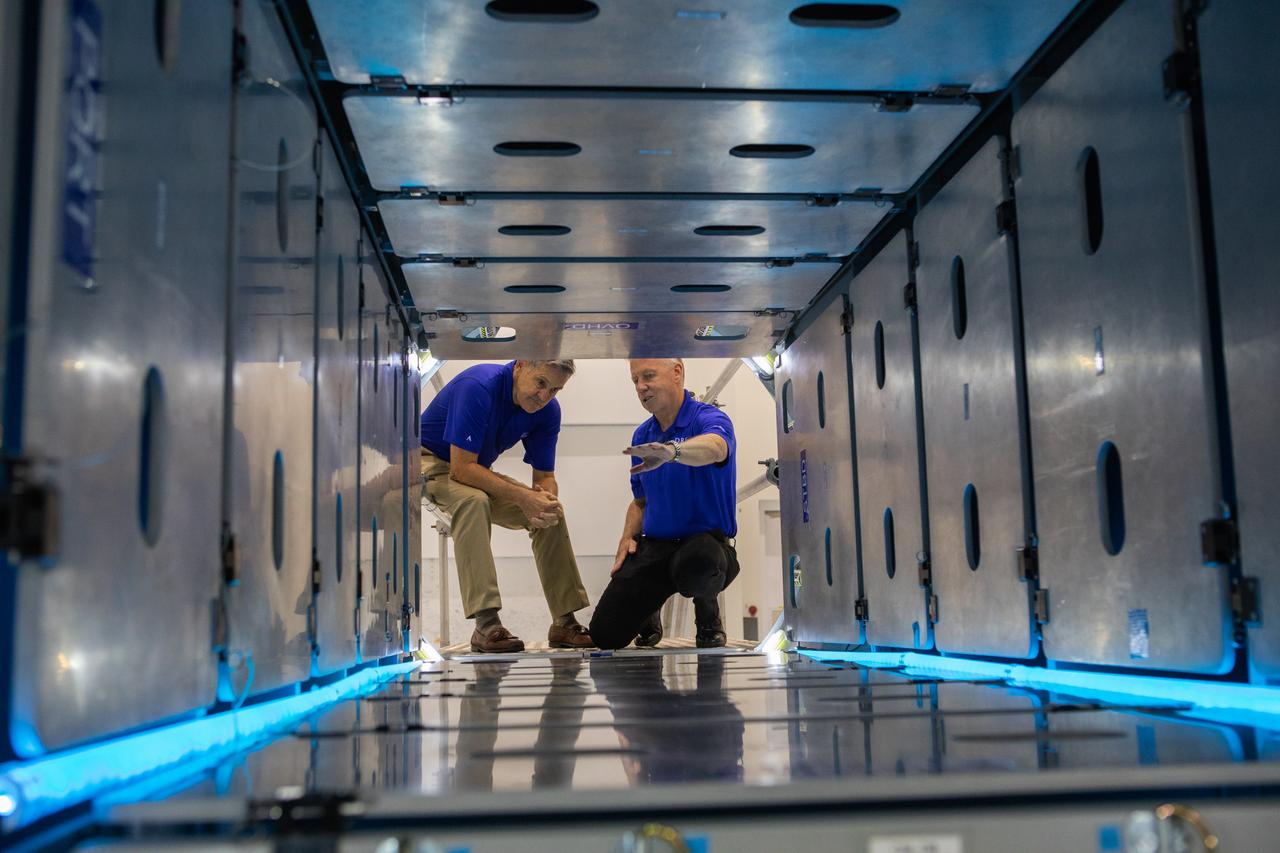
A mockup of the cargo logistics module for Sierra Nevada Corporation’s Dream Chaser, the company’s reusable spaceplane, arrived at the Space Station Processing Facility (SSPF) at NASA’s Kennedy Space Center in Florida in August. On Sept. 20, 2019, senior leadership had the opportunity to view the cargo module in the SSPF high bay. Kennedy Center Director Bob Cabana, views the interior of the cargo module with Steve Lindsey, vice president, Space Exploration Systems, Sierra Nevada Corporation. The SSPF is providing support for current and future NASA and commercial provider programs, including Commercial Resupply Services, Artemis 1, sending the first woman and next man to the Moon, and deep space destinations including Mars.
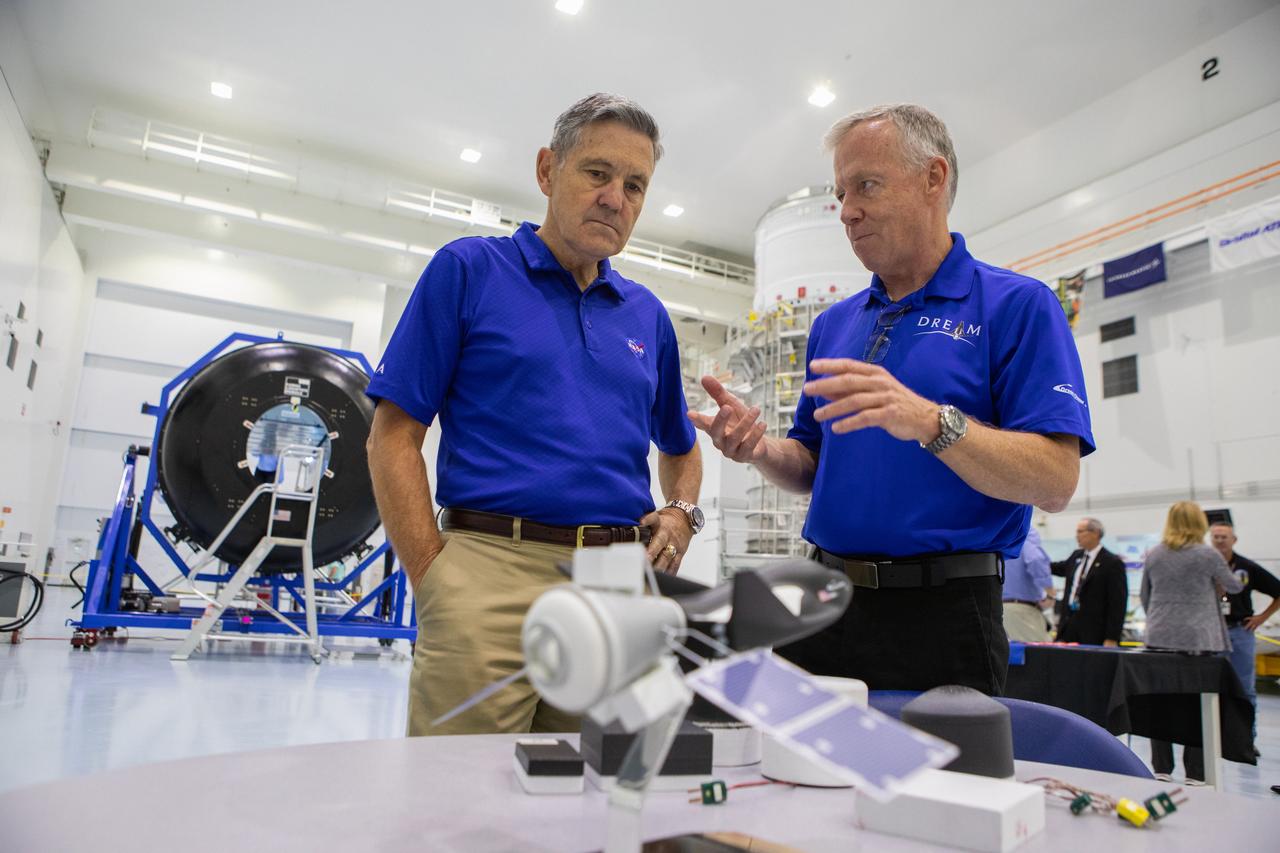
A mockup of the cargo logistics module for Sierra Nevada Corporation’s Dream Chaser, the company’s reusable spaceplane, arrived at the Space Station Processing Facility (SSPF) at NASA’s Kennedy Space Center in Florida in August. On Sept. 20, 2019, senior leadership had the opportunity to view the cargo module in the SSPF high bay. Kennedy Center Director Bob Cabana, left, speaks to Steve Lindsey, vice president, Space Exploration Systems, Sierra Nevada Corporation. The SSPF is providing support for current and future NASA and commercial provider programs, including Commercial Resupply Services, Artemis 1, sending the first woman and next man to the Moon, and deep space destinations including Mars.
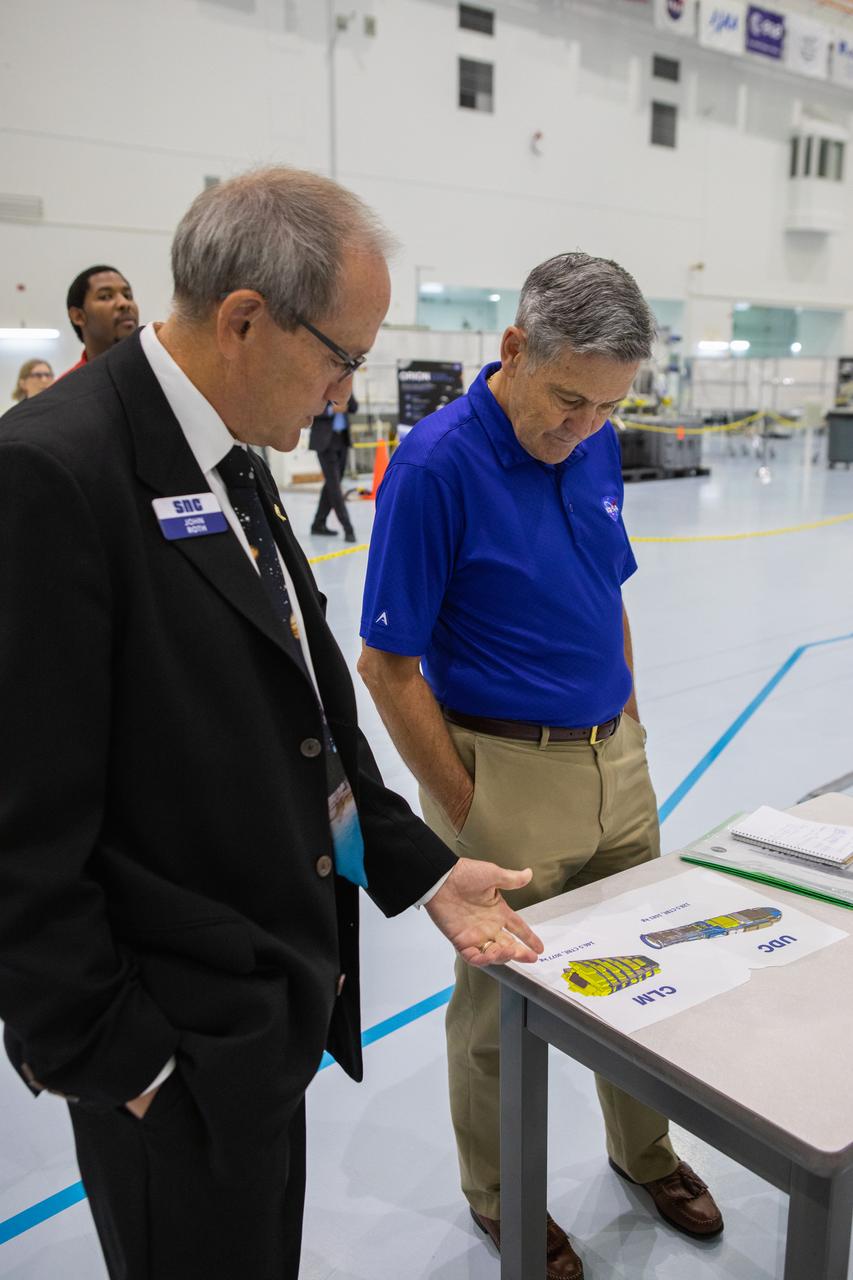
A mockup of the cargo logistics module for Sierra Nevada Corporation’s Dream Chaser, the company’s reusable spaceplane, arrived at the Space Station Processing Facility (SSPF) at NASA’s Kennedy Space Center in Florida in August. On Sept. 20, 2019, senior leadership had the opportunity to view the cargo module in the SSPF high bay. Kennedy Center Director Bob Cabana, at right, listens to John Roth, vice president, Business Development Space Systems, Sierra Nevada Corporation. The SSPF is providing support for current and future NASA and commercial provider programs, including Commercial Resupply Services, Artemis 1, sending the first woman and next man to the Moon, and deep space destinations including Mars.
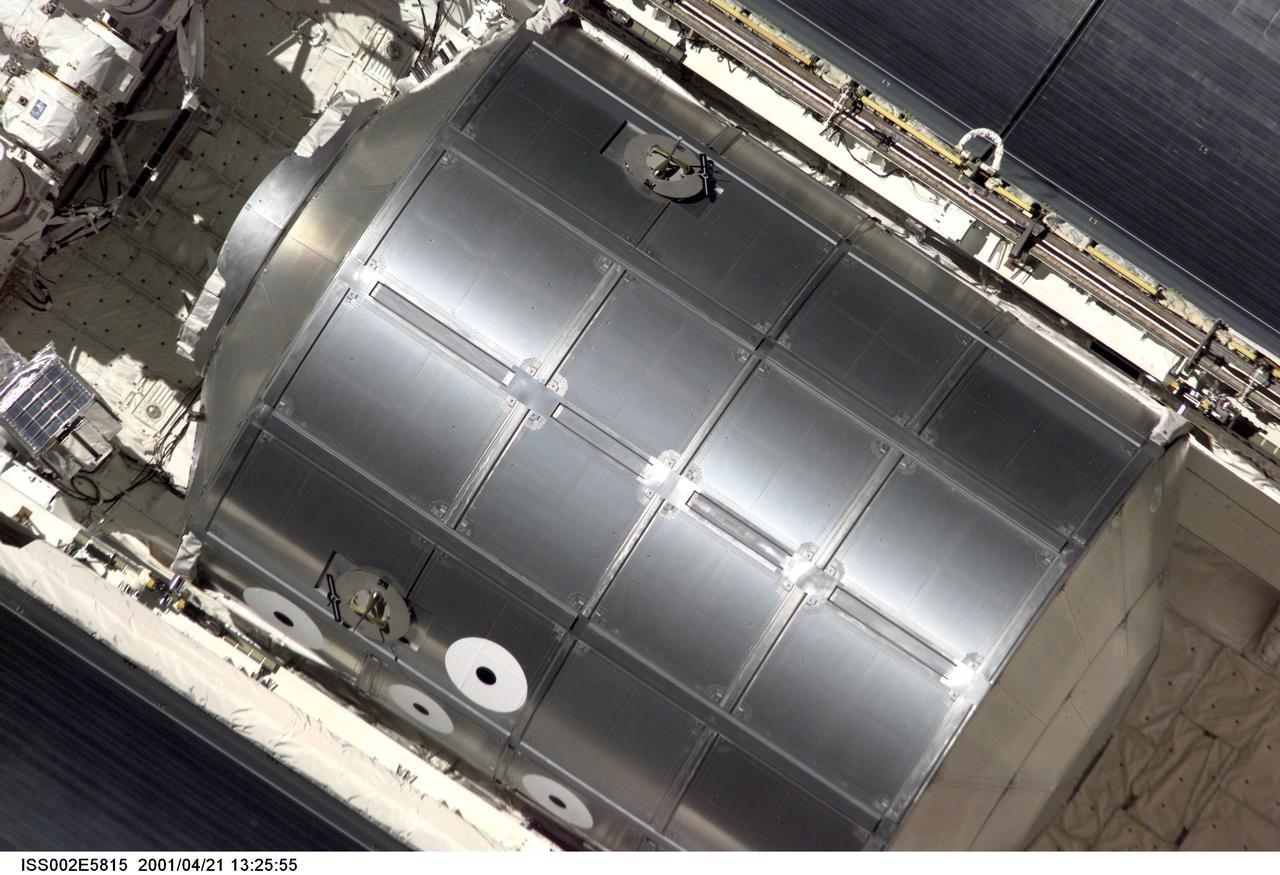
ISS002-E-5815 (21 April 2001) --- The Raffaello Multi-Purpose Logistics Module (MPLM), built by the Italian Space Agency (ASI), sits in its berthed position in the cargo bay of the Space Shuttle Endeavour as the STS-100 crew eases the vehicle close to the International Space Station (ISS) for docking. The image was recorded with a digital still camera by one of the Expedition Two crew members aboard the Station.
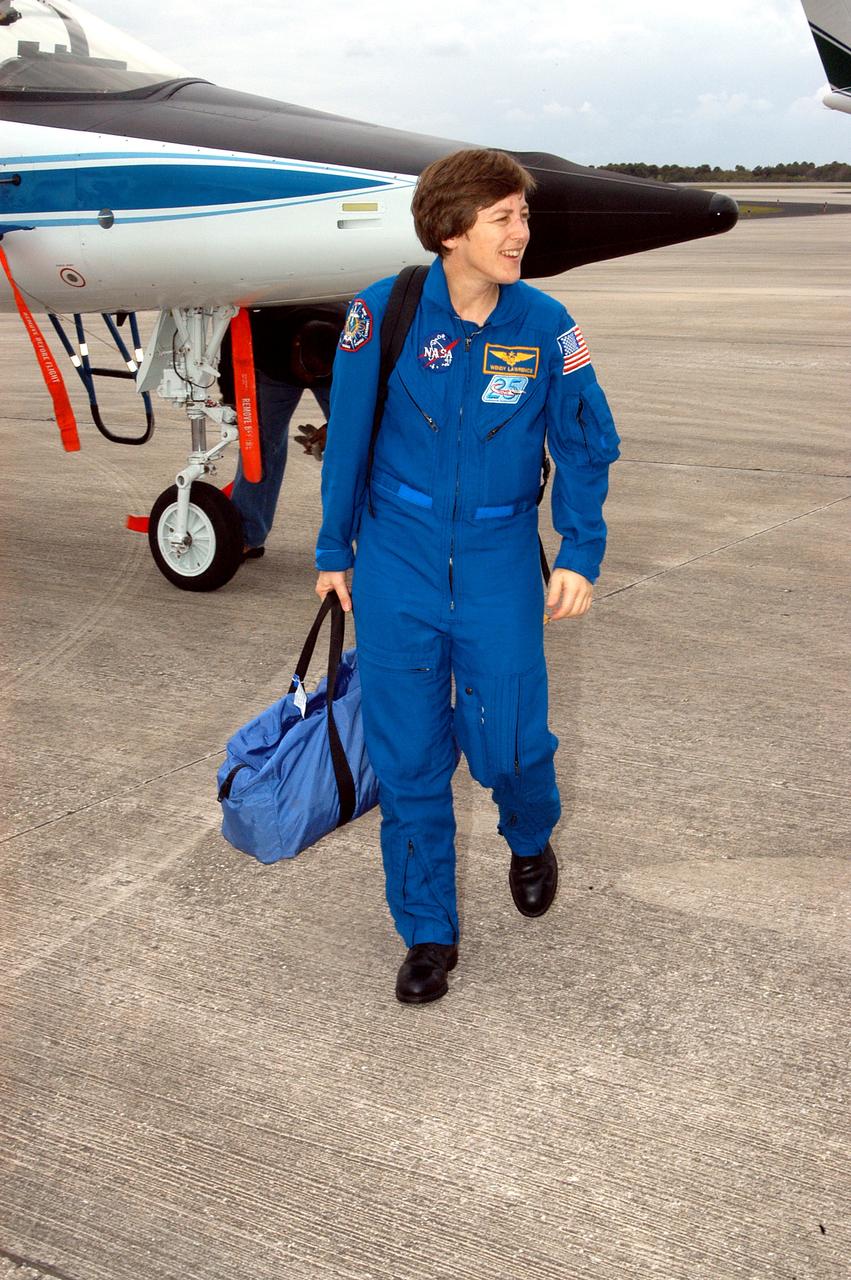
KENNEDY SPACE CENTER, FLA. - STS-114 Mission Specialist Wendy Lawrence is pleased to be back at KSC after arriving aboard a T-38 jet aircraft. She and other crew members are at the Center for familiarization activities with equipment. The mission is Logistics Flight 1, scheduled to deliver the Multi-Purpose Logistics Module carrying supplies and equipment to the Space Station and the external stowage platform.
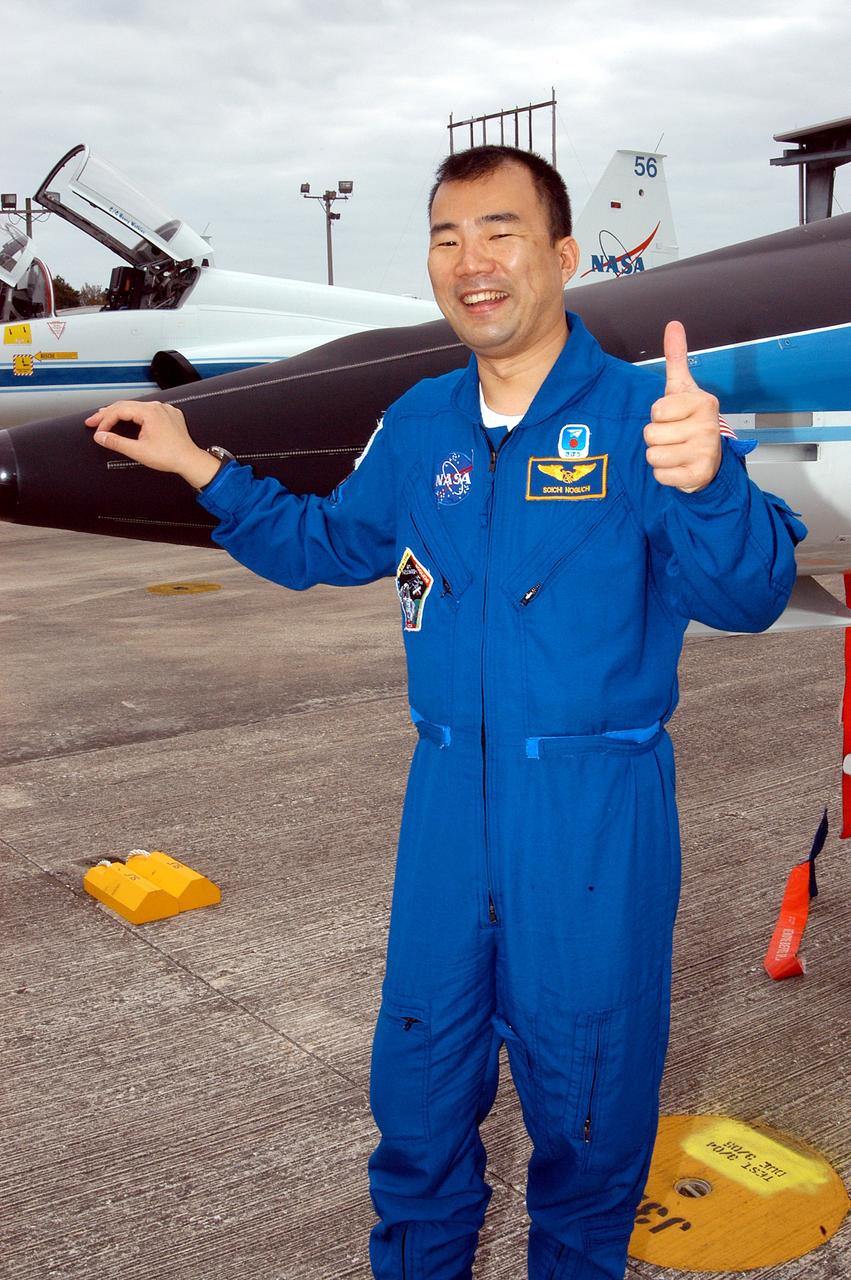
KENNEDY SPACE CENTER, FLA. - STS-114 Mission Specialist Soichi Noguchi is happy to be back at KSC after arriving aboard a T-38 jet aircraft. He and other crew members are at the Center for familiarization activities with equipment. The mission is Logistics Flight 1, scheduled to deliver the Multi-Purpose Logistics Module carrying supplies and equipment to the Space Station and the external stowage platform.
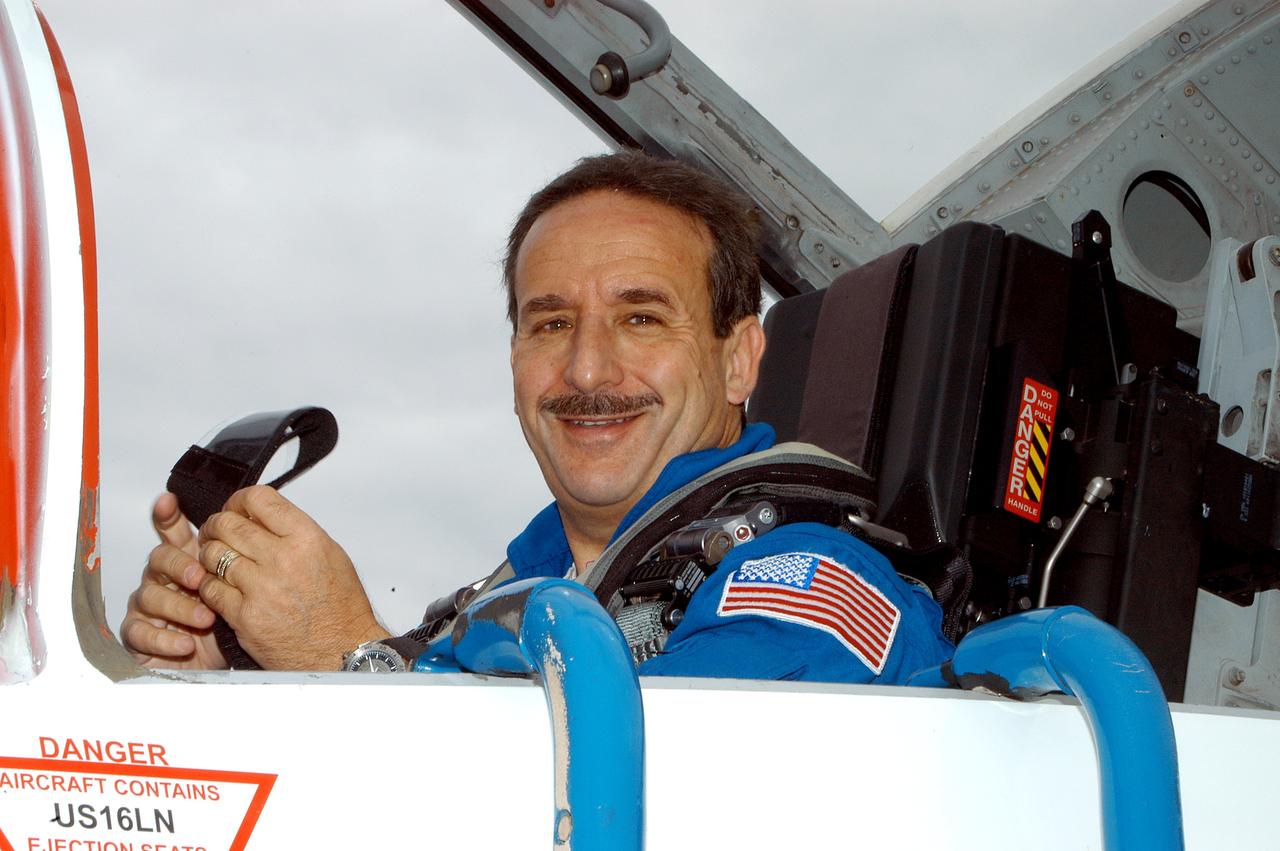
KENNEDY SPACE CENTER, FLA. - STS-114 Mission Specialist Charles Camarda arrives at KSC aboard a T-38 jet aircraft. He and other crew members are at the Center for familiarization activities with equipment. The mission is Logistics Flight 1, scheduled to deliver the Multi-Purpose Logistics Module carrying supplies and equipment,to the Space Station, and the external stowage platform.
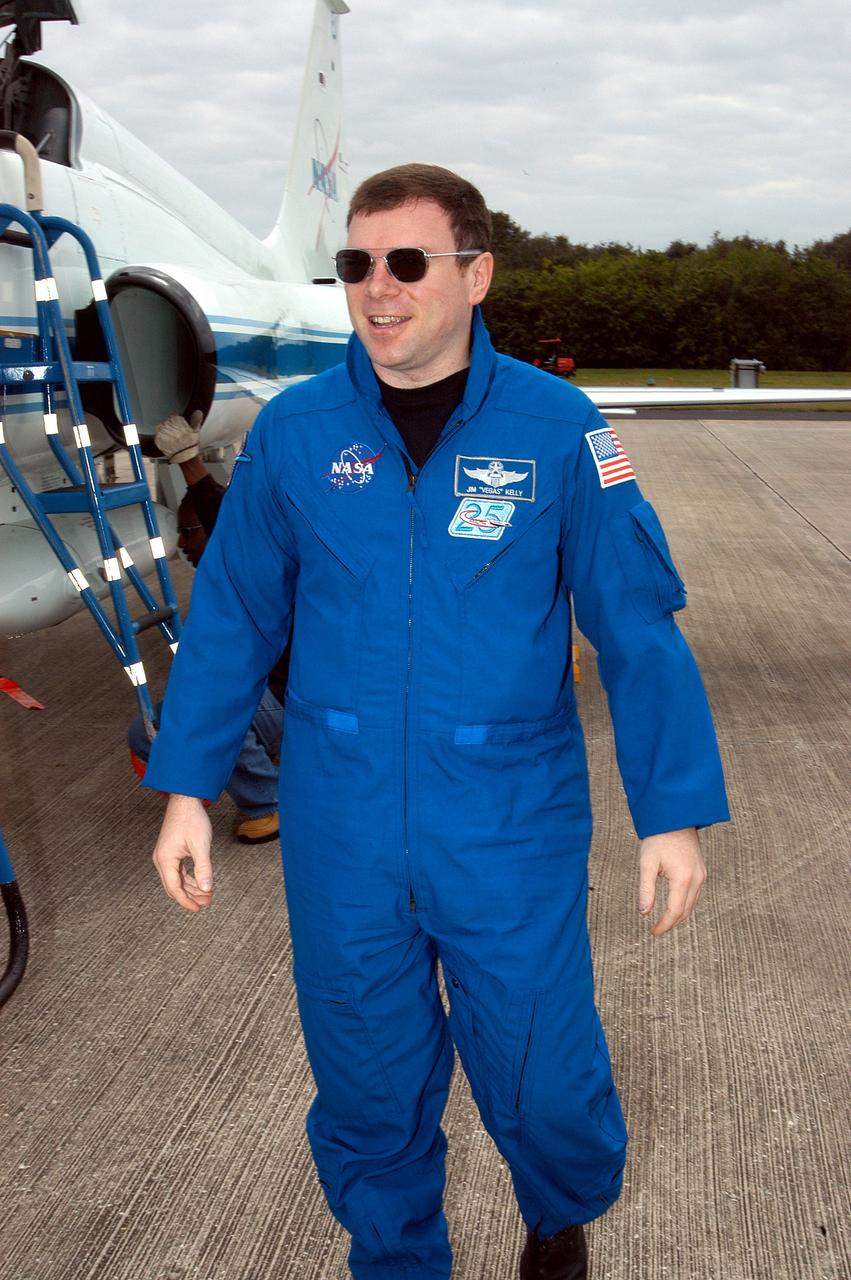
KENNEDY SPACE CENTER, FLA. - STS-114 Pilot Jim Kelly is pleased to be back at KSC after arriving aboard a T-38 jet aircraft. He and other crew members are at the Center for familiarization activities with equipment. The mission is Logistics Flight 1, scheduled to deliver the Multi-Purpose Logistics Module carrying supplies and equipment to the Space Station and the external stowage platform.
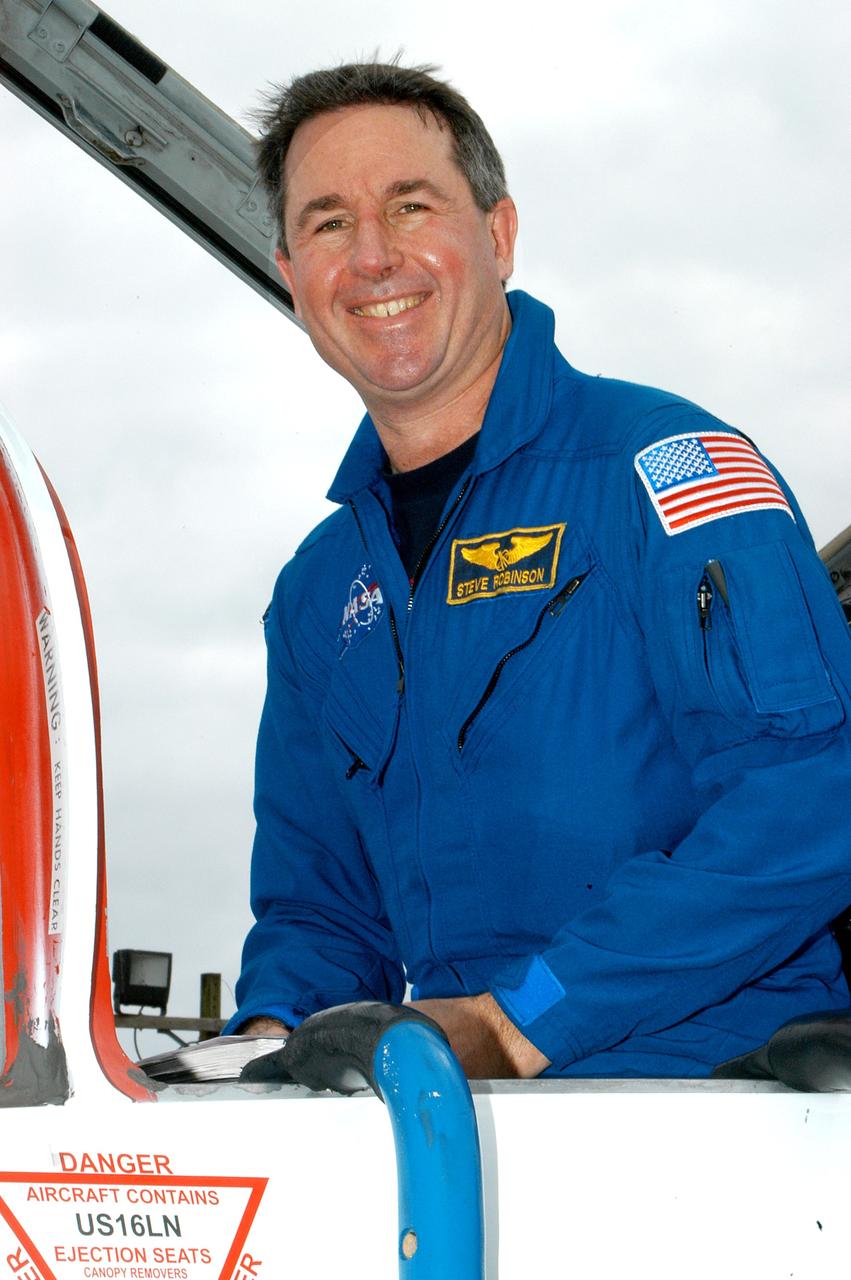
KENNEDY SPACE CENTER, FLA. - STS-114 Mission Specialist Stephen Robinson arrives at KSC aboard a T-38 jet aircraft. He and other crew members are at the Center for familiarization activities with equipment. The mission is Logistics Flight 1, scheduled to deliver the Multi-Purpose Logistics Module carrying supplies and equipment to the Space Station and the external stowage platform.
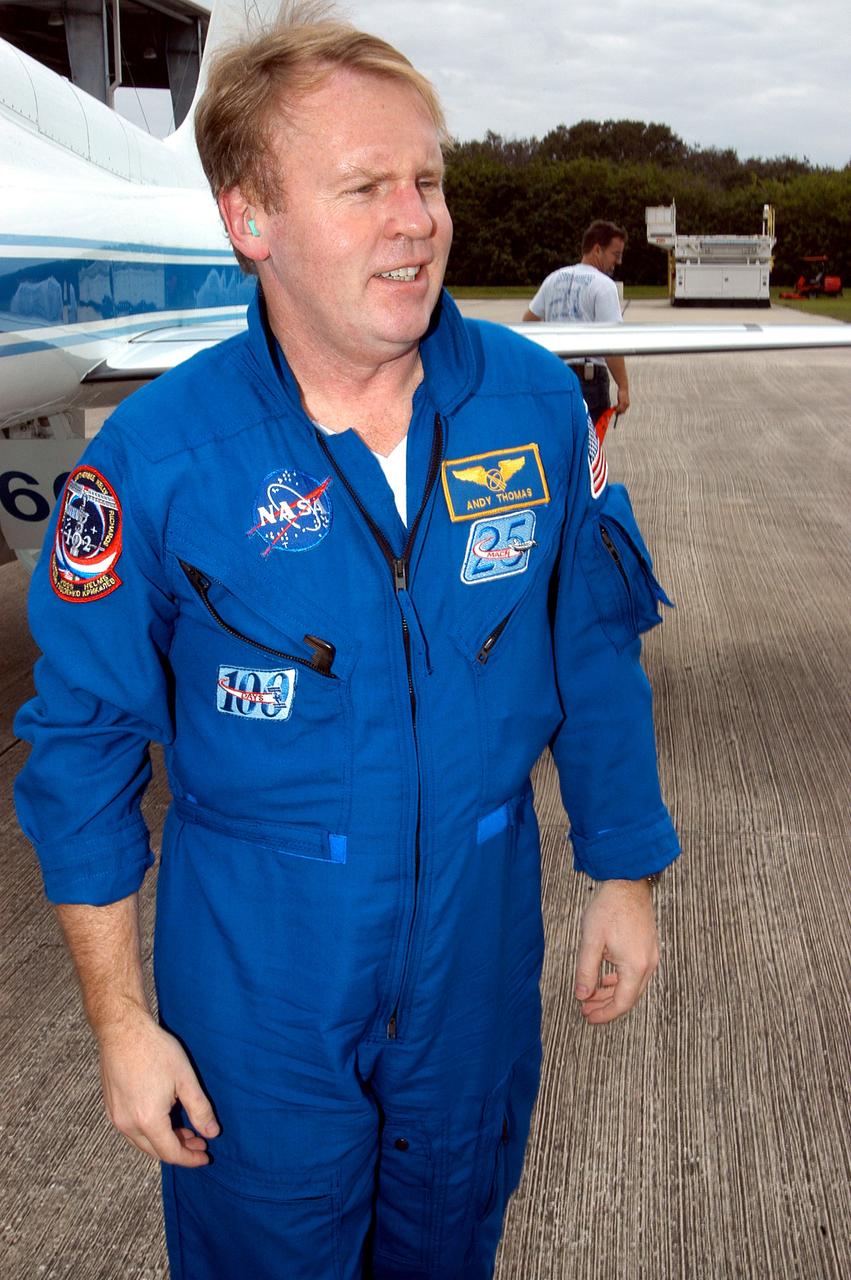
KENNEDY SPACE CENTER, FLA. - STS-114 Mission Specialist Andrew Thomas is pleased to be back at KSC after arriving aboard a T-38 jet aircraft. He and other crew members are at the Center for familiarization activities with equipment. The mission is Logistics Flight 1, scheduled to deliver to the Space Station the external stowage platform and the Multi-Purpose Logistics Module with supplies and equipment.
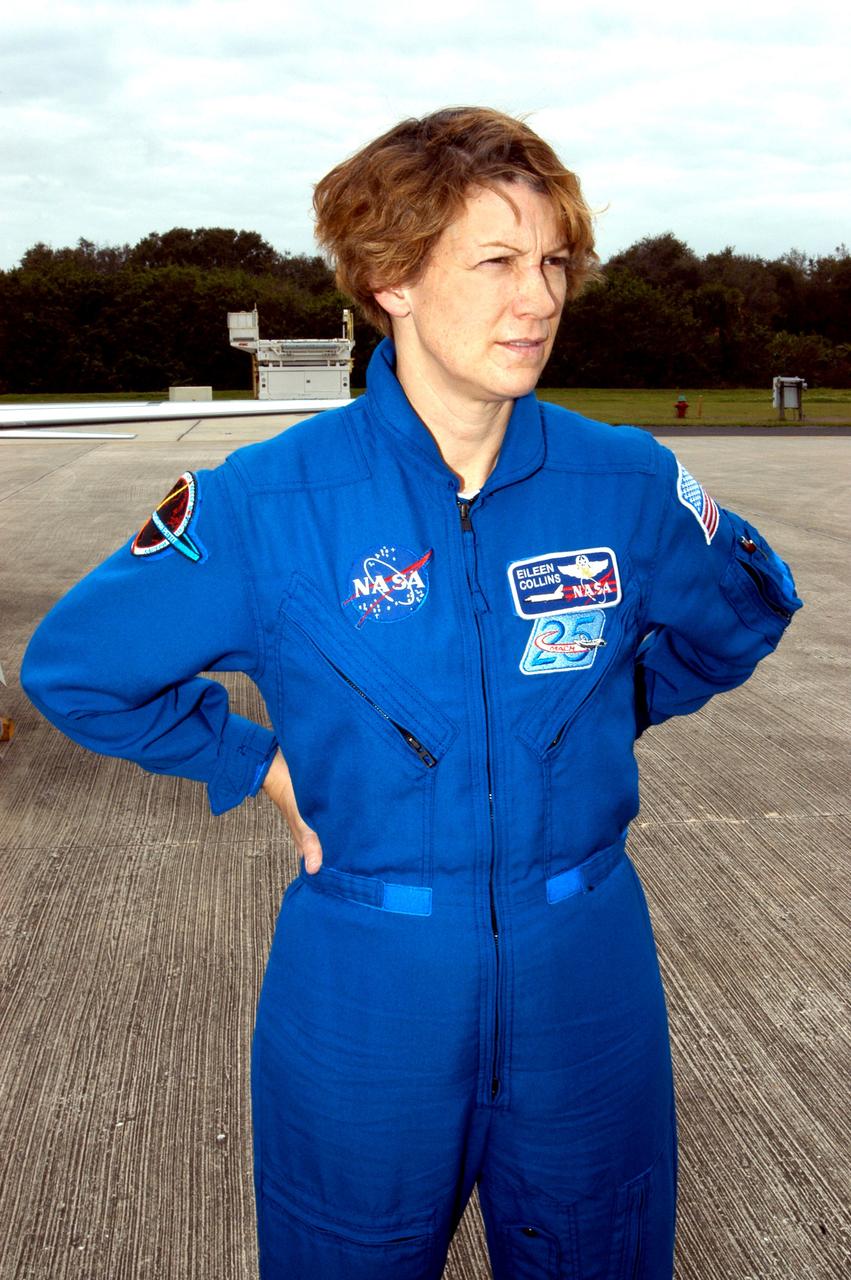
KENNEDY SPACE CENTER, FLA. - STS-114 Mission Commander Eileen Collins is pleased to be back at KSC after arriving aboard a T-38 jet aircraft. She and other crew members are at the Center for familiarization activities with equipment. The mission is Logistics Flight 1, scheduled to deliver to the Space Station the external stowage platform and the Multi-Purpose Logistics Module with supplies and equipment.
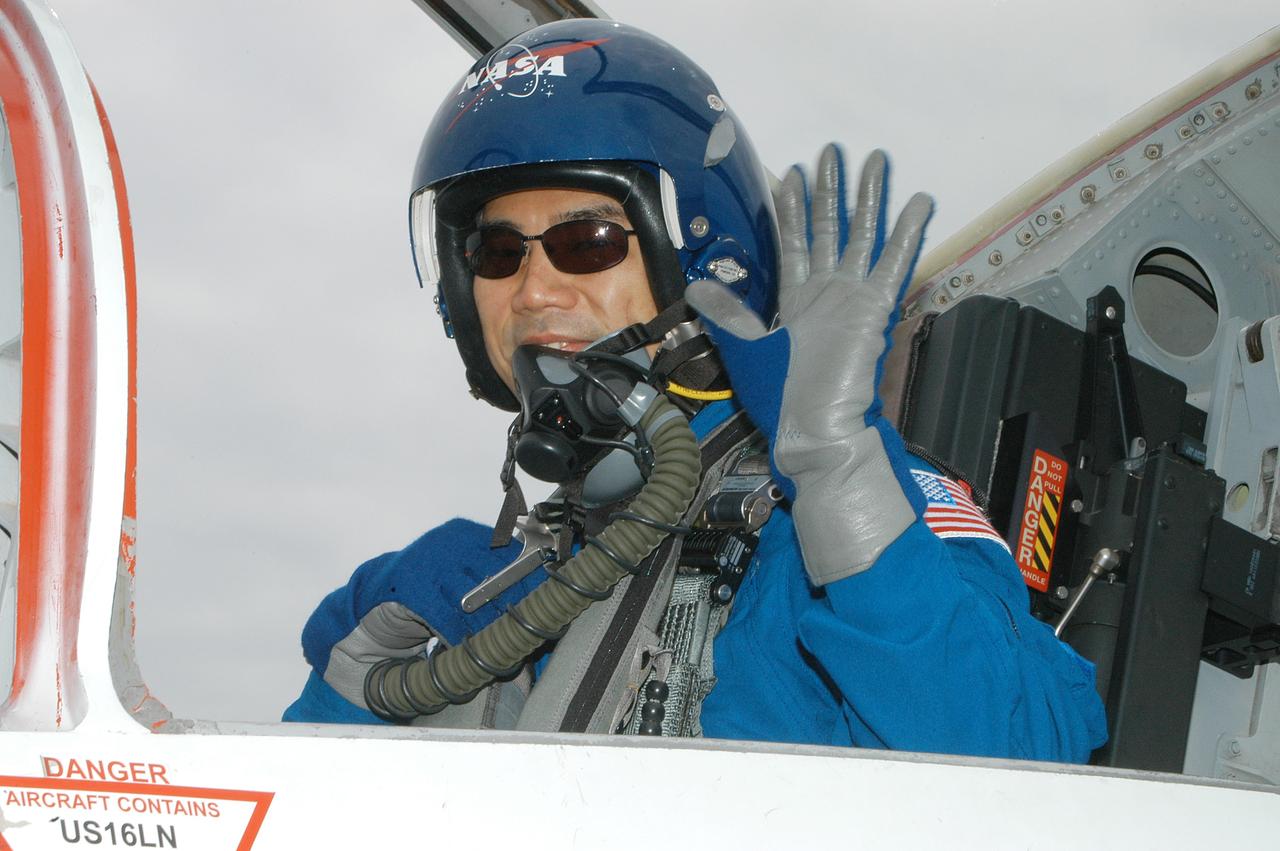
KENNEDY SPACE CENTER, FLA. - STS-114 Mission Specialist Soichi Noguchi arrives at KSC aboard a T-38 jet aircraft. He and other crew members are at the Center for familiarization activities with equipment. The mission is Logistics Flight 1, scheduled to deliver the Multi-Purpose Logistics Module carrying supplies and equipment to the Space Station and the external stowage platform.
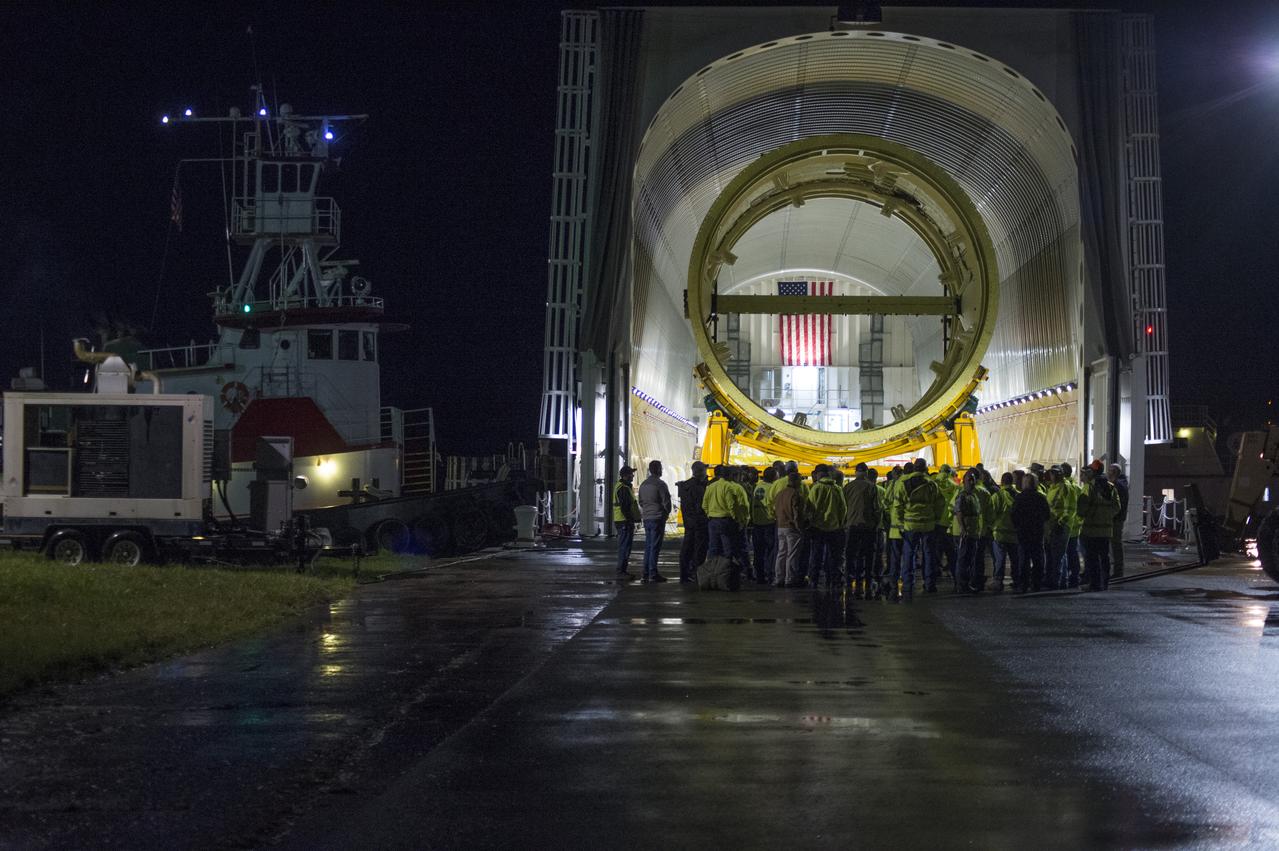
The SLS Stages Intertank Structural Test Assembly (STA) is rolling off the NASA Pegasus Barge at the MSFC Dock enroute to the MSFC 4619 Load Test Annex test facility for qualification testing. Members of MSFC Logistics Office and Move Team members gather for last minute instructions and safety briefing before off-loading STA hardware.
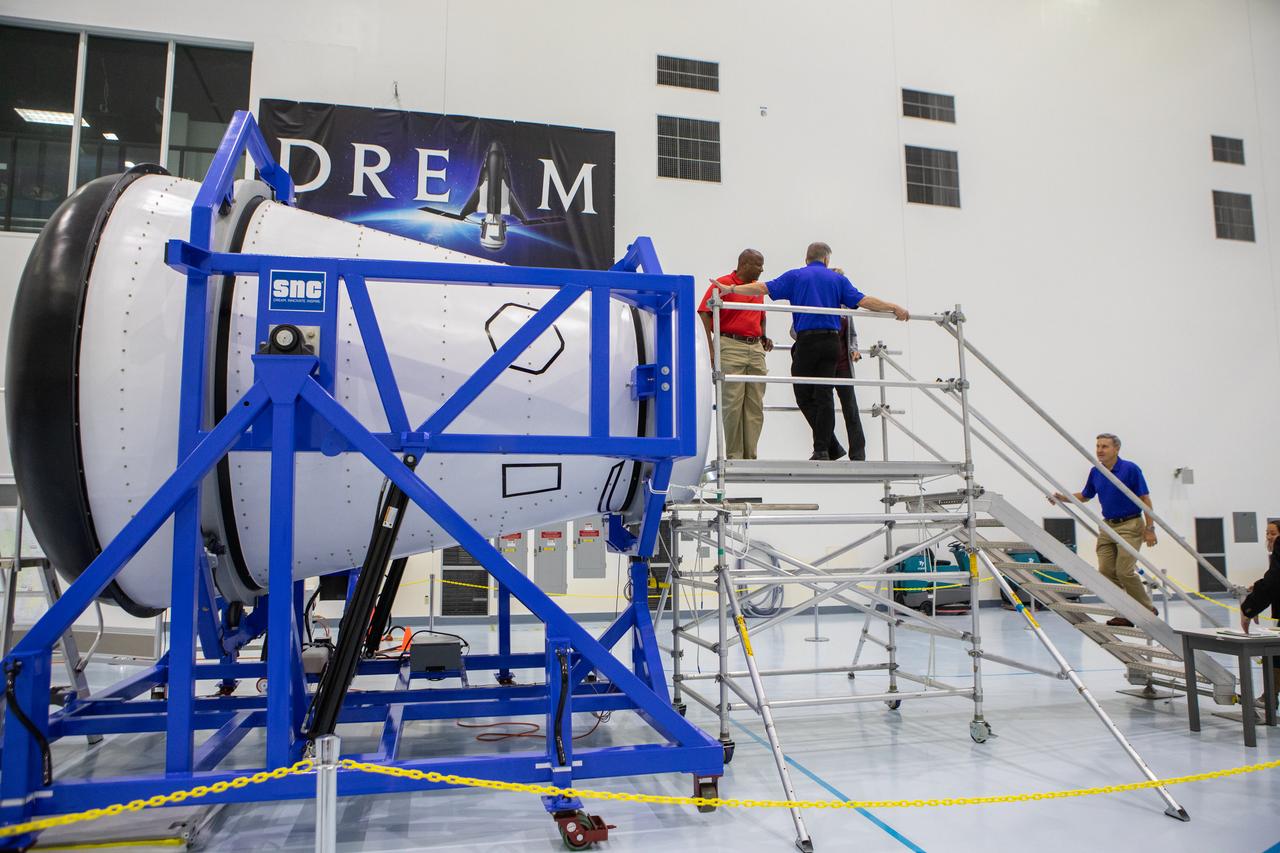
A mockup of the cargo logistics module for Sierra Nevada Corporation’s Dream Chaser, the company’s reusable spaceplane, arrived at the Space Station Processing Facility (SSPF) at NASA’s Kennedy Space Center in Florida in August. On Sept. 20, 2019, senior leadership had the opportunity to view the cargo module in the SSPF high bay. From left are Kelvin Manning, Kennedy associate director, technical; Steve Lindsey, vice president, Space Exploration Systems, Sierra Nevada Corporation; behind Lindsey is Kennedy Deputy Director Janet Petro; and ascending the stairs is Kennedy Center Director Bob Cabana. The SSPF is providing support for current and future NASA and commercial provider programs, including Commercial Resupply Services, Artemis 1, sending the first woman and next man to the Moon, and deep space destinations including Mars.