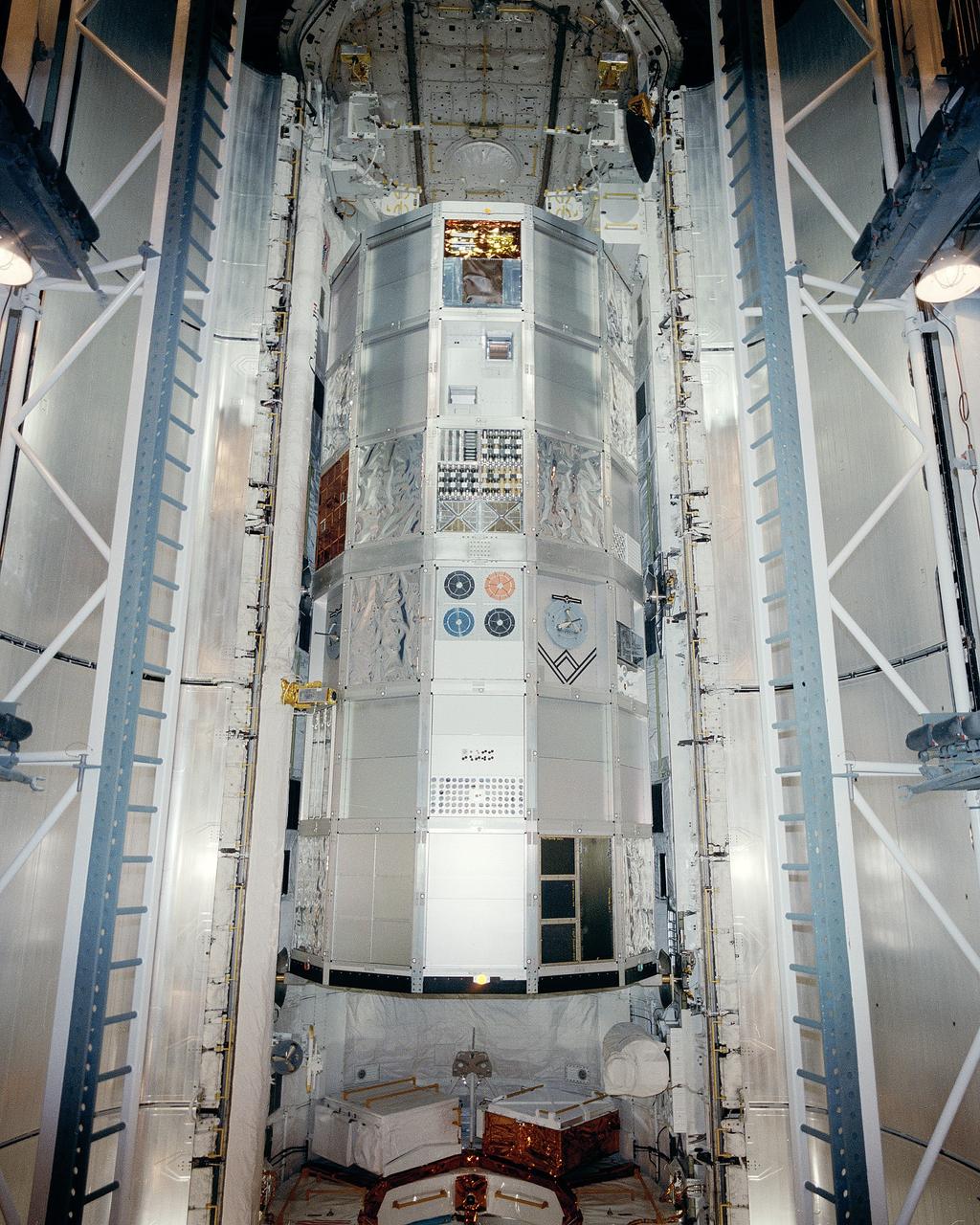
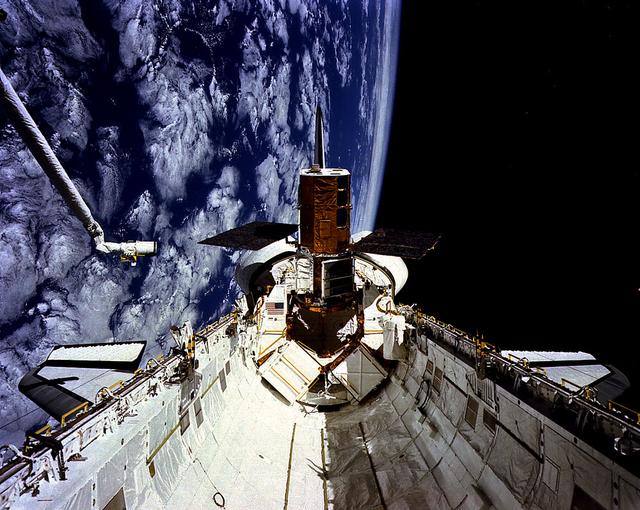
Space Shuttle mission STS-41C onboard view of the revived Solar Maximum Mission Satellite (SMMS). As part of the mission the crew demonstrated the capability of the shuttle to rendezvous, service, check-out and deploy an on-orbit satellite. Also as part of the redeployment, the SMMS was fitted with a Long Duration Exposure Facility (LDEF), which provides accommodations for experiments requiring long-term exposure to the space environment. the STS-41C mission was launched aboard the Space Shuttle Orbitor Challenger on April 6, 1984.
Space Shuttle Project
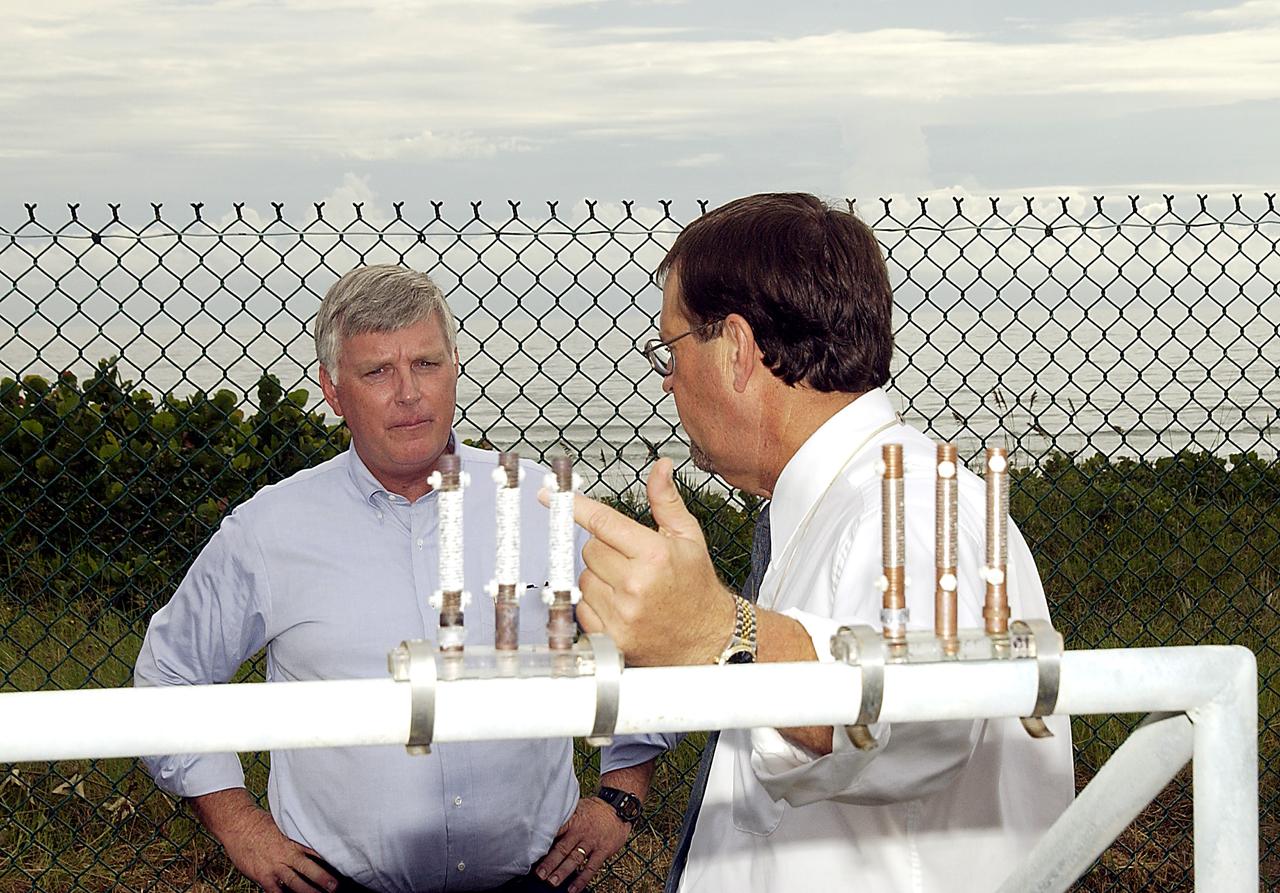
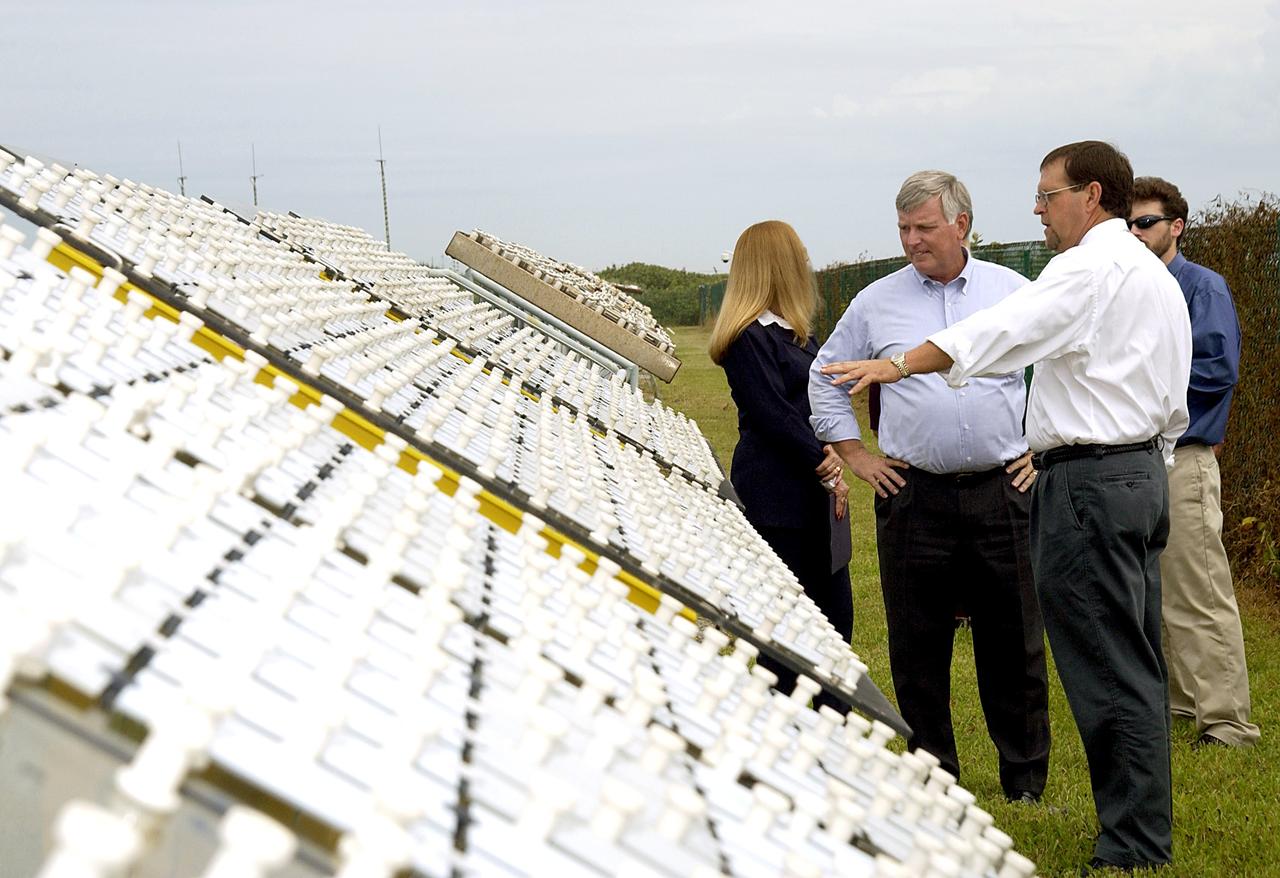
KENNEDY SPACE CENTER, FLA. -    Louis MacDowell (right), Testbed manager, explains to Center Director Jim Kennedy the use of astmospheric calibration specimens.  Placed at various locations, they can rank the corrosivity of the given environment.  The KSC Beach Corrosion Test Site was established in the 1960s and has provided more than 30 years of historical information on the long-term performance of many materials in use at KSC and other locations around the world. Located 100 feet from the Atlantic Ocean approximately 1 mile south of the Space Shuttle launch sites, the test facility includes an atmospheric exposure site, a flowing seawater exposure site, and an on-site electrochemistry laboratory and monitoring station. The beach laboratory is used to conduct real-time corrosion experiments and provides for the remote monitoring of surrounding weather conditions. The newly added flowing seawater immersion facility provides for the immersion testing of materials and devices under controlled conditions.
KENNEDY SPACE CENTER, FLA. - Louis MacDowell (right), Testbed manager, explains to Center Director Jim Kennedy the use of astmospheric calibration specimens. Placed at various locations, they can rank the corrosivity of the given environment. The KSC Beach Corrosion Test Site was established in the 1960s and has provided more than 30 years of historical information on the long-term performance of many materials in use at KSC and other locations around the world. Located 100 feet from the Atlantic Ocean approximately 1 mile south of the Space Shuttle launch sites, the test facility includes an atmospheric exposure site, a flowing seawater exposure site, and an on-site electrochemistry laboratory and monitoring station. The beach laboratory is used to conduct real-time corrosion experiments and provides for the remote monitoring of surrounding weather conditions. The newly added flowing seawater immersion facility provides for the immersion testing of materials and devices under controlled conditions.
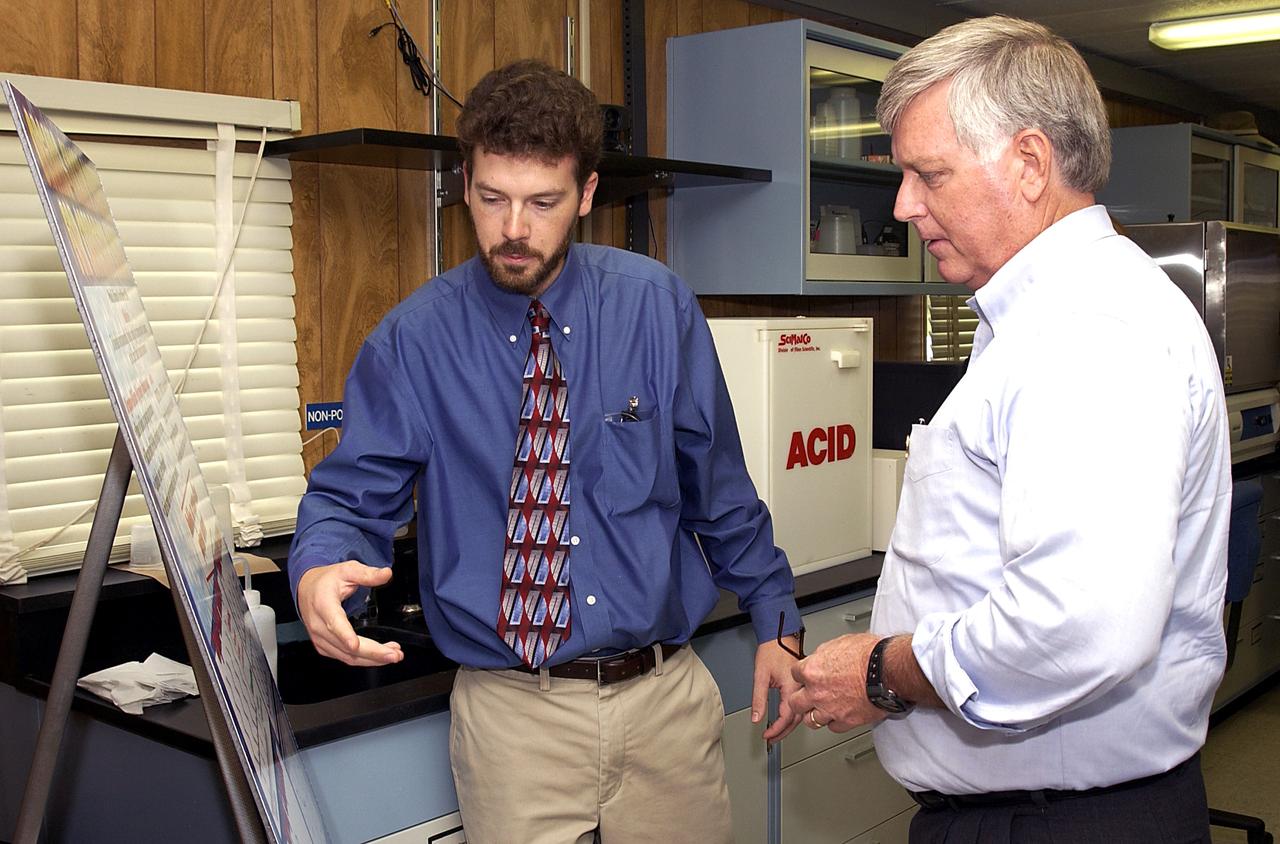
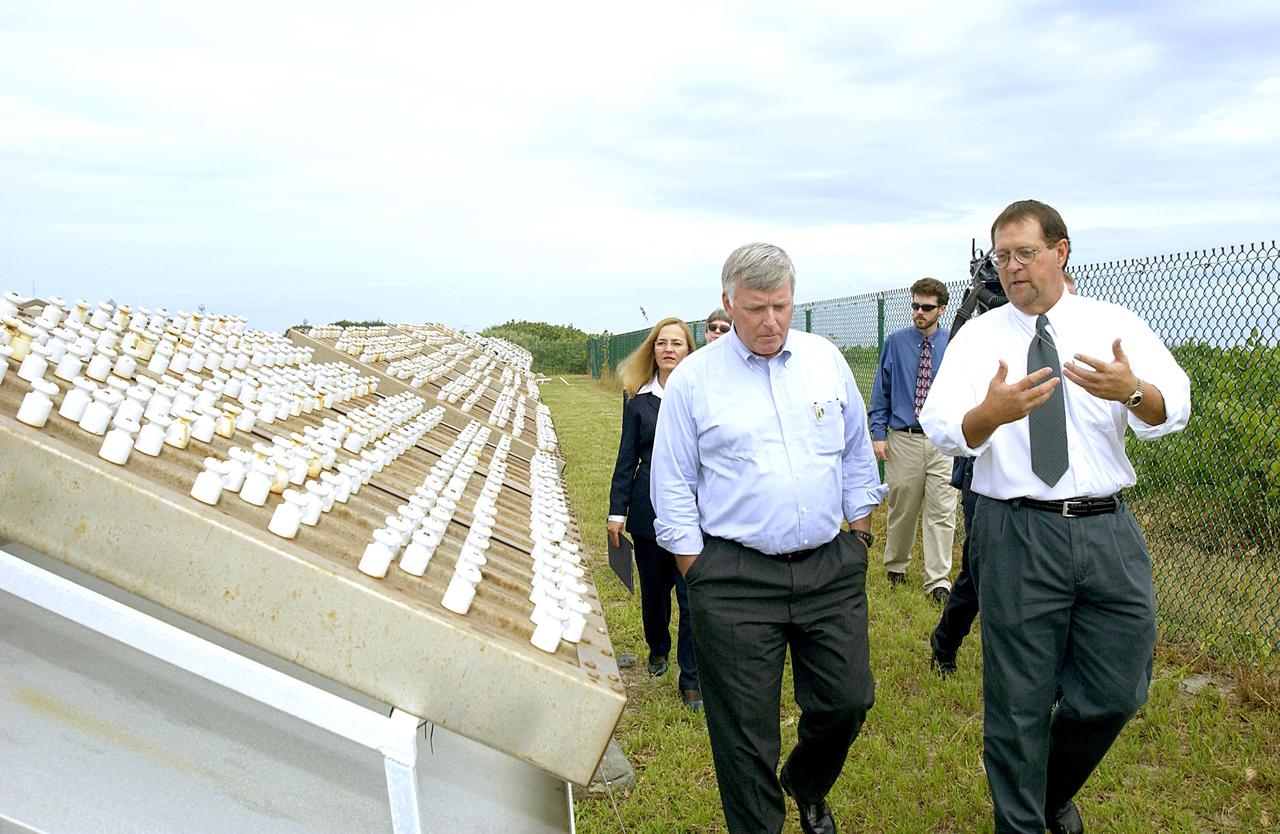
KENNEDY SPACE CENTER, FLA. -   Dr. Paul Hintze (left) explains to Center Director Jim Kennedy a project he is working at the KSC Beach Corrosion Test Site. Hitze is doing post-graduate work for the National Research Council.  The test facility site was established in the 1960s and has provided more than 30 years of historical information on the long-term performance of many materials in use at KSC and other locations around the world. Located 100 feet from the Atlantic Ocean approximately 1 mile south of the Space Shuttle launch sites, the test facility includes an atmospheric exposure site, a flowing seawater exposure site, and an on-site electrochemistry laboratory and monitoring station. The beach laboratory is used to conduct real-time corrosion experiments and provides for the remote monitoring of surrounding weather conditions. The newly added flowing seawater immersion facility provides for the immersion testing of materials and devices under controlled conditions.
KENNEDY SPACE CENTER, FLA. - Dr. Paul Hintze (left) explains to Center Director Jim Kennedy a project he is working at the KSC Beach Corrosion Test Site. Hitze is doing post-graduate work for the National Research Council. The test facility site was established in the 1960s and has provided more than 30 years of historical information on the long-term performance of many materials in use at KSC and other locations around the world. Located 100 feet from the Atlantic Ocean approximately 1 mile south of the Space Shuttle launch sites, the test facility includes an atmospheric exposure site, a flowing seawater exposure site, and an on-site electrochemistry laboratory and monitoring station. The beach laboratory is used to conduct real-time corrosion experiments and provides for the remote monitoring of surrounding weather conditions. The newly added flowing seawater immersion facility provides for the immersion testing of materials and devices under controlled conditions.
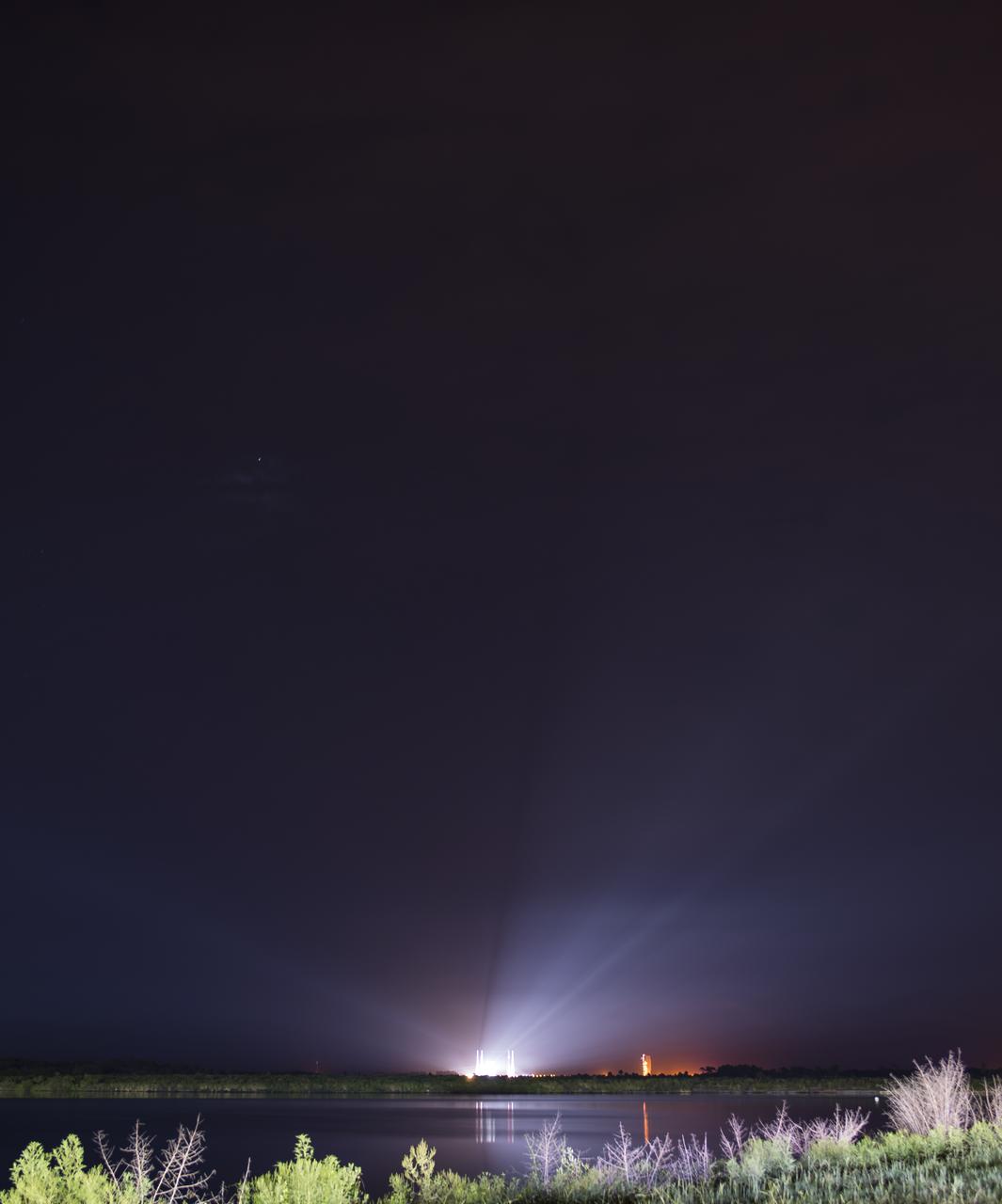
In this long exposure image, a United Launch Alliance Atlas V rocket with NASA’s Mars 2020 Perseverance rover onboard is seen illuminated by spotlights on the launch pad at Space Launch Complex 41 at Cape Canaveral Air Force Station, Thursday, July 30, 2020, from NASA’s Kennedy Space Center in Florida. The Perseverance rover is part of NASA’s Mars Exploration Program, a long-term effort of robotic exploration of the Red Planet. Launch is scheduled for Thursday, July 30.  Photo Credit: (NASA/Joel Kowsky)
Mars 2020 Perseverance Prelaunch
CAPE CANAVERAL, Fla. -- At NASA's Kennedy Space Center's Launch Pad 39-A, the school bus-sized Long Duration Exposure Facility LDEF containing 57 active and passive experiments from nine nations has been loaded into the payload bay of the space shuttle Challenger. The view from the Payload Change-out Room shows LDEF which will be deployed in orbit at an altitude of nearly 300 miles and retrieved after nearly a year so that the experimenters may analyze the effects of long term exposure to space on various substances and processes. The five-member STS-41C crew for this flight is headed by veteran astronaut Robert Crippen on his third space shuttle flight, and includes space rookies, pilot Dick Scobee and mission specialists Terry Hart, George Nelson and James van Hoften. Photo Credit: NASA
KSC-84PC-0219
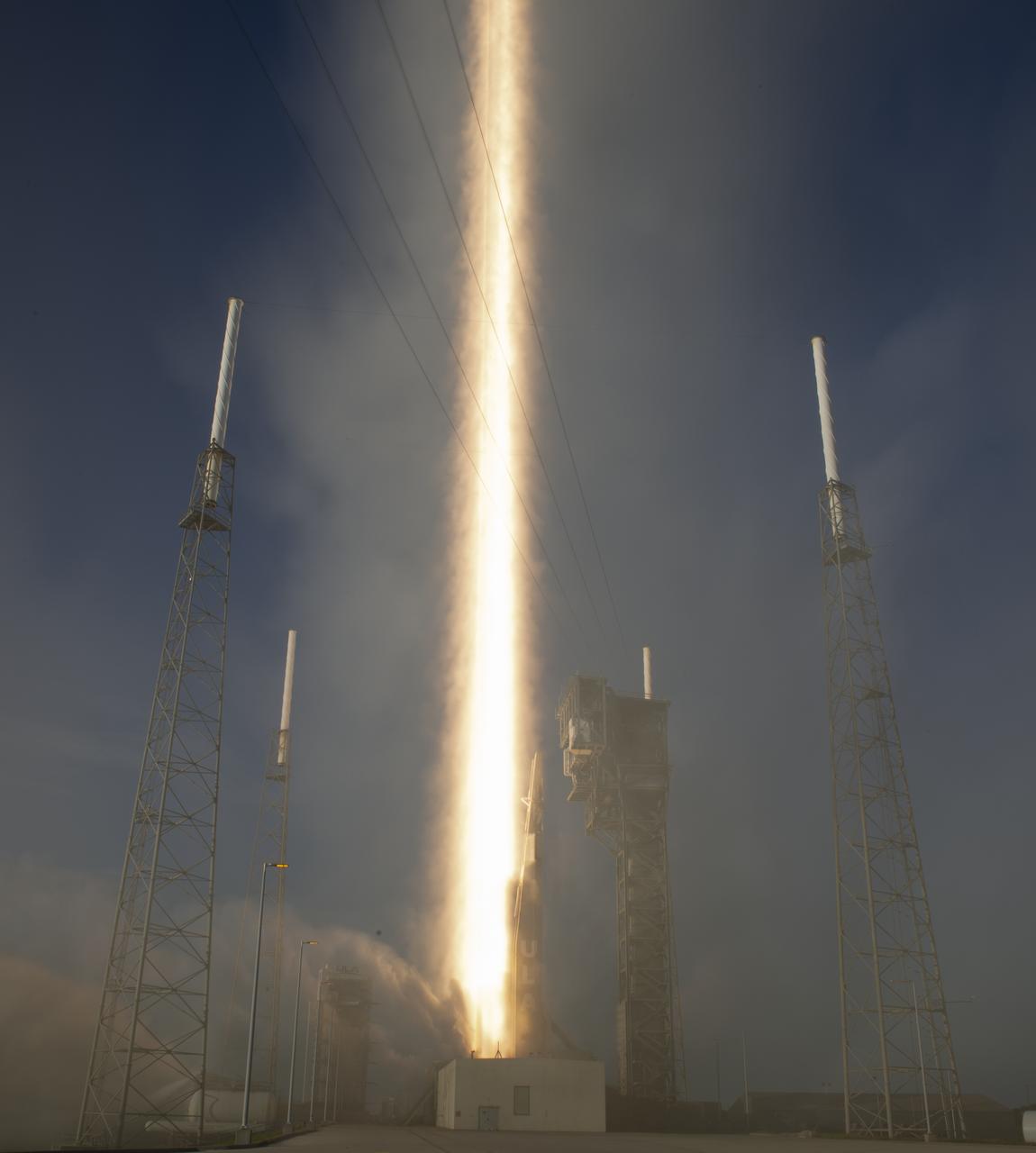
In this twenty second exposure, a United Launch Alliance Atlas V rocket with NASA’s Mars 2020 Perseverance rover onboard is seen as it launches from Space Launch Complex 41, Thursday, July 30, 2020, at Cape Canaveral Air Force Station in Florida. The Perseverance rover is part of NASA’s Mars Exploration Program, a long-term effort of robotic exploration of the Red Planet. Photo Credit: (NASA/Joel Kowsky)
Mars 2020 Perseverance Launch
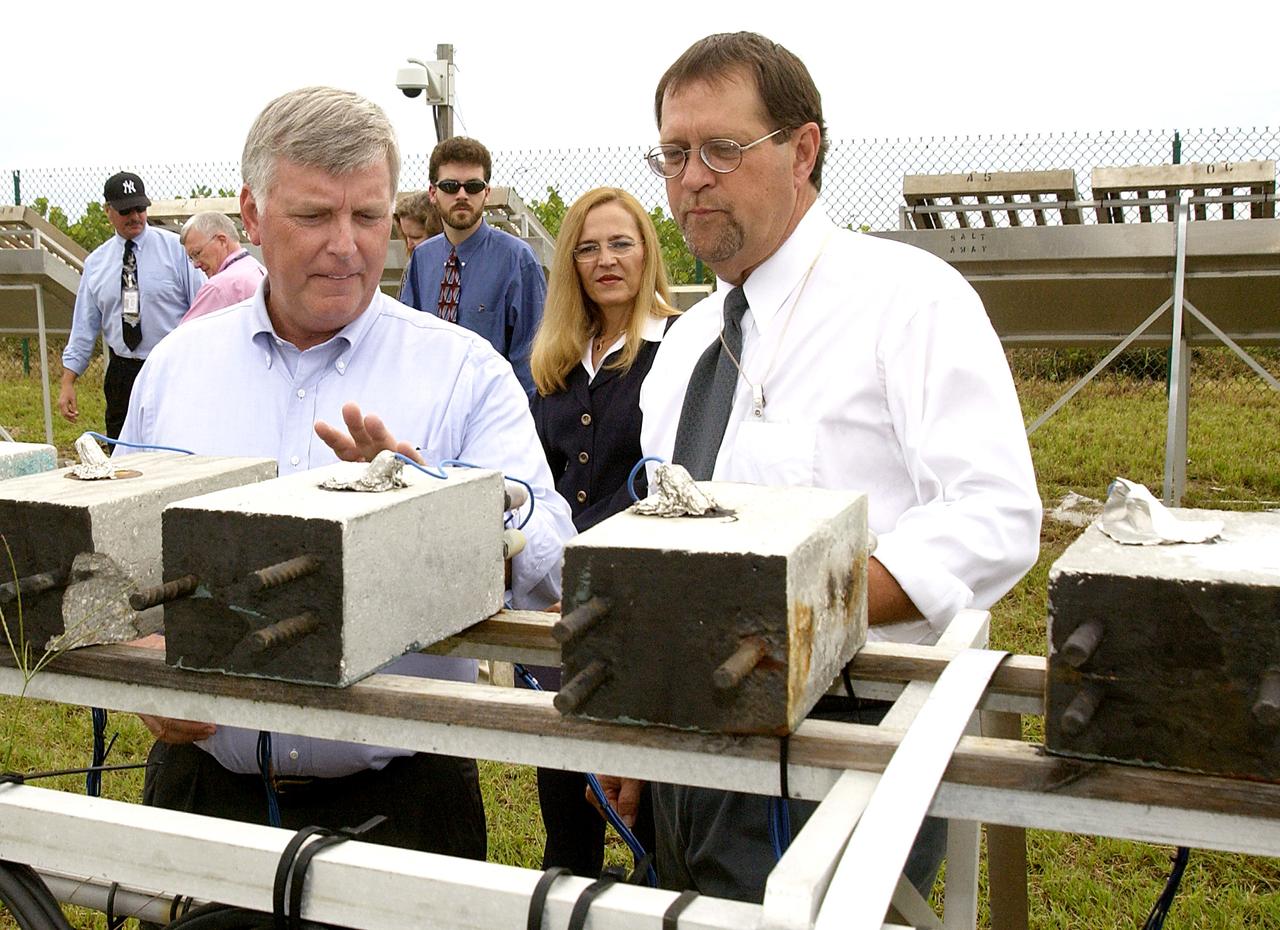
KENNEDY SPACE CENTER, FLA. -   On a tour of the KSC Beach Corrosion Test Site, Testbed Manager Louis MacDowell (right) explains to Center Director Jim Kennedy about the test blocks being used to test a newly developed coating to protect steel inside concrete.  Between MacDowell and Kennedy are Dr. Paul Hintze and Lead Scientist Dr. Luz Marina Calle.  The KSC Beach Corrosion Test Site was established in the 1960s and has provided more than 30 years of historical information on the long-term performance of many materials in use at KSC and other locations around the world. Located 100 feet from the Atlantic Ocean approximately 1 mile south of the Space Shuttle launch sites, the test facility includes an atmospheric exposure site, a flowing seawater exposure site, and an on-site electrochemistry laboratory and monitoring station. The beach laboratory is used to conduct real-time corrosion experiments and provides for the remote monitoring of surrounding weather conditions. The newly added flowing seawater immersion facility provides for the immersion testing of materials and devices under controlled conditions.
KENNEDY SPACE CENTER, FLA. - On a tour of the KSC Beach Corrosion Test Site, Testbed Manager Louis MacDowell (right) explains to Center Director Jim Kennedy about the test blocks being used to test a newly developed coating to protect steel inside concrete. Between MacDowell and Kennedy are Dr. Paul Hintze and Lead Scientist Dr. Luz Marina Calle. The KSC Beach Corrosion Test Site was established in the 1960s and has provided more than 30 years of historical information on the long-term performance of many materials in use at KSC and other locations around the world. Located 100 feet from the Atlantic Ocean approximately 1 mile south of the Space Shuttle launch sites, the test facility includes an atmospheric exposure site, a flowing seawater exposure site, and an on-site electrochemistry laboratory and monitoring station. The beach laboratory is used to conduct real-time corrosion experiments and provides for the remote monitoring of surrounding weather conditions. The newly added flowing seawater immersion facility provides for the immersion testing of materials and devices under controlled conditions.
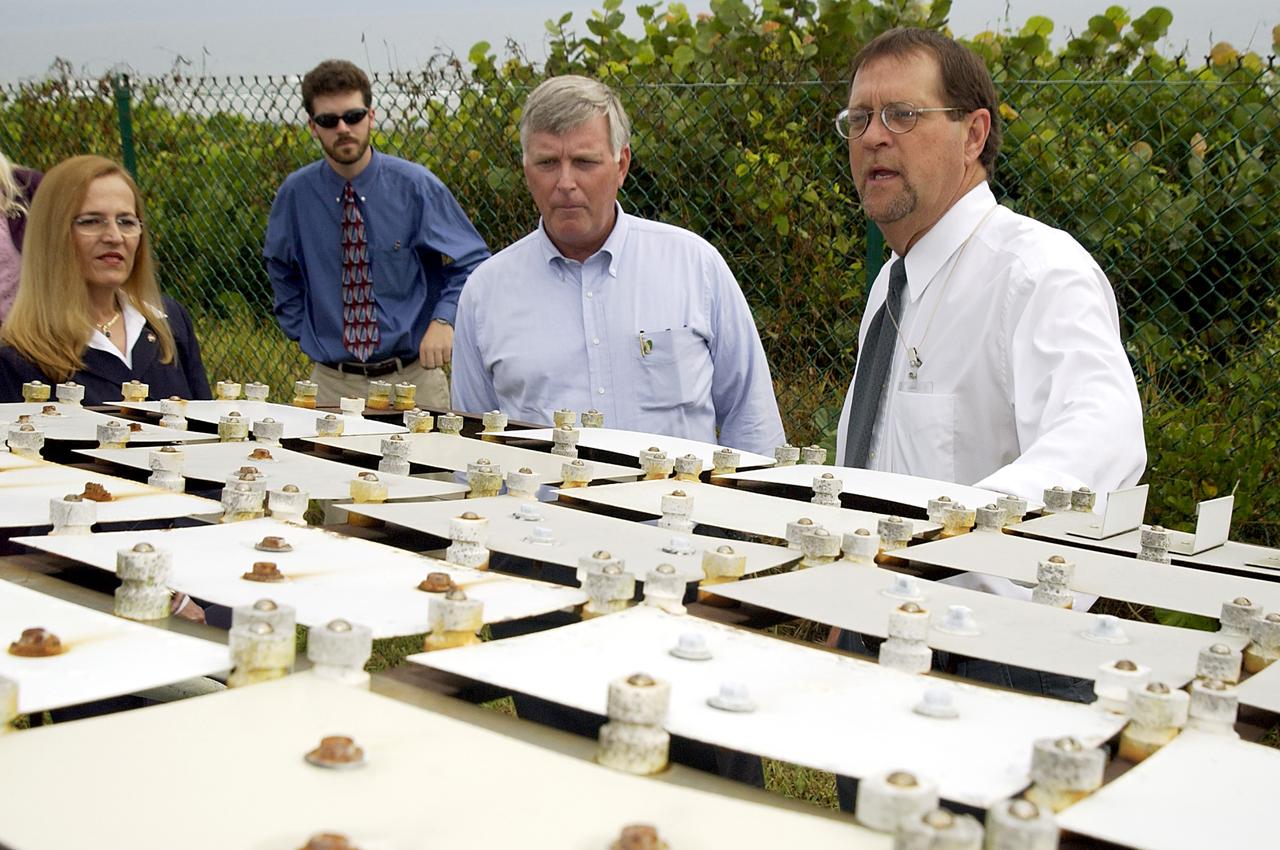
KENNEDY SPACE CENTER, FLA. -   On a tour of the KSC Beach Corrosion Test Site, Center Director Jim Kennedy (second from right) learns from Testbed Manager Louis MacDowell (right) about a project being undertaken for the U.S. Navy.  Being studied are nonchrome primers for aircraft.  At left are Lead Scientist Dr. Luz Marina Calle and  Dr. Paul Hintze, who is working on a graduate project for the National Research Council.  The KSC Beach Corrosion Test Site was established in the 1960s and has provided more than 30 years of historical information on the long-term performance of many materials in use at KSC and other locations around the world. Located 100 feet from the Atlantic Ocean approximately 1 mile south of the Space Shuttle launch sites, the test facility includes an atmospheric exposure site, a flowing seawater exposure site, and an on-site electrochemistry laboratory and monitoring station. The beach laboratory is used to conduct real-time corrosion experiments and provides for the remote monitoring of surrounding weather conditions. The newly added flowing seawater immersion facility provides for the immersion testing of materials and devices under controlled conditions.
KENNEDY SPACE CENTER, FLA. - On a tour of the KSC Beach Corrosion Test Site, Center Director Jim Kennedy (second from right) learns from Testbed Manager Louis MacDowell (right) about a project being undertaken for the U.S. Navy. Being studied are nonchrome primers for aircraft. At left are Lead Scientist Dr. Luz Marina Calle and Dr. Paul Hintze, who is working on a graduate project for the National Research Council. The KSC Beach Corrosion Test Site was established in the 1960s and has provided more than 30 years of historical information on the long-term performance of many materials in use at KSC and other locations around the world. Located 100 feet from the Atlantic Ocean approximately 1 mile south of the Space Shuttle launch sites, the test facility includes an atmospheric exposure site, a flowing seawater exposure site, and an on-site electrochemistry laboratory and monitoring station. The beach laboratory is used to conduct real-time corrosion experiments and provides for the remote monitoring of surrounding weather conditions. The newly added flowing seawater immersion facility provides for the immersion testing of materials and devices under controlled conditions.
KENNEDY SPACE CENTER, FLA. -   On a tour of the KSC Beach Corrosion Test Site, Testbed Manager Louis MacDowell (foreground) explains to Center Director Jim Kennedy (third from right) about a study being undertaken for the U.S. Navy: nonchrome primers for aircraft. At left is Lead Scientist Dr. Luz Marina Calle and behind MacDowell is Dr. Paul Hintze, who is working on a graduate project for the National Research Council.  The KSC Beach Corrosion Test Site was established in the 1960s and has provided more than 30 years of historical information on the long-term performance of many materials in use at KSC and other locations around the world. Located 100 feet from the Atlantic Ocean approximately 1 mile south of the Space Shuttle launch sites, the test facility includes an atmospheric exposure site, a flowing seawater exposure site, and an on-site electrochemistry laboratory and monitoring station. The beach laboratory is used to conduct real-time corrosion experiments and provides for the remote monitoring of surrounding weather conditions. The newly added flowing seawater immersion facility provides for the immersion testing of materials and devices under controlled conditions.
KENNEDY SPACE CENTER, FLA. - On a tour of the KSC Beach Corrosion Test Site, Testbed Manager Louis MacDowell (foreground) explains to Center Director Jim Kennedy (third from right) about a study being undertaken for the U.S. Navy: nonchrome primers for aircraft. At left is Lead Scientist Dr. Luz Marina Calle and behind MacDowell is Dr. Paul Hintze, who is working on a graduate project for the National Research Council. The KSC Beach Corrosion Test Site was established in the 1960s and has provided more than 30 years of historical information on the long-term performance of many materials in use at KSC and other locations around the world. Located 100 feet from the Atlantic Ocean approximately 1 mile south of the Space Shuttle launch sites, the test facility includes an atmospheric exposure site, a flowing seawater exposure site, and an on-site electrochemistry laboratory and monitoring station. The beach laboratory is used to conduct real-time corrosion experiments and provides for the remote monitoring of surrounding weather conditions. The newly added flowing seawater immersion facility provides for the immersion testing of materials and devices under controlled conditions.
KENNEDY SPACE CENTER, FLA. -   On a tour of the KSC Beach Corrosion Test Site, Louis MacDowell (right), Testbed manager, explains to Center Director Jim Kennedy a project being undertaken for the U.S. Navy.  At left are nonchrome primers for aircraft being studied.  Behind Kennedy is Lead Scientist Dr. Luz Marina Calle.  Behind MacDowell is Dr. Paul Hintze, who is working on a graduate project for the National Research Council.  The KSC Beach Corrosion Test Site was established in the 1960s and has provided more than 30 years of historical information on the long-term performance of many materials in use at KSC and other locations around the world. Located 100 feet from the Atlantic Ocean approximately 1 mile south of the Space Shuttle launch sites, the test facility includes an atmospheric exposure site, a flowing seawater exposure site, and an on-site electrochemistry laboratory and monitoring station. The beach laboratory is used to conduct real-time corrosion experiments and provides for the remote monitoring of surrounding weather conditions. The newly added flowing seawater immersion facility provides for the immersion testing of materials and devices under controlled conditions.
KENNEDY SPACE CENTER, FLA. - On a tour of the KSC Beach Corrosion Test Site, Louis MacDowell (right), Testbed manager, explains to Center Director Jim Kennedy a project being undertaken for the U.S. Navy. At left are nonchrome primers for aircraft being studied. Behind Kennedy is Lead Scientist Dr. Luz Marina Calle. Behind MacDowell is Dr. Paul Hintze, who is working on a graduate project for the National Research Council. The KSC Beach Corrosion Test Site was established in the 1960s and has provided more than 30 years of historical information on the long-term performance of many materials in use at KSC and other locations around the world. Located 100 feet from the Atlantic Ocean approximately 1 mile south of the Space Shuttle launch sites, the test facility includes an atmospheric exposure site, a flowing seawater exposure site, and an on-site electrochemistry laboratory and monitoring station. The beach laboratory is used to conduct real-time corrosion experiments and provides for the remote monitoring of surrounding weather conditions. The newly added flowing seawater immersion facility provides for the immersion testing of materials and devices under controlled conditions.
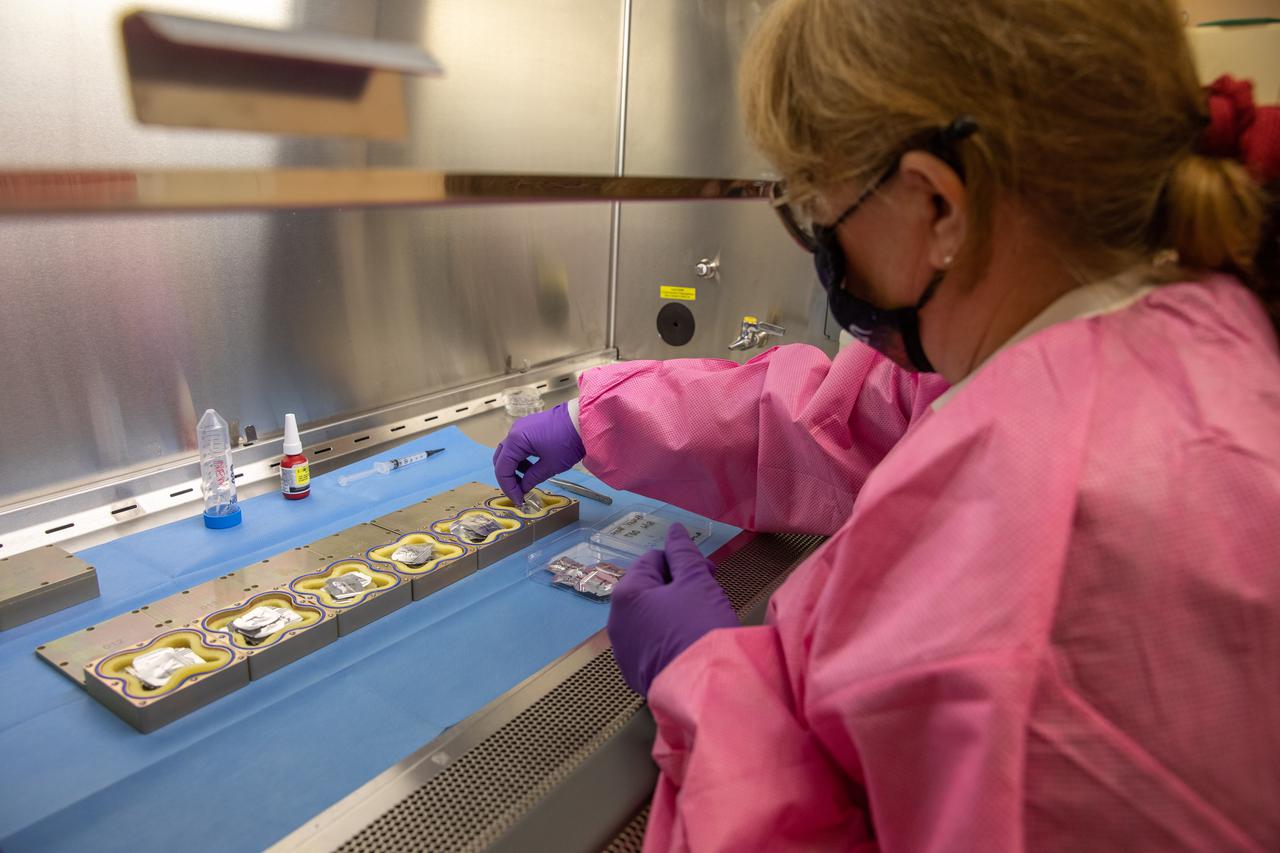
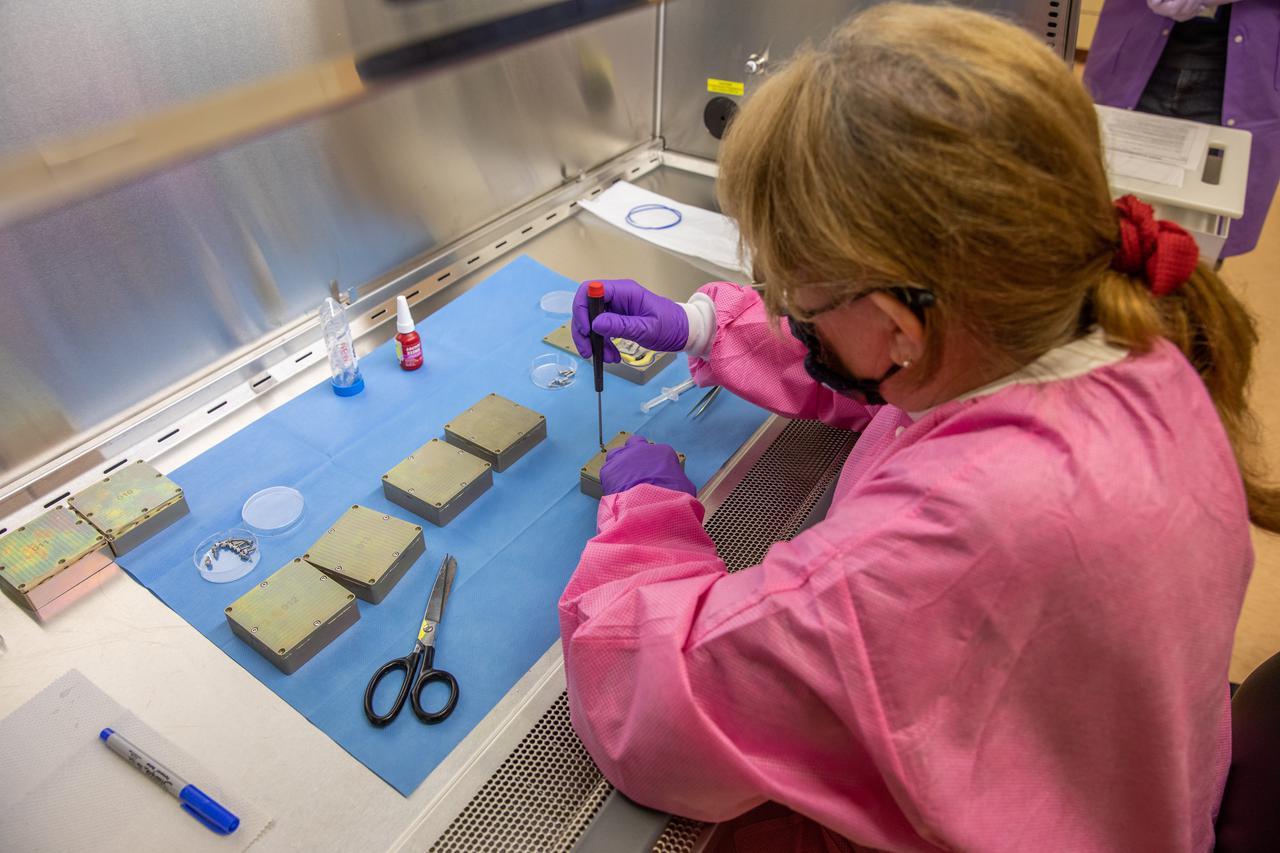
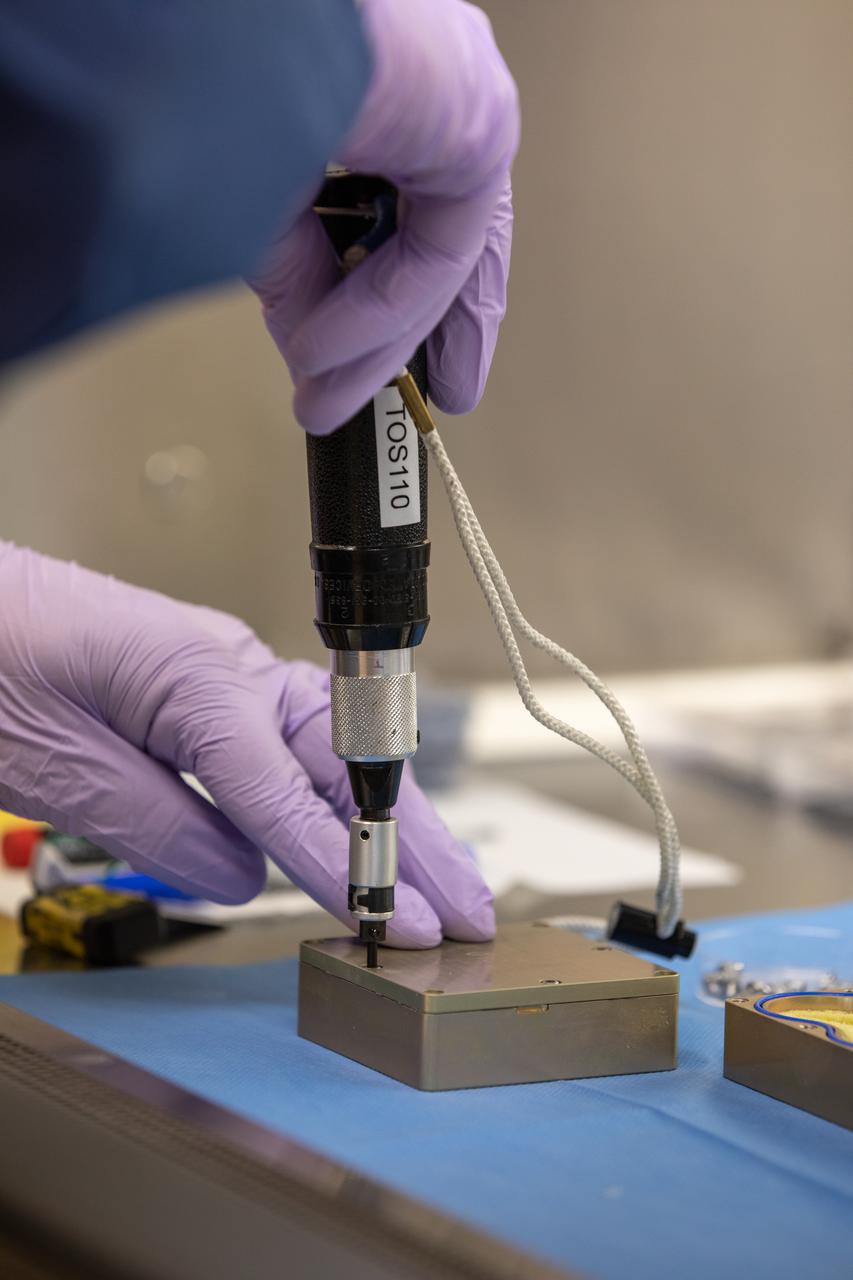
Christina Khodada, a research scientist working with the Exploration Research and Technology Programs, prepares containers Feb. 11, 2021, at NASA’s Kennedy Space Center in Florida for a Materials International Space Station Experiment (MISSE). The containers, carrying sets of seeds, will fly aboard Northrop Grumman’s Cygnus spacecraft as part of NG-15, a NASA commercial resupply mission to the orbiting laboratory targeted for Feb. 20, 2021. They will be placed in the MISSE testing facility, located near the space station’s solar arrays, where they will be exposed to the extreme environment of space for six months before returning to Earth for further study.
MISSE Seed Experiment Work
Cory Spern, a research scientist working with the Exploration Research and Technology programs at NASA’s Kennedy Space Center in Florida, prepares containers Feb. 11, 2021, for a Materials International Space Station Experiment (MISSE). The containers, carrying sets of seeds, will fly aboard Northrop Grumman’s Cygnus spacecraft as part of NG-15, a NASA commercial resupply mission to the orbiting laboratory targeted for Feb. 20, 2021. They will be placed in the MISSE testing facility, located near the space station’s solar arrays, where they will be exposed to the extreme environment of space for six months before returning to Earth for further study.
MISSE Seed Experiment Work
Christina Khodada, a research scientist working with the Exploration Research and Technology Programs, prepares containers Feb. 11, 2021, at NASA’s Kennedy Space Center in Florida for a Materials International Space Station Experiment (MISSE). The containers, carrying sets of seeds, will fly aboard Northrop Grumman’s Cygnus spacecraft as part of NG-15, a NASA commercial resupply mission to the orbiting laboratory targeted for Feb. 20, 2021. They will be placed in the MISSE testing facility, located near the space station’s solar arrays, where they will be exposed to the extreme environment of space for six months before returning to Earth for further study.
MISSE Seed Experiment Work
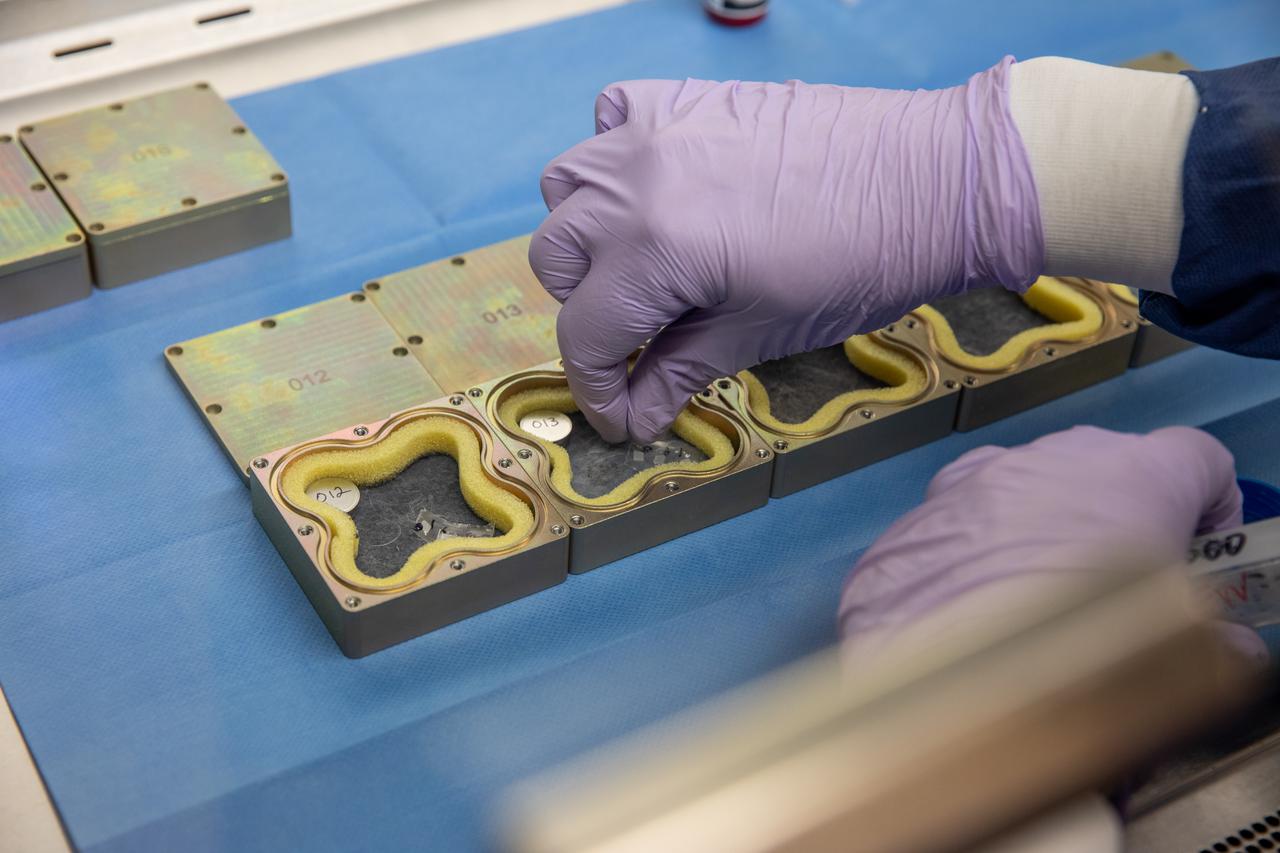
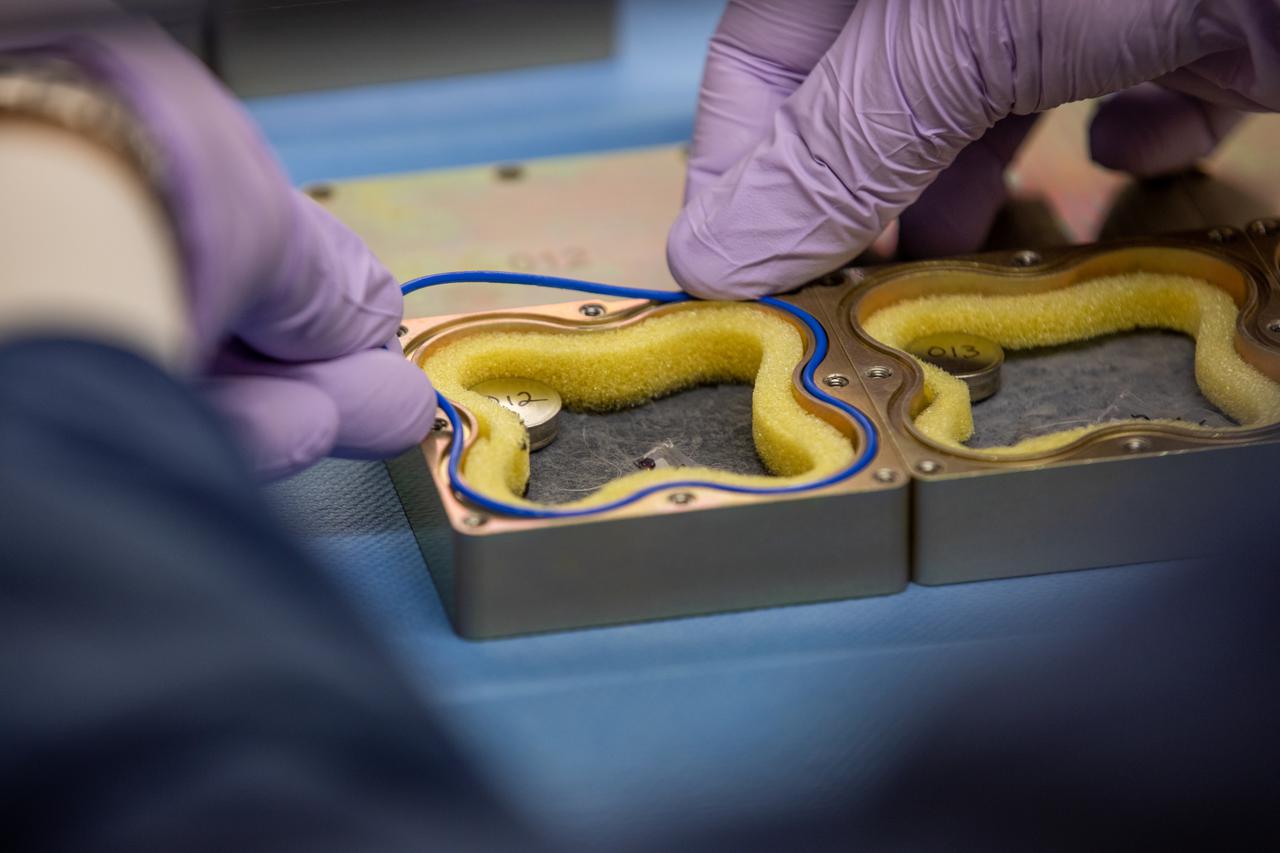
Containers carrying set of seeds for a Materials International Space Station Experiment (MISSE) are shown Feb. 11, 2021, at NASA’s Kennedy Space Center in Florida. The containers will fly aboard Northrop Grumman’s Cygnus spacecraft as part of NG-15, a NASA commercial resupply mission to the orbiting laboratory targeted for Feb. 20, 2021. They will be placed in the MISSE testing facility, located near the space station’s solar arrays, where they will be exposed to the extreme environment of space for six months before returning to Earth for further study.
MISSE Seed Experiment Work
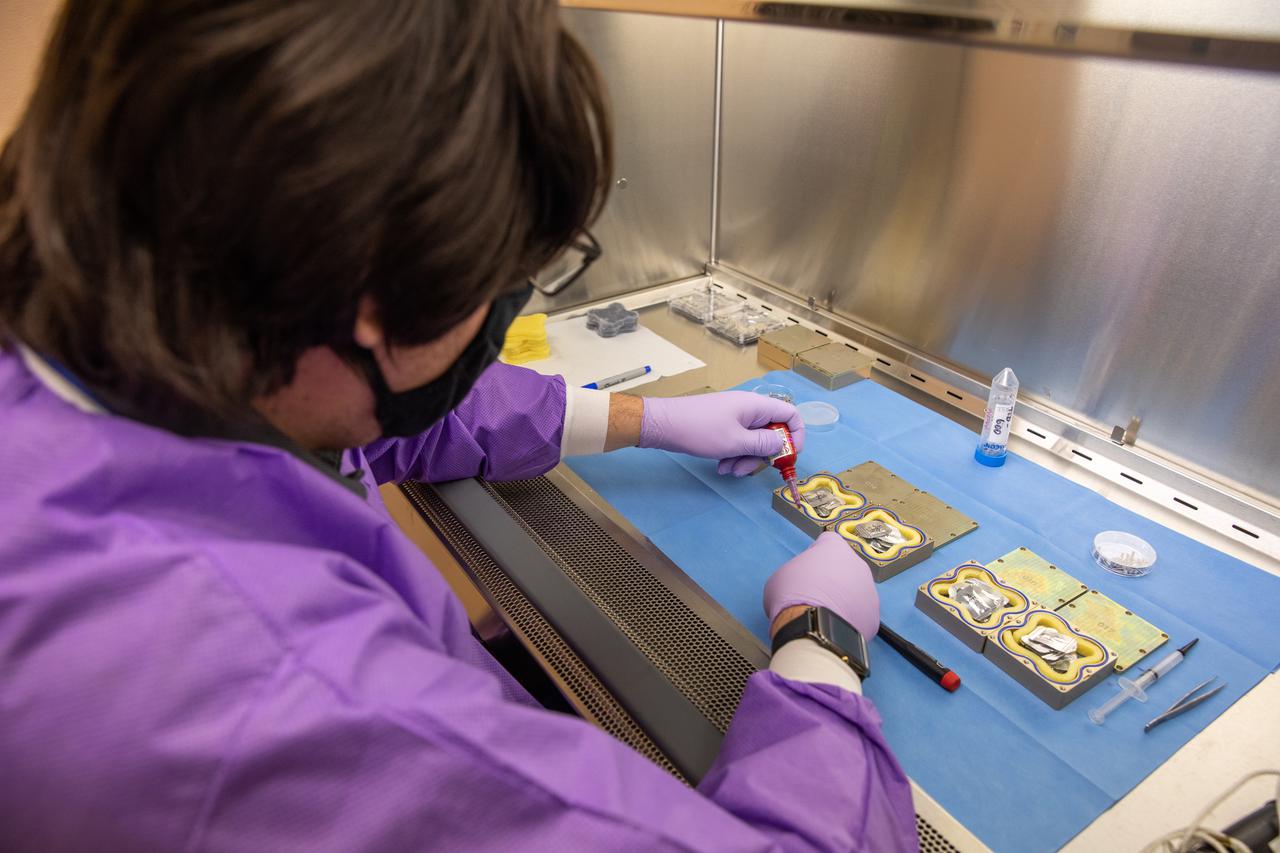
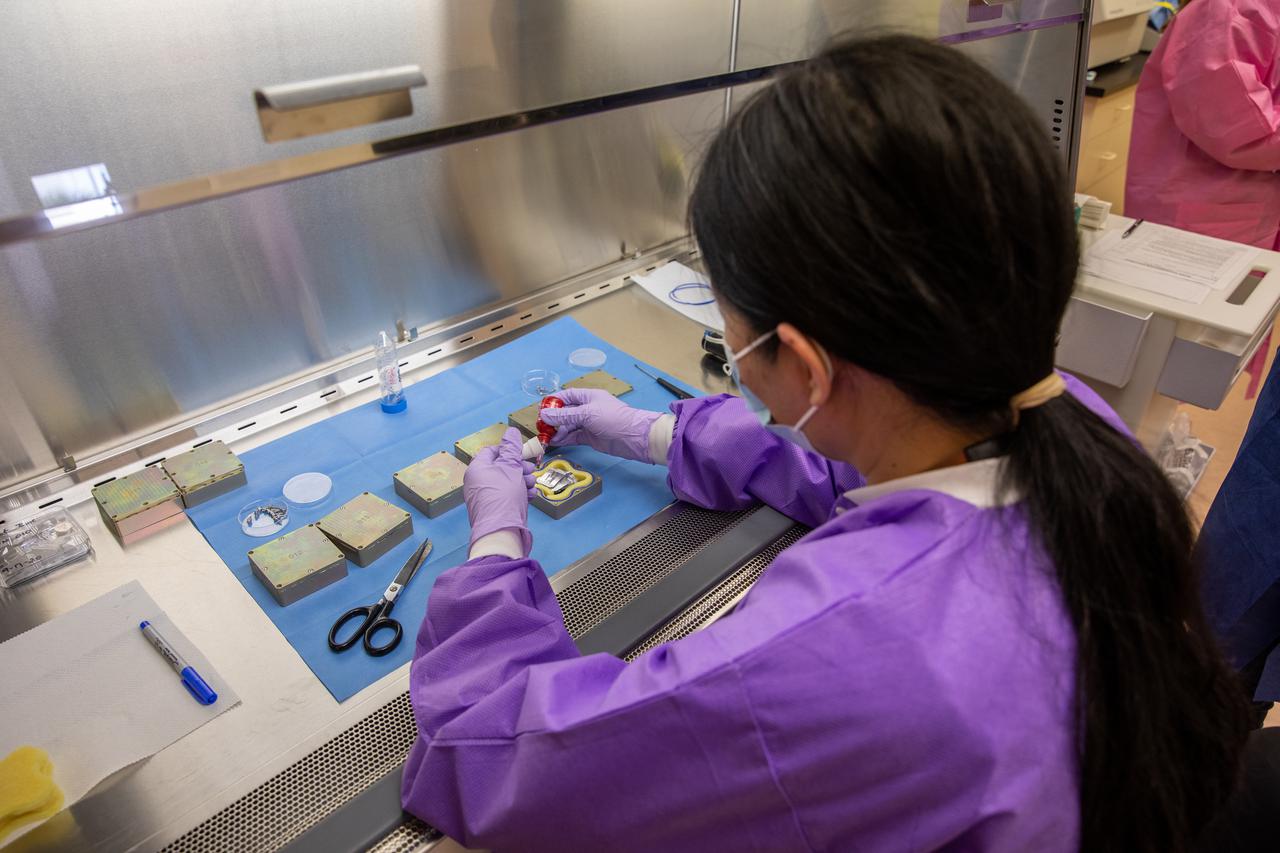
Ye Zhang, project scientist for the Exploration Research and Technology programs at NASA’s Kennedy Space Center in Florida, prepares containers for a Materials International Space Station Experiment (MISSE). The containers, carrying sets of seeds, will fly aboard Northrop Grumman’s Cygnus spacecraft as part of NG-15, a NASA commercial resupply mission to the orbiting laboratory targeted for Feb. 20, 2021. They will be placed in the MISSE testing facility, located near the space station’s solar arrays, where they will be exposed to the extreme environment of space for six months before returning to Earth for further study.
MISSE Seed Experiment Work
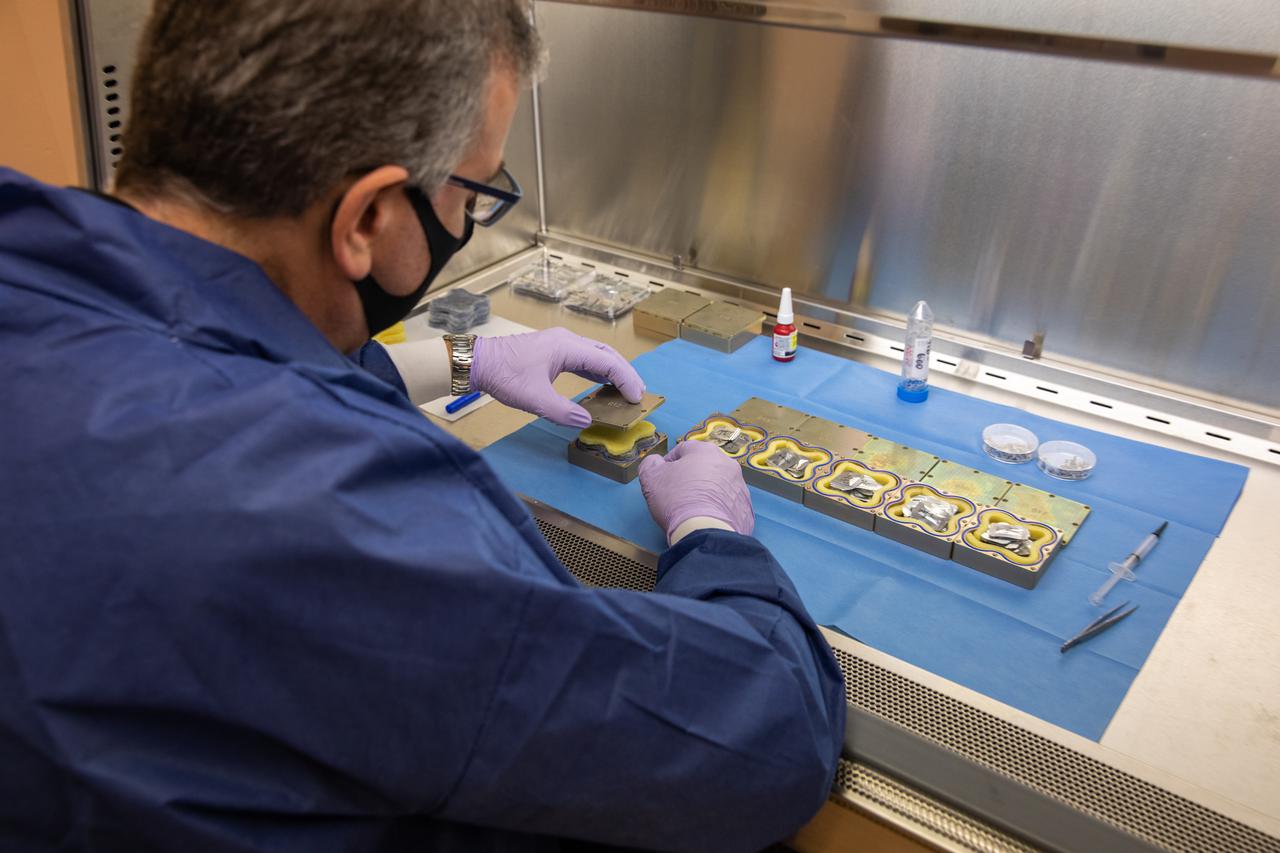
Jeffrey Richards, a project science coordinator working with the Exploration Research and Technology programs at NASA’s Kennedy Space Center in Florida, prepares containers Feb. 11, 2021, for a Materials International Space Station Experiment (MISSE). The containers, carrying sets of seeds, will fly aboard Northrop Grumman’s Cygnus spacecraft as part of NG-15, a NASA commercial resupply mission to the orbiting laboratory targeted for Feb. 20, 2021. They will be placed in the MISSE testing facility, located near the space station’s solar arrays, where they will be exposed to the extreme environment of for six months before returning to Earth for further study.
MISSE Seed Experiment Work
Jeffrey Richards, a project science coordinator working with the Exploration Research and Technology programs at NASA’s Kennedy Space Center in Florida, prepares containers Feb. 11, 2021, for a Materials International Space Station Experiment (MISSE). The containers, carrying sets of seeds, will fly aboard Northrop Grumman’s Cygnus spacecraft as part of NG-15, a NASA commercial resupply mission to the orbiting laboratory targeted for Feb. 20, 2021. They will be placed in the MISSE testing facility, located near the space station’s solar arrays, where they will be exposed to the extreme environment of space for six months before returning to Earth for further study.
MISSE Seed Experiment Work
Jeffrey Richards, a project science coordinator working with the Exploration Research and Technology programs at NASA’s Kennedy Space Center in Florida, prepares containers Feb. 11, 2021, for a Materials International Space Station Experiment (MISSE). The containers, carrying sets of seeds, will fly aboard Northrop Grumman’s Cygnus spacecraft as part of NG-15, a NASA commercial resupply mission to the orbiting laboratory targeted for Feb. 20, 2021. They will be placed in the MISSE testing facility, located near the space station’s solar arrays, where they will be exposed to the extreme environment of space for six months before returning to Earth for further study.
MISSE Seed Experiment Work
Jeffrey Richards, a project science coordinator working with the Exploration Research and Technology programs at NASA’s Kennedy Space Center in Florida, prepares containers Feb. 11, 2021, for a Materials International Space Station Experiment (MISSE). The containers, carrying sets of seeds, will fly aboard Northrop Grumman’s Cygnus spacecraft as part of NG-15, a NASA commercial resupply mission to the orbiting laboratory targeted for Feb. 20, 2021. They will be placed in the MISSE testing facility, located near the space station’s solar arrays, where they will be exposed to the extreme environment of for six months before returning to Earth for further study.
MISSE Seed Experiment Work
Jeffrey Richards, a project science coordinator working with the Exploration Research and Technology programs at NASA’s Kennedy Space Center in Florida, prepares containers Feb. 11, 2021, for a Materials International Space Station Experiment (MISSE). The containers, carrying sets of seeds, will fly aboard Northrop Grumman’s Cygnus spacecraft as part of NG-15, a NASA commercial resupply mission to the orbiting laboratory targeted for Feb. 20, 2021. They will be placed in the MISSE testing facility, located near the space station’s solar arrays, where they will be exposed to the extreme environment of space for six months before returning to Earth for further study.
MISSE Seed Experiment Work
Jeffrey Richards, a project science coordinator working with the Exploration Research and Technology programs at NASA’s Kennedy Space Center in Florida, prepares containers Feb. 11, 2021, for a Materials International Space Station Experiment (MISSE). The containers, carrying sets of seeds, will fly aboard Northrop Grumman’s Cygnus spacecraft as part of NG-15, a NASA commercial resupply mission to the orbiting laboratory targeted for Feb. 20, 2021. They will be placed in the MISSE testing facility, located near the space station’s solar arrays, where they will be exposed to the extreme environment of space for six months before returning to Earth for further study.
MISSE Seed Experiment Work
Jeffrey Richards, a project science coordinator working with the Exploration Research and Technology programs at NASA’s Kennedy Space Center in Florida, prepares containers Feb. 11, 2021, for a Materials International Space Station Experiment (MISSE). The containers, carrying sets of seeds, will fly aboard Northrop Grumman’s Cygnus spacecraft as part of NG-15, a NASA commercial resupply mission to the orbiting laboratory targeted for Feb. 20, 2021. They will be placed in the MISSE testing facility, located near the space station’s solar arrays, where they will be exposed to the extreme environment of space for six months before returning to Earth for further study.
MISSE Seed Experiment Work
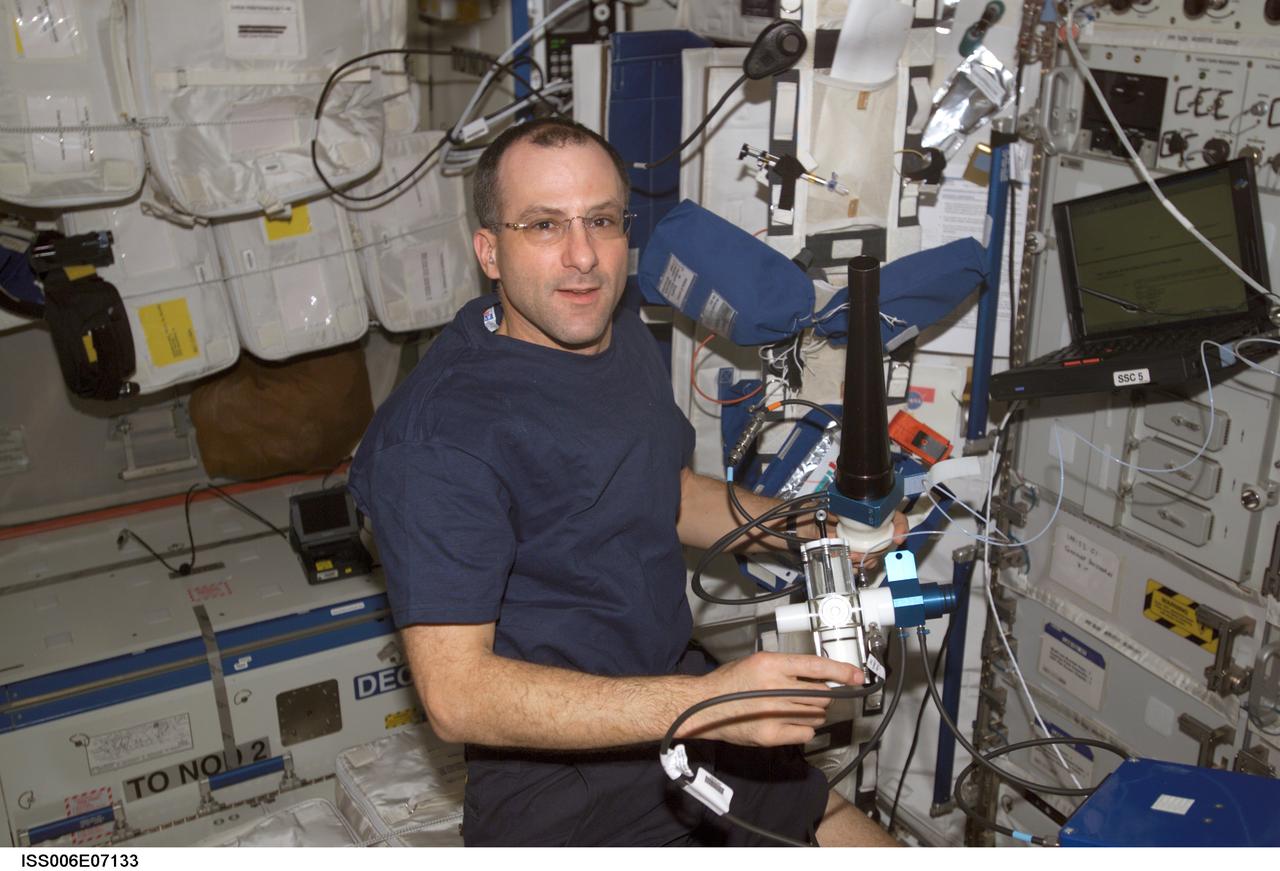
In this International Space Station (ISS) onboard photo, Expedition Six Science Officer Donald R. Pettit works to set up the Pulmonary Function in Flight (PuFF) experiment hardware in the Destiny Laboratory. Expedition Six is the fourth and final crew to perform the PuFF experiment. The PuFF experiment was developed to better understand what effects long term exposure to microgravity may have on the lungs. The focus is on measuring changes in the everness of gas exchange in the lungs, and on detecting changes in respiratory muscle strength. It allows astronauts to measure blood flow through the lungs, the ability of the lung to take up oxygen, and lung volumes. Each PuFF session includes five lung function tests, which involve breathing only cabin air. For each planned extravehicular (EVA) activity, a crew member performs a PuFF test within one week prior to the EVA. Following the EVA, those crew members perform another test to document the effect of exposure of the lungs to the low-pressure environment of the space suits. This experiment utilizes the Gas Analyzer System for Metabolic Analysis Physiology, or GASMAP, located in the Human Research Facility (HRF), along with a variety of other Puff equipment including a manual breathing valve, flow meter, pressure-flow module, pressure and volume calibration syringes, and disposable mouth pieces.
International Space Station (ISS)
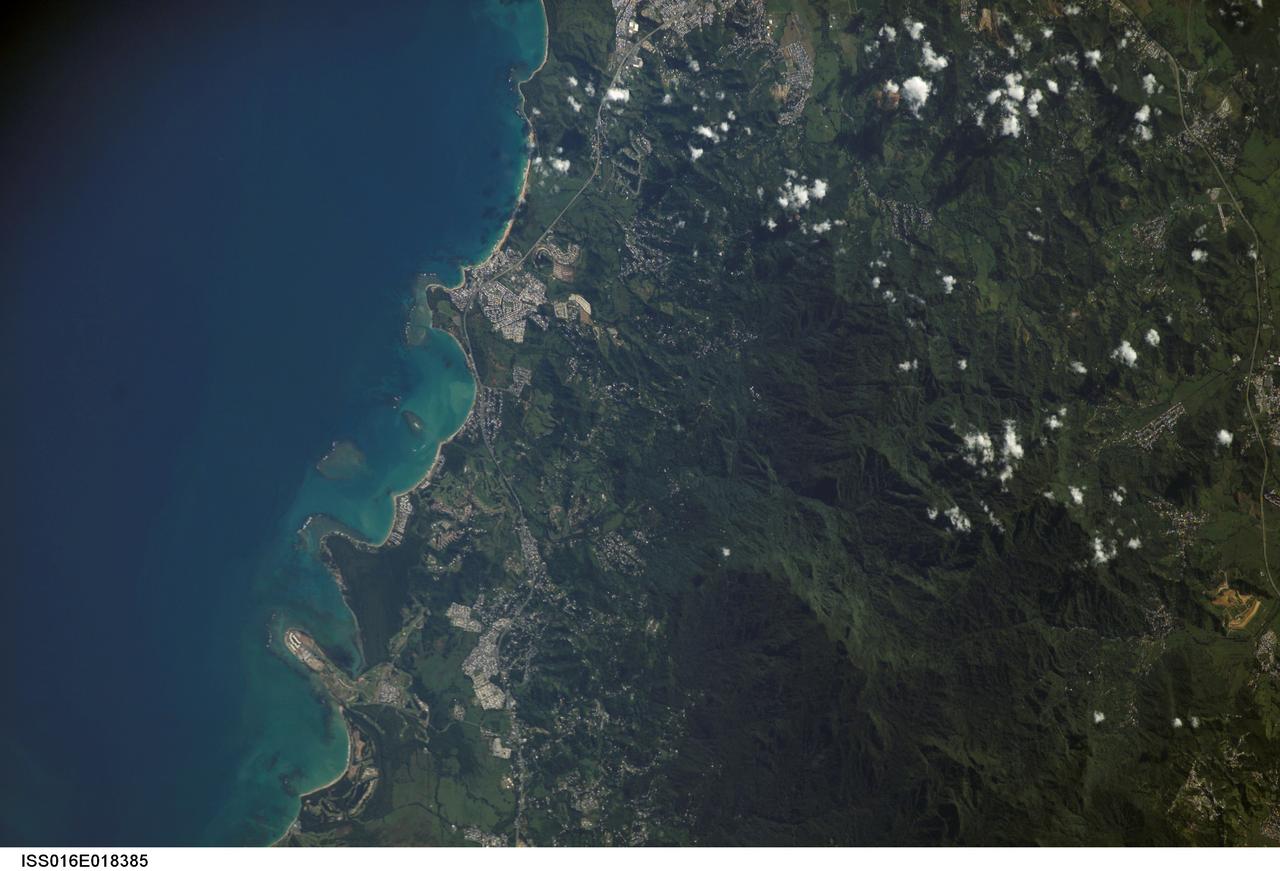
ISS016-E-018385 (23 Dec. 2008) --- Luquillo Mountains, Puerto Rico are featured in this image photographed by an Expedition 16 crewmember on the International Space Station. The Luquillo Mountains are located in the northeastern portion of Puerto Rico and rise to elevations of 1,075 meters. According to scientists, the mountains are comprised mainly of volcanic rock material that was uplifted by tectonism - Puerto Rico is located between the junction of the North American and Caribbean plates - approximately 37--28 million years ago. Prevailing easterly winds bring moisture from the Caribbean Sea that falls as precipitation as they cross the mountains. Higher elevations receive more rainfall than lower elevations, leading to subtropical forest types in the lowlands and montane forest types near the summits. This image, taken during the rainy season, illustrates the rich vegetation cover of the mountains. The rapid change in ecosystems with elevation, land use history, and exposure to frequent natural disturbances (such as hurricanes) makes the Luquillo Mountains as ideal location for ecological study. The Luquillo Experimental Forest Long Term Ecological Research (LTER) site is contained within the Luquillo National Forest, covering much of the mountains to the southwest of the city of Luquillo (center). Historical human land uses in the Forest -- such as logging, agriculture, charcoal production, and coffee plantations - have determined much of the current ecosystem structure. Results of LTER site research indicates that the forest ecosystems recover more rapidly from natural disturbances (like hurricanes) than they do from human disturbance.
Earth Observations taken by the Expedition 16 Crew