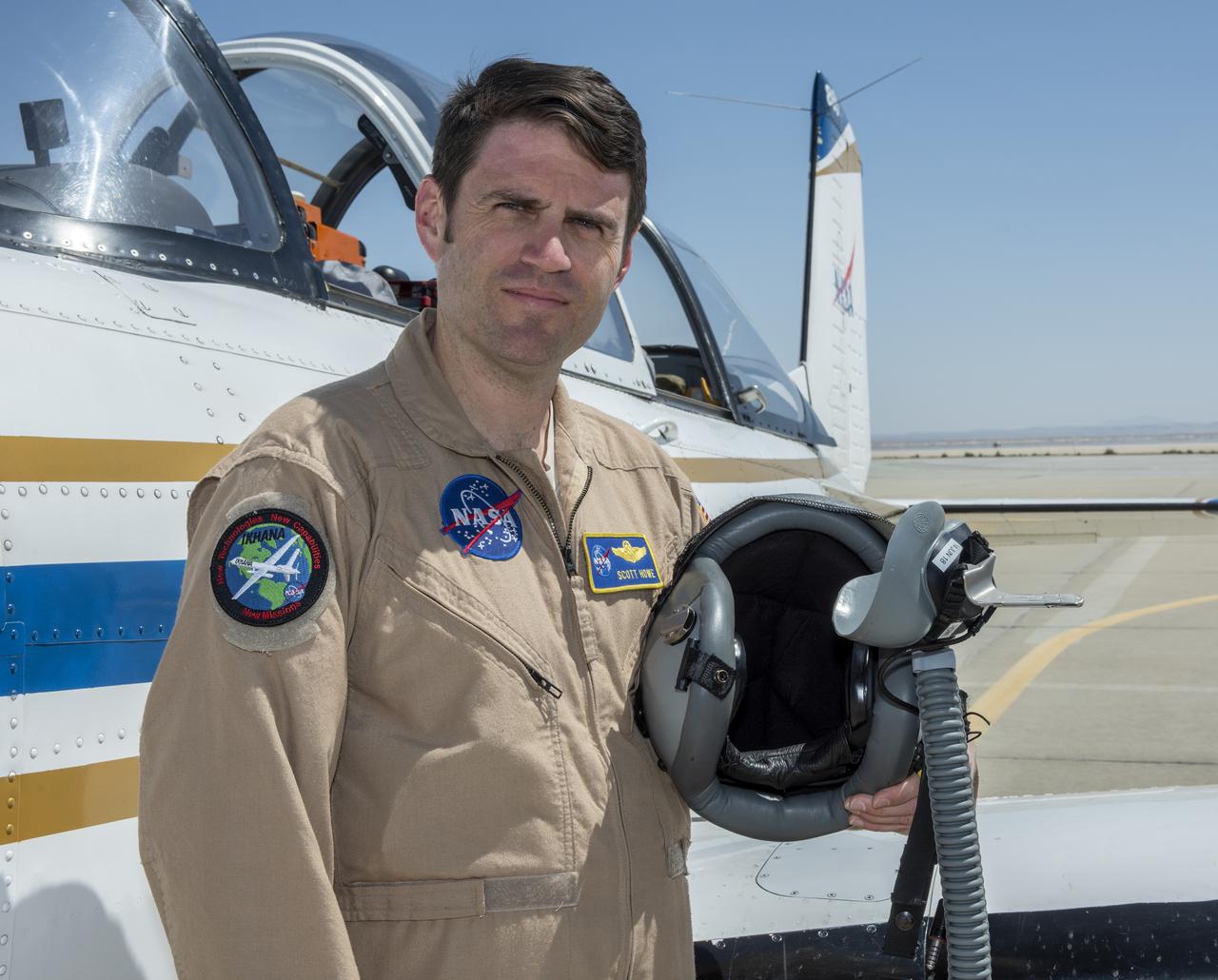
T-34 lead pilot Scott Howe said the new Active Noise Reduction system makes it easier to hear in the aircraft's loud cockpit.
Can You Hear Me Now?
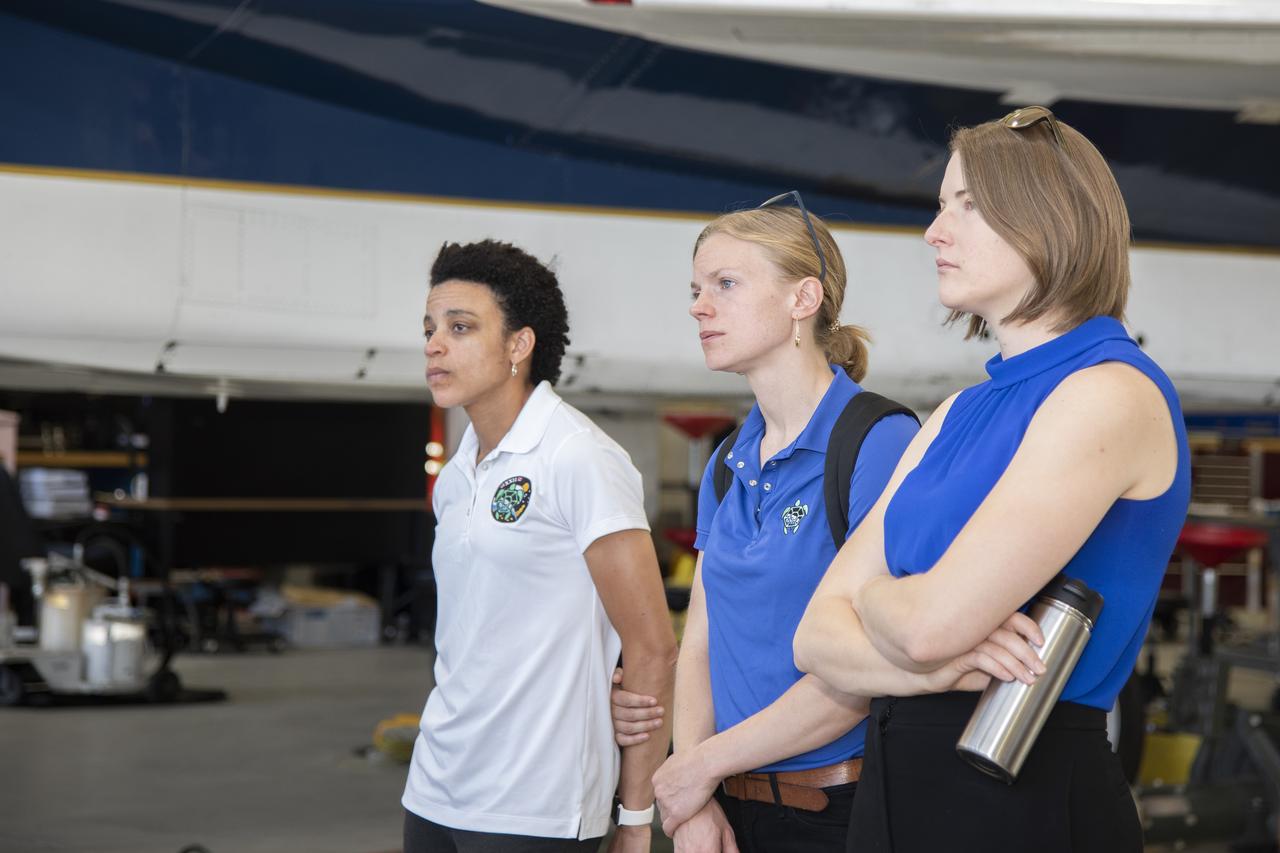
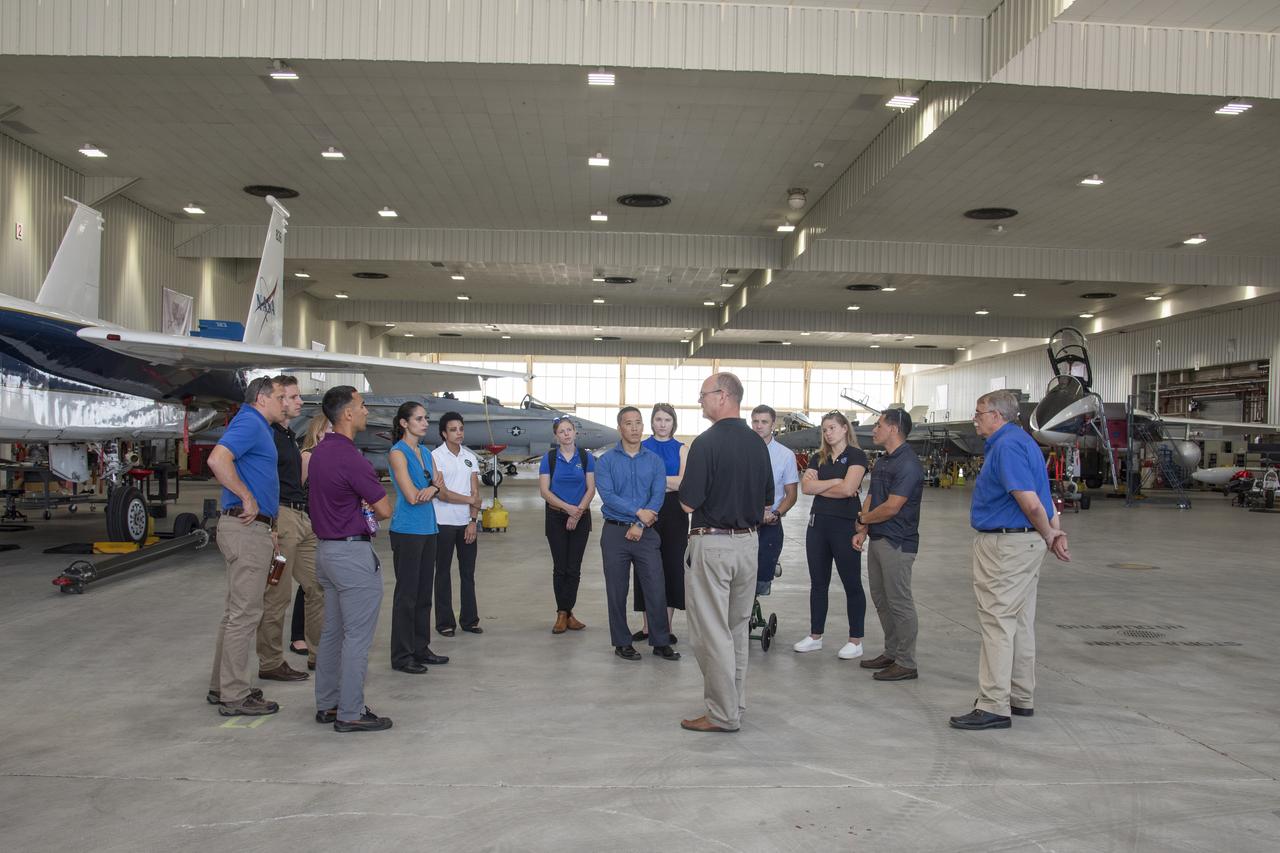
NASA’s 2017 astronaut candidates (L to R) Jessica Watkins, Zena Cardman, Kayla Barron toured aircraft hangar at Armstrong Flight Research Center, in Southern California where they were briefed on the use of Armstrong's F-15 and F-18 aircraft for studying sonic booms.  The aircraft will be used during the development of the low-boom X-59 aircraft that is planned to fly supersonically over land, which is not allowed at this time because of the loud noise created when flying beyond the speed of sound.
Pilot Nils Larsen Speaks to Astronauts on X-59 Research Using Jets
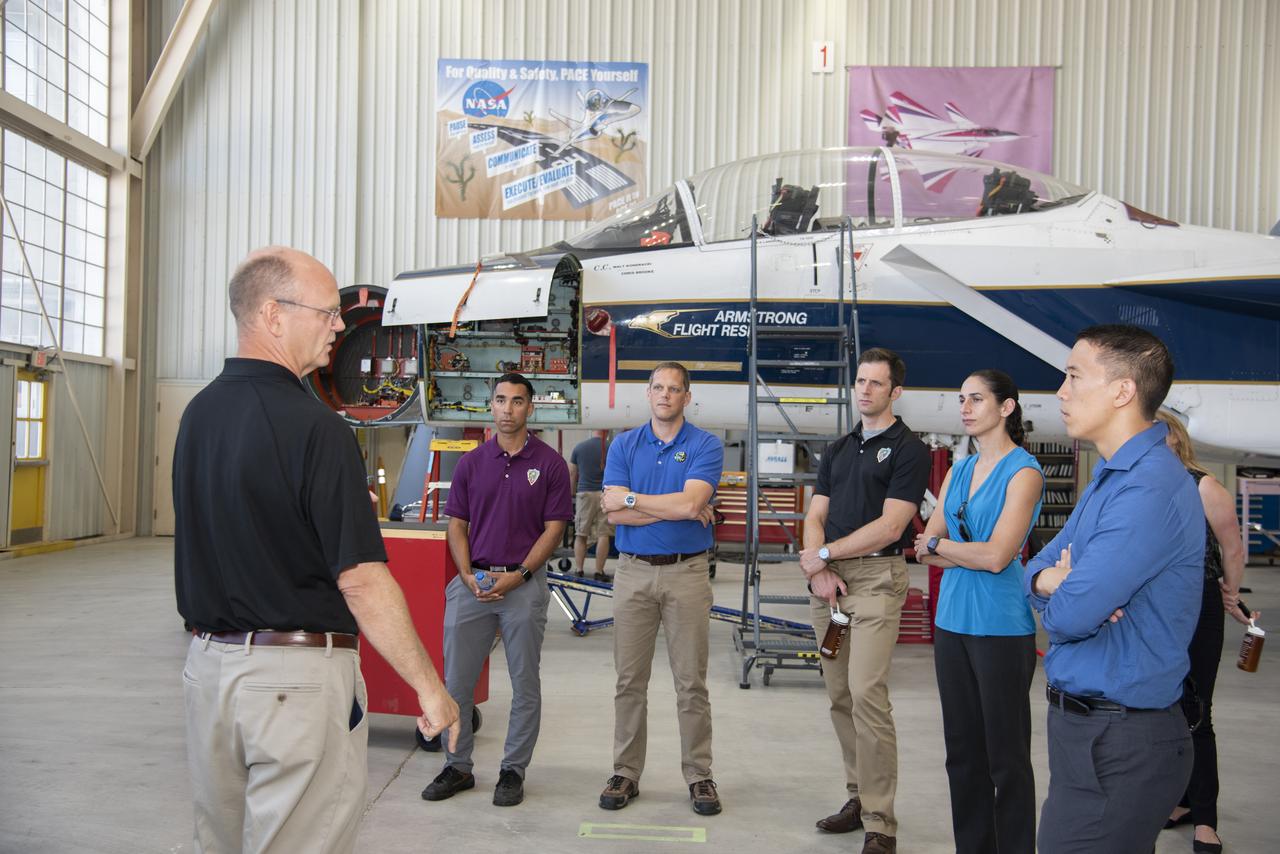
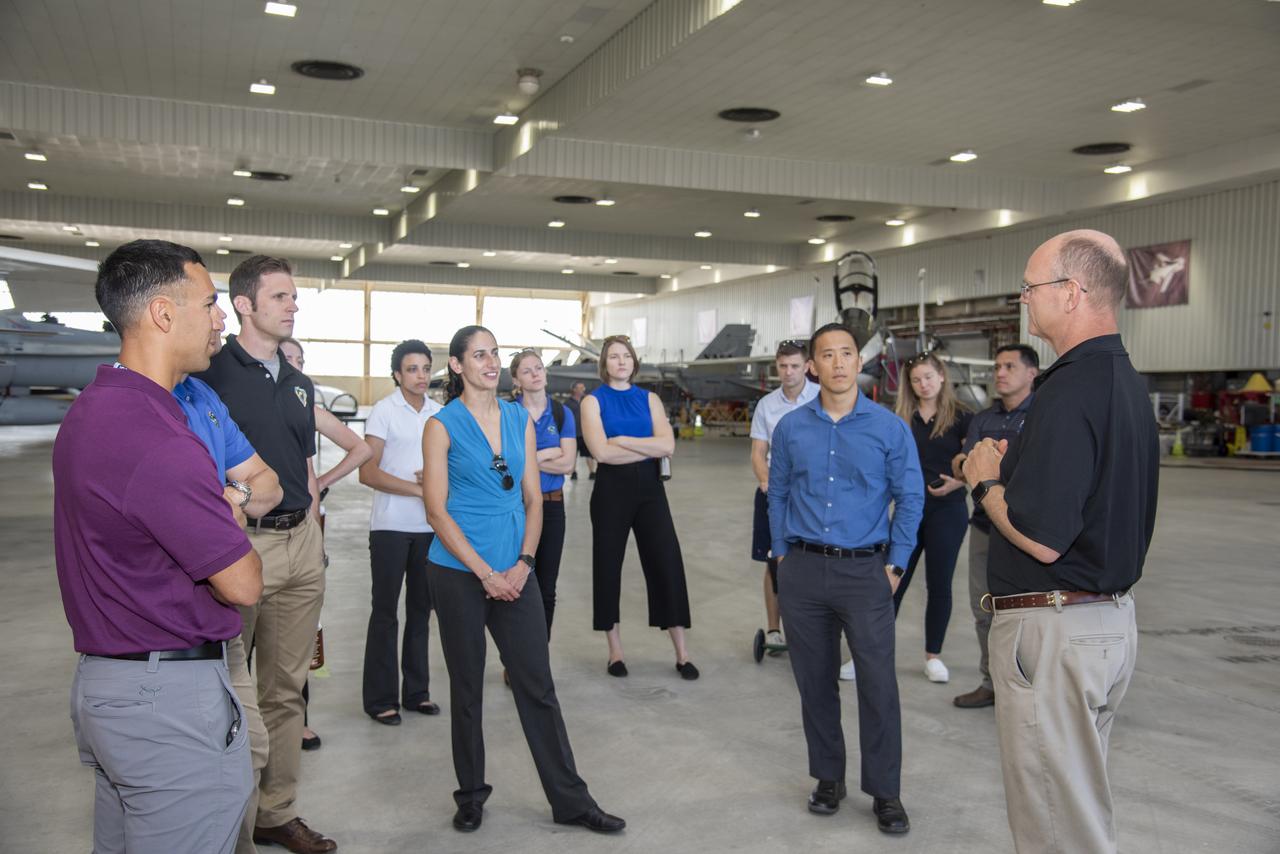
NASA’s 2017 astronaut candidates (L to R) Raja Chari, Bob Hines, Joshua Kutryk, Jasmin Moghbeli, Jonny Kim, and Jessica Watkins toured aircraft hangar at Armstrong Flight Research Center, in Southern California. On the left, NASA’s, X-59 pilot, briefs them on use of F-15 for studying sonic booms during the development of the low-boom X-59 aircraft that is planned to fly supersonically over land.  Low-level supersonic flight is not allowed at this time because of the loud noise levels generated when flying beyond the speed of sound.
Astronauts Tour Aircraft Hangar at Armstrong Flight Research Center
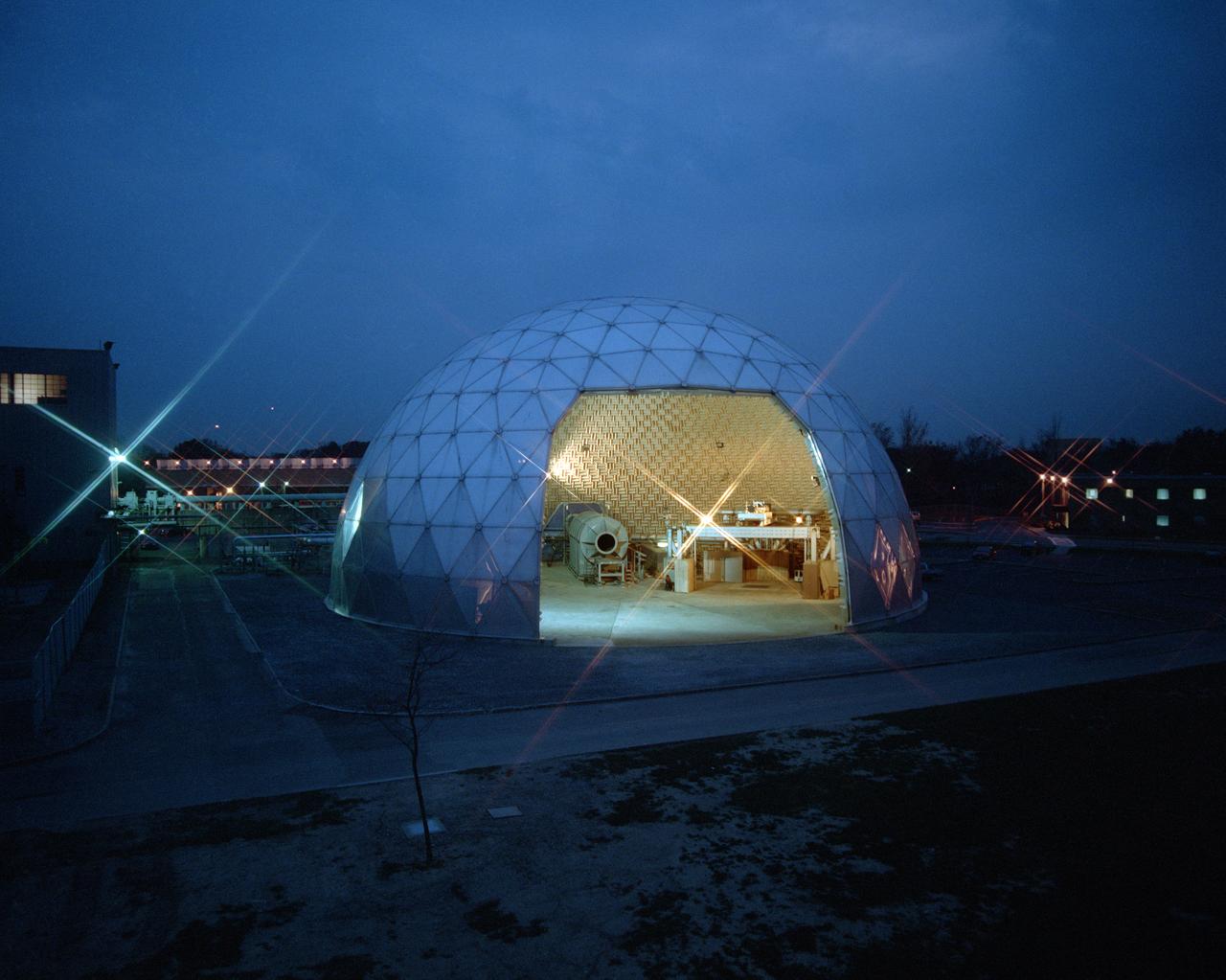
Modern jet engines are loud, but they used to be much louder. NASA’s Glenn Research Center has been at the forefront of the nation’s efforts to reduce aircraft engine noise for over 70 years. During this time, the center has built an array of test facilities to carry out this work, culminating in the Aero-Acoustic Propulsion Laboratory (AAPL), a world-class noise-reduction research facility.  The AAPL, referred to as “the dome,” contains multiple test rigs enclosed in a large, echo-free chamber. The unique 130-foot diameter and 65-foot-high hemispherical structure stands out on Glenn’s campus. Its triangular sections make it appear like a golf ball rising from the ground. The interior is covered in spiky, fiberglass sound-dampening wedges and an overhead array of microphones that capture engine noise data.
Aero-Acoustic Propulsion Laboratory (AAPL). NASA Glenn finished construction of the the Aero-Acoustic Propulsion Facility, a world-class noise-reduction research lab, in 1991.
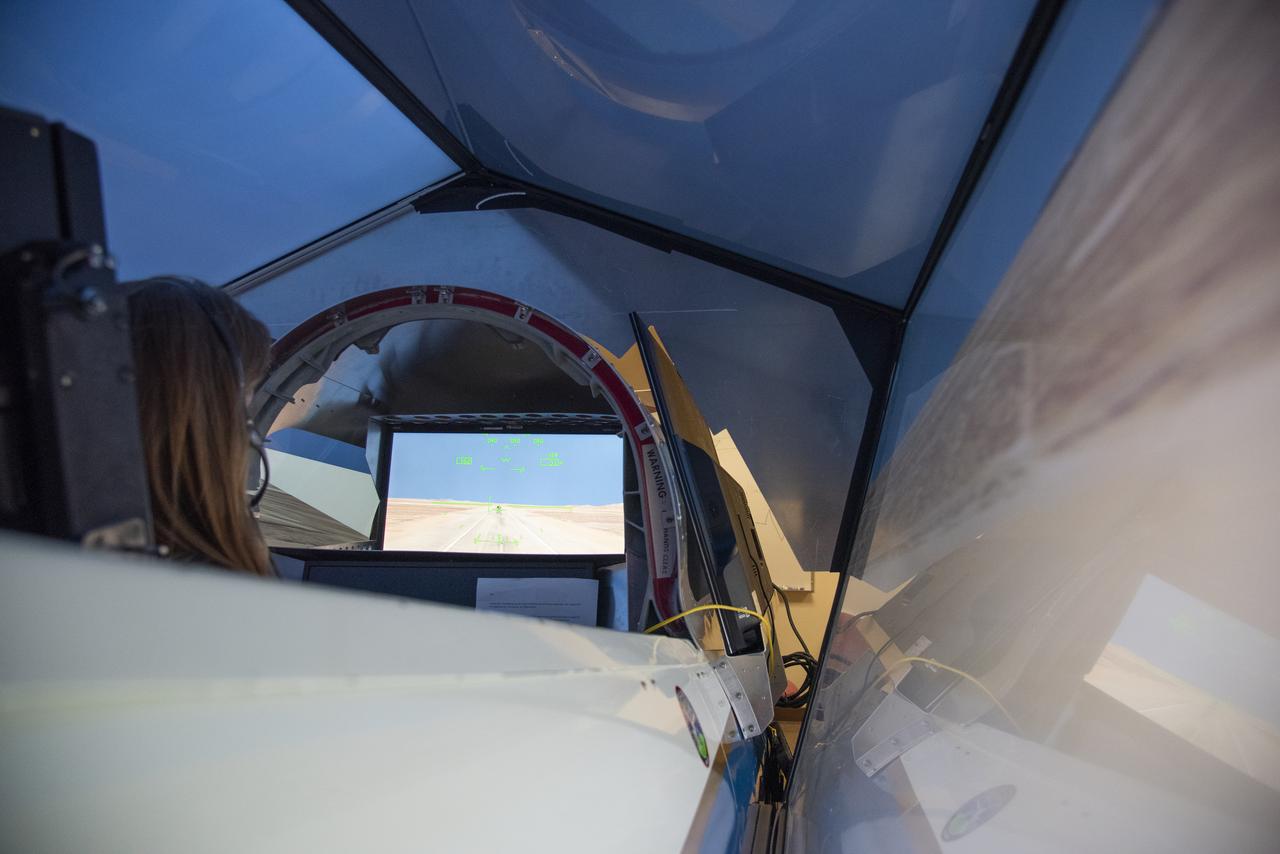
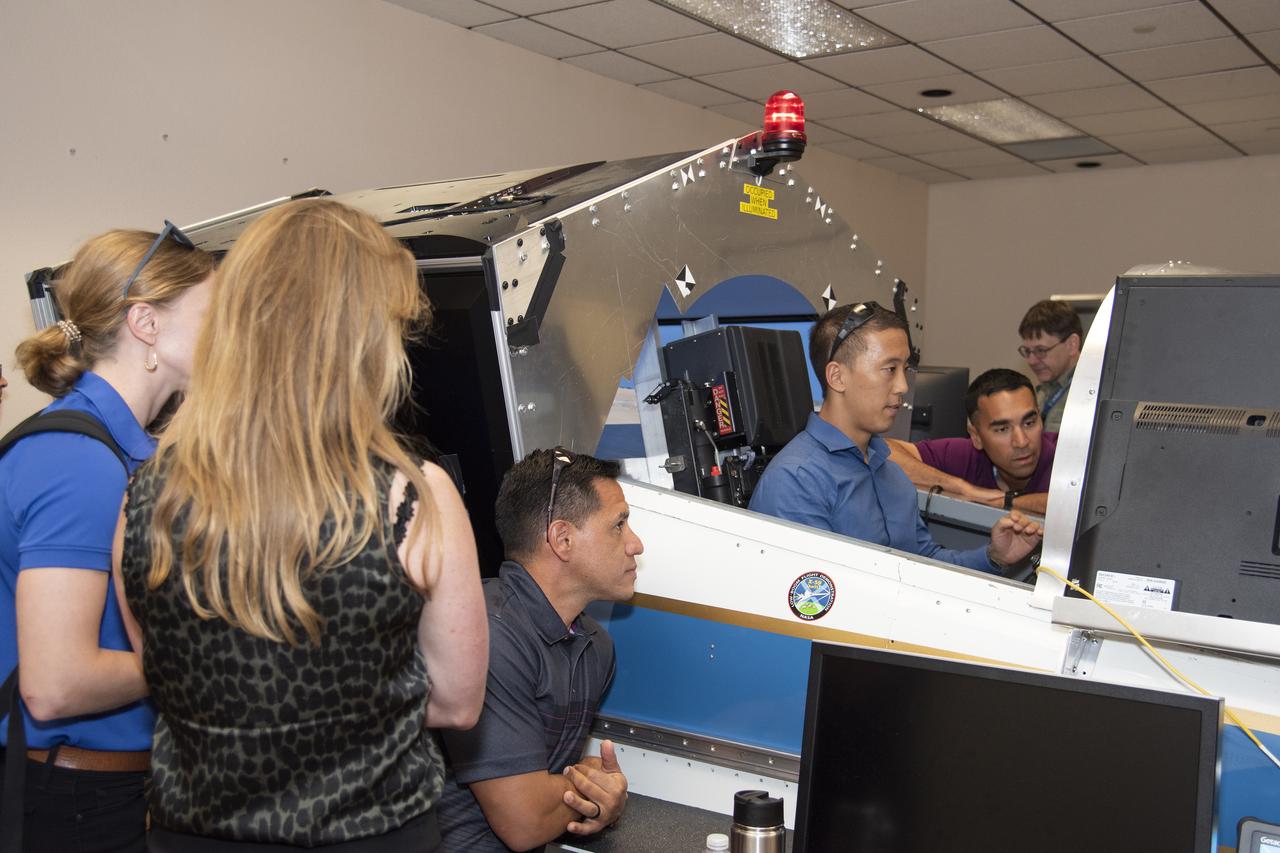
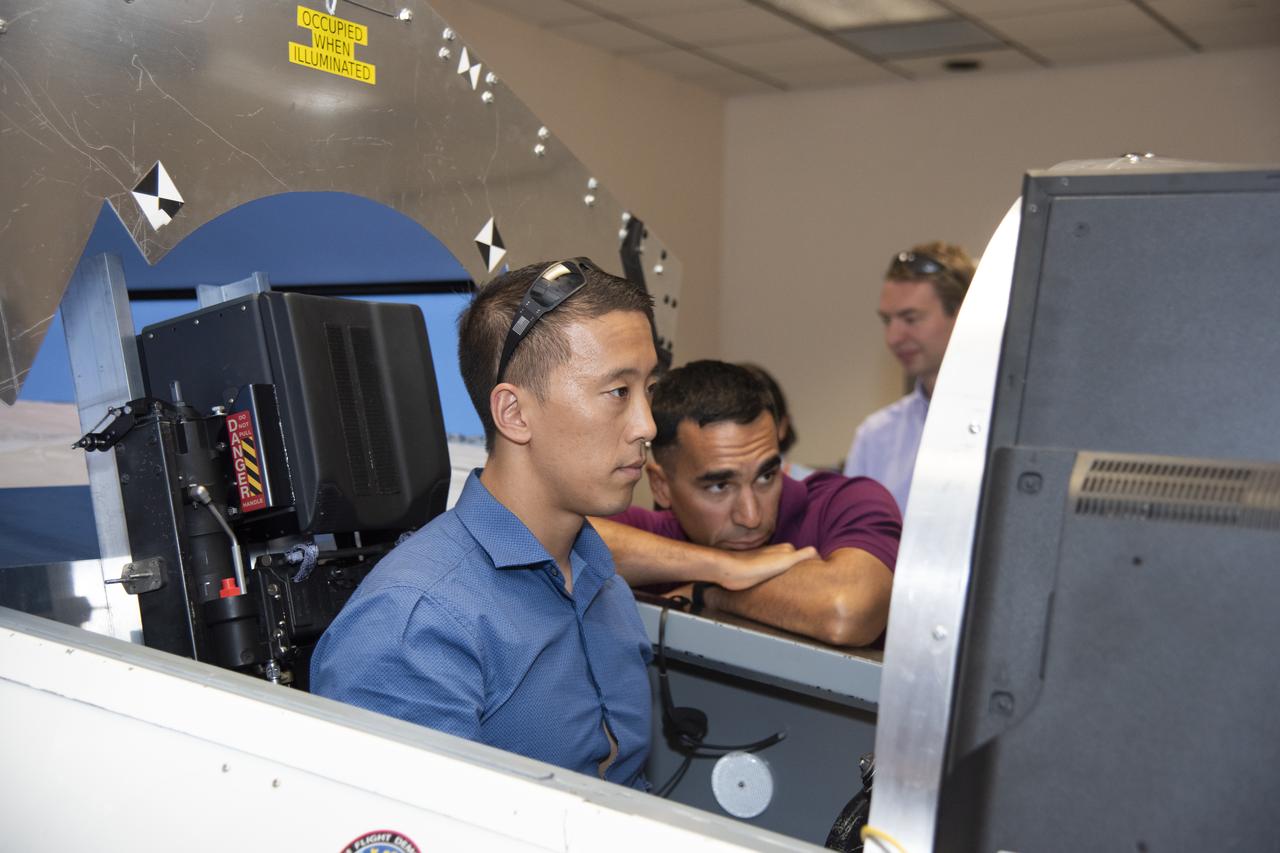
NASA's 2017 astronaut candidates (L to R) Zena Cardman, Loral O'Hara, Frank Rubio, Jonny Kim, Raja Chari practice flying in an X-59 QueSST simulator at Armstrong Flight Research Center, in Southern California. The low boom flight demonstrator, X-59, being built at Lockheed Martin and was designed to fly at supersonic speeds over land without the loud noise of breaking the sound barrier and disturbing communities.
Astronauts Pilot X-59 Simulator at Armstrong Flight Research Center
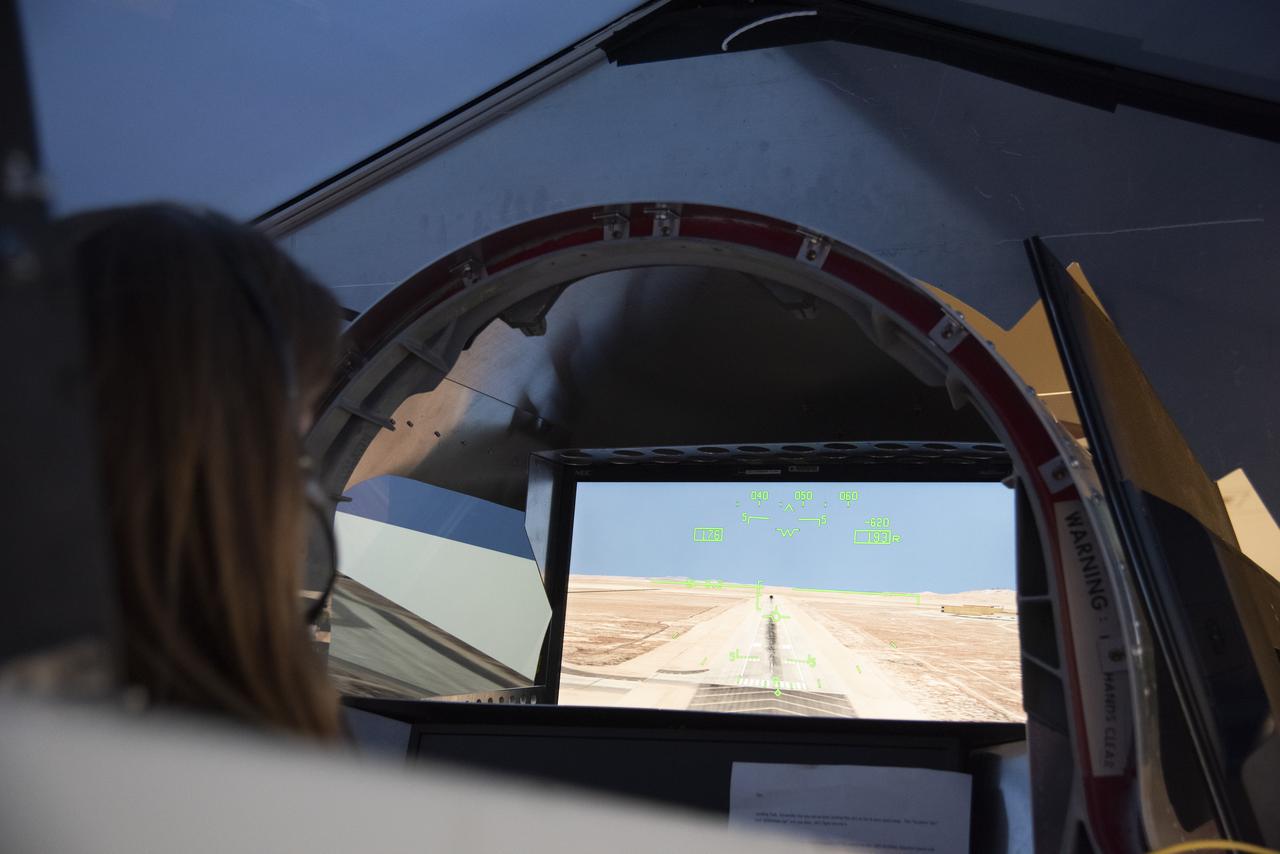
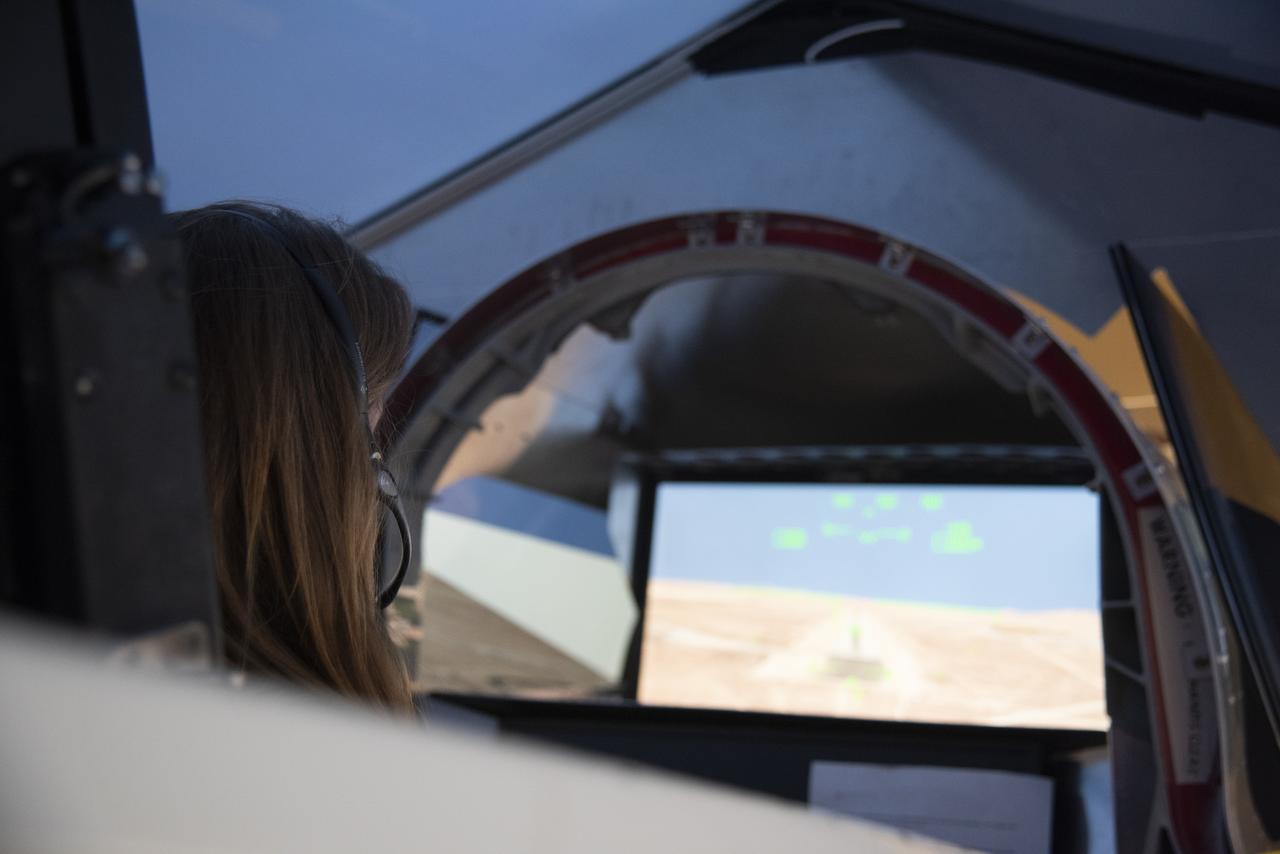
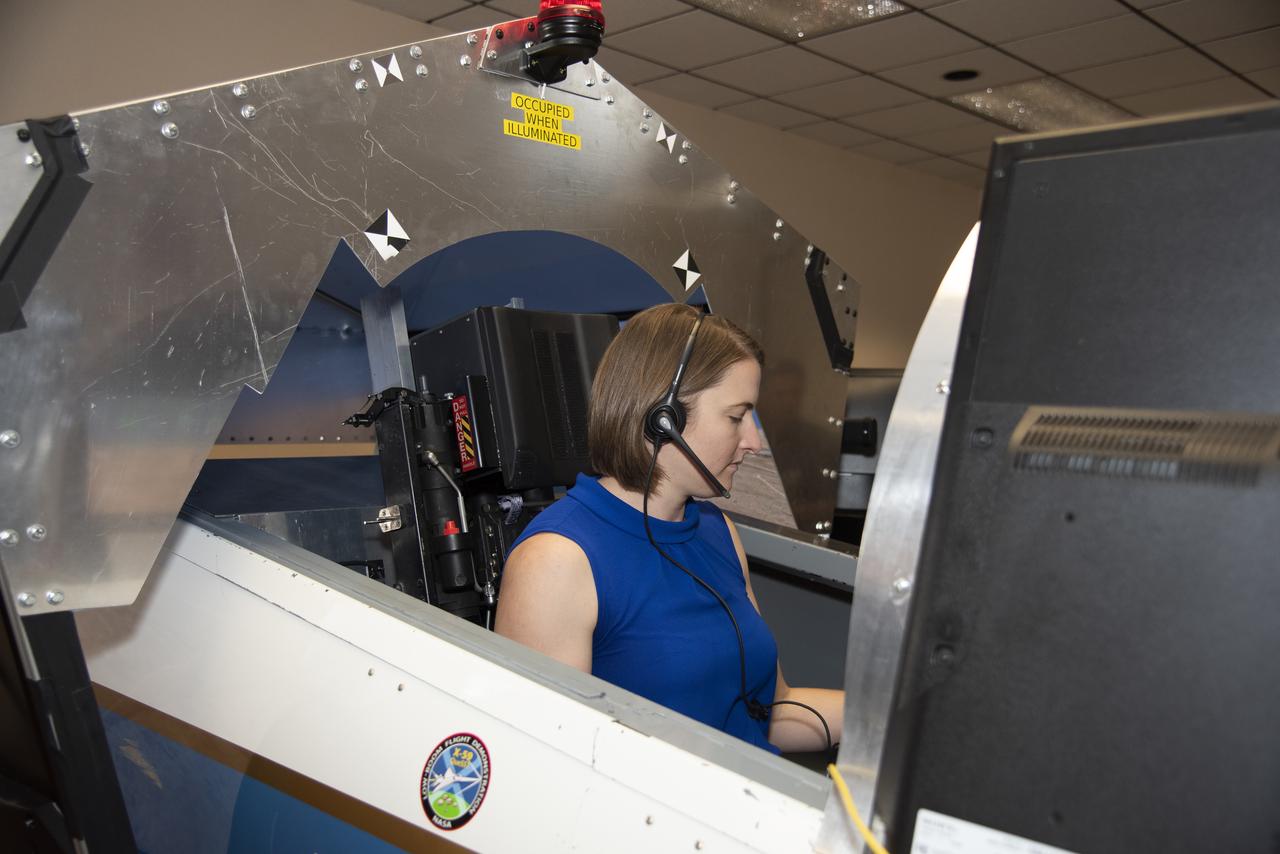
NASA's 2017 astronaut candidate Kayla Barron practices flying in an X-59 QueSST simulator at Armstrong Flight Research Center, in Southern California. The low boom flight demonstrator, X-59, being built at Lockheed Martin and was designed to fly at supersonic speeds over land without the loud noise of breaking the sound barrier and disturbing communities.
Astronaut Pilots X-59 Simulator at Armstrong Flight Research Center
NASA's 2017 astronaut candidate Kayla Barron practices flying in an X-59 QueSST simulator at Armstrong Flight Research Center, in Southern California. The low boom flight demonstrator, X-59, being built at Lockheed Martin and was designed to fly at supersonic speeds over land without the loud noise of breaking the sound barrier and disturbing communities.
Astronaut Pilots X-59 Simulator at Armstrong Flight Research Center
NASA's 2017 astronaut candidate Kayla Barron practices flying in an X-59 QueSST simulator at Armstrong Flight Research Center, in Southern California. The low boom flight demonstrator, X-59, being built at Lockheed Martin and was designed to fly at supersonic speeds over land without the loud noise of breaking the sound barrier and disturbing communities.
Astronaut Pilots X-59 Simulator at Armstrong Flight Research Center
NASA's 2017 astronaut candidate Kayla Barron practices flying in an X-59 QueSST simulator at Armstrong Flight Research Center, in Southern California. The low boom flight demonstrator, X-59, being built at Lockheed Martin and was designed to fly at supersonic speeds over land without the loud noise of breaking the sound barrier and disturbing communities.
Astronaut Pilots X-59 Simulator at Armstrong Flight Research Center
NASA’s 2017 astronaut candidates (L to R)  Jonny Kim and Raja Chari practice flying in an X-59 QueSST simulator at Armstrong Flight Research Center, in Southern California. The low boom flight demonstrator, X-59, being built at Lockheed Martin and was designed to supersonically over land without the loud noise of breaking the sound barrier and disturbing communities.
Astronauts Pilot X-59 Simulator at Armstrong Flight Research Center
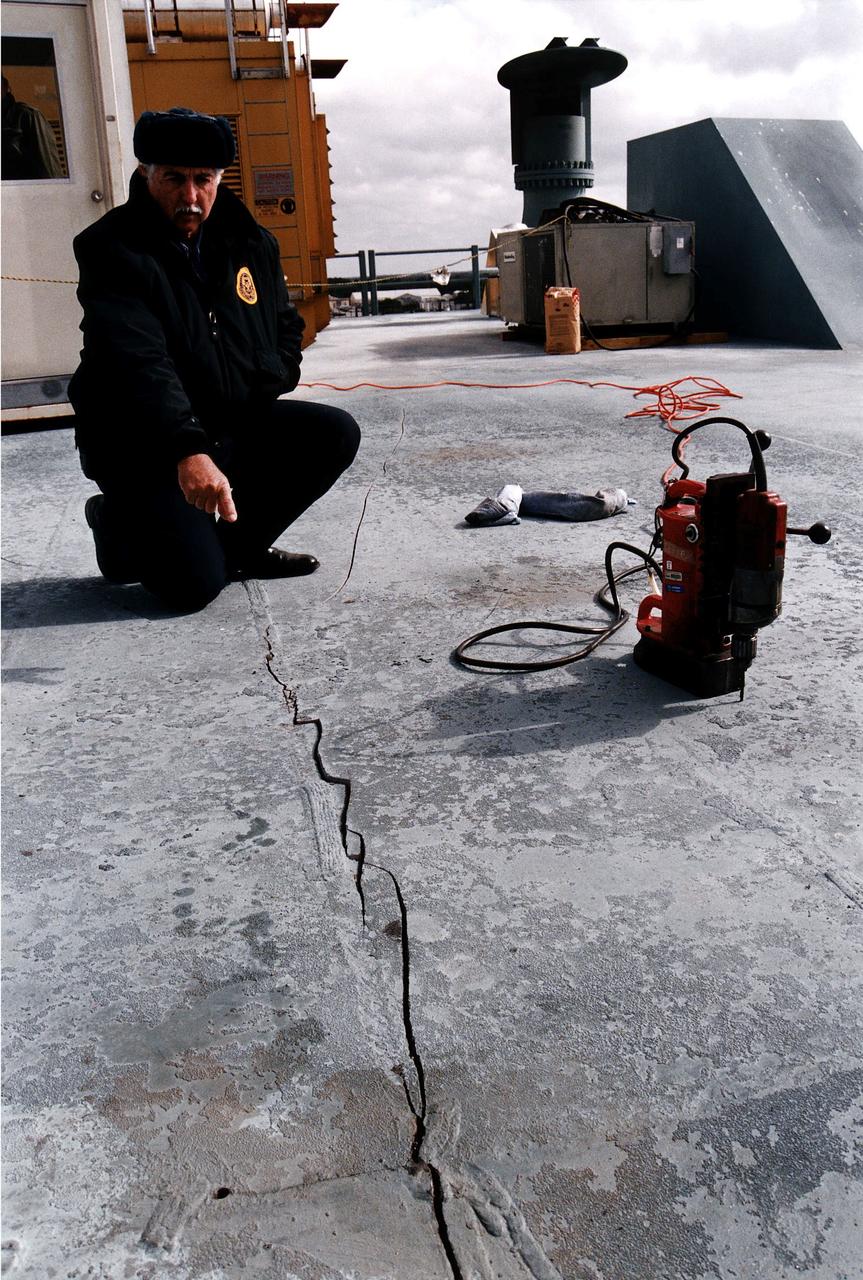
KENNEDY SPACE CENTER, FLA. -  Robert T. Nelson of KSC Security points to an approximately 24-foot-long crack on the Mobile Launcher Platform (MLP), which is holding the Space Shuttle Discovery en route to Launch Pad 39A for the STS-82 mission.  Nelson was riding on the MLP when he heard a loud noise and noticed the crack.  Rollout had begun shortly after 7 a.m. EST and was stopped at about 8:25 a.m.  This Y-shaped crack is on the MLP surface and runs from near the left-hand solid rocket booster flame hole toward the near corner of the MLP.  Rollout of Discovery resumed just past noon after structural engineers determined that the integrity of the MLP had not been compromised.  Discovery is scheduled to lift off on the second Hubble Space Telescope servicing mission on Feb. 11.
KENNEDY SPACE CENTER, FLA. - Robert T. Nelson of KSC Security points to an approximately 24-foot-long crack on the Mobile Launcher Platform (MLP), which is holding the Space Shuttle Discovery en route to Launch Pad 39A for the STS-82 mission. Nelson was riding on the MLP when he heard a loud noise and noticed the crack. Rollout had begun shortly after 7 a.m. EST and was stopped at about 8:25 a.m. This Y-shaped crack is on the MLP surface and runs from near the left-hand solid rocket booster flame hole toward the near corner of the MLP. Rollout of Discovery resumed just past noon after structural engineers determined that the integrity of the MLP had not been compromised. Discovery is scheduled to lift off on the second Hubble Space Telescope servicing mission on Feb. 11.
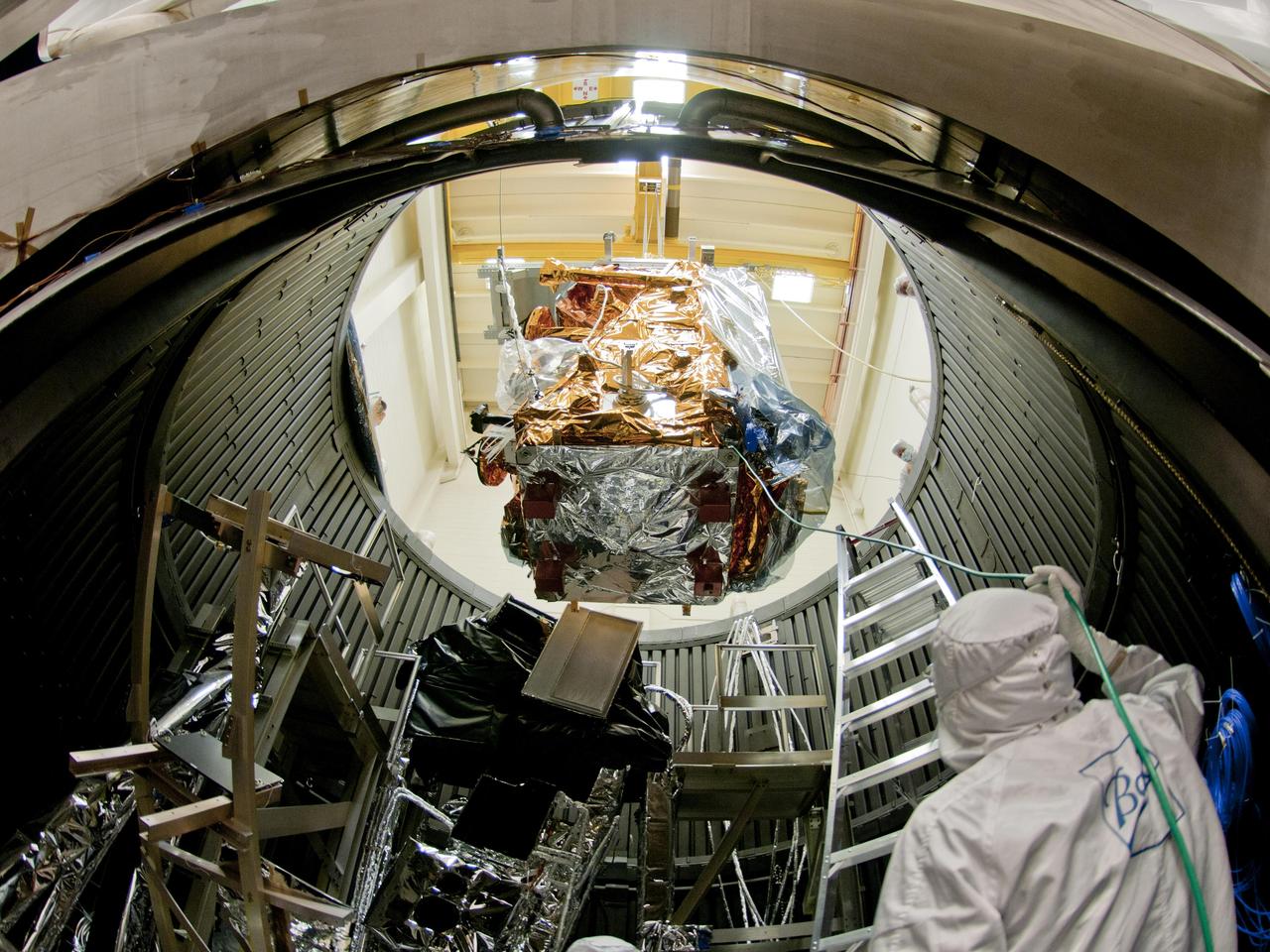
NPP is lowered into the thermal vacuum chamber. Once inside the Iron Maiden (visible in the lower left) is fitted in place. Then air is pumped out of the chamber and temperature extremes are applied to replicate orbit conditions.   Credit: Ball Aerospace  The NPP satellite sits surrounded by 144 rock concert speakers. They're stacked in a circle 16 feet high in a testing room at Ball Aerospace in Boulder, Colorado.   As engineers set up for the environmental test, Pink Floyd's song &quot;Money&quot; plays gently in the background. The music stops. The room clears. Then the sound engineer wearing earplugs and headphones in the control room next door flips a switch.   Slowly, the noise of thousands of pounds of exploding rocket fuel builds louder and louder until it blasts the satellite at a deafening 143.6 decibels -- loud enough to cause serious damage and pain to unprotected ears. &quot;I was outside the building when they did the full level acoustics,&quot; says Glenn Iona, NPP Chief Engineer at NASA Goddard Space Flight Center, Greenbelt, Md. &quot;and I could feel the ground shaking.&quot;   To read more go to: <a href="http://www.nasa.gov/mission_pages/NPP/news/npp-testing.html" rel="nofollow">www.nasa.gov/mission_pages/NPP/news/npp-testing.html</a>  <b><a href="http://www.nasa.gov/centers/goddard/home/index.html" rel="nofollow">NASA Goddard Space Flight Center</a></b> enables NASA’s mission through four scientific endeavors: Earth Science, Heliophysics, Solar System Exploration, and Astrophysics. Goddard plays a leading role in NASA’s accomplishments by contributing compelling scientific knowledge to advance the Agency’s mission.  <b>Follow us on <a href="http://twitter.com/NASA_GoddardPix" rel="nofollow">Twitter</a></b>  <b>Like us on <a href="http://www.facebook.com/pages/Greenbelt-MD/NASA-Goddard/395013845897?ref=tsd" rel="nofollow">Facebook</a></b>  <b>Find us on <a href="http://web.stagram.com/n/nasagoddard/?vm=grid" rel="nofollow">Instagram</a></b>
NPP Runs the Gauntlet of Environmental Testing
NASA's 2017 astronaut candidates toured aircraft hangar at Armstrong Flight Research Center, in Southern California. On the right, NASA's, X-59 pilot Nils Larsen, briefs the astronauts as they look at Armstrong's fleet of supersonic research support aircraft, including the F-15, which will fly in tandem with the X-59 QueSST during early flight test stages, and the F-18, which is conducting supersonic research in support of the overall mission.
Pilot Nils Larsen Speaks to Astronauts on X-59 Research Using Jets
NASA’s 2017 astronaut candidates toured aircraft hangar at Armstrong Flight Research Center, in Southern California. On the right, NASA’s, X-59 pilot Nils Larsen, briefs the astronauts as they look at Armstrong’s fleet of supersonic research support aircraft, including the F-15, which will fly in tandem with the X-59 QueSST during early flight test stages, and the F-18, which is conducting supersonic research in support of the overall mission.
Pilot Nils Larsen Speaks to Astronauts on X-59 Research Using Jets
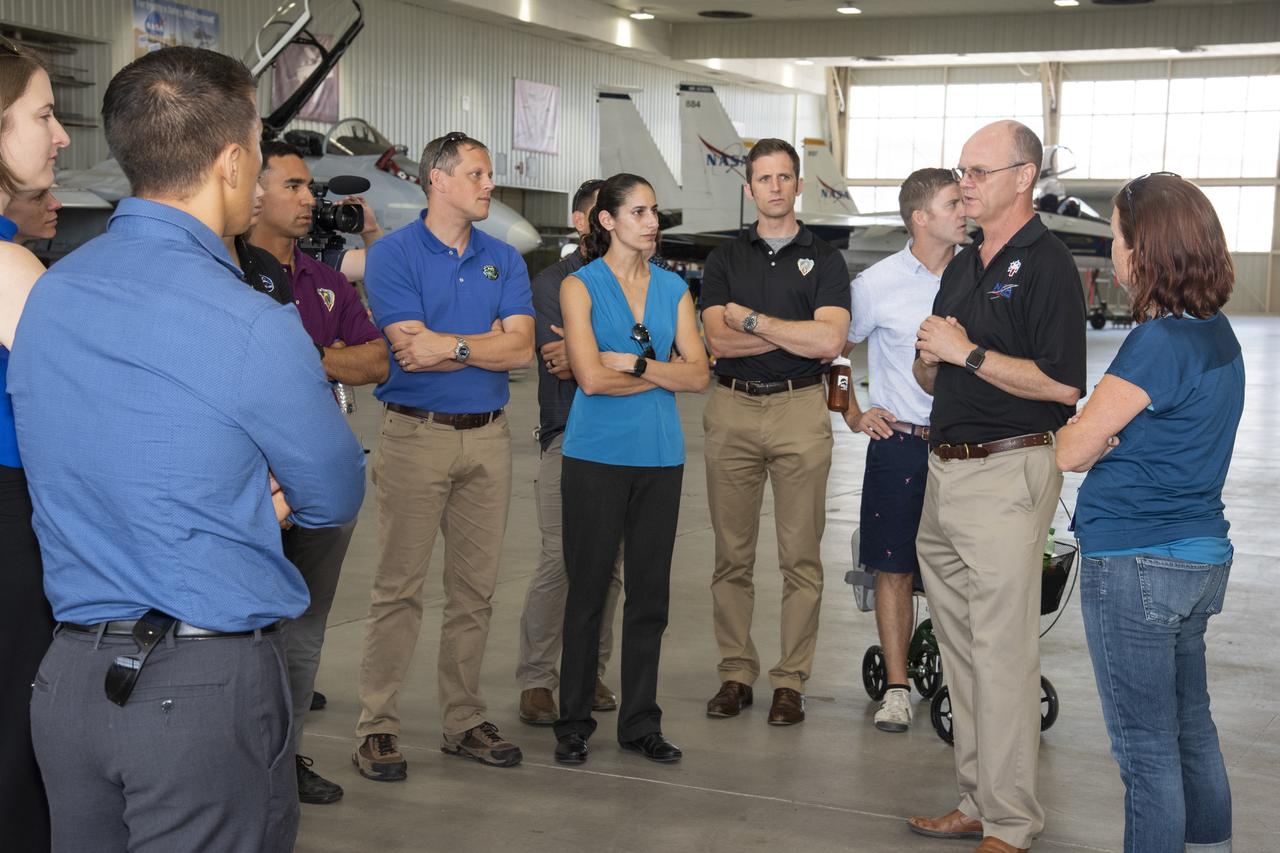
NASA's 2017 astronaut candidates toured aircraft hangar at Armstrong Flight Research Center, in Southern California. On the right, NASA's, X-59 pilot Nils Larsen, briefs the astronauts as they look at Armstrong's fleet of supersonic research support aircraft, including the F-15, which will fly in tandem with the X-59 QueSST during early flight test stages, and the F-18, which is conducting supersonic research in support of the overall mission.
Pilot Nils Larsen Speaks to Astronauts on X-59 Research Using Jets