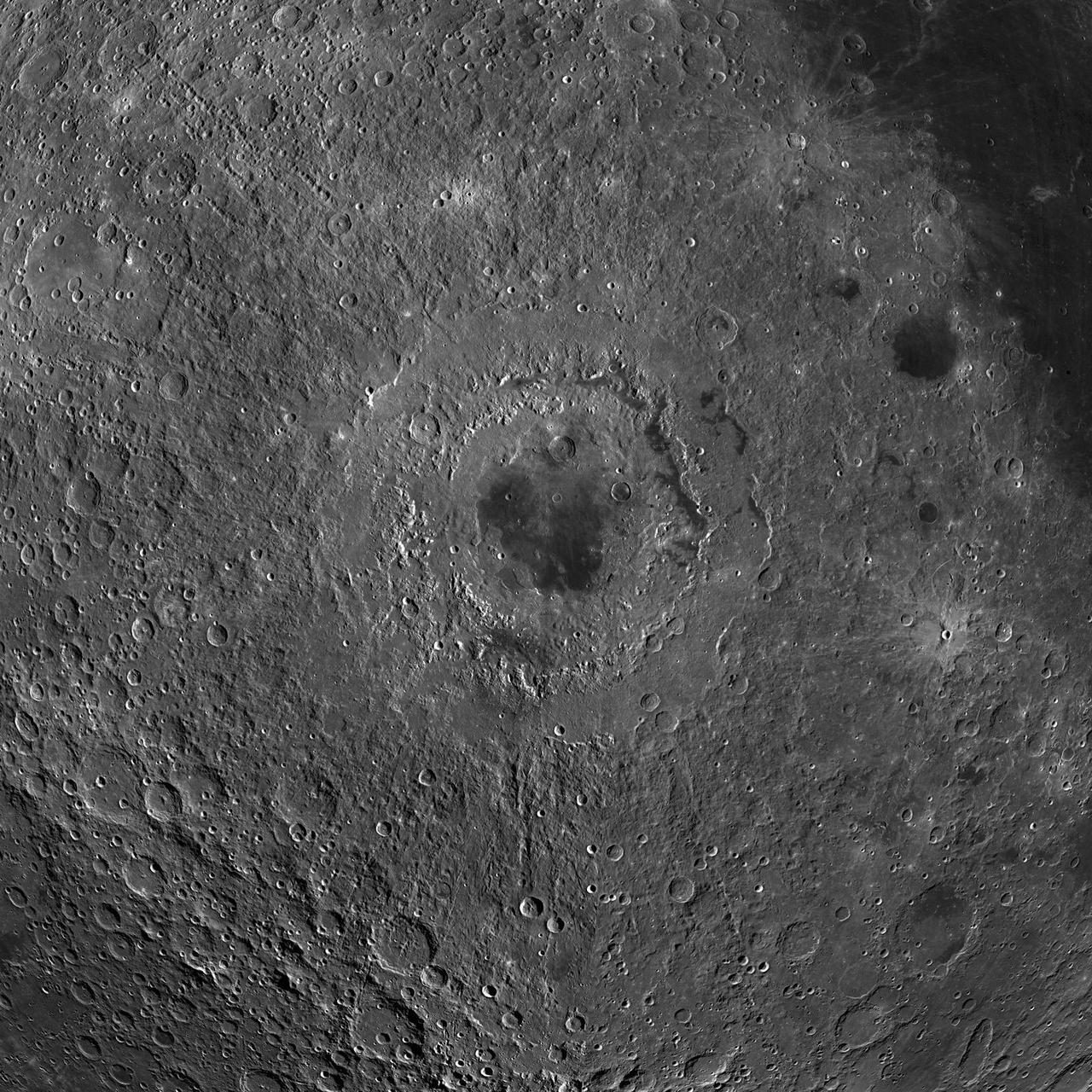
LROC PDS Release Number 5

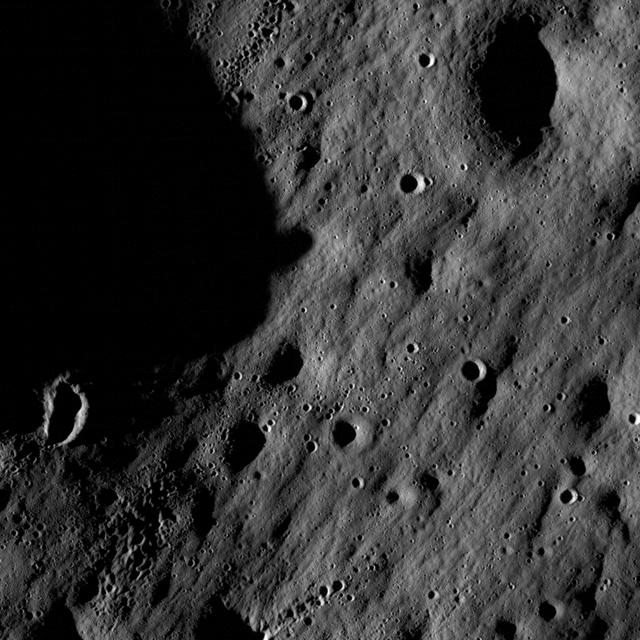
Full resolution detail from one of the first LROC NAC images. At this scale and lighting, impact craters dominate the landscape.

LROC Wide Angle Camera WAC visible to ultraviolet portrait of Copernicus crater
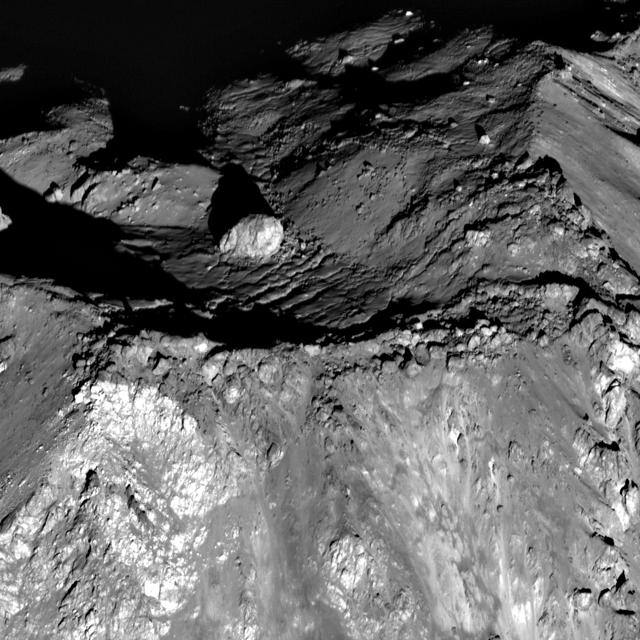
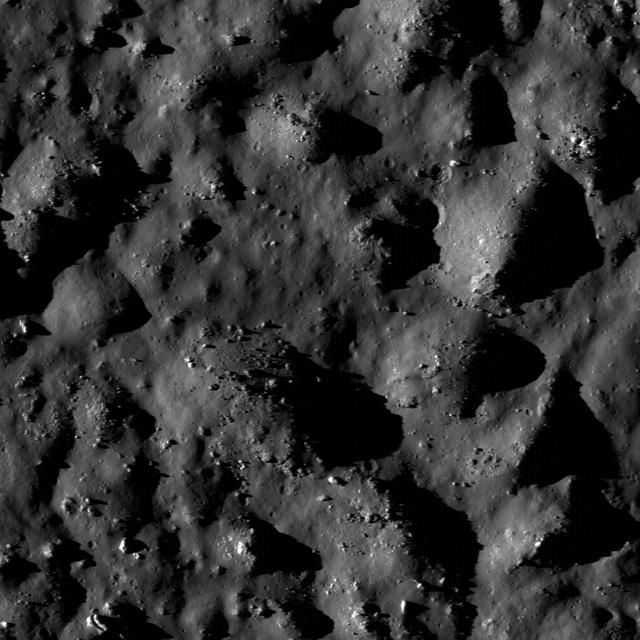
From NASA's Lunar Reconnaissance Orbiter Camera (LROC) an oblique view of summit area of Tycho crater central peak. The boulder in the background is 120 meters wide, and the image is about 1200 meters wide. LROC NAC M162350671L,R NASA/GSFC/Arizona State University <b><a href="http://www.nasa.gov/centers/goddard/home/index.html" rel="nofollow">NASA Goddard Space Flight Center</a></b> enables NASA’s mission through four scientific endeavors: Earth Science, Heliophysics, Solar System Exploration, and Astrophysics. Goddard plays a leading role in NASA’s accomplishments by contributing compelling scientific knowledge to advance the Agency’s mission. <b>Follow us on <a href="http://twitter.com/NASA_GoddardPix" rel="nofollow">Twitter</a></b> <b>Like us on <a href="http://www.facebook.com/pages/Greenbelt-MD/NASA-Goddard/395013845897?ref=tsd" rel="nofollow">Facebook</a></b> <b>Find us on <a href="http://web.stagram.com/n/nasagoddard/?vm=grid" rel="nofollow">Instagram</a></b>
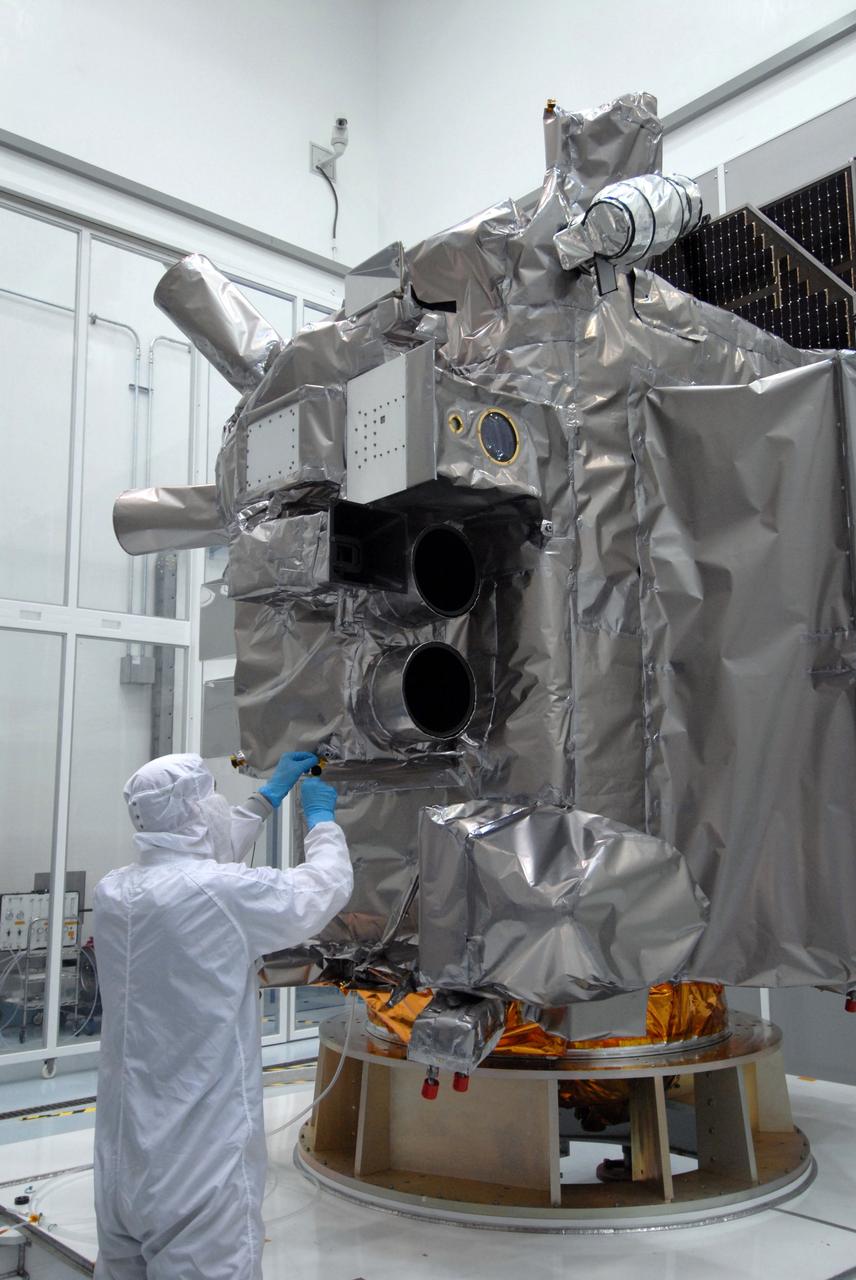
CAPE CANAVERAL, Fla. – At Astrotech Space Operations in Titusville, Fla., a technician checks the thermal blanket around the LROC narrow angle camera during closeout on the Lunar Reconnaissance Orbiter, or LRO, before its mating with NASA's Lunar CRater Observation and Sensing Satellite, known as LCROSS, spacecraft. Above the LROC is the LOLA, which will provide a precise global lunar topographic model and geodetic grid; and top right, the DIVINER, which will measure lunar surface temperatures at scales that provide essential information for future surface operations and exploration. The satellite's primary mission is to search for water ice on the moon in a permanently shadowed crater near one of the lunar poles. LCROSS is a low-cost, accelerated-development, companion mission to NASA's Lunar Reconnaissance Orbiter, or LRO. LCROSS and LRO are the first missions in NASA's plan to return humans to the moon and begin establishing a lunar outpost by 2020. Launch is targeted for no earlier than June 2 from Cape Canaveral Air Force Station in Florida. Photo credit: NASA/Jack Pfaller
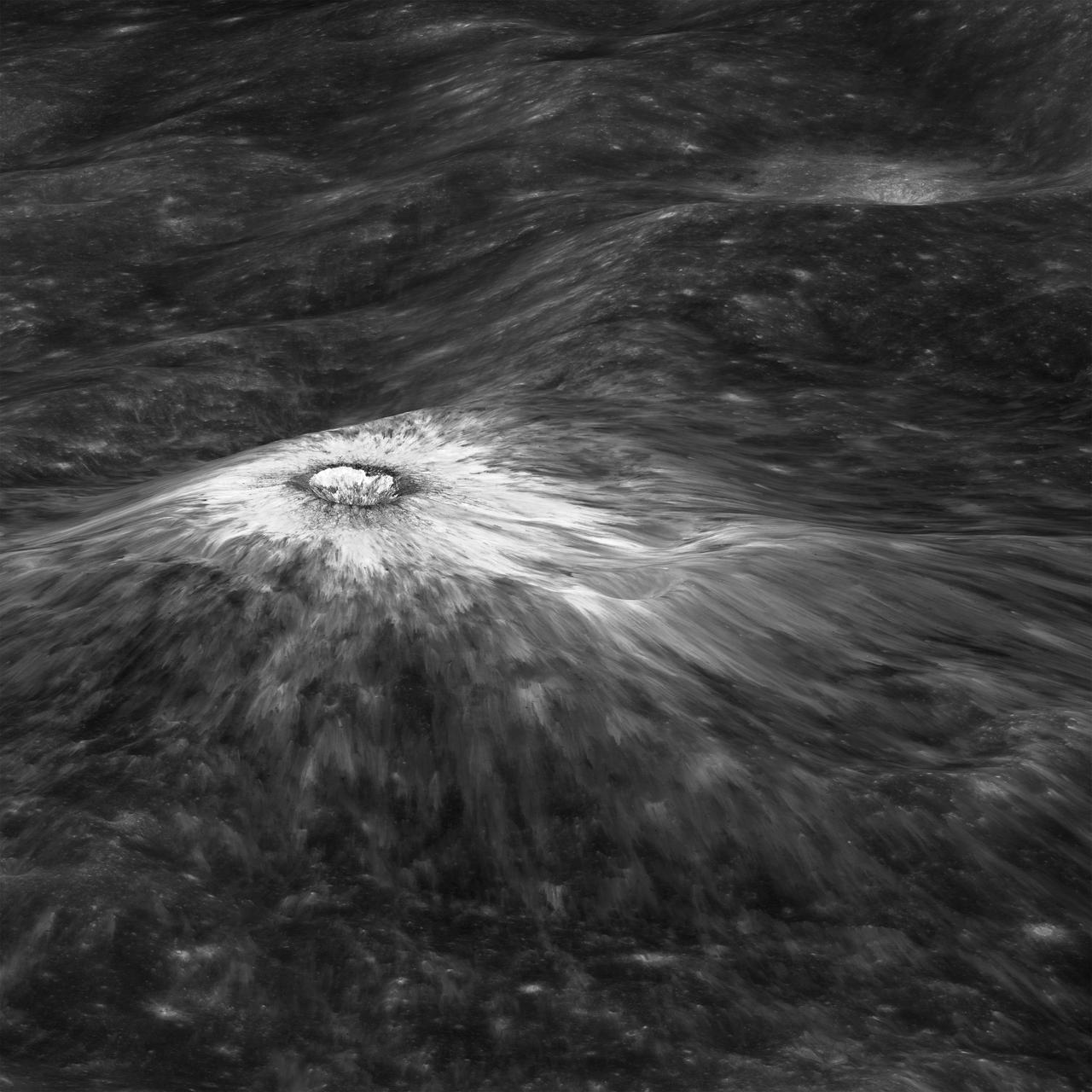
Looking east to west across the rim and down into Chaplygin crater reveals this beautiful example of a fresh young crater and its perfectly preserved ejecta blanket. The delicate patterns of flow across, over, and down local topography clearly show that ejecta traveled as a ground hugging flow for great distances, rather than simply being tossed out on a ballistic trajectory. Very near the rim lies a dark, lacy, discontinuous crust of now frozen impact melt. Clearly this dark material is on top of the bright material so it was the very last material ejected from the crater. The melt was formed as the tremendous energy of impact was converted to heat and the lunar crust was melted at the impact point. As the crater rebounded and material sloughed down the walls of the deforming crater the melt was splashed out over the rim and froze. Its low reflectance is mostly due to a high percentage of glass because the melt cooled so quickly that minerals did not have time to crystallize. The fact that the delicate splash patterns are so well preserved testifies to the very young age of this crater. But how young? For comparison "Chappy" (informal name) is 200 m larger than Meteor crater (1200 m diameter) in Arizona, which is about 50,000 years old. Craters of this size form every 100,000 years or so on the Moon and the Earth. Since there are very few superposed craters on Chappy, and its ejecta is so perfectly preserved it may be much younger than Meteor crater. However, we can't know the true true absolute age of "Chappy" until we can obtain a sample of its impact melt for radiometric age dating. Credit: NASA/Goddard/Arizona State University/LRO/LROC
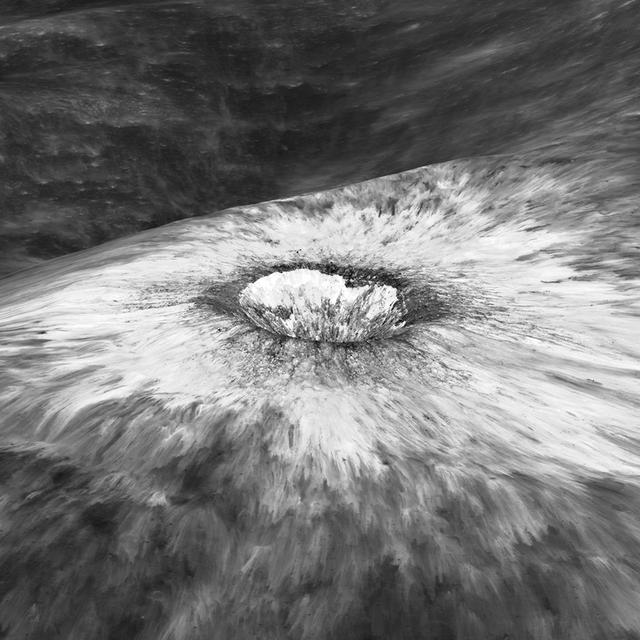
Looking east to west across the rim and down into Chaplygin crater reveals this beautiful example of a fresh young crater and its perfectly preserved ejecta blanket. The delicate patterns of flow across, over, and down local topography clearly show that ejecta traveled as a ground hugging flow for great distances, rather than simply being tossed out on a ballistic trajectory. Very near the rim lies a dark, lacy, discontinuous crust of now frozen impact melt. Clearly this dark material is on top of the bright material so it was the very last material ejected from the crater. The melt was formed as the tremendous energy of impact was converted to heat and the lunar crust was melted at the impact point. As the crater rebounded and material sloughed down the walls of the deforming crater the melt was splashed out over the rim and froze. Its low reflectance is mostly due to a high percentage of glass because the melt cooled so quickly that minerals did not have time to crystallize. The fact that the delicate splash patterns are so well preserved testifies to the very young age of this crater. But how young? For comparison "Chappy" (informal name) is 200 m larger than Meteor crater (1200 m diameter) in Arizona, which is about 50,000 years old. Craters of this size form every 100,000 years or so on the Moon and the Earth. Since there are very few superposed craters on Chappy, and its ejecta is so perfectly preserved it may be much younger than Meteor crater. However, we can't know the true true absolute age of "Chappy" until we can obtain a sample of its impact melt for radiometric age dating. Credit: NASA/Goddard/Arizona State University/LRO/LROC
![These images show cratered regions near the moon's Mare Nubium region, as photographed by the Lunar Reconnaissance Orbiter's LROC instrument. Each image shows a region 1,400 meters (0.87 miles) wide. the bottoms of both images face lunar north. The image below shows the location of these two images in relation to each other. [Locator Image] Credit: NASA/Goddard Space Flight Center/Arizona State University](https://images-assets.nasa.gov/image/GSFC_20171208_Archive_e002222/GSFC_20171208_Archive_e002222~thumb.jpg)
These images show cratered regions near the moon's Mare Nubium region, as photographed by the Lunar Reconnaissance Orbiter's LROC instrument. Each image shows a region 1,400 meters (0.87 miles) wide. the bottoms of both images face lunar north. The image below shows the location of these two images in relation to each other. [Locator Image] Credit: NASA/Goddard Space Flight Center/Arizona State University
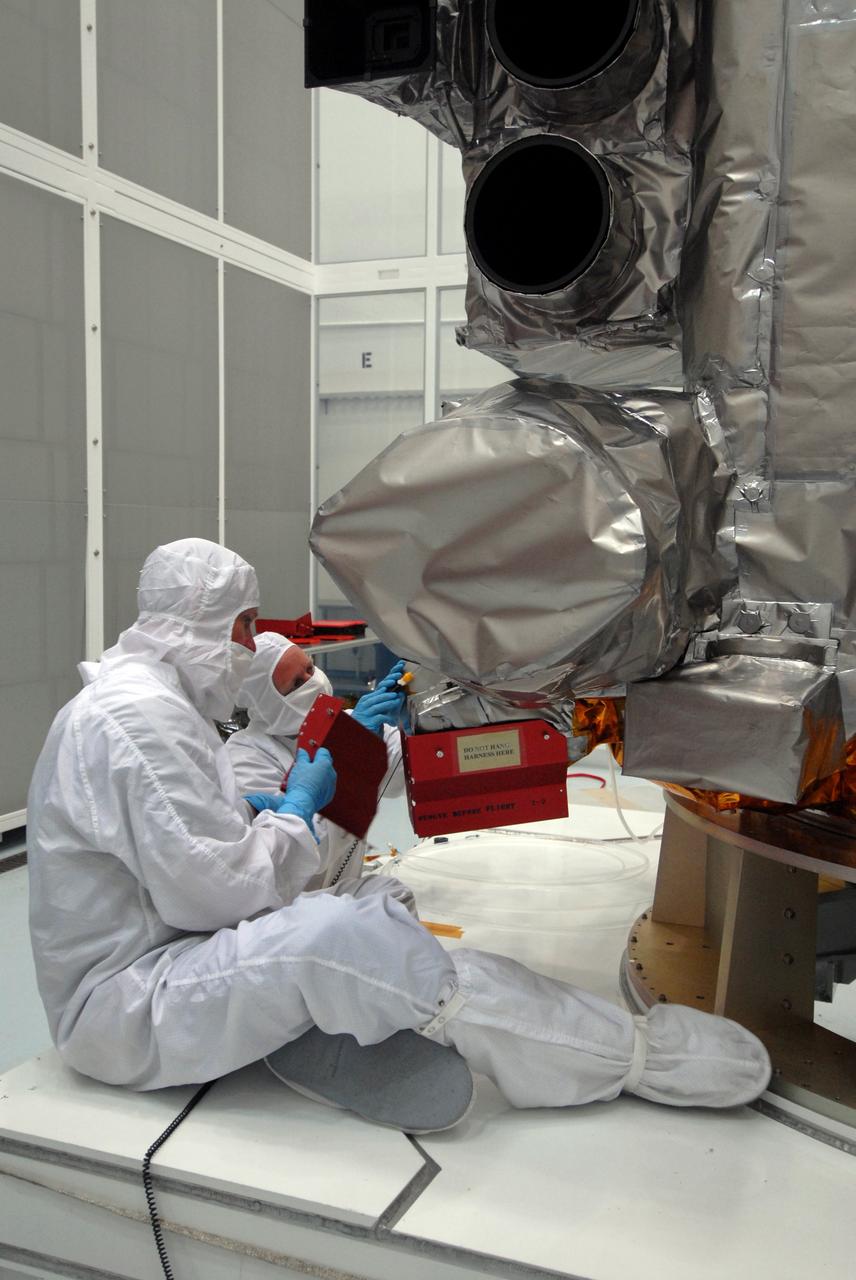
CAPE CANAVERAL, Fla. – At Astrotech Space Operations in Titusville, Fla., technicians remove red-tag items from the Lunar Reconnaissance Orbiter, or LRO, before flight. The LRO will be mated with NASA's Lunar CRater Observation and Sensing Satellite, known as LCROSS, spacecraft. Instruments on the LRO seen here are the LEND (bottom) that will measure the flux of neutrons from the moon and the LROC (above it), a narrow angle camera that will provide panchromatic images. The satellite's primary mission is to search for water ice on the moon in a permanently shadowed crater near one of the lunar poles. LCROSS is a low-cost, accelerated-development, companion mission to NASA's Lunar Reconnaissance Orbiter, or LRO. LCROSS and LRO are the first missions in NASA's plan to return humans to the moon and begin establishing a lunar outpost by 2020. Launch is targeted for no earlier than June 2 from Cape Canaveral Air Force Station in Florida. Photo credit: NASA/Jack Pfaller
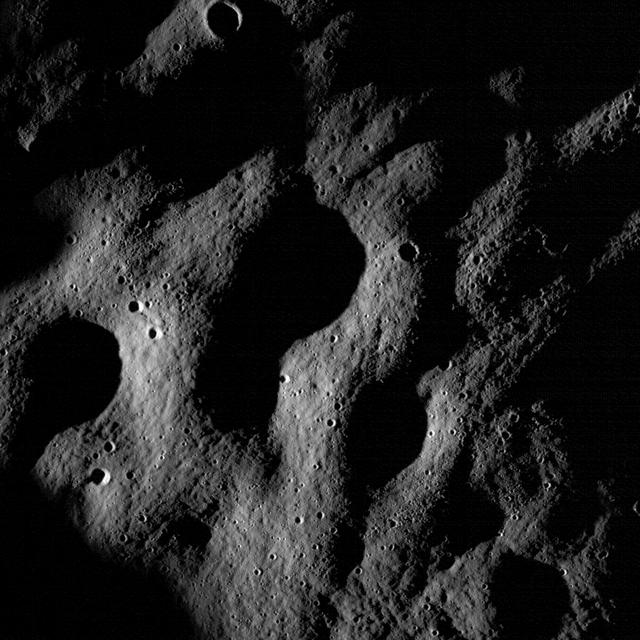
These images show cratered regions near the moon's Mare Nubium region, as photographed by the Lunar Reconnaissance Orbiter's LROC instrument. Each image shows a region 1,400 meters (0.87 miles) wide. the bottoms of both images face lunar north. The image below shows the location of these two images in relation to each other. Credit: NASA/Goddard Space Flight Center/Arizona State University
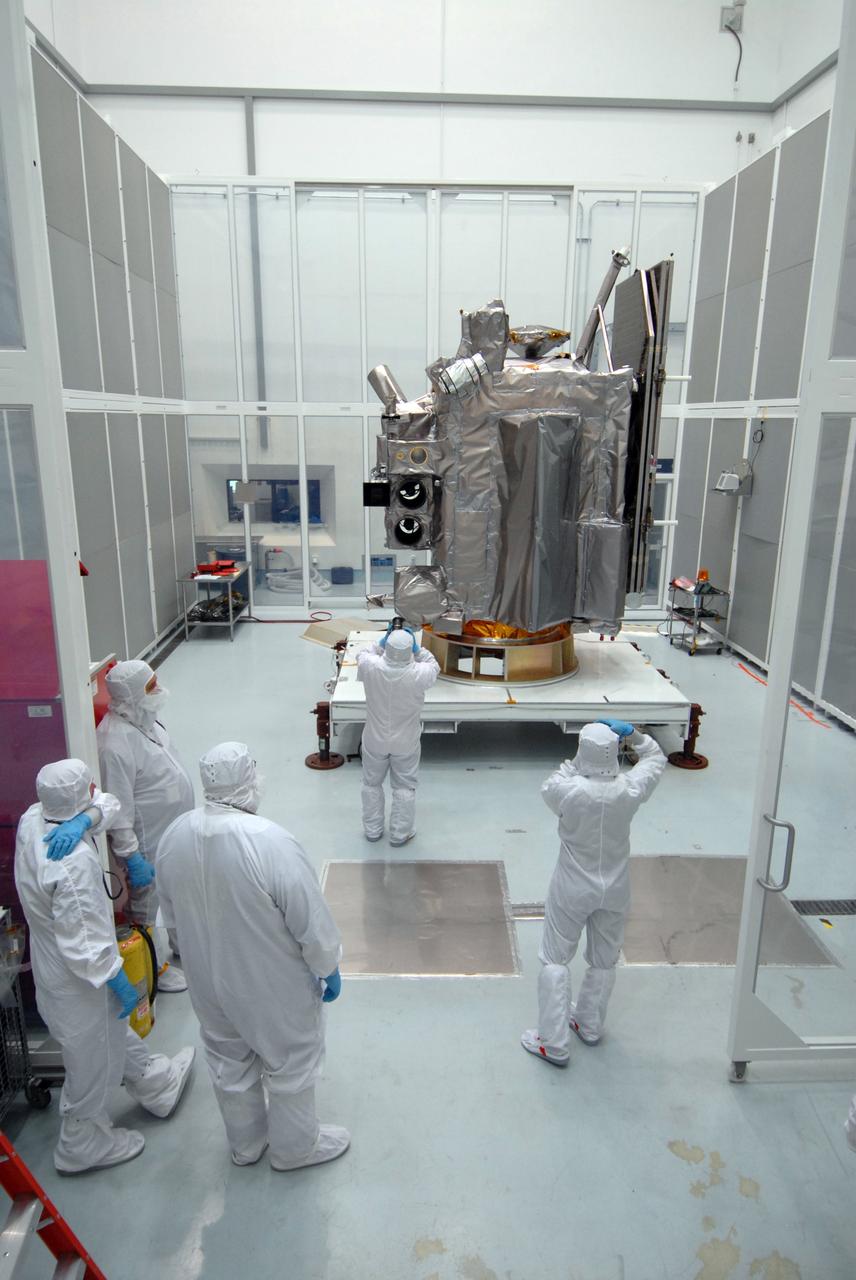
CAPE CANAVERAL, Fla. – At Astrotech Space Operations in Titusville, Fla., technicians photograph the Lunar Reconnaissance Orbiter, or LRO, during closeout before its mating with NASA's Lunar CRater Observation and Sensing Satellite, known as LCROSS, spacecraft. Instruments on the LRO include the LEND that will measure the flux of neutrons from the moon; the LROC, a narrow angle camera that will provide panchromatic images; the LOLA, which will provide a precise global lunar topographic model and geodetic grid; and top right, the DIVINER, which will measure lunar surface temperatures at scales that provide essential information for future surface operations and exploration; and at top, the CRaTER, which will characterize the global lunar radiation environment and its biological impacts. At right is the solar panel. The satellite's primary mission is to search for water ice on the moon in a permanently shadowed crater near one of the lunar poles. LCROSS is a low-cost, accelerated-development, companion mission to NASA's Lunar Reconnaissance Orbiter, or LRO. LCROSS and LRO are the first missions in NASA's plan to return humans to the moon and begin establishing a lunar outpost by 2020. Launch is targeted for no earlier than June 2 from Cape Canaveral Air Force Station in Florida. Photo credit: NASA/Jack Pfaller

CAPE CANAVERAL, Fla. – At Astrotech Space Operations in Titusville, Fla., technicians perform black light inspection on the Lunar Reconnaissance Orbiter, or LRO, looking for possible contamination. Instruments on the LRO include the LEND that will measure the flux of neutrons from the moon; the LROC, a narrow angle camera that will provide panchromatic images; the LOLA, which will provide a precise global lunar topographic model and geodetic grid; and top right, the DIVINER, which will measure lunar surface temperatures at scales that provide essential information for future surface operations and exploration; and at top, the CRaTER, which will characterize the global lunar radiation environment and its biological impacts. The satellite's primary mission is to search for water ice on the moon in a permanently shadowed crater near one of the lunar poles. LCROSS is a low-cost, accelerated-development, companion mission to NASA's Lunar Reconnaissance Orbiter, or LRO. LCROSS and LRO are the first missions in NASA's plan to return humans to the moon and begin establishing a lunar outpost by 2020. Launch is targeted for no earlier than June 2 from Cape Canaveral Air Force Station in Florida. Photo credit: NASA/Jack Pfaller
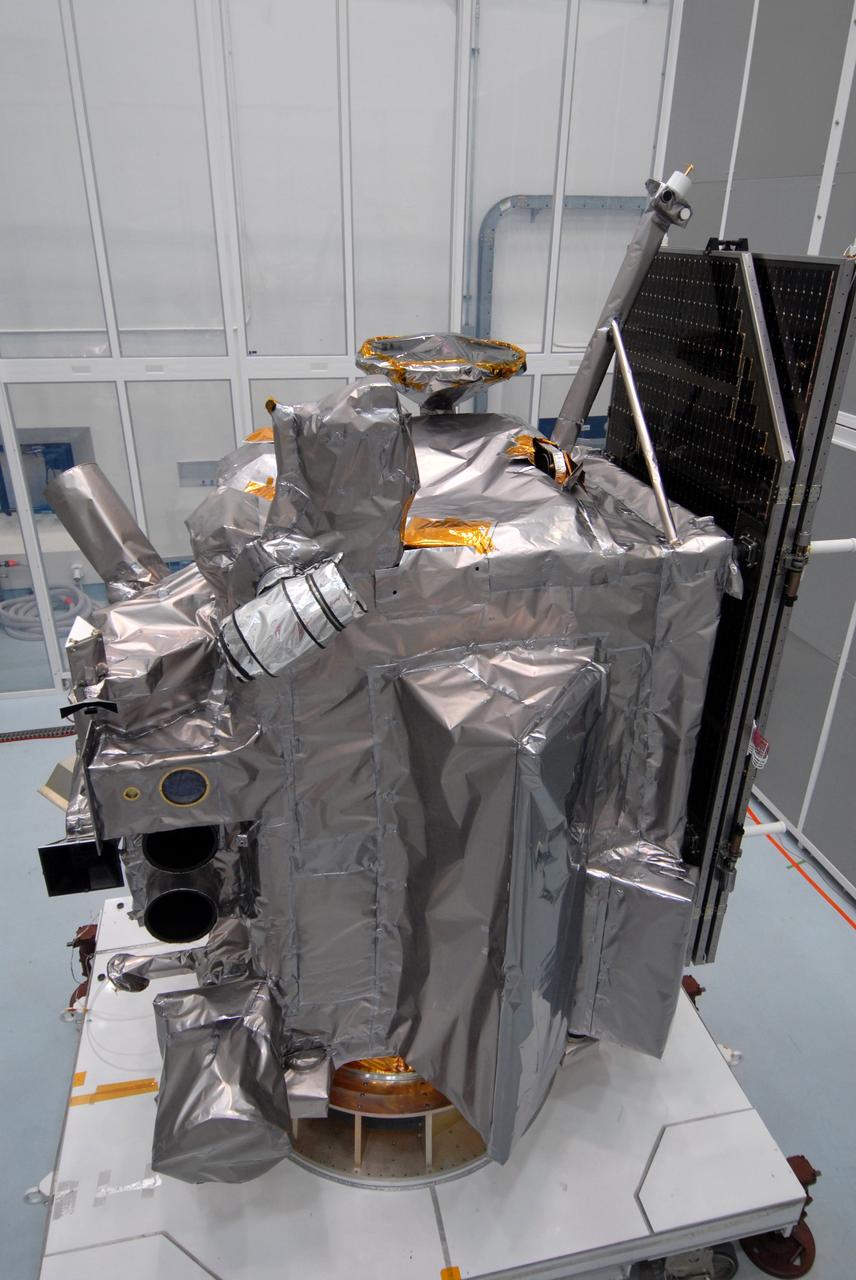
CAPE CANAVERAL, Fla. – Another view of the Lunar Reconnaissance Orbiter, or LRO, at Astrotech Space Operations in Titusville, Fla., during closeout before its mating with NASA's Lunar CRater Observation and Sensing Satellite, known as LCROSS, spacecraft. Instruments seen, at left, are (from bottom) the LEND that will measure the flux of neutrons from the moon; the LROC, a narrow angle camera that will provide panchromatic images; the LOLA, which will provide a precise global lunar topographic model and geodetic grid; and top right, the DIVINER, which will measure lunar surface temperatures at scales that provide essential information for future surface operations and exploration; and at top, the CRaTER, which will characterize the global lunar radiation environment and its biological impacts. At right is the solar panel. The satellite's primary mission is to search for water ice on the moon in a permanently shadowed crater near one of the lunar poles. LCROSS is a low-cost, accelerated-development, companion mission to NASA's Lunar Reconnaissance Orbiter, or LRO. LCROSS and LRO are the first missions in NASA's plan to return humans to the moon and begin establishing a lunar outpost by 2020. Launch is targeted for no earlier than June 2 from Cape Canaveral Air Force Station in Florida. Photo credit: NASA/Jack Pfaller
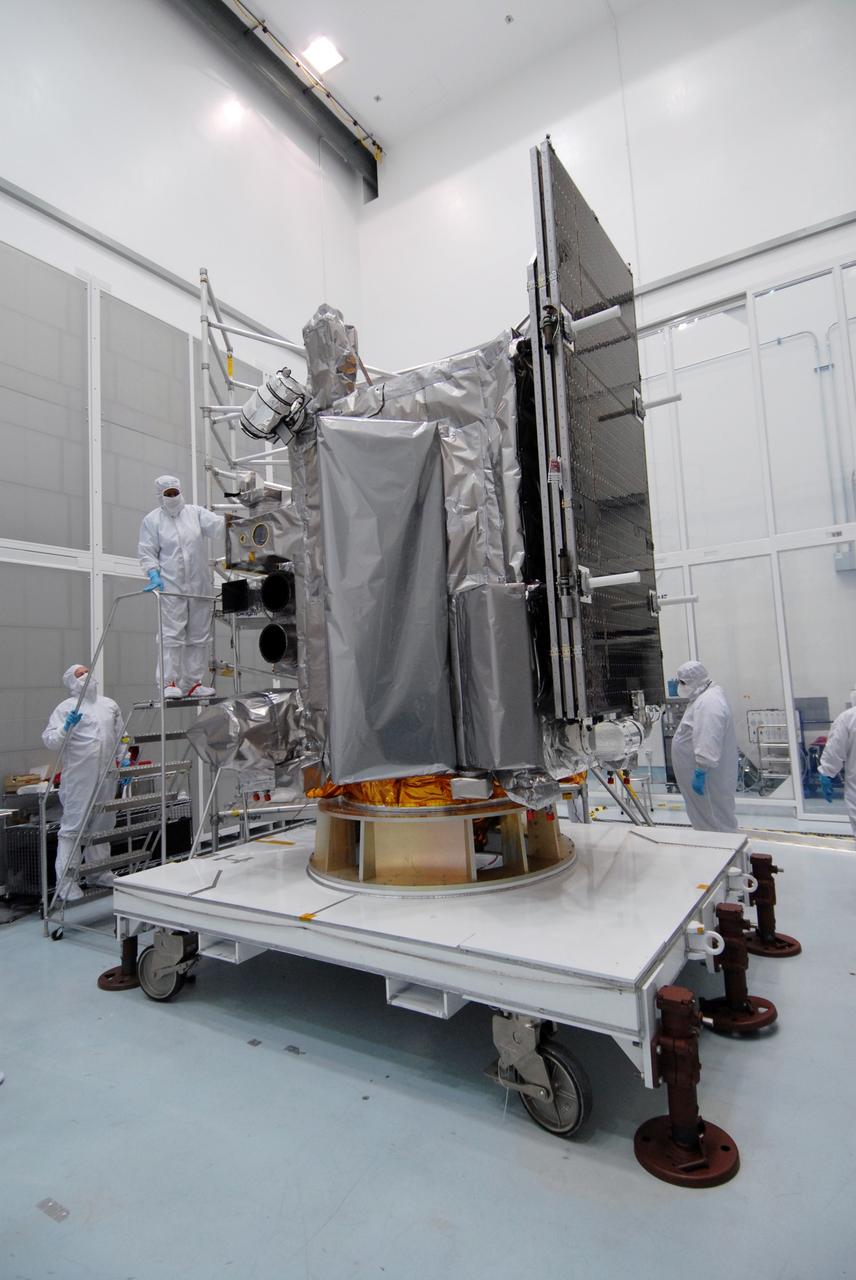
CAPE CANAVERAL, Fla. – At Astrotech Space Operations in Titusville, Fla., technicians are closing out the Lunar Reconnaissance Orbiter, or LRO, before its mating with NASA's Lunar CRater Observation and Sensing Satellite, known as LCROSS, spacecraft. Instruments seen at far left are (from bottom), the LEND that will measure the flux of neutrons from the moon; the LROC, a narrow angle camera that will provide panchromatic images; the LOLA, which will provide a precise global lunar topographic model and geodetic grid; and top right, the DIVINER, which will measure lunar surface temperatures at scales that provide essential information for future surface operations and exploration; and at top, the CRaTER, which will characterize the global lunar radiation environment and its biological impacts. The satellite's primary mission is to search for water ice on the moon in a permanently shadowed crater near one of the lunar poles. LCROSS is a low-cost, accelerated-development, companion mission to NASA's Lunar Reconnaissance Orbiter, or LRO. LCROSS and LRO are the first missions in NASA's plan to return humans to the moon and begin establishing a lunar outpost by 2020. Launch is targeted for no earlier than June 2 from Cape Canaveral Air Force Station in Florida. Photo credit: NASA/Jack Pfaller

CAPE CANAVERAL, Fla. – At Astrotech Space Operations in Titusville, Fla., technicians perform black light inspection on the Lunar Reconnaissance Orbiter, or LRO, looking for possible contamination. Instruments on the LRO include the LEND that will measure the flux of neutrons from the moon; the LROC, a narrow angle camera that will provide panchromatic images; the LOLA, which will provide a precise global lunar topographic model and geodetic grid; and top right, the DIVINER, which will measure lunar surface temperatures at scales that provide essential information for future surface operations and exploration; and at top, the CRaTER, which will characterize the global lunar radiation environment and its biological impacts. The satellite's primary mission is to search for water ice on the moon in a permanently shadowed crater near one of the lunar poles. LCROSS is a low-cost, accelerated-development, companion mission to NASA's Lunar Reconnaissance Orbiter, or LRO. LCROSS and LRO are the first missions in NASA's plan to return humans to the moon and begin establishing a lunar outpost by 2020. Launch is targeted for no earlier than June 2 from Cape Canaveral Air Force Station in Florida. Photo credit: NASA/Jack Pfaller
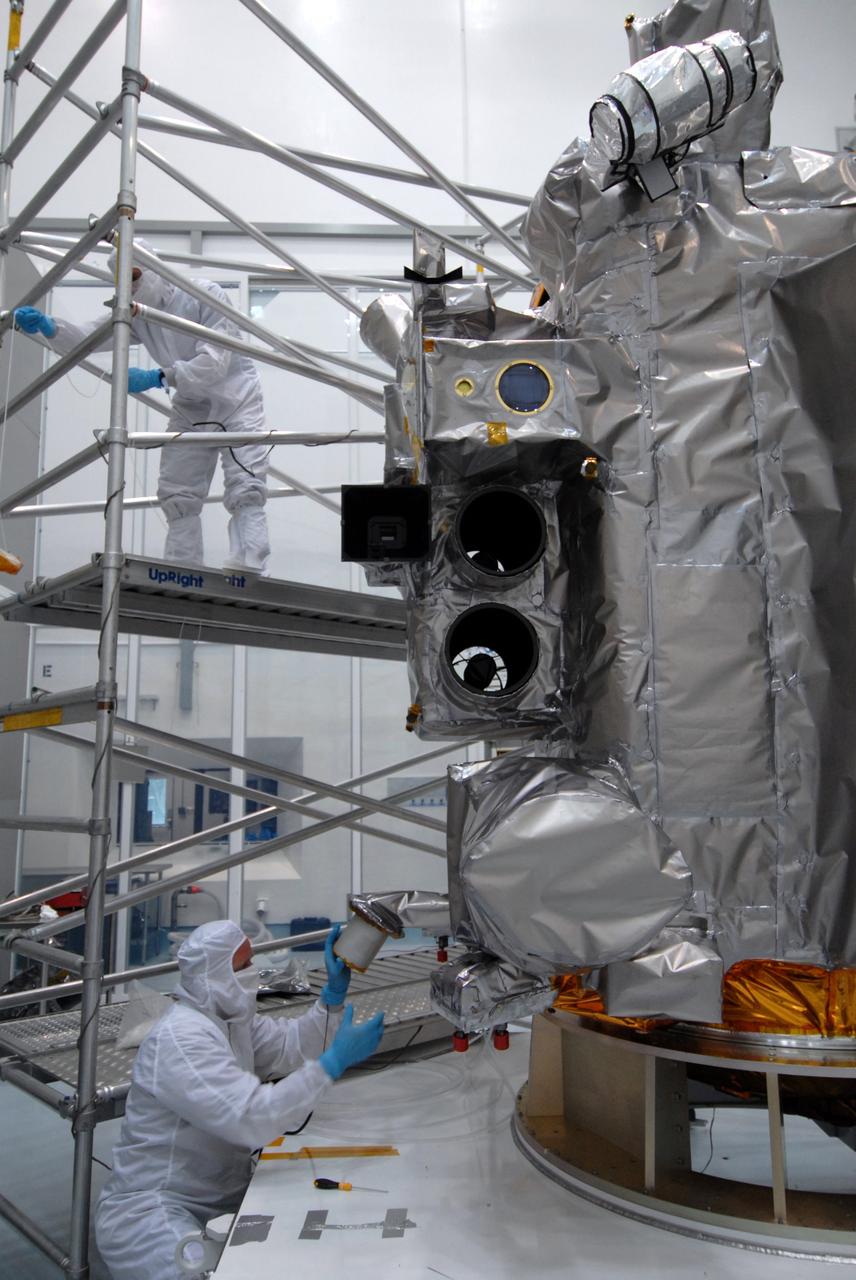
CAPE CANAVERAL, Fla. – At Astrotech Space Operations in Titusville, Fla., technicians begin closeout on the Lunar Reconnaissance Orbiter, or LRO, before its mating with NASA's Lunar CRater Observation and Sensing Satellite, known as LCROSS, spacecraft. Instruments seen are (from bottom), the LEND that will measure the flux of neutrons from the moon; the LROC, a narrow angle camera that will provide panchromatic images; the LOLA, which will provide a precise global lunar topographic model and geodetic grid; and top right, the DIVINER, which will measure lunar surface temperatures at scales that provide essential information for future surface operations and exploration; and at top, the CRaTER, which will characterize the global lunar radiation environment and its biological impacts. The satellite's primary mission is to search for water ice on the moon in a permanently shadowed crater near one of the lunar poles. LCROSS is a low-cost, accelerated-development, companion mission to NASA's Lunar Reconnaissance Orbiter, or LRO. LCROSS and LRO are the first missions in NASA's plan to return humans to the moon and begin establishing a lunar outpost by 2020. Launch is targeted for no earlier than June 2 from Cape Canaveral Air Force Station in Florida. Photo credit: NASA/Jack Pfaller
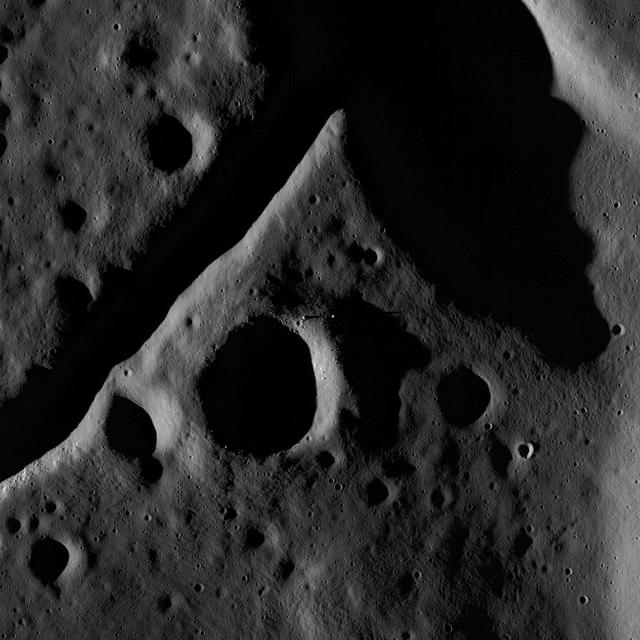
The central peak and fractured floor of Compton crater as imaged by the LROC Narrow Angle Camera onboard NASA Lunar Reconnaissance Orbiter at dusk, image width is ~1720 meters.
These images show cratered regions near the moon's Mare Nubium region, as photographed by the Lunar Reconnaissance Orbiter's LROC instrument. Each image shows a region 1,400 meters (0.87 miles) wide. the bottoms of both images face lunar north. The image below shows the location of these two images in relation to each other. Credit: NASA/Goddard Space Flight Center/Arizona State University
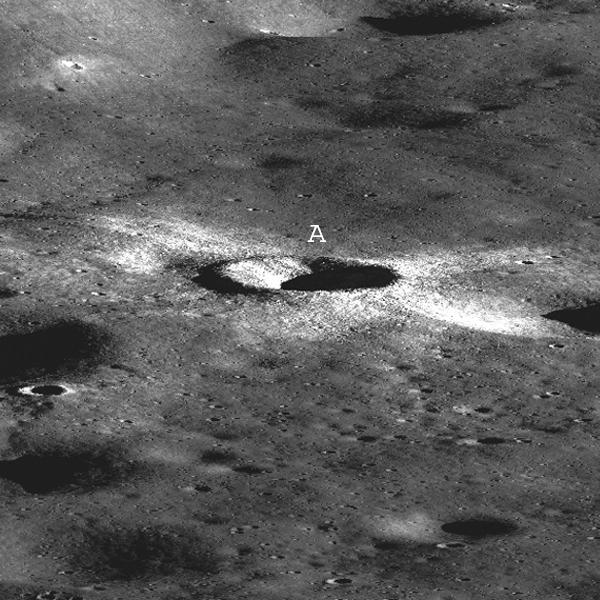
This is a synthetic perspective view looking south from the Apollo 16 landing area, topography is rendered naturally as seen by NASA Lunar Reconnaissance Orbiter.
NASA image release January 14, 2010 LROC WAC image of Tycho crater. Credit: NASA/Goddard/Arizona State University To learn more about this image go to: <a href="http://www.nasa.gov/mission_pages/LRO/multimedia/lroimages/lroc-20100114-tycho.html" rel="nofollow">www.nasa.gov/mission_pages/LRO/multimedia/lroimages/lroc-...</a> <b><a href="http://www.nasa.gov/centers/goddard/home/index.html" rel="nofollow">NASA Goddard Space Flight Center</a></b> contributes to NASA’s mission through four scientific endeavors: Earth Science, Heliophysics, Solar System Exploration, and Astrophysics. Goddard plays a leading role in NASA’s endeavors by providing compelling scientific knowledge to advance the Agency’s mission. <b>Follow us on <a href="http://twitter.com/NASA_GoddardPix" rel="nofollow">Twitter</a></b> <b>Join us on <a href="http://www.facebook.com/pages/Greenbelt-MD/NASA-Goddard/395013845897?ref=tsd" rel="nofollow">Facebook</a></b>
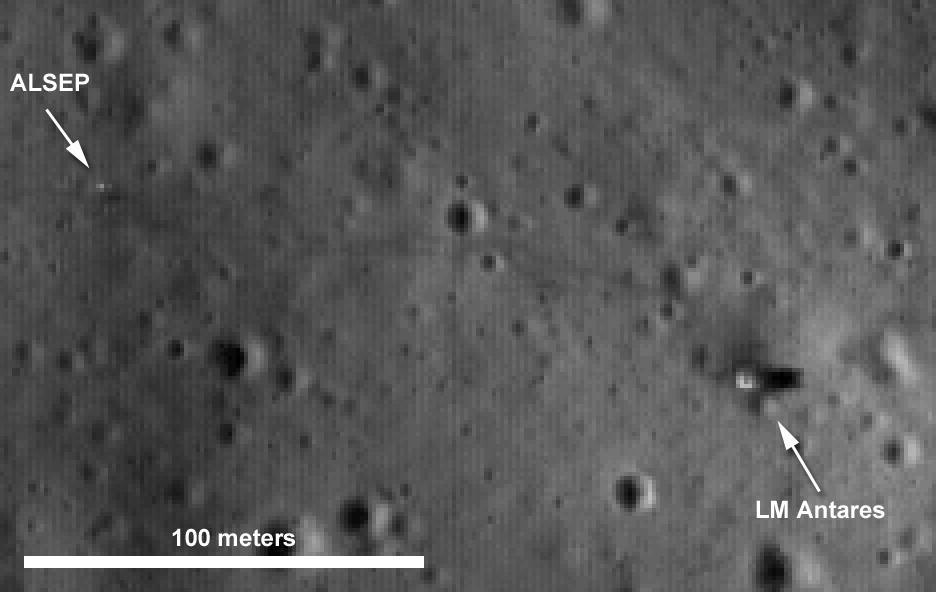
NASA Lunar Reconnaissance Orbiter first look at the Apollo landing sites.
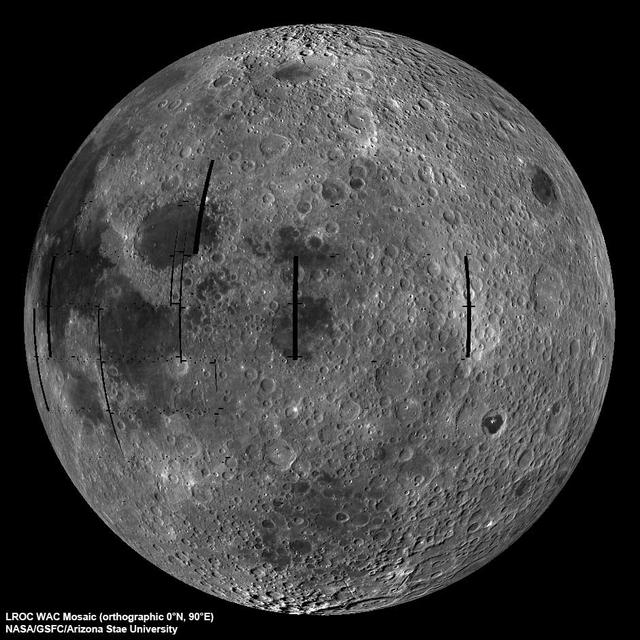
NASA image release September 9, 2010 LROC Wide Angle Camera (WAC) view of the Moon seen from 90° east longitude. Half the nearside is visible to the left, and half the farside to the right. Credit: NASA/GSFC/Arizona State University To read more go to: <a href="http://www.nasa.gov/mission_pages/LRO/multimedia/lroimages/lroc-20100909_mooneast.html" rel="nofollow">www.nasa.gov/mission_pages/LRO/multimedia/lroimages/lroc-...</a> <b><a href="http://www.nasa.gov/centers/goddard/home/index.html" rel="nofollow">NASA Goddard Space Flight Center</a></b> contributes to NASA’s mission through four scientific endeavors: Earth Science, Heliophysics, Solar System Exploration, and Astrophysics. Goddard plays a leading role in NASA’s endeavors by providing compelling scientific knowledge to advance the Agency’s mission. <b>Follow us on <a href="http://twitter.com/NASA_GoddardPix" rel="nofollow">Twitter</a></b> <b>Join us on <a href="http://www.facebook.com/pages/Greenbelt-MD/NASA-Goddard/395013845897?ref=tsd" rel="nofollow">Facebook</a></b>
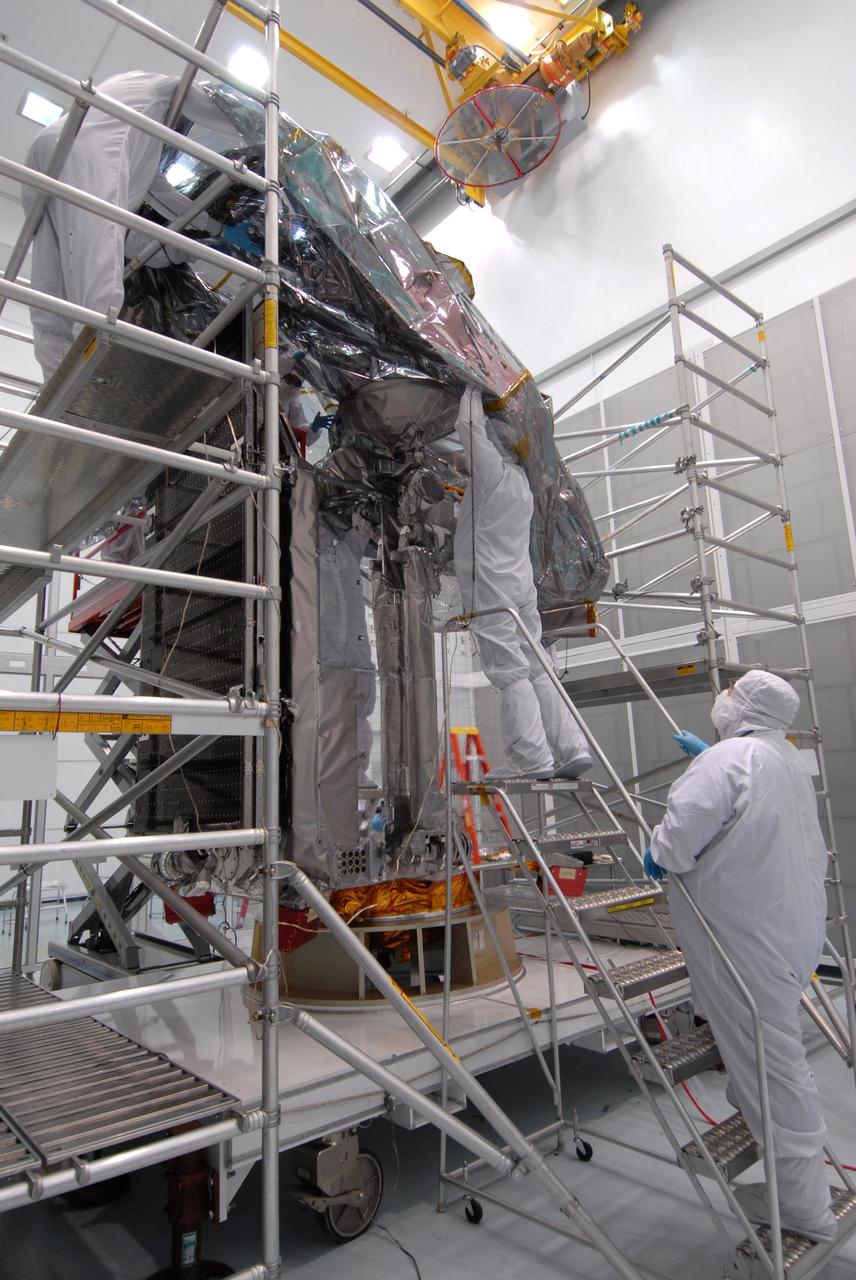
CAPE CANAVERAL, Fla. – At Astrotech Space Operations in Titusville, Fla., technicians begin placing the protective bag around the Lunar Reconnaissance Orbiter, or LRO, before it is mated with NASA's Lunar CRater Observation and Sensing Satellite, known as LCROSS, spacecraft. The satellite's primary mission is to search for water ice on the moon in a permanently shadowed crater near one of the lunar poles. LCROSS is a low-cost, accelerated-development, companion mission to NASA's Lunar Reconnaissance Orbiter, or LRO. LCROSS and LRO are the first missions in NASA's plan to return humans to the moon and begin establishing a lunar outpost by 2020. Launch is targeted for no earlier than June 2 from Cape Canaveral Air Force Station in Florida. Photo credit: NASA/Jack Pfaller
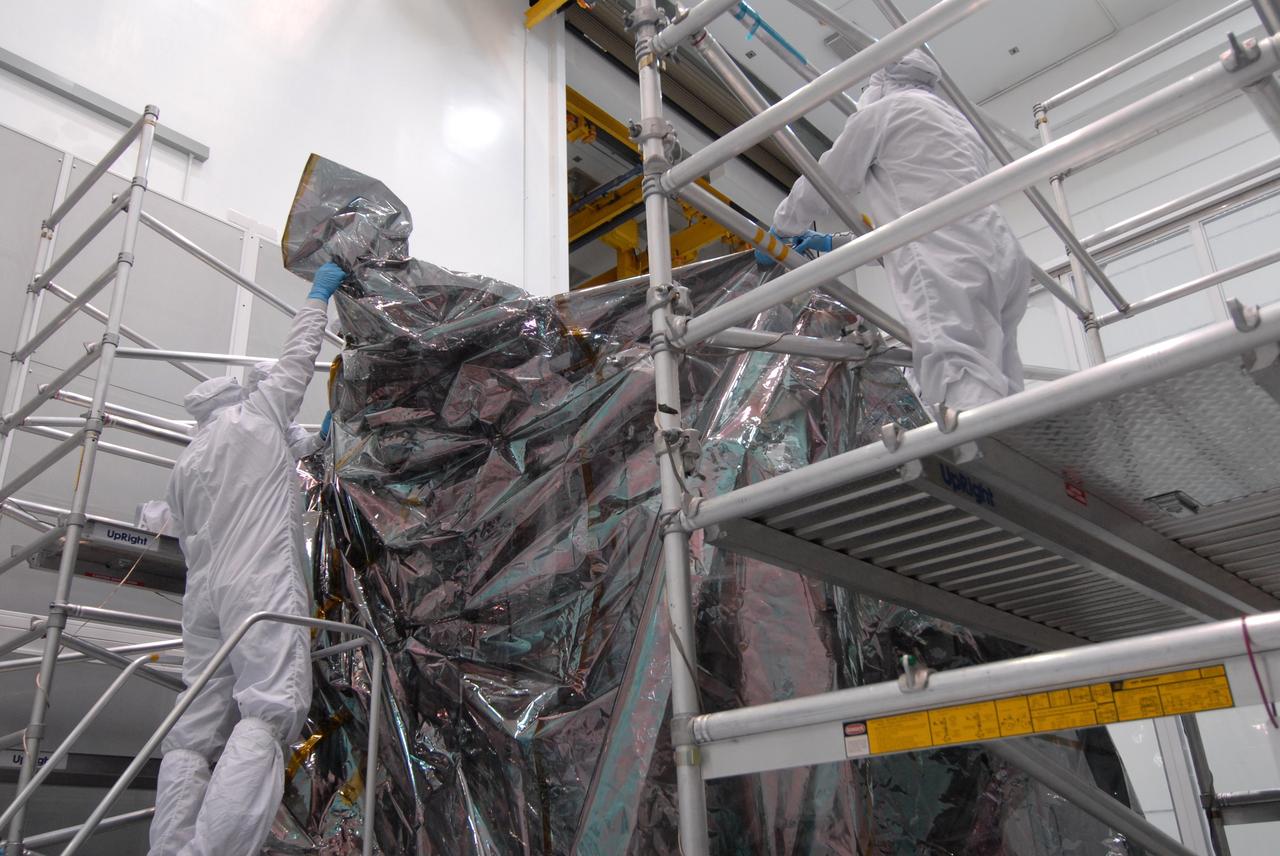
CAPE CANAVERAL, Fla. – At Astrotech Space Operations in Titusville, Fla., technicians place the protective bag around the Lunar Reconnaissance Orbiter, or LRO, before it is mated with NASA's Lunar CRater Observation and Sensing Satellite, known as LCROSS, spacecraft. The satellite's primary mission is to search for water ice on the moon in a permanently shadowed crater near one of the lunar poles. LCROSS is a low-cost, accelerated-development, companion mission to NASA's Lunar Reconnaissance Orbiter, or LRO. LCROSS and LRO are the first missions in NASA's plan to return humans to the moon and begin establishing a lunar outpost by 2020. Launch is targeted for no earlier than June 2 from Cape Canaveral Air Force Station in Florida. Photo credit: NASA/Jack Pfaller
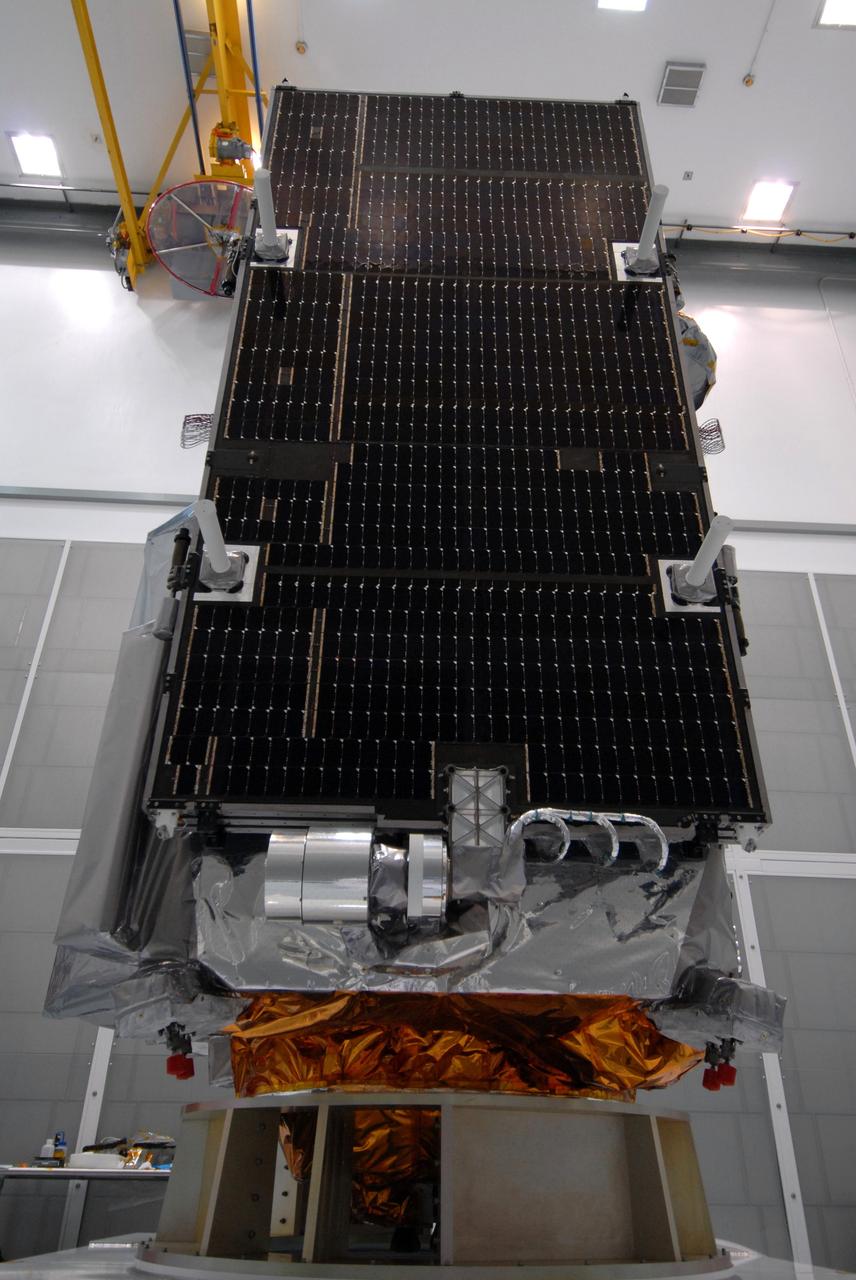
CAPE CANAVERAL, Fla. – One of three solar panels is seen during closeout of the Lunar Reconnaissance Orbiter, or LRO, at Astrotech Space Operations in Titusville, Fla. The satellite's primary mission is to search for water ice on the moon in a permanently shadowed crater near one of the lunar poles. LCROSS is a low-cost, accelerated-development, companion mission to NASA's Lunar Reconnaissance Orbiter, or LRO. LCROSS and LRO are the first missions in NASA's plan to return humans to the moon and begin establishing a lunar outpost by 2020. Launch is targeted for no earlier than June 2 from Cape Canaveral Air Force Station in Florida. Photo credit: NASA/Jack Pfaller
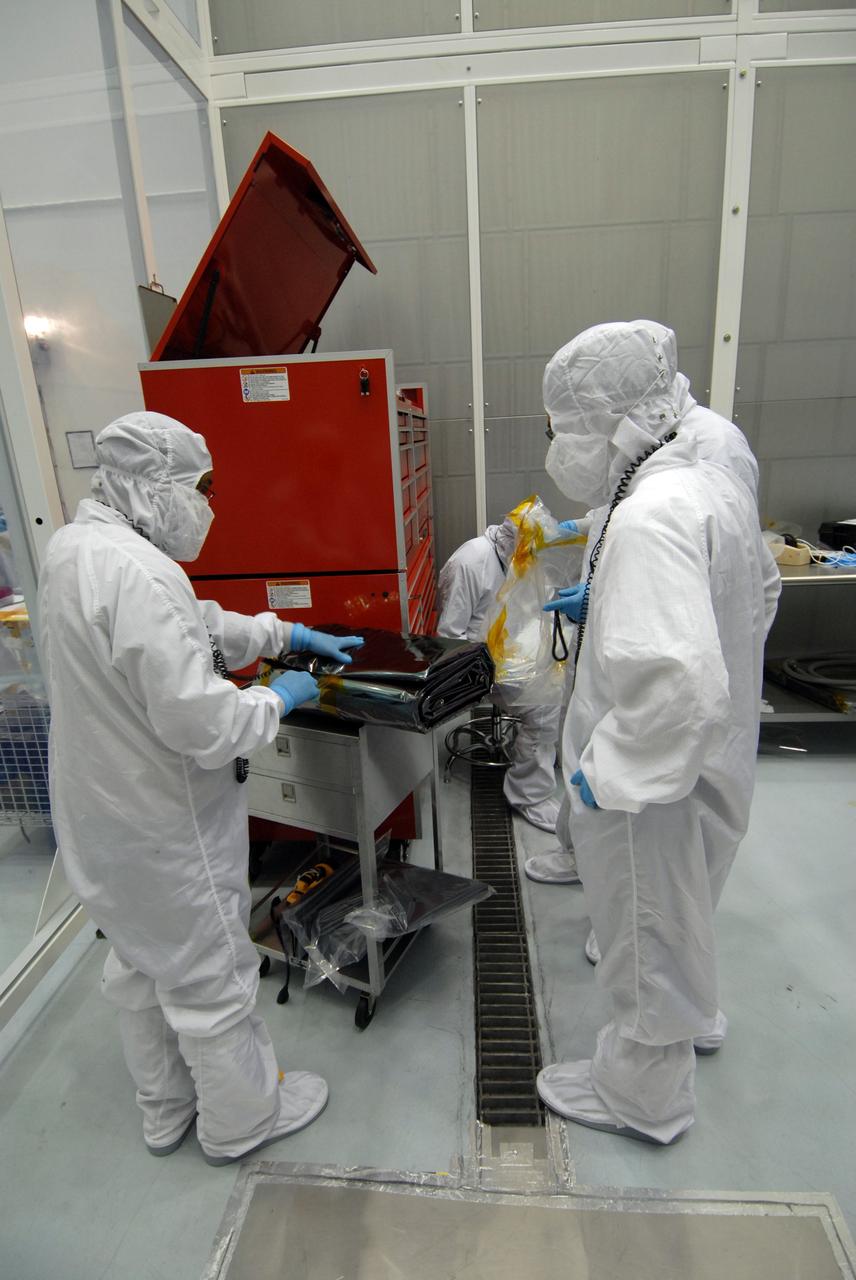
CAPE CANAVERAL, Fla. – At Astrotech Space Operations in Titusville, Fla., technicians remove the bag that will be placed over the Lunar Reconnaissance Orbiter, or LRO, before it is mated with NASA's Lunar CRater Observation and Sensing Satellite, known as LCROSS, spacecraft. The satellite's primary mission is to search for water ice on the moon in a permanently shadowed crater near one of the lunar poles. LCROSS is a low-cost, accelerated-development, companion mission to NASA's Lunar Reconnaissance Orbiter, or LRO. LCROSS and LRO are the first missions in NASA's plan to return humans to the moon and begin establishing a lunar outpost by 2020. Launch is targeted for no earlier than June 2 from Cape Canaveral Air Force Station in Florida. Photo credit: NASA/Jack Pfaller
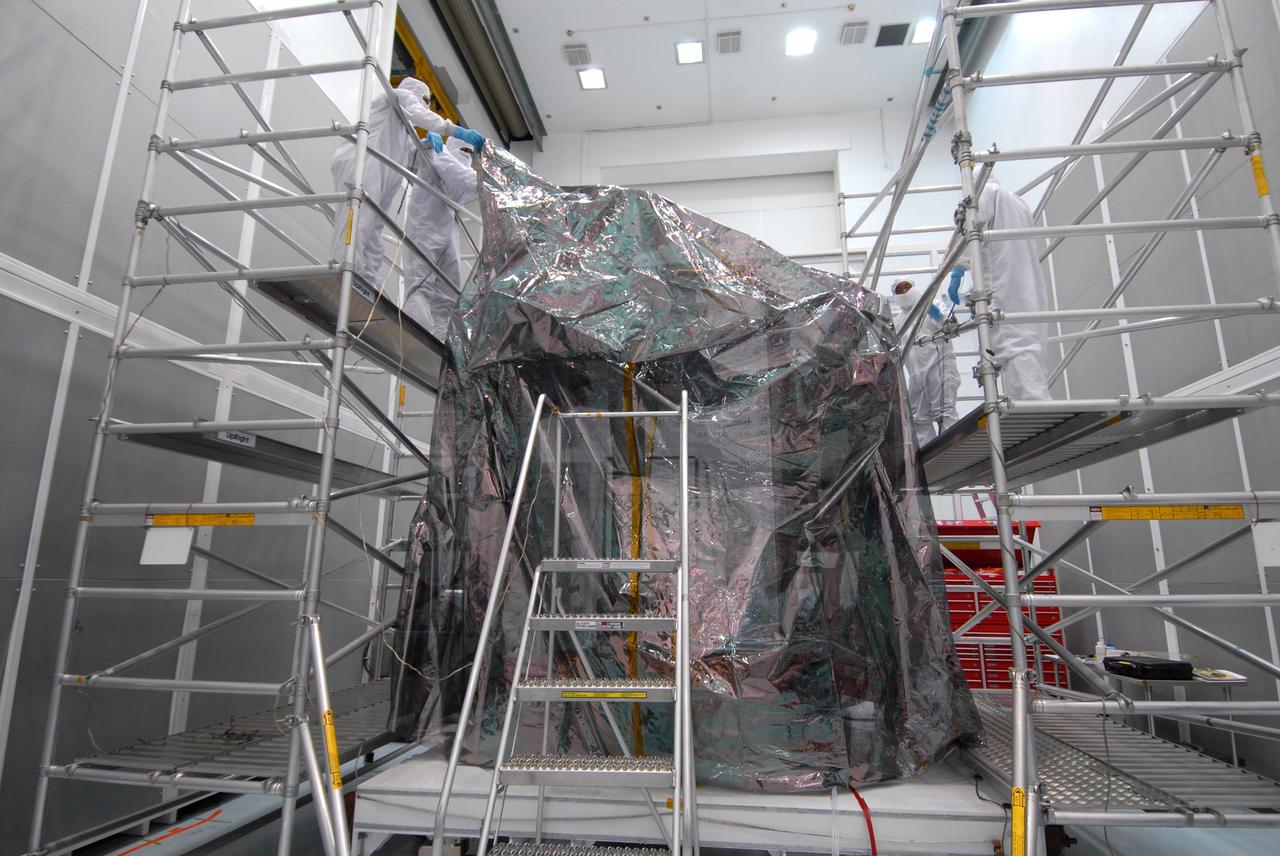
CAPE CANAVERAL, Fla. – At Astrotech Space Operations in Titusville, Fla., technicians complete placing the protective bag around the Lunar Reconnaissance Orbiter, or LRO, before it is mated with NASA's Lunar CRater Observation and Sensing Satellite, known as LCROSS, spacecraft. The satellite's primary mission is to search for water ice on the moon in a permanently shadowed crater near one of the lunar poles. LCROSS is a low-cost, accelerated-development, companion mission to NASA's Lunar Reconnaissance Orbiter, or LRO. LCROSS and LRO are the first missions in NASA's plan to return humans to the moon and begin establishing a lunar outpost by 2020. Launch is targeted for no earlier than June 2 from Cape Canaveral Air Force Station in Florida. Photo credit: NASA/Jack Pfaller

CAPE CANAVERAL, Fla. – Enroute to Launch Complex 41 at Cape Canaveral Air Force Station in Florida, the Lunar Reconnaissance Orbiter, or LRO, and NASA's Lunar Crater Observation and Sensing Satellite, known as LCROSS, move past the Vehicle Assembly Building at NASA's Kennedy Space Center in Florida. The LRO includes five instruments that will help NASA characterize the moon's surface: DIVINER, LAMP, LEND, LOLA and LROC. Along with LCROSS, they will be launched aboard an Atlas V/Centaur rocket on June 17. Photo credit: NASA/Dimitri Gerondidakis
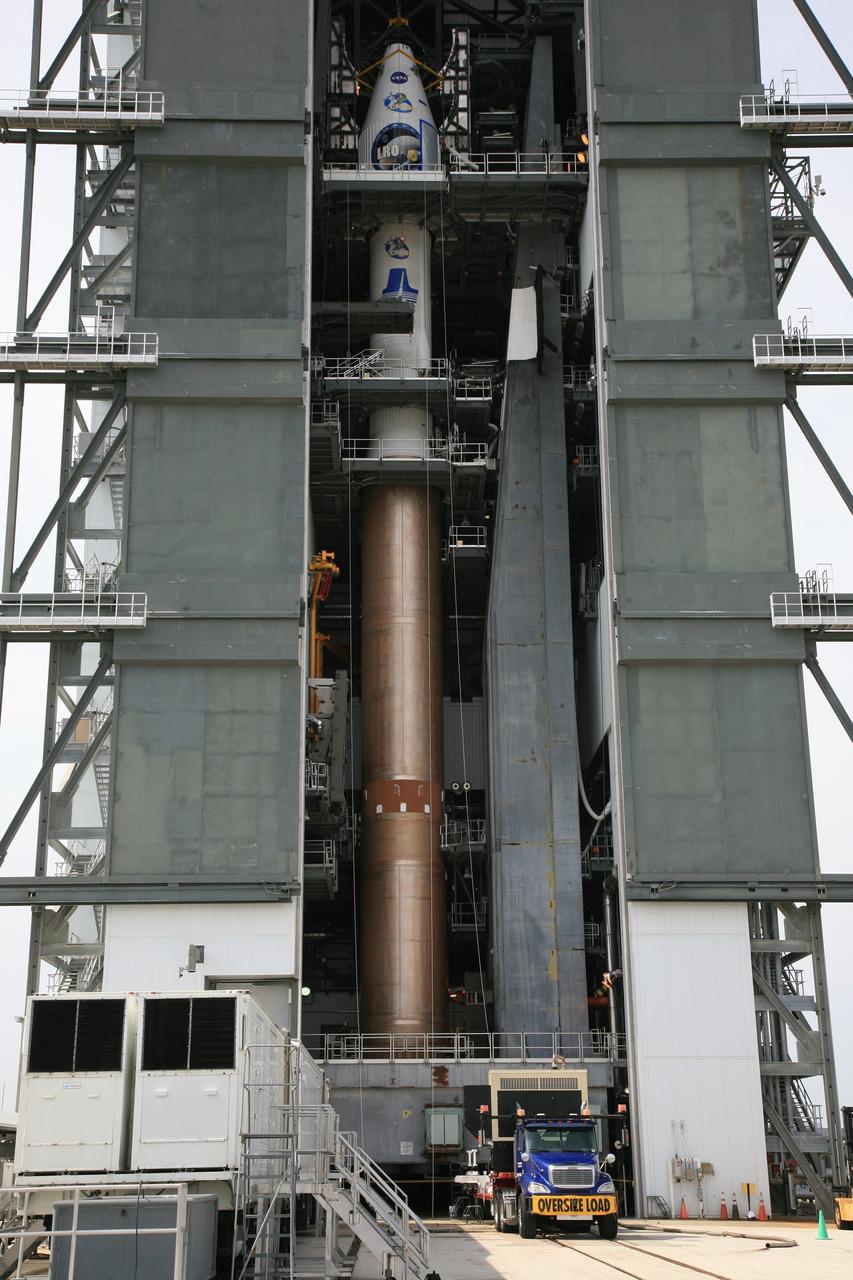
CAPE CANAVERAL, Fla. – On Launch Complex 41 at Cape Canaveral Air Force Station in Florida, the Lunar Reconnaissance Orbiter, or LRO, and NASA's Lunar Crater Observation and Sensing Satellite, known as LCROSS, are mated with the Atlas V rocket inside the mobile service tower for launch. The LRO includes five instruments that will help NASA characterize the moon's surface: DIVINER, LAMP, LEND, LOLA and LROC. Along with LCROSS, they will be launched aboard an Atlas V/Centaur rocket on June 17. Photo credit: NASA/Dimitri Gerondidakis
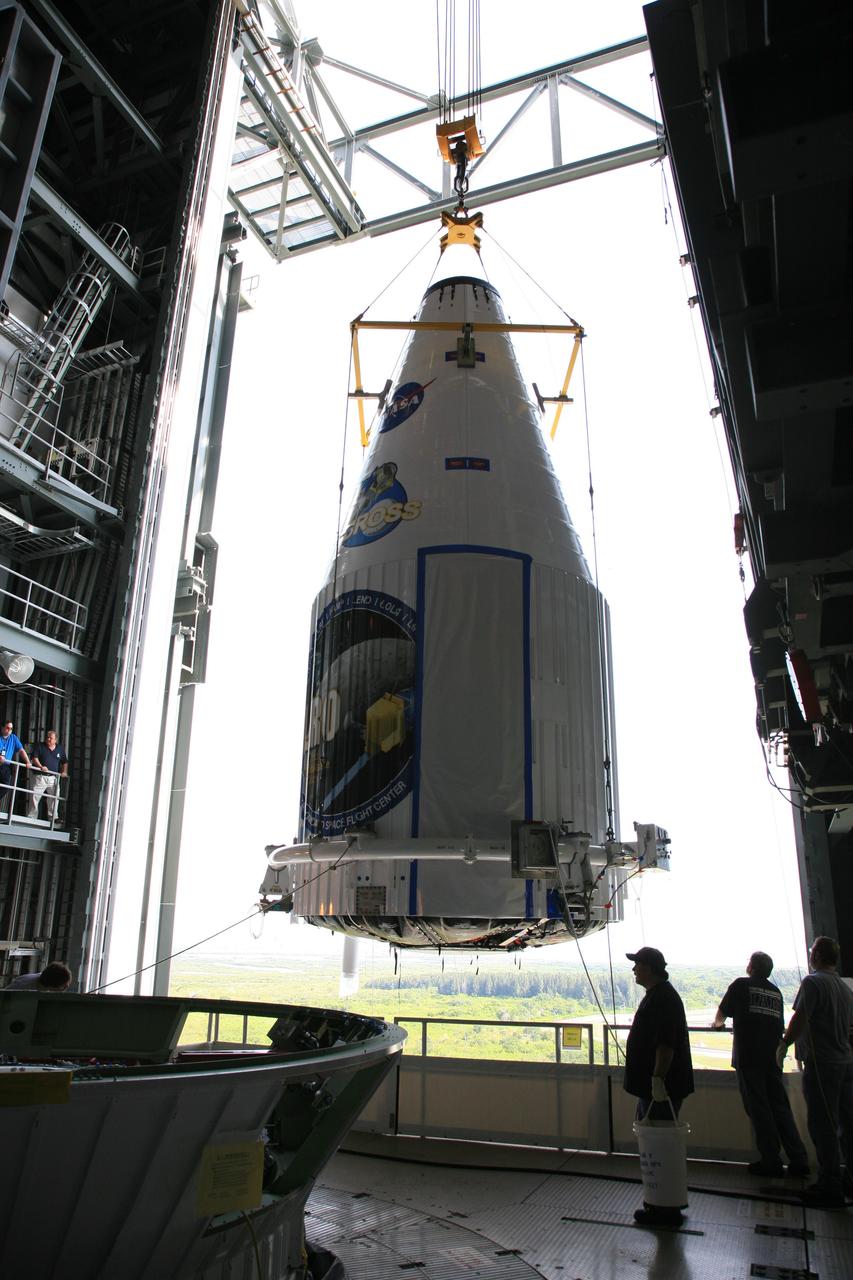
CAPE CANAVERAL, Fla. – On Launch Complex 41 at Cape Canaveral Air Force Station in Florida, the Lunar Reconnaissance Orbiter, or LRO, and NASA's Lunar Crater Observation and Sensing Satellite, known as LCROSS, are moved into the mobile service tower. The LRO will be mated to the Atlas V rocket for launch. The LRO includes five instruments that will help NASA characterize the moon's surface: DIVINER, LAMP, LEND, LOLA and LROC. Along with LCROSS, they will be launched aboard an Atlas V/Centaur rocket on June 17. Photo credit: NASA/Dimitri Gerondidakis
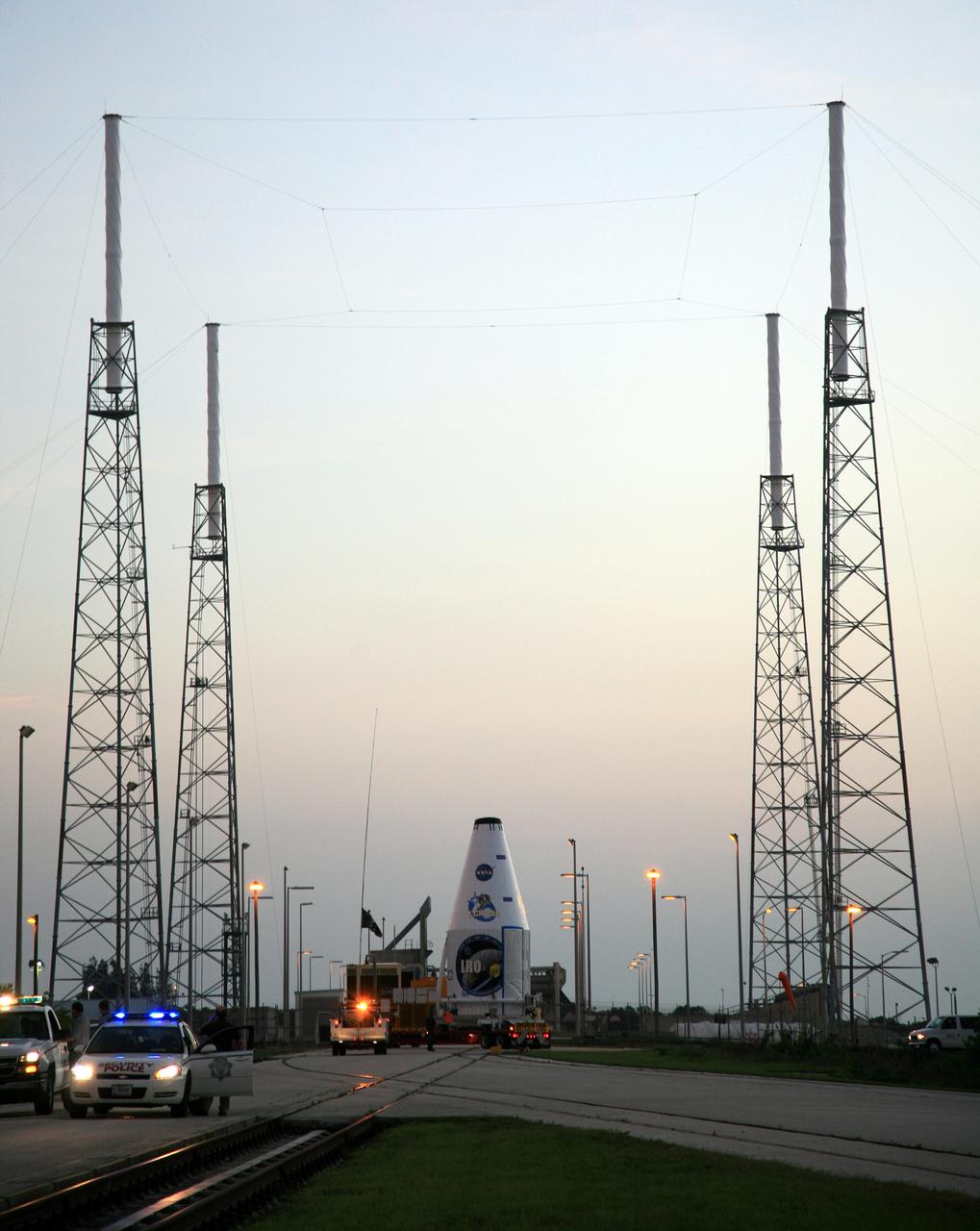
CAPE CANAVERAL, Fla. – The Lunar Reconnaissance Orbiter, or LRO, and NASA's Lunar Crater Observation and Sensing Satellite, known as LCROSS, arrive on Launch Complex 41 at Cape Canaveral Air Force Station in Florida. Surrounding the launch pad are the lightning protection towers. The LRO includes five instruments that will help NASA characterize the moon's surface: DIVINER, LAMP, LEND, LOLA and LROC. Along with LCROSS, they will be launched aboard an Atlas V/Centaur rocket on June 17. Photo credit: NASA/Dimitri Gerondidakis
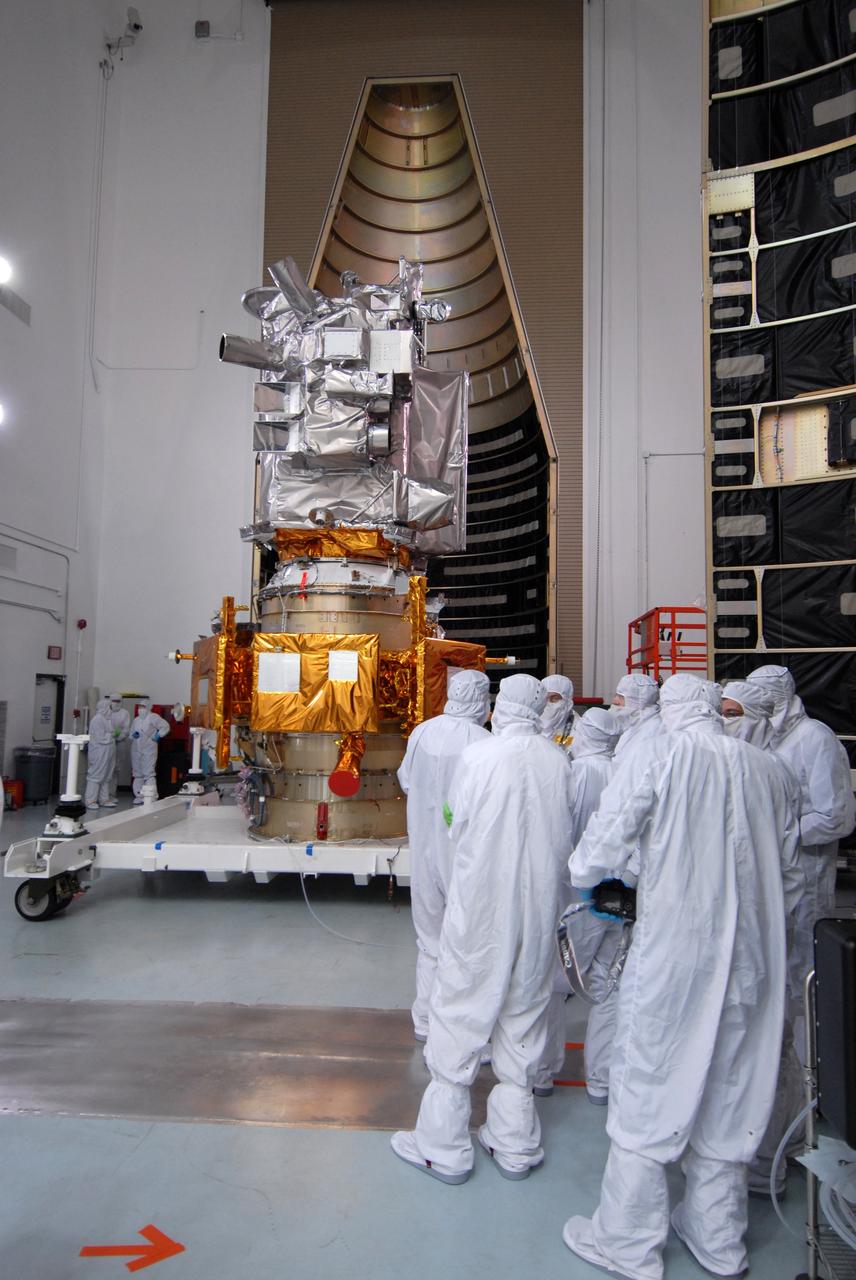
CAPE CANAVERAL, Fla. – At Astrotech Space Operations Facility in Titusville, Fla., garbed media representatives attend a showing of NASA's Lunar Reconnaissance Orbiter, or LRO, and NASA's Lunar Crater Observation and Sensing Satellite, known as LCROSS. The LRO includes five instruments: DIVINER, LAMP, LEND, LOLA and LROC. They will be launched aboard an Atlas V/Centaur rocket no earlier than June 17 from Launch Complex-41 on Cape Canaveral Air Force Station in Florida. Photo credit: NASA/Jack Pfaller
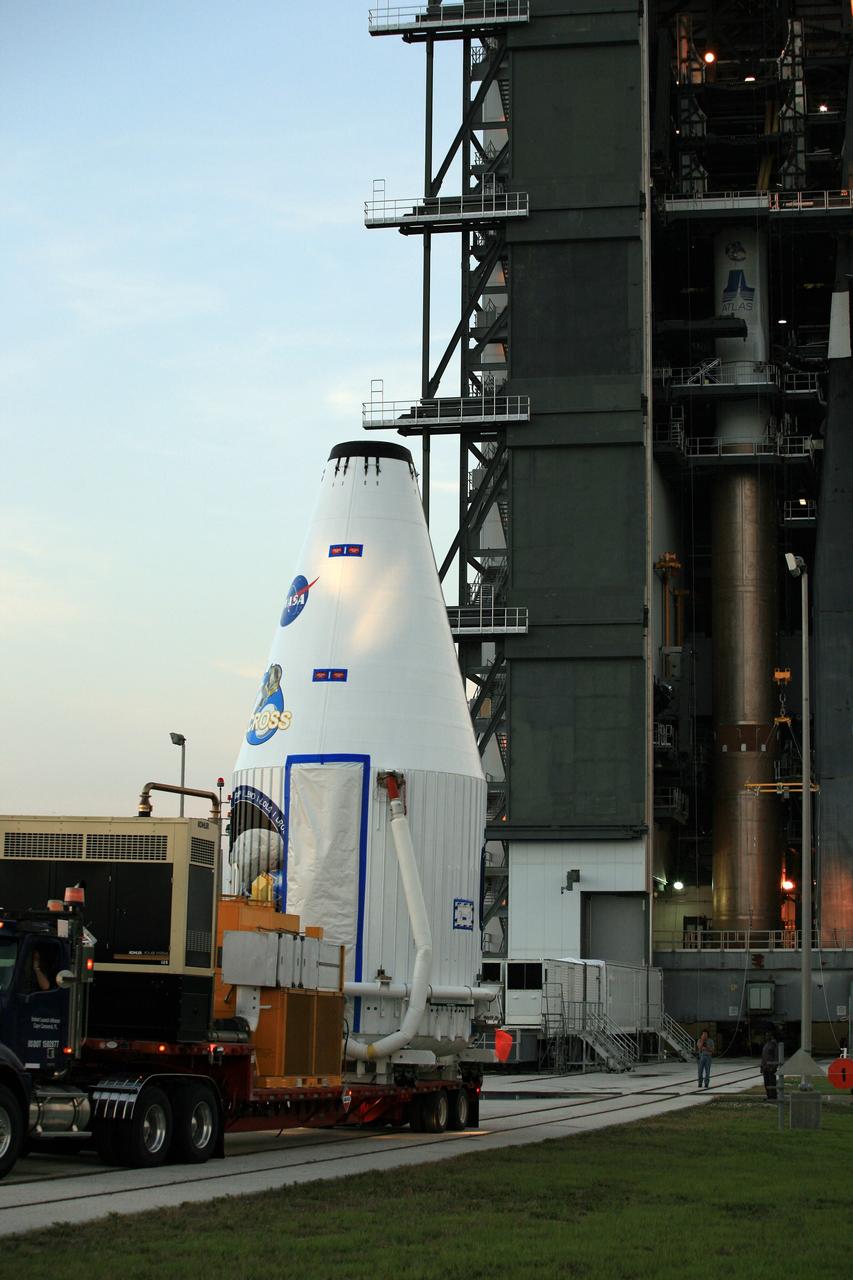
CAPE CANAVERAL, Fla. – The Lunar Reconnaissance Orbiter, or LRO, and NASA's Lunar Crater Observation and Sensing Satellite, known as LCROSS, are moved closer to the mobile service tower on Launch Complex 41 at Cape Canaveral Air Force Station in Florida. The LRO includes five instruments that will help NASA characterize the moon's surface: DIVINER, LAMP, LEND, LOLA and LROC. Along with LCROSS, they will be launched aboard an Atlas V/Centaur rocket on June 17. Photo credit: NASA/Dimitri Gerondidakis
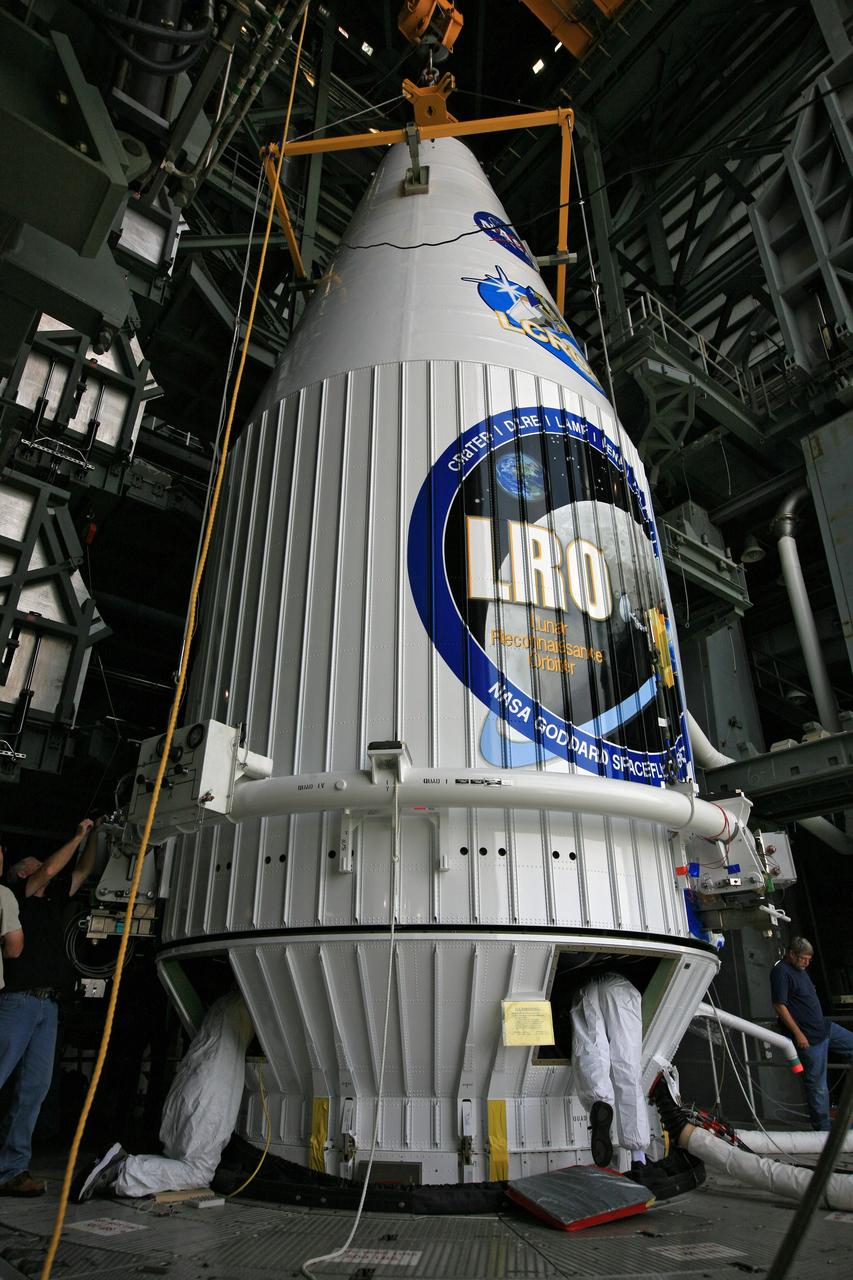
CAPE CANAVERAL, Fla. – On Launch Complex 41 at Cape Canaveral Air Force Station in Florida, workers prepare the Lunar Reconnaissance Orbiter, or LRO, and NASA's Lunar Crater Observation and Sensing Satellite, known as LCROSS, for mating inside the mobile service tower with the Atlas V rocket for launch. The LRO includes five instruments that will help NASA characterize the moon's surface: DIVINER, LAMP, LEND, LOLA and LROC. Along with LCROSS, they will be launched aboard an Atlas V/Centaur rocket on June 17. Photo credit: NASA/Dimitri Gerondidakis
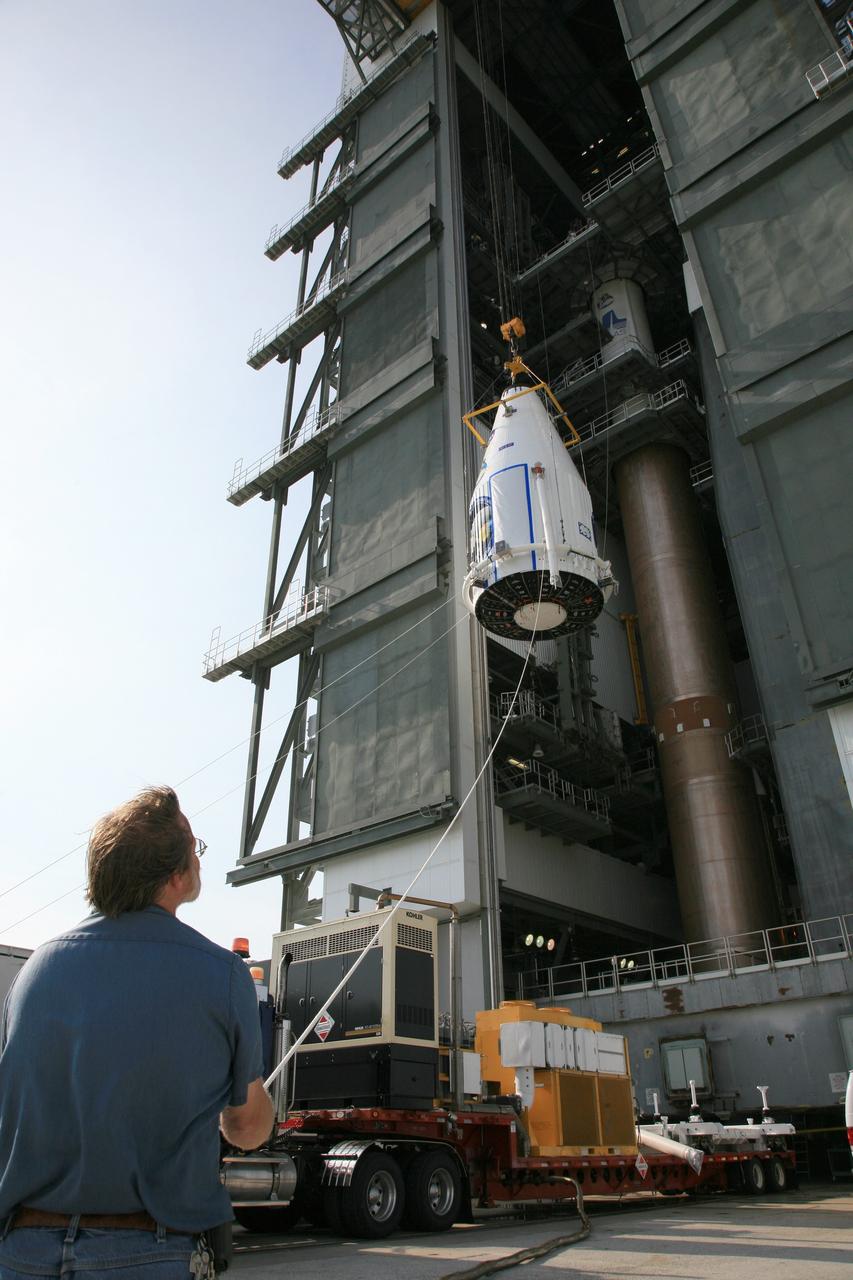
CAPE CANAVERAL, Fla. – On Launch Complex 41 at Cape Canaveral Air Force Station in Florida, the Lunar Reconnaissance Orbiter, or LRO, and NASA's Lunar Crater Observation and Sensing Satellite, known as LCROSS, are lifted into the mobile service tower. The LRO/LCROSS will be mated to the Atlas V rocket for launch. The LRO includes five instruments that will help NASA characterize the moon's surface: DIVINER, LAMP, LEND, LOLA and LROC. Along with LCROSS, they will be launched aboard an Atlas V/Centaur rocket on June 17. Photo credit: NASA/Dimitri Gerondidakis
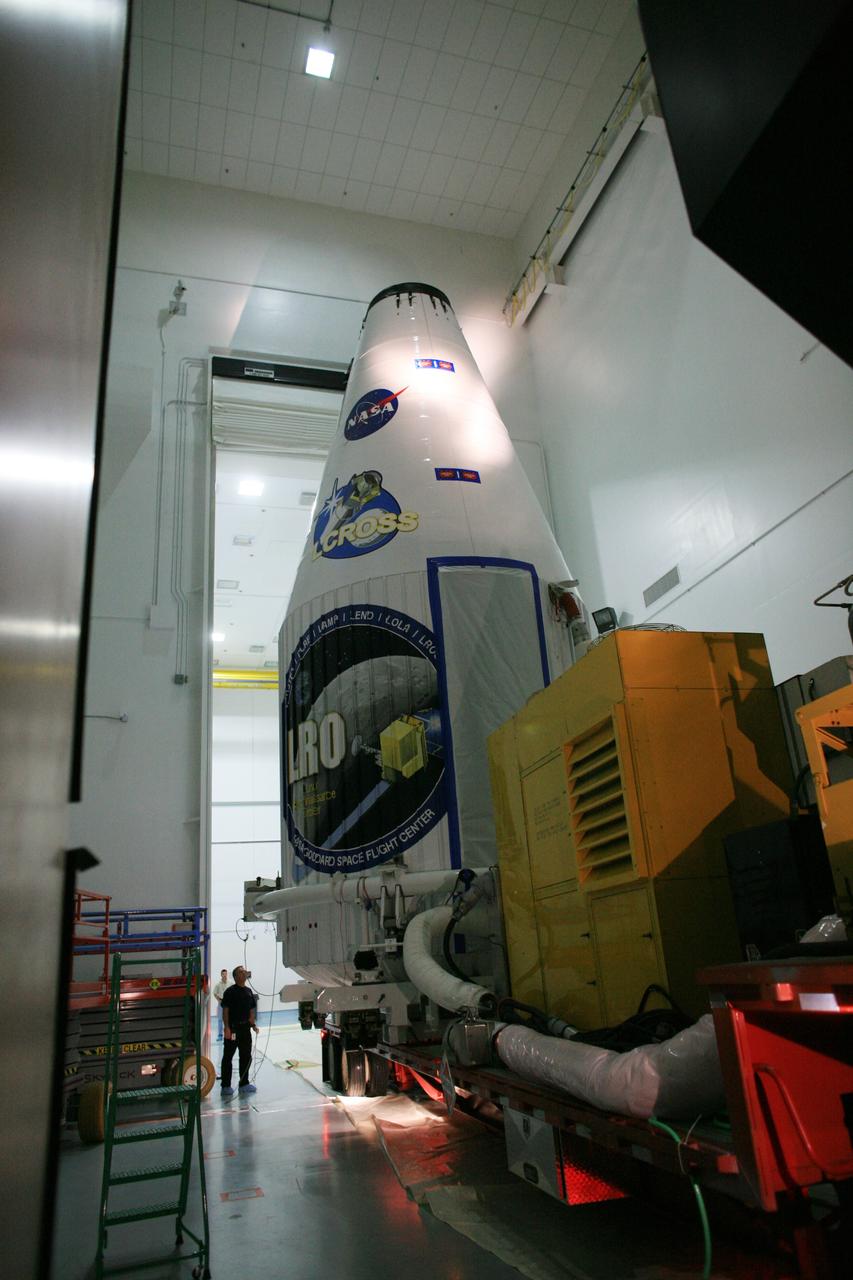
CAPE CANAVERAL, Fla. – Encased in the fairing, the Lunar Reconnaissance Orbiter, or LRO, and NASA's Lunar Crater Observation and Sensing Satellite, known as LCROSS, are moved out of Astrotech Space Operations in Titusville. It is being transported to Launch Complex 41 at Cape Canaveral Air Force Station in Florida. The LRO includes five instruments that will help NASA characterize the moon's surface: DIVINER, LAMP, LEND, LOLA and LROC. Along with LCROSS, they will be launched aboard an Atlas V/Centaur rocket on June 17. Photo credit: NASA/Dimitri Gerondidakis

CAPE CANAVERAL, Fla. – On Launch Complex 41 at Cape Canaveral Air Force Station in Florida, workers check out the Lunar Reconnaissance Orbiter, or LRO, after its lift into the mobile service tower. The LRO/LCROSS will be mated to the Atlas V rocket for launch. The LRO includes five instruments that will help NASA characterize the moon's surface: DIVINER, LAMP, LEND, LOLA and LROC. Along with LCROSS, they will be launched aboard an Atlas V/Centaur rocket on June 17. Photo credit: NASA/Dimitri Gerondidakis
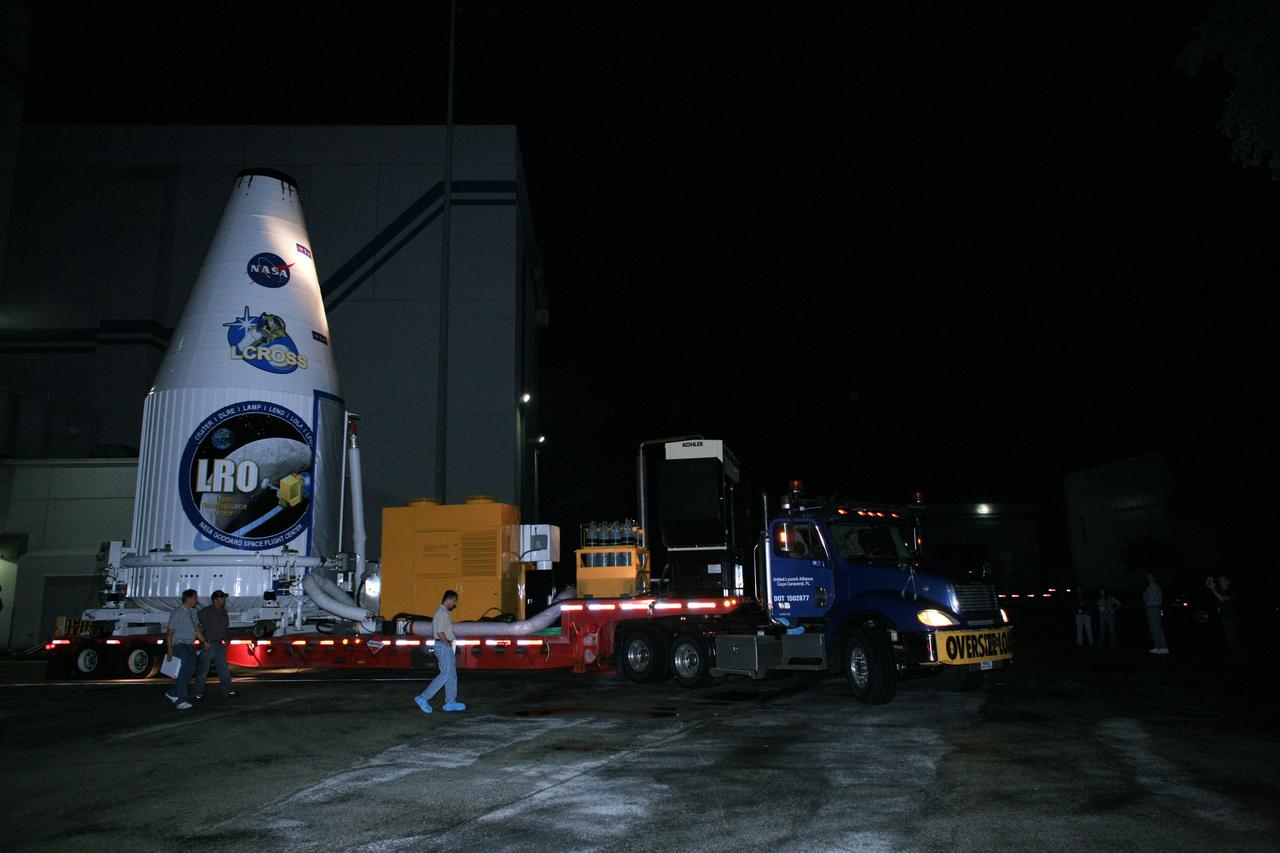
CAPE CANAVERAL, Fla. – Encased in the fairing, the Lunar Reconnaissance Orbiter, or LRO, and NASA's Lunar Crater Observation and Sensing Satellite, known as LCROSS, are moved out of Astrotech Space Operations in Titusville. It is being transported to Launch Complex 41 at Cape Canaveral Air Force Station in Florida. The LRO includes five instruments that will help NASA characterize the moon's surface: DIVINER, LAMP, LEND, LOLA and LROC. Along with LCROSS, they will be launched aboard an Atlas V/Centaur rocket on June 17. Photo credit: NASA/Dimitri Gerondidakis
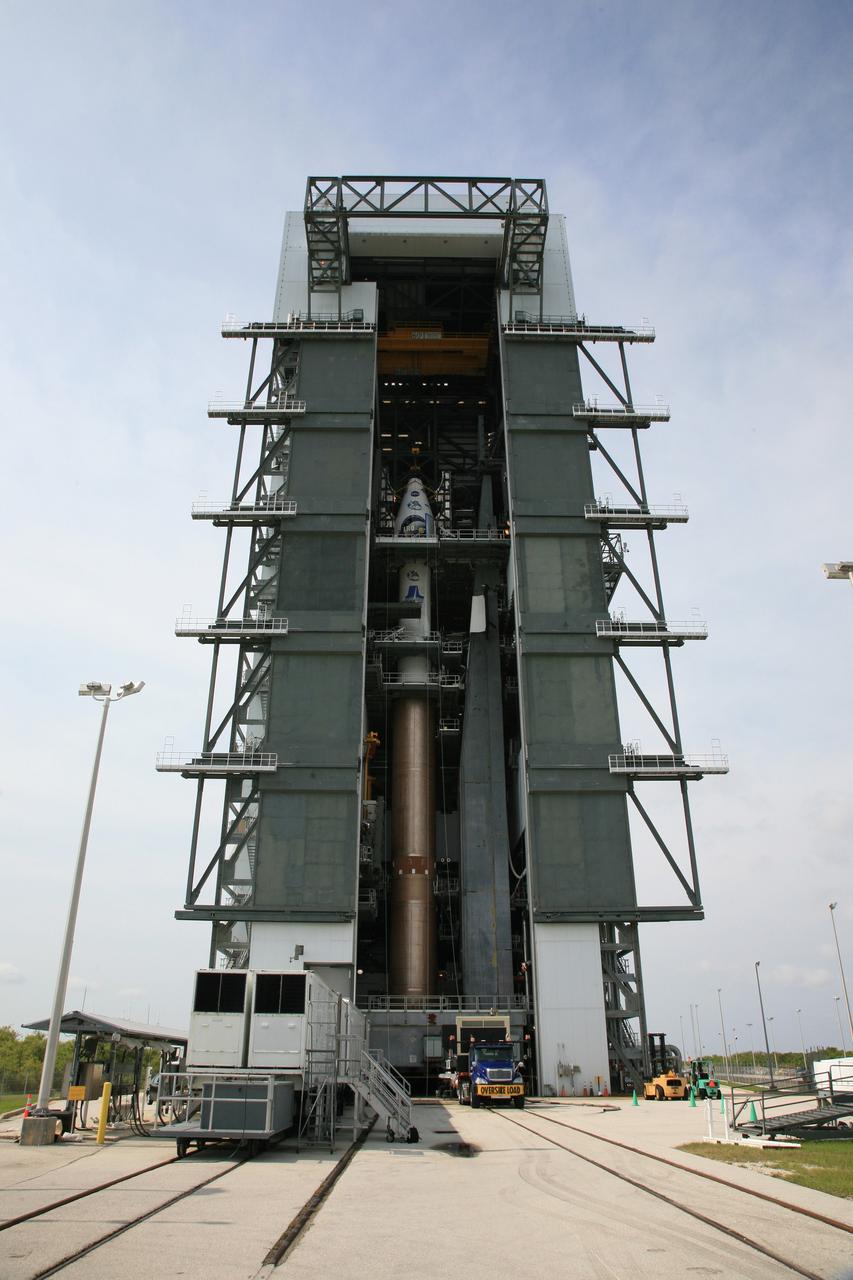
CAPE CANAVERAL, Fla. – On Launch Complex 41 at Cape Canaveral Air Force Station in Florida, the Lunar Reconnaissance Orbiter, or LRO, and NASA's Lunar Crater Observation and Sensing Satellite, known as LCROSS, are mated with the Atlas V rocket inside the mobile service tower for launch. The LRO includes five instruments that will help NASA characterize the moon's surface: DIVINER, LAMP, LEND, LOLA and LROC. Along with LCROSS, they will be launched aboard an Atlas V/Centaur rocket on June 17. Photo credit: NASA/Dimitri Gerondidakis
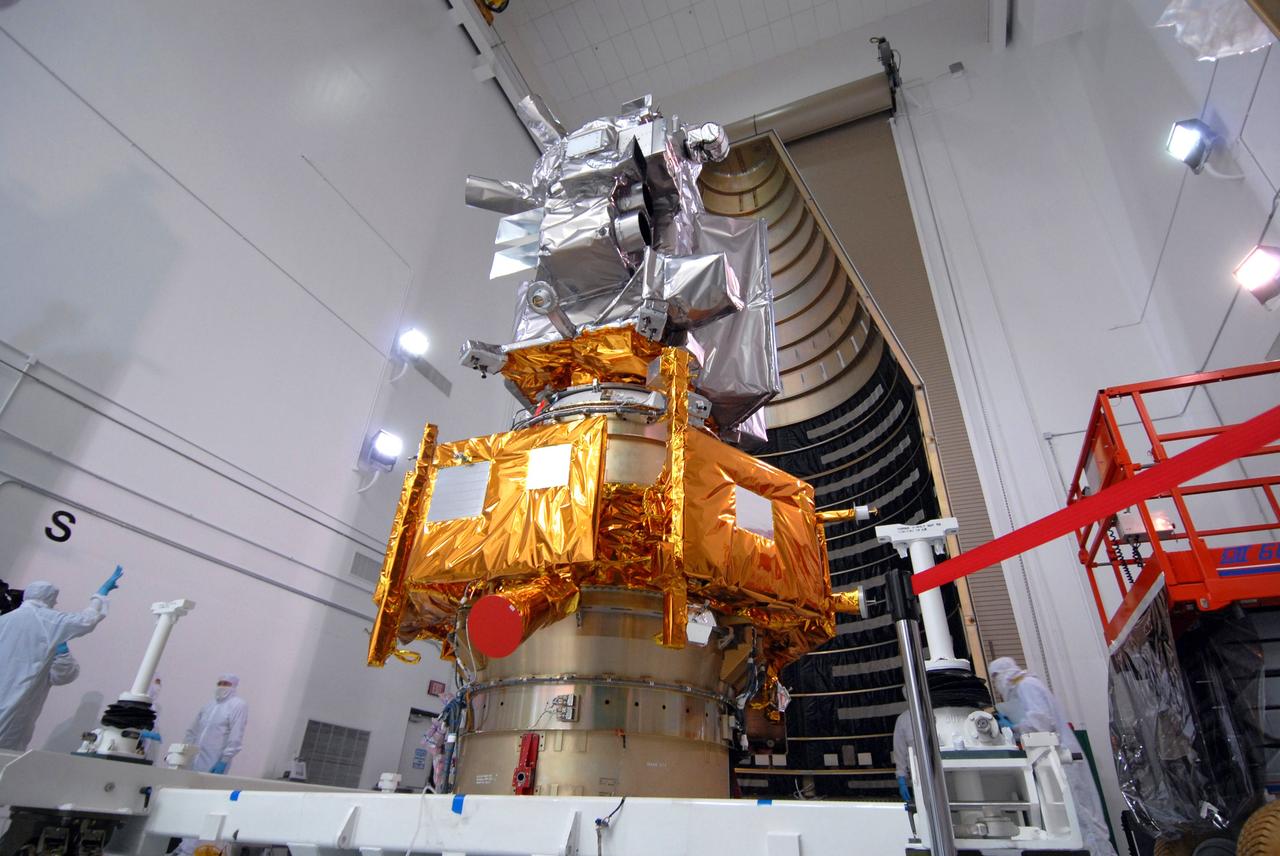
CAPE CANAVERAL, Fla. – At Astrotech Space Operations Facility in Titusville, Fla., NASA's Lunar Reconnaissance Orbiter, or LRO, and NASA's Lunar Crater Observation and Sensing Satellite, known as LCROSS, are being prepared for fairing installation. The LRO includes five instruments: DIVINER, LAMP, LEND, LOLA and LROC. They will be launched aboard an Atlas V/Centaur rocket no earlier than June 17 from Launch Complex-41 on Cape Canaveral Air Force Station in Florida. Photo credit: NASA/Jack Pfaller

NASA image release September 7, 2011 The Earth's moon has been an endless source of fascination for humanity for thousands of years. When at last Apollo 11 landed on the moon's surface in 1969, the crew found a desolate, lifeless orb, but one which still fascinates scientist and non-scientist alike. This image of the moon's north polar region was taken by the Lunar Reconnaissance Orbiter Camera, or LROC. One of the primary scientific objectives of LROC is to identify regions of permanent shadow and near-permanent illumination. Since the start of the mission, LROC has acquired thousands of Wide Angle Camera images approaching the north pole. From these images, scientists produced this mosaic, which is composed of 983 images taken over a one month period during northern summer. This mosaic shows the pole when it is best illuminated, regions that are in shadow are candidates for permanent shadow. Image Credit: NASA/GSFC/Arizona State University <b><a href="http://www.nasa.gov/centers/goddard/home/index.html" rel="nofollow">NASA Goddard Space Flight Center</a></b> enables NASA’s mission through four scientific endeavors: Earth Science, Heliophysics, Solar System Exploration, and Astrophysics. Goddard plays a leading role in NASA’s accomplishments by contributing compelling scientific knowledge to advance the Agency’s mission. <b>Follow us on <a href="http://twitter.com/NASA_GoddardPix" rel="nofollow">Twitter</a></b> <b>Like us on <a href="http://www.facebook.com/pages/Greenbelt-MD/NASA-Goddard/395013845897?ref=tsd" rel="nofollow">Facebook</a></b> <b>Find us on <a href="http://instagrid.me/nasagoddard/?vm=grid" rel="nofollow">Instagram</a></b>

This image, captured Feb. 1, 2014, shows a colorized view of Earth from the moon-based perspective of NASA's Lunar Reconnaissance Orbiter. Credit: NASA/Goddard/Arizona State University -- NASA's Lunar Reconnaissance Orbiter (LRO) experiences 12 "earthrises" every day, however LROC (short for LRO Camera) is almost always busy imaging the lunar surface so only rarely does an opportunity arise such that LROC can capture a view of Earth. On Feb. 1, 2014, LRO pitched forward while approaching the moon's north pole allowing the LROC Wide Angle Camera to capture Earth rising above Rozhdestvenskiy crater (112 miles, or 180 km, in diameter). Read more: <a href="http://go.nasa.gov/1oqMlgu" rel="nofollow">go.nasa.gov/1oqMlgu</a> <b><a href="http://www.nasa.gov/audience/formedia/features/MP_Photo_Guidelines.html" rel="nofollow">NASA image use policy.</a></b> <b><a href="http://www.nasa.gov/centers/goddard/home/index.html" rel="nofollow">NASA Goddard Space Flight Center</a></b> enables NASA’s mission through four scientific endeavors: Earth Science, Heliophysics, Solar System Exploration, and Astrophysics. Goddard plays a leading role in NASA’s accomplishments by contributing compelling scientific knowledge to advance the Agency’s mission. <b>Follow us on <a href="http://twitter.com/NASAGoddardPix" rel="nofollow">Twitter</a></b> <b>Like us on <a href="http://www.facebook.com/pages/Greenbelt-MD/NASA-Goddard/395013845897?ref=tsd" rel="nofollow">Facebook</a></b> <b>Find us on <a href="http://instagram.com/nasagoddard?vm=grid" rel="nofollow">Instagram</a></b>

NASA image release March 11, 2011 Caption: The lunar farside as never seen before! LROC WAC orthographic projection centered at 180° longitude, 0° latitude. Credit: NASA/Goddard/Arizona State University. Because the moon is tidally locked (meaning the same side always faces Earth), it was not until 1959 that the farside was first imaged by the Soviet Luna 3 spacecraft (hence the Russian names for prominent farside features, such as Mare Moscoviense). And what a surprise - unlike the widespread maria on the nearside, basaltic volcanism was restricted to a relatively few, smaller regions on the farside, and the battered highlands crust dominated. A different world from what we saw from Earth. Of course, the cause of the farside/nearside asymmetry is an interesting scientific question. Past studies have shown that the crust on the farside is thicker, likely making it more difficult for magmas to erupt on the surface, limiting the amount of farside mare basalts. Why is the farside crust thicker? That is still up for debate, and in fact several presentations at this week's Lunar and Planetary Science Conference attempt to answer this question. The Clementine mission obtained beautiful mosaics with the sun high in the sky (low phase angles), but did not have the opportunity to observe the farside at sun angles favorable for seeing surface topography. This WAC mosaic provides the most complete look at the morphology of the farside to date, and will provide a valuable resource for the scientific community. And it's simply a spectacular sight! The Lunar Reconnaissance Orbiter Camera (LROC) Wide Angle Camera (WAC) is a push-frame camera that captures seven color bands (321, 360, 415, 566, 604, 643, and 689 nm) with a 57-km swath (105-km swath in monochrome mode) from a 50 km orbit. One of the primary objectives of LROC is to provide a global 100 m/pixel monochrome (643 nm) base map with incidence angles between 55°-70° at the equator, lighting that is favorable for morphological interpretations. Each month, the WAC provides nearly complete coverage of the Moon under unique lighting. As an added bonus, the orbit-to-orbit image overlap provides stereo coverage. Reducing all these stereo images into a global topographic map is a big job, and is being led by LROC Team Members from the German Aerospace Center (Deutsches Zentrum für Luft- und Raumfahrt; DLR). Several preliminary WAC topographic products have appeared in LROC featured images over the past year (Orientale basin, Sinus Iridum). For a sneak preview of the WAC global DEM with the WAC global mosaic, view a rotating composite moon (70 MB video from ASU's LROC website). The WAC topographic dataset will be completed and released later this year. The global mosaic released today is comprised of over 15,000 WAC images acquired between November 2009 and February 2011. The non-polar images were map projected onto the GLD100 shape model (WAC derived 100 m/pixel DTM), while polar images were map projected on the LOLA shape model. In addition, the LOLA derived crossover corrected ephemeris, and an improved camera pointing, provide accurate positioning (better than 100 m) of each WAC image. As part of the March 2011 PDS release, the LROC team posted the global map in ten regional tiles. Eight of the tiles are equirectangular projections that encompass 60° latitude by 90° longitude. In addition, two polar stereographic projections are available for each pole from ±60° to the pole. These reduced data records (RDR) products will be available for download on March 15, 2011. As the mission progresses, and our knowledge of the lunar photometric function increases, improved and new mosaics will be released! Work your way around the moon with these six orthographic projections constructed from WAC mosaics. The nearside view linked below is different from that released on 21 February. To read more con't here: <a href="http://www.nasa.gov/mission_pages/LRO/news/lro-farside.html" rel="nofollow">www.nasa.gov/mission_pages/LRO/news/lro-farside.html</a> <b><a href="http://www.nasa.gov/centers/goddard/home/index.html" rel="nofollow">NASA Goddard Space Flight Center</a></b> enables NASA’s mission through four scientific endeavors: Earth Science, Heliophysics, Solar System Exploration, and Astrophysics. Goddard plays a leading role in NASA’s accomplishments by contributing compelling scientific knowledge to advance the Agency’s mission. <b>Follow us on <a href="http://twitter.com/NASA_GoddardPix" rel="nofollow">Twitter</a></b> <b>Join us on <a href="http://www.facebook.com/pages/Greenbelt-MD/NASA-Goddard/395013845897?ref=tsd" rel="nofollow">Facebook</a></b>
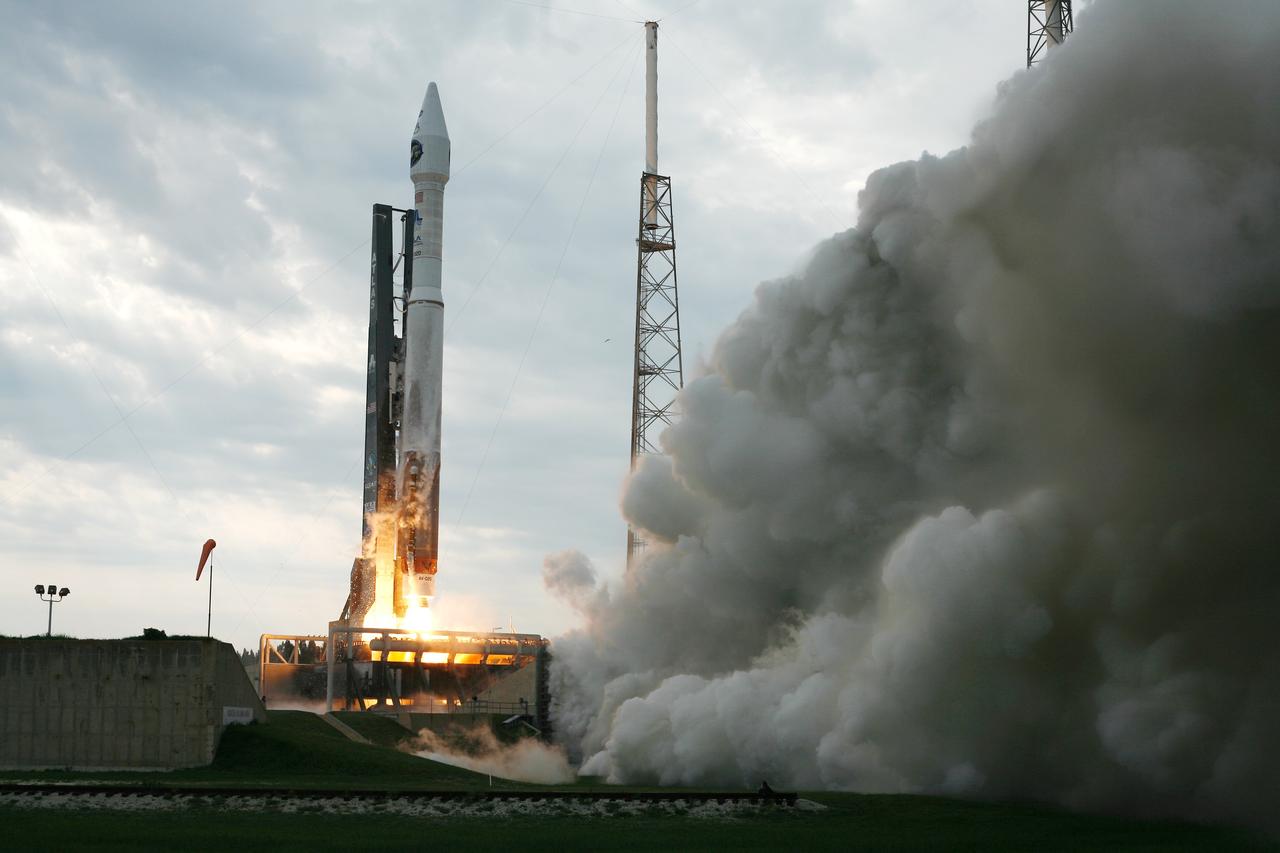
CAPE CANAVERAL, Fla. – Smoke rolls across Launch Pad 41 at Cape Canaveral Air force Station in Florida as the Atlas V/Centaur rocket topped with NASA's Lunar Reconnaissance Orbiter, or LRO, and NASA's Lunar Crater Observation and Sensing Satellite, known as LCROSS, lifts off. Launch was on-time at 5:32 p.m. EDT June 18. LRO and LCROSS are the first missions in NASA's plan to return humans to the moon and begin establishing a lunar outpost by 2020. The LRO also includes seven instruments that will help NASA characterize the moon's surface: DIVINER, LAMP, LEND, LOLA , CRATER, Mini-RF and LROC. Photo courtesy of Scott Andrews
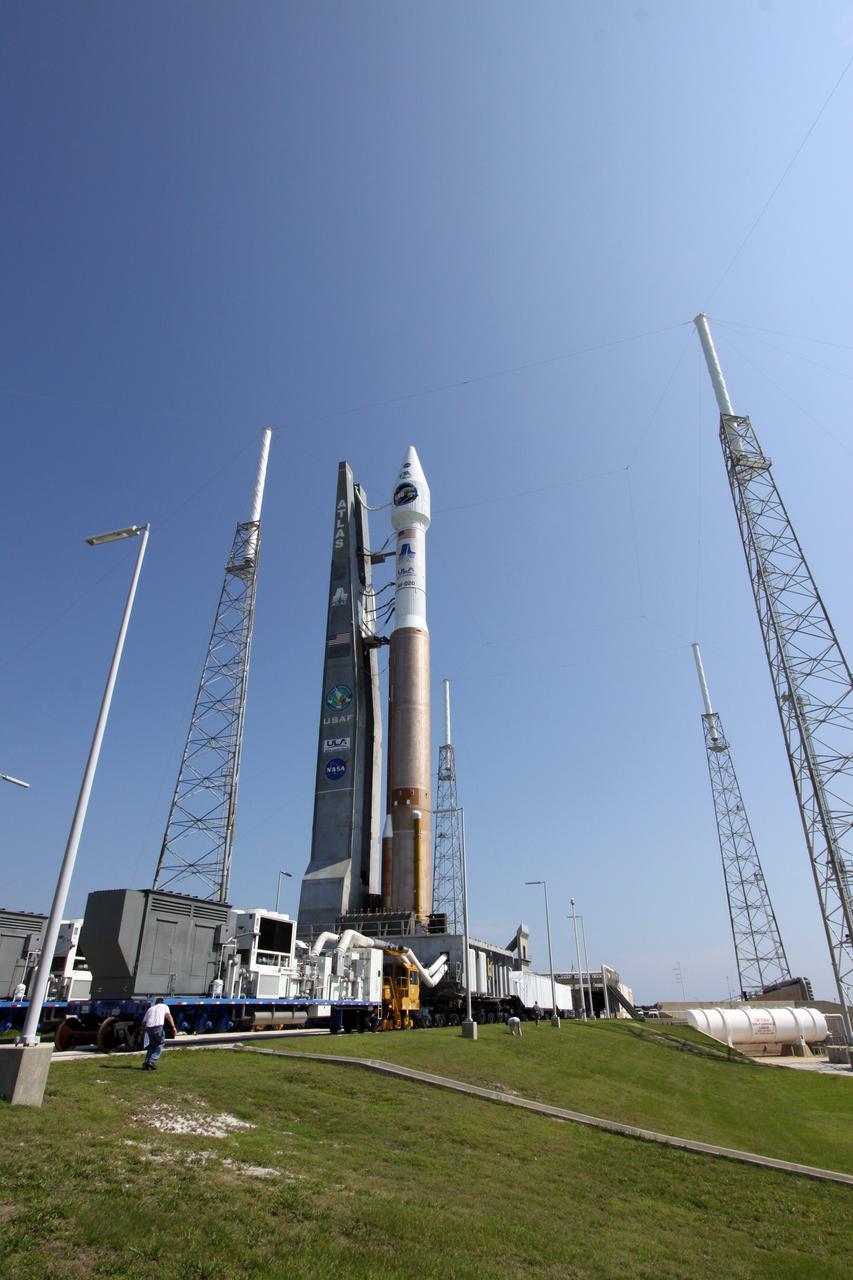
CAPE CANAVERAL, Fla. – On Launch Complex-41 on Cape Canaveral Air Force Station in Florida, the Atlas V/Centaur rocket with NASA's Lunar Reconnaissance Orbiter, or LRO, and NASA's Lunar Crater Observation and Sensing Satellite, known as LCROSS, on top reach the launch pad. Circling the pad are the protective lightning towers. LRO and LCROSS are the first missions in NASA's plan to return humans to the moon and begin establishing a lunar outpost by 2020. The LRO also includes seven instruments that will help NASA characterize the moon's surface: DIVINER, LAMP, LEND, LOLA, CRATER, Mini-RF and LROC. Launch is scheduled for 5:22 p.m. EDT June 18 . Photo credit: NASA/Jack Pfaller
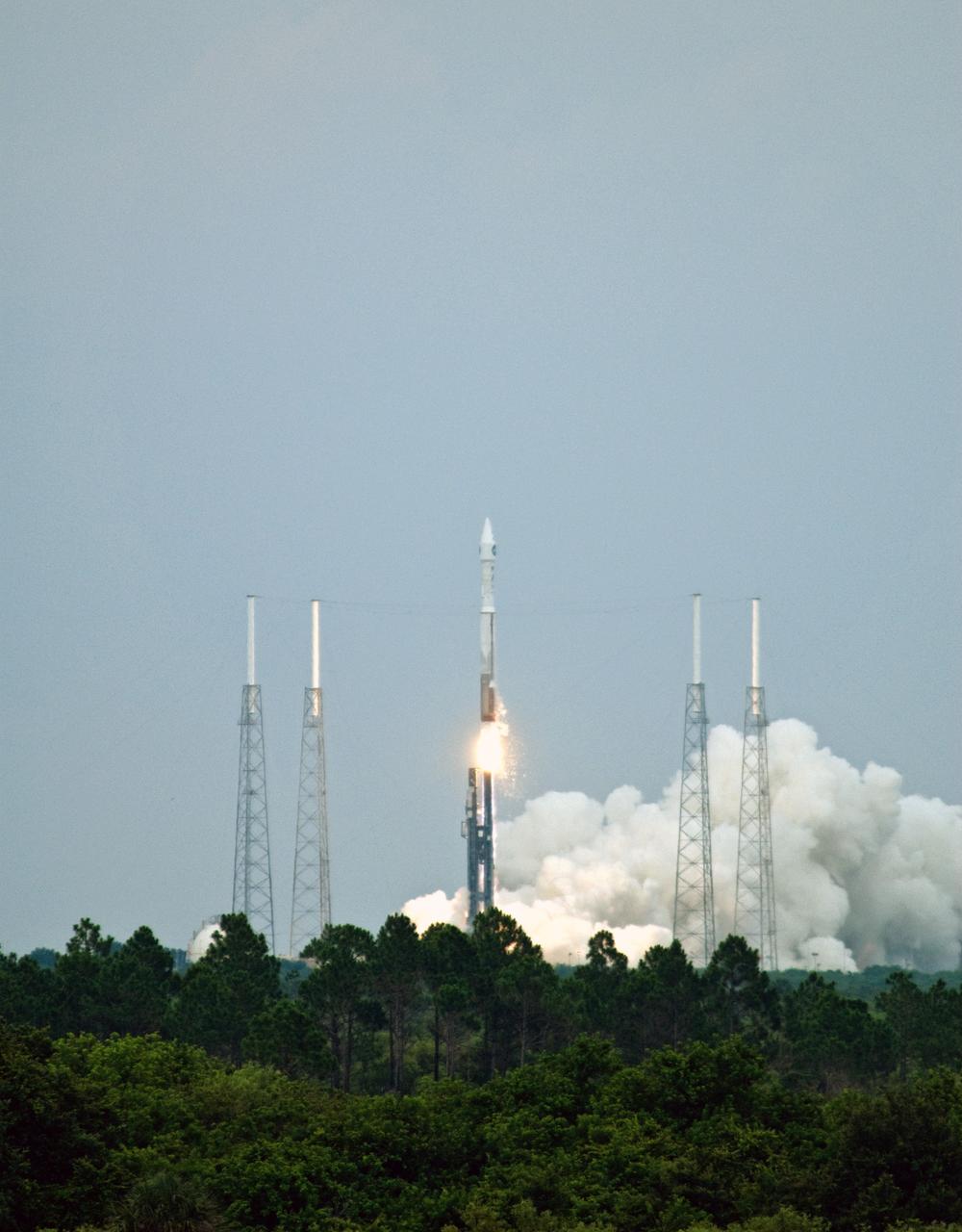
CAPE CANAVERAL, Fla. – NASA's Lunar Reconnaissance Orbiter, or LRO, and NASA's Lunar Crater Observation and Sensing Satellite, known as LCROSS, lifts off from Launch Pad 41 at Cape Canaveral Air Force Station in Florida. LRO and LCROSS are the first missions in NASA's plan to return humans to the moon and begin establishing a lunar outpost by 2020. The LRO also includes seven instruments that will help NASA characterize the moon's surface: DIVINER, LAMP, LEND, LOLA , CRATER, Mini-RF and LROC. Launch was on-time at 5:32 p.m. EDT June 18. Photo credit: NASA/Sandra Joseph
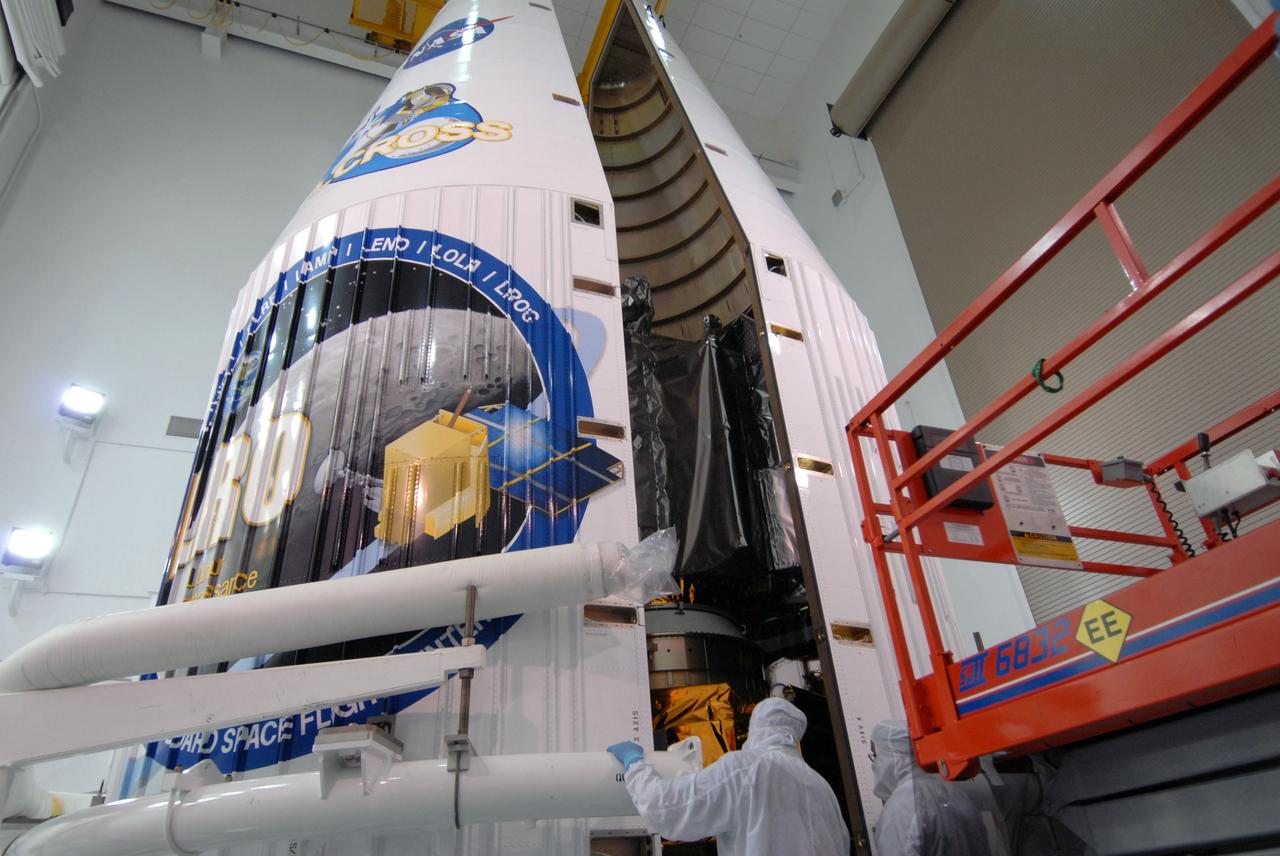
CAPE CANAVERAL, Fla. – At Astrotech Space Operations Facility in Titusville, Fla., technicians closely watch as the fairing halves move together to enclose NASA's Lunar Reconnaissance Orbiter, or LRO, and NASA's Lunar Crater Observation and Sensing Satellite, known as LCROSS. The fairing is a molded structure that fits flush with the outside surface of the rocket and forms an aerodynamically smooth nose cone, protecting the spacecraft during launch and ascent. The LRO includes five instruments: DIVINER, LAMP, LEND, LOLA and LROC. They will be launched aboard an Atlas V/Centaur rocket no earlier than June 17 from Launch Complex-41 on Cape Canaveral Air Force Station in Florida. Photo credit: NASA/Jack Pfaller
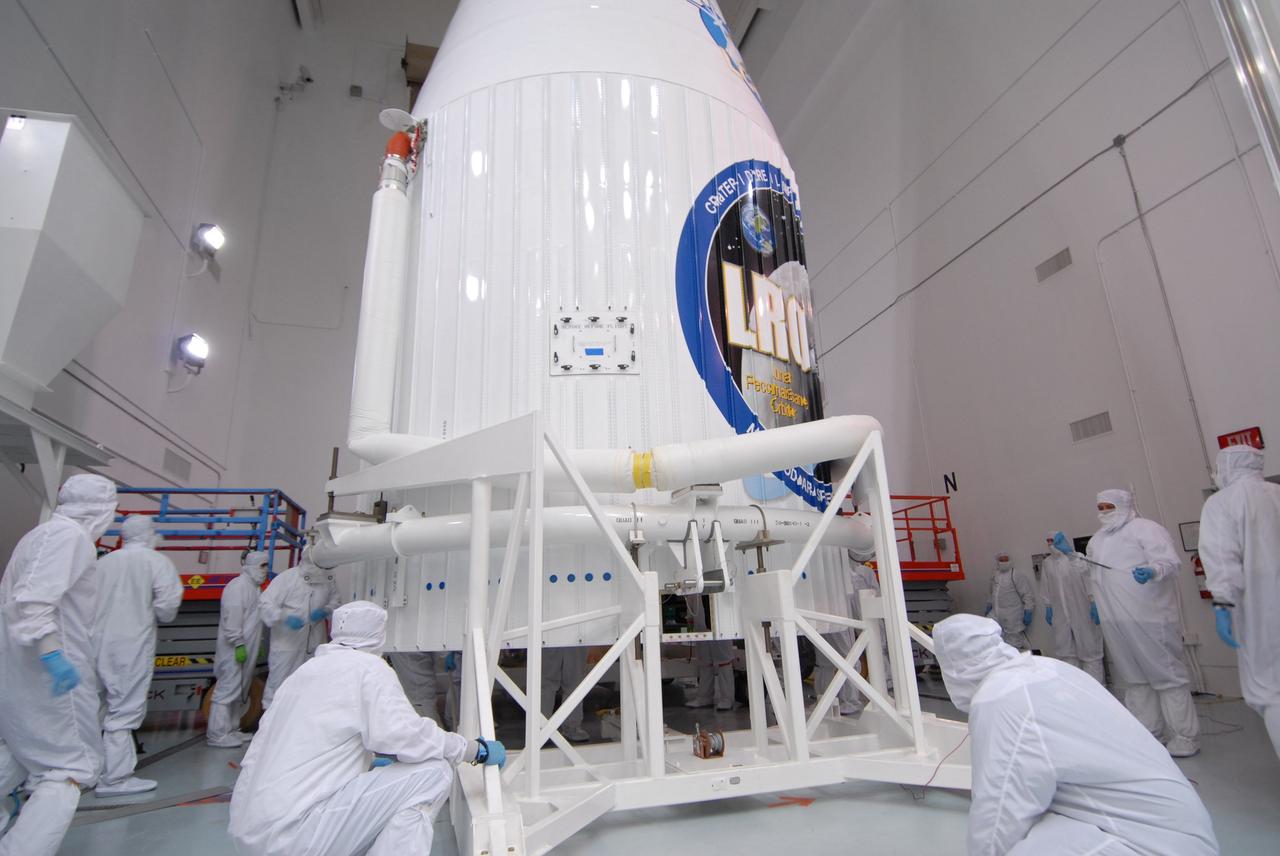
CAPE CANAVERAL, Fla. – At Astrotech Space Operations Facility in Titusville, Fla., technicians closely watch the joining of the fairing halves around NASA's Lunar Reconnaissance Orbiter, or LRO, and and NASA's Lunar Crater Observation and Sensing Satellite, known as LCROSS. The fairing is a molded structure that fits flush with the outside surface of the rocket and forms an aerodynamically smooth nose cone, protecting the spacecraft during launch and ascent. The LRO includes five instruments: DIVINER, LAMP, LEND, LOLA and LROC. They will be launched aboard an Atlas V/Centaur rocket no earlier than June 17 from Launch Complex-41 on Cape Canaveral Air Force Station in Florida. Photo credit: NASA/Jack Pfaller
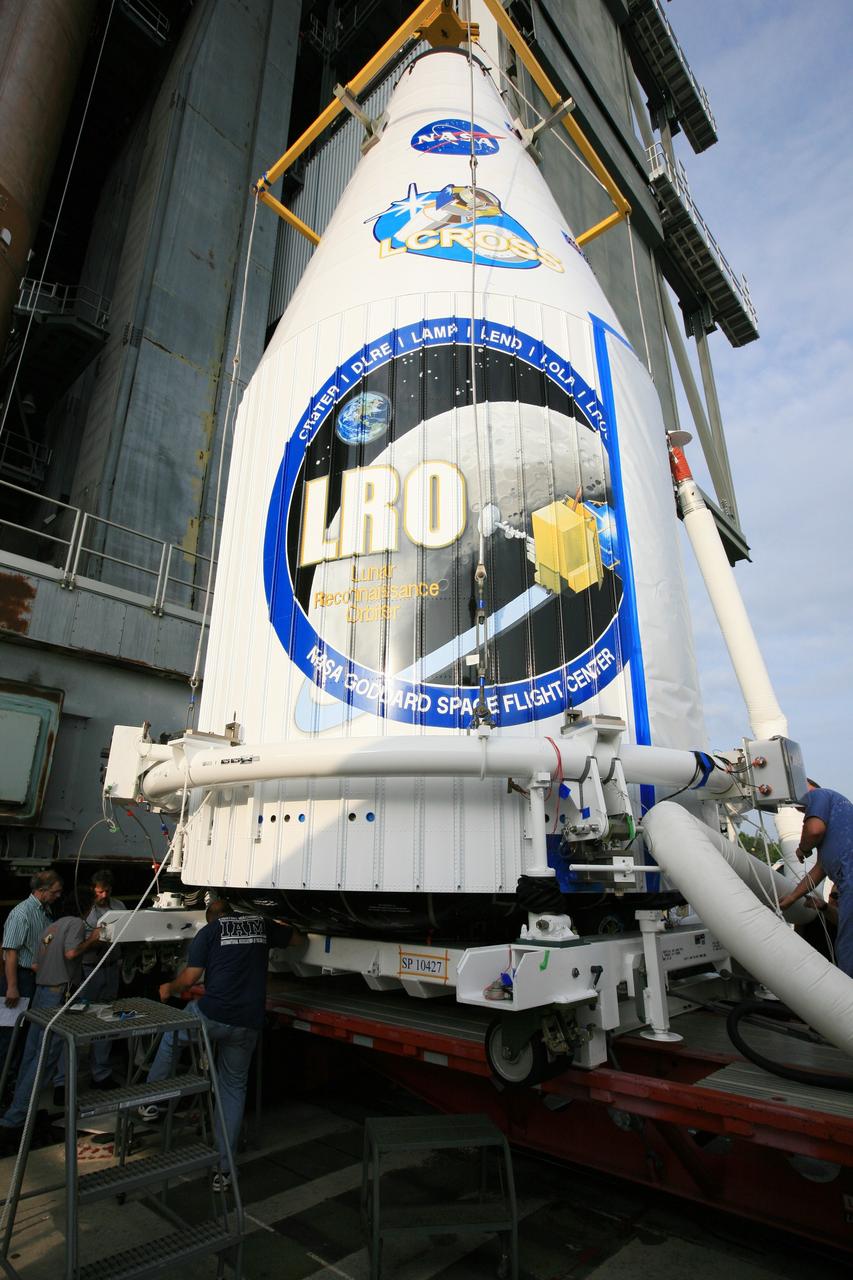
CAPE CANAVERAL, Fla. – On Launch Complex 41 at Cape Canaveral Air Force Station in Florida, a crane is attached to the Lunar Reconnaissance Orbiter, or LRO, and NASA's Lunar Crater Observation and Sensing Satellite, known as LCROSS, to lift them into the mobile service tower. The LRO/LCROSS will be mated to the Atlas V rocket for launch. The LRO includes five instruments that will help NASA characterize the moon's surface: DIVINER, LAMP, LEND, LOLA and LROC. Along with LCROSS, they will be launched aboard an Atlas V/Centaur rocket on June 17. Photo credit: NASA/Dimitri Gerondidakis
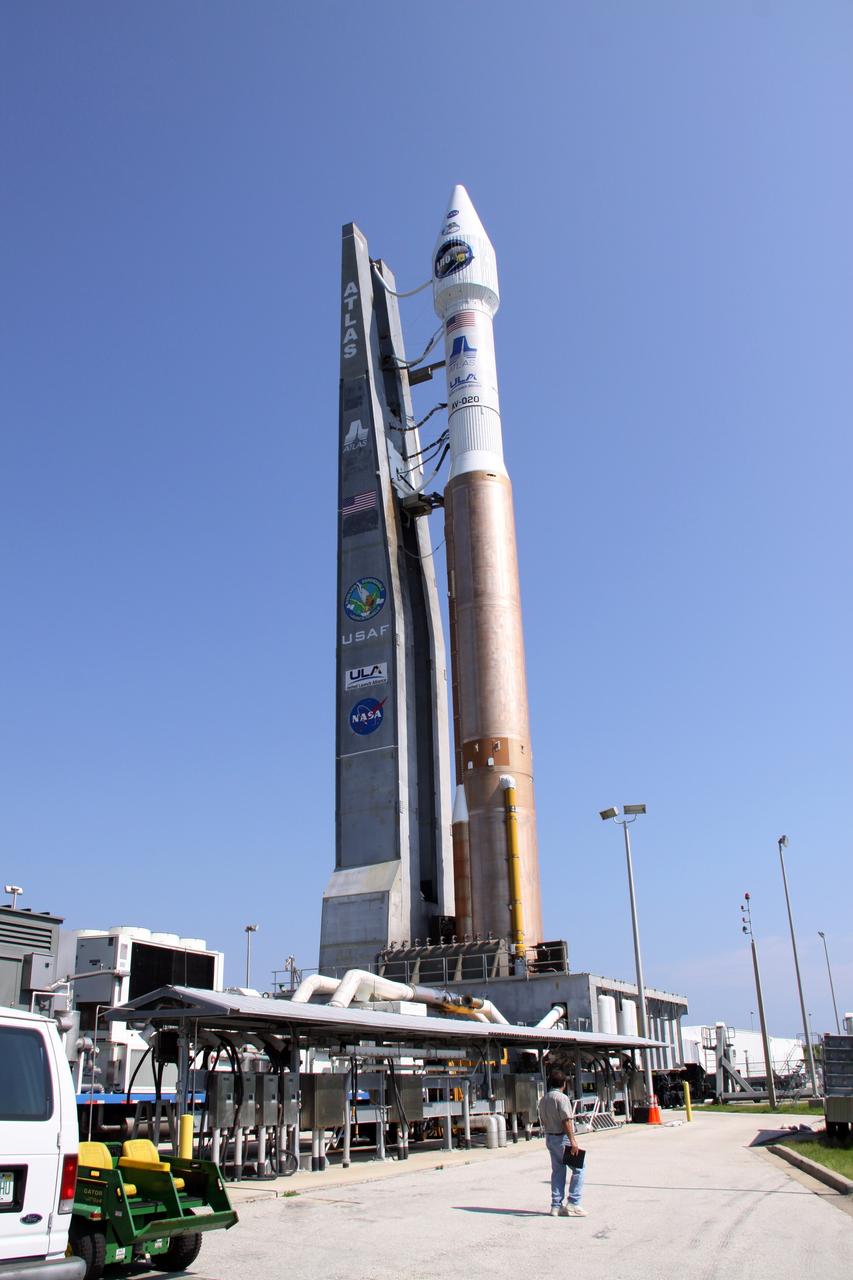
CAPE CANAVERAL, Fla. – On Launch Complex-41 on Cape Canaveral Air Force Station in Florida, NASA's Lunar Reconnaissance Orbiter, or LRO, and NASA's Lunar Crater Observation and Sensing Satellite, known as LCROSS, and launch gantry roll out to the launch pad. They are atop their launch vehicle, the Atlas V/Centaur rocket. LRO and LCROSS are the first missions in NASA's plan to return humans to the moon and begin establishing a lunar outpost by 2020. The LRO also includes seven instruments that will help NASA characterize the moon's surface: DIVINER, LAMP, LEND, LOLA, CRATER, Mini-RF and LROC. Launch is scheduled for 5:22 p.m. EDT June 18 . Photo credit: NASA/Jack Pfaller
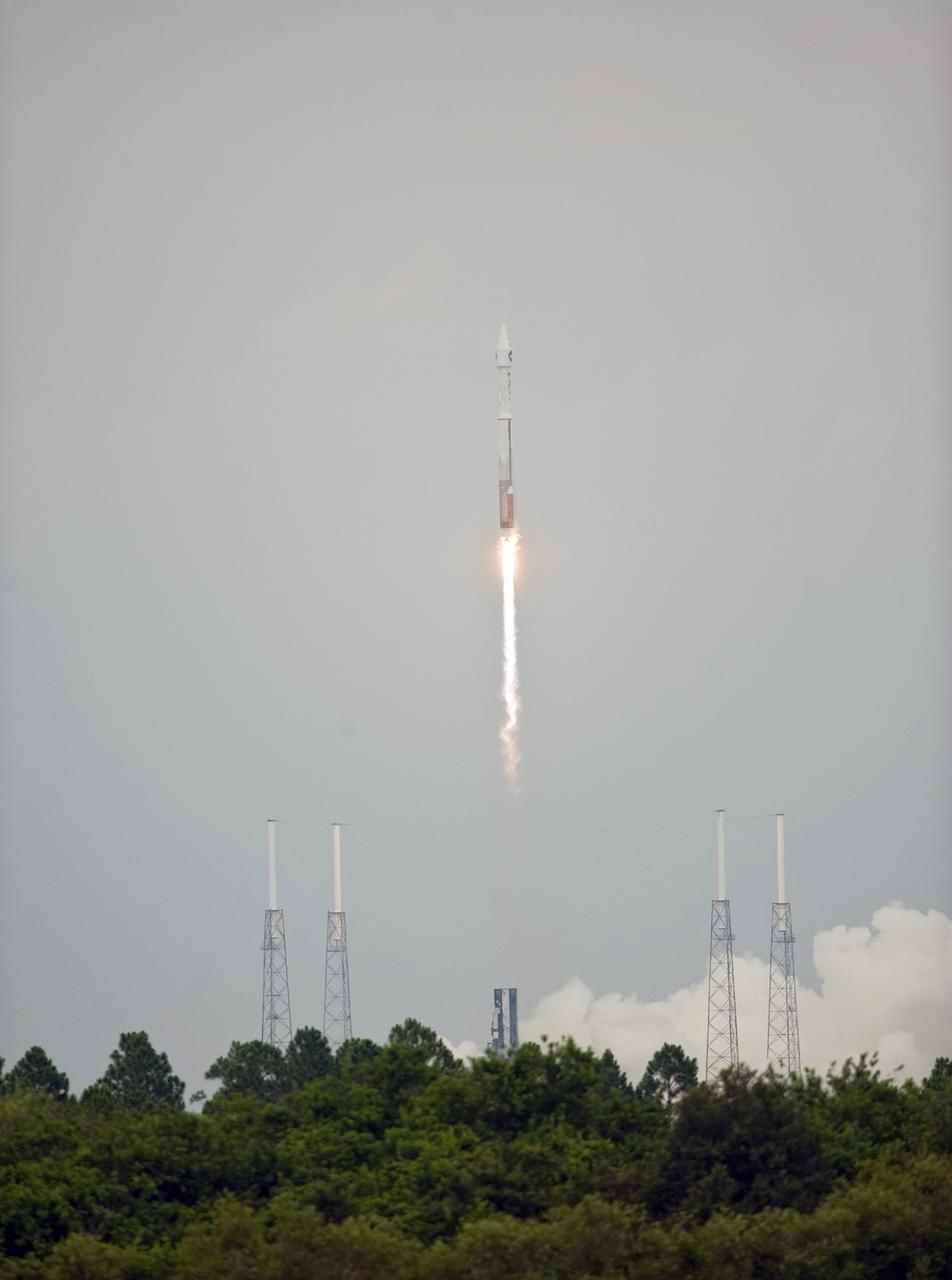
CAPE CANAVERAL, Fla. – Trailing a column of smoke, NASA's Lunar Reconnaissance Orbiter, or LRO, and NASA's Lunar Crater Observation and Sensing Satellite, known as LCROSS, lifts off from Launch Pad 41 at Cape Canaveral Air Force Station in Florida. LRO and LCROSS are the first missions in NASA's plan to return humans to the moon and begin establishing a lunar outpost by 2020. The LRO also includes seven instruments that will help NASA characterize the moon's surface: DIVINER, LAMP, LEND, LOLA , CRATER, Mini-RF and LROC. Launch was on-time at 5:32 p.m. EDT June 18. Photo credit: NASA/Tom Farrar
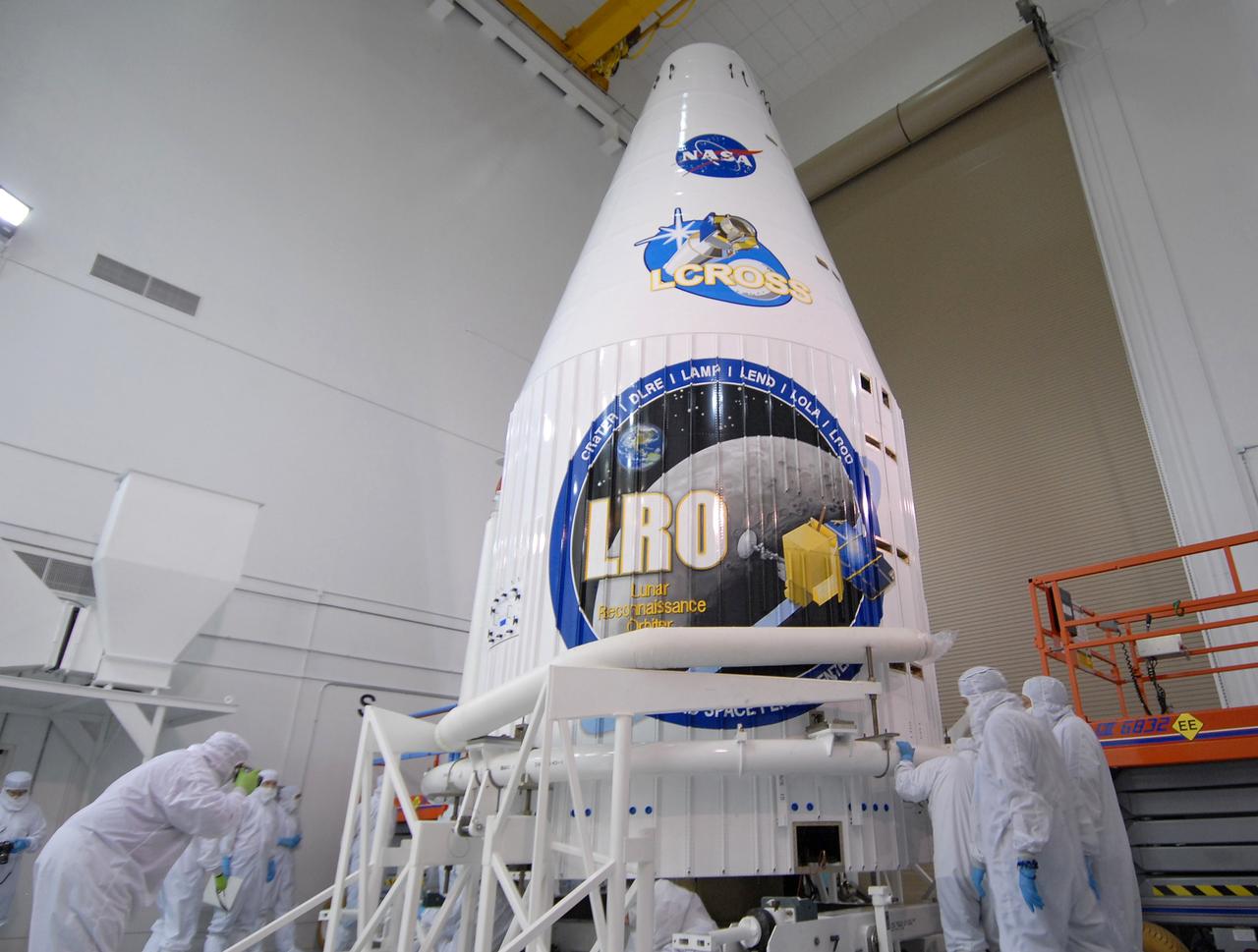
CAPE CANAVERAL, Fla. – At Astrotech Space Operations Facility in Titusville, Fla., the fairing halves have been joined to enclose NASA's Lunar Reconnaissance Orbiter, or LRO, and NASA's Lunar Crater Observation and Sensing Satellite, known as LCROSS. The fairing is a molded structure that fits flush with the outside surface of the rocket and forms an aerodynamically smooth nose cone, protecting the spacecraft during launch and ascent. The LRO includes five instruments: DIVINER, LAMP, LEND, LOLA and LROC. They will be launched aboard an Atlas V/Centaur rocket no earlier than June 17 from Launch Complex-41 on Cape Canaveral Air Force Station in Florida. Photo credit: NASA/Jack Pfaller
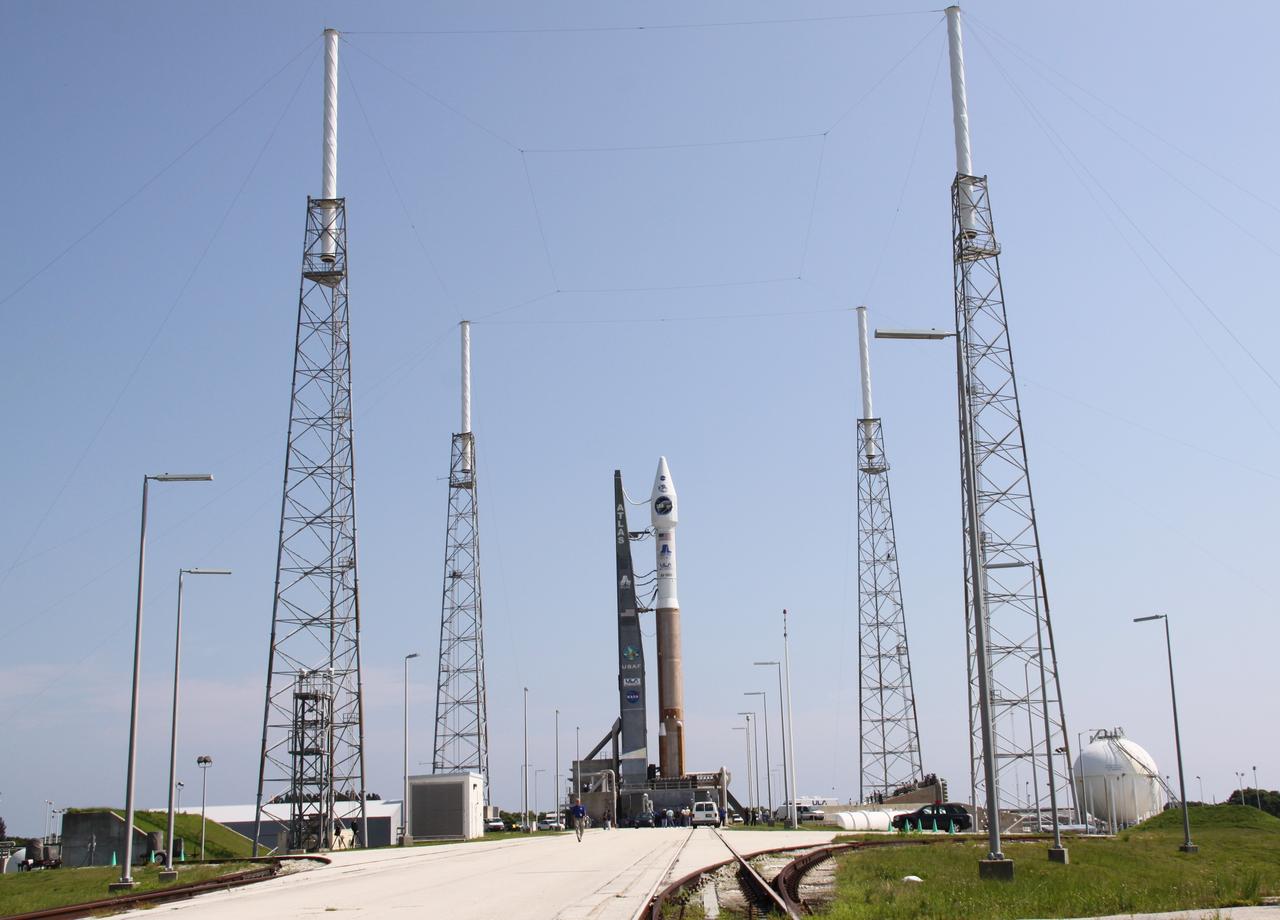
CAPE CANAVERAL, Fla. – On Launch Complex-41 on Cape Canaveral Air Force Station in Florida, the Atlas V/Centaur rocket with NASA's Lunar Reconnaissance Orbiter, or LRO, and NASA's Lunar Crater Observation and Sensing Satellite, known as LCROSS, on top reach the launch pad. Circling the pad are the protective lightning towers. LRO and LCROSS are the first missions in NASA's plan to return humans to the moon and begin establishing a lunar outpost by 2020. The LRO also includes seven instruments that will help NASA characterize the moon's surface: DIVINER, LAMP, LEND, LOLA, CRATER, Mini-RF and LROC. Launch is scheduled for 5:22 p.m. EDT June 18 . Photo credit: NASA/Jack Pfaller
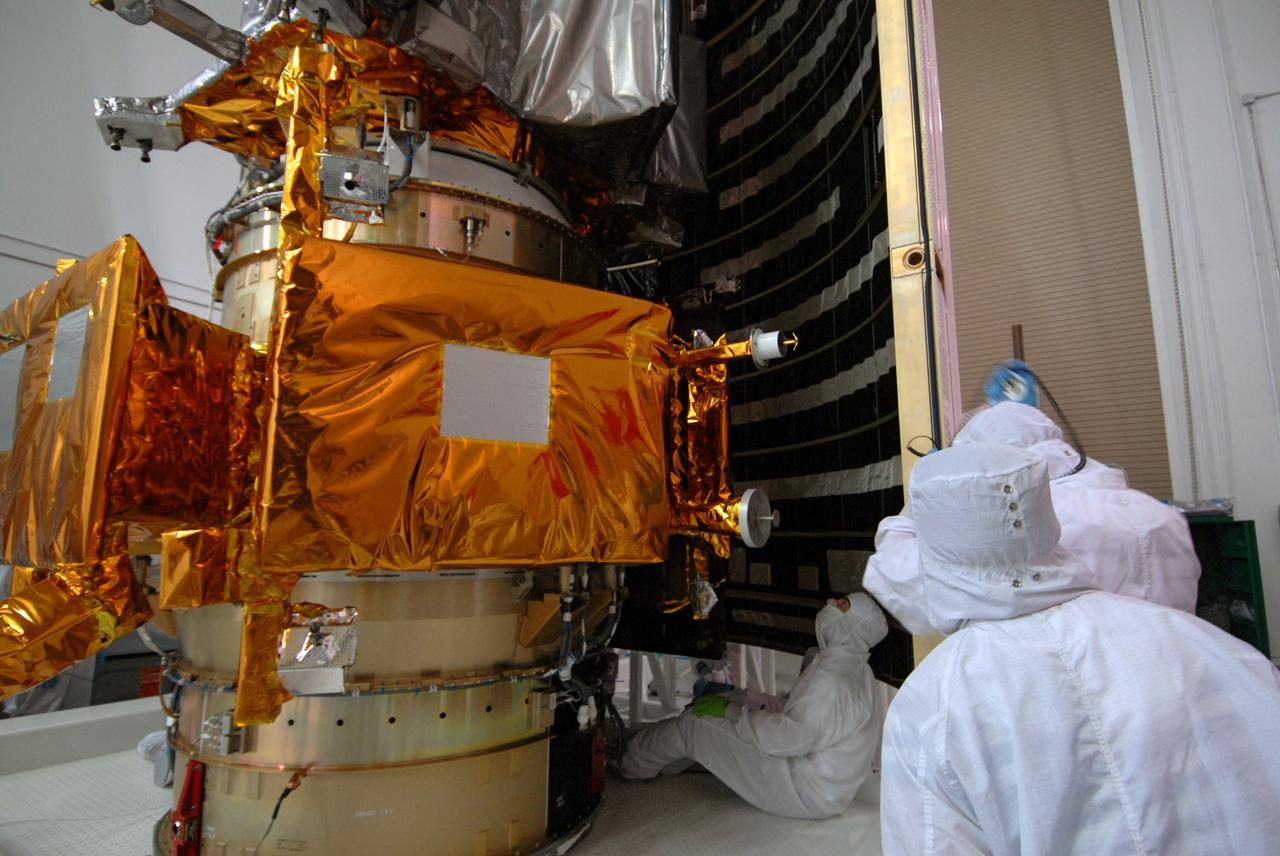
CAPE CANAVERAL, Fla. – At Astrotech Space Operations Facility in Titusville, Fla., technicians observe NASA's Lunar Reconnaissance Orbiter, or LRO, with and NASA's Lunar Crater Observation and Sensing Satellite, known as LCROSS, during installation of the fairing. The fairing is a molded structure that fits flush with the outside surface of the rocket and forms an aerodynamically smooth nose cone, protecting the spacecraft during launch and ascent. The LRO includes five instruments: DIVINER, LAMP, LEND, LOLA and LROC. They will be launched aboard an Atlas V/Centaur rocket no earlier than June 17 from Launch Complex-41 on Cape Canaveral Air Force Station in Florida. Photo credit: NASA/Jack Pfaller
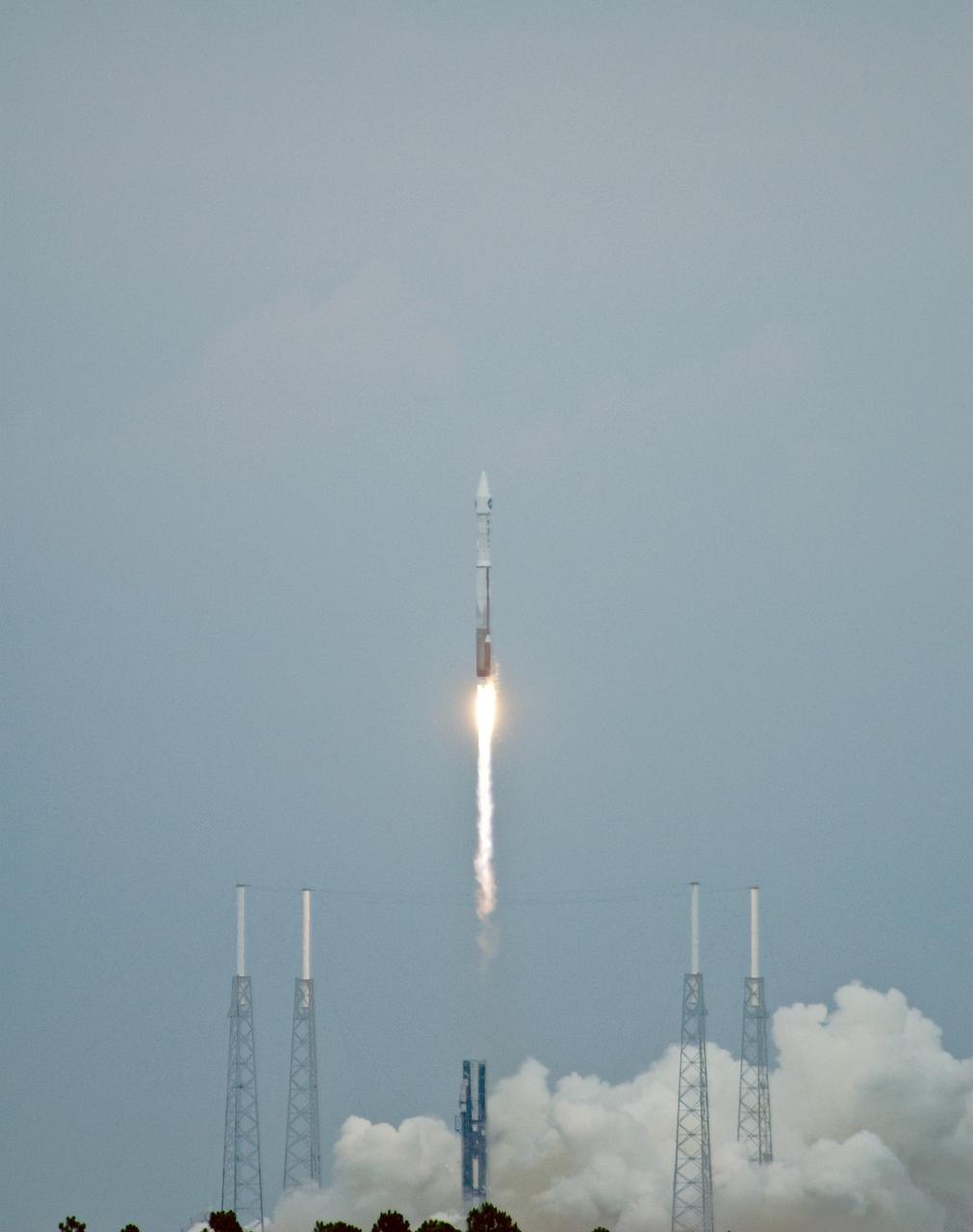
CAPE CANAVERAL, Fla. – Rising above the lightning towers around the pad, NASA's Lunar Reconnaissance Orbiter, or LRO, and NASA's Lunar Crater Observation and Sensing Satellite, known as LCROSS, lifts off from Launch Pad 41 at Cape Canaveral Air Force Station in Florida. LRO and LCROSS are the first missions in NASA's plan to return humans to the moon and begin establishing a lunar outpost by 2020. The LRO also includes seven instruments that will help NASA characterize the moon's surface: DIVINER, LAMP, LEND, LOLA , CRATER, Mini-RF and LROC. Launch was on-time at 5:32 p.m. EDT June 18. Photo credit: NASA/Sandra Joseph
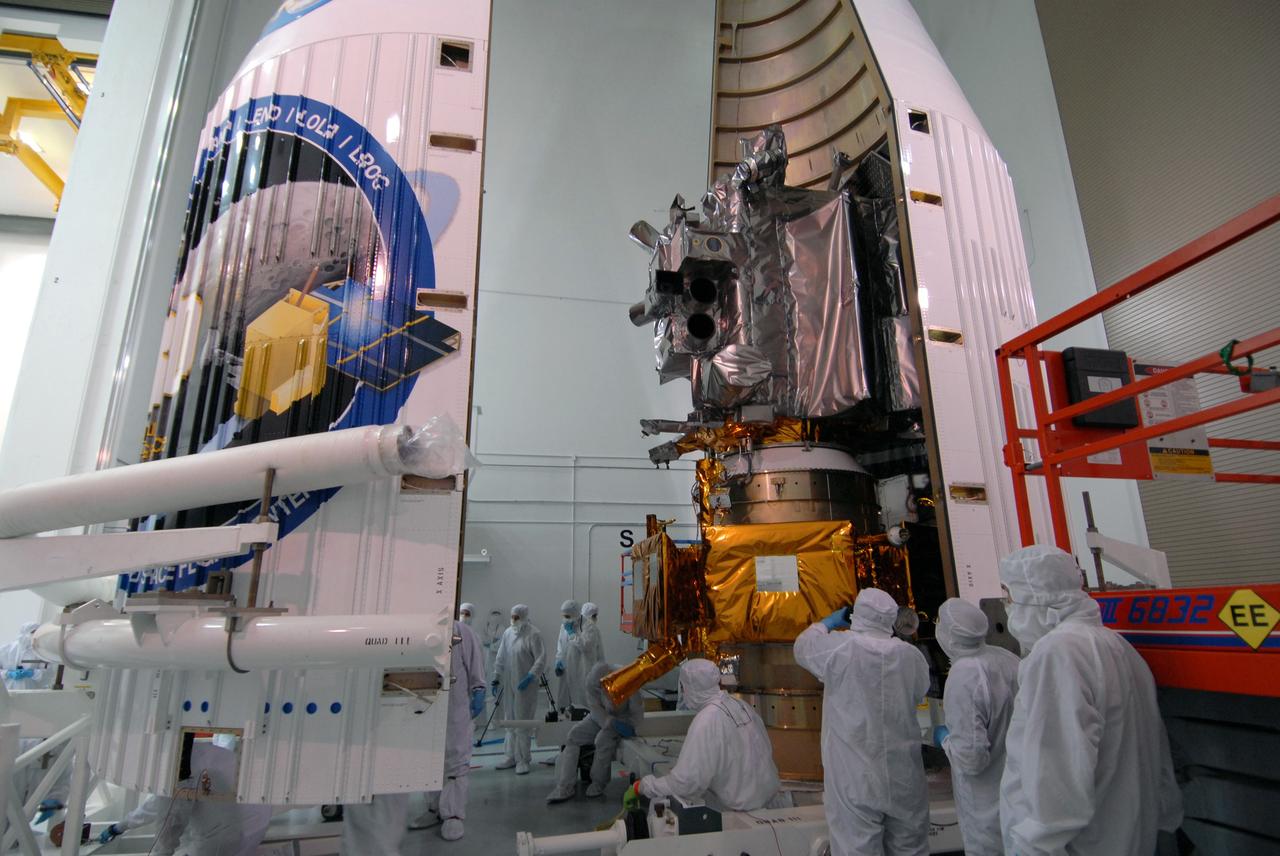
CAPE CANAVERAL, Fla. – At Astrotech Space Operations Facility in Titusville, Fla., the fairing halves are moved apart for another attempt at installation around NASA's Lunar Reconnaissance Orbiter, or LRO, and and NASA's Lunar Crater Observation and Sensing Satellite, known as LCROSS. The fairing is a molded structure that fits flush with the outside surface of the rocket and forms an aerodynamically smooth nose cone, protecting the spacecraft during launch and ascent. The LRO includes five instruments: DIVINER, LAMP, LEND, LOLA and LROC. They will be launched aboard an Atlas V/Centaur rocket no earlier than June 17 from Launch Complex-41 on Cape Canaveral Air Force Station in Florida. Photo credit: NASA/Jack Pfaller
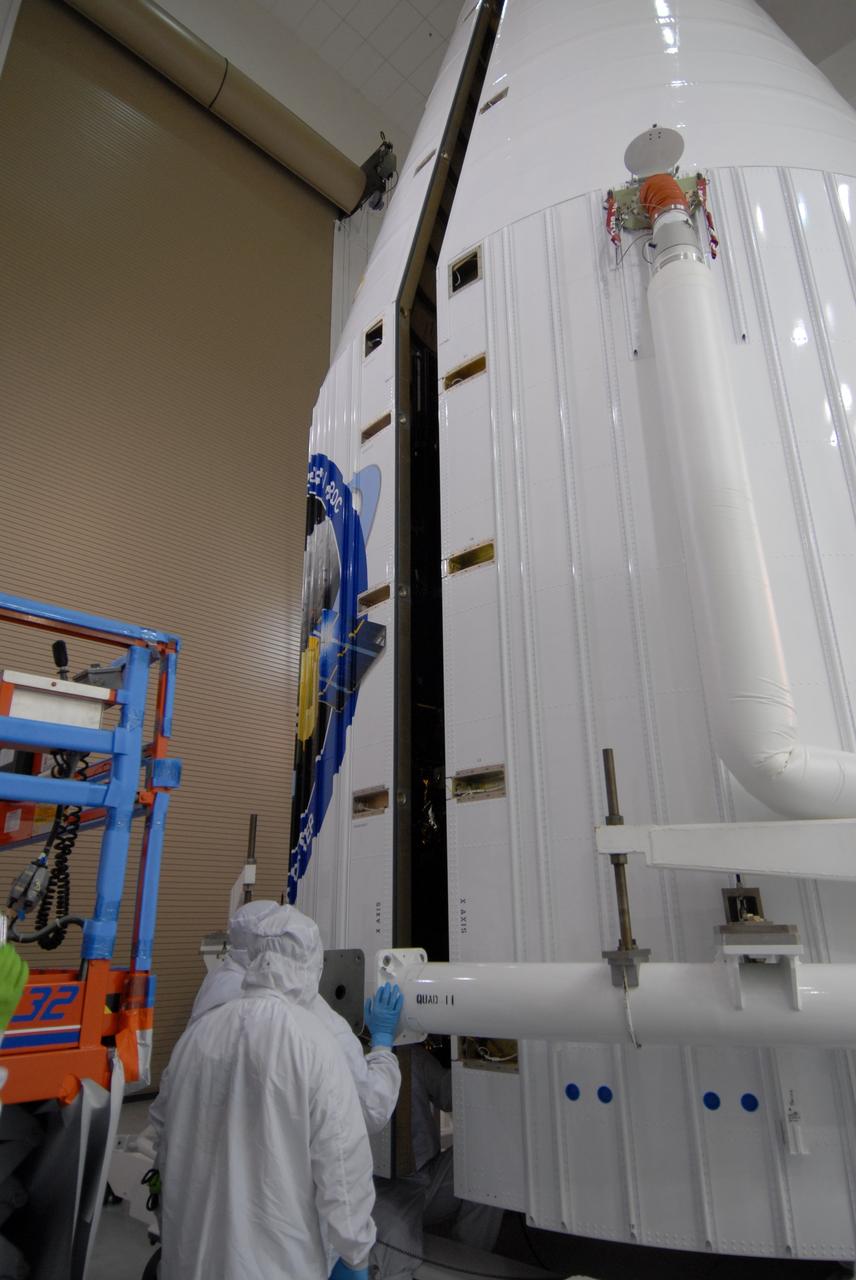
CAPE CANAVERAL, Fla. – At Astrotech Space Operations Facility in Titusville, Fla., technicians closely watch as the fairing halves move together to enclose NASA's Lunar Reconnaissance Orbiter, or LRO, and NASA's Lunar Crater Observation and Sensing Satellite, known as LCROSS. The fairing is a molded structure that fits flush with the outside surface of the rocket and forms an aerodynamically smooth nose cone, protecting the spacecraft during launch and ascent. The LRO includes five instruments: DIVINER, LAMP, LEND, LOLA and LROC. They will be launched aboard an Atlas V/Centaur rocket no earlier than June 17 from Launch Complex-41 on Cape Canaveral Air Force Station in Florida. Photo credit: NASA/Jack Pfaller
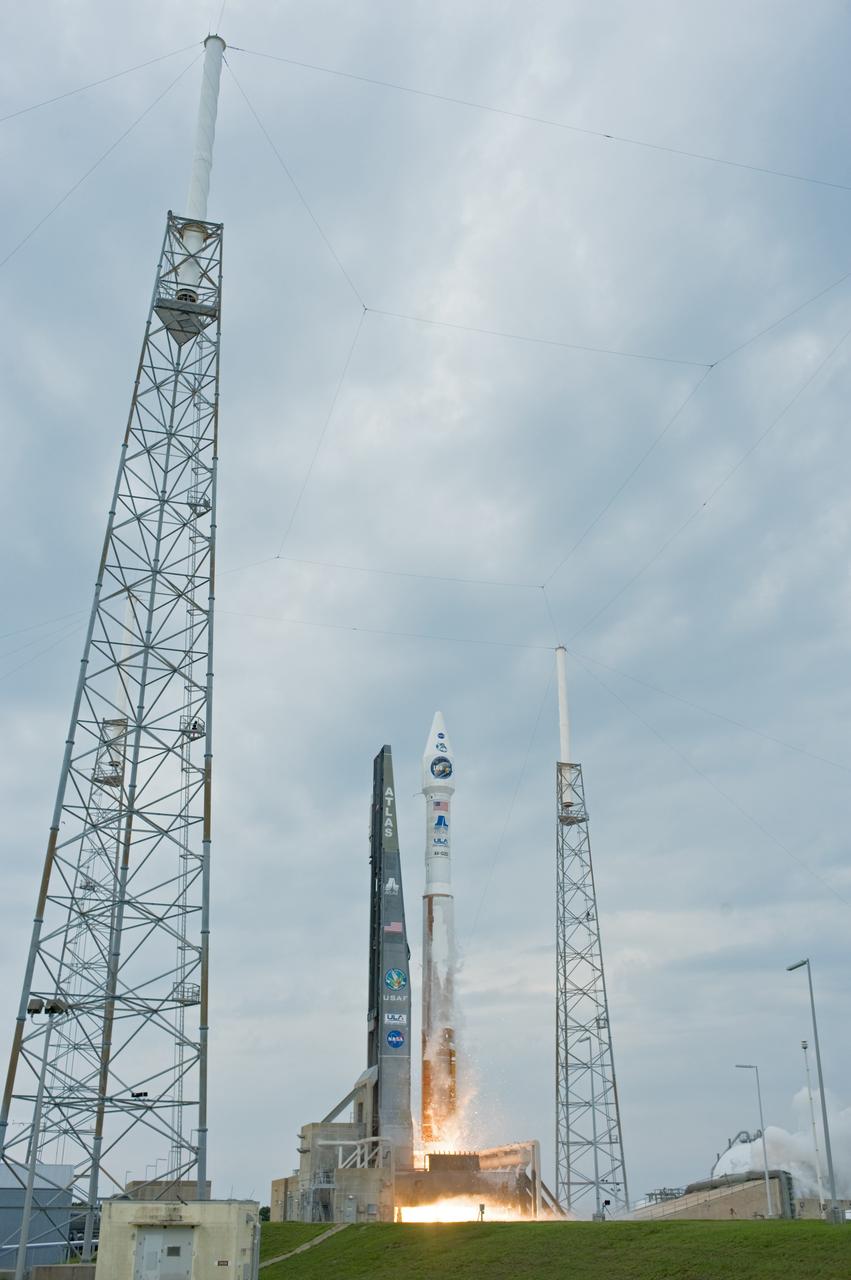
CAPE CANAVERAL, Fla. – NASA's Lunar Reconnaissance Orbiter, or LRO, and NASA's Lunar Crater Observation and Sensing Satellite, known as LCROSS, lifts off from Launch Pad 41 at Cape Canaveral Air Force Station in Florida atop an Atlas V/Centaur rocket. LRO and LCROSS are the first missions in NASA's plan to return humans to the moon and begin establishing a lunar outpost by 2020. The LRO also includes seven instruments that will help NASA characterize the moon's surface: DIVINER, LAMP, LEND, LOLA , CRATER, Mini-RF and LROC. Launch was on-time at 5:32 p.m. EDT. Photo credit: NASA/Tom Farrar, Kevin O'Connell
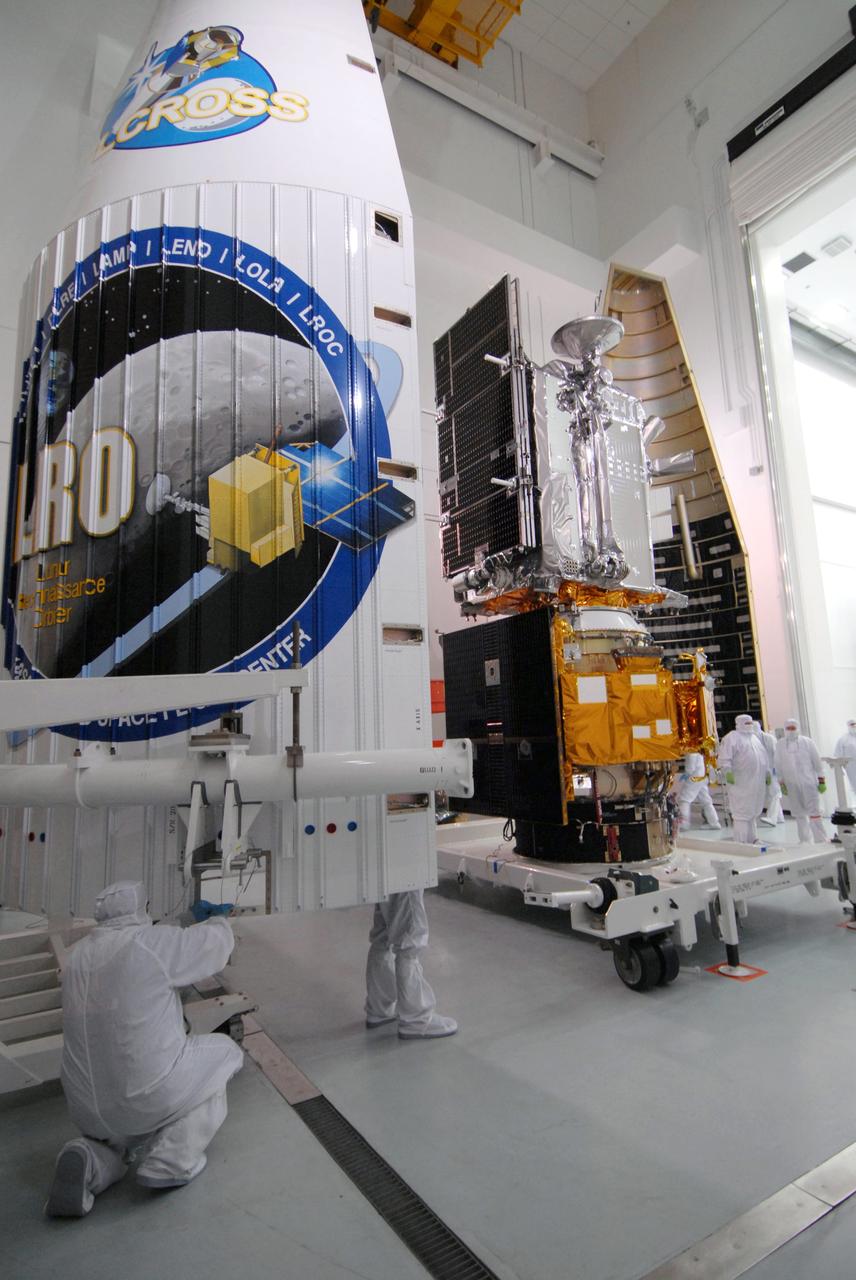
CAPE CANAVERAL, Fla. – At Astrotech Space Operations Facility in Titusville, Fla., NASA's Lunar Reconnaissance Orbiter, or LRO, and NASA's Lunar Crater Observation and Sensing Satellite, known as LCROSS,wait for fairing installation. The fairing halves are on left and right of the spacecraft. The fairing is a molded structure that fits flush with the outside surface of the rocket and forms an aerodynamically smooth nose cone, protecting the spacecraft during launch and ascent. The LRO includes five instruments: DIVINER, LAMP, LEND, LOLA and LROC. They will be launched aboard an Atlas V/Centaur rocket no earlier than June 17 from Launch Complex-41 on Cape Canaveral Air Force Station in Florida. Photo credit: NASA/Jack Pfaller
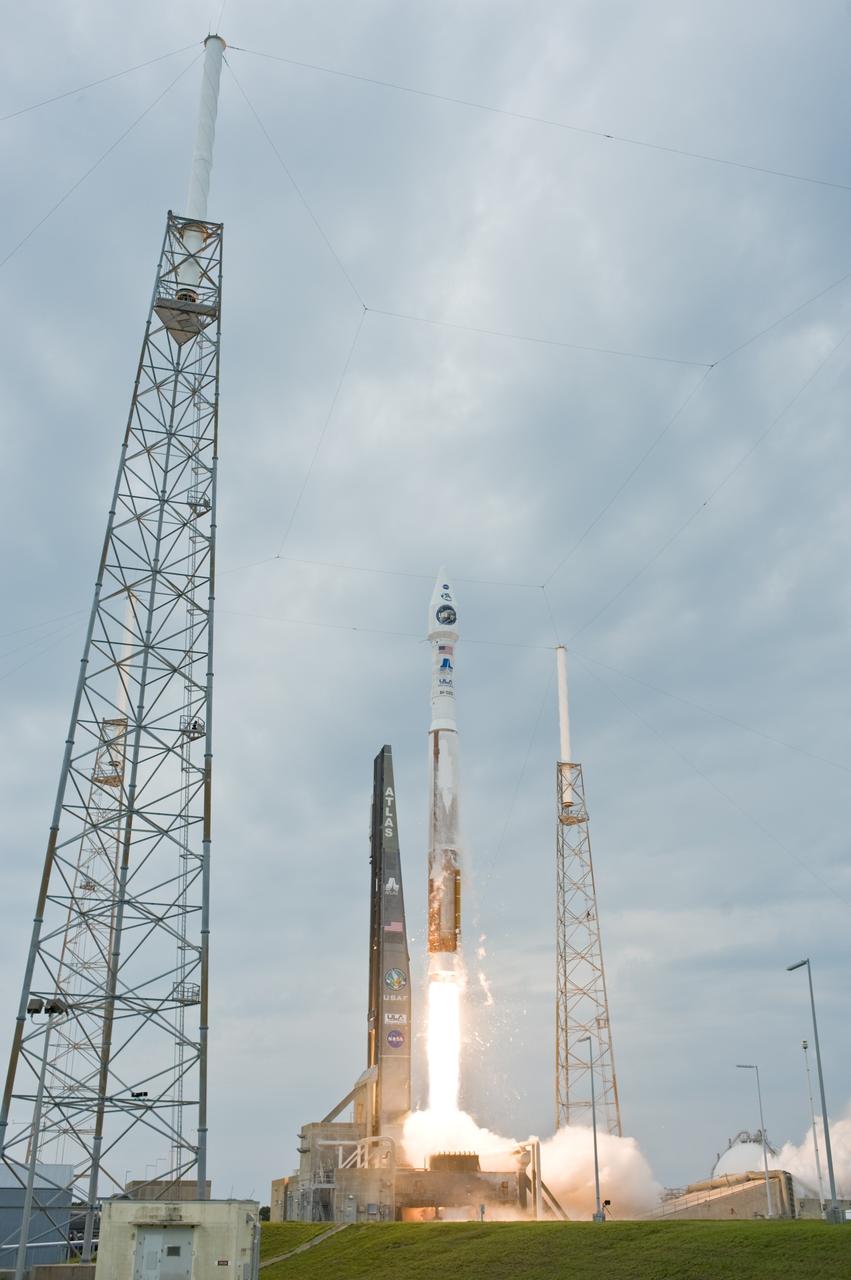
CAPE CANAVERAL, Fla. – Trailing a column of fire, the Atlas V/Centaur carrying NASA's Lunar Reconnaissance Orbiter, or LRO, and NASA's Lunar Crater Observation and Sensing Satellite, known as LCROSS, hurtles off Launch Complex 41 at Cape Canaveral Air Force Station in Florida. LRO and LCROSS are the first missions in NASA's plan to return humans to the moon and begin establishing a lunar outpost by 2020. The LRO also includes seven instruments that will help NASA characterize the moon's surface: DIVINER, LAMP, LEND, LOLA , CRATER, Mini-RF and LROC. Launch was on-time at 5:32 p.m. EDT. Photo credit: NASA/Tom Farrar, Kevin O'Connell

The western hemisphere of our home planet Earth. North (upper left), Central, and South America (lower right) were nicely free of clouds when LRO pointed home on 9 August 2010 to acquire this beautiful view. LROC NAC E136013771. As LRO orbits the Moon every two hours sending down a stream of science data, it is easy to forget how close the Moon is to the Earth. The average distance between the two heavenly bodies is just 384,399 km (238,854 miles). Check your airline frequent flyer totals, perhaps you have already flown the distance to the Moon and back on a single airline. http://photojournal.jpl.nasa.gov/catalog/PIA13519
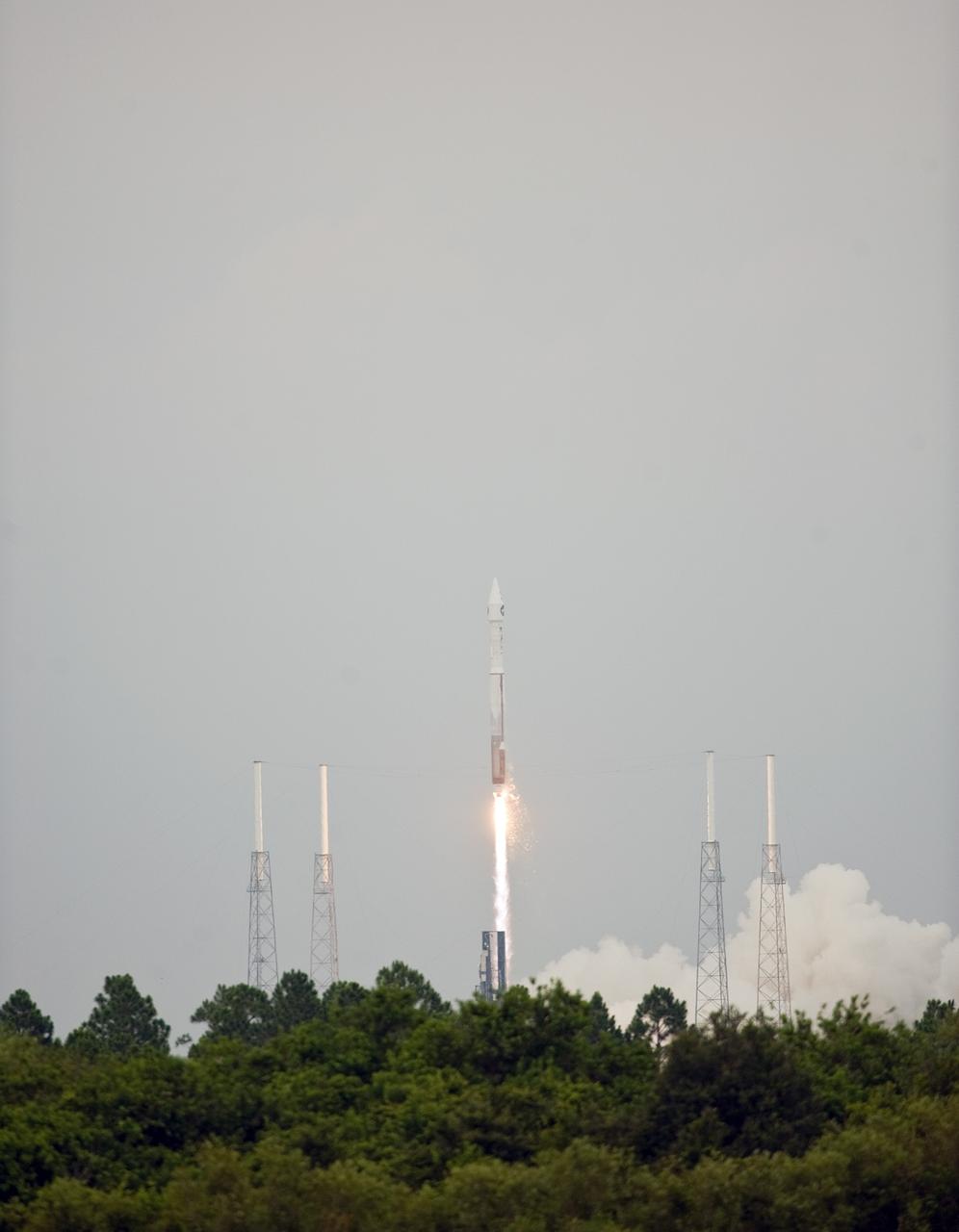
CAPE CANAVERAL, Fla. – Trailing a column of smoke, NASA's Lunar Reconnaissance Orbiter, or LRO, and NASA's Lunar Crater Observation and Sensing Satellite, known as LCROSS, lifts off from Launch Pad 41 at Cape Canaveral Air Force Station in Florida. LRO and LCROSS are the first missions in NASA's plan to return humans to the moon and begin establishing a lunar outpost by 2020. The LRO also includes seven instruments that will help NASA characterize the moon's surface: DIVINER, LAMP, LEND, LOLA , CRATER, Mini-RF and LROC. Launch was on-time at 5:32 p.m. EDT June 18. Photo credit: NASA/Tom Farrar
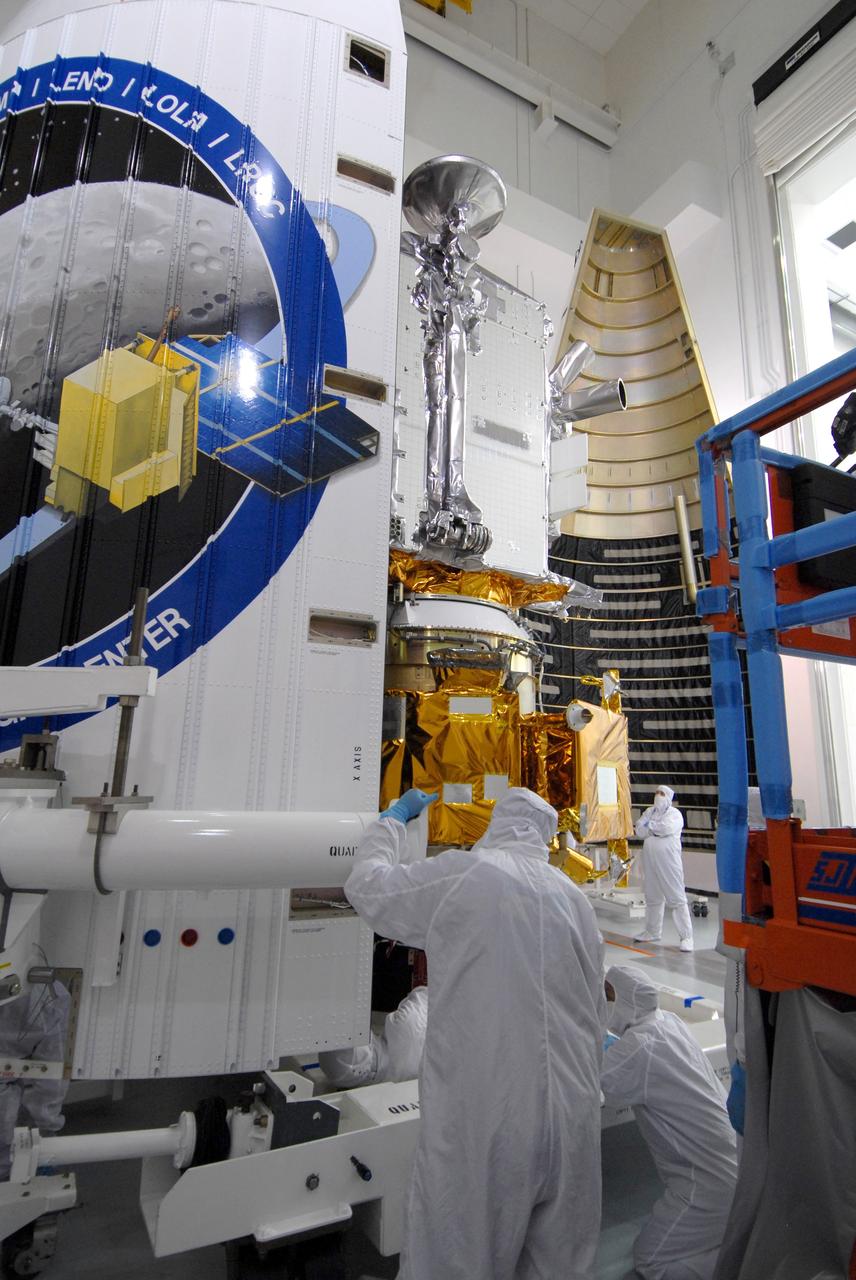
CAPE CANAVERAL, Fla. – At Astrotech Space Operations Facility in Titusville, Fla., technicians move the first half of the fairing toward NASA's Lunar Reconnaissance Orbiter, or LRO, with NASA's Lunar Crater Observation and Sensing Satellite, known as LCROSS, for installation. The fairing is a molded structure that fits flush with the outside surface of the rocket and forms an aerodynamically smooth nose cone, protecting the spacecraft during launch and ascent. The LRO includes five instruments: DIVINER, LAMP, LEND, LOLA and LROC. They will be launched aboard an Atlas V/Centaur rocket no earlier than June 17 from Launch Complex-41 on Cape Canaveral Air Force Station in Florida. Photo credit: NASA/Jack Pfaller
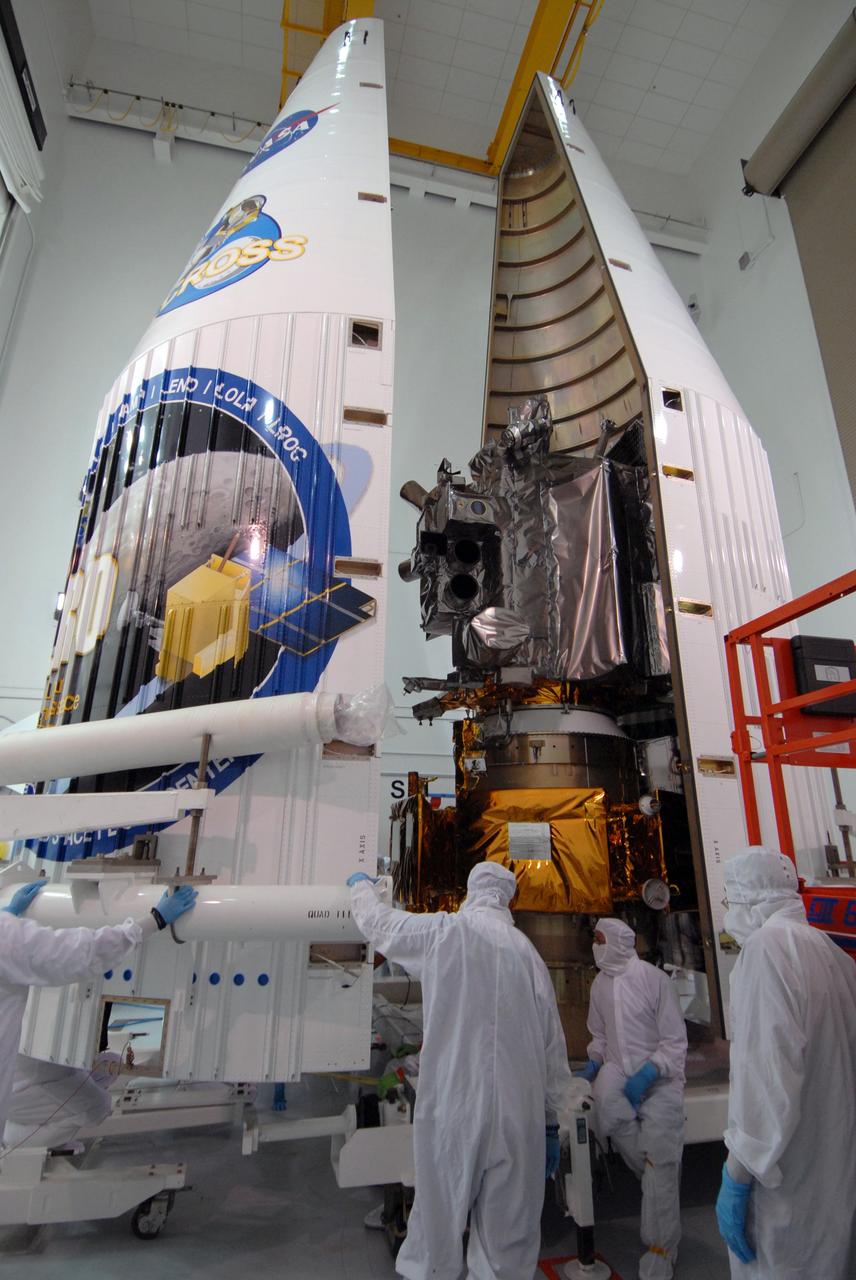
CAPE CANAVERAL, Fla. – At Astrotech Space Operations Facility in Titusville, Fla., the fairing halves are moved together for another attempt at installation around NASA's Lunar Reconnaissance Orbiter, or LRO, and NASA's Lunar Crater Observation and Sensing Satellite, known as LCROSS. The fairing is a molded structure that fits flush with the outside surface of the rocket and forms an aerodynamically smooth nose cone, protecting the spacecraft during launch and ascent. The LRO includes five instruments: DIVINER, LAMP, LEND, LOLA and LROC. They will be launched aboard an Atlas V/Centaur rocket no earlier than June 17 from Launch Complex-41 on Cape Canaveral Air Force Station in Florida. Photo credit: NASA/Jack Pfaller
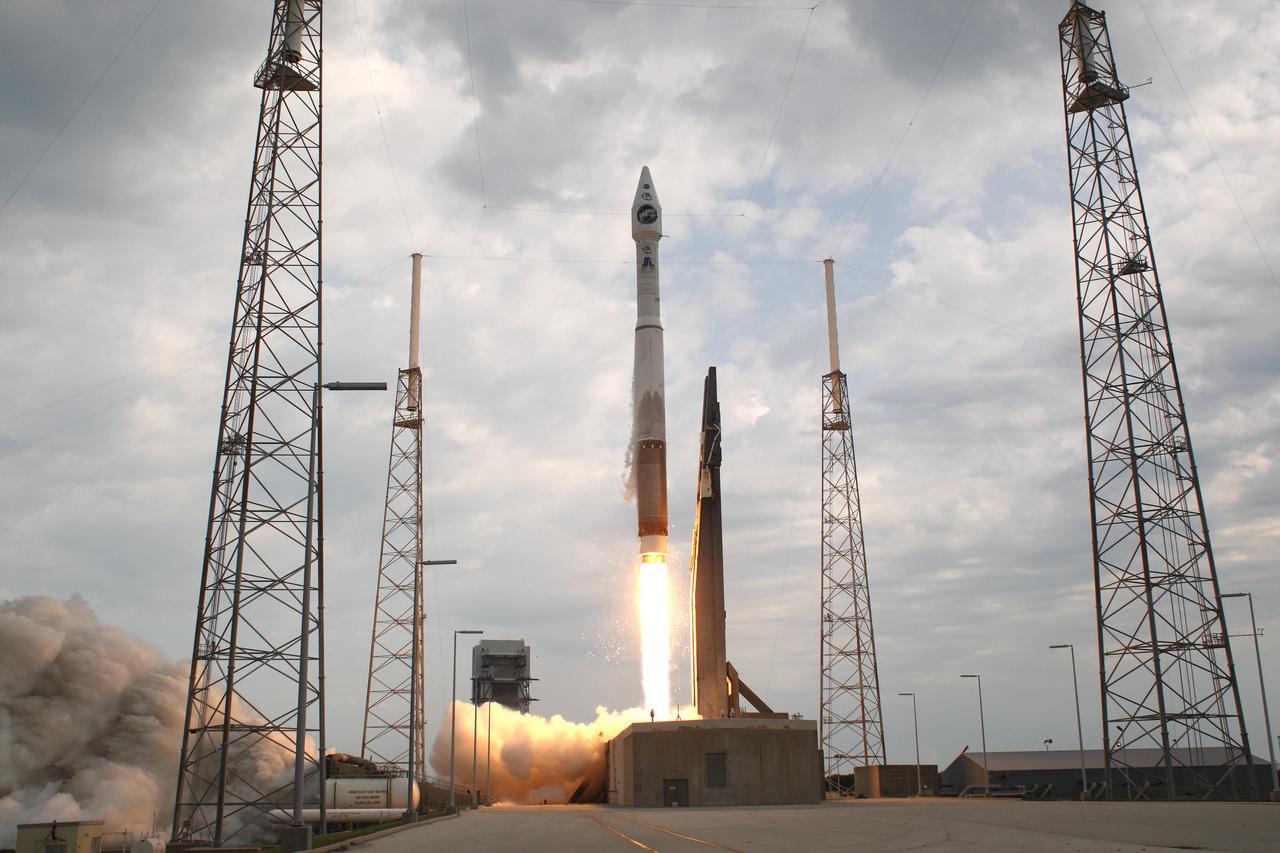
CAPE CANAVERAL, Fla. – The Atlas V/Centaur rocket with NASA's Lunar Reconnaissance Orbiter, or LRO, and NASA's Lunar Crater Observation and Sensing Satellite, known as LCROSS, on top leaps from Launch Pad 41 at Cape Canaveral Air force Station in Florida. Surrounding the pad are the towers that provide lightning protection. Launch was on-time at 5:32 p.m. EDT June 18. LRO and LCROSS are the first missions in NASA's plan to return humans to the moon and begin establishing a lunar outpost by 2020. The LRO also includes seven instruments that will help NASA characterize the moon's surface: DIVINER, LAMP, LEND, LOLA , CRATER, Mini-RF and LROC. Photo courtesy of Scott Andrews
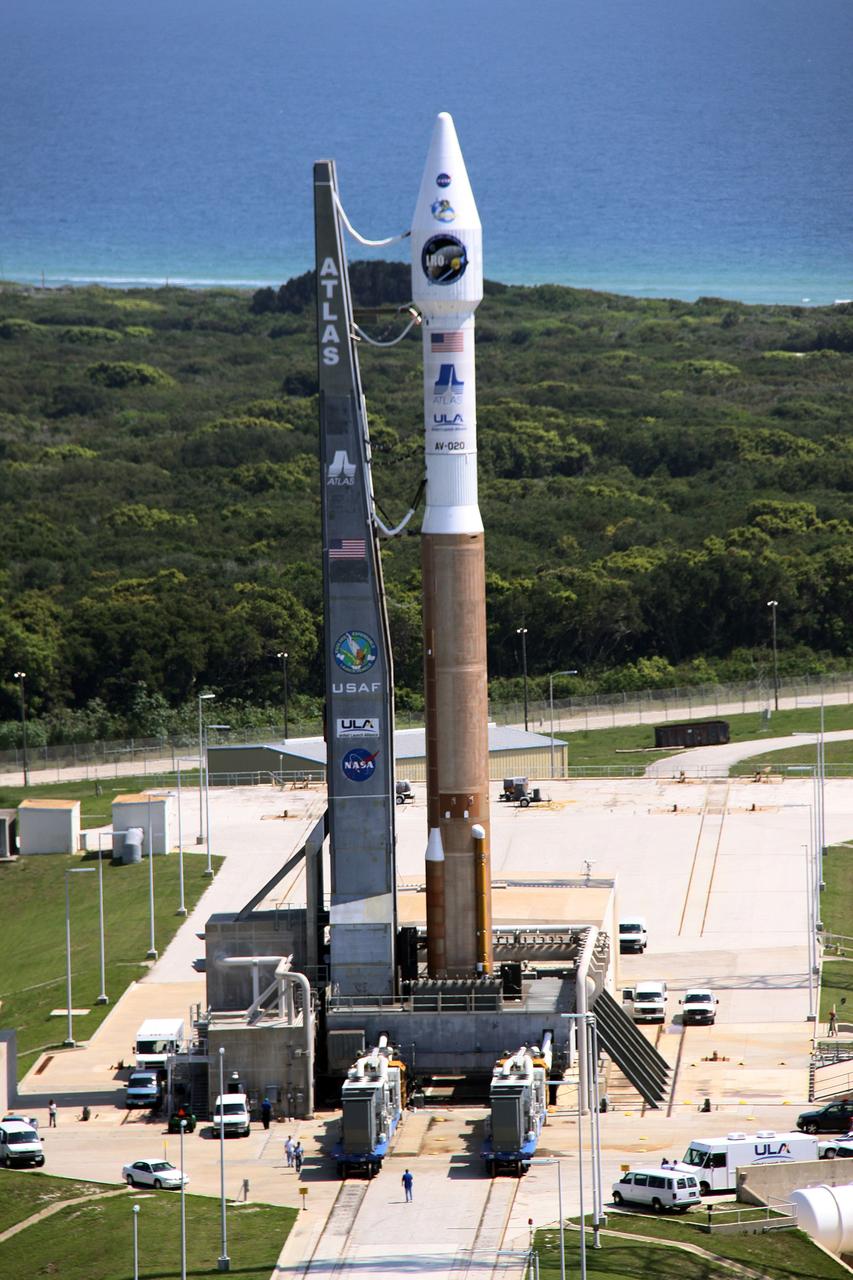
CAPE CANAVERAL, Fla. – The Atlas V/Centaur rocket with NASA's Lunar Reconnaissance Orbiter, or LRO, and NASA's Lunar Crater Observation and Sensing Satellite, known as LCROSS, on top are on the pad at Launch Complex-41 on Cape Canaveral Air Force Station in Florida. LRO and LCROSS are the first missions in NASA's plan to return humans to the moon and begin establishing a lunar outpost by 2020. The LRO also includes seven instruments that will help NASA characterize the moon's surface: DIVINER, LAMP, LEND, LOLA, CRATER, Mini-RF and LROC. Launch is scheduled for 5:22 p.m. EDT June 18 . Photo credit: NASA/Jack Pfaller
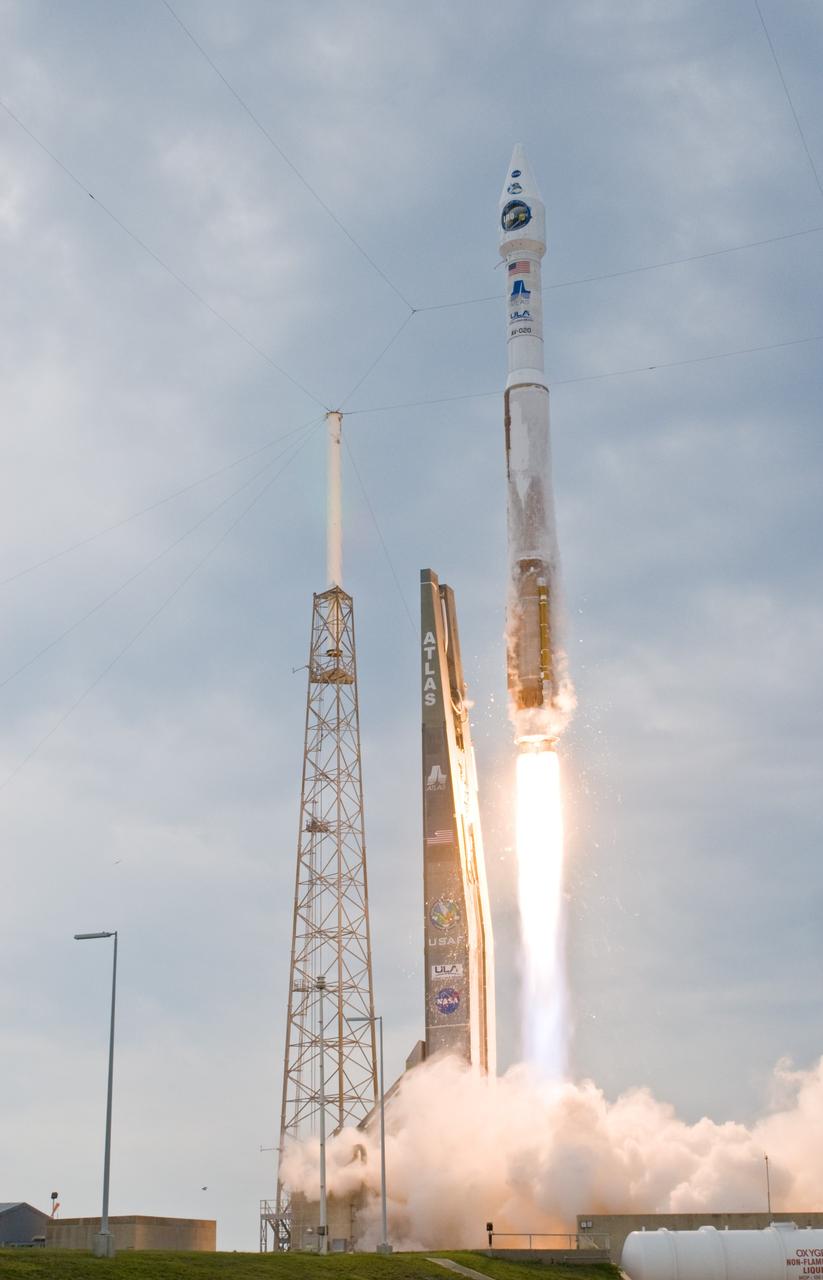
CAPE CANAVERAL, Fla. – Trailing a column of fire, the Atlas V/Centaur carrying NASA's Lunar Reconnaissance Orbiter, or LRO, and NASA's Lunar Crater Observation and Sensing Satellite, known as LCROSS, hurtles off Launch Complex 41 at Cape Canaveral Air Force Station in Florida. LRO and LCROSS are the first missions in NASA's plan to return humans to the moon and begin establishing a lunar outpost by 2020. The LRO also includes seven instruments that will help NASA characterize the moon's surface: DIVINER, LAMP, LEND, LOLA , CRATER, Mini-RF and LROC. Launch was on-time at 5:32 p.m. EDT. Photo credit: NASA/Sandra Joseph, Tony Gray
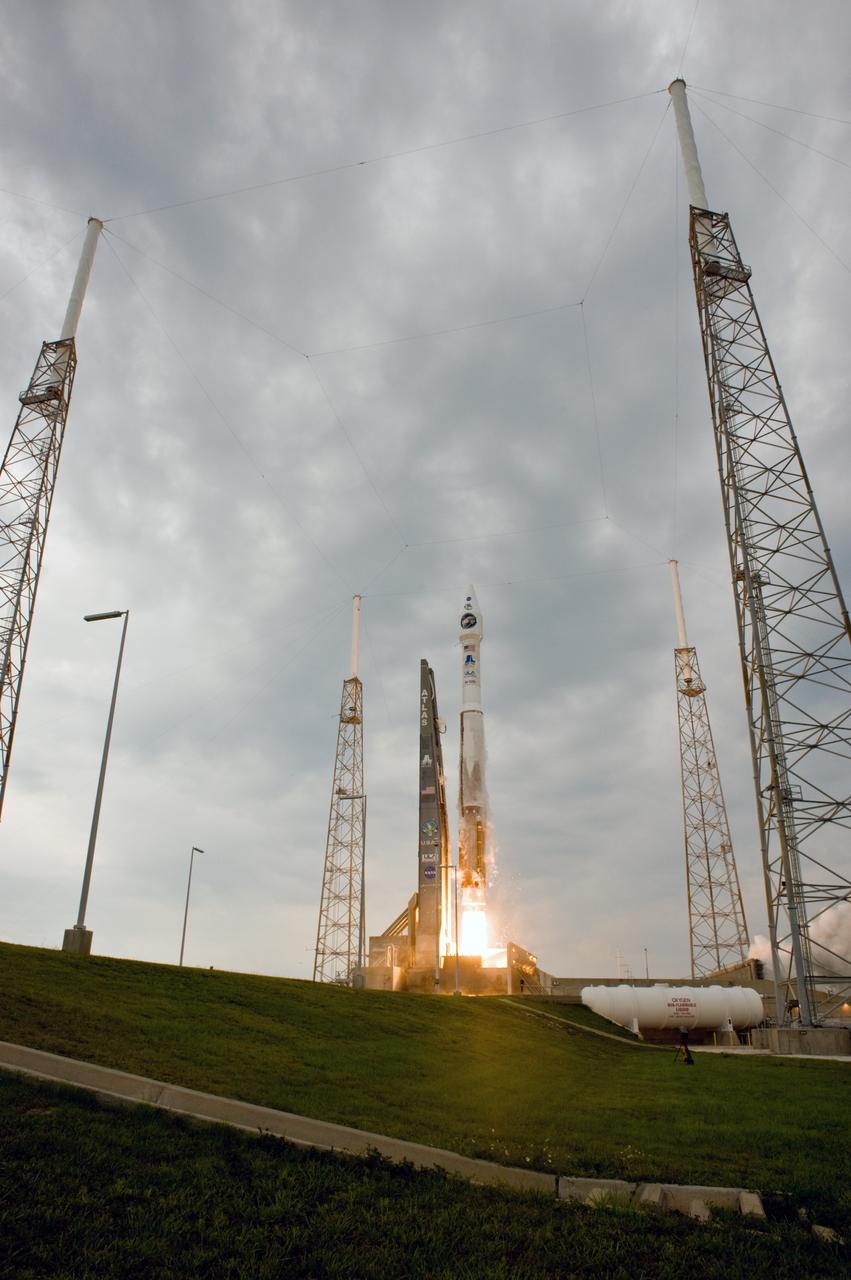
CAPE CANAVERAL, Fla. – Lightning towers stand like guards around Launch Complex 41 at Cape Canaveral Air Force Station in Florida as the Atlas V/Centaur carrying NASA's Lunar Reconnaissance Orbiter, or LRO, and NASA's Lunar Crater Observation and Sensing Satellite, known as LCROSS, lifts off. LRO and LCROSS are the first missions in NASA's plan to return humans to the moon and begin establishing a lunar outpost by 2020. The LRO also includes seven instruments that will help NASA characterize the moon's surface: DIVINER, LAMP, LEND, LOLA , CRATER, Mini-RF and LROC. Launch was on-time at 5:32 p.m. EDT. Photo credit: NASA/Sandra Joseph, Tony Gray
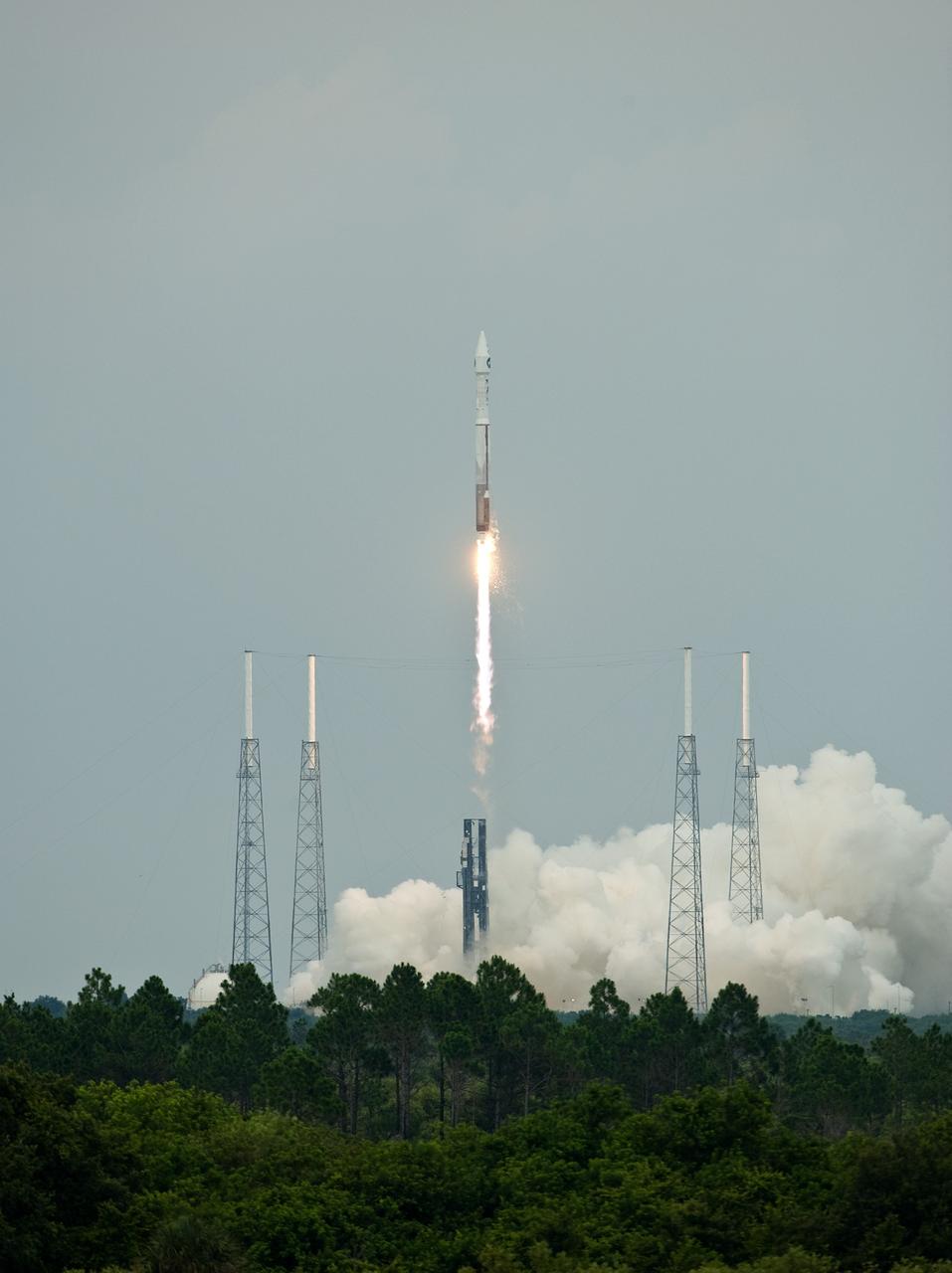
CAPE CANAVERAL, Fla. – Smoke fills the pad and trails behind the Atlas V/Centaur rocket as it roars into space carrying NASA's Lunar Reconnaissance Orbiter, or LRO, and NASA's Lunar Crater Observation and Sensing Satellite, known as LCROSS. Surrounding the pad are lightning towers. LRO and LCROSS are the first missions in NASA's plan to return humans to the moon and begin establishing a lunar outpost by 2020. The LRO also includes seven instruments that will help NASA characterize the moon's surface: DIVINER, LAMP, LEND, LOLA , CRATER, Mini-RF and LROC. Launch was on-time at 5:32 p.m. EDT June 18. Photo credit: NASA/Tom Farrar
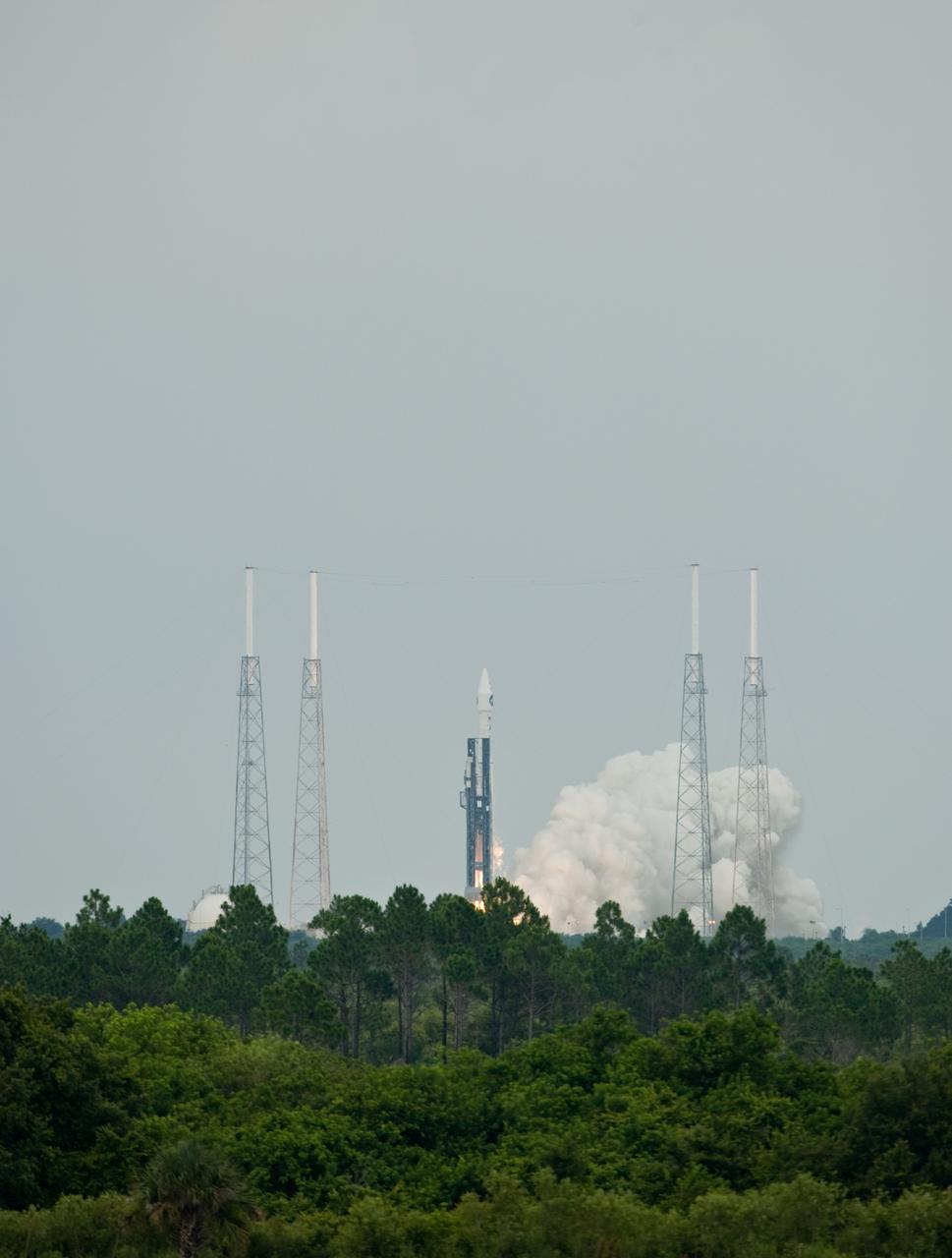
CAPE CANAVERAL, Fla. – With smoke and steam rolling from the launch pad, NASA's Lunar Reconnaissance Orbiter, or LRO, and NASA's Lunar Crater Observation and Sensing Satellite, known as LCROSS, lifts off from Launch Complex 41 at Cape Canaveral Air Force Station in Florida. Surrounding the pad are lightning towers. LRO and LCROSS are the first missions in NASA's plan to return humans to the moon and begin establishing a lunar outpost by 2020. The LRO also includes seven instruments that will help NASA characterize the moon's surface: DIVINER, LAMP, LEND, LOLA , CRATER, Mini-RF and LROC. Launch was on-time at 5:32 p.m. EDT June 18. Photo credit: NASA/Tom Farrar
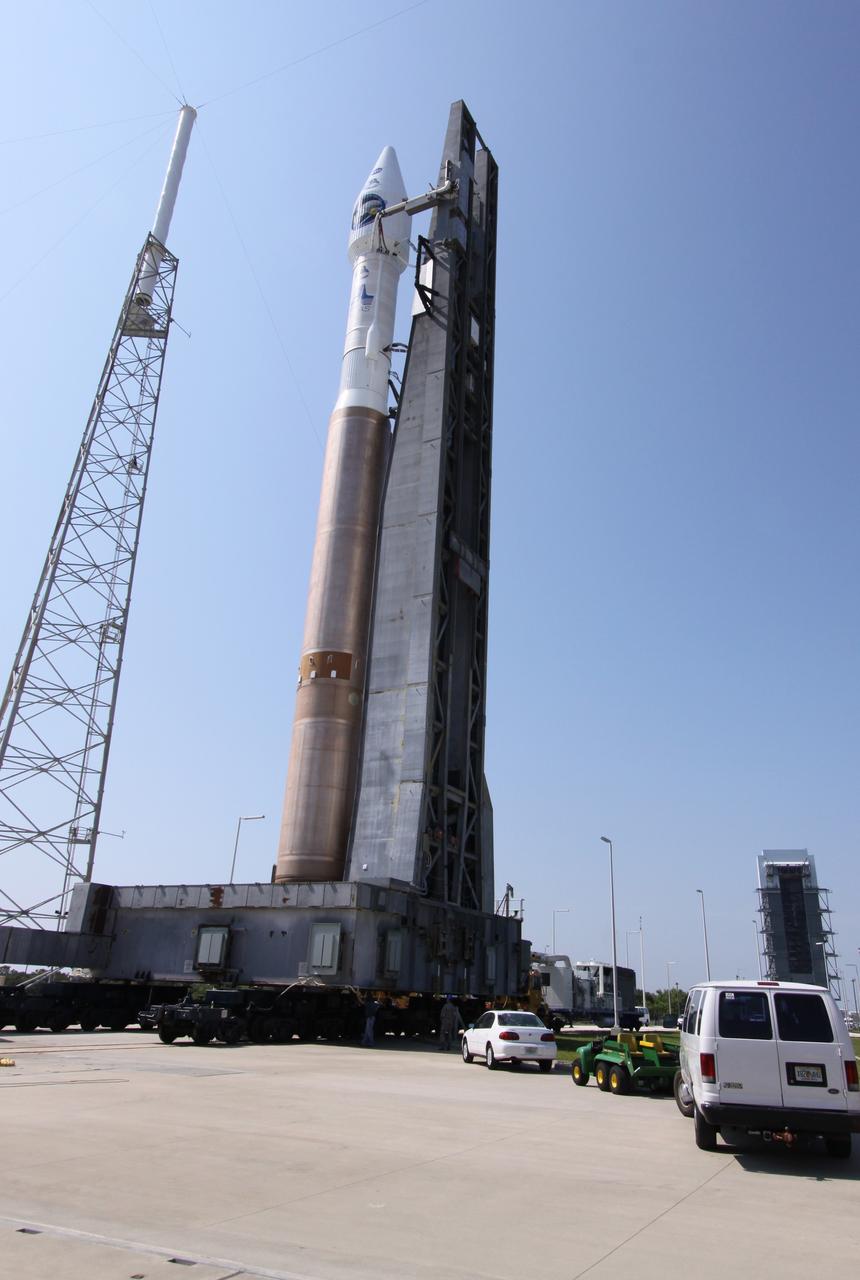
CAPE CANAVERAL, Fla. – On Launch Complex-41 on Cape Canaveral Air Force Station in Florida, the Atlas V/Centaur rocket with NASA's Lunar Reconnaissance Orbiter, or LRO, and NASA's Lunar Crater Observation and Sensing Satellite, known as LCROSS, on top reach the launch pad. Circling the pad are the protective lightning towers. LRO and LCROSS are the first missions in NASA's plan to return humans to the moon and begin establishing a lunar outpost by 2020. The LRO also includes seven instruments that will help NASA characterize the moon's surface: DIVINER, LAMP, LEND, LOLA, CRATER, Mini-RF and LROC. Launch is scheduled for 5:22 p.m. EDT June 18 . Photo credit: NASA/Jack Pfaller
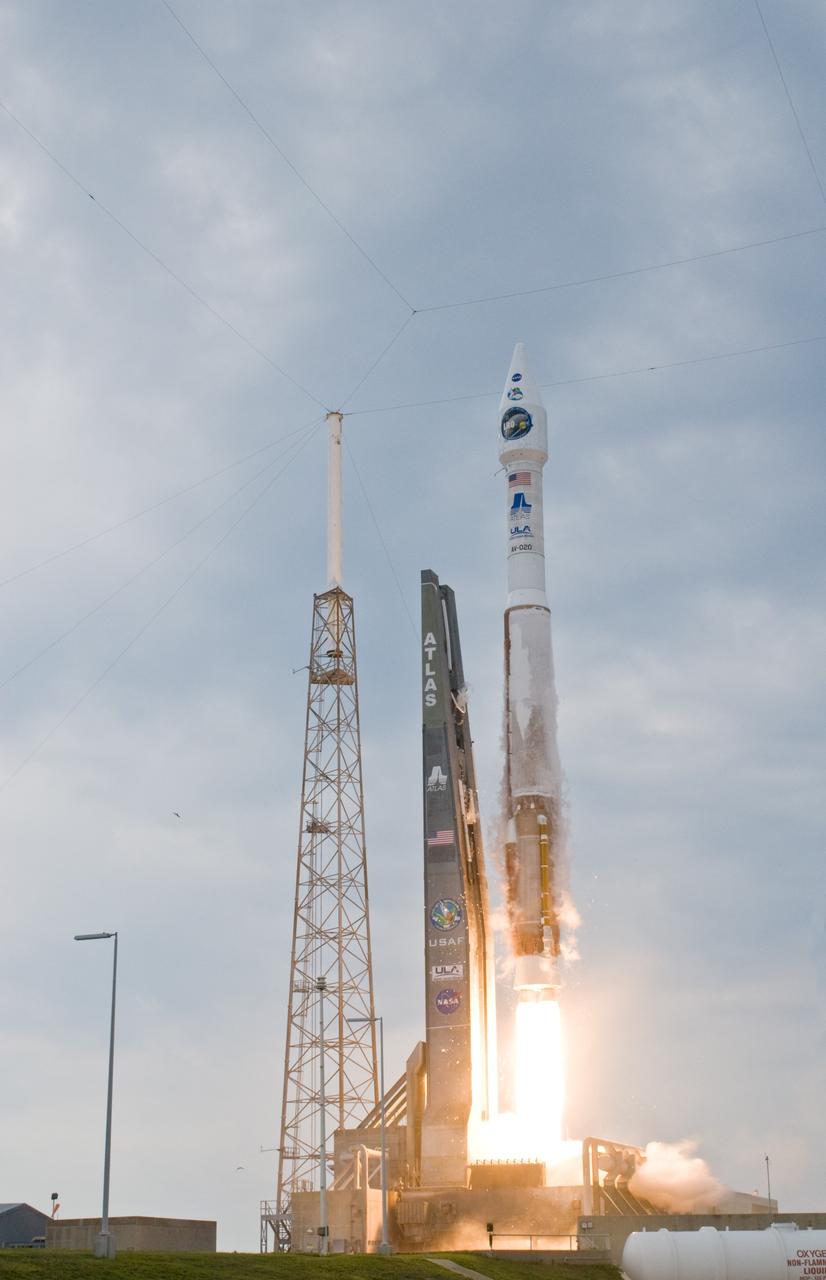
CAPE CANAVERAL, Fla. – Trailing a column of fire, the Atlas V/Centaur carrying NASA's Lunar Reconnaissance Orbiter, or LRO, and NASA's Lunar Crater Observation and Sensing Satellite, known as LCROSS, hurtles off Launch Complex 41 at Cape Canaveral Air Force Station in Florida. LRO and LCROSS are the first missions in NASA's plan to return humans to the moon and begin establishing a lunar outpost by 2020. The LRO also includes seven instruments that will help NASA characterize the moon's surface: DIVINER, LAMP, LEND, LOLA , CRATER, Mini-RF and LROC. Launch was on-time at 5:32 p.m. EDT. Photo credit: NASA/Sandra Joseph, Tony Gray
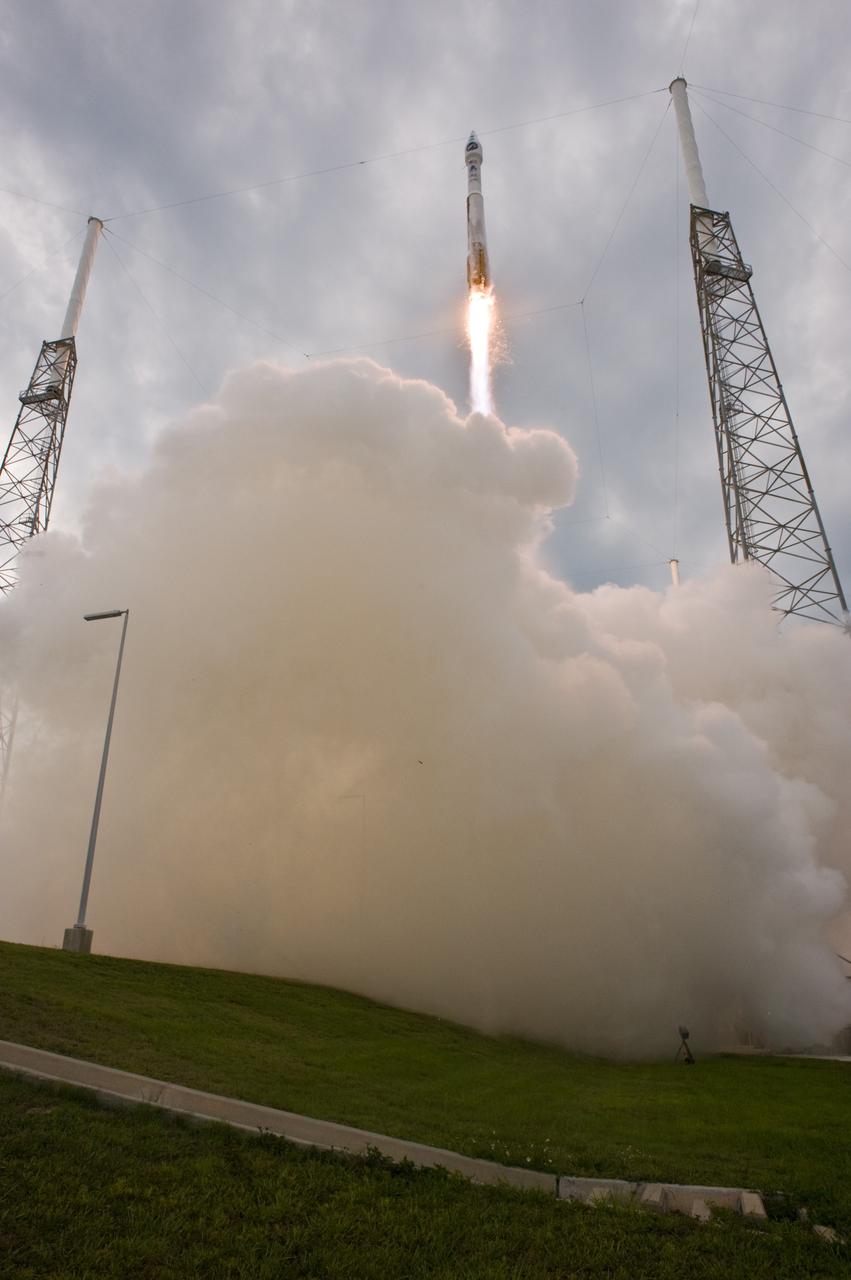
CAPE CANAVERAL, Fla. – On Launch Complex 41 at Cape Canaveral Air Force Station in Florida, smoke fills the pad as the Atlas V/Centaur carrying NASA's Lunar Reconnaissance Orbiter, or LRO, and NASA's Lunar Crater Observation and Sensing Satellite, known as LCROSS, lifts off. LRO and LCROSS are the first missions in NASA's plan to return humans to the moon and begin establishing a lunar outpost by 2020. The LRO also includes seven instruments that will help NASA characterize the moon's surface: DIVINER, LAMP, LEND, LOLA , CRATER, Mini-RF and LROC. Launch was on-time at 5:32 p.m. EDT. Photo credit: NASA/Sandra Joseph, Tony Gray
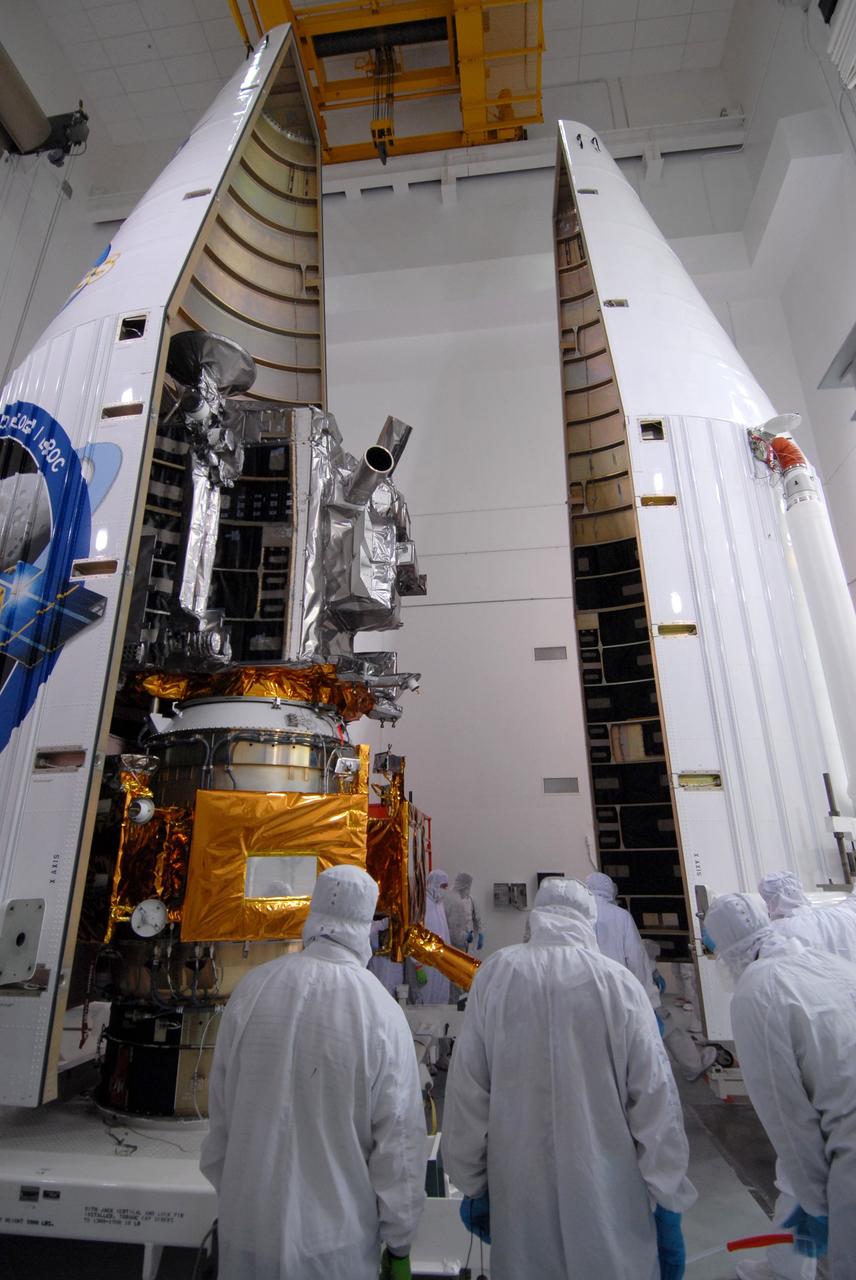
CAPE CANAVERAL, Fla. – At Astrotech Space Operations Facility in Titusville, Fla., technicians closely watch as the fairing halves come together around NASA's Lunar Reconnaissance Orbiter, or LRO, and and NASA's Lunar Crater Observation and Sensing Satellite, known as LCROSS. The fairing is a molded structure that fits flush with the outside surface of the rocket and forms an aerodynamically smooth nose cone, protecting the spacecraft during launch and ascent.The LRO includes five instruments: DIVINER, LAMP, LEND, LOLA and LROC. They will be launched aboard an Atlas V/Centaur rocket no earlier than June 17 from Launch Complex-41 on Cape Canaveral Air Force Station in Florida. Photo credit: NASA/Jack Pfaller
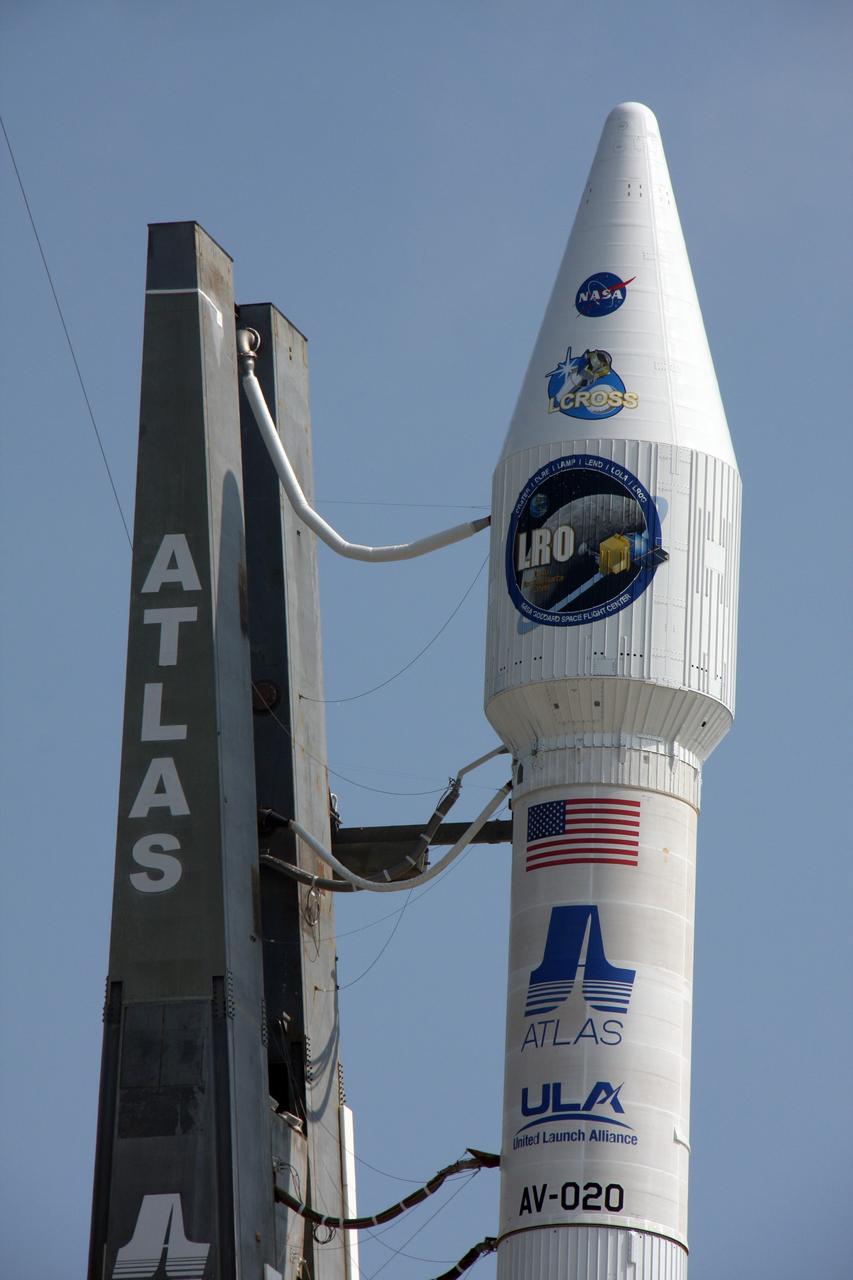
CAPE CANAVERAL, Fla. – NASA's Lunar Reconnaissance Orbiter, or LRO, and NASA's Lunar Crater Observation and Sensing Satellite, known as LCROSS, stand ready for liftoff on an Atlas V/Centaur rocket from Launch Pad 41 at Cape Canaveral Air Force Station in Florida. LRO and LCROSS are the first missions in NASA's plan to return humans to the moon and begin establishing a lunar outpost by 2020. The LRO also includes seven instruments that will help NASA characterize the moon's surface: DIVINER, LAMP, LEND, LOLA , CRATER, Mini-RF and LROC. Launch is scheduled for 5:12 p.m. EDT June 18. Photo credit: NASA/Ken Thornsley
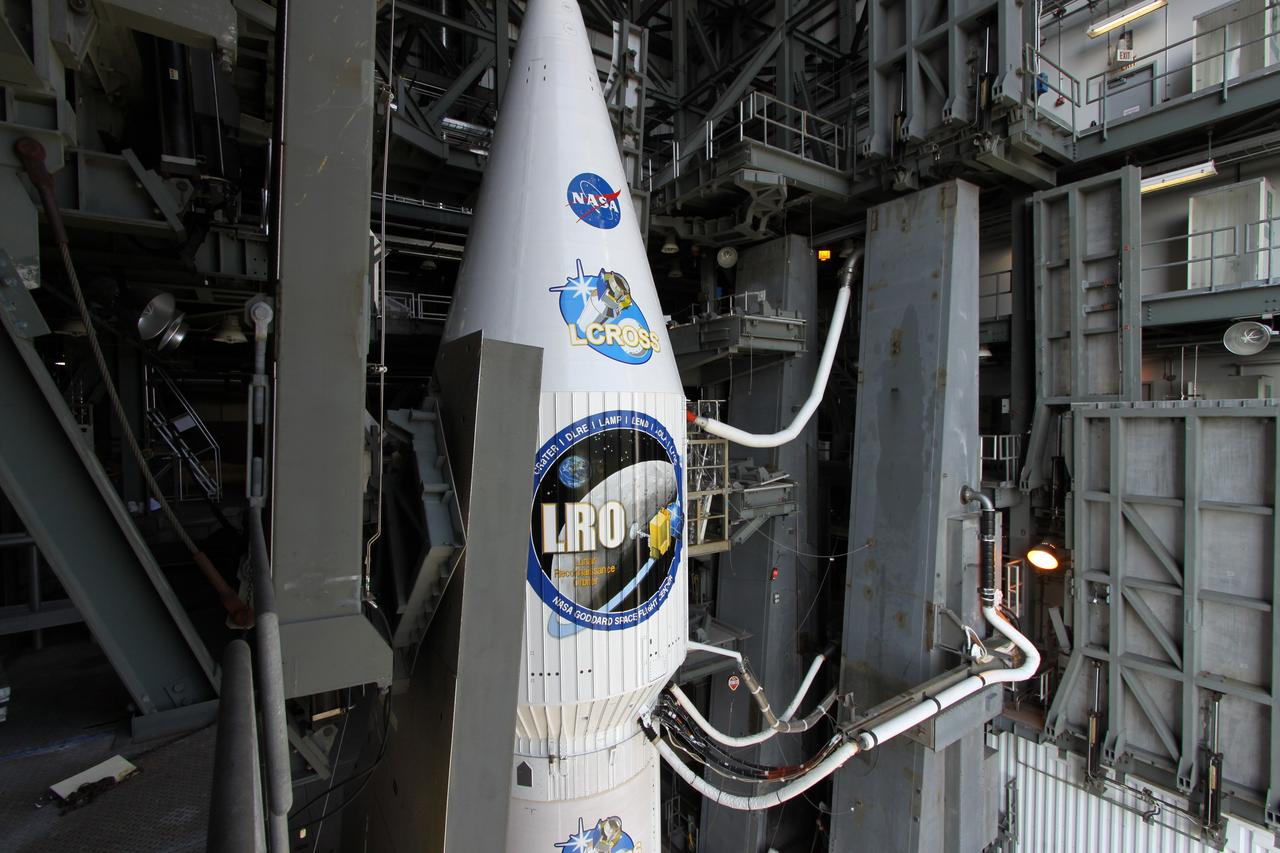
CAPE CANAVERAL, Fla. – On Launch Complex-41 on Cape Canaveral Air Force Station in Florida, NASA's Lunar Reconnaissance Orbiter, or LRO, and NASA's Lunar Crater Observation and Sensing Satellite, known as LCROSS, are ready to roll out to the launch pad atop the Atlas V/Centaur rocket. LRO and LCROSS are the first missions in NASA's plan to return humans to the moon and begin establishing a lunar outpost by 2020. The LRO also includes seven instruments that will help NASA characterize the moon's surface: DIVINER, LAMP, LEND, LOLA, CRATER, Mini-RF and LROC. Launch is scheduled for 5:22 p.m. EDT June 18 . Photo credit: NASA/Jack Pfaller
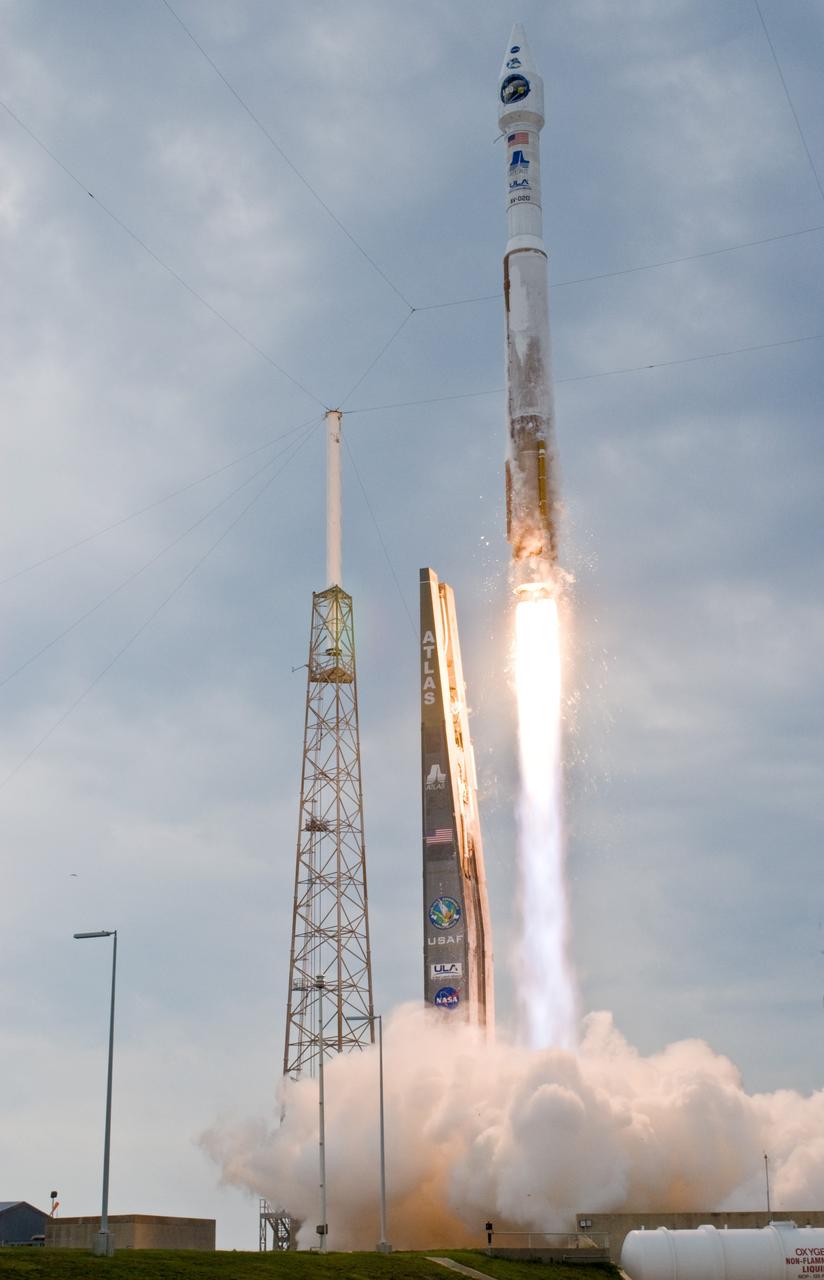
CAPE CANAVERAL, Fla. – Trailing a column of fire, the Atlas V/Centaur carrying NASA's Lunar Reconnaissance Orbiter, or LRO, and NASA's Lunar Crater Observation and Sensing Satellite, known as LCROSS, races above the lightning tower at left on Launch Complex 41 at Cape Canaveral Air Force Station in Florida. LRO and LCROSS are the first missions in NASA's plan to return humans to the moon and begin establishing a lunar outpost by 2020. The LRO also includes seven instruments that will help NASA characterize the moon's surface: DIVINER, LAMP, LEND, LOLA , CRATER, Mini-RF and LROC. Launch was on-time at 5:32 p.m. EDT. Photo credit: NASA/Sandra Joseph, Tony Gray
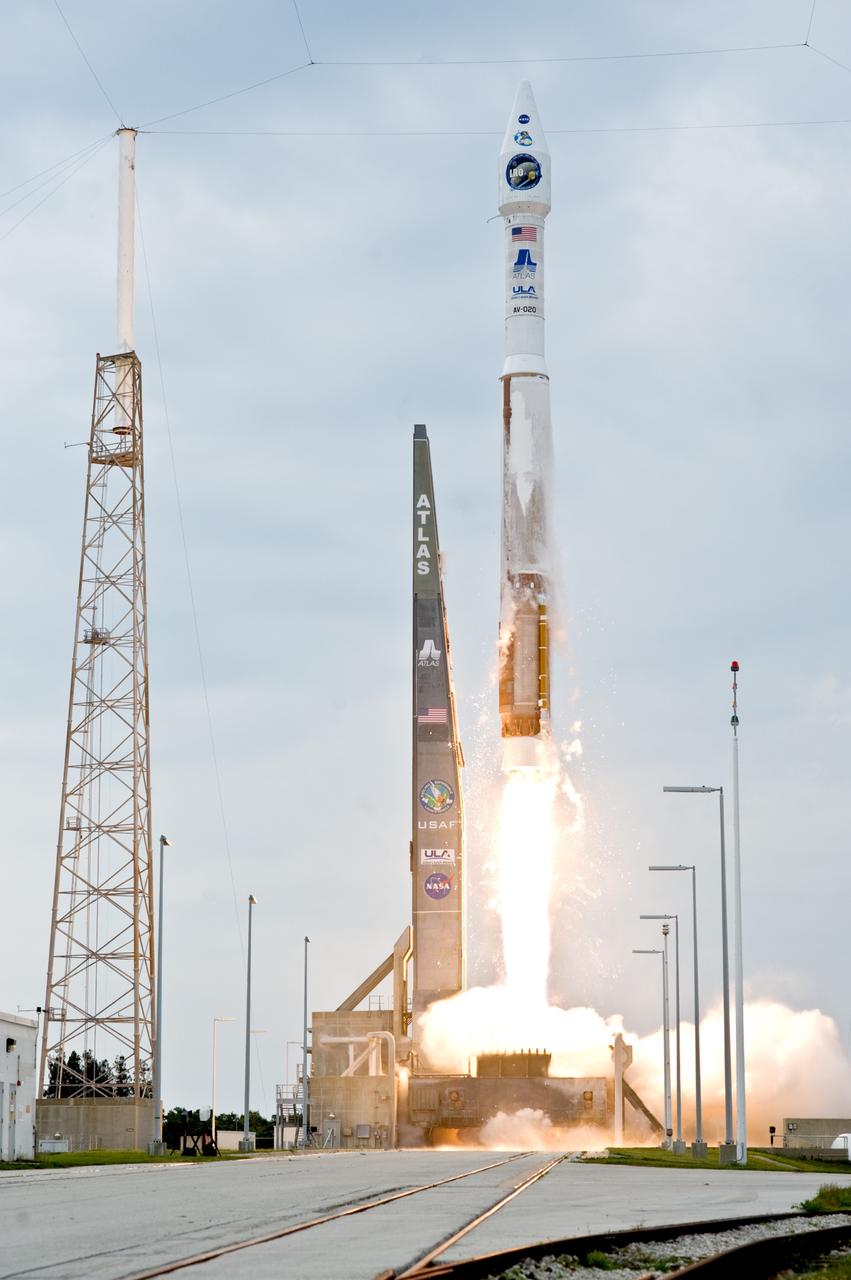
CAPE CANAVERAL, Fla. – Trailing a column of fire, the Atlas V/Centaur carrying NASA's Lunar Reconnaissance Orbiter, or LRO, and NASA's Lunar Crater Observation and Sensing Satellite, known as LCROSS, hurtles off Launch Complex 41 at Cape Canaveral Air Force Station in Florida. LRO and LCROSS are the first missions in NASA's plan to return humans to the moon and begin establishing a lunar outpost by 2020. The LRO also includes seven instruments that will help NASA characterize the moon's surface: DIVINER, LAMP, LEND, LOLA , CRATER, Mini-RF and LROC. Launch was on-time at 5:32 p.m. EDT. Photo credit: NASA/Tom Farrar, Kevin O'Connell
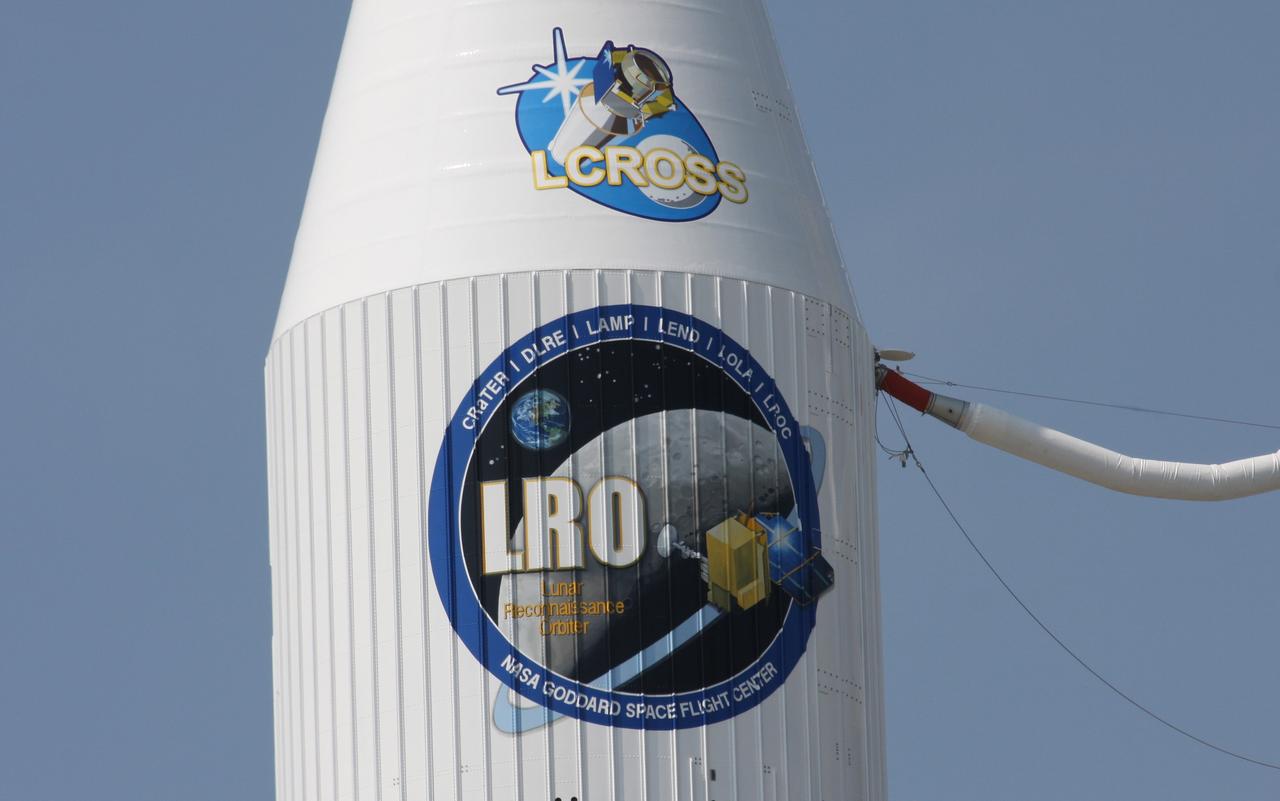
CAPE CANAVERAL, Fla. – A closeup of NASA's Lunar Reconnaissance Orbiter, or LRO, and NASA's Lunar Crater Observation and Sensing Satellite, known as LCROSS, ready for liftoff on an Atlas V/Centaur rocket from Launch Pad 41 at Cape Canaveral Air Force Station in Florida. LRO and LCROSS are the first missions in NASA's plan to return humans to the moon and begin establishing a lunar outpost by 2020. The LRO also includes seven instruments that will help NASA characterize the moon's surface: DIVINER, LAMP, LEND, LOLA , CRATER, Mini-RF and LROC. Launch is scheduled for 5:12 p.m. EDT June 18. Photo credit: NASA/Ken Thornsley
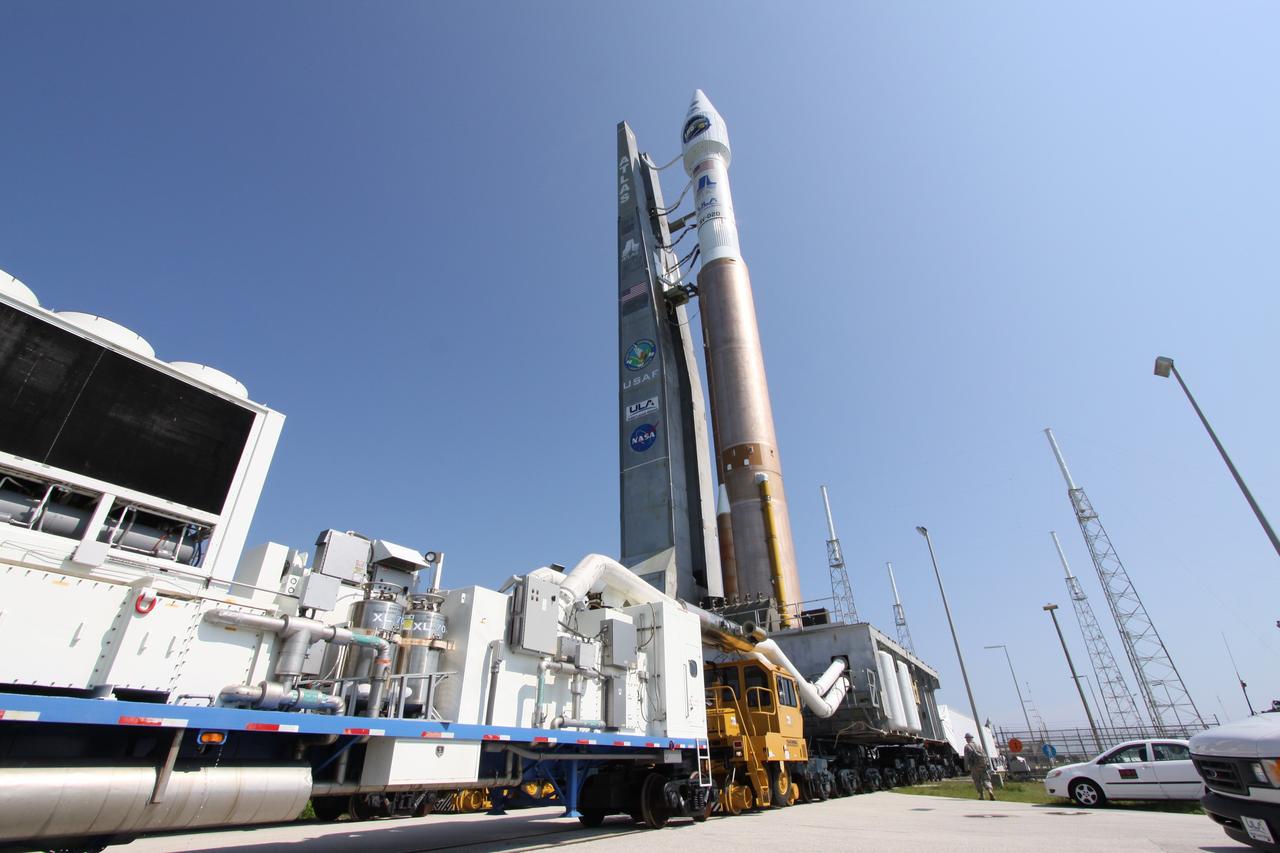
CAPE CANAVERAL, Fla. – On Launch Complex-41 on Cape Canaveral Air Force Station in Florida, the Atlas V/Centaur rocket with NASA's Lunar Reconnaissance Orbiter, or LRO, and NASA's Lunar Crater Observation and Sensing Satellite, known as LCROSS, on top roll out to the launch pad. At right are the protective lightning towers that surround the pad. LRO and LCROSS are the first missions in NASA's plan to return humans to the moon and begin establishing a lunar outpost by 2020. The LRO also includes seven instruments that will help NASA characterize the moon's surface: DIVINER, LAMP, LEND, LOLA, CRATER, Mini-RF and LROC. Launch is scheduled for 5:22 p.m. EDT June 18 . Photo credit: NASA/Jack Pfaller
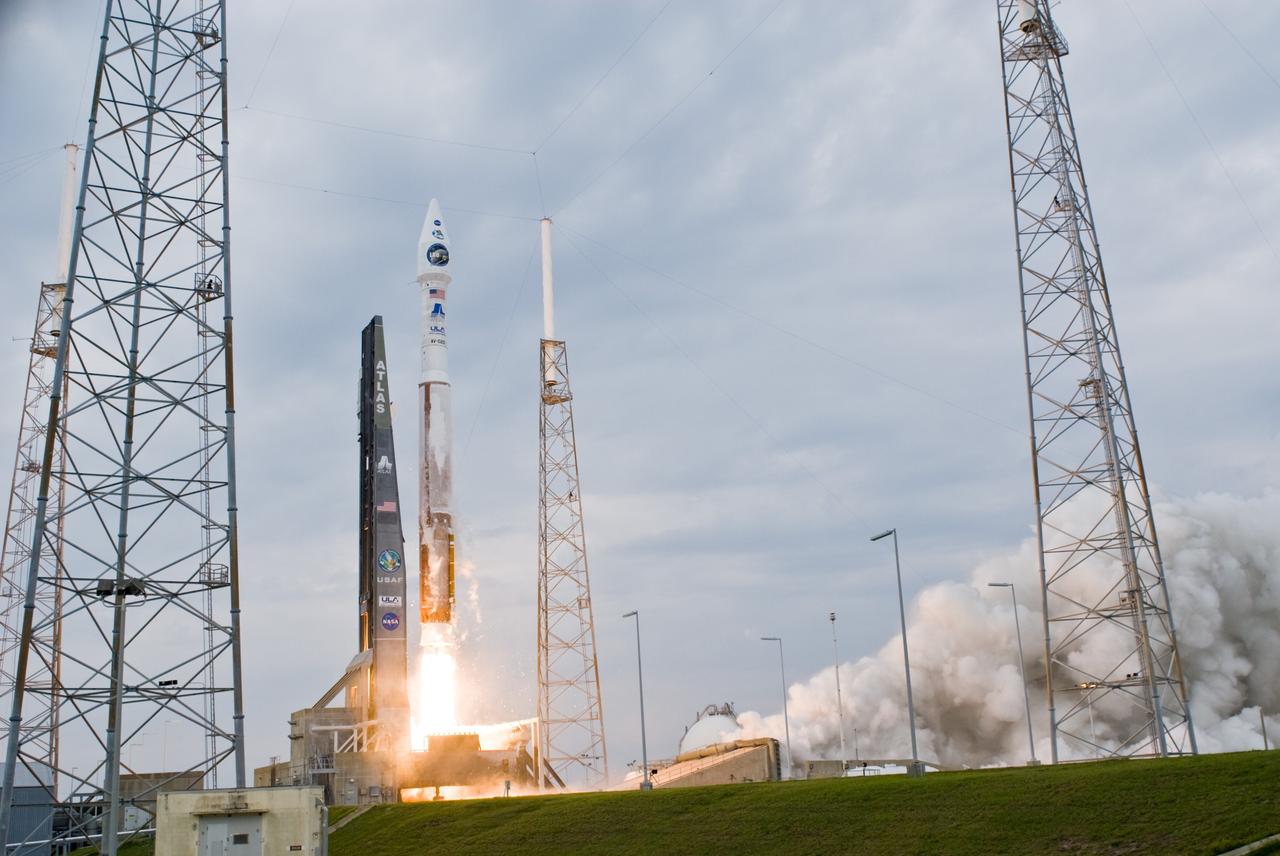
CAPE CANAVERAL, Fla. – Fire and smoke signal the liftoff of the Atlas V/Centaur carrying NASA's Lunar Reconnaissance Orbiter, or LRO, and NASA's Lunar Crater Observation and Sensing Satellite, known as LCROSS, toward orbit around the moon. Launch from Launch Complex 41 at Cape Canaveral Air Force Station in Florida was on-time at 5:32 p.m. EDT. The towers around the pad are part of the lightning protection system. LRO and LCROSS are the first missions in NASA's plan to return humans to the moon and begin establishing a lunar outpost by 2020. The LRO also includes seven instruments that will help NASA characterize the moon's surface: DIVINER, LAMP, LEND, LOLA , CRATER, Mini-RF and LROC. Photo credit: NASA/Tom Farrar, Kevin O'Connell

CAPE CANAVERAL, Fla. – Smoke and steam roll across the launch pad as NASA's Lunar Reconnaissance Orbiter, or LRO, and NASA's Lunar Crater Observation and Sensing Satellite, known as LCROSS, lifts off atop the Atlas V/Centaur rocket from Launch Complex 41 at Cape Canaveral Air Force Station in Florida. Surrounding the pad are lightning towers. LRO and LCROSS are the first missions in NASA's plan to return humans to the moon and begin establishing a lunar outpost by 2020. The LRO also includes seven instruments that will help NASA characterize the moon's surface: DIVINER, LAMP, LEND, LOLA , CRATER, Mini-RF and LROC. Launch was on-time at 5:32 p.m. EDT June 18. Photo credit: NASA/Kim Shiflett
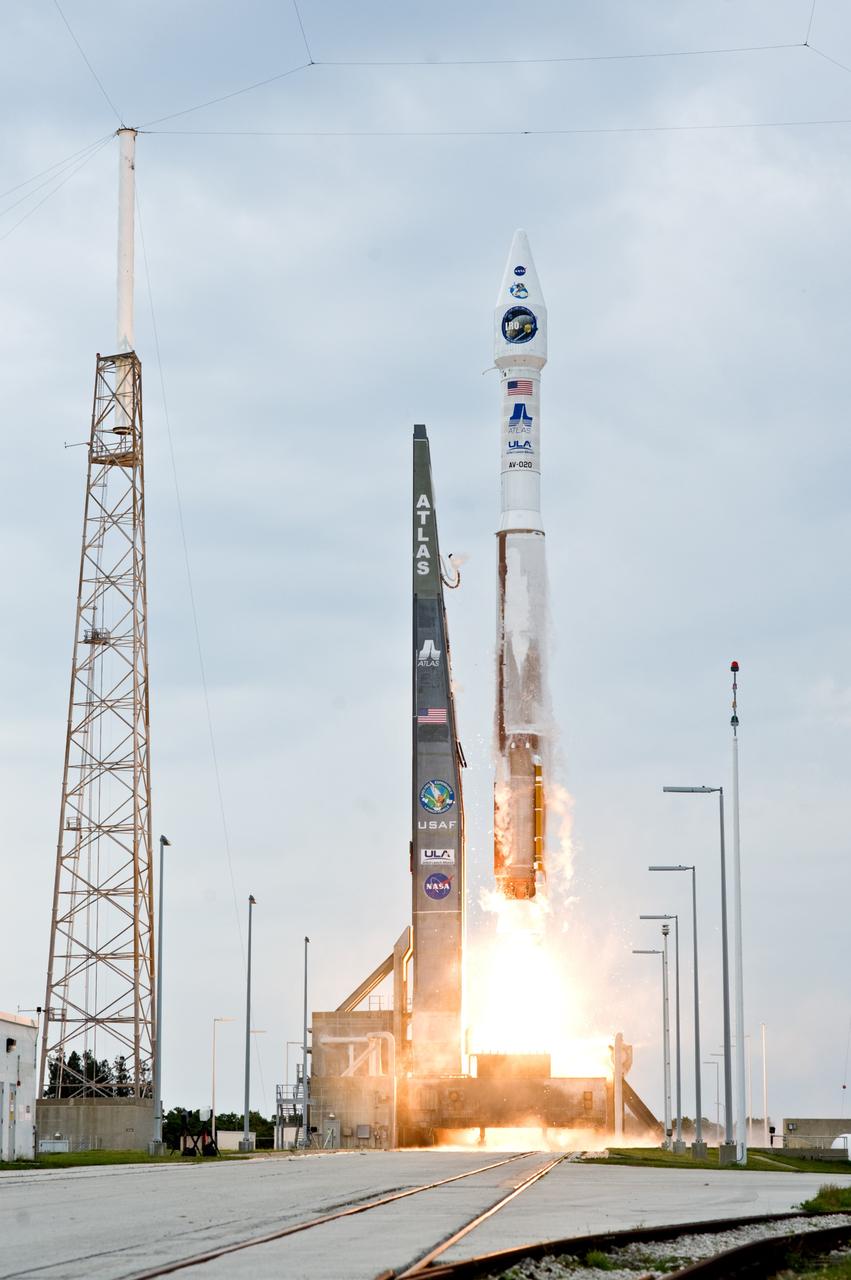
CAPE CANAVERAL, Fla. – The Atlas V/centaur rocket fires as it lifts NASA's Lunar Reconnaissance Orbiter, or LRO, and NASA's Lunar Crater Observation and Sensing Satellite, known as LCROSS, from Launch Complex 41 at Cape Canaveral Air Force Station in Florida. The tower at left is part of the lightning protection system on the pad. LRO and LCROSS are the first missions in NASA's plan to return humans to the moon and begin establishing a lunar outpost by 2020. The LRO also includes seven instruments that will help NASA characterize the moon's surface: DIVINER, LAMP, LEND, LOLA , CRATER, Mini-RF and LROC. Launch was on-time at 5:32 p.m. EDT. Photo credit: NASA/Tom Farrar, Kevin O'Connell
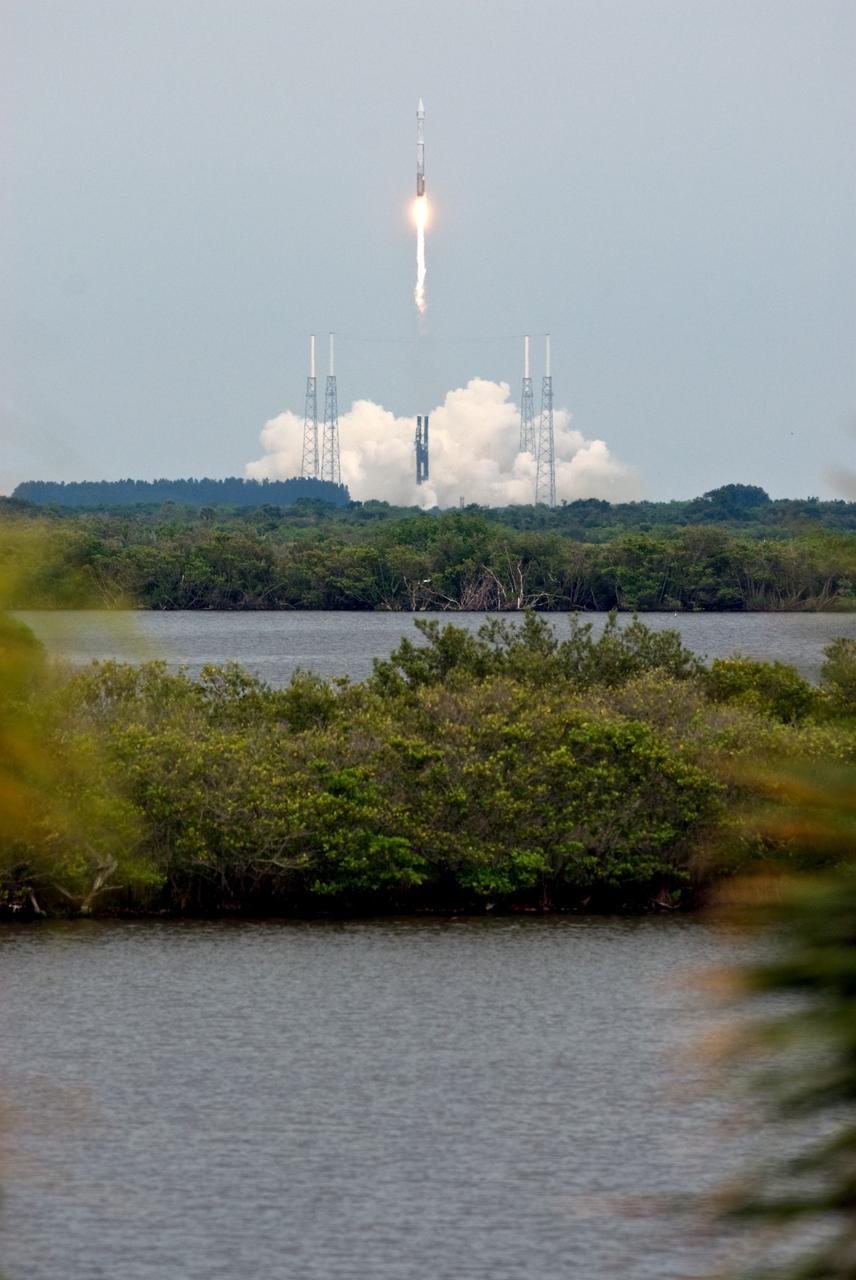
CAPE CANAVERAL, Fla. – Viewed across the Indian River Lagoon, the Atlas V/Centaur rocket carrying NASA's Lunar Reconnaissance Orbiter, or LRO, and NASA's Lunar Crater Observation and Sensing Satellite, known as LCROSS, trails a tail of smoke as it roars into the sky after launch from Launch Complex 41 at Cape Canaveral Air Force Station in Florida. Surrounding the pad are lightning towers. LRO and LCROSS are the first missions in NASA's plan to return humans to the moon and begin establishing a lunar outpost by 2020. The LRO also includes seven instruments that will help NASA characterize the moon's surface: DIVINER, LAMP, LEND, LOLA , CRATER, Mini-RF and LROC. Launch was on-time at 5:32 p.m. EDT June 18. Photo credit: NASA/Tony Gray
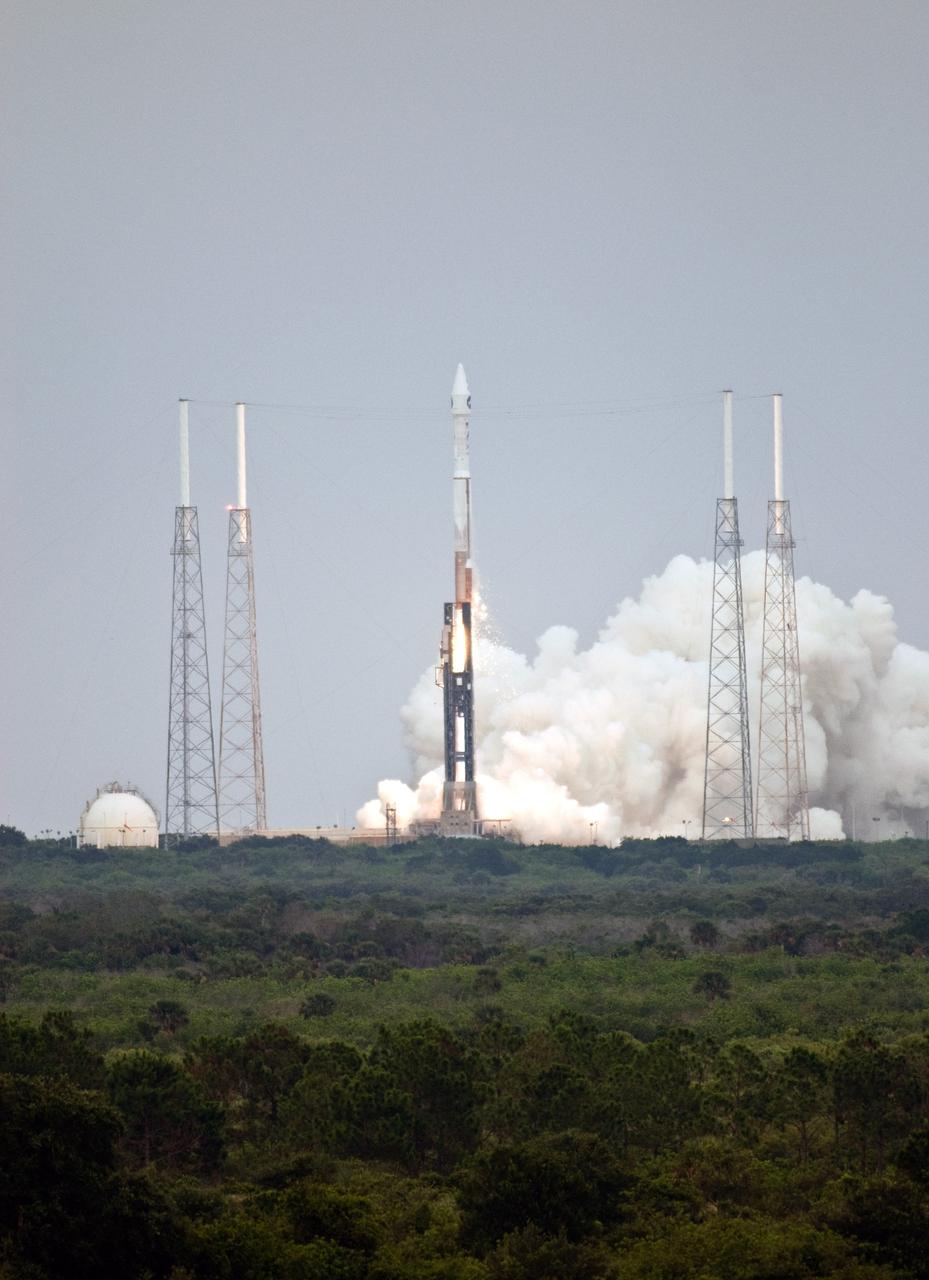
CAPE CANAVERAL, Fla. – Smoke and steam roll across the launch pad as NASA's Lunar Reconnaissance Orbiter, or LRO, and NASA's Lunar Crater Observation and Sensing Satellite, known as LCROSS, lifts off atop the Atlas V/Centaur rocket from Launch Complex 41 at Cape Canaveral Air Force Station in Florida. Surrounding the pad are lightning towers. LRO and LCROSS are the first missions in NASA's plan to return humans to the moon and begin establishing a lunar outpost by 2020. The LRO also includes seven instruments that will help NASA characterize the moon's surface: DIVINER, LAMP, LEND, LOLA , CRATER, Mini-RF and LROC. Launch was on-time at 5:32 p.m. EDT June 18. Photo credit: NASA/Kim Shiflett
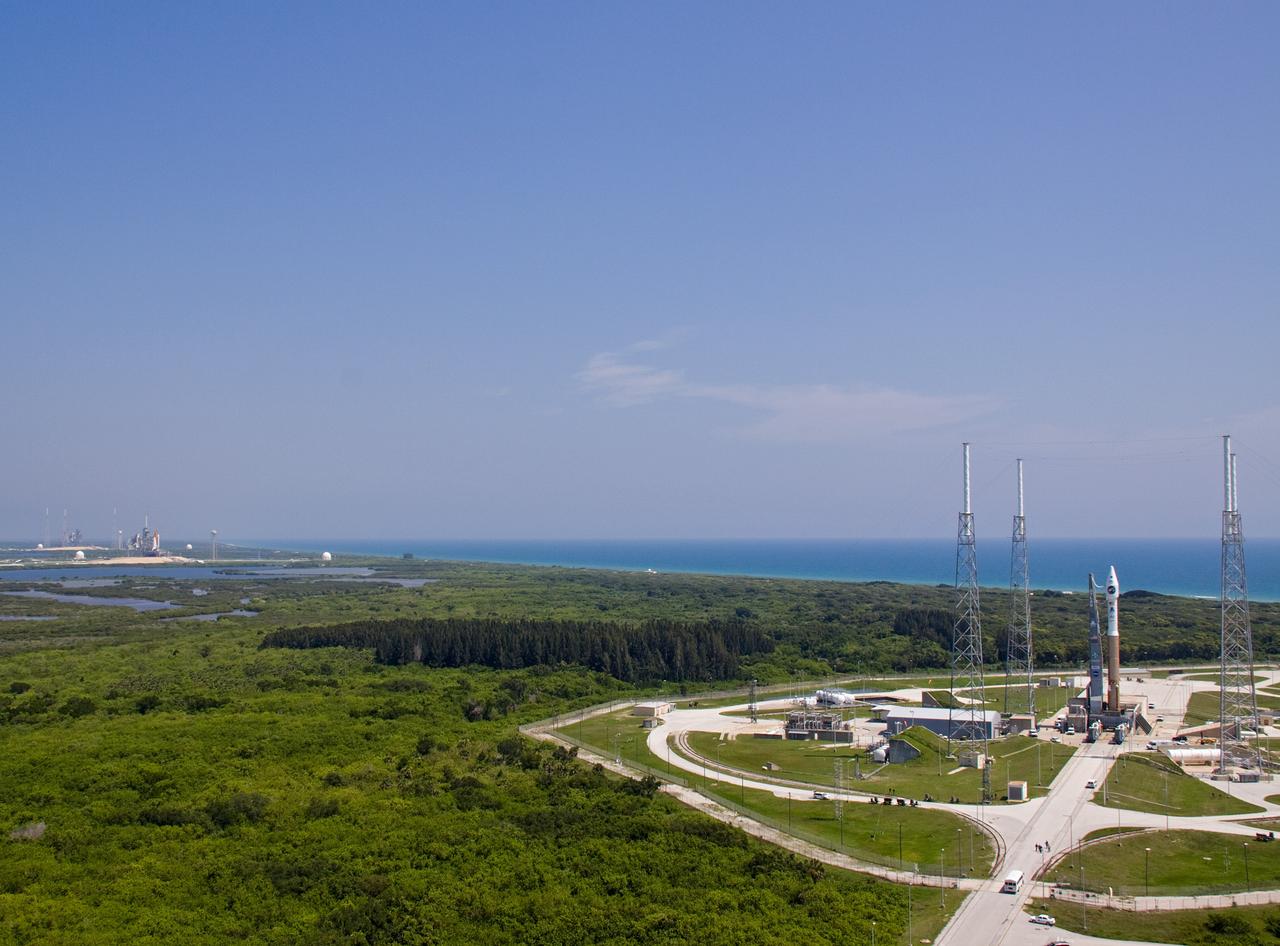
CAPE CANAVERAL, Fla. – A wide view captures both Launch Complex-41 on Cape Canaveral Air Force Station at right and Launch Pad 39A at NASA's Kennedy Space Center in Florida at left. Space shuttle Endeavour is still on the pad after launch was officially scrubbed at 1:55 a.m. this morning when a gaseous hydrogen leak occurred at the Ground Umbilical Carrier Plate. NASA's Lunar Reconnaissance Orbiter, or LRO, and NASA's Lunar Crater Observation and Sensing Satellite, known as LCROSS, are on Complex 41 waiting for launch on the Atlas V/Centaur rocket. LRO and LCROSS are the first missions in NASA's plan to return humans to the moon and begin establishing a lunar outpost by 2020. The LRO also includes seven instruments that will help NASA characterize the moon's surface: DIVINER, LAMP, LEND, LOLA, CRATER, Mini-RF and LROC. Launch is scheduled for 5:22 p.m. EDT June 18 . Photo credit: NASA/Jack Pfaller
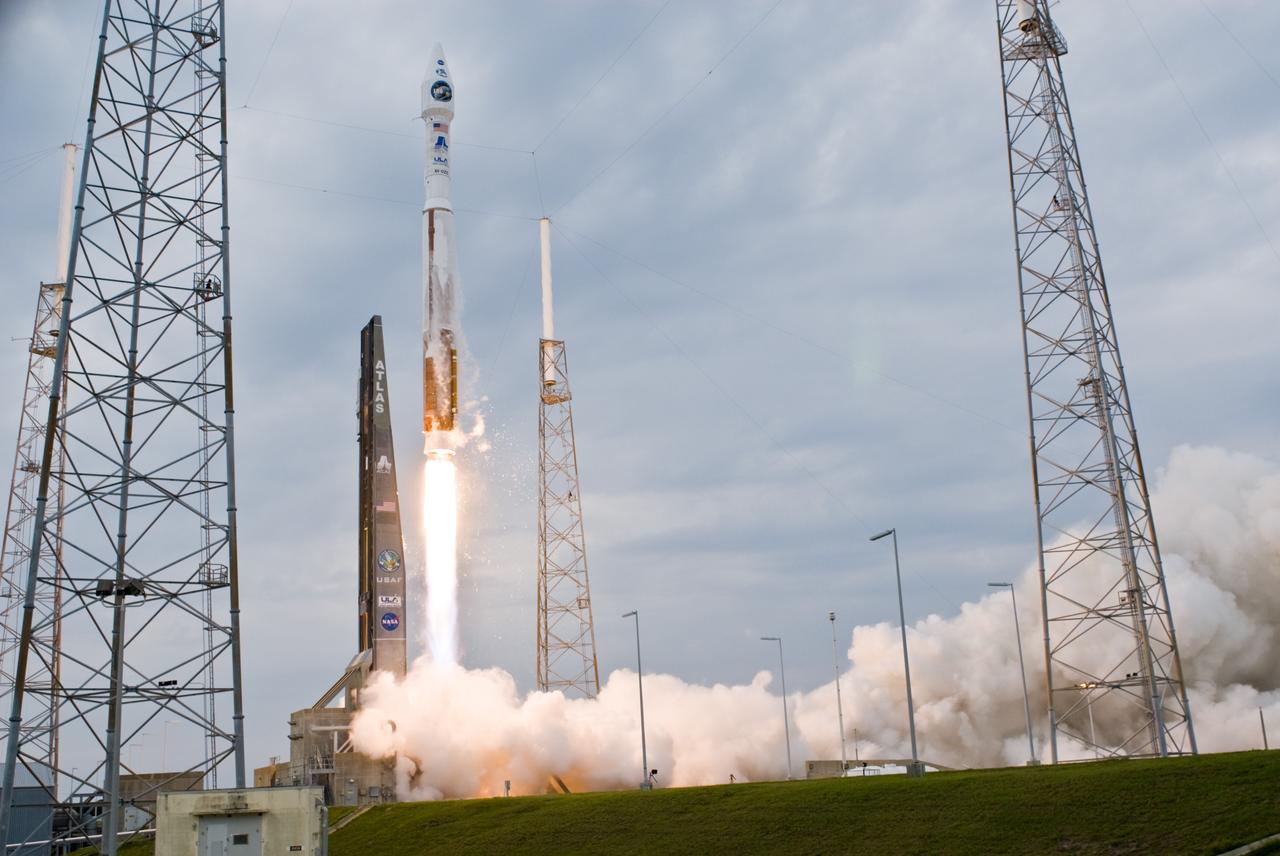
CAPE CANAVERAL, Fla. – Smoke pours across Launch Complex 41 at Cape Canaveral Air Force Station in Florida as the Atlas V/Centaur carrying NASA's Lunar Reconnaissance Orbiter, or LRO, and NASA's Lunar Crater Observation and Sensing Satellite, known as LCROSS, roars into the sky. The towers around the pad are part of the lightning protection system. LRO and LCROSS are the first missions in NASA's plan to return humans to the moon and begin establishing a lunar outpost by 2020. The LRO also includes seven instruments that will help NASA characterize the moon's surface: DIVINER, LAMP, LEND, LOLA , CRATER, Mini-RF and LROC. Launch was on-time at 5:32 p.m. EDT. Photo credit: NASA/Tom Farrar, Kevin O'Connell
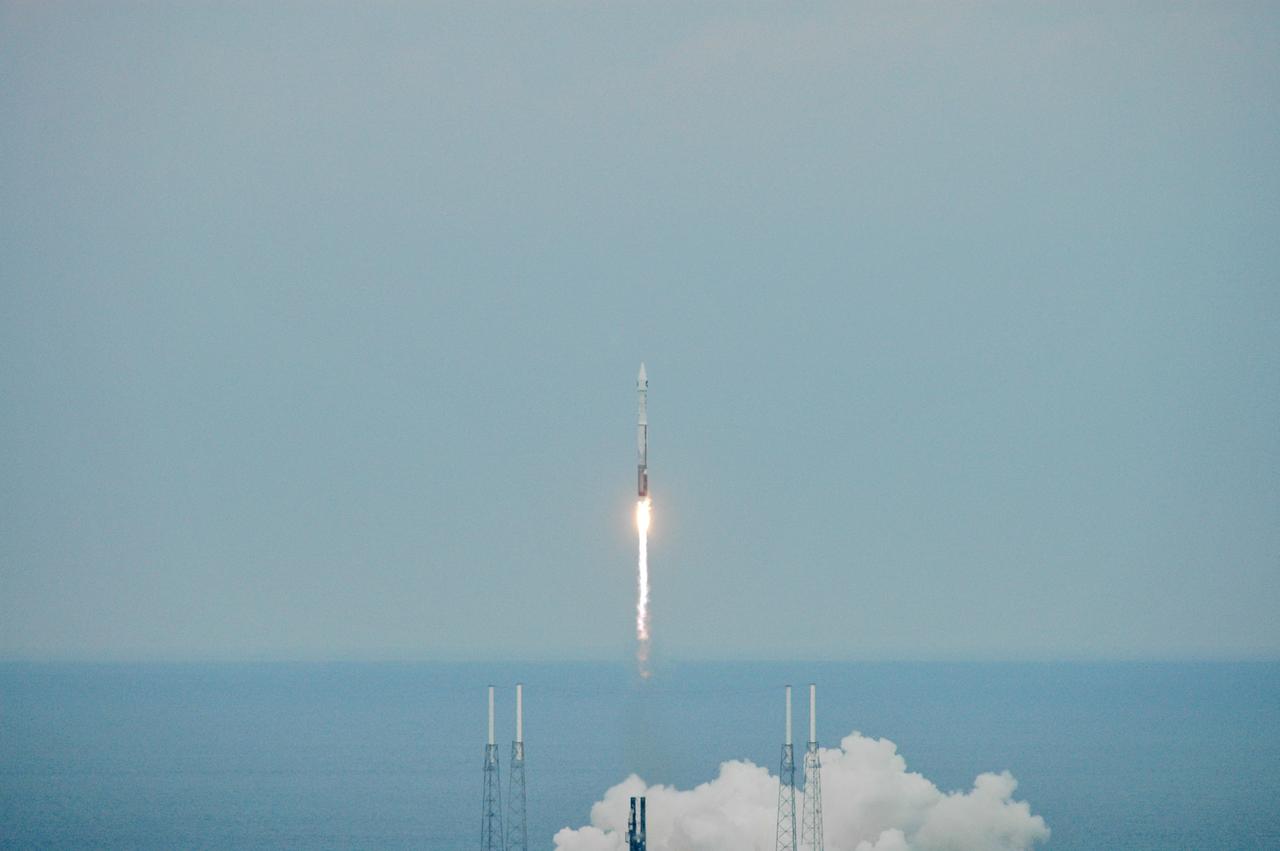
CAPE CANAVERAL, Fla. – The Atlas V/Centaur rocket carrying NASA's Lunar Reconnaissance Orbiter, or LRO, and NASA's Lunar Crater Observation and Sensing Satellite, known as LCROSS, leaps into the sky with a tail of smoke behind as it lifts off from Launch Complex 41 at Cape Canaveral Air Force Station in Florida. Surrounding the pad below are lightning towers. LRO and LCROSS are the first missions in NASA's plan to return humans to the moon and begin establishing a lunar outpost by 2020. The LRO also includes seven instruments that will help NASA characterize the moon's surface: DIVINER, LAMP, LEND, LOLA , CRATER, Mini-RF and LROC. Launch was on-time at 5:32 p.m. EDT June 18. Photo credit: NASA/Jeffery Marino

CAPE CANAVERAL, Fla. – Photographer Joel Powell, with Spaceflight Magazine, captures a closeup of NASA's Lunar Reconnaissance Orbiter, or LRO, and NASA's Lunar Crater Observation and Sensing Satellite, known as LCROSS, atop the Atlas V/Centaur rocket on Launch Pad 41 at Cape Canaveral Air Force Station in Florida. Around the pad are the lightning towers. LRO and LCROSS are the first missions in NASA's plan to return humans to the moon and begin establishing a lunar outpost by 2020. The LRO also includes seven instruments that will help NASA characterize the moon's surface: DIVINER, LAMP, LEND, LOLA , CRATER, Mini-RF and LROC. Launch is scheduled for 5:12 p.m. EDT June 18. Photo credit: NASA/Ken Thornsley
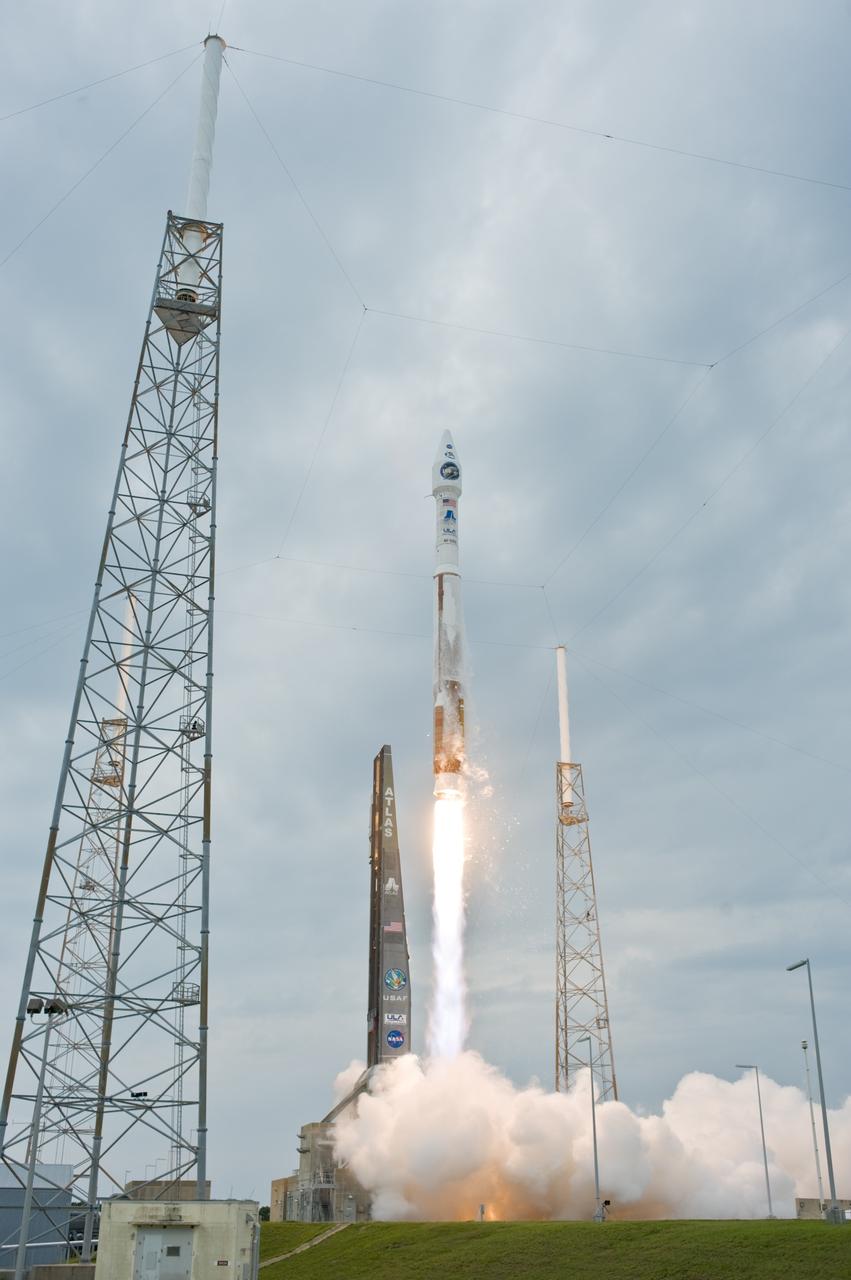
CAPE CANAVERAL, Fla. – Smoke pours across Launch Complex 41 at Cape Canaveral Air Force Station in Florida as the Atlas V/Centaur carrying NASA's Lunar Reconnaissance Orbiter, or LRO, and NASA's Lunar Crater Observation and Sensing Satellite, known as LCROSS, roars into the sky. The towers around the pad are part of the lightning protection system. LRO and LCROSS are the first missions in NASA's plan to return humans to the moon and begin establishing a lunar outpost by 2020. The LRO also includes seven instruments that will help NASA characterize the moon's surface: DIVINER, LAMP, LEND, LOLA , CRATER, Mini-RF and LROC. Launch was on-time at 5:32 p.m. EDT. Photo credit: NASA/Tom Farrar, Kevin O'Connell
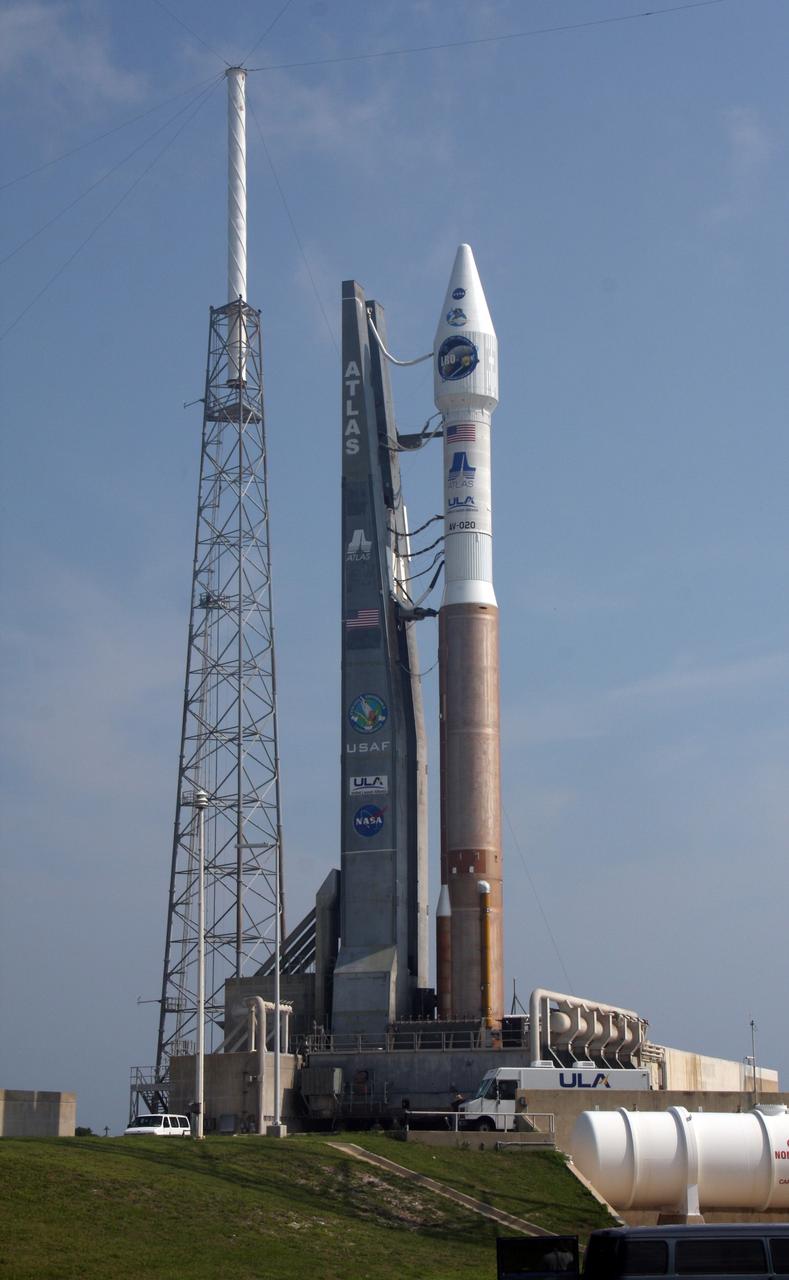
CAPE CANAVERAL, Fla. – NASA's Lunar Reconnaissance Orbiter, or LRO, and NASA's Lunar Crater Observation and Sensing Satellite, known as LCROSS, stand ready for liftoff on an Atlas V/Centaur rocket from Launch Pad 41 at Cape Canaveral Air Force Station in Florida. At left is one of the lightning towers that surround the pad. LRO and LCROSS are the first missions in NASA's plan to return humans to the moon and begin establishing a lunar outpost by 2020. The LRO also includes seven instruments that will help NASA characterize the moon's surface: DIVINER, LAMP, LEND, LOLA , CRATER, Mini-RF and LROC. Launch is scheduled for 5:12 p.m. EDT June 18. Photo credit: NASA/Ken Thornsley
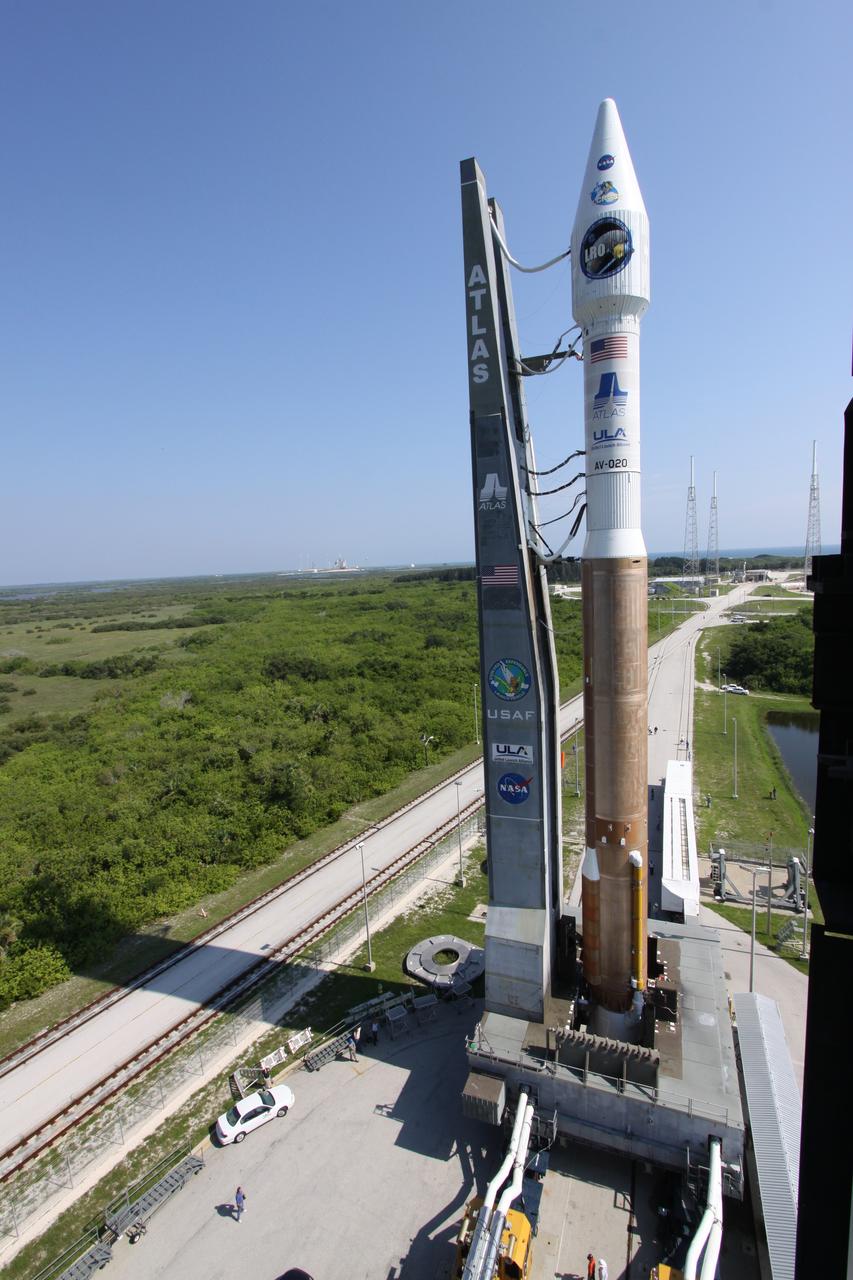
CAPE CANAVERAL, Fla. – On Launch Complex-41 on Cape Canaveral Air Force Station in Florida, NASA's Lunar Reconnaissance Orbiter, or LRO, and NASA's Lunar Crater Observation and Sensing Satellite, known as LCROSS, are attached to the gantry at left as they roll out to the launch pad. They are atop their launch vehicle, the Atlas V/Centaur rocket. LRO and LCROSS are the first missions in NASA's plan to return humans to the moon and begin establishing a lunar outpost by 2020. The LRO also includes seven instruments that will help NASA characterize the moon's surface: DIVINER, LAMP, LEND, LOLA, CRATER, Mini-RF and LROC. Launch is scheduled for 5:22 p.m. EDT June 18 . Photo credit: NASA/Jack Pfaller
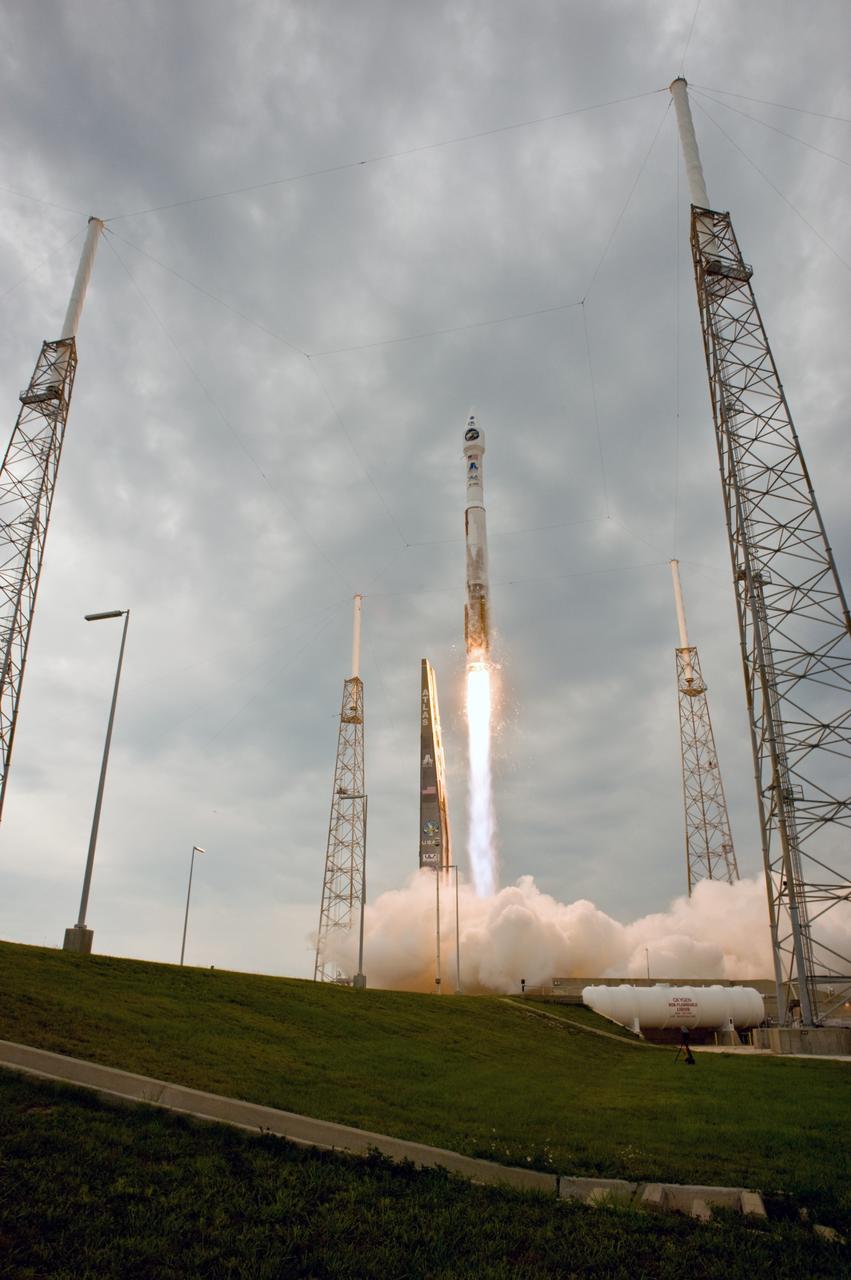
CAPE CANAVERAL, Fla. – Trailing a column of fire, the Atlas V/Centaur carrying NASA's Lunar Reconnaissance Orbiter, or LRO, and NASA's Lunar Crater Observation and Sensing Satellite, known as LCROSS, races above the lightning tower at left on Launch Complex 41 at Cape Canaveral Air Force Station in Florida. The surrounding towers are part of the lightning protection system. LRO and LCROSS are the first missions in NASA's plan to return humans to the moon and begin establishing a lunar outpost by 2020. The LRO also includes seven instruments that will help NASA characterize the moon's surface: DIVINER, LAMP, LEND, LOLA , CRATER, Mini-RF and LROC. Launch was on-time at 5:32 p.m. EDT. Photo credit: NASA/Sandra Joseph, Tony Gray
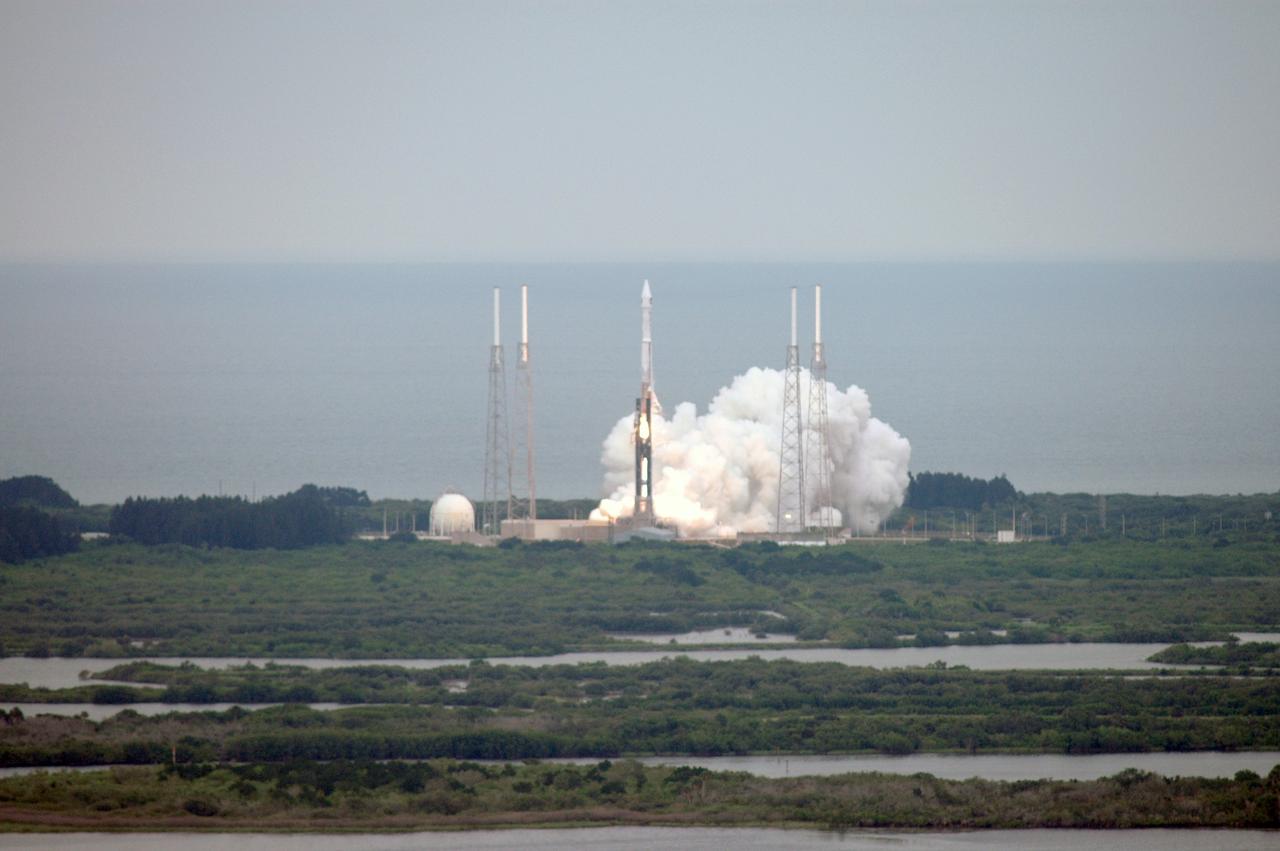
CAPE CANAVERAL, Fla. – On Launch Complex 41 at Cape Canaveral Air Force Station in Florida, bursts of smoke and steam signal liftoff for the Atlas V/Centaur rocket carrying NASA's Lunar Reconnaissance Orbiter, or LRO, and NASA's Lunar Crater Observation and Sensing Satellite, known as LCROSS, toward space. Surrounding the pad are lightning towers. LRO and LCROSS are the first missions in NASA's plan to return humans to the moon and begin establishing a lunar outpost by 2020. The LRO also includes seven instruments that will help NASA characterize the moon's surface: DIVINER, LAMP, LEND, LOLA , CRATER, Mini-RF and LROC. Launch was on-time at 5:32 p.m. EDT June 18. Photo credit: NASA/Jeffery Marino
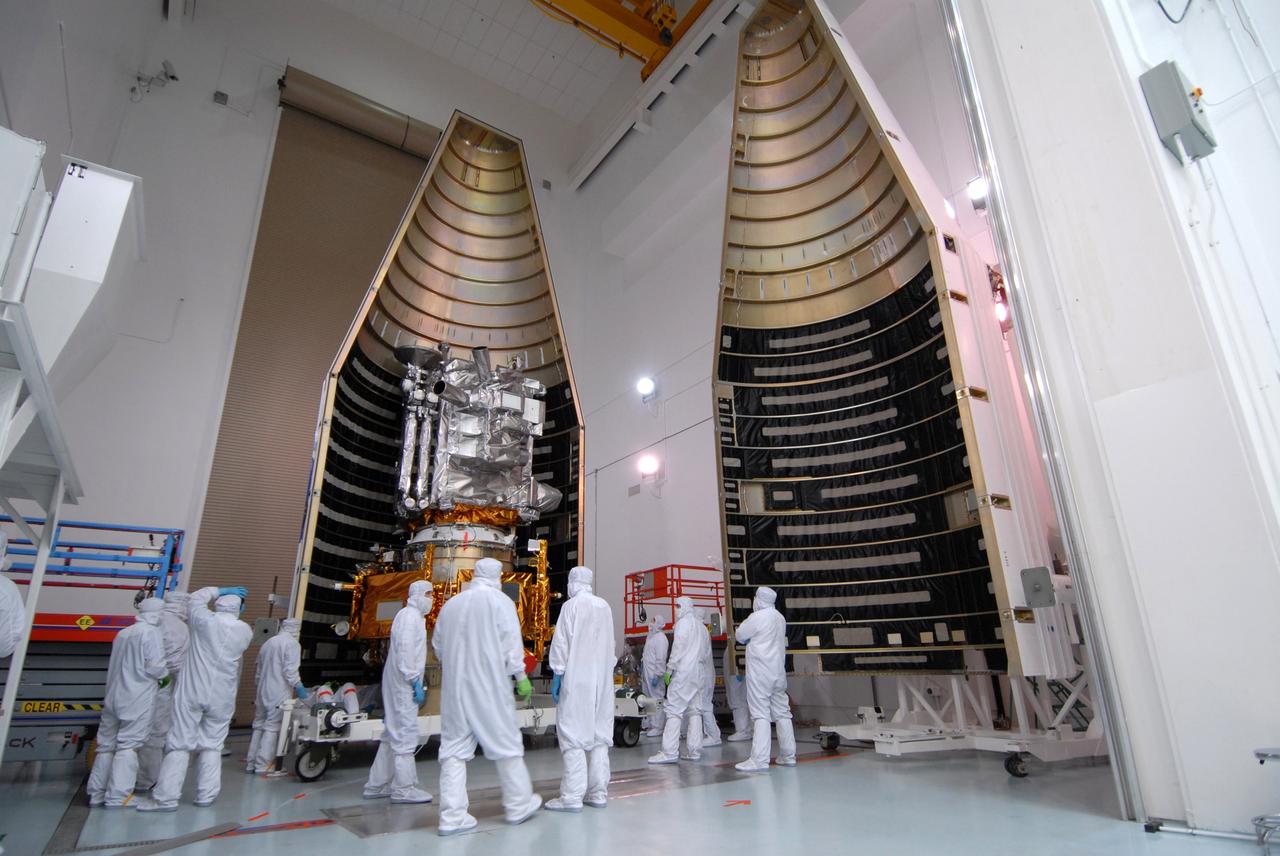
CAPE CANAVERAL, Fla. – At Astrotech Space Operations Facility in Titusville, Fla., technicians closely watch as the first half of the fairing is moved into place for installation around NASA's Lunar Reconnaissance Orbiter, or LRO, and and NASA's Lunar Crater Observation and Sensing Satellite, known as LCROSS. At right is the second half. The fairing is a molded structure that fits flush with the outside surface of the rocket and forms an aerodynamically smooth nose cone, protecting the spacecraft during launch and ascent. The LRO includes five instruments: DIVINER, LAMP, LEND, LOLA and LROC. They will be launched aboard an Atlas V/Centaur rocket no earlier than June 17 from Launch Complex-41 on Cape Canaveral Air Force Station in Florida. Photo credit: NASA/Jack Pfaller
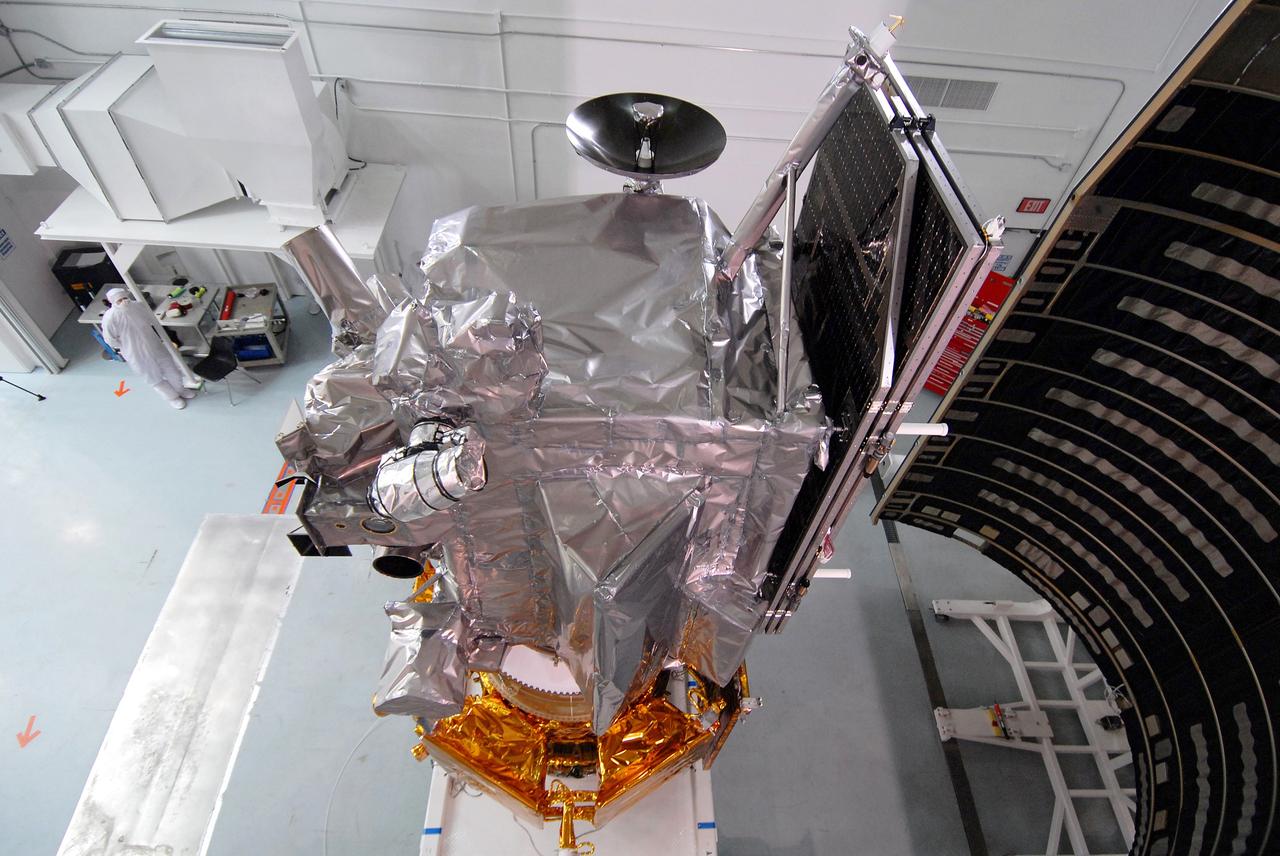
CAPE CANAVERAL, Fla. – At Astrotech Space Operations Facility in Titusville, Fla., NASA's Lunar Reconnaissance Orbiter, or LRO, and NASA's Lunar Crater Observation and Sensing Satellite, known as LCROSS, are being prepared for fairing installation. On the right side of the LRO is part of the solar array. At far right is part of the fairing that will be installed around the spacecraft for launch. The fairing is a molded structure that fits flush with the outside surface of the rocket and forms an aerodynamically smooth nose cone, protecting the spacecraft during launch and ascent. The LRO includes five instruments: DIVINER, LAMP, LEND, LOLA and LROC. They will be launched aboard an Atlas V/Centaur rocket no earlier than June 17 from Launch Complex-41 on Cape Canaveral Air Force Station in Florida. Photo credit: NASA/Jack Pfaller
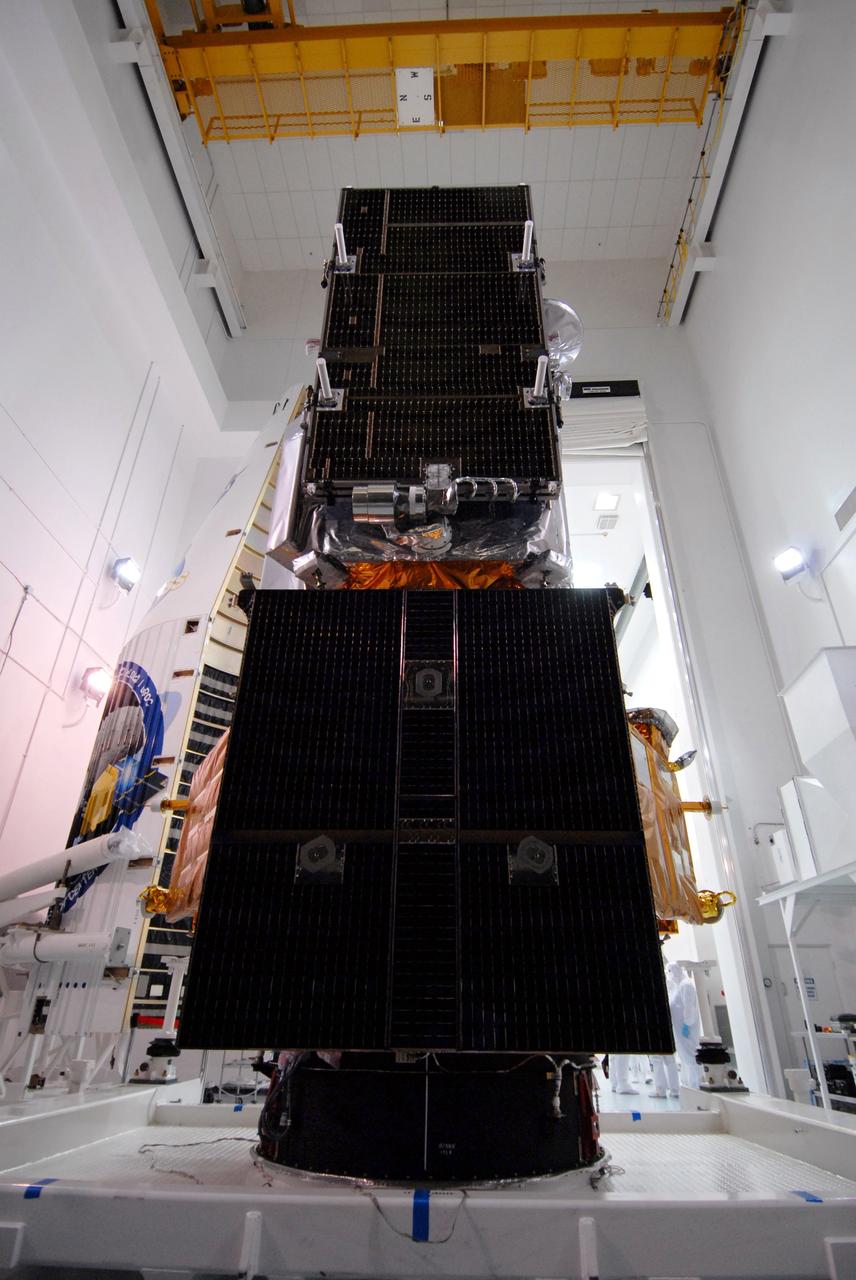
CAPE CANAVERAL, Fla. – At Astrotech Space Operations Facility in Titusville, Fla., NASA's Lunar Reconnaissance Orbiter, or LRO, and NASA's Lunar CRater Observation and Sensing Satellite, known as LCROSS,are being prepared for fairing installation. Seen here are the solar arrays. In the background at left, with the decals, is part of the fairing that will be installed around the spacecraft for launch. The fairing is a molded structure that fits flush with the outside surface of the rocket and forms an aerodynamically smooth nose cone, protecting the spacecraft during launch and ascent. The LRO includes five instruments: DIVINER, LAMP, LEND, LOLA and LROC. They will be launched aboard an Atlas V/Centaur rocket no earlier than June 17 from Launch Complex-41 on Cape Canaveral Air Force Station in Florida. Photo credit: NASA/Jack Pfaller
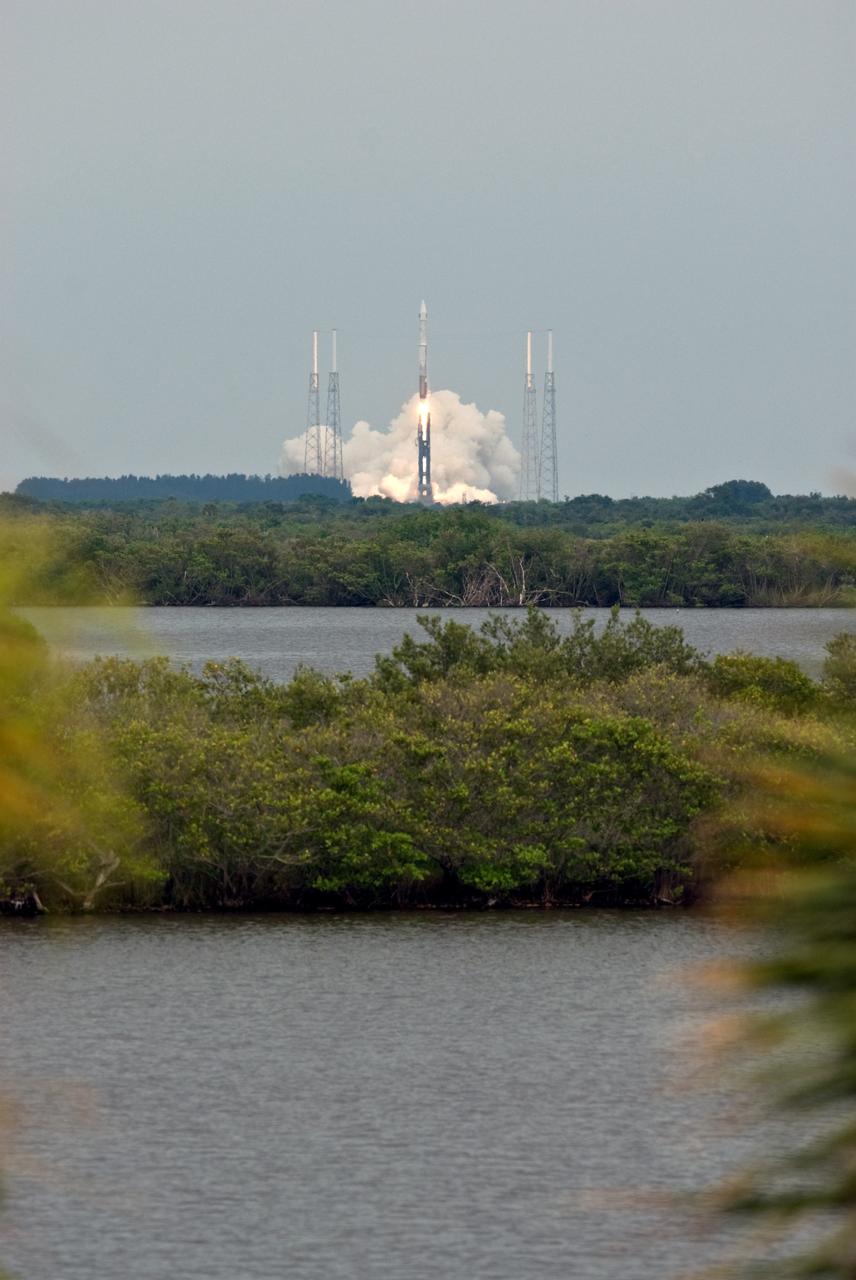
CAPE CANAVERAL, Fla. – Viewed across the Indian River Lagoon, the Atlas V/Centaur rocket carrying NASA's Lunar Reconnaissance Orbiter, or LRO, and NASA's Lunar Crater Observation and Sensing Satellite, known as LCROSS, lifts off from Launch Complex 41 at Cape Canaveral Air Force Station in Florida. Surrounding the pad are lightning towers. LRO and LCROSS are the first missions in NASA's plan to return humans to the moon and begin establishing a lunar outpost by 2020. The LRO also includes seven instruments that will help NASA characterize the moon's surface: DIVINER, LAMP, LEND, LOLA , CRATER, Mini-RF and LROC. Launch was on-time at 5:32 p.m. EDT June 18. Photo credit: NASA/Tony Gray
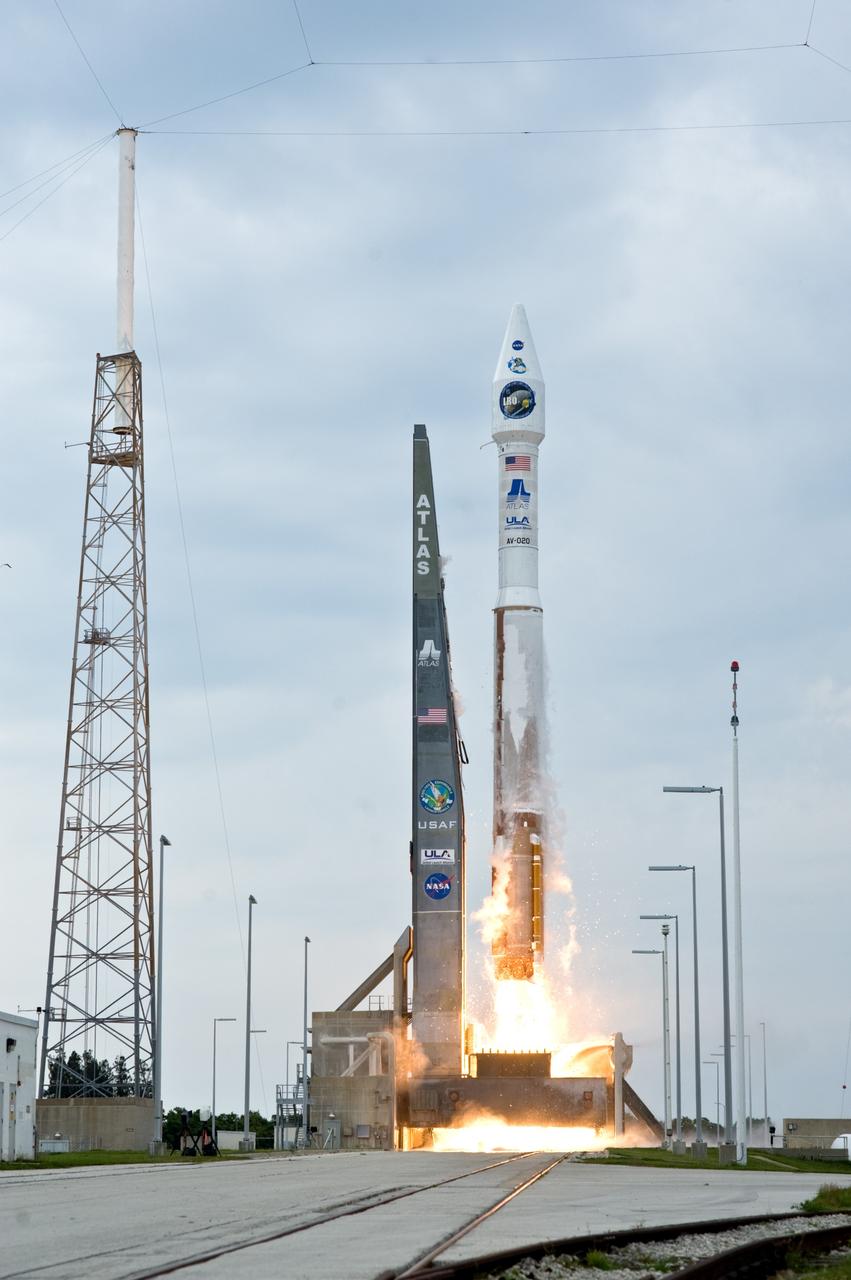
CAPE CANAVERAL, Fla. – Fire signals liftoff of the Atlas V/Centaur carrying NASA's Lunar Reconnaissance Orbiter, or LRO, and NASA's Lunar Crater Observation and Sensing Satellite, known as LCROSS, from Launch Complex 41 at Cape Canaveral Air Force Station in Florida. The tower at left is part of the lightning protection system on the pad. LRO and LCROSS are the first missions in NASA's plan to return humans to the moon and begin establishing a lunar outpost by 2020. The LRO also includes seven instruments that will help NASA characterize the moon's surface: DIVINER, LAMP, LEND, LOLA , CRATER, Mini-RF and LROC. Launch was on-time at 5:32 p.m. EDT. Photo credit: NASA/Tom Farrar, Kevin O'Connell
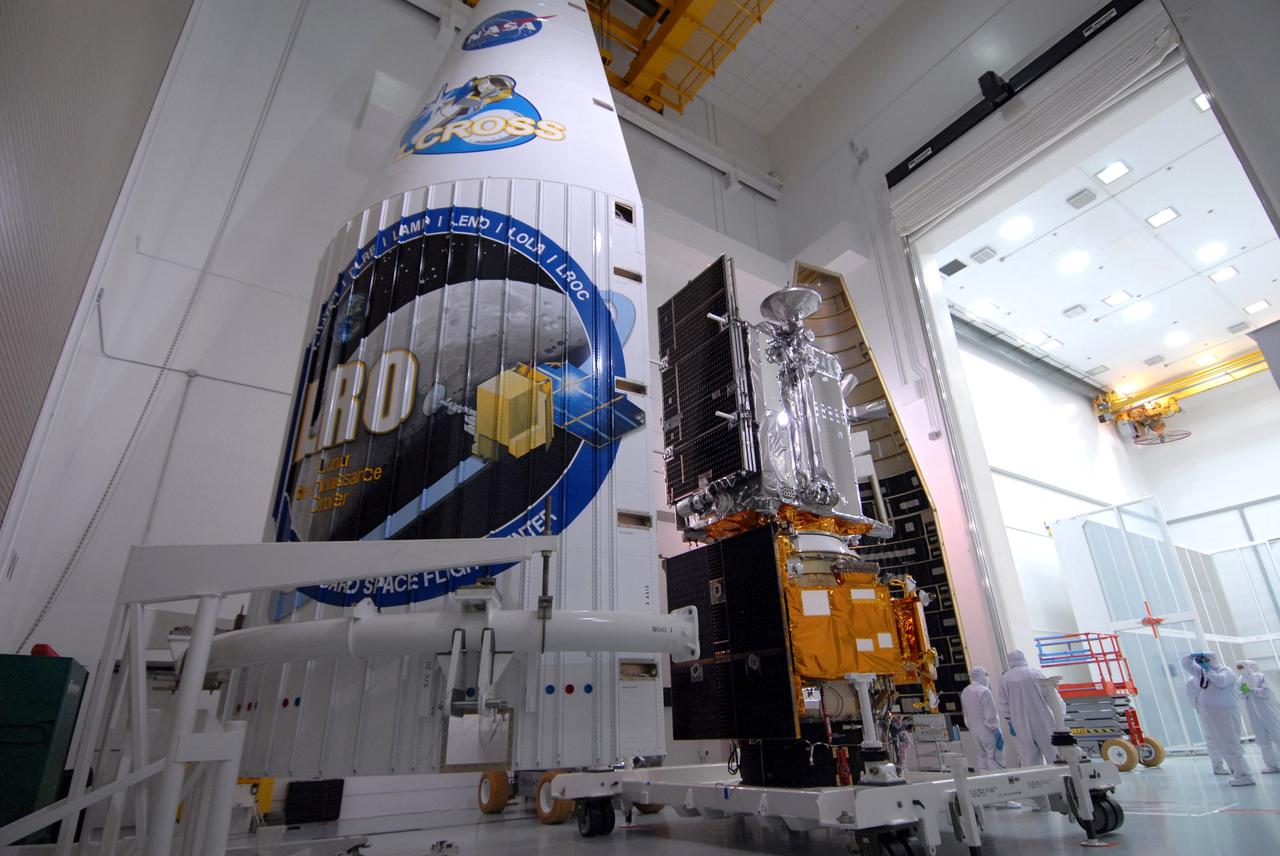
CAPE CANAVERAL, Fla. – At Astrotech Space Operations Facility in Titusville, Fla., NASA's Lunar Reconnaissance Orbiter, or LRO, and NASA's Lunar Crater Observation and Sensing Satellite, known as LCROSS, are being prepared for fairing installation. At left, with the decals, is part of the fairing that will be installed around the spacecraft for launch. The fairing is a molded structure that fits flush with the outside surface of the rocket and forms an aerodynamically smooth nose cone, protecting the spacecraft during launch and ascent. The LRO includes five instruments: DIVINER, LAMP, LEND, LOLA and LROC. They will be launched aboard an Atlas V/Centaur rocket no earlier than June 17 from Launch Complex-41 on Cape Canaveral Air Force Station in Florida. Photo credit: NASA/Jack Pfaller