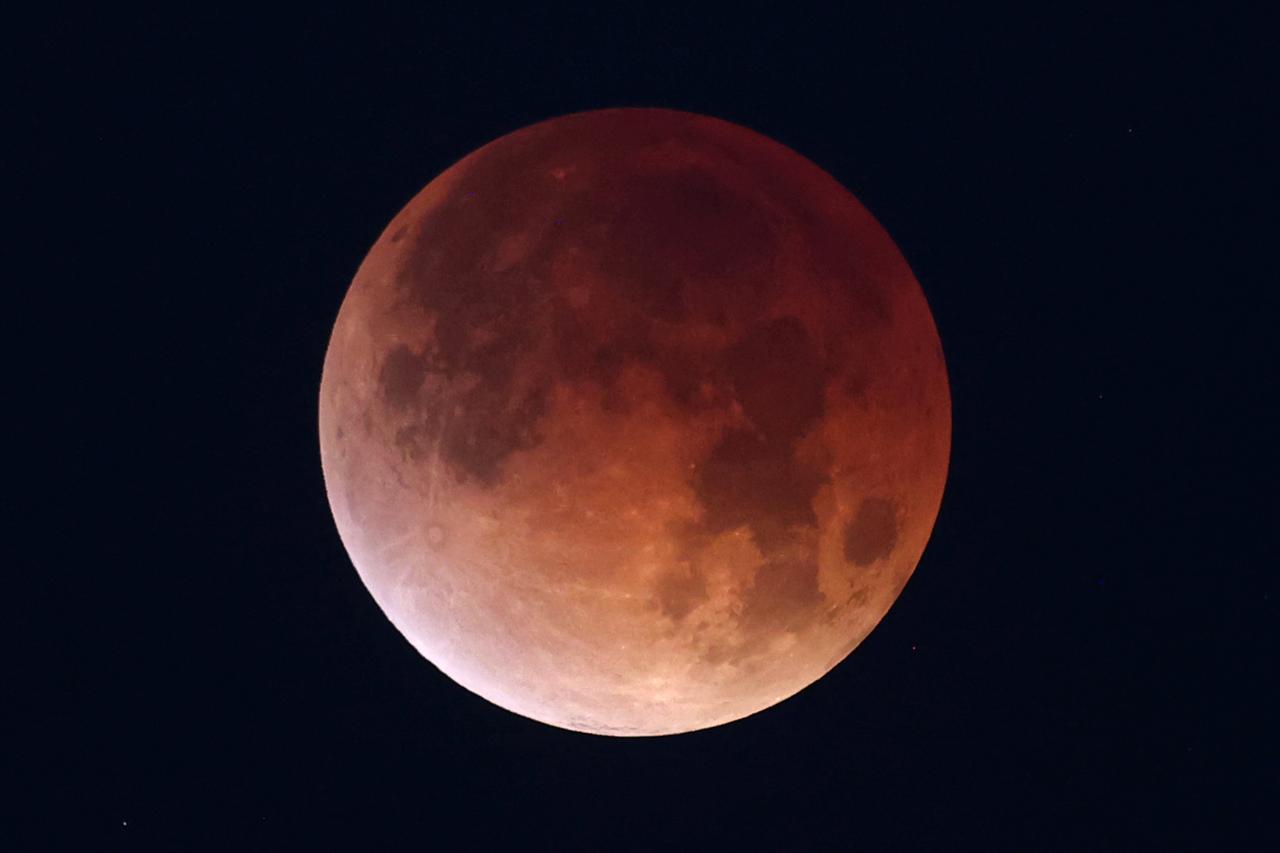
A total lunar eclipse rises over New Orleans, home of NASA’s Michoud Assembly Facility, in the early morning hours of Tuesday, March 3. A lunar eclipse occurs when Earth passes directly between the Sun and Moon, casting a huge shadow across the Moon’s surface. The Moon appears dark red or orange as the Sun’s light filters through Earth’s atmosphere. Image credit: NASA/Michael DeMocker

A total lunar eclipse rises over New Orleans, home of NASA’s Michoud Assembly Facility, in the early morning hours of Tuesday, March 3. A lunar eclipse occurs when Earth passes directly between the Sun and Moon, casting a huge shadow across the Moon’s surface. The Moon appears dark red or orange as the Sun’s light filters through Earth’s atmosphere. This is a composite of 4 images taken during the eclipse.
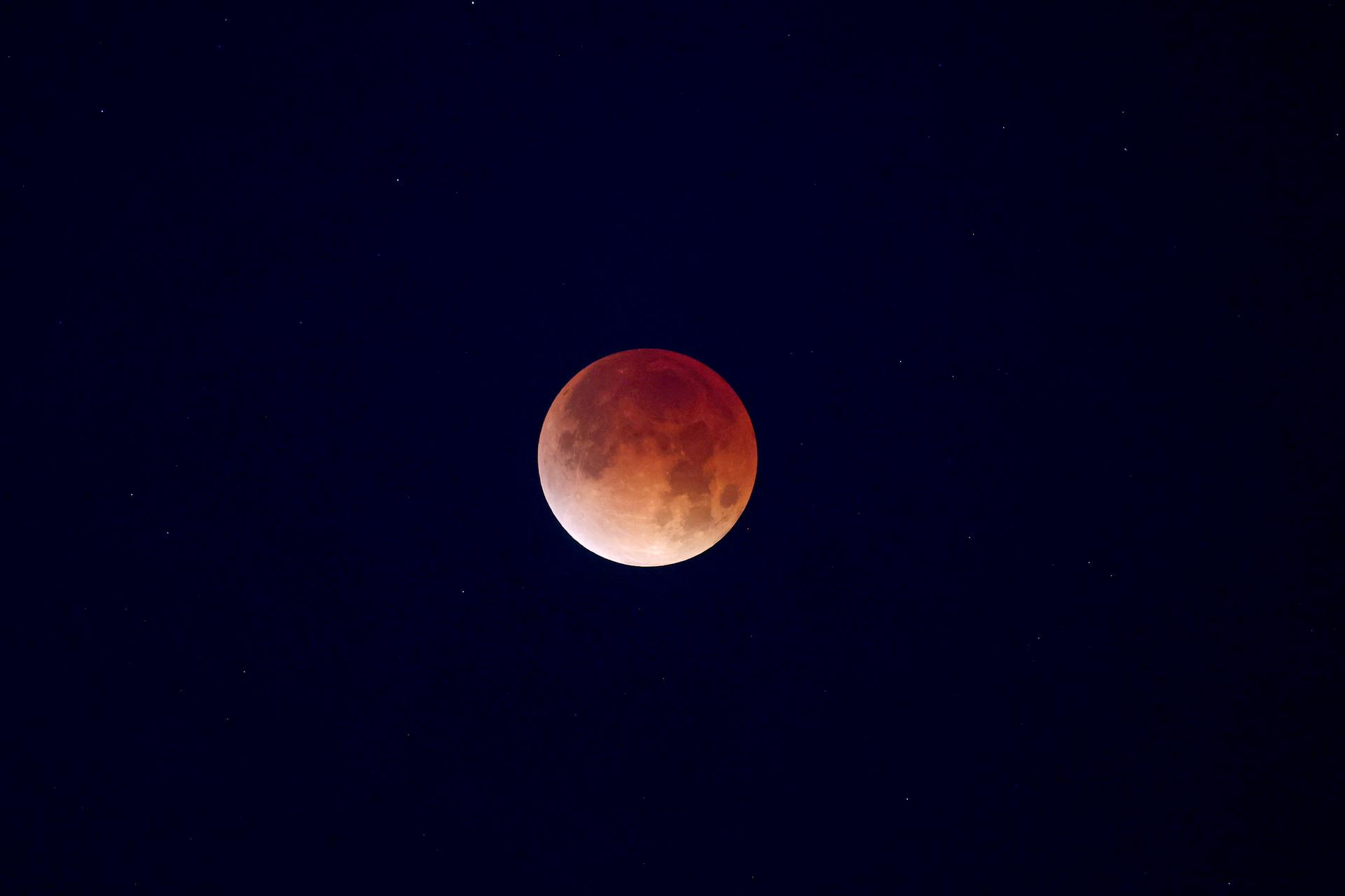
A total lunar eclipse rises over New Orleans, home of NASA’s Michoud Assembly Facility, in the early morning hours of Tuesday, March 3. A lunar eclipse occurs when Earth passes directly between the Sun and Moon, casting a huge shadow across the Moon’s surface. The Moon appears dark red or orange as the Sun’s light filters through Earth’s atmosphere. Image credit: NASA/Michael DeMocker

art002e009302 (April 6, 2026) – The Artemis II crew – Mission Specialist Christina Koch (top left), Mission Specialist Jeremy Hansen (bottom left), Commander Reid Wiseman (bottom right), and Pilot Victor Glover (top right) – uses eclipse viewers, identical to what NASA produced for the 2023 annular eclipse and 2024 total solar eclipse, to protect their eyes at key moments during the solar eclipse they experienced during their lunar flyby. This was the first use of eclipse glasses at the Moon to safely view a solar eclipse.
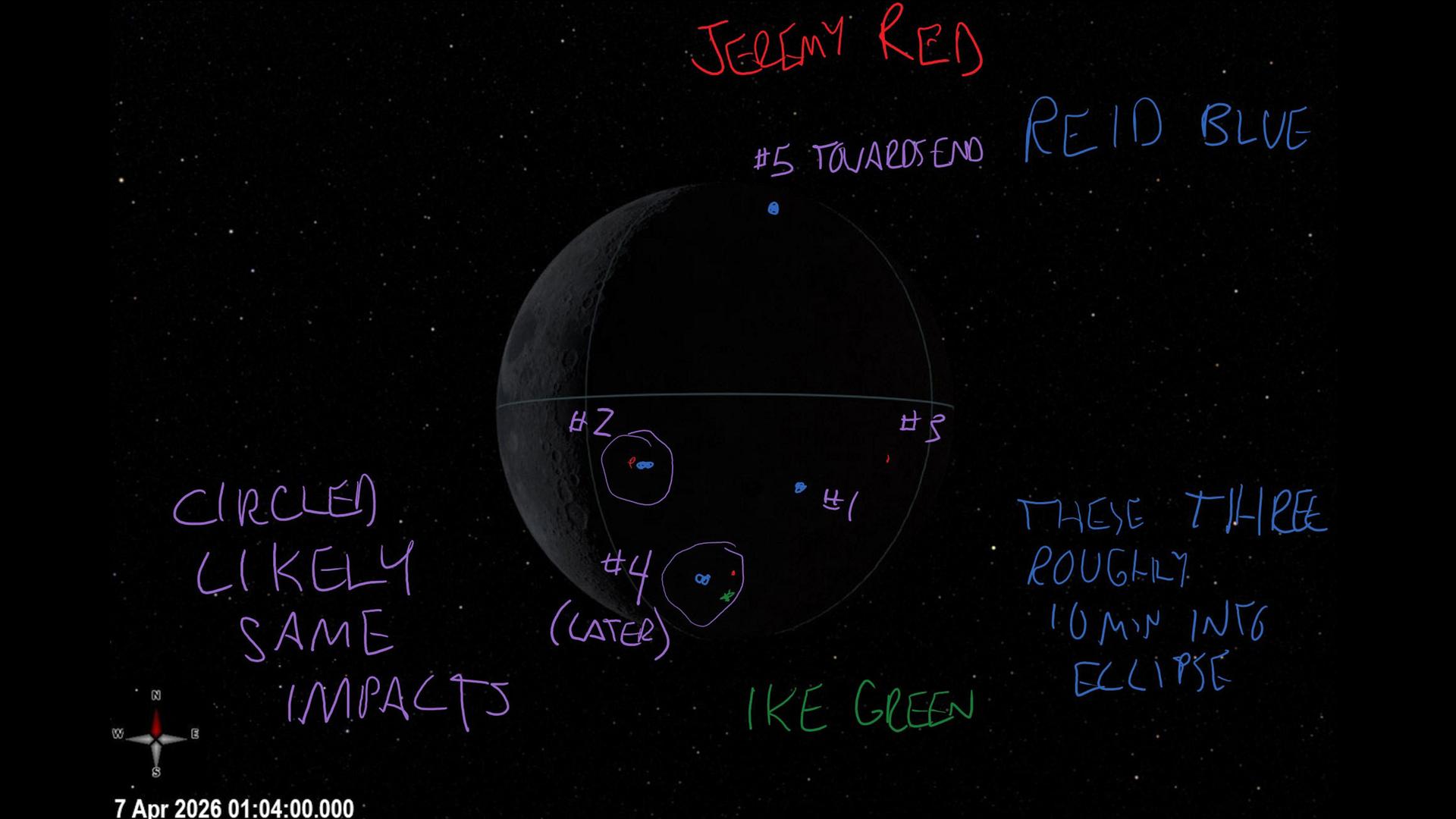
art002e016252 (April 7, 2026) –A screenshot from an Artemis II crew member’s tablet shows handwritten annotations made during the lunar flyby on April 6, 2026, atop a visualization of the dark Moon eclipsing the Sun. Three crew members, who signed their first names, noted impact flashes and their locations on the image. NASA astronauts Reid Wiseman and Victor “Ike” Glover wrote in blue and green, respectively, while CSA (Canadian Space Agency) astronaut Jeremy Hansen wrote in red. Credit: CSA/NASA
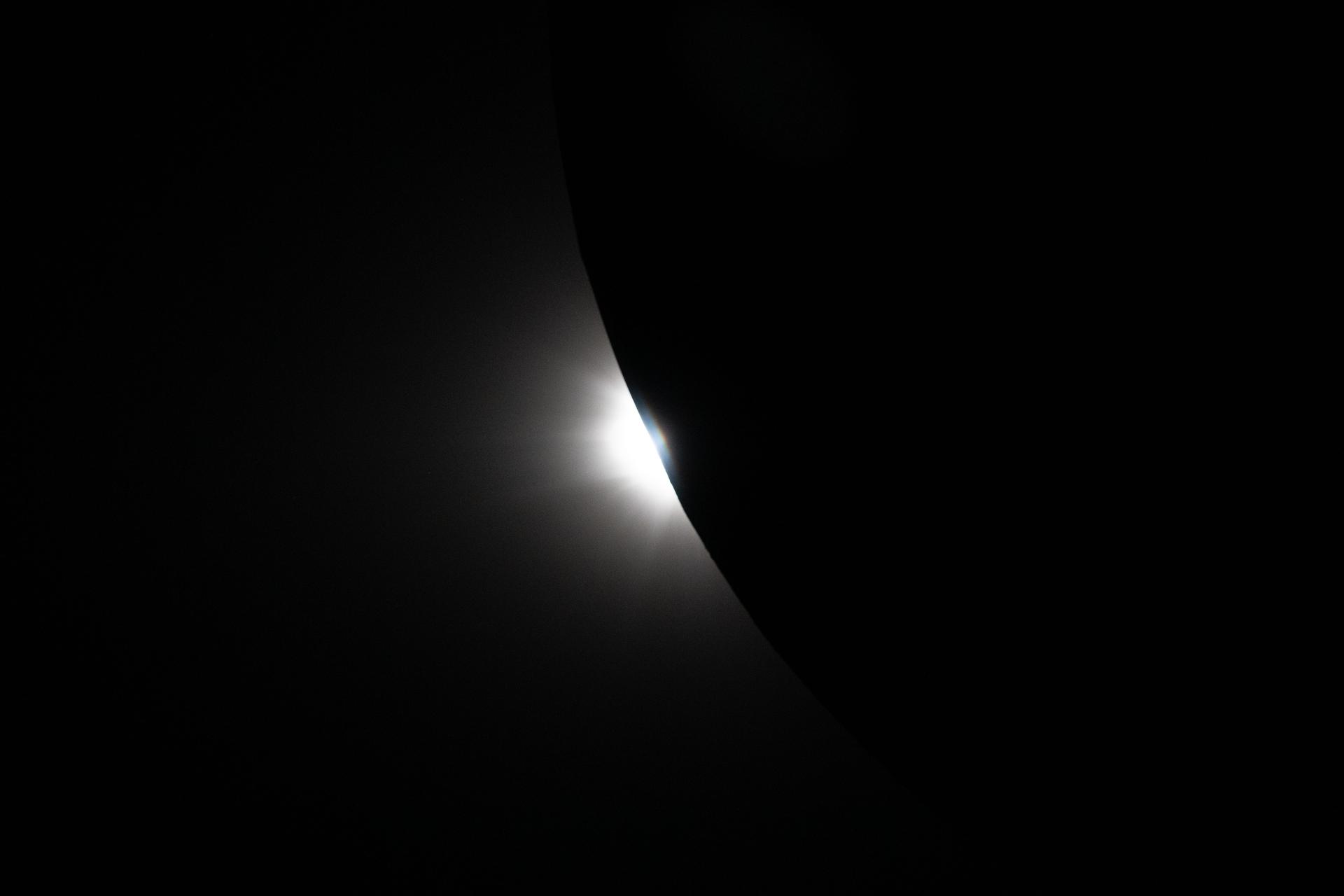
art002e009299 (April 6, 2026) – Captured from the Orion spacecraft near the end of the Artemis II lunar flyby on April 6, this image shows the Sun beginning to peek out from behind the Moon as the eclipse transitions out of totality. Only a portion of the Moon is visible in frame, its curved edge revealing a bright sliver of sunlight returning after nearly an hour of darkness. In final moments of the eclipse observed by the crew, the reemerging light creates a sharp contrast against the Moon’s silhouette and reveals lunar topography not usually visible along the lunar limb. This fleeting phase captures the dynamic alignment of the Sun, Moon, and spacecraft as Orion continues its journey back from the far side of the Moon.
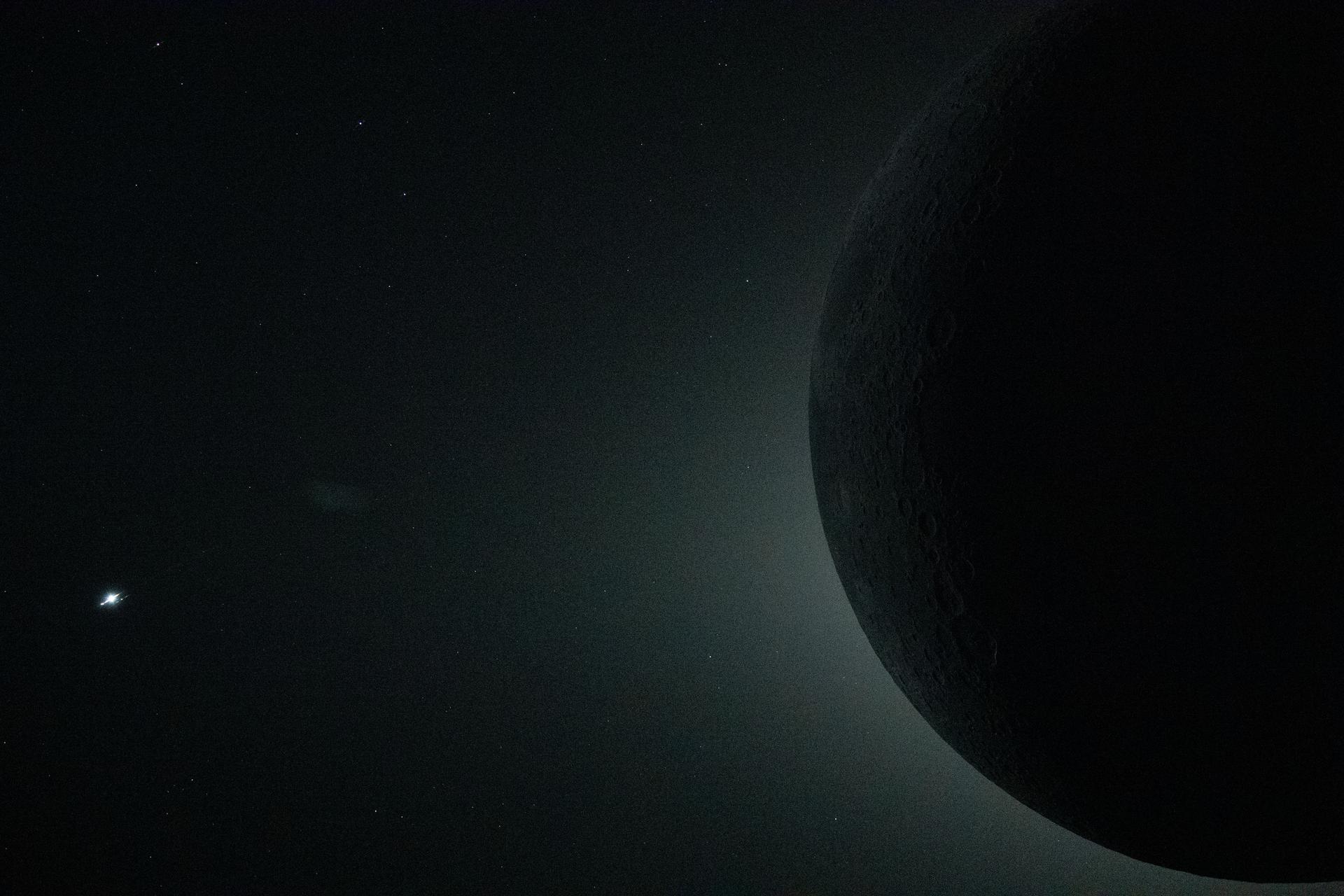
art002e009298 (April 6, 2026) – A close-up view from the Orion spacecraft during the Artemis II crew’s lunar flyby on April 6, 2026, captures a total solar eclipse, with only part of the Moon visible in the frame as it fully obscures the Sun. We see a glowing halo around the dark lunar disk. The science community is investigating whether this effect is due to the corona, zodiacal light, or a combination of the two. From this deep-space vantage point, the Moon appeared large enough to sustain nearly 54 minutes of totality, far longer than total solar eclipses typically seen from Earth. The bright silver glint on the left edge of the image is the planet Venus. The round, dark gray feature visible along the Moon’s horizon between the 9 and 10 o’clock positions is Mare Crisium, a feature visible from Earth. We see faint lunar features because light reflected off of Earth provides a source of illumination.
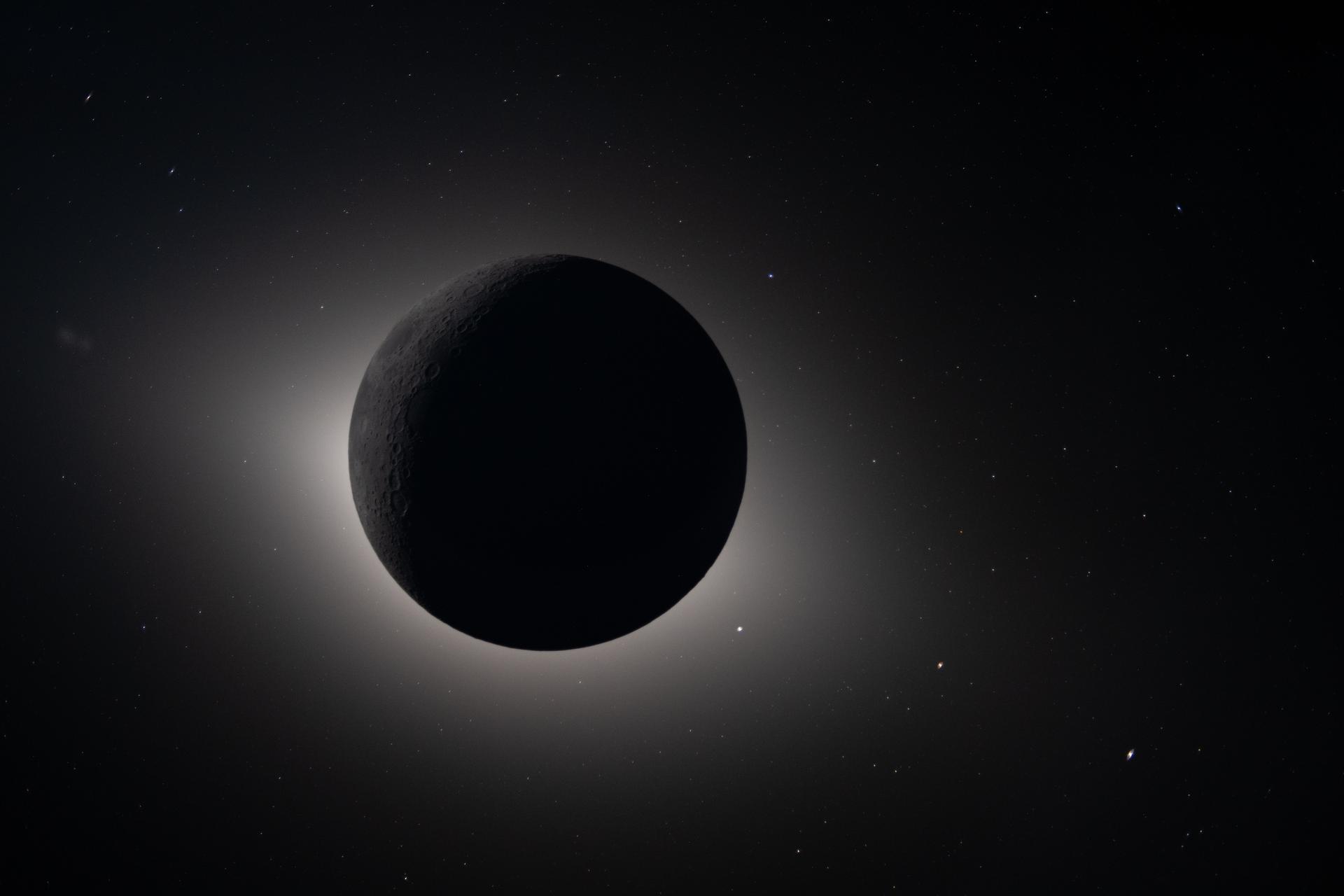
art002e009301 (April 6, 2026) – Captured by the Artemis II crew during their lunar flyby on April 6, 2026, this image shows the Moon fully eclipsing the Sun. From the crew’s perspective, the Moon appears large enough to completely block the Sun, creating nearly 54 minutes of totality and extending the view far beyond what is possible from Earth. We see a glowing halo around the dark lunar disk. The science community is investigating whether this effect is due to the corona, zodiacal light, or a combination of the two. Also visible are stars, typically too faint to see when imaging the Moon, but with the Moon in darkness stars are readily imaged. This unique vantage point provides both a striking visual and a valuable opportunity for astronauts to document their observations during humanity’s return to deep space. The faint glow of the nearside of the Moon is visible in this image, having been illuminated by light reflected off the Earth.
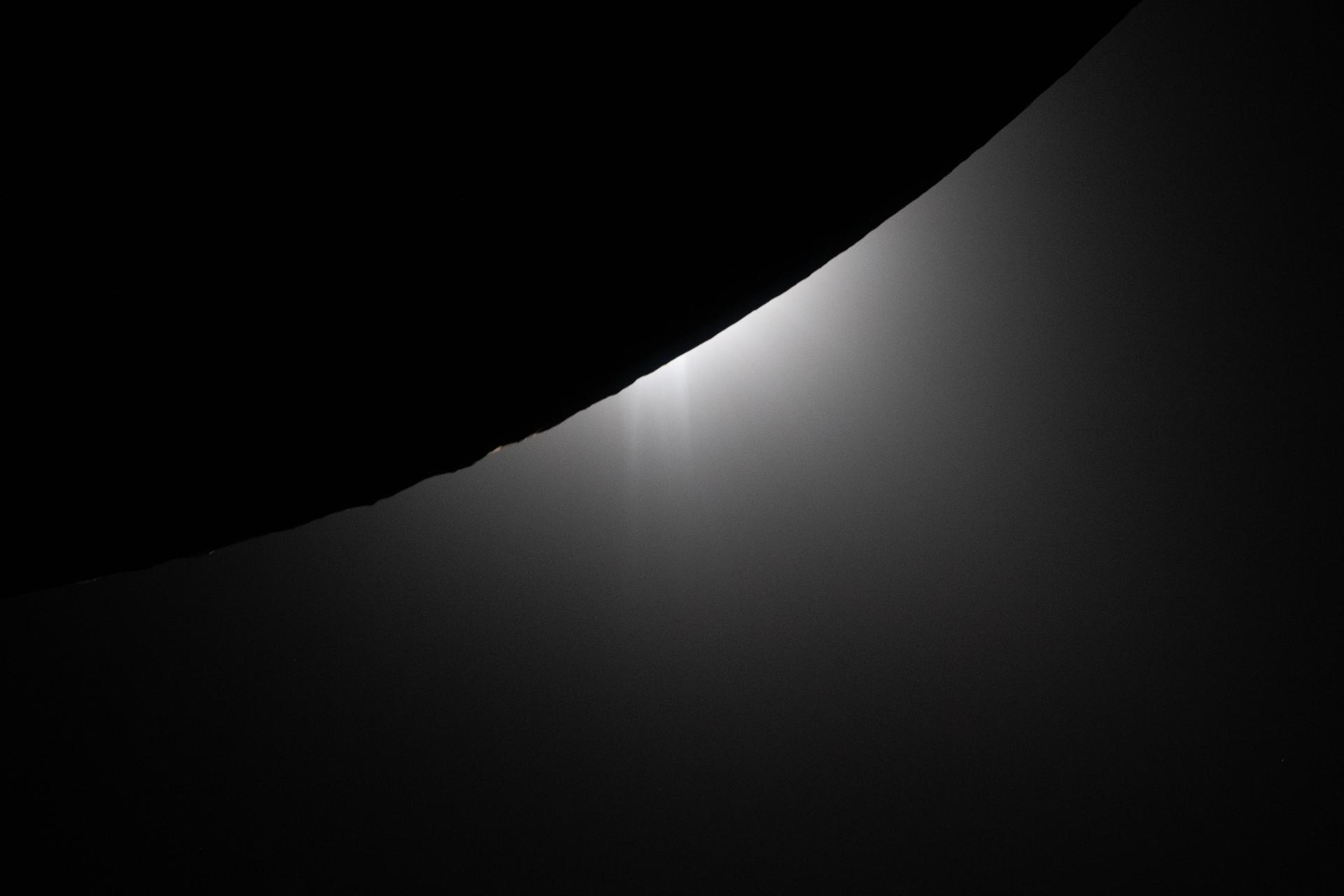
art002e010782 (April 6, 2026) - In this view captured by the Artemis II crew on the Orion spacecraft, a wedge of the Moon in nighttime is visible in the foreground, as the Sun is setting on the opposite side. This image captures the beginning of a total solar eclipse that astronauts were able to observe at the end of their lunar observation period during Orion’s closest approach to the Moon on April 6, 2026. Unlike minutes-long eclipses as viewed from Earth, the Artemis II crew witnessed the Sun hide behind the Moon for nearly an hour. Because the astronauts were so near the Moon, it appeared much larger than the Sun; because of this, it took longer for the Sun to make its transit across the Moon and peek out the other side. From Earth, in contrast, the Moon and Sun appear about the same size, so even small changes in their alignment quickly bring the Sun back into view, making totality much shorter. The bright rays of light, or streamers, that are running outward towards the bottom of the Moon disk are part of the Sun's corona. The corona is the outermost layer of the Sun's atmosphere and is only visible during a total solar eclipse. It is normally hidden by the bright light of the Sun's surface. In addition, the jagged edge of the Moon visible in this image reveals the topography of backlit mountains on the horizon.