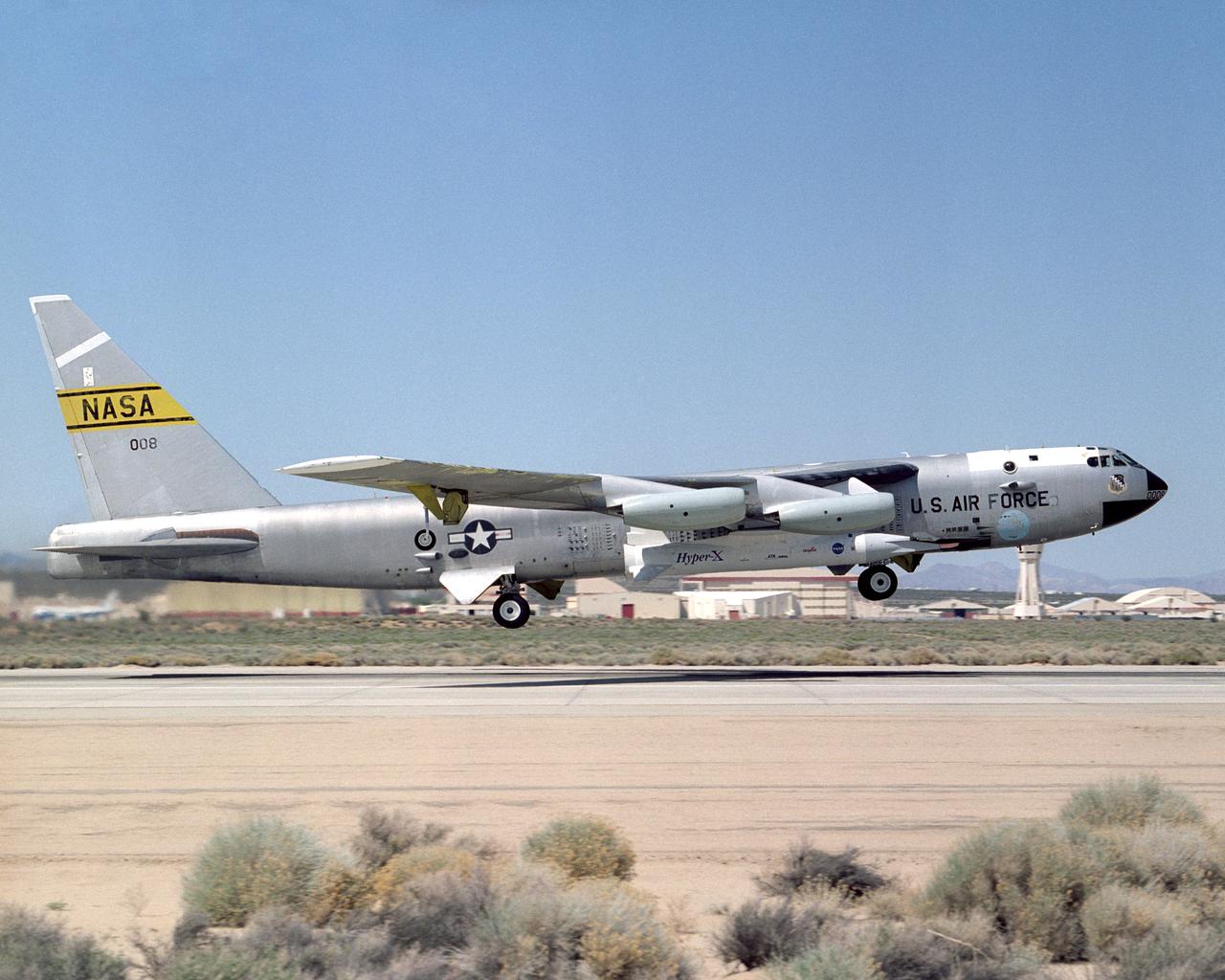
The second X-43A hypersonic research aircraft and its modified Pegasus booster rocket left the runway, carried aloft by NASA's B-52B launch aircraft from the NASA Dryden Flight Research Center at Edwards Air Force Base, Calif., on March 27, 2004. About an hour later the Pegasus booster was launched from the B-52 to accelerate the X-43A to its intended speed of Mach 7.
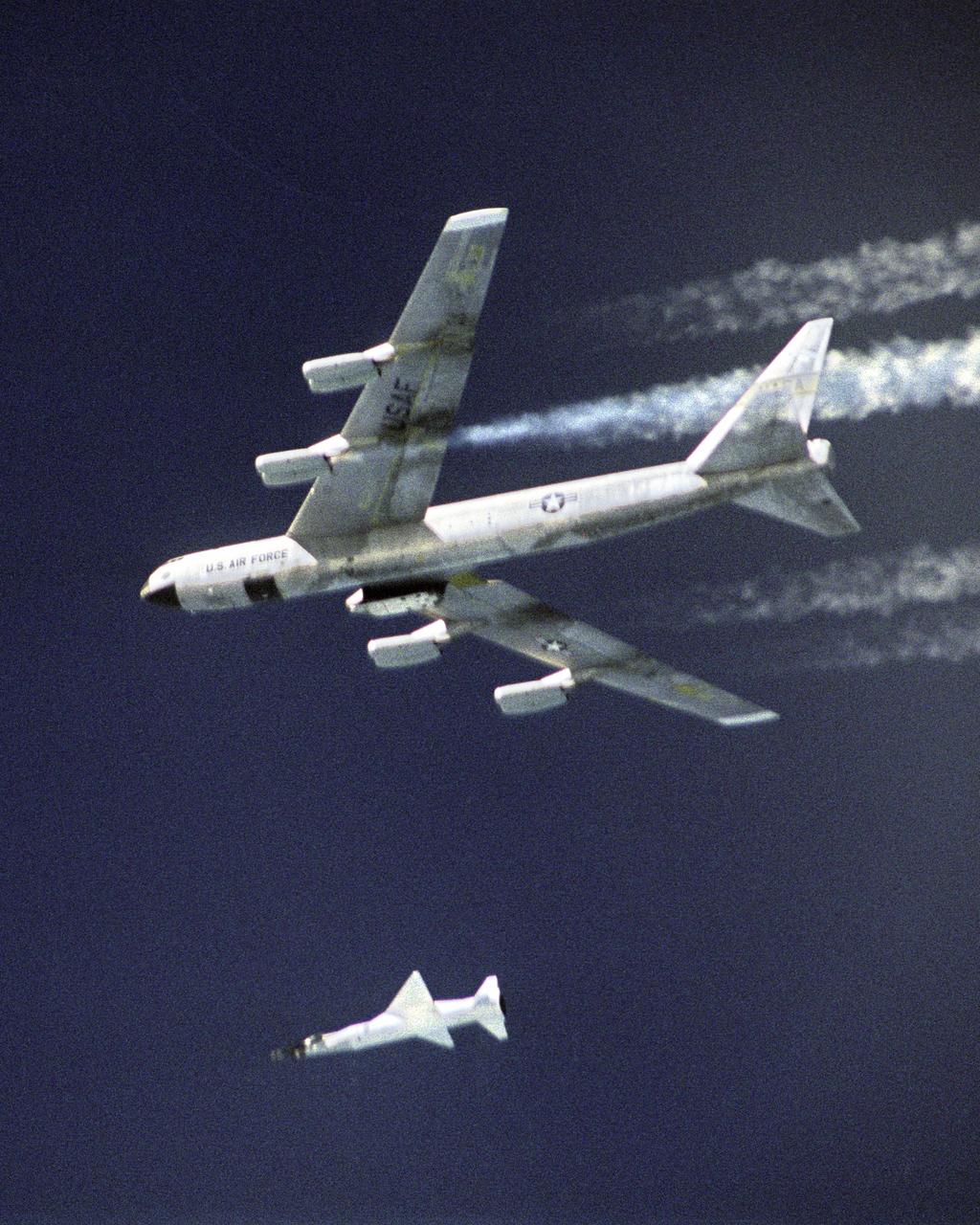
The second X-43A hypersonic research aircraft and its modified Pegasus booster rocket drop away from NASA's B-52B launch aircraft over the Pacific Ocean on March 27, 2004. The mission originated from the NASA Dryden Flight Research Center at Edwards Air Force Base, Calif. Moments later the Pegasus booster ignited to accelerate the X-43A to its intended speed of Mach 7.

The second X-43A hypersonic research aircraft and its modified Pegasus booster rocket left the runway, carried aloft by NASA's B-52B launch aircraft from the NASA Dryden Flight Research Center at Edwards Air Force Base, Calif., on March 27, 2004. About an hour later the Pegasus booster was launched from the B-52 to accelerate the X-43A to its intended speed of Mach 7.
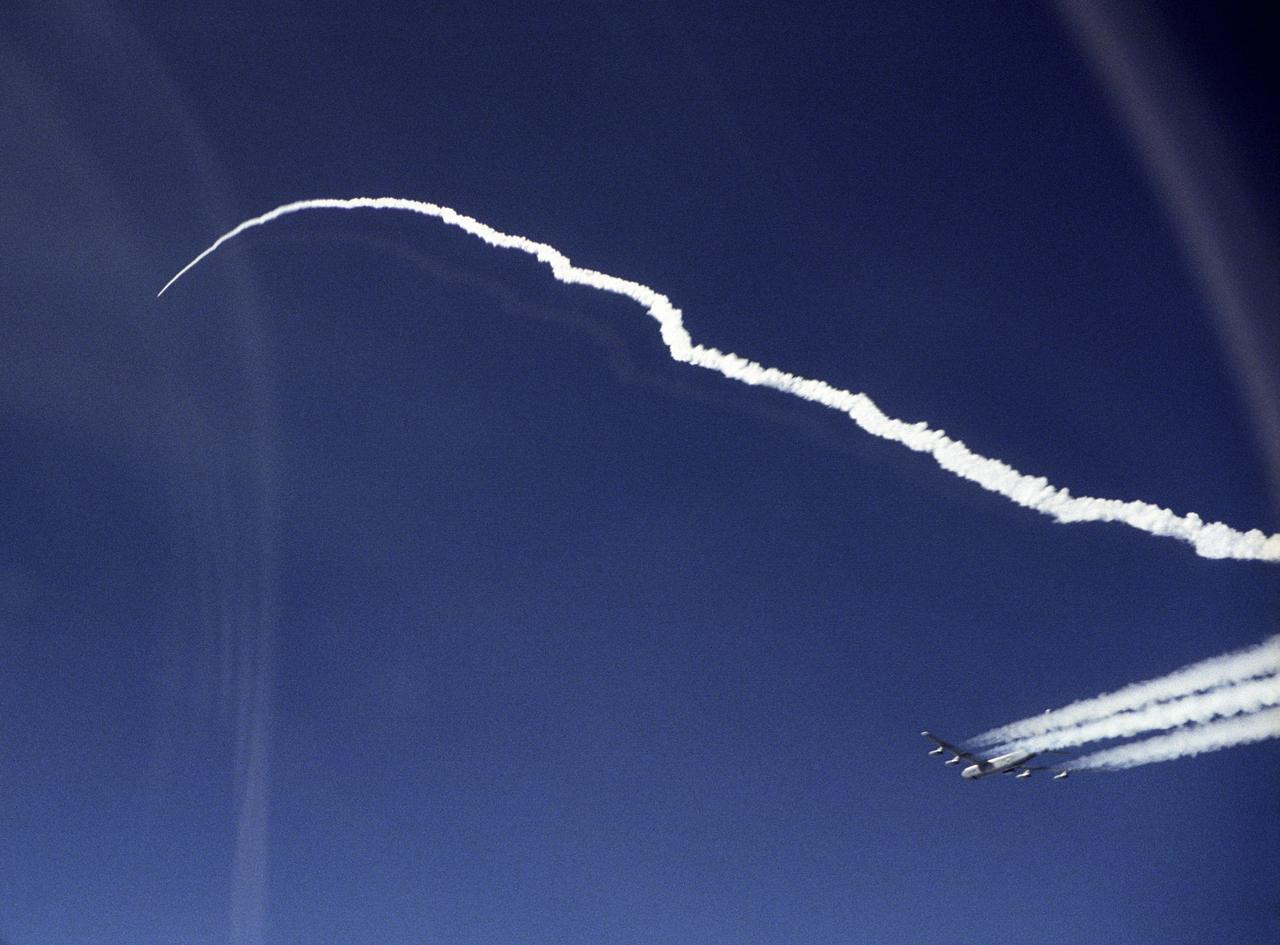
The second X-43A hypersonic research aircraft and its modified Pegasus booster rocket accelerate after launch from NASA's B-52B launch aircraft over the Pacific Ocean on March 27, 2004. The mission originated from the NASA Dryden Flight Research Center at Edwards Air Force Base, Calif. Minutes later the X-43A separated from the Pegasus booster and accelerated to its intended speed of Mach 7.
The second X-43A hypersonic research aircraft and its modified Pegasus booster rocket left the runway, carried aloft by NASA's B-52B launch aircraft from the NASA Dryden Flight Research Center at Edwards Air Force Base, Calif., on March 27, 2004. About an hour later the Pegasus booster was launched from the B-52 to accelerate the X-43A to its intended speed of Mach 7.
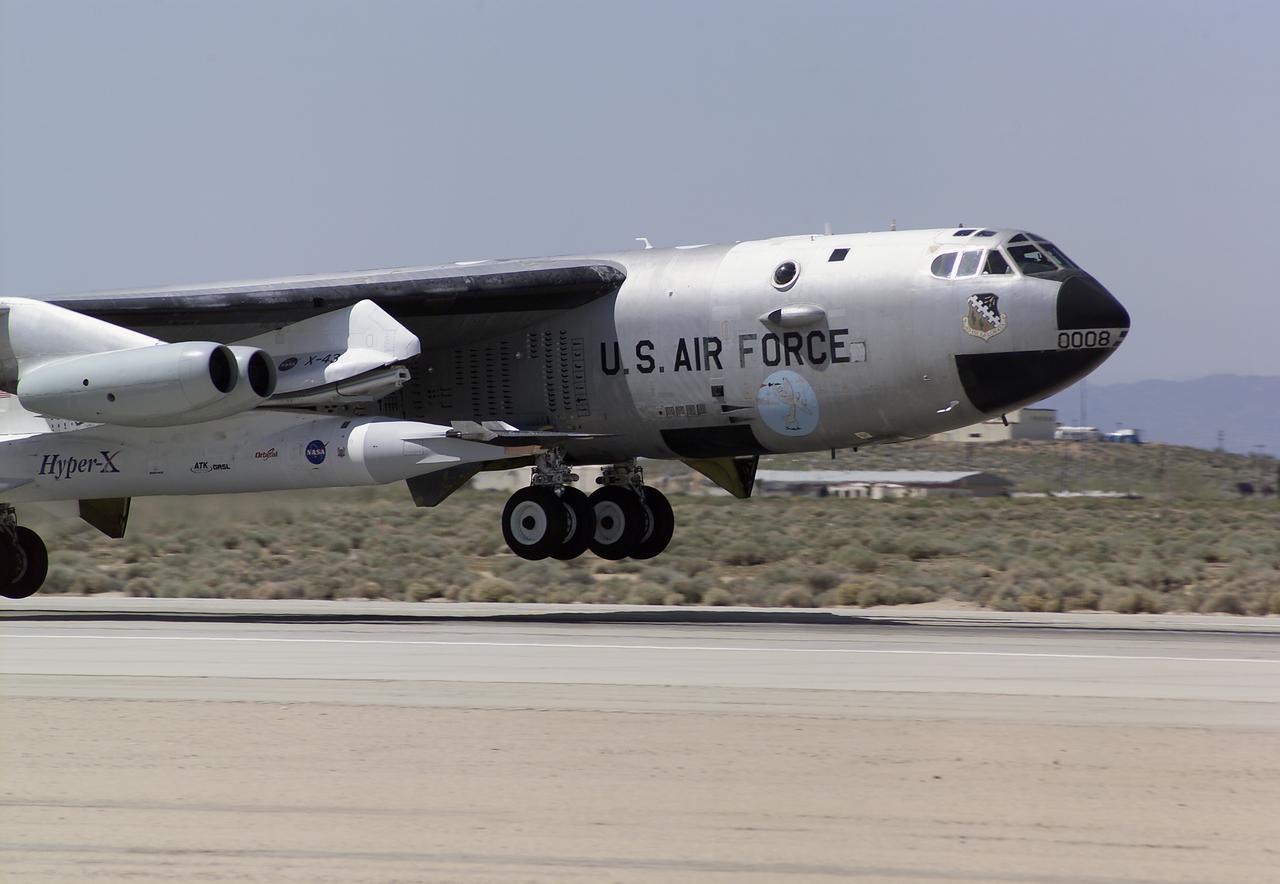
The second X-43A hypersonic research aircraft and its modified Pegasus booster rocket left the runway, carried aloft by NASA's B-52B launch aircraft from the NASA Dryden Flight Research Center at Edwards Air Force Base, Calif., on March 27, 2004. About an hour later the Pegasus booster was launched from the B-52 to accelerate the X-43A to its intended speed of Mach 7.
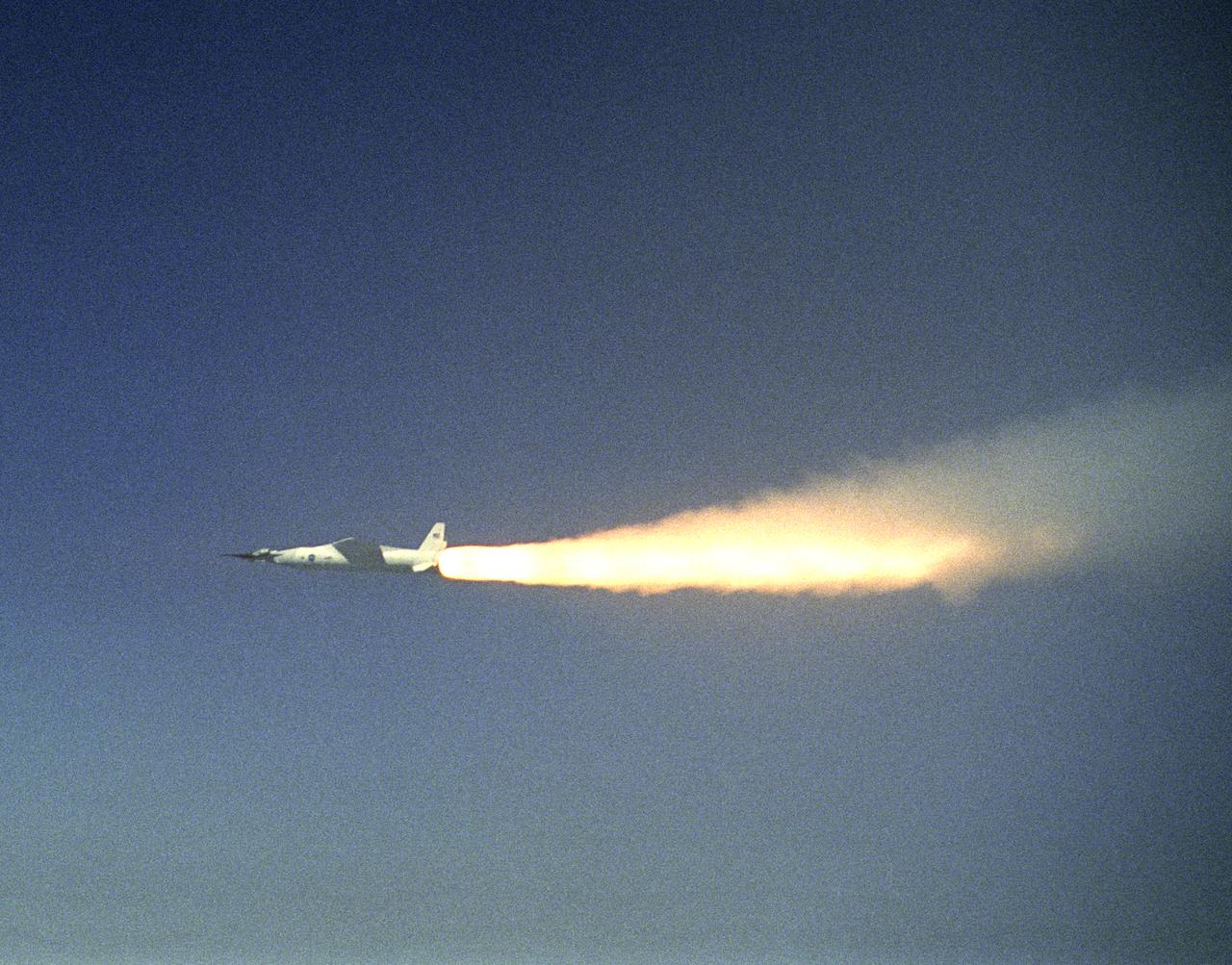
The second X-43A hypersonic research aircraft and its modified Pegasus booster rocket accelerate after launch from NASA's B-52B launch aircraft over the Pacific Ocean on March 27, 2004. The mission originated from the NASA Dryden Flight Research Center at Edwards Air Force Base, Calif. Minutes later the X-43A separated from the Pegasus booster and accelerated to its intended speed of Mach 7. In a combined research effort involving Dryden, Langley, and several industry partners, NASA demonstrated the value of its X-43A hypersonic research aircraft, as it became the first air-breathing, unpiloted, scramjet-powered plane to fly freely by itself. The March 27 flight, originating from NASA's Dryden Flight Research Center, began with the Agency's B-52B launch aircraft carrying the X-43A out to the test range over the Pacific Ocean off the California coast. The X-43A was boosted up to its test altitude of about 95,000 feet, where it separated from its modified Pegasus booster and flew freely under its own power. Two very significant aviation milestones occurred during this test flight: first, controlled accelerating flight at Mach 7 under scramjet power, and second, the successful stage separation at high dynamic pressure of two non-axisymmetric vehicles. To top it all off, the flight resulted in the setting of a new aeronautical speed record. The X-43A reached a speed of over Mach 7, or about 5,000 miles per hour faster than any known aircraft powered by an air-breathing engine has ever flown.
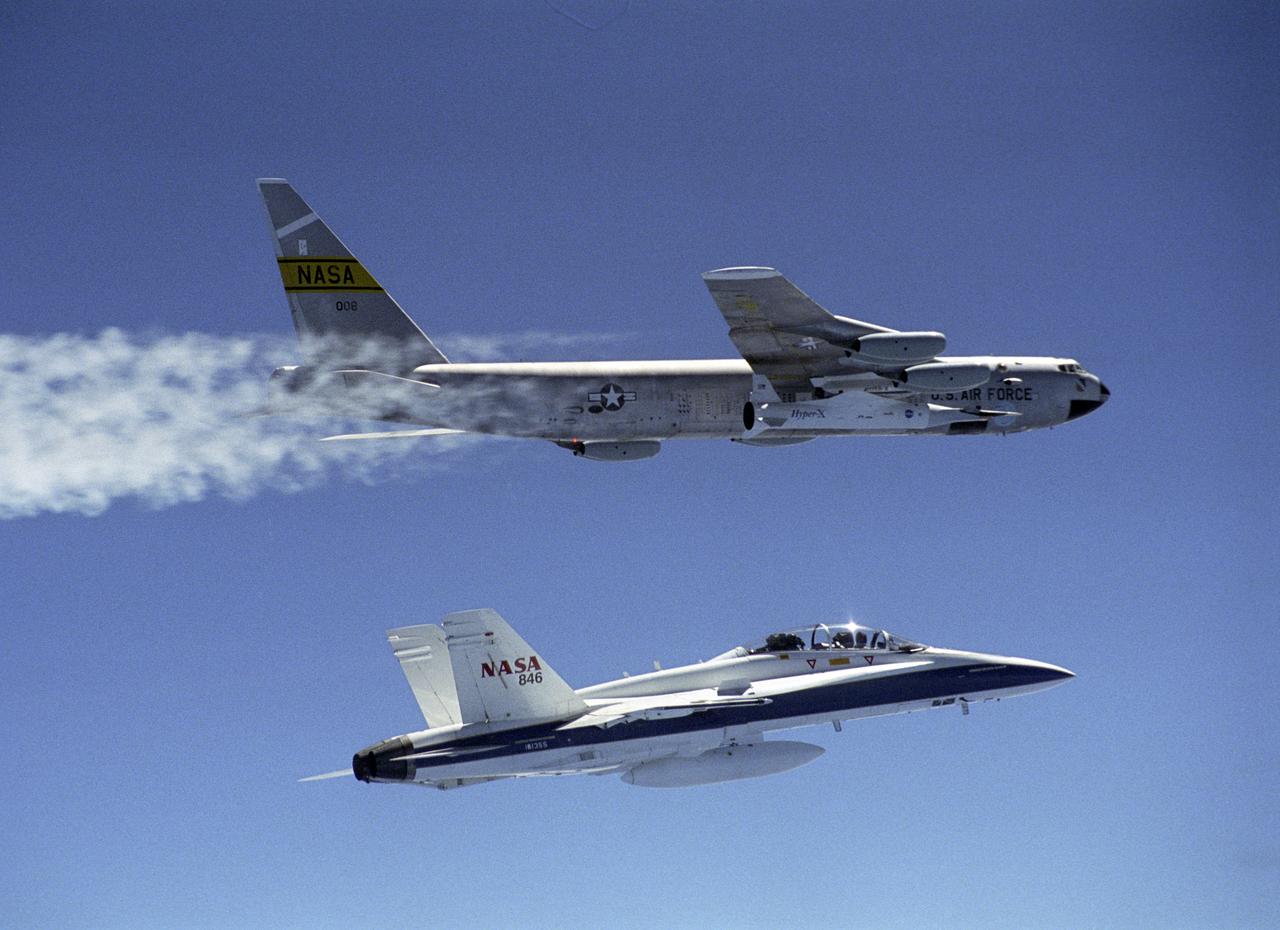
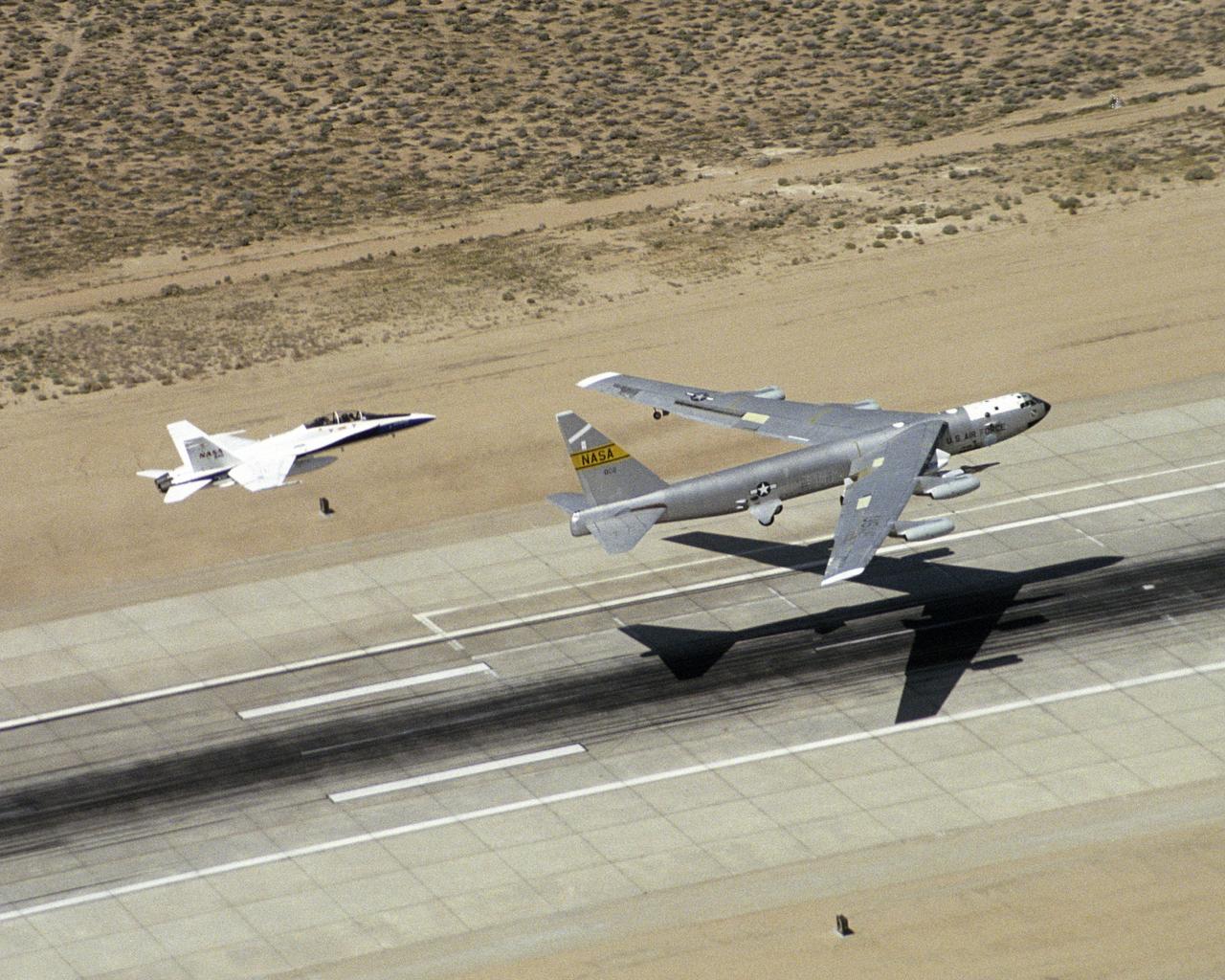
The second X-43A hypersonic research aircraft, attached to a modified Pegasus booster rocket and followed by a chase F-18, was taken to launch altitude by NASA's B-52B launch aircraft from the NASA Dryden Flight Research Center at Edwards Air Force Base, Calif., on March 27, 2004. About an hour later the Pegasus booster was released from the B-52 to accelerate the X-43A to its intended speed of Mach 7. In a combined research effort involving Dryden, Langley, and several industry partners, NASA demonstrated the value of its X-43A hypersonic research aircraft, as it became the first air-breathing, unpiloted, scramjet-powered plane to fly freely by itself. The March 27 flight, originating from NASA's Dryden Flight Research Center, began with the Agency's B-52B launch aircraft carrying the X-43A out to the test range over the Pacific Ocean off the California coast. The X-43A was boosted up to its test altitude of about 95,000 feet, where it separated from its modified Pegasus booster and flew freely under its own power. Two very significant aviation milestones occurred during this test flight: first, controlled accelerating flight at Mach 7 under scramjet power, and second, the successful stage separation at high dynamic pressure of two non-axisymmetric vehicles. To top it all off, the flight resulted in the setting of a new aeronautical speed record. The X-43A reached a speed of over Mach 7, or about 5,000 miles per hour faster than any known aircraft powered by an air-breathing engine has ever flown.
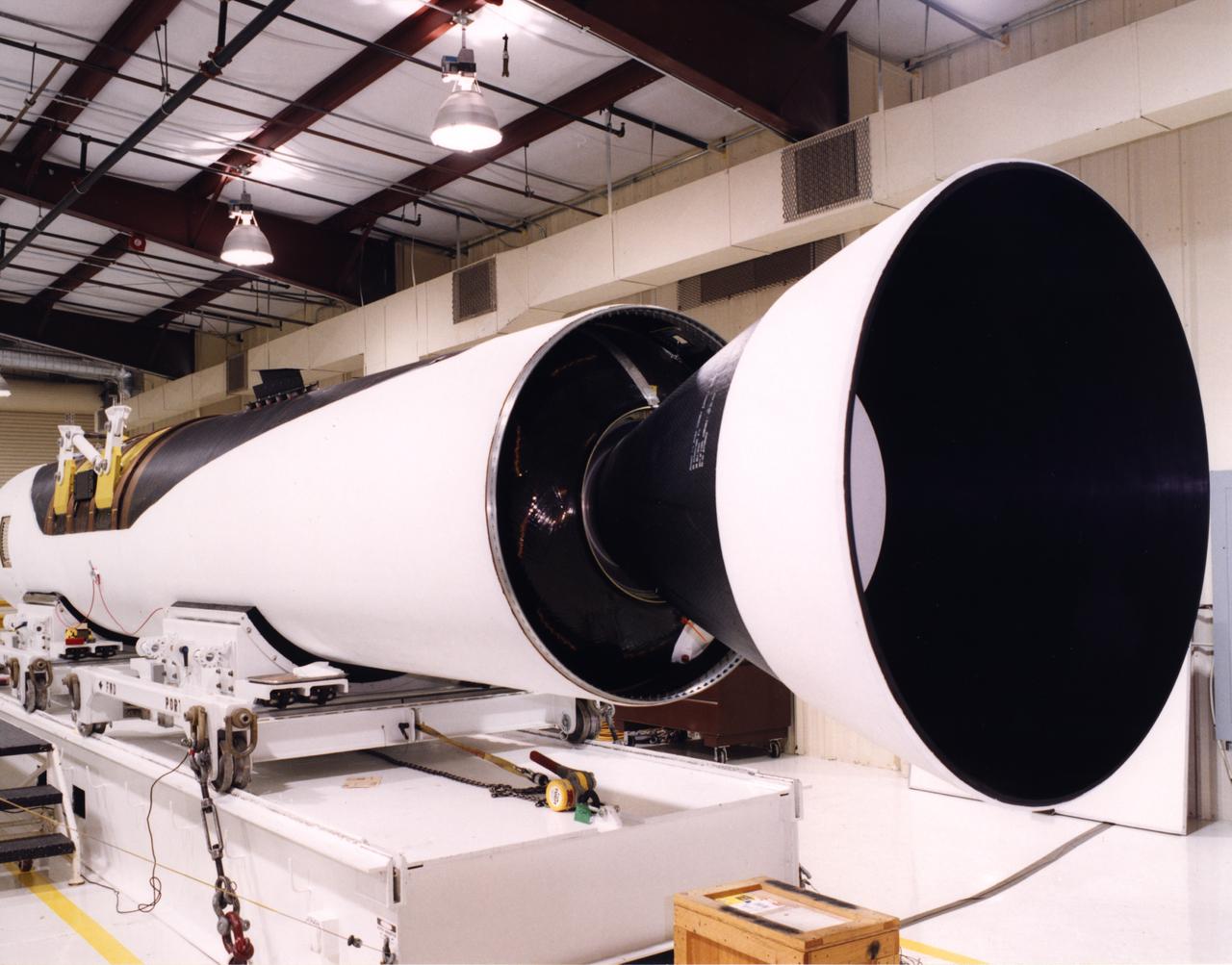
A close-up view of the front end of a Pegasus rocket booster being prepared by technicians at the Dryden Flight Research Center for flight tests with the X-43A "Hypersonic Experimental Vehicle," or "Hyper-X." The X-43A, which will be attached to the Pegasus booster and drop launched from NASA's B-52 mothership, was developed to research dual-mode ramjet/scramjet propulsion system at speeds from Mach 7 up to Mach 10 (7 to 10 times the speed of sound, which varies with temperature and altitude).
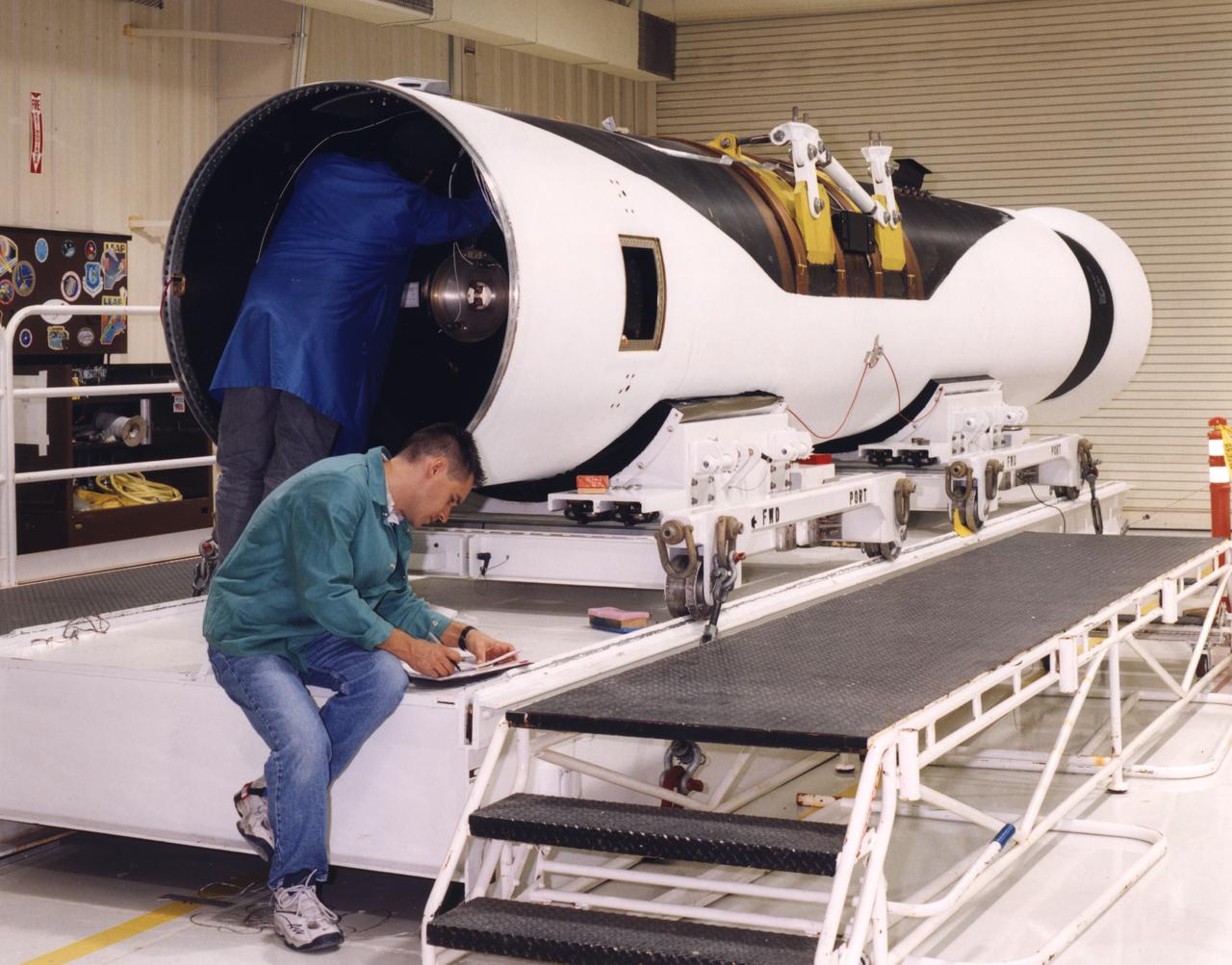
Technicians prepare a Pegasus rocket booster for flight tests with the X-43A "Hypersonic Experimental Vehicle," or "Hyper-X." The X-43A, which will be attached to the Pegasus booster and drop launched from NASA's B-52 mothership, was developed to research dual-mode ramjet/scramjet propulsion system at speeds from Mach 7 up to Mach 10 (7 to 10 times the speed of sound, which varies with temperature and altitude).
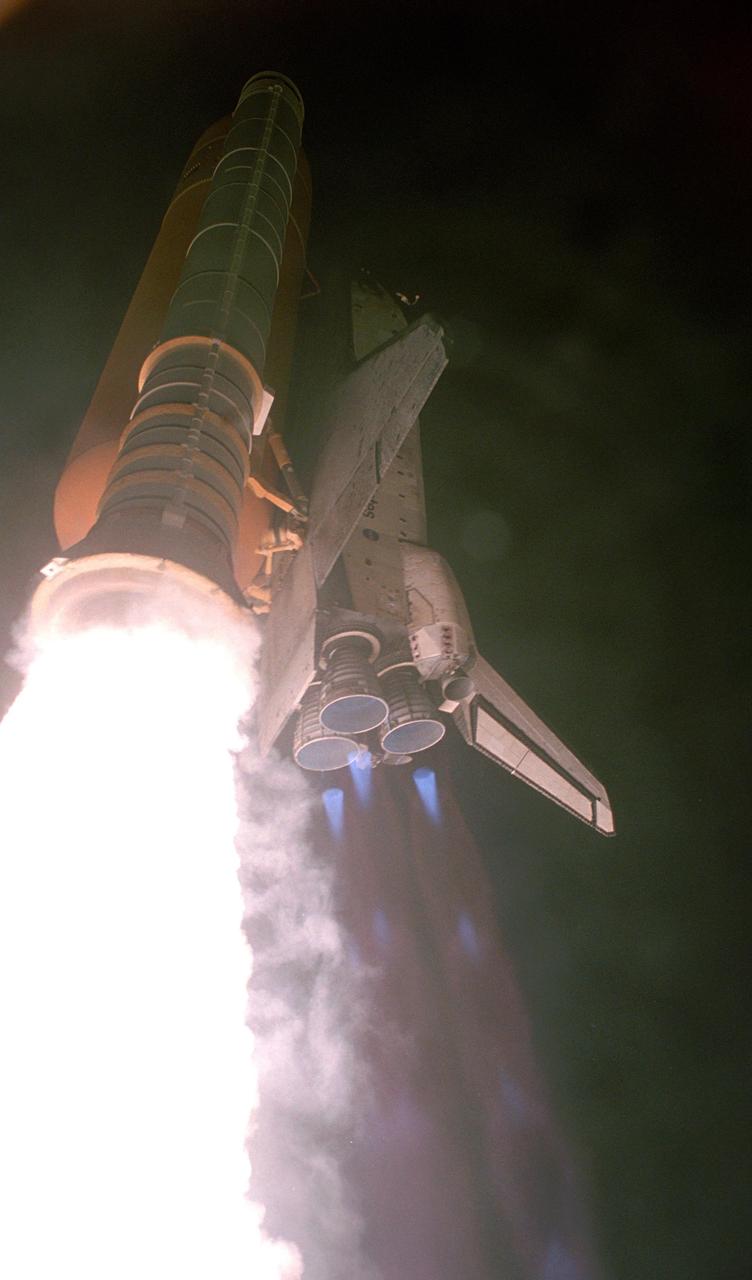
KENNEDY SPACE CENTER, FLA. -- Mach diamonds appear beneath Space Shuttle Discovery's main engines as the vehicle roars into the night sky after liftoff on mission STS-116. Mach diamonds are a formation of shock waves in the exhaust plume of an aerospace propulsion system. Liftoff occurred on time at 8:47 p.m. EST. This was the second launch attempt for mission STS-116. The first launch attempt on Dec. 7 was postponed due a low cloud ceiling over Kennedy Space Center. This is Discovery's 33rd mission and the first night launch since 2002. The 20th shuttle mission to the International Space Station, STS-116 carries another truss segment, P5. It will serve as a spacer, mated to the P4 truss that was attached in September. After installing the P5, the crew will reconfigure and redistribute the power generated by two pairs of U.S. solar arrays. Landing is expected Dec. 21 at KSC. Photo credit: NASA/Tony Gray & Don Kight
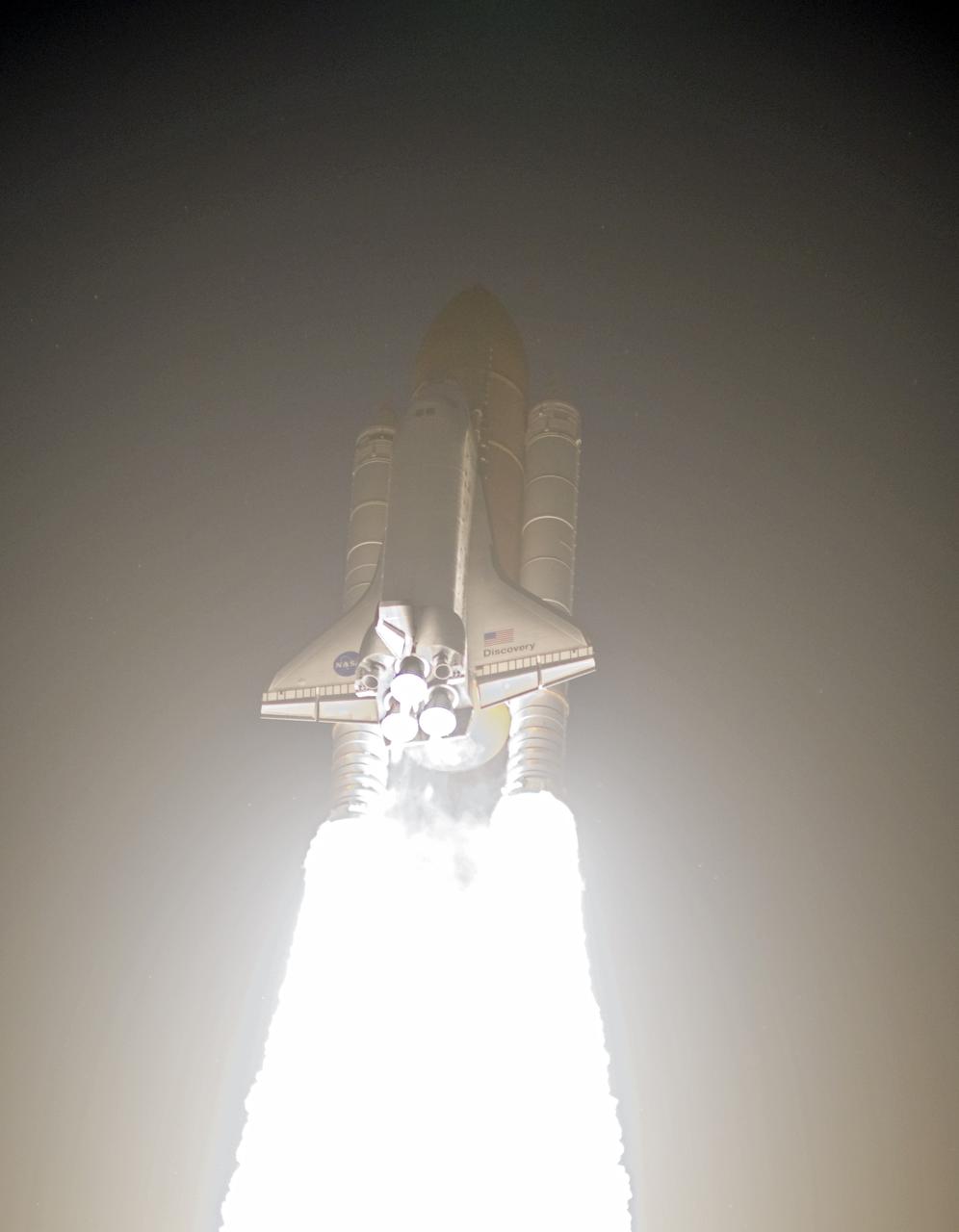
CAPE CANAVERAL, Fla. – As space shuttle Discovery roars toward space after launch from Launch Pad 39A at NASA's Kennedy Space Center in Florida, mach diamonds can be seen beneath the engine nozzles. Blue cones of light, the mach diamonds are a formation of shock waves in the exhaust plume of an aerospace propulsion system. Launch was on time at 7:43 p.m. EDT. The STS-119 mission is the 28th to the International Space Station and the 125th space shuttle flight. Discovery will deliver the final pair of power-generating solar array wings and the S6 truss segment. Installation of S6 will signal the station's readiness to house a six-member crew for conducting increased science. Photo credit: NASA/Rusty Backer, George Roberts

The first of three X-43A hypersonic research aircraft and its modified Pegasus® booster rocket recently underwent combined systems testing while mounted to NASA's NB-52B carrier aircraft at the Dryden Flight Research Center, Edwards, Calif. The combined systems test was one of the last major milestones in the Hyper-X research program before the first X-43A flight. The X-43A flights will be the first actual flight tests of an aircraft powered by a revolutionary supersonic-combustion ramjet ("scramjet") engine capable of operating at hypersonic speeds (above Mach 5, or five times the speed of sound). The 12-foot, unpiloted research vehicle was developed and built by MicroCraft Inc., Tullahoma, Tenn., under NASA contract. The booster was built by Orbital Sciences Corp., Dulles, Va.,After being air-launched from NASA's venerable NB-52 mothership, the booster will accelerate the X-43A to test speed and altitude. The X-43A will then separate from the rocket and fly a pre-programmed trajectory, conducting aerodynamic and propulsion experiments until it descends into the Pacific Ocean. Three research flights are planned, two at Mach 7 and one at Mach 10.
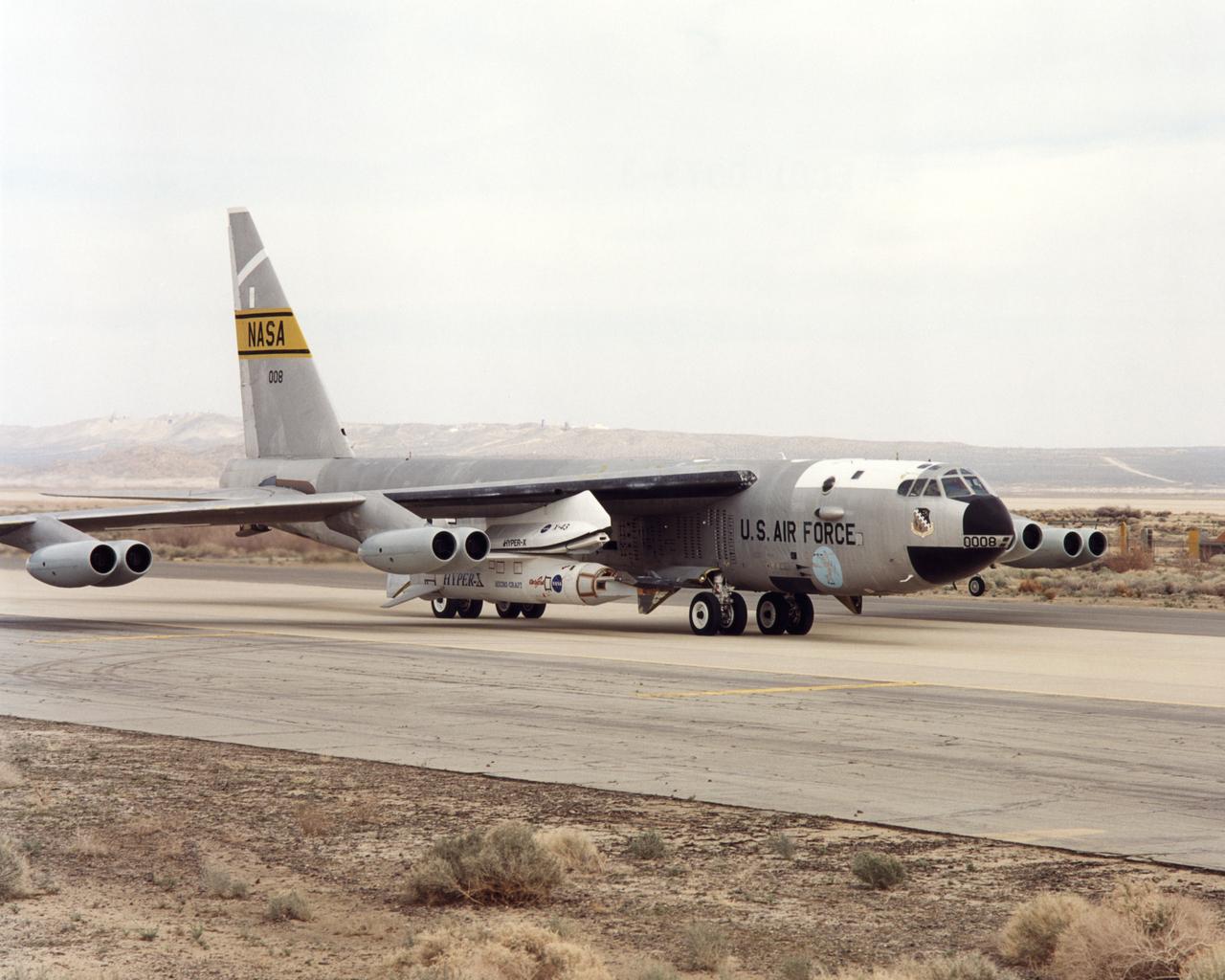
NASA's NB-52B carrier aircraft rolls down a taxiway at Edwards Air Force Base with the X-43A hypersonic research aircraft and its modified Pegasus® booster rocket slung from a pylon under its right wing. Part of a combined systems test conducted by NASA's Dryden Flight Research Center at Edwards, the taxi test was one of the last major milestones in the Hyper-X research program before the first X-43A flight. The X-43A flights will be the first actual flight tests of an aircraft powered by a revolutionary supersonic-combustion ramjet ("scramjet") engine capable of operating at hypersonic speeds (above Mach 5, or five times the speed of sound). The 12-foot, unpiloted research vehicle was developed and built by MicroCraft Inc., Tullahoma, Tenn., under NASA contract. The booster was built by Orbital Sciences Corp., Dulles, Va.,After being air-launched from NASA's venerable NB-52 mothership, the booster will accelerate the X-43A to test speed and altitude. The X-43A will then separate from the rocket and fly a pre-programmed trajectory, conducting aerodynamic and propulsion experiments until it descends into the Pacific Ocean. Three research flights are planned, two at Mach 7 and one at Mach 10, with the first tentatively scheduled for late spring to early summer, 2001.
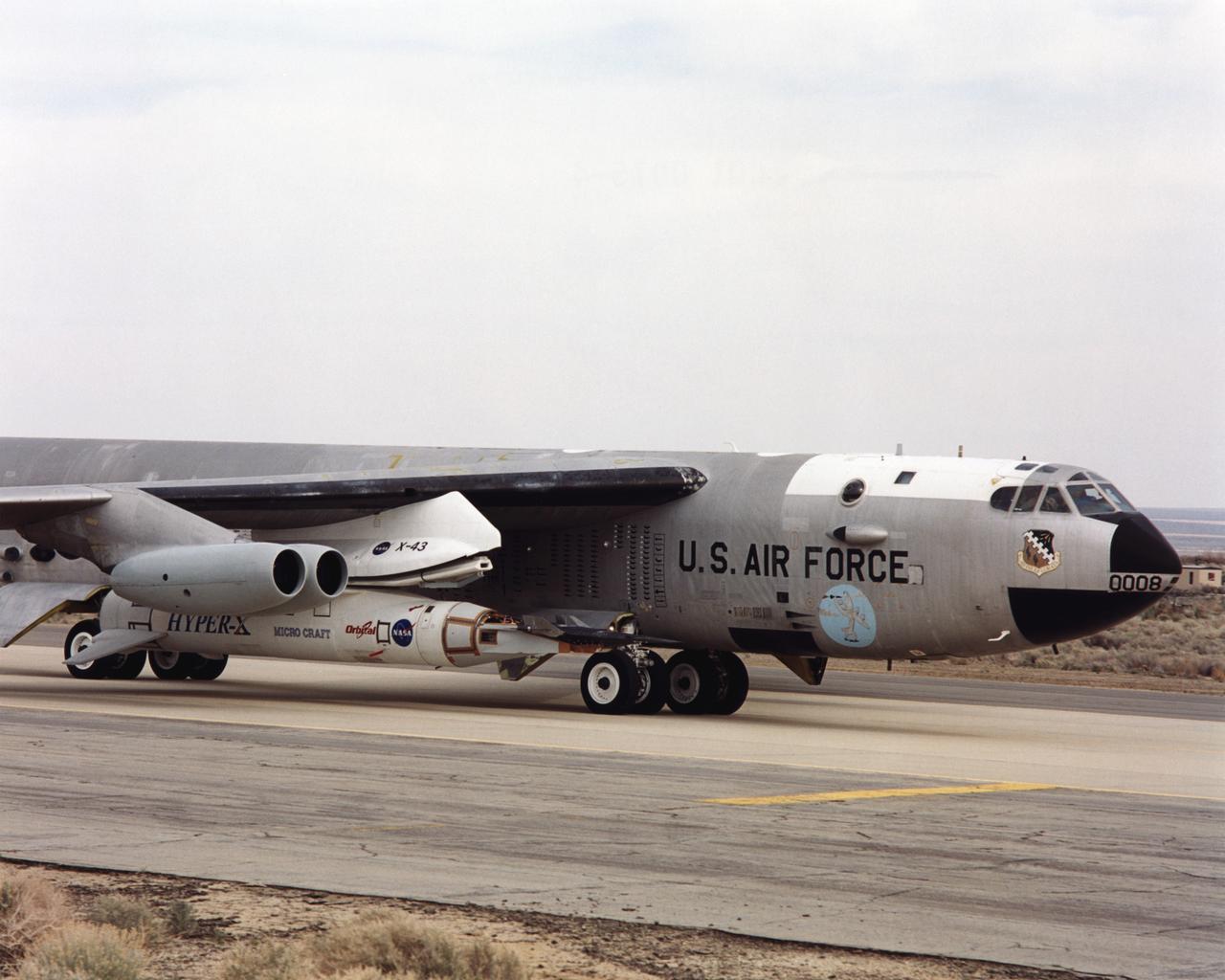
As part of a combined systems test conducted by NASA Dryden Flight Research Center, NASA's NB-52B carrier aircraft rolls down a taxiway at Edwards Air Force Base with the X-43A hypersonic research aircraft and its modified Pegasus® booster rocket attached to a pylon under its right wing. The taxi test was one of the last major milestones in the Hyper-X research program before the first X-43A flight. The X-43A flights will be the first actual flight tests of an aircraft powered by a revolutionary supersonic-combustion ramjet ("scramjet") engine capable of operating at hypersonic speeds (above Mach 5, or five times the speed of sound). The 12-foot, unpiloted research vehicle was developed and built by MicroCraft Inc., Tullahoma, Tenn., under NASA contract. The booster was built by Orbital Sciences Corp., Dulles, Va. After being air-launched from NASA's venerable NB-52 mothership, the booster will accelerate the X-43A to test speed and altitude. The X-43A will then separate from the rocket and fly a pre-programmed trajectory, conducting aerodynamic and propulsion experiments until it descends into the Pacific Ocean. Three research flights are planned, two at Mach 7 and one at Mach 10.
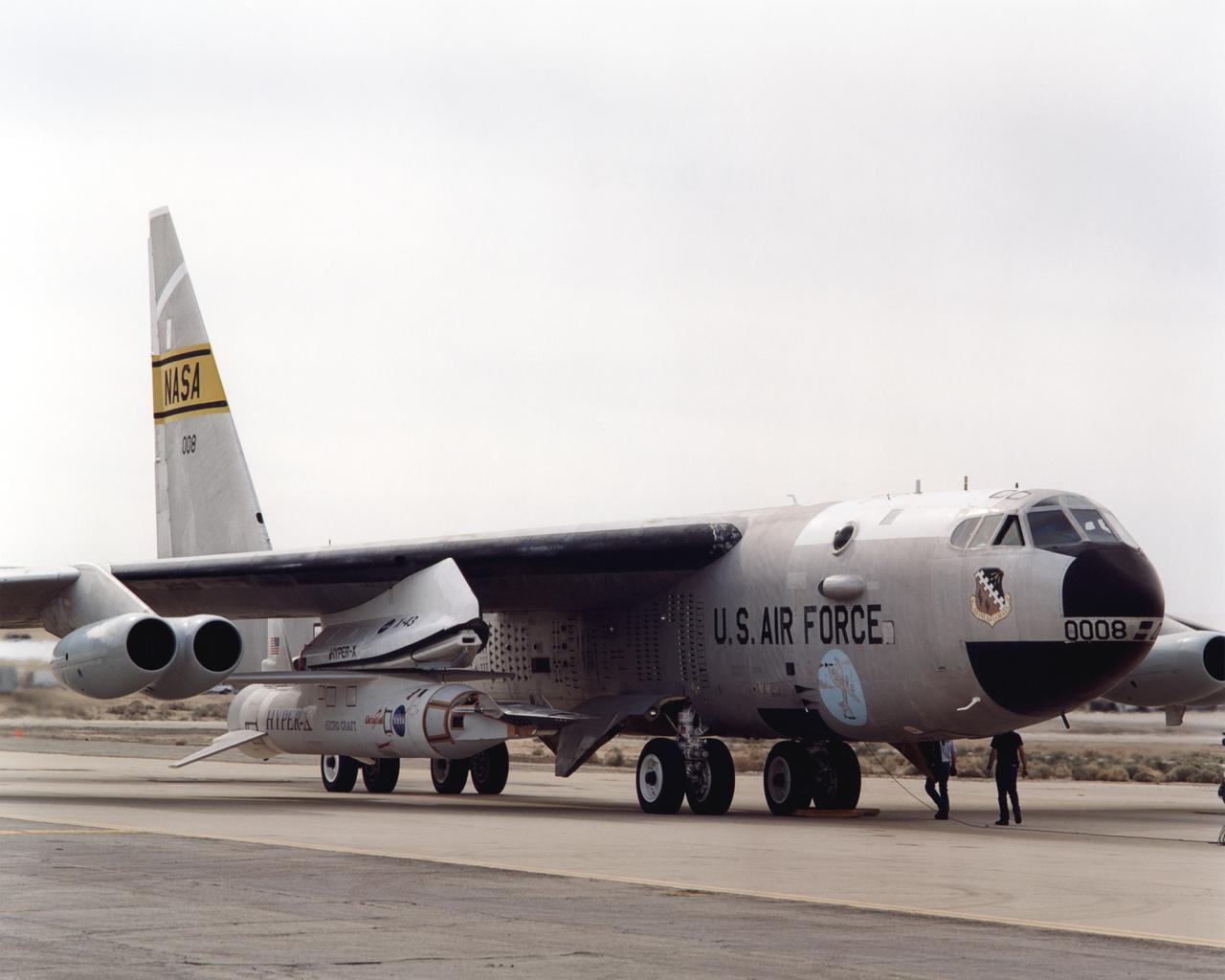
The X-43A hypersonic research aircraft and its modified Pegasus® booster rocket are nestled under the wing of NASA's NB-52B carrier aircraft during pre-flight systems testing at the Dryden Flight Research Center, Edwards, Calif. The combined systems test was one of the last major milestones in the Hyper-X research program before the first X-43A flight. The X-43A flights will be the first actual flight tests of an aircraft powered by a revolutionary supersonic-combustion ramjet ("scramjet") engine capable of operating at hypersonic speeds (above Mach 5, or five times the speed of sound). The 12-foot, unpiloted research vehicle was developed and built by MicroCraft Inc., Tullahoma, Tenn., under NASA contract. The booster was built by Orbital Sciences Corp., Dulles, Va. After being air-launched from NASA's venerable NB-52 mothership, the booster will accelerate the X-43A to test speed and altitude. The X-43A will then separate from the rocket and fly a pre-programmed trajectory, conducting aerodynamic and propulsion experiments until it descends into the Pacific Ocean. Three research flights are planned, two at Mach 7 and one at Mach 10.
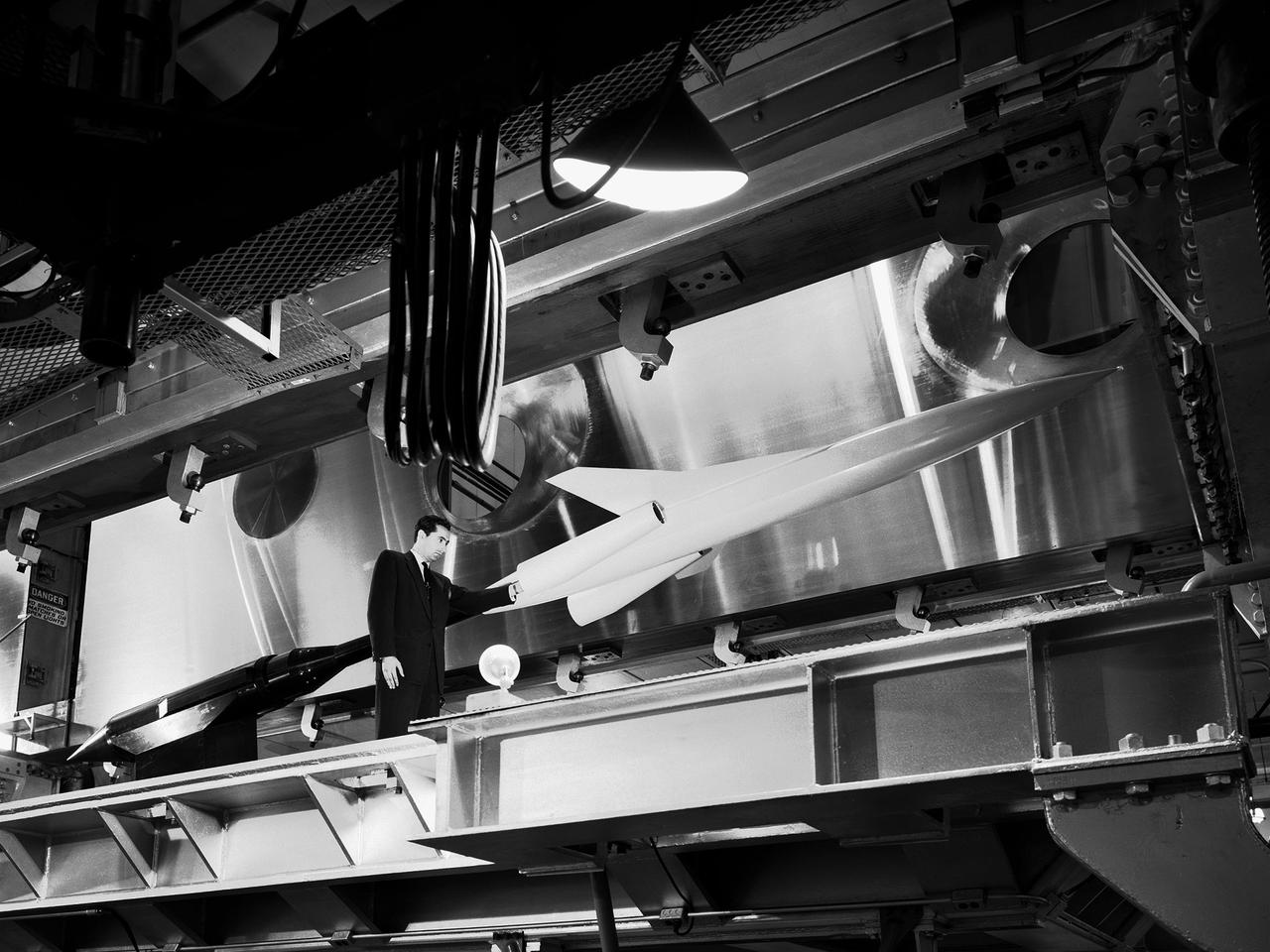
A researcher examines a model being installed in the test section of the 10- by 10-Foot Supersonic Wind Tunnel during the 1957 Inspection of the National Advisory Committee for Aeronautics (NACA) Lewis Flight Propulsion Laboratory. The NACA held its annual Inspection at one of its three research laboratories. Representatives from the military, aeronautical industry, universities, and the press were invited to the laboratory to be briefed on the NACA’s latest research efforts and tour the state- of- the- art test facilities. Over 1700 people visited the NACA Lewis in Cleveland, Ohio during the October 7 - 10, 1957 Inspection. NACA researchers Leonard Obery, seen here, James Connors, Leonard, Stitt, David Bowditch gave presentations on high Mach number turbojets at the 10- by 10 tunnel. It had been only 15 years since a jet aircraft had first flown in the US. Since then the sound barrier had been broken and speeds of Mach 2.5 had been achieved. In the late 1950s NACA researchers sought to create an engine that could achieve Mach 4. This type of engine would require an extremely long inlet and nozzle which would have to be capable of adjusting their diameter for different speeds. A Mach 4 engine would require new composite materials to withstand the severe conditions, modified airframes to hold the longer engines, and high temperature seals and lubricants. The 10- by 10-foot tunnel, which had only been in operation for a year and a half, would play a critical role in these studies. NACA researchers at other facilities discussed high energy aircraft fuels and rocket propellants, aircraft noise reduction, hypersonic flight, nuclear propulsion, and high temperature materials.
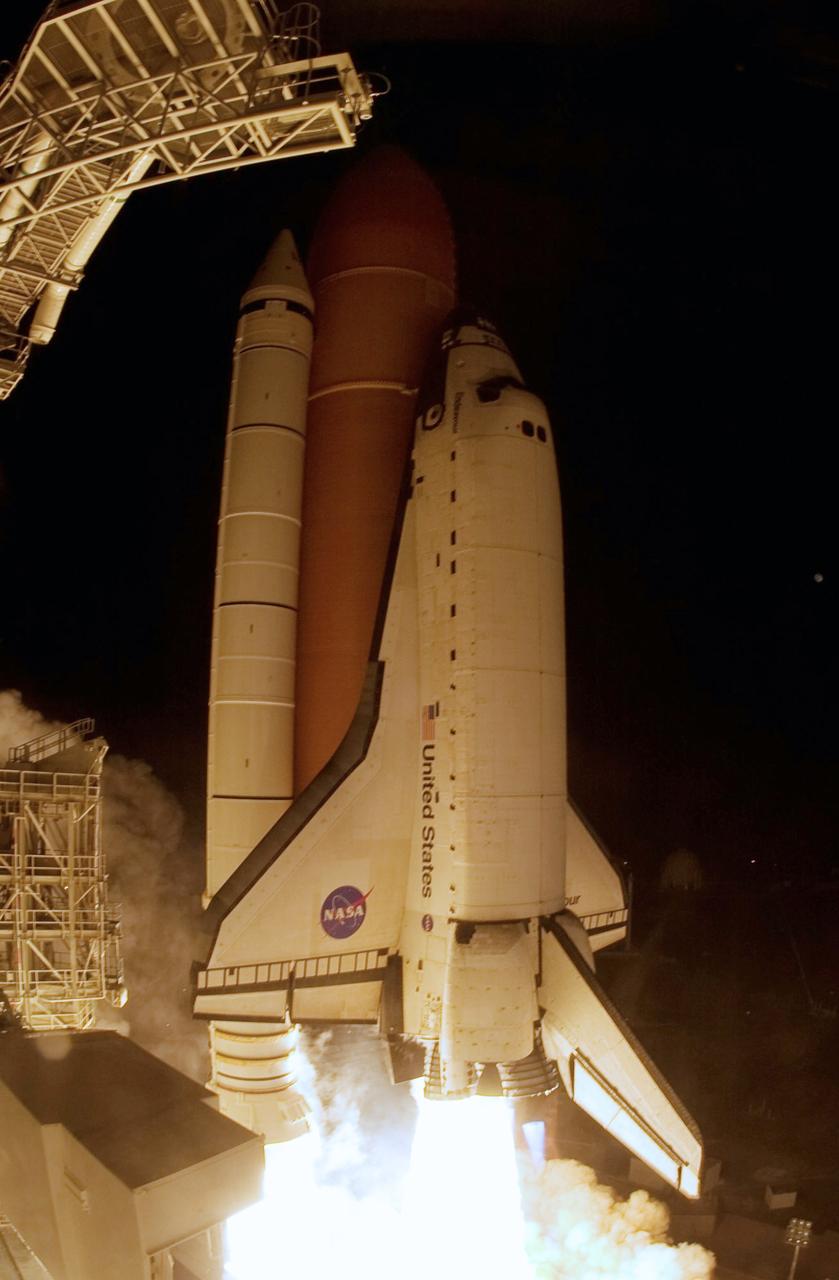
CAPE CANAVERAL, Fla. – On Launch Pad 39A at NASA's Kennedy Space Center, space shuttle Endeavour roars into the night sky on the STS-126 mission. Blue cones of light, the shock or mach diamonds that are a formation of shock waves in the exhaust plume of an aerospace propulsion system can be seen beneath the nozzles of the main engines. Liftoff was on time at 7:55 p.m. EST. STS-126 is the 124th space shuttle flight and the 27th flight to the International Space Station. The mission will feature four spacewalks and work that will prepare the space station to house six crew members for long-duration missions. Photo credit: NASA/Sandra Joseph-Kevin O'Connell
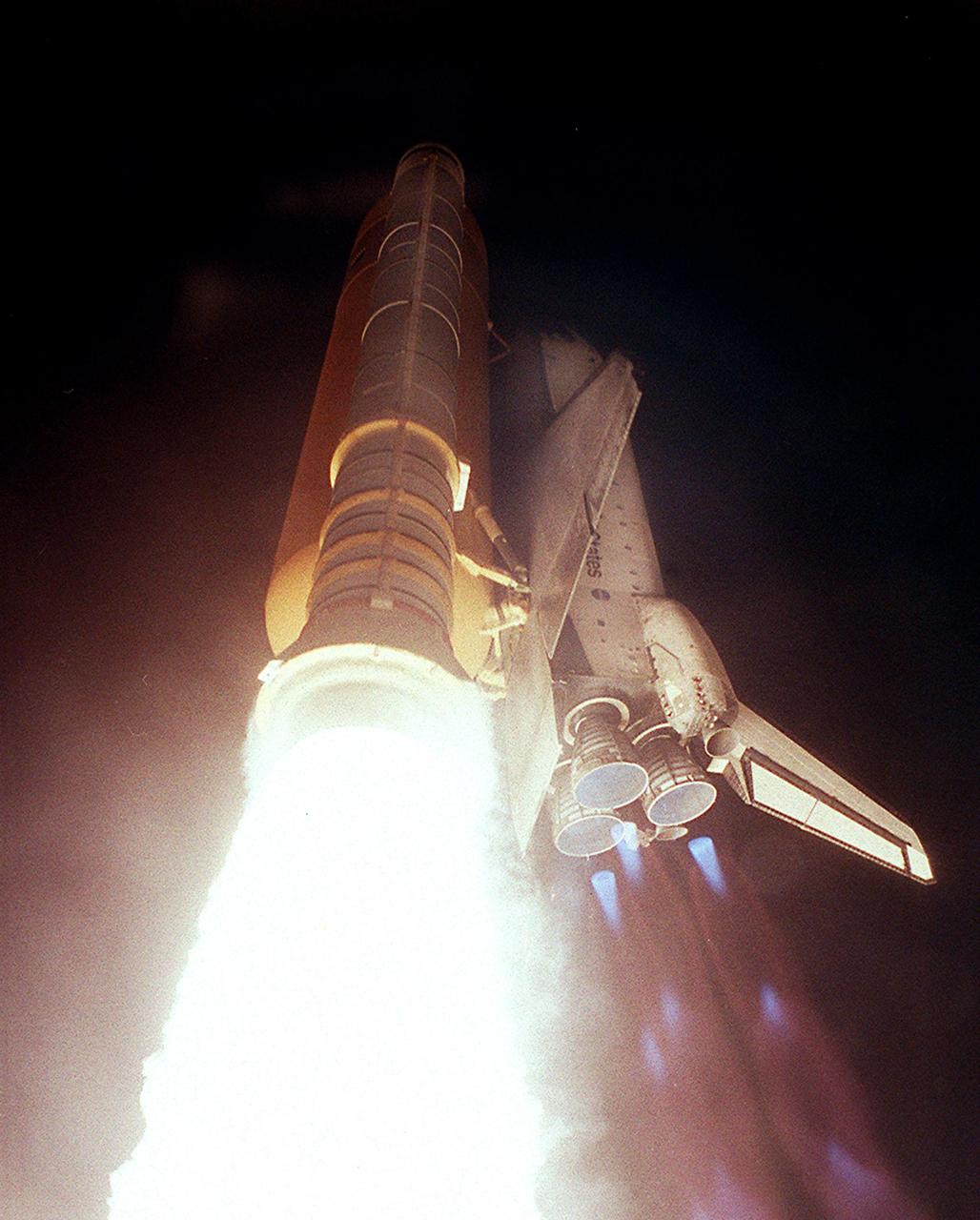
KENNEDY SPACE CENTER, FLA. - Blue mach diamonds appear behind the main engine nozzles on Space Shuttle Endeavour as it roars off the launch pad on mission STS-113. Liftoff from Launch Pad 39A occurred ontime at 7:49:47 p.m. EST. The launch is the 19th for Endeavour, and the 112th flight in the Shuttle program. Mission STS-113 is the 16th assembly flight to the International Space Station, carrying another structure for the Station, the P1 integrated truss. Also onboard are the Expedition 6 crew, who will replace Expedition 5. Endeavour is scheduled to land at KSC after an 11-day journey.
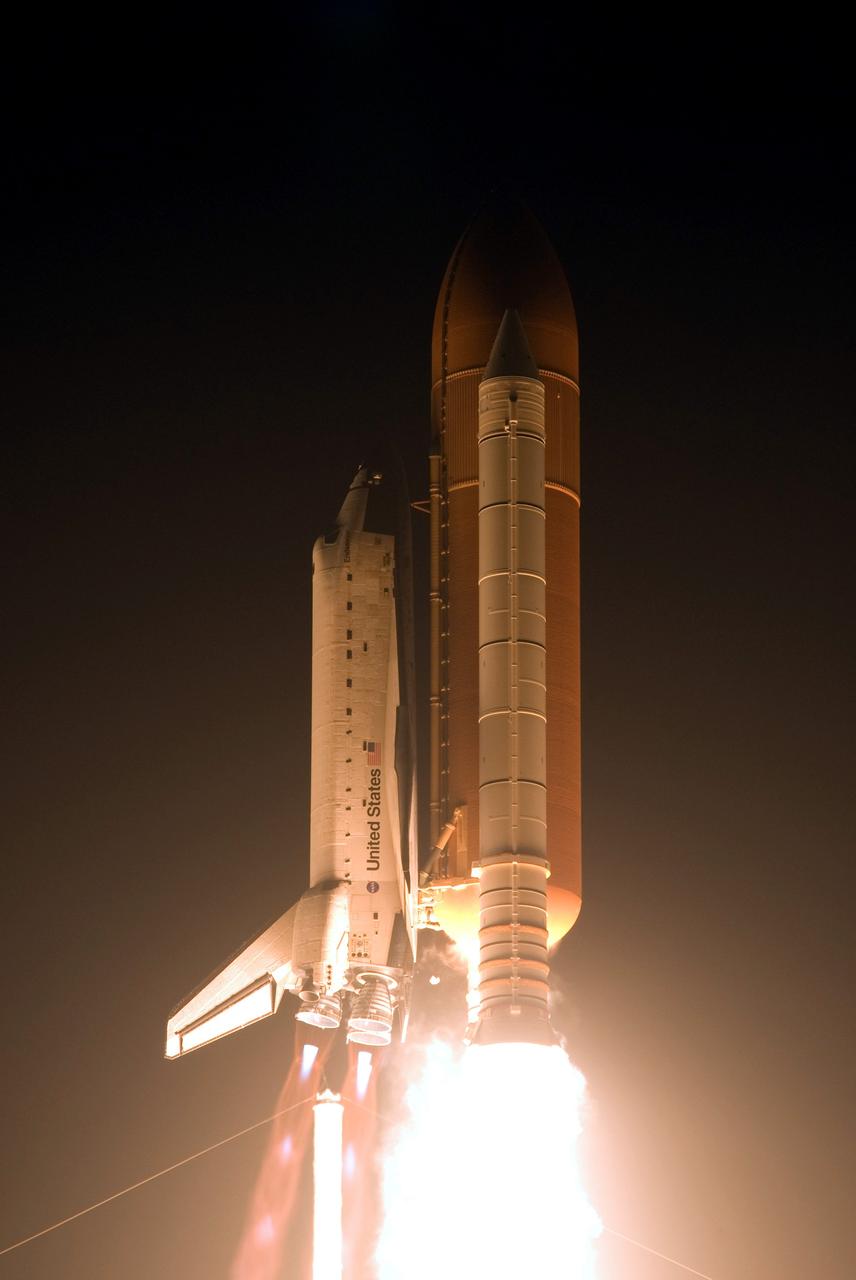
CAPE CANAVERAL, Fla. – On Launch Pad 39A at NASA's Kennedy Space Center, space shuttle Endeavour roars into the night sky on the STS-126 mission. Blue cones of light, the shock or mach diamonds that are a formation of shock waves in the exhaust plume of an aerospace propulsion system can be seen beneath the nozzles of the main engines. Liftoff was on time at 7:55 p.m. EST. STS-126 is the 124th space shuttle flight and the 27th flight to the International Space Station. The mission will feature four spacewalks and work that will prepare the space station to house six crew members for long-duration missions. Photo credit: NASA/Rusty Backer-George Roberts
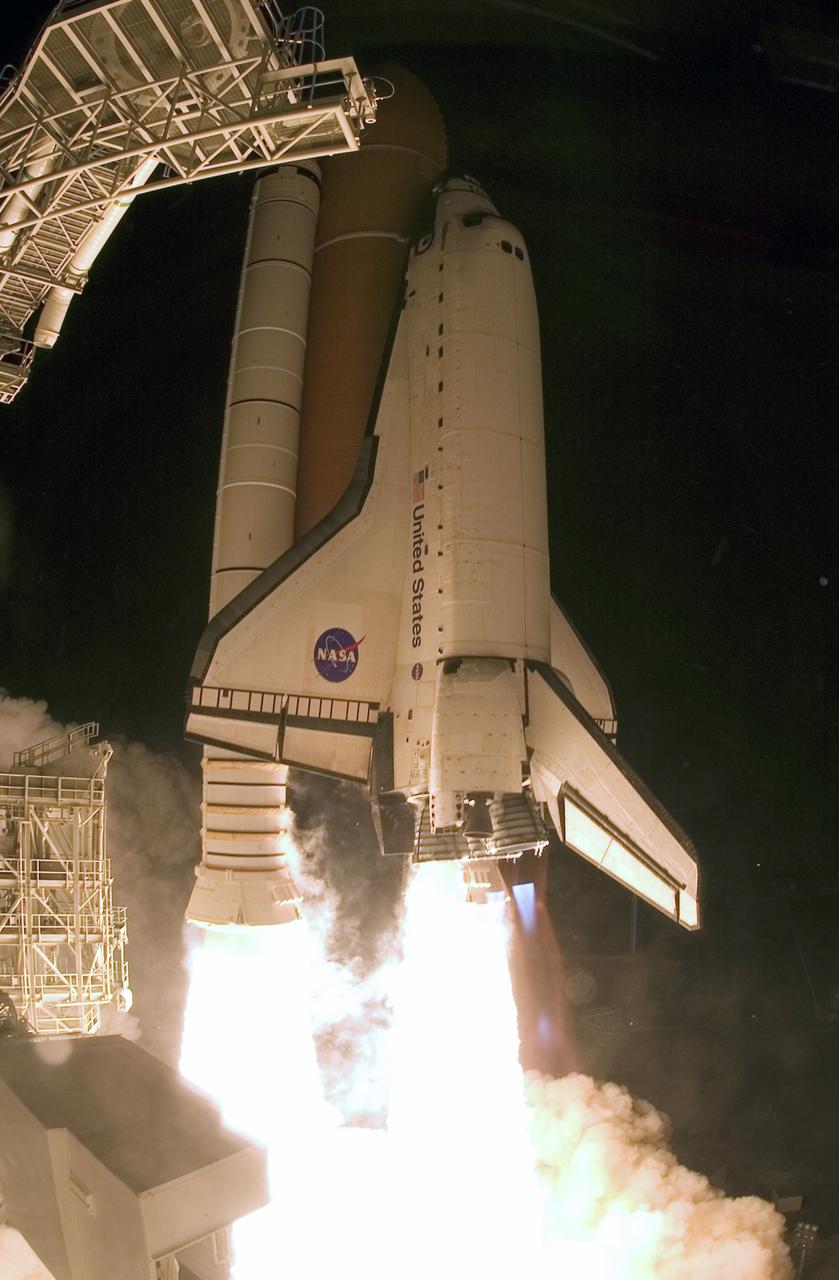
CAPE CANAVERAL, Fla. – On Launch Pad 39A at NASA's Kennedy Space Center, space shuttle Endeavour roars into the night sky on the STS-126 mission. Blue cones of light, the shock or mach diamonds that are a formation of shock waves in the exhaust plume of an aerospace propulsion system can be seen beneath the nozzles of the main engines. Liftoff was on time at 7:55 p.m. EST. STS-126 is the 124th space shuttle flight and the 27th flight to the International Space Station. The mission will feature four spacewalks and work that will prepare the space station to house six crew members for long-duration missions. Photo credit: NASA/Sandra Joseph-Kevin O'Connell
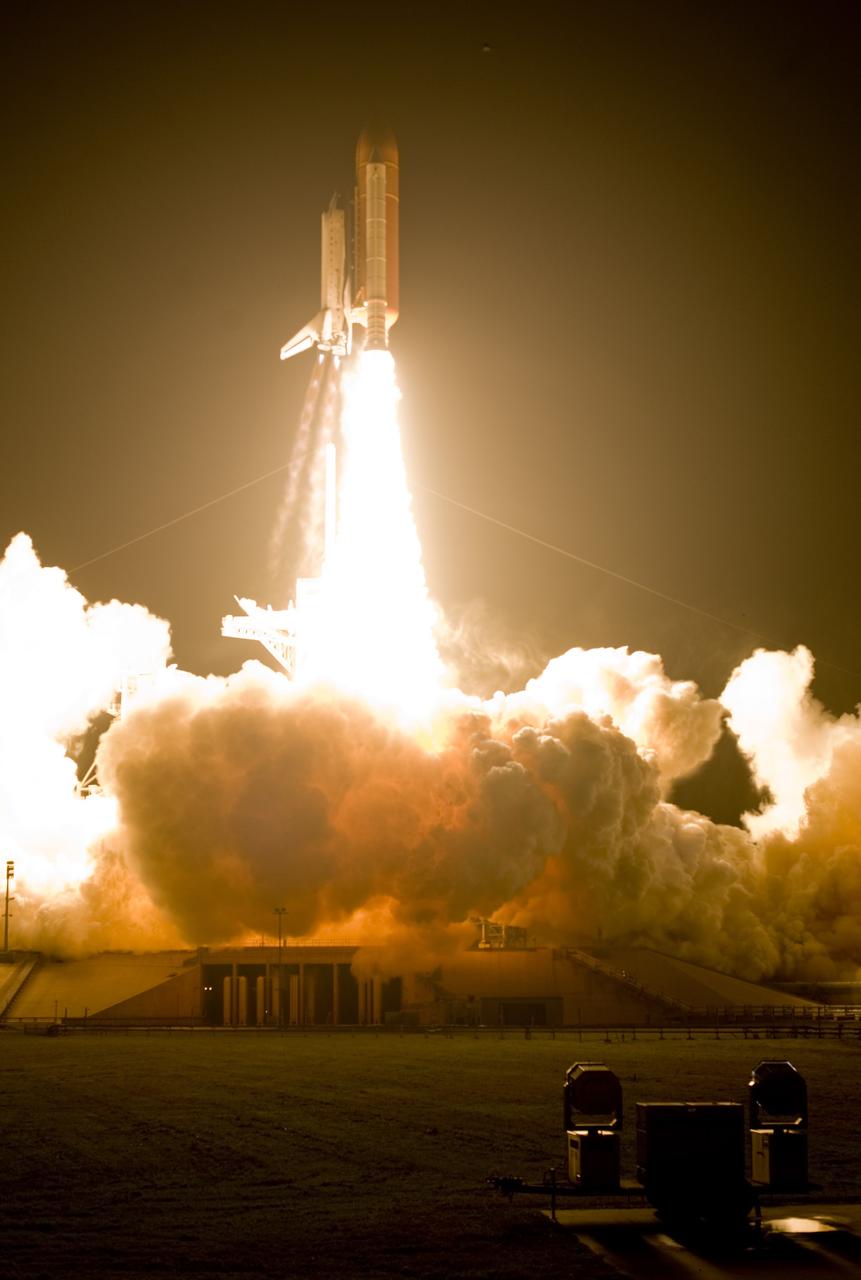
CAPE CANAVERAL, Fla. – On Launch Pad 39A at NASA's Kennedy Space Center, space shuttle Endeavour erupts from the smoke and steam as it roars into the night sky on the STS-126 mission. Blue cones of light, the shock or mach diamonds that are a formation of shock waves in the exhaust plume of an aerospace propulsion system, can be seen beneath the nozzles of the main engines. Liftoff was on time at 7:55 p.m. EST. STS-126 is the 124th space shuttle flight and the 27th flight to the International Space Station. The mission will feature four spacewalks and work that will prepare the space station to house six crew members for long-duration missions. Photo courtesy of Scott Andrews
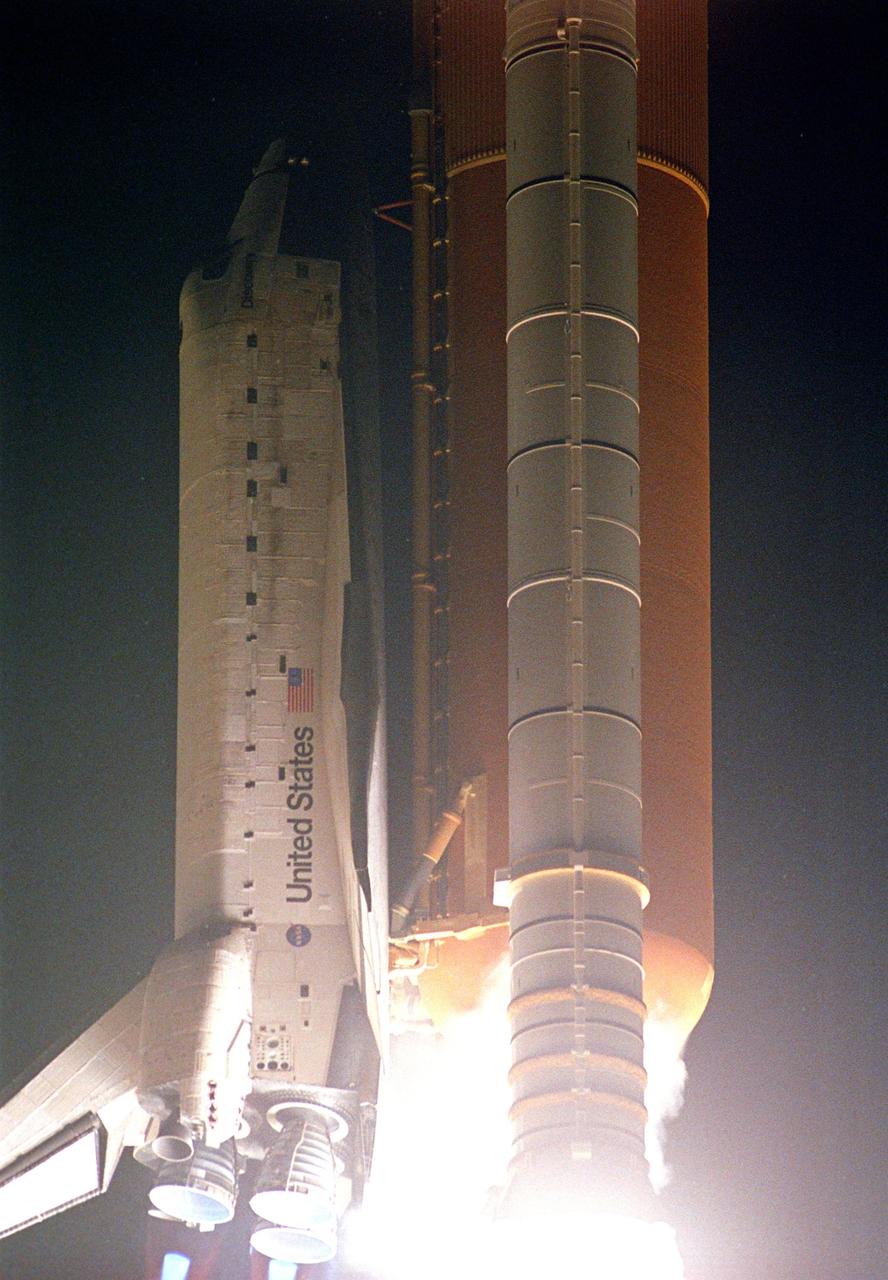
KENNEDY SPACE CENTER, FLA. -- Mach diamonds, below left, appear beneath Space Shuttle Discovery's main engines as the vehicle roars into the night sky after liftoff on mission STS-116. Mach diamonds are a formation of shock waves in the exhaust plume of an aerospace propulsion system. Liftoff occurred on time at 8:47 p.m. EST. This was the second launch attempt for mission STS-116. The first launch attempt on Dec. 7 was postponed due a low cloud ceiling over Kennedy Space Center. This is Discovery's 33rd mission and the first night launch since 2002. The 20th shuttle mission to the International Space Station, STS-116 carries another truss segment, P5. It will serve as a spacer, mated to the P4 truss that was attached in September. After installing the P5, the crew will reconfigure and redistribute the power generated by two pairs of U.S. solar arrays. Landing is expected Dec. 21 at KSC. Photo credit: NASA/Jerry Cannon & Mike Kerley

KENNEDY SPACE CENTER, FLA. -- The blue cones of light, known as shock or mach diamonds, beneath Space Shuttle Discovery's main engines confirm its rapid rise into the night sky after liftoff on mission STS-116. Mach diamonds are a formation of shock waves in the exhaust plume of an aerospace propulsion system. Liftoff occurred on time at 8:47 p.m. EST. This was the second launch attempt for mission STS-116. The first launch attempt on Dec. 7 was postponed due a low cloud ceiling over Kennedy Space Center. This is Discovery's 33rd mission and the first night launch since 2003. The 20th shuttle mission to the International Space Station, STS-116 carries another truss segment, P5. It will serve as a spacer, mated to the P4 truss that was attached in September. After installing the P5, the crew will reconfigure and redistribute the power generated by two pairs of U.S. solar arrays. Landing is expected Dec. 21 at KSC. Photo credit: NASA/Tony Gray & Don Kight
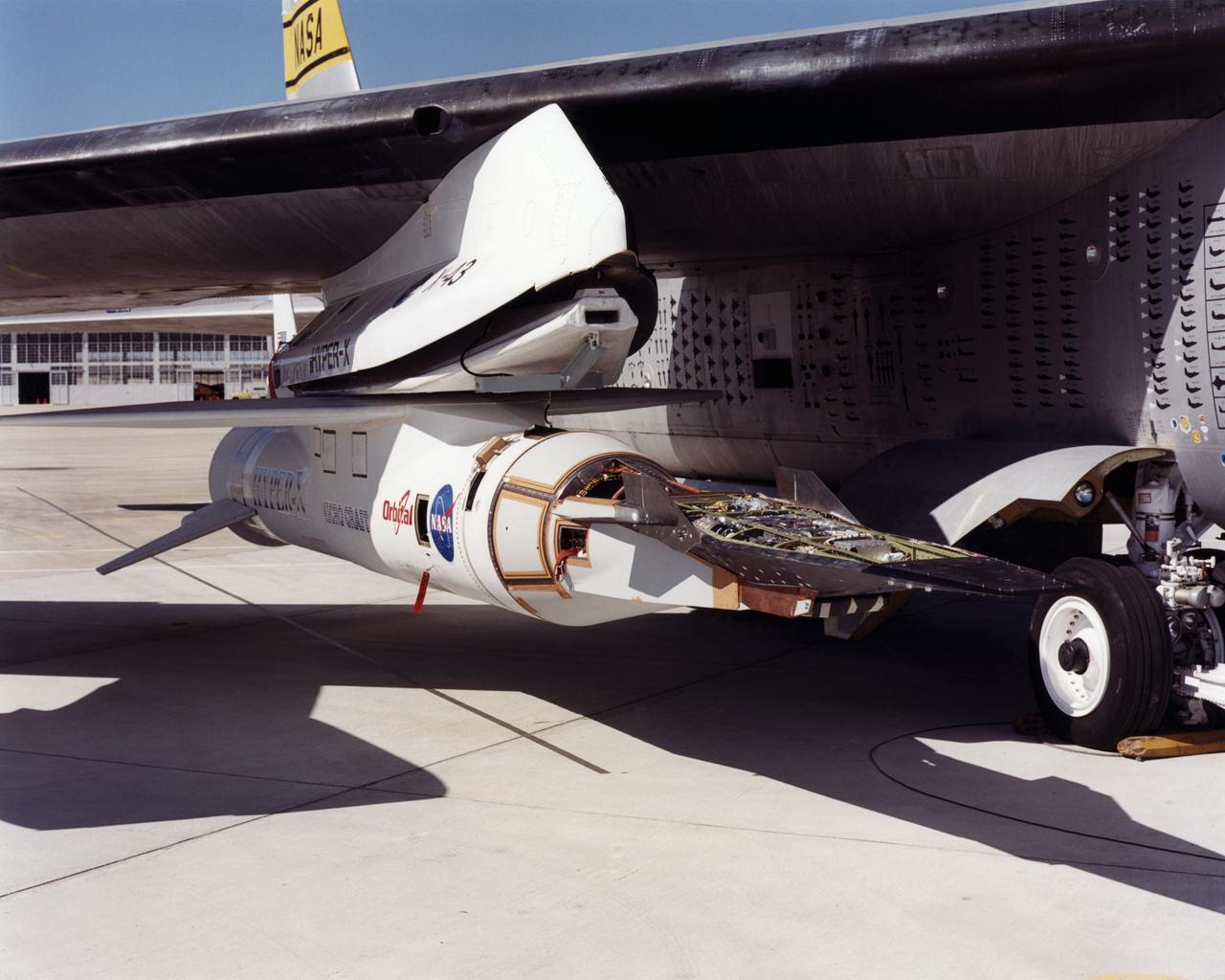
The first of three X-43A hypersonic research aircraft and its modified Pegasus® booster rocket recently underwent combined systems testing while mounted to NASA's NB-52B carrier aircraft at the Dryden Flight Research Center, Edwards, California. The combined systems test was one of the last major milestones in the Hyper-X research program before the first X-43A flight. One of the major goals of the Hyper-X program is flight validation of airframe-integrated, air-breathing propulsion system, which so far have only been tested in ground facilities, such as wind tunnels. The X-43A flights will be the first actual flight tests of an aircraft powered by a revolutionary supersonic-combustion ramjet ("scramjet") engine capable of operating at hypersonic speeds above Mach 5 (five times the speed of sound). The X-43A design uses the underbody of the aircraft to form critical elements of the engine. The forebody shape helps compress the intake airflow, while the aft section acts as a nozzle to direct thrust. The 12-foot, unpiloted research vehicle was developed and built by MicroCraft Inc., Tullahoma, Tenn., under NASA contract. The booster, built by Orbital Sciences Corp., Dulles, Va., will accelerate the X-43A after the X-43A/booster "stack" is air-launched from NASA's venerable NB-52 mothership. The X-43A will separate from the rocket at a predetermined altitude and speed and fly a pre-programmed trajectory, conducting aerodynamic and propulsion experiments until it descends into the Pacific Ocean. Three research flights are planned, two at Mach 7 and one at Mach 10.
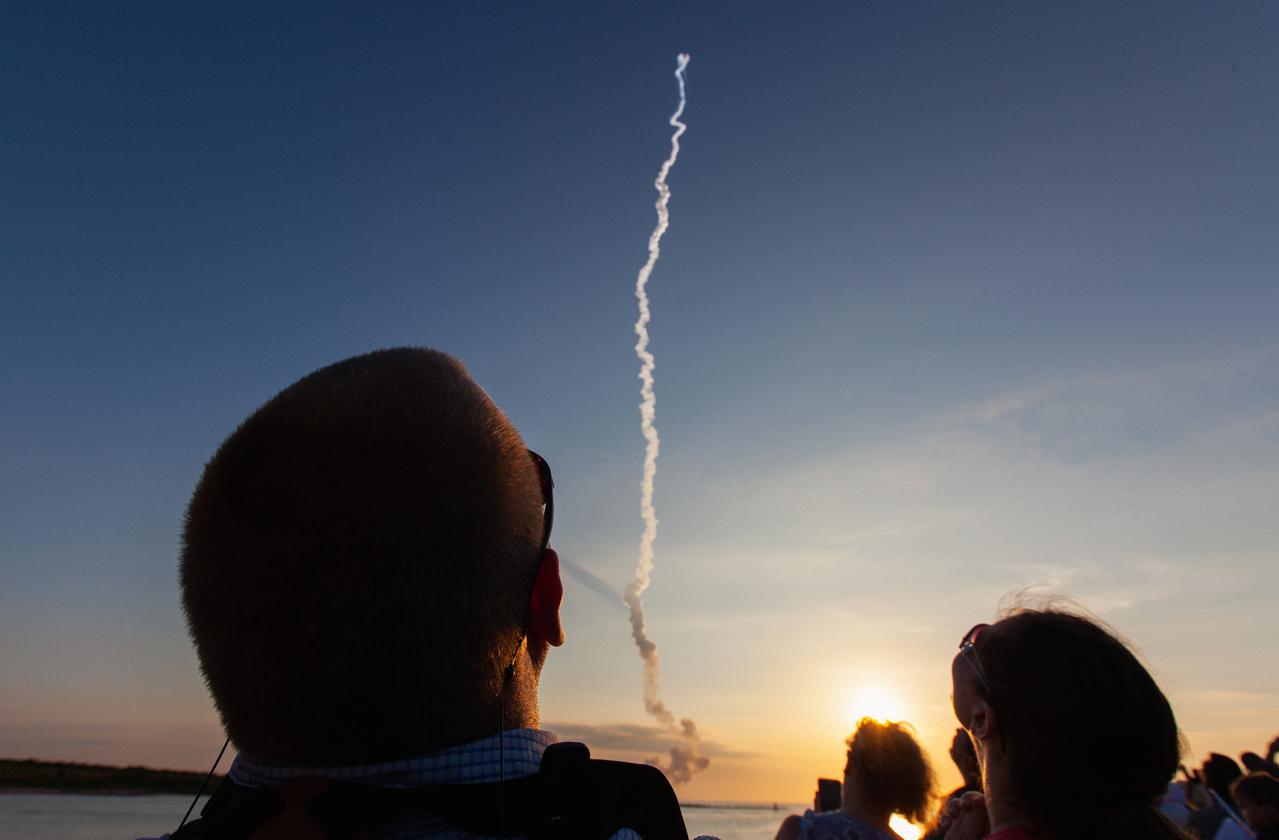
Crowds of spectators watch from Jetty Park in Cape Canaveral, Florida, on July 2, 2019, as a Northrop Grumman provided booster launches from Launch Pad 46 carrying, a fully functional Launch Abort System with a test version of Orion attached for NASA’s Ascent Abort-2 (AA-2). Launch time was 7 a.m. EDT. During AA-2, the booster will send the LAS and Orion to an altitude of 31,000 feet, traveling at Mach 1.15 (more than 1,000 mph). The LAS’ three motors will work together to pull the crew module away from the booster and prepare it for splashdown in the Atlantic Ocean. The flight test will prove that the abort system can pull crew to safety in the unlikely event of an emergency during ascent.

A brilliant sunrise fills the sky before a fully functional Launch Abort System (LAS) with a test version of Orion attached, launches on NASA’s Ascent Abort-2 (AA-2) atop a Northrop Grumman provided booster on July 2, 2019, at 7 a.m. EDT, from Launch Pad 46 at Cape Canaveral Air Force Station in Florida. During AA-2, the booster will send the LAS and Orion to an altitude of 31,000 feet, traveling at Mach 1.15 (more than 1,000 mph). The LAS’ three motors will work together to pull the crew module away from the booster and prepare it for splashdown in the Atlantic Ocean. The flight test will prove that the abort system can pull crew to safety in the unlikely event of an emergency during ascent.
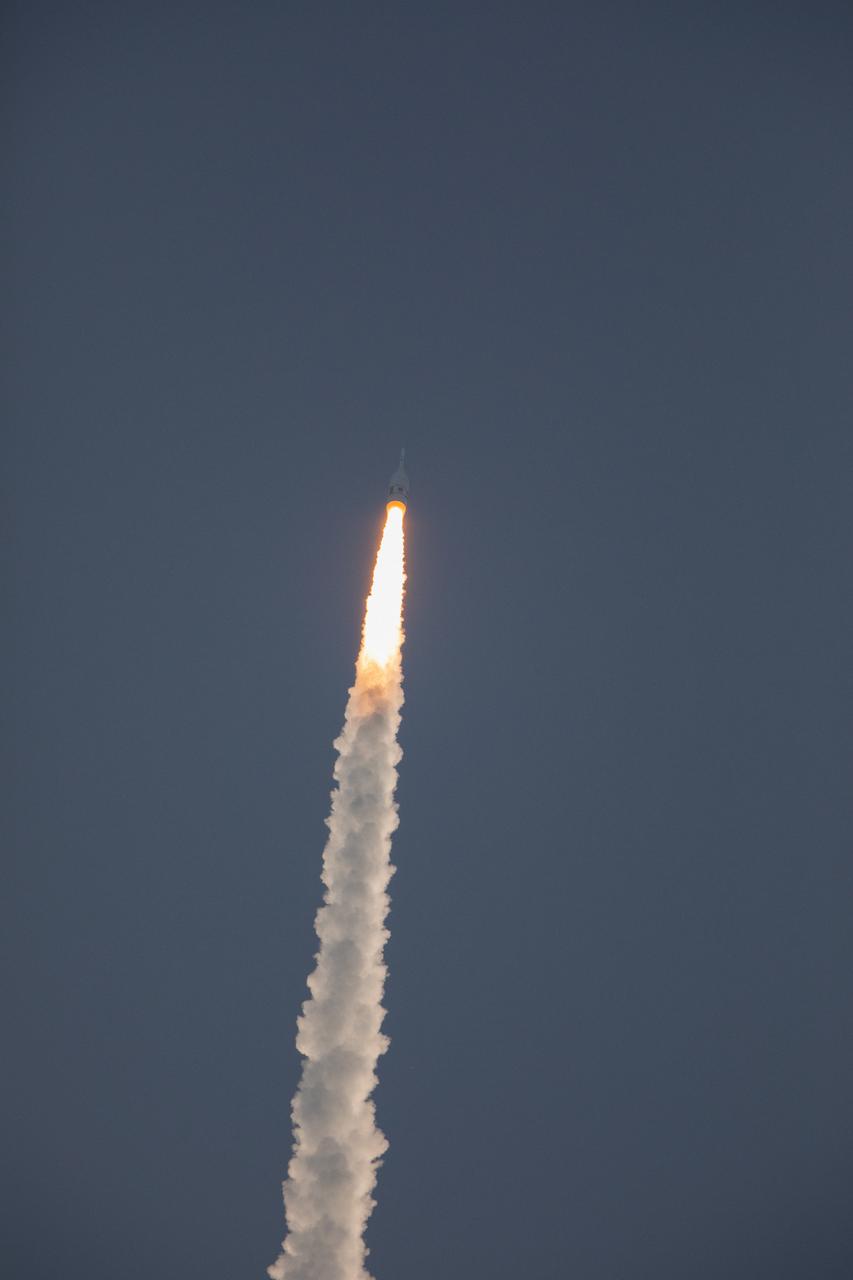
A fully functional Launch Abort System (LAS) with a test version of Orion attached, soars upward on NASA’s Ascent Abort-2 (AA-2) flight test atop a Northrop Grumman provided booster on July 2, 2019, after launching at 7 a.m. EDT, from Launch Pad 46 at Cape Canaveral Air Force Station in Florida. During AA-2, the booster will send the LAS and Orion to an altitude of 31,000 feet, traveling at Mach 1.15 (more than 1,000 mph). The LAS’ three motors will work together to pull the crew module away from the booster and prepare it for splashdown in the Atlantic Ocean. The flight test will prove that the abort system can pull crew to safety in the unlikely event of an emergency during ascent.
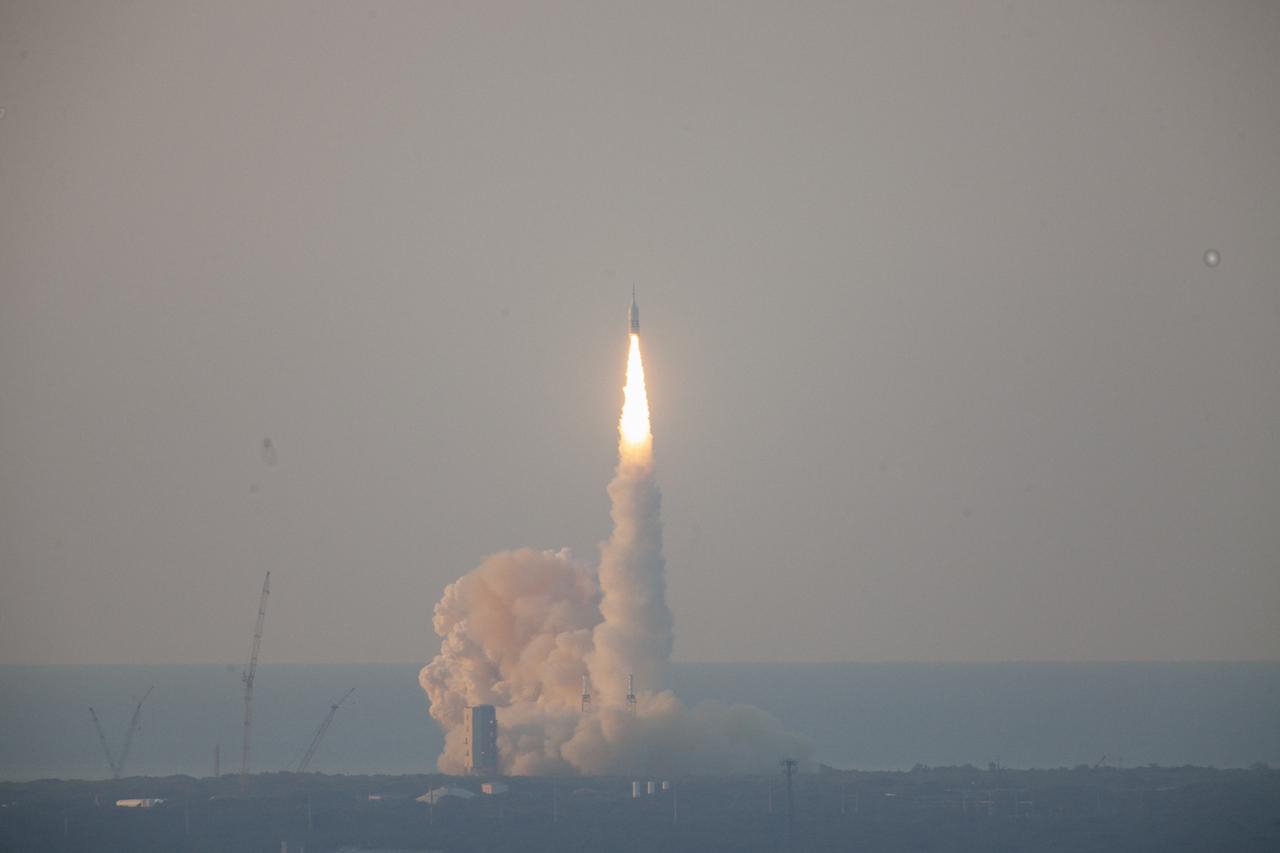
A fully functional Launch Abort System (LAS) with a test version of Orion attached, launches on NASA’s Ascent Abort-2 (AA-2) atop a Northrop Grumman provided booster on July 2, 2019, at 7 a.m. EDT, from Launch Pad 46 at Cape Canaveral Air Force Station in Florida. During AA-2, the booster will send the LAS and Orion to an altitude of 31,000 feet, traveling at Mach 1.15 (more than 1,000 mph). The LAS’ three motors will work together to pull the crew module away from the booster and prepare it for splashdown in the Atlantic Ocean. The flight test will prove that the abort system can pull crew to safety in the unlikely event of an emergency during ascent.
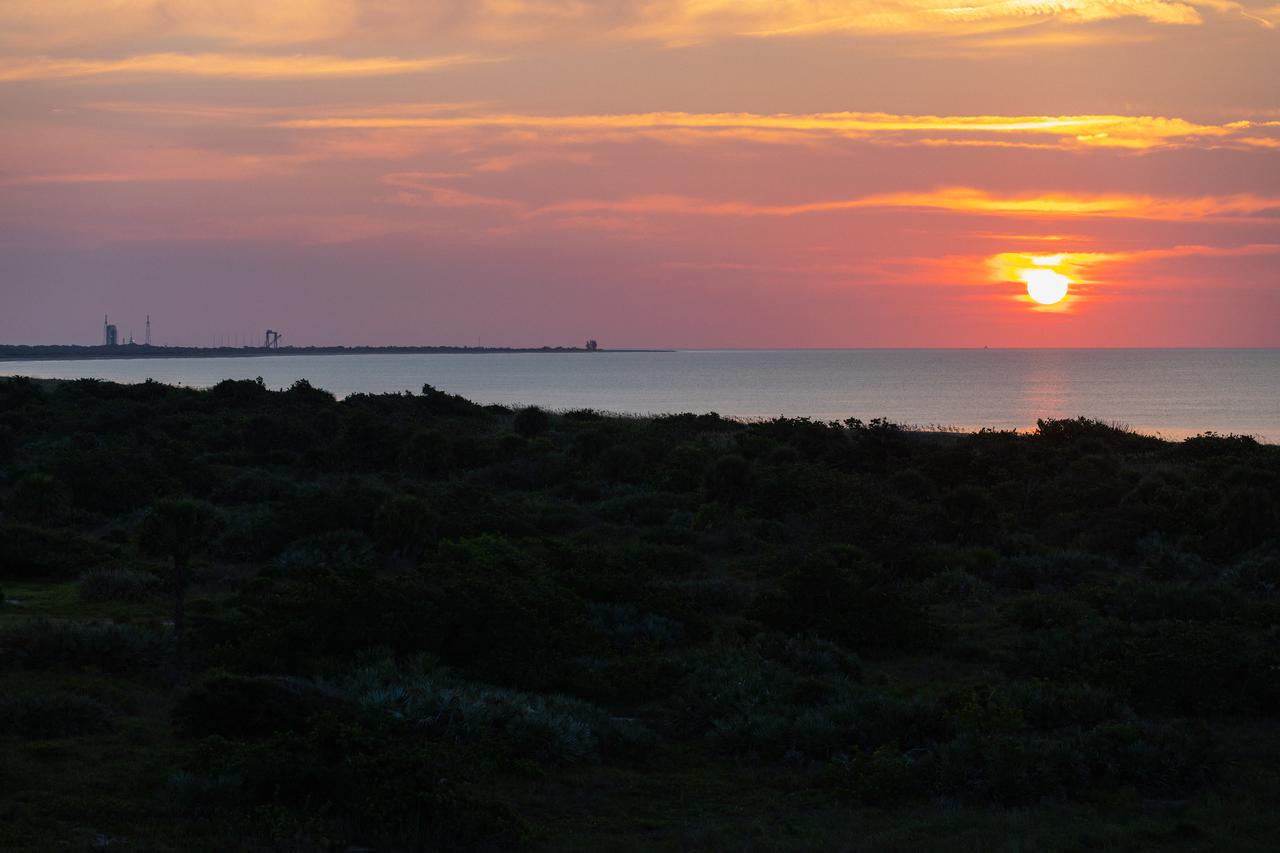
A brilliant sunrise fills the sky before a fully functional Launch Abort System (LAS) with a test version of Orion attached, launches on NASA’s Ascent Abort-2 (AA-2) atop a Northrop Grumman provided booster on July 2, 2019, at 7 a.m. EDT, from Launch Pad 46 at Cape Canaveral Air Force Station in Florida. During AA-2, the booster will send the LAS and Orion to an altitude of 31,000 feet, traveling at Mach 1.15 (more than 1,000 mph). The LAS’ three motors will work together to pull the crew module away from the booster and prepare it for splashdown in the Atlantic Ocean. The flight test will prove that the abort system can pull crew to safety in the unlikely event of an emergency during ascent.
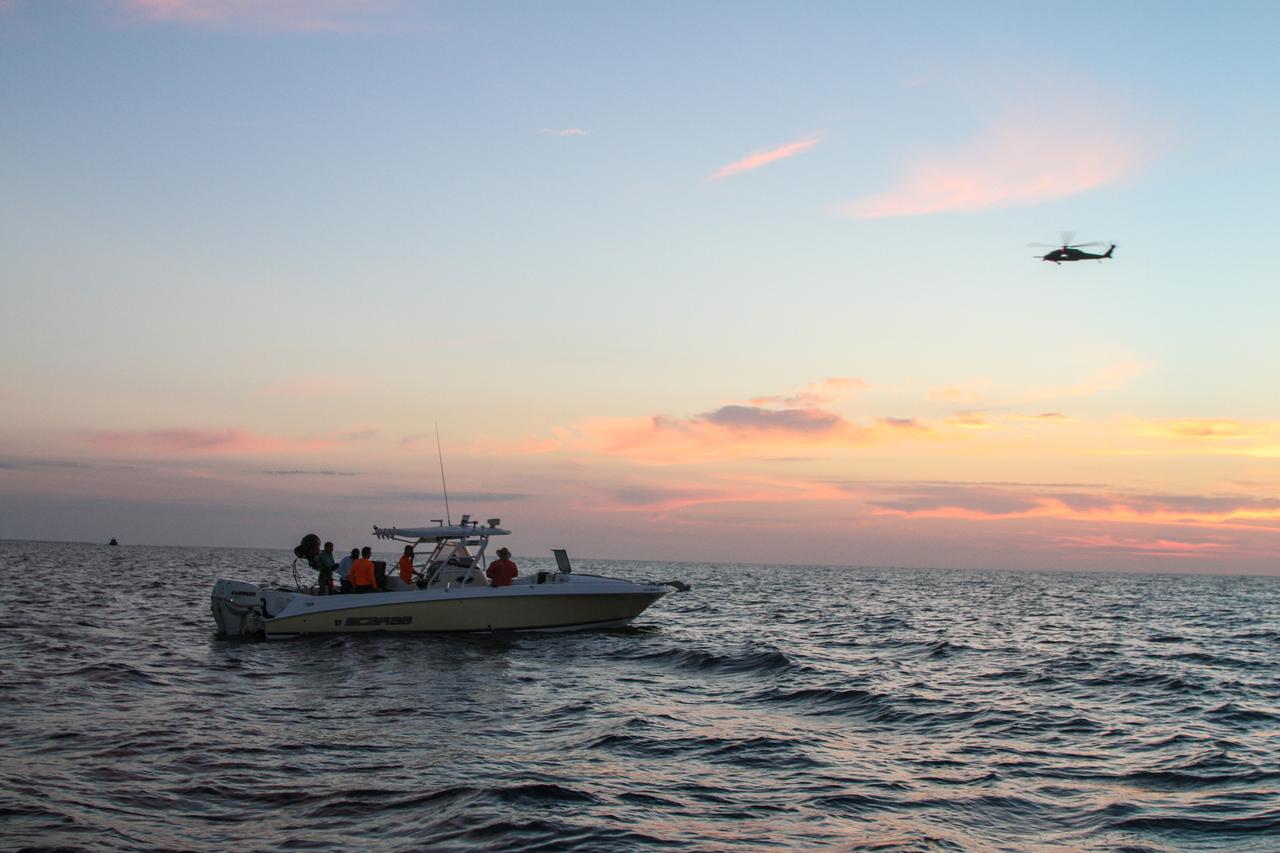
Members of the NASA Ejectable Data Recorder Recovery Team search for the ejectable data recorders in the Atlantic Ocean off the coast of Florida on July 2, 2019, after the Ascent Abort-2 (AA-2) flight test. During AA-2, a fully functional Launch Abort System (LAS) with a test version of Orion attached, launched atop a Northrop Grumman provided booster from Launch Pad 46 at Cape Canaveral Air Force Station on July 2, 2019. Liftoff was at 7 a.m. EDT. During AA-2, the booster sent the LAS and Orion to an altitude of 31,000 feet, traveling at Mach 1.15 (more than 1,000 mph). The LAS’ three motors worked together to pull the crew module away from the booster and prepare it for splashdown in the Atlantic Ocean. The flight test proves that the abort system can pull crew to safety in the unlikely event of an emergency during ascent. Data from the recorders will be analyzed by engineers.
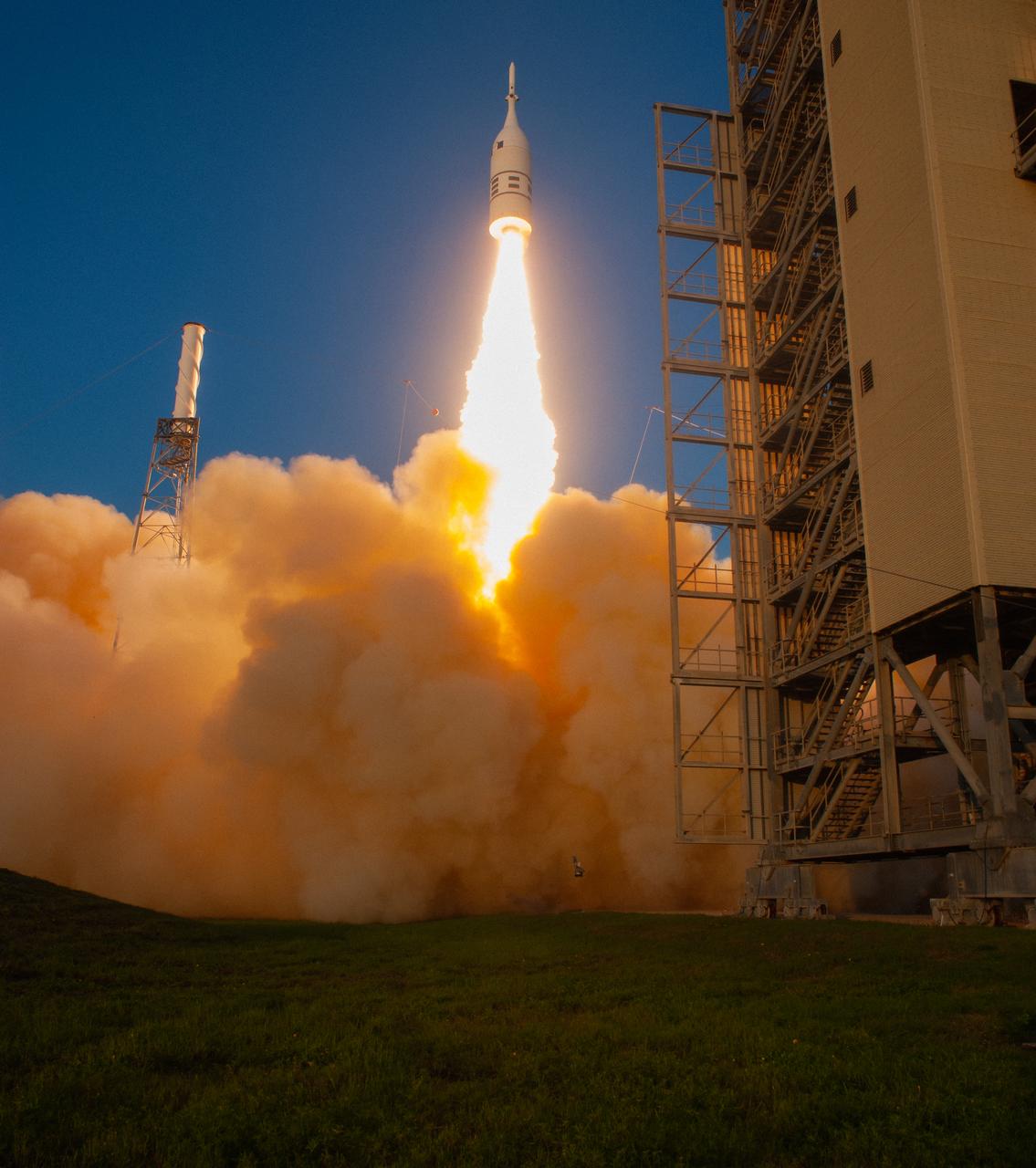
A fully functional Launch Abort System (LAS) with a test version of Orion attached, launches on NASA’s Ascent Abort-2 (AA-2) atop a Northrop Grumman provided booster on July 2, 2019, at 7 a.m. EDT, from Launch Pad 46 at Cape Canaveral Air Force Station in Florida. During AA-2, the booster will send the LAS and Orion to an altitude of 31,000 feet, traveling at Mach 1.15 (more than 1,000 mph). The LAS’ three motors will work together to pull the crew module away from the booster and prepare it for splashdown in the Atlantic Ocean. The flight test will prove that the abort system can pull crew to safety in the unlikely event of an emergency during ascent.
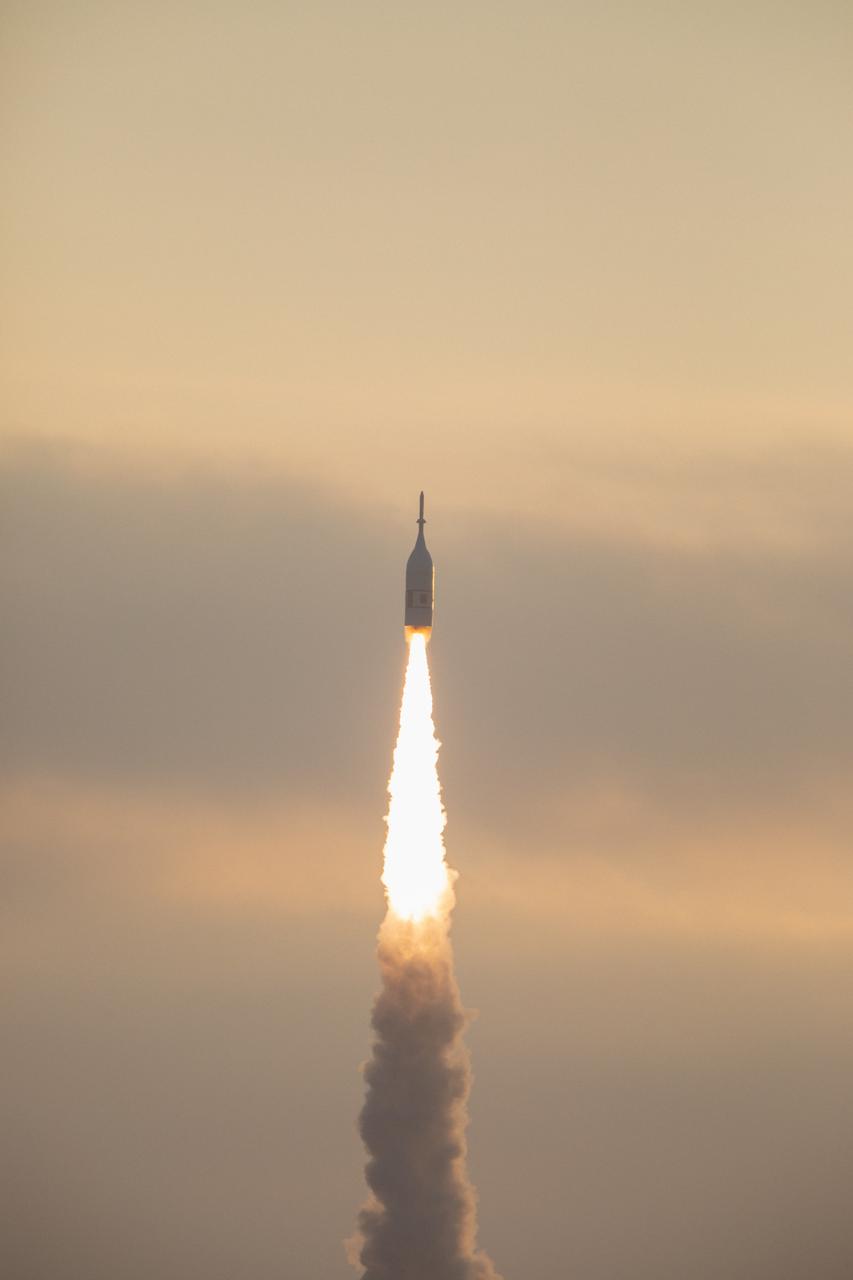
A fully functional Launch Abort System (LAS) with a test version of Orion attached, launches on NASA’s Ascent Abort-2 (AA-2) atop a Northrop Grumman provided booster on July 2, 2019, at 7 a.m. EDT, from Launch Pad 46 at Cape Canaveral Air Force Station in Florida. During AA-2, the booster will send the LAS and Orion to an altitude of 31,000 feet, traveling at Mach 1.15 (more than 1,000 mph). The LAS’ three motors will work together to pull the crew module away from the booster and prepare it for splashdown in the Atlantic Ocean. The flight test will prove that the abort system can pull crew to safety in the unlikely event of an emergency during ascent.
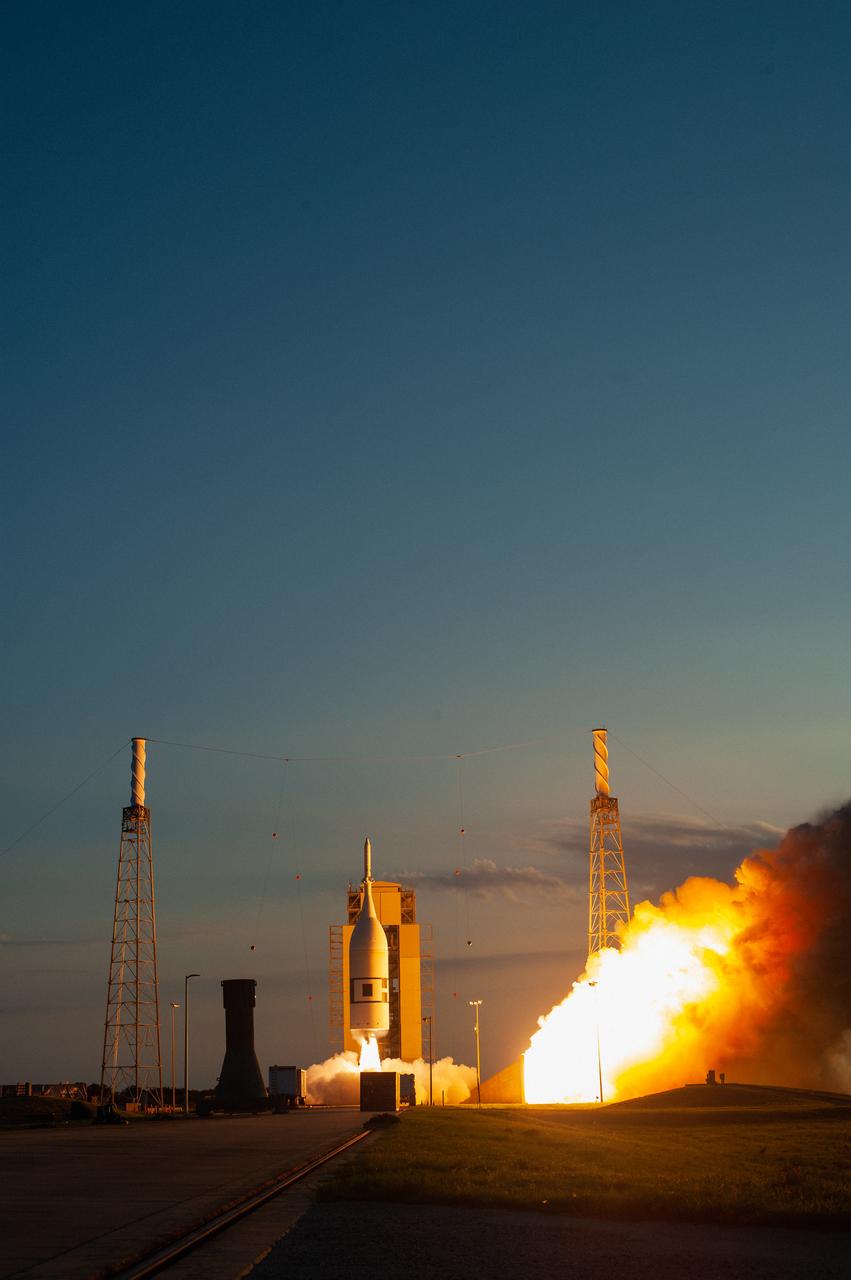
A fully functional Launch Abort System (LAS) with a test version of Orion attached, launches on NASA’s Ascent Abort-2 (AA-2) atop a Northrop Grumman provided booster on July 2, 2019, at 7 a.m. EDT, from Launch Pad 46 at Cape Canaveral Air Force Station in Florida. During AA-2, the booster will send the LAS and Orion to an altitude of 31,000 feet, traveling at Mach 1.15 (more than 1,000 mph). The LAS’ three motors will work together to pull the crew module away from the booster and prepare it for splashdown in the Atlantic Ocean. The flight test will prove that the abort system can pull crew to safety in the unlikely event of an emergency during ascent.
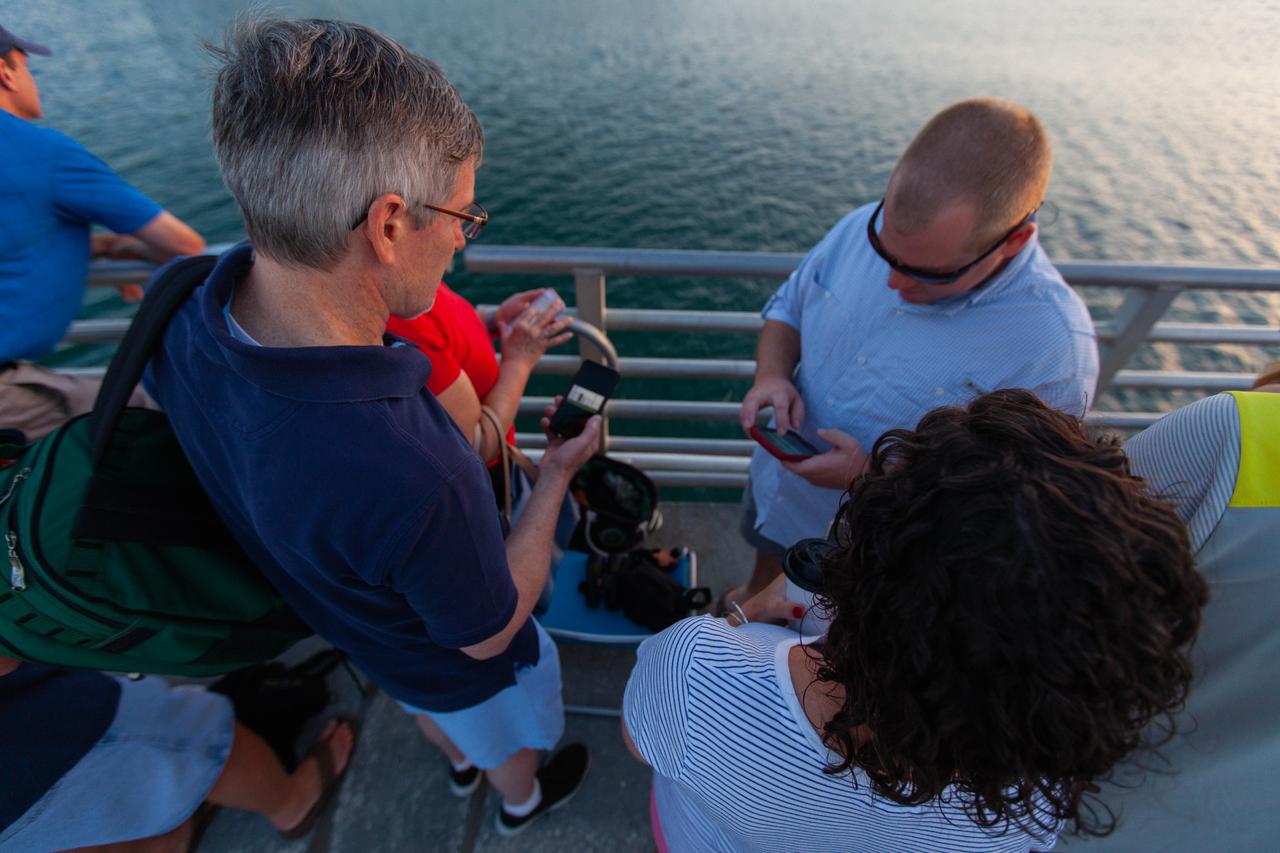
Crowds of spectators watch from Jetty Park in Cape Canaveral, Florida, on July 2, 2019, as a Northrop Grumman provided booster launches from Launch Pad 46 carrying, a fully functional Launch Abort System with a test version of Orion attached for NASA’s Ascent Abort-2 (AA-2). Launch time was 7 a.m. EDT. During AA-2, the booster will send the LAS and Orion to an altitude of 31,000 feet, traveling at Mach 1.15 (more than 1,000 mph). The LAS’ three motors will work together to pull the crew module away from the booster and prepare it for splashdown in the Atlantic Ocean. The flight test will prove that the abort system can pull crew to safety in the unlikely event of an emergency during ascent.

Crowds of spectators watch from Jetty Park in Cape Canaveral, Florida, on July 2, 2019, as a Northrop Grumman provided booster launches from Launch Pad 46 carrying, a fully functional Launch Abort System with a test version of Orion attached for NASA’s Ascent Abort-2 (AA-2). Launch time was 7 a.m. EDT. During AA-2, the booster will send the LAS and Orion to an altitude of 31,000 feet, traveling at Mach 1.15 (more than 1,000 mph). The LAS’ three motors will work together to pull the crew module away from the booster and prepare it for splashdown in the Atlantic Ocean. The flight test will prove that the abort system can pull crew to safety in the unlikely event of an emergency during ascent.
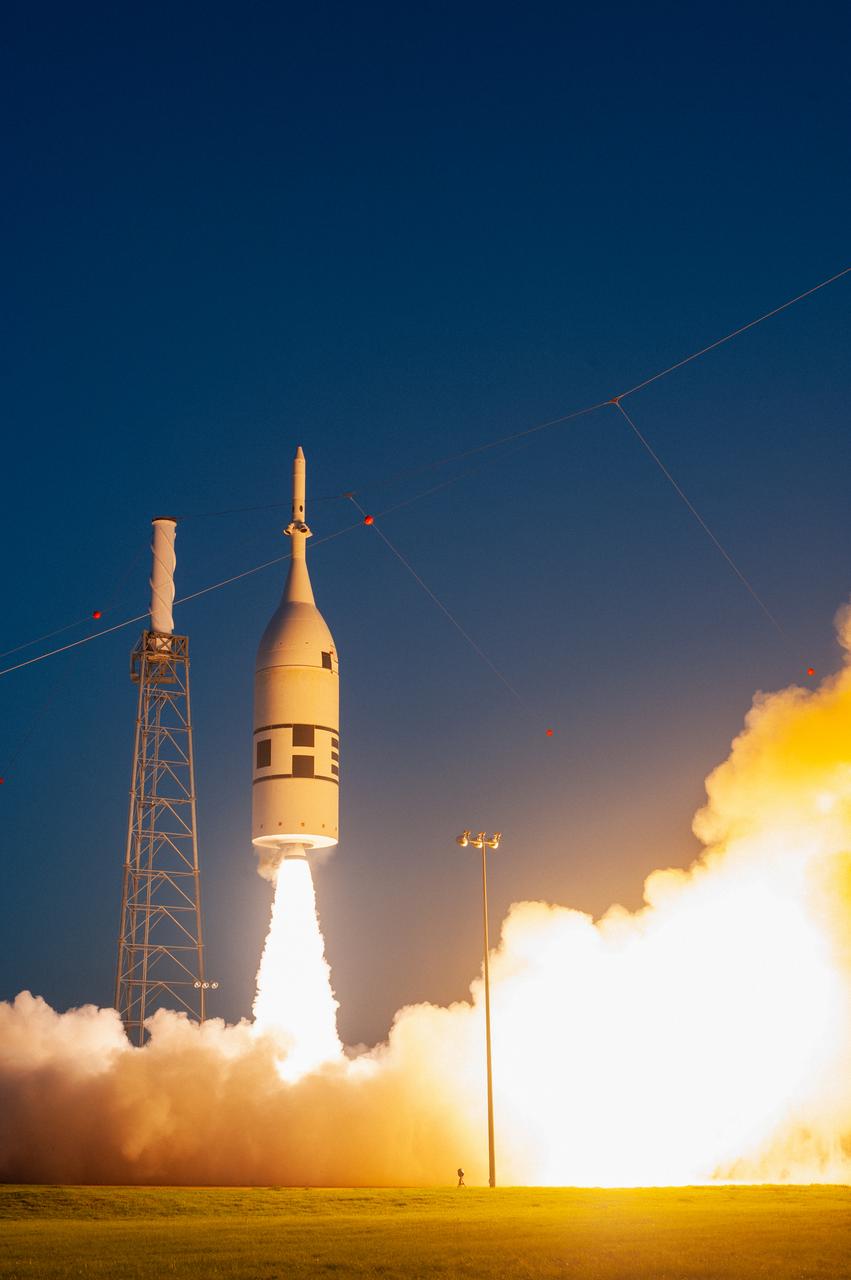
A fully functional Launch Abort System (LAS) with a test version of Orion attached, launches on NASA’s Ascent Abort-2 (AA-2) atop a Northrop Grumman provided booster on July 2, 2019, at 7 a.m. EDT, from Launch Pad 46 at Cape Canaveral Air Force Station in Florida. During AA-2, the booster will send the LAS and Orion to an altitude of 31,000 feet, traveling at Mach 1.15 (more than 1,000 mph). The LAS’ three motors will work together to pull the crew module away from the booster and prepare it for splashdown in the Atlantic Ocean. The flight test will prove that the abort system can pull crew to safety in the unlikely event of an emergency during ascent.
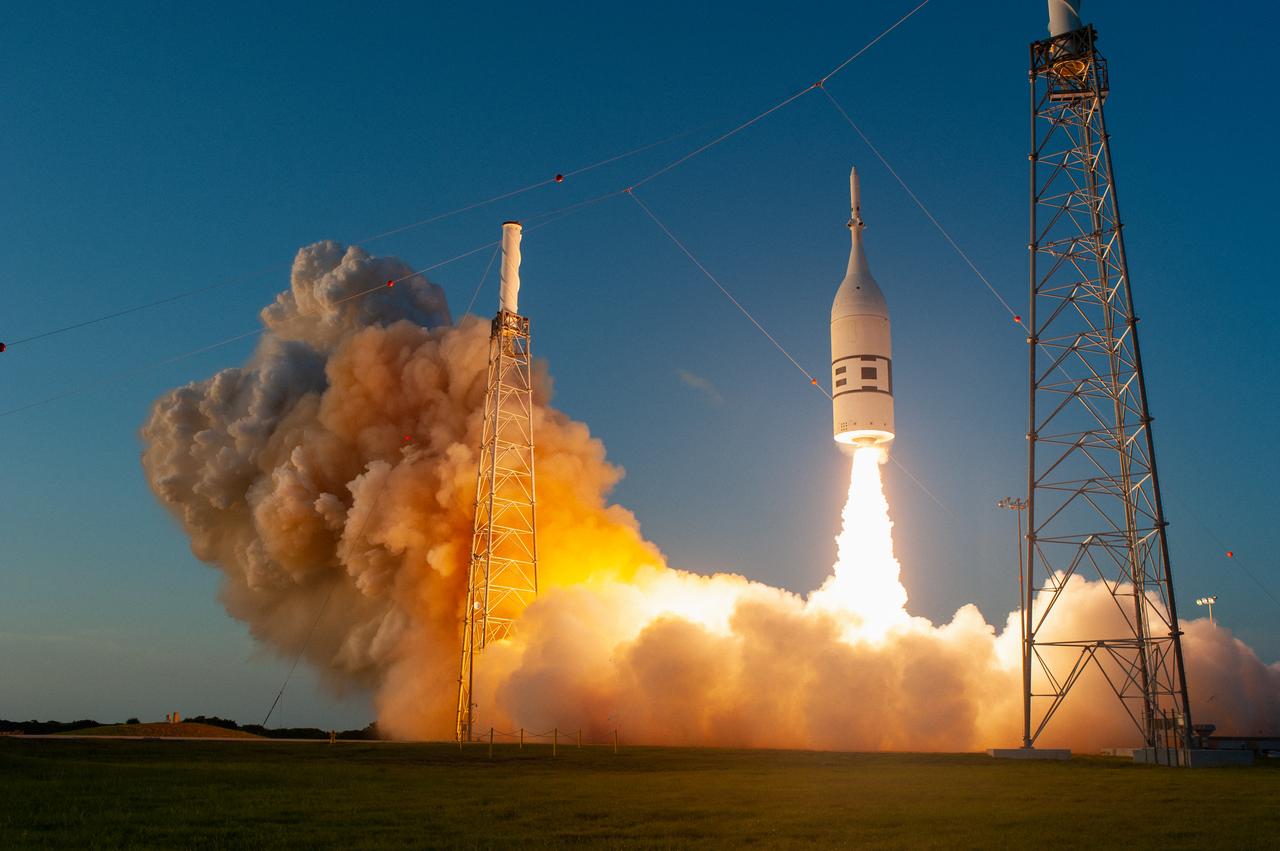
A fully functional Launch Abort System (LAS) with a test version of Orion attached, launches on NASA’s Ascent Abort-2 (AA-2) atop a Northrop Grumman provided booster on July 2, 2019, at 7 a.m. EDT, from Launch Pad 46 at Cape Canaveral Air Force Station in Florida. During AA-2, the booster will send the LAS and Orion to an altitude of 31,000 feet, traveling at Mach 1.15 (more than 1,000 mph). The LAS’ three motors will work together to pull the crew module away from the booster and prepare it for splashdown in the Atlantic Ocean. The flight test will prove that the abort system can pull crew to safety in the unlikely event of an emergency during ascent.
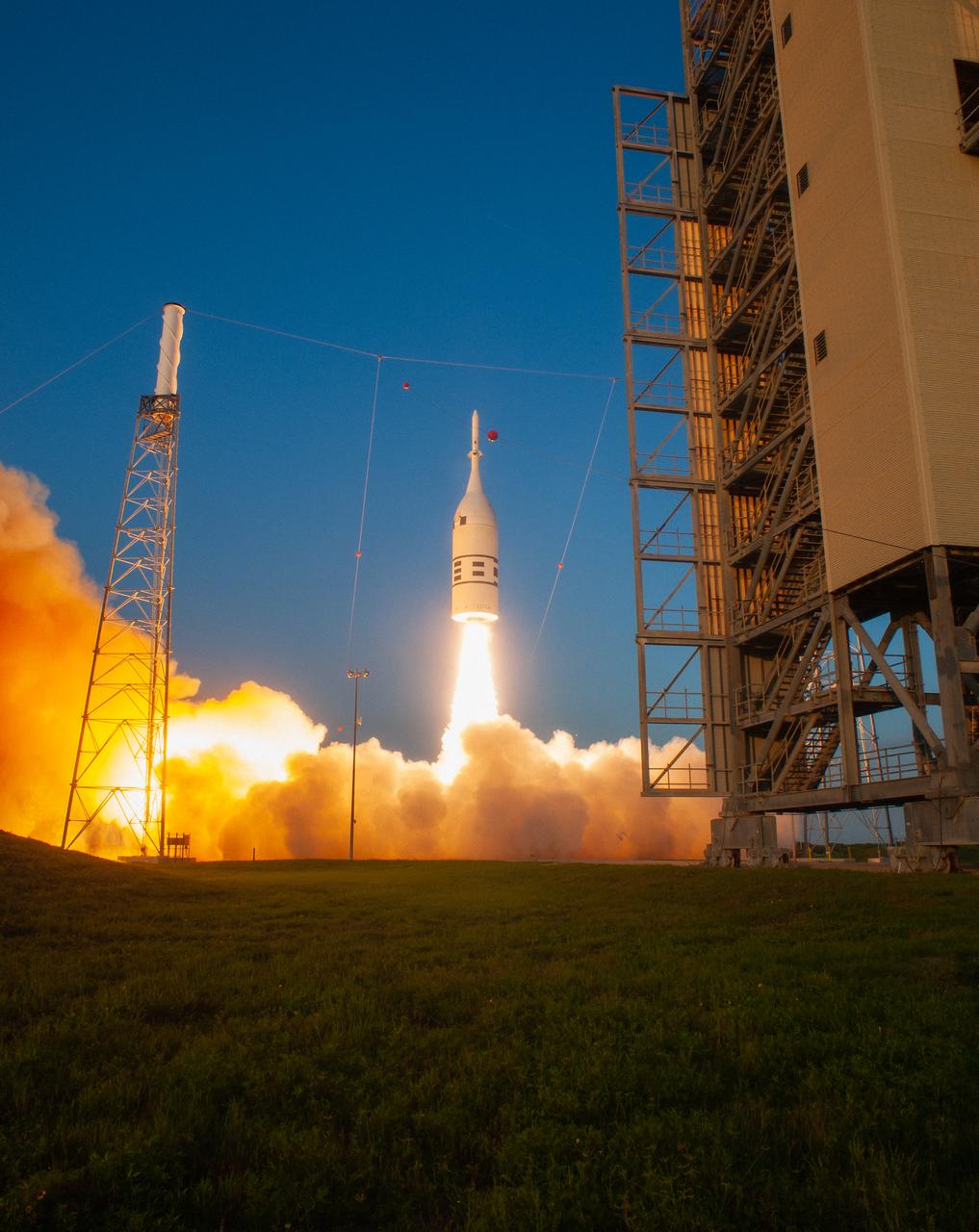
A fully functional Launch Abort System (LAS) with a test version of Orion attached, launches on NASA’s Ascent Abort-2 (AA-2) atop a Northrop Grumman provided booster on July 2, 2019, at 7 a.m. EDT, from Launch Pad 46 at Cape Canaveral Air Force Station in Florida. During AA-2, the booster will send the LAS and Orion to an altitude of 31,000 feet, traveling at Mach 1.15 (more than 1,000 mph). The LAS’ three motors will work together to pull the crew module away from the booster and prepare it for splashdown in the Atlantic Ocean. The flight test will prove that the abort system can pull crew to safety in the unlikely event of an emergency during ascent.
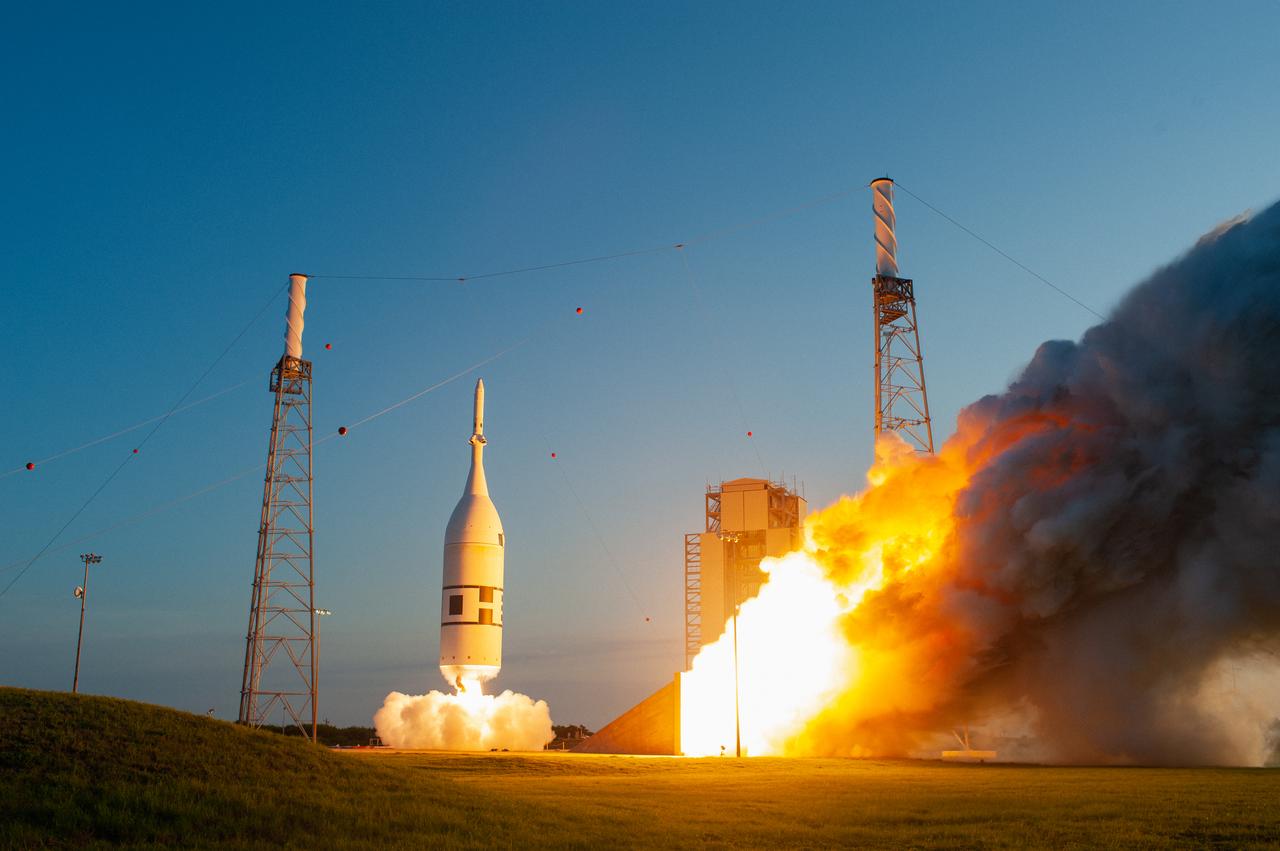
A fully functional Launch Abort System (LAS) with a test version of Orion attached, launches on NASA’s Ascent Abort-2 (AA-2) atop a Northrop Grumman provided booster on July 2, 2019, at 7 a.m. EDT, from Launch Pad 46 at Cape Canaveral Air Force Station in Florida. During AA-2, the booster will send the LAS and Orion to an altitude of 31,000 feet, traveling at Mach 1.15 (more than 1,000 mph). The LAS’ three motors will work together to pull the crew module away from the booster and prepare it for splashdown in the Atlantic Ocean. The flight test will prove that the abort system can pull crew to safety in the unlikely event of an emergency during ascent.
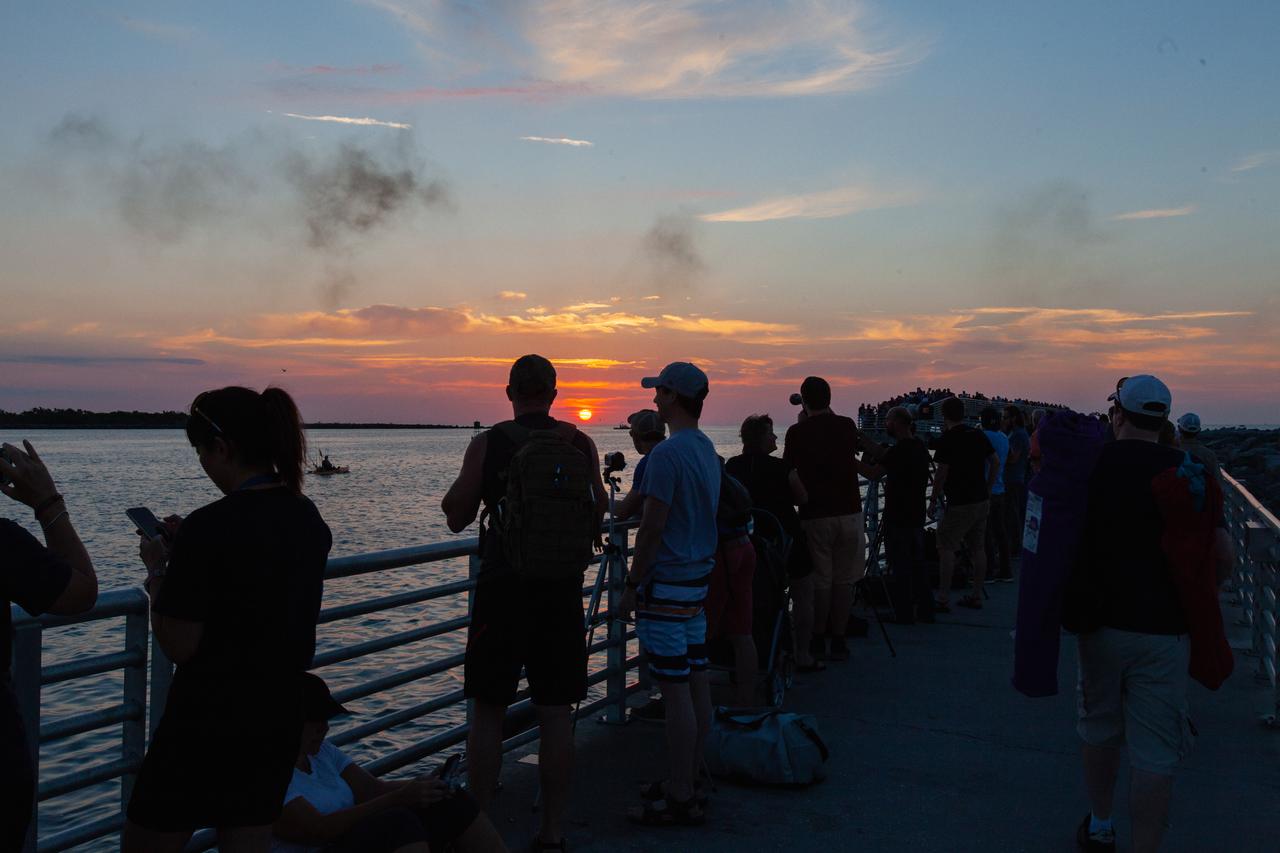
Crowds of spectators watch from Jetty Park in Cape Canaveral, Florida, on July 2, 2019, as a Northrop Grumman provided booster launches from Launch Pad 46 carrying, a fully functional Launch Abort System with a test version of Orion attached for NASA’s Ascent Abort-2 (AA-2). Launch time was 7 a.m. EDT. During AA-2, the booster will send the LAS and Orion to an altitude of 31,000 feet, traveling at Mach 1.15 (more than 1,000 mph). The LAS’ three motors will work together to pull the crew module away from the booster and prepare it for splashdown in the Atlantic Ocean. The flight test will prove that the abort system can pull crew to safety in the unlikely event of an emergency during ascent.
A fully functional Launch Abort System (LAS) with a test version of Orion attached, soars upward on NASA’s Ascent Abort-2 (AA-2) flight test atop a Northrop Grumman provided booster on July 2, 2019, after launching at 7 a.m. EDT, from Launch Pad 46 at Cape Canaveral Air Force Station in Florida. During AA-2, the booster will send the LAS and Orion to an altitude of 31,000 feet, traveling at Mach 1.15 (more than 1,000 mph). The LAS’ three motors will work together to pull the crew module away from the booster and prepare it for splashdown in the Atlantic Ocean. The flight test will prove that the abort system can pull crew to safety in the unlikely event of an emergency during ascent.
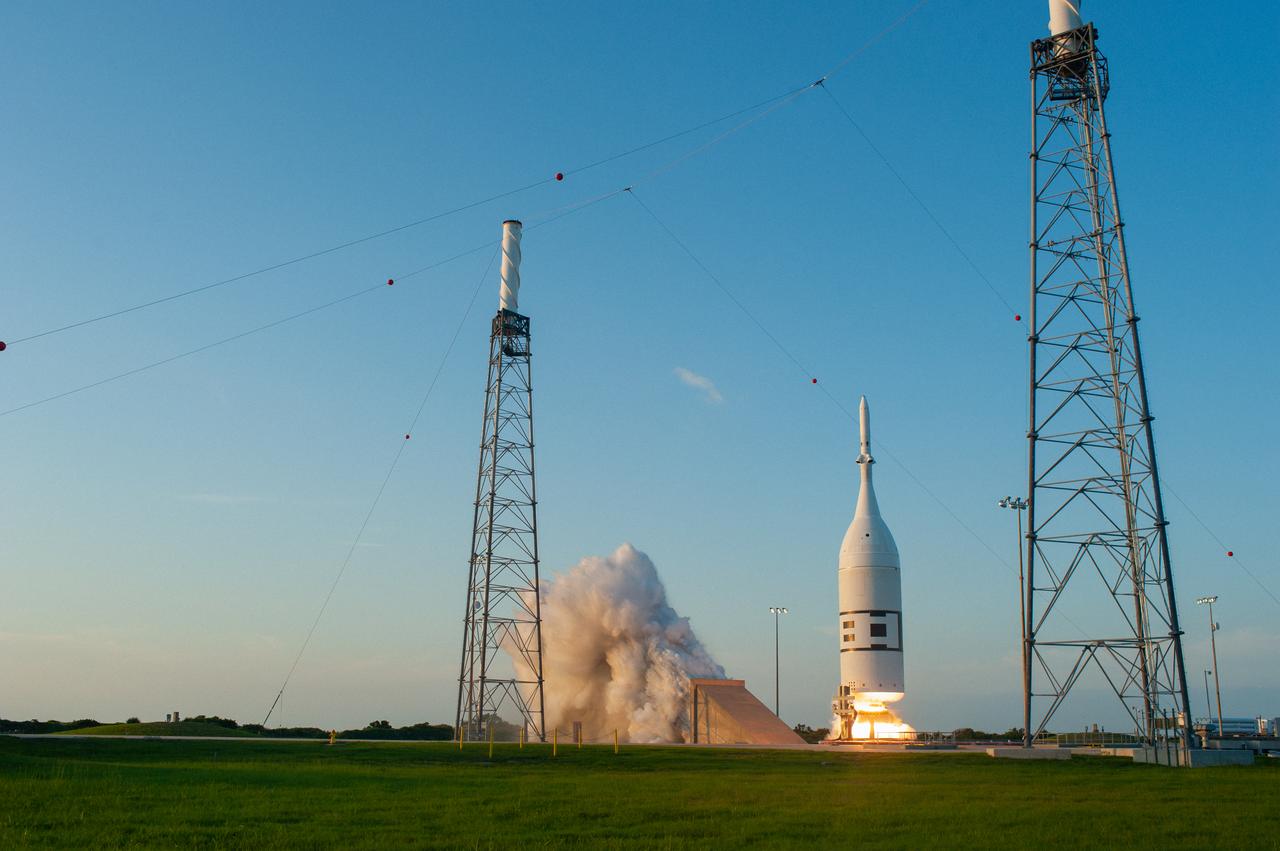
A fully functional Launch Abort System (LAS) with a test version of Orion attached, launches on NASA’s Ascent Abort-2 (AA-2) atop a Northrop Grumman provided booster on July 2, 2019, at 7 a.m. EDT, from Launch Pad 46 at Cape Canaveral Air Force Station in Florida. During AA-2, the booster will send the LAS and Orion to an altitude of 31,000 feet, traveling at Mach 1.15 (more than 1,000 mph). The LAS’ three motors will work together to pull the crew module away from the booster and prepare it for splashdown in the Atlantic Ocean. The flight test will prove that the abort system can pull crew to safety in the unlikely event of an emergency during ascent.
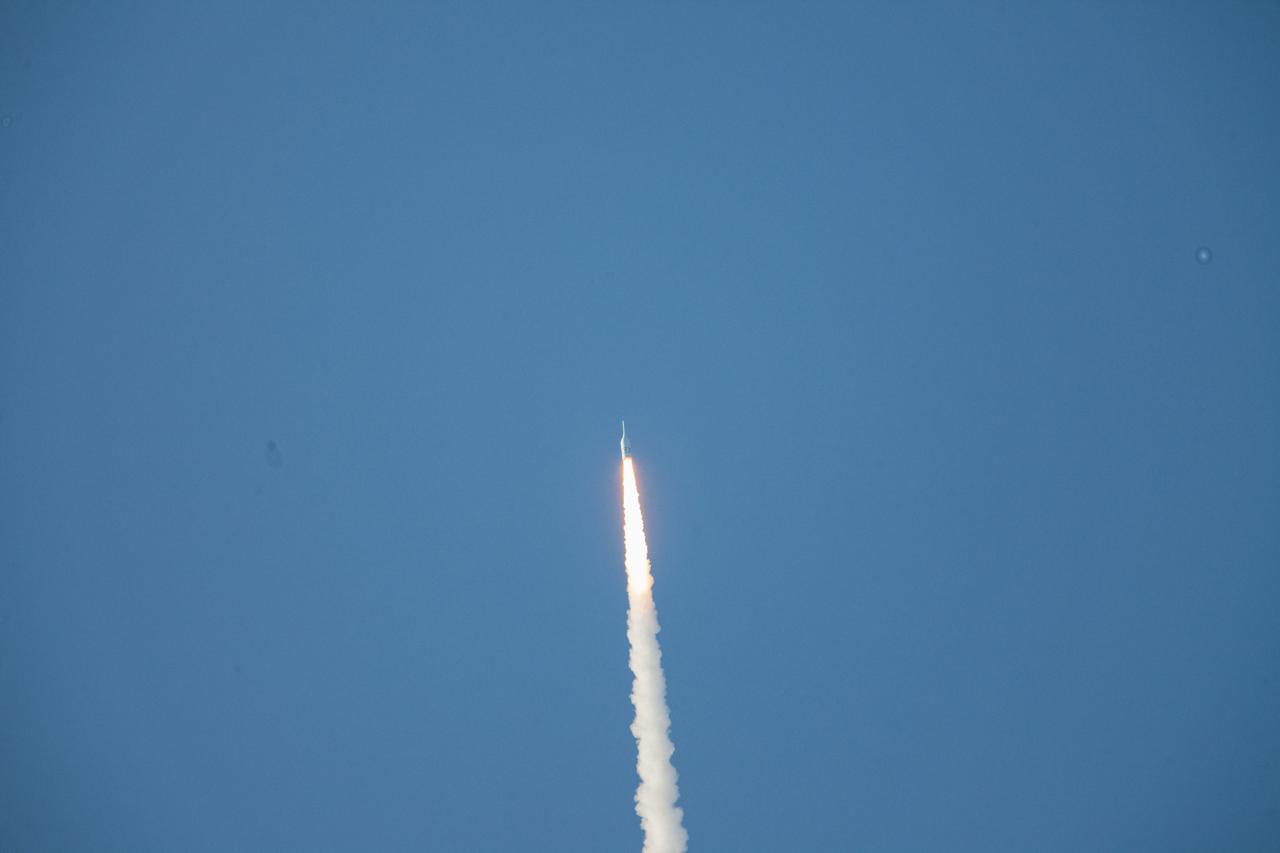
A fully functional Launch Abort System (LAS) with a test version of Orion attached, soars upward on NASA’s Ascent Abort-2 (AA-2) flight test atop a Northrop Grumman provided booster on July 2, 2019, after launching at 7 a.m. EDT, from Launch Pad 46 at Cape Canaveral Air Force Station in Florida. During AA-2, the booster will send the LAS and Orion to an altitude of 31,000 feet, traveling at Mach 1.15 (more than 1,000 mph). The LAS’ three motors will work together to pull the crew module away from the booster and prepare it for splashdown in the Atlantic Ocean. The flight test will prove that the abort system can pull crew to safety in the unlikely event of an emergency during ascent.

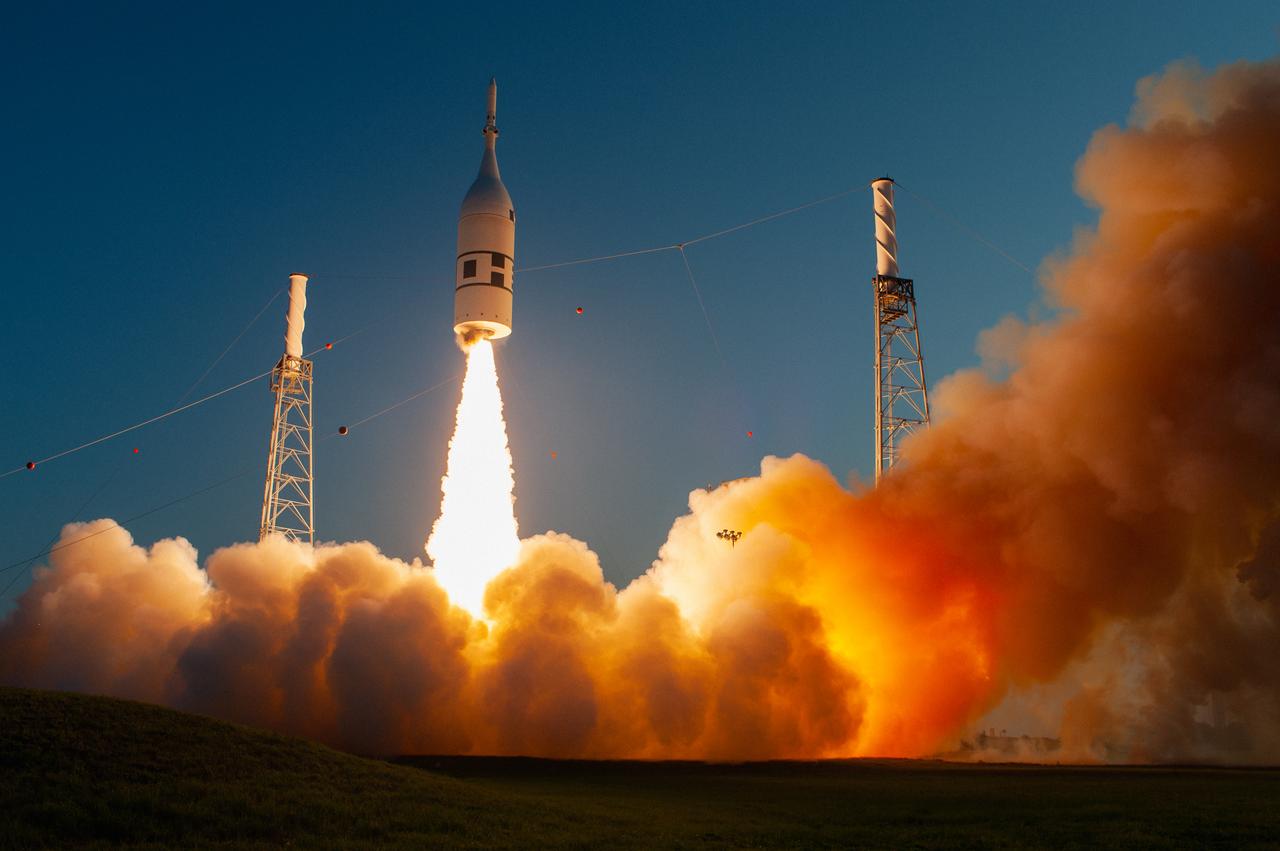
A fully functional Launch Abort System (LAS) with a test version of Orion attached, soars upward on NASA’s Ascent Abort-2 (AA-2) flight test atop a Northrop Grumman provided booster on July 2, 2019, after launching at 7 a.m. EDT, from Launch Pad 46 at Cape Canaveral Air Force Station in Florida. During AA-2, the booster will send the LAS and Orion to an altitude of 31,000 feet, traveling at Mach 1.15 (more than 1,000 mph). The LAS’ three motors will work together to pull the crew module away from the booster and prepare it for splashdown in the Atlantic Ocean. The flight test will prove that the abort system can pull crew to safety in the unlikely event of an emergency during ascent.
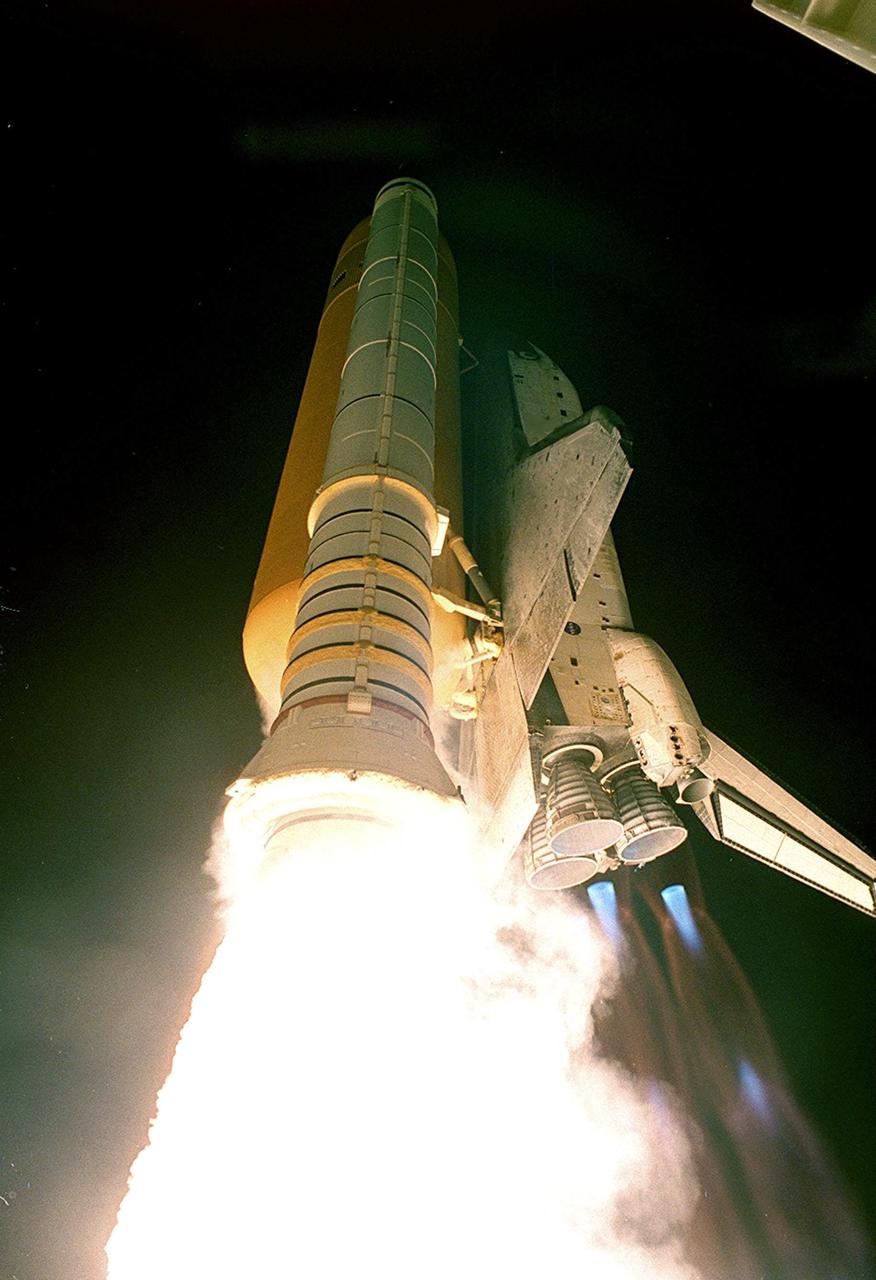
KENNEDY SPACE CENTER, Fla. -- Space Shuttle Discovery roars through the sky trailing fire and blue mach diamonds from the engines. The perfect on-time liftoff at 7:17 p.m. EDT sends a crew of seven on a construction flight to the International Space Station on mission STS-92, the 100th in the history of the Shuttle program. Discovery also carries a payload that includes the Integrated Truss Structure Z-1, first of 10 trusses that will form the backbone of the Space Station, and the third Pressurized Mating Adapter that will provide a Shuttle docking port for solar array installation on the sixth Station flight and Lab installation on the seventh Station flight. Discovery’s landing is expected Oct. 22 at 2:10 p.m. EDT
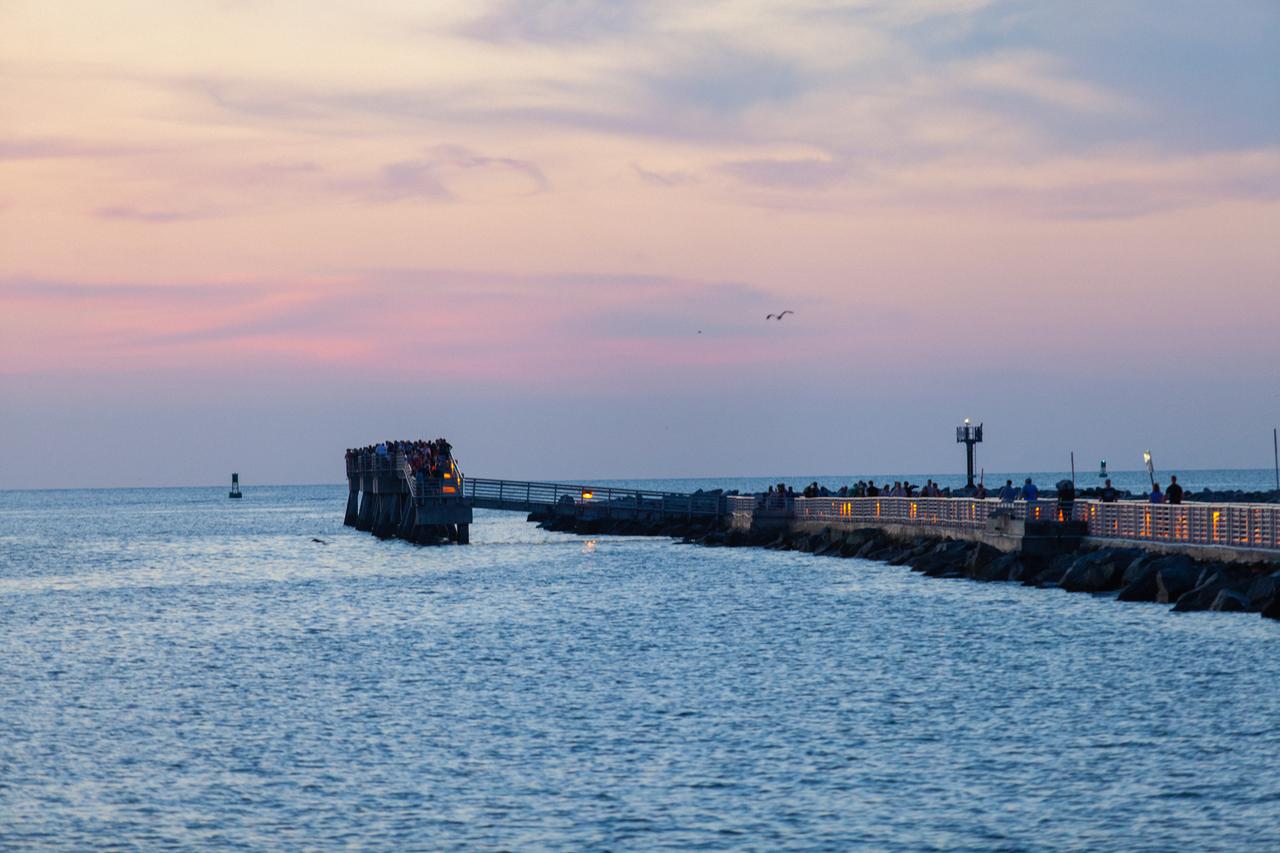
A view of Jetty Park in Cape Canaveral, Florida, on July 2, 2019, as crowds gather to watch a Northrop Grumman provided booster launch from Launch Pad 46 carrying a fully functional Launch Abort System with a test version of Orion attached for NASA’s Ascent Abort-2 (AA-2). Launch time was 7 a.m. EDT. During AA-2, the booster will send the LAS and Orion to an altitude of 31,000 feet, traveling at Mach 1.15 (more than 1,000 mph). The LAS’ three motors will work together to pull the crew module away from the booster and prepare it for splashdown in the Atlantic Ocean. The flight test will prove that the abort system can pull crew to safety in the unlikely event of an emergency during ascent.
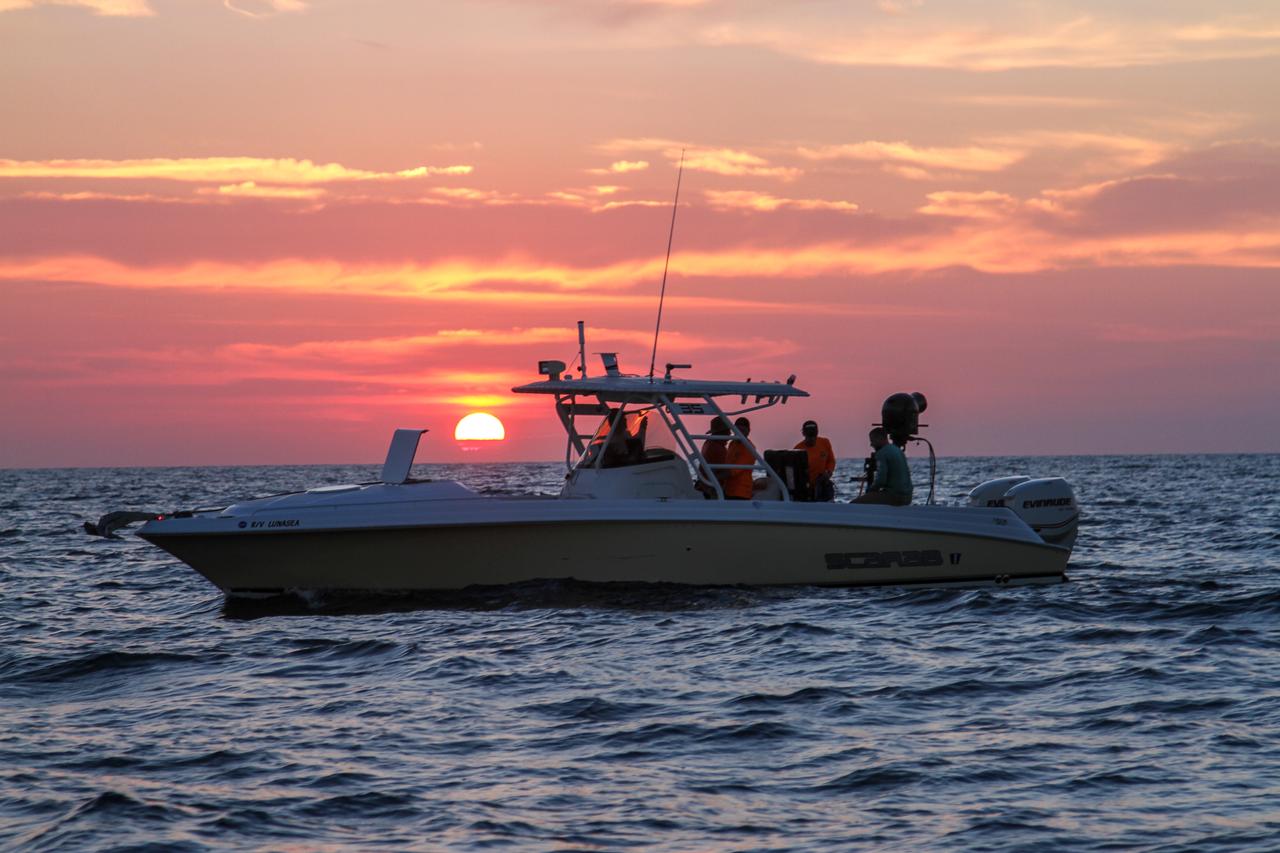
Members of the NASA Ejectable Data Recorder Recovery Team search for the ejectable data recorders in the Atlantic Ocean off the coast of Florida on July 2, 2019, after the Ascent Abort-2 (AA-2) flight test. During AA-2, a fully functional Launch Abort System (LAS) with a test version of Orion attached, launched atop a Northrop Grumman provided booster from Launch Pad 46 at Cape Canaveral Air Force Station on July 2, 2019. Liftoff was at 7 a.m. EDT. During AA-2, the booster sent the LAS and Orion to an altitude of 31,000 feet, traveling at Mach 1.15 (more than 1,000 mph). The LAS’ three motors worked together to pull the crew module away from the booster and prepare it for splashdown in the Atlantic Ocean. The flight test proves that the abort system can pull crew to safety in the unlikely event of an emergency during ascent. Data from the recorders will be analyzed by engineers.

A fully functional Launch Abort System (LAS) with a test version of Orion attached, soars upward on NASA’s Ascent Abort-2 (AA-2) flight test atop a Northrop Grumman provided booster on July 2, 2019, after launching at 7 a.m. EDT, from Launch Pad 46 at Cape Canaveral Air Force Station in Florida. During AA-2, the booster will send the LAS and Orion to an altitude of 31,000 feet, traveling at Mach 1.15 (more than 1,000 mph). The LAS’ three motors will work together to pull the crew module away from the booster and prepare it for splashdown in the Atlantic Ocean. The flight test will prove that the abort system can pull crew to safety in the unlikely event of an emergency during ascent.
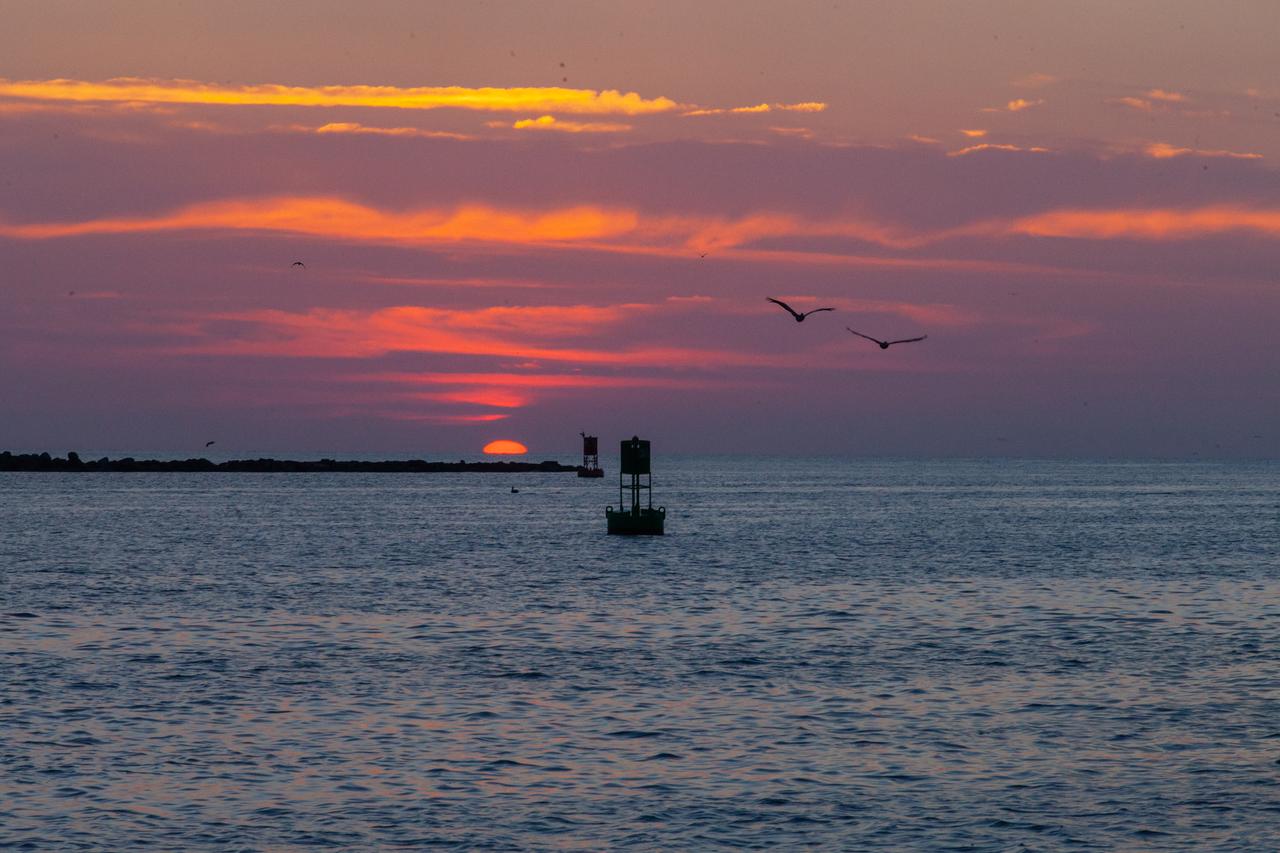
A view of the sunrise at Jetty Park in Cape Canaveral, Florida, on July 2, 2019, as crowds gather to watch a Northrop Grumman provided booster launch from Launch Pad 46 carrying, a fully functional Launch Abort System with a test version of Orion attached for NASA’s Ascent Abort-2 (AA-2). Launch time was 7 a.m. EDT. During AA-2, the booster will send the LAS and Orion to an altitude of 31,000 feet, traveling at Mach 1.15 (more than 1,000 mph). The LAS’ three motors will work together to pull the crew module away from the booster and prepare it for splashdown in the Atlantic Ocean. The flight test will prove that the abort system can pull crew to safety in the unlikely event of an emergency during ascent.
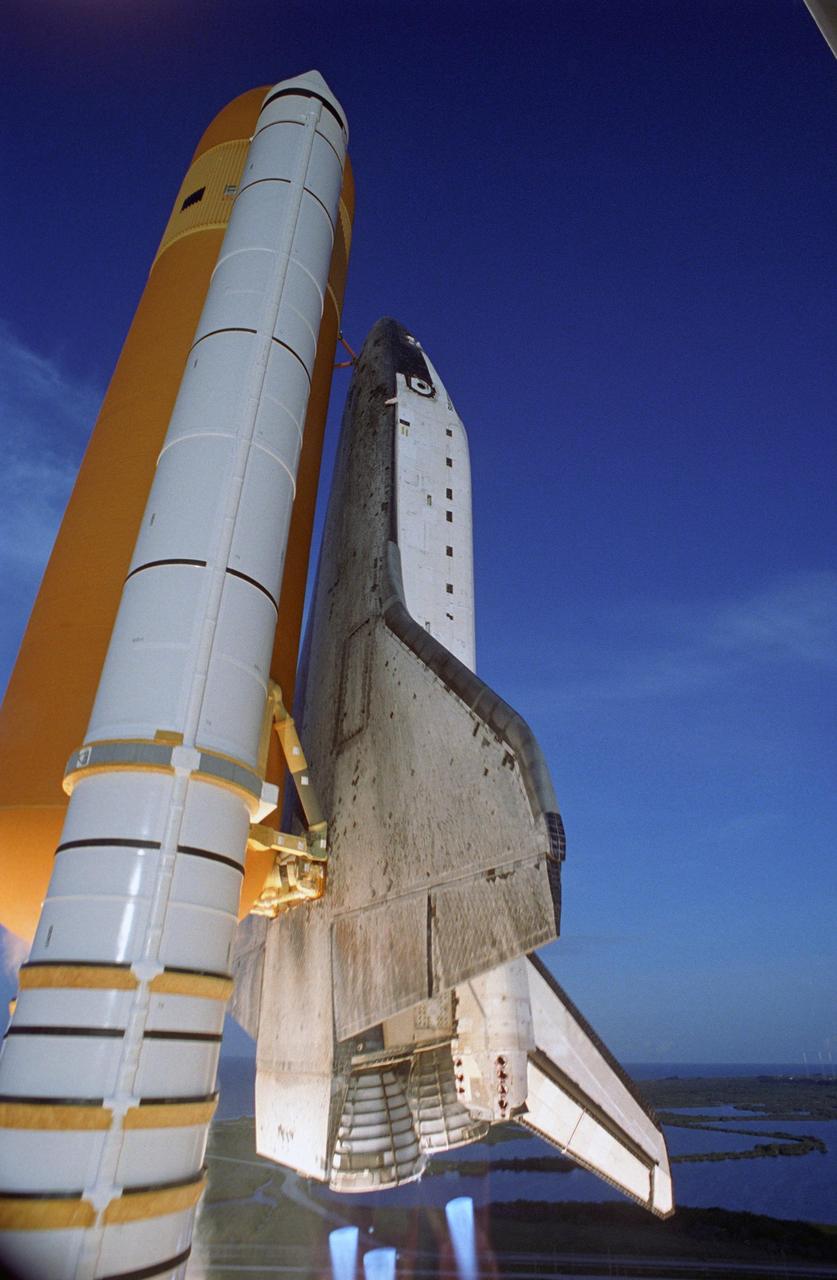
KENNEDY SPACE CENTER, FLA. -- Space Shuttle Atlantis rockets into the blue sky above Launch Pad 39A after liftoff. Beneath Atlantis' main engines are blue cones of light, known as shock or mach diamonds. They are a formation of shock waves in the exhaust plume of an aerospace propulsion system. Liftoff of Atlantis on mission STS-117 to the International Space Station was on time at 7:38:04 p.m. EDT. The shuttle is delivering a new segment to the starboard side of the International Space Station's backbone, known as the truss. Three spacewalks are planned to install the S3/S4 truss segment, deploy a set of solar arrays and prepare them for operation. STS-117 is the 118th space shuttle flight, the 21st flight to the station, the 28th flight for Atlantis and the first of four flights planned for 2007. Photo Credit: NASA/Tony Gray & Don Kight
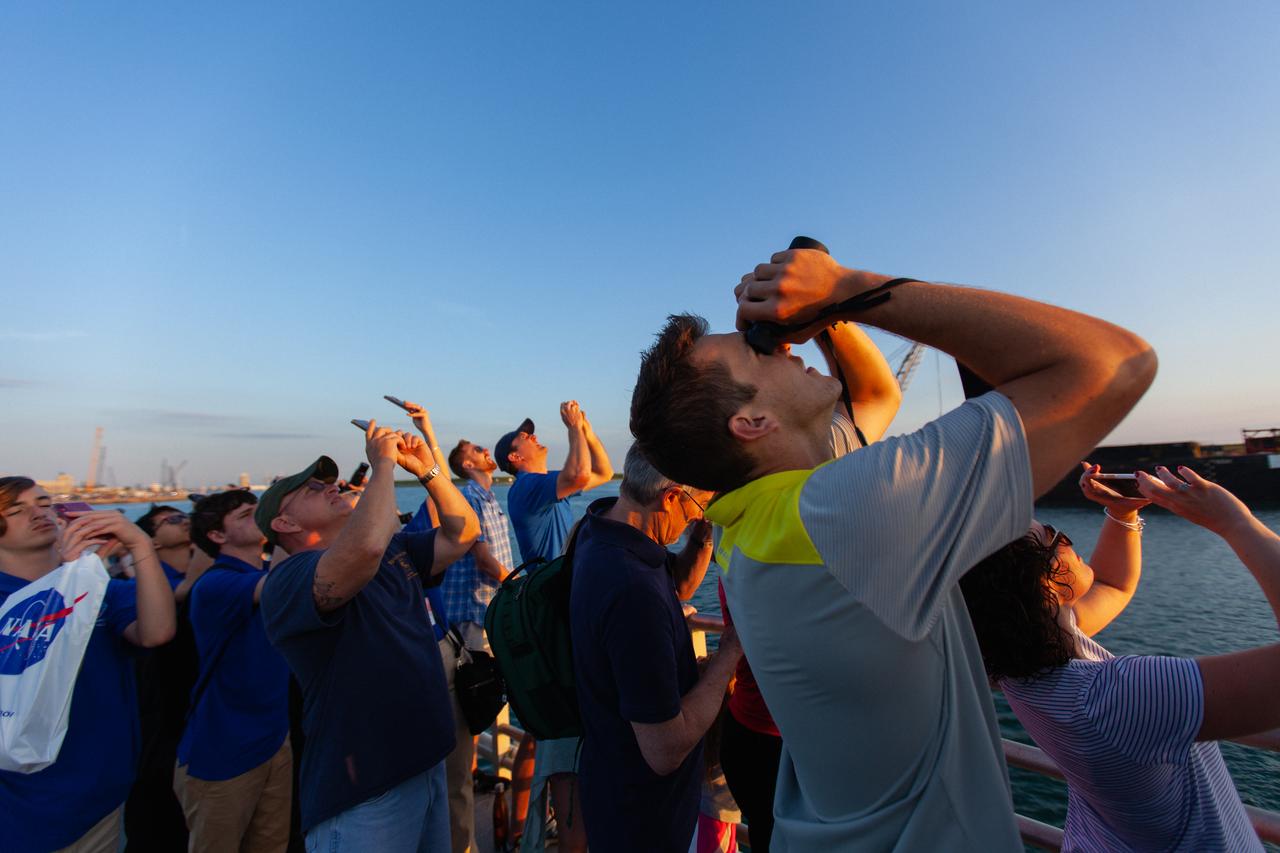
Crowds of spectators watch from Jetty Park in Cape Canaveral, Florida, on July 2, 2019, as a Northrop Grumman provided booster launches from Launch Pad 46 carrying, a fully functional Launch Abort System with a test version of Orion attached for NASA’s Ascent Abort-2 (AA-2). Launch time was 7 a.m. EDT. During AA-2, the booster will send the LAS and Orion to an altitude of 31,000 feet, traveling at Mach 1.15 (more than 1,000 mph). The LAS’ three motors will work together to pull the crew module away from the booster and prepare it for splashdown in the Atlantic Ocean. The flight test will prove that the abort system can pull crew to safety in the unlikely event of an emergency during ascent.
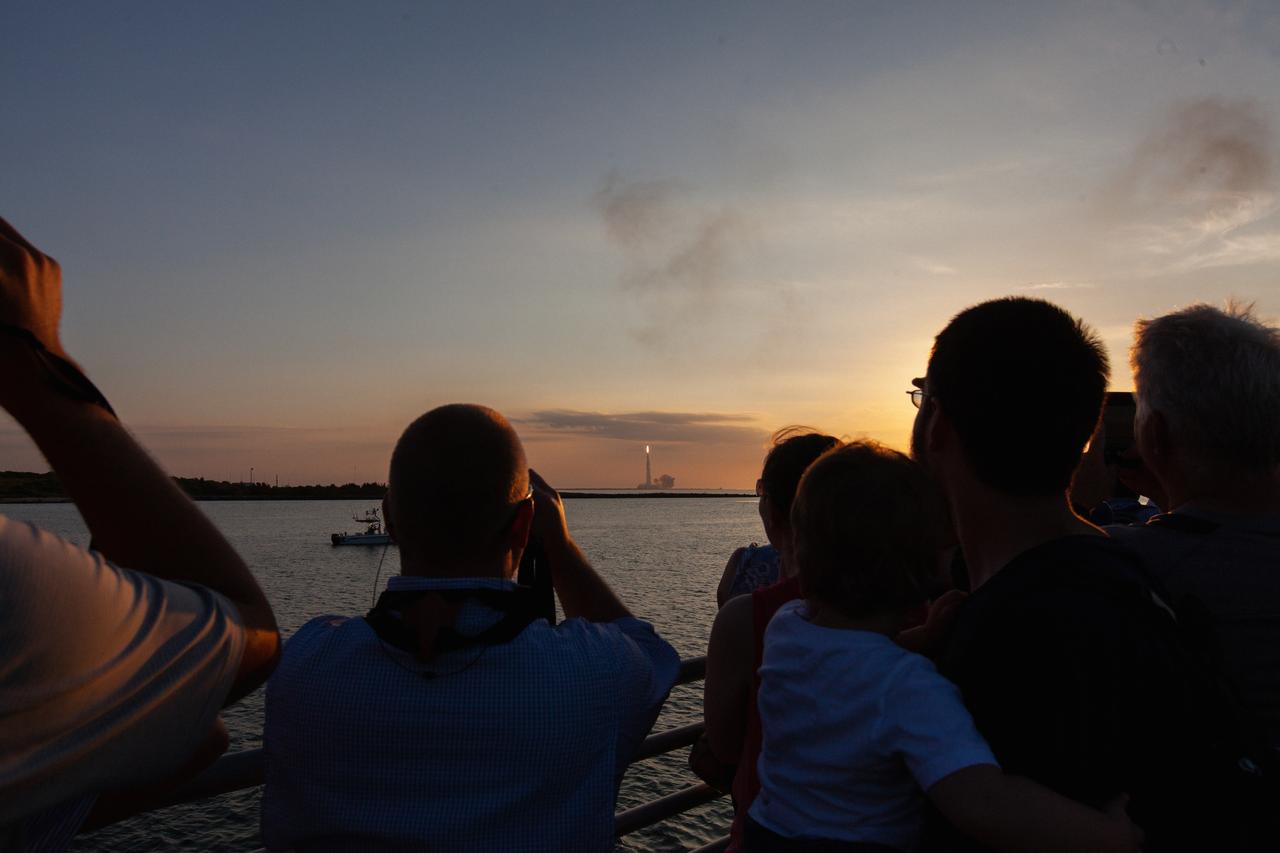
Crowds of spectators watch from Jetty Park in Cape Canaveral, Florida, on July 2, 2019, as a Northrop Grumman provided booster launches from Launch Pad 46 carrying, a fully functional Launch Abort System with a test version of Orion attached for NASA’s Ascent Abort-2 (AA-2). Launch time was 7 a.m. EDT. During AA-2, the booster will send the LAS and Orion to an altitude of 31,000 feet, traveling at Mach 1.15 (more than 1,000 mph). The LAS’ three motors will work together to pull the crew module away from the booster and prepare it for splashdown in the Atlantic Ocean. The flight test will prove that the abort system can pull crew to safety in the unlikely event of an emergency during ascent.
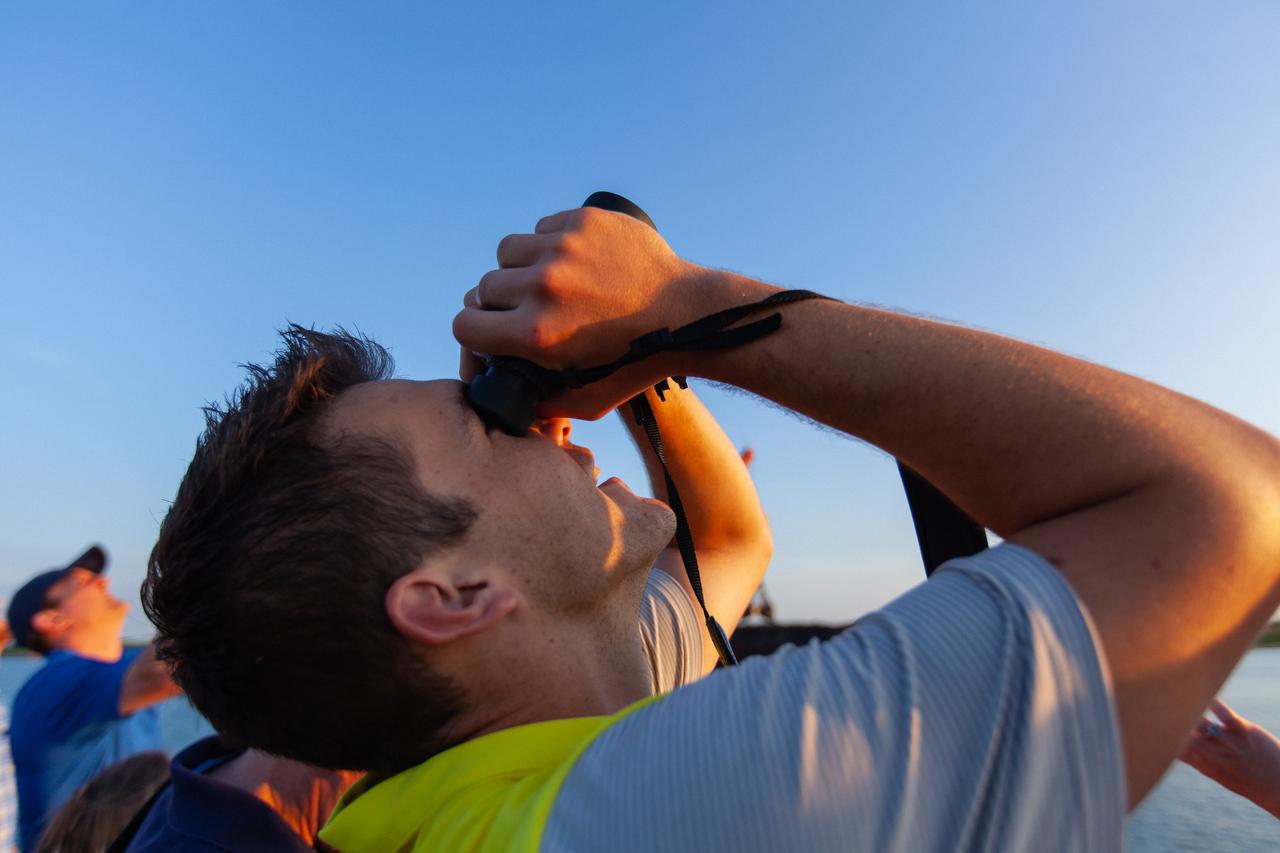
Crowds of spectators watch from Jetty Park in Cape Canaveral, Florida, on July 2, 2019, as a Northrop Grumman provided booster launches from Launch Pad 46 carrying, a fully functional Launch Abort System with a test version of Orion attached for NASA’s Ascent Abort-2 (AA-2). Launch time was 7 a.m. EDT. During AA-2, the booster will send the LAS and Orion to an altitude of 31,000 feet, traveling at Mach 1.15 (more than 1,000 mph). The LAS’ three motors will work together to pull the crew module away from the booster and prepare it for splashdown in the Atlantic Ocean. The flight test will prove that the abort system can pull crew to safety in the unlikely event of an emergency during ascent.
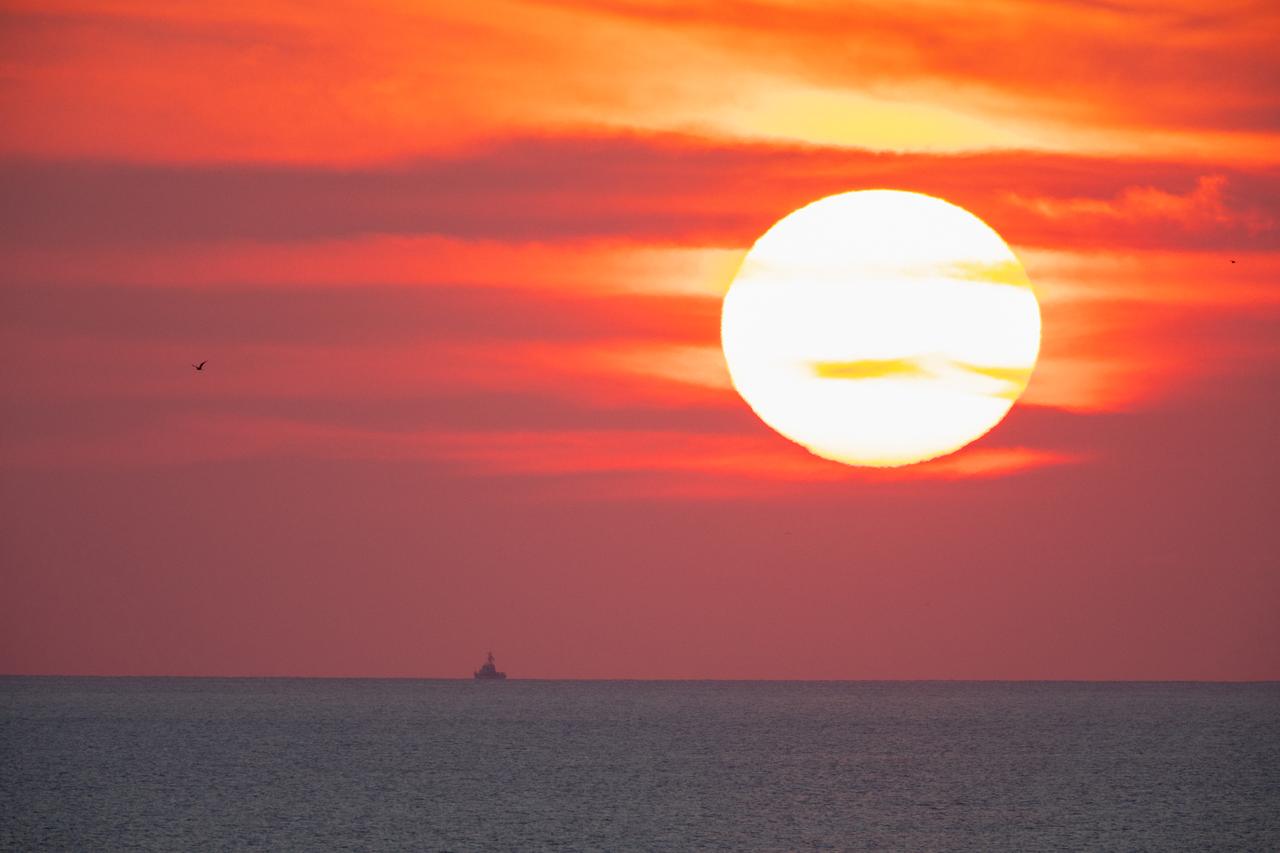
A brilliant sunrise fills the sky before a fully functional Launch Abort System (LAS) with a test version of Orion attached, launches on NASA’s Ascent Abort-2 (AA-2) atop a Northrop Grumman provided booster on July 2, 2019, at 7 a.m. EDT, from Launch Pad 46 at Cape Canaveral Air Force Station in Florida. During AA-2, the booster will send the LAS and Orion to an altitude of 31,000 feet, traveling at Mach 1.15 (more than 1,000 mph). The LAS’ three motors will work together to pull the crew module away from the booster and prepare it for splashdown in the Atlantic Ocean. The flight test will prove that the abort system can pull crew to safety in the unlikely event of an emergency during ascent.
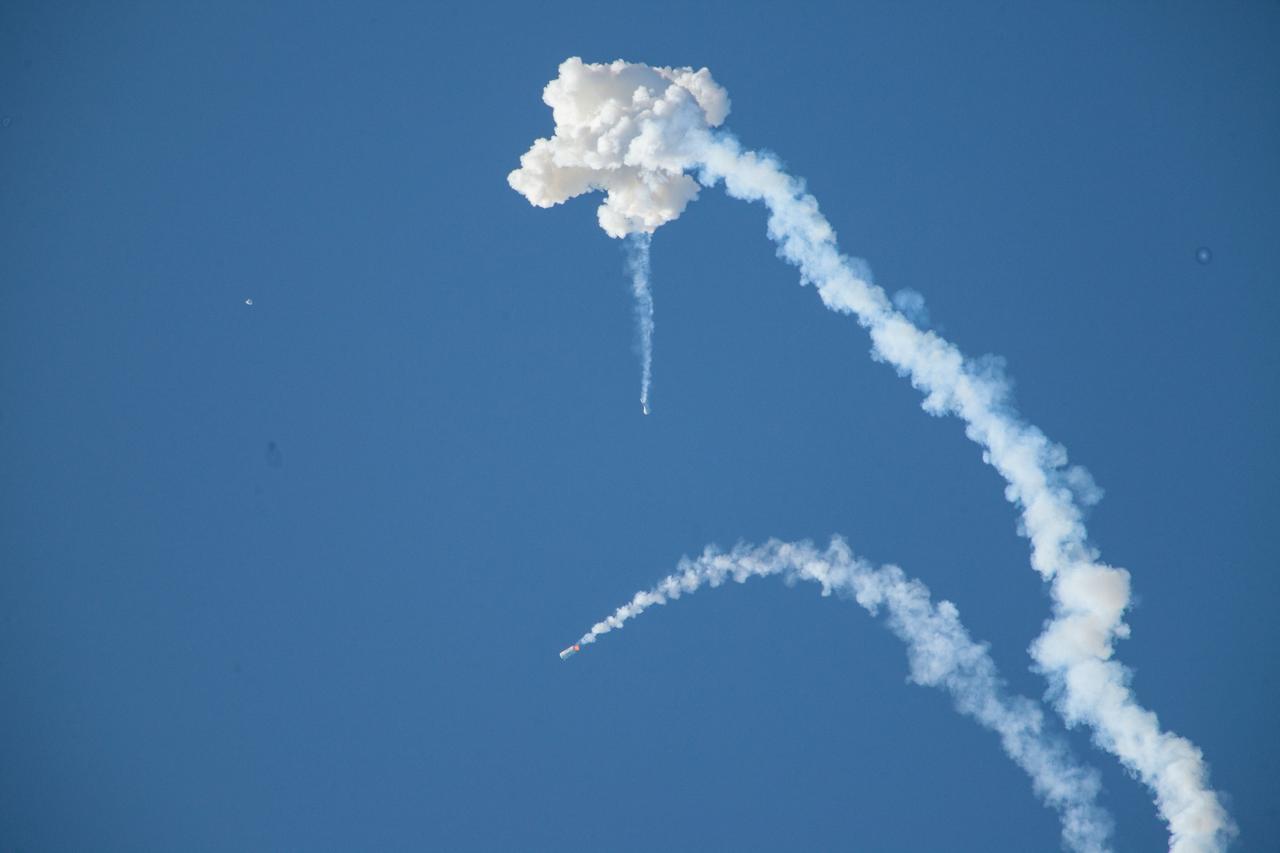
A fully functional Launch Abort System (LAS) with a test version of Orion attached, soars upward on NASA’s Ascent Abort-2 (AA-2) flight test atop a Northrop Grumman provided booster on July 2, 2019, after launching at 7 a.m. EDT, from Launch Pad 46 at Cape Canaveral Air Force Station in Florida. During AA-2, the booster will send the LAS and Orion to an altitude of 31,000 feet, traveling at Mach 1.15 (more than 1,000 mph). The LAS’ three motors will work together to pull the crew module away from the booster and prepare it for splashdown in the Atlantic Ocean. The flight test will prove that the abort system can pull crew to safety in the unlikely event of an emergency during ascent.
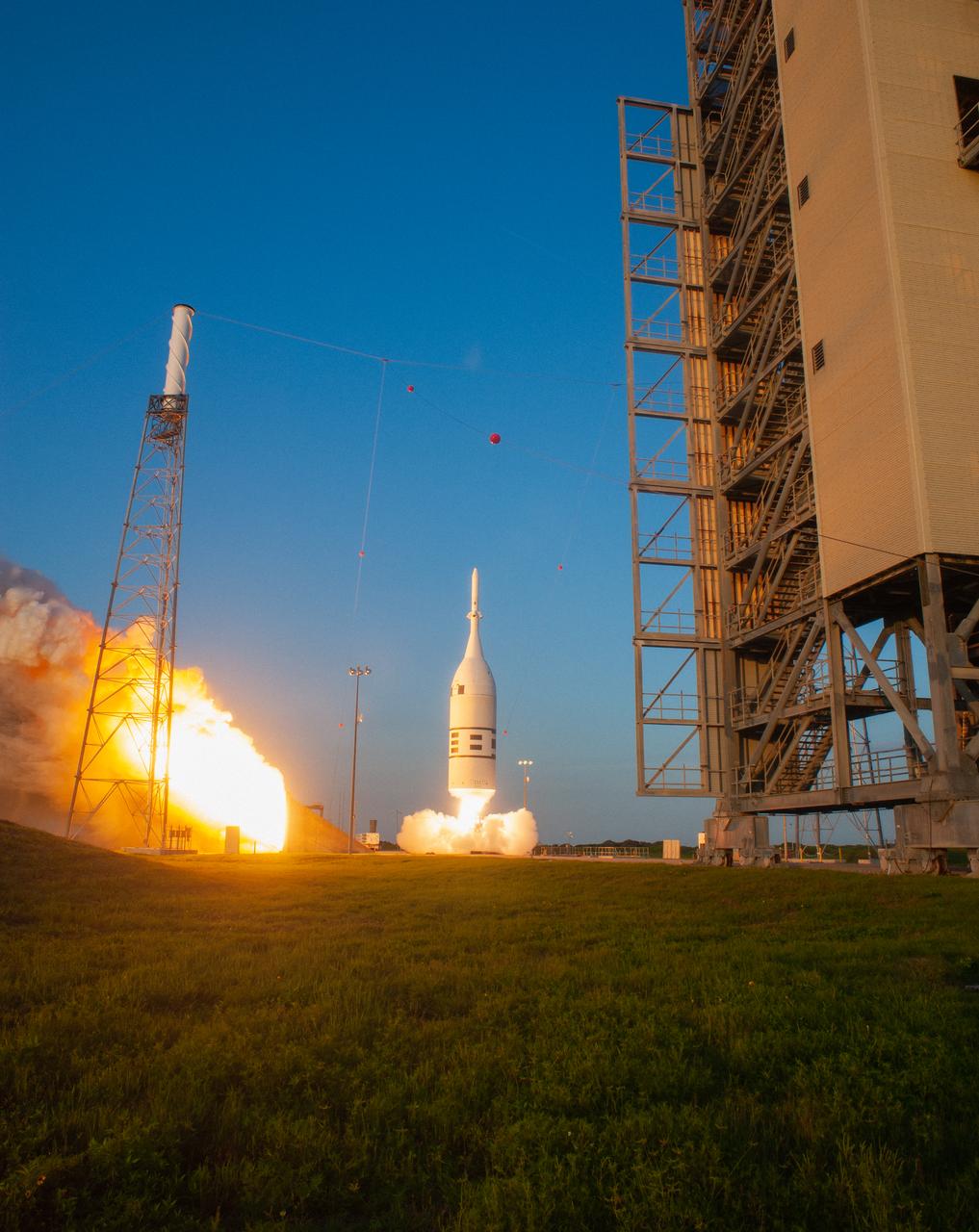
A fully functional Launch Abort System (LAS) with a test version of Orion attached, launches on NASA’s Ascent Abort-2 (AA-2) atop a Northrop Grumman provided booster on July 2, 2019, at 7 a.m. EDT, from Launch Pad 46 at Cape Canaveral Air Force Station in Florida. During AA-2, the booster will send the LAS and Orion to an altitude of 31,000 feet, traveling at Mach 1.15 (more than 1,000 mph). The LAS’ three motors will work together to pull the crew module away from the booster and prepare it for splashdown in the Atlantic Ocean. The flight test will prove that the abort system can pull crew to safety in the unlikely event of an emergency during ascent.
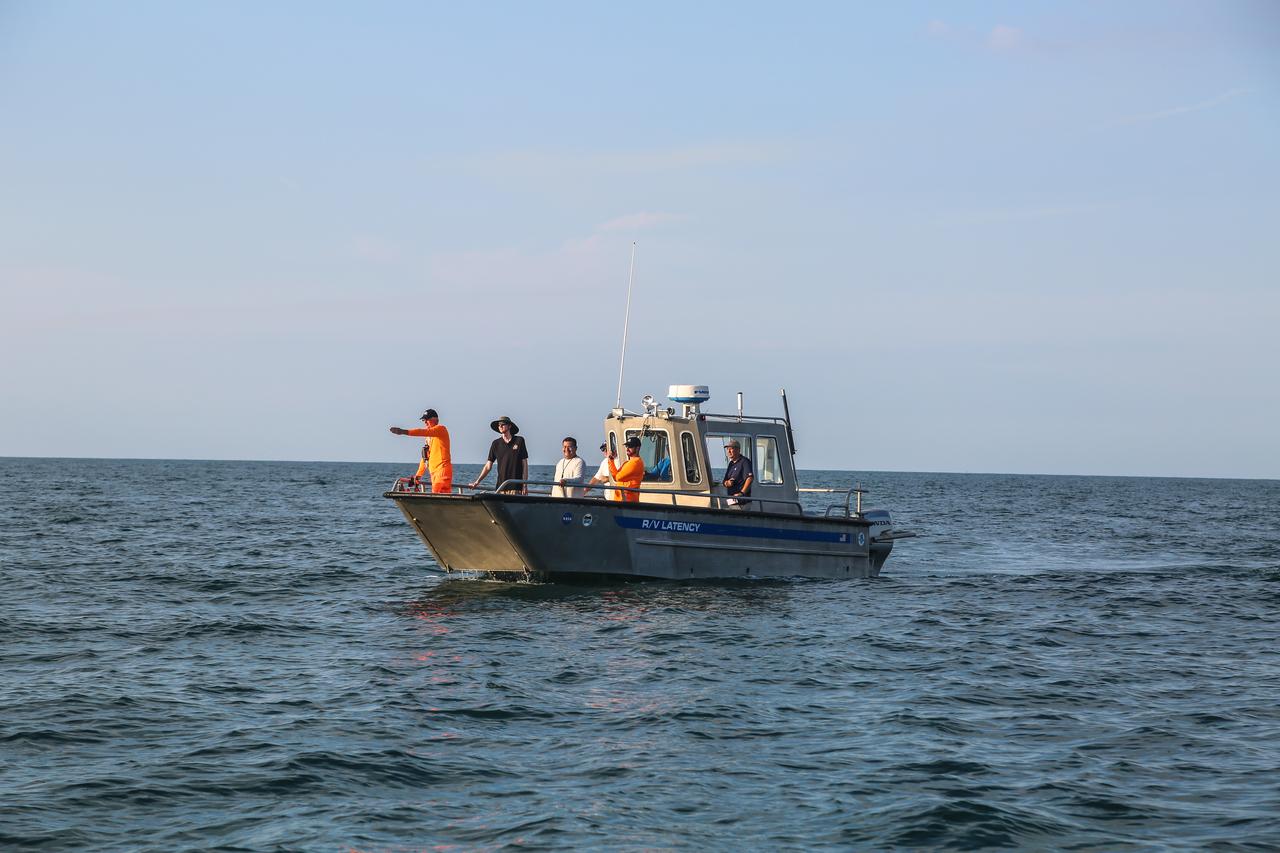
Members of the NASA Ejectable Data Recorder Recovery Team search for the ejectable data recorders in the Atlantic Ocean off the coast of Florida on July 2, 2019, after the Ascent Abort-2 (AA-2) flight test. During AA-2, a fully functional Launch Abort System (LAS) with a test version of Orion attached, launched atop a Northrop Grumman provided booster from Launch Pad 46 at Cape Canaveral Air Force Station on July 2, 2019. Liftoff was at 7 a.m. EDT. During AA-2, the booster sent the LAS and Orion to an altitude of 31,000 feet, traveling at Mach 1.15 (more than 1,000 mph). The LAS’ three motors worked together to pull the crew module away from the booster and prepare it for splashdown in the Atlantic Ocean. The flight test proves that the abort system can pull crew to safety in the unlikely event of an emergency during ascent. Data from the recorders will be analyzed by engineers.
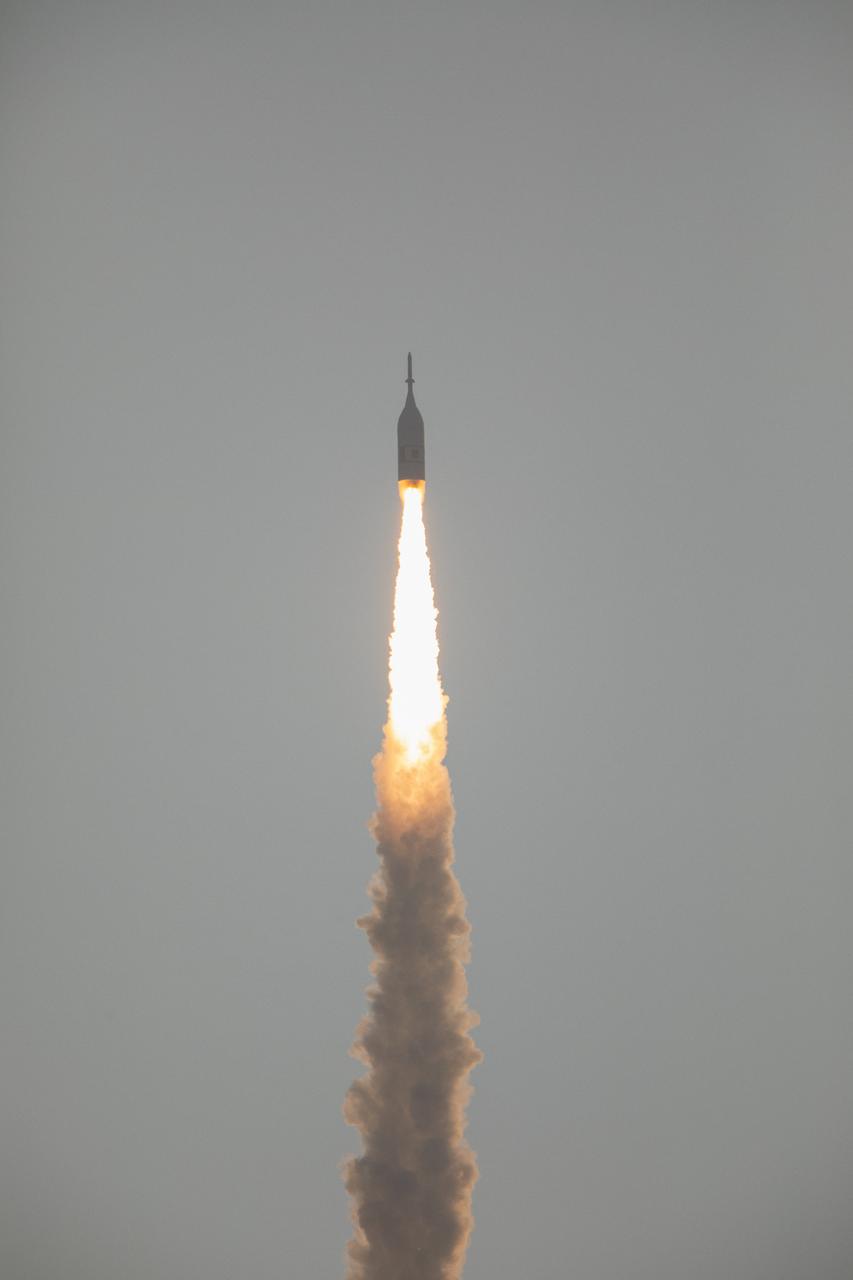
A fully functional Launch Abort System (LAS) with a test version of Orion attached, launches on NASA’s Ascent Abort-2 (AA-2) atop a Northrop Grumman provided booster on July 2, 2019, at 7 a.m. EDT, from Launch Pad 46 at Cape Canaveral Air Force Station in Florida. During AA-2, the booster will send the LAS and Orion to an altitude of 31,000 feet, traveling at Mach 1.15 (more than 1,000 mph). The LAS’ three motors will work together to pull the crew module away from the booster and prepare it for splashdown in the Atlantic Ocean. The flight test will prove that the abort system can pull crew to safety in the unlikely event of an emergency during ascent.
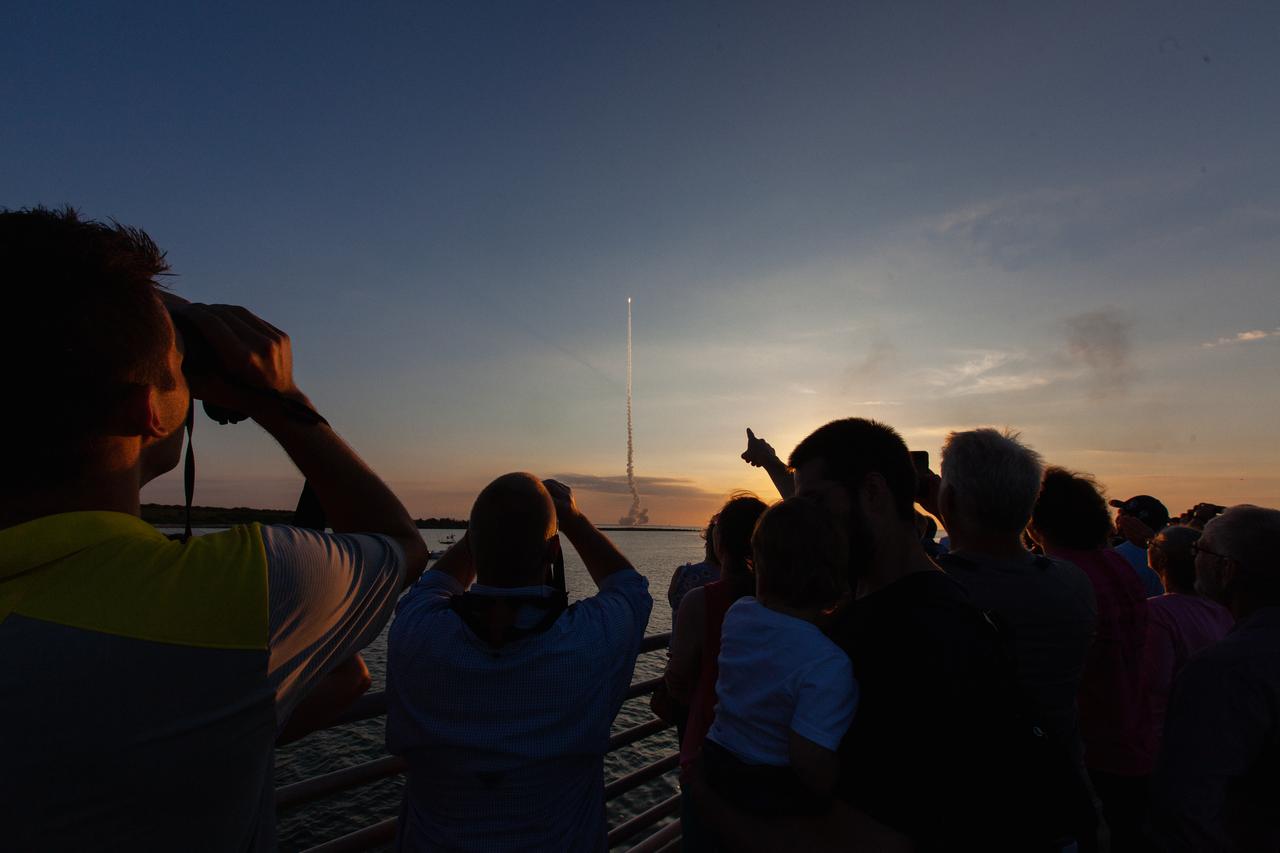
Crowds of spectators watch from Jetty Park in Cape Canaveral, Florida, on July 2, 2019, as a Northrop Grumman provided booster launches from Launch Pad 46 carrying, a fully functional Launch Abort System with a test version of Orion attached for NASA’s Ascent Abort-2 (AA-2). Launch time was 7 a.m. EDT. During AA-2, the booster will send the LAS and Orion to an altitude of 31,000 feet, traveling at Mach 1.15 (more than 1,000 mph). The LAS’ three motors will work together to pull the crew module away from the booster and prepare it for splashdown in the Atlantic Ocean. The flight test will prove that the abort system can pull crew to safety in the unlikely event of an emergency during ascent.
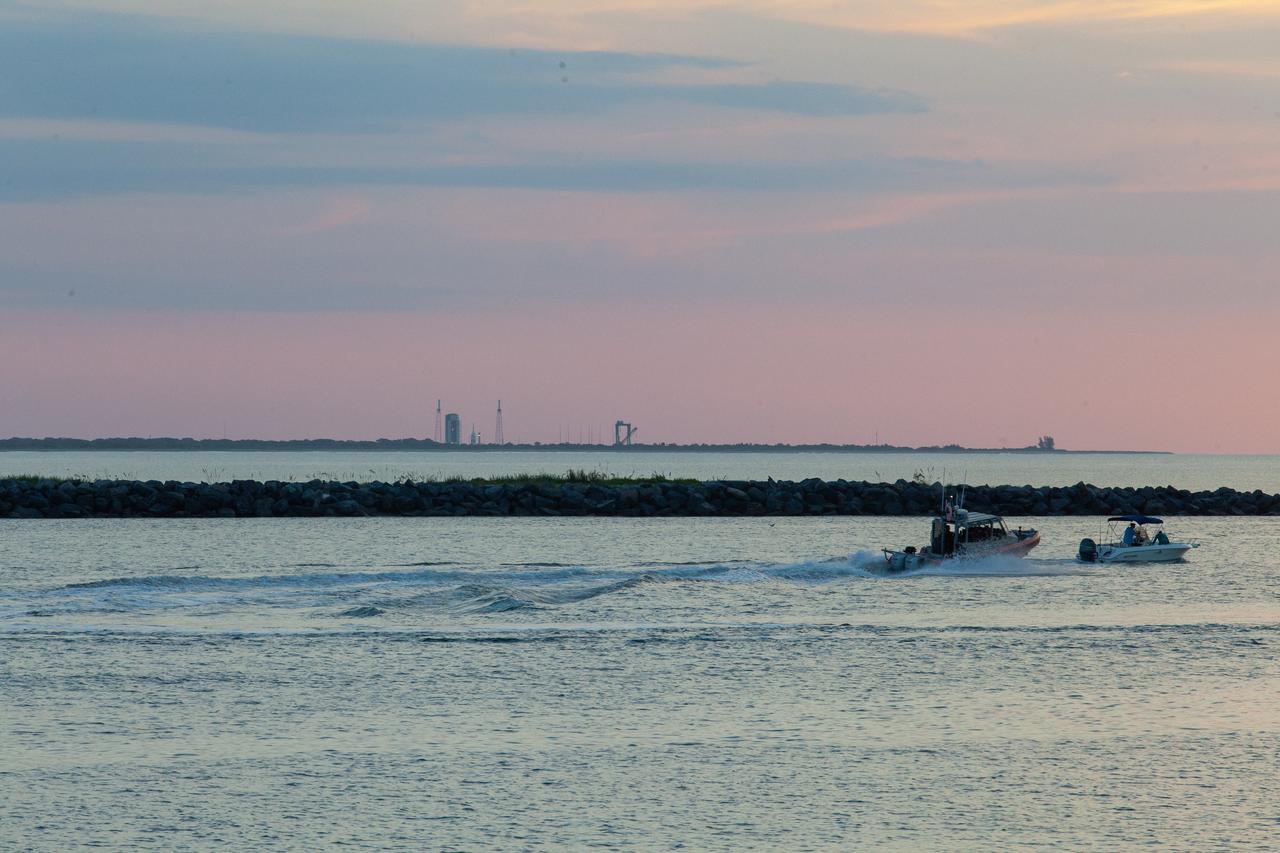
A view of Jetty Park in Cape Canaveral, Florida, during sunrise on July 2, 2019. Crowds will soon gather to watch as a Northrop Grumman provided booster launches from Launch Pad 46, carrying a fully functional Launch Abort System with a test version of Orion attached for NASA’s Ascent Abort-2 (AA-2). Launch time was 7 a.m. EDT. During AA-2, the booster will send the LAS and Orion to an altitude of 31,000 feet, traveling at Mach 1.15 (more than 1,000 mph). The LAS’ three motors will work together to pull the crew module away from the booster and prepare it for splashdown in the Atlantic Ocean. The flight test will prove that the abort system can pull crew to safety in the unlikely event of an emergency during ascent.

A brilliant sunrise fills the sky before a fully functional Launch Abort System (LAS) with a test version of Orion attached, launches on NASA’s Ascent Abort-2 (AA-2) atop a Northrop Grumman provided booster on July 2, 2019, at 7 a.m. EDT, from Launch Pad 46 at Cape Canaveral Air Force Station in Florida. During AA-2, the booster will send the LAS and Orion to an altitude of 31,000 feet, traveling at Mach 1.15 (more than 1,000 mph). The LAS’ three motors will work together to pull the crew module away from the booster and prepare it for splashdown in the Atlantic Ocean. The flight test will prove that the abort system can pull crew to safety in the unlikely event of an emergency during ascent.
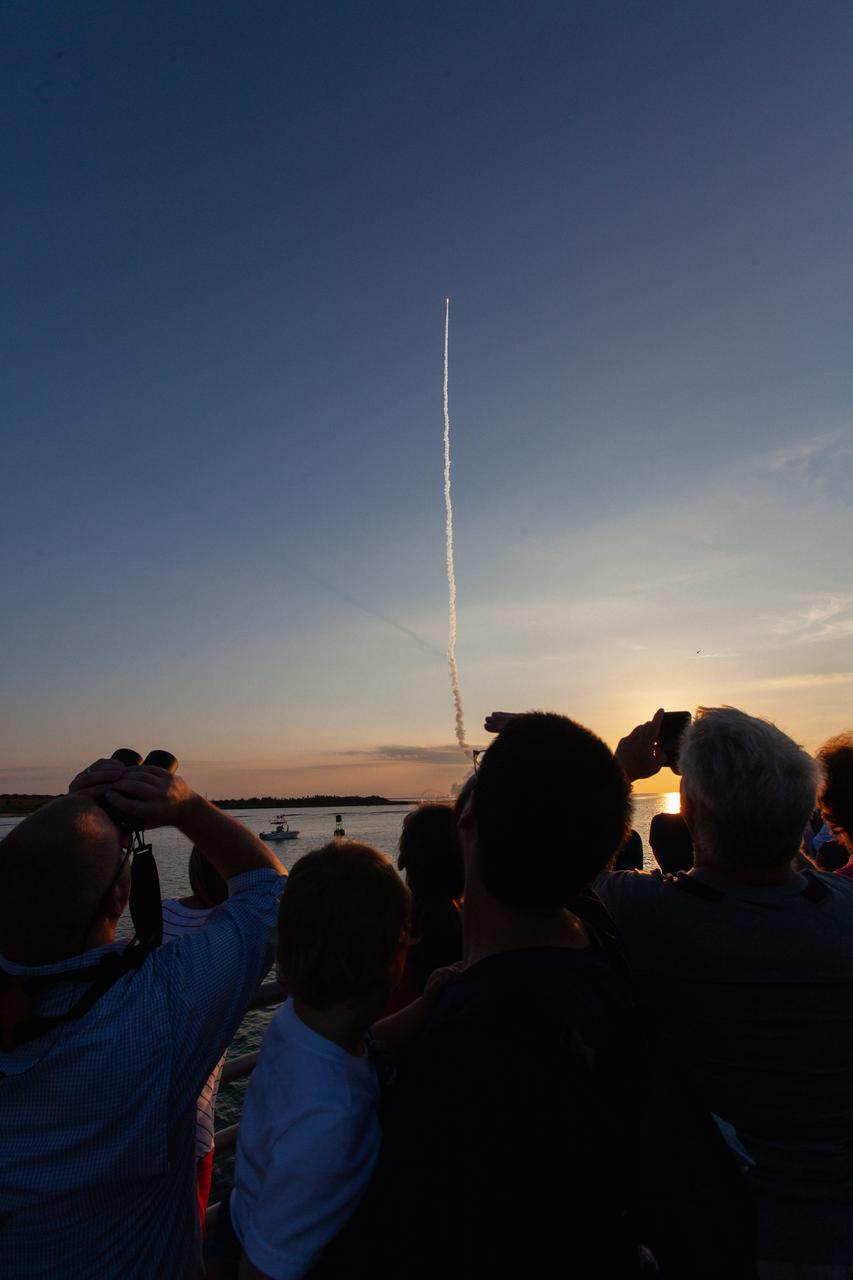
Crowds of spectators watch from Jetty Park in Cape Canaveral, Florida, on July 2, 2019, as a Northrop Grumman provided booster launches from Launch Pad 46 carrying, a fully functional Launch Abort System with a test version of Orion attached for NASA’s Ascent Abort-2 (AA-2). Launch time was 7 a.m. EDT. During AA-2, the booster will send the LAS and Orion to an altitude of 31,000 feet, traveling at Mach 1.15 (more than 1,000 mph). The LAS’ three motors will work together to pull the crew module away from the booster and prepare it for splashdown in the Atlantic Ocean. The flight test will prove that the abort system can pull crew to safety in the unlikely event of an emergency during ascent.
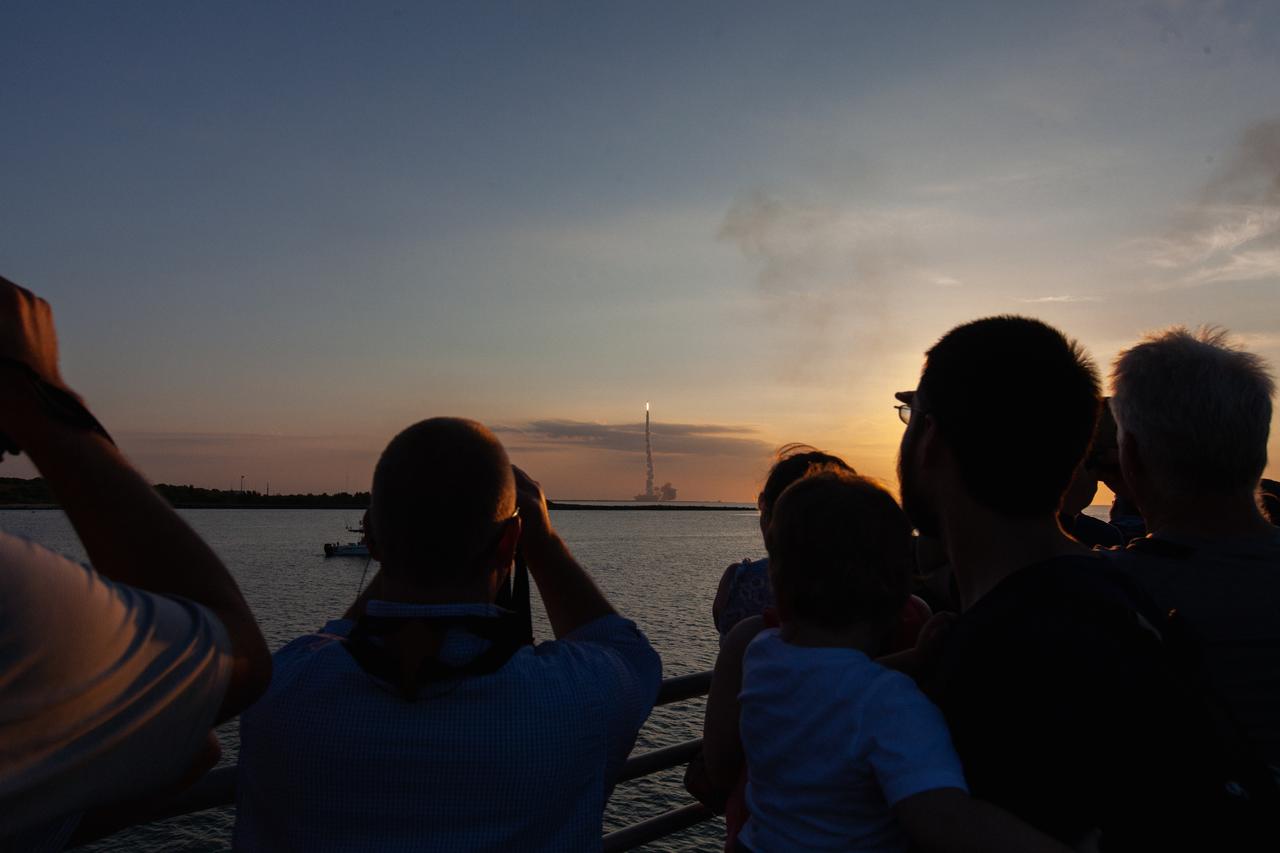
Crowds of spectators watch from Jetty Park in Cape Canaveral, Florida, on July 2, 2019, as a Northrop Grumman provided booster launches from Launch Pad 46 carrying, a fully functional Launch Abort System with a test version of Orion attached for NASA’s Ascent Abort-2 (AA-2). Launch time was 7 a.m. EDT. During AA-2, the booster will send the LAS and Orion to an altitude of 31,000 feet, traveling at Mach 1.15 (more than 1,000 mph). The LAS’ three motors will work together to pull the crew module away from the booster and prepare it for splashdown in the Atlantic Ocean. The flight test will prove that the abort system can pull crew to safety in the unlikely event of an emergency during ascent.
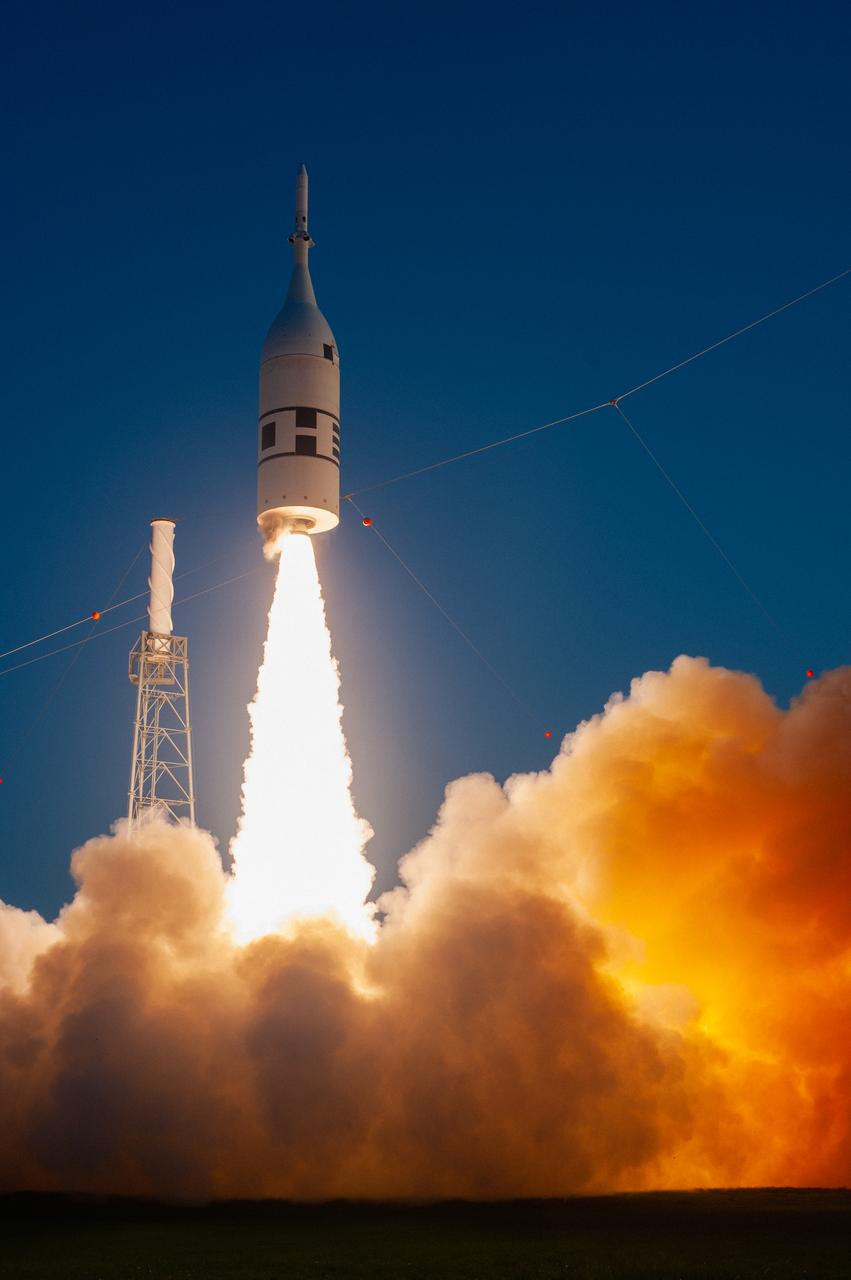
A fully functional Launch Abort System (LAS) with a test version of Orion attached, launches on NASA’s Ascent Abort-2 (AA-2) atop a Northrop Grumman provided booster on July 2, 2019, at 7 a.m. EDT, from Launch Pad 46 at Cape Canaveral Air Force Station in Florida. During AA-2, the booster will send the LAS and Orion to an altitude of 31,000 feet, traveling at Mach 1.15 (more than 1,000 mph). The LAS’ three motors will work together to pull the crew module away from the booster and prepare it for splashdown in the Atlantic Ocean. The flight test will prove that the abort system can pull crew to safety in the unlikely event of an emergency during ascent.
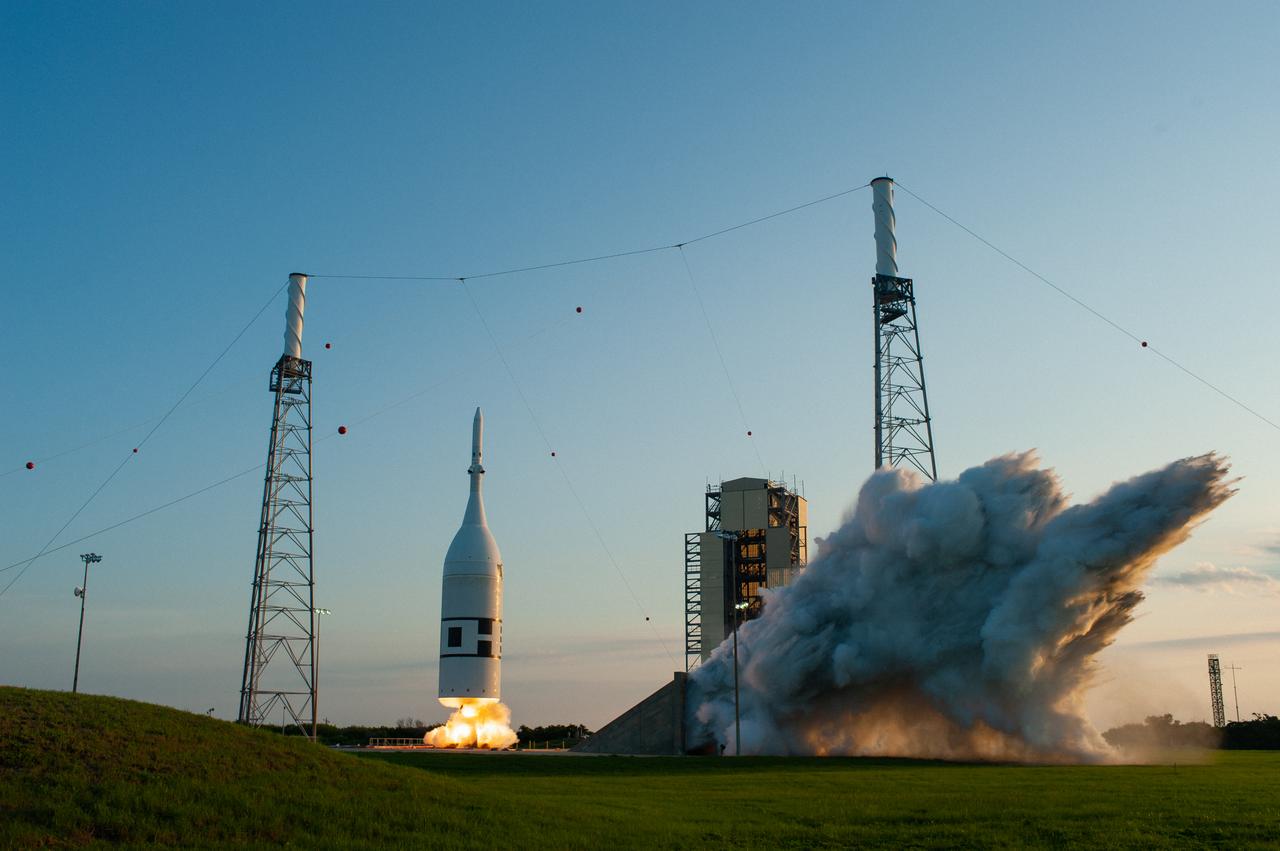
A fully functional Launch Abort System (LAS) with a test version of Orion attached, launches on NASA’s Ascent Abort-2 (AA-2) atop a Northrop Grumman provided booster on July 2, 2019, at 7 a.m. EDT, from Launch Pad 46 at Cape Canaveral Air Force Station in Florida. During AA-2, the booster will send the LAS and Orion to an altitude of 31,000 feet, traveling at Mach 1.15 (more than 1,000 mph). The LAS’ three motors will work together to pull the crew module away from the booster and prepare it for splashdown in the Atlantic Ocean. The flight test will prove that the abort system can pull crew to safety in the unlikely event of an emergency during ascent.

Crowds of spectators watch from Jetty Park in Cape Canaveral, Florida, on July 2, 2019, as a Northrop Grumman provided booster launches from Launch Pad 46 carrying, a fully functional Launch Abort System with a test version of Orion attached for NASA’s Ascent Abort-2 (AA-2). Launch time was 7 a.m. EDT. During AA-2, the booster will send the LAS and Orion to an altitude of 31,000 feet, traveling at Mach 1.15 (more than 1,000 mph). The LAS’ three motors will work together to pull the crew module away from the booster and prepare it for splashdown in the Atlantic Ocean. The flight test will prove that the abort system can pull crew to safety in the unlikely event of an emergency during ascent.
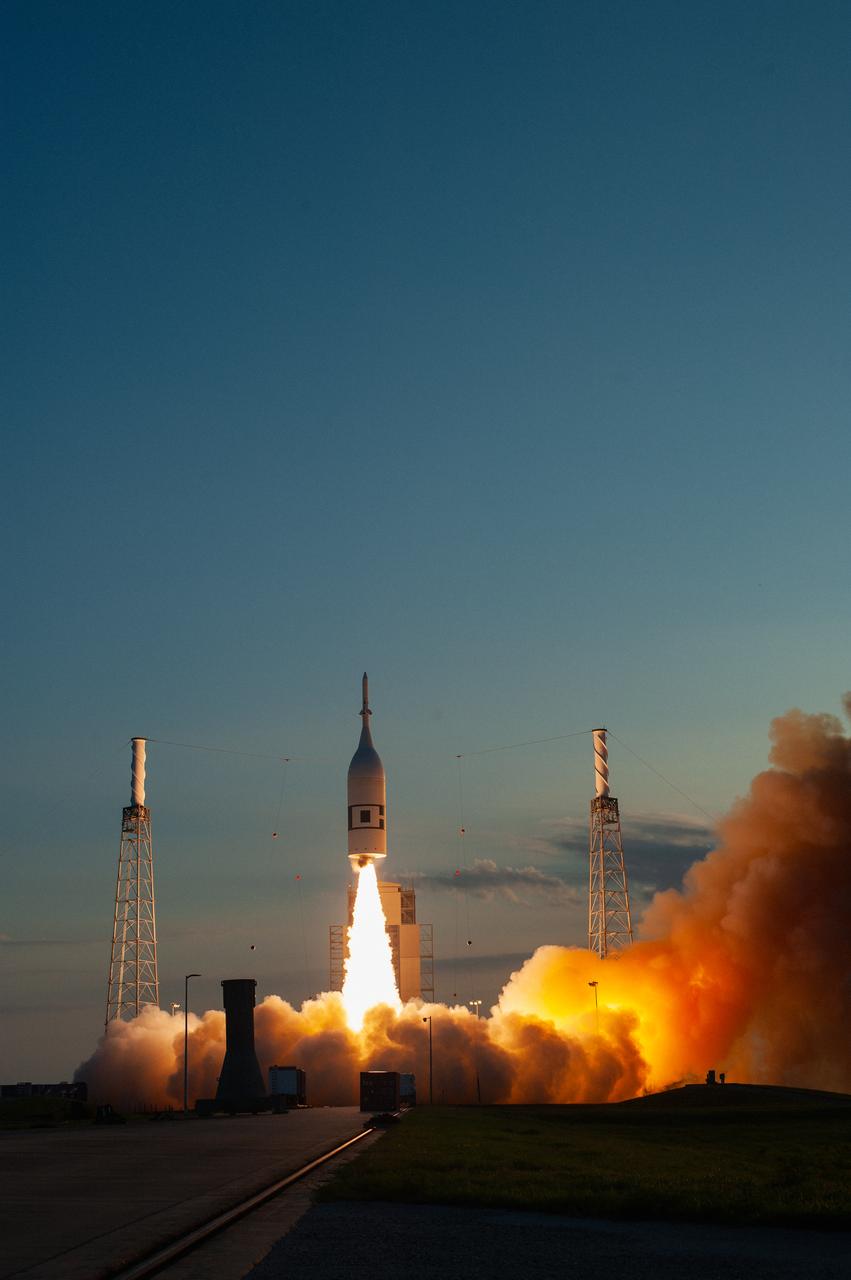
A fully functional Launch Abort System (LAS) with a test version of Orion attached, launches on NASA’s Ascent Abort-2 (AA-2) atop a Northrop Grumman provided booster on July 2, 2019, at 7 a.m. EDT, from Launch Pad 46 at Cape Canaveral Air Force Station in Florida. During AA-2, the booster will send the LAS and Orion to an altitude of 31,000 feet, traveling at Mach 1.15 (more than 1,000 mph). The LAS’ three motors will work together to pull the crew module away from the booster and prepare it for splashdown in the Atlantic Ocean. The flight test will prove that the abort system can pull crew to safety in the unlikely event of an emergency during ascent.
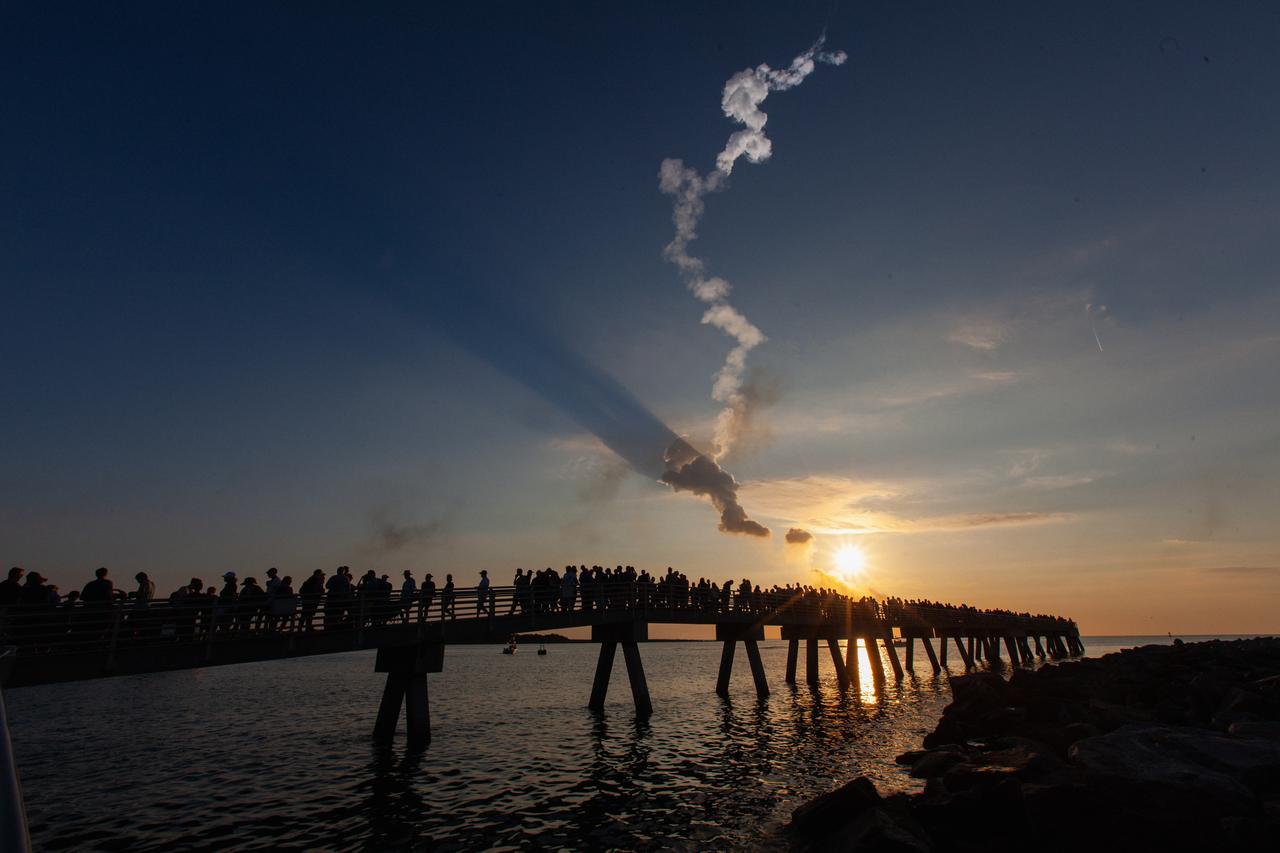
Crowds of spectators watch from Jetty Park in Cape Canaveral, Florida, on July 2, 2019, as a Northrop Grumman provided booster launches from Launch Pad 46 carrying, a fully functional Launch Abort System with a test version of Orion attached for NASA’s Ascent Abort-2 (AA-2). Launch time was 7 a.m. EDT. During AA-2, the booster will send the LAS and Orion to an altitude of 31,000 feet, traveling at Mach 1.15 (more than 1,000 mph). The LAS’ three motors will work together to pull the crew module away from the booster and prepare it for splashdown in the Atlantic Ocean. The flight test will prove that the abort system can pull crew to safety in the unlikely event of an emergency during ascent.
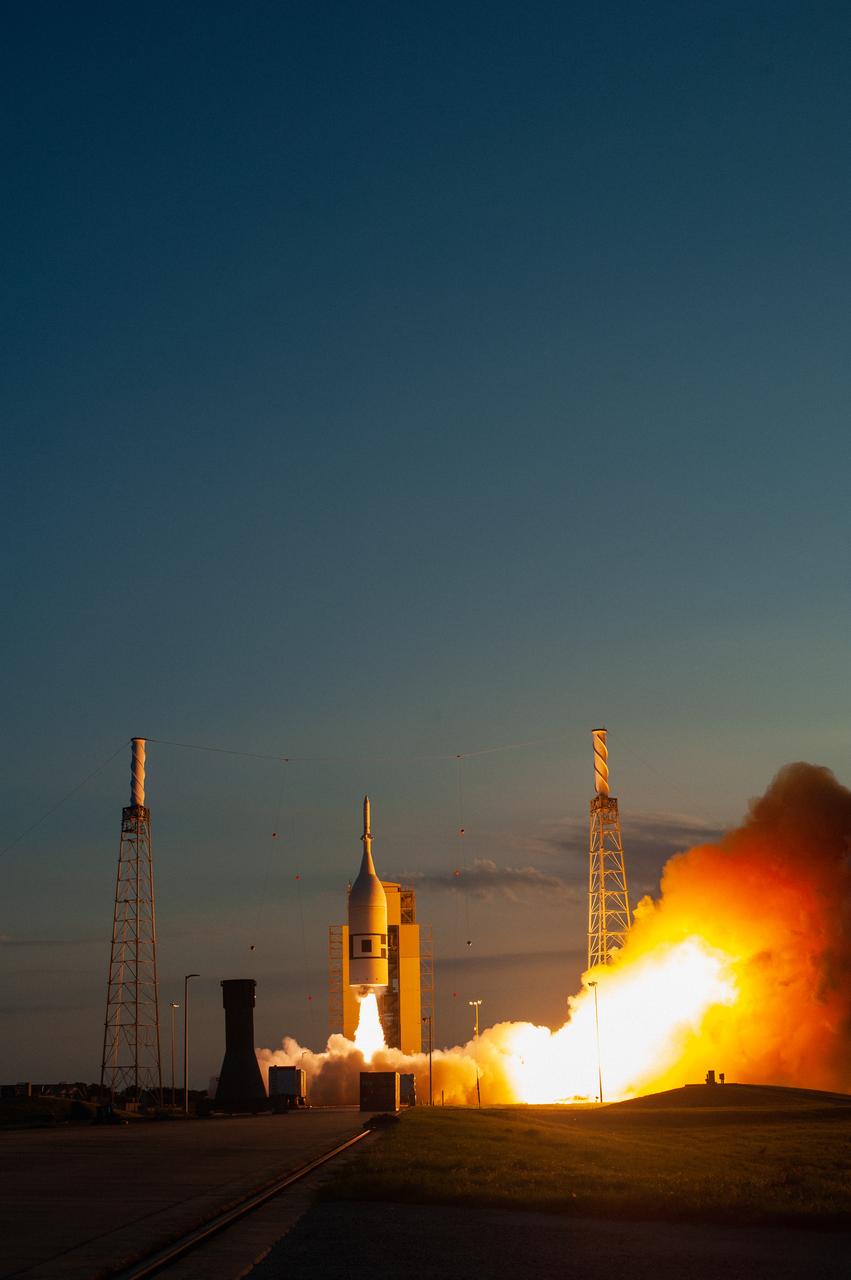
A fully functional Launch Abort System (LAS) with a test version of Orion attached, launches on NASA’s Ascent Abort-2 (AA-2) atop a Northrop Grumman provided booster on July 2, 2019, at 7 a.m. EDT, from Launch Pad 46 at Cape Canaveral Air Force Station in Florida. During AA-2, the booster will send the LAS and Orion to an altitude of 31,000 feet, traveling at Mach 1.15 (more than 1,000 mph). The LAS’ three motors will work together to pull the crew module away from the booster and prepare it for splashdown in the Atlantic Ocean. The flight test will prove that the abort system can pull crew to safety in the unlikely event of an emergency during ascent.
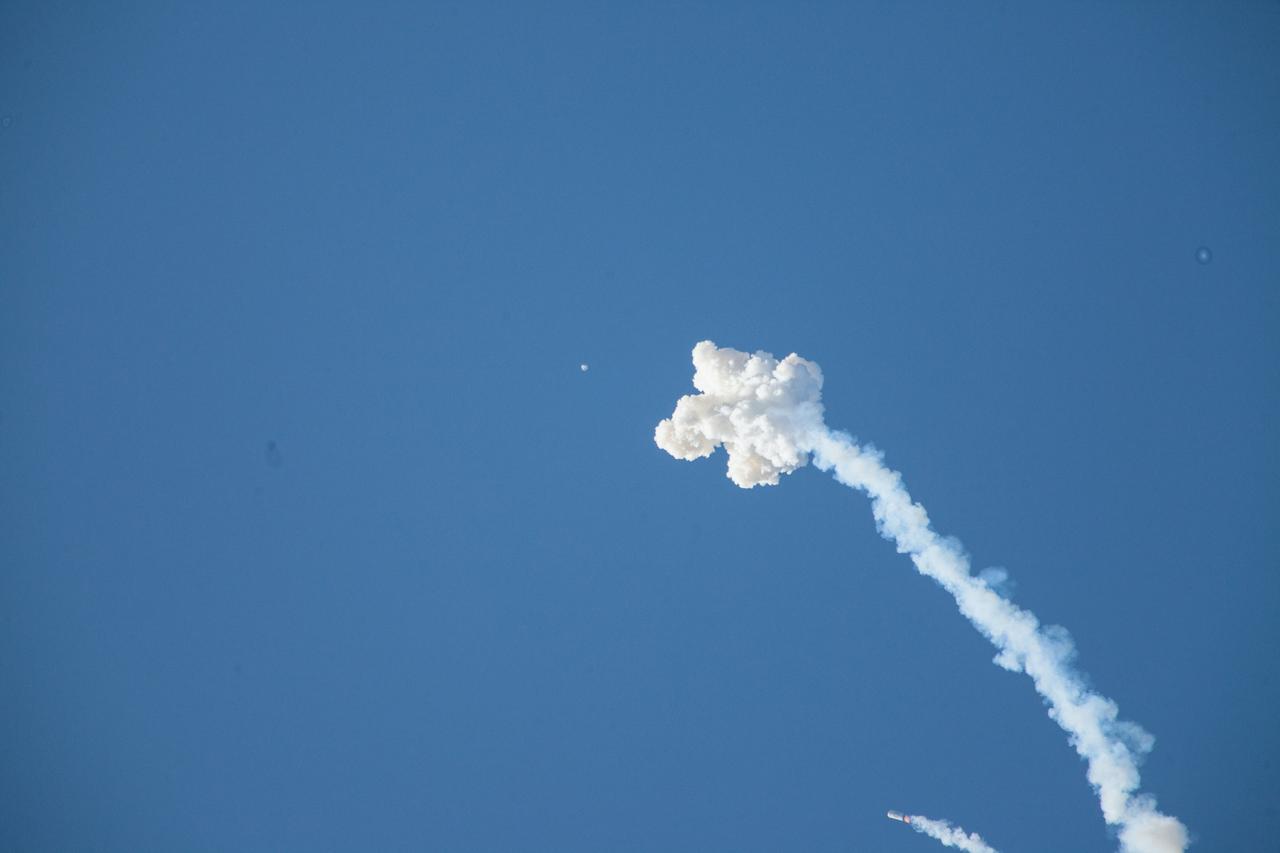
A fully functional Launch Abort System (LAS) with a test version of Orion attached, soars upward on NASA’s Ascent Abort-2 (AA-2) flight test atop a Northrop Grumman provided booster on July 2, 2019, after launching at 7 a.m. EDT, from Launch Pad 46 at Cape Canaveral Air Force Station in Florida. During AA-2, the booster will send the LAS and Orion to an altitude of 31,000 feet, traveling at Mach 1.15 (more than 1,000 mph). The LAS’ three motors will work together to pull the crew module away from the booster and prepare it for splashdown in the Atlantic Ocean. The flight test will prove that the abort system can pull crew to safety in the unlikely event of an emergency during ascent.
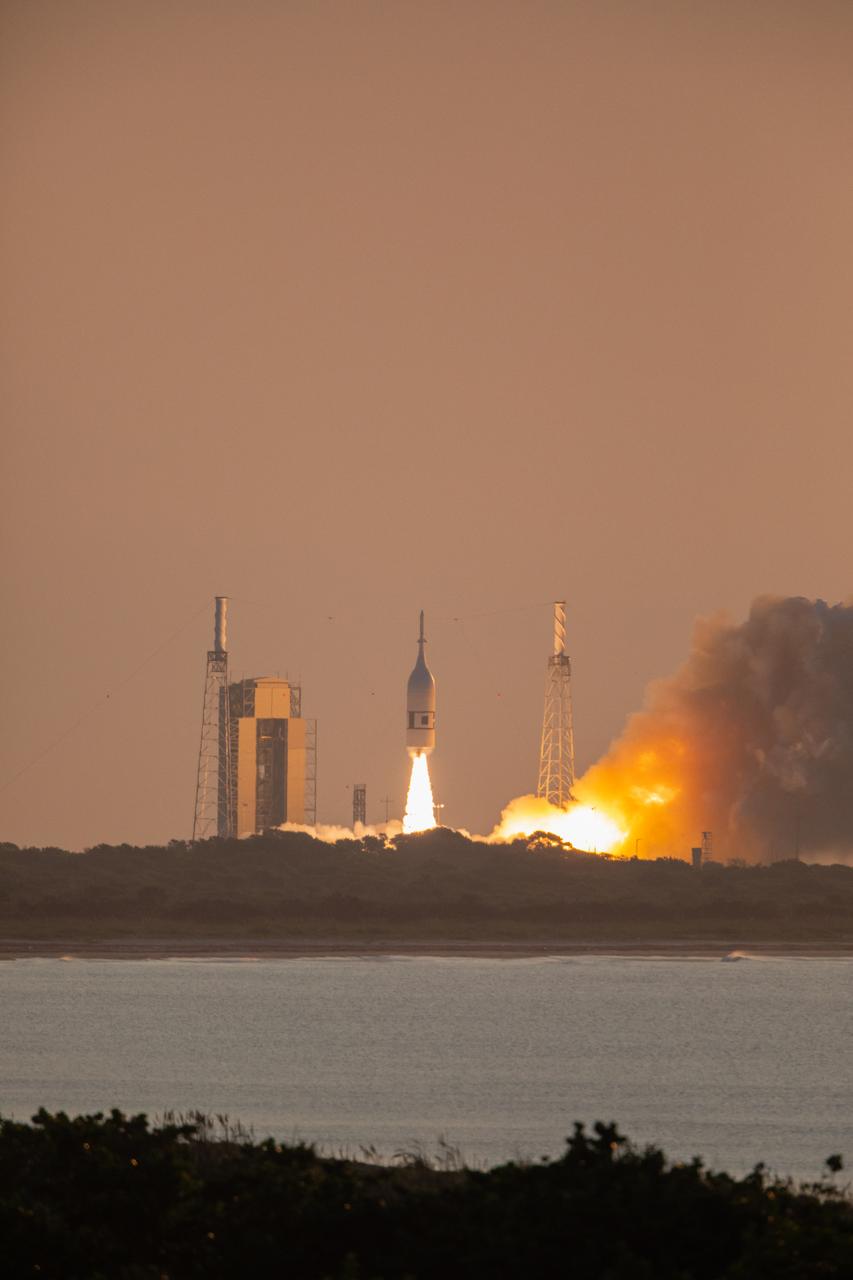
A fully functional Launch Abort System (LAS) with a test version of Orion attached, launches on NASA’s Ascent Abort-2 (AA-2) atop a Northrop Grumman provided booster on July 2, 2019, at 7 a.m. EDT, from Launch Pad 46 at Cape Canaveral Air Force Station in Florida. During AA-2, the booster will send the LAS and Orion to an altitude of 31,000 feet, traveling at Mach 1.15 (more than 1,000 mph). The LAS’ three motors will work together to pull the crew module away from the booster and prepare it for splashdown in the Atlantic Ocean. The flight test will prove that the abort system can pull crew to safety in the unlikely event of an emergency during ascent.

Crowds of spectators watch from Jetty Park in Cape Canaveral, Florida, on July 2, 2019, as a Northrop Grumman provided booster launches from Launch Pad 46 carrying, a fully functional Launch Abort System with a test version of Orion attached for NASA’s Ascent Abort-2 (AA-2). Launch time was 7 a.m. EDT. During AA-2, the booster will send the LAS and Orion to an altitude of 31,000 feet, traveling at Mach 1.15 (more than 1,000 mph). The LAS’ three motors will work together to pull the crew module away from the booster and prepare it for splashdown in the Atlantic Ocean. The flight test will prove that the abort system can pull crew to safety in the unlikely event of an emergency during ascent.
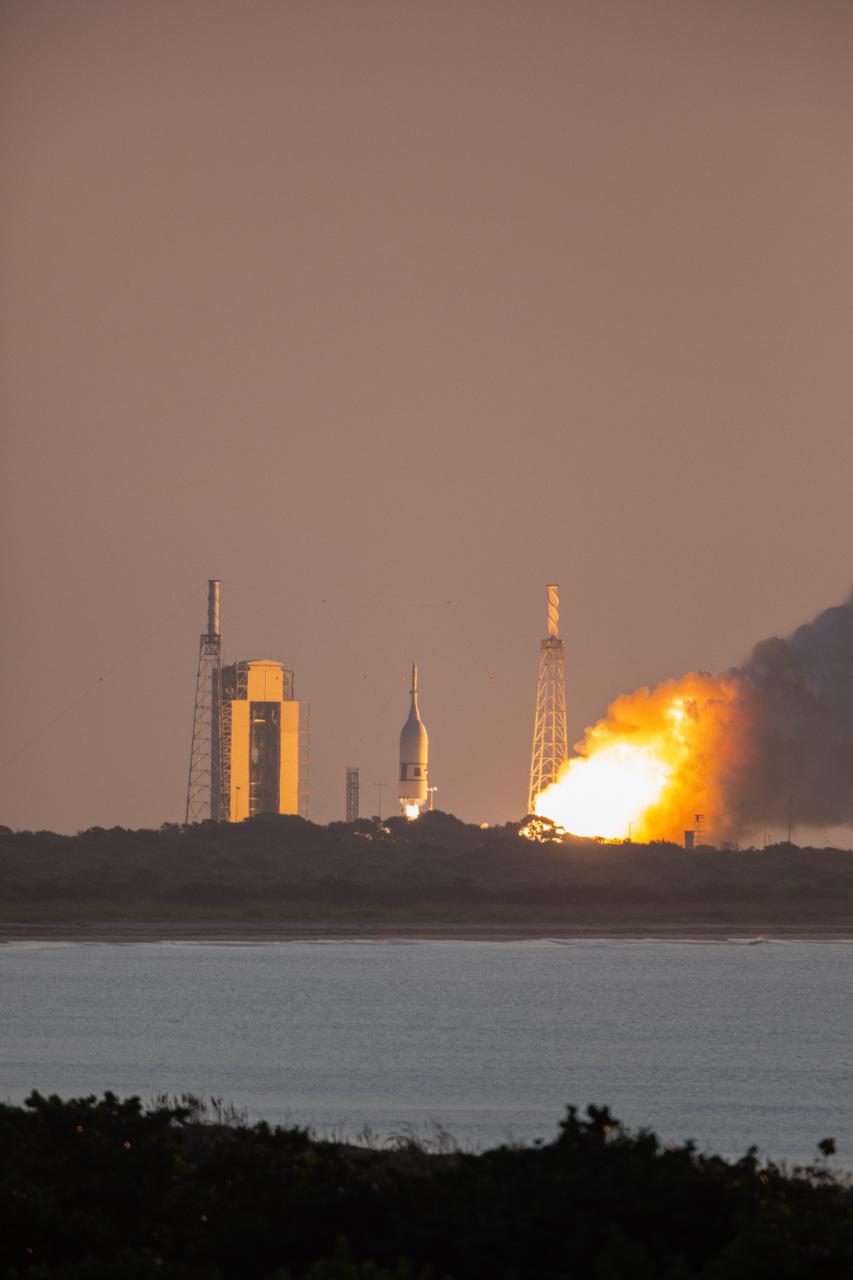
A fully functional Launch Abort System (LAS) with a test version of Orion attached, launches on NASA’s Ascent Abort-2 (AA-2) atop a Northrop Grumman provided booster on July 2, 2019, at 7 a.m. EDT, from Launch Pad 46 at Cape Canaveral Air Force Station in Florida. During AA-2, the booster will send the LAS and Orion to an altitude of 31,000 feet, traveling at Mach 1.15 (more than 1,000 mph). The LAS’ three motors will work together to pull the crew module away from the booster and prepare it for splashdown in the Atlantic Ocean. The flight test will prove that the abort system can pull crew to safety in the unlikely event of an emergency during ascent.
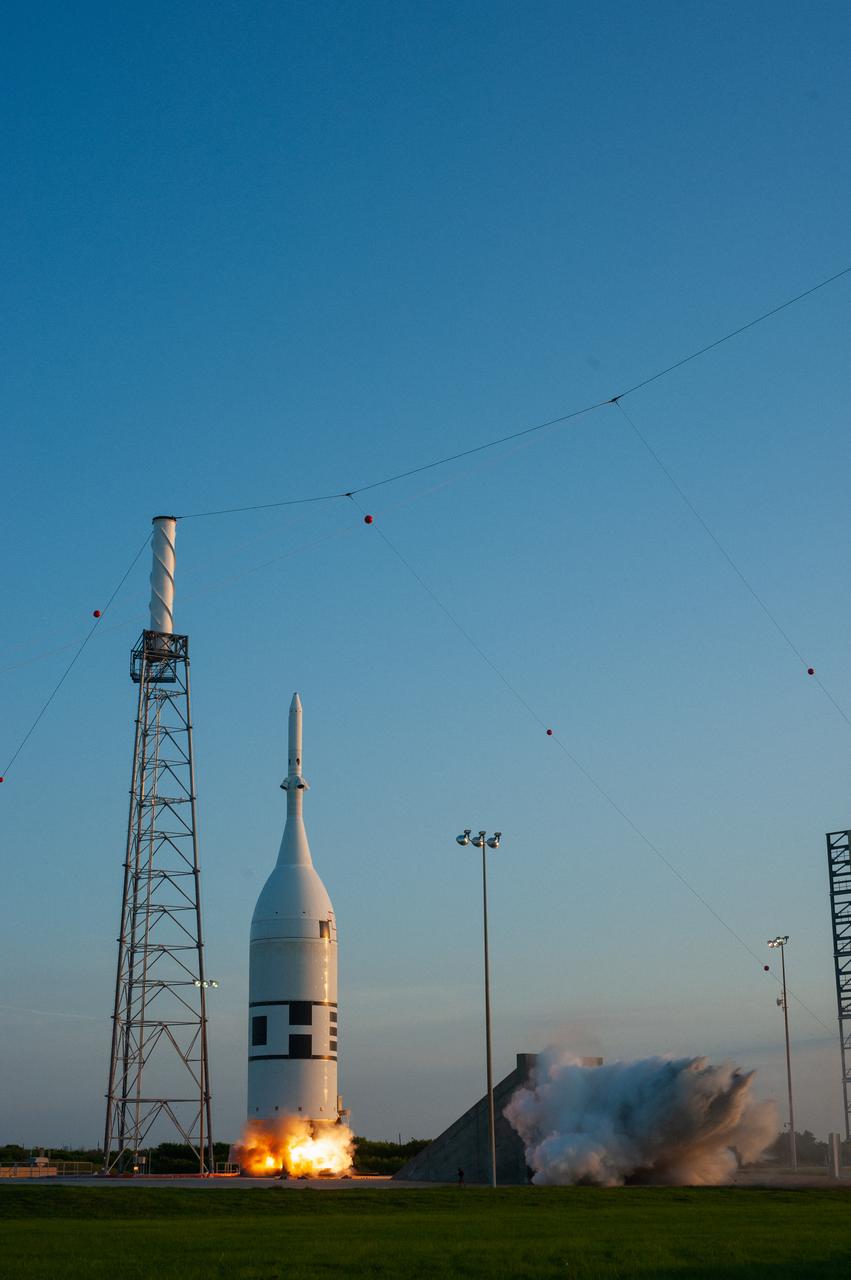
A fully functional Launch Abort System (LAS) with a test version of Orion attached, launches on NASA’s Ascent Abort-2 (AA-2) atop a Northrop Grumman provided booster on July 2, 2019, at 7 a.m. EDT, from Launch Pad 46 at Cape Canaveral Air Force Station in Florida. During AA-2, the booster will send the LAS and Orion to an altitude of 31,000 feet, traveling at Mach 1.15 (more than 1,000 mph). The LAS’ three motors will work together to pull the crew module away from the booster and prepare it for splashdown in the Atlantic Ocean. The flight test will prove that the abort system can pull crew to safety in the unlikely event of an emergency during ascent.
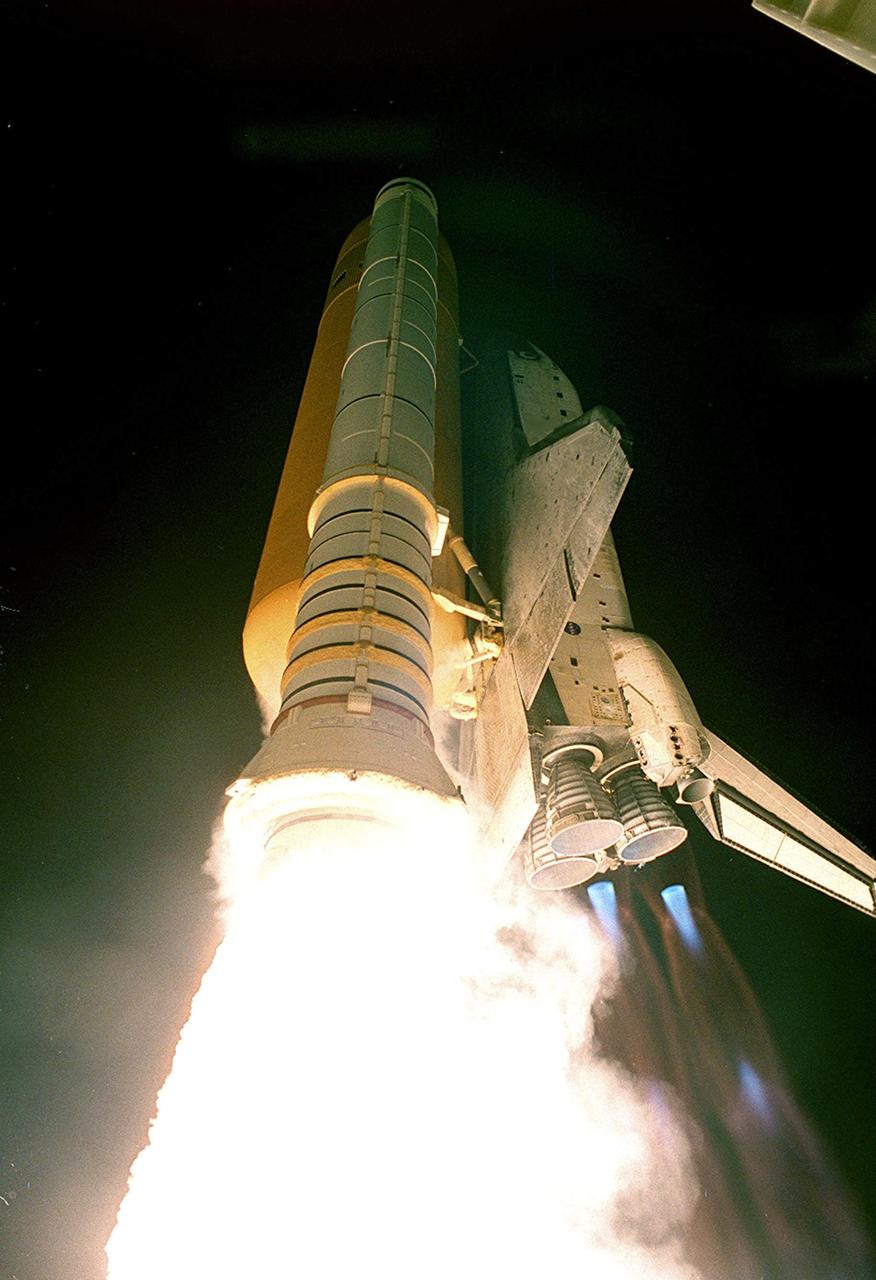
KENNEDY SPACE CENTER, Fla. -- Space Shuttle Discovery roars through the sky trailing fire and blue mach diamonds from the engines. The perfect on-time liftoff at 7:17 p.m. EDT sends a crew of seven on a construction flight to the International Space Station on mission STS-92, the 100th in the history of the Shuttle program. Discovery also carries a payload that includes the Integrated Truss Structure Z-1, first of 10 trusses that will form the backbone of the Space Station, and the third Pressurized Mating Adapter that will provide a Shuttle docking port for solar array installation on the sixth Station flight and Lab installation on the seventh Station flight. Discovery’s landing is expected Oct. 22 at 2:10 p.m. EDT
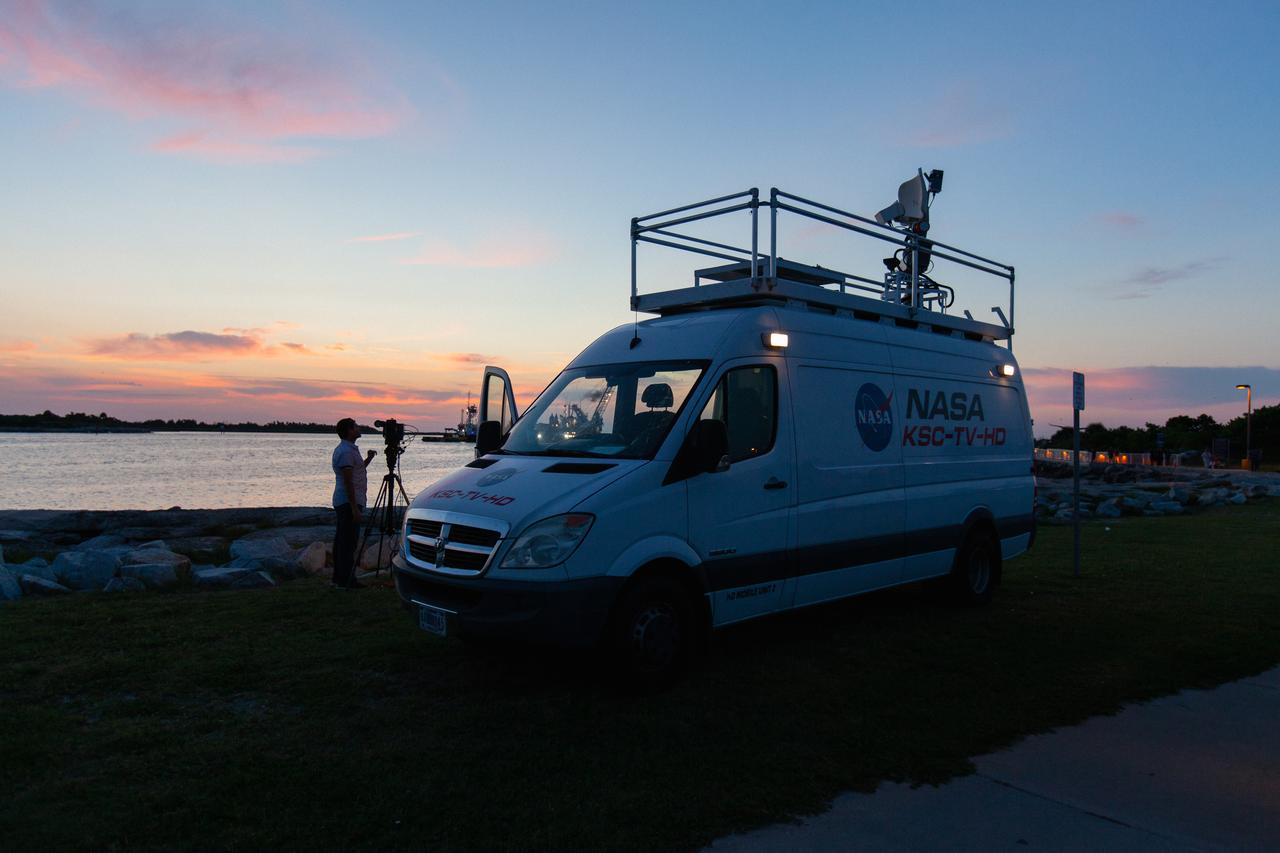
Crowds of spectators watch from Jetty Park in Cape Canaveral, Florida, on July 2, 2019, as a Northrop Grumman provided booster launches from Launch Pad 46 carrying, a fully functional Launch Abort System with a test version of Orion attached for NASA’s Ascent Abort-2 (AA-2). Launch time was 7 a.m. EDT. During AA-2, the booster will send the LAS and Orion to an altitude of 31,000 feet, traveling at Mach 1.15 (more than 1,000 mph). The LAS’ three motors will work together to pull the crew module away from the booster and prepare it for splashdown in the Atlantic Ocean. The flight test will prove that the abort system can pull crew to safety in the unlikely event of an emergency during ascent.
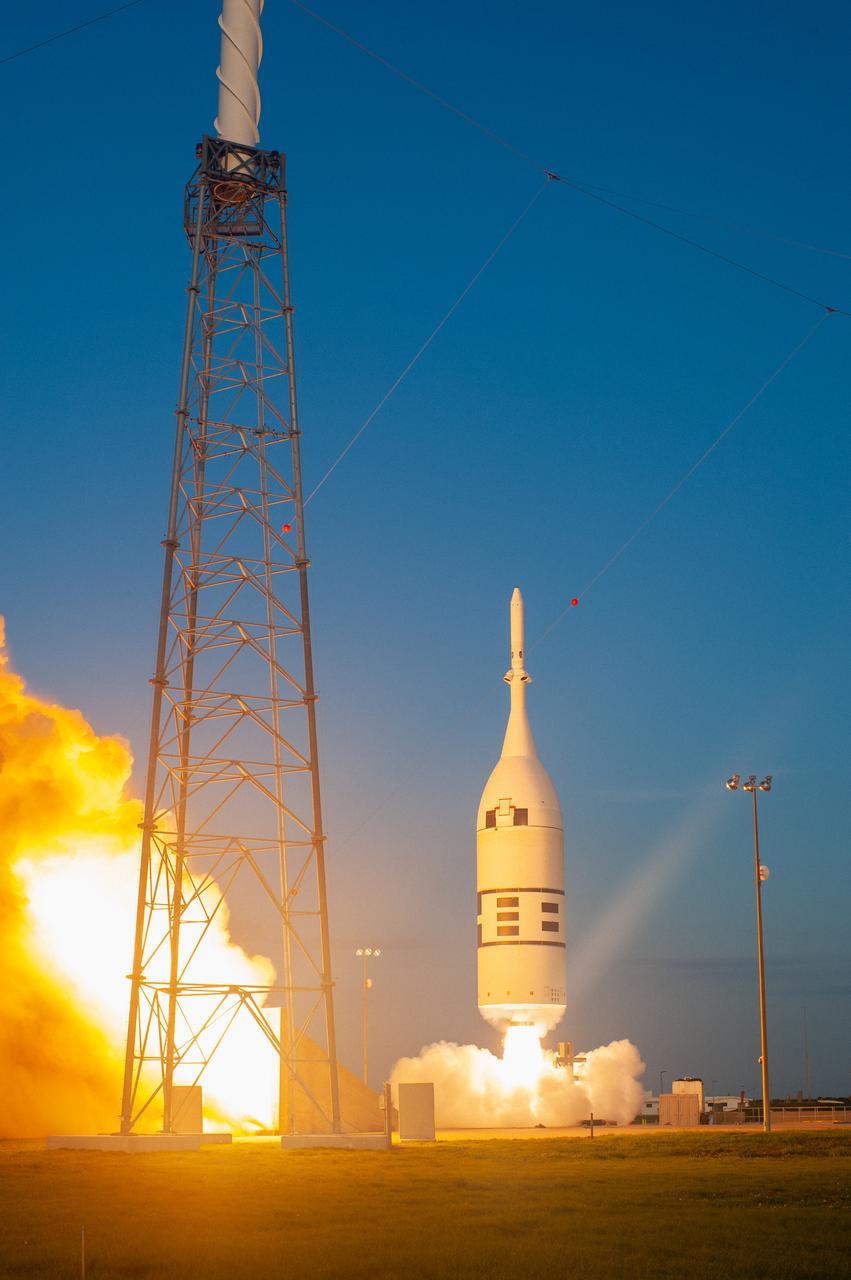
A fully functional Launch Abort System (LAS) with a test version of Orion attached, launches on NASA’s Ascent Abort-2 (AA-2) atop a Northrop Grumman provided booster on July 2, 2019, at 7 a.m. EDT, from Launch Pad 46 at Cape Canaveral Air Force Station in Florida. During AA-2, the booster will send the LAS and Orion to an altitude of 31,000 feet, traveling at Mach 1.15 (more than 1,000 mph). The LAS’ three motors will work together to pull the crew module away from the booster and prepare it for splashdown in the Atlantic Ocean. The flight test will prove that the abort system can pull crew to safety in the unlikely event of an emergency during ascent.
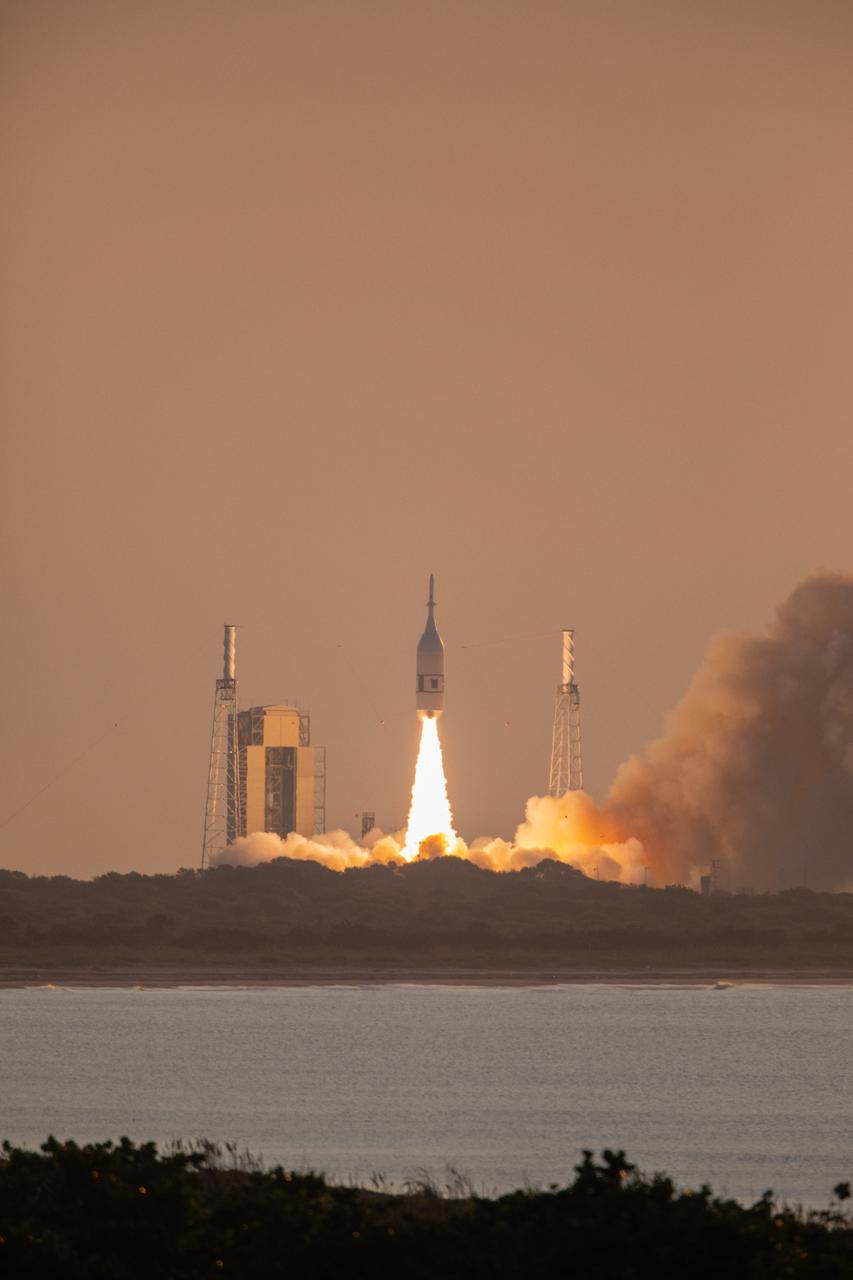
A fully functional Launch Abort System (LAS) with a test version of Orion attached, launches on NASA’s Ascent Abort-2 (AA-2) atop a Northrop Grumman provided booster on July 2, 2019, at 7 a.m. EDT, from Launch Pad 46 at Cape Canaveral Air Force Station in Florida. During AA-2, the booster will send the LAS and Orion to an altitude of 31,000 feet, traveling at Mach 1.15 (more than 1,000 mph). The LAS’ three motors will work together to pull the crew module away from the booster and prepare it for splashdown in the Atlantic Ocean. The flight test will prove that the abort system can pull crew to safety in the unlikely event of an emergency during ascent.
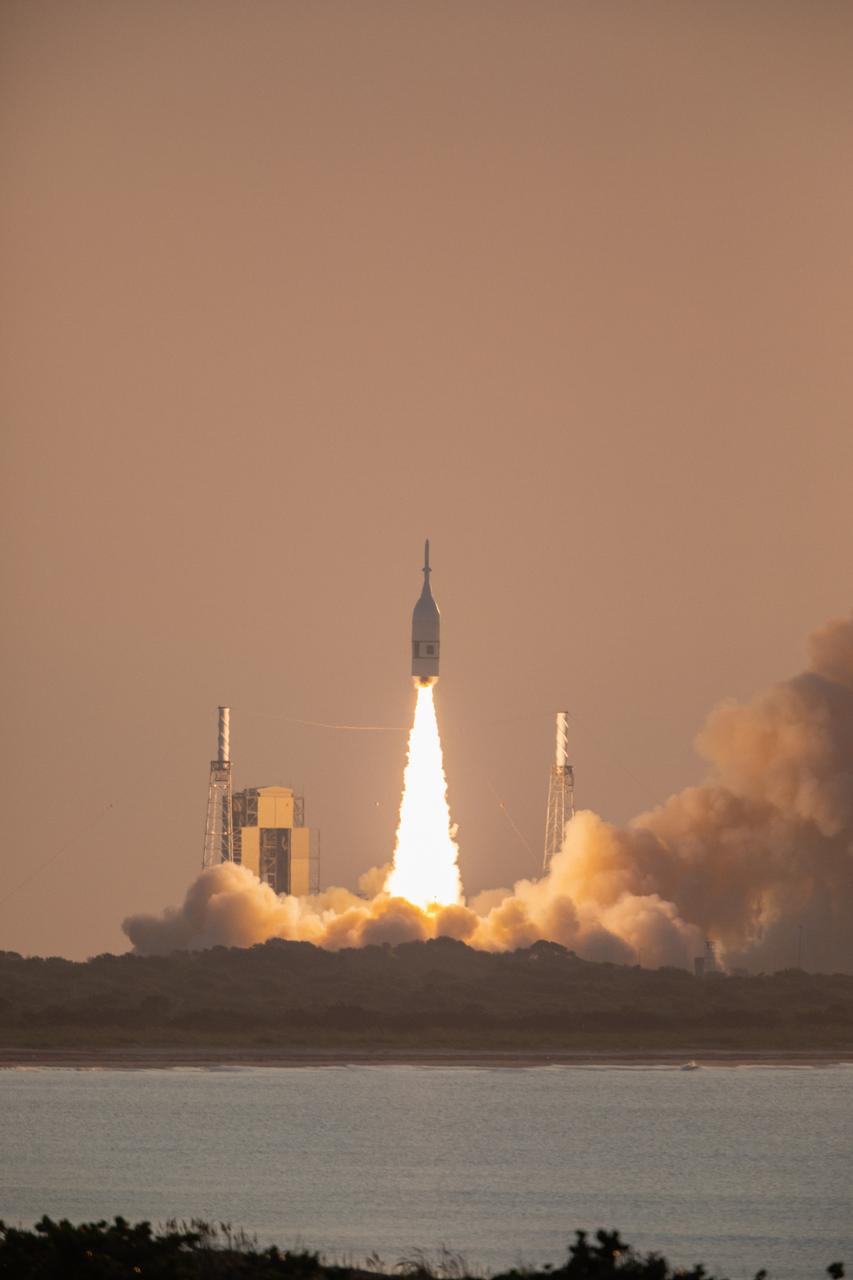
A fully functional Launch Abort System (LAS) with a test version of Orion attached, launches on NASA’s Ascent Abort-2 (AA-2) atop a Northrop Grumman provided booster on July 2, 2019, at 7 a.m. EDT, from Launch Pad 46 at Cape Canaveral Air Force Station in Florida. During AA-2, the booster will send the LAS and Orion to an altitude of 31,000 feet, traveling at Mach 1.15 (more than 1,000 mph). The LAS’ three motors will work together to pull the crew module away from the booster and prepare it for splashdown in the Atlantic Ocean. The flight test will prove that the abort system can pull crew to safety in the unlikely event of an emergency during ascent.
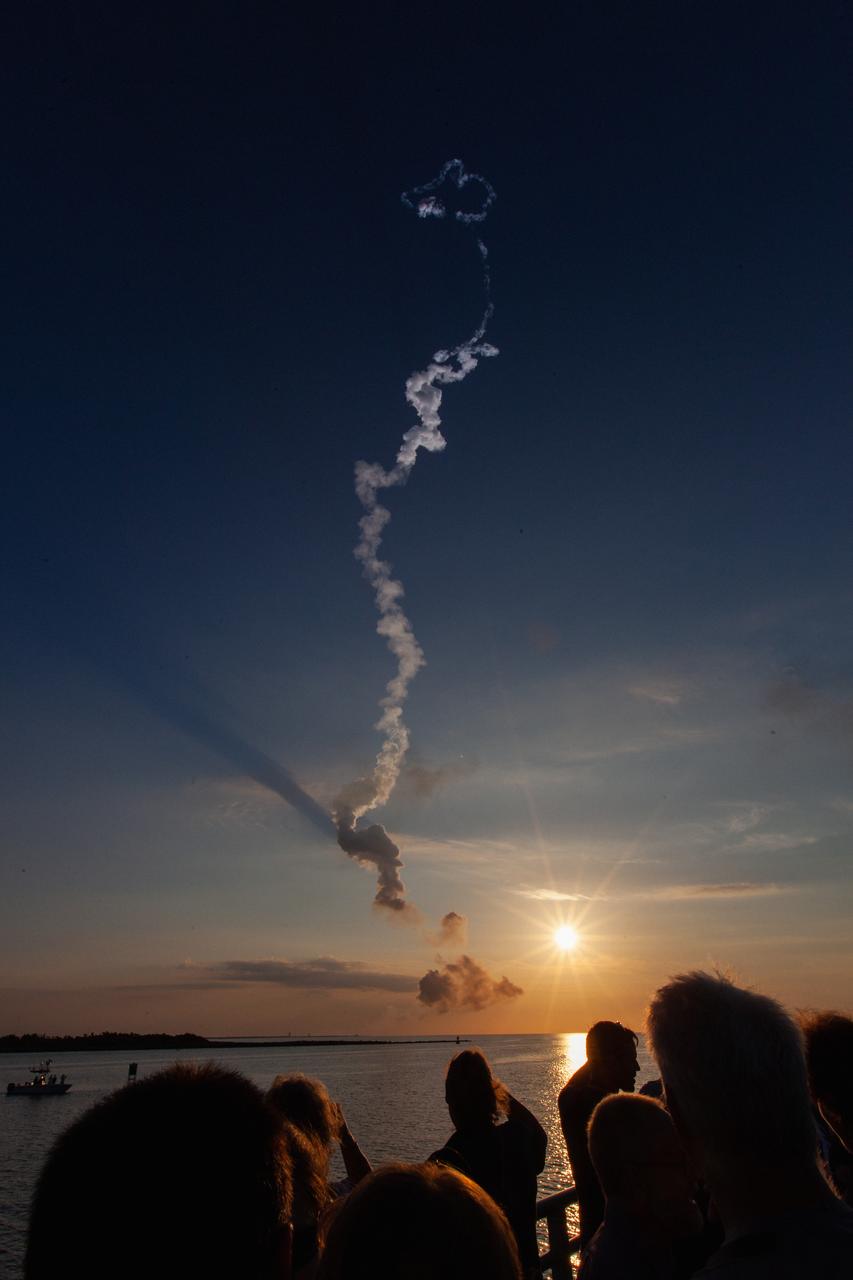
Crowds of spectators watch from Jetty Park in Cape Canaveral, Florida, on July 2, 2019, as a Northrop Grumman provided booster launches from Launch Pad 46 carrying, a fully functional Launch Abort System with a test version of Orion attached for NASA’s Ascent Abort-2 (AA-2). Launch time was 7 a.m. EDT. During AA-2, the booster will send the LAS and Orion to an altitude of 31,000 feet, traveling at Mach 1.15 (more than 1,000 mph). The LAS’ three motors will work together to pull the crew module away from the booster and prepare it for splashdown in the Atlantic Ocean. The flight test will prove that the abort system can pull crew to safety in the unlikely event of an emergency during ascent.

A fully functional Launch Abort System (LAS) with a test version of Orion attached, launches on NASA’s Ascent Abort-2 (AA-2) atop a Northrop Grumman provided booster on July 2, 2019, at 7 a.m. EDT, from Launch Pad 46 at Cape Canaveral Air Force Station in Florida. During AA-2, the booster will send the LAS and Orion to an altitude of 31,000 feet, traveling at Mach 1.15 (more than 1,000 mph). The LAS’ three motors will work together to pull the crew module away from the booster and prepare it for splashdown in the Atlantic Ocean. The flight test will prove that the abort system can pull crew to safety in the unlikely event of an emergency during ascent.
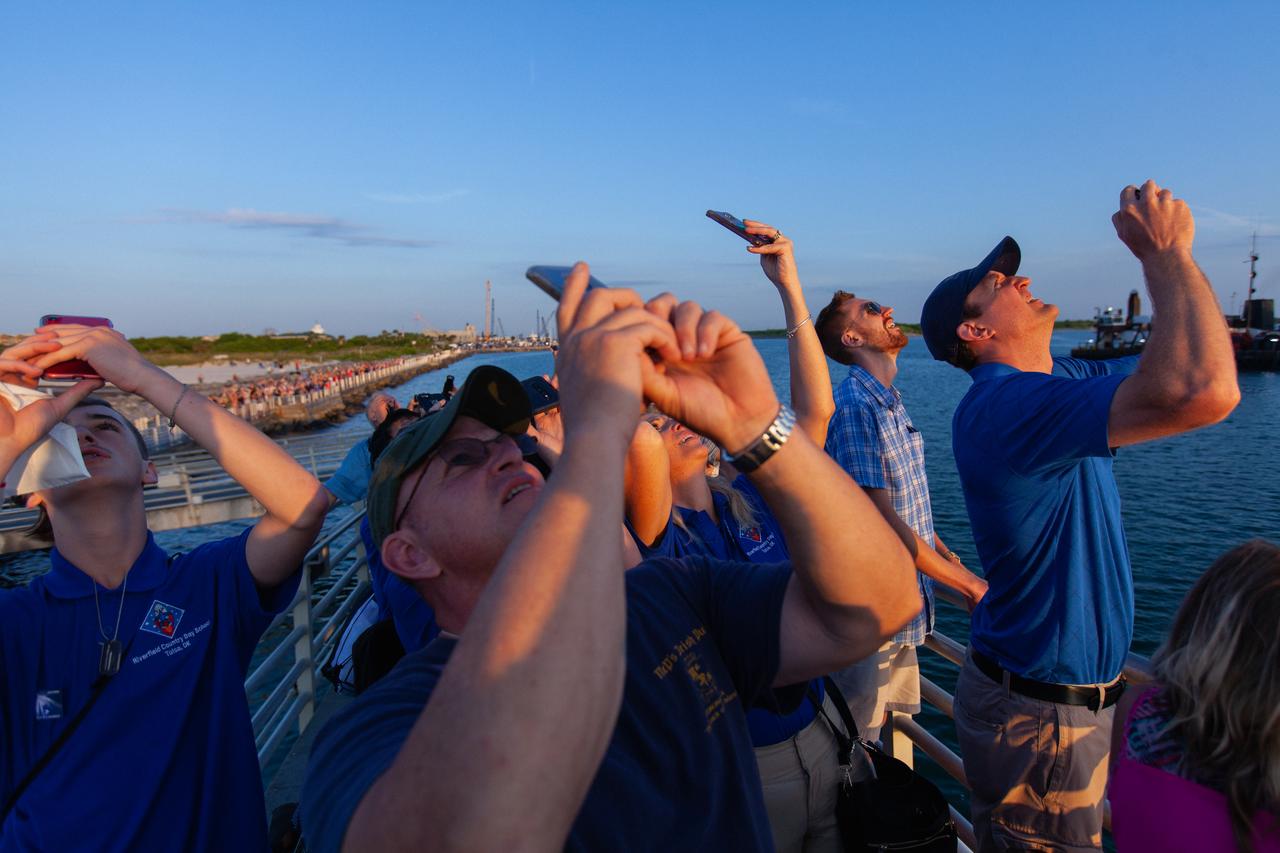
Crowds of spectators watch from Jetty Park in Cape Canaveral, Florida, on July 2, 2019, as a Northrop Grumman provided booster launches from Launch Pad 46 carrying, a fully functional Launch Abort System with a test version of Orion attached for NASA’s Ascent Abort-2 (AA-2). Launch time was 7 a.m. EDT. During AA-2, the booster will send the LAS and Orion to an altitude of 31,000 feet, traveling at Mach 1.15 (more than 1,000 mph). The LAS’ three motors will work together to pull the crew module away from the booster and prepare it for splashdown in the Atlantic Ocean. The flight test will prove that the abort system can pull crew to safety in the unlikely event of an emergency during ascent.
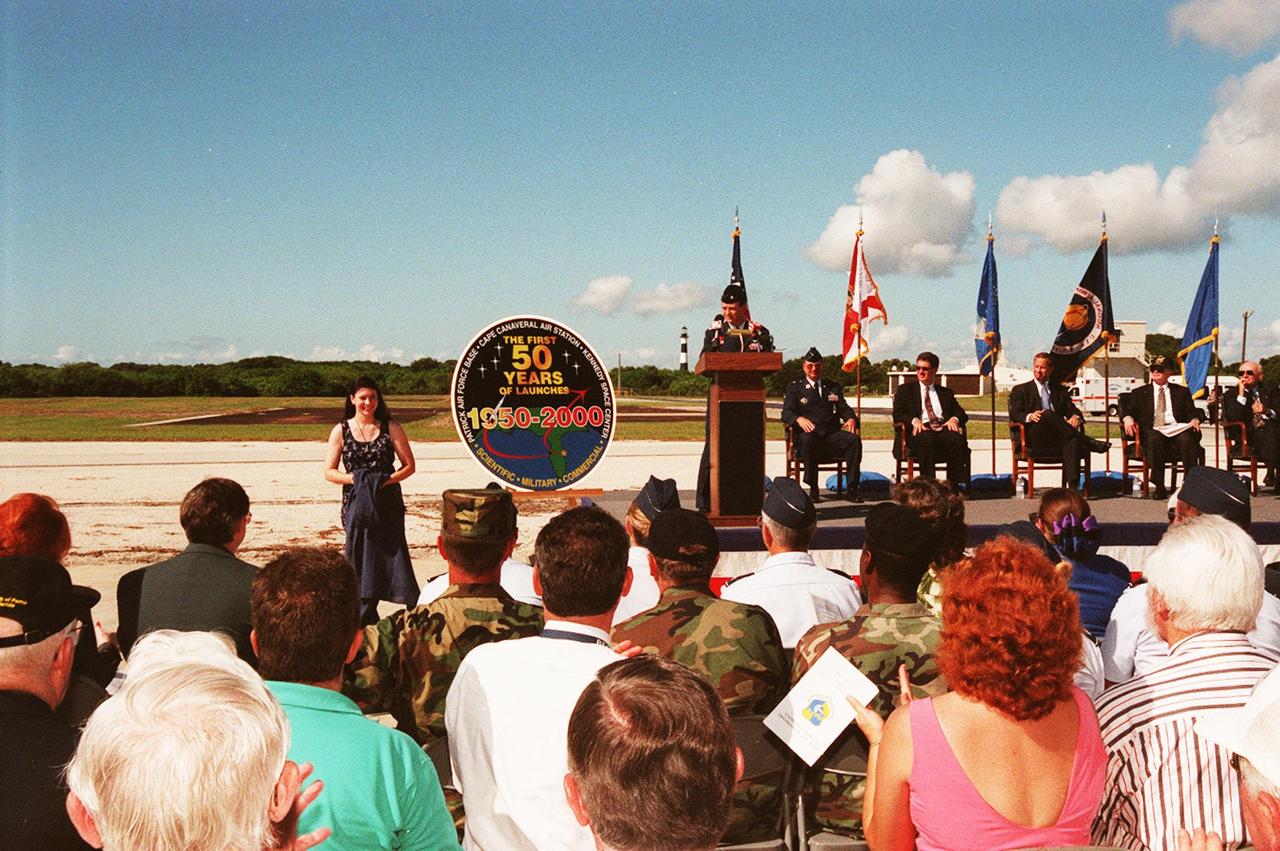
At Cape Canaveral Air Station's (CCAS) Complex 3/4, officials held a ceremony kicking off a year-long series of events commemorating 50 years of launches from the Space Coast that began with the Bumper rockets. At left is artist Darlene Egli who designed the 50th anniversary logo next to her. On stage, from left to right, are Lt. Col. Randall K. Horn, Commander, CCAS; Brig. Gen. Donald P. Pettit, Commander, 45th Space Wing; Congressman David Weldon, 15th Congressional District of the State of Florida; Lieutenant Governor of the State of Florida Frank T. Brogan; Center Director Roy D. Bridges; and Executive Director Edward F. Gormel, Joint Performance Management Office. After six Bumper launches at White Sands Proving Grounds, N.M., and a failed Bumper 7, a successful Bumper 8 lifted off July 24, 1950, from Complex 3/4 to conduct aerodynamic investigations around Mach 7 at relatively low altitudes. The kick-off event also inaugurated a student art contest to design a commemorative etching. The winning artwork will be permanently displayed on a 24-inch black granite square in the U.S. Space Walk Hall of Fame in Titusville, Fla
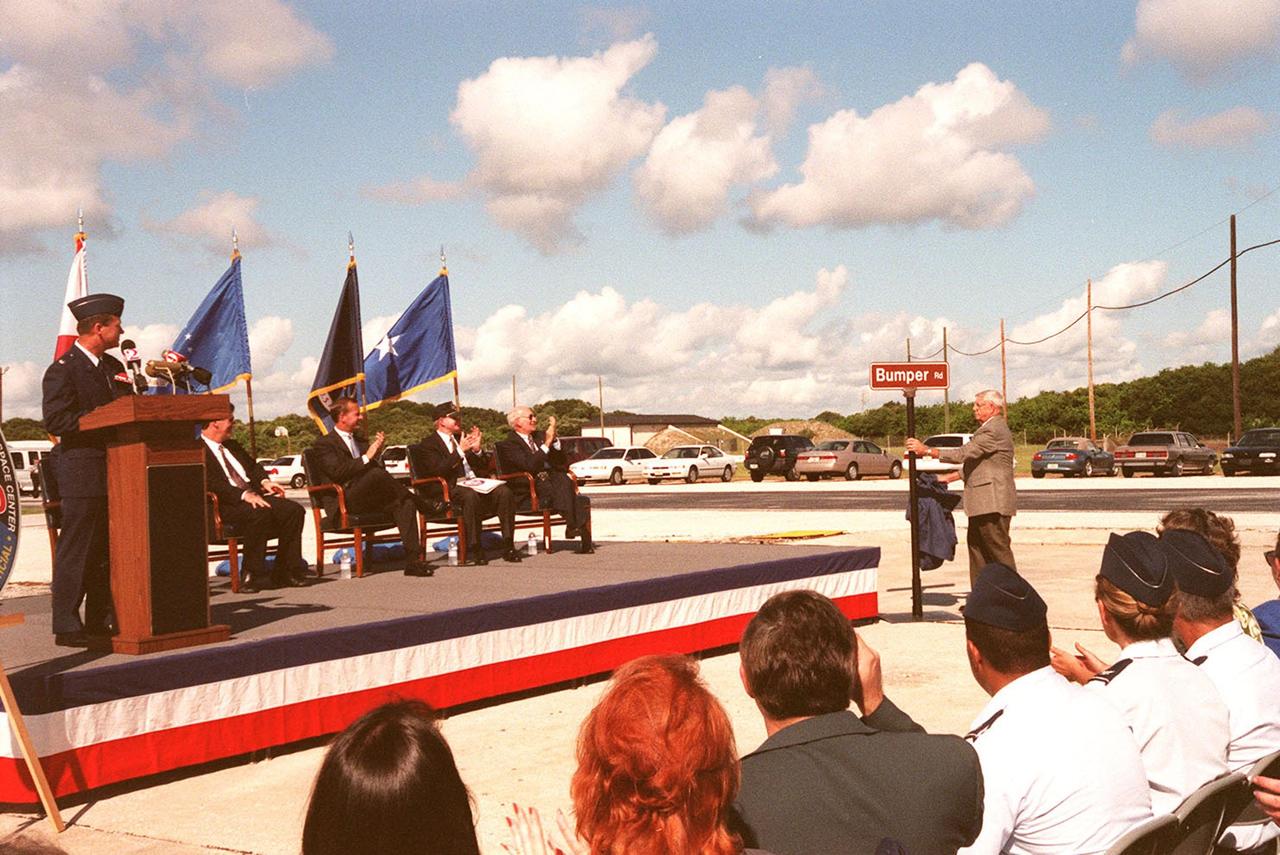
At Cape Canaveral Air Station's (CCAS) Complex 3/4, officials held a ceremony kicking off a year-long series of events commemorating 50 years of launches from the Space Coast that began with the Bumper rockets. At right, Norris Gray, a Bumper Program veteran, unveils a street sign that will be used to mark the road leading to the launch complex from which Bumper was launched. Seen on the stage are, left to right, Lt. Col. Randall K. Horn (at the podium), Commander, CCAS; Congressman David Weldon, 15th Congressional District of the State of Florida; Lieutenant Governor of the State of Florida Frank T. Brogan; Center Director Roy D. Bridges; and Executive Director Edward F. Gormel, Joint Performance Management Office. Also present (but not seen) is Brig. Gen. Donald P. Pettit, Commander, 45th Space Wing. After six Bumper launches at White Sands Proving Grounds, N.M., and a failed Bumper 7, a successful Bumper 8 lifted off July 24, 1950, from Complex 3/4 to conduct aerodynamic investigations around Mach 7 at relatively low altitudes. The kick-off event also inaugurated a student art contest to design a commemorative etching. The winning artwork will be permanently displayed on a 24-inch black granite square in the U.S. Space Walk Hall of Fame in Titusville, Fla
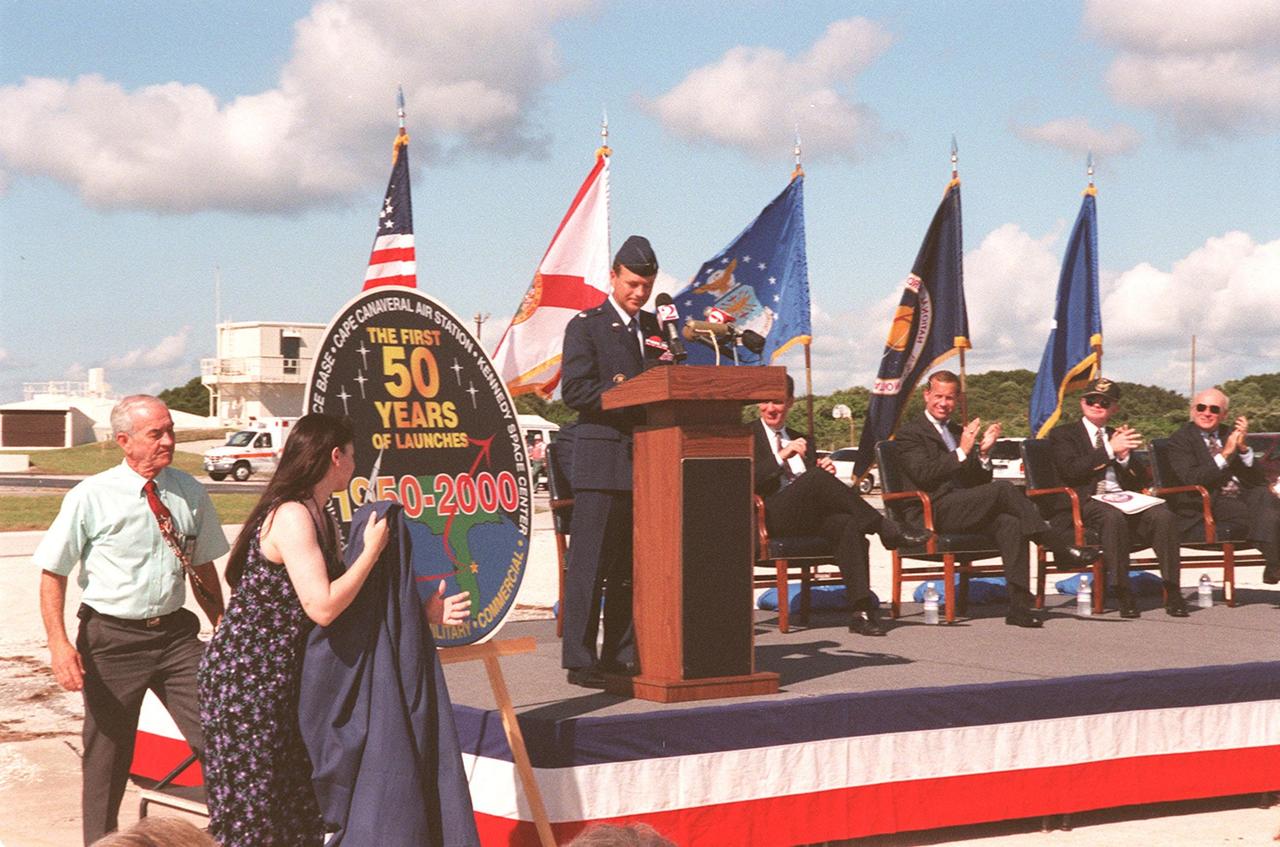
At Cape Canaveral Air Station's (CCAS) Complex 3/4, officials held a ceremony kicking off a year-long series of events commemorating 50 years of launches from the Space Coast that began with the Bumper rockets. At left is Jim Thompson, who is with CCAS. Unveiling the 50th anniversary logo at left is the artist Darlene Egli. On stage, from left to right, are Lt. Col. Randall K. Horn, Commander, CCAS; Congressman David Weldon, 15th Congressional District of the State of Florida; Lieutenant Governor of the State of Florida Frank T. Brogan; Center Director Roy D. Bridges; and Executive Director Edward F. Gormel, Joint Performance Management Office. Also present (but not seen) is Brig. Gen. Donald P. Pettit, Commander, 45th Space Wing. After six Bumper launches at White Sands Proving Grounds, N.M., and a failed Bumper 7, a successful Bumper 8 lifted off July 24, 1950, from Complex 3/4 to conduct aerodynamic investigations around Mach 7 at relatively low altitudes. The kick-off event also inaugurated a student art contest to design a commemorative etching. The winning artwork will be permanently displayed on a 24-inch black granite square in the U.S. space Walk Hall of Fame in Titusville, Fla
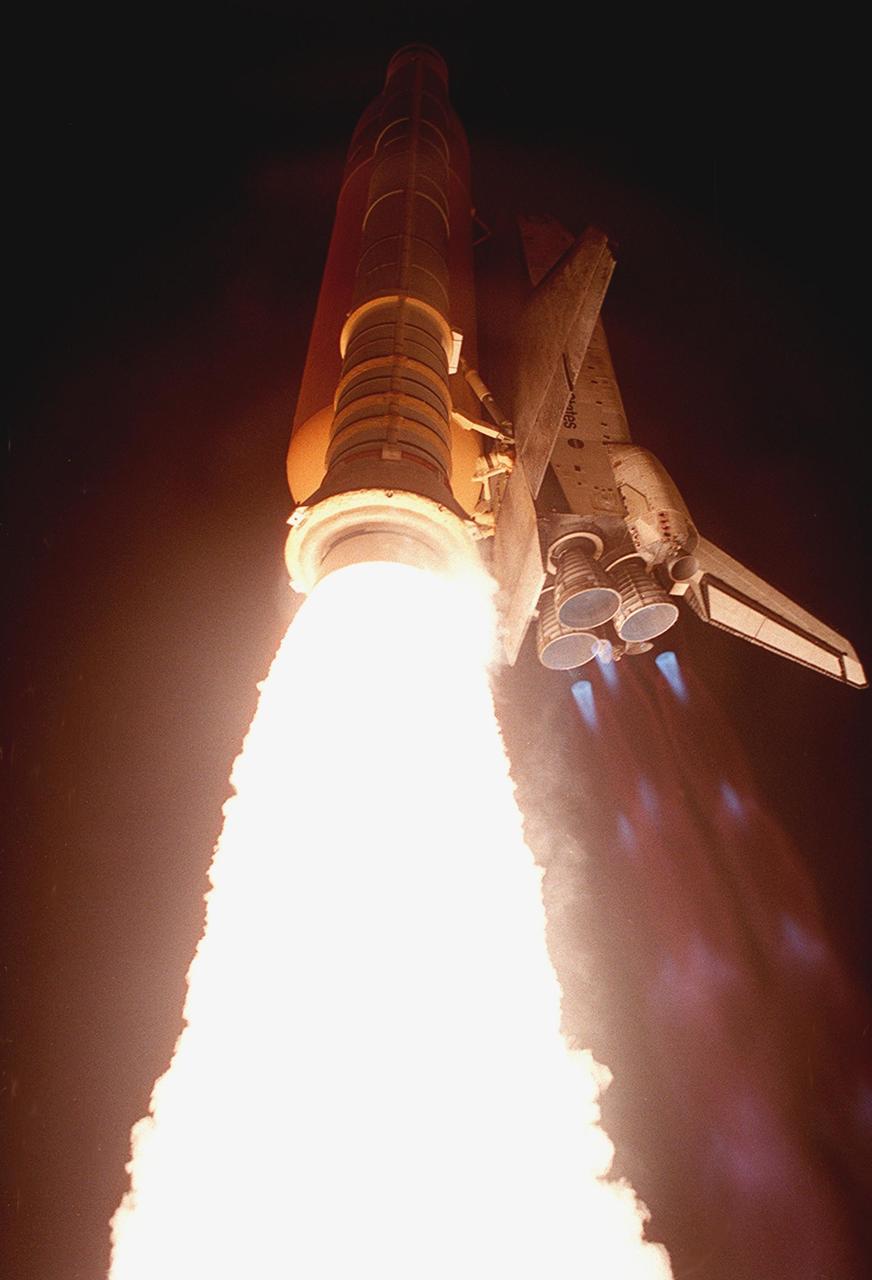
Like a roman candle, Space Shuttle Discovery roars into the clear night sky trailing brilliant exhaust from the solid rocket boosters (center) and blue mach diamonds from the main engine nozzles. Liftoff occurred at 7:50 p.m. EST from Launch Pad 39B. On board are Commander Curtis L. Brown Jr., Pilot Scott J. Kelly and Mission Specialists Steven L. Smith, C. Michael Foale (Ph.D.), John M. Grunsfeld (Ph.D.), Claude Nicollier of Switzerland and Jean-François Clervoy of France. Nicollier and Clervoy are with the European Space Agency. STS-103 is a Hubble Servicing Mission, with three planned space walks designed to install new equipment and replace old. The primary objective is to replace the gyroscopes that make up the three Rate Sensor Units. Extravehicular activities include installing a new computer, changing out one of the Fine Guidance Sensors, replacing a tape recorder with a new solid state recorder, and installing a voltage/temperature improvement kit, and begin repairing the insulation on the telescope's outer surface. After the 7-day, 21-hour mission, Discovery is expected to land at KSC Monday, Dec. 27, at about 5:24 p.m. EST. This is the 27th flight of Discovery and the 96th mission in the Space Shuttle Program. It is the third launch at Kennedy Space Center in 1999
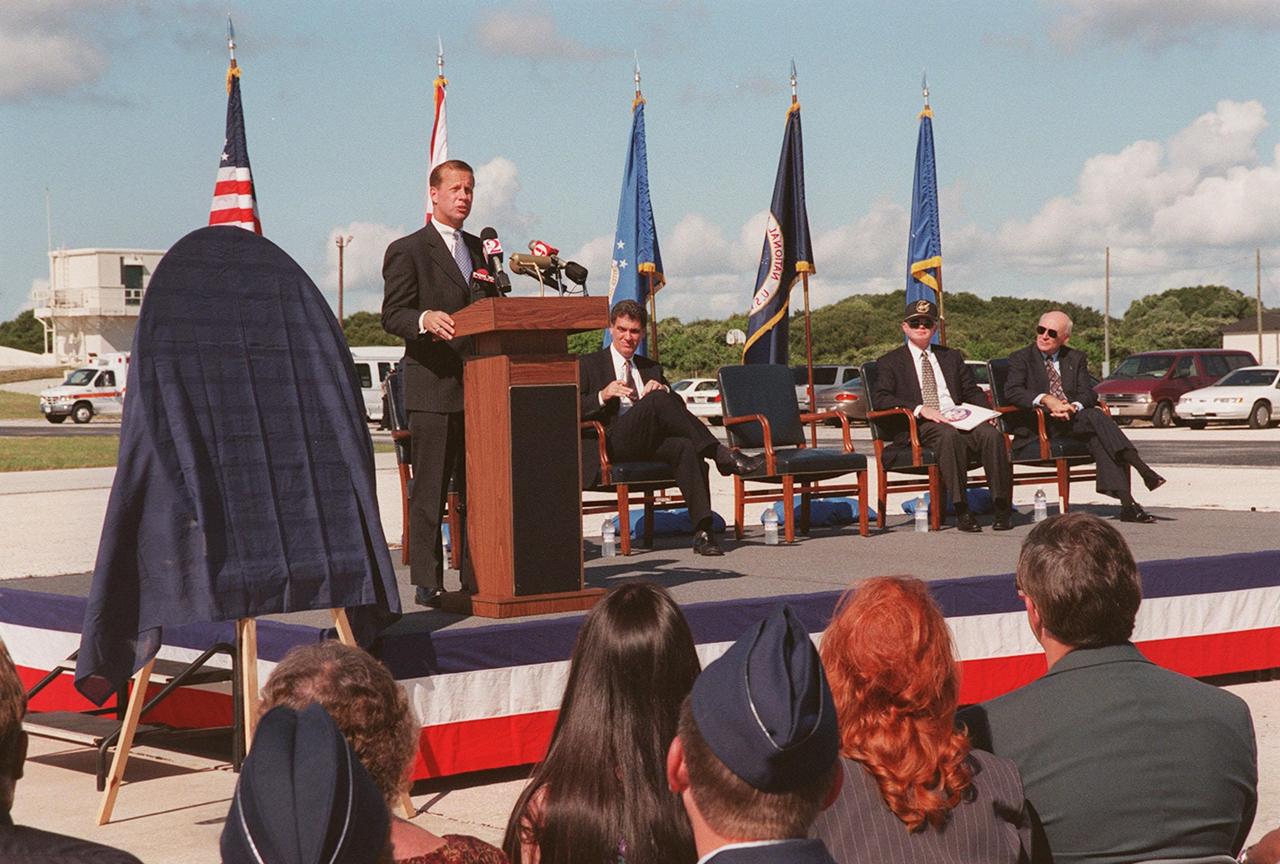
At Cape Canaveral Air Station's Complex 3/4, officials held a ceremony, kicking off a year-long series of events commemorating 50 years of launches from the Space Coast, that began with the Bumper rockets. From left are Lieutenant Governor of the State of Florida Frank T. Brogan; Congressman David Weldon, 15th Congressional District of the State of Florida; Center Director Roy D. Bridges; and Executive Director Edward F. Gormel, Joint Performance Management Office. Also present (but not seen) is Brig. Gen. Donald P. Pettit, Commander, 45th Space Wing. After six Bumper launches at White Sands Proving Grounds, N.M., and a failed Bumper 7, a successful Bumper 8 lifted off July 24, 1950, from Complex 3/4 to conduct aerodynamic investigations around Mach 7 at relatively low altitudes. The kick-off event also inaugurated a student art contest to design a commemorative etching. The winning artwork will be permanently displayed on a 24-inch black granite square in the U.S. Space Walk Hall of Fame in Titusville, Fla
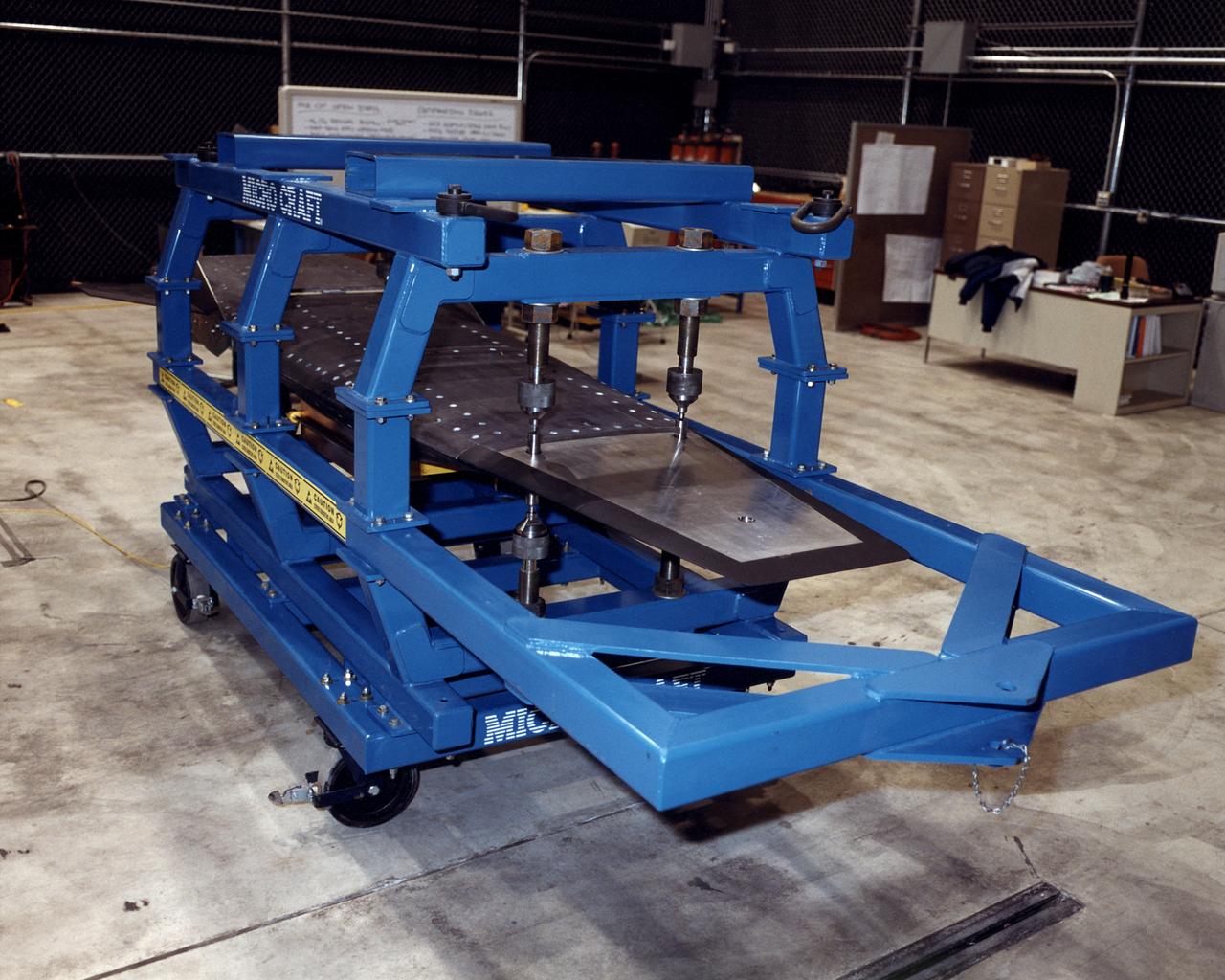
The second of three X-43A hypersonic research aircraft, shown here in its protective shipping jig, arrived at NASA's Dryden Flight Research Center, Edwards, California, on January 31, 2001. The arrival of the second X-43A from its manufacturer, MicroCraft, Inc., of Tullahoma, Tenn., followed by only a few days the mating of the first X-43A and its specially-designed adapter to the first stage of a modified Pegasus® booster rocket. The booster, built by Orbital Sciences Corp., Dulles, Va., will accelerate the 12-foot-long, unpiloted research aircraft to a predetermined altitude and speed after the X-43A/booster "stack" is air-launched from NASA's venerable NB-52 mothership. The X-43A will then separate from the rocket and fly a pre-programmed trajectory, conducting aerodynamic and propulsion experiments until it impacts into the Pacific Ocean. Three research flights are planned, two at Mach 7 and one at Mach 10 (seven and 10 times the speed of sound respectively) with the first tentatively scheduled for early summer, 2001. The X-43A is powered by a revolutionary supersonic-combustion ramjet ("scramjet") engine, and will use the underbody of the aircraft to form critical elements of the engine. The forebody shape helps compress the intake airflow, while the aft section acts as a nozzle to direct thrust. The X-43A flights will be the first actual flight tests of an aircraft powered by an air-breathing scramjet engine.
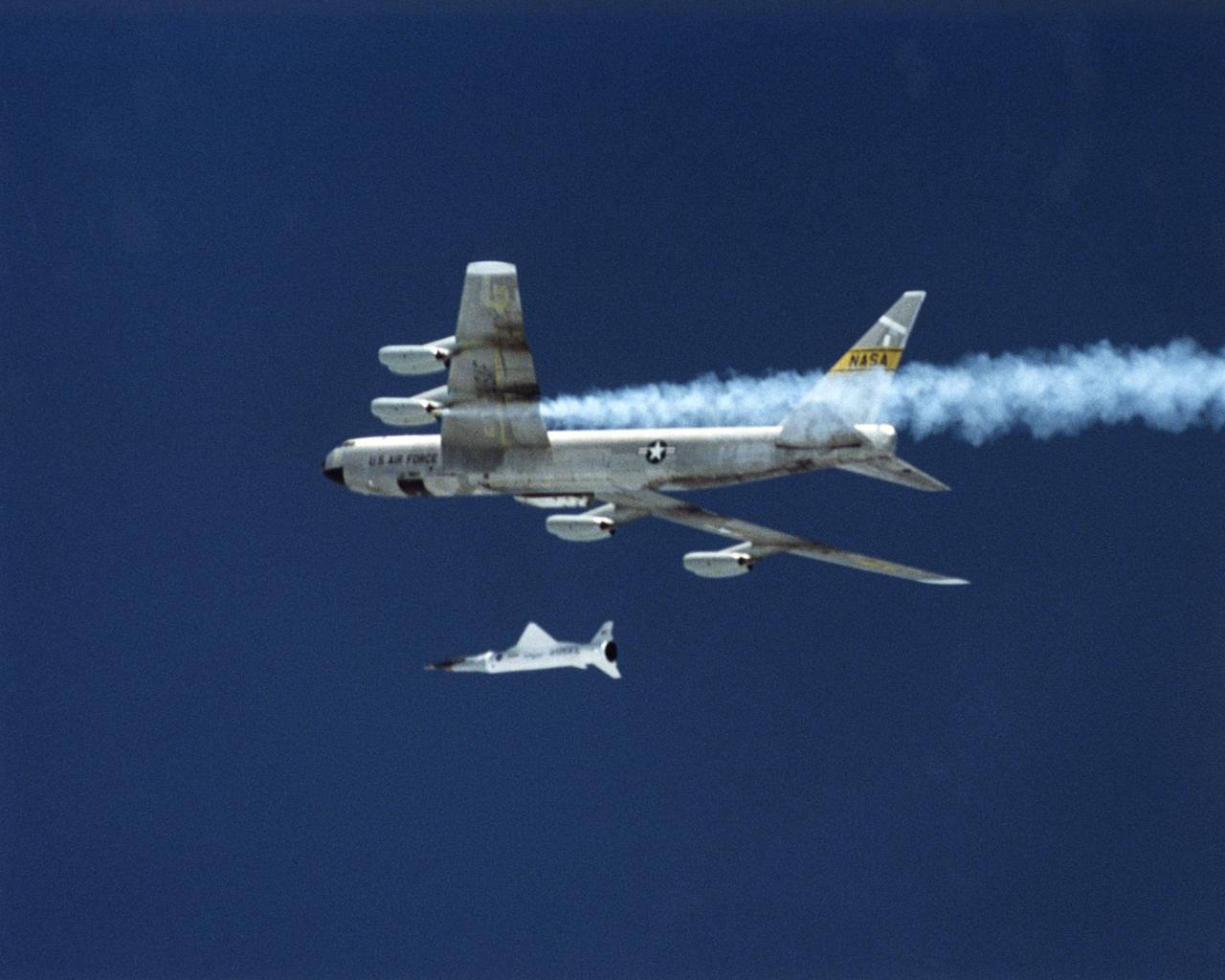
The first X-43A hypersonic research aircraft and its modified Pegasus booster rocket were carried aloft by NASA's NB-52B carrier aircraft from Dryden Flight Research Center at Edwards Air Force Base, Calif., on June 2, 2001 for the first of three high-speed free flight attempts. About an hour and 15 minutes later the Pegasus booster was released from the B-52 to accelerate the X-43A to its intended speed of Mach 7. Before this could be achieved, the combined Pegasus and X-43A "stack" lost control about eight seconds after ignition of the Pegasus rocket motor. The mission was terminated and explosive charges ensured the Pegasus and X-43A fell into the Pacific Ocean in a cleared Navy range area. A NASA investigation board is being assembled to determine the cause of the incident. Work continues on two other X-43A vehicles, the first of which could fly by late 2001. Central to the X-43A program is its integration of an air-breathing "scramjet" engine that could enable a variety of high-speed aerospace craft, and promote cost-effective access to space. The 12-foot, unpiloted research vehicle was developed and built for NASA by MicroCraft Inc., Tullahoma, Tenn. The booster was built by Orbital Sciences Corp. at Chandler, Ariz.
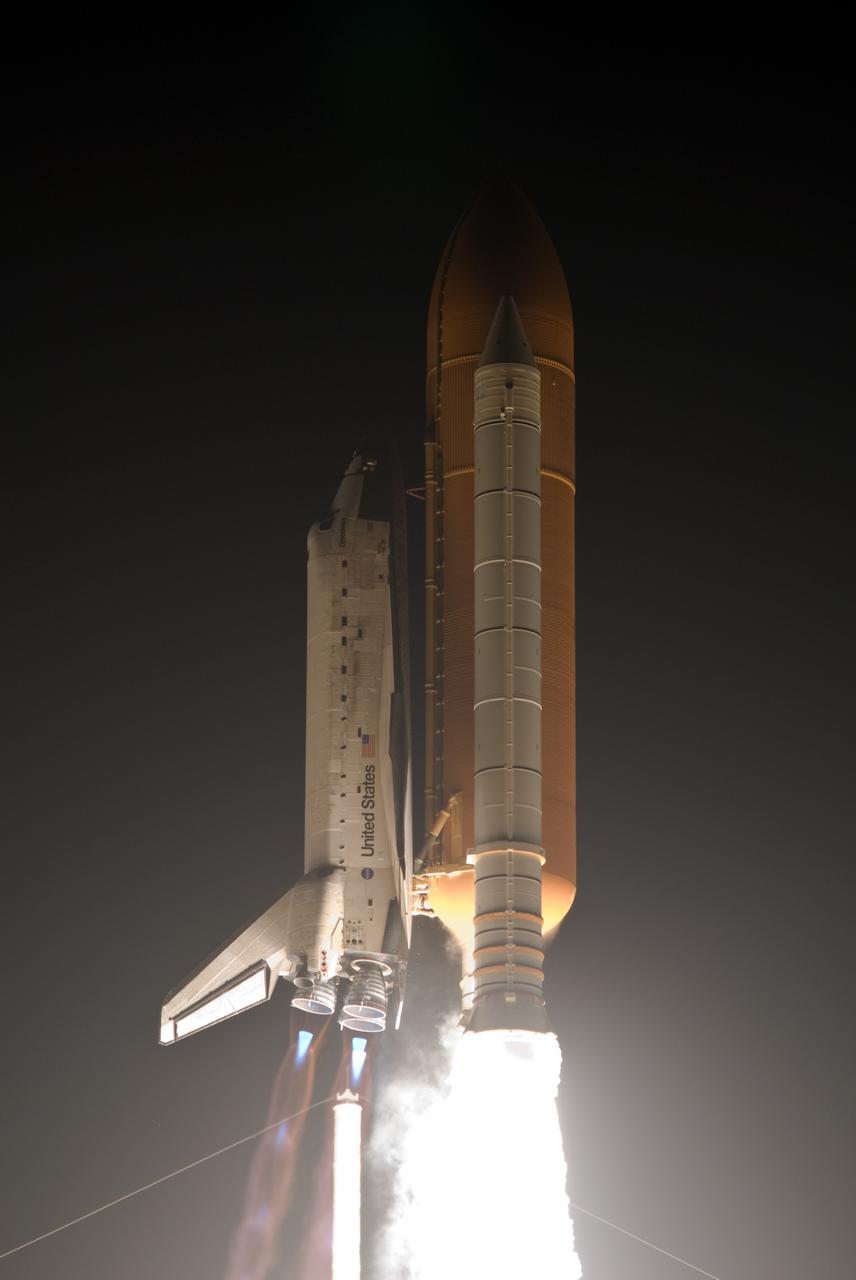
CAPE CANAVERAL, Fla. – Space shuttle Discovery rises majestically from Launch Pad 39A at NASA's Kennedy Space Center in Florida as it heads for space on the STS-128 mission. Below the main engine nozzles are the blue mach diamonds, a formation of shock waves in the exhaust plume of an aerospace propulsion system. Liftoff from Launch Pad 39A was on time at 11:59 p.m. EDT. The first launch attempt on Aug. 24 was postponed due to unfavorable weather conditions. The second attempt on Aug. 25 also was postponed due to an issue with a valve in space shuttle Discovery's main propulsion system. The STS-128 mission is the 30th International Space Station assembly flight and the 128th space shuttle flight. The 13-day mission will deliver more than 7 tons of supplies, science racks and equipment, as well as additional environmental hardware to sustain six crew members on the International Space Station. The equipment includes a freezer to store research samples, a new sleeping compartment and the COLBERT treadmill. Photo credit: NASA/Rusty Backer-George Roberts
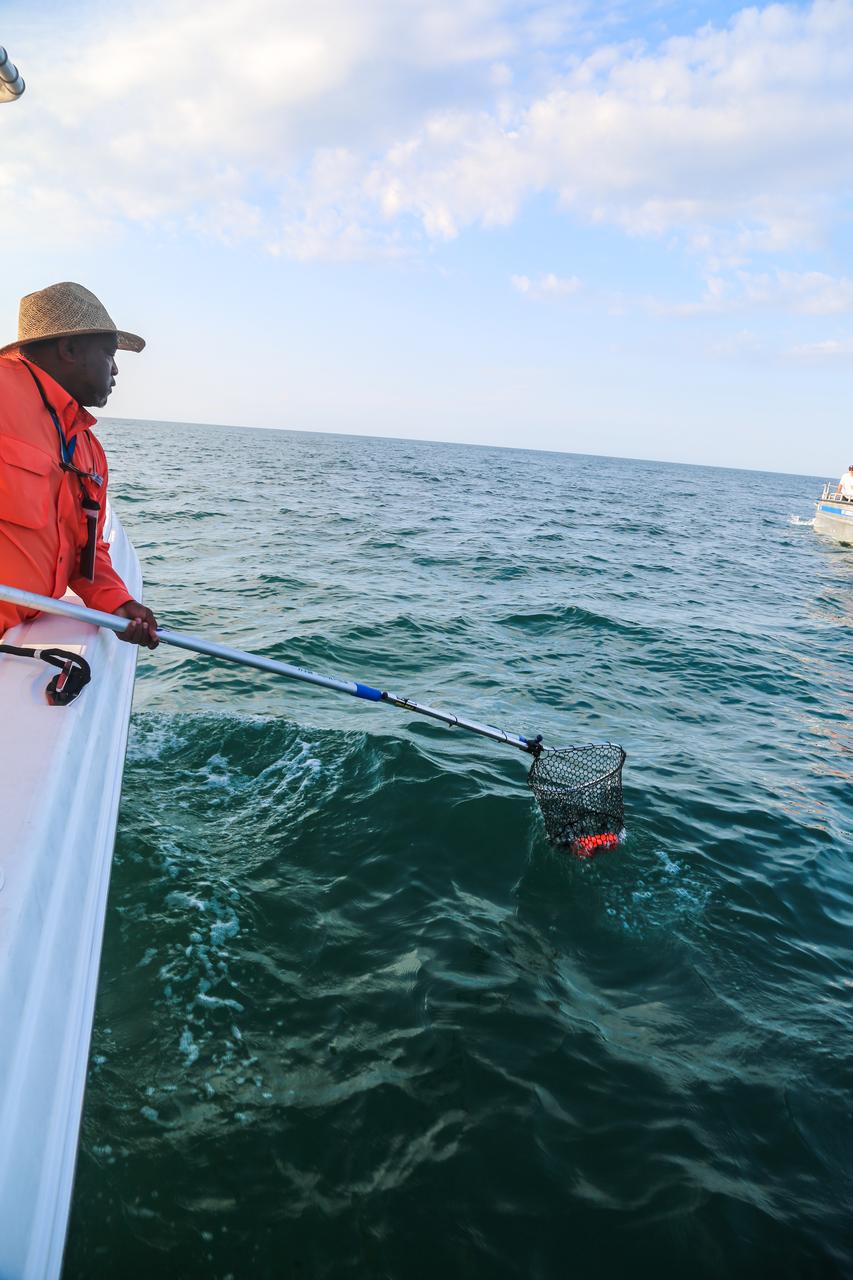
One of the 12 ejectable data recorders from NASA’s Ascent Abort-2 (AA-2) flight test is retrieved from the Atlantic Ocean off the coast of Florida by the NASA Ejectable Data Recorder Recovery Team on July 2, 2019. During AA-2, a fully functional Launch Abort System (LAS) with a test version of Orion attached, launched atop a Northrop Grumman provided booster from Launch Pad 46 at Cape Canaveral Air Force Station on July 2, 2019. Liftoff was at 7 a.m. EDT. During AA-2, the booster sent the LAS and Orion to an altitude of 31,000 feet, traveling at Mach 1.15 (more than 1,000 mph). The LAS’ three motors worked together to pull the crew module away from the booster and prepare it for splashdown in the Atlantic Ocean. The flight test proves that the abort system can pull crew to safety in the unlikely event of an emergency during ascent. Data from the recorders will be analyzed by engineers.
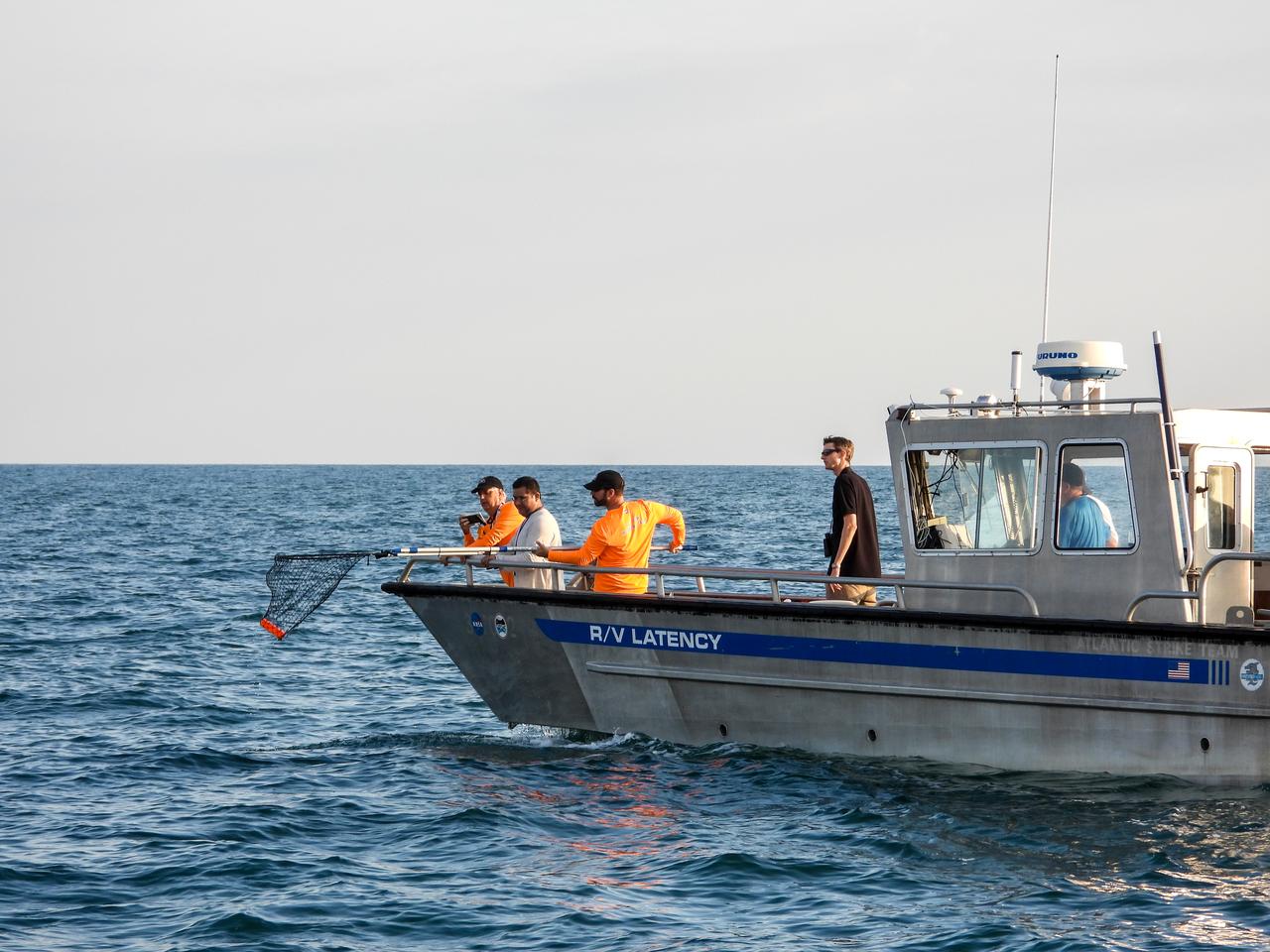
One of the 12 ejectable data recorders from NASA’s Ascent Abort-2 (AA-2) flight test is retrieved from the Atlantic Ocean off the coast of Florida by the NASA Ejectable Data Recorder Recovery Team on July 2, 2019. During AA-2, a fully functional Launch Abort System (LAS) with a test version of Orion attached, launched atop a Northrop Grumman provided booster from Launch Pad 46 at Cape Canaveral Air Force Station on July 2, 2019. Liftoff was at 7 a.m. EDT. During AA-2, the booster sent the LAS and Orion to an altitude of 31,000 feet, traveling at Mach 1.15 (more than 1,000 mph). The LAS’ three motors worked together to pull the crew module away from the booster and prepare it for splashdown in the Atlantic Ocean. The flight test proves that the abort system can pull crew to safety in the unlikely event of an emergency during ascent. Data from the recorders will be analyzed by engineers.
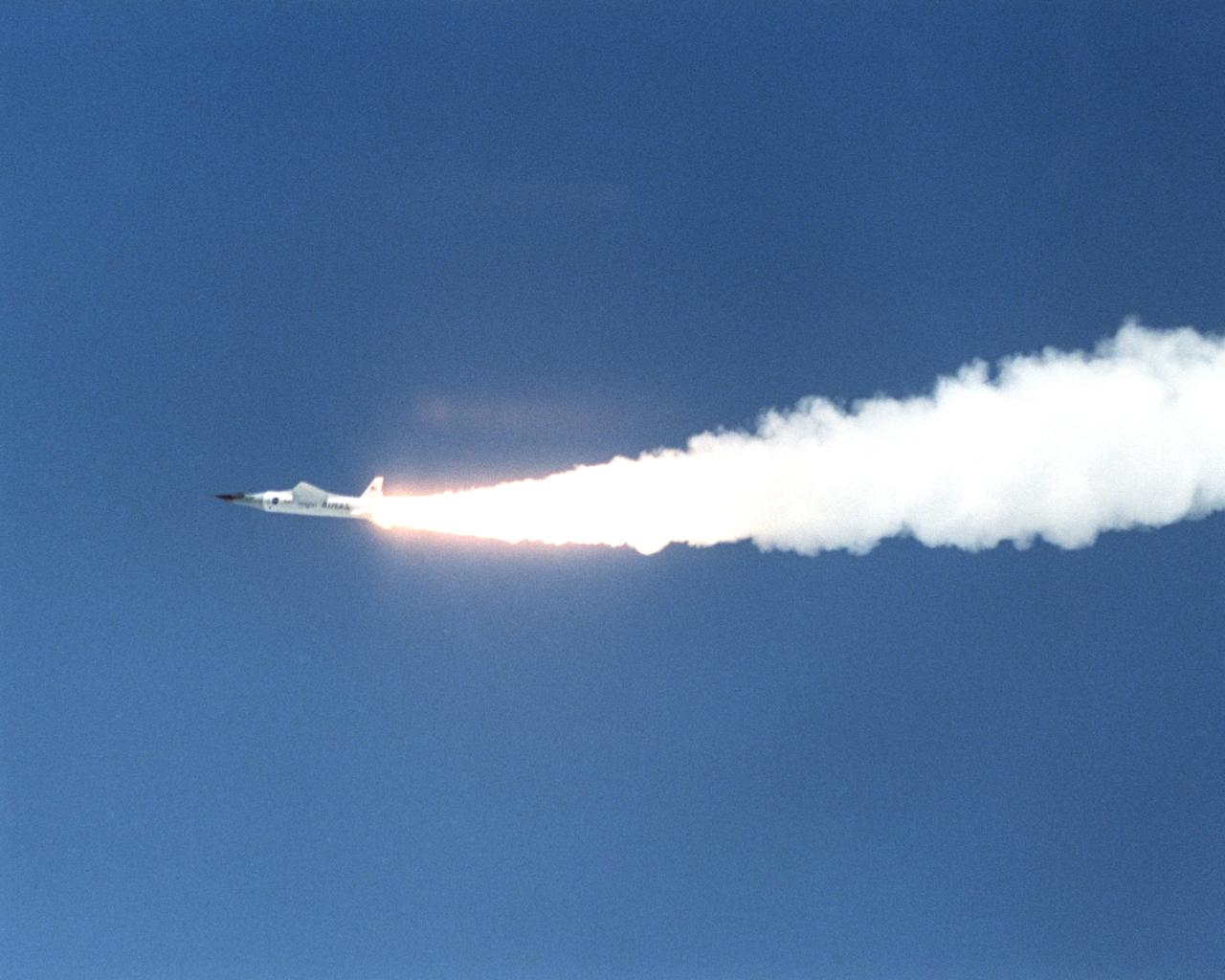
The first X-43A hypersonic research aircraft and its modified Pegasus booster rocket were carried aloft by NASA's NB-52B carrier aircraft from Dryden Flight Research Center at Edwards Air Force Base, Calif., on June 2, 2001 for the first of three high-speed free flight attempts. About an hour and 15 minutes later the Pegasus booster was released from the B-52 to accelerate the X-43A to its intended speed of Mach 7. Before this could be achieved, the combined Pegasus and X-43A "stack" lost control about eight seconds after ignition of the Pegasus rocket motor. The mission was terminated and explosive charges ensured the Pegasus and X-43A fell into the Pacific Ocean in a cleared Navy range area. A NASA investigation board is being assembled to determine the cause of the incident. Work continues on two other X-43A vehicles, the first of which could fly by late 2001. Central to the X-43A program is its integration of an air-breathing "scramjet" engine that could enable a variety of high-speed aerospace craft, and promote cost-effective access to space. The 12-foot, unpiloted research vehicle was developed and built for NASA by MicroCraft Inc., Tullahoma, Tenn. The booster was built by Orbital Sciences Corp. at Chandler, Ariz.

The first X-43A hypersonic research aircraft and its modified Pegasus booster rocket were carried aloft by NASA's NB-52B carrier aircraft from Dryden Flight Research Center at Edwards Air Force Base, Calif., on June 2, 2001 for the first of three high-speed free flight attempts. About an hour and 15 minutes later the Pegasus booster was released from the B-52 to accelerate the X-43A to its intended speed of Mach 7. Before this could be achieved, the combined Pegasus and X-43A "stack" lost control about eight seconds after ignition of the Pegasus rocket motor. The mission was terminated and explosive charges ensured the Pegasus and X-43A fell into the Pacific Ocean in a cleared Navy range area. A NASA investigation board is being assembled to determine the cause of the incident. Work continues on two other X-43A vehicles, the first of which could fly by late 2001. Central to the X-43A program is its integration of an air-breathing "scramjet" engine that could enable a variety of high-speed aerospace craft, and promote cost-effective access to space. The 12-foot, unpiloted research vehicle was developed and built for NASA by MicroCraft Inc., Tullahoma, Tenn. The booster was built by Orbital Sciences Corp. at Chandler, Ariz.
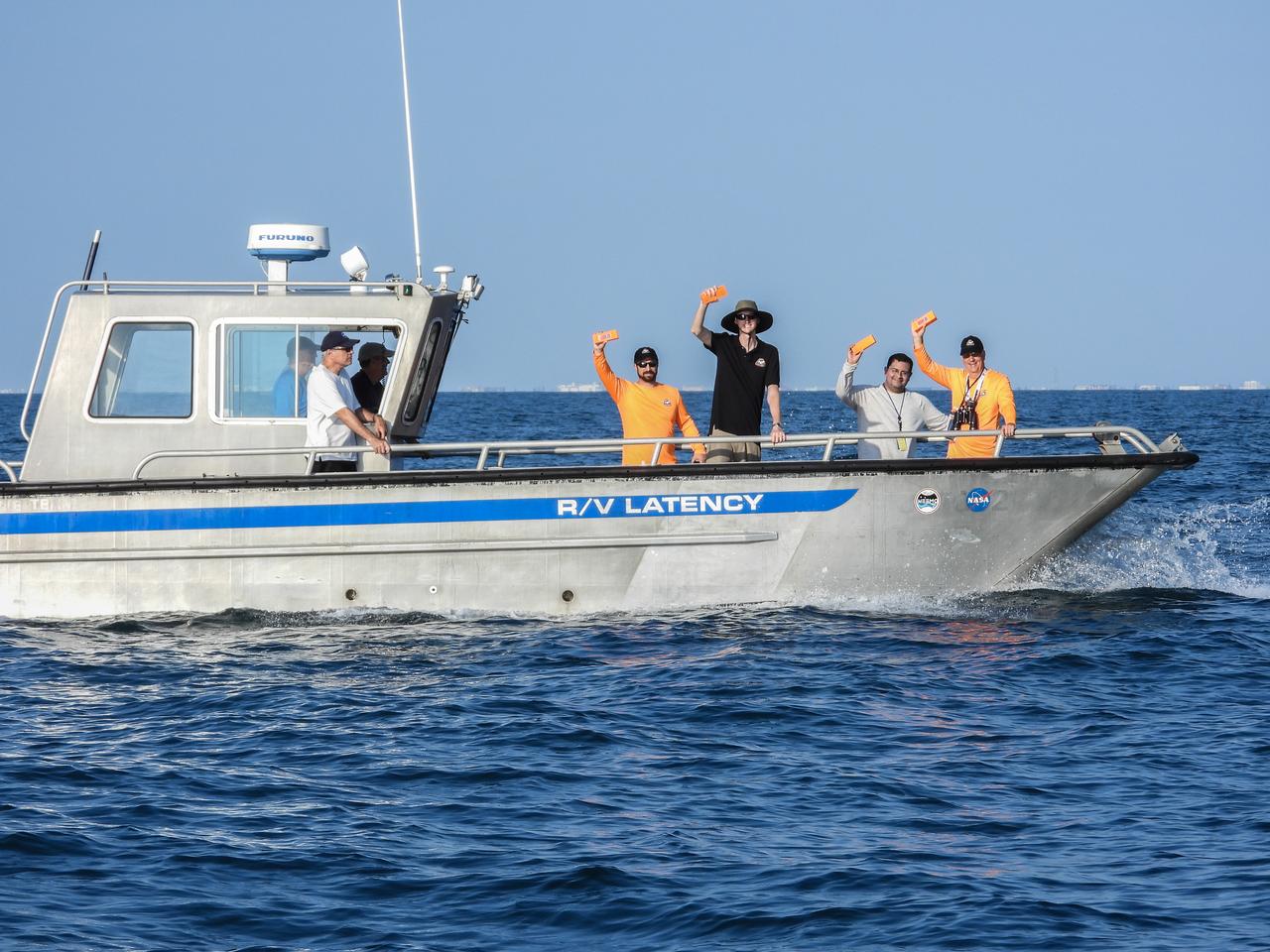
Members of the NASA Ejectable Data Recorder Recovery Team display some of the ejectable data recorders they recovered in the Atlantic Ocean off the coast of Florida on July 2, 2019, after the Ascent Abort-2 (AA-2) flight test. During AA-2, a fully functional Launch Abort System (LAS) with a test version of Orion attached, launched atop a Northrop Grumman provided booster from Launch Pad 46 at Cape Canaveral Air Force Station on July 2, 2019. Liftoff was at 7 a.m. EDT. During AA-2, the booster sent the LAS and Orion to an altitude of 31,000 feet, traveling at Mach 1.15 (more than 1,000 mph). The LAS’ three motors worked together to pull the crew module away from the booster and prepare it for splashdown in the Atlantic Ocean. The flight test proves that the abort system can pull crew to safety in the unlikely event of an emergency during ascent. Data from the recorders will be analyzed by engineers.
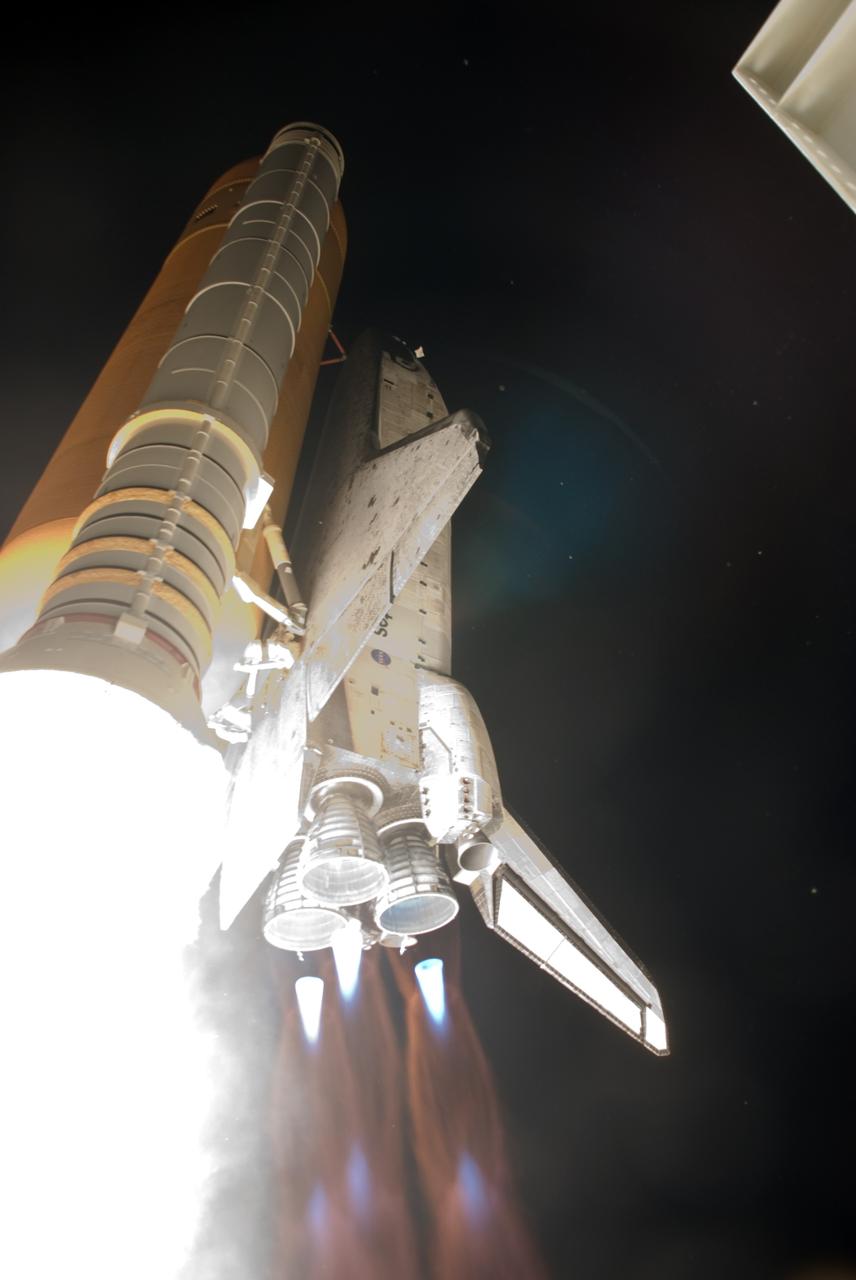
CAPE CANAVERAL, Fla. – At NASA's Kennedy Space Center in Florida, space shuttle Discovery hurtles toward space on the STS-128 mission. Below the main engine nozzles are the blue mach diamonds, a formation of shock waves in the exhaust plume of an aerospace propulsion system Liftoff from Launch Pad 39A was on time at 11:59 p.m. EDT. The first launch attempt on Aug. 24 was postponed due to unfavorable weather conditions. The second attempt on Aug. 25 also was postponed due to an issue with a valve in space shuttle Discovery's main propulsion system. The STS-128 mission is the 30th International Space Station assembly flight and the 128th space shuttle flight. The 13-day mission will deliver more than 7 tons of supplies, science racks and equipment, as well as additional environmental hardware to sustain six crew members on the International Space Station. The equipment includes a freezer to store research samples, a new sleeping compartment and the COLBERT treadmill. Photo credit: NASA/Tony Gray-Tom Farrar
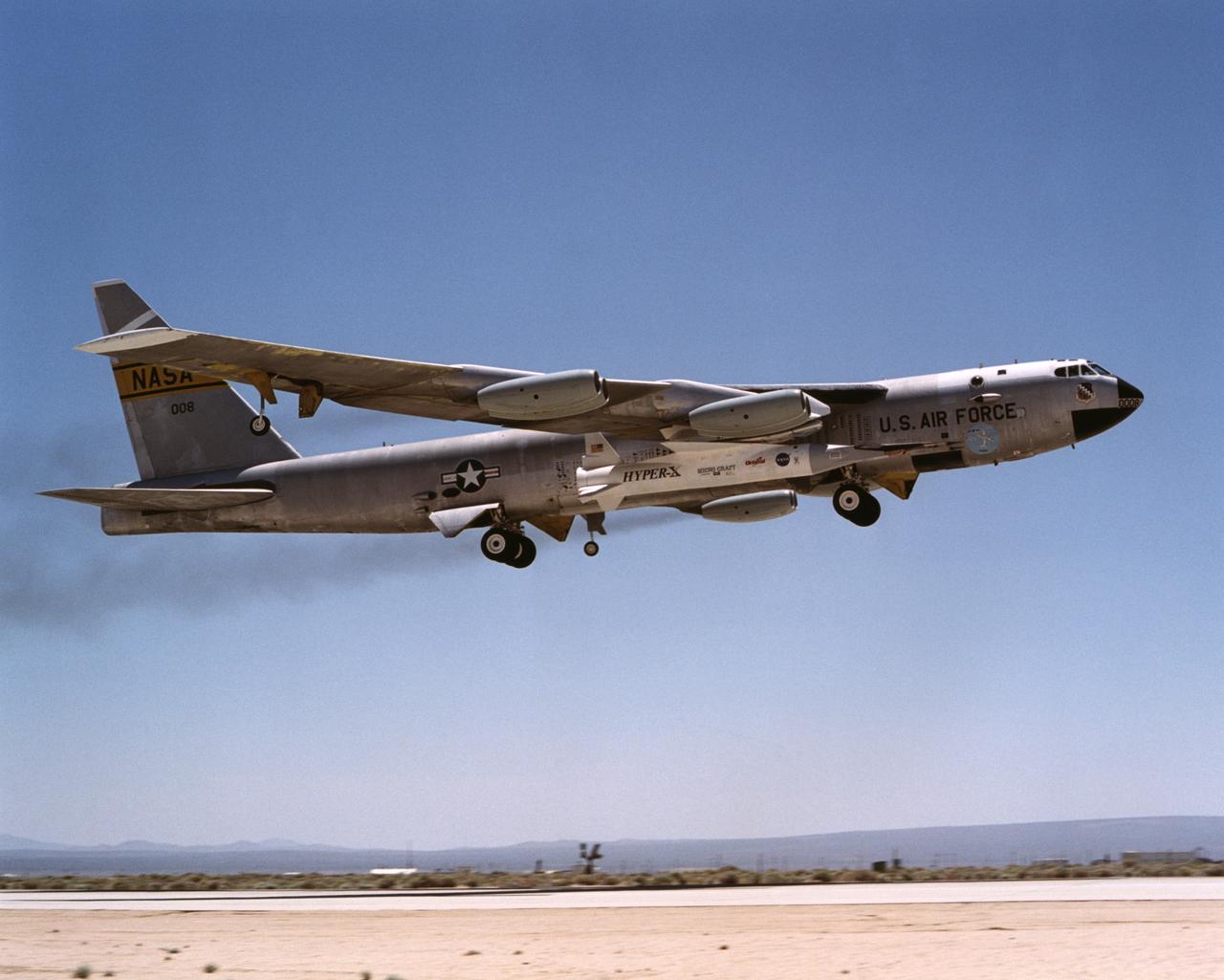
The first X-43A hypersonic research aircraft and its modified Pegasus booster rocket were carried aloft by NASA's NB-52B carrier aircraft from Dryden Flight Research Center at Edwards Air Force Base, Calif., on June 2, 2001 for the first of three high-speed free flight attempts. About an hour and 15 minutes later the Pegasus booster was released from the B-52 to accelerate the X-43A to its intended speed of Mach 7. Before this could be achieved, the combined Pegasus and X-43A "stack" lost control about eight seconds after ignition of the Pegasus rocket motor. The mission was terminated and explosive charges ensured the Pegasus and X-43A fell into the Pacific Ocean in a cleared Navy range area. A NASA investigation board is being assembled to determine the cause of the incident. Work continues on two other X-43A vehicles, the first of which could fly by late 2001. Central to the X-43A program is its integration of an air-breathing "scramjet" engine that could enable a variety of high-speed aerospace craft, and promote cost-effective access to space. The 12-foot, unpiloted research vehicle was developed and built for NASA by MicroCraft Inc., Tullahoma, Tenn. The booster was built by Orbital Sciences Corp. at Chandler, Ariz.
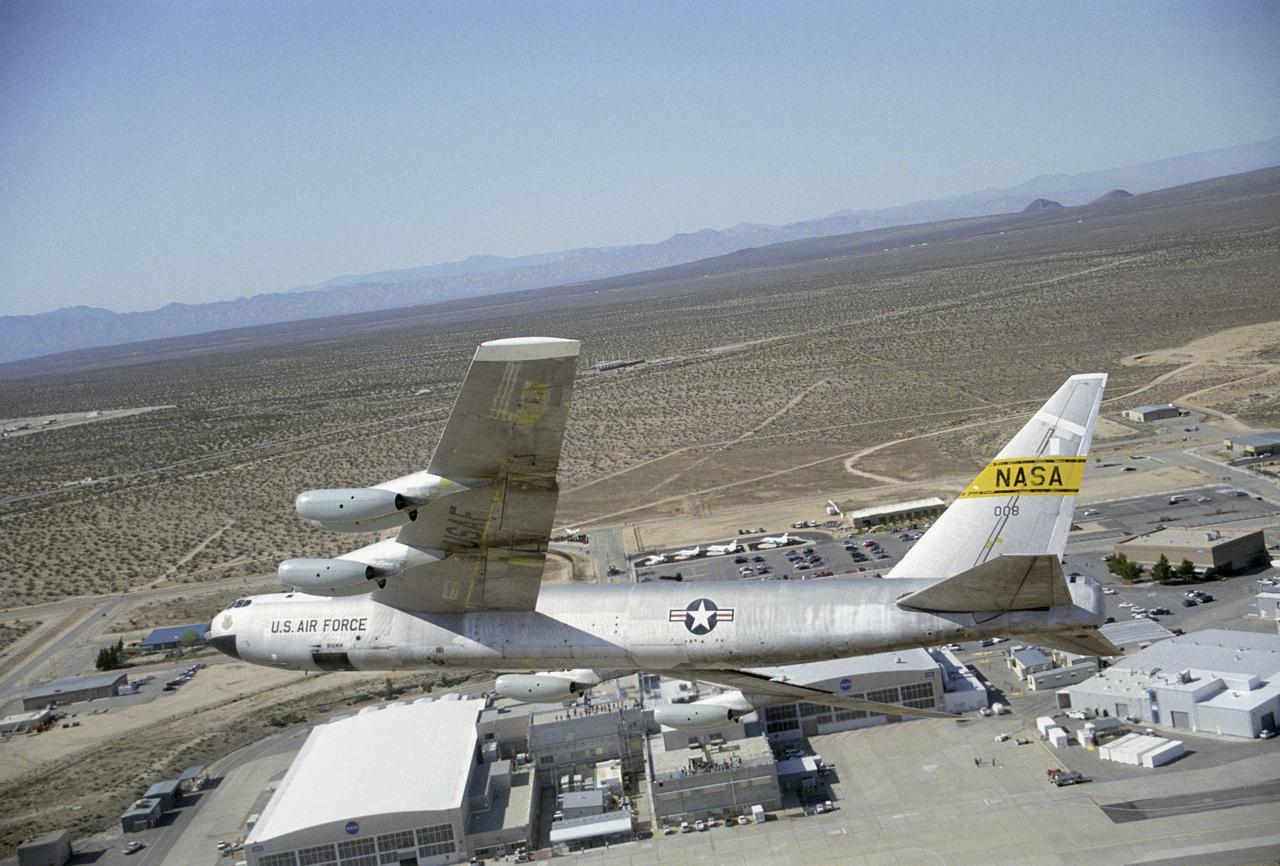
NASA's B-52B aircraft over the Dryden Flight Research Center after the successful launch of the second X-43A hypersonic research vehicle.
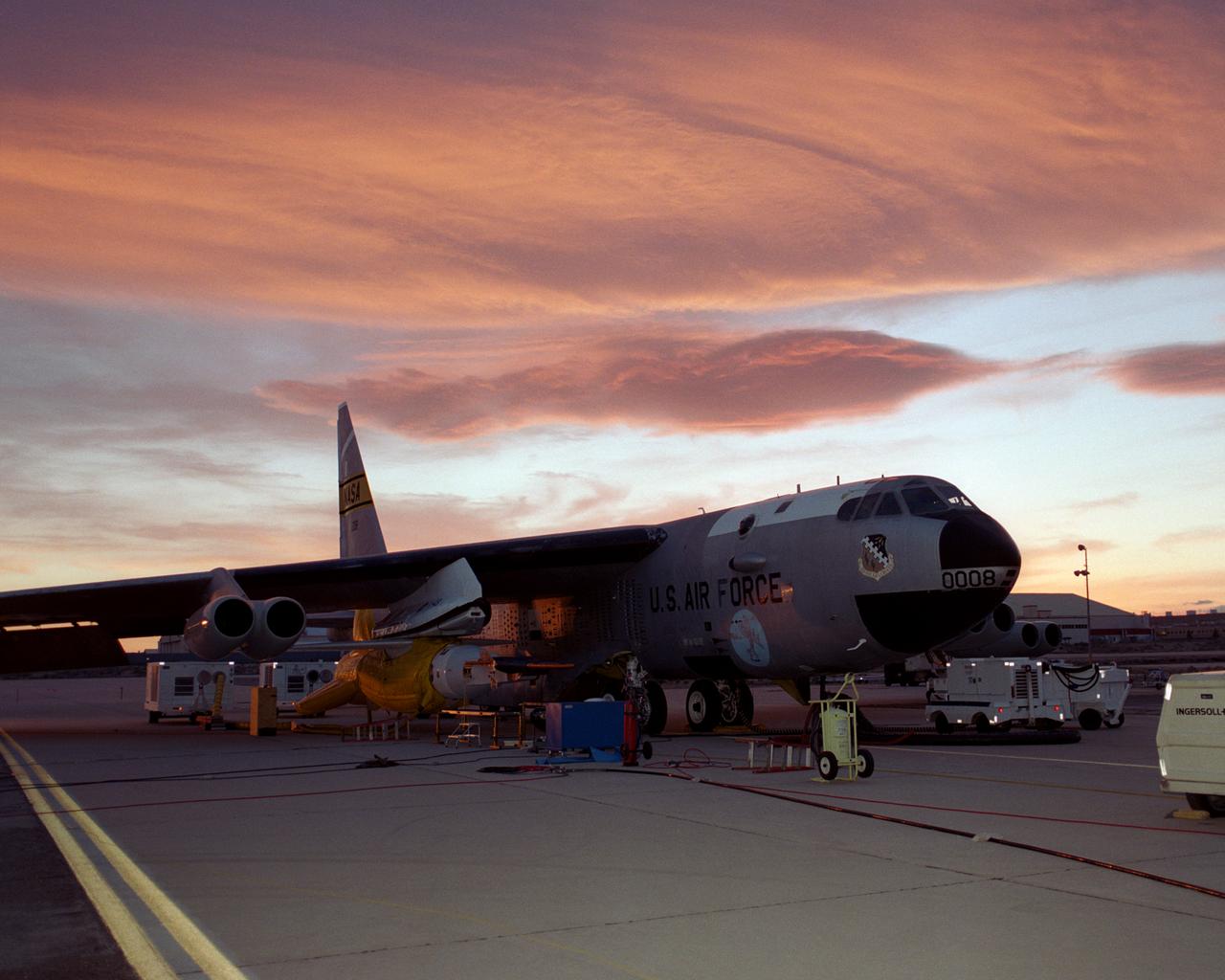
NASA's B-52B launch aircraft at sunset with the second X-43A hypersonic research vehicle attached to a modified Pegasus rocket under its right wing.