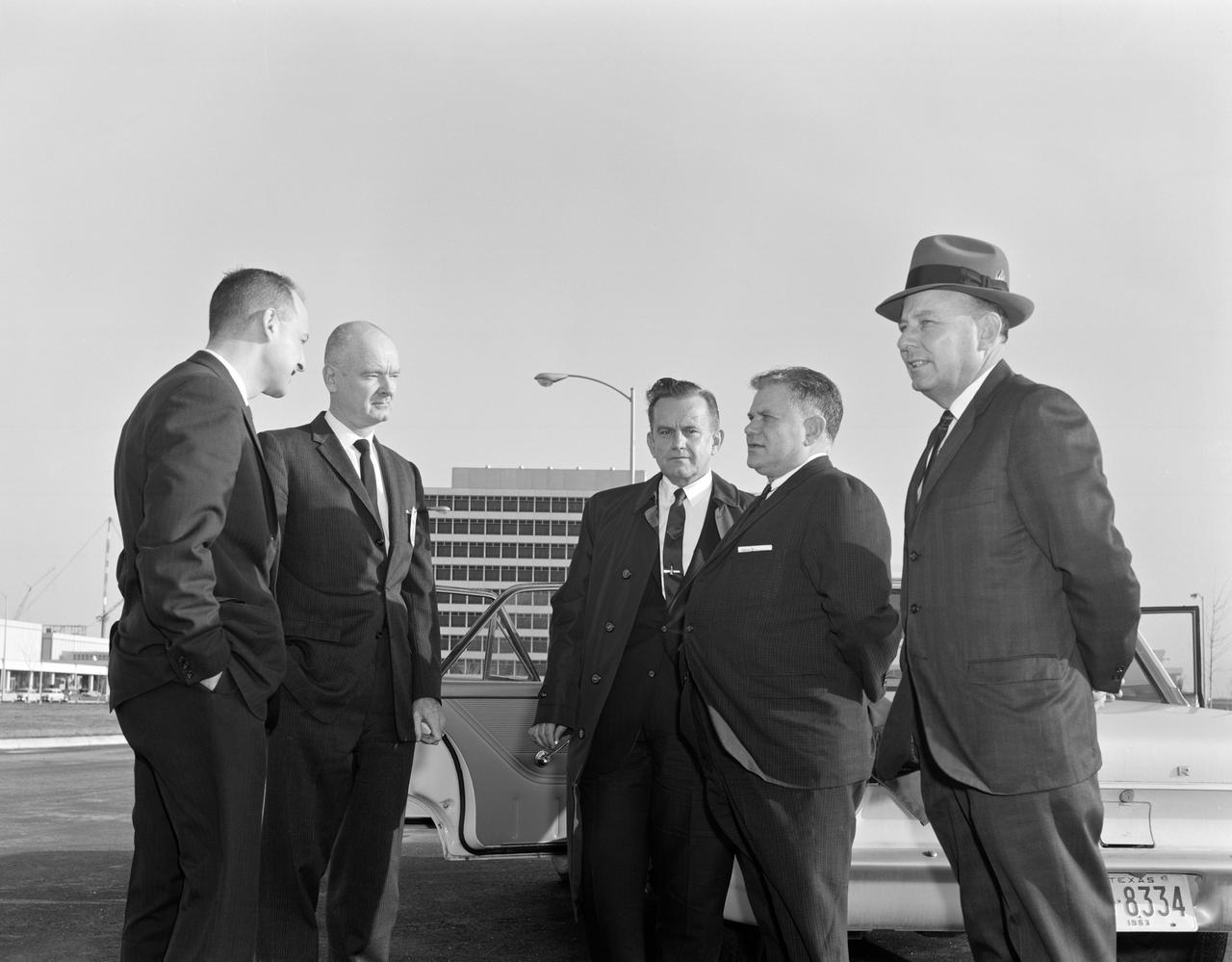
George Low, Joseph Piland, Philip Hamburger, Congressman Olin Teague from Texas; and, Congressman Joe D. Waggoner from Louisiana at the entrance to Site 1, Clear Lake, prior to briefing for the House Subcommittee on Manned Spaceflight. MSC, Houston, TX
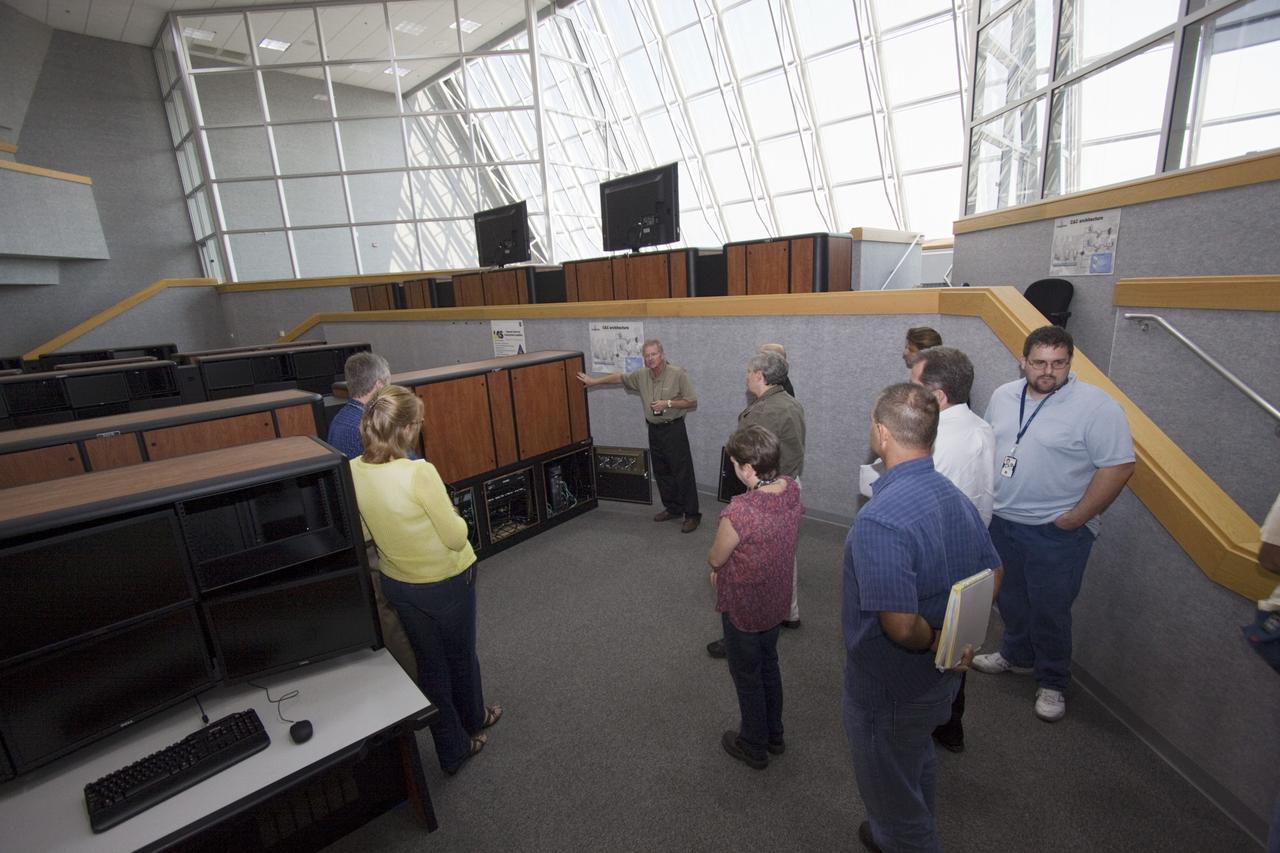
CAPE CANAVERAL, Fla. – At the newly remodeled Launch Control Center's Young-Crippen Firing Room at NASA's Kennedy Space Center in Florida, engineering directorate personnel demonstrate the recently added Space Command & Control System which will be used for launches of future human spaceflight vehicles. Known as Firing Room 1 in the Apollo era, it was re-named as a tribute to the Space Shuttle Program's first crewed mission, STS-1, which was flown by Commander John W. Young and Pilot Robert L. Crippen in April 1981. Photo credit: NASA/Jim Grossmann
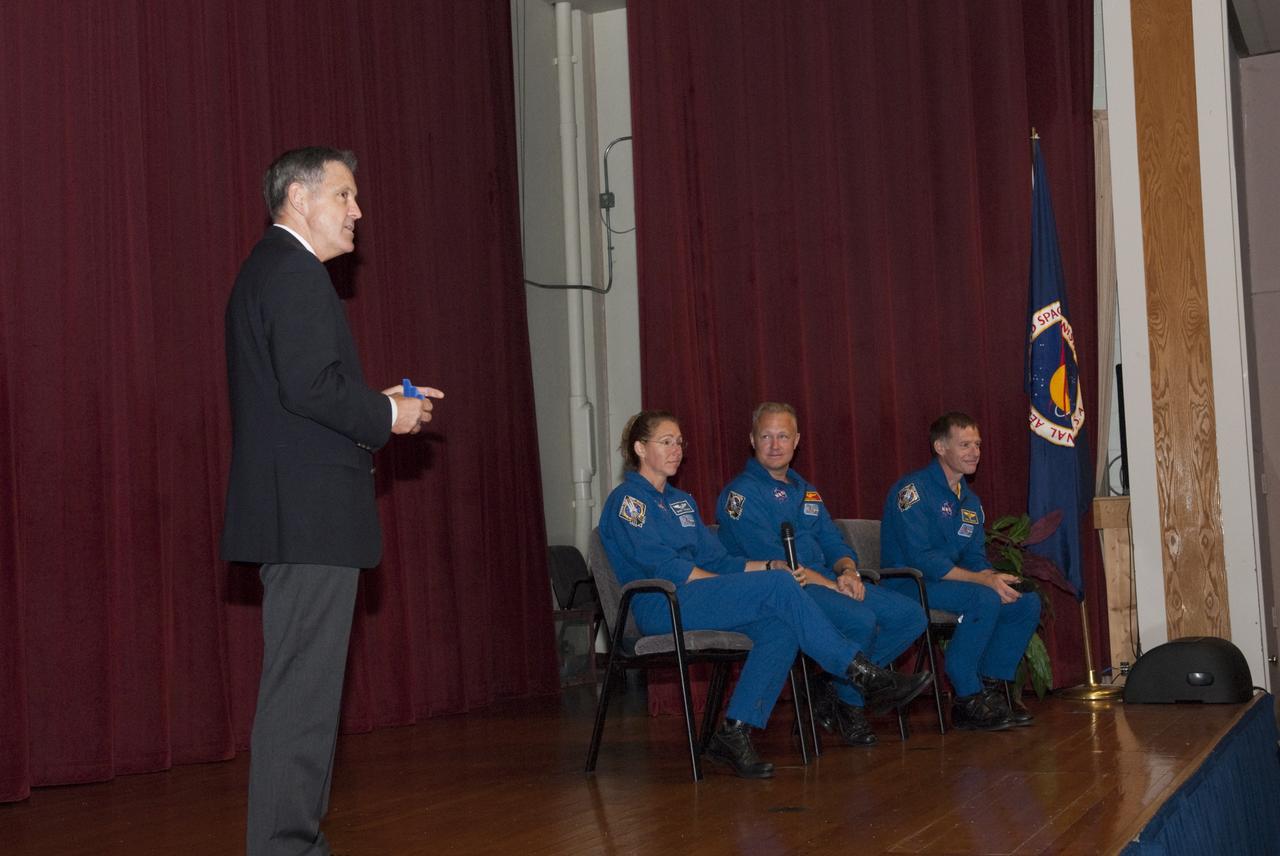
CAPE CANAVERAL, Fla. – Astronauts from Space Shuttle Atlantis’ STS-135 mission return to the Training Auditorium at NASA’s Kennedy Space Center for the traditional post-flight crew return presentation. Commander Chris Ferguson, Pilot Doug Hurley and Mission Specialist Sandra Magnus share personal stories about their experiences. Also on stage is Bob Cabana, Kennedy Space Center’s Director. STS-135 Mission Specialist Rex Walheim was unable to attend the Kennedy event. In July 2011, Atlantis and its crew delivered to the International Space Station the Raffaello multi-purpose logistics module packed with more than 9,400 pounds of spare parts, equipment and supplies that will sustain station operations for the next year. STS-135 was the 33rd and final flight for Atlantis and the final mission of the Space Shuttle Program. For more information, visit www.nasa.gov/mission_pages/shuttle/shuttlemissions/sts135/index.html. Photo credit: NASA/Jim Grossmann
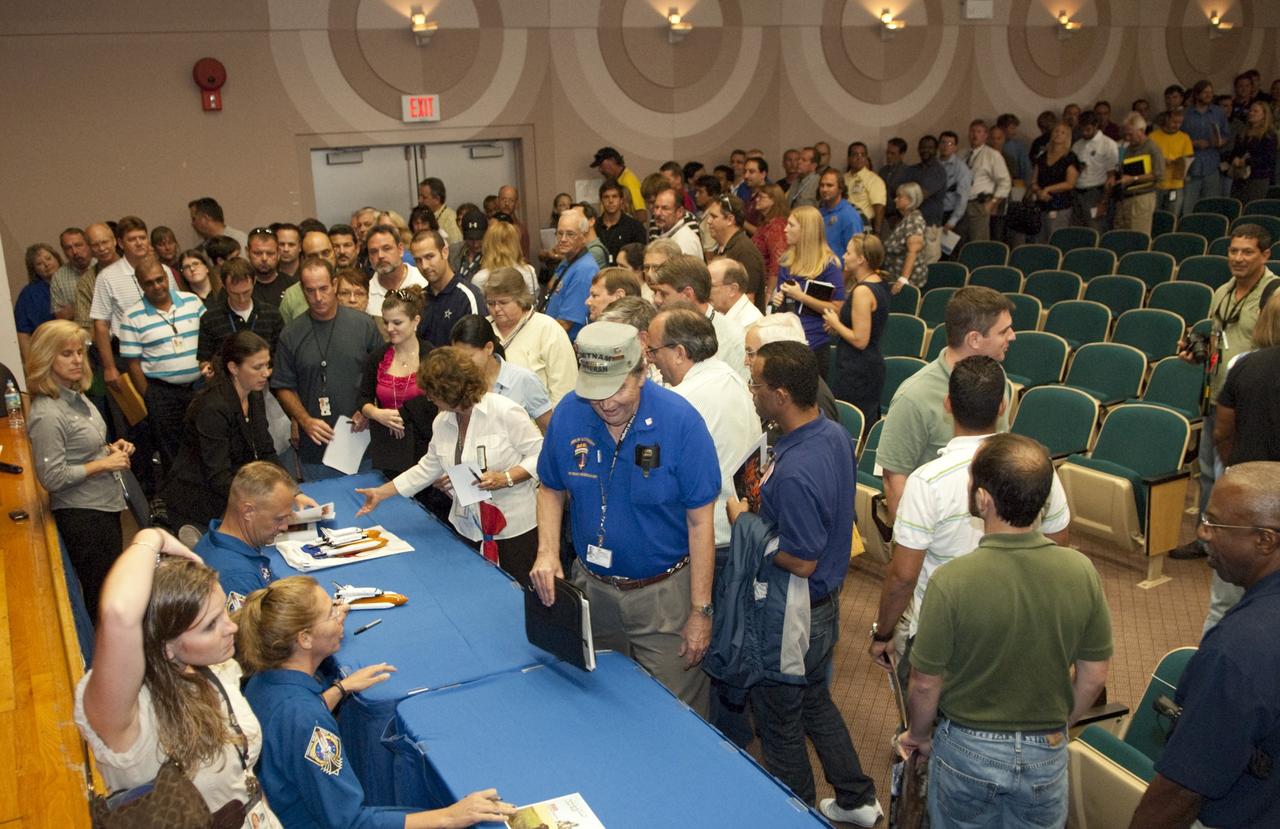
CAPE CANAVERAL, Fla. – Astronauts from Space Shuttle Atlantis’ STS-135 mission return to the Training Auditorium at NASA’s Kennedy Space Center for the traditional post-flight crew return presentation. Crew members autograph mementos for attendees following a presentation about the astronauts' experiences on the mission. Seated from left are Mission Specialist Sandra Magnus and Pilot Doug Hurley. STS-135 Mission Specialist Rex Walheim was unable to attend the Kennedy event. In July 2011, Atlantis and its crew delivered to the International Space Station the Raffaello multi-purpose logistics module packed with more than 9,400 pounds of spare parts, equipment and supplies that will sustain station operations for the next year. STS-135 was the 33rd and final flight for Atlantis and the final mission of the Space Shuttle Program. For more information, visit www.nasa.gov/mission_pages/shuttle/shuttlemissions/sts135/index.html. Photo credit: NASA/Jim Grossmann
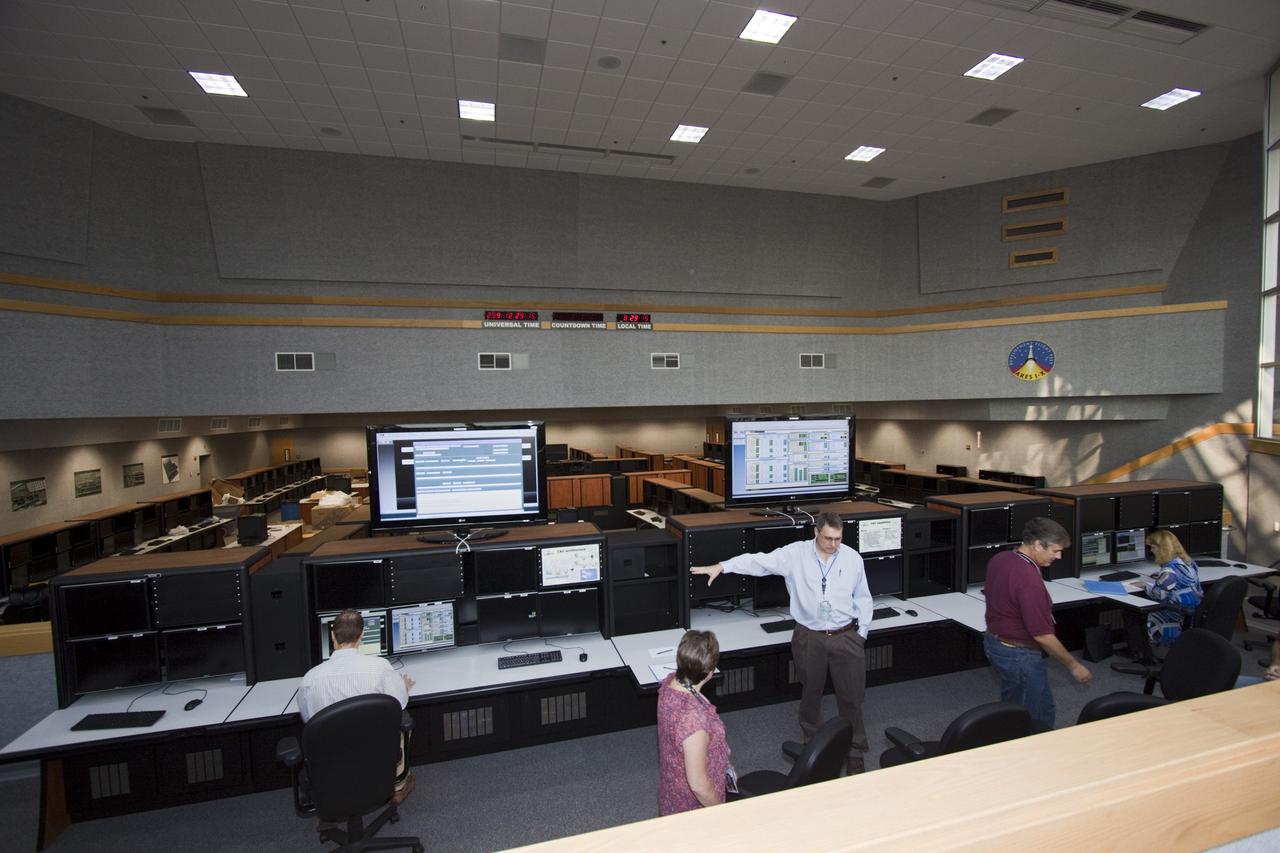
CAPE CANAVERAL, Fla. – At the newly remodeled Launch Control Center's Young-Crippen Firing Room at NASA's Kennedy Space Center in Florida, engineering directorate personnel demonstrate the recently added Space Command & Control System which will be used for launches of future human spaceflight vehicles. Known as Firing Room 1 in the Apollo era, it was re-named as a tribute to the Space Shuttle Program's first crewed mission, STS-1, which was flown by Commander John W. Young and Pilot Robert L. Crippen in April 1981. Photo credit: NASA/Jim Grossmann
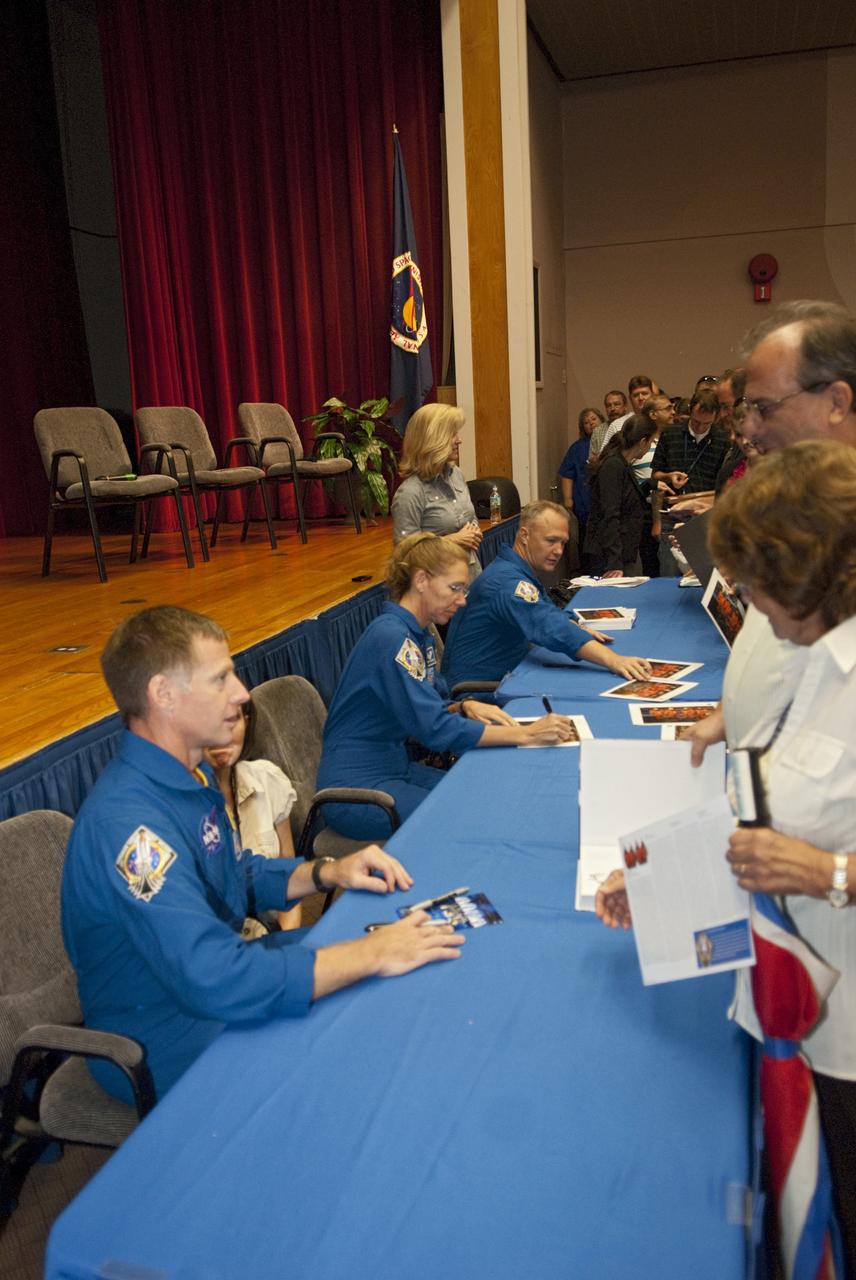
CAPE CANAVERAL, Fla. – Astronauts from Space Shuttle Atlantis’ STS-135 mission return to the Training Auditorium at NASA’s Kennedy Space Center for the traditional post-flight crew return presentation. Crew members autograph mementos for attendees following a presentation about the astronauts' experiences on the mission. Seated from left are Commander Chris Ferguson, Mission Specialist Sandra Magnus and Pilot Doug Hurley. STS-135 Mission Specialist Rex Walheim was unable to attend the Kennedy event. In July 2011, Atlantis and its crew delivered to the International Space Station the Raffaello multi-purpose logistics module packed with more than 9,400 pounds of spare parts, equipment and supplies that will sustain station operations for the next year. STS-135 was the 33rd and final flight for Atlantis and the final mission of the Space Shuttle Program. For more information, visit www.nasa.gov/mission_pages/shuttle/shuttlemissions/sts135/index.html. Photo credit: NASA/Jim Grossmann

CAPE CANAVERAL, Fla. – Astronauts from space shuttle Atlantis’ STS-135 mission return to the Training Auditorium at NASA’s Kennedy Space Center for the traditional post-flight crew return presentation. Commander Chris Ferguson (with microphone) shares a personal story about his experiences. With him are (from left) Mission Specialist Sandra Magnus and Pilot Doug Hurley. STS-135 Mission Specialist Rex Walheim was unable to attend the Kennedy event. In July 2011, Atlantis and its crew delivered to the International Space Station the Raffaello multi-purpose logistics module packed with more than 9,400 pounds of spare parts, equipment and supplies that will sustain station operations for the next year. STS-135 was the 33rd and final flight for Atlantis and the final mission of the Space Shuttle Program. For more information, visit www.nasa.gov/mission_pages/shuttle/shuttlemissions/sts135/index.html. Photo credit: NASA/Jim Grossmann
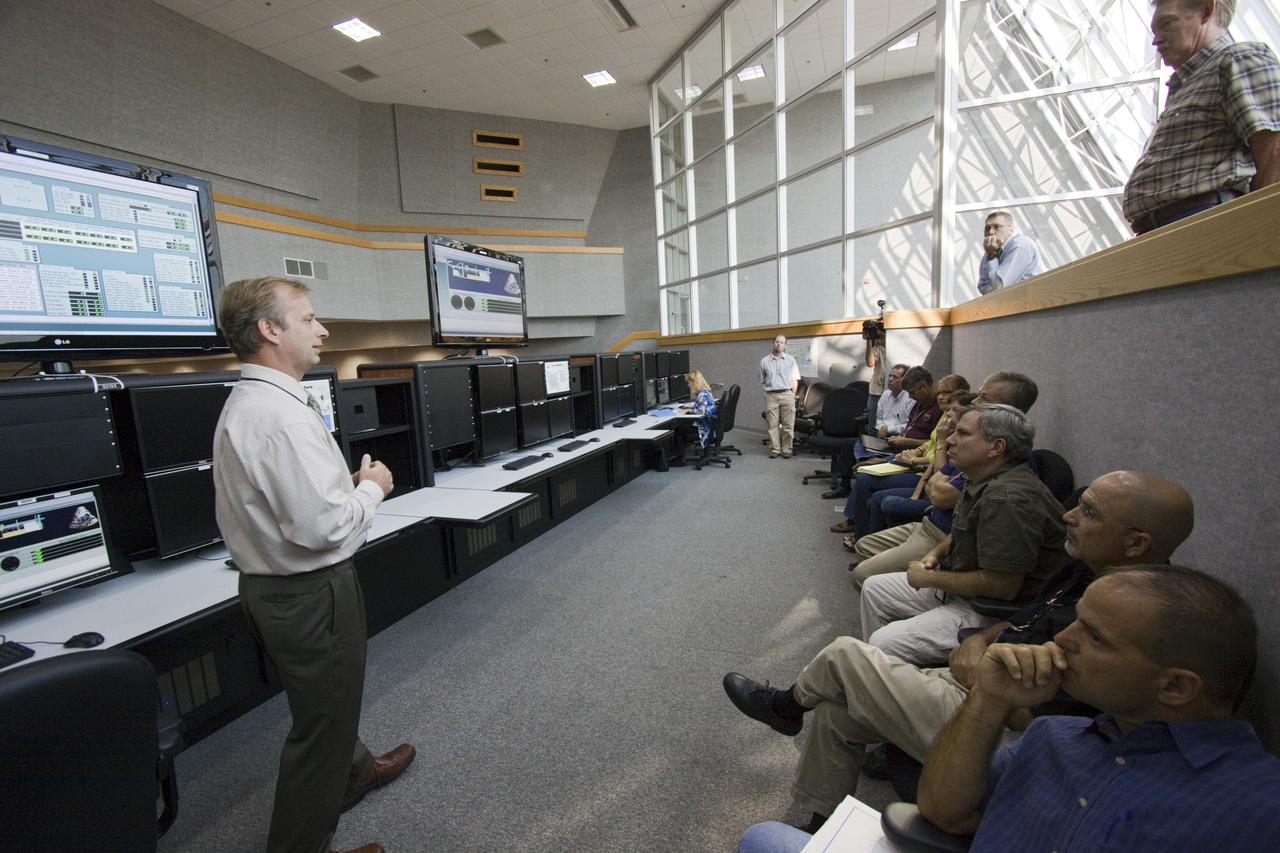
CAPE CANAVERAL, Fla. – At the newly remodeled Launch Control Center's Young-Crippen Firing Room at NASA's Kennedy Space Center in Florida, engineering directorate personnel demonstrate the recently added Space Command & Control System which will be used for launches of future human spaceflight vehicles. Known as Firing Room 1 in the Apollo era, it was re-named as a tribute to the Space Shuttle Program's first crewed mission, STS-1, which was flown by Commander John W. Young and Pilot Robert L. Crippen in April 1981. Photo credit: NASA/Jim Grossmann
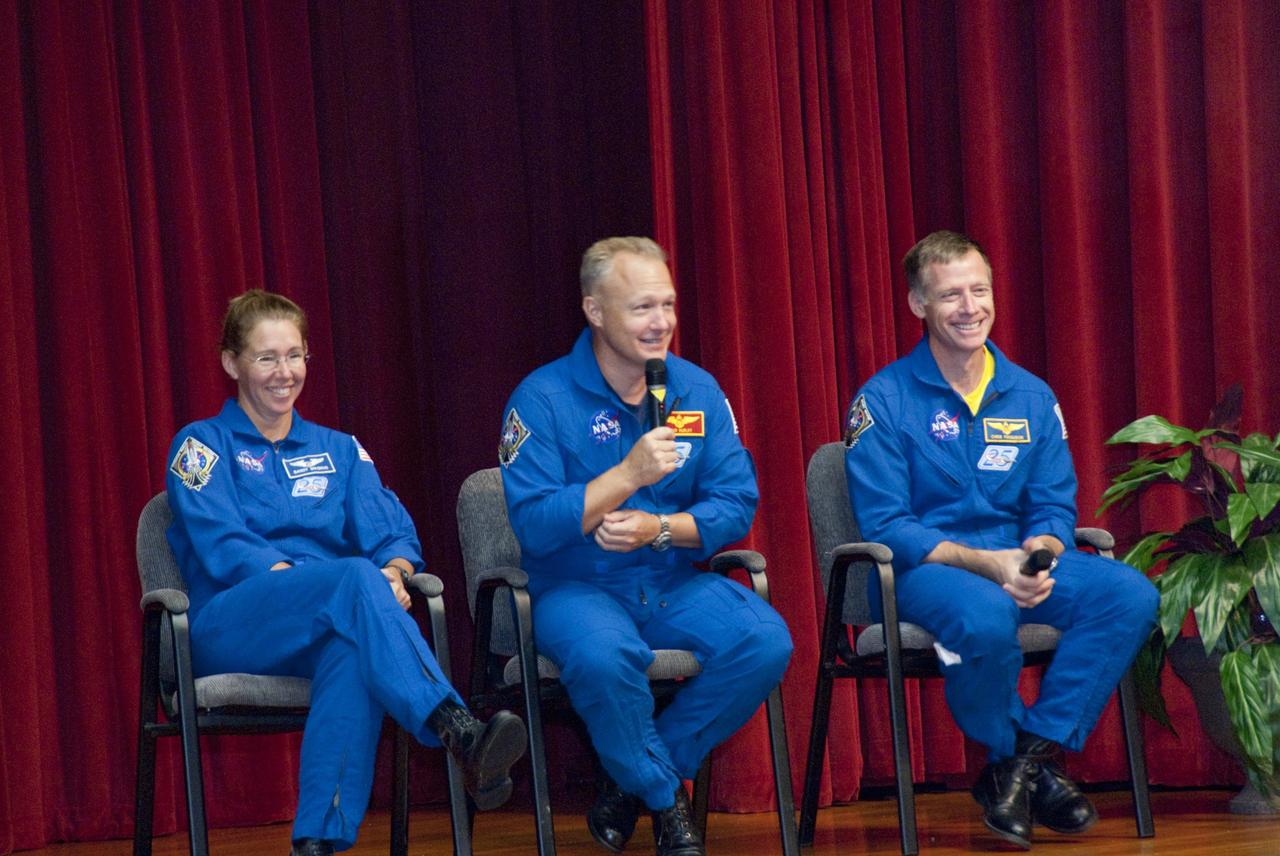
CAPE CANAVERAL, Fla. – Astronauts from space shuttle Atlantis’ STS-135 mission return to the Training Auditorium at NASA’s Kennedy Space Center for the traditional post-flight crew return presentation. Pilot Doug Hurley shares a personal story about his experiences. With him are (on left) Mission Specialist Sandra Magnus and (on right) Commander Chris Ferguson. STS-135 Mission Specialist Rex Walheim was unable to attend the Kennedy event. In July 2011, Atlantis and its crew delivered to the International Space Station the Raffaello multi-purpose logistics module packed with more than 9,400 pounds of spare parts, equipment and supplies that will sustain station operations for the next year. STS-135 was the 33rd and final flight for Atlantis and the final mission of the Space Shuttle Program. For more information, visit www.nasa.gov/mission_pages/shuttle/shuttlemissions/sts135/index.html. Photo credit: NASA/Jim Grossmann
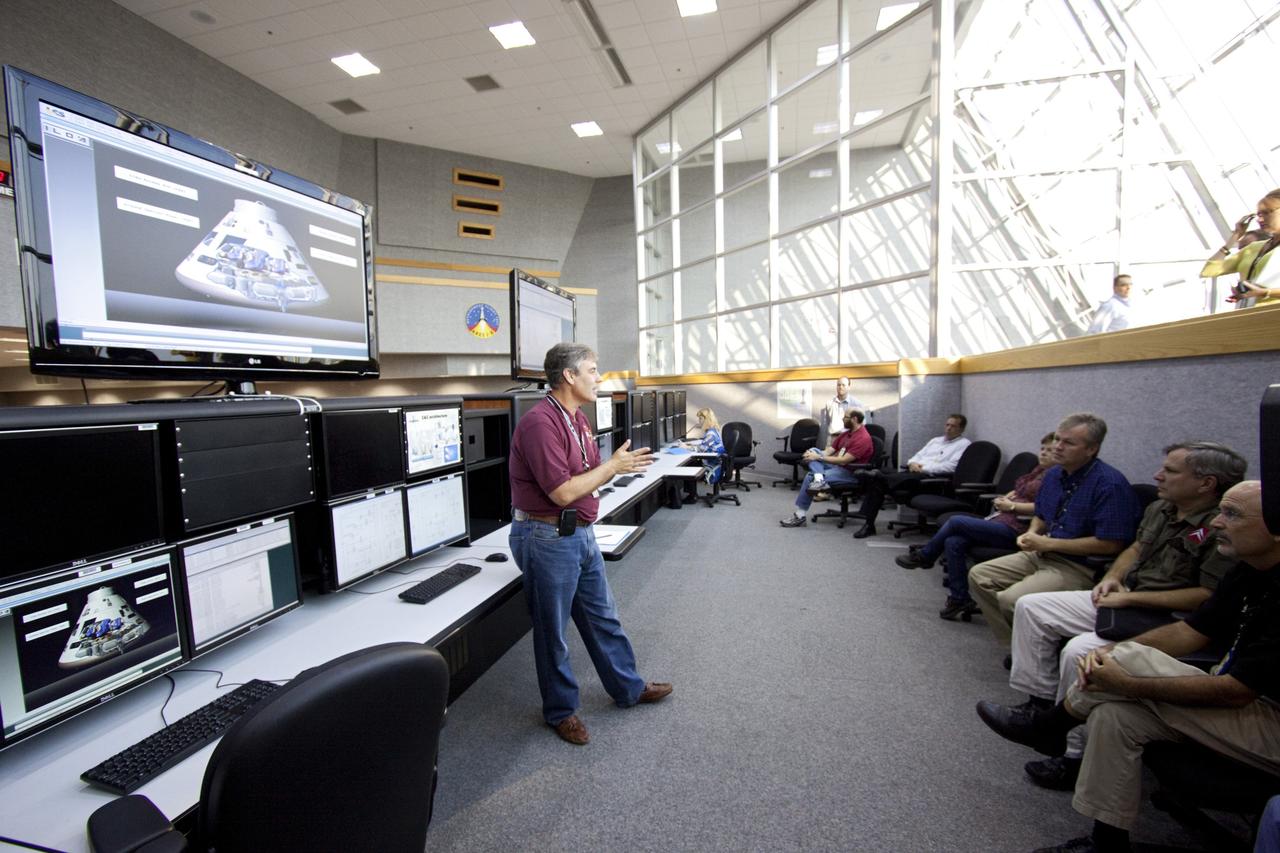
CAPE CANAVERAL, Fla. – At the newly remodeled Launch Control Center's Young-Crippen Firing Room at NASA's Kennedy Space Center in Florida, engineering directorate personnel demonstrate the recently added Space Command & Control System which will be used for launches of future human spaceflight vehicles. Known as Firing Room 1 in the Apollo era, it was re-named as a tribute to the Space Shuttle Program's first crewed mission, STS-1, which was flown by Commander John W. Young and Pilot Robert L. Crippen in April 1981. Photo credit: NASA/Jim Grossmann
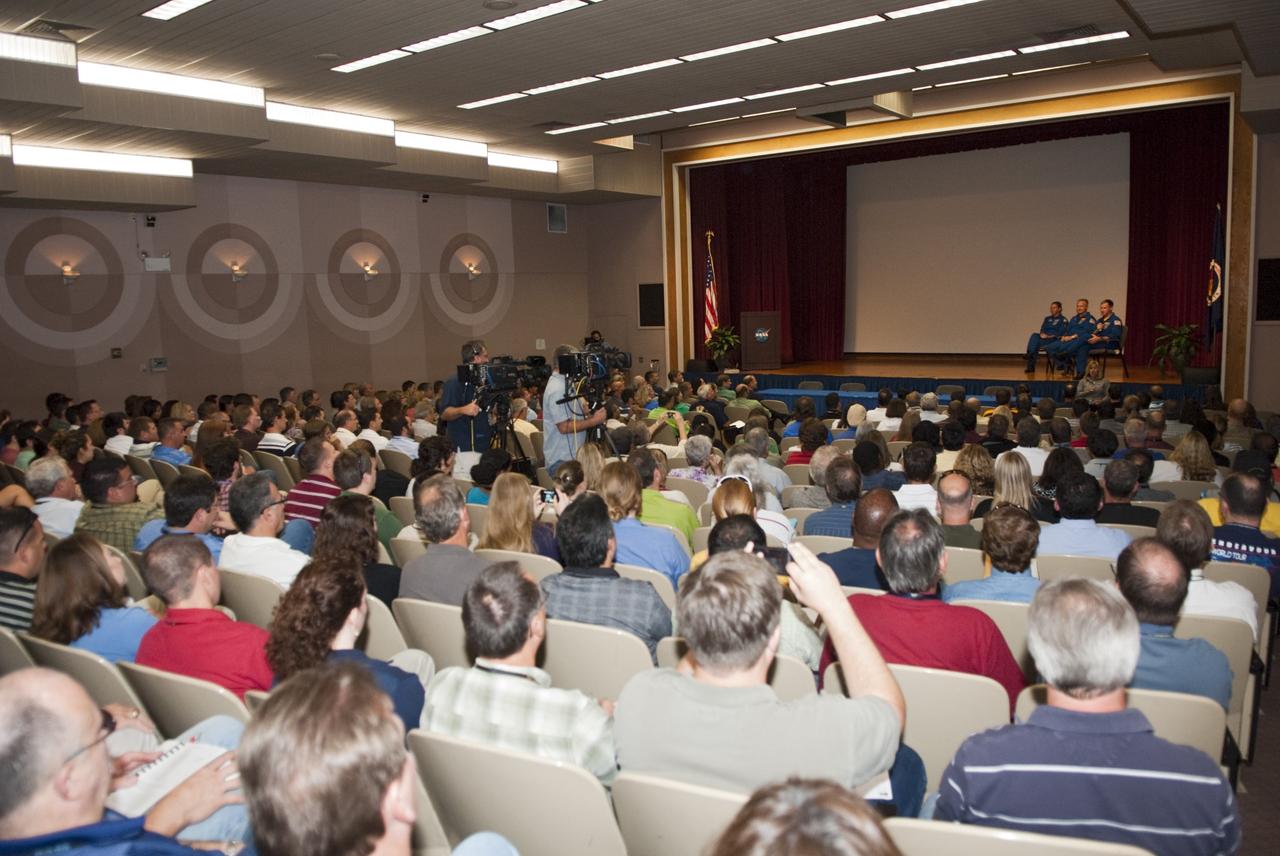
CAPE CANAVERAL, Fla. – Astronauts from space shuttle Atlantis’ STS-135 mission return to the Training Auditorium at NASA’s Kennedy Space Center for the traditional post-flight crew return presentation. Having completed their successful 13-day mission to the International Space Station, (from left) Mission Specialist Sandra Magnus, Pilot Doug Hurley and Commander Chris Ferguson share personal stories of their experiences. STS-135 Mission Specialist Rex Walheim was unable to attend the Kennedy event. In July 2011, Atlantis and its crew delivered to the International Space Station the Raffaello multi-purpose logistics module packed with more than 9,400 pounds of spare parts, equipment and supplies that will sustain station operations for the next year. STS-135 was the 33rd and final flight for Atlantis and the final mission of the Space Shuttle Program. For more information, visit www.nasa.gov/mission_pages/shuttle/shuttlemissions/sts135/index.html. Photo credit: NASA/Jim Grossmann
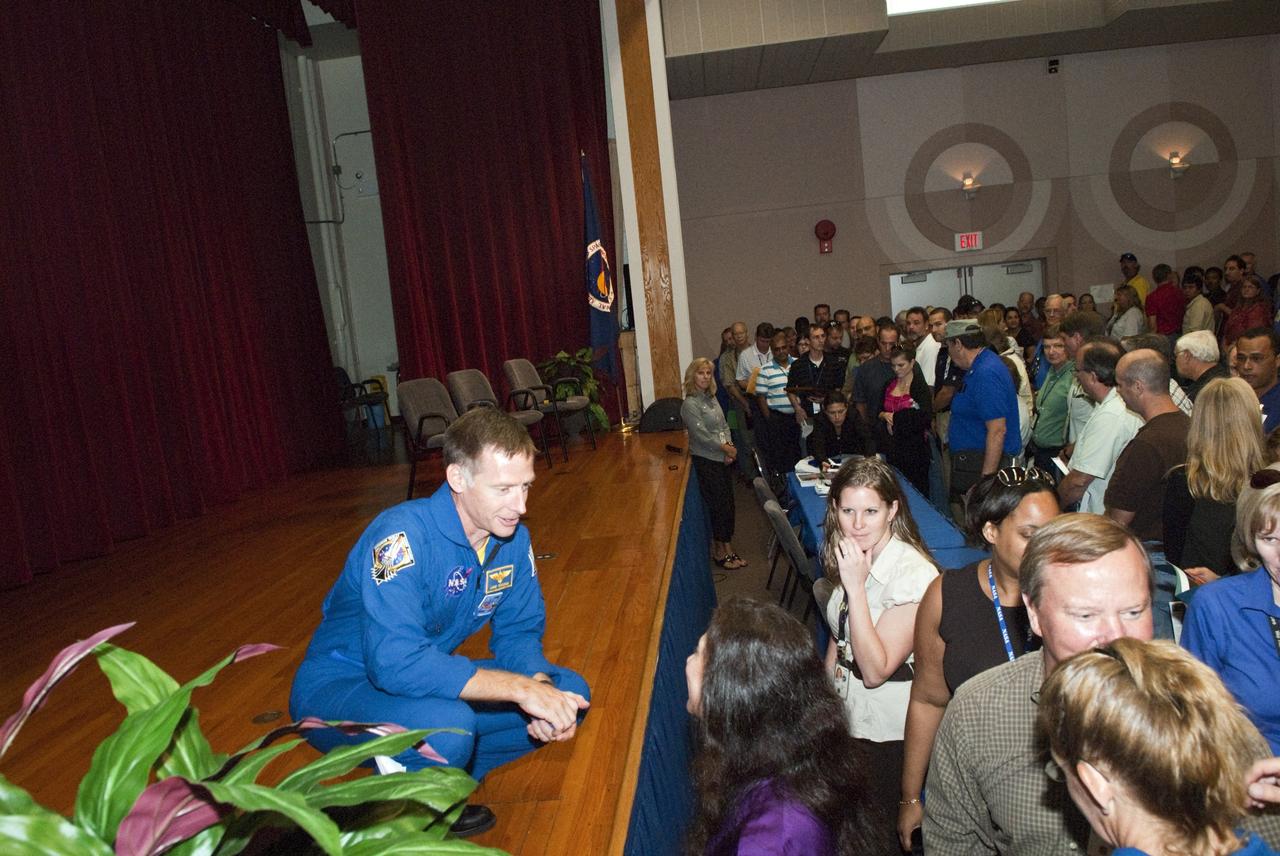
CAPE CANAVERAL, Fla. – Astronauts from Space Shuttle Atlantis’ STS-135 mission return to the Training Auditorium at NASA’s Kennedy Space Center for the traditional post-flight crew return presentation. Commander Chris Ferguson meets with audience members to share personal stories about the crew’s successful 13-day mission to the International Space Station. STS-135 Mission Specialist Rex Walheim was unable to attend the Kennedy event. In July 2011, Atlantis and its crew delivered to the International Space Station the Raffaello multi-purpose logistics module packed with more than 9,400 pounds of spare parts, equipment and supplies that will sustain station operations for the next year. STS-135 was the 33rd and final flight for Atlantis and the final mission of the Space Shuttle Program. For more information, visit www.nasa.gov/mission_pages/shuttle/shuttlemissions/sts135/index.html. Photo credit: NASA/Jim Grossmann
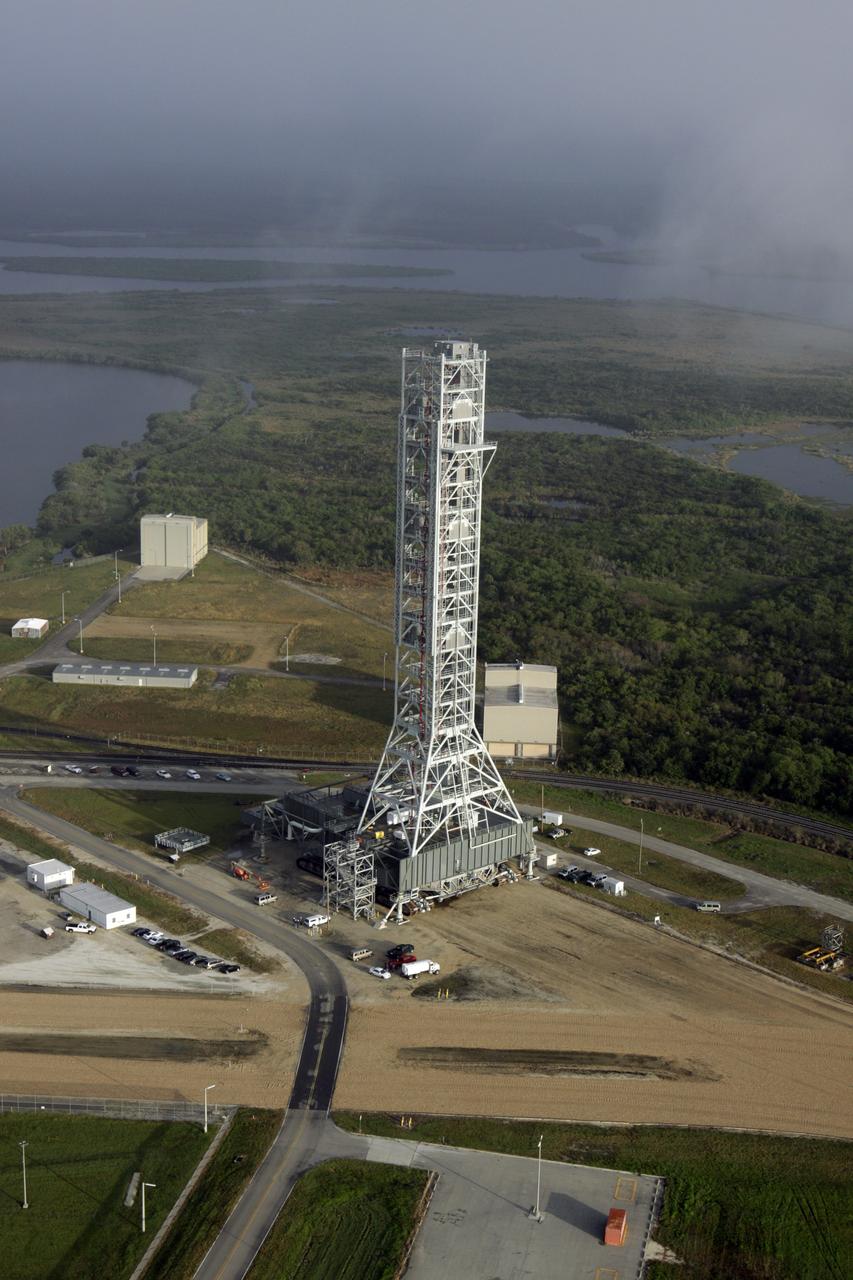
CAPE CANAVERAL, Fla. – At NASA's Kennedy Space Center in Florida, this aerial view taken from atop the Vehicle Assembly Building shows the mobile launcher (ML) as it begins its move aboard a crawler-transporter from next to Kennedy's Vehicle Assembly Building to Launch Pad 39B, a distance of 4.2 miles. Data on the ML will be collected from structural and functional engineering tests and used for the next phases of construction. The 355-foot-tall ML structure, which took about two years to construct, is being modified to support NASA’s Space Launch System (SLS), the heavy-lift rocket that will launch astronauts farther into space than ever before. SLS will also create high-quality jobs here at home, and provide the cornerstone for America's future human space exploration efforts. Photo credit: NASA/Kim Shiflett
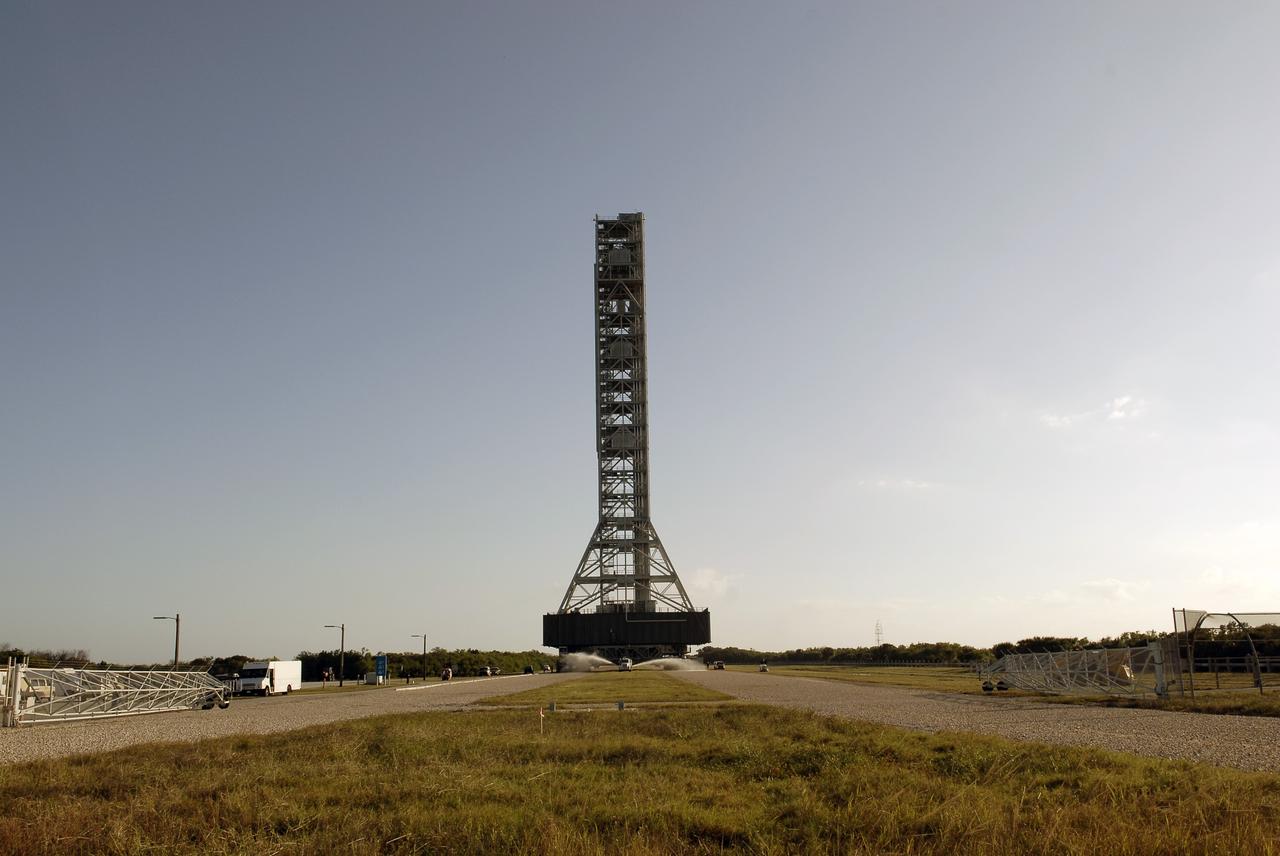
CAPE CANAVERAL, Fla. – A water truck leads the way, spraying water on the dry crawlerway to reduce dust particles in the air at NASA's Kennedy Space Center in Florida, as the mobile launcher (ML) rolls out aboard a crawler-transporter from next to Kennedy's Vehicle Assembly Building to Launch Pad 39B, a distance of 4.2 miles. Rollout began at about 9:15 a.m. EST. Data on the ML will be collected from structural and functional engineering tests and used for the next phases of construction overseen by NASA’s 21st Century Ground Systems Program. The 355-foot-tall ML structure, which took about two years to construct, is being modified to support NASA’s Space Launch System (SLS), the heavy-lift rocket that will launch astronauts farther into space than ever before. SLS will also create high-quality jobs here at home, and provide the cornerstone for America's future human space exploration efforts. Photo credit: NASA/Charisse Nahser
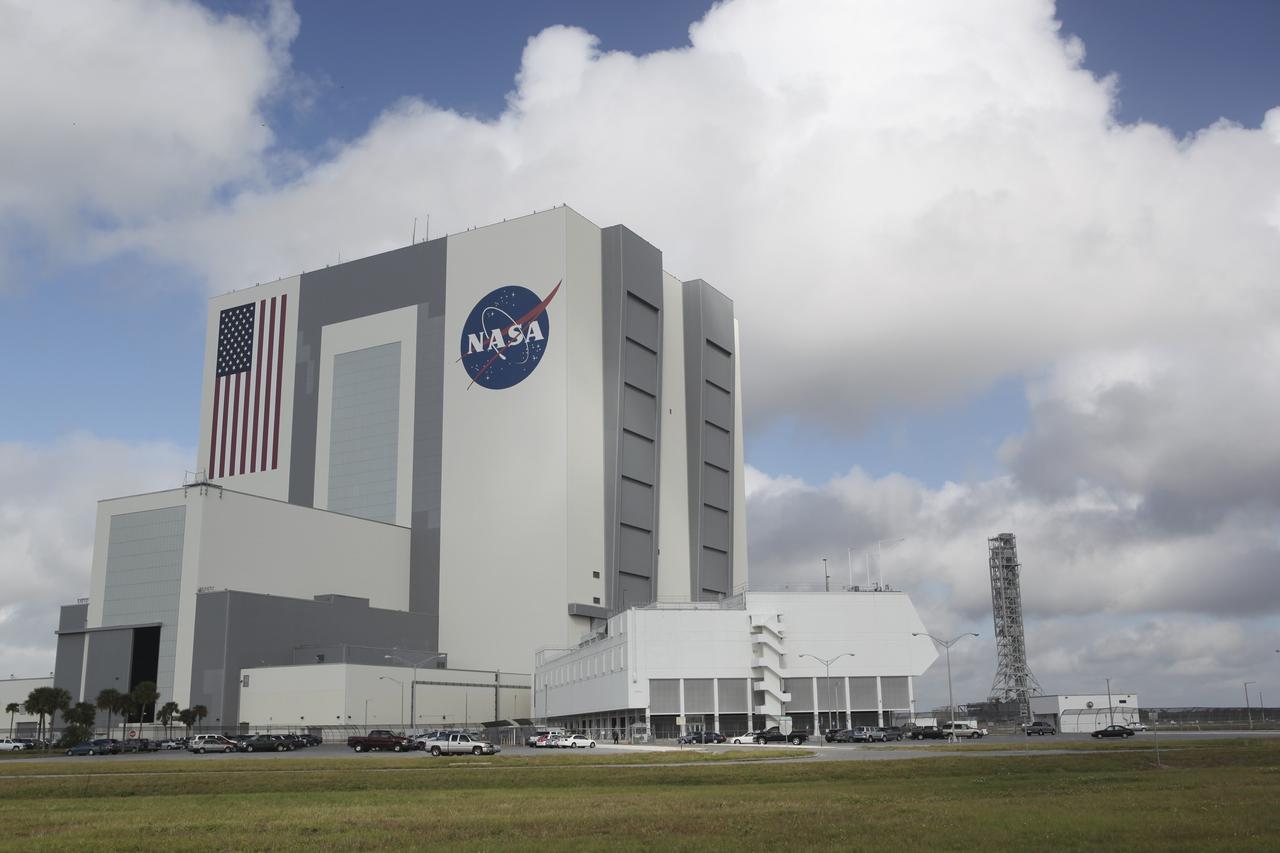
CAPE CANAVERAL, Fla. – At NASA’s Kennedy Space Center in Florida, the mobile launcher (ML) is being prepared for its move aboard a crawler-transporter from next to Kennedy's Vehicle Assembly Building to Launch Pad 39B, a distance of 4.2 miles. Data on the ML will be collected from structural and functional engineering tests and used for the next phases of construction. The 355-foot-tall ML structure, which took about two years to construct, is being modified to support NASA’s Space Launch System (SLS), the heavy-lift rocket that will launch astronauts farther into space than ever before. SLS will also create high-quality jobs here at home, and provide the cornerstone for America's future human space exploration efforts. Photo credit: NASA/Dimitri Gerondidakis
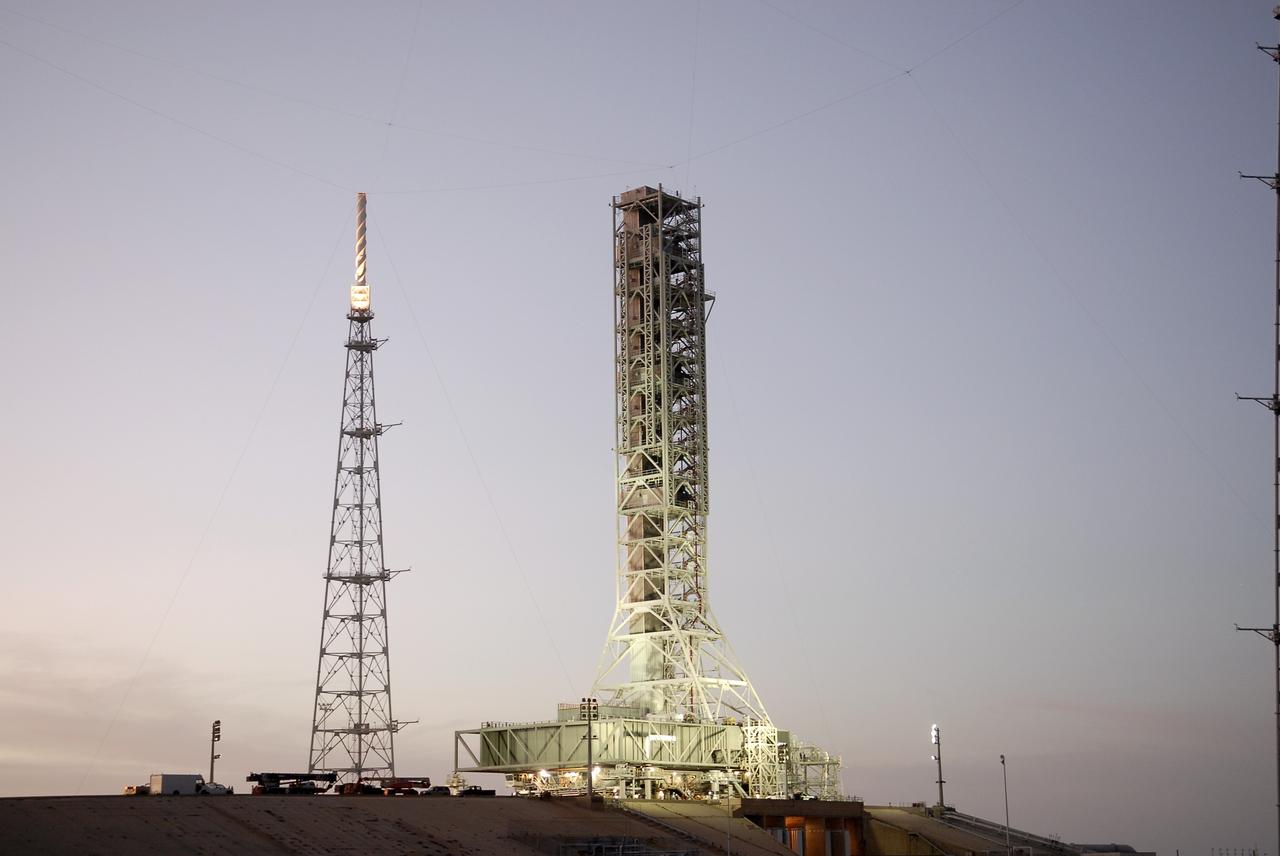
CAPE CANAVERAL, Fla. – At NASA’s Kennedy Space Center in Florida, lights illuminate the mobile launcher (ML) at Launch Pad 39B after completing its 4.2 mile journey to the pad. The launcher rolled out aboard a crawler-transporter from next to Kennedy's Vehicle Assembly Building to the pad at about 9:15 a.m. EST with the launcher arriving at the pad at 6:29 p.m. Data on the ML will be collected from structural and functional engineering tests and used for the next phases of construction overseen by NASA’s 21st Century Ground Systems Program. The 355-foot-tall ML structure, which took about two years to construct, is being modified to support NASA’s Space Launch System (SLS), the heavy-lift rocket that will launch astronauts farther into space than ever before. SLS will also create high-quality jobs here at home, and provide the cornerstone for America's future human space exploration efforts. Photo credit: NASA/Charisse Nahser
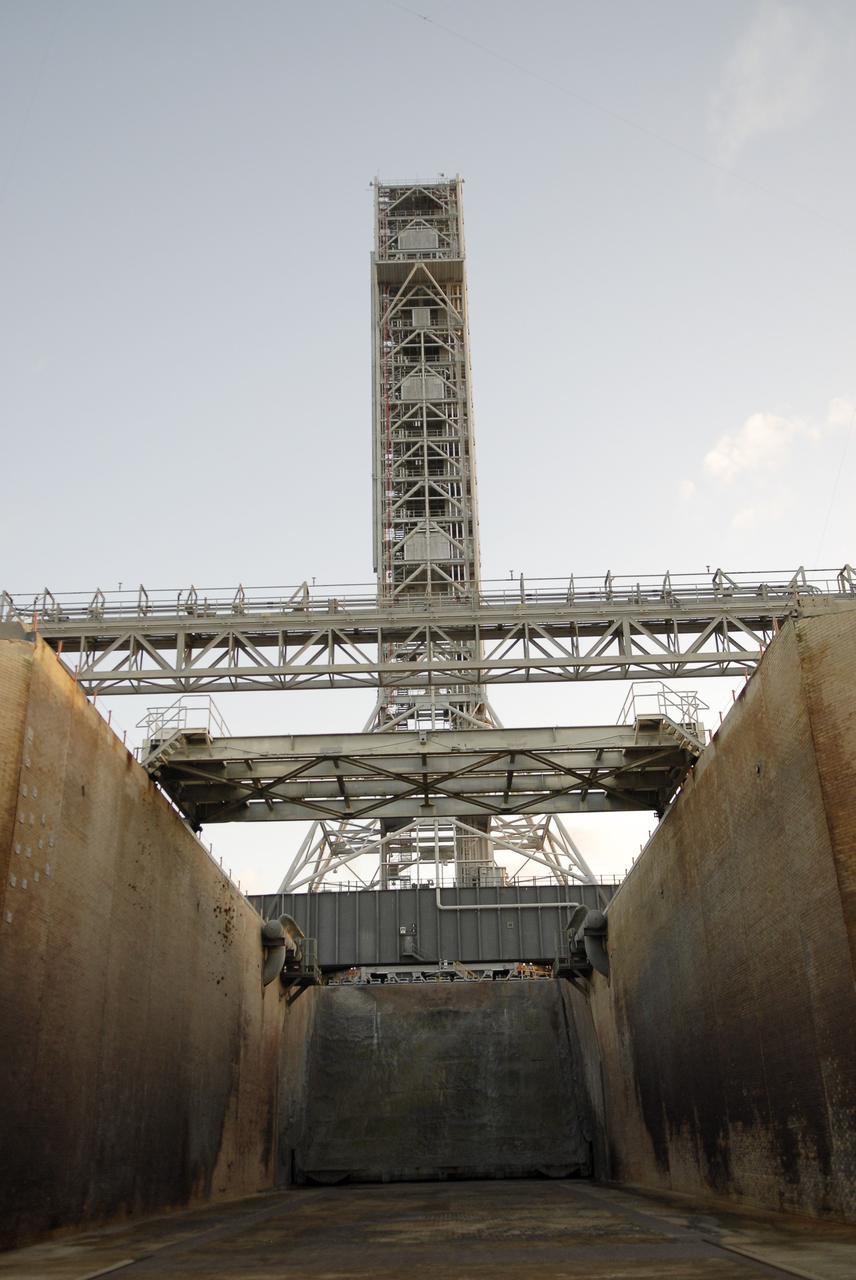
CAPE CANAVERAL, Fla. – At NASA’s Kennedy Space Center in Florida, taken from inside the flame trench, the camera captures a unique view of the mobile launcher (ML) as it nears completion of its 4.2-mile journey to Launch Pad 39B. The launcher rolled out aboard a crawler-transporter from next to Kennedy's Vehicle Assembly Building to the pad at about 9:15 a.m. EST. Data on the ML will be collected from structural and functional engineering tests and used for the next phases of construction overseen by NASA’s 21st Century Ground Systems Program. The 355-foot-tall ML structure, which took about two years to construct, is being modified to support NASA’s Space Launch System (SLS), the heavy-lift rocket that will launch astronauts farther into space than ever before. SLS will also create high-quality jobs here at home, and provide the cornerstone for America's future human space exploration efforts. Photo credit: NASA/Charisse Nahser
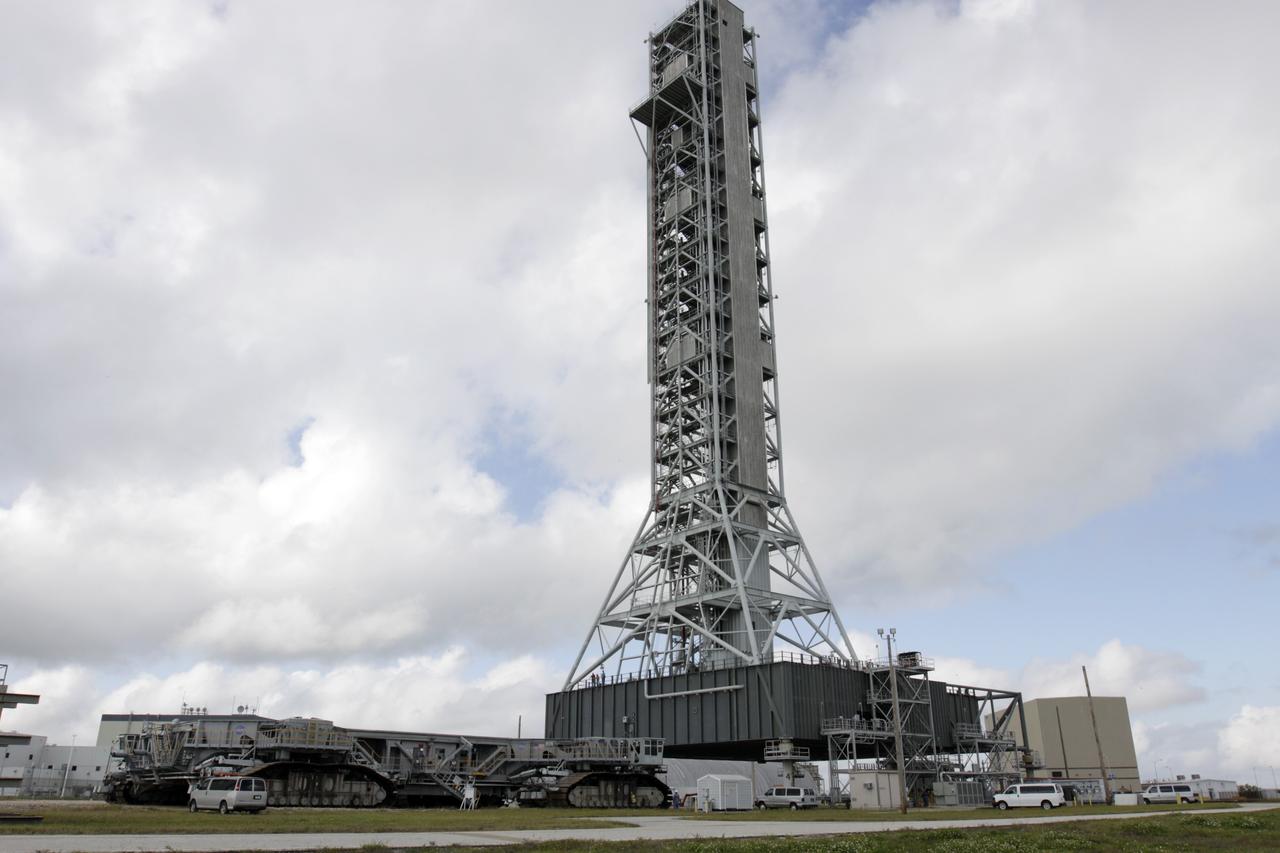
CAPE CANAVERAL, Fla. – At NASA's Kennedy Space Center in Florida, the mobile launcher (ML) is being prepared for its move aboard a crawler-transporter from next to Kennedy's Vehicle Assembly Building to Launch Pad 39B, a distance of 4.2 miles. Data on the ML will be collected from structural and functional engineering tests and used for the next phases of construction. The 355-foot-tall ML, which took about two years to construct, is being modified to support NASA's Space Launch System (SLS), the heavy-lift rocket that will launch astronauts farther into space than ever before. SLS will also create high-quality jobs here at home, and provide the cornerstone for America's future human space exploration efforts. For more information on SLS, visit http://www.nasa.gov/sls. Photo credit: NASA/Kim Shiflett
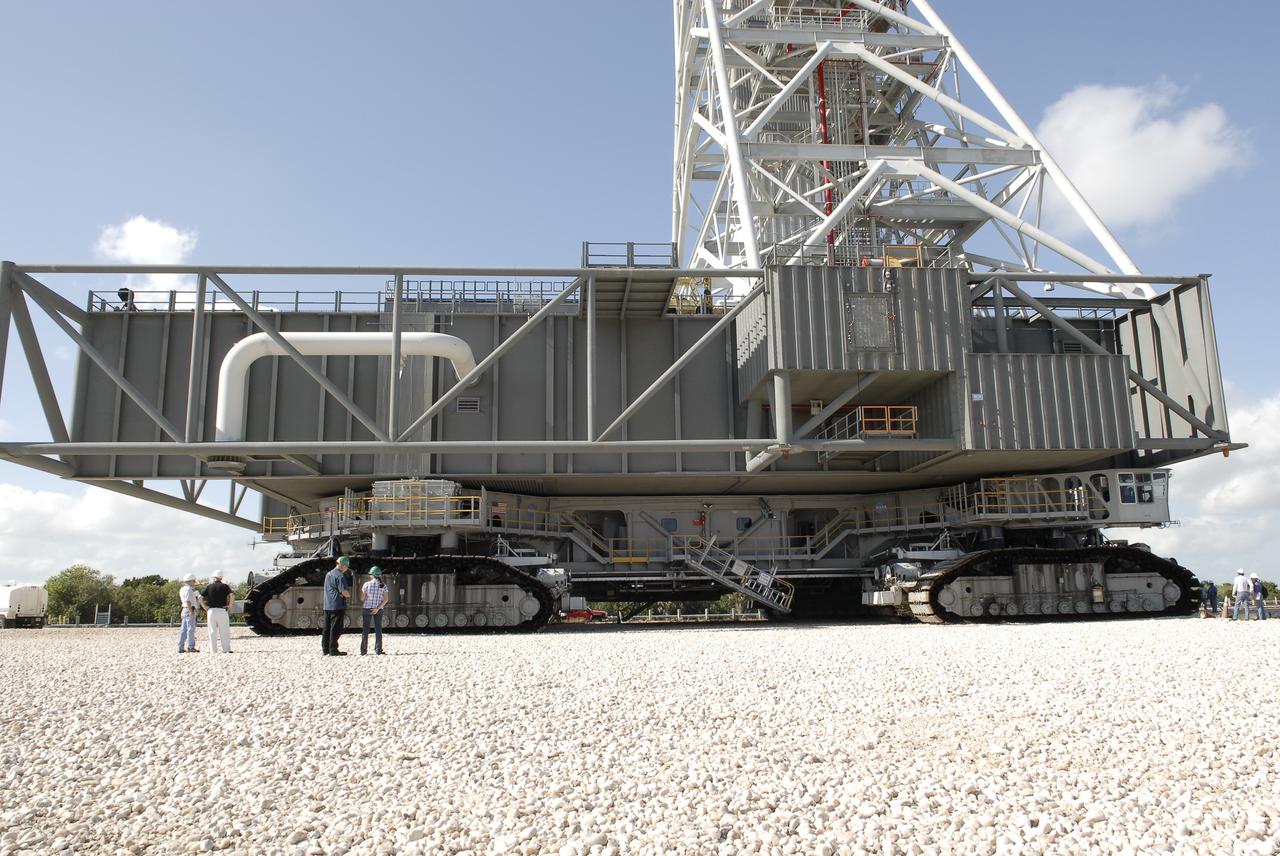
CAPE CANAVERAL, Fla. – On the crawlerway at NASA’s Kennedy Space Center in Florida, technicians confer before the crawler-transporter as it rolls out the mobile launcher (ML) from next to Kennedy's Vehicle Assembly Building to Launch Pad 39B, a distance of 4.2 miles. Rollout began at about 9:15 a.m. EST. Data on the ML will be collected from structural and functional engineering tests and used for the next phases of construction overseen by NASA’s 21st Century Ground Systems Program. The 355-foot-tall ML structure, which took about two years to construct, is being modified to support NASA’s Space Launch System (SLS), the heavy-lift rocket that will launch astronauts farther into space than ever before. SLS will also create high-quality jobs here at home, and provide the cornerstone for America's future human space exploration efforts. Photo credit: NASA/Charisse Nahser
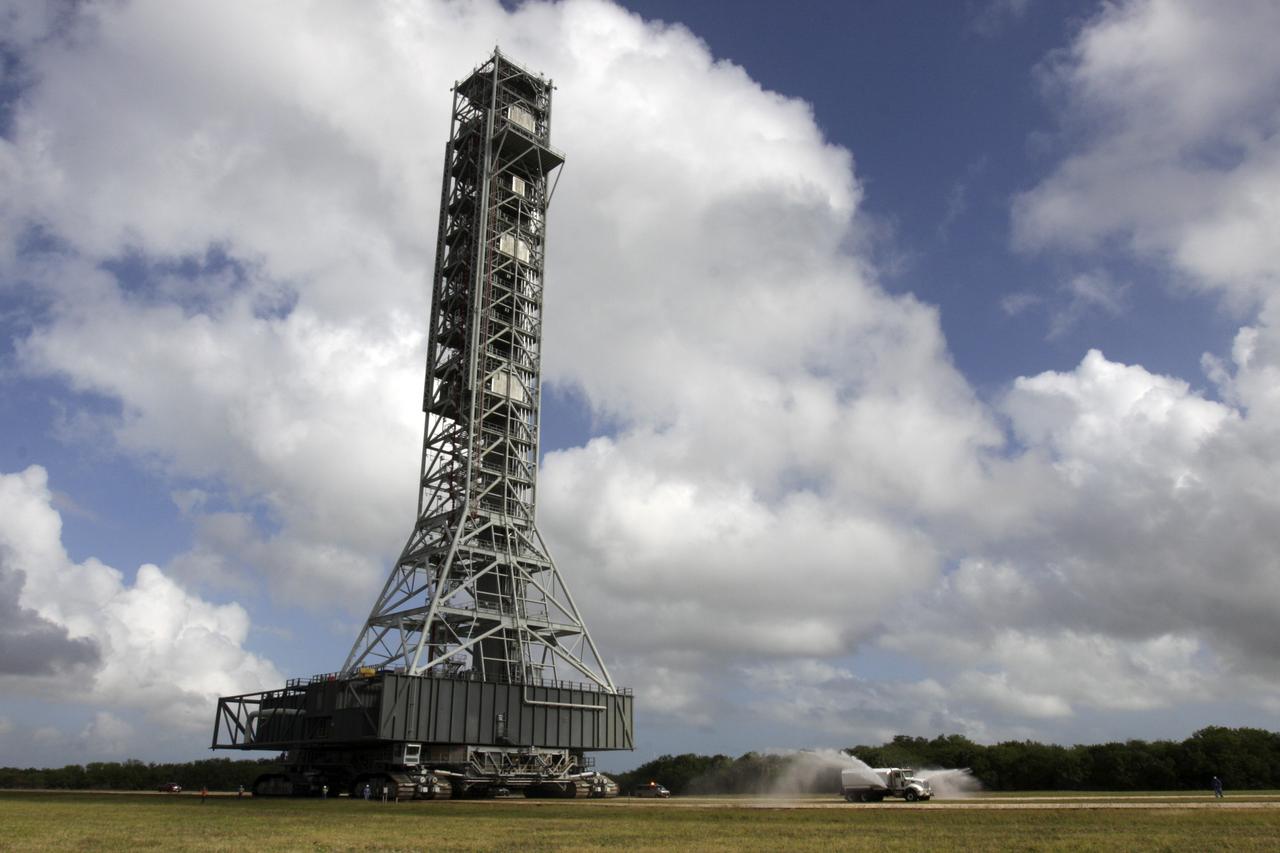
CAPE CANAVERAL, Fla. – At NASA’s Kennedy Space Center in Florida, a water truck leads the way spraying water on the dry crawlerway to reduce dust particles in the air, as the mobile launcher (ML) moves aboard the crawler-transporter. The ML is moving from next to Kennedy's Vehicle Assembly Building to Launch Pad 39B, a distance of 4.2 miles. Data on the ML will be collected from structural and functional engineering tests and used for the next phases of construction. The 355-foot-tall ML structure, which took about two years to construct, is being modified to support NASA’s Space Launch System (SLS), the heavy-lift rocket that will launch astronauts farther into space than ever before. SLS will also create high-quality jobs here at home, and provide the cornerstone for America's future human space exploration efforts. Photo credit: NASA/Kim Shiflett
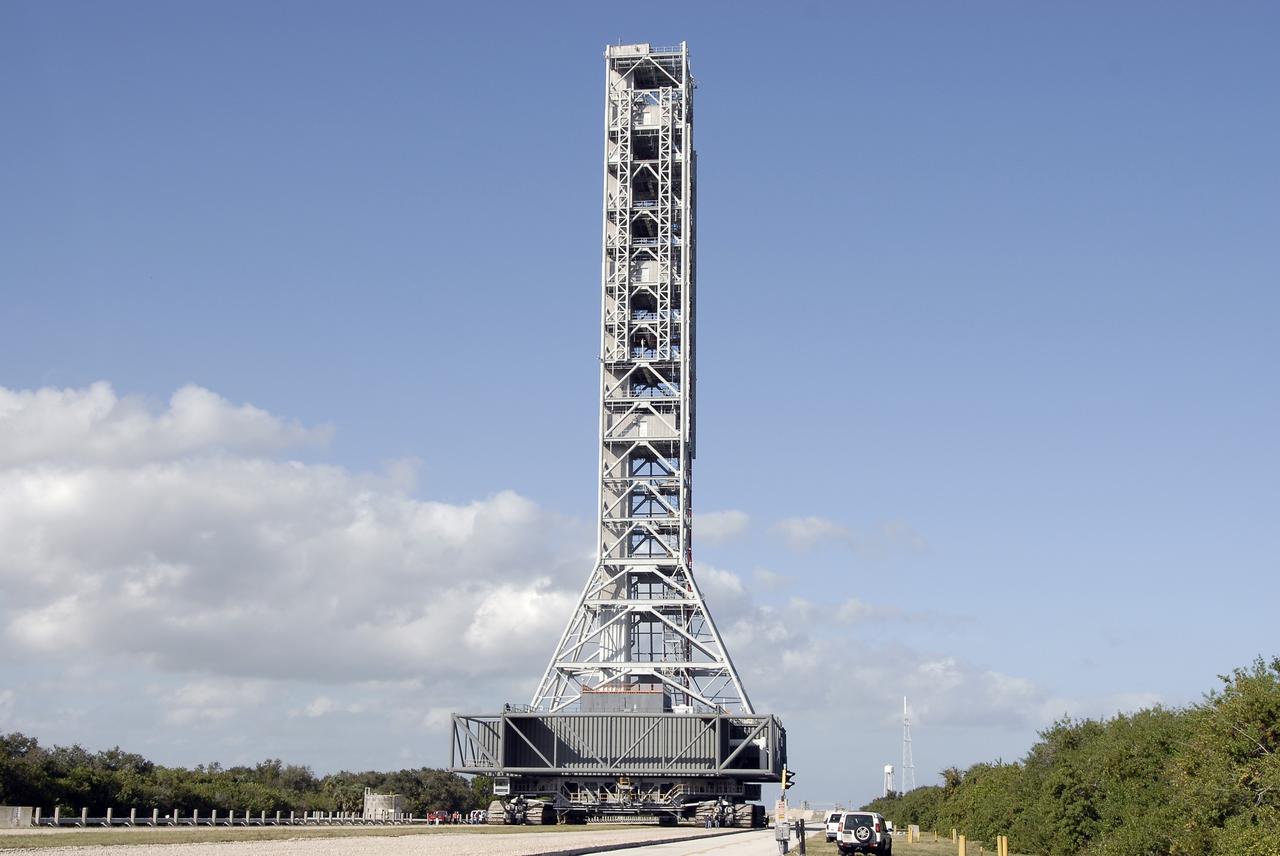
CAPE CANAVERAL, Fla. – On the crawlerway at NASA's Kennedy Space Center in Florida, the mobile launcher (ML) rolls out aboard a crawler-transporter from next to Kennedy's Vehicle Assembly Building to Launch Pad 39B, a distance of 4.2 miles. Rollout began at about 9:15 a.m. EST. Data on the ML will be collected from structural and functional engineering tests and used for the next phases of construction overseen by NASA’s 21st Century Ground Systems Program. The 355-foot-tall ML structure, which took about two years to construct, is being modified to support NASA’s Space Launch System (SLS), the heavy-lift rocket that will launch astronauts farther into space than ever before. SLS will also create high-quality jobs here at home, and provide the cornerstone for America's future human space exploration efforts. Photo credit: NASA/Charisse Nahser
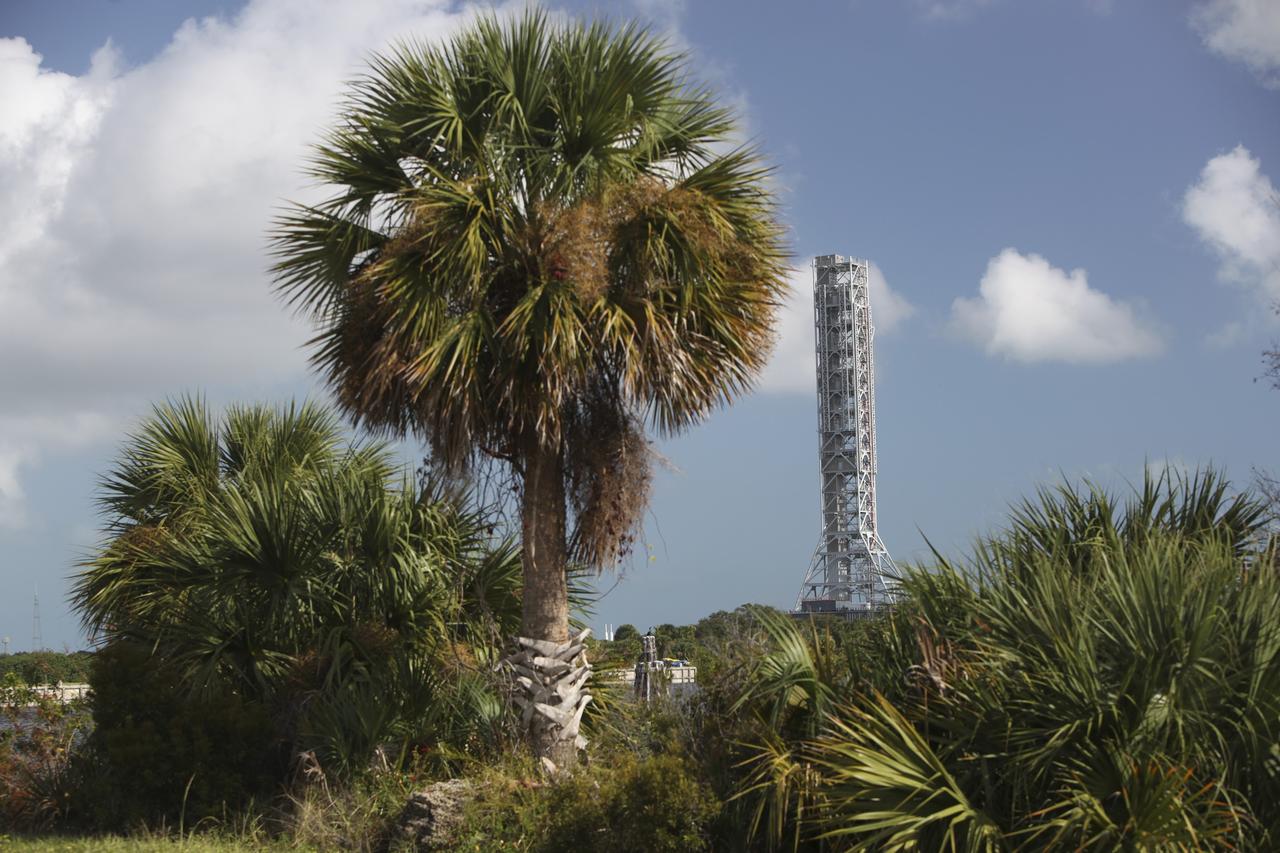
CAPE CANAVERAL, Fla. – The natural vegetation at NASA's Kennedy Space Center in Florida frames the Mobile Launcher (ML) as it rolls out aboard a crawler-transporter from next to Kennedy's Vehicle Assembly Building to Launch Pad 39B, a distance of 4.2 miles. Data on the ML will be collected from structural and functional engineering tests and used for the next phases of construction. The 355-foot-tall ML structure, which took about two years to construct, is being modified to support NASA’s Space Launch System (SLS), the heavy-lift rocket that will launch astronauts farther into space than ever before. SLS will also create high-quality jobs here at home, and provide the cornerstone for America's future human space exploration efforts. Photo credit: NASA/Dimitri Gerondidakis
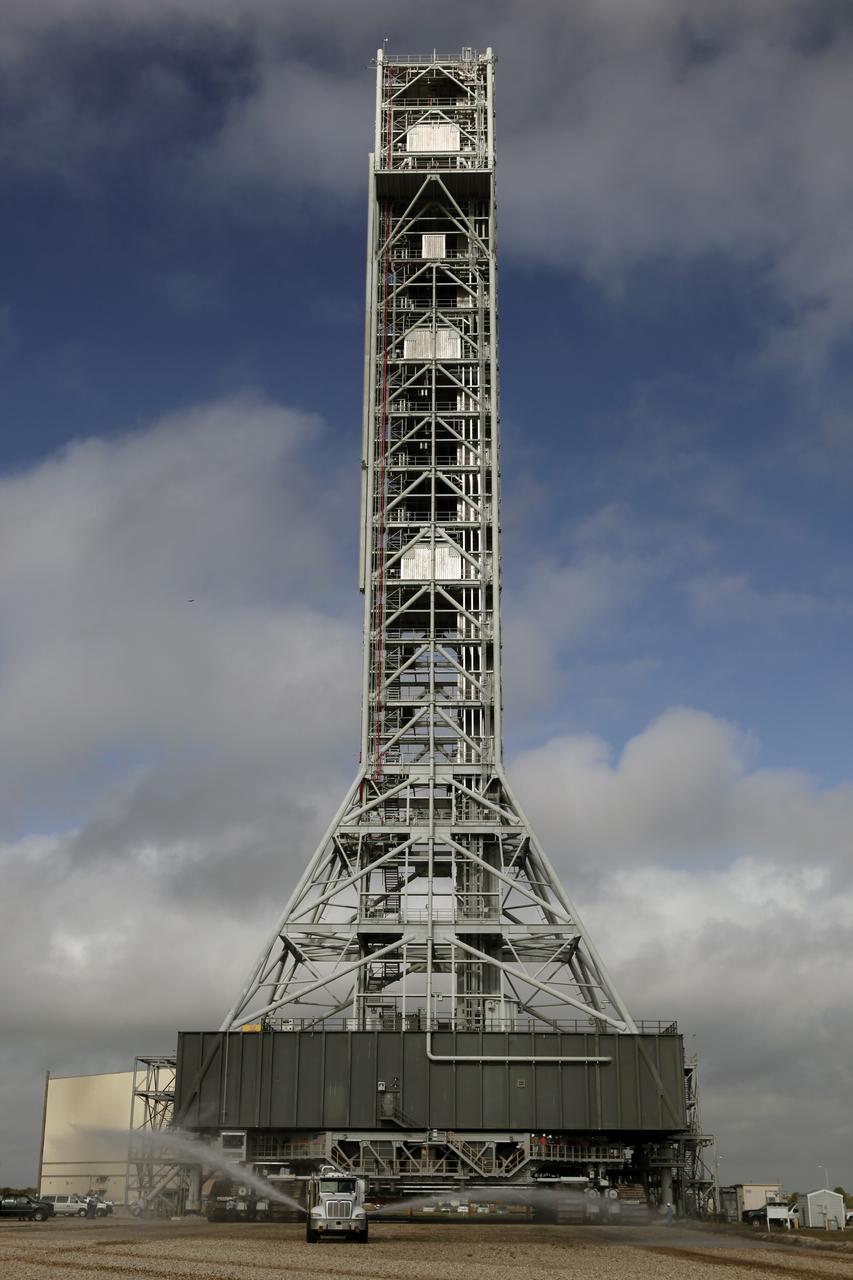
CAPE CANAVERAL, Fla. – At NASA’s Kennedy Space Center in Florida, a water truck leads the way spraying water on the dry crawlerway to reduce dust particles in the air, as the mobile launcher (ML) begins its move aboard a crawler-transporter. The ML is moving from next to Kennedy's Vehicle Assembly Building to Launch Pad 39B, a distance of 4.2 miles. Data on the ML will be collected from structural and functional engineering tests and used for the next phases of construction. The 355-foot-tall ML structure, which took about two years to construct, is being modified to support NASA’s Space Launch System (SLS), the heavy-lift rocket that will launch astronauts farther into space than ever before. SLS will also create high-quality jobs here at home, and provide the cornerstone for America's future human space exploration efforts. Photo credit: NASA/Dimitri Gerondidakis
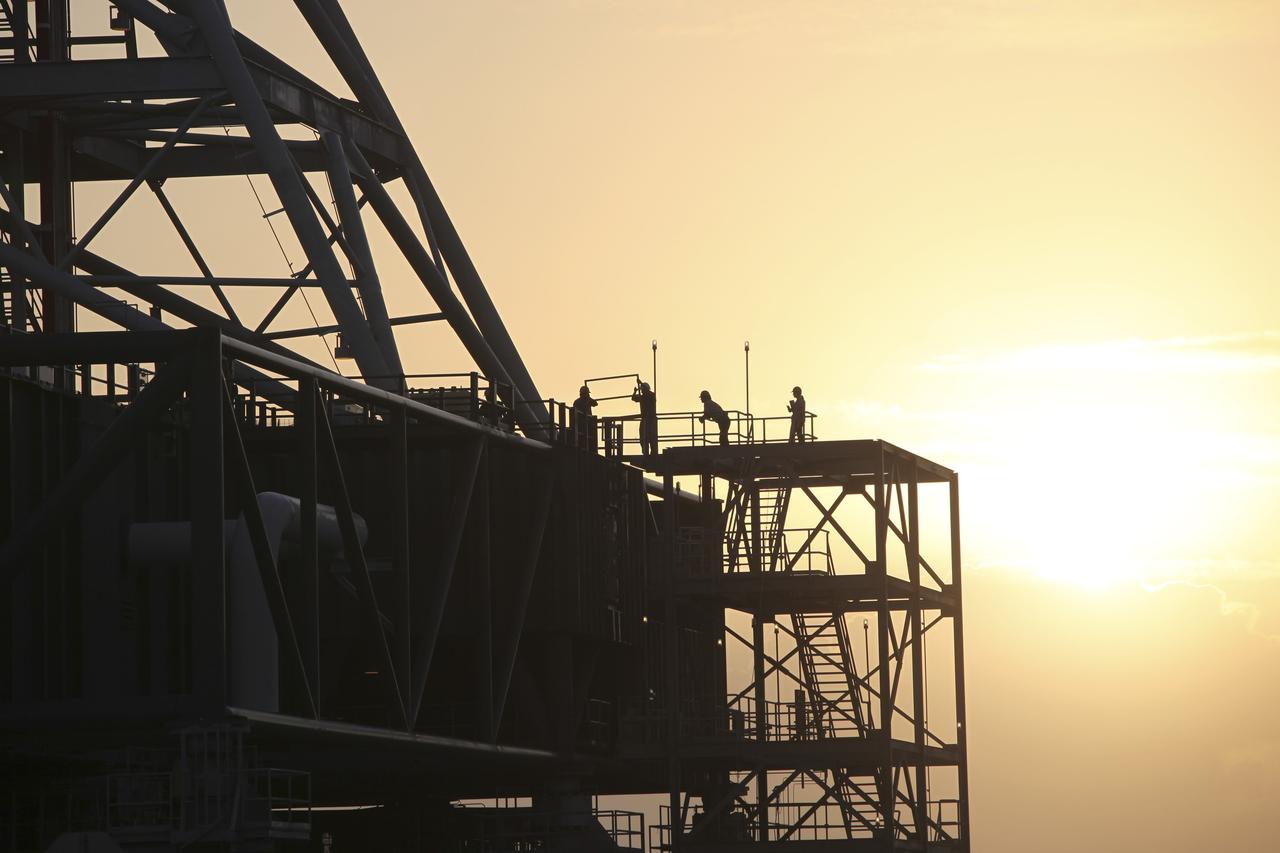
CAPE CANAVERAL, Fla. – At NASA’s Kennedy Space Center in Florida, technicians monitor nearby as the mobile launcher (ML) is being prepared for its move aboard a crawler-transporter from next to Kennedy's Vehicle Assembly Building to Launch Pad 39B, a distance of 4.2 miles. Data on the ML will be collected from structural and functional engineering tests and used for the next phases of construction. The 355-foot-tall ML structure, which took about two years to construct, is being modified to support NASA’s Space Launch System (SLS), the heavy-lift rocket that will launch astronauts farther into space than ever before. SLS will also create high-quality jobs here at home, and provide the cornerstone for America's future human space exploration efforts. Photo credit: NASA/Dimitri Gerondidakis
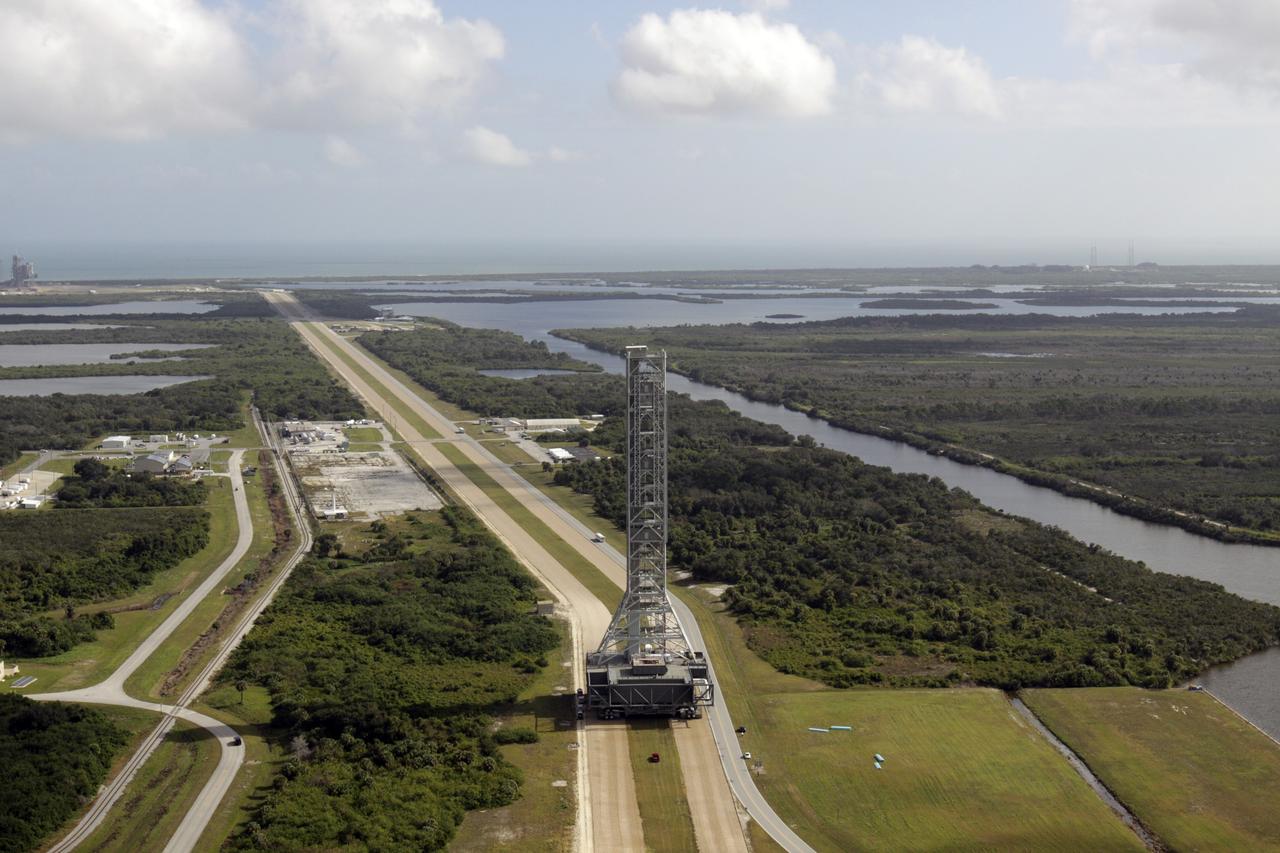
CAPE CANAVERAL, Fla. – On the crawlerway at NASA's Kennedy Space Center in Florida, an aerial view shows the mobile launcher (ML) as it rolls out aboard the crawler-transporter moving from next to Kennedy's Vehicle Assembly Building to Launch Pad 39B, a distance of 4.2 miles. Data on the ML will be collected from structural and functional engineering tests and used for the next phases of construction. The 355-foot-tall ML structure, which took about two years to construct, is being modified to support NASA’s Space Launch System (SLS), the heavy-lift rocket that will launch astronauts farther into space than ever before. SLS will also create high-quality jobs here at home, and provide the cornerstone for America's future human space exploration efforts. Photo credit: NASA/Kim Shiflett
CAPE CANAVERAL, Fla. – At NASA’s Kennedy Space Center in Florida, the mobile launcher (ML) is being prepared for its move aboard a crawler-transporter from next to Kennedy's Vehicle Assembly Building to Launch Pad 39B, a distance of 4.2 miles. Data on the ML will be collected from structural and functional engineering tests and used for the next phases of construction. The 355-foot-tall ML structure, which took about two years to construct, is being modified to support NASA’s Space Launch System (SLS), the heavy-lift rocket that will launch astronauts farther into space than ever before. SLS will also create high-quality jobs here at home, and provide the cornerstone for America's future human space exploration efforts. Photo credit: NASA/Dimitri Gerondidakis
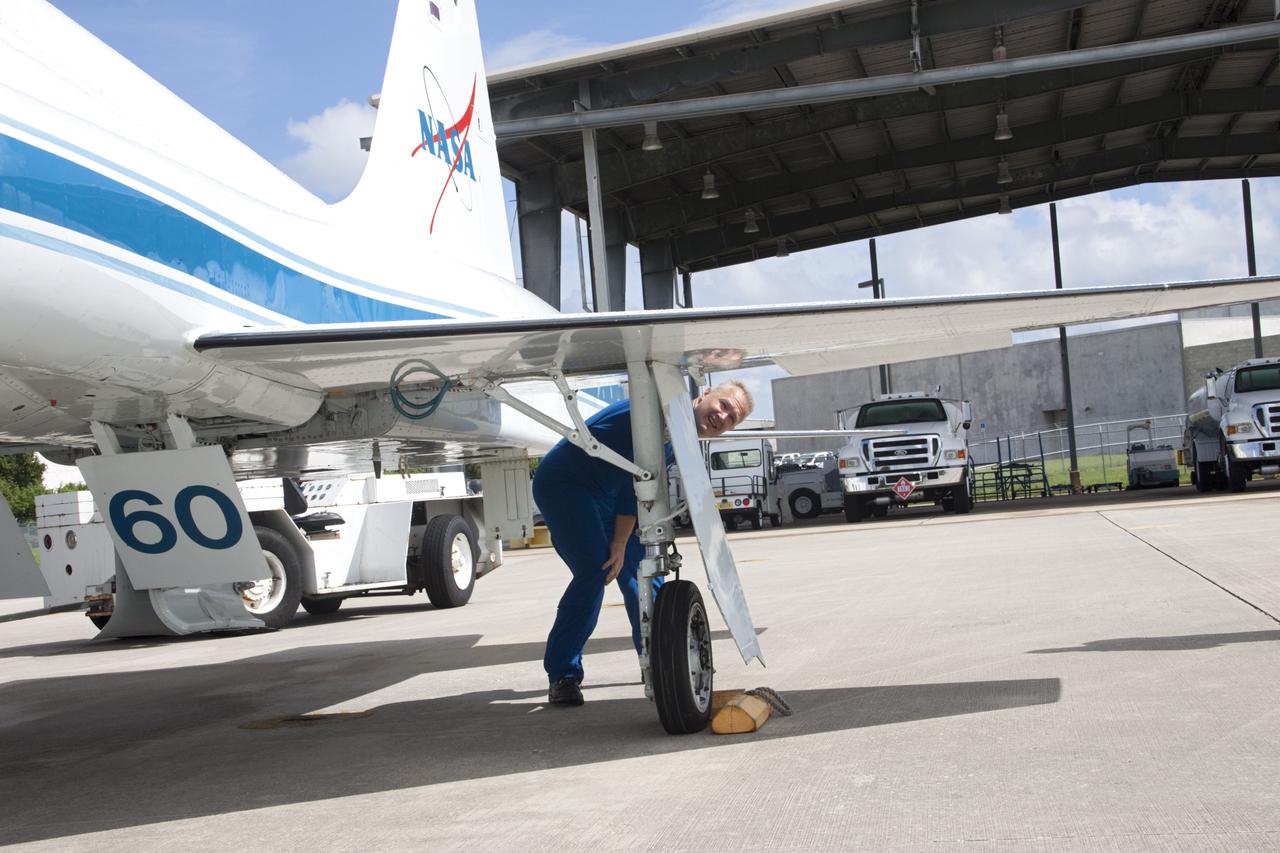
CAPE CANAVERAL, Fla. – At the Shuttle Landing Facility at NASA's Kennedy Space Center in Florida, STS-135 Pilot Doug Hurley inspects the wings on a T-38 training jet. Hurley, along with Commander Chris Ferguson and Mission Specialist Sandra Magnus, was at the center for the traditional post-flight crew return presentation. STS-135 Mission Specialist Rex Walheim was unable to attend the Kennedy event. In July 2011, Atlantis and its crew delivered to the International Space Station the Raffaello multi-purpose logistics module packed with more than 9,400 pounds of spare parts, equipment and supplies that will sustain station operations for the next year. STS-135 was the 33rd and final flight for Atlantis and the final mission of the Space Shuttle Program. For more information, visit www.nasa.gov/mission_pages/shuttle/shuttlemissions/sts135/index.html. Photo credit: NASA/Jim Grossmann
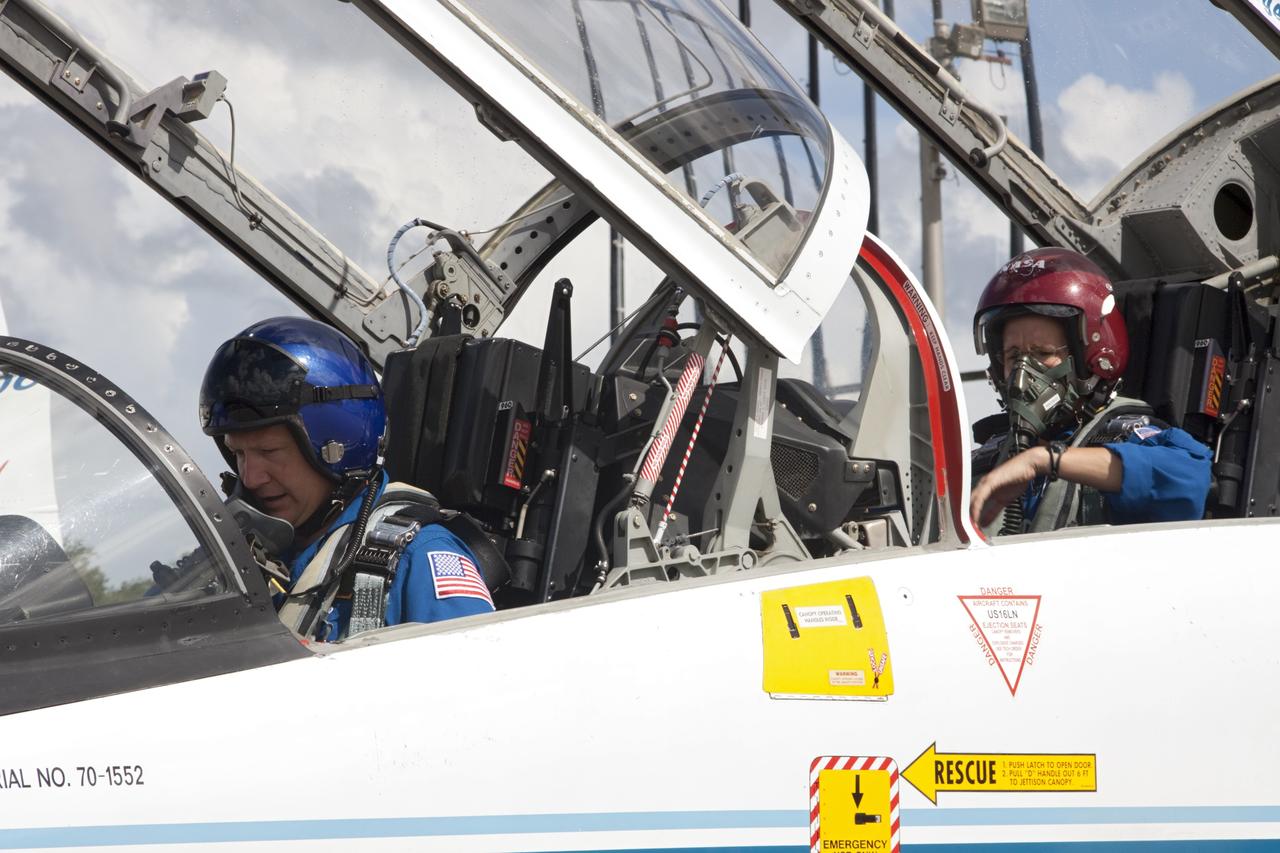
CAPE CANAVERAL, Fla. – At the Shuttle Landing Facility at NASA's Kennedy Space Center in Florida, STS-135 Pilot Doug Hurley and Mission Specialist Sandra Magnus (in the red helmet) prepare for departure in a T-38 training jet. The astronauts, along with Commander Chris Ferguson, were at the center for the traditional post-flight crew return presentation. STS-135 Mission Specialist Rex Walheim was unable to attend the Kennedy event. In July 2011, Atlantis and its crew delivered to the International Space Station the Raffaello multi-purpose logistics module packed with more than 9,400 pounds of spare parts, equipment and supplies that will sustain station operations for the next year. STS-135 was the 33rd and final flight for Atlantis and the final mission of the Space Shuttle Program. For more information, visit www.nasa.gov/mission_pages/shuttle/shuttlemissions/sts135/index.html. Photo credit: NASA/Jim Grossmann
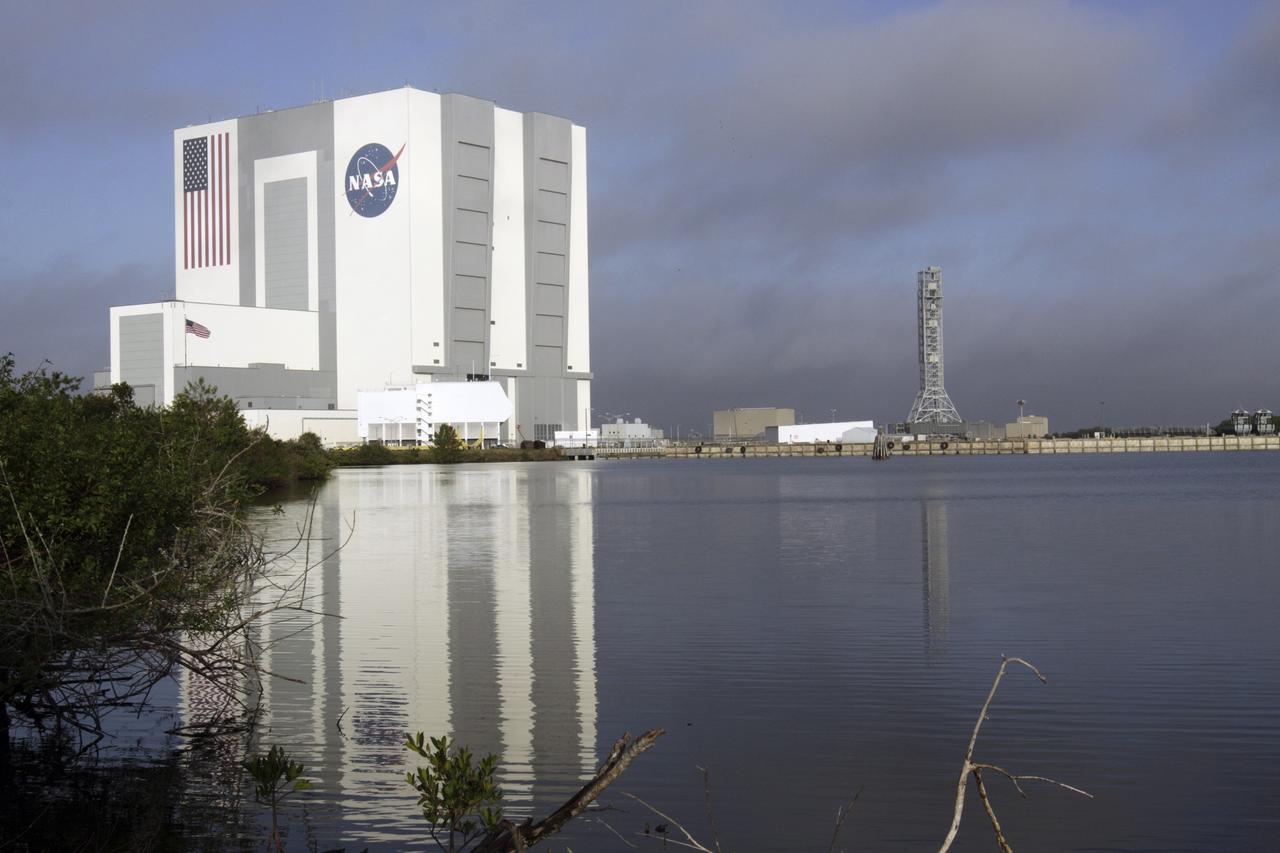
CAPE CANAVERAL, Fla. – At NASA’s Kennedy Space Center in Florida, the Vehicle Assembly Building and Mobile Launcher (ML) are reflected in the water as the crawler-transporter begins to move the ML from next to Kennedy's Vehicle Assembly Building to Launch Pad 39B, a distance of 4.2 miles. Data on the ML will be collected from structural and functional engineering tests and used for the next phases of construction. The 355-foot-tall ML structure, which took about two years to construct, is being modified to support NASA’s Space Launch System (SLS), the heavy-lift rocket that will launch astronauts farther into space than ever before. SLS will also create high-quality jobs here at home, and provide the cornerstone for America's future human space exploration efforts. Photo credit: NASA/Kim Shiflett
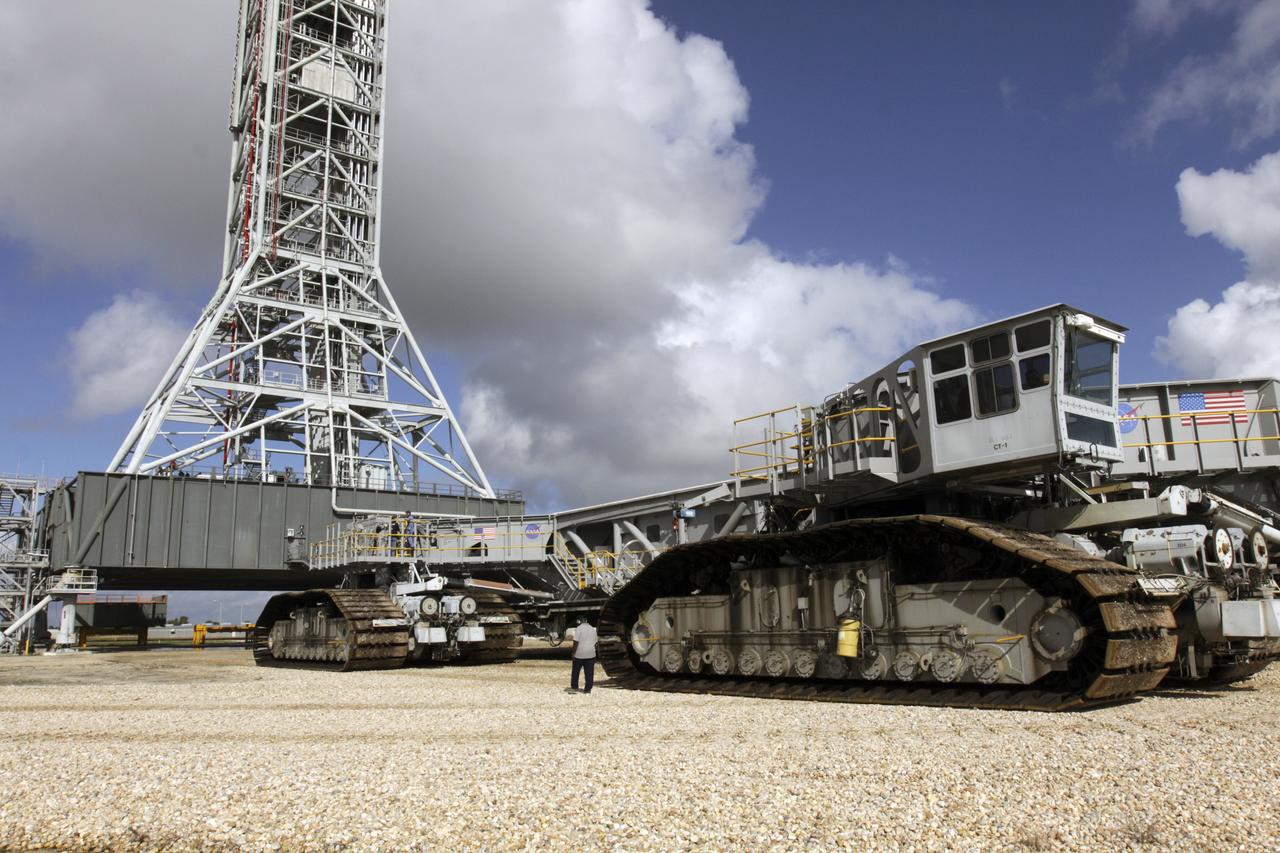
CAPE CANAVERAL, Fla. – At NASA's Kennedy Space Center in Florida, the mobile launcher (ML) is being prepared for its move aboard a crawler-transporter from next to Kennedy's Vehicle Assembly Building to Launch Pad 39B, a distance of 4.2 miles. Data on the ML will be collected from structural and functional engineering tests and used for the next phases of construction. The 355-foot-tall ML, which took about two years to construct, is being modified to support NASA's Space Launch System (SLS), the heavy-lift rocket that will launch astronauts farther into space than ever before. SLS will also create high-quality jobs here at home, and provide the cornerstone for America's future human space exploration efforts. For more information on SLS, visit http://www.nasa.gov/sls. Photo credit: NASA/Kim Shiflett
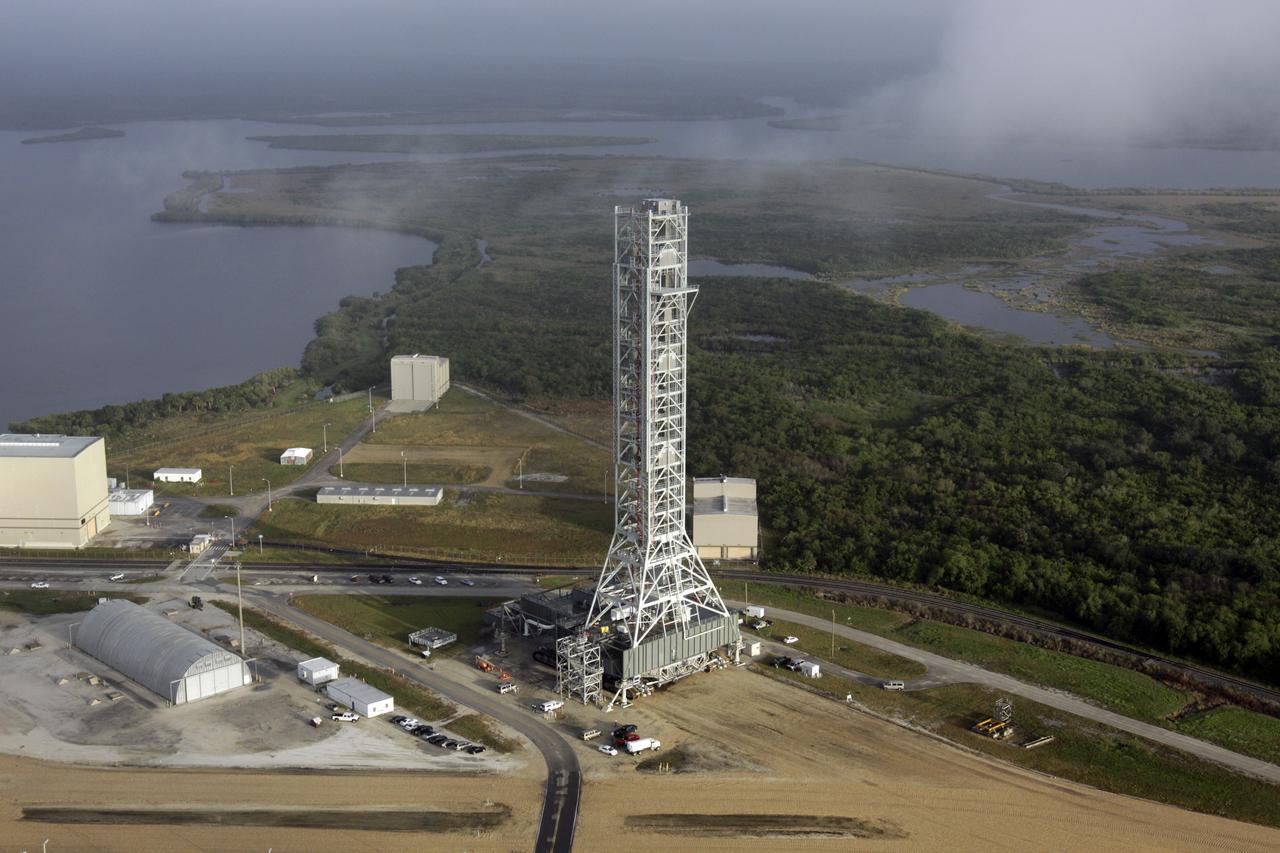
CAPE CANAVERAL, Fla. – At NASA's Kennedy Space Center in Florida, this aerial view taken from atop the Vehicle Assembly Building shows the mobile launcher (ML) as it begins its move aboard a crawler-transporter from next to Kennedy's Vehicle Assembly Building to Launch Pad 39B, a distance of 4.2 miles. Data on the ML will be collected from structural and functional engineering tests and used for the next phases of construction. The 355-foot-tall ML structure, which took about two years to construct, is being modified to support NASA’s Space Launch System (SLS), the heavy-lift rocket that will launch astronauts farther into space than ever before. SLS will also create high-quality jobs here at home, and provide the cornerstone for America's future human space exploration efforts. Photo credit: NASA/Kim Shiflett
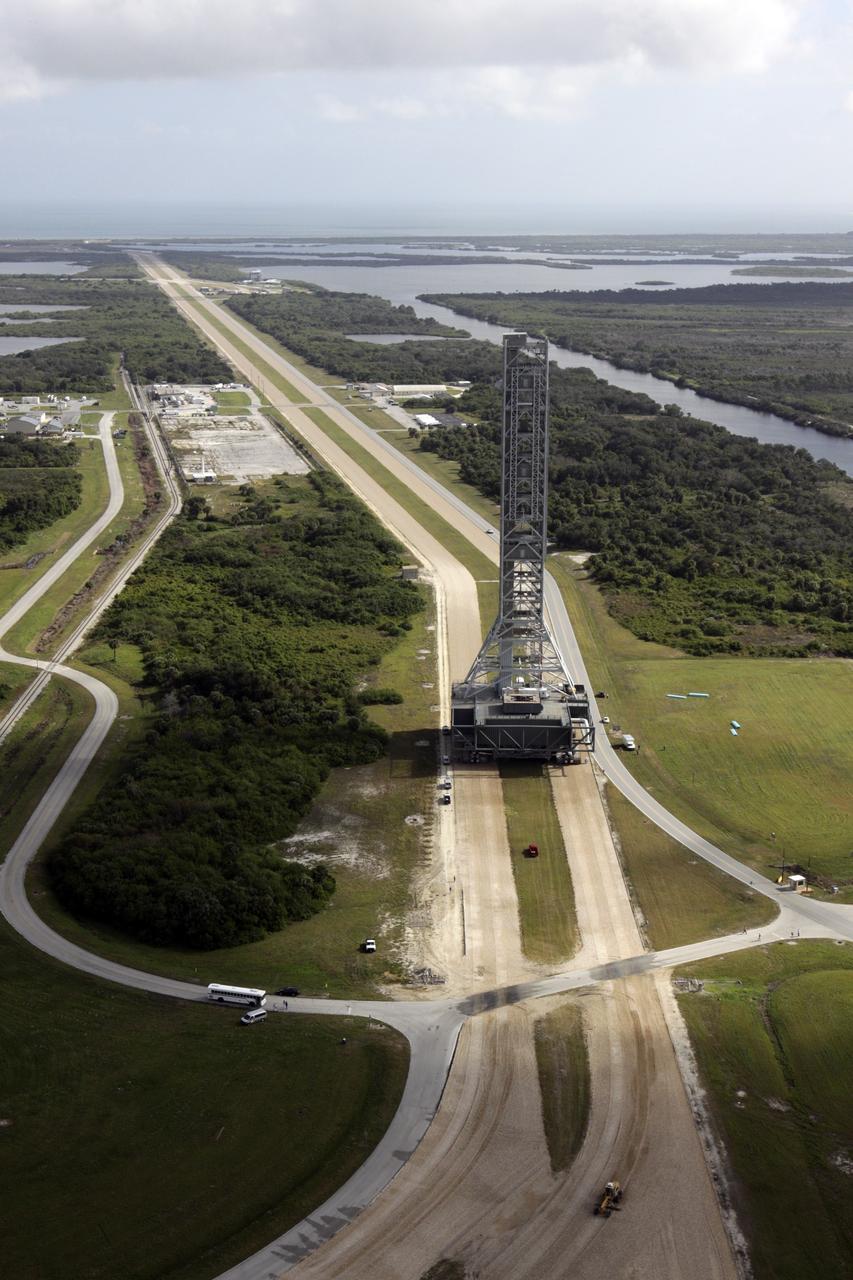
CAPE CANAVERAL, Fla. – On the crawlerway at NASA's Kennedy Space Center in Florida, an aerial view shows the mobile launcher (ML) as it rolls out aboard the crawler-transporter moving from next to Kennedy's Vehicle Assembly Building to Launch Pad 39B, a distance of 4.2 miles. Data on the ML will be collected from structural and functional engineering tests and used for the next phases of construction. The 355-foot-tall ML structure, which took about two years to construct, is being modified to support NASA’s Space Launch System (SLS), the heavy-lift rocket that will launch astronauts farther into space than ever before. SLS will also create high-quality jobs here at home, and provide the cornerstone for America's future human space exploration efforts. Photo credit: NASA/Kim Shiflett
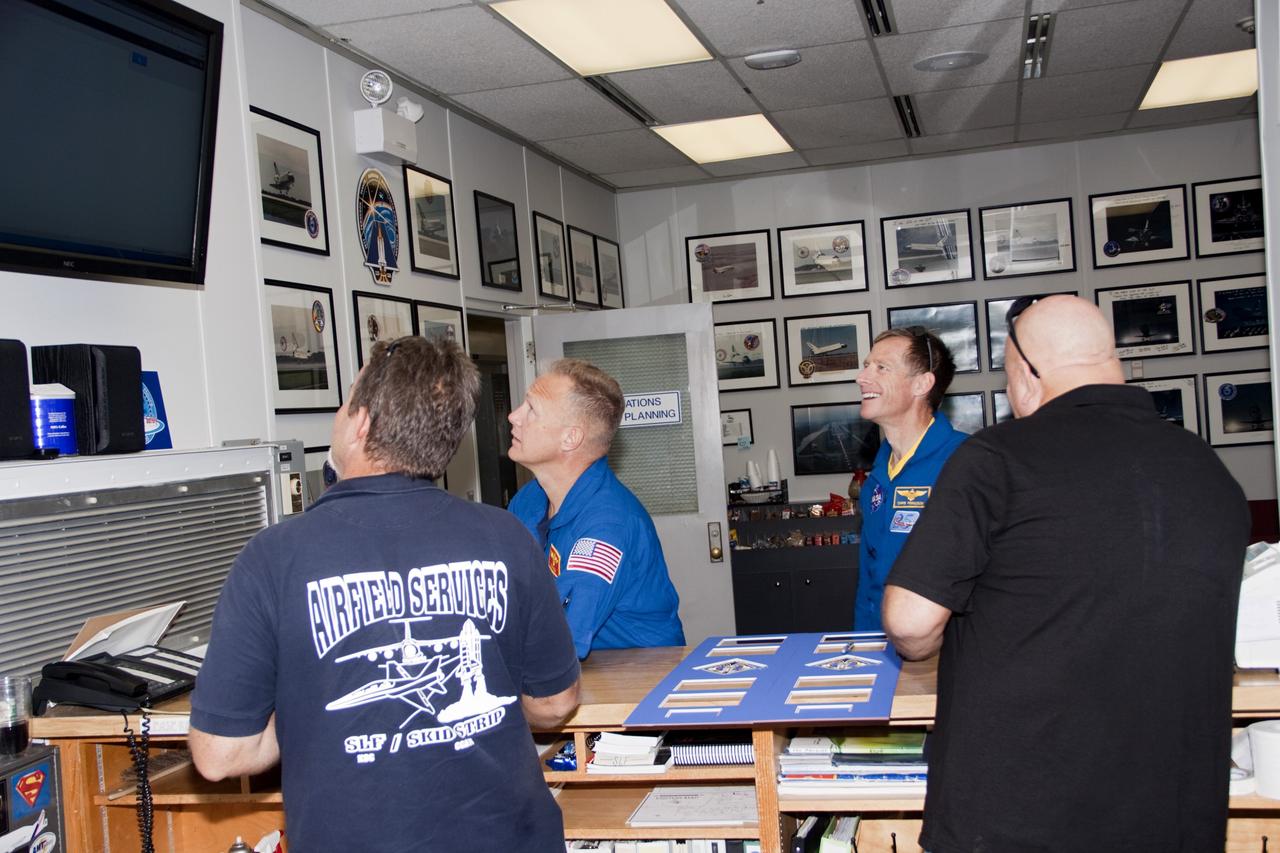
CAPE CANAVERAL, Fla. – At NASA's Kennedy Space Center in Florida, STS-135 Commander Chris Ferguson and Pilot Doug Hurley (on left) visit with employees at the Shuttle Landing Facility. The astronauts, along with Mission Specialist Sandra Magnus, were at the center for the traditional post-flight crew return presentation. STS-135 Mission Specialist Rex Walheim was unable to attend the Kennedy event. In July 2011, Atlantis and its crew delivered to the International Space Station the Raffaello multi-purpose logistics module packed with more than 9,400 pounds of spare parts, equipment and supplies that will sustain station operations for the next year. STS-135 was the 33rd and final flight for Atlantis and the final mission of the Space Shuttle Program. For more information, visit www.nasa.gov/mission_pages/shuttle/shuttlemissions/sts135/index.html. Photo credit: NASA/Jim Grossmann
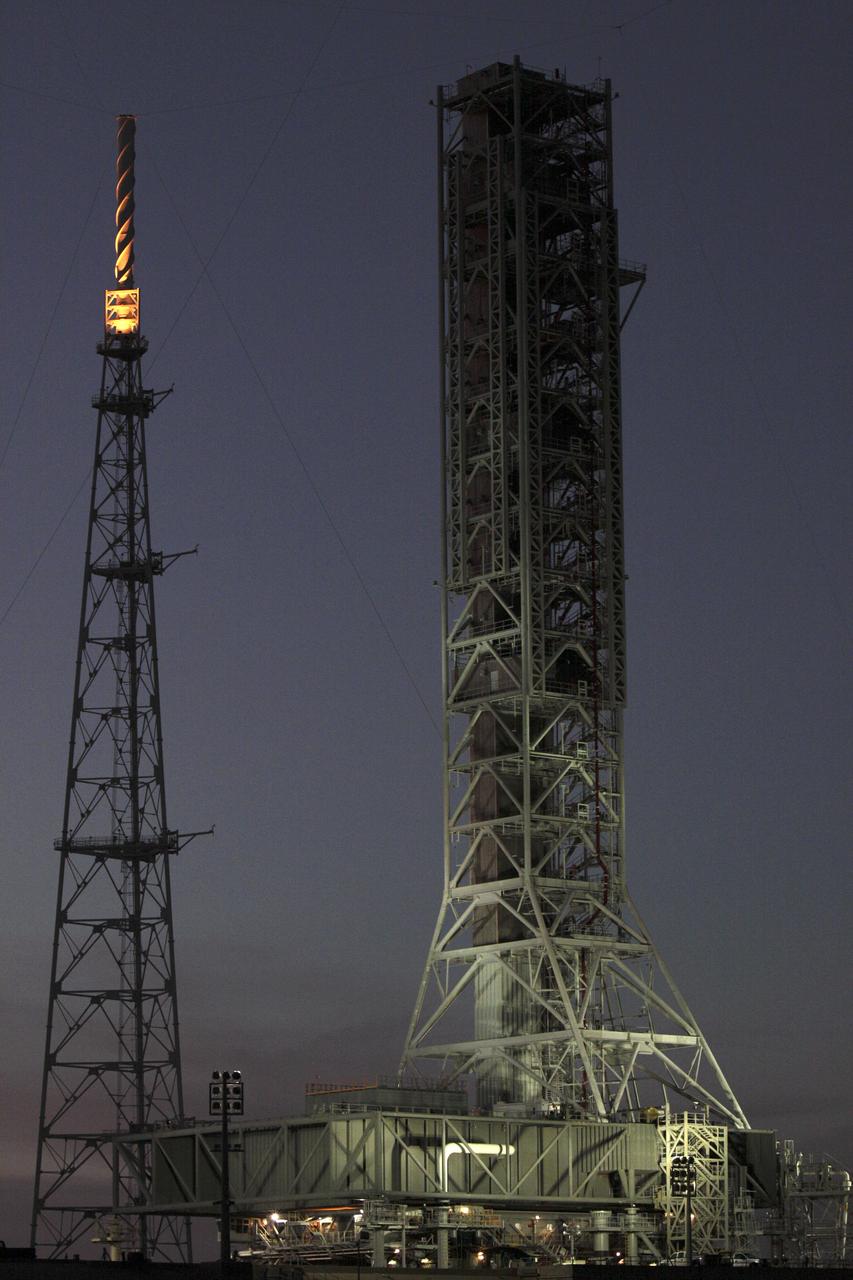
CAPE CANAVERAL, Fla. – At Launch Pad 39B at NASA’s Kennedy Space Center in Florida, the mobile launcher (ML) has completed its 4.2-mile journey. The ML rolled out aboard a crawler-transporter from next to Kennedy's Vehicle Assembly Building to the pad at about 9:15 a.m. EST with the launcher arriving at the pad at 6:29 p.m. Data on the ML will be collected from structural and functional engineering tests and used for the next phases of construction overseen by NASA’s 21st Century Ground Systems Program. The 355-foot-tall ML structure, which took about two years to construct, is being modified to support NASA’s Space Launch System (SLS), the heavy-lift rocket that will launch astronauts farther into space than ever before. SLS will also create high-quality jobs here at home, and provide the cornerstone for America's future human space exploration efforts. Photo credit: NASA/Kim Shiflett
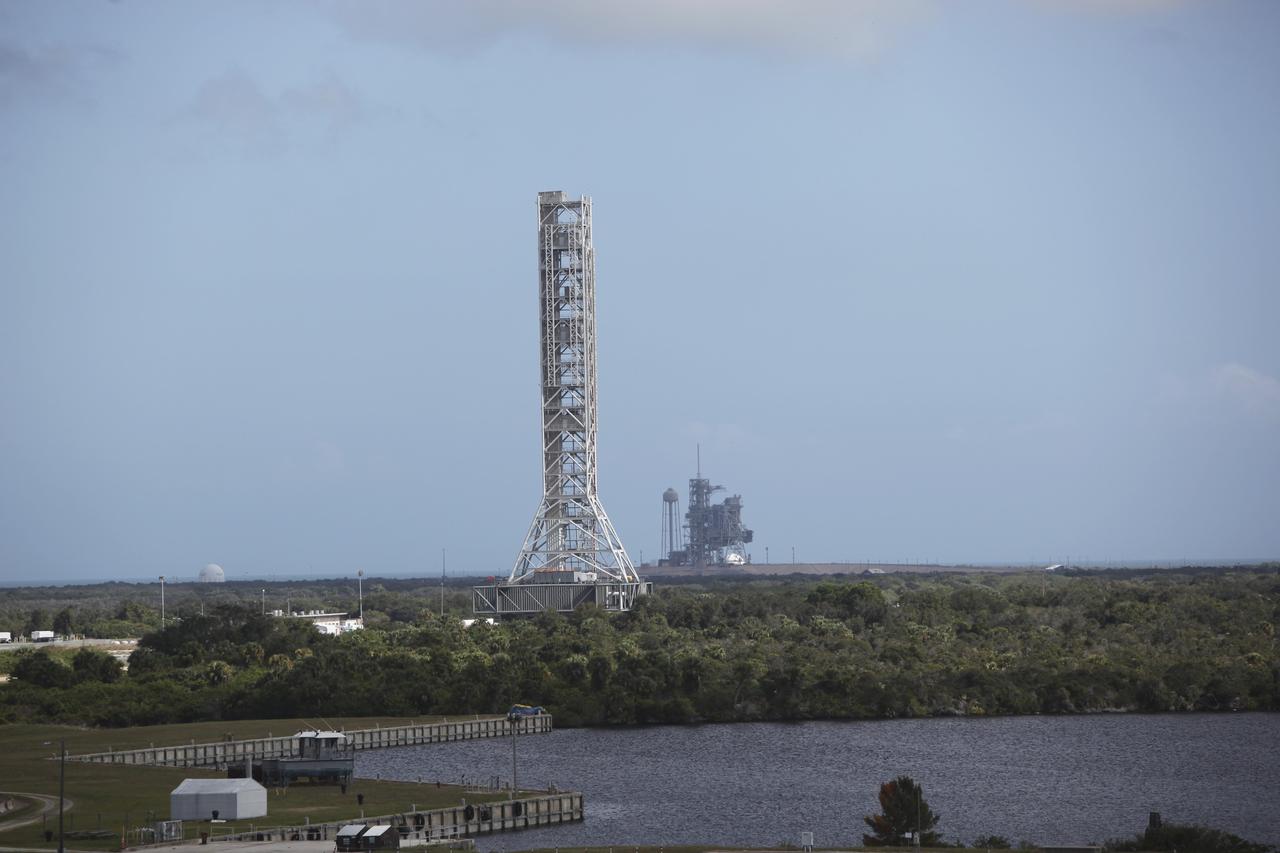
CAPE CANAVERAL, Fla. – At NASA's Kennedy Space Center in Florida, an aerial view shows the mobile launcher (ML) as it rolls out aboard the crawler-transporter moving from next to Kennedy's Vehicle Assembly Building to Launch Pad 39B, a distance of 4.2 miles. Data on the ML will be collected from structural and functional engineering tests and used for the next phases of construction. In the distance is Launch Pad 39A. The 355-foot-tall ML structure, which took about two years to construct, is being modified to support NASA’s Space Launch System (SLS), the heavy-lift rocket that will launch astronauts farther into space than ever before. SLS will also create high-quality jobs here at home, and provide the cornerstone for America's future human space exploration efforts. Photo credit: NASA/Dimitri Gerondidakis
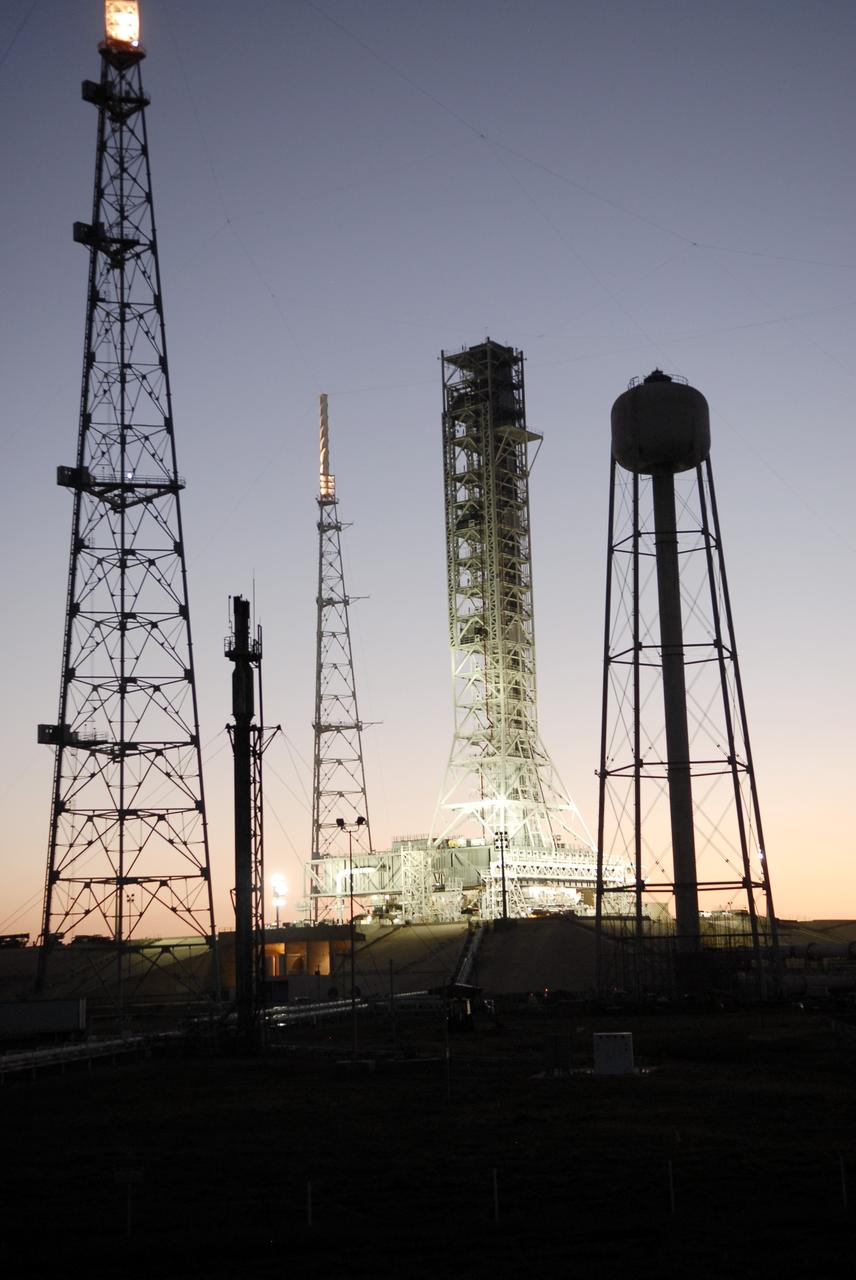
CAPE CANAVERAL, Fla. – At NASA’s Kennedy Space Center in Florida, lights illuminate the mobile launcher (ML) at Launch Pad 39B after completing its 4.2-mile journey to the pad. The launcher rolled out aboard a crawler-transporter from next to Kennedy's Vehicle Assembly Building to the pad at about 9:15 a.m. EST with the launcher arriving at the pad at 6:29 p.m. Data on the ML will be collected from structural and functional engineering tests and used for the next phases of construction overseen by NASA’s 21st Century Ground Systems Program. The 355-foot-tall ML structure, which took about two years to construct, is being modified to support NASA’s Space Launch System (SLS), the heavy-lift rocket that will launch astronauts farther into space than ever before. SLS will also create high-quality jobs here at home, and provide the cornerstone for America's future human space exploration efforts. Photo credit: NASA/Charisse Nahser
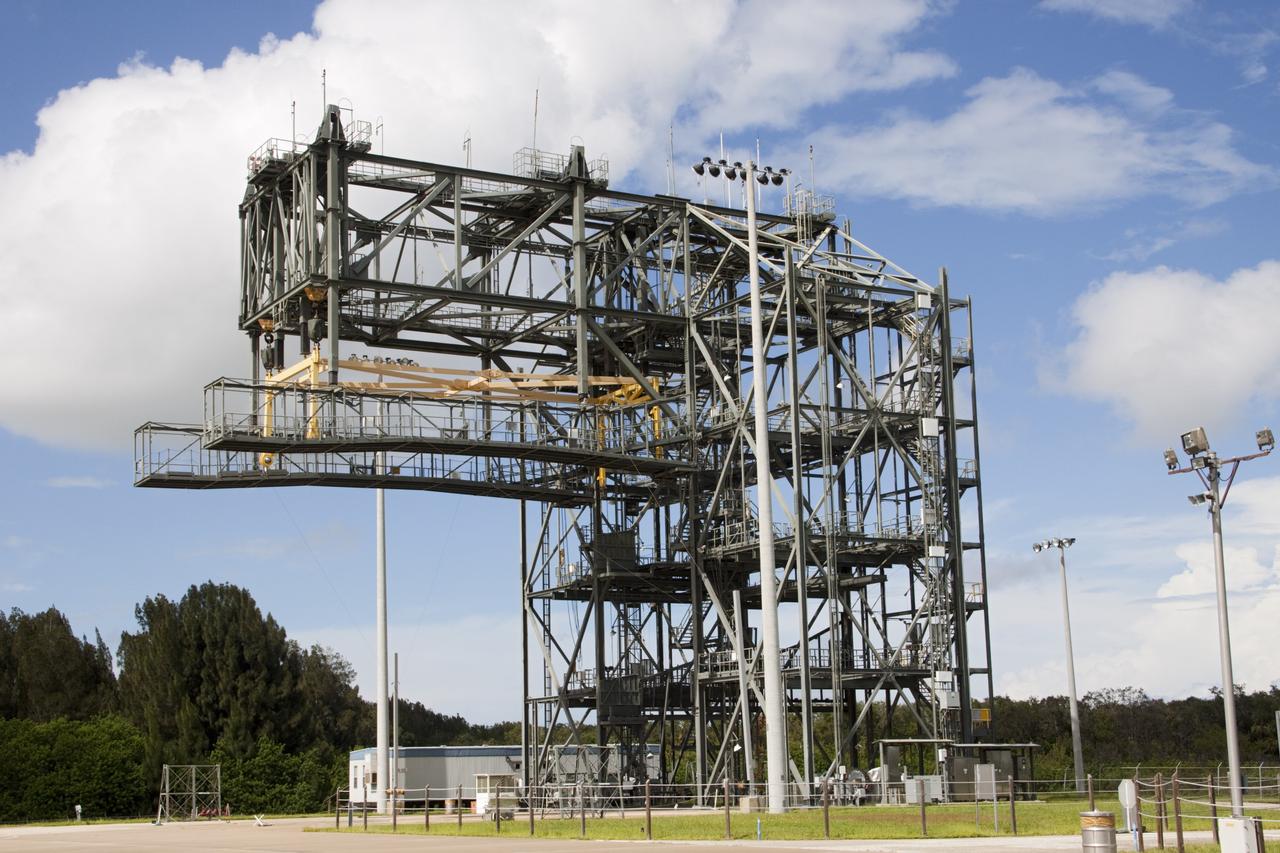
CAPE CANAVERAL, Fla. – – Located at the Shuttle Landing Facility on NASA's Kennedy Space Center in Florida, the space shuttle's mate/demate device is used to raise and lower the space shuttle orbiter from its shuttle carrier aircraft during ferry operations. Photo credit: NASA/Jim Grossmann
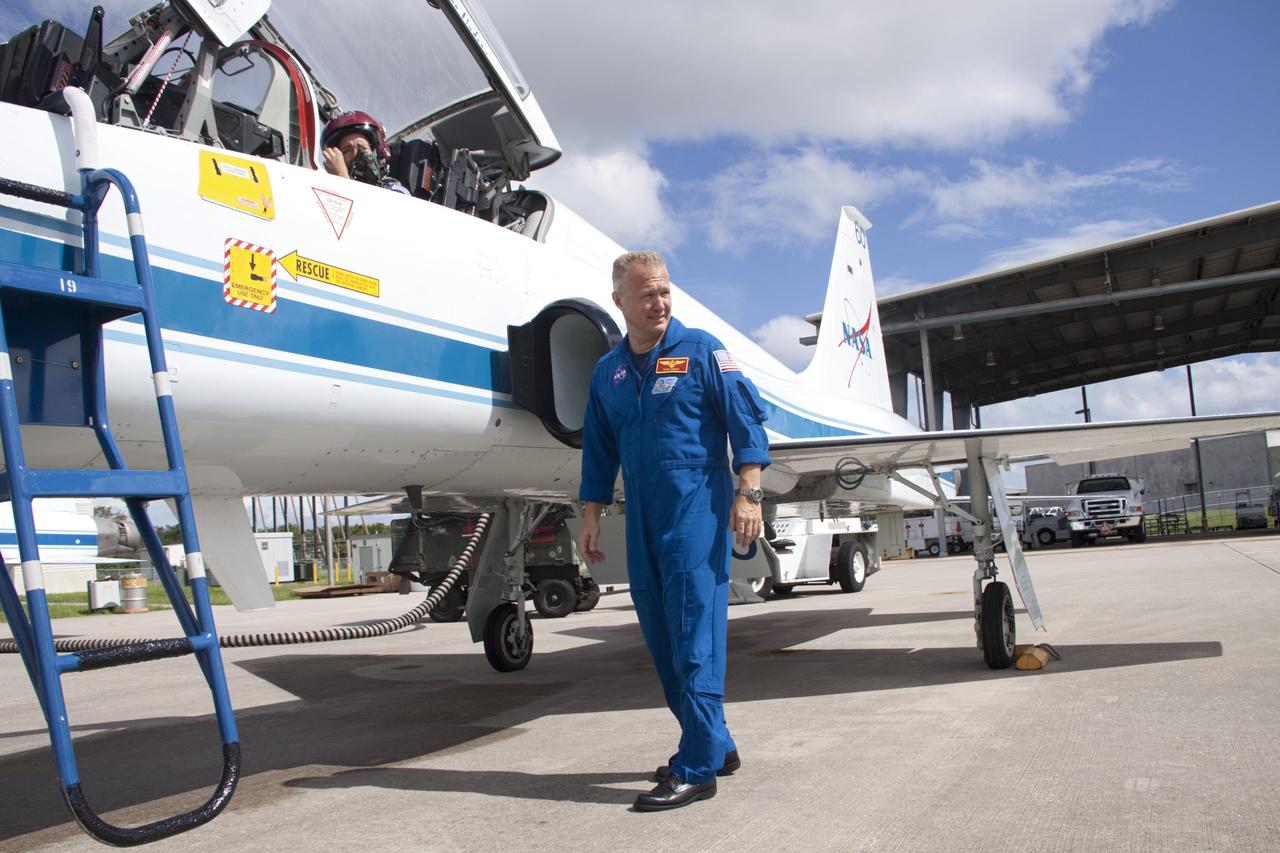
CAPE CANAVERAL, Fla. – At the Shuttle Landing Facility at NASA's Kennedy Space Center in Florida, STS-135 Pilot Doug Hurley and Mission Specialist Sandra Magnus (in the red helmet) prepare for departure in a T-38 training jet. The astronauts, along with Commander Chris Ferguson, were at the center for the traditional post-flight crew return presentation. STS-135 Mission Specialist Rex Walheim was unable to attend the Kennedy event. In July 2011, Atlantis and its crew delivered to the International Space Station the Raffaello multi-purpose logistics module packed with more than 9,400 pounds of spare parts, equipment and supplies that will sustain station operations for the next year. STS-135 was the 33rd and final flight for Atlantis and the final mission of the Space Shuttle Program. For more information, visit www.nasa.gov/mission_pages/shuttle/shuttlemissions/sts135/index.html. Photo credit: NASA/Jim Grossmann
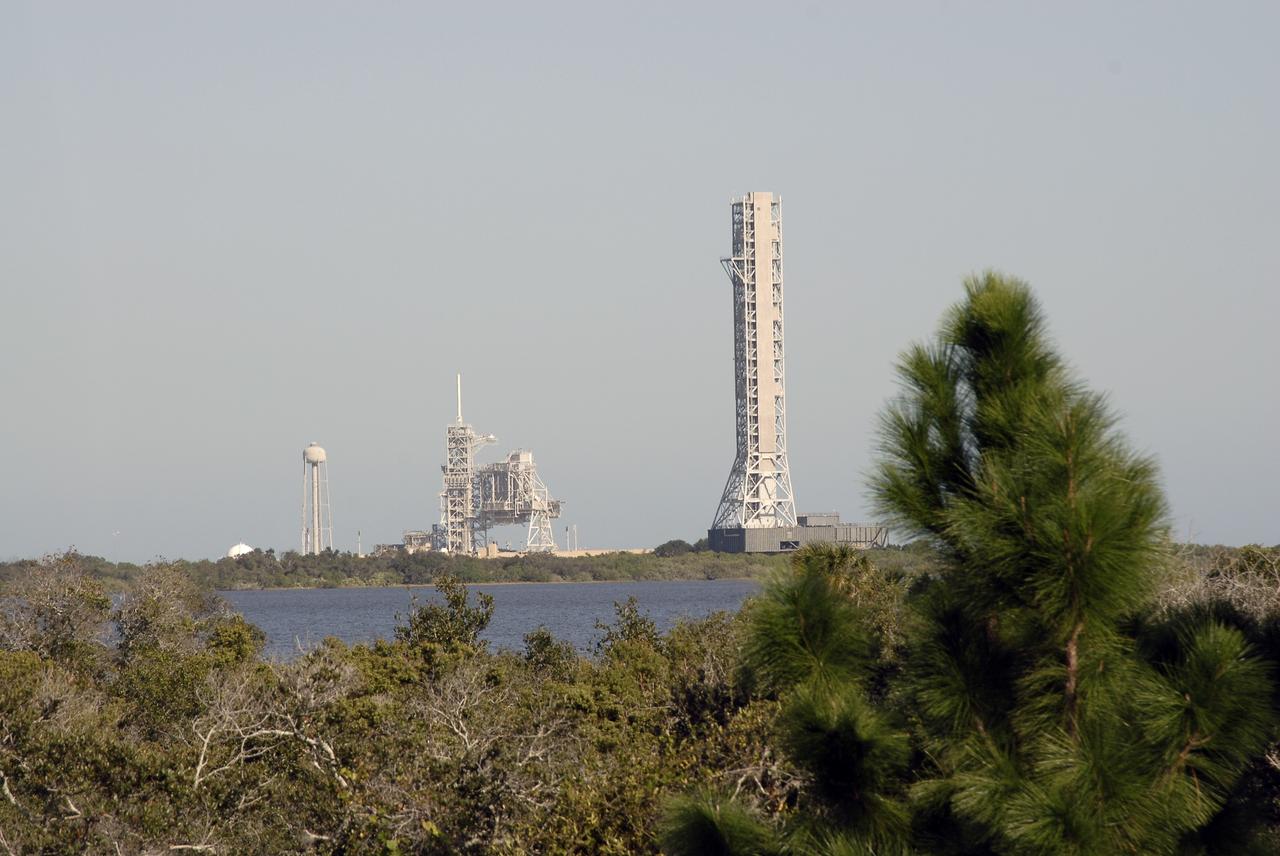
CAPE CANAVERAL, Fla. – The natural vegetation at NASA's Kennedy Space Center in Florida frames the mobile launcher (ML) as it rolls out aboard a crawler-transporter from next to Kennedy's Vehicle Assembly Building to Launch Pad 39B, a distance of 4.2 miles. Rollout began at about 9:15 a.m. EST. Data on the ML will be collected from structural and functional engineering tests and used for the next phases of construction overseen by NASA’s 21st Century Ground Systems Program. To the left of the launcher is Launch Pad 39A. The 355-foot-tall ML structure, which took about two years to construct, is being modified to support NASA’s Space Launch System (SLS), the heavy-lift rocket that will launch astronauts farther into space than ever before. SLS will also create high-quality jobs here at home, and provide the cornerstone for America's future human space exploration efforts. Photo credit: NASA/Charisse Nahser
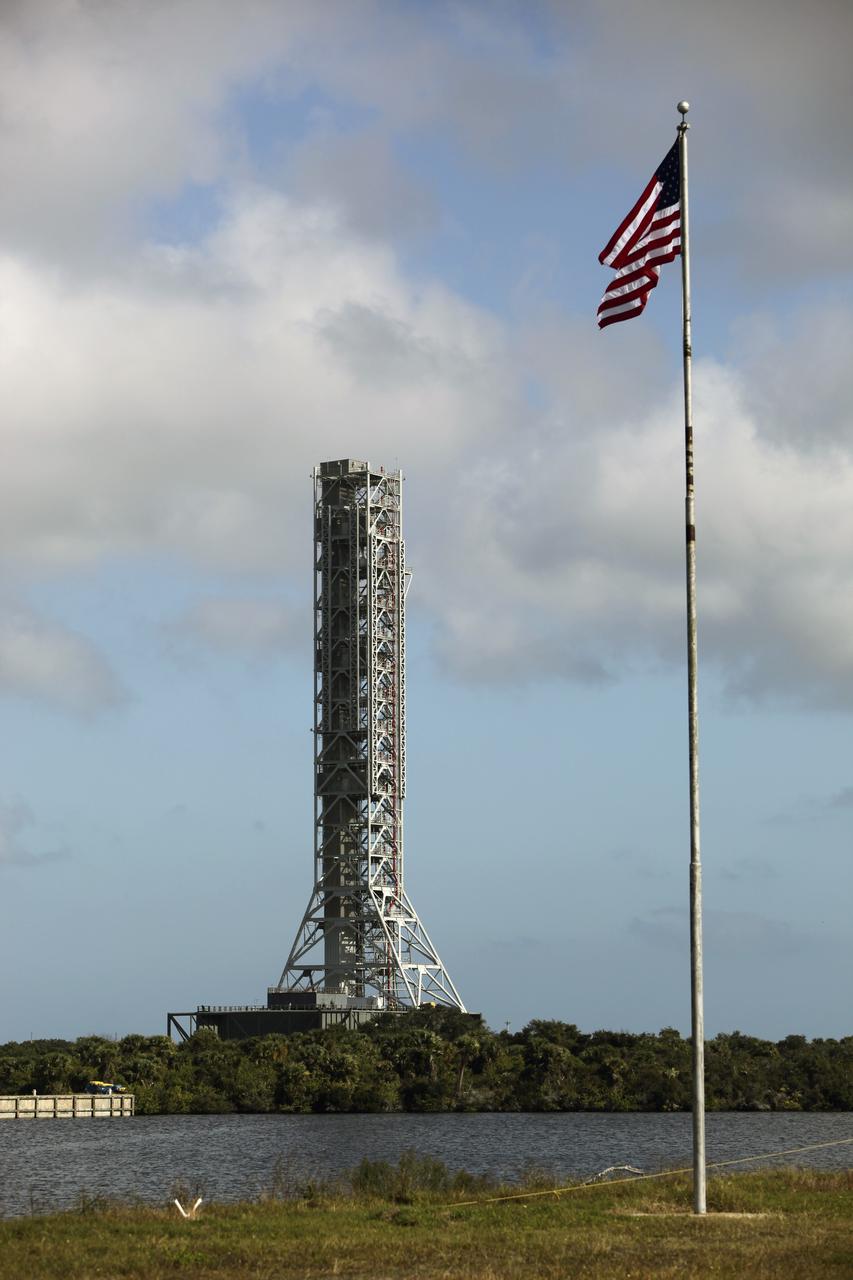
CAPE CANAVERAL, Fla. – As the American flag waves in the foreground at NASA’s Kennedy Space Center in Florida, the mobile launcher (ML) rolls out aboard a crawler-transporter from next to Kennedy's Vehicle Assembly Building to Launch Pad 39B, a distance of 4.2 miles. Data on the ML will be collected from structural and functional engineering tests and used for the next phases of construction. The 355-foot-tall ML structure, which took about two years to construct, is being modified to support NASA’s Space Launch System (SLS), the heavy-lift rocket that will launch astronauts farther into space than ever before. SLS will also create high-quality jobs here at home, and provide the cornerstone for America's future human space exploration efforts. Photo credit: NASA/Dimitri Gerondidakis
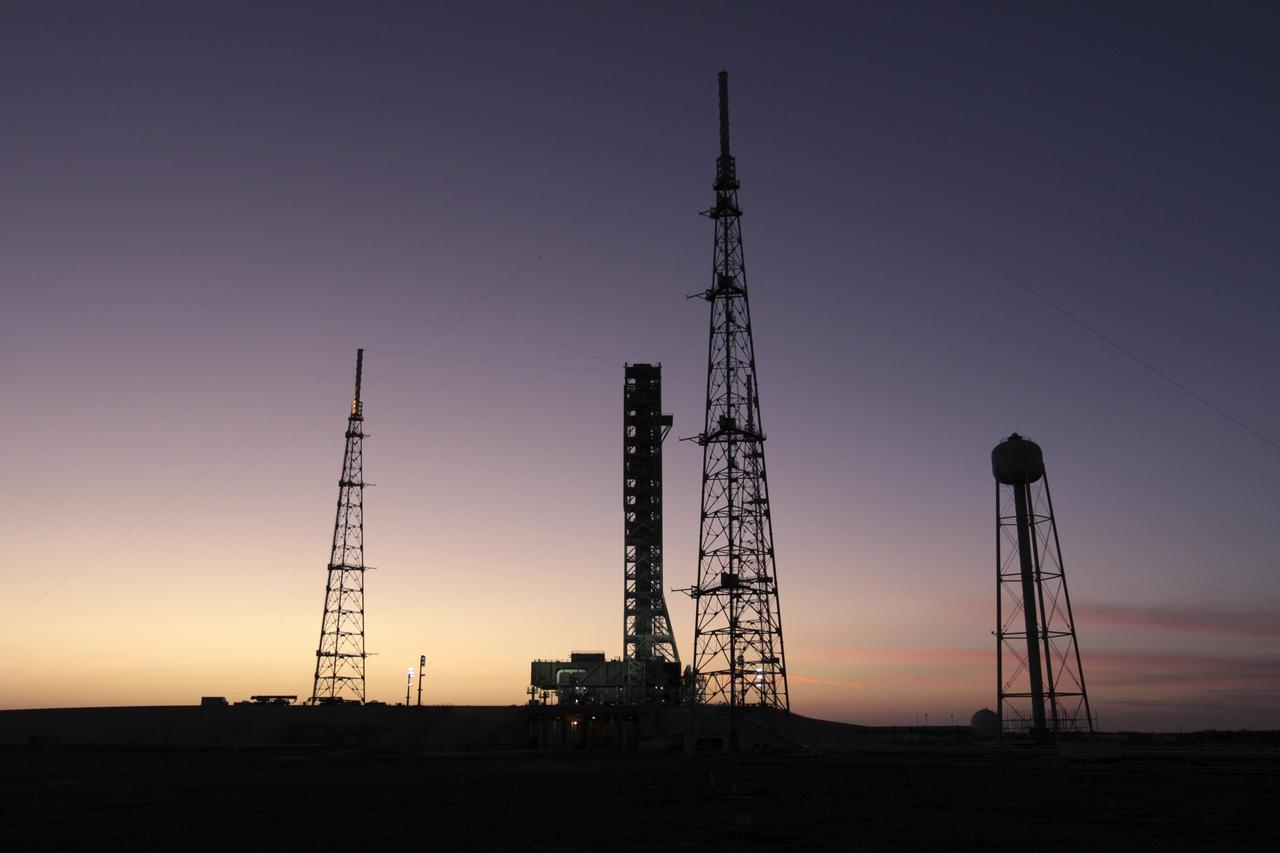
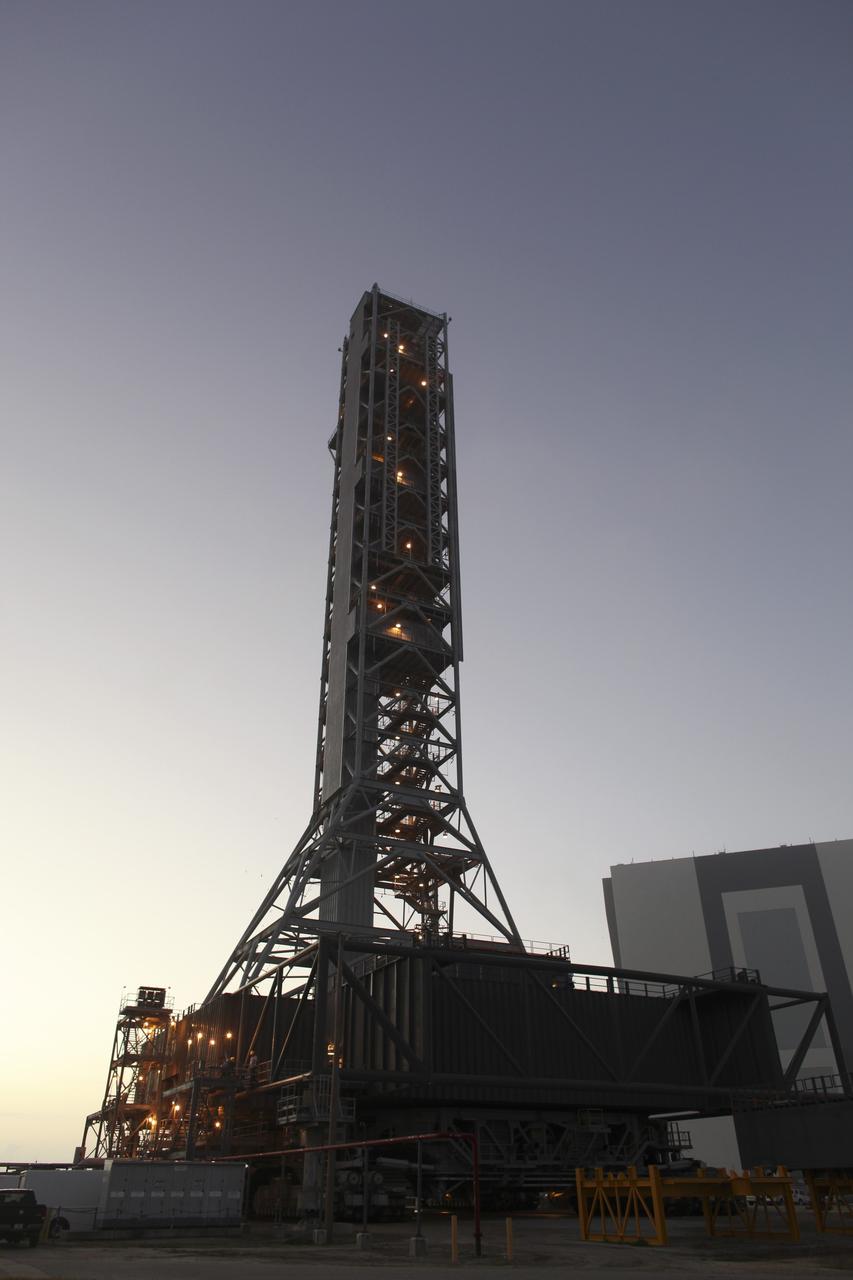
CAPE CANAVERAL, Fla. – With the sun setting in the background at NASA’s Kennedy Space Center in Florida, the mobile launcher (ML) is nearing completion of its 4.2-mile journey to Launch Pad 39B. The ML rolled out aboard a crawler-transporter from next to Kennedy's Vehicle Assembly Building to the pad at about 9:15 a.m. EST. Data on the ML will be collected from structural and functional engineering tests and used for the next phases of construction overseen by NASA’s 21st Century Ground Systems Program. The 355-foot-tall ML structure, which took about two years to construct, is being modified to support NASA’s Space Launch System (SLS), the heavy-lift rocket that will launch astronauts farther into space than ever before. SLS will also create high-quality jobs here at home, and provide the cornerstone for America's future human space exploration efforts. Photo credit: NASA/Kim Shiflett
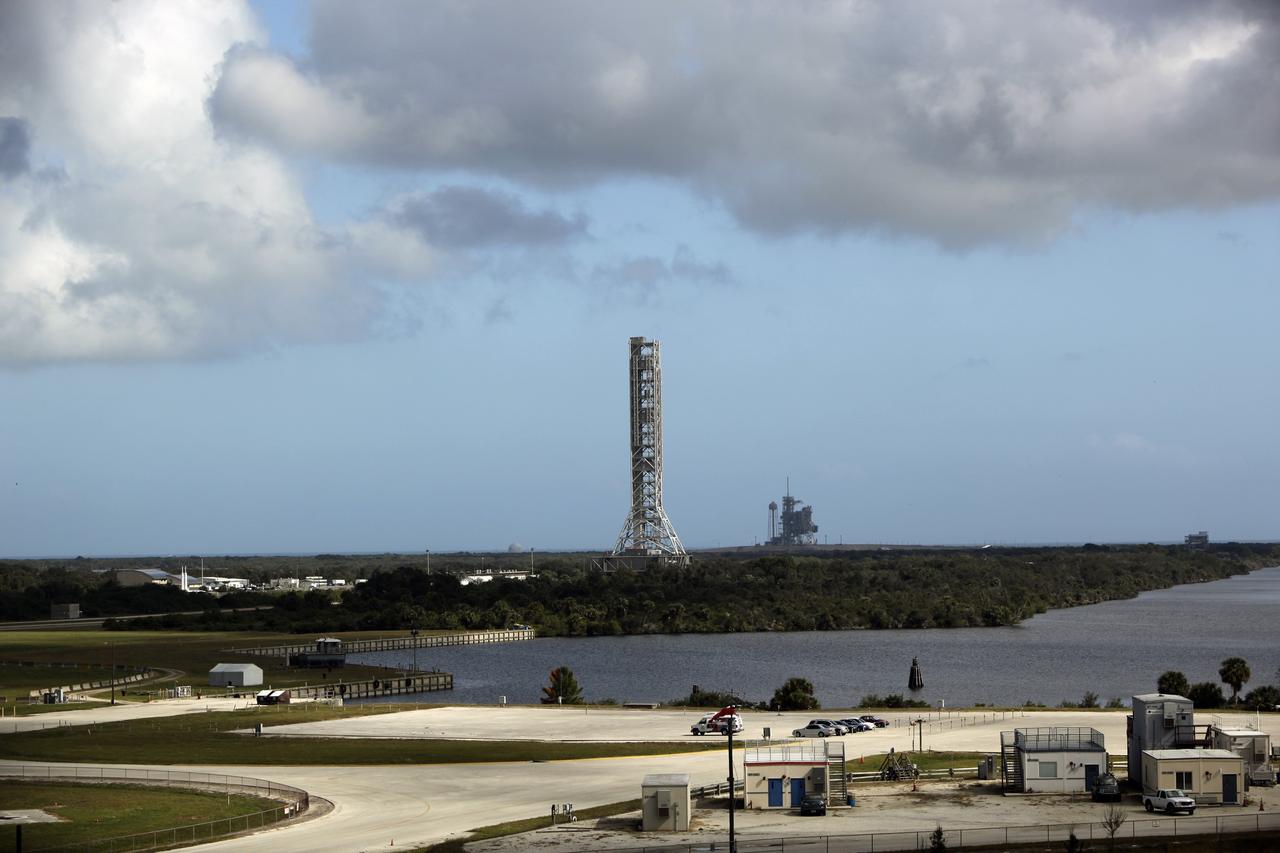
CAPE CANAVERAL, Fla. – At NASA's Kennedy Space Center in Florida, an aerial view shows the mobile launcher (ML) as it rolls out aboard the crawler-transporter moving from next to Kennedy's Vehicle Assembly Building to Launch Pad 39B, a distance of 4.2 miles. Data on the ML will be collected from structural and functional engineering tests and used for the next phases of construction. In the distance is Launch Pad 39A. The 355-foot-tall ML structure, which took about two years to construct, is being modified to support NASA’s Space Launch System (SLS), the heavy-lift rocket that will launch astronauts farther into space than ever before. SLS will also create high-quality jobs here at home, and provide the cornerstone for America's future human space exploration efforts. Photo credit: NASA/Dimitri Gerondidakis
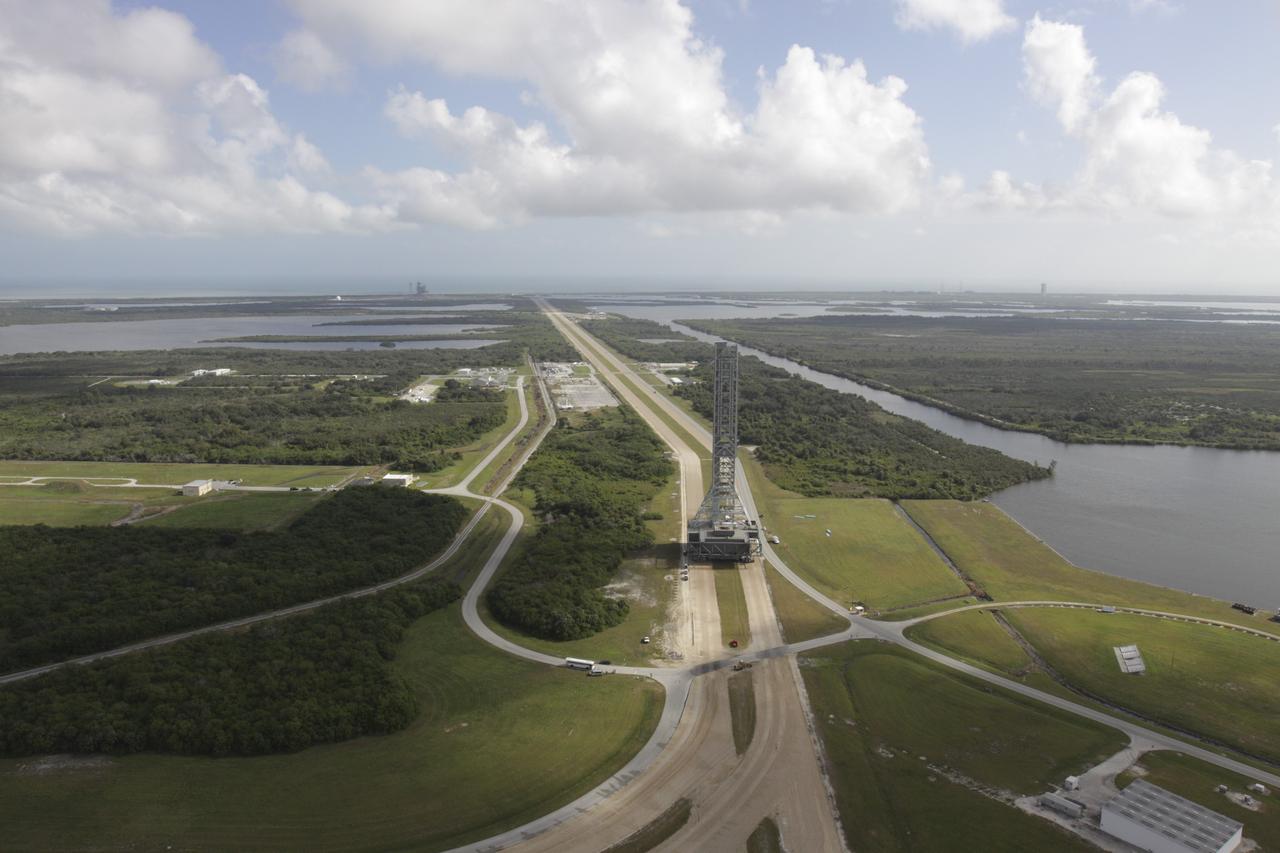
CAPE CANAVERAL, Fla. – On the crawlerway at NASA's Kennedy Space Center in Florida, an aerial view shows the mobile launcher (ML) as it rolls out aboard the crawler-transporter moving from next to Kennedy's Vehicle Assembly Building to Launch Pad 39B, a distance of 4.2 miles. Data on the ML will be collected from structural and functional engineering tests and used for the next phases of construction. The 355-foot-tall ML structure, which took about two years to construct, is being modified to support NASA’s Space Launch System (SLS), the heavy-lift rocket that will launch astronauts farther into space than ever before. SLS will also create high-quality jobs here at home, and provide the cornerstone for America's future human space exploration efforts. Photo credit: NASA/Kim Shiflett
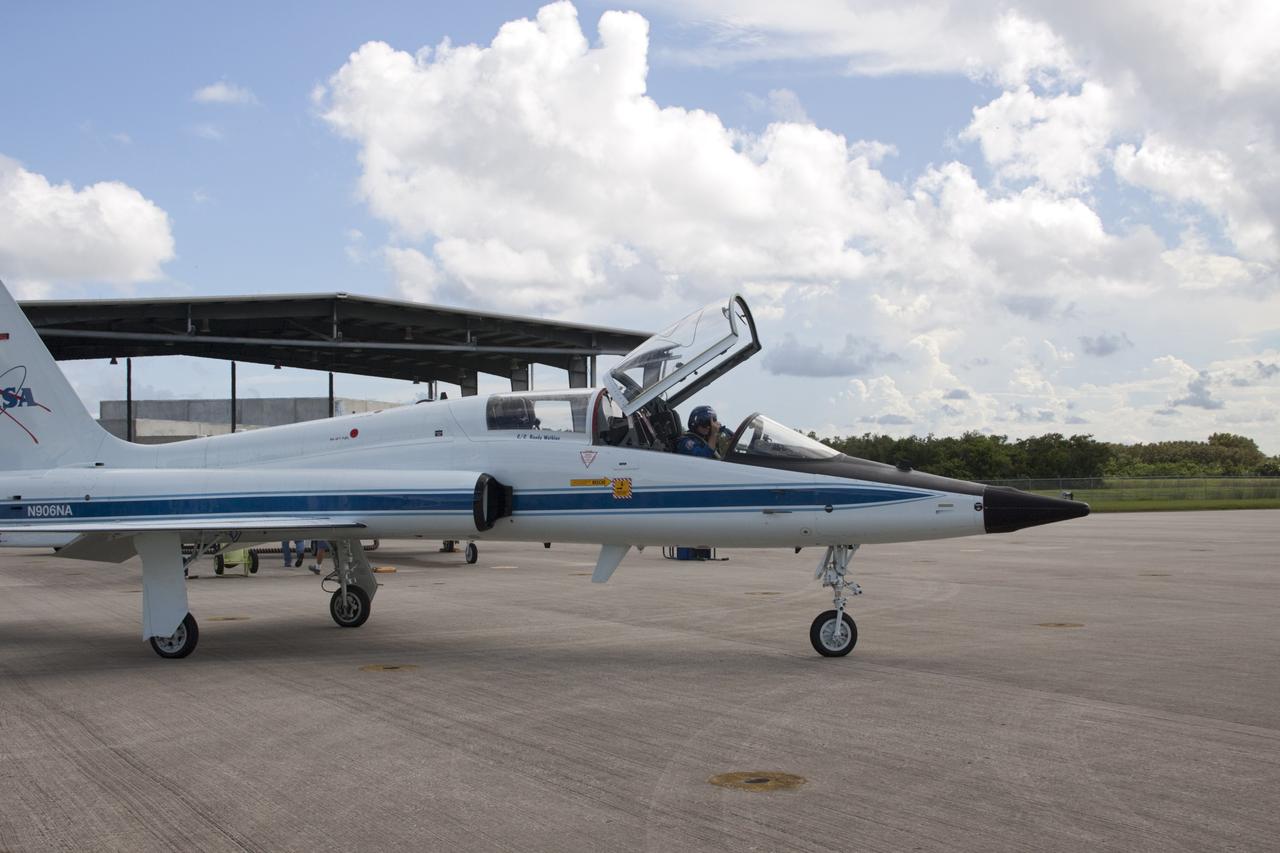
CAPE CANAVERAL, Fla. – At the Shuttle Landing Facility at NASA's Kennedy Space Center in Florida, STS-135 Pilot Doug Hurley and Mission Specialist Sandra Magnus (in the red helmet) prepare for departure in a T-38 training jet. The astronauts, along with Commander Chris Ferguson, were at the center for the traditional post-flight crew return presentation. STS-135 Mission Specialist Rex Walheim was unable to attend the Kennedy event. In July 2011, Atlantis and its crew delivered to the International Space Station the Raffaello multi-purpose logistics module packed with more than 9,400 pounds of spare parts, equipment and supplies that will sustain station operations for the next year. STS-135 was the 33rd and final flight for Atlantis and the final mission of the Space Shuttle Program. For more information, visit www.nasa.gov/mission_pages/shuttle/shuttlemissions/sts135/index.html. Photo credit: NASA/Jim Grossmann
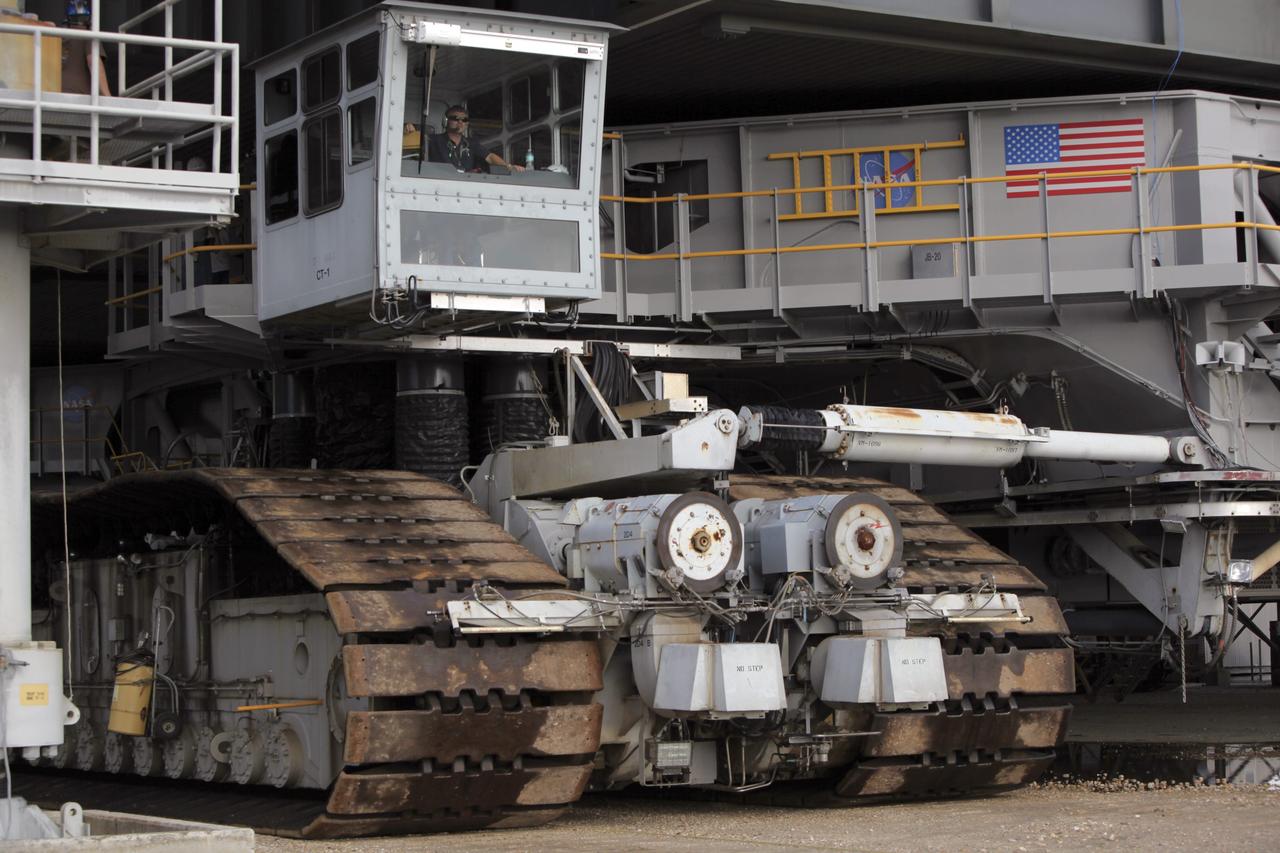
CAPE CANAVERAL, Fla. – At NASA’s Kennedy Space Center in Florida, the crawler-transporter is being prepared to move the mobile launcher (ML) from next to Kennedy's Vehicle Assembly Building to Launch Pad 39B, a distance of 4.2 miles. Data on the ML will be collected from structural and functional engineering tests and used for the next phases of construction. The 355-foot-tall ML structure, which took about two years to construct, is being modified to support NASA’s Space Launch System (SLS), the heavy-lift rocket that will launch astronauts farther into space than ever before. SLS will also create high-quality jobs here at home, and provide the cornerstone for America's future human space exploration efforts. Photo credit: NASA/Dimitri Gerondidakis
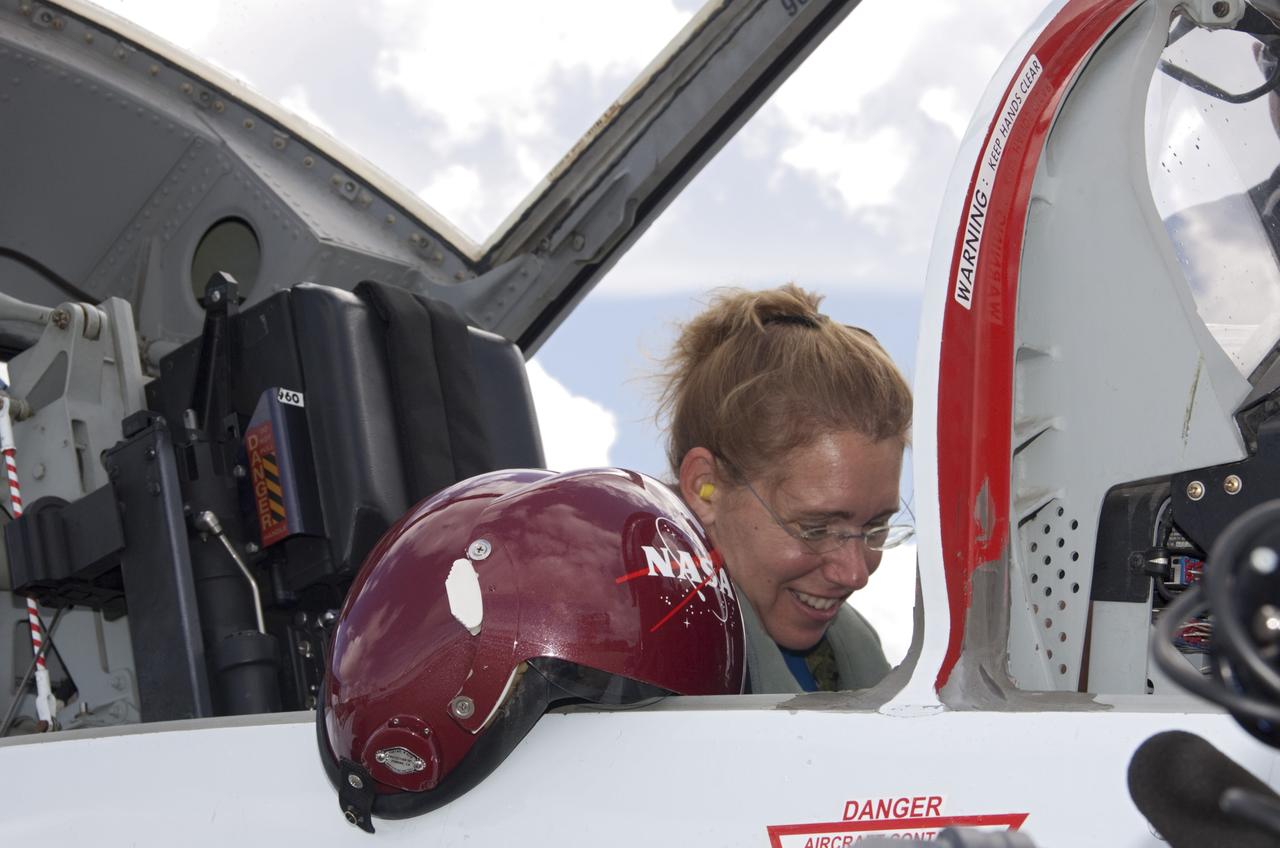
CAPE CANAVERAL, Fla. – At the Shuttle Landing Facility at NASA's Kennedy Space Center in Florida, STS-135 Mission Specialist Sandra Magnus prepares for departure in a T-38 training jet. Magnus, along with Commander Chris Ferguson and Pilot Doug Hurley, was at the center for the traditional post-flight crew return presentation. STS-135 Mission Specialist Rex Walheim was unable to attend the Kennedy event. In July 2011, Atlantis and its crew delivered to the International Space Station the Raffaello multi-purpose logistics module packed with more than 9,400 pounds of spare parts, equipment and supplies that will sustain station operations for the next year. STS-135 was the 33rd and final flight for Atlantis and the final mission of the Space Shuttle Program. For more information, visit www.nasa.gov/mission_pages/shuttle/shuttlemissions/sts135/index.html. Photo credit: NASA/Jim Grossmann
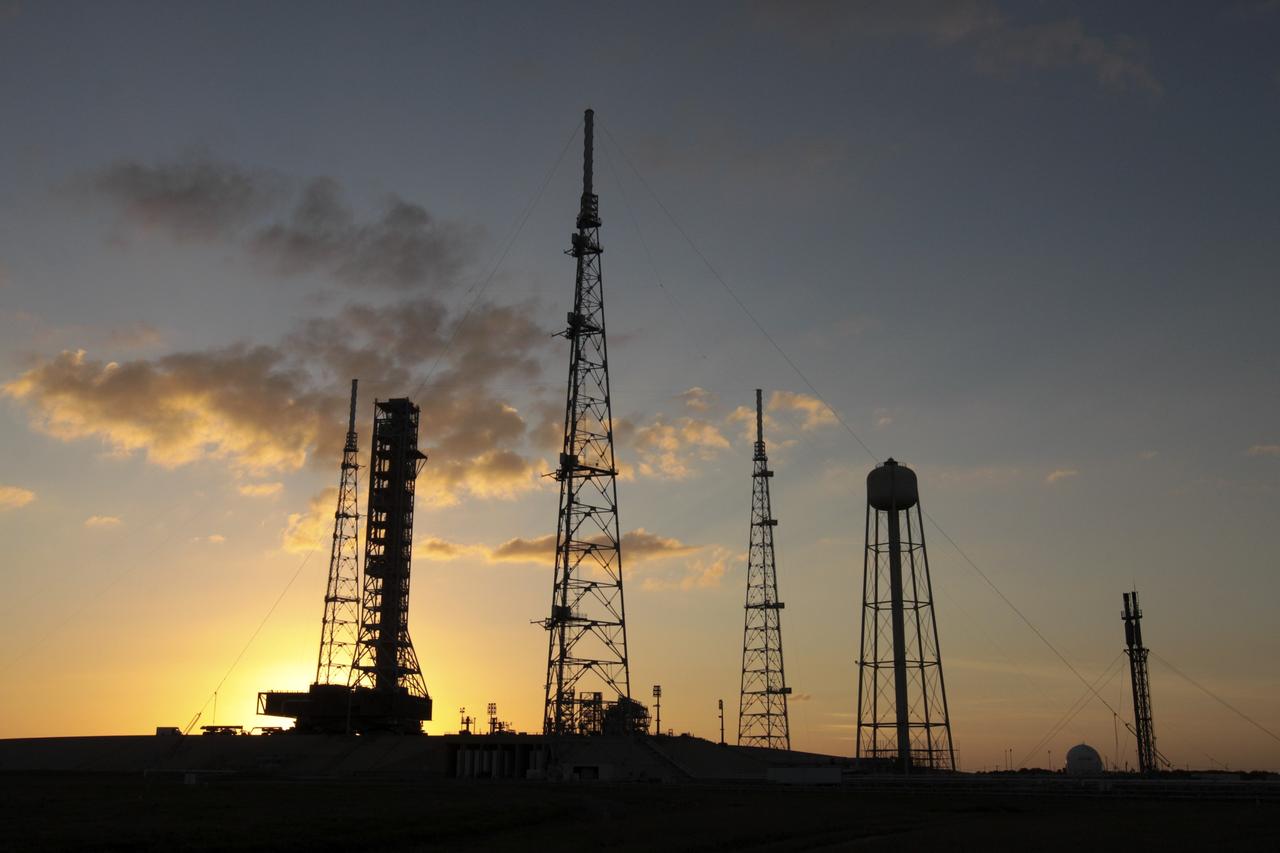
CAPE CANAVERAL, Fla. – With the sun setting in the background at NASA’s Kennedy Space Center in Florida, the mobile launcher (ML) is nearing completion of its 4.2-mile journey to Launch Pad 39B. The ML rolled out aboard a crawler-transporter from next to Kennedy's Vehicle Assembly Building to the pad at about 9:15 a.m. EST. Data on the ML will be collected from structural and functional engineering tests and used for the next phases of construction overseen by NASA’s 21st Century Ground Systems Program. The 355-foot-tall ML structure, which took about two years to construct, is being modified to support NASA’s Space Launch System (SLS), the heavy-lift rocket that will launch astronauts farther into space than ever before. SLS will also create high-quality jobs here at home, and provide the cornerstone for America's future human space exploration efforts. Photo credit: NASA/Kim Shiflett
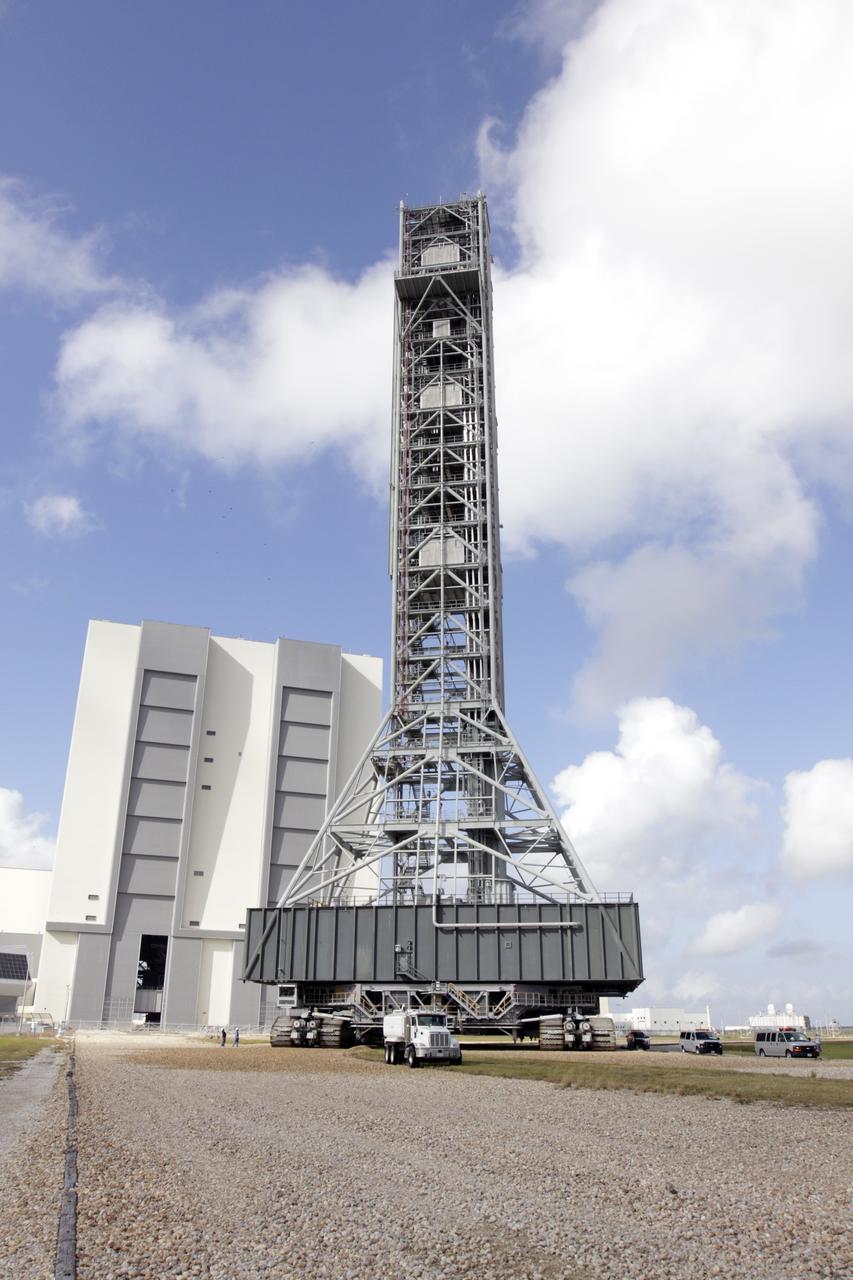
CAPE CANAVERAL, Fla. – At NASA’s Kennedy Space Center in Florida, technicians monitor nearby as the mobile launcher (ML), sitting atop the crawler-transporter, begins its move from next to Kennedy's Vehicle Assembly Building (seen in the background) to Launch Pad 39B, a distance of 4.2 miles. Data on the ML will be collected from structural and functional engineering tests and used for the next phases of construction. The 355-foot-tall ML structure, which took about two years to construct, is being modified to support NASA’s Space Launch System (SLS), the heavy-lift rocket that will launch astronauts farther into space than ever before. SLS will also create high-quality jobs here at home, and provide the cornerstone for America's future human space exploration efforts. Photo credit: NASA/Kim Shiflett
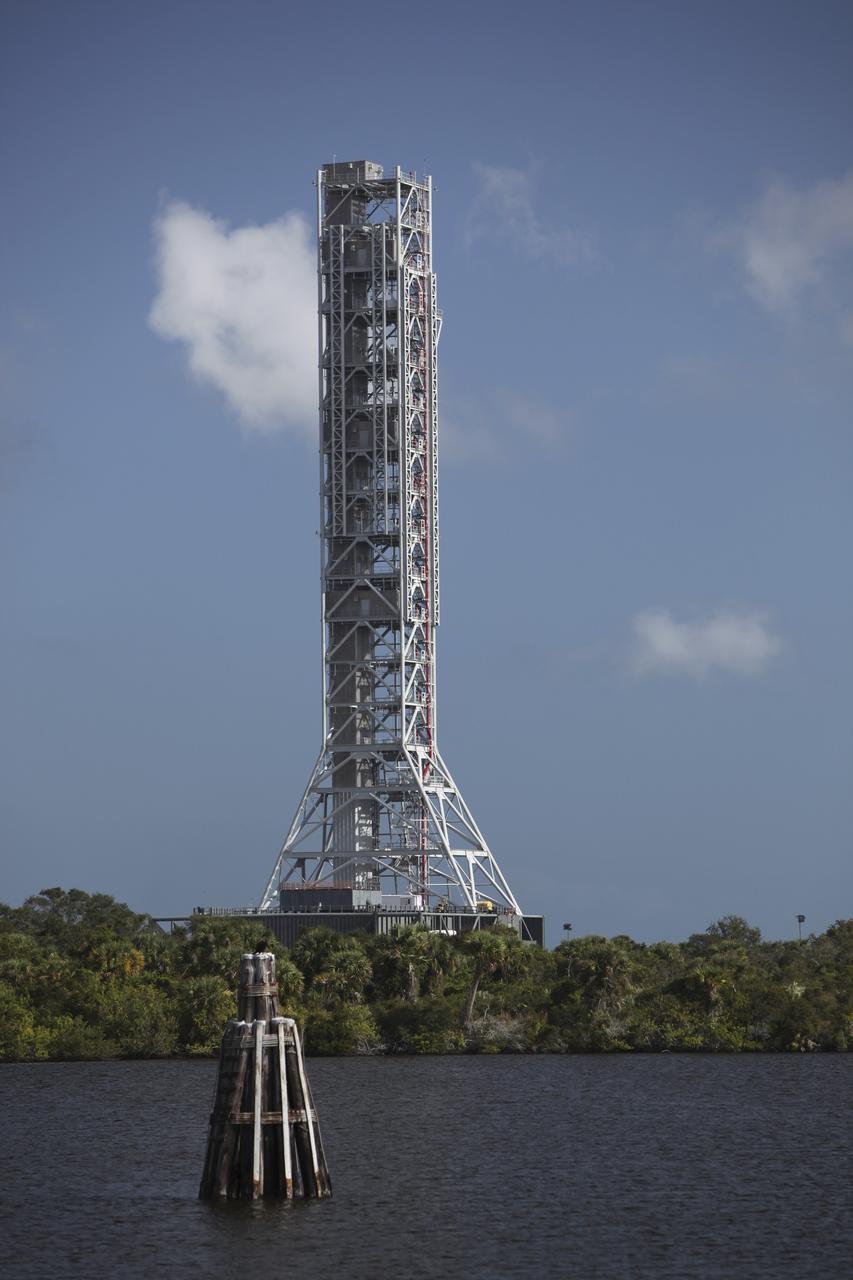
CAPE CANAVERAL, Fla. – At NASA's Kennedy Space Center in Florida, the Mobile Launcher (ML) rises above the natural vegetation as it rolls out aboard a crawler-transporter from next to Kennedy's Vehicle Assembly Building to Launch Pad 39B, a distance of 4.2 miles. Data on the ML will be collected from structural and functional engineering tests and used for the next phases of construction. The 355-foot-tall ML structure, which took about two years to construct, is being modified to support NASA’s Space Launch System (SLS), the heavy-lift rocket that will launch astronauts farther into space than ever before. SLS will also create high-quality jobs here at home, and provide the cornerstone for America's future human space exploration efforts. Photo credit: NASA/Dimitri Gerondidakis
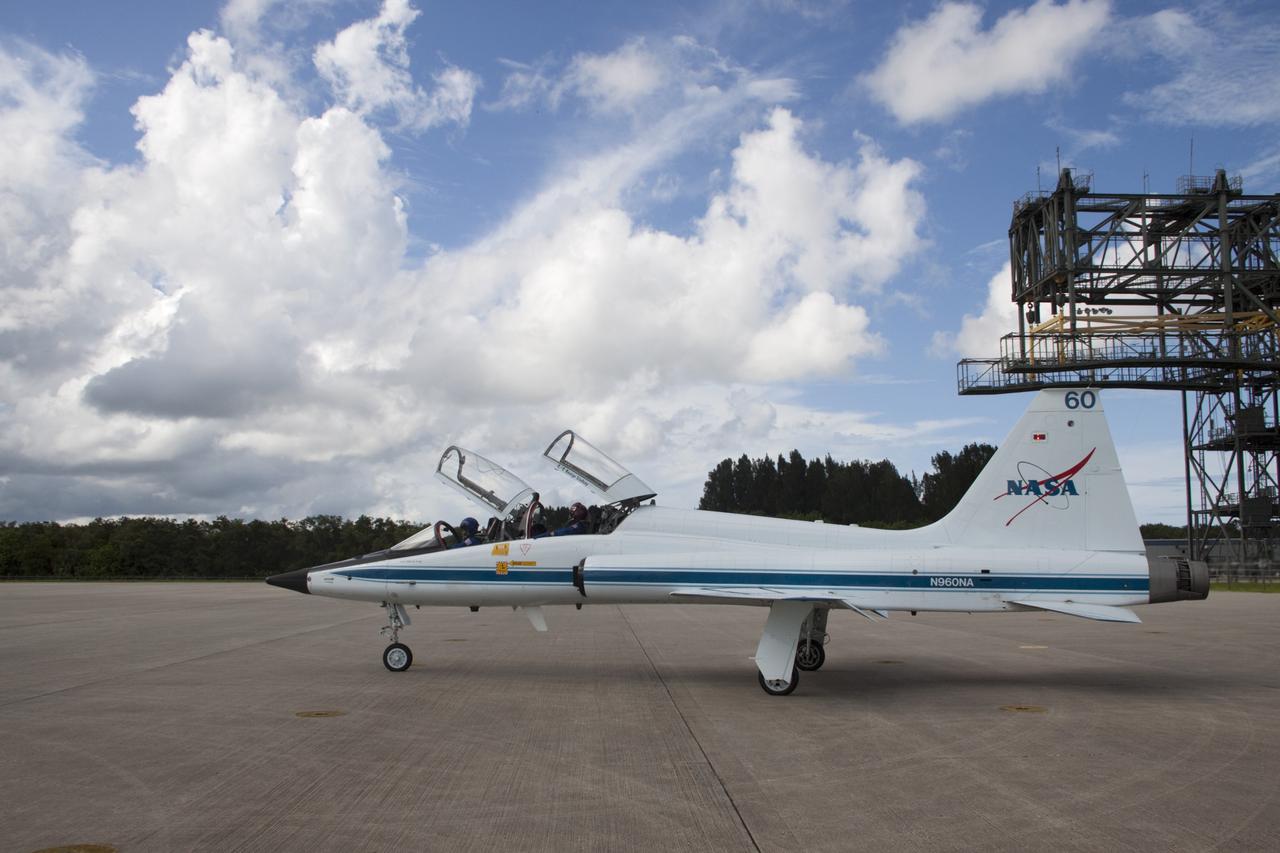
CAPE CANAVERAL, Fla. – At the Shuttle Landing Facility at NASA's Kennedy Space Center in Florida, STS-135 Pilot Doug Hurley and Mission Specialist Sandra Magnus (in the red helmet) prepare for departure in a T-38 training jet. The astronauts, along with Commander Chris Ferguson, were at the center for the traditional post-flight crew return presentation. To the left of the jet is the space shuttle's mate-demate device. STS-135 Mission Specialist Rex Walheim was unable to attend the Kennedy event. In July 2011, Atlantis and its crew delivered to the International Space Station the Raffaello multi-purpose logistics module packed with more than 9,400 pounds of spare parts, equipment and supplies that will sustain station operations for the next year. STS-135 was the 33rd and final flight for Atlantis and the final mission of the Space Shuttle Program. For more information, visit www.nasa.gov/mission_pages/shuttle/shuttlemissions/sts135/index.html. Photo credit: NASA/Jim Grossmann
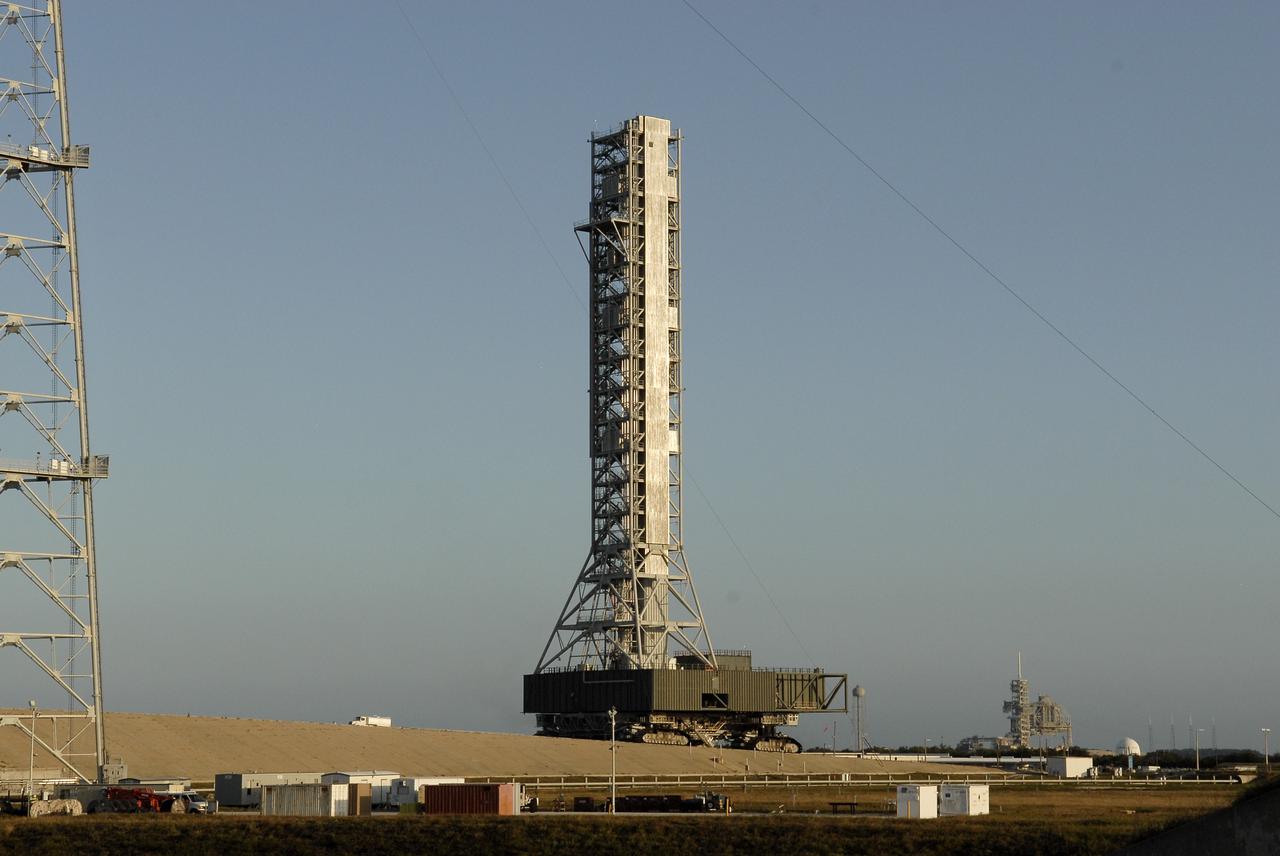
CAPE CANAVERAL, Fla. – At NASA’s Kennedy Space Center in Florida, the mobile launcher (ML) is nearing completion of its 4.2-mile journey to Launch Pad 39B. The launcher rolled out aboard a crawler-transporter from next to Kennedy's Vehicle Assembly Building to the pad at about 9:15 a.m. EST. Data on the ML will be collected from structural and functional engineering tests and used for the next phases of construction overseen by NASA’s 21st Century Ground Systems Program. To the right in the background is Launch Pad 39A. The 355-foot-tall ML structure, which took about two years to construct, is being modified to support NASA’s Space Launch System (SLS), the heavy-lift rocket that will launch astronauts farther into space than ever before. SLS will also create high-quality jobs here at home, and provide the cornerstone for America's future human space exploration efforts. Photo credit: NASA/Charisse Nahser
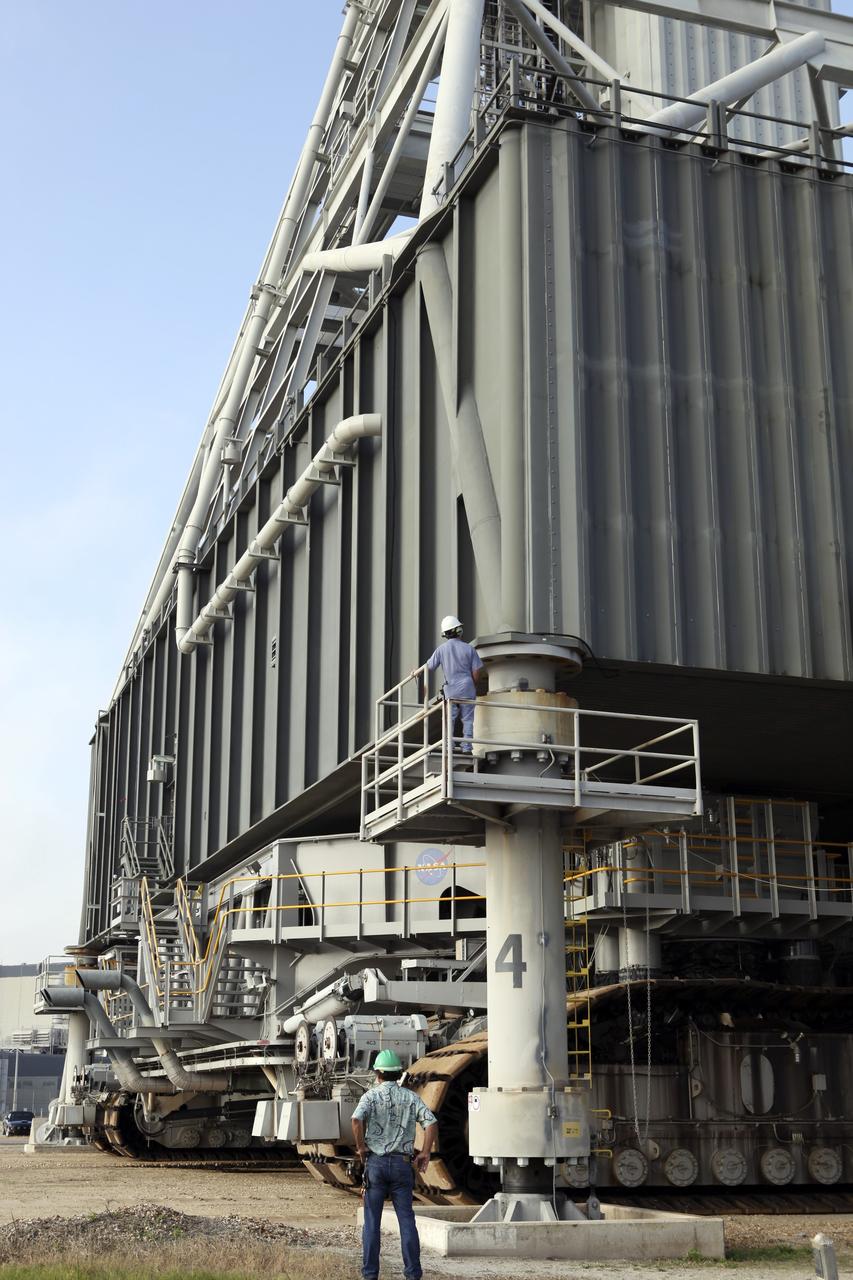
CAPE CANAVERAL, Fla. – At NASA’s Kennedy Space Center in Florida, the camera captures a unique view of the crawler-transporter as it is prepared to move the mobile launcher (ML) from next to Kennedy's Vehicle Assembly Building to Launch Pad 39B, a distance of 4.2 miles. Data on the ML will be collected from structural and functional engineering tests and used for the next phases of construction. The 355-foot-tall ML structure, which took about two years to construct, is being modified to support NASA’s Space Launch System (SLS), the heavy-lift rocket that will launch astronauts farther into space than ever before. SLS will also create high-quality jobs here at home, and provide the cornerstone for America's future human space exploration efforts. Photo credit: NASA/Dimitri Gerondidakis
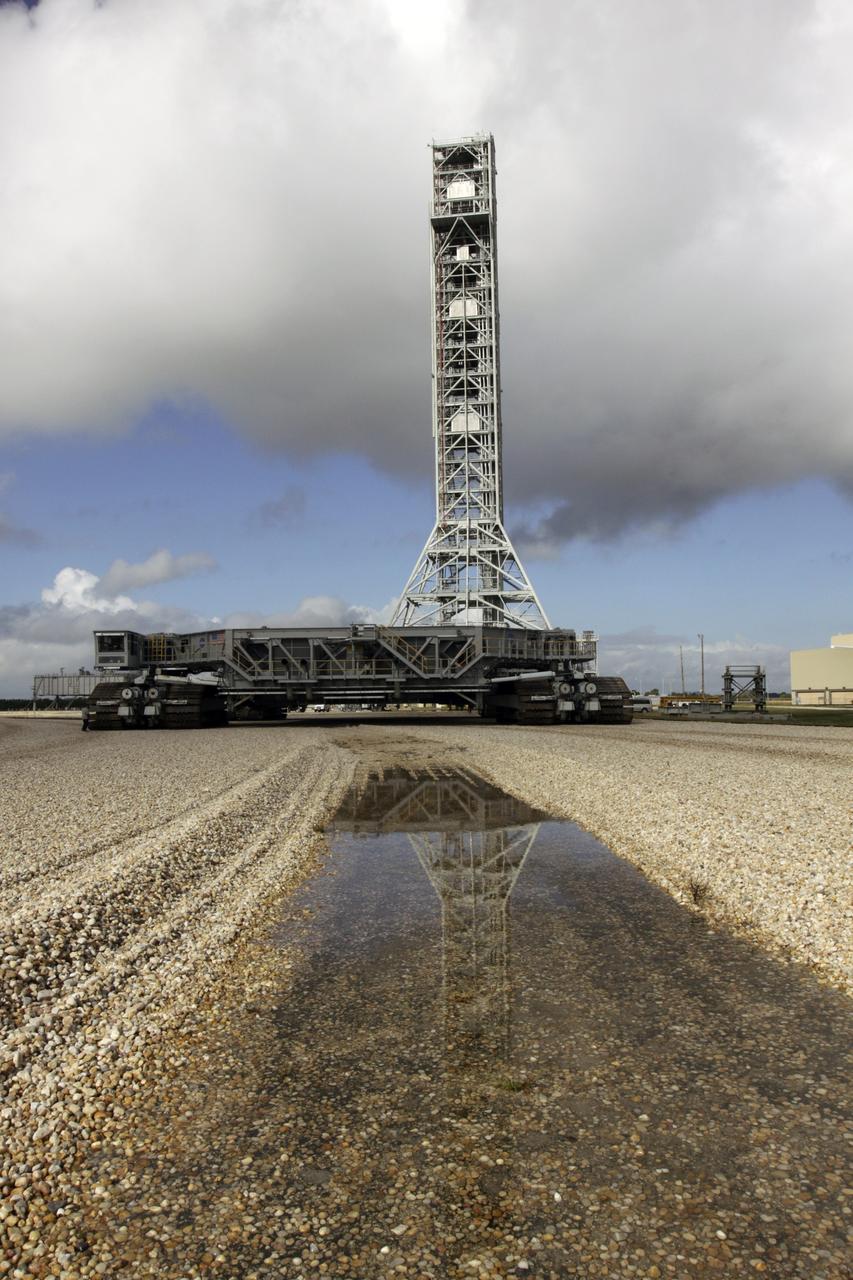
CAPE CANAVERAL, Fla. – At NASA's Kennedy Space Center in Florida, the mobile launcher (ML) is being prepared for its move aboard a crawler-transporter from next to Kennedy's Vehicle Assembly Building to Launch Pad 39B, a distance of 4.2 miles. Data on the ML will be collected from structural and functional engineering tests and used for the next phases of construction. The 355-foot-tall ML, which took about two years to construct, is being modified to support NASA's Space Launch System (SLS), the heavy-lift rocket that will launch astronauts farther into space than ever before. SLS will also create high-quality jobs here at home, and provide the cornerstone for America's future human space exploration efforts. For more information on SLS, visit http://www.nasa.gov/sls. Photo credit: NASA/Kim Shiflett
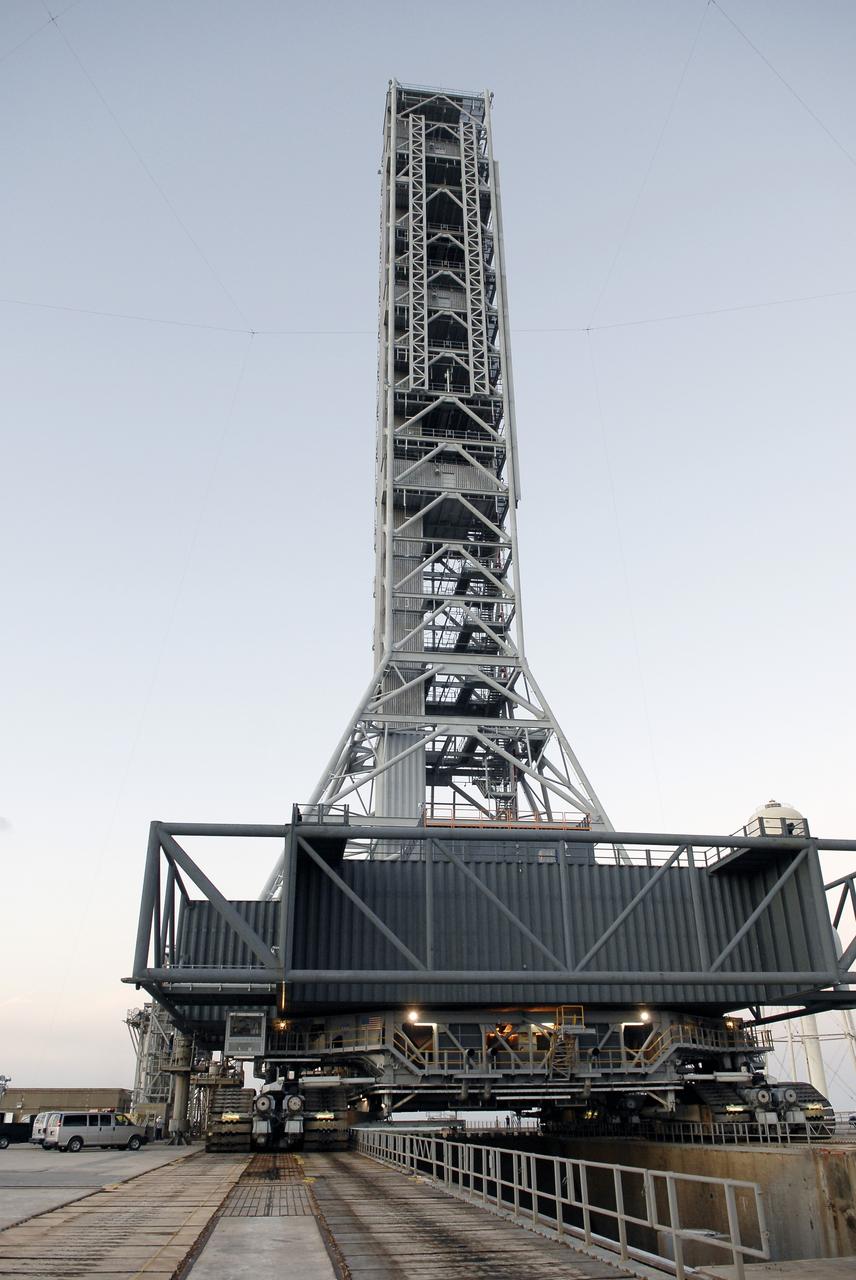
CAPE CANAVERAL, Fla. – At Launch Pad 39B at NASA’s Kennedy Space Center in Florida, the mobile launcher (ML) has completed its 4.2-mile journey. The launcher rolled out aboard a crawler-transporter from next to Kennedy's Vehicle Assembly Building to the pad at about 9:15 a.m. EST with the launcher arriving at the pad at 6:29 p.m. Data on the ML will be collected from structural and functional engineering tests and used for the next phases of construction overseen by NASA’s 21st Century Ground Systems Program. The 355-foot-tall ML structure, which took about two years to construct, is being modified to support NASA’s Space Launch System (SLS), the heavy-lift rocket that will launch astronauts farther into space than ever before. SLS will also create high-quality jobs here at home, and provide the cornerstone for America's future human space exploration efforts. Photo credit: NASA/Charisse Nahser
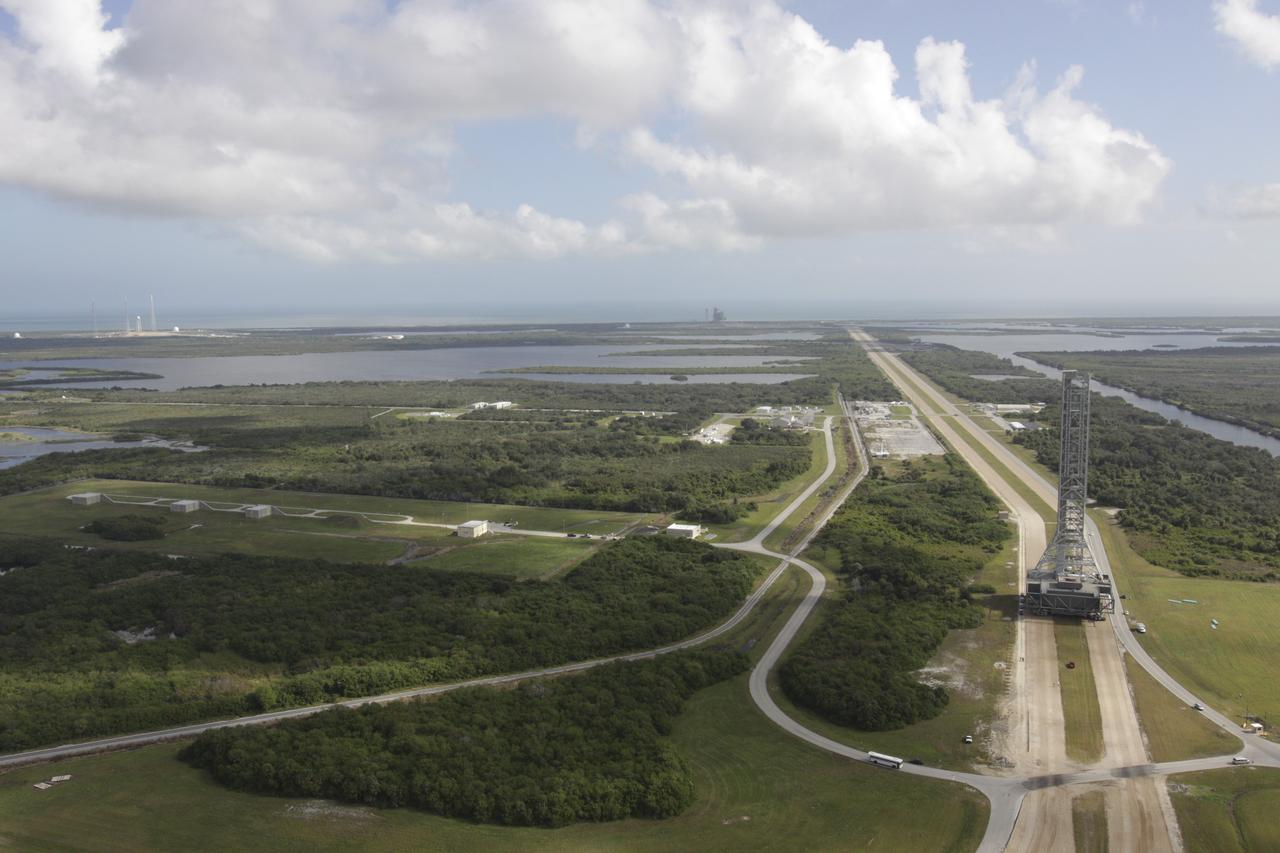
CAPE CANAVERAL, Fla. – On the crawlerway at NASA's Kennedy Space Center in Florida, an aerial view shows the mobile launcher (ML) as it rolls out aboard the crawler-transporter moving from next to Kennedy's Vehicle Assembly Building to Launch Pad 39B, a distance of 4.2 miles. Data on the ML will be collected from structural and functional engineering tests and used for the next phases of construction. The 355-foot-tall ML structure, which took about two years to construct, is being modified to support NASA’s Space Launch System (SLS), the heavy-lift rocket that will launch astronauts farther into space than ever before. SLS will also create high-quality jobs here at home, and provide the cornerstone for America's future human space exploration efforts. Photo credit: NASA/Kim Shiflett
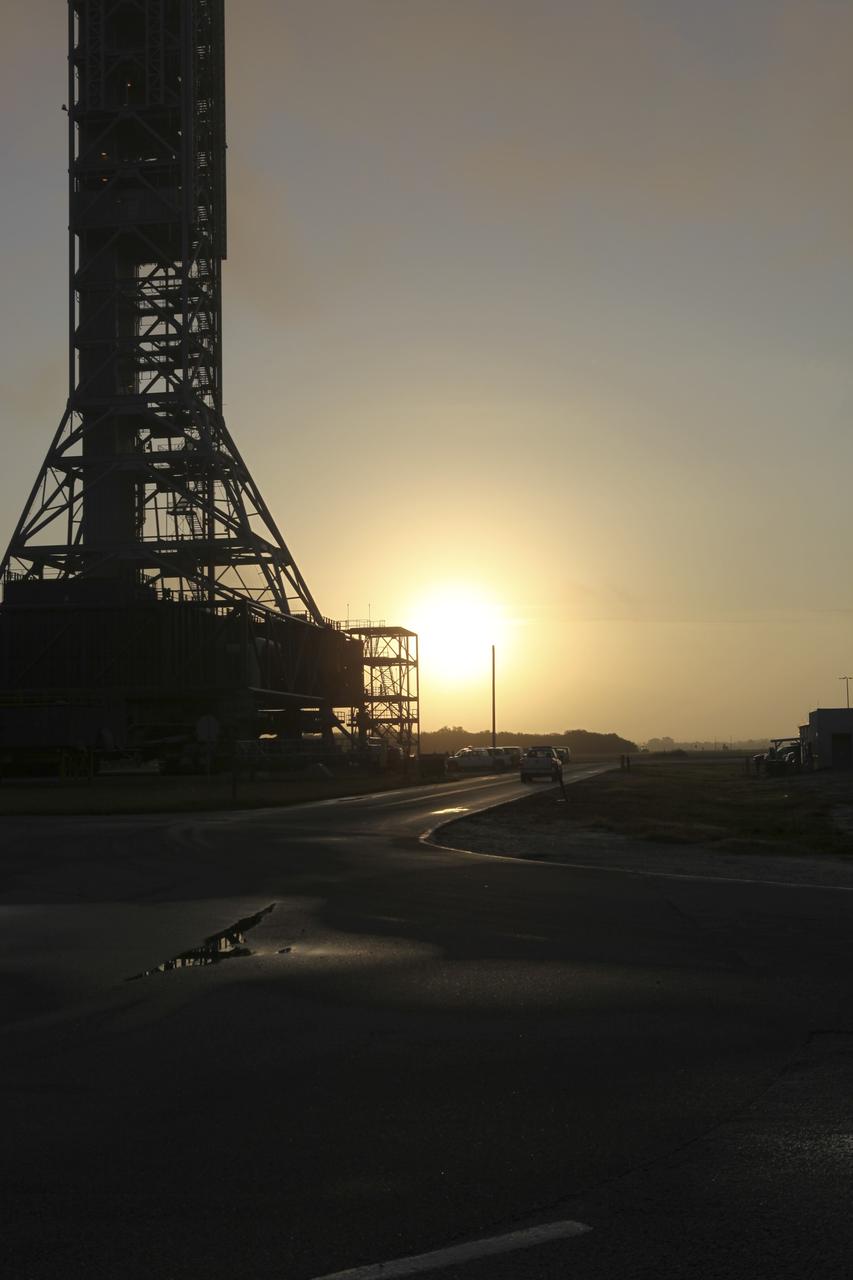
CAPE CANAVERAL, Fla. – At NASA’s Kennedy Space Center in Florida, the sun makes an appearance through the haze as the mobile launcher (ML) is being prepared for its move aboard a crawler-transporter from next to Kennedy's Vehicle Assembly Building to Launch Pad 39B, a distance of 4.2 miles. Data on the ML will be collected from structural and functional engineering tests and used for the next phases of construction. The 355-foot-tall ML structure, which took about two years to construct, is being modified to support NASA’s Space Launch System (SLS), the heavy-lift rocket that will launch astronauts farther into space than ever before. SLS will also create high-quality jobs here at home, and provide the cornerstone for America's future human space exploration efforts. Photo credit: NASA/Dimitri Gerondidakis
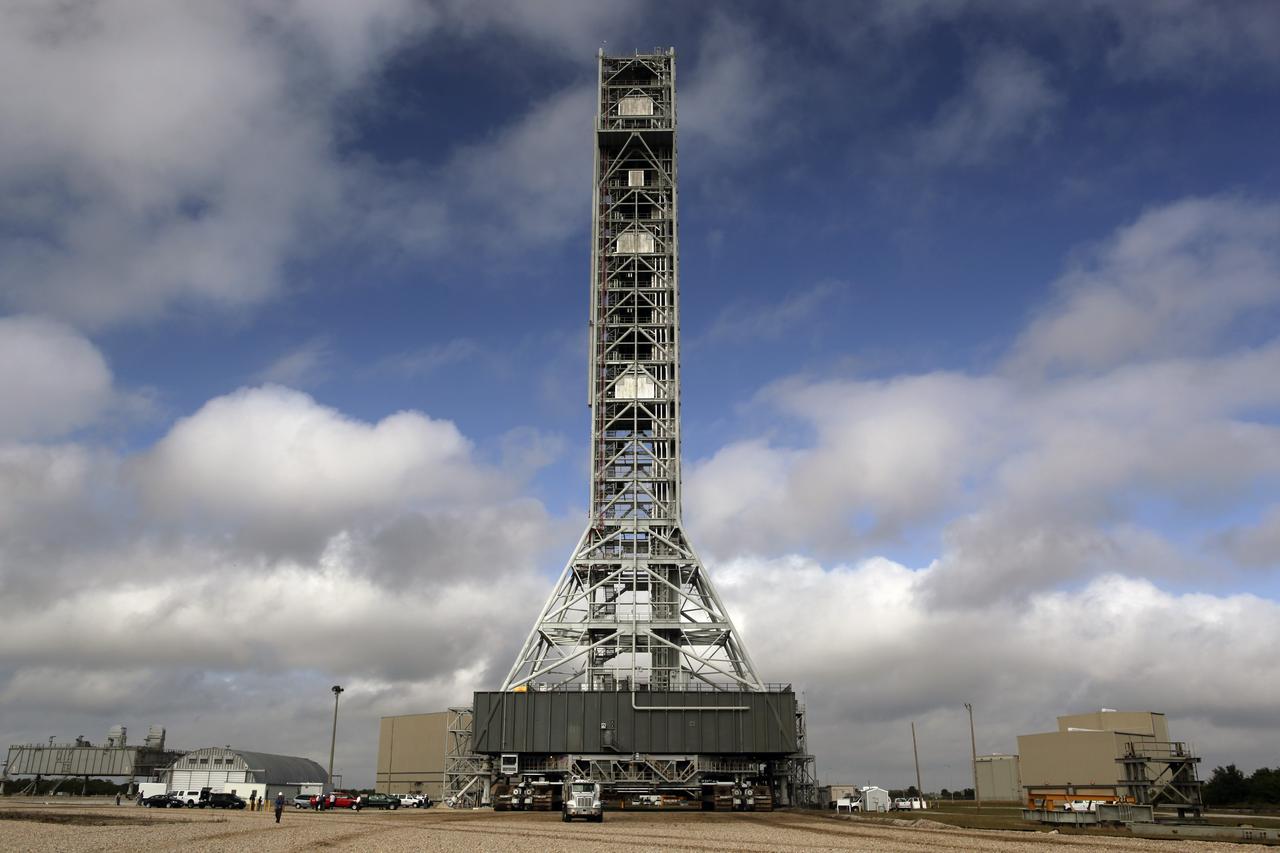
CAPE CANAVERAL, Fla. – At NASA’s Kennedy Space Center in Florida, the mobile launcher (ML) begins its move aboard a crawler-transporter from next to Kennedy's Vehicle Assembly Building to Launch Pad 39B, a distance of 4.2 miles. Data on the ML will be collected from structural and functional engineering tests and used for the next phases of construction. The 355-foot-tall ML structure, which took about two years to construct, is being modified to support NASA’s Space Launch System (SLS), the heavy-lift rocket that will launch astronauts farther into space than ever before. SLS will also create high-quality jobs here at home, and provide the cornerstone for America's future human space exploration efforts. Photo credit: NASA/Dimitri Gerondidakis
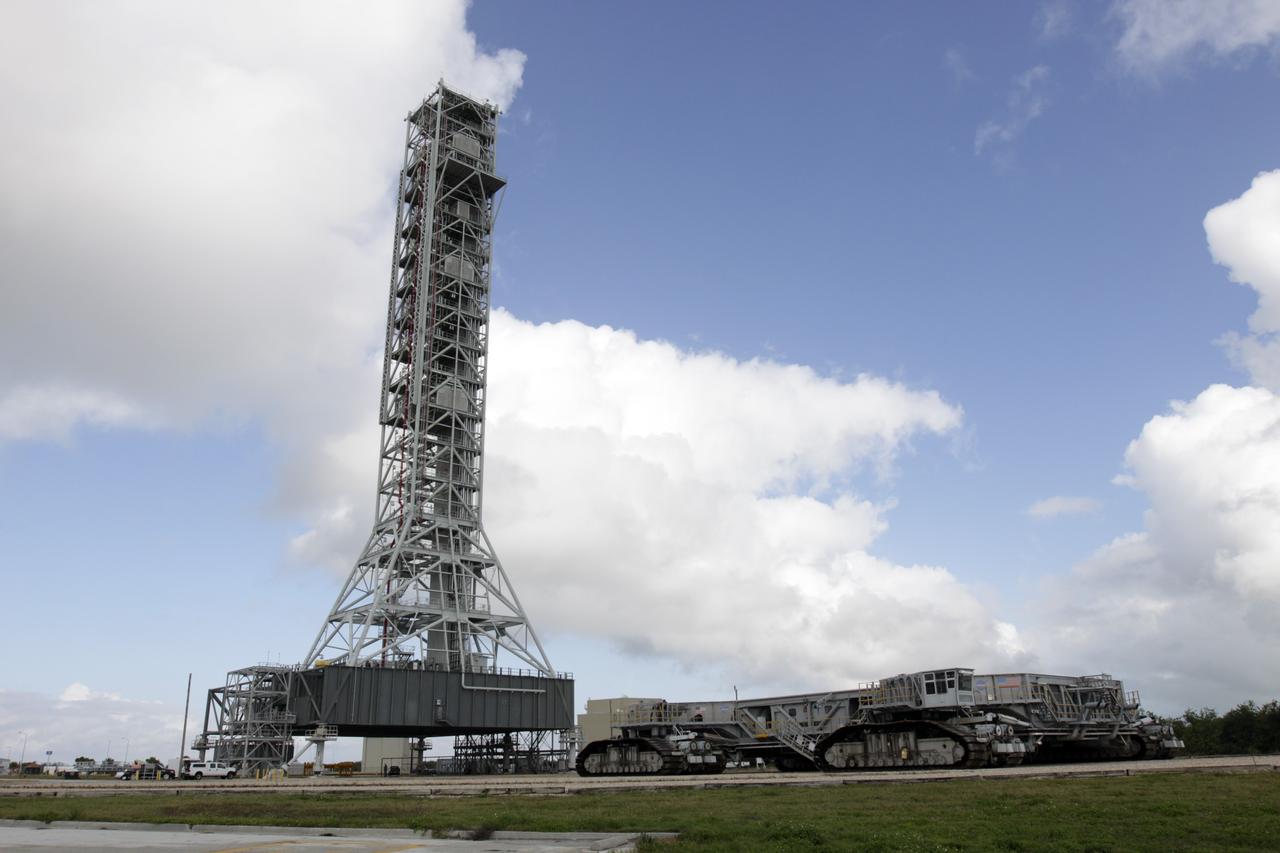
CAPE CANAVERAL, Fla. – At NASA's Kennedy Space Center in Florida, the mobile launcher (ML) is being prepared for its move aboard a crawler-transporter from next to Kennedy's Vehicle Assembly Building to Launch Pad 39B, a distance of 4.2 miles. Data on the ML will be collected from structural and functional engineering tests and used for the next phases of construction. The 355-foot-tall ML, which took about two years to construct, is being modified to support NASA's Space Launch System (SLS), the heavy-lift rocket that will launch astronauts farther into space than ever before. SLS will also create high-quality jobs here at home, and provide the cornerstone for America's future human space exploration efforts. For more information on SLS, visit http://www.nasa.gov/sls. Photo credit: NASA/Kim Shiflett
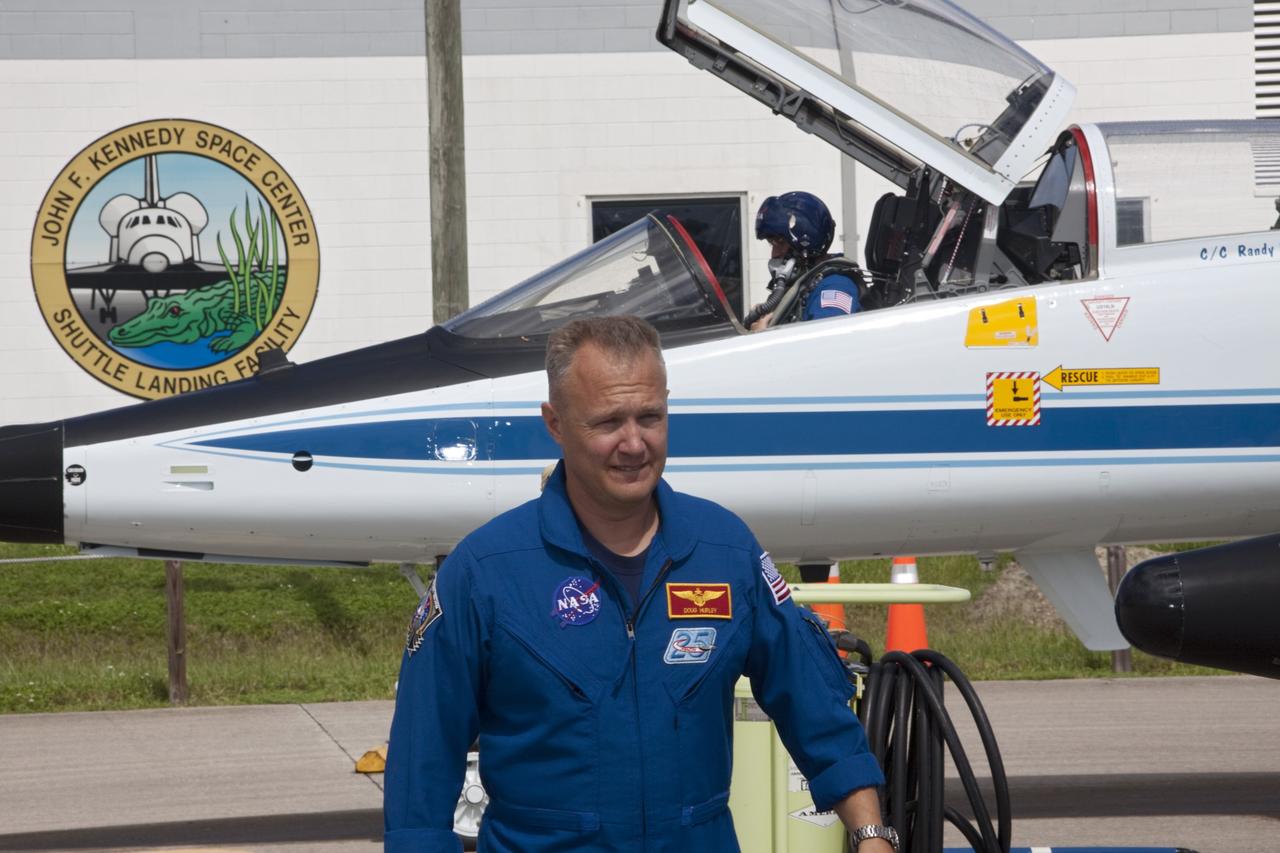
CAPE CANAVERAL, Fla. – At the Shuttle Landing Facility at NASA's Kennedy Space Center in Florida, STS-135 Pilot Doug Hurley stands in front of a T-38 training jet. Hurley, along with Commander Chris Ferguson and Mission Specialist Sandra Magnus, was at the center for the traditional post-flight crew return presentation. STS-135 Mission Specialist Rex Walheim was unable to attend the Kennedy event. In July 2011, Atlantis and its crew delivered to the International Space Station the Raffaello multi-purpose logistics module packed with more than 9,400 pounds of spare parts, equipment and supplies that will sustain station operations for the next year. STS-135 was the 33rd and final flight for Atlantis and the final mission of the Space Shuttle Program. For more information, visit www.nasa.gov/mission_pages/shuttle/shuttlemissions/sts135/index.html. Photo credit: NASA/Jim Grossmann
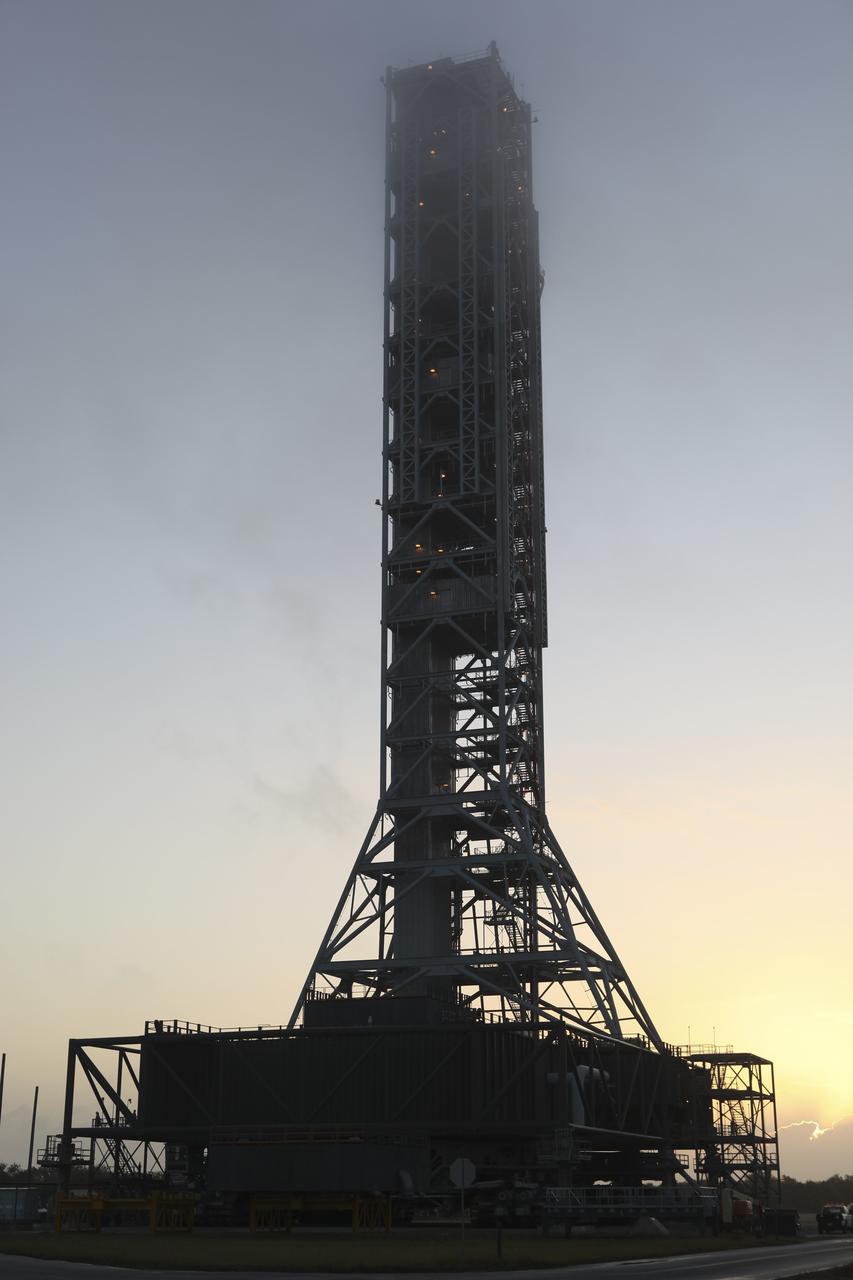
CAPE CANAVERAL, Fla. – At NASA’s Kennedy Space Center in Florida, the sun makes an appearance through the haze as the mobile launcher (ML) is being prepared for its move aboard a crawler-transporter from next to Kennedy's Vehicle Assembly Building to Launch Pad 39B, a distance of 4.2 miles. Data on the ML will be collected from structural and functional engineering tests and used for the next phases of construction. The 355-foot-tall ML structure, which took about two years to construct, is being modified to support NASA’s Space Launch System (SLS), the heavy-lift rocket that will launch astronauts farther into space than ever before. SLS will also create high-quality jobs here at home, and provide the cornerstone for America's future human space exploration efforts. Photo credit: NASA/Dimitri Gerondidakis
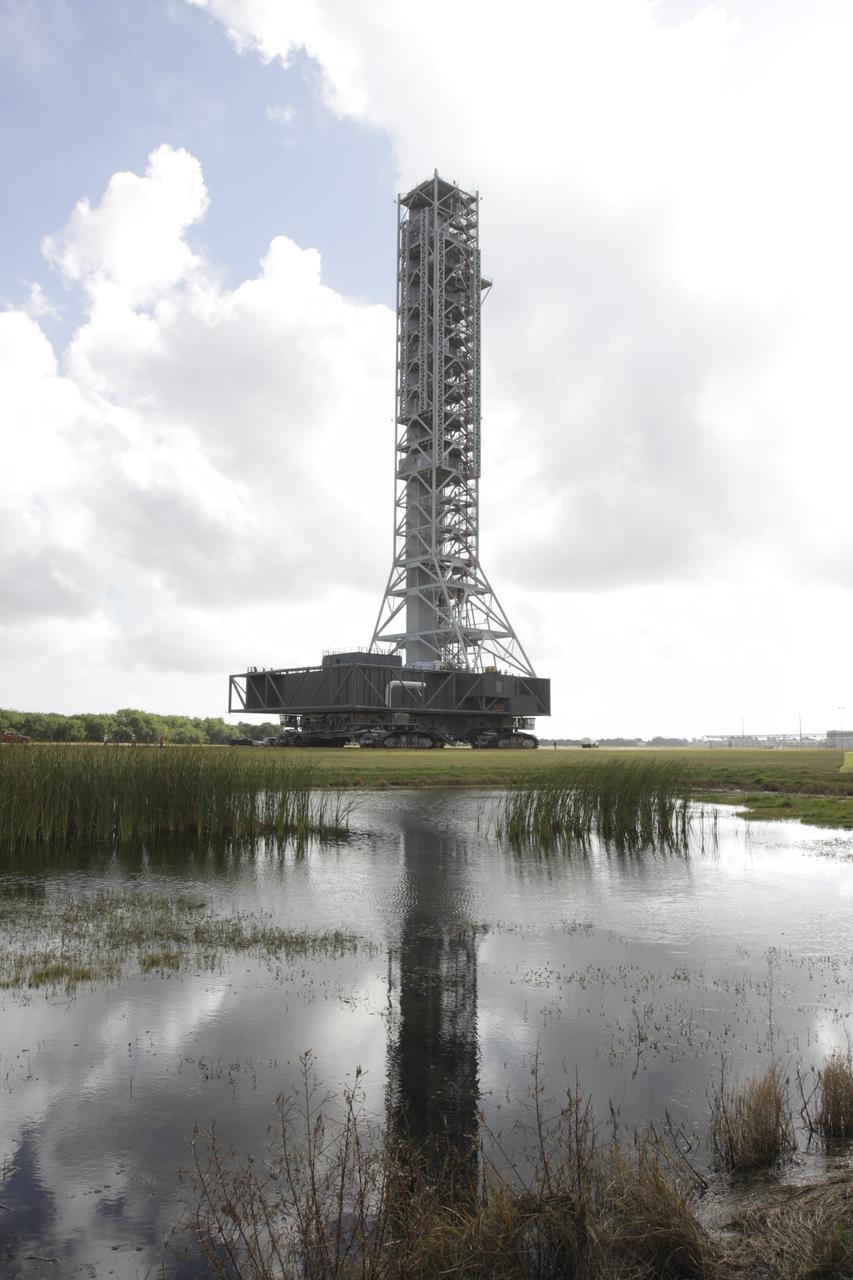
CAPE CANAVERAL, Fla. – At NASA’s Kennedy Space Center in Florida, the Mobile Launcher (ML) is reflected in a pond as the crawler-transporter moves the ML from next to Kennedy's Vehicle Assembly Building to Launch Pad 39B, a distance of 4.2 miles. Data on the ML will be collected from structural and functional engineering tests and used for the next phases of construction. The 355-foot-tall ML structure, which took about two years to construct, is being modified to support NASA’s Space Launch System (SLS), the heavy-lift rocket that will launch astronauts farther into space than ever before. SLS will also create high-quality jobs here at home, and provide the cornerstone for America's future human space exploration efforts. Photo credit: NASA/Kim Shiflett
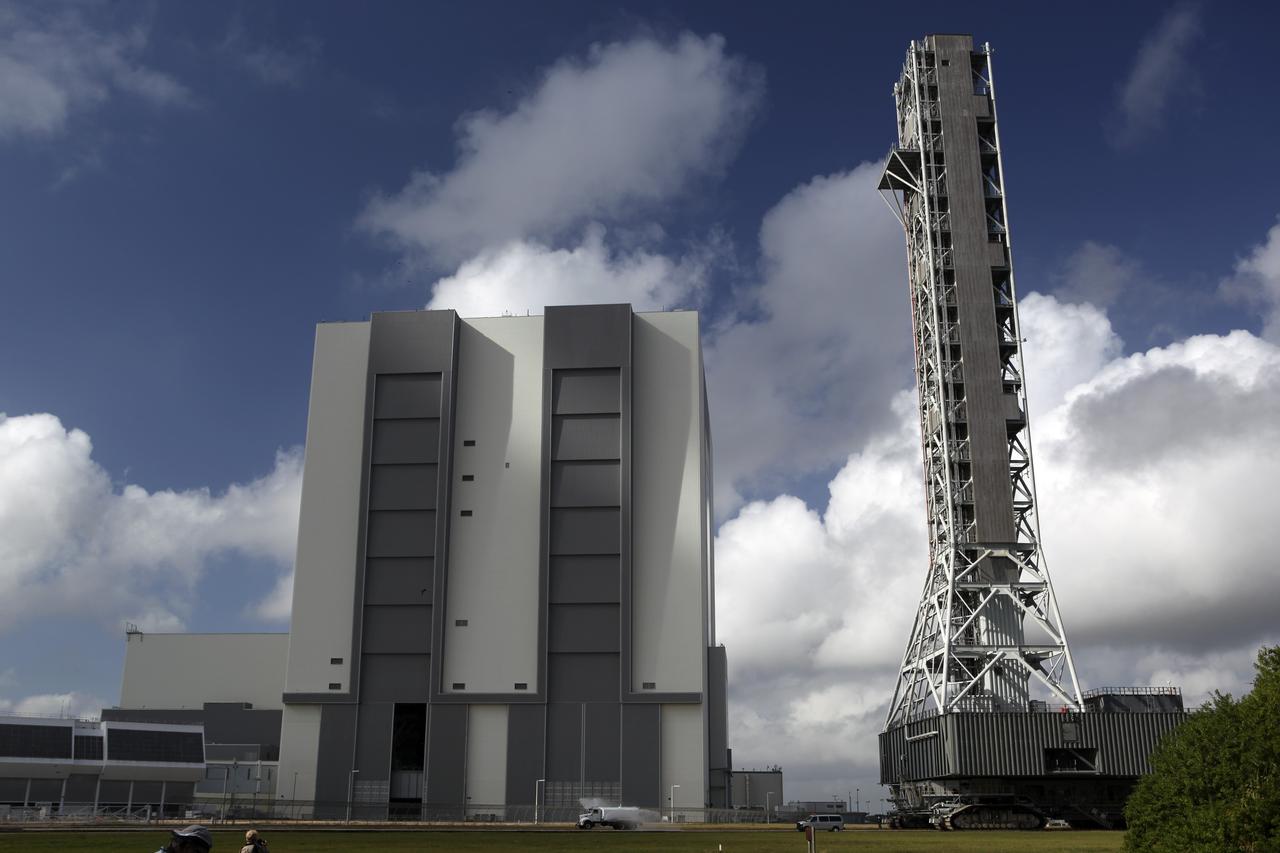
CAPE CANAVERAL, Fla. – At NASA’s Kennedy Space Center in Florida, a water truck leads the way spraying water on the dry crawlerway to reduce dust particles in the air, as the mobile launcher (ML) begins its move aboard a crawler-transporter. The ML is moving from next to Kennedy's Vehicle Assembly Building to Launch Pad 39B, a distance of 4.2 miles. Data on the ML will be collected from structural and functional engineering tests and used for the next phases of construction. The 355-foot-tall ML structure, which took about two years to construct, is being modified to support NASA’s Space Launch System (SLS), the heavy-lift rocket that will launch astronauts farther into space than ever before. SLS will also create high-quality jobs here at home, and provide the cornerstone for America's future human space exploration efforts. Photo credit: NASA/Dimitri Gerondidakis
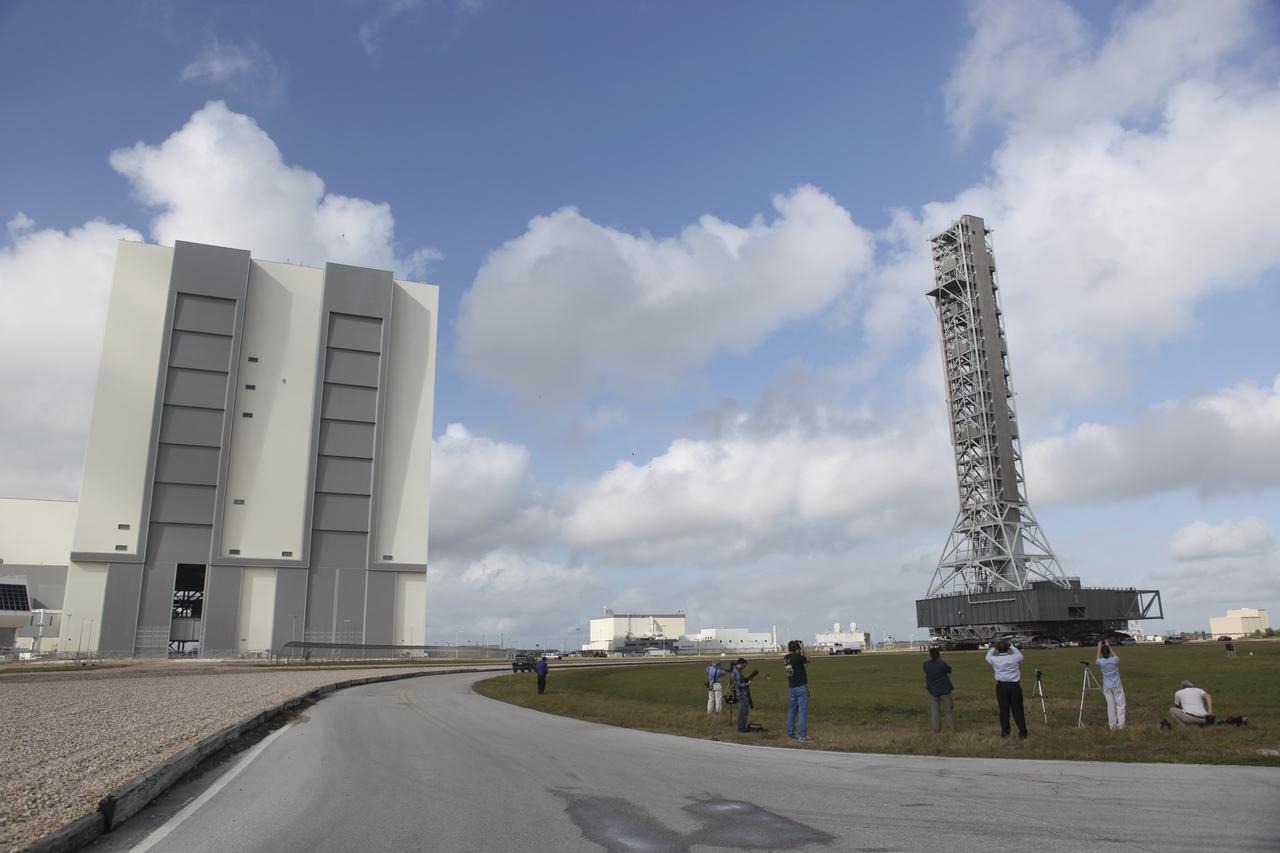
CAPE CANAVERAL, Fla. – At NASA’s Kennedy Space Center in Florida, media stand near the crawlerway taking pictures as the mobile launcher (ML) begins its move aboard a crawler-transporter from next to Kennedy's Vehicle Assembly Building to Launch Pad 39B, a distance of 4.2 miles. Data on the ML will be collected from structural and functional engineering tests and used for the next phases of construction. The 355-foot-tall ML structure, which took about two years to construct, is being modified to support NASA’s Space Launch System (SLS), the heavy-lift rocket that will launch astronauts farther into space than ever before. SLS will also create high-quality jobs here at home, and provide the cornerstone for America's future human space exploration efforts. Photo credit: NASA/Dimitri Gerondidakis
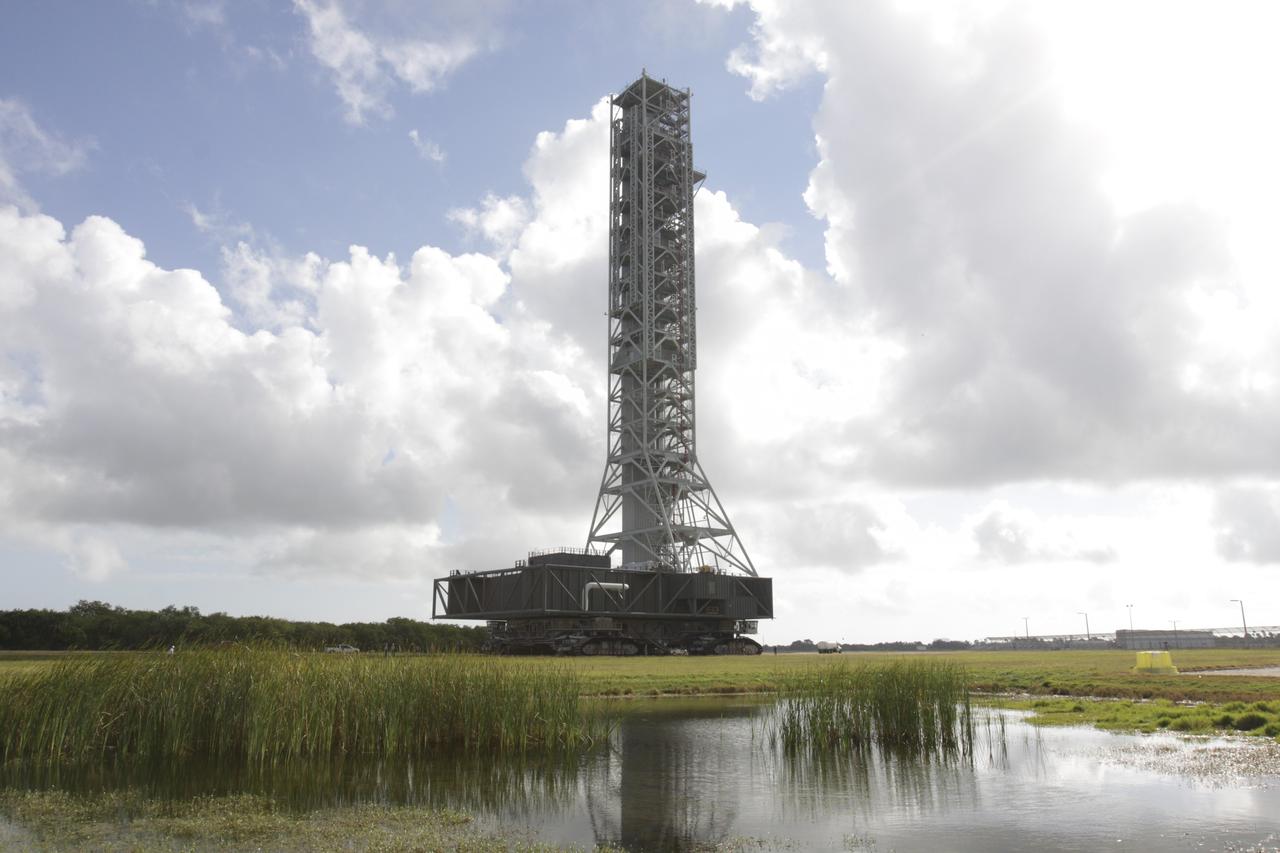
CAPE CANAVERAL, Fla. – At NASA’s Kennedy Space Center in Florida, the Mobile Launcher (ML) is reflected in a pond as the crawler-transporter moves the ML from next to Kennedy's Vehicle Assembly Building to Launch Pad 39B, a distance of 4.2 miles. Data on the ML will be collected from structural and functional engineering tests and used for the next phases of construction. The 355-foot-tall ML structure, which took about two years to construct, is being modified to support NASA’s Space Launch System (SLS), the heavy-lift rocket that will launch astronauts farther into space than ever before. SLS will also create high-quality jobs here at home, and provide the cornerstone for America's future human space exploration efforts. Photo credit: NASA/Kim Shiflett
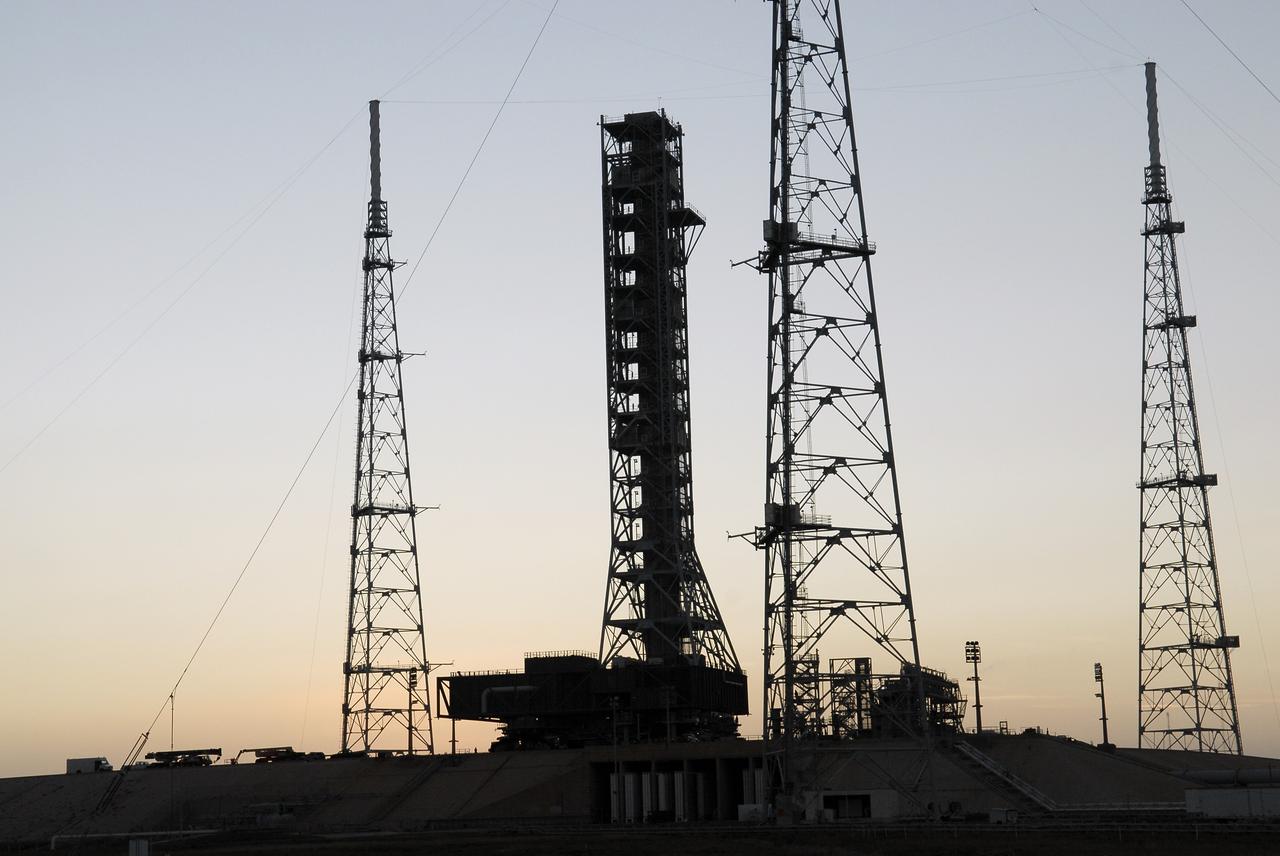
CAPE CANAVERAL, Fla. – With the sun setting in the background at NASA’s Kennedy Space Center in Florida, the mobile launcher (ML) is nearing completion of its 4.2-mile journey to Launch Pad 39B. The launcher rolled out aboard a crawler-transporter from next to Kennedy's Vehicle Assembly Building to the pad at about 9:15 a.m. EST. Data on the ML will be collected from structural and functional engineering tests and used for the next phases of construction overseen by NASA’s 21st Century Ground Systems Program. The 355-foot-tall ML structure, which took about two years to construct, is being modified to support NASA’s Space Launch System (SLS), the heavy-lift rocket that will launch astronauts farther into space than ever before. SLS will also create high-quality jobs here at home, and provide the cornerstone for America's future human space exploration efforts. Photo credit: NASA/Charisse Nahser
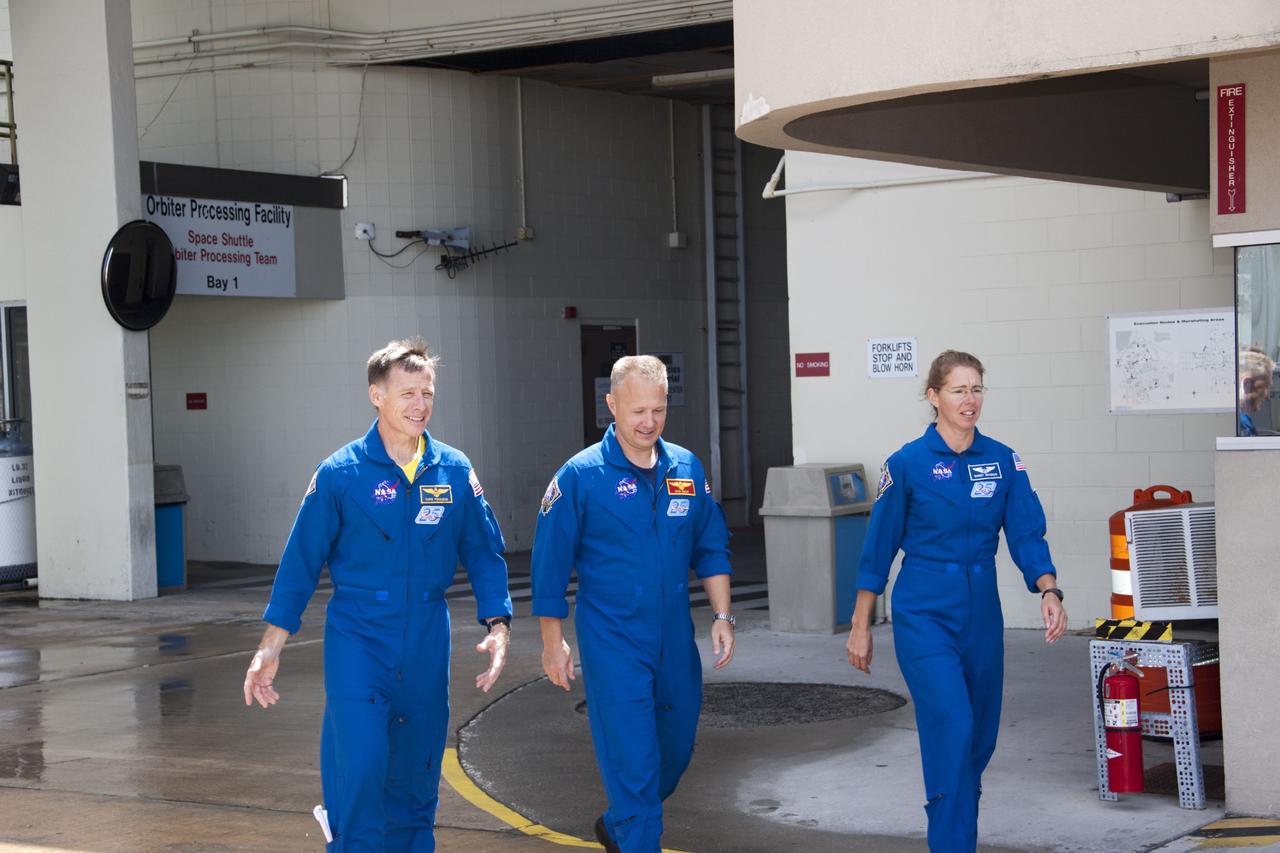
CAPE CANAVERAL, Fla. – Astronauts from space shuttle Atlantis’ STS-135 mission leave Kennedy Space Center's Orbiter Processing Facility-2 after visiting with employees. From left are Commander Chris Ferguson, Pilot Doug Hurley and Mission Specialist Sandra Magnus. The astronauts were at the center for the traditional post-flight crew return presentation. STS-135 Mission Specialist Rex Walheim was unable to attend the Kennedy event. In July 2011, Atlantis and its crew delivered to the International Space Station the Raffaello multi-purpose logistics module packed with more than 9,400 pounds of spare parts, equipment and supplies that will sustain station operations for the next year. STS-135 was the 33rd and final flight for Atlantis and the final mission of the Space Shuttle Program. For more information, visit www.nasa.gov/mission_pages/shuttle/shuttlemissions/sts135/index.html. Photo credit: NASA/Jim Grossmann
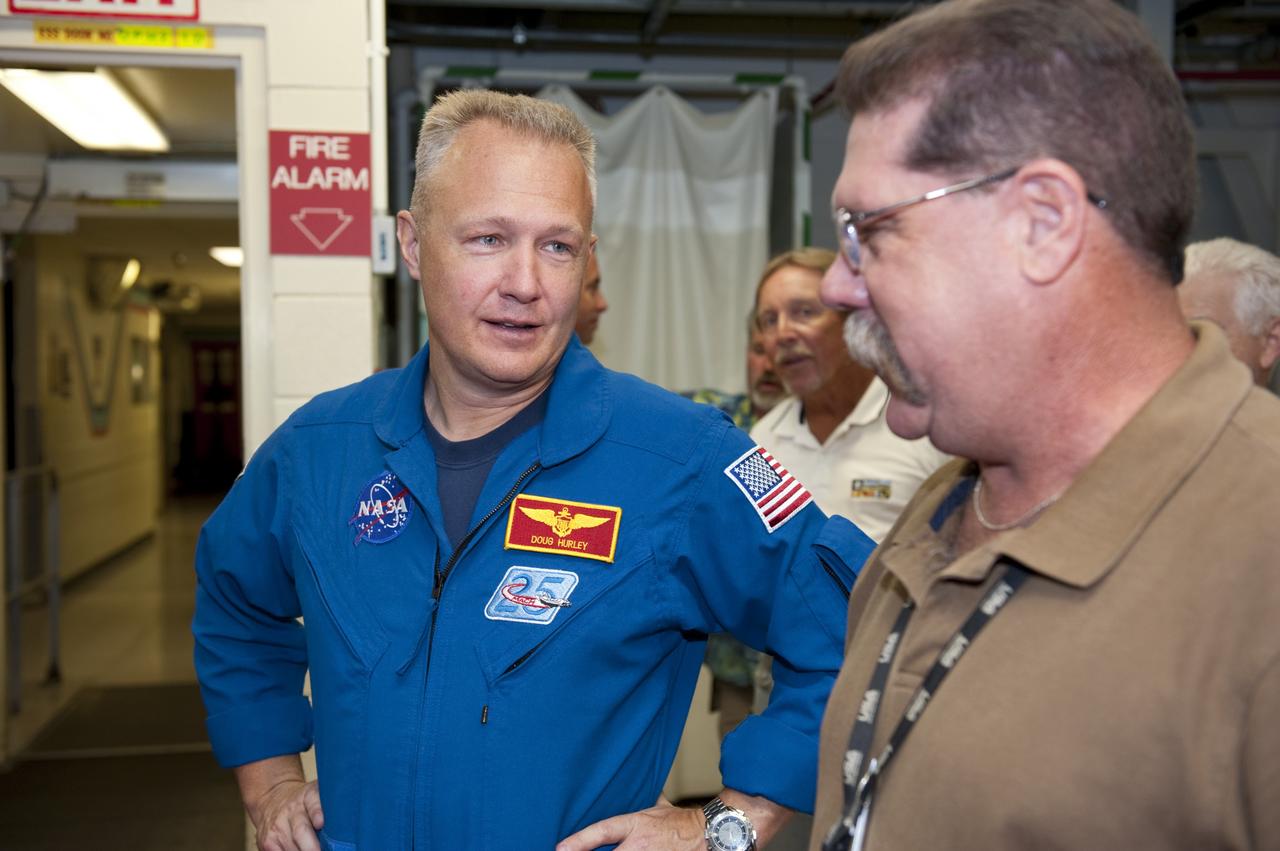
CAPE CANAVERAL, Fla. – STS-135 Pilot Doug Hurley visits with an employee inside Kennedy Space Center's Orbiter Processing Facility-2, where space shuttle Atlantis is being prepared for eventual display at the Kennedy Space Center Visitor Complex in Florida. Hurley, along with Commander Chris Ferguson and Mission Specialist Sandra Magnus, was at the center for the traditional post-flight crew return presentation. STS-135 Mission Specialist Rex Walheim was unable to attend the Kennedy event. In July 2011, Atlantis and its crew delivered to the International Space Station the Raffaello multi-purpose logistics module packed with more than 9,400 pounds of spare parts, equipment and supplies that will sustain station operations for the next year. STS-135 was the 33rd and final flight for Atlantis and the final mission of the Space Shuttle Program. For more information, visit www.nasa.gov/mission_pages/shuttle/shuttlemissions/sts135/index.html. Photo credit: NASA/Kim Shiflett
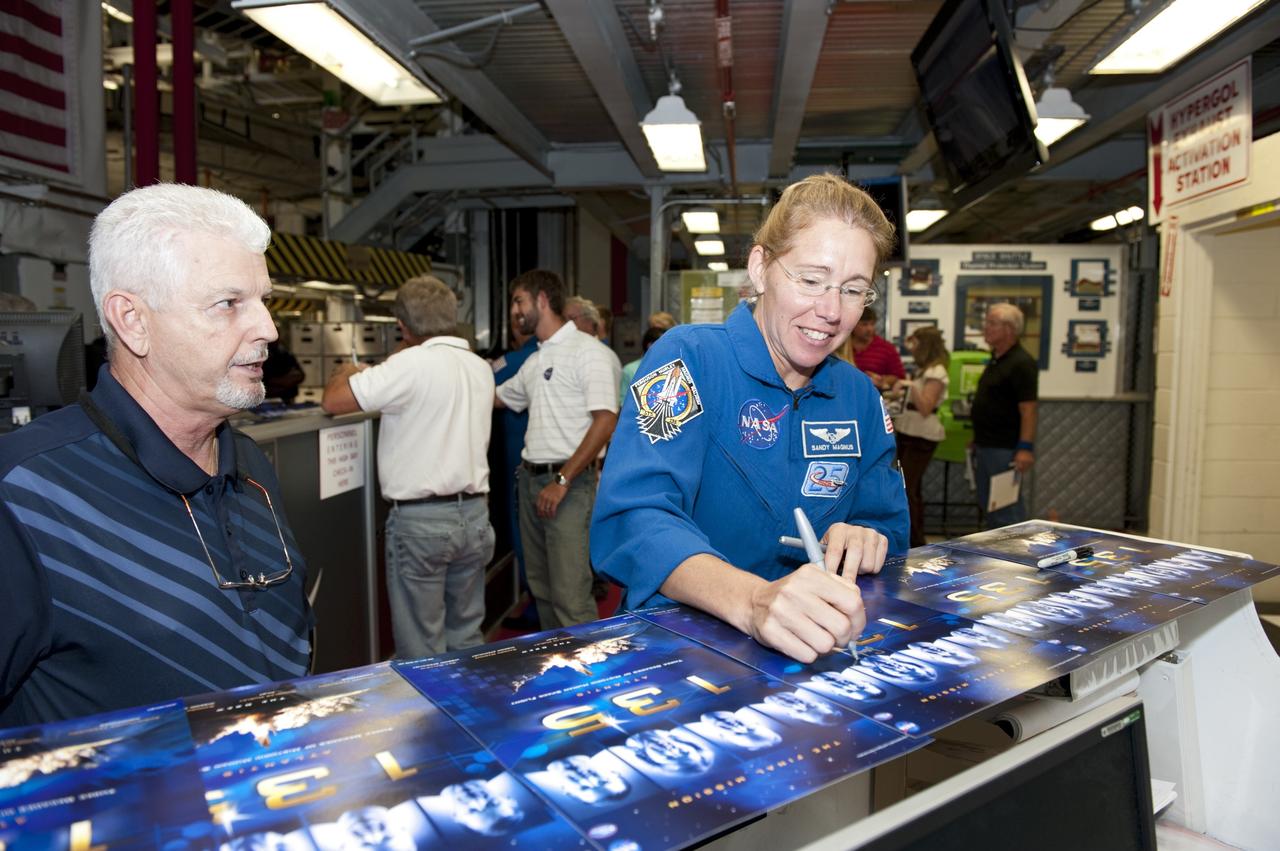
CAPE CANAVERAL, Fla. – STS-135 Mission Specialist Sandra Magnus signs an autograph for an employee inside Kennedy Space Center's Orbiter Processing Facility-2, where space shuttle Atlantis is being prepared for eventual display at the Kennedy Space Center Visitor Complex in Florida. Magnus, along with Commander Chris Ferguson and Pilot Doug Hurley, was at the center for the traditional post-flight crew return presentation. STS-135 Mission Specialist Rex Walheim was unable to attend the Kennedy event. In July 2011, Atlantis and its crew delivered to the International Space Station the Raffaello multi-purpose logistics module packed with more than 9,400 pounds of spare parts, equipment and supplies that will sustain station operations for the next year. STS-135 was the 33rd and final flight for Atlantis and the final mission of the Space Shuttle Program. For more information, visit www.nasa.gov/mission_pages/shuttle/shuttlemissions/sts135/index.html. Photo credit: NASA/Kim Shiflett
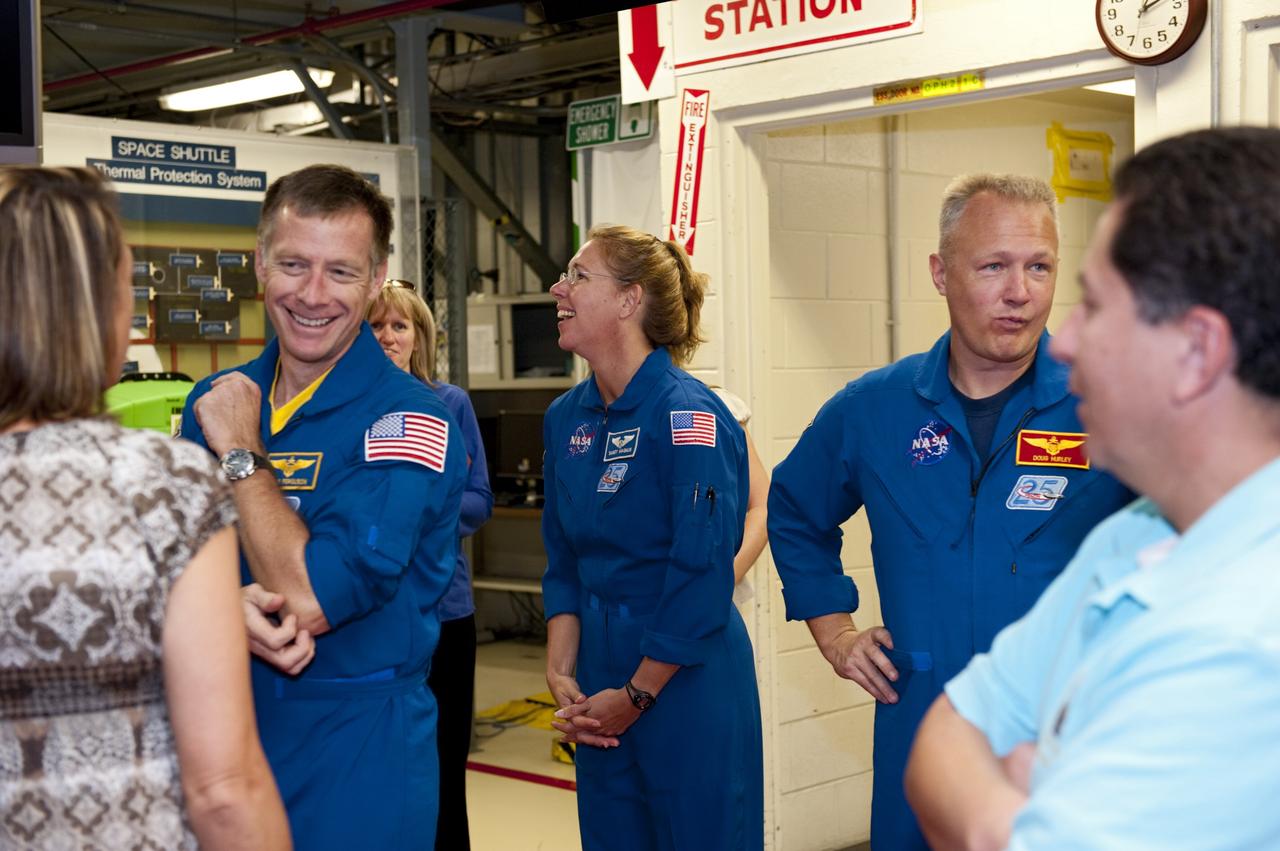
CAPE CANAVERAL, Fla. – Astronauts from space shuttle Atlantis’ STS-135 mission visit with employees inside Kennedy Space Center's Orbiter Processing Facility-2, where space shuttle Atlantis is being prepared for eventual display at the Kennedy Space Center Visitor Complex in Florida. The astronauts were at the center for the traditional post-flight crew return presentation. From left are Commander Chris Ferguson, Mission Specialist Sandra Magnus and Pilot Doug Hurley. STS-135 Mission Specialist Rex Walheim was unable to attend the Kennedy event. In July 2011, Atlantis and its crew delivered to the International Space Station the Raffaello multi-purpose logistics module packed with more than 9,400 pounds of spare parts, equipment and supplies that will sustain station operations for the next year. STS-135 was the 33rd and final flight for Atlantis and the final mission of the Space Shuttle Program. For more information, visit www.nasa.gov/mission_pages/shuttle/shuttlemissions/sts135/index.html. Photo credit: NASA/Kim Shiflett
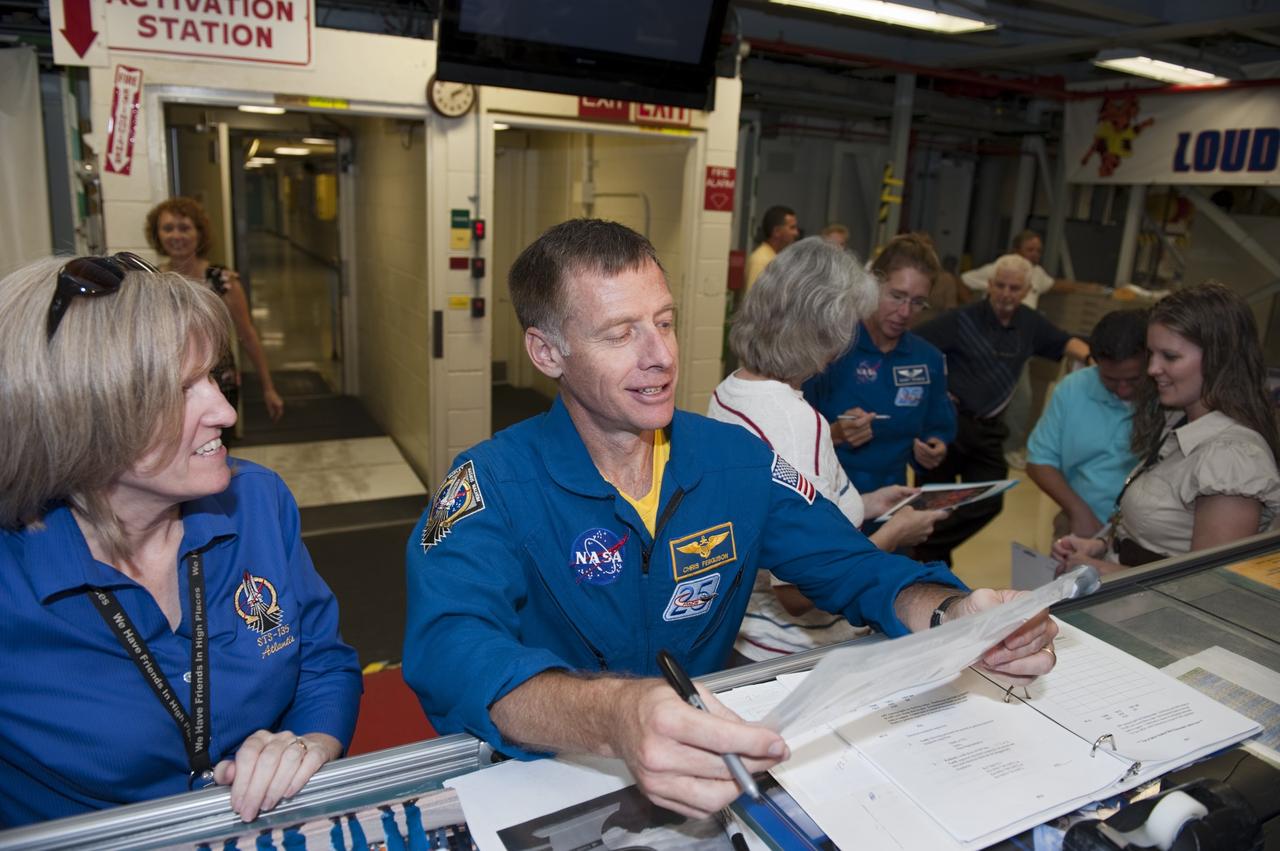
CAPE CANAVERAL, Fla. – STS-135 Commander Chris Ferguson talks with Atlantis Flow Director Angie Brewer, while Mission Specialist Sandra Magnus sign autographs for employees inside Kennedy Space Center's Orbiter Processing Facility-2, where space shuttle Atlantis is being prepared for eventual display at the Kennedy Space Center Visitor Complex in Florida. The astronauts, along with Pilot Doug Hurley, were at the center for the traditional post-flight crew return presentation. STS-135 Mission Specialist Rex Walheim was unable to attend the Kennedy event. In July 2011, Atlantis and its crew delivered to the International Space Station the Raffaello multi-purpose logistics module packed with more than 9,400 pounds of spare parts, equipment and supplies that will sustain station operations for the next year. STS-135 was the 33rd and final flight for Atlantis and the final mission of the Space Shuttle Program. For more information, visit www.nasa.gov/mission_pages/shuttle/shuttlemissions/sts135/index.html. Photo credit: NASA/Kim Shiflett
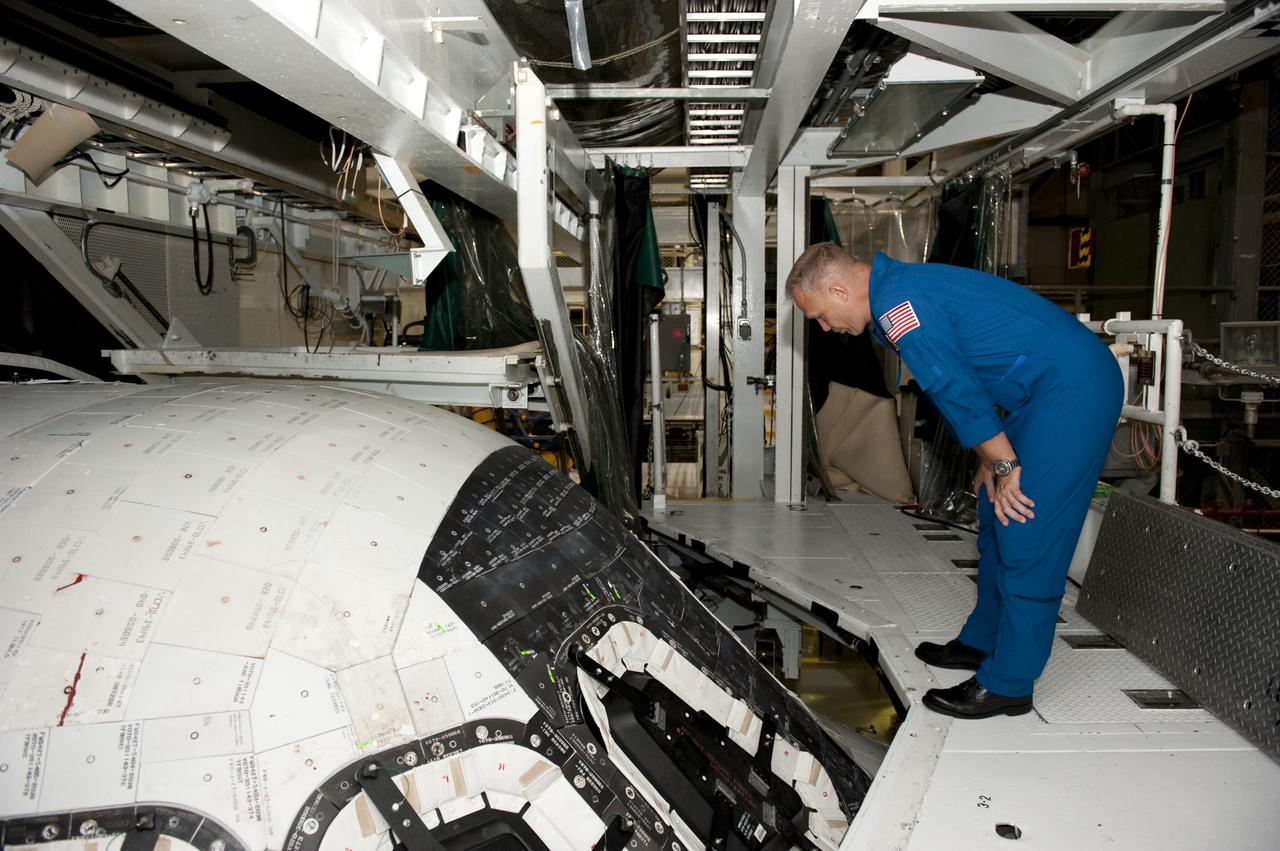
CAPE CANAVERAL, Fla. – Inside Kennedy Space Center's Orbiter Processing Facility-2, STS-135 Pilot Doug Hurley inspects the windows on space shuttle Atlantis. Atlantis is being prepared for eventual display at the Kennedy Space Center Visitor Complex in Florida. Hurley, along with Commander Chris Ferguson and Mission Specialist Sandra Magnus, was at the center for the traditional post-flight crew return presentation. STS-135 Mission Specialist Rex Walheim was unable to attend the Kennedy event. In July 2011, Atlantis and its crew delivered to the International Space Station the Raffaello multi-purpose logistics module packed with more than 9,400 pounds of spare parts, equipment and supplies that will sustain station operations for the next year. STS-135 was the 33rd and final flight for Atlantis and the final mission of the Space Shuttle Program. For more information, visit www.nasa.gov/mission_pages/shuttle/shuttlemissions/sts135/index.html. Photo credit: NASA/Kim Shiflett
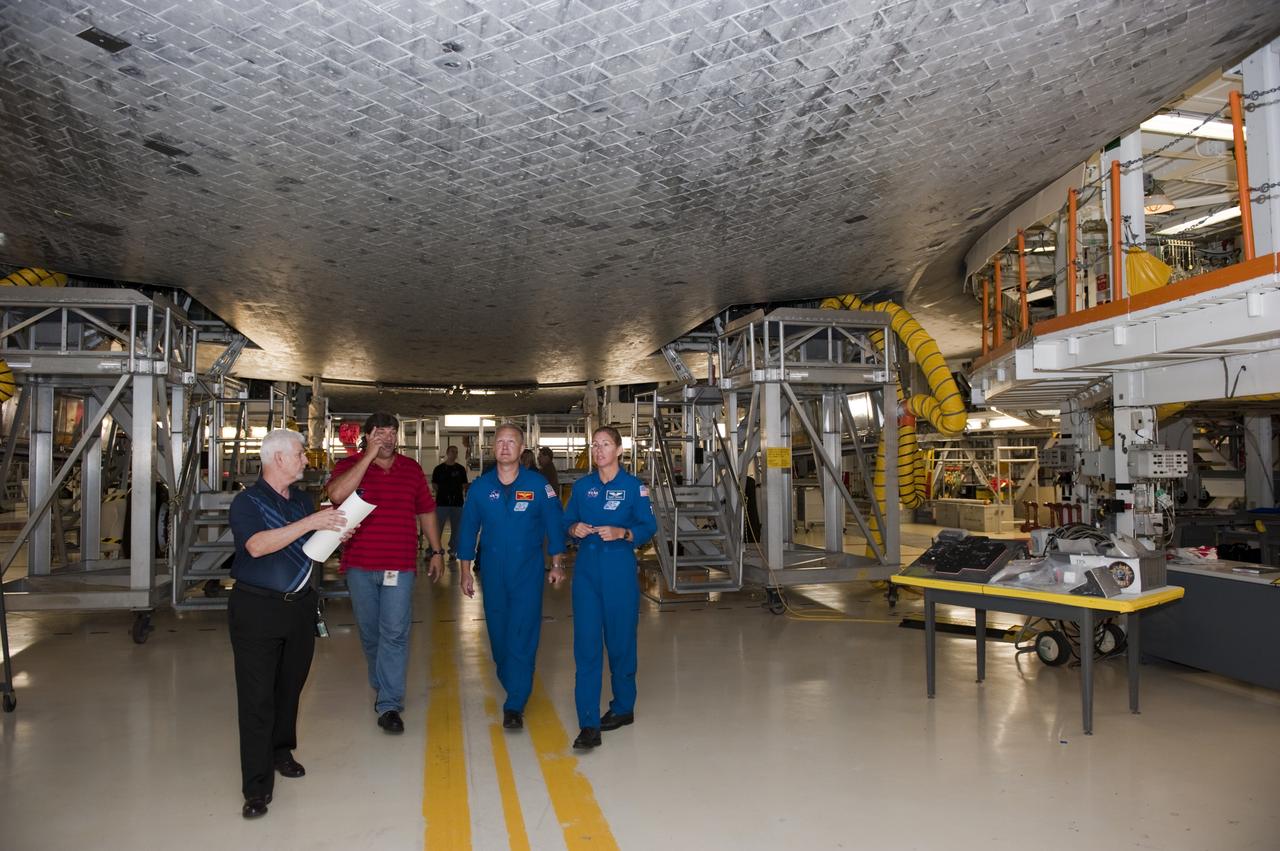
CAPE CANAVERAL, Fla. – STS-135 Pilot Doug Hurley and Mission Specialist Sandra Magnus receive a briefing and up-close look beneath space shuttle Atlantis inside Kennedy Space Center's Orbiter Processing Facility-2. Atlantis is being prepared for eventual display at the Kennedy Space Center Visitor Complex in Florida. The astronauts, along Commander Chris Ferguson, were at the center for the traditional post-flight crew return presentation. STS-135 Mission Specialist Rex Walheim was unable to attend the Kennedy event. In July 2011, Atlantis and its crew delivered to the International Space Station the Raffaello multi-purpose logistics module packed with more than 9,400 pounds of spare parts, equipment and supplies that will sustain station operations for the next year. STS-135 was the 33rd and final flight for Atlantis and the final mission of the Space Shuttle Program. For more information, visit www.nasa.gov/mission_pages/shuttle/shuttlemissions/sts135/index.html. Photo credit: NASA/Kim Shiflett
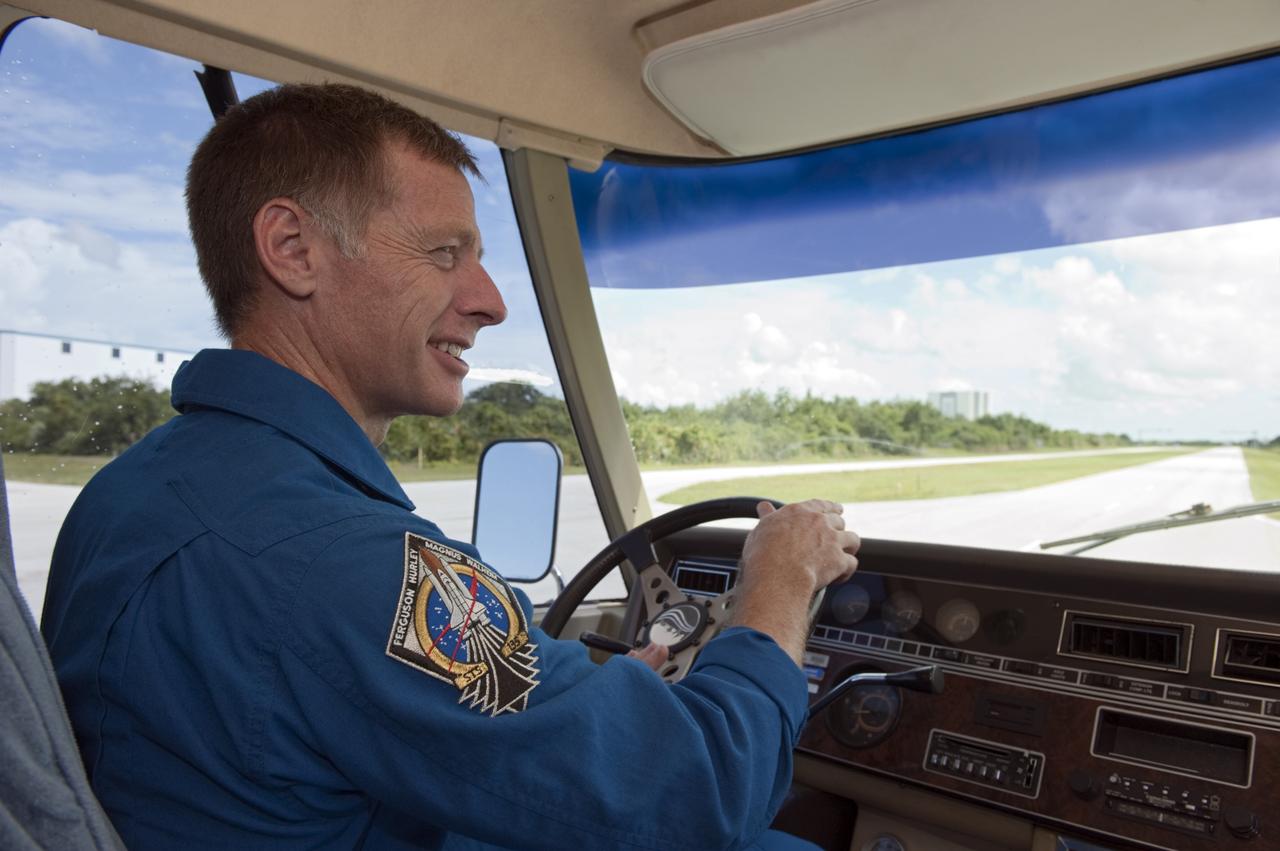
CAPE CANAVERAL, Fla. – STS-135 Commander Chris Ferguson settles in the driver's seat of NASA’s silver Astrovan. Since 1984, the Astrovan, a modified Airstream motor home, has carried shuttle crew members to the launch pads. Ferguson, along with Pilot Doug Hurley and Mission Specialist Sandra Magnus, was at the center for the traditional post-flight crew return presentation. STS-135 Mission Specialist Rex Walheim was unable to attend the Kennedy event. In July 2011, Atlantis and its crew delivered to the International Space Station the Raffaello multi-purpose logistics module packed with more than 9,400 pounds of spare parts, equipment and supplies that will sustain station operations for the next year. STS-135 was the 33rd and final flight for Atlantis and the final mission of the Space Shuttle Program. For more information, visit www.nasa.gov/mission_pages/shuttle/shuttlemissions/sts135/index.html. Photo credit: NASA/Kim Shiflett
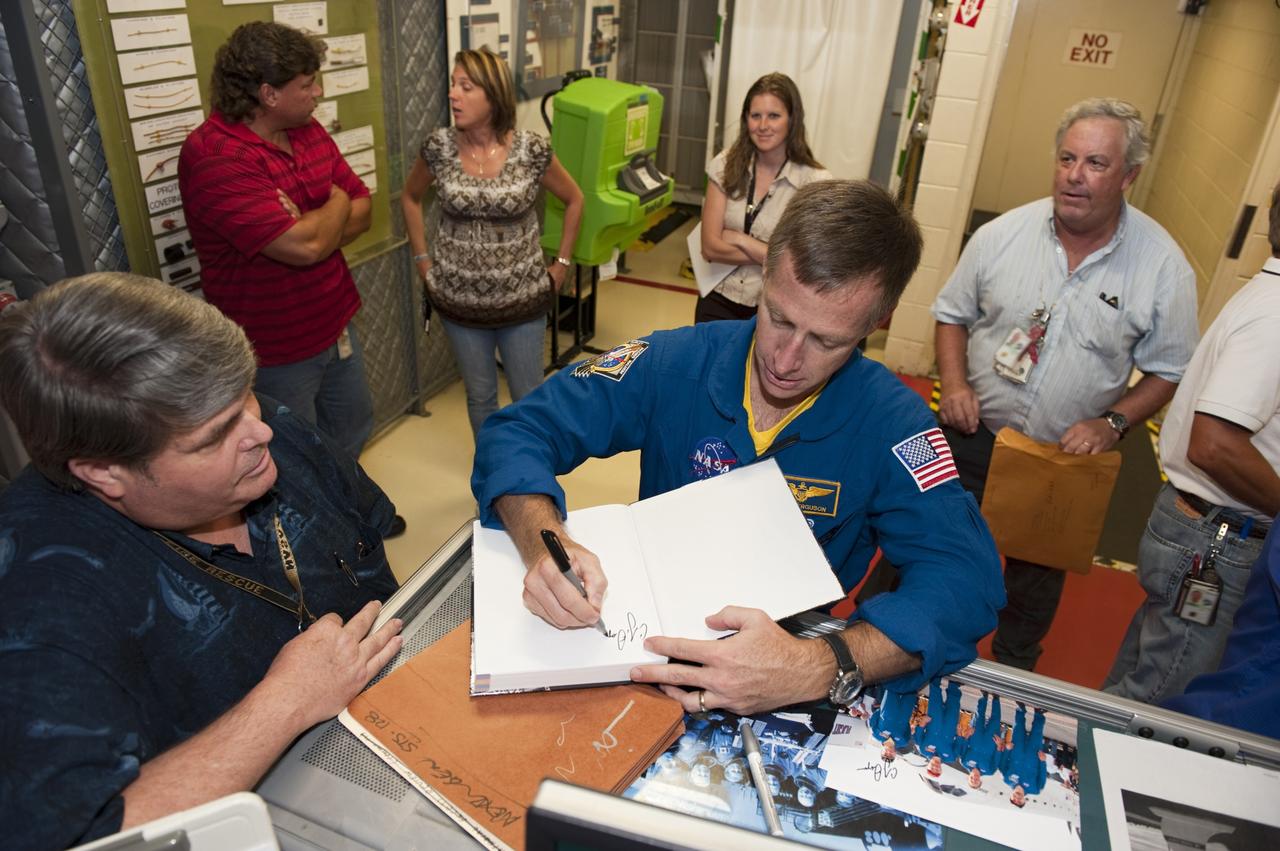
CAPE CANAVERAL, Fla. – STS-135 Commander Chris Ferguson autographs a book for an employee inside Kennedy Space Center's Orbiter Processing Facility-2, where space shuttle Atlantis is being prepared for eventual display at the Kennedy Space Center Visitor Complex in Florida. Ferguson, along Pilot Doug Hurley and Mission Specialist Sandra Magnus, was at the center for the traditional post-flight crew return presentation. STS-135 Mission Specialist Rex Walheim was unable to attend the Kennedy event. In July 2011, Atlantis and its crew delivered to the International Space Station the Raffaello multi-purpose logistics module packed with more than 9,400 pounds of spare parts, equipment and supplies that will sustain station operations for the next year. STS-135 was the 33rd and final flight for Atlantis and the final mission of the Space Shuttle Program. For more information, visit www.nasa.gov/mission_pages/shuttle/shuttlemissions/sts135/index.html. Photo credit: NASA/Kim Shiflett
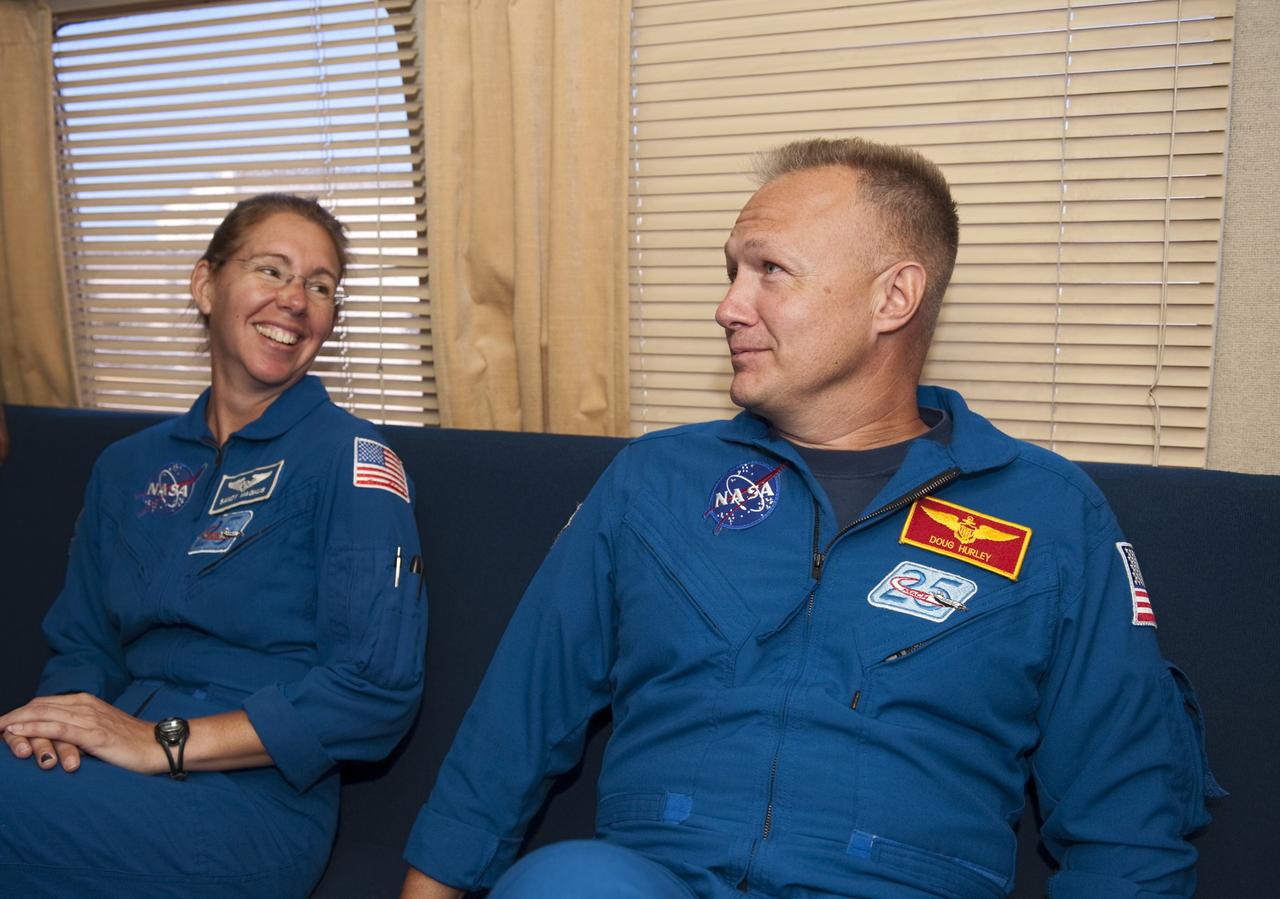
CAPE CANAVERAL, Fla. – Astronauts from Space Shuttle Atlantis’ STS-135 mission travel inside NASA’s silver Astrovan. From left are Mission Specialist Sandra Magnus and Pilot Doug Hurley. Since 1984, the Astrovan, a modified Airstream motor home, has carried shuttle crew members to the launch pads. The astronauts, along with Commander Chris Ferguson, were at the center for the traditional post-flight crew return presentation. STS-135 Mission Specialist Rex Walheim was unable to attend the Kennedy event. In July 2011, Atlantis and its crew delivered to the International Space Station the Raffaello multi-purpose logistics module packed with more than 9,400 pounds of spare parts, equipment and supplies that will sustain station operations for the next year. STS-135 was the 33rd and final flight for Atlantis and the final mission of the Space Shuttle Program. For more information, visit www.nasa.gov/mission_pages/shuttle/shuttlemissions/sts135/index.html. Photo credit: NASA/Kim Shiflett
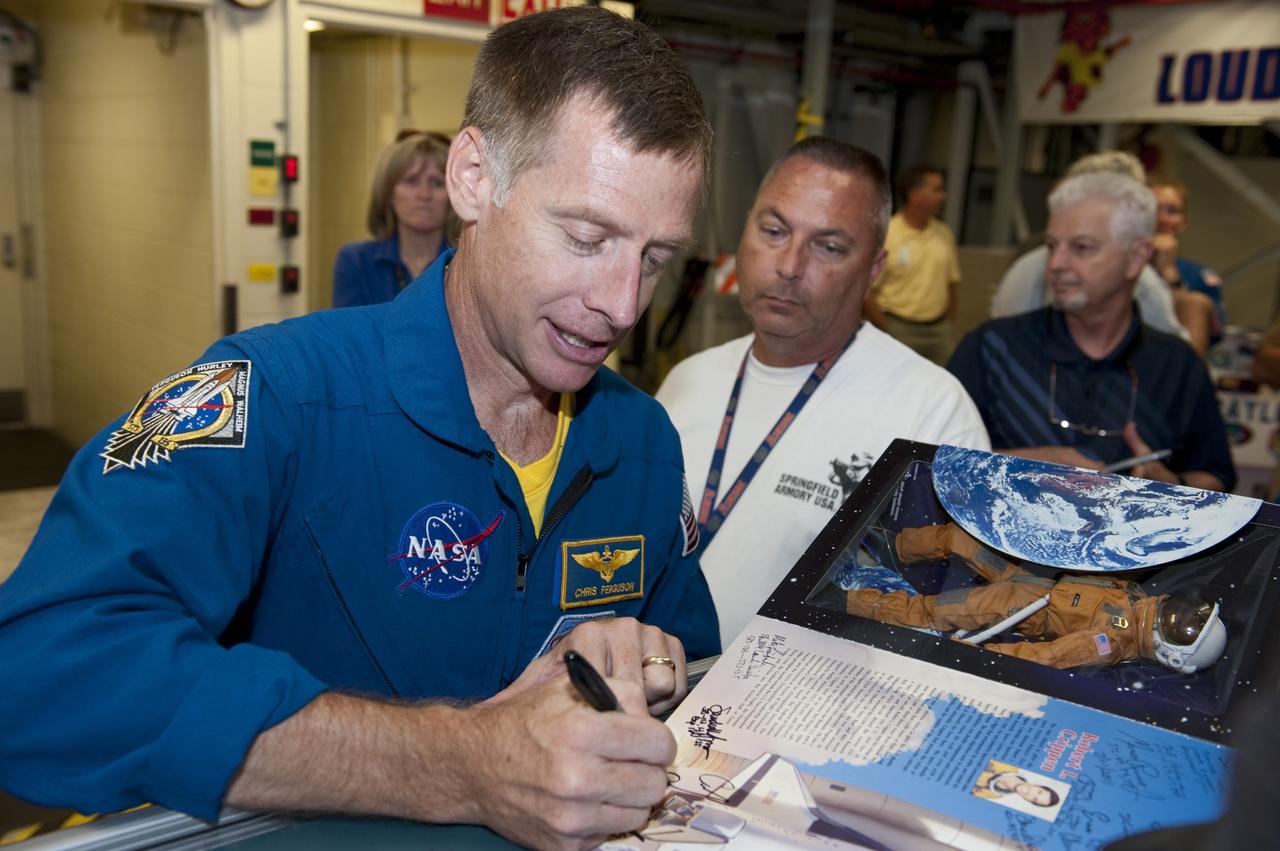
CAPE CANAVERAL, Fla. – STS-135 Commander Chris Ferguson signs an autograph for an employee inside Kennedy Space Center's Orbiter Processing Facility-2, where space shuttle Atlantis is being prepared for eventual display at the Kennedy Space Center Visitor Complex in Florida. Ferguson, along Pilot Doug Hurley and Mission Specialist Sandra Magnus, was at the center for the traditional post-flight crew return presentation. STS-135 Mission Specialist Rex Walheim was unable to attend the Kennedy event. In July 2011, Atlantis and its crew delivered to the International Space Station the Raffaello multi-purpose logistics module packed with more than 9,400 pounds of spare parts, equipment and supplies that will sustain station operations for the next year. STS-135 was the 33rd and final flight for Atlantis and the final mission of the Space Shuttle Program. For more information, visit www.nasa.gov/mission_pages/shuttle/shuttlemissions/sts135/index.html. Photo credit: NASA/Kim Shiflett
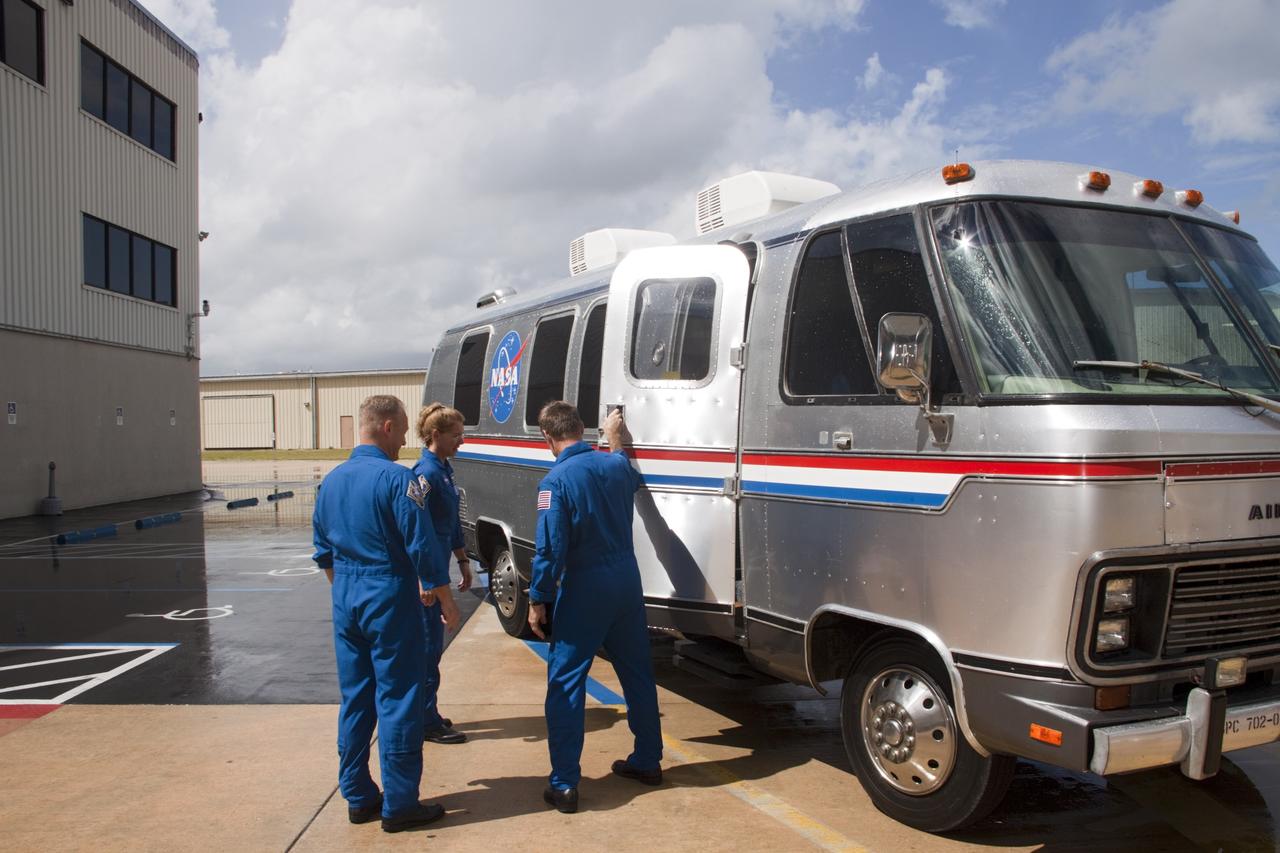
CAPE CANAVERAL, Fla. – After visiting with employees at Kennedy Space Center's Orbiter Processing Facility-2, STS-135 Commander Chris Ferguson holds the door of the Astrovan for Pilot Doug Hurley and Mission Specialist Sandra Magnus. The astronauts were at the center for the traditional post-flight crew return presentation. STS-135 Mission Specialist Rex Walheim was unable to attend the Kennedy event. In July 2011, Atlantis and its crew delivered to the International Space Station the Raffaello multi-purpose logistics module packed with more than 9,400 pounds of spare parts, equipment and supplies that will sustain station operations for the next year. STS-135 was the 33rd and final flight for Atlantis and the final mission of the Space Shuttle Program. For more information, visit www.nasa.gov/mission_pages/shuttle/shuttlemissions/sts135/index.html. Photo credit: NASA/Jim Grossmann
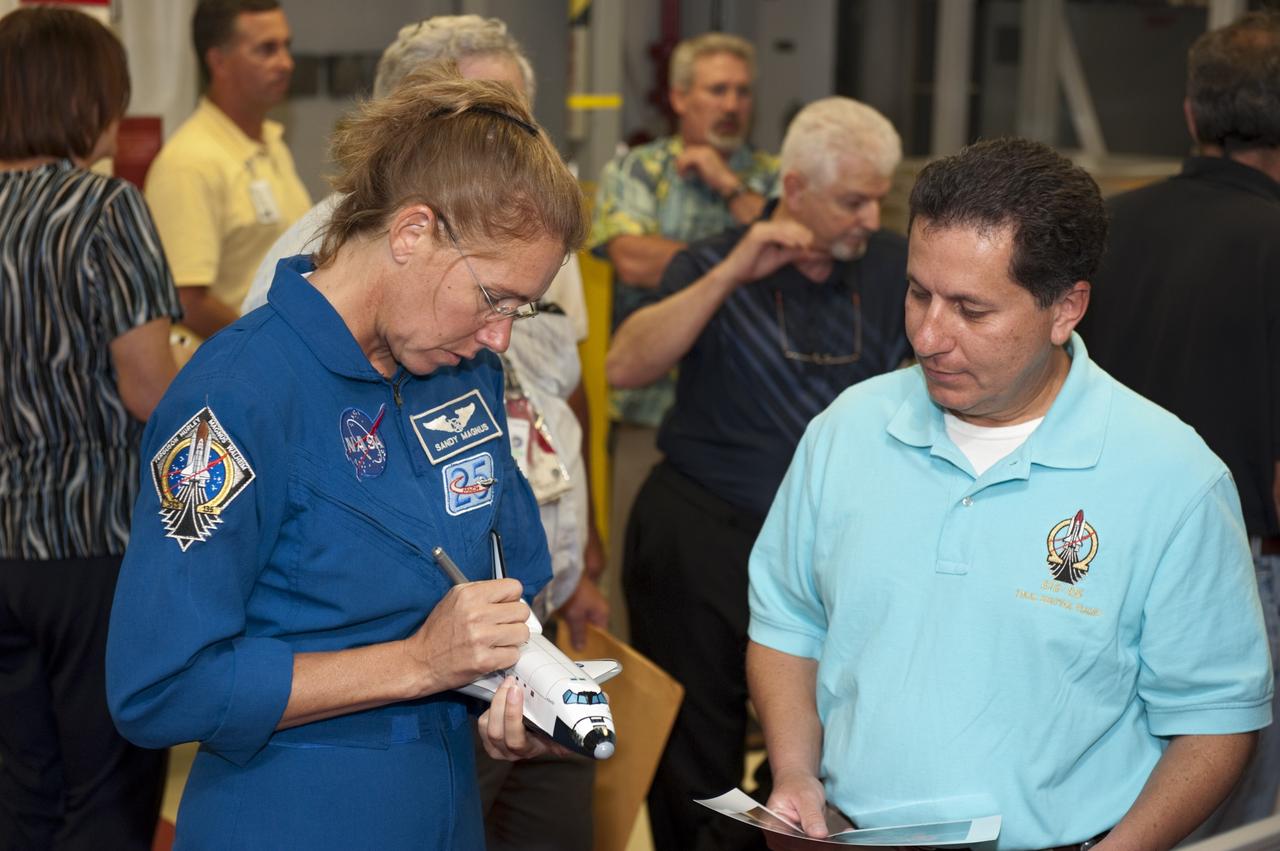
CAPE CANAVERAL, Fla. – STS-135 Mission Specialist Sandra Magnus autographs a space shuttle replica for an employee inside Kennedy Space Center's Orbiter Processing Facility-2, where space shuttle Atlantis is being prepared for eventual display at the Kennedy Space Center Visitor Complex in Florida. Magnus, along with Commander Chris Ferguson and Pilot Doug Hurley, was at the center for the traditional post-flight crew return presentation. STS-135 Mission Specialist Rex Walheim was unable to attend the Kennedy event. In July 2011, Atlantis and its crew delivered to the International Space Station the Raffaello multi-purpose logistics module packed with more than 9,400 pounds of spare parts, equipment and supplies that will sustain station operations for the next year. STS-135 was the 33rd and final flight for Atlantis and the final mission of the Space Shuttle Program. For more information, visit www.nasa.gov/mission_pages/shuttle/shuttlemissions/sts135/index.html. Photo credit: NASA/Kim Shiflett
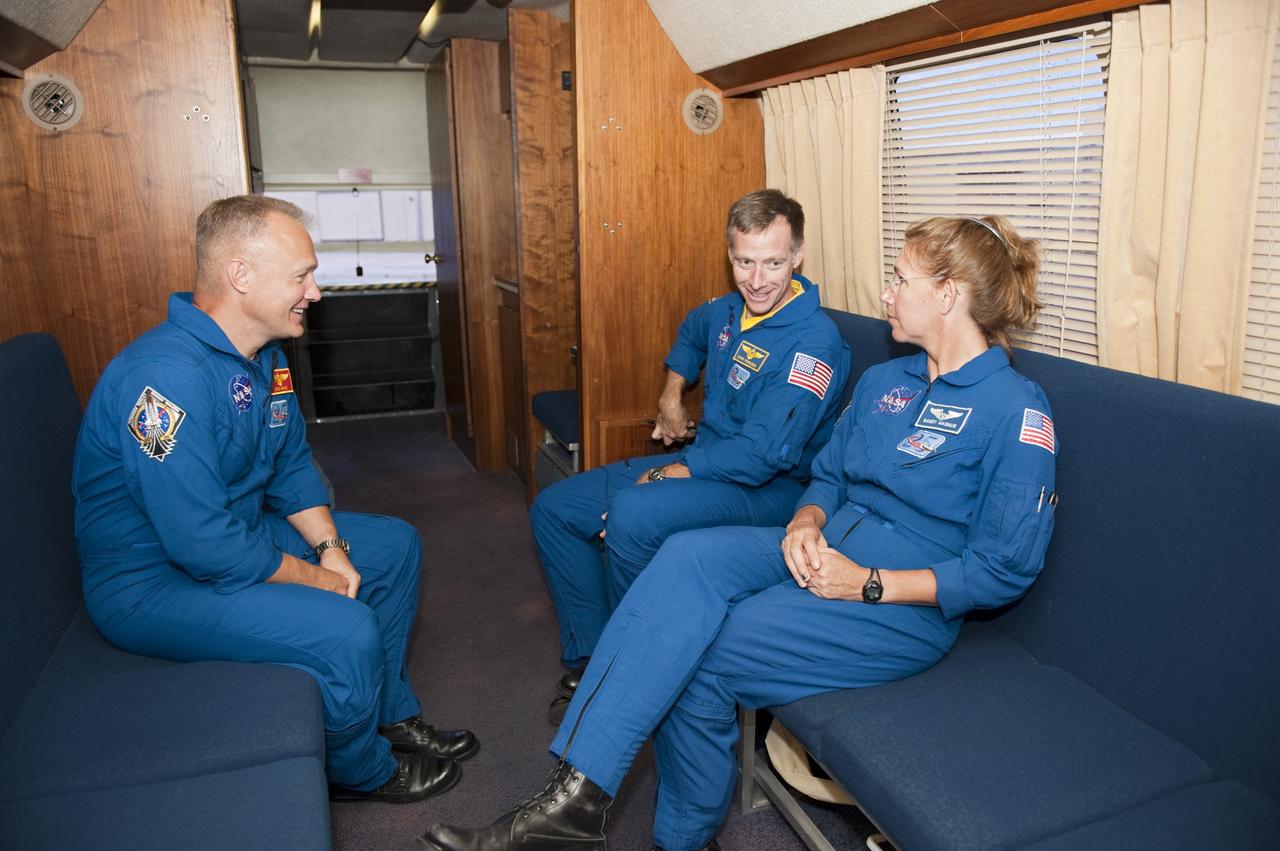
CAPE CANAVERAL, Fla. – Astronauts from Space Shuttle Atlantis’ STS-135 mission travel inside NASA’s silver Astrovan. Seated on the right are Commander Chris Ferguson and Mission Specialist Sandra Magnus while facing opposite is Pilot Doug Hurley. Since 1984, the Astrovan, a modified Airstream motor home, has carried shuttle crew members to the launch pads. The astronauts were at the center for the traditional post-flight crew return presentation. STS-135 Mission Specialist Rex Walheim was unable to attend the Kennedy event. In July 2011, Atlantis and its crew delivered to the International Space Station the Raffaello multi-purpose logistics module packed with more than 9,400 pounds of spare parts, equipment and supplies that will sustain station operations for the next year. STS-135 was the 33rd and final flight for Atlantis and the final mission of the Space Shuttle Program. For more information, visit www.nasa.gov/mission_pages/shuttle/shuttlemissions/sts135/index.html. Photo credit: NASA/Kim Shiflett
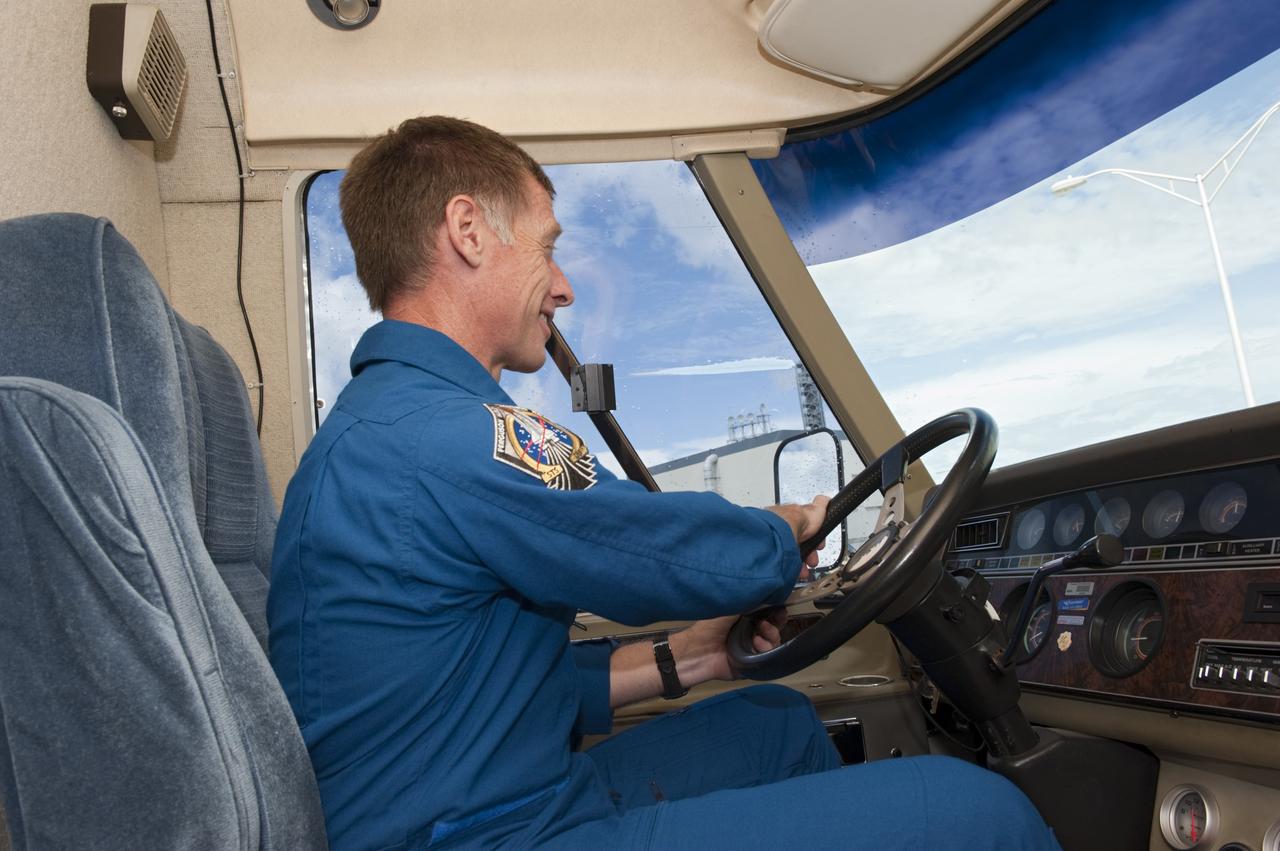
CAPE CANAVERAL, Fla. – STS-135 Commander Chris Ferguson settles in the driver's seat of NASA’s silver Astrovan. Since 1984, the Astrovan, a modified Airstream motor home, has carried shuttle crew members to the launch pads. Ferguson, along with Pilot Doug Hurley and Mission Specialist Sandra Magnus, was at the center for the traditional post-flight crew return presentation. STS-135 Mission Specialist Rex Walheim was unable to attend the Kennedy event. In July 2011, Atlantis and its crew delivered to the International Space Station the Raffaello multi-purpose logistics module packed with more than 9,400 pounds of spare parts, equipment and supplies that will sustain station operations for the next year. STS-135 was the 33rd and final flight for Atlantis and the final mission of the Space Shuttle Program. For more information, visit www.nasa.gov/mission_pages/shuttle/shuttlemissions/sts135/index.html. Photo credit: NASA/Kim Shiflett
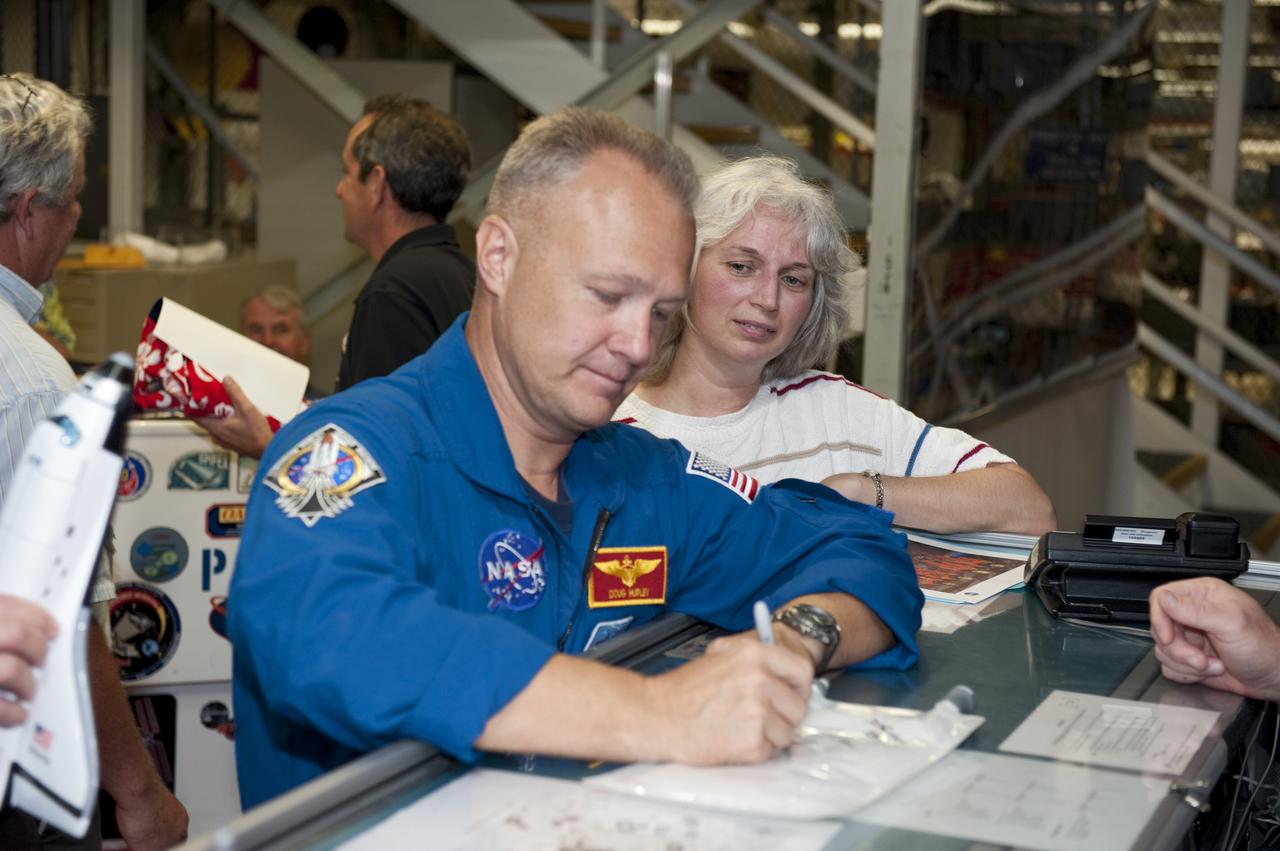
CAPE CANAVERAL, Fla. – STS-135 Pilot Doug Hurley signs an autograph for an employee inside Kennedy Space Center's Orbiter Processing Facility-2, where space shuttle Atlantis is being prepared for eventual display at the Kennedy Space Center Visitor Complex in Florida. Hurley, along with Commander Chris Ferguson and Mission Specialist Sandra Magnus, was at the center for the traditional post-flight crew return presentation. STS-135 Mission Specialist Rex Walheim was unable to attend the Kennedy event. In July 2011, Atlantis and its crew delivered to the International Space Station the Raffaello multi-purpose logistics module packed with more than 9,400 pounds of spare parts, equipment and supplies that will sustain station operations for the next year. STS-135 was the 33rd and final flight for Atlantis and the final mission of the Space Shuttle Program. For more information, visit www.nasa.gov/mission_pages/shuttle/shuttlemissions/sts135/index.html. Photo credit: NASA/Kim Shiflett
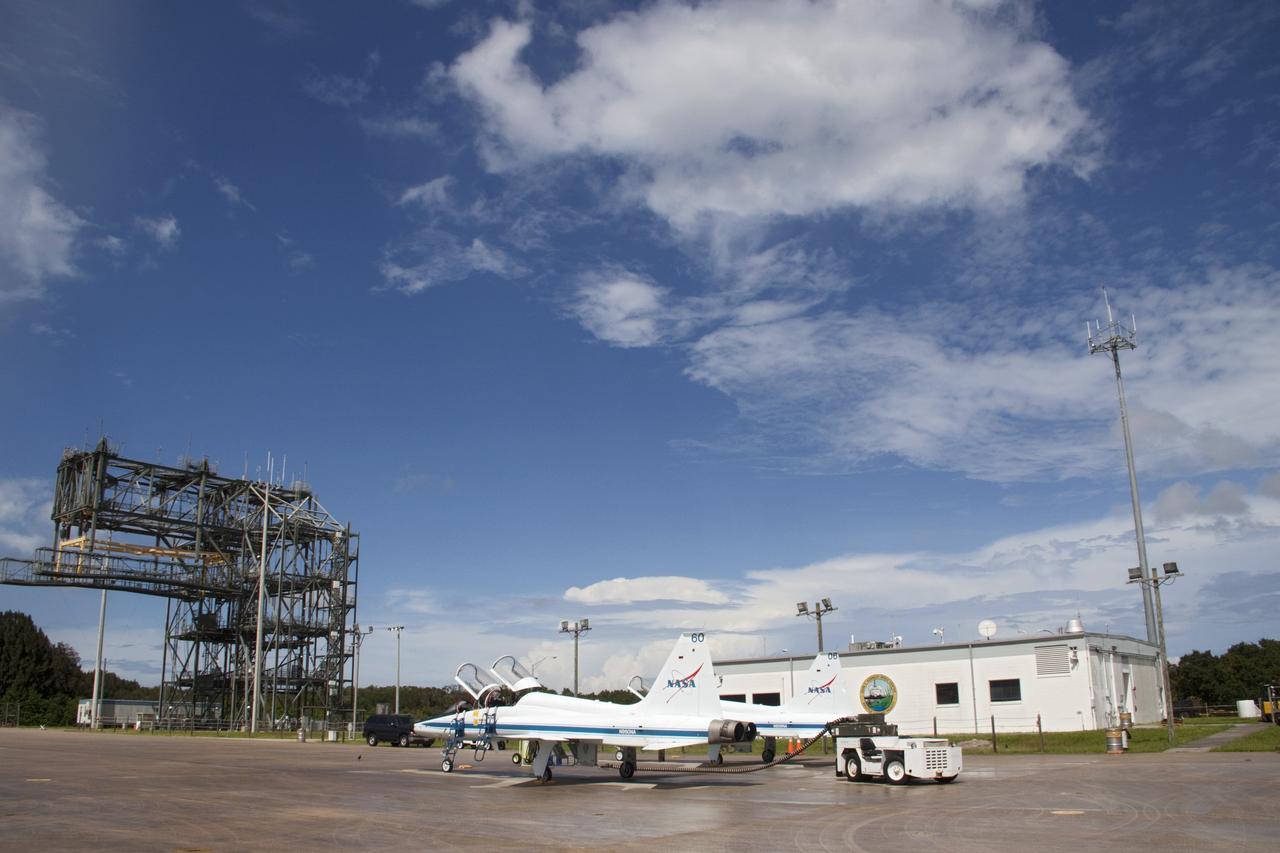
CAPE CANAVERAL, Fla. – At NASA's Kennedy Space Center in Florida, a T-38 training jet on the Shuttle Landing Facility is being fueled in preparation for the arrival of the space shuttle Atlantis’ STS-135 astronauts. Commander Chris Ferguson, Pilot Doug Hurley and Mission Specialist Sandra Magnus were at the center for the traditional post-flight crew return presentation. To the left of the jet is the space shuttle's mate-demate device. STS-135 Mission Specialist Rex Walheim was unable to attend the Kennedy event. In July 2011, Atlantis and its crew delivered to the International Space Station the Raffaello multi-purpose logistics module packed with more than 9,400 pounds of spare parts, equipment and supplies that will sustain station operations for the next year. STS-135 was the 33rd and final flight for Atlantis and the final mission of the Space Shuttle Program. For more information, visit www.nasa.gov/mission_pages/shuttle/shuttlemissions/sts135/index.html. Photo credit: NASA/Jim Grossmann
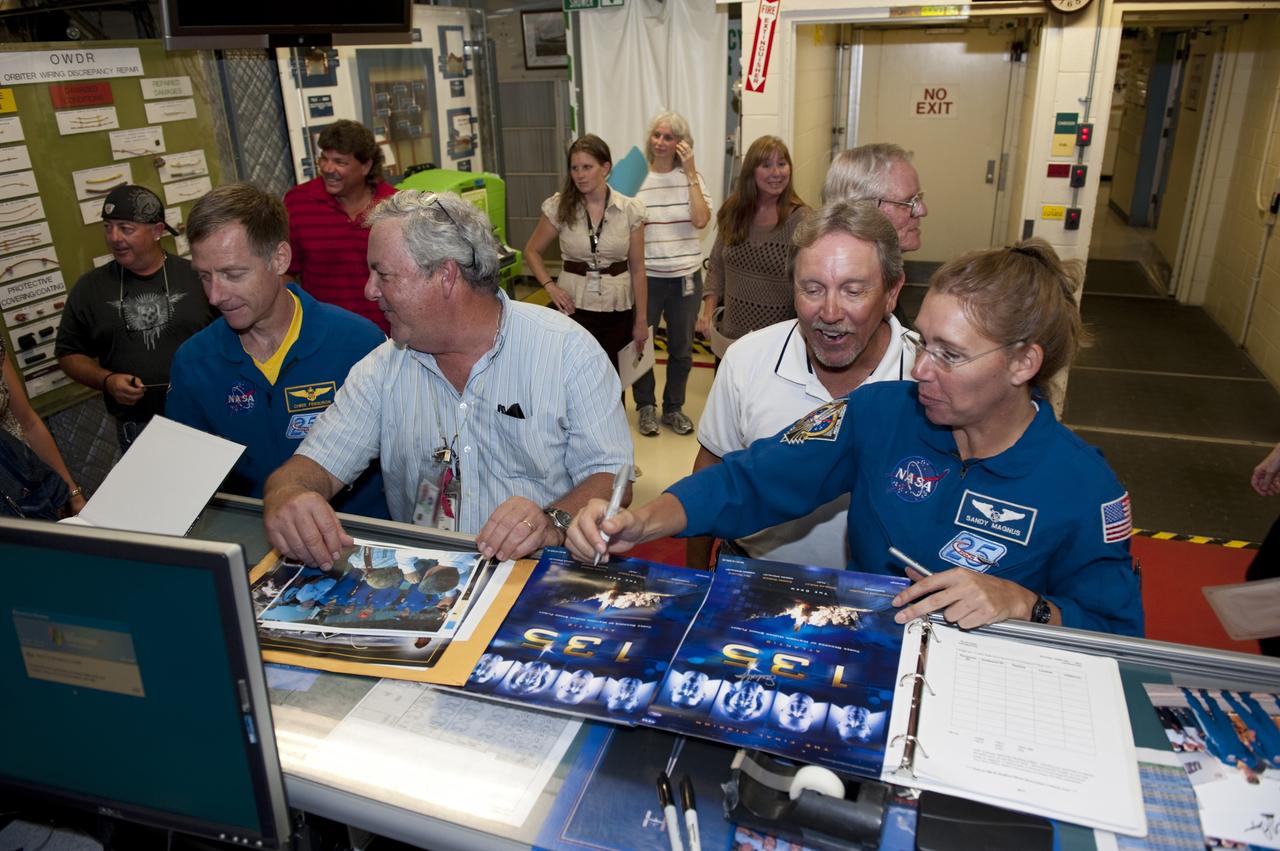
CAPE CANAVERAL, Fla. – STS-135 Commander Chris Ferguson and Mission Specialist Sandra Magnus sign autographs for employees inside Kennedy Space Center's Orbiter Processing Facility-2, where space shuttle Atlantis is being prepared for eventual display at the Kennedy Space Center Visitor Complex in Florida. The astronauts, along with Pilot Doug Hurley, were at the center for the traditional post-flight crew return presentation. STS-135 Mission Specialist Rex Walheim was unable to attend the Kennedy event. In July 2011, Atlantis and its crew delivered to the International Space Station the Raffaello multi-purpose logistics module packed with more than 9,400 pounds of spare parts, equipment and supplies that will sustain station operations for the next year. STS-135 was the 33rd and final flight for Atlantis and the final mission of the Space Shuttle Program. For more information, visit www.nasa.gov/mission_pages/shuttle/shuttlemissions/sts135/index.html. Photo credit: NASA/Kim Shiflett
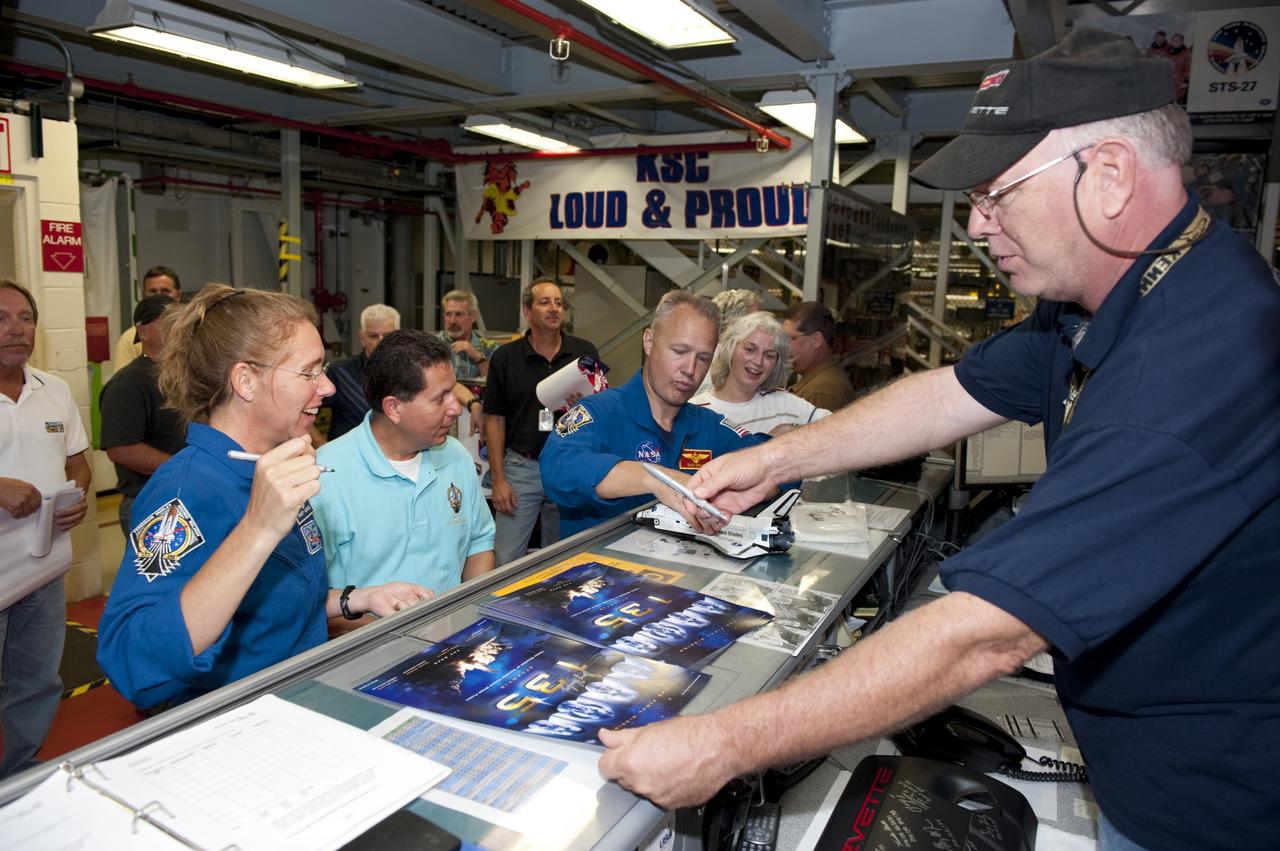
CAPE CANAVERAL, Fla. – STS-135 Mission Specialist Sandra Magnus signs an autograph while Pilot Doug Hurley autographs a space shuttle replica for employees inside Kennedy Space Center's Orbiter Processing Facility-2, where space shuttle Atlantis is being prepared for eventual display at the Kennedy Space Center Visitor Complex in Florida. The astronauts, along with Commander Chris Ferguson, were at the center for the traditional post-flight crew return presentation. STS-135 Mission Specialist Rex Walheim was unable to attend the Kennedy event. In July 2011, Atlantis and its crew delivered to the International Space Station the Raffaello multi-purpose logistics module packed with more than 9,400 pounds of spare parts, equipment and supplies that will sustain station operations for the next year. STS-135 was the 33rd and final flight for Atlantis and the final mission of the Space Shuttle Program. For more information, visit www.nasa.gov/mission_pages/shuttle/shuttlemissions/sts135/index.html. Photo credit: NASA/Kim Shiflett
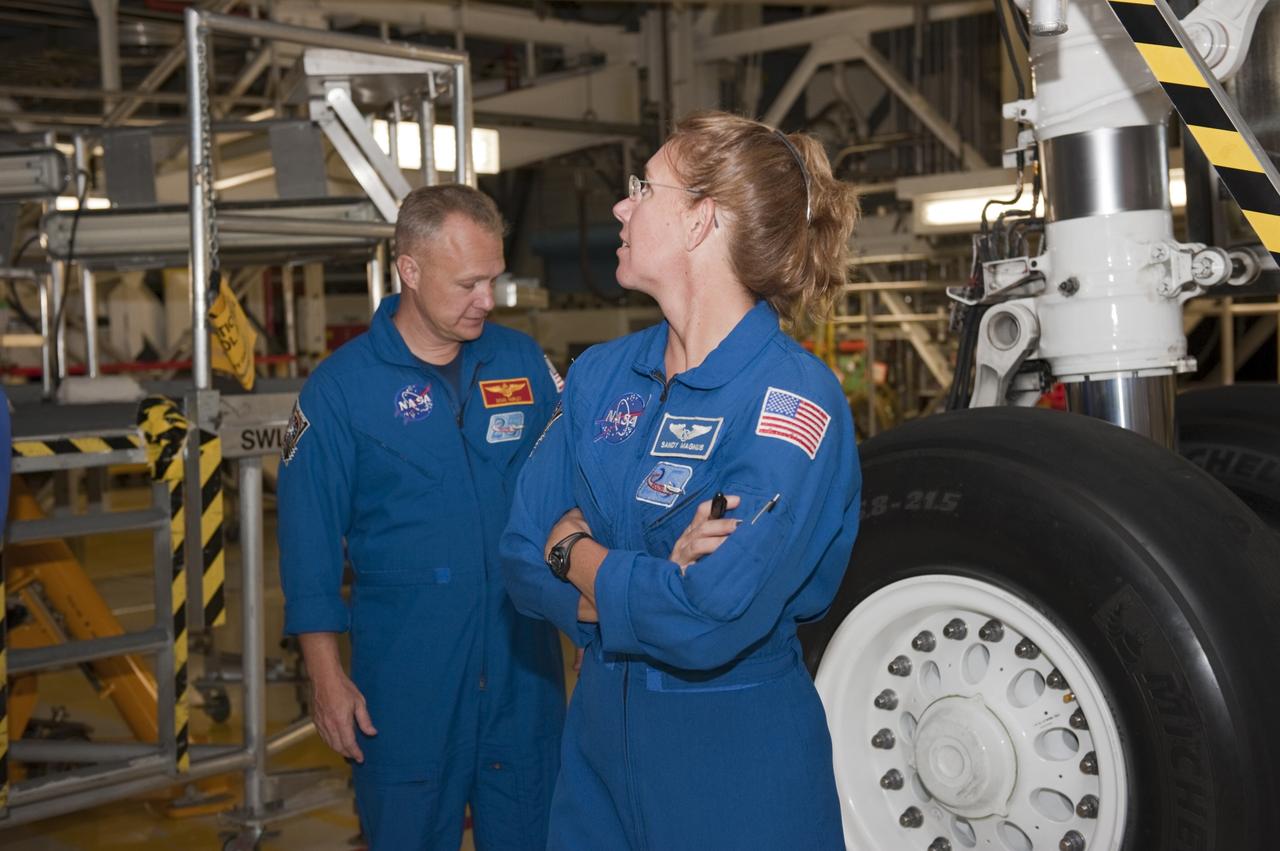
CAPE CANAVERAL, Fla. – STS-135 Pilot Doug Hurley and Mission Specialist Sandra Magnus stand next to a wheel on space shuttle Atlantis inside Kennedy Space Center's Orbiter Processing Facility-2. Atlantis is being prepared for eventual display at the Kennedy Space Center Visitor Complex in Florida. The astronauts, along Commander Chris Ferguson, were at the center for the traditional post-flight crew return presentation. STS-135 Mission Specialist Rex Walheim was unable to attend the Kennedy event. In July 2011, Atlantis and its crew delivered to the International Space Station the Raffaello multi-purpose logistics module packed with more than 9,400 pounds of spare parts, equipment and supplies that will sustain station operations for the next year. STS-135 was the 33rd and final flight for Atlantis and the final mission of the Space Shuttle Program. For more information, visit www.nasa.gov/mission_pages/shuttle/shuttlemissions/sts135/index.html. Photo credit: NASA/Kim Shiflett
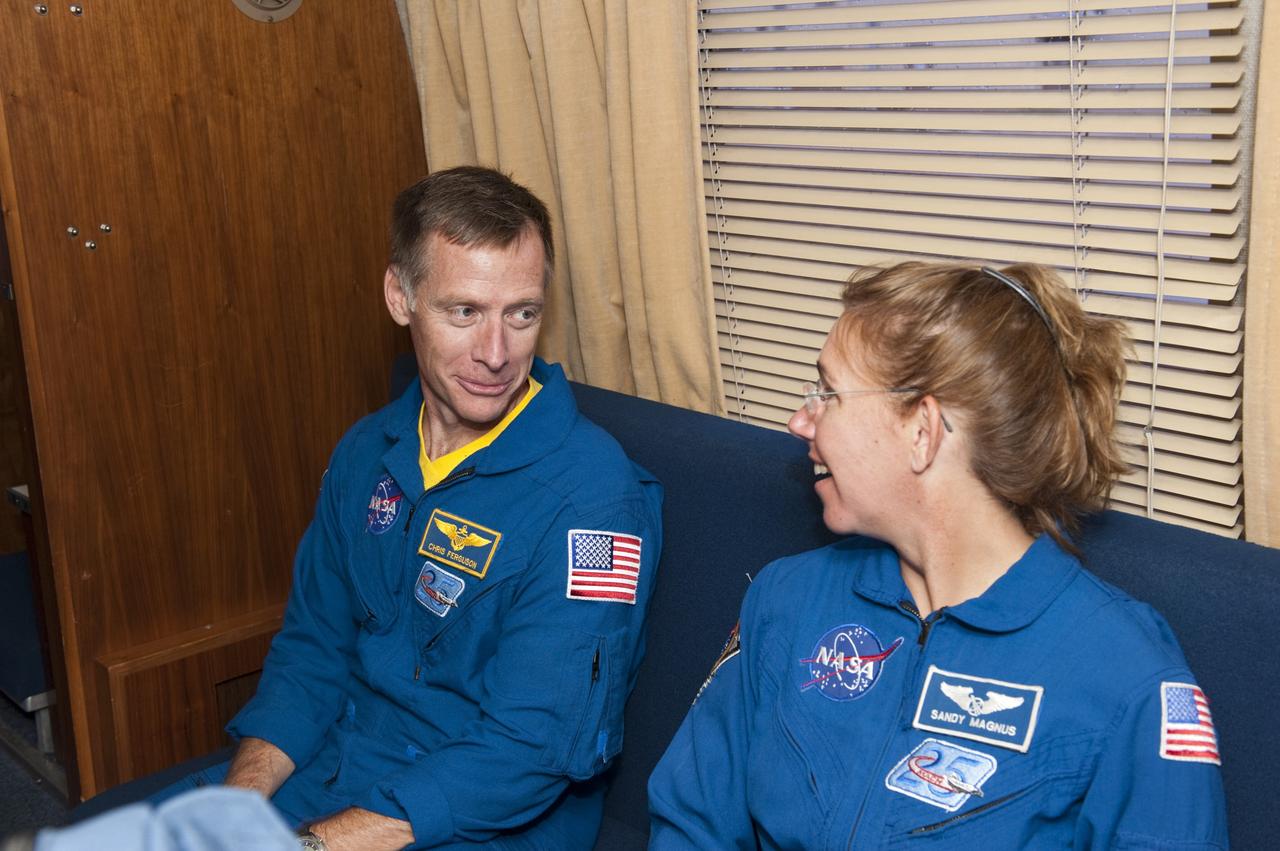
CAPE CANAVERAL, Fla. – Astronauts from Space Shuttle Atlantis’ STS-135 mission travel inside NASA’s silver Astrovan. From left are Commander Chris Ferguson and Mission Specialist Sandra Magnus. Since 1984, the Astrovan, a modified Airstream motor home, has carried shuttle crew members to the launch pads. The astronauts, along with Pilot Doug Hurley were at the center for the traditional post-flight crew return presentation. STS-135 Mission Specialist Rex Walheim was unable to attend the Kennedy event. In July 2011, Atlantis and its crew delivered to the International Space Station the Raffaello multi-purpose logistics module packed with more than 9,400 pounds of spare parts, equipment and supplies that will sustain station operations for the next year. STS-135 was the 33rd and final flight for Atlantis and the final mission of the Space Shuttle Program. For more information, visit www.nasa.gov/mission_pages/shuttle/shuttlemissions/sts135/index.html. Photo credit: NASA/Kim Shiflett
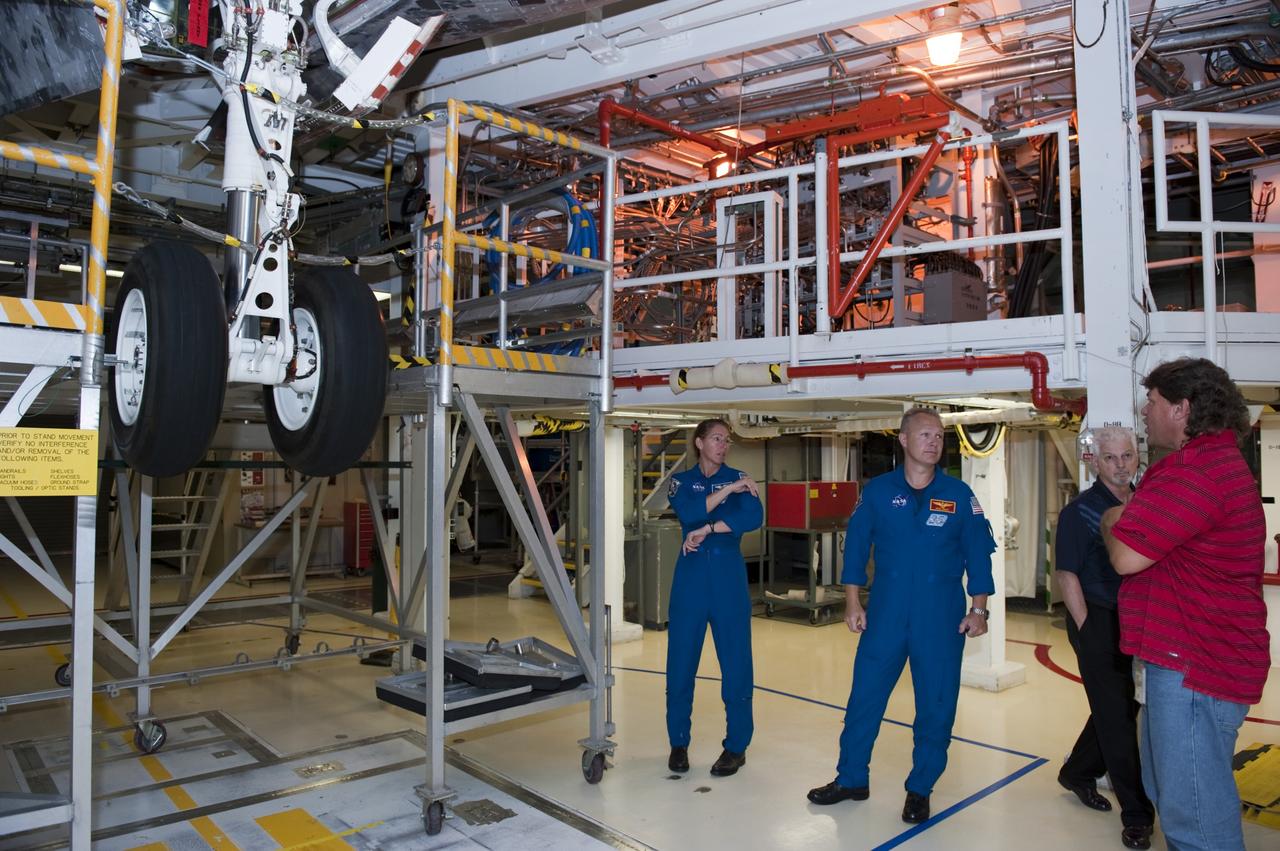
CAPE CANAVERAL, Fla. – STS-135 Pilot Doug Hurley and Mission Specialist Sandra Magnus receive a briefing and up-close look beneath space shuttle Atlantis inside Kennedy Space Center's Orbiter Processing Facility-2. Atlantis is being prepared for eventual display at the Kennedy Space Center Visitor Complex in Florida. The astronauts, along with Commander Chris Ferguson, were at the center for the traditional post-flight crew return presentation. STS-135 Mission Specialist Rex Walheim was unable to attend the Kennedy event. In July 2011, Atlantis and its crew delivered to the International Space Station the Raffaello multi-purpose logistics module packed with more than 9,400 pounds of spare parts, equipment and supplies that will sustain station operations for the next year. STS-135 was the 33rd and final flight for Atlantis and the final mission of the Space Shuttle Program. For more information, visit www.nasa.gov/mission_pages/shuttle/shuttlemissions/sts135/index.html. Photo credit: NASA/Kim Shiflett
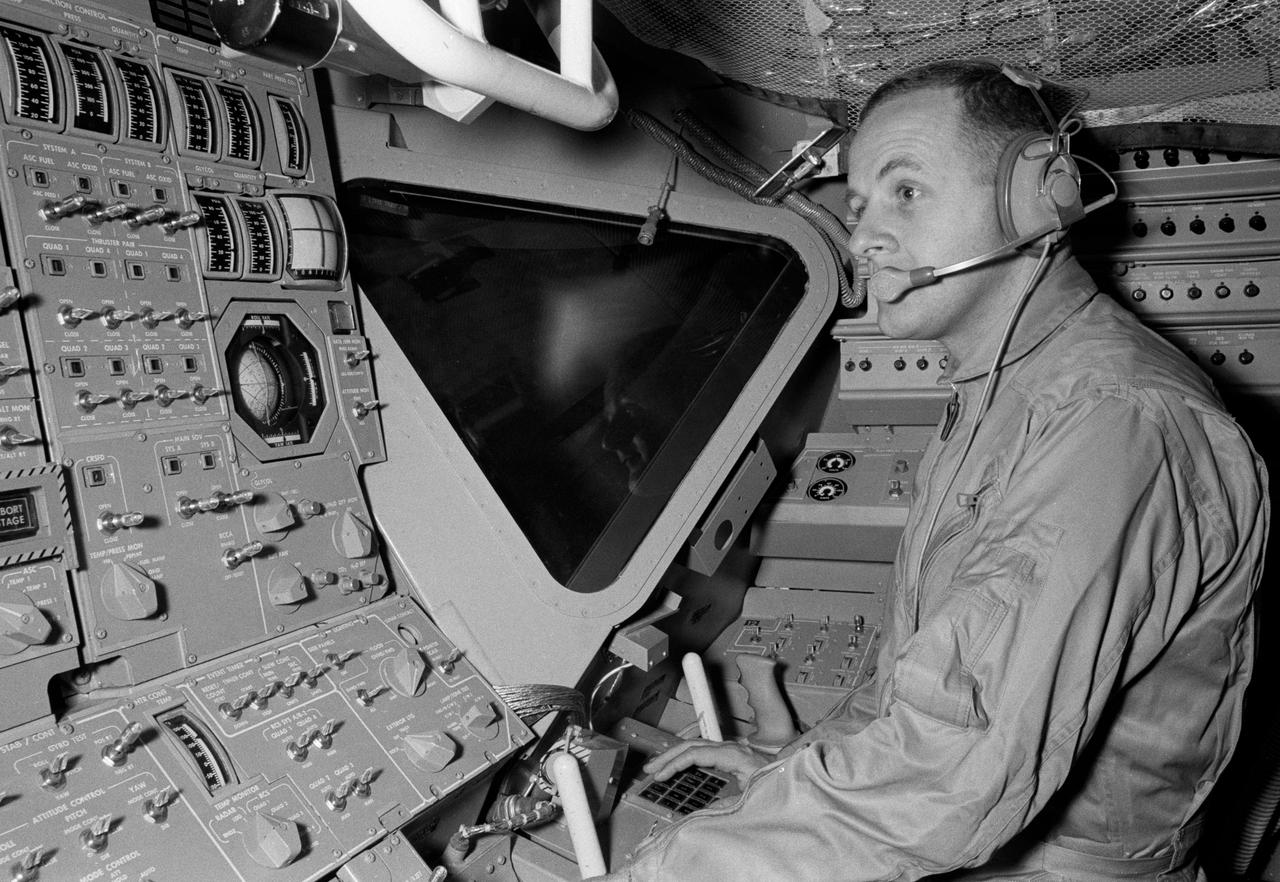
Views of Astronaut Dr. Philip K. Chapman training in the Lunar Module (LM) Simulator, Centrifuge, and the Apollo Mission Simulator. MSC
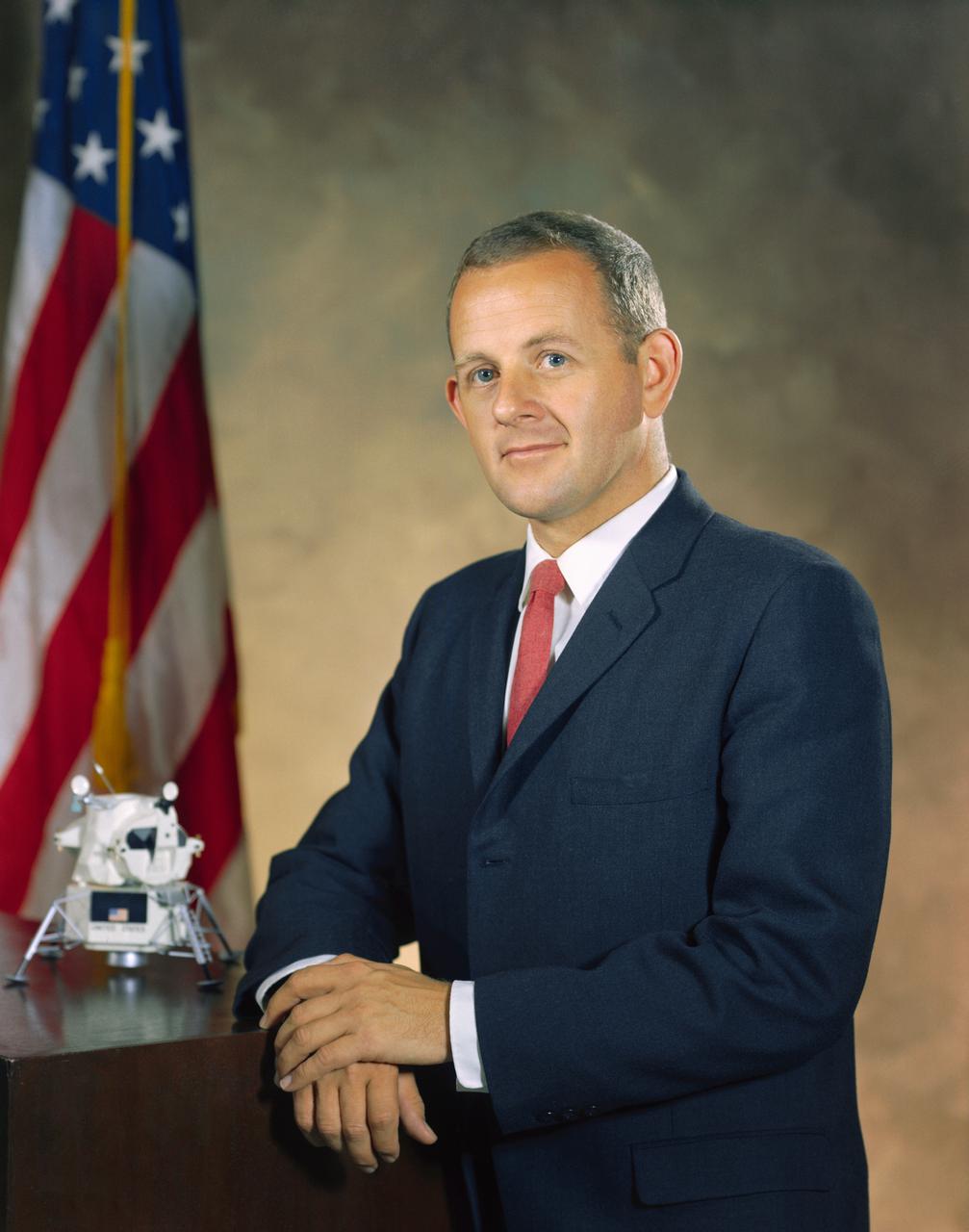
Official portrait of Philip K. Chapman
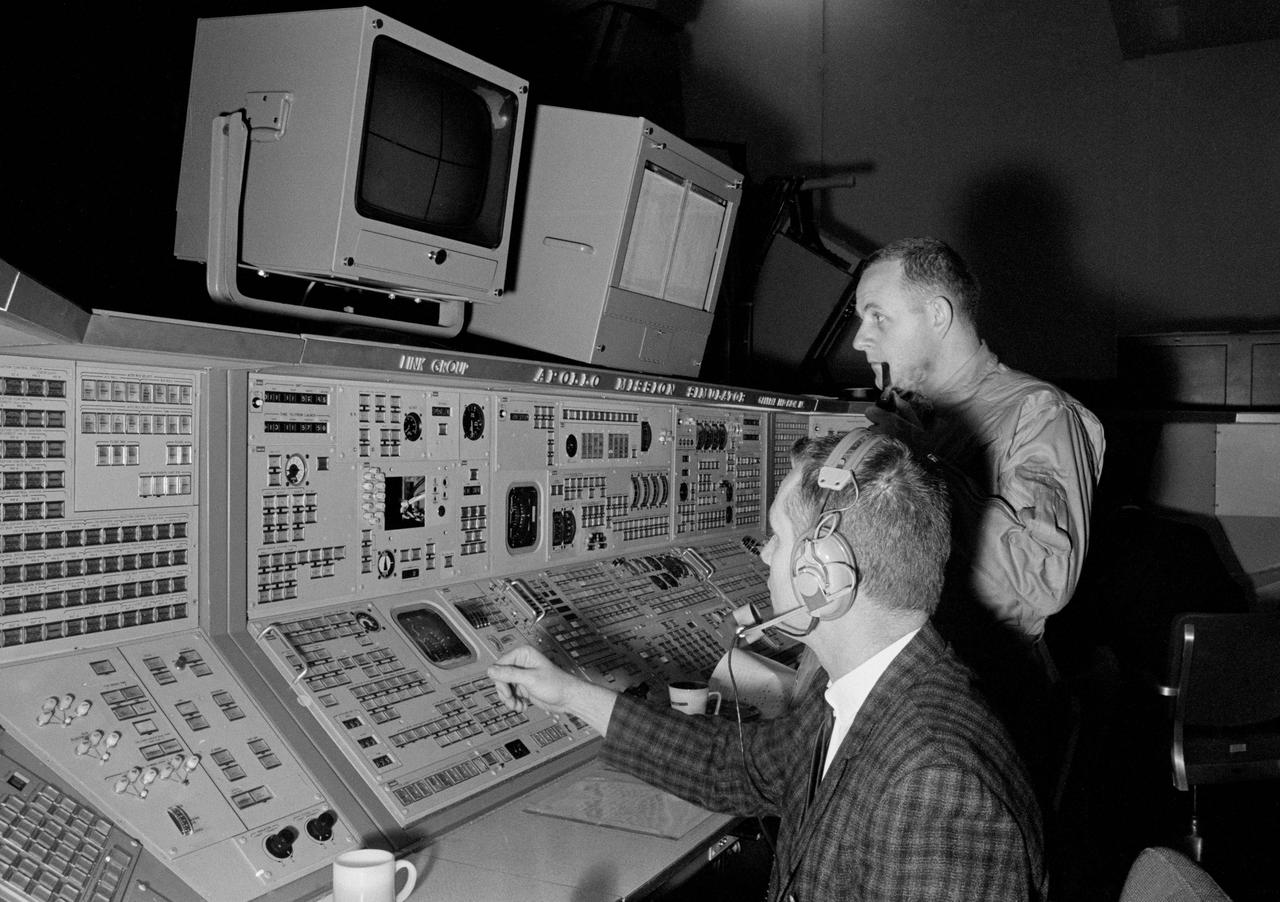
Views of Astronaut Dr. Philip K. Chapman training in the Lunar Module (LM) Simulator, Centrifuge, and the Apollo Mission Simulator. MSC
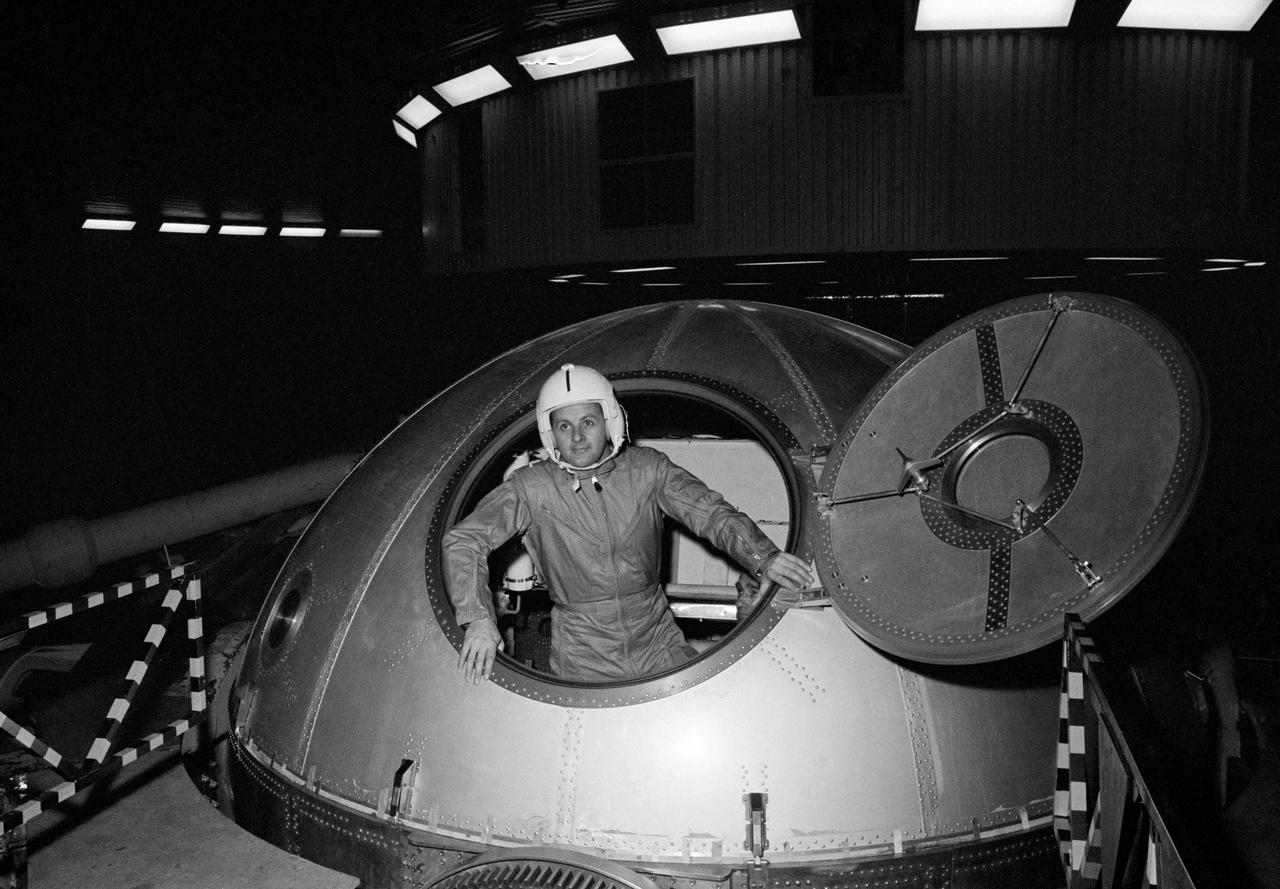
Views of Astronaut Dr. Philip K. Chapman training in the Lunar Module (LM) Simulator, Centrifuge, and the Apollo Mission Simulator. MSC
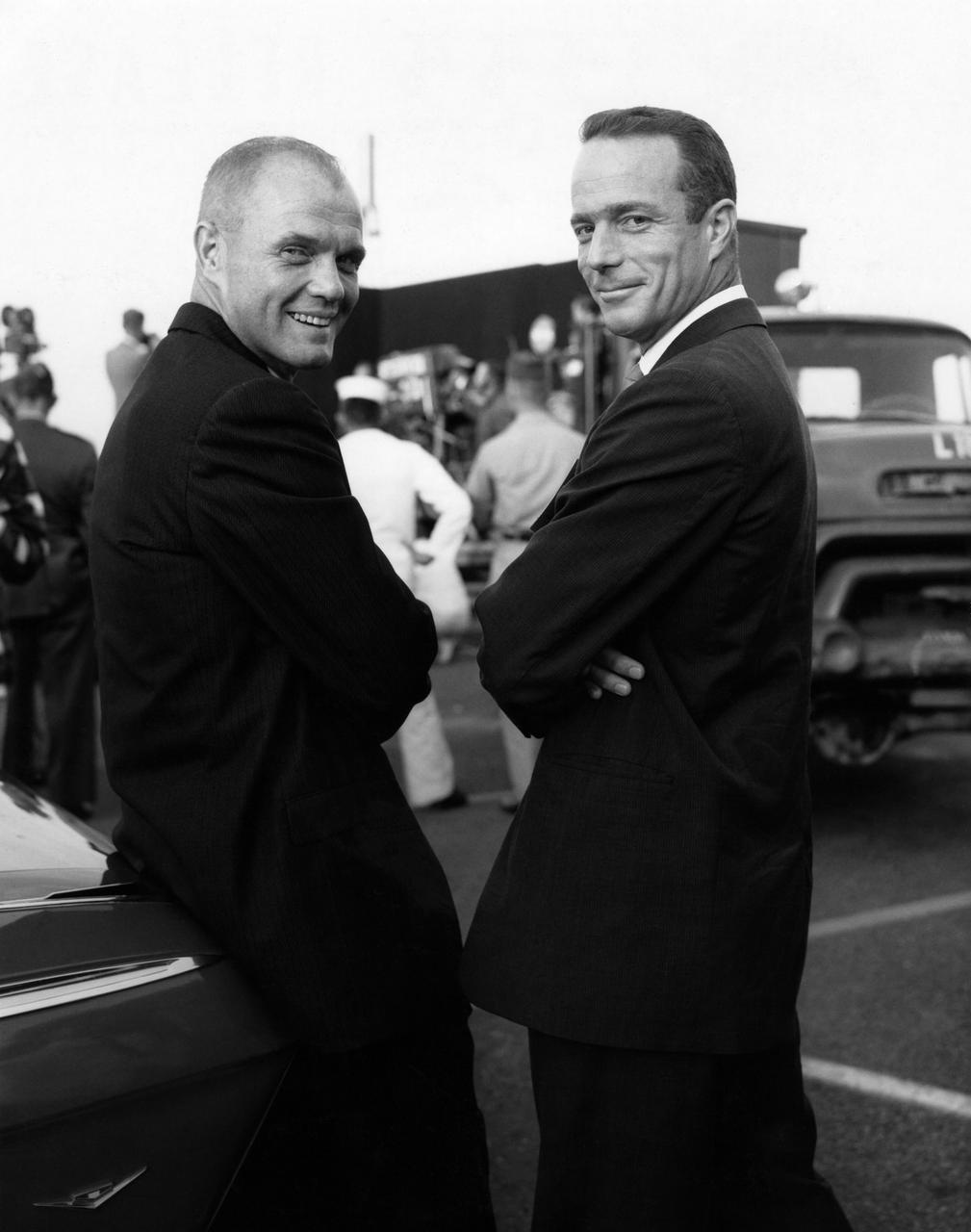
CAPE CANAVERAL, Fla. -- John Glenn and Scott Carpenter, designated the prime pilot and backup respectively for the first U.S. manned orbital spaceflight. Photo credit: NASA
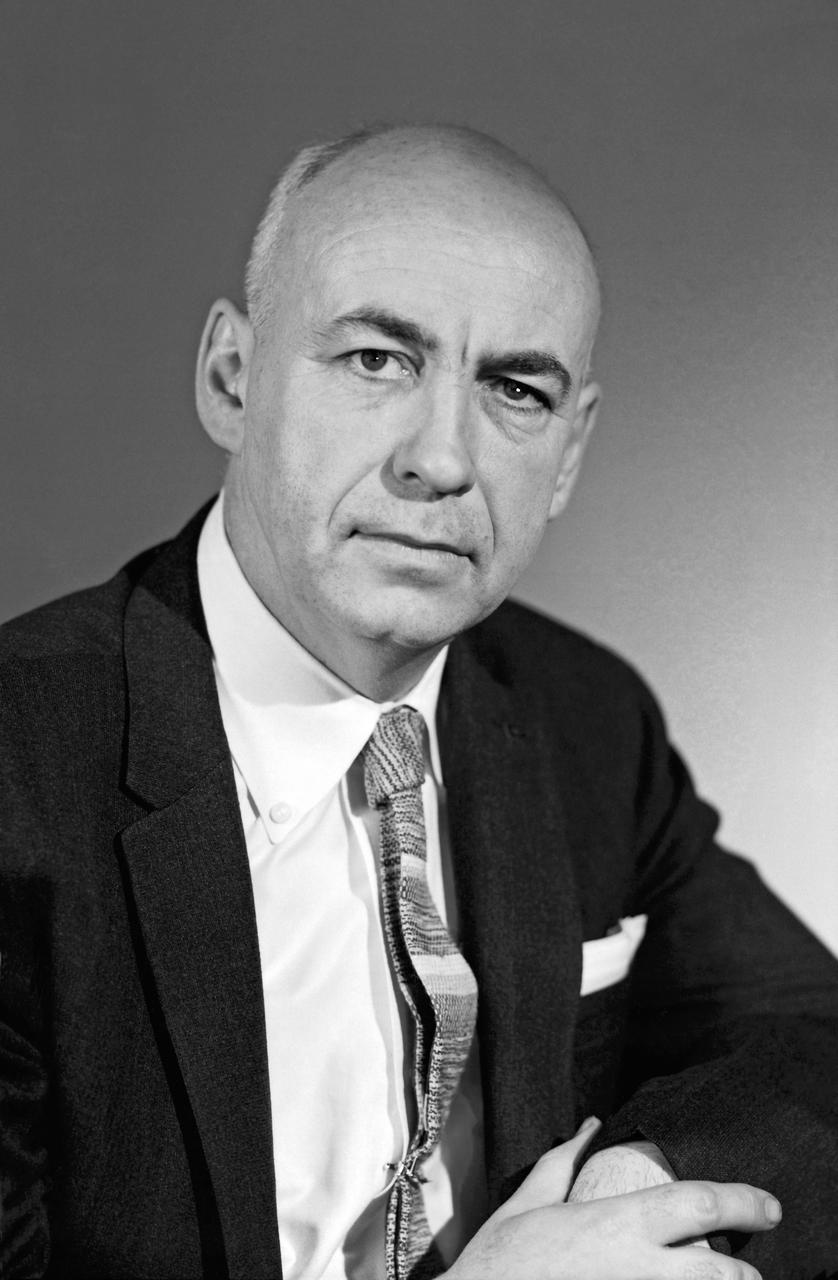
Portrait of Robert R. Gilruth. More than anyone else at Langley, began to push the idea that manned spaceflight was the next great challenge for aeronautic engineers. As head of NASA s Space Task Group, he was responsible for planning and carrying out Project Mercury, the country's first manned spaceflight program. Photograph published in Engineer in Charge: A History of the Langley Aeronautical Laboratory, 1917-1958 by James R. Hansen. Page 386.
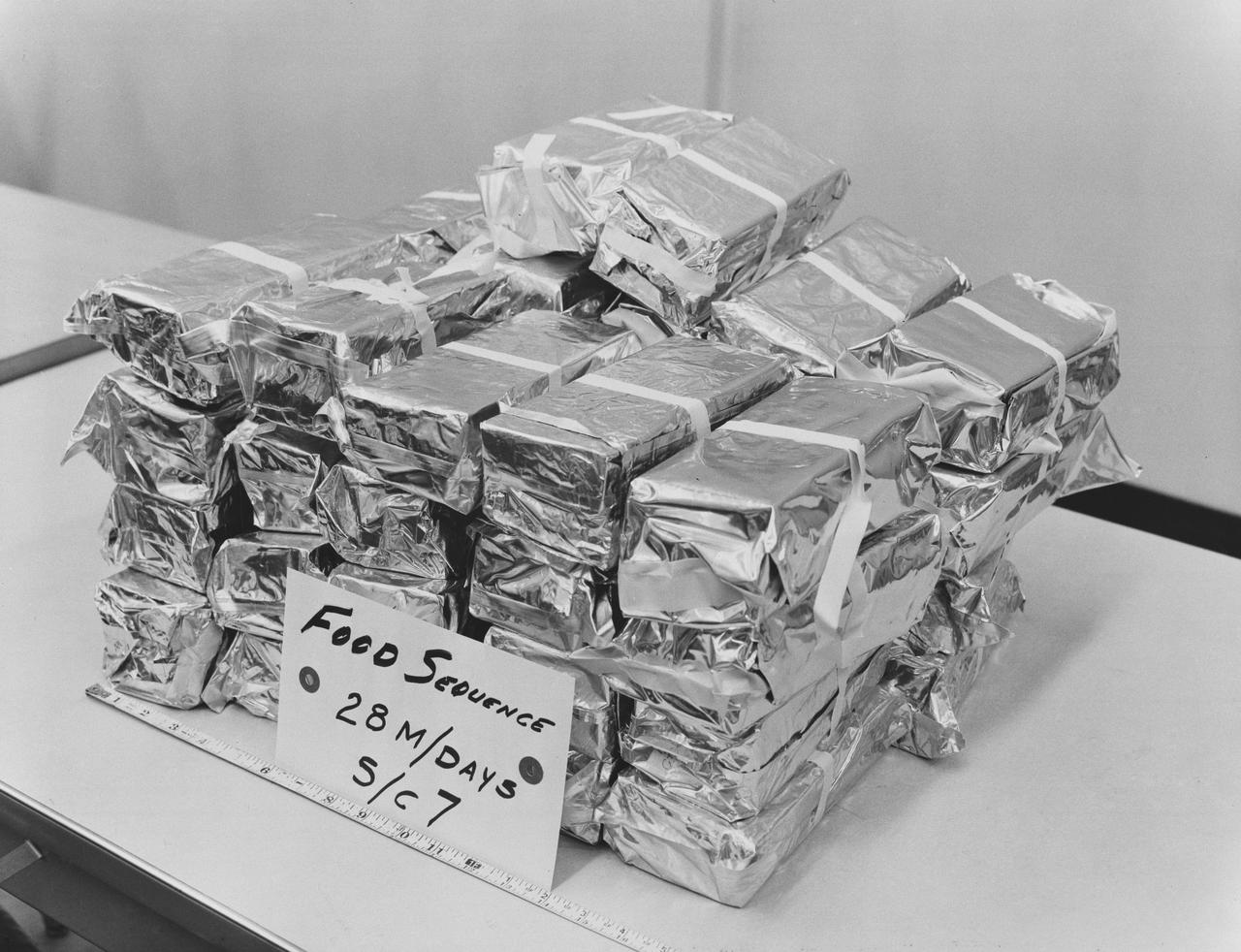
S65-61653 (1 Dec. 1965) --- Complete food supply for the two-man crew of the National Aeronautics and Space Administration's Gemini-7 spaceflight as it appears prior to stowage in the spacecraft. The food packages are tied in sequence for 28-manned days or a complete supply for two men for a 14-day mission. Photo credit: NASA
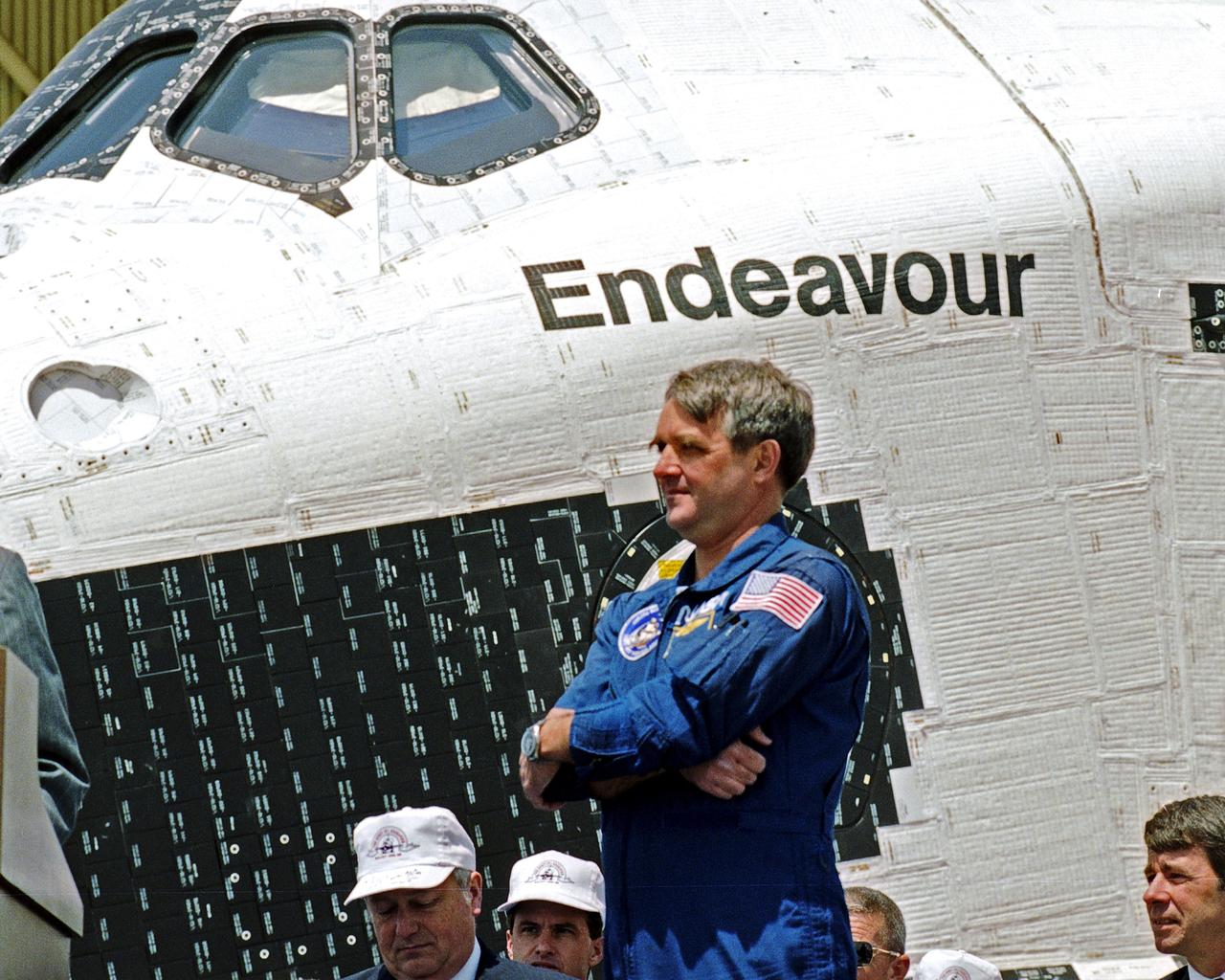
Chief Astronaut Daniel Brandenstein stands tall during a proud moment in the history of manned spaceflight: the debut of the newest space shuttle orbiter, Endeavour, at Palmdale, Calif. Photo credit: NASA
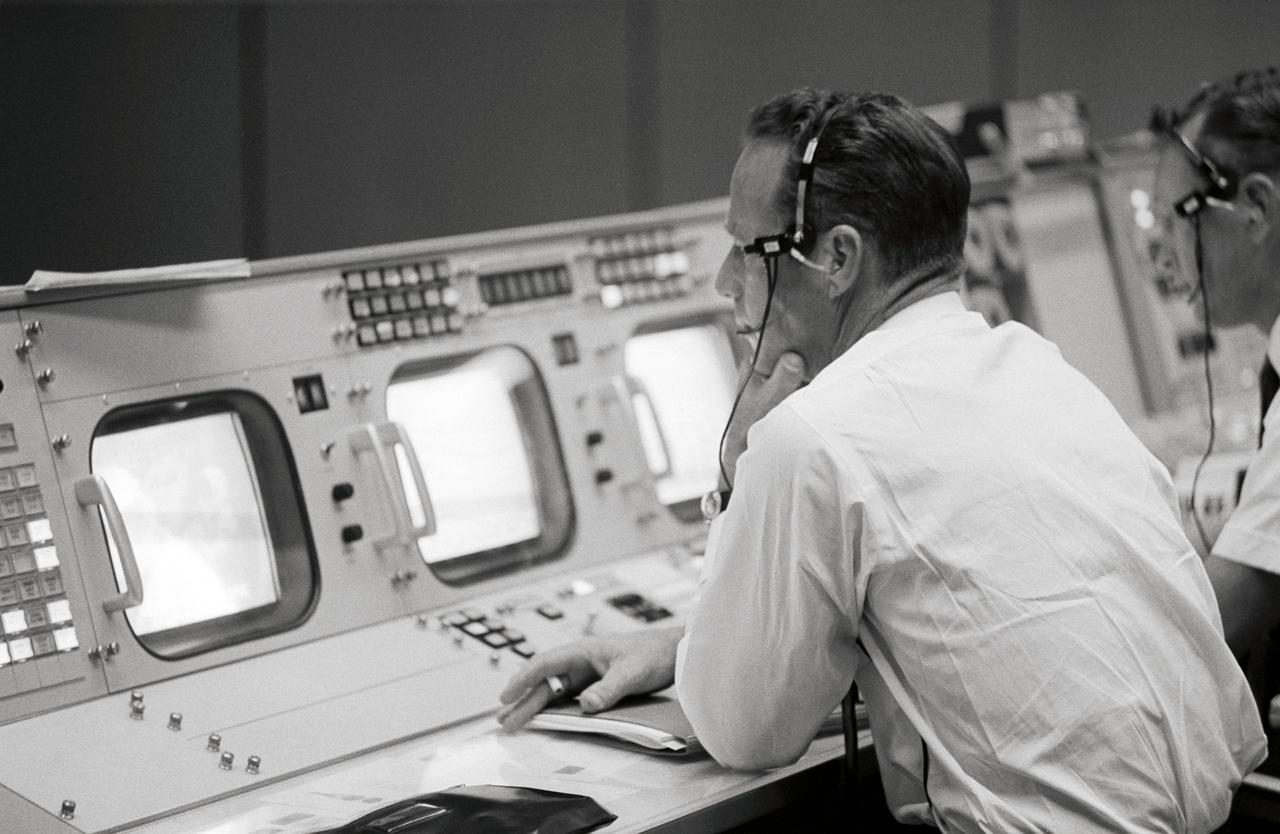
S66-51794 (12 Sept. 1966) --- Astronaut M. Scott Carpenter monitors the Booster Systems Console in the Manned Spacecraft Center (MSC) Mission Control Center during launch of the Gemini-11 spaceflight. Photo credit: NASA
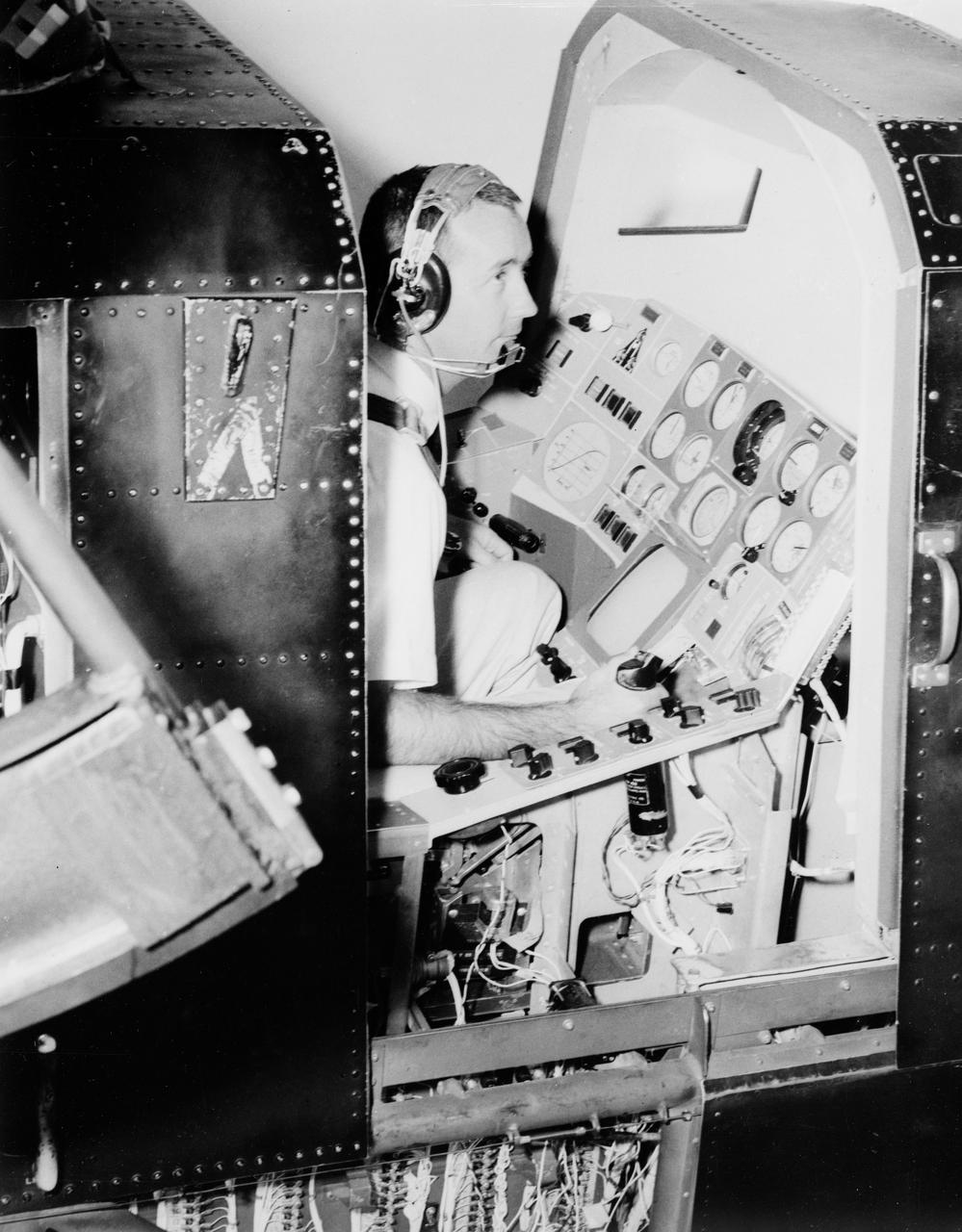
S65-19472 (10 May 1965) --- Astronaut James A. McDivitt is shown in the gondola of a realistic manned spaceflight simulator developed by the Astronautics Division of Ling-Temco-Vought in Dallas, Texas.
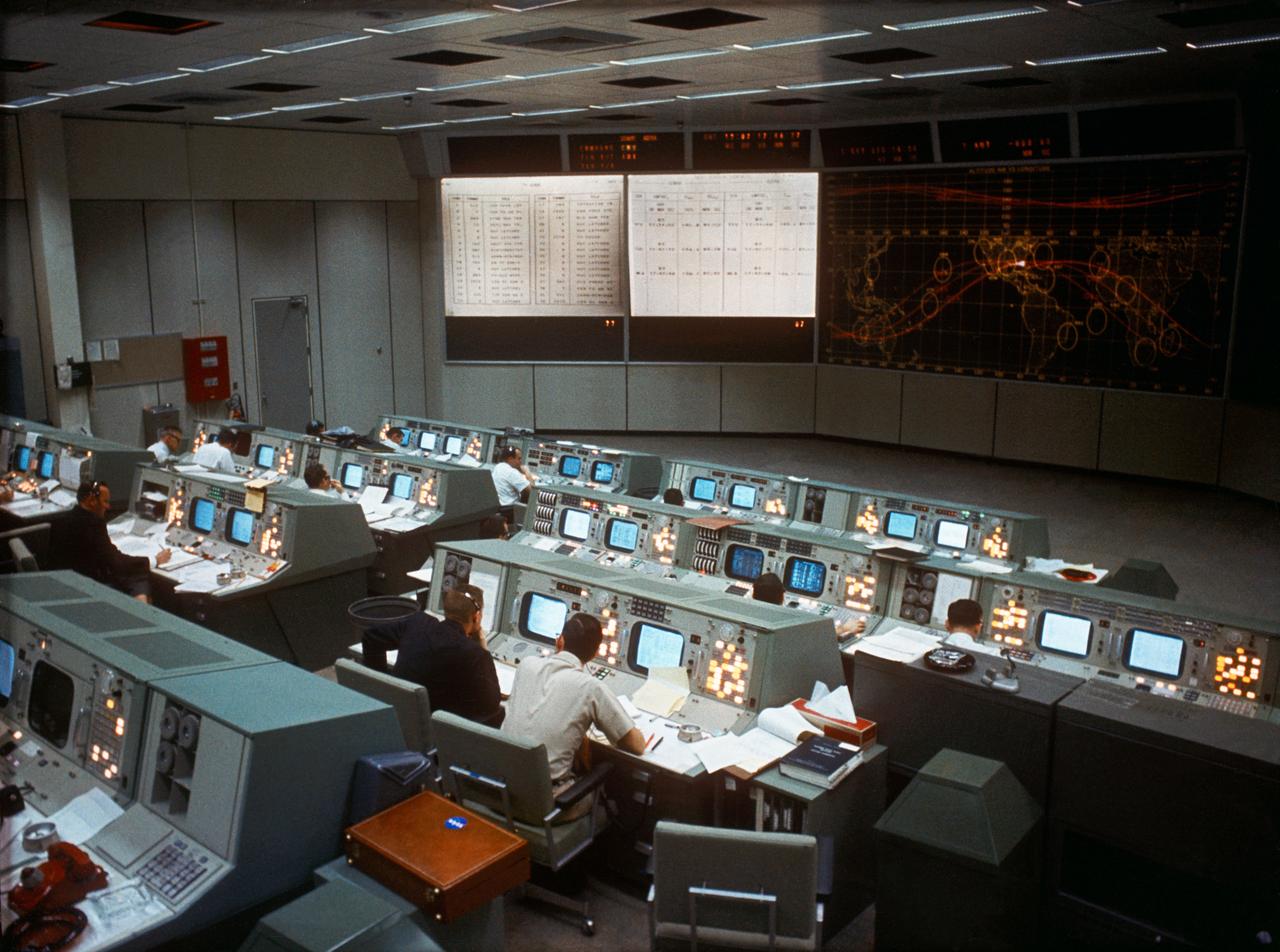
S65-60037 (7 Dec. 1965) --- An overall view of the Manned Spacecraft Center's Mission Control Center, during the National Aeronautics and Space Administration's Gemini-7 spaceflight. Photo credit: NASA
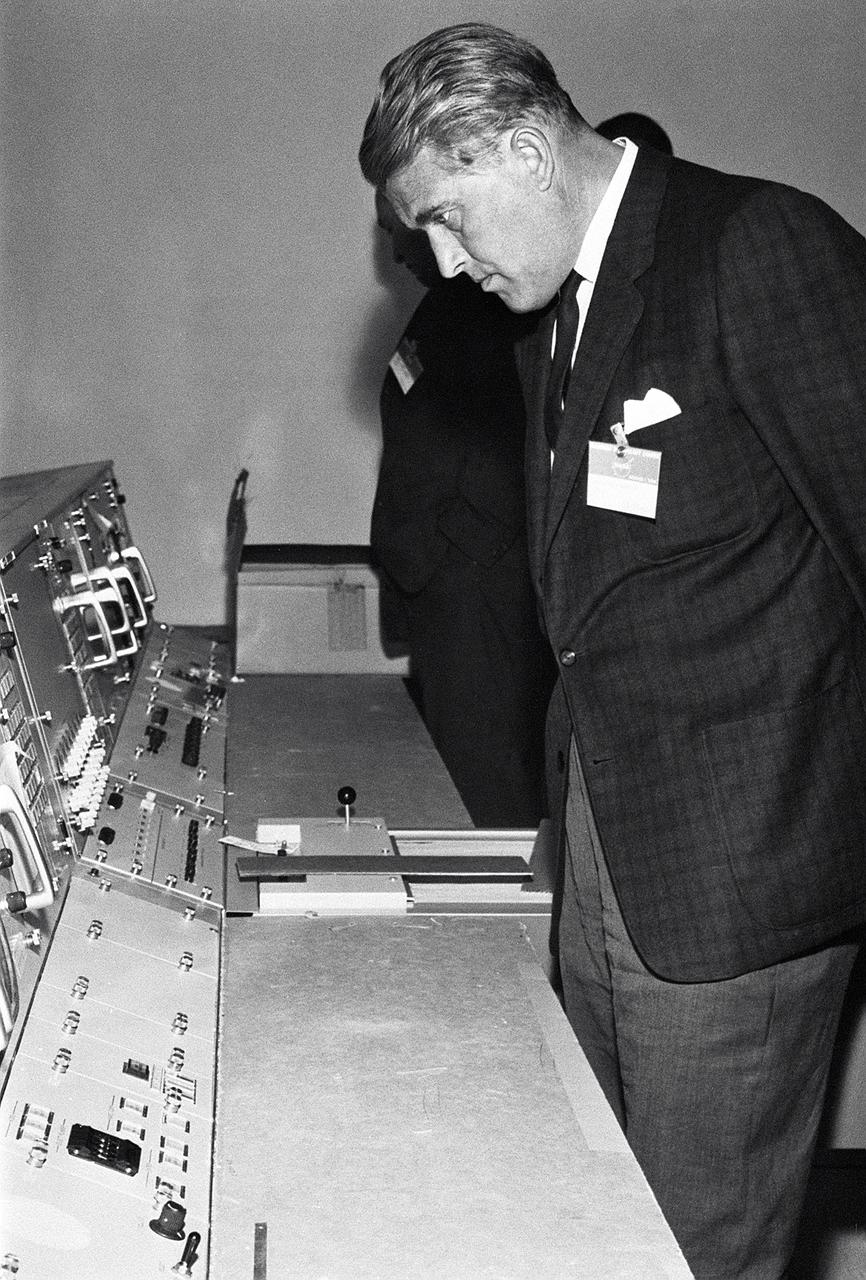
This photograph, dated October 14, 1964, was taken at the Marned Spacecraft Center, now the Johnson Space Center in Houston, Texas. Dr. von Braun is shown looking over consoles in the Manned Spaceflight Control Center.
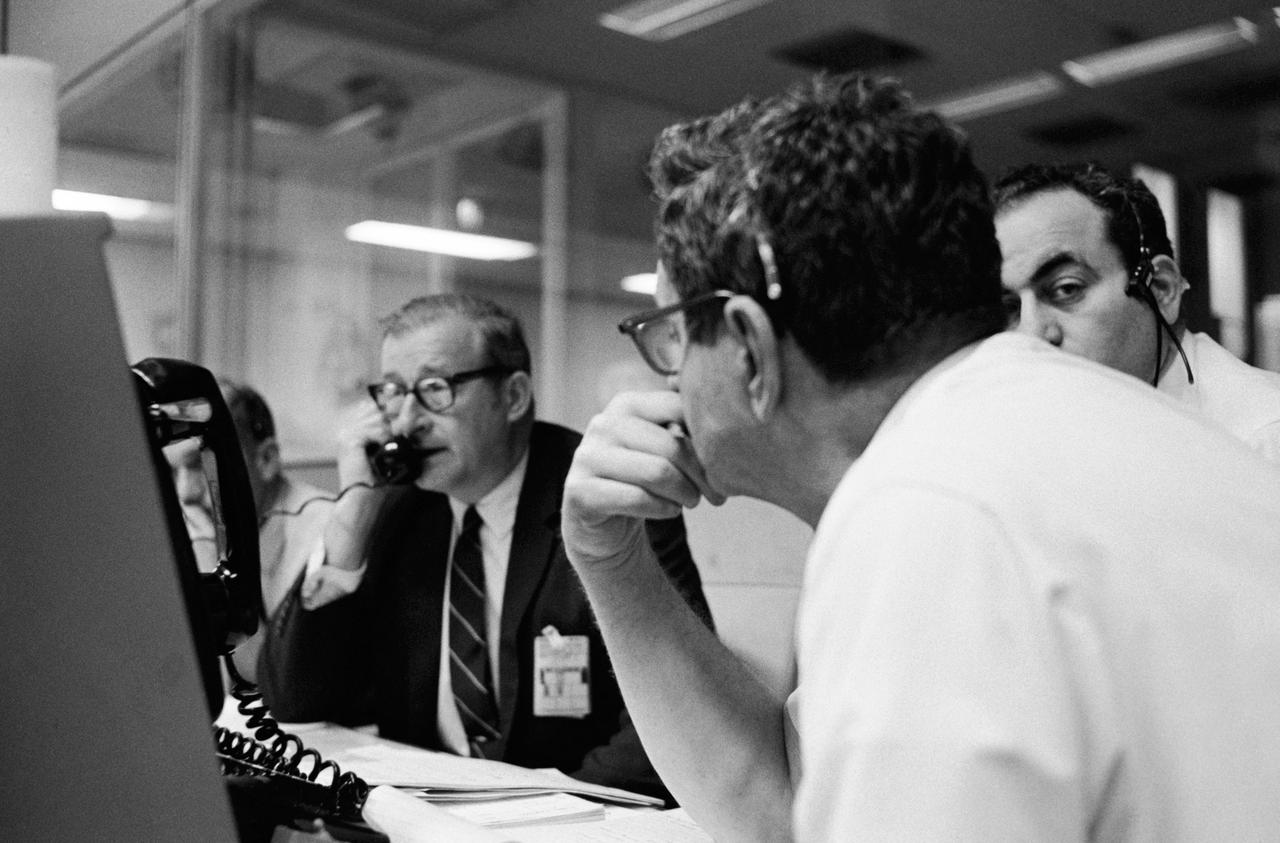
S70-34903 (14 April 1970) --- Dr. Thomas O. Paine, Administrator, National Aeronautics and Space Administration (NASA), talks on the telephone to President Richard M. Nixon. Dr. Paine is seated at his console in the Mission Operations Control Room (MOCR) at the Mission Control Center (MCC), Manned Spacecraft Center (MSC). Also pictured are Dr. Rocco Petrone, Apollo program director, Office Manned Spaceflight, NASA Headquarters (facing camera); and Chester M. Lee, Apollo mission director, Office of Manned Spaceflight, NASA Headquarters (HQ). Dr. Paine and the President were discussing the revised Apollo 13 flight plan following discovery of an oxygen cell failure in the Apollo 13 spacecraft several hours earlier.