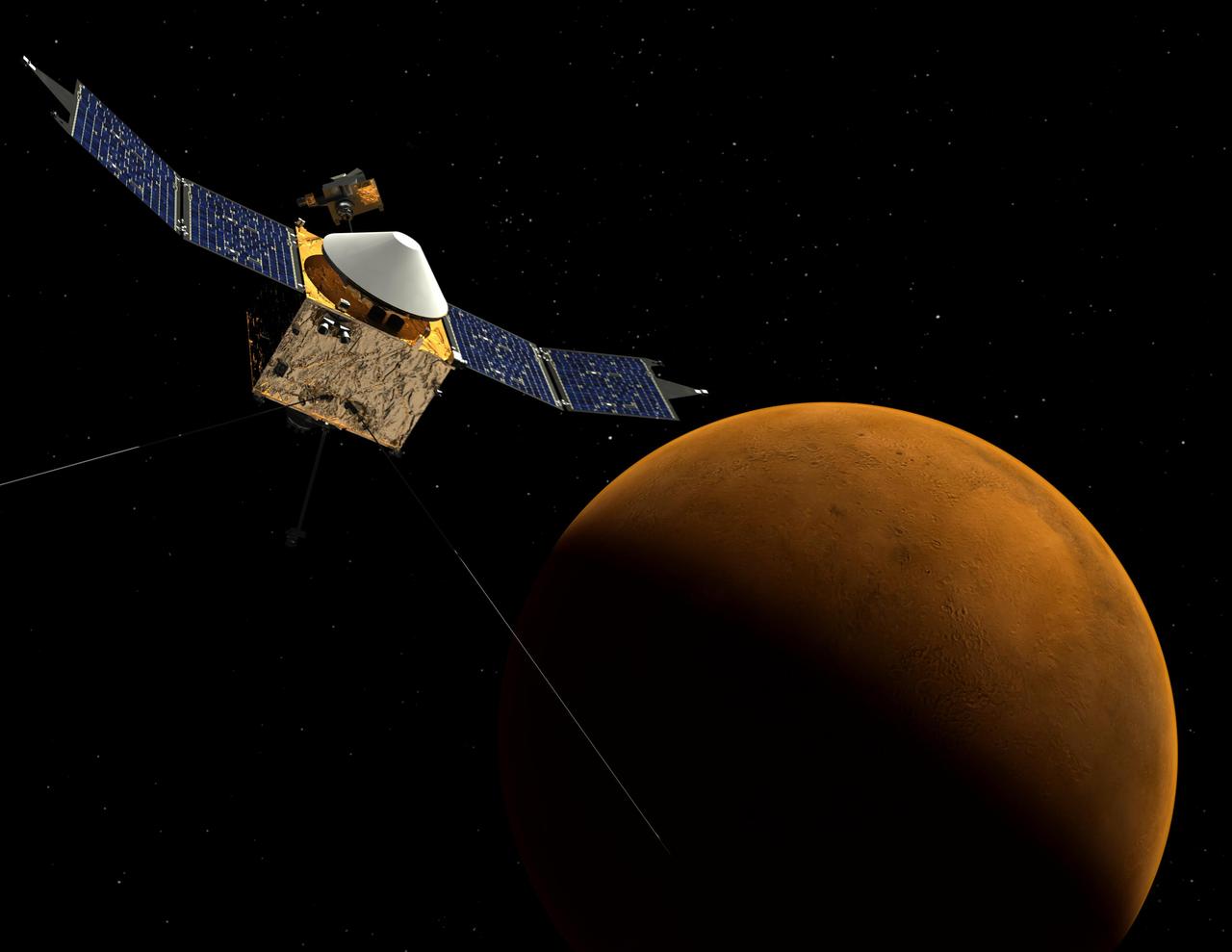
This artist concept depicts NASA Mars Atmosphere and Volatile EvolutioN MAVEN spacecraft near Mars. MAVEN is in development for launch in 2013 and will be the first mission devoted to understanding the Martian upper atmosphere.
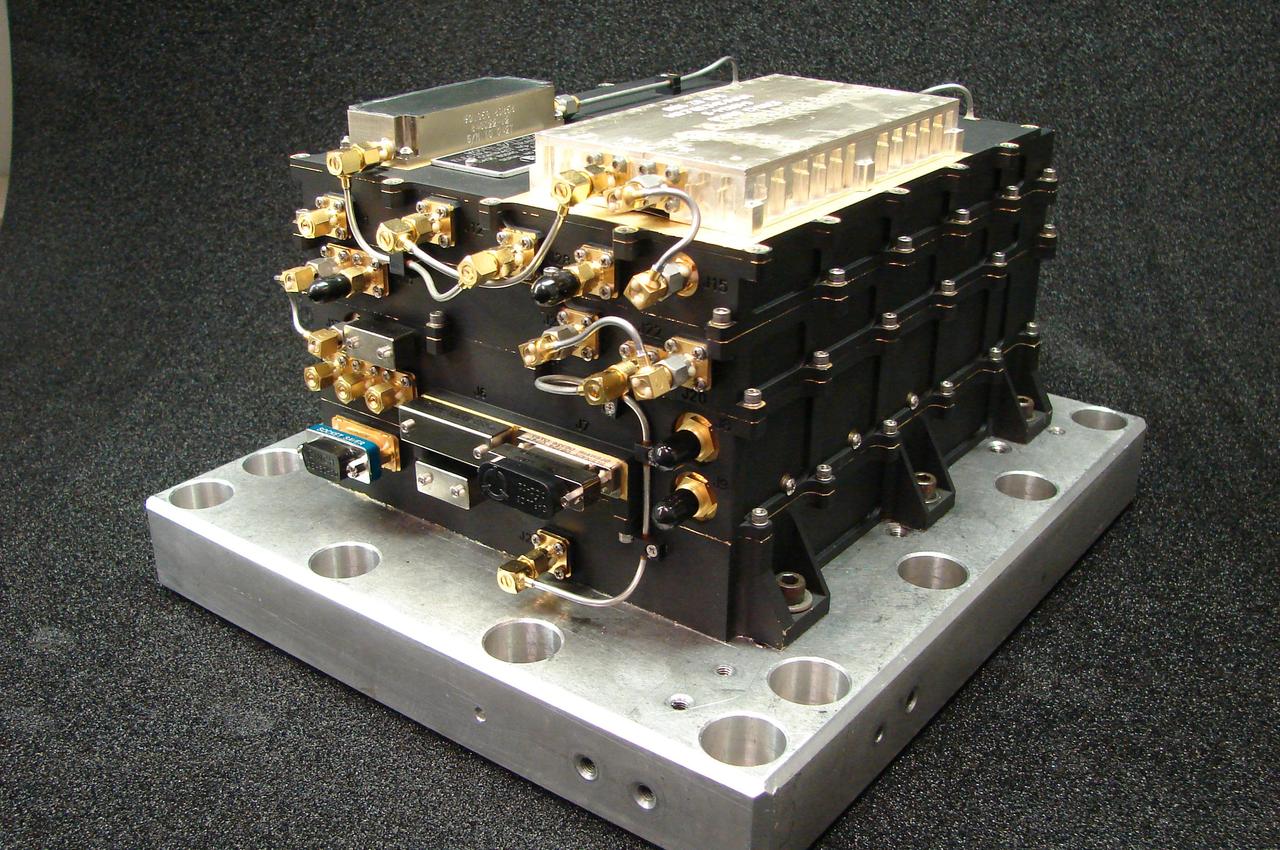
This radio hardware, the Electra UHF Transceiver on NASA MAVEN mission to Mars, is designed to provide communication relay support for robots on the surface of Mars.
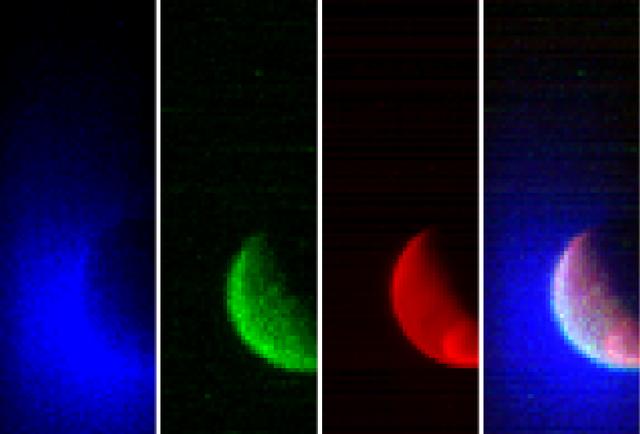
NASA’s Mars Atmosphere and Volatile Evolution (MAVEN) spacecraft has obtained its first observations of the extended upper atmosphere surrounding Mars. The Imaging Ultraviolet Spectrograph (IUVS) instrument obtained these false-color images eight hours after the successful completion of Mars orbit insertion by the spacecraft at 10:24 p.m. EDT Sunday, Sept. 21, after a 10-month journey. The image shows the planet from an altitude of 36,500 km in three ultraviolet wavelength bands. Blue shows the ultraviolet light from the sun scattered from atomic hydrogen gas in an extended cloud that goes to thousands of kilometers above the planet’s surface. Green shows a different wavelength of ultraviolet light that is primarily sunlight reflected off of atomic oxygen, showing the smaller oxygen cloud. Red shows ultraviolet sunlight reflected from the planet’s surface; the bright spot in the lower right is light reflected either from polar ice or clouds. The oxygen gas is held close to the planet by Mars’ gravity, while lighter hydrogen gas is present to higher altitudes and extends past the edges of the image. These gases derive from the breakdown of water and carbon dioxide in Mars’ atmosphere. Over the course of its one-Earth-year primary science mission, MAVEN observations like these will be used to determine the loss rate of hydrogen and oxygen from the Martian atmosphere. These observations will allow us to determine the amount of water that has escaped from the planet over time. MAVEN is the first spacecraft dedicated to exploring the tenuous upper atmosphere of Mars. Read more: <a href="http://1.usa.gov/1oj2Av3" rel="nofollow">1.usa.gov/1oj2Av3</a>
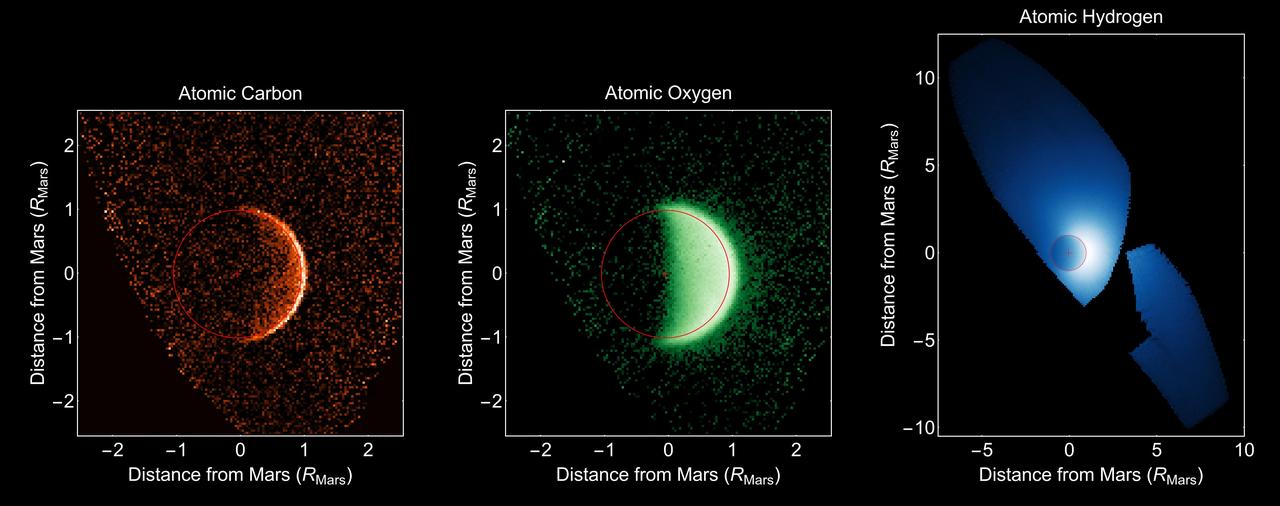
Three views of an escaping atmosphere around Mars, obtained by NASA MAVEN Imaging Ultraviolet Spectrograph, are shown here.

After investigating the upper atmosphere of the Red Planet for a full Martian year, NASA’s MAVEN mission has determined that the escaping water does not always go gently into space. Sophisticated measurements made by a suite of instruments on the Mars Atmosphere and Volatile Evolution, or MAVEN, spacecraft revealed the ups and downs of hydrogen escape – and therefore water loss. The escape rate peaked when Mars was at its closest point to the sun and dropped off when the planet was farthest from the sun. The rate of loss varied dramatically overall, with 10 times more hydrogen escaping at the maximum. “MAVEN is giving us unprecedented detail about hydrogen escape from the upper atmosphere of Mars, and this is crucial for helping us figure out the total amount of water lost over billions of years,” said Ali Rahmati, a MAVEN team member at the University of California at Berkeley who analyzed data from two of the spacecraft’s instruments. Hydrogen in Mars’ upper atmosphere comes from water vapor in the lower atmosphere. An atmospheric water molecule can be broken apart by sunlight, releasing the two hydrogen atoms from the oxygen atom that they had been bound to. Several processes at work in Mars’ upper atmosphere may then act on the hydrogen, leading to its escape. Read more: <a href="http://go.nasa.gov/2dAgAV4" rel="nofollow">go.nasa.gov/2dAgAV4</a> <b><a href="http://www.nasa.gov/audience/formedia/features/MP_Photo_Guidelines.html" rel="nofollow">NASA image use policy.</a></b> <b><a href="http://www.nasa.gov/centers/goddard/home/index.html" rel="nofollow">NASA Goddard Space Flight Center</a></b> enables NASA’s mission through four scientific endeavors: Earth Science, Heliophysics, Solar System Exploration, and Astrophysics. Goddard plays a leading role in NASA’s accomplishments by contributing compelling scientific knowledge to advance the Agency’s mission. <b>Follow us on <a href="http://twitter.com/NASAGoddardPix" rel="nofollow">Twitter</a></b> <b>Like us on <a href="http://www.facebook.com/pages/Greenbelt-MD/NASA-Goddard/395013845897?ref=tsd" rel="nofollow">Facebook</a></b> <b>Find us on <a href="http://instagrid.me/nasagoddard/?vm=grid" rel="nofollow">Instagram</a></b>
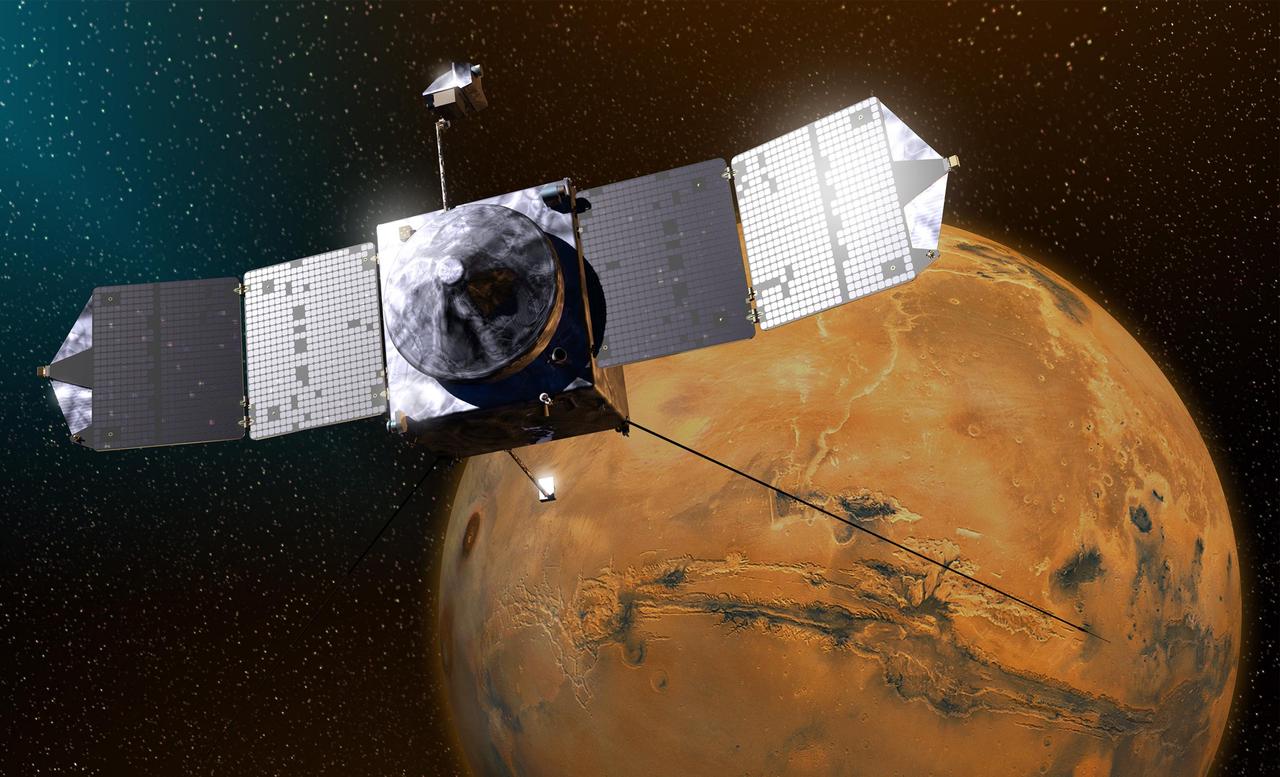
This artist concept depicts NASA Mars Atmosphere and Volatile EvolutioN MAVEN spacecraft near Mars.
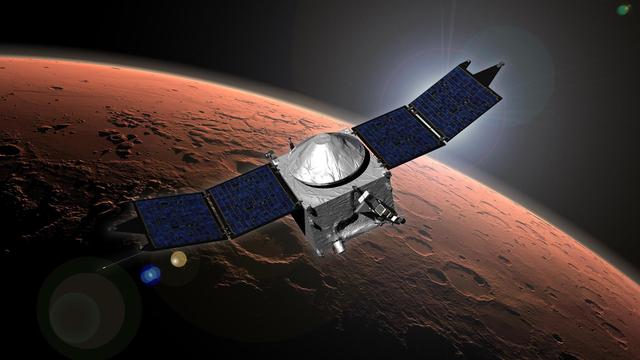
This image shows an artist concept of NASA Mars Atmosphere and Volatile Evolution MAVEN mission.
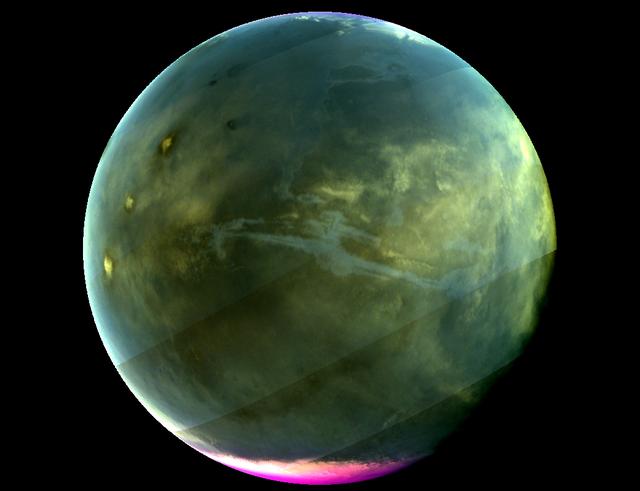
Caption: MAVEN's Imaging UltraViolet Spectrograph obtained this image of Mars on July 13, 2016, when the planet appeared nearly full when viewed from the highest altitudes in the MAVEN orbit. The ultraviolet colors of the planet have been rendered in false color, to show what we would see with ultraviolet-sensitive eyes. The ultraviolet (UV) view gives several new perspectives on Mars. Valles Marineris, a two-thousand-mile canyon system, appears prominently across the middle of the image as a blue gash. The deep canyon appears blue due to the scattering of ultraviolet light by the atmosphere, so strong that we cannot make out the bottom of the canyon. The greenish cast of the planet as a whole is a combination of the reflection of the surface plus the atmospheric scattering. The three tall Tharsis volcanoes appear near the left edge, dotted by white clouds forming as the winds flow over them. Bright white polar caps appear at both poles, typical for this season, in which there is a transition from southern-hemisphere winter to summer. The magenta-colored region visible at the south pole shows where ozone is absorbing ultraviolet light — the same property of ozone that protects life on Earth from harmful UV radiation. While ozone tends to be destroyed by chemical processes in the winter on Earth, different atmospheric chemistry at Mars caused it to build up in the winter there. A hint of ozone is also visible near the north pole; more will accumulate there as winter is coming. IUVS obtains images of Mars every orbit when the sunlit portion of the planet is visible from high altitude. Credits: NASA/Goddard/University of Colorado/LASP Read more: <a href="http://go.nasa.gov/2d9aU1N" rel="nofollow">go.nasa.gov/2d9aU1N</a> Today, NASA’s Mars Atmosphere and Volatile EvolutioN (MAVEN) mission completed one Mars year of science observations. One Mars year is just under two Earth years. MAVEN launched on Nov. 18, 2013, and went into orbit around Mars on Sept. 21, 2014. During its time at Mars, MAVEN has answered many questions about the Red Planet. “Taken together, the MAVEN results tell us that loss of gas from the atmosphere to space has been the major force behind the climate having changed from a warm, wet environment to the cold, dry one that we see today,” said Bruce Jakosky, MAVEN principal investigator, from the University of Colorado in Boulder. NASA recently declared that MAVEN had achieved mission success during its primary mission. Mission success means that the spacecraft operated as intended, made the expected science measurements, and achieved its proposed science objectives. <b><a href="http://www.nasa.gov/audience/formedia/features/MP_Photo_Guidelines.html" rel="nofollow">NASA image use policy.</a></b> <b><a href="http://www.nasa.gov/centers/goddard/home/index.html" rel="nofollow">NASA Goddard Space Flight Center</a></b> enables NASA’s mission through four scientific endeavors: Earth Science, Heliophysics, Solar System Exploration, and Astrophysics. Goddard plays a leading role in NASA’s accomplishments by contributing compelling scientific knowledge to advance the Agency’s mission. <b>Follow us on <a href="http://twitter.com/NASAGoddardPix" rel="nofollow">Twitter</a></b> <b>Like us on <a href="http://www.facebook.com/pages/Greenbelt-MD/NASA-Goddard/395013845897?ref=tsd" rel="nofollow">Facebook</a></b> <b>Find us on <a href="http://instagrid.me/nasagoddard/?vm=grid" rel="nofollow">Instagram</a></b>
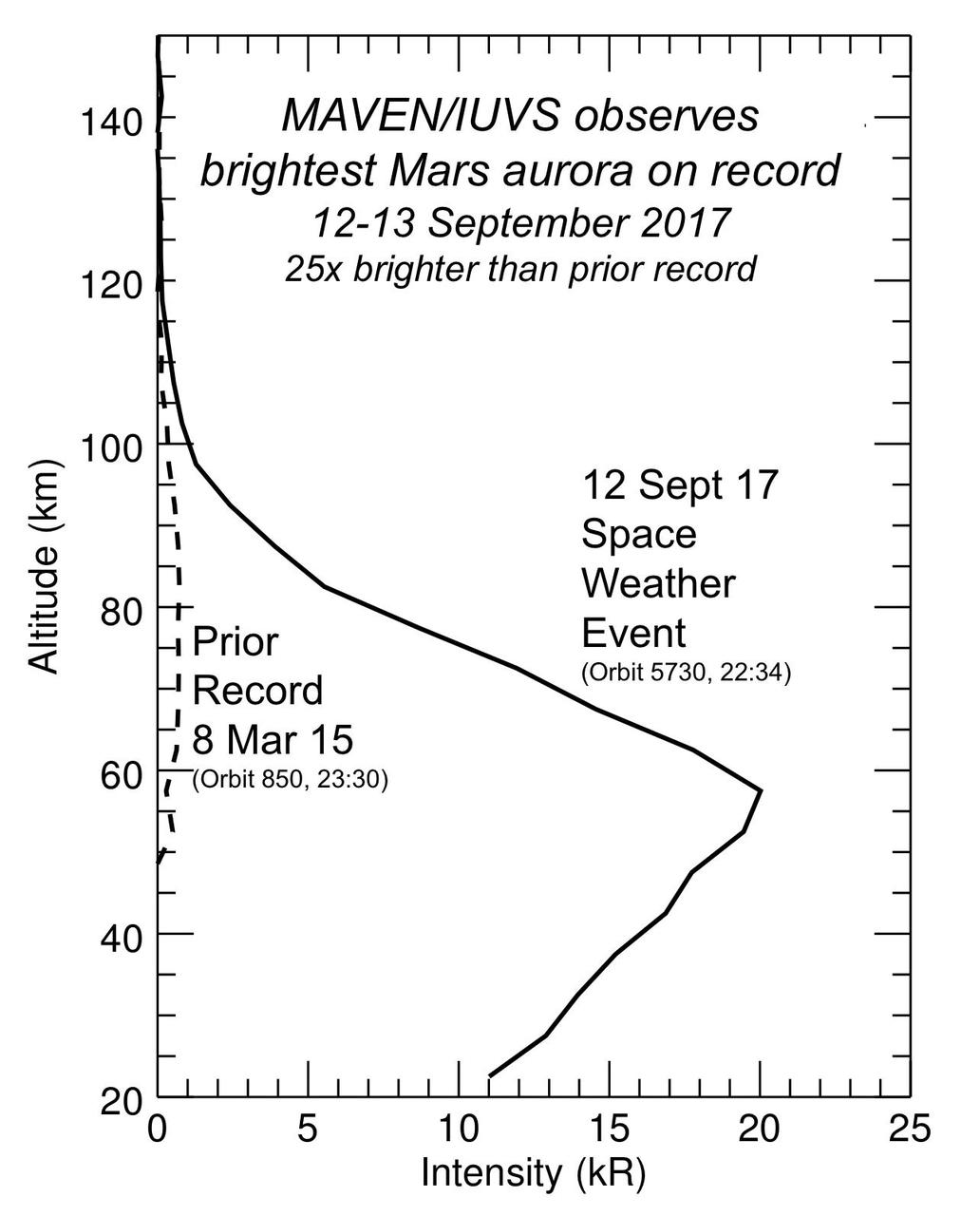
These profiles show the brightness of aurora emission in Mars' atmosphere at different altitudes. The data are from observations by the Imaging Ultraviolet Spectrograph instrument (IUVS) on NASA's Mars Atmosphere and Volatile Evolution orbiter, or MAVEN. The solid black profile on the right shows the aurora during a September 2017 solar storm. Barely visible along the vertical axis is a dashed profile representing the previous brightest aurora seen by MAVEN, which occurred in March 2015. The recent event is more than 25 times brighter than the previous brightest aurora seen by MAVEN, which has been orbiting Mars since September 2014. https://photojournal.jpl.nasa.gov/catalog/PIA21857
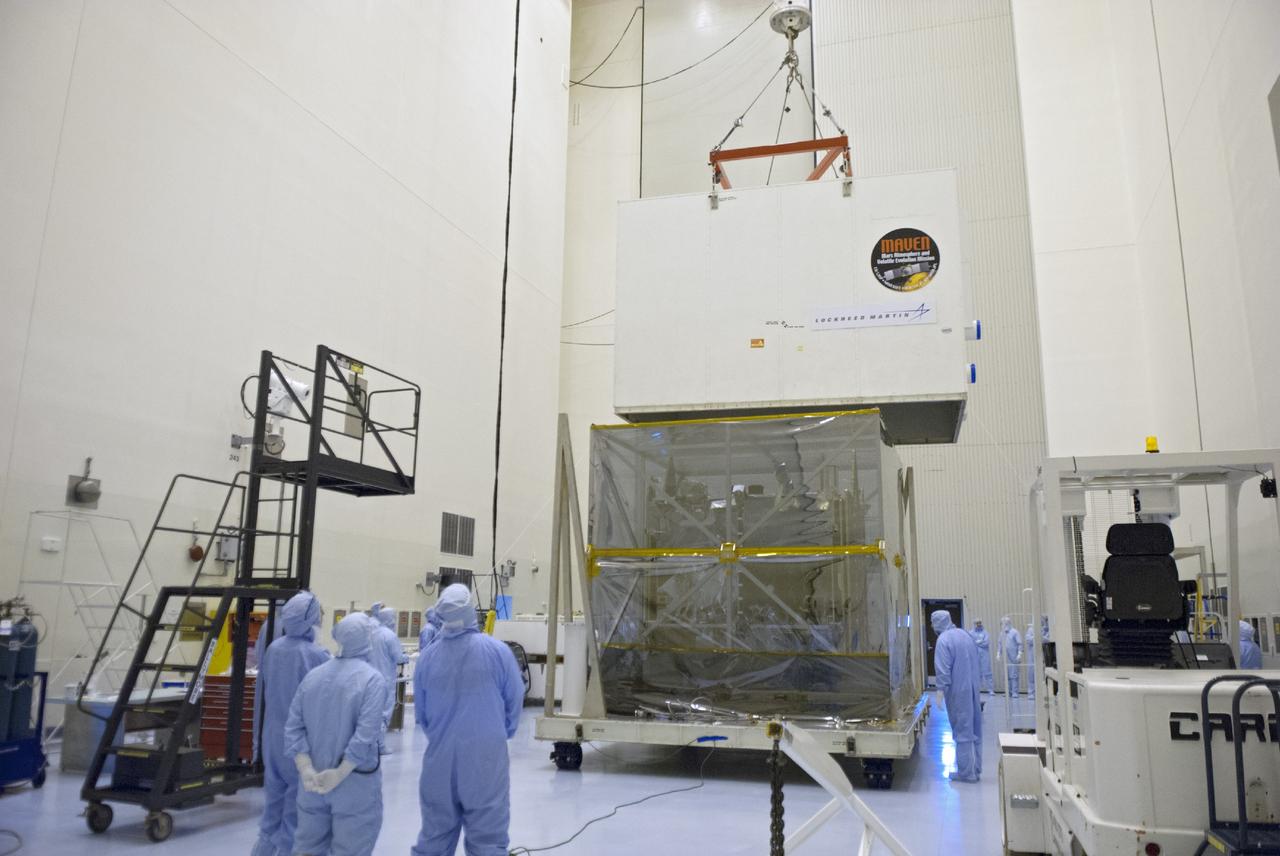
CAPE CANAVERAL, Fla. – Engineers use a sling to remove a shipping container from around NASA’s Mars Atmosphere and Volatile Evolution MAVEN spacecraft inside the Payload Hazardous Servicing Facility on Aug. 3, 2013, at the agency’s Kennedy Space Center in Florida. MAVEN will be prepared inside the facility for its scheduled November launch to Mars. Positioned in an orbit above the Red Planet, MAVEN will study the upper atmosphere of Mars in unprecedented detail. Photo credit: NASA/Tim Jacobs
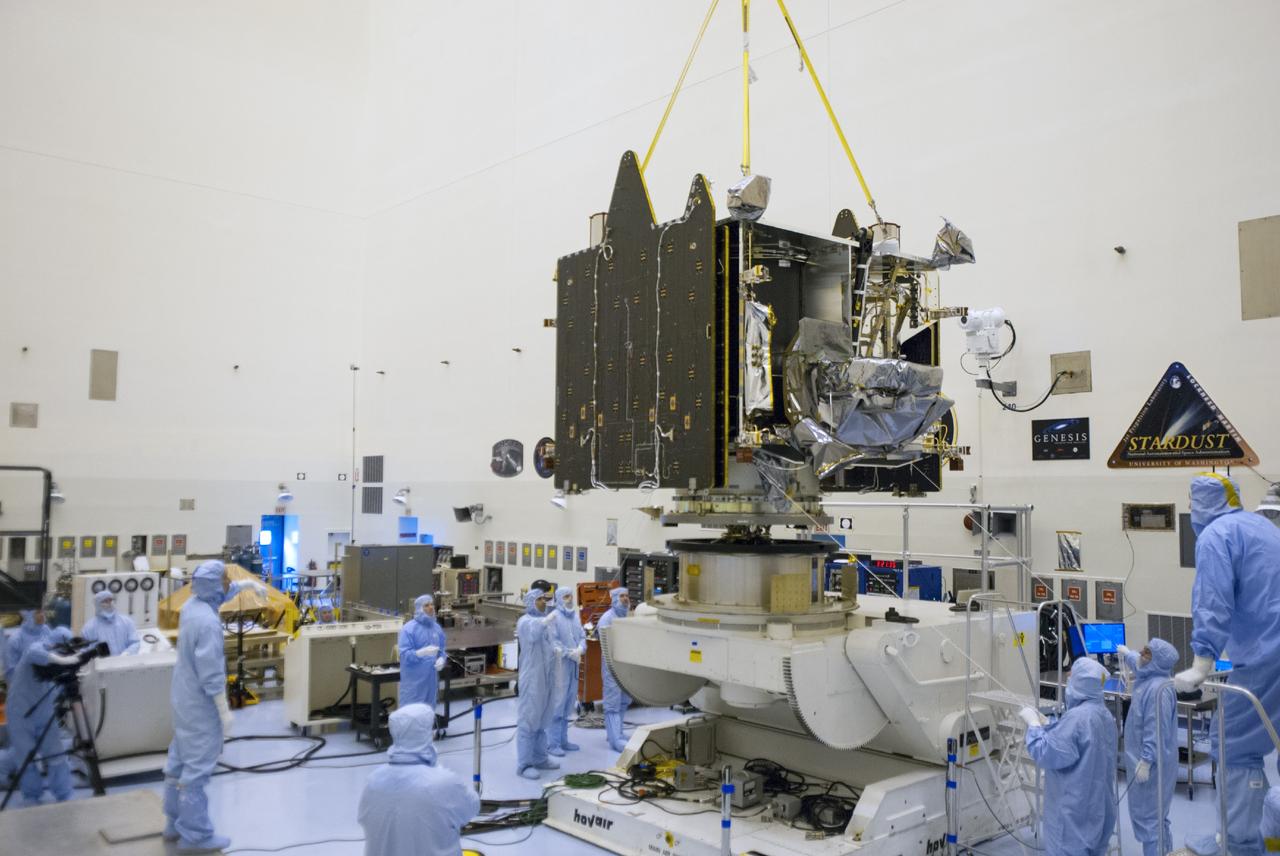
CAPE CANAVERAL, Fla. – A crane lowers NASA’s Mars Atmosphere and Volatile Evolution MAVEN spacecraft onto a processing stand inside the Payload Hazardous Servicing Facility on Aug. 3, 2013, at the agency’s Kennedy Space Center in Florida. MAVEN will be prepared inside the facility for its scheduled November launch to Mars. Positioned in an orbit above the Red Planet, MAVEN will study the upper atmosphere of Mars in unprecedented detail. Photo credit: NASA/Tim Jacobs
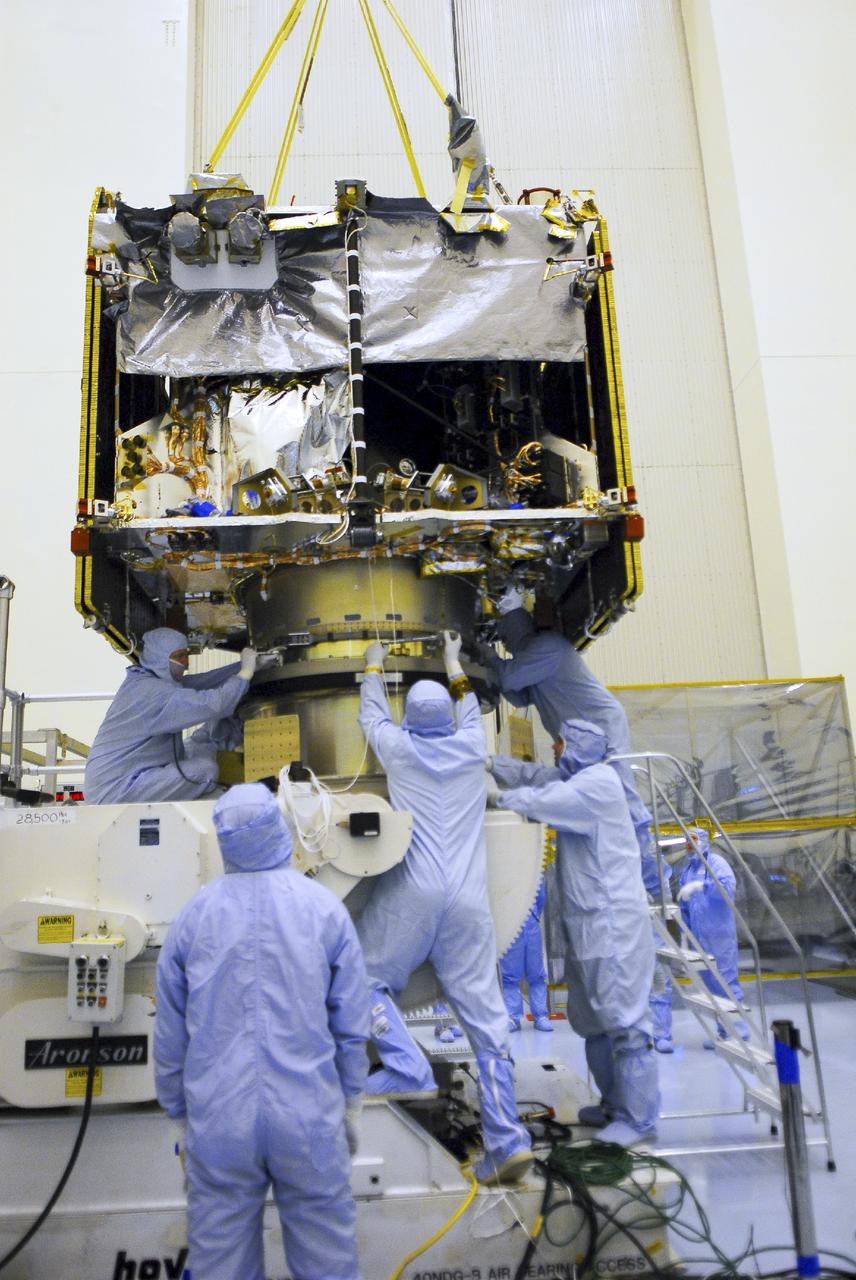
CAPE CANAVERAL, Fla. – Engineers fasten NASA’s Mars Atmosphere and Volatile Evolution MAVEN spacecraft to a processing stand inside the Payload Hazardous Servicing Facility on Aug. 3, 2013, at the agency’s Kennedy Space Center in Florida. MAVEN will be prepared inside the facility for its scheduled November launch to Mars. Positioned in an orbit above the Red Planet, MAVEN will study the upper atmosphere of Mars in unprecedented detail. Photo credit: NASA/Tim Jacobs
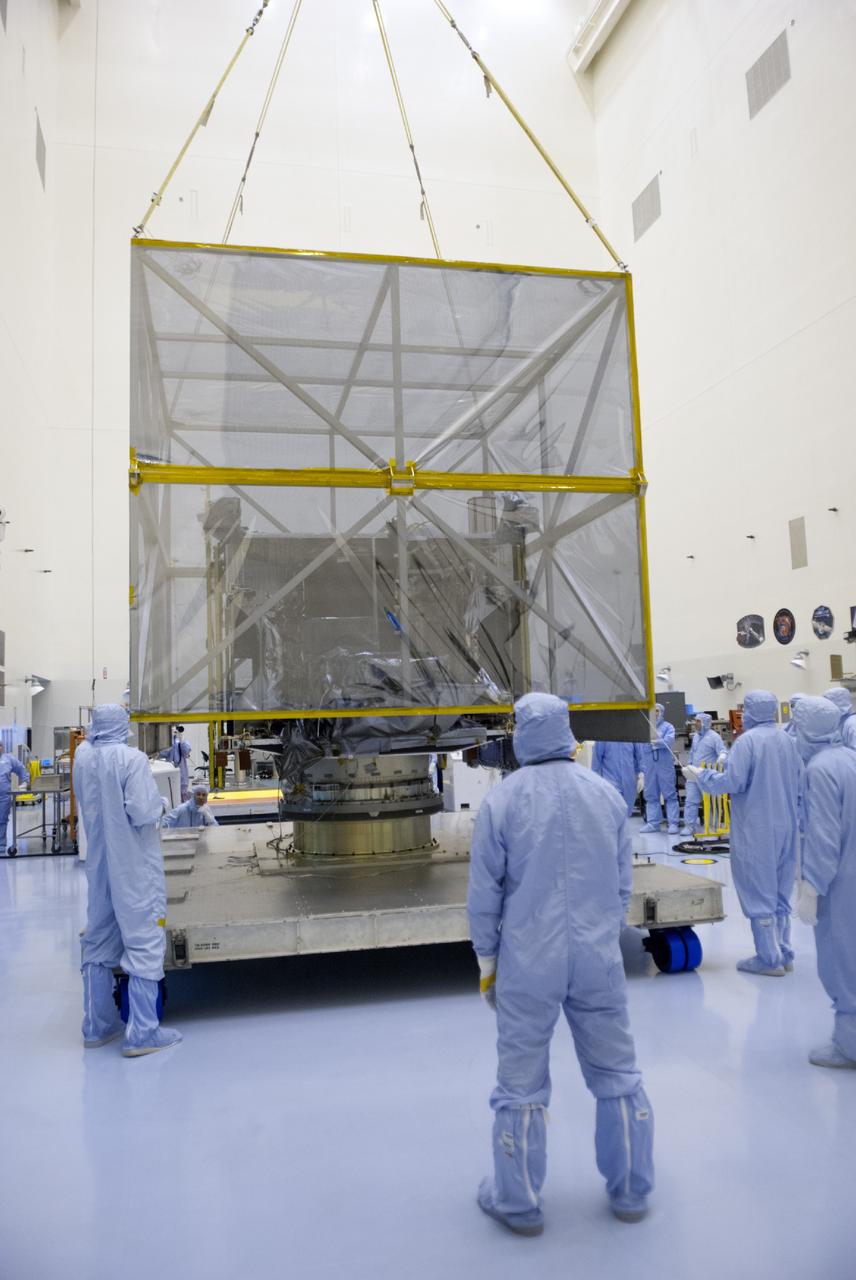
CAPE CANAVERAL, Fla. – A crane lifts shipping material from around NASA’s Mars Atmosphere and Volatile Evolution MAVEN spacecraft inside the Payload Hazardous Servicing Facility on Aug. 3, 2013, at the agency’s Kennedy Space Center in Florida. MAVEN will be prepared inside the facility for its scheduled November launch to Mars. Positioned in an orbit above the Red Planet, MAVEN will study the upper atmosphere of Mars in unprecedented detail. Photo credit: NASA/Tim Jacobs
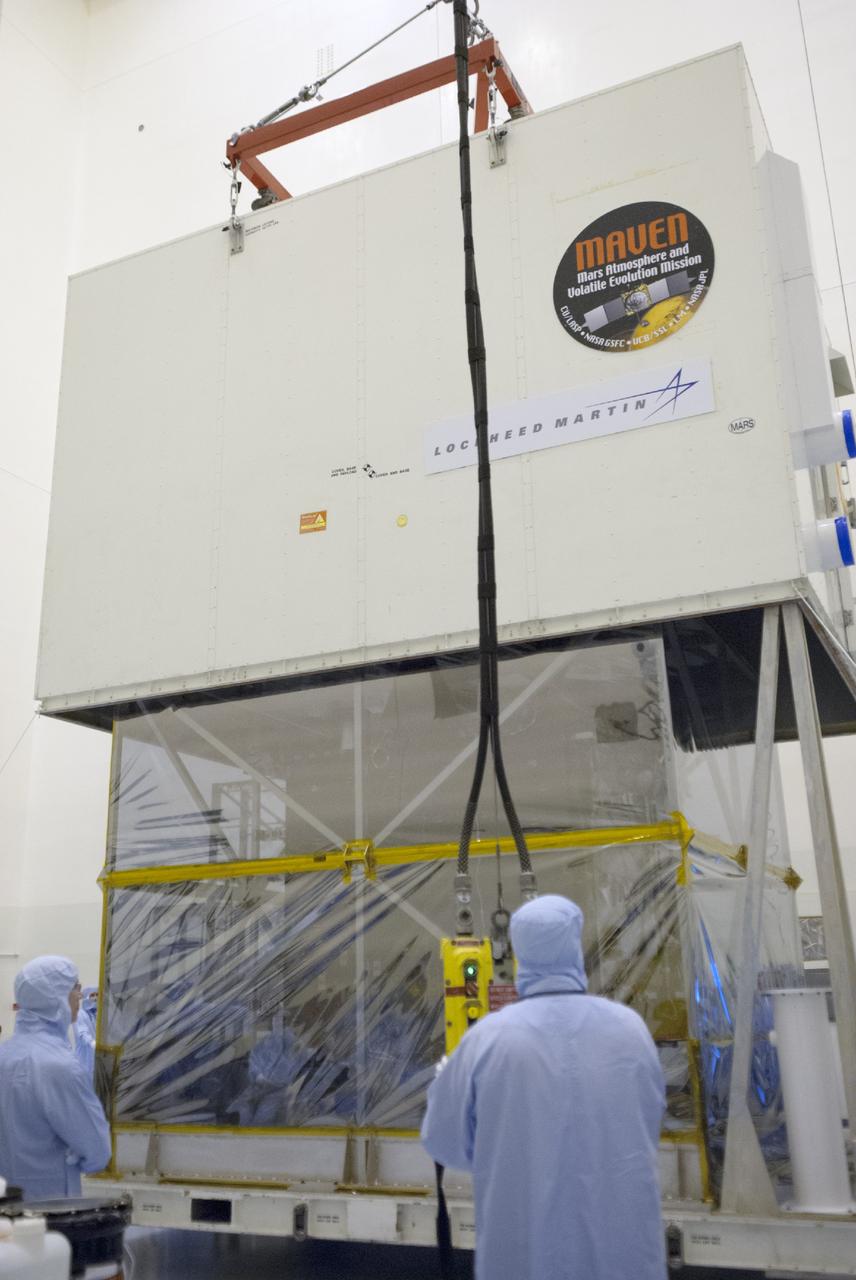
CAPE CANAVERAL, Fla. – Engineers use a sling to remove a shipping container from around NASA’s Mars Atmosphere and Volatile Evolution MAVEN spacecraft inside the Payload Hazardous Servicing Facility on Aug. 3, 2013, at the agency’s Kennedy Space Center in Florida. MAVEN will be prepared inside the facility for its scheduled November launch to Mars. Positioned in an orbit above the Red Planet, MAVEN will study the upper atmosphere of Mars in unprecedented detail. Photo credit: NASA/Tim Jacobs
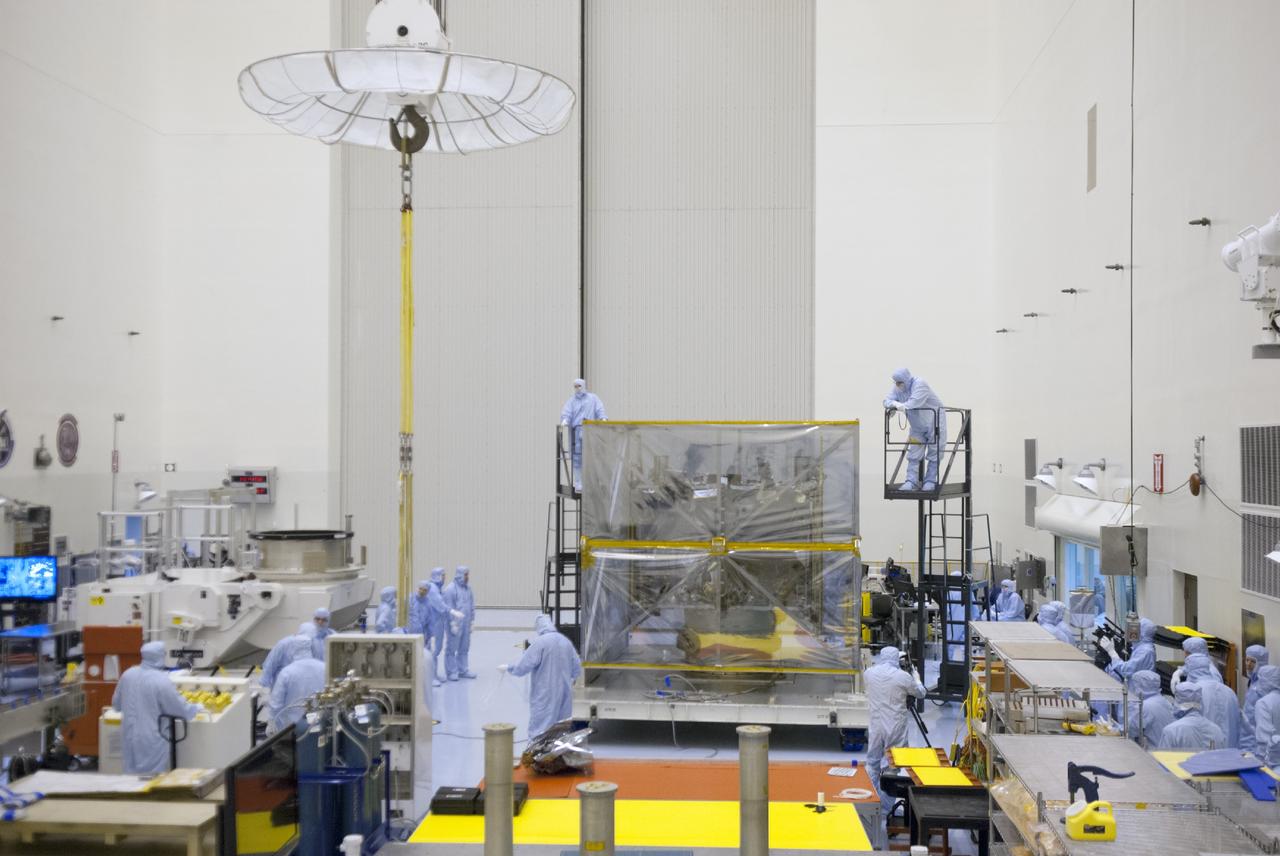
CAPE CANAVERAL, Fla. – Engineers prepare to remove shipping material from around NASA’s Mars Atmosphere and Volatile Evolution MAVEN spacecraft inside the Payload Hazardous Servicing Facility on Aug. 3, 2013, at the agency’s Kennedy Space Center in Florida. MAVEN will be prepared inside the facility for its scheduled November launch to Mars. Positioned in an orbit above the Red Planet, MAVEN will study the upper atmosphere of Mars in unprecedented detail. Photo credit: NASA/Tim Jacobs
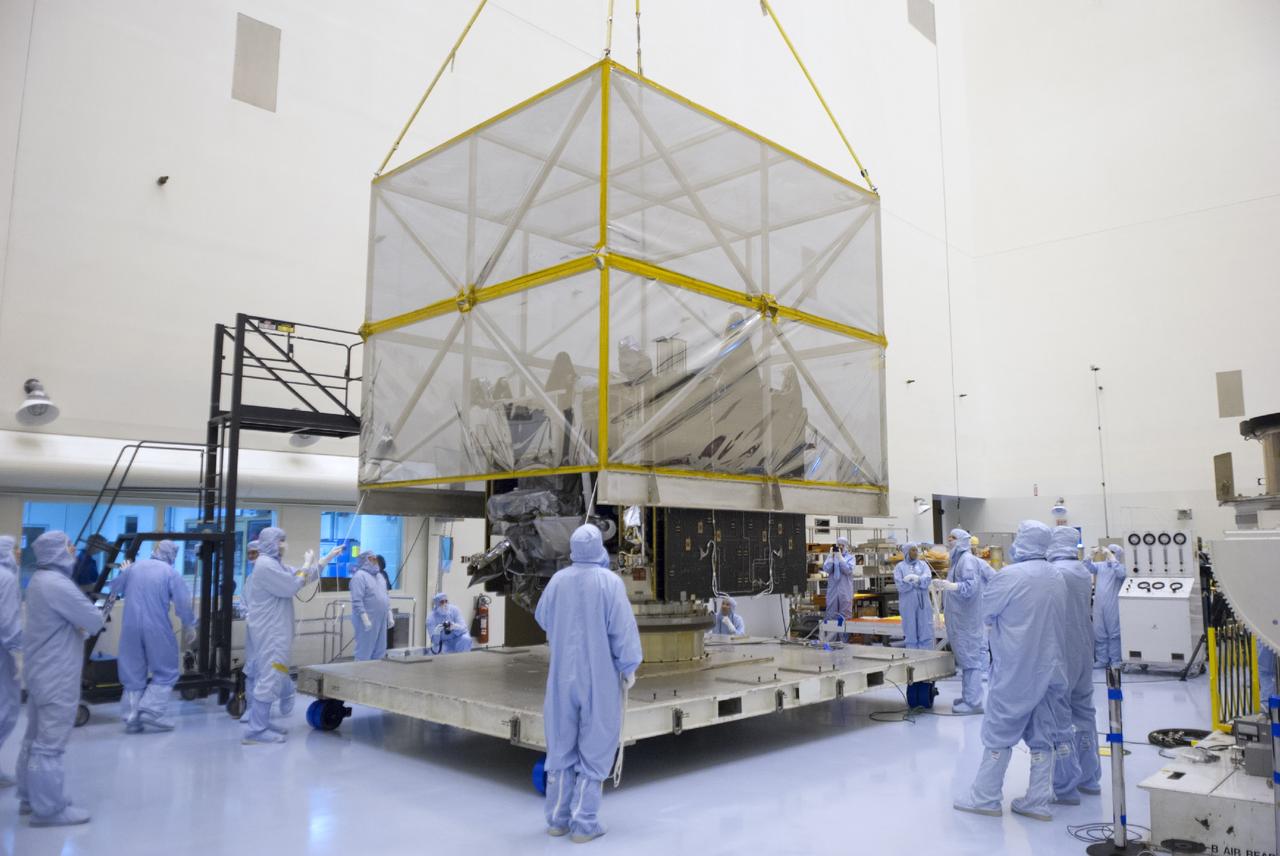
CAPE CANAVERAL, Fla. – A crane lifts shipping material from around NASA’s Mars Atmosphere and Volatile Evolution MAVEN spacecraft inside the Payload Hazardous Servicing Facility on Aug. 3, 2013, at the agency’s Kennedy Space Center in Florida. MAVEN will be prepared inside the facility for its scheduled November launch to Mars. Positioned in an orbit above the Red Planet, MAVEN will study the upper atmosphere of Mars in unprecedented detail. Photo credit: NASA/Tim Jacobs
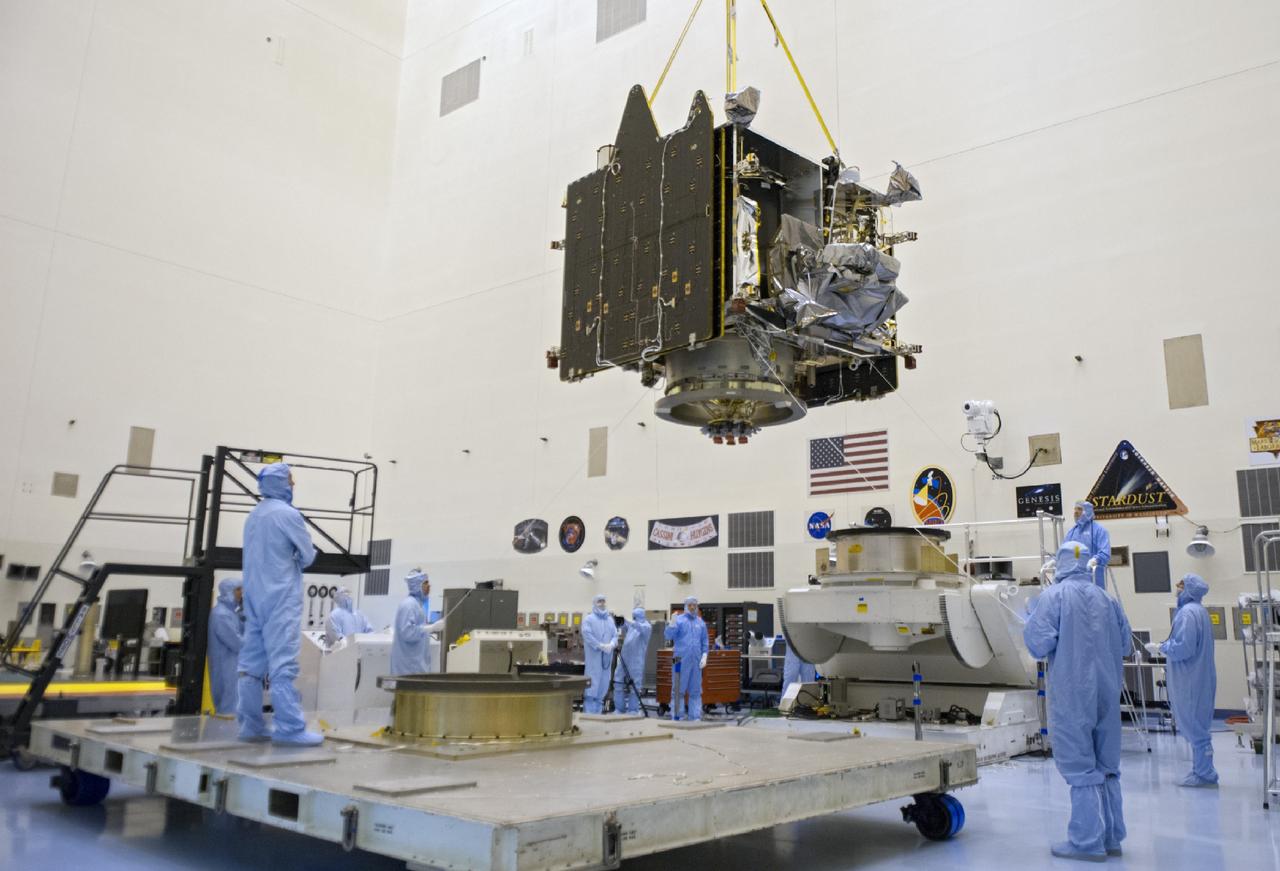
CAPE CANAVERAL, Fla. – A crane lifts NASA’s Mars Atmosphere and Volatile Evolution MAVEN spacecraft inside the Payload Hazardous Servicing Facility on Aug. 3, 2013, at the agency’s Kennedy Space Center in Florida. MAVEN will be prepared inside the facility for its scheduled November launch to Mars. Positioned in an orbit above the Red Planet, MAVEN will study the upper atmosphere of Mars in unprecedented detail. Photo credit: NASA/Tim Jacobs
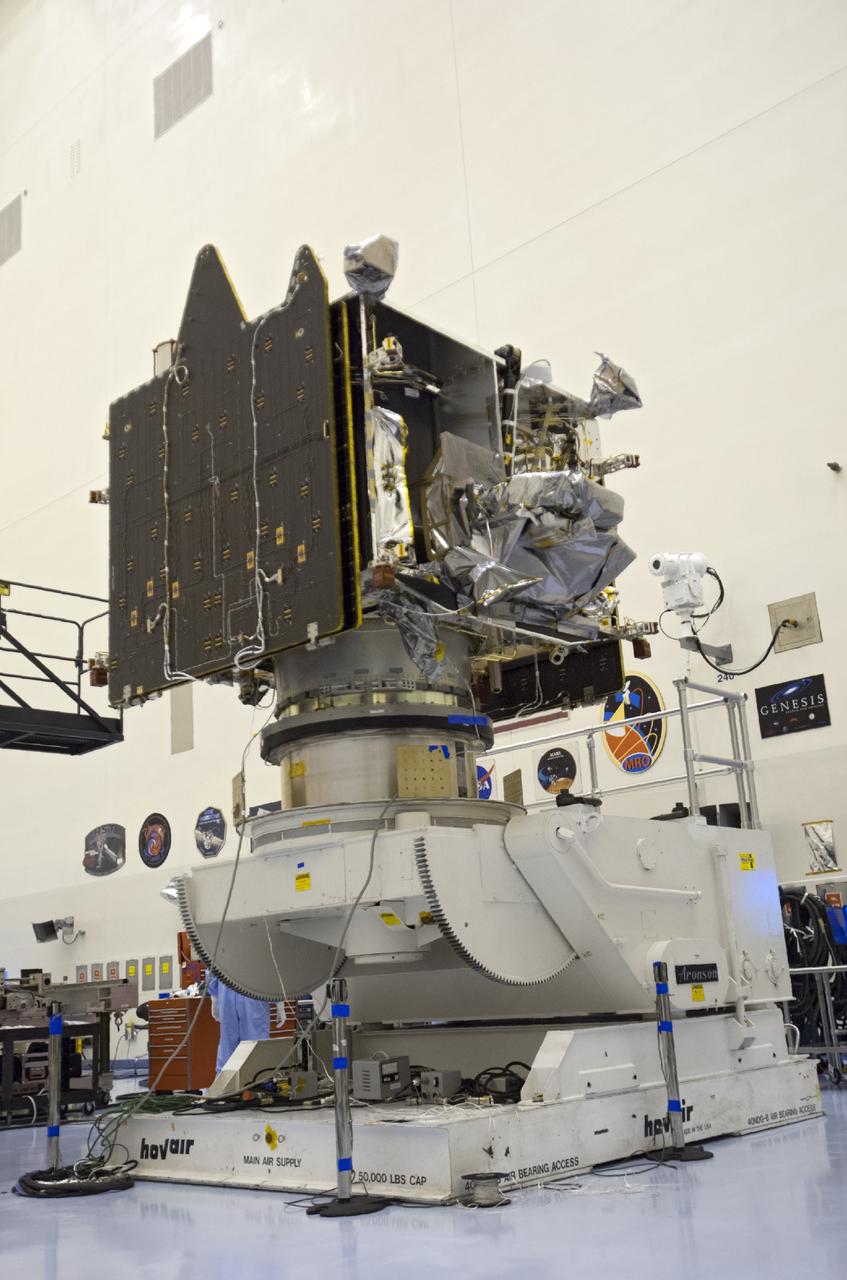
CAPE CANAVERAL, Fla. – NASA’s Mars Atmosphere and Volatile Evolution MAVEN spacecraft stands on a processing stand inside the Payload Hazardous Servicing Facility on Aug. 3, 2013, at the agency’s Kennedy Space Center in Florida. MAVEN will be prepared inside the facility for its scheduled November launch to Mars. Positioned in an orbit above the Red Planet, MAVEN will study the upper atmosphere of Mars in unprecedented detail. Photo credit: NASA/Tim Jacobs
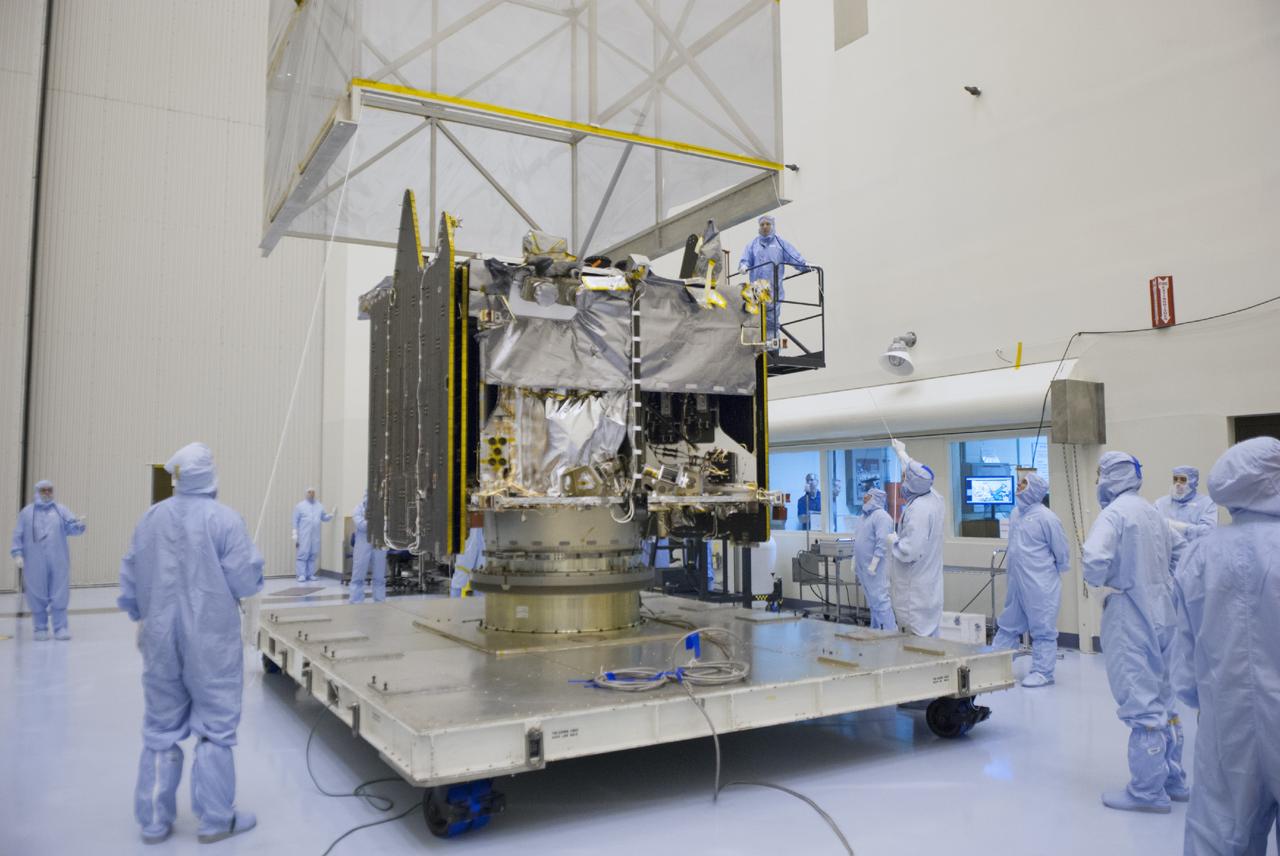
CAPE CANAVERAL, Fla. – Engineers oversee the removal of shipping material from around NASA’s Mars Atmosphere and Volatile Evolution MAVEN spacecraft inside the Payload Hazardous Servicing Facility on Aug. 3, 2013, at the agency’s Kennedy Space Center in Florida. MAVEN will be prepared inside the facility for its scheduled November launch to Mars. Positioned in an orbit above the Red Planet, MAVEN will study the upper atmosphere of Mars in unprecedented detail. Photo credit: NASA/Tim Jacobs
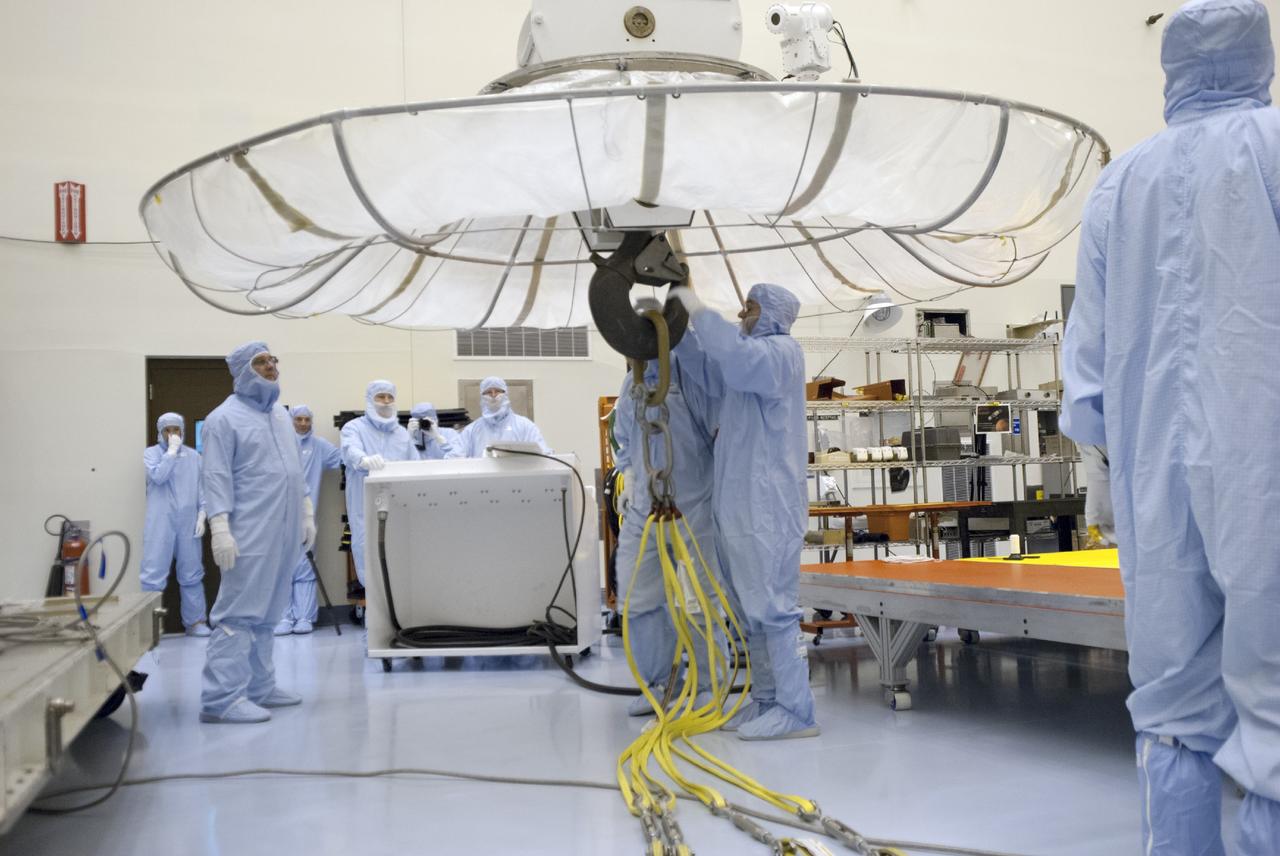
CAPE CANAVERAL, Fla. – Engineers prepare a crane to remove shipping material from around NASA’s Mars Atmosphere and Volatile Evolution MAVEN spacecraft inside the Payload Hazardous Servicing Facility on Aug. 3, 2013, at the agency’s Kennedy Space Center in Florida. MAVEN will be prepared inside the facility for its scheduled November launch to Mars. Positioned in an orbit above the Red Planet, MAVEN will study the upper atmosphere of Mars in unprecedented detail. Photo credit: NASA/Tim Jacobs
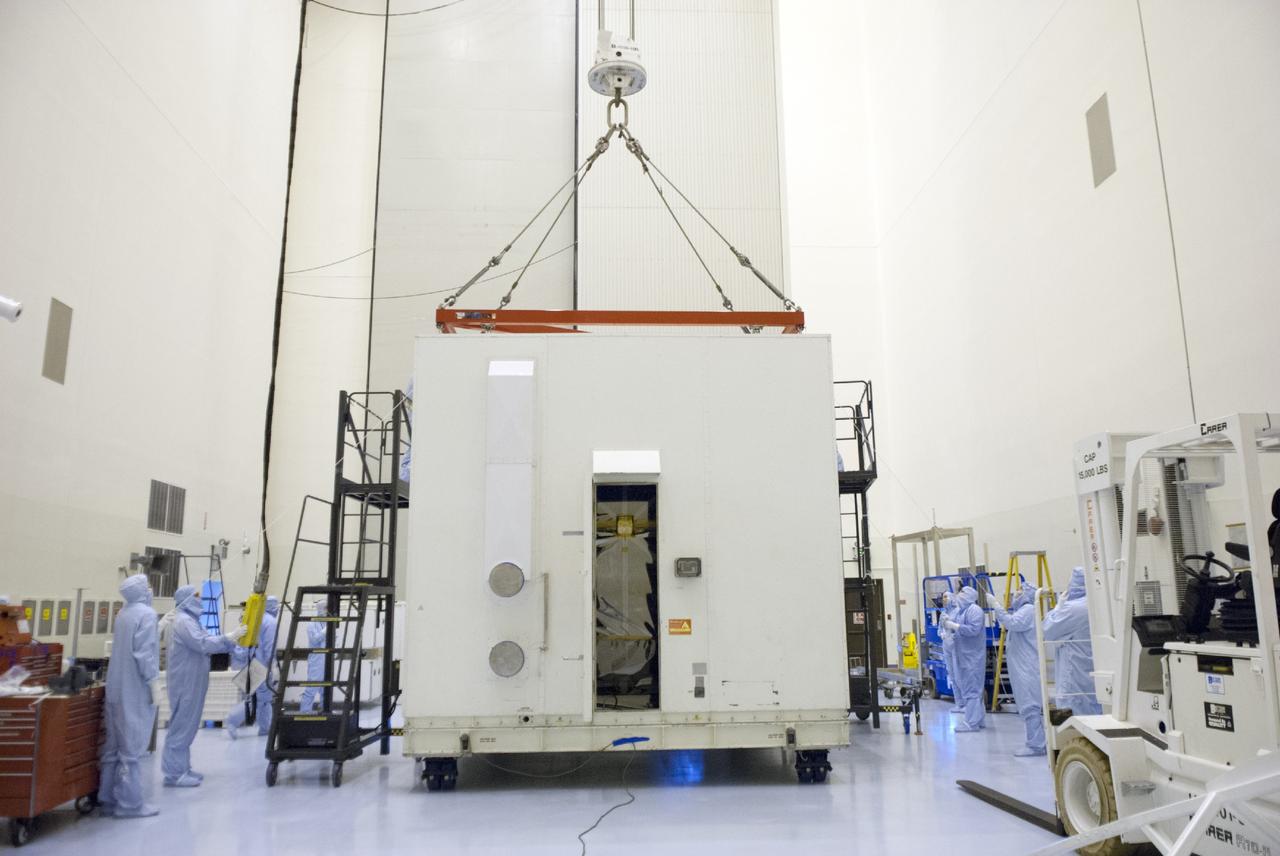
CAPE CANAVERAL, Fla. – Engineers use a sling to remove a shipping container from around NASA’s Mars Atmosphere and Volatile Evolution MAVEN spacecraft inside the Payload Hazardous Servicing Facility on Aug. 3, 2013, at the agency’s Kennedy Space Center in Florida. MAVEN will be prepared inside the facility for its scheduled November launch to Mars. Positioned in an orbit above the Red Planet, MAVEN will study the upper atmosphere of Mars in unprecedented detail. Photo credit: NASA/Tim Jacobs
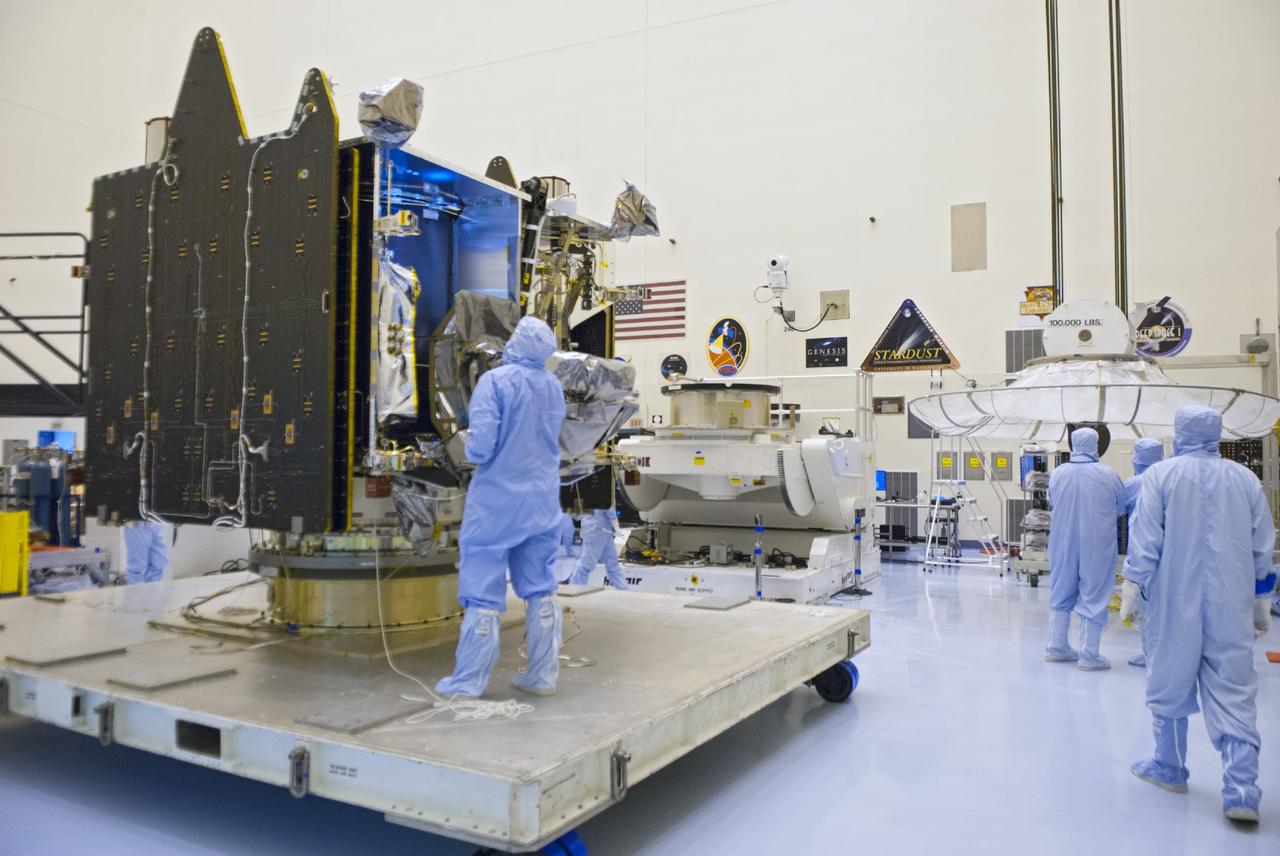
CAPE CANAVERAL, Fla. – Engineers examine NASA’s Mars Atmosphere and Volatile Evolution MAVEN spacecraft inside the Payload Hazardous Servicing Facility on Aug. 3, 2013, at the agency’s Kennedy Space Center in Florida. MAVEN will be prepared inside the facility for its scheduled November launch to Mars. Positioned in an orbit above the Red Planet, MAVEN will study the upper atmosphere of Mars in unprecedented detail. Photo credit: NASA/Tim Jacobs
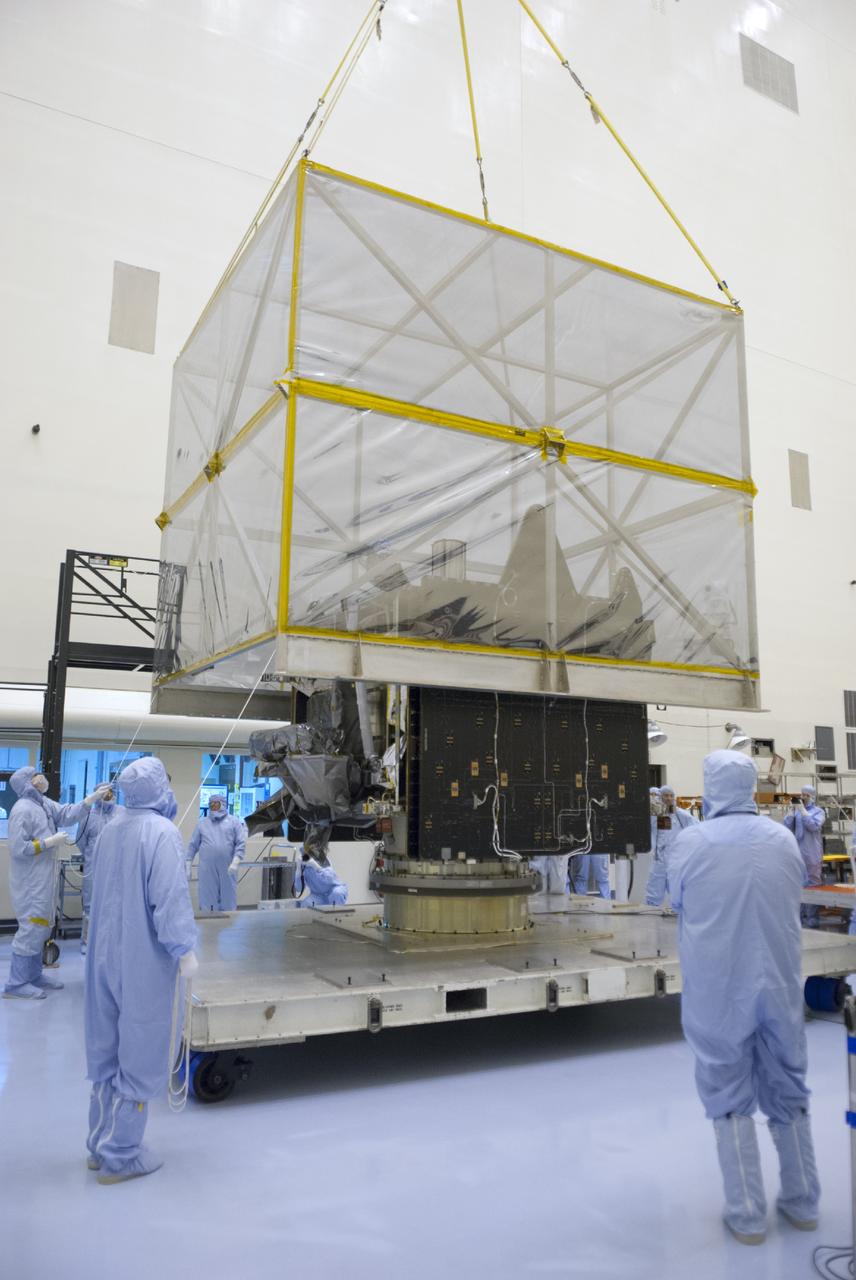
CAPE CANAVERAL, Fla. – A crane lifts shipping material from around NASA’s Mars Atmosphere and Volatile Evolution MAVEN spacecraft inside the Payload Hazardous Servicing Facility on Aug. 3, 2013, at the agency’s Kennedy Space Center in Florida. MAVEN will be prepared inside the facility for its scheduled November launch to Mars. Positioned in an orbit above the Red Planet, MAVEN will study the upper atmosphere of Mars in unprecedented detail. Photo credit: NASA/Tim Jacobs
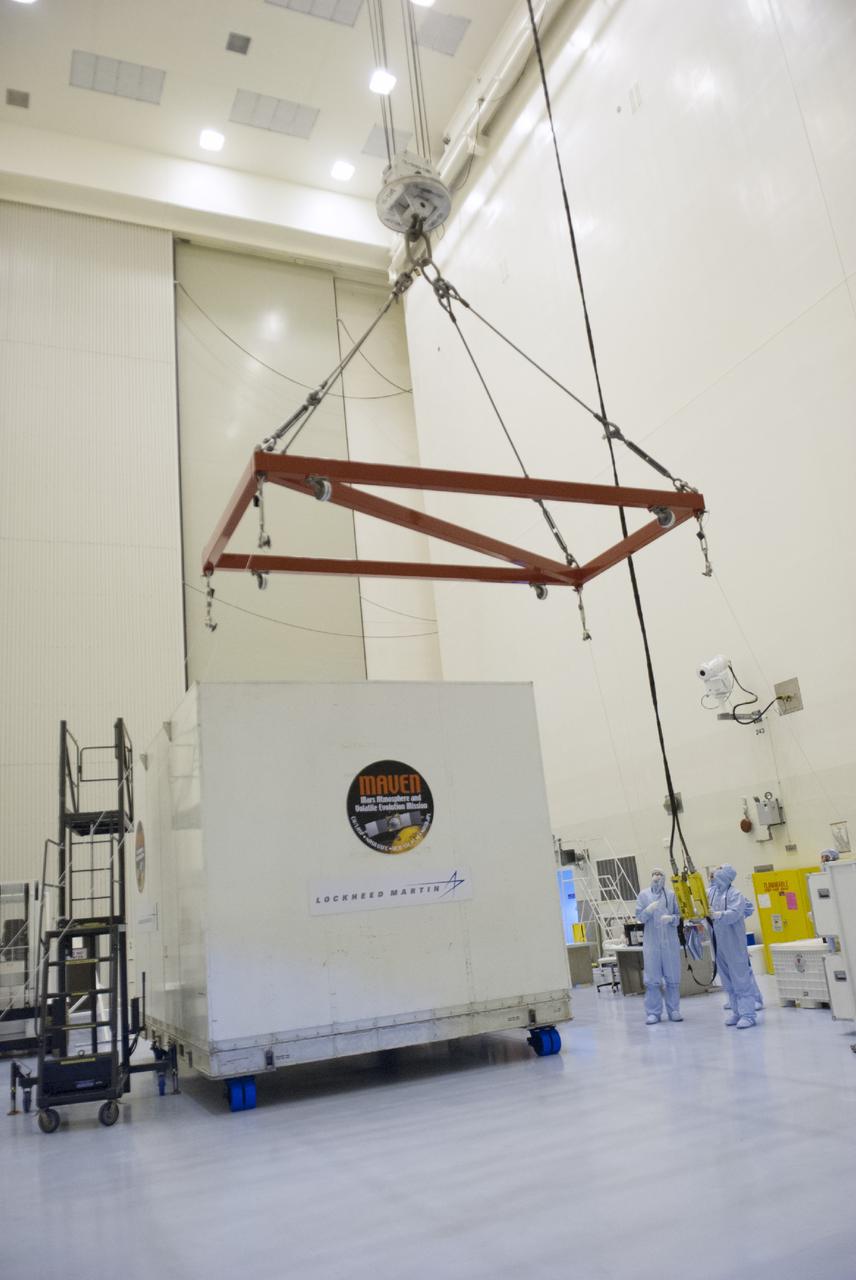
CAPE CANAVERAL, Fla. – Engineers move a sling into place for the removal of a shipping container from around NASA’s Mars Atmosphere and Volatile Evolution MAVEN spacecraft inside the Payload Hazardous Servicing Facility on Aug. 3, 2013, at the agency’s Kennedy Space Center in Florida. MAVEN will be prepared inside the facility for its scheduled November launch to Mars. Positioned in an orbit above the Red Planet, MAVEN will study the upper atmosphere of Mars in unprecedented detail. Photo credit: NASA/Tim Jacobs
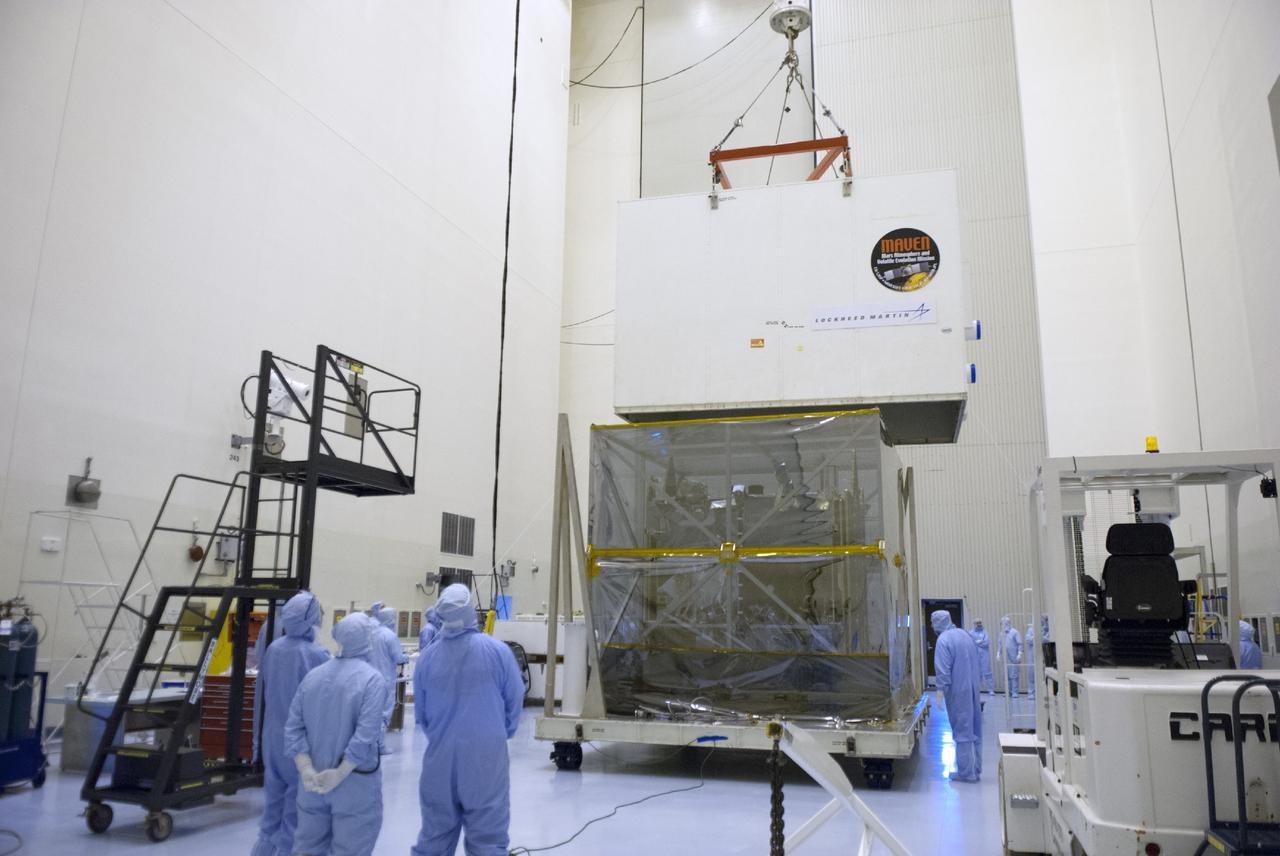
CAPE CANAVERAL, Fla. – Engineers use a sling to remove a shipping container from around NASA’s Mars Atmosphere and Volatile Evolution MAVEN spacecraft inside the Payload Hazardous Servicing Facility on Aug. 3, 2013, at the agency’s Kennedy Space Center in Florida. MAVEN will be prepared inside the facility for its scheduled November launch to Mars. Positioned in an orbit above the Red Planet, MAVEN will study the upper atmosphere of Mars in unprecedented detail. Photo credit: NASA/Tim Jacobs
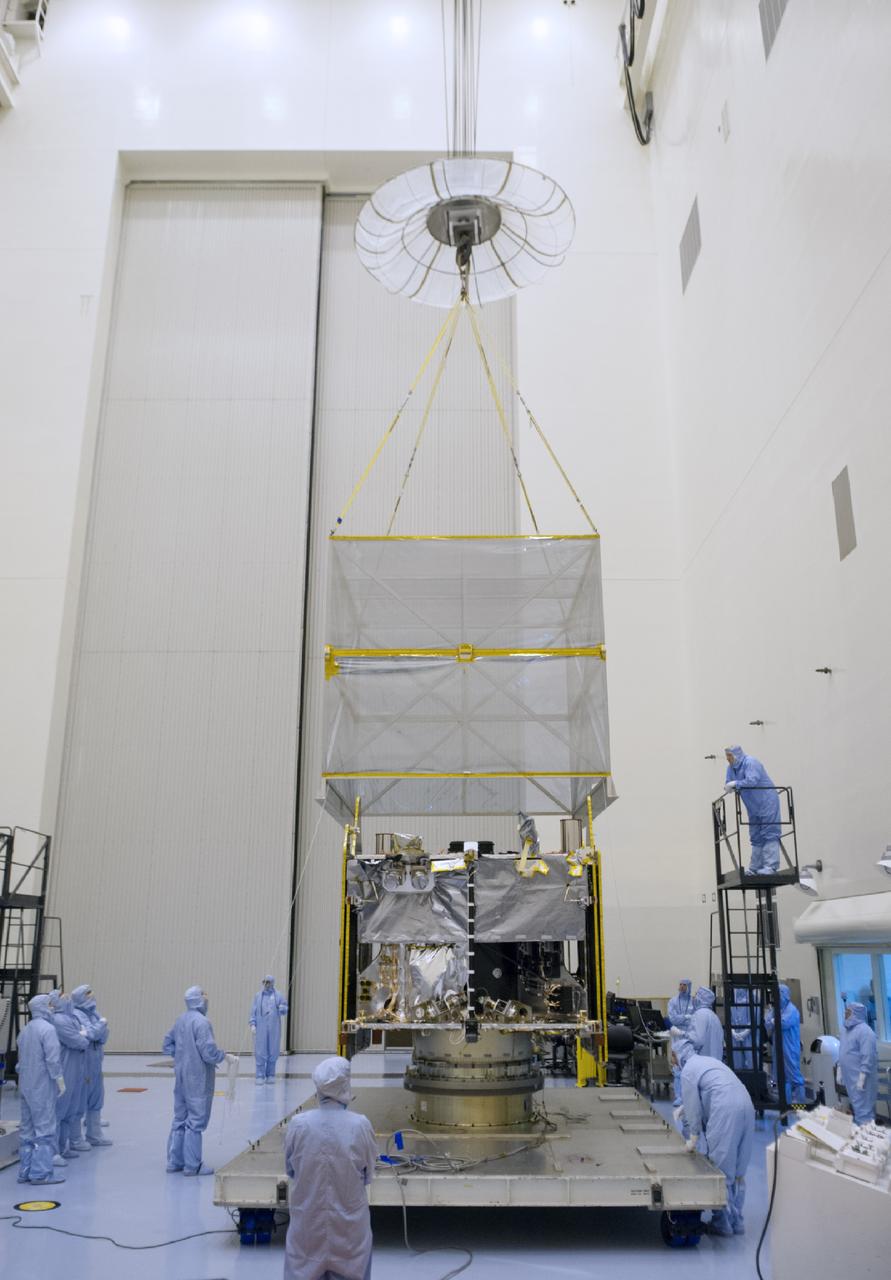
CAPE CANAVERAL, Fla. – A crane lifts shipping material from around NASA’s Mars Atmosphere and Volatile Evolution MAVEN spacecraft inside the Payload Hazardous Servicing Facility on Aug. 3, 2013, at the agency’s Kennedy Space Center in Florida. MAVEN will be prepared inside the facility for its scheduled November launch to Mars. Positioned in an orbit above the Red Planet, MAVEN will study the upper atmosphere of Mars in unprecedented detail. Photo credit: NASA/Tim Jacobs
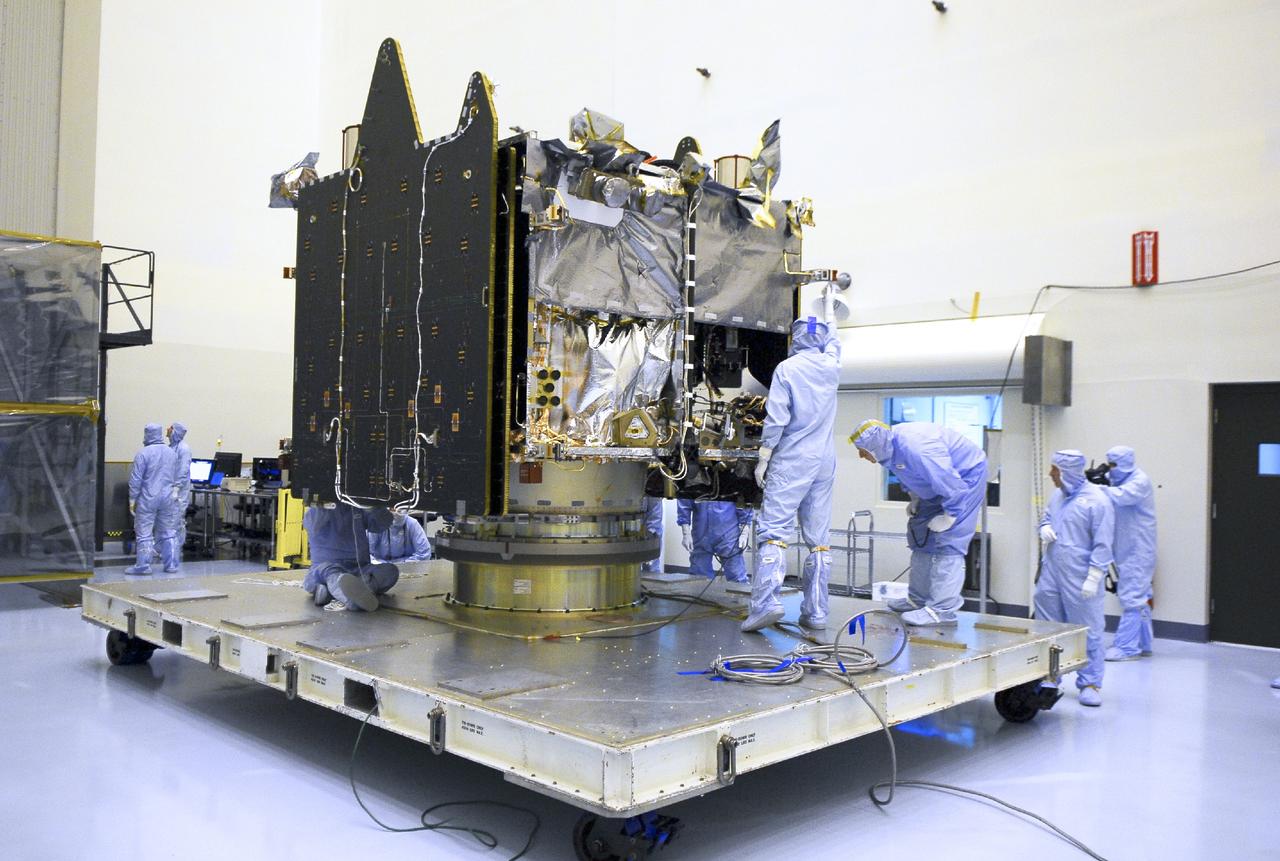
CAPE CANAVERAL, Fla. – Engineers examine NASA’s Mars Atmosphere and Volatile Evolution MAVEN spacecraft inside the Payload Hazardous Servicing Facility on Aug. 3, 2013, at the agency’s Kennedy Space Center in Florida. MAVEN will be prepared inside the facility for its scheduled November launch to Mars. Positioned in an orbit above the Red Planet, MAVEN will study the upper atmosphere of Mars in unprecedented detail. Photo credit: NASA/Tim Jacobs
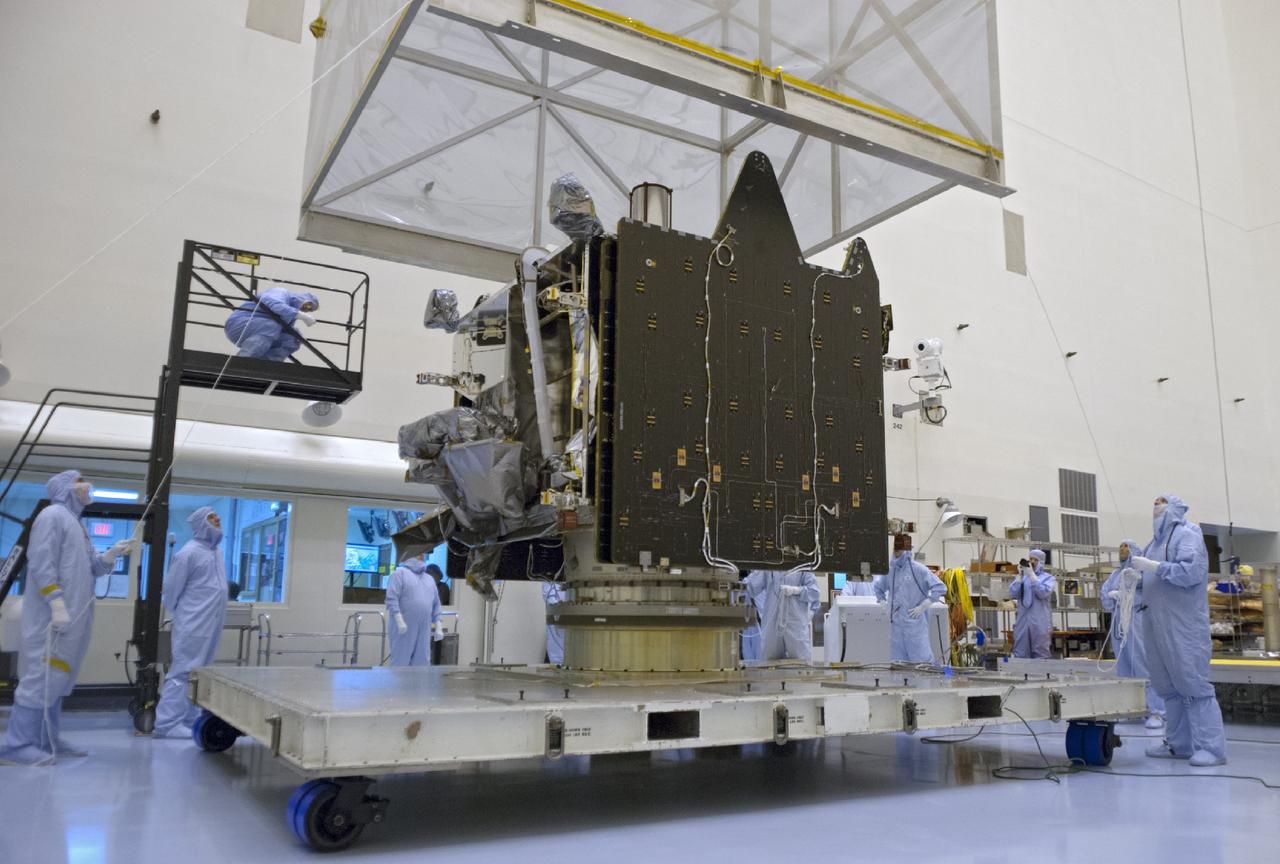
CAPE CANAVERAL, Fla. – A crane lifts shipping material from around NASA’s Mars Atmosphere and Volatile Evolution MAVEN spacecraft inside the Payload Hazardous Servicing Facility on Aug. 3, 2013, at the agency’s Kennedy Space Center in Florida. MAVEN will be prepared inside the facility for its scheduled November launch to Mars. Positioned in an orbit above the Red Planet, MAVEN will study the upper atmosphere of Mars in unprecedented detail. Photo credit: NASA/Tim Jacobs
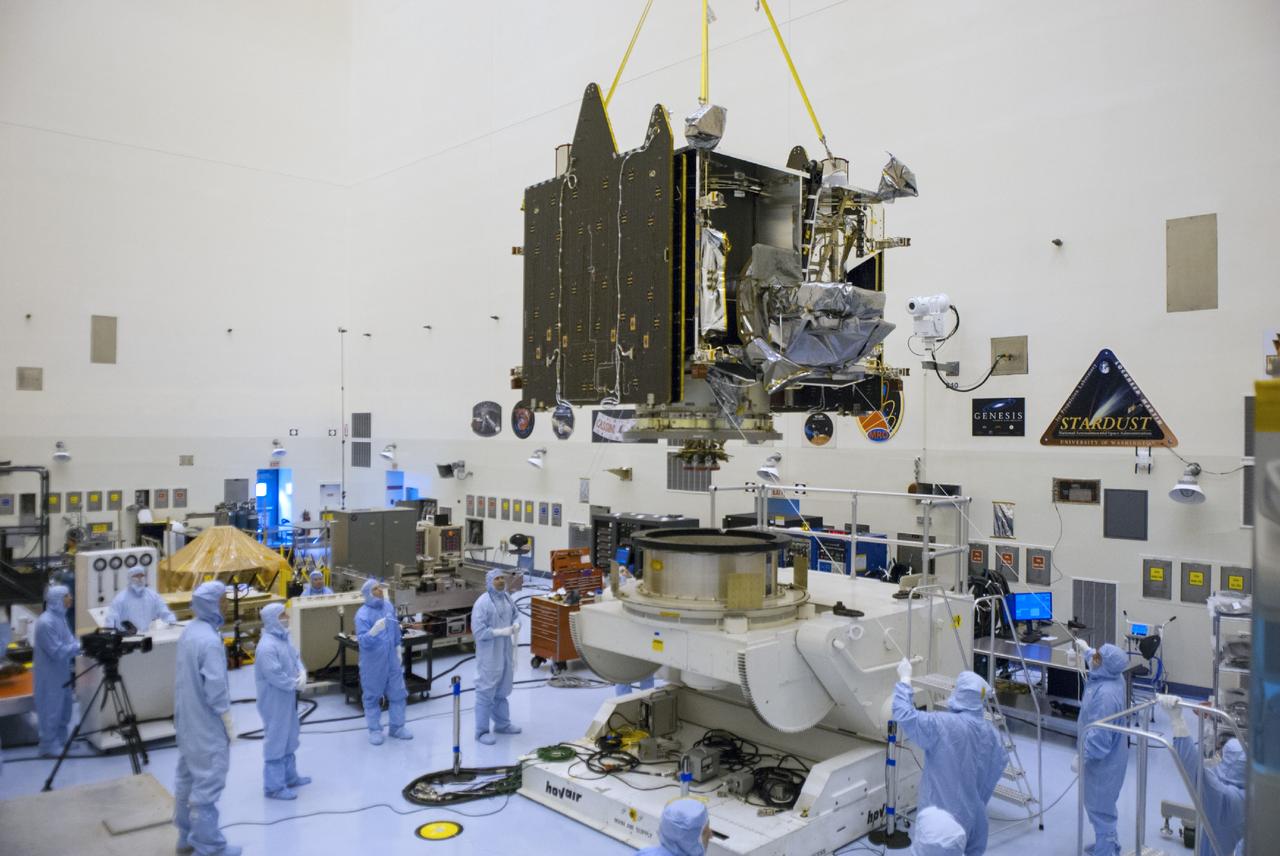
CAPE CANAVERAL, Fla. – A crane lifts NASA’s Mars Atmosphere and Volatile Evolution MAVEN spacecraft onto a processing stand inside the Payload Hazardous Servicing Facility on Aug. 3, 2013, at the agency’s Kennedy Space Center in Florida. MAVEN will be prepared inside the facility for its scheduled November launch to Mars. Positioned in an orbit above the Red Planet, MAVEN will study the upper atmosphere of Mars in unprecedented detail. Photo credit: NASA/Tim Jacobs

CAPE CANAVERAL, Fla. – Engineers prepare to remove shipping material from around NASA’s Mars Atmosphere and Volatile Evolution MAVEN spacecraft inside the Payload Hazardous Servicing Facility on Aug. 3, 2013, at the agency’s Kennedy Space Center in Florida. MAVEN will be prepared inside the facility for its scheduled November launch to Mars. Positioned in an orbit above the Red Planet, MAVEN will study the upper atmosphere of Mars in unprecedented detail. Photo credit: NASA/Tim Jacobs
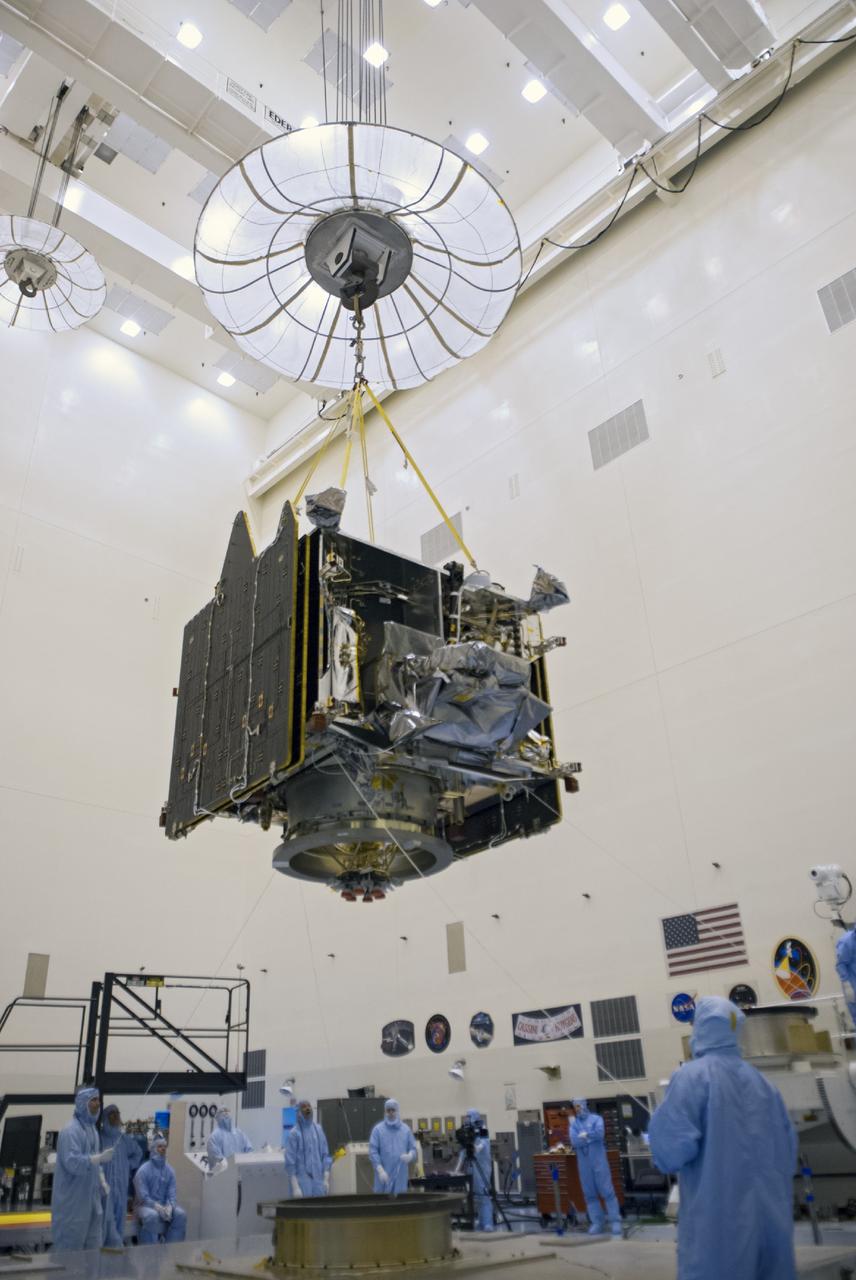
CAPE CANAVERAL, Fla. – A crane lifts NASA’s Mars Atmosphere and Volatile Evolution MAVEN spacecraft inside the Payload Hazardous Servicing Facility on Aug. 3, 2013, at the agency’s Kennedy Space Center in Florida. MAVEN will be prepared inside the facility for its scheduled November launch to Mars. Positioned in an orbit above the Red Planet, MAVEN will study the upper atmosphere of Mars in unprecedented detail. Photo credit: NASA/Tim Jacobs
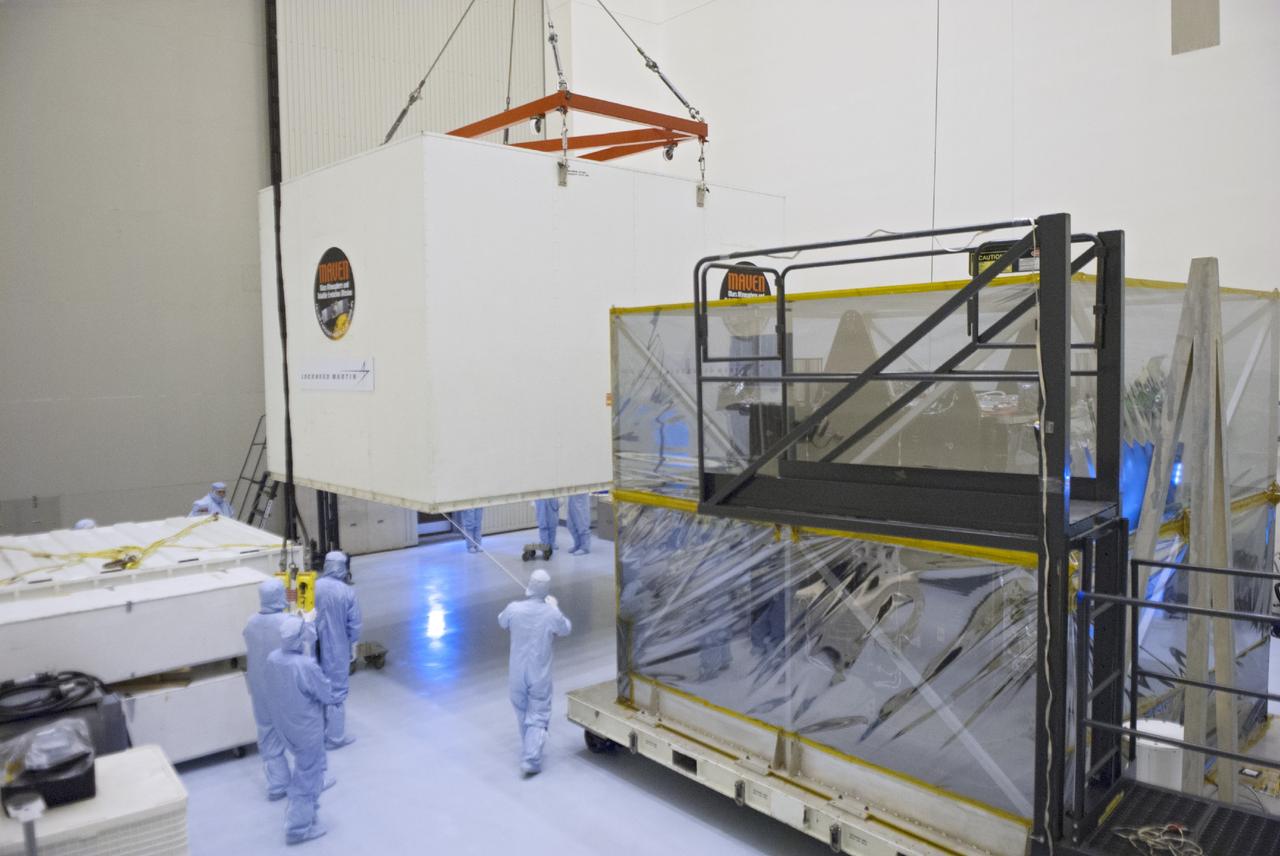
CAPE CANAVERAL, Fla. – Engineers move a shipping container from around NASA’s Mars Atmosphere and Volatile Evolution MAVEN spacecraft inside the Payload Hazardous Servicing Facility on Aug. 3, 2013, at the agency’s Kennedy Space Center in Florida. MAVEN will be prepared inside the facility for its scheduled November launch to Mars. Positioned in an orbit above the Red Planet, MAVEN will study the upper atmosphere of Mars in unprecedented detail. Photo credit: NASA/Tim Jacobs
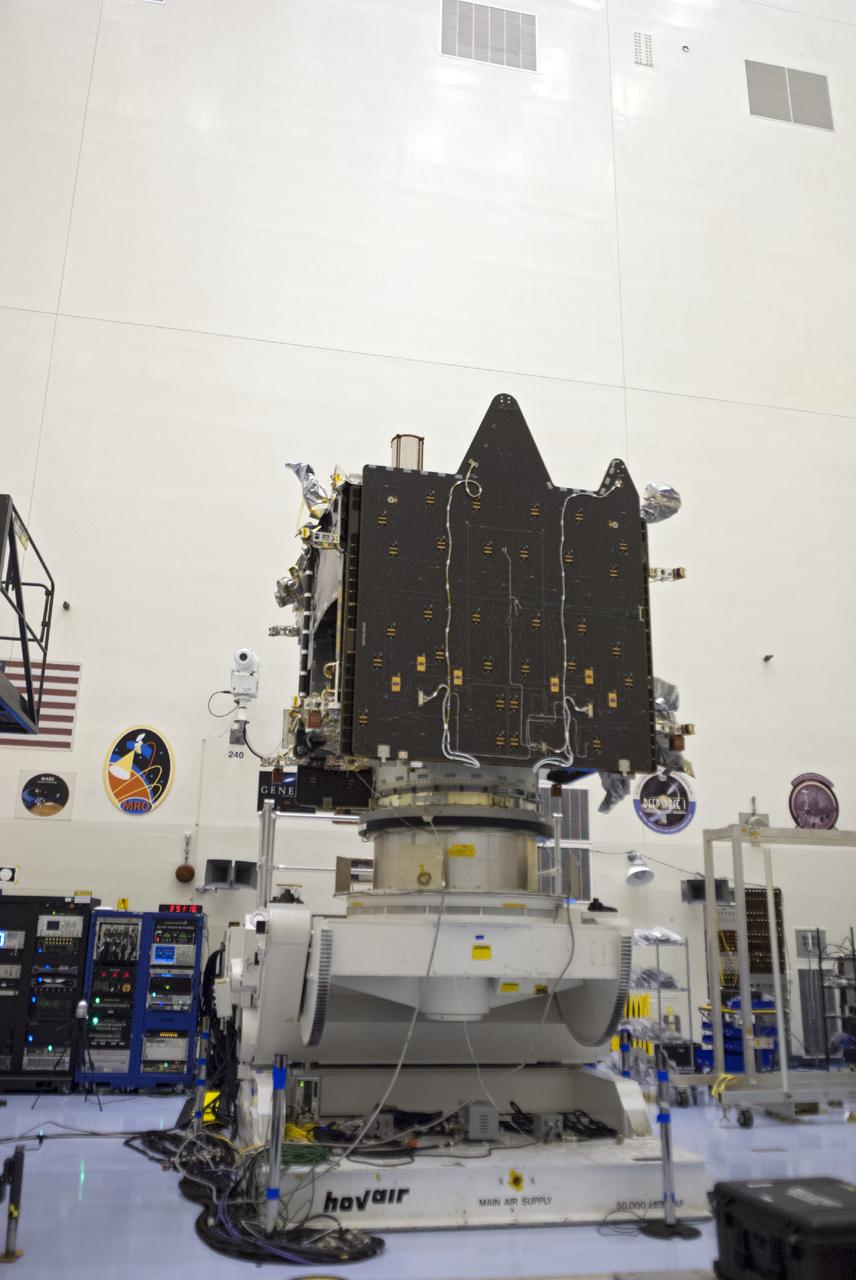
CAPE CANAVERAL, Fla. – NASA’s Mars Atmosphere and Volatile Evolution MAVEN spacecraft stands on a processing stand inside the Payload Hazardous Servicing Facility on Aug. 3, 2013, at the agency’s Kennedy Space Center in Florida. MAVEN will be prepared inside the facility for its scheduled November launch to Mars. Positioned in an orbit above the Red Planet, MAVEN will study the upper atmosphere of Mars in unprecedented detail. Photo credit: NASA/Tim Jacobs
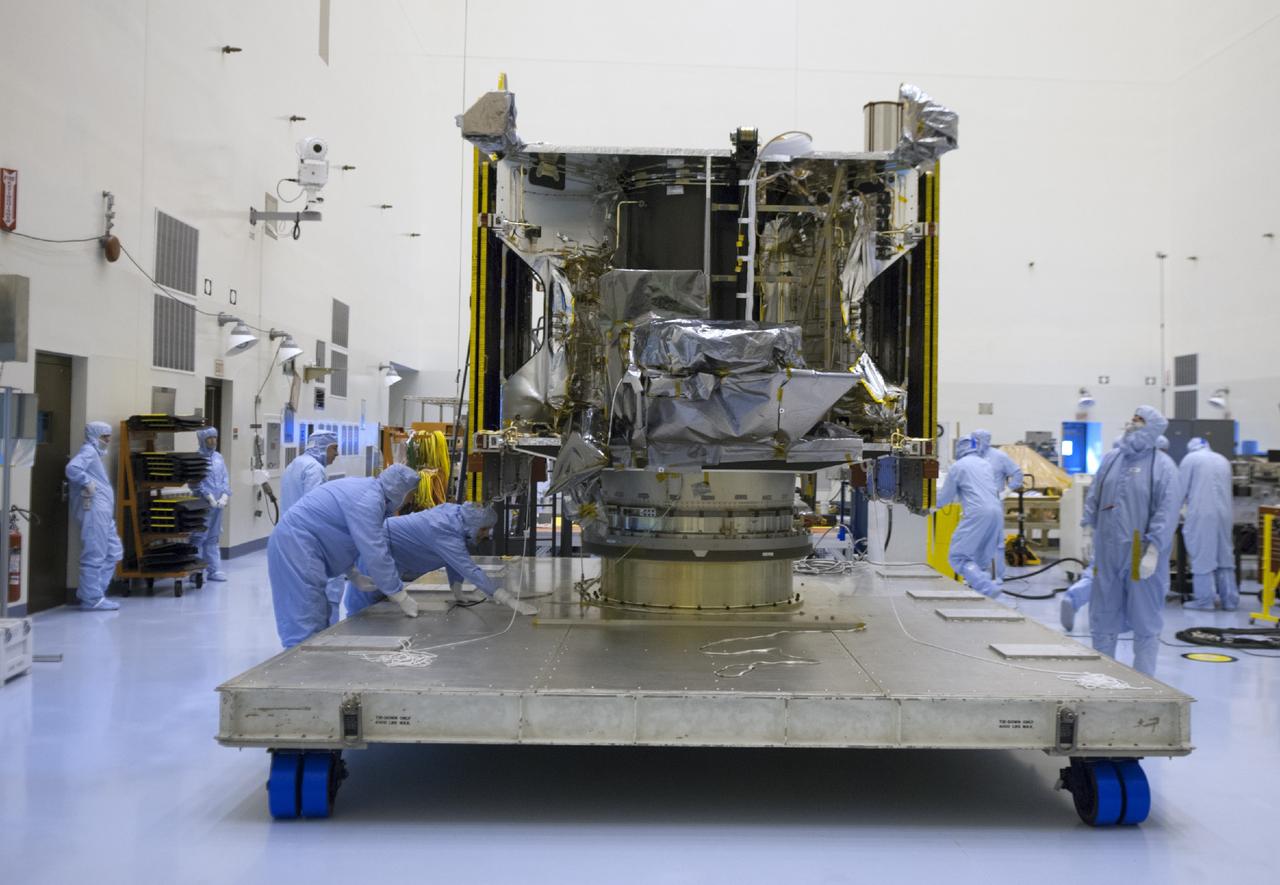
CAPE CANAVERAL, Fla. – Engineers examine NASA’s Mars Atmosphere and Volatile Evolution MAVEN spacecraft inside the Payload Hazardous Servicing Facility on Aug. 3, 2013, at the agency’s Kennedy Space Center in Florida. MAVEN will be prepared inside the facility for its scheduled November launch to Mars. Positioned in an orbit above the Red Planet, MAVEN will study the upper atmosphere of Mars in unprecedented detail. Photo credit: NASA/Tim Jacobs
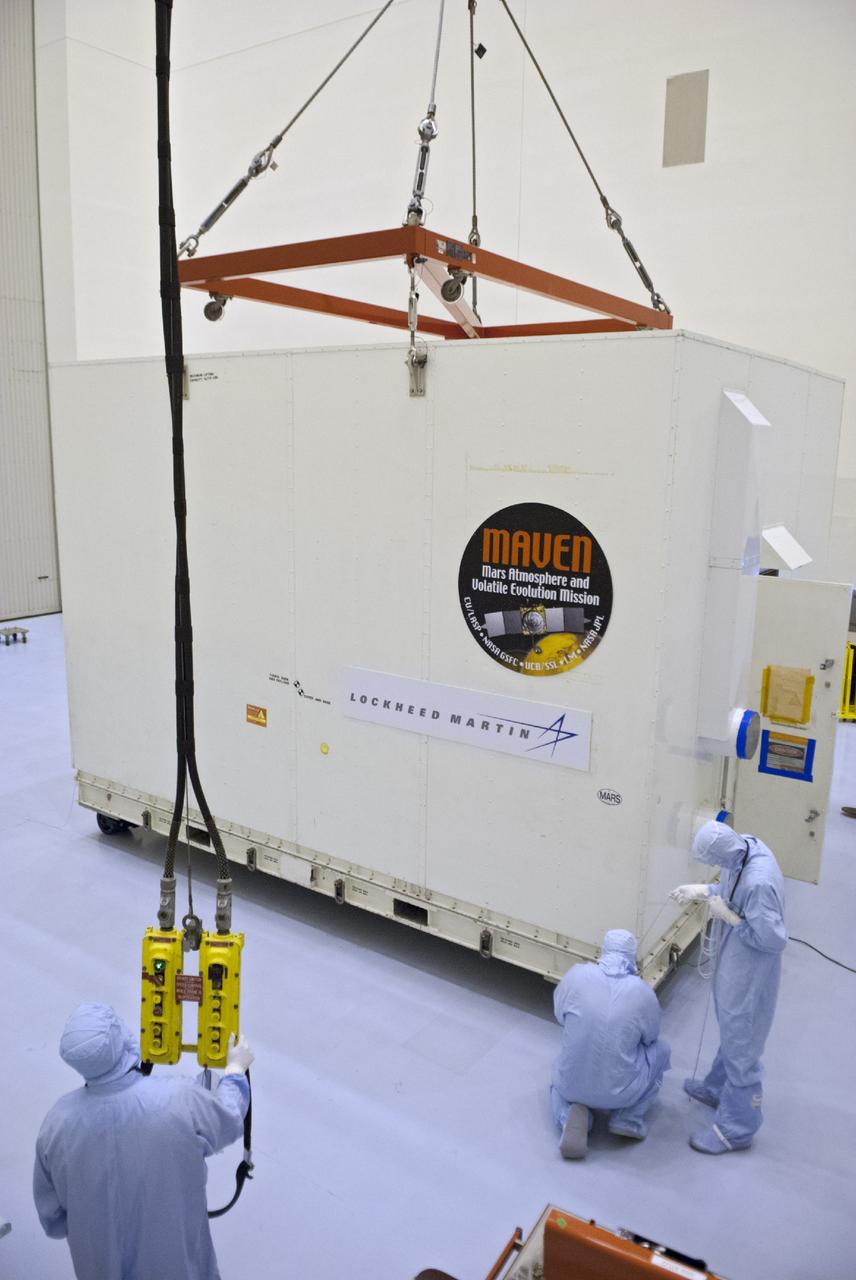
CAPE CANAVERAL, Fla. – Engineers prepare to remove a shipping container from around NASA’s Mars Atmosphere and Volatile Evolution MAVEN spacecraft inside the Payload Hazardous Servicing Facility on Aug. 3, 2013, at the agency’s Kennedy Space Center in Florida. MAVEN will be prepared inside the facility for its scheduled November launch to Mars. Positioned in an orbit above the Red Planet, MAVEN will study the upper atmosphere of Mars in unprecedented detail. Photo credit: NASA/Tim Jacobs
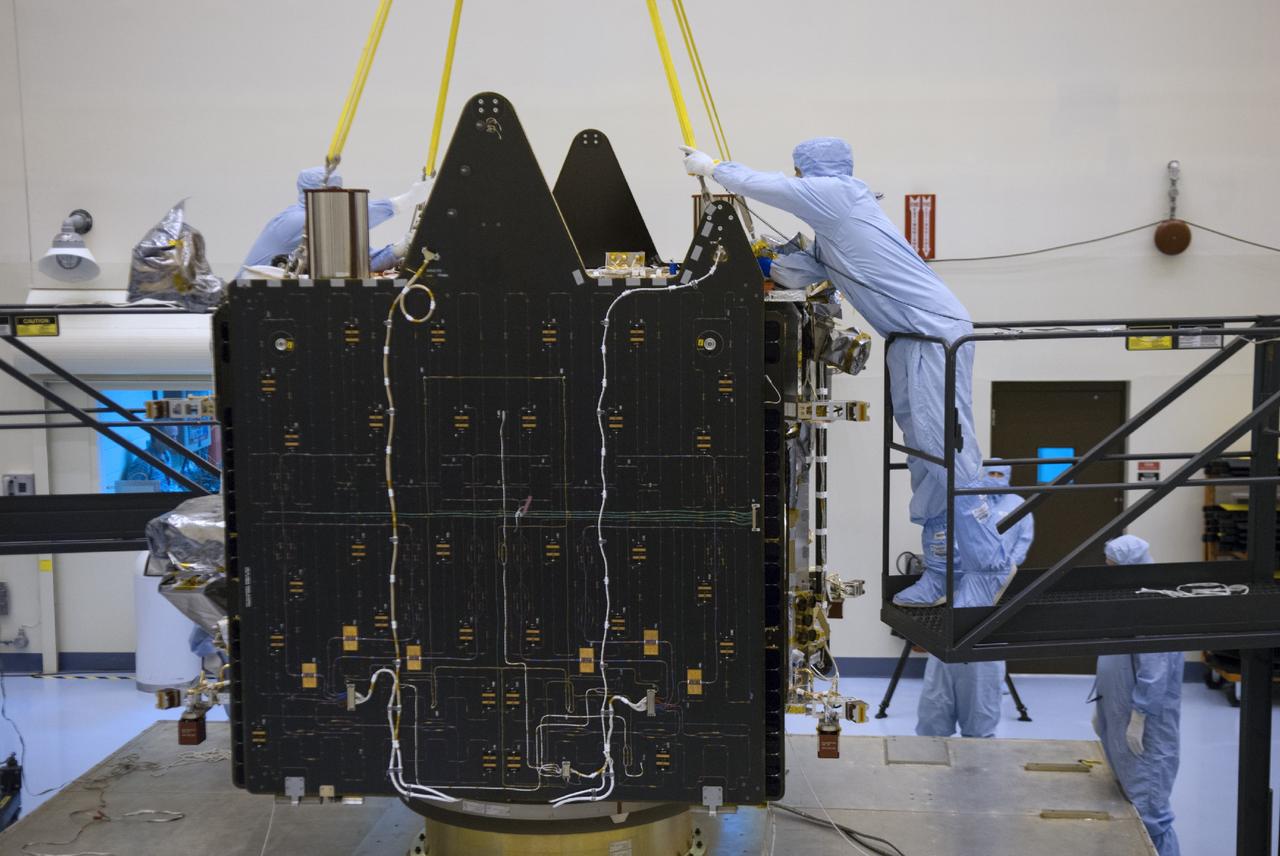
CAPE CANAVERAL, Fla. – An engineer positions a sling on NASA’s Mars Atmosphere and Volatile Evolution MAVEN spacecraft inside the Payload Hazardous Servicing Facility on Aug. 3, 2013, at the agency’s Kennedy Space Center in Florida. MAVEN will be prepared inside the facility for its scheduled November launch to Mars. Positioned in an orbit above the Red Planet, MAVEN will study the upper atmosphere of Mars in unprecedented detail. Photo credit: NASA/Tim Jacobs
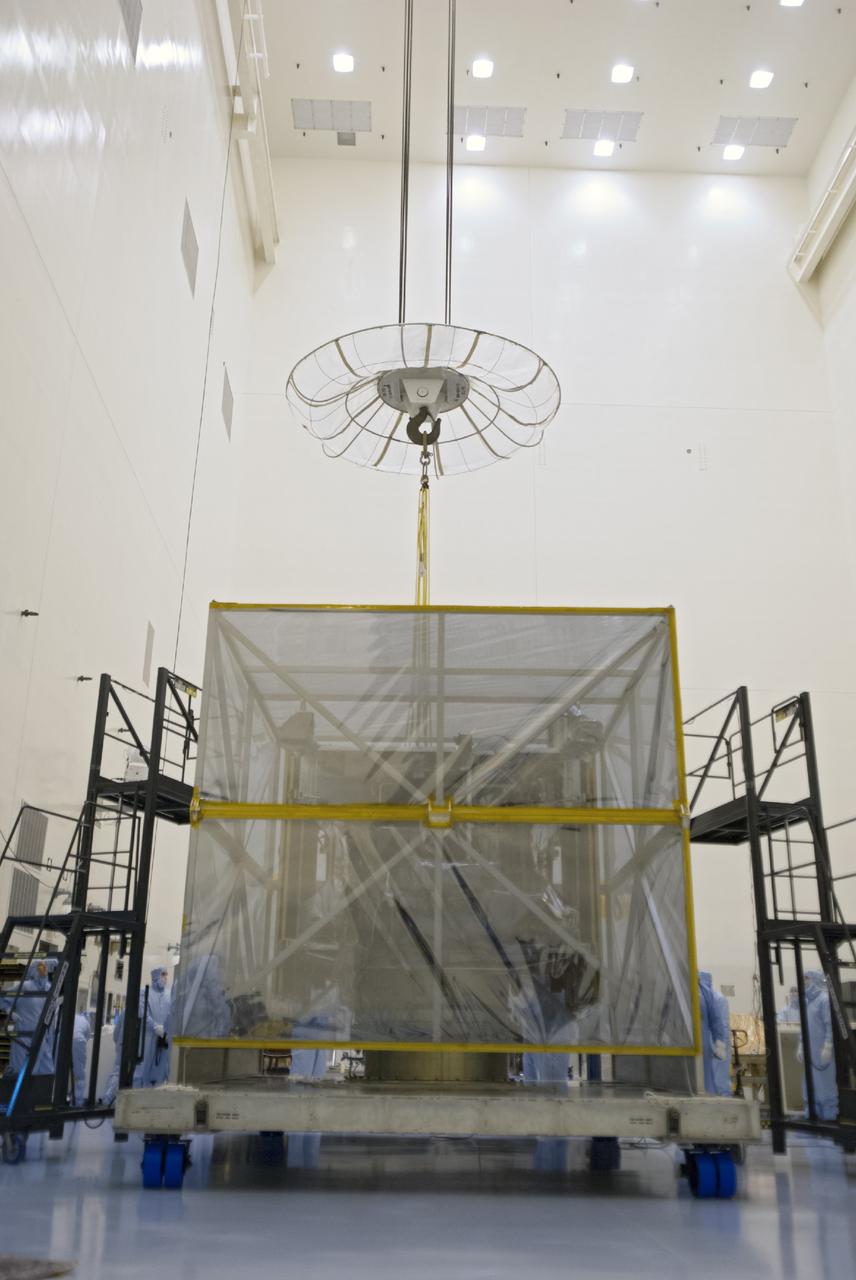
CAPE CANAVERAL, Fla. – A crane begins to lift shipping material from around NASA’s Mars Atmosphere and Volatile Evolution MAVEN spacecraft inside the Payload Hazardous Servicing Facility on Aug. 3, 2013, at the agency’s Kennedy Space Center in Florida. MAVEN will be prepared inside the facility for its scheduled November launch to Mars. Positioned in an orbit above the Red Planet, MAVEN will study the upper atmosphere of Mars in unprecedented detail. Photo credit: NASA/Tim Jacobs
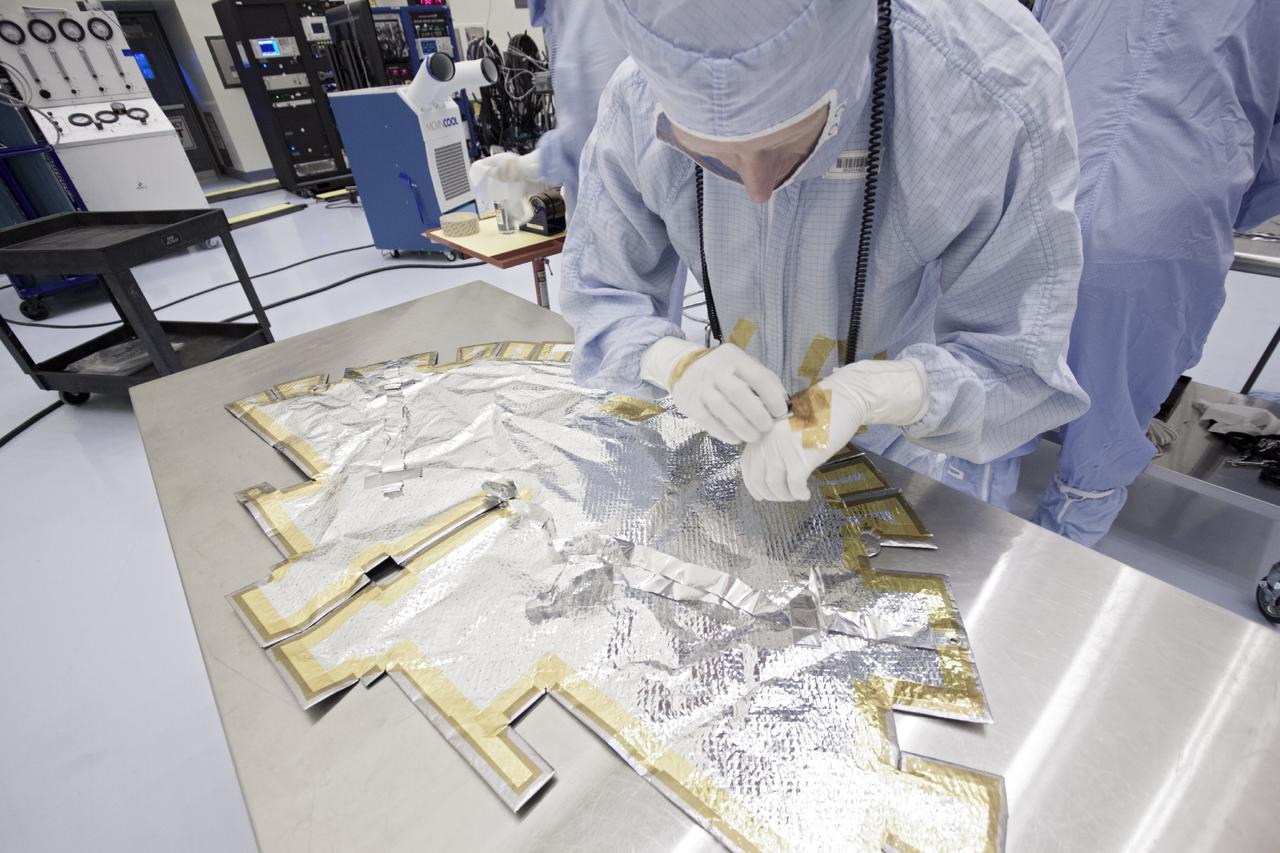
CAPE CANAVERAL, Fla. – Inside the Payload Hazardous Servicing Facility at NASA's Kennedy Space Center in Florida, technicians apply tape to the thermal blanket for the MAVEN spacecraft's parabolic high gain antenna. MAVEN stands for Mars Atmosphere and Volatile Evolution. The antenna will communicate vast amounts of data to Earth during the mission. MAVEN is being prepared inside the facility for its scheduled November launch aboard a United Launch Alliance Atlas V rocket to Mars. Positioned in an orbit above the Red Planet, MAVEN will study the upper atmosphere of Mars in unprecedented detail. Photo credit: NASA/Jim Grossmann
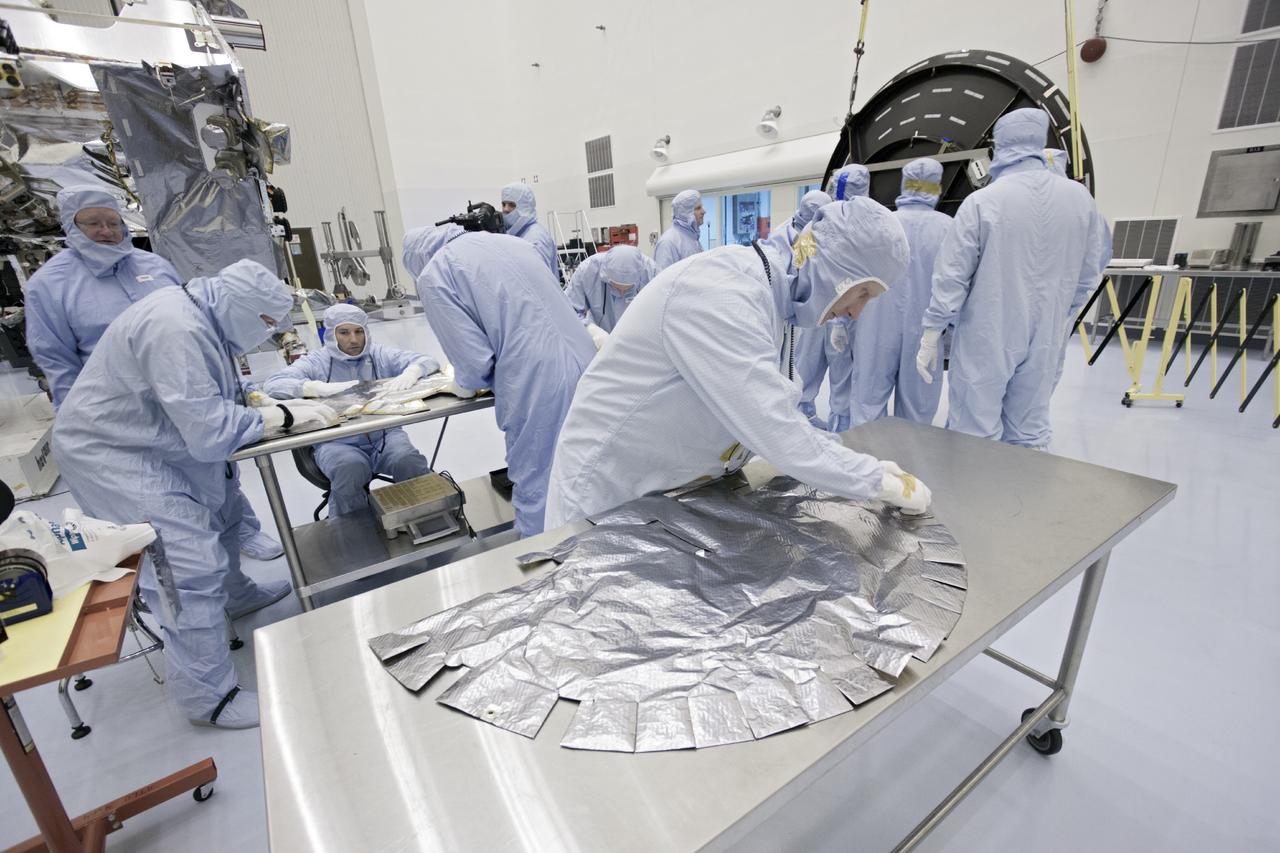
CAPE CANAVERAL, Fla. – Inside the Payload Hazardous Servicing Facility at NASA's Kennedy Space Center in Florida, technicians prepare a thermal blanket for installation on the MAVEN spacecraft's parabolic high gain antenna. MAVEN stands for Mars Atmosphere and Volatile Evolution. The antenna will communicate vast amounts of data to Earth during the mission. MAVEN is being prepared inside the facility for its scheduled November launch aboard a United Launch Alliance Atlas V rocket to Mars. Positioned in an orbit above the Red Planet, MAVEN will study the upper atmosphere of Mars in unprecedented detail. Photo credit: NASA/Jim Grossmann
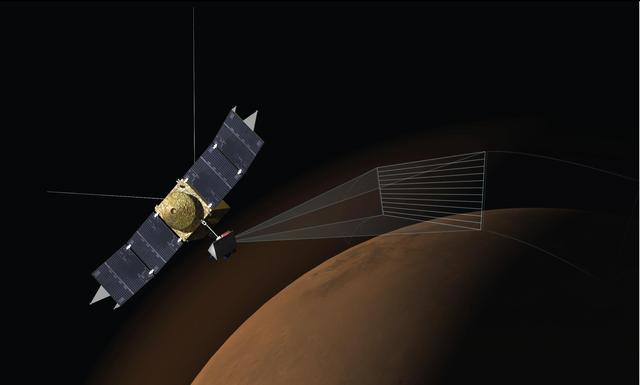
This artist concept depicts the Imaging Ultraviolet Spectrograph IUVS on NASA MAVEN spacecraft scanning the upper atmosphere of Mars. IUVS uses limb scans to map the chemical makeup and vertical structure across Mars upper atmosphere.
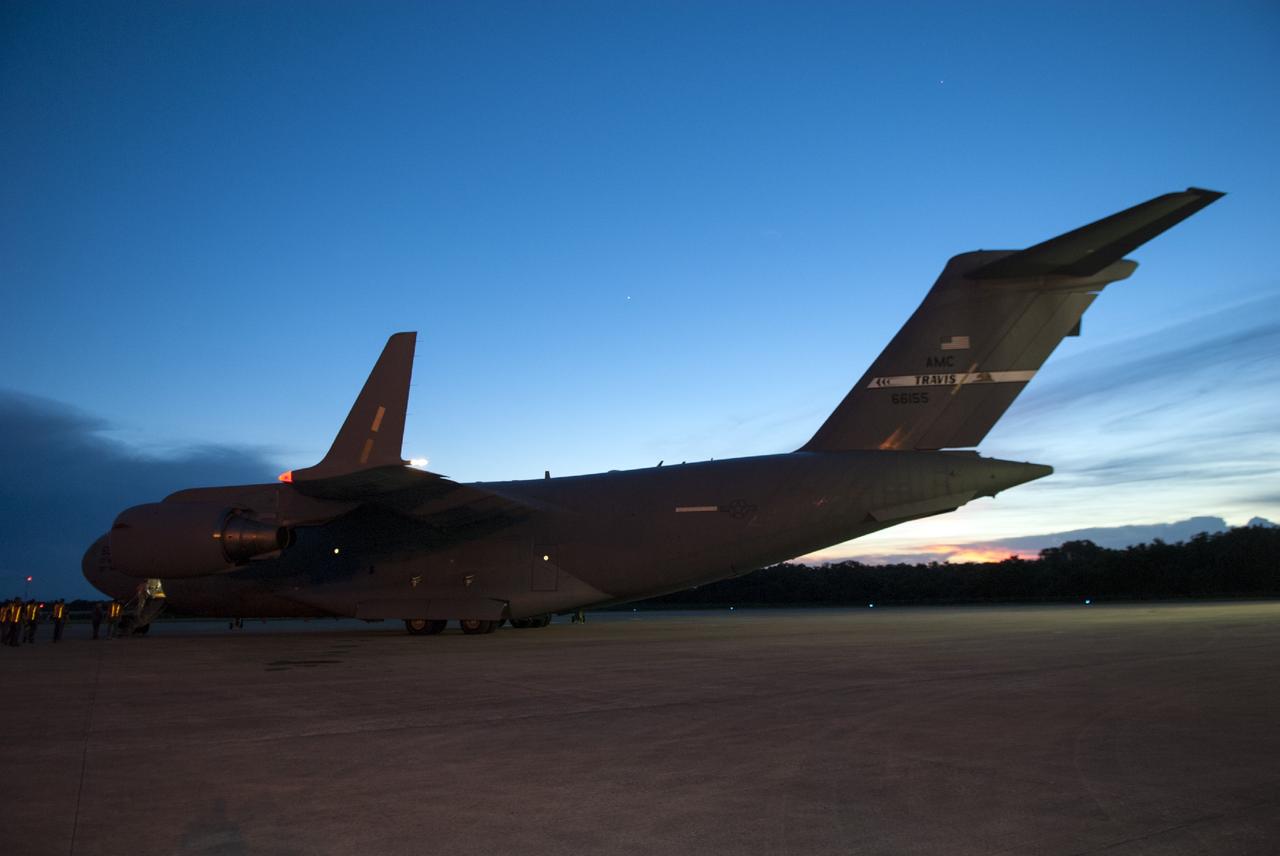
CAPE CANAVERAL, Fla. – A C-17 aircraft carrying the MAVEN spacecraft has arrived at the Shuttle Landing Facility at NASA's Kennedy Space Center in Florida. The aircraft is delivering MAVEN for processing ahead of a launch later this year on a United Launch Alliance Atlas V rocket. MAVEN, short for Mars Atmosphere and Volatile Evolution, will orbit Mars to study the Red Planet's upper atmosphere in unprecedented detail. Photo credit: NASA/Tim Jacobs
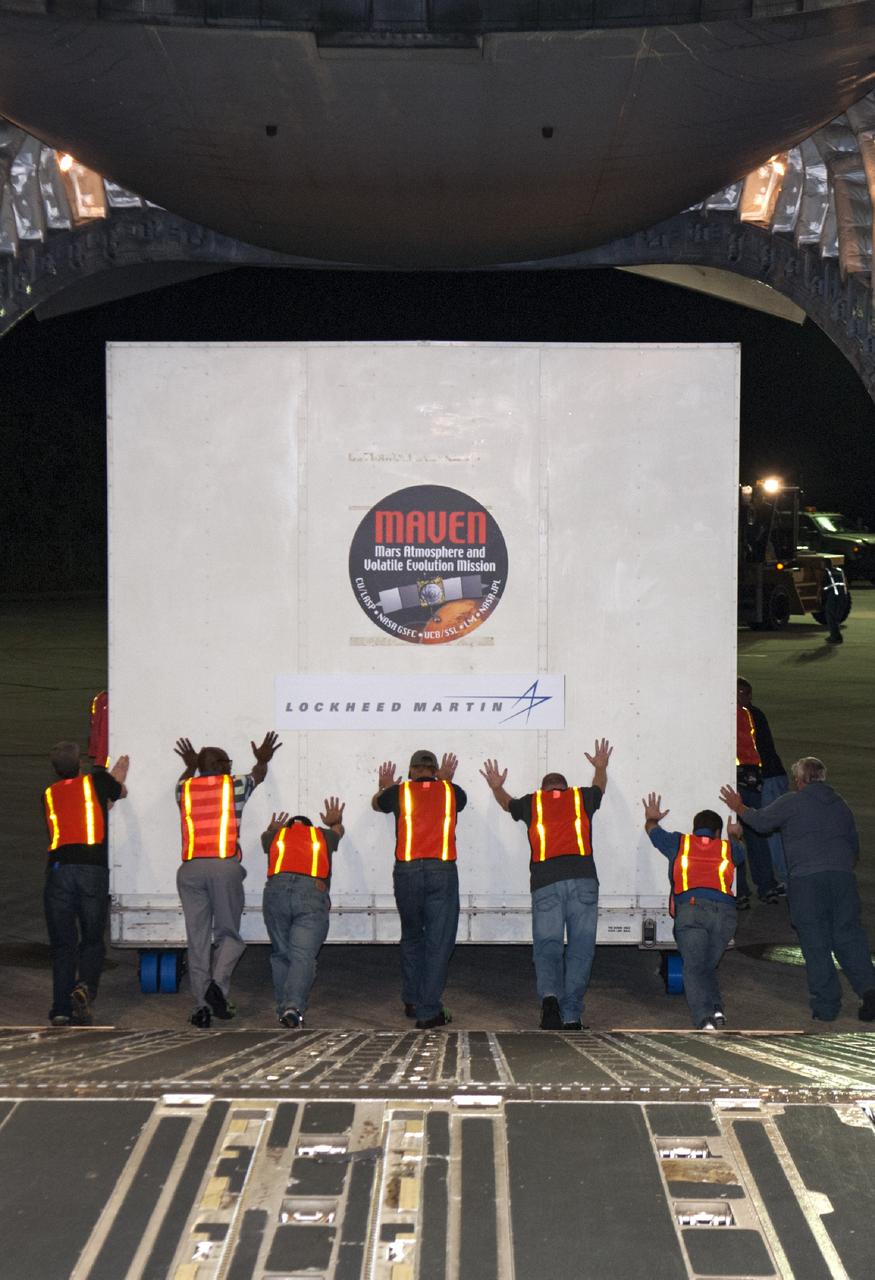
CAPE CANAVERAL, Fla. – Technicians guide the MAVEN spacecraft as it is offloaded from a C-17 aircraft at NASA's Kennedy Space Center in Florida. The aircraft delivered MAVEN for processing ahead of a launch later this year on a United Launch Alliance Atlas V rocket. MAVEN, short for Mars Atmosphere and Volatile Evolution, will orbit Mars to study the Red Planet's upper atmosphere in unprecedented detail. Photo credit: NASA/Tim Jacobs
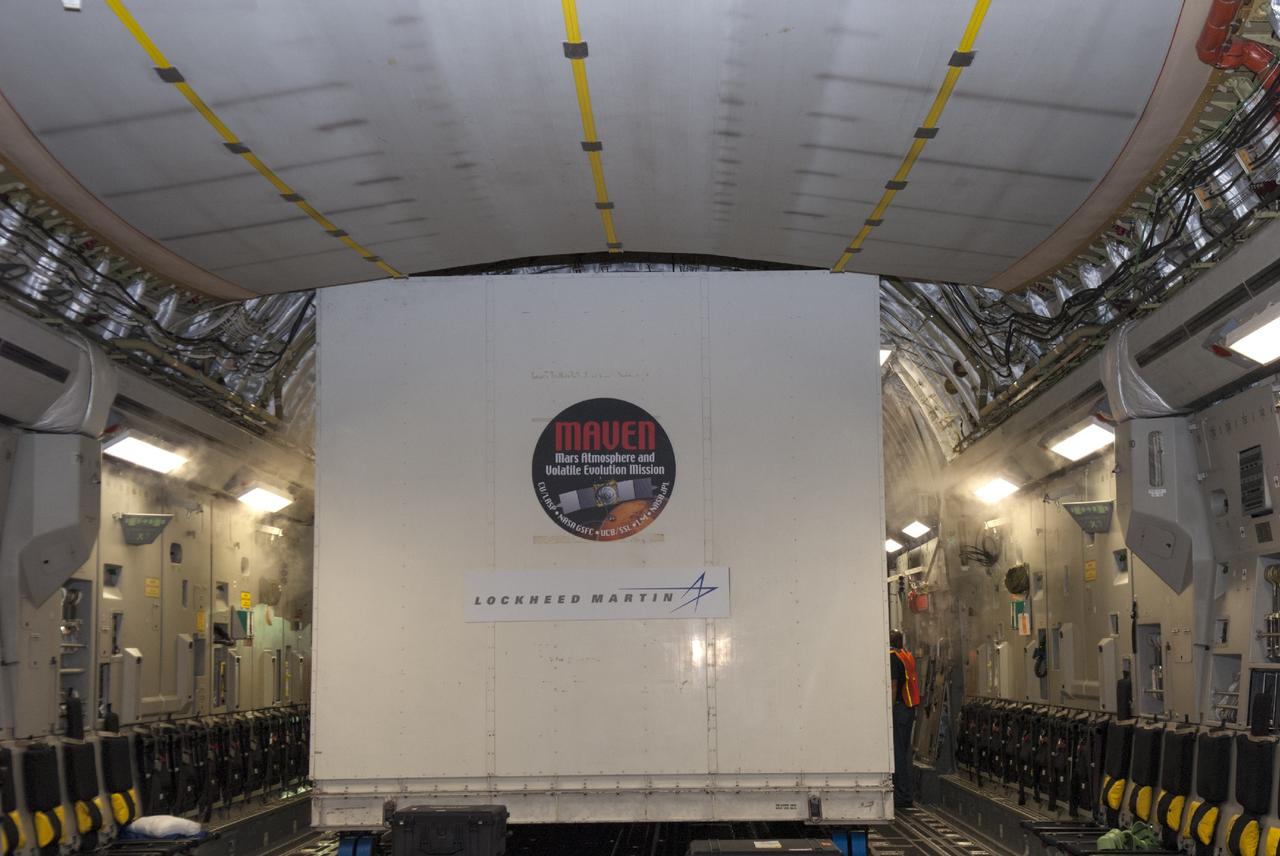
CAPE CANAVERAL, Fla. – Still in its shipping container, the MAVEN spacecraft awaits offload from a C-17 aircraft following its arrival at NASA's Kennedy Space Center in Florida. The aircraft is delivering MAVEN for processing ahead of a launch later this year on a United Launch Alliance Atlas V rocket. MAVEN, short for Mars Atmosphere and Volatile Evolution, will orbit Mars to study the Red Planet's upper atmosphere in unprecedented detail. Photo credit: NASA/Tim Jacobs
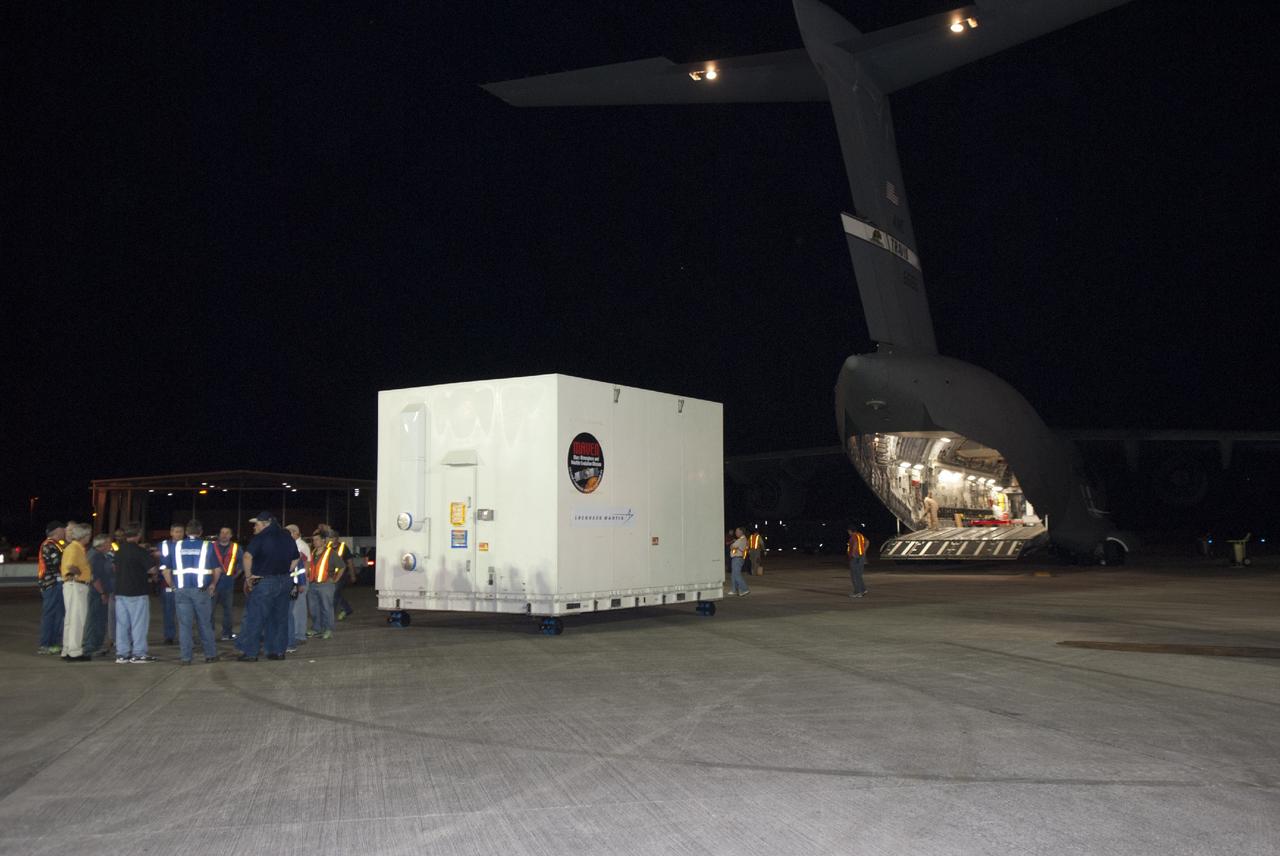
CAPE CANAVERAL, Fla. – At NASA's Kennedy Space Center in Florida, the MAVEN spacecraft, still in its shipping container, rests on the parking apron at the Shuttle Landing Facility following offload from a C-17 aircraft. The aircraft delivered MAVEN for processing ahead of a launch later this year on a United Launch Alliance Atlas V rocket. MAVEN, short for Mars Atmosphere and Volatile Evolution, will orbit Mars to study the Red Planet's upper atmosphere in unprecedented detail. Photo credit: NASA/Tim Jacobs
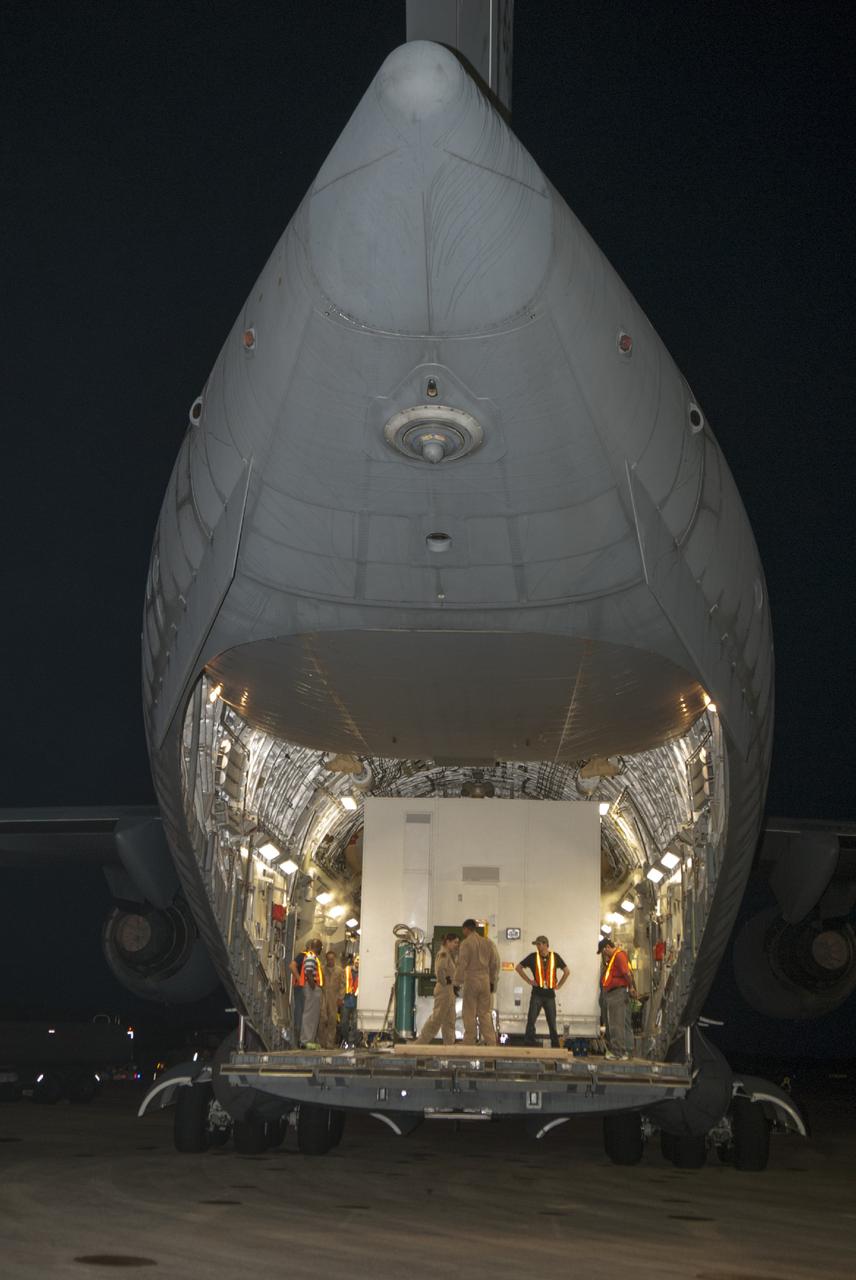
CAPE CANAVERAL, Fla. – Technicians at NASA's Kennedy Space Center in Florida prepare to offload the MAVEN spacecraft from a C-17 aircraft. The aircraft is delivering MAVEN for processing ahead of a launch later this year on a United Launch Alliance Atlas V rocket. MAVEN, short for Mars Atmosphere and Volatile Evolution, will orbit Mars to study the Red Planet's upper atmosphere in unprecedented detail. Photo credit: NASA/Tim Jacobs
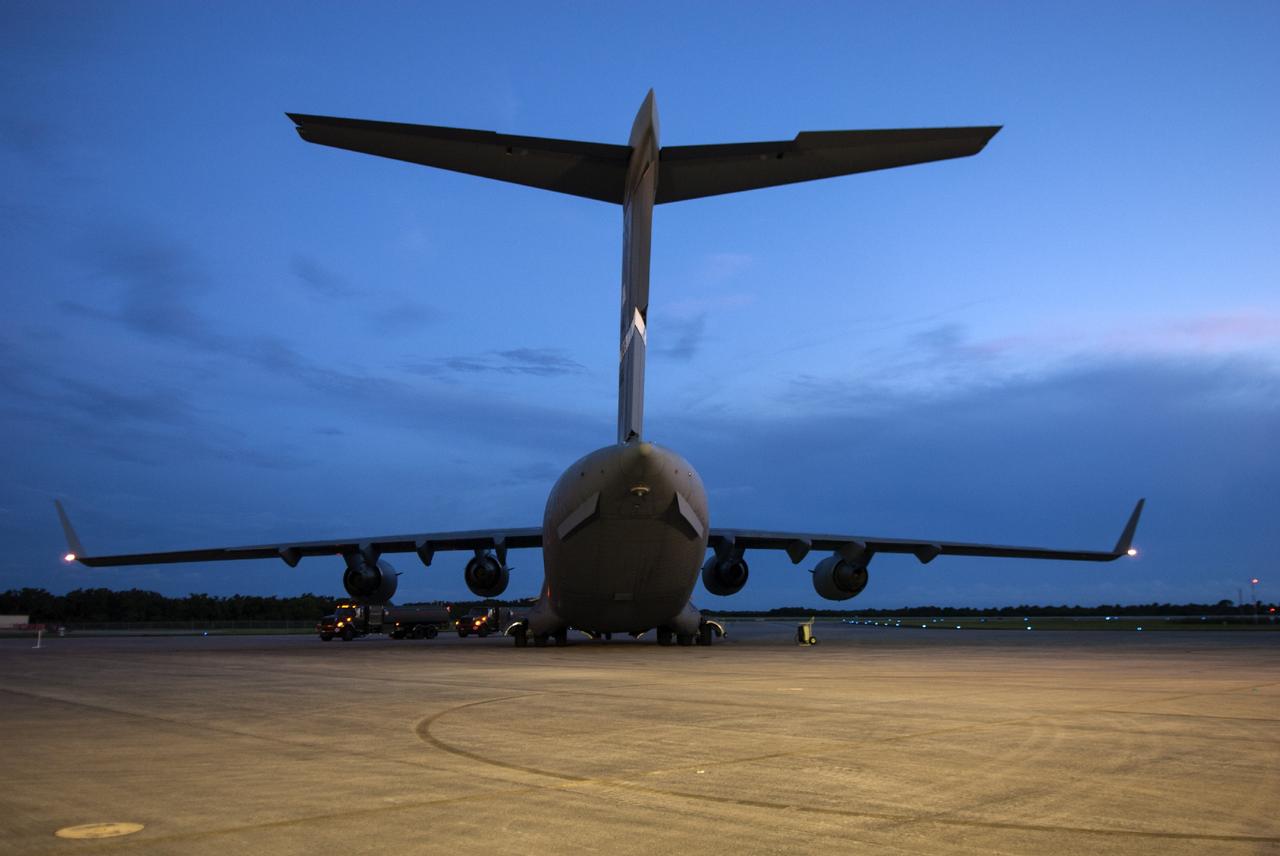
CAPE CANAVERAL, Fla. – A C-17 aircraft carrying the MAVEN spacecraft has arrived at the Shuttle Landing Facility at NASA's Kennedy Space Center in Florida. The aircraft is delivering MAVEN for processing ahead of a launch later this year on a United Launch Alliance Atlas V rocket. MAVEN, short for Mars Atmosphere and Volatile Evolution, will orbit Mars to study the Red Planet's upper atmosphere in unprecedented detail. Photo credit: NASA/Tim Jacobs
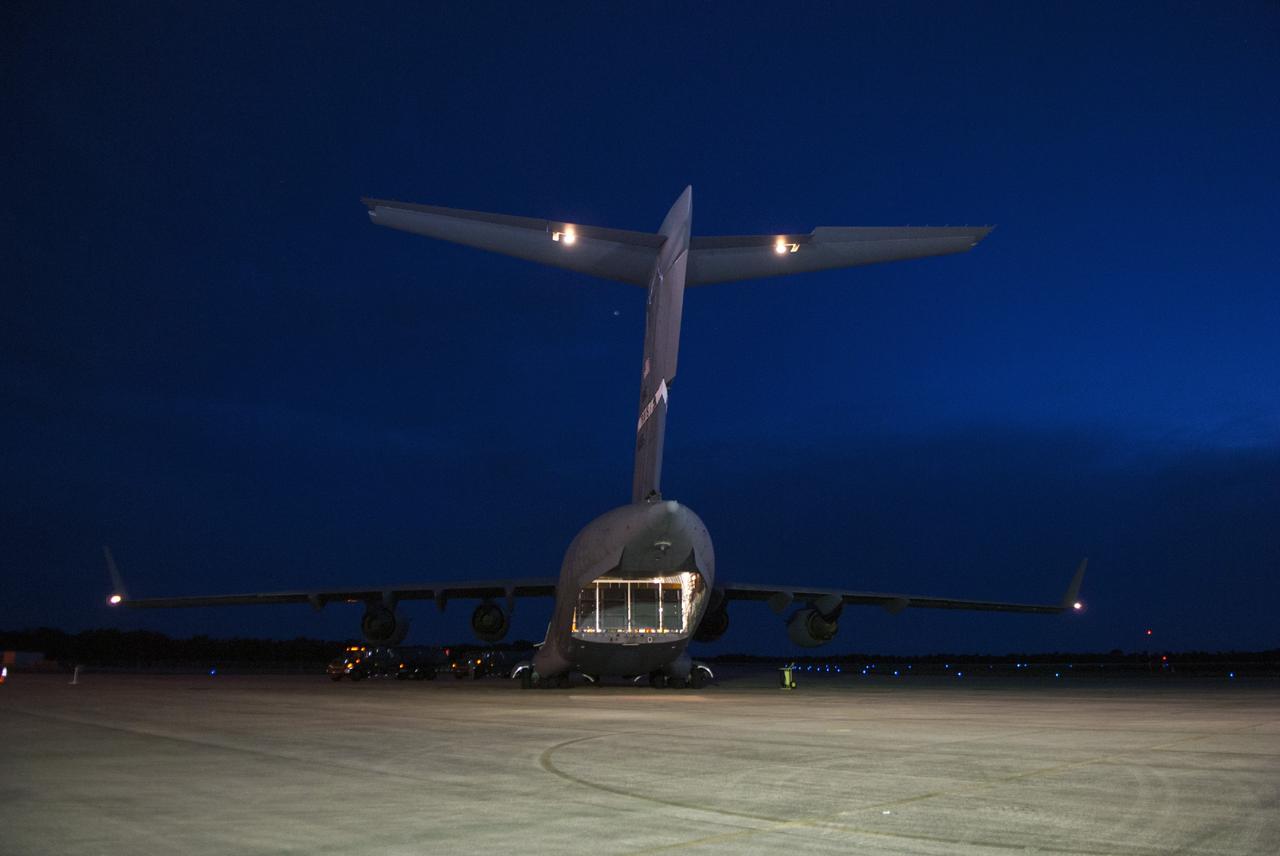
CAPE CANAVERAL, Fla. – The MAVEN spacecraft arrives at NASA's Kennedy Space Center in Florida aboard a C-17 aircraft. The aircraft is delivering MAVEN for processing ahead of a launch later this year on a United Launch Alliance Atlas V rocket. MAVEN, short for Mars Atmosphere and Volatile Evolution, will orbit Mars to study the Red Planet's upper atmosphere in unprecedented detail. Photo credit: NASA/Tim Jacobs
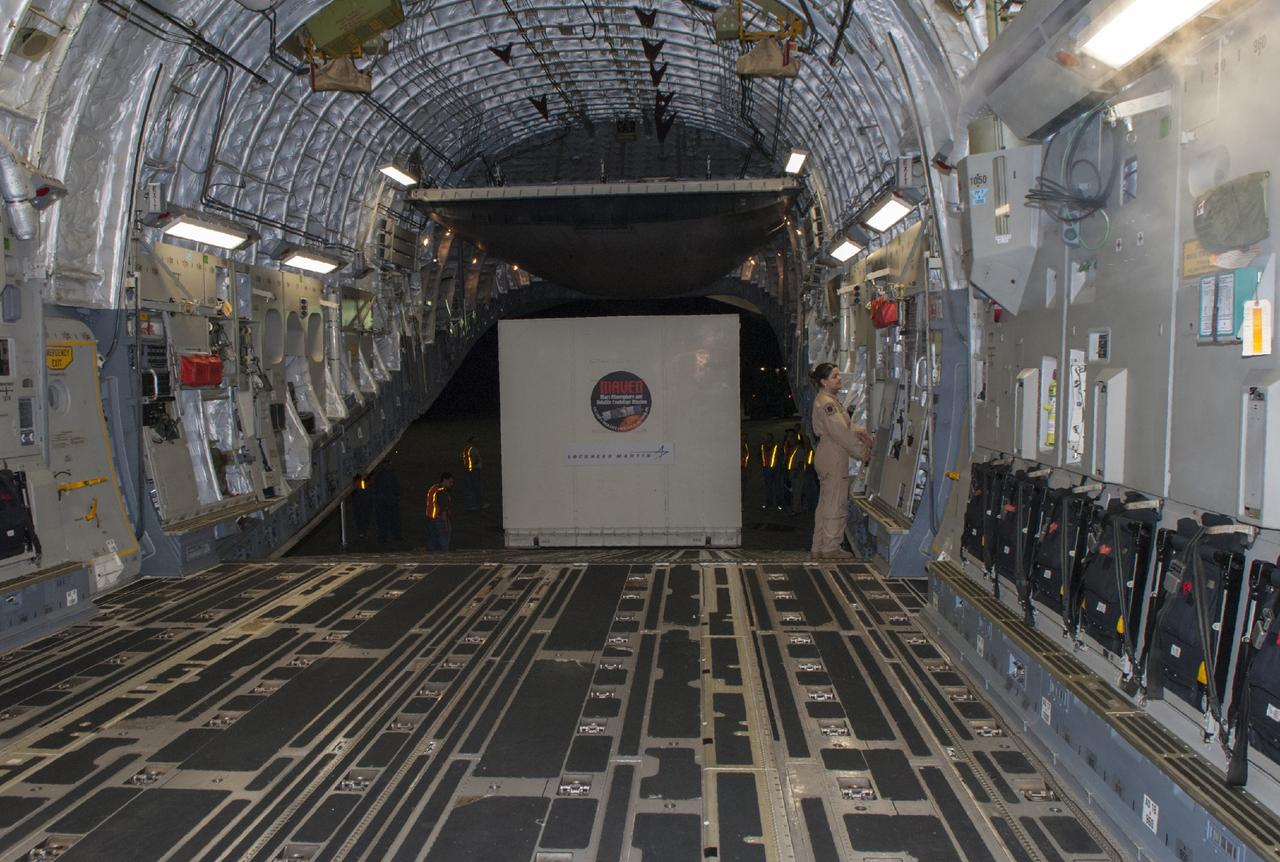
CAPE CANAVERAL, Fla. – The MAVEN spacecraft is offloaded from a C-17 aircraft at NASA's Kennedy Space Center in Florida. The aircraft delivered MAVEN for processing ahead of a launch later this year on a United Launch Alliance Atlas V rocket. MAVEN, short for Mars Atmosphere and Volatile Evolution, will orbit Mars to study the Red Planet's upper atmosphere in unprecedented detail. Photo credit: NASA/Tim Jacobs
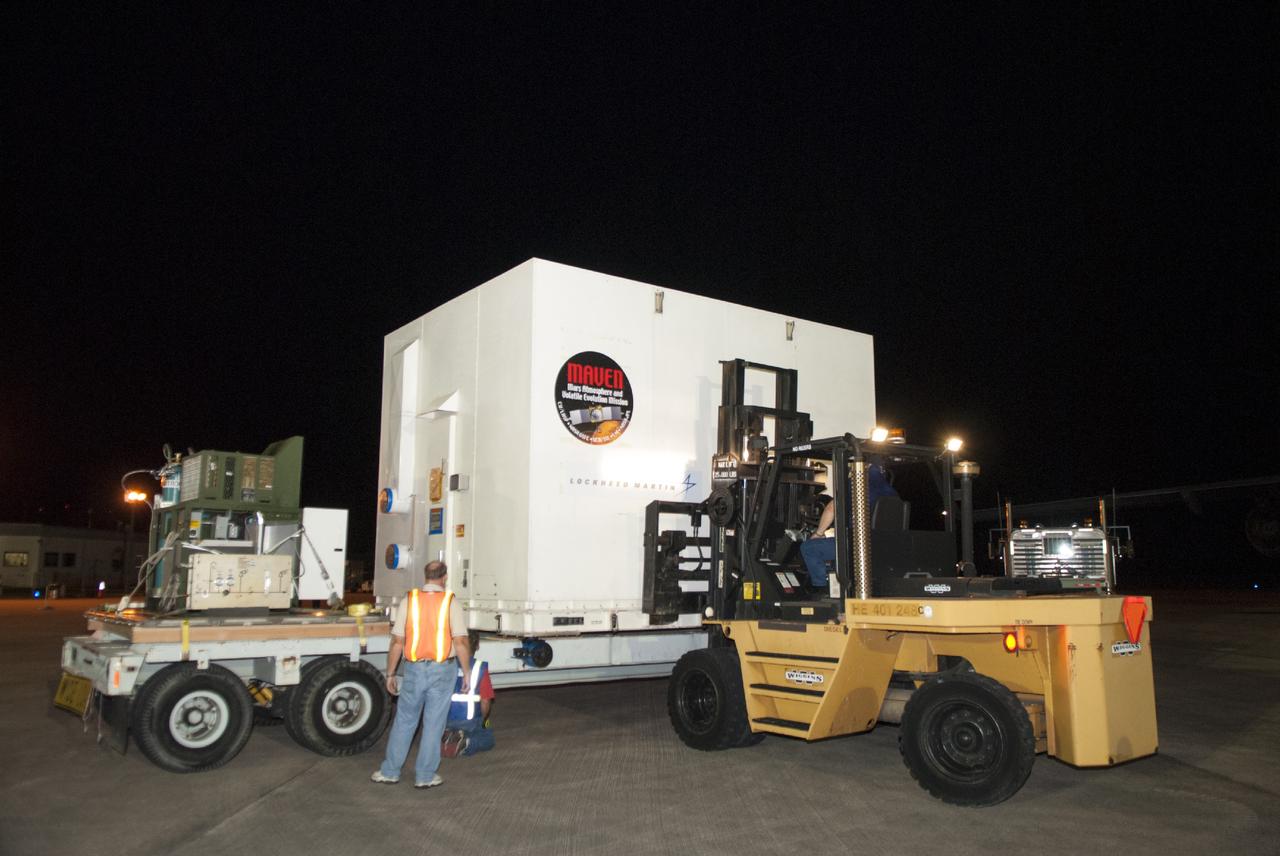
CAPE CANAVERAL, Fla. – At NASA's Kennedy Space Center in Florida, the MAVEN spacecraft, still in its shipping container, is lifted onto a truck following offload from a C-17 aircraft. The aircraft delivered MAVEN for processing ahead of a launch later this year on a United Launch Alliance Atlas V rocket. MAVEN, short for Mars Atmosphere and Volatile Evolution, will orbit Mars to study the Red Planet's upper atmosphere in unprecedented detail. Photo credit: NASA/Tim Jacobs
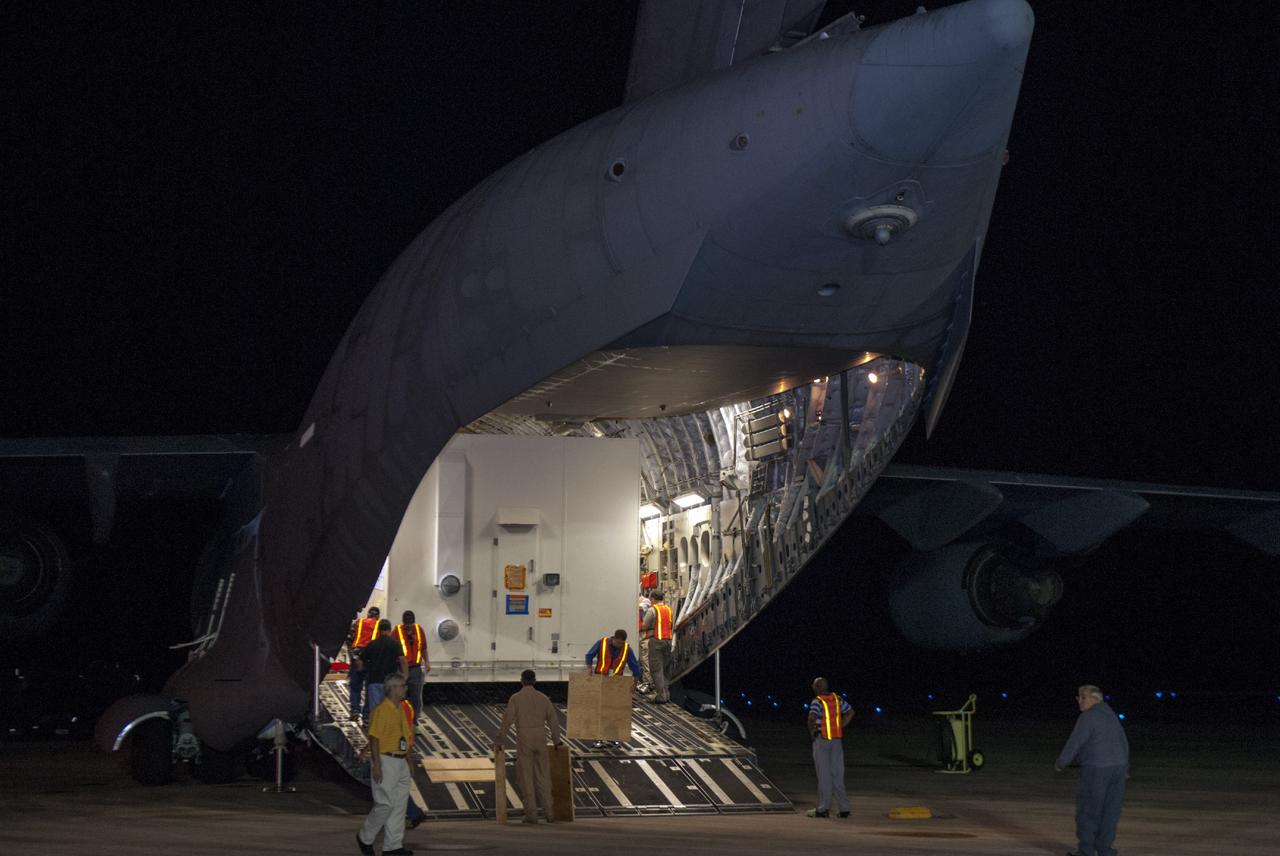
CAPE CANAVERAL, Fla. – Still in its shipping container, the MAVEN spacecraft begins to emerge from a C-17 aircraft following its arrival at NASA's Kennedy Space Center in Florida. The aircraft is delivering MAVEN for processing ahead of a launch later this year on a United Launch Alliance Atlas V rocket. MAVEN, short for Mars Atmosphere and Volatile Evolution, will orbit Mars to study the Red Planet's upper atmosphere in unprecedented detail. Photo credit: NASA/Tim Jacobs
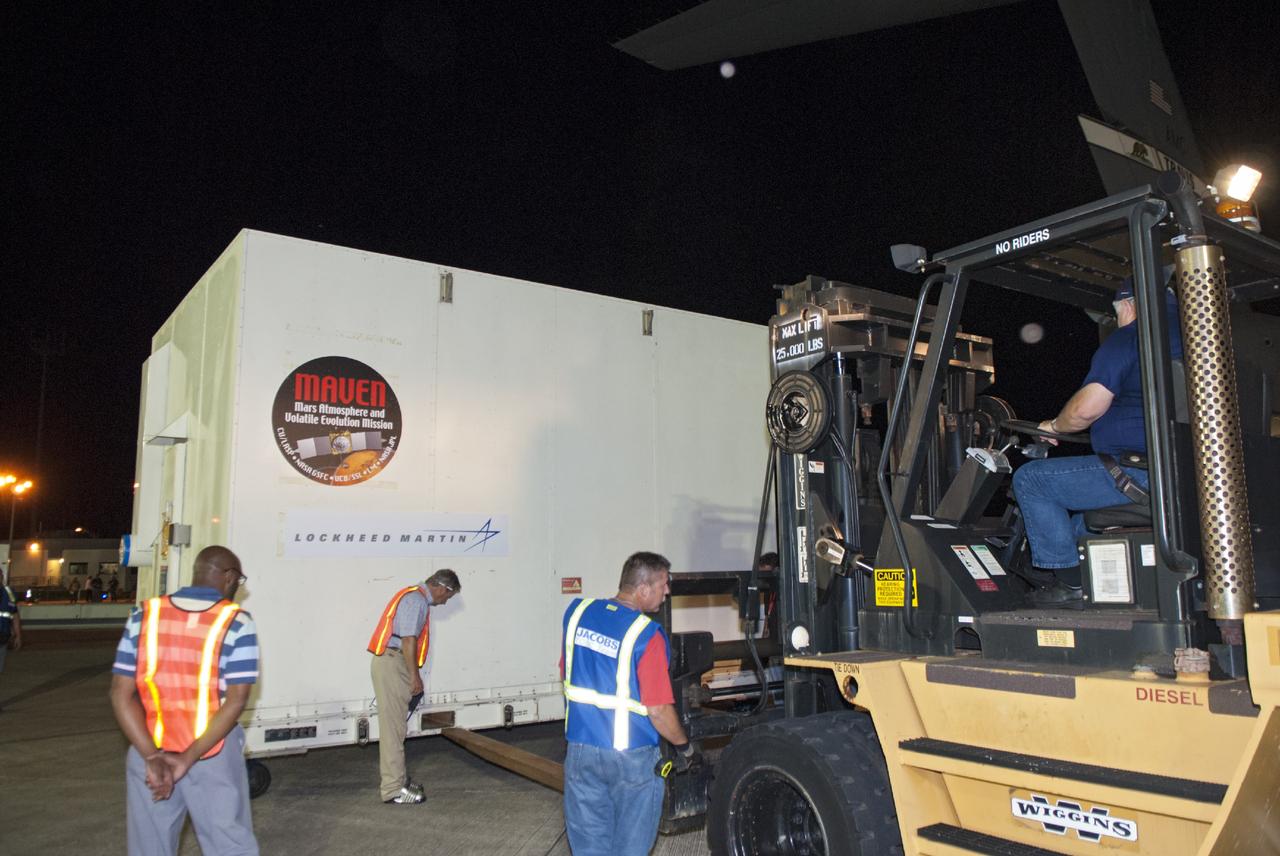
CAPE CANAVERAL, Fla. – At NASA's Kennedy Space Center in Florida, the MAVEN spacecraft, still in its shipping container, is picked up by a forklift at the Shuttle Landing Facility following offload from a C-17 aircraft. The aircraft delivered MAVEN for processing ahead of a launch later this year on a United Launch Alliance Atlas V rocket. MAVEN, short for Mars Atmosphere and Volatile Evolution, will orbit Mars to study the Red Planet's upper atmosphere in unprecedented detail. Photo credit: NASA/Tim Jacobs
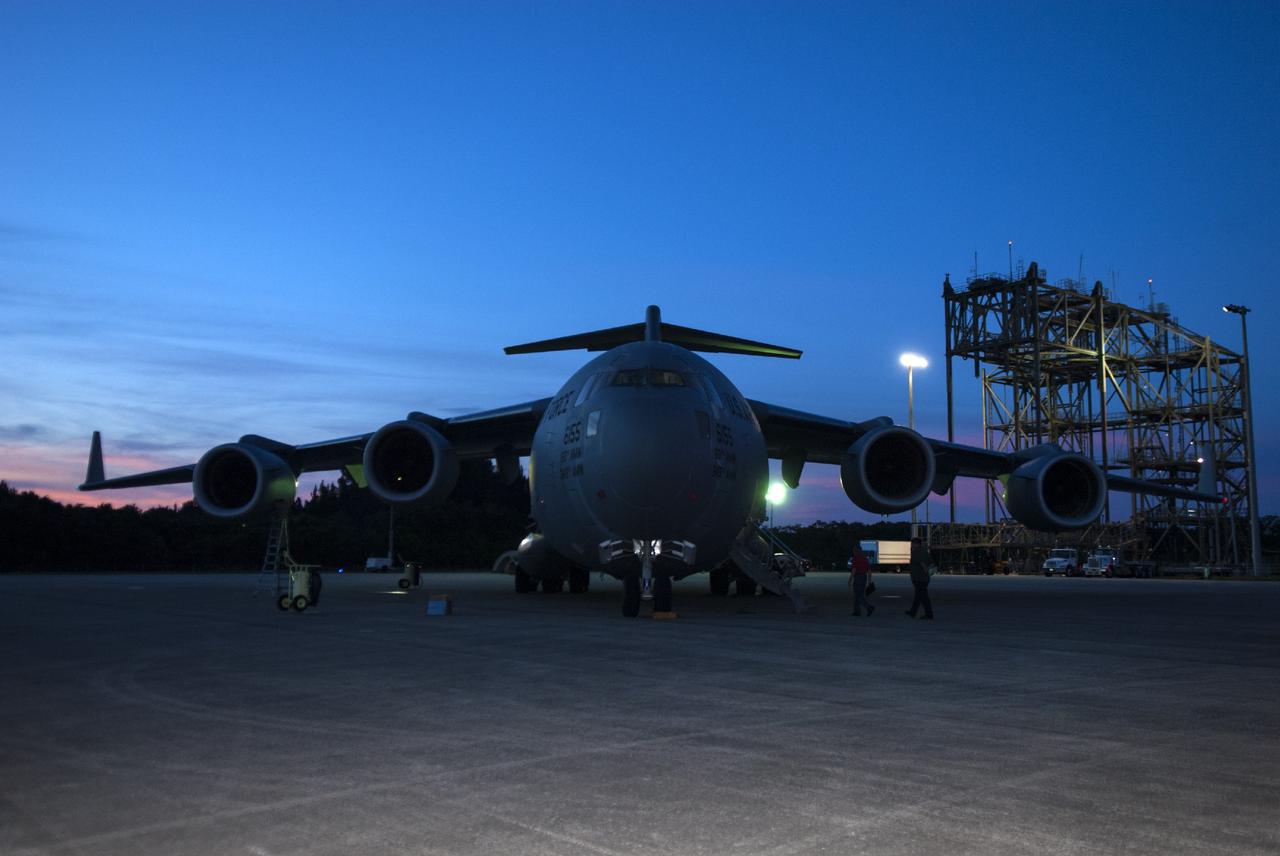
CAPE CANAVERAL, Fla. – A C-17 aircraft carrying the MAVEN spacecraft stops on the Shuttle Landing Facility parking apron at NASA's Kennedy Space Center in Florida. The aircraft is delivering MAVEN for processing ahead of a launch later this year on a United Launch Alliance Atlas V rocket. MAVEN, short for Mars Atmosphere and Volatile Evolution, will orbit Mars to study the Red Planet's upper atmosphere in unprecedented detail. Photo credit: NASA/Tim Jacobs
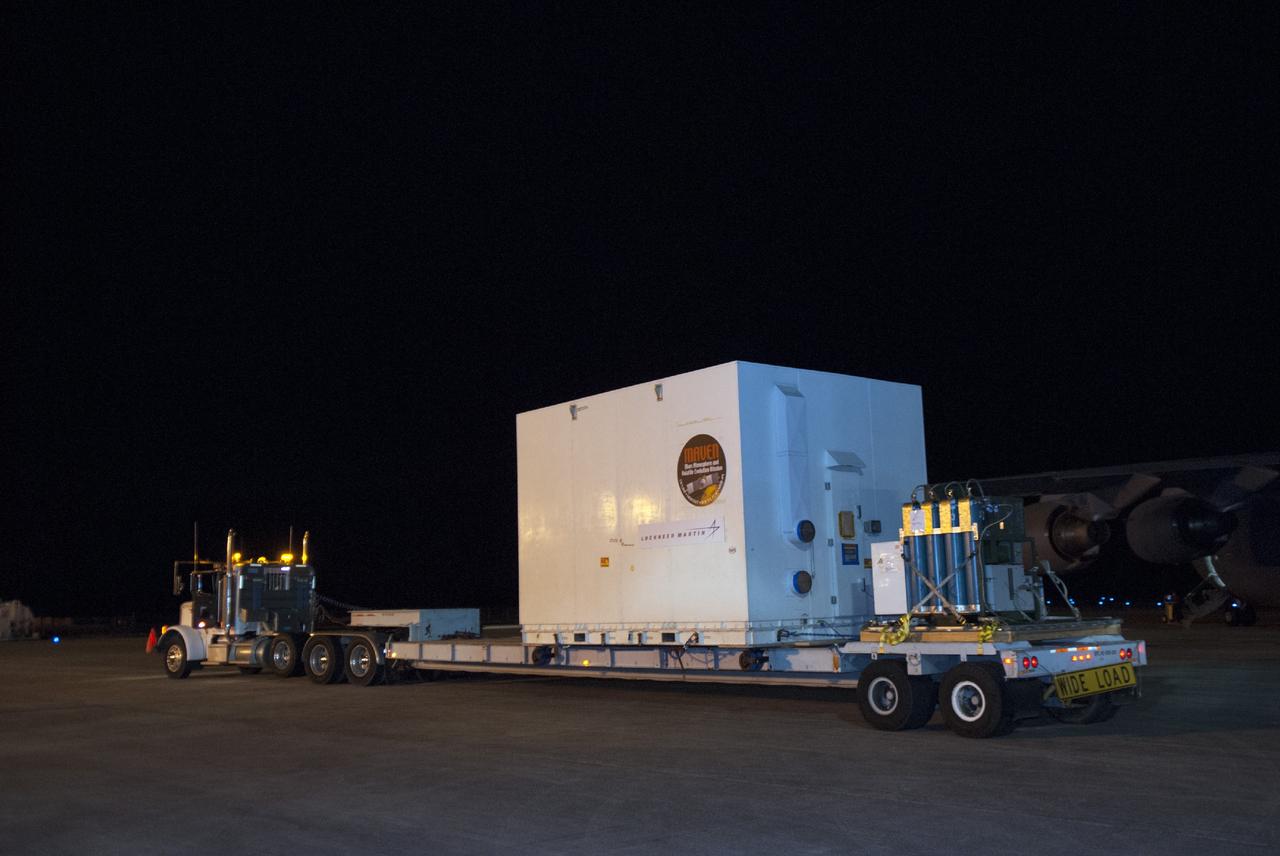
CAPE CANAVERAL, Fla. – The shipping container carrying the MAVEN spacecraft departs the Shuttle Landing Facility at NASA's Kennedy Space Center in Florida. A C-17 aircraft delivered MAVEN for processing ahead of a launch later this year on a United Launch Alliance Atlas V rocket. MAVEN, short for Mars Atmosphere and Volatile Evolution, will orbit Mars to study the Red Planet's upper atmosphere in unprecedented detail. Photo credit: NASA/Tim Jacobs
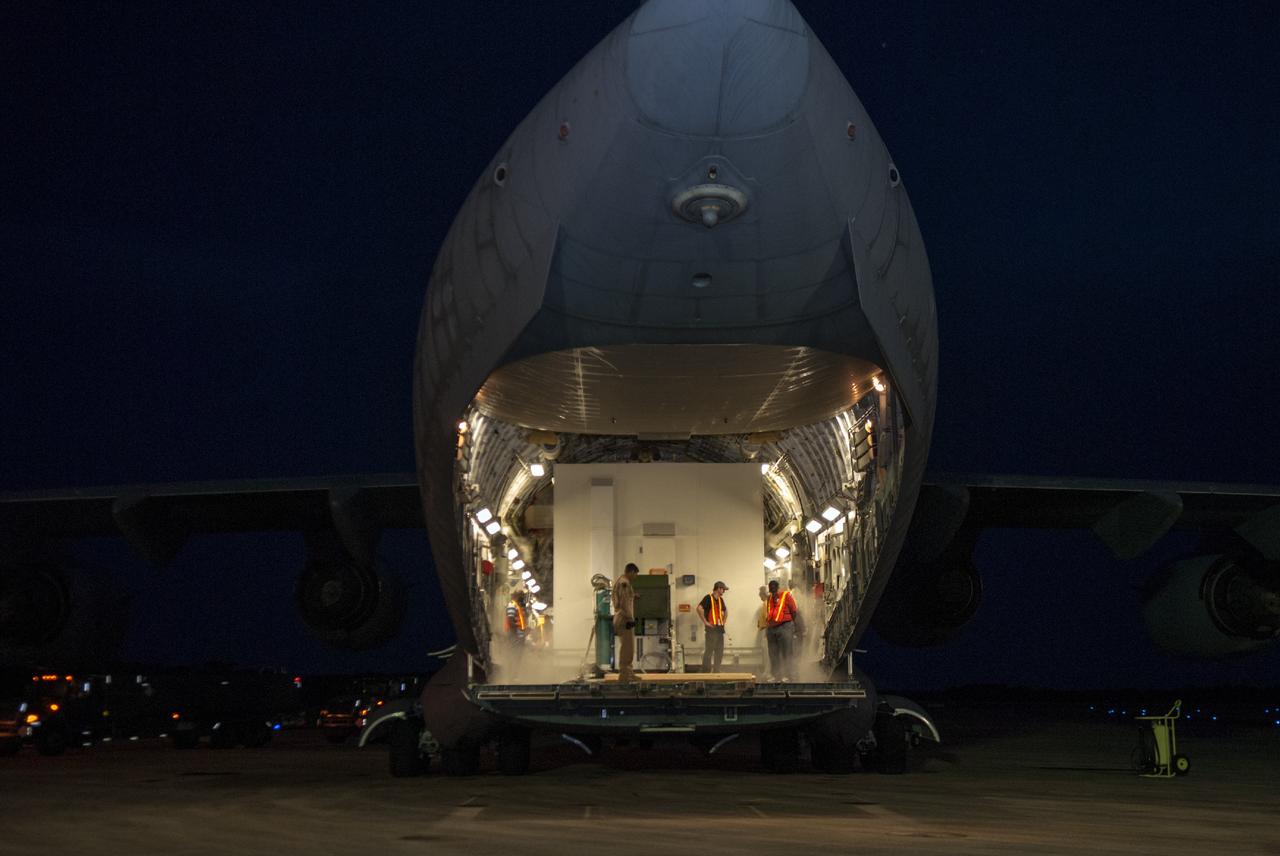
CAPE CANAVERAL, Fla. – Technicians at NASA's Kennedy Space Center in Florida prepare to offload the MAVEN spacecraft from a C-17 aircraft. The aircraft is delivering MAVEN for processing ahead of a launch later this year on a United Launch Alliance Atlas V rocket. MAVEN, short for Mars Atmosphere and Volatile Evolution, will orbit Mars to study the Red Planet's upper atmosphere in unprecedented detail. Photo credit: NASA/Tim Jacobs
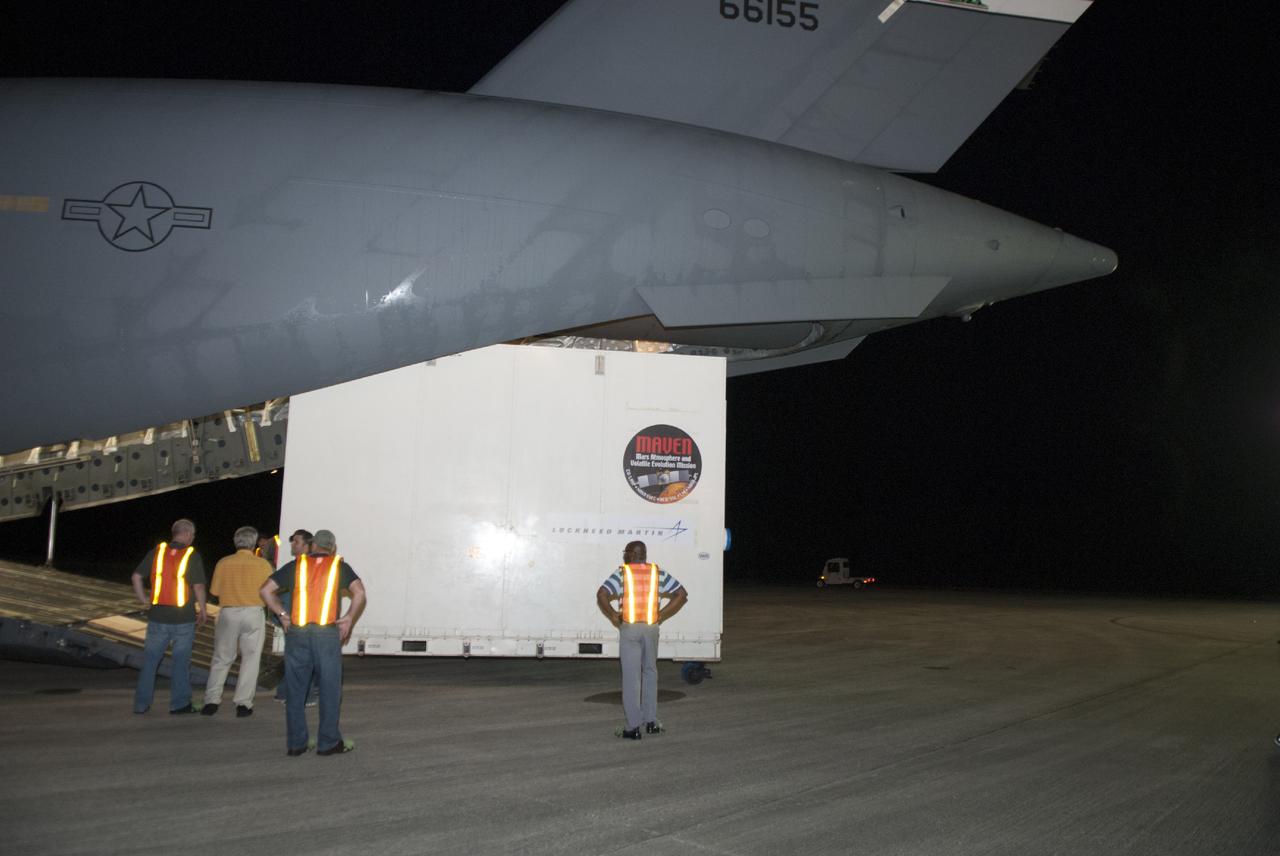
CAPE CANAVERAL, Fla. – The MAVEN spacecraft is offloaded from a C-17 aircraft at NASA's Kennedy Space Center in Florida. The aircraft delivered MAVEN for processing ahead of a launch later this year on a United Launch Alliance Atlas V rocket. MAVEN, short for Mars Atmosphere and Volatile Evolution, will orbit Mars to study the Red Planet's upper atmosphere in unprecedented detail. Photo credit: NASA/Tim Jacobs
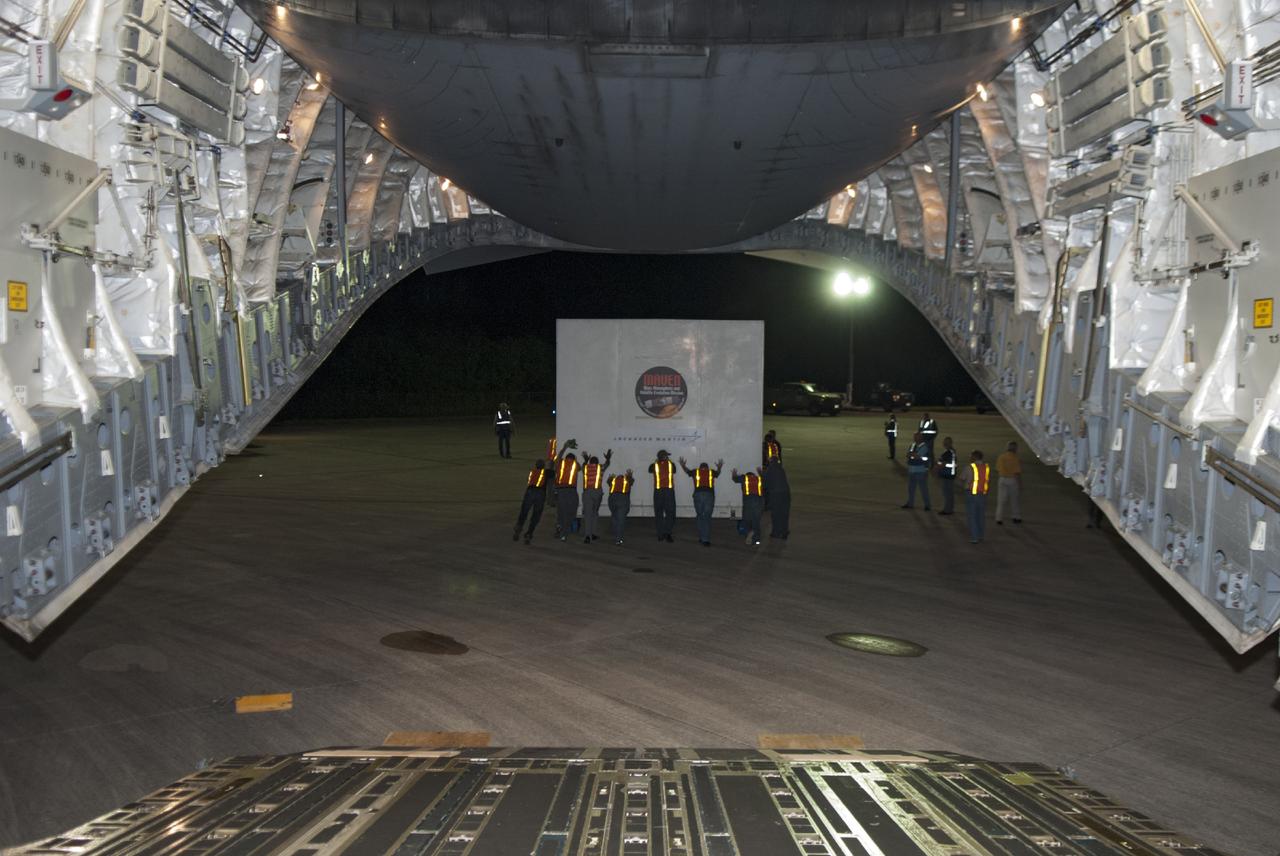
CAPE CANAVERAL, Fla. – Technicians guide the MAVEN spacecraft as it is offloaded from a C-17 aircraft at NASA's Kennedy Space Center in Florida. The aircraft delivered MAVEN for processing ahead of a launch later this year on a United Launch Alliance Atlas V rocket. MAVEN, short for Mars Atmosphere and Volatile Evolution, will orbit Mars to study the Red Planet's upper atmosphere in unprecedented detail. Photo credit: NASA/Tim Jacobs
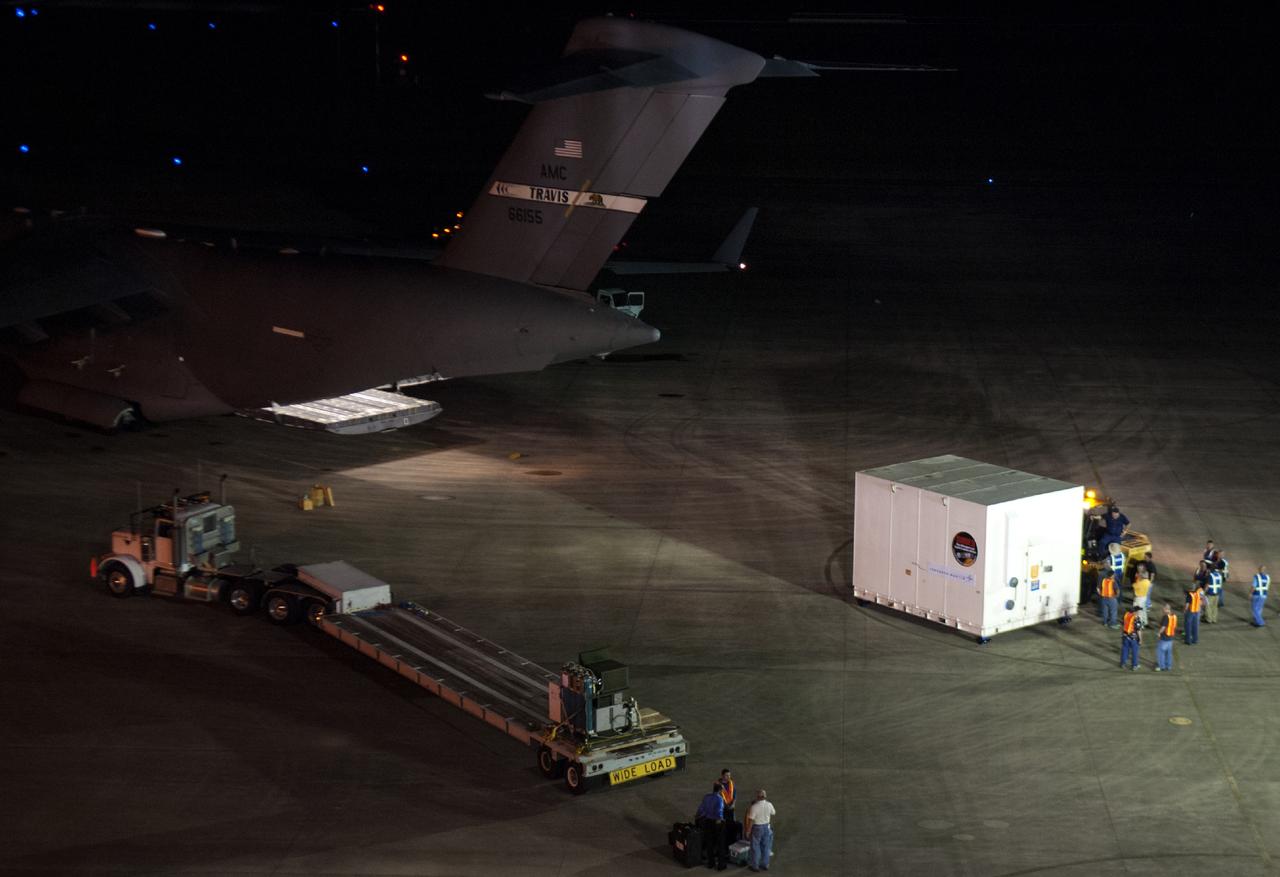
CAPE CANAVERAL, Fla. – At NASA's Kennedy Space Center in Florida, the MAVEN spacecraft, still in its shipping container, is prepared for transport following offload from a C-17 aircraft. The aircraft delivered MAVEN for processing ahead of a launch later this year on a United Launch Alliance Atlas V rocket. MAVEN, short for Mars Atmosphere and Volatile Evolution, will orbit Mars to study the Red Planet's upper atmosphere in unprecedented detail. Photo credit: NASA/Tim Jacobs
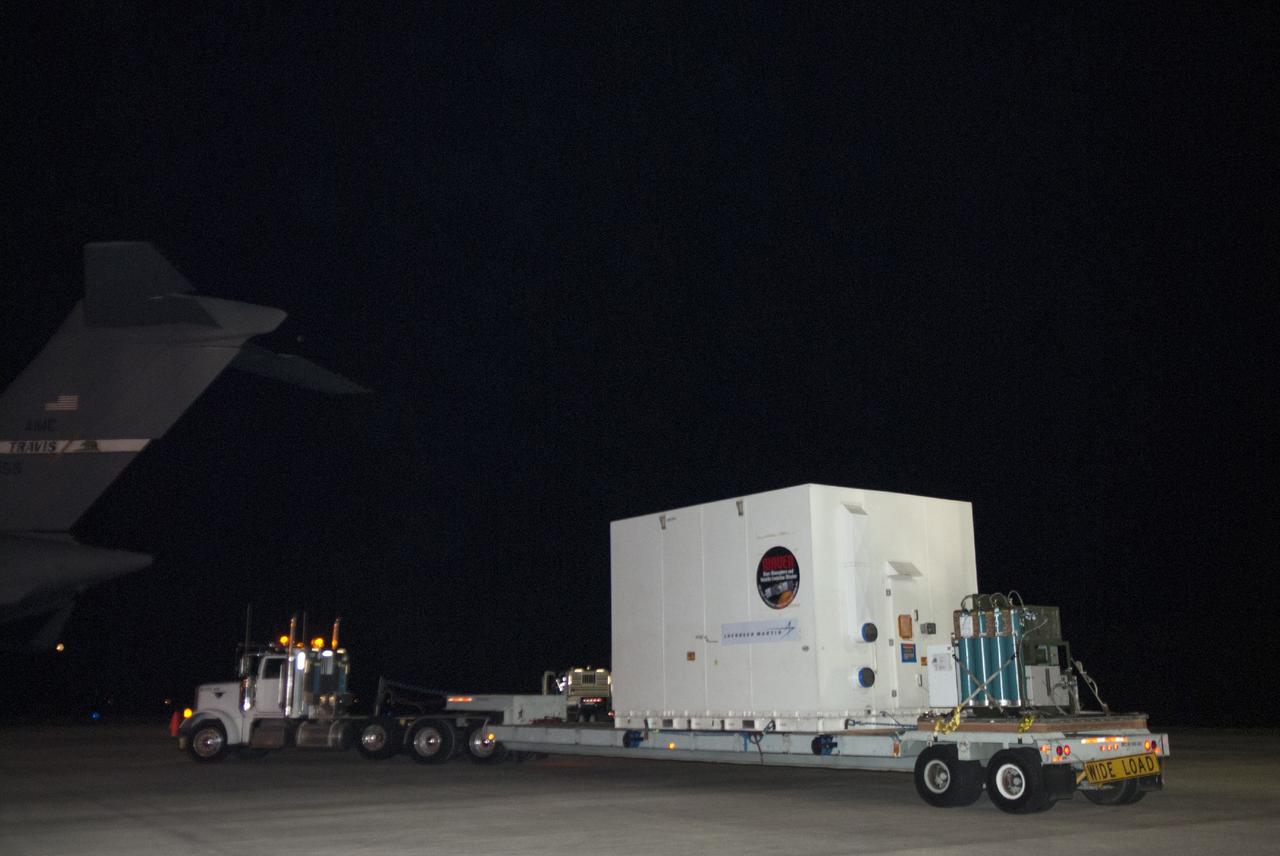
CAPE CANAVERAL, Fla. – At NASA's Kennedy Space Center in Florida, the MAVEN spacecraft, still in its shipping container, is placed aboard a truck. A C-17 aircraft delivered MAVEN for processing ahead of a launch later this year on a United Launch Alliance Atlas V rocket. MAVEN, short for Mars Atmosphere and Volatile Evolution, will orbit Mars to study the Red Planet's upper atmosphere in unprecedented detail. Photo credit: NASA/Tim Jacobs
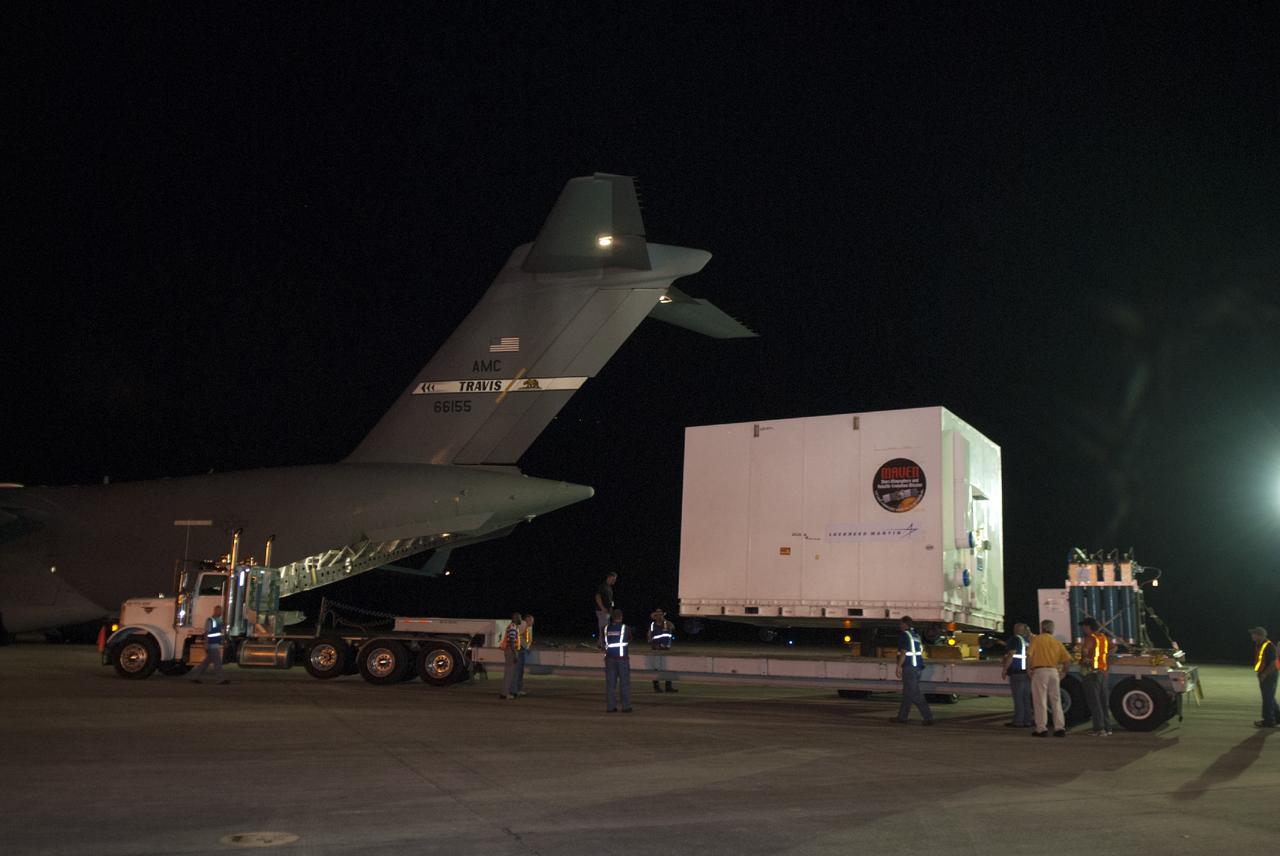
CAPE CANAVERAL, Fla. – At NASA's Kennedy Space Center in Florida, the MAVEN spacecraft, still in its shipping container, is lifted onto a truck following offload from a C-17 aircraft. The aircraft delivered MAVEN for processing ahead of a launch later this year on a United Launch Alliance Atlas V rocket. MAVEN, short for Mars Atmosphere and Volatile Evolution, will orbit Mars to study the Red Planet's upper atmosphere in unprecedented detail. Photo credit: NASA/Tim Jacobs
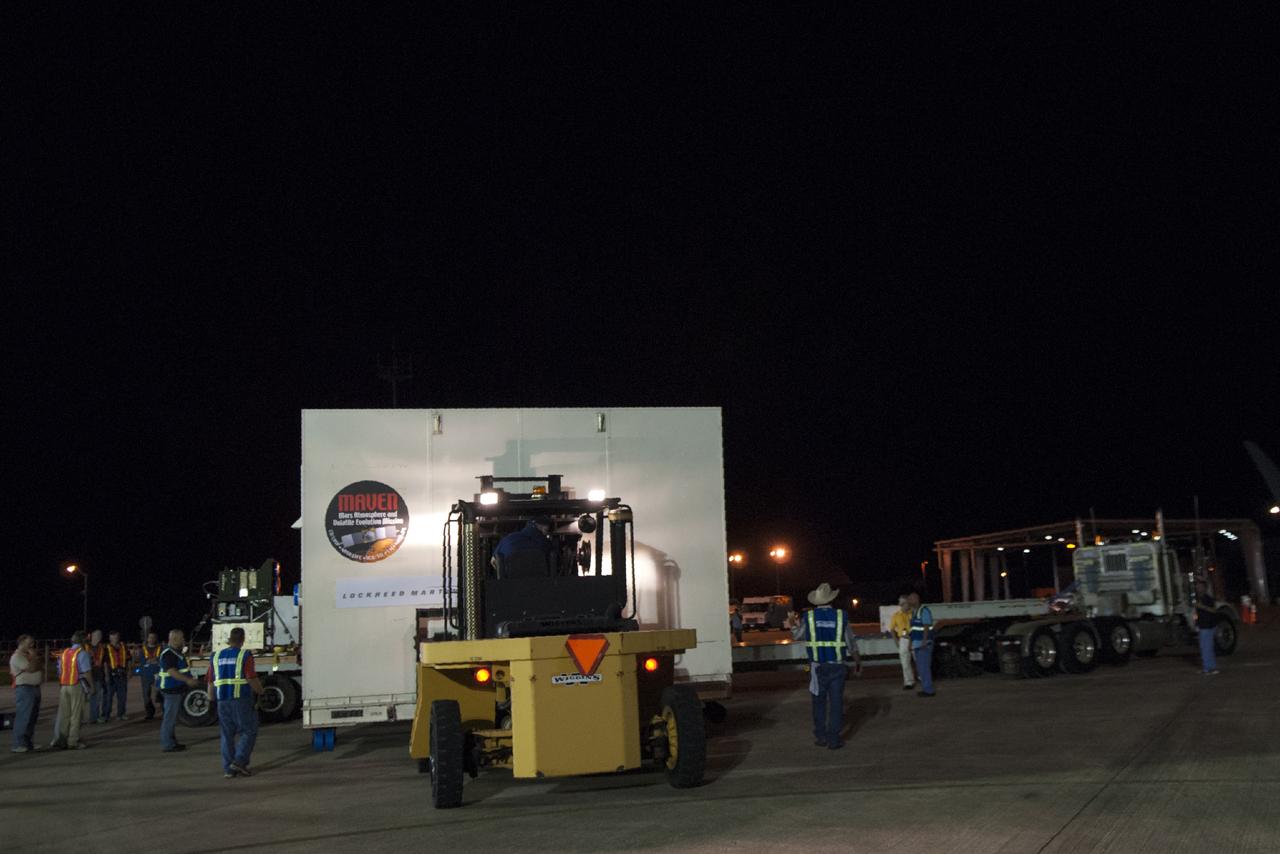
CAPE CANAVERAL, Fla. – At NASA's Kennedy Space Center in Florida, the MAVEN spacecraft, still in its shipping container, is prepared for transport following offload from a C-17 aircraft. The aircraft delivered MAVEN for processing ahead of a launch later this year on a United Launch Alliance Atlas V rocket. MAVEN, short for Mars Atmosphere and Volatile Evolution, will orbit Mars to study the Red Planet's upper atmosphere in unprecedented detail. Photo credit: NASA/Tim Jacobs
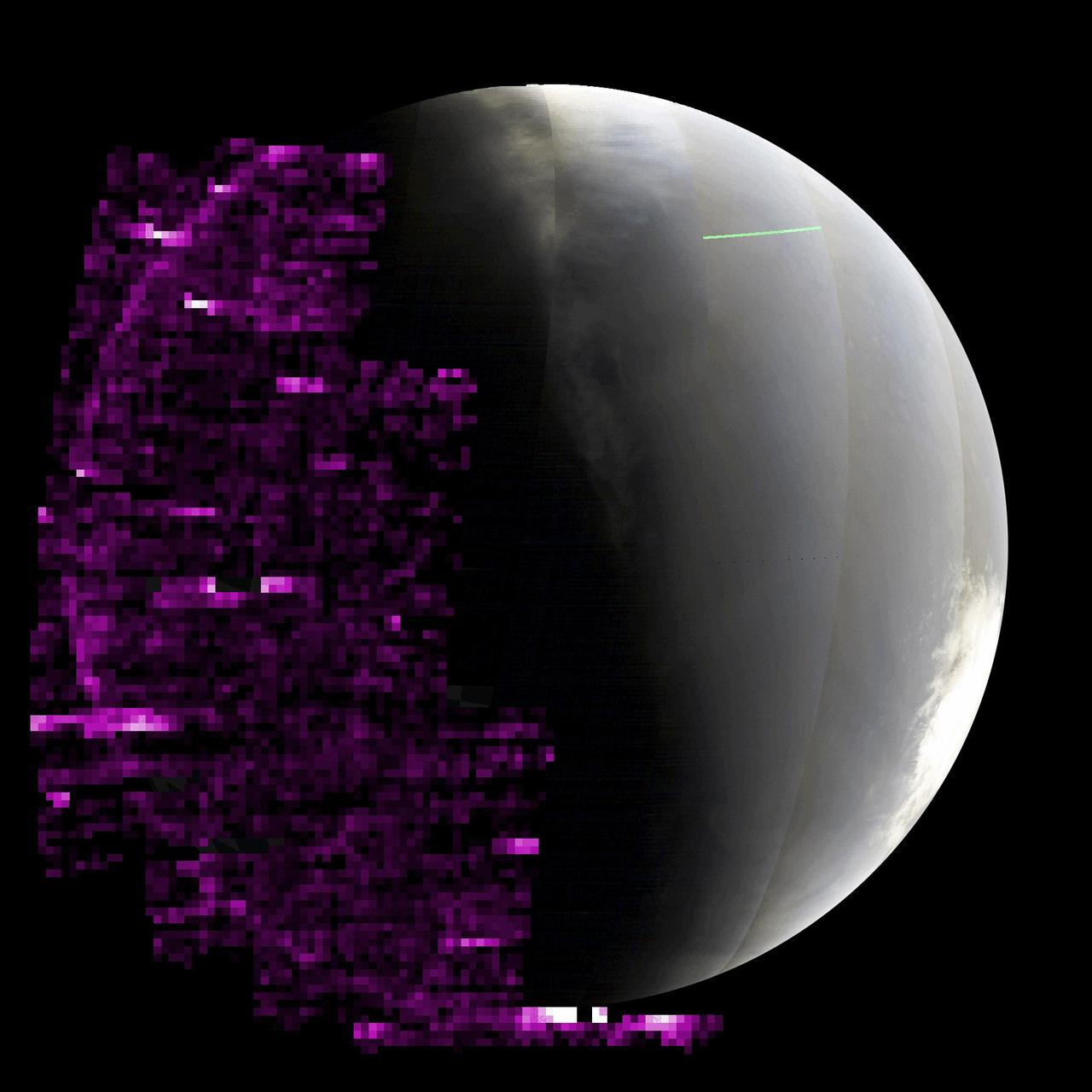
The purple color in this animated GIF shows auroras across Mars' nightside as detected by the Imaging Ultraviolet Spectrograph instrument aboard NASA's MAVEN (Mars Atmosphere and Volatile EvolutioN) orbiter. The brighter the purple, the more auroras were present. Taken as waves of energetic particles from a solar storm were arriving at Mars, the sequence pauses at the end, when the wave of the most energetic particles arrived and overwhelmed the instrument with noise. MAVEN took these images between May 14 and 20, 2024, as the spacecraft orbited below Mars, looking up at the nightside of the planet (Mars' south pole can be seen on the right, in full sunlight). Animation available at https://photojournal.jpl.nasa.gov/catalog/PIA26304
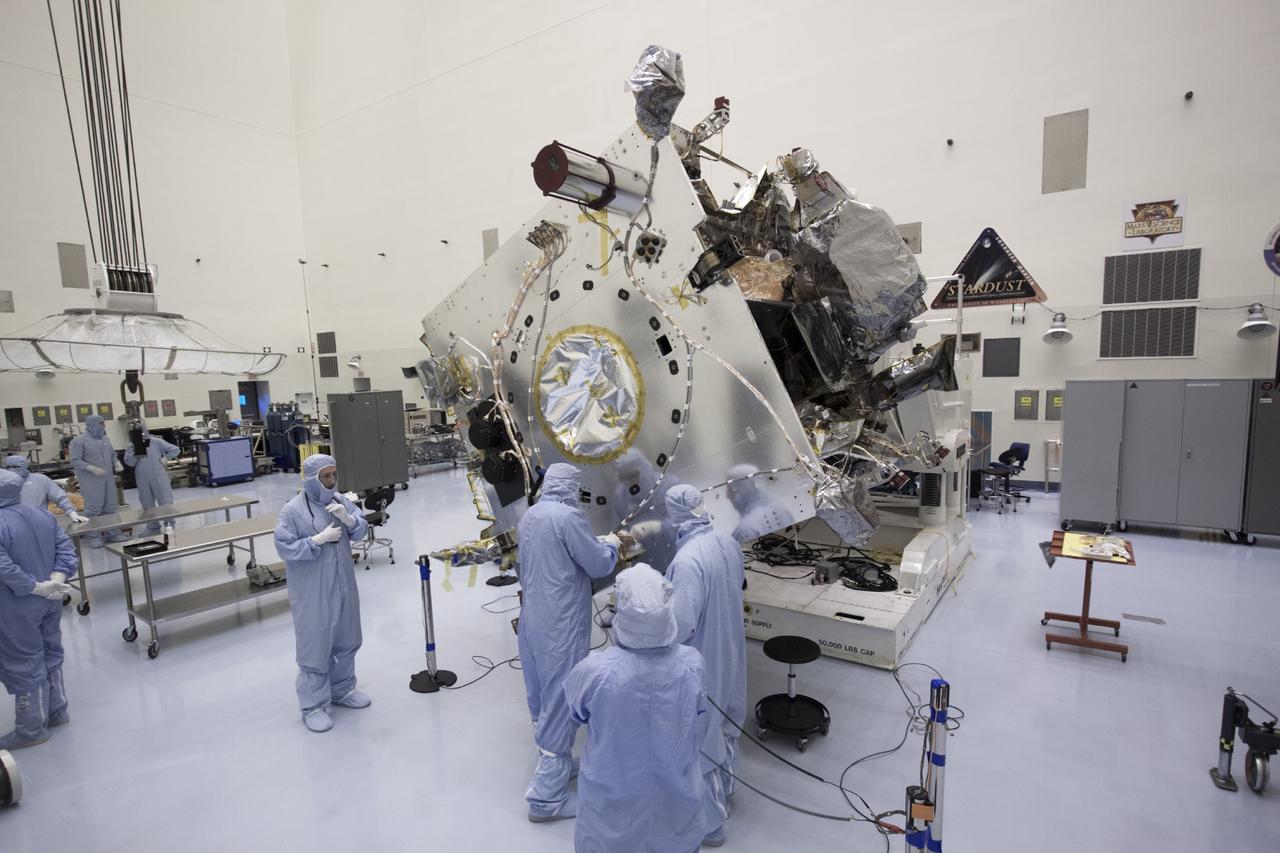
CAPE CANAVERAL, Fla. – Inside the Payload Hazardous Servicing Facility at NASA's Kennedy Space Center in Florida, technicians prepare the Mars Atmosphere and Volatile Evolution, or MAVEN spacecraft, to receive its parabolic high gain antenna. The antenna will communicate vast amounts of data to Earth during the mission. MAVEN is being prepared inside the facility for its scheduled November launch aboard a United Launch Alliance Atlas V rocket to Mars. Positioned in an orbit above the Red Planet, MAVEN will study the upper atmosphere of Mars in unprecedented detail. Photo credit: NASA/Jim Grossmann
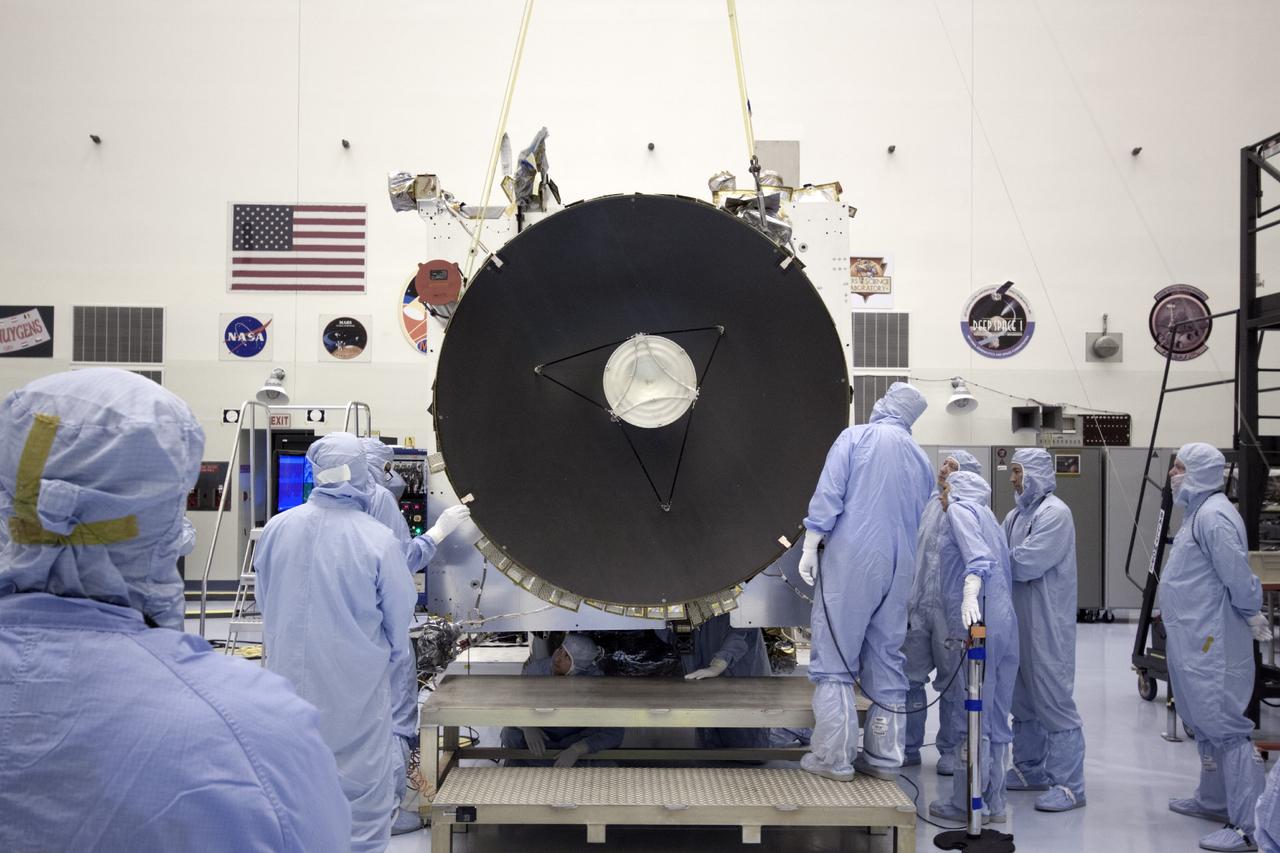
CAPE CANAVERAL, Fla. – At NASA's Kennedy Space Center in Florida, technicians position the parabolic high gain antenna for installation on the Mars Atmosphere and Volatile Evolution, or MAVEN spacecraft, in the Payload Hazardous Servicing Facility. The antenna will communicate vast amounts of data to Earth during the mission. MAVEN is being prepared inside the facility for its scheduled November launch aboard a United Launch Alliance Atlas V rocket to Mars. Positioned in an orbit above the Red Planet, MAVEN will study the upper atmosphere of Mars in unprecedented detail. Photo credit: NASA/Jim Grossmann
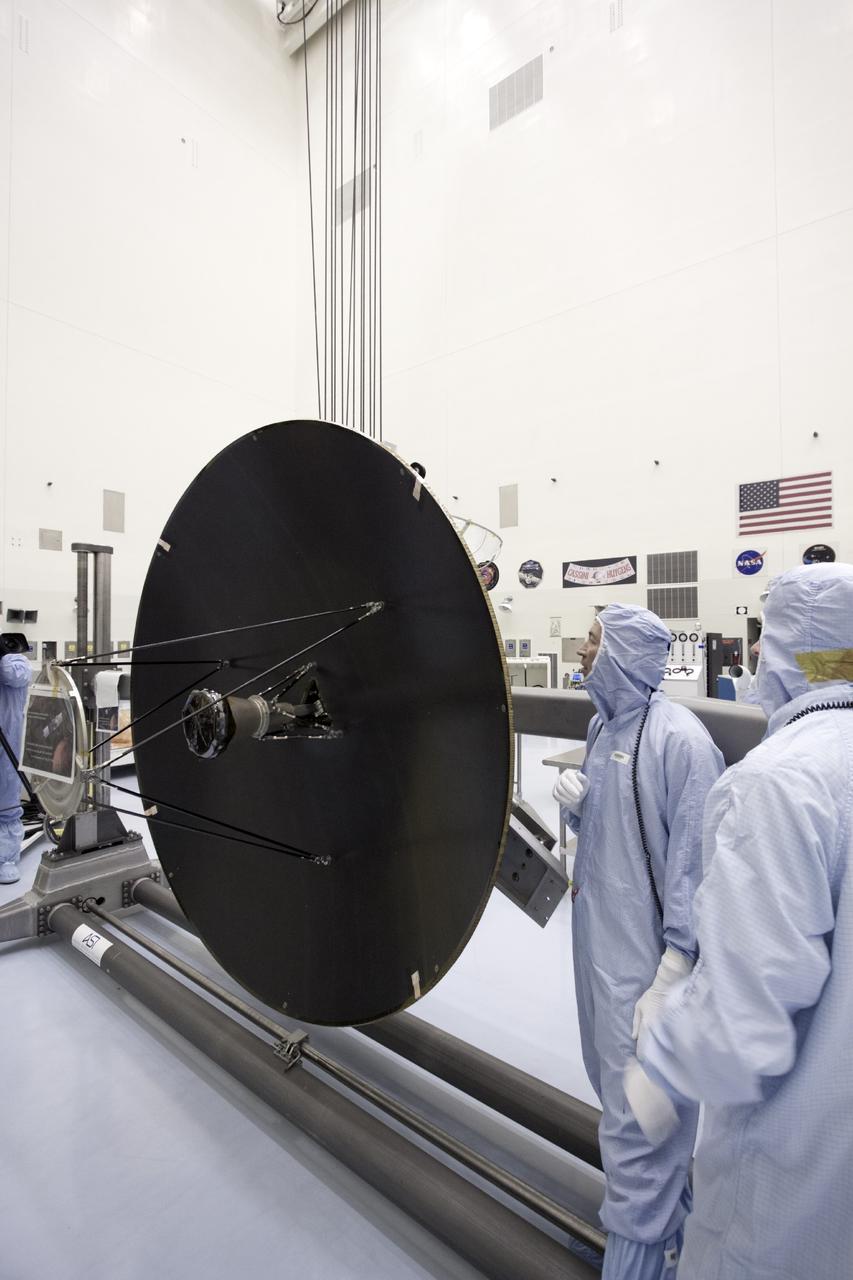
CAPE CANAVERAL, Fla. – Inside the Payload Hazardous Servicing Facility at NASA's Kennedy Space Center in Florida, technicians prepare the Mars Atmosphere and Volatile Evolution, or MAVEN spacecraft, for installation of the parabolic high gain antenna. The antenna will communicate vast amounts of data to Earth during the mission. MAVEN is being prepared inside the facility for its scheduled November launch aboard a United Launch Alliance Atlas V rocket to Mars. Positioned in an orbit above the Red Planet, MAVEN will study the upper atmosphere of Mars in unprecedented detail. Photo credit: NASA/Jim Grossmann
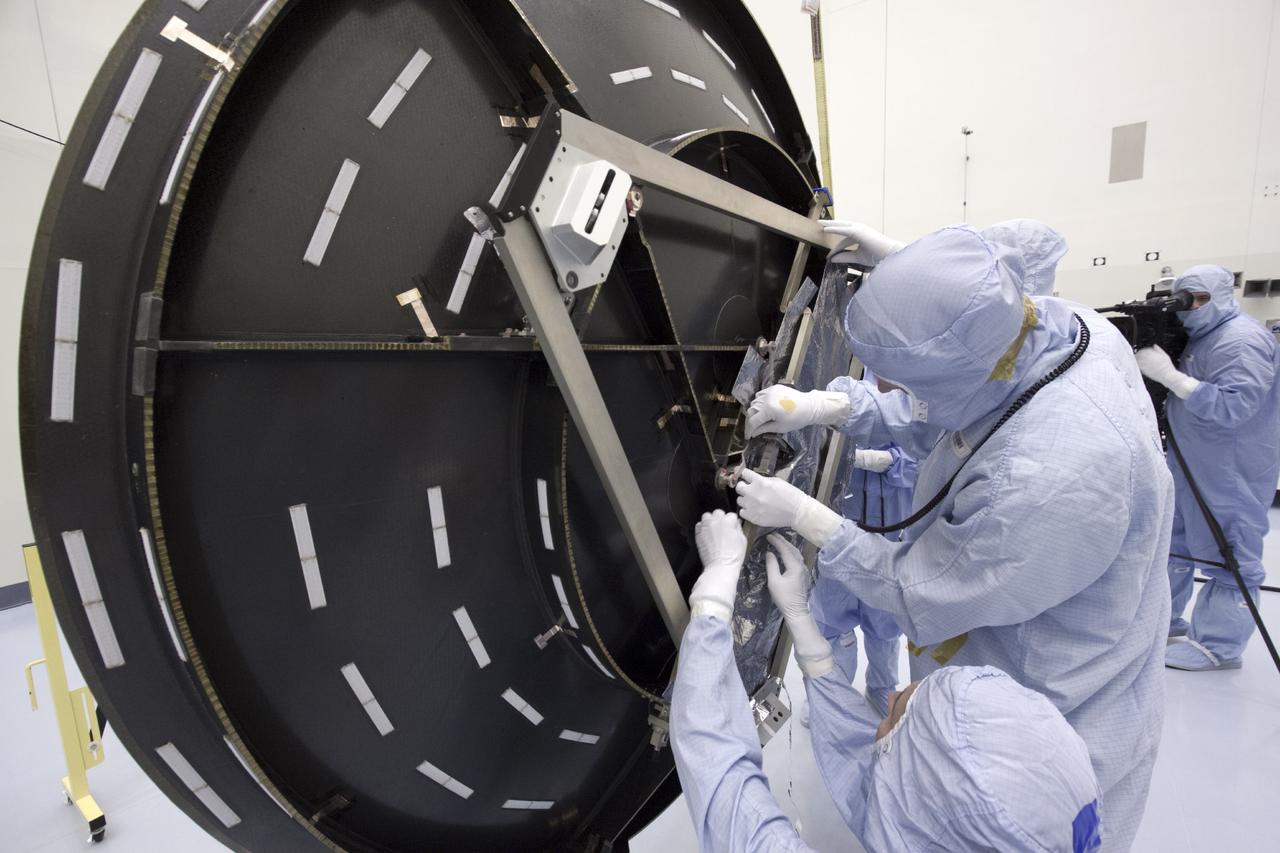
CAPE CANAVERAL, Fla. – Inside the Payload Hazardous Servicing Facility at NASA's Kennedy Space Center in Florida, technicians install a thermal blanket on the parabolic high gain antenna of the Mars Atmosphere and Volatile Evolution, or MAVEN spacecraft. The antenna will communicate vast amounts of data to Earth during the mission. MAVEN is being prepared inside the facility for its scheduled November launch aboard a United Launch Alliance Atlas V rocket to Mars. Positioned in an orbit above the Red Planet, MAVEN will study the upper atmosphere of Mars in unprecedented detail. Photo credit: NASA/Jim Grossmann
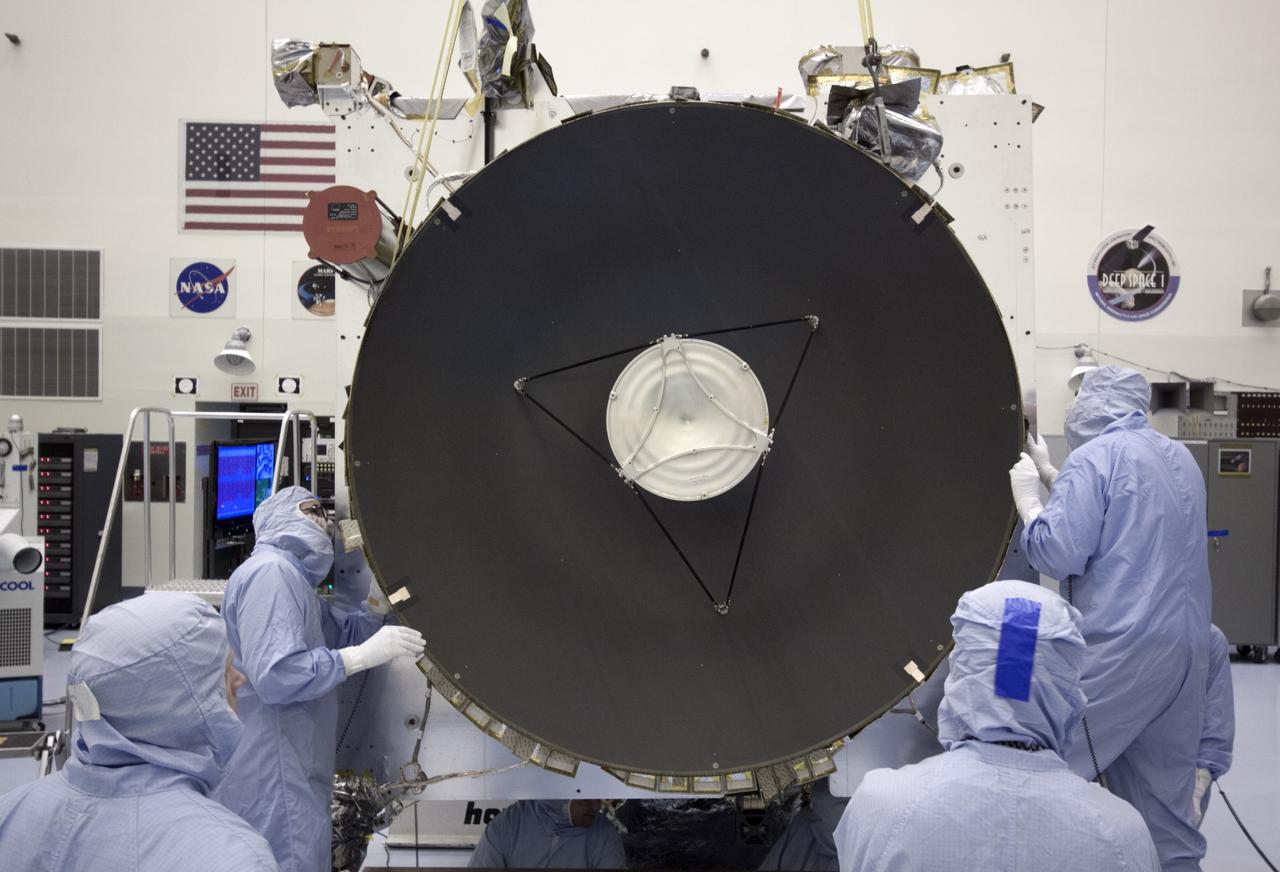
CAPE CANAVERAL, Fla. – Inside the Payload Hazardous Servicing Facility at NASA's Kennedy Space Center in Florida, the parabolic high gain antenna is installed on the Mars Atmosphere and Volatile Evolution, or MAVEN spacecraft. The antenna will communicate vast amounts of data to Earth during the mission. MAVEN is being prepared inside the facility for its scheduled November launch aboard a United Launch Alliance Atlas V rocket to Mars. Positioned in an orbit above the Red Planet, MAVEN will study the upper atmosphere of Mars in unprecedented detail. Photo credit: NASA/Jim Grossmann
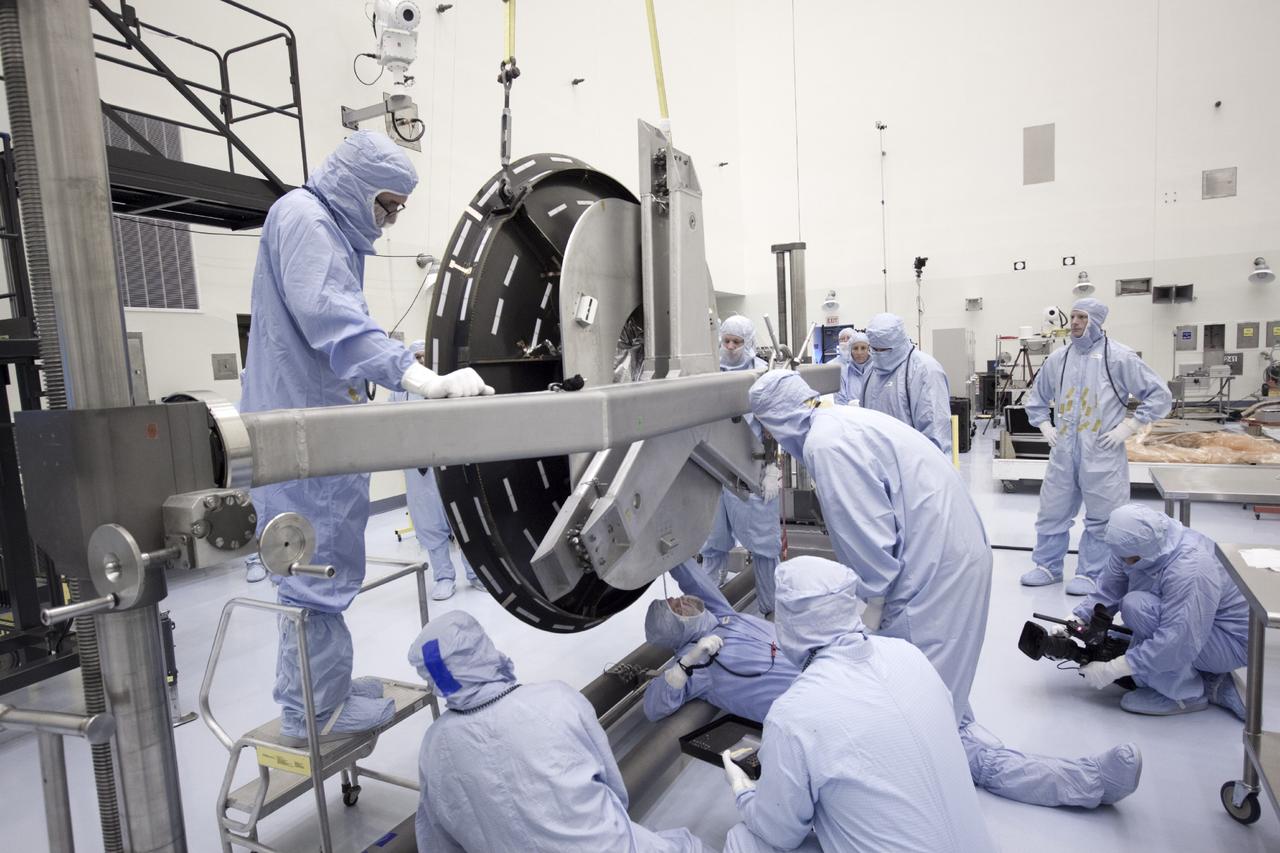
CAPE CANAVERAL, Fla. – Inside the Payload Hazardous Servicing Facility at NASA's Kennedy Space Center in Florida, technicians prepare to install the parabolic high gain antenna onto the Mars Atmosphere and Volatile Evolution, or MAVEN spacecraft. The antenna will communicate vast amounts of data to Earth during the mission. MAVEN is being prepared inside the facility for its scheduled November launch aboard a United Launch Alliance Atlas V rocket to Mars. Positioned in an orbit above the Red Planet, MAVEN will study the upper atmosphere of Mars in unprecedented detail. Photo credit: NASA/Jim Grossmann
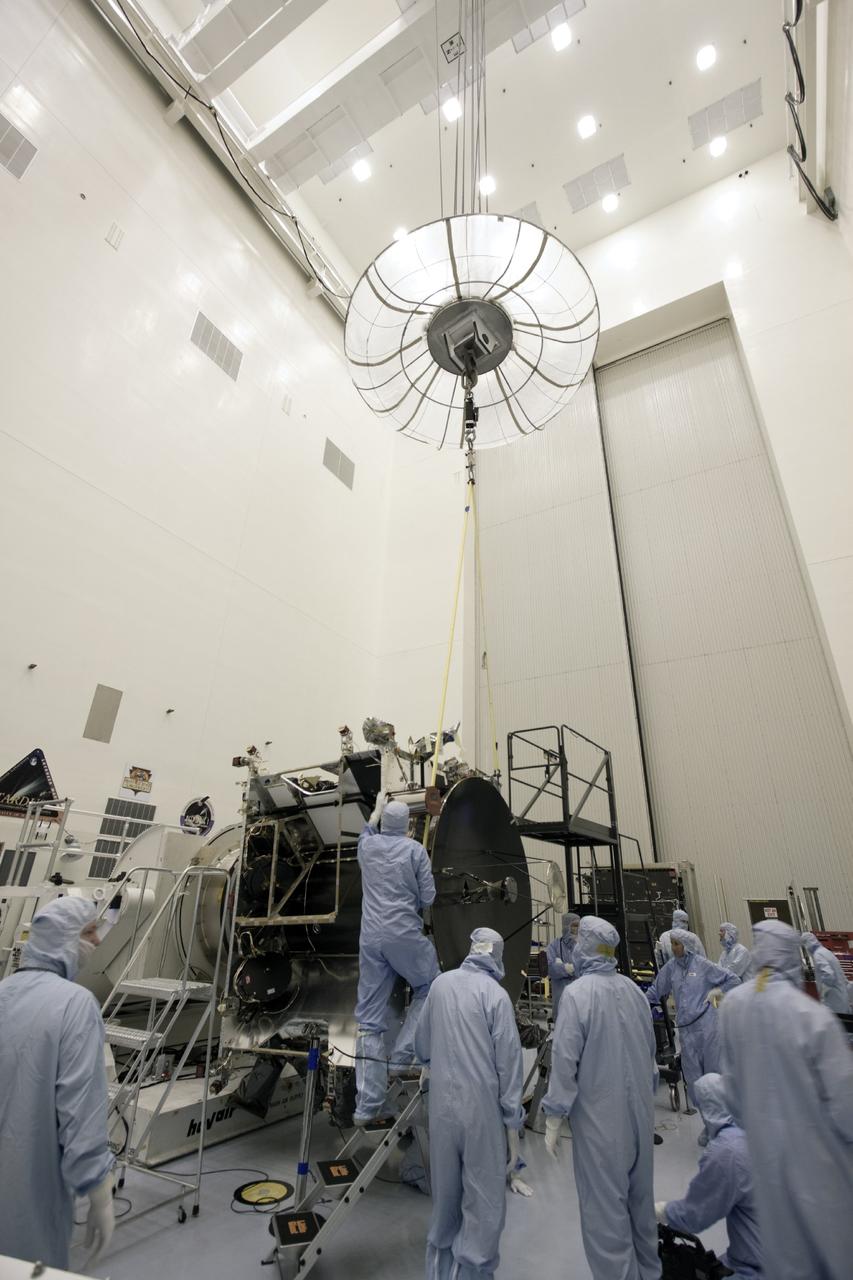
CAPE CANAVERAL, Fla. – Inside the Payload Hazardous Servicing Facility at NASA's Kennedy Space Center in Florida, technicians use an overhead crane to guide the parabolic high gain antenna into place prior to installation on the Mars Atmosphere and Volatile Evolution, or MAVEN spacecraft. The antenna will communicate vast amounts of data to Earth during the mission. MAVEN is being prepared inside the facility for its scheduled November launch aboard a United Launch Alliance Atlas V rocket to Mars. Positioned in an orbit above the Red Planet, MAVEN will study the upper atmosphere of Mars in unprecedented detail. Photo credit: NASA/Jim Grossmann
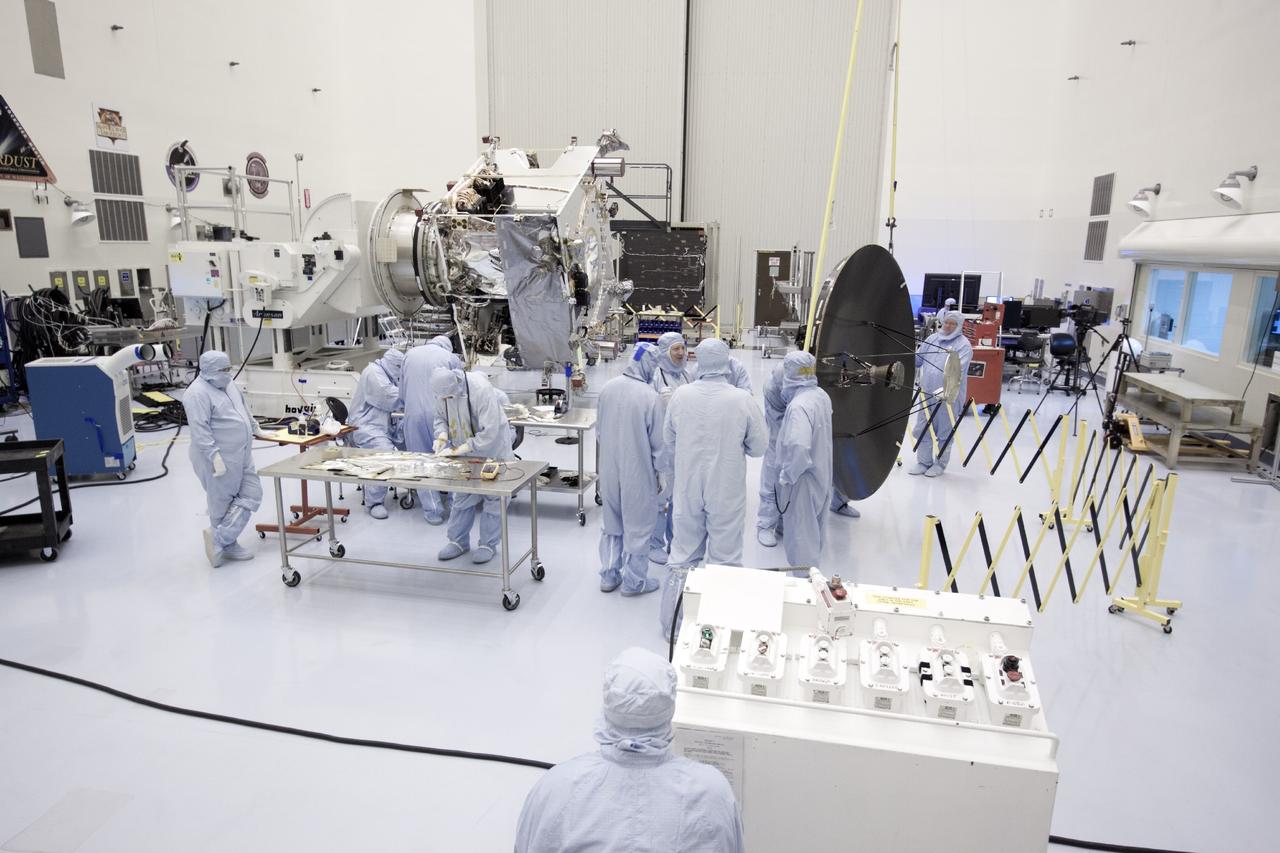
CAPE CANAVERAL, Fla. – Inside the Payload Hazardous Servicing Facility at NASA's Kennedy Space Center in Florida, preparations are under way to install the parabolic high gain antenna, right, onto the Mars Atmosphere and Volatile Evolution, or MAVEN spacecraft. The antenna will communicate vast amounts of data to Earth during the mission. MAVEN is being prepared inside the facility for its scheduled November launch aboard a United Launch Alliance Atlas V rocket to Mars. Positioned in an orbit above the Red Planet, MAVEN will study the upper atmosphere of Mars in unprecedented detail. Photo credit: NASA/Jim Grossmann
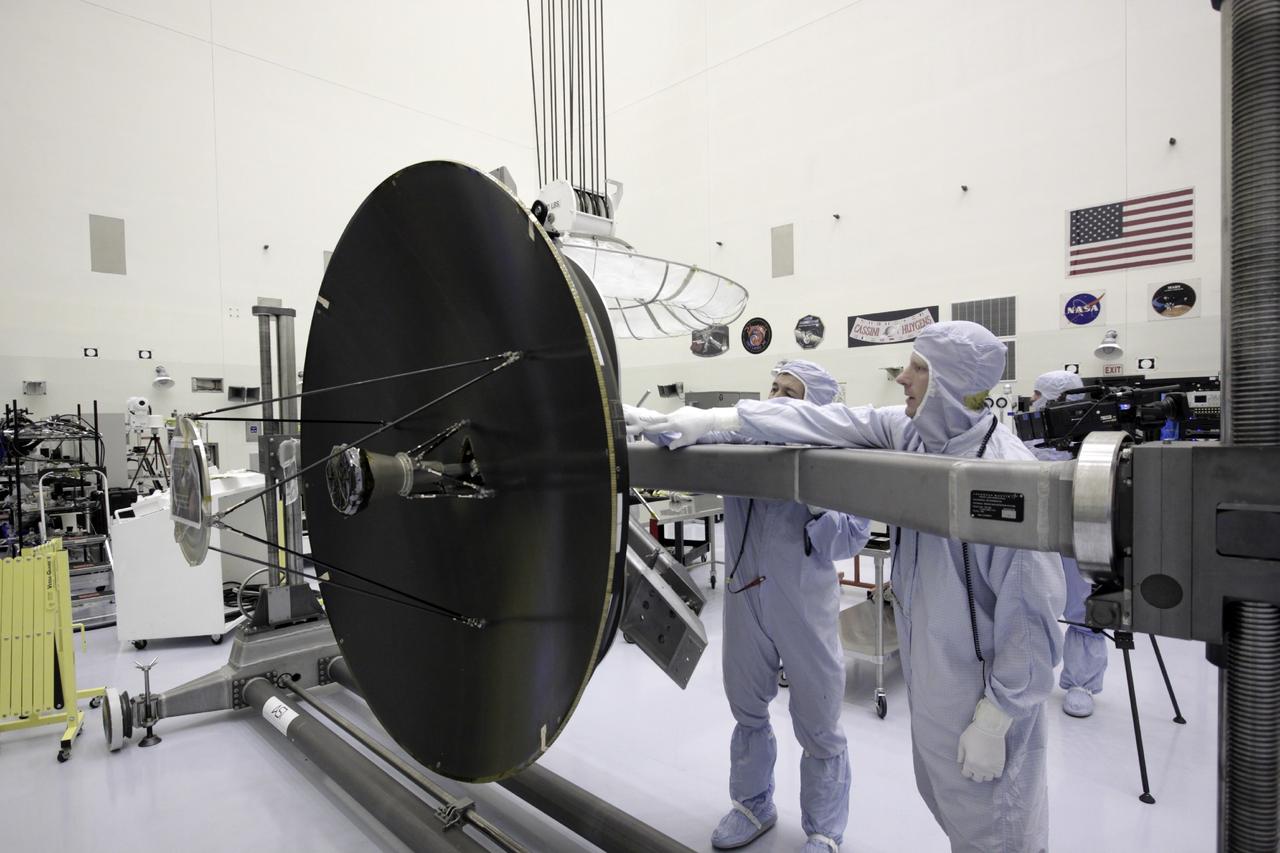
CAPE CANAVERAL, Fla. – Inside the Payload Hazardous Servicing Facility at NASA's Kennedy Space Center in Florida, technicians prepare to install the parabolic high gain antenna onto the Mars Atmosphere and Volatile Evolution, or MAVEN spacecraft. The antenna will communicate vast amounts of data to Earth during the mission. MAVEN is being prepared inside the facility for its scheduled November launch aboard a United Launch Alliance Atlas V rocket to Mars. Positioned in an orbit above the Red Planet, MAVEN will study the upper atmosphere of Mars in unprecedented detail. Photo credit: NASA/Jim Grossmann
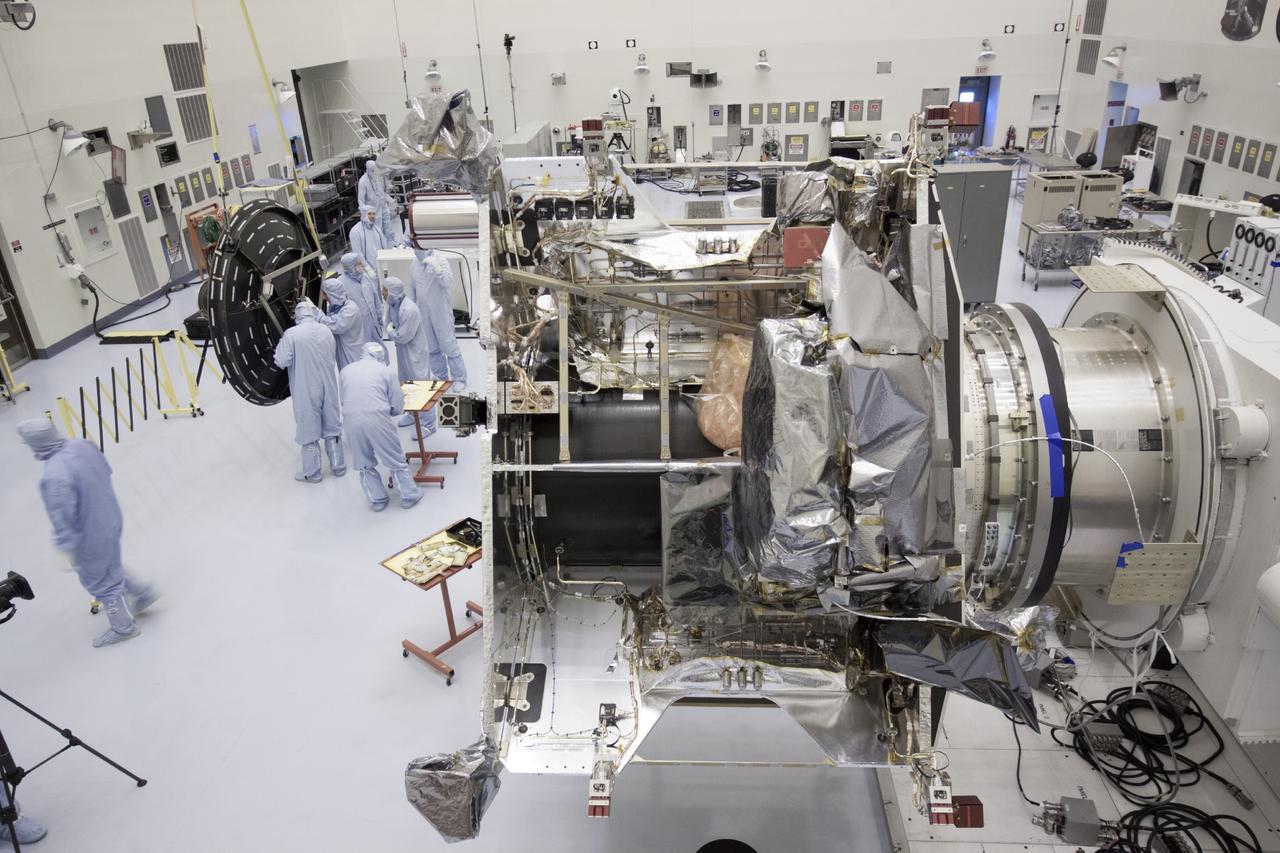
CAPE CANAVERAL, Fla. – Inside the Payload Hazardous Servicing Facility at NASA's Kennedy Space Center in Florida, preparations are under way to install the parabolic high gain antenna, left, onto the Mars Atmosphere and Volatile Evolution, or MAVEN spacecraft. The antenna will communicate vast amounts of data to Earth during the mission. MAVEN is being prepared inside the facility for its scheduled November launch aboard a United Launch Alliance Atlas V rocket to Mars. Positioned in an orbit above the Red Planet, MAVEN will study the upper atmosphere of Mars in unprecedented detail. Photo credit: NASA/Jim Grossmann
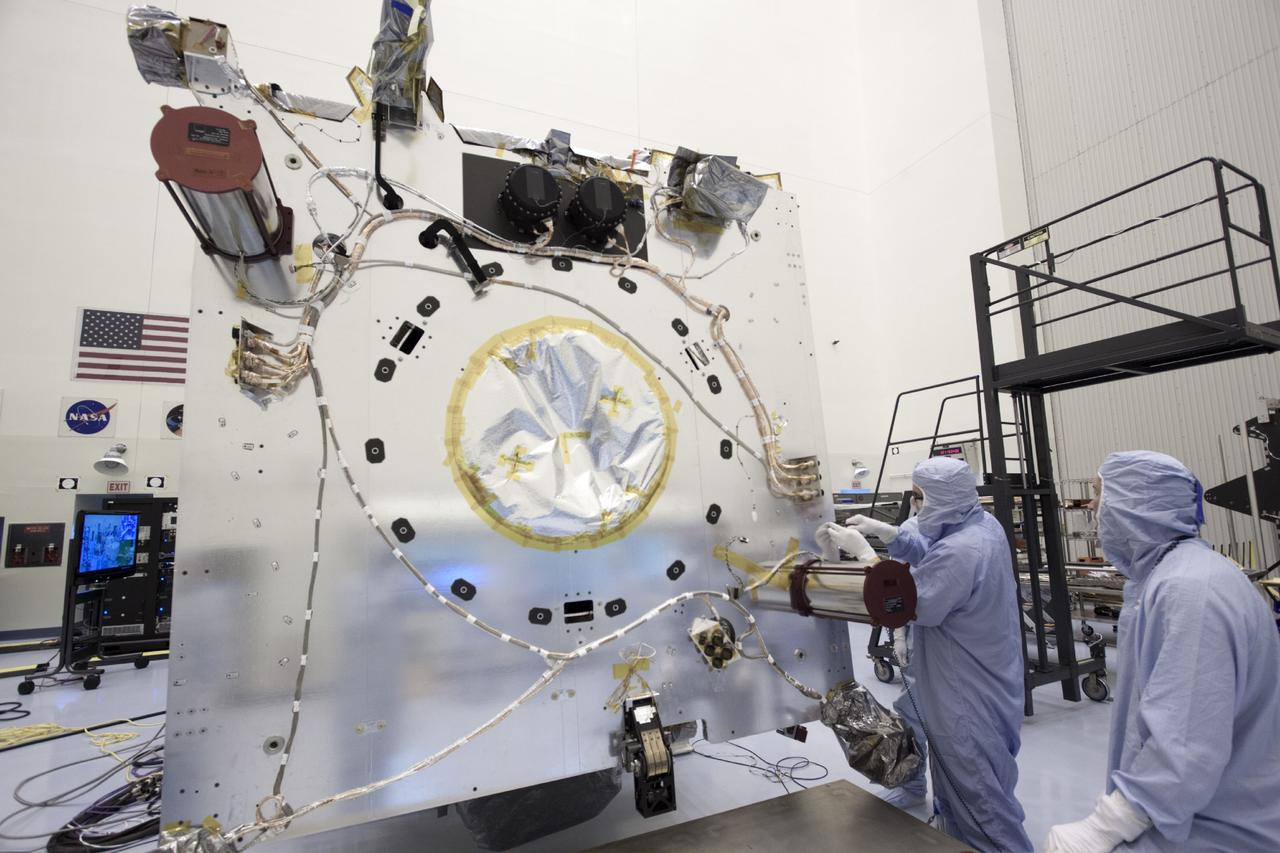
CAPE CANAVERAL, Fla. – Inside the Payload Hazardous Servicing Facility at NASA's Kennedy Space Center in Florida, technicians prepare the Mars Atmosphere and Volatile Evolution, or MAVEN spacecraft, to receive its parabolic high gain antenna. The antenna will communicate vast amounts of data to Earth during the mission. MAVEN is being prepared inside the facility for its scheduled November launch aboard a United Launch Alliance Atlas V rocket to Mars. Positioned in an orbit above the Red Planet, MAVEN will study the upper atmosphere of Mars in unprecedented detail. Photo credit: NASA/Jim Grossmann
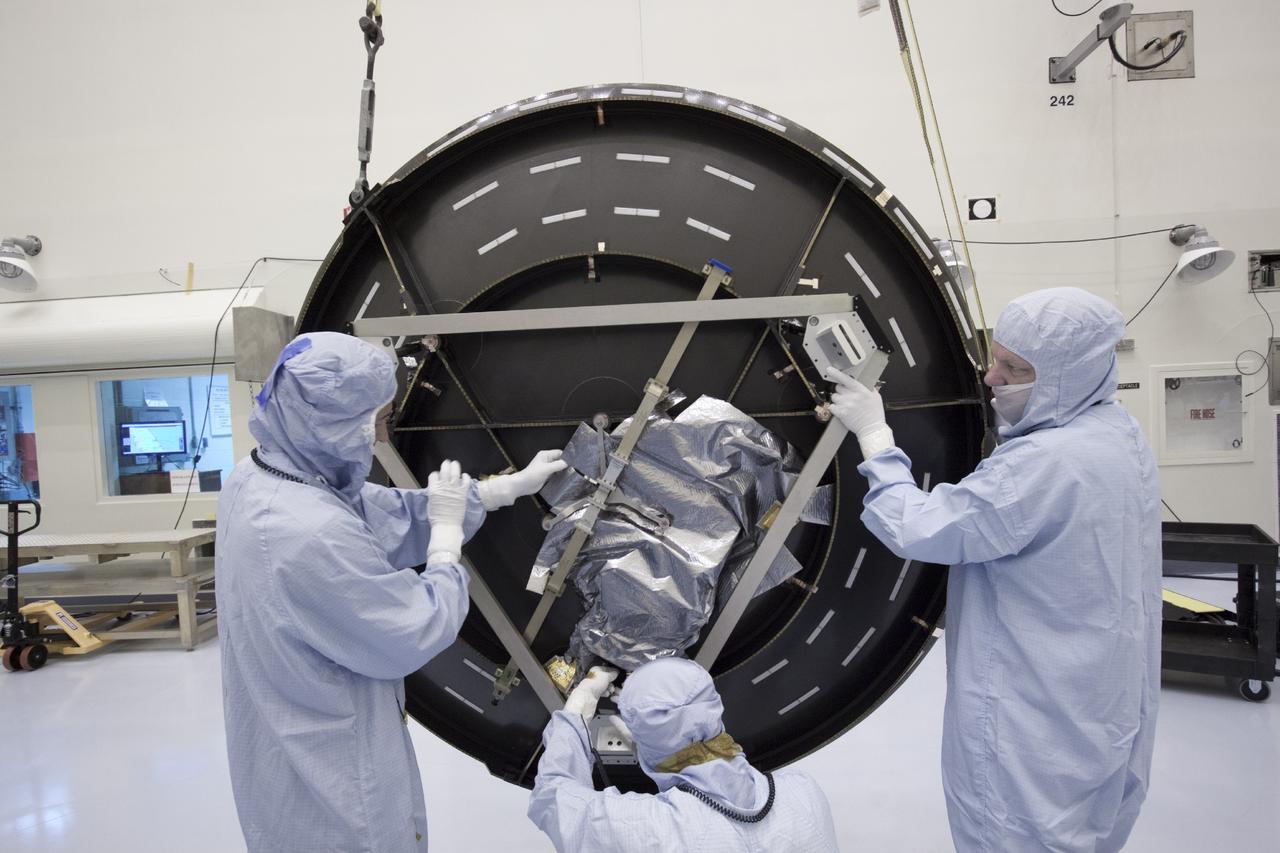
CAPE CANAVERAL, Fla. – Inside the Payload Hazardous Servicing Facility at NASA's Kennedy Space Center in Florida, technicians prepare to position the parabolic high gain antenna for installation on the Mars Atmosphere and Volatile Evolution, or MAVEN spacecraft. The antenna will communicate vast amounts of data to Earth during the mission. MAVEN is being prepared inside the facility for its scheduled November launch aboard a United Launch Alliance Atlas V rocket to Mars. Positioned in an orbit above the Red Planet, MAVEN will study the upper atmosphere of Mars in unprecedented detail. Photo credit: NASA/Jim Grossmann
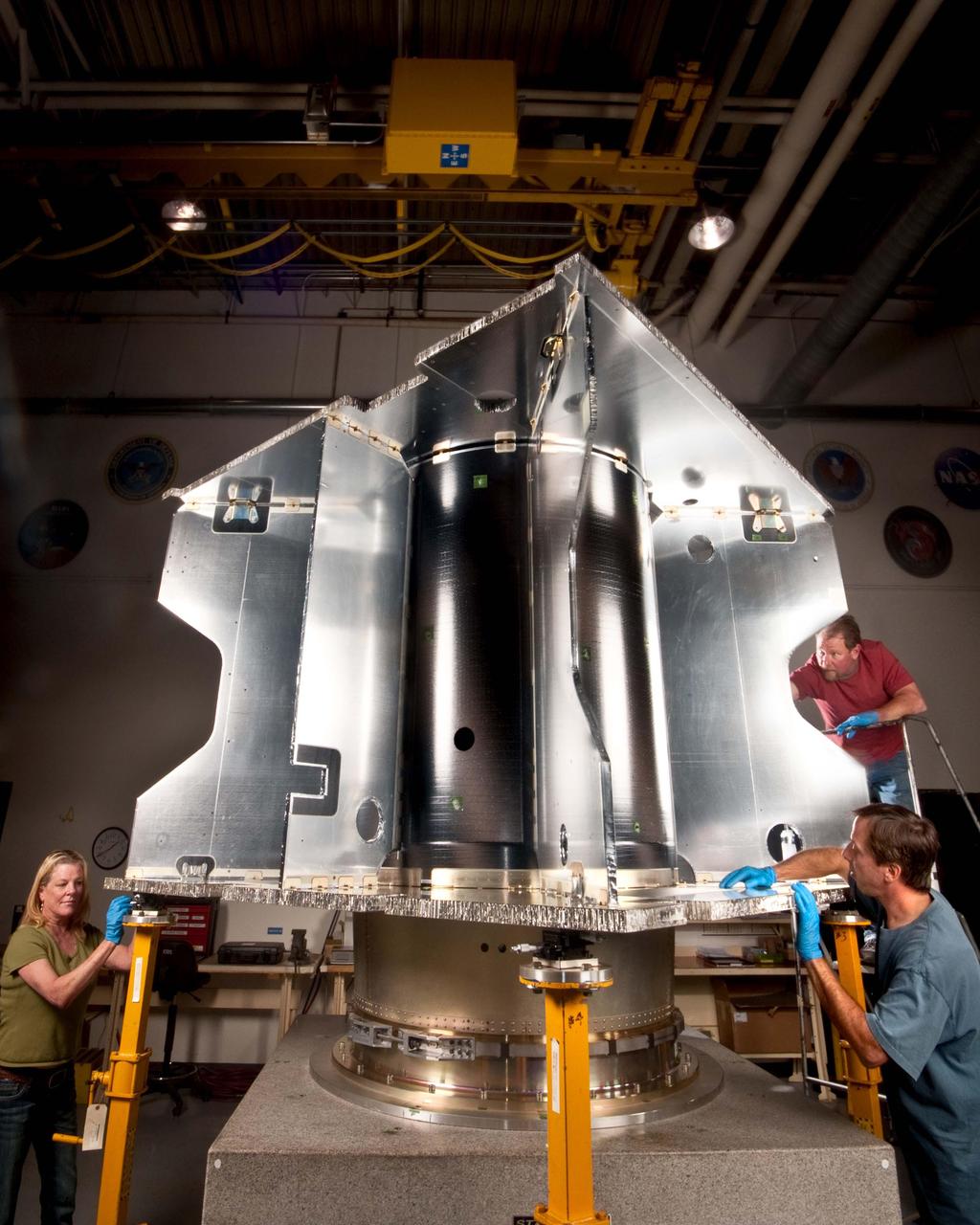
NASA Mars Atmosphere and Volatile EvolutioN MAVEN spacecraft is scheduled to launch in November 2013 and will be the first mission devoted to understanding the Martian upper atmosphere.
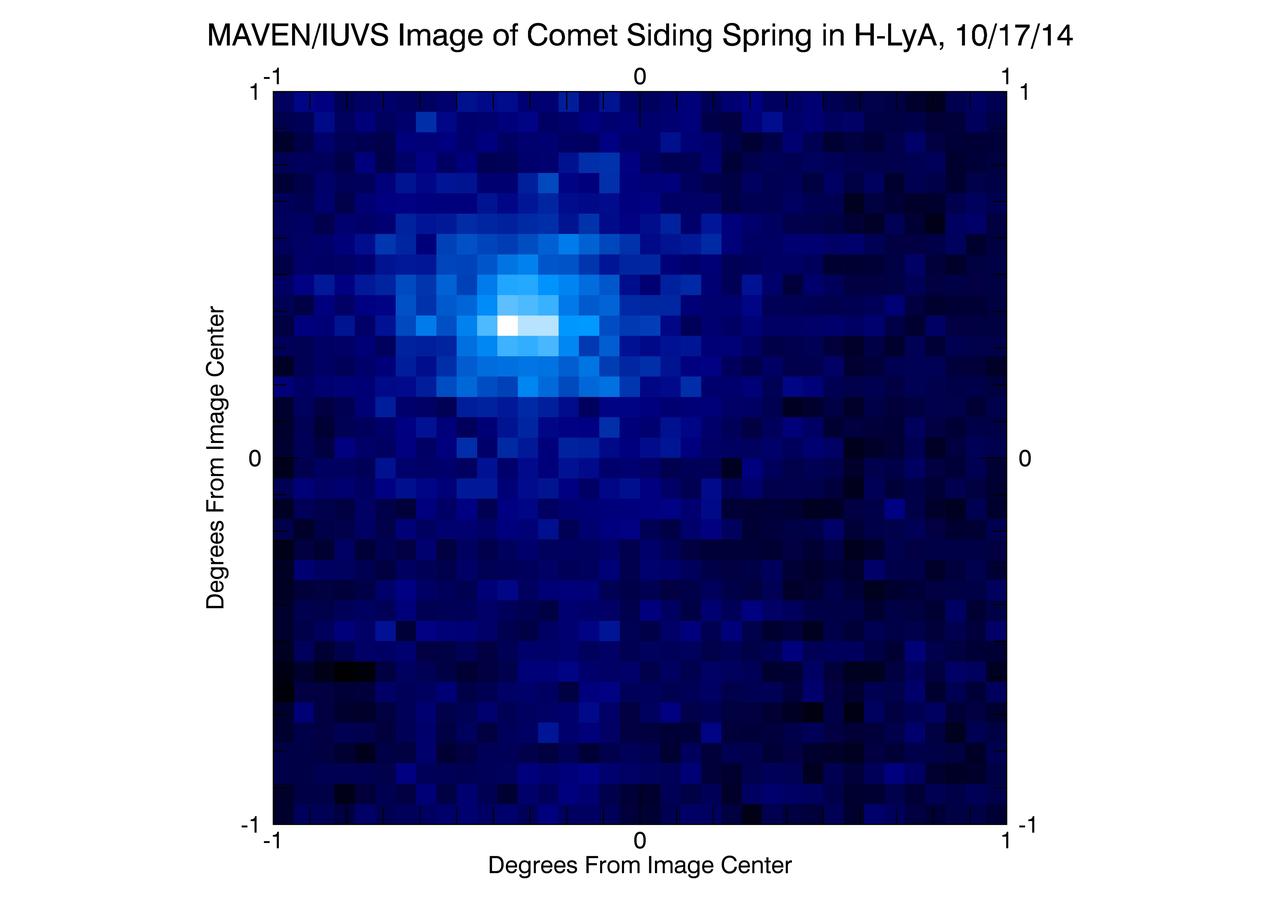
NASA MAVEN spacecraft obtained this ultraviolet image of hydrogen surrounding comet Siding Spring on Oct. 17, 2014, two days before the comet closest approach to Mars.
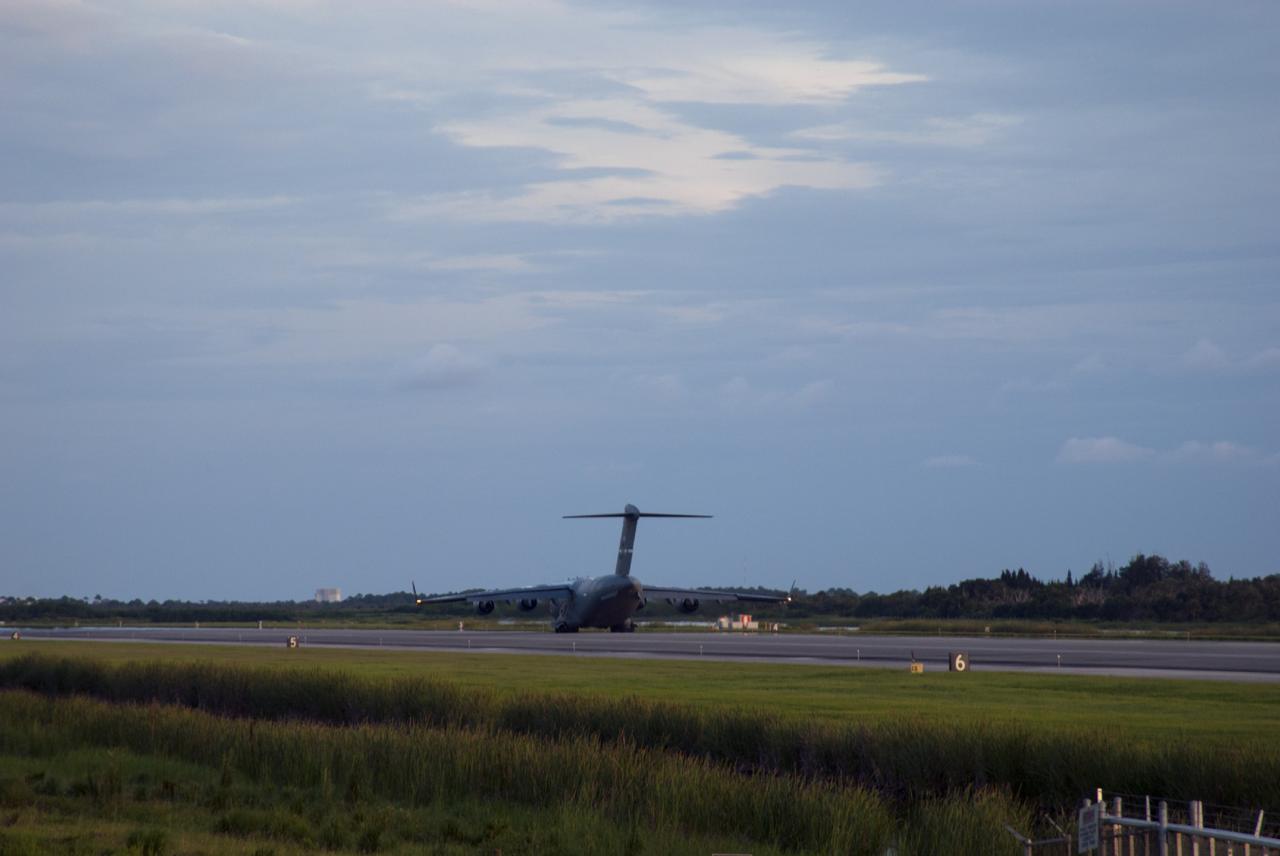
CAPE CANAVERAL, Fla. – A C-17 aircraft rolls to a stop on the Shuttle Landing Facility at NASA's Kennedy Space Center in Florida. The aircraft is delivering the MAVEN spacecraft for processing ahead of a launch later this year on a United Launch Alliance Atlas V rocket. MAVEN, short for Mars Atmosphere and Volatile Evolution, will orbit Mars to study the Red Planet's upper atmosphere in unprecedented detail. Photo credit: NASA/Tim Jacobs

CAPE CANAVERAL, Fla. – A C-17 aircraft touches down at the Shuttle Landing Facility at NASA's Kennedy Space Center in Florida carrying the MAVEN spacecraft for processing ahead of a launch later this year on a United Launch Alliance Atlas V rocket. MAVEN, short for Mars Atmosphere and Volatile Evolution, will orbit Mars to study the Red Planet's upper atmosphere in unprecedented detail. Photo credit: NASA/Tim Jacobs
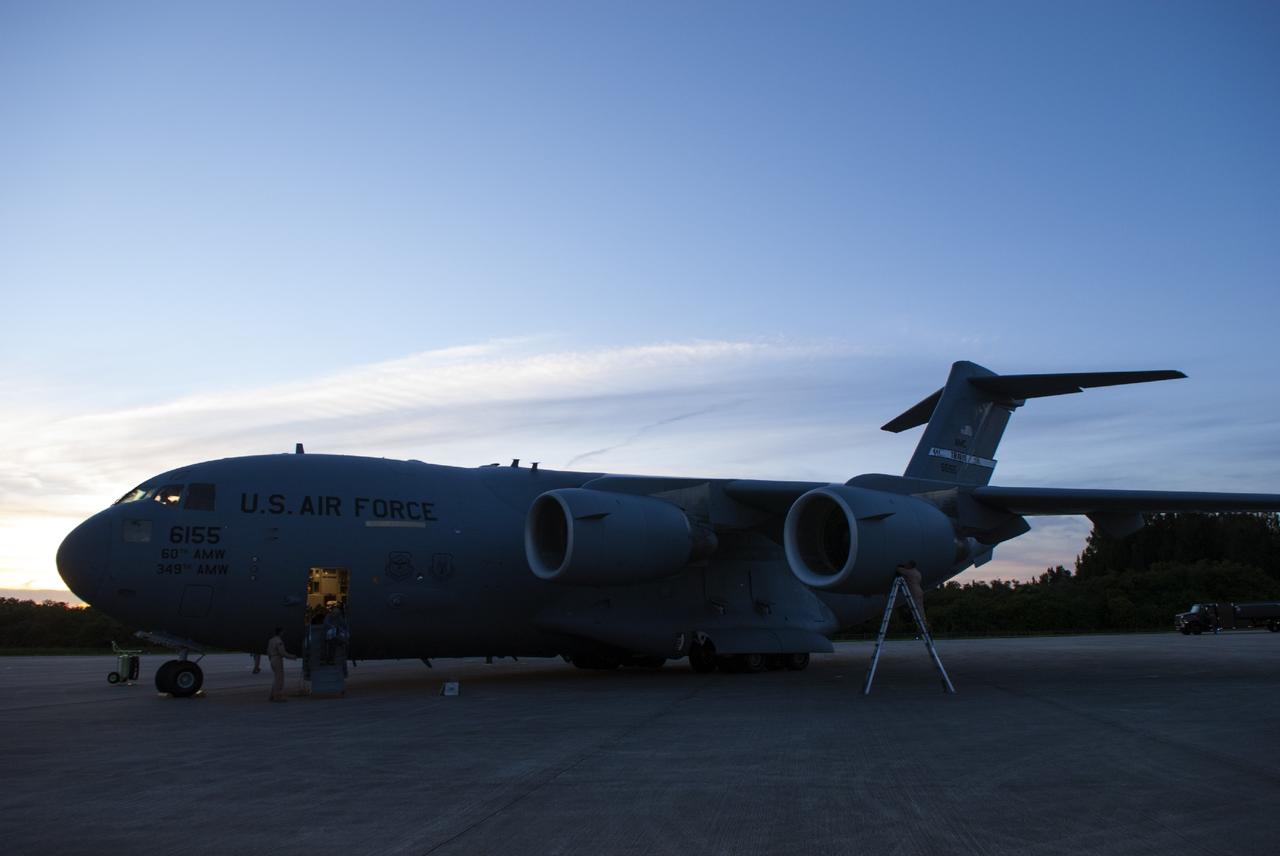
CAPE CANAVERAL, Fla. – A C-17 aircraft arrives on the Shuttle Landing Facility parking apron at NASA's Kennedy Space Center in Florida. The aircraft is delivering the MAVEN spacecraft for processing ahead of a launch later this year on a United Launch Alliance Atlas V rocket. MAVEN, short for Mars Atmosphere and Volatile Evolution, will orbit Mars to study the Red Planet's upper atmosphere in unprecedented detail. Photo credit: NASA/Tim Jacobs
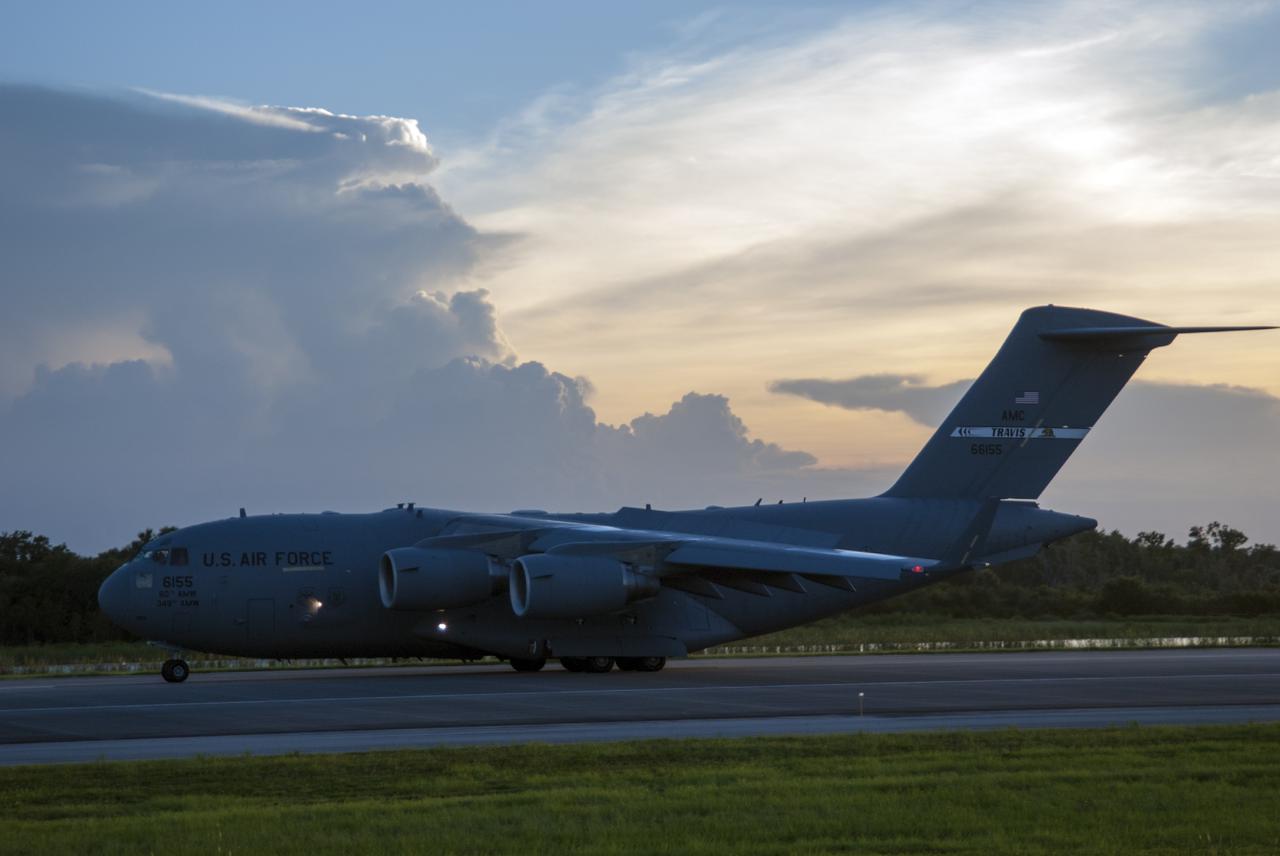
CAPE CANAVERAL, Fla. – A C-17 aircraft arrives at the Shuttle Landing Facility at NASA's Kennedy Space Center in Florida carrying the MAVEN spacecraft for processing ahead of a launch later this year on a United Launch Alliance Atlas V rocket. MAVEN, short for Mars Atmosphere and Volatile Evolution, will orbit Mars to study the Red Planet's upper atmosphere in unprecedented detail. Photo credit: NASA/Tim Jacobs

The first demonstration of NASA MAVEN Mars orbiter capability to relay data from a Mars surface mission, on Nov. 6, 2014, included this image, taken Oct. 23, 2014, by Curiosity Navigation Camera, showing part of Pahrump Hills outcrop.

CAPE CANAVERAL, Fla. – During a news conference at NASA's Kennedy Space Center in Florida, agency and contractor officials discussed preparations for the launch of the Mars Atmosphere and Volatile EvolutioN, or MAVEN, mission. Participating in the briefing are David Mitchell, NASA's MAVEN project manager at the Goddard Space Flight Center in Greenbelt, Md., left and Guy Beutelschies, Lockheed Martin's MAVEN project manager. MAVEN is being prepared for its scheduled launch on Nov 18, 2013 from Cape Canaveral Air Force Station, Fla. atop a United Launch Alliance Atlas V rocket. Positioned in an orbit above the Red Planet, MAVEN will study the upper atmosphere of Mars in unprecedented detail. For information on the MAVEN mission, visit: http://www.nasa.gov/mission_pages/maven/main/index.html. Photo credit: NASA MAVEN is being prepared for its scheduled launch on Nov 18, 2013 from Cape Canaveral Air Force Station, Fla. atop a United Launch Alliance Atlas V rocket. Positioned in an orbit above the Red Planet, MAVEN will study the upper atmosphere of Mars in unprecedented detail. For more information, visit: http://www.nasa.gov/mission_pages/maven/main/index.html Photo credit: NASA/Kim Shiflett
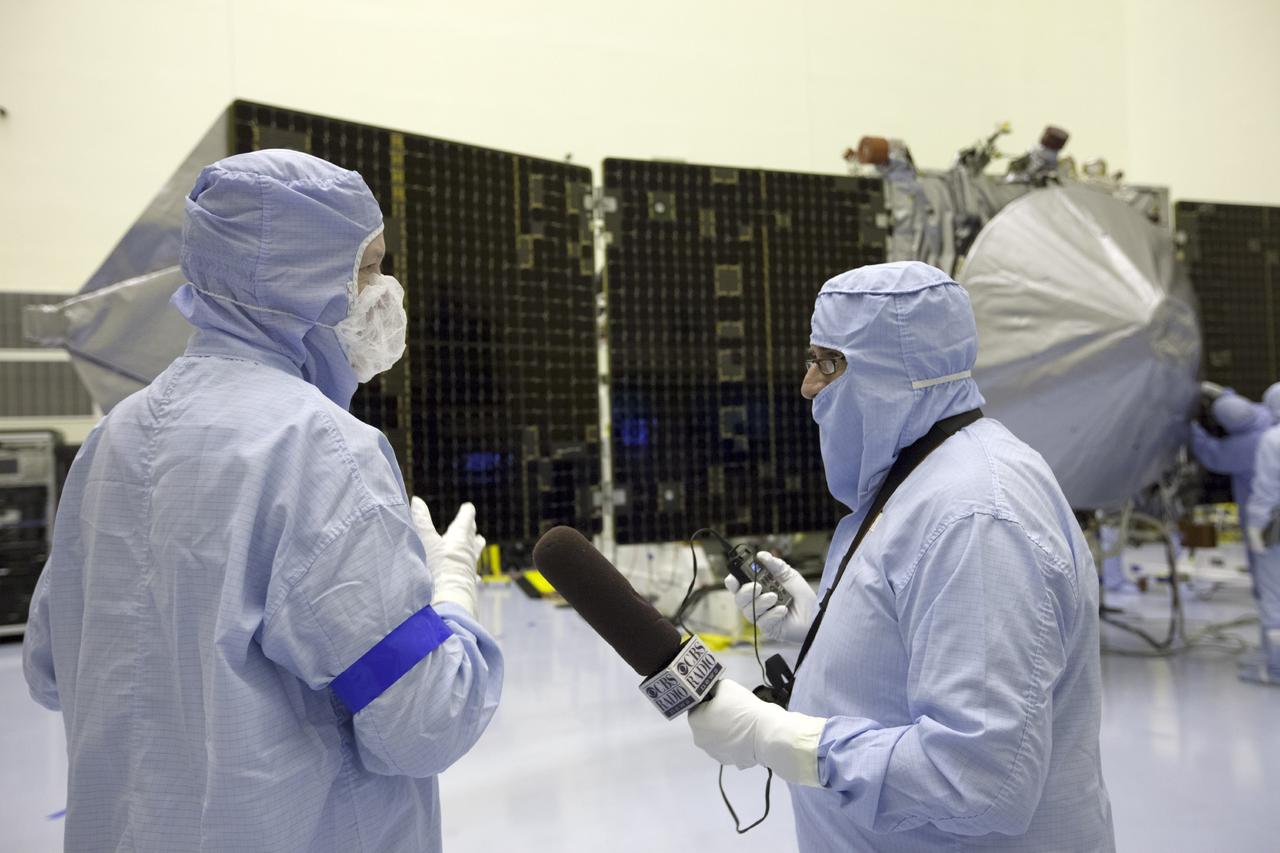
CAPE CANAVERAL, Fla. – Inside the Payload Hazardous Servicing Facility at NASA's Kennedy Space Center in Florida, reporters and photographers look over the Mars Atmosphere and Volatile Evolution, or MAVEN, spacecraft. Members of the news media were given an opportunity to view MAVEN and interview program officials. MAVEN is being prepared for its scheduled launch in November from Cape Canaveral Air Force Station, Fla. atop a United Launch Alliance Atlas V rocket. Positioned in an orbit above the Red Planet, MAVEN will study the upper atmosphere of Mars in unprecedented detail. For more information, visit: http://www.nasa.gov/mission_pages/maven/main/index.html Photo credit: NASA/Kim Shiflett
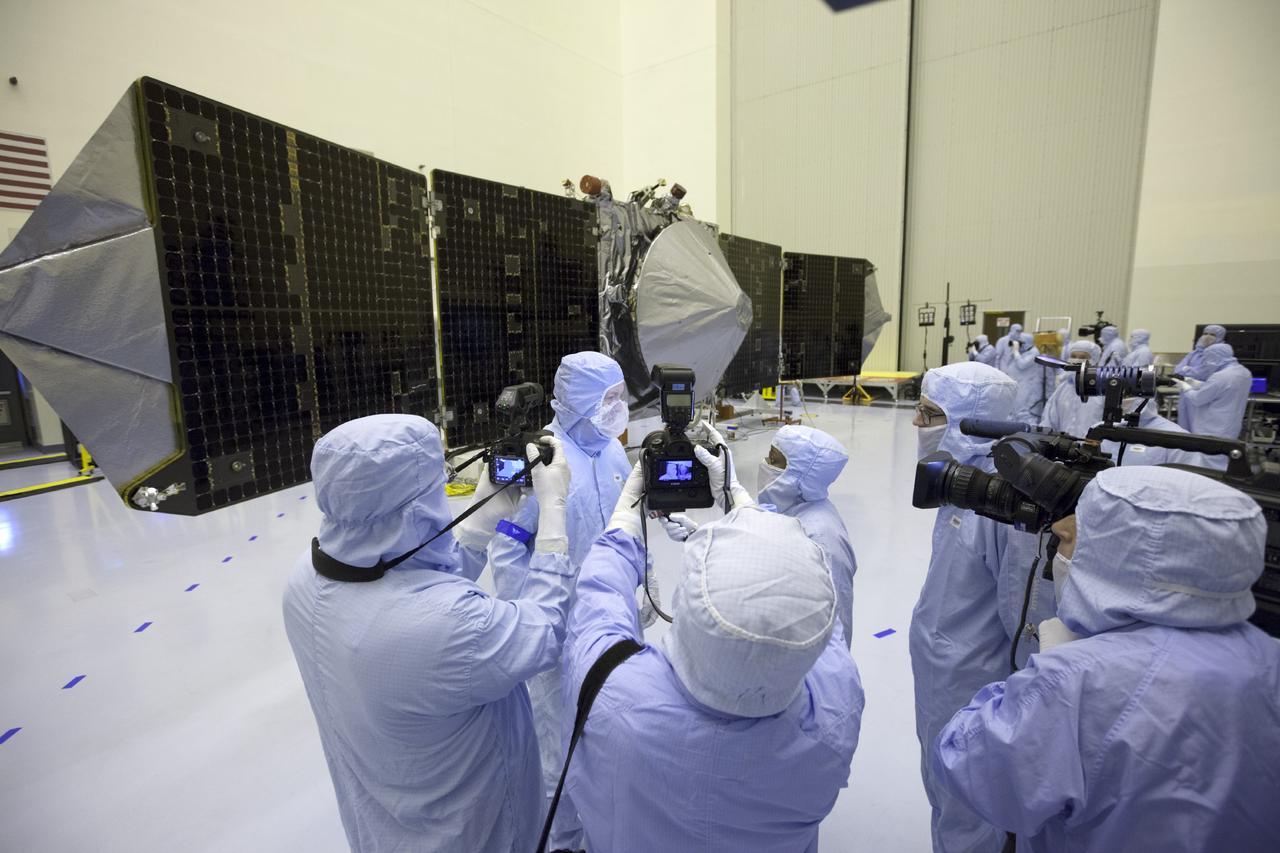
CAPE CANAVERAL, Fla. – Inside the Payload Hazardous Servicing Facility at NASA's Kennedy Space Center in Florida, reporters and photographers look over the Mars Atmosphere and Volatile Evolution, or MAVEN, spacecraft. Members of the news media were given an opportunity to view MAVEN and interview program officials. MAVEN is being prepared for its scheduled launch in November from Cape Canaveral Air Force Station, Fla. atop a United Launch Alliance Atlas V rocket. Positioned in an orbit above the Red Planet, MAVEN will study the upper atmosphere of Mars in unprecedented detail. For more information, visit: http://www.nasa.gov/mission_pages/maven/main/index.html Photo credit: NASA/Kim Shiflett
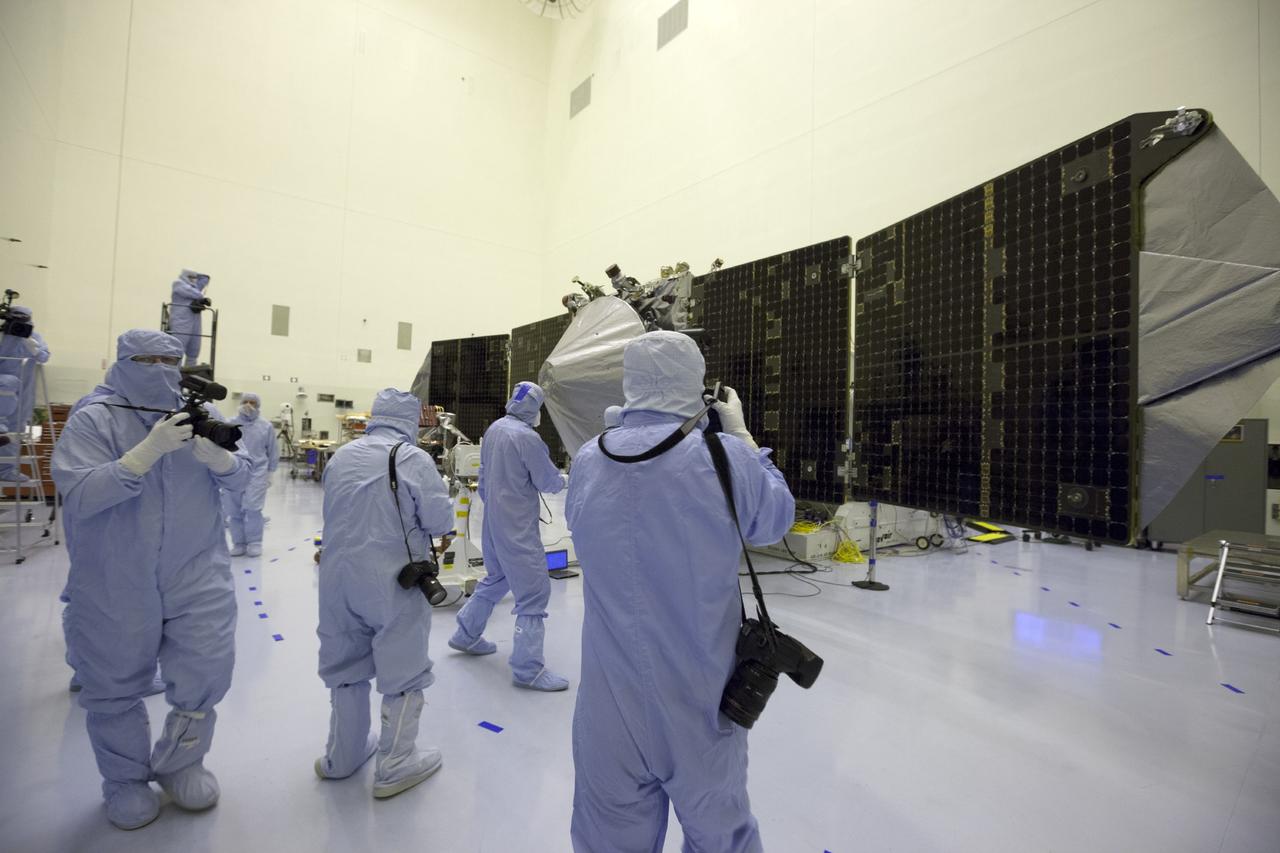
CAPE CANAVERAL, Fla. – Inside the Payload Hazardous Servicing Facility at NASA's Kennedy Space Center in Florida, reporters and photographers look over the Mars Atmosphere and Volatile Evolution, or MAVEN, spacecraft. Members of the news media were given an opportunity to view MAVEN and interview program officials. MAVEN is being prepared for its scheduled launch in November from Cape Canaveral Air Force Station, Fla. atop a United Launch Alliance Atlas V rocket. Positioned in an orbit above the Red Planet, MAVEN will study the upper atmosphere of Mars in unprecedented detail. For more information, visit: http://www.nasa.gov/mission_pages/maven/main/index.html Photo credit: NASA/Kim Shiflett
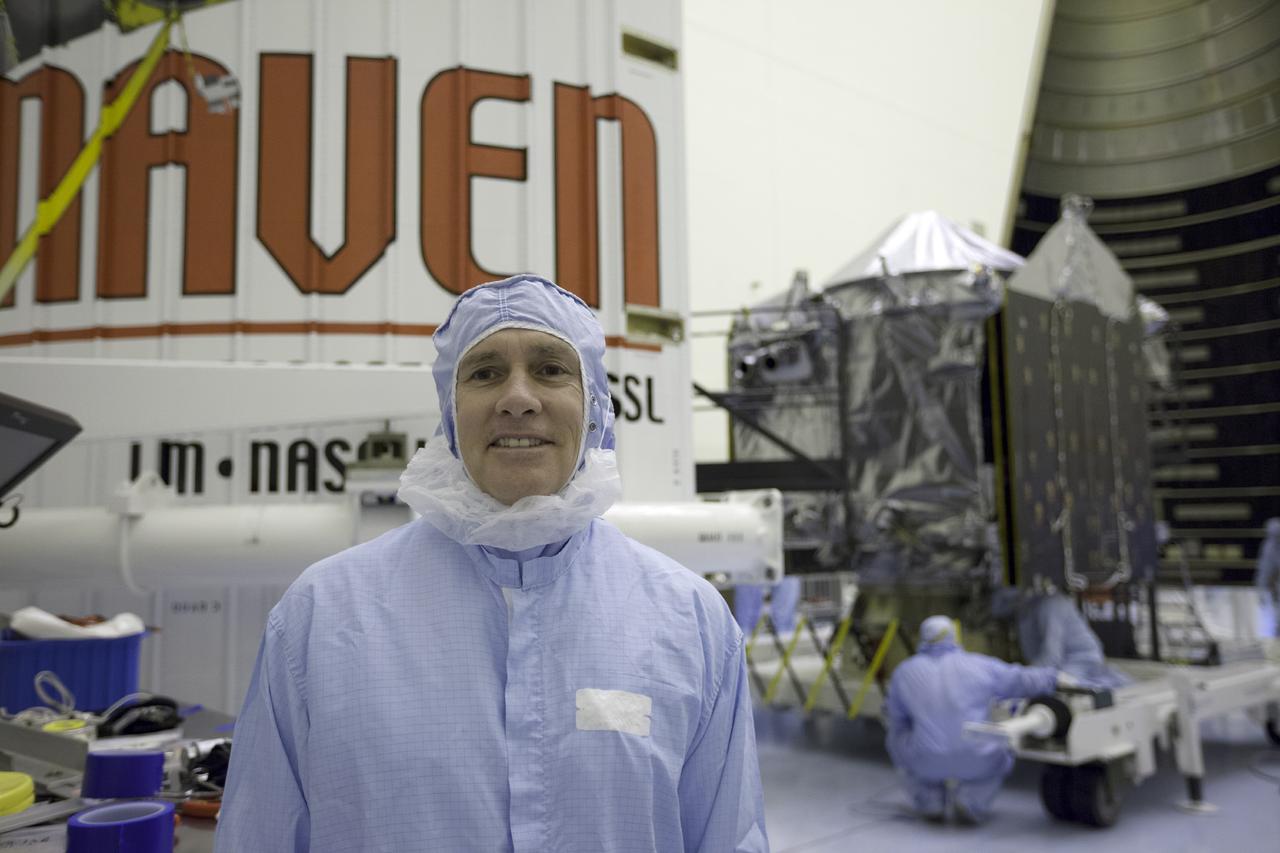
CAPE CANAVERAL, Fla. – Chuck Tatro of NASA's Launch Services Program is the Mars Atmosphere and Volatile Evolution, or MAVEN, mission manager. The MAVEN spacecraft is in the background following encapsulation in its payload fairing inside the Payload Hazardous Servicing Facility at NASA's Kennedy Space Center in Florida. MAVEN is being prepared for its scheduled launch on Nov 18, 2013 from Cape Canaveral Air Force Station, Fla. atop a United Launch Alliance Atlas V rocket. Positioned in an orbit above the Red Planet, MAVEN will study the upper atmosphere of Mars in unprecedented detail. For more information, visit: http://www.nasa.gov/mission_pages/maven/main/index.html Photo credit: NASA/Kim Shiflett
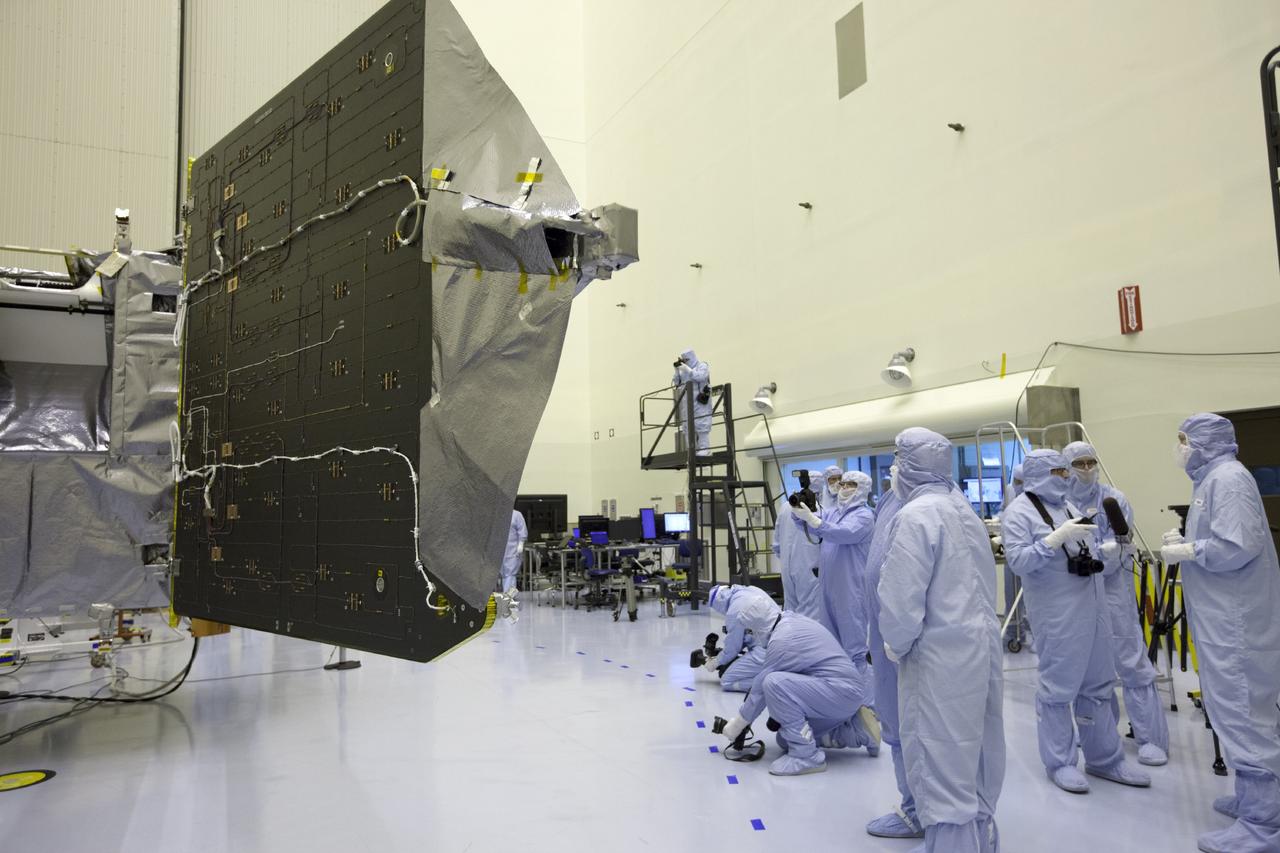
CAPE CANAVERAL, Fla. – Inside the Payload Hazardous Servicing Facility at NASA's Kennedy Space Center in Florida, reporters and photographers look over the Mars Atmosphere and Volatile Evolution, or MAVEN, spacecraft. Members of the news media were given an opportunity to view MAVEN and interview program officials. MAVEN is being prepared for its scheduled launch in November from Cape Canaveral Air Force Station, Fla. atop a United Launch Alliance Atlas V rocket. Positioned in an orbit above the Red Planet, MAVEN will study the upper atmosphere of Mars in unprecedented detail. For more information, visit: http://www.nasa.gov/mission_pages/maven/main/index.html Photo credit: NASA/Kim Shiflett
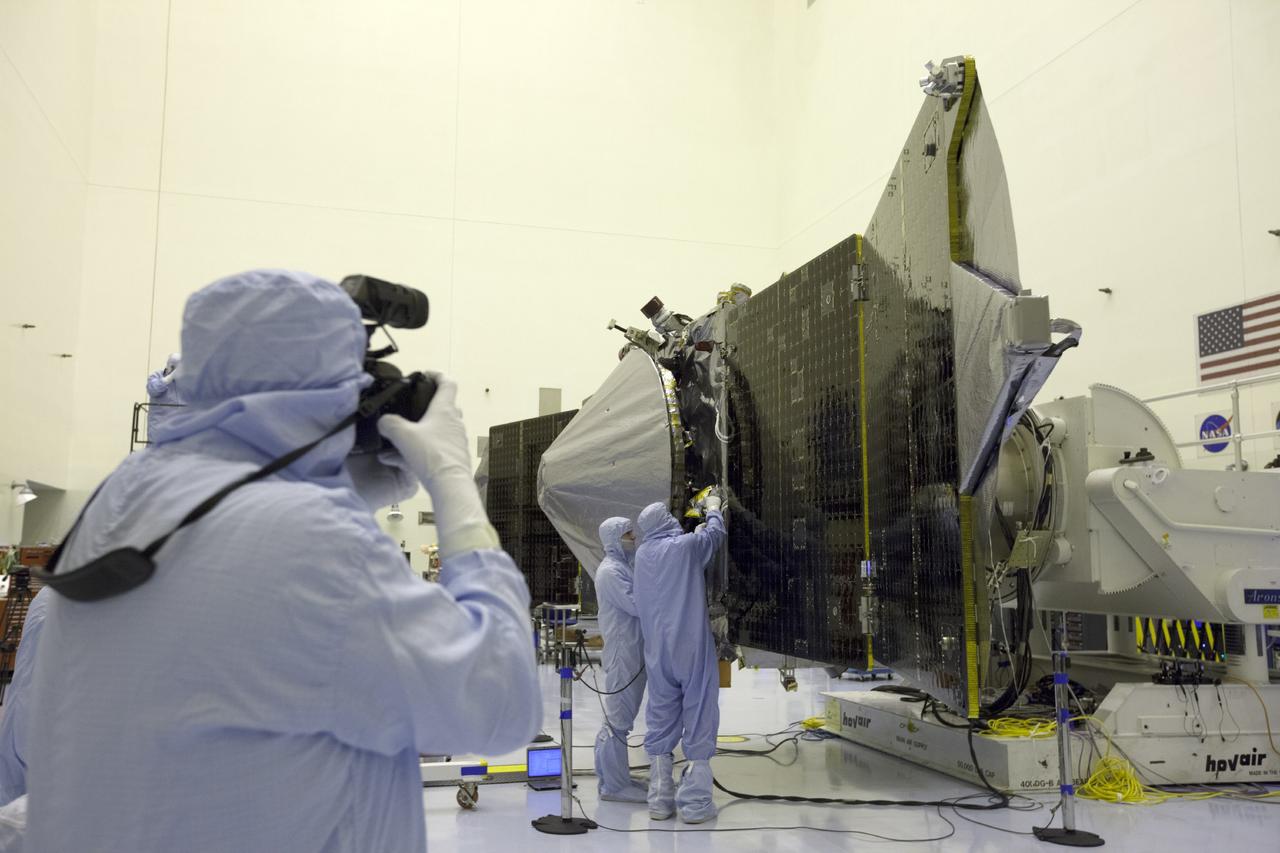
CAPE CANAVERAL, Fla. – Inside the Payload Hazardous Servicing Facility at NASA's Kennedy Space Center in Florida, reporters and photographers look over the Mars Atmosphere and Volatile Evolution, or MAVEN, spacecraft. Members of the news media were given an opportunity to view MAVEN and interview program officials. MAVEN is being prepared for its scheduled launch in November from Cape Canaveral Air Force Station, Fla. atop a United Launch Alliance Atlas V rocket. Positioned in an orbit above the Red Planet, MAVEN will study the upper atmosphere of Mars in unprecedented detail. For more information, visit: http://www.nasa.gov/mission_pages/maven/main/index.html Photo credit: NASA/Kim Shiflett
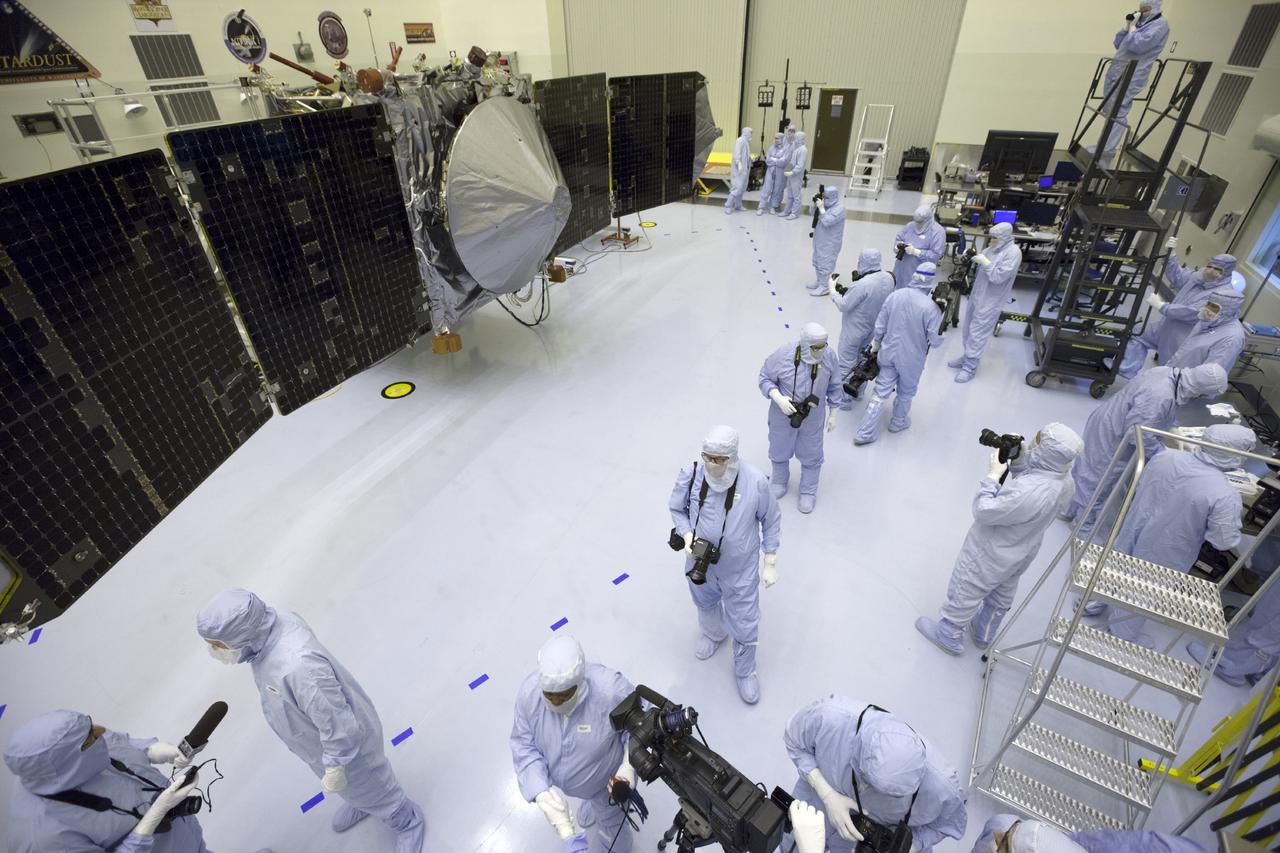
CAPE CANAVERAL, Fla. – Inside the Payload Hazardous Servicing Facility at NASA's Kennedy Space Center in Florida, reporters and photographers look over the Mars Atmosphere and Volatile Evolution, or MAVEN, spacecraft. Members of the news media were given an opportunity to view MAVEN and interview program officials. MAVEN is being prepared for its scheduled launch in November from Cape Canaveral Air Force Station, Fla. atop a United Launch Alliance Atlas V rocket. Positioned in an orbit above the Red Planet, MAVEN will study the upper atmosphere of Mars in unprecedented detail. For more information, visit: http://www.nasa.gov/mission_pages/maven/main/index.html Photo credit: NASA/Kim Shiflett
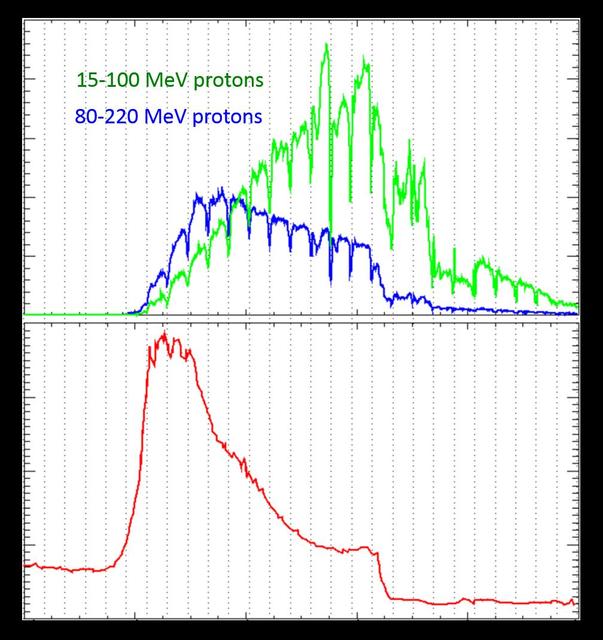
Energetic particles from a large solar storm in September 2017 were seen both in Mars orbit and on the surface of Mars by NASA missions to the Red Planet. The horizontal axis for both parts of this graphic is the time from Sept. 10 to Sept. 15, 2017. The upper portion of this graphic shows the increase in protons in two ranges of energy levels (15- to-100 million electron volts and 80-to-220 million electron volts), as recorded by the Solar Energetic Particle instrument on NASA's on NASA's Mars Atmosphere and Volatile Evolution orbiter, or MAVEN. The lower portion shows the radiation dose on the Martian surface, in micrograys per day, as measured by the Radiation Assessment Monitor instrument on NASA' Curiosity Mars rover. Micrograys are unit of measurement for absorbed radiation dose. Note that only protons in the higher bracket of energy levels penetrate the atmosphere enough to be detected on the surface. https://photojournal.jpl.nasa.gov/catalog/PIA21856

CAPE CANAVERAL, Fla. – During a news conference at NASA's Kennedy Space Center in Florida, agency and contractor officials discussed preparations for the launch of the Mars Atmosphere and Volatile EvolutioN, or MAVEN, mission. Participating in the briefing is Guy Beutelschies, Lockheed Martin's MAVEN project manager. MAVEN is being prepared for its scheduled launch on Nov 18, 2013 from Cape Canaveral Air Force Station, Fla. atop a United Launch Alliance Atlas V rocket. Positioned in an orbit above the Red Planet, MAVEN will study the upper atmosphere of Mars in unprecedented detail. For information on the MAVEN mission, visit: http://www.nasa.gov/mission_pages/maven/main/index.html. Photo credit: NASA MAVEN is being prepared for its scheduled launch on Nov 18, 2013 from Cape Canaveral Air Force Station, Fla. atop a United Launch Alliance Atlas V rocket. Positioned in an orbit above the Red Planet, MAVEN will study the upper atmosphere of Mars in unprecedented detail. For more information, visit: http://www.nasa.gov/mission_pages/maven/main/index.html Photo credit: NASA/Kim Shiflett

CAPE CANAVERAL, Fla. – During a news conference at NASA's Kennedy Space Center in Florida, agency and contractor officials discussed preparations for the launch of the Mars Atmosphere and Volatile EvolutioN, or MAVEN, mission. Participating in the briefing is David Mitchell, NASA's MAVEN project manager at the Goddard Space Flight Center in Greenbelt, Md. MAVEN is being prepared for its scheduled launch on Nov 18, 2013 from Cape Canaveral Air Force Station, Fla. atop a United Launch Alliance Atlas V rocket. Positioned in an orbit above the Red Planet, MAVEN will study the upper atmosphere of Mars in unprecedented detail. For information on the MAVEN mission, visit: http://www.nasa.gov/mission_pages/maven/main/index.html. Photo credit: NASA MAVEN is being prepared for its scheduled launch on Nov 18, 2013 from Cape Canaveral Air Force Station, Fla. atop a United Launch Alliance Atlas V rocket. Positioned in an orbit above the Red Planet, MAVEN will study the upper atmosphere of Mars in unprecedented detail. For more information, visit: http://www.nasa.gov/mission_pages/maven/main/index.html Photo credit: NASA/Kim Shiflett
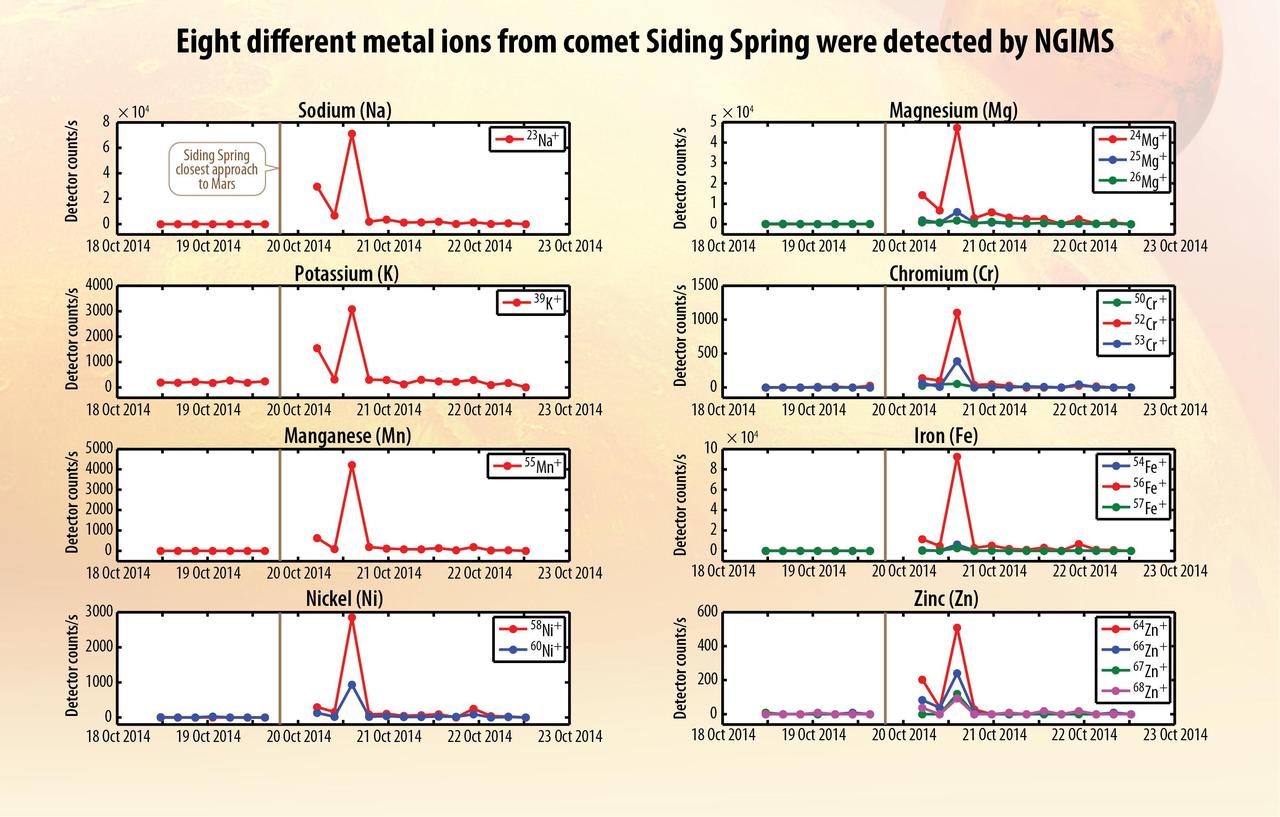
These eight graphs present data from the Neutral Gas and Ion Mass Spectrometer on NASA MAVEN orbiter identifying ions of different metals added to the Martian atmosphere shortly after comet C/2013 A1 Siding Spring sped close to Mars.
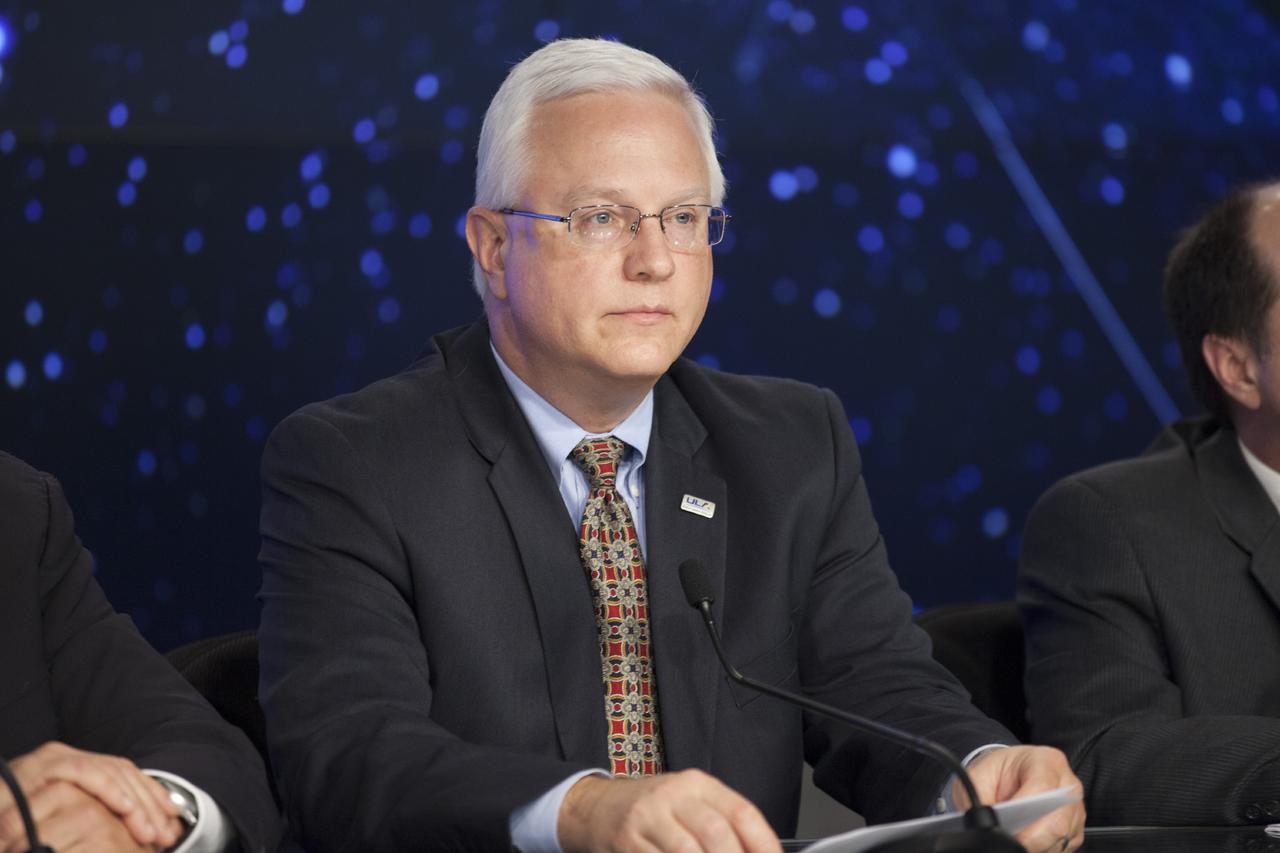
CAPE CANAVERAL, Fla. – During a news conference at NASA's Kennedy Space Center in Florida, agency and contractor officials discussed preparations for the launch of the Mars Atmosphere and Volatile EvolutioN, or MAVEN, mission. Participating in the briefing is Vernon Thorp, program manager for NASA Missions with United Launch Alliance in Centennial, Colo. MAVEN is being prepared for its scheduled launch on Nov 18, 2013 from Cape Canaveral Air Force Station, Fla. atop a United Launch Alliance Atlas V rocket. Positioned in an orbit above the Red Planet, MAVEN will study the upper atmosphere of Mars in unprecedented detail. For information on the MAVEN mission, visit: http://www.nasa.gov/mission_pages/maven/main/index.html. Photo credit: NASA MAVEN is being prepared for its scheduled launch on Nov 18, 2013 from Cape Canaveral Air Force Station, Fla. atop a United Launch Alliance Atlas V rocket. Positioned in an orbit above the Red Planet, MAVEN will study the upper atmosphere of Mars in unprecedented detail. For more information, visit: http://www.nasa.gov/mission_pages/maven/main/index.html Photo credit: NASA/Kim Shiflett

CAPE CANAVERAL, Fla. – During a news conference at NASA's Kennedy Space Center in Florida, agency and contractor officials discussed preparations for the launch of the Mars Atmosphere and Volatile EvolutioN, or MAVEN, mission. Participating in the briefing is Clay Flinn, launch weather officer, 45th Weather Squadron at Cape Canaveral Air Force Station, Fla. MAVEN is being prepared for its scheduled launch on Nov 18, 2013 from Cape Canaveral Air Force Station, Fla. atop a United Launch Alliance Atlas V rocket. Positioned in an orbit above the Red Planet, MAVEN will study the upper atmosphere of Mars in unprecedented detail. For information on the MAVEN mission, visit: http://www.nasa.gov/mission_pages/maven/main/index.html. Photo credit: NASA MAVEN is being prepared for its scheduled launch on Nov 18, 2013 from Cape Canaveral Air Force Station, Fla. atop a United Launch Alliance Atlas V rocket. Positioned in an orbit above the Red Planet, MAVEN will study the upper atmosphere of Mars in unprecedented detail. For more information, visit: http://www.nasa.gov/mission_pages/maven/main/index.html Photo credit: NASA/Kim Shiflett
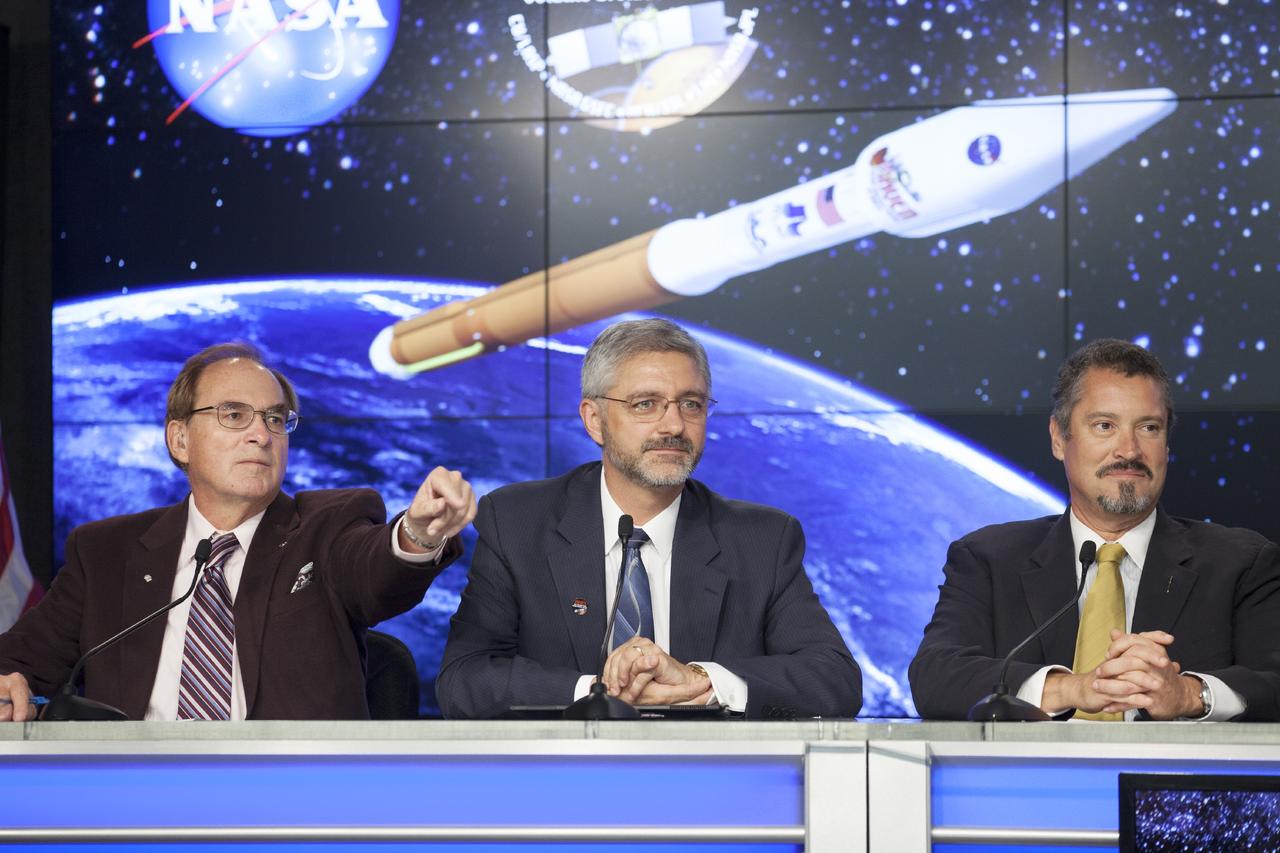
CAPE CANAVERAL, Fla. – During a news conference at NASA's Kennedy Space Center in Florida, agency and contractor officials discussed preparations for the launch of the Mars Atmosphere and Volatile EvolutioN, or MAVEN, mission. Calling on a member of the news media for a question, is George Diller of NASA Public Affairs, left. Also participating are Geoffrey Yoder, NASA deputy associate administrator of programs in the Science Mission Directorate, center, and Omar Baez, NASA launch director. MAVEN is being prepared for its scheduled launch on Nov 18, 2013 from Cape Canaveral Air Force Station, Fla. atop a United Launch Alliance Atlas V rocket. Positioned in an orbit above the Red Planet, MAVEN will study the upper atmosphere of Mars in unprecedented detail. For information on the MAVEN mission, visit: http://www.nasa.gov/mission_pages/maven/main/index.html. Photo credit: NASA MAVEN is being prepared for its scheduled launch on Nov 18, 2013 from Cape Canaveral Air Force Station, Fla. atop a United Launch Alliance Atlas V rocket. Positioned in an orbit above the Red Planet, MAVEN will study the upper atmosphere of Mars in unprecedented detail. For more information, visit: http://www.nasa.gov/mission_pages/maven/main/index.html Photo credit: NASA/Kim Shiflett

CAPE CANAVERAL, Fla. – During a news conference at NASA's Kennedy Space Center in Florida, agency and contractor officials discussed preparations for the launch of the Mars Atmosphere and Volatile EvolutioN, or MAVEN, mission. Participating in the briefing is Geoffrey Yoder, NASA deputy associate administrator of programs in the Science Mission Directorate. MAVEN is being prepared for its scheduled launch on Nov 18, 2013 from Cape Canaveral Air Force Station, Fla. atop a United Launch Alliance Atlas V rocket. Positioned in an orbit above the Red Planet, MAVEN will study the upper atmosphere of Mars in unprecedented detail. For information on the MAVEN mission, visit: http://www.nasa.gov/mission_pages/maven/main/index.html. Photo credit: NASA MAVEN is being prepared for its scheduled launch on Nov 18, 2013 from Cape Canaveral Air Force Station, Fla. atop a United Launch Alliance Atlas V rocket. Positioned in an orbit above the Red Planet, MAVEN will study the upper atmosphere of Mars in unprecedented detail. For more information, visit: http://www.nasa.gov/mission_pages/maven/main/index.html Photo credit: NASA/Kim Shiflett

CAPE CANAVERAL, Fla. – During a news conference at NASA's Kennedy Space Center in Florida, agency and contractor officials discussed preparations for the launch of the Mars Atmosphere and Volatile EvolutioN, or MAVEN, mission. Participating in the briefing is Omar Baez, NASA launch director. MAVEN is being prepared for its scheduled launch on Nov 18, 2013 from Cape Canaveral Air Force Station, Fla. atop a United Launch Alliance Atlas V rocket. Positioned in an orbit above the Red Planet, MAVEN will study the upper atmosphere of Mars in unprecedented detail. For information on the MAVEN mission, visit: http://www.nasa.gov/mission_pages/maven/main/index.html. Photo credit: NASA MAVEN is being prepared for its scheduled launch on Nov 18, 2013 from Cape Canaveral Air Force Station, Fla. atop a United Launch Alliance Atlas V rocket. Positioned in an orbit above the Red Planet, MAVEN will study the upper atmosphere of Mars in unprecedented detail. For more information, visit: http://www.nasa.gov/mission_pages/maven/main/index.html Photo credit: NASA/Kim Shiflett
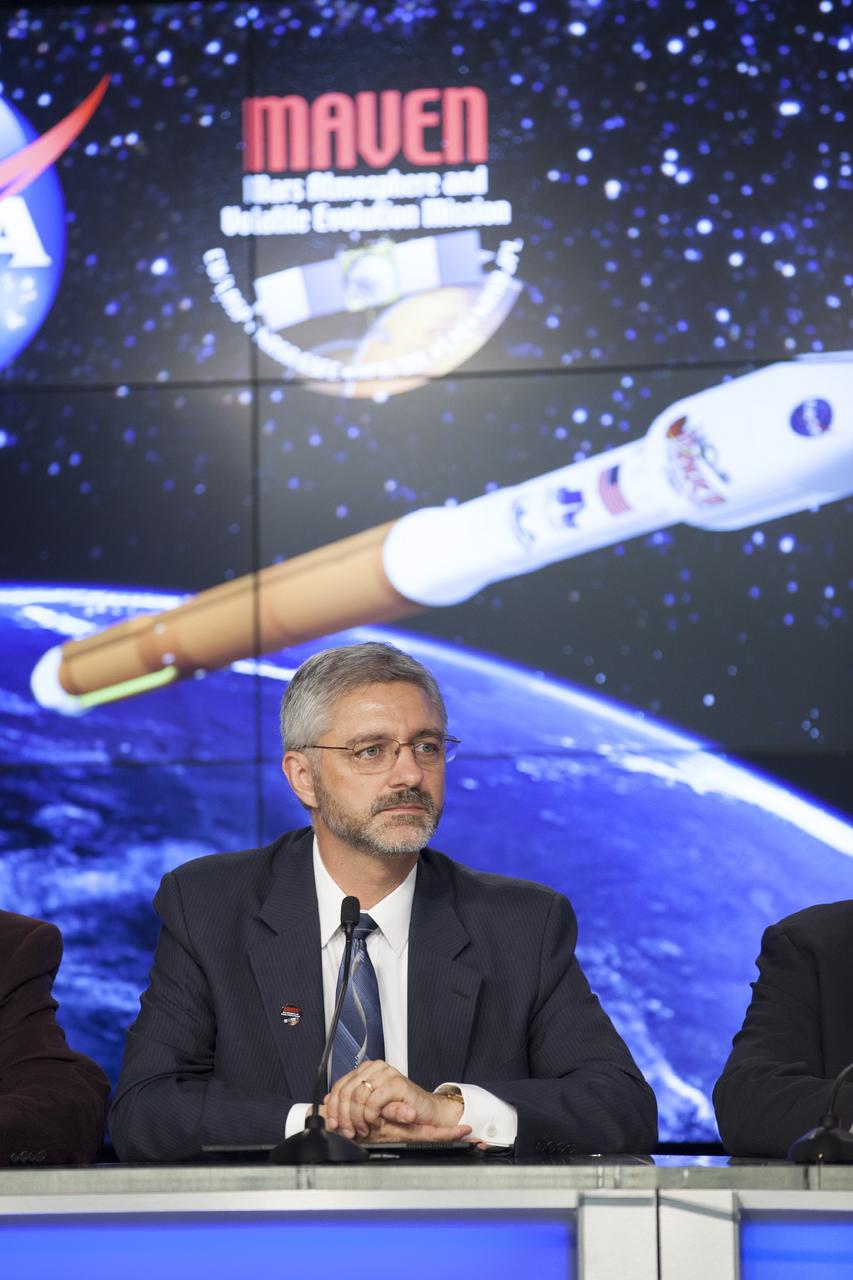
CAPE CANAVERAL, Fla. – During a news conference at NASA's Kennedy Space Center in Florida, agency and contractor officials discussed preparations for the launch of the Mars Atmosphere and Volatile EvolutioN, or MAVEN, mission. Participating in the briefing is Geoffrey Yoder, NASA deputy associate administrator of programs in the Science Mission Directorate. MAVEN is being prepared for its scheduled launch on Nov 18, 2013 from Cape Canaveral Air Force Station, Fla. atop a United Launch Alliance Atlas V rocket. Positioned in an orbit above the Red Planet, MAVEN will study the upper atmosphere of Mars in unprecedented detail. For information on the MAVEN mission, visit: http://www.nasa.gov/mission_pages/maven/main/index.html. Photo credit: NASA MAVEN is being prepared for its scheduled launch on Nov 18, 2013 from Cape Canaveral Air Force Station, Fla. atop a United Launch Alliance Atlas V rocket. Positioned in an orbit above the Red Planet, MAVEN will study the upper atmosphere of Mars in unprecedented detail. For more information, visit: http://www.nasa.gov/mission_pages/maven/main/index.html Photo credit: NASA/Kim Shiflett
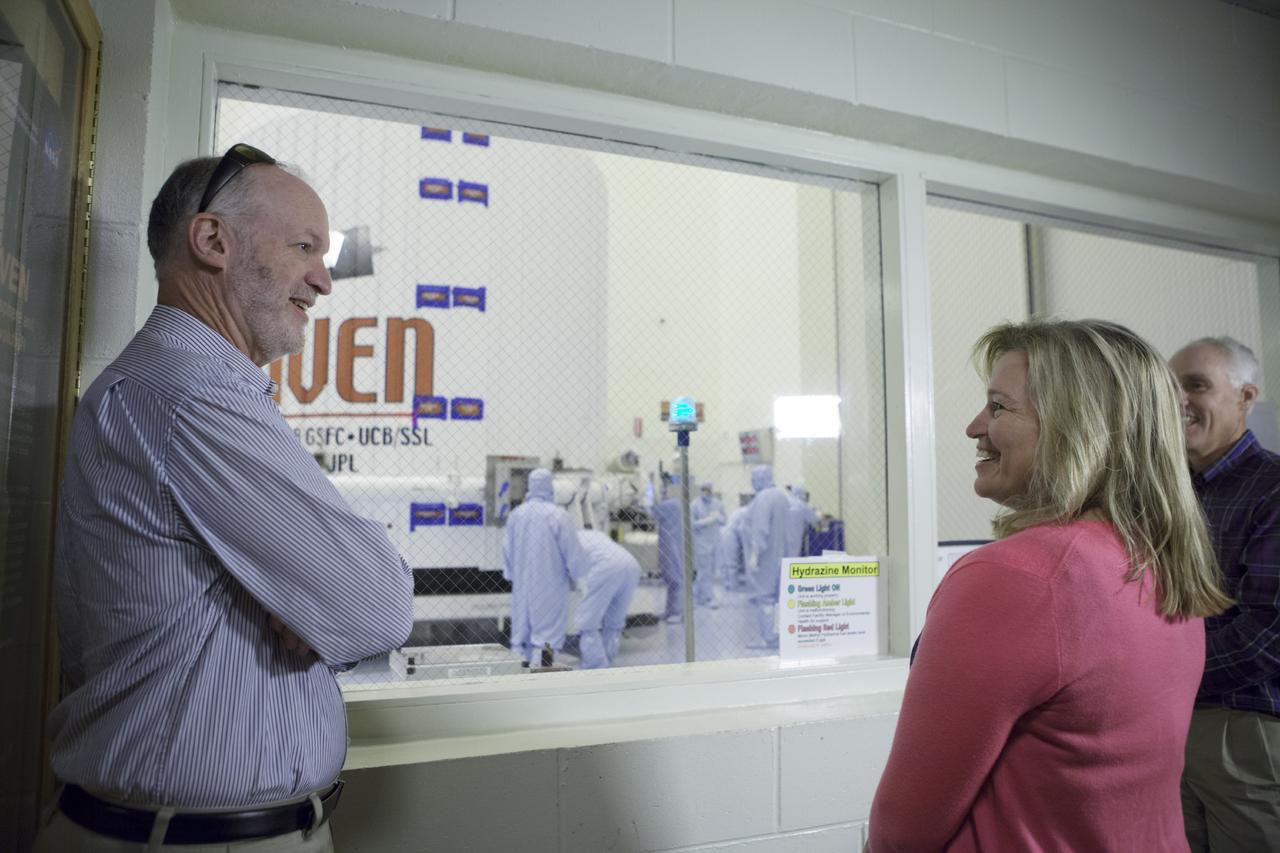
CAPE CANAVERAL, Fla. – Inside the Payload Hazardous Servicing Facility at NASA's Kennedy Space Center in Florida, Dr. Ellen Stofan, NASA's chief scientist, talks with Bruck Jakosky, left, of the University of Colorado’s Laboratory for Atmospheric and Space Physics. He is the principal investigator for the Mars Atmosphere and Volatile Evolution, or MAVEN, mission. On the right is Chuck Tatro of NASA's Launch Services Program who is the MAVEN mission manager. The MAVEN spacecraft can be seen through the window following encapsulation in its payload fairing. MAVEN is being prepared for its scheduled launch on Nov 18, 2013 from Cape Canaveral Air Force Station, Fla. atop a United Launch Alliance Atlas V rocket. Positioned in an orbit above the Red Planet, MAVEN will study the upper atmosphere of Mars in unprecedented detail. For more information, visit: http://www.nasa.gov/mission_pages/maven/main/index.html Photo credit: NASA/Kim Shiflett

CAPE CANAVERAL, Fla. – Inside the Payload Hazardous Servicing Facility at NASA's Kennedy Space Center in Florida, Dr. Ellen Stofan, NASA's chief scientist, talks with Bruck Jakosky, left, of the University of Colorado’s Laboratory for Atmospheric and Space Physics. He is the principal investigator for the Mars Atmosphere and Volatile Evolution, or MAVEN, mission. On the right is Chuck Tatro of NASA's Launch Services Program who is the MAVEN mission manager. The MAVEN spacecraft can be seen through the window following encapsulation in its payload fairing. MAVEN is being prepared for its scheduled launch on Nov 18, 2013 from Cape Canaveral Air Force Station, Fla. atop a United Launch Alliance Atlas V rocket. Positioned in an orbit above the Red Planet, MAVEN will study the upper atmosphere of Mars in unprecedented detail. For more information, visit: http://www.nasa.gov/mission_pages/maven/main/index.html Photo credit: NASA/Kim Shiflett