
Cape Canaveral, Fla. -- NASA's Mars Science Laboratory (MSL) rover, known as Curiosity, arrives at the Shuttle Landing Facility at NASA's Kennedy Space Center in Florida aboard an Air Force C-17 cargo plane. Also aboard is the rocket-powered descent stage that will fly the rover during the final moments before landing on Mars. A United Launch Alliance Atlas V-541 configuration will be used to loft MSL into space. Curiosity’s 10 science instruments are designed to search for evidence on whether Mars has had environments favorable to microbial life, including chemical ingredients for life. The unique rover will use a laser to look inside rocks and release its gasses so that the rover’s spectrometer can analyze and send the data back to Earth. MSL is scheduled to launch from Cape Canaveral Air Force Station in Florida Nov. 25 with a window extending to Dec. 18 and arrival at Mars Aug. 2012. For more information, visit http://www.nasa.gov/msl. Photo credit: NASA/Troy Cryder
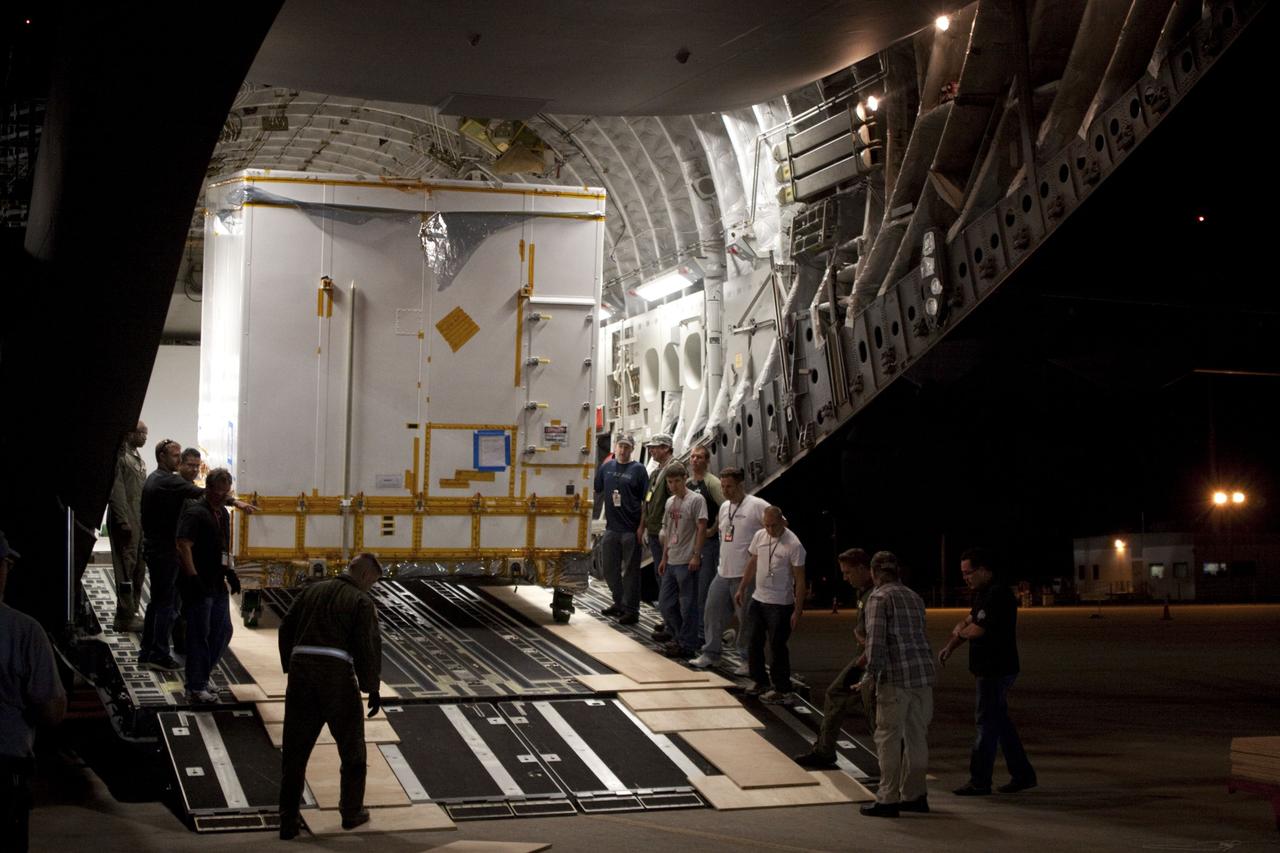
CAPE CANAVERAL, Fla. -- Workers unload NASA's Mars Science Laboratory (MSL) rocket-powered descent stage that will fly the rover during the final moments before landing on Mars. It arrived at the Shuttle Landing Facility at NASA's Kennedy Space Center in Florida aboard an Air Force C-17 cargo plane along with the MSL rover known as Curiosity. A United Launch Alliance Atlas V-541 configuration will be used to loft MSL into space. Curiosity’s 10 science instruments are designed to search for evidence on whether Mars has had environments favorable to microbial life, including chemical ingredients for life. The unique rover will use a laser to look inside rocks and release its gasses so that the rover’s spectrometer can analyze and send the data back to Earth. MSL is scheduled to launch from Cape Canaveral Air Force Station in Florida Nov. 25 with a window extending to Dec. 18 and arrival at Mars Aug. 2012. For more information, visit http://www.nasa.gov/msl. Photo credit: NASA/Troy Cryder

CAPE CANAVERAL, Fla. -- Workers load a container holding NASA's Mars Science Laboratory (MSL) rocket-powered descent stage that will fly the rover during the final moments before landing on Mars, onto a transporter after arrival at NASA Kennedy Space Center's Shuttle Landing Facility in Florida. The MSL rover known as Curiosity is also aboard the Air Force C-17 cargo plane ready for unloading. A United Launch Alliance Atlas V-541 configuration will be used to loft MSL into space. Curiosity’s 10 science instruments are designed to search for evidence on whether Mars has had environments favorable to microbial life, including chemical ingredients for life. The unique rover will use a laser to look inside rocks and release its gasses so that the rover’s spectrometer can analyze and send the data back to Earth. MSL is scheduled to launch from Cape Canaveral Air Force Station in Florida Nov. 25 with a window extending to Dec. 18 and arrival at Mars Aug. 2012. For more information, visit http://www.nasa.gov/msl. Photo credit: NASA/Troy Cryder
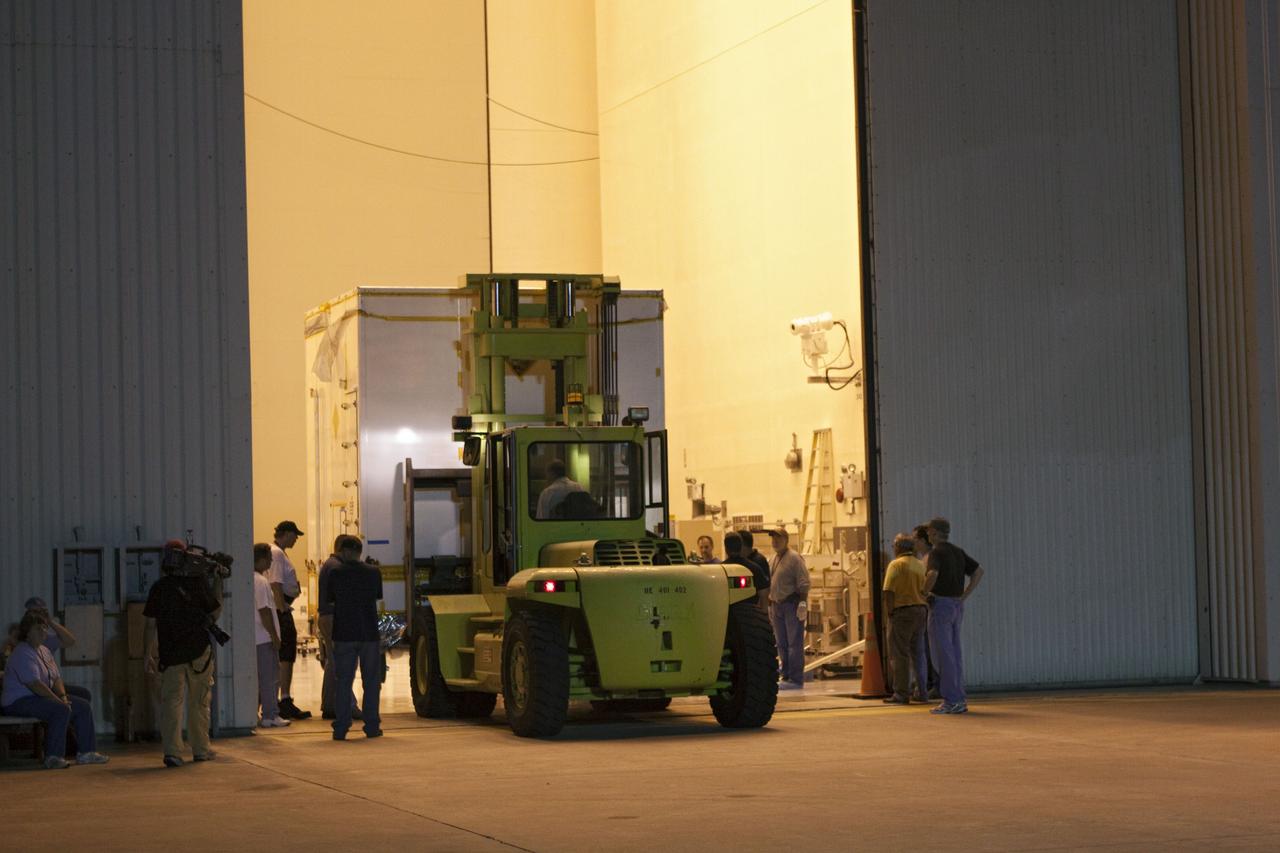
CAPE CANAVERAL, Fla. -- Workers deliver a container holding NASA's Mars Science Laboratory (MSL) rocket-powered descent stage that will fly the rover during the final moments before landing on Mars, to the Payload Hazardous Servicing Facility (PHSF) at NASA Kennedy Space Center in Florida. A United Launch Alliance Atlas V-541 configuration will be used to loft MSL into space. Curiosity’s 10 science instruments are designed to search for evidence on whether Mars has had environments favorable to microbial life, including chemical ingredients for life. The unique rover will use a laser to look inside rocks and release its gasses so that the rover’s spectrometer can analyze and send the data back to Earth. MSL is scheduled to launch from Cape Canaveral Air Force Station in Florida Nov. 25 with a window extending to Dec. 18 and arrival at Mars Aug. 2012. For more information, visit http://www.nasa.gov/msl. Photo credit: NASA/Troy Cryder
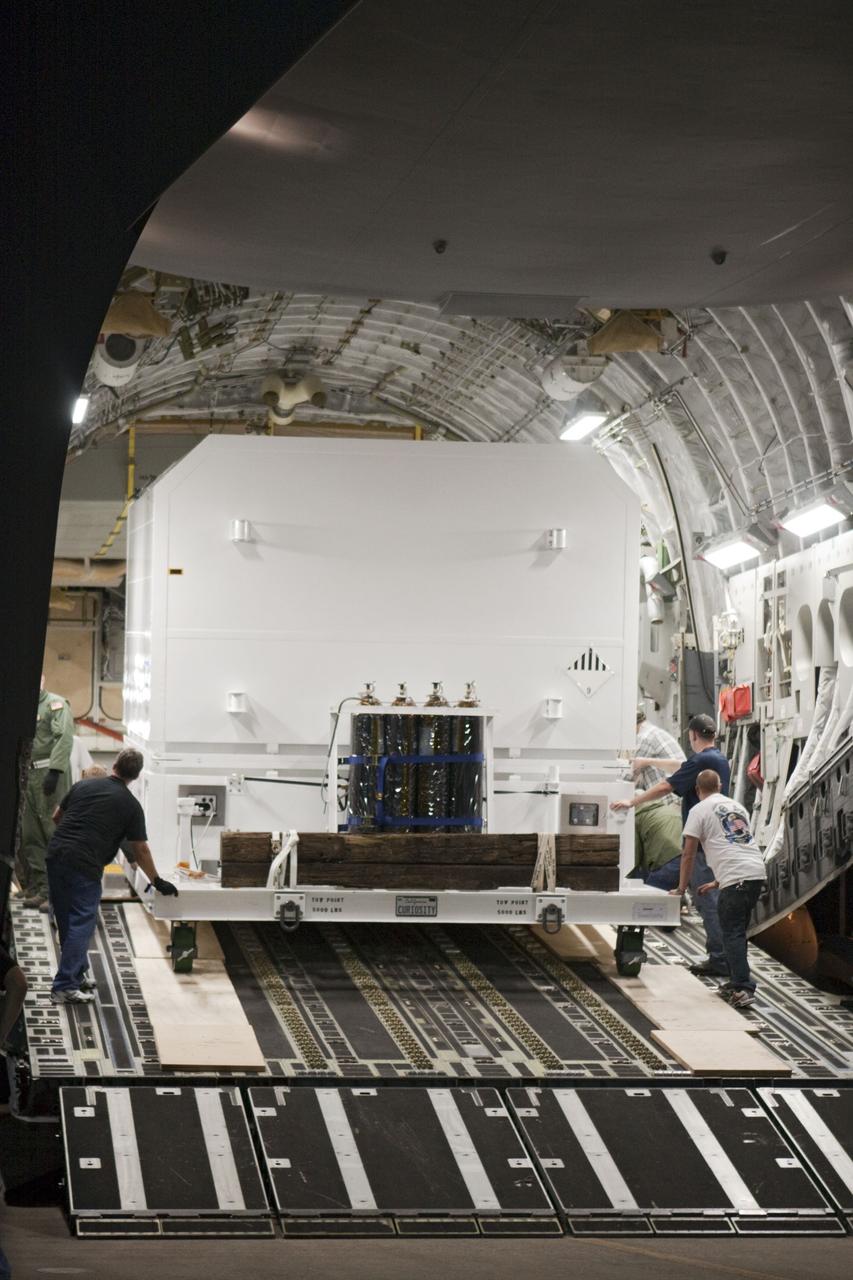
CAPE CANAVERAL, Fla. -- Workers unload a container holding NASA's Mars Science Laboratory (MSL) rover, known as Curiosity, from an Air Force C-17 cargo plane after arrival at NASA Kennedy Space Center's Shuttle Landing Facility in Florida. Already unloaded is the MSL rocket-powered descent stage that will fly the rover during the final moments before landing on Mars. A United Launch Alliance Atlas V-541 configuration will be used to loft MSL into space. Curiosity’s 10 science instruments are designed to search for evidence on whether Mars has had environments favorable to microbial life, including chemical ingredients for life. The unique rover will use a laser to look inside rocks and release its gasses so that the rover’s spectrometer can analyze and send the data back to Earth. MSL is scheduled to launch from Cape Canaveral Air Force Station in Florida Nov. 25 with a window extending to Dec. 18 and arrival at Mars Aug. 2012. For more information, visit http://www.nasa.gov/msl. Photo credit: NASA/Troy Cryder
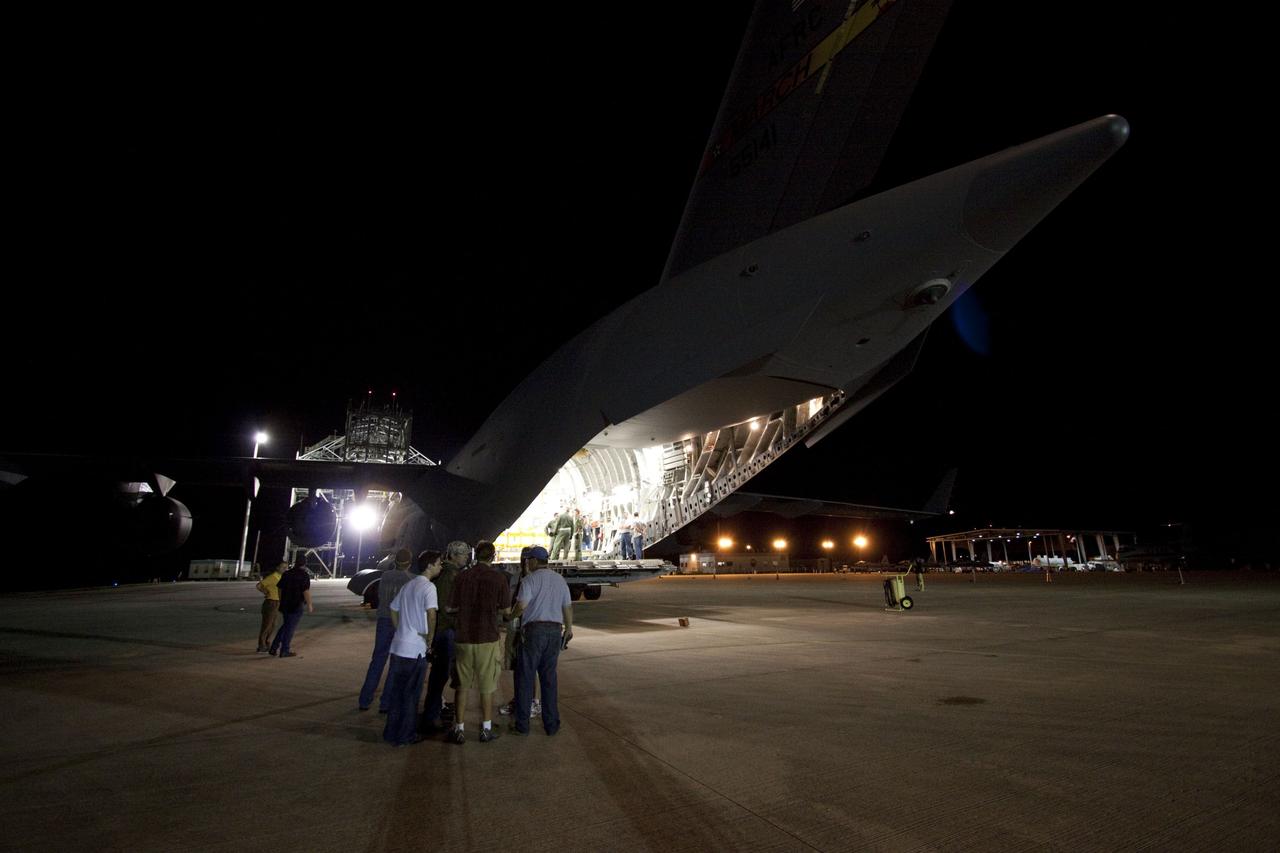
Cape Canaveral, Fla. -- Workers prepare to unload NASA's Mars Science Laboratory (MSL) rocket-powered descent stage that will fly the rover during the final moments before landing on Mars. It arrived at the Shuttle Landing Facility at NASA's Kennedy Space Center in Florida aboard an Air Force C-17 cargo plane along with the MSL rover known as Curiosity. A United Launch Alliance Atlas V-541 configuration will be used to loft MSL into space. Curiosity’s 10 science instruments are designed to search for evidence on whether Mars has had environments favorable to microbial life, including chemical ingredients for life. The unique rover will use a laser to look inside rocks and release its gasses so that the rover’s spectrometer can analyze and send the data back to Earth. MSL is scheduled to launch from Cape Canaveral Air Force Station in Florida Nov. 25 with a window extending to Dec. 18 and arrival at Mars Aug. 2012. For more information, visit http://www.nasa.gov/msl. Photo credit: NASA/Troy Cryder

CAPE CANAVERAL, Fla. -- Workers deliver a container holding NASA's Mars Science Laboratory (MSL) rover, known as Curiosity, to the Payload Hazardous Servicing Facility (PHSF) at NASA's Kennedy Space Center in Florida. Already delivered to the PHSF is the MSL rocket-powered descent stage that will fly the rover during the final moments before landing on Mars. A United Launch Alliance Atlas V-541 configuration will be used to loft MSL into space. Curiosity’s 10 science instruments are designed to search for evidence on whether Mars has had environments favorable to microbial life, including chemical ingredients for life. The unique rover will use a laser to look inside rocks and release its gasses so that the rover’s spectrometer can analyze and send the data back to Earth. MSL is scheduled to launch from Cape Canaveral Air Force Station in Florida Nov. 25 with a window extending to Dec. 18 and arrival at Mars Aug. 2012. For more information, visit http://www.nasa.gov/msl. Photo credit: NASA/Troy Cryder
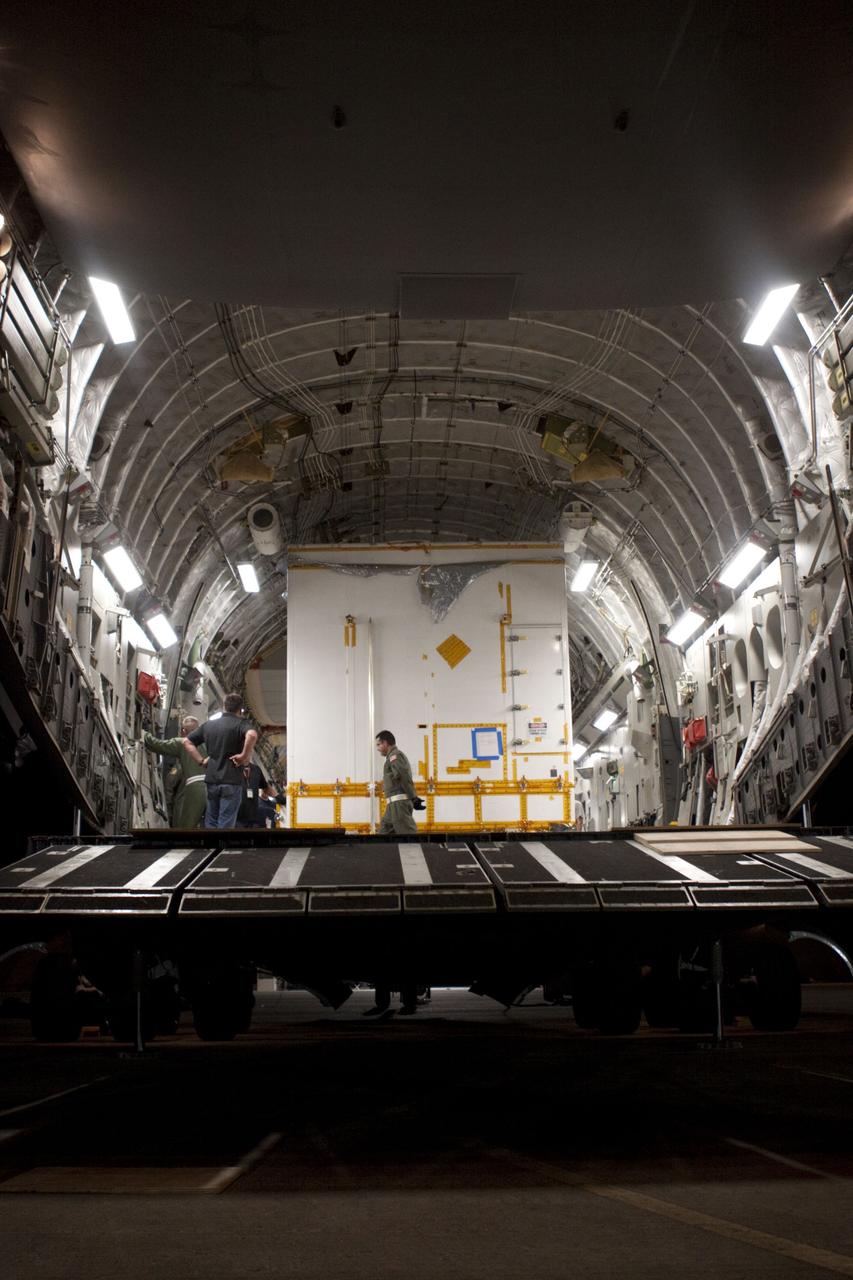
CAPE CANAVERAL, Fla. -- Workers begin to unload NASA's Mars Science Laboratory (MSL) rocket-powered descent stage that will fly the rover during the final moments before landing on Mars. It arrived at the Shuttle Landing Facility at NASA's Kennedy Space Center in Florida aboard an Air Force C-17 cargo plane along with the MSL rover known as Curiosity. A United Launch Alliance Atlas V-541 configuration will be used to loft MSL into space. Curiosity’s 10 science instruments are designed to search for evidence on whether Mars has had environments favorable to microbial life, including chemical ingredients for life. The unique rover will use a laser to look inside rocks and release its gasses so that the rover’s spectrometer can analyze and send the data back to Earth. MSL is scheduled to launch from Cape Canaveral Air Force Station in Florida Nov. 25 with a window extending to Dec. 18 and arrival at Mars Aug. 2012. For more information, visit http://www.nasa.gov/msl. Photo credit: NASA/Troy Cryder
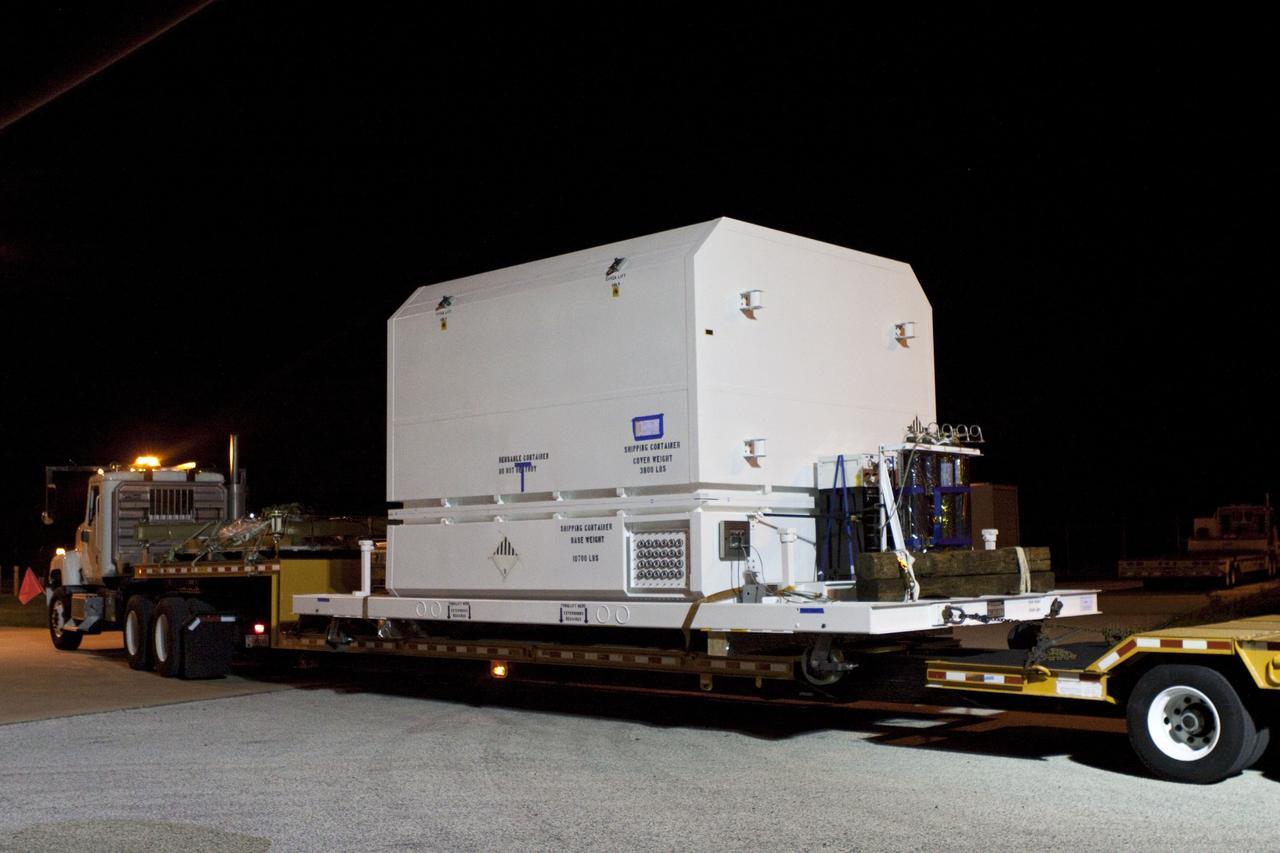
CAPE CANAVERAL, Fla. -- Workers transport a container holding NASA's Mars Science Laboratory (MSL) rover, known as Curiosity, to the Payload Hazardous Servicing Facility (PHSF) at NASA's Kennedy Space Center in Florida. Already delivered to the PHSF is the MSL rocket-powered descent stage that will fly the rover during the final moments before landing on Mars. A United Launch Alliance Atlas V-541 configuration will be used to loft MSL into space. Curiosity’s 10 science instruments are designed to search for evidence on whether Mars has had environments favorable to microbial life, including chemical ingredients for life. The unique rover will use a laser to look inside rocks and release its gasses so that the rover’s spectrometer can analyze and send the data back to Earth. MSL is scheduled to launch from Cape Canaveral Air Force Station in Florida Nov. 25 with a window extending to Dec. 18 and arrival at Mars Aug. 2012. For more information, visit http://www.nasa.gov/msl. Photo credit: NASA/Troy Cryder
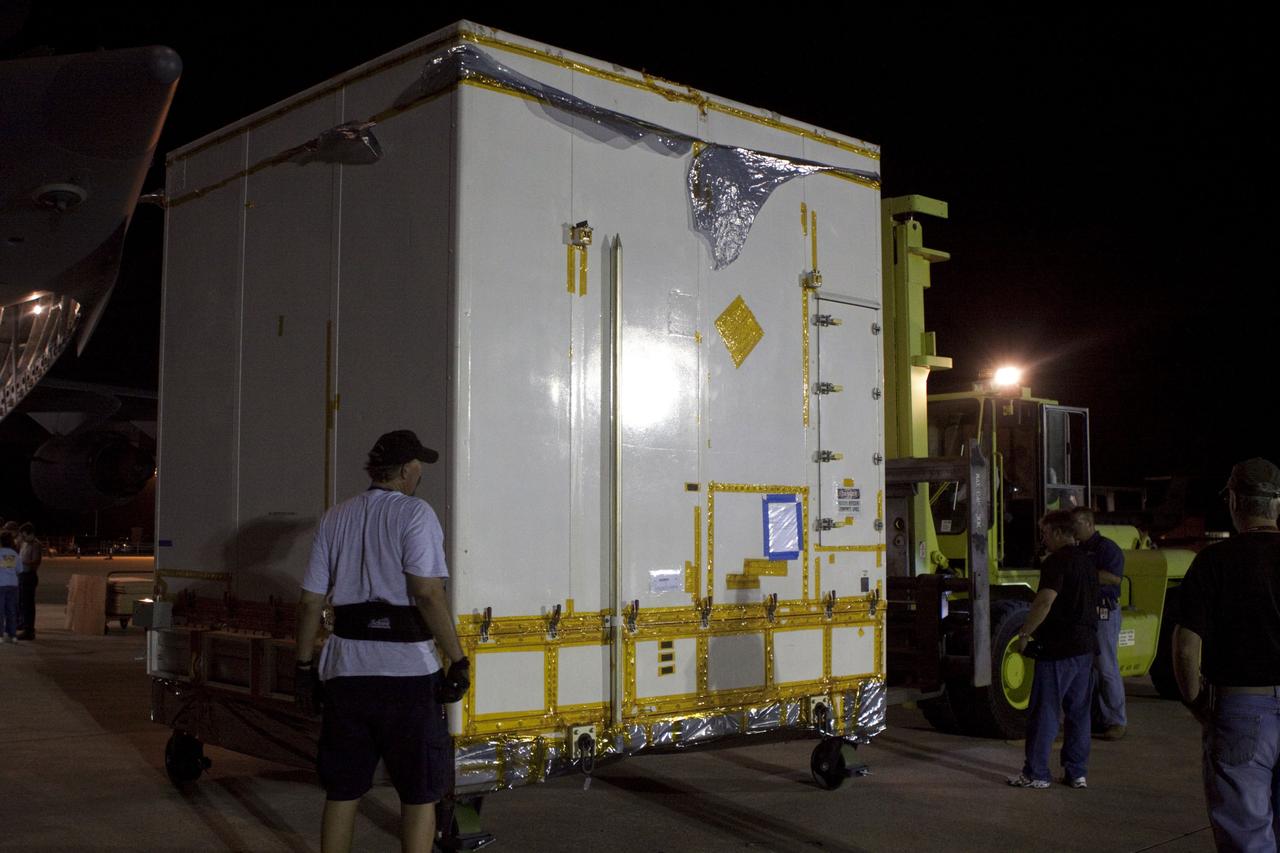
CAPE CANAVERAL, Fla. -- Workers load a container holding NASA's Mars Science Laboratory (MSL) rocket-powered descent stage that will fly the rover during the final moments before landing on Mars, onto a transporter after arrival at NASA Kennedy Space Center's Shuttle Landing Facility in Florida. The MSL rover known as Curiosity is also aboard the Air Force C-17 cargo plane ready for unloading. A United Launch Alliance Atlas V-541 configuration will be used to loft MSL into space. Curiosity’s 10 science instruments are designed to search for evidence on whether Mars has had environments favorable to microbial life, including chemical ingredients for life. The unique rover will use a laser to look inside rocks and release its gasses so that the rover’s spectrometer can analyze and send the data back to Earth. MSL is scheduled to launch from Cape Canaveral Air Force Station in Florida Nov. 25 with a window extending to Dec. 18 and arrival at Mars Aug. 2012. For more information, visit http://www.nasa.gov/msl. Photo credit: NASA/Troy Cryder
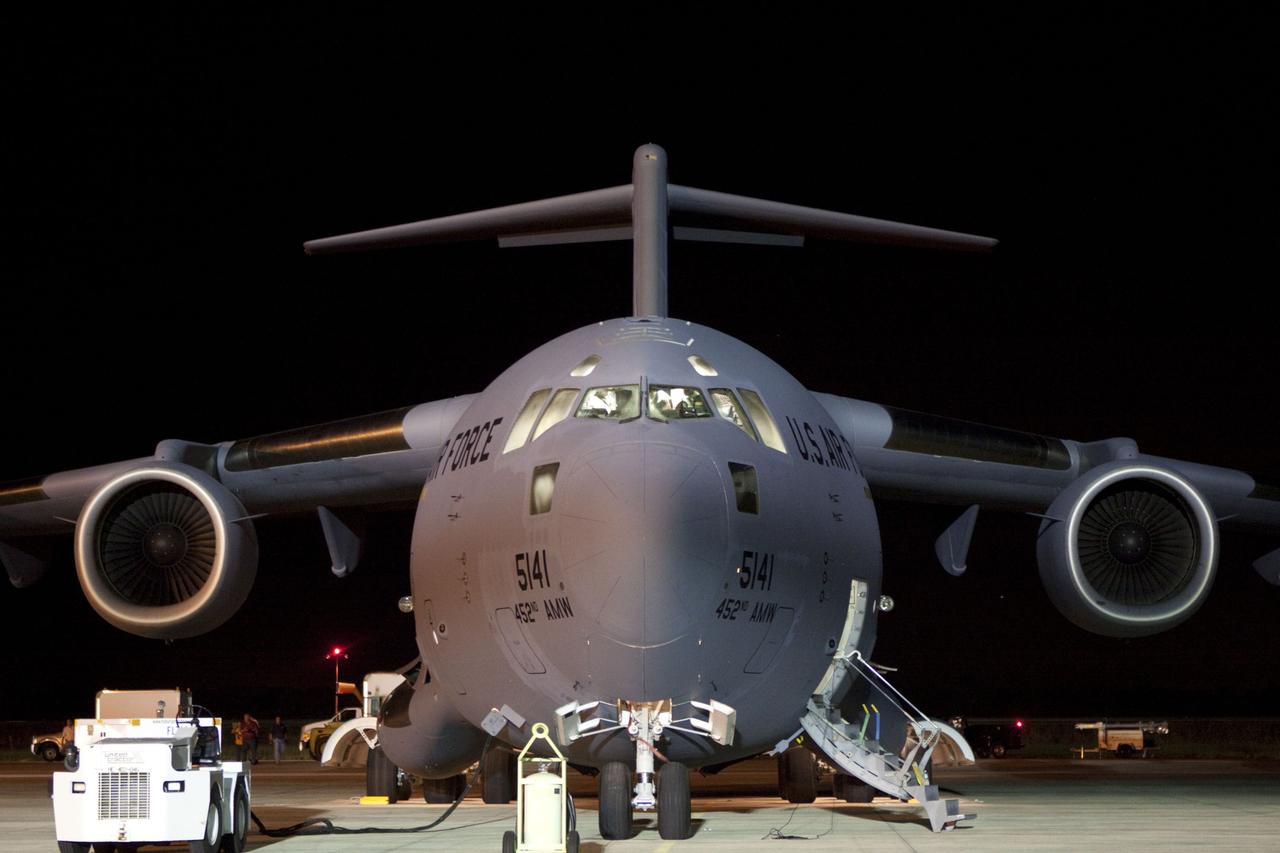
Cape Canaveral, Fla. -- NASA's Mars Science Laboratory (MSL) rover, known as Curiosity, arrives at the Shuttle Landing Facility at NASA's Kennedy Space Center in Florida aboard an Air Force C-17 cargo plane. Also aboard is the rocket-powered descent stage that will fly the rover during the final moments before landing on Mars. A United Launch Alliance Atlas V-541 configuration will be used to loft MSL into space. Curiosity’s 10 science instruments are designed to search for evidence on whether Mars has had environments favorable to microbial life, including chemical ingredients for life. The unique rover will use a laser to look inside rocks and release its gasses so that the rover’s spectrometer can analyze and send the data back to Earth. MSL is scheduled to launch from Cape Canaveral Air Force Station in Florida Nov. 25 with a window extending to Dec. 18 and arrival at Mars Aug. 2012. For more information, visit http://www.nasa.gov/msl. Photo credit: NASA/Troy Cryder
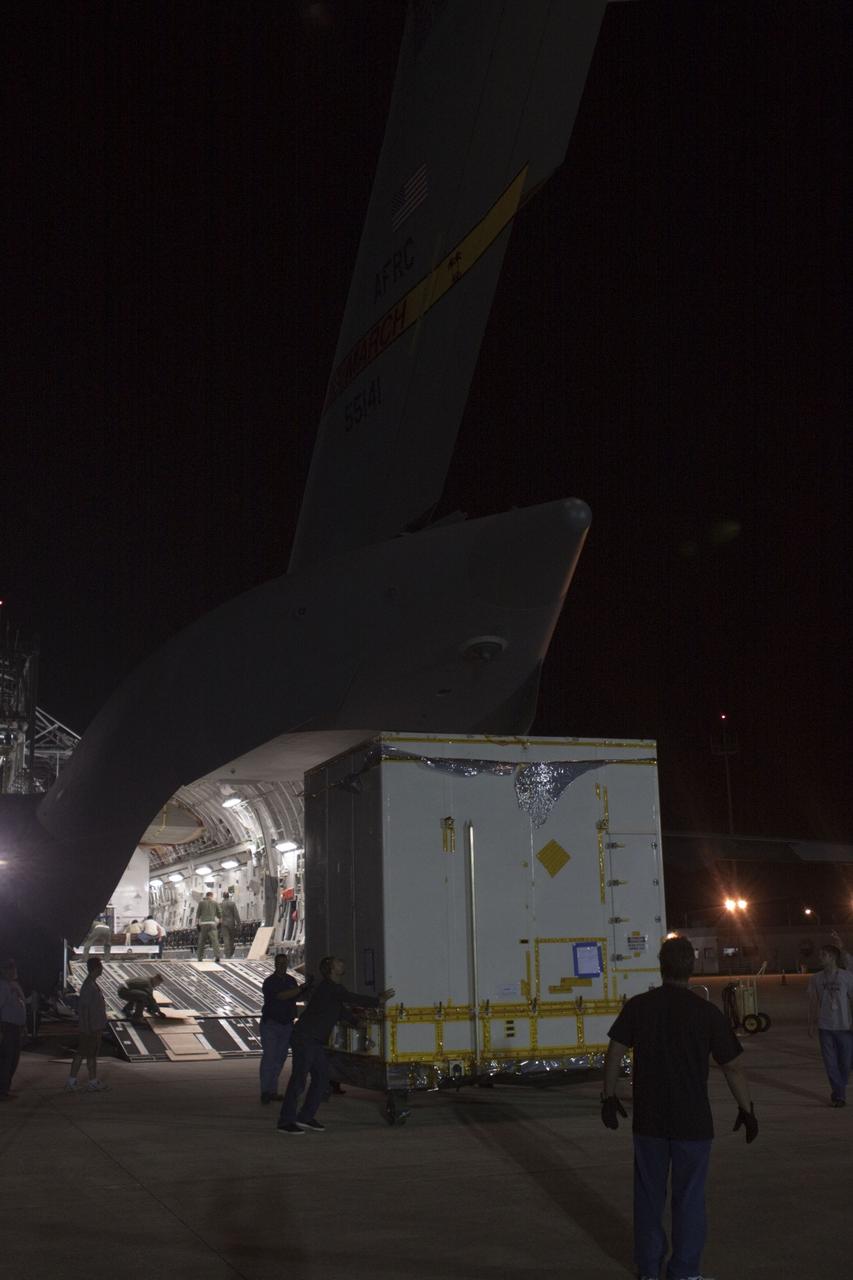
CAPE CANAVERAL, Fla. -- Workers unload NASA's Mars Science Laboratory (MSL) rocket-powered descent stage that will fly the rover during the final moments before landing on Mars. It arrived at the Shuttle Landing Facility at NASA's Kennedy Space Center in Florida aboard an Air Force C-17 cargo plane along with the MSL rover known as Curiosity. A United Launch Alliance Atlas V-541 configuration will be used to loft MSL into space. Curiosity’s 10 science instruments are designed to search for evidence on whether Mars has had environments favorable to microbial life, including chemical ingredients for life. The unique rover will use a laser to look inside rocks and release its gasses so that the rover’s spectrometer can analyze and send the data back to Earth. MSL is scheduled to launch from Cape Canaveral Air Force Station in Florida Nov. 25 with a window extending to Dec. 18 and arrival at Mars Aug. 2012. For more information, visit http://www.nasa.gov/msl. Photo credit: NASA/Troy Cryder
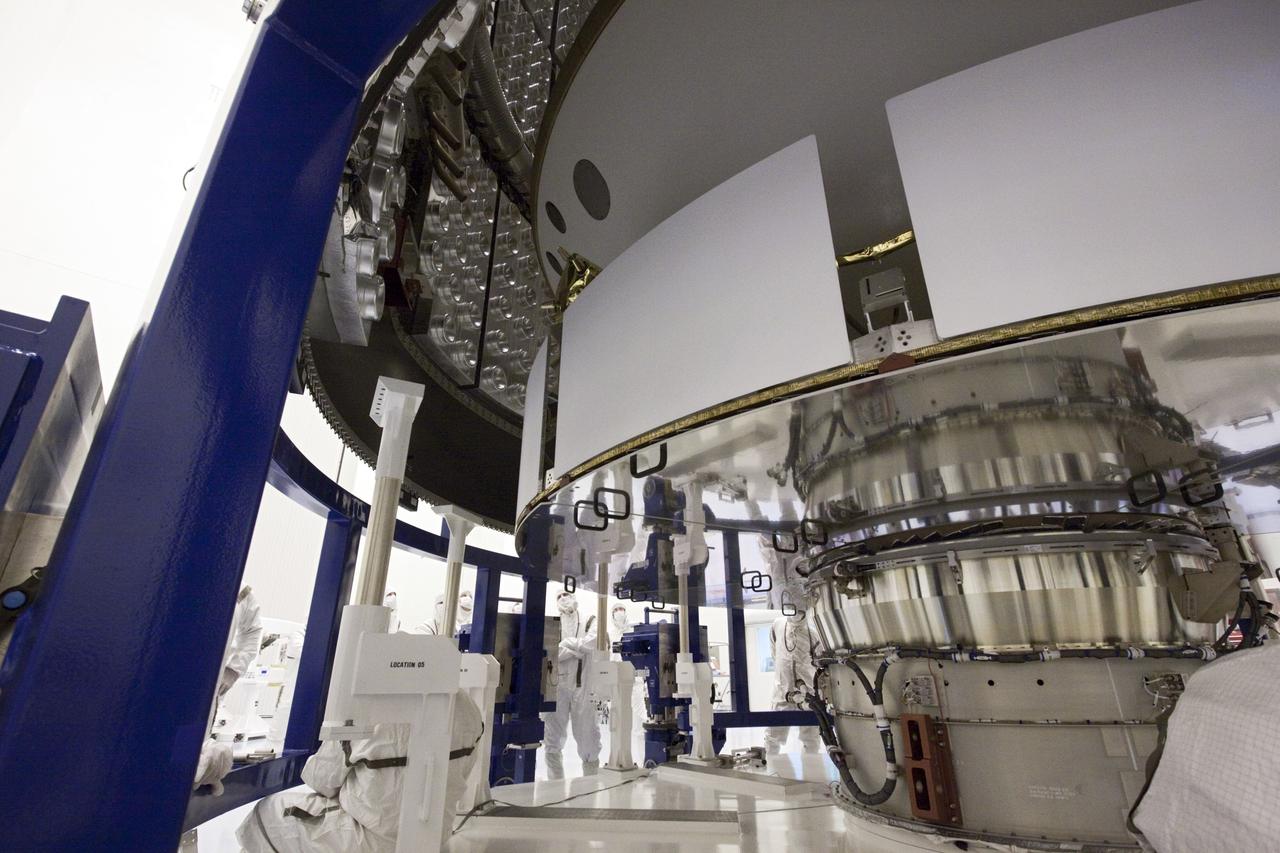
CAPE CANAVERAL, Fla. - In the Payload Hazardous Servicing Facility at NASA's Kennedy Space Center in Florida, the camera captures NASA's Mars Science Laboratory (MSL) one last time before an Atlas V rocket payload fairing is secured around it. Next, the lab will be transported to the launch pad. by dampening the sound created by the rocket during liftoff. The fairing will protect the spacecraft from the impact of aerodynamic pressure and heating during ascent. MSL's components include a compact car-sized rover, Curiosity, which has 10 science instruments designed to search for evidence on whether Mars has had environments favorable to microbial life, including the chemical ingredients for life. The unique rover will use a laser to look inside rocks and release its gasses so that the rover’s spectrometer can analyze and send the data back to Earth. Launch of MSL aboard a United Launch Alliance Atlas V rocket is planned for Nov. 25 from Space Launch Complex-41 on Cape Canaveral Air Force Station. For more information, visit http://www.nasa.gov/msl. Photo credit: NASA/Jim Grossmann
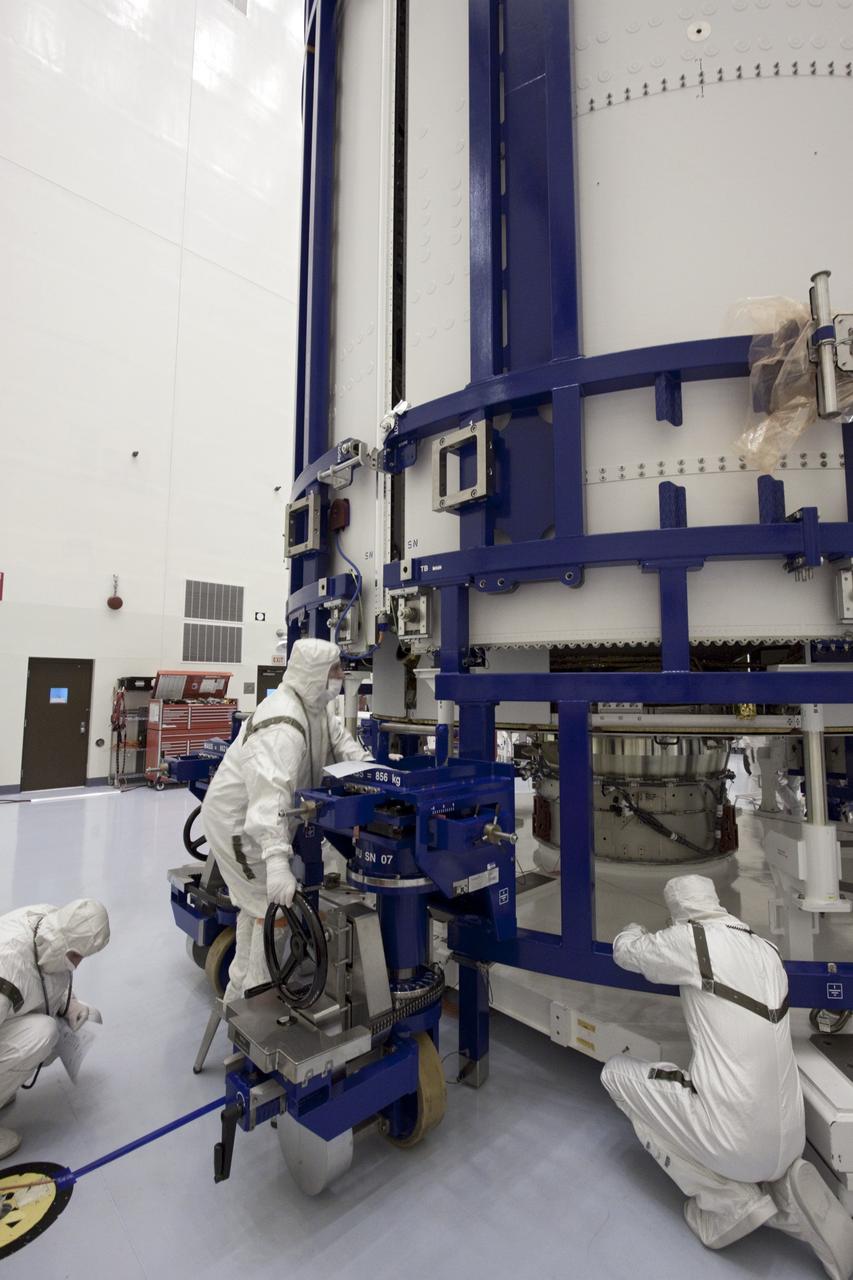
CAPE CANAVERAL, Fla. - In the Payload Hazardous Servicing Facility at NASA's Kennedy Space Center in Florida, spacecraft technicians align the sections of an Atlas V rocket payload fairing around NASA's Mars Science Laboratory (MSL). Next, the lab will be transported to the launch pad. The fairing will protect the spacecraft from the impact of aerodynamic pressure and heating during ascent. MSL's components include a compact car-sized rover, Curiosity, which has 10 science instruments designed to search for evidence on whether Mars has had environments favorable to microbial life, including the chemical ingredients for life. The unique rover will use a laser to look inside rocks and release its gasses so that the rover’s spectrometer can analyze and send the data back to Earth. Launch of MSL aboard a United Launch Alliance Atlas V rocket is planned for Nov. 25 from Space Launch Complex-41 on Cape Canaveral Air Force Station. For more information, visit http://www.nasa.gov/msl. Photo credit: NASA/Jim Grossmann
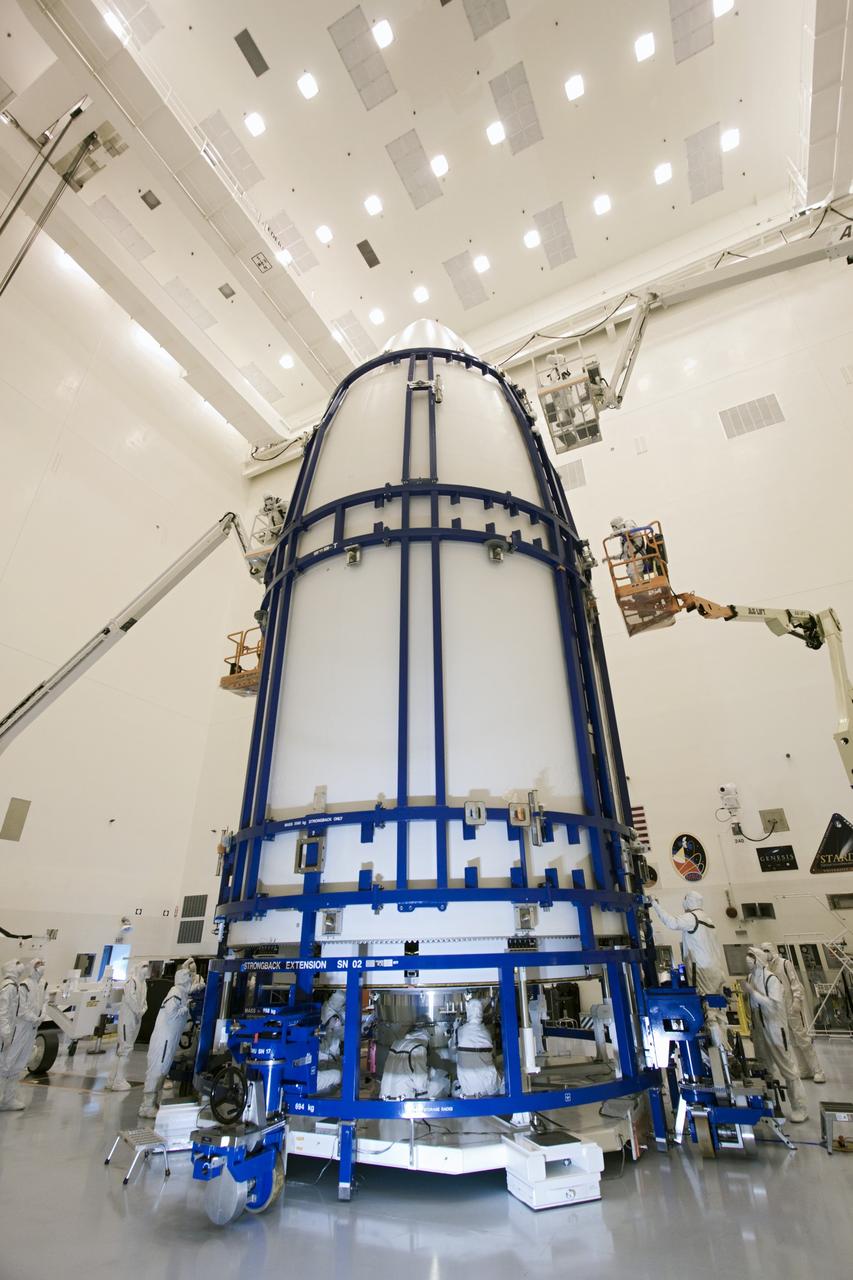
CAPE CANAVERAL, Fla. - In the Payload Hazardous Servicing Facility at NASA's Kennedy Space Center in Florida, spacecraft technicians secure an Atlas V rocket payload fairing around NASA's Mars Science Laboratory (MSL). Next, the lab will be transported to the launch pad. The fairing will protect the spacecraft from the impact of aerodynamic pressure and heating during ascent. MSL's components include a compact car-sized rover, Curiosity, which has 10 science instruments designed to search for evidence on whether Mars has had environments favorable to microbial life, including the chemical ingredients for life. The unique rover will use a laser to look inside rocks and release its gasses so that the rover’s spectrometer can analyze and send the data back to Earth. Launch of MSL aboard a United Launch Alliance Atlas V rocket is planned for Nov. 25 from Space Launch Complex-41 on Cape Canaveral Air Force Station. For more information, visit http://www.nasa.gov/msl. Photo credit: NASA/Jim Grossmann