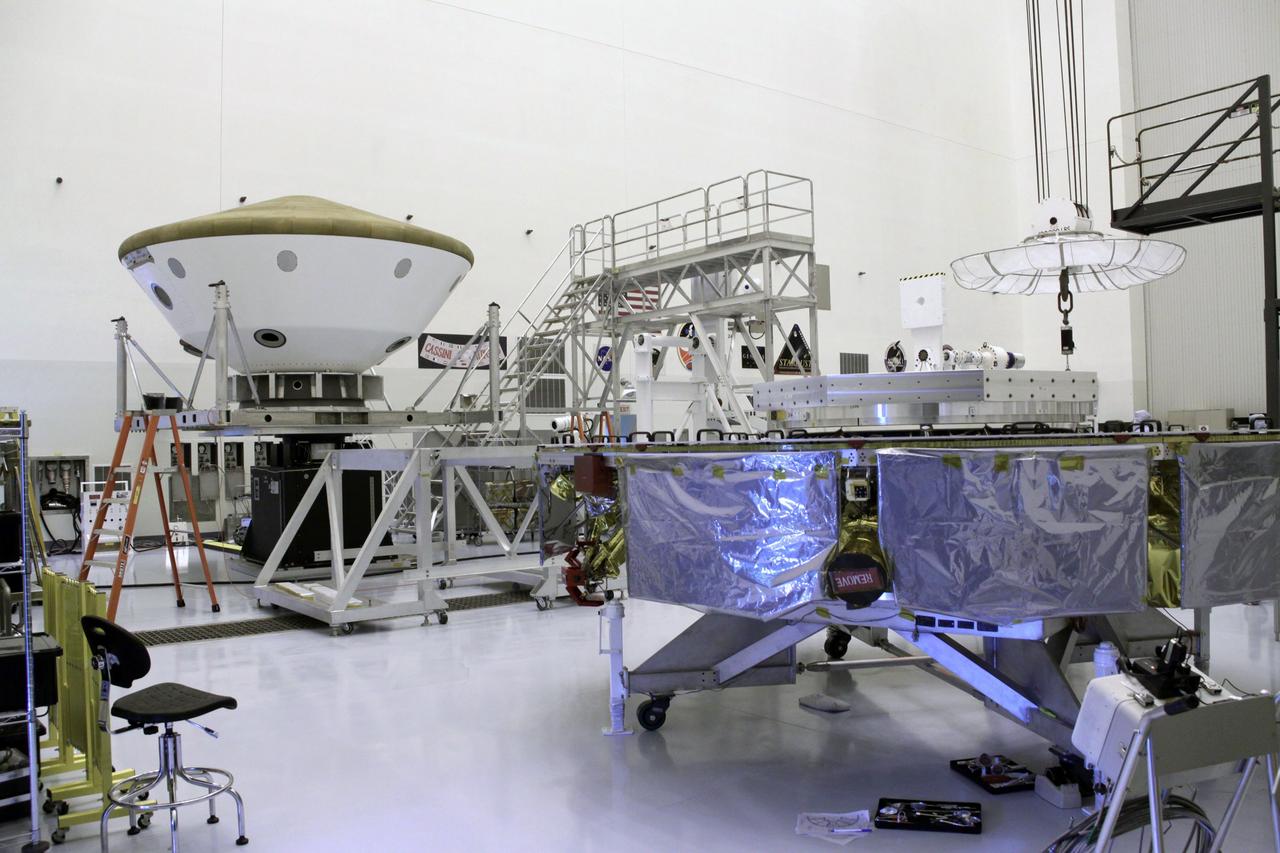
Cape Canaveral, Fla. -- At the Payload Hazardous Servicing Facility at NASA's Kennedy Space Center in Florida the aeroshell, a component of NASA's Mars Science Laboratory (MSL), has been secured onto a spin stand for testing. The aeroshell consists of the backshell which carries the parachute and several components used during later stages of entry, descent and landing, and the spacecraft's heat shield. MSL's components include a compact car-sized rover, Curiosity, which has 10 science instruments designed to search for evidence on whether Mars has had environments favorable to microbial life, including chemical ingredients for life. The unique rover will use a laser to look inside rocks and release its gasses so that the rover’s spectrometer can analyze and send the data back to Earth. Launch of MSL aboard a United Launch Alliance Atlas V rocket is scheduled for Nov. 25 from Space Launch Complex 41 on Cape Canaveral Air Force Station in Florida. For more information, visit http://www.nasa.gov/msl. Photo credit: NASA/Jack Pfaller
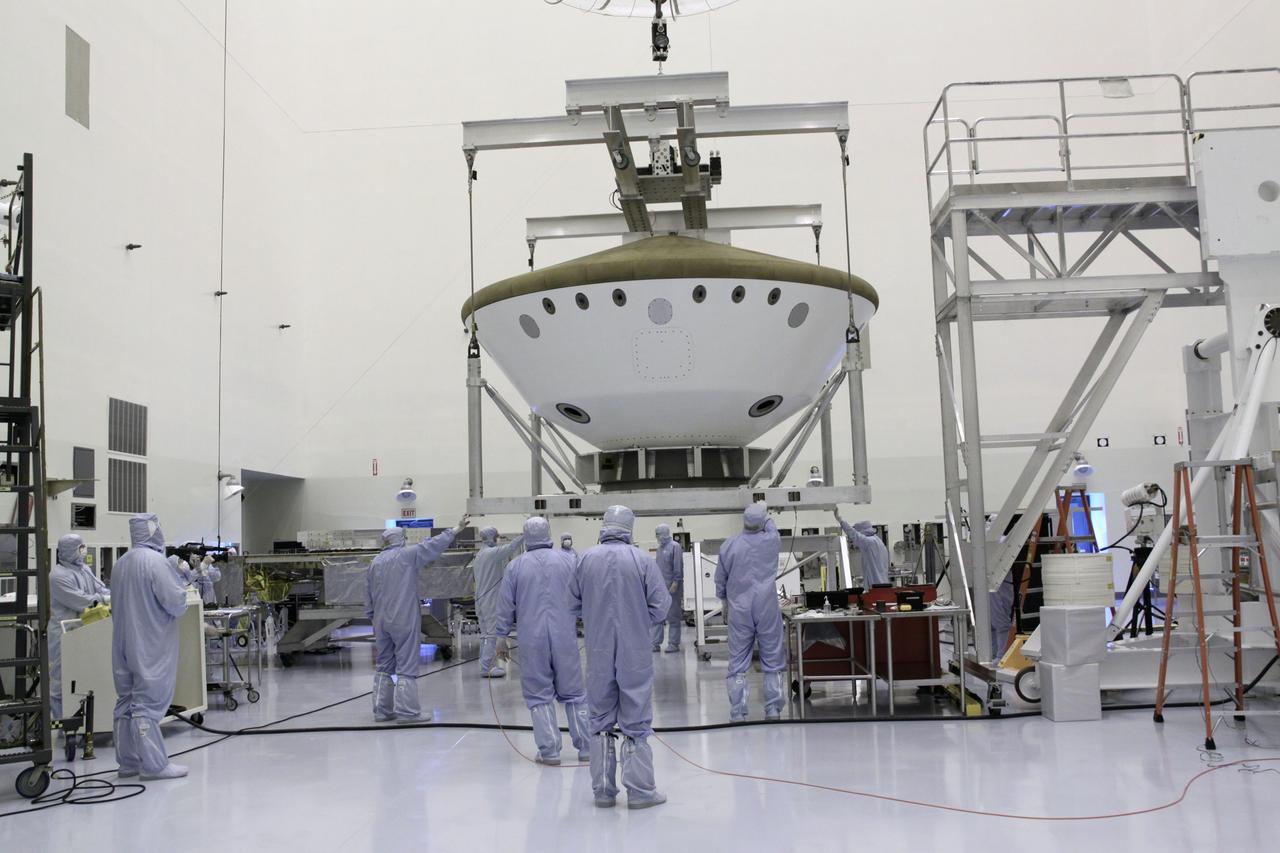
Cape Canaveral, Fla. -- At the Payload Hazardous Servicing Facility at NASA's Kennedy Space Center in Florida, technicians use an overhead crane to move the aeroshell, a component of NASA's Mars Science Laboratory (MSL), to a spin stand for testing. The aeroshell consists of the backshell which carries the parachute and several components used during later stages of entry, descent and landing, and the spacecraft's heat shield. MSL's components include a compact car-sized rover, Curiosity, which has 10 science instruments designed to search for evidence on whether Mars has had environments favorable to microbial life, including chemical ingredients for life. The unique rover will use a laser to look inside rocks and release its gasses so that the rover’s spectrometer can analyze and send the data back to Earth. Launch of MSL aboard a United Launch Alliance Atlas V rocket is scheduled for Nov. 25 from Space Launch Complex 41 on Cape Canaveral Air Force Station in Florida. For more information, visit http://www.nasa.gov/msl. Photo credit: NASA/Jack Pfaller
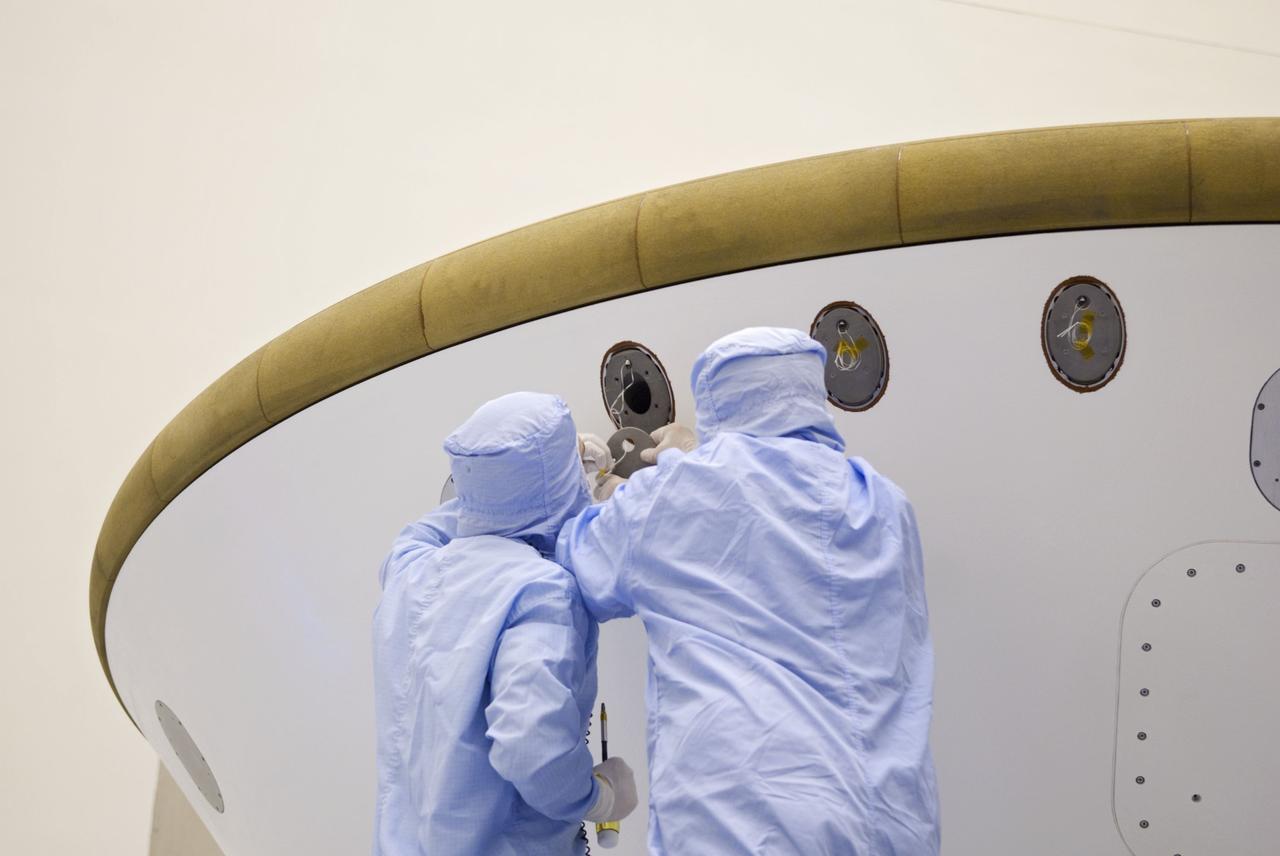
Cape Canaveral, Fla. -- At the Payload Hazardous Servicing Facility at NASA's Kennedy Space Center in Florida, technicians add weights (ejectable ballast mass) to the aeroshell, a component of NASA's Mars Science Laboratory (MSL), in order to conduct a spin and balance test. The aeroshell consists of the backshell which carries the parachute and several components used during later stages of entry, descent and landing, and the spacecraft's heat shield. MSL's components include a compact car-sized rover, Curiosity, which has 10 science instruments designed to search for evidence on whether Mars has had environments favorable to microbial life, including chemical ingredients for life. The unique rover will use a laser to look inside rocks and release its gasses so that the rover’s spectrometer can analyze and send the data back to Earth. Launch of MSL aboard a United Launch Alliance Atlas V rocket is scheduled for Nov. 25 from Space Launch Complex 41 on Cape Canaveral Air Force Station in Florida. For more information, visit http://www.nasa.gov/msl. Photo credit: NASA/Jim Grossmann
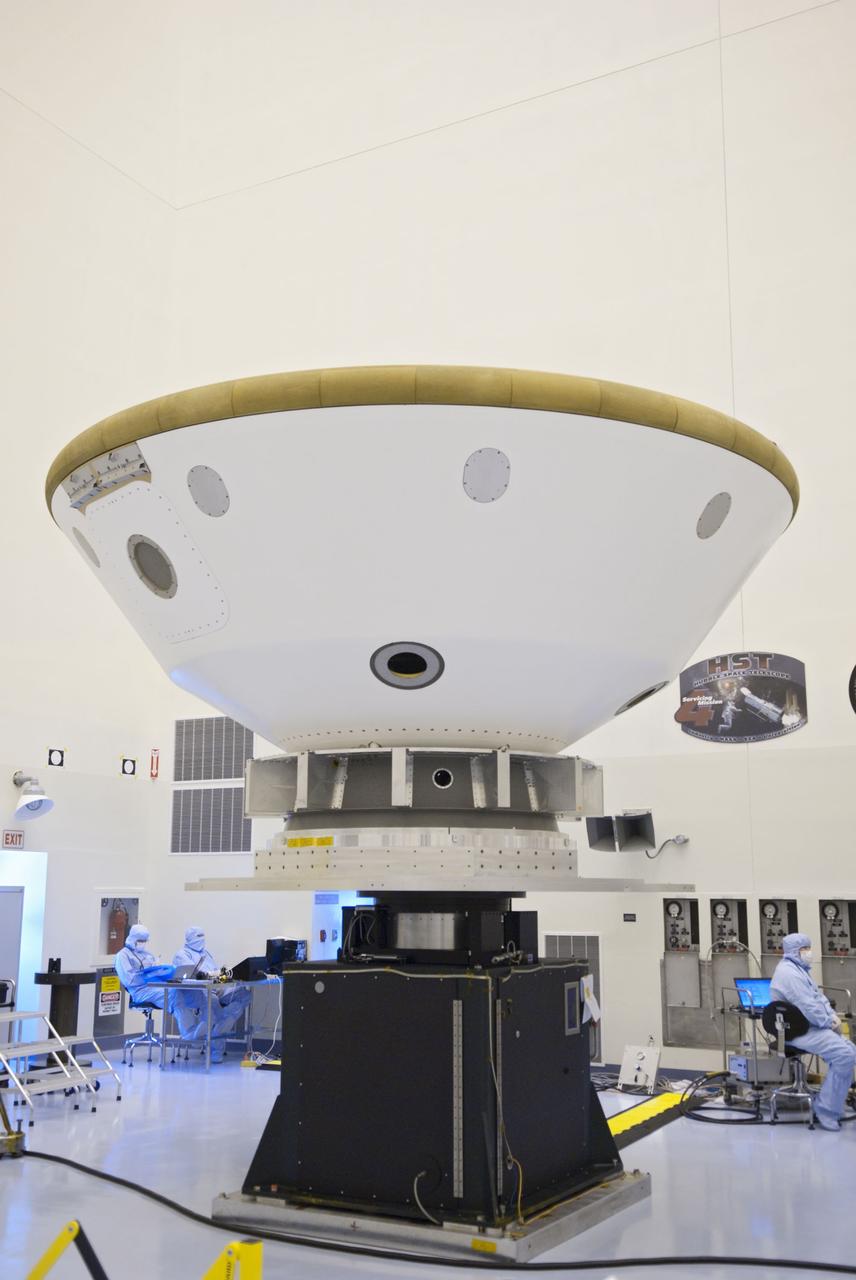
Cape Canaveral, Fla. -- At the Payload Hazardous Servicing Facility at NASA's Kennedy Space Center in Florida, technicians prepare to add weights (ejectable ballast mass) to the aeroshell, a component of NASA's Mars Science Laboratory (MSL), in order to conduct a spin and balance test. The aeroshell consists of the backshell which carries the parachute and several components used during later stages of entry, descent and landing, and the spacecraft's heat shield. MSL's components include a compact car-sized rover, Curiosity, which has 10 science instruments designed to search for evidence on whether Mars has had environments favorable to microbial life, including chemical ingredients for life. The unique rover will use a laser to look inside rocks and release its gasses so that the rover’s spectrometer can analyze and send the data back to Earth. Launch of MSL aboard a United Launch Alliance Atlas V rocket is scheduled for Nov. 25 from Space Launch Complex 41 on Cape Canaveral Air Force Station in Florida. For more information, visit http://www.nasa.gov/msl. Photo credit: NASA/Jim Grossmann
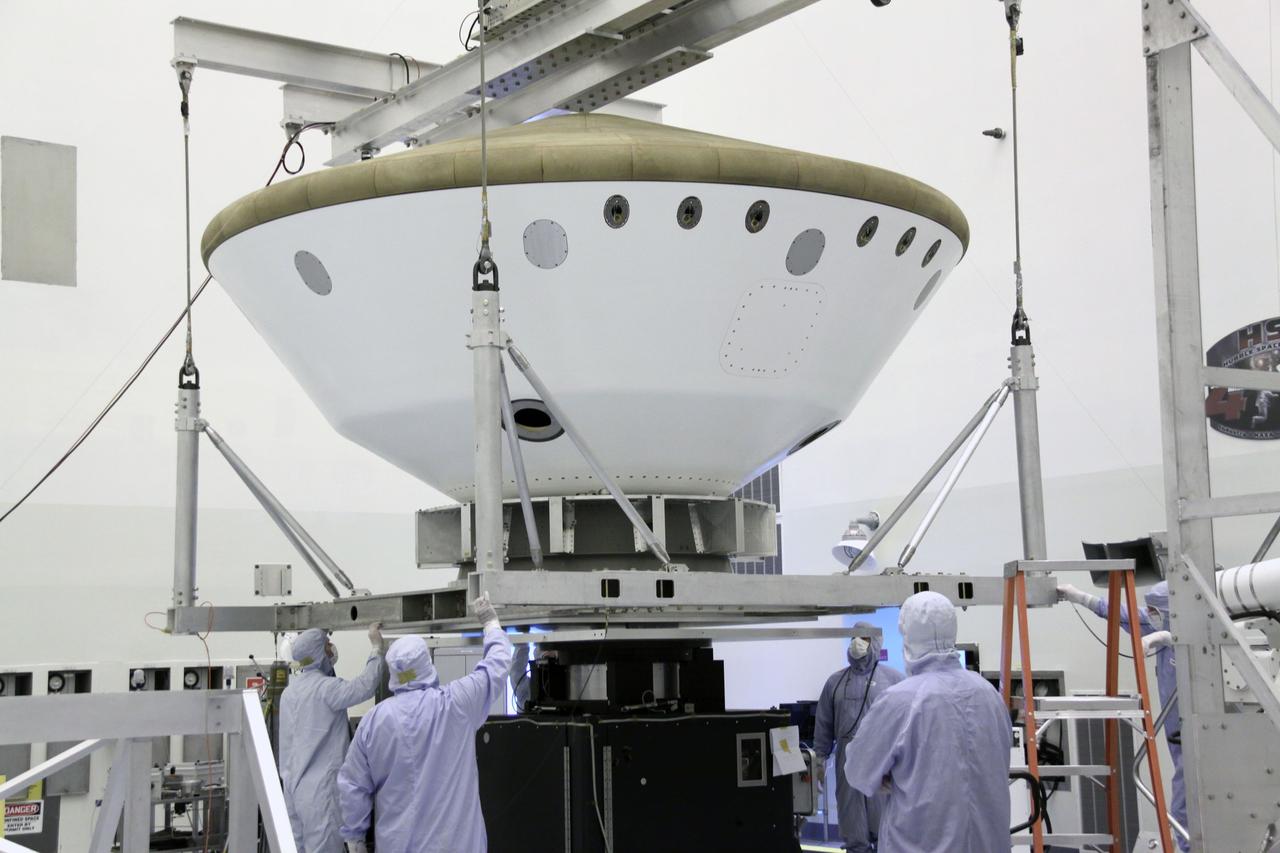
Cape Canaveral, Fla. -- At the Payload Hazardous Servicing Facility at NASA's Kennedy Space Center in Florida, technicians use an overhead crane to lower the aeroshell, a component of NASA's Mars Science Laboratory (MSL), onto a spin stand for testing. The aeroshell consists of the backshell which carries the parachute and several components used during later stages of entry, descent and landing, and the spacecraft's heat shield. MSL's components include a compact car-sized rover, Curiosity, which has 10 science instruments designed to search for evidence on whether Mars has had environments favorable to microbial life, including chemical ingredients for life. The unique rover will use a laser to look inside rocks and release its gasses so that the rover’s spectrometer can analyze and send the data back to Earth. Launch of MSL aboard a United Launch Alliance Atlas V rocket is scheduled for Nov. 25 from Space Launch Complex 41 on Cape Canaveral Air Force Station in Florida. For more information, visit http://www.nasa.gov/msl. Photo credit: NASA/Jack Pfaller
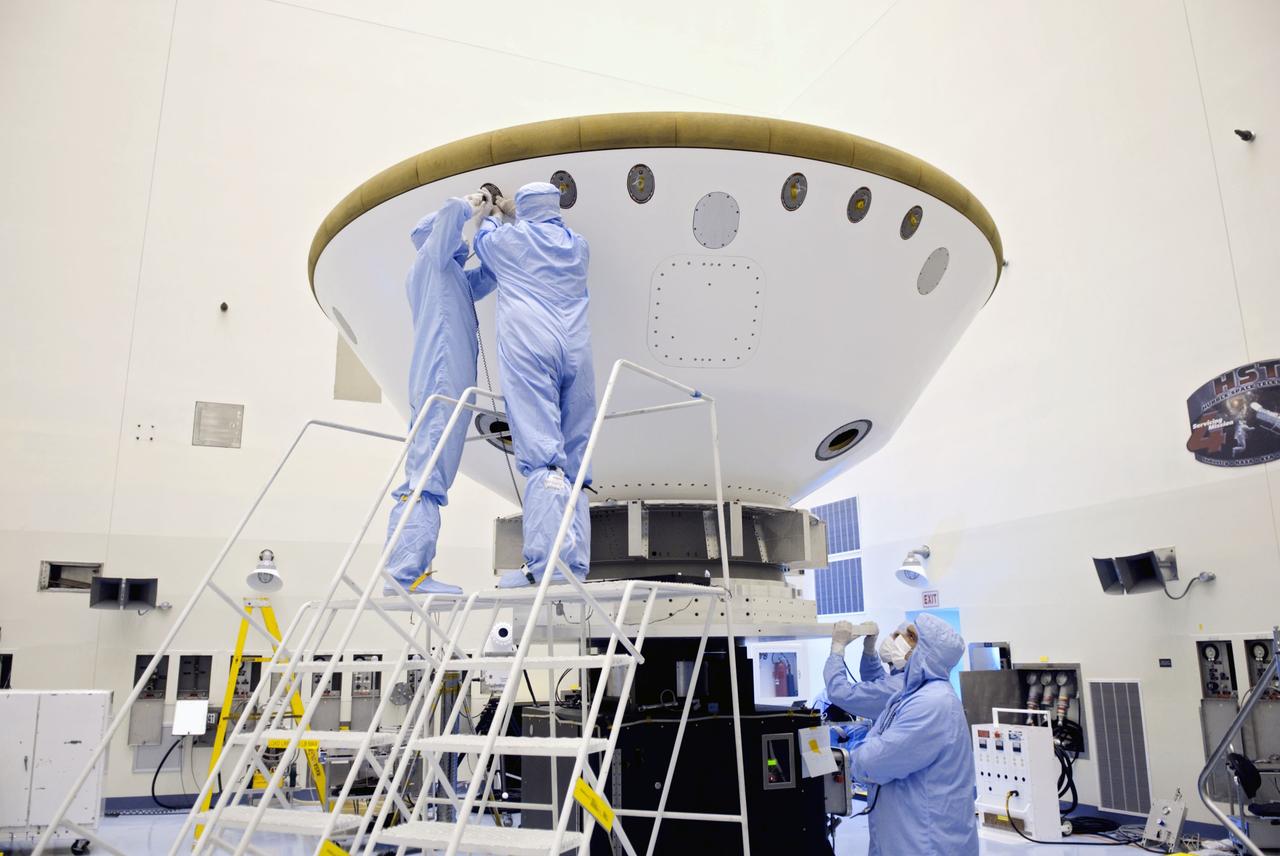
Cape Canaveral, Fla. -- At the Payload Hazardous Servicing Facility at NASA's Kennedy Space Center in Florida, technicians add weights (ejectable ballast mass) to the aeroshell, a component of NASA's Mars Science Laboratory (MSL), in order to conduct a spin and balance test. The aeroshell consists of the backshell which carries the parachute and several components used during later stages of entry, descent and landing, and the spacecraft's heat shield. MSL's components include a compact car-sized rover, Curiosity, which has 10 science instruments designed to search for evidence on whether Mars has had environments favorable to microbial life, including chemical ingredients for life. The unique rover will use a laser to look inside rocks and release its gasses so that the rover’s spectrometer can analyze and send the data back to Earth. Launch of MSL aboard a United Launch Alliance Atlas V rocket is scheduled for Nov. 25 from Space Launch Complex 41 on Cape Canaveral Air Force Station in Florida. For more information, visit http://www.nasa.gov/msl. Photo credit: NASA/Jim Grossmann
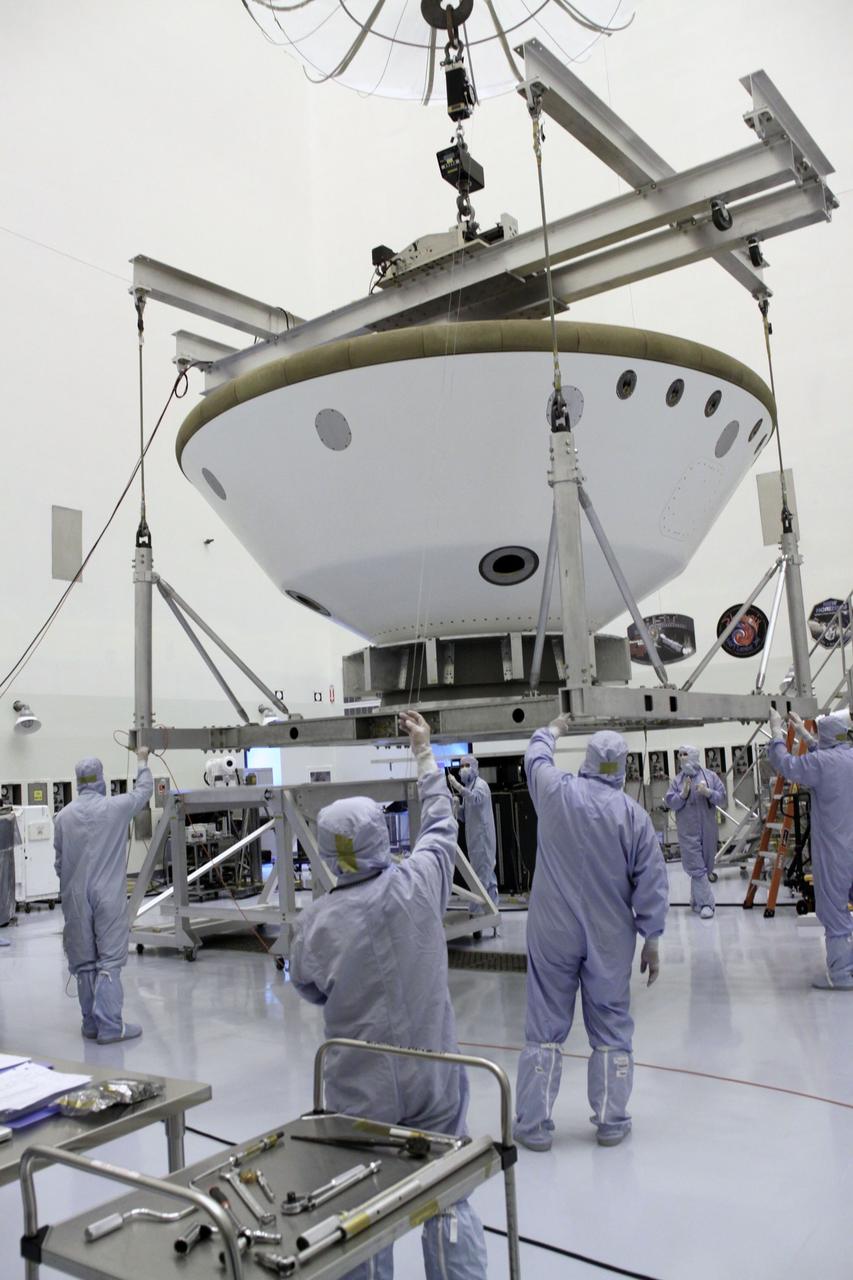
Cape Canaveral, Fla. -- At the Payload Hazardous Servicing Facility at NASA's Kennedy Space Center in Florida, technicians use an overhead crane to move the aeroshell, a component of NASA's Mars Science Laboratory (MSL), to a spin stand for testing. The aeroshell consists of the backshell which carries the parachute and several components used during later stages of entry, descent and landing, and the spacecraft's heat shield. MSL's components include a compact car-sized rover, Curiosity, which has 10 science instruments designed to search for evidence on whether Mars has had environments favorable to microbial life, including chemical ingredients for life. The unique rover will use a laser to look inside rocks and release its gasses so that the rover’s spectrometer can analyze and send the data back to Earth. Launch of MSL aboard a United Launch Alliance Atlas V rocket is scheduled for Nov. 25 from Space Launch Complex 41 on Cape Canaveral Air Force Station in Florida. For more information, visit http://www.nasa.gov/msl. Photo credit: NASA/Jack Pfaller
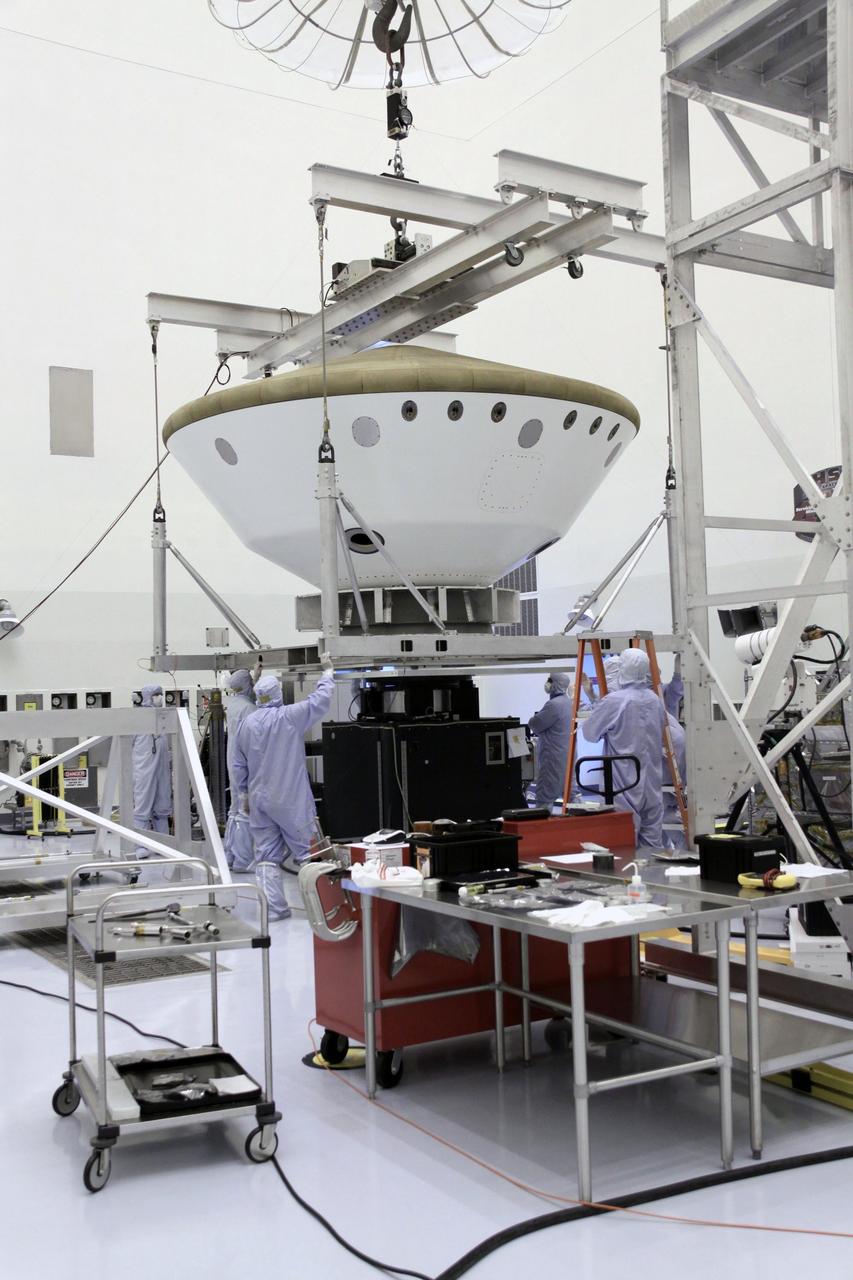
Cape Canaveral, Fla. -- At the Payload Hazardous Servicing Facility at NASA's Kennedy Space Center in Florida, technicians use an overhead crane to lower the aeroshell, a component of NASA's Mars Science Laboratory (MSL), onto a spin stand for testing. The aeroshell consists of the backshell which carries the parachute and several components used during later stages of entry, descent and landing, and the spacecraft's heat shield. MSL's components include a compact car-sized rover, Curiosity, which has 10 science instruments designed to search for evidence on whether Mars has had environments favorable to microbial life, including chemical ingredients for life. The unique rover will use a laser to look inside rocks and release its gasses so that the rover’s spectrometer can analyze and send the data back to Earth. Launch of MSL aboard a United Launch Alliance Atlas V rocket is scheduled for Nov. 25 from Space Launch Complex 41 on Cape Canaveral Air Force Station in Florida. For more information, visit http://www.nasa.gov/msl. Photo credit: NASA/Jack Pfaller
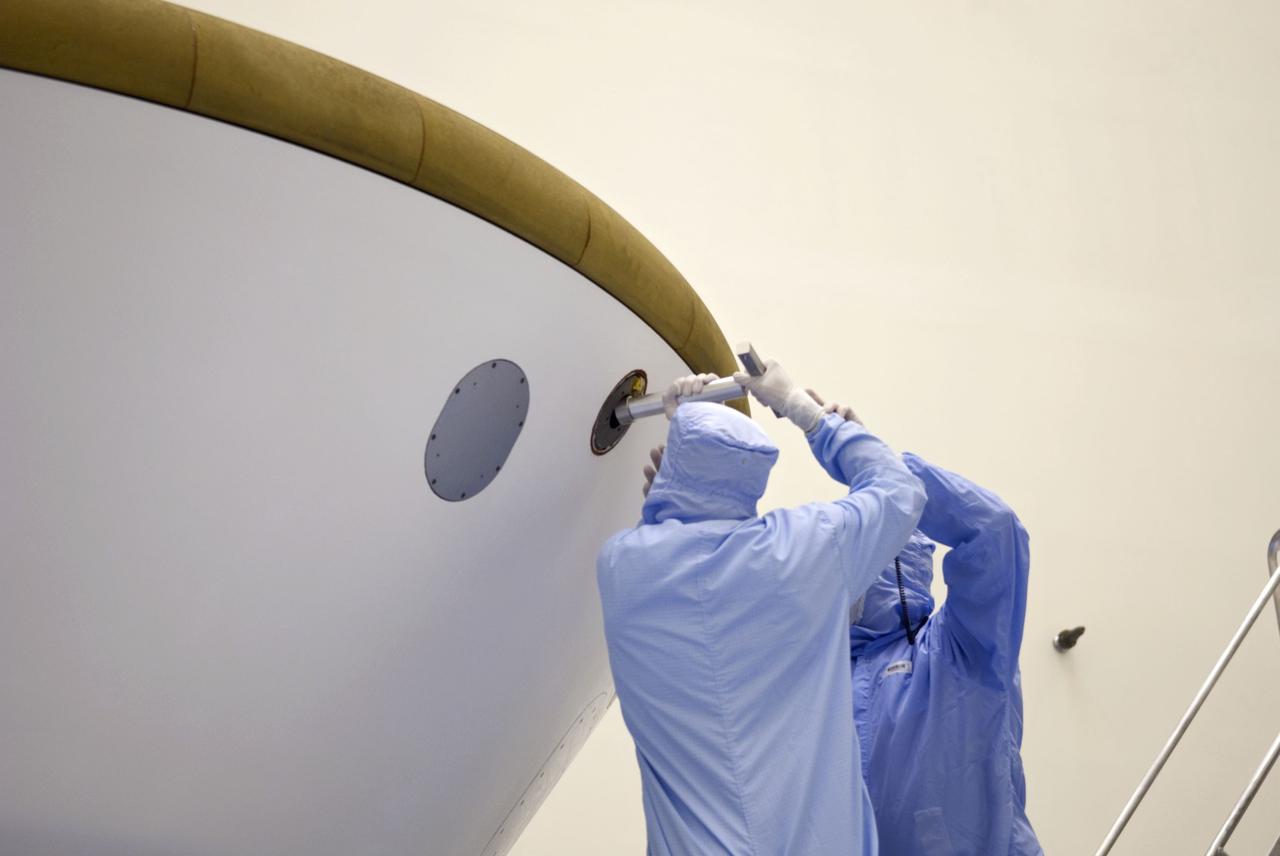
Cape Canaveral, Fla. -- At the Payload Hazardous Servicing Facility at NASA's Kennedy Space Center in Florida, technicians add weights (ejectable ballast mass) to the aeroshell, a component of NASA's Mars Science Laboratory (MSL), in order to conduct a spin and balance test. The aeroshell consists of the backshell which carries the parachute and several components used during later stages of entry, descent and landing, and the spacecraft's heat shield. MSL's components include a compact car-sized rover, Curiosity, which has 10 science instruments designed to search for evidence on whether Mars has had environments favorable to microbial life, including chemical ingredients for life. The unique rover will use a laser to look inside rocks and release its gasses so that the rover’s spectrometer can analyze and send the data back to Earth. Launch of MSL aboard a United Launch Alliance Atlas V rocket is scheduled for Nov. 25 from Space Launch Complex 41 on Cape Canaveral Air Force Station in Florida. For more information, visit http://www.nasa.gov/msl. Photo credit: NASA/Jim Grossmann
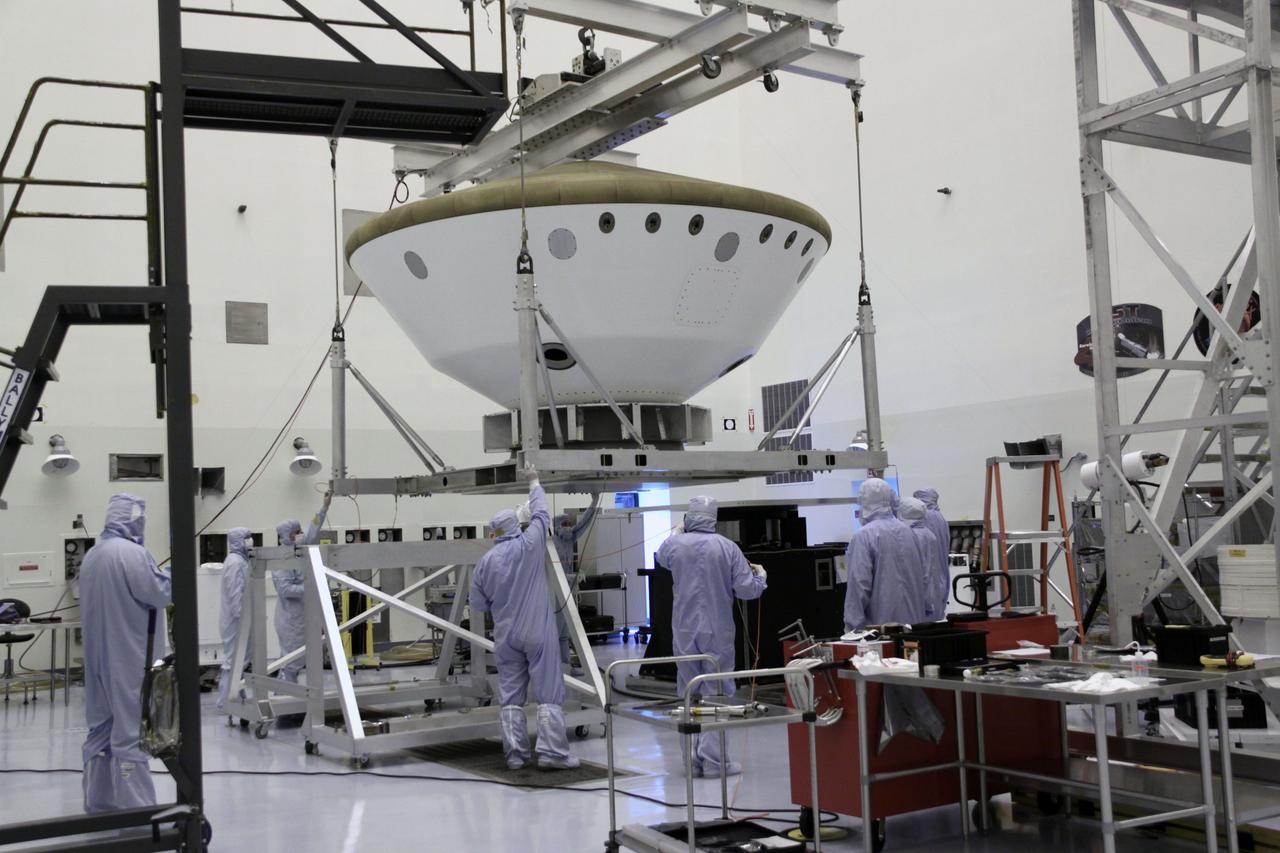
Cape Canaveral, Fla. -- At the Payload Hazardous Servicing Facility at NASA's Kennedy Space Center in Florida, technicians use an overhead crane to lower the aeroshell, a component of NASA's Mars Science Laboratory (MSL), onto a spin stand for testing. The aeroshell consists of the backshell which carries the parachute and several components used during later stages of entry, descent and landing, and the spacecraft's heat shield. MSL's components include a compact car-sized rover, Curiosity, which has 10 science instruments designed to search for evidence on whether Mars has had environments favorable to microbial life, including chemical ingredients for life. The unique rover will use a laser to look inside rocks and release its gasses so that the rover’s spectrometer can analyze and send the data back to Earth. Launch of MSL aboard a United Launch Alliance Atlas V rocket is scheduled for Nov. 25 from Space Launch Complex 41 on Cape Canaveral Air Force Station in Florida. For more information, visit http://www.nasa.gov/msl. Photo credit: NASA/Jack Pfaller
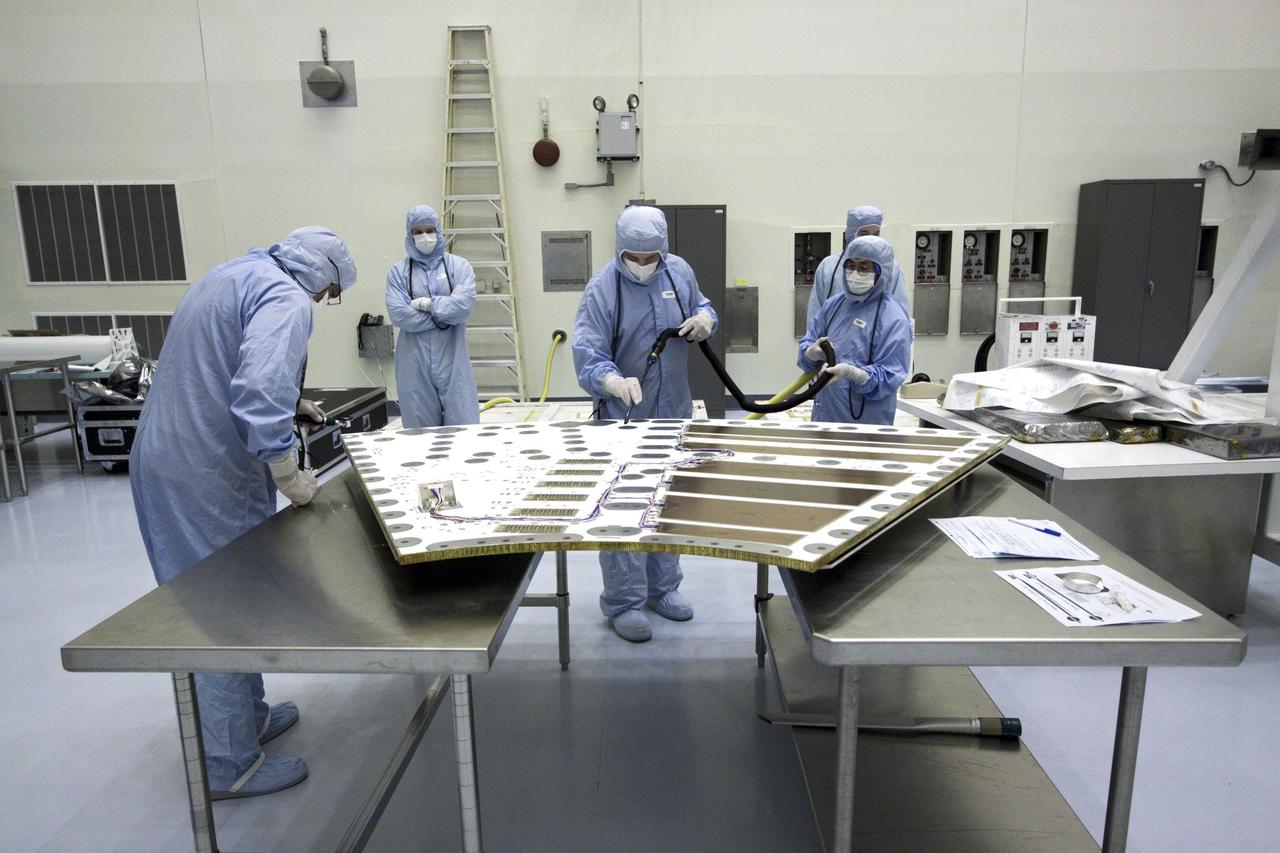
Cape Canaveral, Fla. -- At the Payload Hazardous Servicing Facility at NASA's Kennedy Space Center in Florida, technicians are preparing a solar array panel for installation to the cruise stage of NASA's Mars Science Laboratory (MSL). MSL's components include a compact car-sized rover, Curiosity, which has 10 science instruments designed to search for evidence on whether Mars has had environments favorable to microbial life, including chemical ingredients for life. The unique rover will use a laser to look inside rocks and release its gasses so that the rover’s spectrometer can analyze and send the data back to Earth. Launch of MSL aboard a United Launch Alliance Atlas V rocket is scheduled for Nov. 25 from Space Launch Complex 41 on Cape Canaveral Air Force Station in Florida. For more information, visit http://www.nasa.gov/msl. Photo credit: NASA/Jack Pfaller
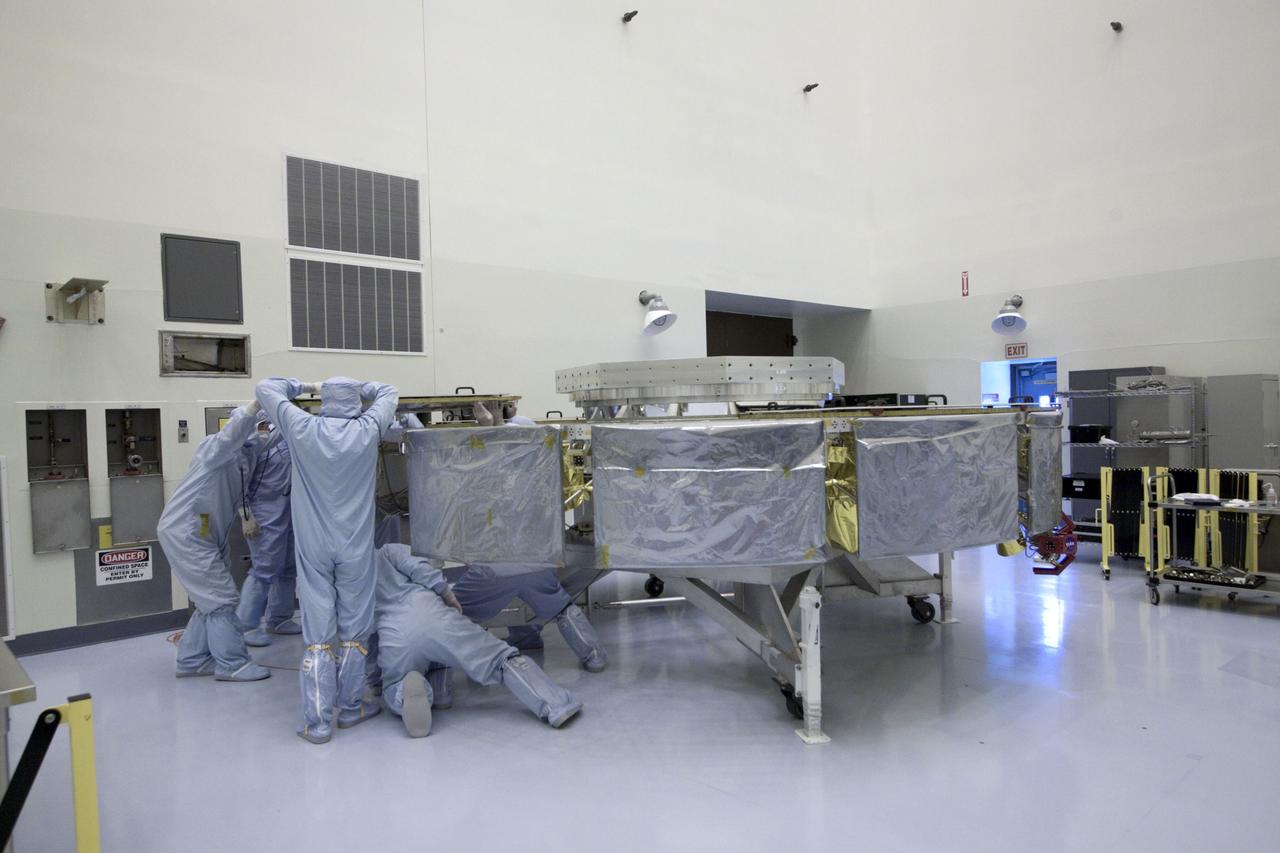
Cape Canaveral, Fla. -- At the Payload Hazardous Servicing Facility at NASA's Kennedy Space Center in Florida, technicians are installing a solar array panel to the cruise stage of NASA's Mars Science Laboratory (MSL). MSL's components include a compact car-sized rover, Curiosity, which has 10 science instruments designed to search for evidence on whether Mars has had environments favorable to microbial life, including chemical ingredients for life. The unique rover will use a laser to look inside rocks and release its gasses so that the rover’s spectrometer can analyze and send the data back to Earth. Launch of MSL aboard a United Launch Alliance Atlas V rocket is scheduled for Nov. 25 from Space Launch Complex 41 on Cape Canaveral Air Force Station in Florida. For more information, visit http://www.nasa.gov/msl. Photo credit: NASA/Jack Pfaller
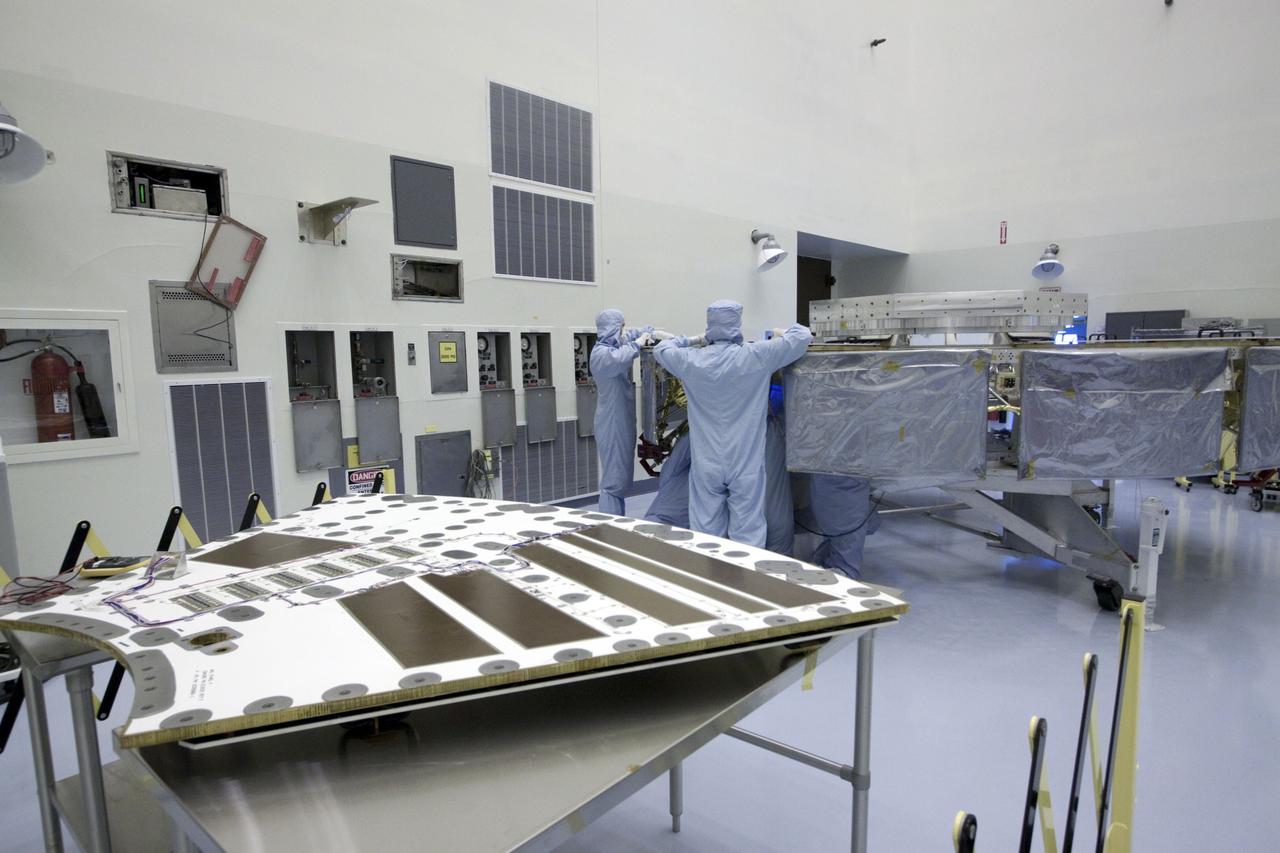
Cape Canaveral, Fla. -- At the Payload Hazardous Servicing Facility at NASA's Kennedy Space Center in Florida, technicians are installing a solar array panel to the cruise stage of NASA's Mars Science Laboratory (MSL). MSL's components include a compact car-sized rover, Curiosity, which has 10 science instruments designed to search for evidence on whether Mars has had environments favorable to microbial life, including chemical ingredients for life. The unique rover will use a laser to look inside rocks and release its gasses so that the rover’s spectrometer can analyze and send the data back to Earth. Launch of MSL aboard a United Launch Alliance Atlas V rocket is scheduled for Nov. 25 from Space Launch Complex 41 on Cape Canaveral Air Force Station in Florida. For more information, visit http://www.nasa.gov/msl. Photo credit: NASA/Jack Pfaller
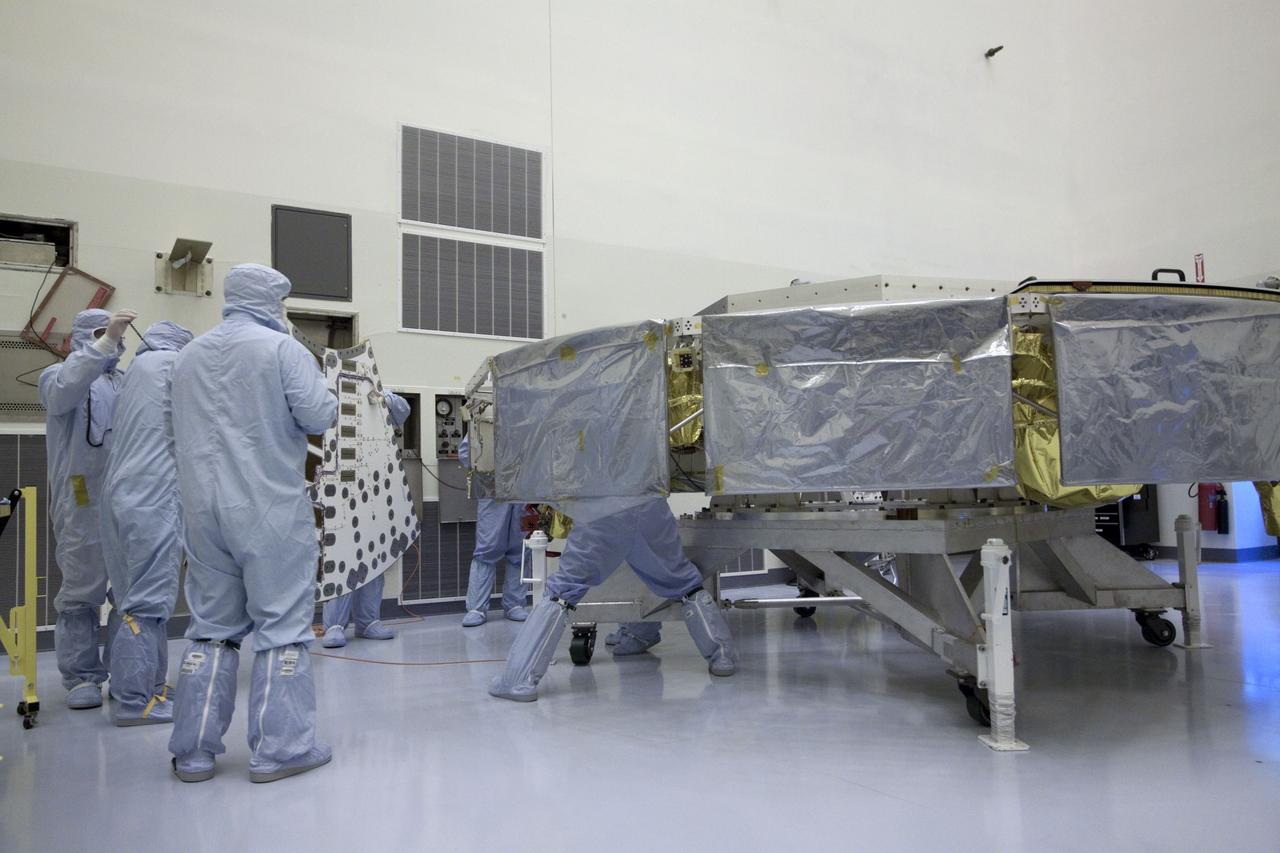
Cape Canaveral, Fla. -- At the Payload Hazardous Servicing Facility at NASA's Kennedy Space Center in Florida, technicians are installing a solar array panel to the cruise stage of NASA's Mars Science Laboratory (MSL). MSL's components include a compact car-sized rover, Curiosity, which has 10 science instruments designed to search for evidence on whether Mars has had environments favorable to microbial life, including chemical ingredients for life. The unique rover will use a laser to look inside rocks and release its gasses so that the rover’s spectrometer can analyze and send the data back to Earth. Launch of MSL aboard a United Launch Alliance Atlas V rocket is scheduled for Nov. 25 from Space Launch Complex 41 on Cape Canaveral Air Force Station in Florida. For more information, visit http://www.nasa.gov/msl. Photo credit: NASA/Jack Pfaller
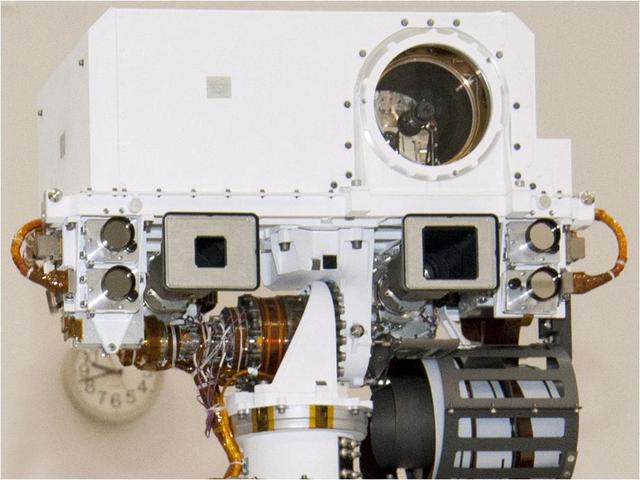
This view of the head of the remote sensing mast on the Mars Science Laboratory mission rover, Curiosity, shows seven of the 17 cameras on the rover.
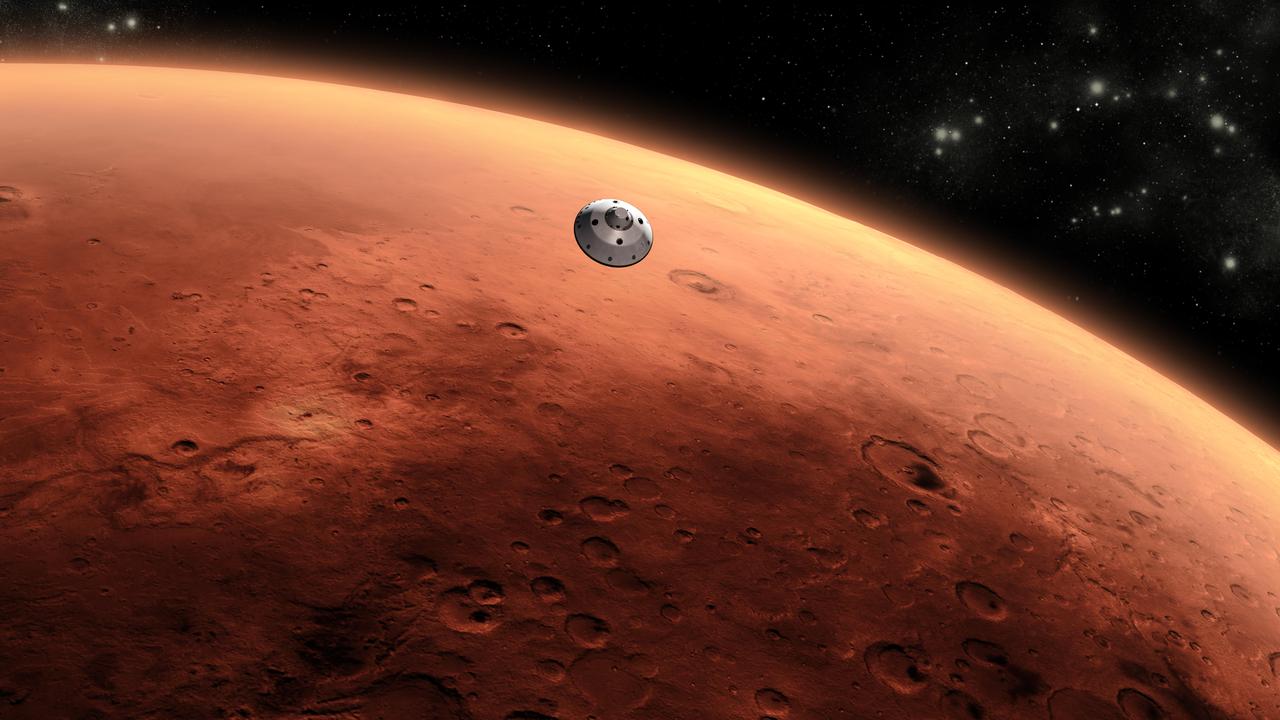
This is an artist concept of NASA Mars Science Laboratory spacecraft approaching Mars. The Curiosity rover is safely tucked inside the spacecraft aeroshell.
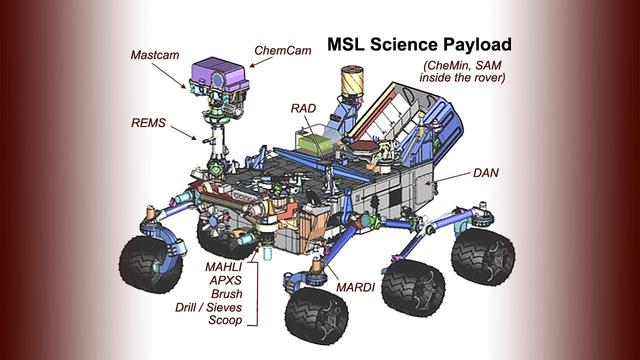
This drawing of the Mars Science Laboratory mission rover, Curiosity, indicates the location of science instruments and some other tools on the car-size rover.
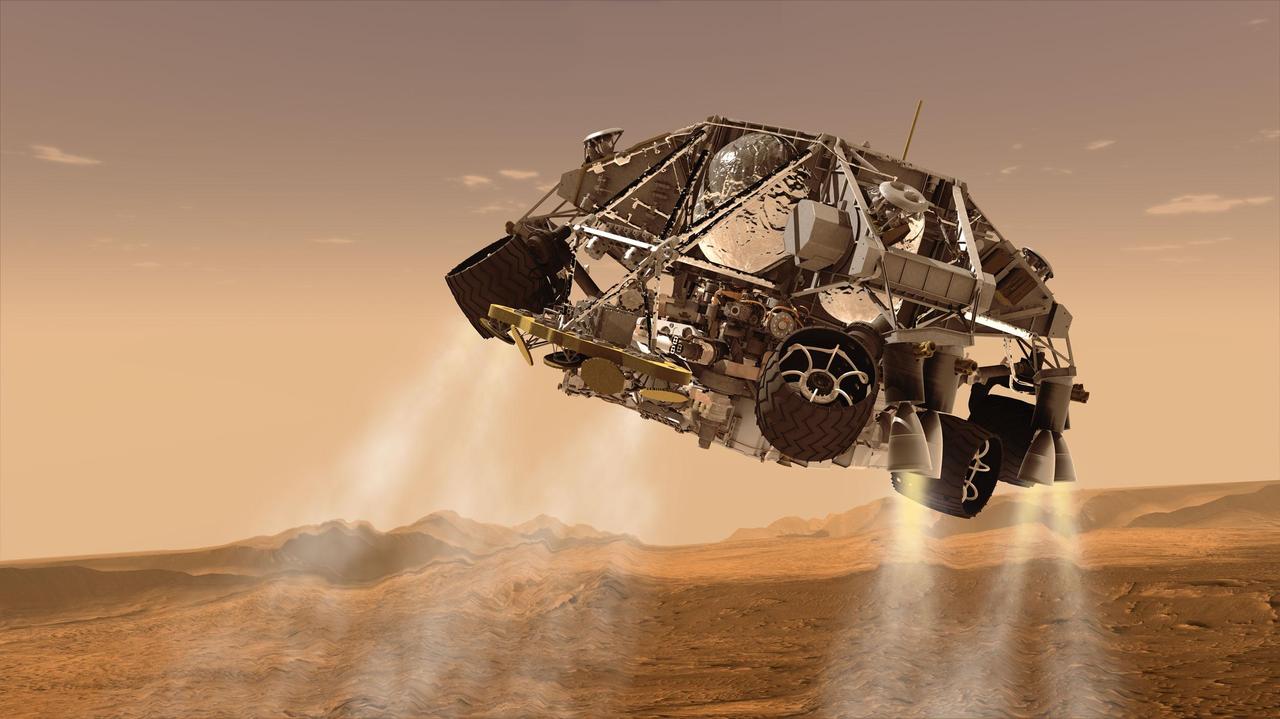
This is an artist concept of the rover and descent stage for NASA Mars Science Laboratory spacecraft during the final minute before the rover, Curiosity, touches down on the surface of Mars.
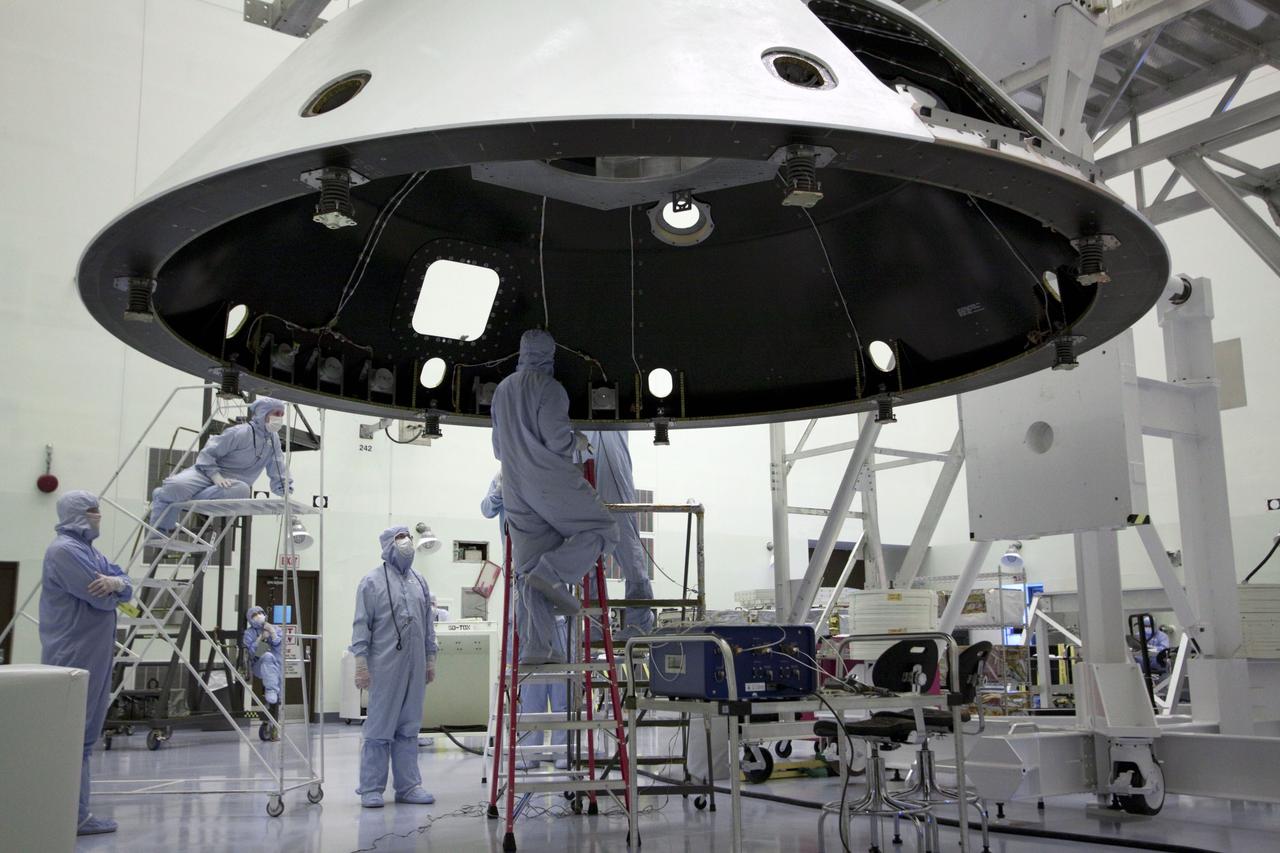
Cape Canaveral, Fla. -- At the Payload Hazardous Servicing Facility at NASA's Kennedy Space Center in Florida, technicians process the backshell for NASA's Mars Science Laboratory (MSL). The backshell carries the parachute and several components used during later stages of entry, descent and landing, and is one part of the spacecraft's heat shield which, when both are integrated is called an aeroshell. MSL's components include a compact car-sized rover, Curiosity, which has 10 science instruments designed to search for evidence on whether Mars has had environments favorable to microbial life, including chemical ingredients for life. The unique rover will use a laser to look inside rocks and release its gasses so that the rover’s spectrometer can analyze and send the data back to Earth. Launch of MSL aboard a United Launch Alliance Atlas V rocket is scheduled for Nov. 25 from Space Launch Complex 41 on Cape Canaveral Air Force Station in Florida. For more information, visit http://www.nasa.gov/msl. Photo credit: NASA/Jack Pfaller
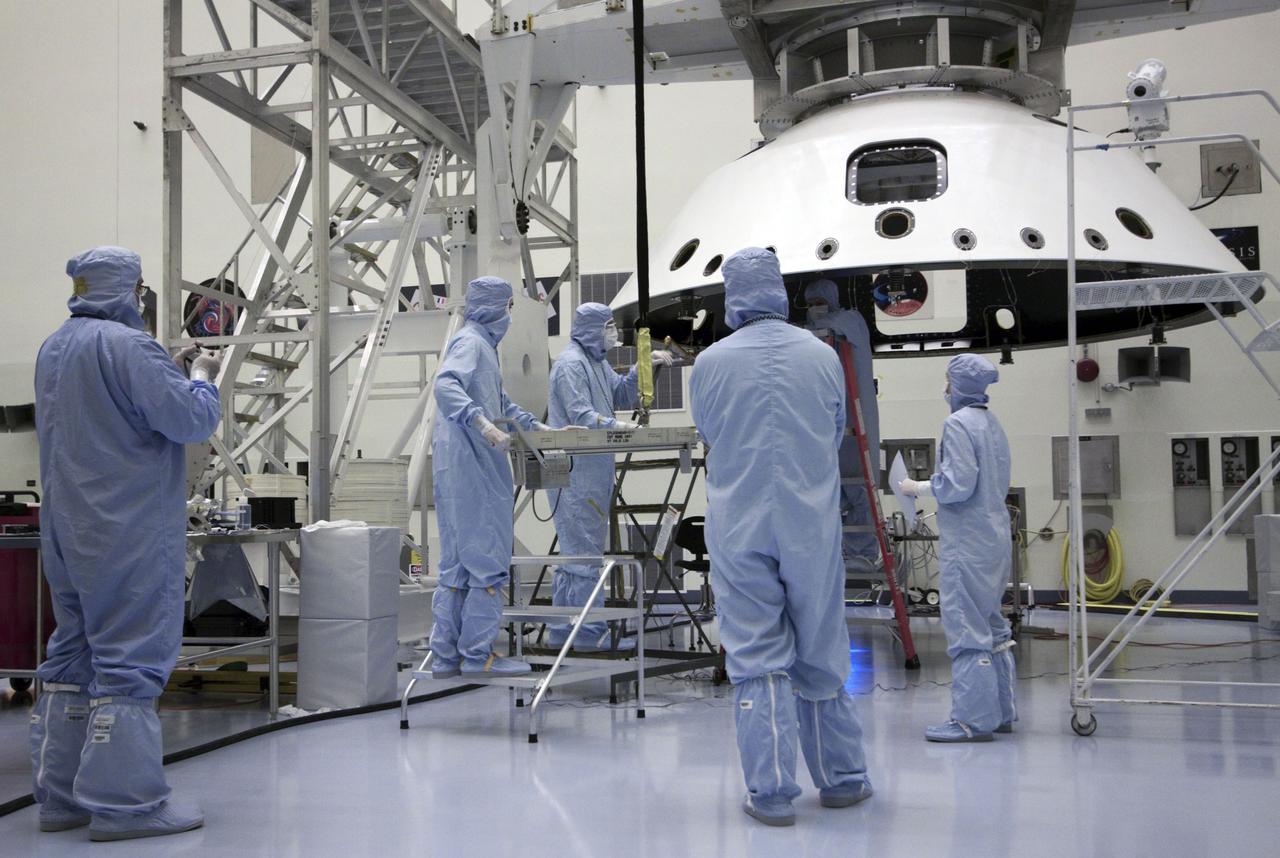
Cape Canaveral, Fla. -- At the Payload Hazardous Servicing Facility at NASA's Kennedy Space Center in Florida, technicians process the backshell for NASA's Mars Science Laboratory (MSL). The backshell carries the parachute and several components used during later stages of entry, descent and landing, and is one part of the spacecraft's heat shield which, when both are integrated is called an aeroshell. A United Launch Alliance Atlas V-541 configuration will be used to loft MSL into space. Curiosity’s 10 science instruments are designed to search for evidence on whether Mars has had environments favorable to microbial life, including chemical ingredients for life. The unique rover will use a laser to look inside rocks and release its gasses so that the rover’s spectrometer can analyze and send the data back to Earth. MSL is scheduled to launch from Cape Canaveral Air Force Station in Florida Nov. 25 with a window extending to Dec. 18 and arrival at Mars Aug. 2012. For more information, visit http://www.nasa.gov/msl. Photo credit: NASA/Jack Pfaller
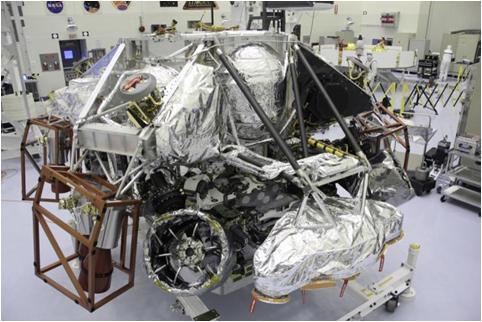
The Mars Science Laboratory mission powered descent vehicle is the integrated combination of the spacecraft descent stage and the rover Curiosity.
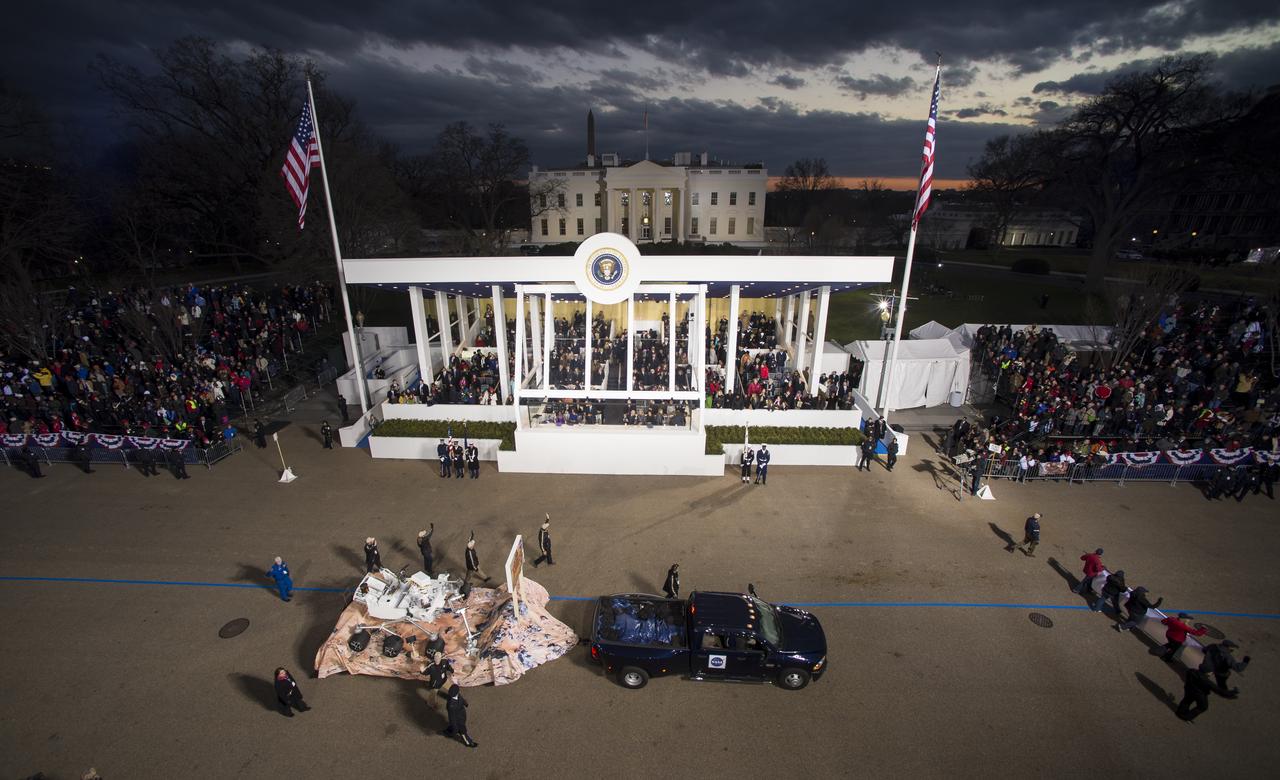
A replica of NASA's Curiosity Rover and members of the Mars Science Laboratory (MSL) science team pass the Presidential viewing stand and President Barack Obama during the inaugural parade honoring Obama, Monday Jan. 21, 2013, in Washington. Obama was sworn-in as the nation's 44th President earlier in the day. Photo Credit: (NASA/Bill Ingalls)
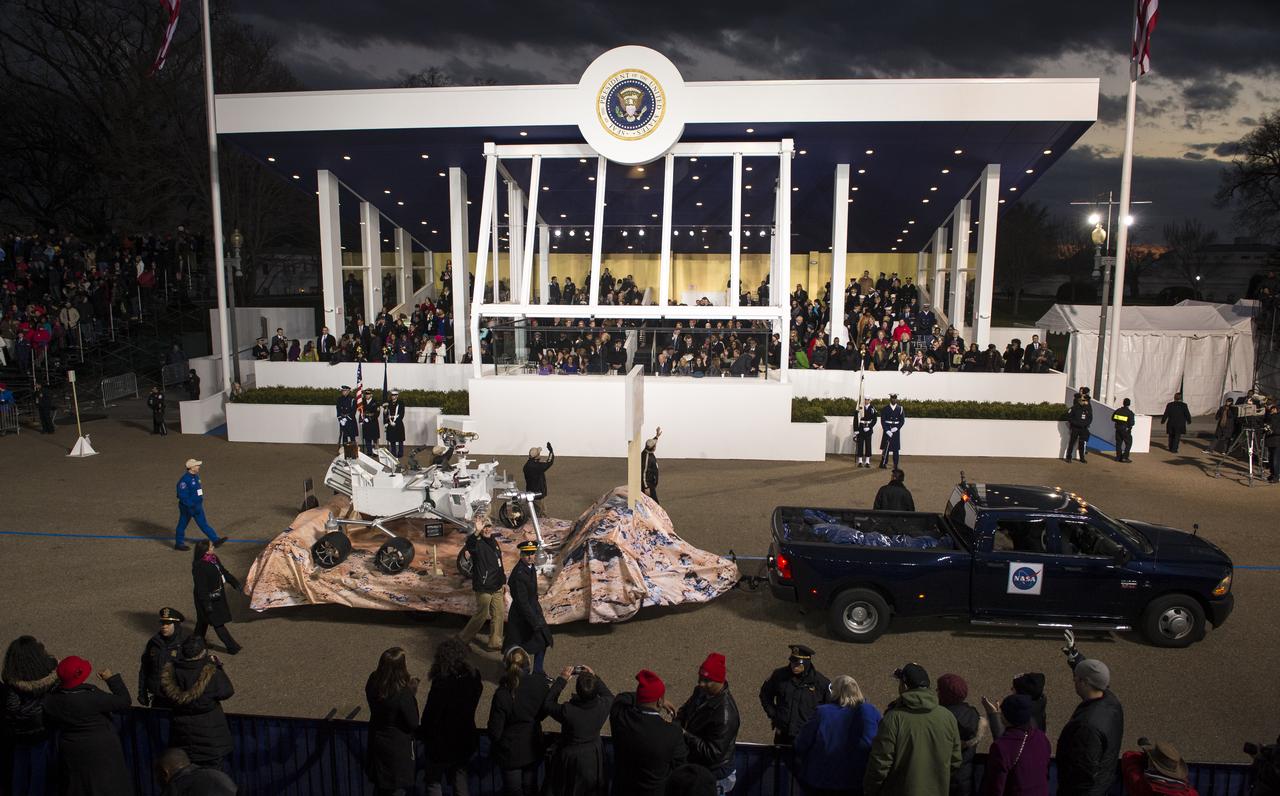
A replica of NASA's Curiosity Rover and members of the Mars Science Laboratory (MSL) science team pass the Presidential viewing stand and President Barack Obama during the inaugural parade honoring Obama, Monday Jan. 21, 2013, in Washington. Obama was sworn-in as the nation's 44th President earlier in the day. Photo Credit: (NASA/Bill Ingalls)
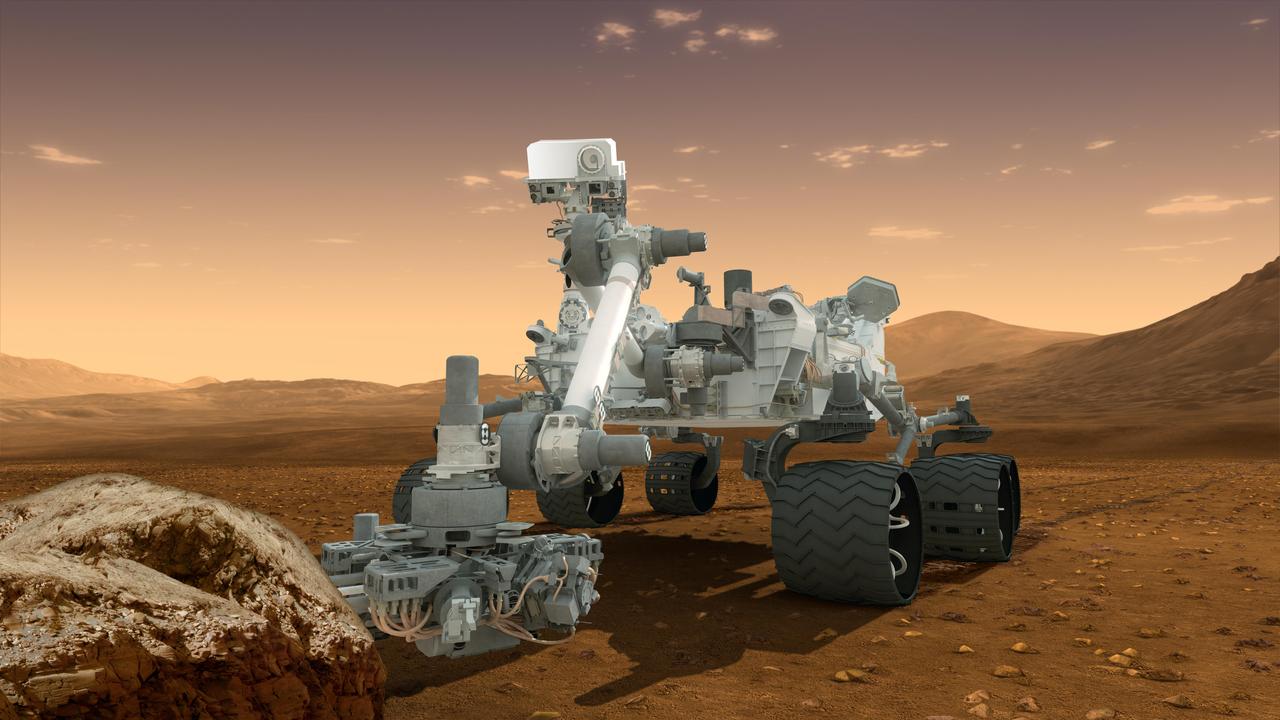
This artist concept features NASA Mars Science Laboratory Curiosity rover, a mobile robot for investigating Mars past or present ability to sustain microbial life.
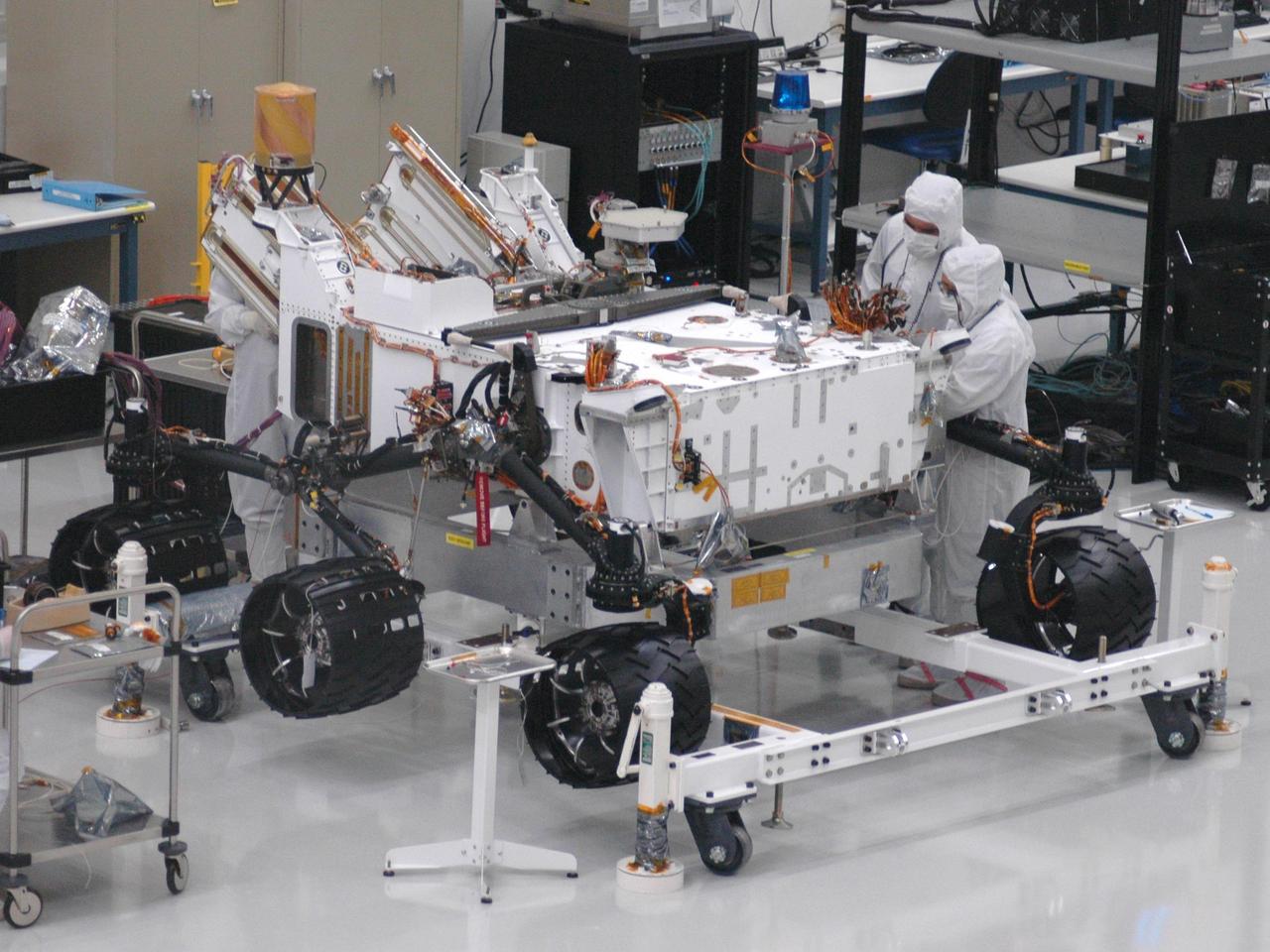
Mars rover Curiosity, the centerpiece of NASA Mars Science Laboratory mission, is coming together for extensive testing prior to its late 2011 launch.
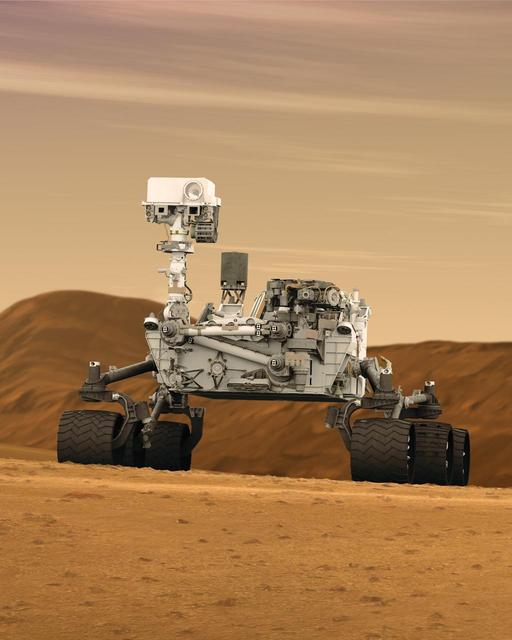
This artist concept features NASA Mars Science Laboratory Curiosity rover, a mobile robot for investigating Mars past or present ability to sustain microbial life. Curiosity is being tested in preparation for launch in the fall of 2011.
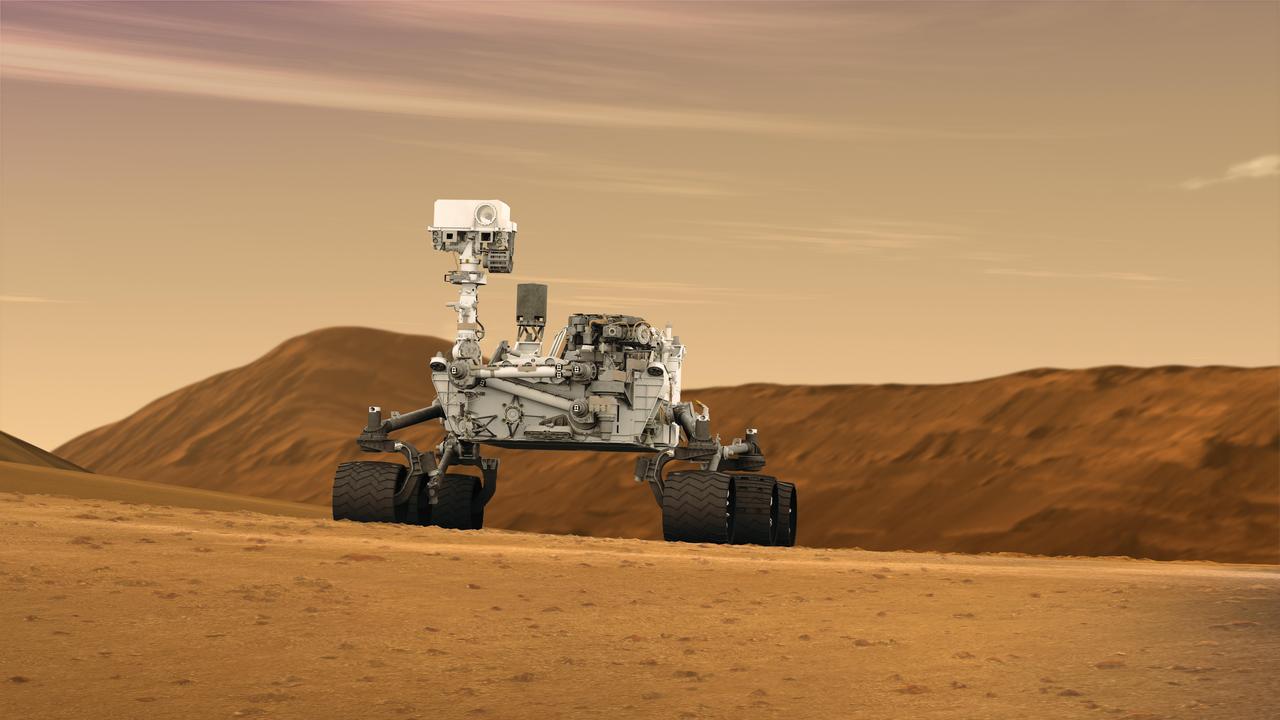
This artist concept features NASA Mars Science Laboratory Curiosity rover, a mobile robot for investigating Mars past or present ability to sustain microbial life. Curiosity is being tested in preparation for launch in the fall of 2011.
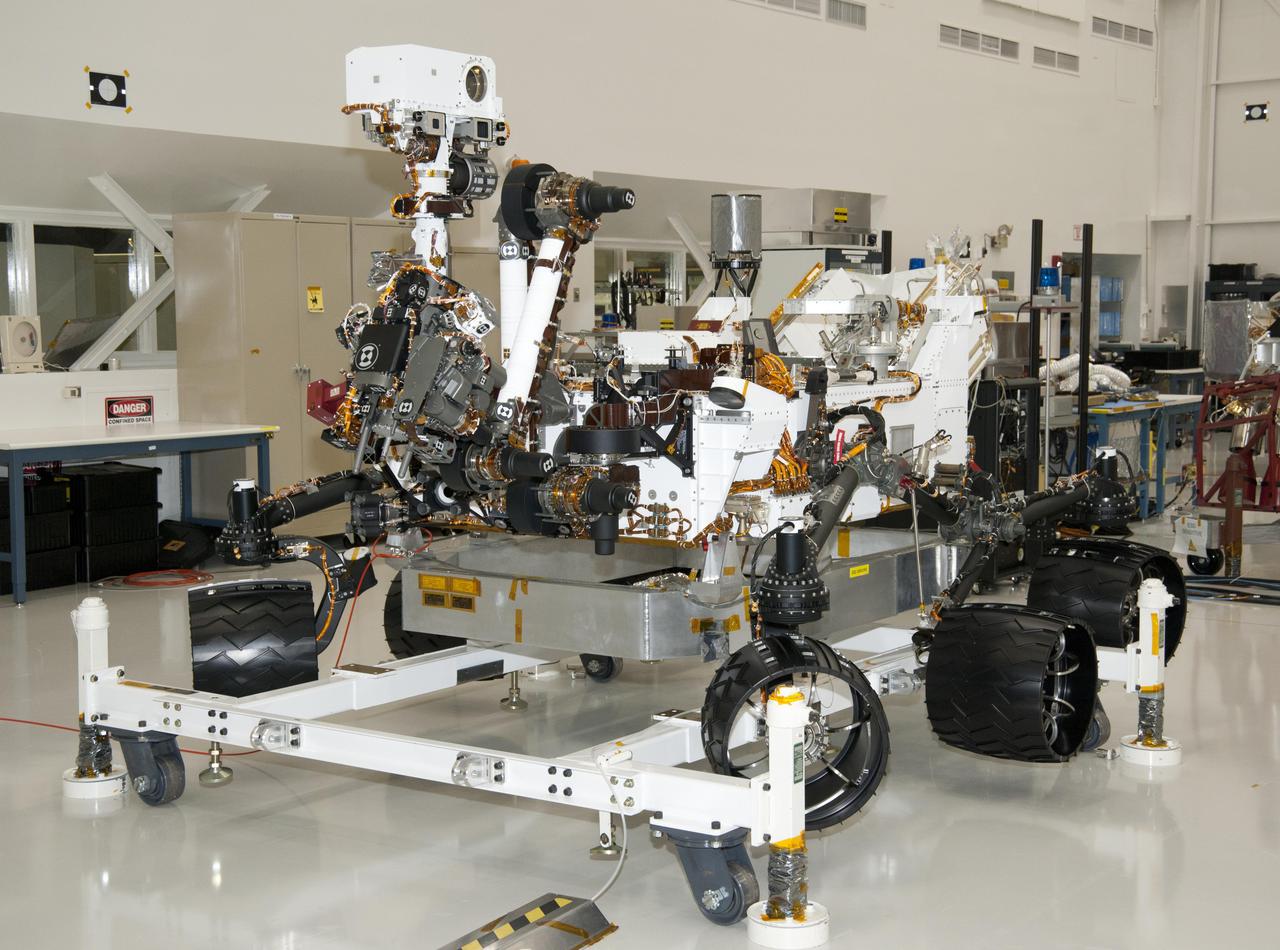
The rover for NASA Mars Science Laboratory mission, named Curiosity, is seen here inside the Spacecraft Assembly Facility at NASA Jet Propulsion Laboratory, Pasadena, Calif. Support equipment is holding the rover slightly off the floor.
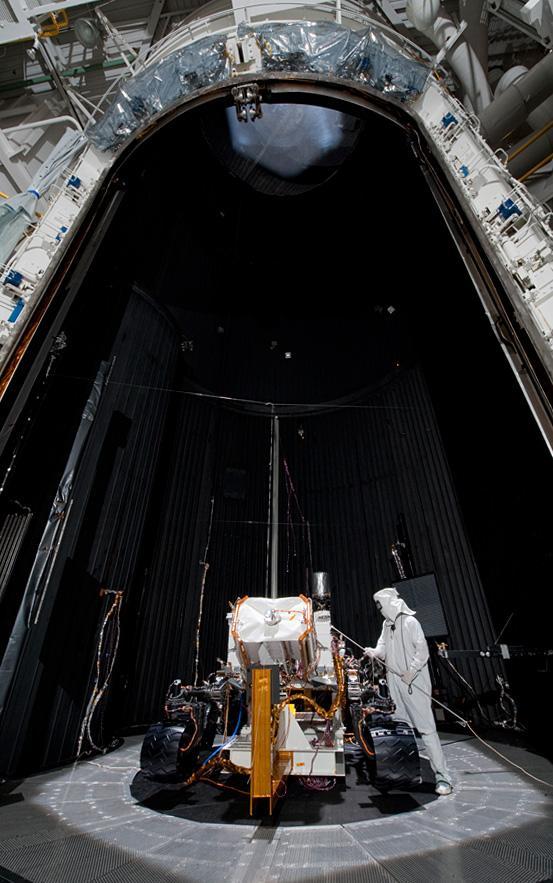
This image shows preparation for March 2011 testing of the Mars Science Laboratory rover, Curiosity, in a space-simulation chamber; the rover will go through operational sequences in environmental conditions similar to what it will experience on Mars.
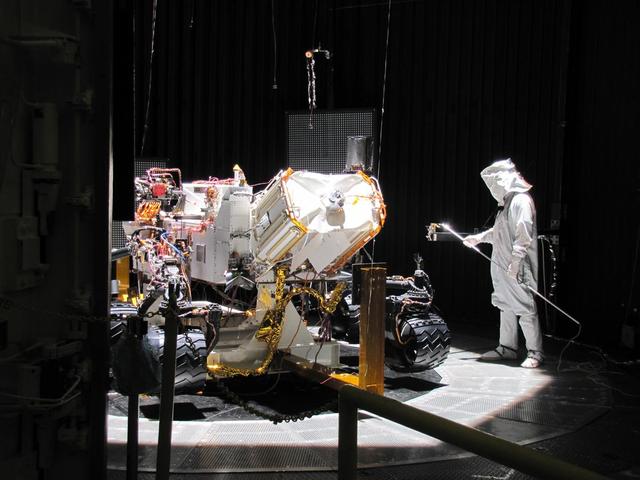
This image shows preparation for March 2011 testing of the Mars Science Laboratory rover, Curiosity, in a space-simulation chamber; the rover will go through operational sequences in environmental conditions similar to what it will experience on Mars.
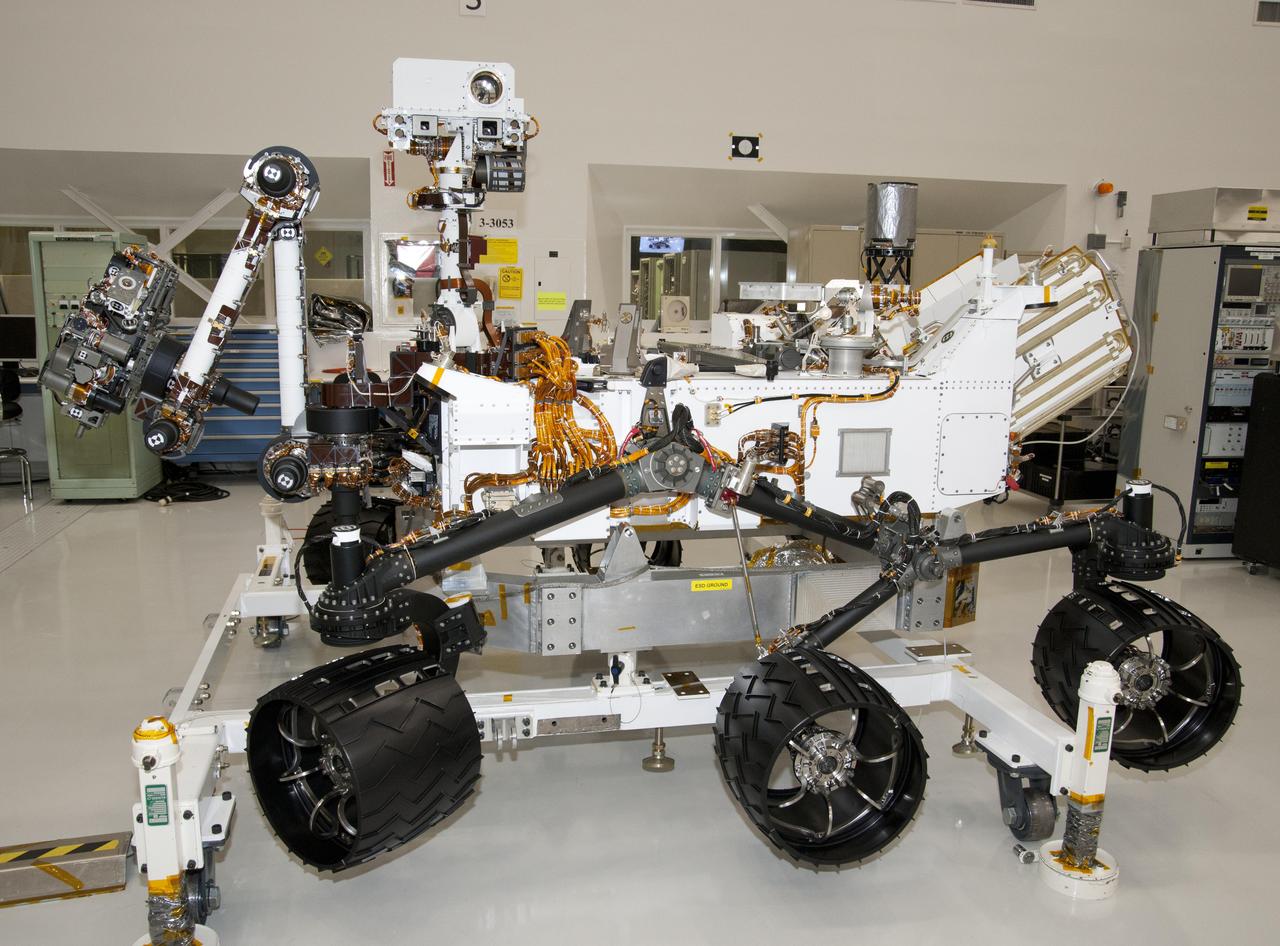
The rover for NASA Mars Science Laboratory mission, named Curiosity, is about 3 meters 10 feet long, not counting the additional length that the rover arm can be extended forward. The front of the rover is on the left in this side view.
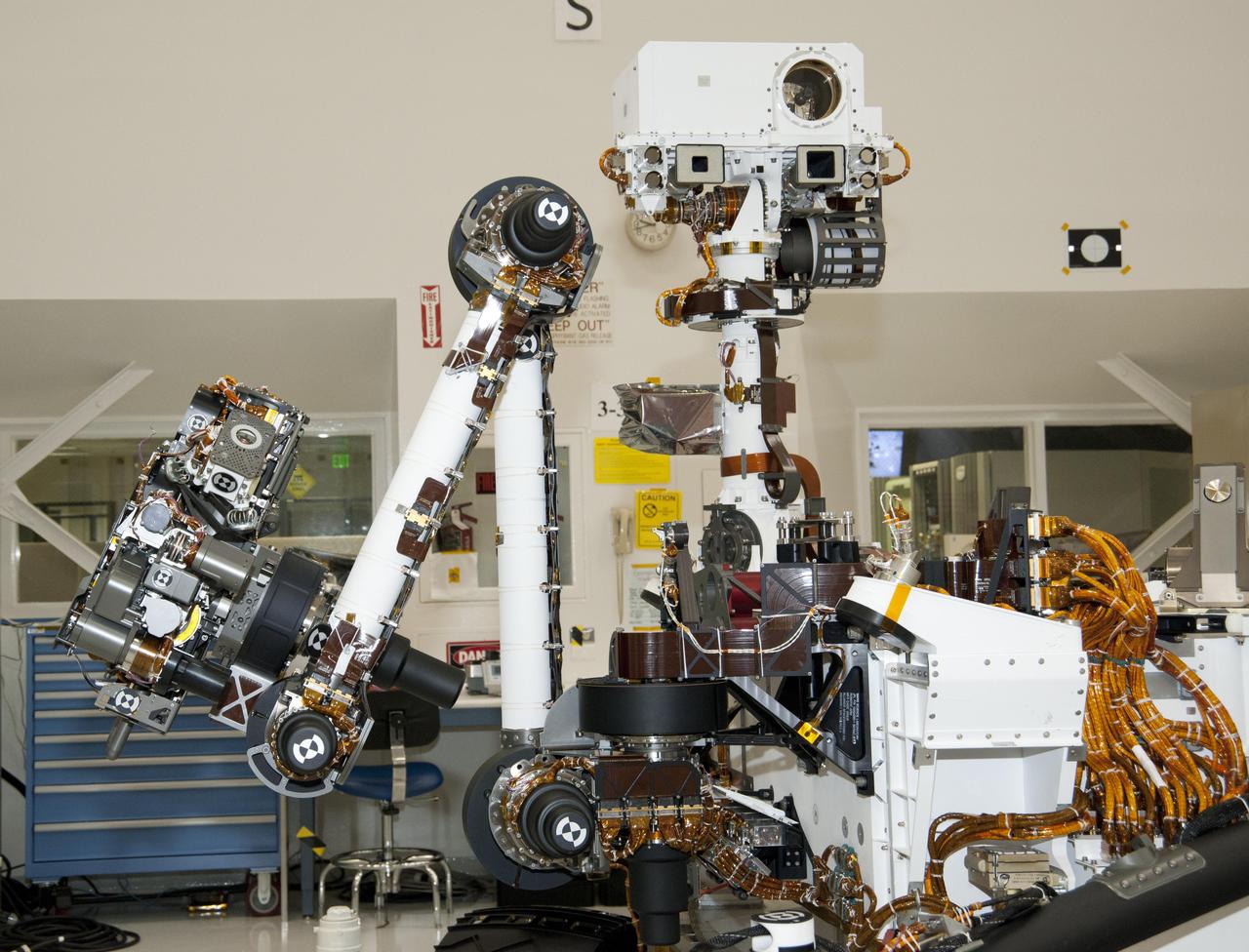
The arm and the remote sensing mast of the Mars rover Curiosity each carry science instruments and other tools for NASA Mars Science Laboratory mission. This image shows the arm on the left and the mast just right of center.
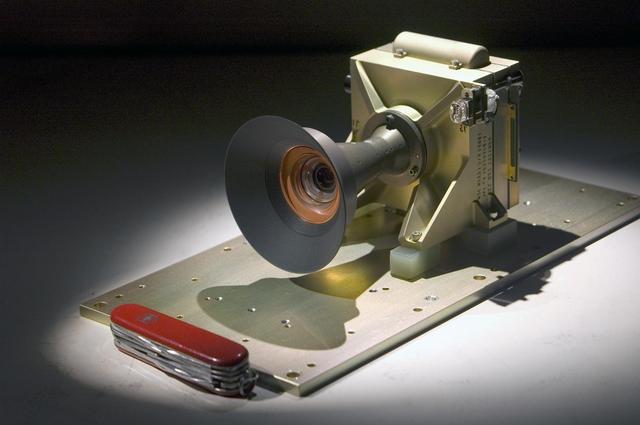
A pocketknife provides scale for this image of the Mars Descent Imager camera; the camera will fly on the Curiosity rover of NASA Mars Science Laboratory mission. Malin Space Science Systems, San Diego, Calif., supplied the camera for the mission.

This image displays the type of detail discernable with the telescopic camera of the Chemistry and Camera ChemCam instrument on the Mars Science Laboratory mission Curiosity rover.
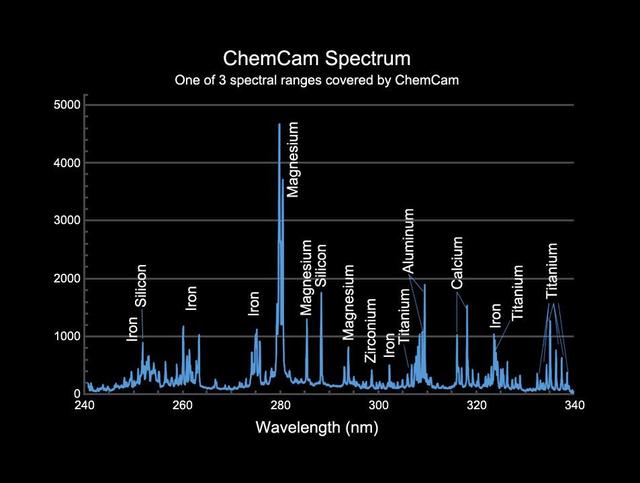
This image provides an example of the type of data collected by the Chemistry and Camera ChemCam instrument on NASA Mars Science Laboratory mission Curiosity rover.
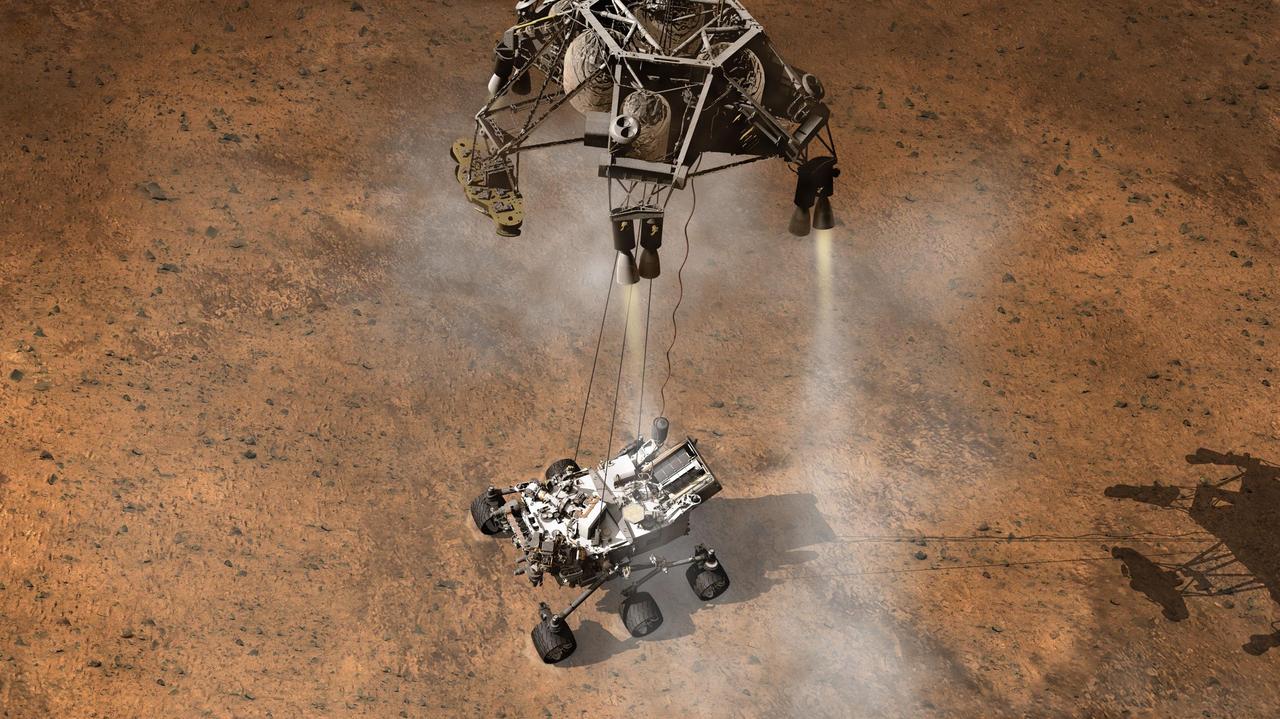
This artist concept depicts the moment that NASA Curiosity rover touches down onto the Martian surface. The Mars Science Laboratory will use the sky crane touchdown system.
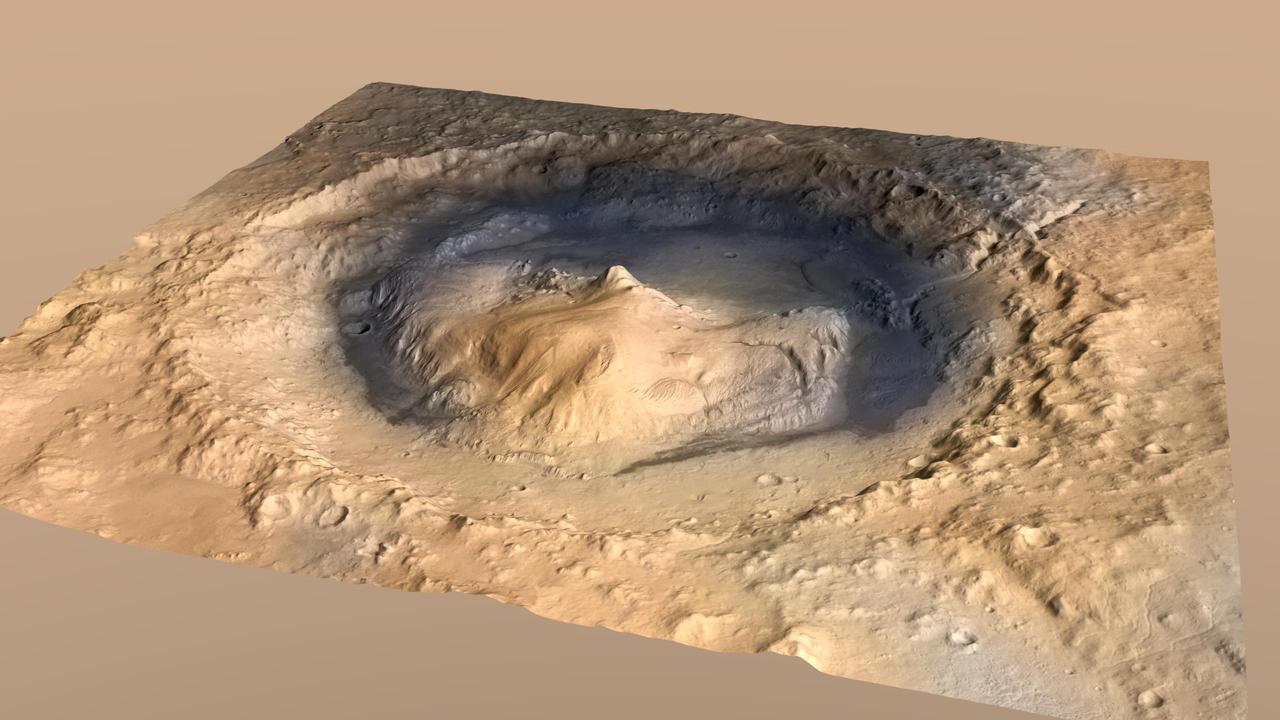
Gale Crater, where the rover Curiosity of NASA Mars Science Laboratory mission will land in August 2012, contains a mountain rising from the crater floor.

The area in and near the landing site selected for landing of NASA Mars Science Laboratory offers a diversity of possible targets for examination by the mission rover, Curiosity.
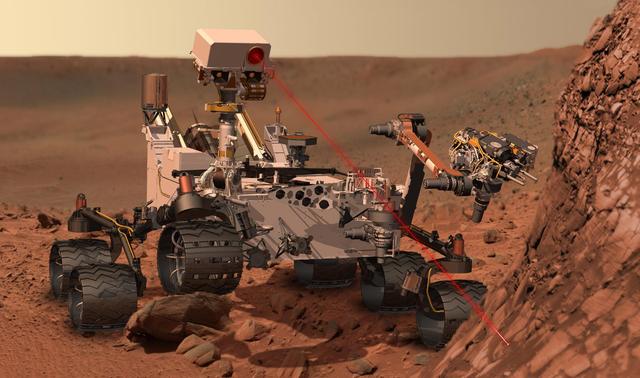
This artist concept depicts the rover Curiosity, of NASA Mars Science Laboratory mission, as it uses its Chemistry and Camera ChemCam instrument to investigate the composition of a rock surface.
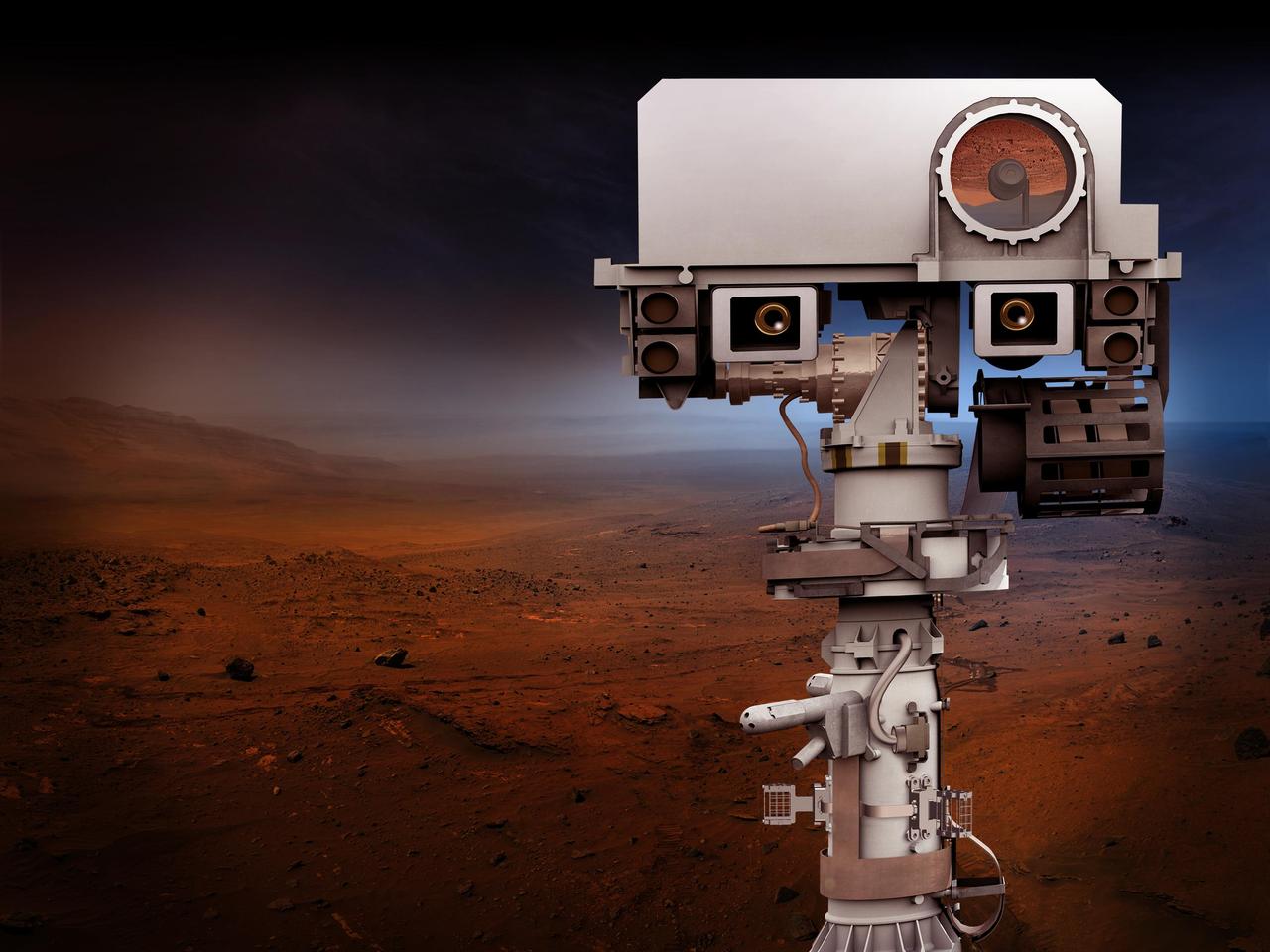
NASA's Mars 2020 Project will re-use the basic engineering of NASA's Mars Science Laboratory/Curiosity to send a different rover to Mars, with new objectives and instruments. This artist's concept depicts the top of the 2020 rover's mast. http://photojournal.jpl.nasa.gov/catalog/PIA20760
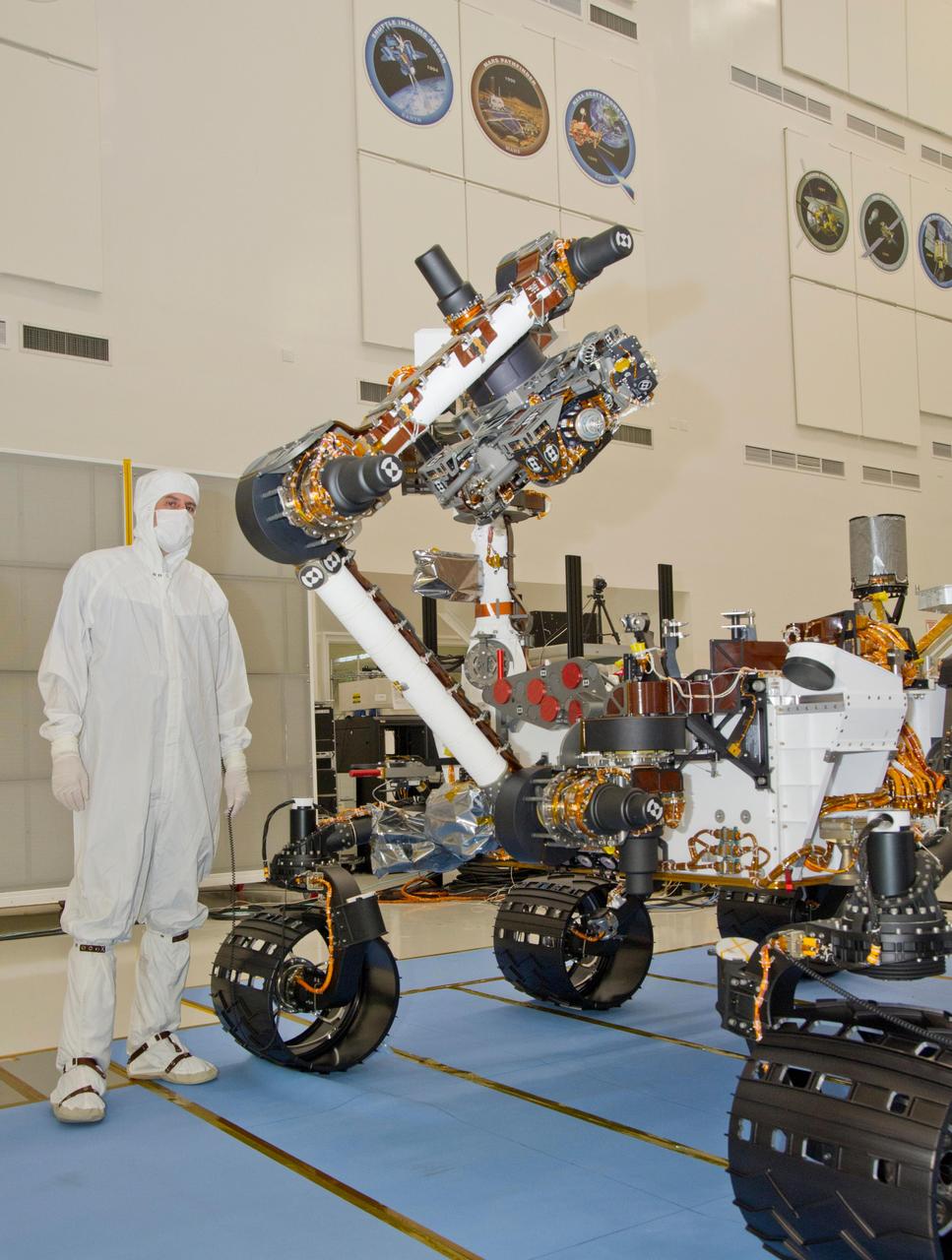
This photograph of the NASA Mars Science Laboratory rover, Curiosity, was taken during testing on June 3, 2011. The turret at the end of Curiosity robotic arm holds five devices.
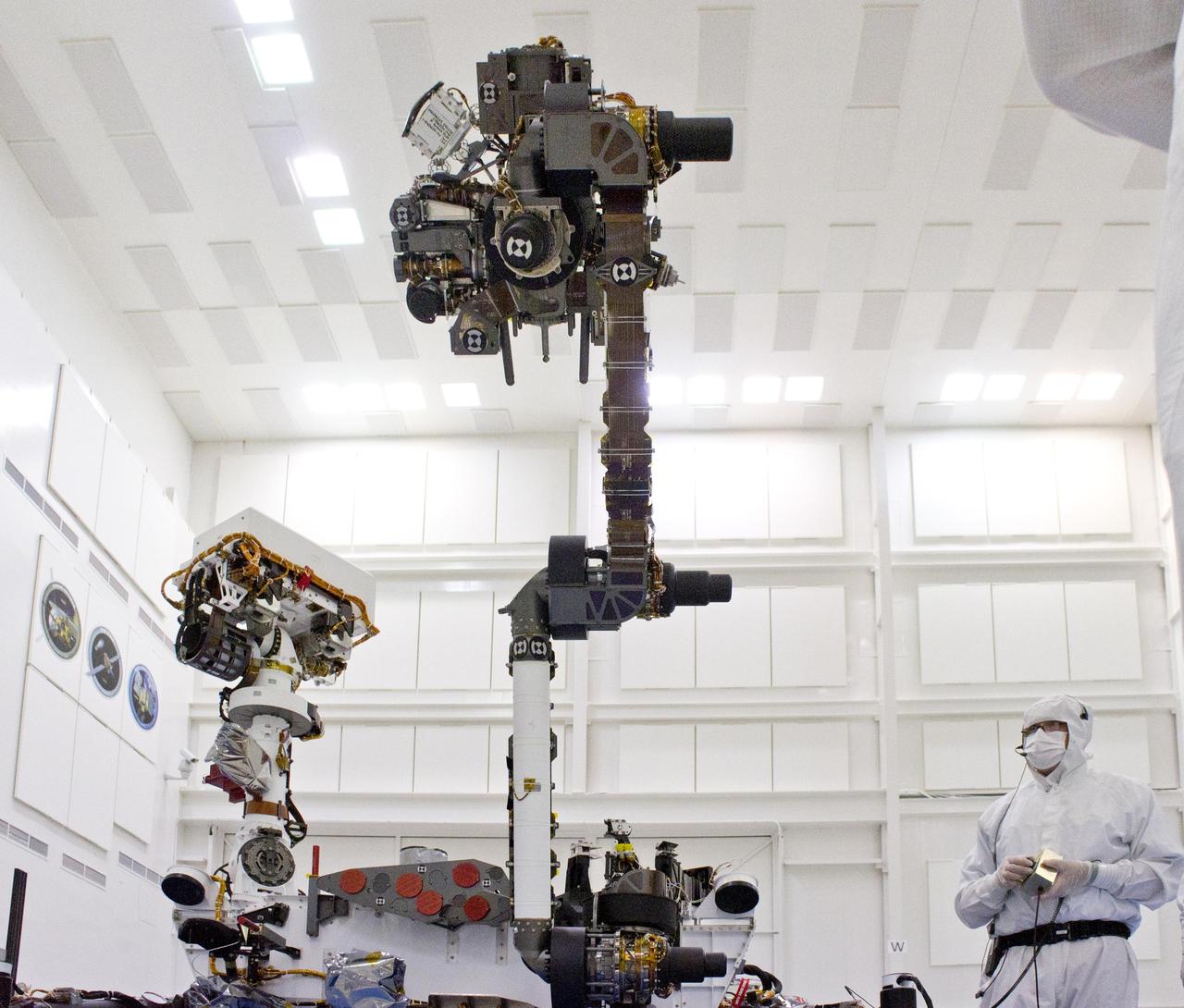
This photograph of the NASA Mars Science Laboratory rover, Curiosity, was taken during testing on June 3, 2011. The turret at the end of Curiosity robotic arm holds five devices. In this view, the drill is at the six oclock position.
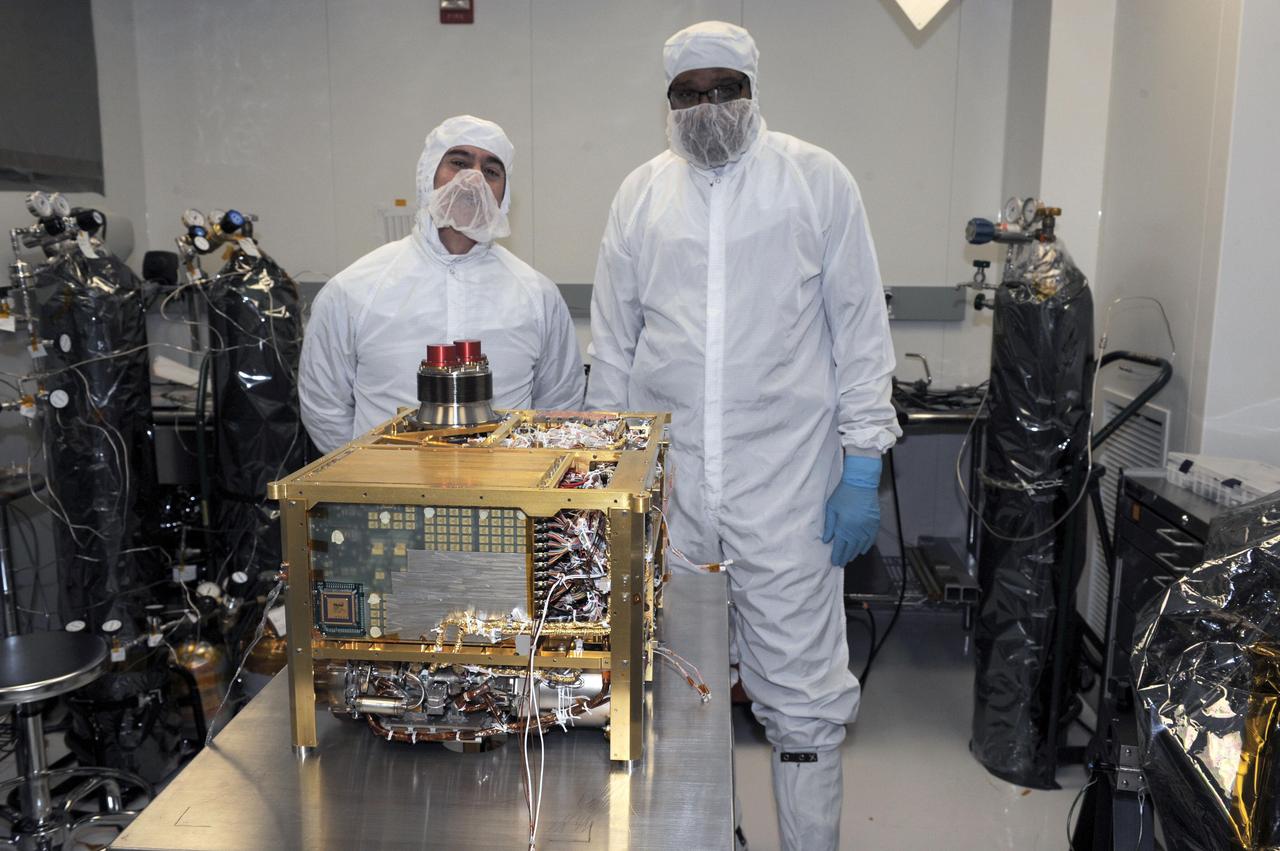
The Sample Analysis at Mars SAM instrument for NASA Mars Science Laboratory mission will study chemistry of rocks, soil and air as the mission rover, Curiosity, investigates Gale Crater on Mars.
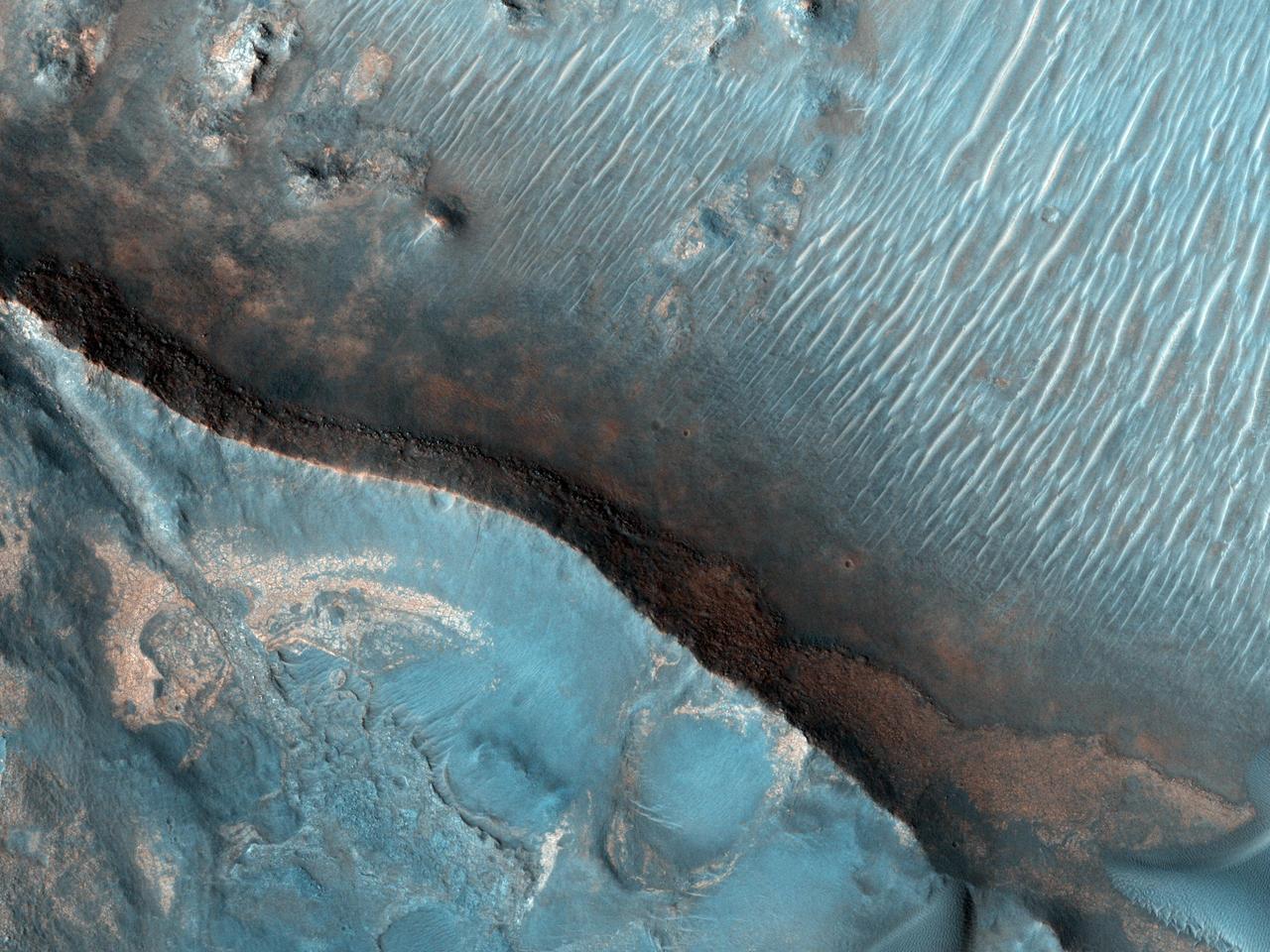
This image from NASA Mars Reconnaissance Orbiter shows Nili Fossae region of Mars, one of the largest exposures of clay minerals, and a prime candidate landing site for Mars Science Laboratory rover, Curiosity.
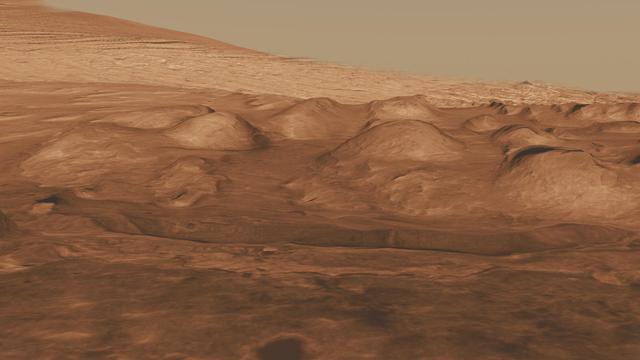
Mars scientists have several important hypotheses about how these minerals may reflect changes in the amount of water on the surface of Mars. The Mars Science Laboratory rover, Curiosity, will use its full suite of instruments to study these minerals.
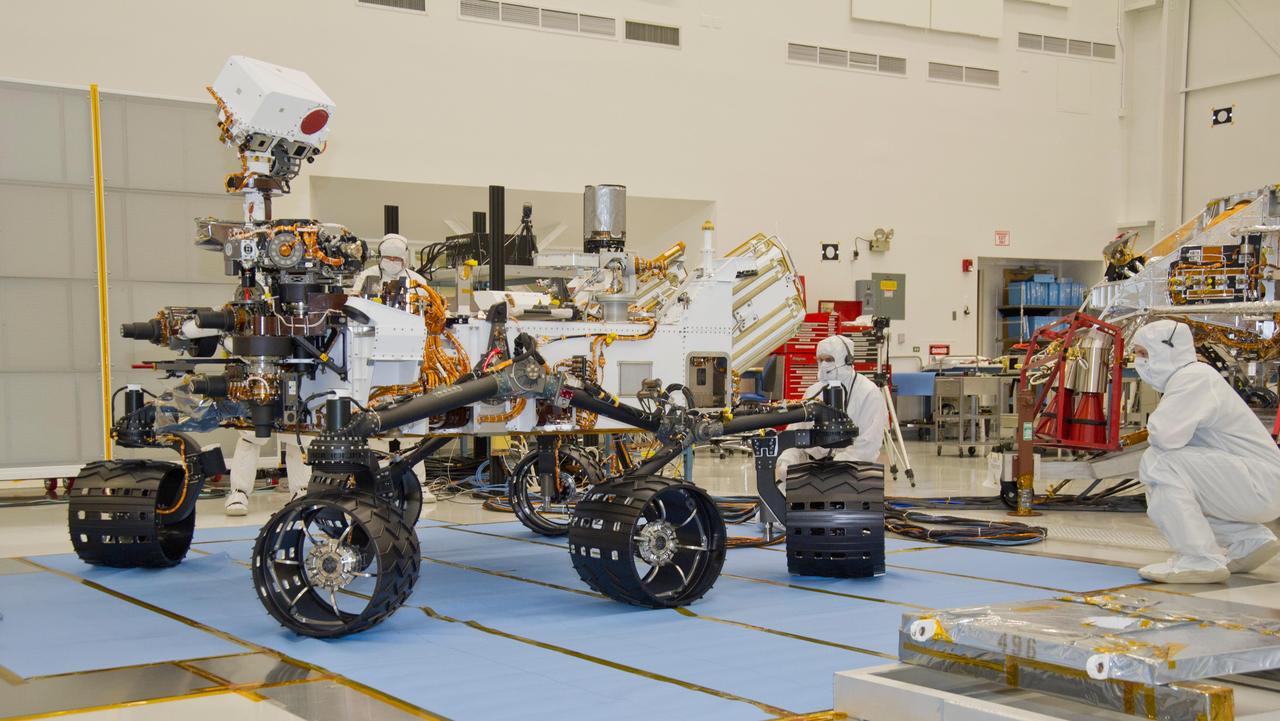
This photograph of the NASA Mars Science Laboratory rover, Curiosity, was taken during mobility testing on June 3, 2011. The location is inside the Spacecraft Assembly Facility at NASA Jet Propulsion Laboratory, Pasadena, Calif.
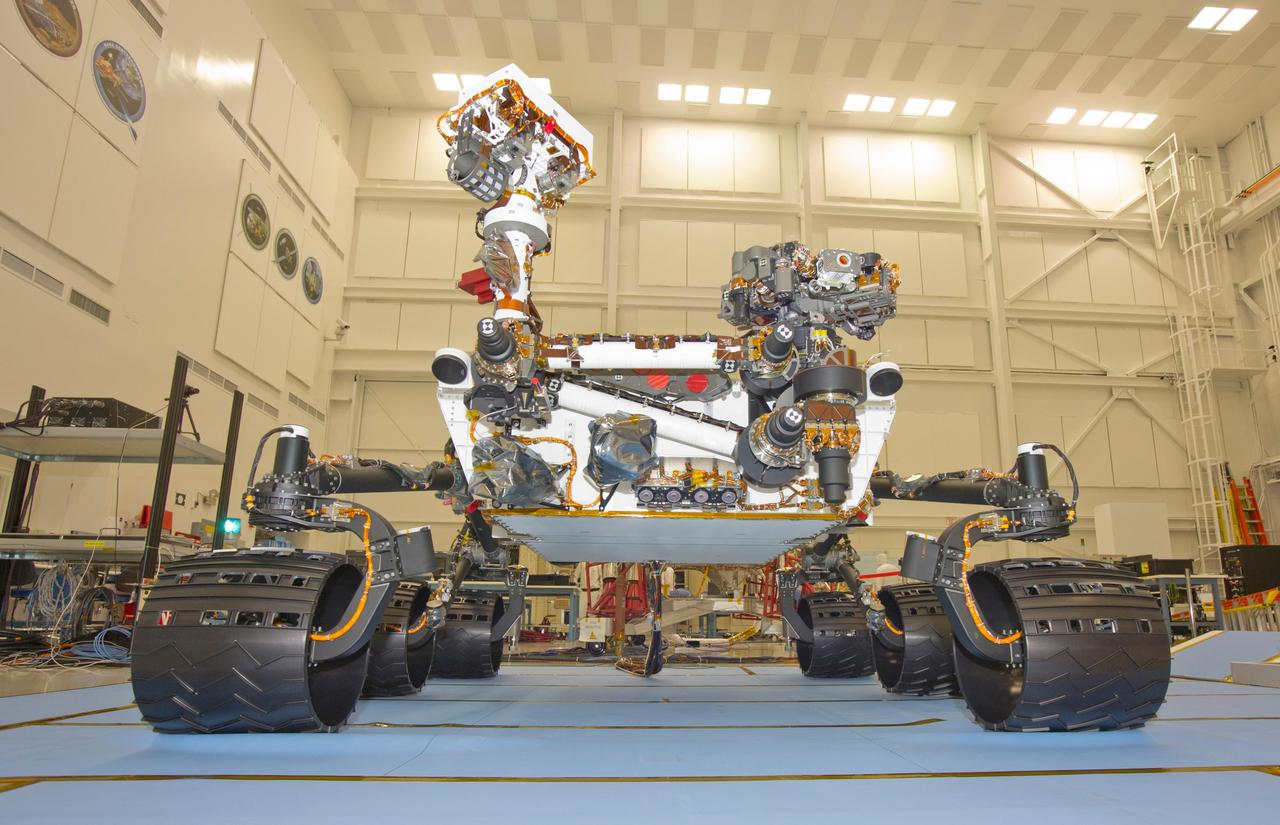
This photograph of the NASA Mars Science Laboratory rover, Curiosity, was taken during mobility testing on June 3, 2011. The location is inside the Spacecraft Assembly Facility at NASA Jet Propulsion Laboratory, Pasadena, Calif.
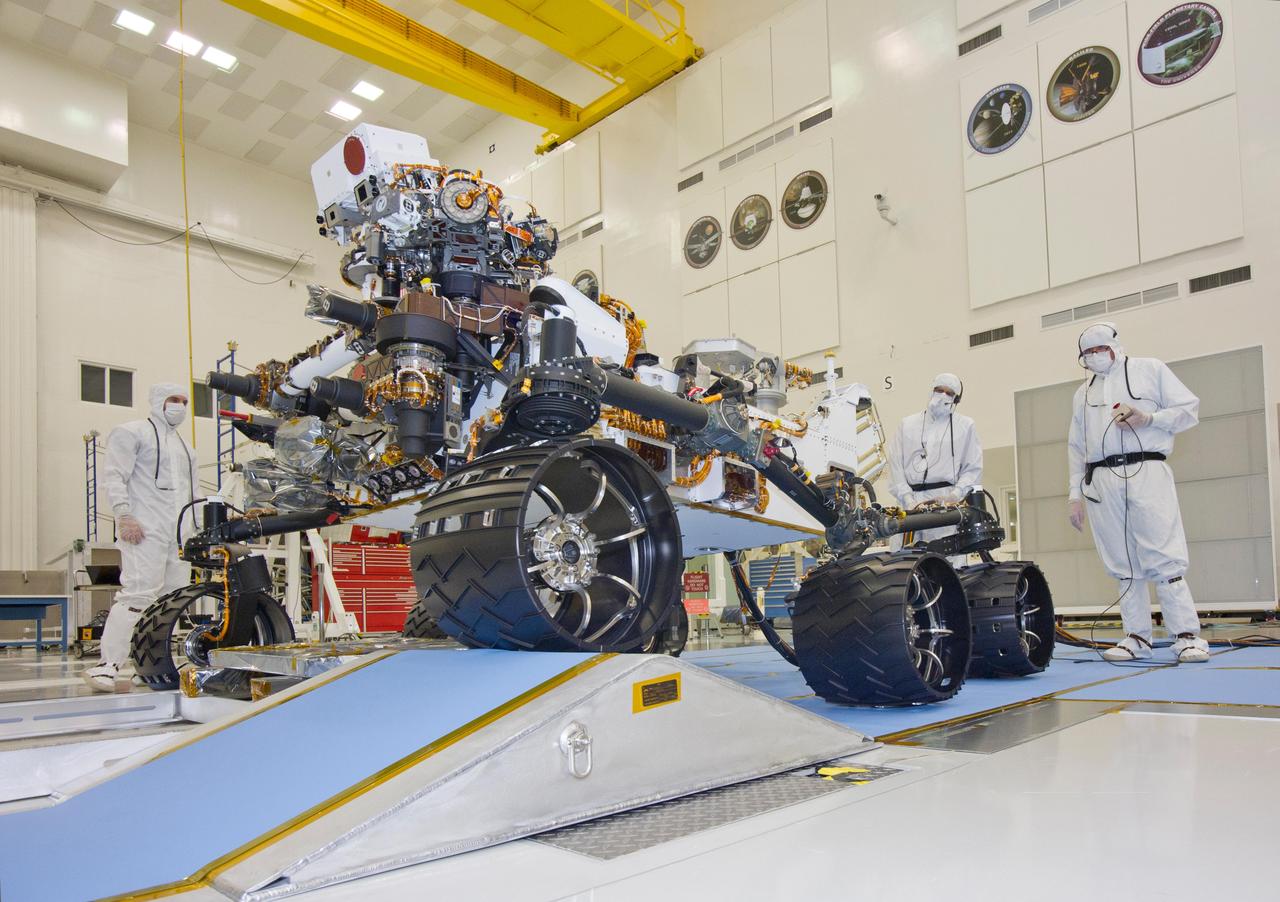
This photograph of the NASA Mars Science Laboratory rover, Curiosity, was taken during mobility testing on June 3, 2011. The location is inside the Spacecraft Assembly Facility at NASA Jet Propulsion Laboratory, Pasadena, Calif.
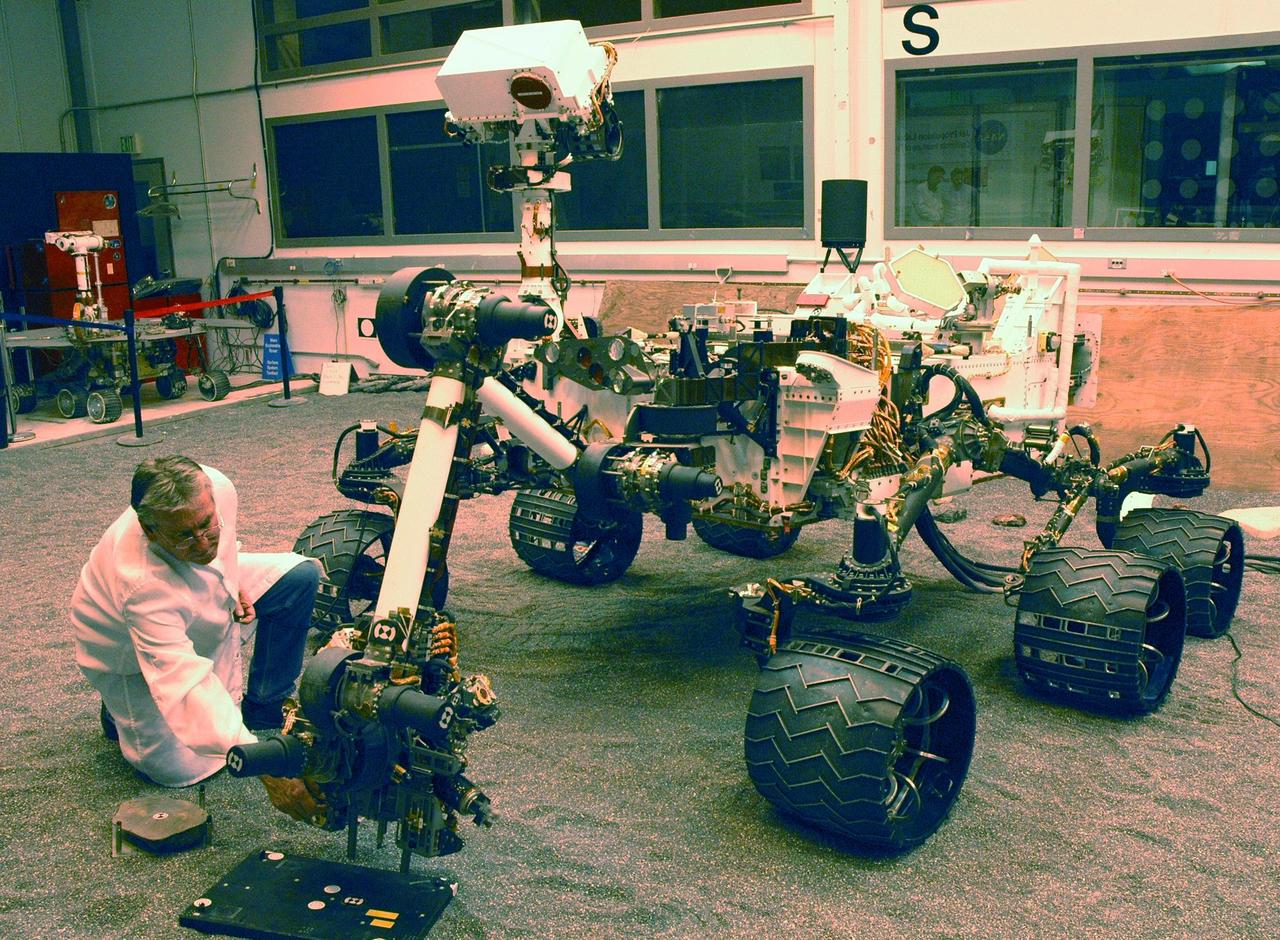
A NASA Mars Science Laboratory test rover called the Vehicle System Test Bed, or VSTB, at NASA Jet Propulsion Laboratory, Pasadena, CA serves as the closest double for Curiosity in evaluations of the mission hardware and software.
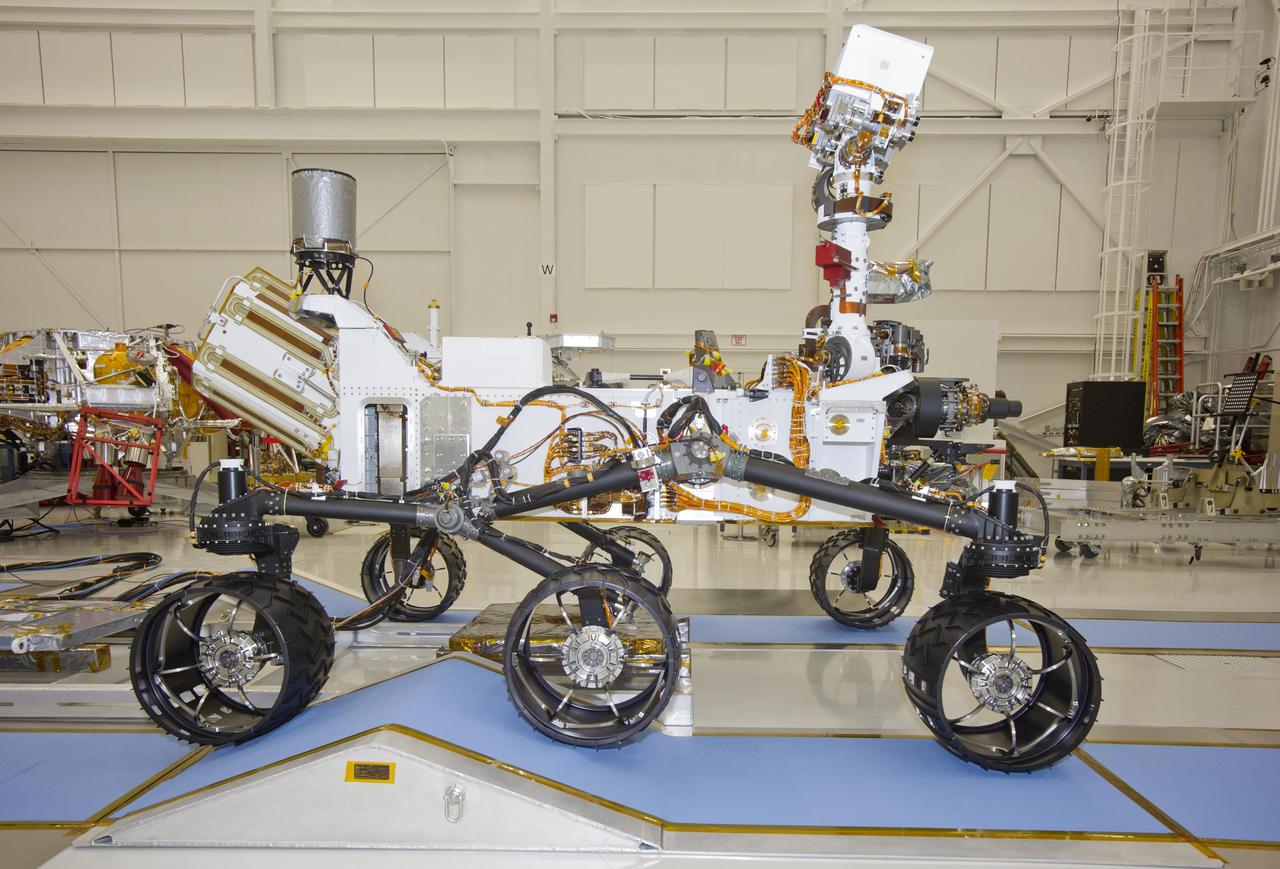
This photograph of the NASA Mars Science Laboratory rover, Curiosity, was taken during mobility testing on June 3, 2011. The location is inside the Spacecraft Assembly Facility at NASA Jet Propulsion Laboratory, Pasadena, Calif.
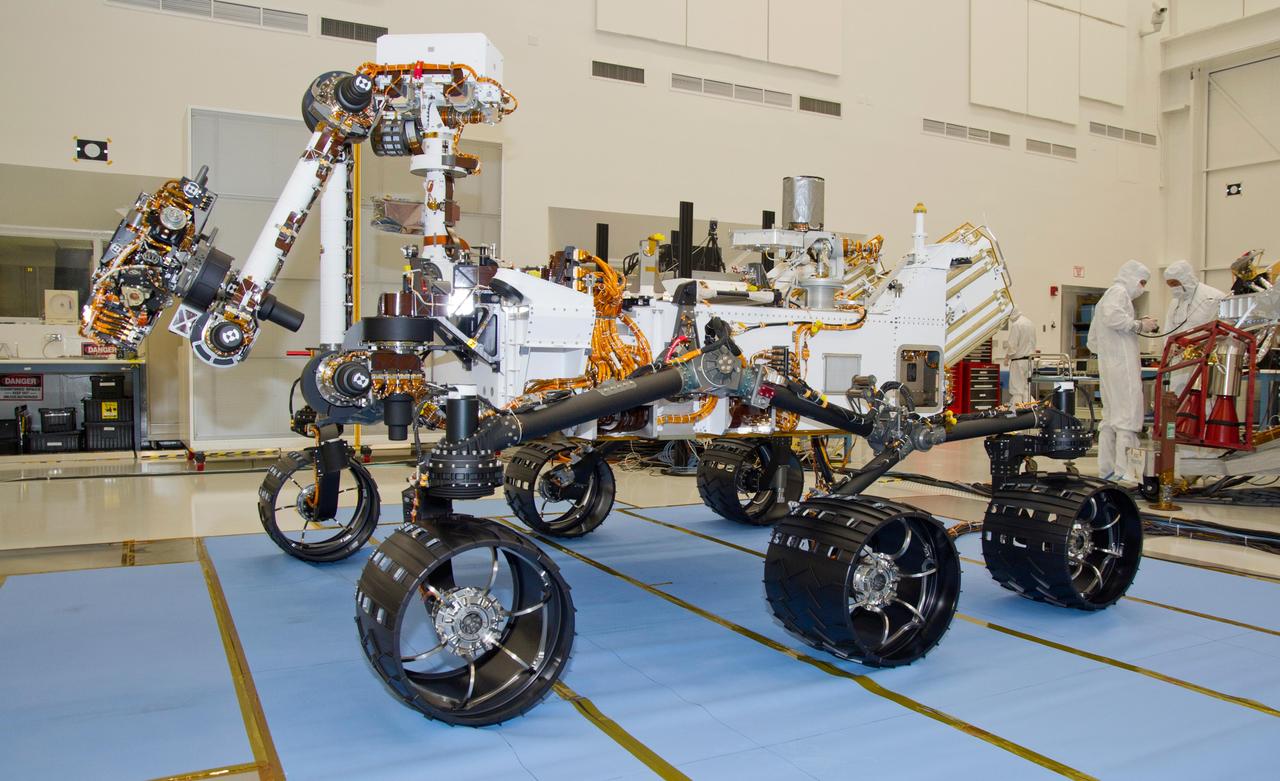
This photograph of the NASA Mars Science Laboratory rover, Curiosity, was taken during mobility testing on June 3, 2011. The location is inside the Spacecraft Assembly Facility at NASA Jet Propulsion Laboratory, Pasadena, Calif.
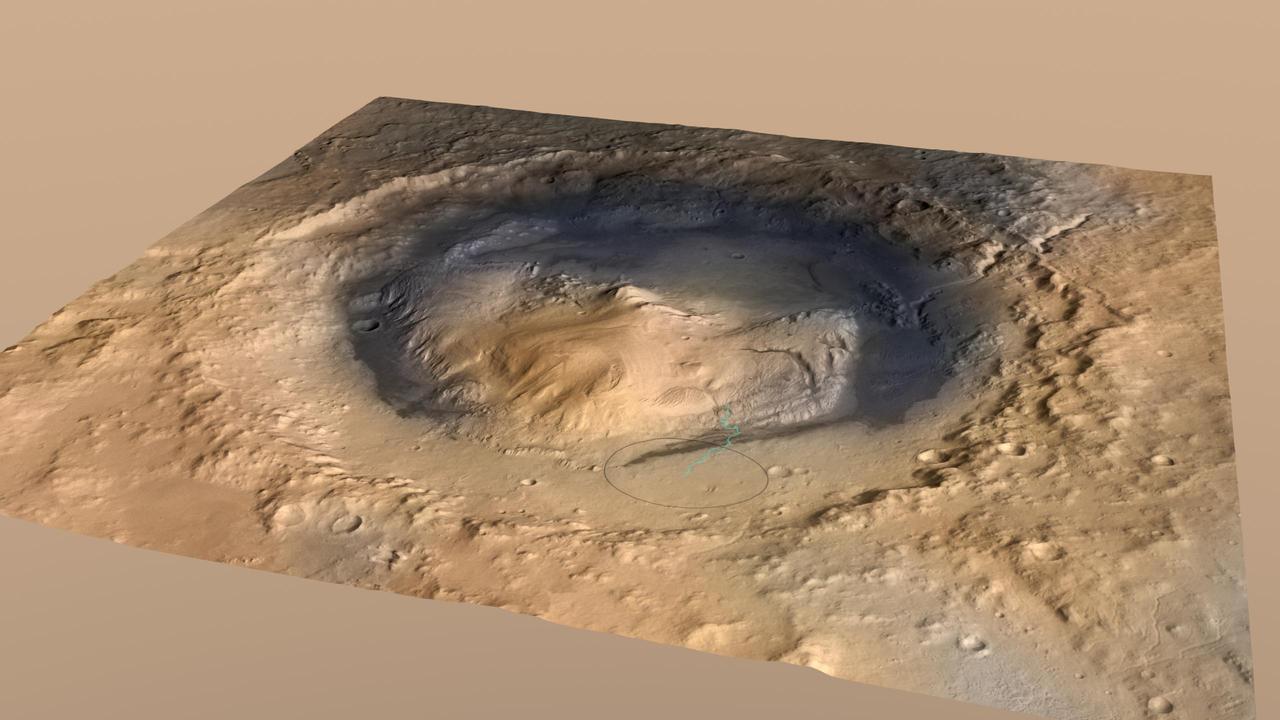
Curiosity, the big rover of NASA Mars Science Laboratory mission, will land in August 2012 near the foot of a mountain inside Gale Crater. The mission project science group is calling the mountain Mount Sharp.
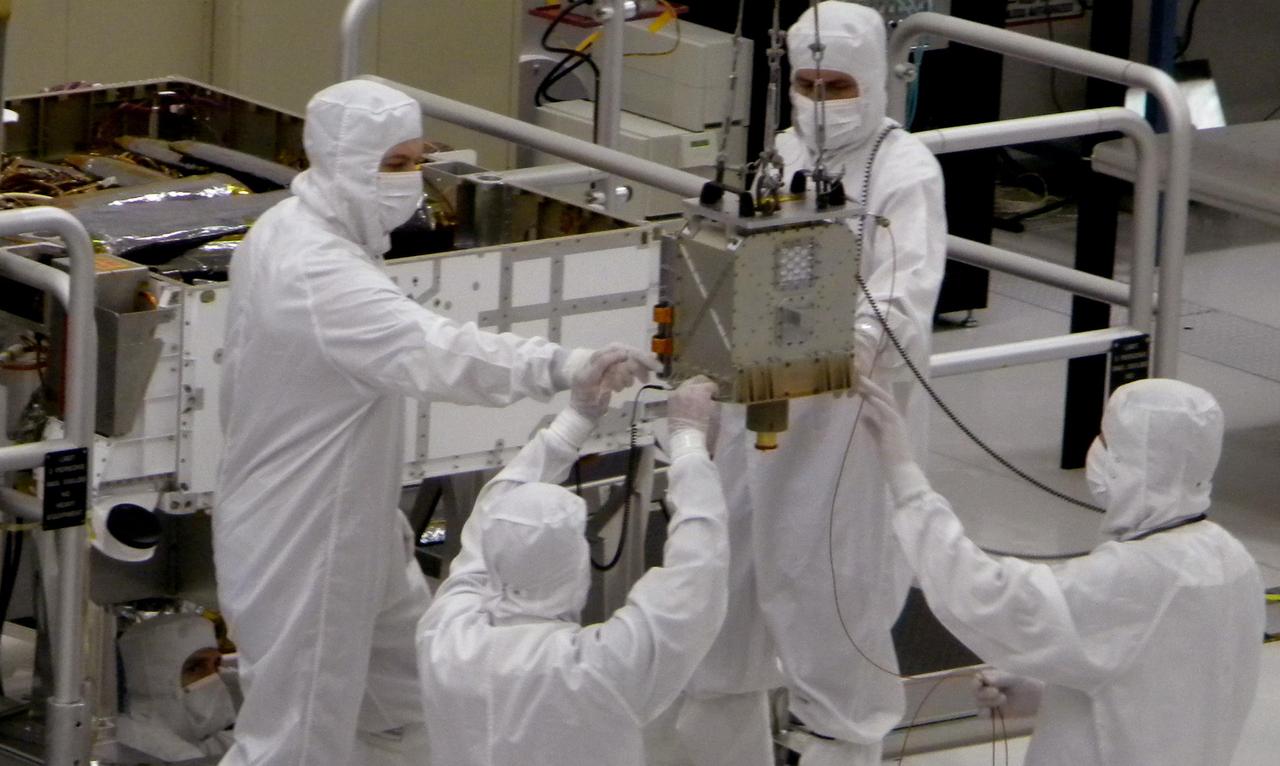
Members of NASA Mars Science Laboratory team carefully steer the hoisted Chemistry and Mineralogy CheMin instrument during its June 15, 2010, installation into the mission Mars rover, Curiosity.
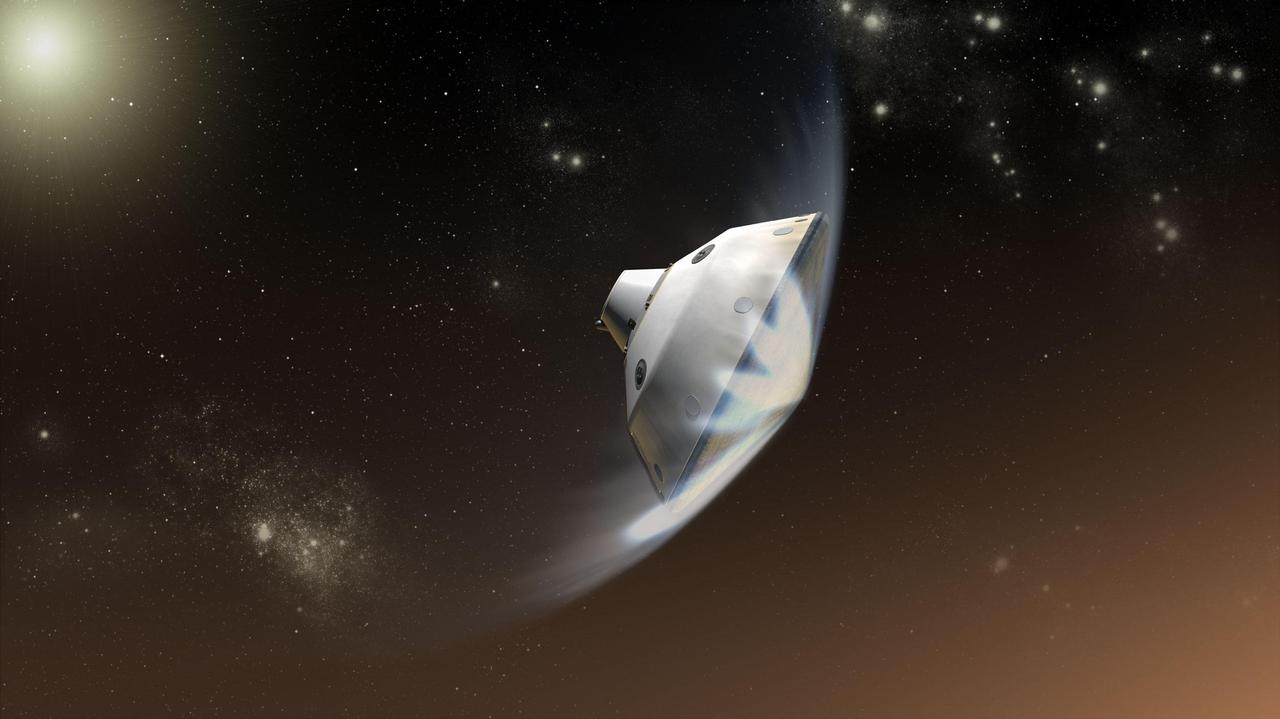
This artist concept depicts the interaction of NASA Mars Science Laboratory spacecraft with the upper atmosphere of Mars during the entry, descent and landing of the Curiosity rover onto the Martian surface.
An in-flight camera check produced this out-of-focus image when NASA Mars Science Laboratory spacecraft turned on illumination sources that are part of the Curiosity rover Mars Hand Lens Imager MAHLI instrument.
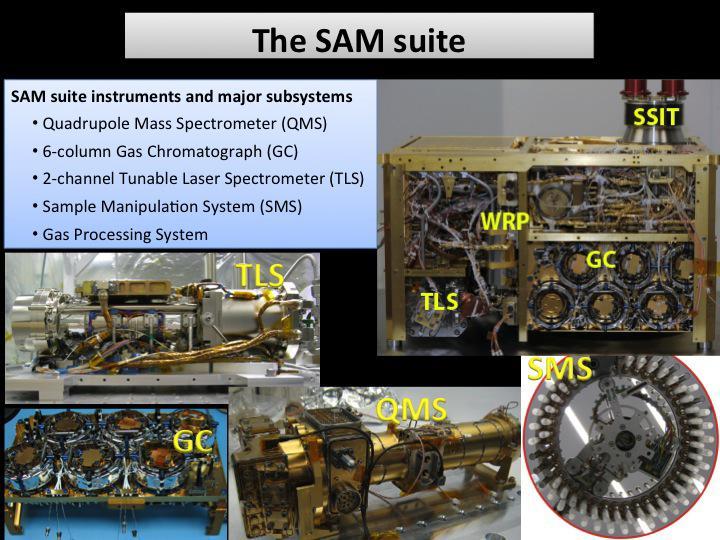
This illustration shows the instruments and subsystems of the Sample Analysis at Mars SAM suite on the Curiosity Rover of NASA Mars Science Laboratory Project. SAM analyzes the gases in the Martian atmosphere.
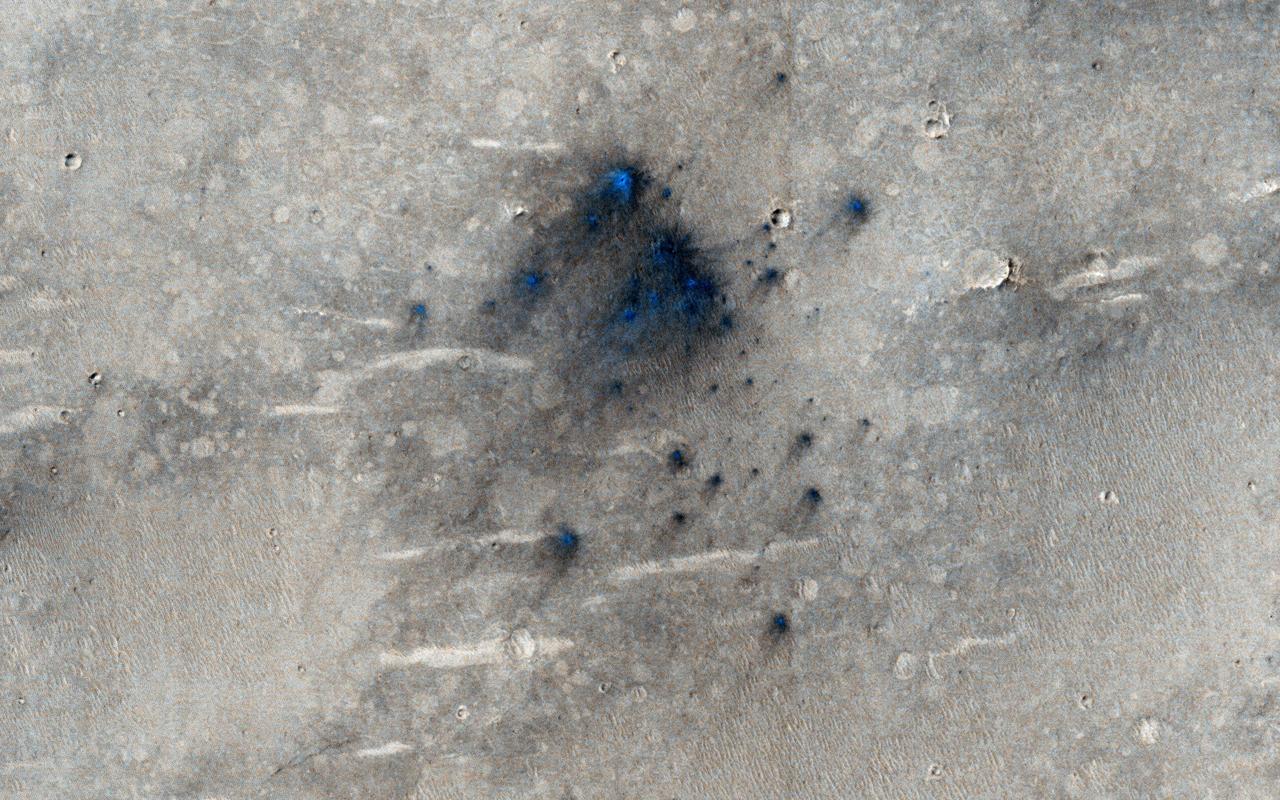
This cluster of small impact craters was spotted by the Context Camera on Mars Reconnaissance Orbiter in the region northwest of Gale Crater, the landing site of the Mars Science Laboratory MSL rover, Curiosity.
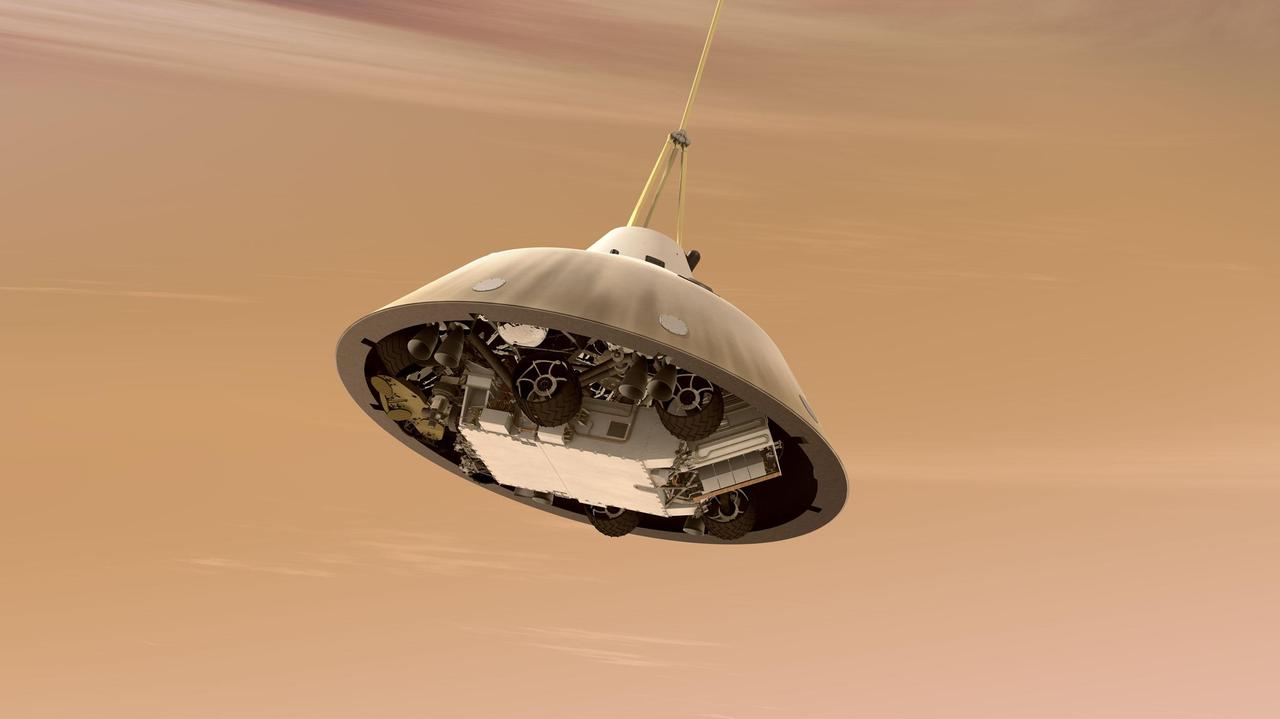
This artist concept shows NASA Curiosity rover tucked inside the Mars Science Laboratory spacecraft backshell while the spacecraft is descending on a parachute toward Mars. Here, the spacecraft heat shield has already been jettisoned.
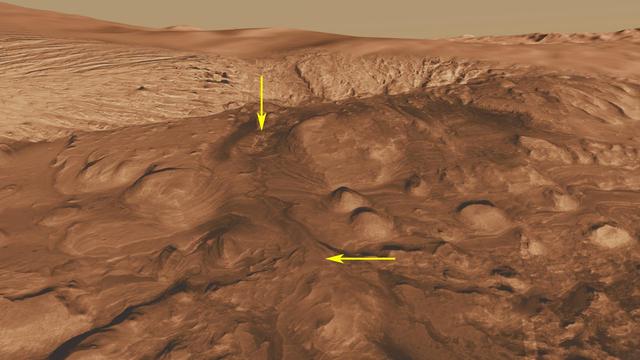
This oblique view of the mound in Gale crater shows several different rock types of interest to the Mars Science Laboratory mission. The Mars Science Laboratory rover, Curiosity, will use its full instrument suite to study these minerals and how they form
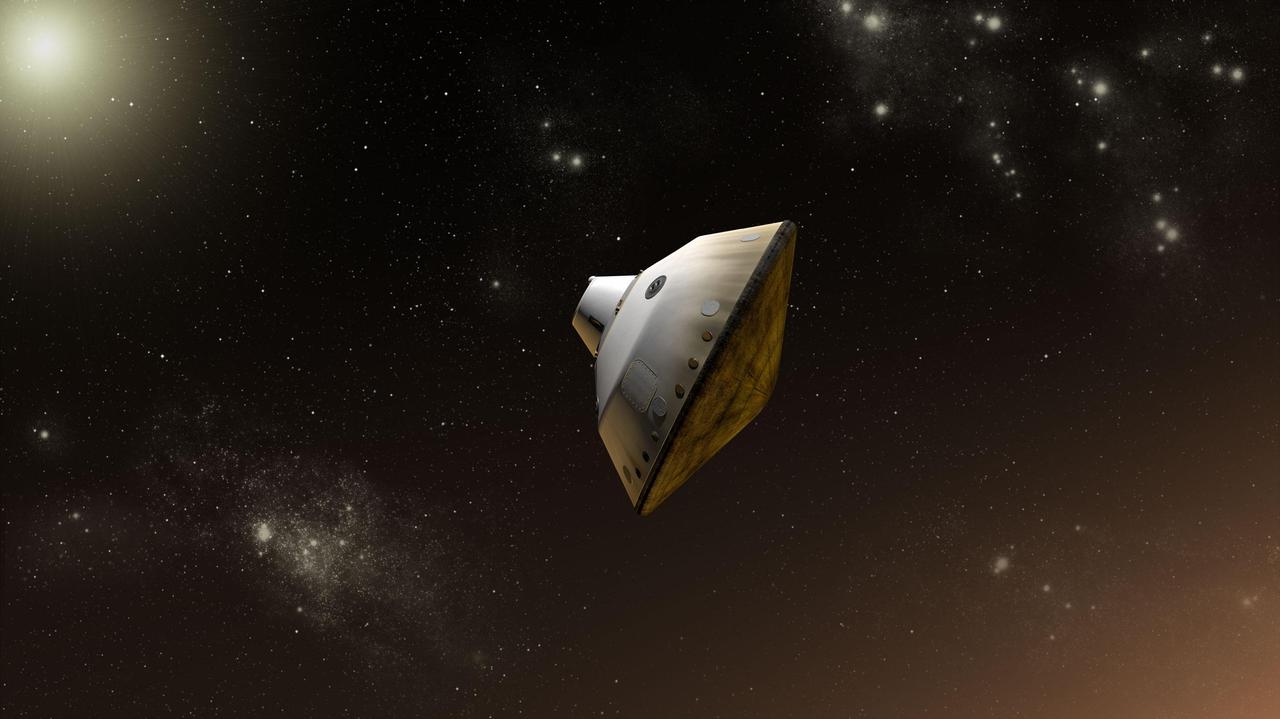
This is an artist concept of NASA Mars Science Laboratory aeroshell capsule as it enters the Martian atmosphere. The Curiosity rover and the spacecraft descent stage are safely tucked inside the aeroshell at this point.
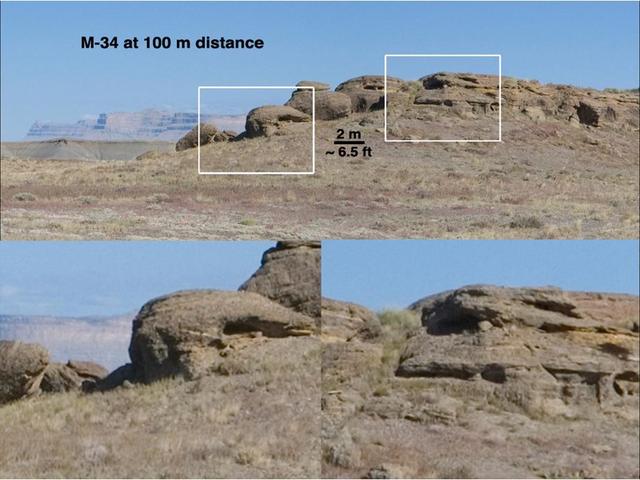
This set of views illustrates capabilities of the Mast Camera MastCam instrument on NASA Mars Science Laboratory Curiosity rover, using a scene on Earth as an example of what MastCam two cameras can see from different distances.
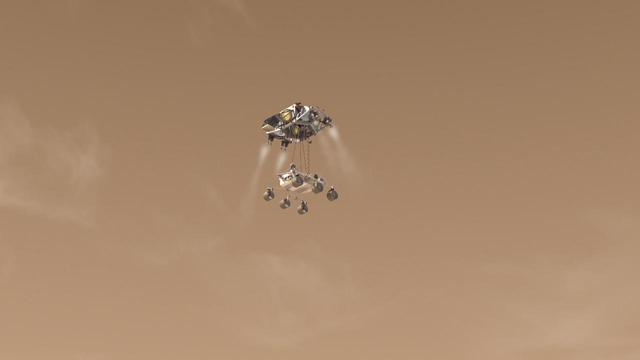
This artist concept depicts Curiosity, the rover to be launched in 2011 by NASA Mars Science Laboratory, as it is being lowered by the mission rocket-powered descent stage during a critical moment of the ky crane landing in 2012.
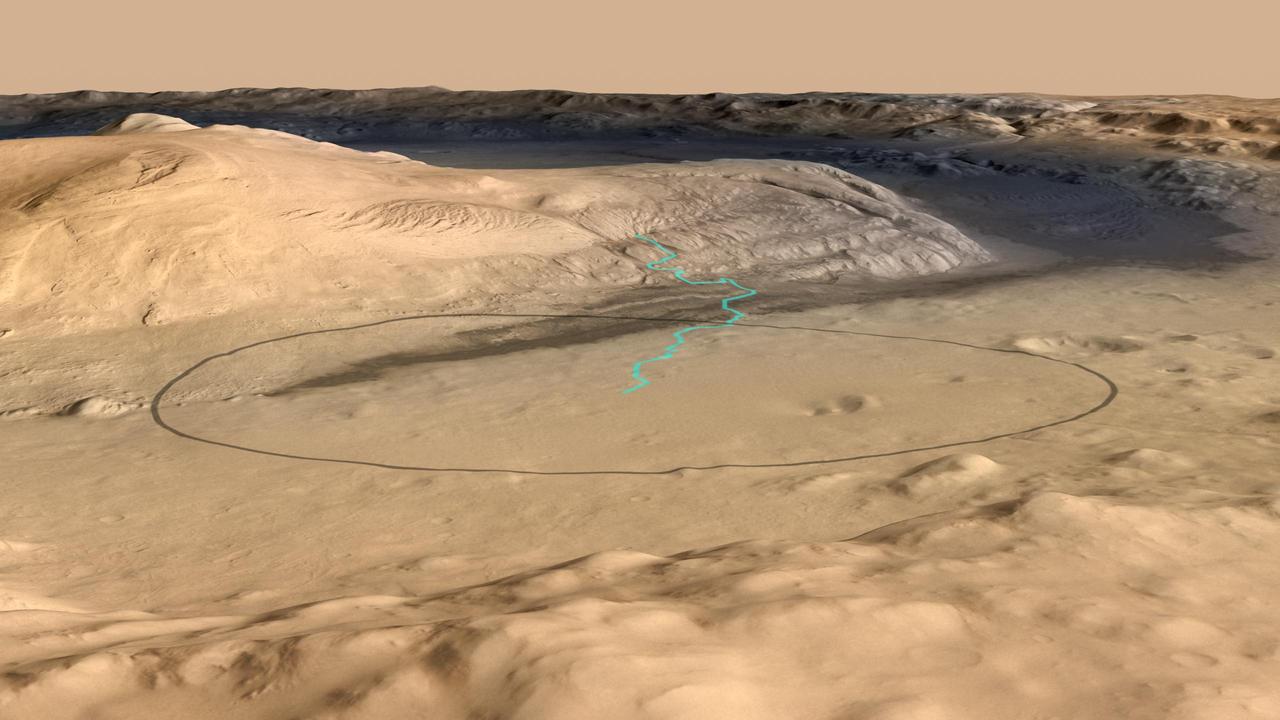
This image shows the target landing area for Curiosity, the rover of NASA Mars Science Laboratory mission. The target, called Mount Sharp, is near the foot of a mountain inside Gale Crater.
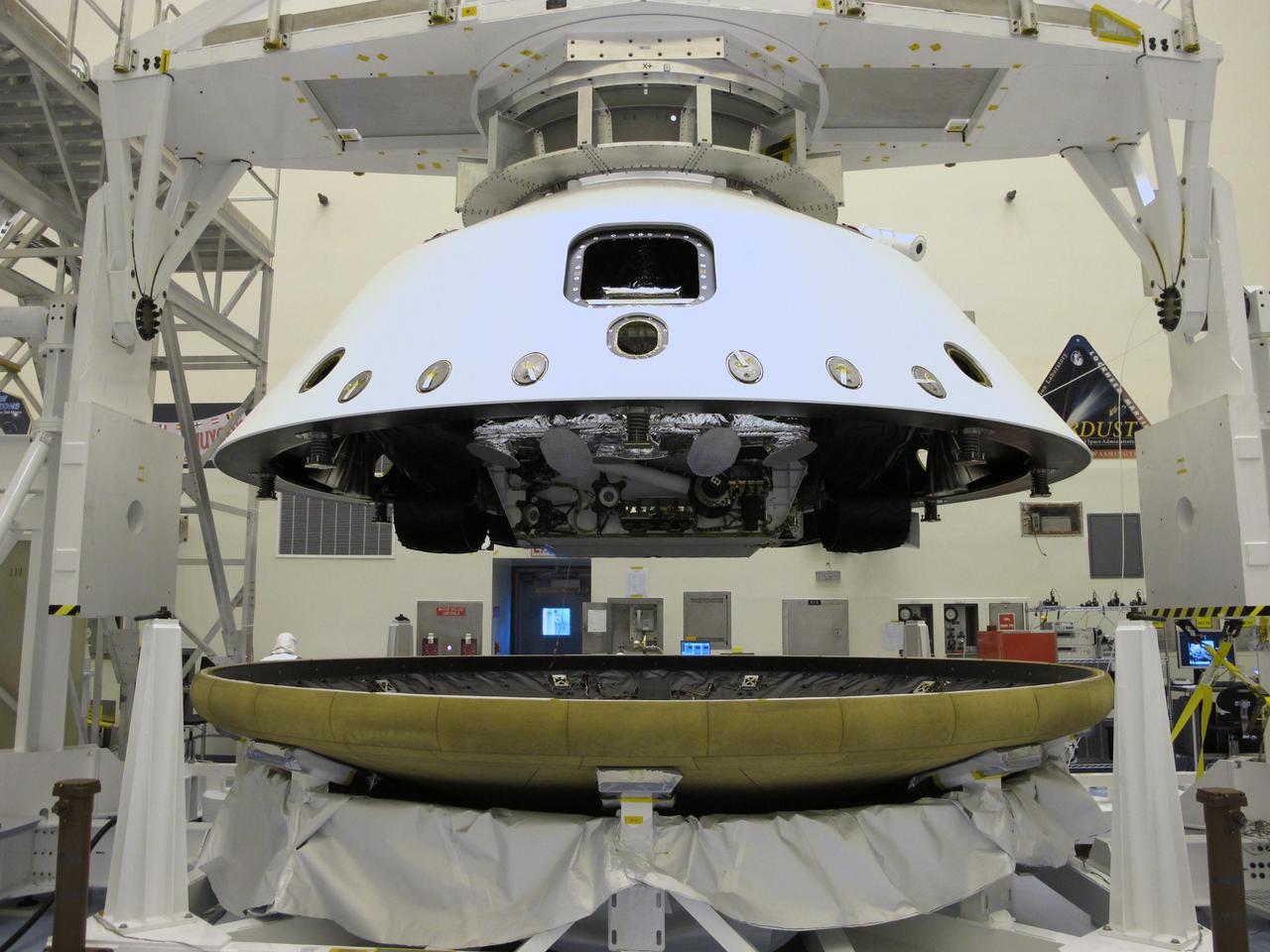
At the Payload Hazardous Servicing Facility at NASA Kennedy Space Center in Florida, the back shell powered descent vehicle configuration, containing NASA Mars Science Laboratory rover, Curiosity, is being placed on the spacecraft heat shield.
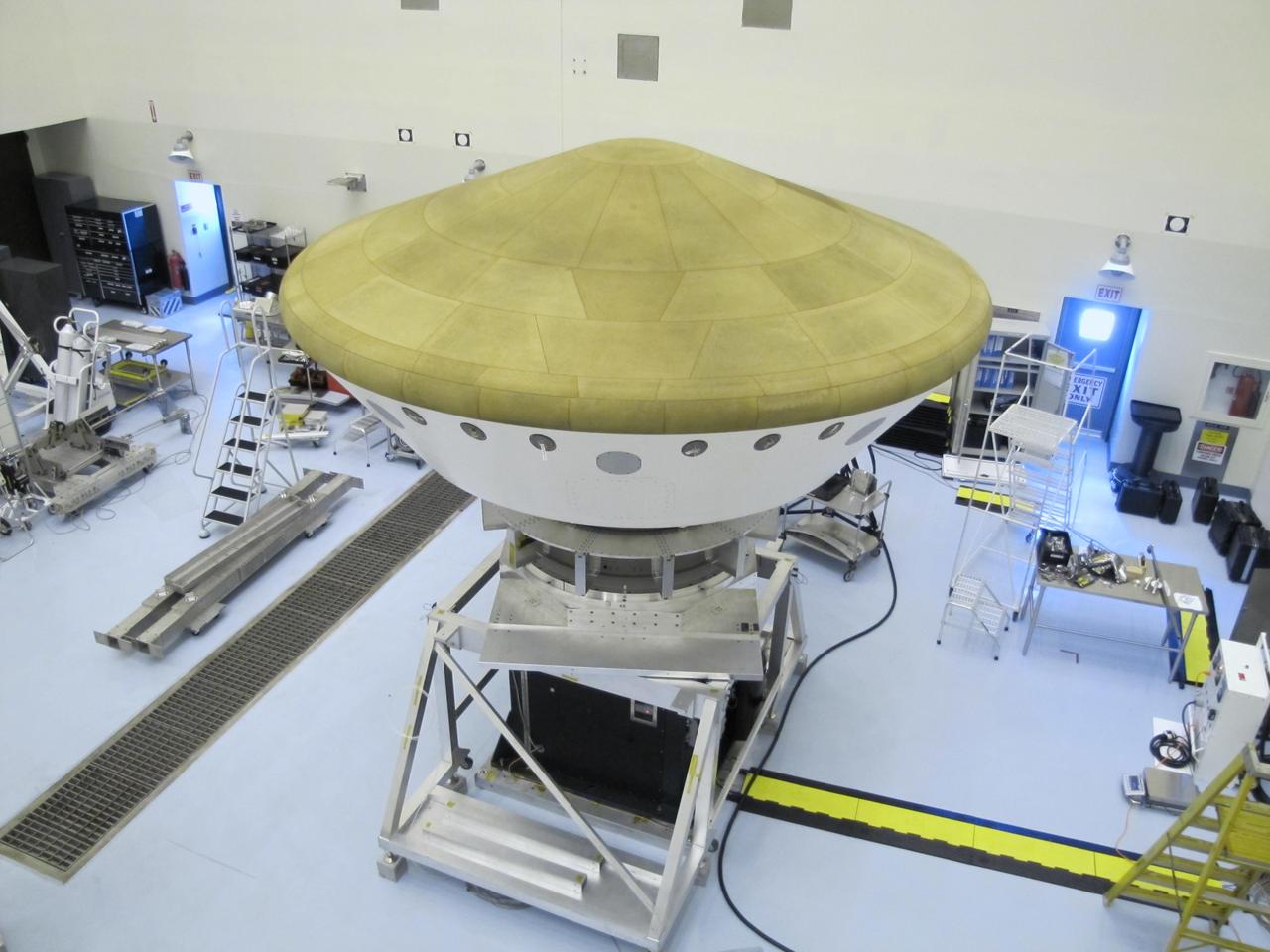
At the Payload Hazardous Servicing Facility at NASA Kennedy Space Center in Florida, the Mars Science Laboratory rover, Curiosity, and the spacecraft descent stage have been enclosed inside the spacecraft aeroshell.
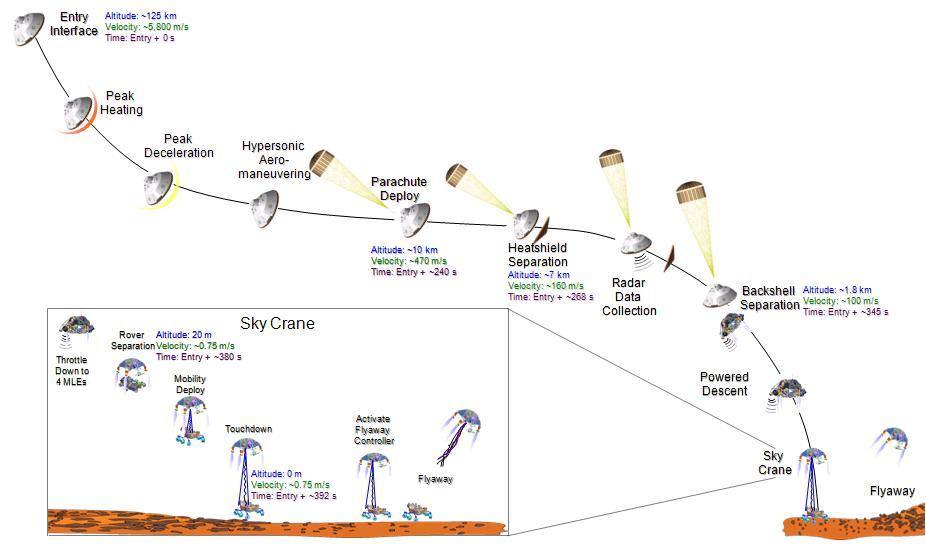
This graphic portrays the sequence of key events in August 2012 from the time the NASA Mars Science Laboratory spacecraft, with its rover Curiosity, enters the Martian atmosphere to a moment after it touches down on the surface.
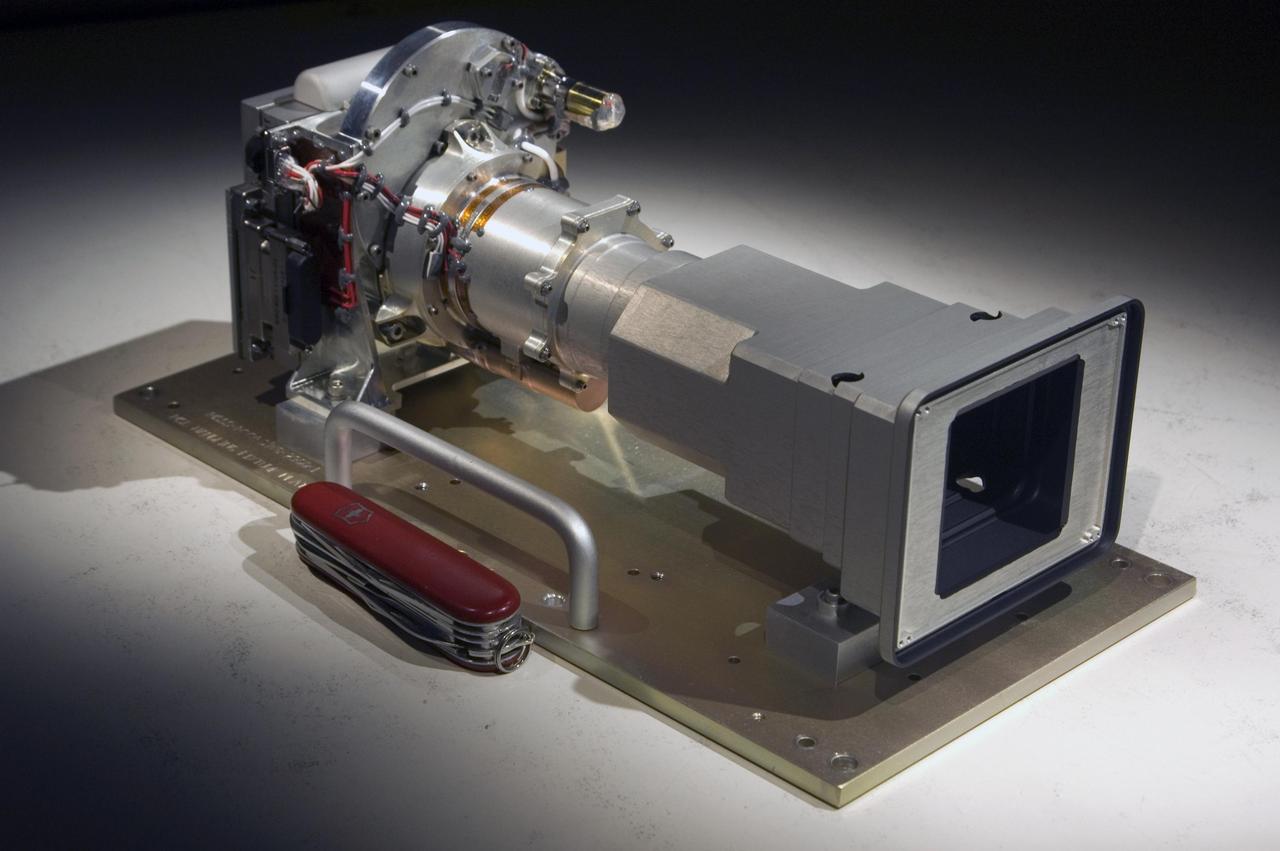
The Mast Camera Mastcam instrument for NASA Mars Science Laboratory will use a side-by side pair of cameras for examining terrain around the mission rover, Curiosity. The Mastcam 34 offers wider-angle viewing.
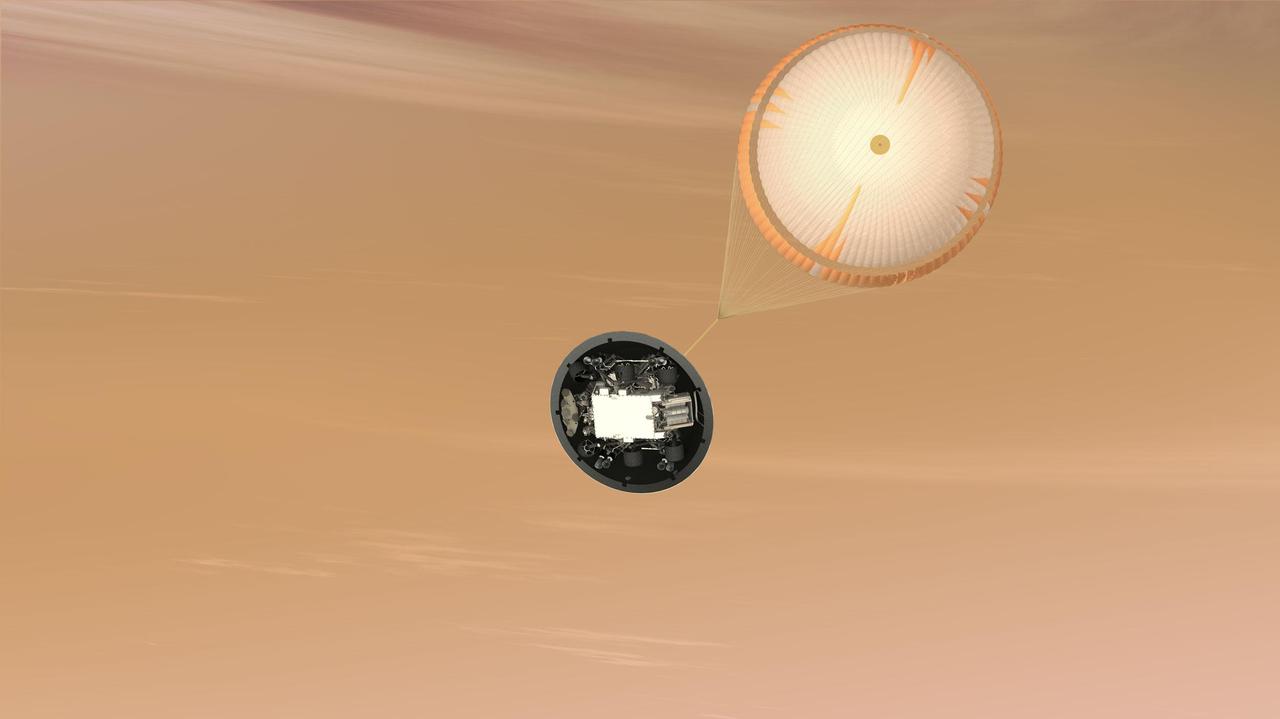
This artist concept is of NASA Mars Science Laboratory MSL Curiosity rover parachute system; the largest parachute ever built to fly on a planetary mission. The parachute is attached to the top of the backshell portion of the spacecraft aeroshell.
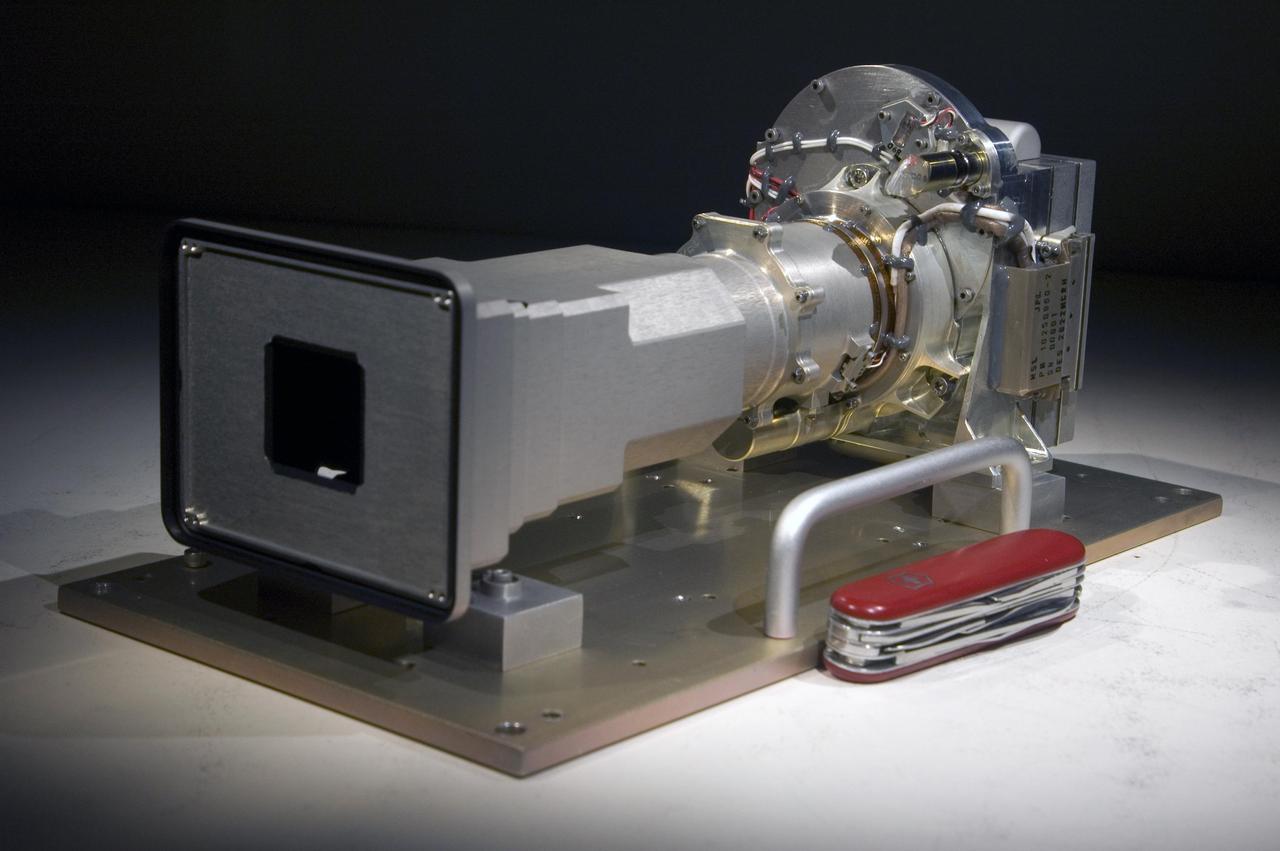
The Mast Camera Mastcam instrument for NASA Mars Science Laboratory will use a side-by side pair of cameras for examining terrain around the mission rover, Curiosity. The Mastcam 100 offers telephoto capability.
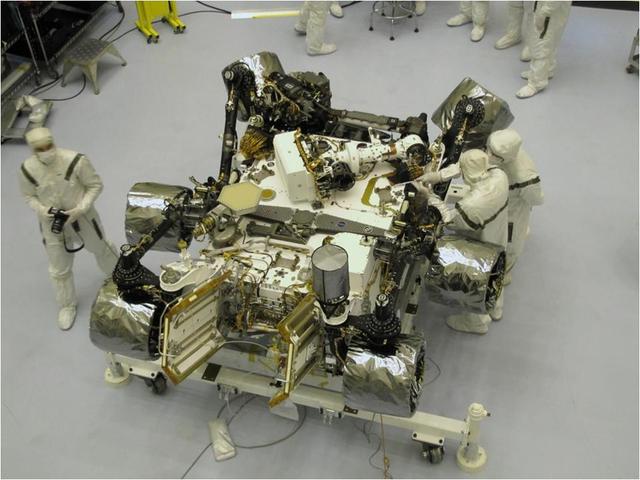
The Mars Science Laboratory mission rover, Curiosity, is prepared for final integration into the complete NASA spacecraft in this photograph taken inside the Payload Hazardous Servicing Facility at NASA Kennedy Space Center, Fla.
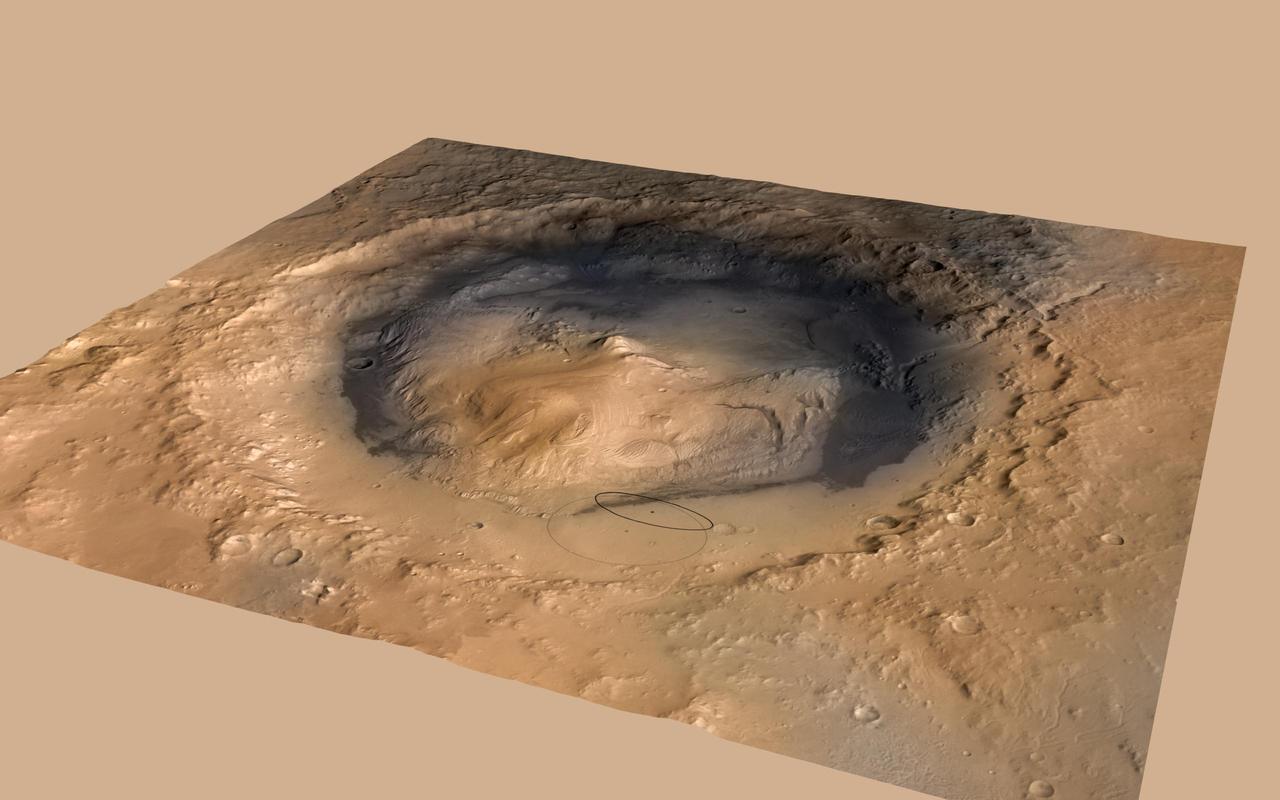
The landing target area for Curiosity, the big rover of NASA Mars Science Laboratory mission, has been revised, reducing the area size. It also puts the center of the landing area closer to Mount Sharp.
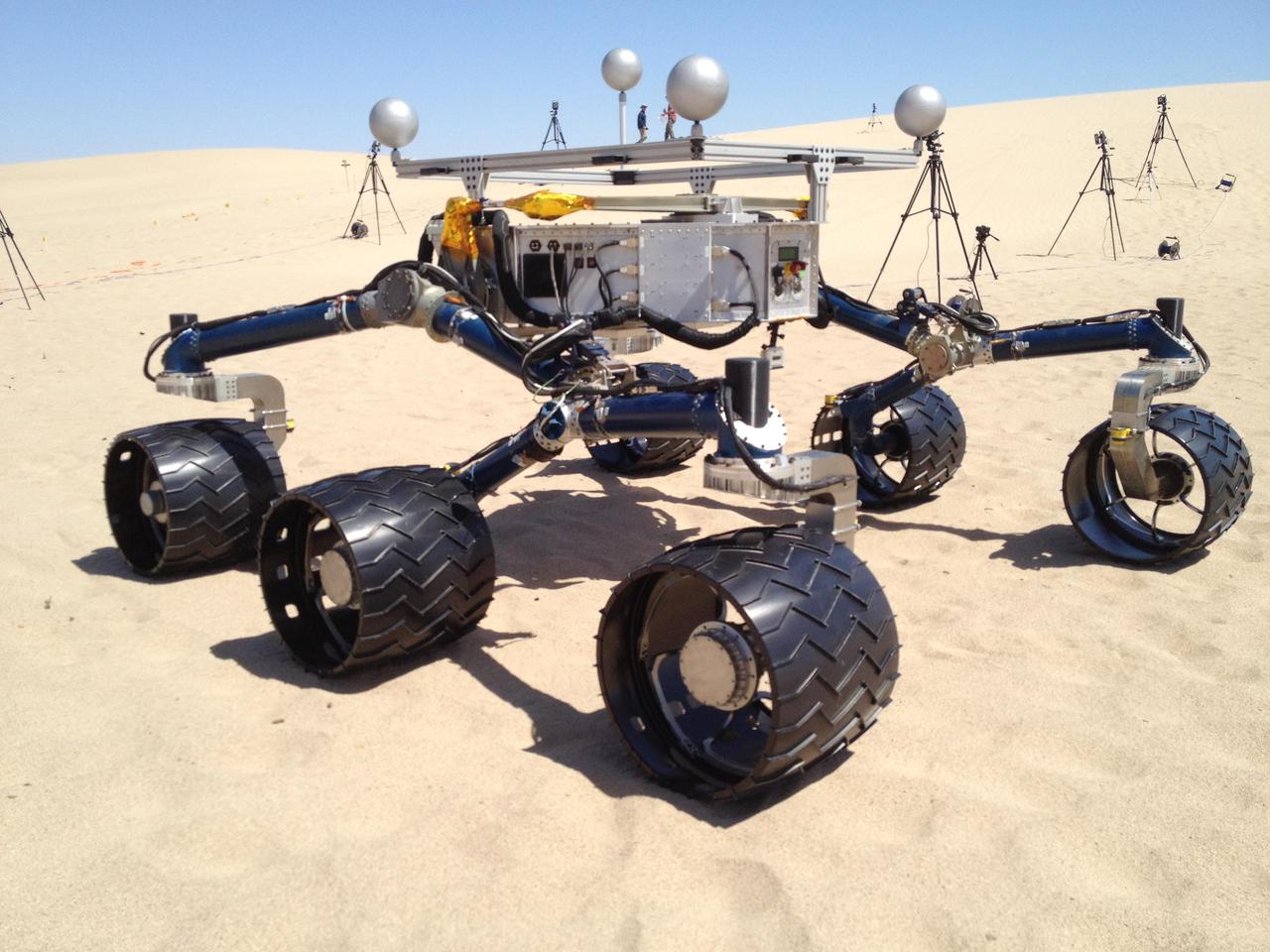
NASA Mars Science Laboratory mission team members ran mobility tests on the test rover called Scarecrow on sand dunes near Death Valley, Ca. in early May 2012 in preparation for operating the Curiosity rover, currently en route to Mars.
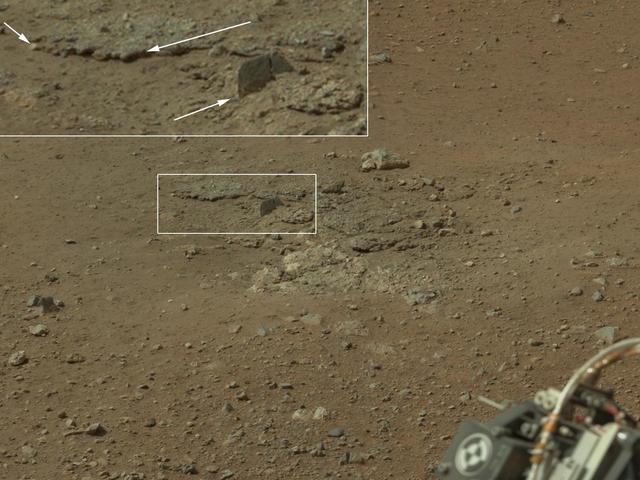
This color image from NASA Curiosity rover shows an area excavated by the blast of the Mars Science Laboratory descent stage rocket engines. This is part of a larger, high-resolution color mosaic made from images obtained by Curiosity Mast Camera.
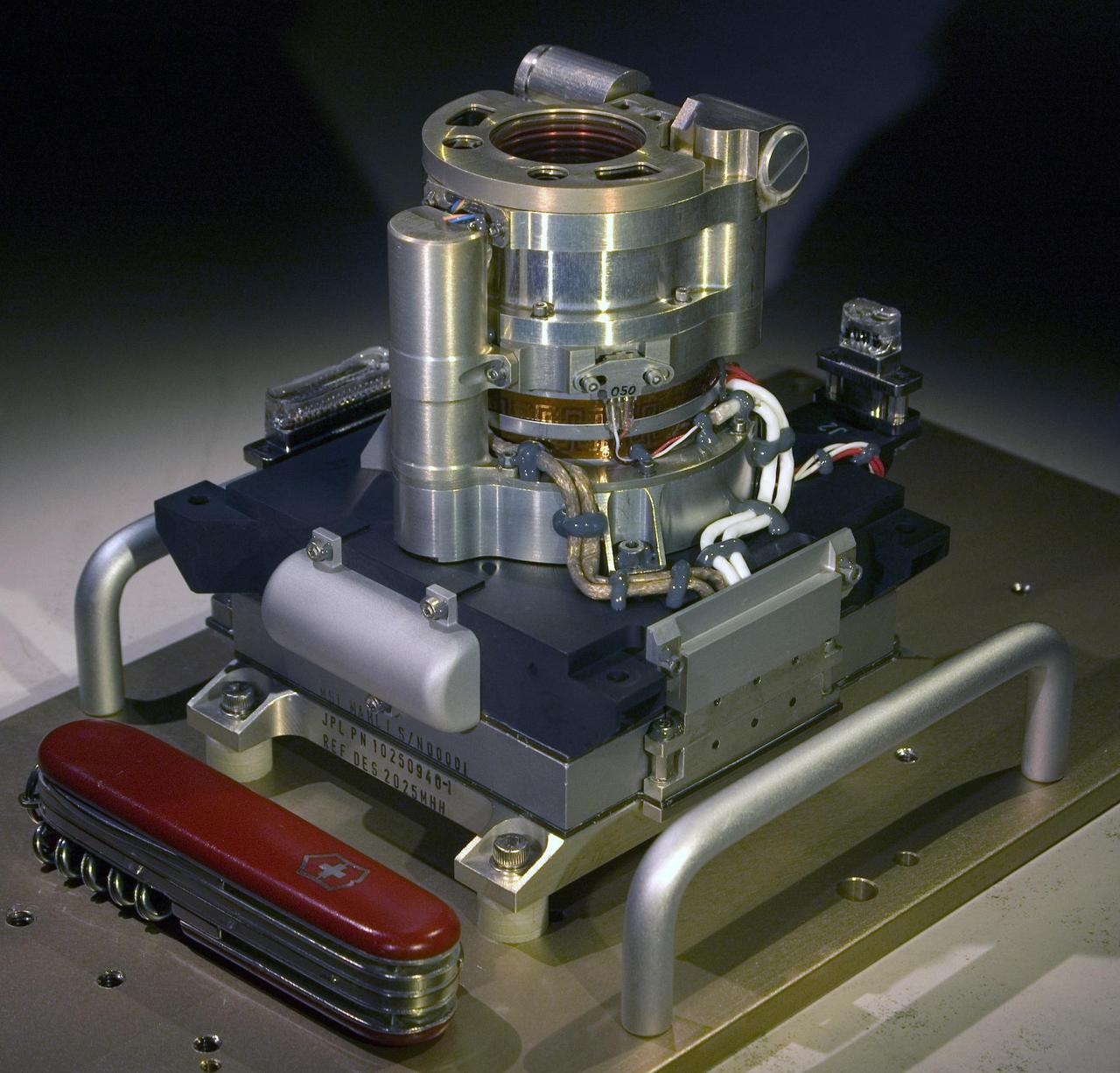
The Mars Hand Lens Imager MAHLI camera will fly on NASA Mars Science Laboratory mission, launching in late 2011. This photo of the camera was taken before MAHLI November 2010 installation onto the robotic arm of the mission Mars rover, Curiosity.
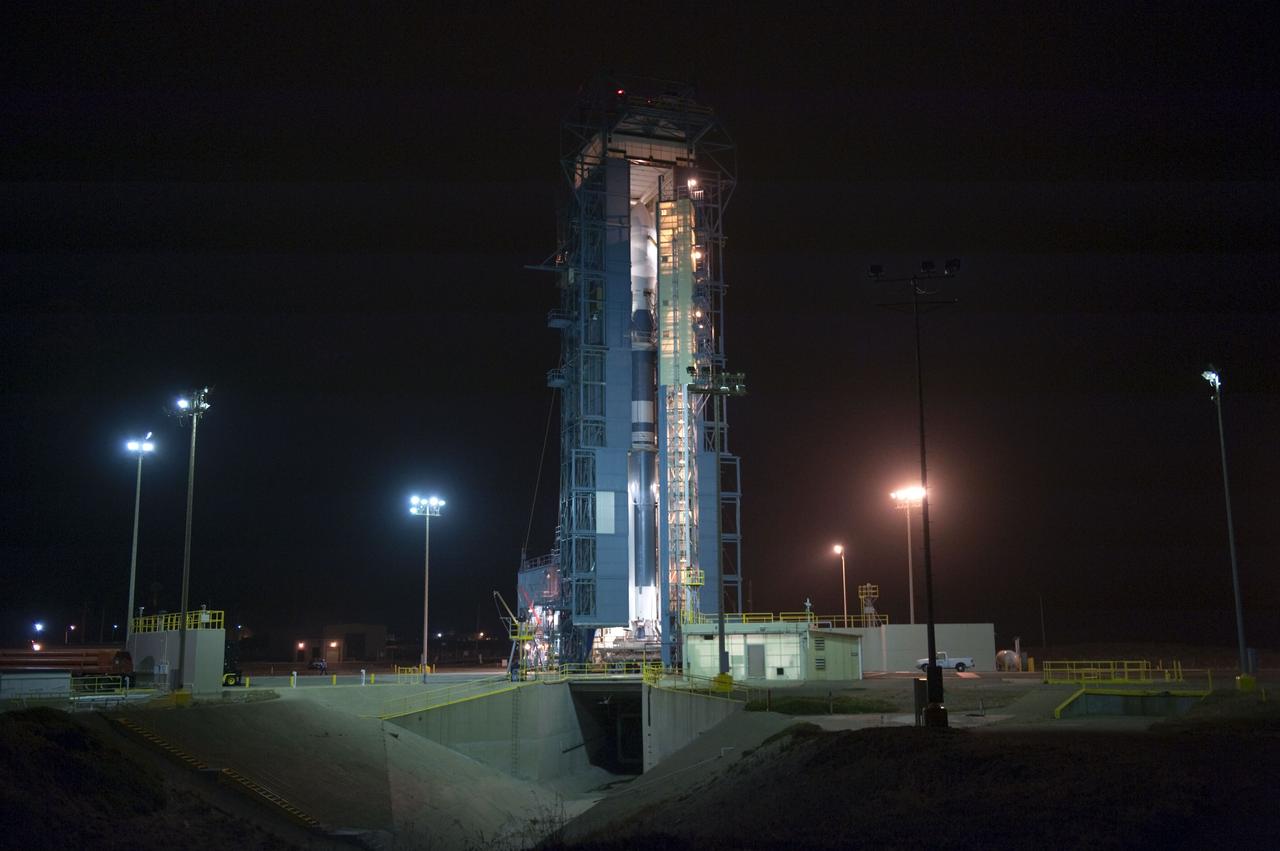
VANDENBERG AIR FORCE BASE, Calif. -- The mobile service tower at NASA's Launch Complex-2 at Vandenberg Air Force Base in California is ready to roll away to reveal the United Launch Alliance Delta II rocket with the Aquarius/SAC-D spacecraft atop in preparation for launch. Liftoff is slated for 7:20 PDT/10:20 EDT today. Aquarius, the NASA-built instrument on the SAC-D spacecraft will provide new insights into how variations in ocean surface salinity relate to fundamental climate processes on its three-year mission. For more information visit: www.nasa.gov/aquarius. Photo credit: NASA/VAFB
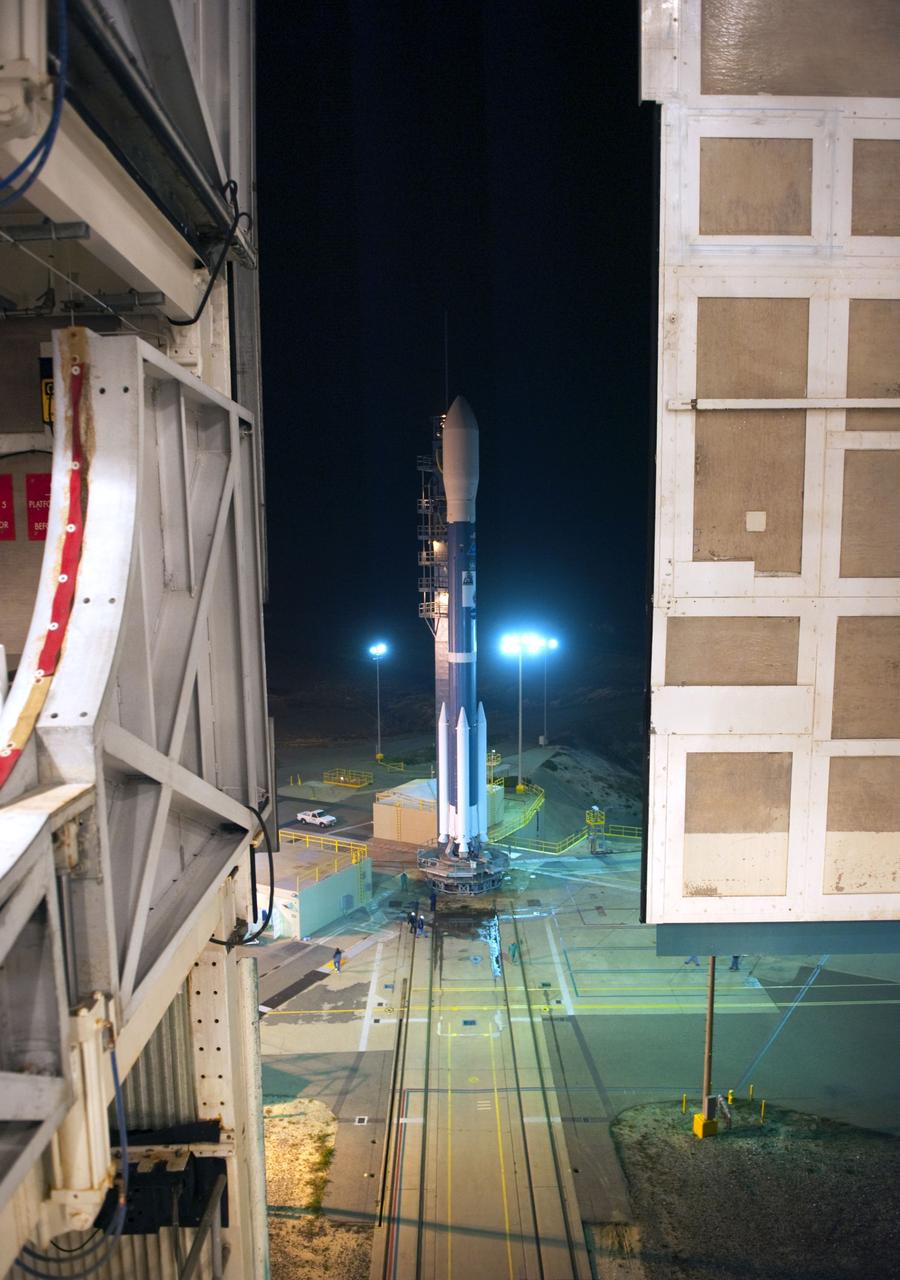
VANDENBERG AIR FORCE BASE, Calif. -- At NASA's Launch Complex-2 at Vandenberg Air Force Base in California the United Launch Alliance Delta II rocket with the Aquarius/SAC-D spacecraft atop is prepared for launch. Liftoff is slated for 7:20 PDT/10:20 EDT today. Aquarius, the NASA-built instrument on the SAC-D spacecraft will provide new insights into how variations in ocean surface salinity relate to fundamental climate processes on its three-year mission. For more information visit: www.nasa.gov/aquarius. Photo credit: NASA/VAFB
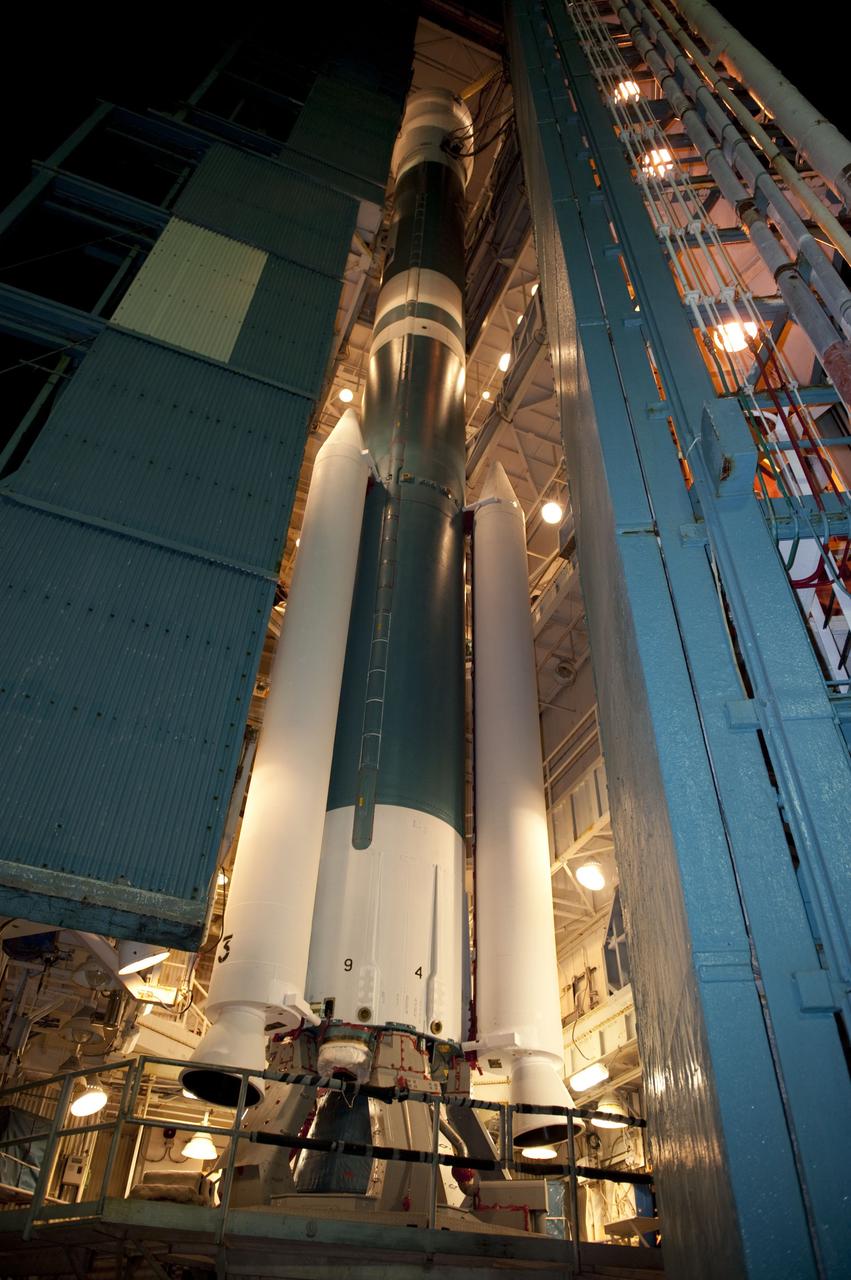
VANDENBERG AIR FORCE BASE, Calif. -- The mobile service tower at NASA's Launch Complex-2 at Vandenberg Air Force Base in California slowly moves away from the United Launch Alliance Delta II rocket with the Aquarius/SAC-D spacecraft atop in preparation for launch. Liftoff is slated for 7:20 PDT/10:20 EDT today. Aquarius, the NASA-built instrument on the SAC-D spacecraft will provide new insights into how variations in ocean surface salinity relate to fundamental climate processes on its three-year mission. For more information visit: www.nasa.gov/aquarius. Photo credit: NASA/VAFB
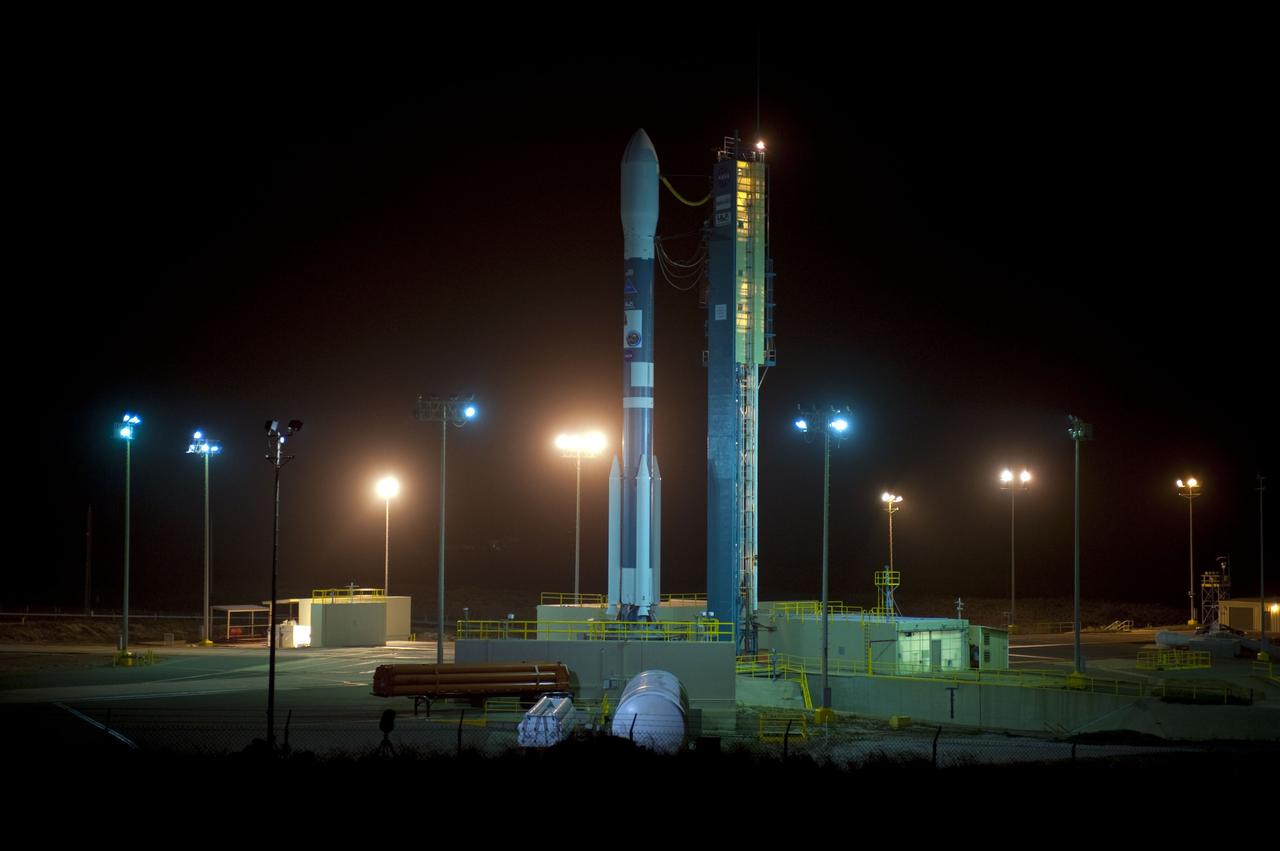
VANDENBERG AIR FORCE BASE, Calif. -- At NASA's Launch Complex-2 at Vandenberg Air Force Base in California the United Launch Alliance Delta II rocket with the Aquarius/SAC-D spacecraft atop is prepared for launch. Liftoff is slated for 7:20 PDT/10:20 EDT today. Aquarius, the NASA-built instrument on the SAC-D spacecraft will provide new insights into how variations in ocean surface salinity relate to fundamental climate processes on its three-year mission. For more information visit: www.nasa.gov/aquarius. Photo credit: NASA/VAFB
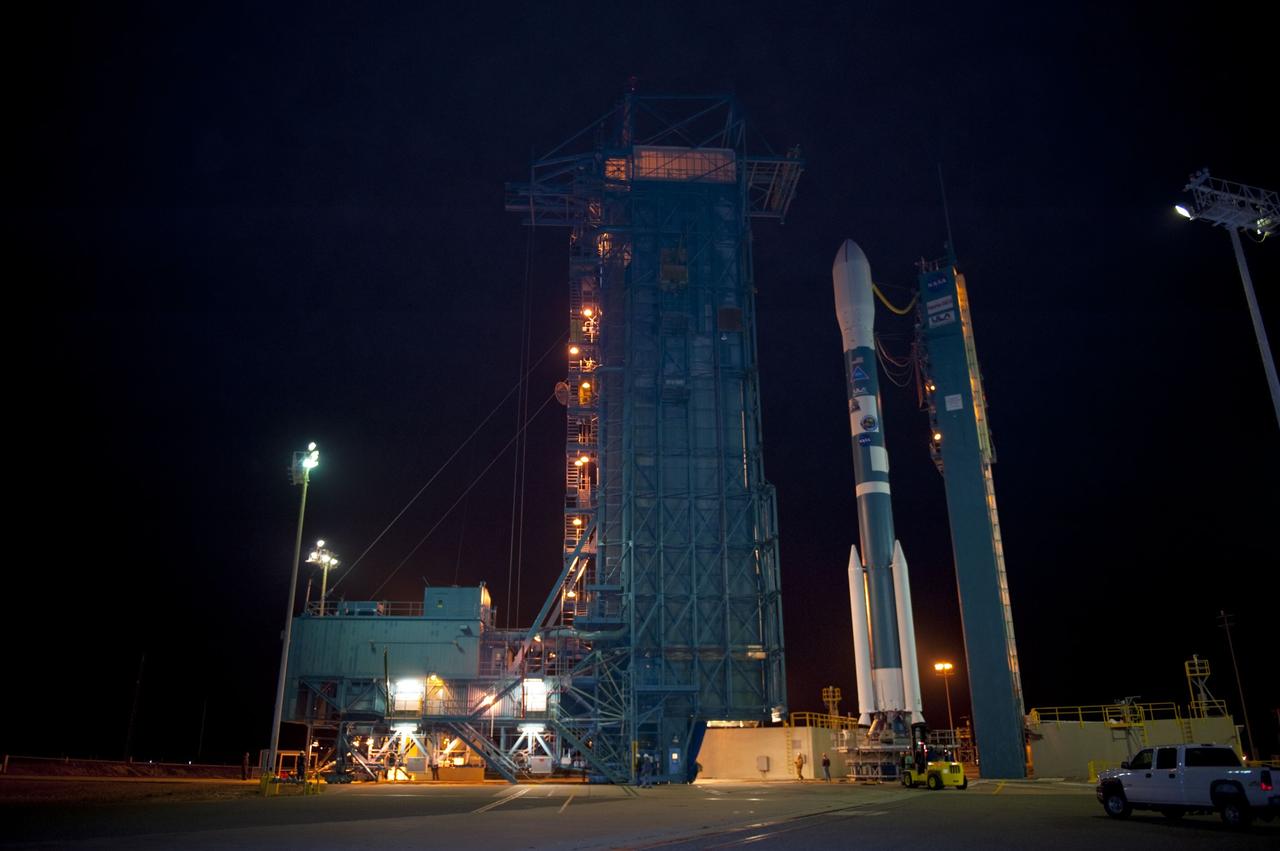
VANDENBERG AIR FORCE BASE, Calif. -- The mobile service tower at NASA's Launch Complex-2 at Vandenberg Air Force Base in California has moved away from the United Launch Alliance Delta II rocket with the Aquarius/SAC-D spacecraft atop in preparation for launch. Liftoff is slated for 7:20 PDT/10:20 EDT today. Aquarius, the NASA-built instrument on the SAC-D spacecraft will provide new insights into how variations in ocean surface salinity relate to fundamental climate processes on its three-year mission. For more information visit: www.nasa.gov/aquarius. Photo credit: NASA/VAFB

VANDENBERG AIR FORCE BASE, Calif. -- The mobile service tower at NASA's Launch Complex-2 at Vandenberg Air Force Base in California has moved away from the United Launch Alliance Delta II rocket with the Aquarius/SAC-D spacecraft atop in preparation for launch. Liftoff is slated for 7:20 PDT/10:20 EDT today. Aquarius, the NASA-built instrument on the SAC-D spacecraft will provide new insights into how variations in ocean surface salinity relate to fundamental climate processes on its three-year mission. For more information visit: www.nasa.gov/aquarius. Photo credit: NASA/VAFB
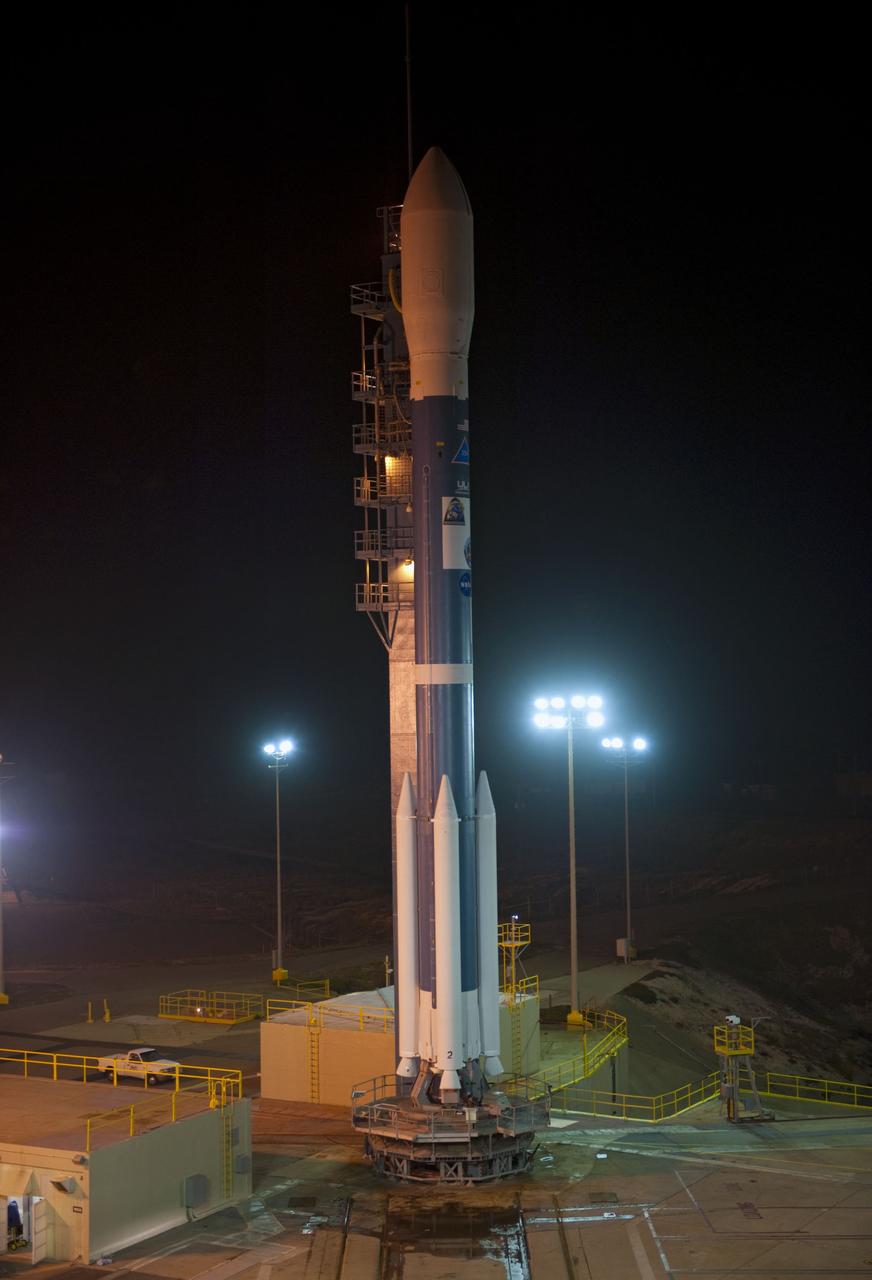
VANDENBERG AIR FORCE BASE, Calif. -- At NASA's Launch Complex-2 at Vandenberg Air Force Base in California the United Launch Alliance Delta II rocket with the Aquarius/SAC-D spacecraft atop is prepared for launch. Liftoff is slated for 7:20 PDT/10:20 EDT today. Aquarius, the NASA-built instrument on the SAC-D spacecraft will provide new insights into how variations in ocean surface salinity relate to fundamental climate processes on its three-year mission. For more information visit: www.nasa.gov/aquarius. Photo credit: NASA/VAFB
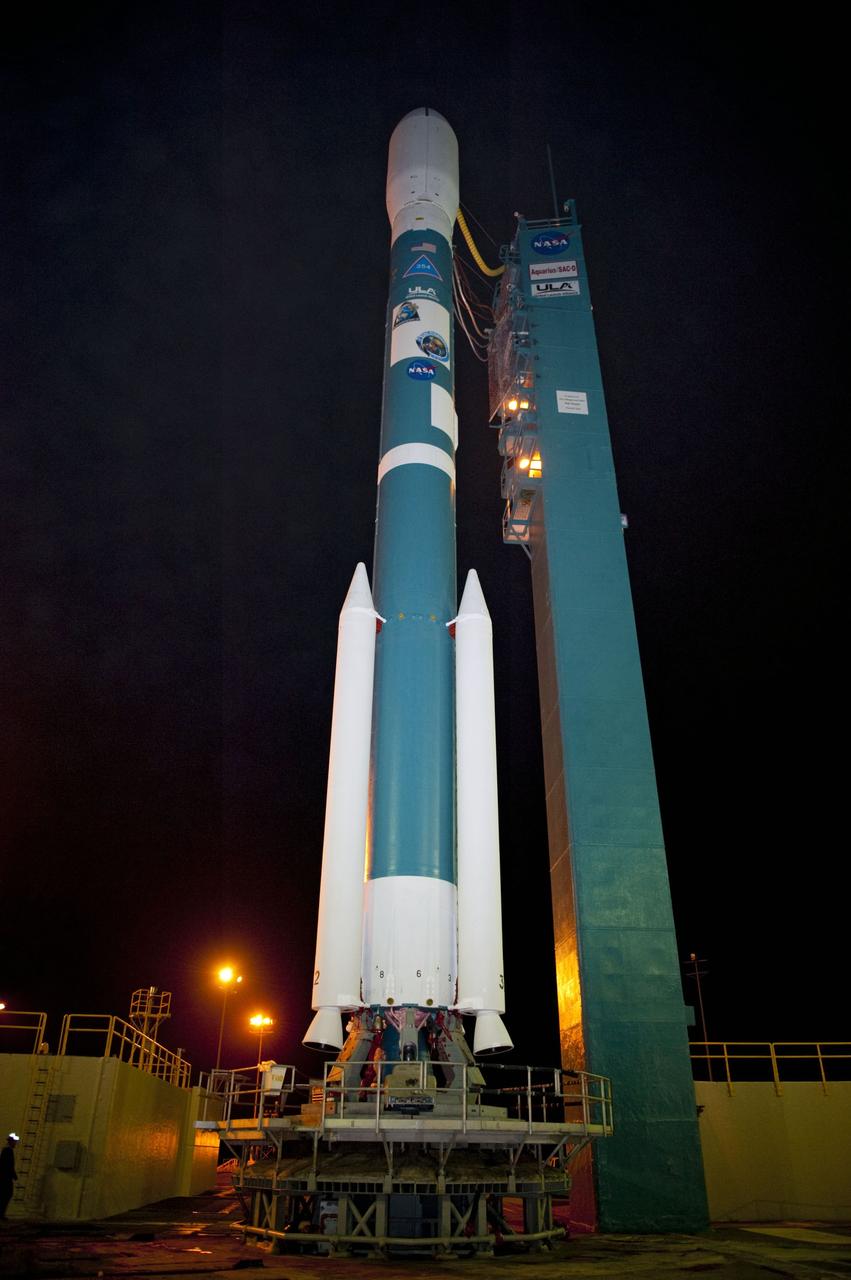
VANDENBERG AIR FORCE BASE, Calif. -- At NASA's Launch Complex-2 at Vandenberg Air Force Base in California the United Launch Alliance Delta II rocket with the Aquarius/SAC-D spacecraft atop is prepared for launch. Liftoff is slated for 7:20 PDT/10:20 EDT today. Aquarius, the NASA-built instrument on the SAC-D spacecraft will provide new insights into how variations in ocean surface salinity relate to fundamental climate processes on its three-year mission. For more information visit: www.nasa.gov/aquarius. Photo credit: NASA/VAFB
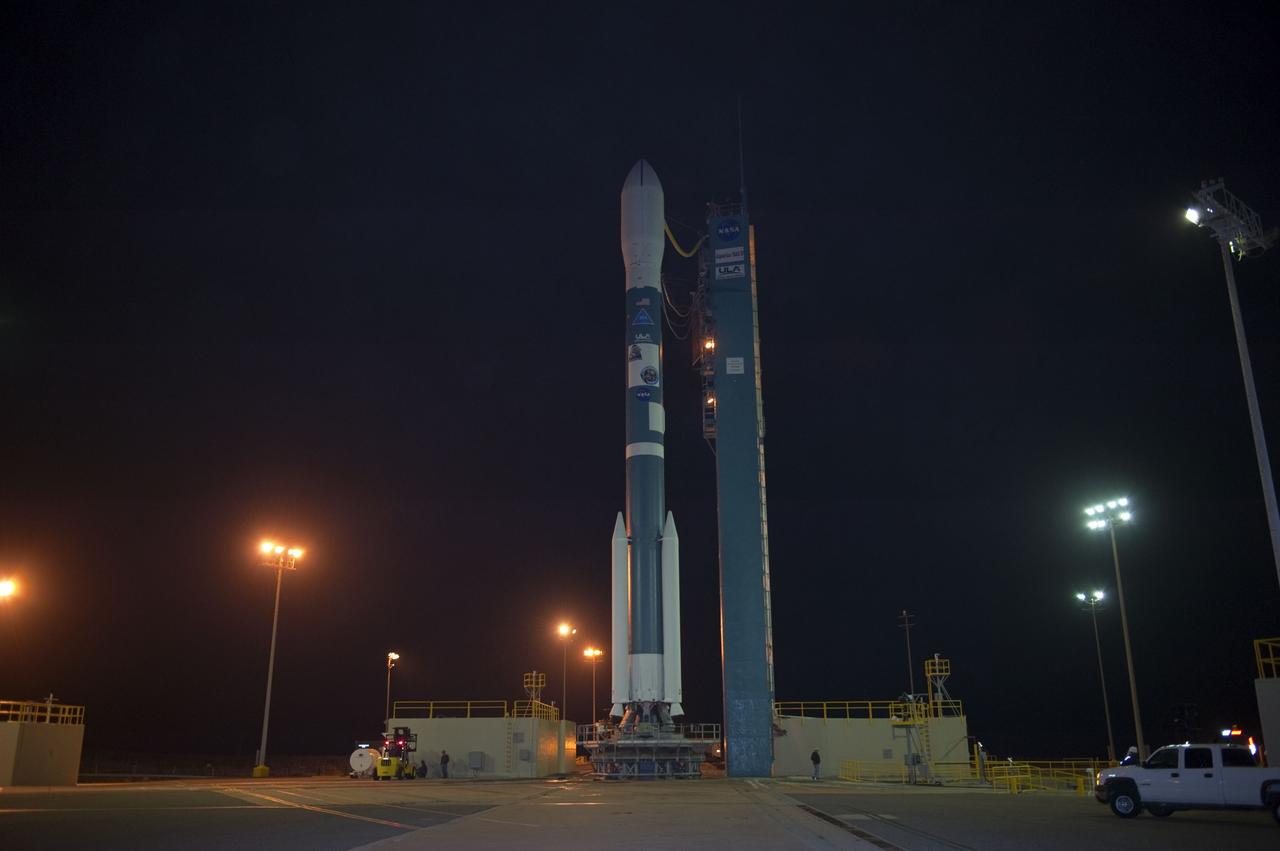
VANDENBERG AIR FORCE BASE, Calif. -- At NASA's Launch Complex-2 at Vandenberg Air Force Base in California the United Launch Alliance Delta II rocket with the Aquarius/SAC-D spacecraft atop is prepared for launch. Liftoff is slated for 7:20 PDT/10:20 EDT today. Aquarius, the NASA-built instrument on the SAC-D spacecraft will provide new insights into how variations in ocean surface salinity relate to fundamental climate processes on its three-year mission. For more information visit: www.nasa.gov/aquarius. Photo credit: NASA/VAFB
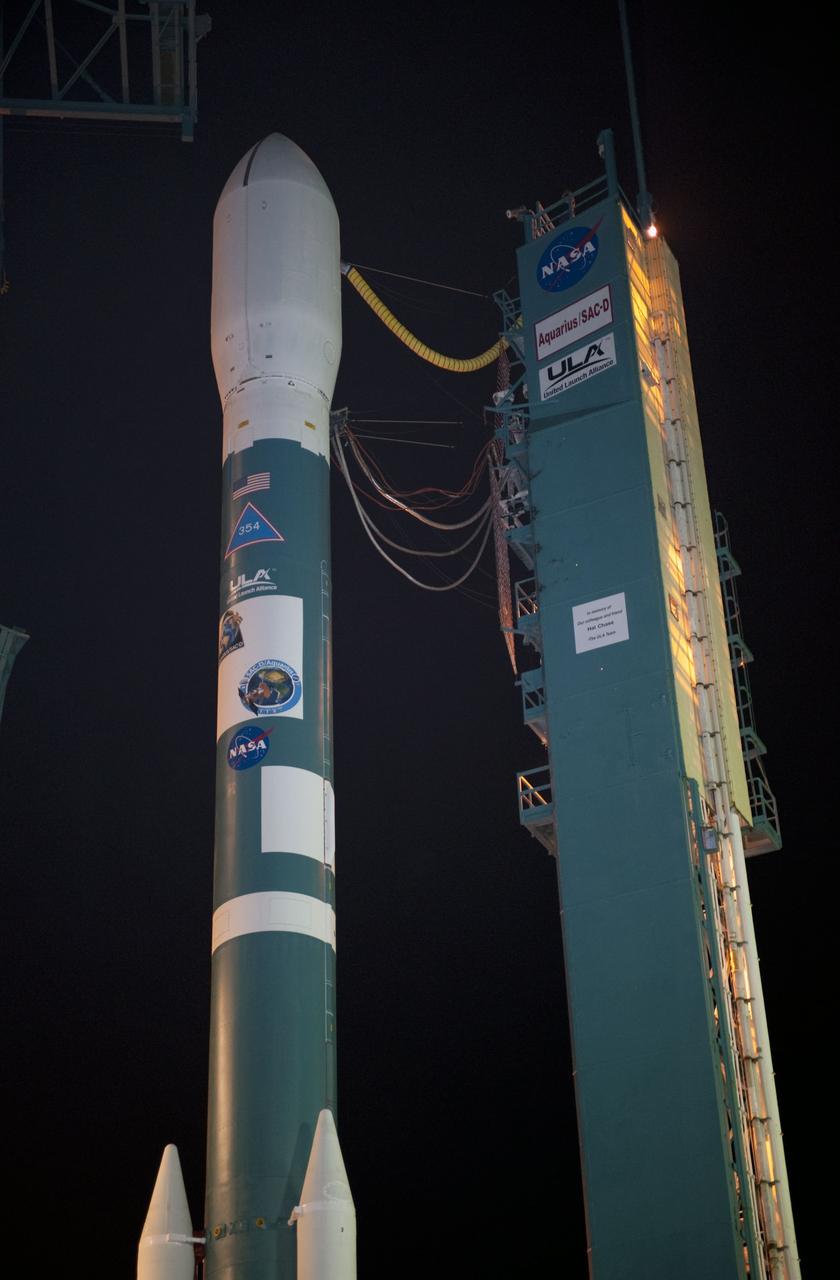
VANDENBERG AIR FORCE BASE, Calif. -- The mobile service tower at NASA's Launch Complex-2 at Vandenberg Air Force Base in California has moved away from the United Launch Alliance Delta II rocket with the Aquarius/SAC-D spacecraft atop in preparation for launch. Liftoff is slated for 7:20 PDT/10:20 EDT today. Aquarius, the NASA-built instrument on the SAC-D spacecraft will provide new insights into how variations in ocean surface salinity relate to fundamental climate processes on its three-year mission. For more information visit: www.nasa.gov/aquarius. Photo credit: NASA/VAFB
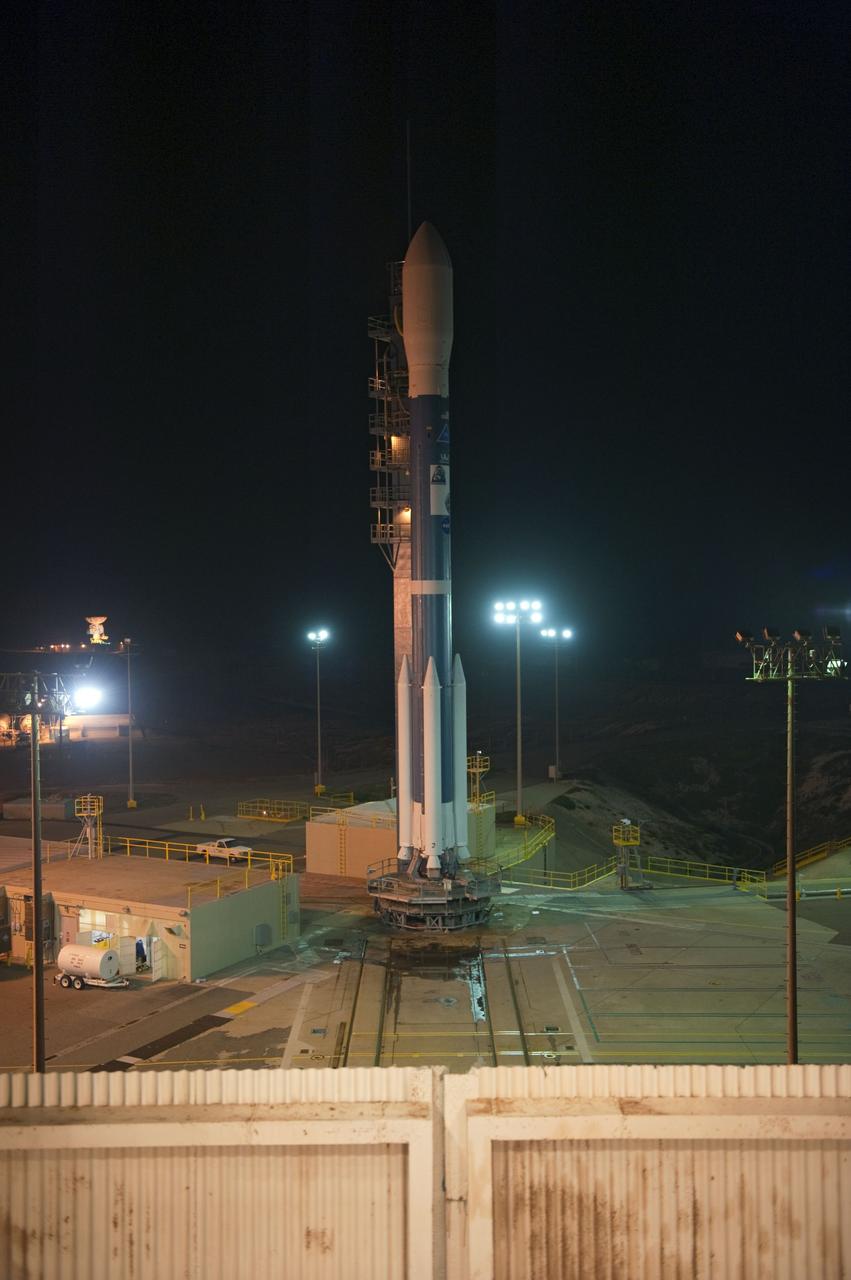
VANDENBERG AIR FORCE BASE, Calif. -- At NASA's Launch Complex-2 at Vandenberg Air Force Base in California the United Launch Alliance Delta II rocket with the Aquarius/SAC-D spacecraft atop is prepared for launch. Liftoff is slated for 7:20 PDT/10:20 EDT today. Aquarius, the NASA-built instrument on the SAC-D spacecraft will provide new insights into how variations in ocean surface salinity relate to fundamental climate processes on its three-year mission. For more information visit: www.nasa.gov/aquarius. Photo credit: NASA/VAFB
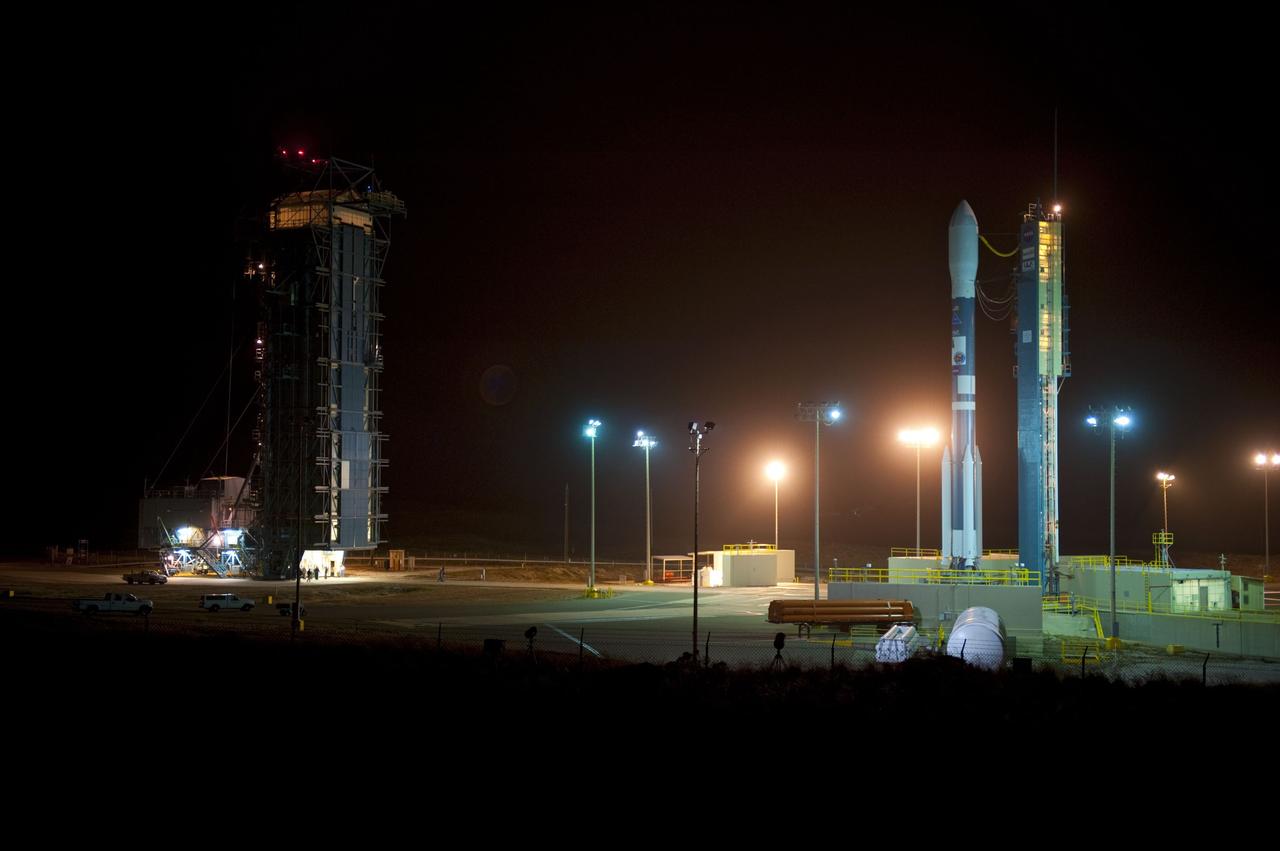
VANDENBERG AIR FORCE BASE, Calif. -- At NASA's Launch Complex-2 at Vandenberg Air Force Base in California the United Launch Alliance Delta II rocket with the Aquarius/SAC-D spacecraft atop is prepared for launch. Liftoff is slated for 7:20 PDT/10:20 EDT today. Aquarius, the NASA-built instrument on the SAC-D spacecraft will provide new insights into how variations in ocean surface salinity relate to fundamental climate processes on its three-year mission. For more information visit: www.nasa.gov/aquarius. Photo credit: NASA/VAFB
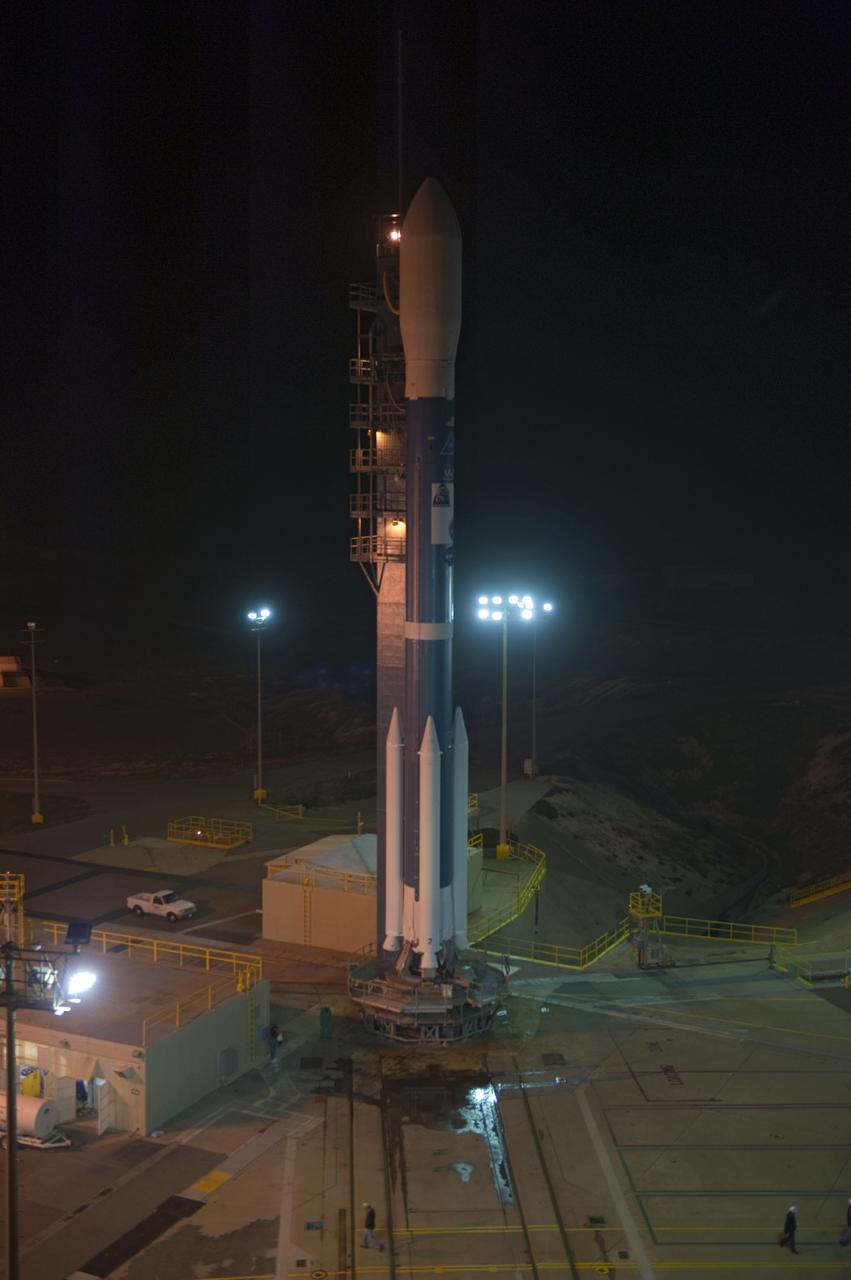
VANDENBERG AIR FORCE BASE, Calif. -- At NASA's Launch Complex-2 at Vandenberg Air Force Base in California the United Launch Alliance Delta II rocket with the Aquarius/SAC-D spacecraft atop is prepared for launch. Liftoff is slated for 7:20 PDT/10:20 EDT today. Aquarius, the NASA-built instrument on the SAC-D spacecraft will provide new insights into how variations in ocean surface salinity relate to fundamental climate processes on its three-year mission. For more information visit: www.nasa.gov/aquarius. Photo credit: NASA/VAFB
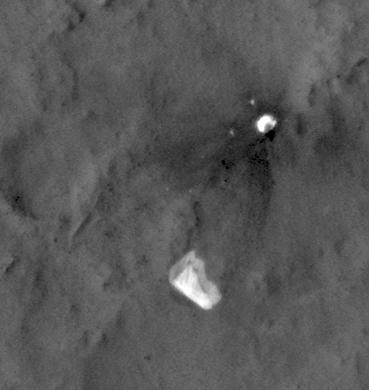
This image from NASA Mars Reconnaissance Orbiter shows wind-caused changes in the parachute of NASA Mars Science Laboratory spacecraft as the chute lay on the Martian ground during months after its use in safe landing of the Curiosity rover.
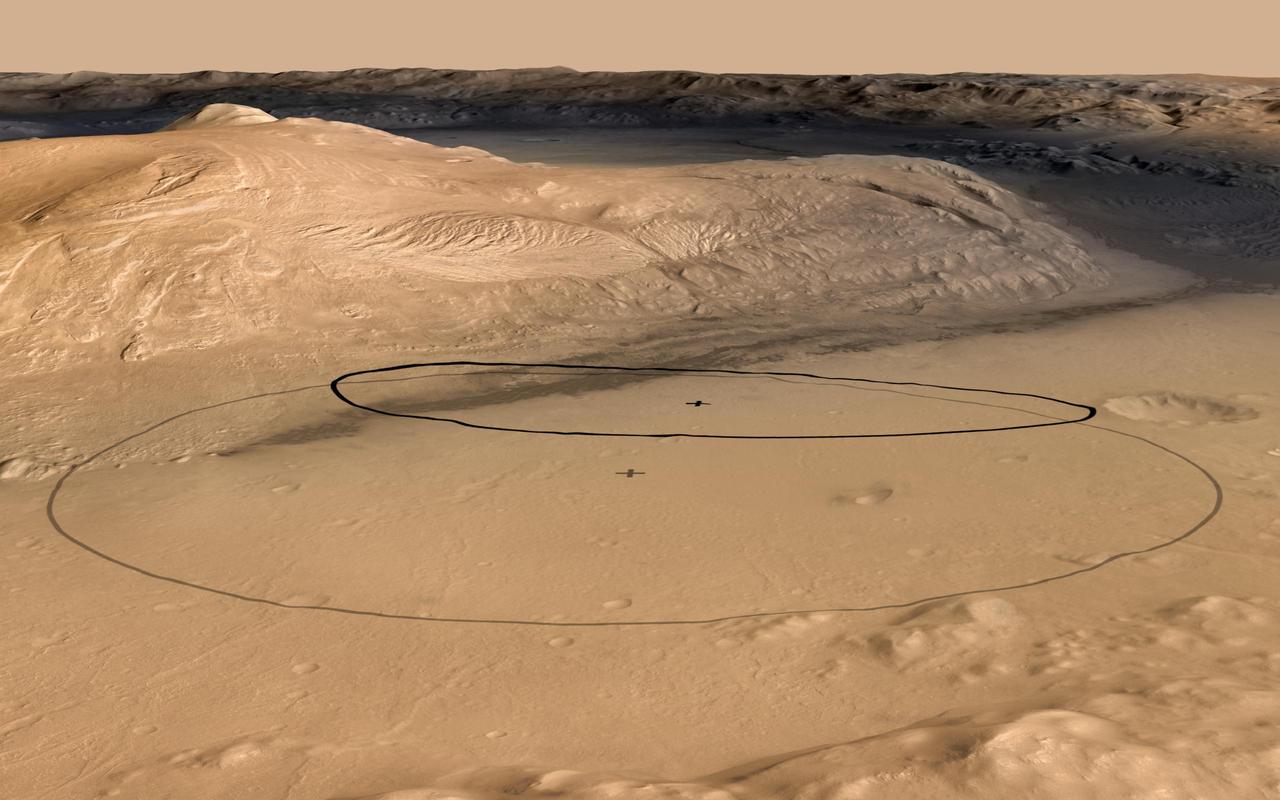
This image shows changes in the target landing area for Curiosity, NASA Mars Science Laboratory rover. The larger ellipse for the target area has been revised to the smaller ellipse centered nearer to the foot of Mount Sharp, inside Gale Crater.
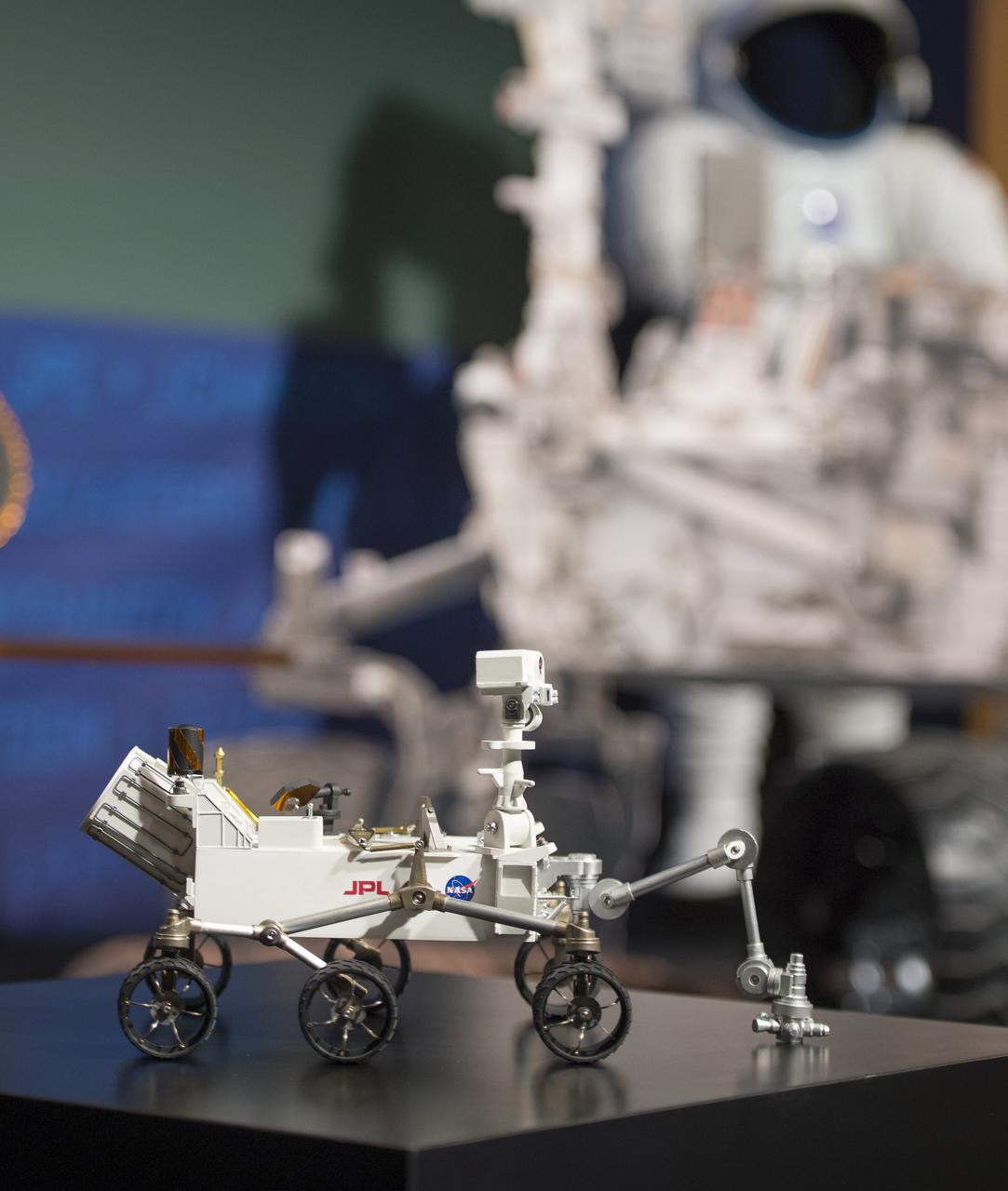
A small-scaled model of NASA's Curiosity rover is seen at a public event observing the first anniversary of the Curiosity rover's landing on Mars, Tuesday, August 6th, 2013 in Washington. The Mars Science Laboratory mission successfully placed the one-ton Curiosity rover on the surface of Mars on Aug. 6, 2012, about 1 mile from the center of its 12-mile-long target area. Within the first eight months of a planned 23-months primary mission, Curiosity met its major science objective of finding evidence of a past environment well-suited to support microbial life. Photo Credit: (NASA/Carla Cioffi)
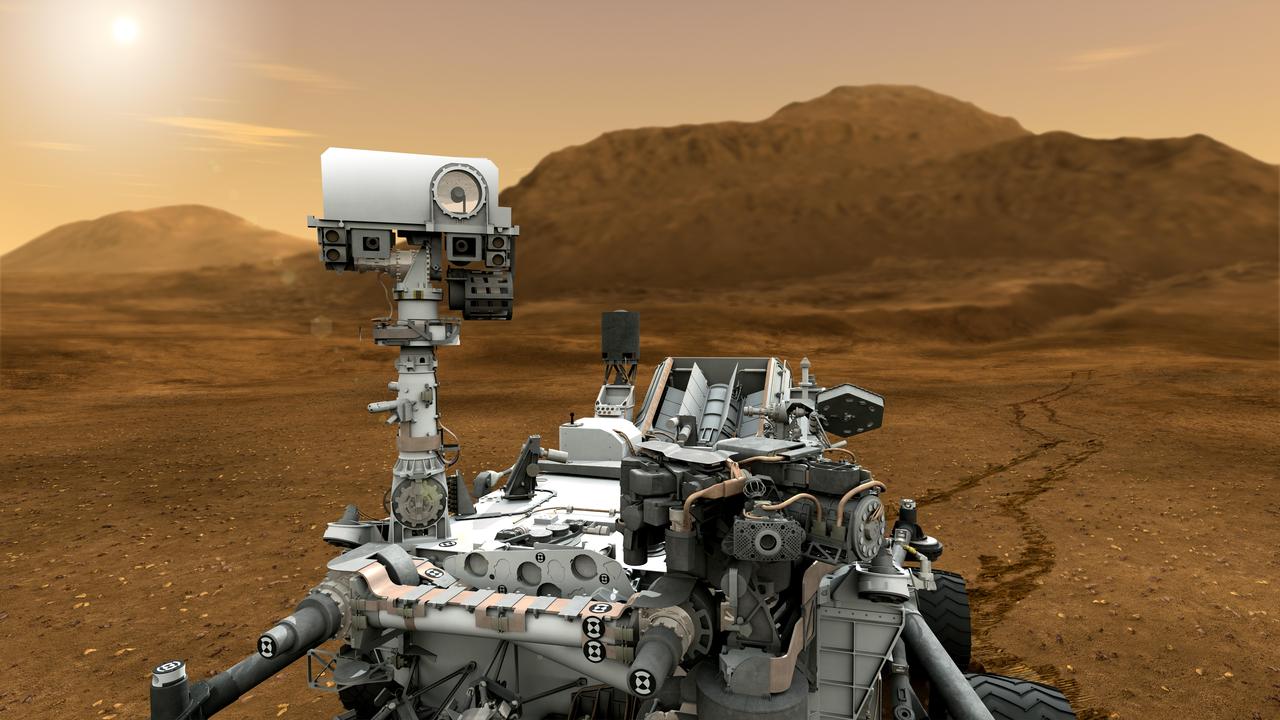
This artist concept features NASA Mars Science Laboratory Curiosity rover. The mast, or rover head, rises to about 2.1 meters 6.9 feet above ground level, about as tall as a basketball player.
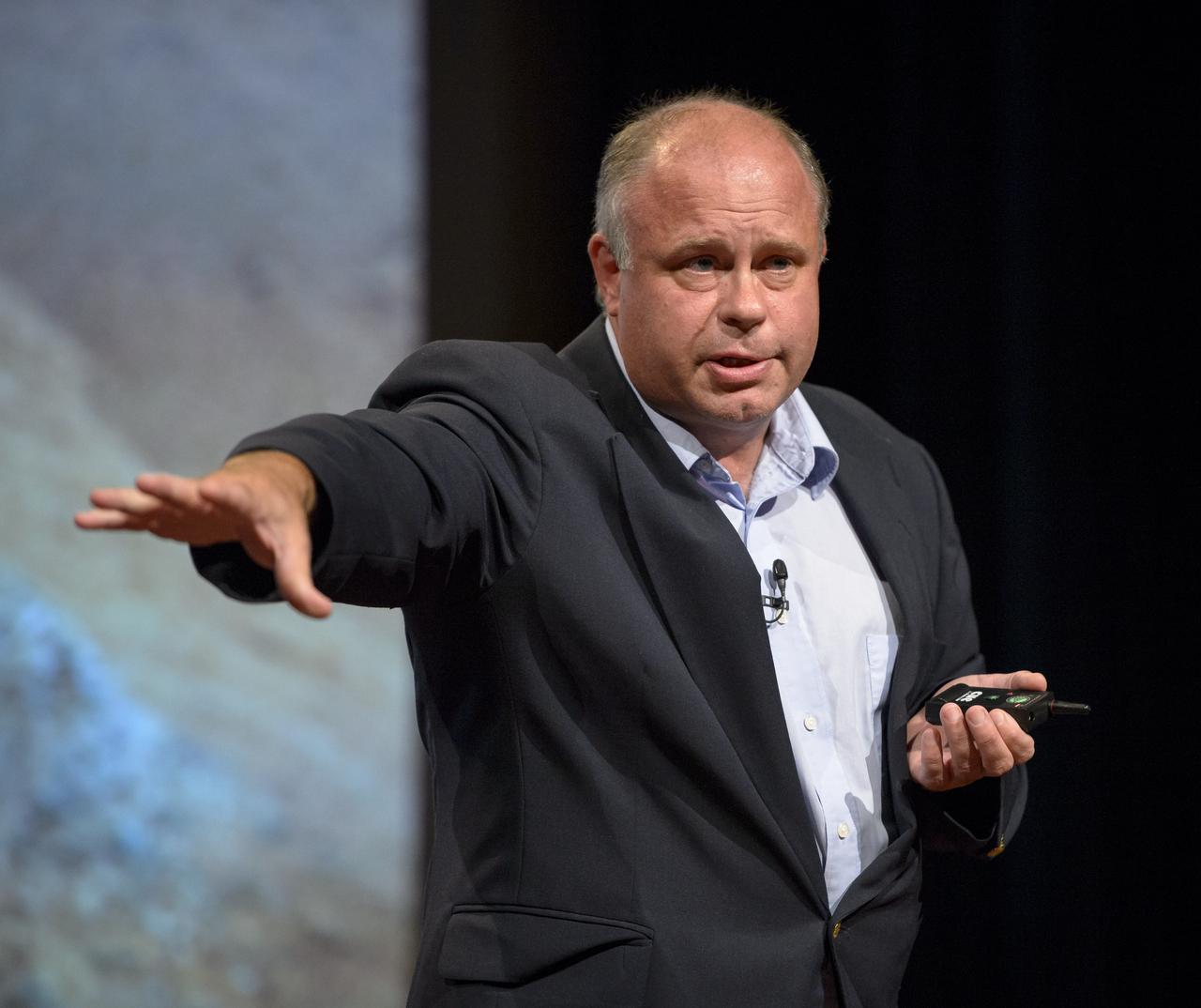
John Grant, geologist and long-term planner, Curiosity Mars Science Laboratory, discusses what we’ve learned from Curiosity and the other Mars rovers during a “Mars Up Close” panel discussion, Tuesday, August 5, 2014, at the National Geographic Society headquarters in Washington. Photo Credit: (NASA/Bill Ingalls)

John Grant, geologist and long-term planner, Curiosity Mars Science Laboratory, discusses what we’ve learned from Curiosity and the other Mars rovers during a “Mars Up Close” panel discussion, Tuesday, August 5, 2014, at the National Geographic Society headquarters in Washington. Photo Credit: (NASA/Bill Ingalls)
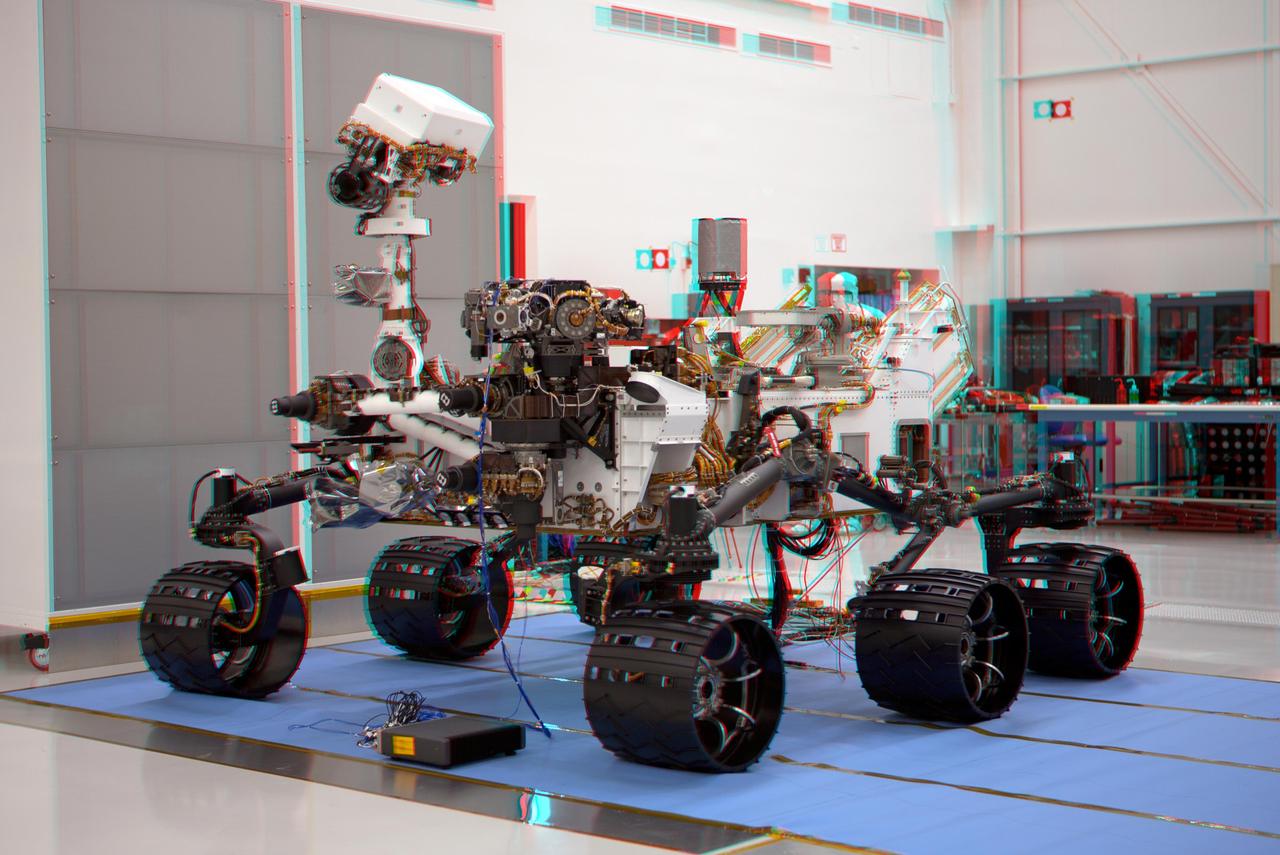
This stereo image of NASA Mars Science Laboratory Curiosity Rovert was taken May 26, 2011, in Spacecraft Assembly Facility at NASA Jet Propulsion Laboratory in Pasadena, Calif. 3D glasses are necessary to view this image.
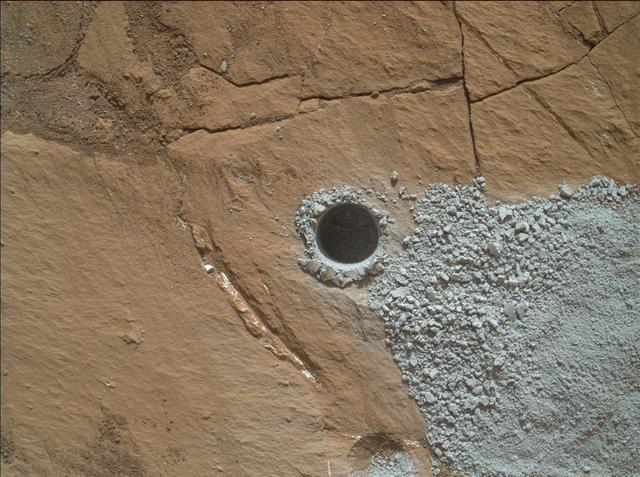
NASA's Curiosity Mars Rover drilled this hole to collect sample material from a rock target called "Buckskin" on July 30, 2015, during the 1060th Martian day, or sol, of the rover's work on Mars. The diameter is slightly smaller than a U.S. dime. Curiosity landed on Mars on Aug. 6, 2012, Universal Time (evening of Aug. 5, PDT). The rover took this image with the Mars Hand Lens Imager (MAHLI) camera, which is mounted on the same robotic arm as the sample-collecting drill. Rock powder from the collected sample was subsequently delivered to a laboratory inside the rover for analysis. The rover's drill did not experience any sign during this sample collection of an intermittent short-circuiting issue that was detected earlier in 2015. The Buckskin target is in an area near "Marias Pass" on lower Mount Sharp where Curiosity had detected unusually high levels of silica and hydrogen. MAHLI was built by Malin Space Science Systems, San Diego. NASA's Jet Propulsion Laboratory, a division of the California Institute of Technology in Pasadena, manages the Mars Science Laboratory Project for the NASA Science Mission Directorate, Washington. JPL designed and built the project's Curiosity rover. http://photojournal.jpl.nasa.gov/catalog/PIA19804
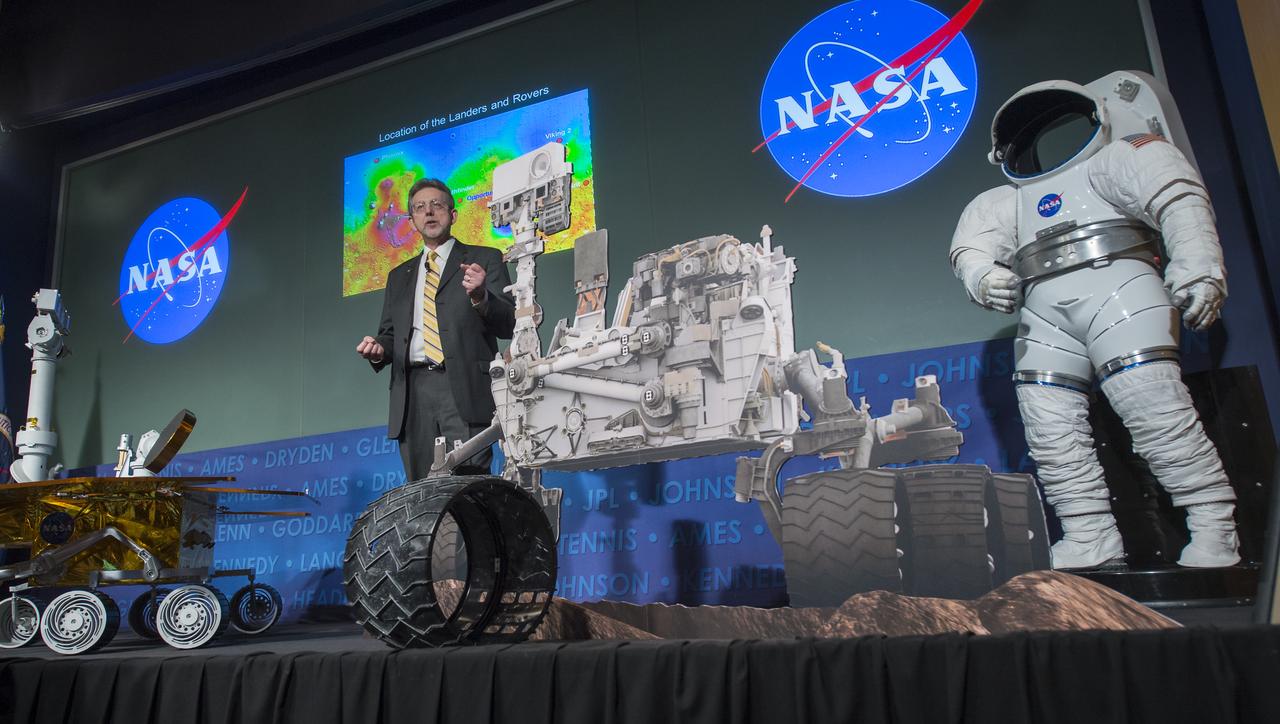
Jim Green, director, Planetary Division, NASA's Science Mission Directorate, speaks at a public event at NASA Headquarters observing the first anniversary of the Curiosity rover's landing on Mars, Tuesday, August 6th, 2013 in Washington. The Mars Science Laboratory mission successfully placed the one-ton Curiosity rover on the surface of Mars on Aug. 6, 2012, about 1 mile from the center of its 12-mile-long target area. Within the first eight months of a planned 23-months primary mission, Curiosity met its major science objective of finding evidence of a past environment well-suited to support microbial life. Photo Credit: (NASA/Carla Cioffi)
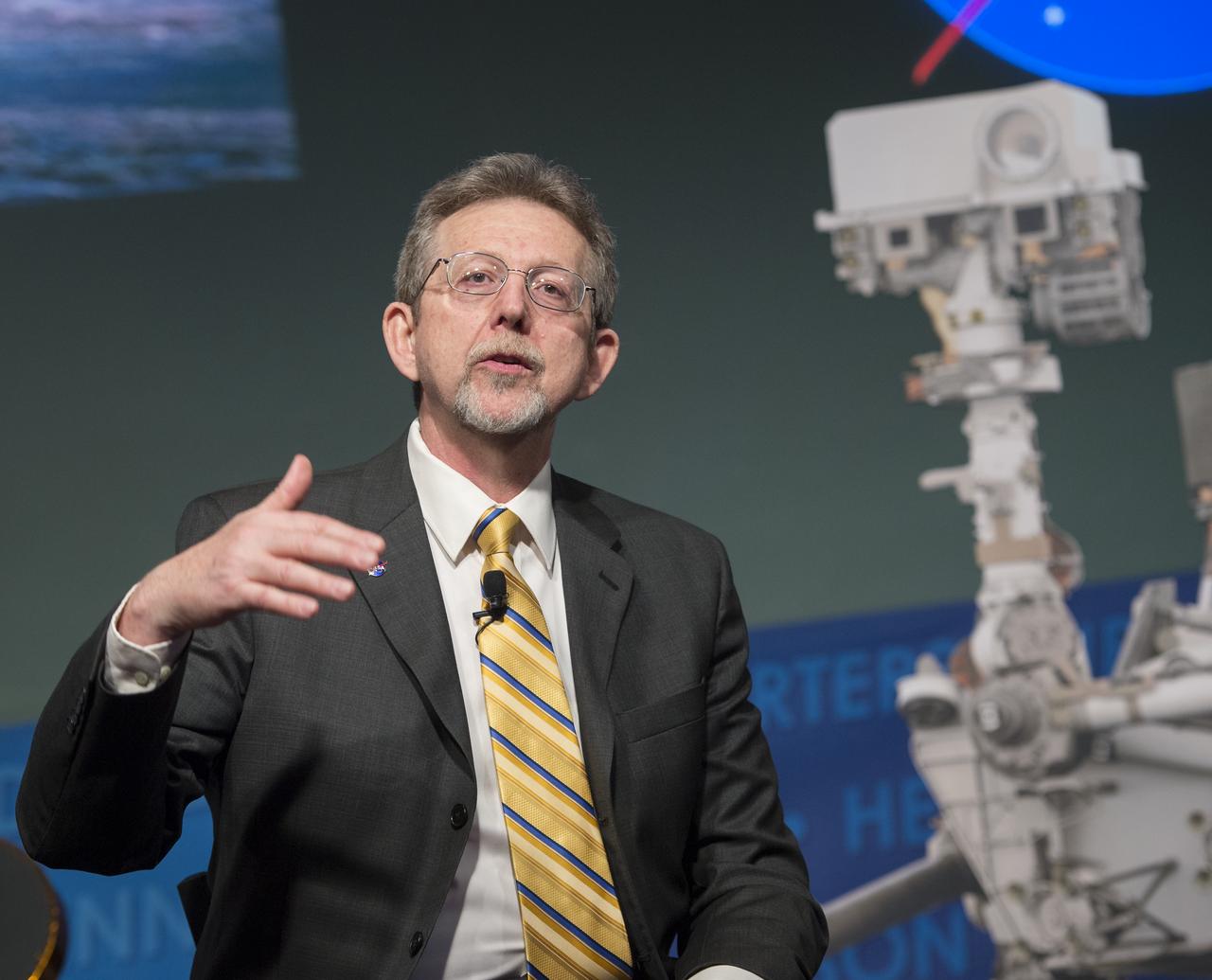
Jim Green, director, Planetary Division, NASA's Science Mission Directorate, speaks at a public event at NASA Headquarters observing the first anniversary of the Curiosity rover's landing on Mars, Tuesday, August 6th, 2013 in Washington. The Mars Science Laboratory mission successfully placed the one-ton Curiosity rover on the surface of Mars on Aug. 6, 2012, about 1 mile from the center of its 12-mile-long target area. Within the first eight months of a planned 23-months primary mission, Curiosity met its major science objective of finding evidence of a past environment well-suited to support microbial life. Photo Credit: (NASA/Carla Cioffi)
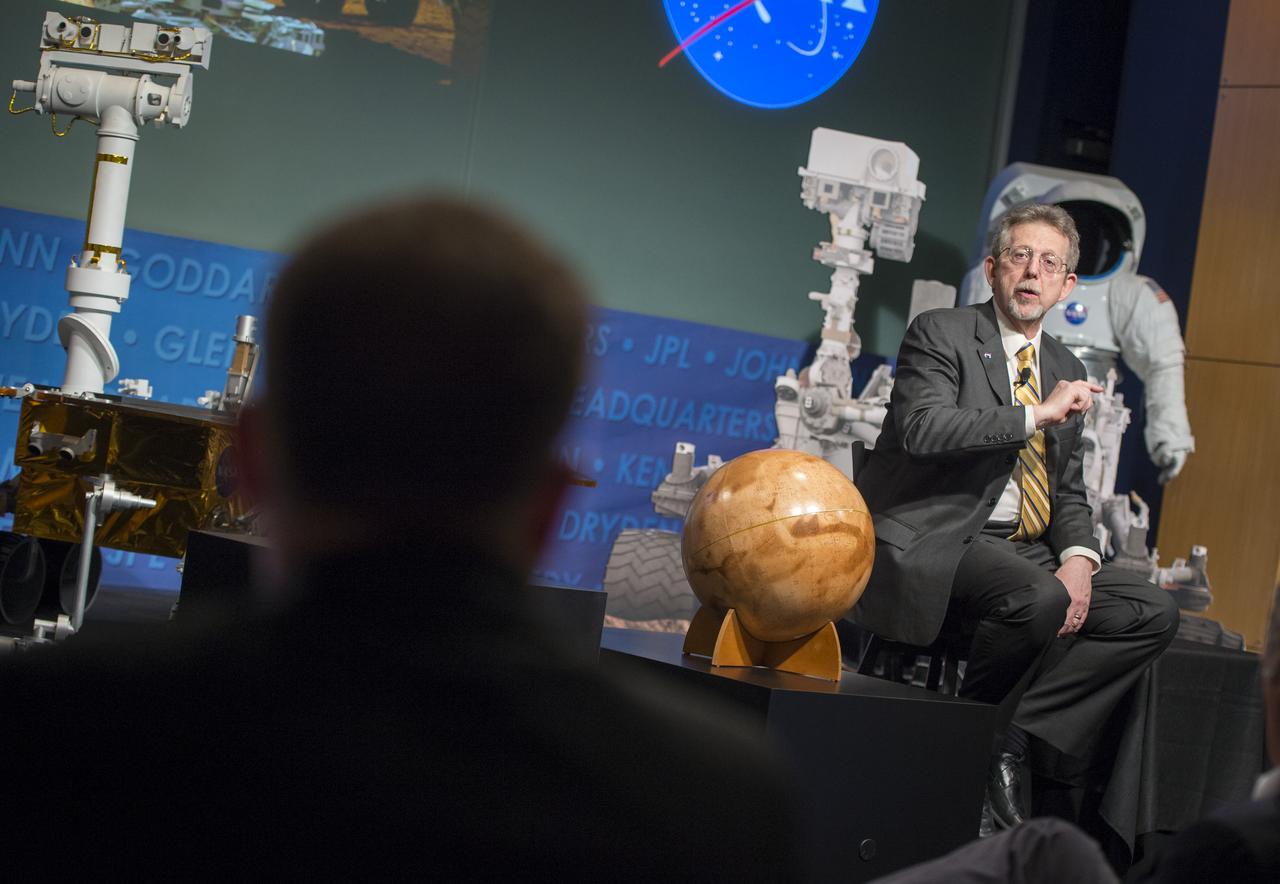
Jim Green, director, Planetary Division, NASA's Science Mission Directorate, answers a question at a public event at NASA Headquarters observing the first anniversary of the Curiosity rover's landing on Mars, Tuesday, August 6th, 2013 in Washington. The Mars Science Laboratory mission successfully placed the one-ton Curiosity rover on the surface of Mars on Aug. 6, 2012, about 1 mile from the center of its 12-mile-long target area. Within the first eight months of a planned 23-months primary mission, Curiosity met its major science objective of finding evidence of a past environment well-suited to support microbial life. Photo Credit: (NASA/Carla Cioffi)
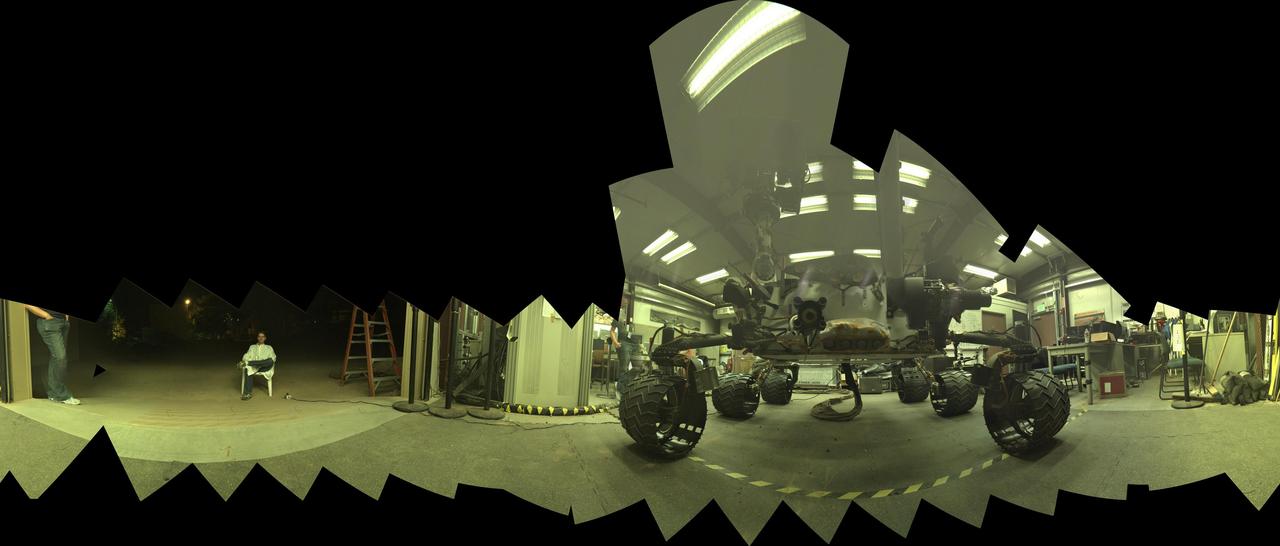
This view of a test rover at NASA's Jet Propulsion Laboratory, Pasadena, California, results from advance testing of arm positions and camera pointings for taking a low-angle self-portrait of NASA's Curiosity Mars rover. This rehearsal in California led to a dramatic Aug. 5, 2015, selfie of Curiosity, online at PIA19807. Curiosity's arm-mounted Mars Hand Lens Imager (MAHLI) camera took 92 of component images that were assembled into that mosaic. The rover team positioned the camera lower in relation to the rover body than for any previous full self-portrait of Curiosity. This practice version was taken at JPL's Mars Yard in July 2013, using the Vehicle System Test Bed (VSTB) rover, which has a test copy of MAHLI on its robotic arm. MAHLI was built by Malin Space Science Systems, San Diego. JPL, a division of the California Institute of Technology in Pasadena, manages the Mars Science Laboratory Project for the NASA Science Mission Directorate, Washington. JPL designed and built the project's Curiosity rover. http://photojournal.jpl.nasa.gov/catalog/PIA19810
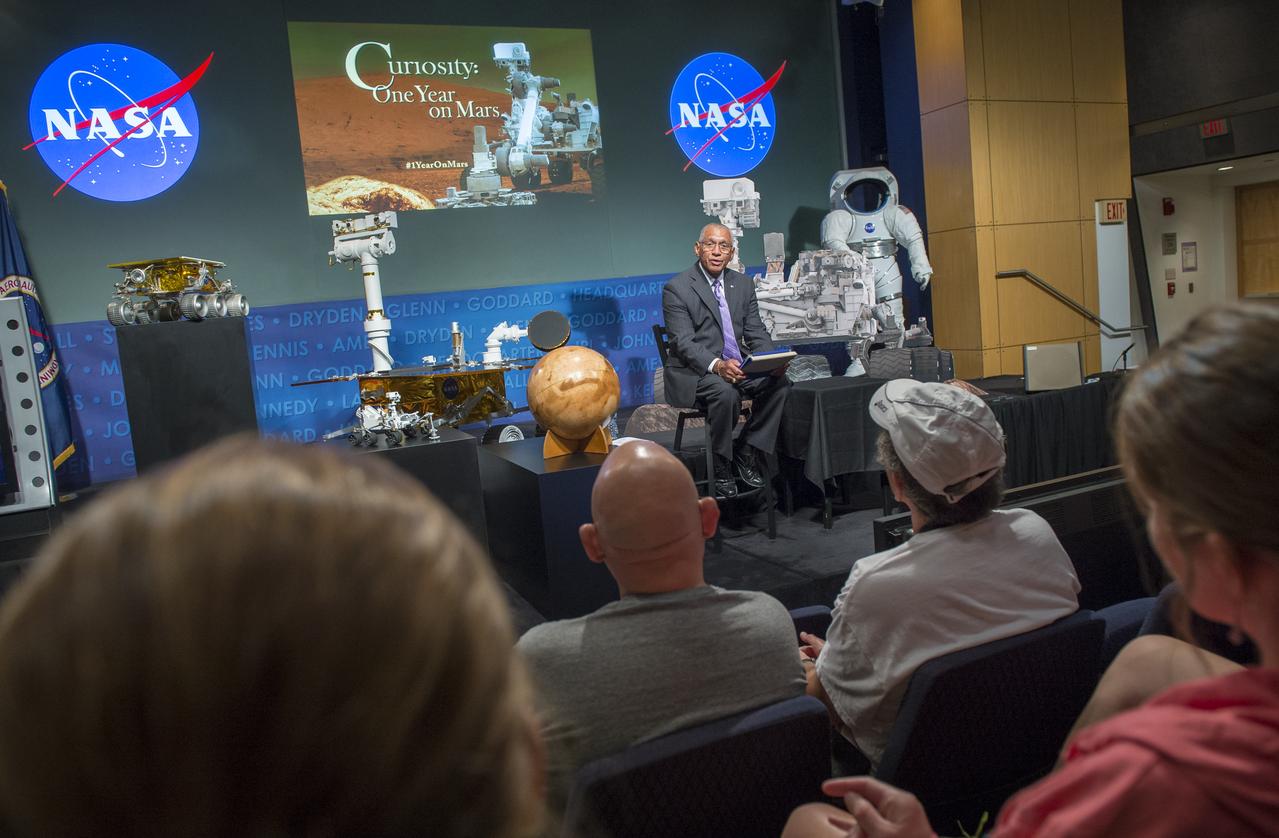
NASA Administrator Charles Bolden speaks at a public event at NASA Headquarters observing the first anniversary of the Curiosity rover's landing on Mars, Tuesday, August 6th, 2013 in Washington. The Mars Science Laboratory mission successfully placed the one-ton Curiosity rover on the surface of Mars on Aug. 6, 2012, about 1 mile from the center of its 12-mile-long target area. Within the first eight months of a planned 23-months primary mission, Curiosity met its major science objective of finding evidence of a past environment well-suited to support microbial life. Photo Credit: (NASA/Carla Cioffi)