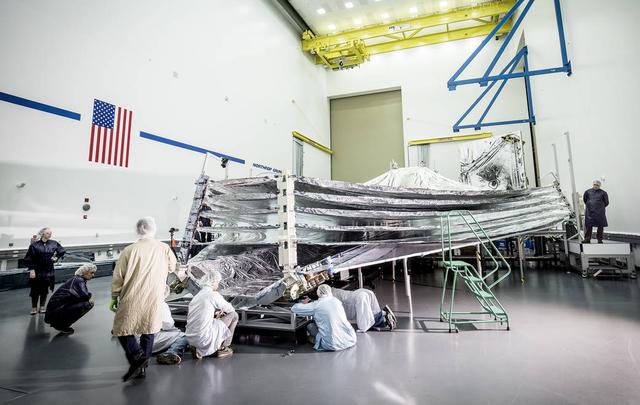
NASA's James Webb Space Telescope has a giant custom-built, kite-shaped sunshield driven by mechanics that will fold and unfold with a harmonious synchronicity 1 million miles from Earth. Like a car, many mechanical pieces in the Webb telescope's sunshield will work together to open it from its stored folded position in the rocket that will carry it into space. According to car manufacturers, a single car can have about 30,000 parts, counting every part down to the smallest screws. Like getting all of the parts in a car to operate together, the mechanical parts of the sunshield have to work in the same way. The sunshield support structure contains well over 7,000 flight parts, including springs, bearings, pulleys, magnets, etc. In addition, the sunshield has hundreds of custom fabricated pieces. Most mechanical pieces were developed exclusively for the sunshield, with a few from existing designs. Read more: <a href="http://go.nasa.gov/2cXcQMT" rel="nofollow">go.nasa.gov/2cXcQMT</a>
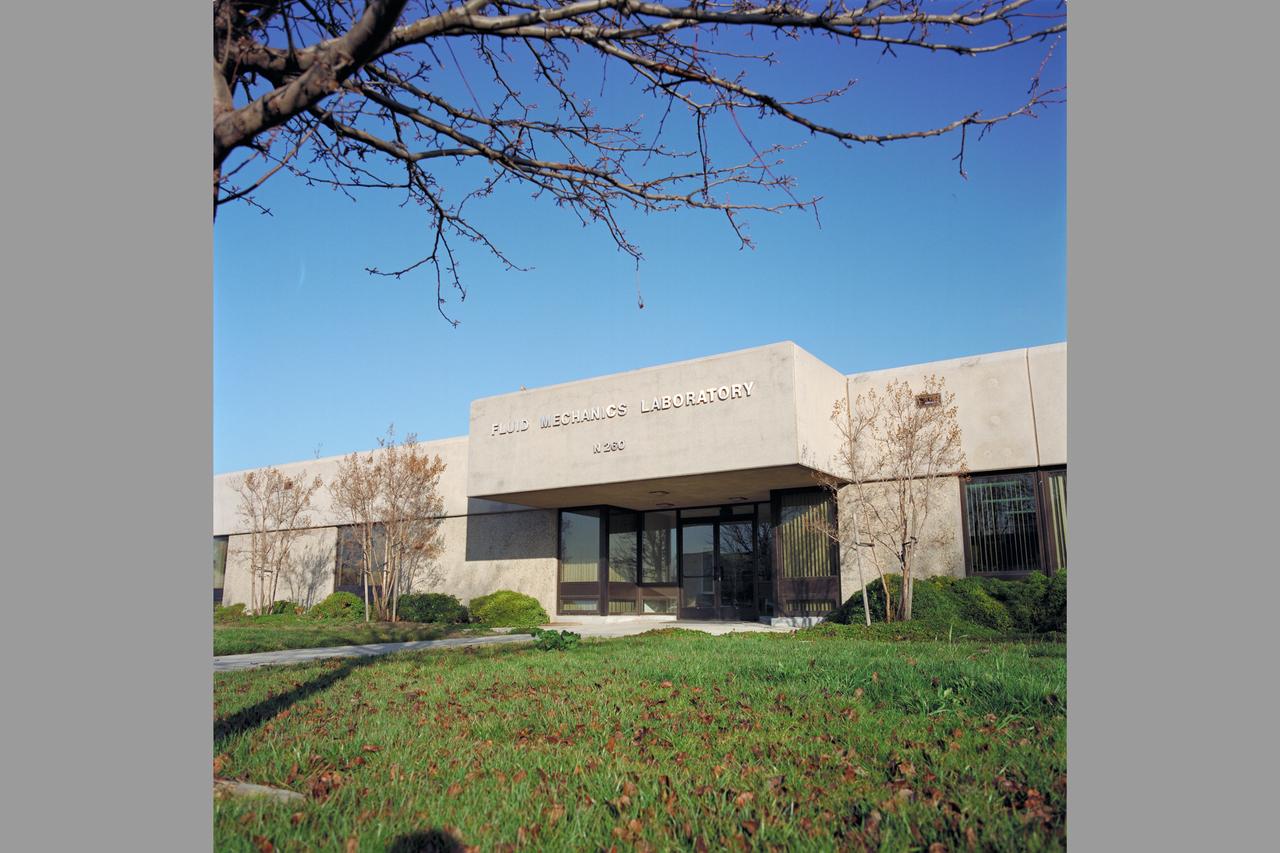
N-260 Fluid Mechanics Laboratory in afternoon light

A photograph of a tree near the N-260 Fluid Mechanics Laboratory building.

A photograph of a tree near the N-260 Fluid Mechanics Laboratory building.
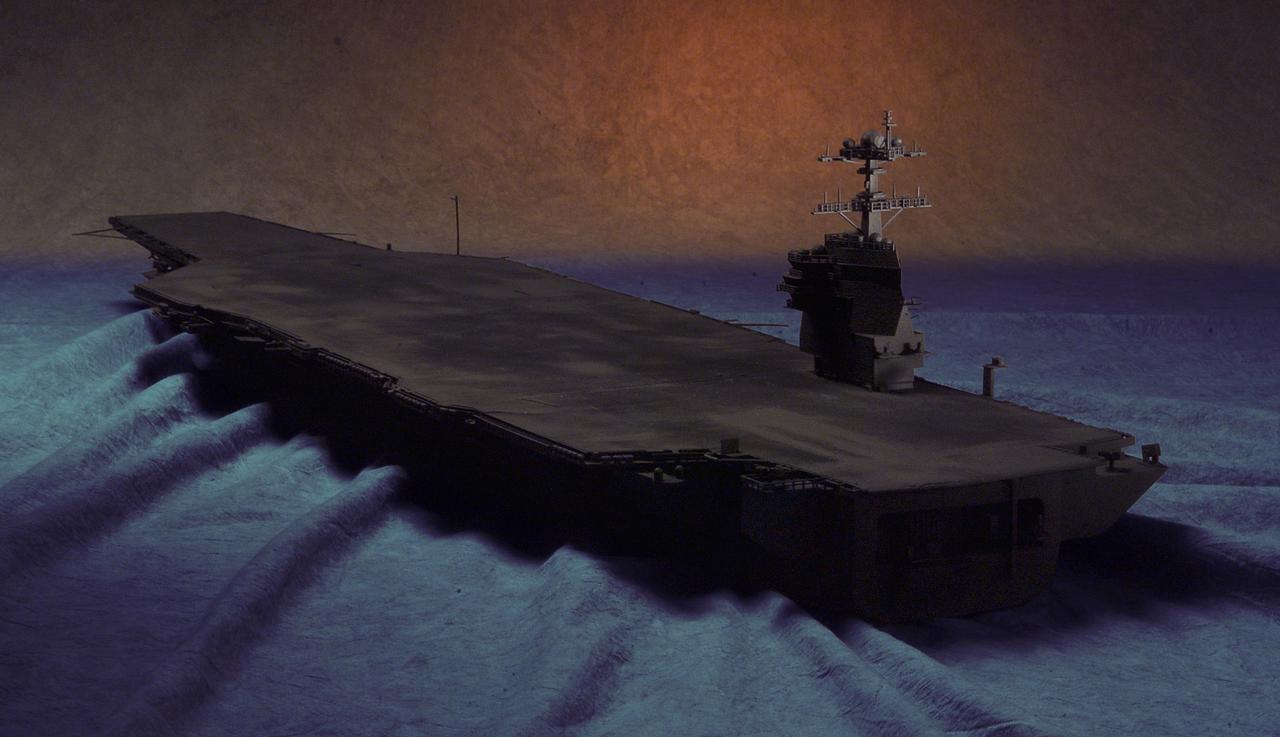
CVN78 CARRIER AIRFLOW STUDY IN FLUID MECHANICS LAB (CVN21)
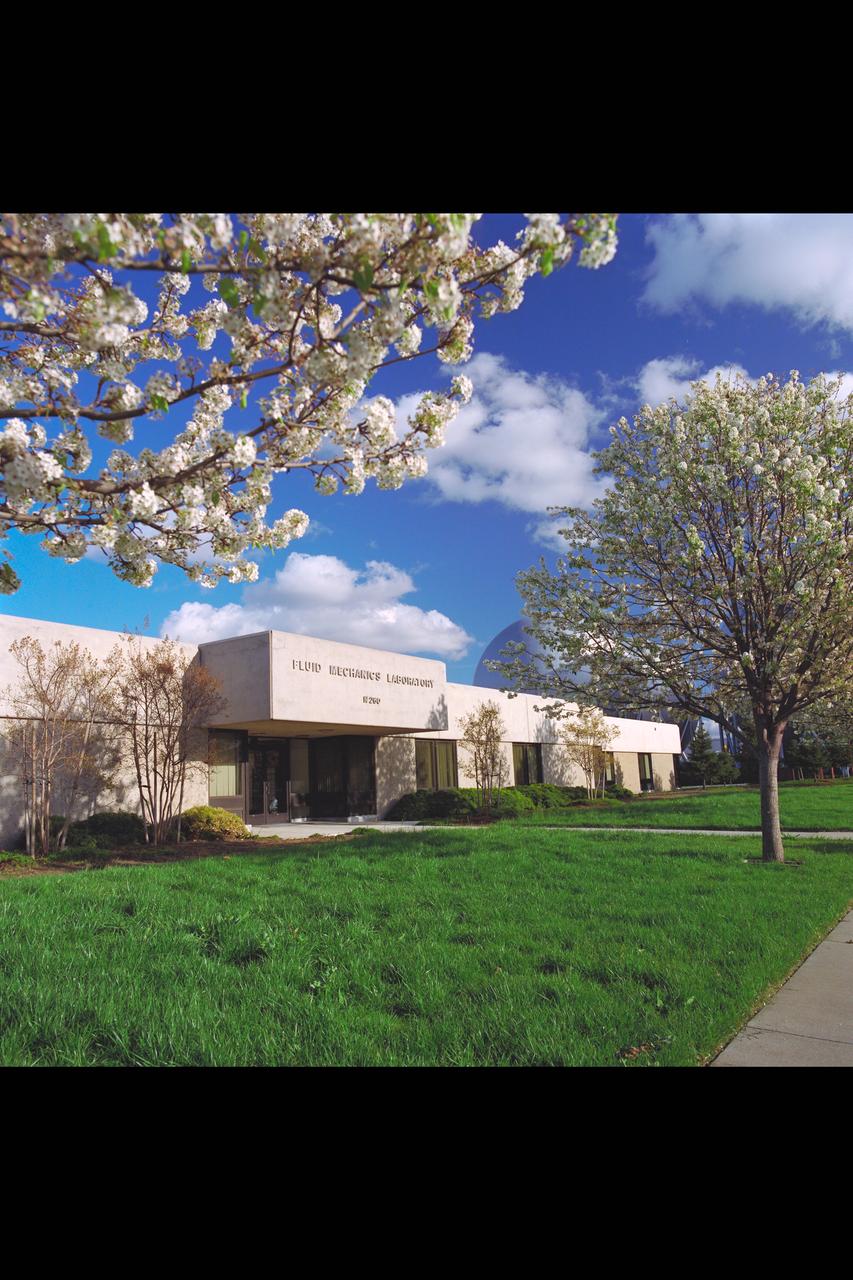
N-260 Fluid Mechanics Laboratory aerials (Morning) and ground (Afternoon) shots.
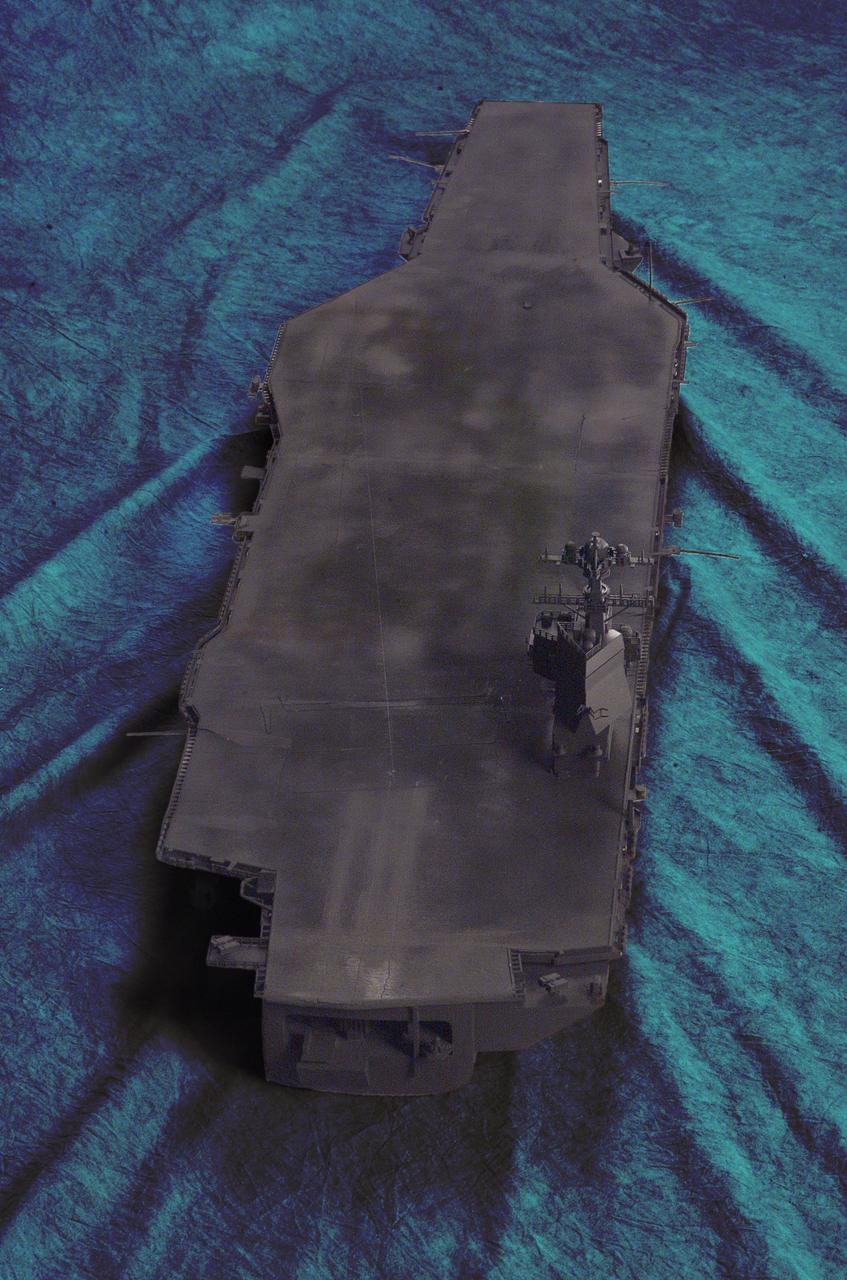
CVN78 CARRIER AIRFLOW STUDY IN FLUID MECHANICS LAB (CVN21)
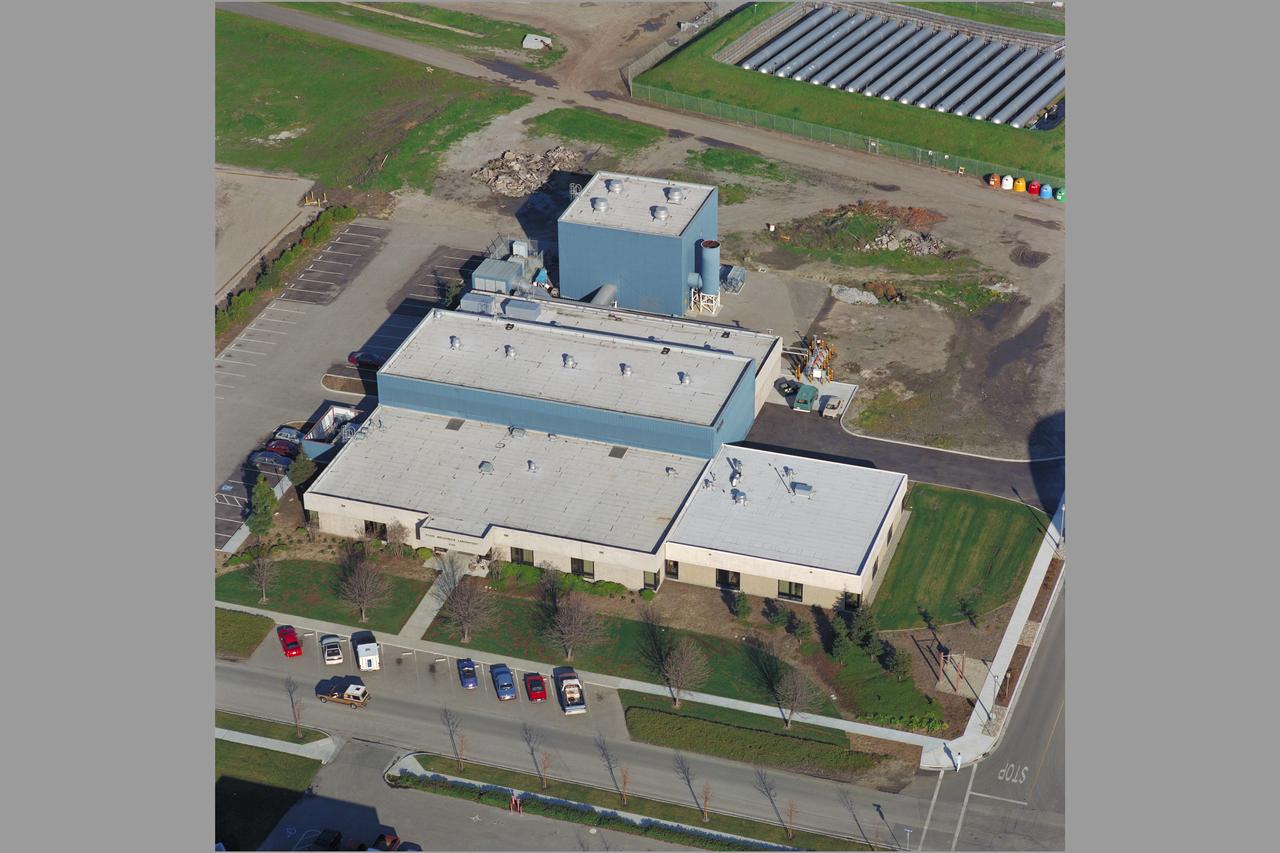
N-260 Fluid Mechanics Laboratory aerial in morning light
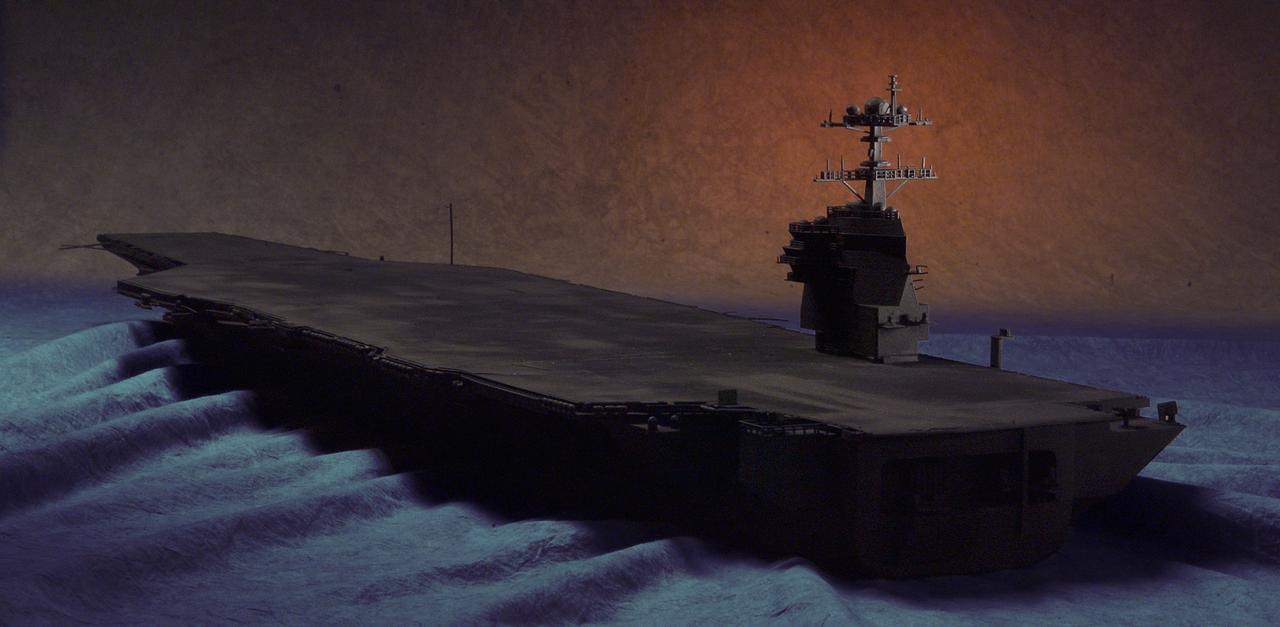
CVN78 CARRIER AIRFLOW STUDY IN FLUID MECHANICS LAB (CVN21)
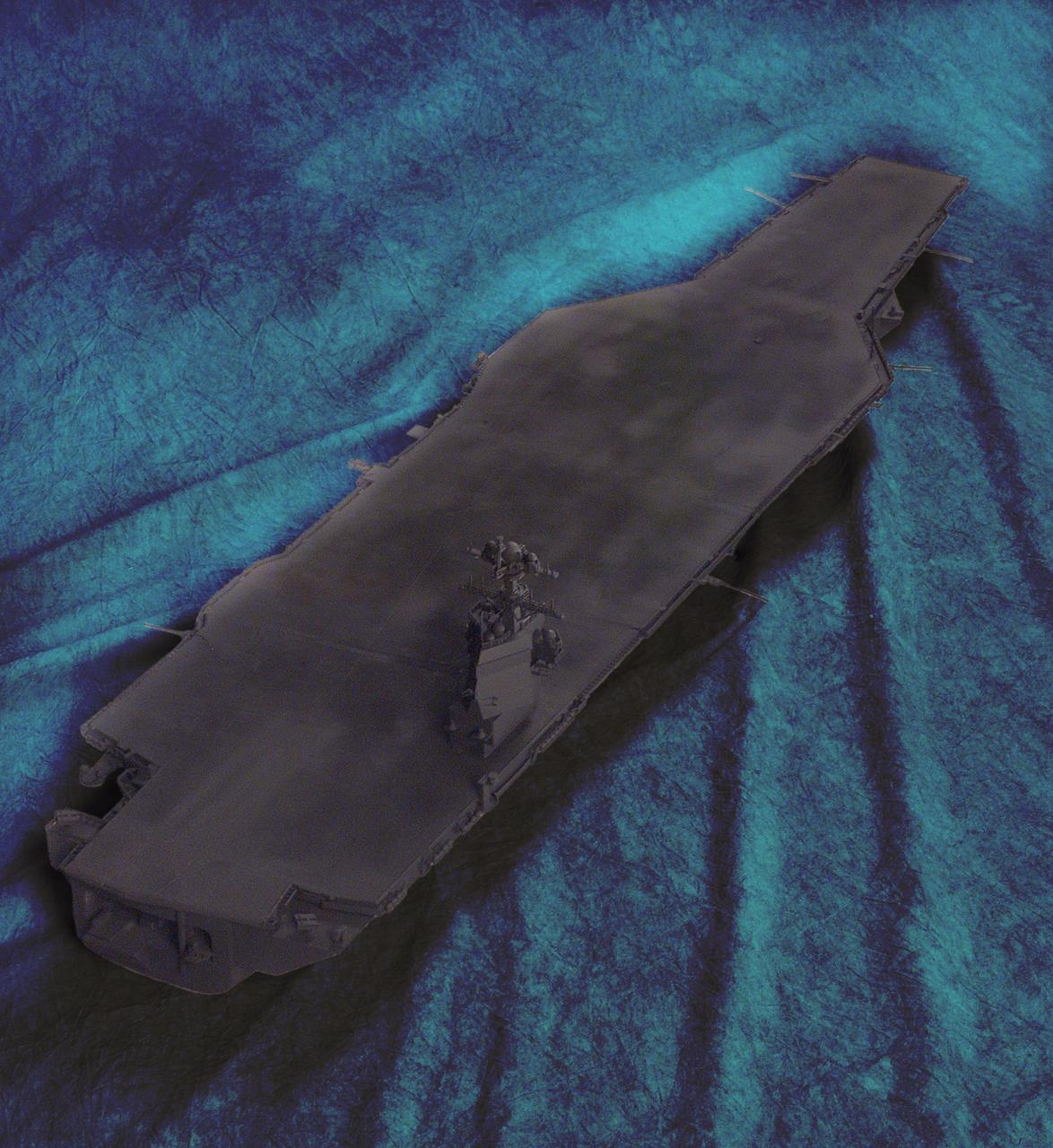
CVN78 CARRIER AIRFLOW STUDY IN FLUID MECHANICS LAB (CVN21)
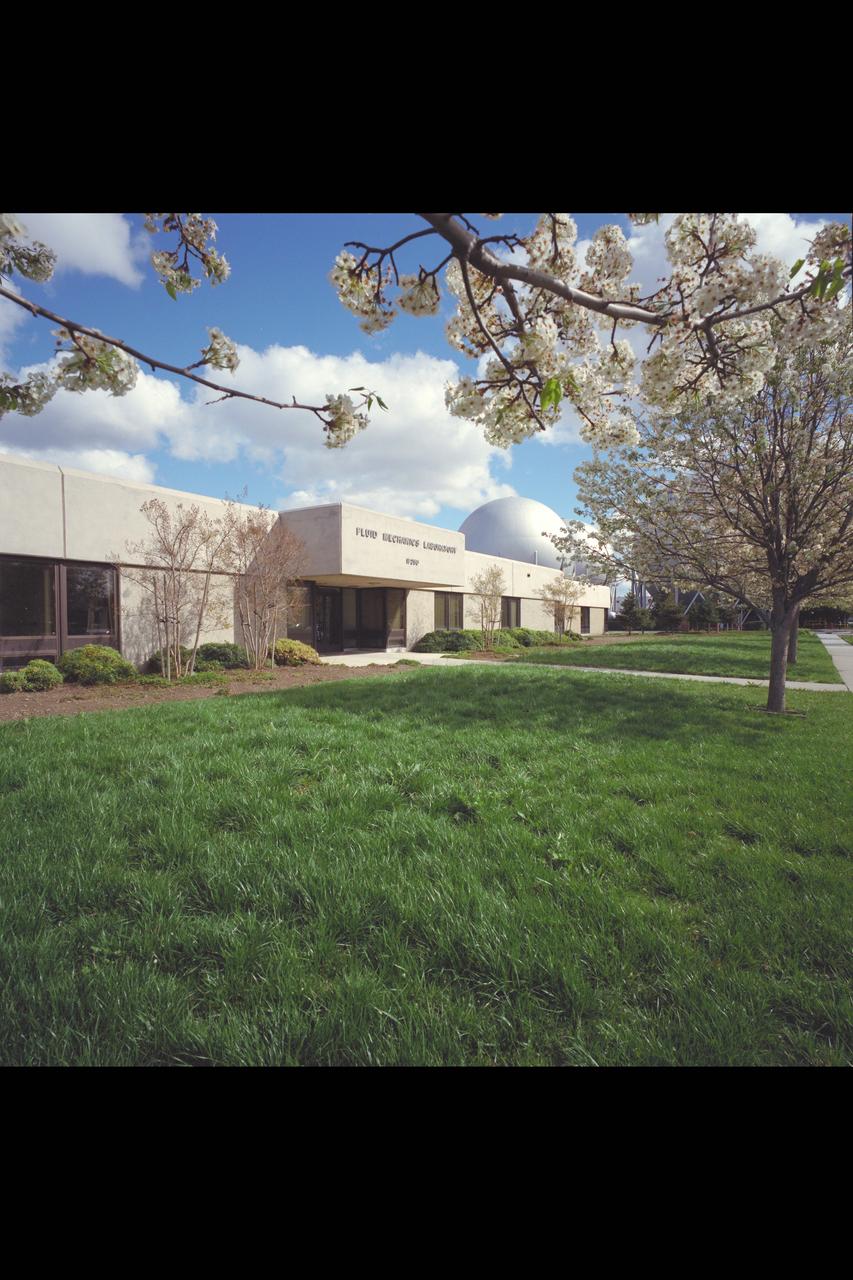
N-260 Fluid Mechanics Laboratory aerials (Morning) and ground (Afternoon) shots.
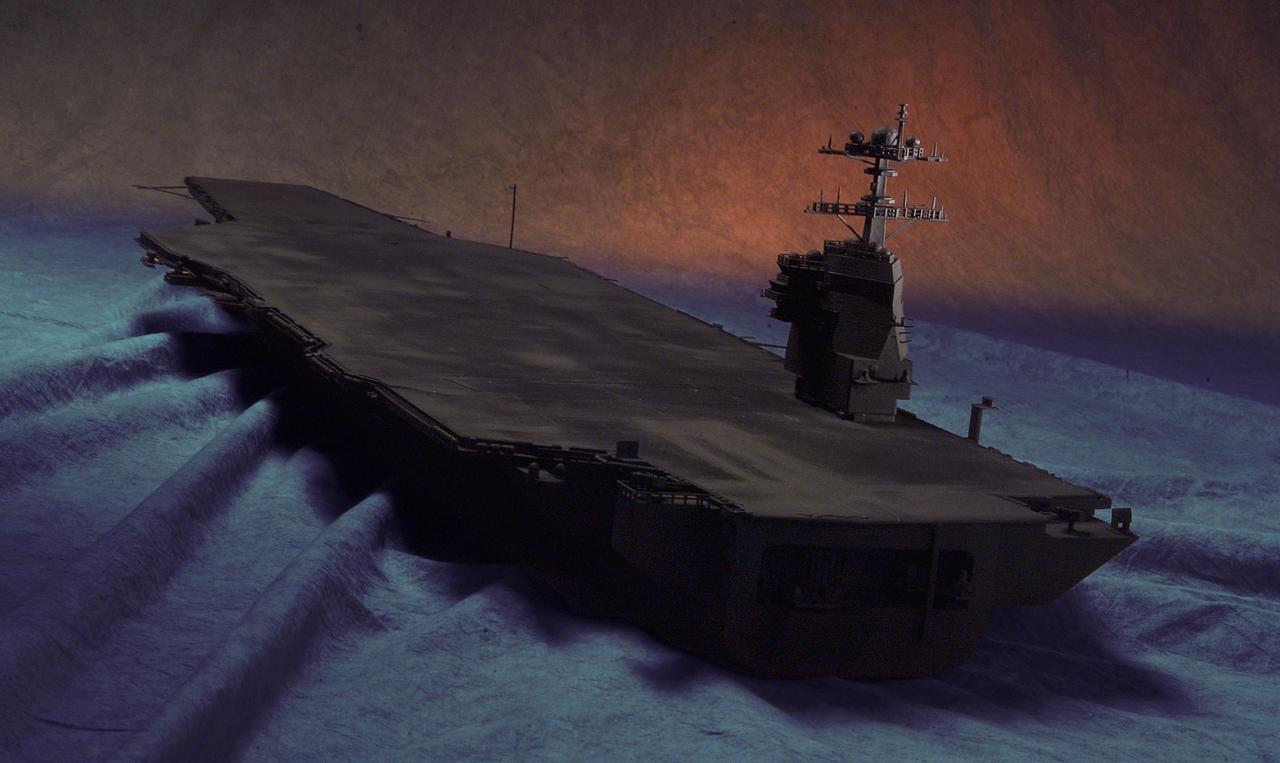
CVN78 CARRIER AIRFLOW STUDY IN FLUID MECHANICS LAB (CVN21)

CVN78 CARRIER AIRFLOW STUDY IN FLUID MECHANICS LAB (CVN21)
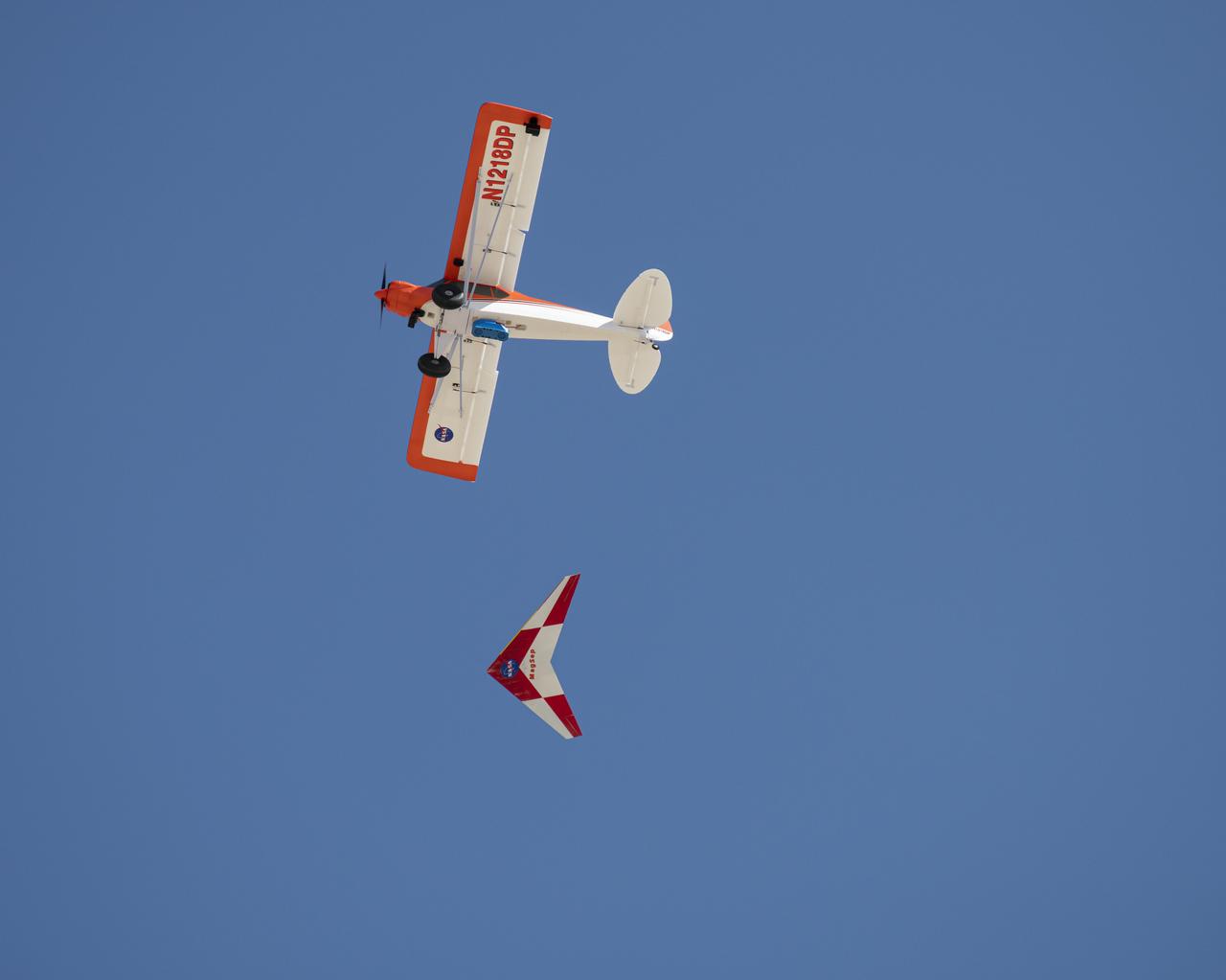
The Preliminary Research Aerodynamic Design to Land on Mars, or Prandtl-M, glider flies after a magnetic release mechanism on the Carbon-Z Cub was activated to air launch the aircraft. A team from NASA's Armstrong Flight Research Center in Edwards, California, conducted the successful research flight.
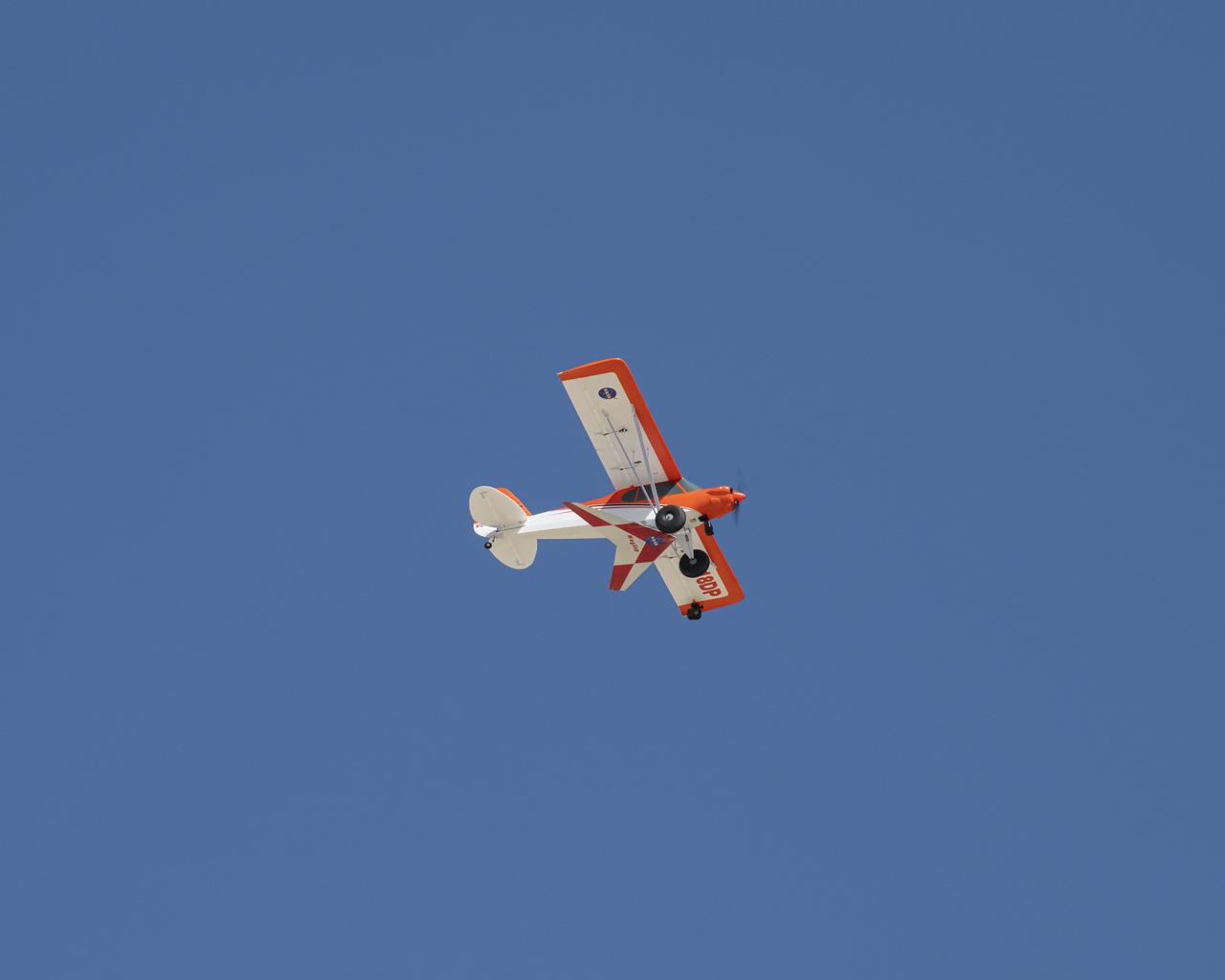
A team from NASA's Armstrong Flight Research Center in Edwards, California, prepares a Carbon-Z Cub to air launch the Preliminary Research Aerodynamic Design to Land on Mars, or Prandtl-M, glider from a magnetic release mechanism on the cub.
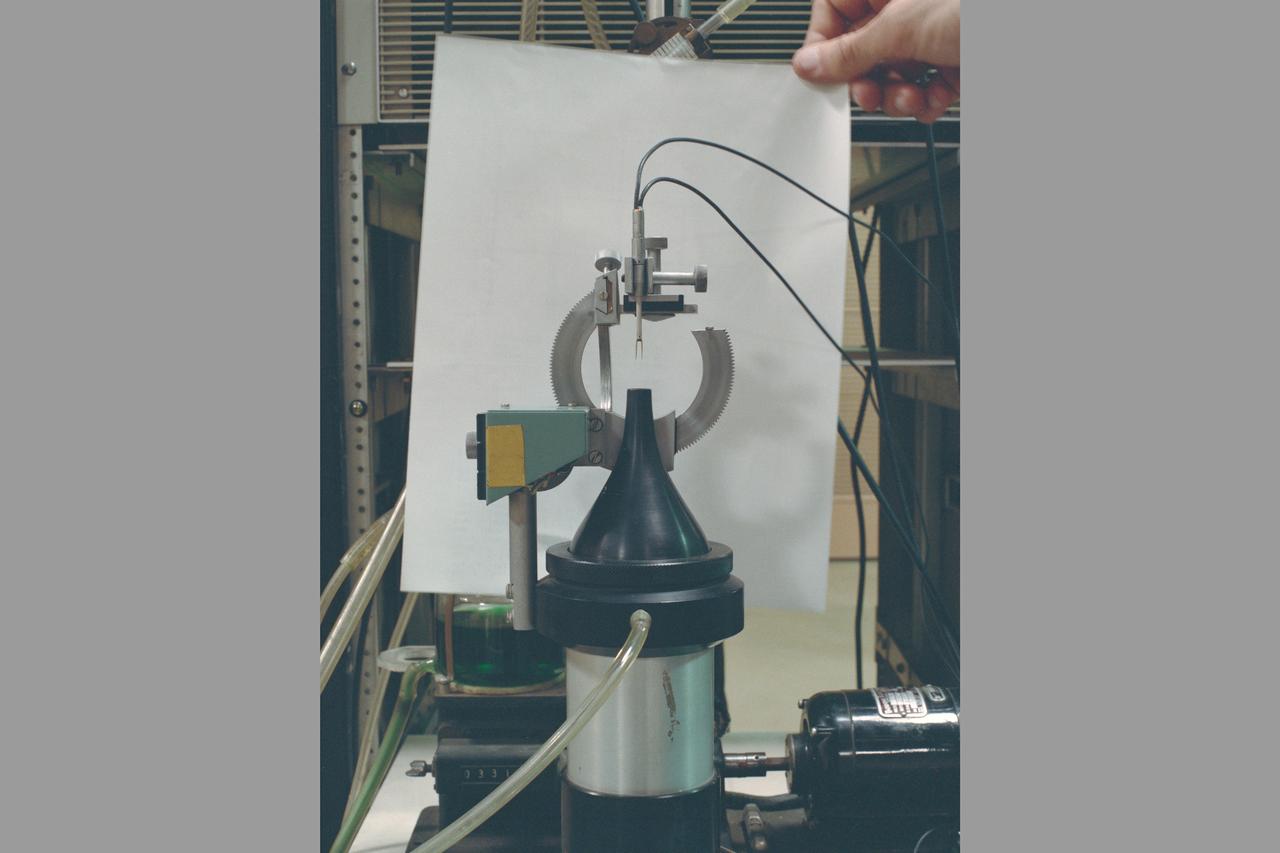
Ejector System in FML (Fluid Mechanics Lab)
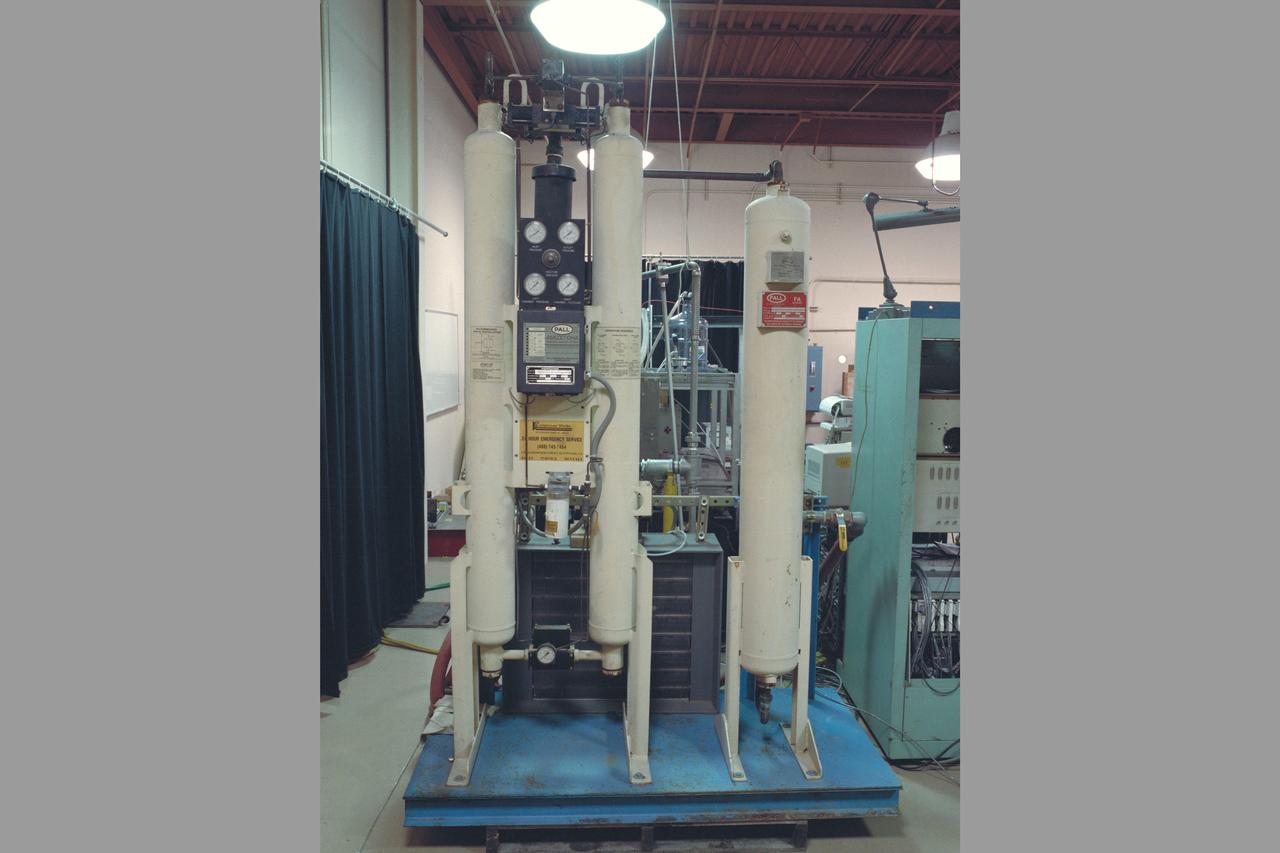
Ejector System in FML (Fluid Mechanics Lab)
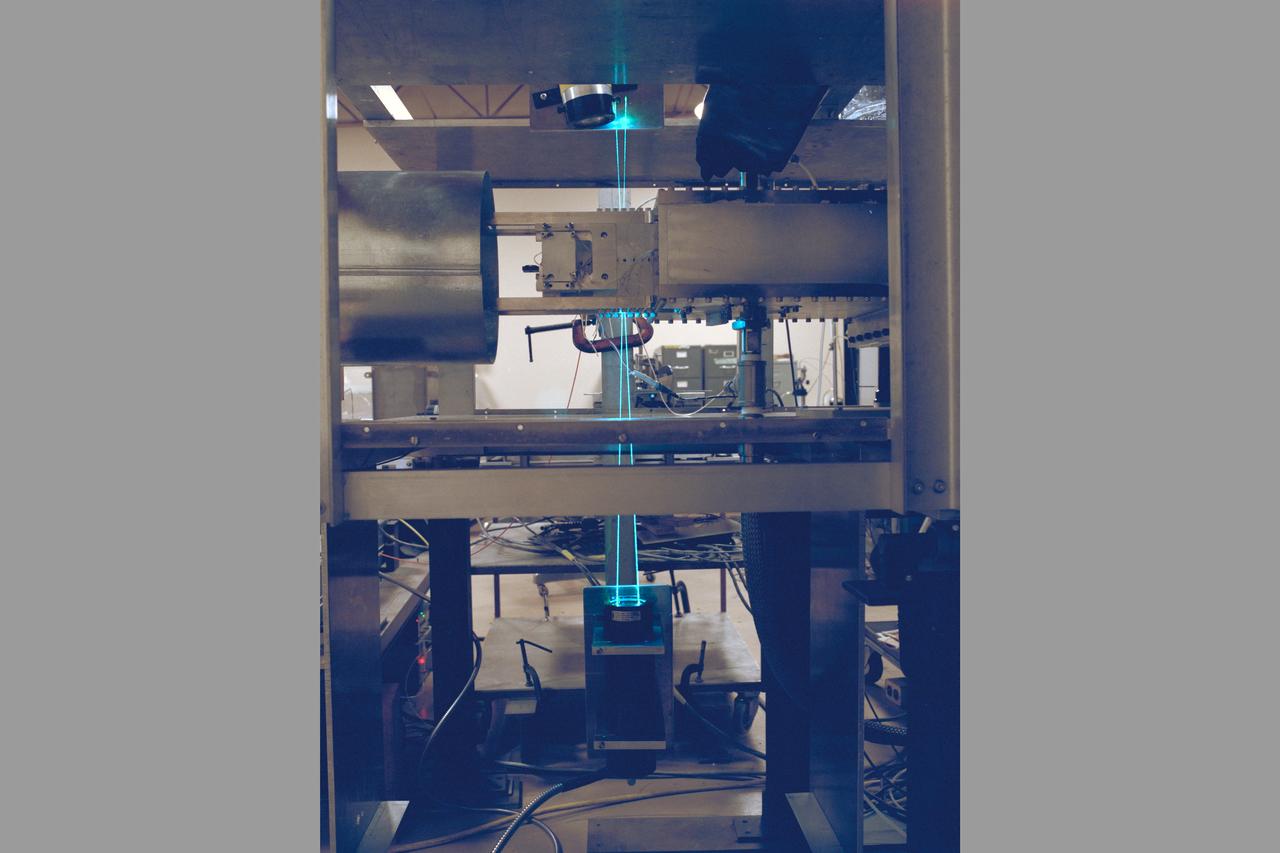
Ejector System in FML (Fluid Mechanics Lab)
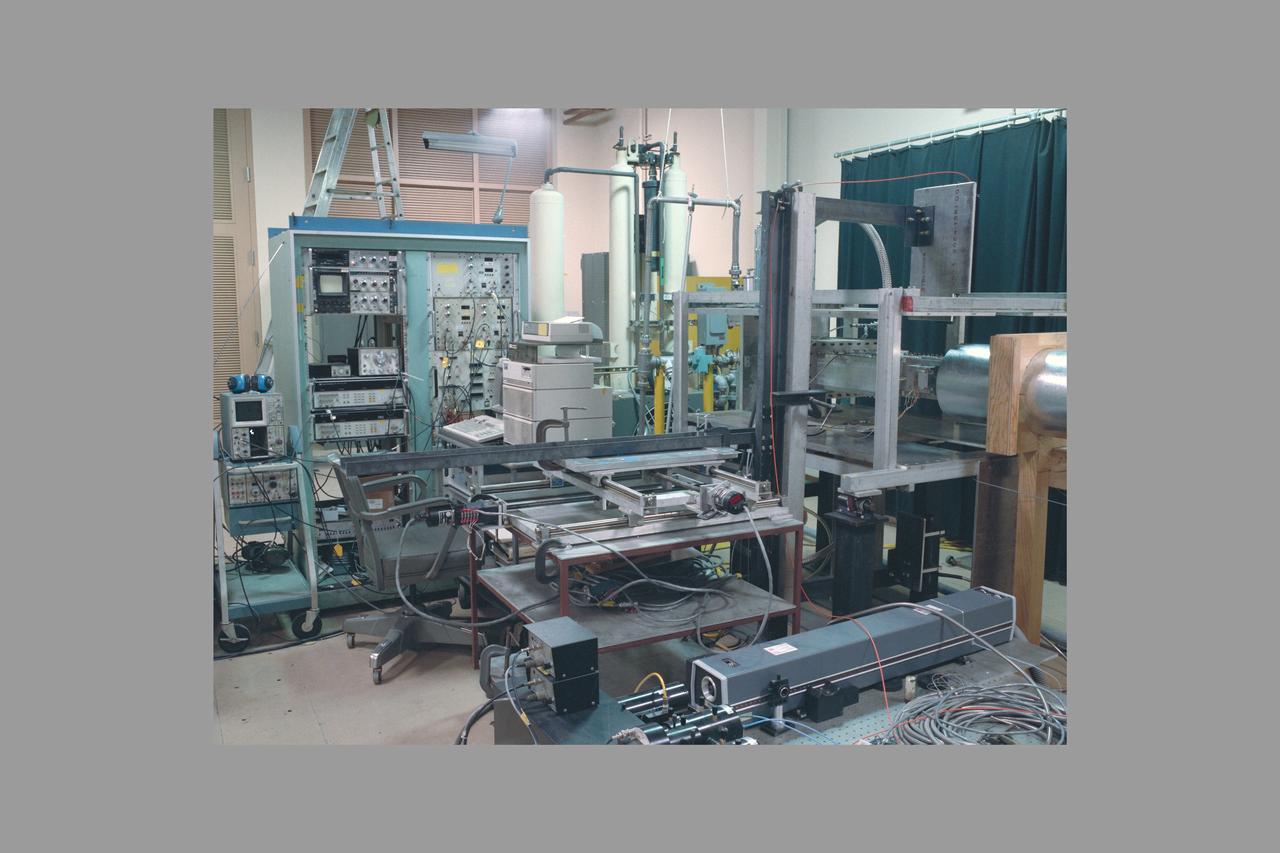
Ejector System in FML (Fluid Mechanics Lab)
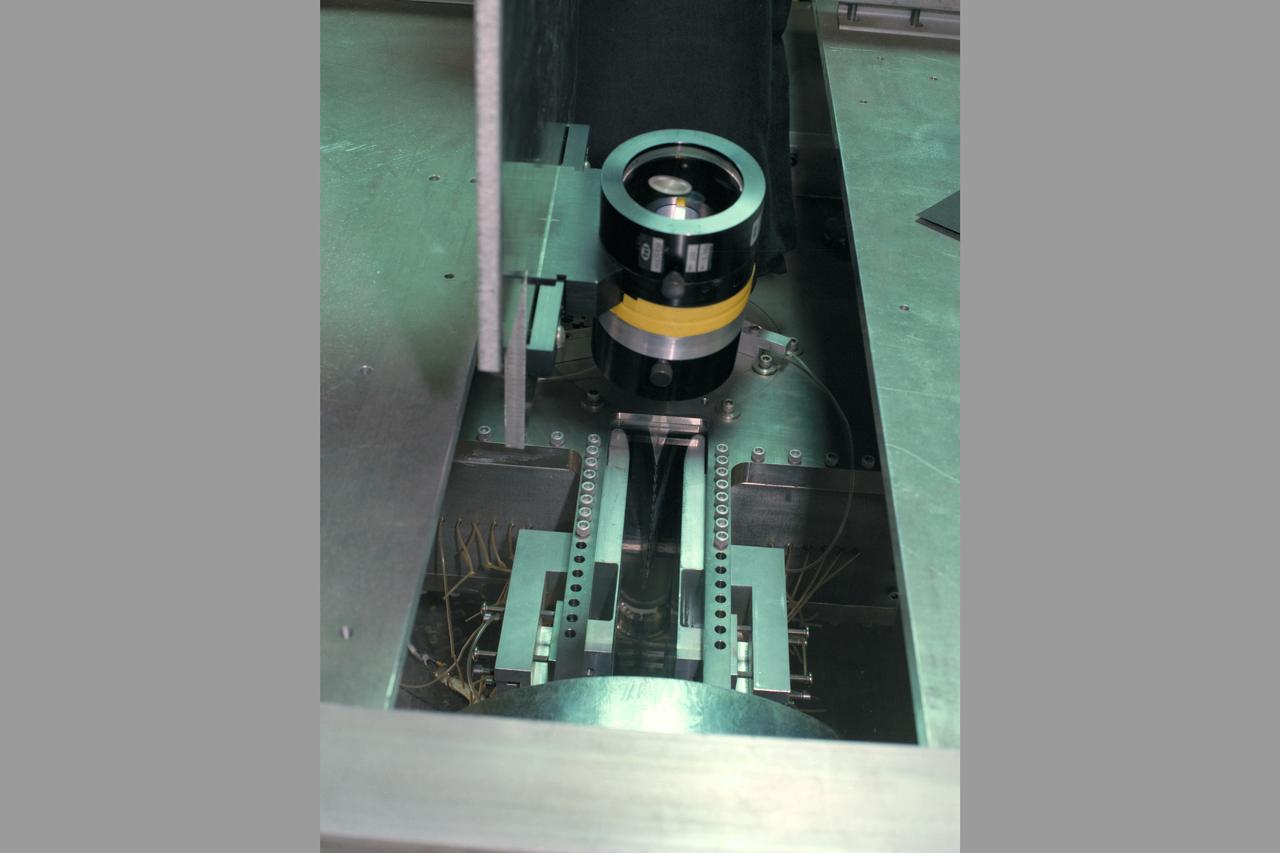
Ejector System in FML (Fluid Mechanics Lab)
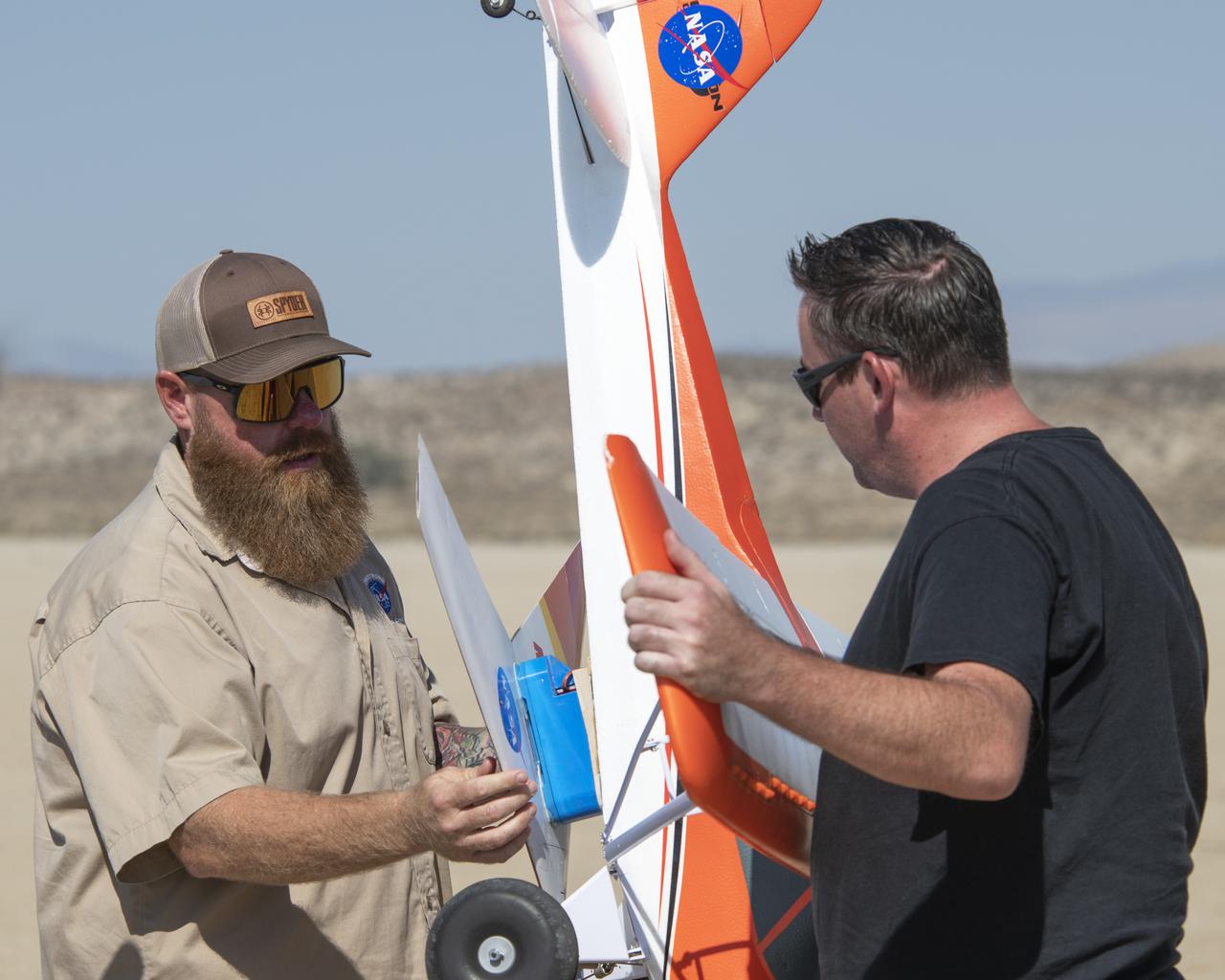
Justin Hall, left, attaches the Preliminary Research Aerodynamic Design to Land on Mars, or Prandtl-M, glider onto the Carbon-Z Cub, which Justin Link steadies. Hall and Link are part of a team from NASA's Armstrong Flight Research Center in Edwards, California, that uses an experimental magnetic release mechanism to air launch the glider.
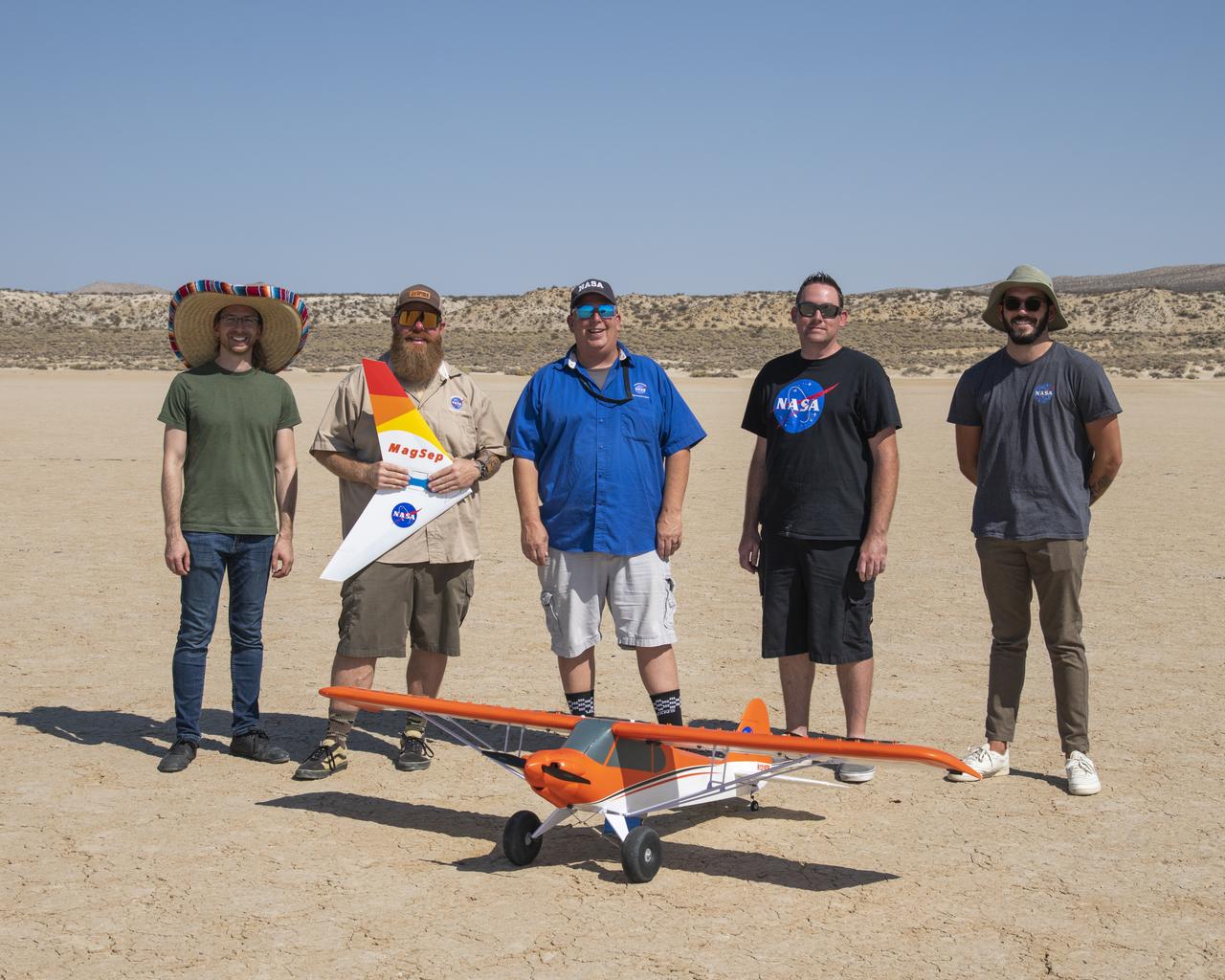
A Preliminary Research Aerodynamic Design to Land on Mars, or Prandtl-M, glider was air launched Sept. 7 using a magnetic release mechanism mounted on a Carbon-Z Cub. The team, based at NASA's Armstrong Flight Research Center in Edwards, California, includes, from left, Paul Bean, Justin Hall, Red Jensen, Justin Link, and Nathan Allaire.
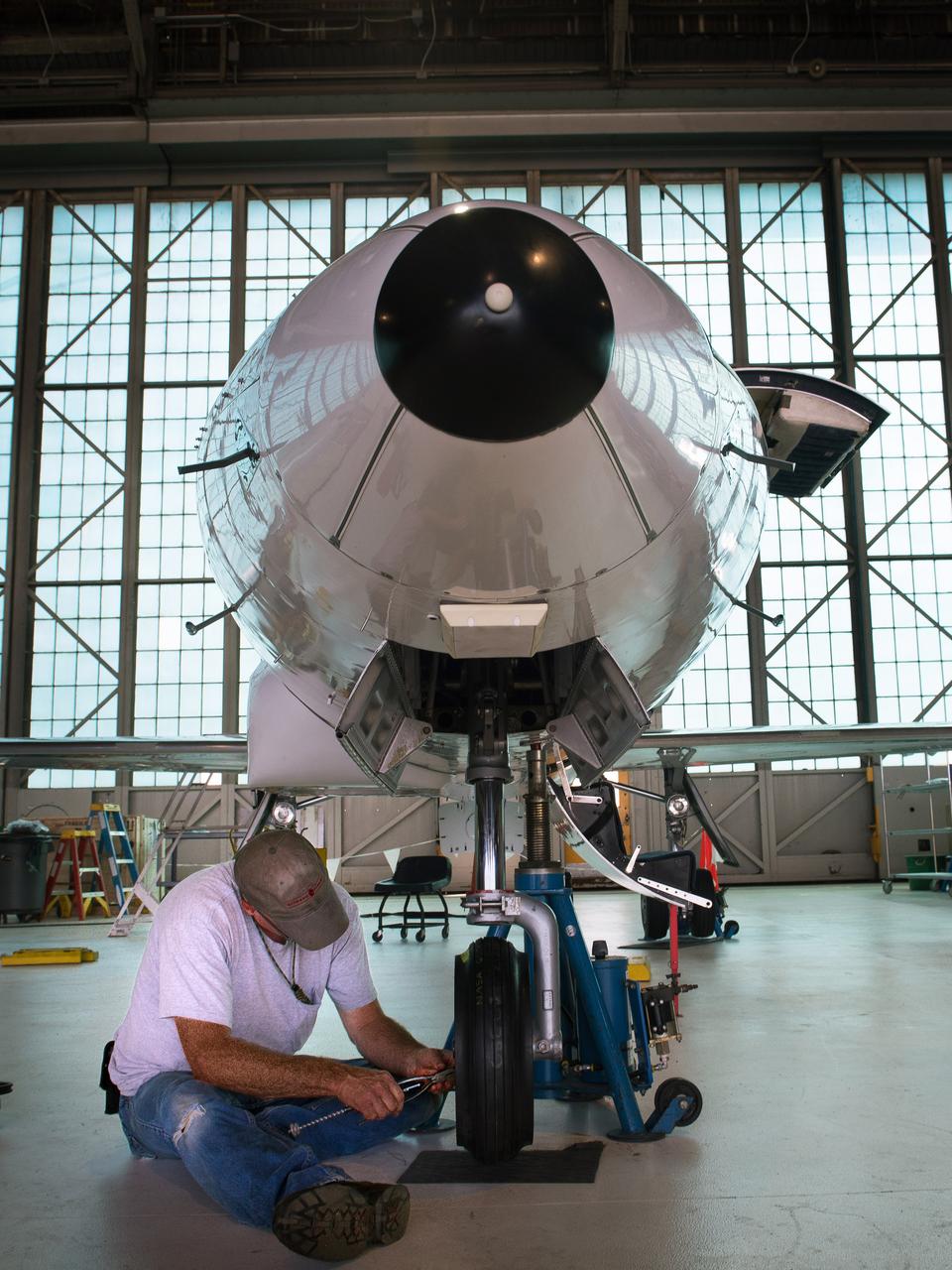
NASA Glenn Mechanic Thomas Thompson checks the nose wheel axle nut on NASA Glenn’s Learjet 25 research aircraft.
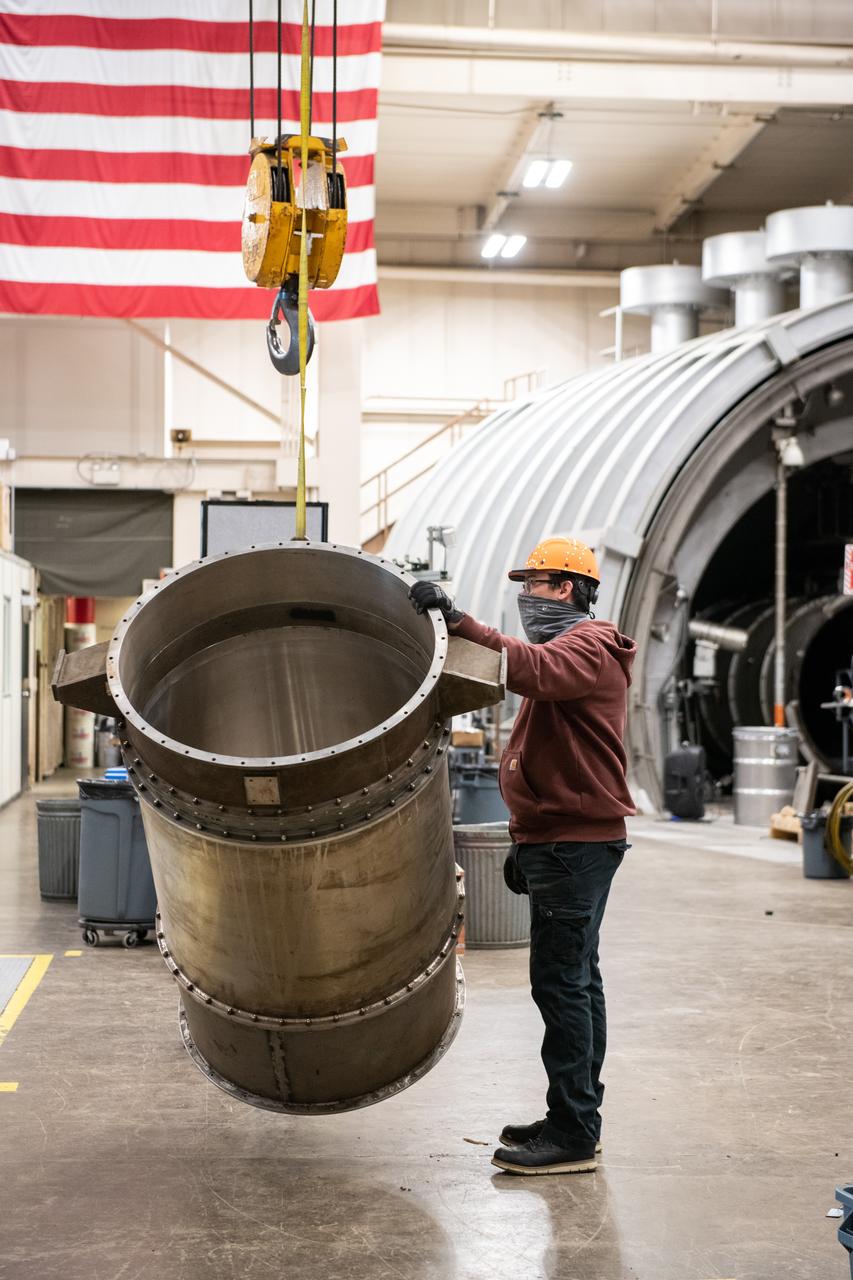
American Society of Mechanical Engineers, ASME Nozzle Test at Propulsion Systems Laboratory, PSL
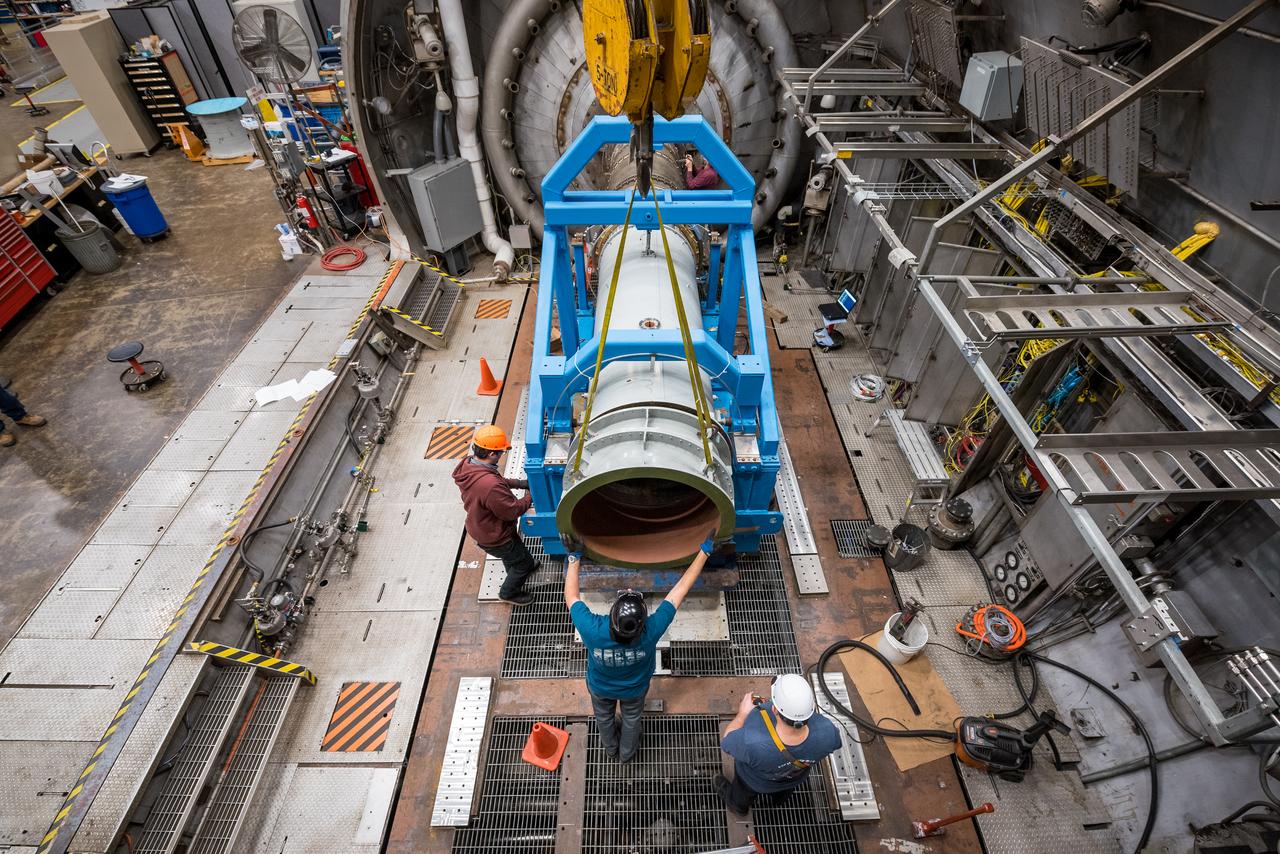
American Society of Mechanical Engineers, ASME Nozzle Test at Propulsion Systems Laboratory, PSL
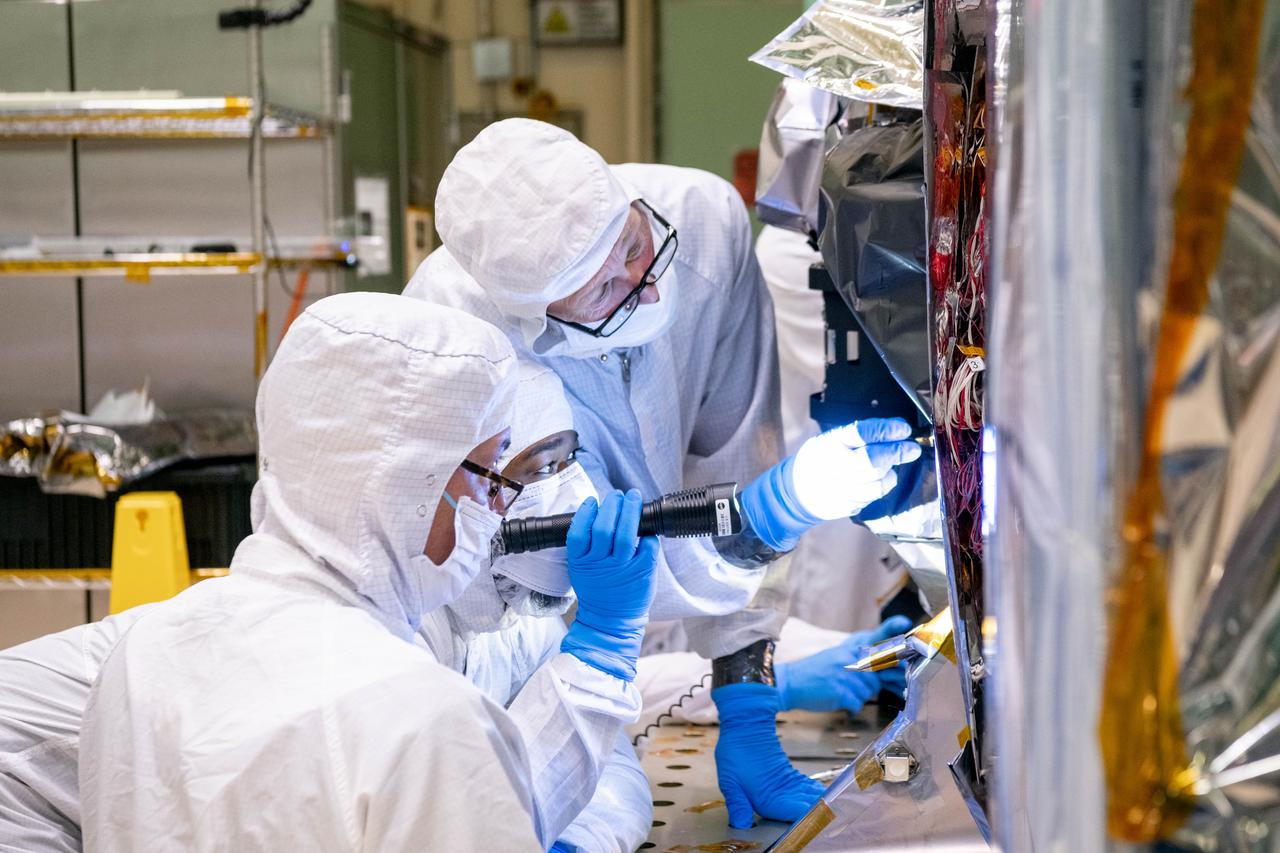
Mechanical technicians, Nicholas Kwaitkowski, Tyere Garner, and Gary Sheridon, use a flashlight to check for clearances between the Tilt Mechanism and the Ocean Color Instrument (OCI). OCI is a highly advanced optical spectrometer that will be used to measure properties of light over portions of the electromagnetic spectrum. It will enable continuous measurement of light at finer wavelength resolution than previous NASA satellite sensors, extending key system ocean color data records for climate studies. OCI is PACE's (Plankton, Aerosol, Cloud, ocean Ecosystem) primary sensor built at Goddard Space Flight Center in Greenbelt, MD.
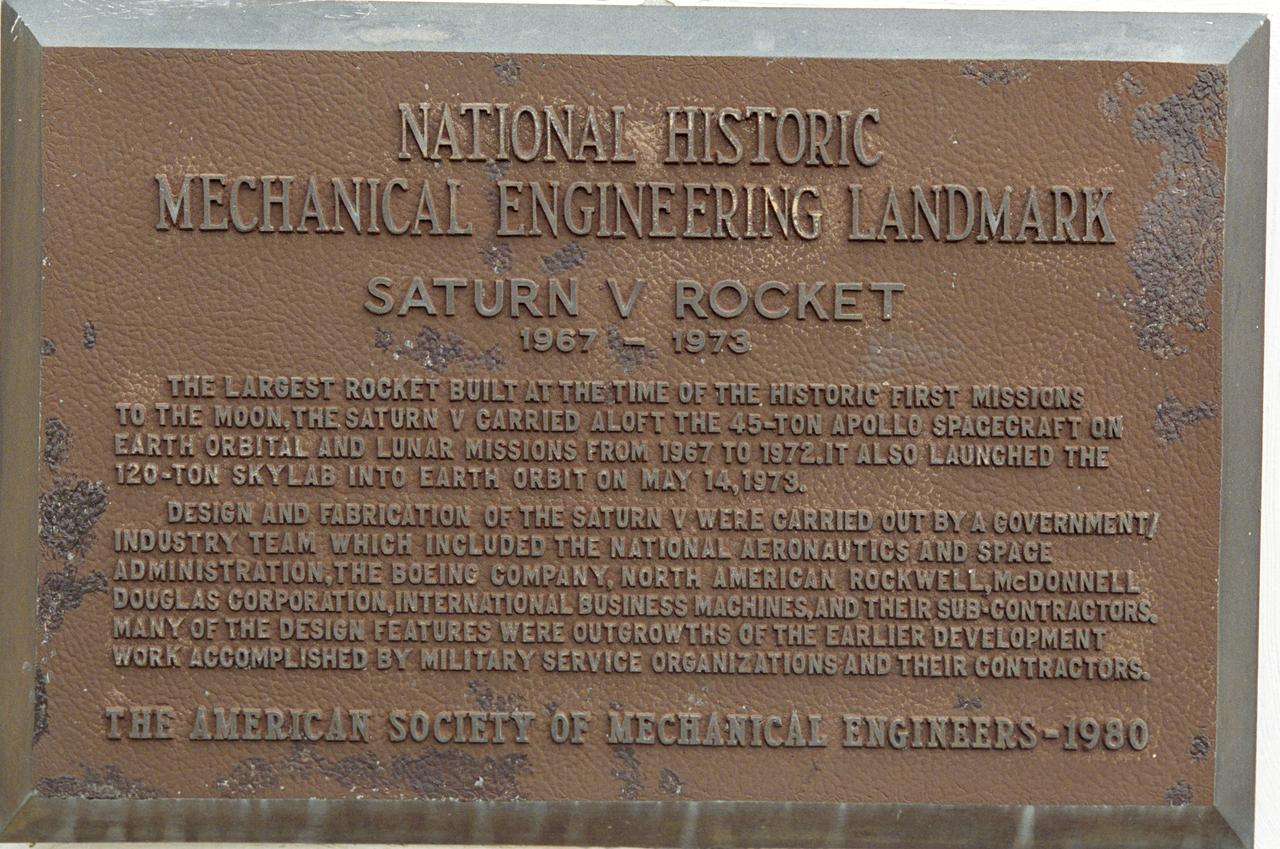
This plaque, located on the grounds of Marshall Space Flight Center in Huntsville, Alabama,commemorates the designation of the Saturn V Rocket as a National Historic Mechanical Engineering Landmark by the American Society of Mechanical Engineers in 1980.
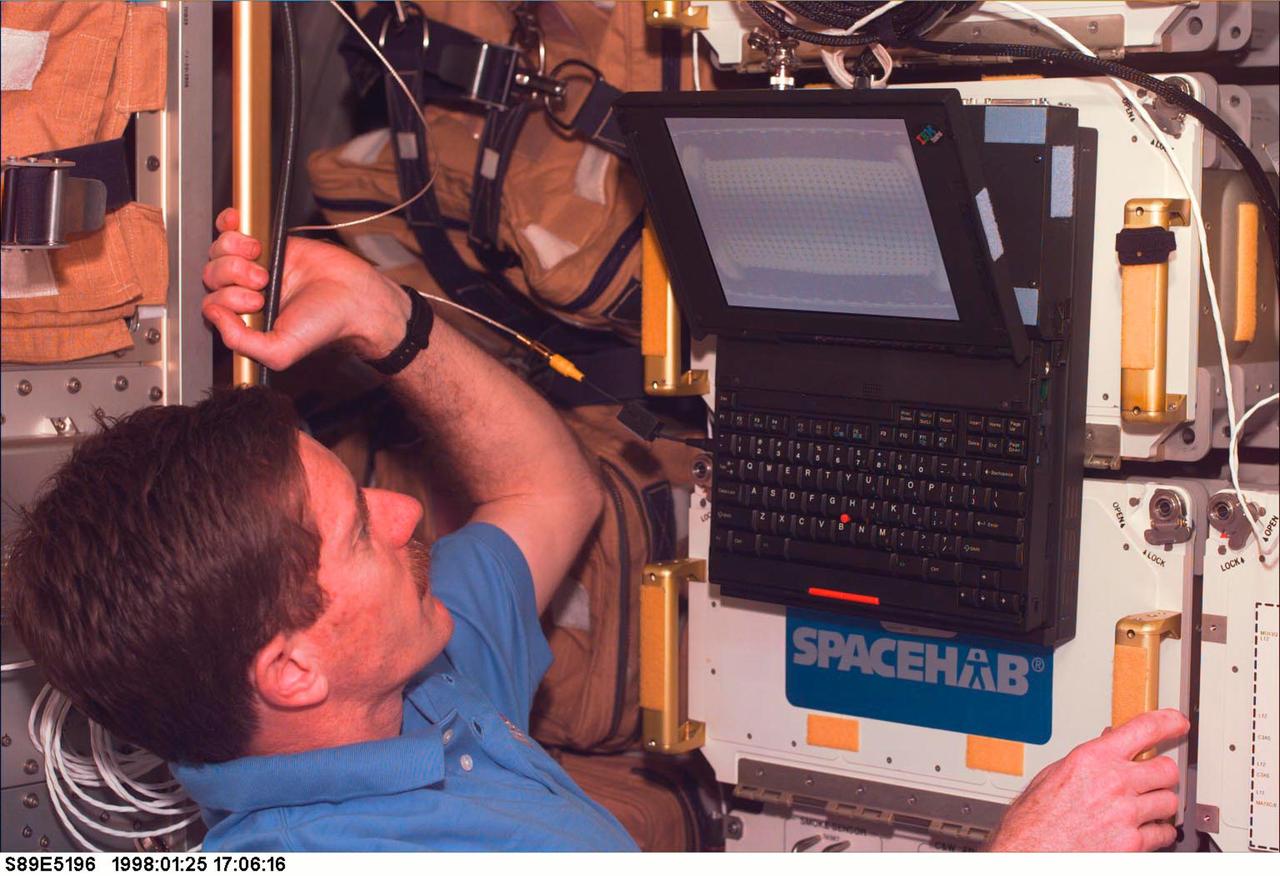
Astronaut James Reilly uses a laptop computer monitor the Mechanics of Granular Materials (MGM) experiment during STS-89. Sand and soil grains have faces that can cause friction as they roll and slide against each other, or even cause sticking and form small voids between grains. This complex behavior can cause soil to behave like a liquid under certain conditions such as earthquakes or when powders are handled in industrial processes. Mechanics of Granular Materials (MGM) experiments aboard the Space Shuttle use the microgravity of space to simulate this behavior under conditons that carnot be achieved in laboratory tests on Earth. MGM is shedding light on the behavior of fine-grain materials under low effective stresses. Applications include earthquake engineering, granular flow technologies (such as powder feed systems for pharmaceuticals and fertilizers), and terrestrial and planetary geology. Nine MGM specimens have flown on two Space Shuttle flights. Another three are scheduled to fly on STS-107. The principal investigator is Stein Sture of the University of Colorado at Boulder. Credit: NASA/Marshall Space Flight Center (MSFC)
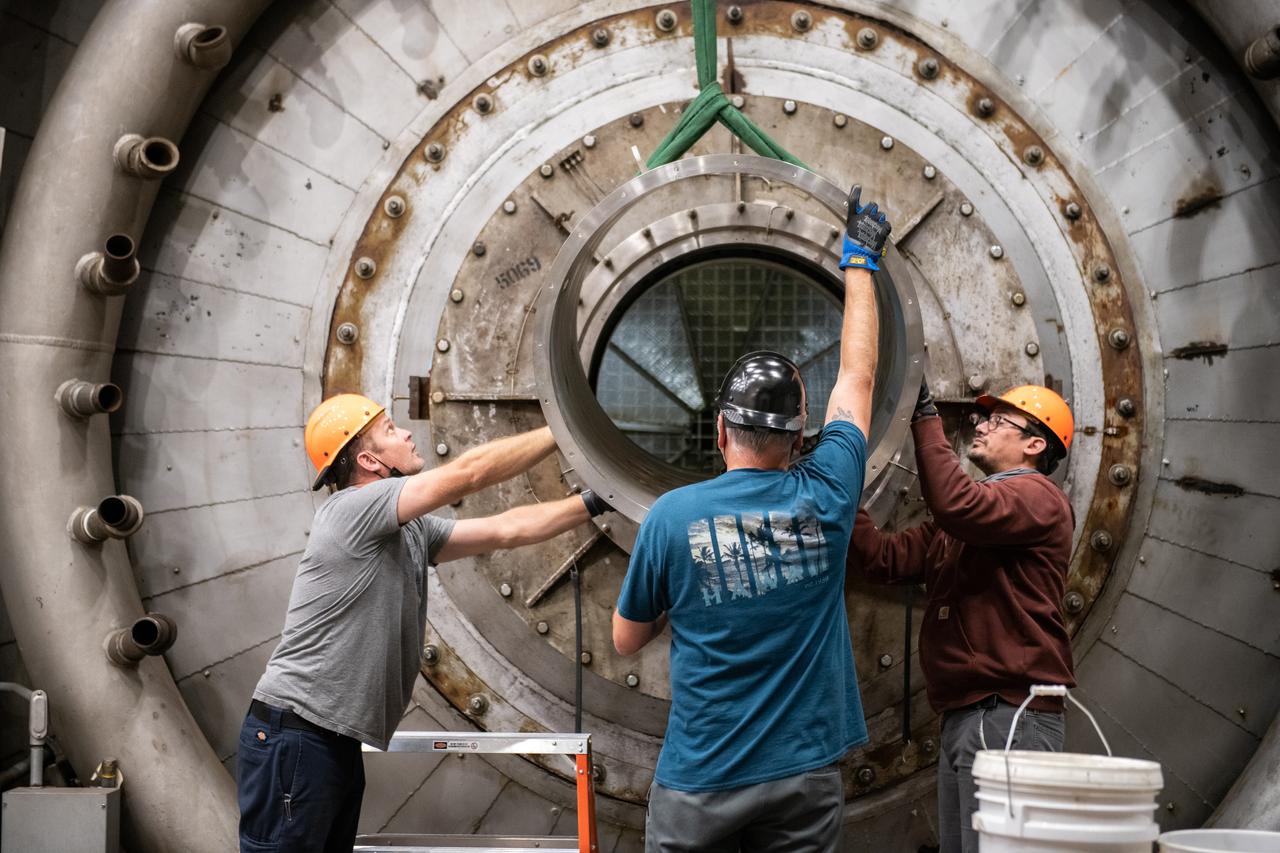
American Society of Mechanical Engineers, ASME Nozzle Test at Propulsion Systems Laboratory, PSL Documentation Photographs
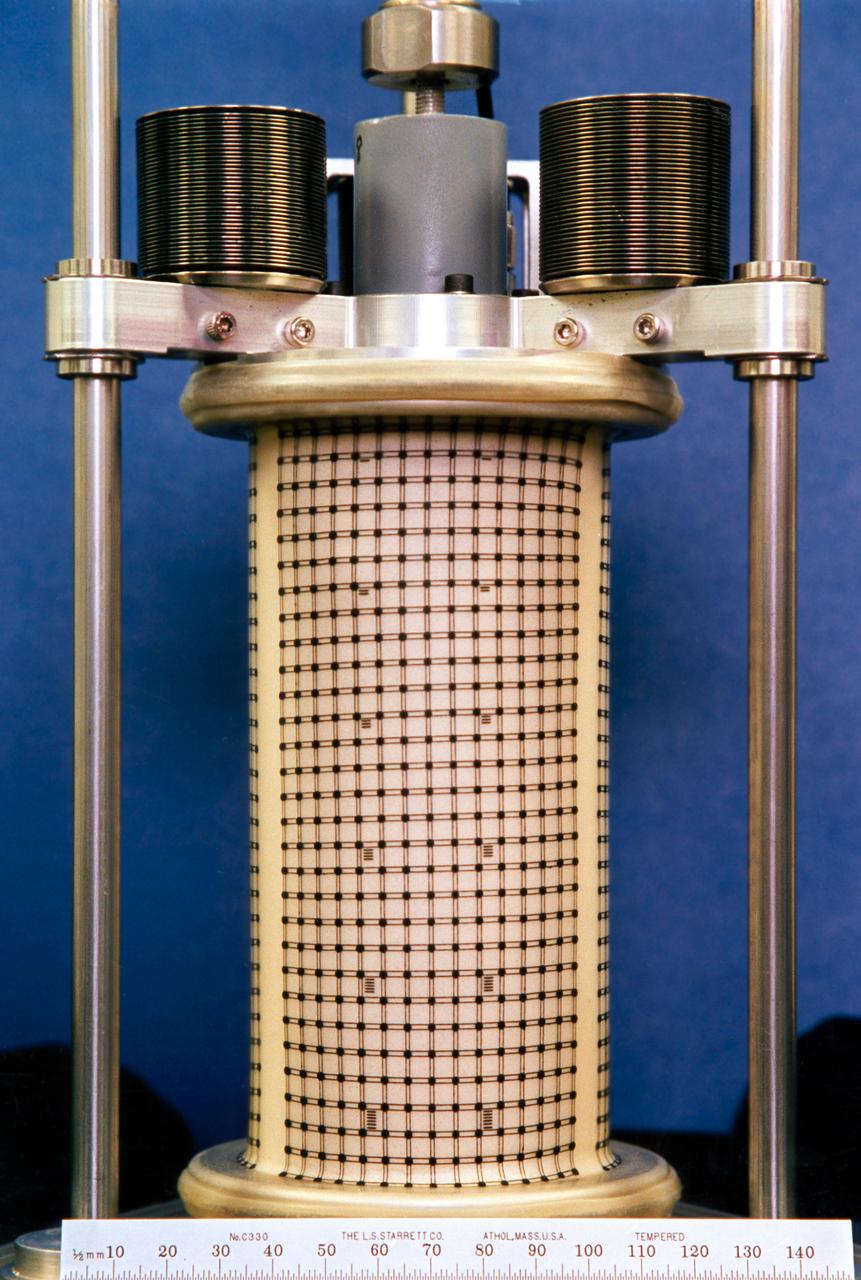
One of three Mechanics of Granular Materials (MGM) test cells after flight on STS-79 and before impregnation with resin. Note that the sand column has bulged in the middle, and that the top of the column is several inches lower than the top of the plastic enclosure. Sand and soil grains have faces that can cause friction as they roll and slide against each other, or even cause sticking and form small voids between grains. This complex behavior can cause soil to behave like a liquid under certain conditions such as earthquakes or when powders are handled in industrial processes. Mechanics of Granular Materials (MGM) experiments aboard the Space Shuttle use the microgravity of space to simulate this behavior under conditons that carnot be achieved in laboratory tests on Earth. MGM is shedding light on the behavior of fine-grain materials under low effective stresses. Applications include earthquake engineering, granular flow technologies (such as powder feed systems for pharmaceuticals and fertilizers), and terrestrial and planetary geology. Nine MGM specimens have flown on two Space Shuttle flights. Another three are scheduled to fly on STS-107. The principal investigator is Stein Sture of the University of Colorado at Boulder. Credit: University of Colorado at Boulder

Stephen Beitashour, a professional soccer player from the San Jose Earthquakes, was asked to demonstrate kicking the ball for his student audience. With the increased globalization of soccer, more young people are playing the sport and developing motor skills to compete effectively. To enhance their skills, students in the United States and Canada recently were given the opportunity to discuss with a NASA scientist the aerodynamics of the newly designed soccer ball. To help student soccer players better understand the movement of the ball, NASA scientists at the Fluid Mechanics Laboratory at NASA’s Ames Research Center, Moffett Field, Calif., recently tested the performance of the Jabulani design, and compared it to the 2006 design. Included in this study was Rabi Mehta who had done previous tests on tennis and cricket balls in wind tunnels.
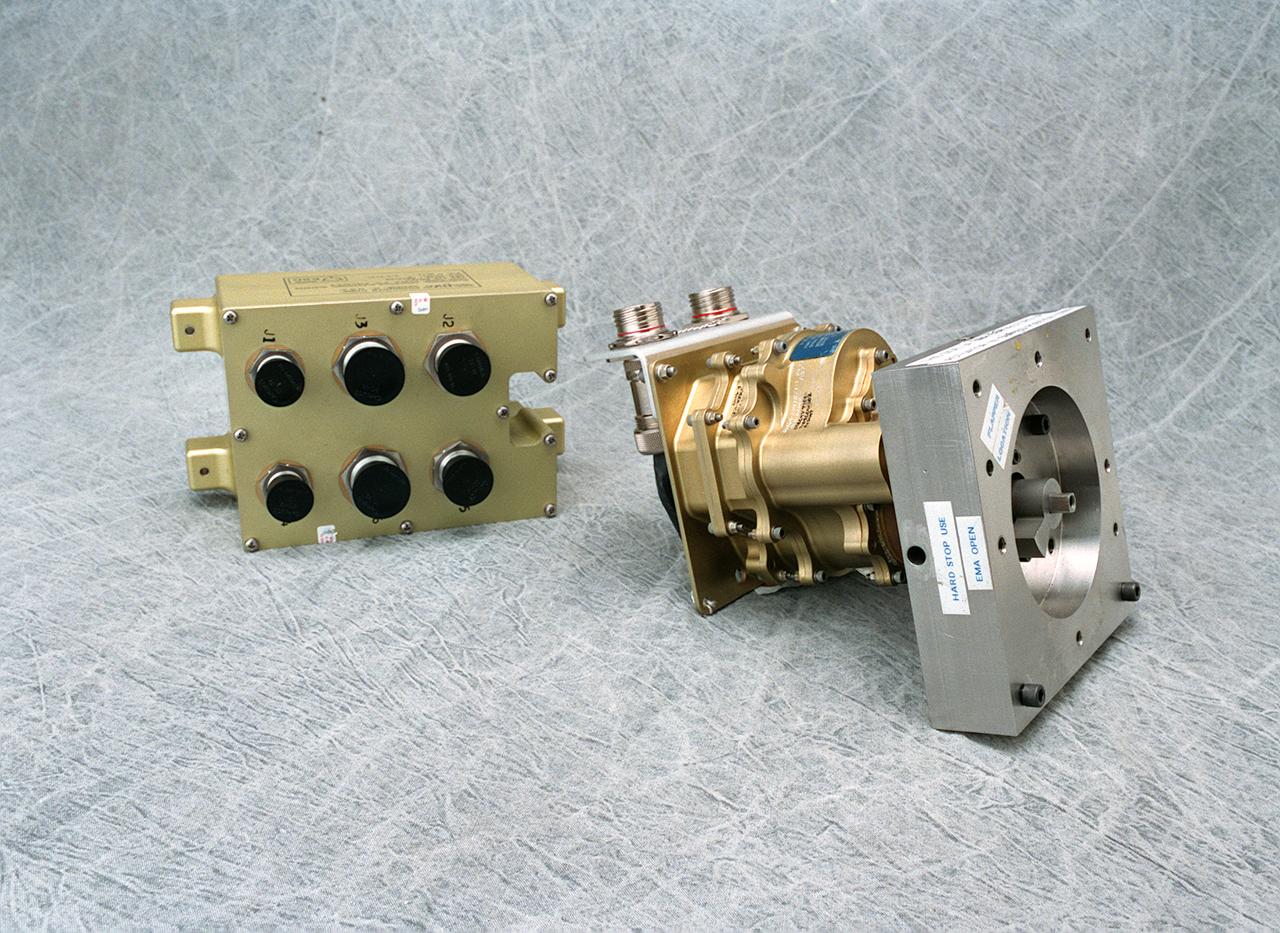
The electro-mechanical actuator, a new electronics technology, is an electronic system that provides the force needed to move valves that control the flow of propellant to the engine. It is proving to be advantageous for the main propulsion system plarned for a second generation reusable launch vehicle. Hydraulic actuators have been used successfully in rocket propulsion systems. However, they can leak when high pressure is exerted on such a fluid-filled hydraulic system. Also, hydraulic systems require significant maintenance and support equipment. The electro-mechanical actuator is proving to be low maintenance and the system weighs less than a hydraulic system. The electronic controller is a separate unit powering the actuator. Each actuator has its own control box. If a problem is detected, it can be replaced by simply removing one defective unit. The hydraulic systems must sustain significant hydraulic pressures in a rocket engine regardless of demand. The electro-mechanical actuator utilizes power only when needed. A goal of the Second Generation Reusable Launch Vehicle Program is to substantially improve safety and reliability while reducing the high cost of space travel. The electro-mechanical actuator was developed by the Propulsion Projects Office of the Second Generation Reusable Launch Vehicle Program at the Marshall Space Flight Center.
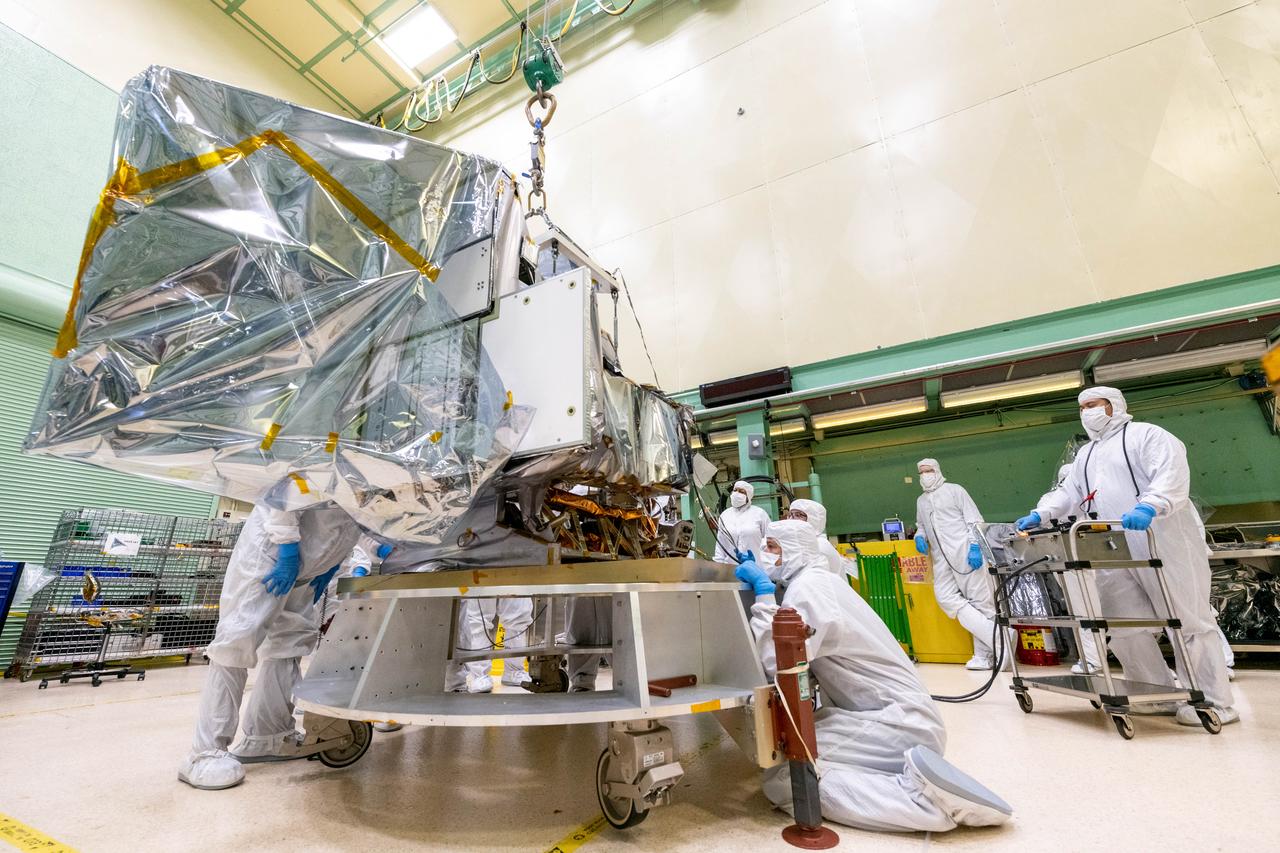
Mechanical technicians crane lift the Ocean Color Instrument (OCI) onto the Tilt Mechanism. OCI is a highly advanced optical spectrometer that will be used to measure properties of light over portions of the electromagnetic spectrum. It will enable continuous measurement of light at finer wavelength resolution than previous NASA satellite sensors, extending key system ocean color data records for climate studies. OCI is PACE's (Plankton, Aerosol, Cloud, ocean Ecosystem) primary sensor built at Goddard Space Flight Center in Greenbelt, MD.
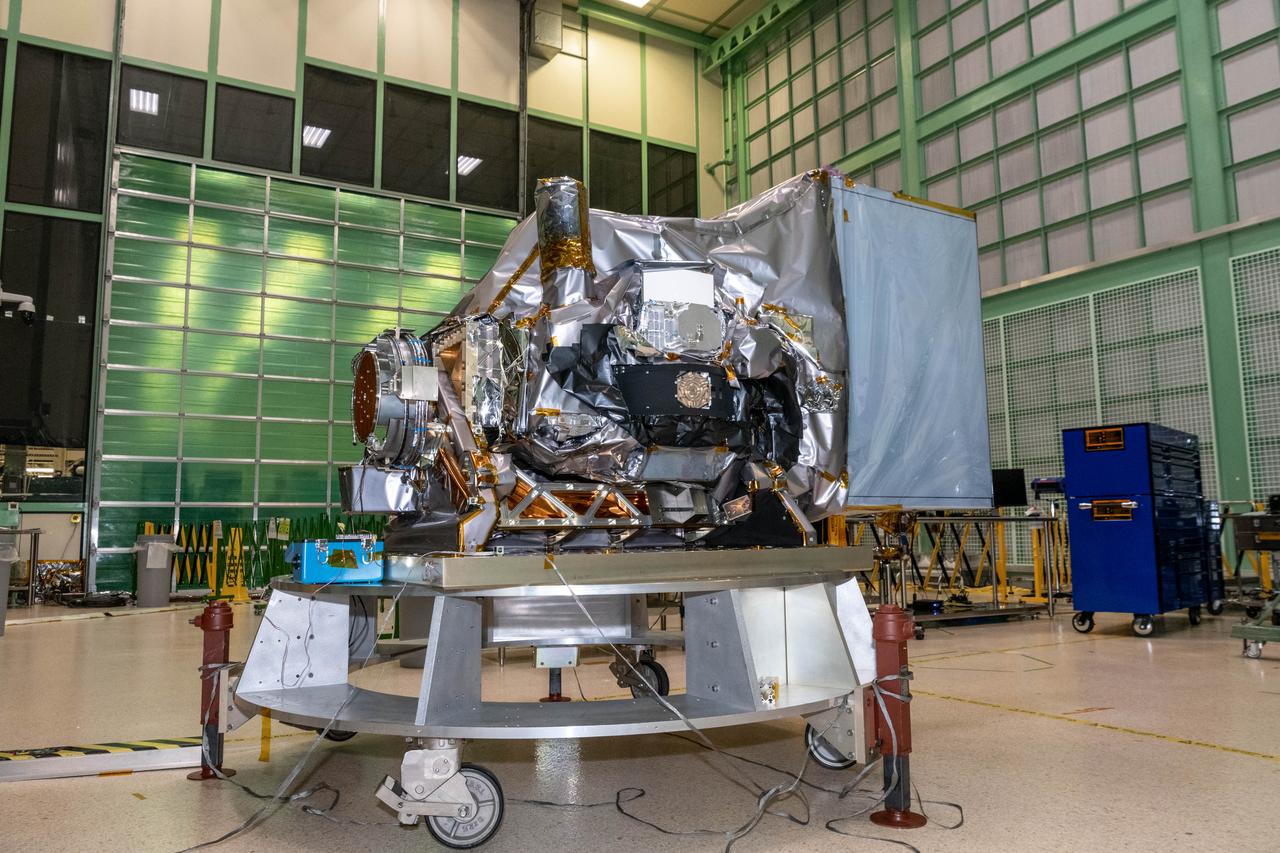
The Ocean Color Instrument (OCI) is integrated on the Tilt Mechanism prior to environmental testing in the Spacecraft Checkout Area (SCA) cleanroom. The OCI Tilt will help the instrument avoid sun glint in a space environment. OCI is a highly advanced optical spectrometer that will be used to measure properties of light over portions of the electromagnetic spectrum. It will enable continuous measurement of light at finer wavelength resolution than previous NASA satellite sensors, extending key system ocean color data records for climate studies. OCI is PACE's (Plankton, Aerosol, Cloud, ocean Ecosystem) primary sensor built at Goddard Space Flight Center in Greenbelt, MD.
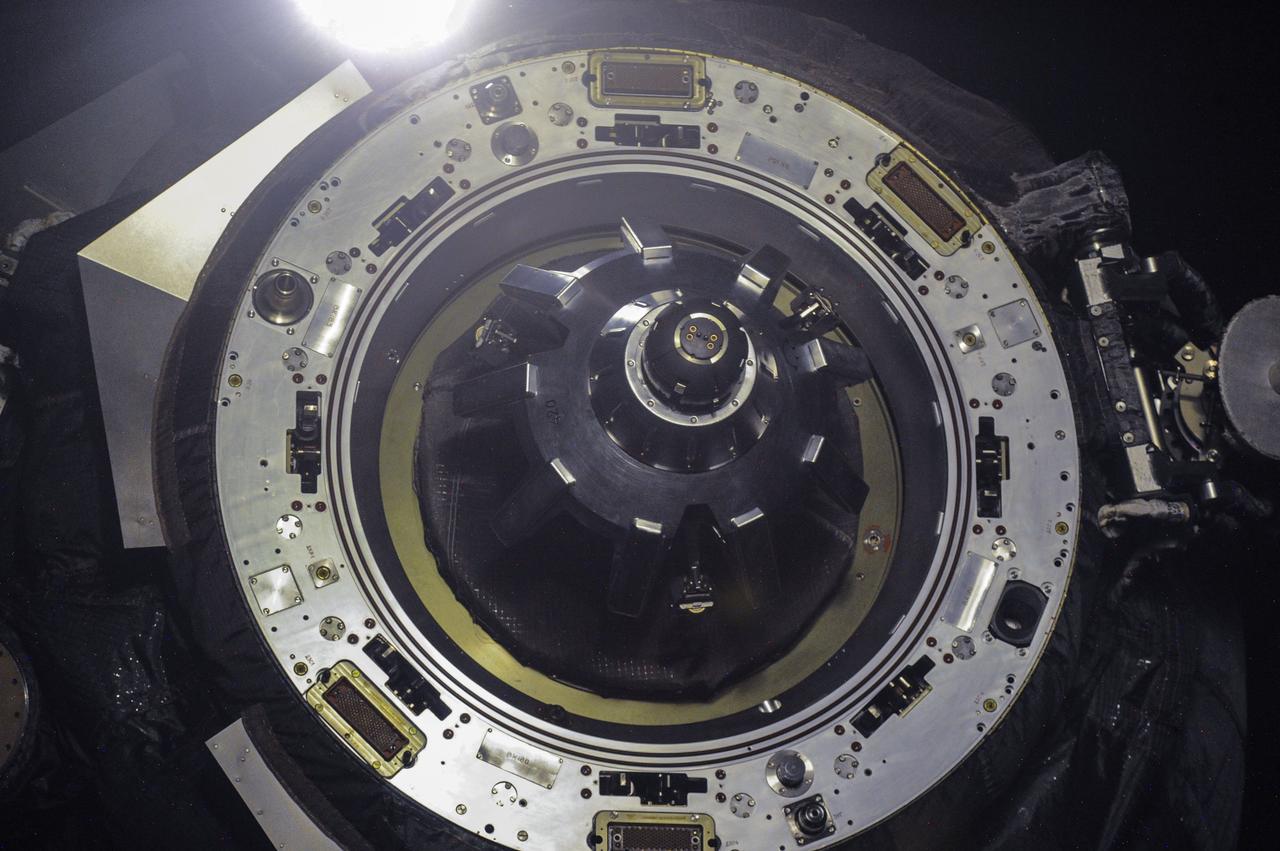
ISS038-E-041175 (3 Feb. 2014) --- This close-up view shows the docking mechanism of the unpiloted Russian ISS Progress 52 resupply ship as it undocks from the International Space Station's Pirs Docking Compartment at 11:21 a.m. (EST) on Feb. 3, 2014. The Progress backed away to a safe distance from the orbital complex to begin several days of tests to study thermal effects of space on its attitude control system. Filled with trash and other unneeded items, the Russian resupply ship will be commanded to re-enter Earth's atmosphere Feb. 11 and disintegrate harmlessly over the Pacific Ocean.
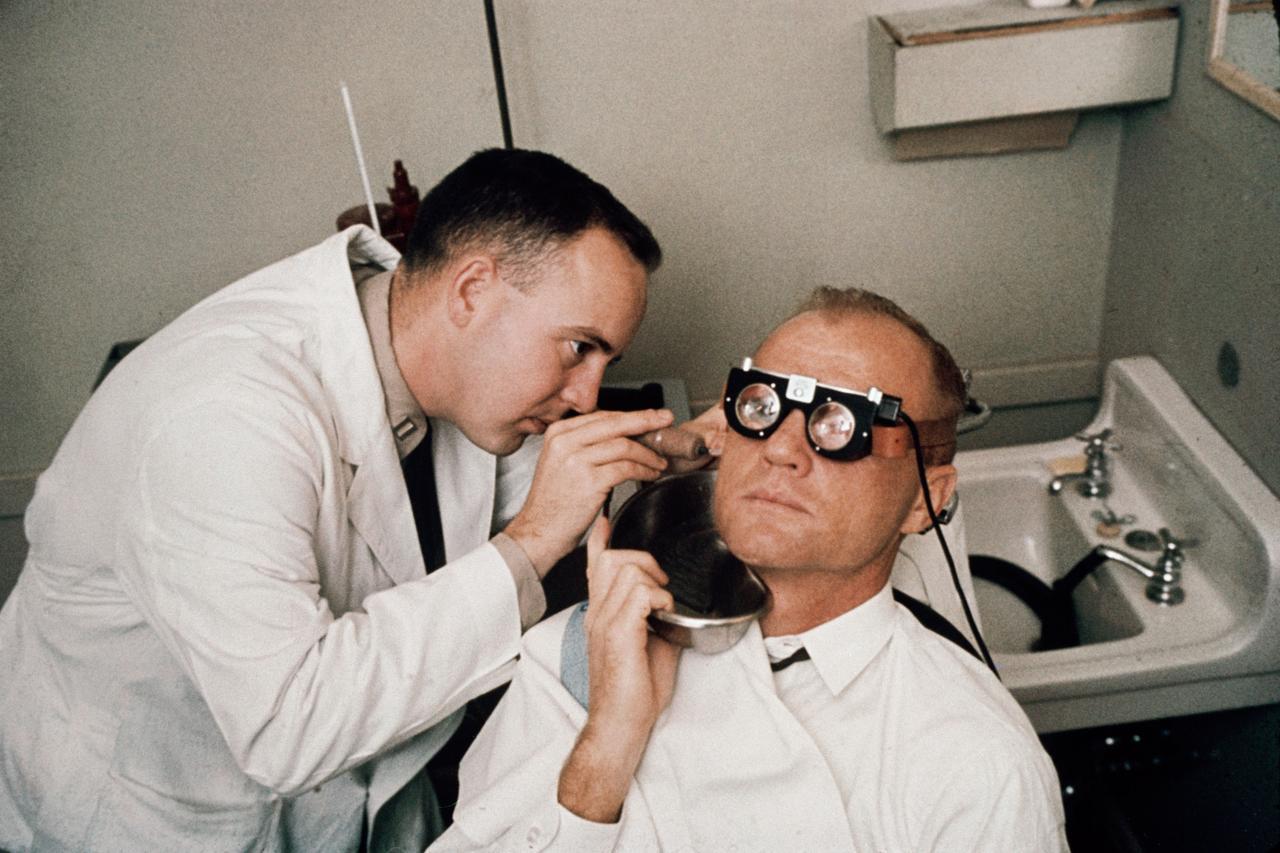
S64-14849 (1962) --- Astronaut John H. Glenn Jr.'s balance mechanism (semi-circular-canals) is tested by running cool water into his ear and measuring effect on eye motions (nystagmus). Photo credit: NASA
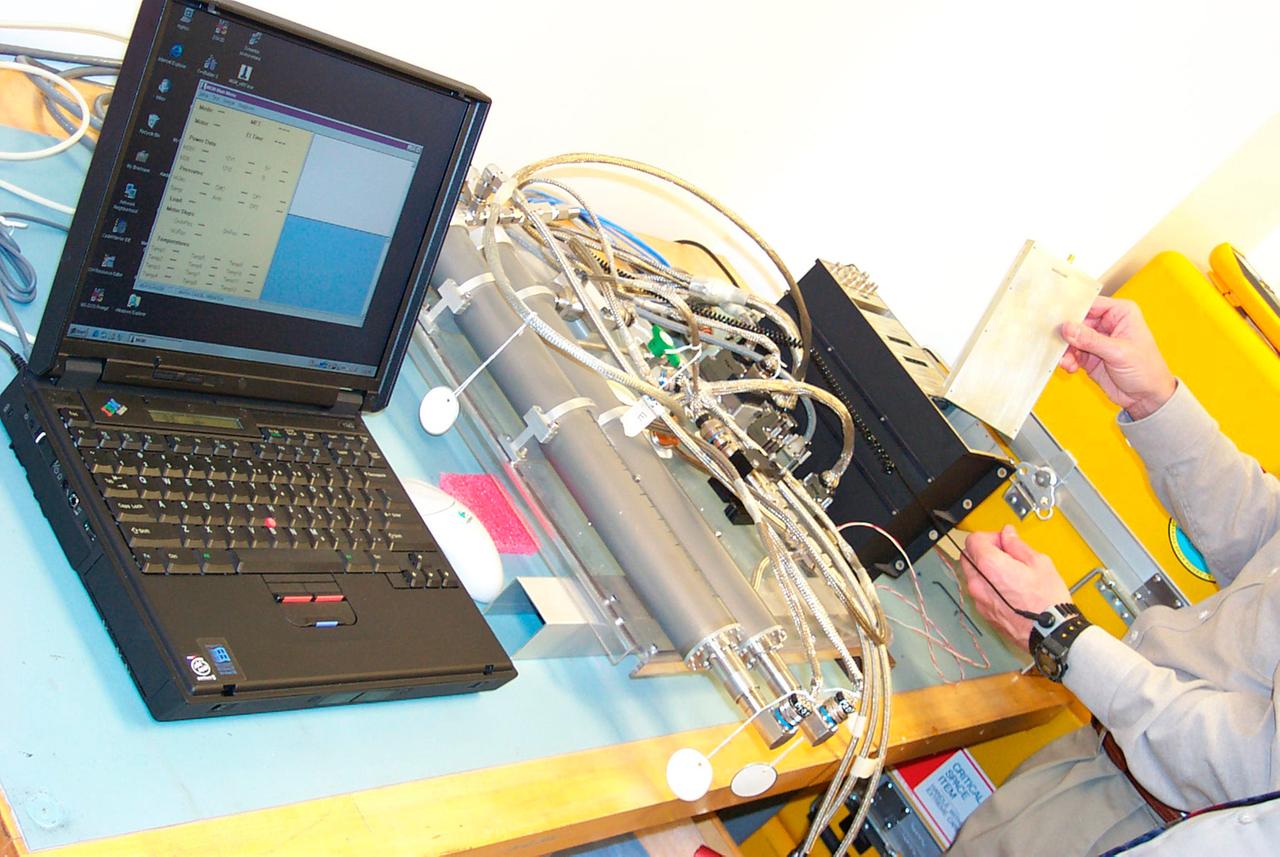
Engineering bench system hardware for the Mechanics of Granular Materials (MGM) experiment is tested on a lab bench at the University of Colorado in Boulder. This is done in a horizontal arrangement to reduce pressure differences so the tests more closely resemble behavior in the microgravity of space. Sand and soil grains have faces that can cause friction as they roll and slide against each other, or even cause sticking and form small voids between grains. This complex behavior can cause soil to behave like a liquid under certain conditions such as earthquakes or when powders are handled in industrial processes. MGM experiments aboard the Space Shuttle use the microgravity of space to simulate this behavior under conditions that carnot be achieved in laboratory tests on Earth. MGM is shedding light on the behavior of fine-grain materials under low effective stresses. Applications include earthquake engineering, granular flow technologies (such as powder feed systems for pharmaceuticals and fertilizers), and terrestrial and planetary geology. Nine MGM specimens have flown on two Space Shuttle flights. Another three are scheduled to fly on STS-107. The principal investigator is Stein Sture of the University of Colorado at Boulder. (Credit: University of Colorado at Boulder).
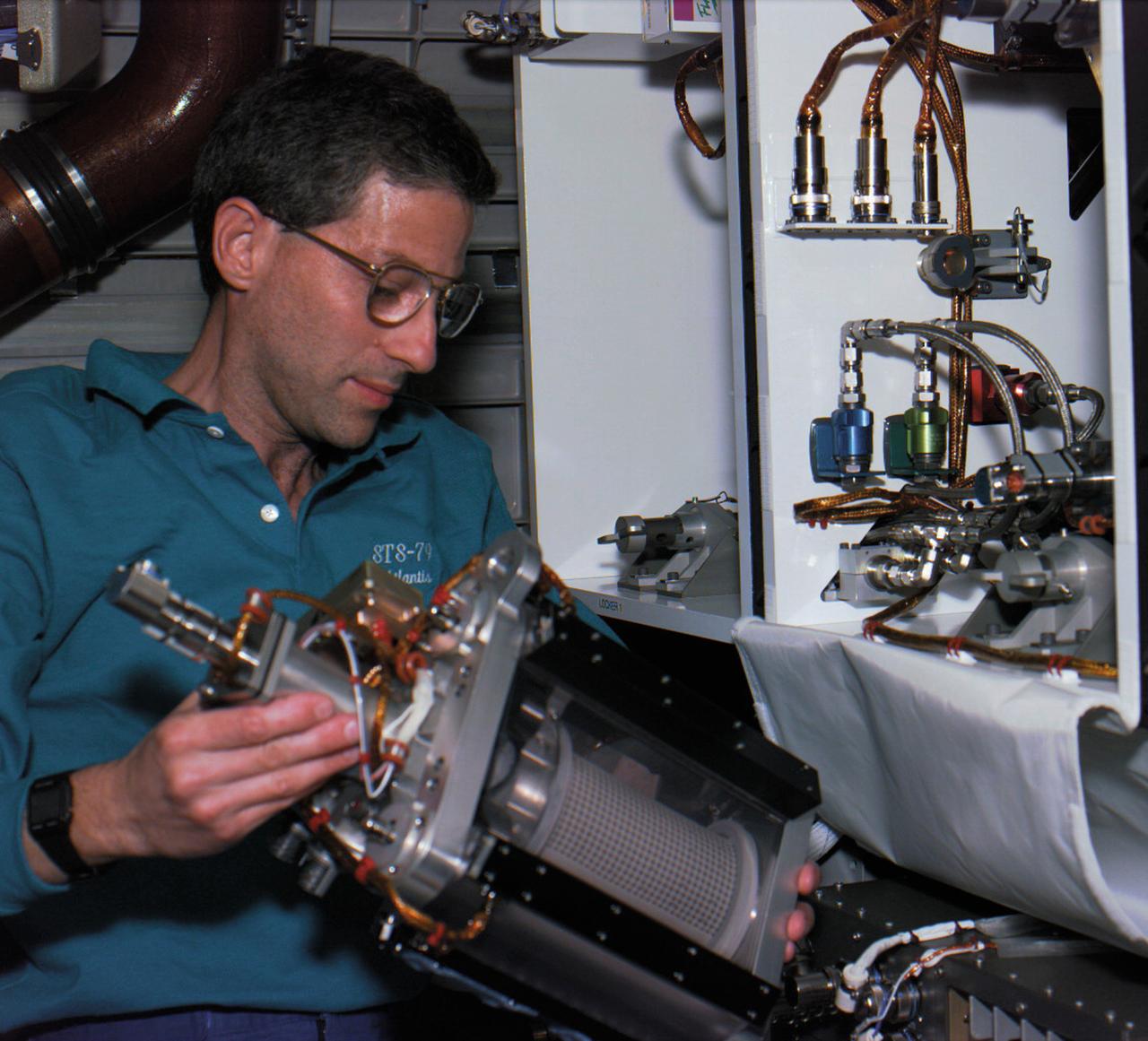
Astronaut Jay Apt installs Mechanics of Granular Materials (MGM0 test cell on STS-79. Sand and soil grains have faces that can cause friction as they roll and slide against each other, or even cause sticking and form small voids between grains. This complex behavior can cause soil to behave like a liquid under certain conditions such as earthquakes or when powders are handled in industrial processes. MGM experiments aboard the Space Shuttle use the microgravity of space to simulate this behavior under conditions that carnot be achieved in laboratory tests on Earth. MGM is shedding light on the behavior of fine-grain materials under low effective stresses. Applications include earthquake engineering, granular flow technologies (such as powder feed systems for pharmaceuticals and fertilizers), and terrestrial and planetary geology. Nine MGM specimens have flown on two Space Shuttle flights. Another three are scheduled to fly on STS-107. The principal investigator is Stein Sture of the University of Colorado at Boulder. (Credit: NASA/John Space Center).
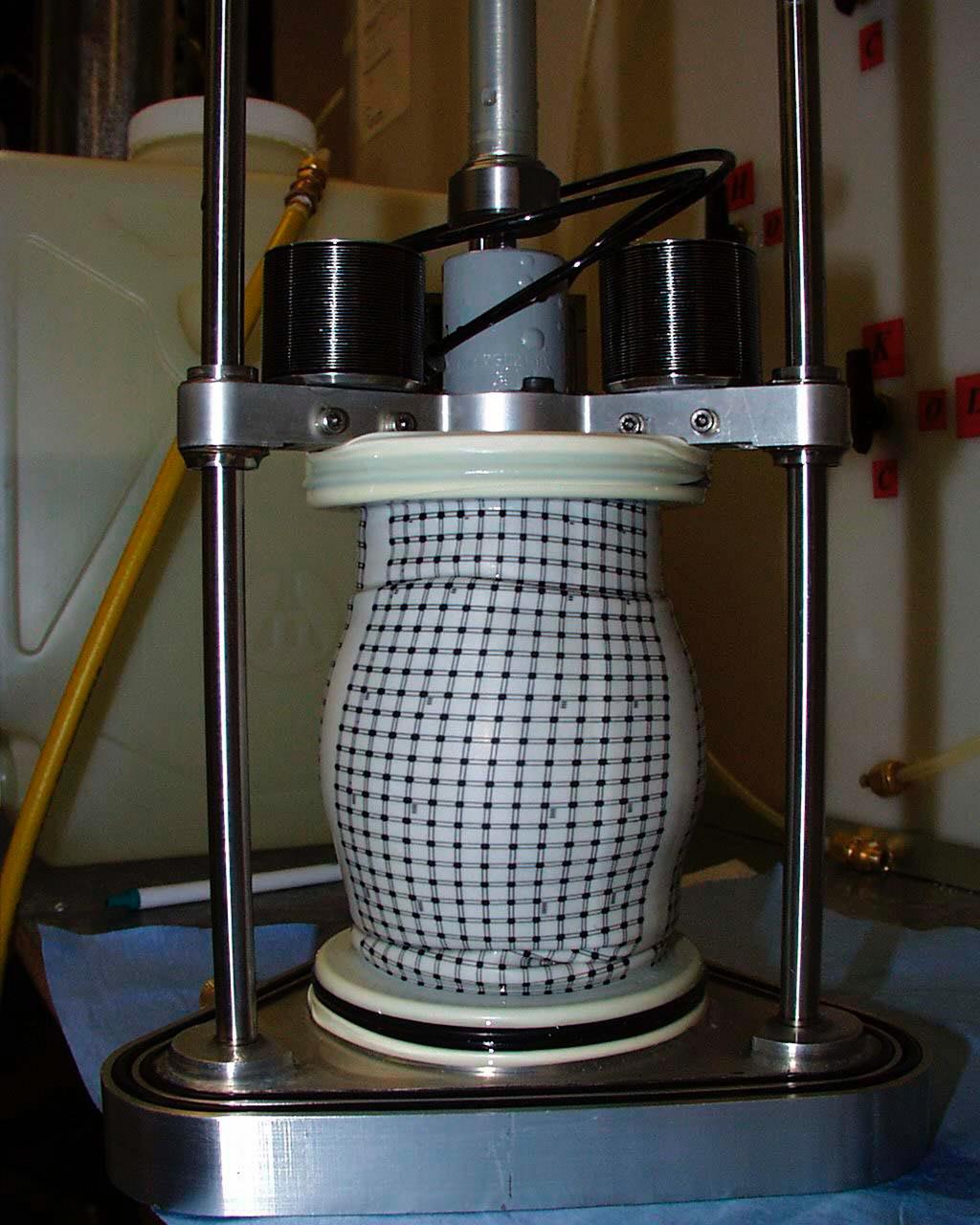
A test cell for Mechanics of Granular Materials (MGM) experiment is tested for long-term storage with water in the system as plarned for STS-107. This view shows the compressed sand column with the protective water jacket removed. Sand and soil grains have faces that can cause friction as they roll and slide against each other, or even cause sticking and form small voids between grains. This complex behavior can cause soil to behave like a liquid under certain conditions such as earthquakes or when powders are handled in industrial processes. Mechanics of Granular Materials (MGM) experiments aboard the Space Shuttle use the microgravity of space to simulate this behavior under conditons that cannot be achieved in laboratory tests on Earth. MGM is shedding light on the behavior of fine-grain materials under low effective stresses. Applications include earthquake engineering, granular flow technologies (such as powder feed systems for pharmaceuticals and fertilizers), and terrestrial and planetary geology. Nine MGM specimens have flown on two Space Shuttle flights. Another three are scheduled to fly on STS-107. The principal investigator is Stein Sture of the University of Colorado at Boulder. Credit: University of Colorado at Boulder
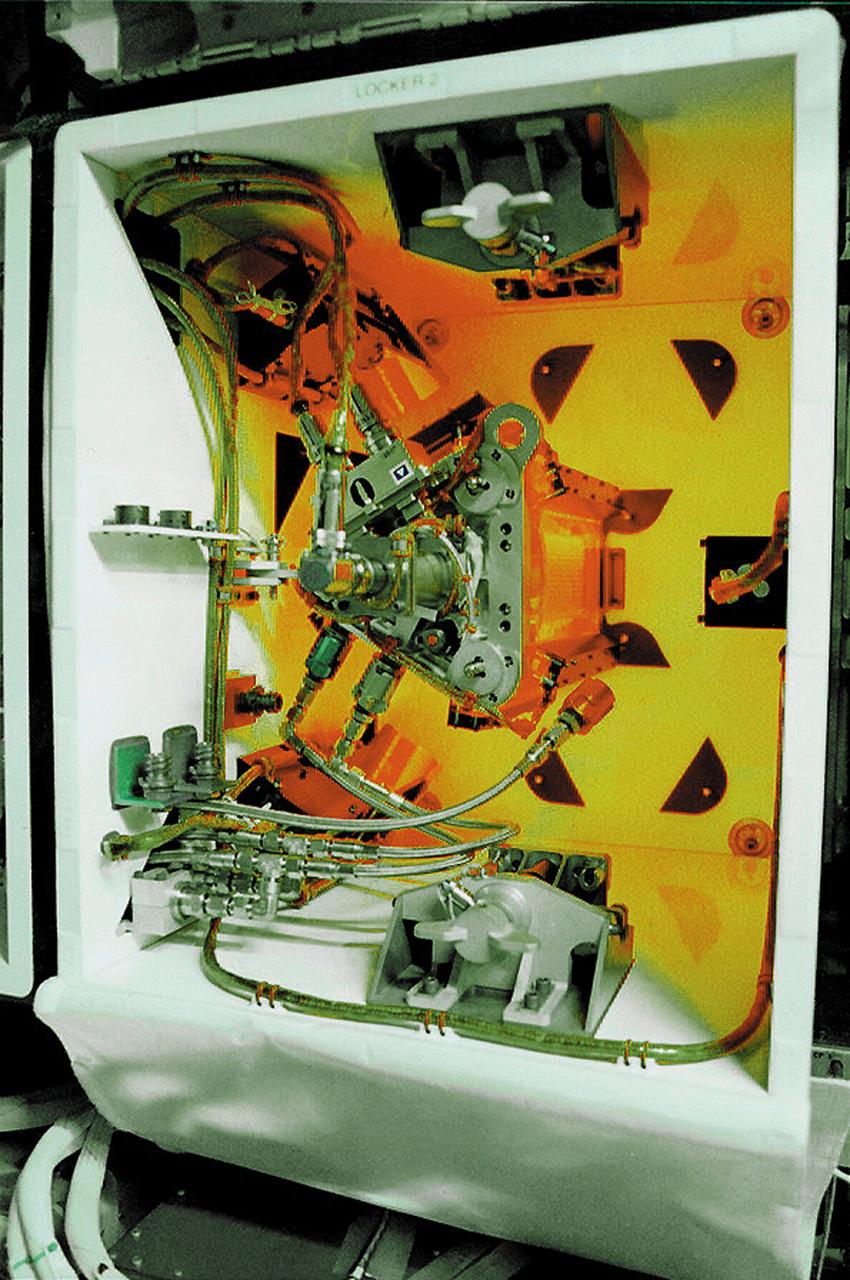
A test cell for the Mechanics of Granular Materials (MGM) experiment is shown in its on-orbit configuration in Spacehab during preparations for STS-89. The twin locker to the left contains the hydraulic system to operate the experiment. Sand and soil grains have faces that can cause friction as they roll and slide against each other, or even cause sticking and form small voids between grains. This complex behavior can cause soil to behave like a liquid under certain conditions such as earthquakes or when powders are handled in industrial processes. Mechanics of Granular Materials (MGM) experiments aboard the Space Shuttle use the microgravity of space to simulate this behavior under conditons that carnot be achieved in laboratory tests on Earth. MGM is shedding light on the behavior of fine-grain materials under low effective stresses. Applications include earthquake engineering, granular flow technologies (such as powder feed systems for pharmaceuticals and fertilizers), and terrestrial and planetary geology. Nine MGM specimens have flown on two Space Shuttle flights. Another three are scheduled to fly on STS-107. The principal investigator is Stein Sture of the University of Colorado at Boulder. Note: Because the image on the screen was muted in the original image, its brightness and contrast are boosted in this rendering to make the test cell more visible. Credit: NASA/Marshall Space Flight Center (MSFC)
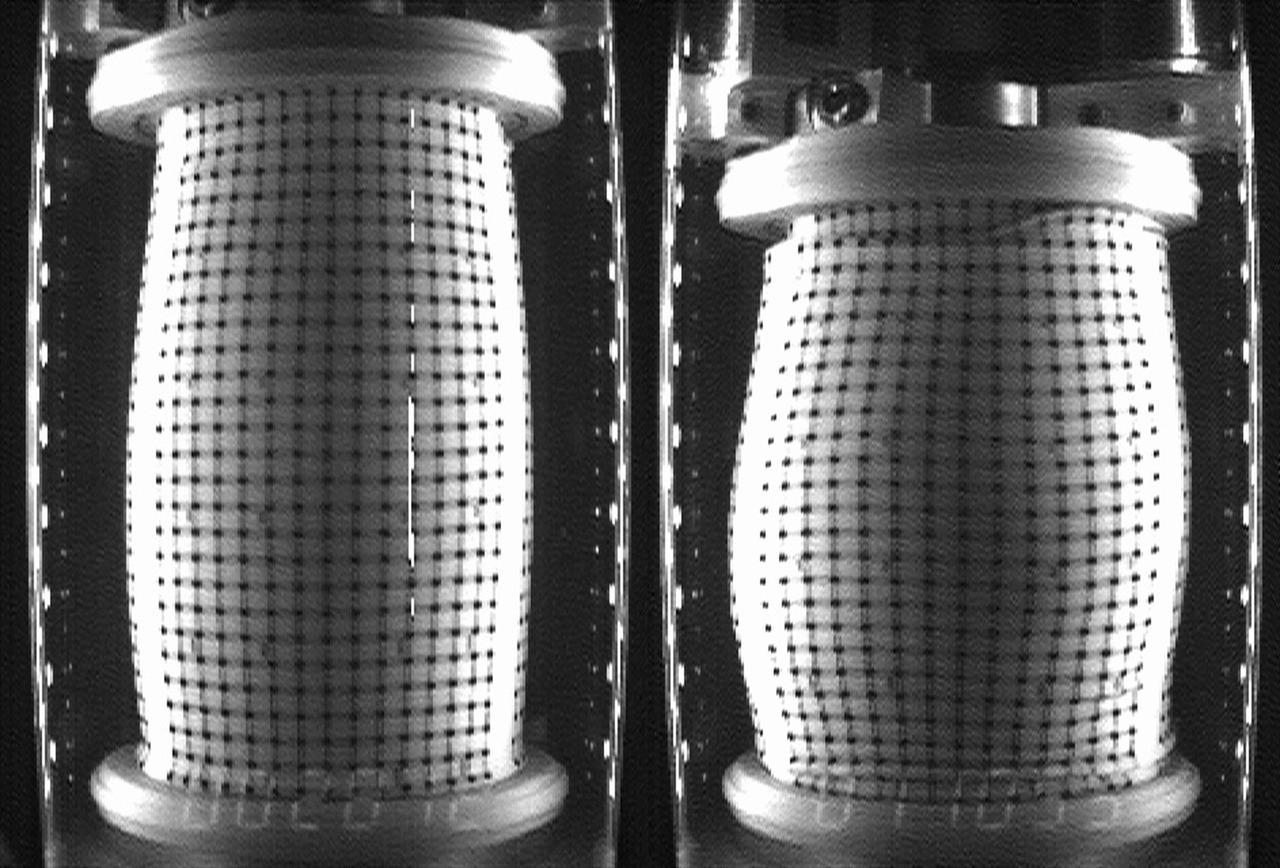
A test cell for Mechanics of Granular Materials (MGM) experiment is shown approximately 20 and 60 minutes after the start of an experiment on STS-89. Sand and soil grains have faces that can cause friction as they roll and slide against each other, or even cause sticking and form small voids between grains. This complex behavior can cause soil to behave like a liquid under certain conditions such as earthquakes or when powders are handled in industrial processes. Mechanics of Granular Materials (MGM) experiments aboard the Space Shuttle use the microgravity of space to simulate this behavior under conditons that carnot be achieved in laboratory tests on Earth. MGM is shedding light on the behavior of fine-grain materials under low effective stresses. Applications include earthquake engineering, granular flow technologies (such as powder feed systems for pharmaceuticals and fertilizers), and terrestrial and planetary geology. Nine MGM specimens have flown on two Space Shuttle flights. Another three are scheduled to fly on STS-107. The principal investigator is Stein Sture of the University of Colorado at Boulder. Credit: NASA/Marshall Space Flight Center (MSFC)
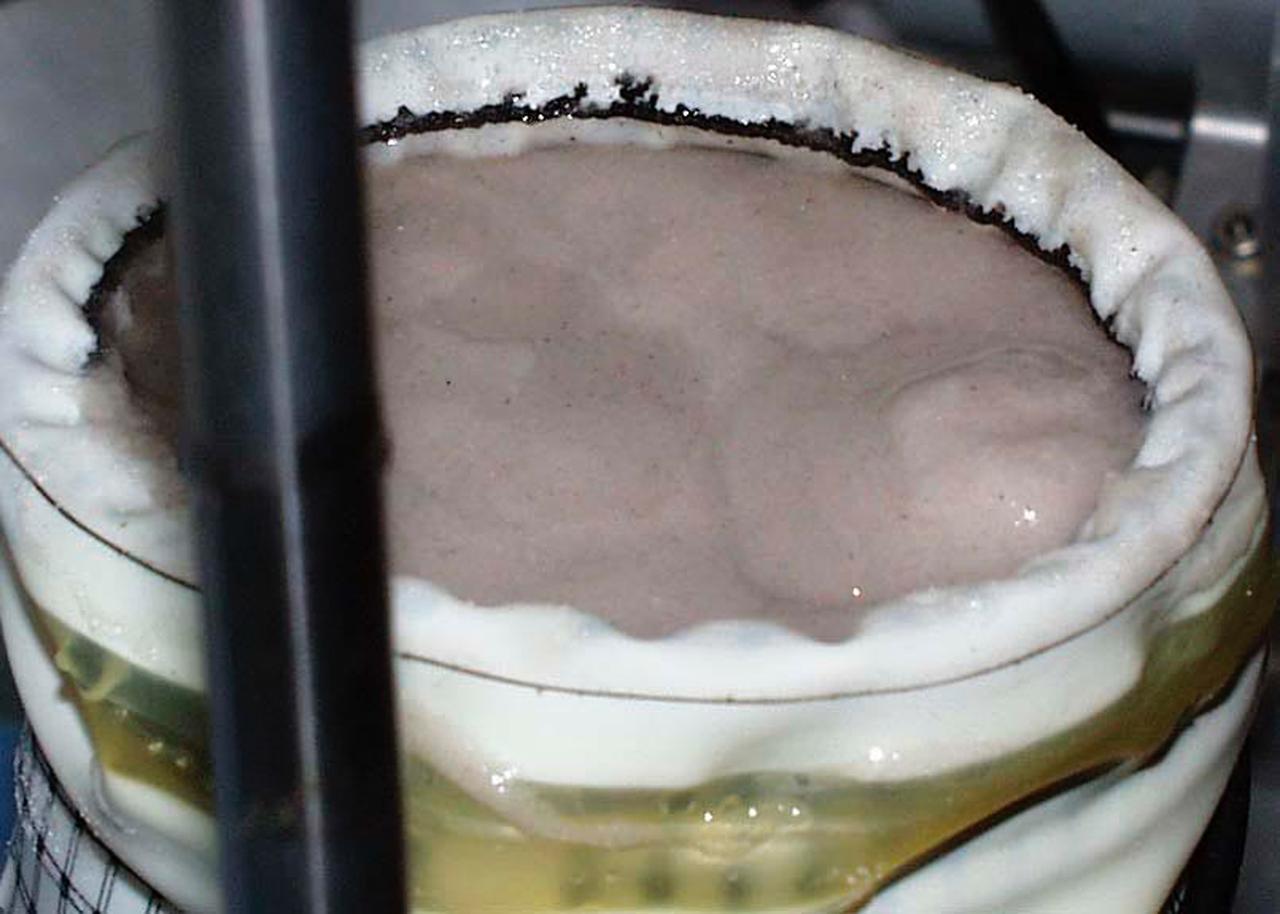
A test cell for Mechanics of Granular Materials (MGM) experiment is tested for long-term storage with water in the system as plarned for STS-107. This view shows the top of the sand column with the metal platten removed. Sand and soil grains have faces that can cause friction as they roll and slide against each other, or even cause sticking and form small voids between grains. This complex behavior can cause soil to behave like a liquid under certain conditions such as earthquakes or when powders are handled in industrial processes. Mechanics of Granular Materials (MGM) experiments aboard the Space Shuttle use the microgravity of space to simulate this behavior under conditons that cannot be achieved in laboratory tests on Earth. MGM is shedding light on the behavior of fine-grain materials under low effective stresses. Applications include earthquake engineering, granular flow technologies (such as powder feed systems for pharmaceuticals and fertilizers), and terrestrial and planetary geology. Nine MGM specimens have flown on two Space Shuttle flights. Another three are scheduled to fly on STS-107. The principal investigator is Stein Sture of the University of Colorado at Boulder. Credit: University of Colorado at Boulder
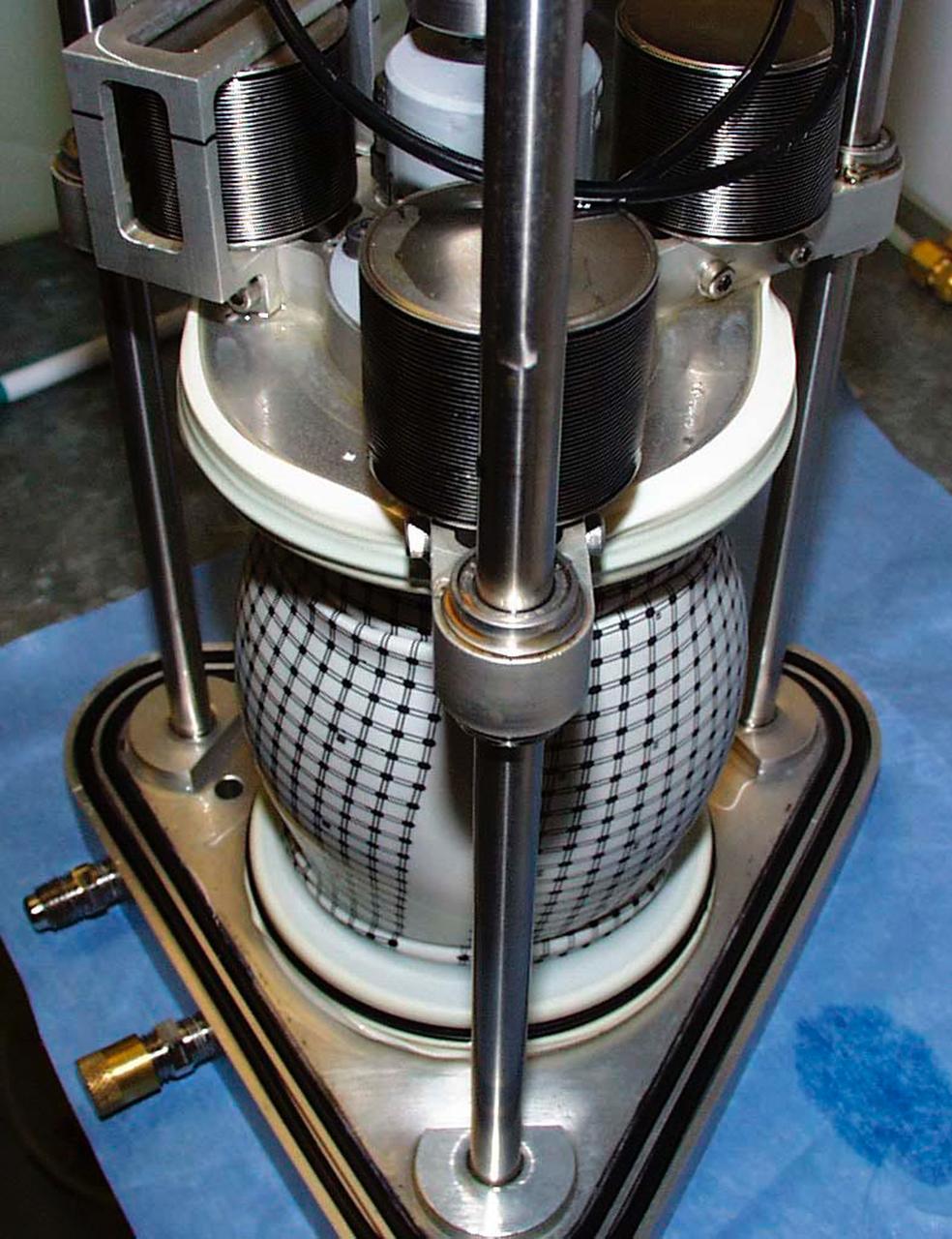
A test cell for Mechanics of Granular Materials (MGM) experiment is tested for long-term storage with water in the system as plarned for STS-107. This view shows the compressed sand column with the protective water jacket removed. Sand and soil grains have faces that can cause friction as they roll and slide against each other, or even cause sticking and form small voids between grains. This complex behavior can cause soil to behave like a liquid under certain conditions such as earthquakes or when powders are handled in industrial processes. Mechanics of Granular Materials (MGM) experiments aboard the Space Shuttle use the microgravity of space to simulate this behavior under conditons that cannot be achieved in laboratory tests on Earth. MGM is shedding light on the behavior of fine-grain materials under low effective stresses. Applications include earthquake engineering, granular flow technologies (such as powder feed systems for pharmaceuticals and fertilizers), and terrestrial and planetary geology. Nine MGM specimens have flown on two Space Shuttle flights. Another three are scheduled to fly on STS-107. The principal investigator is Stein Sture of the University of Colorado at Boulder. Credit: University of Colorado at Boulder
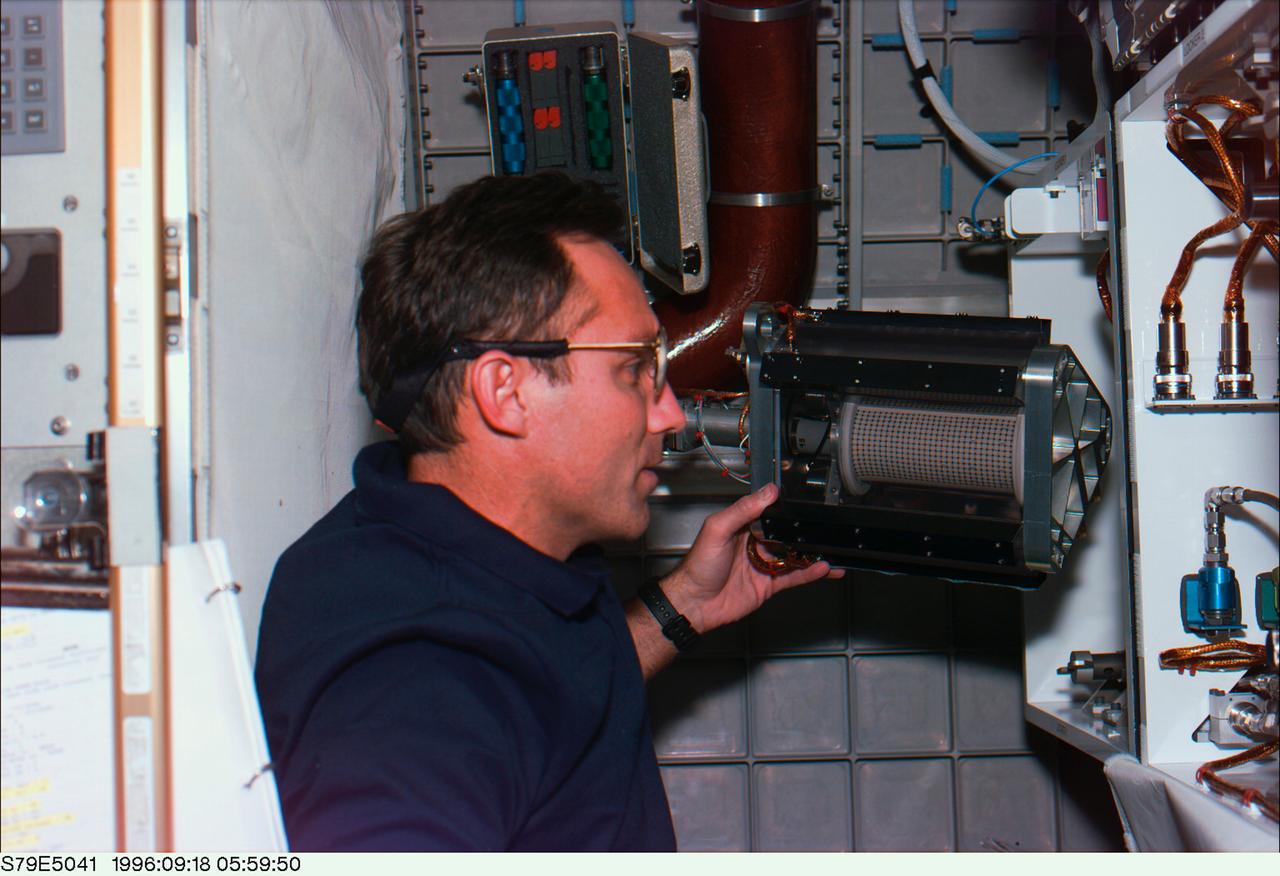
Astronaut Carl Walz installs Mechanics of Granular Materials (MGM) test cell on STS-79. Sand and soil grains have faces that can cause friction as they roll and slide against each other, or even cause sticking and form small voids between grains. This complex behavior can cause soil to behave like a liquid under certain conditions such as earthquakes or when powders are handled in industrial processes. Mechanics of Granular Materials (MGM) experiments aboard the Space Shuttle use the microgravity of space to simulate this behavior under conditons that carnot be achieved in laboratory tests on Earth. MGM is shedding light on the behavior of fine-grain materials under low effective stresses. Applications include earthquake engineering, granular flow technologies (such as powder feed systems for pharmaceuticals and fertilizers), and terrestrial and planetary geology. Nine MGM specimens have flown on two Space Shuttle flights. Another three are scheduled to fly on STS-107. The principal investigator is Stein Sture of the University of Colorado at Boulder. Credit: NASA/John Space Center
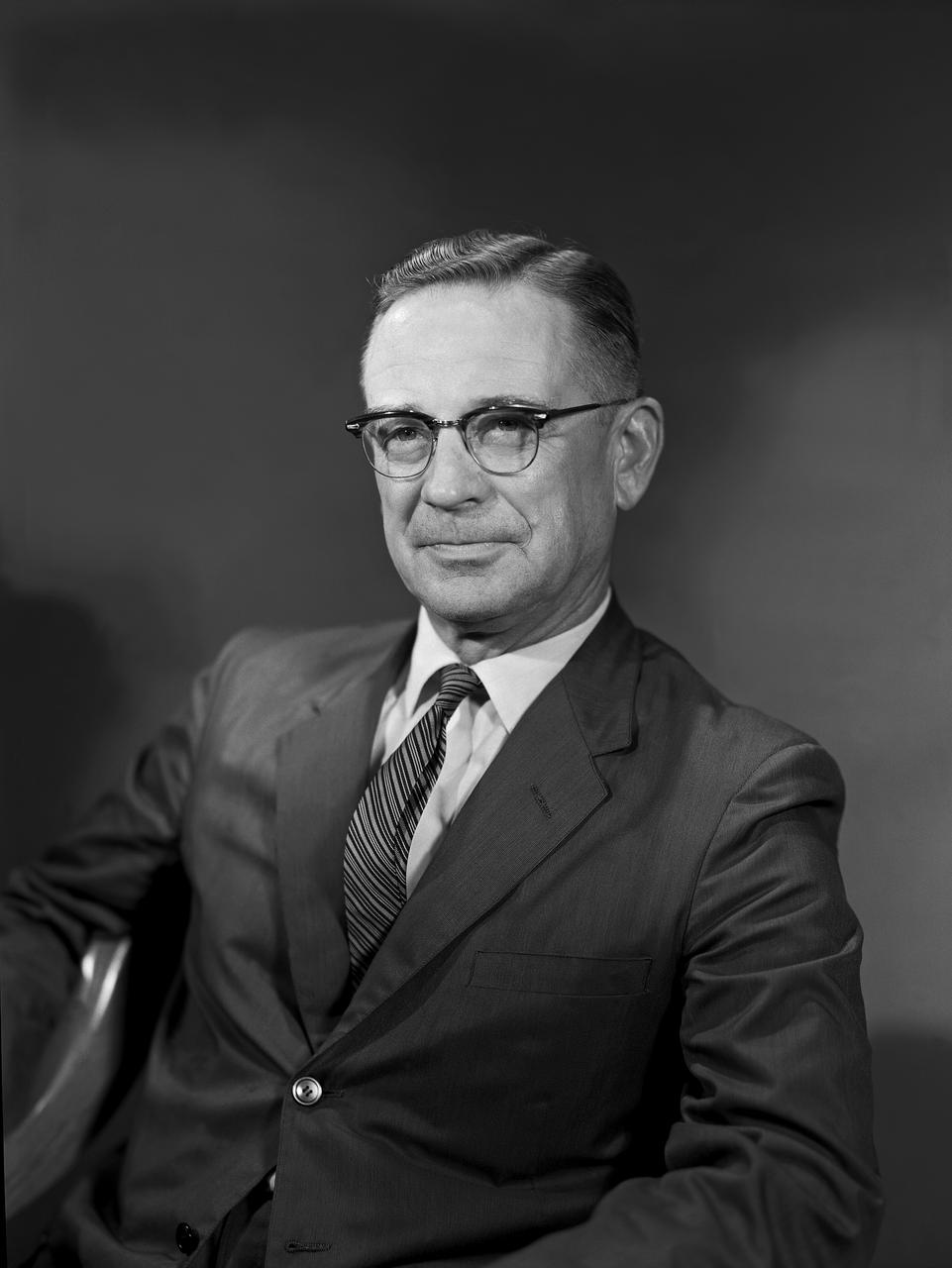
Portrait of Charles H. Zimmerman Associate Chief, Aero-Space Mechanics Division
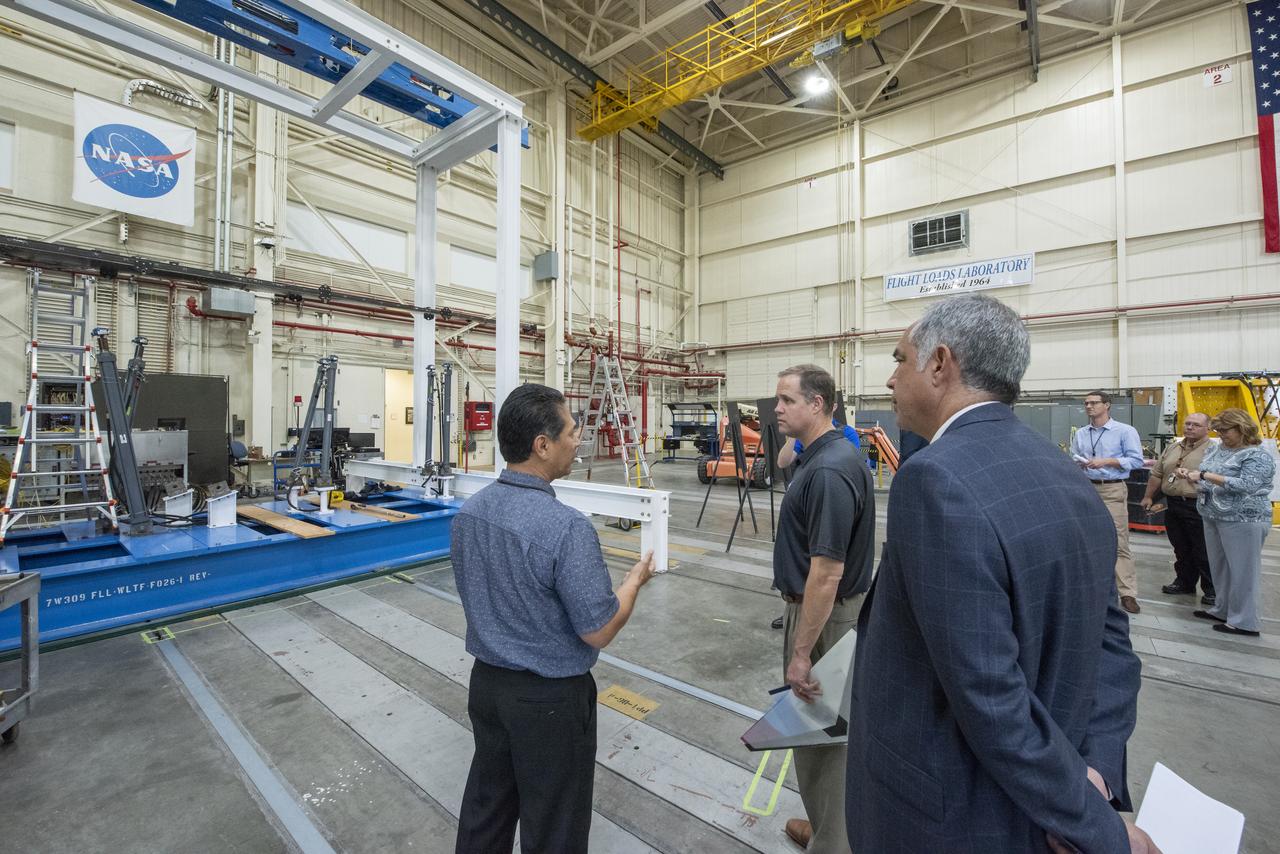
NASA Administrator Bridenstine talks with Armstrong's Larry Hudson about the capabilities of the Flight Loads Lab to conduct mechanical-load and thermal studies of structural components and complete flight vehicles.
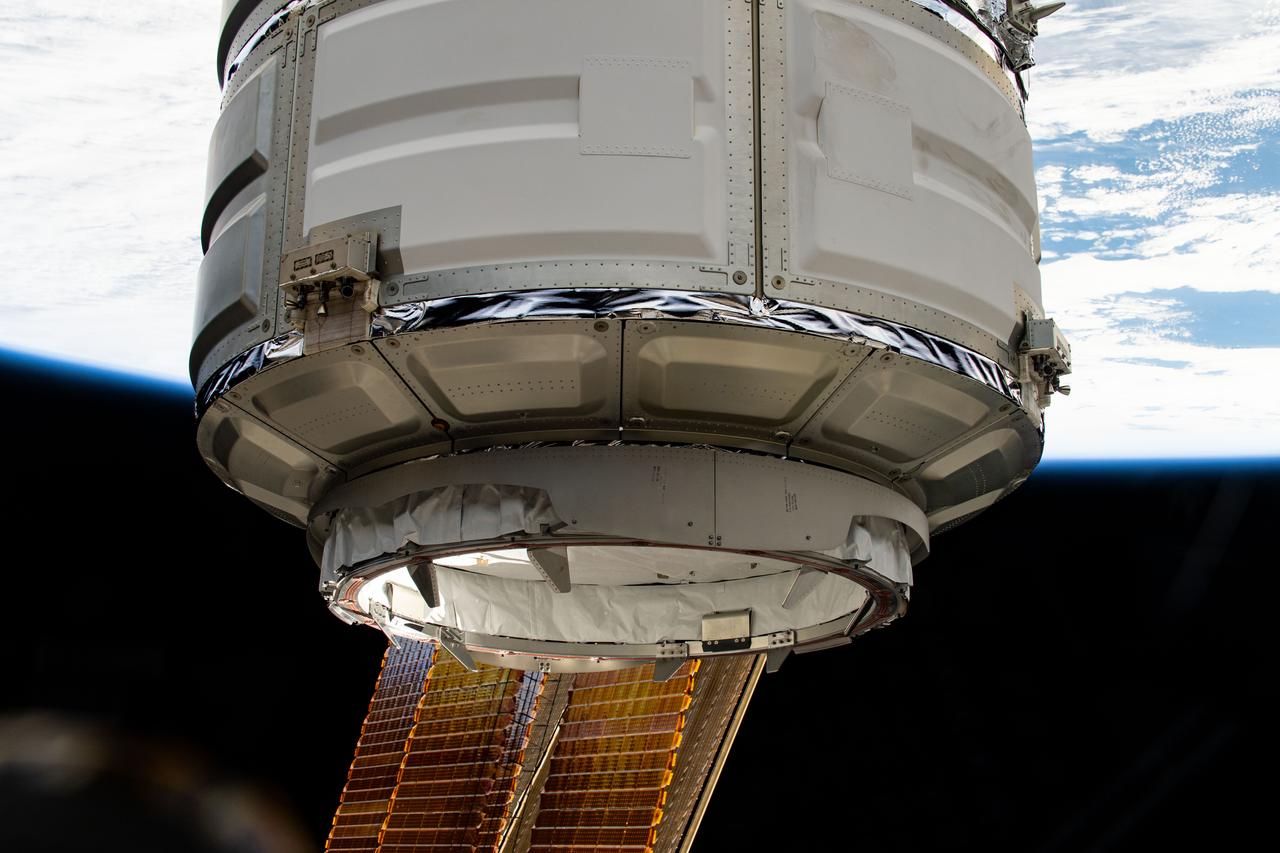
iss072e862224 (March 28, 2025) --- The Cygnus space freighter's common berthing mechanism, which connects Cygnus to the International Space Station, is pictured after the Canadarm2 robotic arm removed the cargo craft from the Unity module's Earth-facing port.
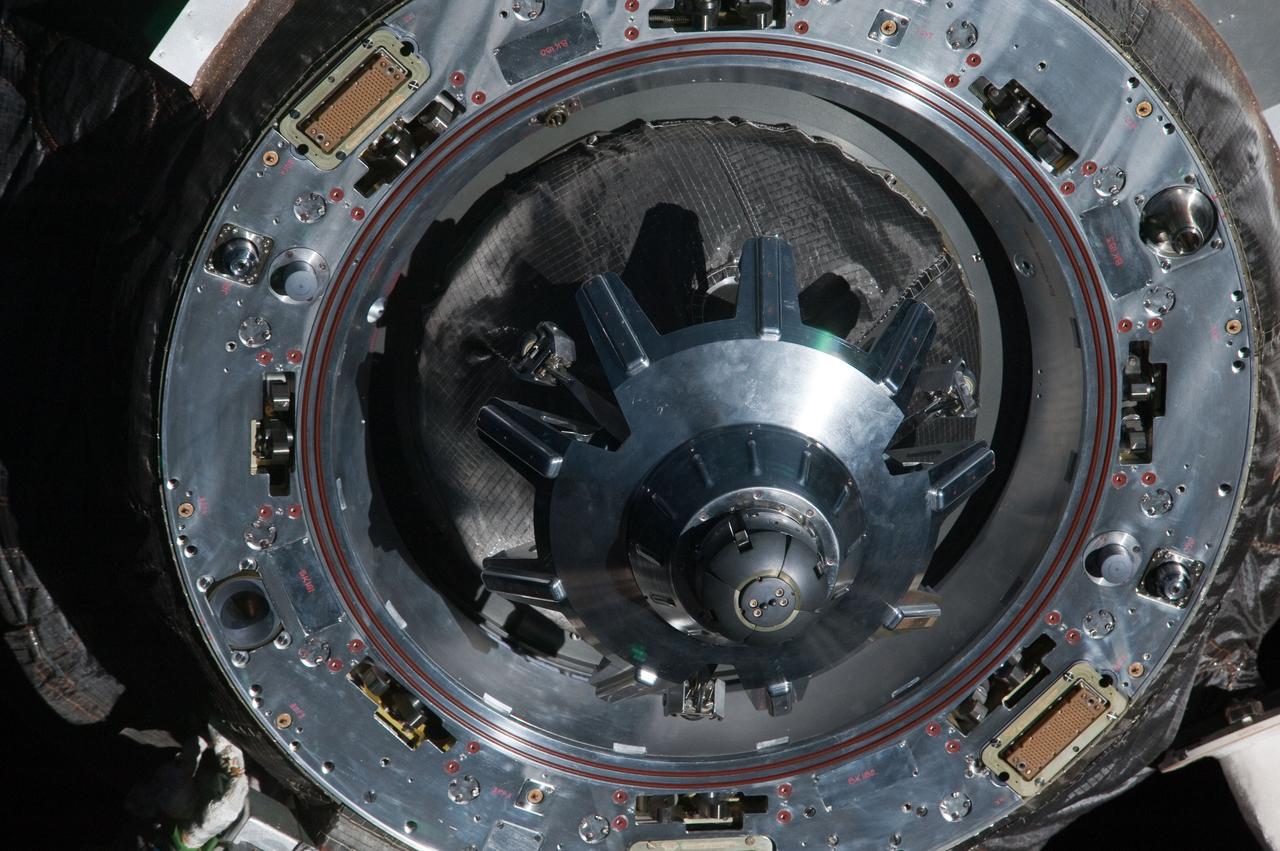
ISS030-E-238803 (19 April 2012) --- A close-up view of the docking mechanism of the unpiloted ISS Russian Progress 46 spacecraft is featured in this image photographed by an Expedition 30 crew member as Progress departs from the International Space Station.
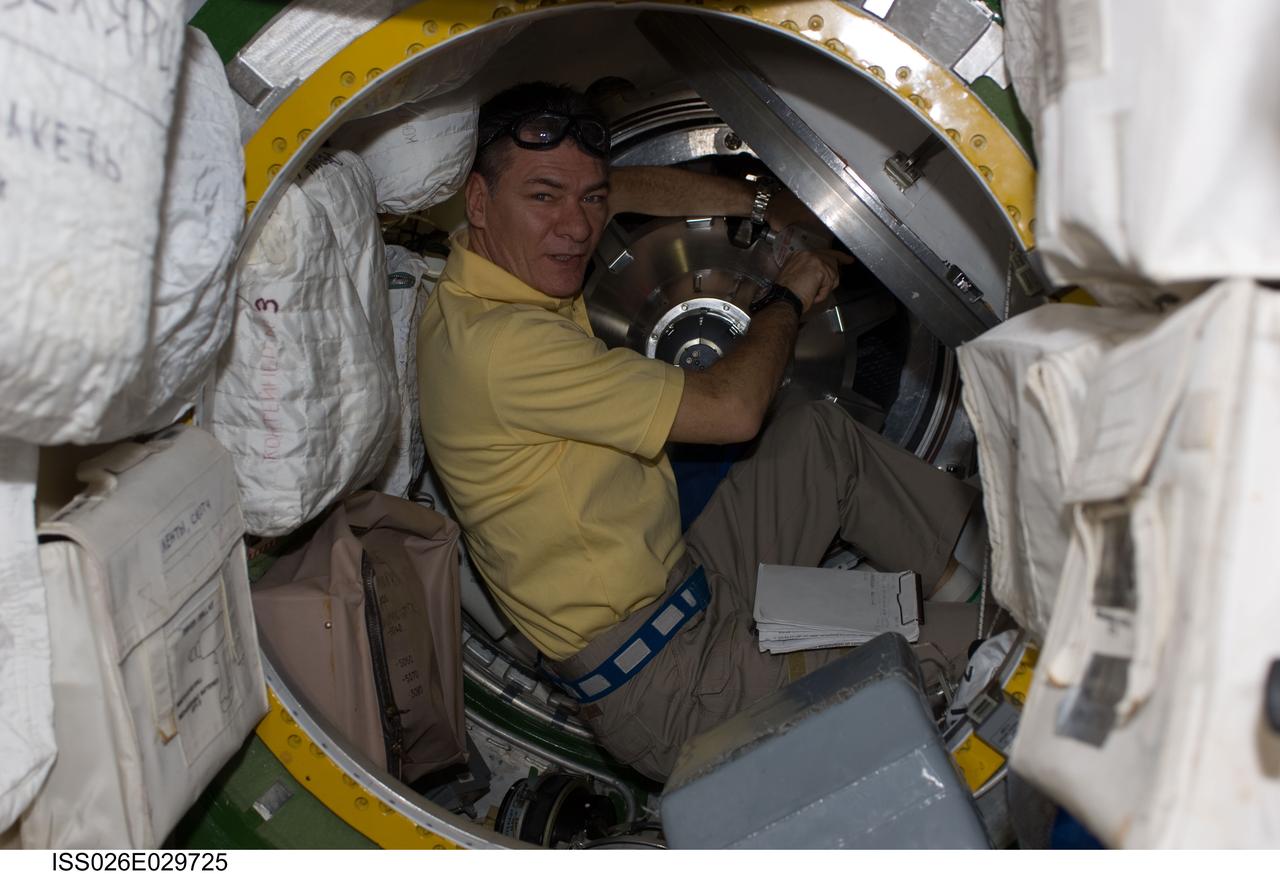
ISS026-E-029725 (25 Feb. 2011) --- As part of inverse activities onboard the International Space Station, European Space Agency astronaut Paolo Nespoli, Expedition 26 flight engineer, removes the docking mechanism to gain access to the ATV hatch.
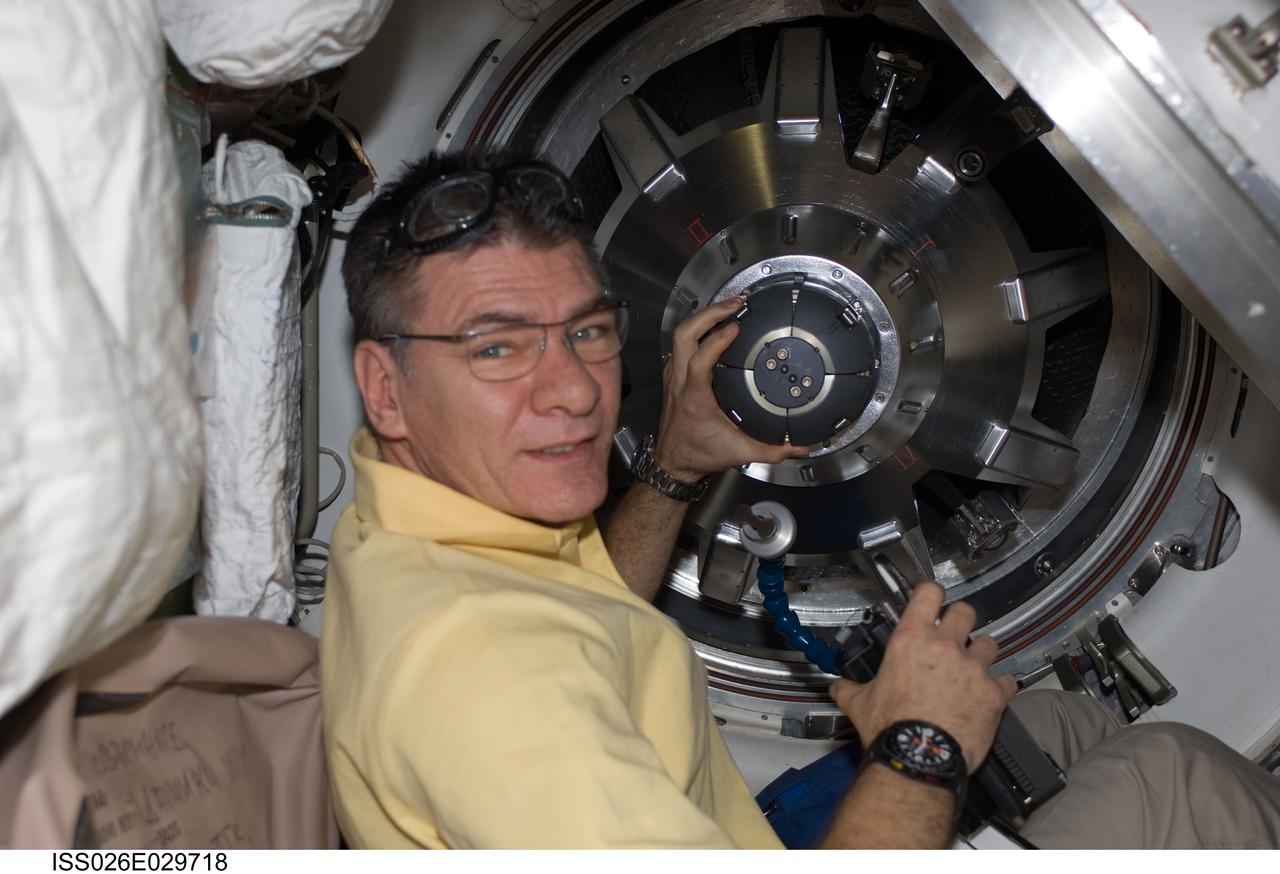
ISS026-E-029718 (25 Feb. 2011) --- As part of inverse activities onboard the International Space Station, European Space Agency astronaut Paolo Nespoli, Expedition 26 flight engineer, removes the docking mechanism to gain access to the ATV hatch.
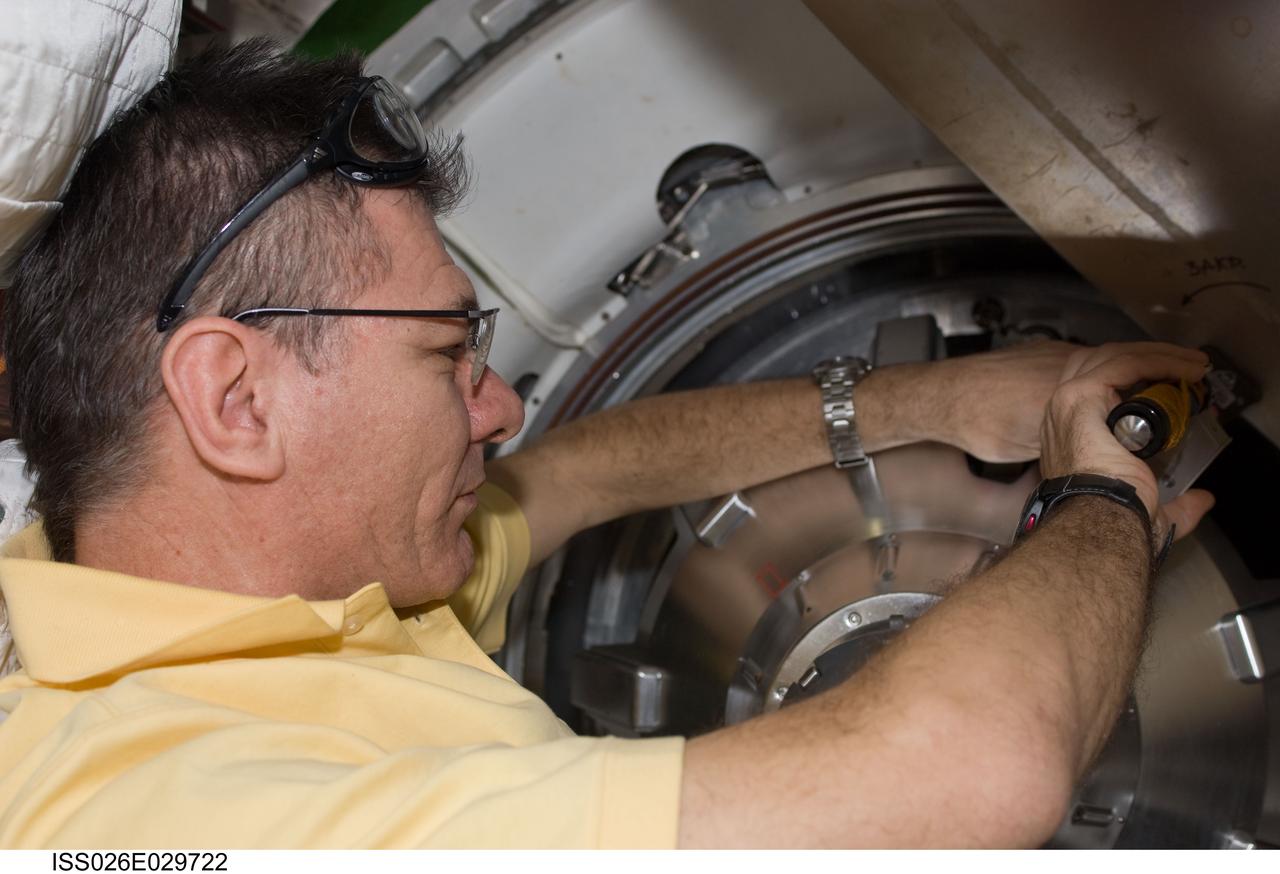
ISS026-E-029722 (25 Feb. 2011) --- As part of inverse activities onboard the International Space Station, European Space Agency astronaut Paolo Nespoli, Expedition 26 flight engineer, removes the docking mechanism to gain access to the ATV hatch.
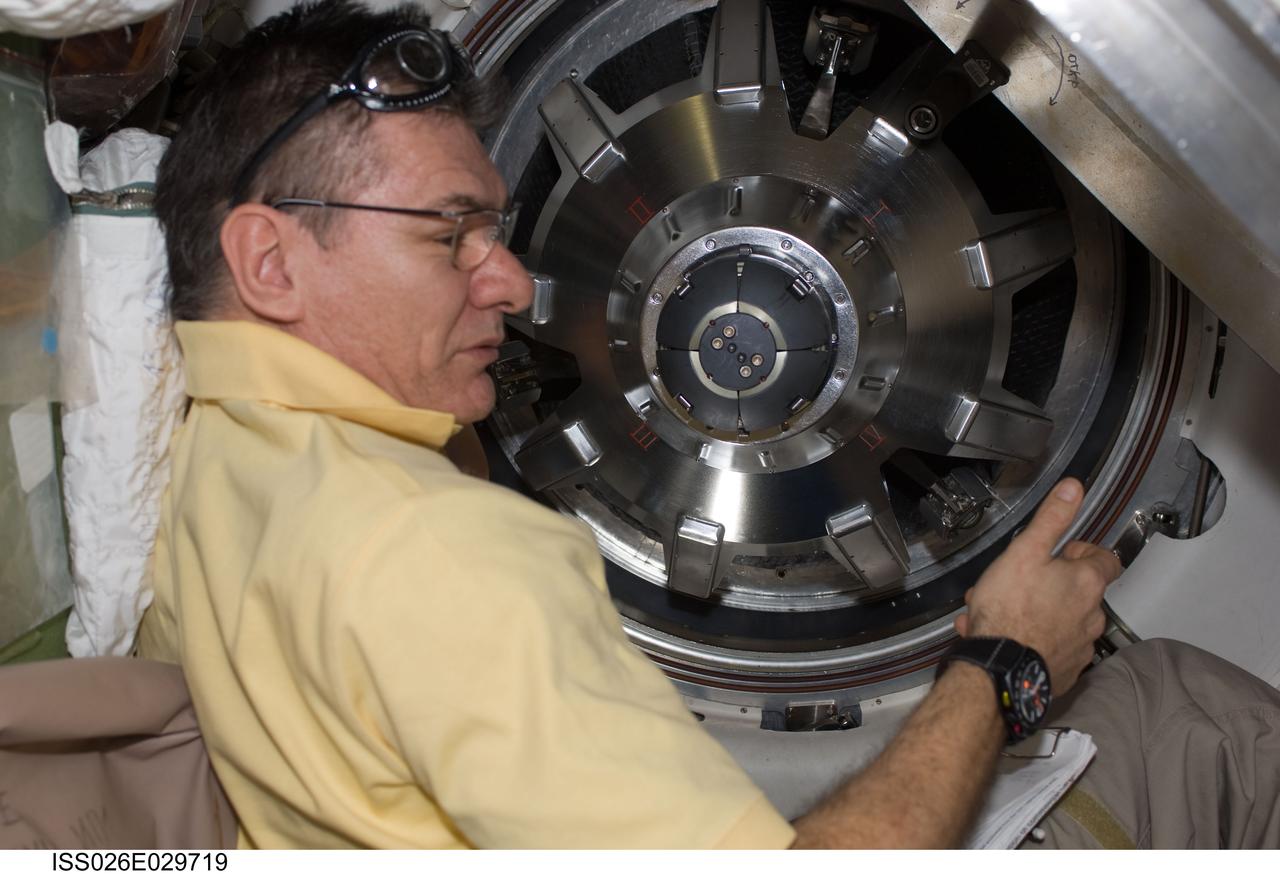
ISS026-E-029719 (25 Feb. 2011) --- As part of inverse activities onboard the International Space Station, European Space Agency astronaut Paolo Nespoli, Expedition 26 flight engineer, removes the docking mechanism to gain access to the ATV hatch.

Sand boil or sand volcano measuring 2 m (6.6 ft.) in length erupted in median of Interstate Highway 80 west of the Bay Bridge toll plaza when ground shaking transformed loose water-saturated deposit of subsurface sand into a sand-water slurry (liquefaction) in the October 17, 1989, Loma Prieta earthquake. Vented sand contains marine-shell fragments. Sand and soil grains have faces that can cause friction as they roll and slide against each other, or even cause sticking and form small voids between grains. This complex behavior can cause soil to behave like a liquid under certain conditions such as earthquakes or when powders are handled in industrial processes. Mechanics of Granular Materials (MGM) experiments aboard the Space Shuttle use the microgravity of space to simulate this behavior under conditions that carnot be achieved in laboratory tests on Earth. MGM is shedding light on the behavior of fine-grain materials under low effective stresses. Applications include earthquake engineering, granular flow technologies (such as powder feed systems for pharmaceuticals and fertilizers), and terrestrial and planetary geology. Nine MGM specimens have flown on two Space Shuttle flights. Another three are scheduled to fly on STS-107. The principal investigator is Stein Sture of the University of Colorado at Boulder. (Credit: J.C. Tinsley, U.S. Geological Survey)

Ground shaking triggered liquefaction in a subsurface layer of water-saturated sand, producing differential lateral and vertical movement in a overlying carapace of unliquified sand and slit, which moved from right to left towards the Pajaro River. This mode of ground failure, termed lateral spreading, is a principal cause of liquefaction-related earthquake damage caused by the Oct. 17, 1989, Loma Prieta earthquake. Sand and soil grains have faces that can cause friction as they roll and slide against each other, or even cause sticking and form small voids between grains. This complex behavior can cause soil to behave like a liquid under certain conditions such as earthquakes or when powders are handled in industrial processes. Mechanics of Granular Materials (MGM) experiments aboard the Space Shuttle use the microgravity of space to simulate this behavior under conditons that carnot be achieved in laboratory tests on Earth. MGM is shedding light on the behavior of fine-grain materials under low effective stresses. Applications include earthquake engineering, granular flow technologies (such as powder feed systems for pharmaceuticals and fertilizers), and terrestrial and planetary geology. Nine MGM specimens have flown on two Space Shuttle flights. Another three are scheduled to fly on STS-107. The principal investigator is Stein Sture of the University of Colorado at Boulder. Credit: S.D. Ellen, U.S. Geological Survey
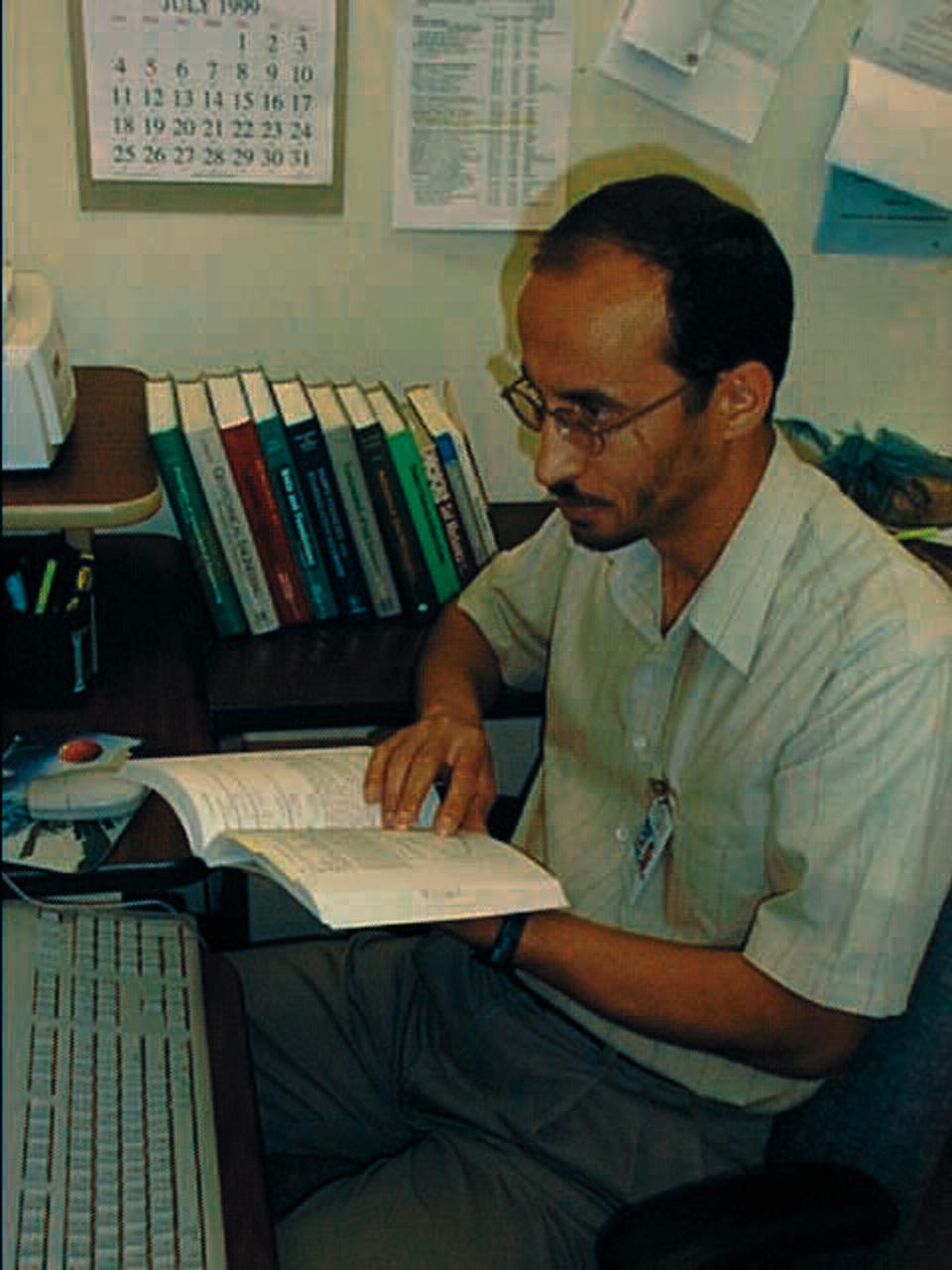
Key persornel in the Mechanics of Granular Materials (MGM) experiment include Khalid Alshibli, project scientist at NASA's Marshall Space Flight Center (MSFC). Sand and soil grains have faces that can cause friction as they roll and slide against each other, or even cause sticking and form small voids between grains. This complex behavior can cause soil to behave like a liquid under certain conditions such as earthquakes or when powders are handled in industrial processes. MGM experiments aboard the Space Shuttle use the microgravity of space to simulate this behavior under conditions that cannot be achieved in laboratory tests on Earth. MGM is shedding light on the behavior of fine-grain materials under low effective stresses. Applications include earthquake engineering, granular flow technologies (such as powder feed systems for pharmaceuticals and fertilizers), and terrestrial and planetary geology. Nine MGM specimens have flown on two Space Shuttle flights. Another three are scheduled to fly on STS-107. The principal investigator is Stein Sture of the University of Colorado at Boulder. (Credit: MSFC).
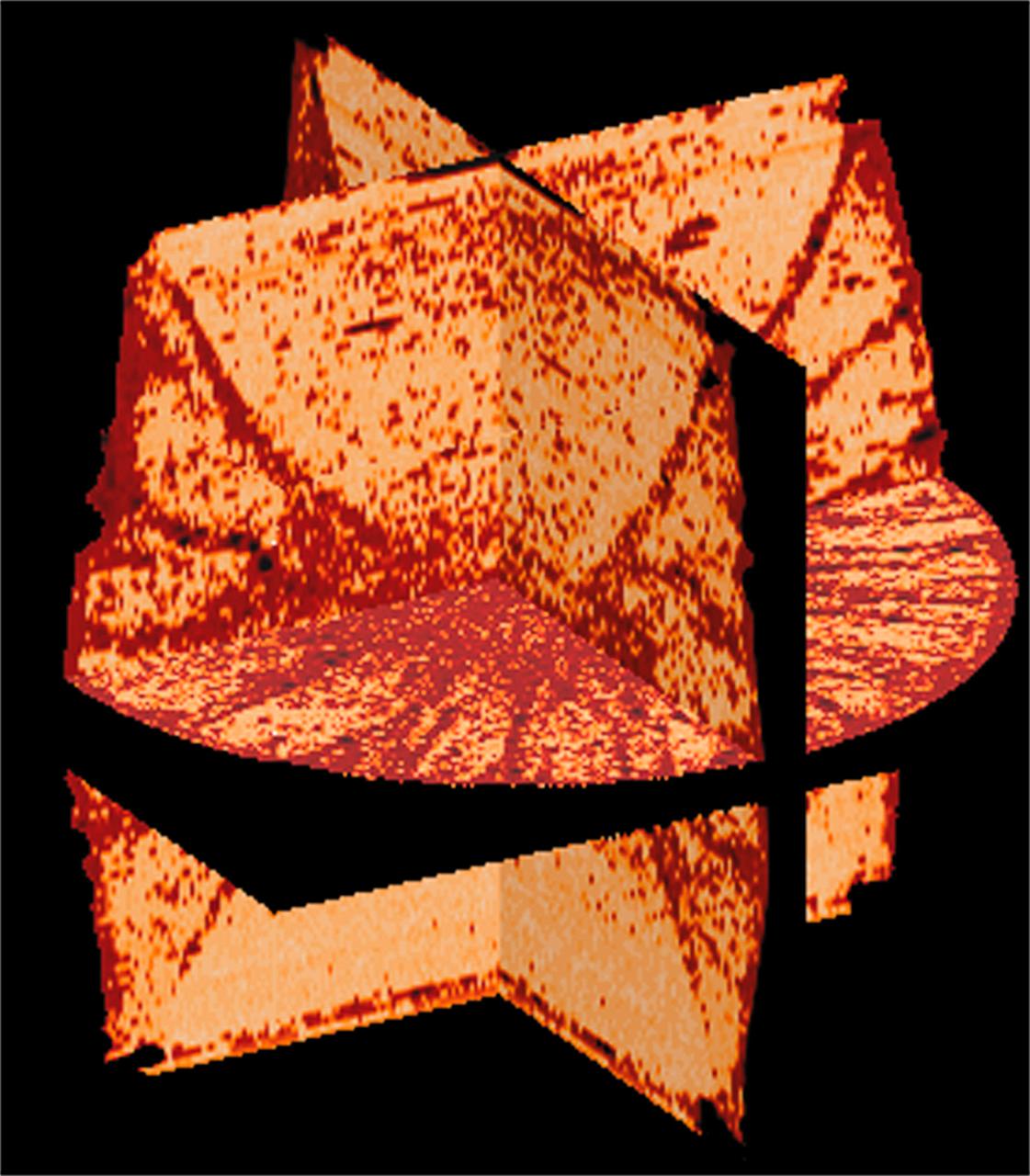
CT scans of the specimens on STS-79 reveal internal cone-shaped features and radial patterns not seen in specimens processed on the ground. The lighter areas are the densest in these images. CT scans produced richly detailed images allowing scientists to build 3D models of the interior of the specimens that can be compared with microscopic examination of thin slices. This view is made from three orthogonal slices. Sand and soil grains have faces that can cause friction as they roll and slide against each other, or even cause sticking and form small voids between grains. This complex behavior can cause soil to behave like a liquid under certain conditions such as earthquakes or when powders are handled in industrial processes. Mechanics of Granular Materials (MGM) experiments aboard the Space Shuttle use the microgravity of space to simulate this behavior under conditions that carnot be achieved in laboratory tests on Earth. MGM is shedding light on the behavior of fine-grain materials under low effective stresses. Applications include earthquake engineering, granular flow technologies (such as powder feed systems for pharmaceuticals and fertilizers), and terrestrial and planetary geology. Nine MGM specimens have flown on two Space Shuttle flights. Another three are scheduled to fly on STS-107. The principal investigator is Stein Sture of the University of Colorado at Boulder. (Credit: Los Alamos National Laboratory and the University of Colorado at Boulder).

An automobile lies crushed under the third story of this apartment building in the Marina District after the Oct. 17, 1989, Loma Prieta earthquake. The ground levels are no longer visible because of structural failure and sinking due to liquefaction. Sand and soil grains have faces that can cause friction as they roll and slide against each other, or even cause sticking and form small voids between grains. This complex behavior can cause soil to behave like a liquid under certain conditions such as earthquakes or when powders are handled in industrial processes. Mechanics of Granular Materials (MGM) experiments aboard the Space Shuttle use the microgravity of space to simulate this behavior under conditons that carnot be achieved in laboratory tests on Earth. MGM is shedding light on the behavior of fine-grain materials under low effective stresses. Applications include earthquake engineering, granular flow technologies (such as powder feed systems for pharmaceuticals and fertilizers), and terrestrial and planetary geology. Nine MGM specimens have flown on two Space Shuttle flights. Another three are scheduled to fly on STS-107. The principal investigator is Stein Sture of the University of Colorado at Boulder. Credit: J.K. Nakata, U.S. Geological Survey.
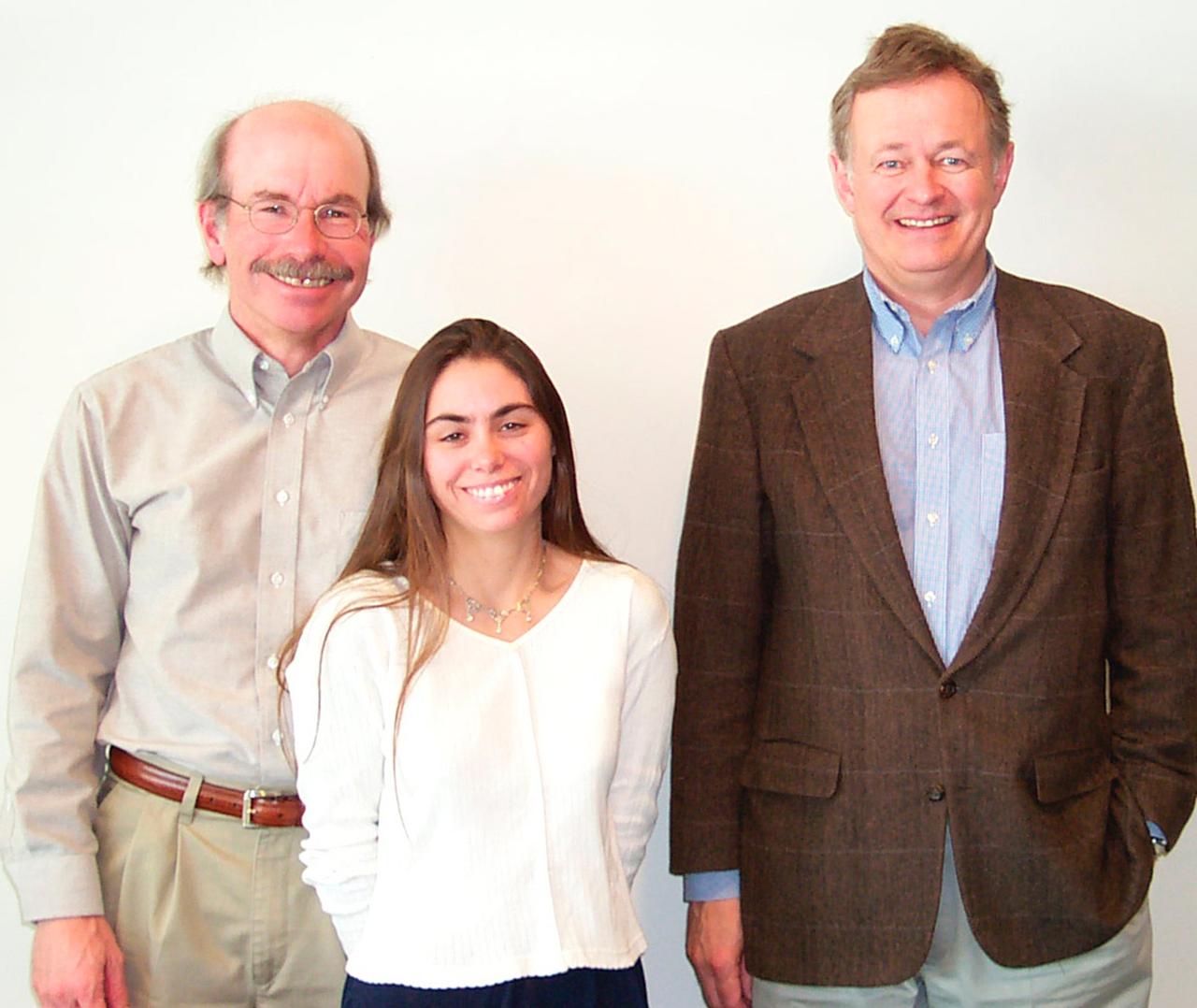
Key persornel in the Mechanics of Granular Materials (MGM) experiment are Mark Lankton (Program Manager at University Colorado at Boulder), Susan Batiste (research assistance, UCB), and Stein Sture (principal investigator). Sand and soil grains have faces that can cause friction as they roll and slide against each other, or even cause sticking and form small voids between grains. This complex behavior can cause soil to behave like a liquid under certain conditions such as earthquakes or when powders are handled in industrial processes. MGM experiments aboard the Space Shuttle use the microgravity of space to simulate this behavior under conditions that cannot be achieved in laboratory tests on Earth. MGM is shedding light on the behavior of fine-grain materials under low effective stresses. Applications include earthquake engineering, granular flow technologies (such as powder feed systems for pharmaceuticals and fertilizers), and terrestrial and planetary geology. Nine MGM specimens have flown on two Space Shuttle flights. Another three are scheduled to fly on STS-107. The principal investigator is Stein Sture of the University of Colorado at Boulder. (Credit: University of Colorado at Boulder).
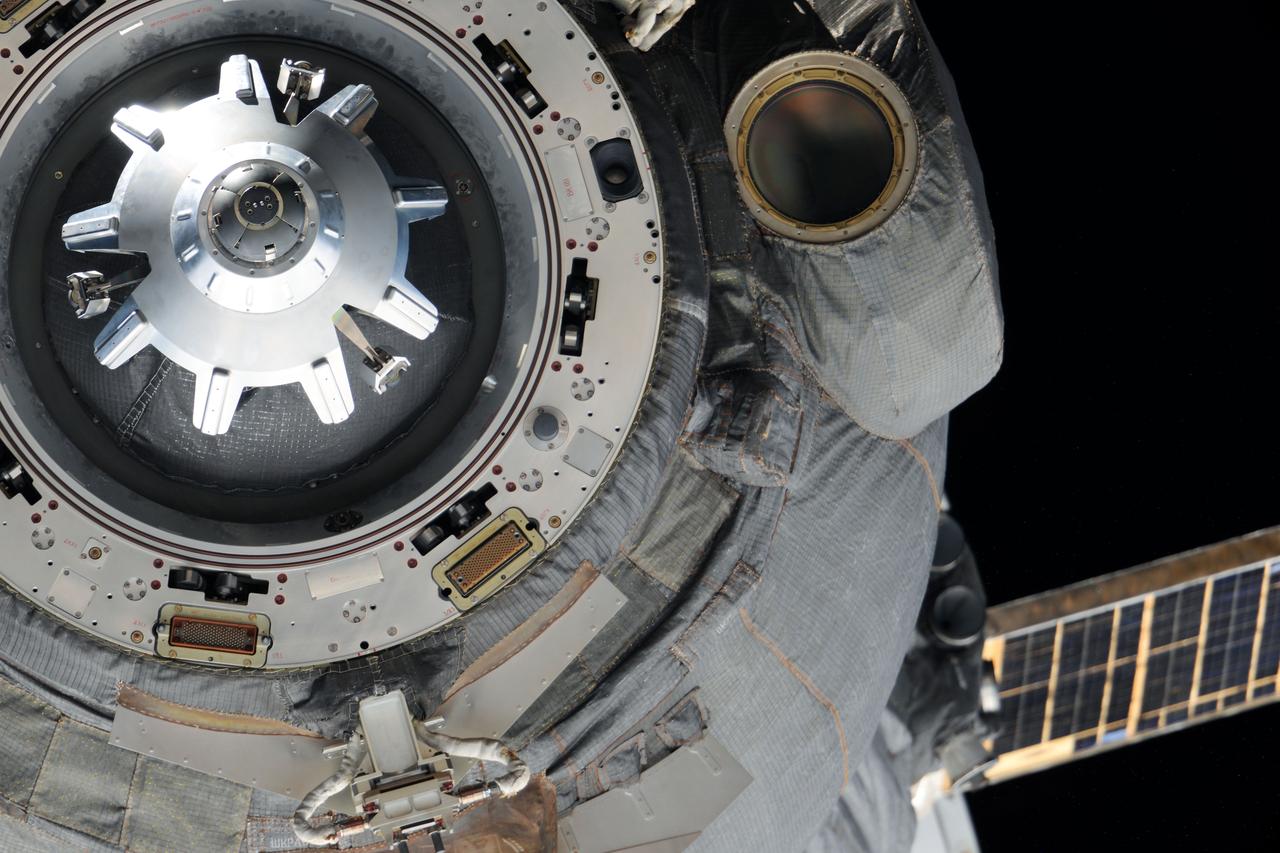
ISS032-E-005023 (1 July 2012) --- This close-up view shows the docking mechanism of the Soyuz TMA-03M spacecraft as it undocks from the International Space Station?s Rassvet Mini-Research Module 1 (MRM-1) on July 1, 2012. Russian cosmonaut Oleg Kononenko, Expedition 31 commander; along with European Space Agency astronaut Andre Kuipers and NASA astronaut Don Pettit, both flight engineers, are returning from more than six months aboard the space station where they served as members of the Expedition 30 and 31 crews.
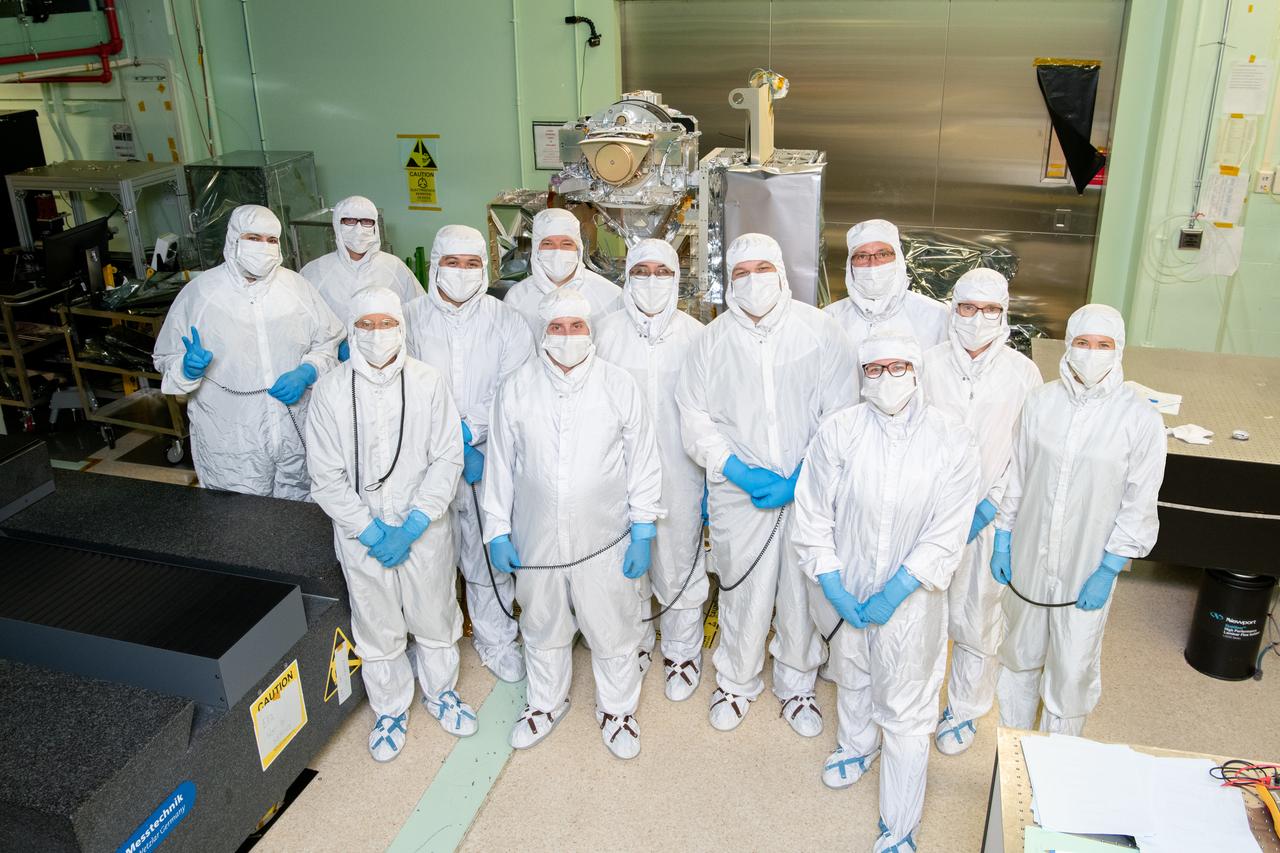
Mechanical integration team members pose with the Ocean Color Instrument (OCI) after successful integration of the main optical components onto the flight deck. OCI is a highly advanced optical spectrometer that will be used to measure properties of light over portions of the electromagnetic spectrum. It will enable continuous measurement of light at finer wavelength resolution than previous NASA satellite sensors, extending key system ocean color data records for climate studies. OCI is PACE's (Plankton, Aerosol, Cloud, ocean Ecosystem) primary sensor built at Goddard Space Flight Center in Greenbelt, MD.
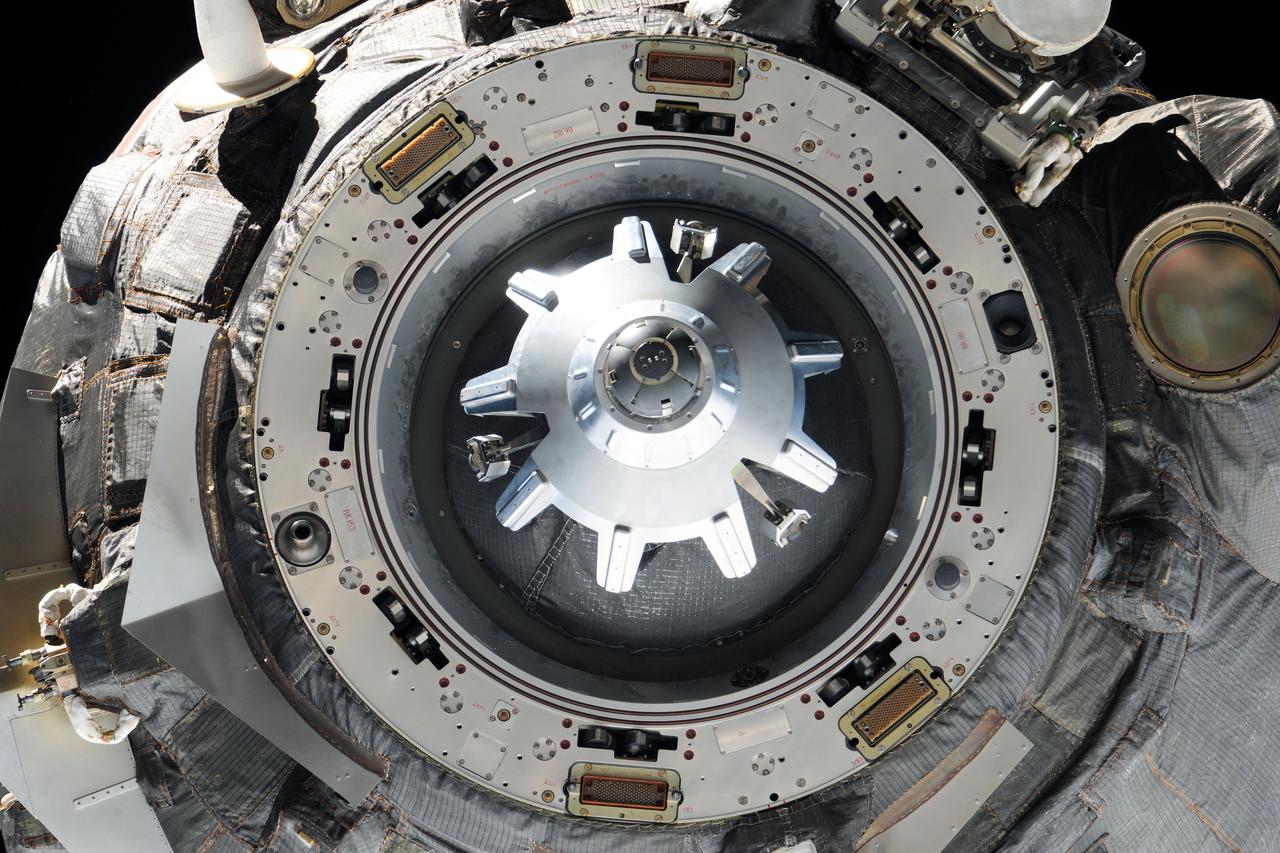
ISS032-E-005028 (1 July 2012) --- This close-up view shows the docking mechanism of the Soyuz TMA-03M spacecraft as it undocks from the International Space Station?s Rassvet Mini-Research Module 1 (MRM-1) on July 1, 2012. Russian cosmonaut Oleg Kononenko, Expedition 31 commander; along with European Space Agency astronaut Andre Kuipers and NASA astronaut Don Pettit, both flight engineers, are returning from more than six months aboard the space station where they served as members of the Expedition 30 and 31 crews.
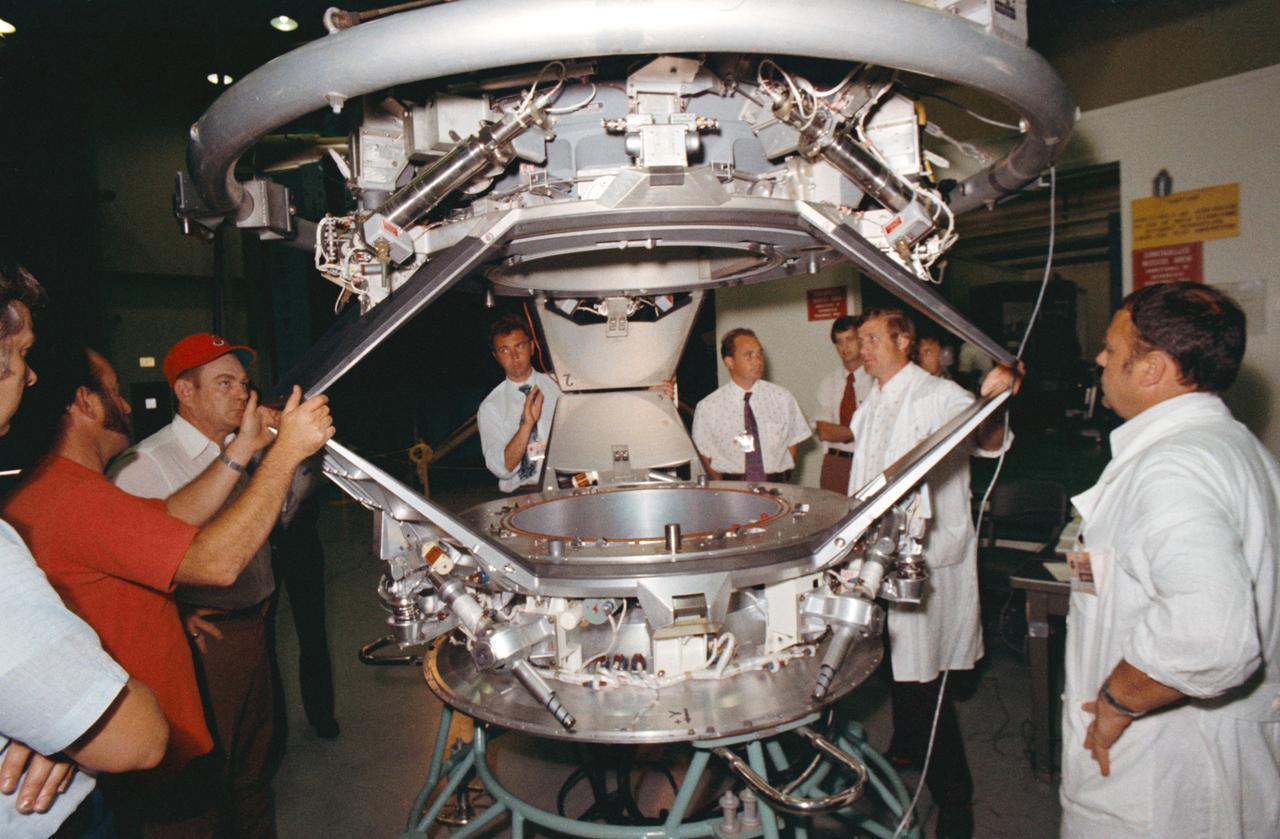
S74-25394 (10 July 1974) --- A group of American and Soviet engineers of the Apollo-Soyuz Test Project working group three examines an ASTP docking set-up following a docking mechanism fitness test conducted in Building 13 at the Johnson Space Center. Working Group No. 3 is concerned with ASTP docking problems and techniques. The joint U.S.-USSR ASTP docking mission in Earth orbit is scheduled for the summer of 1975. The Apollo docking mechanism is atop the Soyuz docking mechanism.
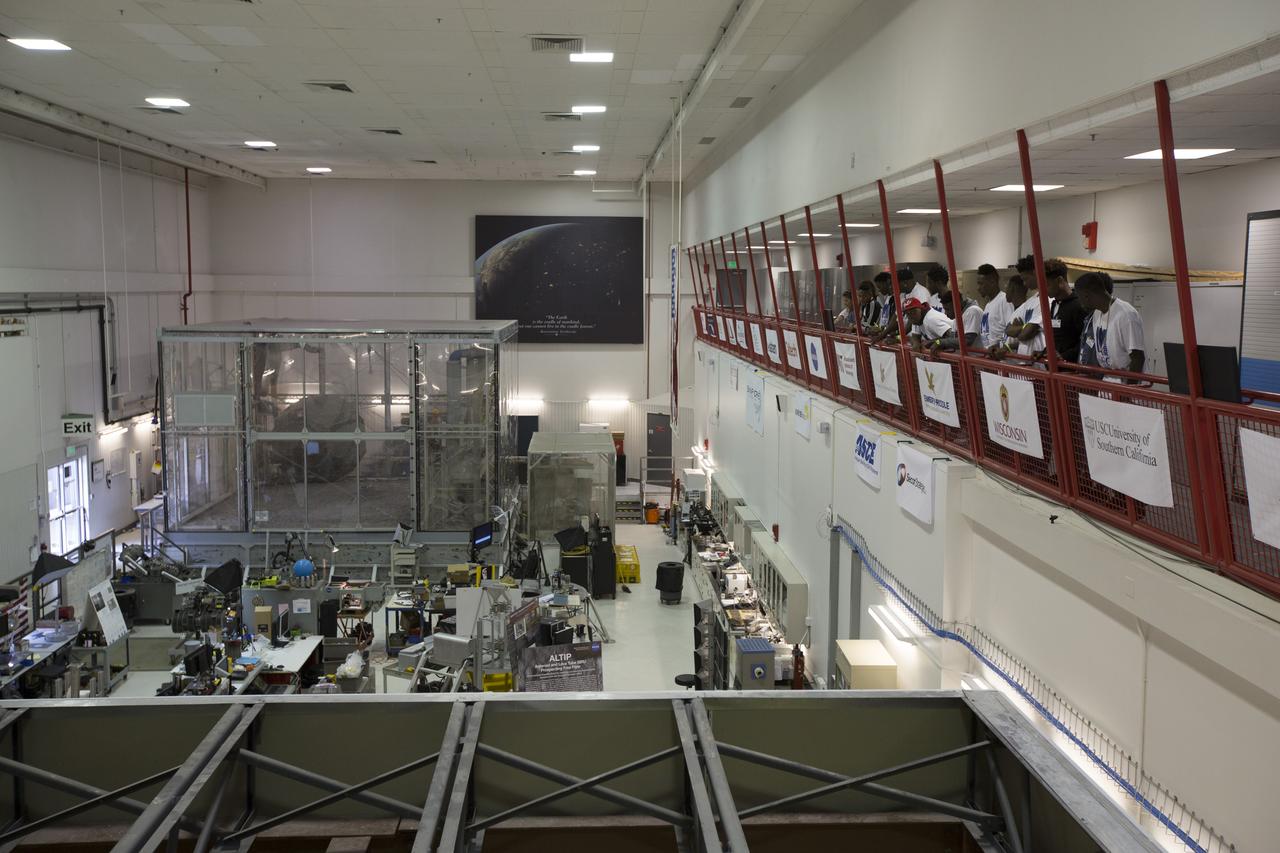
Students in the My Brother’s Keeper program line the railings of an observation deck overlooking the Granular Mechanics and Regolith Operations Lab at NASA’s Kennedy Space Center in Florida. The spaceport is one of six NASA centers that participated in My Brother’s Keeper National Lab Week. The event is a nationwide effort to bring youth from underrepresented communities into federal labs and centers for hands-on activities, tours and inspirational speakers. Sixty students from the nearby cities of Orlando and Sanford visited Kennedy, where they toured the Vehicle Assembly Building, the Space Station Processing Facility and the center’s innovative Swamp Works Labs. The students also had a chance to meet and ask questions of a panel of subject matter experts from across Kennedy.
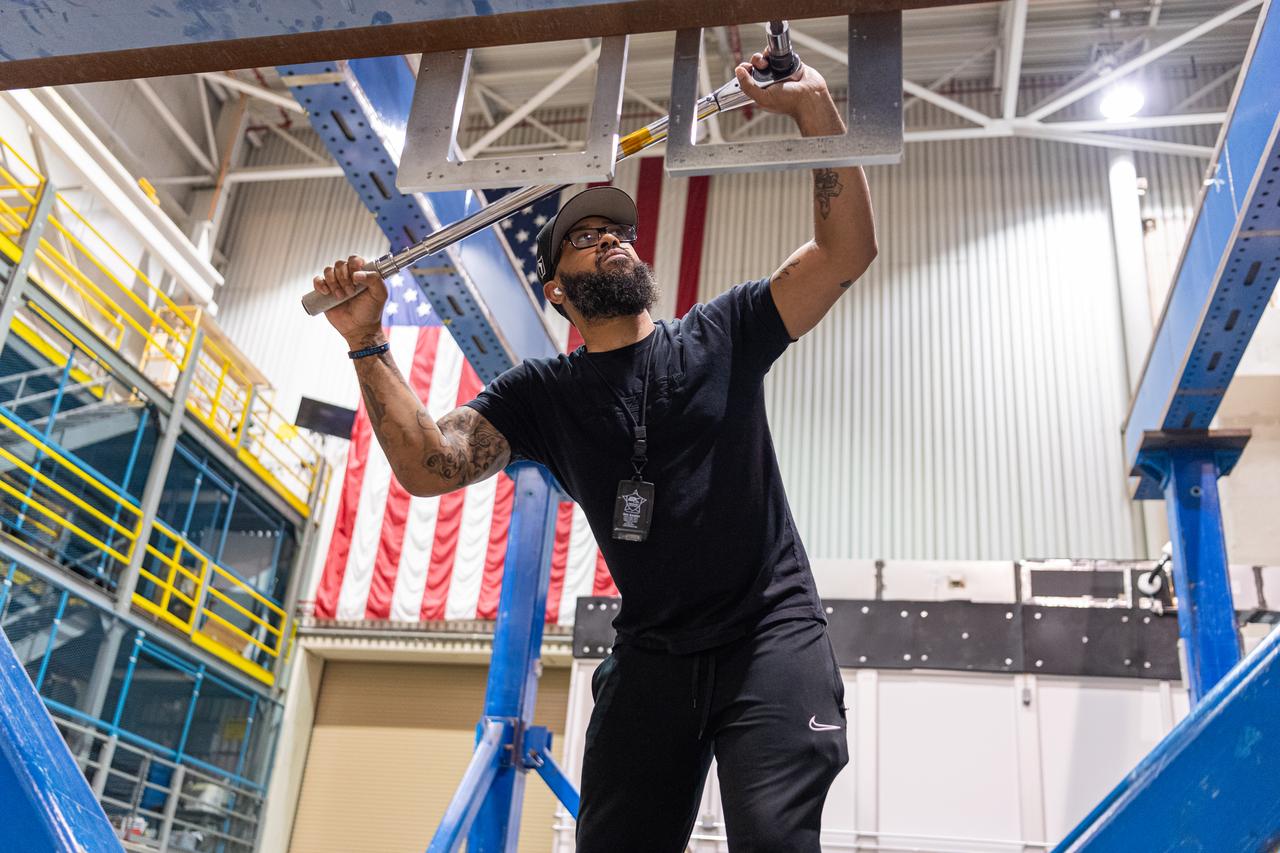
Mechanical engineering and integration technician Ivan Pratt installs brackets onto the static load testing platform in preparation of an OSAM-1 ground support equipment proof test at Goddard Space Flight Center, Greenbelt Md., July 19, 2023. This photo has been reviewed by OSAM1 project management and the Export Control Office and is released for public view. NASA/Mike Guinto
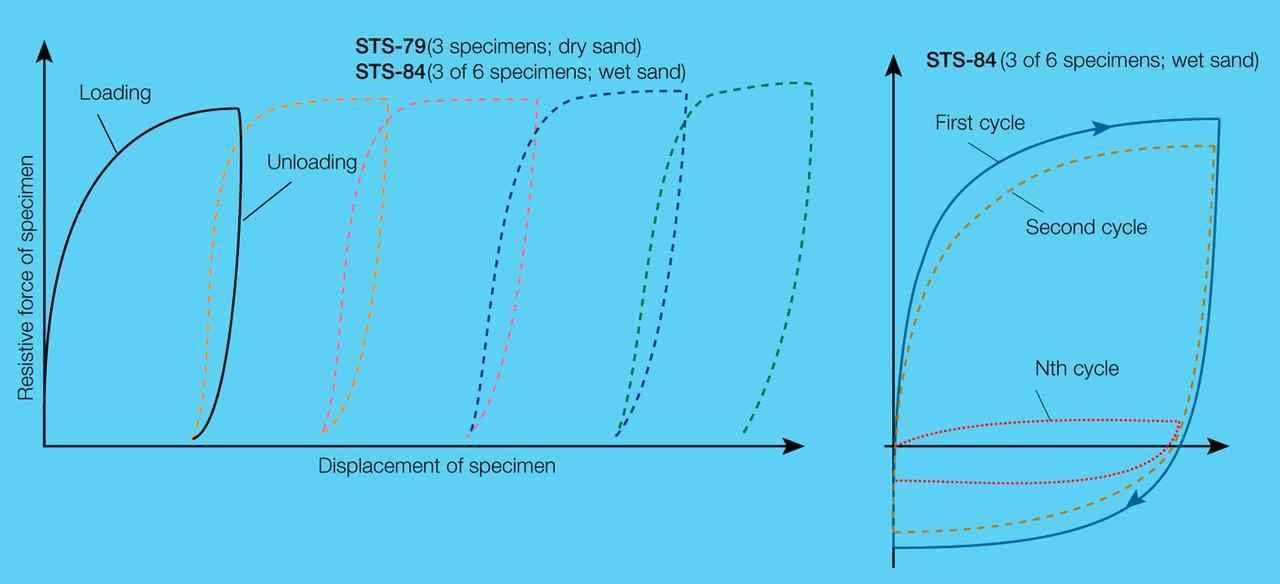
On STS-89, three Mechanics of Granular Materials (MGM) test cells were subjected to five cycles of compression and relief (left) and three were subjected to shorter displacement cycles that simulate motion during an earthquake (right). In the compression/relief tests, the sand particles rearranged themselves and slightly re-expanded the column during relief. In the short displacement tests, the specimen's resistance to compression decreases, even though the displacement remains the same. The specimens were cycled up to 100 times or until the resistive force was less than 1% that of the previous cycle. Sand and soil grains have faces that can cause friction as they roll and slide against each other, or even cause sticking and form small voids between grains. This complex behavior can cause soil to behave like a liquid under certain conditions such as earthquakes or when powders are handled in industrial processes. Mechanics of Granular Materials (MGM) experiments aboard the Space Shuttle use the microgravity of space to simulate this behavior under conditons that carnot be achieved in laboratory tests on Earth. MGM is shedding light on the behavior of fine-grain materials under low effective stresses. Applications include earthquake engineering, granular flow technologies (such as powder feed systems for pharmaceuticals and fertilizers), and terrestrial and planetary geology. Nine MGM specimens have flown on two Space Shuttle flights. Another three are scheduled to fly on STS-107. The principal investigator is Stein Sture of the University of Colorado at Boulder. Credit: NASA/Marshall Space Flight Center (MSFC)
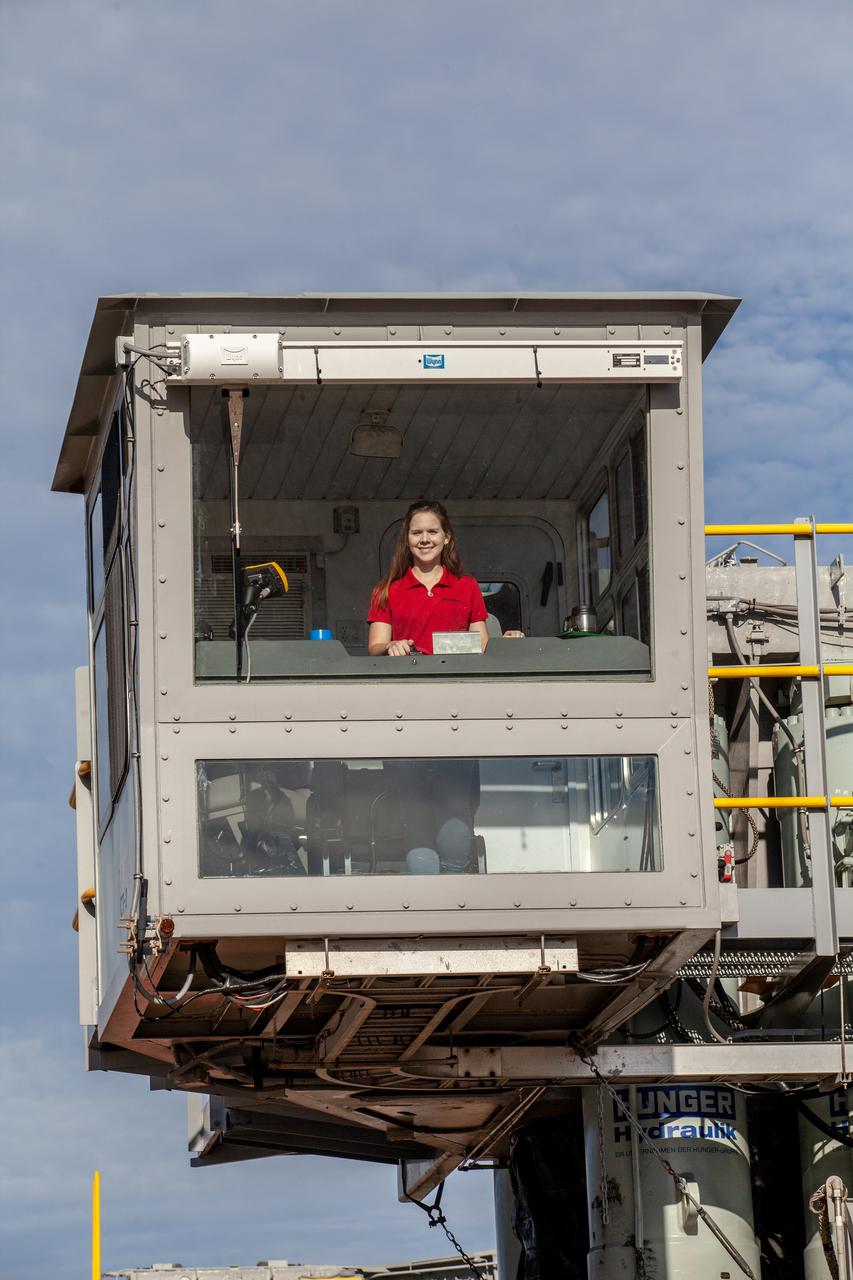
Mechanical Engineer I Breanne Stichler is photographed inside the cab of NASA’s Crawler-Transporter 2 (CT-2) at the Kennedy Space Center in Florida on Aug. 8, 2019. Stichler started working at Kennedy in June and is among one of the few females to have ever driven the crawler. CT-2 will carry the agency’s mobile launcher with the Space Launch System rocket from the Vehicle Assembly Building to Launch Pad 39B for the launch of Artemis 1, the first in a series of complex missions that will provide the foundation for human deep space exploration.
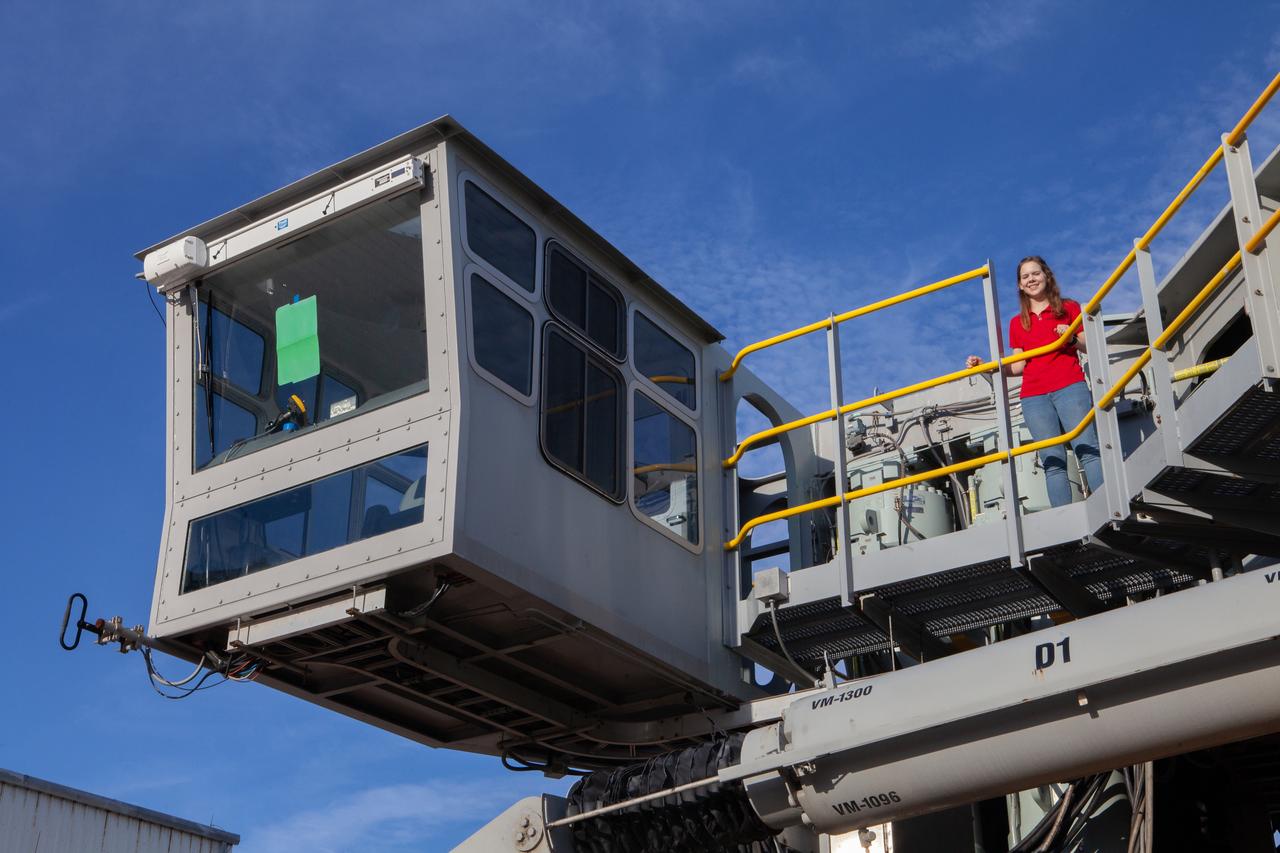
Breanne Stichler, mechanical engineer I, is photographed next to the cab of NASA’s Crawler-Transporter 2 (CT-2) at the Kennedy Space Center in Florida on Aug. 8, 2019. Stichler started working at Kennedy in June and is among one of the few females to have ever driven the crawler. CT-2 will carry the agency’s mobile launcher with the Space Launch System rocket from the Vehicle Assembly Building to Launch Pad 39B for the launch of Artemis 1, the first in a series of complex missions that will provide the foundation for human deep space exploration.
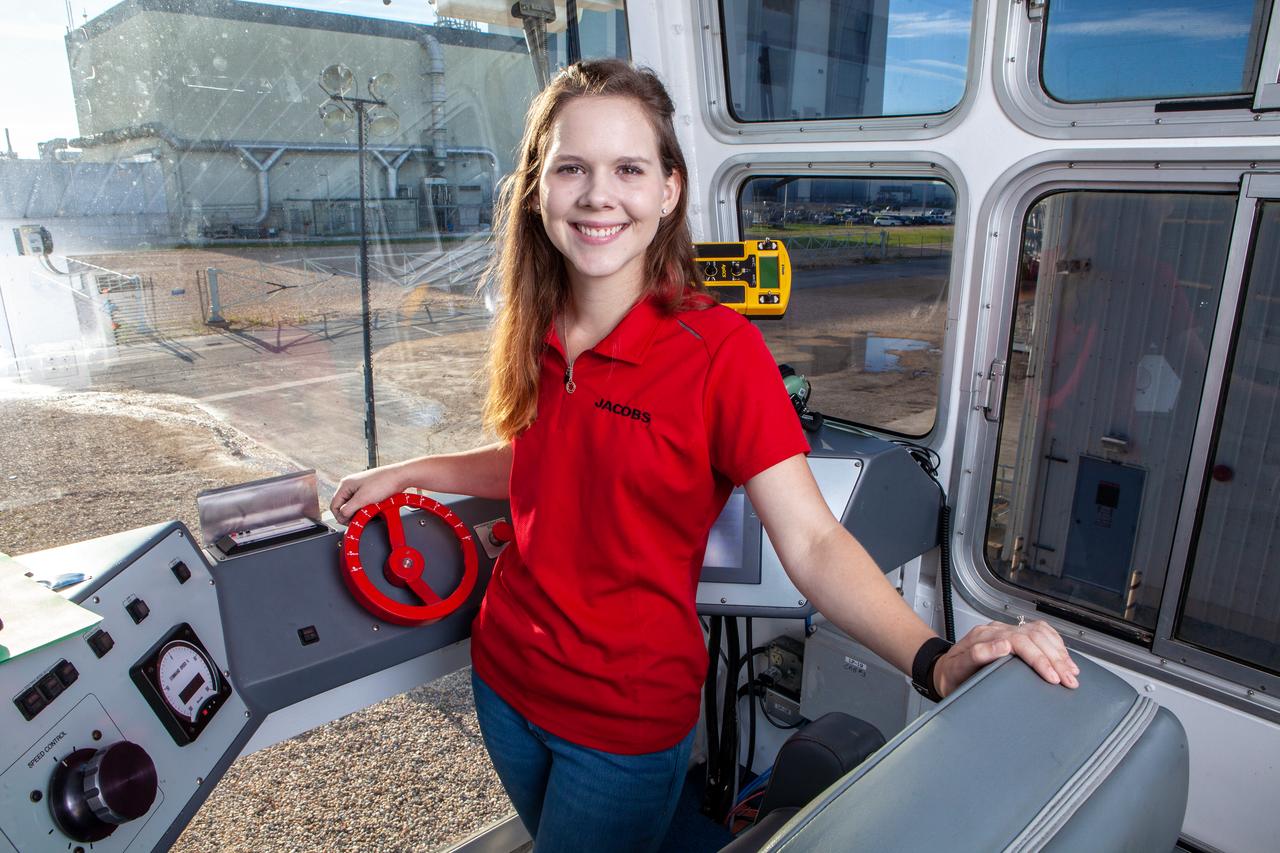
Breanne Stichler, mechanical engineer I, is photographed inside the cab of NASA’s Crawler-Transporter 2 (CT-2) at the Kennedy Space Center in Florida on Aug. 8, 2019. Stichler started working at Kennedy in June and is among one of the few females to have ever driven the crawler. CT-2 will carry the agency’s mobile launcher with the Space Launch System rocket from the Vehicle Assembly Building to Launch Pad 39B for the launch of Artemis 1, the first in a series of complex missions that will provide the foundation for human deep space exploration.
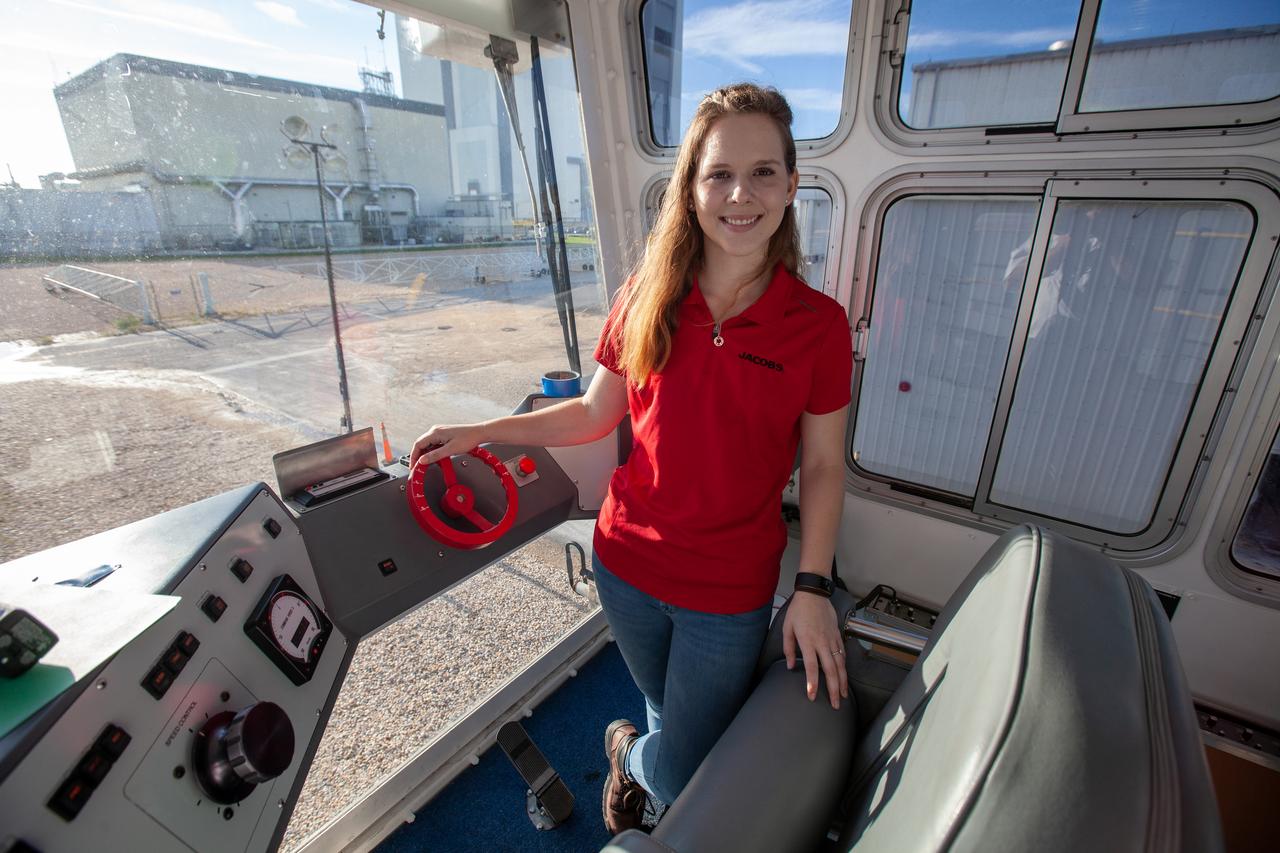
Breanne Stichler, mechanical engineer I, is photographed inside the cab of NASA’s Crawler-Transporter 2 (CT-2) at the Kennedy Space Center in Florida on Aug. 8, 2019. Stichler started working at Kennedy in June and is among one of the few females to have ever driven the crawler. CT-2 will carry the agency’s mobile launcher with the Space Launch System rocket from the Vehicle Assembly Building to Launch Pad 39B for the launch of Artemis 1, the first in a series of complex missions that will provide the foundation for human deep space exploration.
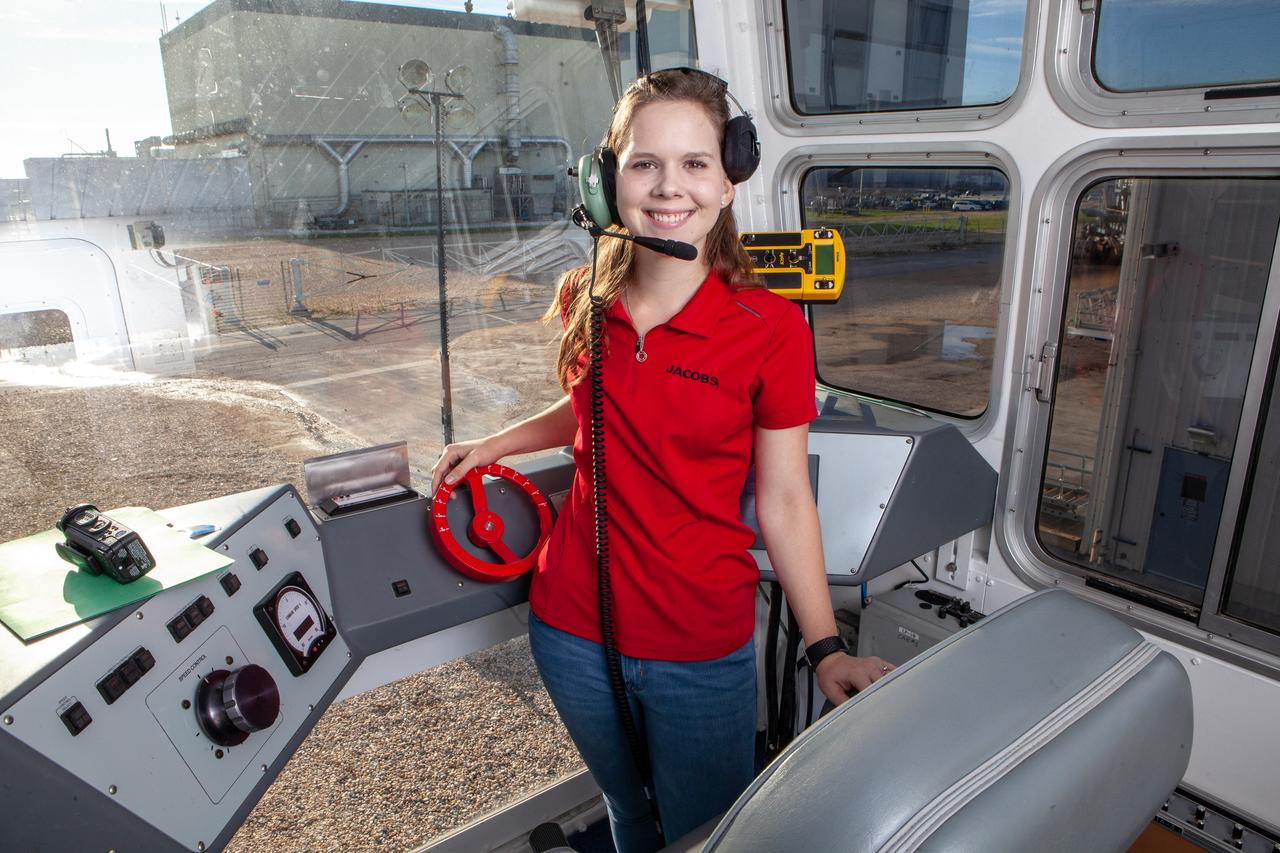
Breanne Stichler, mechanical engineer I, is photographed inside the cab of NASA’s Crawler-Transporter 2 (CT-2) at the Kennedy Space Center in Florida on Aug. 8, 2019. Stichler started working at Kennedy in June and is among one of the few females to have ever driven the crawler. CT-2 will carry the agency’s mobile launcher with the Space Launch System rocket from the Vehicle Assembly Building to Launch Pad 39B for the launch of Artemis 1, the first in a series of complex missions that will provide the foundation for human deep space exploration.
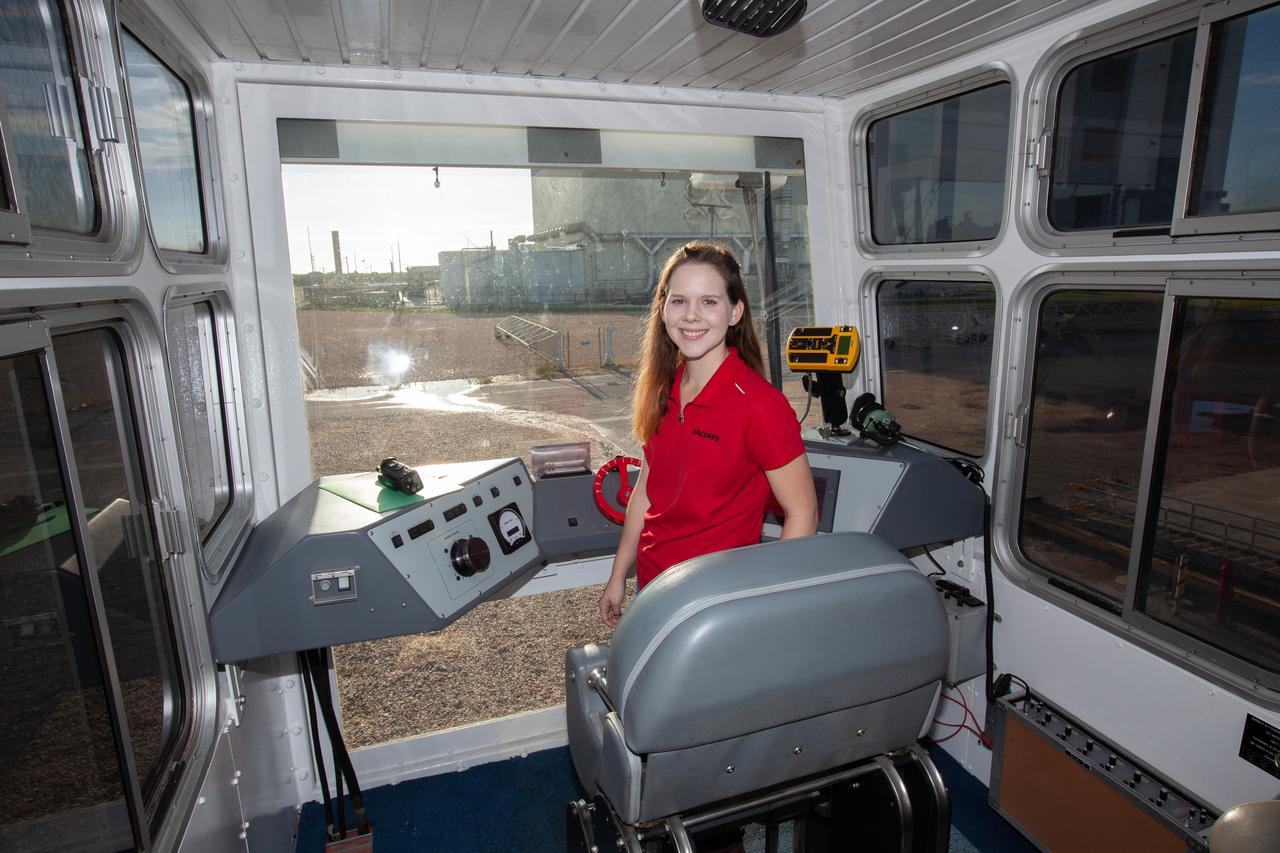
Breanne Stichler, mechanical engineer I, is photographed inside the cab of NASA’s Crawler-Transporter 2 (CT-2) at the Kennedy Space Center in Florida on Aug. 8, 2019. Stichler started working at Kennedy in June and is among one of the few females to have ever driven the crawler. CT-2 will carry the agency’s mobile launcher with the Space Launch System rocket from the Vehicle Assembly Building to Launch Pad 39B for the launch of Artemis 1, the first in a series of complex missions that will provide the foundation for human deep space exploration.
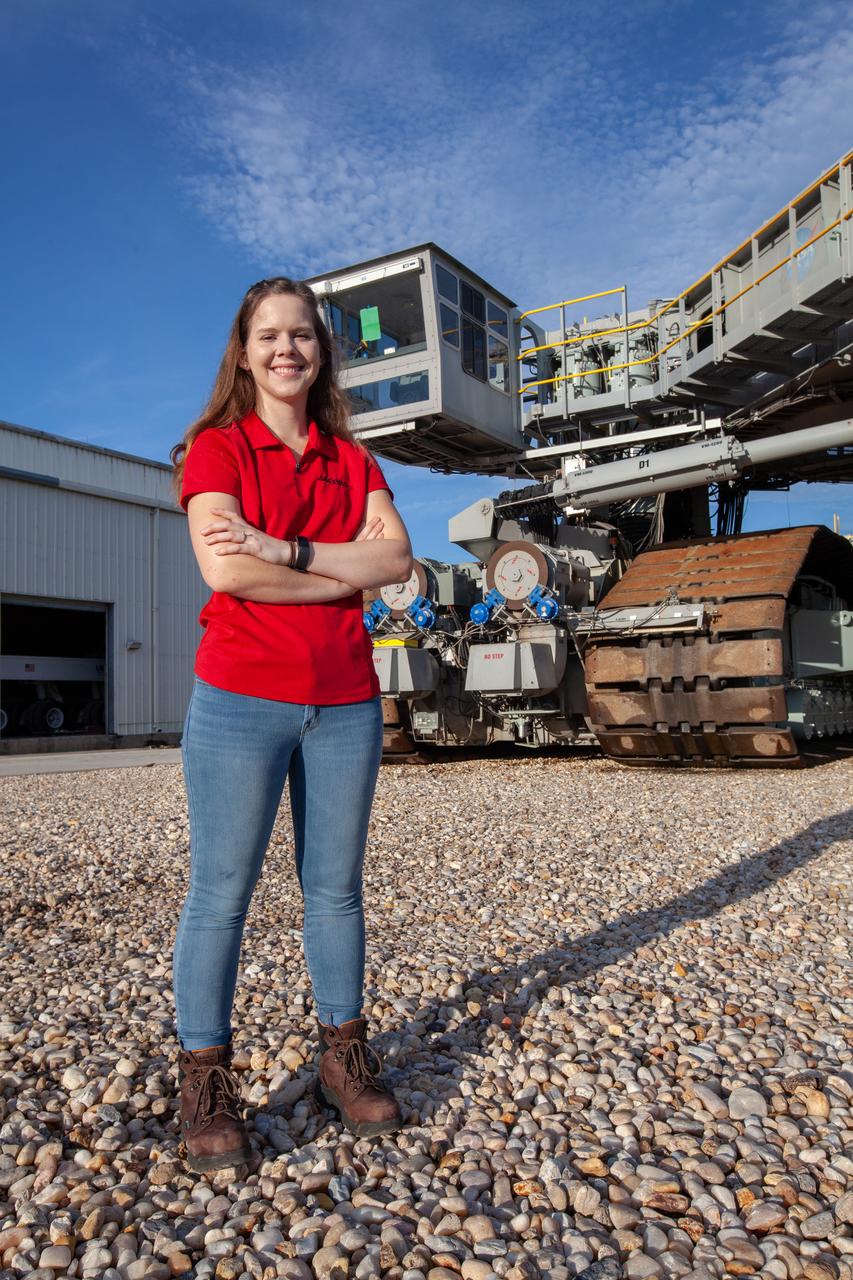
Breanne Stichler, mechanical engineer I, is photographed in front of NASA’s Crawler-Transporter 2 (CT-2) at the Kennedy Space Center in Florida on Aug. 8, 2019. Stichler started working at Kennedy in June and is among one of the few females to have ever driven the crawler. CT-2 will carry the agency’s mobile launcher with the Space Launch System rocket from the Vehicle Assembly Building to Launch Pad 39B for the launch of Artemis 1, the first in a series of complex missions that will provide the foundation for human deep space exploration.
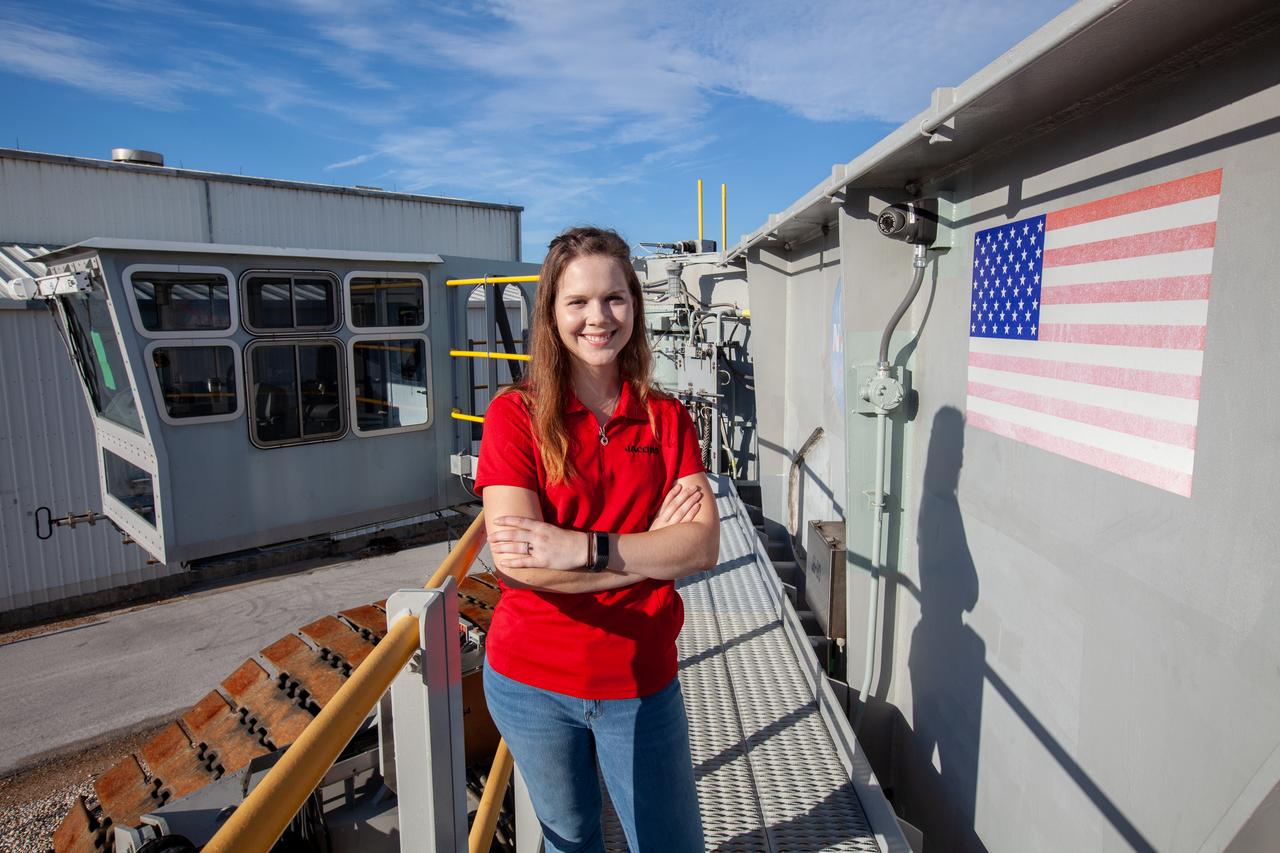
Breanne Stichler, mechanical engineer I, stands atop NASA’s Crawler-Transporter 2 (CT-2) at the Kennedy Space Center in Florida on Aug. 8, 2019. Stichler started working at Kennedy in June and is among one of the few females to have ever driven the crawler. CT-2 will carry the agency’s mobile launcher with the Space Launch System rocket from the Vehicle Assembly Building to Launch Pad 39B for the launch of Artemis 1, the first in a series of complex missions that will provide the foundation for human deep space exploration.
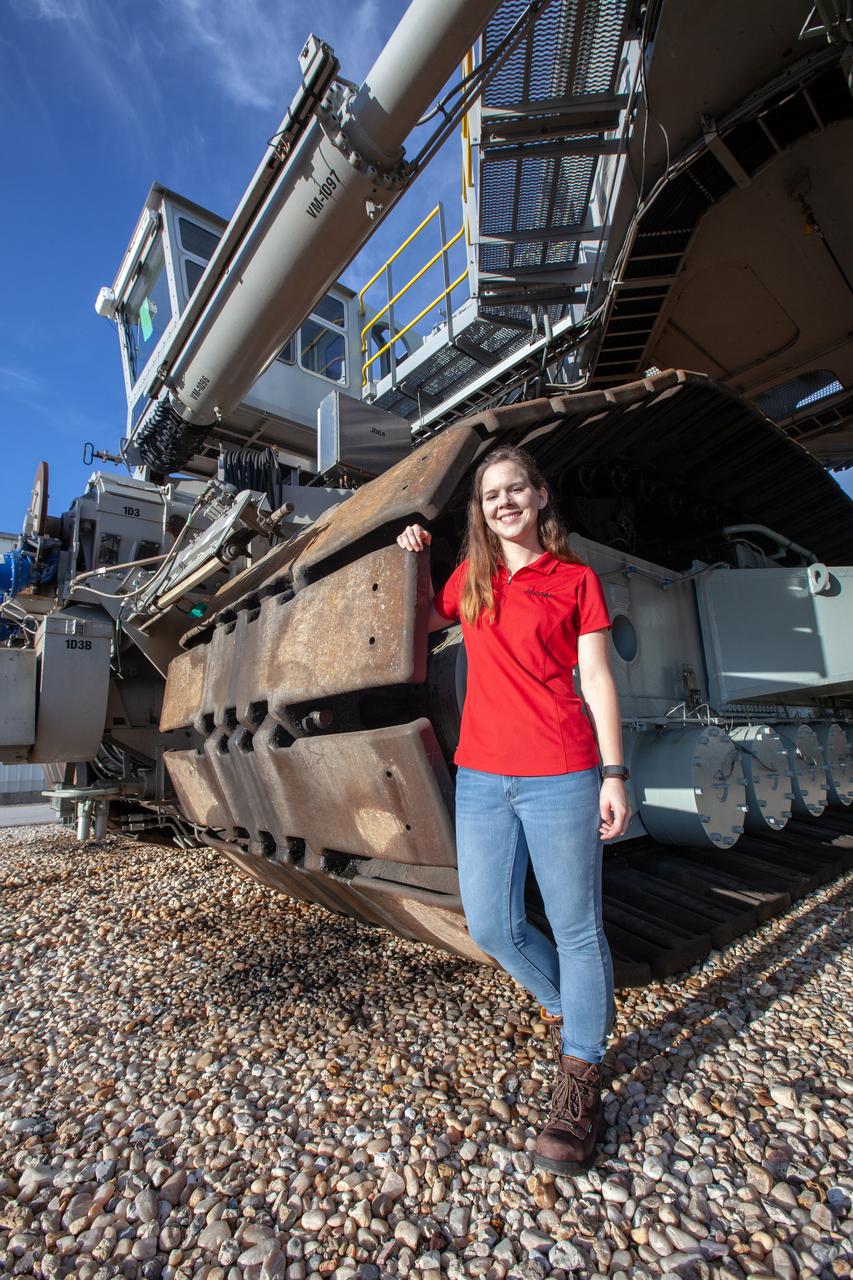
Breanne Stichler, mechanical engineer I, is photographed with NASA’s Crawler-Transporter 2 (CT-2) at the Kennedy Space Center in Florida on Aug. 8, 2019. Stichler started working at Kennedy in June and is among one of the few females to have ever driven the crawler. CT-2 will carry the agency’s mobile launcher with the Space Launch System rocket from the Vehicle Assembly Building to Launch Pad 39B for the launch of Artemis 1, the first in a series of complex missions that will provide the foundation for human deep space exploration.
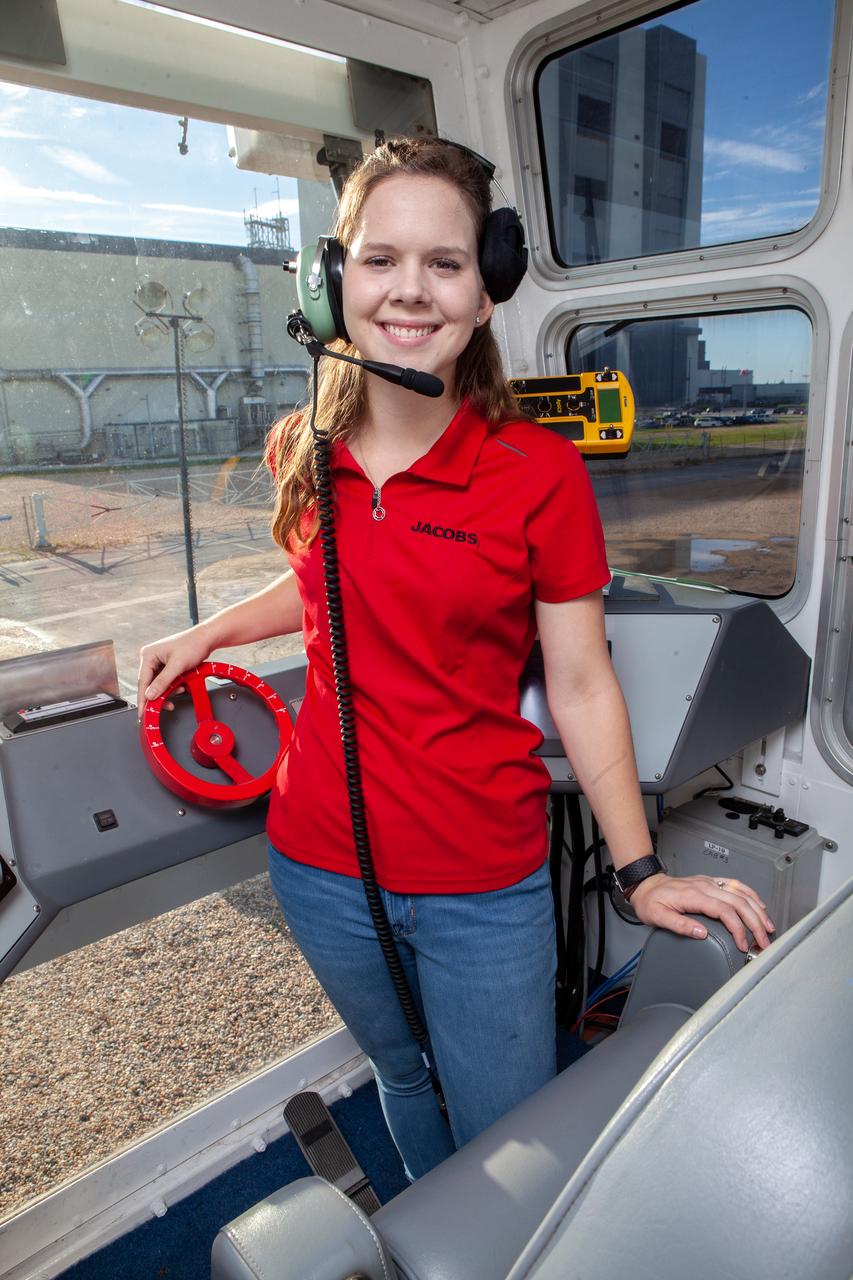
Breanne Stichler, mechanical engineer I, is photographed inside the cab of NASA’s Crawler-Transporter 2 (CT-2) at the Kennedy Space Center in Florida on Aug. 8, 2019. Stichler started working at Kennedy in June and is among one of the few females to have ever driven the crawler. CT-2 will carry the agency’s mobile launcher with the Space Launch System rocket from the Vehicle Assembly Building to Launch Pad 39B for the launch of Artemis 1, the first in a series of complex missions that will provide the foundation for human deep space exploration.
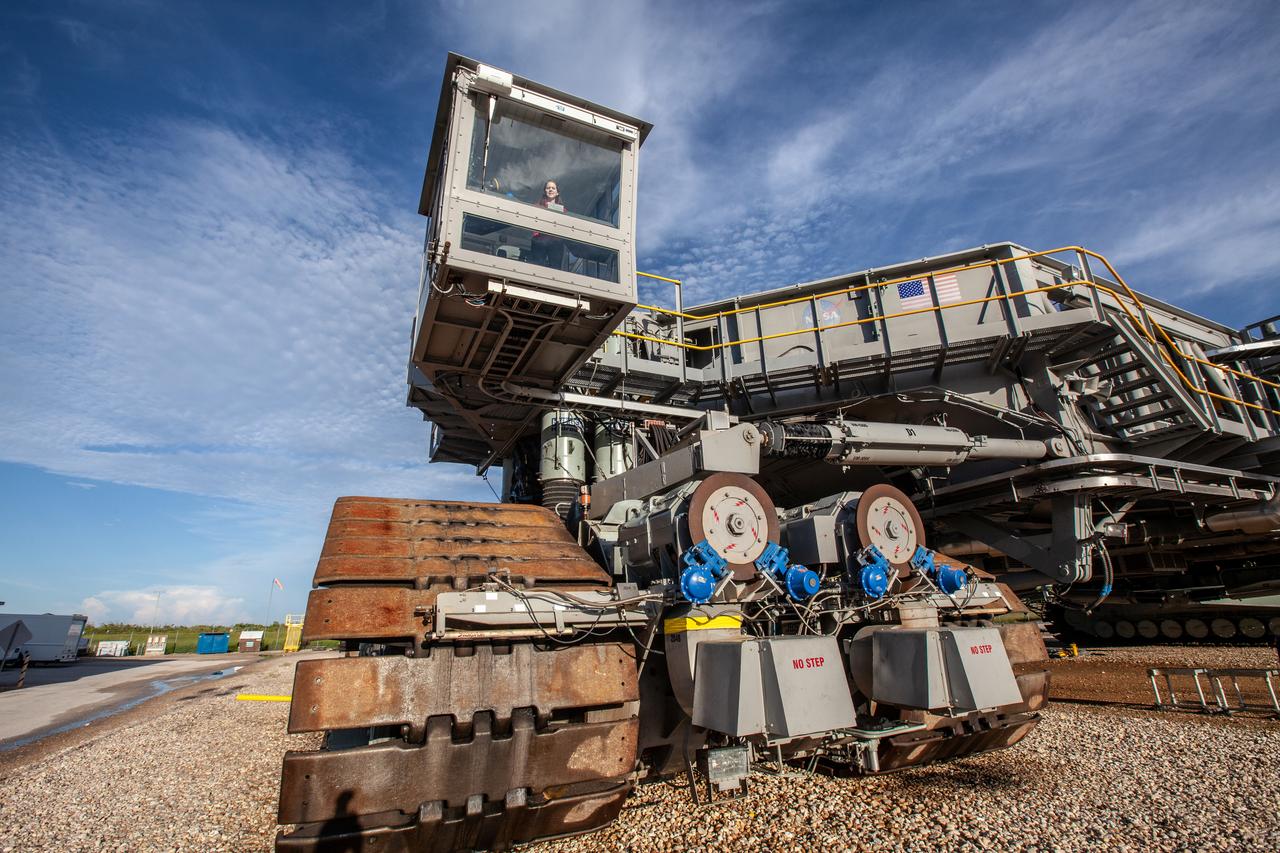
Breanne Stichler, mechanical engineer I, is photographed inside the cab of NASA’s Crawler-Transporter 2 (CT-2) at the Kennedy Space Center in Florida on Aug. 8, 2019. Stichler started working at Kennedy in June and is among one of the few females to have ever driven the crawler. CT-2 will carry the agency’s mobile launcher with the Space Launch System rocket from the Vehicle Assembly Building to Launch Pad 39B for the launch of Artemis 1, the first in a series of complex missions that will provide the foundation for human deep space exploration.
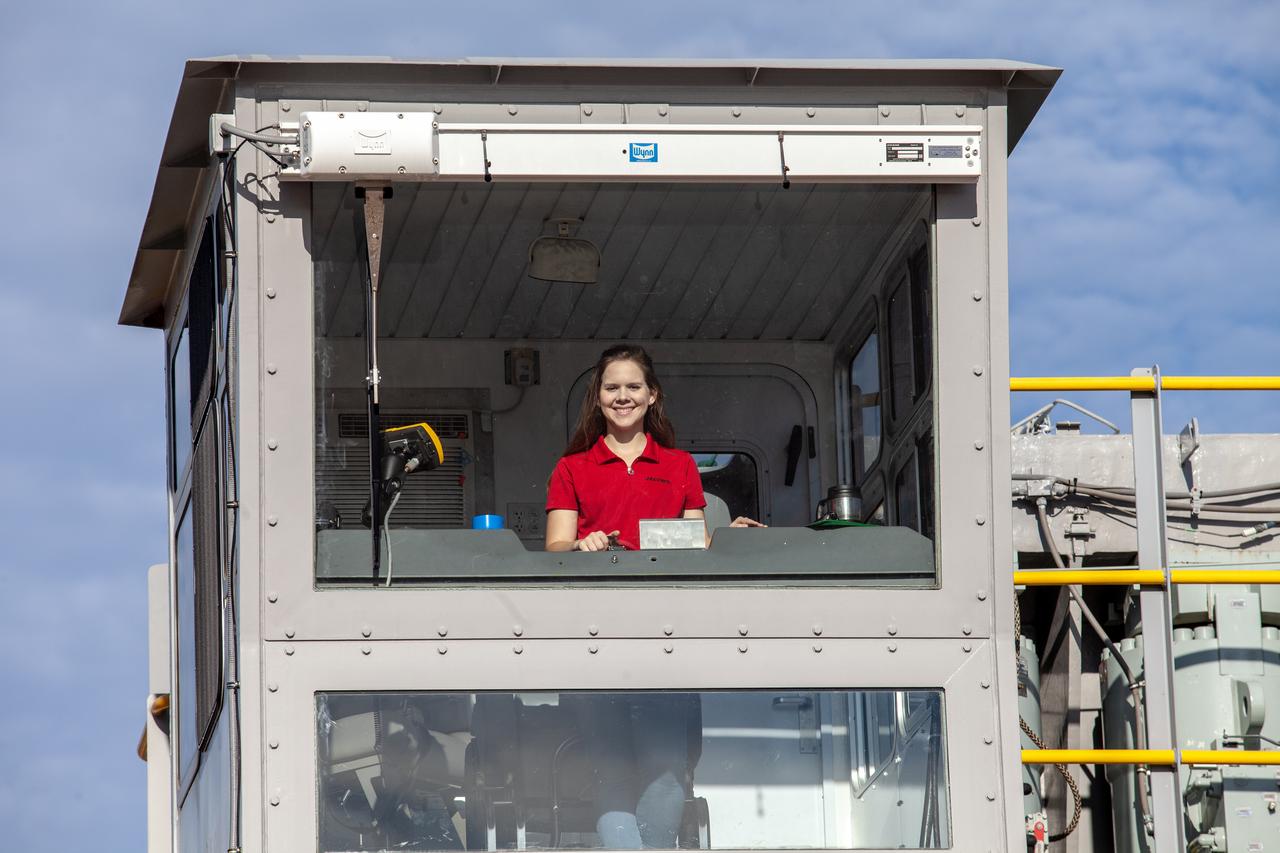
Mechanical Engineer I Breanne Stichler is photographed inside the cab of NASA’s Crawler-Transporter 2 (CT-2) at the Kennedy Space Center in Florida on Aug. 8, 2019. Stichler started working at Kennedy in June and is among one of the few females to have ever driven the crawler. CT-2 will carry the agency’s mobile launcher with the Space Launch System rocket from the Vehicle Assembly Building to Launch Pad 39B for the launch of Artemis 1, the first in a series of complex missions that will provide the foundation for human deep space exploration.
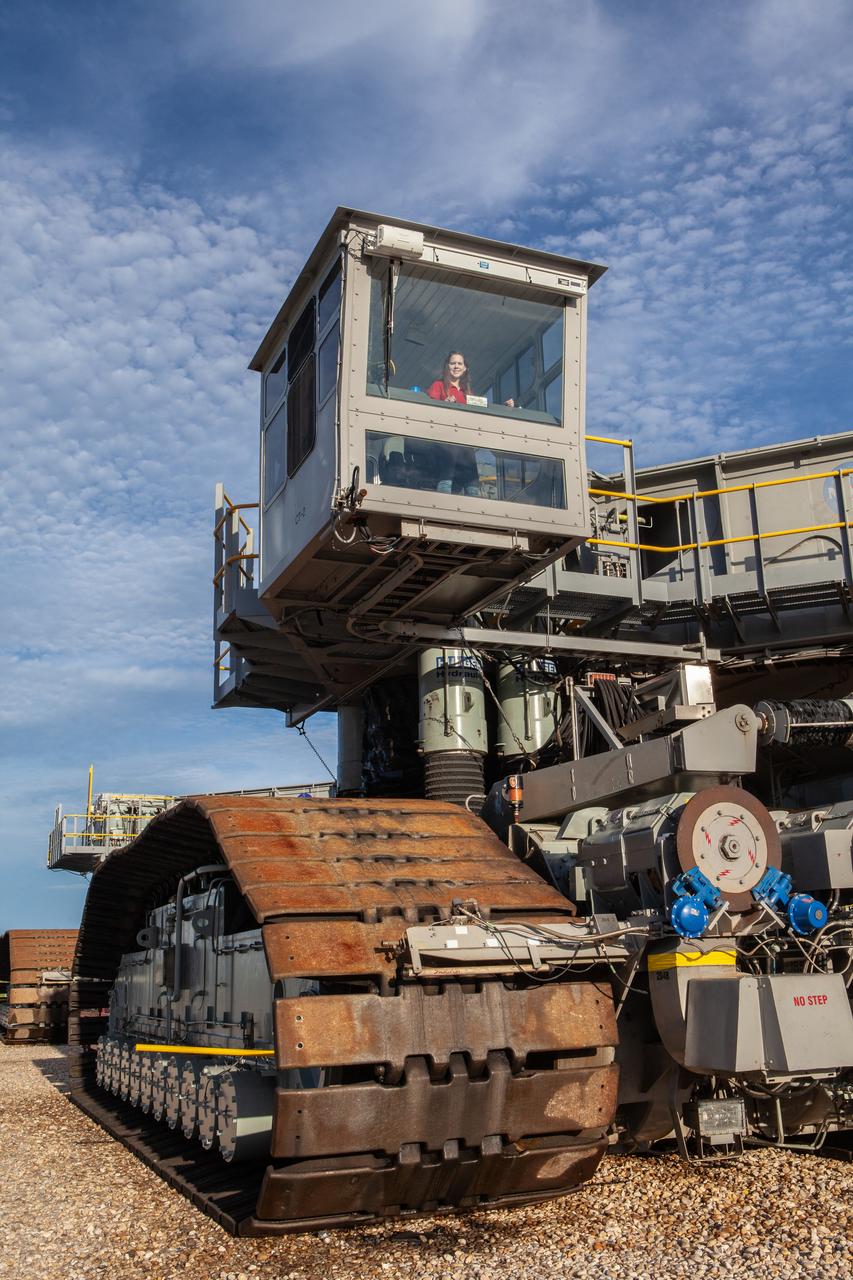
Breanne Stichler, mechanical engineer I, is photographed inside the cab of NASA’s Crawler-Transporter 2 (CT-2) at the Kennedy Space Center in Florida on Aug. 8, 2019. Stichler started working at Kennedy in June and is among one of the few females to have ever driven the crawler. CT-2 will carry the agency’s mobile launcher with the Space Launch System rocket from the Vehicle Assembly Building to Launch Pad 39B for the launch of Artemis 1, the first in a series of complex missions that will provide the foundation for human deep space exploration.
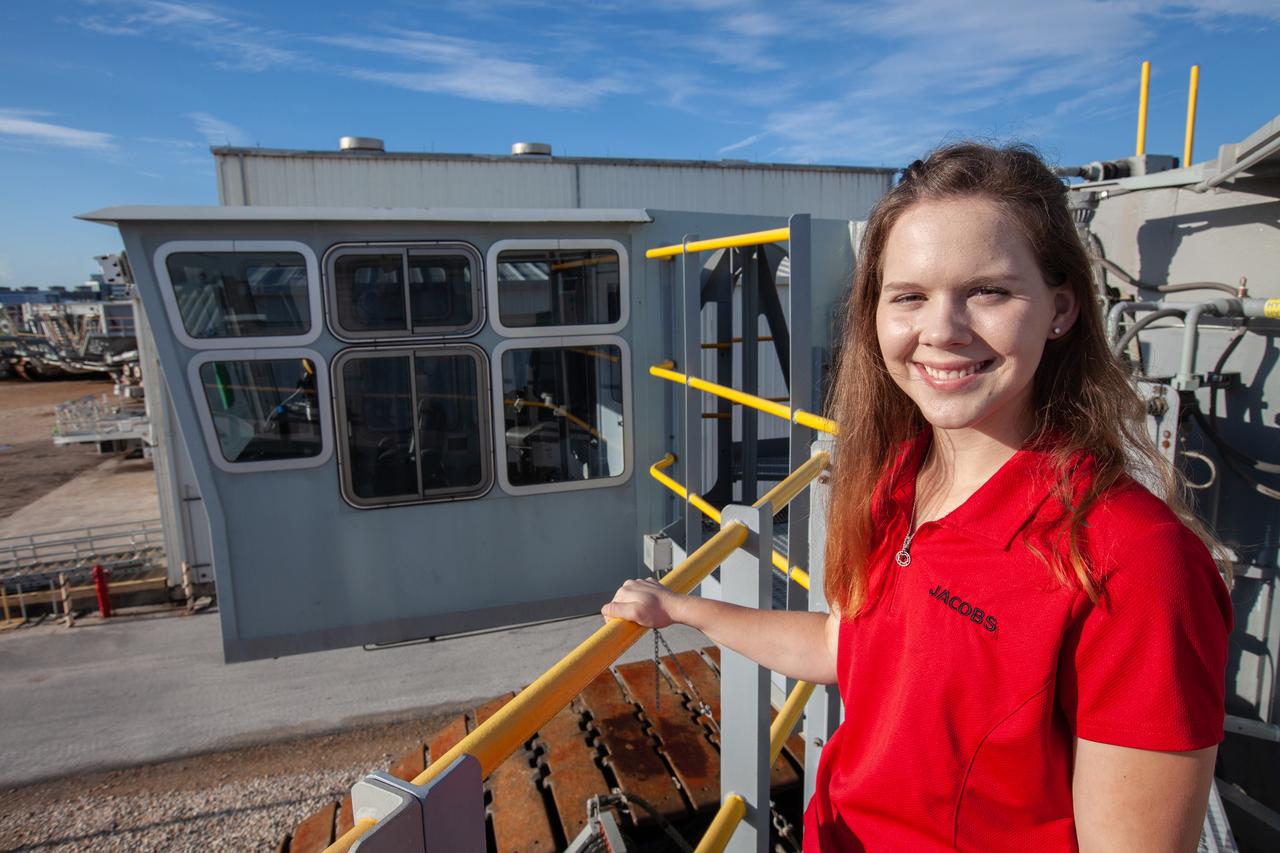
Breanne Stichler, mechanical engineer I, stands atop NASA’s Crawler-Transporter 2 (CT-2) at the Kennedy Space Center in Florida on Aug. 8, 2019. Stichler started working at Kennedy in June and is among one of the few females to have ever driven the crawler. CT-2 will carry the agency’s mobile launcher with the Space Launch System rocket from the Vehicle Assembly Building to Launch Pad 39B for the launch of Artemis 1, the first in a series of complex missions that will provide the foundation for human deep space exploration.
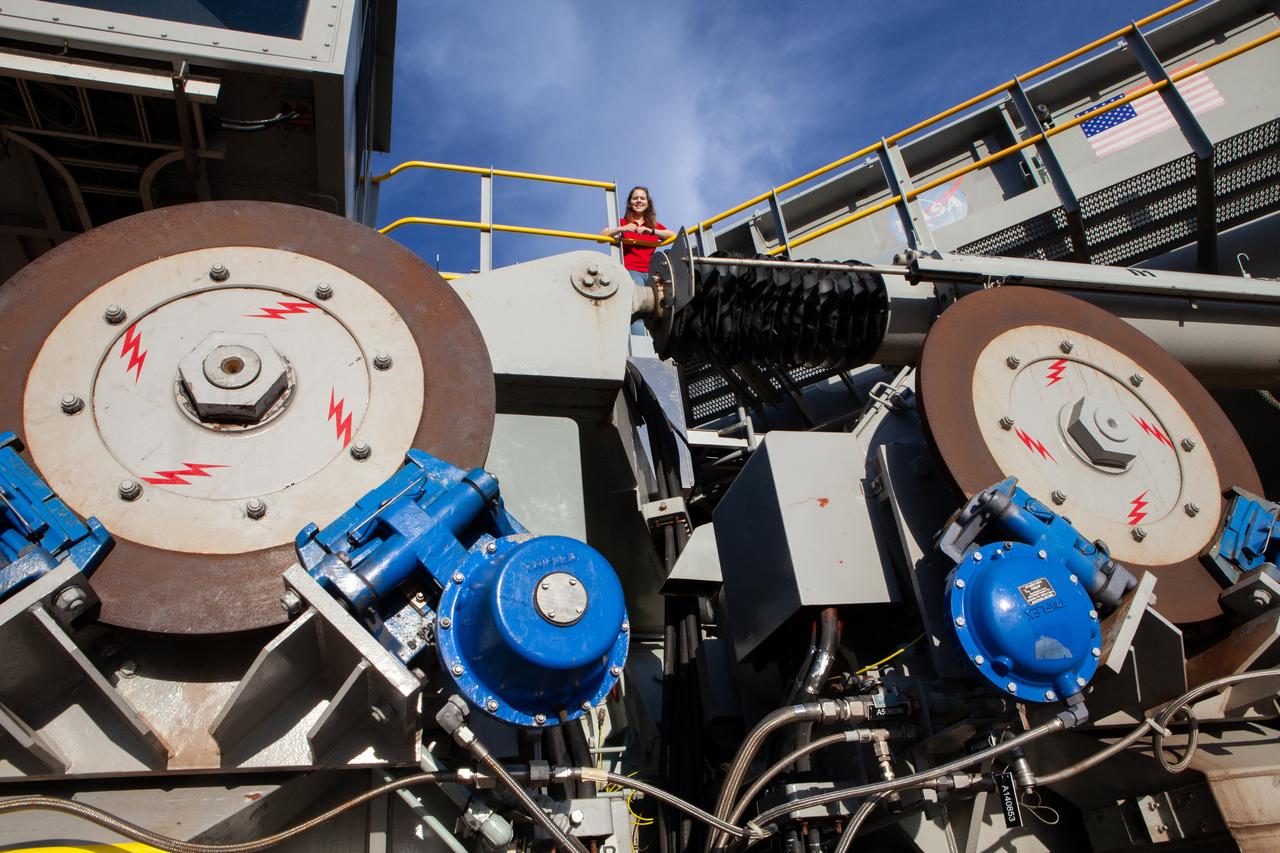
Breanne Stichler, mechanical engineer I, is photographed atop NASA’s Crawler-Transporter 2 (CT-2) at the Kennedy Space Center in Florida on Aug. 8, 2019. Stichler started working at Kennedy in June and is among one of the few females to have ever driven the crawler. CT-2 will carry the agency’s mobile launcher with the Space Launch System rocket from the Vehicle Assembly Building to Launch Pad 39B for the launch of Artemis 1, the first in a series of complex missions that will provide the foundation for human deep space exploration.
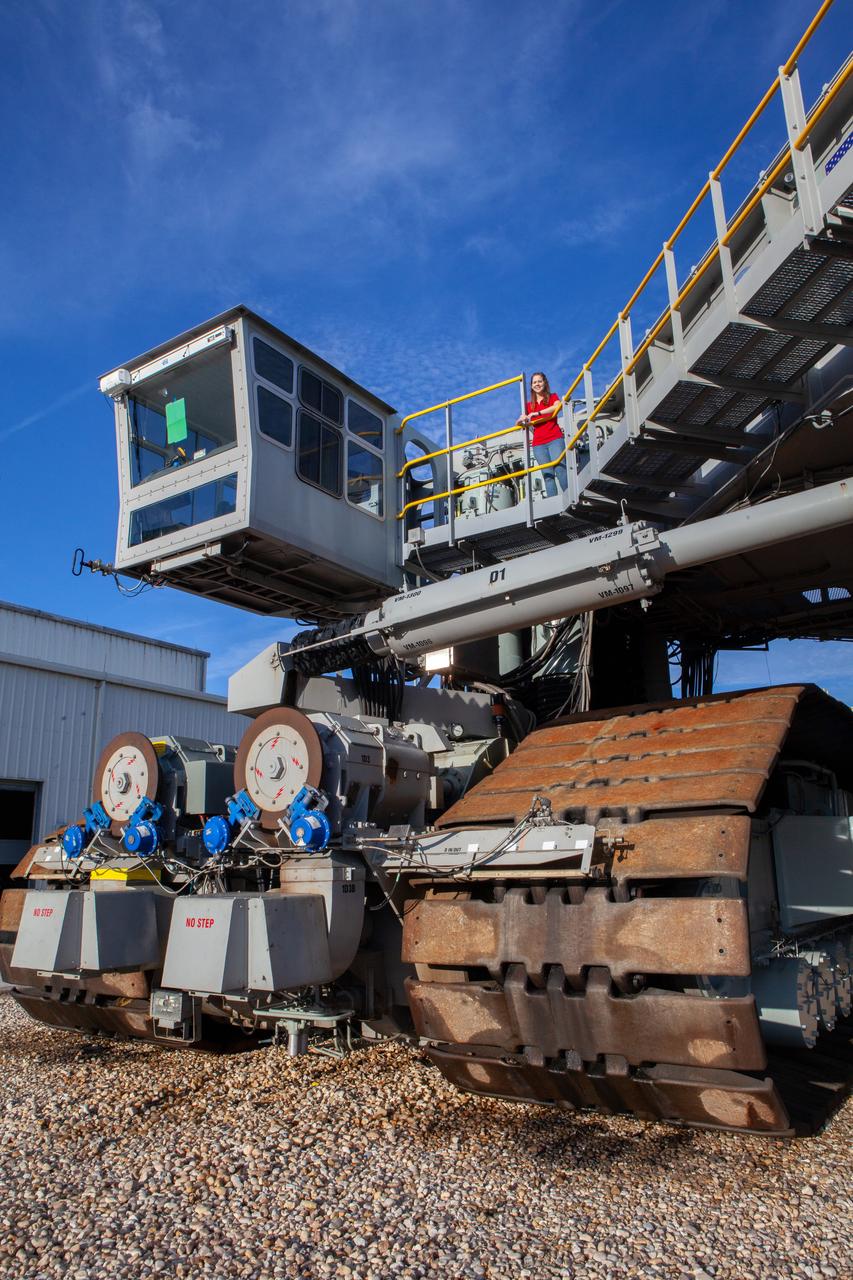
Breanne Stichler, mechanical engineer I, stands atop NASA’s Crawler-Transporter 2 (CT-2) at the Kennedy Space Center in Florida on Aug. 8, 2019. Stichler started working at Kennedy in June and is among one of the few females to have ever driven the crawler. CT-2 will carry the agency’s mobile launcher with the Space Launch System rocket from the Vehicle Assembly Building to Launch Pad 39B for the launch of Artemis 1, the first in a series of complex missions that will provide the foundation for human deep space exploration.
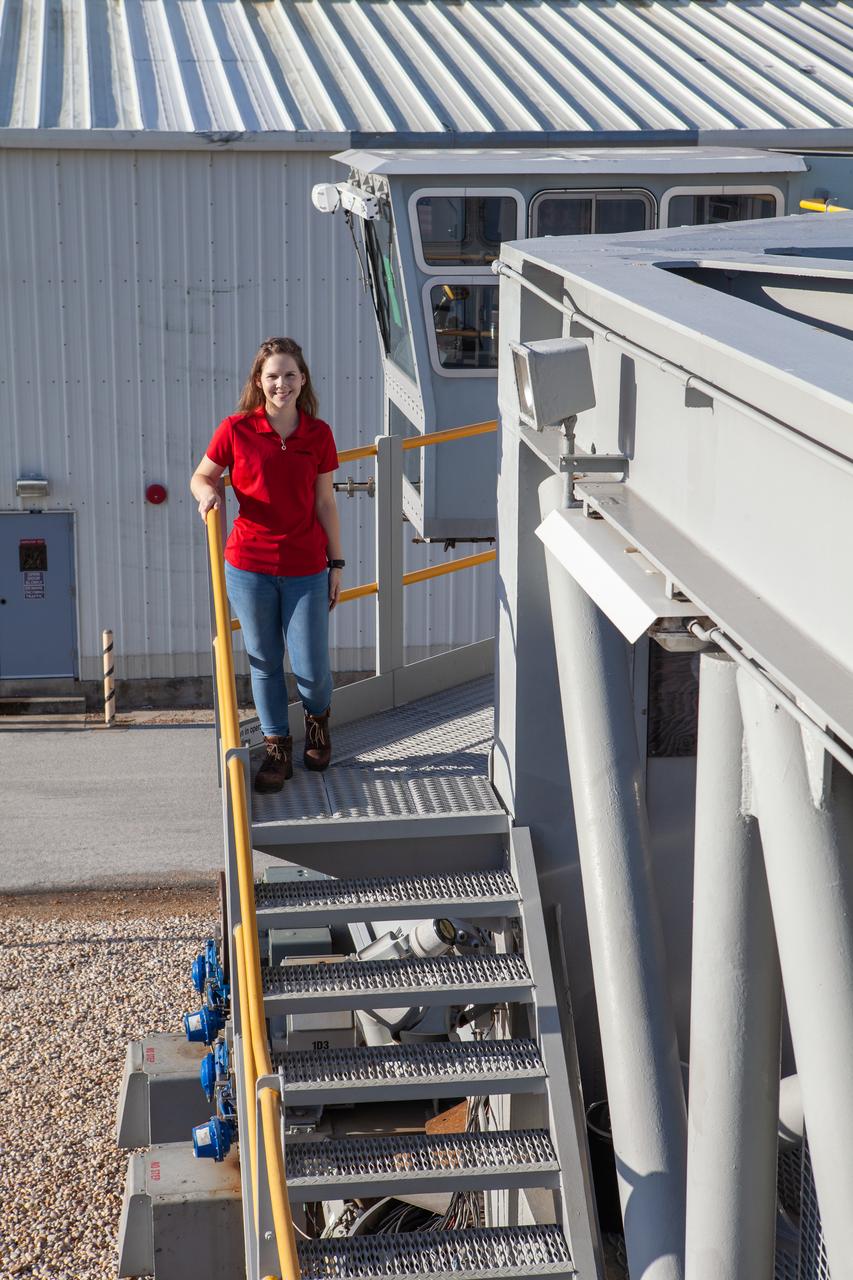
Mechanical Engineer I Breanne Stichler is photographed atop NASA’s Crawler-Transporter 2 (CT-2) at the Kennedy Space Center in Florida on Aug. 8, 2019. Stichler started working at Kennedy in June and is among one of the few females to have ever driven the crawler. CT-2 will carry the agency’s mobile launcher with the Space Launch System rocket from the Vehicle Assembly Building to Launch Pad 39B for the launch of Artemis 1, the first in a series of complex missions that will provide the foundation for human deep space exploration.
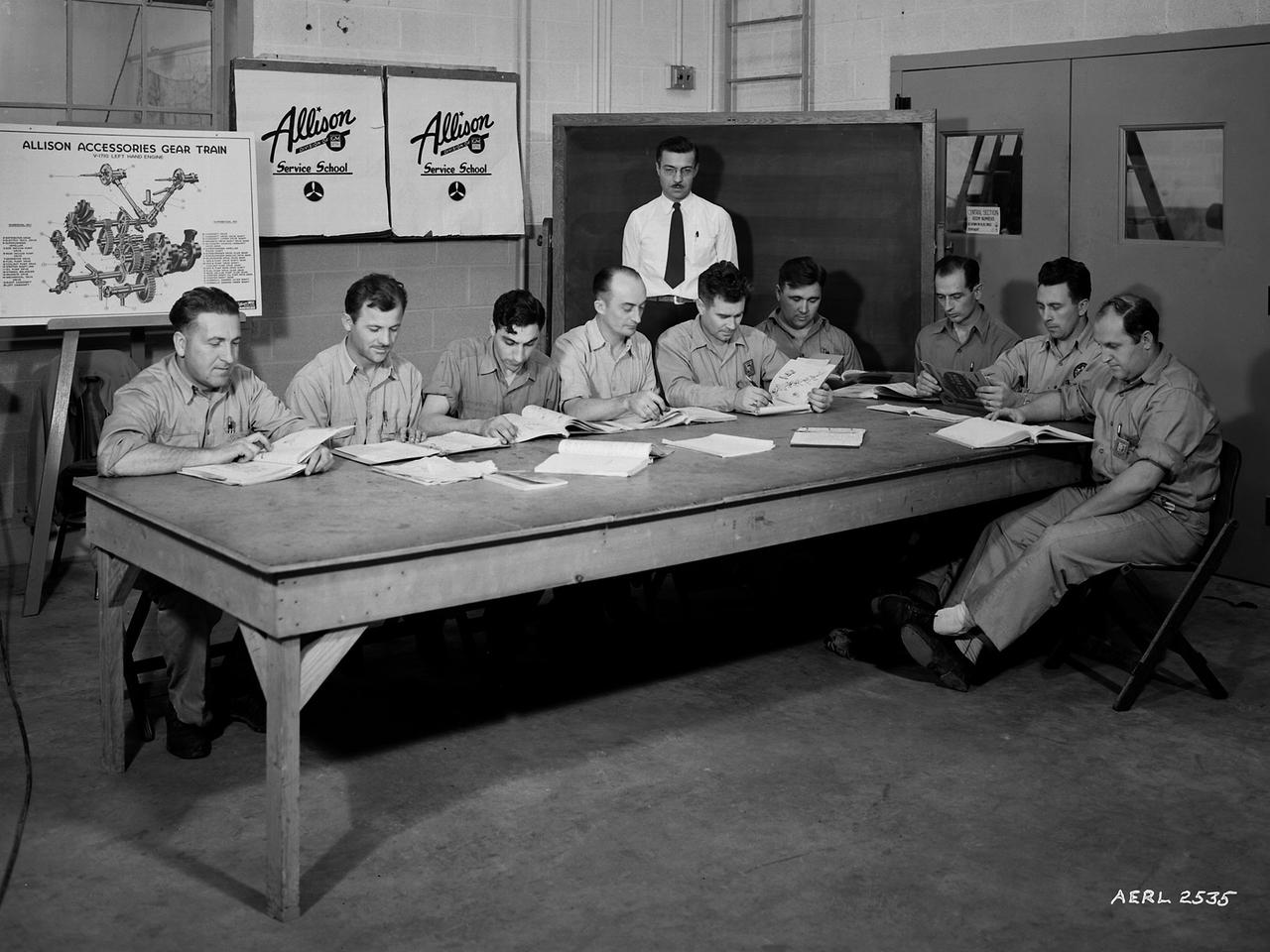
The Allison Engine Company's A.G. Covell instructs mechanics from various divisions at the National Advisory Committee for Aeronautics (NACA) Aircraft Engine Research Laboratory on the operation of the Allison Basic Engine. The military had asked that the laboratory undertake an extensive program to improve the performance of the Allison V–1710 engine. The V–1710 was the only liquid-cooled engine used during World War II, and the military counted on it to power several types of fighter aircraft. The NACA instituted an Apprentice Program during the war to educate future mechanics, technicians, and electricians. The program was suspended for a number of years due to the increasing rates of military service by its participants. The laboratory continued its in-house education during the war, however, by offering a number of classes to its employees and lectures for the research staff. The classes and lectures were usually taught by fellow members of the staff, but occasionally external experts were brought in. The students in the Allison class in the Engine Research Building were taught how to completely disassemble and reassemble the engine components and systems. From left to right are Don Vining, Ed Cudlin, Gus DiNovo, George Larsen, Charles Diggs, Martin Lipes, Harley Roberts, Martin Berwaldt and John Dempsey. A.G. Covell is standing.
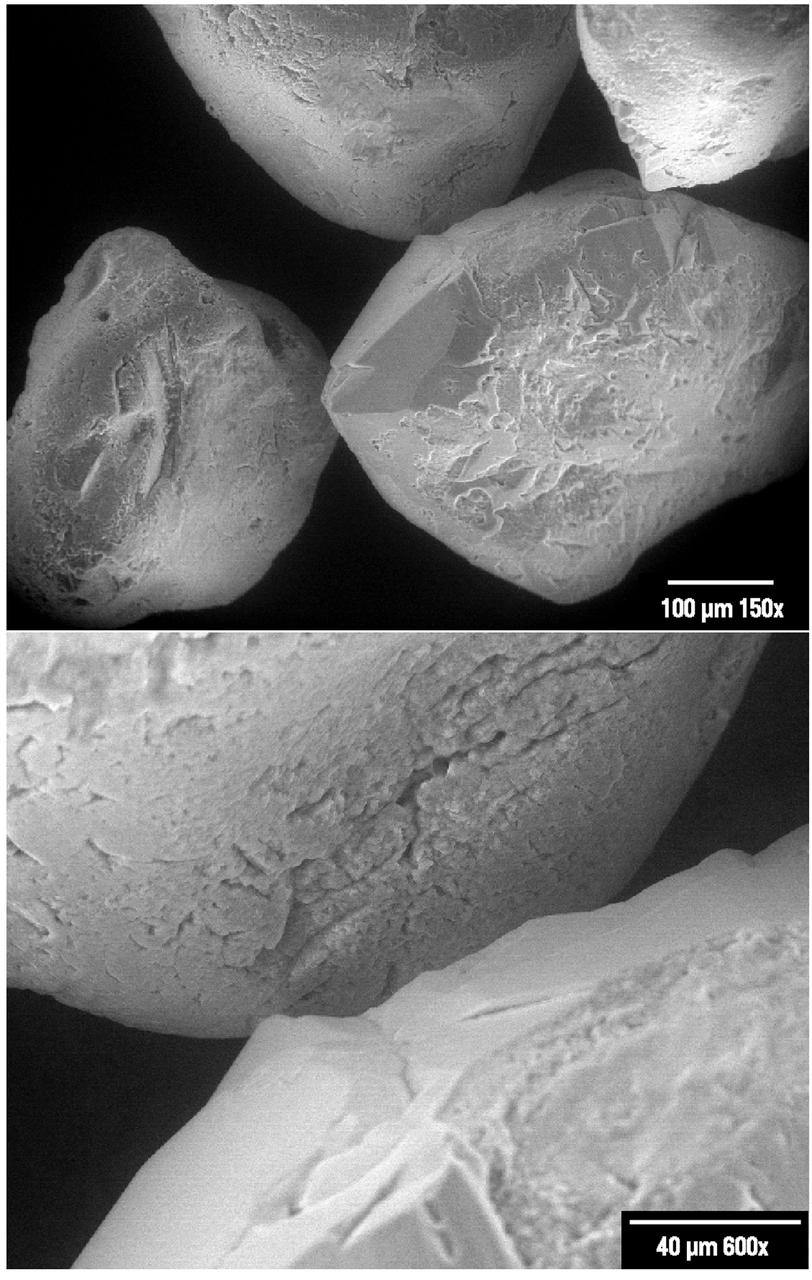
What appear to be boulders fresh from a tumble down a mountain are really grains of Ottawa sand, a standard material used in civil engineering tests and also used in the Mechanics of Granular Materials (MGM) experiment. The craggy surface shows how sand grans have faces that can cause friction as they roll and slide against each other, or even causing sticking and form small voids between grains. This complex behavior can cause soil to behave like a liquid under certain conditions such as earthquakes or when powders are handled in industrial processes. MGM uses the microgravity of space to simulate this behavior under conditions that carnot be achieved in laboratory tests on Earth. MGM is shedding light on the behavior of fine-grain materials under low effective stresses. Applications include earthquake engineering, granular flow technologies (such as powder feed systems for pharmaceuticals and fertilizers), and terrestrial and planetary geology. Nine MGM specimens have flown on two Space Shuttle flights. Another three are scheduled to fly on STS-107. The principal investigator is Stein Sture of the University of Colorado at Boulder. These images are from an Electron Spectroscopy for Chemical Analysis (ESCA) study conducted by Dr. Binayak Panda of IITRI for Marshall Space Flight Center (MSFC). (Credit: NASA/MSFC)
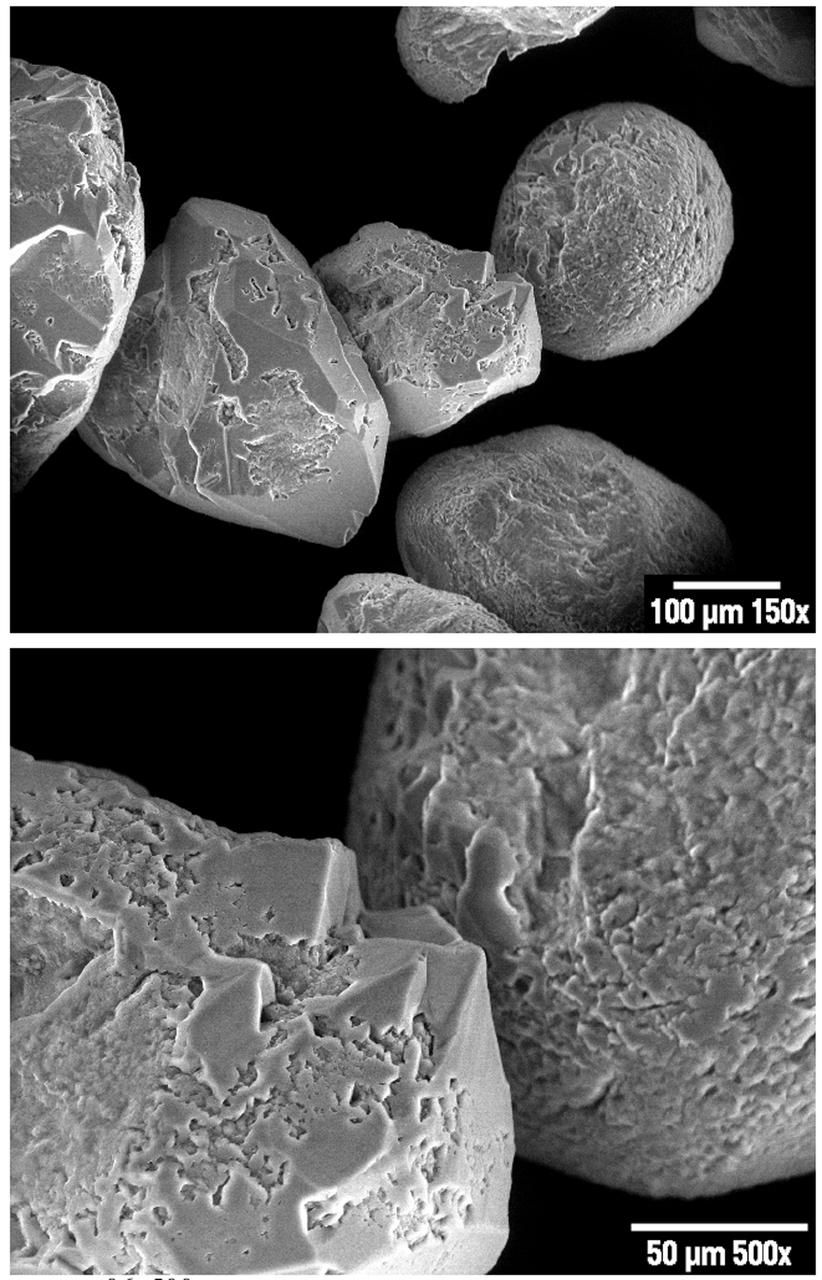
What appear to be boulders fresh from a tumble down a mountain are really grains of Ottawa sand, a standard material used in civil engineering tests and also used in the Mechanics of Granular Materials (MGM) experiment. The craggy surface shows how sand grans have faces that can cause friction as they roll and slide against each other, or even causing sticking and form small voids between grains. This complex behavior can cause soil to behave like a liquid under certain conditions such as earthquakes or when powders are handled in industrial processes. MGM uses the microgravity of space to simulate this behavior under conditions that carnot be achieved in laboratory tests on Earth. MGM is shedding light on the behavior of fine-grain materials under low effective stresses. Applications include earthquake engineering, granular flow technologies (such as powder feed systems for pharmaceuticals and fertilizers), and terrestrial and planetary geology. Nine MGM specimens have flown on two Space Shuttle flights. Another three are scheduled to fly on STS-107. The principal investigator is Stein Sture of the University of Colorado at Boulder. These images are from an Electron Spectroscopy for Chemical Analysis (ESCA) study conducted by Dr. Binayak Panda of IITRI for Marshall Space Flight Center (MSFC). (Credit: NASA/MSFC)
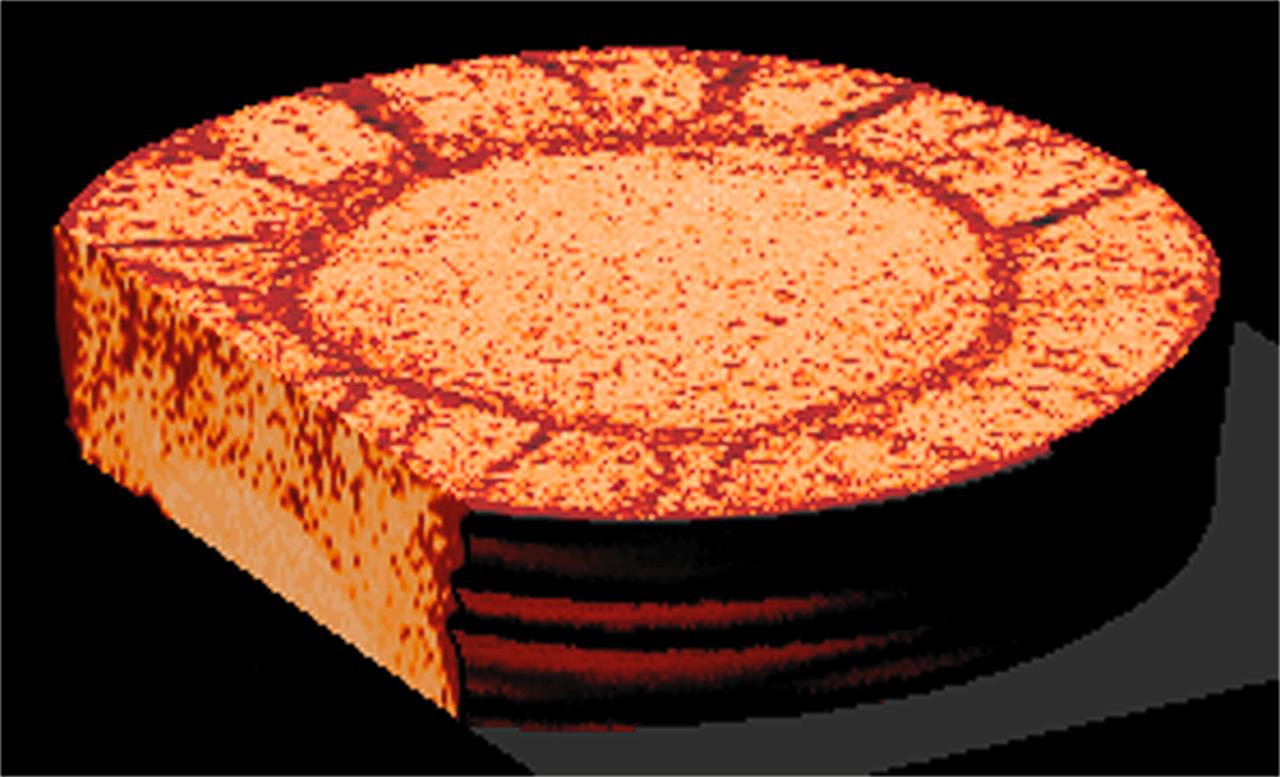
CT scans of the spcimens on STS-79 reveal internal cone-shaped features and radial patterns not seen in specimens processed on the ground. The lighter areas are the densest in these images. CT scans produced richly detailed images allowing scientists to build 3D models of the interior of the specimens that can be compared with microscopic examination of thin slices. This view is made from a series of horizontal slices. Sand and soil grains have faces that can cause friction as they roll and slide against each other, or even cause sticking and form small voids between grains. This complex behavior can cause soil to behave like a liquid under certain conditions such as earthquakes or when powders are handled in industrial processes. Mechanics of Granular Materials (MGM) experiments aboard the Space Shuttle use the microgravity of space to simulate this behavior under conditions that carnot be achieved in laboratory tests on Earth. MGM is shedding light on the behavior of fine-grain materials under low effective stresses. Applications include earthquake engineering, granular flow technologies (such as powder feed systems for pharmaceuticals and fertilizers), and terrestrial and planetary geology. Nine MGM specimens have flown on two Space Shuttle flights. Another three are scheduled to fly on STS-107. The principal investigator is Stein Sture of the University of Colorado at Boulder. Credit: Los Alamos National Laboratory and the University of Colorado at Boulder.
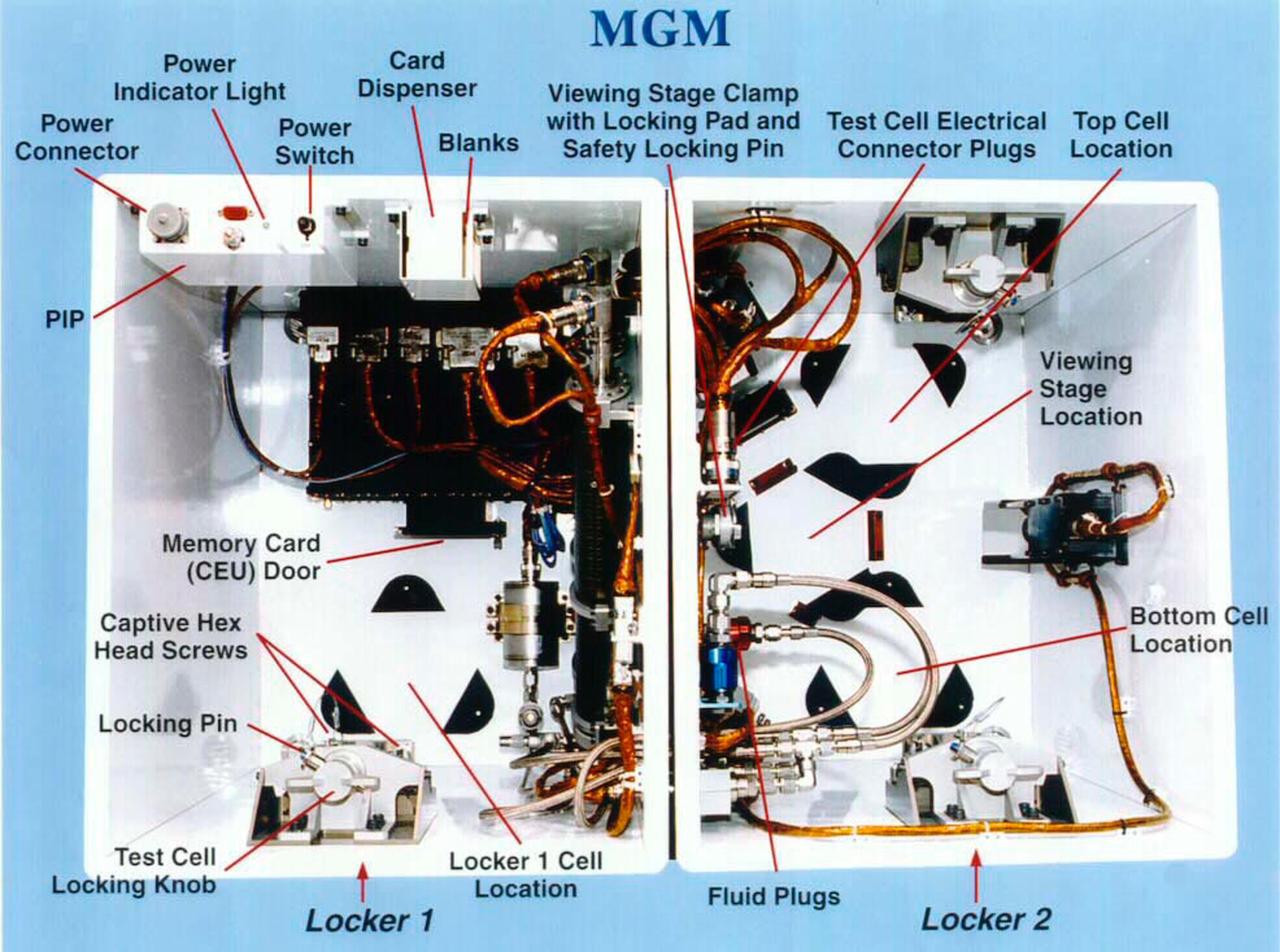
Mechanics of Granular Materials (MGM) flight hardware takes two twin double locker assemblies in the Space Shuttle middeck or the Spacehab module. Sand and soil grains have faces that can cause friction as they roll and slide against each other, or even cause sticking and form small voids between grains. This complex behavior can cause soil to behave like a liquid under certain conditions such as earthquakes or when powders are handled in industrial processes. MGM experiments aboard the Space Shuttle use the microgravity of space to simulate this behavior under conditions that carnot be achieved in laboratory tests on Earth. MGM is shedding light on the behavior of fine-grain materials under low effective stresses. Applications include earthquake engineering, granular flow technologies (such as powder feed systems for pharmaceuticals and fertilizers), and terrestrial and planetary geology. Nine MGM specimens have flown on two Space Shuttle flights. Another three are scheduled to fly on STS-107. The principal investigator is Stein Sture of the University of Colorado at Boulder. (Credit: NASA/MSFC).
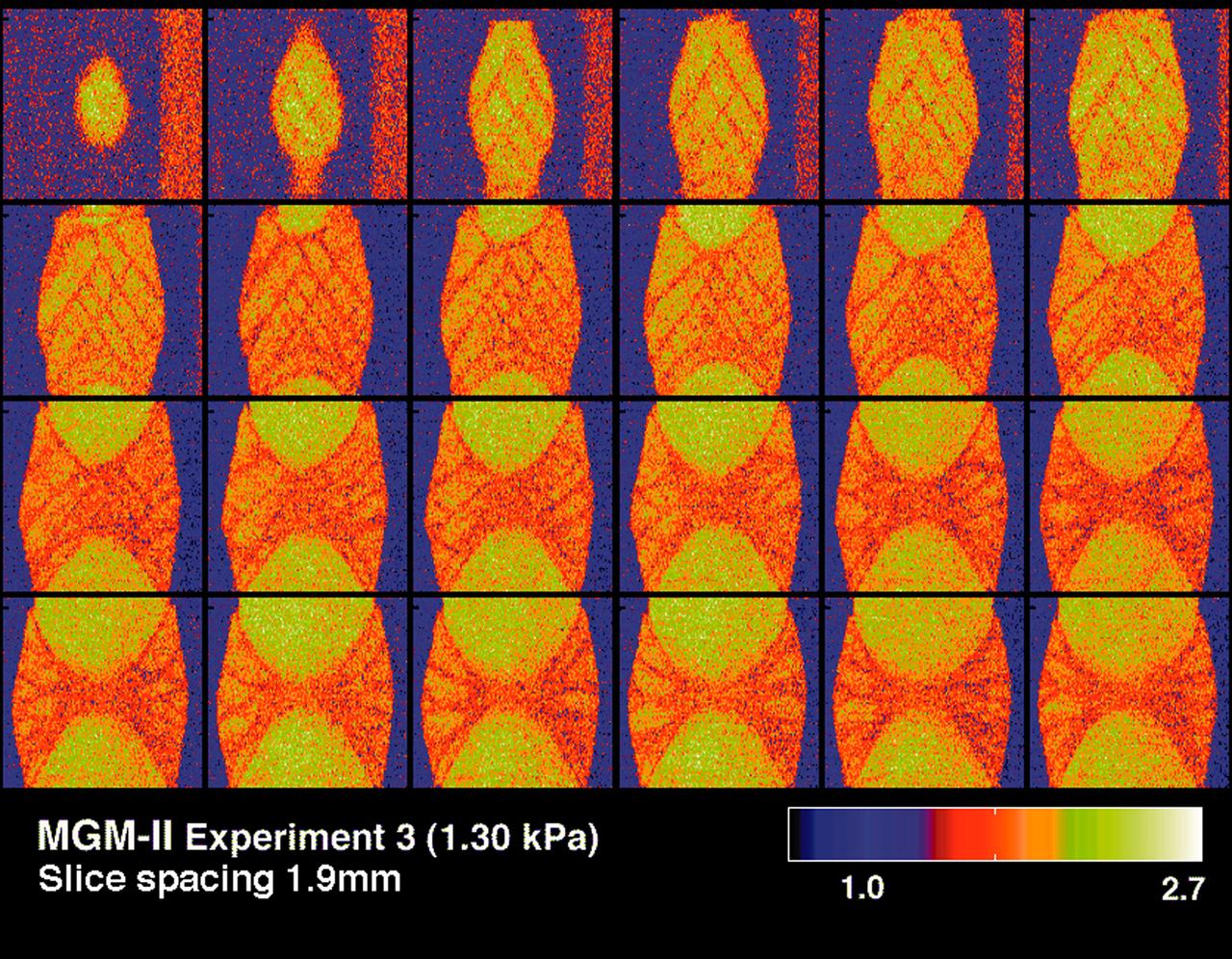
CT scans of the spcimens on STS-79 reveal internal cone-shaped features and radial patterns not seen in specimens processed on the ground. The lighter areas are the densest in these images. CT scans produced richly detailed images allowing scientists to build 3D models of the interior of the specimens that can be compared with microscopic examination of thin slices. These views depict vertical slices from side to middle of a flight specimen. Sand and soil grains have faces that can cause friction as they roll and slide against each other, or even cause sticking and form small voids between grains. This complex behavior can cause soil to behave like a liquid under certain conditions such as earthquakes or when powders are handled in industrial processes. Mechanics of Granular Materials (MGM) experiments aboard the Space Shuttle use the microgravity of space to simulate this behavior under conditions that carnot be achieved in laboratory tests on Earth. MGM is shedding light on the behavior of fine-grain materials under low effective stresses. Applications include earthquake engineering, granular flow technologies (such as powder feed systems for pharmaceuticals and fertilizers), and terrestrial and planetary geology. Nine MGM specimens have flown on two Space Shuttle flights. Another three are scheduled to fly on STS-107. The principal investigator is Stein Sture of the University of Colorado at Boulder. Credit: Los Alamos National Laboratory and the University of Colorado at Boulder.
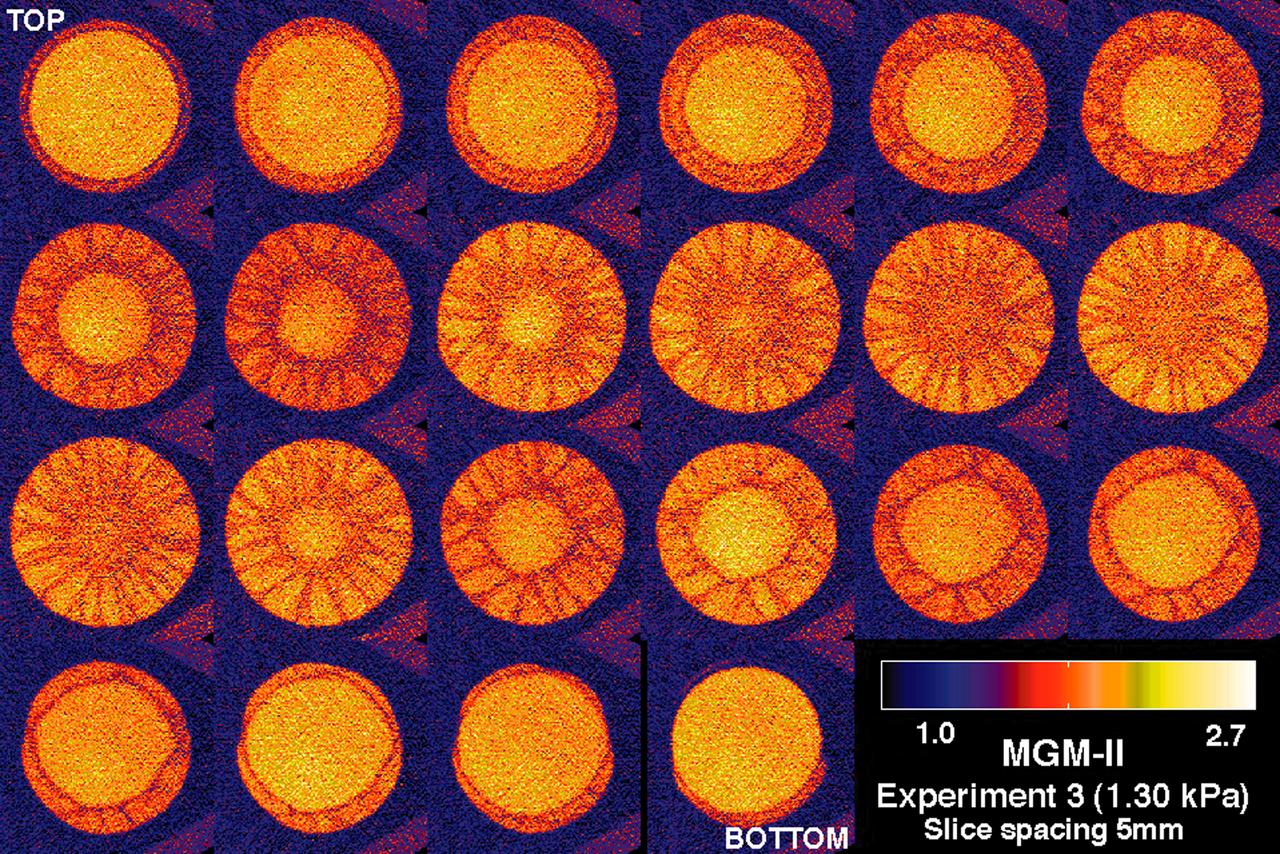
CT scans of the spcimens on STS-79 reveal internal cone-shaped features and radial patterns not seen in specimens processed on the ground. The lighter areas are the densest in these images. CT scans produced richly detailed images allowing scientists to build 3D models of the interior of the specimens that can be compared with microscopic examination of thin slices. This view depict horizontal slices from top to bottom of a flight specimen. Sand and soil grains have faces that can cause friction as they roll and slide against each other, or even cause sticking and form small voids between grains. This complex behavior can cause soil to behave like a liquid under certain conditions such as earthquakes or when powders are handled in industrial processes. Mechanics of Granular Materials (MGM) experiments aboard the Space Shuttle use the microgravity of space to simulate this behavior under conditions that carnot be achieved in laboratory tests on Earth. MGM is shedding light on the behavior of fine-grain materials under low effective stresses. Applications include earthquake engineering, granular flow technologies (such as powder feed systems for pharmaceuticals and fertilizers), and terrestrial and planetary geology. Nine MGM specimens have flown on two Space Shuttle flights. Another three are scheduled to fly on STS-107. The principal investigator is Stein Sture of the University of Colorado at Boulder. Credit: Los Alamos National Laboratory and the University of Colorado at Boulder.
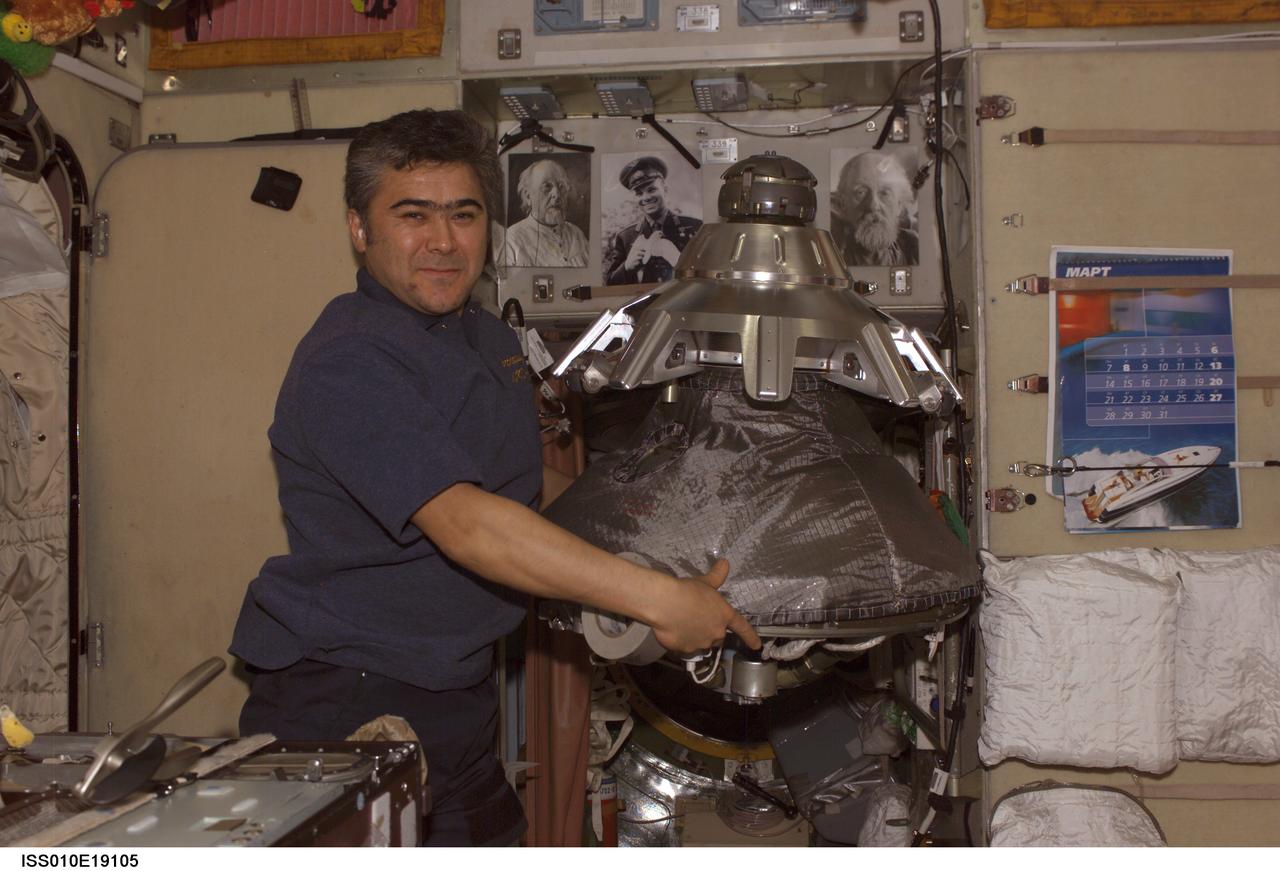
ISS010-E-19105 (3 March 2005) --- Cosmonaut Salizhan S. Sharipov, Expedition 10 flight engineer representing Russia's Federal Space Agency, holds the Progress supply vehicle probe-and-cone docking mechanism in the Zvezda Service Module of the International Space Station (ISS).
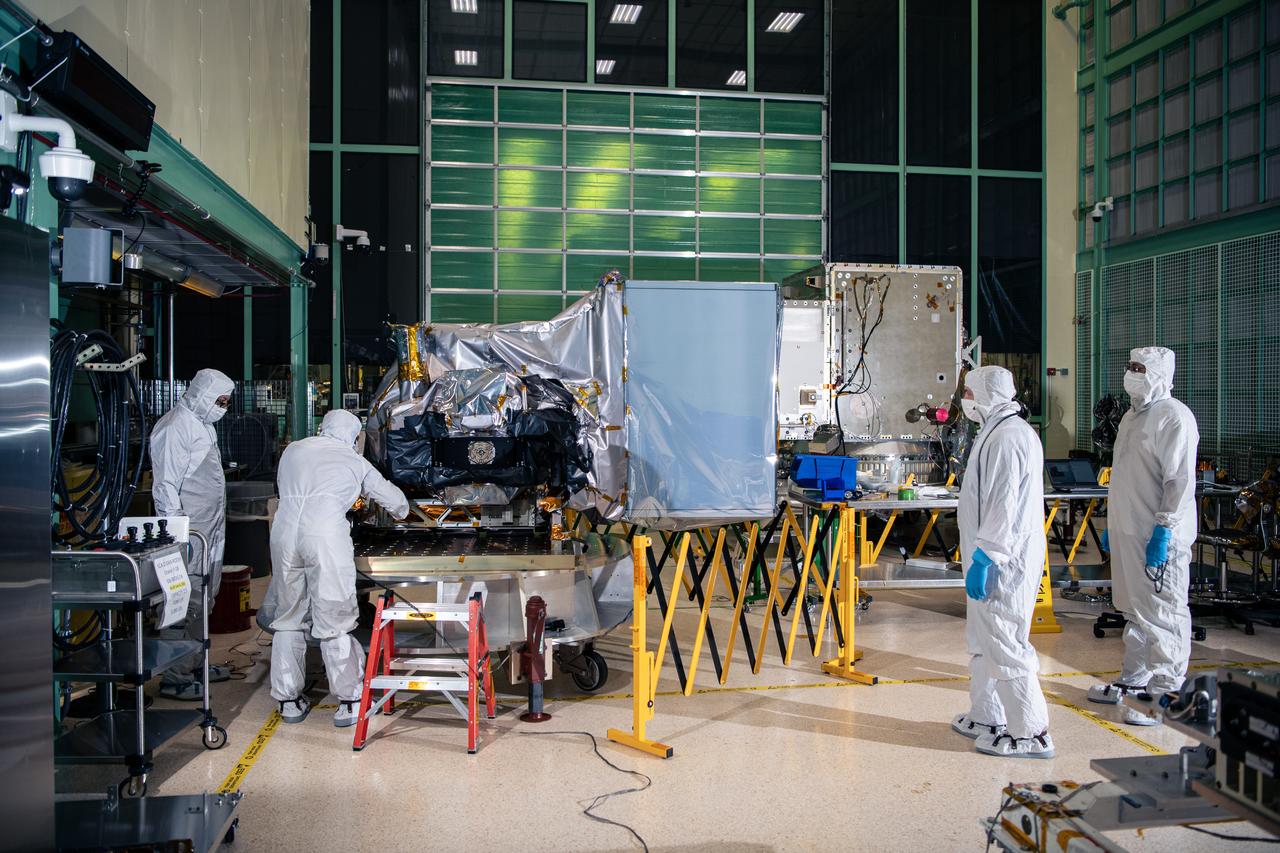
Engineers and technicians prepare for a crane lift to deintegrate the Ocean Color Instrument (OCI) from the Tilt Mechanism after successful environmental testing. The PACE (Plankton, Aerosol, Cloud, ocean Ecosystem) spacecraft is seen in the background in the Spacecraft Checkout Area (SCA) cleanroom. OCI is a highly advanced optical spectrometer that will be used to measure properties of light over portions of the electromagnetic spectrum. It will enable continuous measurement of light at finer wavelength resolution than previous NASA satellite sensors, extending key system ocean color data records for climate studies. OCI is PACE's (Plankton, Aerosol, Cloud, ocean Ecosystem) primary sensor built at Goddard Space Flight Center in Greenbelt, MD.
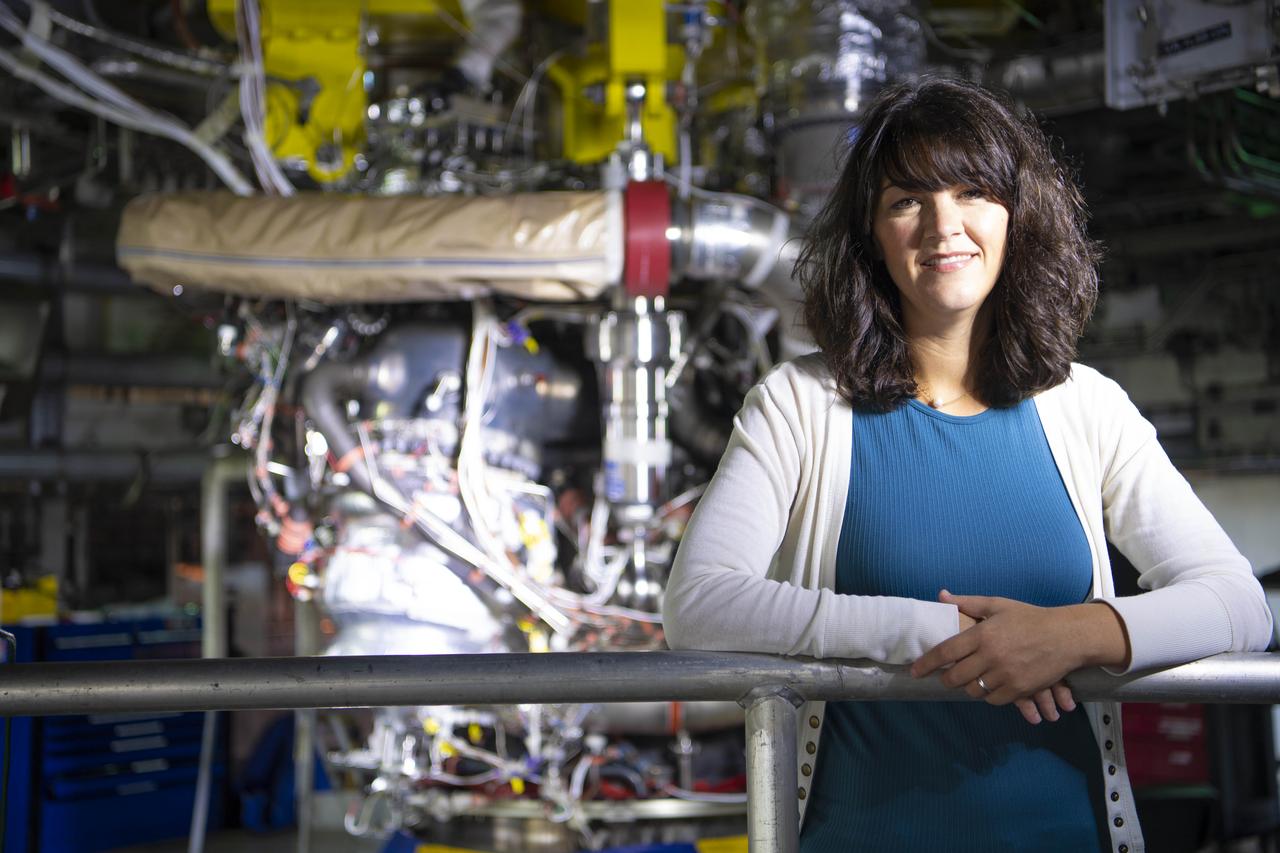
Nyla Trumbach, a NASA lead mechanical engineer, broke barriers as the first female to conduct a J-2X powerpack engine test at Stennis Space Center. She currently works on testing of the RS-25 rocket engine, shown installed on the A-1 Test Stand at SSC.
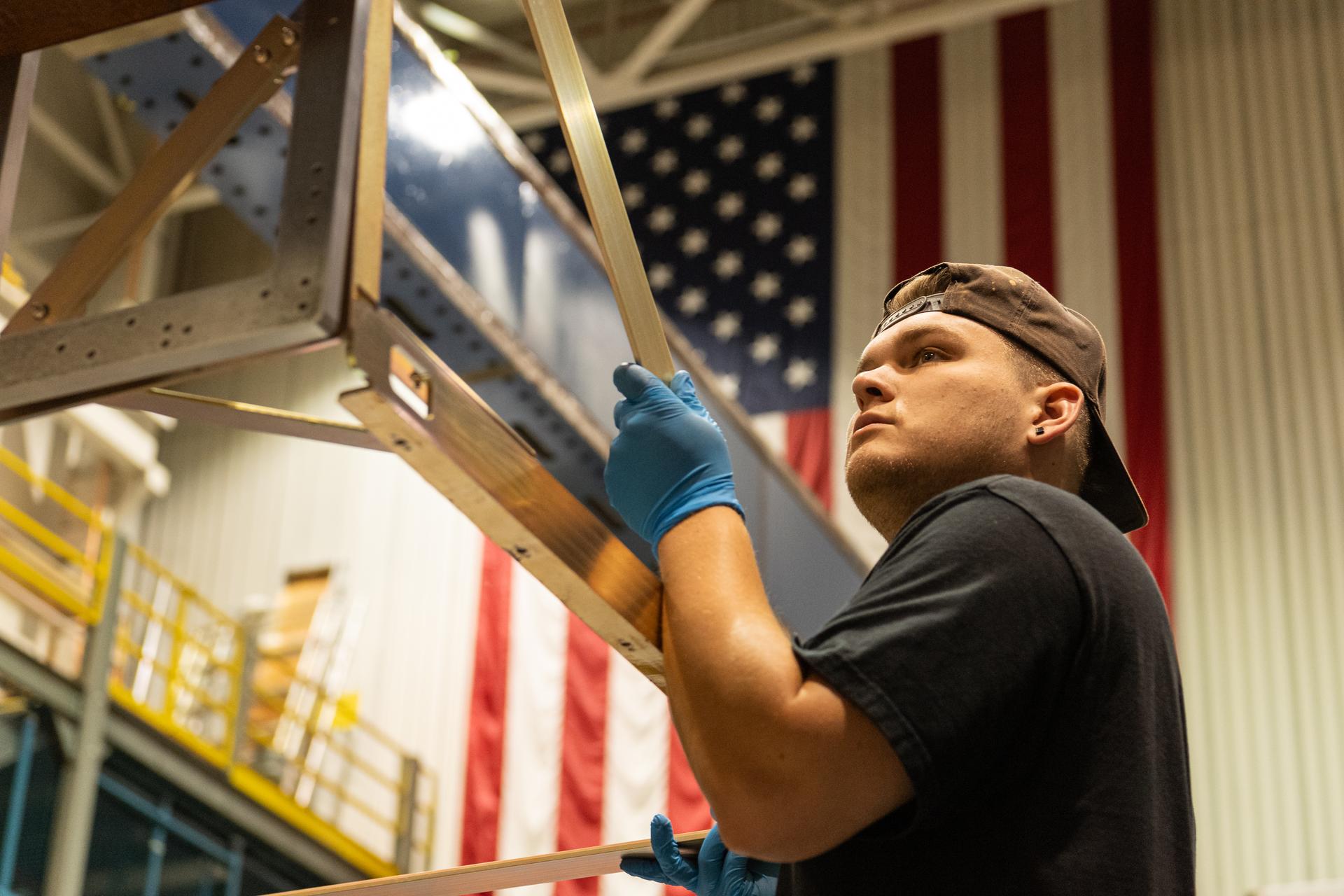
Mechanical engineering and integration technician, Lucas Keim, holds up a piece of ground support equipment during a proof test at Goddard Space Flight Center, Greenbelt Md., June 22, 2023. This photo has been reviewed by OSAM1 project management and the Export Control Office and is released for public view. NASA/Mike Guinto

From left, NASA avionics technician Jesse Orellana; quality assurance employee Jose Prieto; mechanic Francisco Rodriguez; and mechanic Vincent Moreno work on an ER-2 aircraft Monday, Jan. 26, 2026, at NASA’s Armstrong Flight Research Center in Edwards, California.
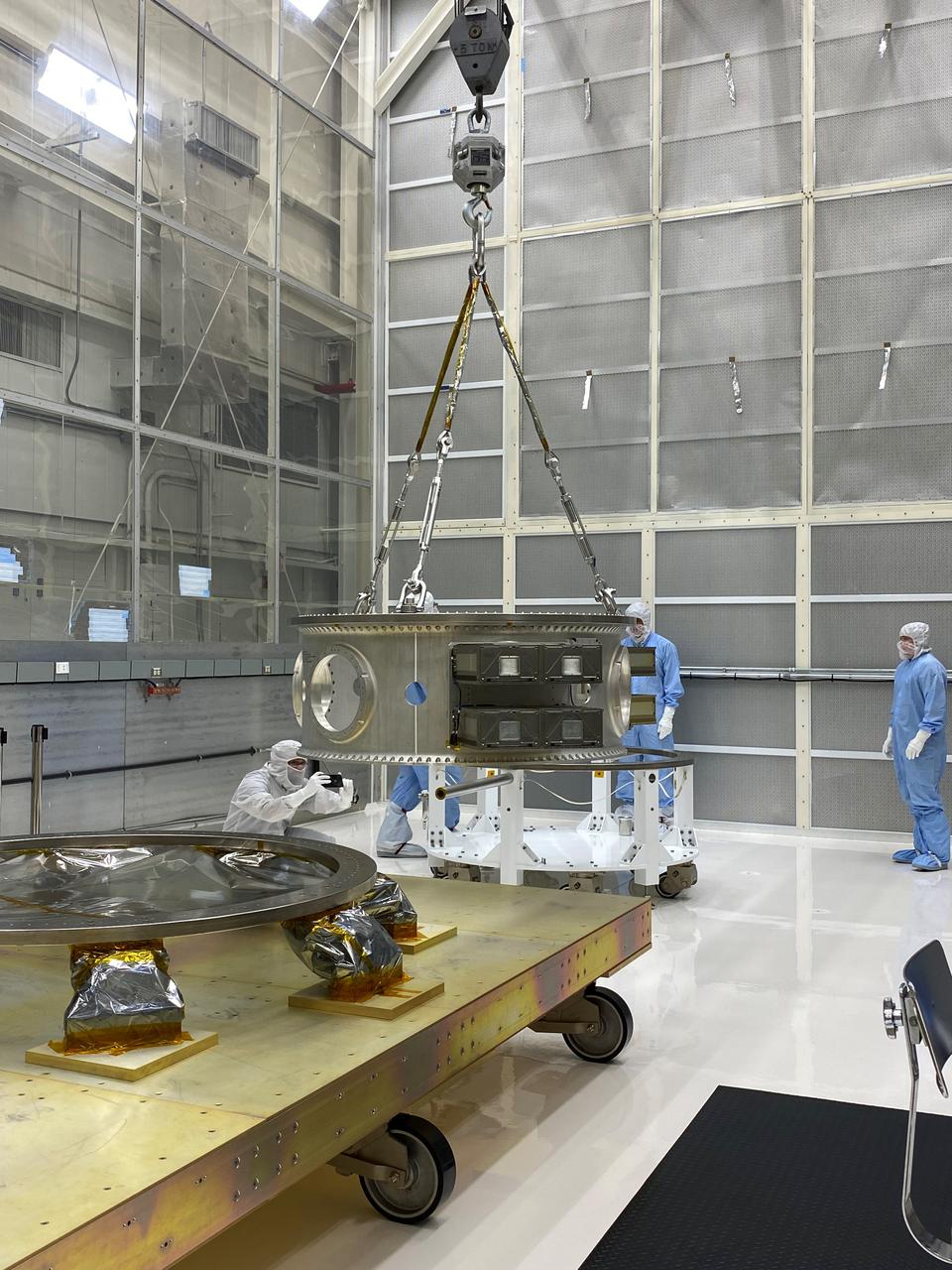
Technicians process mechanical and electrical support equipment for NASA’s Landsat 9 observatory inside the Integrated Processing Facility at Vandenberg Space Force Base in California, on June 16, 2021. The equipment includes a secondary payload adapter and flight system for a group of microsat payloads, called CubeSats, that will launch with Landsat 9 as secondary payloads. Landsat 9 will launch on a United Launch Alliance Atlas V rocket from Space Launch Complex 3 at Vandenberg in September 2021. The launch is being managed by NASA’s Launch Services Program based at Kennedy Space Center, America’s multiuser spaceport. The Landsat 9 satellite will continue the nearly 50-year legacy of previous Landsat missions. It will monitor key natural and economic resources from orbit. Landsat 9 is managed by the agency’s Goddard Space Flight Center in Greenbelt, Maryland. The satellite will carry two instruments: the Operational Land Imager 2, which collects images of Earth’s landscapes in visible, near infrared and shortwave infrared light, and the Thermal Infrared Sensor 2, which measures the temperature of land surfaces. Like its predecessors, Landsat 9 is a joint mission between NASA and the U.S. Geological Survey.
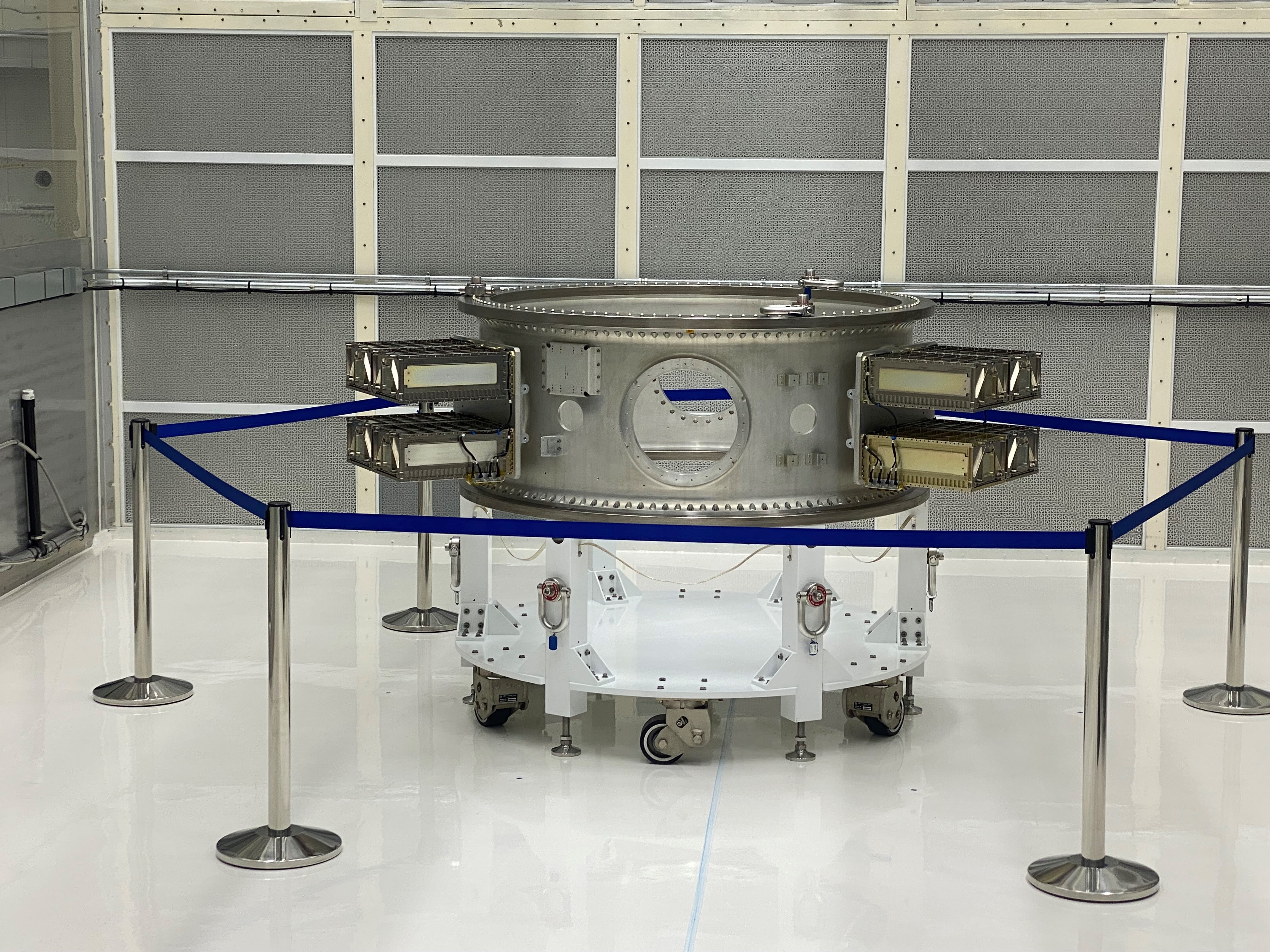
Mechanical and electrical support equipment for NASA’s Landsat 9 observatory are inside the Integrated Processing Facility at Vandenberg Space Force Base in California, on June 16, 2021. The equipment includes a secondary payload adapter and flight system for a group of microsat payloads, called CubeSats, that will launch with Landsat 9 as secondary payloads. Landsat 9 will launch on a United Launch Alliance Atlas V rocket from Space Launch Complex 3 at Vandenberg in September 2021. The launch is being managed by NASA’s Launch Services Program based at Kennedy Space Center, America’s multiuser spaceport. The Landsat 9 satellite will continue the nearly 50-year legacy of previous Landsat missions. It will monitor key natural and economic resources from orbit. Landsat 9 is managed by the agency’s Goddard Space Flight Center in Greenbelt, Maryland. The satellite will carry two instruments: the Operational Land Imager 2, which collects images of Earth’s landscapes in visible, near infrared and shortwave infrared light, and the Thermal Infrared Sensor 2, which measures the temperature of land surfaces. Like its predecessors, Landsat 9 is a joint mission between NASA and the U.S. Geological Survey.
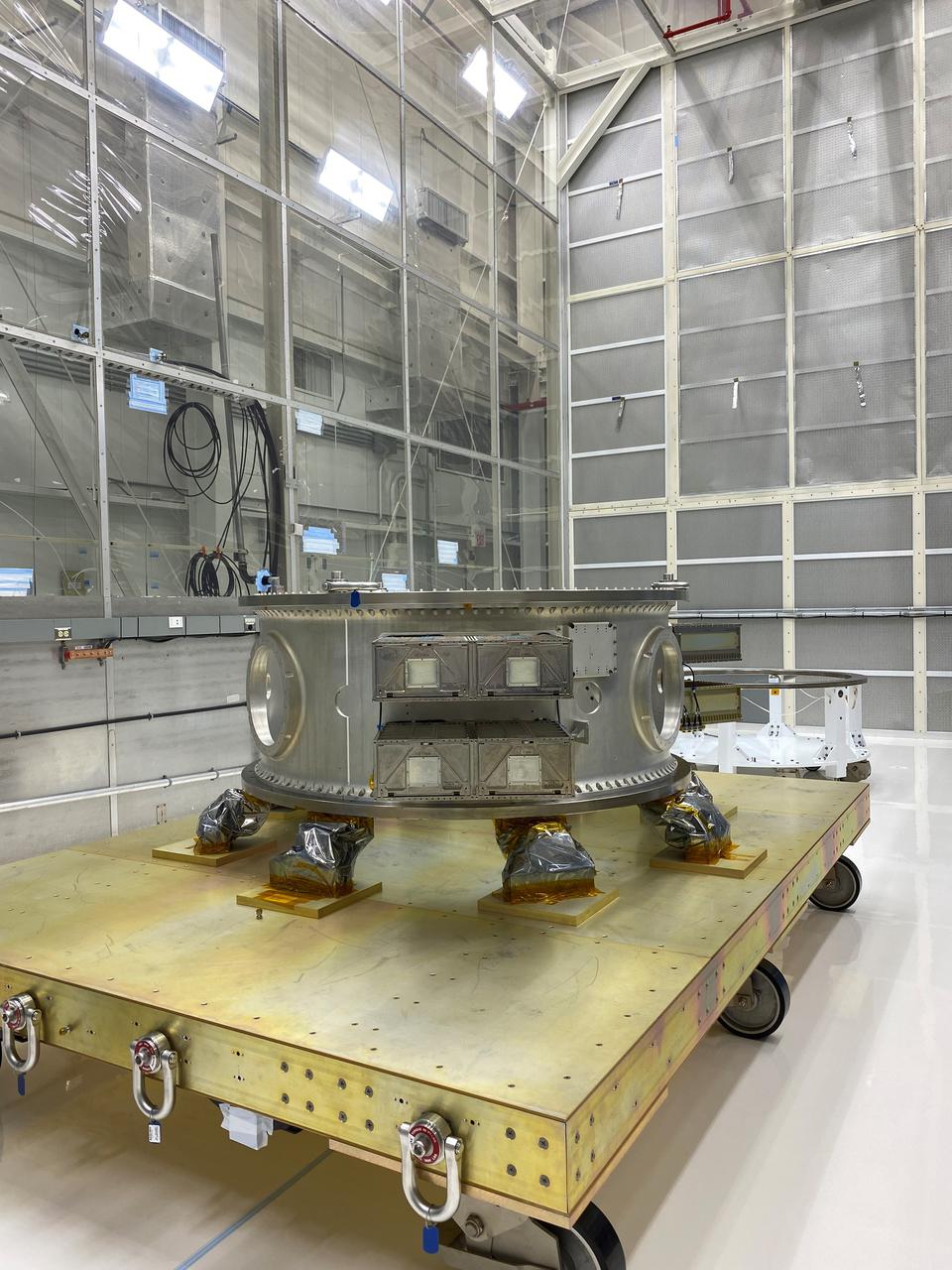
Mechanical and electrical support equipment for NASA’s Landsat 9 observatory arrive inside the Integrated Processing Facility at Vandenberg Space Force Base in California, on June 16, 2021. The equipment includes a secondary payload adapter and flight system for a group of microsat payloads, called CubeSats, that will launch with Landsat 9 as secondary payloads. Landsat 9 will launch on a United Launch Alliance Atlas V rocket from Space Launch Complex 3 at Vandenberg in September 2021. The launch is being managed by NASA’s Launch Services Program based at Kennedy Space Center, America’s multiuser spaceport. The Landsat 9 satellite will continue the nearly 50-year legacy of previous Landsat missions. It will monitor key natural and economic resources from orbit. Landsat 9 is managed by the agency’s Goddard Space Flight Center in Greenbelt, Maryland. The satellite will carry two instruments: the Operational Land Imager 2, which collects images of Earth’s landscapes in visible, near infrared and shortwave infrared light, and the Thermal Infrared Sensor 2, which measures the temperature of land surfaces. Like its predecessors, Landsat 9 is a joint mission between NASA and the U.S. Geological Survey.
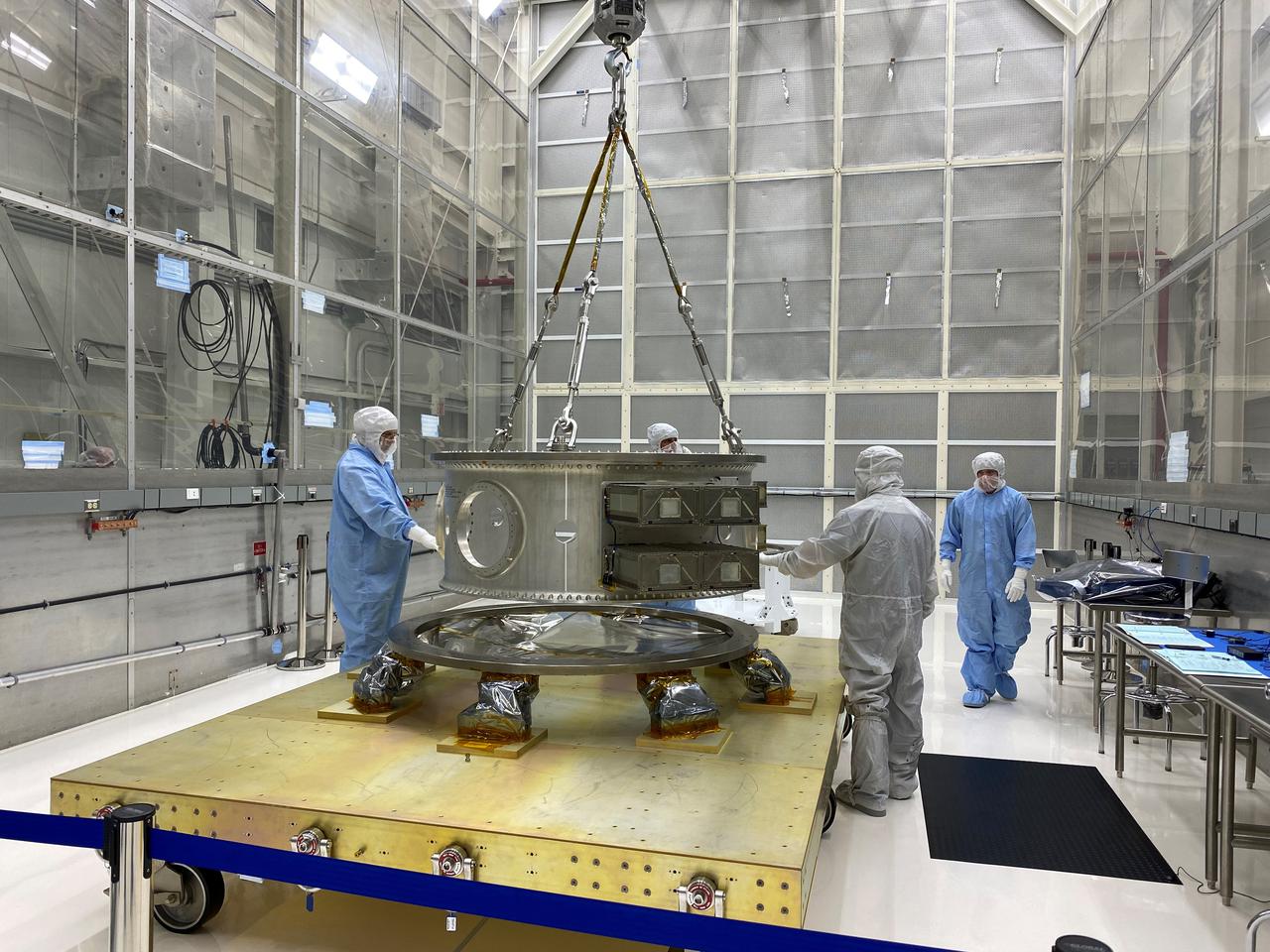
Technicians process mechanical and electrical support equipment for NASA’s Landsat 9 observatory inside the Integrated Processing Facility at Vandenberg Space Force Base in California, on June 16, 2021. The equipment includes a secondary payload adapter and flight system for a group of microsat payloads, called CubeSats, that will launch with Landsat 9 as secondary payloads. Landsat 9 will launch on a United Launch Alliance Atlas V rocket from Space Launch Complex 3 at Vandenberg in September 2021. The launch is being managed by NASA’s Launch Services Program based at Kennedy Space Center, America’s multiuser spaceport. The Landsat 9 satellite will continue the nearly 50-year legacy of previous Landsat missions. It will monitor key natural and economic resources from orbit. Landsat 9 is managed by the agency’s Goddard Space Flight Center in Greenbelt, Maryland. The satellite will carry two instruments: the Operational Land Imager 2, which collects images of Earth’s landscapes in visible, near infrared and shortwave infrared light, and the Thermal Infrared Sensor 2, which measures the temperature of land surfaces. Like its predecessors, Landsat 9 is a joint mission between NASA and the U.S. Geological Survey.
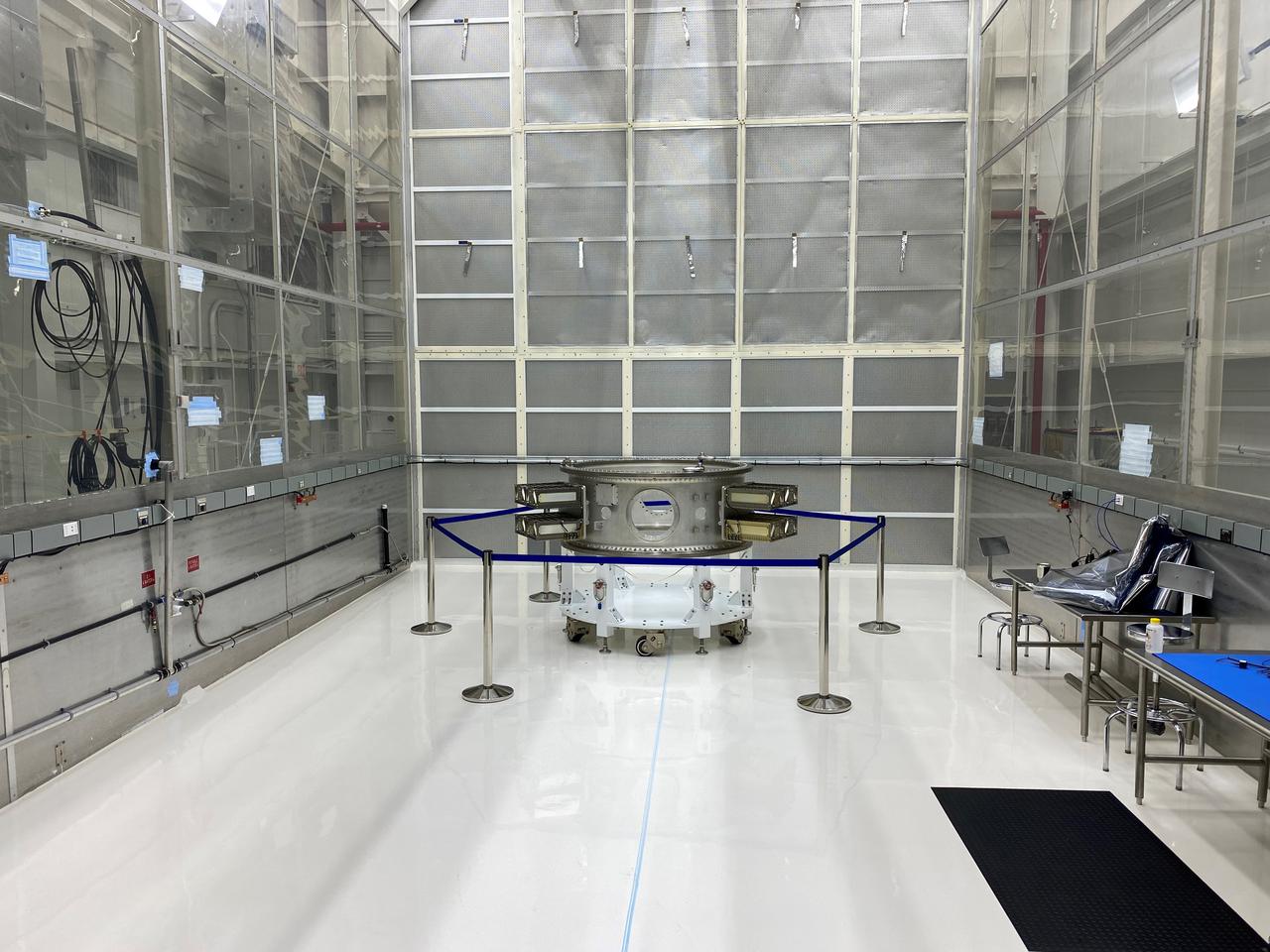
Mechanical and electrical support equipment for NASA’s Landsat 9 observatory are inside the Integrated Processing Facility at Vandenberg Space Force Base in California, on June 16, 2021. The equipment includes a secondary payload adapter and flight system for a group of microsat payloads, called CubeSats, that will launch with Landsat 9 as secondary payloads. Landsat 9 will launch on a United Launch Alliance Atlas V rocket from Space Launch Complex 3 at Vandenberg in September 2021. The launch is being managed by NASA’s Launch Services Program based at Kennedy Space Center, America’s multiuser spaceport. The Landsat 9 satellite will continue the nearly 50-year legacy of previous Landsat missions. It will monitor key natural and economic resources from orbit. Landsat 9 is managed by the agency’s Goddard Space Flight Center in Greenbelt, Maryland. The satellite will carry two instruments: the Operational Land Imager 2, which collects images of Earth’s landscapes in visible, near infrared and shortwave infrared light, and the Thermal Infrared Sensor 2, which measures the temperature of land surfaces. Like its predecessors, Landsat 9 is a joint mission between NASA and the U.S. Geological Survey.
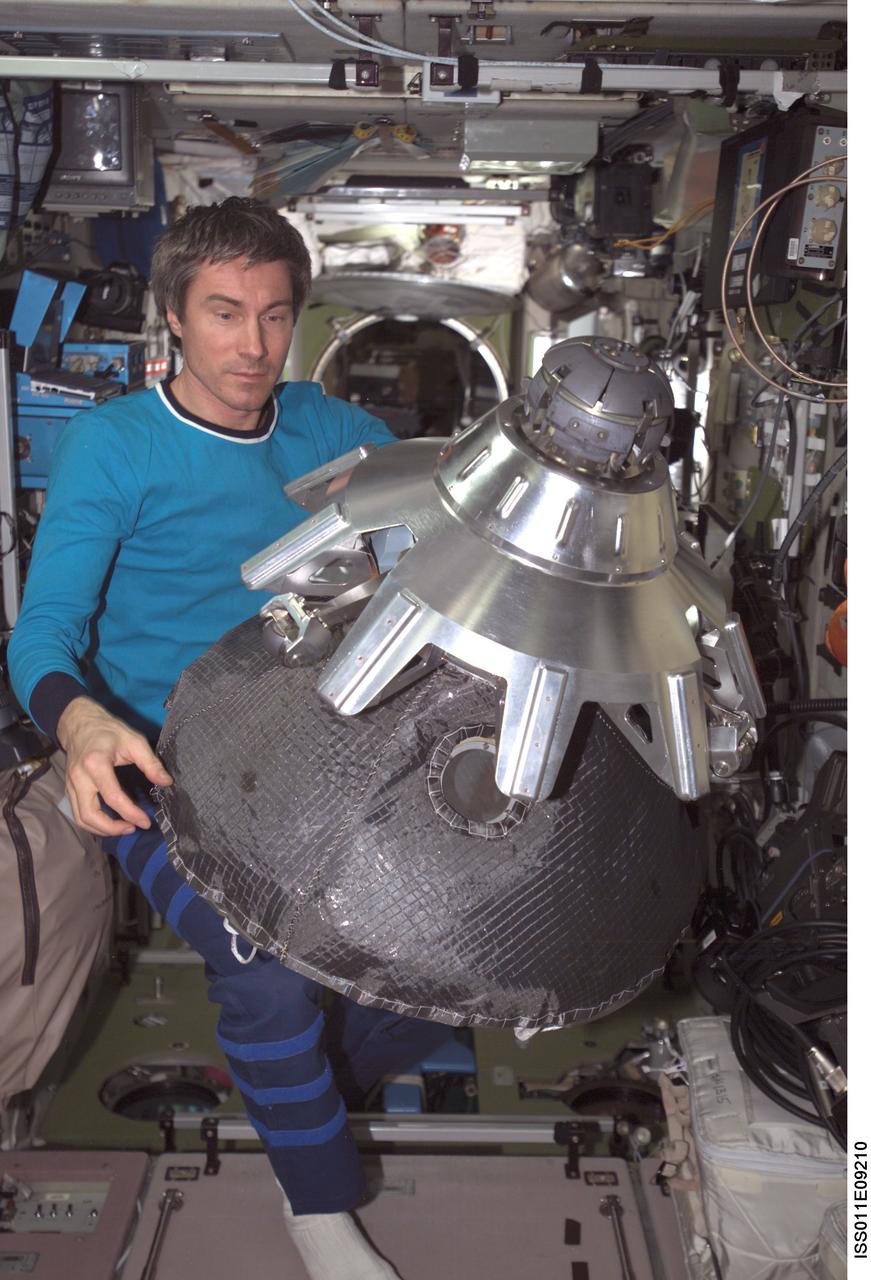
ISS011-E-09210 (19 June 2005) --- Cosmonaut Sergei K. Krikalev, Expedition 11 commander representing Russia's Federal Space Agency, holds the dismantled probe-and-cone docking mechanism from the Progress 18 spacecraft in the Zvezda Service Module of the International Space Station (ISS). The Progress docked to the aft port of the Service Module at 7:42 p.m. (CDT) as the two spacecraft flew approximately 225 statute miles, above a point near Beijing, China.