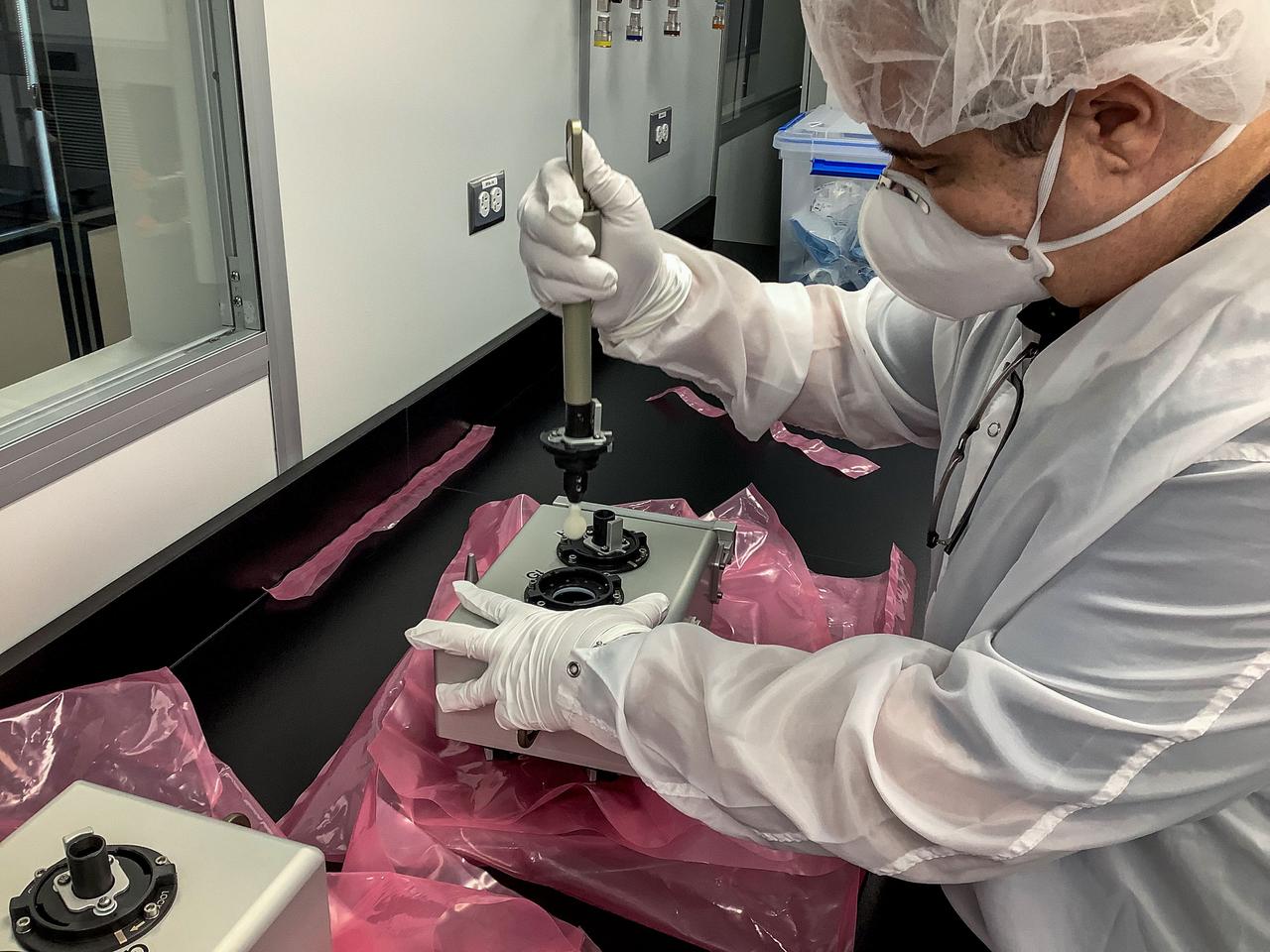
jsc2023e026245 (12/6/2022) --- A member of the ISS External Microorganisms payload development team demonstrates removing a swab from the sampling caddy that is used by an astronaut during a spacewalk. A crew member uses the swabbing tool to collect samples from the exterior surface of the International Space Station at various locations as part of a study to examine whether a spacecraft releases microorganisms and, if so, how many and how far they may travel. Results could inform preparations for future human exploration missions to the Moon and Mars
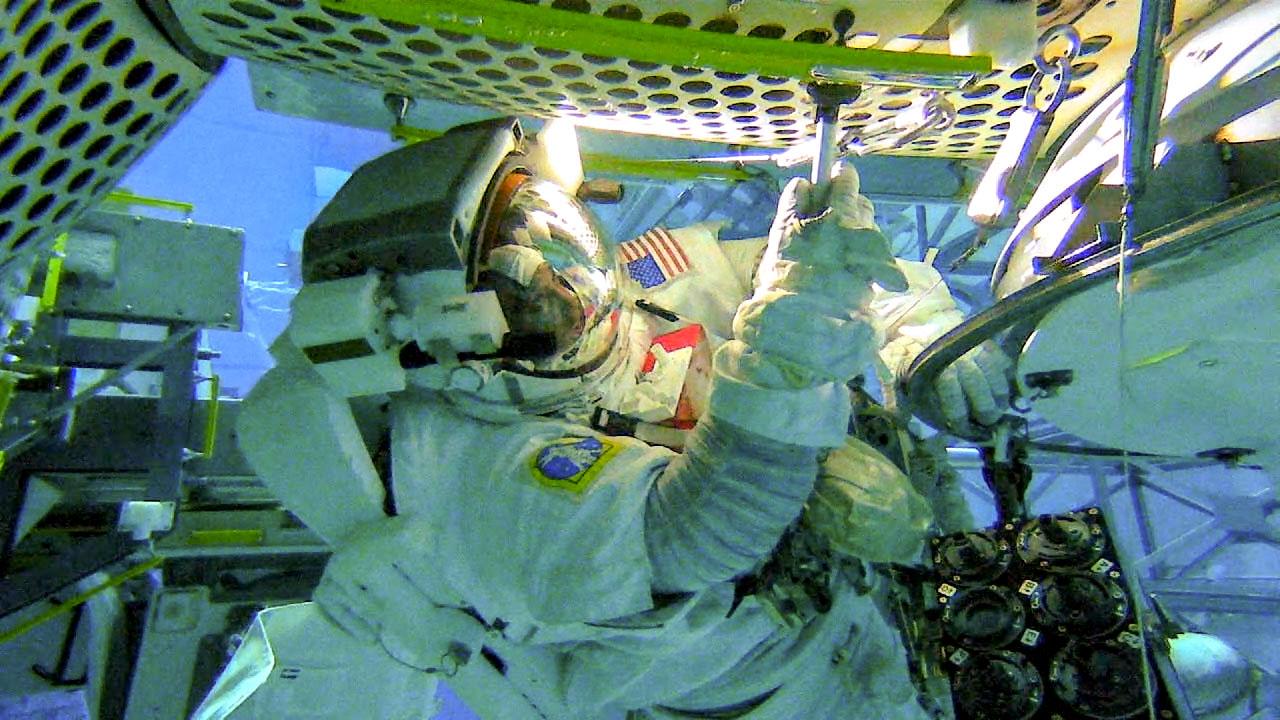
jsc2023e026248 (2/7/2023) --- NASA astronaut Victor Glover tests hardware for the ISS External Microorganisms investigation at the Neutral Buoyancy Laboratory at NASA’s Johnson Space Center in Houston.
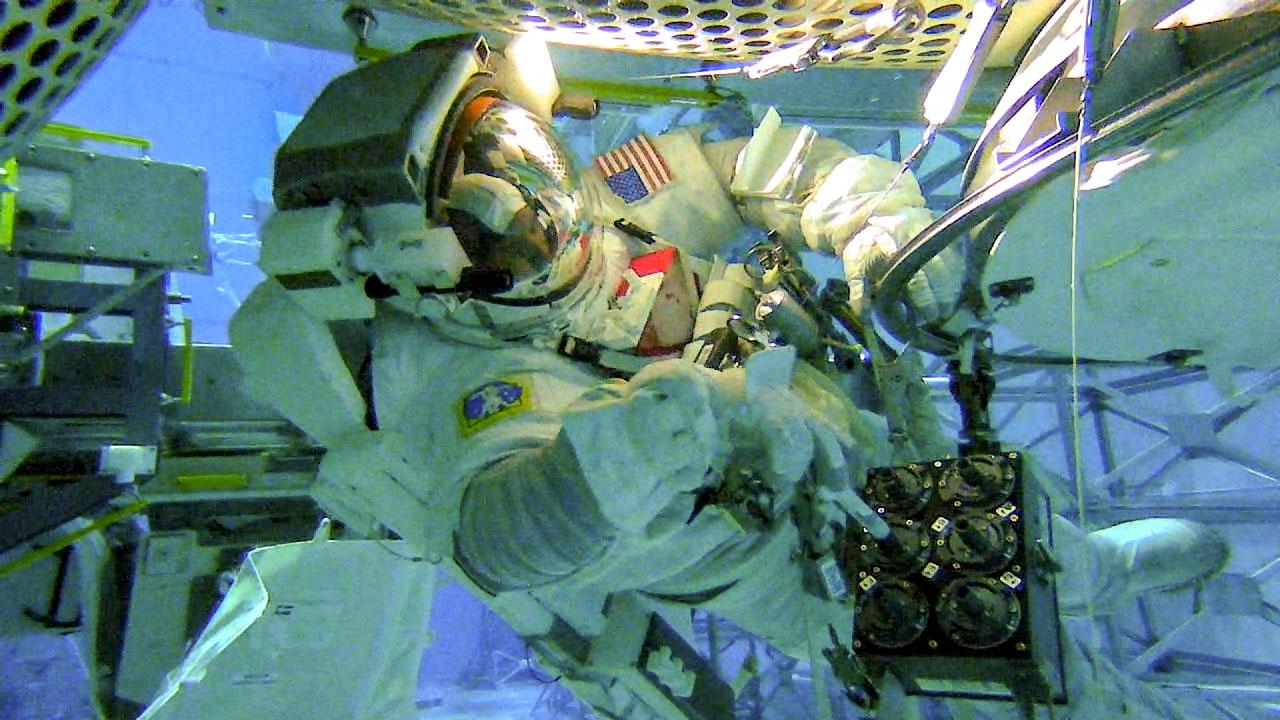
jsc2023e026247 (2/7/2023) --- NASA astronaut Victor Glover tests hardware for the ISS External Microorganisms investigation at the Neutral Buoyancy Laboratory at NASA’s Johnson Space Center in Houston.

jsc2024e006079 (1/18/2024) --- Tanpopo is a Japanese astrobiological space exposure experiment on ISS. There are 7 small cells containing microorganisms, mosses, and organic compounds to be determined their stabilities and alterations. (Tanpopo-6 Team)
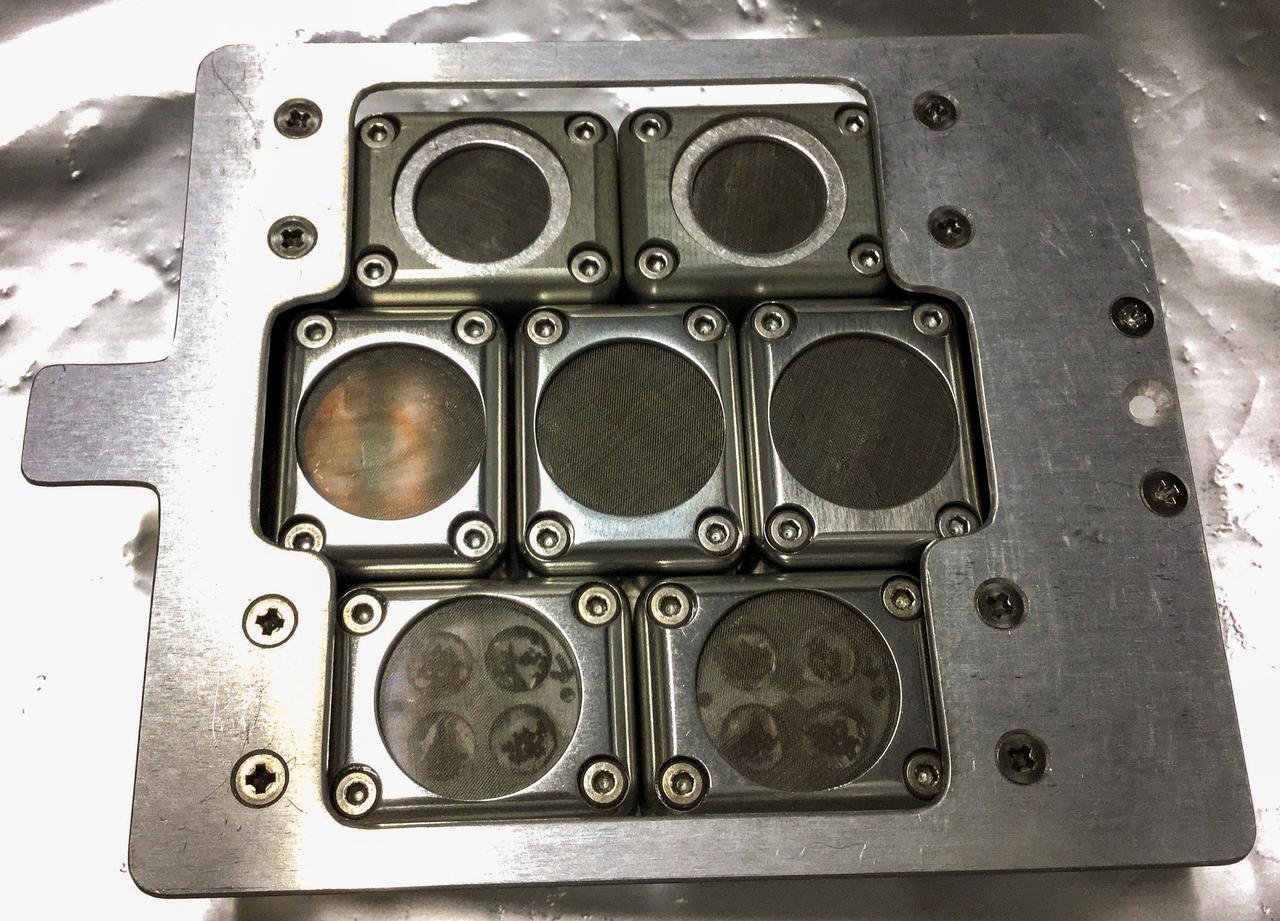
jsc2022e068259 (2/4/2022) --- Tanpopo is a Japanese astrobiological space exposure experiment on ISS. There are 7 small cells containing microorganisms, mosses, and organic compounds which will study their stability and alterations. Photo courtesy of the Tanpopo-5 Team.
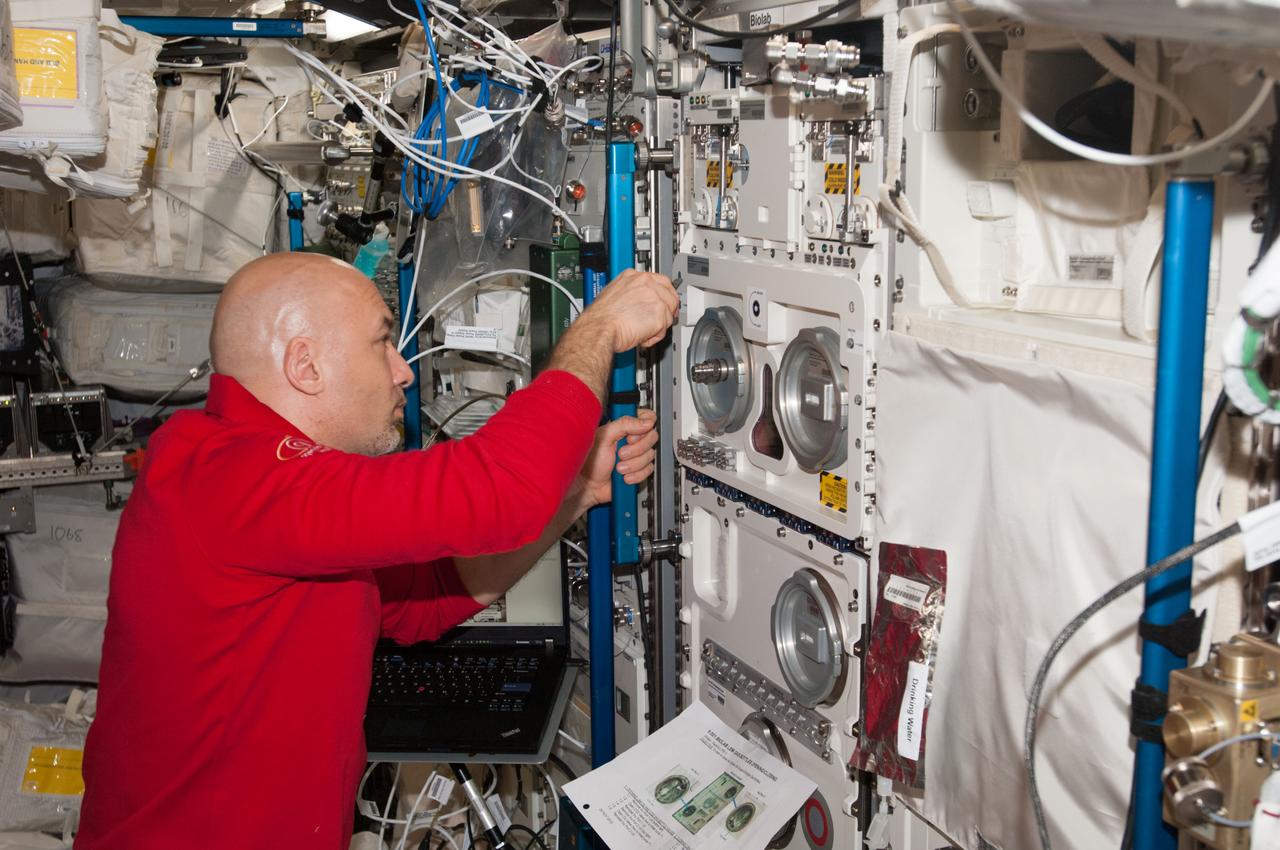
ISS036-E-037859 (27 Aug. 2013) --- European Space Agency astronaut Luca Parmitano, Expedition 36 flight engineer, works with the Biolab in the Columbus laboratory of the International Space Station. Biolab is used to perform space biology experiments on microorganisms, cells, tissue cultures, plants and small invertebrates.
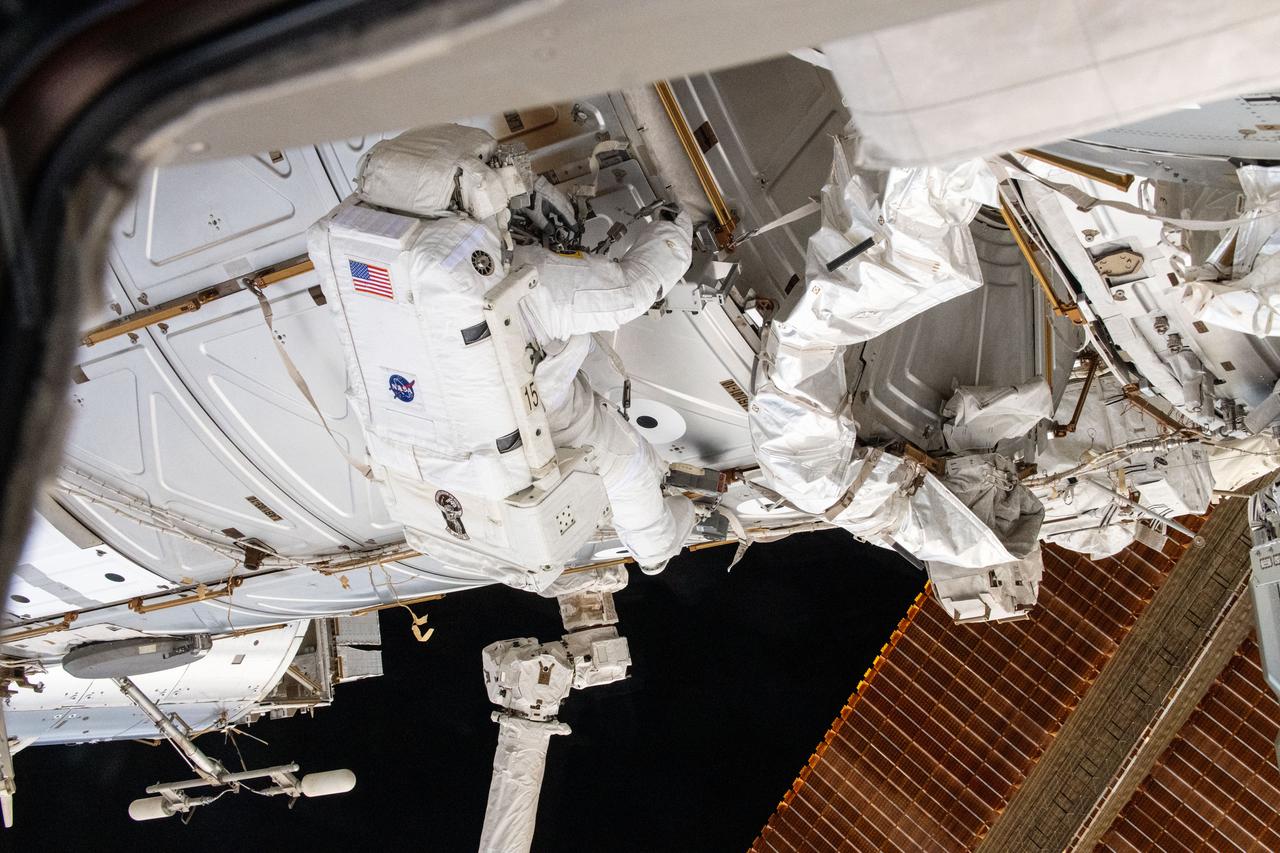
iss072e576465 (Jan. 30, 2025) --- NASA astronaut and Expedition 72 Flight Engineer Butch Wilmore works outside the International Space Station during a five-hour and 26-minute spacewalk. Wilmore swabbed external surfaces searching for microorganisms that may survive and reproduce near vents on the exterior of the orbital outpost.
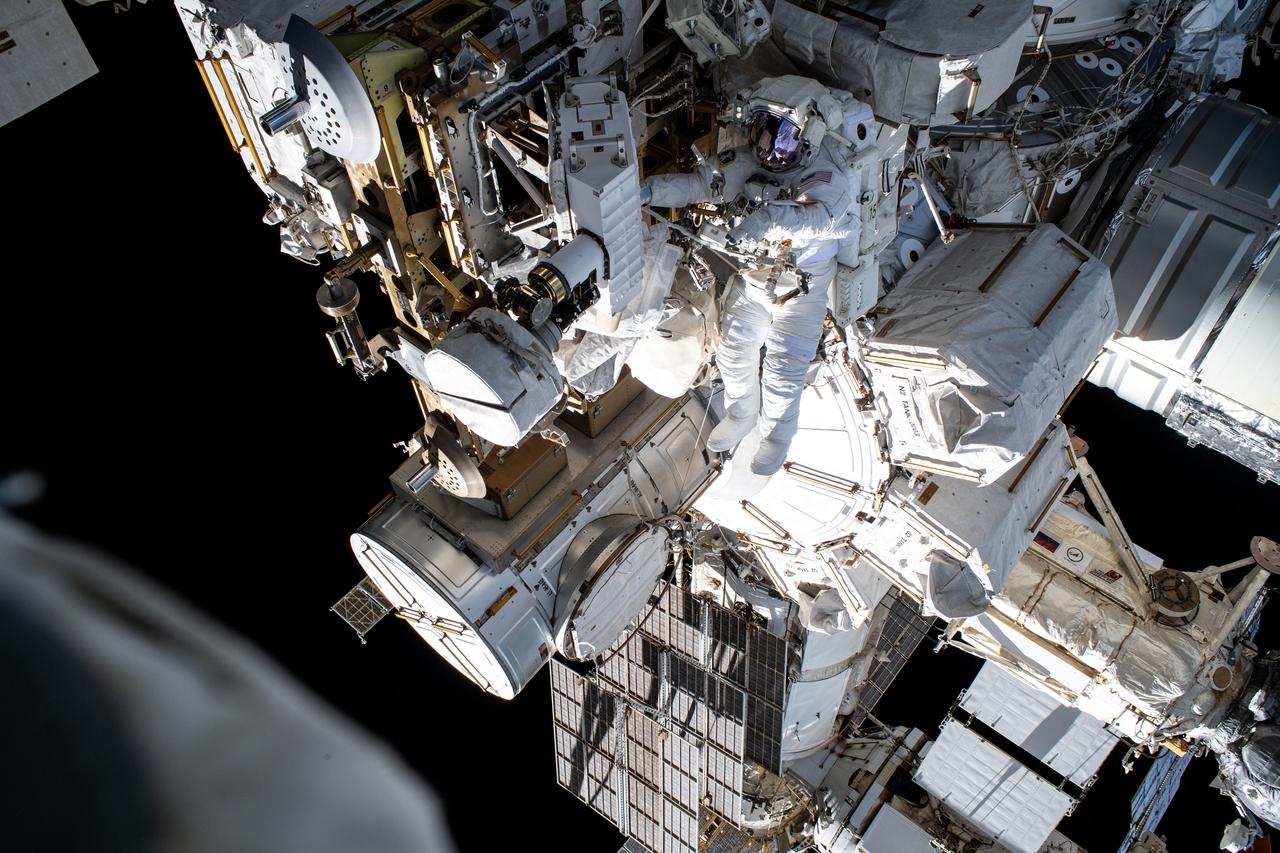
iss072e575045 (Jan. 30, 2025) --- NASA astronaut and Expedition 72 Flight Engineer Butch Wilmore works outside the International Space Station during a five-hour and 26-minute spacewalk. Wilmore swabbed external surfaces searching for microorganisms that may survive and reproduce near vents on the exterior of the orbital outpost.
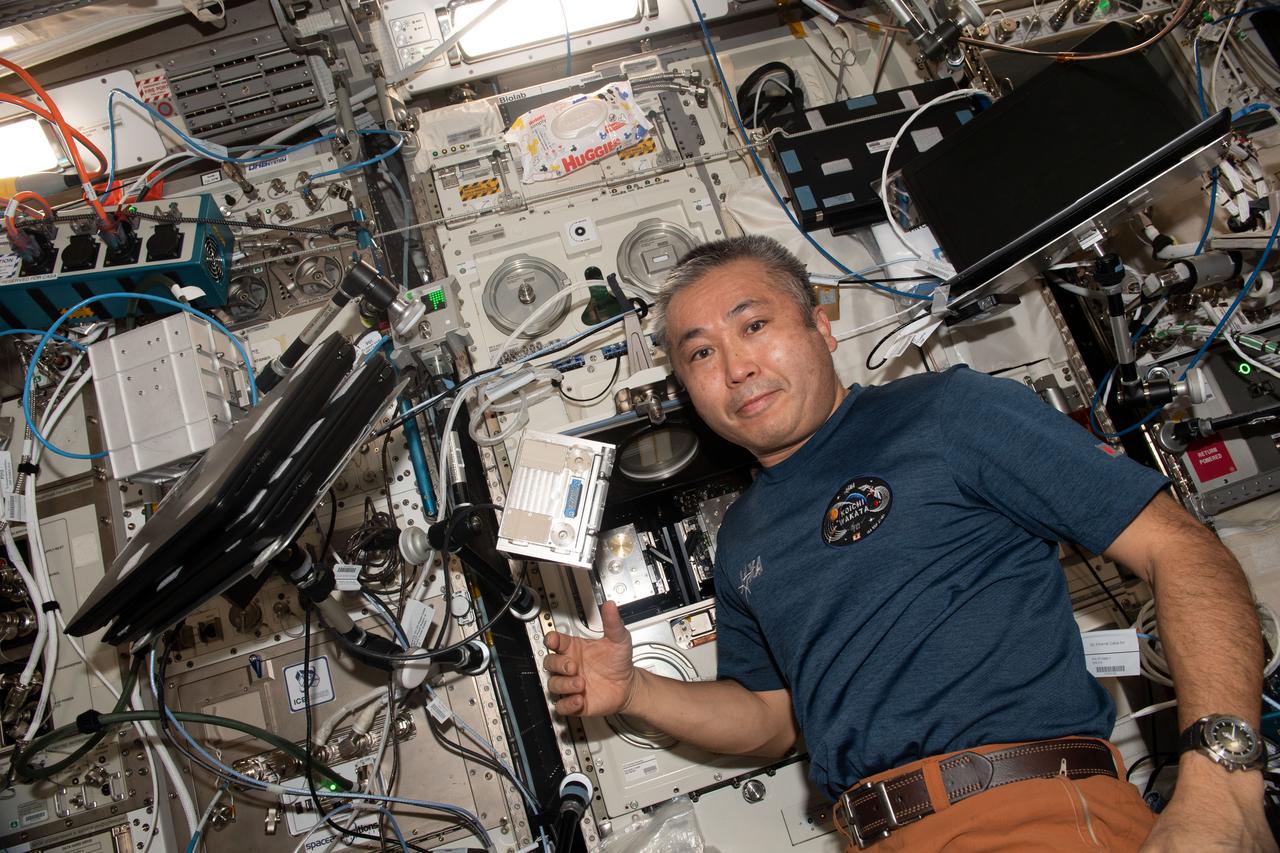
iss068e027642 (Dec. 7, 2022) --- Expedition 68 Flight Engineer Koichi Wakata of the Japan Aerospace Exploration Agency (JAXA) poses for a portrait in front of the Columbus laboratory module's BioLab, a research facility used to perform space biology experiments on microorganisms, cells, tissue cultures, small plants, and small invertebrates.
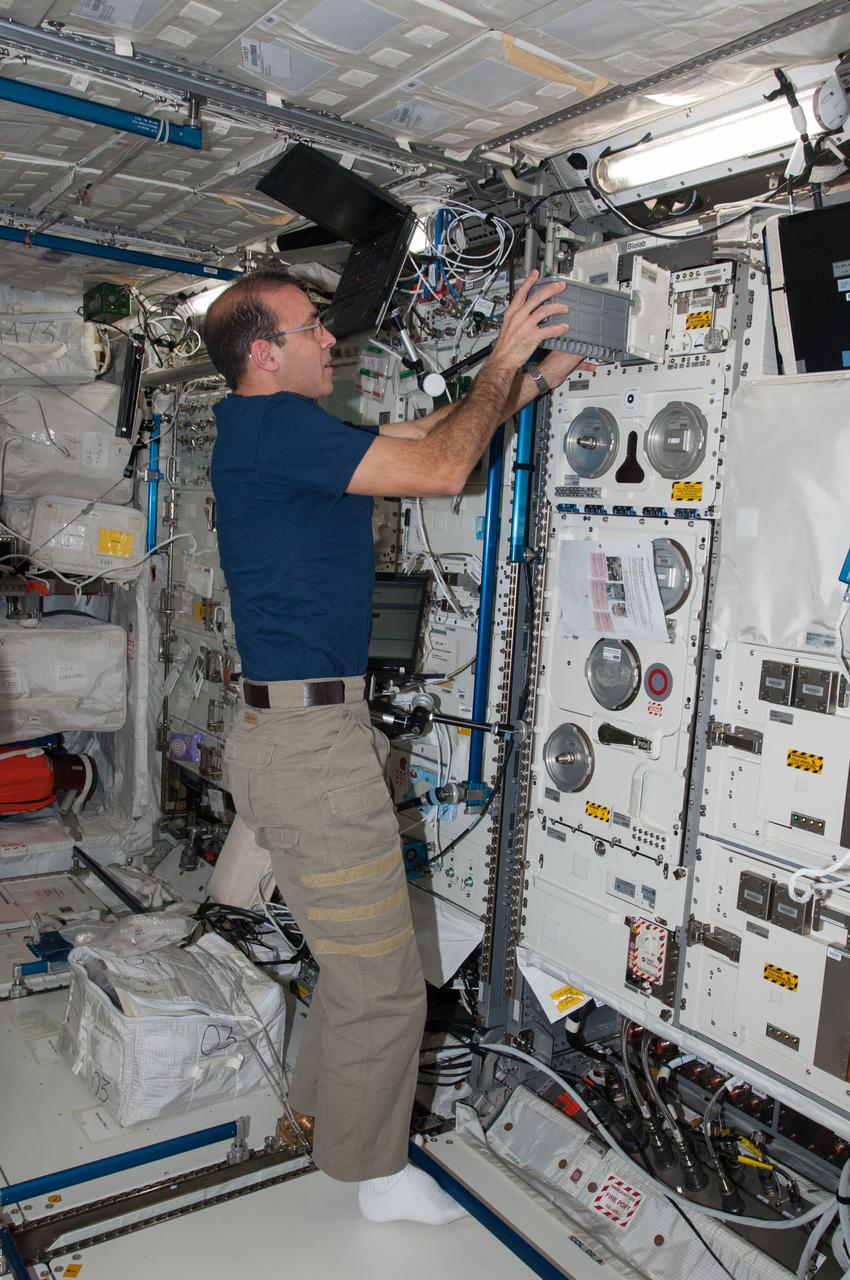
ISS038-E-008037 (25 Nov. 2013) --- NASA astronaut Rick Mastracchio, Expedition 38 flight engineer, works with Biolab hardware in the Columbus laboratory of the International Space Station. Biolab is used to perform space biology experiments on microorganisms, cells, tissue cultures, plants and small invertebrates.
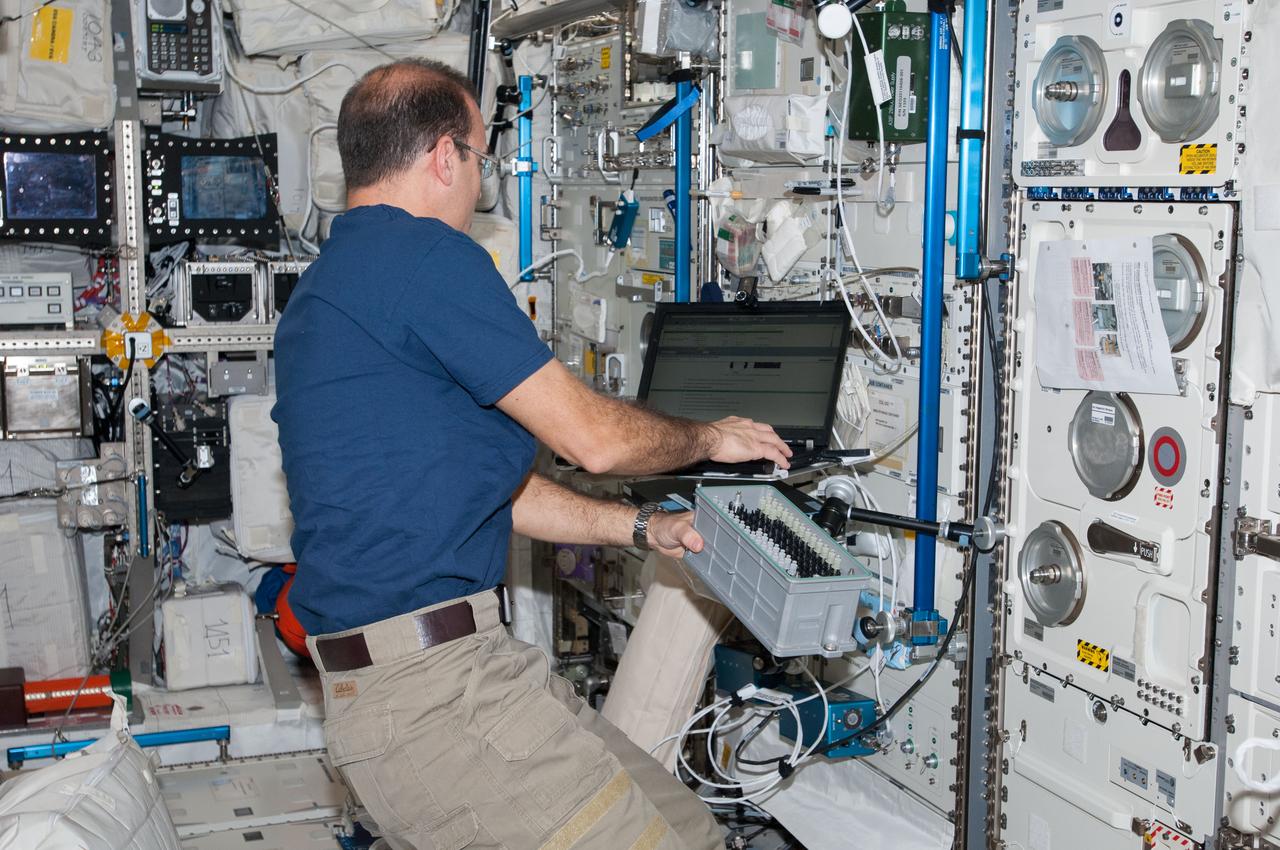
ISS038-E-008033 (25 Nov. 2013) --- NASA astronaut Rick Mastracchio, Expedition 38 flight engineer, works with Biolab hardware in the Columbus laboratory of the International Space Station. Biolab is used to perform space biology experiments on microorganisms, cells, tissue cultures, plants and small invertebrates.
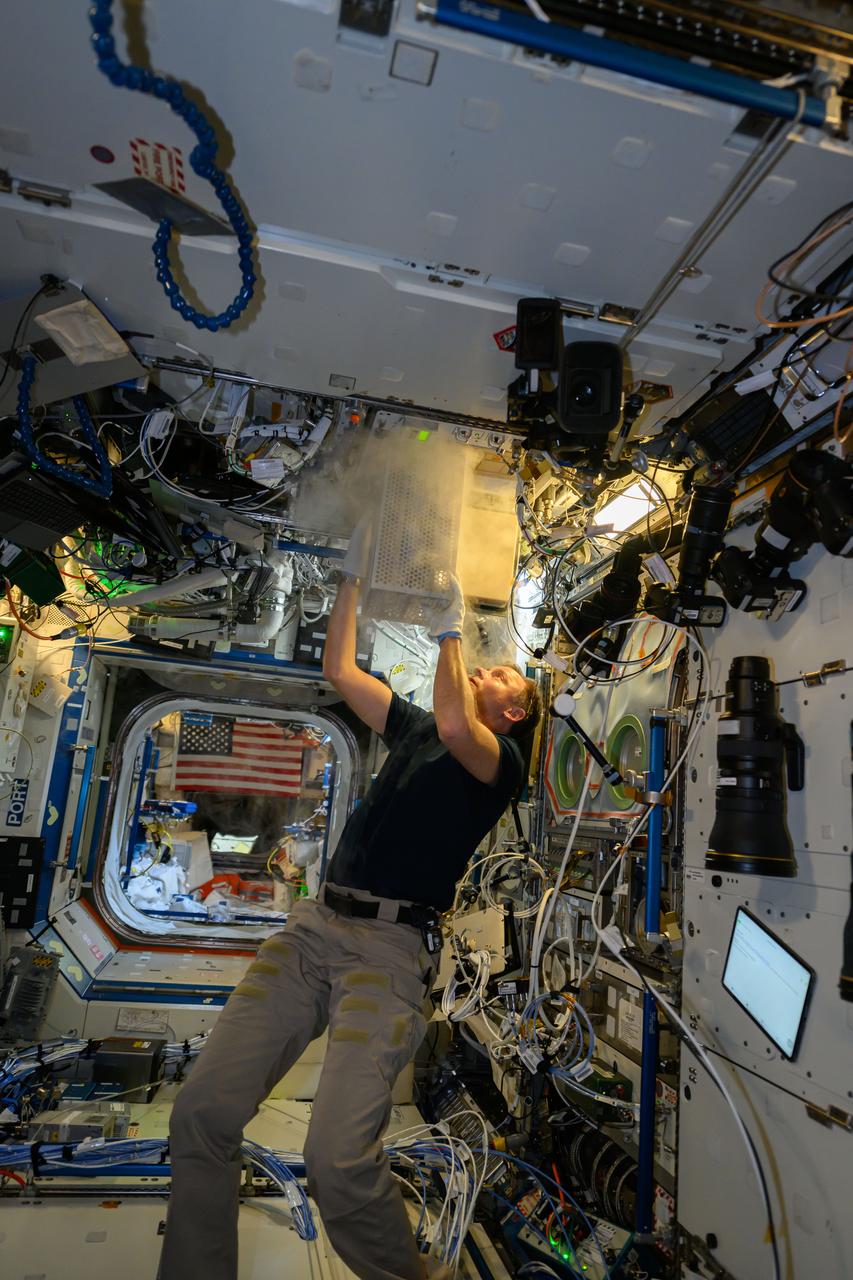
iss072e146898 (Nov. 10, 2024) --- NASA astronaut and Expedition 72 Flight Engineer Nick Hague stows samples in a science freezer from the Rhodium Biomanufacturing-03 biotechnology experiment that explores using microorganisms and cell cultures to produce materials and biomolecules on a commercial scale in space.
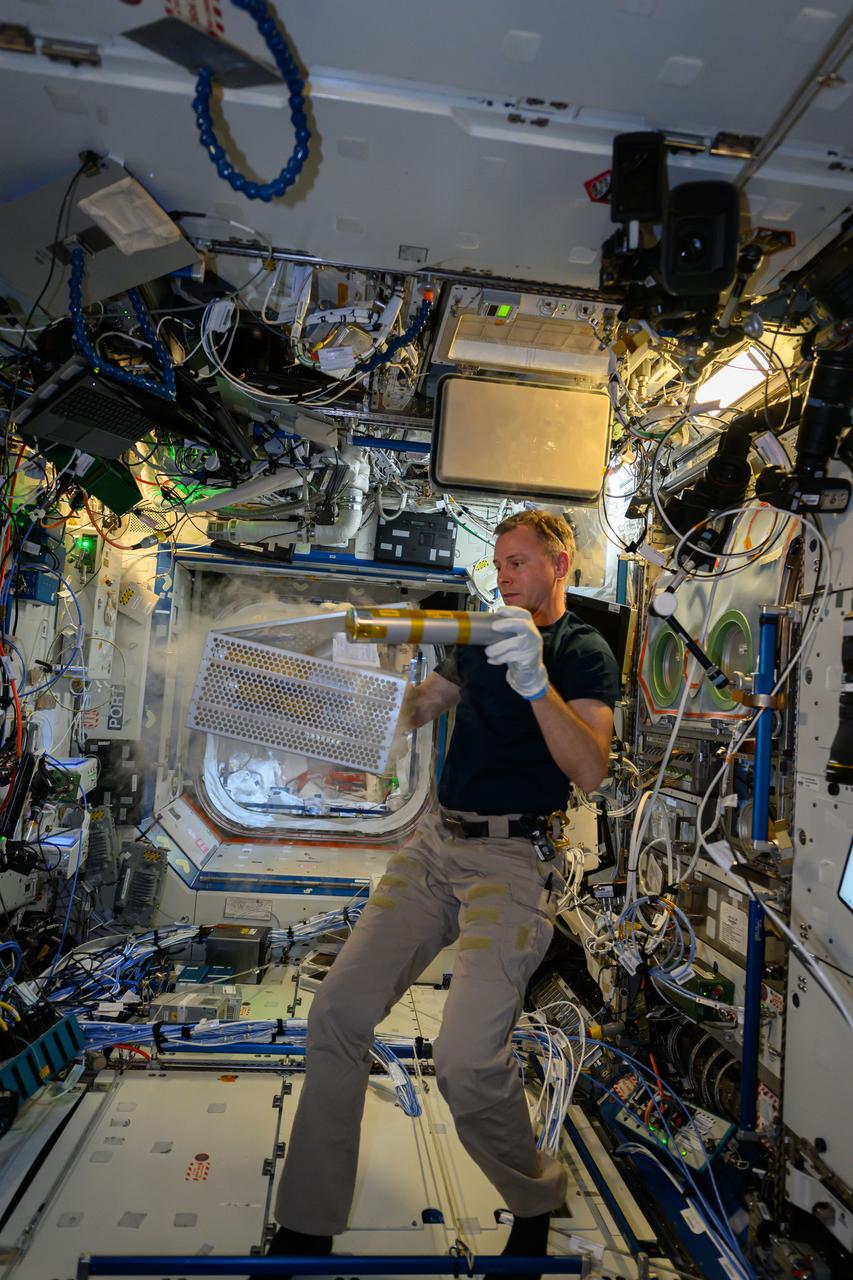
iss072e146896 (Nov. 10, 2024) --- NASA astronaut and Expedition 72 Flight Engineer Nick Hague processes samples from the Rhodium Biomanufacturing-03 biotechnology experiment that explores using microorganisms and cell cultures to produce materials and biomolecules on a commercial scale in space.

iss072e575553 (Jan. 30, 2025) --- NASA astronaut and Expedition 72 Flight Engineer Butch Wilmore works outside the International Space Station during a five-hour and 26-minute spacewalk. Wilmore swabbed external surfaces searching for microorganisms that may survive and reproduce near vents on the exterior of the orbital outpost.
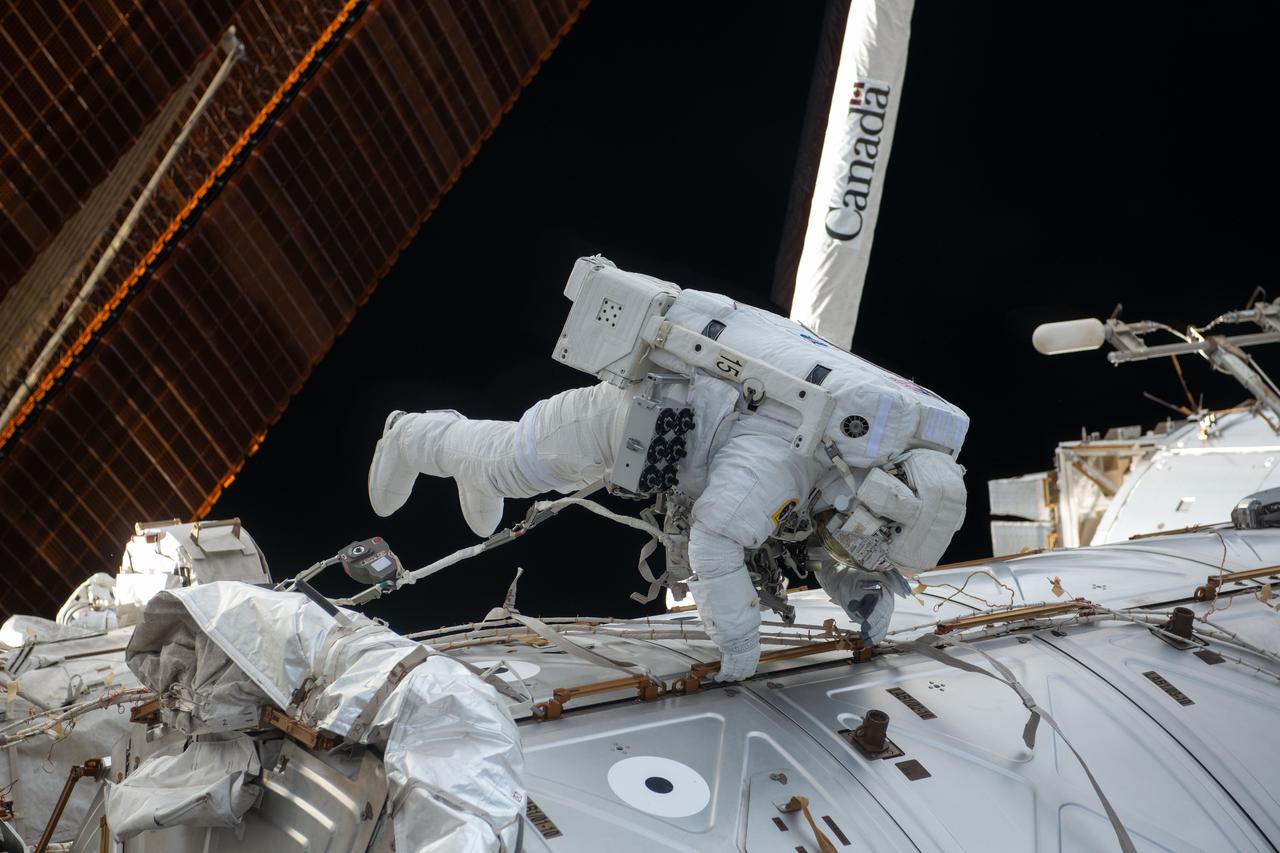
iss072e595522 (Jan. 30, 2025) --- NASA astronaut and Expedition 72 Flight Engineer Butch Wilmore works outside the International Space Station during a five-hour and 26-minute spacewalk. Wilmore swabbed external surfaces searching for microorganisms that may survive and reproduce near vents on the exterior of the orbital outpost.
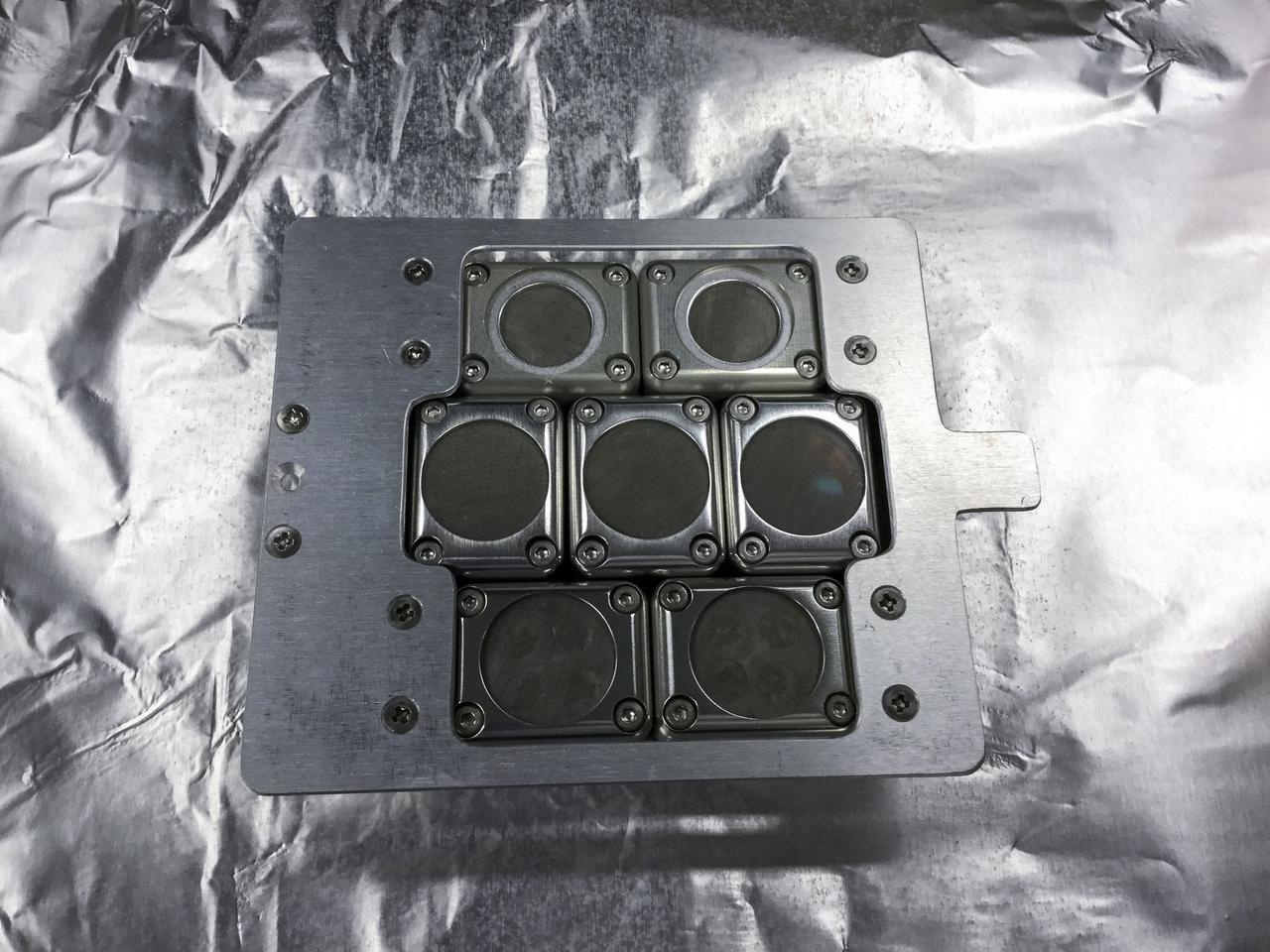
jsc2021e066967 (9/2/2021) --- A preflight view of the Tanpopo-4 hardware. Tanpopo is a Japanese astrobiological space exposure experiment on ISS. There are 7 small cells containing microorganisms, mosses and organic compounds to be determined their stabilitites and alterations (Tanpopo-4).
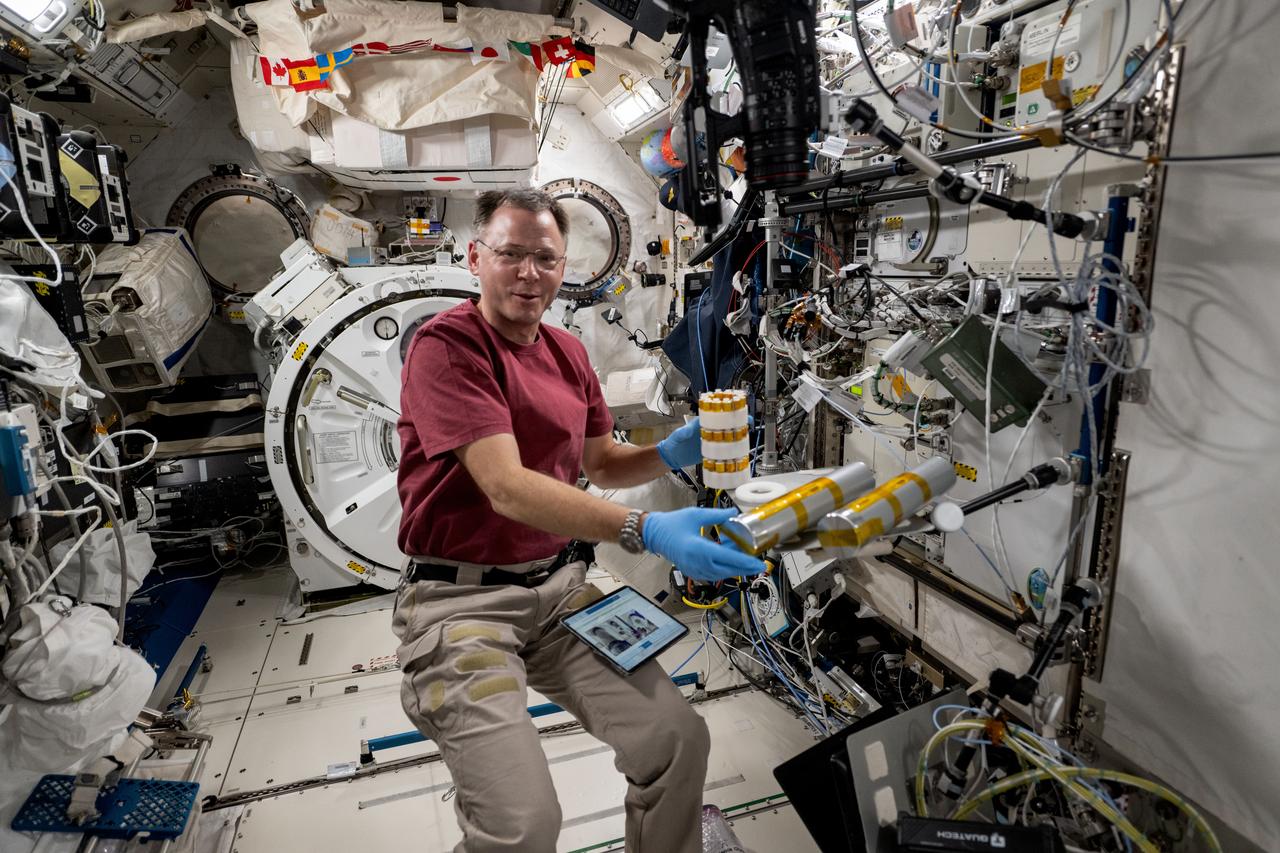
iss072e146315 (Nov. 6, 2024) --- NASA astronaut and Expedition 72 Flight Engineer Nick Hague works inside the International Space Station's Kibo laboratory module on space biology research. Hague was exploring the potential of biomanufacturing using microorganisms and cell cultures to create food, medicine, and more in the microgravity environment reducing the need for cargo missions launched from Earth and promoting crew self-sufficiency during long-term missions.
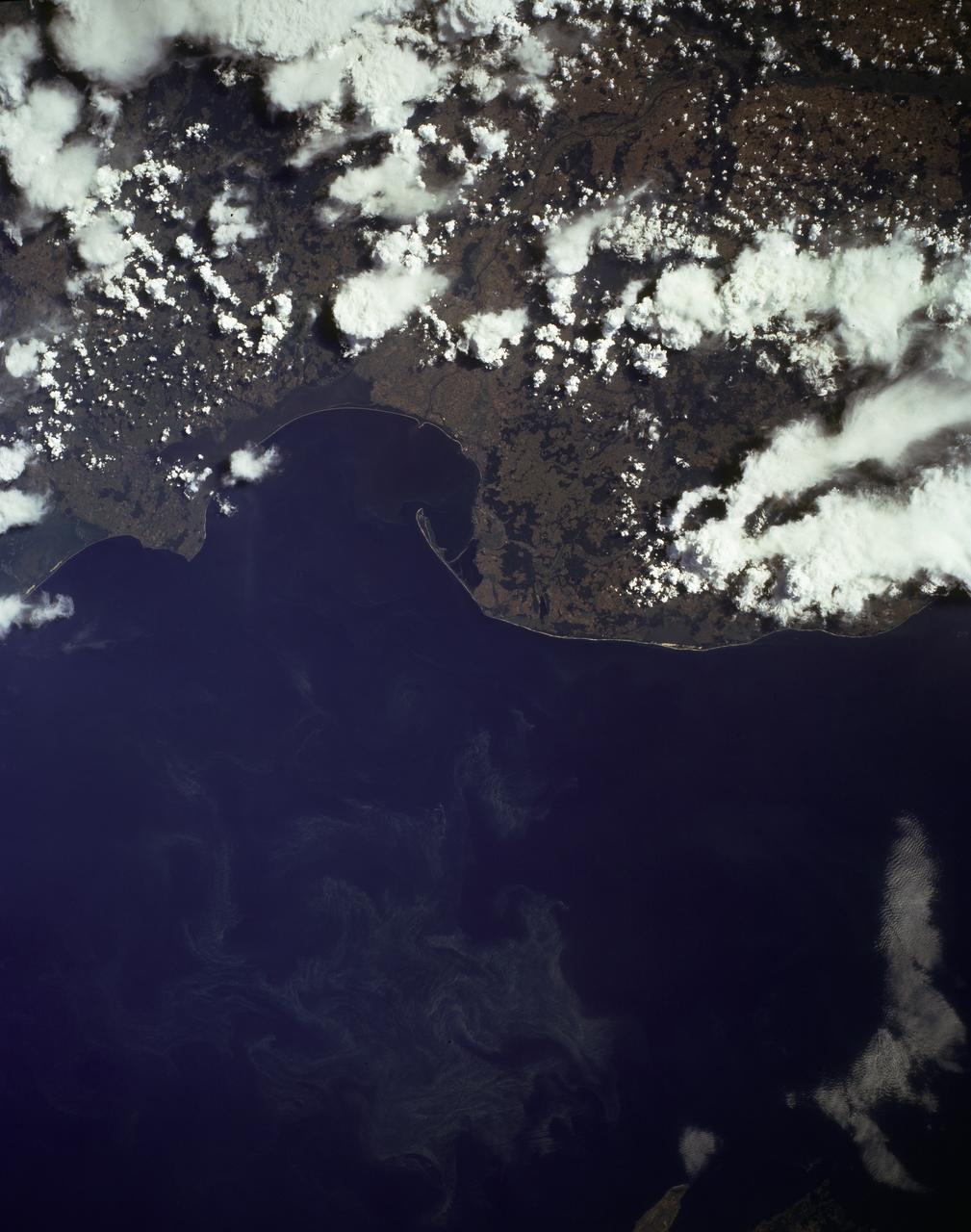
STS085-502-104 (7 - 19 August 1997) --- The abundant plankton, microscopic organisms, are taking the shape of the currents in the Baltic Sea offshore from Gdansk, Poland. Plankton blooms occur when there is enough nutrient in the water to support rapid growth and reproduction of the microorganisms. Gdansk is situated at the mouth of the Vistula River on the north coast of Poland. It is a major industrial center for shipyards, metallurgical and chemical plants, timber mills, food-processing facilities and more recently (since 1975) for coal exports and petroleum imports.

Steven Benner, a distinguished fellow at the Foundation for Applied Molecular Evolution, speaks during a press conference, Thursday, Dec. 2, 2010, at NASA Headquarters in Washington. NASA-funded astrobiology research has changed the fundamental knowledge about what comprises all known life on Earth. Researchers conducting tests in the harsh environment of Mono Lake in California have discovered the first known microorganism on Earth able to thrive and reproduce using the toxic chemical arsenic. Photo Credit: (NASA/Paul E. Alers)
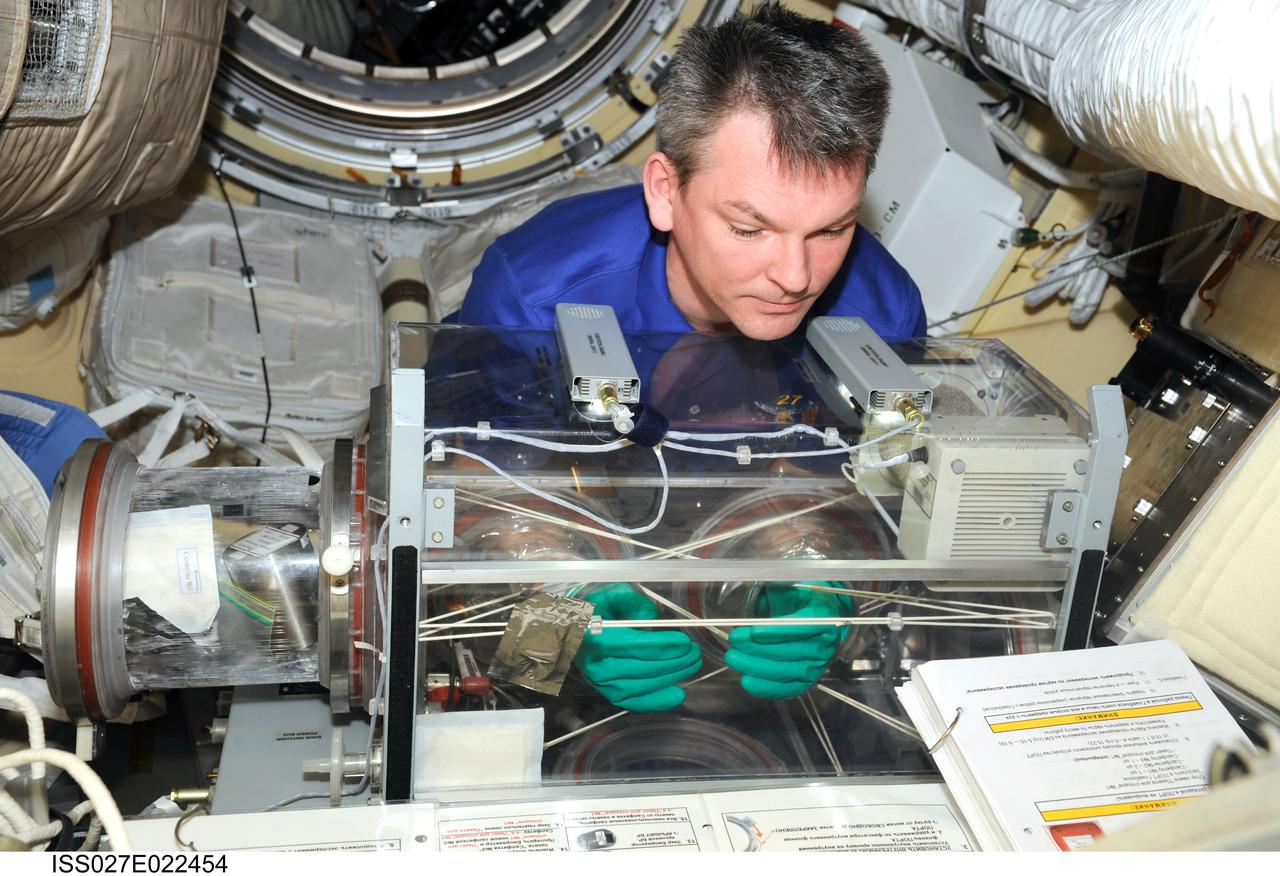
ISS027-E-022454 (5 May 2011) --- Russian cosmonaut Alexander Samokutyaev, Expedition 27 flight engineer, uses a glovebox to service the Russian Bioemulsion science payload in the Poisk Mini-Research Module 2 (MRM2) of the International Space Station. The Bioemulsion experiment is attempting to develop faster technologies for obtaining microorganism biomass and biologically active substance biomass for creating highly efficient environmentally pure bacteria, enzymes, and medicinal/pharmaceutical preparations.
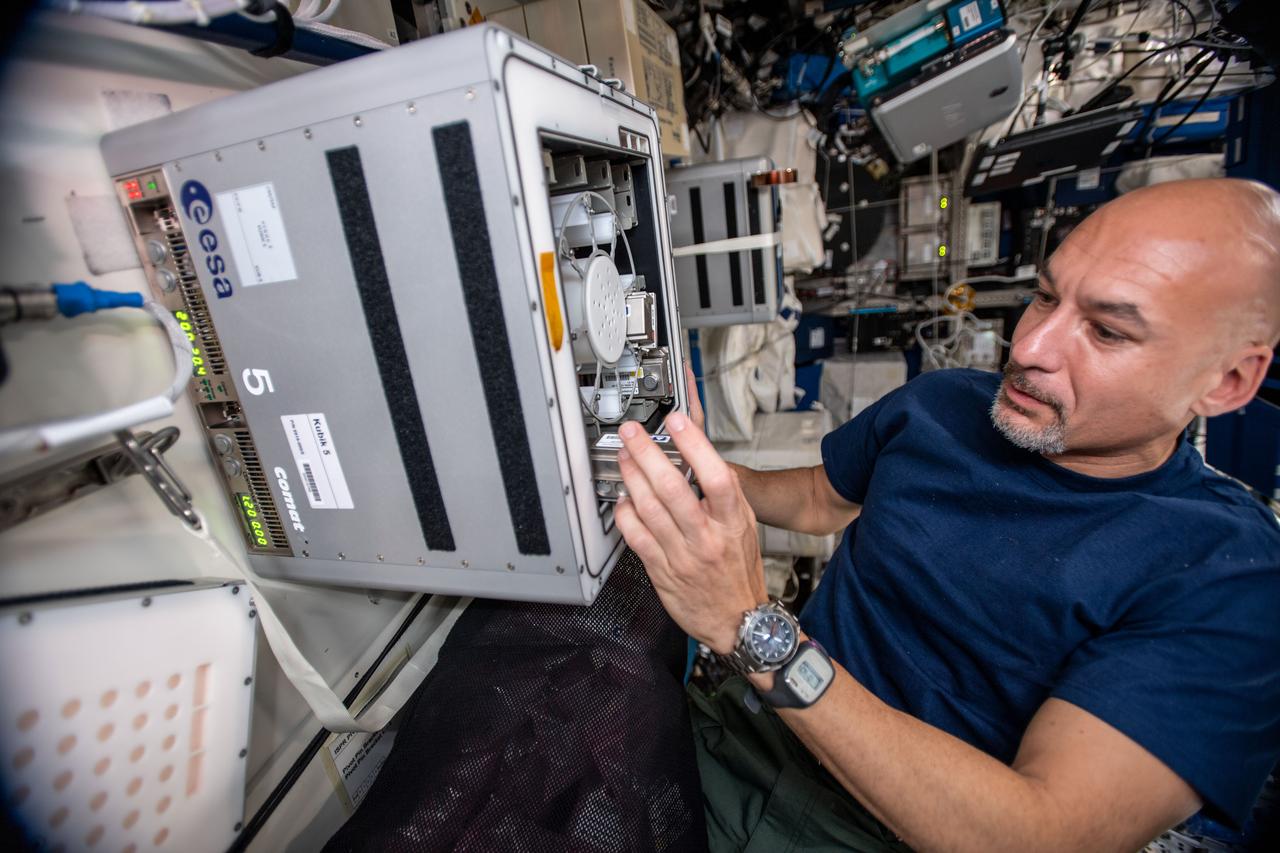
iss060e019706 (7/30/2019) --- European Space Agency (ESA) astronaut Luca Parmitano during Biorock Experiment Containers installation in KUBIK in the Columbus Module. The Biorock investigation is expected to help gain additional insight into the physical interactions of liquid, rocks, and microorganisms under microgravity conditions for novel acquisition of materials in space. In addition, data from Biorock can be used to inform the development of life support systems involving microbial components on long-duration spaceflight missions.
jsc2025e047410 (2/27/2024) --- Lettuce grown with the drought (left) and wilt (right) moisture treatments halfway through the harvest procedure on day 28 of a ground experiment for Spaceflight Microbiome of a Food Crop Grown Using Different Substrate Moisture Levels (Plant Habitat-07). Plant Habitat-07 investigates how plants and their communities of microorganisms respond to different levels of water. Results could support development of systems for growing food crops on future missions. Image courtesy of the PH-07 team.
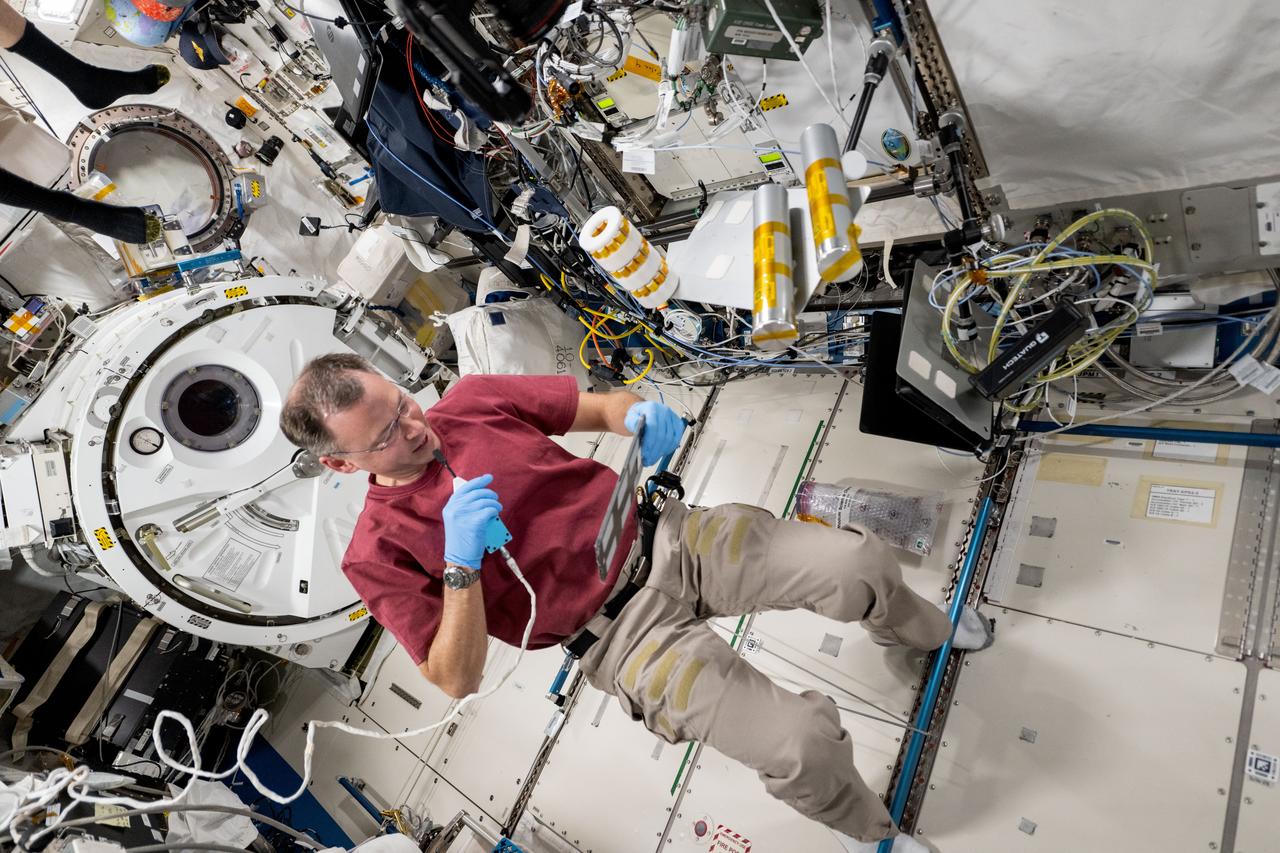
iss072e146328 (Nov. 6, 2024) --- NASA astronaut and Expedition 72 Flight Engineer Nick Hague works inside the International Space Station's Kibo laboratory module on space biology research. Hague was exploring the potential of biomanufacturing using microorganisms and cell cutlures to create food, medicine, and more in the microgravity environment reducing the need for cargo missions launched from Earth and promoting crew self-sufficiency during long-term missions.
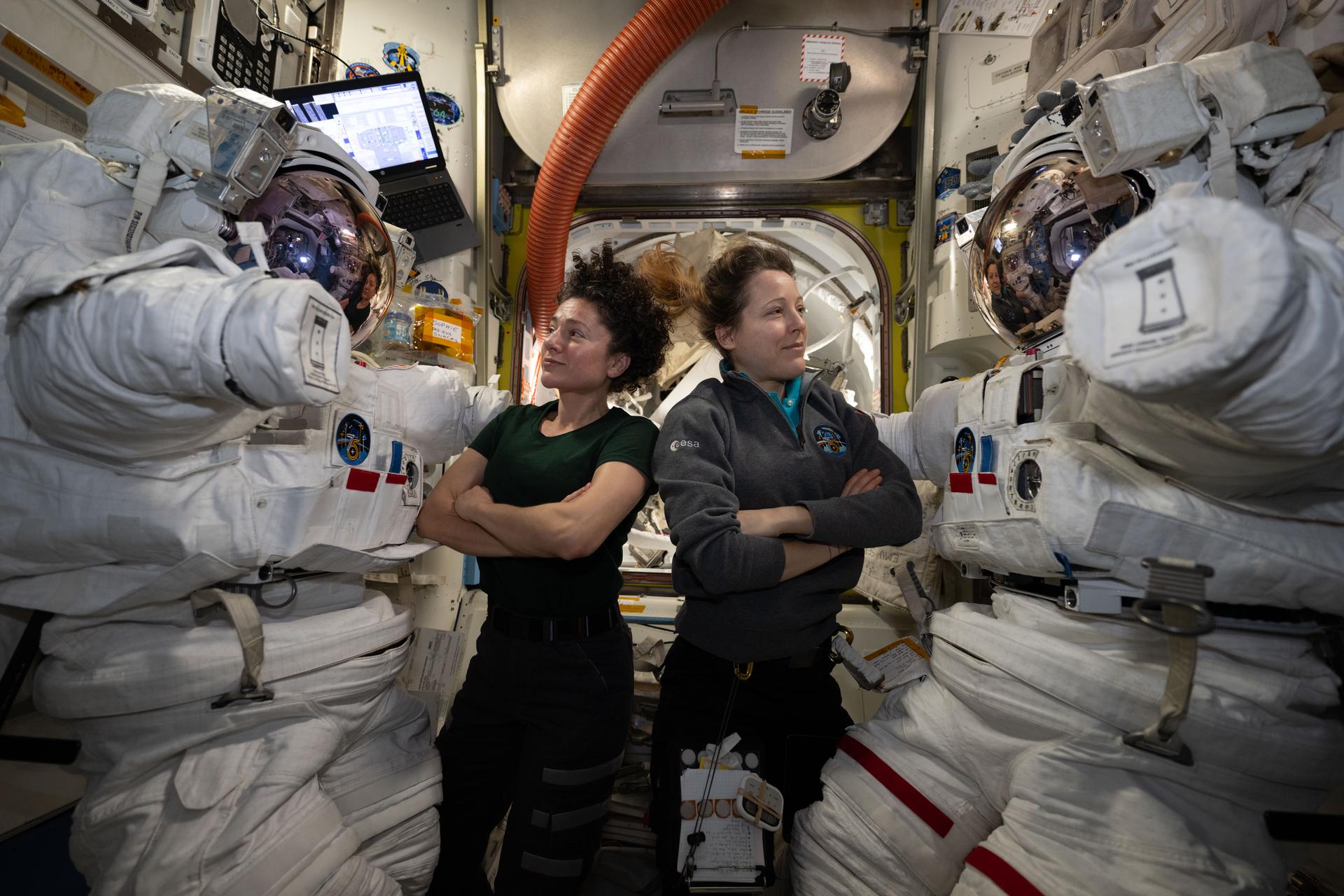
iss075e0085751 (Sept. 1, 2026) --- From left, astronauts Jessica Meir of NASA and Sophie Adenot of ESA (European Space Agency) pose for a portrait inside the International Space Station’s Quest airlock while configuring spacesuits the day before they conducted a spacewalk together. Meir and Adenot spent six hours and 49 minutes the next day installing a spacecraft navigation aid, swabbing the station’s exterior for microorganisms, and preparing a cosmic particle detector for future upgrades outside the International Space Station. Credit: NASA
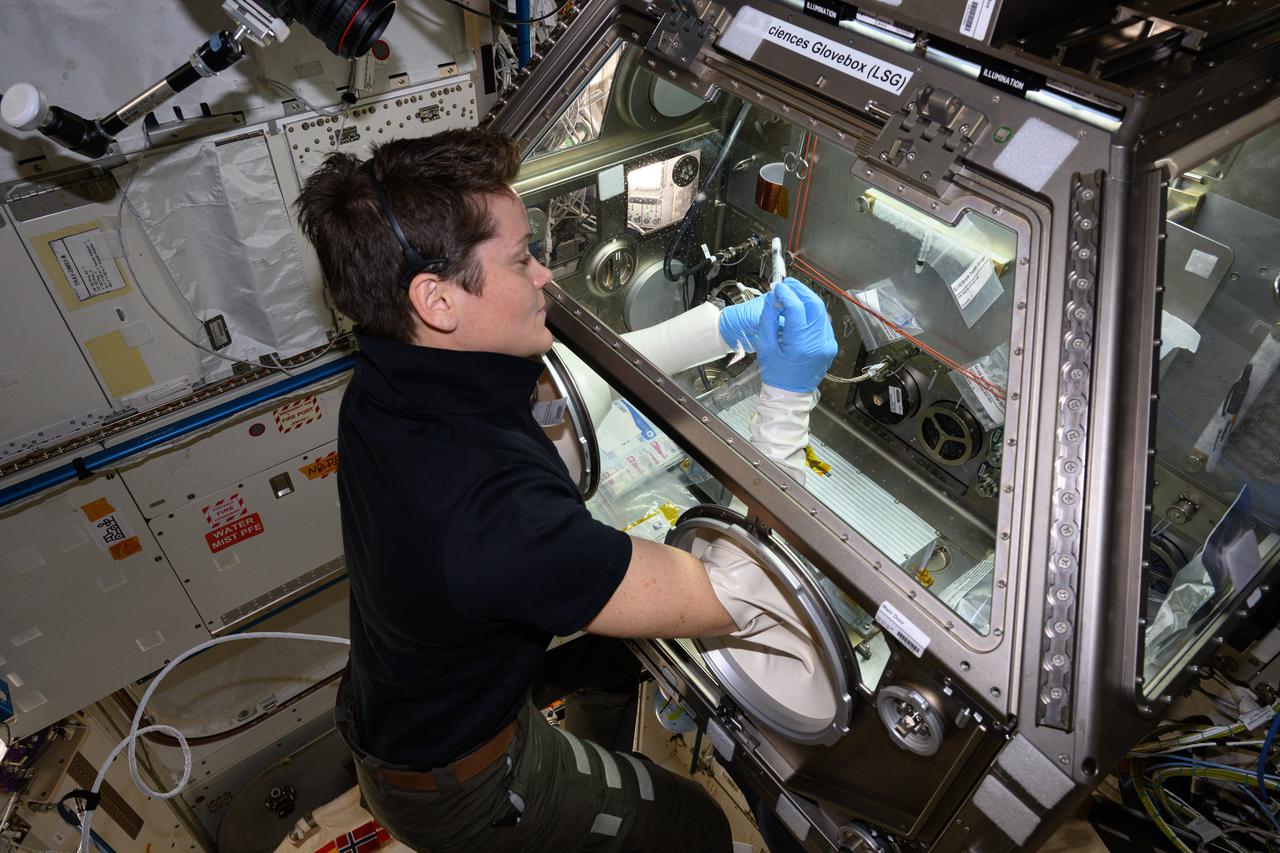
iss073e0027808 (May 10, 2025) --- NASA astronaut and Expedition 73 Flight Engineer Anne McClain works in the Kibo laboratory module's Life Sciences Glovebox processing bacteria samples before viewing them inside a 3D imaging microscope called the Extant Life Volumetric Imaging System, or ELVIS. The technology demonstration may enable applications for monitoring water quality, detecting infectious organisms on spacecraft, and researching colloids (suspensions of particles in a liquid) and microorganisms in microgravity.

Pamela Conrad, an astrobiologist from Goddard Space Flight Center, speaks during a press conference, Thursday, Dec. 2, 2010, at NASA Headquarters in Washington. NASA-funded astrobiology research has changed the fundamental knowledge about what comprises all known life on Earth. Researchers conducting tests in the harsh environment of Mono Lake in California have discovered the first known microorganism on Earth able to thrive and reproduce using the toxic chemical arsenic. Photo Credit: (NASA/Paul E. Alers)
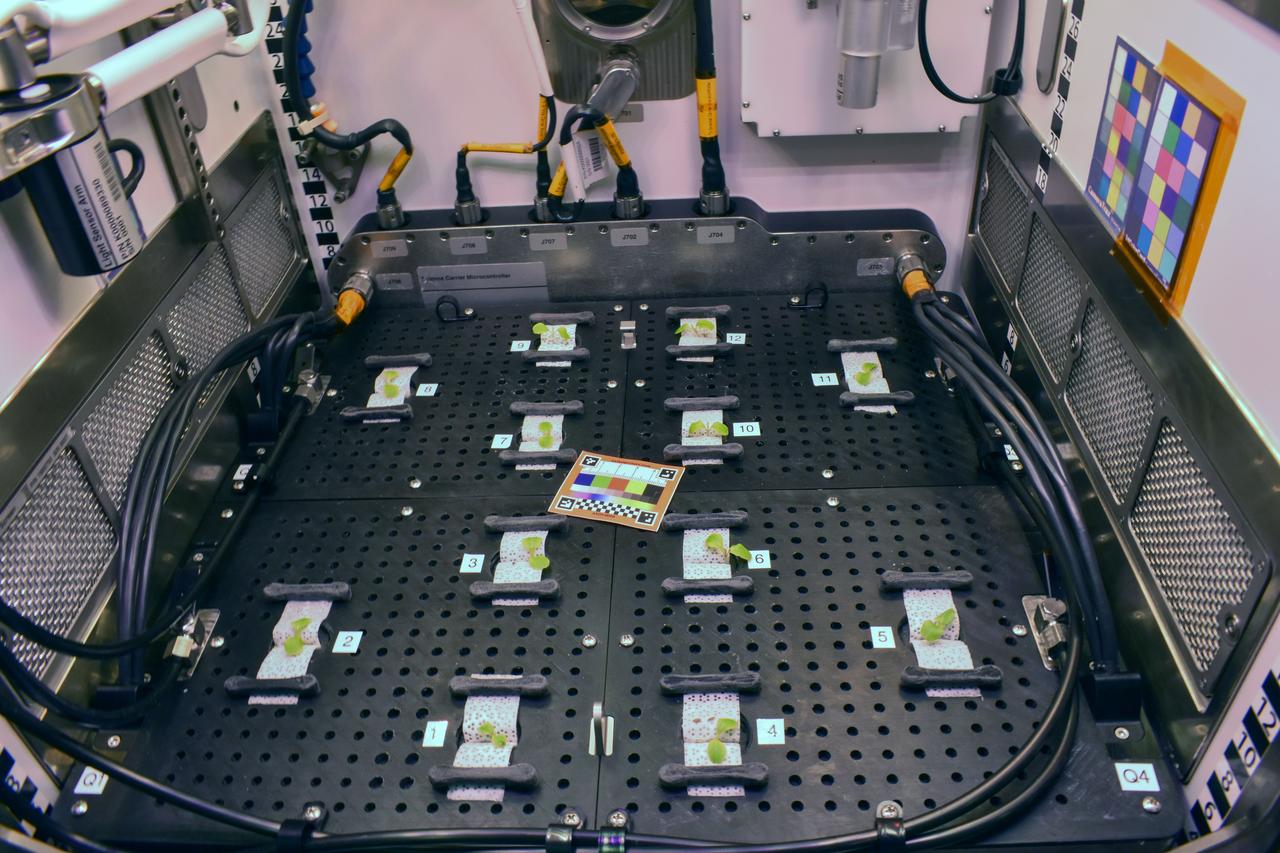
jsc2025e047407 (2/6/2024) --- ‘Outredgeous’ red romaine lettuce seedlings after thinning on Day 7 as part of a ground experiment for Spaceflight Microbiome of a Food Crop Grown Using Different Substrate Moisture Levels (Plant Habitat-07). This investigation studies how plants, and their communities of microorganisms respond to different levels of water. Results could support development of systems for growing food crops on future missions. Image courtesy of the PH-07 Team.
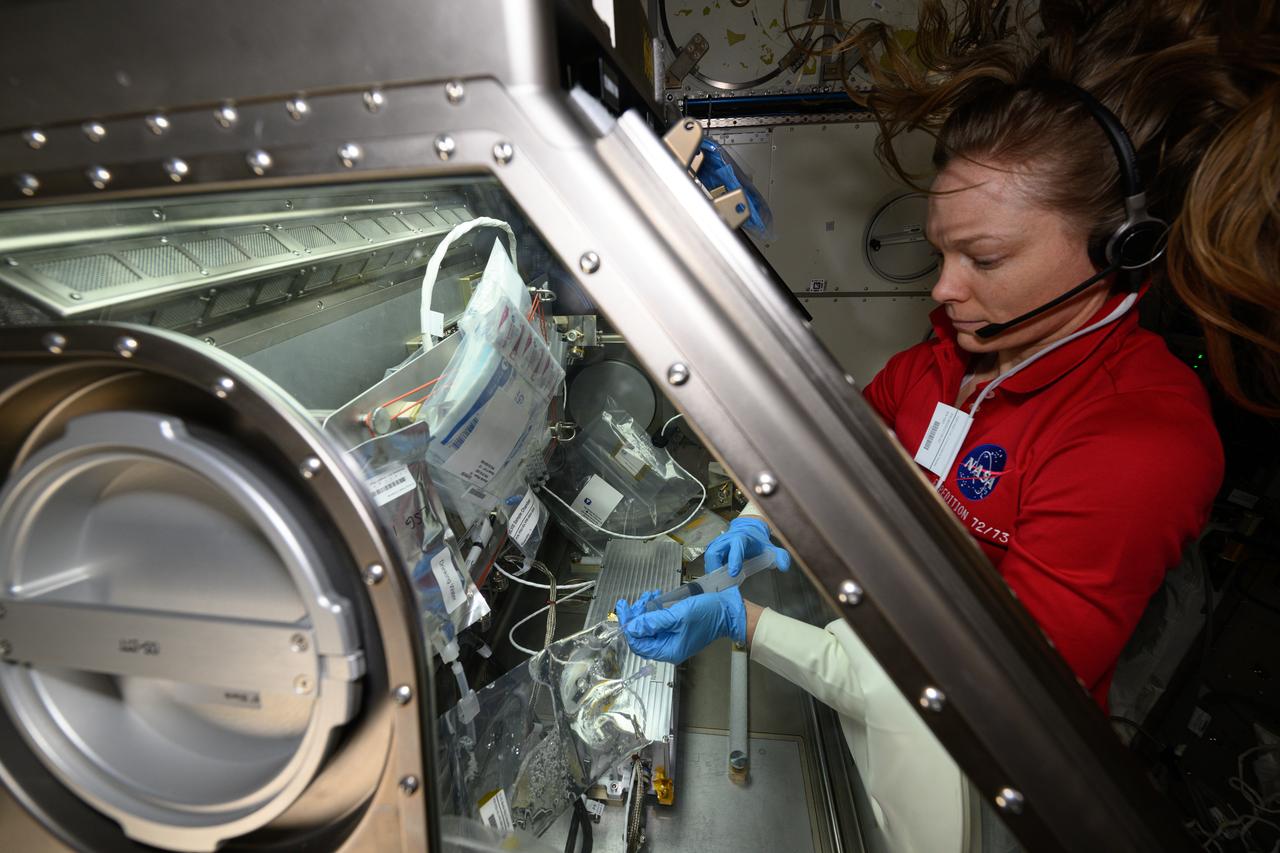
iss073e0118830 (May 30, 2025) --- NASA astronaut and Expedition 73 Flight Engineer Nichole Ayers conducts research operations inside the Kibo laboratory module's Life Science Glovebox aboard the International Space Station. Ayers was processing samples of deep-sea bacteria to test a specialized 3D microscope for its ability to monitor water quality, detect potentially infectious organisms, and study liquid mixtures and microorganisms in space and on Earth.
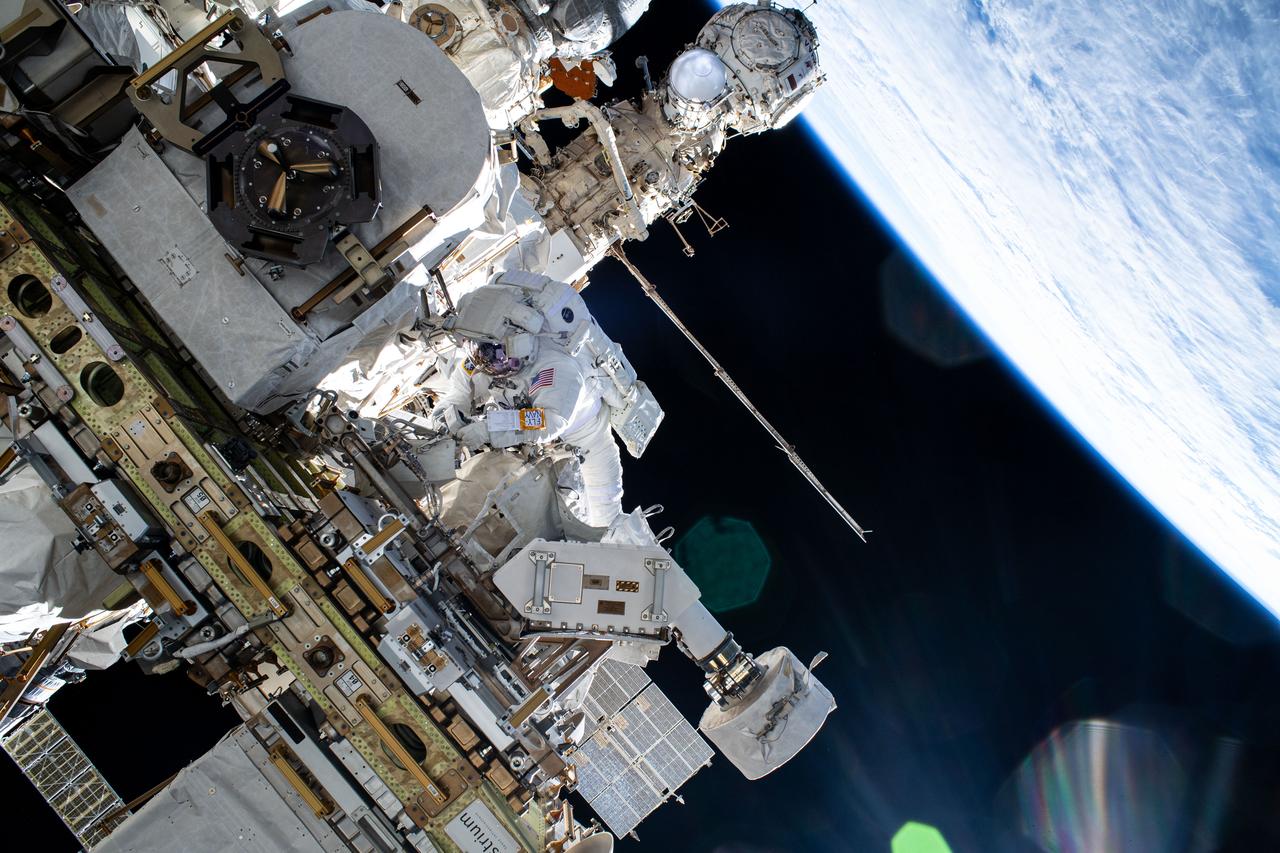
iss072e575090 (Jan. 30, 2025) --- NASA astronaut and Expedition 72 Flight Engineer Butch Wilmore works outside the International Space Station during a five-hour and 26-minute spacewalk. Wilmore swabbed external surfaces searching for microorganisms that may survive and reproduce near vents on the exterior of the orbital outpost. The space station was orbiting 261 miles above Eastern Europe at the time of this photograph.
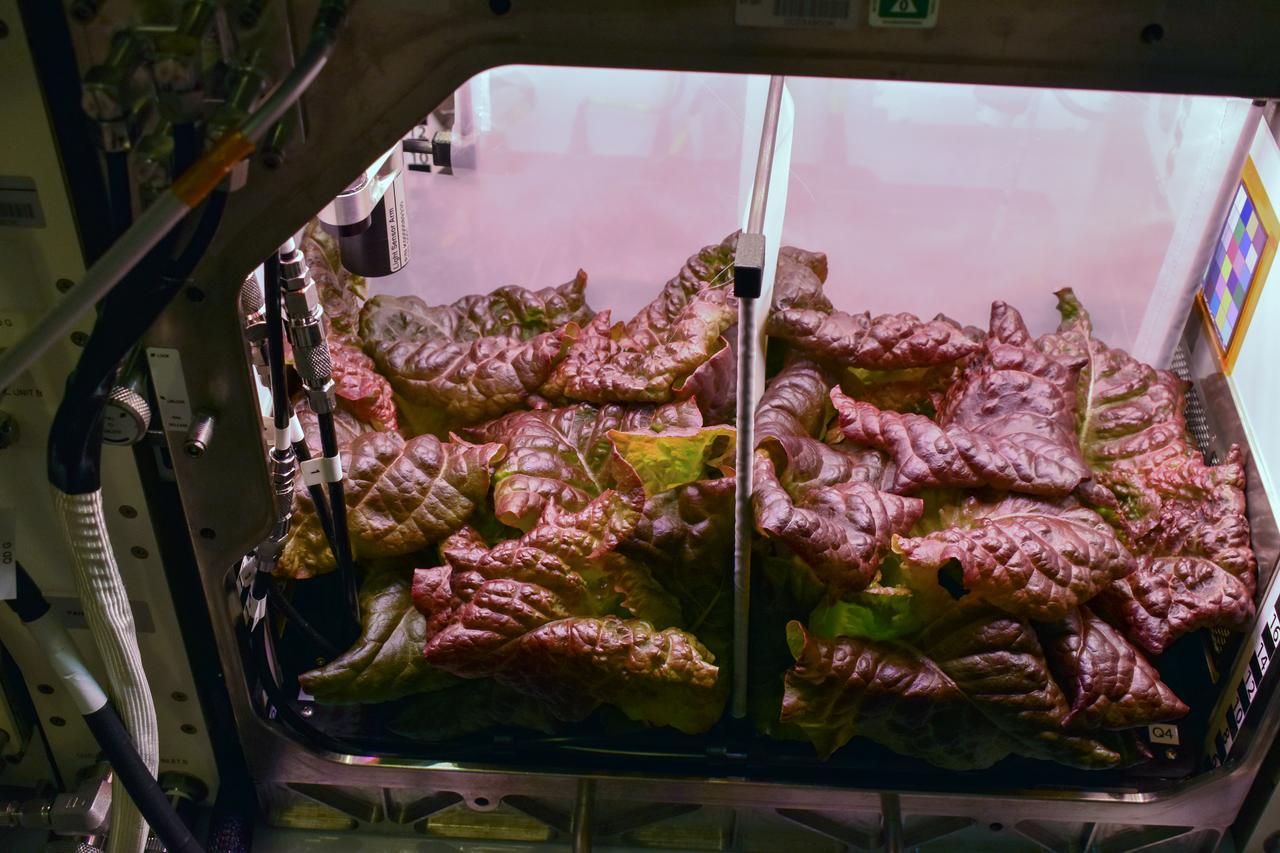
jsc2025e047409 (2/27/2024) --- Lettuce grown as a ground experiment with the control (left) and flood (right) moisture treatments prior to harvest on day 28. The Spaceflight Microbiome of a Food Crop Grown Using Different Substrate Moisture Levels (Plant Habitat-07) investigates how plants, and their communities of microorganisms respond to different levels of water. Results could support development of systems for growing food crops on future missions. Image courtesy of the PH-07 Team.
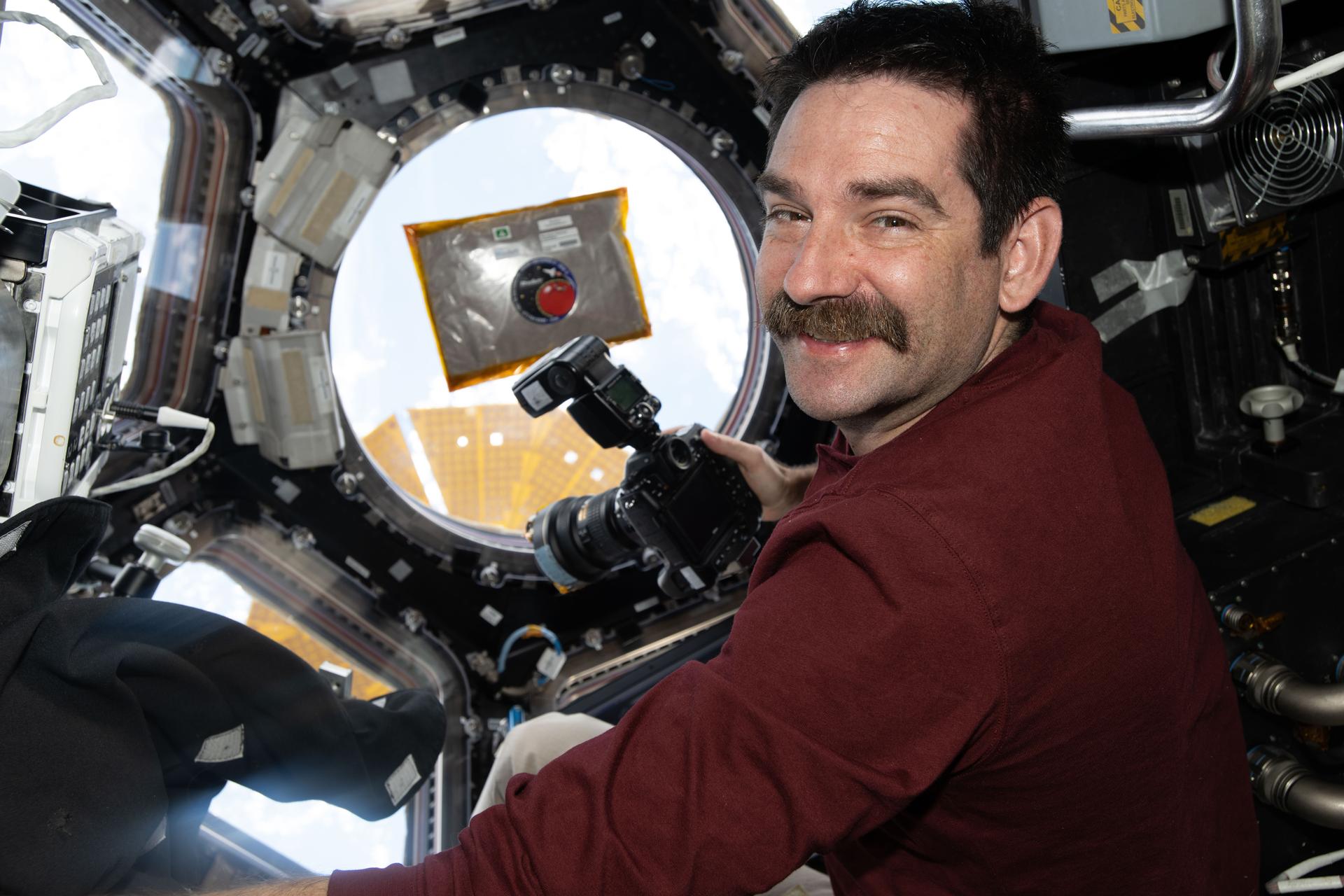
iss074e0325621 (Feb. 25, 2026) --- NASA astronaut and Expedition 74 flight engineer Jack Hathaway smiles for a portrait inside the International Space Station’s cupola while photographing a sample chamber for the Rhodium Biomanufacturing 03 biotechnology experiment. The investigation uses living systems such as microorganisms and cell cultures to produce materials and biomolecules on a commercial scale. Results may support the production of food, pharmaceuticals, and other materials during long‑duration spaceflight. Credit: NASA/Jack Hathaway
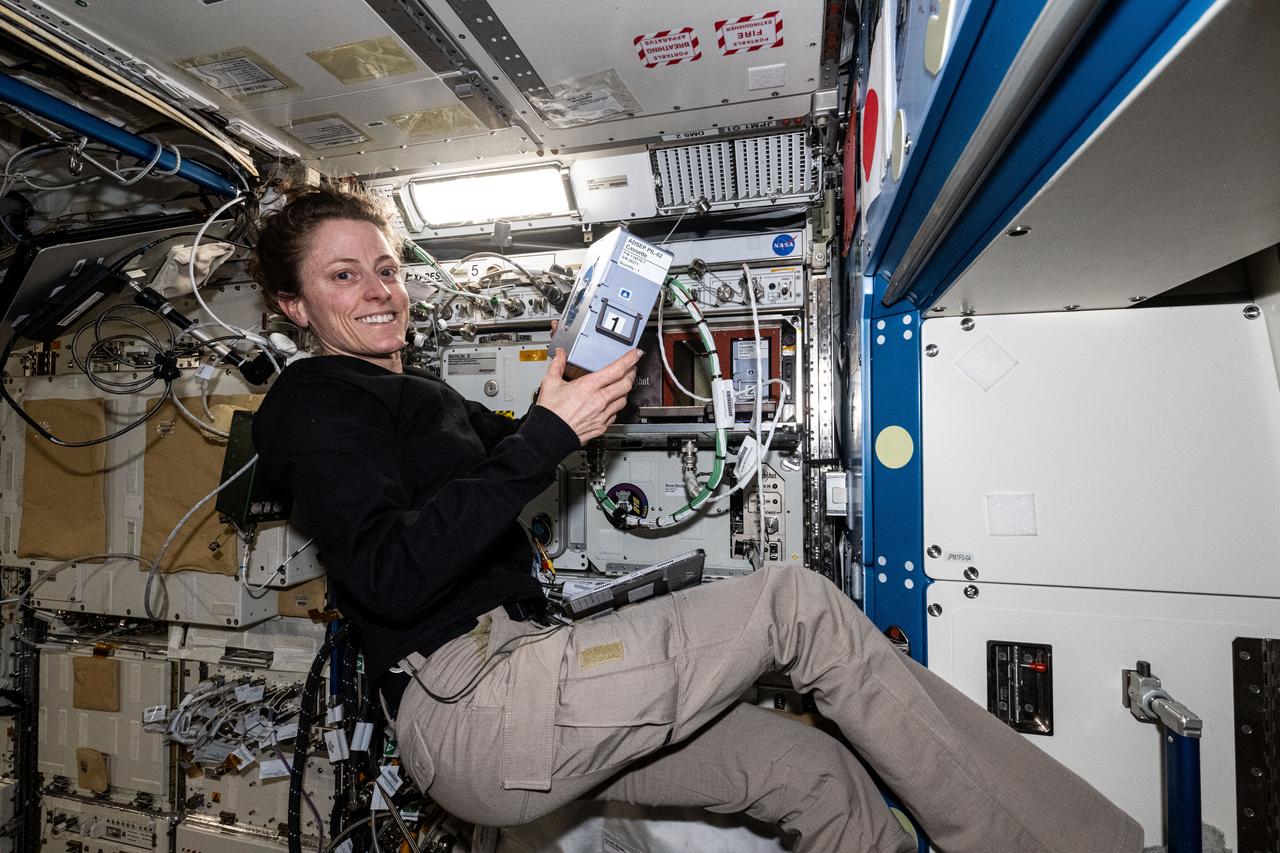
iss070e129524 (March 25, 2024) --- Expedition 70 Flight Engineer and NASA astronaut Loral O'Hara shows off the Advanced Space Experiment Processor-2, or ADSEP-2. The scientific device can interface with the Dragon and Cygnus cargo craft and houses cassettes that process samples for biology and physics research including cell and tissue culturing, protein crystal growth, microorganism and bacteria studies, and materials science research.
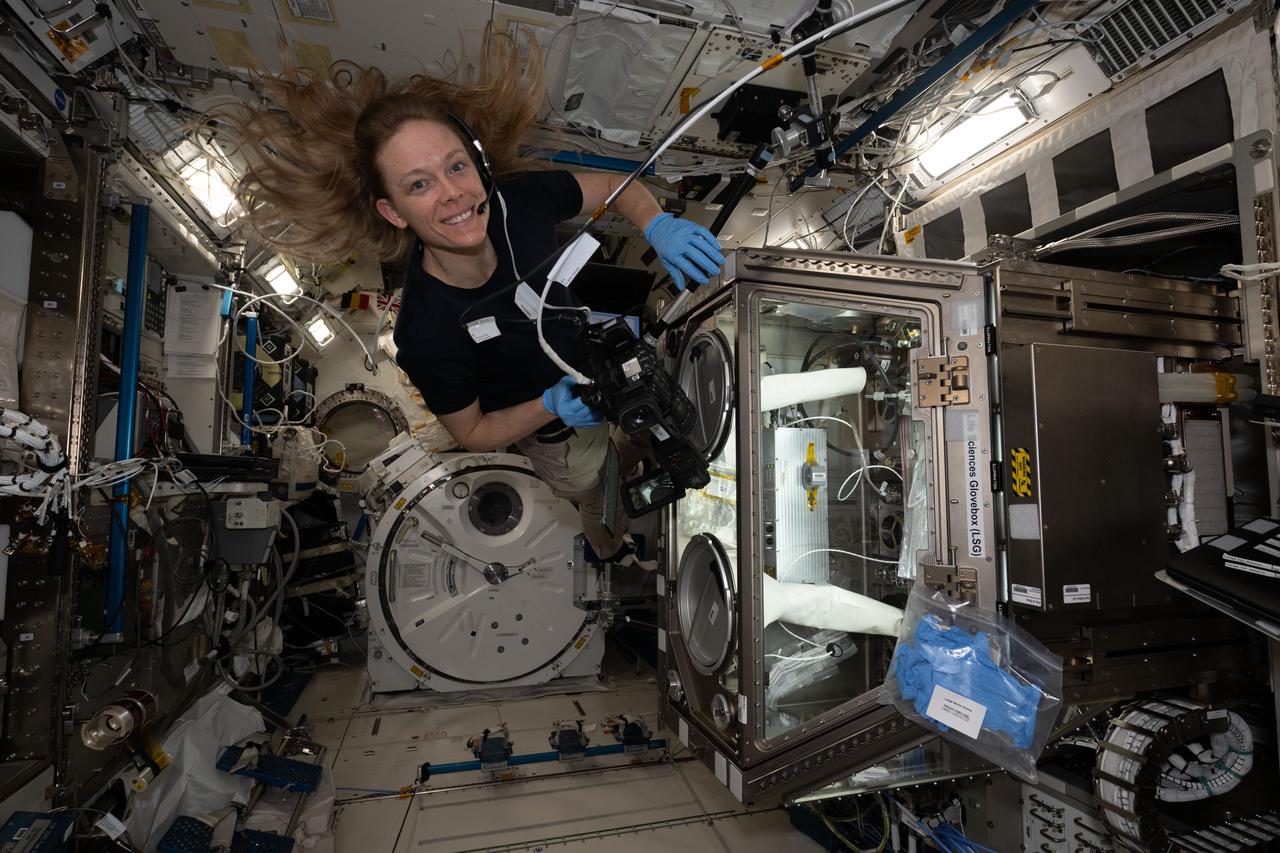
iss073e0134904 (June 5, 2025) --- NASA astronaut and Expedition 73 Flight Engineer Nichole Ayers works inside the Kibo laboratory module to test imaging operations of a 3D research microscope, also known as the Extant Life Volumetric Imaging System, or ELVIS. The specialized 3D imaging device, located in Kibo's Life Science Glovebox, could be used to monitor water quality, detect potentially infectious organisms, and study liquid mixtures and microorganisms in space and on Earth.
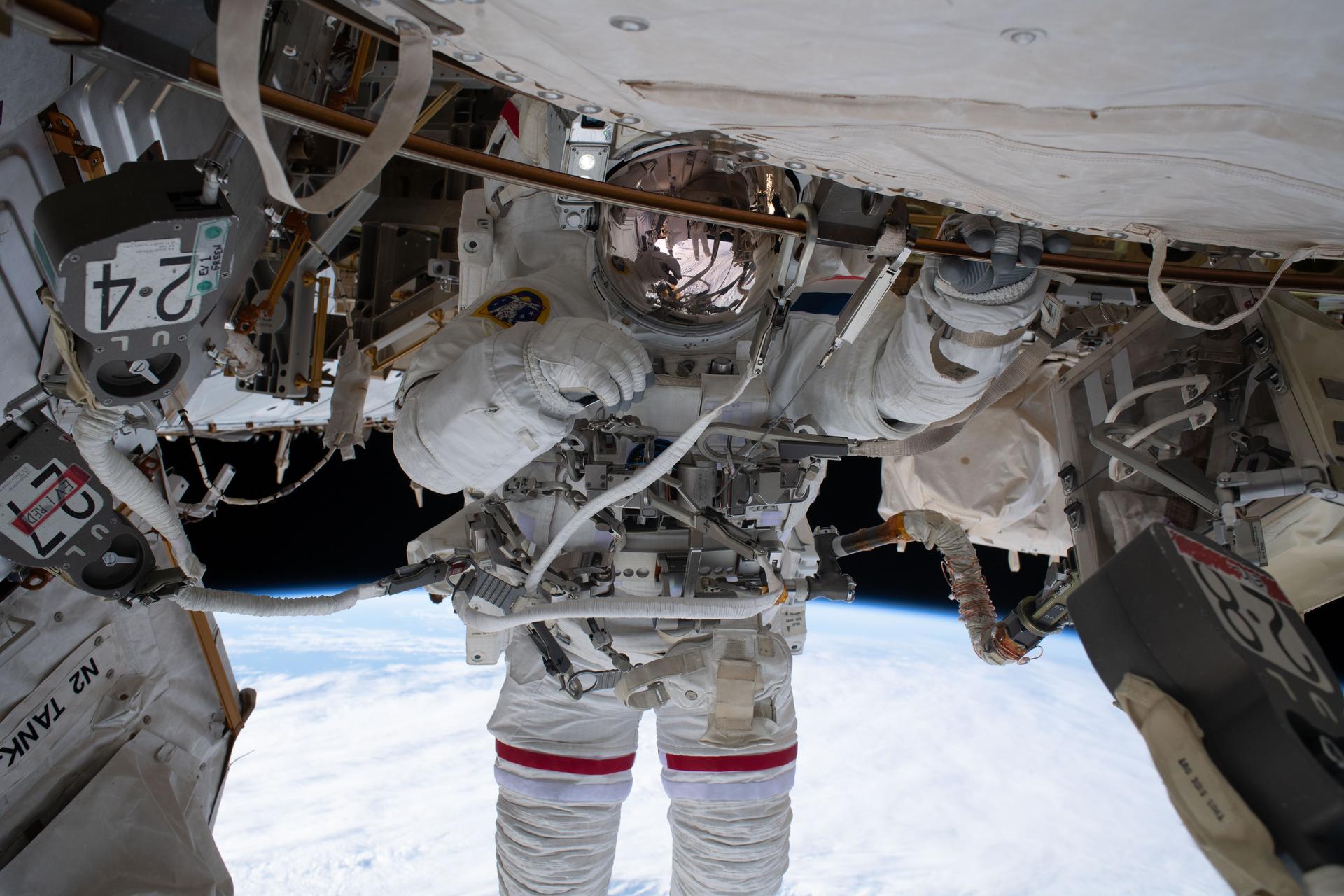
iss075e0085867 (Sept. 1, 2026) --- ESA (European Space Agency) astronaut Sophie Adenot, with her spacesuit’s gold‑plated helmet visor down, is tethered to the International Space Station. Adenot participated in a six‑hour and 49‑minute spacewalk with station commander Jessica Meir of NASA (out of frame), installing a spacecraft navigation aid, swabbing the station’s exterior for microorganisms, and preparing a cosmic particle detector for future upgrades outside the International Space Station. Credit: NASA/Jessica Meir
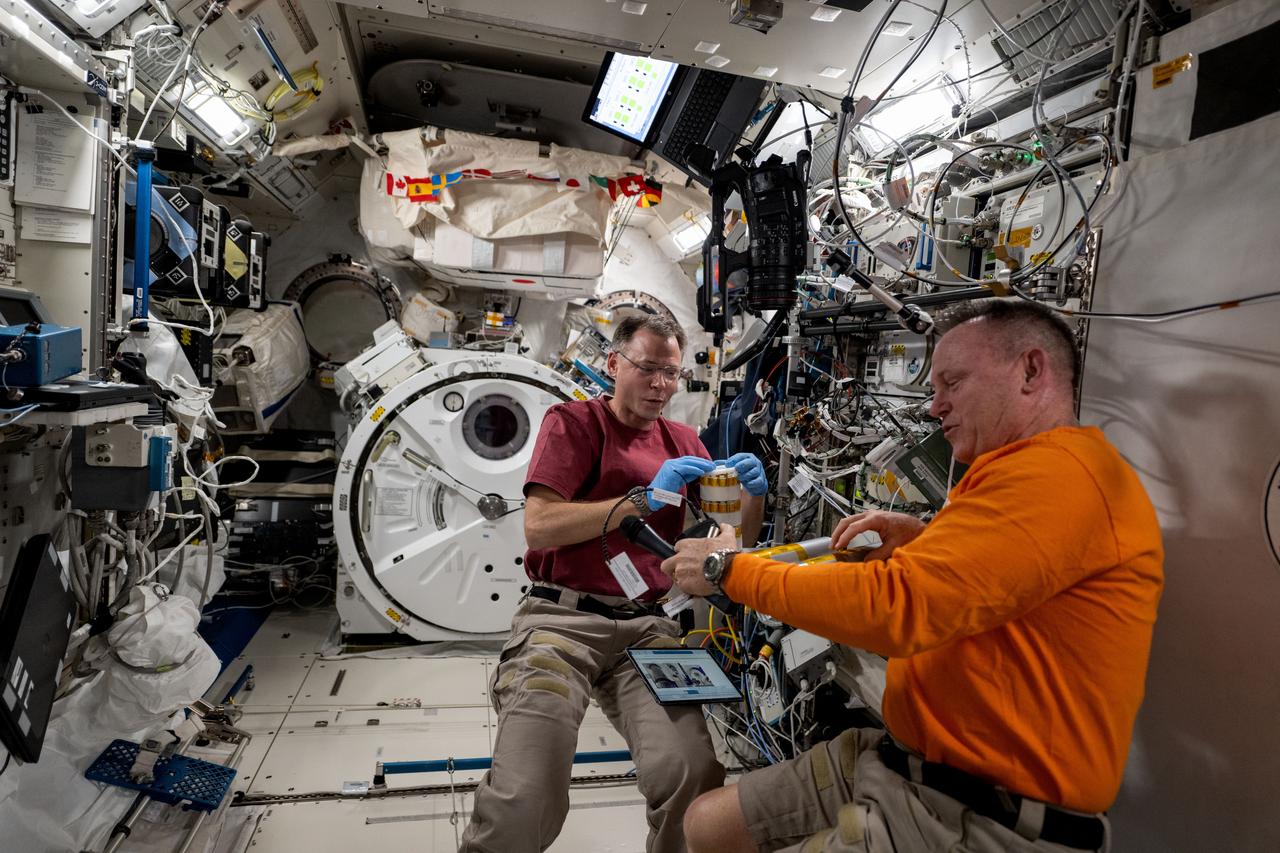
iss072e146319 (Nov. 6, 2024) --- Expedition 72 Flight Engineers (from left) Nick Hague and Butch Wilmore, both NASA astronauts, partner together inside the International Space Station's Kibo laboratory module on space biology research. Hague was exploring the potential of biomanufacturing using microorganisms and cell cutlures to create food, medicine, and more in the microgravity environment reducing the need for cargo missions launched from Earth and promoting crew self-sufficiency during long-term missions.

Felisa Wolfe-Simon, director, Astrobiology Program, NASA Headquarters, speaks during a press conference, Thursday, Dec. 2, 2010, at NASA Headquarters in Washington. NASA-funded astrobiology research has changed the fundamental knowledge about what comprises all known life on Earth. Researchers conducting tests in the harsh environment of Mono Lake in California have discovered the first known microorganism on Earth able to thrive and reproduce using the toxic chemical arsenic. Photo Credit: (NASA/Paul E. Alers)

iss073e0027806 (May 10, 2025) --- NASA astronaut and Expedition 73 Flight Engineer Anne McClain works in the Kibo laboratory module's Life Sciences Glovebox processing bacteria samples before viewing them inside a 3D imaging microscope called Extant Life Volumetric Imaging System, or ELVIS. The technology demonstration may enable applications for monitoring water quality, detecting infectious organisms on spacecraft, and researching colloids (suspensions of particles in a liquid) and microorganisms in microgravity.
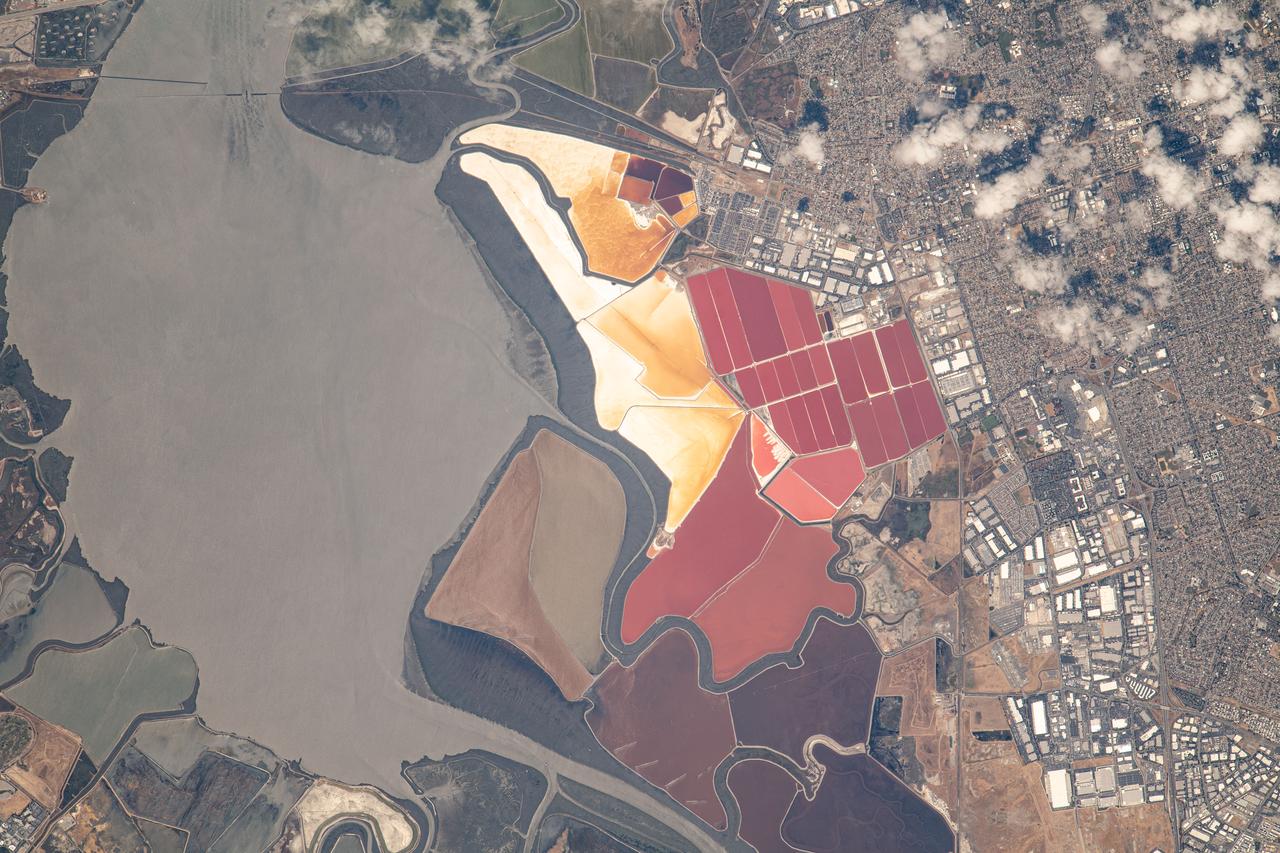
iss069e053745 (August 3, 2023) -- The South Bay Salt Ponds in the city of Newark, California show their vivid red and yellow-orange colors that primarily come from the microorganisms and brine shrimp in the waters. More than 16,500 acres are part of a restoration project— the largest in the West Coast—that includes pollution reduction, habitat expansion, and flood control. Expedition 69 Flight Engineer Woody Hoburg captured this image as the International Space Station orbited 260 miles above the coast of the Bay Area.
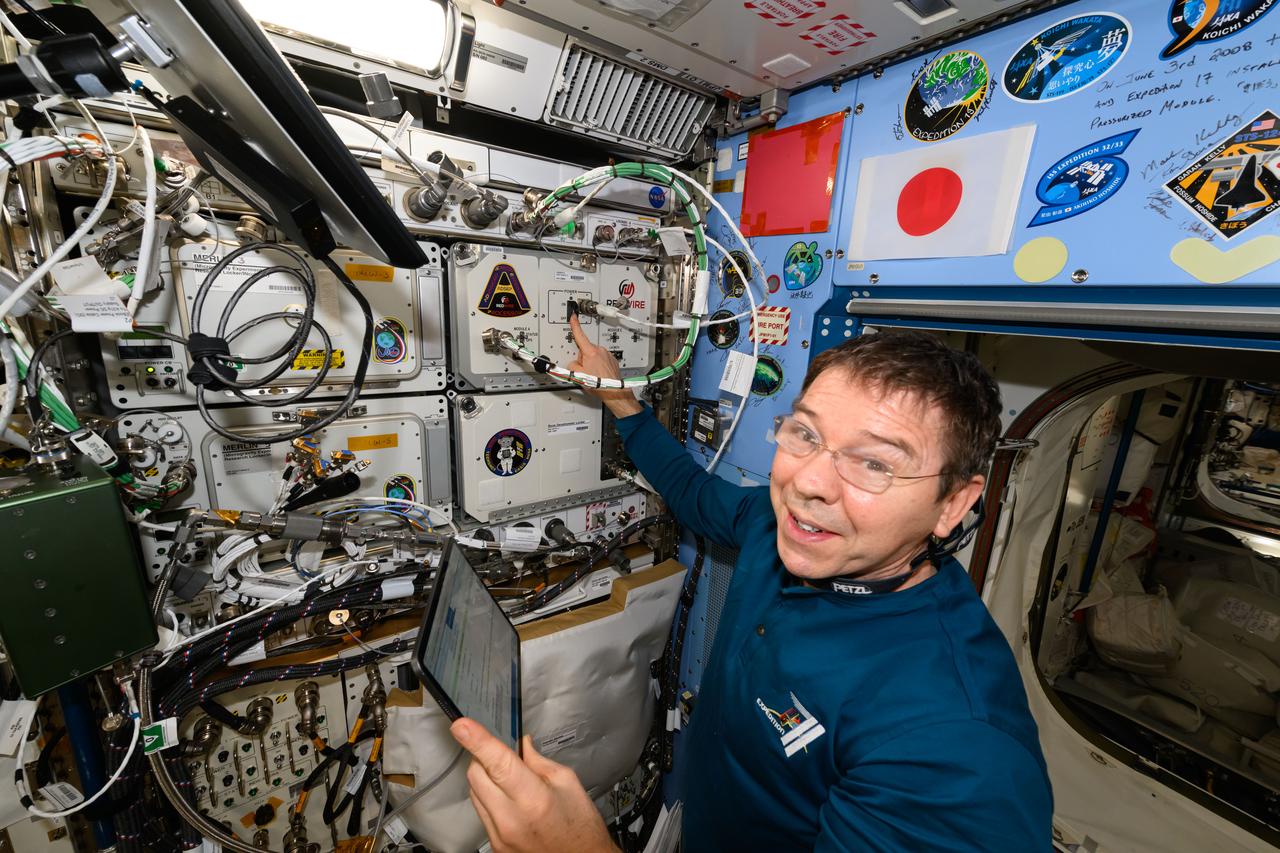
iss071e462410 (Aug. 9, 2024) --- NASA astronaut and Expedition 71 Flight Engineer Mike Barratt installs a new sample processor, also known as the Advanced Space Experiment Processor (ADSEP), inside the International Space Station's Kibo laboratory module. ADSEP can be packed with research samples and launched to space or returned to Earth aboard a Northrop Grumman Cygnus space freighter or a SpaceX Dragon cargo craft. ADSEP supports cell and tissue culturing, protein crystal growth, microorganism and bacteria studies, and materials science research.
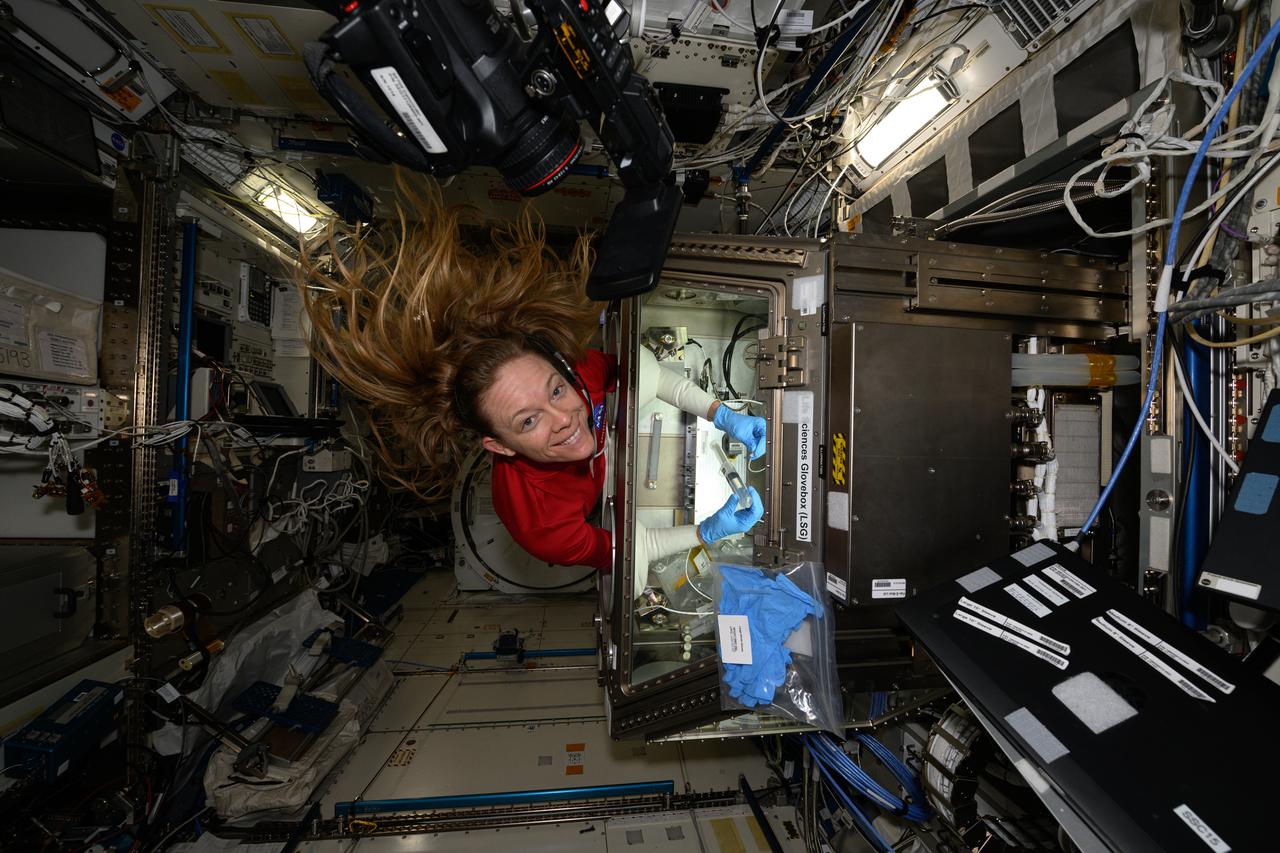
iss073e0118821 (May 30, 2025) --- NASA astronaut and Expedition 73 Flight Engineer Nichole Ayers conducts research operations inside the Kibo laboratory module's Life Science Glovebox aboard the International Space Station. Ayers was processing samples of deep-sea bacteria to test a specialized 3D microscope for its ability to monitor water quality, detect potentially infectious organisms, and study liquid mixtures and microorganisms in space and on Earth.

Felisa Wolfe-Simon, a lead researcher and NASA astrobiology research fellow, speaks during a press conference, Thursday, Dec. 2, 2010, at NASA Headquarters in Washington. NASA-funded astrobiology research has changed the fundamental knowledge about what comprises all known life on Earth. Researchers conducting tests in the harsh environment of Mono Lake in California have discovered the first known microorganism on Earth able to thrive and reproduce using the toxic chemical arsenic. Photo Credit: (NASA/Paul E. Alers)
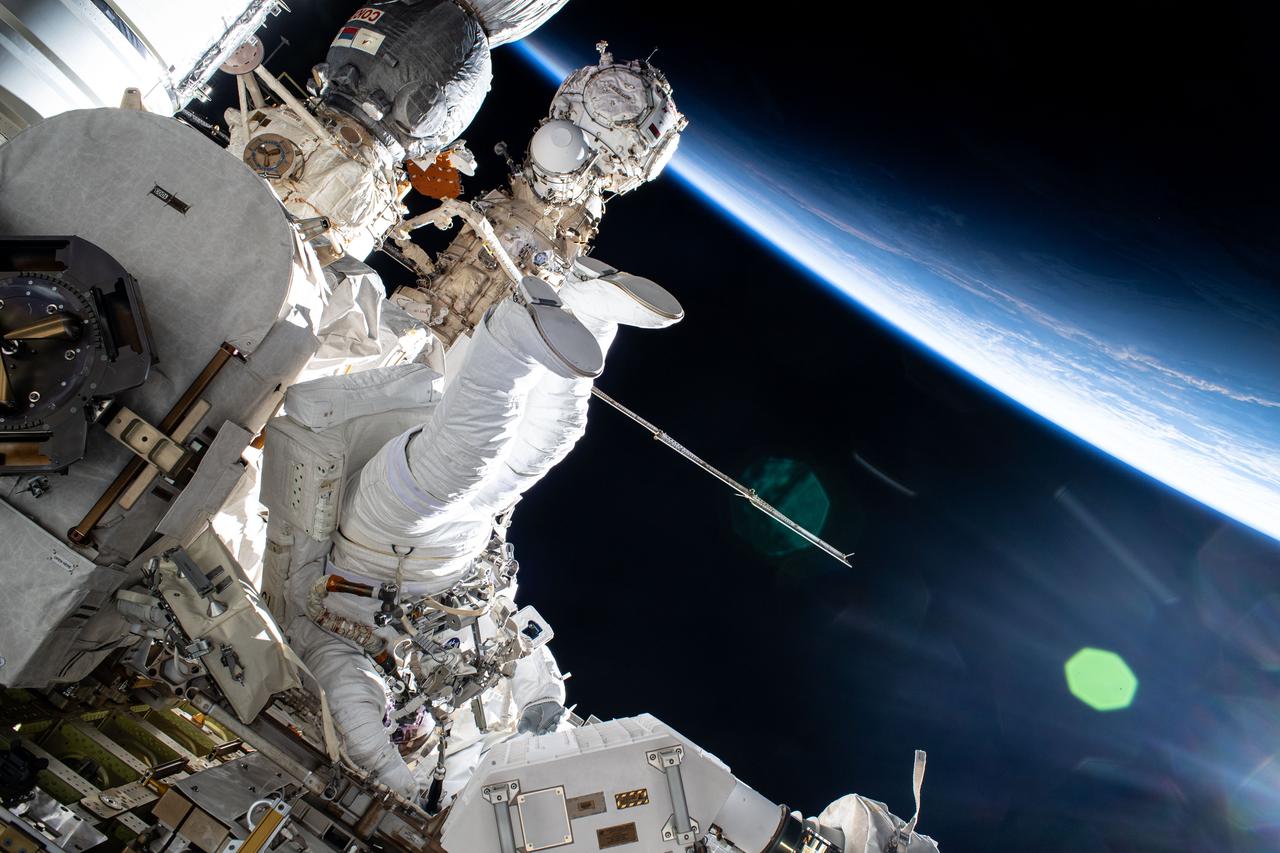
iss072e575158 (Jan. 30, 2025) --- NASA astronaut and Expedition 72 Flight Engineer Butch Wilmore works outside the International Space Station during a five-hour and 26-minute spacewalk. Wilmore swabbed external surfaces searching for microorganisms that may survive and reproduce near vents on the exterior of the orbital outpost. The space station was orbiting into a sunset 259 miles above Eastern Europe at the time of this photograph.
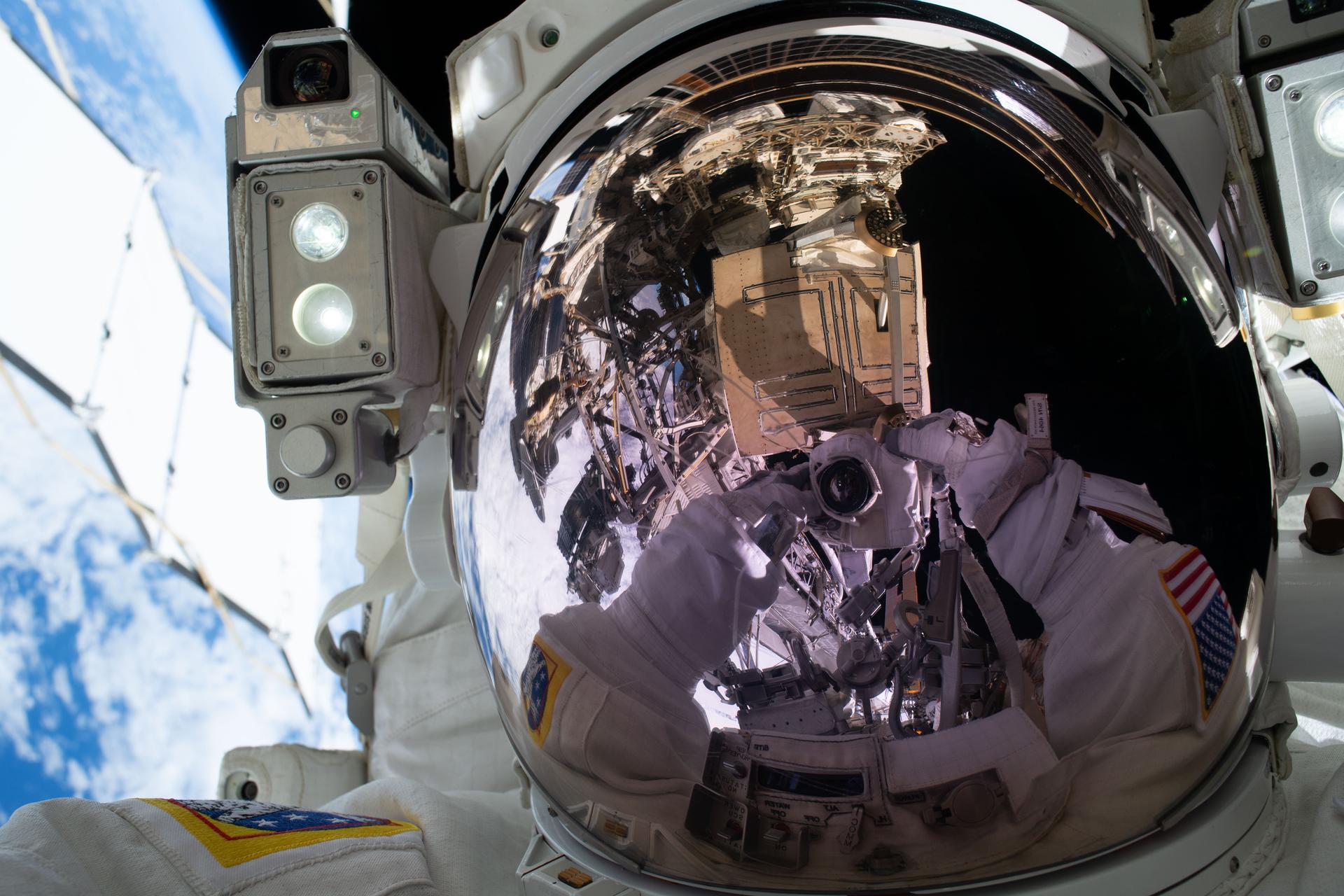
iss075e0086316 (Sept. 1, 2026) --- Expedition 75 commander Jessica Meir of NASA points her camera toward her spacesuit’s helmet visor and takes an out-of-this-world “space selfie.” Meir participated in a six-hour and 49‑minute spacewalk with ESA (European Space Agency) flight engineer Sophie Adenot (out of frame), installing a spacecraft navigation aid, swabbing the station’s exterior for microorganisms, and preparing a cosmic particle detector for future upgrades outside the International Space Station. Credit: NASA/Jessica Meir
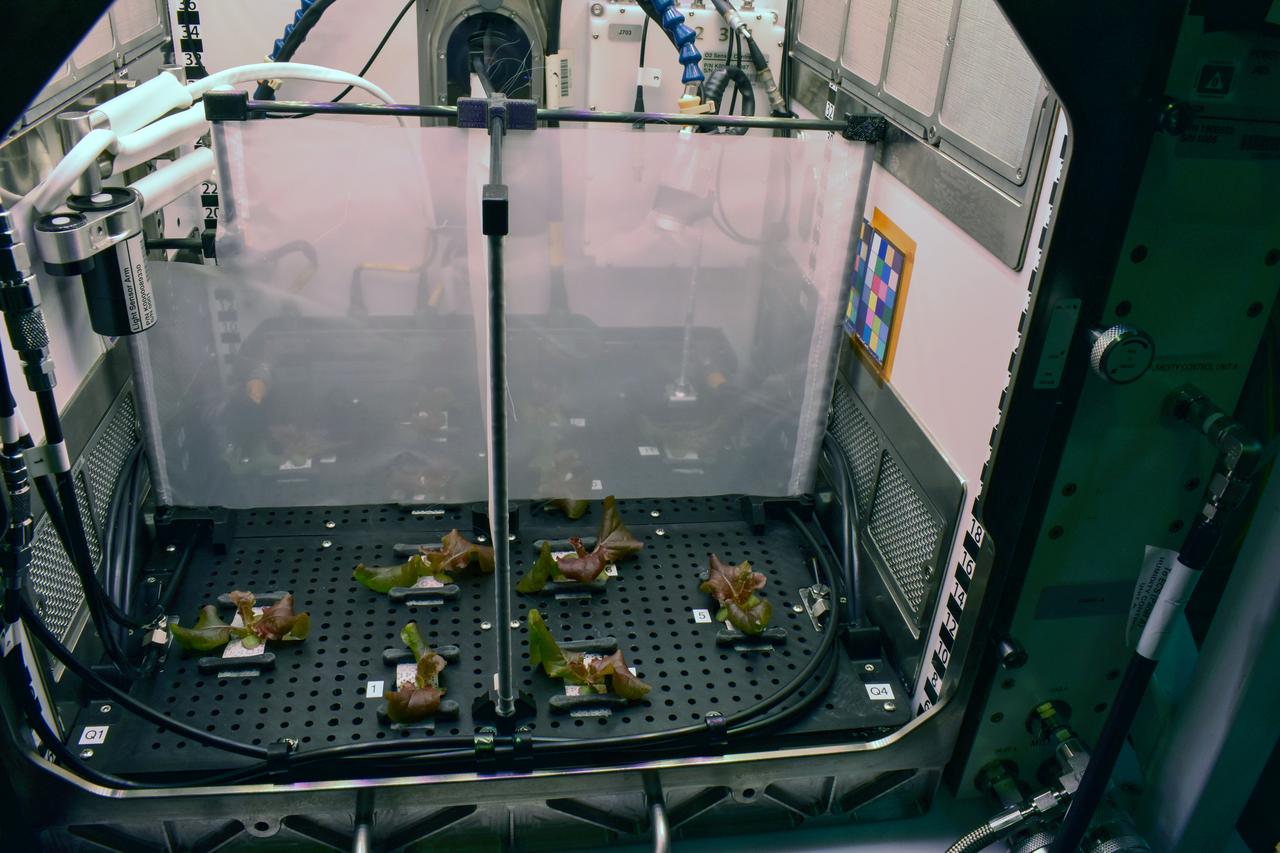
jsc2025e047408 (2/13/2024) --- Dividers installed on day 14 to separate the canopies and microbiomes of lettuce plants grown with different moisture treatments as part of a ground experiment for The Spaceflight Microbiome of a Food Crop Grown Using Different Substrate Moisture Levels (Plant Habitat-07). This investigation studies how plants, and their communities of microorganisms respond to different levels of water. Results could support development of systems for growing food crops on future missions. Image courtesy of the PH-07 Team.
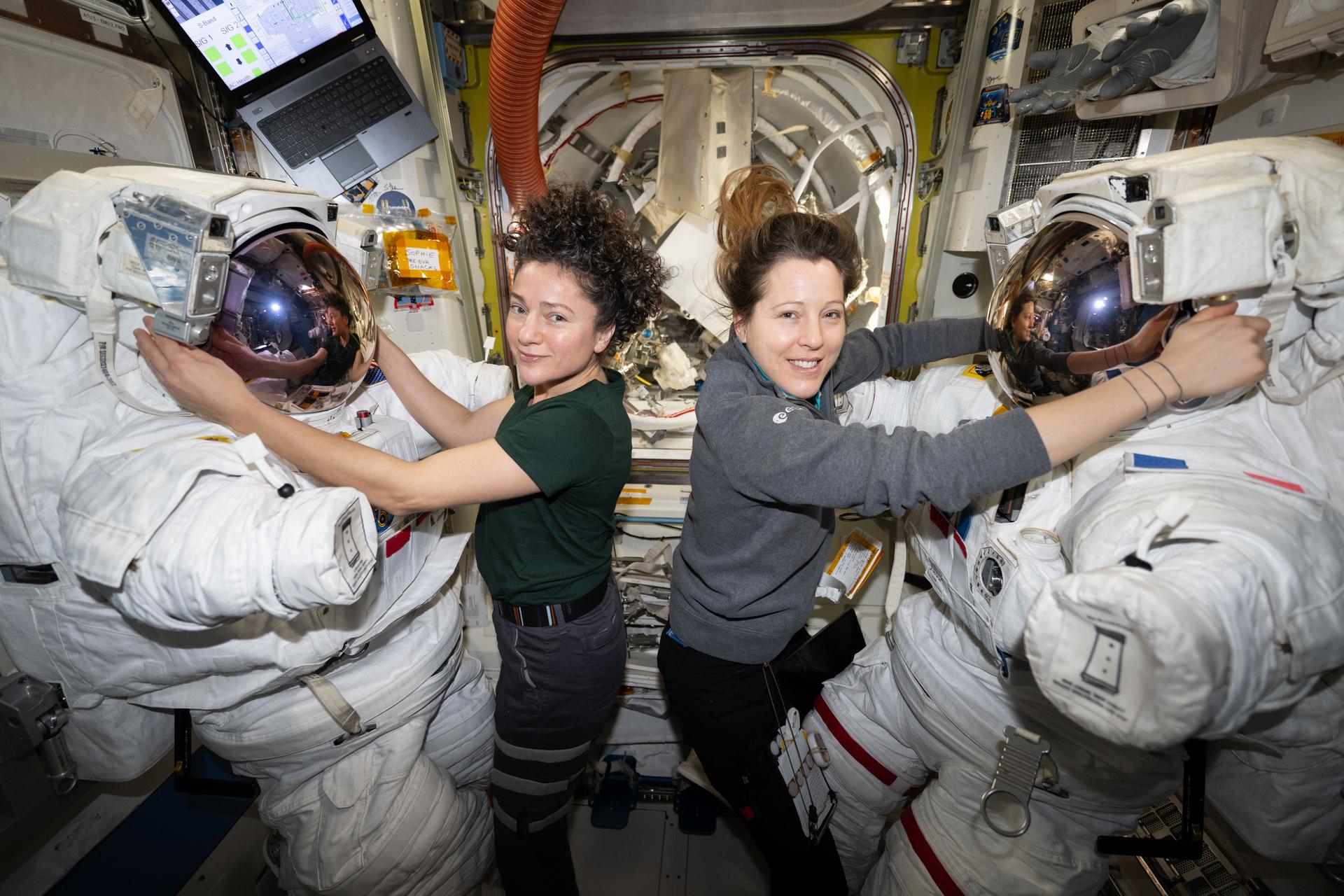
iss075e0085733 (Sept. 1, 2026) --- From left, astronauts Jessica Meir of NASA and Sophie Adenot of ESA (European Space Agency) pose for a portrait inside the International Space Station’s Quest airlock while configuring spacesuits the day before they conducted a spacewalk together. Meir and Adenot spent six hours and 49 minutes the next day installing a spacecraft navigation aid, swabbing the station’s exterior for microorganisms, and preparing a cosmic particle detector for future upgrades outside the International Space Station. Credit: NASA
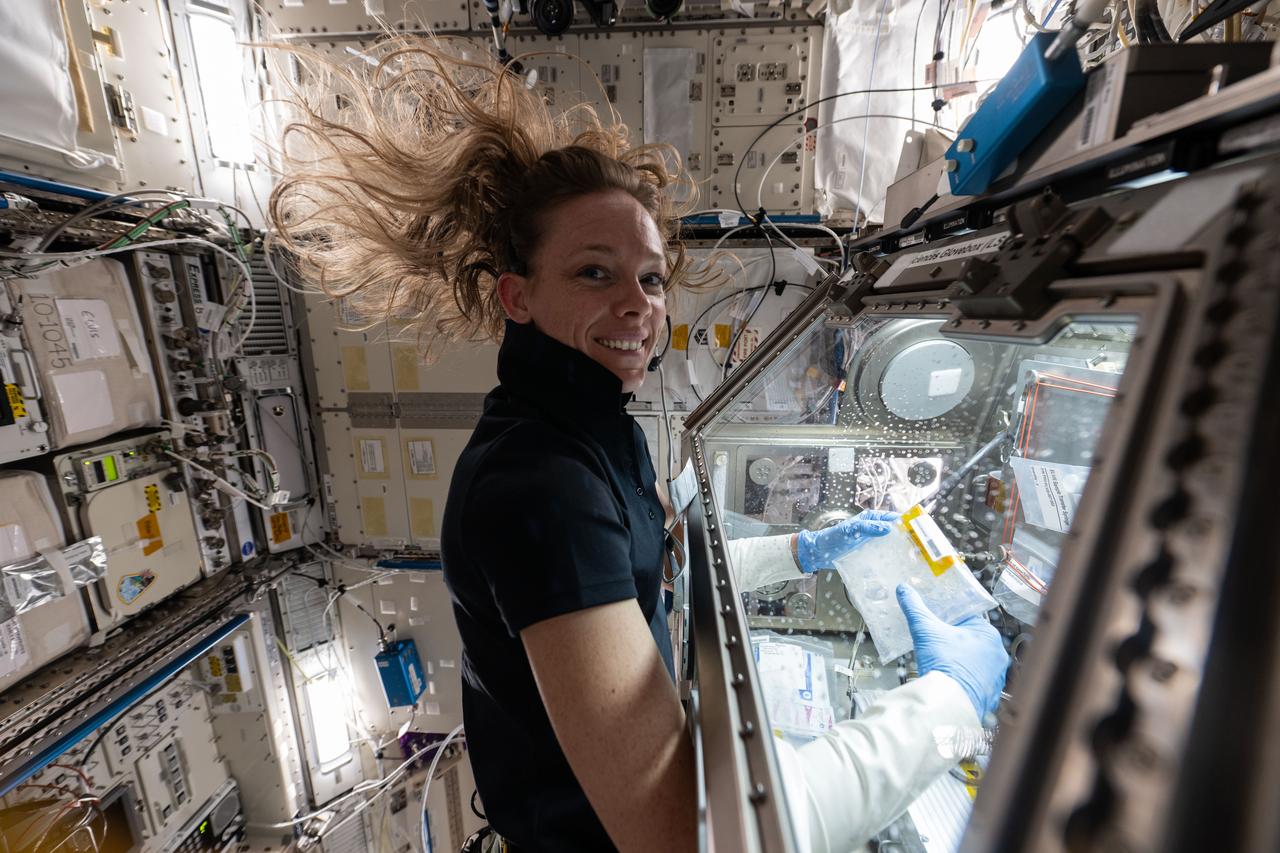
iss073e0025978 (May 9, 2025) --- NASA astronaut and Expedition 73 Flight Engineer Nichole Ayers works in the Kibo laboratory module's Life Sciences Glovebox processing bacteria samples before viewing them inside a 3D imaging microscope called Extant Life Volumetric Imaging System, or ELVIS. The technology demonstration may enable applications for monitoring water quality, detecting infectious organisms on spacecraft, and researching colloids (suspensions of particles in a liquid) and microorganisms in microgravity.
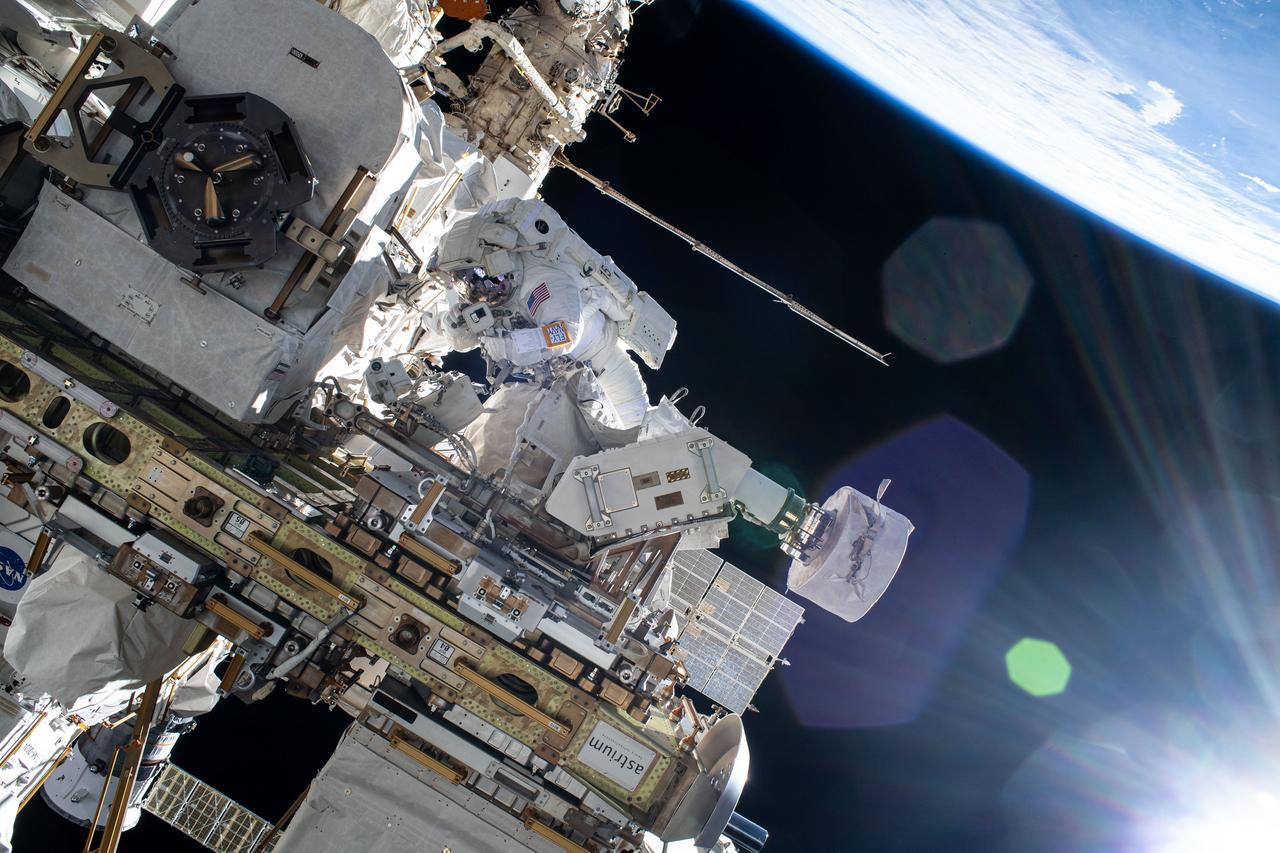
iss072e575100 (Jan. 30, 2025) --- NASA astronaut and Expedition 72 Flight Engineer Butch Wilmore works outside the International Space Station during a five-hour and 26-minute spacewalk. Wilmore swabbed external surfaces searching for microorganisms that may survive and reproduce near vents on the exterior of the orbital outpost. The space station was orbiting 260 miles above Eastern Europe at the time of this photograph.
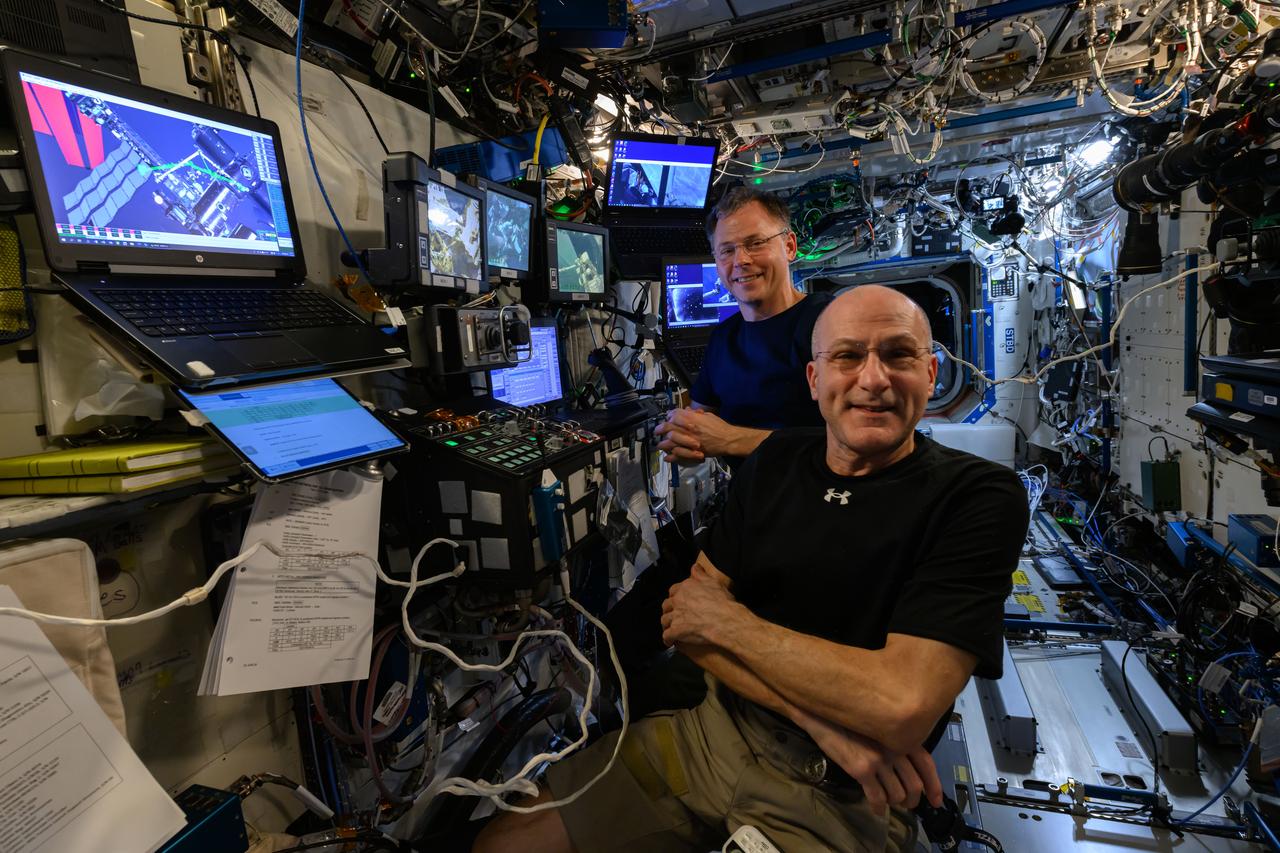
iss072e576545 (Jan. 30, 2025) --- NASA astronauts Don Pettit (foreground) and Nick Hague, both Expedition 72 flight engineers, are at the controls of the robotics workstation preparing to assist and monitor spacewalkers Suni Williams and Butch Wilmore (not pictured). Williams and Wilmore worked outside the International Space Station during a five-hour and 26-minute spacewalk on Jan. 30, 2025, to remove radio communications hardware and swab external surfaces searching for potential microorganisms.
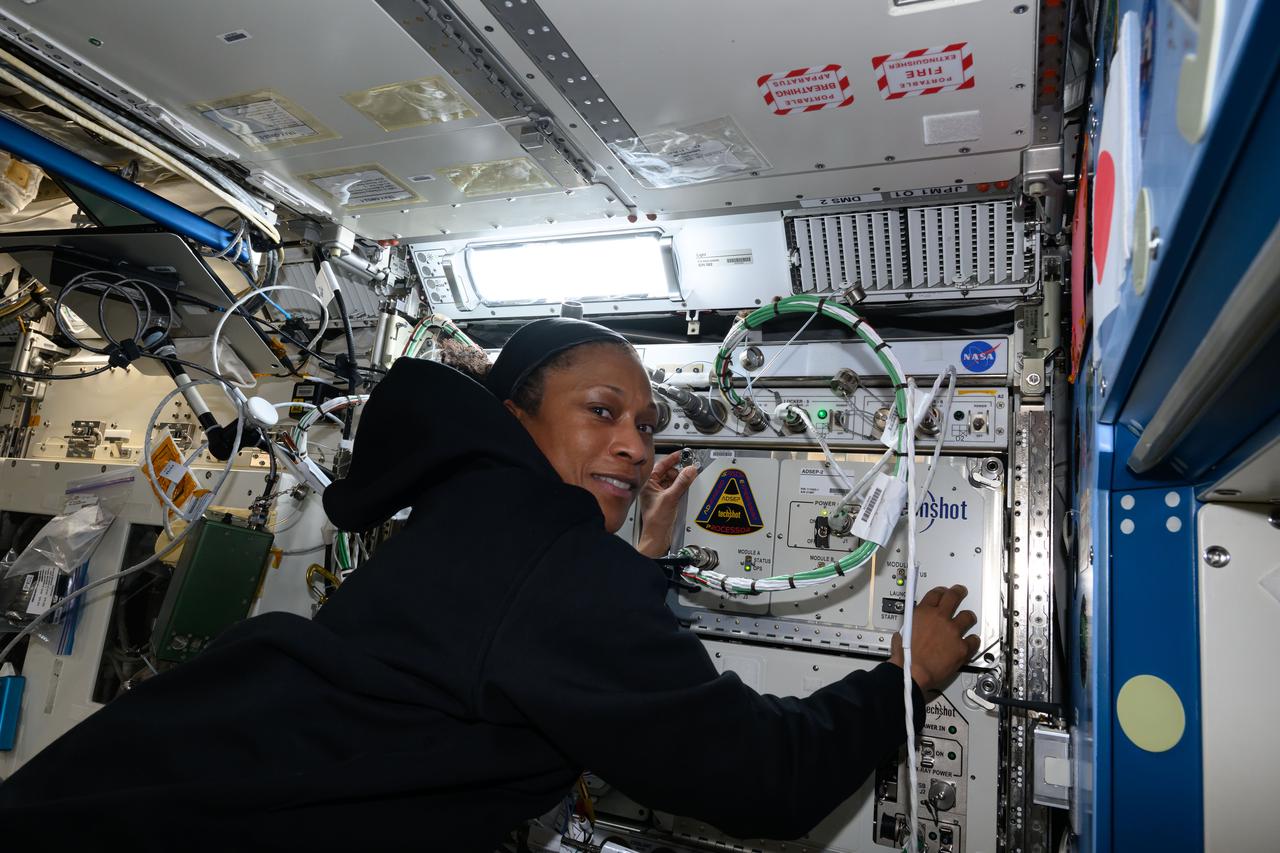
iss070e129706 (March 25, 2024) --- Expedition 70 Flight Engineer and NASA astronaut Jeanette Epps installs the Advanced Space Experiment Processor-2, or ADSEP-2. The scientific device can interface with the Dragon and Cygnus cargo craft and houses cassettes that process samples for biology and physics research including cell and tissue culturing, protein crystal growth, microorganism and bacteria studies, and materials science research.
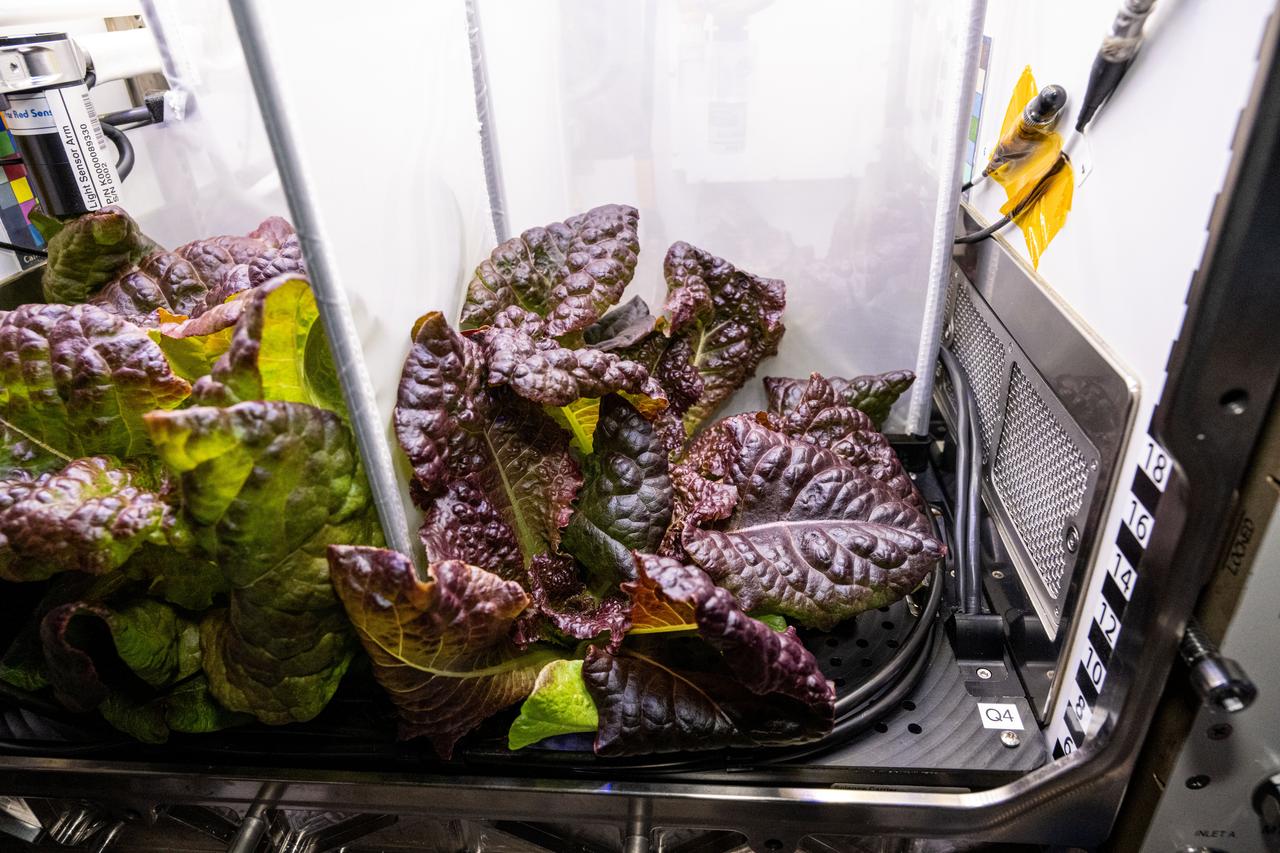
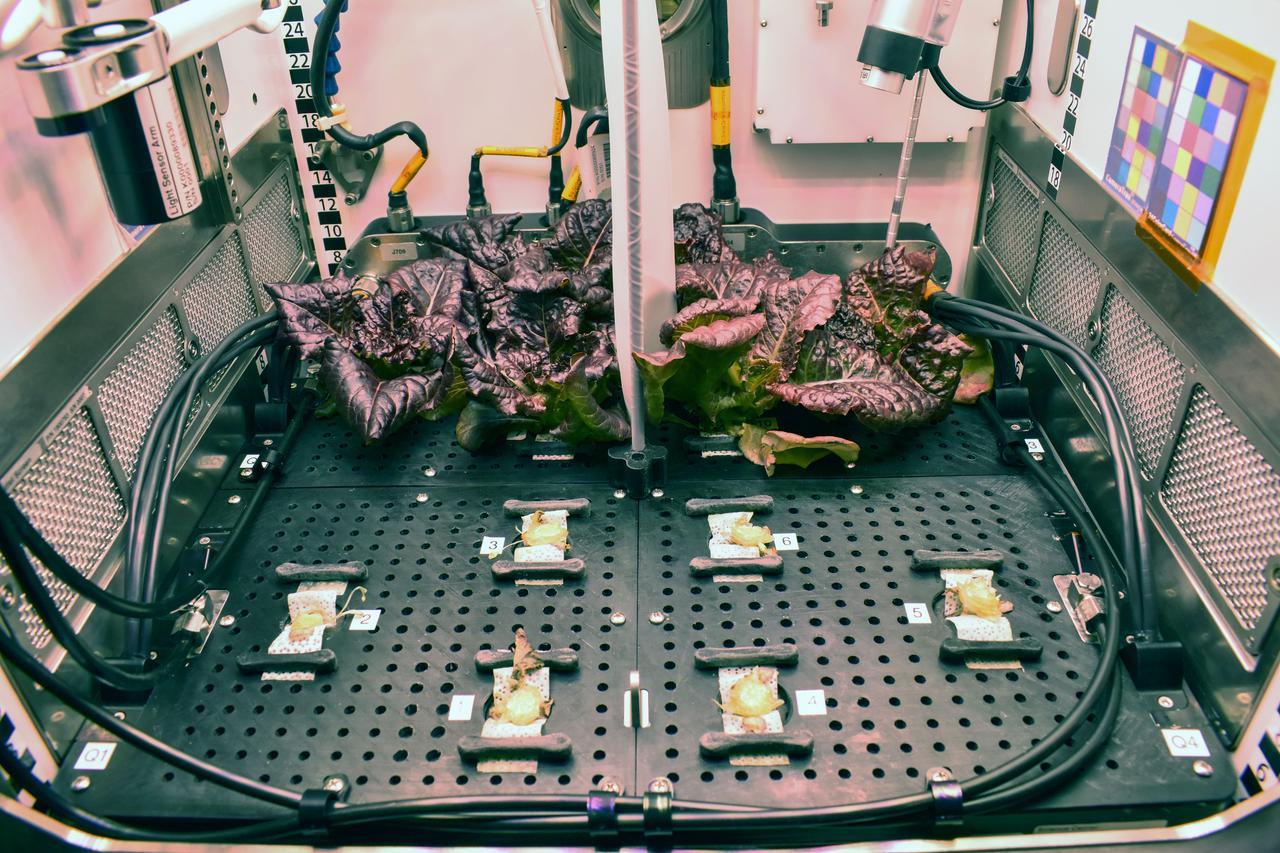
iss072e404269 (Dec. 27, 2024) --- Red Romaine lettuce is pictured growing inside the Kibo laboratory module's Advanced Plant Habitat aboard the International Space Station. The lettuce was being grown for the Plant Habitat-07 space botany investigation that is exploring how plants and their associated communities of microorganisms respond to different levels of water in microgravity. Results could support plant growth and the creation of systems that produce safe and nutritious food for crew members on future space missions.
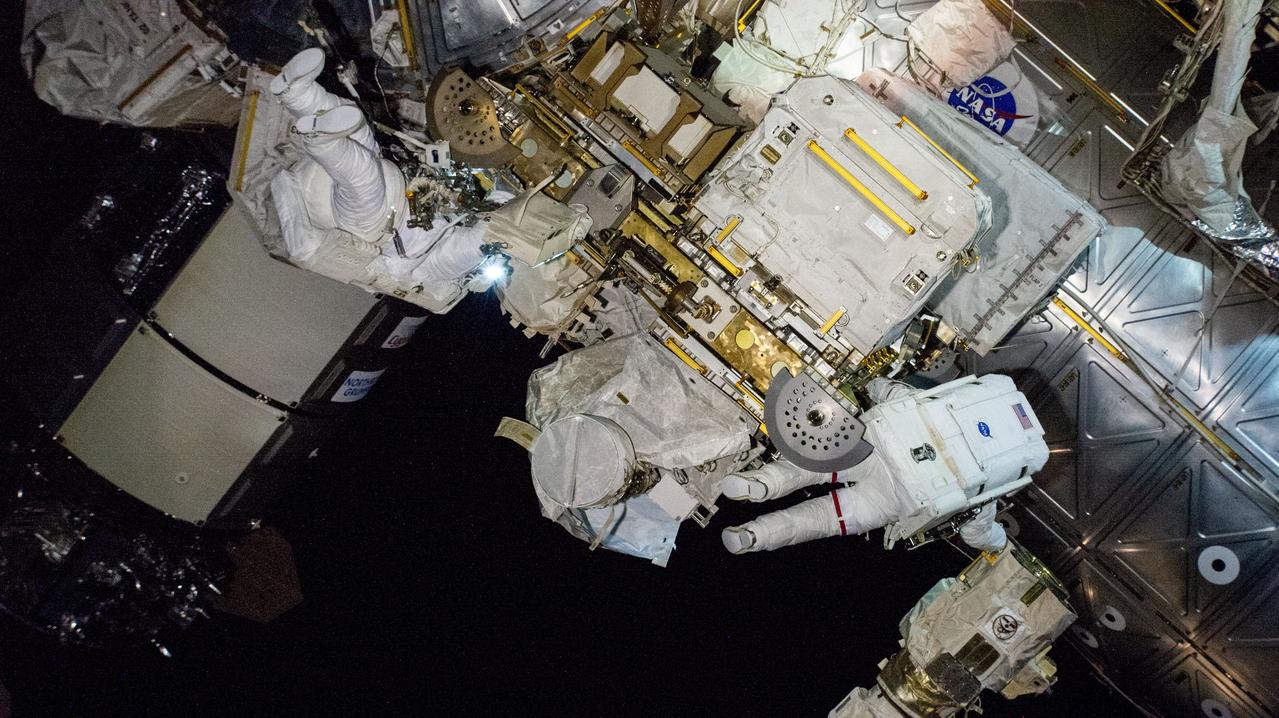
iss072e574845 (Jan. 30, 2025) --- Two spacewalkers, Expedition 72 Flight Engineer Butch Wilmore (upper left) and Expedition 72 Commander Suni Williams (lower right), both NASA astronauts, work outside the International Space Station during a five-hour and 26-minute spacewalk to remove radio communciations hardware and swab for microorganisms.
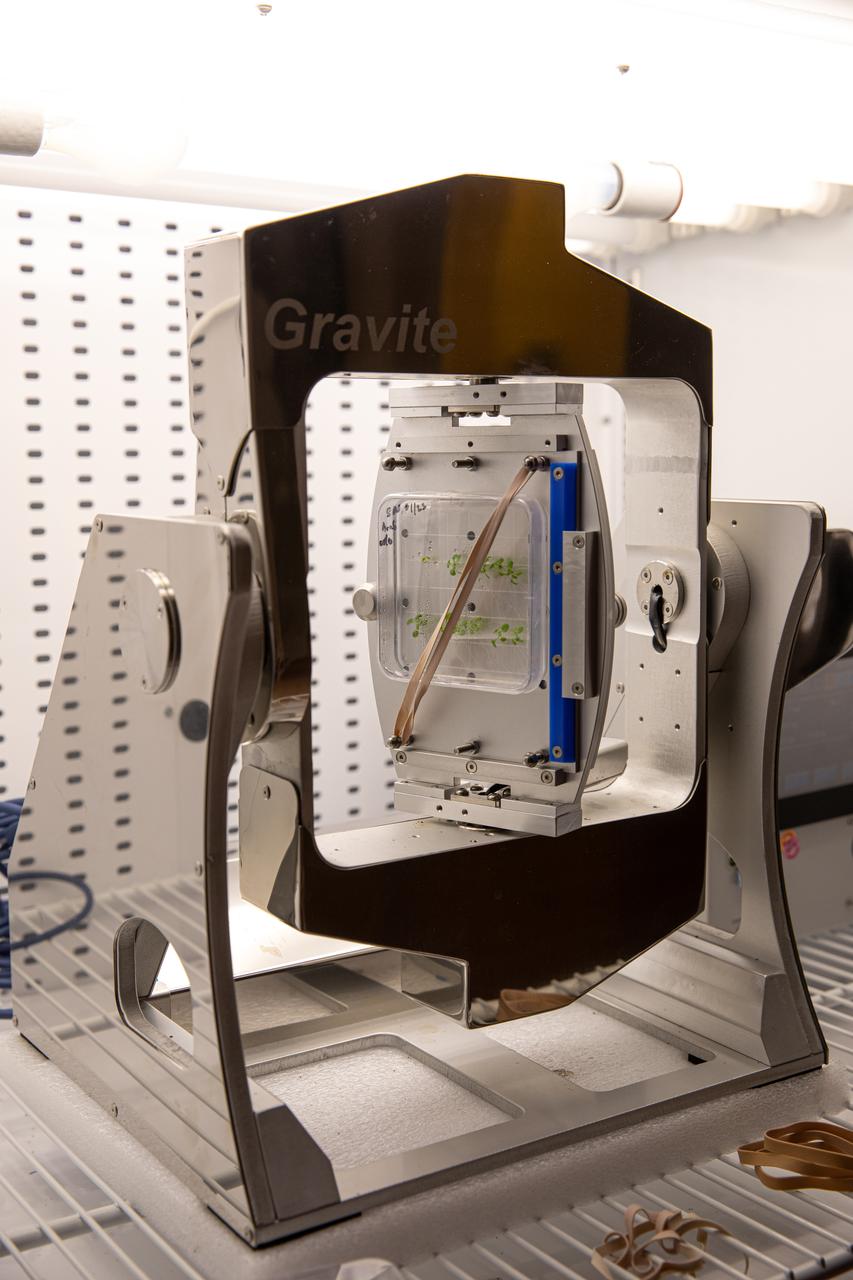
A Gravite 3d clinostat is in the Microgravity Simulation Support Facility (MSSF) inside the Neil Armstrong Operations and Checkout building at NASA’s Kennedy Space Center in Florida on Feb. 11, 2020. The facility was developed to provide ground simulation capability to the U.S. research community in order to supplement the limited opportunities to access the International Space Station and other platforms for microgravity research. The MSSF is designed to support biological research on microorganisms, cells, tissues, small plants and small animals. The simulator provides NASA with an alternative platform for microgravity research and creates the opportunity to conduct experiments on the space station in parallel with conditions of simulated microgravity on the ground.
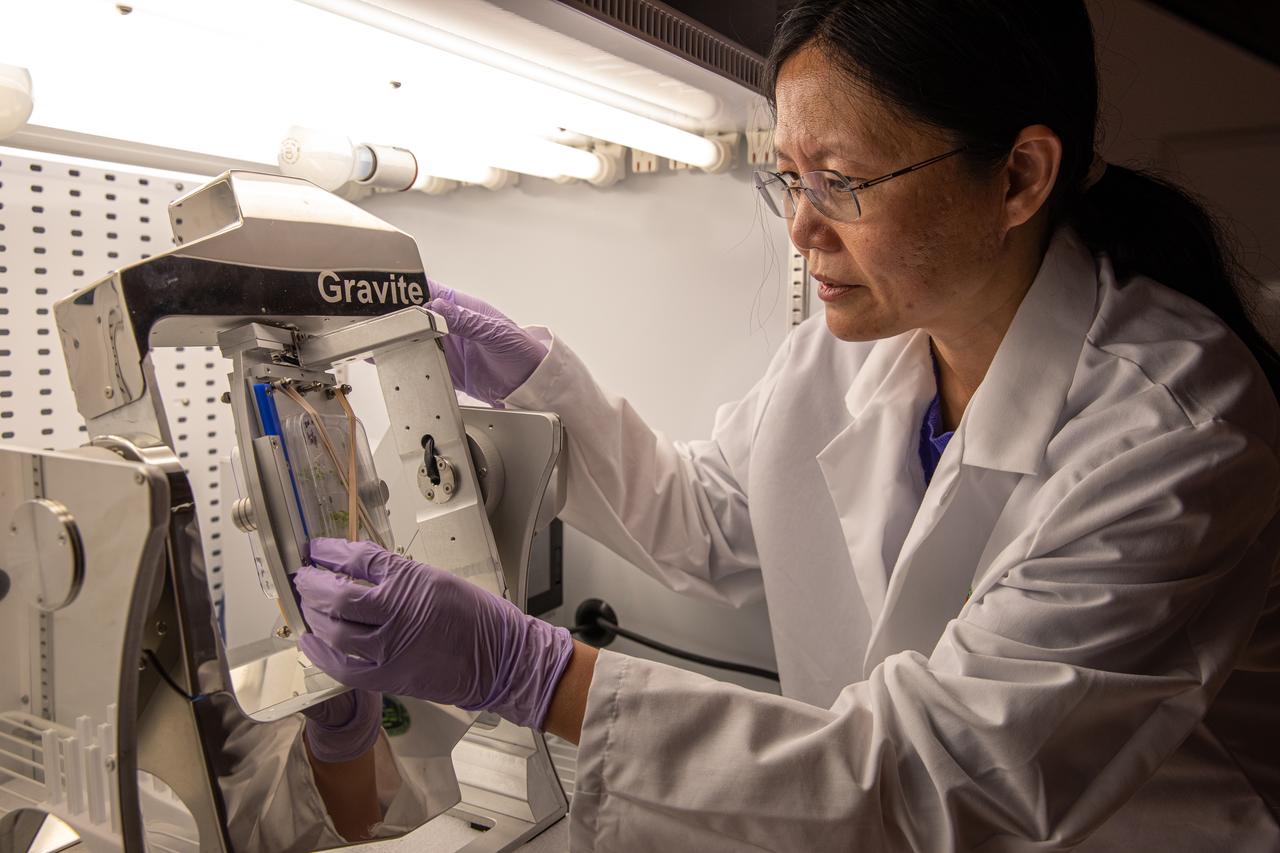
Ye Zhang, a project scientist at NASA’s Kennedy Space Center in Florida, makes adjustments to a Gravite 3d clinostat in the Microgravity Simulation Support Facility (MSSF) inside the Neil Armstrong Operations and Checkout building at on Feb. 11, 2020. The facility was developed to provide ground simulation capability to the U.S. research community in order to supplement the limited opportunities to access the International Space Station and other platforms for microgravity research. The MSSF is designed to support biological research on microorganisms, cells, tissues, small plants and small animals. The simulator provides NASA with an alternative platform for microgravity research and creates the opportunity to conduct experiments on the space station in parallel with conditions of simulated microgravity on the ground.

CAPE CANAVERAL, Fla. -- Inside the Space Life Sciences Laboratory near NASA’s Kennedy Space Center in Florida, the Mars Simulation Chamber is being prepared for the Microorganisms in the Stratosphere, or MIST, mission support. The chamber allows MIST scientists and engineers to simulate the stratosphere prior to high altitude flight experiments. The MIST mission will fly a small biological payload in low altitudes aboard a blimp in July to measure microbial survival and cellular responses to exposure in the upper atmosphere. Later in the year, the MIST mission will deploy samples at even high altitudes in the stratosphere using scientific balloons. Photo credit: NASA/Daniel Casper
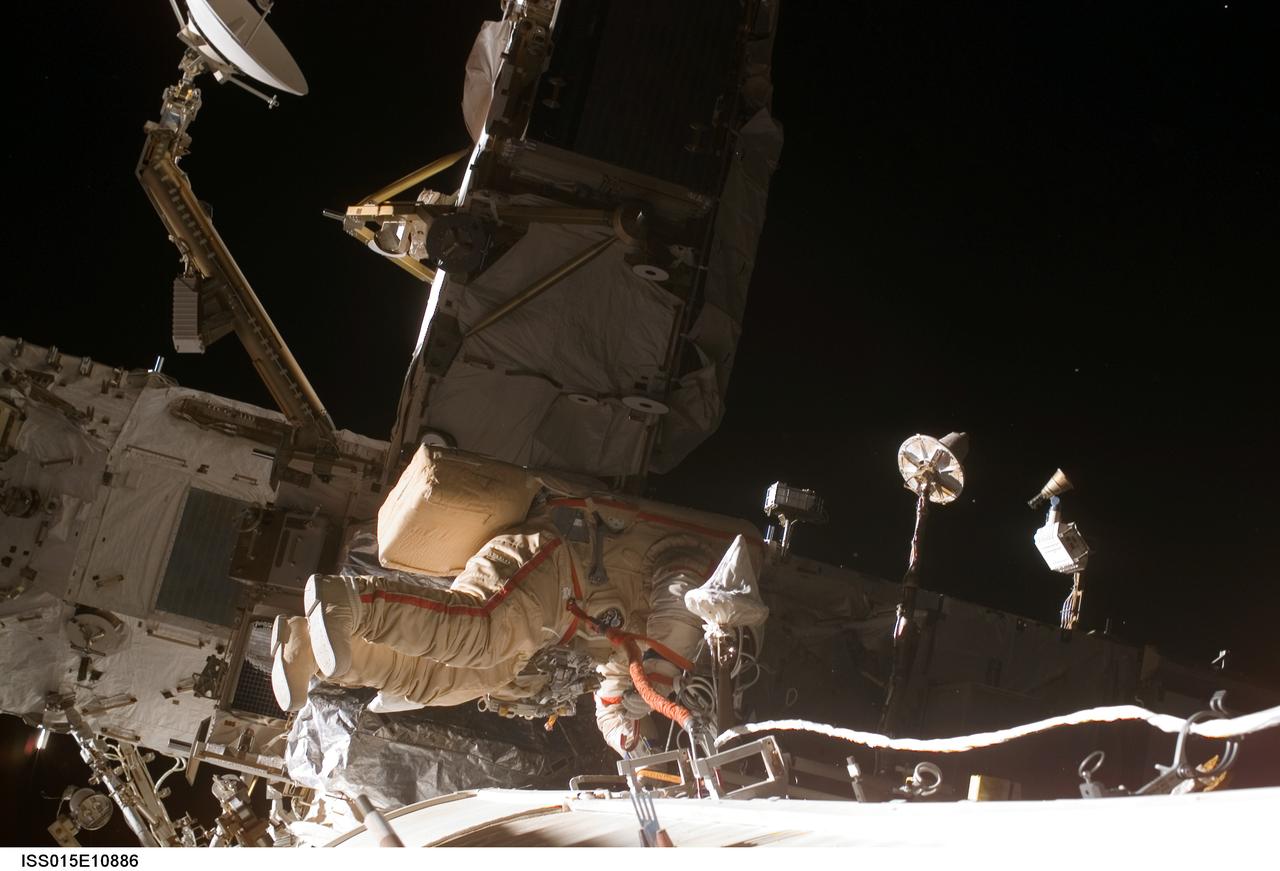
ISS015-E-10886 (6 June 2007) --- Cosmonaut Fyodor N. Yurchikhin, Expedition 15 commander representing Russia's Federal Space Agency, wearing a Russian Orlan spacesuit, participates in a session of extravehicular activity (EVA). Among other tasks, Yurchikhin and cosmonaut Oleg V. Kotov (out of frame), flight engineer representing Russia's Federal Space Agency, completed the installation of 12 more Zvezda Service Module debris panels and installed sample containers on the Pirs Docking Compartment for a Russian experiment, called Biorisk, which looks at the effect of space on microorganisms.
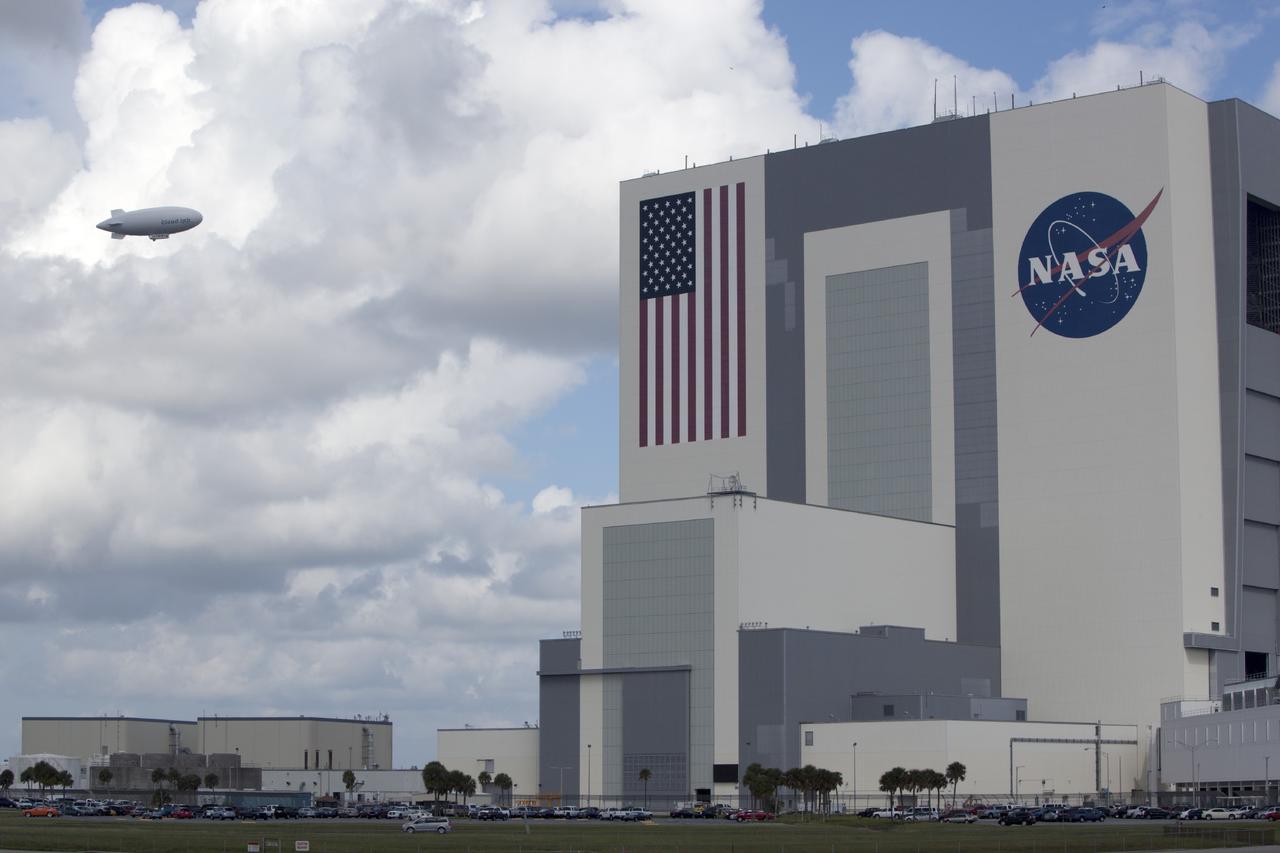
CAPE CANAVERAL, Fla. -- An airship from the British Broadcasting Corp., or BBC, flies over the processing facilities in Launch Complex 39 toward the Vehicle Assembly Building at NASA's Kennedy Space Center in Florida. A team of scientists from the BBC's television project "Cloud Lab" are conducting a number of experiments aboard the airship as it flies across the U.S., exploring all aspects of the Earth's atmosphere. One of the experiments is NASA's Microorganisms in the Stratosphere, or MIST, which is designed to measure the microbial survival and cellular responses to exposure in the upper atmosphere. Photo credit: NASA/Dimitri Gerondidakis
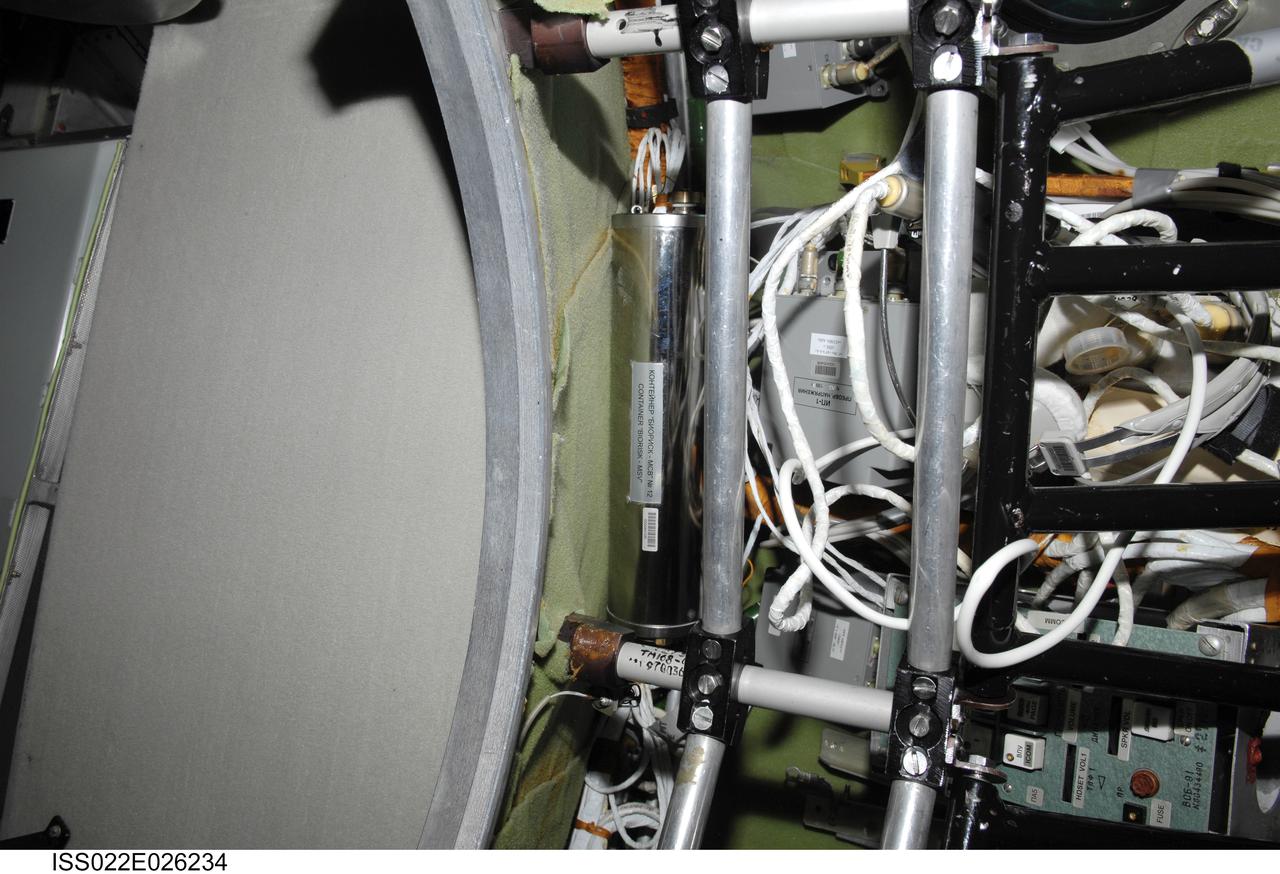
iss022e026234 (1/20/2010) --- A view of Container Biorisk MSV No. 12, in the Service Module (SM) aboard the International Space Station (ISS). The Influence of Factors of the Space Environment on the Condition of the System of Microorganisms-Hosts Relating to the Problem of Environmental Safety of Flight Techniques and Planetary Quarantine (Biorisk) investigation aims to obtain new data on physical and genetic changes in bacteria and fungi typically found on spacecraft equipment, and also in various biological test objects (higher plant seeds, dormant forms of lower crustaceans) under exposure in the interior ISS compartments and on the exterior ISS surfaces.
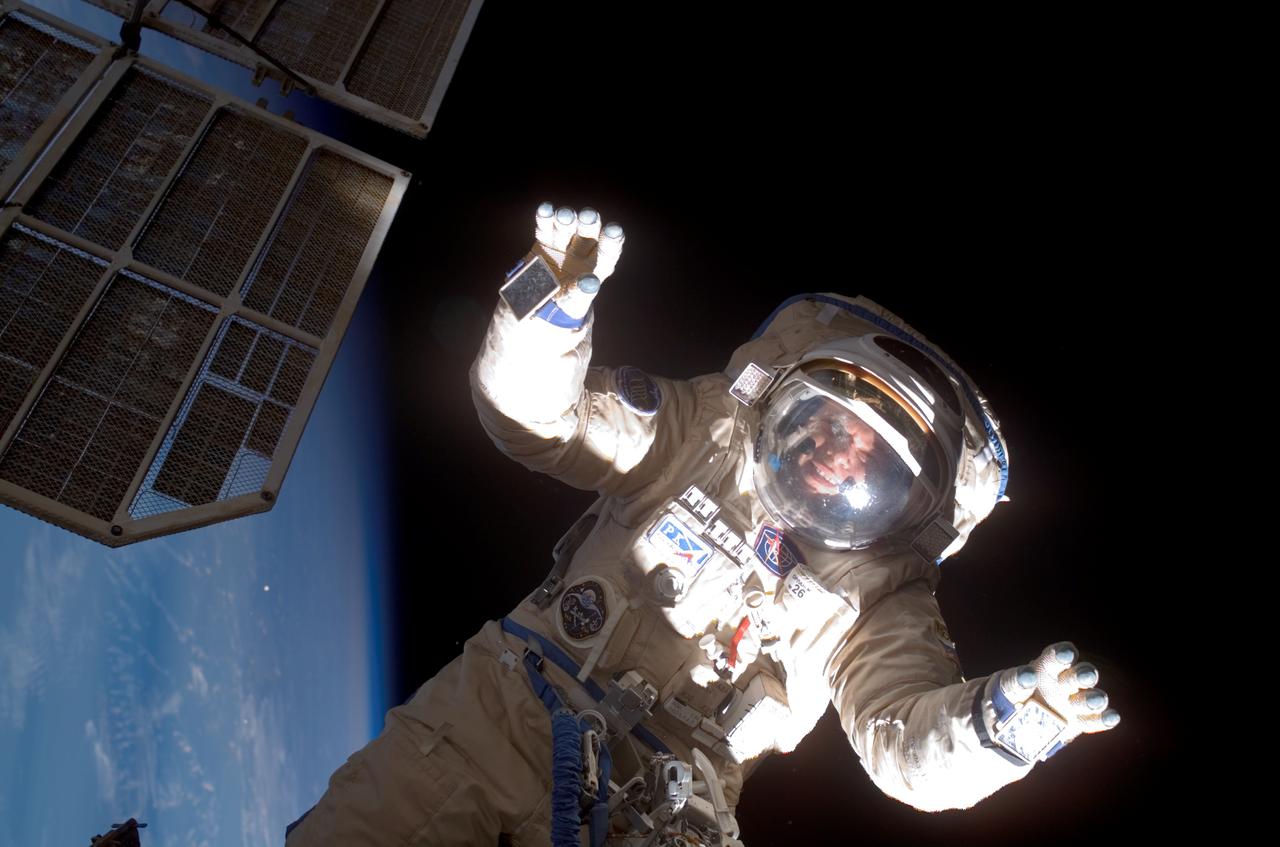
ISS015-E-11026 (6 June 2007) --- Cosmonaut Oleg V. Kotov, Expedition 15 flight engineer representing Russia's Federal Space Agency, wearing a Russian Orlan spacesuit, participates in a session of extravehicular activity (EVA). Among other tasks, Kotov and cosmonaut Fyodor N. Yurchikhin (out of frame), commander representing Russia's Federal Space Agency, completed the installation of 12 more Zvezda Service Module debris panels and installed sample containers on the Pirs Docking Compartment for a Russian experiment, called Biorisk, which looks at the effect of space on microorganisms.
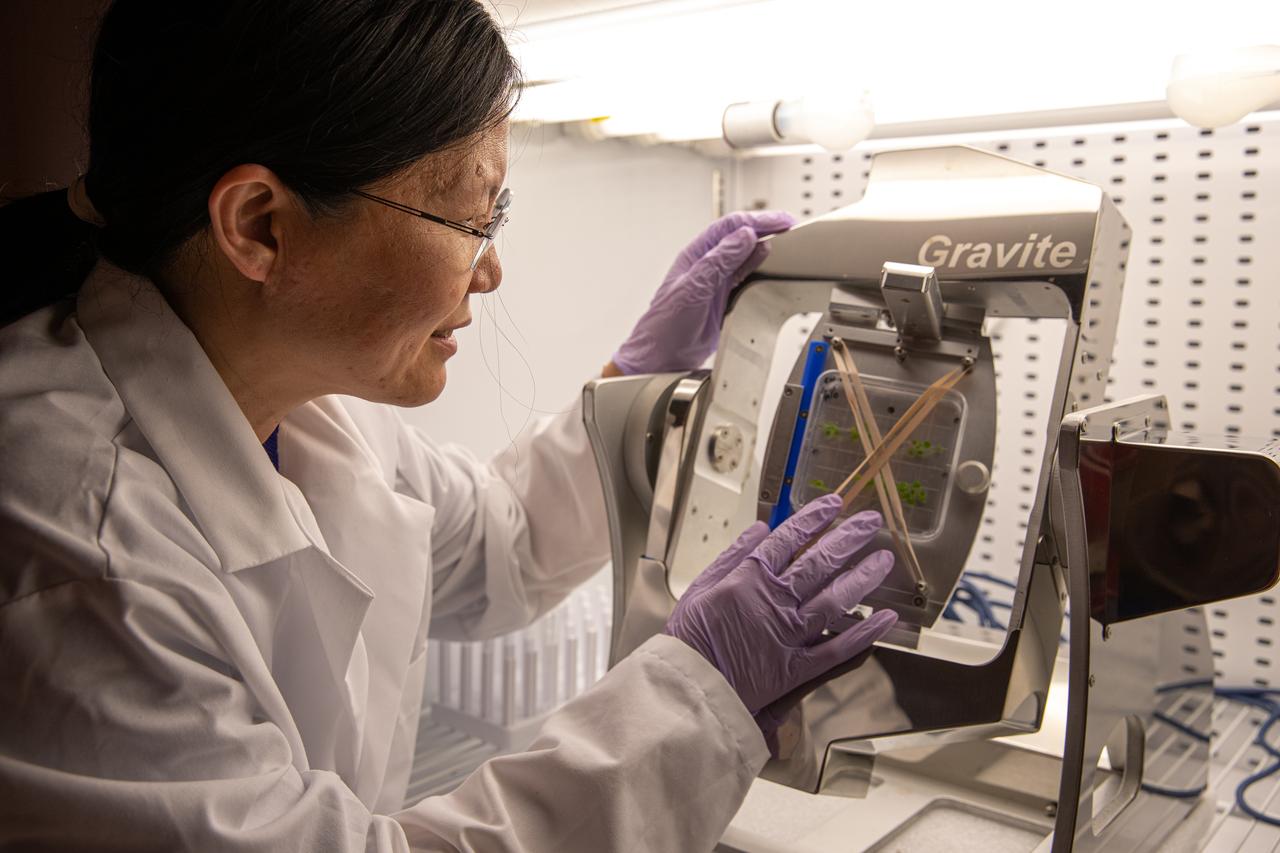
Ye Zhang, a project scientist at NASA’s Kennedy Space Center in Florida, makes adjustments to a Gravite 3d clinostat in the Microgravity Simulation Support Facility (MSSF) inside the Neil Armstrong Operations and Checkout on Feb. 11, 2020. The facility was developed to provide ground simulation capability to the U.S. research community in order to supplement the limited opportunities to access the International Space Station and other platforms for microgravity research. The MSSF is designed to support biological research on microorganisms, cells, tissues, small plants and small animals. The simulator provides NASA with an alternative platform for microgravity research and creates the opportunity to conduct experiments on the space station in parallel with conditions of simulated microgravity on the ground.
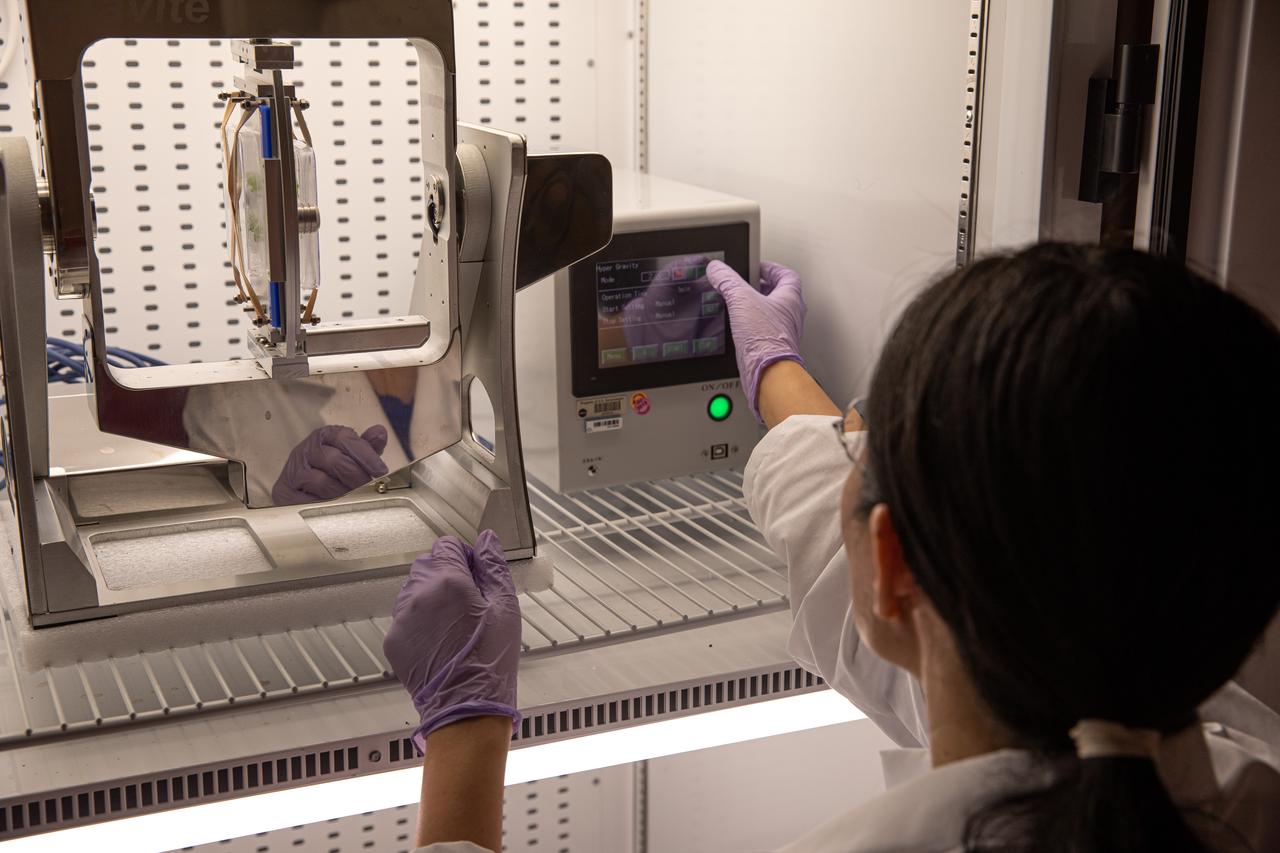
Ye Zhang, a project scientist at NASA’s Kennedy Space Center in Florida runs a test on a Gravite 3d clinostat device in the Microgravity Simulation Support Facility (MSSF) inside the Neil Armstrong Operations and Checkout building on Feb. 11, 2020. The facility was developed to provide ground simulation capability to the U.S. research community in order to supplement the limited opportunities to access the International Space Station and other platforms for microgravity research. The MSSF is designed to support biological research on microorganisms, cells, tissues, small plants and small animals. The simulator provides NASA with an alternative platform for microgravity research and creates the opportunity to conduct experiments on the space station in parallel with conditions of simulated microgravity on the ground.
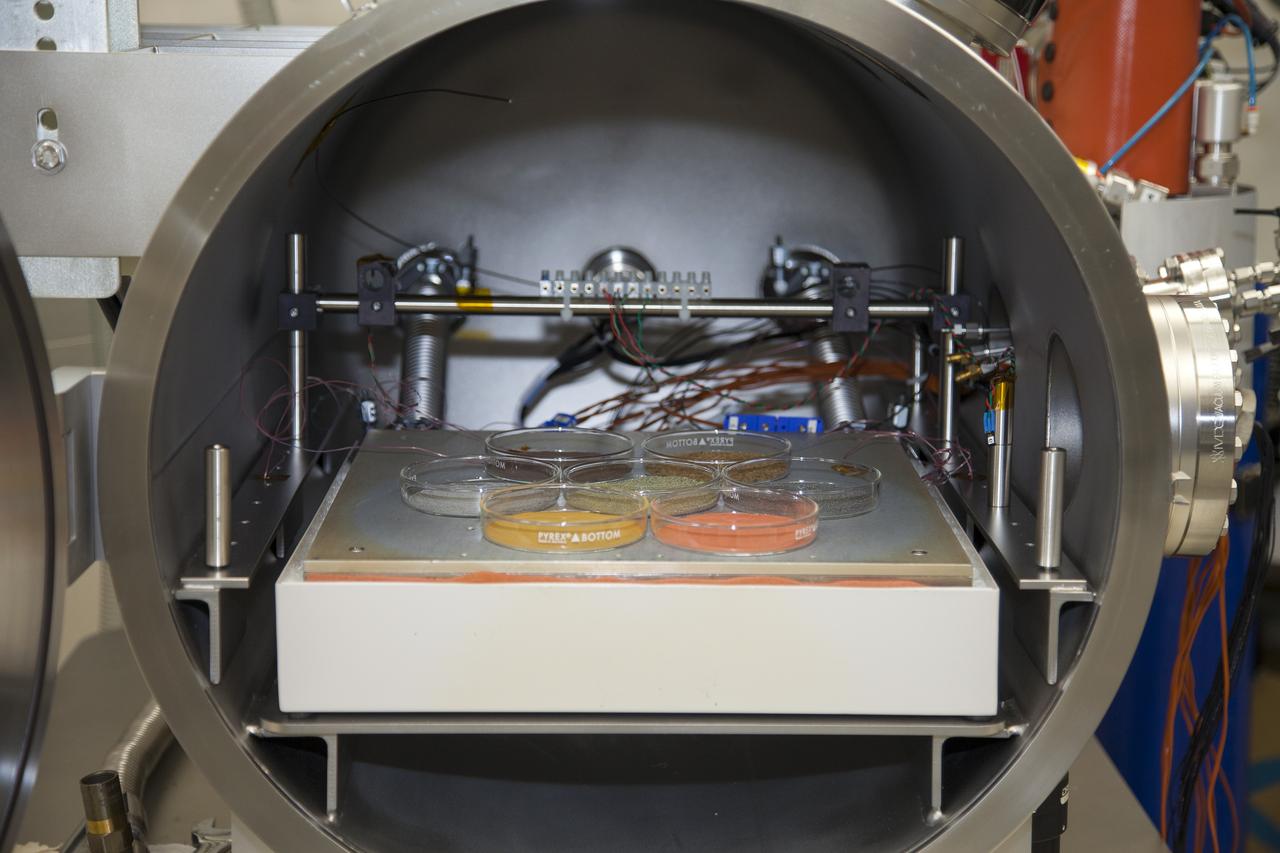
CAPE CANAVERAL, Fla. -- Inside the Space Life Sciences Laboratory near NASA’s Kennedy Space Center in Florida, the Mars Simulation Chamber is being prepared for the Microorganisms in the Stratosphere, or MIST, mission support. The chamber allows MIST scientists and engineers to simulate the stratosphere prior to high altitude flight experiments. The MIST mission will fly a small biological payload aboard a blimp in July to measure microbial survival and cellular responses to exposure in the upper atmosphere. Later in the year, the MIST mission will deploy samples at even higher altitudes in the stratosphere using scientific balloons. Photo credit: NASA/Daniel Casper
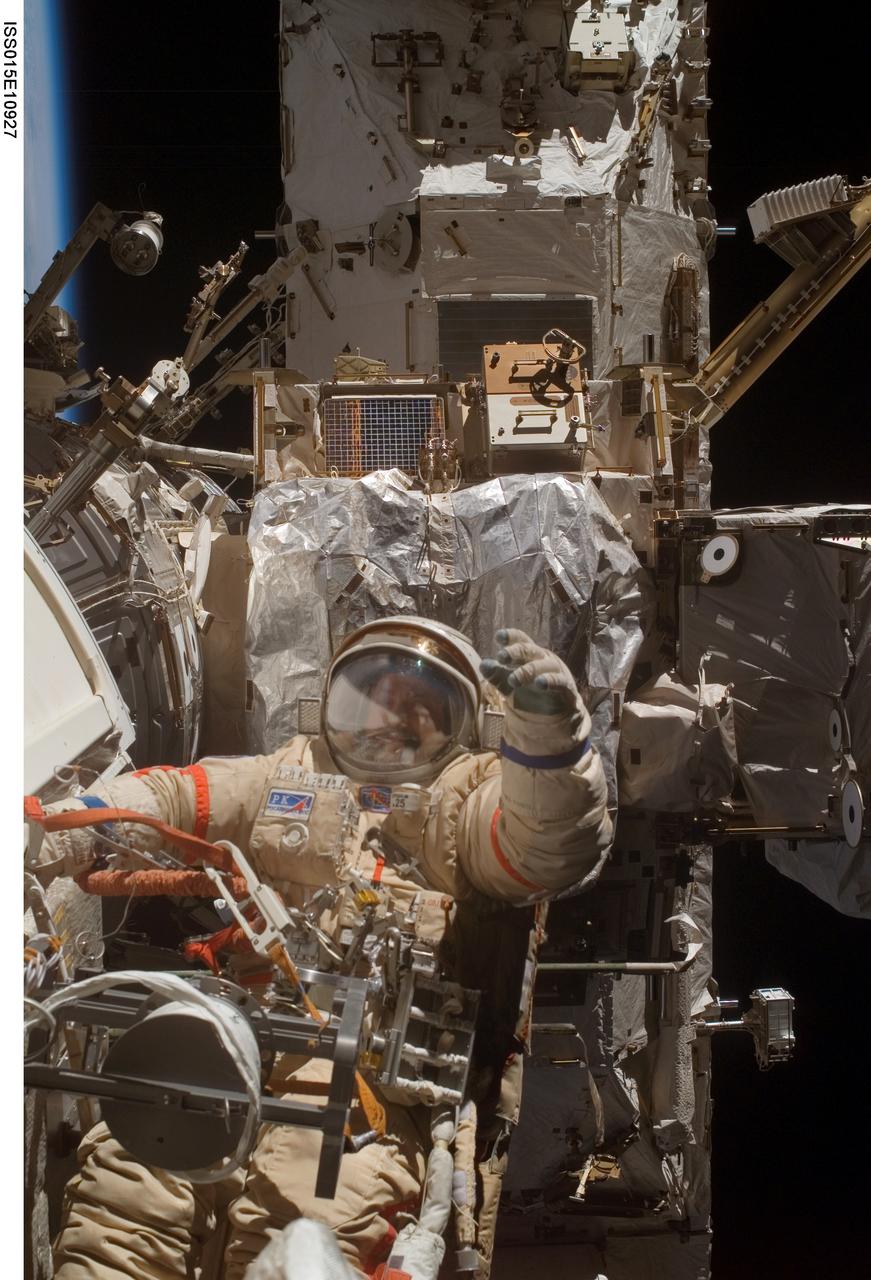
ISS015-E-10927 (6 June 2007) --- Cosmonaut Fyodor N. Yurchikhin, Expedition 15 commander representing Russia's Federal Space Agency, wearing a Russian Orlan spacesuit, participates in a session of extravehicular activity (EVA). Among other tasks, Yurchikhin and cosmonaut Oleg V. Kotov (out of frame), flight engineer representing Russia's Federal Space Agency, completed the installation of 12 more Zvezda Service Module debris panels and installed sample containers on the Pirs Docking Compartment for a Russian experiment, called Biorisk, which looks at the effect of space on microorganisms.
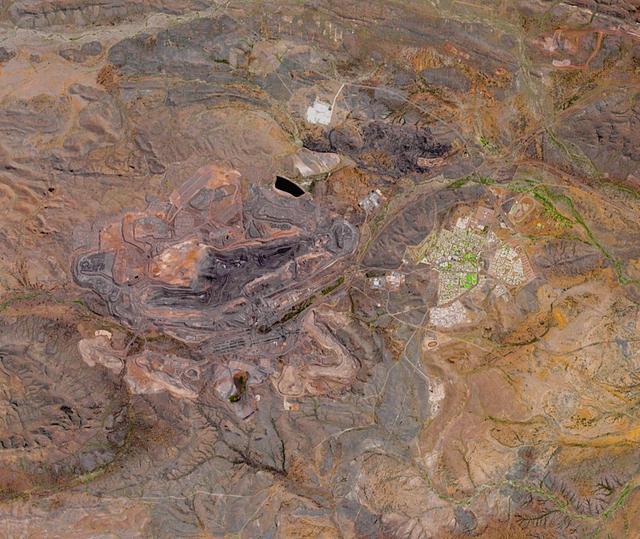
The Mount Whaleback open pit iron ore mine is located 6 km west of the town of Newman in the Pilbara region of Western Australia. It is currently the fifth largest iron mine in the world. The iron occurs in banded iron ore formations, created about 2.5 billion years ago when microorganisms first produced massive amounts of oxygen, oxidizing and precipitating the free iron in the oceans. The image was acquired October 2, 2017, covers an area of 14.4 by 17 km, and is located at 23.3 degrees south, 119.7 degrees east. https://photojournal.jpl.nasa.gov/catalog/PIA24016
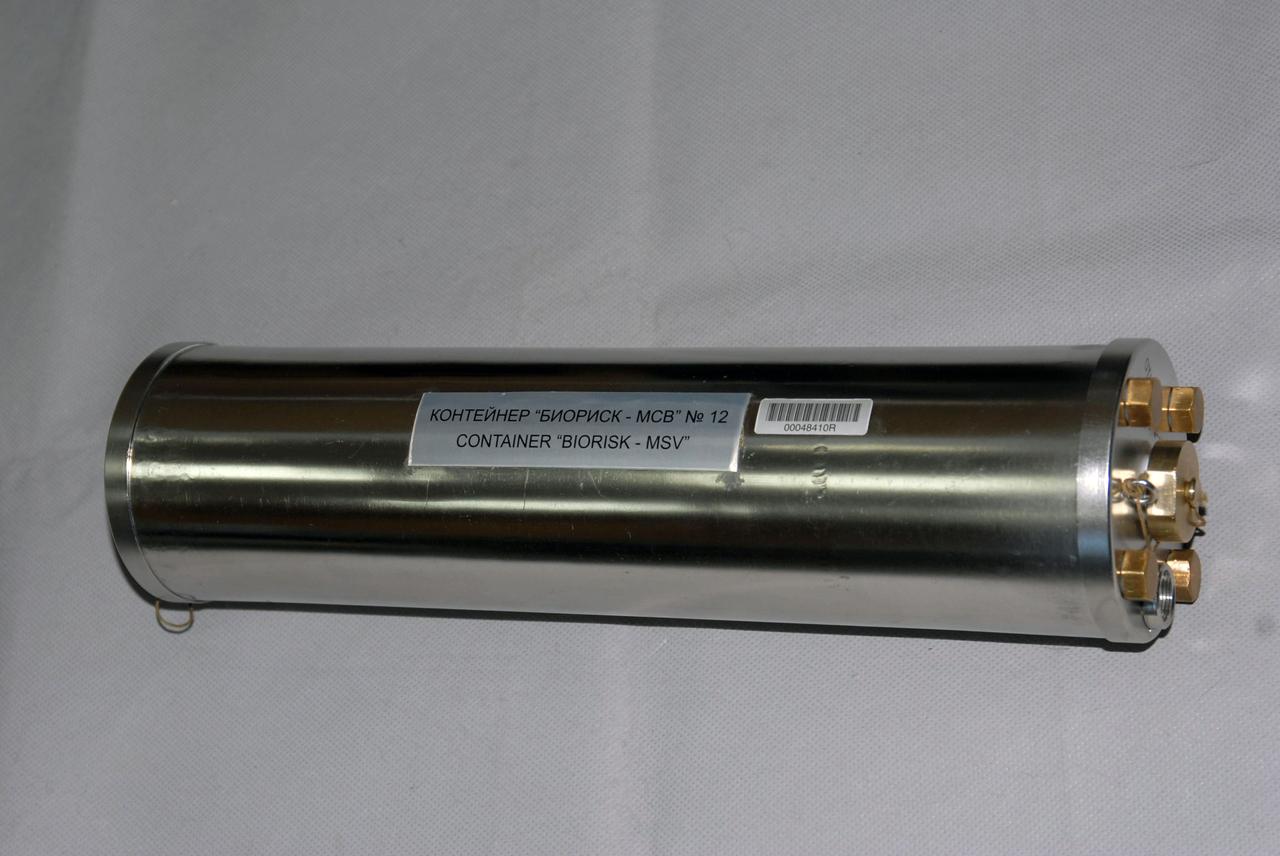
jsc2008e152661 (12/8/2008) --- A preflight view of a Biorisk-MSV container, part of the Biorisk experiment equipment to be delivered to the ISS during the 31P flight. The Influence of Factors of the Space Environment on the Condition of the System of Microorganisms-Hosts Relating to the Problem of Environmental Safety of Flight Techniques and Planetary Quarantine (Biorisk) investigation aims to obtain new data on physical and genetic changes in bacteria and fungi typically found on spacecraft equipment, and also in various biological test objects (higher plant seeds, dormant forms of lower crustaceans) under exposure in the interior ISS compartments and on the exterior ISS surfaces.
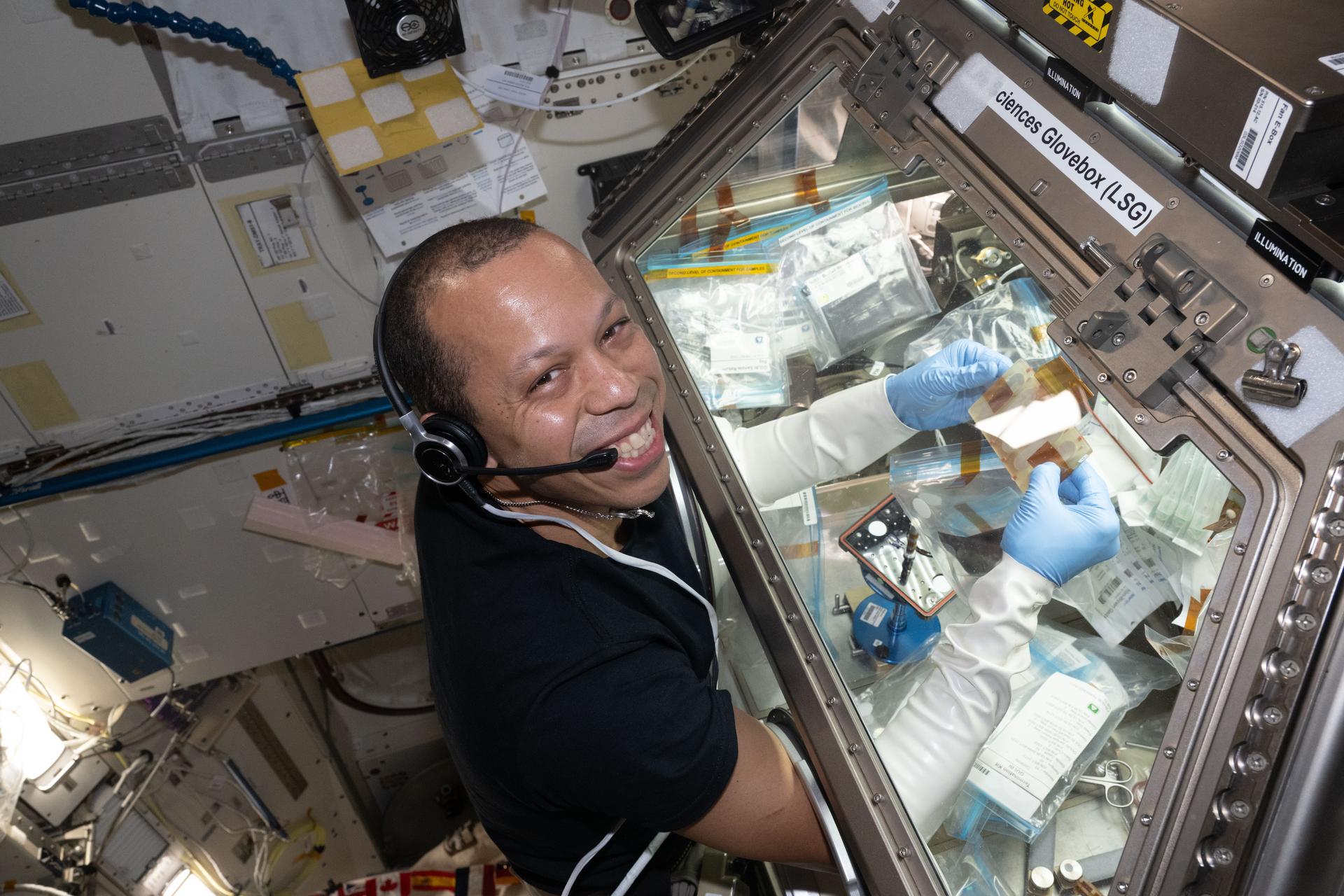
iss074e0149044 (Jan. 19, 2026) --- NASA astronaut and Expedition 74 Flight Engineer Chris Williams safely processes samples of a bacterial pathogen inside the Kibo laboratory module’s Life Science Glovebox. Williams was exploring a way to prevent the formation of biofilms, or a layer of microorganisms, anywhere water is found on a spacecraft where they pose human health risks and can damage equipment. The microbe samples are housed inside a specialized cell culture chamber, called a BioCell, and exposed to different levels of ultraviolet light to learn how to inhibit microbial growth and reduce reliance on chemical disinfectants.
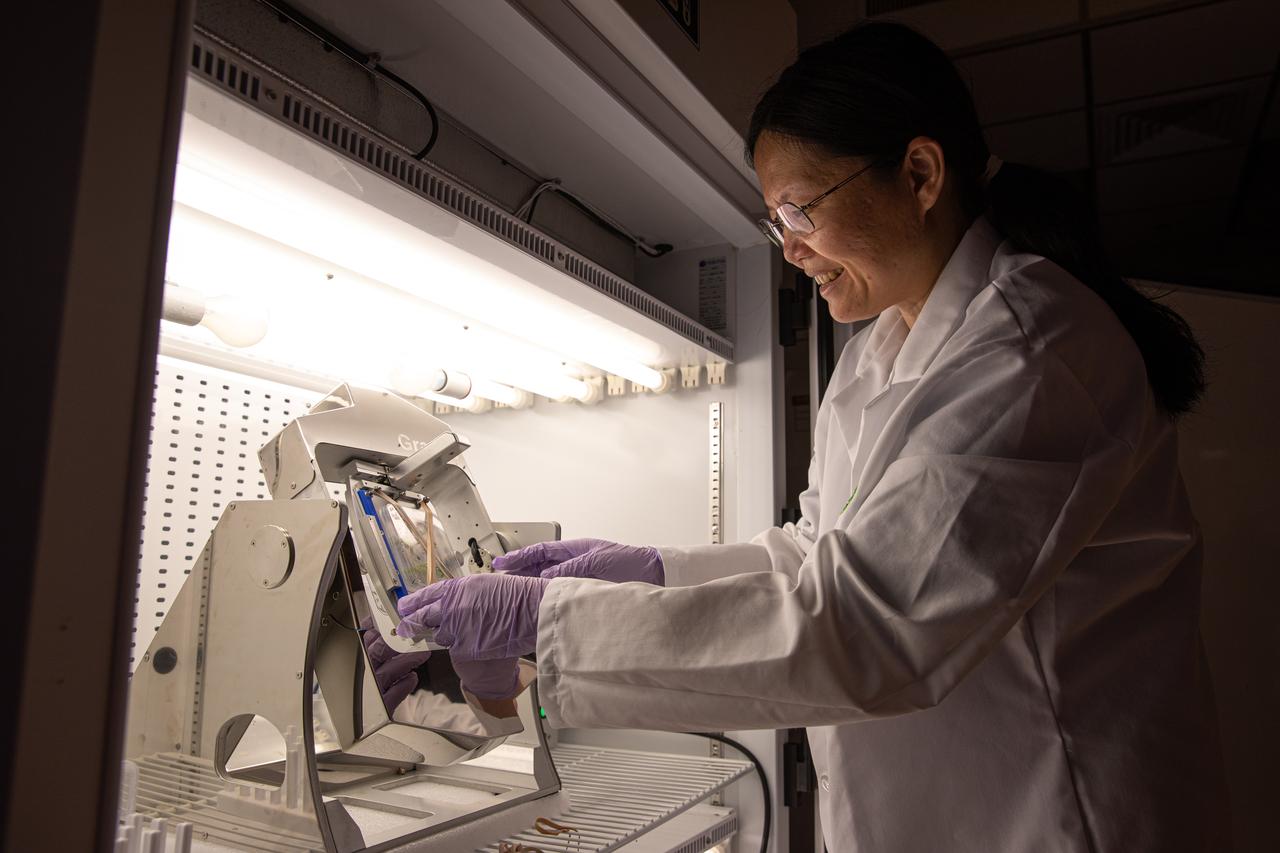
Ye Zhang, a project scientist at NASA’s Kennedy Space Center in Florida, makes adjustments to a Gravite 3d clinostat in the Microgravity Simulation Support Facility (MSSF) inside the Neil Armstrong Operations and Checkout building on Feb. 11, 2020. The facility was developed to provide ground simulation capability to the U.S. research community in order to supplement the limited opportunities to access the International Space Station and other platforms for microgravity research. The MSSF is designed to support biological research on microorganisms, cells, tissues, small plants and small animals. The simulator provides NASA with an alternative platform for microgravity research and creates the opportunity to conduct experiments on the space station in parallel with conditions of simulated microgravity on the ground.

Steven Benner, a distinguished fellow at the Foundation for Applied Molecular Evolution, right, speaks during a press conference as Mary Voytek, director of the Astrobiology Program at NASA looks on, Thursday, Dec. 2, 2010, at NASA Headquarters in Washington. NASA-funded astrobiology research has changed the fundamental knowledge about what comprises all known life on Earth. Researchers conducting tests in the harsh environment of Mono Lake in California have discovered the first known microorganism on Earth able to thrive and reproduce using the toxic chemical arsenic. Photo Credit: (NASA/Paul E. Alers)
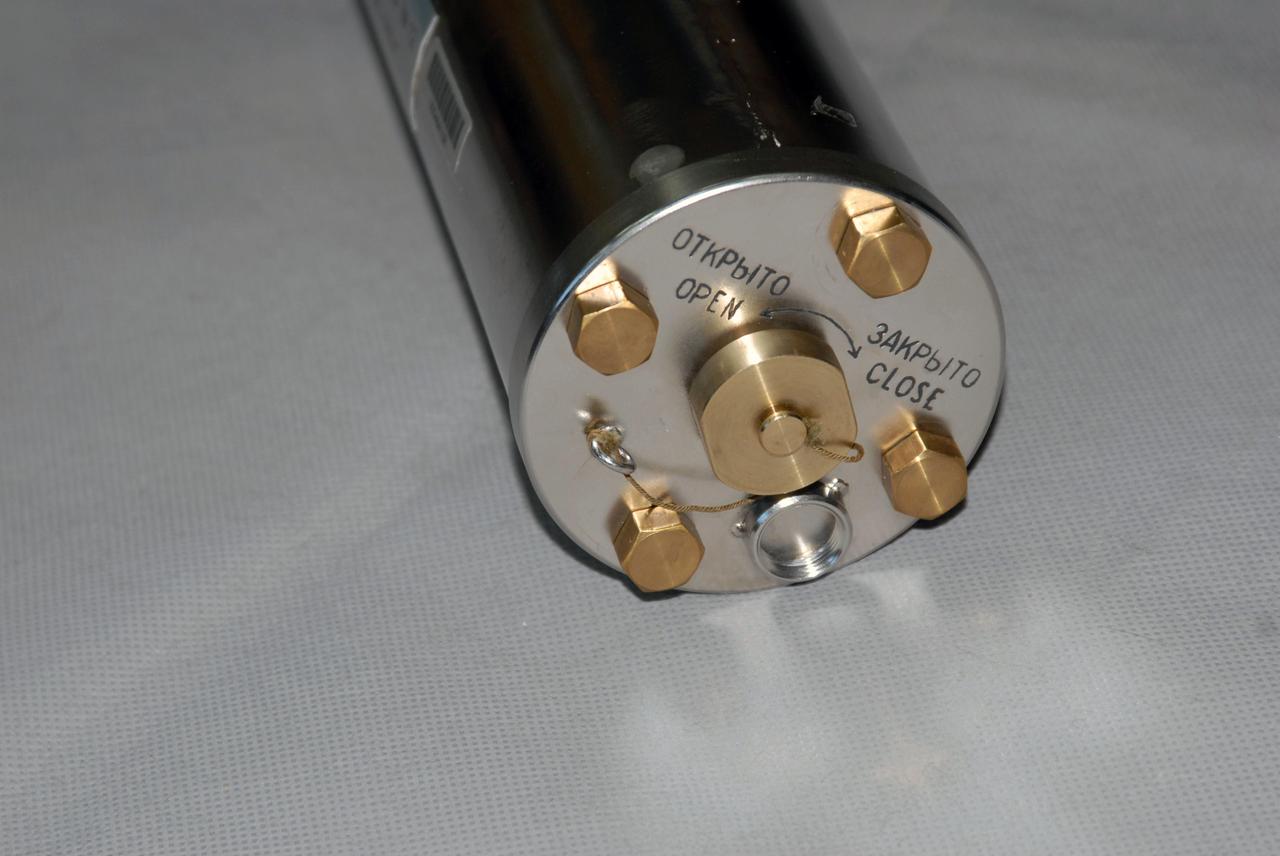
jsc2008e152662 (12/10/2008) --- A preflight view of connectors on a Biorisk-MSV container, part of the Biorisk experiment equipment to be delivered to the ISS during the 31P flight. The Influence of Factors of the Space Environment on the Condition of the System of Microorganisms-Hosts Relating to the Problem of Environmental Safety of Flight Techniques and Planetary Quarantine (Biorisk) investigation aims to obtain new data on physical and genetic changes in bacteria and fungi typically found on spacecraft equipment, and also in various biological test objects (higher plant seeds, dormant forms of lower crustaceans) under exposure in the interior ISS compartments and on the exterior ISS surfaces.
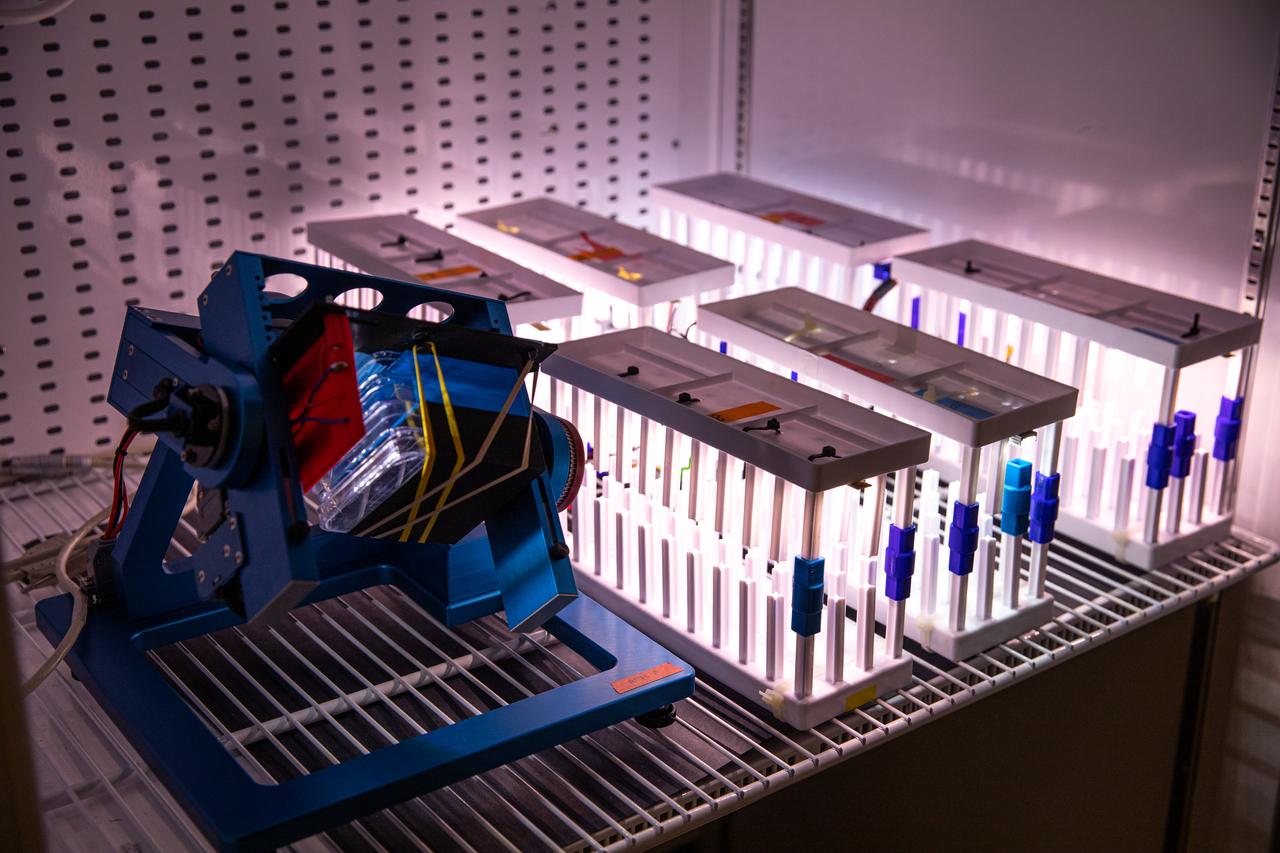
Some experiments are being prepared for a test in the Airbus Random Positioning Machine in the Microgravity Simulation Support Facility (MSSF) inside the Neil Armstrong Operations and Checkout building at NASA’s Kennedy Space Center in Florida on Feb. 11, 2020. The facility device was developed to provide ground simulation capability to the U.S. research community in order to supplement the limited opportunities to access the International Space Station and other platforms for microgravity research. The MSSF is designed to support biological research on microorganisms, cells, tissues, small plants and small animals. The simulator provides NASA with an alternative platform for microgravity research and creates the opportunity to conduct experiments on the space station in parallel with conditions of simulated microgravity on the ground.
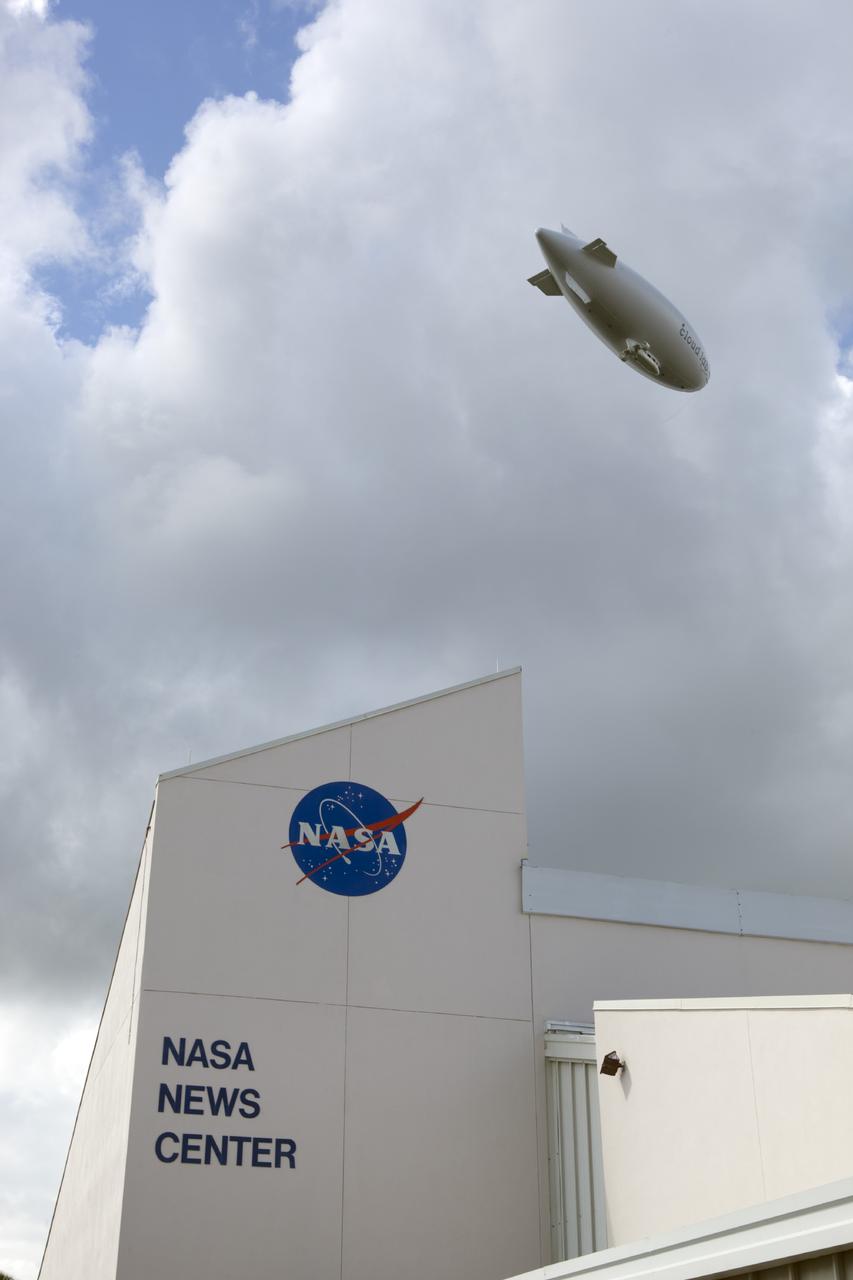
CAPE CANAVERAL, Fla. -- An airship from the British Broadcasting Corp., or BBC, flies over Launch Complex 39 past the NASA News Center at NASA's Kennedy Space Center in Florida. A team of scientists from the BBC's television project "Cloud Lab" are conducting a number of experiments aboard the airship as it flies across the U.S., exploring all aspects of the Earth's atmosphere. One of the experiments is NASA's Microorganisms in the Stratosphere, or MIST, which is designed to measure the microbial survival and cellular responses to exposure in the upper atmosphere. Photo credit: NASA/Dimitri Gerondidakis
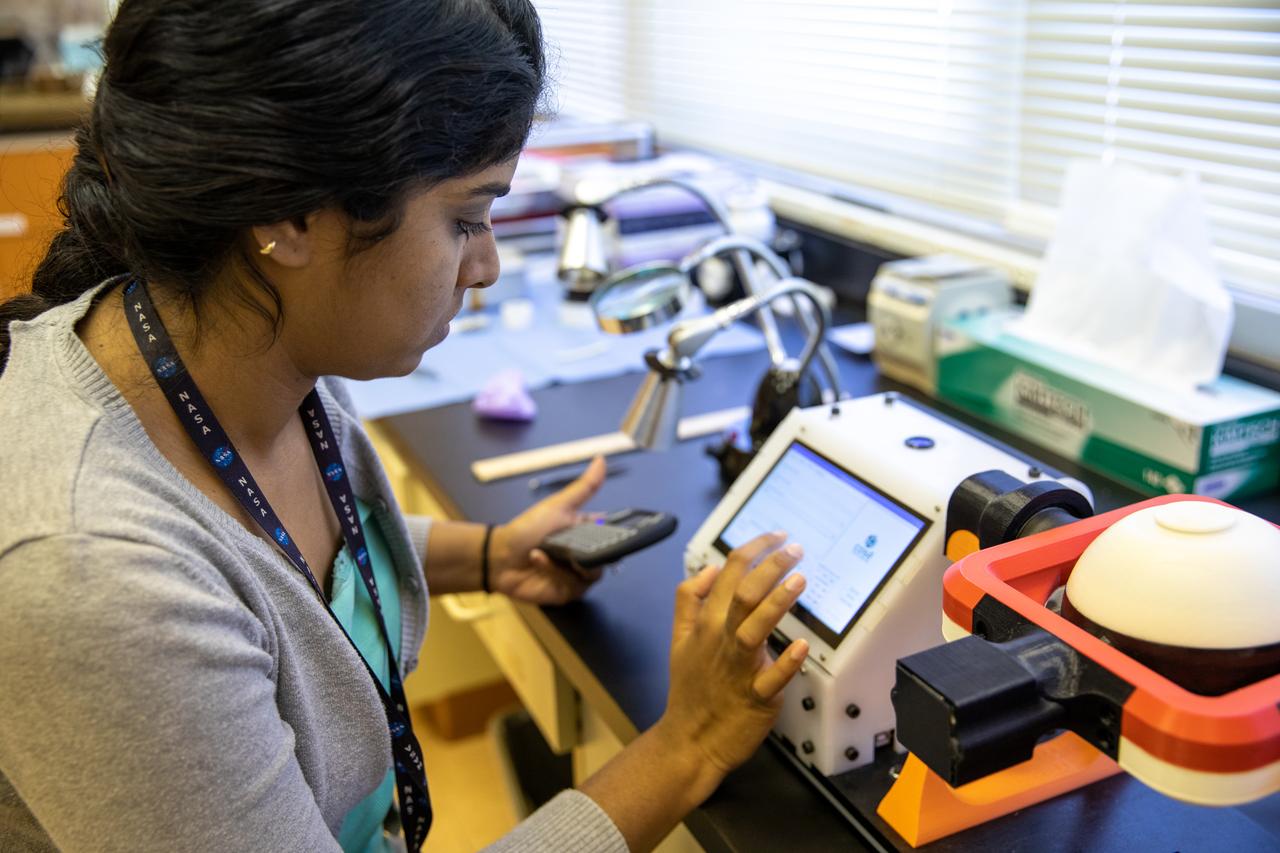
Srujana Neelam, a researcher working at NASA’s Kennedy Space Center in Florida, programs the SciSpinner Microgravity Simulator in the Microgravity Simulation Support Facility (MSSF) inside the Neil Armstrong Operations and Checkout building on Feb. 11, 2020. The facility was developed to provide ground simulation capability to the U.S. research community in order to supplement the limited opportunities to access the International Space Station and other platforms for microgravity research. The MSSF is designed to support biological research on microorganisms, cells, tissues, small plants and small animals. The simulator provides NASA with an alternative platform for microgravity research and creates the opportunity to conduct experiments on the space station in parallel with conditions of simulated microgravity on the ground.
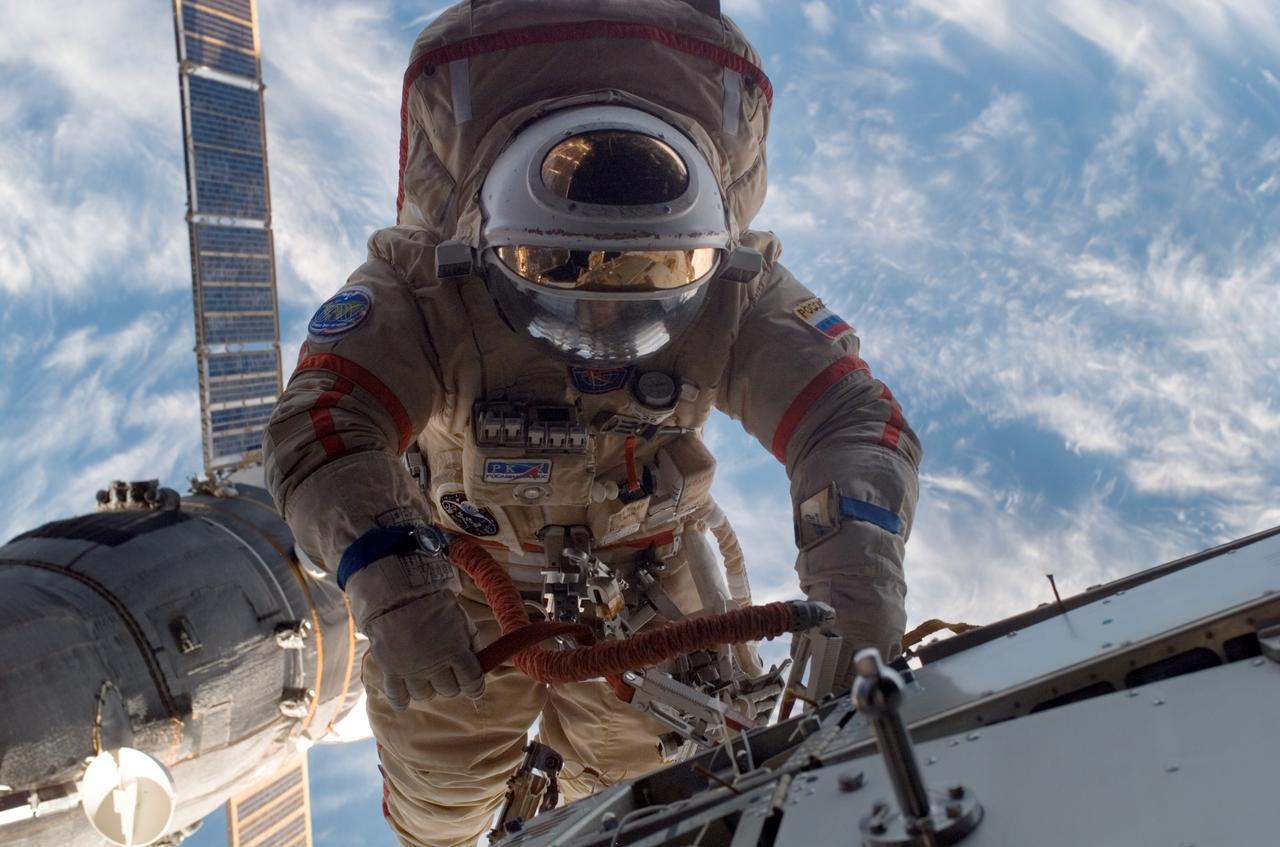
ISS015-E-11009 (6 June 2007) --- Cosmonaut Fyodor N. Yurchikhin, Expedition 15 commander representing Russia's Federal Space Agency, wearing a Russian Orlan spacesuit, participates in a session of extravehicular activity (EVA). Among other tasks, Yurchikhin and cosmonaut Oleg V. Kotov (out of frame), flight engineer representing Russia's Federal Space Agency, completed the installation of 12 more Zvezda Service Module debris panels and installed sample containers on the Pirs Docking Compartment for a Russian experiment, called Biorisk, which looks at the effect of space on microorganisms.

A Gravite 3d clinostat is in the Microgravity Simulation Support Facility (MSSF) inside the Neil Armstrong Operations and Checkout building at NASA’s Kennedy Space Center in Florida on Feb. 11, 2020. The facility was developed to provide ground simulation capability to the U.S. research community in order to supplement the limited opportunities to access the International Space Station and other platforms for microgravity research. The MSSF is designed to support biological research on microorganisms, cells, tissues, small plants and small animals. The simulator provides NASA with an alternative platform for microgravity research and creates the opportunity to conduct experiments on the space station in parallel with conditions of simulated microgravity on the ground.
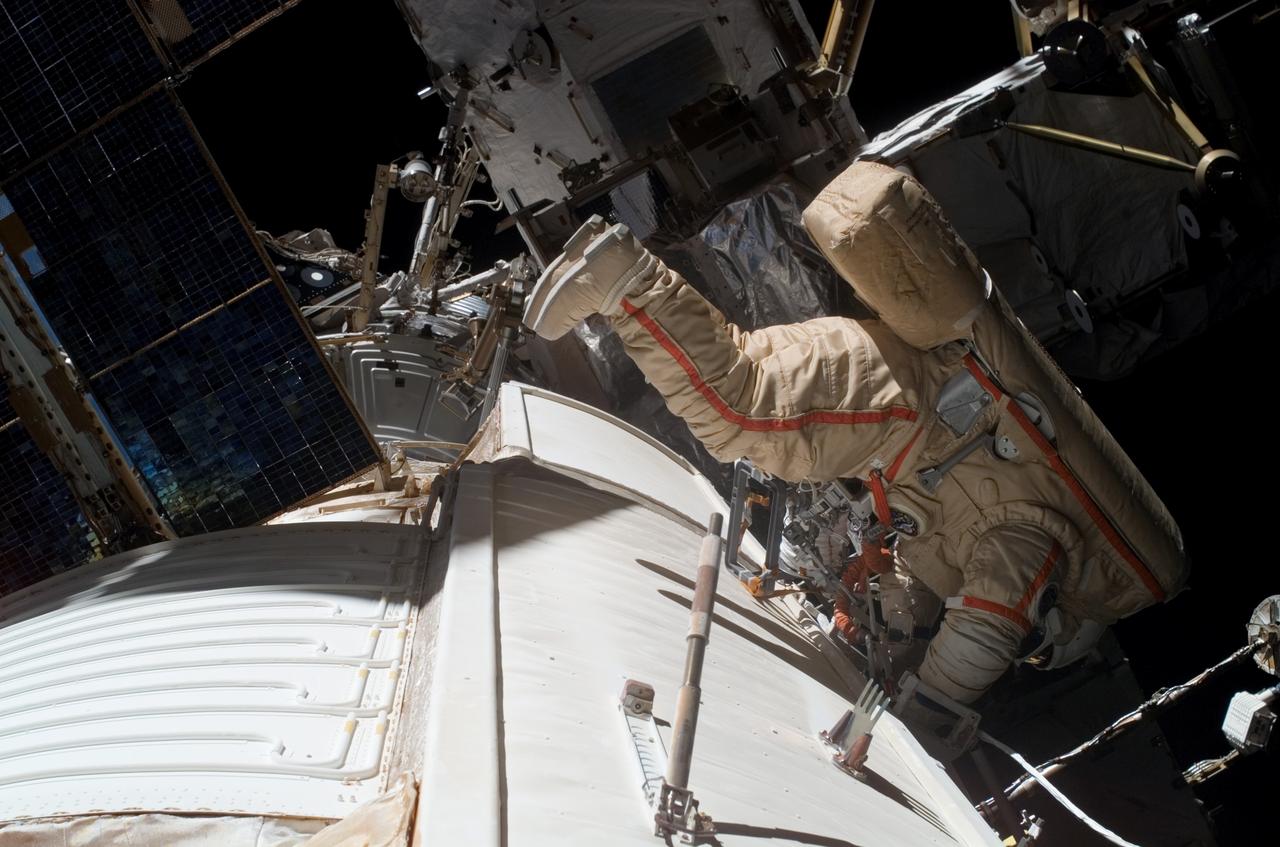
ISS015-E-10901 (6 June 2007) --- Cosmonaut Fyodor N. Yurchikhin, Expedition 15 commander representing Russia's Federal Space Agency, wearing a Russian Orlan spacesuit, participates in a session of extravehicular activity (EVA). Among other tasks, Yurchikhin and cosmonaut Oleg V. Kotov (out of frame), flight engineer representing Russia's Federal Space Agency, completed the installation of 12 more Zvezda Service Module debris panels and installed sample containers on the Pirs Docking Compartment for a Russian experiment, called Biorisk, which looks at the effect of space on microorganisms.

Felisa Wolfe-Simon, a lead researcher and NASA astrobiology research fellow, speaks during a press conference, as Mary Voytek, Steven Benner and Pamela Conrad look on, Thursday, Dec. 2, 2010, at NASA Headquarters in Washington. NASA-funded astrobiology research has changed the fundamental knowledge about what comprises all known life on Earth. Researchers conducting tests in the harsh environment of Mono Lake in California have discovered the first known microorganism on Earth able to thrive and reproduce using the toxic chemical arsenic. Photo Credit: (NASA/Paul E. Alers)
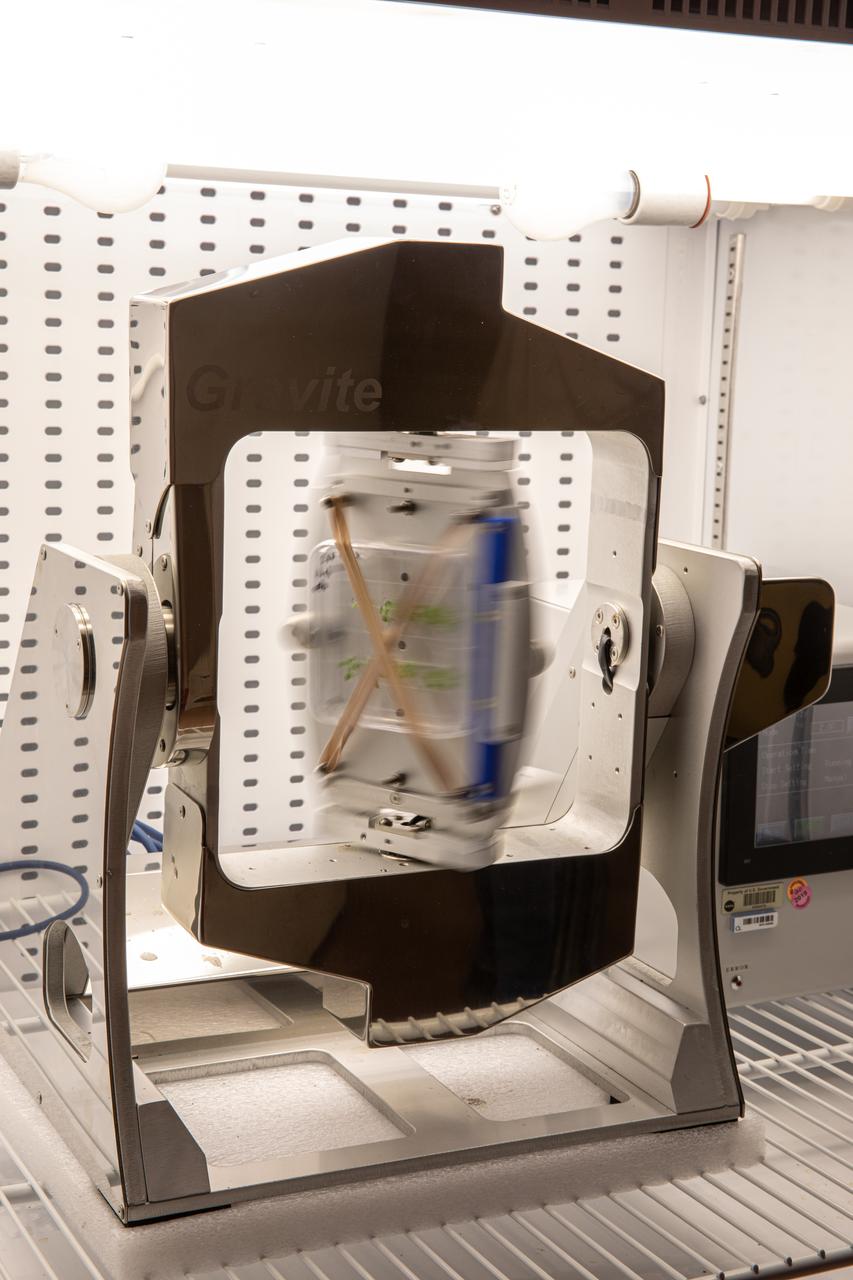
A Gravite 3d clinostat undergoes a test in the Microgravity Simulation Support Facility (MSSF) inside the Neil Armstrong Operations and Checkout building at NASA’s Kennedy Space Center in Florida on Feb. 11, 2020. The facility was developed to provide ground simulation capability to the U.S. research community in order to supplement the limited opportunities to access the International Space Station and other platforms for microgravity research. The MSSF is designed to support biological research on microorganisms, cells, tissues, small plants and small animals. The simulator provides NASA with an alternative platform for microgravity research and creates the opportunity to conduct experiments on the space station in parallel with conditions of simulated microgravity on the ground.
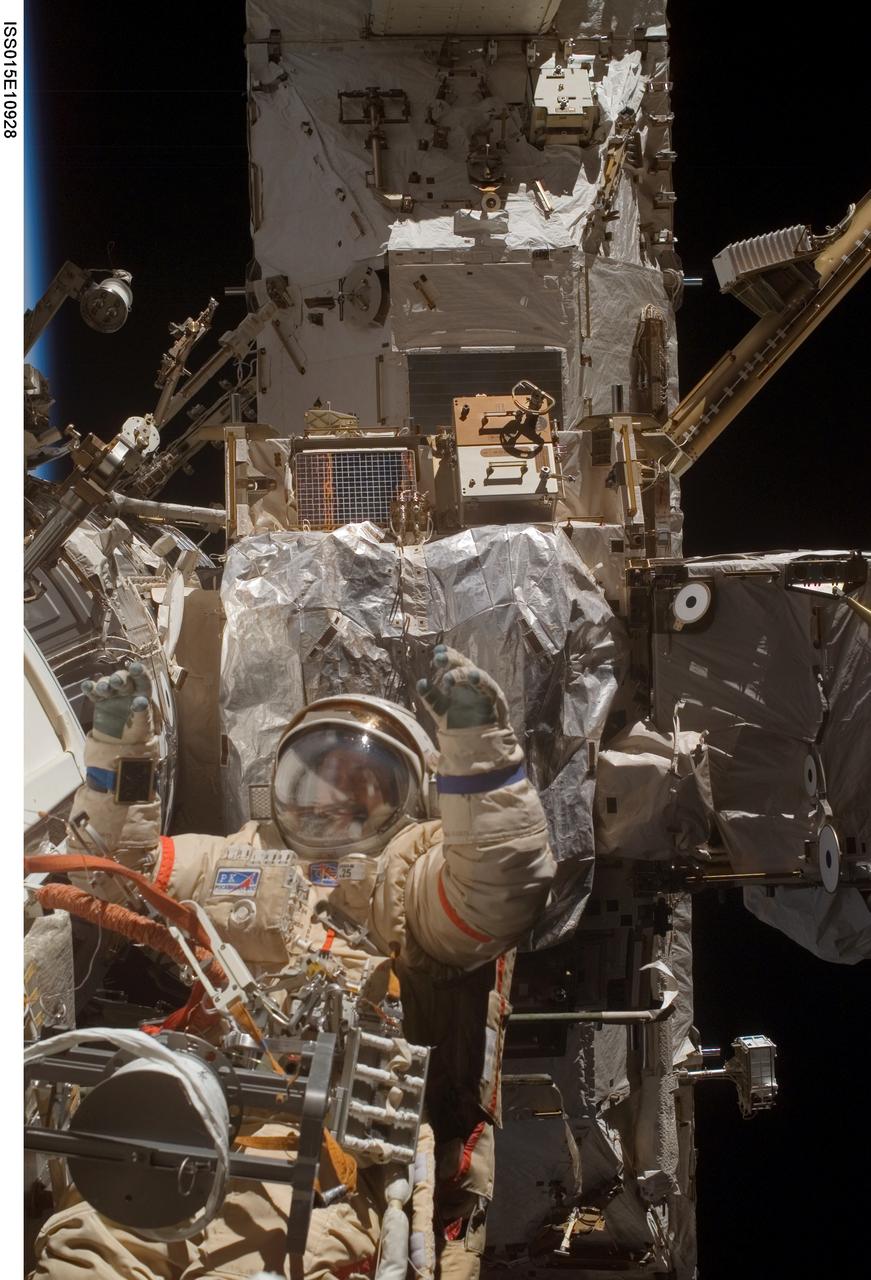
ISS015-E-10928 (6 June 2007) --- Cosmonaut Fyodor N. Yurchikhin, Expedition 15 commander representing Russia's Federal Space Agency, wearing a Russian Orlan spacesuit, participates in a session of extravehicular activity (EVA). Among other tasks, Yurchikhin and cosmonaut Oleg V. Kotov (out of frame), flight engineer representing Russia's Federal Space Agency, completed the installation of 12 more Zvezda Service Module debris panels and installed sample containers on the Pirs Docking Compartment for a Russian experiment, called Biorisk, which looks at the effect of space on microorganisms.

ISS015-E-10870 (6 June 2007) --- Cosmonaut Fyodor N. Yurchikhin, Expedition 15 commander representing Russia's Federal Space Agency, wearing a Russian Orlan spacesuit, participates in a session of extravehicular activity (EVA). Among other tasks, Yurchikhin and cosmonaut Oleg V. Kotov (out of frame), flight engineer representing Russia's Federal Space Agency, completed the installation of 12 more Zvezda Service Module debris panels and installed sample containers on the Pirs Docking Compartment for a Russian experiment, called Biorisk, which looks at the effect of space on microorganisms.
![iss028e020313 (8/2/2011) --- A view of the Biorisk-[MSN] platform with three containers to be installed on the exterior of the Pirs Docking Compartment (DC1) during Russian EVA-29 (Extravehicular Activity). The Influence of Factors of the Space Environment on the Condition of the System of Microorganisms-Hosts Relating to the Problem of Environmental Safety of Flight Techniques and Planetary Quarantine (Biorisk) investigation aims to obtain new data on physical and genetic changes in bacteria and fungi typically found on spacecraft equipment, and also in various biological test objects (higher plant seeds, dormant forms of lower crustaceans) under exposure in the interior ISS compartments and on the exterior ISS surfaces.](https://images-assets.nasa.gov/image/iss028e020313/iss028e020313~medium.jpg)
iss028e020313 (8/2/2011) --- A view of the Biorisk-[MSN] platform with three containers to be installed on the exterior of the Pirs Docking Compartment (DC1) during Russian EVA-29 (Extravehicular Activity). The Influence of Factors of the Space Environment on the Condition of the System of Microorganisms-Hosts Relating to the Problem of Environmental Safety of Flight Techniques and Planetary Quarantine (Biorisk) investigation aims to obtain new data on physical and genetic changes in bacteria and fungi typically found on spacecraft equipment, and also in various biological test objects (higher plant seeds, dormant forms of lower crustaceans) under exposure in the interior ISS compartments and on the exterior ISS surfaces.
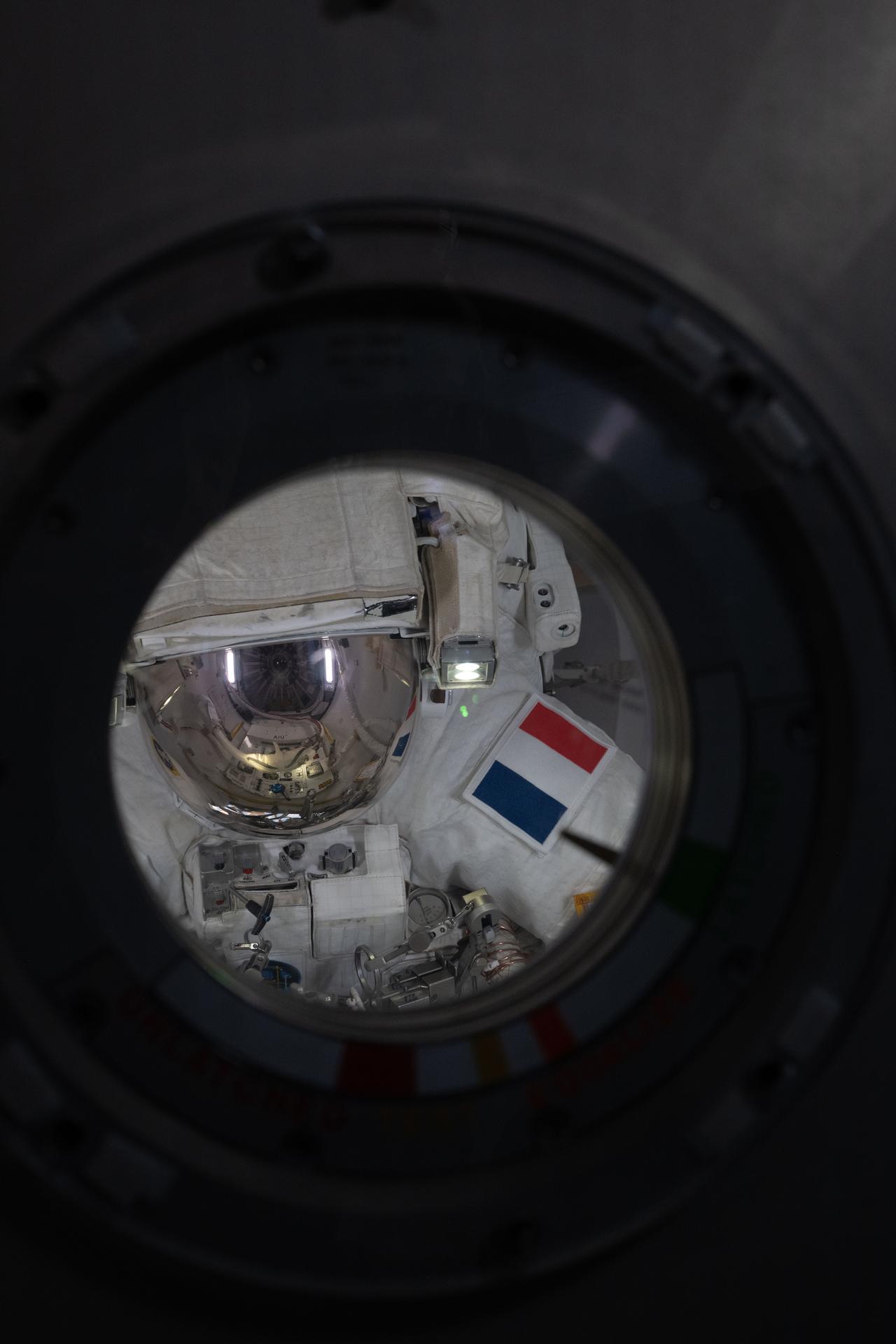
iss075e0085813 (Sept. 1, 2026) --- ESA (European Space Agency) astronaut Sophie Adenot, with her spacesuit’s gold‑plated helmet visor down and wearing a patch representing her home country of France, is pictured inside the Quest airlock after the completion of a six‑hour and 49‑minute spacewalk. Adenot, along with station commander Jessica Meir of NASA (out of frame), installed a spacecraft navigation aid, swabbed the station’s exterior for microorganisms, and prepared a cosmic particle detector for future upgrades outside the International Space Station. Credit: NASA/Anil Menon
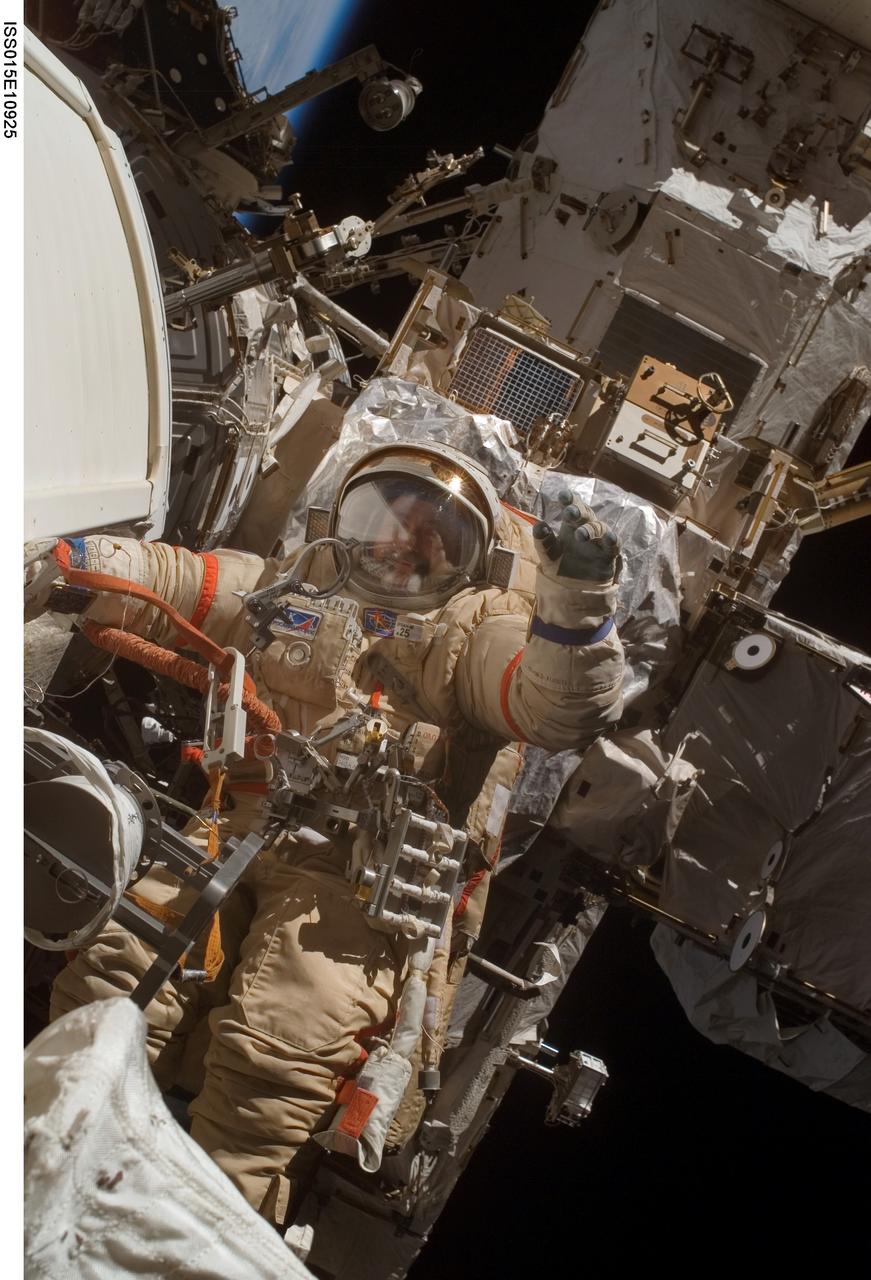
ISS015-E-10925 (6 June 2007) --- Cosmonaut Fyodor N. Yurchikhin, Expedition 15 commander representing Russia's Federal Space Agency, wearing a Russian Orlan spacesuit, participates in a session of extravehicular activity (EVA). Among other tasks, Yurchikhin and cosmonaut Oleg V. Kotov (out of frame), flight engineer representing Russia's Federal Space Agency, completed the installation of 12 more Zvezda Service Module debris panels and installed sample containers on the Pirs Docking Compartment for a Russian experiment, called Biorisk, which looks at the effect of space on microorganisms.
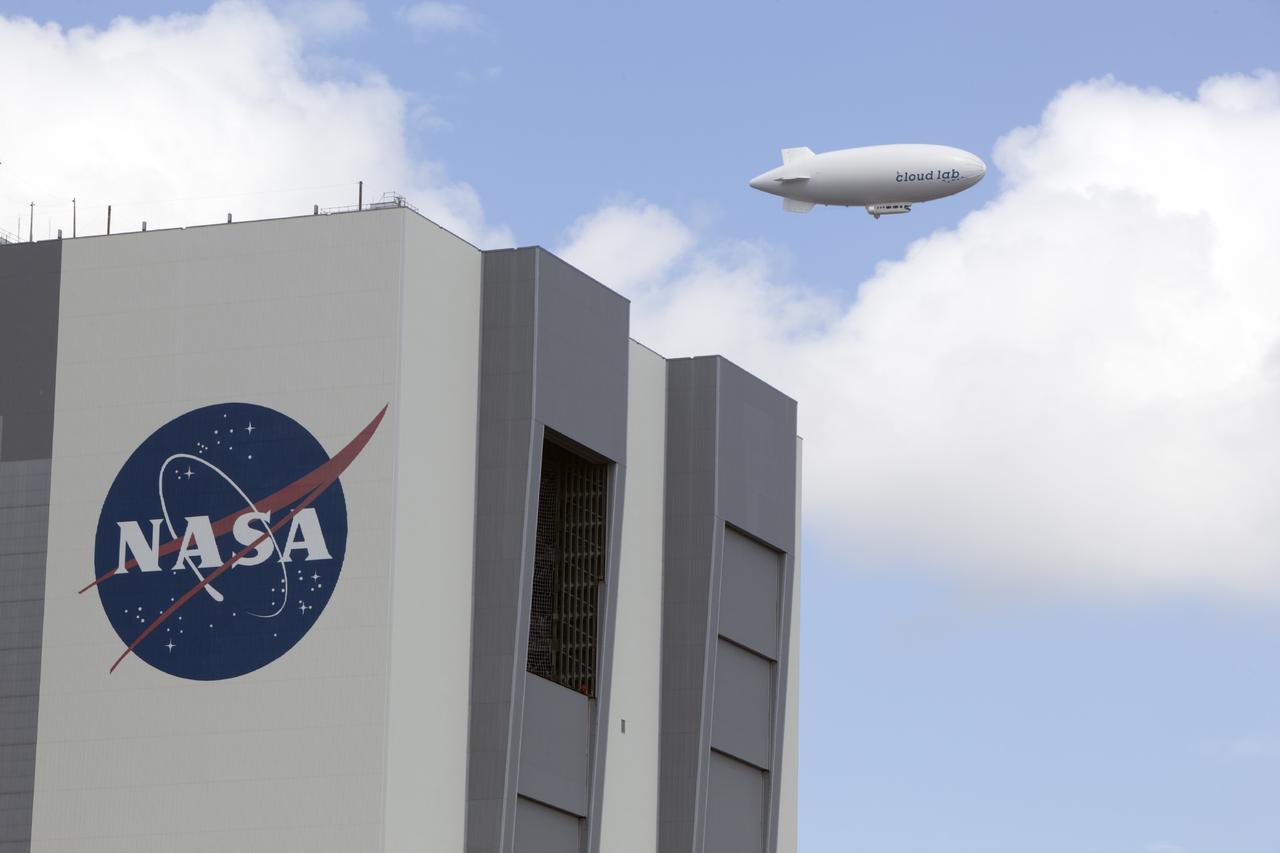
CAPE CANAVERAL, Fla. -- An airship from the British Broadcasting Corp., or BBC, flies over Launch Complex 39 past the Vehicle Assembly Building at NASA's Kennedy Space Center in Florida. A team of scientists from the BBC's television project "Cloud Lab" are conducting a number of experiments aboard the airship as it flies across the U.S., exploring all aspects of the Earth's atmosphere. One of the experiments is NASA's Microorganisms in the Stratosphere, or MIST, which is designed to measure the microbial survival and cellular responses to exposure in the upper atmosphere. Photo credit: NASA/Dimitri Gerondidakis
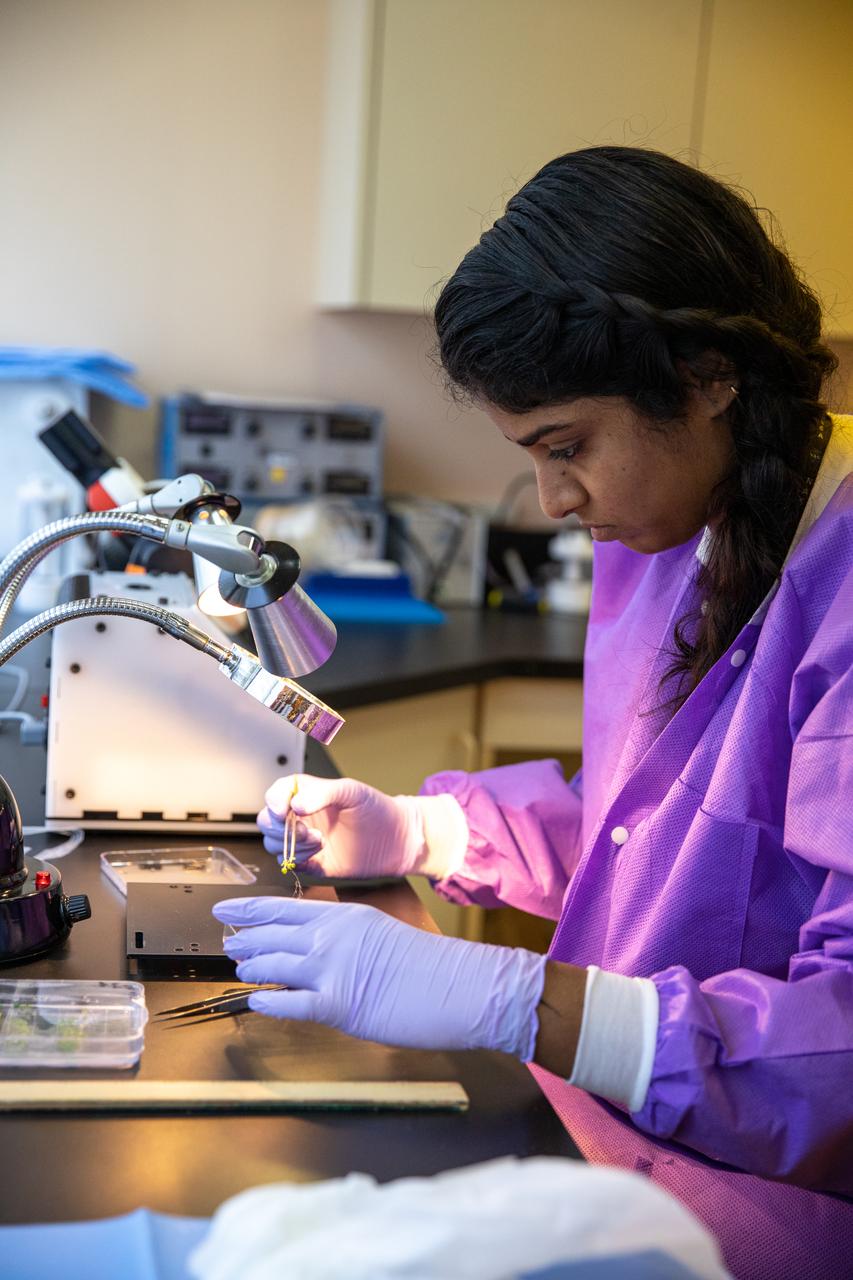
Srujana Neelam, a researcher working at NASA’s Kennedy Space Center in Florida, dissects Arabidopsis thaliana plants from petri plates used in microgravity simulation devices in the Microgravity Simulation Support Facility (MSSF) inside the Neil Armstrong Operations and Checkout building on Feb. 11, 2020. The facility was developed to provide ground simulation capability to the U.S. research community in order to supplement the limited opportunities to access the International Space Station and other platforms for microgravity research. The MSSF is designed to support biological research on microorganisms, cells, tissues, small plants and small animals. The simulator provides NASA with an alternative platform for microgravity research and creates the opportunity to conduct experiments on the space station in parallel with conditions of simulated microgravity on the ground.
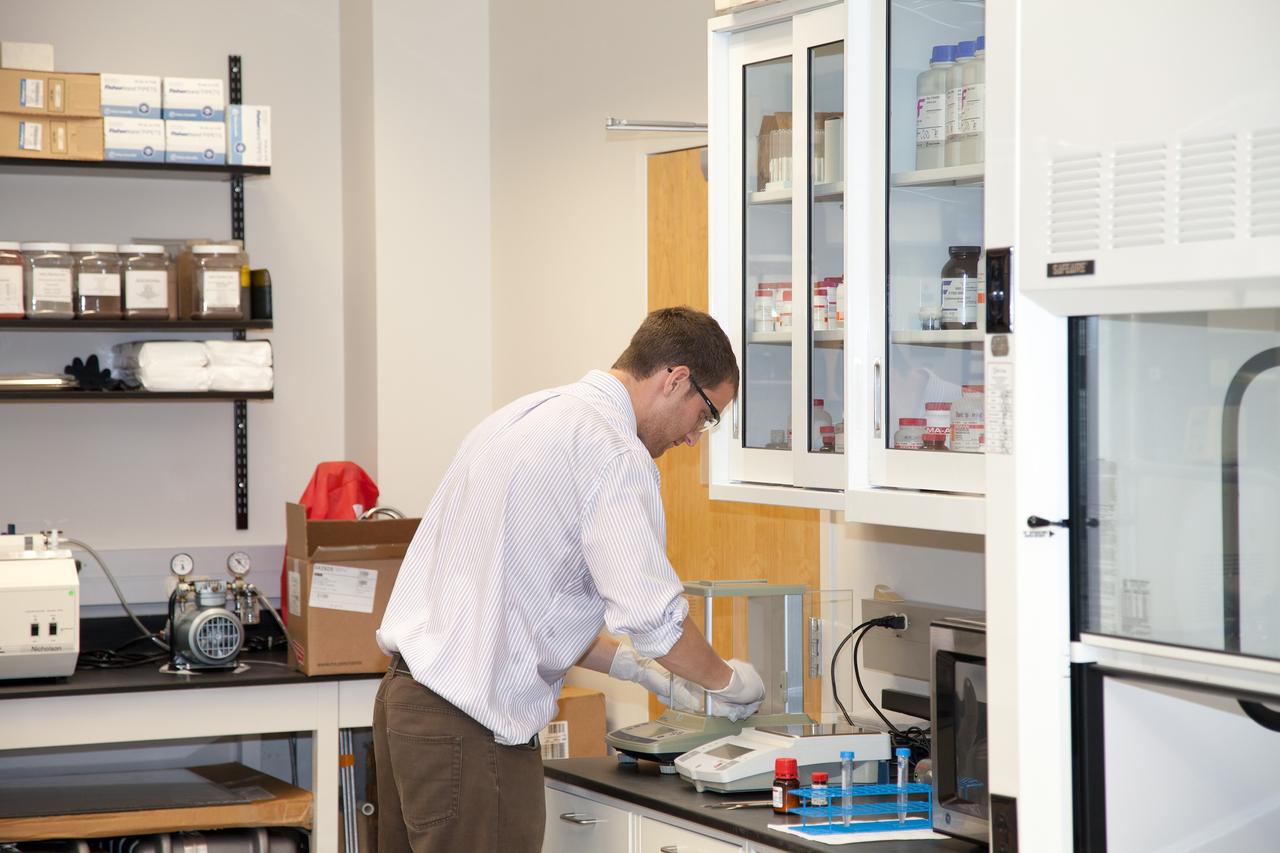
CAPE CANAVERAL, Fla. -- Inside the Space Life Sciences Laboratory near NASA’s Kennedy Space Center in Florida, Dr. David J. Smith, a microbiologist in the Surface Systems Office, prepares microbes that will be deployed for the Microorganisms in the Stratosphere, or MIST, mission. High altitudes exert a unique combination of stresses on microbes, outside the range of conditions normally encountered on the Earth's surface. Results from MIST may improve our understanding of the physical limits and habitable environments for life. The MIST mission will fly a small biological payload aboard a blimp in July to measure microbial survival and cellular responses to exposure in the upper atmoshere. Later in the year, the MIST mission will deploy samples at even higher altitudes in the stratosphere using scientific balloons. Photo credit: NASA/Daniel Casper
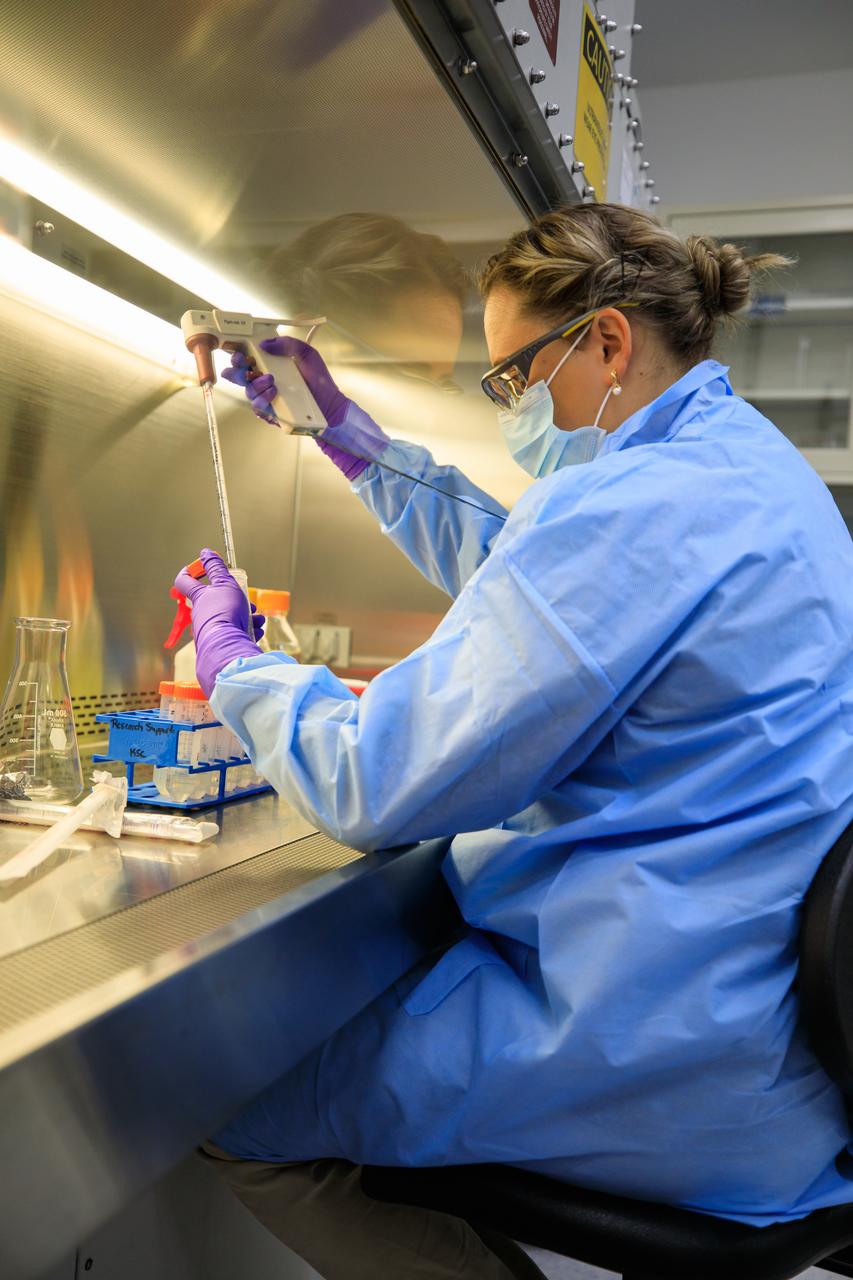
Pacific Northwest National Laboratory (PNNL) Scientist Yuliya Farris prepares the Dynamics of Microbiomes in Space (DynaMoS) experiment inside a laboratory at the Florida spaceport’s Space Station Processing Facility on July 11, 2022. The DynaMoS experiment will launch on SpaceX’s 25th cargo resupply services mission to examine how microgravity affects metabolic interactions in communities of soil microbes. This will help NASA understand the function of soil microorganisms in space versus on Earth and how they can be used to enhance plant growth for crew consumption during long-duration missions to the Moon and Mars. SpaceX’s Falcon 9 rocket and Dragon spacecraft are scheduled to lift off from Kennedy’s Launch Complex 39A at 8:44 p.m. EDT on Thursday, July 14.
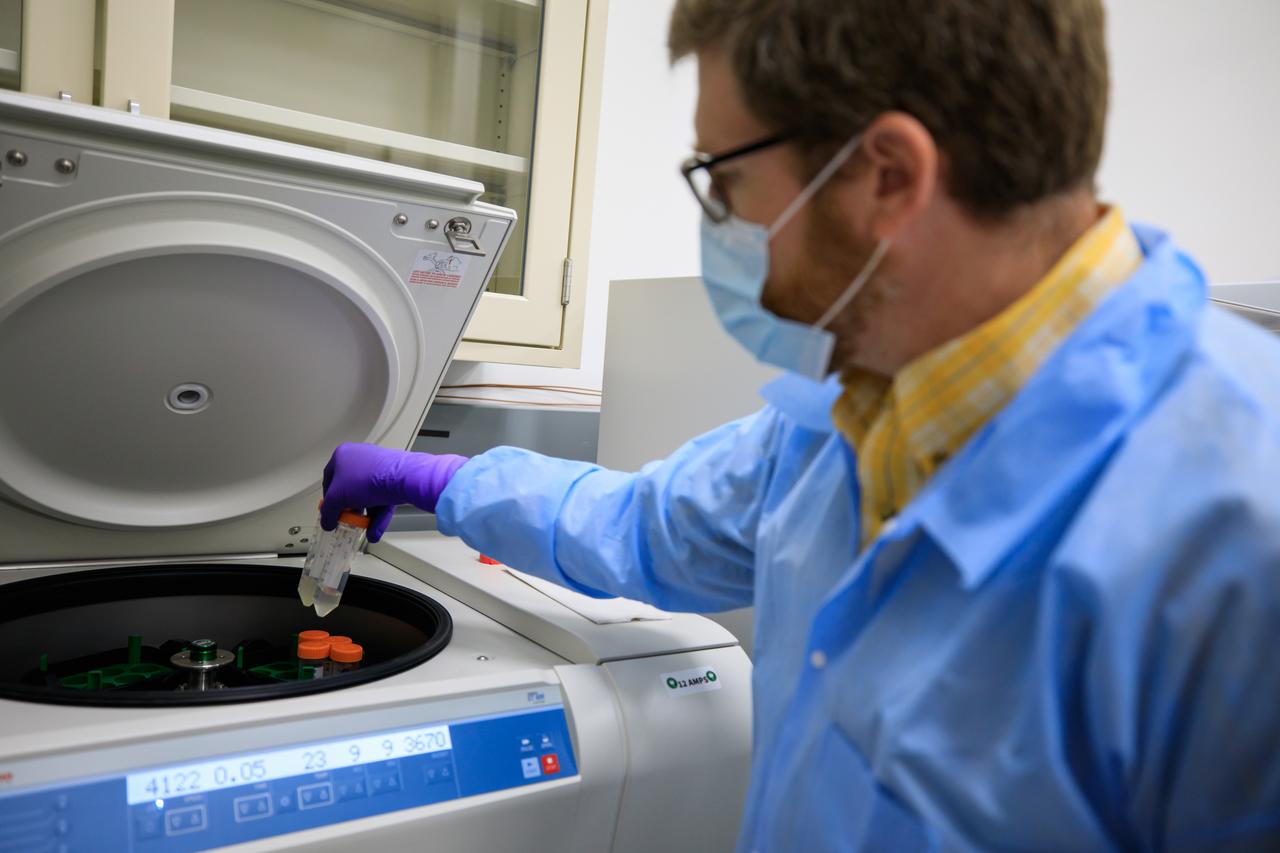
Ryan McClure, scientist with Pacific Northwest National Laboratory (PNNL) prepare the Dynamics of Microbiomes in Space (DynaMoS) experiment inside a laboratory at the Space Station Processing Facility on July 11, 2022. The DynaMoS experiment will launch on SpaceX’s 25th cargo resupply services mission to examine how microgravity affects metabolic interactions in communities of soil microbes. This will help NASA understand the function of soil microorganisms in space versus on Earth and how they can be used to enhance plant growth for crew consumption during long-duration missions to the Moon and Mars. SpaceX’s Falcon 9 rocket and Dragon spacecraft are scheduled to lift off from Kennedy’s Launch Complex 39A at 8:44 p.m. EDT on Thursday, July 14.
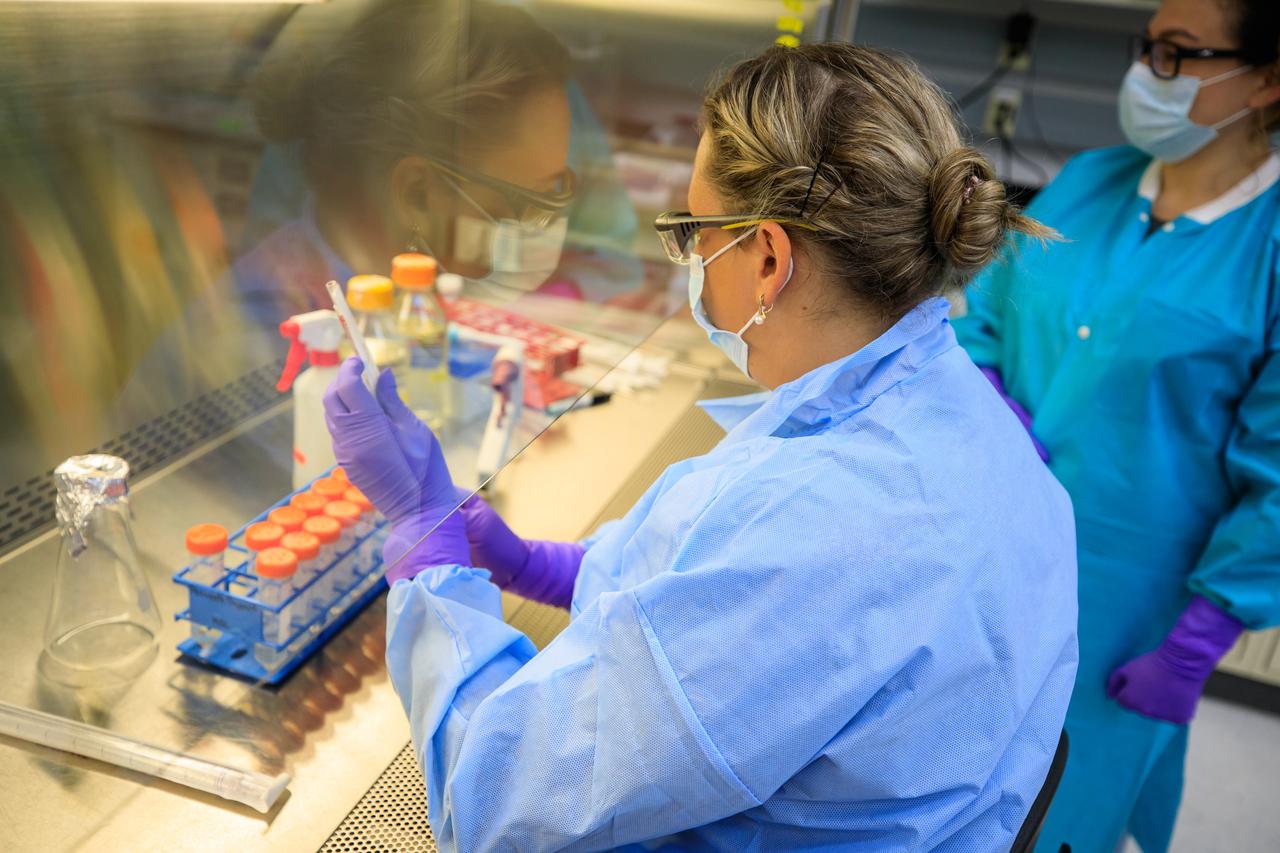
Pacific Northwest National Laboratory (PNNL) Scientist Yuliya Farris (left) prepares the Dynamics of Microbiomes in Space (DynaMoS) experiment inside a laboratory at the Florida spaceport’s Space Station Processing Facility on July 11, 2022. The DynaMoS experiment will launch on SpaceX’s 25th cargo resupply services mission to examine how microgravity affects metabolic interactions in communities of soil microbes. This will help NASA understand the function of soil microorganisms in space versus on Earth and how they can be used to enhance plant growth for crew consumption during long-duration missions to the Moon and Mars. SpaceX’s Falcon 9 rocket and Dragon spacecraft are scheduled to lift off from Kennedy’s Launch Complex 39A at 8:44 p.m. EDT on Thursday, July 14.
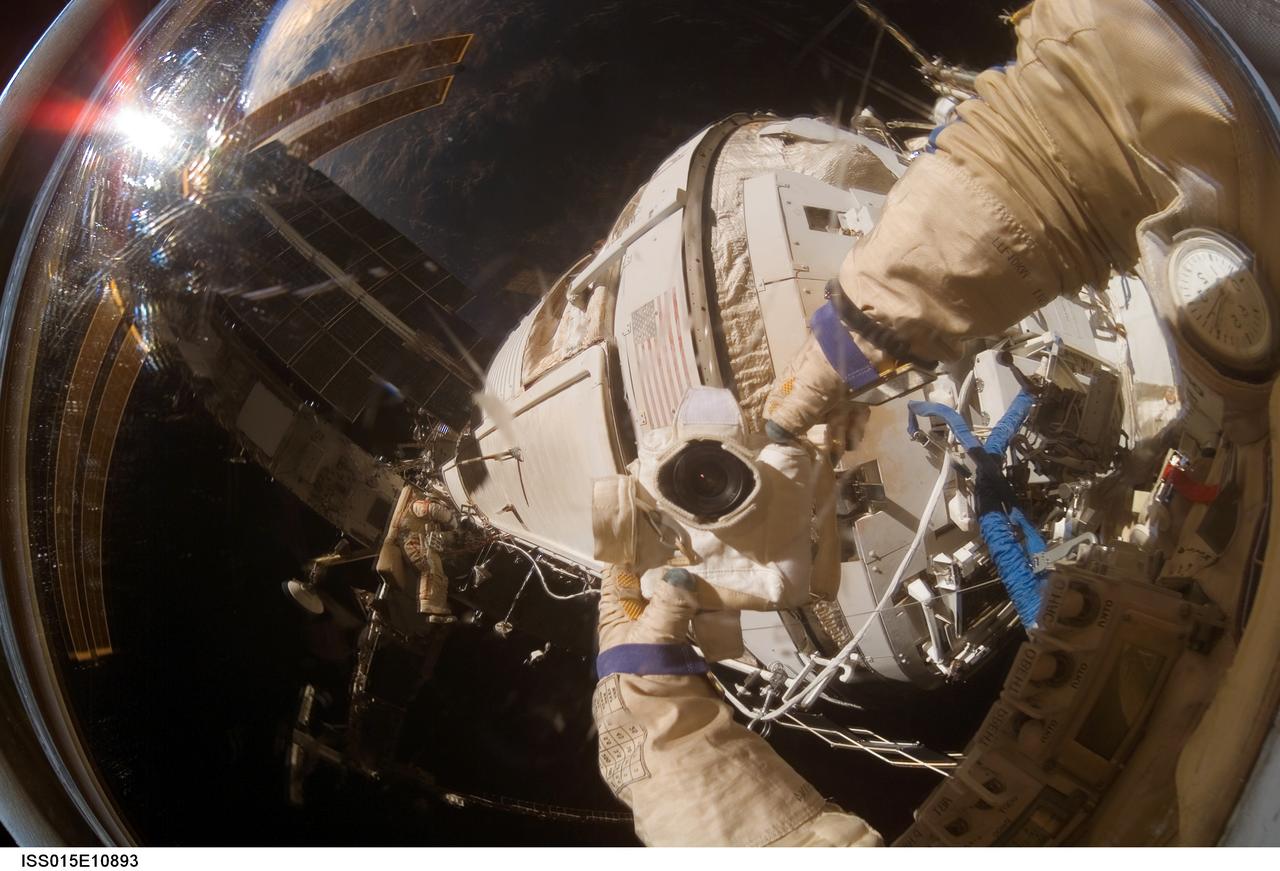
ISS015-E-10893 (6 June 2007) --- Cosmonaut Oleg V. Kotov, Expedition 15 flight engineer representing Russia's Federal Space Agency, wearing a Russian Orlan spacesuit, uses a digital still camera to expose a photo of his helmet visor during a session of extravehicular activity (EVA). A portion of the International Space Station is also visible in the reflections. Among other tasks, Kotov and cosmonaut Fyodor N. Yurchikhin (out of frame), commander representing Russia's Federal Space Agency, completed the installation of 12 more Zvezda Service Module debris panels and installed sample containers on the Pirs Docking Compartment for a Russian experiment, called Biorisk, which looks at the effect of space on microorganisms.
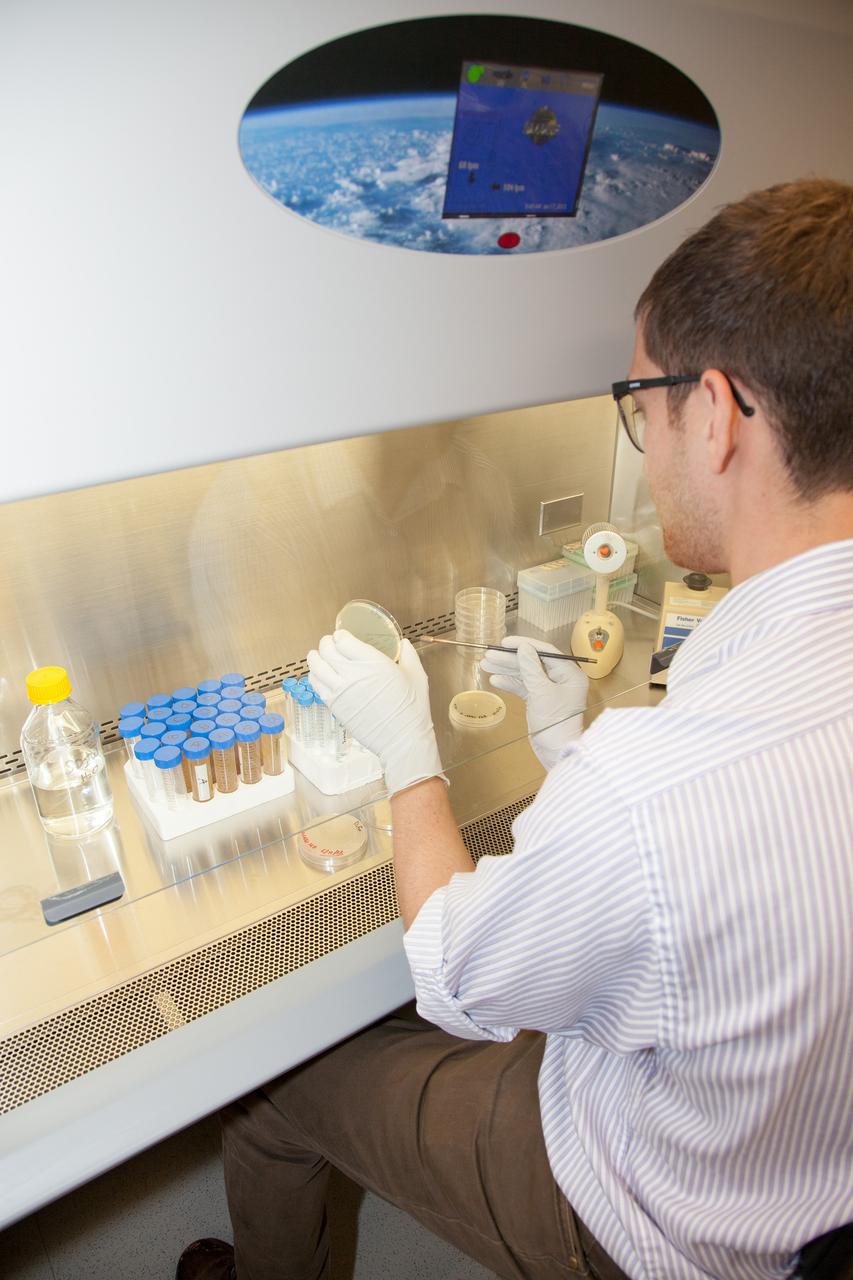
CAPE CANAVERAL, Fla. -- Inside the Space Life Sciences Laboratory near NASA’s Kennedy Space Center in Florida, Dr. David J. Smith, a microbiologist in the Surface Systems Office, prepares microbes that will be deployed for the Microorganisms in the Stratosphere, or MIST, mission. High altitudes exert a unique combination of stresses on microbes, outside the range of conditions normally encountered on the Earth's surface. Results from MIST may improve our understanding of physical limits and habitable environments for life. The MIST mission will fly a small biological payload aboard a blimp in July to measure microbial survival and cellular responses to exposure in the upper atmosphere. Later in the year, the MIST mission will deploy samples at even higher altitudes in the stratosphere using scientific balloons. Photo credit: NASA/Daniel Casper
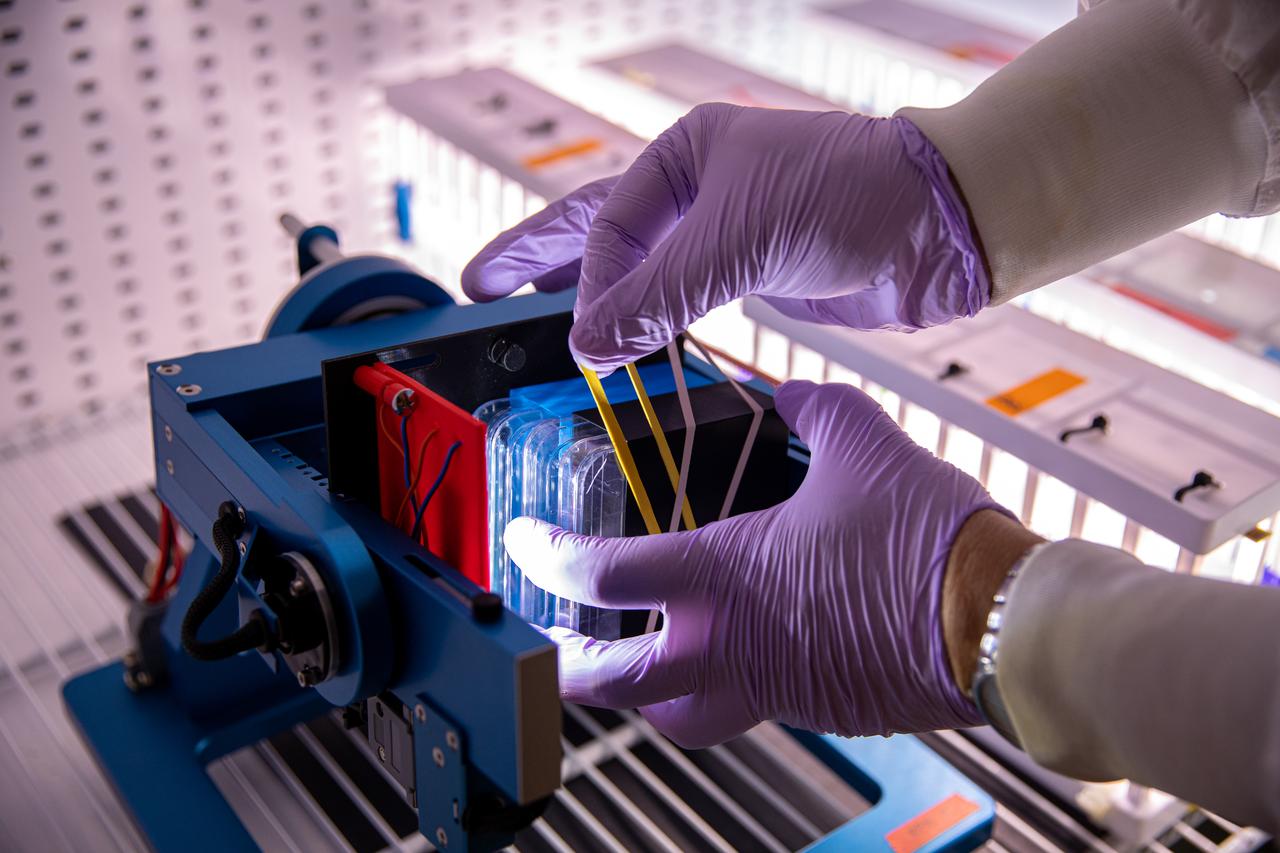
Jeffrey Richards, a payload research and science coordinator on the LASSO contract at NASA’s Kennedy Space Center in Florida, prepares an experiment for a test in an Airbus Random Positioning Machine in the Microgravity Simulation Support Facility (MSSF) inside the Neil Armstrong Operations and Checkout building at NASA’s Kennedy Space Center in Florida on Feb. 11, 2020. The facility was developed to provide ground simulation capability to the U.S. research community in order to supplement the limited opportunities to access the International Space Station and other platforms for microgravity research. The MSSF is designed to support biological research on microorganisms, cells, tissues, small plants and small animals. The simulator provides NASA with an alternative platform for microgravity research and creates the opportunity to conduct experiments on the space station in parallel with conditions of simulated microgravity on the ground.
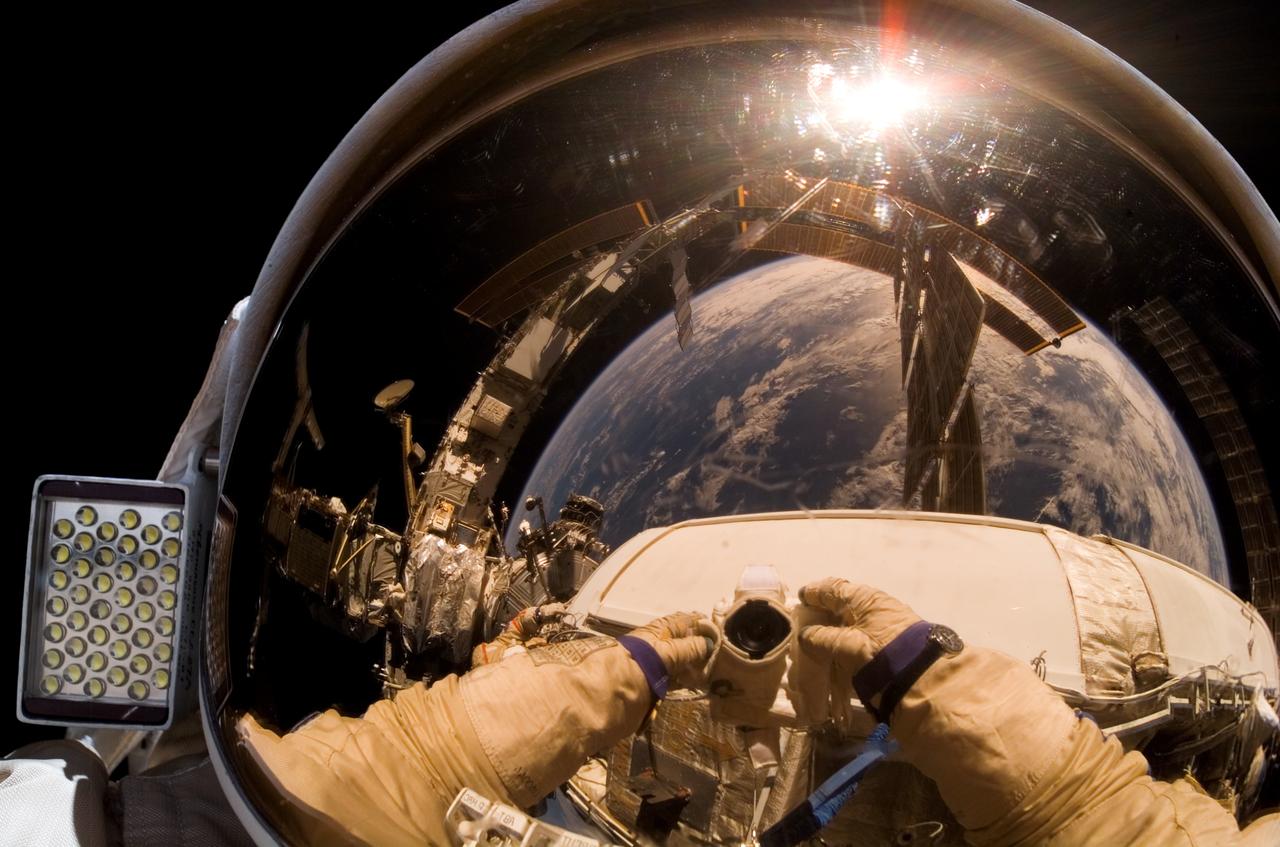
ISS015-E-10939 (6 June 2007) --- Cosmonaut Oleg V. Kotov, Expedition 15 flight engineer representing Russia's Federal Space Agency, wearing a Russian Orlan spacesuit, uses a digital still camera to expose a photo of his helmet visor during a session of extravehicular activity (EVA). With the Earth in the background, International Space Station solar array panels are also visible in the reflections. Among other tasks, Kotov and cosmonaut Fyodor N. Yurchikhin (out of frame), commander representing Russia's Federal Space Agency, completed the installation of 12 more Zvezda Service Module debris panels and installed sample containers on the Pirs Docking Compartment for a Russian experiment, called Biorisk, which looks at the effect of space on microorganisms.
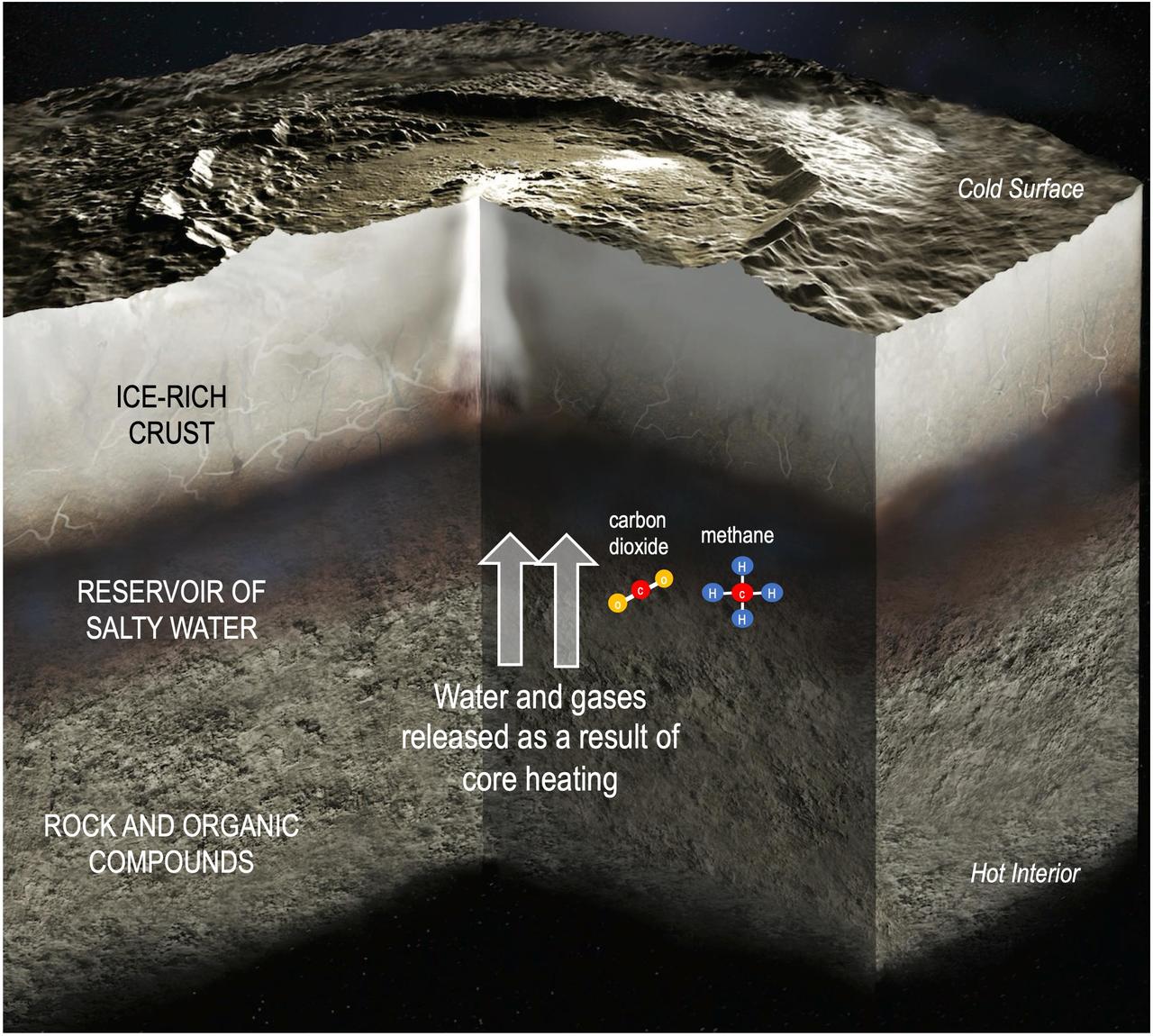
This illustration depicts the interior of dwarf planet Ceres, including the transfer of water and gases from the rocky core to a reservoir of salty water as a consequence of internal heating. A couple examples of molecules carrying chemical energy – carbon dioxide and methane – are included in the illustration. Research published in Science Advances on Aug. 20, 2025, relies on data from NASA's Dawn mission to find that chemical energy inside Ceres may have lasted long enough to fuel microbial metabolisms. Although there is no evidence that microorganisms ever existed on Ceres, the finding supports theories that this intriguing dwarf planet, which is the largest body in the main asteroid belt between Mars and Jupiter, may have once had conditions suitable to support single-celled lifeforms. https://photojournal.jpl.nasa.gov/catalog/PIA26570
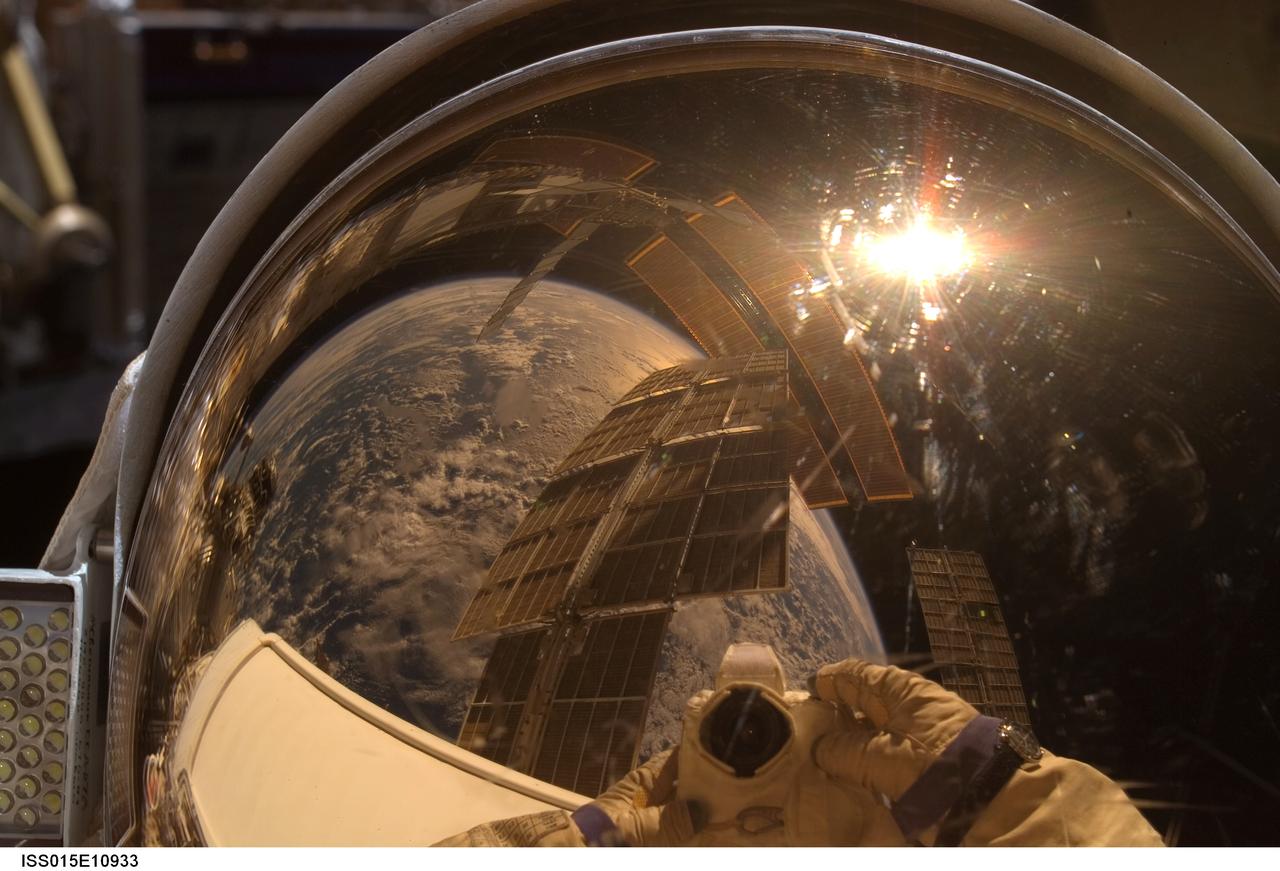
ISS015-E-10933 (6 June 2007) --- Cosmonaut Oleg V. Kotov, Expedition 15 flight engineer representing Russia's Federal Space Agency, wearing a Russian Orlan spacesuit, uses a digital still camera to expose a photo of his helmet visor during a session of extravehicular activity (EVA). With the Earth in the background, International Space Station solar array panels are also visible in the reflections. Among other tasks, Kotov and cosmonaut Fyodor N. Yurchikhin (out of frame), commander representing Russia's Federal Space Agency, completed the installation of 12 more Zvezda Service Module debris panels and installed sample containers on the Pirs Docking Compartment for a Russian experiment, called Biorisk, which looks at the effect of space on microorganisms.
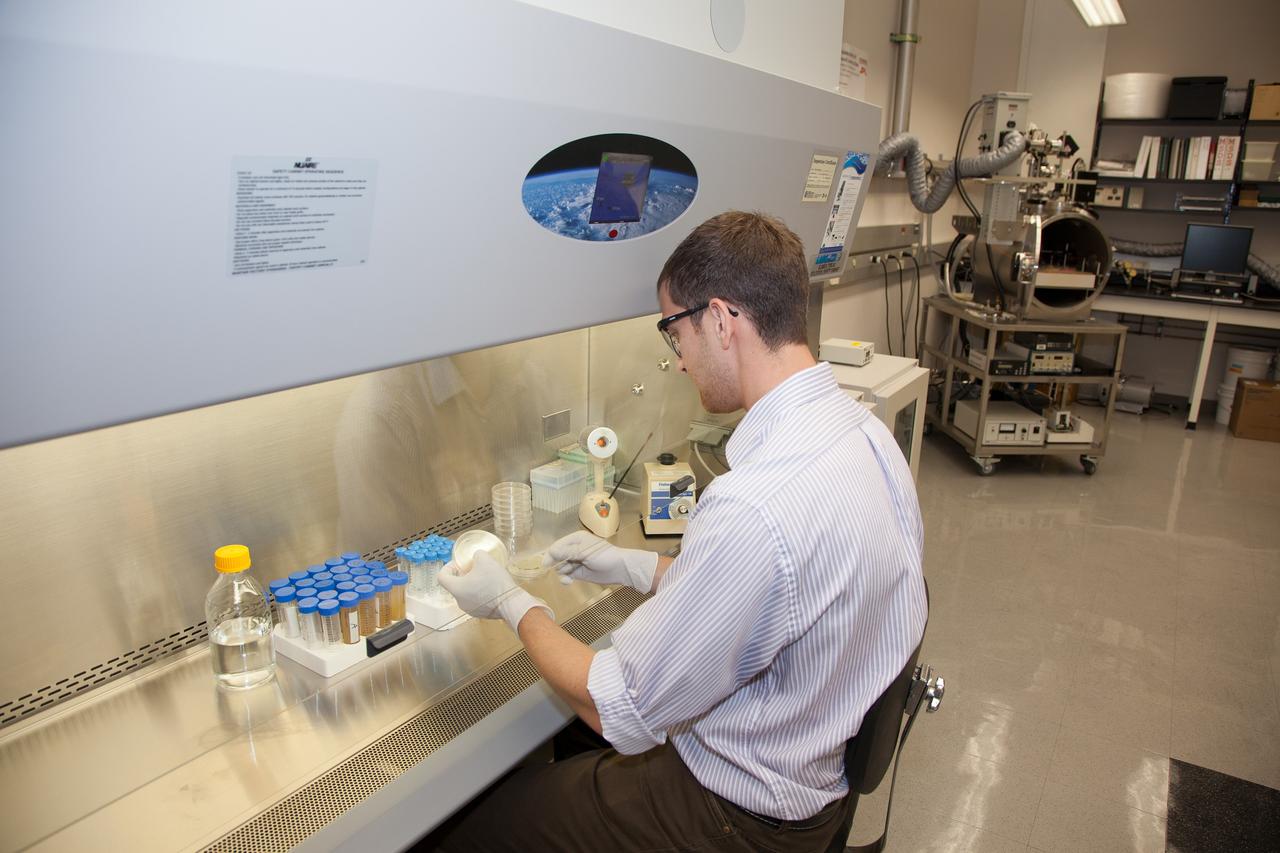
CAPE CANAVERAL, Fla. -- Inside the Space Life Sciences Laboratory near NASA’s Kennedy Space Center in Florida, Dr. David J. Smith, a microbiologist in the Surface Systems Office, prepares microbes that will be deployed for the Microorganisms in the Stratosphere, or MIST, mission. High altitudes exert a unique combination of stresses on microbes, outside the range of conditions normally encountered on the Earth's surface. Results from MIST may improve our understanding of the physical limits and habitable environments for life. The MIST mission will fly a small biological payload aboard a blimp in July to measure the microbial survival and cellular responses to exposure in the upper atmosphere. Later in the year, the MIST mission will deploy samples at even higher altitudes in the stratosphere using scientific balloons. Photo credit: NASA/Daniel Casper
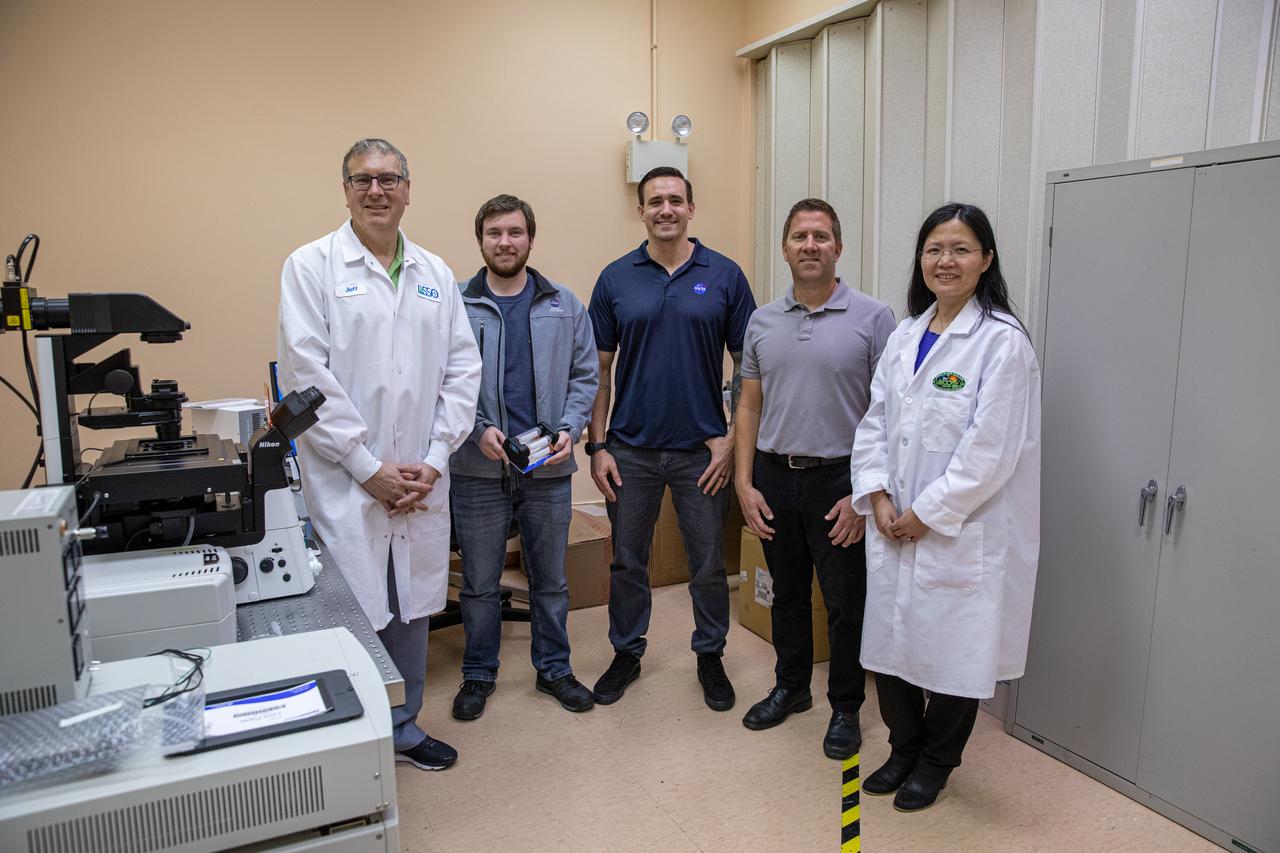
Researchers are in the Microgravity Simulation Support Facility (MSSF) inside the Neil Armstrong Operations and Checkout building at NASA’s Kennedy Space Center in Florida on Feb. 11, 2020. From left are Jonathan Gleeson, aerospace engineer on the LASSO contract; Jason Fischer, a research and development scientist on the LASSO contract; Ralph Nacca, aerospace flight systems; Jeffrey Richards, a payload research and science coordinator on the LASSO contract; and Dr. Ye Zhang, a project scientist. The microgravity simulation device was developed to provide ground simulation capability to the U.S. research community in order to supplement the limited opportunities to access the International Space Station and other platforms for microgravity research. The MSSF is designed to support biological research on microorganisms, cells, tissues, small plants and small animals. The simulator provides NASA with an alternative platform for microgravity research and creates the opportunity to conduct experiments on the space station in parallel with conditions of simulated microgravity on the ground.
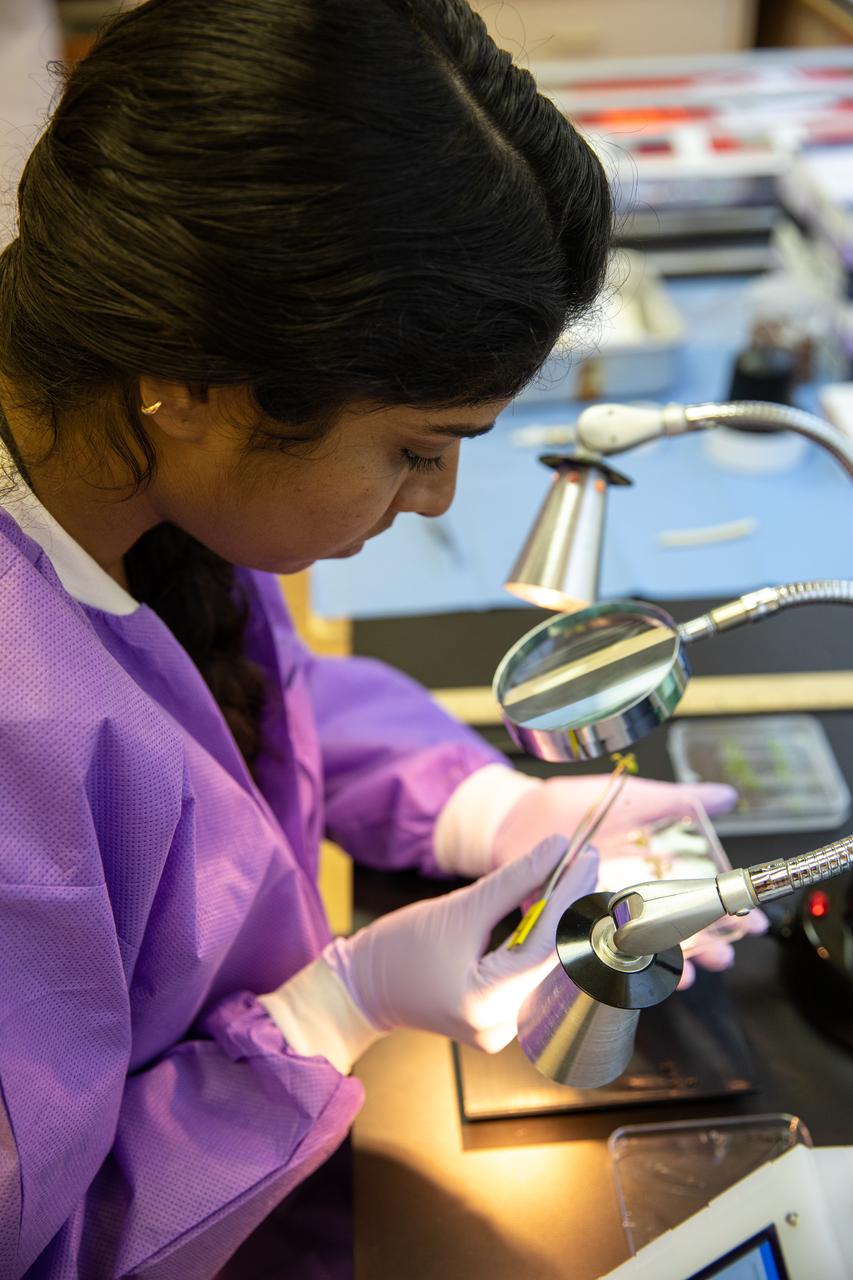
Srujana Neelam, a researcher working at NASA’s Kennedy Space Center in Florida dissects Arabidopsis thaliana plants from petri plates used in microgravity simulation devices in the Microgravity Simulation Support Facility (MSSF) inside the Neil Armstrong Operations and Checkout building on Feb. 11, 2020. The facility was developed to provide ground simulation capability to the U.S. research community in order to supplement the limited opportunities to access the International Space Station and other platforms for microgravity research. The MSSF is designed to support biological research on microorganisms, cells, tissues, small plants and small animals. The simulator provides NASA with an alternative platform for microgravity research and creates the opportunity to conduct experiments on the space station in parallel with conditions of simulated microgravity on the ground.
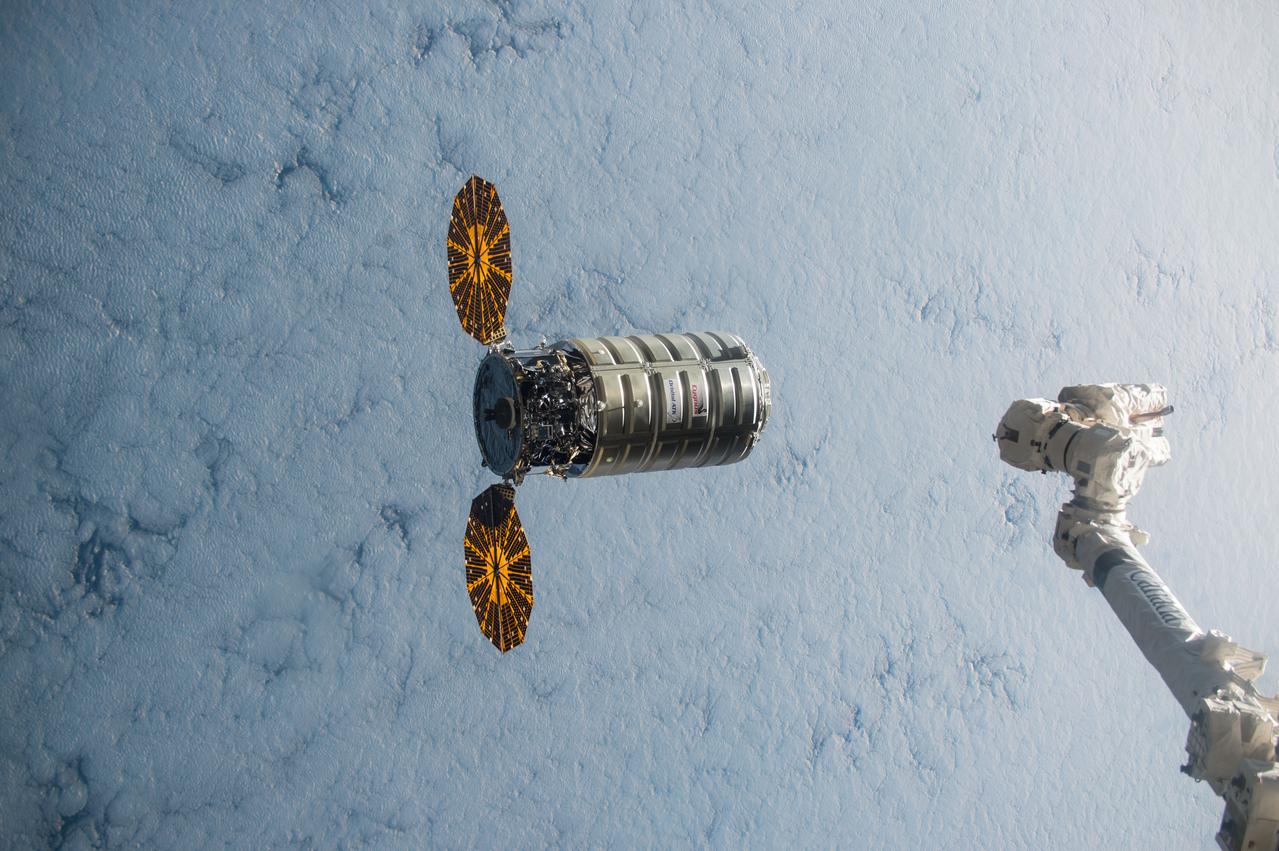
ISS045e176110 (12/09/2015) --- Using the International Space Station’s robotic arm, Canadarm2 (right) NASA Flight Engineer Kjell Lindgren prepares to capture Orbital ATK’s Cygnus cargo vehicle Dec. 09, 2015. The space station crew and the robotics officer in mission control in Houston will position Cygnus for installation to the orbiting laboratory’s Earth-facing port of the Unity module. Among the more than 7,000 pounds of supplies aboard Cygnus are numerous science and research investigations and technology demonstrations, including a new life science facility that will support studies on cell cultures, bacteria and other microorganisms; a microsatellite deployer and the first microsatellite that will be deployed from the space station; several other educational and technology demonstration CubeSats; and experiments that will study the behavior of gases and liquids, clarify the thermo-physical properties of molten steel, and evaluate flame-resistant textiles.
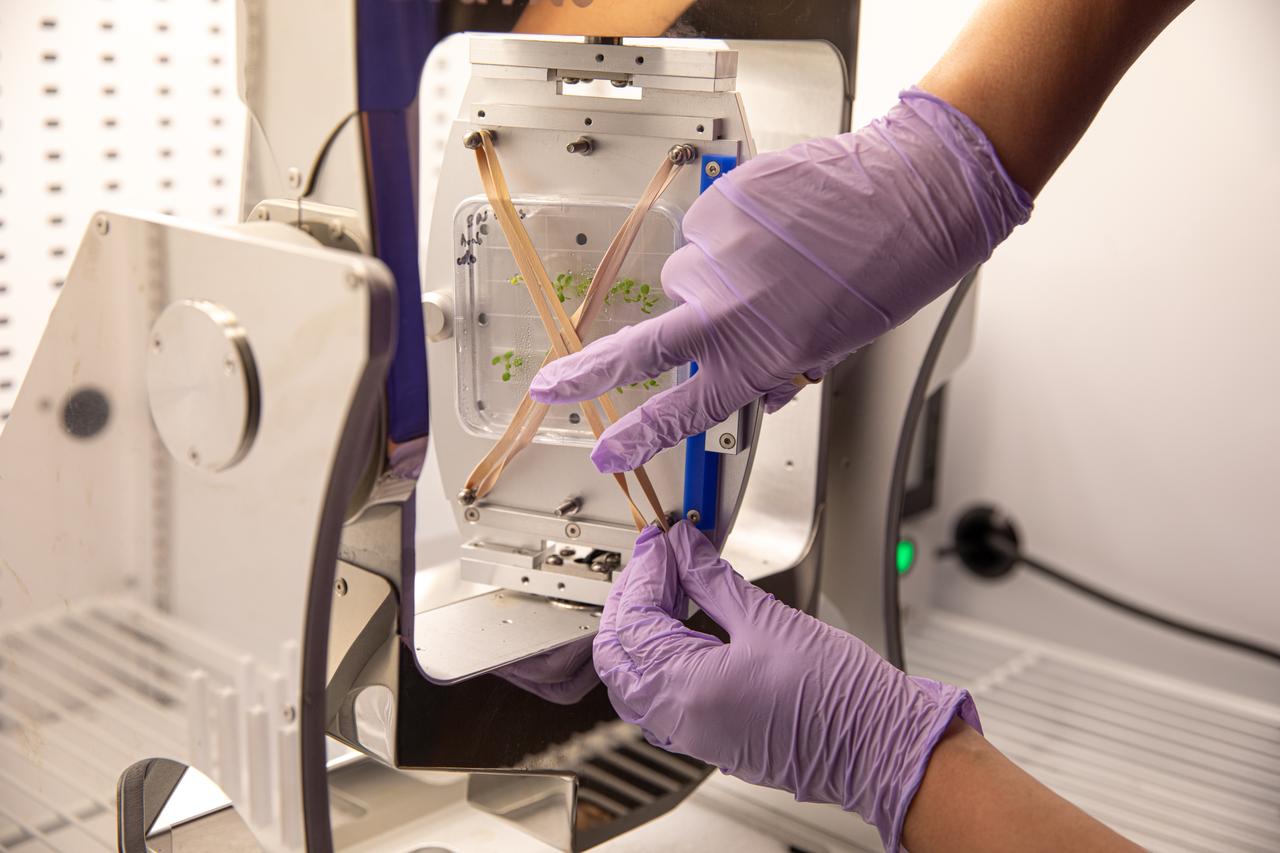
Ye Zhang, a project scientist at NASA’s Kennedy Space Center in Florida, makes adjustments to a Gravite 3d clinostat in the Microgravity Simulation Support Facility (MSSF) inside the Neil Armstrong Operations and Checkout building at NASA’s Kennedy Space Center in Florida on Feb. 11, 2020. The facility was developed to provide ground simulation capability to the U.S. research community in order to supplement the limited opportunities to access the International Space Station and other platforms for microgravity research. The MSSF is designed to support biological research on microorganisms, cells, tissues, small plants and small animals. The simulator provides NASA with an alternative platform for microgravity research and creates the opportunity to conduct experiments on the space station in parallel with conditions of simulated microgravity on the ground.
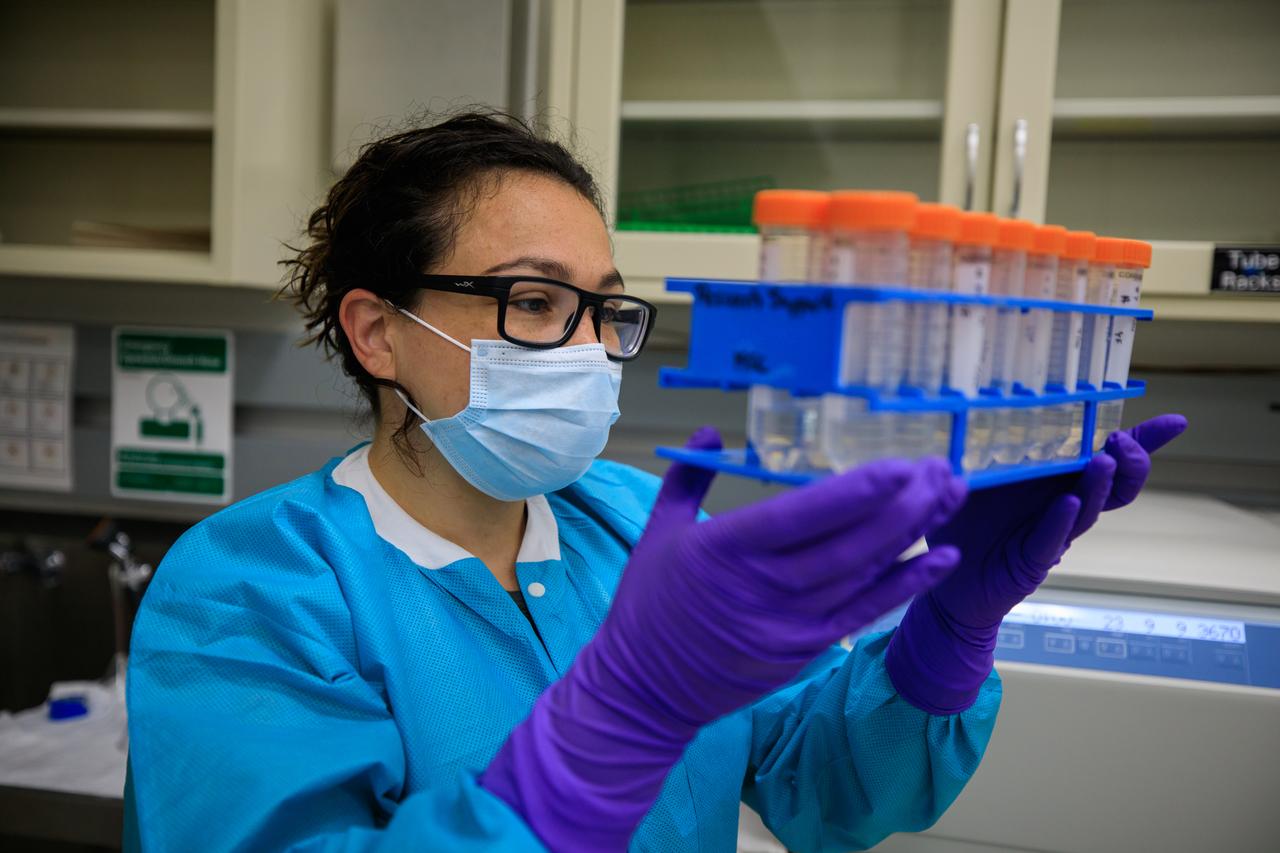
Marci Garcia, a research associate at Pacific Northwest National Laboratory (PNNL), examines some of the science tubes that make up the Dynamics of Microbiomes in Space (DynaMoS) experiment inside a laboratory at the Space Station Processing Facility on July 11, 2022. The DynaMoS experiment will launch on SpaceX’s 25th cargo resupply services mission to examine how microgravity affects metabolic interactions in communities of soil microbes. This will help NASA understand the function of soil microorganisms in space versus on Earth and how they can be used to enhance plant growth for crew consumption during long-duration missions to the Moon and Mars. SpaceX’s Falcon 9 rocket and Dragon spacecraft are scheduled to lift off from Kennedy’s Launch Complex 39A at 8:44 p.m. EDT on Thursday, July 14.
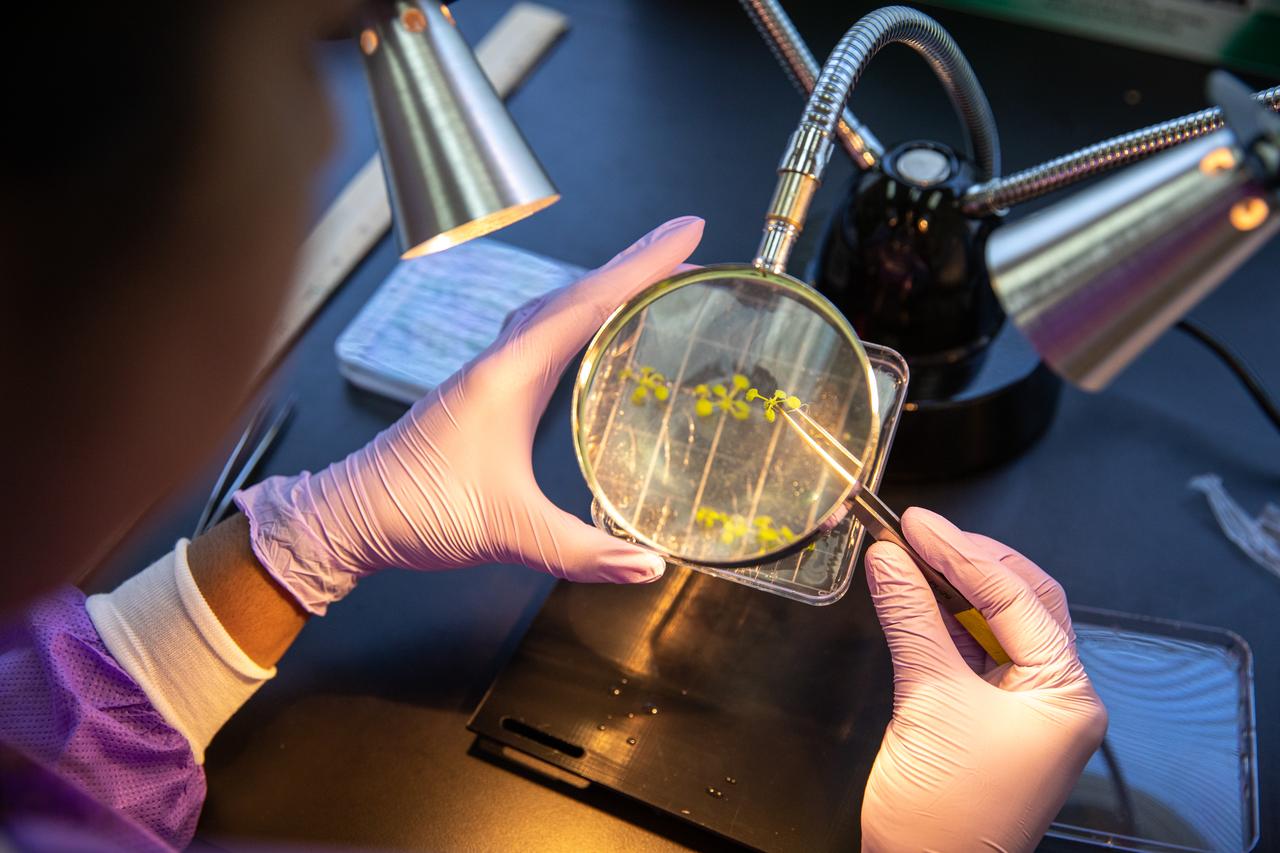
Srujana Neelam, a researcher working at NASA’s Kennedy Space Center in Florida, dissects Arabidopsis thaliana plants from petri plates used in microgravity simulation devices in the Microgravity Simulation Support Facility (MSSF) inside the Neil Armstrong Operations and Checkout building on Feb. 11, 2020. The facility was developed to provide ground simulation capability to the U.S. research community in order to supplement the limited opportunities to access the International Space Station and other platforms for microgravity research. The MSSF is designed to support biological research on microorganisms, cells, tissues, small plants and small animals. The simulator provides NASA with an alternative platform for microgravity research and creates the opportunity to conduct experiments on the space station in parallel with conditions of simulated microgravity on the ground.