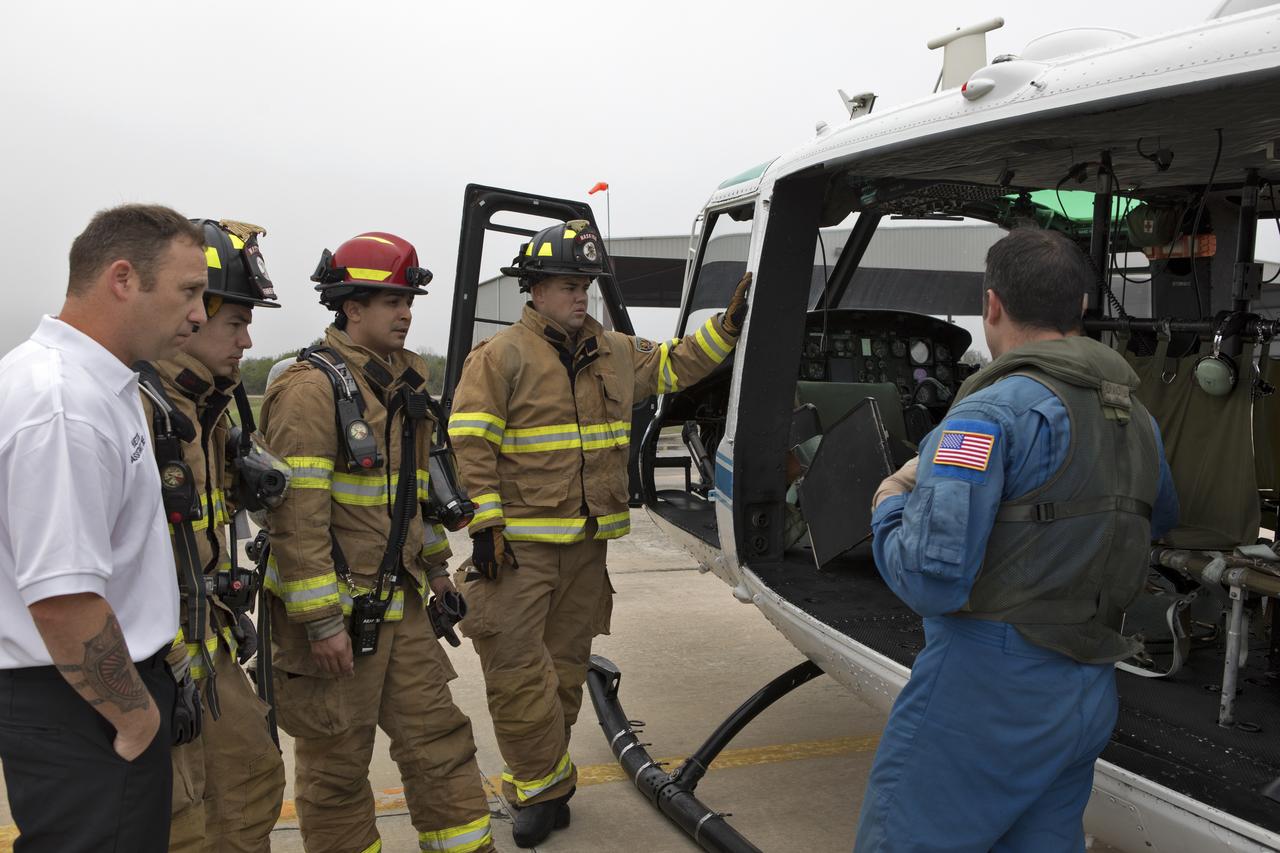
NASA Kennedy Space Center's Flight Operations team reviews procedures before beginning a rehearsal of a helicopter crash-landing to test new and updated emergency procedures. Called the Aircraft Mishap Preparedness and Contingency Plan, the operation was designed to validate several updated techniques the center's first responders would follow, should they ever need to rescue a crew in case of a real accident. The mishap exercise took place at the center's Shuttle Landing Facility.
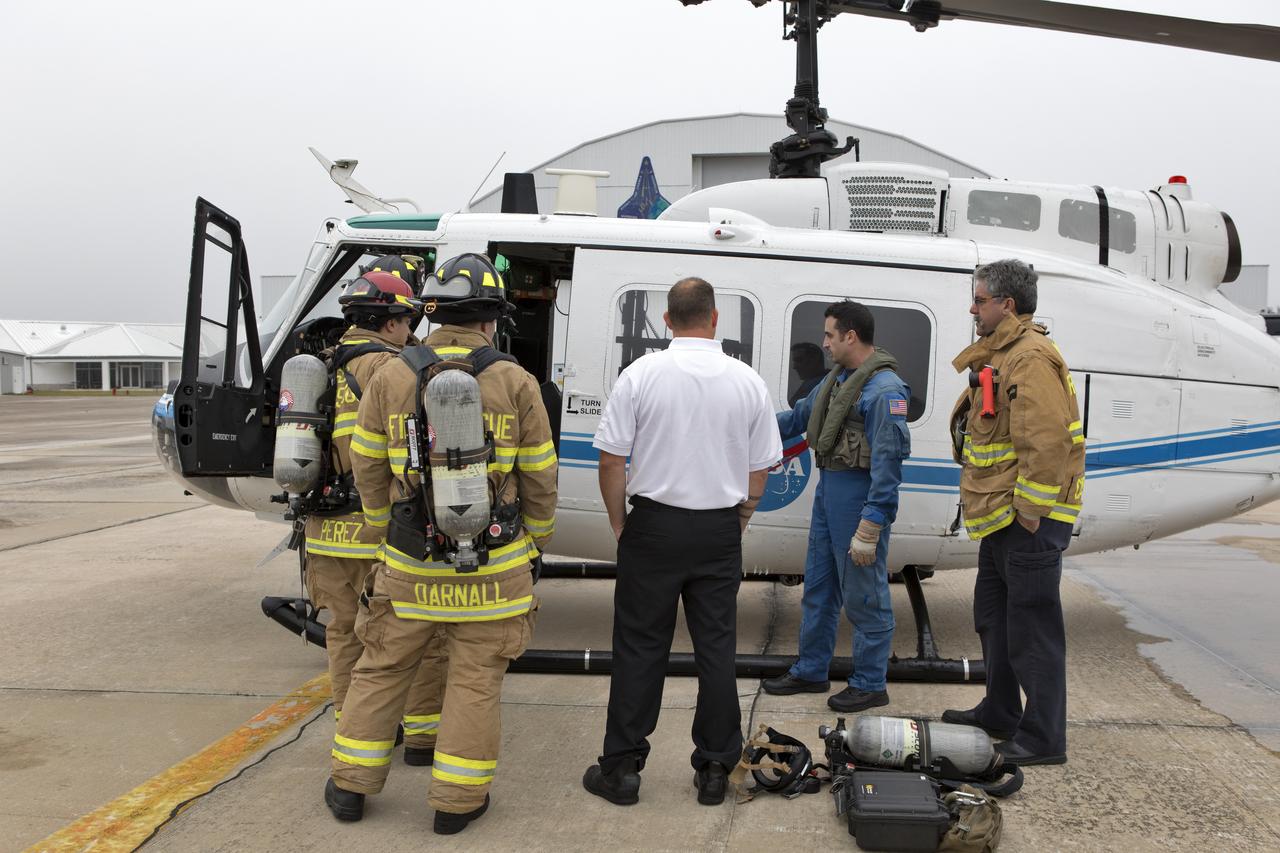
NASA Kennedy Space Center's Flight Operations team reviews procedures before beginning a rehearsal of a helicopter crash-landing to test new and updated emergency procedures. Called the Aircraft Mishap Preparedness and Contingency Plan, the operation was designed to validate several updated techniques the center's first responders would follow, should they ever need to rescue a crew in case of a real accident. The mishap exercise took place at the center's Shuttle Landing Facility.
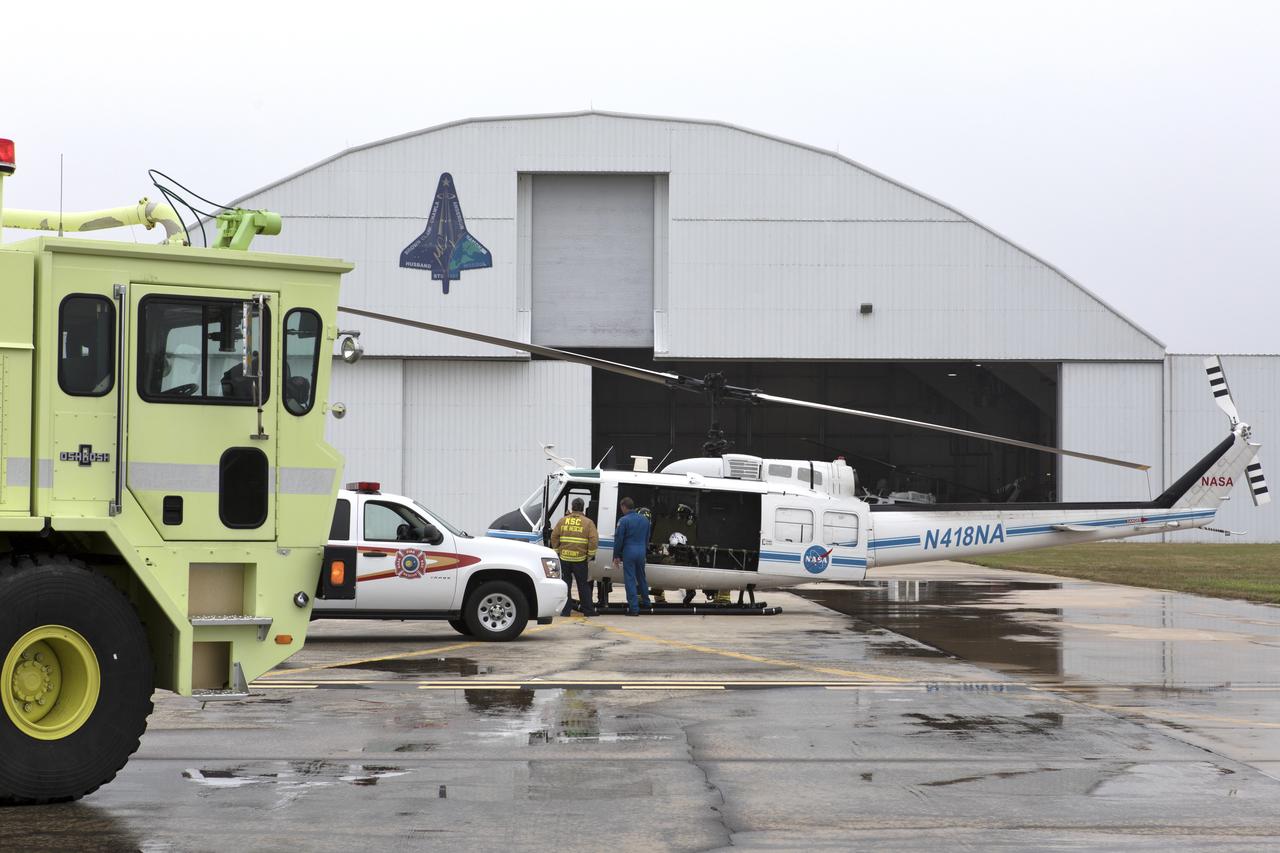
Members of NASA Kennedy Space Center's Flight Operations team prepare for a rehearsal of a helicopter crash-landing to test new and updated emergency procedures. Called the Aircraft Mishap Preparedness and Contingency Plan, the operation was designed to validate several updated techniques the center's first responders would follow, should they ever need to rescue a crew in case of a real accident. The mishap exercise took place at the center's Shuttle Landing Facility.
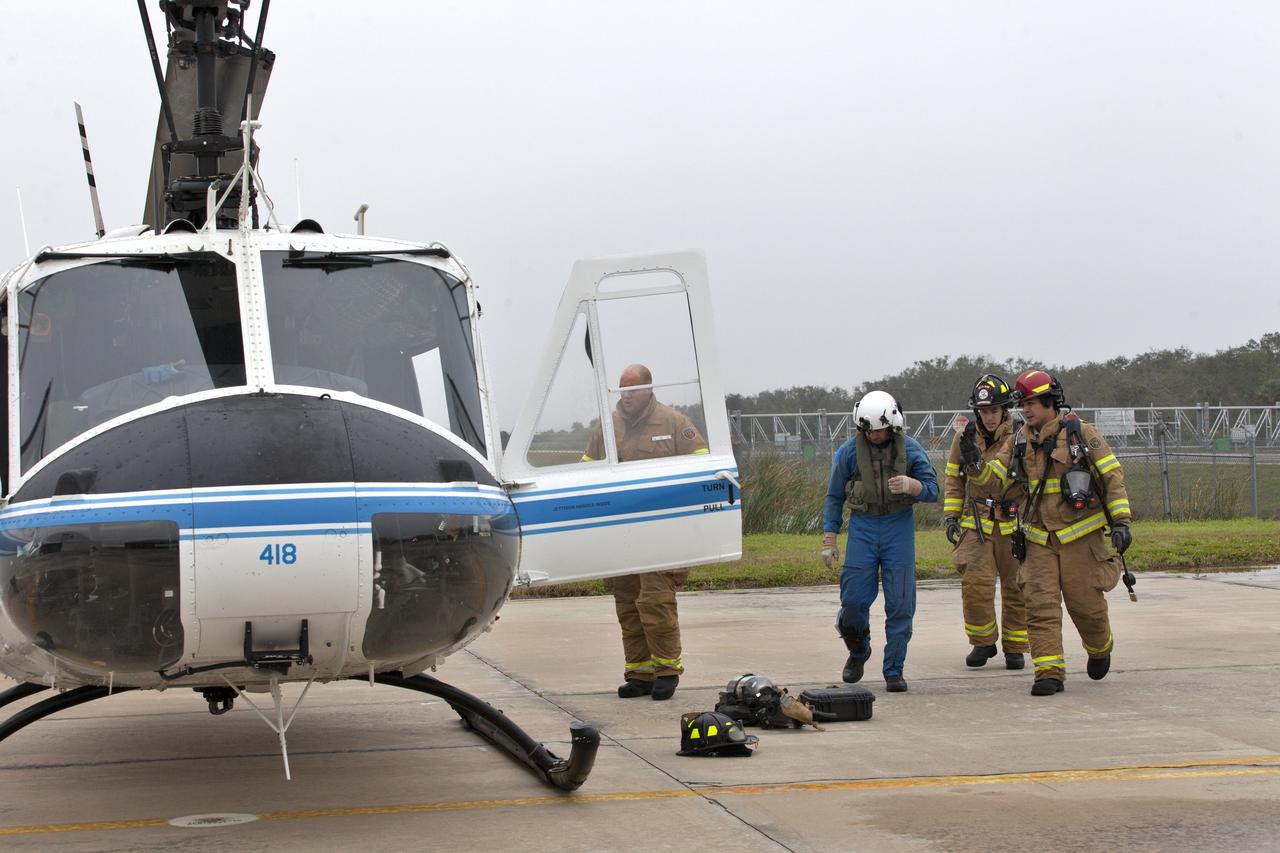
Members of NASA Kennedy Space Center's Flight Operations team participate in a rehearsal of a helicopter crash-landing to test new and updated emergency procedures. Called the Aircraft Mishap Preparedness and Contingency Plan, the operation was designed to validate several updated techniques the center's first responders would follow, should they ever need to rescue a crew in case of a real accident. The mishap exercise took place at the center's Shuttle Landing Facility.

Members of NASA Kennedy Space Center's Flight Operations team prepare for a rehearsal of a helicopter crash-landing to test new and updated emergency procedures. Called the Aircraft Mishap Preparedness and Contingency Plan, the operation was designed to validate several updated techniques the center's first responders would follow, should they ever need to rescue a crew in case of a real accident. The mishap exercise took place at the center's Shuttle Landing Facility.
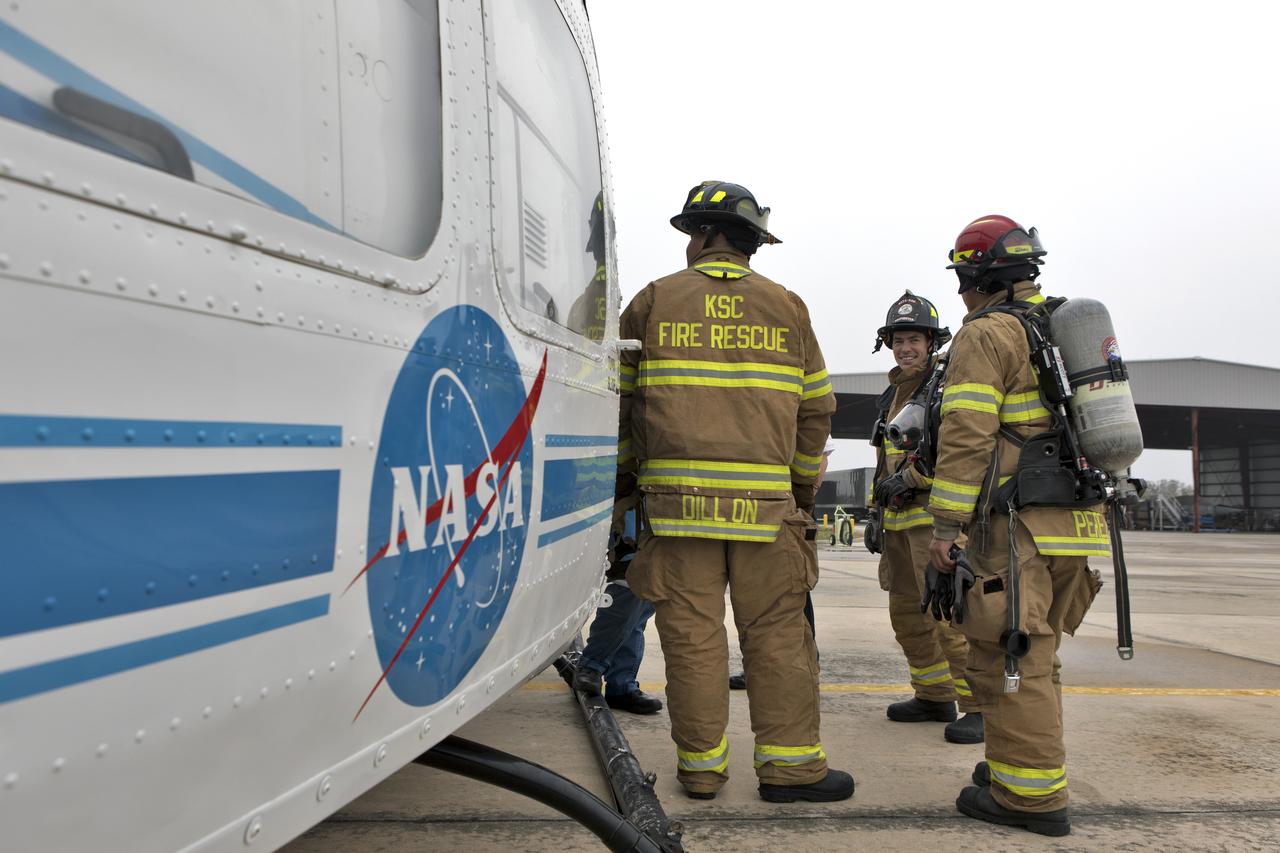
Members of NASA Kennedy Space Center's Flight Operations team prepare for a rehearsal of a helicopter crash-landing to test new and updated emergency procedures. Called the Aircraft Mishap Preparedness and Contingency Plan, the operation was designed to validate several updated techniques the center's first responders would follow, should they ever need to rescue a crew in case of a real accident. The mishap exercise took place at the center's Shuttle Landing Facility.
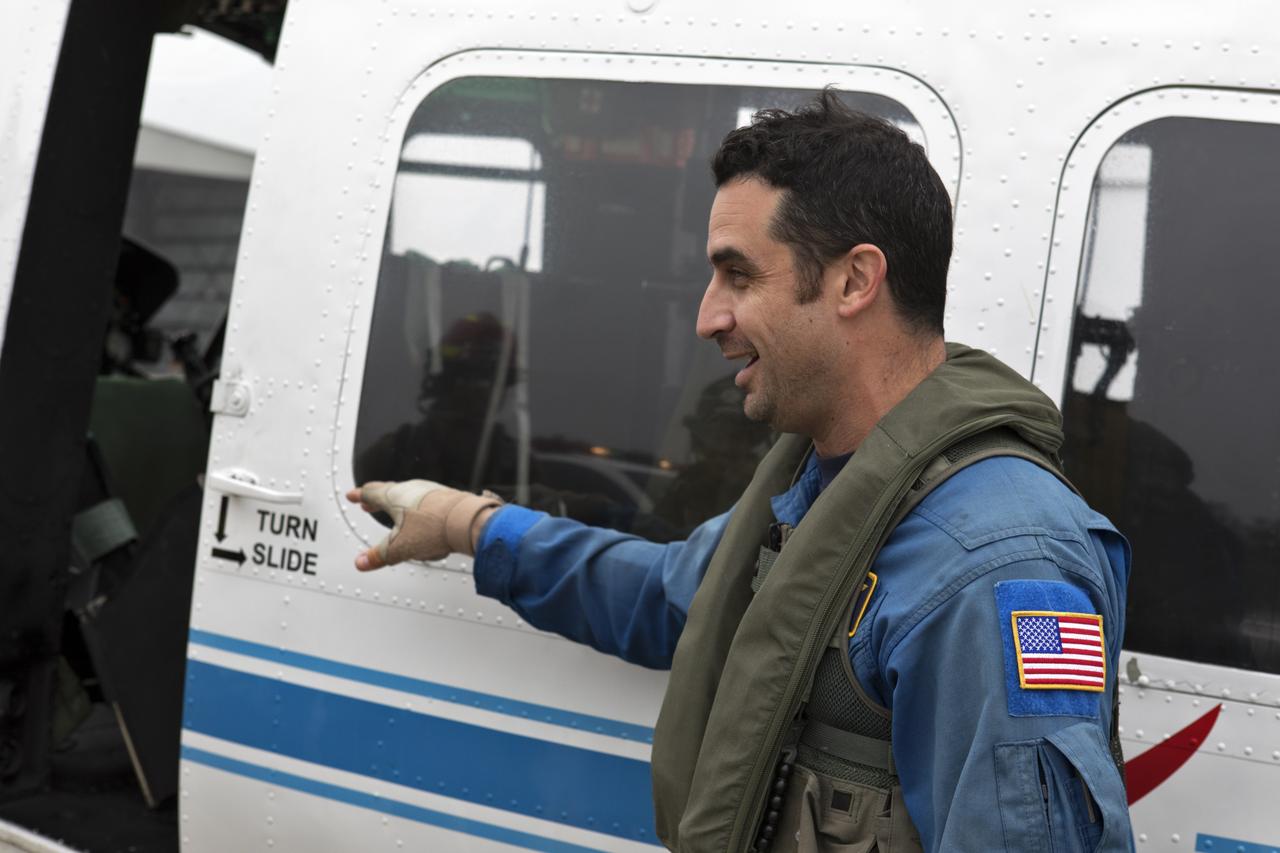
A member of NASA Kennedy Space Center's Flight Operations team prepares for a rehearsal of a helicopter crash-landing to test new and updated emergency procedures. Called the Aircraft Mishap Preparedness and Contingency Plan, the operation was designed to validate several updated techniques the center's first responders would follow, should they ever need to rescue a crew in case of a real accident. The mishap exercise took place at the center's Shuttle Landing Facility.

Members of NASA Kennedy Space Center's Flight Operations team participate in a rehearsal of a helicopter crash-landing to test new and updated emergency procedures. Called the Aircraft Mishap Preparedness and Contingency Plan, the operation was designed to validate several updated techniques the center's first responders would follow, should they ever need to rescue a crew in case of a real accident. The mishap exercise took place at the center's Shuttle Landing Facility.
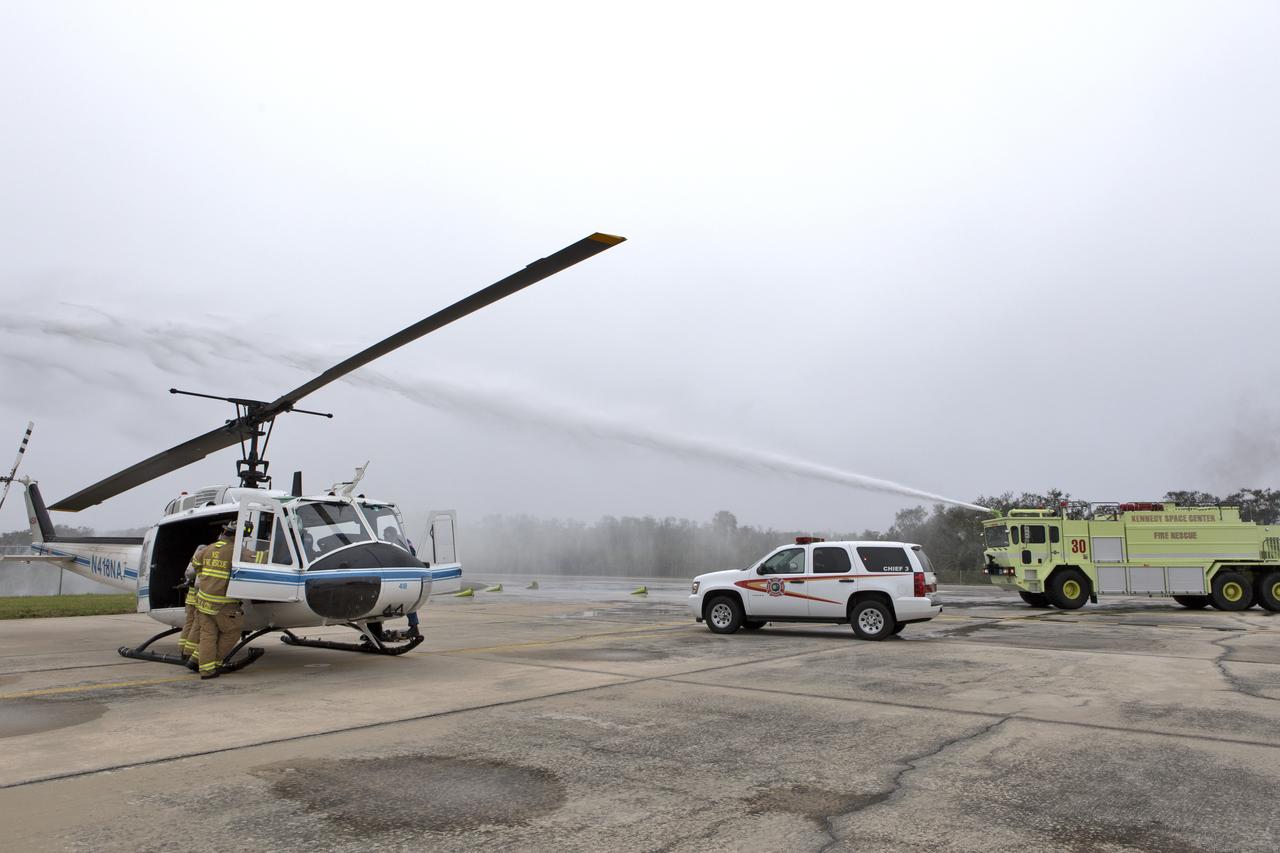
An Aircraft Mishap Preparedness and Contingency Plan is underway at the Shuttle Landing Facility at NASA's Kennedy Space Center in Florida. The center's Flight Operations rehearsed a helicopter crash-landing to test new and updated emergency procedures. The operation was designed to validate several updated techniques the center's first responders would follow, should they ever need to rescue a crew in case of a real accident. The mishap exercise took place at the center's Shuttle Landing Facility.
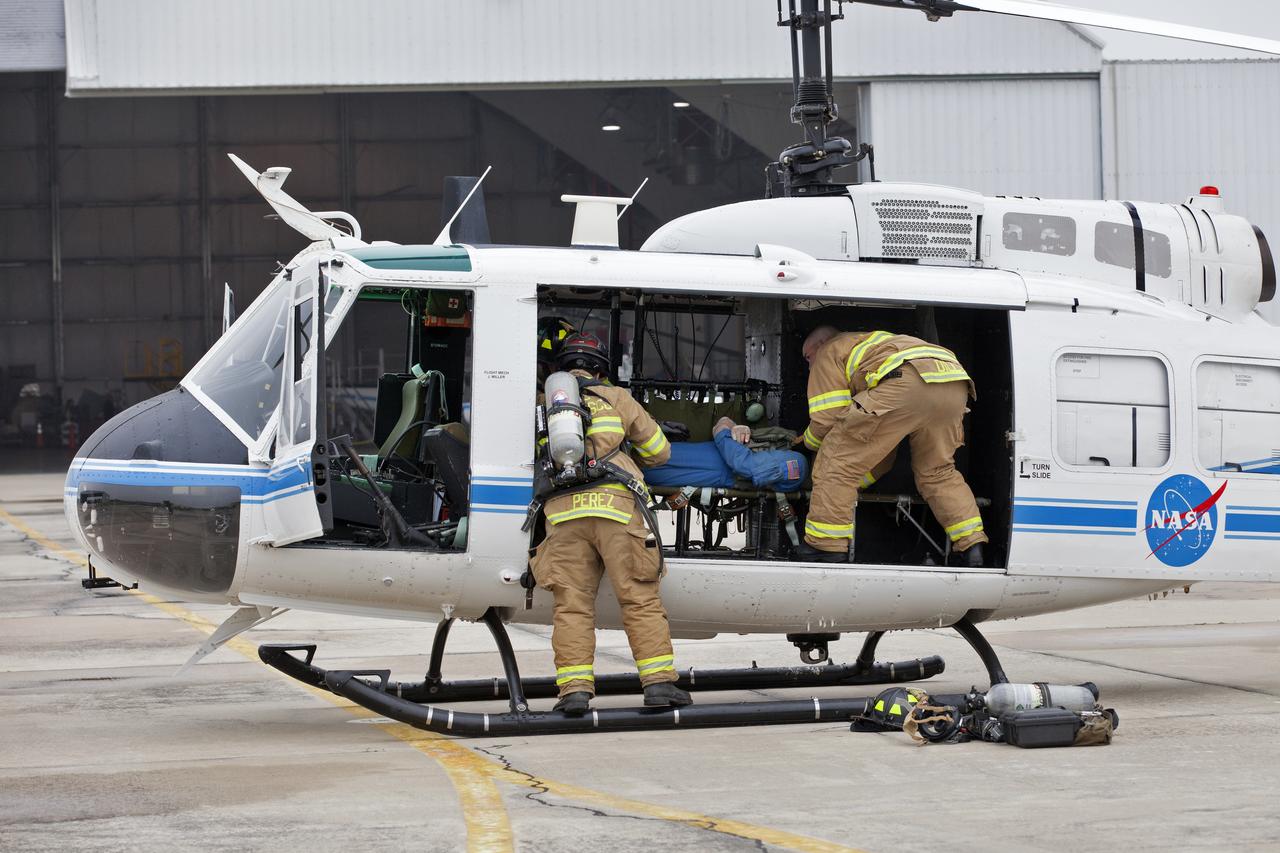
Members of NASA Kennedy Space Center's Flight Operations team participate in a rehearsal of a helicopter crash-landing to test new and updated emergency procedures. Called the Aircraft Mishap Preparedness and Contingency Plan, the operation was designed to validate several updated techniques the center's first responders would follow, should they ever need to rescue a crew in case of a real accident. The mishap exercise took place at the center's Shuttle Landing Facility.
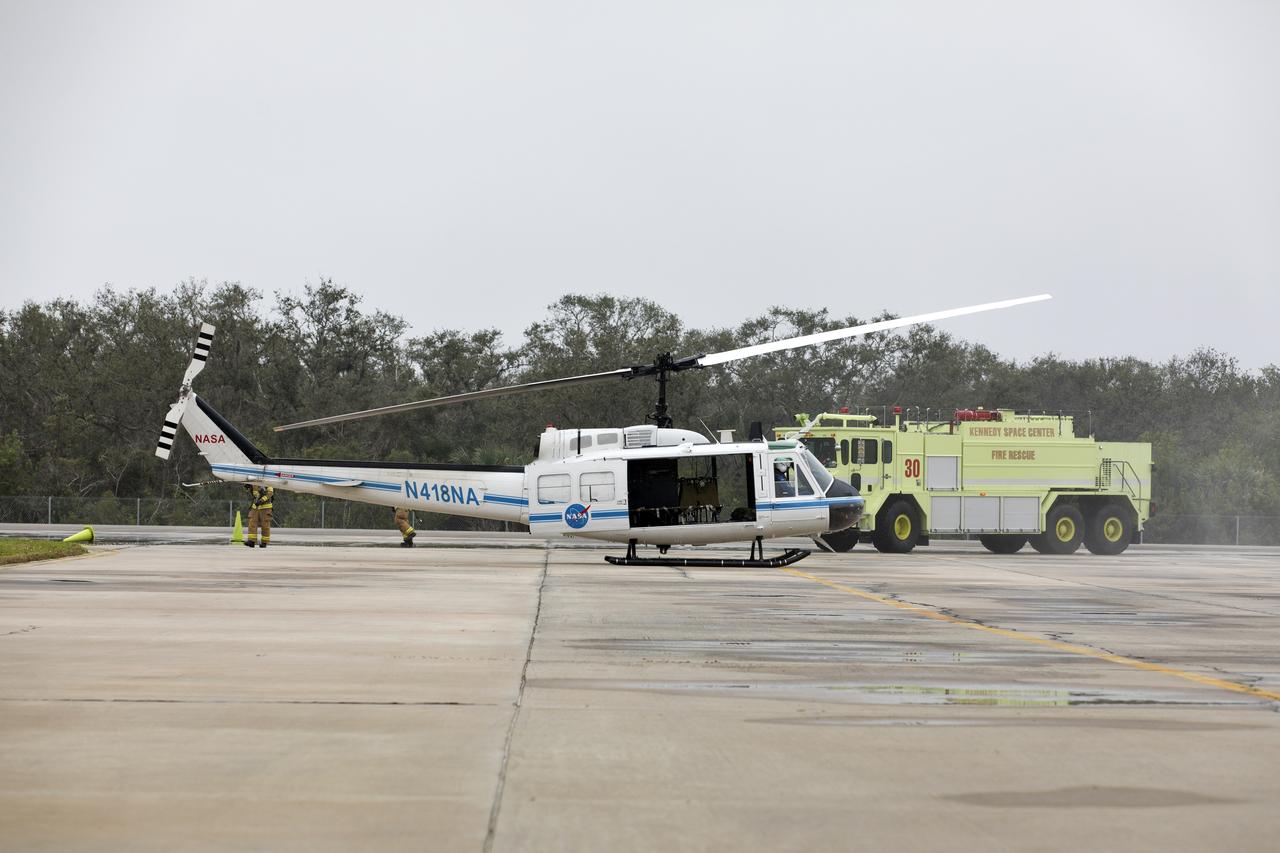
NASA Kennedy Space Center's Flight Operations prepares to rehearse a helicopter crash-landing to test new and updated emergency procedures. Called the Aircraft Mishap Preparedness and Contingency Plan, the operation was designed to validate several updated techniques the center's first responders would follow, should they ever need to rescue a crew in case of a real accident. The mishap exercise took place at the center's Shuttle Landing Facility.
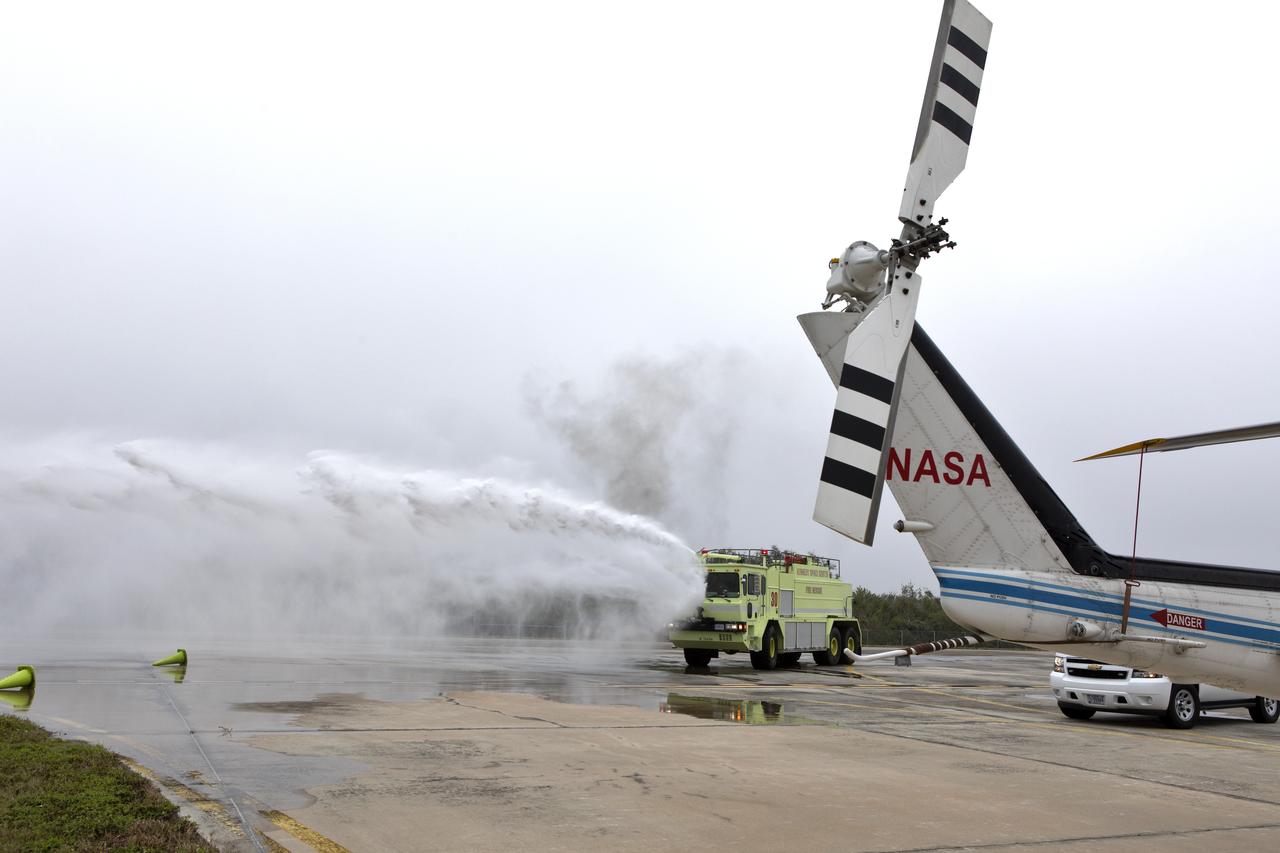
An Aircraft Mishap Preparedness and Contingency Plan is underway at the Shuttle Landing Facility at NASA's Kennedy Space Center in Florida. The center's Flight Operations rehearsed a helicopter crash-landing to test new and updated emergency procedures. The operation was designed to validate several updated techniques the center's first responders would follow, should they ever need to rescue a crew in case of a real accident. The mishap exercise took place at the center's Shuttle Landing Facility.
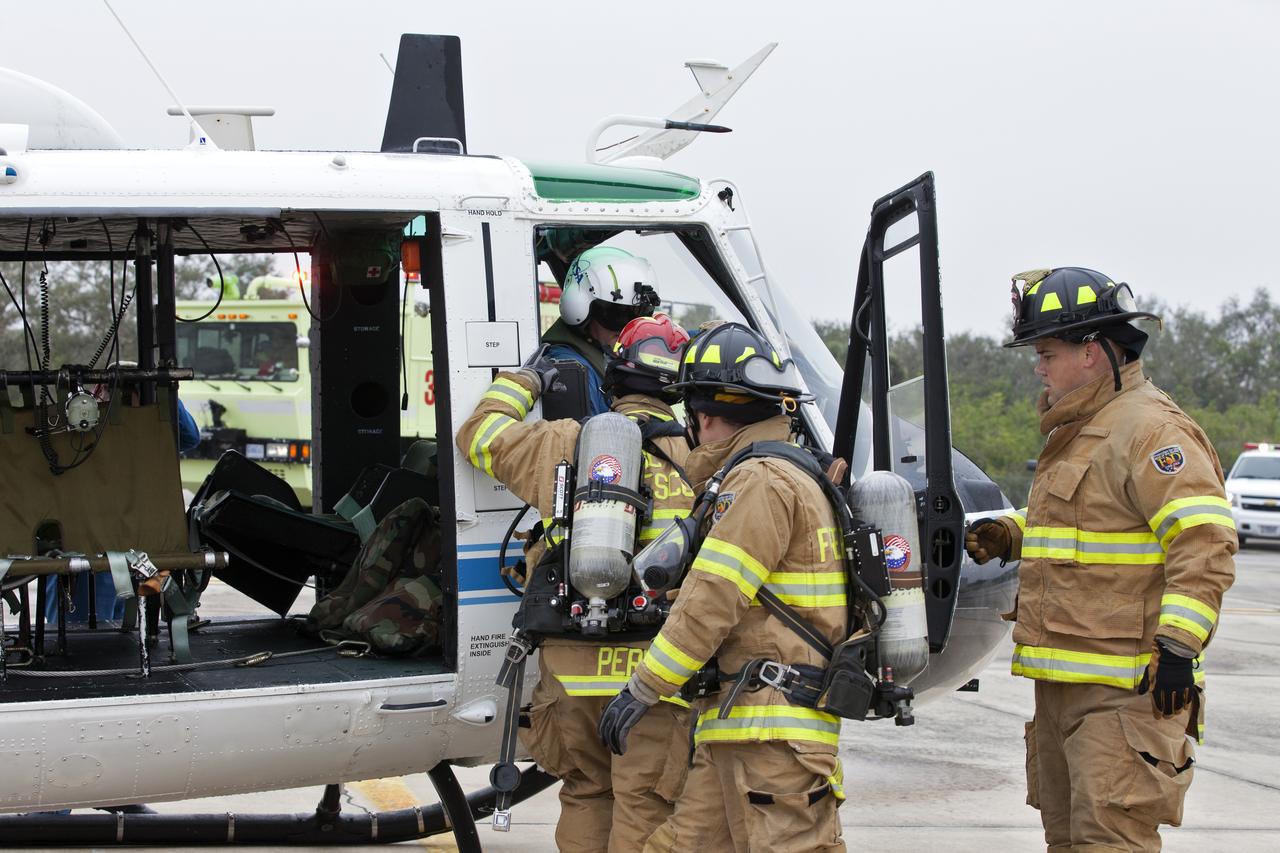
Members of NASA Kennedy Space Center's Flight Operations team participate in a rehearsal of a helicopter crash-landing to test new and updated emergency procedures. Called the Aircraft Mishap Preparedness and Contingency Plan, the operation was designed to validate several updated techniques the center's first responders would follow, should they ever need to rescue a crew in case of a real accident. The mishap exercise took place at the center's Shuttle Landing Facility.
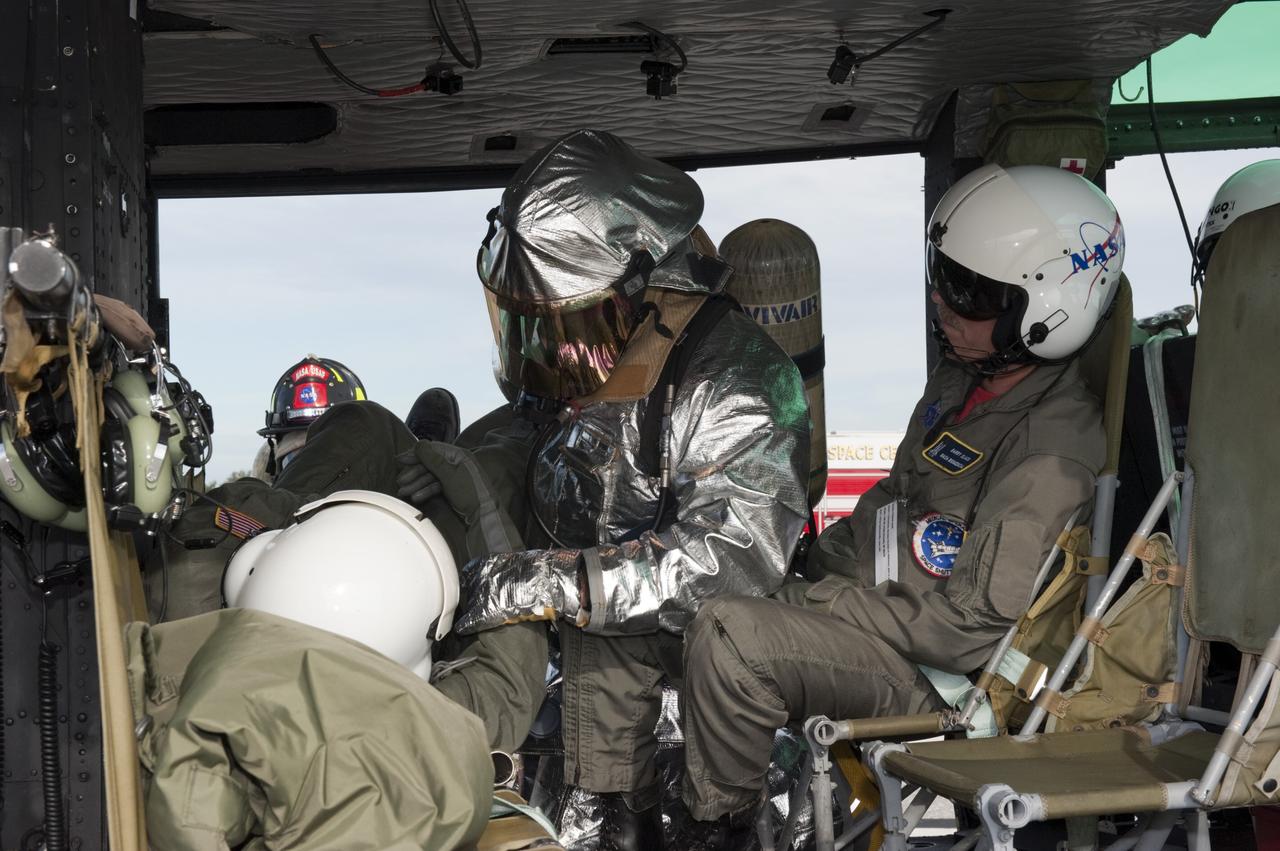
CAPE CANAVERAL, Fla. -- NASA Fire Rescue personnel assist volunteers portraying injured Huey II helicopter crew members participating in the aviation safety exercise during Emergency Response Safety Training at the Shuttle Landing Facility, Runway 33, at NASA’s Kennedy Space Center in Florida. The simulated helicopter mishap exercise was conducted to evaluate emergency response and mishap investigations of aircraft at Kennedy. Participants included Air Rescue Fire Fighters, Flight Operations, Disaster Preparedness, Security, and Safety. NASA mandates simulated aviation safety training take place every two years. Photo credit: NASA/Kim Shiflett
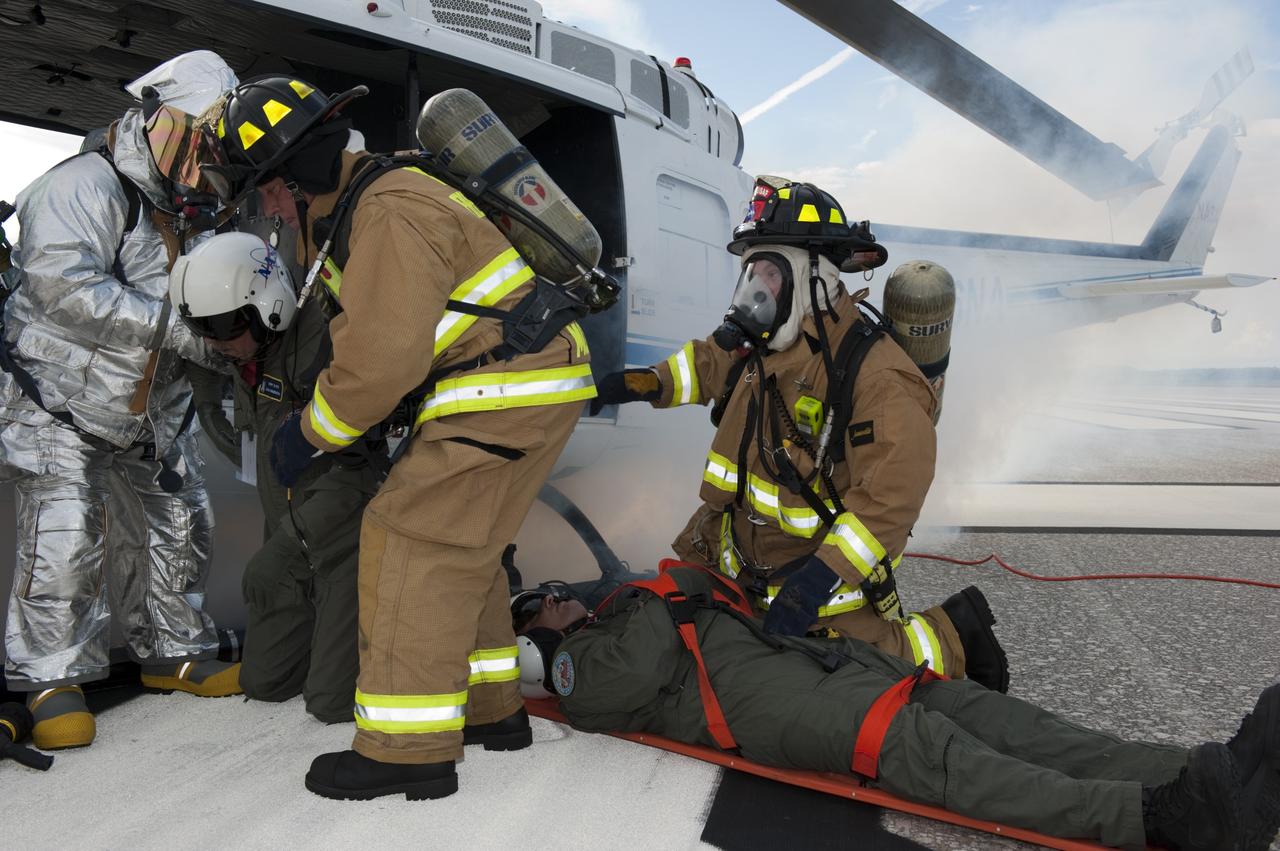
CAPE CANAVERAL, Fla. -- NASA Fire Rescue personnel assist volunteers portraying injured Huey II helicopter crew members participating in the aviation safety exercise during Emergency Response Safety Training at the Shuttle Landing Facility, Runway 33, at NASA’s Kennedy Space Center in Florida. The simulated helicopter mishap exercise was conducted to evaluate emergency response and mishap investigations of aircraft at Kennedy. Participants included Air Rescue Fire Fighters, Flight Operations, Disaster Preparedness, Security, and Safety. NASA mandates simulated aviation safety training take place every two years. Photo credit: NASA/Kim Shiflett
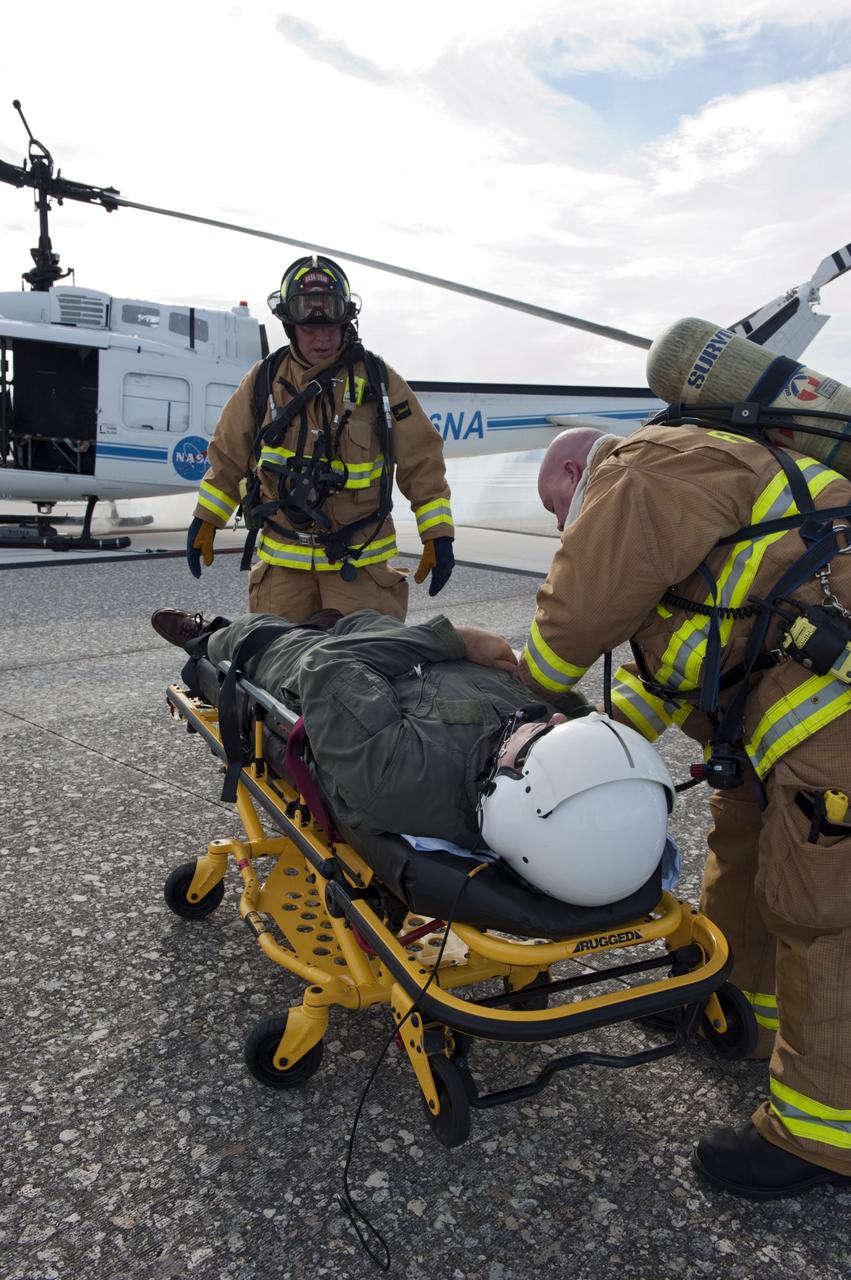
CAPE CANAVERAL, Fla. -- NASA Fire Rescue personnel assist volunteers portraying injured Huey II helicopter crew members participating in the aviation safety exercise during Emergency Response Safety Training at the Shuttle Landing Facility, Runway 33, at NASA’s Kennedy Space Center in Florida. The simulated helicopter mishap exercise was conducted to evaluate emergency response and mishap investigations of aircraft at Kennedy. Participants included Air Rescue Fire Fighters, Flight Operations, Disaster Preparedness, Security, and Safety. NASA mandates simulated aviation safety training take place every two years. Photo credit: NASA/Kim Shiflett
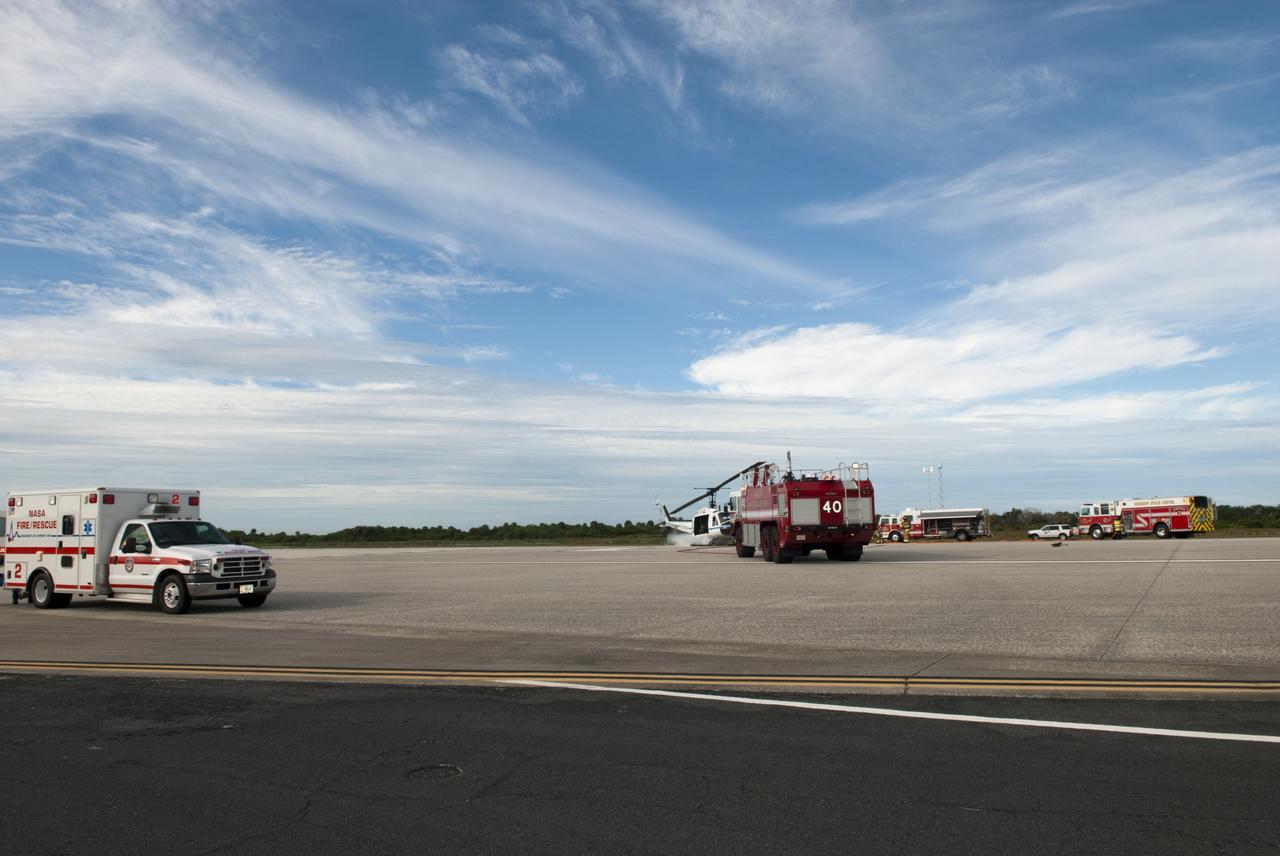
CAPE CANAVERAL, Fla. -- An ambulance and several NASA Fire Rescue Services vehicles arrive to assist a Huey II helicopter participating in the aviation safety exercise during Emergency Response Safety Training at the Shuttle Landing Facility, Runway 33, at NASA’s Kennedy Space Center in Florida. The simulated helicopter mishap exercise was conducted to evaluate emergency response and mishap investigations of aircraft at Kennedy. Participants included Air Rescue Fire Fighters, Flight Operations, Disaster Preparedness, Security, and Safety. NASA mandates simulated aviation safety training take place every two years. Photo credit: NASA/Kim Shiflett
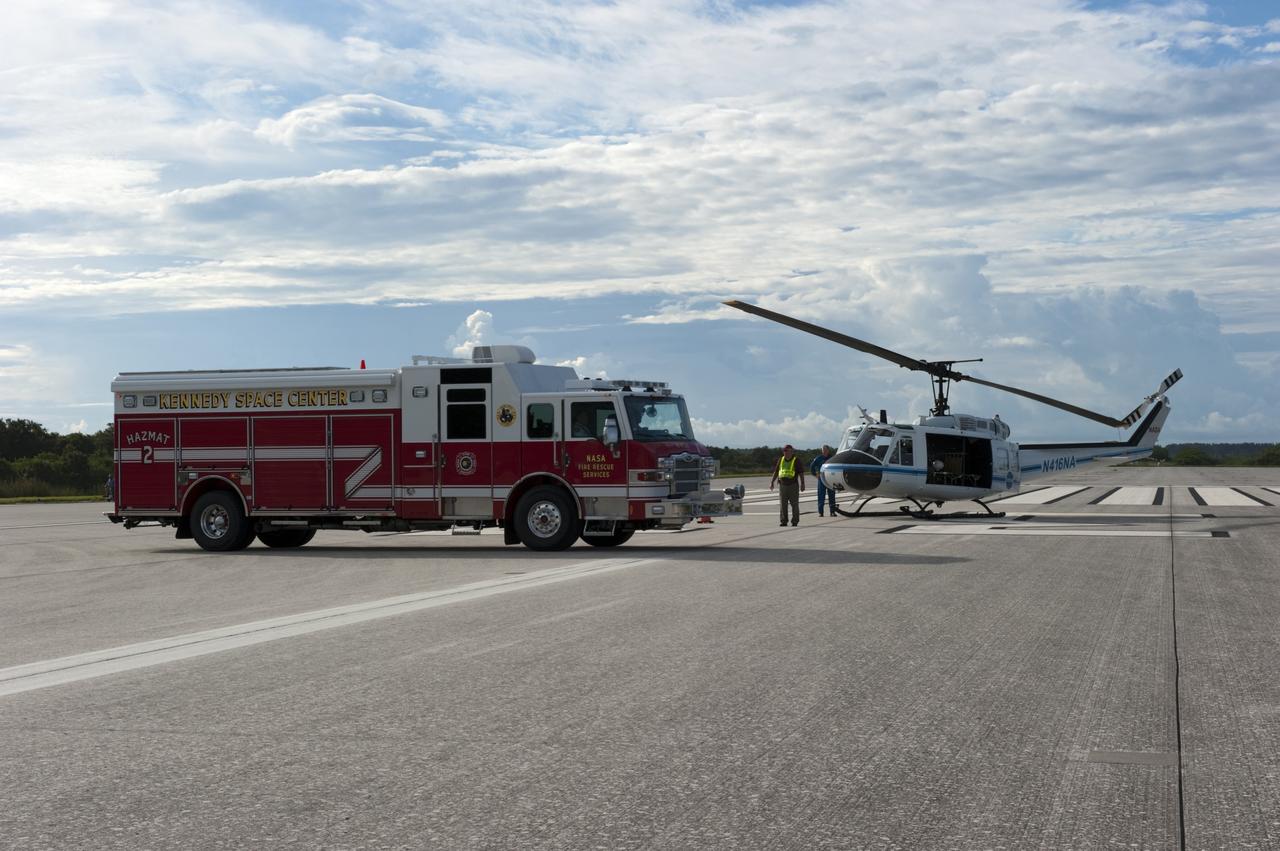
CAPE CANAVERAL, Fla. -- A NASA Fire Rescue Services vehicle and a Huey II helicopter support the aviation safety exercise during Emergency Response Safety Training at the Shuttle Landing Facility, Runway 33, at NASA’s Kennedy Space Center in Florida. The simulated helicopter mishap exercise was conducted to evaluate emergency response and mishap investigations of aircraft at Kennedy. Participants included Air Rescue Fire Fighters, Flight Operations, Disaster Preparedness, Security, and Safety. NASA mandates simulated aviation safety training take place every two years. Photo credit: NASA/Kim Shiflett
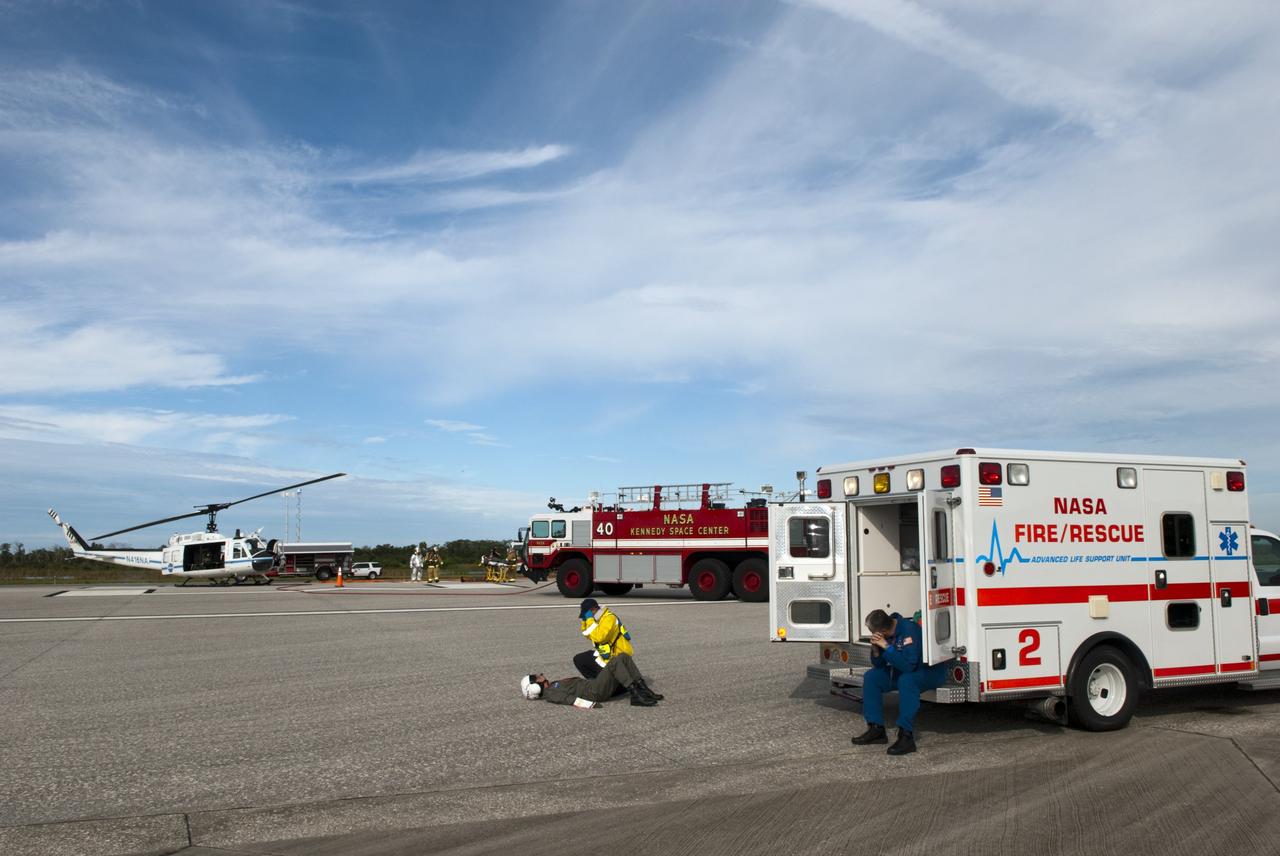
CAPE CANAVERAL, Fla. -- Volunteers portraying injured Huey II helicopter crew members are assisted by NASA Fire Rescue personnel in support of the aviation safety exercise during Emergency Response Safety Training at the Shuttle Landing Facility, Runway 33, at NASA’s Kennedy Space Center in Florida. The simulated helicopter mishap exercise was conducted to evaluate emergency response and mishap investigations of aircraft at Kennedy. Participants included Air Rescue Fire Fighters, Flight Operations, Disaster Preparedness, Security, and Safety. NASA mandates simulated aviation safety training take place every two years. Photo credit: NASA/Kim Shiflett
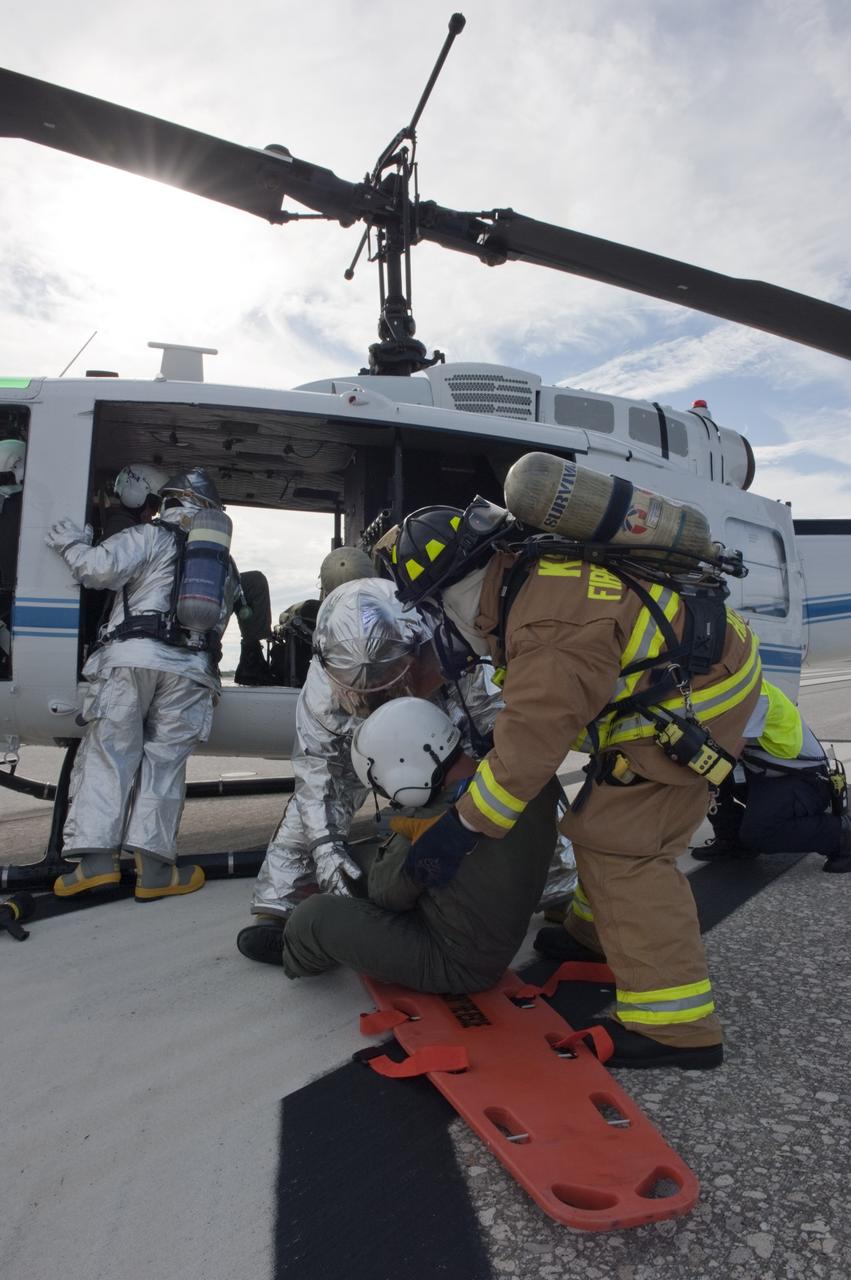
CAPE CANAVERAL, Fla. -- NASA Fire Rescue personnel assist volunteers portraying injured Huey II helicopter crew members participating in the aviation safety exercise during Emergency Response Safety Training at the Shuttle Landing Facility, Runway 33, at NASA’s Kennedy Space Center in Florida. The simulated helicopter mishap exercise was conducted to evaluate emergency response and mishap investigations of aircraft at Kennedy. Participants included Air Rescue Fire Fighters, Flight Operations, Disaster Preparedness, Security, and Safety. NASA mandates simulated aviation safety training take place every two years. Photo credit: NASA/Kim Shiflett

CAPE CANAVERAL, Fla. -- NASA Fire Rescue personnel assist a volunteer portraying an injured Huey II helicopter crew member participating in the aviation safety exercise during Emergency Response Safety Training at the Shuttle Landing Facility, Runway 33, at NASA’s Kennedy Space Center in Florida. The simulated helicopter mishap exercise was conducted to evaluate emergency response and mishap investigations of aircraft at Kennedy. Participants included Air Rescue Fire Fighters, Flight Operations, Disaster Preparedness, Security, and Safety. NASA mandates simulated aviation safety training take place every two years. Photo credit: NASA/Kim Shiflett
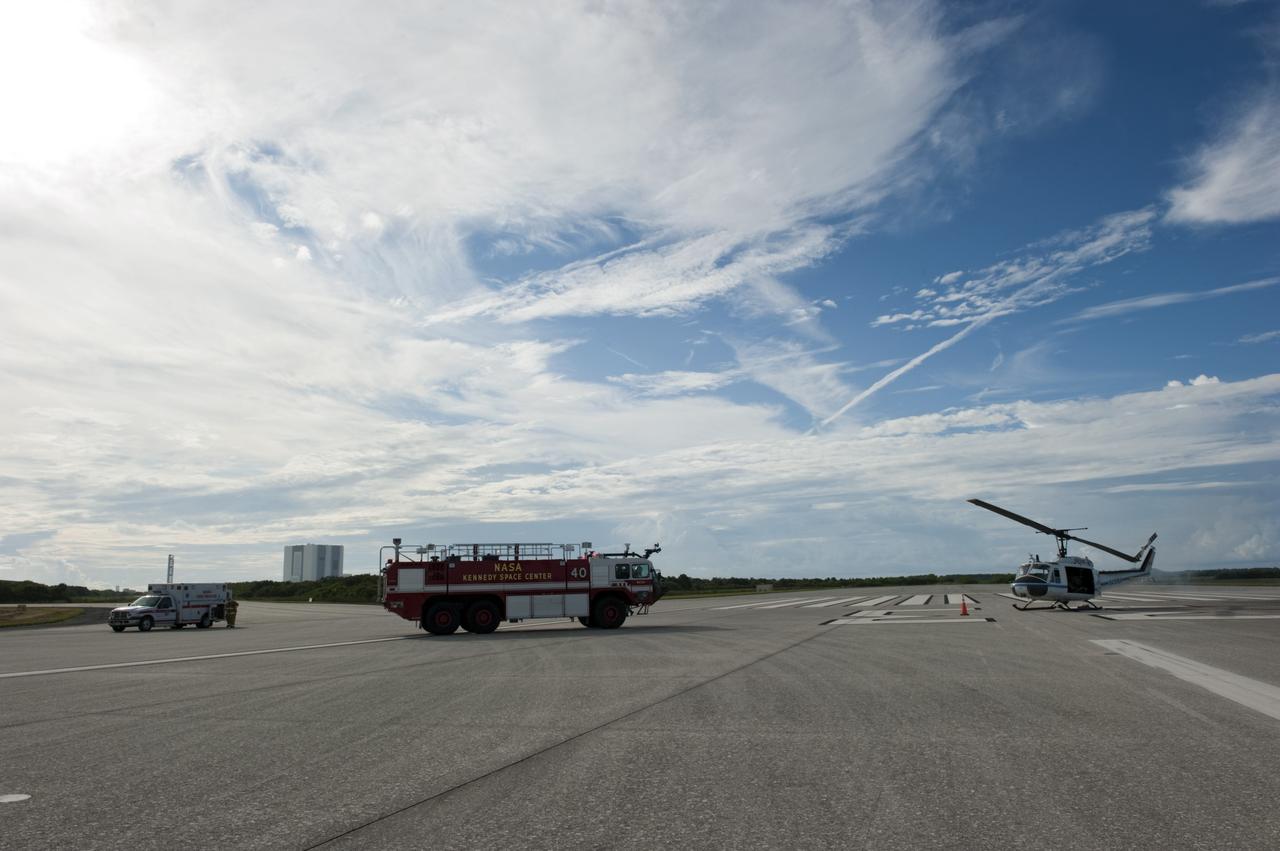
CAPE CANAVERAL, Fla. -- A NASA Fire Rescue Services vehicle, ambulance and Huey II helicopter take part in the aviation safety exercise during Emergency Response Safety Training at the Shuttle Landing Facility, Runway 33, at NASA’s Kennedy Space Center in Florida. The simulated helicopter mishap exercise was conducted to evaluate emergency response and mishap investigations of aircraft at Kennedy. Participants included Air Rescue Fire Fighters, Flight Operations, Disaster Preparedness, Security, and Safety. NASA mandates simulated aviation safety training take place every two years. Photo credit: NASA/Kim Shiflett
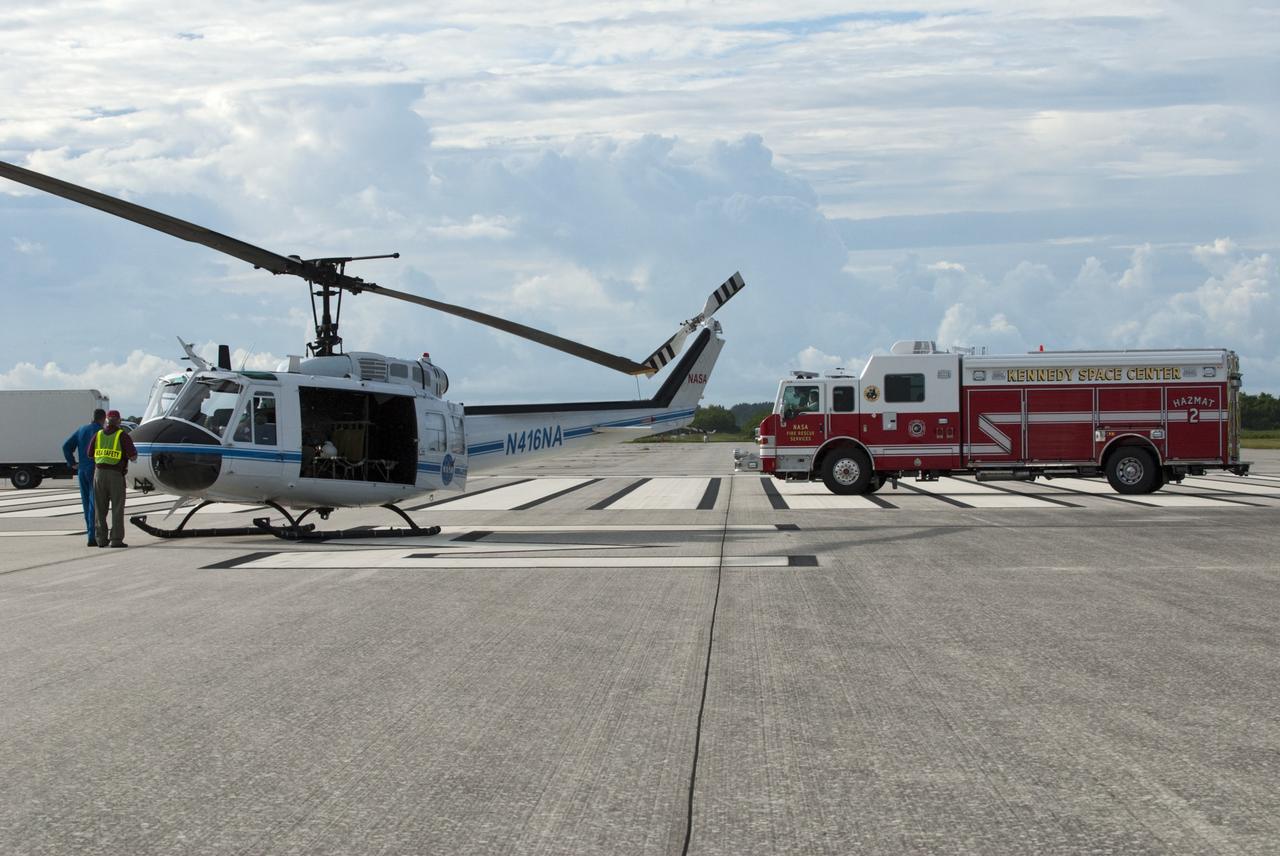
CAPE CANAVERAL, Fla. -- Volunteers, portraying their individual roles, stand beside a NASA Fire Rescue Services vehicle and a Huey II helicopter in support of the aviation safety exercise during Emergency Response Safety Training at the Shuttle Landing Facility, Runway 33, at NASA’s Kennedy Space Center in Florida. The simulated helicopter mishap exercise was conducted to evaluate emergency response and mishap investigations of aircraft at Kennedy. Participants included Air Rescue Fire Fighters, Flight Operations, Disaster Preparedness, Security, and Safety. NASA mandates simulated aviation safety training take place every two years. Photo credit: NASA/Kim Shiflett
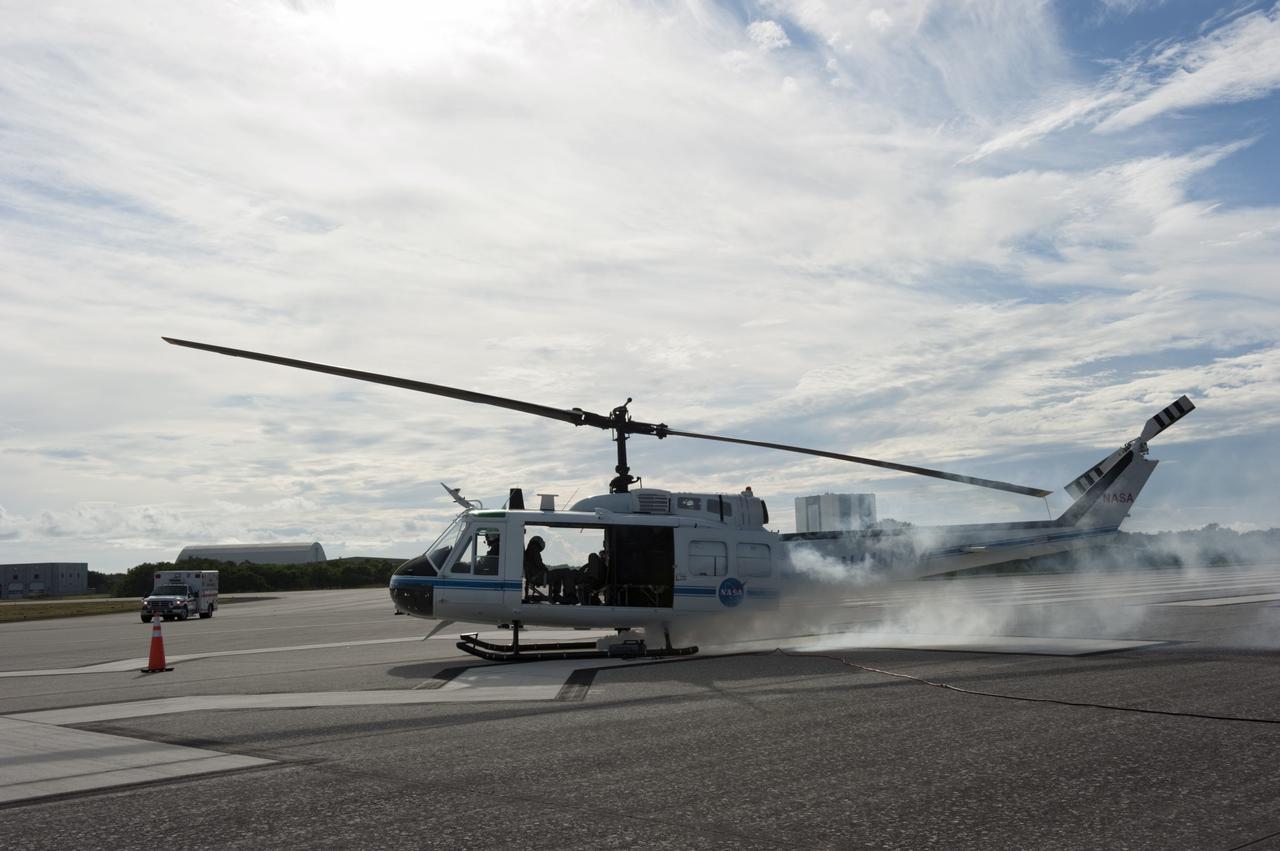
CAPE CANAVERAL, Fla. -- Smoke billows from a Huey II helicopter supporting the aviation safety exercise during Emergency Response Safety Training at the Shuttle Landing Facility, Runway 33, at NASA’s Kennedy Space Center in Florida. The simulated helicopter mishap exercise was conducted to evaluate emergency response and mishap investigations of aircraft at Kennedy. Participants included Air Rescue Fire Fighters, Flight Operations, Disaster Preparedness, Security, and Safety. NASA mandates simulated aviation safety training take place every two years. Photo credit: NASA/Kim Shiflett
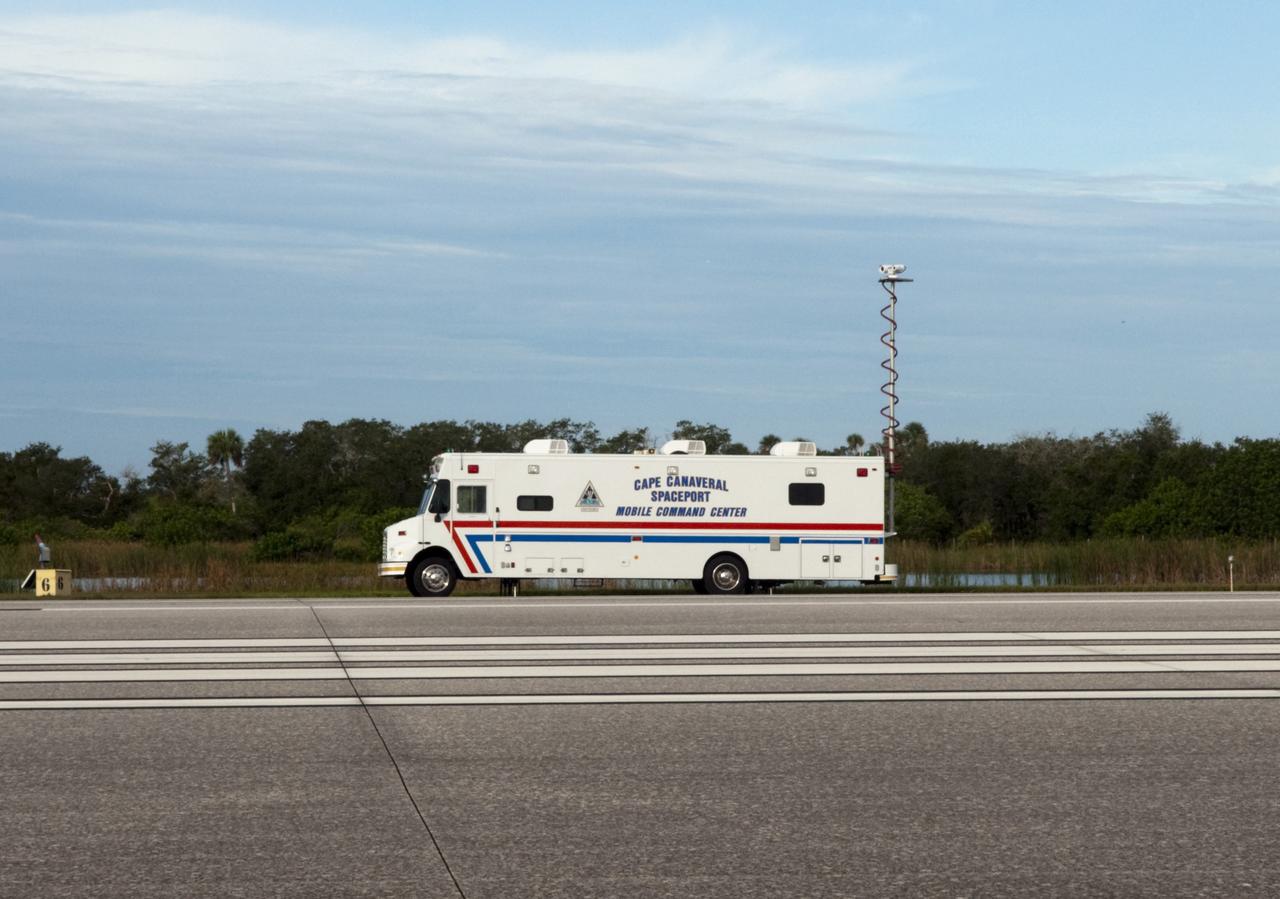
CAPE CANAVERAL, Fla. -- The Cape Canaveral Spaceport Mobile Command Center vehicle participates in the aviation safety exercise during Emergency Response Safety Training at the Shuttle Landing Facility, Runway 33, at NASA’s Kennedy Space Center in Florida. The simulated helicopter mishap exercise was conducted to evaluate emergency response and mishap investigations of aircraft at Kennedy. Participants included Air Rescue Fire Fighters, Flight Operations, Disaster Preparedness, Security, and Safety. NASA mandates simulated aviation safety training take place every two years. Photo credit: NASA/Kim Shiflett

KENNEDY SPACE CENTER, FLA. -- During the second stage of a simulated emergency, known as Mode 4, KSC rescue team members help "injured" astronauts, portrayed by KSC personnel, out of the slidewire baskets. The emergency exercise began at the 195-foot level of Launch Pad 39A. The KSC rescue teams are practicing emergency procedures in the unlikely scenario of a mishap on the pad during a launch sequence. The exercises are standard training procedures to assess and prepare emergency personnel, procedures and hardware. Photo credit: NASA/Jim Grossmann

KENNEDY SPACE CENTER, FLA. -- During the second stage of a simulated emergency, known as Mode 4, part of the KSC fire rescue team helps an "injured" member of the closeout crew. The emergency exercise began at the 195-foot level of Launch Pad 39A. The KSC rescue teams are practicing emergency procedures in the unlikely scenario of a mishap on the pad during a launch sequence. The exercises are standard training procedures to assess and prepare emergency personnel, procedures and hardware. Photo credit: NASA/Jim Grossmann
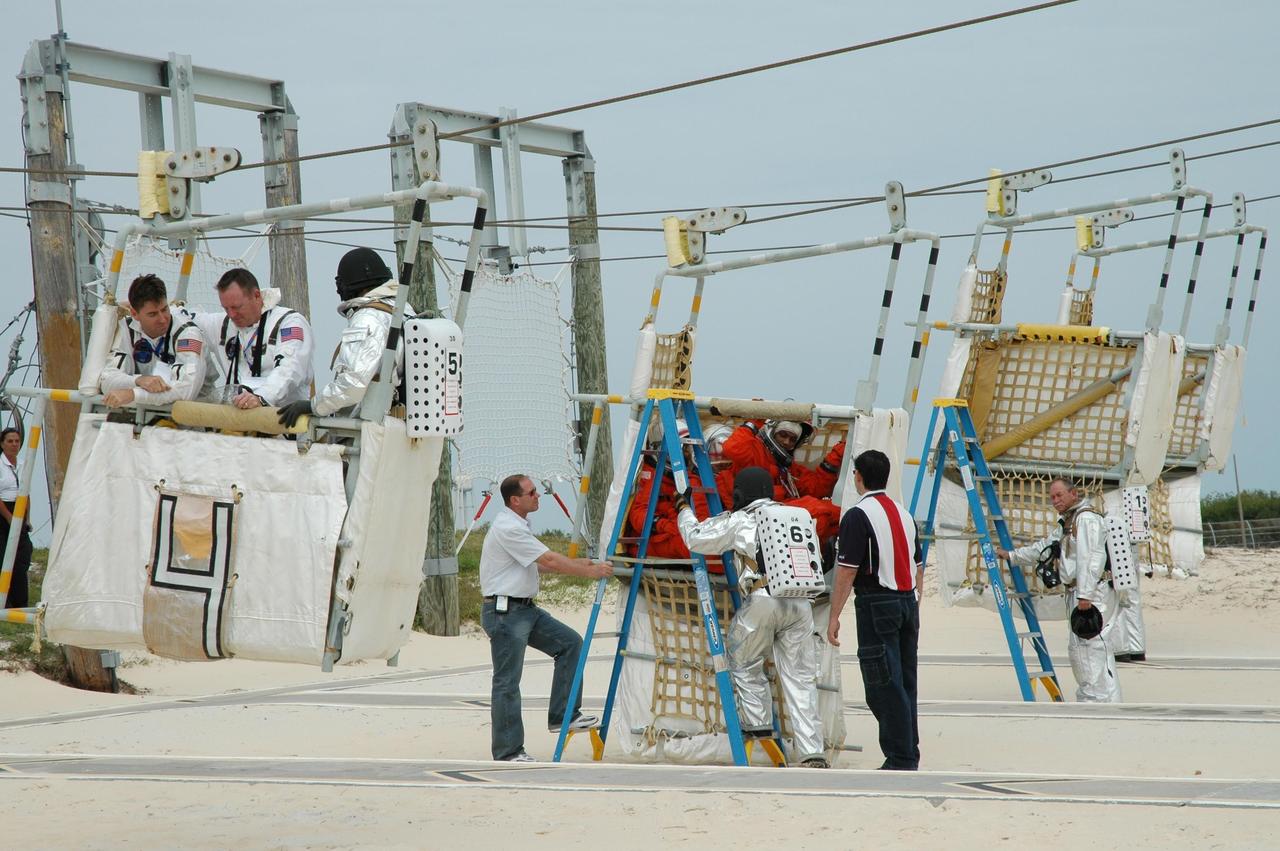
KENNEDY SPACE CENTER, FLA. -- During the second stage of a simulated emergency, known as Mode 4, KSC personnel dressed in astronauts' launch-and-entry suits are helped by the fire rescue team at the slidewire basket landing site. The emergency exercise began at the 195-foot level of Launch Pad 39A. The KSC rescue teams are practicing emergency procedures in the unlikely scenario of a mishap on the pad during a launch sequence. The exercises are standard training procedures to assess and prepare emergency personnel, procedures and hardware. Photo credit: NASA/Jim Grossmann

KENNEDY SPACE CENTER, FLA. -- During the second stage of a simulated emergency, known as Mode 4, KSC rescue team members help "injured" astronauts, portrayed by KSC personnel, out of the slidewire baskets. The emergency exercise began at the 195-foot level of Launch Pad 39A. The KSC rescue teams are practicing emergency procedures in the unlikely scenario of a mishap on the pad during a launch sequence. The exercises are standard training procedures to assess and prepare emergency personnel, procedures and hardware. Photo credit: NASA/Jim Grossmann
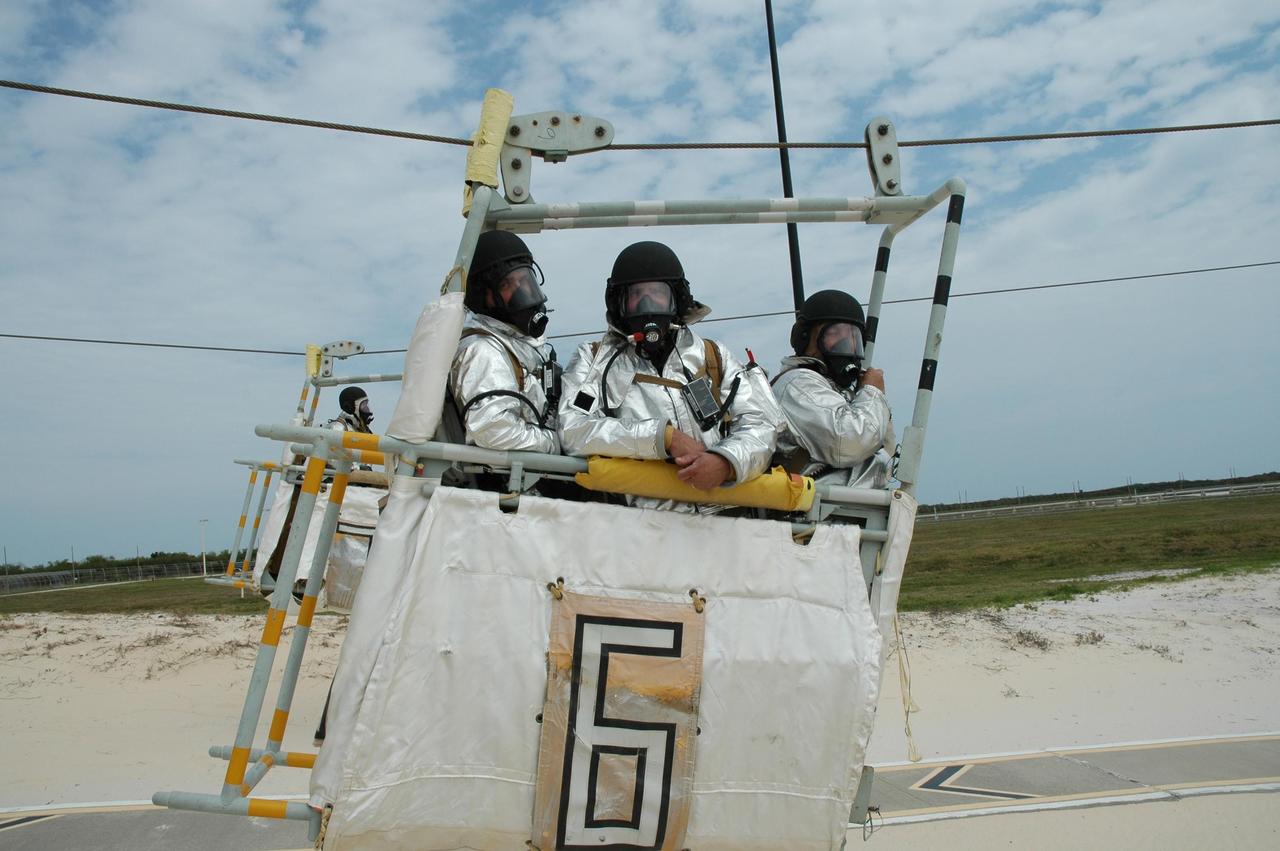
KENNEDY SPACE CENTER, FLA. -- During the second stage of a simulated emergency, known as Mode 4, part of the KSC fire rescue team in a slidewire basket arrive at the landing site. The emergency exercise began at the 195-foot level of Launch Pad 39A. The KSC rescue teams are practicing emergency procedures in the unlikely scenario of a mishap on the pad during a launch sequence. The exercises are standard training procedures to assess and prepare emergency personnel, procedures and hardware. Photo credit: NASA/Jim Grossmann
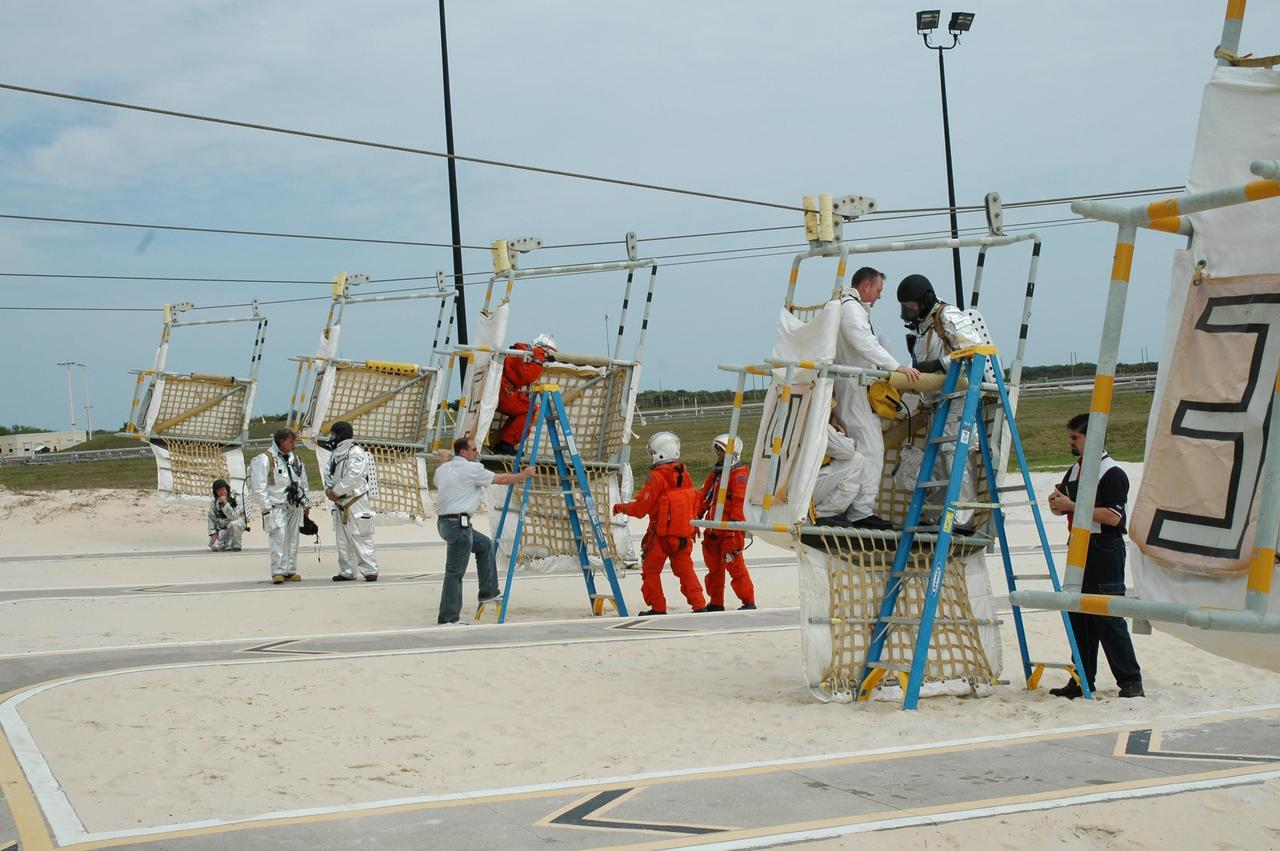
KENNEDY SPACE CENTER, FLA. -- During the second stage of a simulated emergency, known as Mode 4, KSC personnel dressed in astronauts' launch-and-entry suits are helped by the fire rescue team at the slidewire basket landing site. The emergency exercise began at the 195-foot level of Launch Pad 39A. The KSC rescue teams are practicing emergency procedures in the unlikely scenario of a mishap on the pad during a launch sequence. The exercises are standard training procedures to assess and prepare emergency personnel, procedures and hardware. Photo credit: NASA/Jim Grossmann
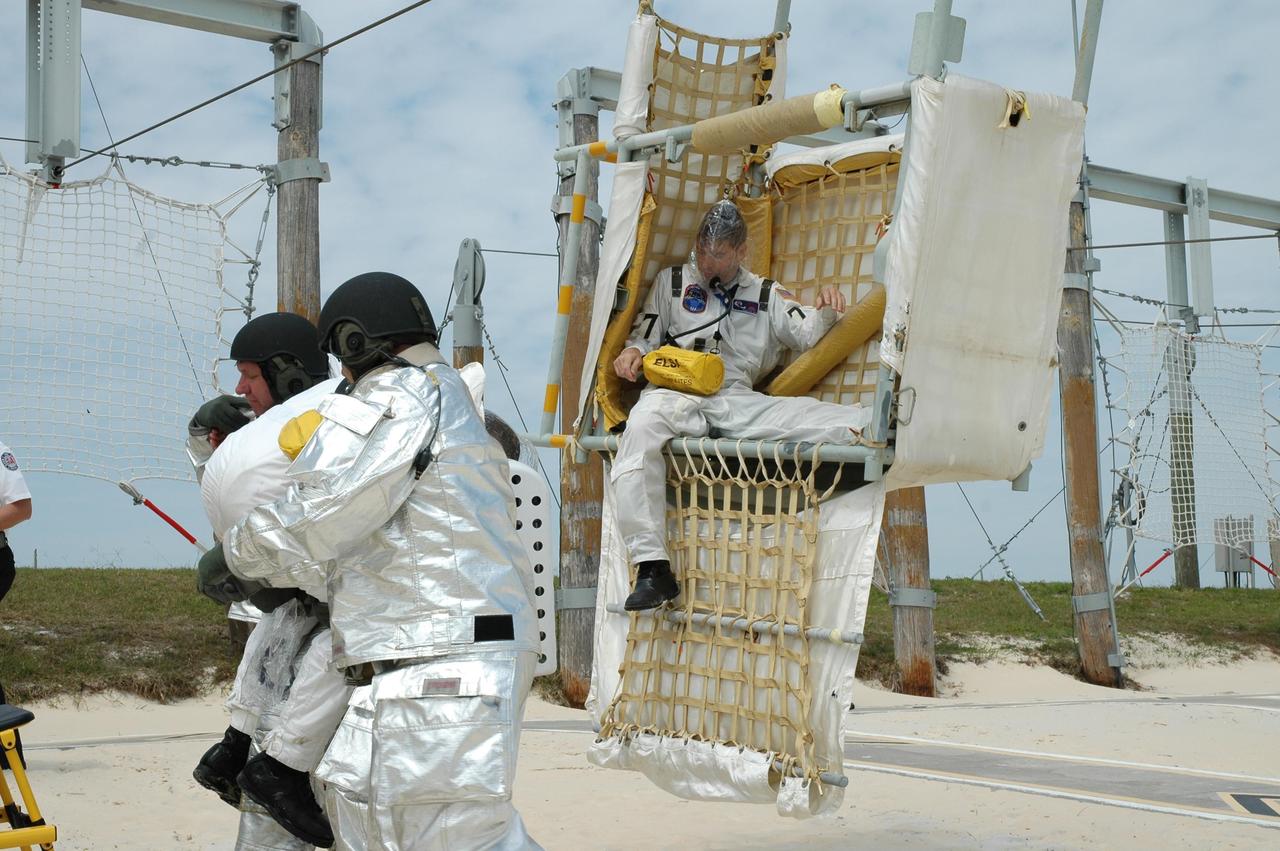
KENNEDY SPACE CENTER, FLA. -- During the second stage of a simulated emergency, known as Mode 4, part of the KSC fire rescue team helps "injured" members of the closeout crew out of the slidewire baskets. The emergency exercise began at the 195-foot level of Launch Pad 39A. The KSC rescue teams are practicing emergency procedures in the unlikely scenario of a mishap on the pad during a launch sequence. The exercises are standard training procedures to assess and prepare emergency personnel, procedures and hardware. Photo credit: NASA/Jim Grossmann
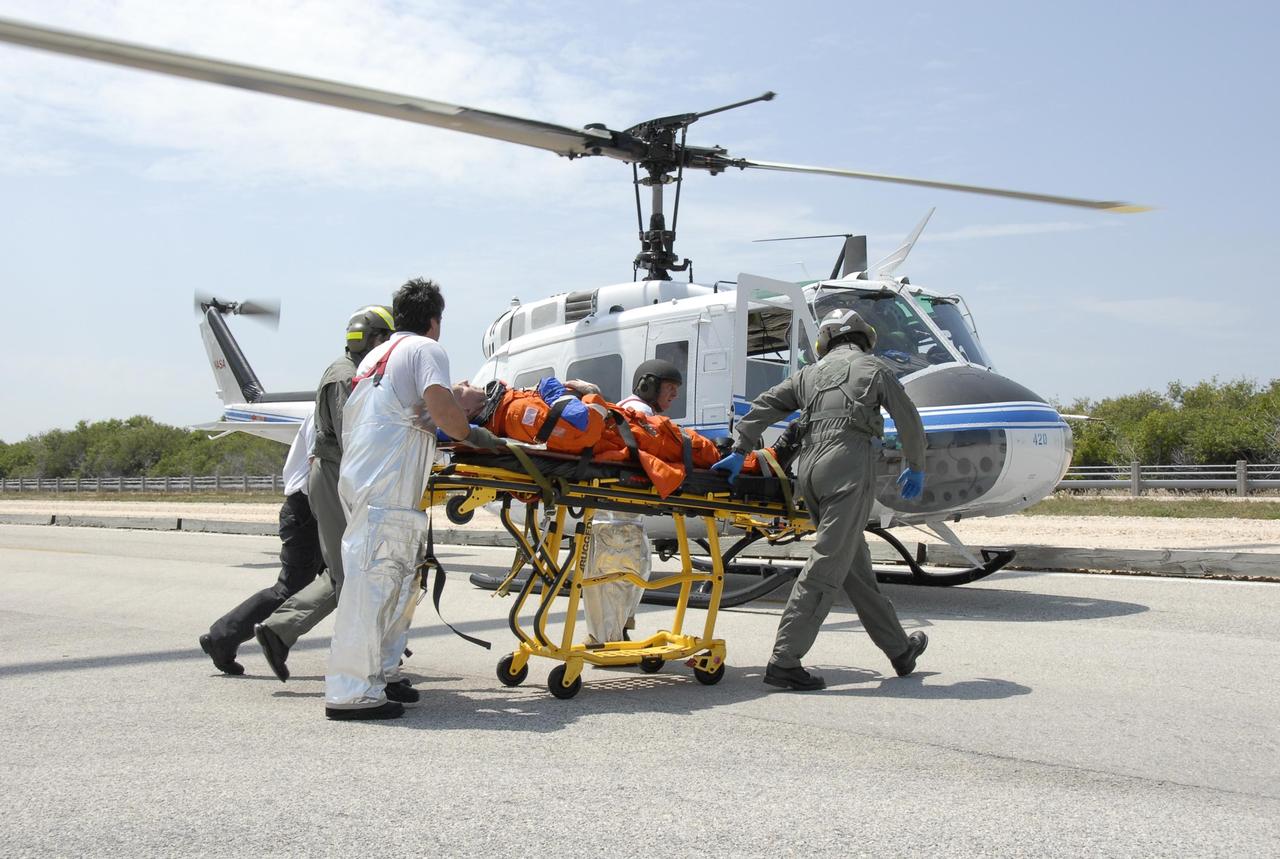
KENNEDY SPACE CENTER, FLA. -- During the second stage of a simulated emergency, known as Mode 4, the KSC rescue team moves an "injured" astronaut toward a NASA helicopter, one of five participating in the exercise. The triage area was set up at Helipad 8, located near the fire station between Launch Pads 39A and 39B. The emergency exercise began on Launch Pad 39A. The participants were helped off the pad and taken to the triage site. The KSC rescue teams are practicing emergency procedures in the unlikely scenario of a mishap on the pad during a launch sequence. The exercises are standard training procedures to assess and prepare emergency personnel, procedures and hardware. Photo credit: NASA/Kim Shiflett
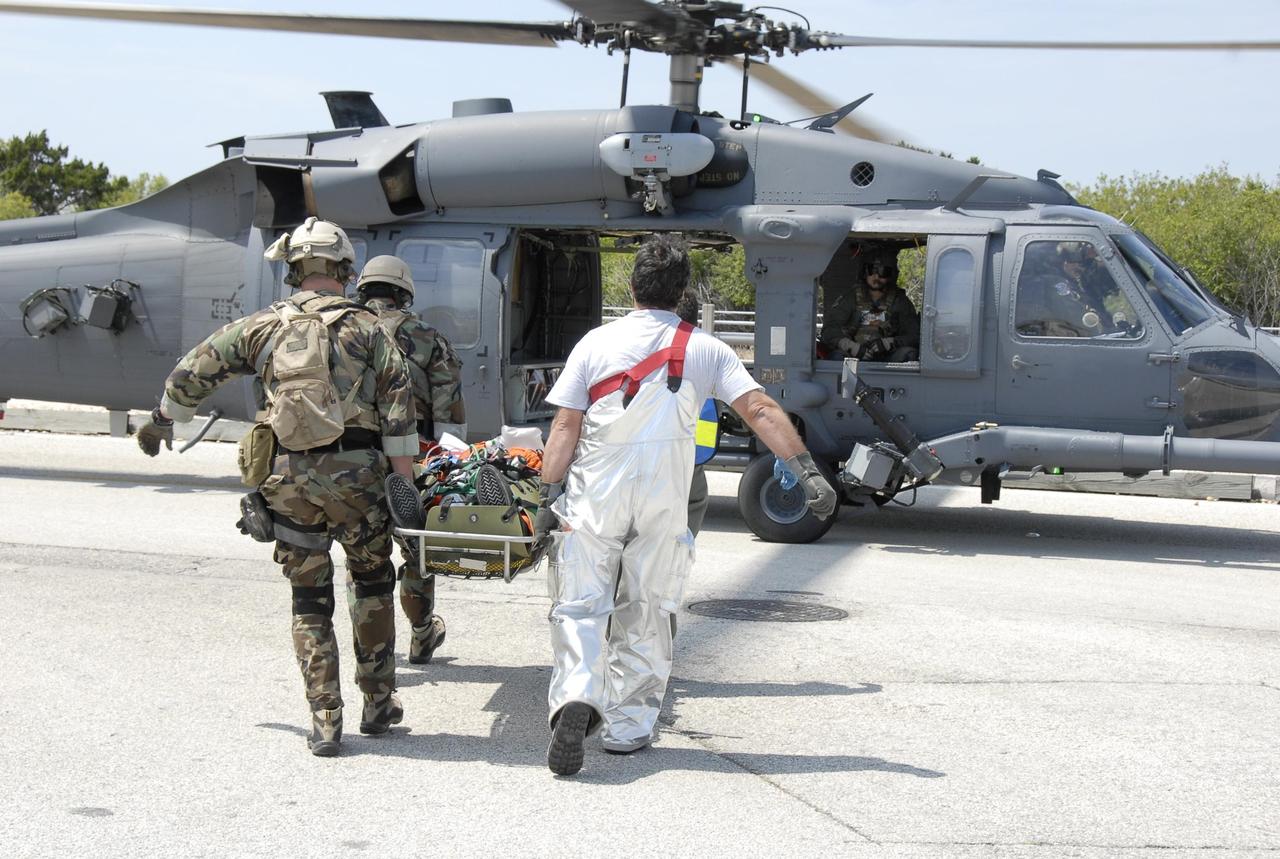
KENNEDY SPACE CENTER, FLA. -- During the second stage of a simulated emergency, known as Mode 4, the KSC rescue team carries an "injured" astronaut toward one of five helicopters participating in the exercise. The triage area was set up at Helipad 8, located near the fire station between Launch Pads 39A and 39B. The emergency exercise began on Launch Pad 39A. The participants were helped off the pad and taken to the triage site. The KSC rescue teams are practicing emergency procedures in the unlikely scenario of a mishap on the pad during a launch sequence. The exercises are standard training procedures to assess and prepare emergency personnel, procedures and hardware. Photo credit: NASA/Kim Shiflett

KENNEDY SPACE CENTER, FLA. -- During the second stage of a simulated emergency, known as Mode 4, the KSC rescue team moves astronauts, portrayed by KSC personnel, into M-113 armored carriers. The M-113 will be used to transport the workers to a triage area. The emergency exercise began at the 195-foot level of Launch Pad 39A. The KSC rescue teams are practicing emergency procedures in the unlikely scenario of a mishap on the pad during a launch sequence. The exercises are standard training procedures to assess and prepare emergency personnel, procedures and hardware. Photo credit: NASA/Jim Grossmann
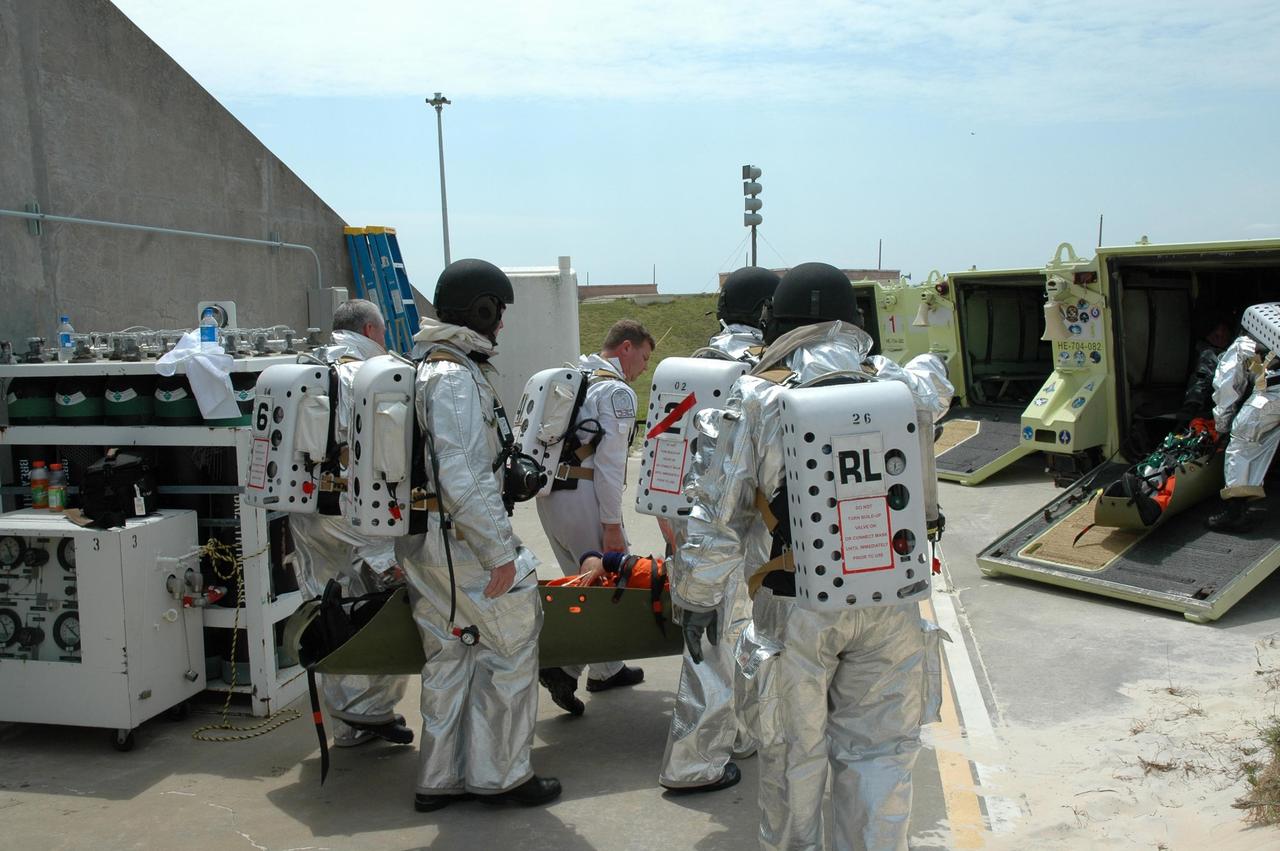
KENNEDY SPACE CENTER, FLA. -- During the second stage of a simulated emergency, known as Mode 4, the KSC rescue team carries an "injured" astronaut, portrayed by a KSC worker, toward an M-113 armored carrier. The M-113 will be used to transport the worker to a triage area. The emergency exercise began at the 195-foot level of Launch Pad 39A. The KSC rescue teams are practicing emergency procedures in the unlikely scenario of a mishap on the pad during a launch sequence. The exercises are standard training procedures to assess and prepare emergency personnel, procedures and hardware. Photo credit: NASA/Jim Grossmann
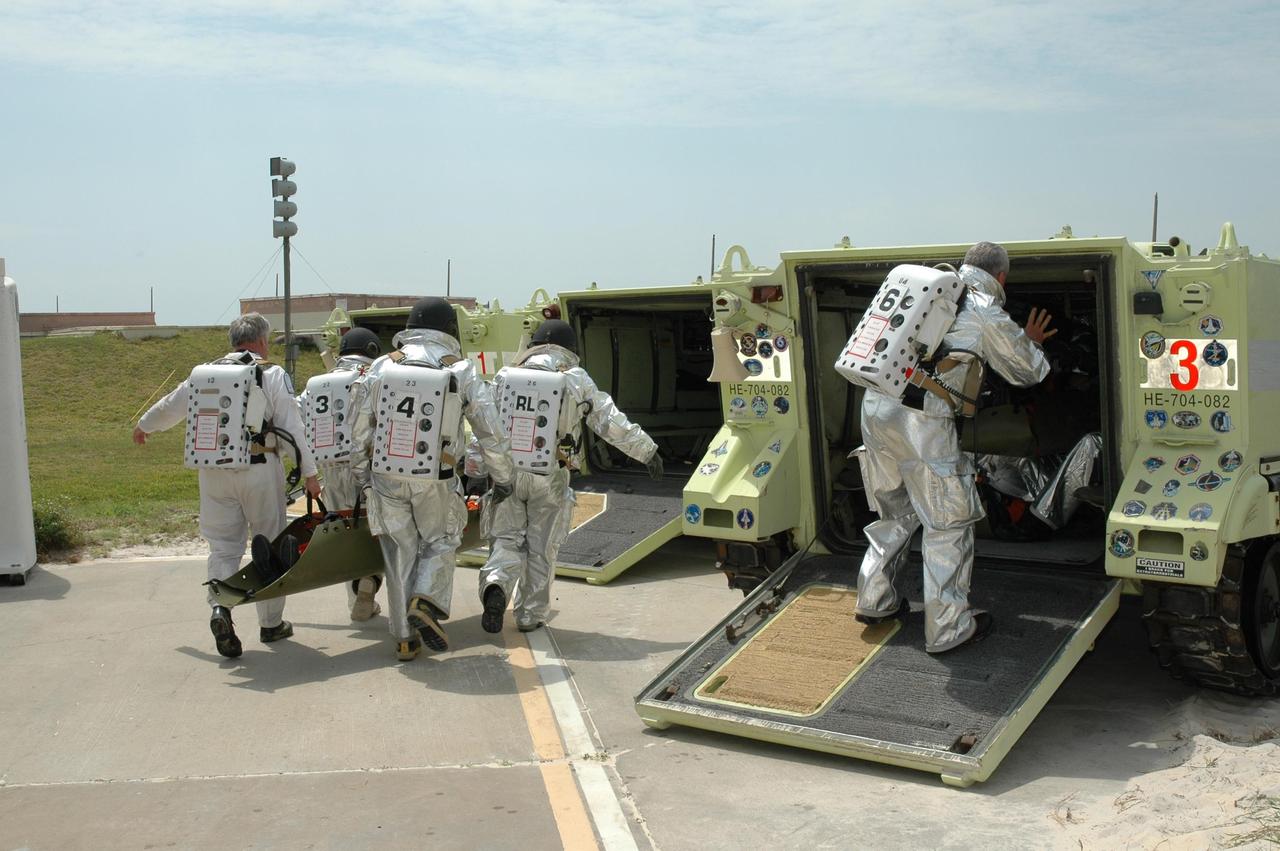
KENNEDY SPACE CENTER, FLA. -- During the second stage of a simulated emergency, known as Mode 4, the KSC rescue team moves "injured" astronauts, portrayed by KSC personnel, into M-113 armored carriers. The M-113 will be used to transport the workers to a triage area. The emergency exercise began at the 195-foot level of Launch Pad 39A. The KSC rescue teams are practicing emergency procedures in the unlikely scenario of a mishap on the pad during a launch sequence. The exercises are standard training procedures to assess and prepare emergency personnel, procedures and hardware. Photo credit: NASA/Jim Grossmann
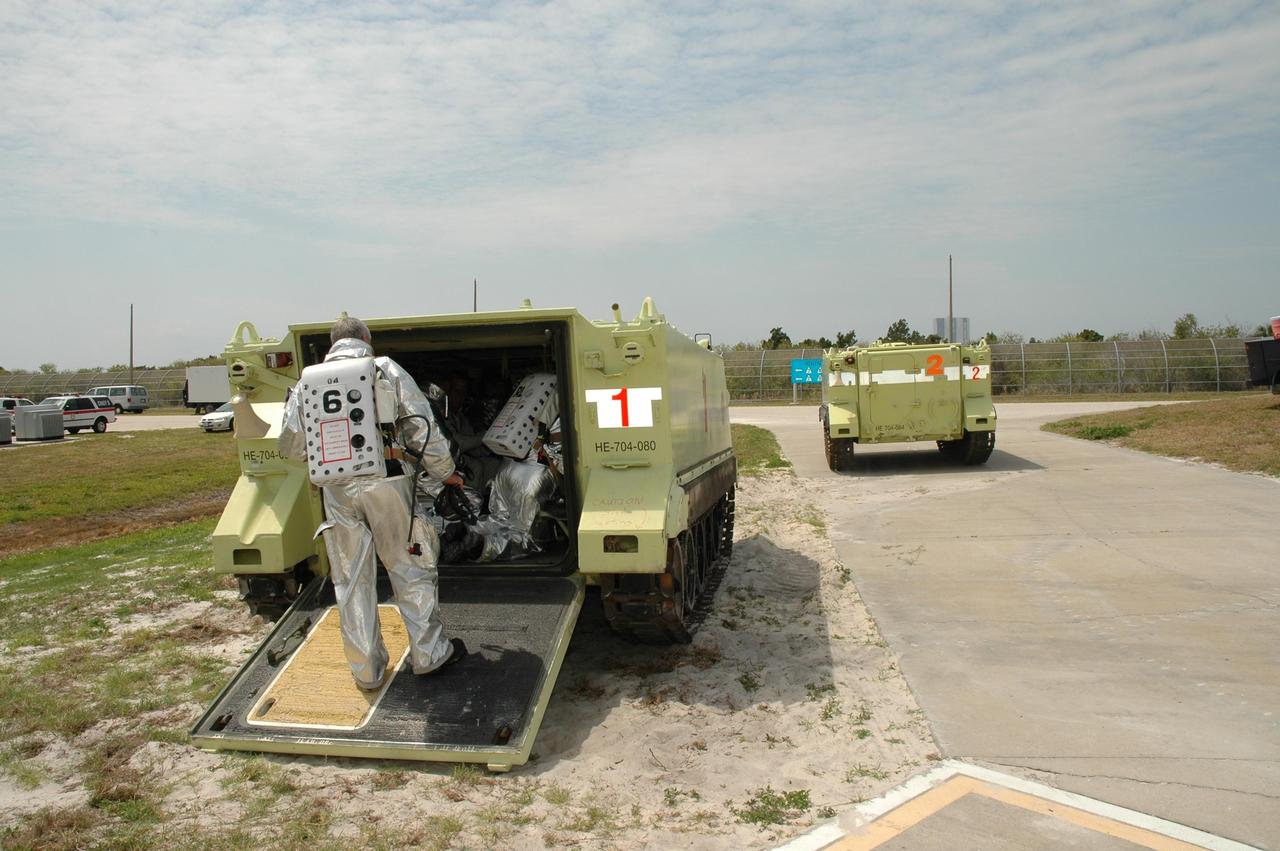
KENNEDY SPACE CENTER, FLA. -- During the second stage of a simulated emergency, known as Mode 4, one M-113 armored carrier leaves Launch Pad 39A while a second waits for another passenger. The carriers are being used to transport workers simulating astronauts and others to a triage area. The emergency exercise began at the 195-foot level of Launch Pad 39A. The KSC rescue teams are practicing emergency procedures in the unlikely scenario of a mishap on the pad during a launch sequence. The exercises are standard training procedures to assess and prepare emergency personnel, procedures and hardware. Photo credit: NASA/Jim Grossmann
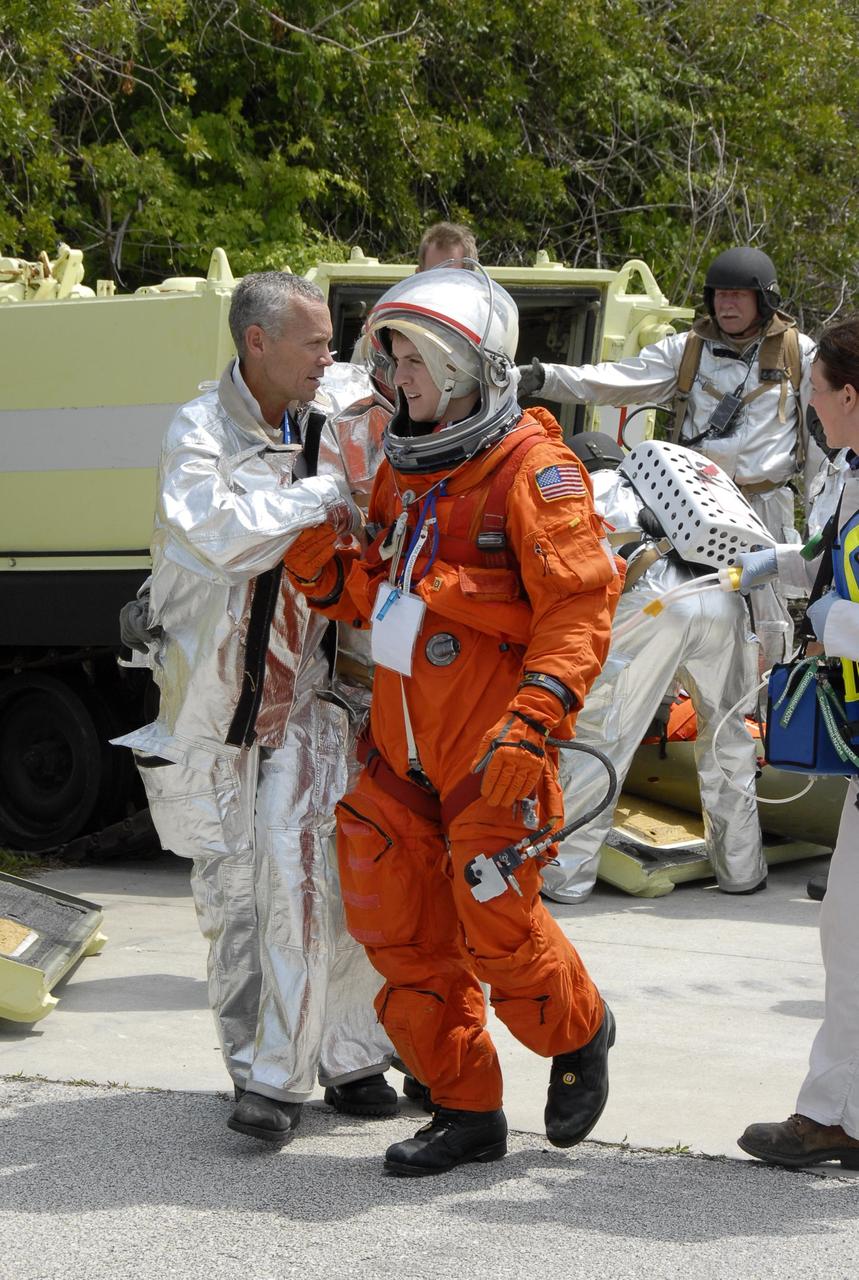
KENNEDY SPACE CENTER, FLA. -- During the second stage of a simulated emergency, known as Mode 4, KSC personnel representing astronauts are treated at a triage area set up at Helipad 8, located near the fire station between Launch Pads 39A and 39B. The emergency exercise began on Launch Pad 39A. The participants were helped off the pad and taken to the triage site. The "injured" workers will be airlifted to participating area hospitals. The KSC rescue teams are practicing emergency procedures in the unlikely scenario of a mishap on the pad during a launch sequence. The exercises are standard training procedures to assess and prepare emergency personnel, procedures and hardware. Photo credit: NASA/Kim Shiflett
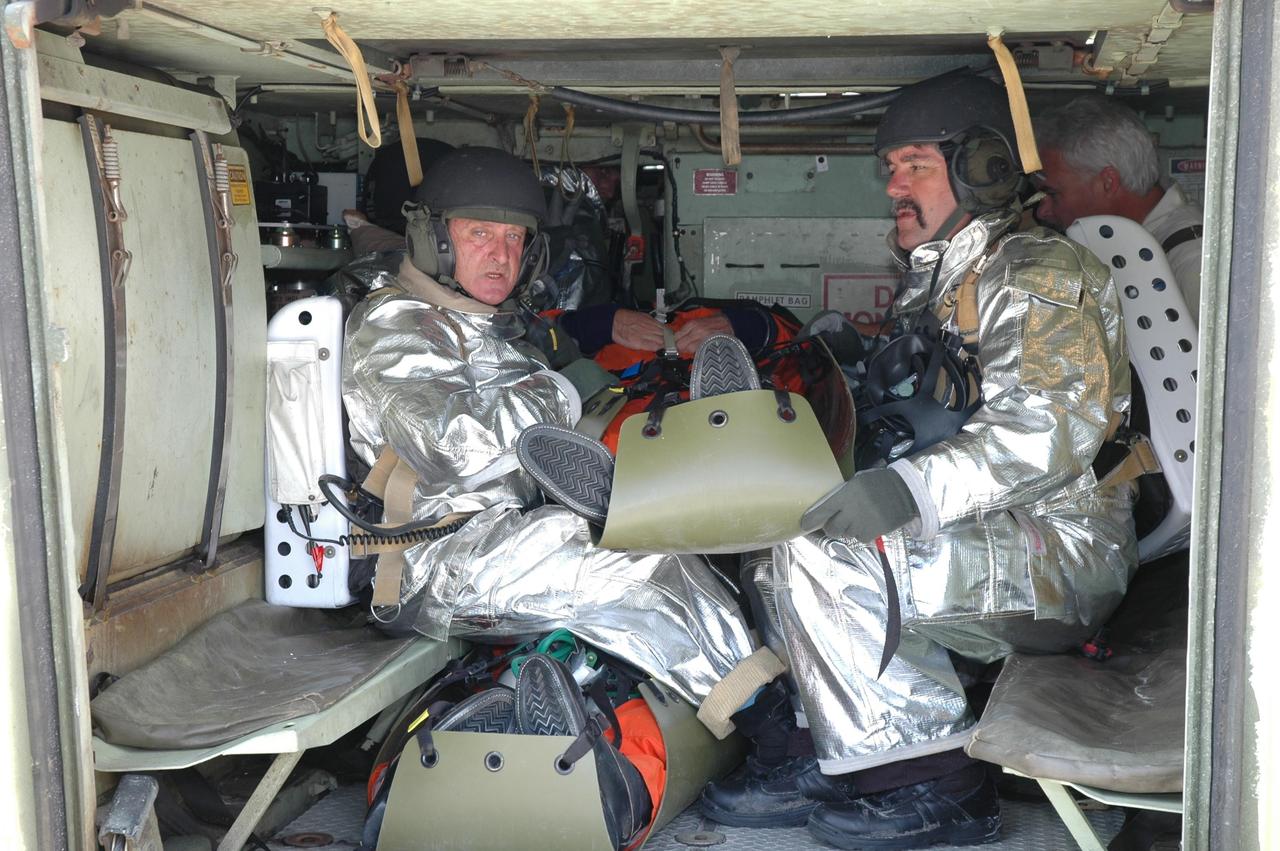
KENNEDY SPACE CENTER, FLA. -- Inside an M-113 armored personnel carrier, members of the KSC rescue team escort an "injured" astronaut, portrayed by a KSC worker, during the second stage of a simulated emergency, known as Mode 4. The M-113 will be used to transport the worker to a triage area. The emergency exercise began at the 195-foot level of Launch Pad 39A. The KSC rescue teams are practicing emergency procedures in the unlikely scenario of a mishap on the pad during a launch sequence. The exercises are standard training procedures to assess and prepare emergency personnel, procedures and hardware. Photo credit: NASA/Jim Grossmann

KENNEDY SPACE CENTER, FLA. -- During the second stage of a simulated emergency, known as Mode 4, part of the KSC fire rescue team helps an "injured" astronaut, portrayed by a KSC worker. The team is helping the worker out of a slidewire basket at the landing site. The emergency exercise began at the 195-foot level of Launch Pad 39A. The KSC rescue teams are practicing emergency procedures in the unlikely scenario of a mishap on the pad during a launch sequence. The exercises are standard training procedures to assess and prepare emergency personnel, procedures and hardware. Photo credit: NASA/Jim Grossmann

KENNEDY SPACE CENTER, FLA. -- During the second stage of a simulated emergency, known as Mode 4, a helicopter leaves with an "injured" astronaut while others are being monitored in the triage area, set up at Helipad 8, located near the fire station between Launch Pads 39A and 39B. The emergency exercise began on Launch Pad 39A. The participants were helped off the pad and taken to the triage site. The KSC rescue teams are practicing emergency procedures in the unlikely scenario of a mishap on the pad during a launch sequence. The exercises are standard training procedures to assess and prepare emergency personnel, procedures and hardware. Photo credit: NASA/Kim Shiflett
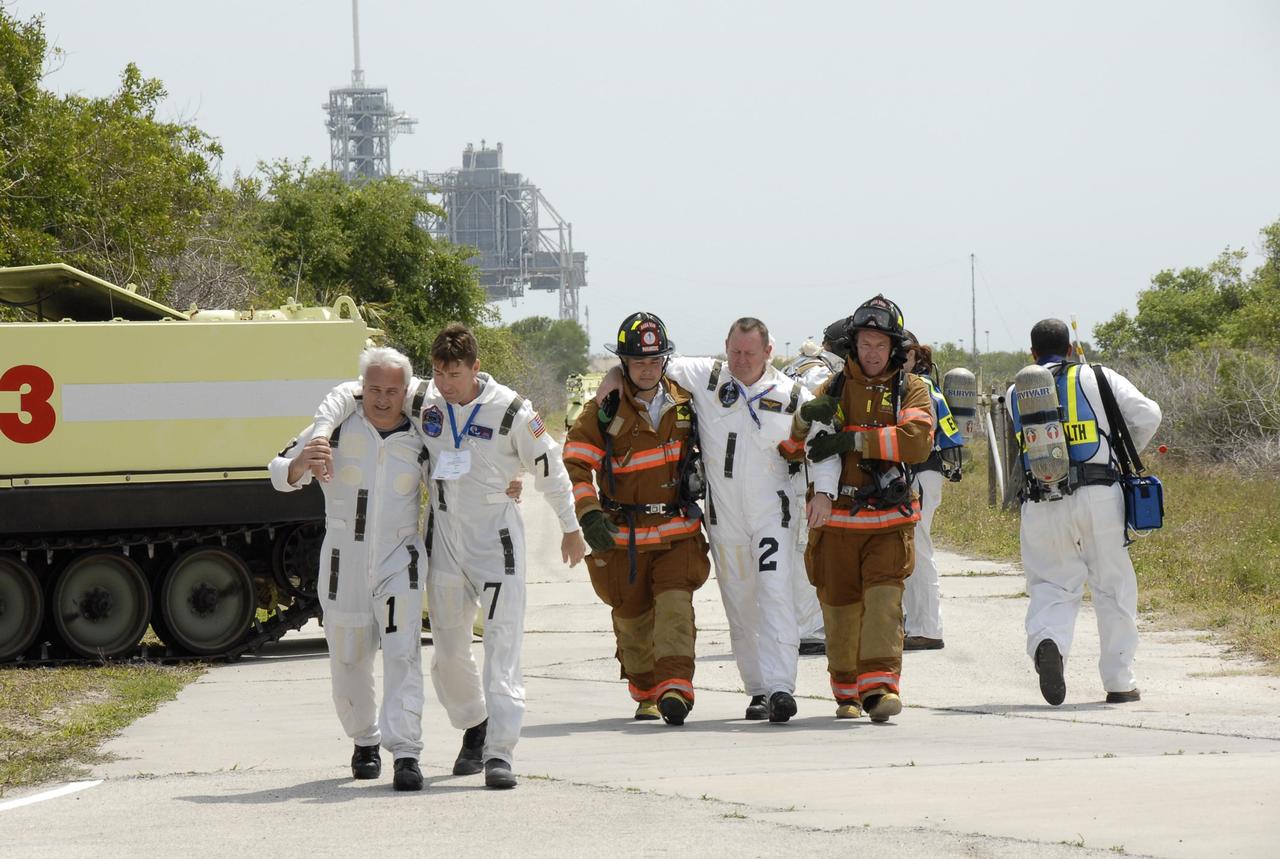
KENNEDY SPACE CENTER, FLA. -- During the second stage of a simulated emergency, known as Mode 4, rescue workers help KSC personnel feigning injuries to a triage area set up at Helipad 8, located near the fire station between Launch Pads 39A and 39B. The emergency exercise began on Launch Pad 39A. The participants were helped off the pad and taken to the triage site. The "injured" workers will be airlifted to participating area hospitals. The KSC rescue teams are practicing emergency procedures in the unlikely scenario of a mishap on the pad during a launch sequence. The exercises are standard training procedures to assess and prepare emergency personnel, procedures and hardware. Photo credit: NASA/Kim Shiflett
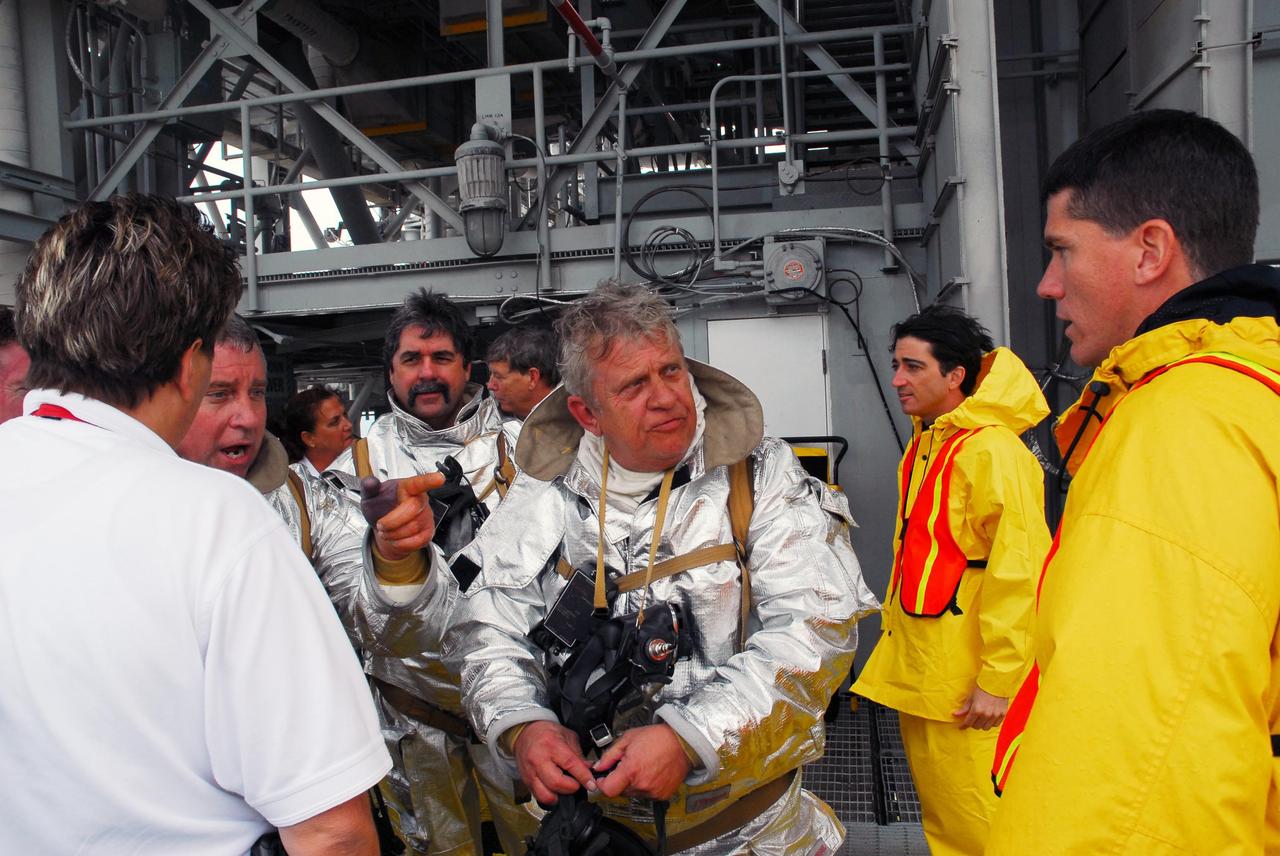
KENNEDY SPACE CENTER, FLA. -- After a simulated rescue mission on Launch Pad 39A, the fire rescue team compares notes about the activity. KSC workers dressed in official launch-and-entry suits portrayed astronauts. The KSC rescue teams are practicing emergency procedures in the unlikely scenario of a mishap on the pad during a launch sequence. The exercises are standard training procedures to assess and prepare emergency personnel, procedures and hardware. Photo credit: NASA/Jack Pfaller
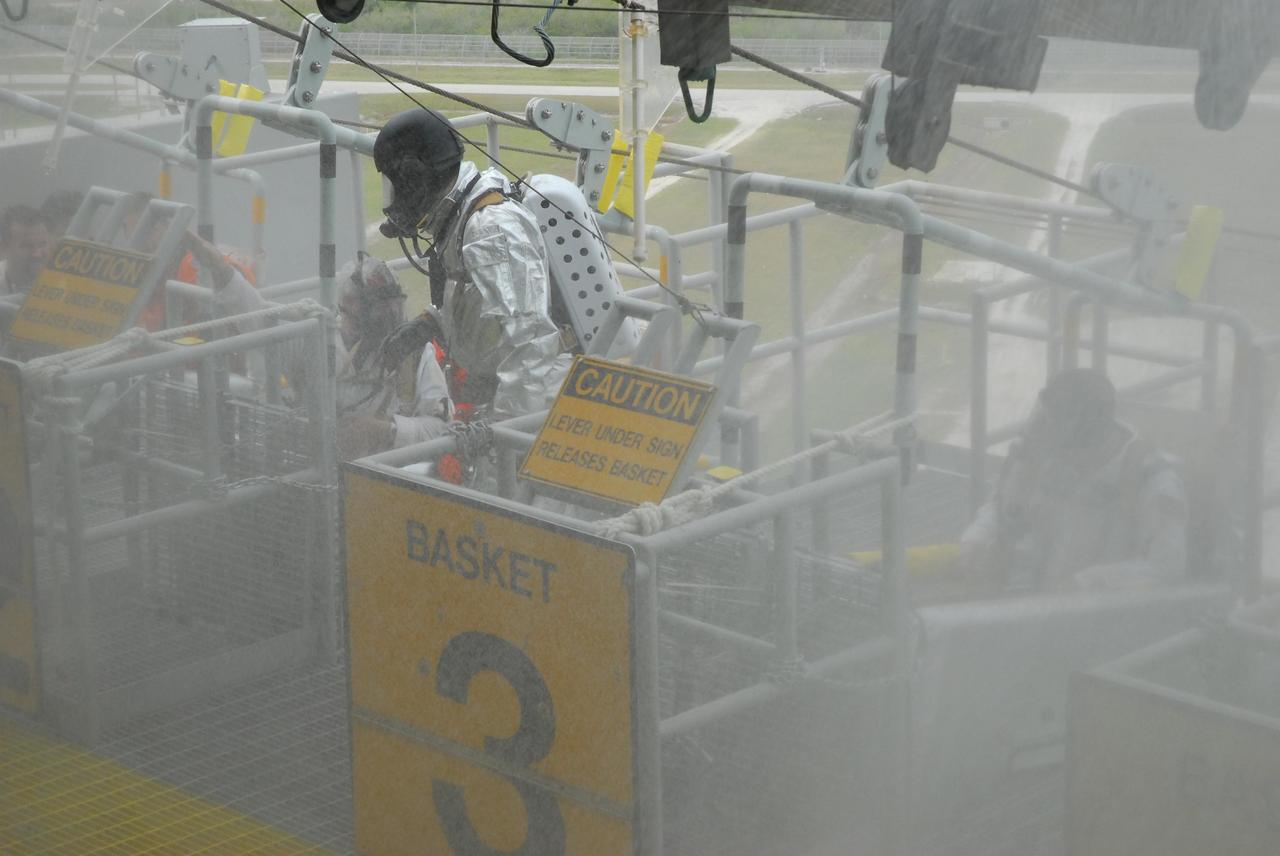
KENNEDY SPACE CENTER, FLA. -- During a simulated rescue mission on Launch Pad 39A, known as Mode 2, KSC workers dressed in astronauts' launch-and-entry suits climb into the slidewire baskets. A fire rescue team is simulating extracting the crew from the orbiter and helping them to the baskets. The KSC rescue teams are practicing emergency procedures in the unlikely scenario of a mishap on the pad during a launch sequence. The exercises are standard training procedures to assess and prepare emergency personnel, procedures and hardware. Photo credit: NASA/Jack Pfaller
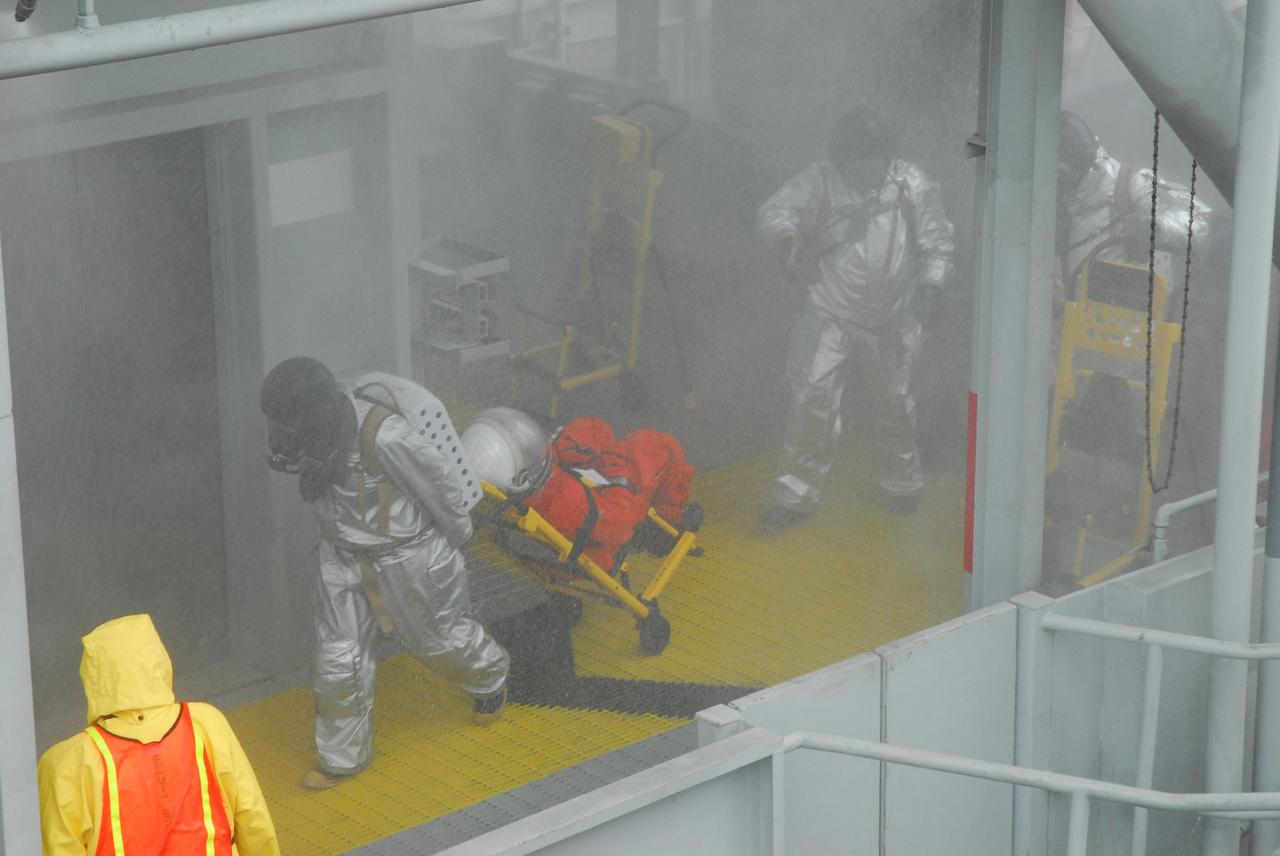
KENNEDY SPACE CENTER, FLA. -- During a simulated rescue mission on Launch Pad 39A, known as Mode 2, KSC workers dressed in astronauts' launch-and-entry suits are helped by the fire rescue team to the slidewire baskets on the 195-foot level. The KSC rescue teams are practicing emergency procedures in the unlikely scenario of a mishap on the pad during a launch sequence. The exercises are standard training procedures to assess and prepare emergency personnel, procedures and hardware. Photo credit: NASA/Jack Pfaller
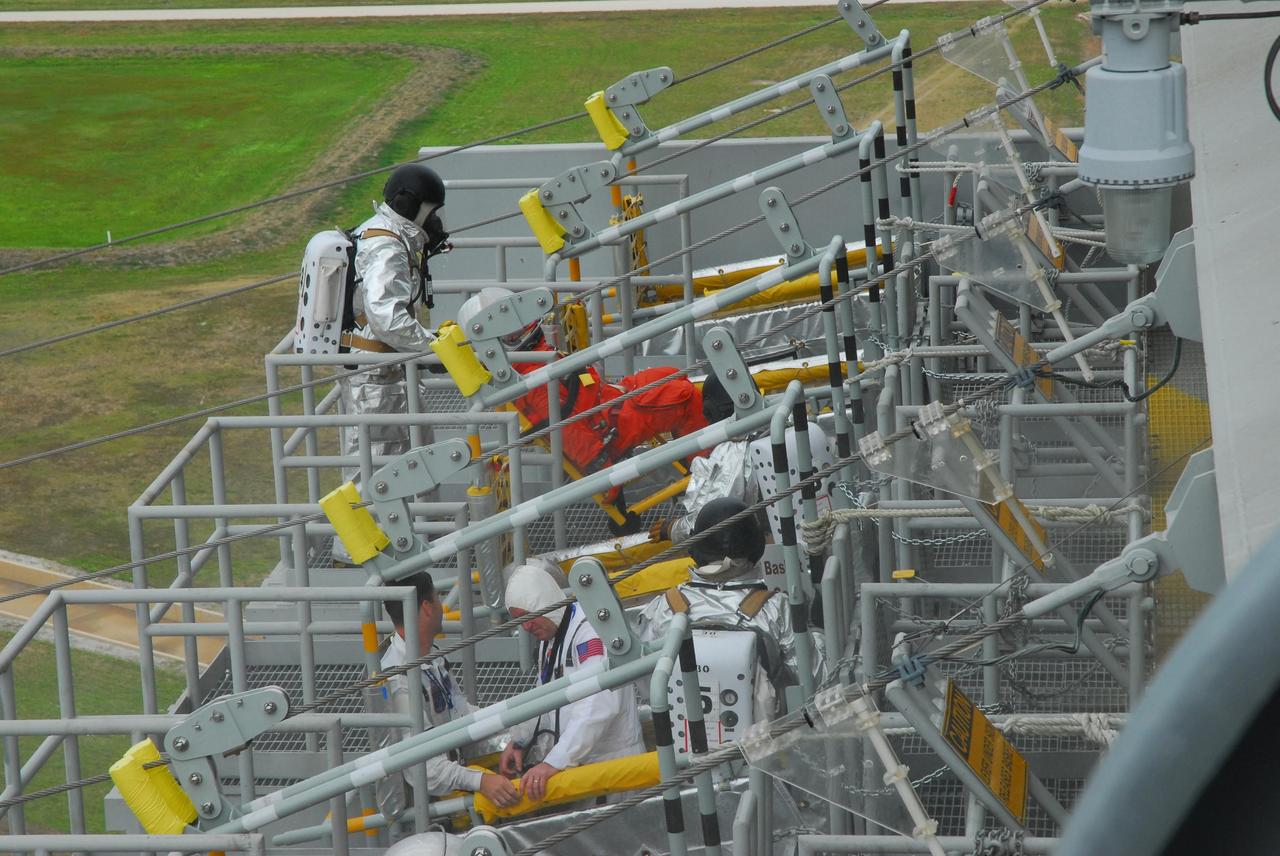
KENNEDY SPACE CENTER, FLA. -- During a simulated rescue mission on Launch Pad 39A, known as Mode 2, KSC workers dressed in astronauts' launch-and-entry suits are climbing into the slidewire baskets. A fire rescue team is simulating extracting the crew from the orbiter and helping them to the baskets.The KSC rescue teams are practicing emergency procedures in the unlikely scenario of a mishap on the pad during a launch sequence. The exercises are standard training procedures to assess and prepare emergency personnel, procedures and hardware. Photo credit: NASA/Jack Pfaller
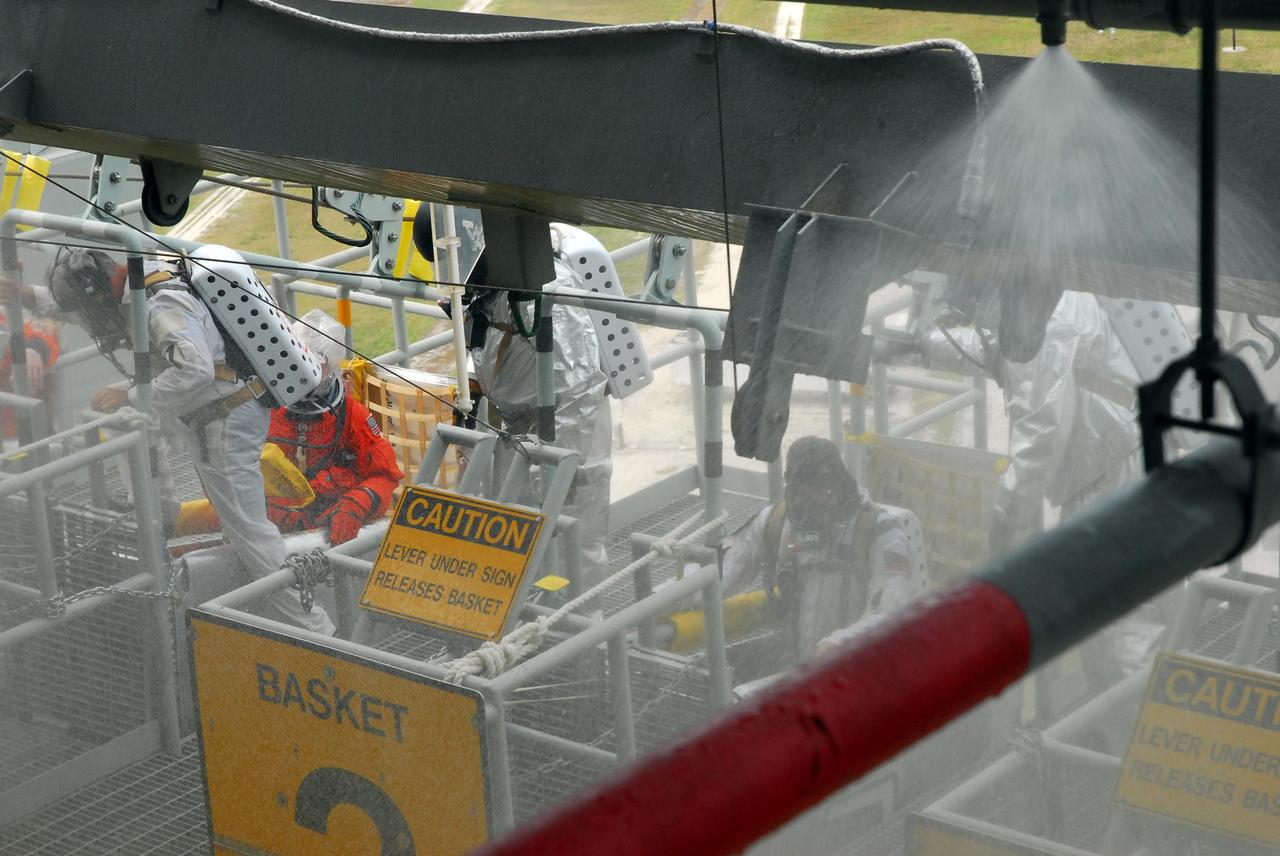
KENNEDY SPACE CENTER, FLA. -- During a simulated rescue mission on Launch Pad 39A, known as Mode 2, KSC workers dressed in astronauts' launch-and-entry suits climb into the slidewire baskets, helped by a fire rescue team. The KSC rescue teams are practicing emergency procedures in the unlikely scenario of a mishap on the pad during a launch sequence. The exercises are standard training procedures to assess and prepare emergency personnel, procedures and hardware. Photo credit: NASA/Jack Pfaller
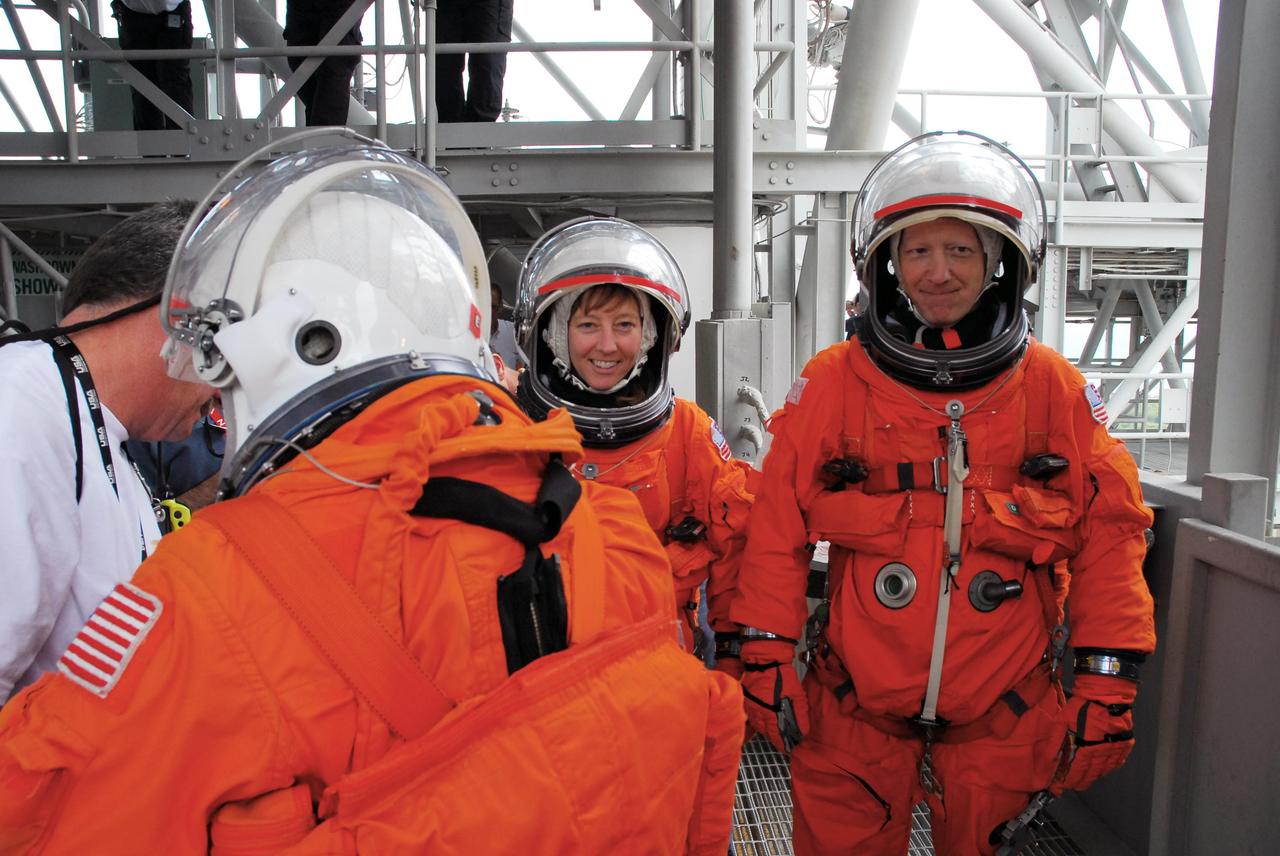
KENNEDY SPACE CENTER, FLA. -- During a simulated rescue mission on Launch Pad 39A, known as Mode 2, KSC personnel dressed in astronauts' launch-and-entry suits move from the white room on the 195-foot level toward the slidewire baskets. The KSC rescue teams are practicing emergency procedures in the unlikely scenario of a mishap on the pad during a launch sequence. The exercises are standard training procedures to assess and prepare emergency personnel, procedures and hardware. Photo credit: NASA/Jack Pfaller
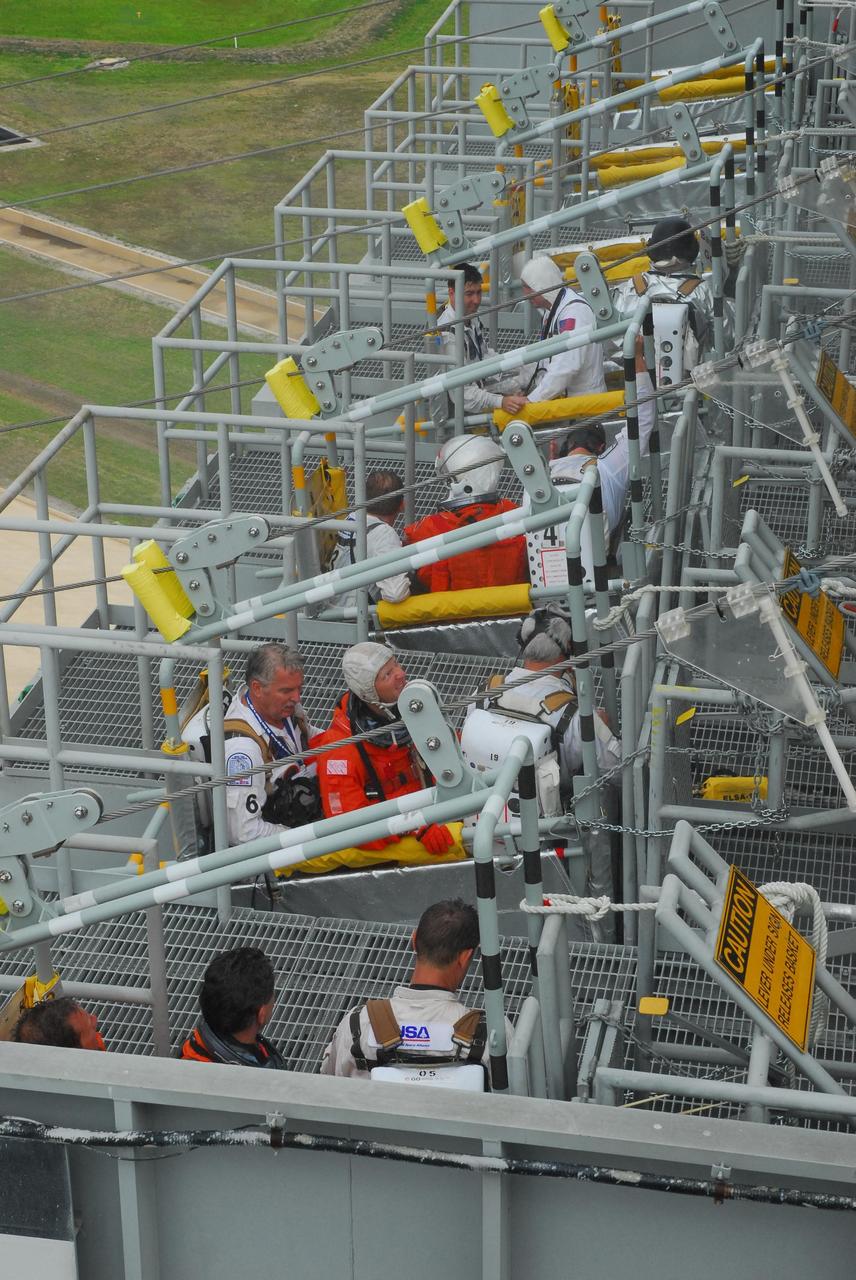
KENNEDY SPACE CENTER, FLA. -- During a simulated rescue mission on Launch Pad 39A, known as Mode 2, KSC workers dressed in astronauts' launch-and-entry suits are climbing into the slidewire baskets. A fire rescue team is simulating extracting the crew from the orbiter and helping them to the baskets.The KSC rescue teams are practicing emergency procedures in the unlikely scenario of a mishap on the pad during a launch sequence. The exercises are standard training procedures to assess and prepare emergency personnel, procedures and hardware. Photo credit: NASA/Jack Pfaller
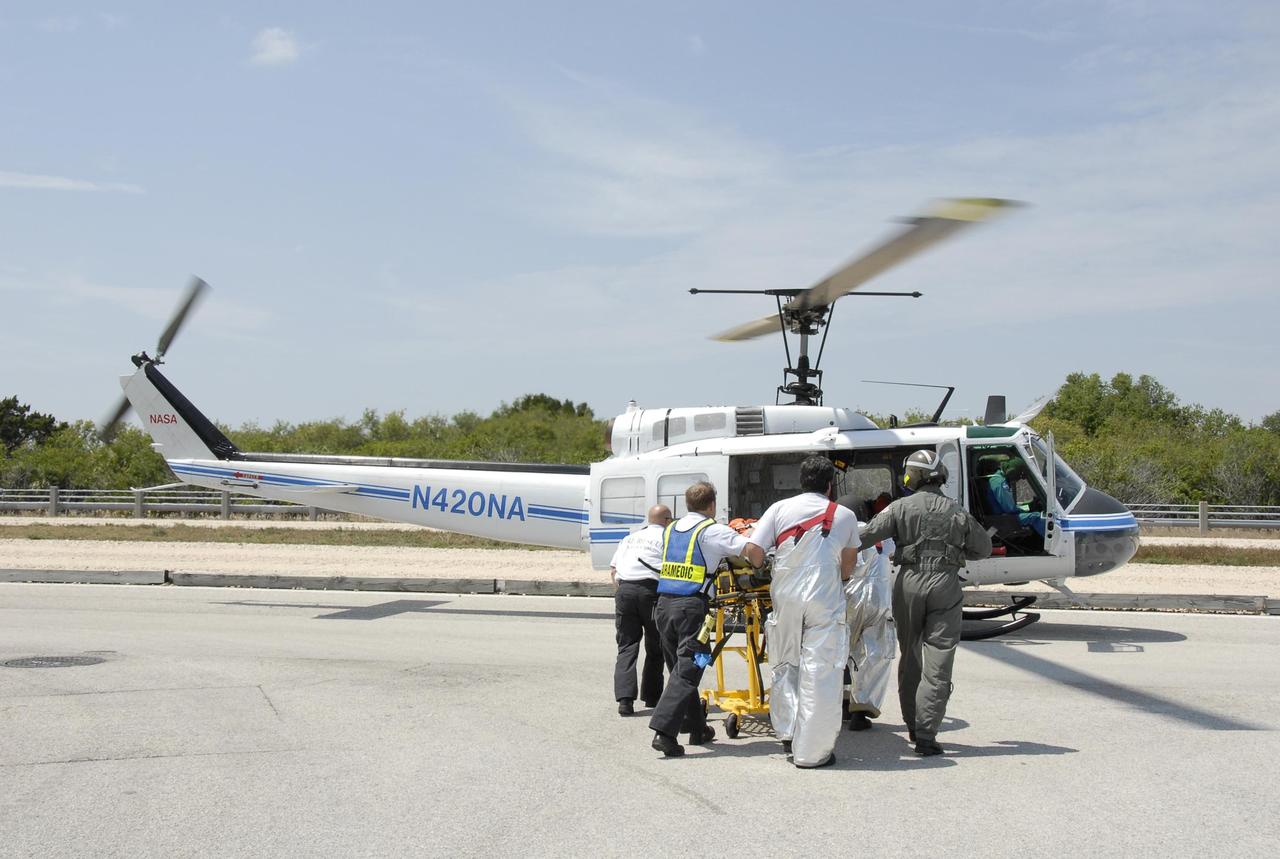
KENNEDY SPACE CENTER, FLA. -- During the second stage of a simulated emergency, known as Mode 4, the KSC rescue team moves an "injured" astronaut toward the open doors of a NASA helicopter, one of five participating in the exercise. The triage area was set up at Helipad 8, located near the fire station between Launch Pads 39A and 39B. The emergency exercise began on Launch Pad 39A. The participants were helped off the pad and taken to the triage site. The KSC rescue teams are practicing emergency procedures in the unlikely scenario of a mishap on the pad during a launch sequence. The exercises are standard training procedures to assess and prepare emergency personnel, procedures and hardware. Photo credit: NASA/Kim Shiflett
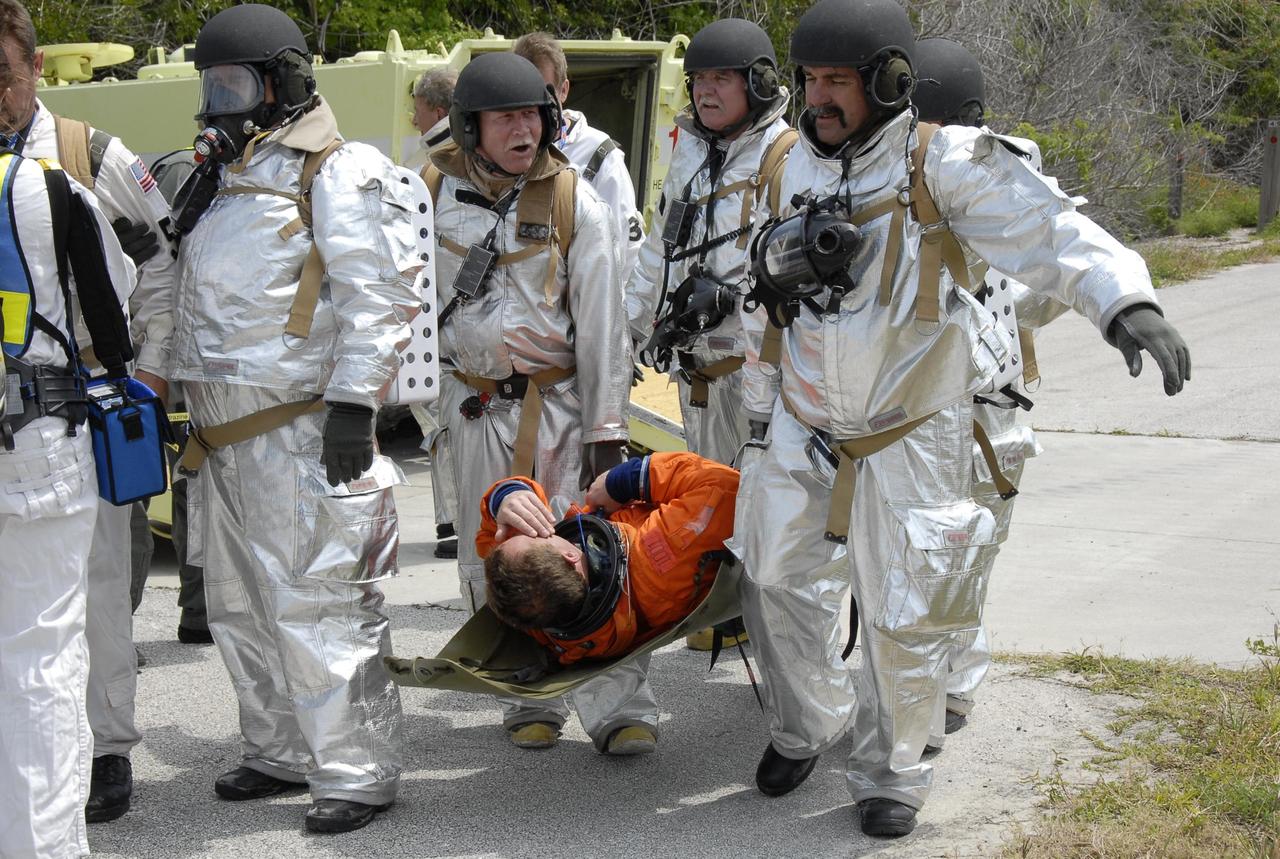
KENNEDY SPACE CENTER, FLA. -- During the second stage of a simulated emergency, known as Mode 4, a KSC rescue team carries a worker portraying an "injured" astronaut toward the triage area set up at Helipad 8, located near the fire station between Launch Pads 39A and 39B. The emergency exercise began on Launch Pad 39A. The participants were helped off the pad and taken to the triage site. The "injured" workers will be airlifted to participating area hospitals. The KSC rescue teams are practicing emergency procedures in the unlikely scenario of a mishap on the pad during a launch sequence. The exercises are standard training procedures to assess and prepare emergency personnel, procedures and hardware. Photo credit: NASA/Kim Shiflett
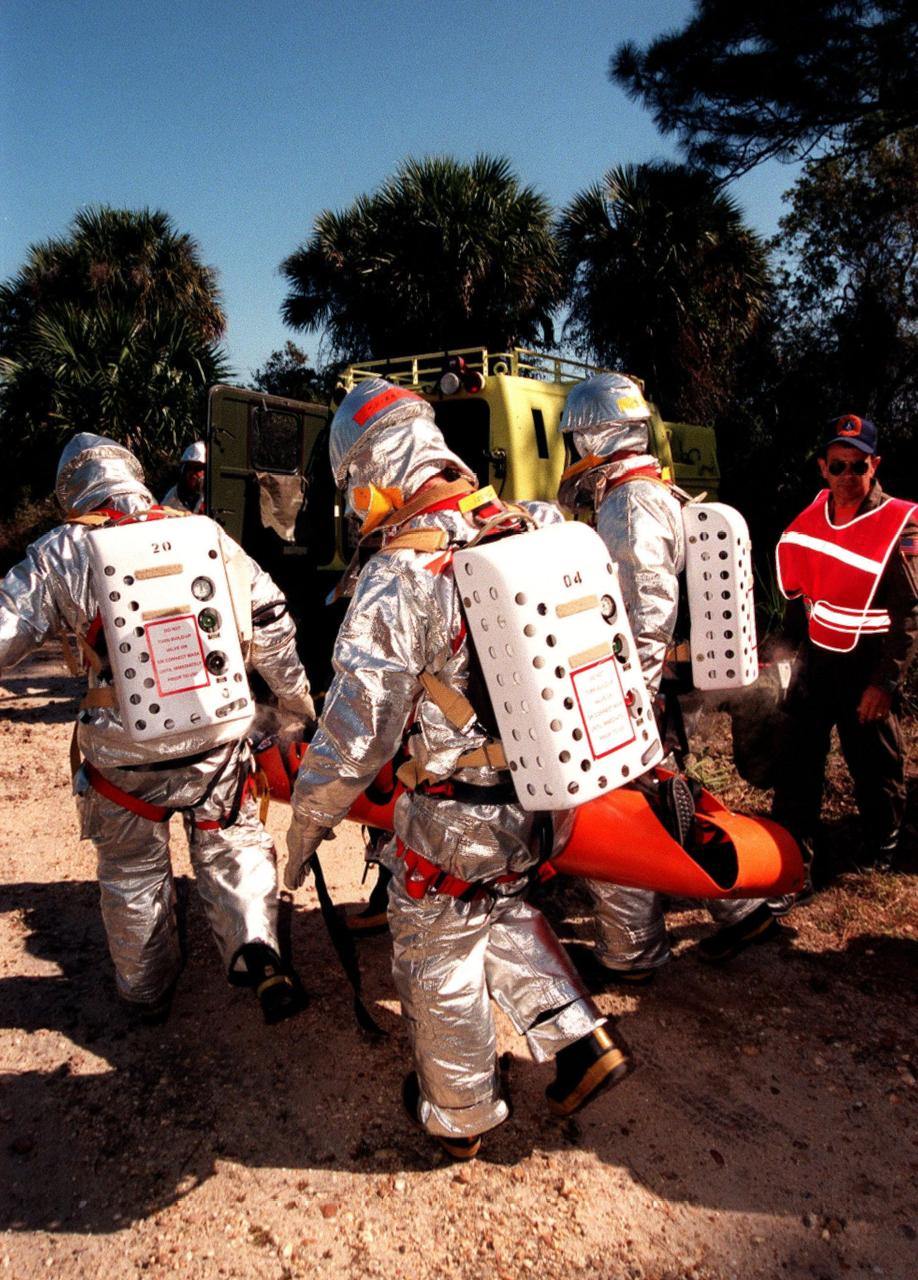
KENNEDY SPACE CENTER, FLA. -- In the woods next to the Shuttle Landing Facility (SLF), the KSC response team takes part in training for the unlikely scenario of a Shuttle mishap at the SLF. The Mode 7 simulation of an astronaut rescue exercises all aspects of command and control, search and rescue, and medical procedures required for a successful rescue. The remote location of the mock-up prevents a totally land-based crew rescue, and calls on a NASA UH-1 helicopter to locate the site and four Air Force HH-60 helicopters to drop emergency equipment and fire/rescue workers to prepare the "crew" for preliminary triage. The helicopters later are used to remove the crew five astronaut candidates, one representative from the Vehicle Integration Test office, and one fire/rescue worker. The exercise concluded with airlifted "patients" arriving safely in the emergency rooms of participating area hospitals
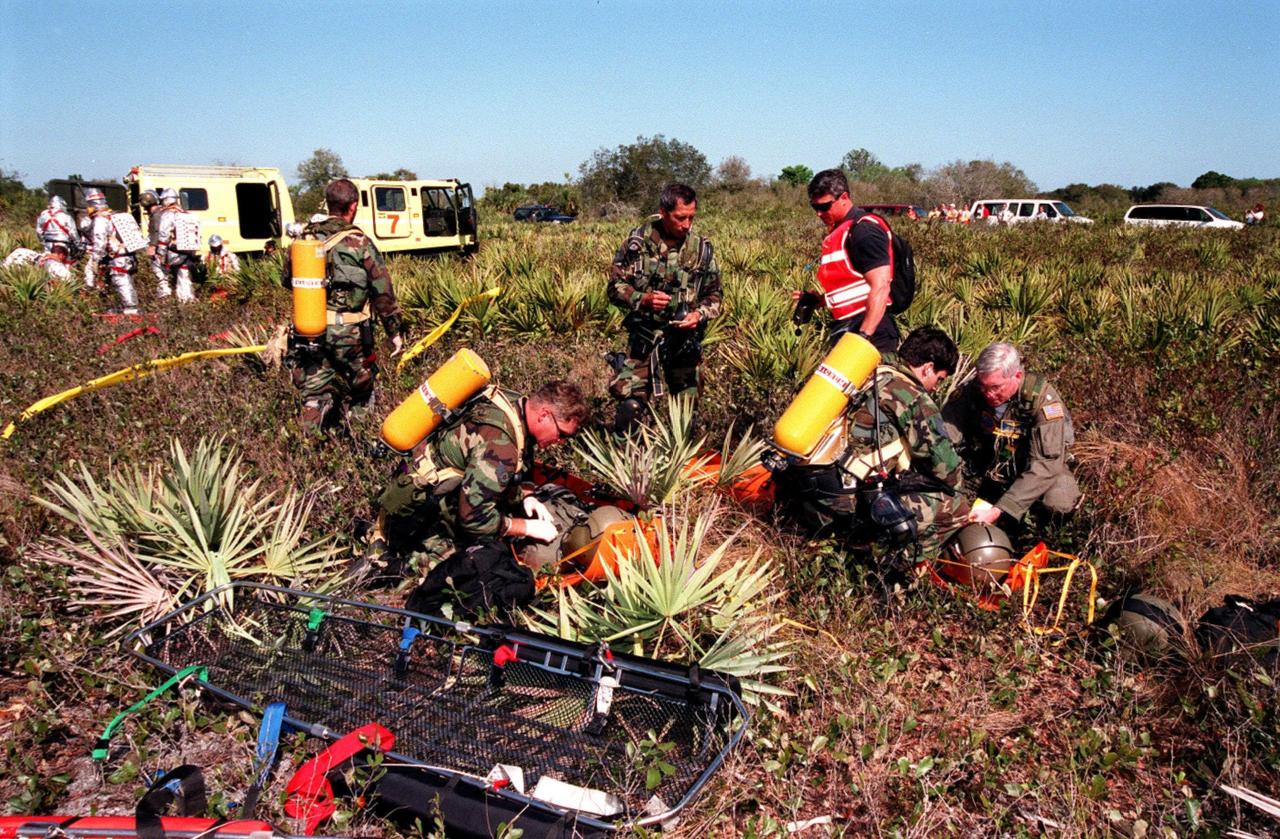
KENNEDY SPACE CENTER, FLA. -- In the simulated rescue mission, the KSC response team takes part in the unlikely scenario of a Shuttle mishap at the Shuttle Landing Facility. The Mode 7 simulation of an astronaut rescue exercised all aspects of command and control, search and rescue, and medical procedures required for a successful rescue. The remote location of the mock-up prevents a totally land-based crew rescue, and calls on a NASA UH-1 helicopter to locate the site and four Air Force HH-60 helicopters to drop emergency equipment and fire/rescue workers to prepare the "crew" for preliminary triage. The helicopters later are used to remove the crew five astronaut candidates, one representative from the Vehicle Integration Test office, and one fire/rescue worker. The exercise concluded with airlifted "patients" arriving safely in the emergency rooms of participating area hospitals.
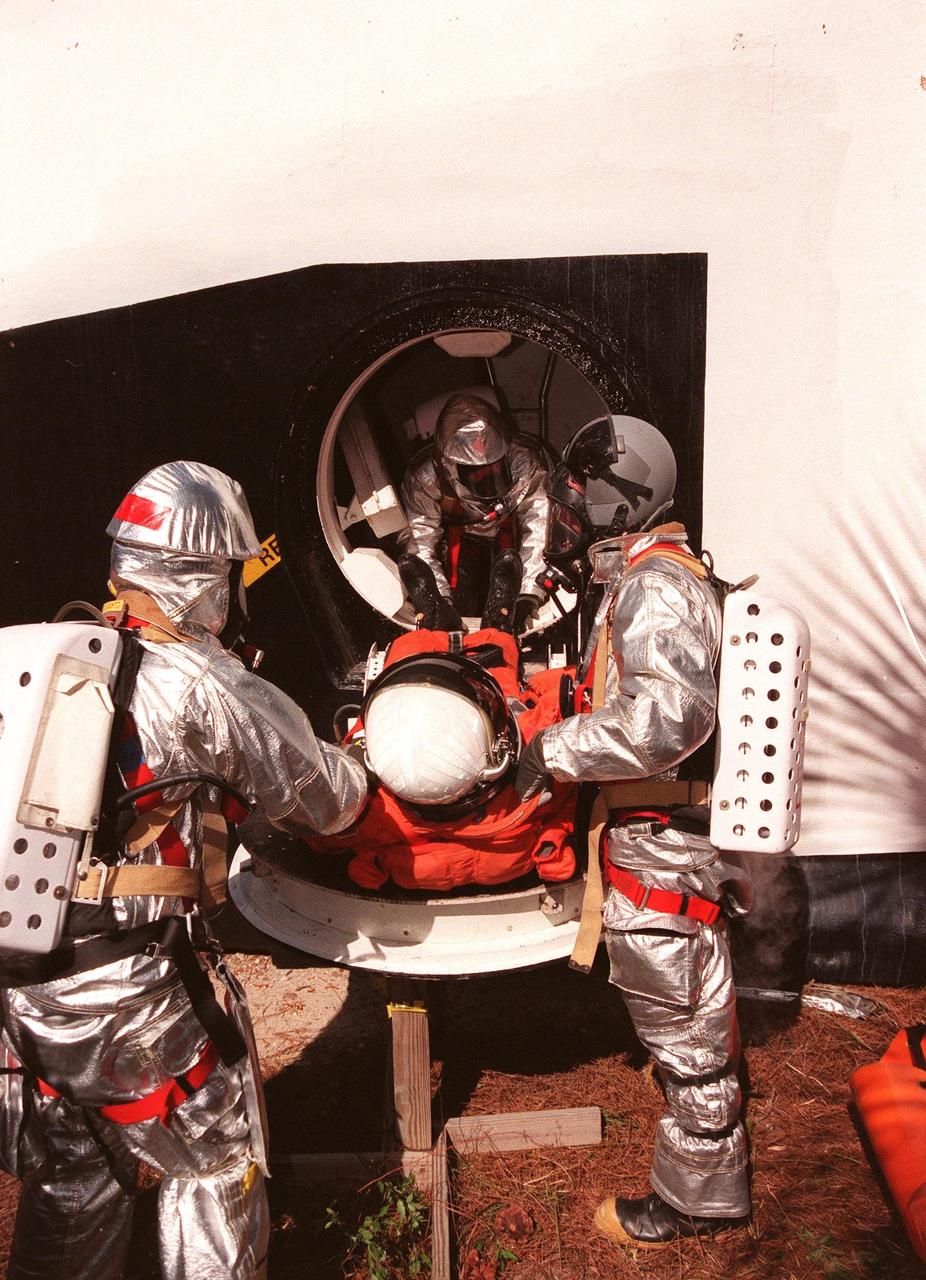
KENNEDY SPACE CENTER, FLA. -- During a simulated rescue mission in the woods near the Shuttle Landing Facility, the KSC response team removes a Shuttle "crew" member from the mock orbiter. The response team is training for the unlikely scenario of a Shuttle mishap at the SLF. The Mode 7 simulation of an astronaut rescue exercises all aspects of command and control, search and rescue, and medical procedures required for a successful rescue. The remote location of the mock-up prevents a totally land-based crew rescue, and calls on a NASA UH-1 helicopter to locate the site and four Air Force HH-60 helicopters to drop emergency equipment and fire/rescue workers to prepare the "crew" for preliminary triage. The helicopters later are used to remove the crew five astronaut candidates, one representative from the Vehicle Integration Test office, and one fire/rescue worker. The exercise concluded with airlifted "patients" arriving safely in the emergency rooms of participating area hospitals
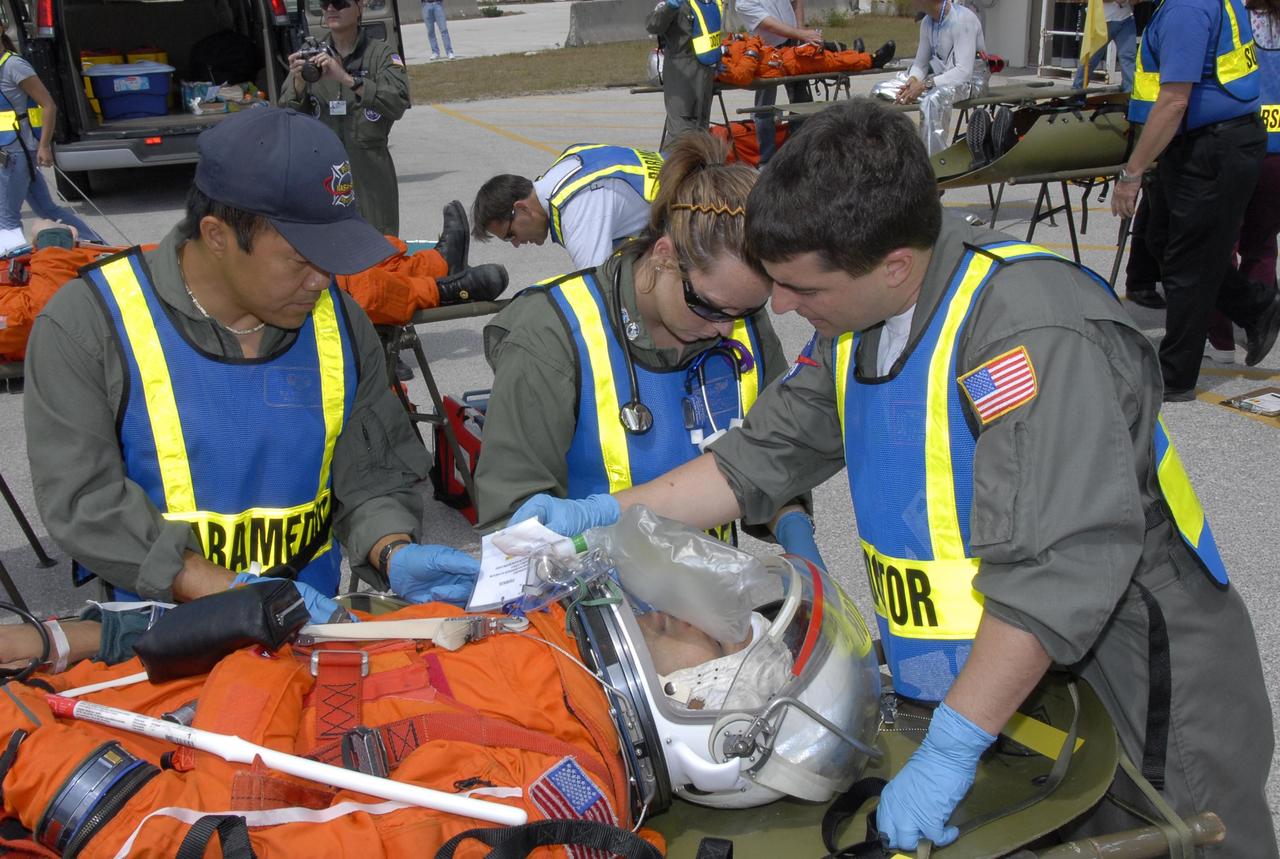
KENNEDY SPACE CENTER, FLA. -- During the second stage of a simulated emergency, known as Mode 4, a KSC rescue team helps a worker portraying an "injured" astronaut at a triage area set up at Helipad 8, located near the fire station between Launch Pads 39A and 39B. The emergency exercise began on Launch Pad 39A. The participants were helped off the pad and taken to the triage site. The "injured" worker may be airlifted to participating area hospitals. The KSC rescue teams are practicing emergency procedures in the unlikely scenario of a mishap on the pad during a launch sequence. The exercises are standard training procedures to assess and prepare emergency personnel, procedures and hardware. Photo credit: NASA/Kim Shiflett
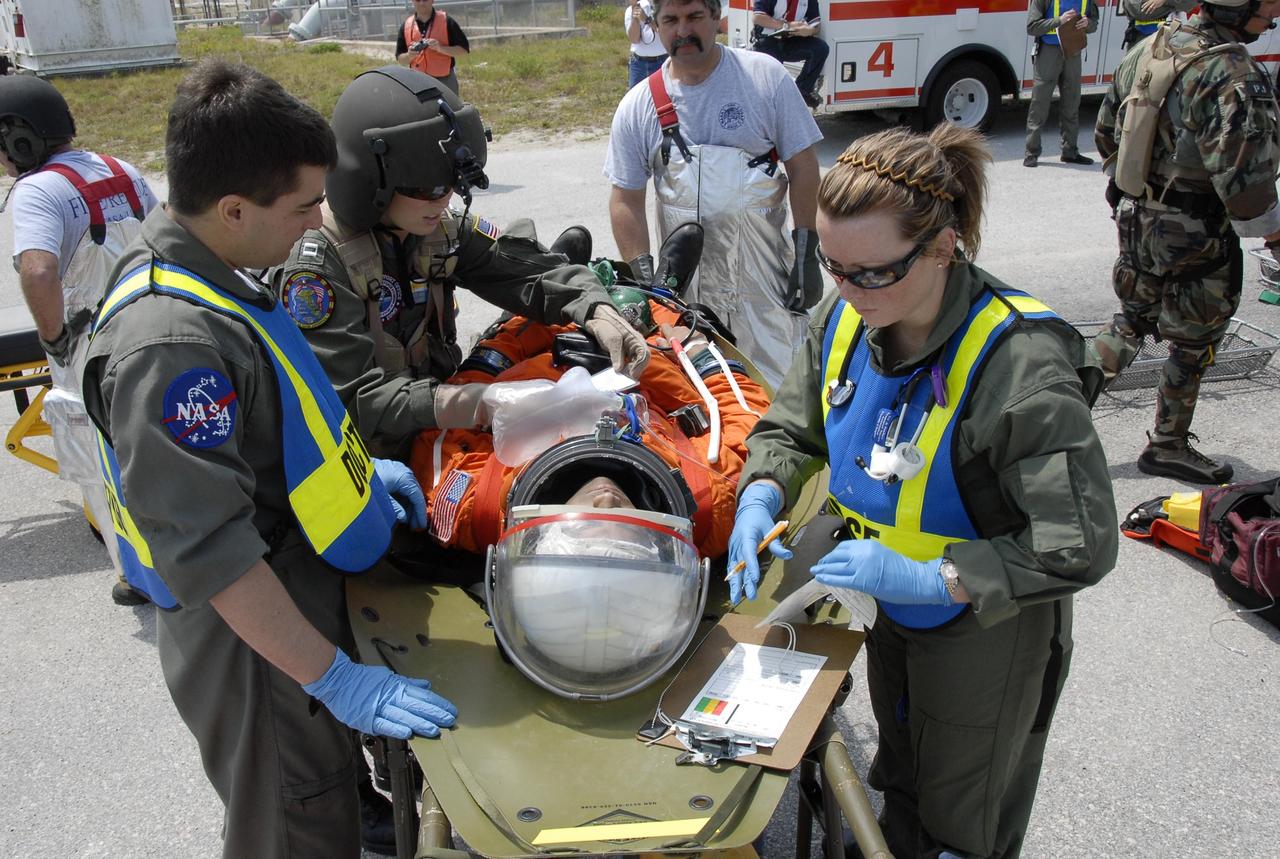
KENNEDY SPACE CENTER, FLA. -- During the second stage of a simulated emergency, known as Mode 4, the KSC rescue team monitors one of the "injured" astronauts, being portrayed by KSC personnel. The site is a triage area set up at Helipad 8, located near the fire station between Launch Pads 39A and 39B. The emergency exercise began on Launch Pad 39A. The participants were helped off the pad and taken to the triage site. The "injured" worker may be airlifted to participating area hospitals. The KSC rescue teams are practicing emergency procedures in the unlikely scenario of a mishap on the pad during a launch sequence. The exercises are standard training procedures to assess and prepare emergency personnel, procedures and hardware. Photo credit: NASA/Kim Shiflett
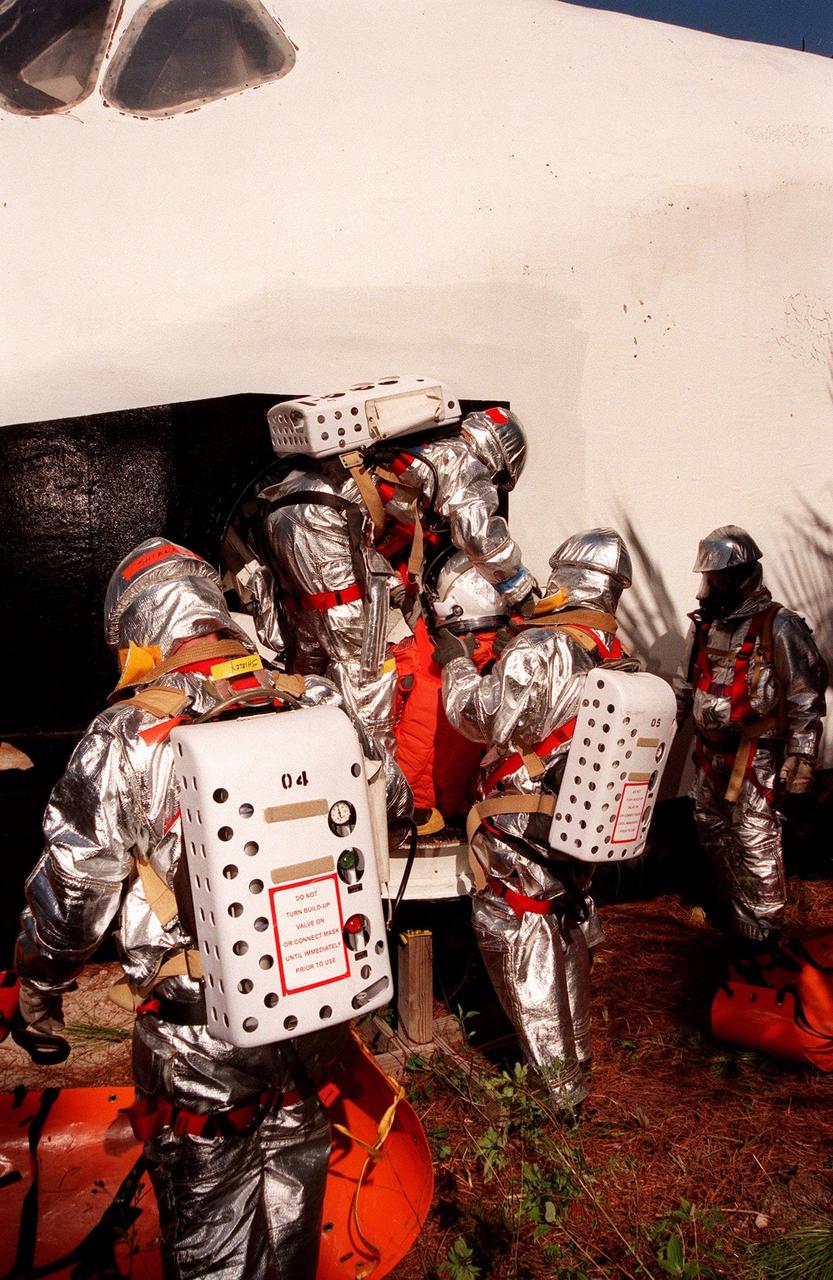
During a simulated rescue mission in the woods near the Shuttle Landing Facility (SLF), the KSC response team removes a crew member from a mock Shuttle. The response team is training for the unlikely scenario of a Shuttle mishap at the SLF. The Mode 7 simulation of an astronaut rescue exercises all aspects of command and control, search and rescue, and medical procedures required for a successful rescue. The remote location of the mock-up prevents a totally land-based crew rescue, and calls on a NASA UH-1 helicopter to locate the site and four Air Force HH-60 helicopters to drop emergency equipment and fire/rescue workers to prepare the "crew" for preliminary triage. The helicopters later are used to remove the crew five astronaut candidates, one representative from the Vehicle Integration Test office, and one fire/rescue worker. The exercise concluded with airlifted "patients" arriving safely in the emergency rooms of participating area hospitals
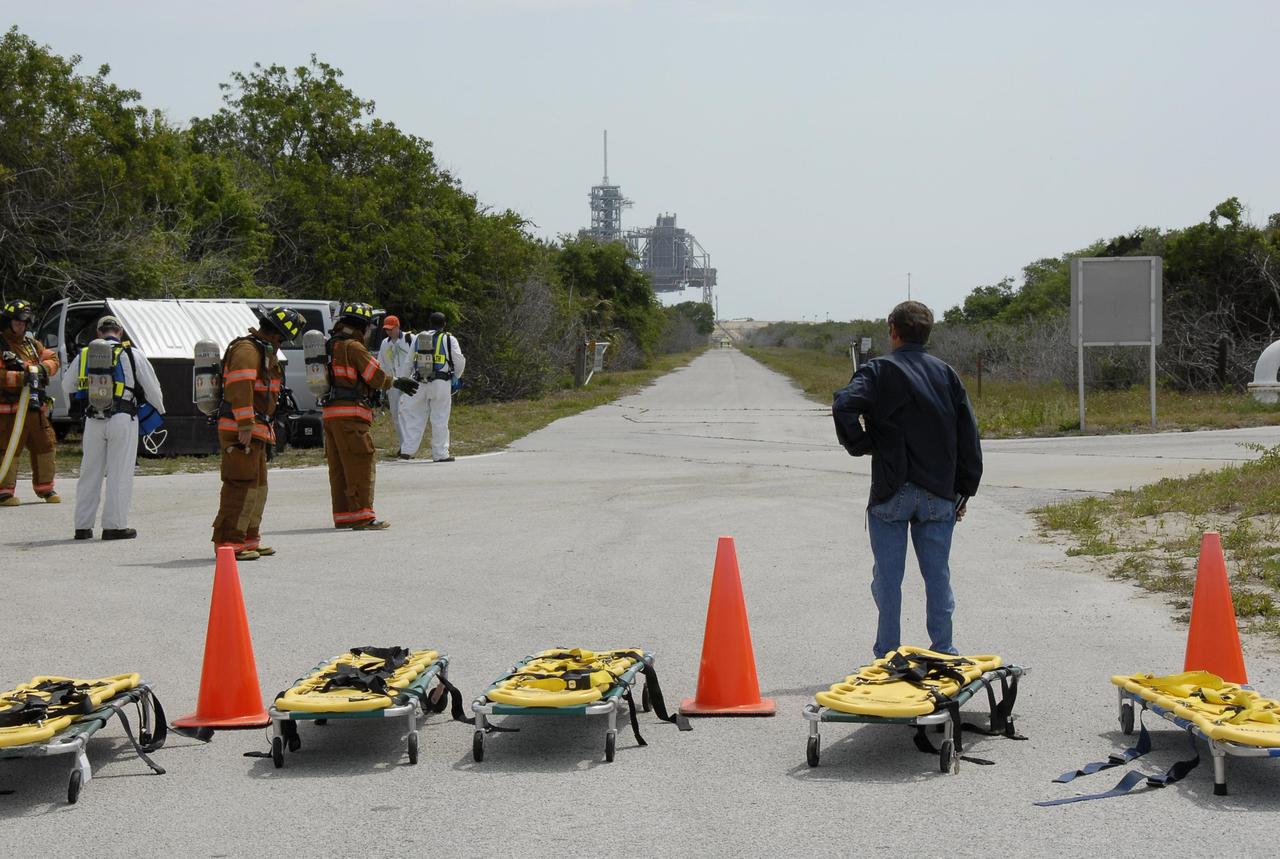
KENNEDY SPACE CENTER, FLA. -- During the second stage of a simulated emergency, known as Mode 4, rescue workers have set up a triage area at Helipad 8, located near the fire station between Launch Pads 39A and 39B. The emergency exercise began on Launch Pad 39A, with KSC personnel portraying astronauts and feigning injuries. The participants were helped off the pad and are being taken to the triage site. "Injured" workers will be airlifted to participating area hospitals. The KSC rescue teams are practicing emergency procedures in the unlikely scenario of a mishap on the pad during a launch sequence. The exercises are standard training procedures to assess and prepare emergency personnel, procedures and hardware. Photo credit: NASA/Kim Shiflett
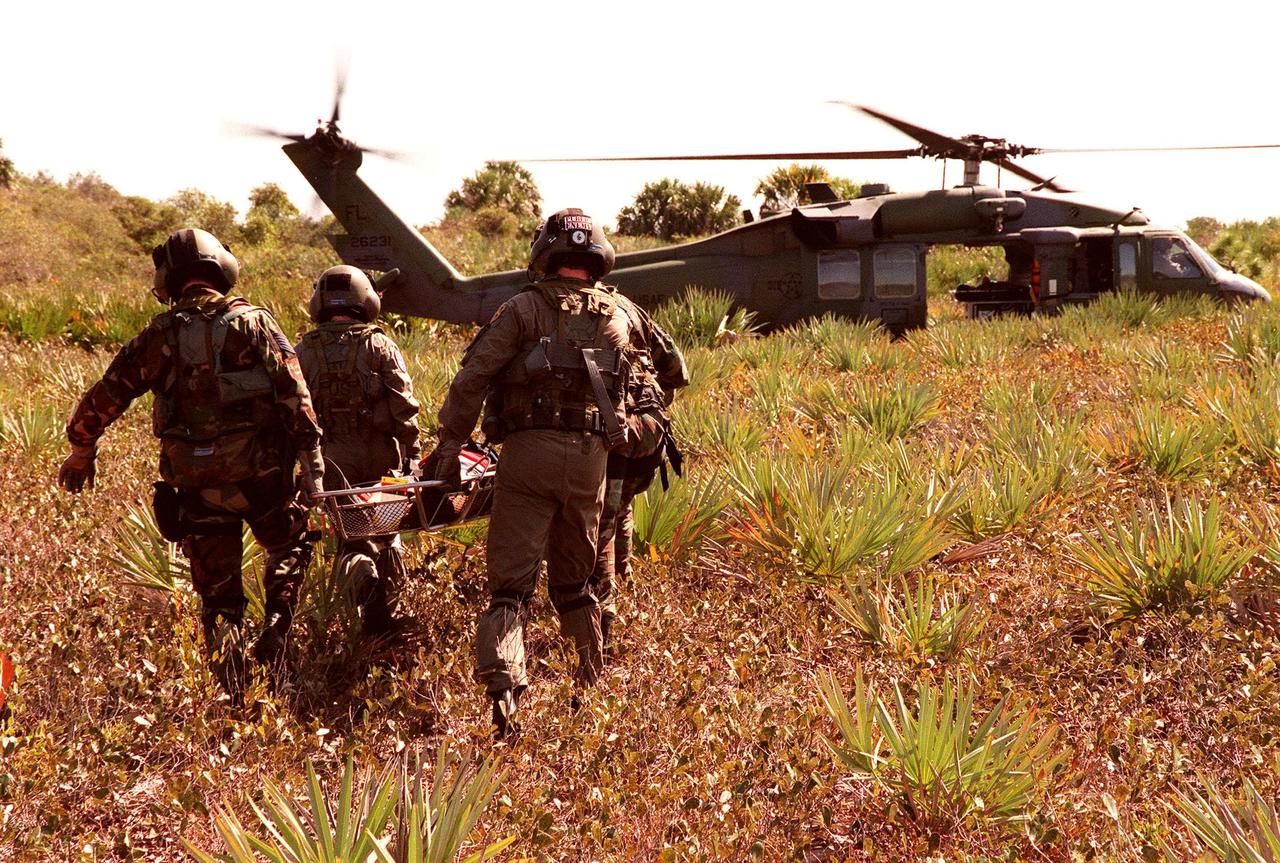
KENNEDY SPACE CENTER, FLA. -- During a simulated rescue mission in the woods near the Shuttle Landing Facility (SLF), the KSC response team practices carrying an injured crew member to an Air Force HH-60 helicopter for transport to a local hospital. The response team is training for the unlikely scenario of a Shuttle mishap at the SLF. The Mode 7 simulation of an astronaut rescue exercises all aspects of command and control, search and rescue, and medical procedures required for a successful rescue. The remote location of the mock-up prevents a totally land-based crew rescue, and calls on a NASA UH-1 helicopter to locate the site and four Air Force HH-60 helicopters to reach the site, drop emergency equipment and later remove the "crew" five astronaut candidates, one representative from the Vehicle Integration Test office, and one fire/rescue worker. The exercise will conclude with airlifted "patients" arriving safely in the emergency rooms of participating area hospitals
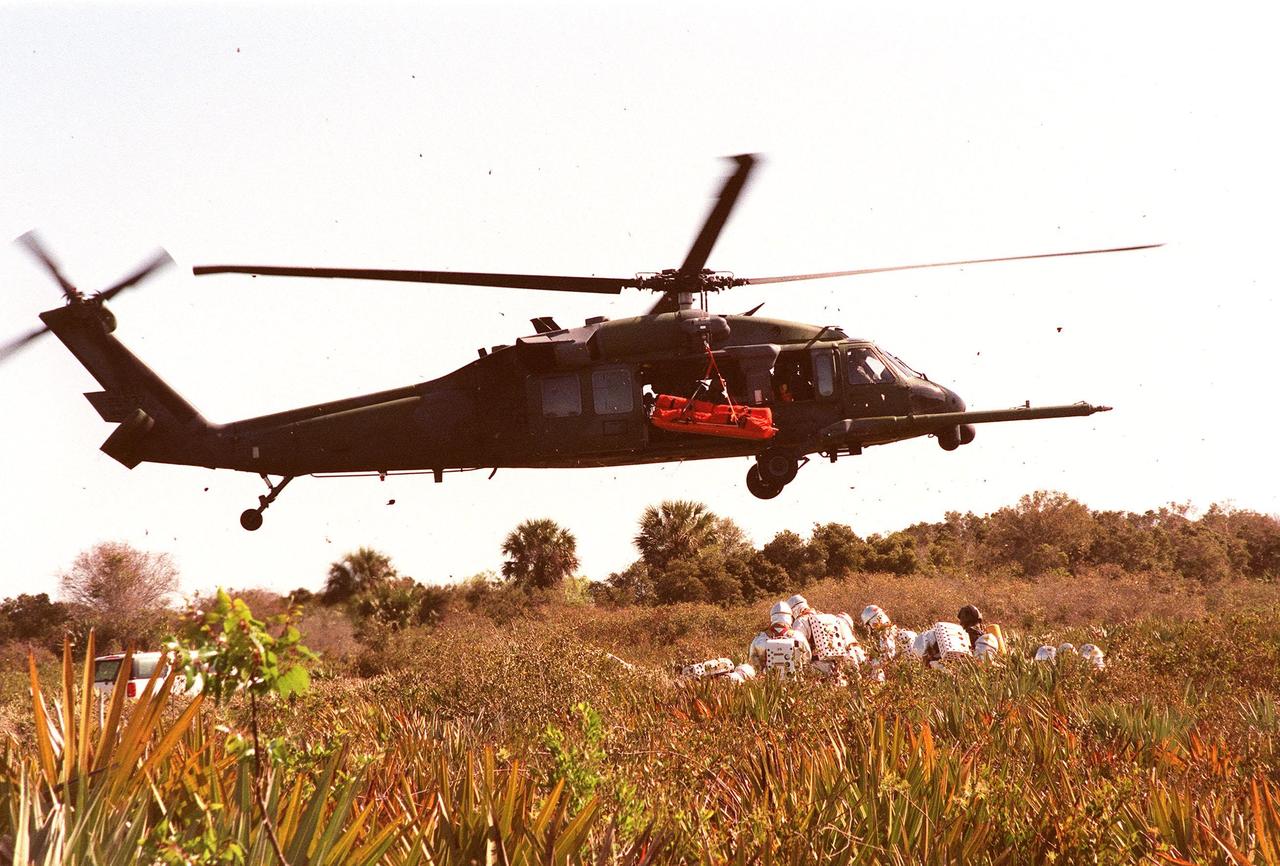
KENNEDY SPACE CENTER, FLA. -- During a simulated rescue mission in the woods near the Shuttle Landing Facility (SLF), the KSC response team practices lifting an injured crew member to an Air Force HH-60 helicopter for transport to a local hospital. The response team is training for the unlikely scenario of a Shuttle mishap at the SLF. The Mode 7 simulation of an astronaut rescue exercises all aspects of command and control, search and rescue, and medical procedures required for a successful rescue. The remote location of the mock-up prevents a totally land-based crew rescue, and calls on a NASA UH-1 helicopter to locate the site and four Air Force HH-60 helicopters to reach and prepare the "crew" five astronaut candidates, one representative from the Vehicle Integration Test office, and one fire/rescue worker for preliminary triage. The exercise will conclude with airlifted "patients" arriving safely in the emergency rooms of participating area hospitals
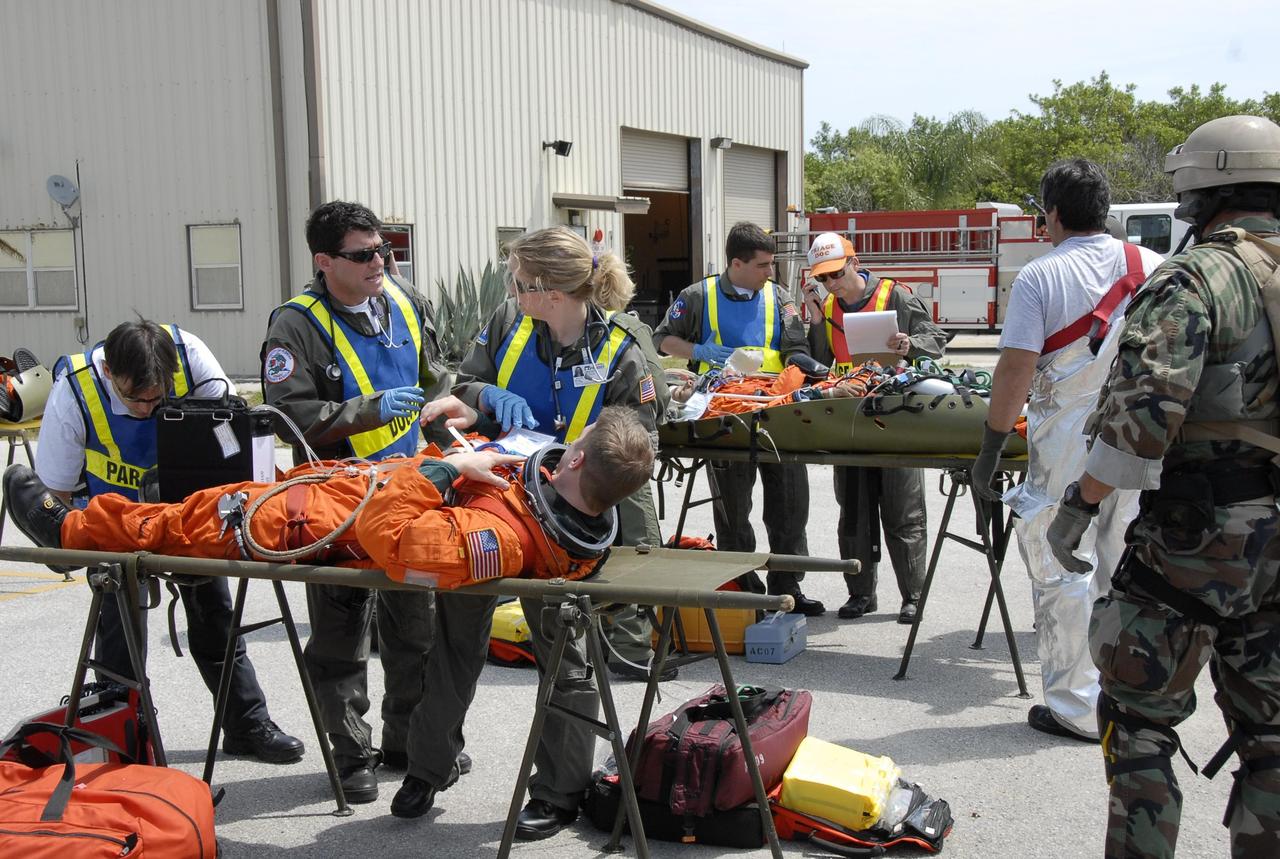
KENNEDY SPACE CENTER, FLA. -- During the second stage of a simulated emergency, known as Mode 4, a triage area set up at Helipad 8, located near the fire station between Launch Pads 39A and 39B, is busy as rescue workers monitor the "injured." KSC personnel portrayed the astronauts. The participants were helped off the pad and taken to the triage site. The "injured" worker may be airlifted to participating area hospitals. The KSC rescue teams are practicing emergency procedures in the unlikely scenario of a mishap on the pad during a launch sequence. The exercises are standard training procedures to assess and prepare emergency personnel, procedures and hardware. Photo credit: NASA/Kim Shiflett
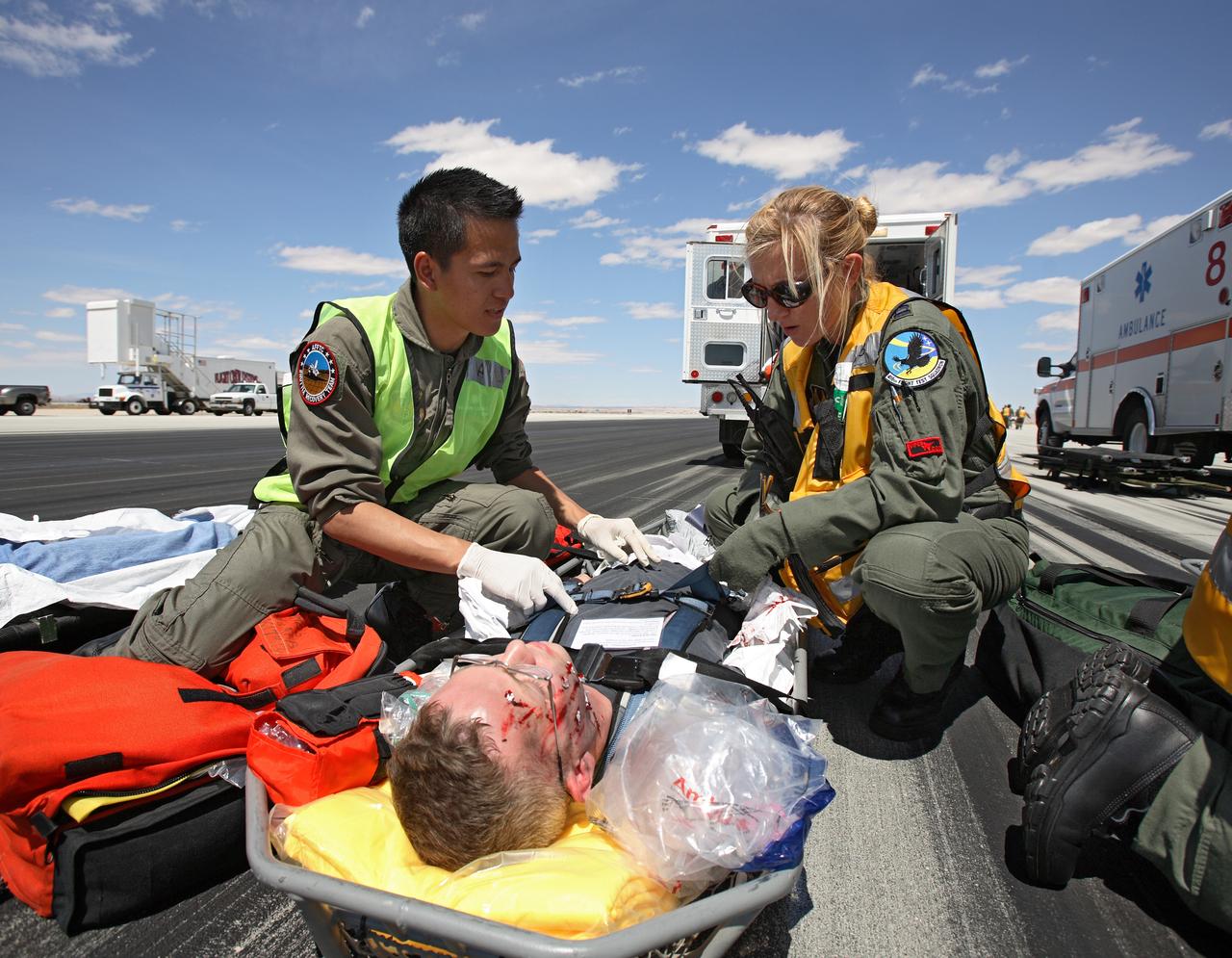
Complete with makeup to simulate facial injuries, a volunteer "astronaut" is tended to by aeromedical rescue staff after evacuation from the shuttle mockup. (USAF photo # 070505-F-1287F-145)
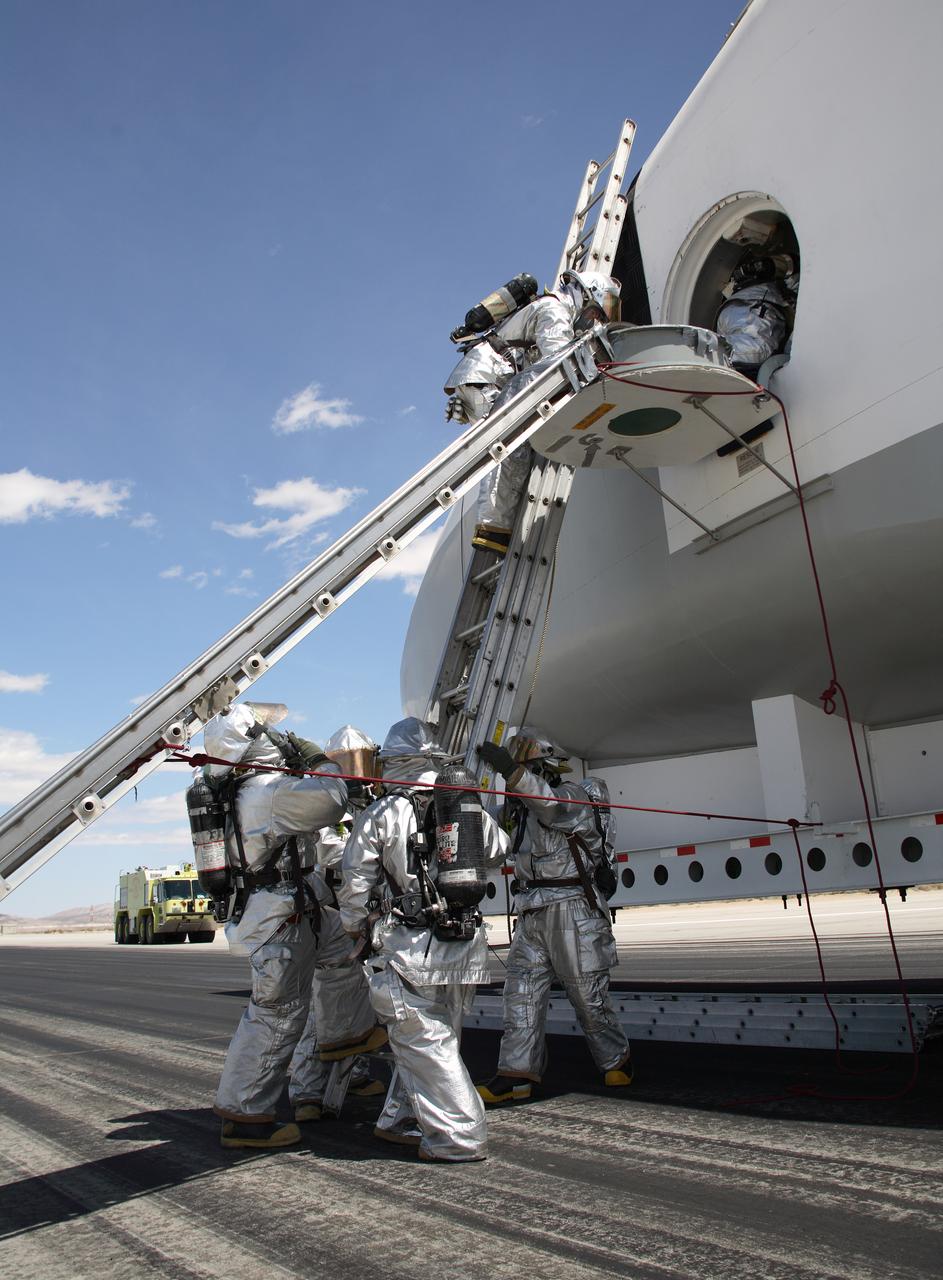
Air Force fire/rescue crew enter the space shuttle cabin mockup hatch to evacuate the shuttle crew during a shuttle rescue training exercise at Edwards AFB. (USAF photo # 070505-F-1287F-118)
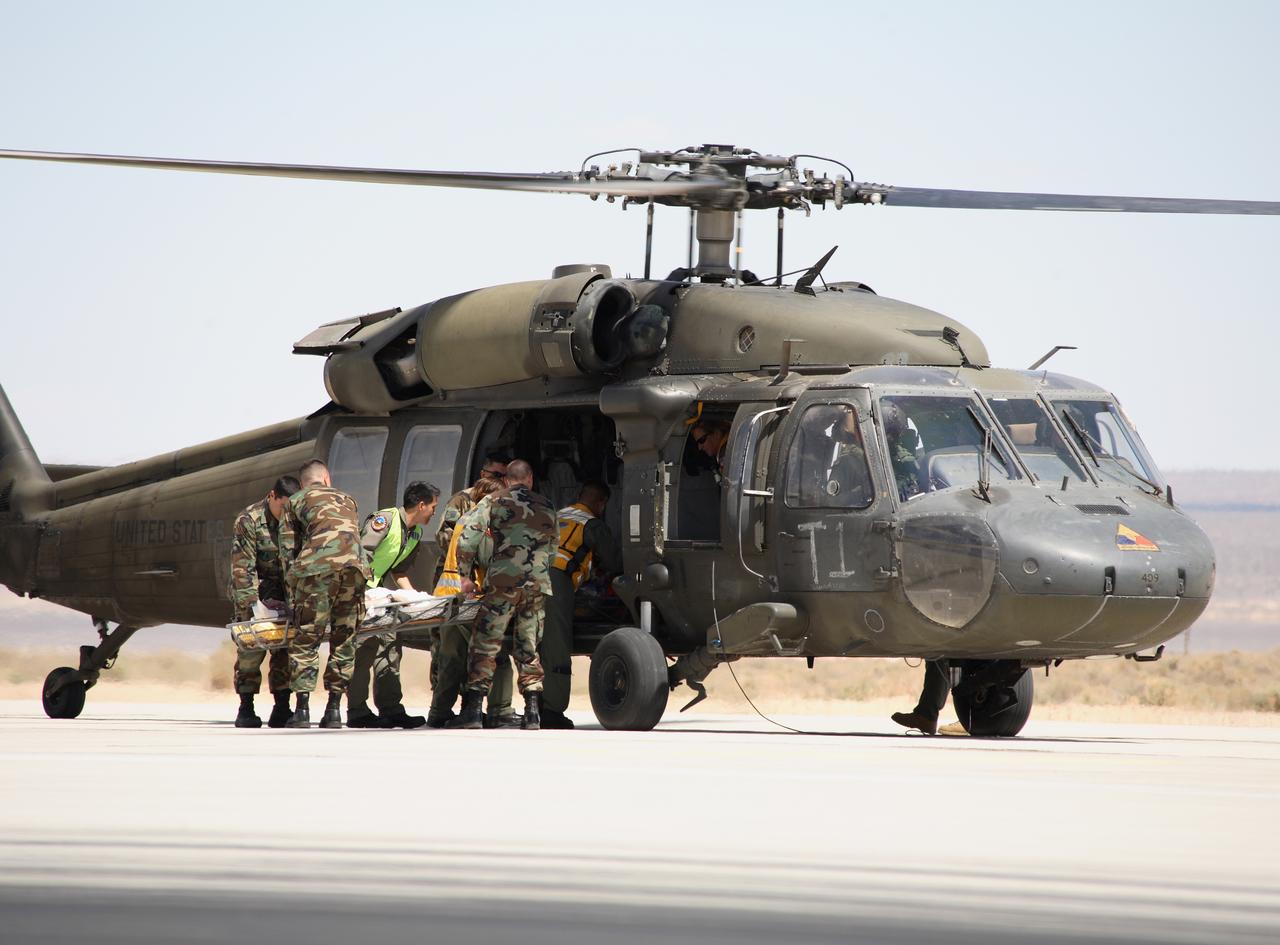
Air Force rescue team members load the volunteer "injured astronaut" on a stretcher into a Blackhawk helicopter for evacuation to a hospital during the exercise. (USAF photo # 070505-F-1287F-166)
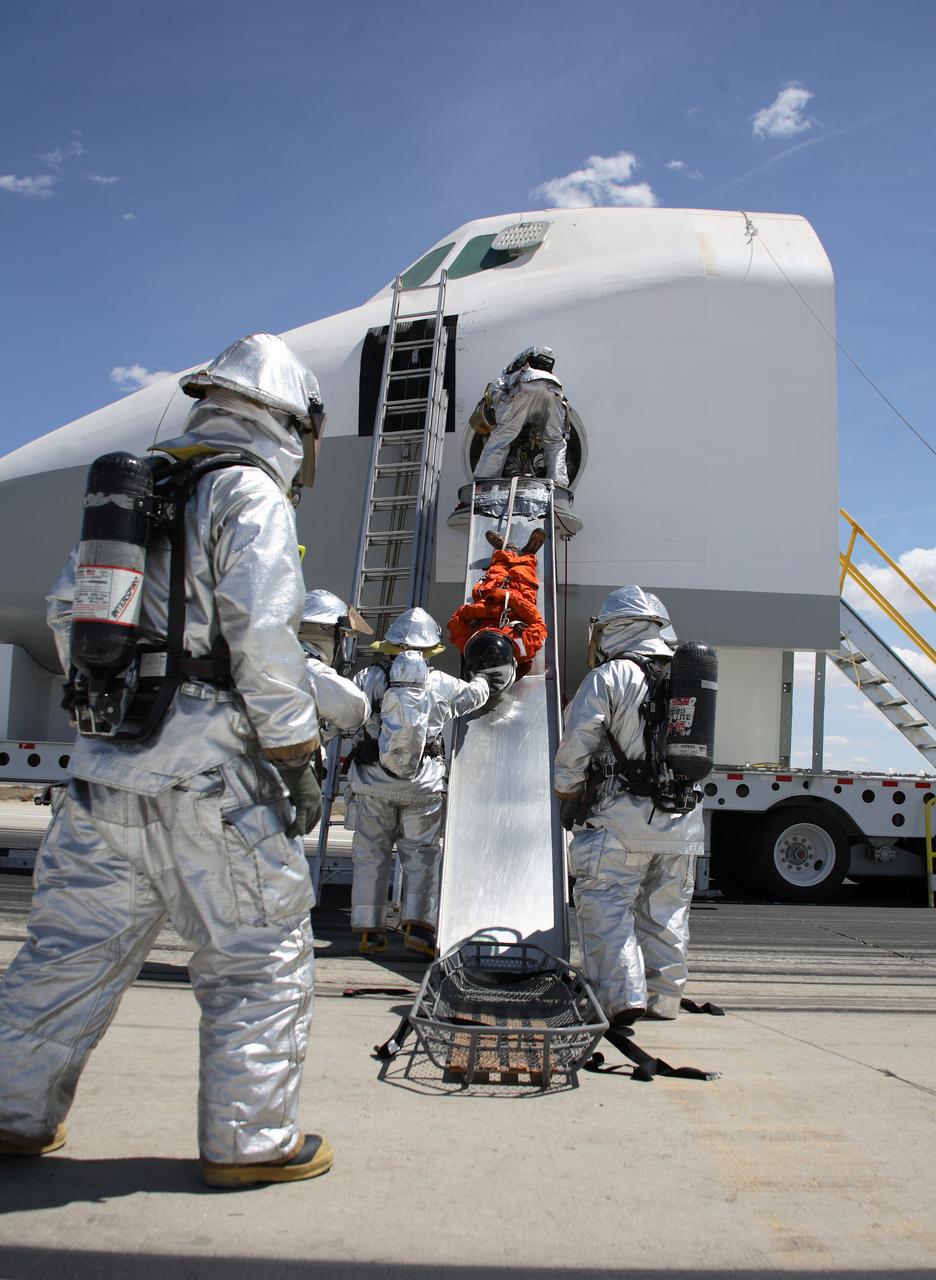
Clad in thermal protection suits, fire/rescue crew aid a volunteer "Injured astronaut" to a head-first ride down the exit slide from the shuttle cabin mockup. (USAF photo # 070505-F-1287F-132)
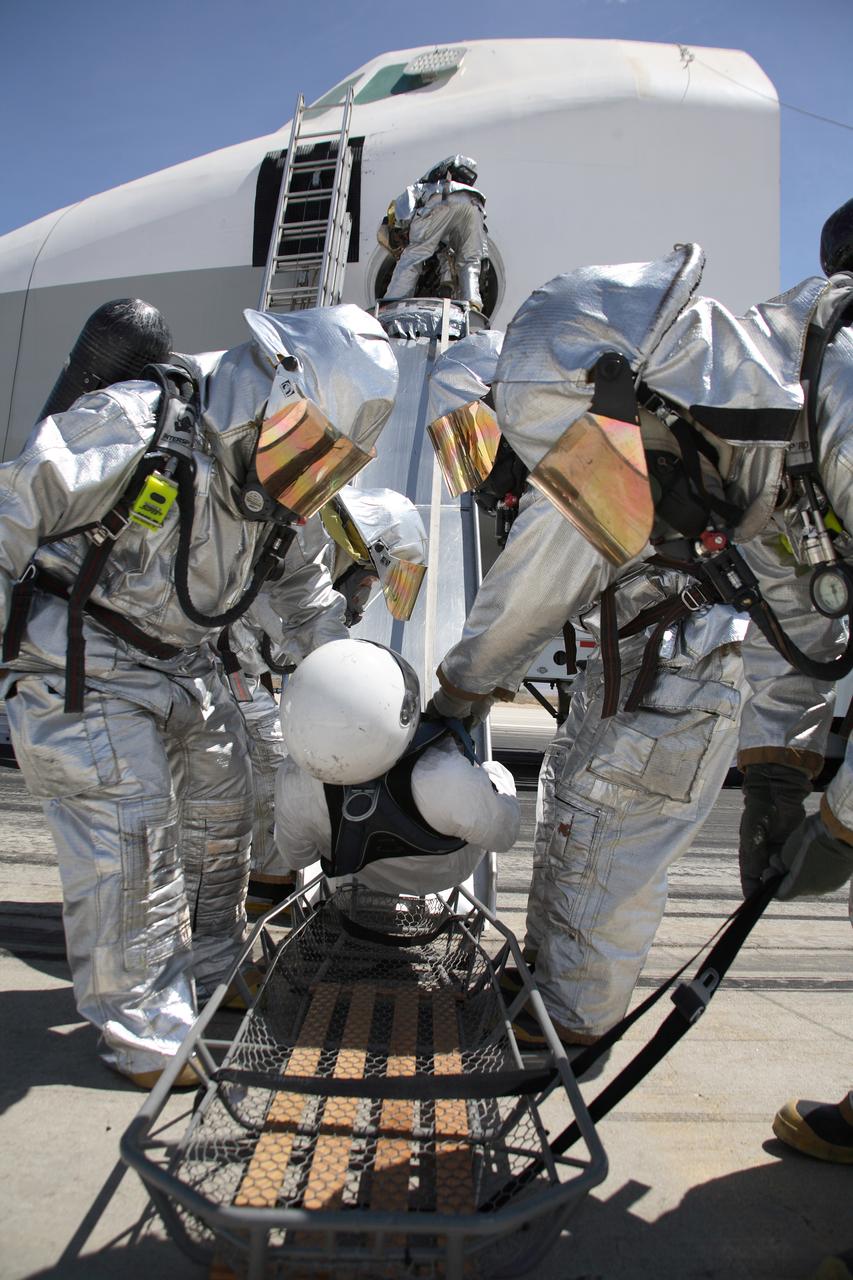
Air Force fire/rescue crew place a volunteer "injured astronaut" on a stretcher after exiting the shuttle cabin mockup during the training exercise. (USAF photo # 070505-F-1287F-126)
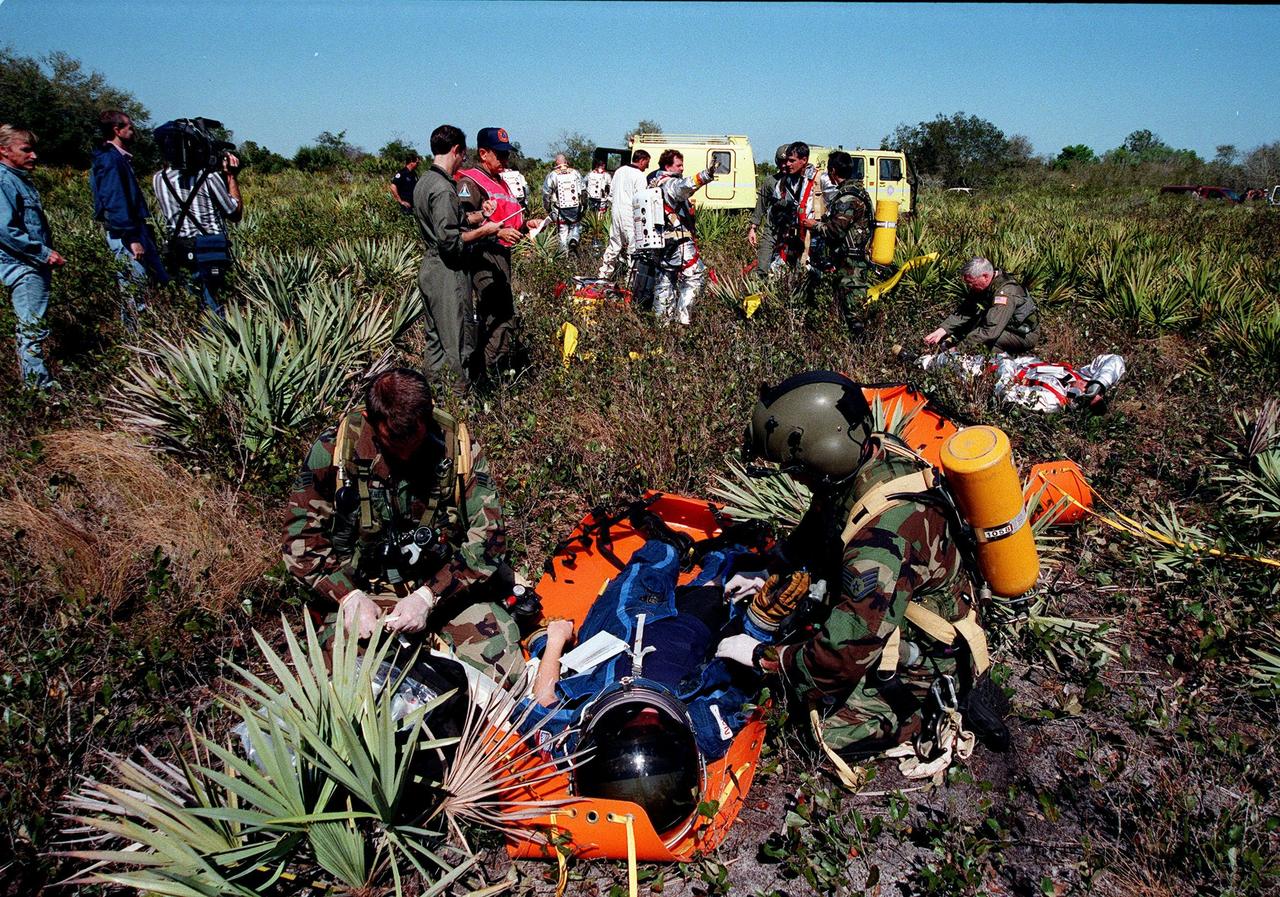
KENNEDY SPACE CENTER, FLA. -- During a simulated rescue mission in the woods near the Shuttle Landing Facility (SLF), the KSC response team practices stabilizing an injured crew member before transport to a local hospital by helicopter. The response team is training for the unlikely scenario of a Shuttle mishap at the SLF. The Mode 7 simulation of an astronaut rescue exercises all aspects of command and control, search and rescue, and medical procedures required for a successful rescue. The remote location of the mock-up prevents a totally land-based crew rescue, and calls on a NASA UH-1 helicopter to locate the site and four Air Force HH-60 helicopters to drop emergency equipment and fire/rescue workers who will prepare the "crew" for preliminary triage. The helicopters later will help remove the crew five astronaut candidates, one representative from the Vehicle Integration Test office, and one fire/rescue worker. The exercise will conclude with airlifted "patients" arriving safely in the emergency rooms of participating area hospitals
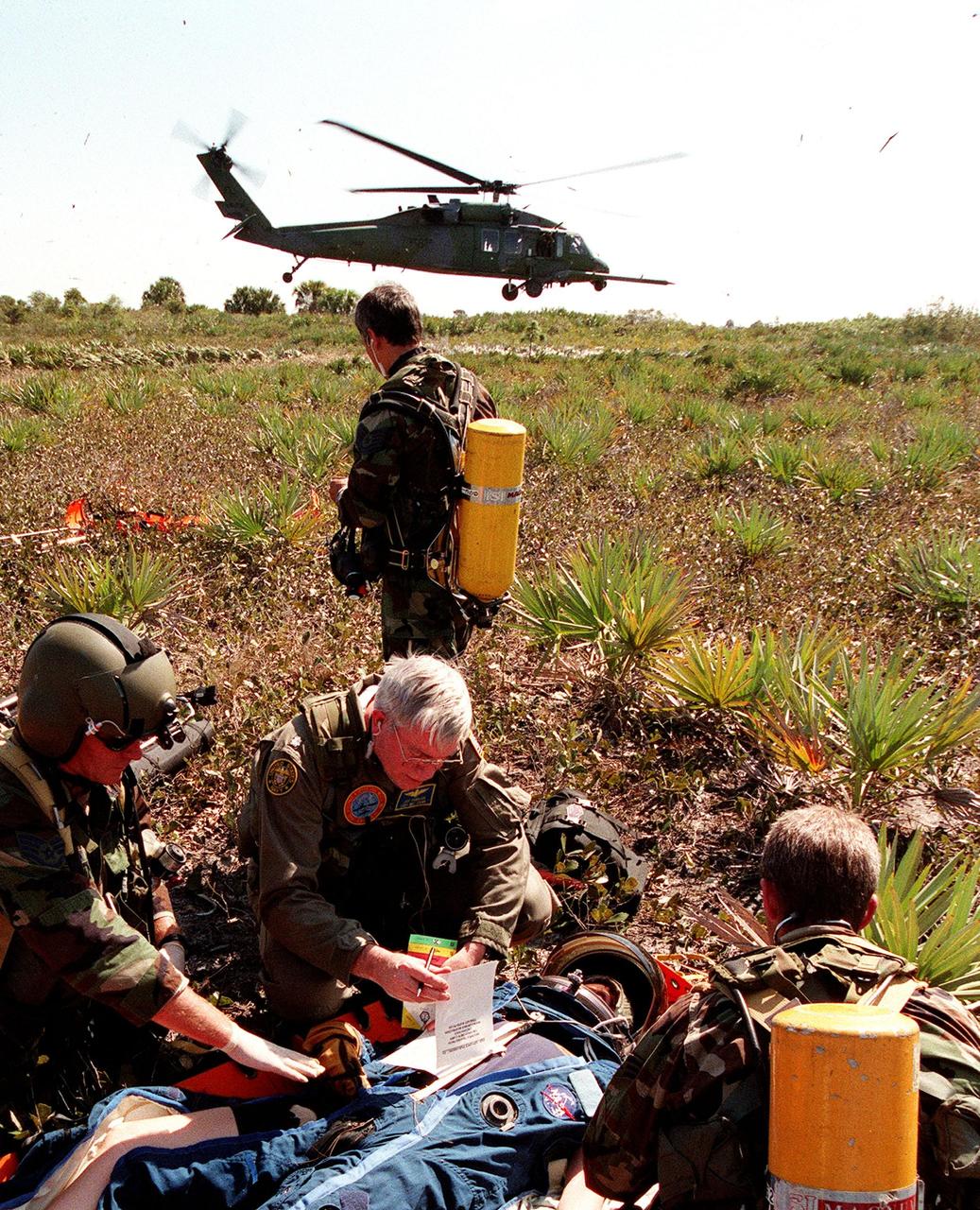
KENNEDY SPACE CENTER, FLA. -- During a simulated rescue mission in the woods near the Shuttle Landing Facility (SLF), the KSC response team practices stabilizing an injured crew member before transport to a local hospital by an Air Force HH-60 helicopter. The response team is training for the unlikely scenario of a Shuttle mishap at the SLF. The Mode 7 simulation of an astronaut rescue exercises all aspects of command and control, search and rescue, and medical procedures required for a successful rescue. The remote location of the mock-up prevents a totally land-based crew rescue, and calls on a NASA UH-1 helicopter to locate the site and four HH-60 helicopters to drop emergency equipment and fire/rescue workers to prepare the "crew" for preliminary triage. The helicopters are then used to remove the crew five astronaut candidates, one representative from the Vehicle Integration Test office, and one fire/rescue worker. The exercise will conclude with airlifted "patients" arriving safely in the emergency rooms of participating area hospitals
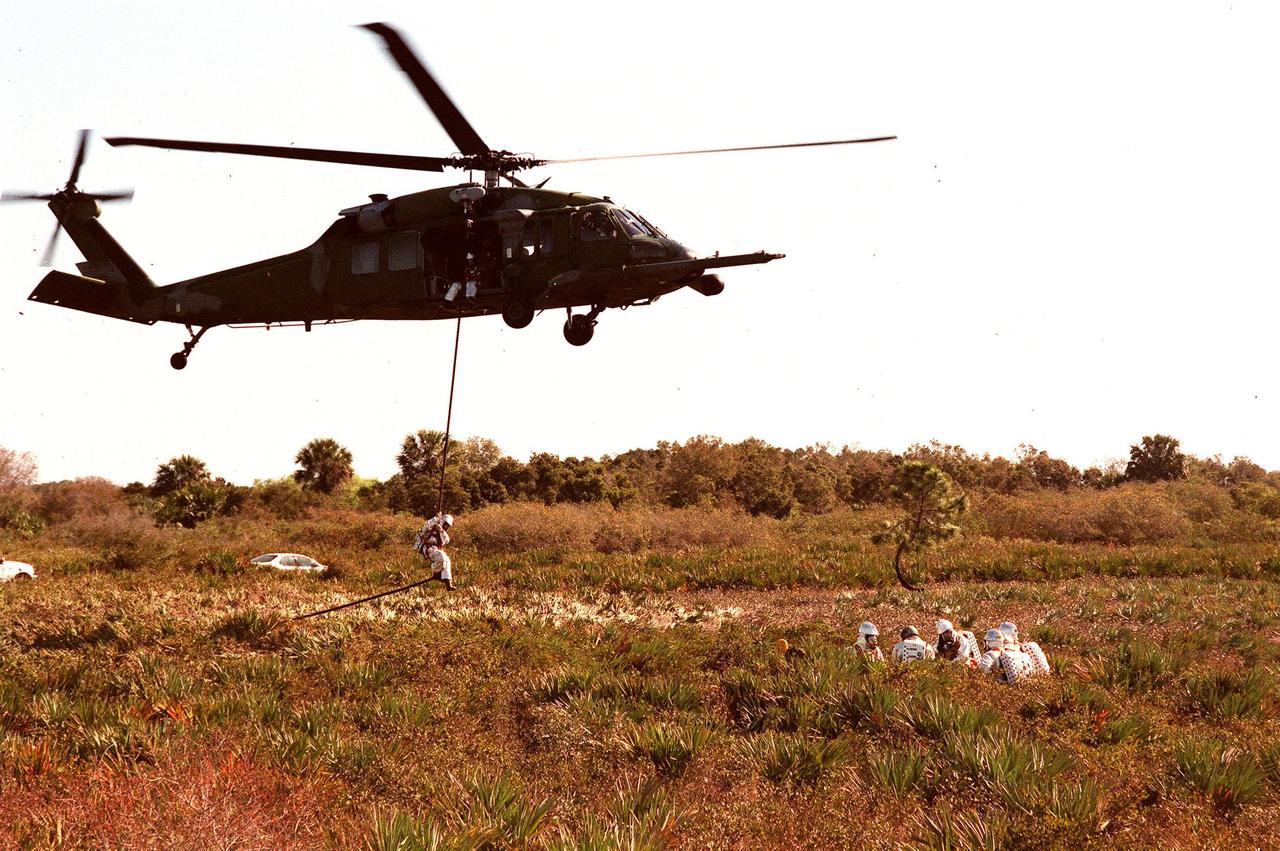
KENNEDY SPACE CENTER, FLA. -- During a simulated rescue mission in the woods near the Shuttle Landing Facility (SLF), a fire/rescue worker practices disembarking from an Air Force HH-60 helicopter. The KSC response team is training for the unlikely scenario of a Shuttle mishap at the SLF. The Mode 7 simulation of an astronaut rescue exercises all aspects of command and control, search and rescue, and medical procedures required for a successful rescue. The remote location of the mock-up prevents a totally land-based crew rescue, and calls on a NASA UH-1 helicopter to locate the site and four Air Force HH-60 helicopters to drop emergency equipment and fire/rescue workers to prepare the "crew" for preliminary traige. The helicopters are used later to remove the crew five astronaut candidates, one representative from the Vehicle Integration Test office, and one fire/rescue worker. The exercise will conclude with airlifted "patients" arriving safely in the emergency rooms of participating area hospitals