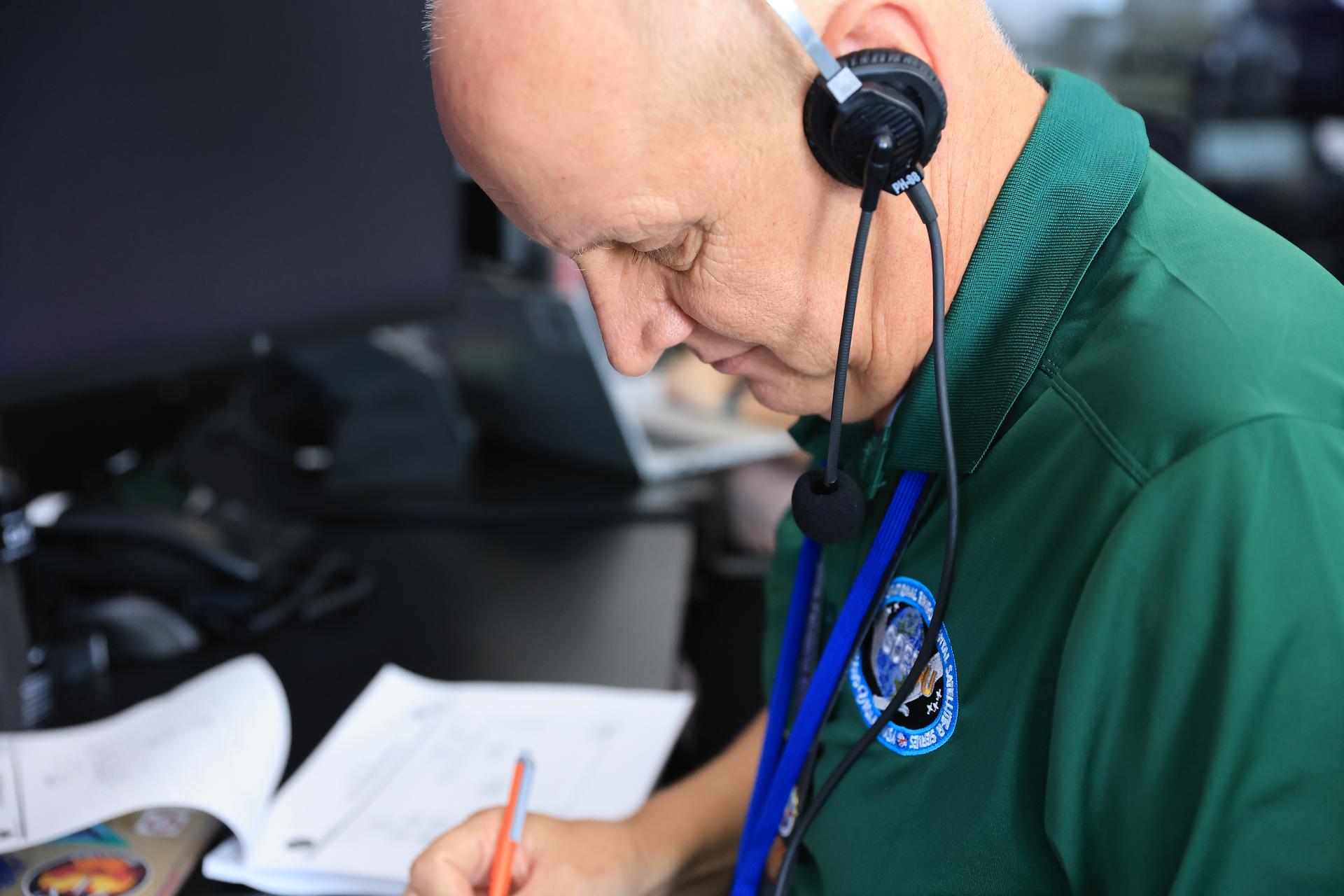
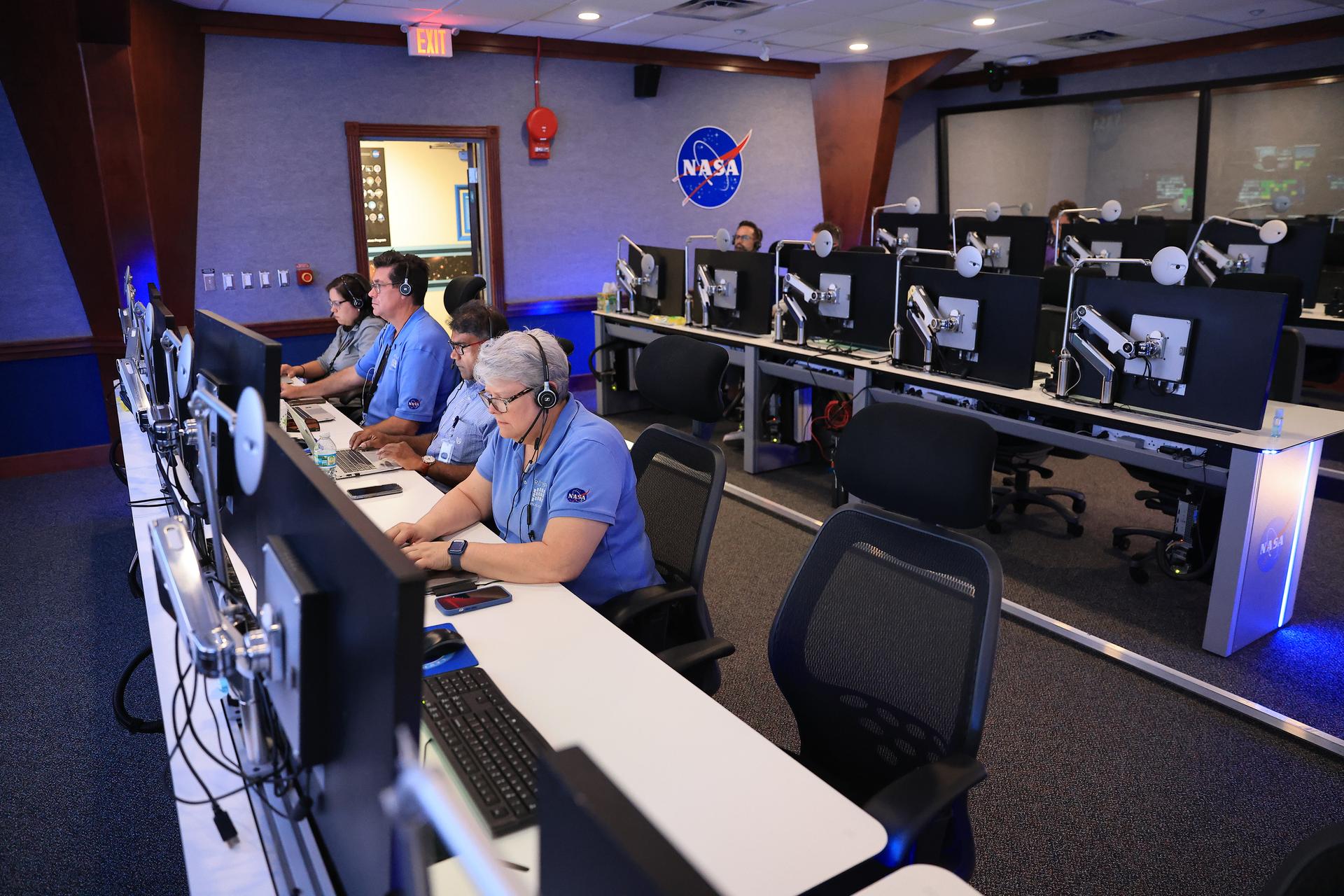
Tim Dunn, a retired senior launch director with NASA’s Launch Services Program, participates in a mission dress rehearsal for NASA’s Nancy Grace Roman Space Telescope on Thursday, Aug. 20, 2026, inside SpaceX’s Hangar X at NASA Kennedy in Florida. Dunn and other specialists served as an assessment team for personnel who ran through a full end-to-end simulation of every major step they will experience on launch day except liftoff, including powering up the spacecraft, fueling the rocket, conducting weather briefings, and other operations.
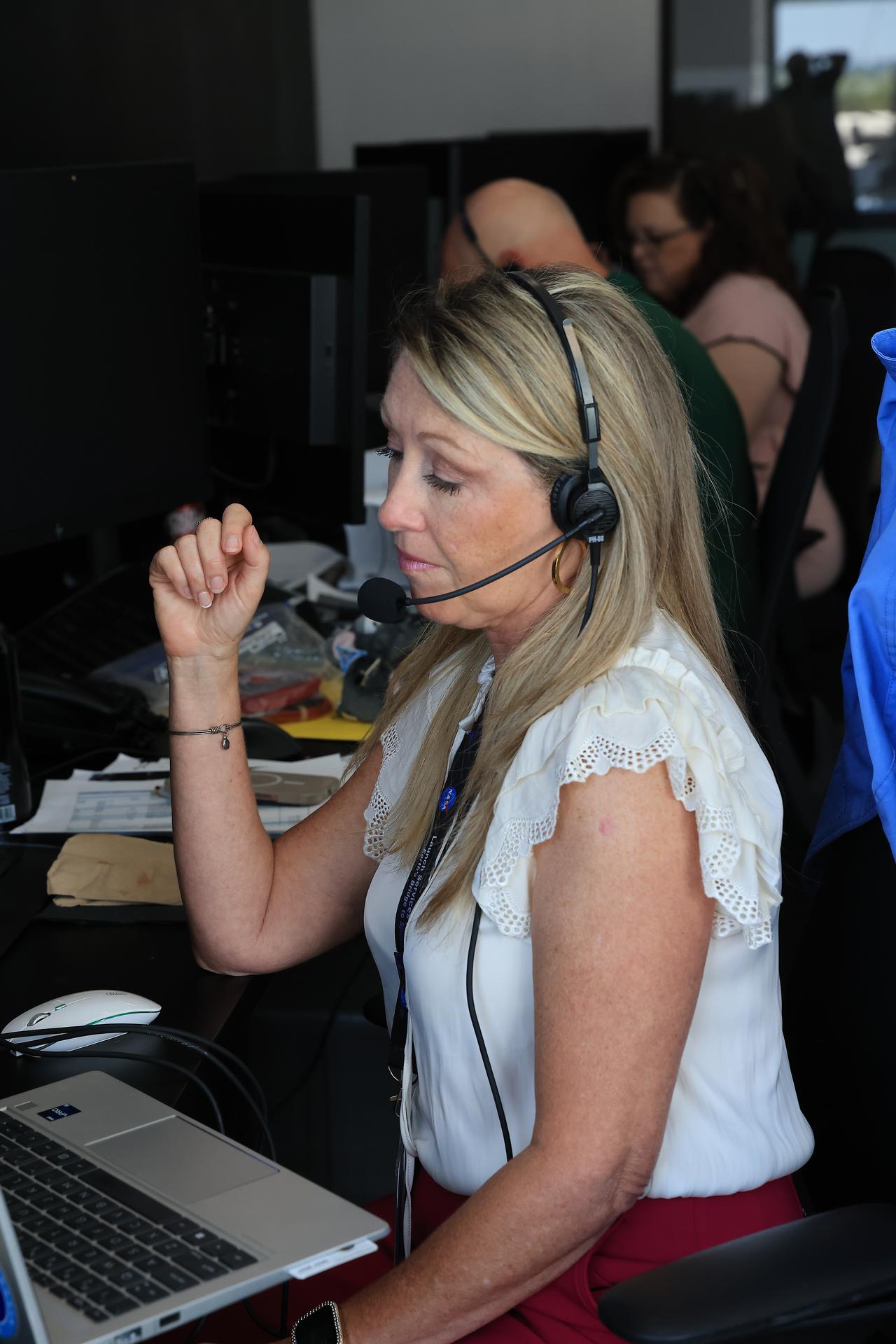
Penny Baez, launch operations manager with NASA’s Launch Services Program, participates in a mission dress rehearsal for NASA’s Nancy Grace Roman Space Telescope on Thursday, Aug. 20, 2026, inside SpaceX’s Hangar X at NASA Kennedy in Florida. Baez and other specialists served as an assessment team for personnel who ran through a full end-to-end simulation of every major step they will experience on launch day except liftoff, including powering up the spacecraft, fueling the rocket, conducting weather briefings, and other operations.
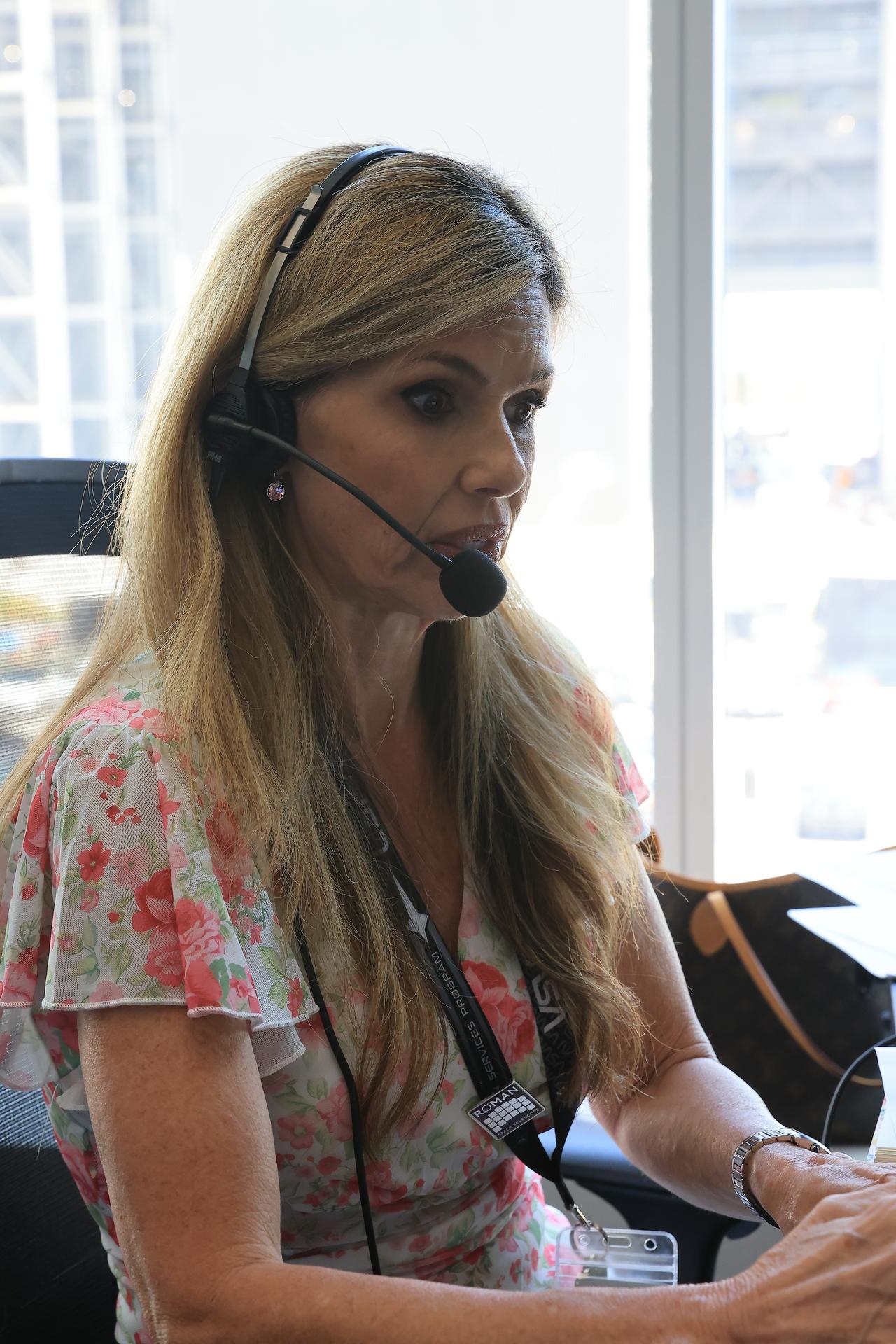
Dana Allender, senior launch operations manager with NASA’s Launch Services Program, participates in a mission dress rehearsal for NASA’s Nancy Grace Roman Space Telescope on Thursday, Aug. 20, 2026, inside SpaceX’s Hangar X at NASA Kennedy in Florida. Allender and other specialists served as an assessment team for personnel who ran through a full end-to-end simulation of every major step they will experience on launch day except liftoff, including powering up the spacecraft, fueling the rocket, conducting weather briefings, and other operations.
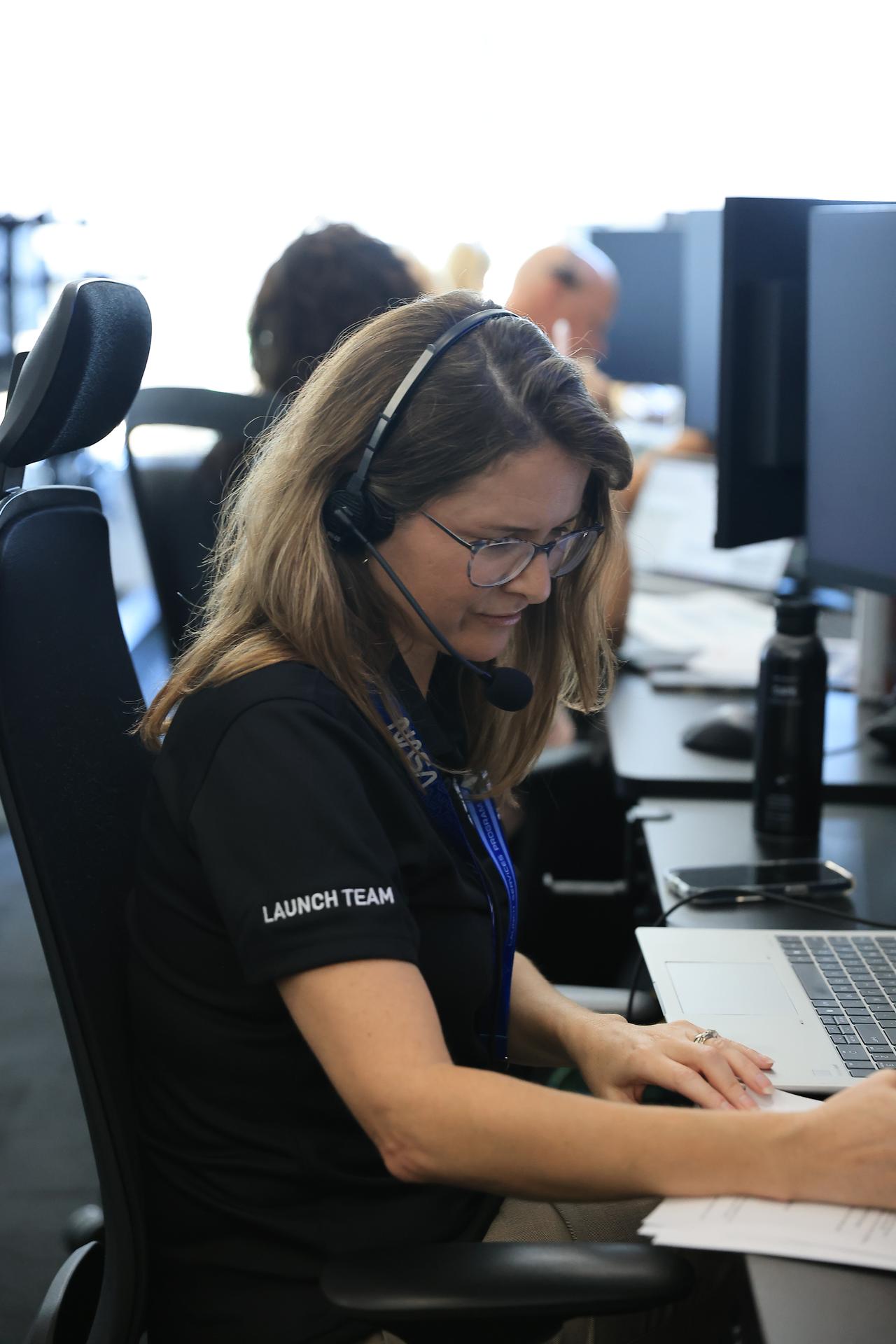
Jennifer Nufer, mission manager, Flight Projects Office with NASA’s Launch Services Program, participates in a mission dress rehearsal for NASA’s Nancy Grace Roman Space Telescope on Thursday, Aug. 20, 2026, inside SpaceX’s Hangar X at NASA Kennedy in Florida. Nufer and other specialists served as an assessment team for personnel who ran through a full end-to-end simulation of every major step they will experience on launch day except liftoff, including powering up the spacecraft, fueling the rocket, conducting weather briefings, and other operations.
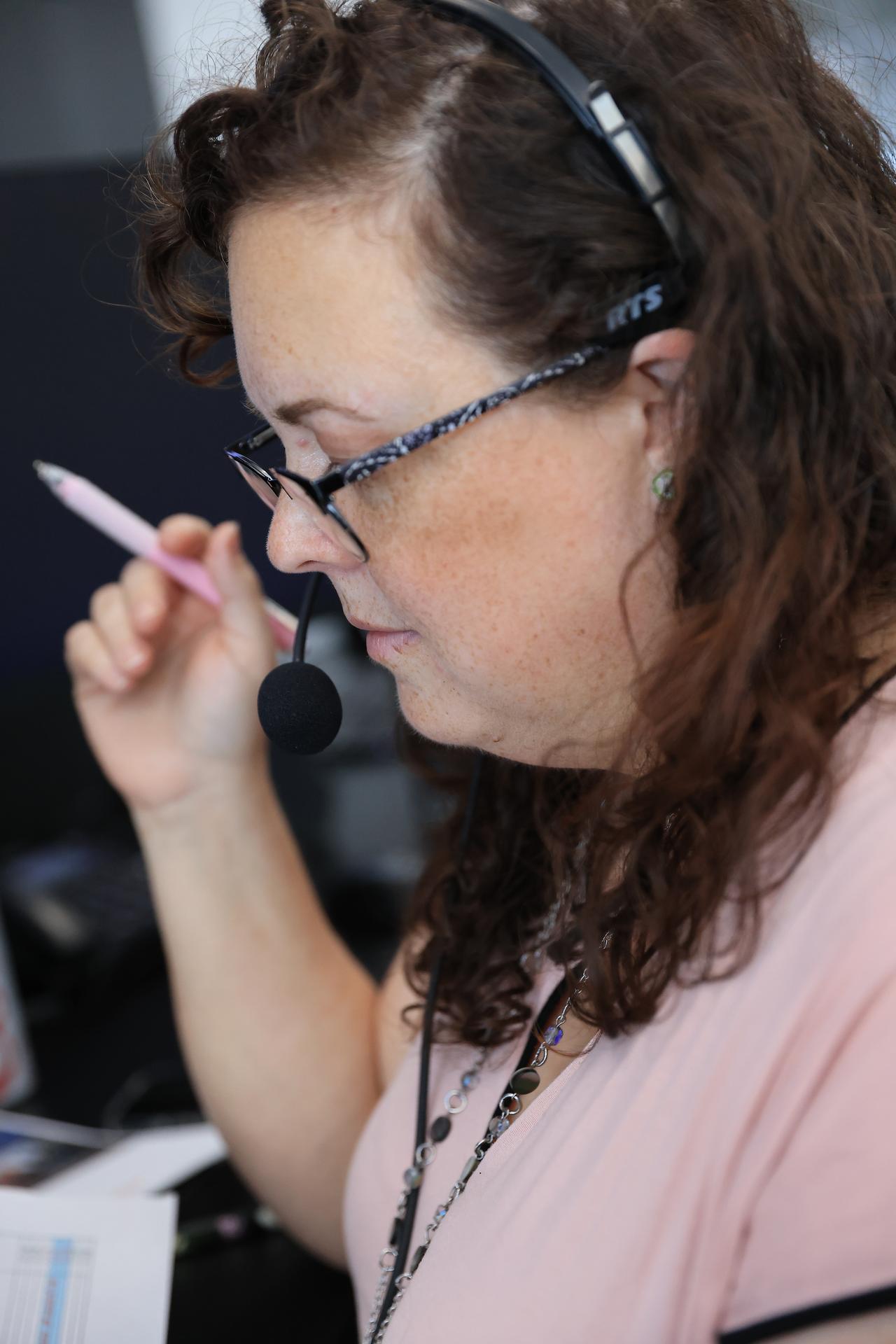
Jennifer Snyder, program specialist, Program Integration Branch with NASA’s Launch Services Program, participates in a mission dress rehearsal for NASA’s Nancy Grace Roman Space Telescope on Thursday, Aug. 20, 2026, inside SpaceX’s Hangar X at NASA Kennedy in Florida. Snyder and other specialists served as an assessment team for personnel who ran through a full end-to-end simulation of every major step they will experience on launch day except liftoff, including powering up the spacecraft, fueling the rocket, conducting weather briefings, and other operations.
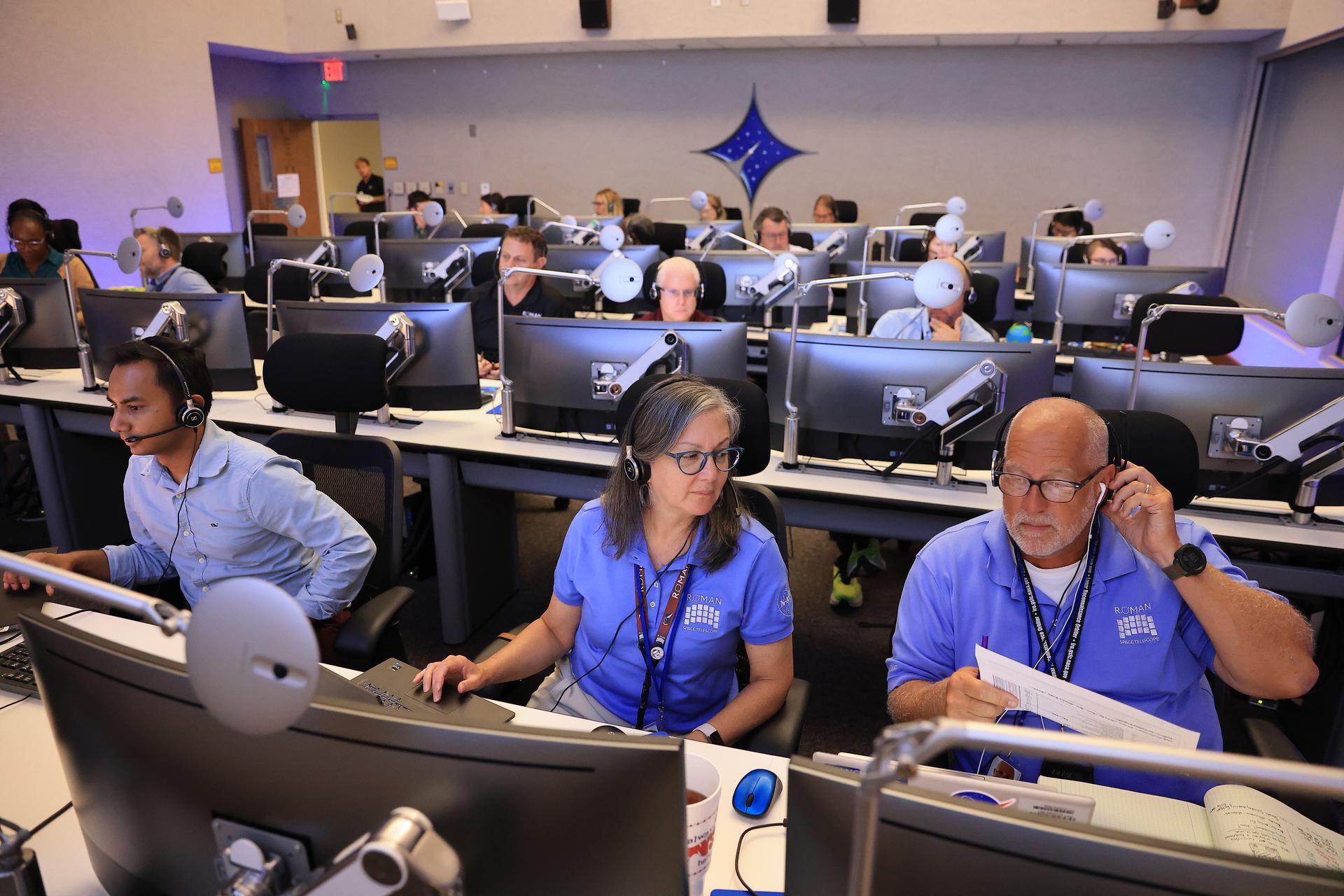
Personnel, including engineers, technicians, and mission managers, with the Launch Services Program at NASA’s Kennedy Space Center and NASA’s Nancy Grace Roman Space Telescope participate in a mission dress rehearsal on Thursday, Aug. 20, 2026, inside Hangar AE at Cape Canaveral Space Force Station in Florida. Teams ran through a full end-to-end simulation of every major step they will experience on launch day except liftoff, including powering up the spacecraft, fueling the rocket, conducting weather briefings, and other operations.
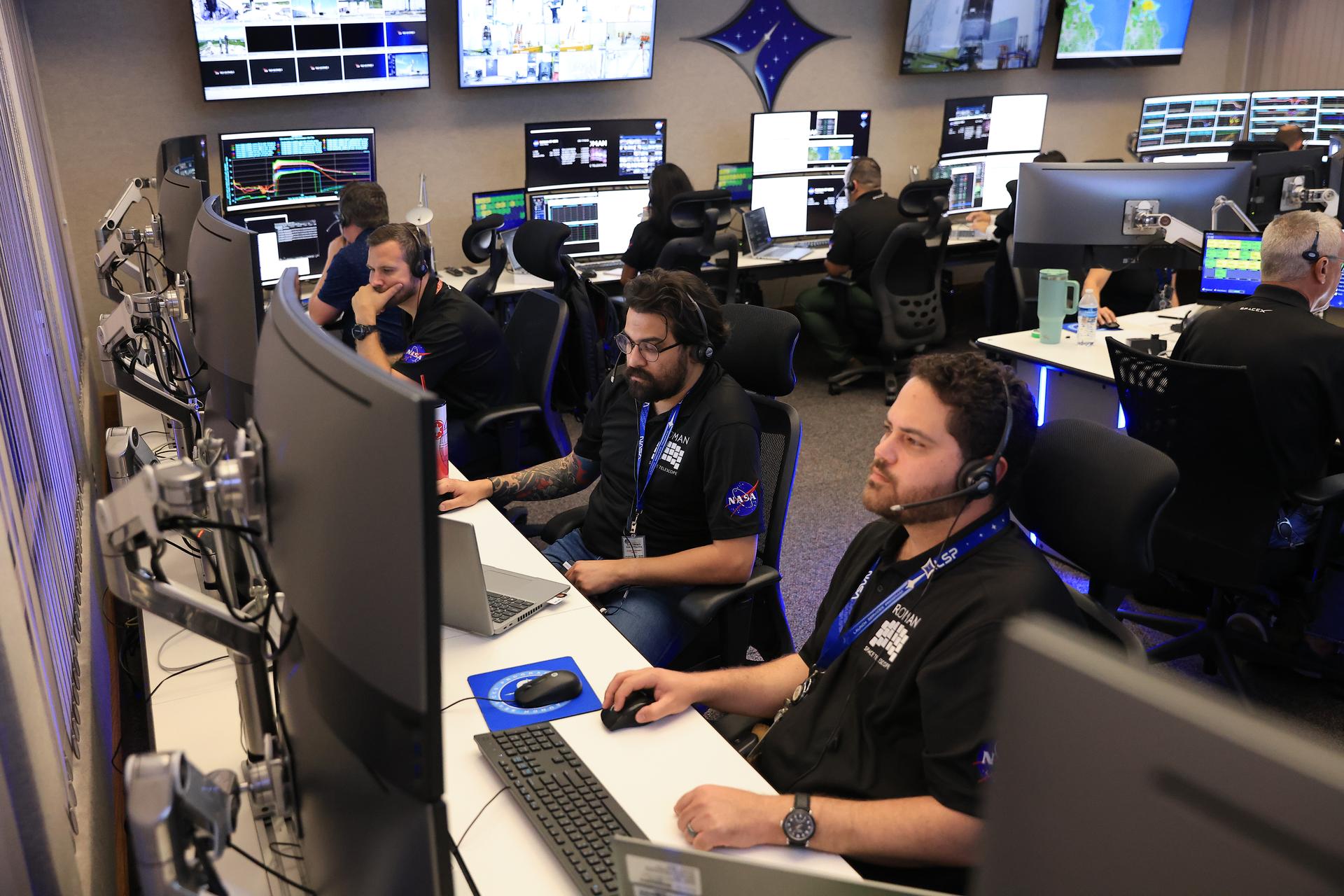
Personnel, including engineers, technicians, and mission managers, with the Launch Services Program at NASA’s Kennedy Space Center and NASA’s Nancy Grace Roman Space Telescope participate in a mission dress rehearsal on Thursday, Aug. 20, 2026, inside Hangar AE at Cape Canaveral Space Force Station in Florida. Teams ran through a full end-to-end simulation of every major step they will experience on launch day except liftoff, including powering up the spacecraft, fueling the rocket, conducting weather briefings, and other operations.
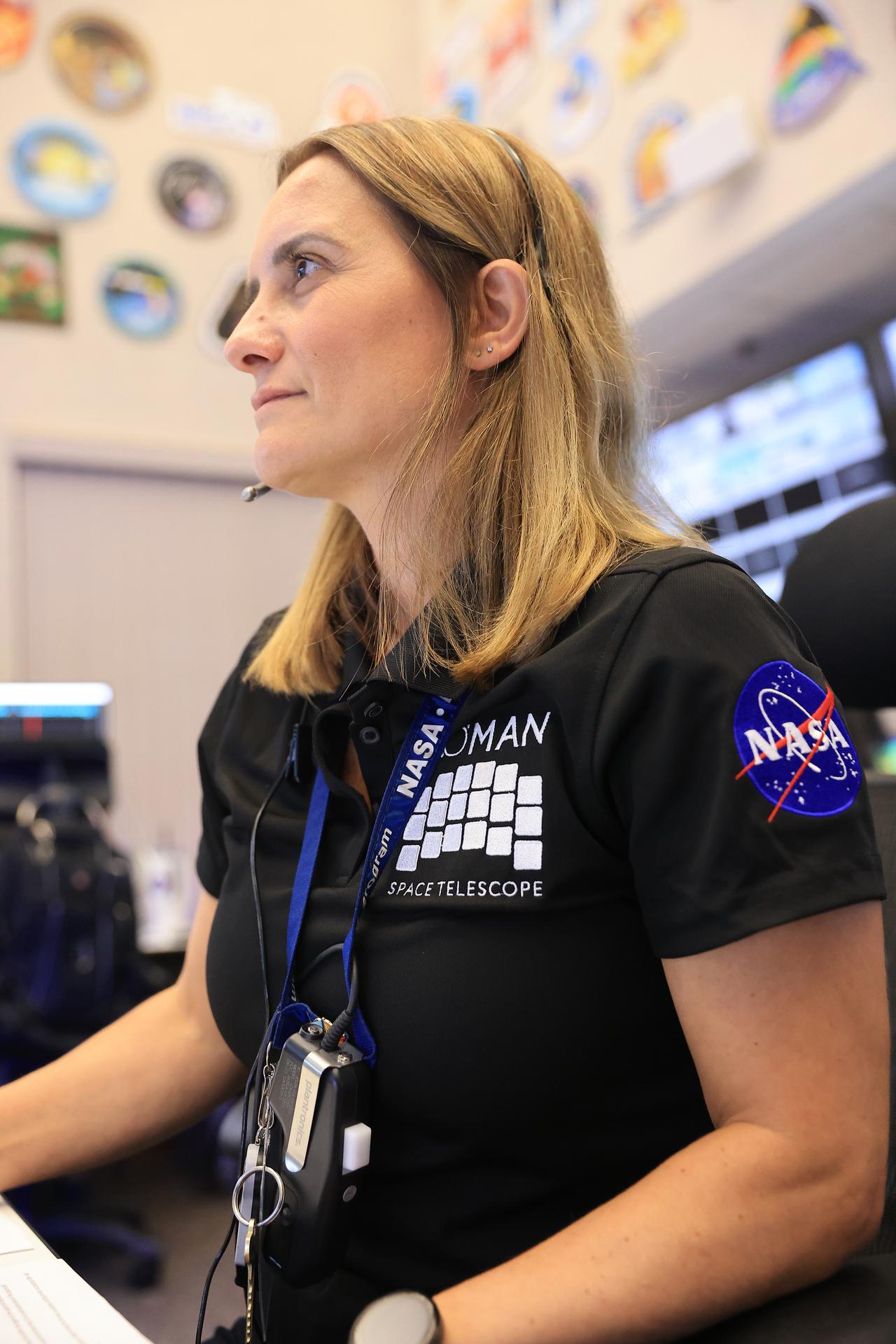
Anna Vastola, mission chief engineer, with the Launch Services Program at NASA’s Kennedy Space Center, participates in a mission dress rehearsal for NASA’s Nancy Grace Roman Space Telescope on Thursday, Aug. 20, 2026, inside SpaceX’s Hangar X at NASA Kennedy in Florida. Teams ran through a full end-to-end simulation of every major step they will experience on launch day except liftoff, including powering up the spacecraft, fueling the rocket, conducting weather briefings, and other operations.
Jackie Townsend, Nancy Grace Roman Space Telescope project manager, NASA’s Goddard Space Flight Center in Greenbelt, Maryland, participates in a mission dress rehearsal for Roman on Thursday, Aug. 20, 2026, inside Hangar AE at Cape Canaveral Space Force Station in Florida. Teams ran through a full end-to-end simulation of every major step they will experience on launch day except liftoff, including powering up the spacecraft, fueling the rocket, conducting weather briefings, and other operations.
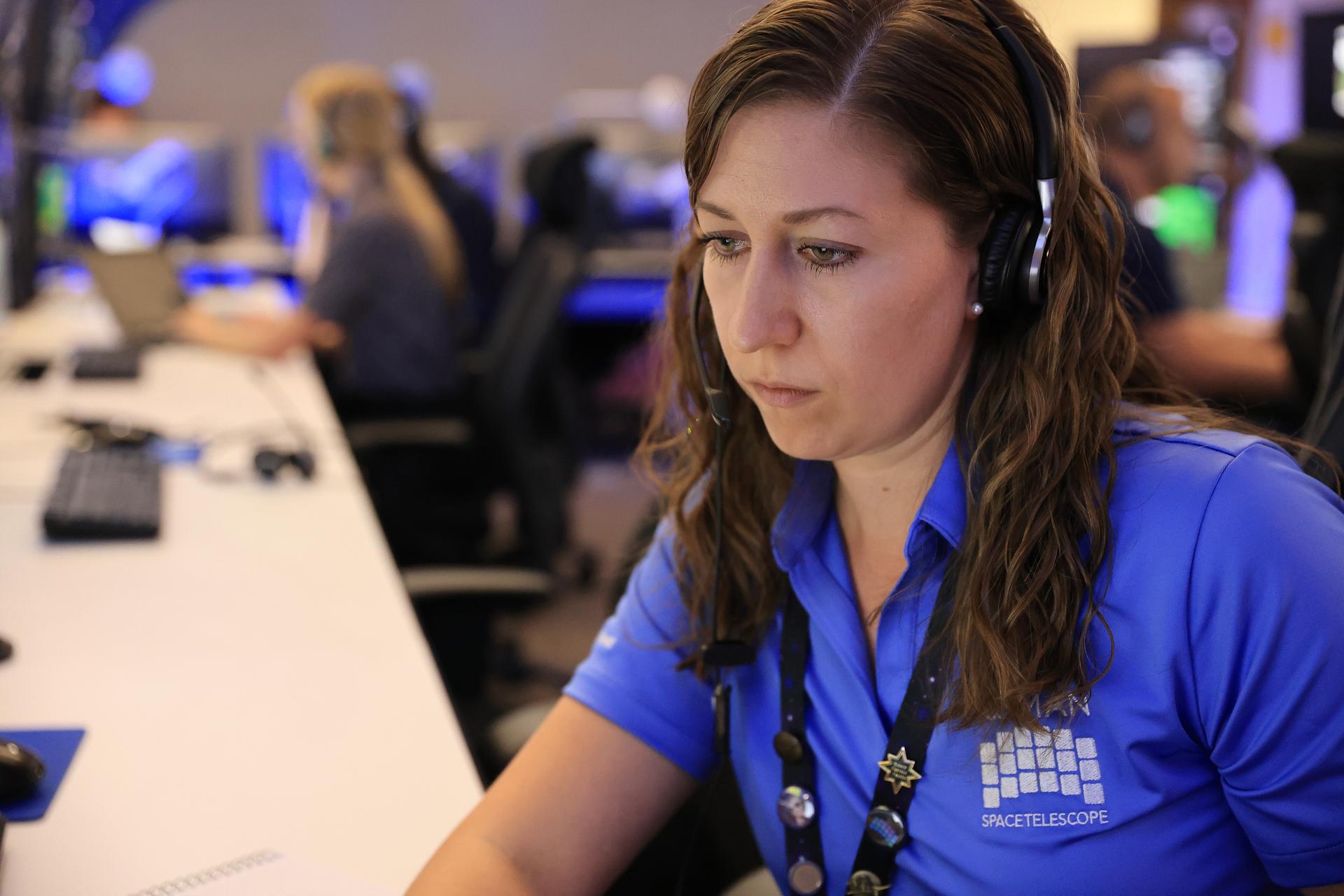
Theresa Trzupek, a mission assurance manager with the Safety Mission Assurance Program with the Launch Services Program at NASA’s Kennedy Space Center participates in a mission dress rehearsal for NASA’s Nancy Grace Roman Space Telescope on Thursday, Aug. 20, 2026, inside Hangar AE at Cape Canaveral Space Force Station in Florida. Teams ran through a full end-to-end simulation of every major step they will experience on launch day except liftoff, including powering up the spacecraft, fueling the rocket, conducting weather briefings, and other operations.
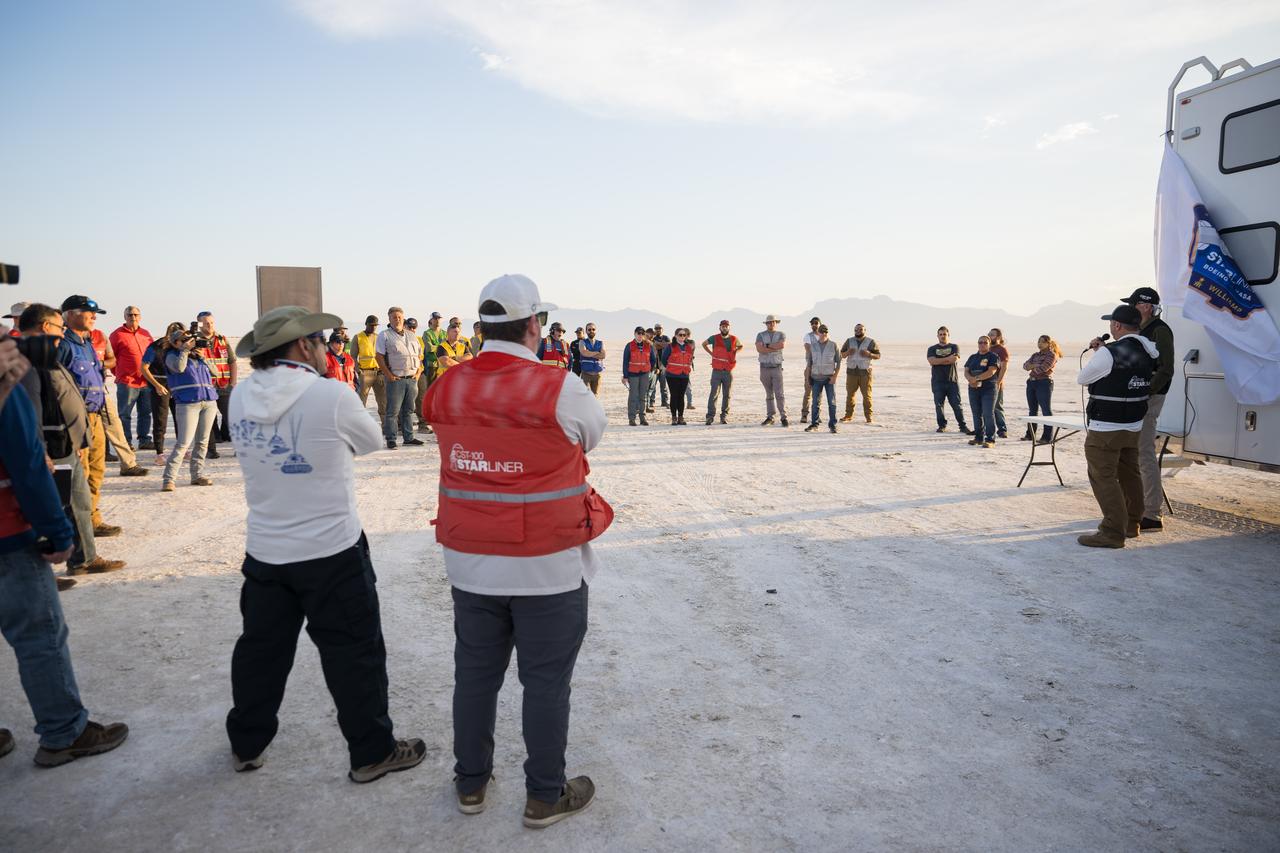
Boeing and NASA teams participate in a mission dress rehearsal to prepare for the landing of NASA’s Boeing Crew Flight Test Starliner spacecraft, Thursday, Sept. 5, 2024, at White Sands, New Mexico. The uncrewed spacecraft is scheduled to land at White Sands Missile Range’s Space Harbor, Friday, Sept. 6, 2024 Mountain Time. This approach allows NASA and Boeing to continue gathering testing data. Photo Credit: (NASA/Aubrey Gemignani)
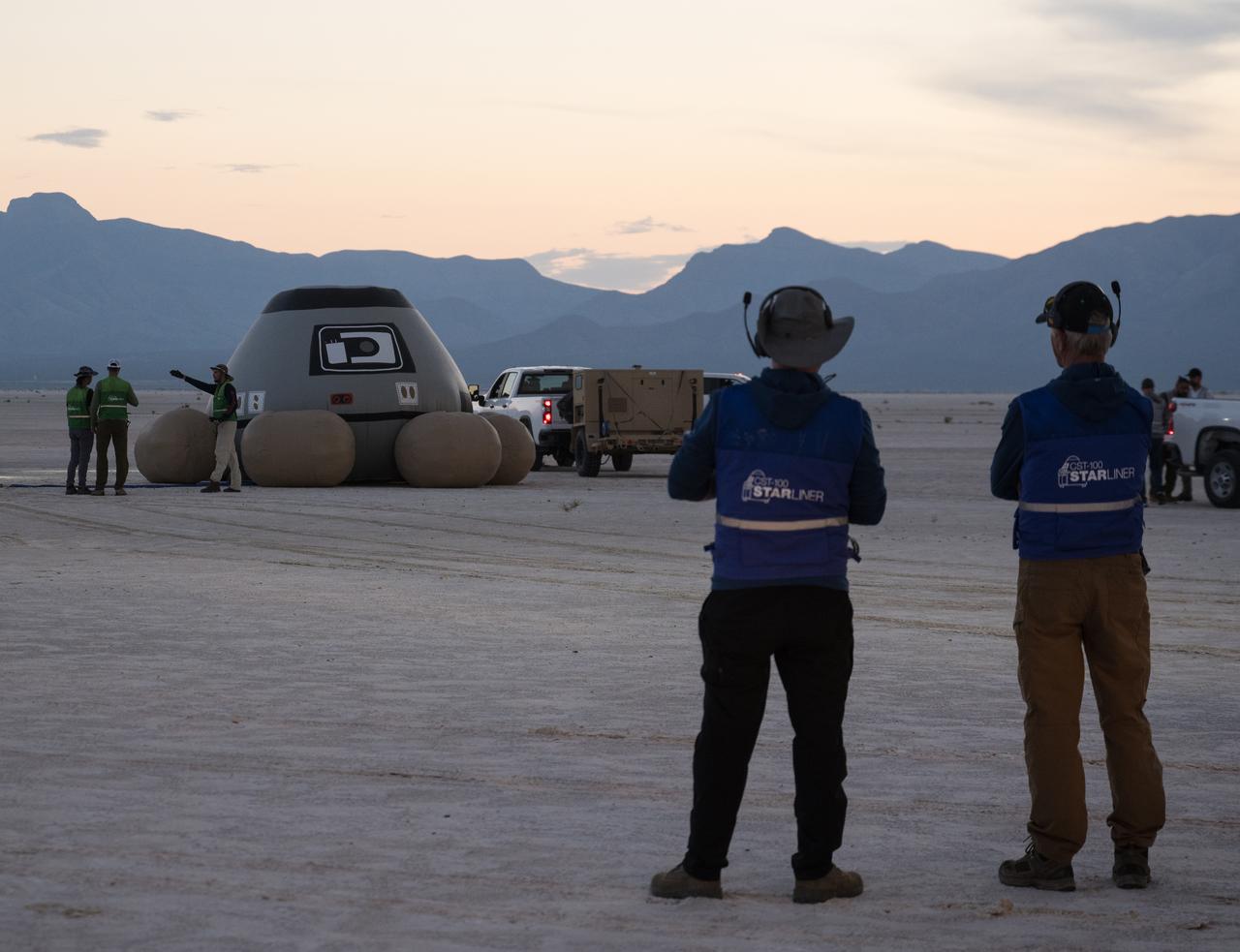
Boeing and NASA teams participate in a mission dress rehearsal to prepare for the landing of NASA’s Boeing Crew Flight Test Starliner spacecraft, Thursday, Sept. 5, 2024, at White Sands, New Mexico. The uncrewed spacecraft is scheduled to land at White Sands Missile Range’s Space Harbor, Friday, Sept. 6, 2024 Mountain Time. This approach allows NASA and Boeing to continue gathering testing data. Photo Credit: (NASA/Aubrey Gemignani)
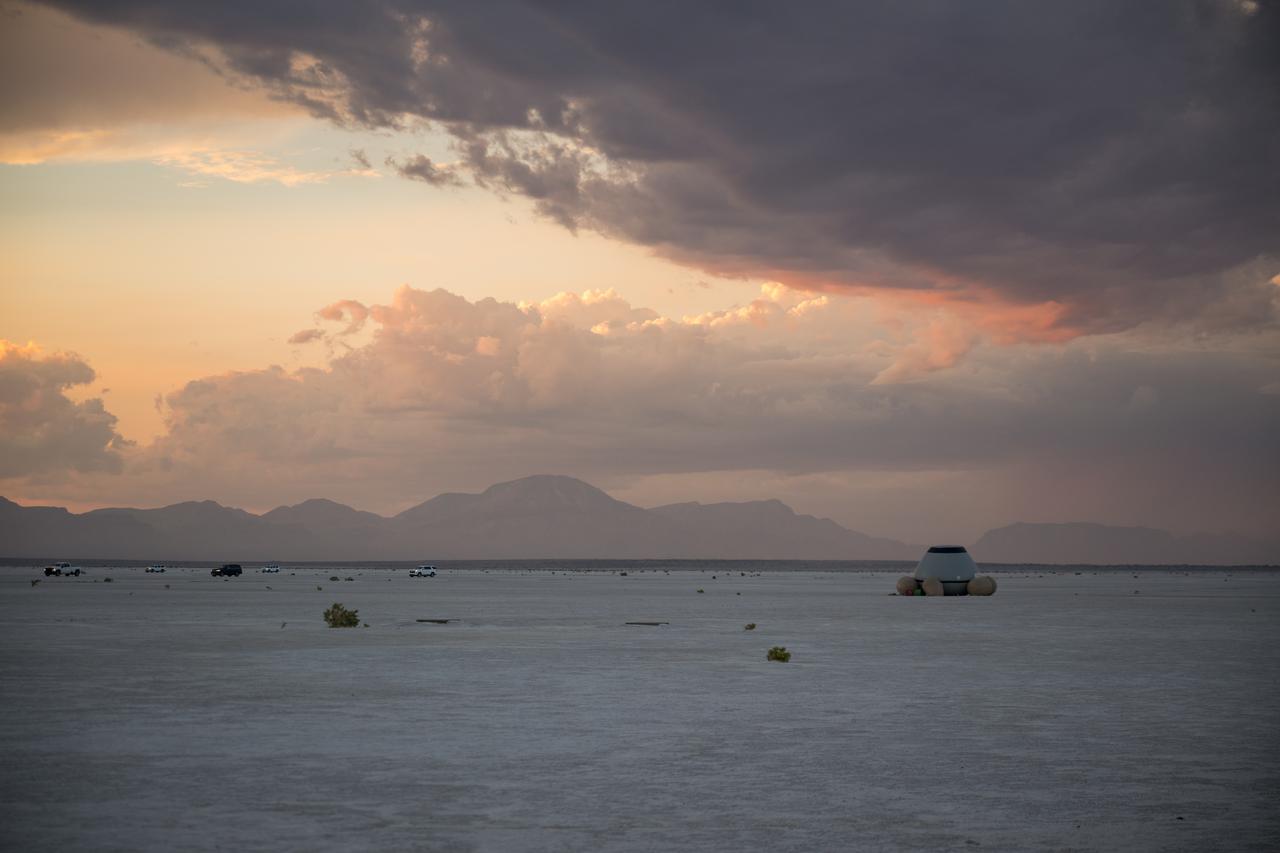
Boeing and NASA teams participate in a mission dress rehearsal to prepare for the landing of NASA’s Boeing Crew Flight Test Starliner spacecraft, Thursday, Sept. 5, 2024, at White Sands, New Mexico. The uncrewed spacecraft is scheduled to land at White Sands Missile Range’s Space Harbor, Friday, Sept. 6, 2024 Mountain Time. This approach allows NASA and Boeing to continue gathering testing data. Photo Credit: (NASA/Aubrey Gemignani)
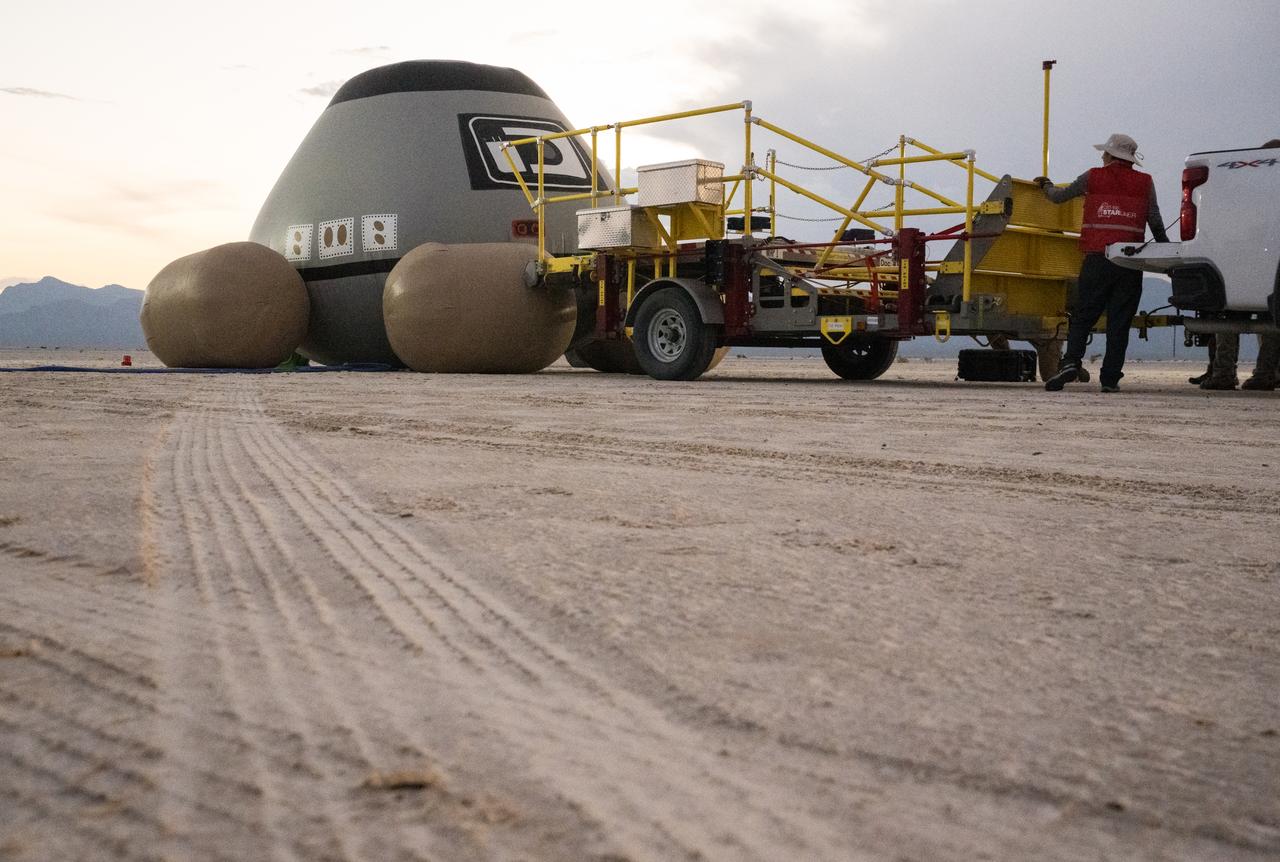
Boeing and NASA teams participate in a mission dress rehearsal to prepare for the landing of NASA’s Boeing Crew Flight Test Starliner spacecraft, Thursday, Sept. 5, 2024, at White Sands, New Mexico. The uncrewed spacecraft is scheduled to land at White Sands Missile Range’s Space Harbor, Friday, Sept. 6, 2024 Mountain Time. This approach allows NASA and Boeing to continue gathering testing data. Photo Credit: (NASA/Aubrey Gemignani)
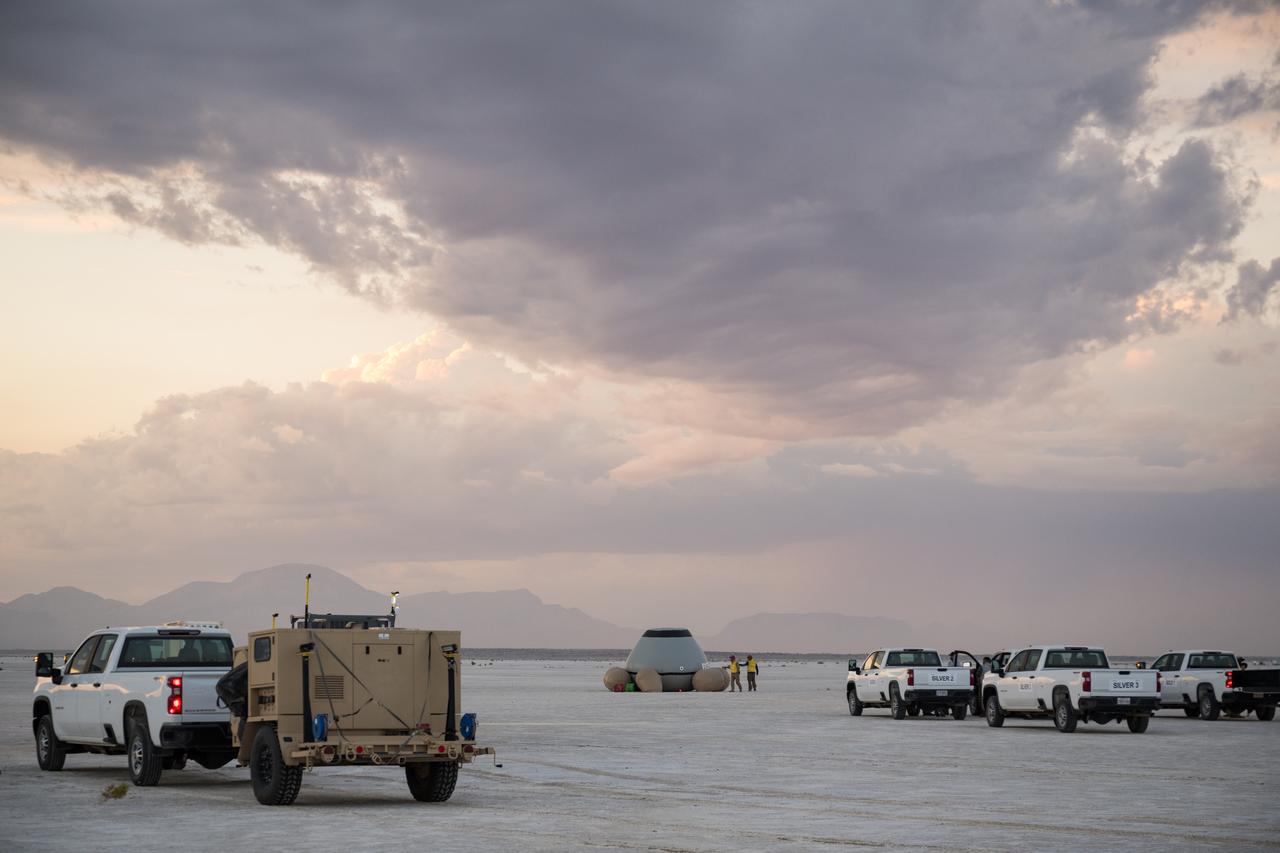
Boeing and NASA teams participate in a mission dress rehearsal to prepare for the landing of NASA’s Boeing Crew Flight Test Starliner spacecraft, Thursday, Sept. 5, 2024, at White Sands, New Mexico. The uncrewed spacecraft is scheduled to land at White Sands Missile Range’s Space Harbor, Friday, Sept. 6, 2024 Mountain Time. This approach allows NASA and Boeing to continue gathering testing data. Photo Credit: (NASA/Aubrey Gemignani)
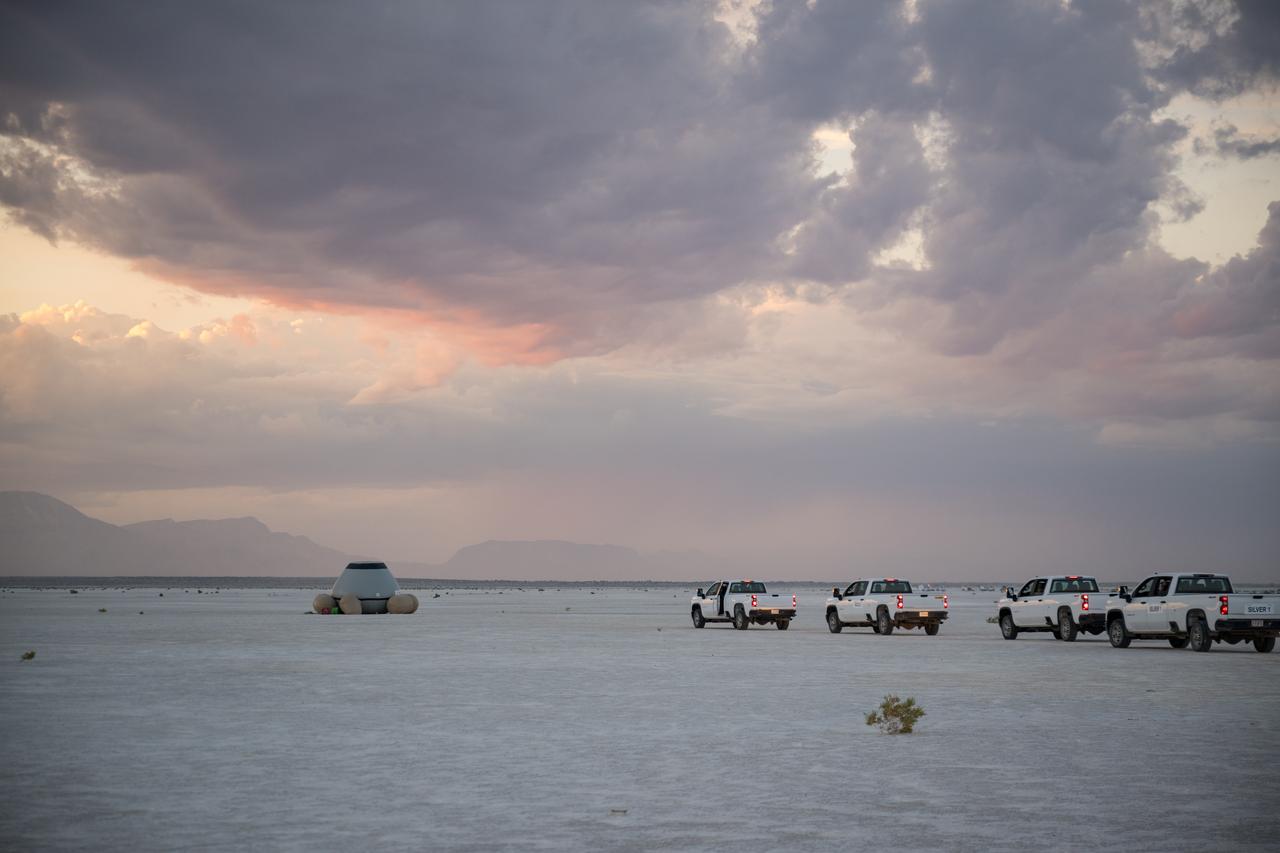
Boeing and NASA teams participate in a mission dress rehearsal to prepare for the landing of NASA’s Boeing Crew Flight Test Starliner spacecraft, Thursday, Sept. 5, 2024, at White Sands, New Mexico. The uncrewed spacecraft is scheduled to land at White Sands Missile Range’s Space Harbor, Friday, Sept. 6, 2024 Mountain Time. This approach allows NASA and Boeing to continue gathering testing data. Photo Credit: (NASA/Aubrey Gemignani)
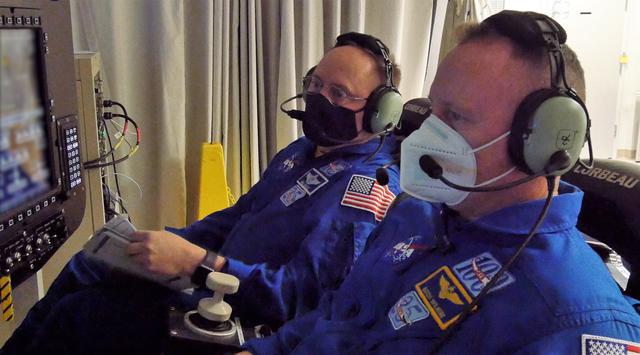
NASA astronauts Barry “Butch” Wilmore and Mike Fincke monitor the launch portion of an integrated mission dress rehearsal of Boeing’s uncrewed Orbital Flight Test-2 (OFT-2) from Boeing’s Houston-based Avionics and Software Integration Lab on Thursday, April 22, 2021. Along with NASA astronaut Nicole Mann, Wilmore and Fincke will fly aboard Boeing’s CST-100 Starliner spacecraft for the company’s Crew Flight Test (CFT) as part of NASA’s Commercial Crew Program.
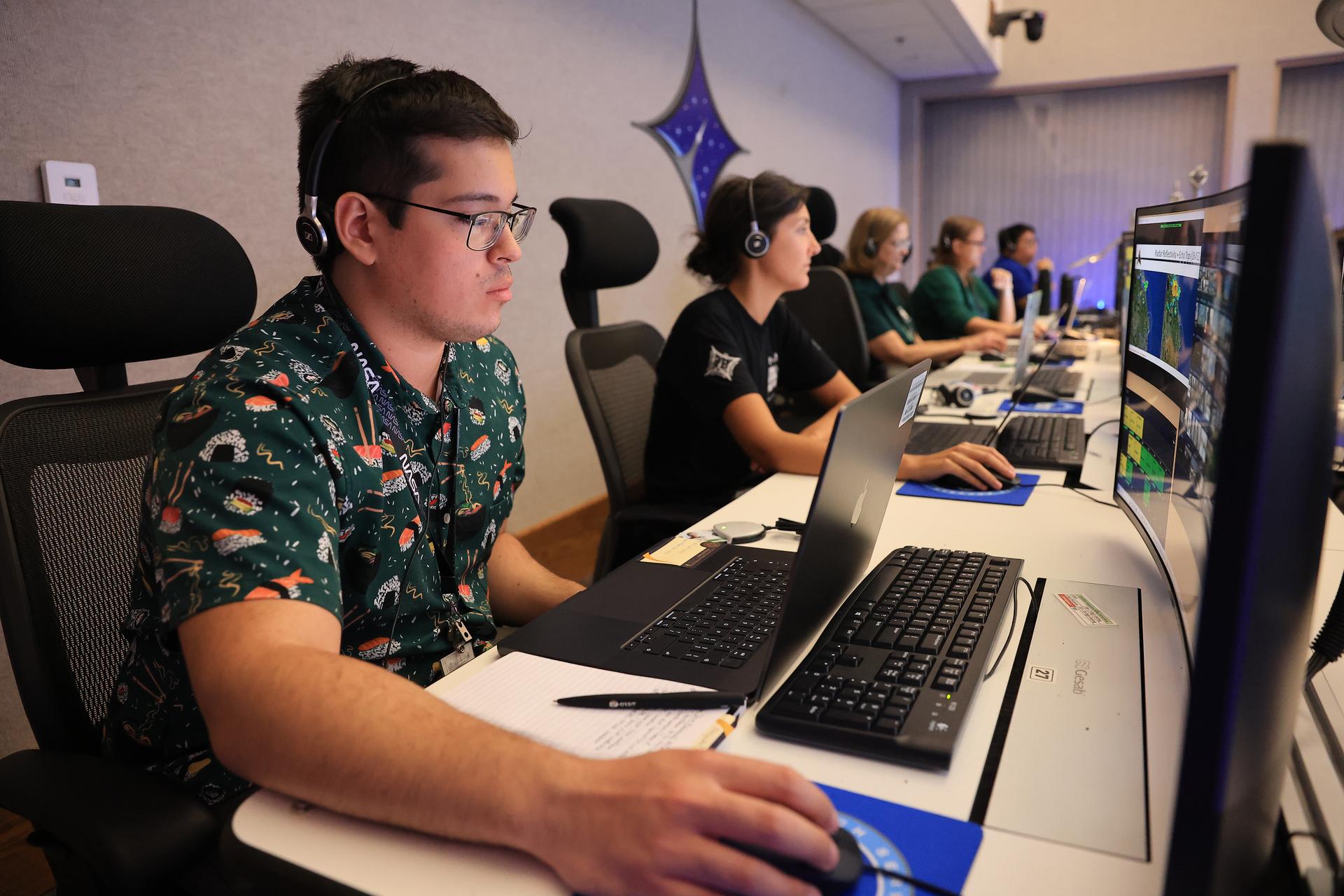
From left, Gabriel Fernandez and Payton Wolff, program specialists with the Launch Services Program at NASA’s Kennedy Space Center, along with mission managers for NASA’s Nancy Grace Roman Space Telescope participate in a mission dress rehearsal on Thursday, Aug. 20, 2026, inside SpaceX’s Hangar X at NASA Kennedy in Florida. Teams ran through a full end-to-end simulation of every major step they will experience on launch day except liftoff, including powering up the spacecraft, fueling the rocket, conducting weather briefings, and other operations.
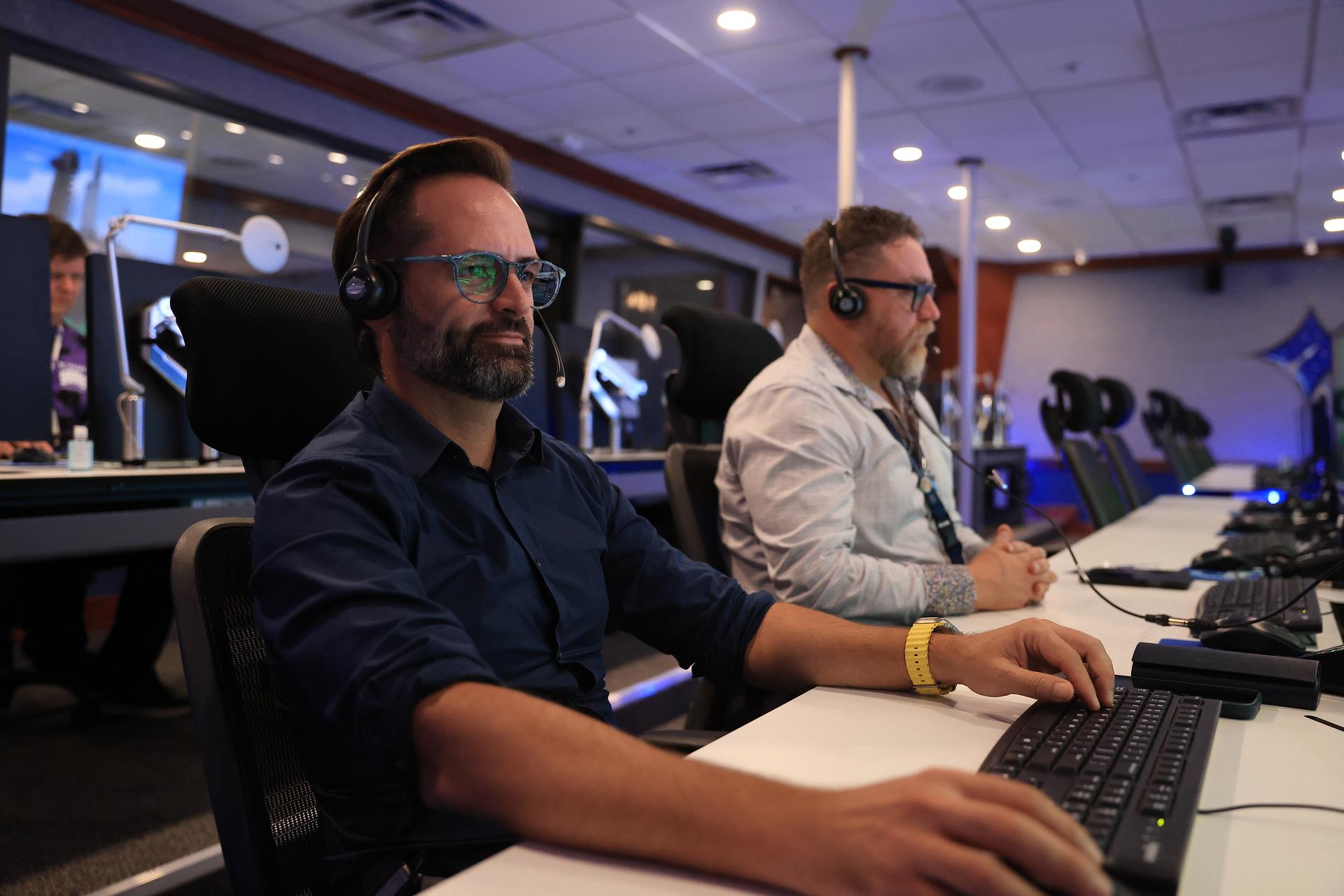
Dr. Lucas Paganini, program executive for NASA’s Nancy Grace Roman Space Telescope in the Astrophysics Division of NASA’s Science Mission Directorate, and Miles Skow, the deputy program executive for Roman at NASA Headquarters, participates in a mission dress rehearsal for Roman on Thursday, Aug. 20, 2026, inside Hangar AE at Cape Canaveral Space Force Station in Florida. Teams ran through a full end-to-end simulation of every major step they will experience on launch day except liftoff, including powering up the spacecraft, fueling the rocket, conducting weather briefings, and other operations.
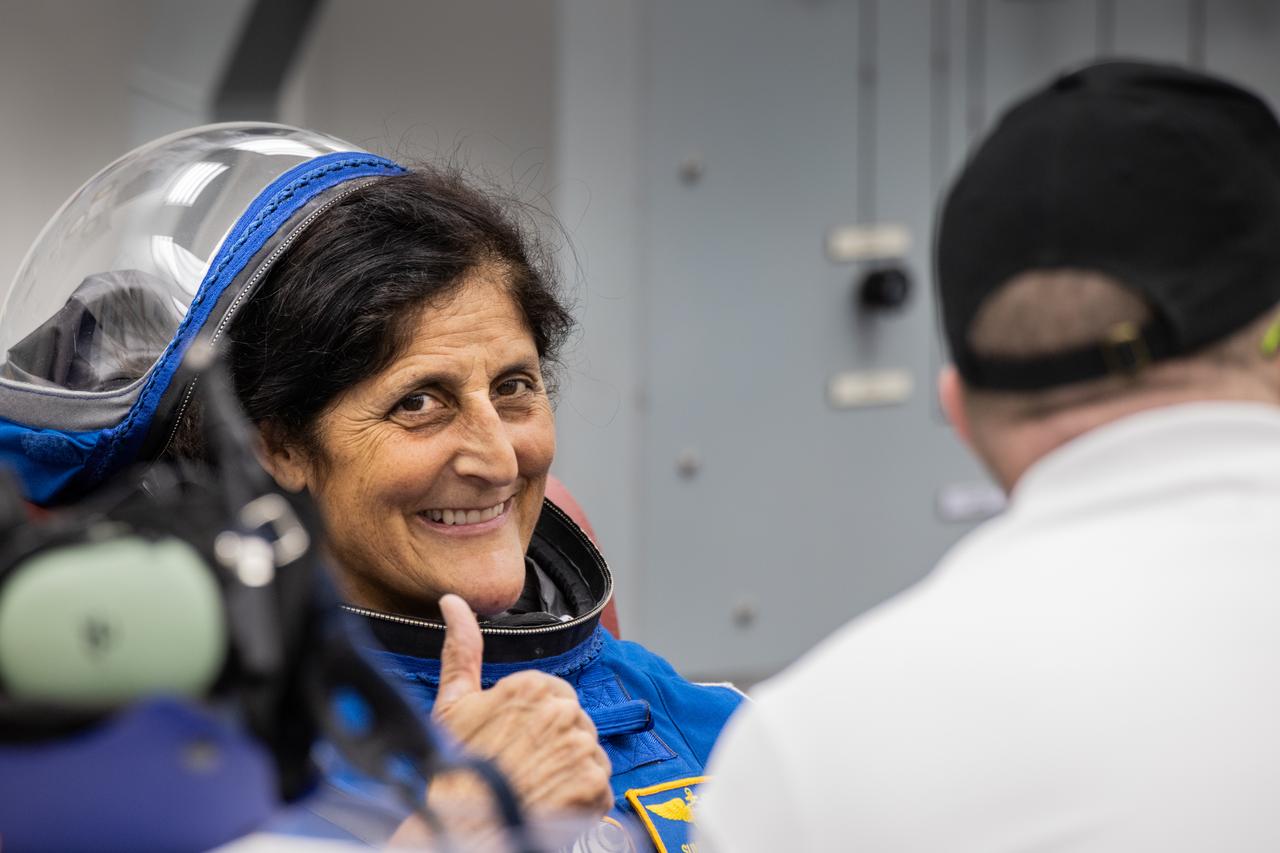
During a mission dress rehearsal, NASA’s Boeing Crew Flight Test astronaut Suni Williams flashes a thumbs up in her Boeing spacesuit inside the crew suit-up room inside the Neil A. Armstrong Operations and Checkout Building at the agency’s Kennedy Space Center in Florida on Friday, April 26, 2024. As part of the agency’s Commercial Crew Program, Wilmore and Williams are the first to launch to the International Space Station aboard Boeing’s Starliner spacecraft. Liftoff atop a United Launch Alliance Atlas V rocket from Space Launch Complex-41 at nearby Cape Canaveral Space Force Station is scheduled for 10:34 p.m. ET Monday, May 6.
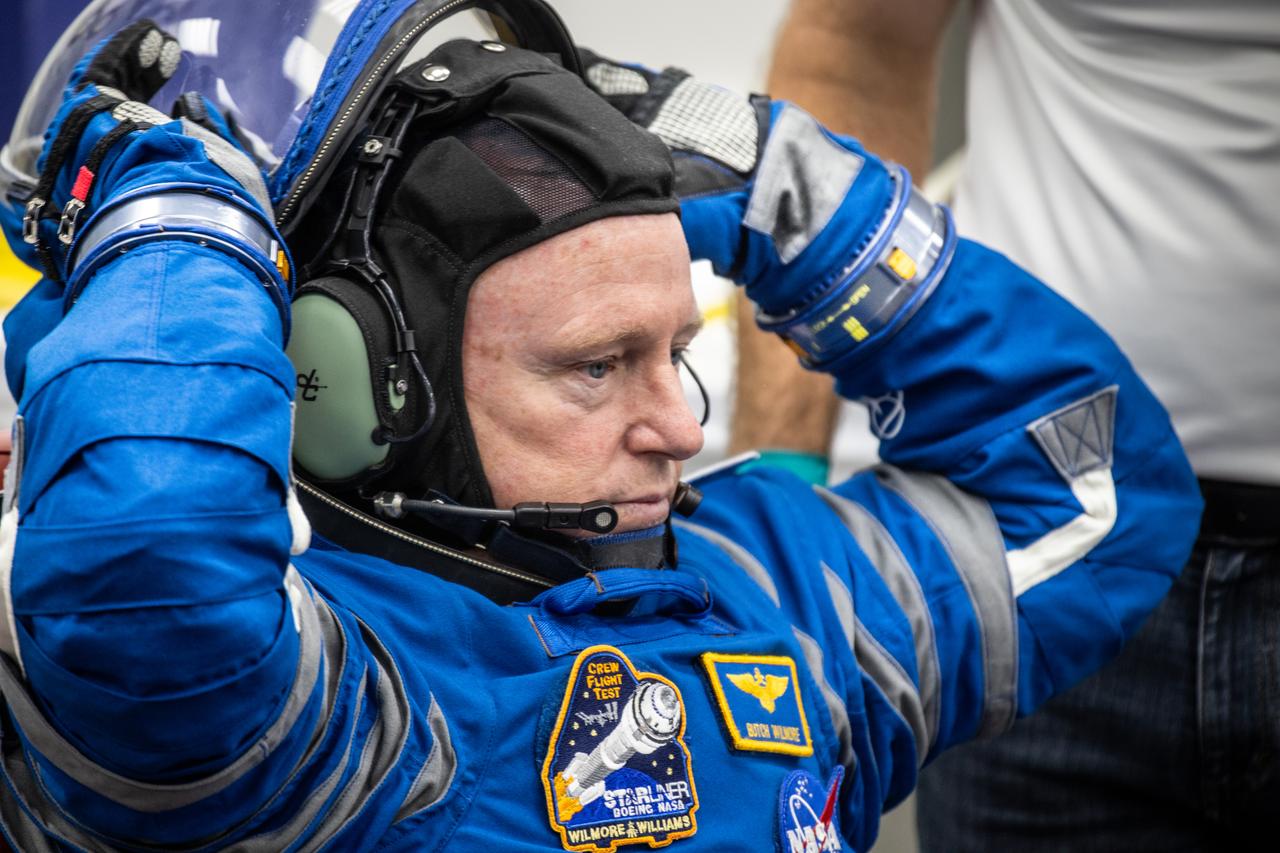
During a mission dress rehearsal, NASA’s Boeing Crew Flight Test astronaut Butch Wilmore is photographed in his Boeing spacesuit inside the crew suit-up room inside the Neil A. Armstrong Operations and Checkout Building at the agency’s Kennedy Space Center in Florida on Friday, April 26, 2024. As part of the agency’s Commercial Crew Program, Wilmore and Williams are the first to launch to the International Space Station aboard Boeing’s Starliner spacecraft. Liftoff atop a United Launch Alliance Atlas V rocket from Space Launch Complex-41 at nearby Cape Canaveral Space Force Station is scheduled for 10:34 p.m. ET Monday, May 6.
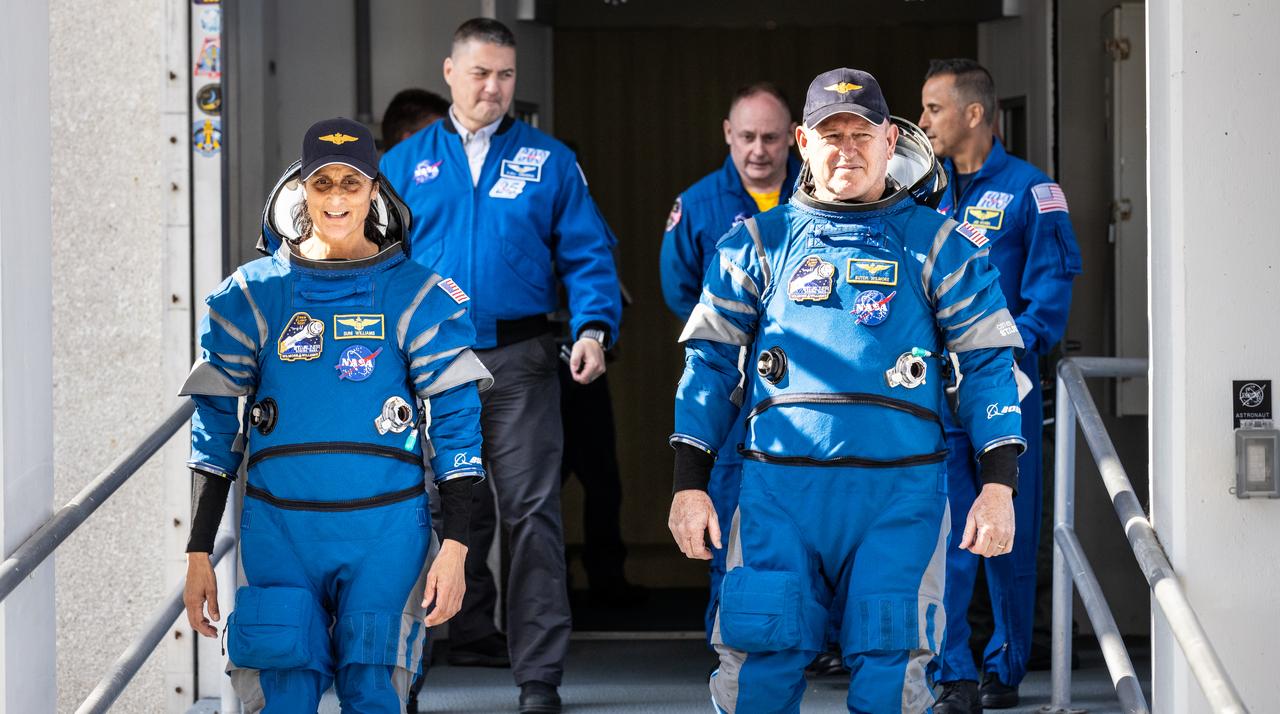
NASA’s Boeing Crew Flight Test astronauts Butch Wilmore and Suni Williams exit the Neil A. Armstrong Operations and Checkout Building at the agency’s Kennedy Space Center in Florida during a mission dress rehearsal on Friday, April 26, 2024. As part of the agency’s Commercial Crew Program, Wilmore and Williams are the first to launch to the International Space Station aboard Boeing’s Starliner spacecraft. Liftoff atop a United Launch Alliance Atlas V rocket from Space Launch Complex-41 at nearby Cape Canaveral Space Force Station is scheduled for 10:34 p.m. ET Monday, May 6.
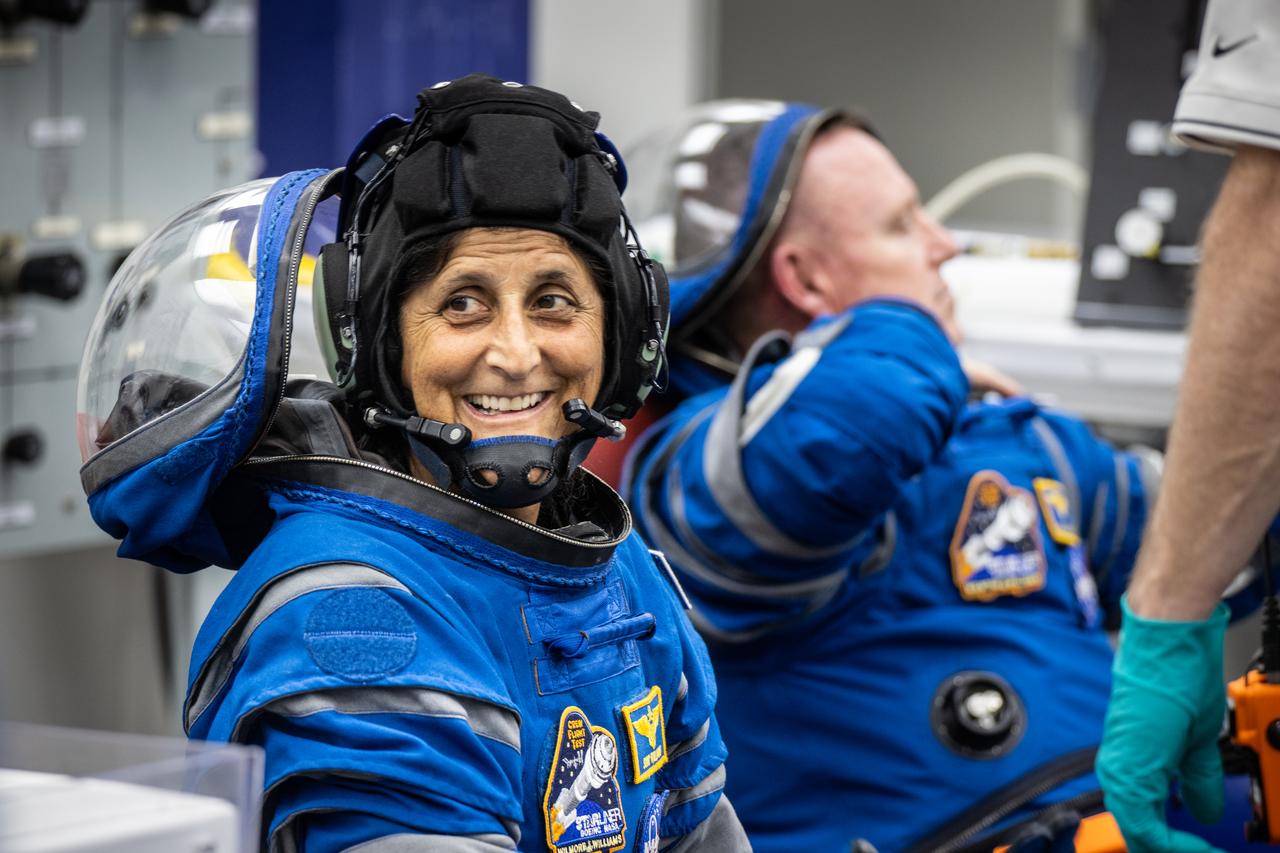
During a mission dress rehearsal, NASA’s Boeing Crew Flight Test astronaut Suni Williams is photographed in her Boeing spacesuit inside the crew suit-up room inside the Neil A. Armstrong Operations and Checkout Building at the agency’s Kennedy Space Center in Florida on Friday, April 26, 2024. As part of the agency’s Commercial Crew Program, Wilmore and Williams are the first to launch to the International Space Station aboard Boeing’s Starliner spacecraft. Liftoff atop a United Launch Alliance Atlas V rocket from Space Launch Complex-41 at nearby Cape Canaveral Space Force Station is scheduled for 10:34 p.m. ET Monday, May 6.
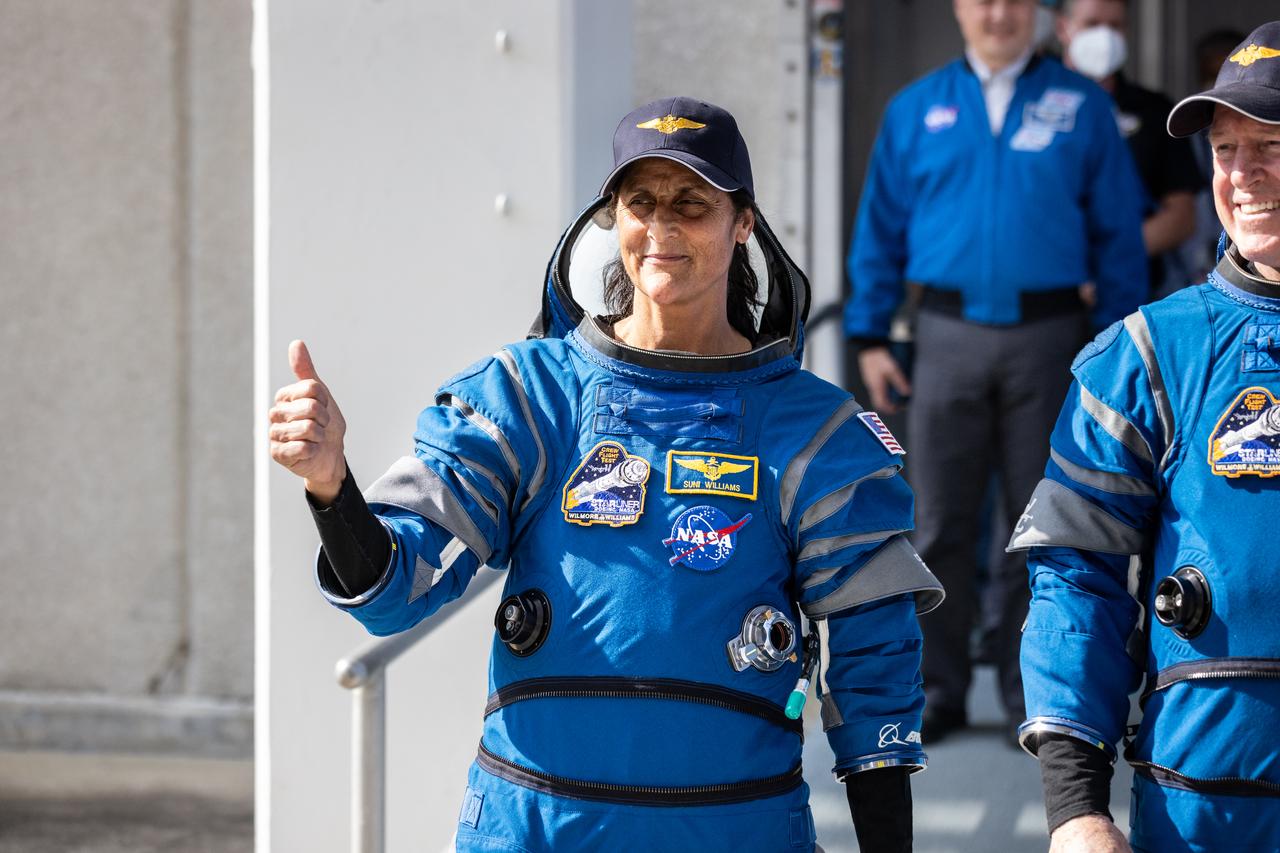
NASA’s Boeing Crew Flight Test astronaut Suni Williams flashes a thumbs up after exiting the Neil A. Armstrong Operations and Checkout Building at the agency’s Kennedy Space Center in Florida during a mission dress rehearsal on Friday, April 26, 2024. As part of the agency’s Commercial Crew Program, Wilmore and Williams are the first to launch to the International Space Station aboard Boeing’s Starliner spacecraft. Liftoff atop a United Launch Alliance Atlas V rocket from Space Launch Complex-41 at nearby Cape Canaveral Space Force Station is scheduled for 10:34 p.m. ET Monday, May 6.
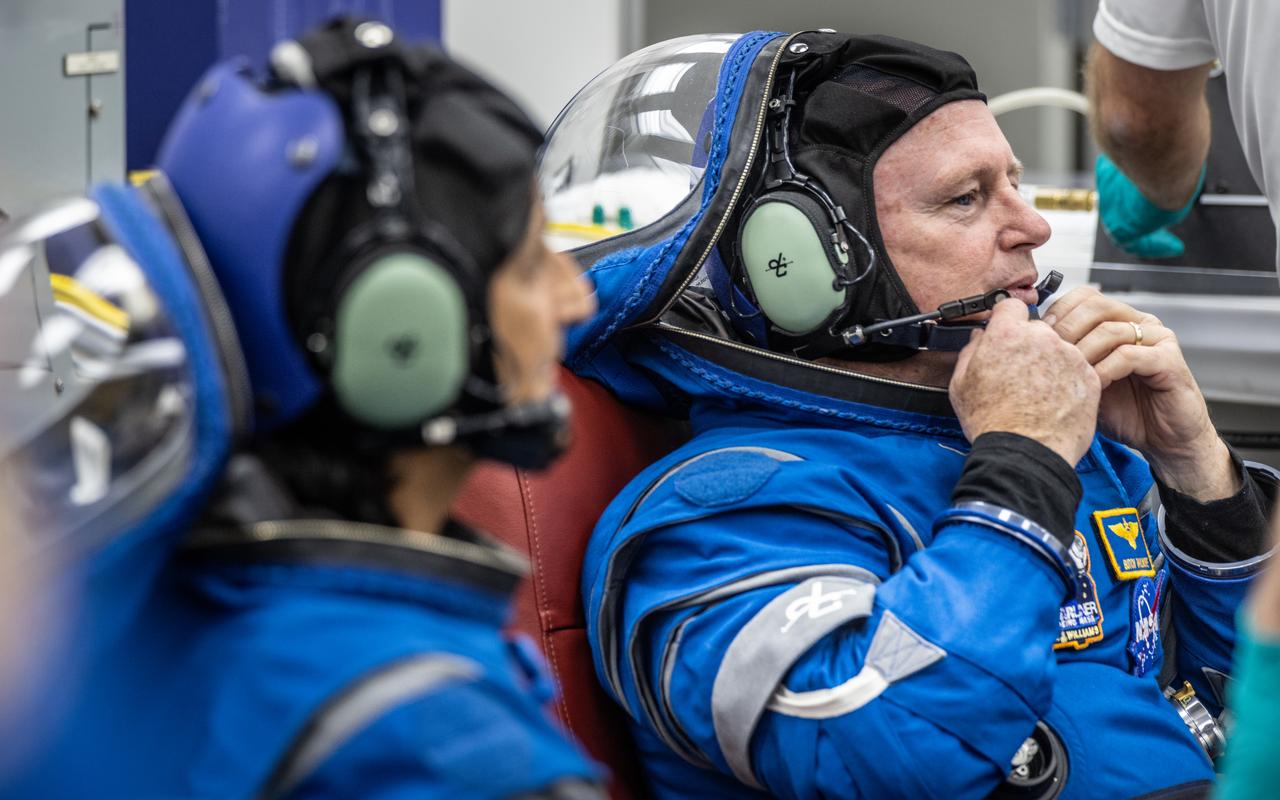
During a mission dress rehearsal, NASA’s Boeing Crew Flight Test astronaut Butch Wilmore is photographed in his Boeing spacesuit inside the crew suit-up room inside the Neil A. Armstrong Operations and Checkout Building at the agency’s Kennedy Space Center in Florida on Friday, April 26, 2024. As part of the agency’s Commercial Crew Program, Wilmore and Williams are the first to launch to the International Space Station aboard Boeing’s Starliner spacecraft. Liftoff atop a United Launch Alliance Atlas V rocket from Space Launch Complex-41 at nearby Cape Canaveral Space Force Station is scheduled for 10:34 p.m. ET Monday, May 6.
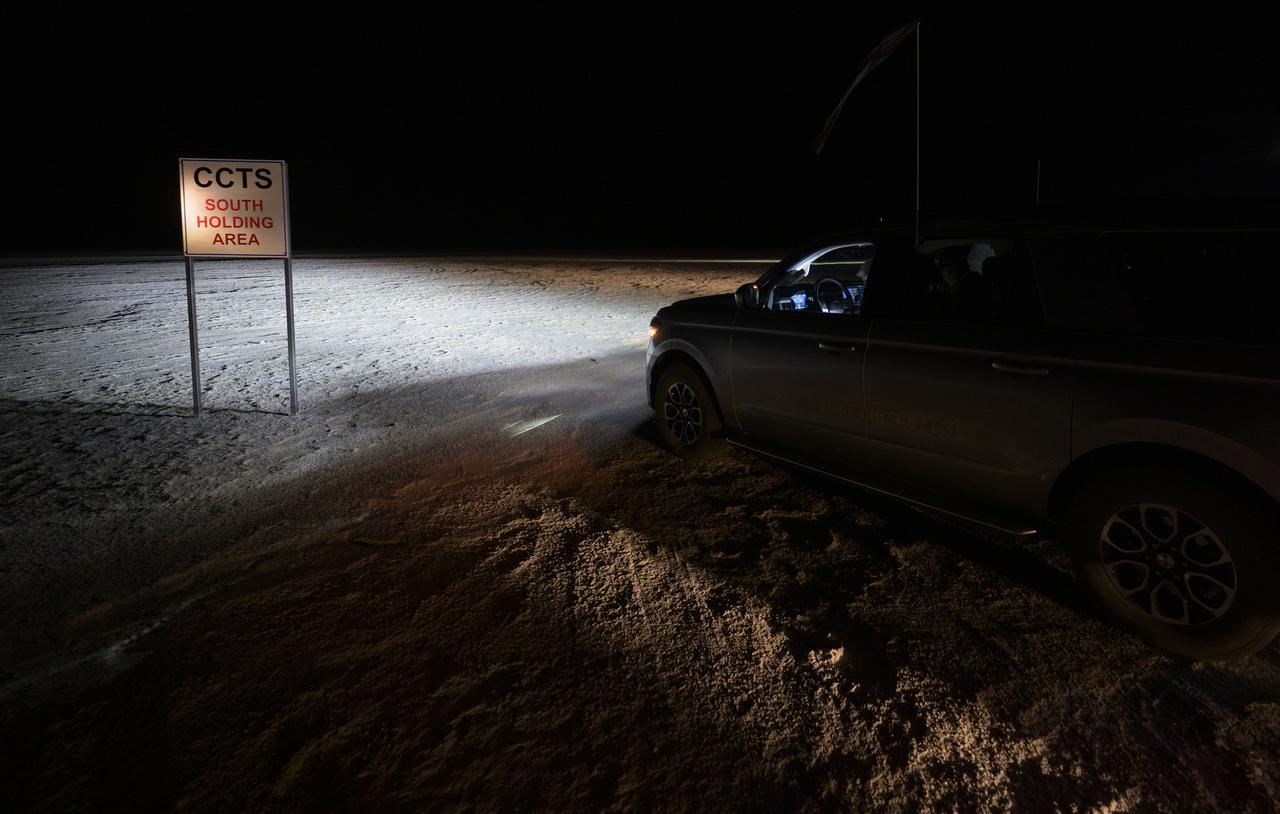
Boeing and NASA teams participate in a mission dress rehearsal to prepare for the landing of the Boeing CST-100 Starliner spacecraft in White Sands, New Mexico, Sunday, June 16, 2024. NASA astronauts Butch Wilmore and Suni Williams are Starliner’s first human crew and travelled to the International Space Station as part of NASA's Boeing Crew Flight Test. The mission serves as an end-to-end demonstration of Boeing’s crew transportation system as a provider for NASA’s Commercial Crew Program. Photo Credit: (NASA/Bill Ingalls)
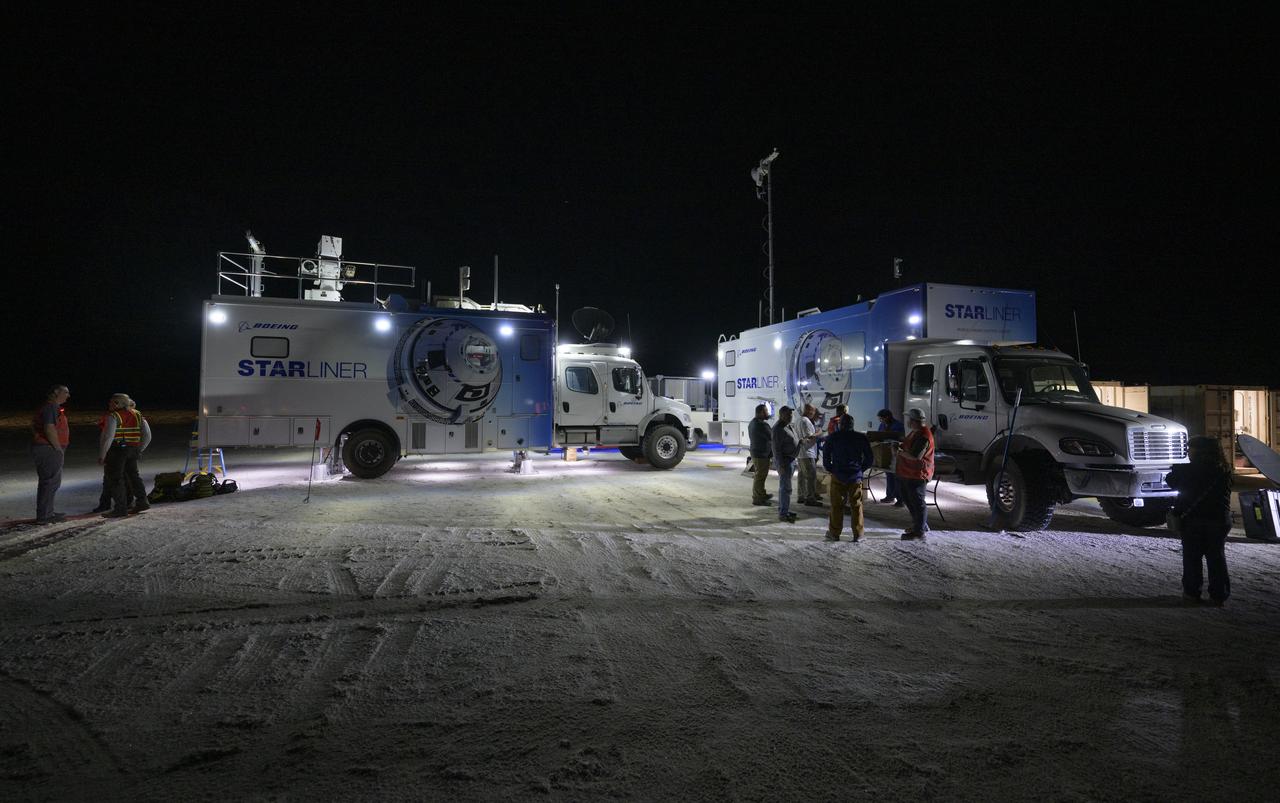
Boeing and NASA teams participate in a mission dress rehearsal to prepare for the landing of the Boeing CST-100 Starliner spacecraft in White Sands, New Mexico, Sunday, June 16, 2024. NASA astronauts Butch Wilmore and Suni Williams are Starliner’s first human crew and travelled to the International Space Station as part of NASA's Boeing Crew Flight Test. The mission serves as an end-to-end demonstration of Boeing’s crew transportation system as a provider for NASA’s Commercial Crew Program. Photo Credit: (NASA/Bill Ingalls)
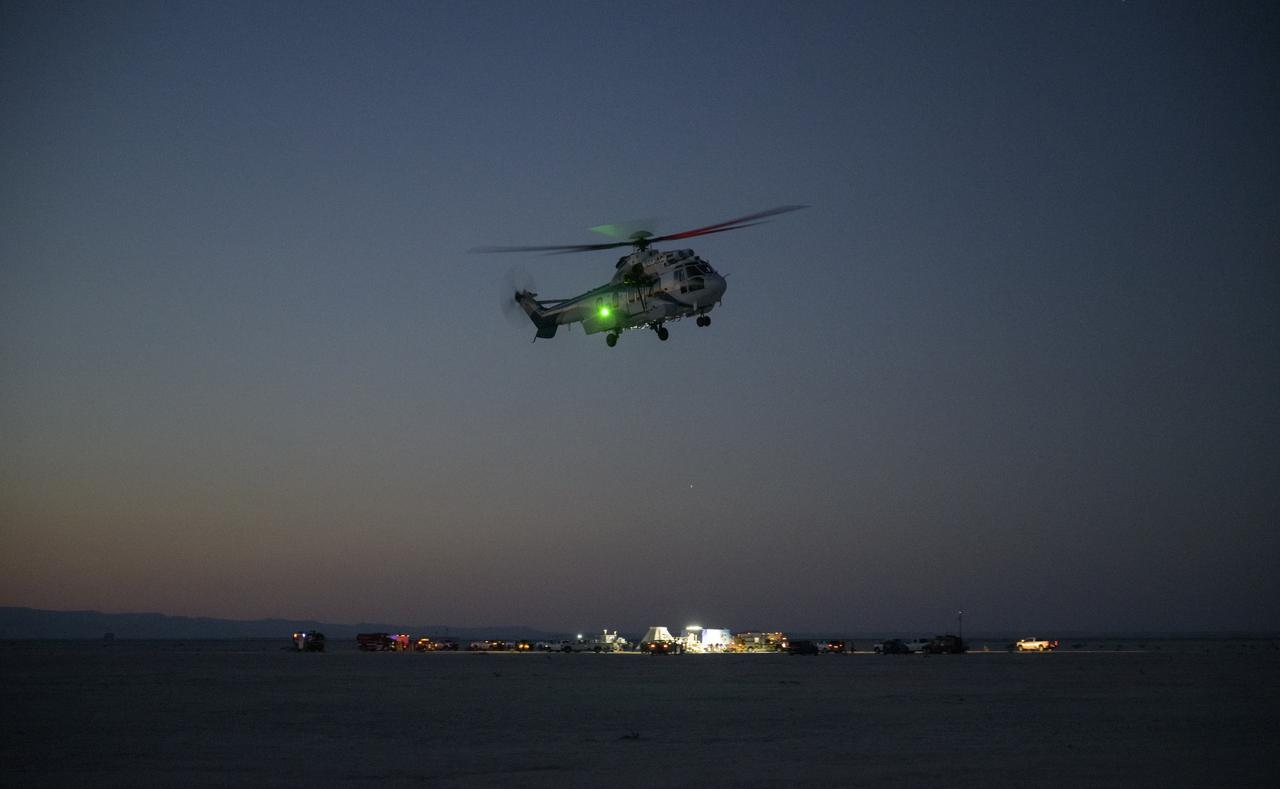
Boeing and NASA teams participate in a mission dress rehearsal to prepare for the landing of the Boeing CST-100 Starliner spacecraft in White Sands, New Mexico, Sunday, June 16, 2024. NASA astronauts Butch Wilmore and Suni Williams are Starliner’s first human crew and travelled to the International Space Station as part of NASA's Boeing Crew Flight Test. The mission serves as an end-to-end demonstration of Boeing’s crew transportation system as a provider for NASA’s Commercial Crew Program. Photo Credit: (NASA/Bill Ingalls)
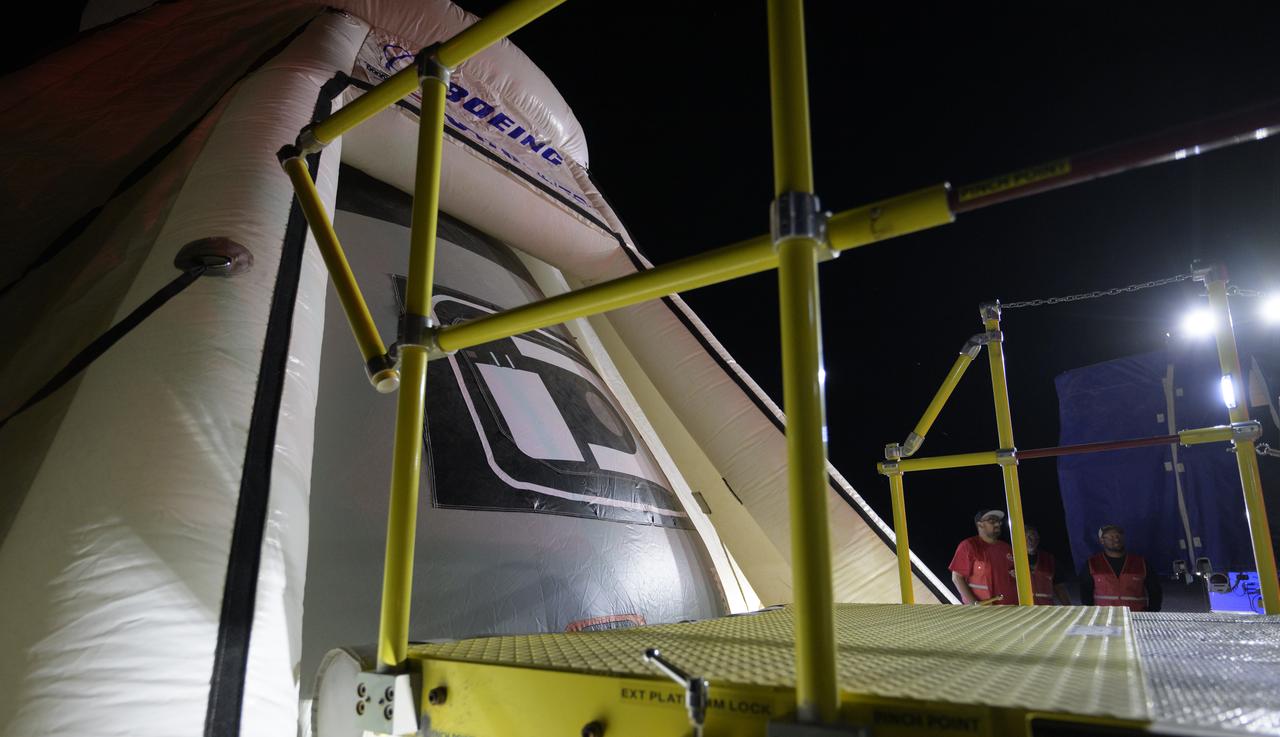
Boeing and NASA teams participate in a mission dress rehearsal to prepare for the landing of the Boeing CST-100 Starliner spacecraft in White Sands, New Mexico, Sunday, June 16, 2024. NASA astronauts Butch Wilmore and Suni Williams are Starliner’s first human crew and travelled to the International Space Station as part of NASA's Boeing Crew Flight Test. The mission serves as an end-to-end demonstration of Boeing’s crew transportation system as a provider for NASA’s Commercial Crew Program. Photo Credit: (NASA/Bill Ingalls)
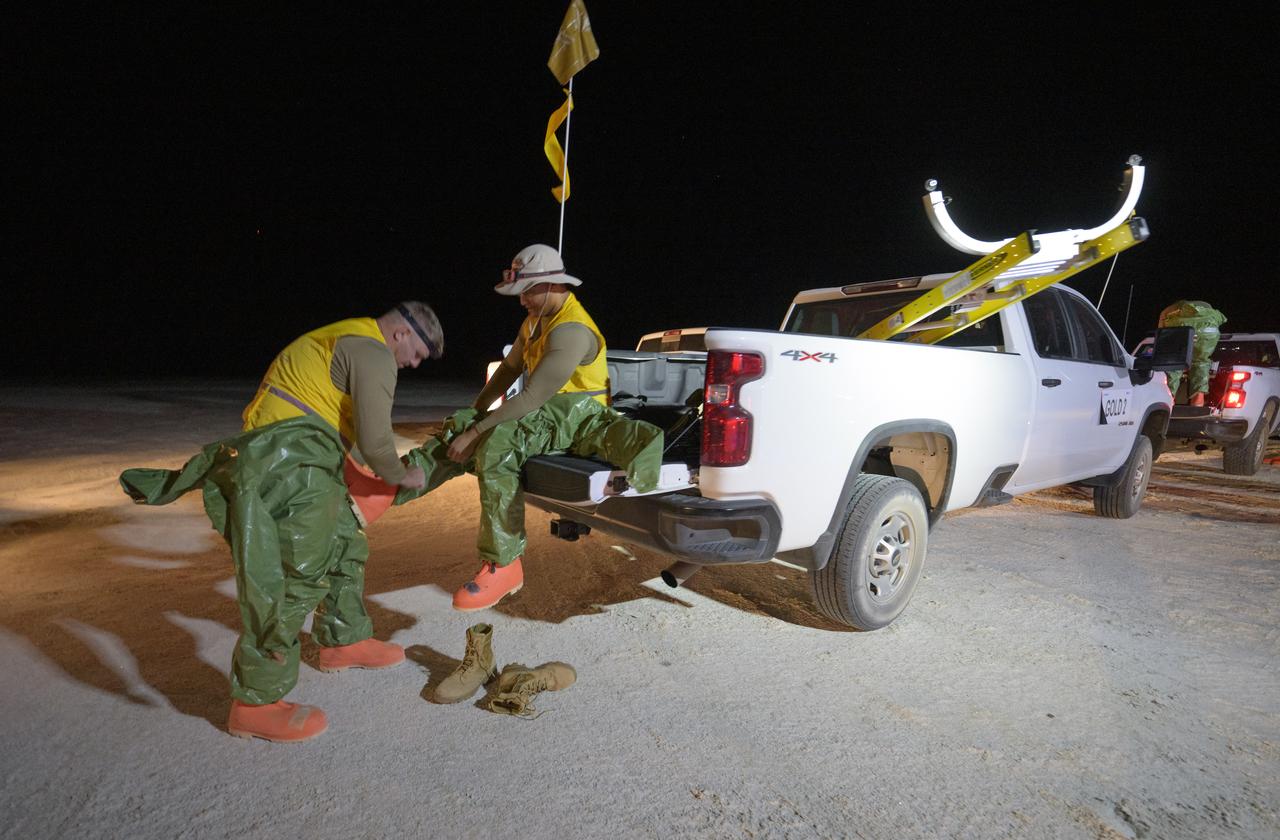
Boeing and NASA teams participate in a mission dress rehearsal to prepare for the landing of the Boeing CST-100 Starliner spacecraft in White Sands, New Mexico, Sunday, June 16, 2024. NASA astronauts Butch Wilmore and Suni Williams are Starliner’s first human crew and travelled to the International Space Station as part of NASA's Boeing Crew Flight Test. The mission serves as an end-to-end demonstration of Boeing’s crew transportation system as a provider for NASA’s Commercial Crew Program. Photo Credit: (NASA/Bill Ingalls)
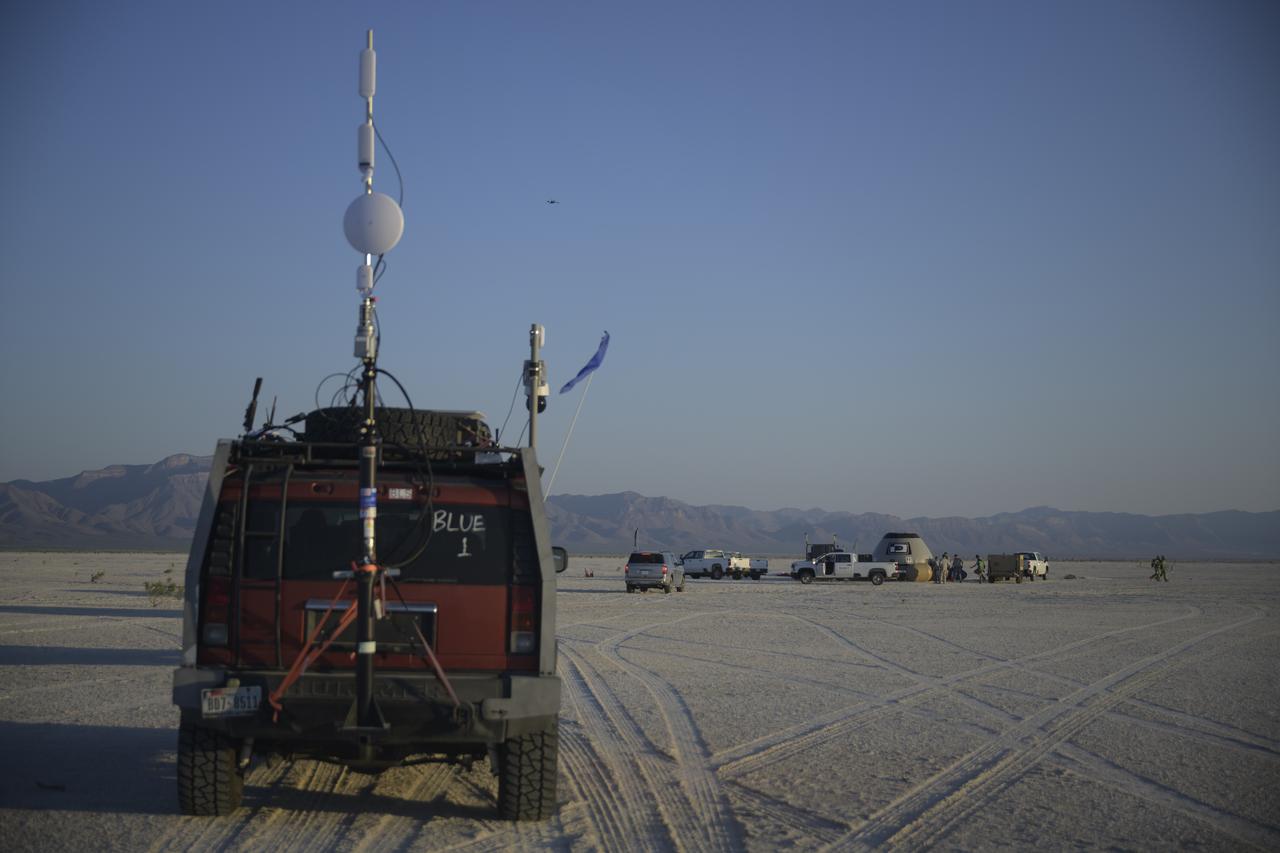
Boeing and NASA teams participate in a mission dress rehearsal to prepare for the landing of the Boeing CST-100 Starliner spacecraft in White Sands, New Mexico, Sunday, June 16, 2024. NASA astronauts Butch Wilmore and Suni Williams are Starliner’s first human crew and travelled to the International Space Station as part of NASA's Boeing Crew Flight Test. The mission serves as an end-to-end demonstration of Boeing’s crew transportation system as a provider for NASA’s Commercial Crew Program. Photo Credit: (NASA/Bill Ingalls)
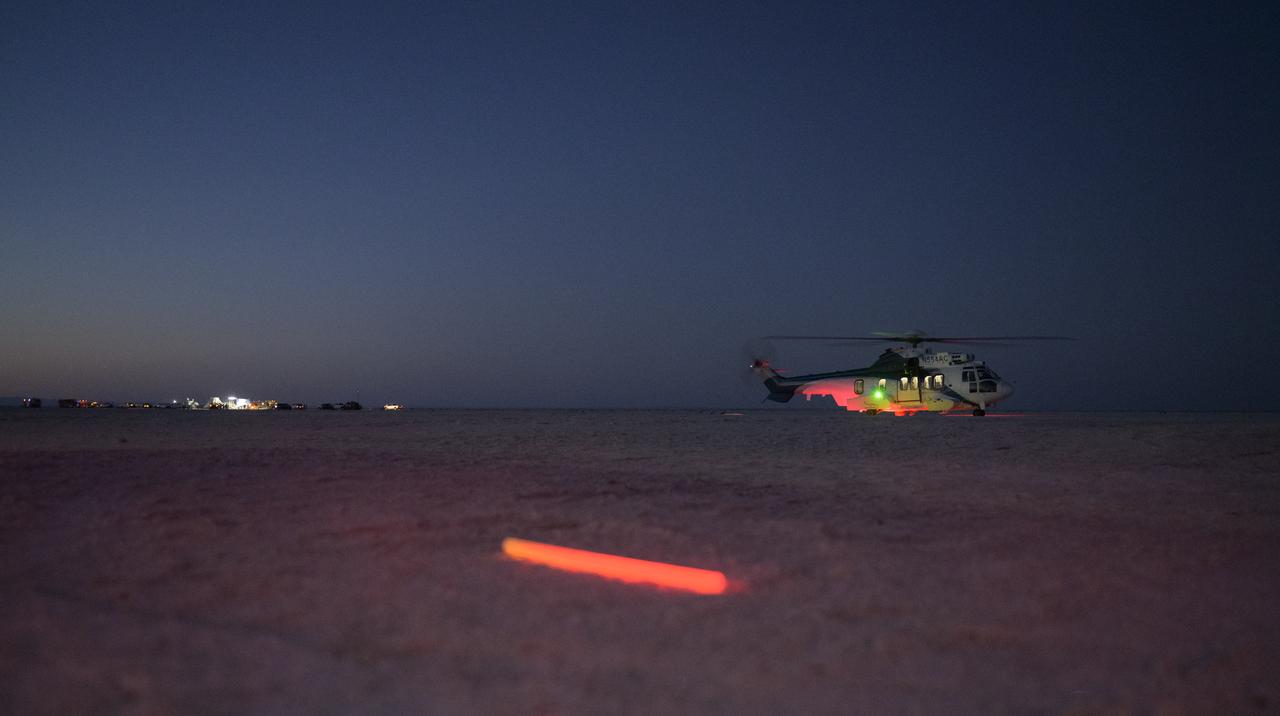
Boeing and NASA teams participate in a mission dress rehearsal to prepare for the landing of the Boeing CST-100 Starliner spacecraft in White Sands, New Mexico, Sunday, June 16, 2024. NASA astronauts Butch Wilmore and Suni Williams are Starliner’s first human crew and travelled to the International Space Station as part of NASA's Boeing Crew Flight Test. The mission serves as an end-to-end demonstration of Boeing’s crew transportation system as a provider for NASA’s Commercial Crew Program. Photo Credit: (NASA/Bill Ingalls)
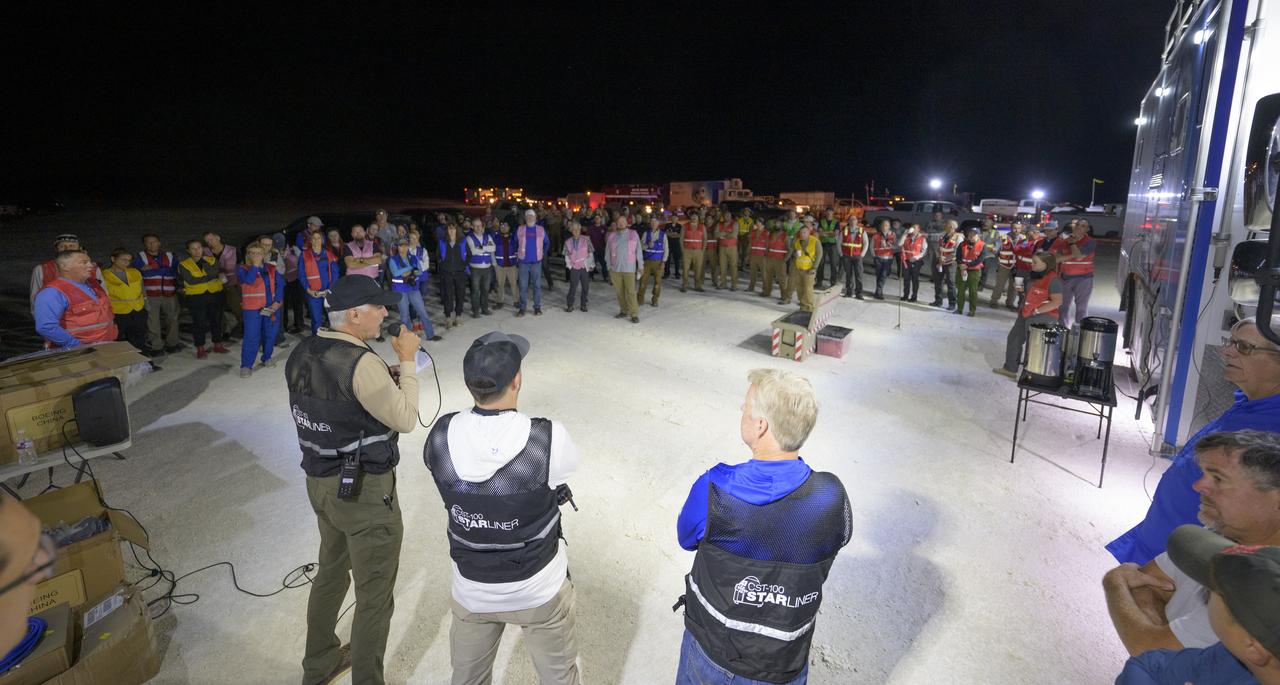
Boeing and NASA teams participate in a mission dress rehearsal to prepare for the landing of the Boeing CST-100 Starliner spacecraft in White Sands, New Mexico, Sunday, June 16, 2024. NASA astronauts Butch Wilmore and Suni Williams are Starliner’s first human crew and travelled to the International Space Station as part of NASA's Boeing Crew Flight Test. The mission serves as an end-to-end demonstration of Boeing’s crew transportation system as a provider for NASA’s Commercial Crew Program. Photo Credit: (NASA/Bill Ingalls)
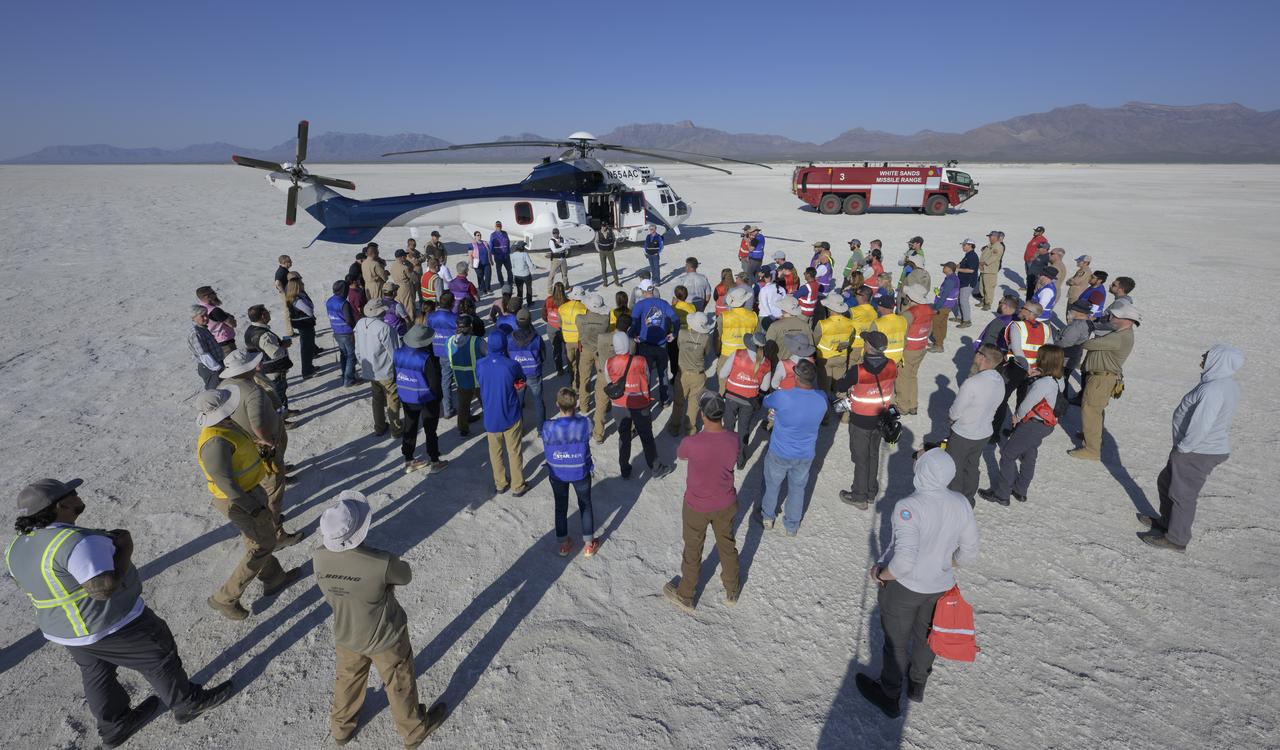
Boeing and NASA teams participate in a mission dress rehearsal to prepare for the landing of the Boeing CST-100 Starliner spacecraft in White Sands, New Mexico, Sunday, June 16, 2024. NASA astronauts Butch Wilmore and Suni Williams are Starliner’s first human crew and travelled to the International Space Station as part of NASA's Boeing Crew Flight Test. The mission serves as an end-to-end demonstration of Boeing’s crew transportation system as a provider for NASA’s Commercial Crew Program. Photo Credit: (NASA/Bill Ingalls)
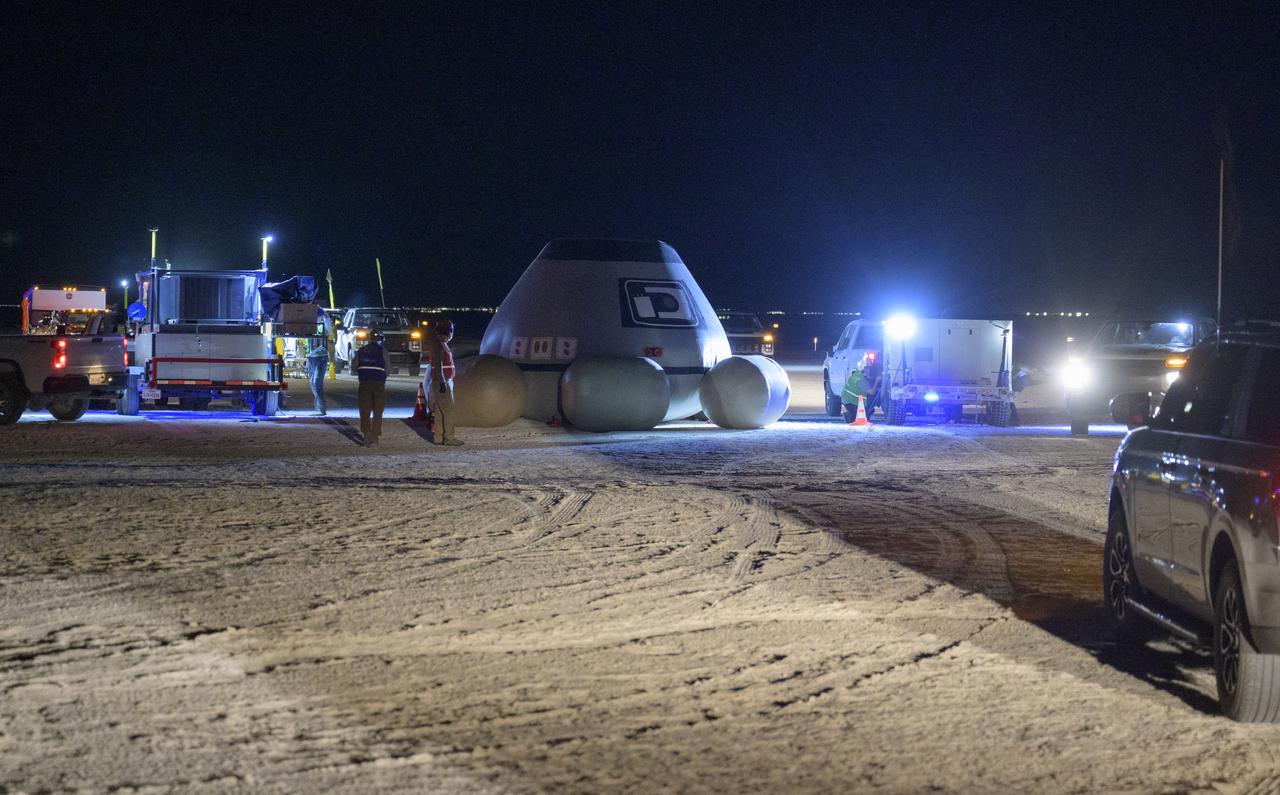
Boeing and NASA teams participate in a mission dress rehearsal to prepare for the landing of the Boeing CST-100 Starliner spacecraft in White Sands, New Mexico, Sunday, June 16, 2024. NASA astronauts Butch Wilmore and Suni Williams are Starliner’s first human crew and travelled to the International Space Station as part of NASA's Boeing Crew Flight Test. The mission serves as an end-to-end demonstration of Boeing’s crew transportation system as a provider for NASA’s Commercial Crew Program. Photo Credit: (NASA/Bill Ingalls)
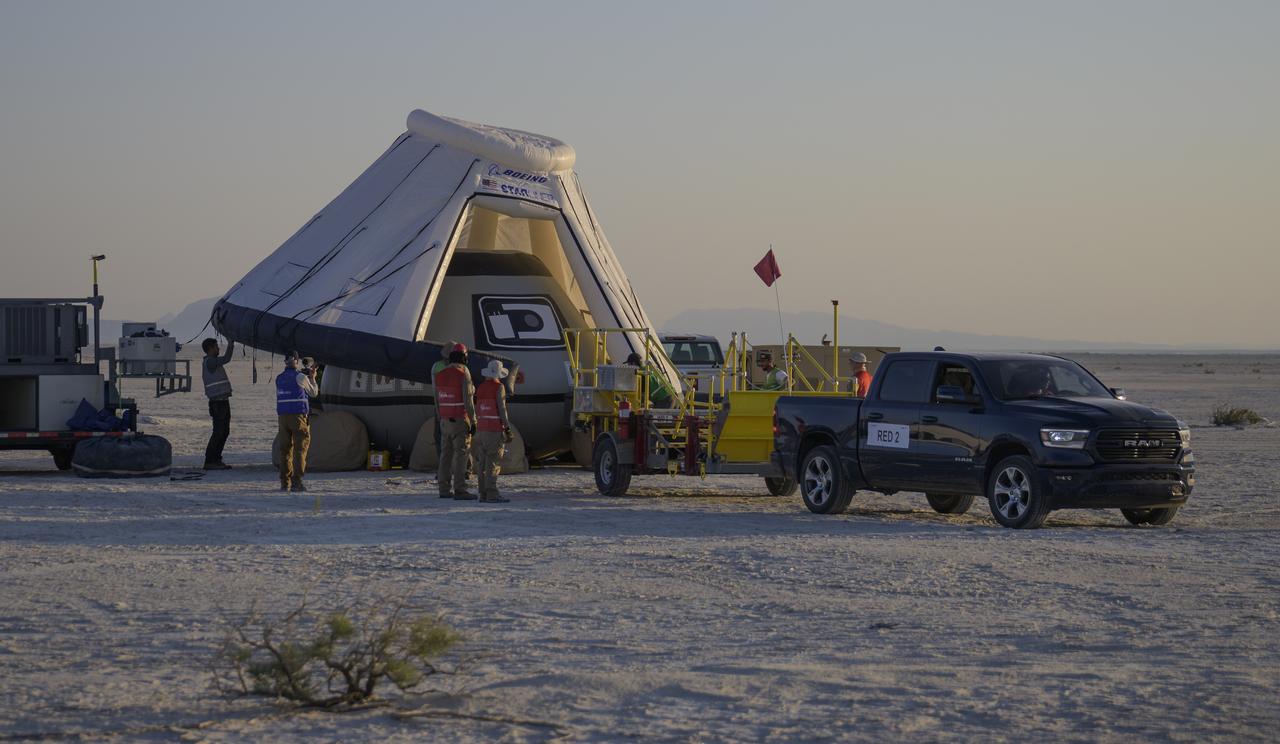
Boeing and NASA teams participate in a mission dress rehearsal to prepare for the landing of the Boeing CST-100 Starliner spacecraft in White Sands, New Mexico, Sunday, June 16, 2024. NASA astronauts Butch Wilmore and Suni Williams are Starliner’s first human crew and travelled to the International Space Station as part of NASA's Boeing Crew Flight Test. The mission serves as an end-to-end demonstration of Boeing’s crew transportation system as a provider for NASA’s Commercial Crew Program. Photo Credit: (NASA/Bill Ingalls)
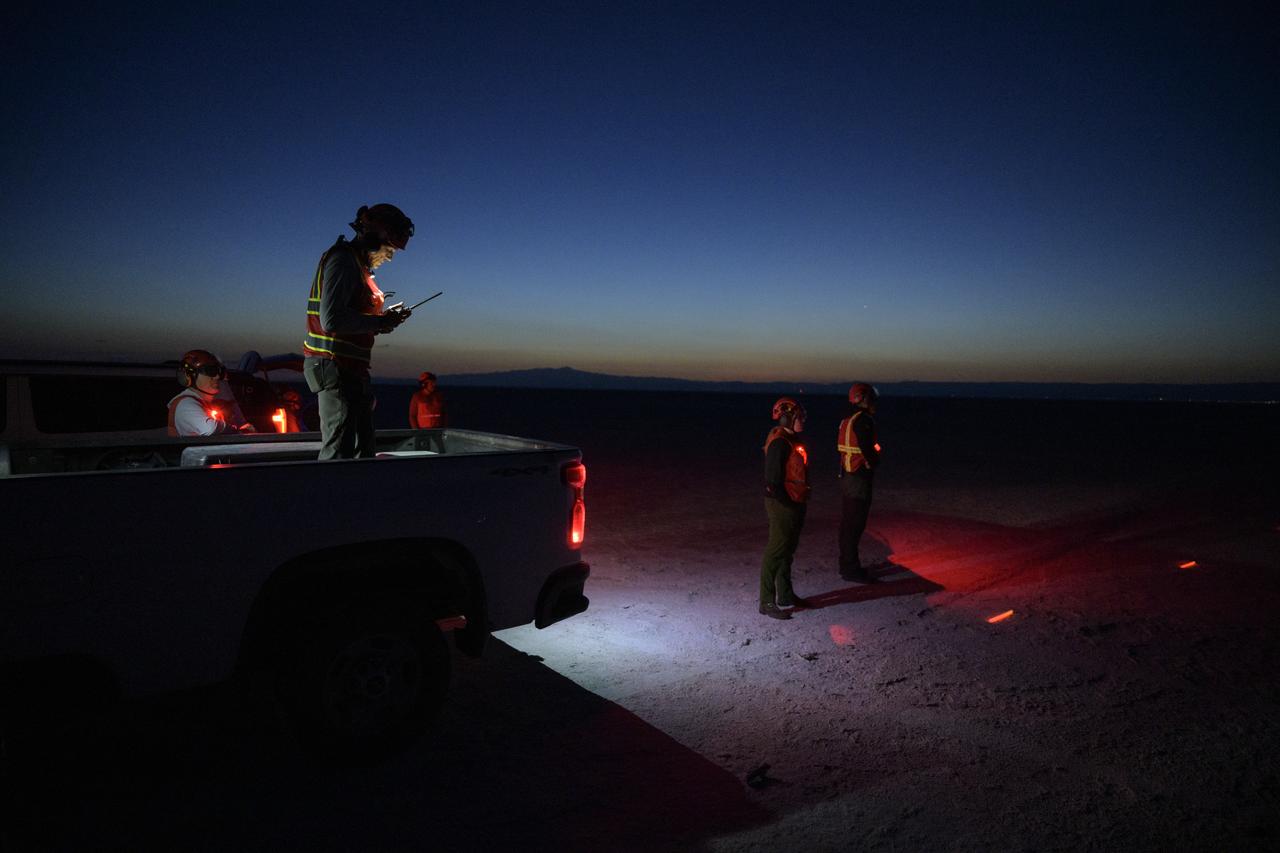
Boeing and NASA teams participate in a mission dress rehearsal to prepare for the landing of the Boeing CST-100 Starliner spacecraft in White Sands, New Mexico, Sunday, June 16, 2024. NASA astronauts Butch Wilmore and Suni Williams are Starliner’s first human crew and travelled to the International Space Station as part of NASA's Boeing Crew Flight Test. The mission serves as an end-to-end demonstration of Boeing’s crew transportation system as a provider for NASA’s Commercial Crew Program. Photo Credit: (NASA/Bill Ingalls)
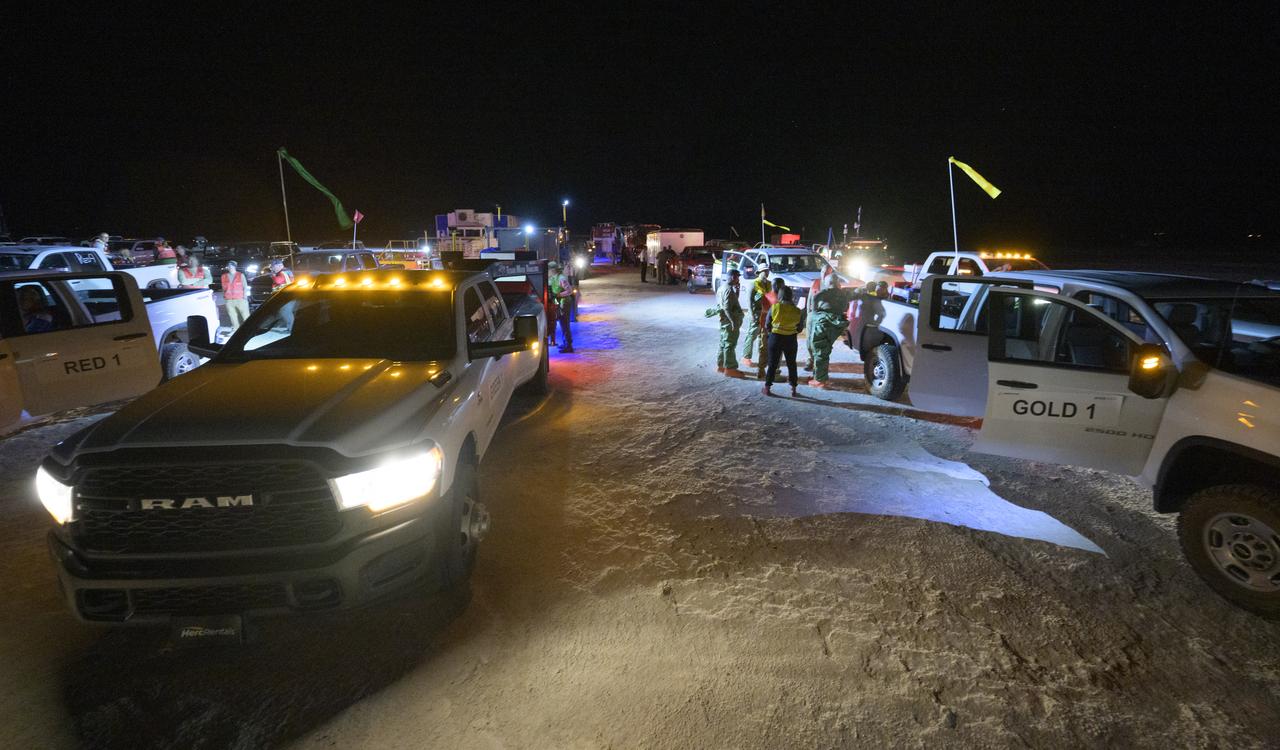
Boeing and NASA teams participate in a mission dress rehearsal to prepare for the landing of the Boeing CST-100 Starliner spacecraft in White Sands, New Mexico, Sunday, June 16, 2024. NASA astronauts Butch Wilmore and Suni Williams are Starliner’s first human crew and travelled to the International Space Station as part of NASA's Boeing Crew Flight Test. The mission serves as an end-to-end demonstration of Boeing’s crew transportation system as a provider for NASA’s Commercial Crew Program. Photo Credit: (NASA/Bill Ingalls)
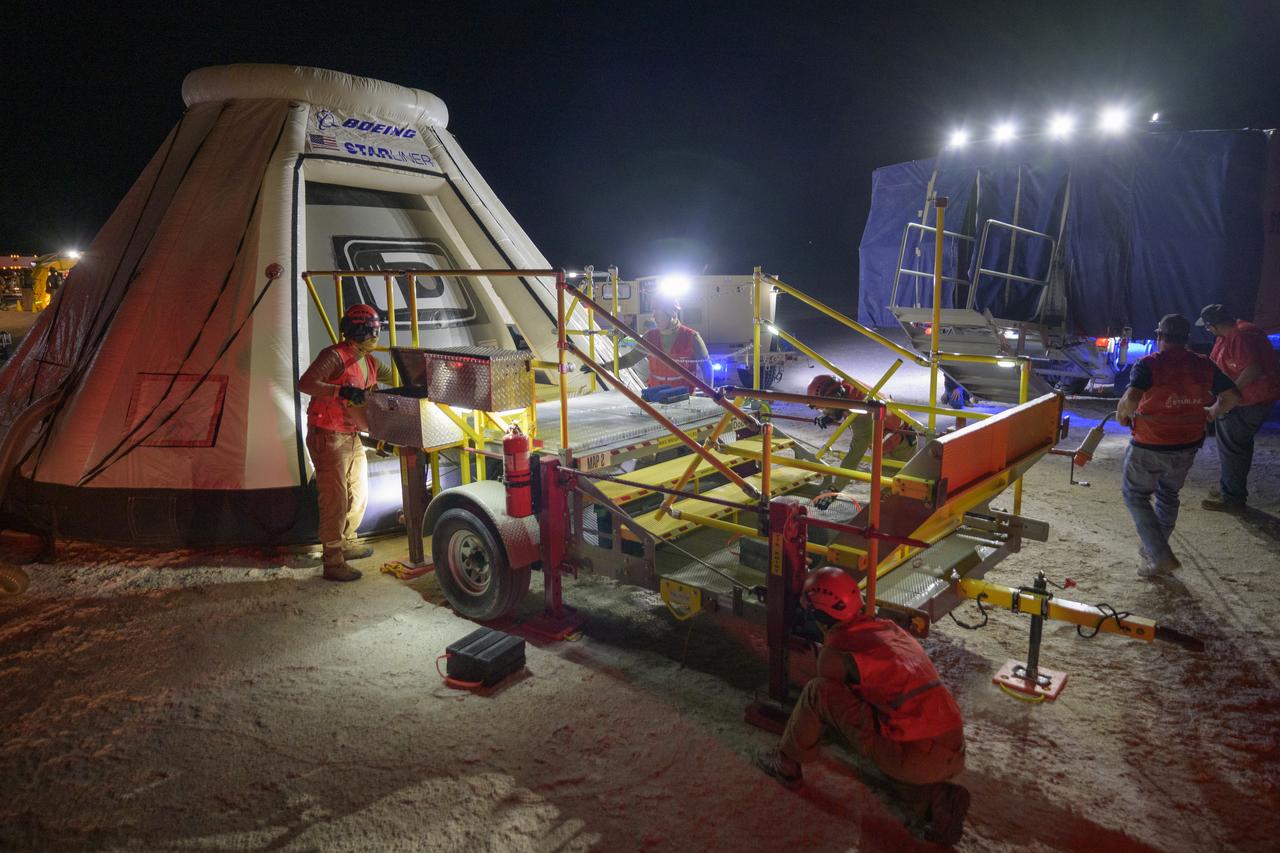
Boeing and NASA teams participate in a mission dress rehearsal to prepare for the landing of the Boeing CST-100 Starliner spacecraft in White Sands, New Mexico, Sunday, June 16, 2024. NASA astronauts Butch Wilmore and Suni Williams are Starliner’s first human crew and travelled to the International Space Station as part of NASA's Boeing Crew Flight Test. The mission serves as an end-to-end demonstration of Boeing’s crew transportation system as a provider for NASA’s Commercial Crew Program. Photo Credit: (NASA/Bill Ingalls)
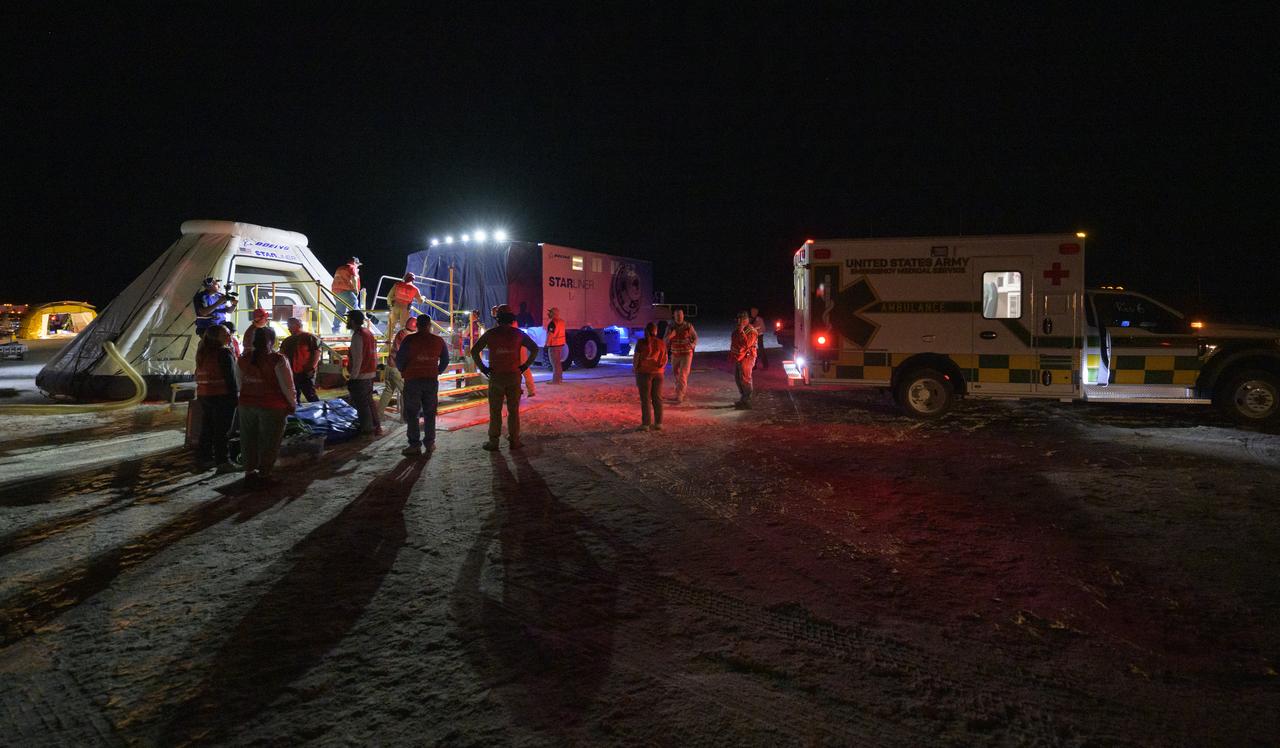
Boeing and NASA teams participate in a mission dress rehearsal to prepare for the landing of the Boeing CST-100 Starliner spacecraft in White Sands, New Mexico, Sunday, June 16, 2024. NASA astronauts Butch Wilmore and Suni Williams are Starliner’s first human crew and travelled to the International Space Station as part of NASA's Boeing Crew Flight Test. The mission serves as an end-to-end demonstration of Boeing’s crew transportation system as a provider for NASA’s Commercial Crew Program. Photo Credit: (NASA/Bill Ingalls)
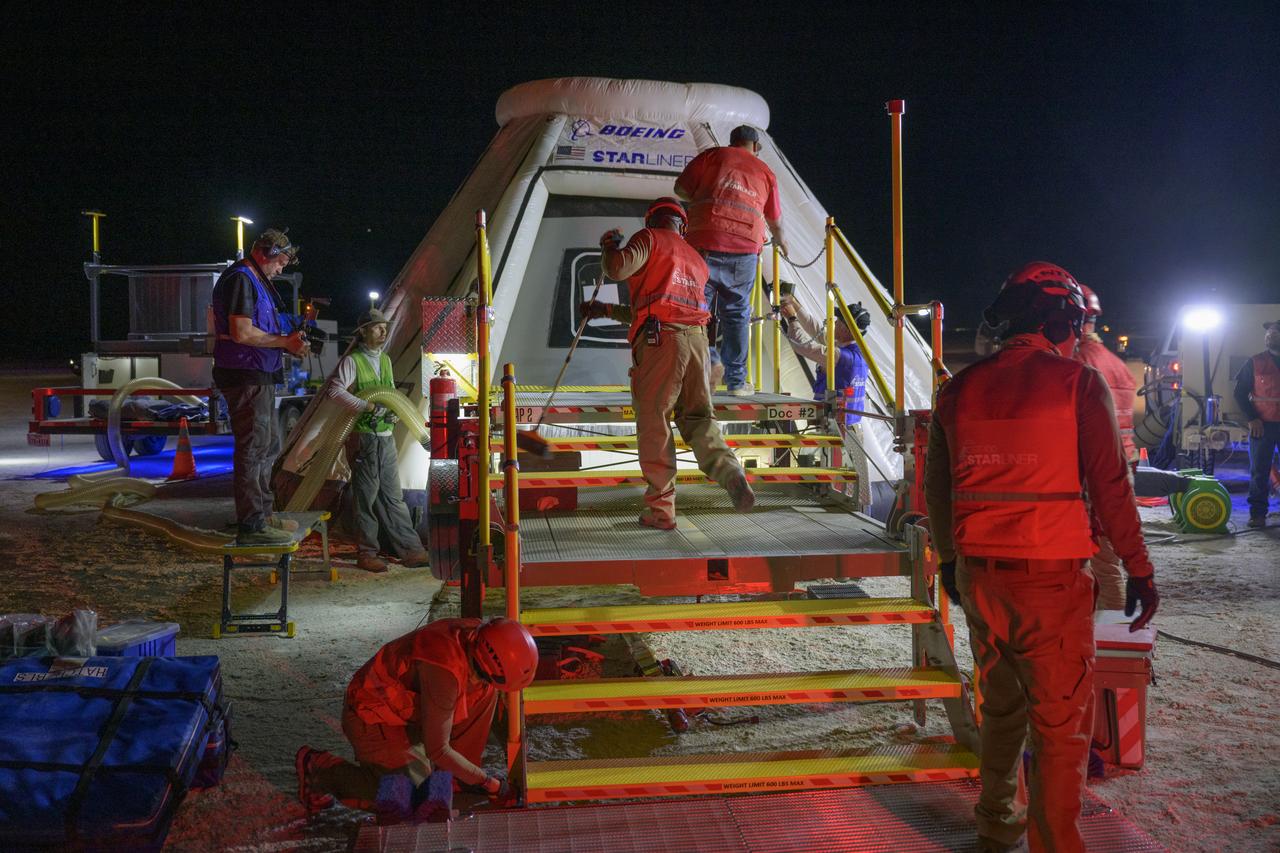
Boeing and NASA teams participate in a mission dress rehearsal to prepare for the landing of the Boeing CST-100 Starliner spacecraft in White Sands, New Mexico, Sunday, June 16, 2024. NASA astronauts Butch Wilmore and Suni Williams are Starliner’s first human crew and travelled to the International Space Station as part of NASA's Boeing Crew Flight Test. The mission serves as an end-to-end demonstration of Boeing’s crew transportation system as a provider for NASA’s Commercial Crew Program. Photo Credit: (NASA/Bill Ingalls)
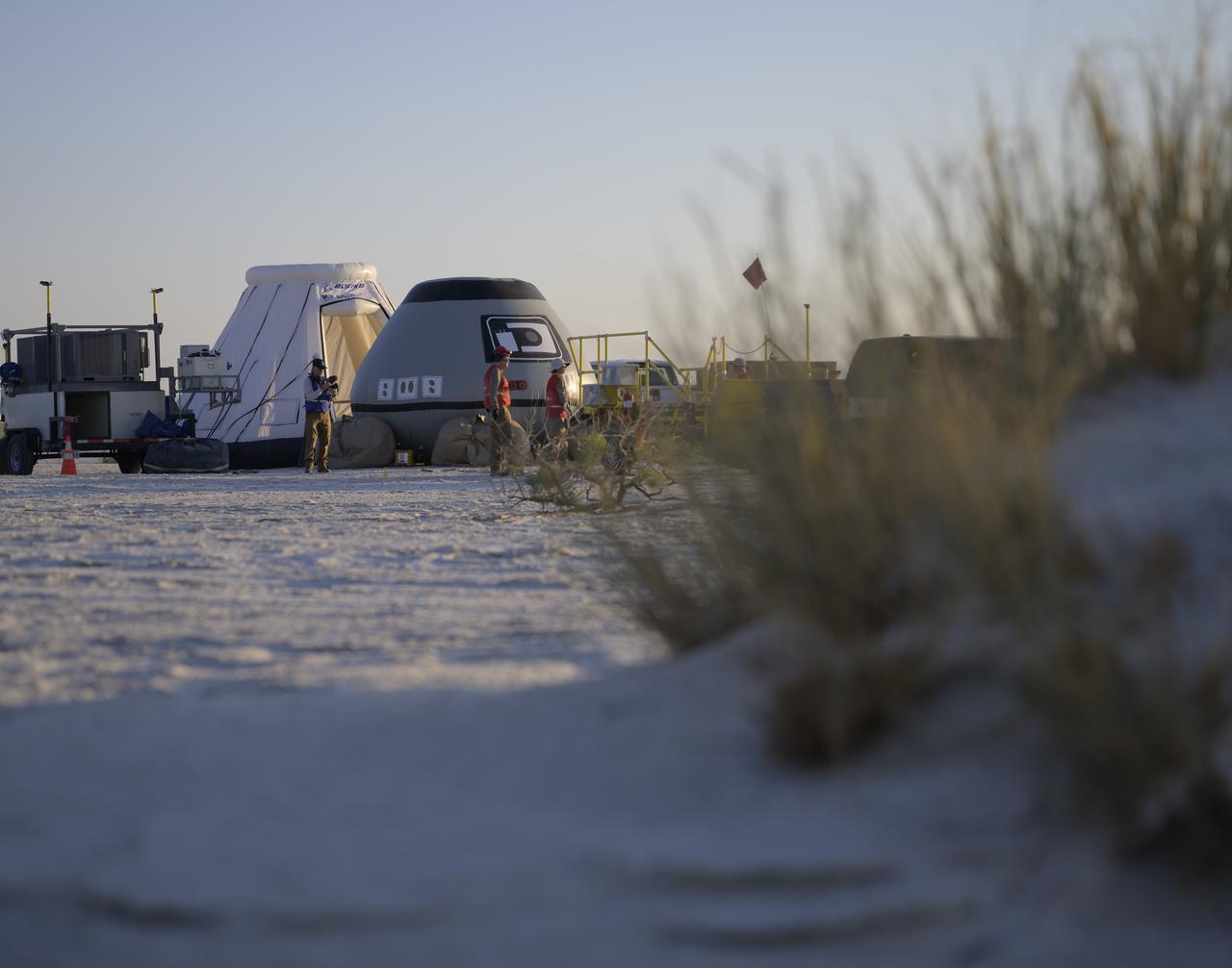
Boeing and NASA teams participate in a mission dress rehearsal to prepare for the landing of the Boeing CST-100 Starliner spacecraft in White Sands, New Mexico, Sunday, June 16, 2024. NASA astronauts Butch Wilmore and Suni Williams are Starliner’s first human crew and travelled to the International Space Station as part of NASA's Boeing Crew Flight Test. The mission serves as an end-to-end demonstration of Boeing’s crew transportation system as a provider for NASA’s Commercial Crew Program. Photo Credit: (NASA/Bill Ingalls)
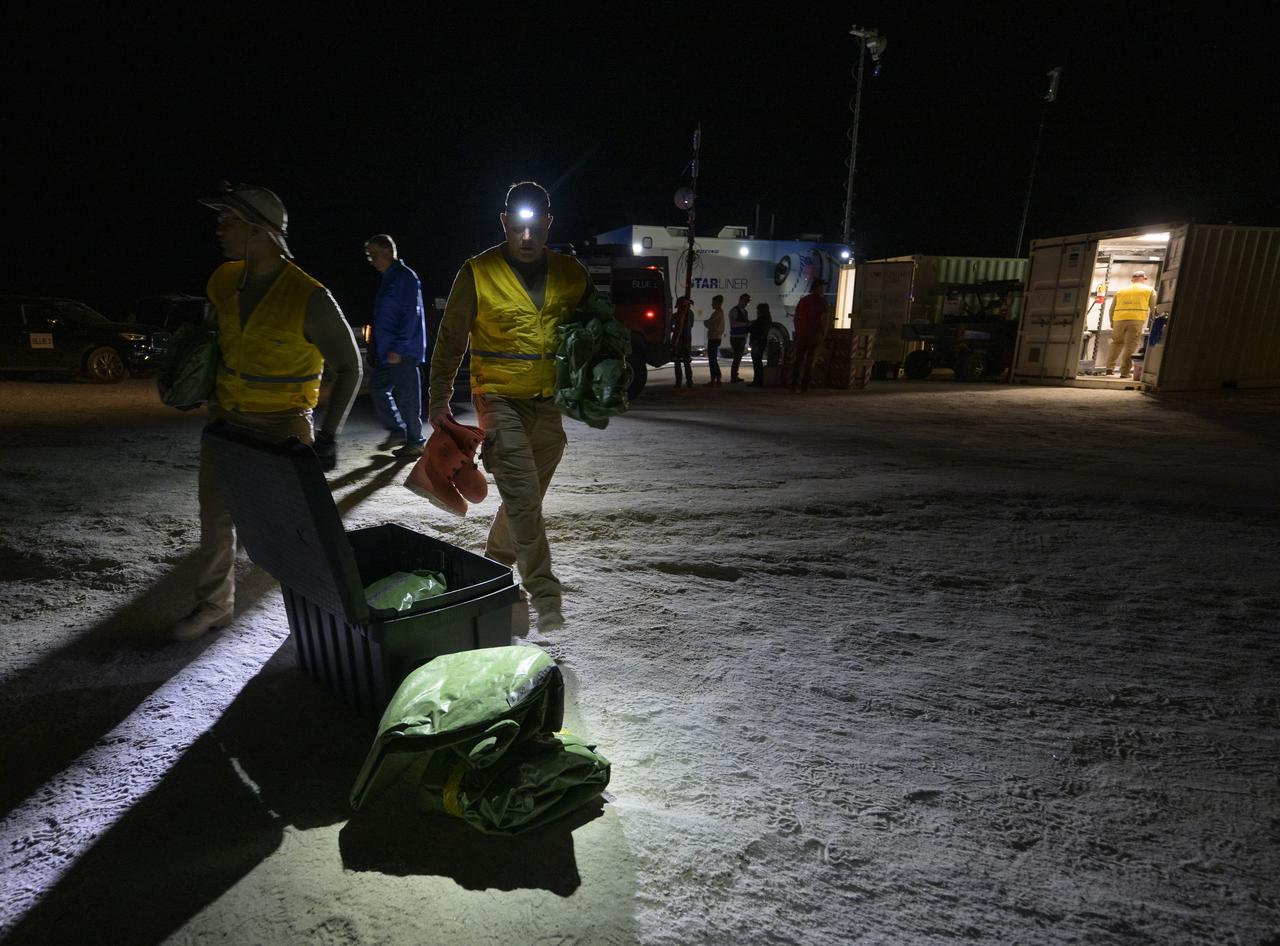
Boeing and NASA teams participate in a mission dress rehearsal to prepare for the landing of the Boeing CST-100 Starliner spacecraft in White Sands, New Mexico, Sunday, June 16, 2024. NASA astronauts Butch Wilmore and Suni Williams are Starliner’s first human crew and travelled to the International Space Station as part of NASA's Boeing Crew Flight Test. The mission serves as an end-to-end demonstration of Boeing’s crew transportation system as a provider for NASA’s Commercial Crew Program. Photo Credit: (NASA/Bill Ingalls)
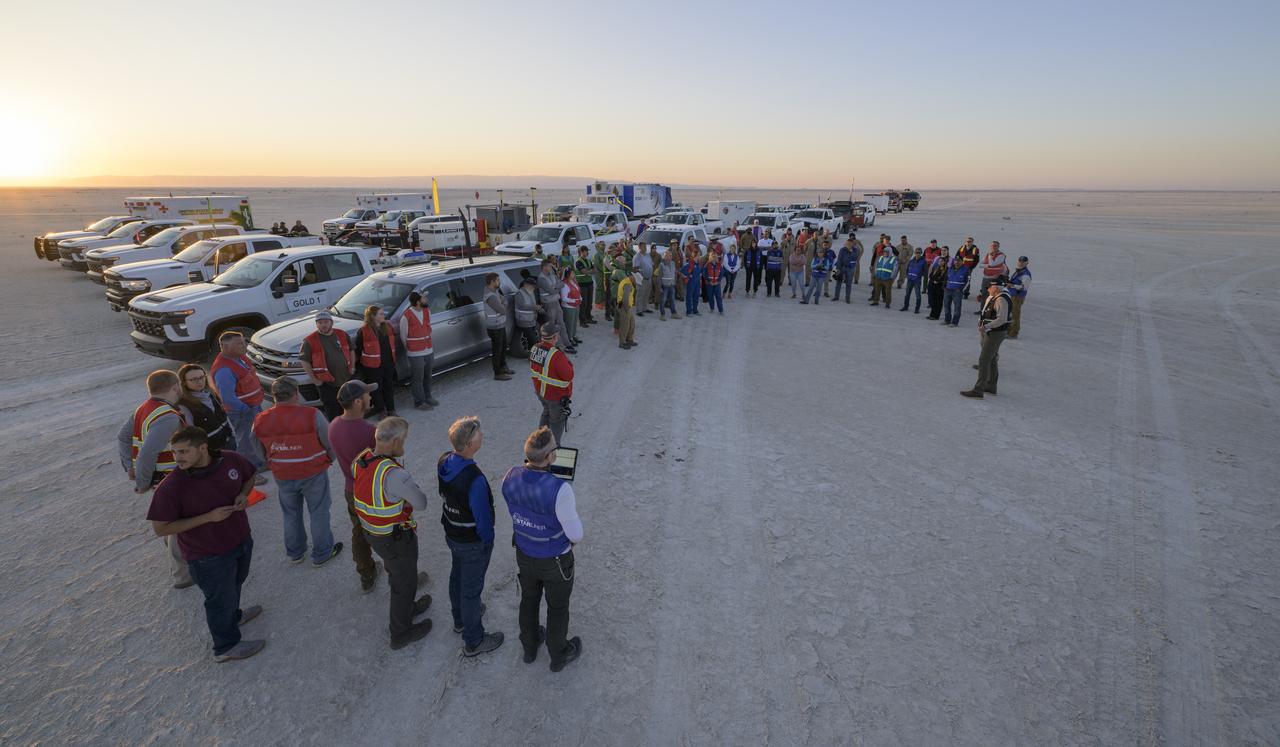
Boeing and NASA teams participate in a mission dress rehearsal to prepare for the landing of the Boeing CST-100 Starliner spacecraft in White Sands, New Mexico, Sunday, June 16, 2024. NASA astronauts Butch Wilmore and Suni Williams are Starliner’s first human crew and travelled to the International Space Station as part of NASA's Boeing Crew Flight Test. The mission serves as an end-to-end demonstration of Boeing’s crew transportation system as a provider for NASA’s Commercial Crew Program. Photo Credit: (NASA/Bill Ingalls)
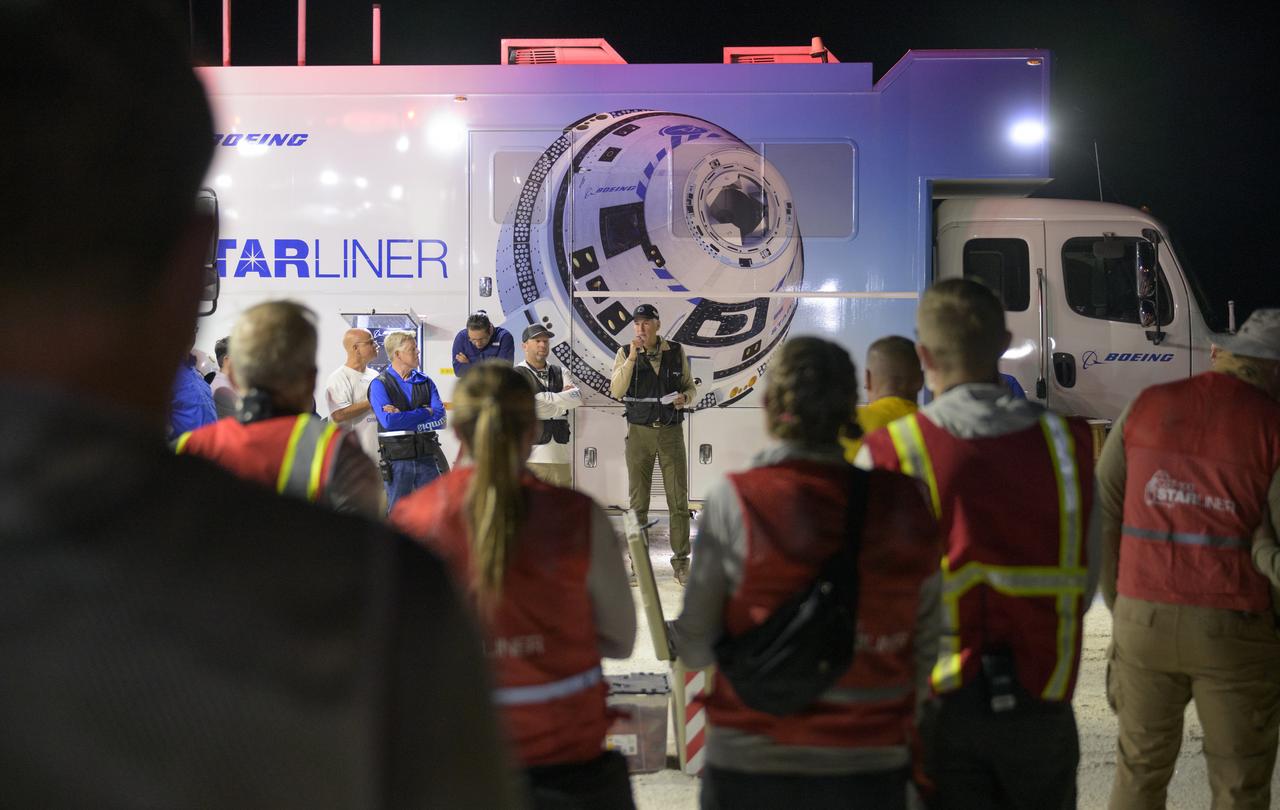
Boeing and NASA teams participate in a mission dress rehearsal to prepare for the landing of the Boeing CST-100 Starliner spacecraft in White Sands, New Mexico, Sunday, June 16, 2024. NASA astronauts Butch Wilmore and Suni Williams are Starliner’s first human crew and travelled to the International Space Station as part of NASA's Boeing Crew Flight Test. The mission serves as an end-to-end demonstration of Boeing’s crew transportation system as a provider for NASA’s Commercial Crew Program. Photo Credit: (NASA/Bill Ingalls)
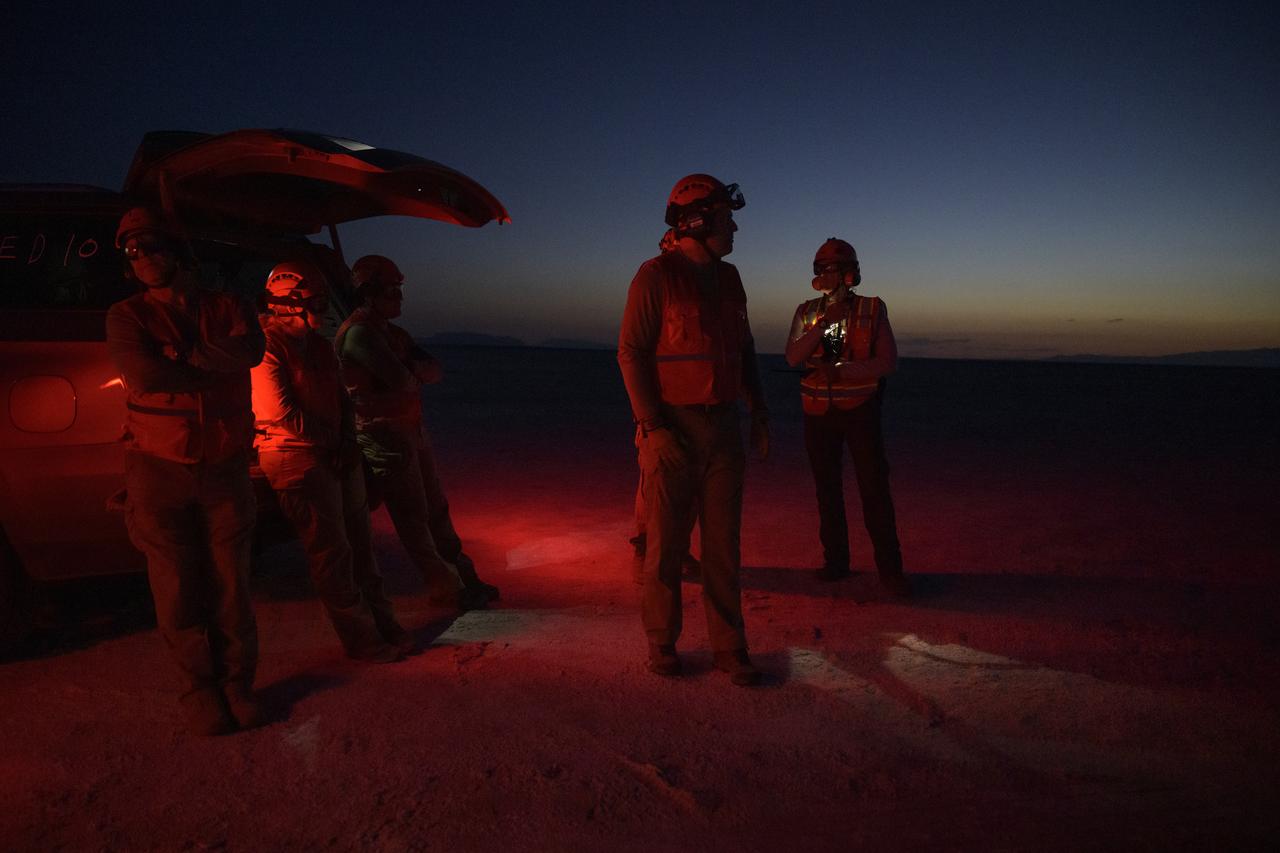
Boeing and NASA teams participate in a mission dress rehearsal to prepare for the landing of the Boeing CST-100 Starliner spacecraft in White Sands, New Mexico, Sunday, June 16, 2024. NASA astronauts Butch Wilmore and Suni Williams are Starliner’s first human crew and travelled to the International Space Station as part of NASA's Boeing Crew Flight Test. The mission serves as an end-to-end demonstration of Boeing’s crew transportation system as a provider for NASA’s Commercial Crew Program. Photo Credit: (NASA/Bill Ingalls)
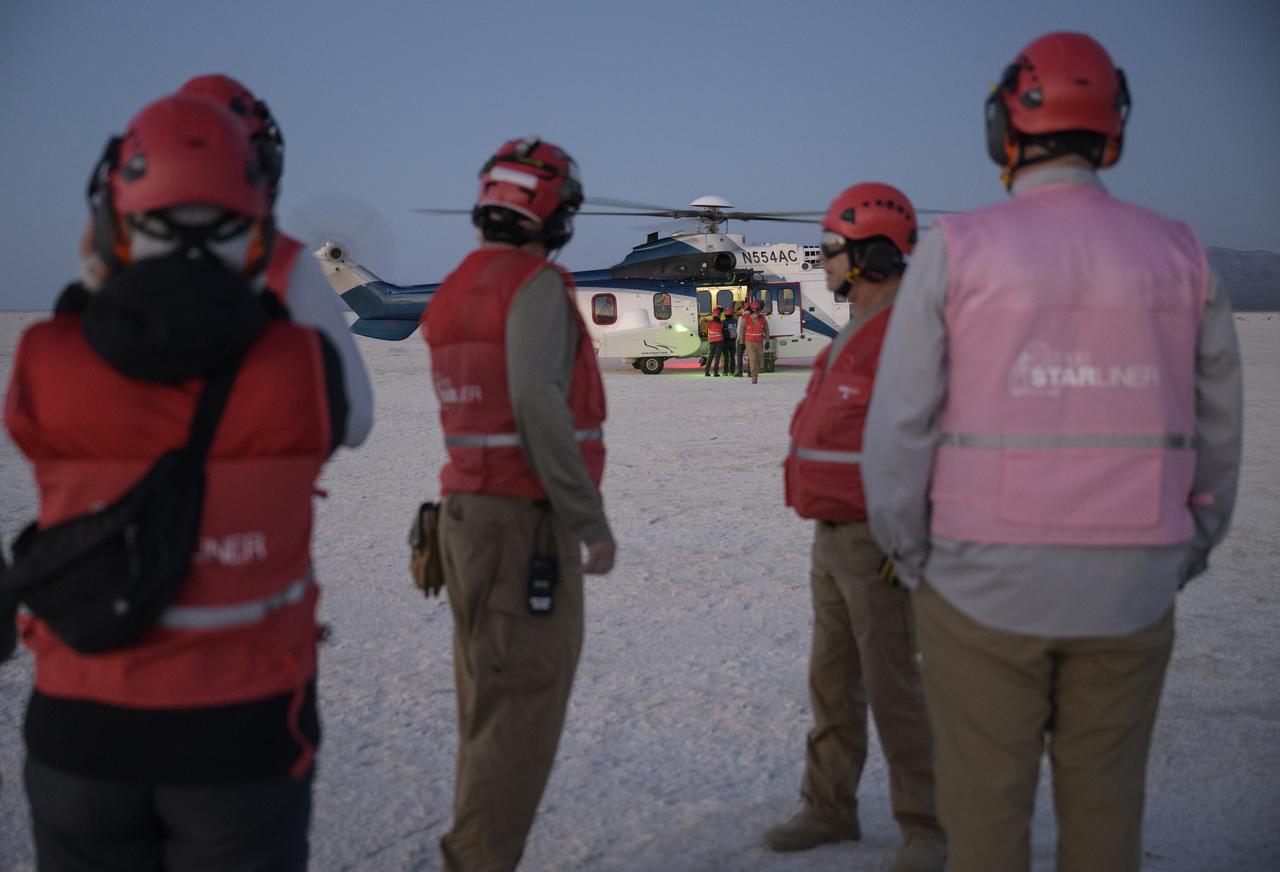
Boeing and NASA teams participate in a mission dress rehearsal to prepare for the landing of the Boeing CST-100 Starliner spacecraft in White Sands, New Mexico, Sunday, June 16, 2024. NASA astronauts Butch Wilmore and Suni Williams are Starliner’s first human crew and travelled to the International Space Station as part of NASA's Boeing Crew Flight Test. The mission serves as an end-to-end demonstration of Boeing’s crew transportation system as a provider for NASA’s Commercial Crew Program. Photo Credit: (NASA/Bill Ingalls)
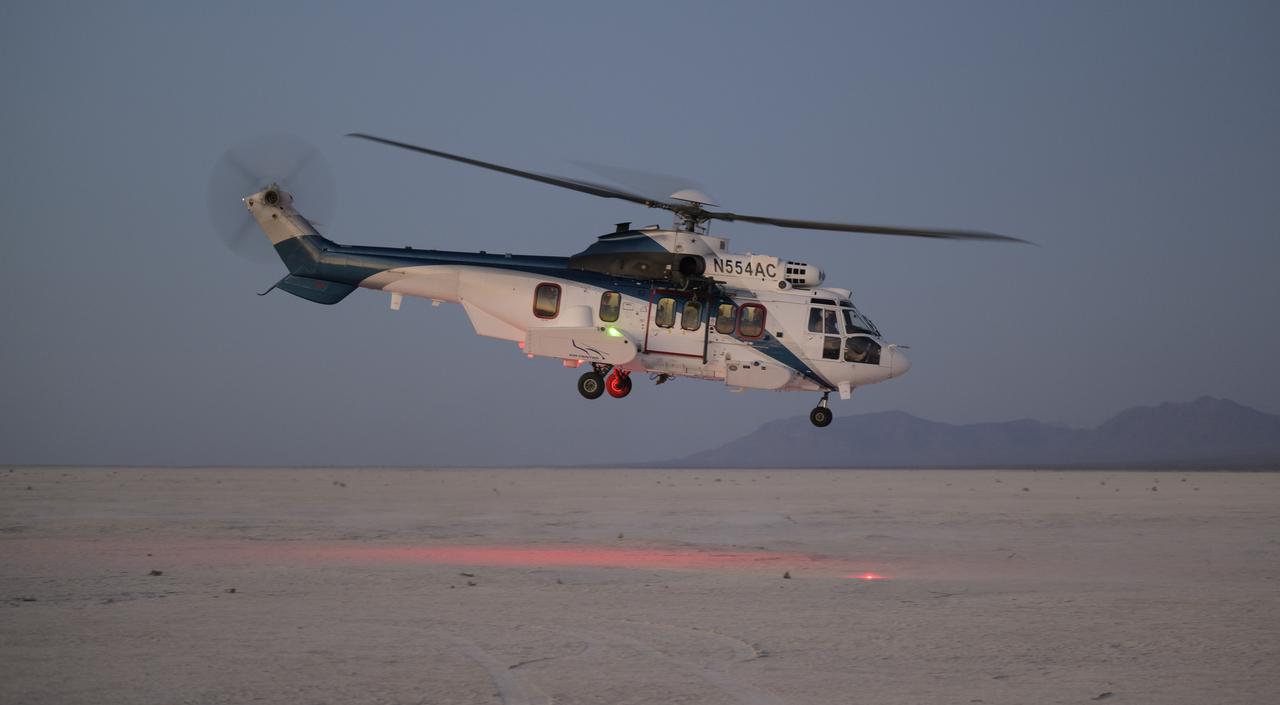
Boeing and NASA teams participate in a mission dress rehearsal to prepare for the landing of the Boeing CST-100 Starliner spacecraft in White Sands, New Mexico, Sunday, June 16, 2024. NASA astronauts Butch Wilmore and Suni Williams are Starliner’s first human crew and travelled to the International Space Station as part of NASA's Boeing Crew Flight Test. The mission serves as an end-to-end demonstration of Boeing’s crew transportation system as a provider for NASA’s Commercial Crew Program. Photo Credit: (NASA/Bill Ingalls)
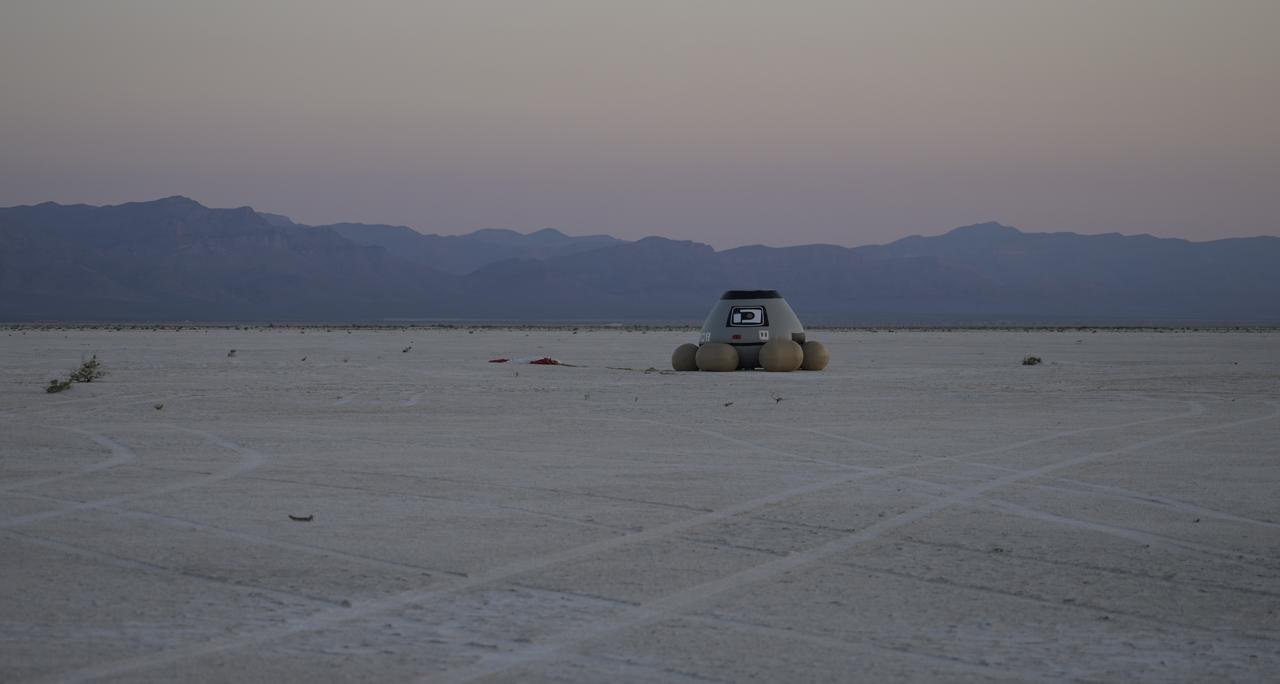
Boeing and NASA teams participate in a mission dress rehearsal to prepare for the landing of the Boeing CST-100 Starliner spacecraft in White Sands, New Mexico, Sunday, June 16, 2024. NASA astronauts Butch Wilmore and Suni Williams are Starliner’s first human crew and travelled to the International Space Station as part of NASA's Boeing Crew Flight Test. The mission serves as an end-to-end demonstration of Boeing’s crew transportation system as a provider for NASA’s Commercial Crew Program. Photo Credit: (NASA/Bill Ingalls)
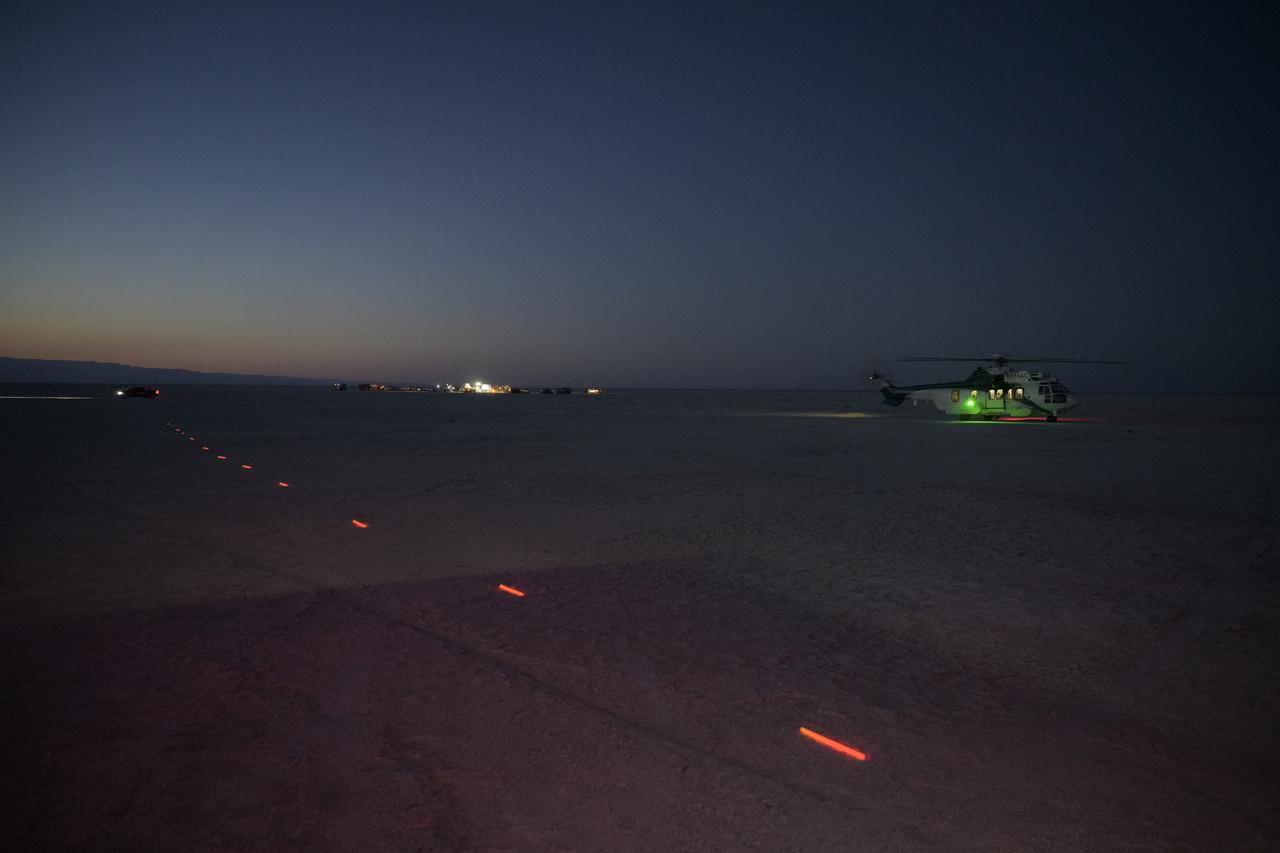
Boeing and NASA teams participate in a mission dress rehearsal to prepare for the landing of the Boeing CST-100 Starliner spacecraft in White Sands, New Mexico, Sunday, June 16, 2024. NASA astronauts Butch Wilmore and Suni Williams are Starliner’s first human crew and travelled to the International Space Station as part of NASA's Boeing Crew Flight Test. The mission serves as an end-to-end demonstration of Boeing’s crew transportation system as a provider for NASA’s Commercial Crew Program. Photo Credit: (NASA/Bill Ingalls)
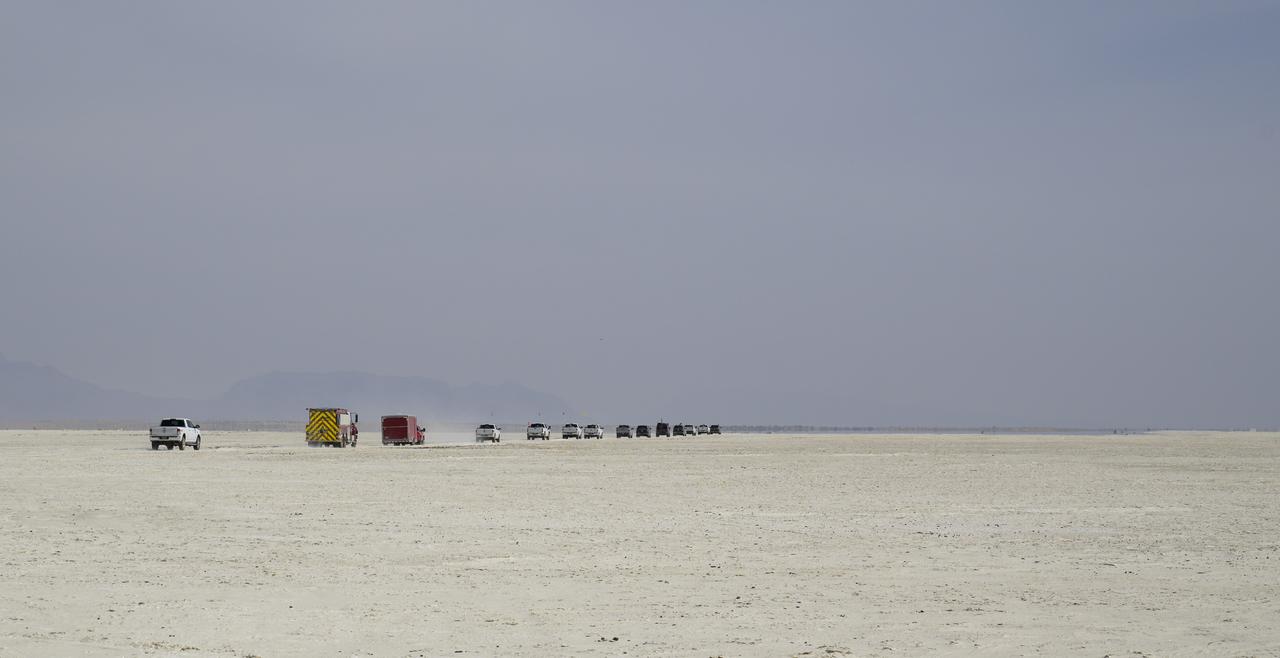
Boeing and NASA teams participate in a mission dress rehearsal to prepare for the landing of the Boeing CST-100 Starliner spacecraft in White Sands, New Mexico, Monday, May 23, 2022. Boeing’s Orbital Flight Test-2 (OFT-2) is Starliner’s second uncrewed flight test to the International Space Station as part of NASA's Commercial Crew Program. OFT-2 serves as an end-to-end test of the system's capabilities. Photo Credit: (NASA/Bill Ingalls)

Boeing and NASA teams participate in a mission dress rehearsal to prepare for the landing of the Boeing CST-100 Starliner spacecraft in White Sands, New Mexico, Monday, May 23, 2022. Boeing’s Orbital Flight Test-2 (OFT-2) is Starliner’s second uncrewed flight test to the International Space Station as part of NASA's Commercial Crew Program. OFT-2 serves as an end-to-end test of the system's capabilities. Photo Credit: (NASA/Bill Ingalls)
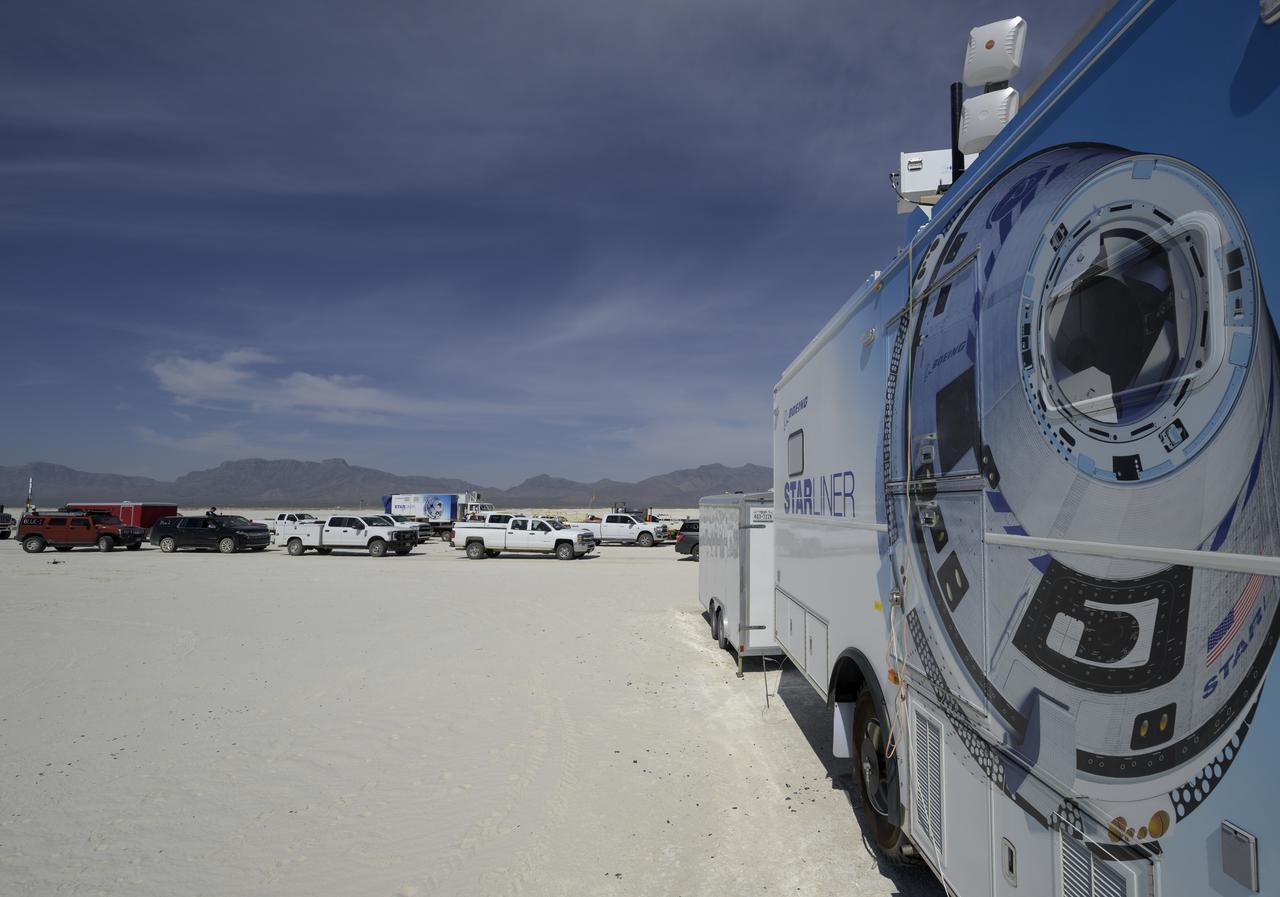
Boeing and NASA teams participate in a mission dress rehearsal to prepare for the landing of the Boeing CST-100 Starliner spacecraft in White Sands, New Mexico, Monday, May 23, 2022. Boeing’s Orbital Flight Test-2 (OFT-2) is Starliner’s second uncrewed flight test to the International Space Station as part of NASA's Commercial Crew Program. OFT-2 serves as an end-to-end test of the system's capabilities. Photo Credit: (NASA/Bill Ingalls)
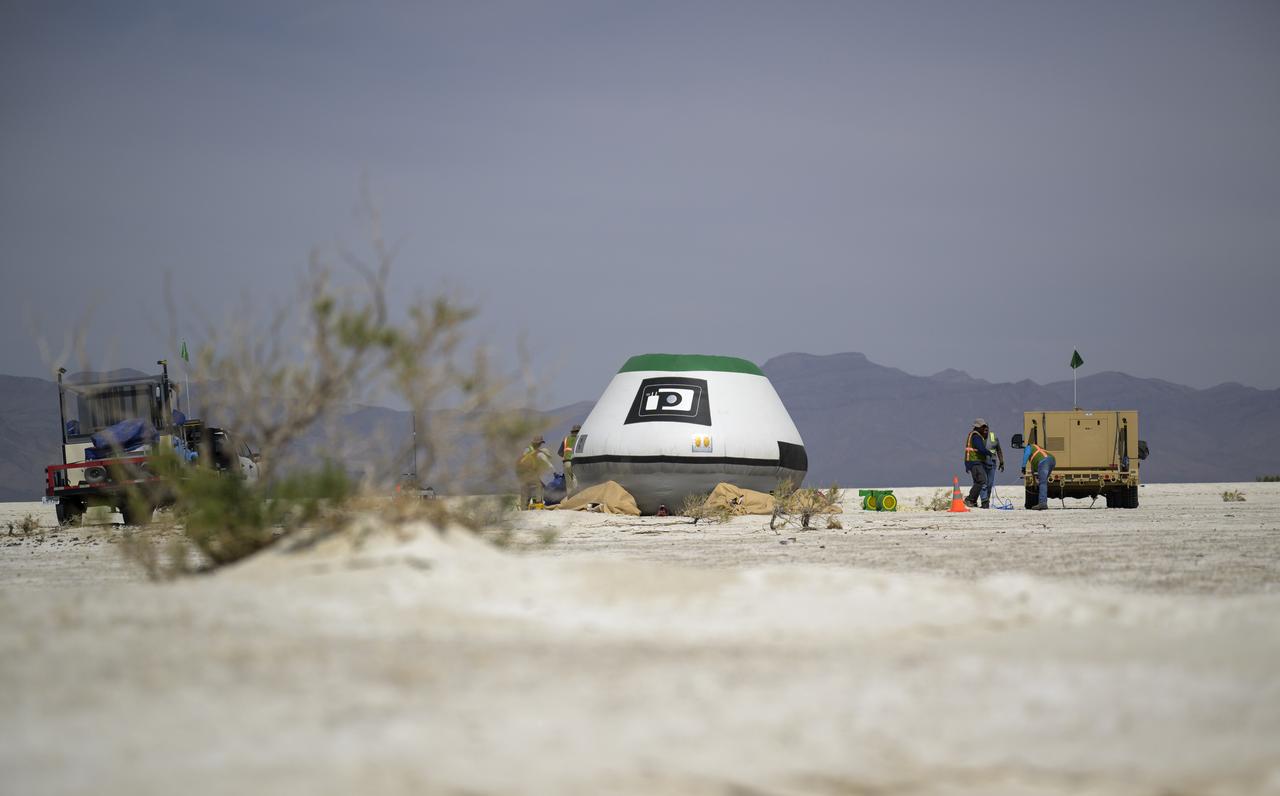
Boeing and NASA teams participate in a mission dress rehearsal to prepare for the landing of the Boeing CST-100 Starliner spacecraft in White Sands, New Mexico, Monday, May 23, 2022. Boeing’s Orbital Flight Test-2 (OFT-2) is Starliner’s second uncrewed flight test to the International Space Station as part of NASA's Commercial Crew Program. OFT-2 serves as an end-to-end test of the system's capabilities. Photo Credit: (NASA/Bill Ingalls)

Boeing and NASA teams participate in a mission dress rehearsal to prepare for the landing of the Boeing CST-100 Starliner spacecraft in White Sands, New Mexico, Monday, May 23, 2022. Boeing’s Orbital Flight Test-2 (OFT-2) is Starliner’s second uncrewed flight test to the International Space Station as part of NASA's Commercial Crew Program. OFT-2 serves as an end-to-end test of the system's capabilities. Photo Credit: (NASA/Bill Ingalls)
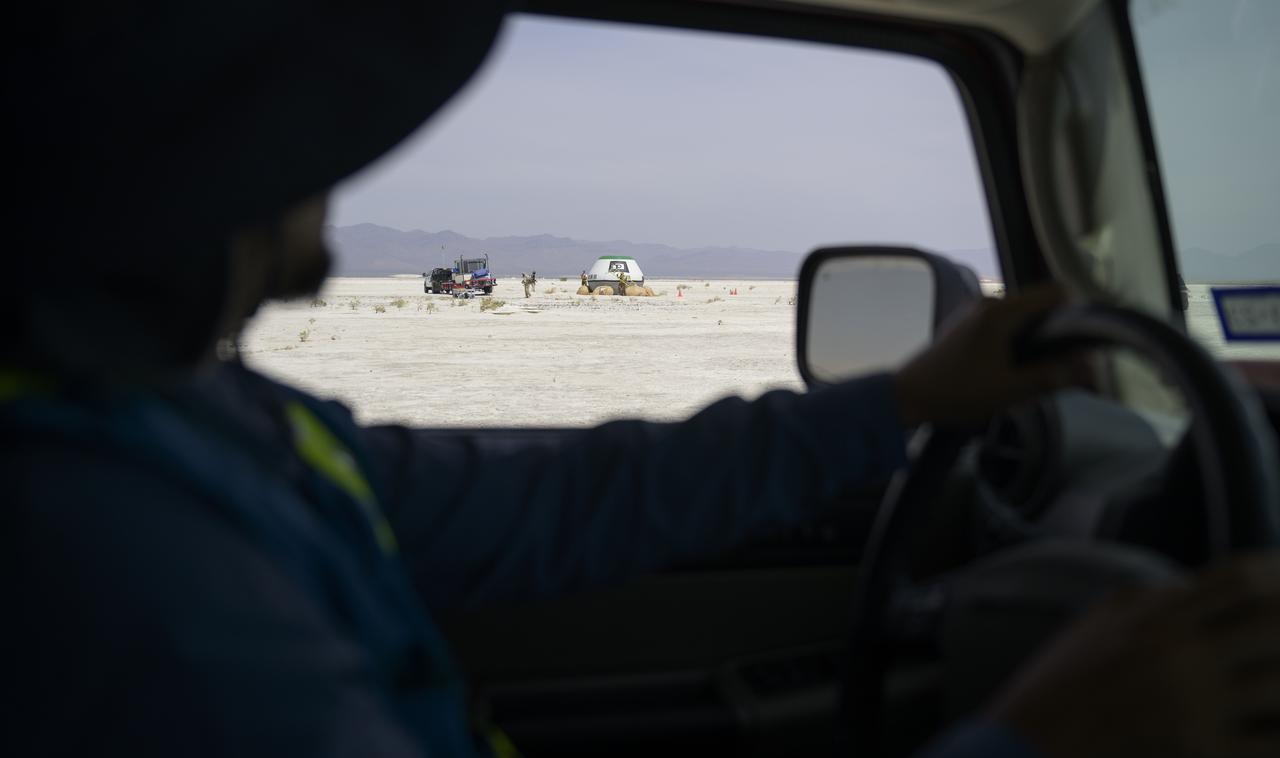
Boeing and NASA teams participate in a mission dress rehearsal to prepare for the landing of the Boeing CST-100 Starliner spacecraft in White Sands, New Mexico, Monday, May 23, 2022. Boeing’s Orbital Flight Test-2 (OFT-2) is Starliner’s second uncrewed flight test to the International Space Station as part of NASA's Commercial Crew Program. OFT-2 serves as an end-to-end test of the system's capabilities. Photo Credit: (NASA/Bill Ingalls)
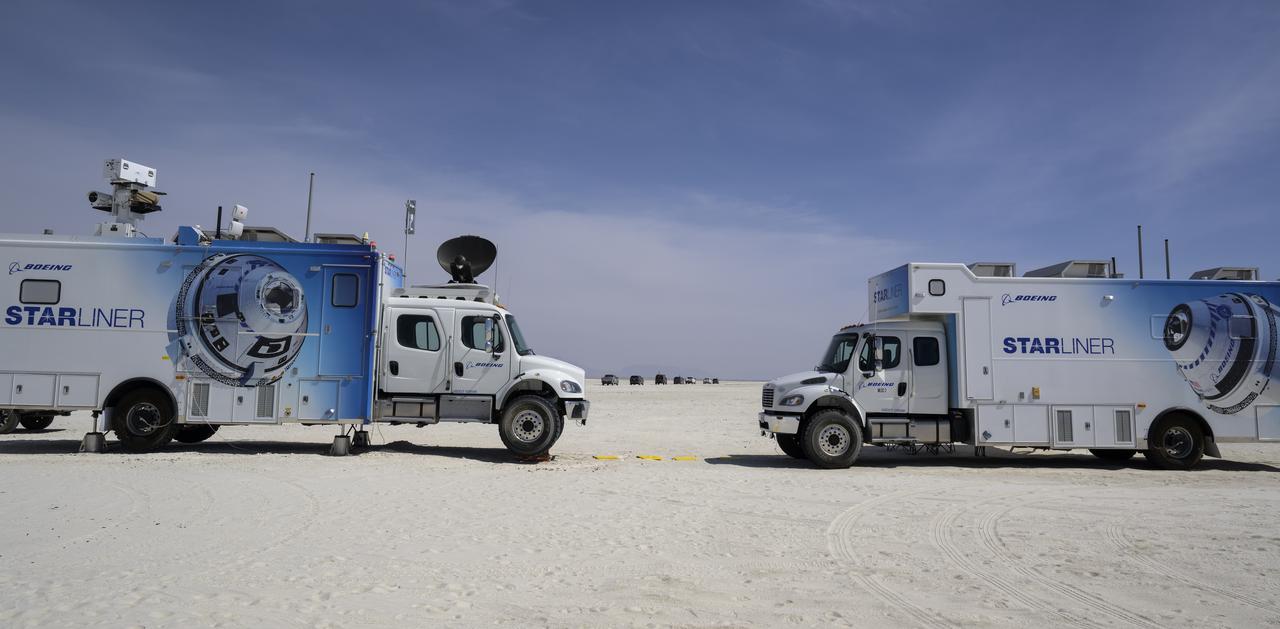
Boeing and NASA teams participate in a mission dress rehearsal to prepare for the landing of the Boeing CST-100 Starliner spacecraft in White Sands, New Mexico, Monday, May 23, 2022. Boeing’s Orbital Flight Test-2 (OFT-2) is Starliner’s second uncrewed flight test to the International Space Station as part of NASA's Commercial Crew Program. OFT-2 serves as an end-to-end test of the system's capabilities. Photo Credit: (NASA/Bill Ingalls)
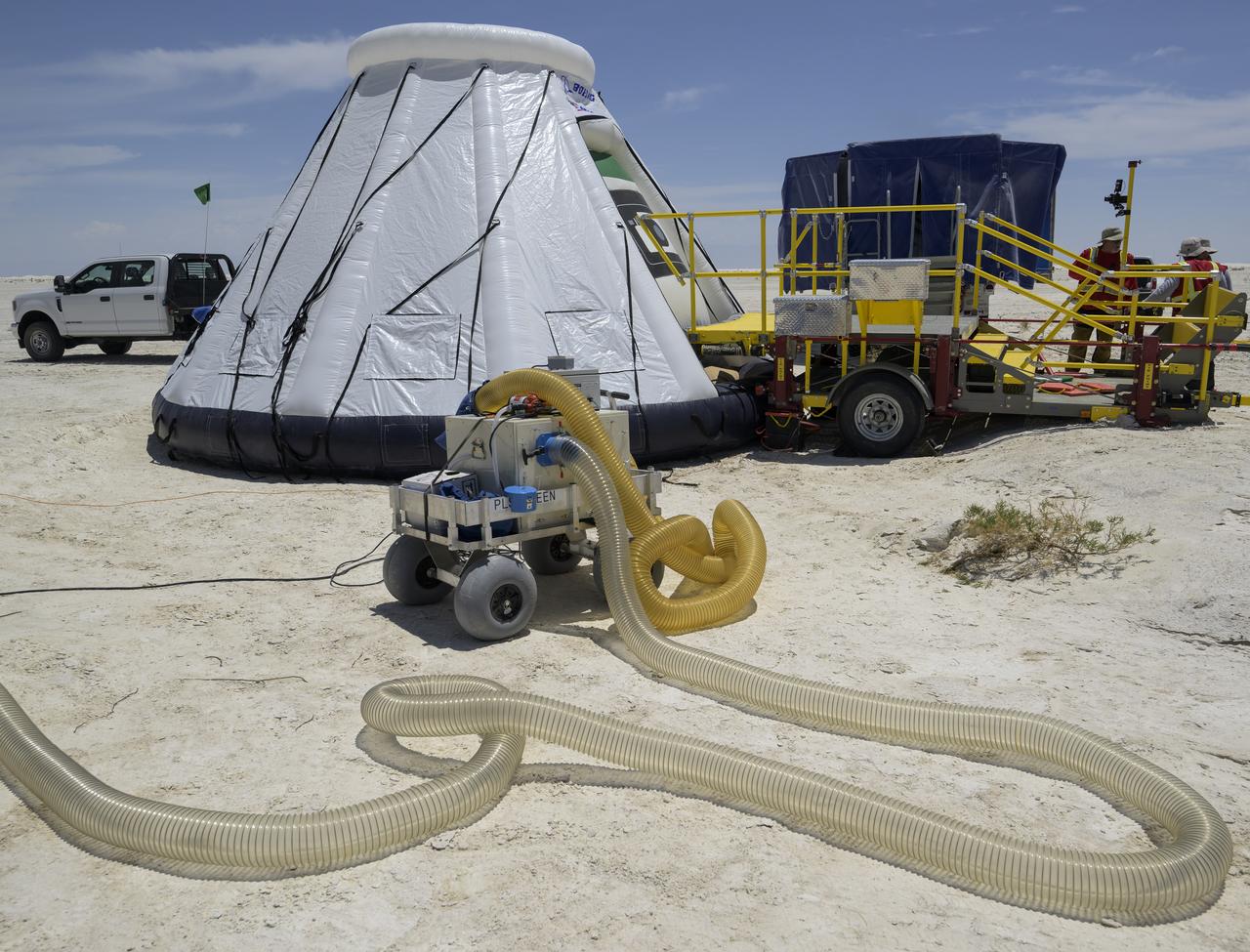
Boeing and NASA teams participate in a mission dress rehearsal to prepare for the landing of the Boeing CST-100 Starliner spacecraft in White Sands, New Mexico, Monday, May 23, 2022. Boeing’s Orbital Flight Test-2 (OFT-2) is Starliner’s second uncrewed flight test to the International Space Station as part of NASA's Commercial Crew Program. OFT-2 serves as an end-to-end test of the system's capabilities. Photo Credit: (NASA/Bill Ingalls)
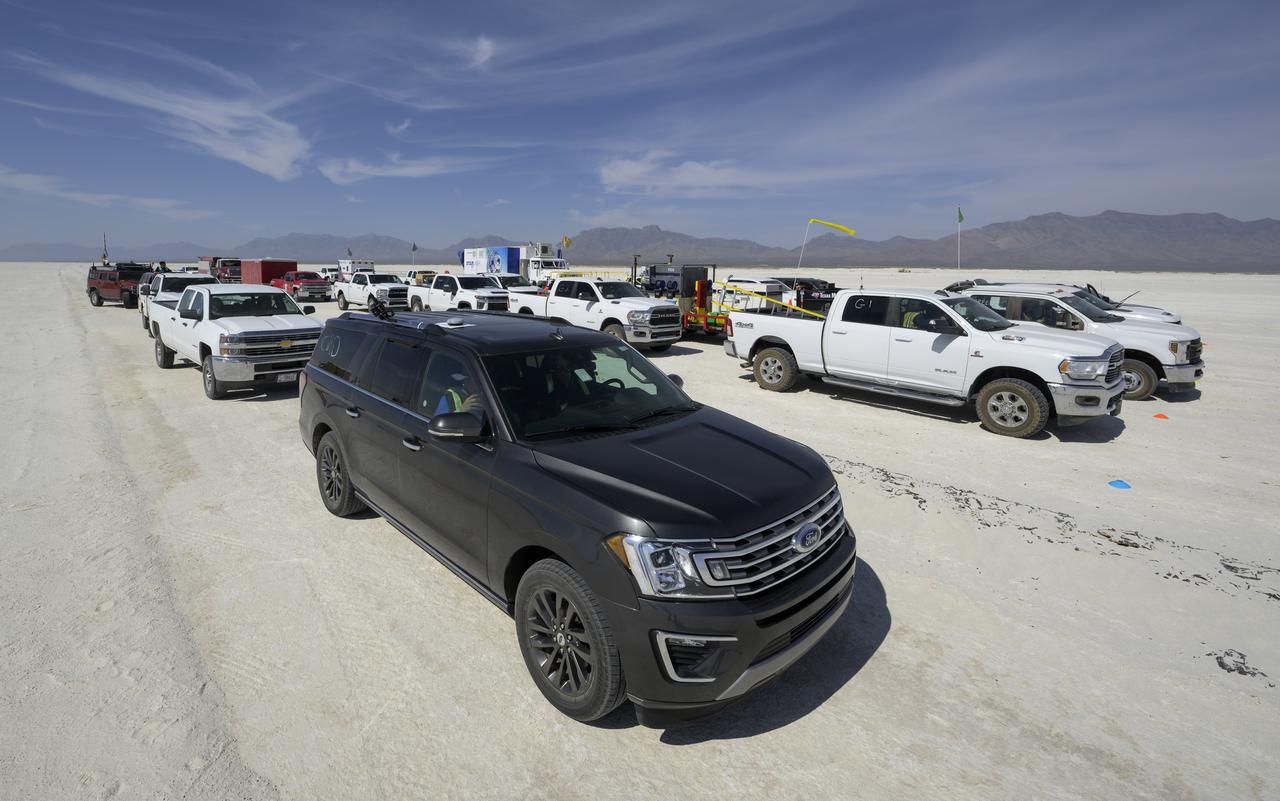
Boeing and NASA teams participate in a mission dress rehearsal to prepare for the landing of the Boeing CST-100 Starliner spacecraft in White Sands, New Mexico, Monday, May 23, 2022. Boeing’s Orbital Flight Test-2 (OFT-2) is Starliner’s second uncrewed flight test to the International Space Station as part of NASA's Commercial Crew Program. OFT-2 serves as an end-to-end test of the system's capabilities. Photo Credit: (NASA/Bill Ingalls)
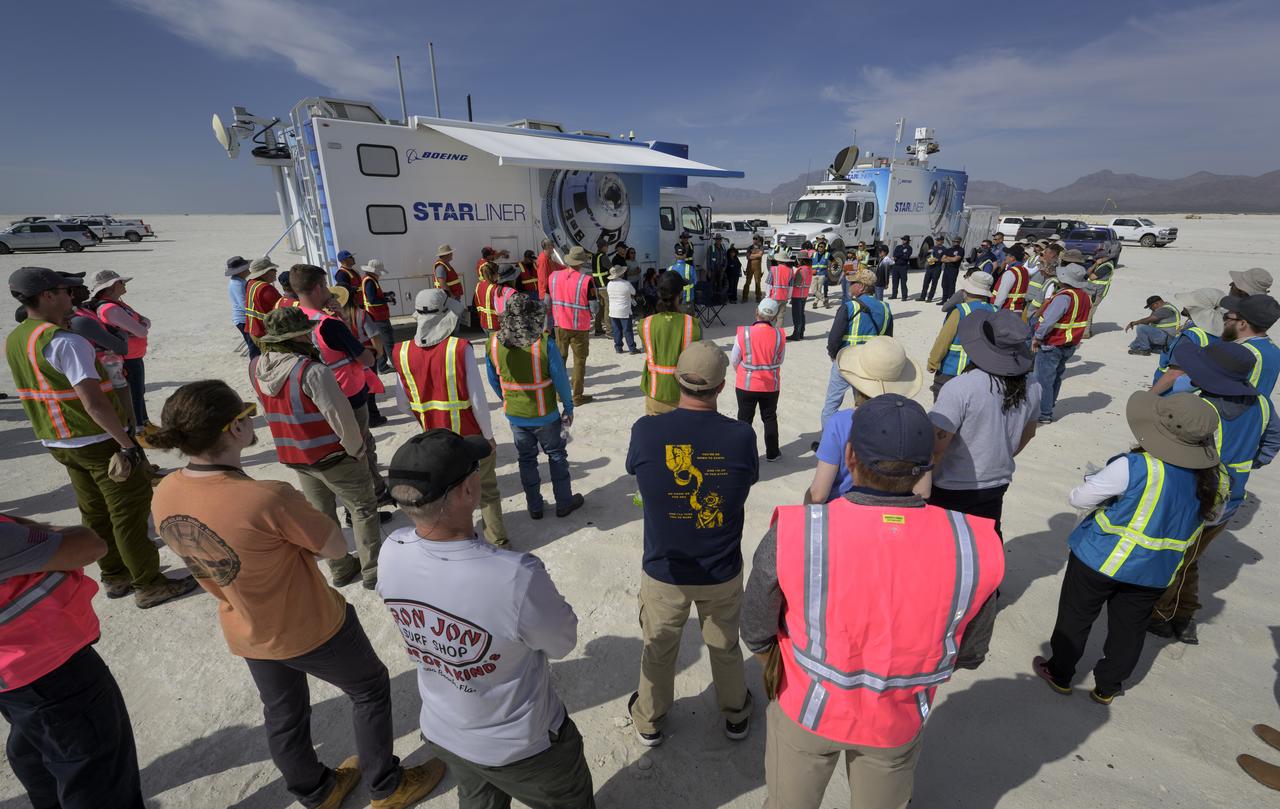
Boeing and NASA teams participate in a mission dress rehearsal to prepare for the landing of the Boeing CST-100 Starliner spacecraft in White Sands, New Mexico, Monday, May 23, 2022. Boeing’s Orbital Flight Test-2 (OFT-2) is Starliner’s second uncrewed flight test to the International Space Station as part of NASA's Commercial Crew Program. OFT-2 serves as an end-to-end test of the system's capabilities. Photo Credit: (NASA/Bill Ingalls)
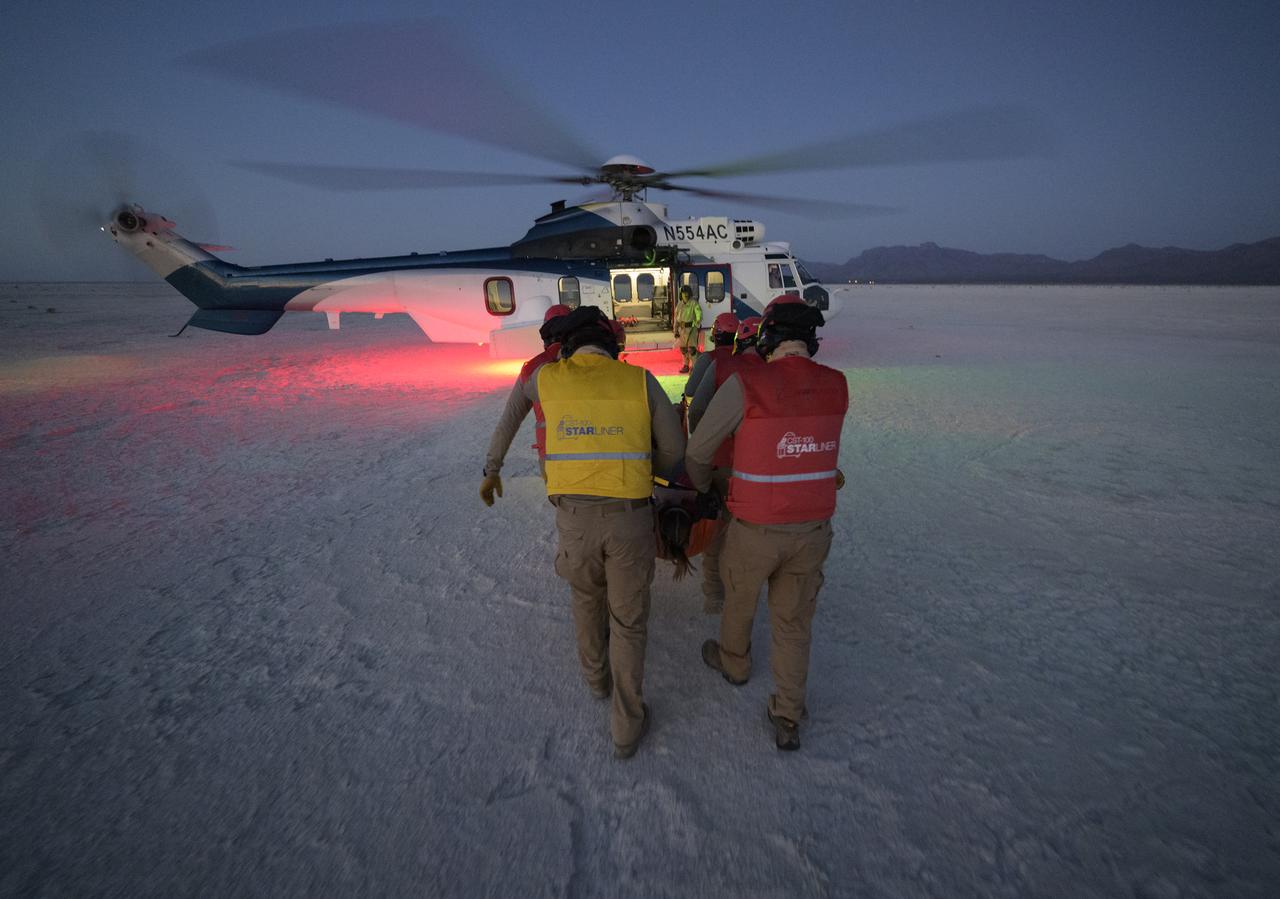
Boeing and NASA teams participate in a mission dress rehearsal to prepare for the landing of the Boeing CST-100 Starliner spacecraft in White Sands, New Mexico, Sunday, June 16, 2024. During the dry-run, teams practice assisting astronauts that might need time to be re-acclimated to Earth’s gravity before walking. NASA astronauts Butch Wilmore and Suni Williams are Starliner’s first human crew and travelled to the International Space Station as part of NASA's Boeing Crew Flight Test. The mission serves as an end-to-end demonstration of Boeing’s crew transportation system as a provider for NASA’s Commercial Crew Program. Photo Credit: (NASA/Bill Ingalls)
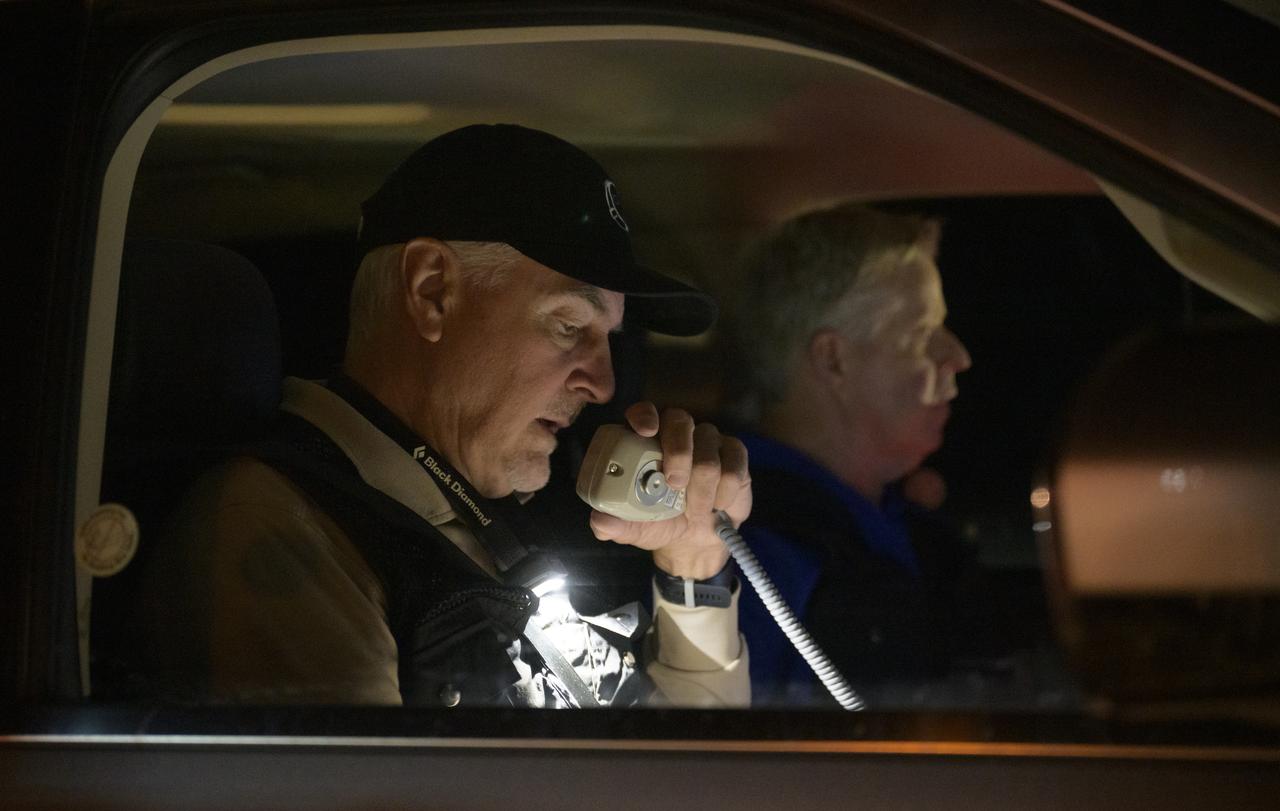
Boeing Recovery Operations Leader Jeffery Davis, left, is seen as Boeing and NASA teams participate in a mission dress rehearsal to prepare for the landing of the Boeing CST-100 Starliner spacecraft in White Sands, New Mexico, Sunday, June 16, 2024. NASA astronauts Butch Wilmore and Suni Williams are Starliner’s first human crew and travelled to the International Space Station as part of NASA's Boeing Crew Flight Test. The mission serves as an end-to-end demonstration of Boeing’s crew transportation system as a provider for NASA’s Commercial Crew Program. Photo Credit: (NASA/Bill Ingalls)
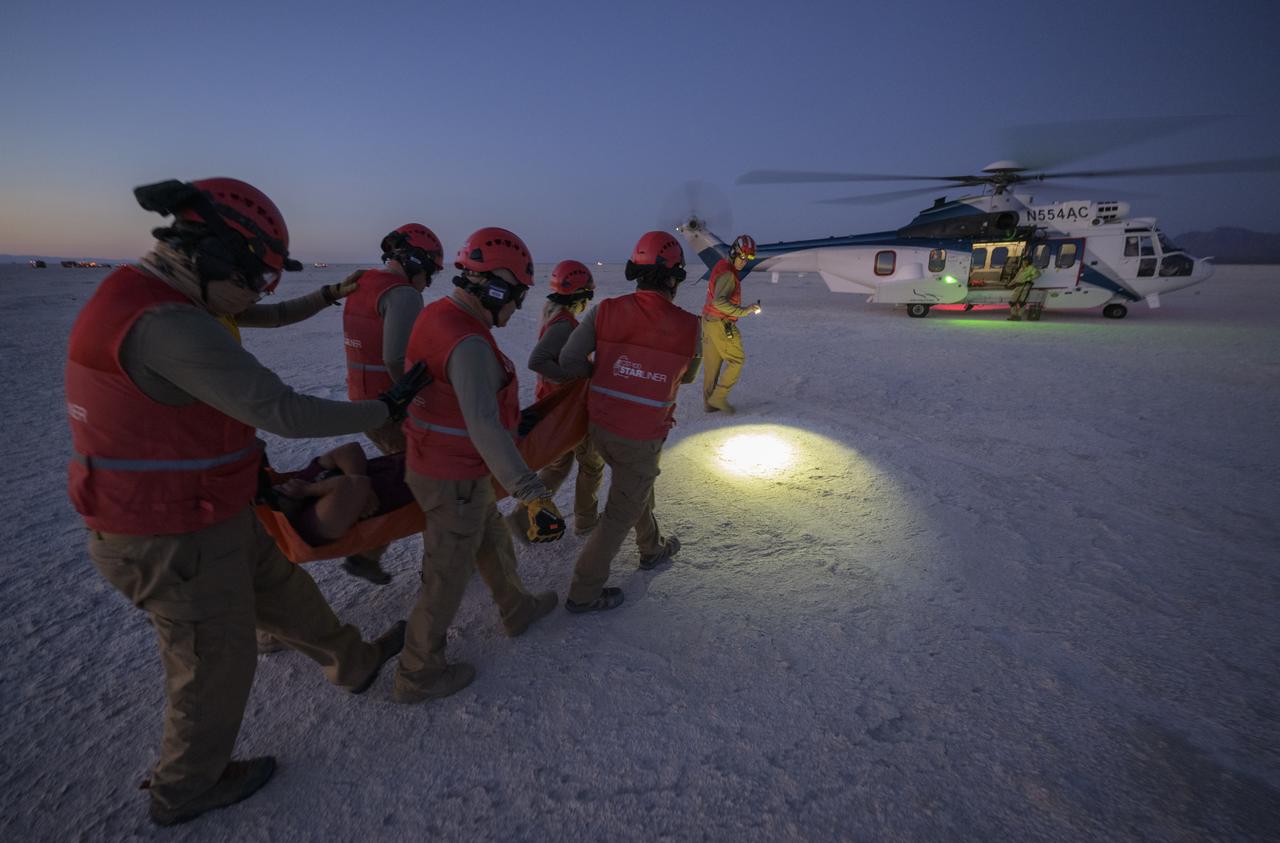
Boeing and NASA teams participate in a mission dress rehearsal to prepare for the landing of the Boeing CST-100 Starliner spacecraft in White Sands, New Mexico, Sunday, June 16, 2024. During the dry-run, teams practice assisting astronauts that might need time to be re-acclimated to Earth’s gravity before walking. NASA astronauts Butch Wilmore and Suni Williams are Starliner’s first human crew and travelled to the International Space Station as part of NASA's Boeing Crew Flight Test. The mission serves as an end-to-end demonstration of Boeing’s crew transportation system as a provider for NASA’s Commercial Crew Program. Photo Credit: (NASA/Bill Ingalls)

Air Operations Lead, Ken Phillips, is seen as Boeing and NASA teams participate in a mission dress rehearsal to prepare for the landing of the Boeing CST-100 Starliner spacecraft in White Sands, New Mexico, Sunday, June 16, 2024. NASA astronauts Butch Wilmore and Suni Williams are Starliner’s first human crew and travelled to the International Space Station as part of NASA's Boeing Crew Flight Test. The mission serves as an end-to-end demonstration of Boeing’s crew transportation system as a provider for NASA’s Commercial Crew Program. Photo Credit: (NASA/Bill Ingalls)
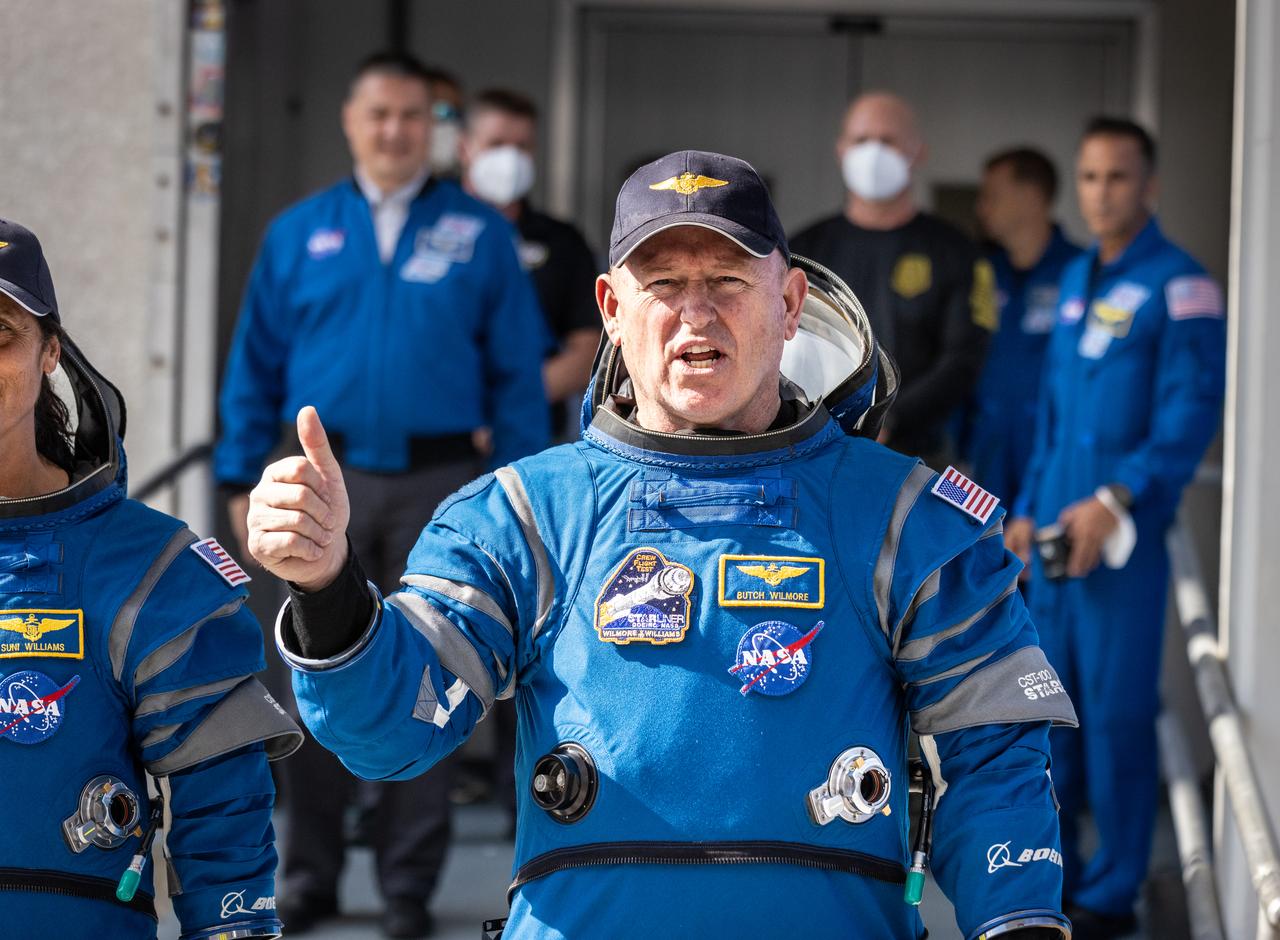
NASA's Boeing Crew Test Flight is scheduled to launch at 10:34p.m. EDT on Monday, May 6. The mission will carry two NASA Astronauts to the International Space Station aboard Boeing's Starliner spacecraft for the agency's Commercial Crew Program
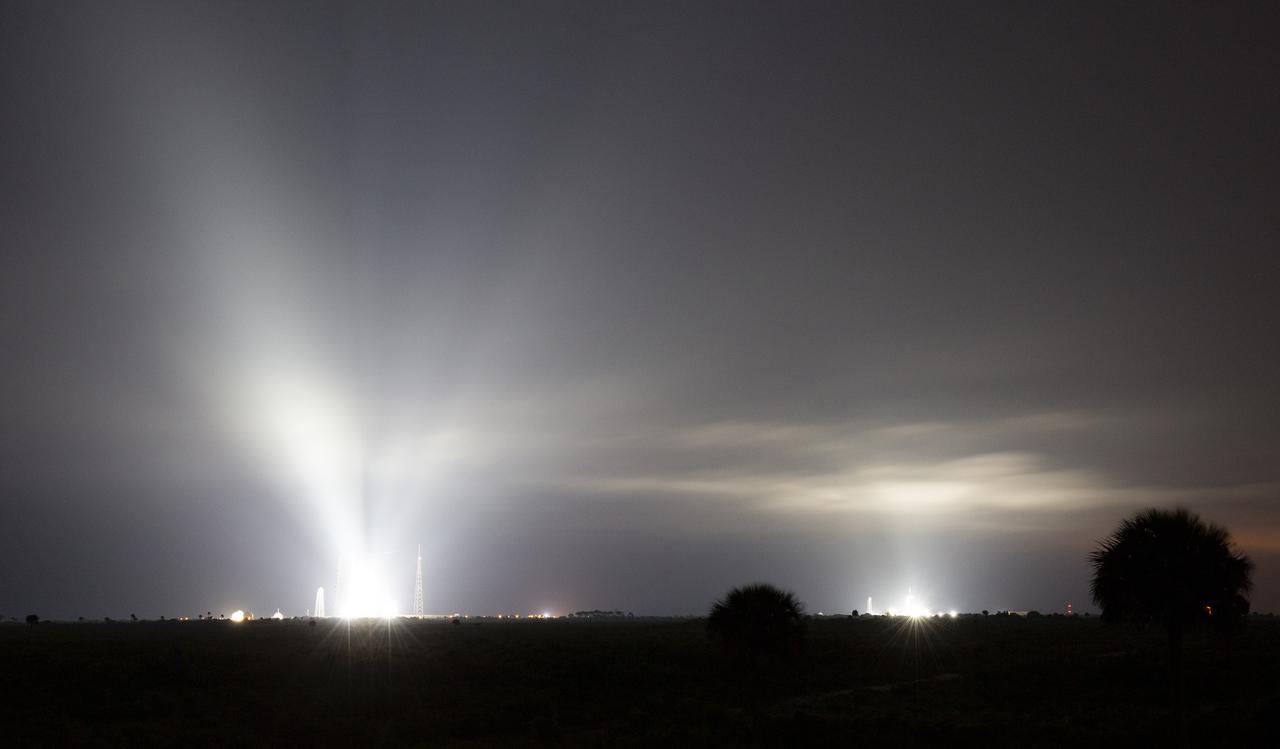
NASA’s Space Launch System (SLS) rocket with the Orion spacecraft aboard atop a mobile launcher at Launch Complex 39B as the Artemis I launch team prepares for the next attempt of the wet dress rehearsal test, left, and a SpaceX Falcon 9 rocket with the company's Crew Dragon spacecraft aboard on the launch pad at Launch Complex 39A as preparations continue for Axiom Mission 1 (Ax-1), are seen illuminated by spotlights, Thursday, April 7, 2022, at NASA’s Kennedy Space Center in Florida. The Ax-1 mission is the first private astronaut mission to the International Space Station. Ax-1 crew members Commander Michael López-Alegría of Spain and the United States, Pilot Larry Connor of the United States, and Mission Specialists Eytan Stibbe of Israel, and Mark Pathy of Canada launched on April 8 at 11:17 a.m. EDT, from Launch Complex 39A at the Kennedy Space Center. Photo Credit: (NASA/Joel Kowsky)
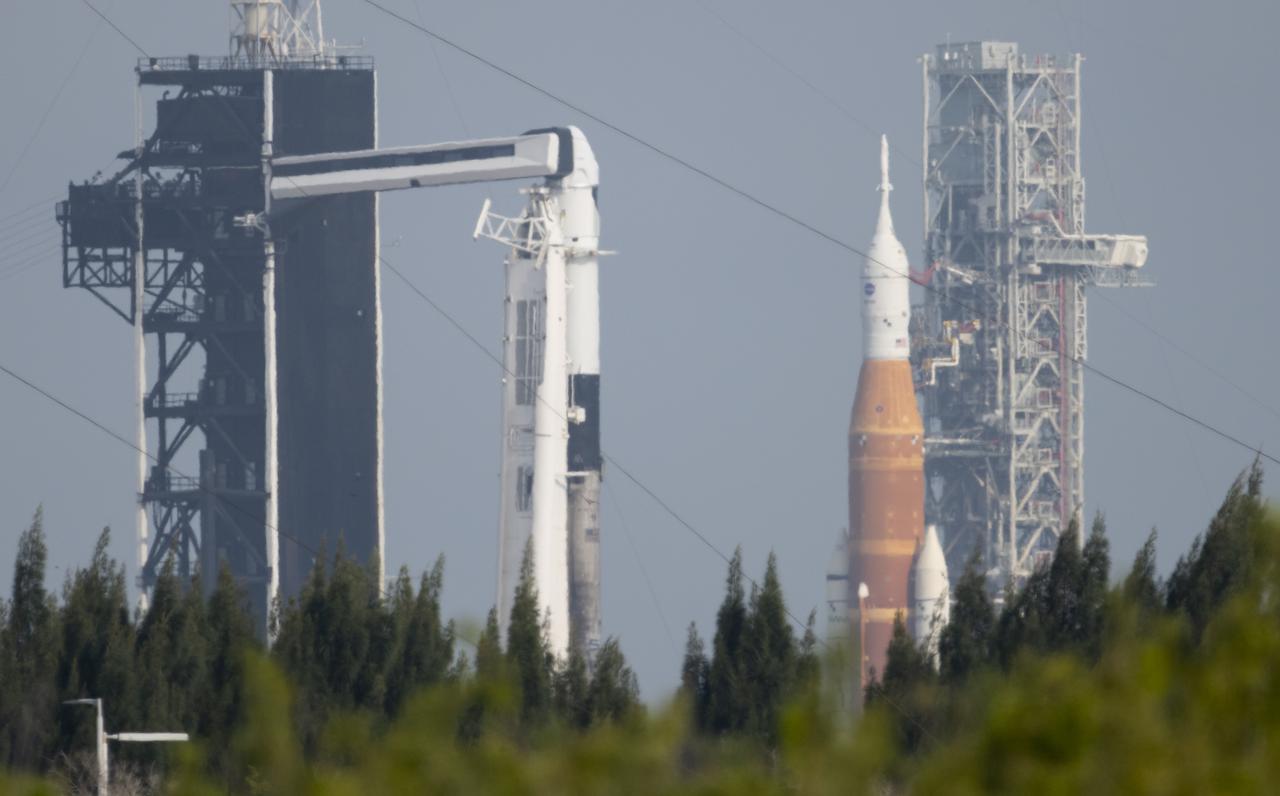
NASA’s Space Launch System (SLS) rocket with the Orion spacecraft aboard is seen atop a mobile launcher at Launch Complex 39B as the Artemis I launch team prepares for the next attempt of the wet dress rehearsal test, right, as a SpaceX Falcon 9 rocket with the company's Crew Dragon spacecraft aboard is seen on the launch pad at Launch Complex 39A as preparations continue for Axiom Mission 1 (Ax-1), Wednesday, April 6, 2022, at NASA’s Kennedy Space Center in Florida. The Ax-1 mission is the first private astronaut mission to the International Space Station. Ax-1 crew members Commander Michael López-Alegría of Spain and the United States, Pilot Larry Connor of the United States, and Mission Specialists Eytan Stibbe of Israel, and Mark Pathy of Canada are scheduled to launch on April 8 from Launch Complex 39A at the Kennedy Space Center. Photo Credit: (NASA/Joel Kowsky)
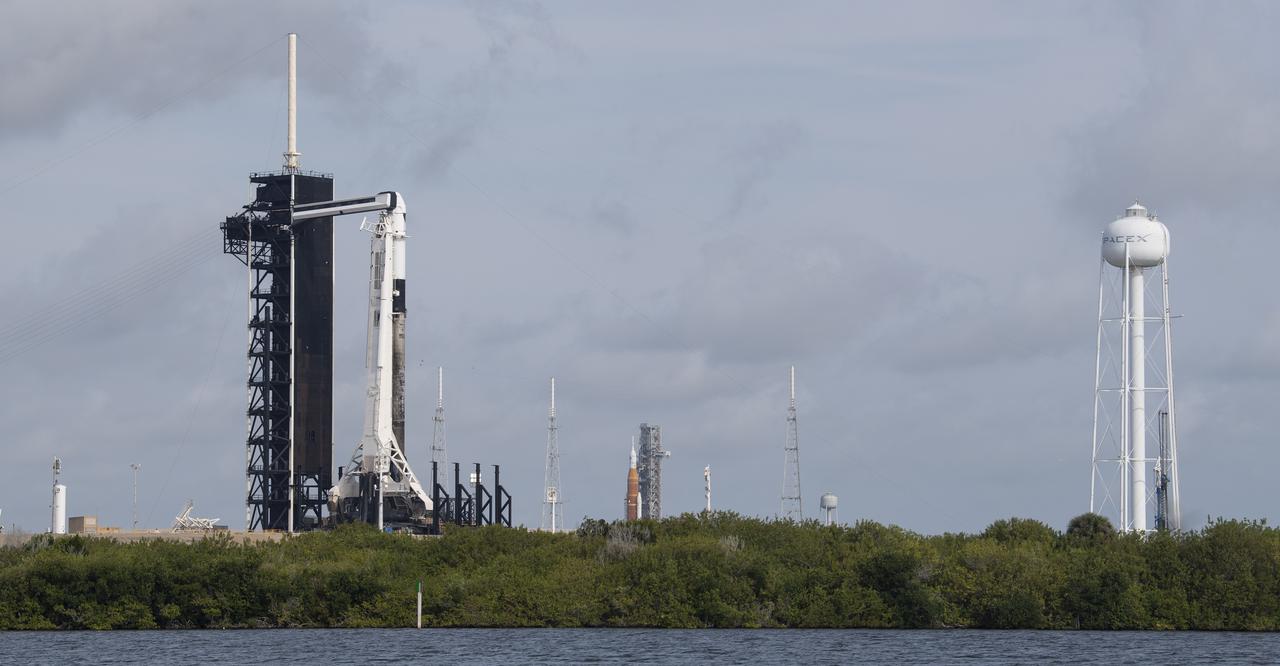
NASA’s Space Launch System (SLS) rocket with the Orion spacecraft aboard is seen atop a mobile launcher at Launch Complex 39B as the Artemis I launch team prepares for the next attempt of the wet dress rehearsal test, right, as a SpaceX Falcon 9 rocket with the company's Crew Dragon spacecraft aboard is seen on the launch pad at Launch Complex 39A as preparations continue for Axiom Mission 1 (Ax-1), Wednesday, April 6, 2022, at NASA’s Kennedy Space Center in Florida. The Ax-1 mission is the first private astronaut mission to the International Space Station. Ax-1 crew members Commander Michael López-Alegría of Spain and the United States, Pilot Larry Connor of the United States, and Mission Specialists Eytan Stibbe of Israel, and Mark Pathy of Canada are scheduled to launch on April 8 from Launch Complex 39A at the Kennedy Space Center. Photo Credit: (NASA/Joel Kowsky)
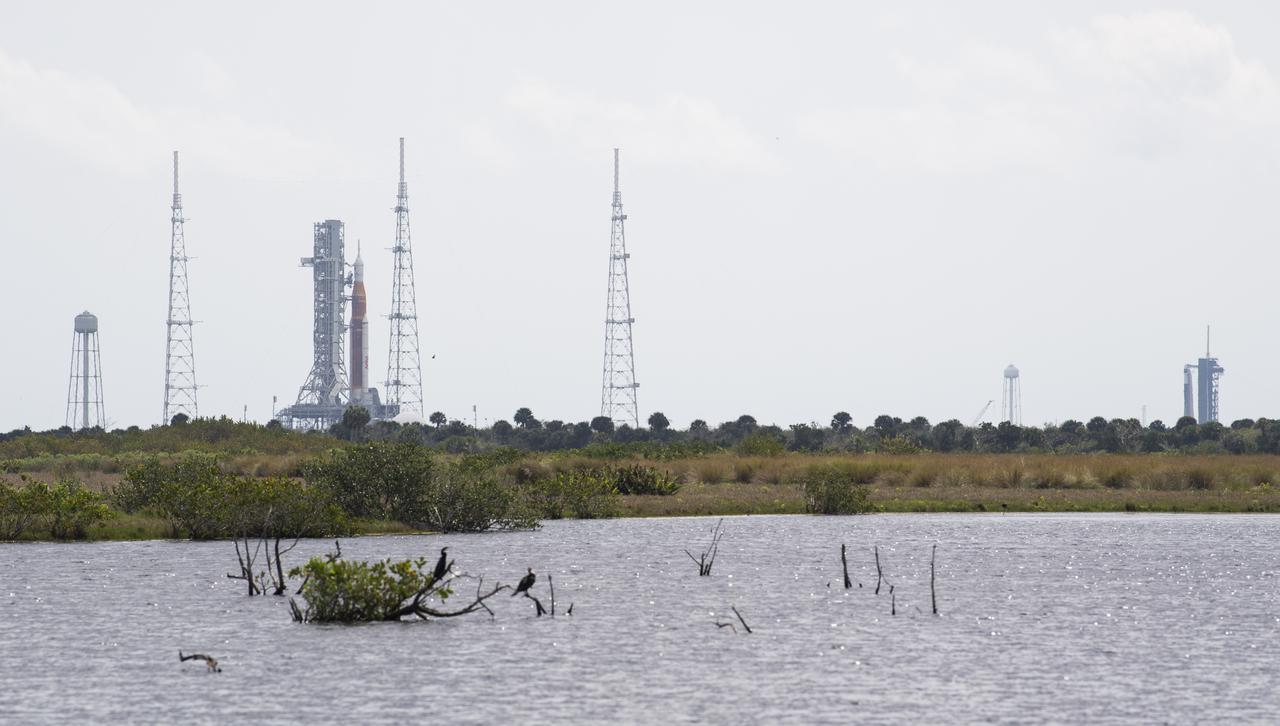
NASA’s Space Launch System (SLS) rocket with the Orion spacecraft aboard is seen atop a mobile launcher at Launch Complex 39B as the Artemis I launch team prepares for the next attempt of the wet dress rehearsal test, left, as a SpaceX Falcon 9 rocket with the company's Crew Dragon spacecraft aboard is seen on the launch pad at Launch Complex 39A as preparations continue for Axiom Mission 1 (Ax-1), Wednesday, April 6, 2022, at NASA’s Kennedy Space Center in Florida. The Ax-1 mission is the first private astronaut mission to the International Space Station. Ax-1 crew members Commander Michael López-Alegría of Spain and the United States, Pilot Larry Connor of the United States, and Mission Specialists Eytan Stibbe of Israel, and Mark Pathy of Canada are scheduled to launch on April 8 from Launch Complex 39A at the Kennedy Space Center. Photo Credit: (NASA/Joel Kowsky)
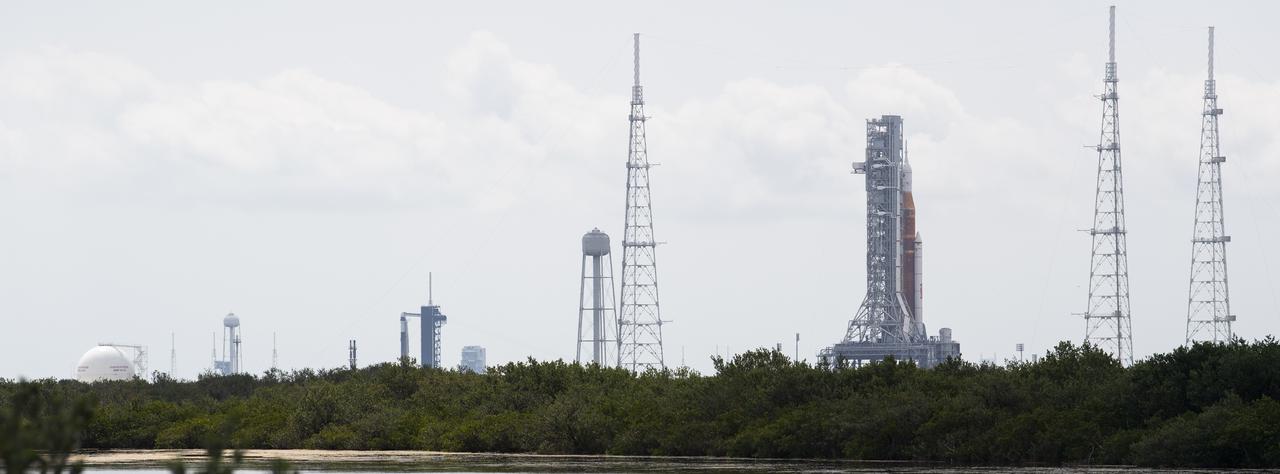
NASA’s Space Launch System (SLS) rocket with the Orion spacecraft aboard is seen atop a mobile launcher at Launch Complex 39B as the Artemis I launch team prepares for the next attempt of the wet dress rehearsal test, right, as a SpaceX Falcon 9 rocket with the company's Crew Dragon spacecraft aboard is seen on the launch pad at Launch Complex 39A as preparations continue for Axiom Mission 1 (Ax-1), Wednesday, April 6, 2022, at NASA’s Kennedy Space Center in Florida. The Ax-1 mission is the first private astronaut mission to the International Space Station. Ax-1 crew members Commander Michael López-Alegría of Spain and the United States, Pilot Larry Connor of the United States, and Mission Specialists Eytan Stibbe of Israel, and Mark Pathy of Canada are scheduled to launch on April 8 from Launch Complex 39A at the Kennedy Space Center. Photo Credit: (NASA/Joel Kowsky)

NASA’s Space Launch System (SLS) rocket with the Orion spacecraft aboard is seen atop a mobile launcher at Launch Complex 39B as the Artemis I launch team prepares for the next attempt of the wet dress rehearsal test, right, as a SpaceX Falcon 9 rocket with the company's Crew Dragon spacecraft aboard is seen on the launch pad at Launch Complex 39A as preparations continue for Axiom Mission 1 (Ax-1), Wednesday, April 6, 2022, at NASA’s Kennedy Space Center in Florida. The Ax-1 mission is the first private astronaut mission to the International Space Station. Ax-1 crew members Commander Michael López-Alegría of Spain and the United States, Pilot Larry Connor of the United States, and Mission Specialists Eytan Stibbe of Israel, and Mark Pathy of Canada are scheduled to launch on April 8 from Launch Complex 39A at the Kennedy Space Center. Photo Credit: (NASA/Joel Kowsky)

NASA’s Space Launch System (SLS) rocket with the Orion spacecraft aboard is seen atop a mobile launcher at Launch Complex 39B as the Artemis I launch team prepares for the next attempt of the wet dress rehearsal test, right, as a SpaceX Falcon 9 rocket with the company's Crew Dragon spacecraft aboard is seen on the launch pad at Launch Complex 39A as preparations continue for Axiom Mission 1 (Ax-1), Wednesday, April 6, 2022, at NASA’s Kennedy Space Center in Florida. The Ax-1 mission is the first private astronaut mission to the International Space Station. Ax-1 crew members Commander Michael López-Alegría of Spain and the United States, Pilot Larry Connor of the United States, and Mission Specialists Eytan Stibbe of Israel, and Mark Pathy of Canada are scheduled to launch on April 8 from Launch Complex 39A at the Kennedy Space Center. Photo Credit: (NASA/Joel Kowsky)
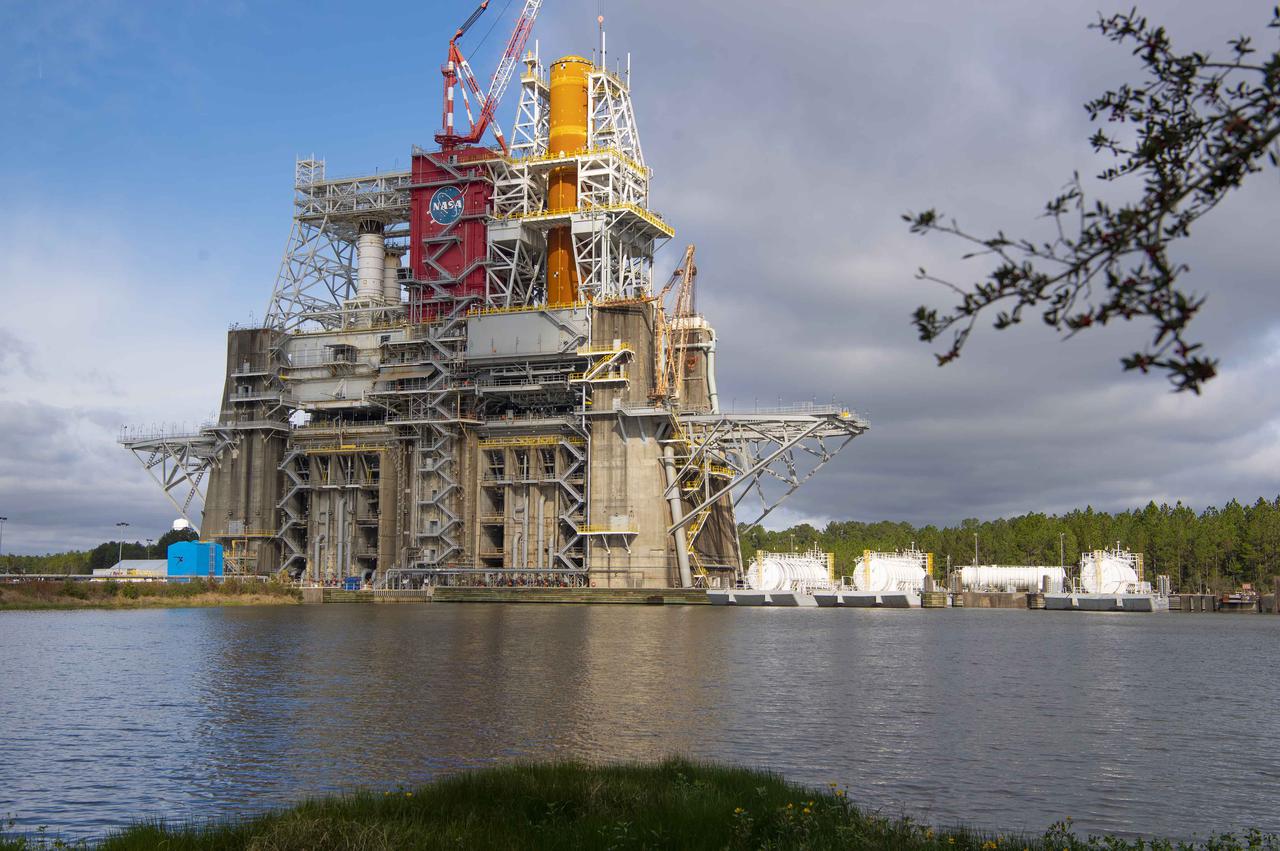
Barges are docked at the B-2 Test Stand at Stennis Space Center near Bay St. Louis, Mississippi, during preparations for a wet dress rehearsal exercise with the core stage of NASA’s Space Launch System rocket. During the wet dress rehearsal, operators will fully load the core stage’s propellant tanks for the first time and countdown just shy of engine ignition. The wet dress rehearsal is the seventh in a series of eight Green Run tests of the core stage’s integrated systems prior to its transport to Kennedy Space Center and launch on the Artemis I mission.
Barges are docked at the B-2 Test Stand at Stennis Space Center near Bay St. Louis, Mississippi, during preparations for a wet dress rehearsal exercise with the core stage of NASA’s Space Launch System rocket. During the wet dress rehearsal, operators will fully load the core stage’s propellant tanks for the first time and countdown just shy of engine ignition. The wet dress rehearsal is the seventh in a series of eight Green Run tests of the core stage’s integrated systems prior to its transport to Kennedy Space Center and launch on the Artemis I mission.
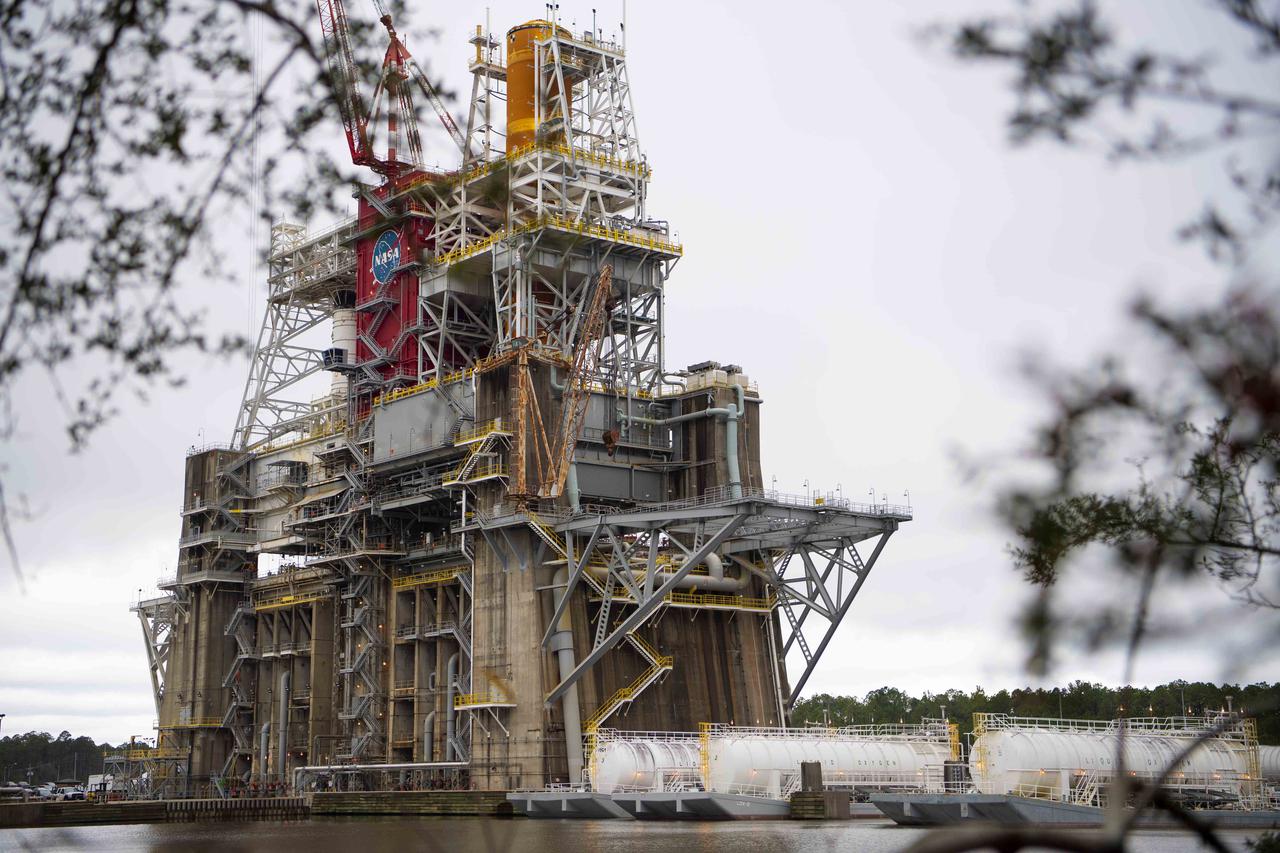
Barges are docked at the B-2 Test Stand at Stennis Space Center near Bay St. Louis, Mississippi, during preparations for a wet dress rehearsal exercise with the core stage of NASA’s Space Launch System rocket. During the wet dress rehearsal, operators will fully load the core stage’s propellant tanks for the first time and countdown just shy of engine ignition. The wet dress rehearsal is the seventh in a series of eight Green Run tests of the core stage’s integrated systems prior to its transport to Kennedy Space Center and launch on the Artemis I mission.
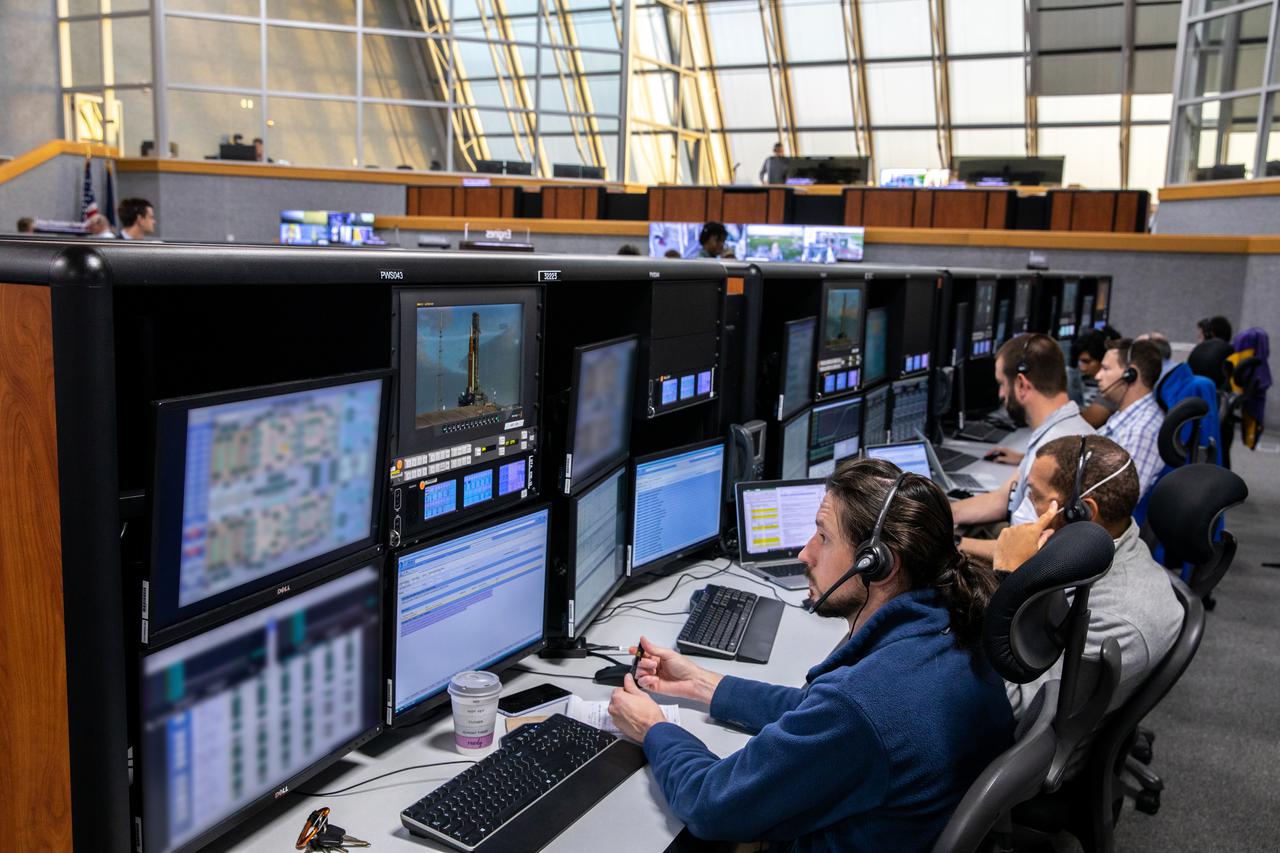
Members of the Artemis I launch team participate in a wet dress rehearsal for the Artemis I mission on April 14, 2022, inside the Launch Control Center at NASA’s Kennedy Space Center in Florida. The wet dress rehearsal is the final major test before launch and allows the team to run through all countdown operations prior to liftoff. The first in an increasingly complex series of missions, Artemis I will test NASA’s Space Launch System rocket and Orion spacecraft as an integrated system prior to crewed flights to the Moon.
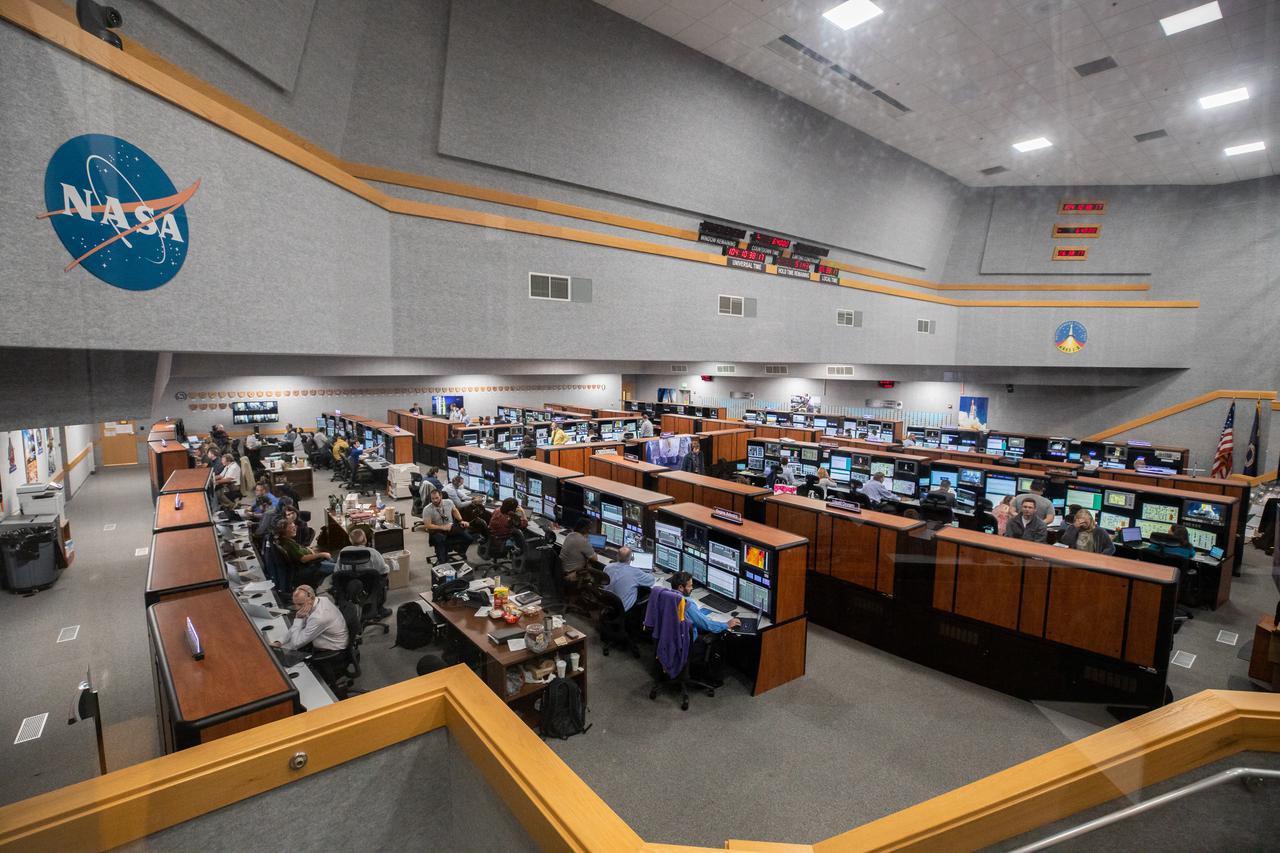
Members of the Artemis I launch team participate in a wet dress rehearsal for the Artemis I mission on April 14, 2022, inside the Launch Control Center at NASA’s Kennedy Space Center in Florida. The wet dress rehearsal is the final major test before launch and allows the team to run through all countdown operations prior to liftoff. The first in an increasingly complex series of missions, Artemis I will test NASA’s Space Launch System rocket and Orion spacecraft as an integrated system prior to crewed flights to the Moon.
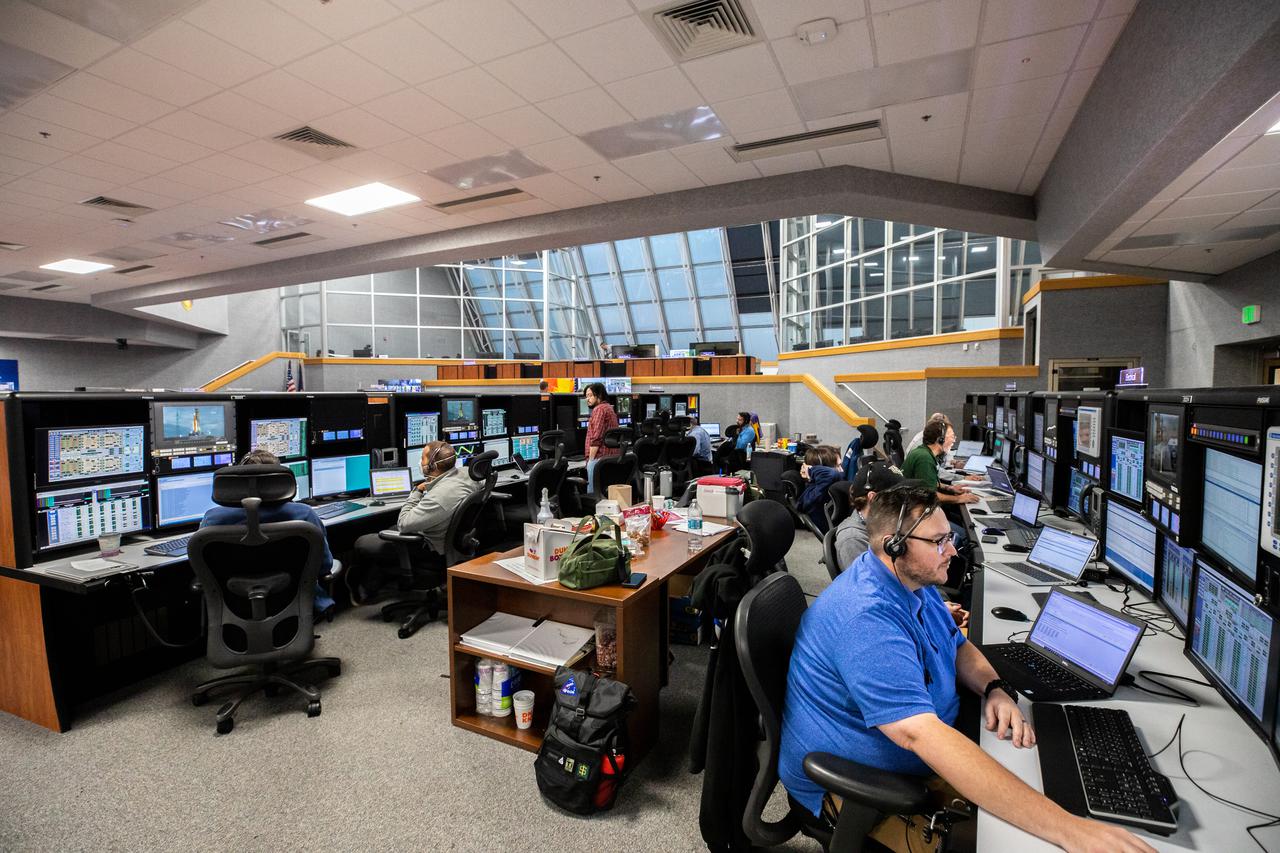
Members of the Artemis I launch team participate in a wet dress rehearsal for the Artemis I mission on April 14, 2022, inside the Launch Control Center at NASA’s Kennedy Space Center in Florida. The wet dress rehearsal is the final major test before launch and allows the team to run through all countdown operations prior to liftoff. The first in an increasingly complex series of missions, Artemis I will test NASA’s Space Launch System rocket and Orion spacecraft as an integrated system prior to crewed flights to the Moon.
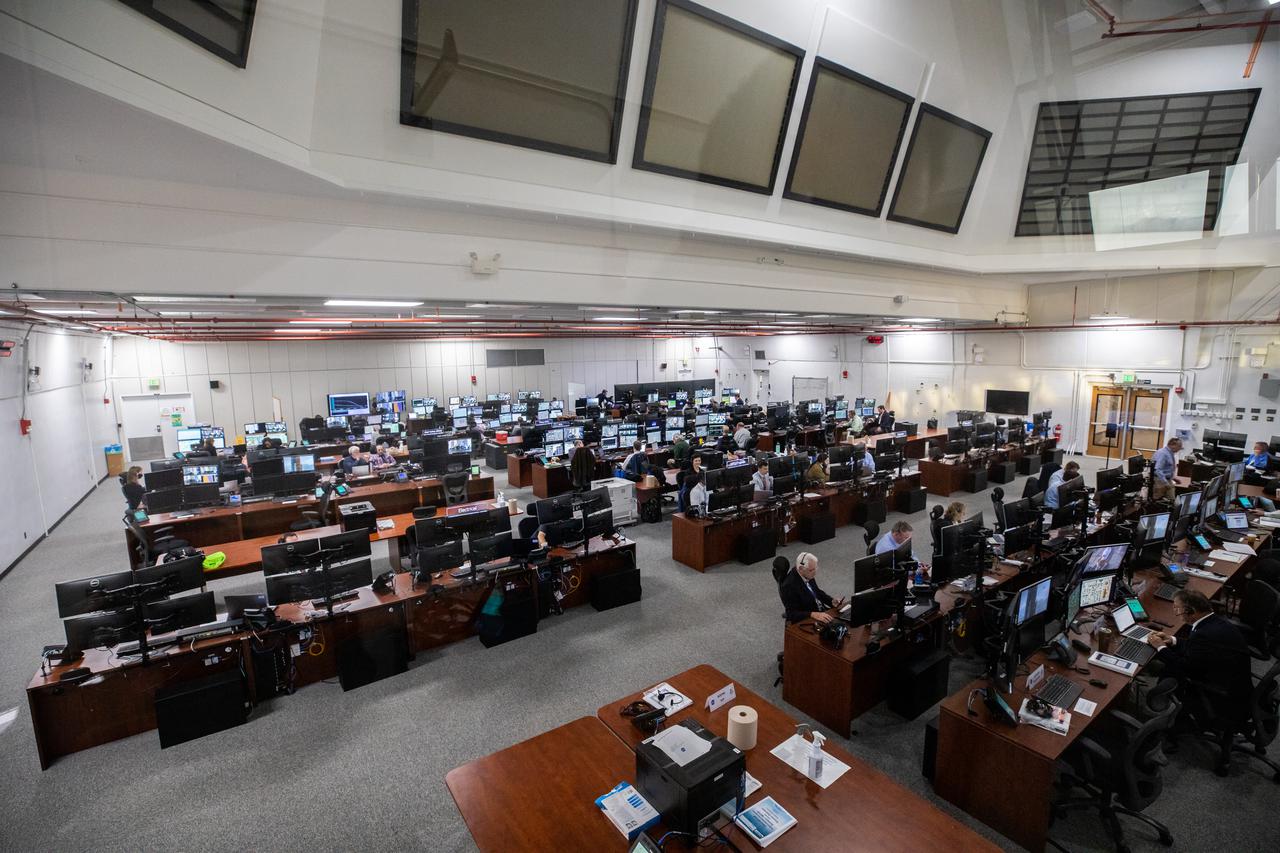
Members of the Artemis I launch team participate in a wet dress rehearsal for the Artemis I mission on April 14, 2022, inside the Launch Control Center at NASA’s Kennedy Space Center in Florida. The wet dress rehearsal is the final major test before launch and allows the team to run through all countdown operations prior to liftoff. The first in an increasingly complex series of missions, Artemis I will test NASA’s Space Launch System rocket and Orion spacecraft as an integrated system prior to crewed flights to the Moon.
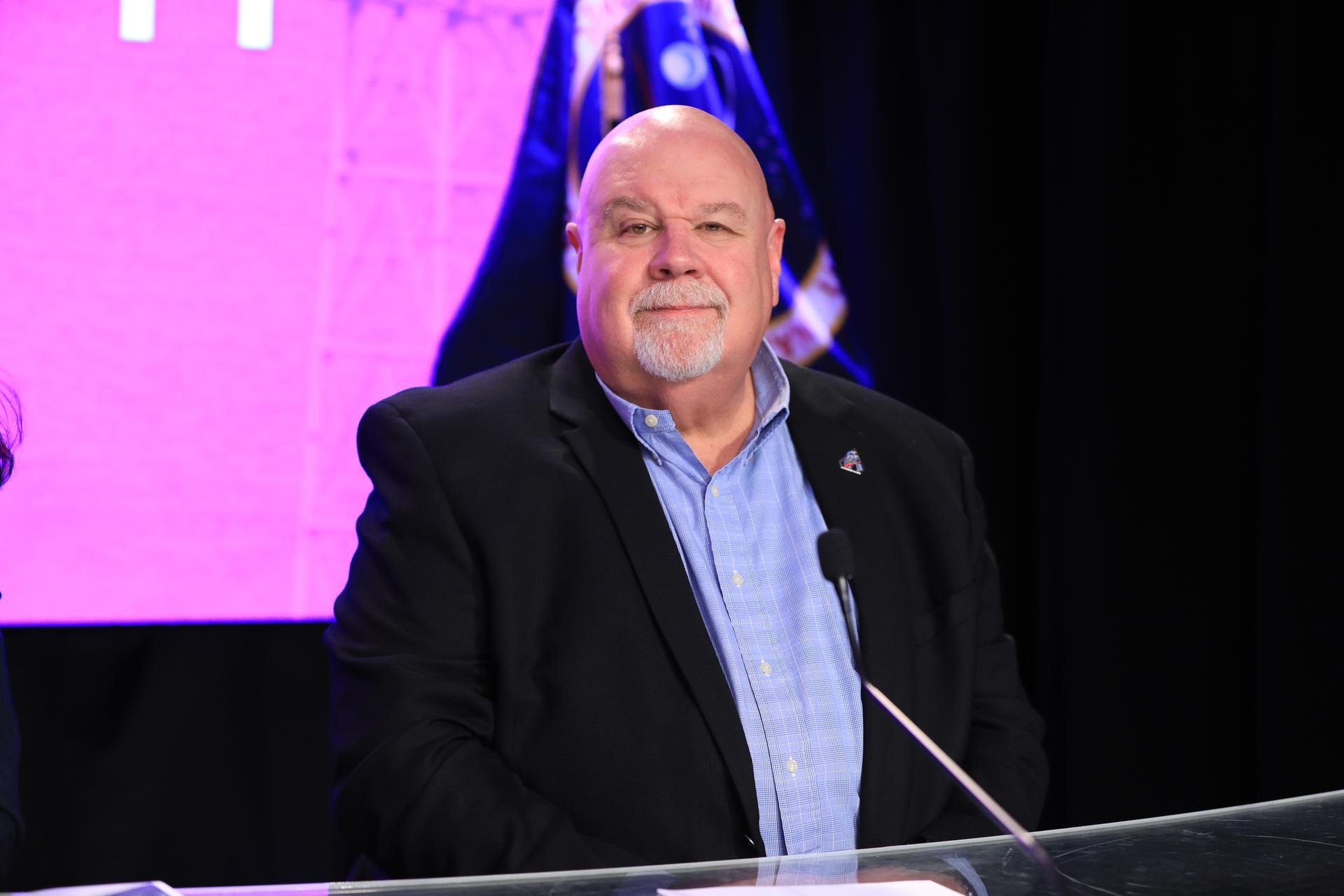
John Honeycutt, chair, Artemis II mission management team, participates in a news conference on Tuesday, Feb. 3, 2026, to discuss the completion of Artemis II wet dress rehearsal at NASA’s Kennedy Space Center in Florida. The wet dress rehearsal allows the Artemis II launch team to run through operations to load propellant, conduct a full launch countdown, demonstrate the ability to recycle the countdown clock, and drain the tanks to practice timelines and procedures for launch.
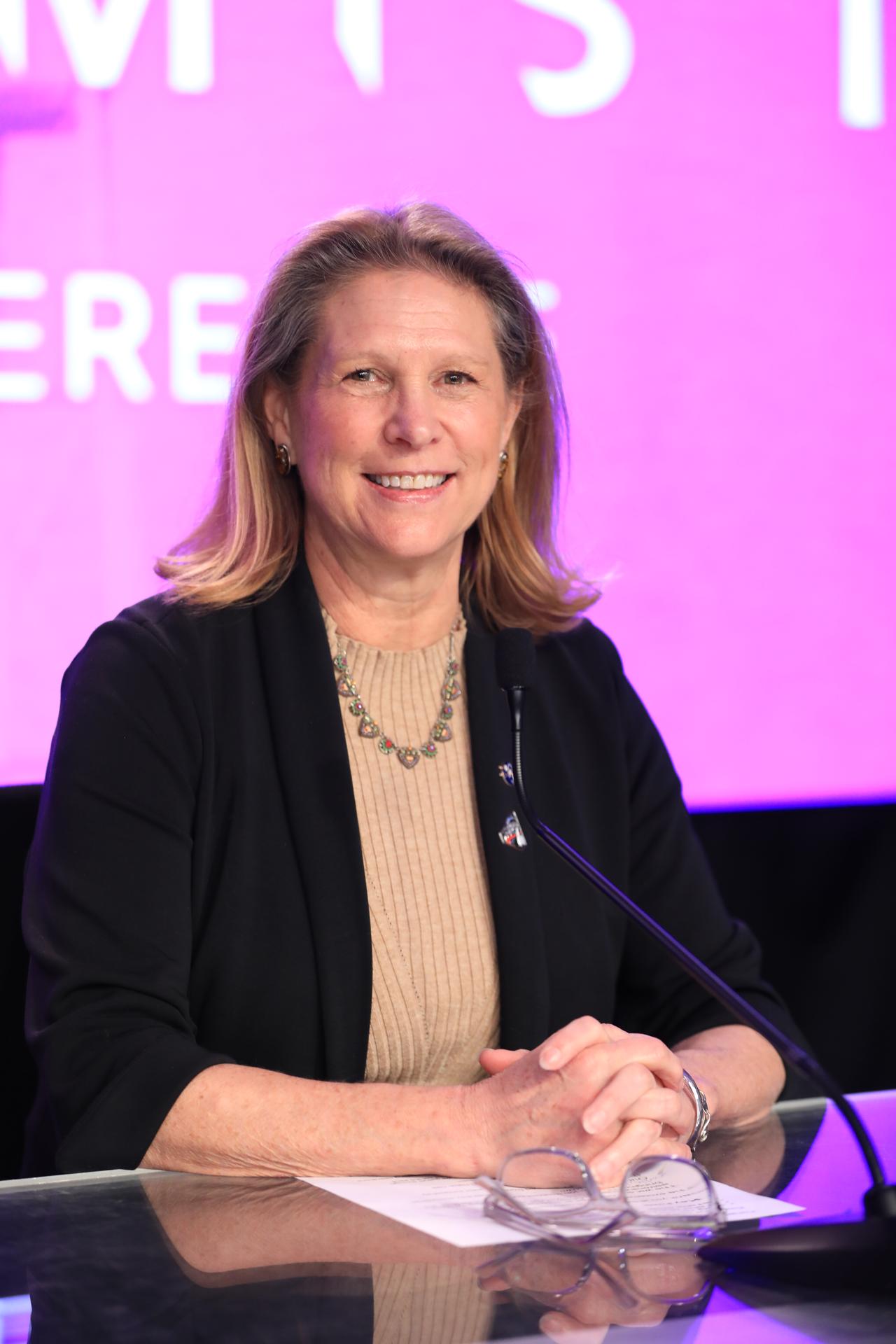
Lori Glaze, acting associate administrator for Exploration Systems Development Mission Directorate, participates in a news conference on Tuesday, Feb. 3, 2026, to discuss the completion of Artemis II wet dress rehearsal at NASA’s Kennedy Space Center in Florida. The wet dress rehearsal allows the Artemis II launch team to run through operations to load propellant, conduct a full launch countdown, demonstrate the ability to recycle the countdown clock, and drain the tanks to practice timelines and procedures for launch.
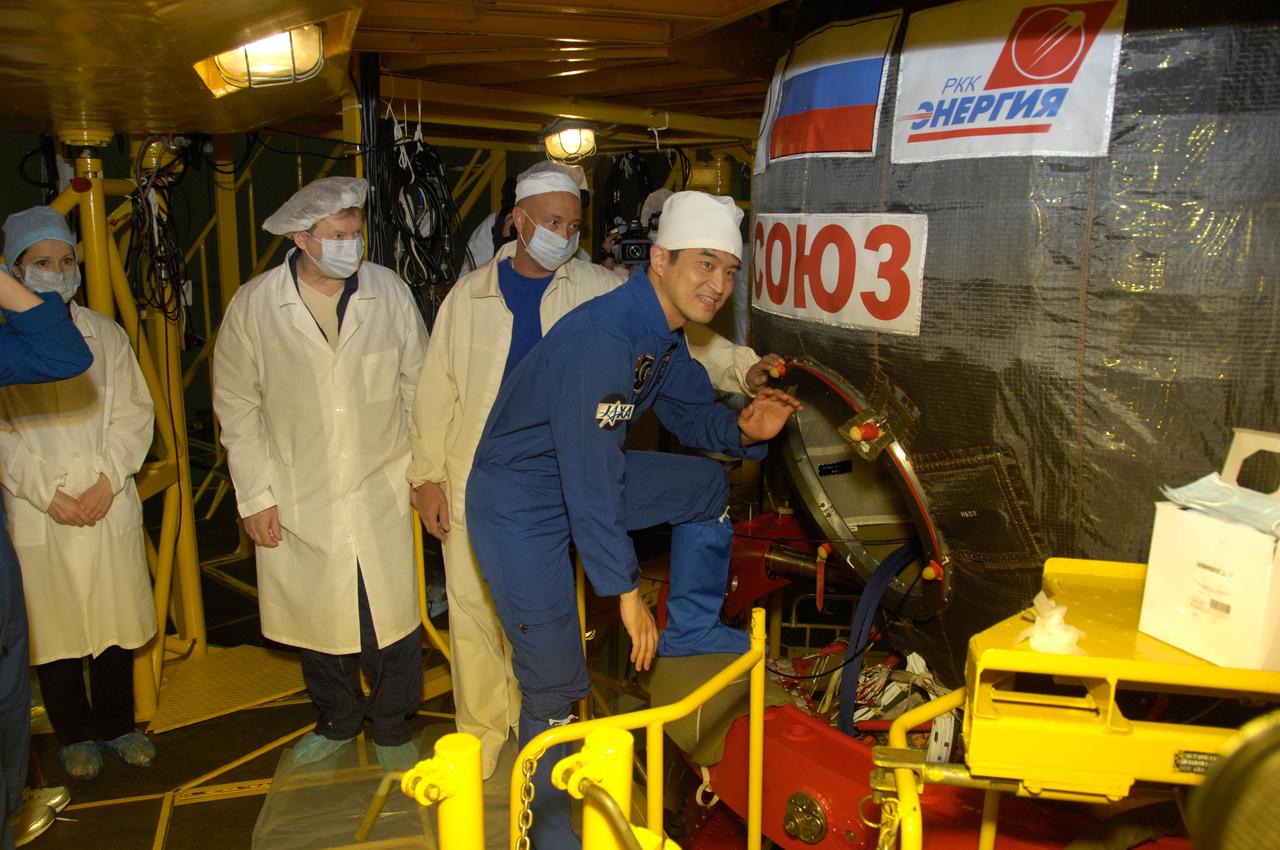
In the Integration Facility at the Baikonur Cosmodrome in Kazakhstan, Expedition 48-49 crewmember Takuya Onishi of the Japan Aerospace Exploration Agency climbs aboard the Soyuz MS-01 spacecraft June 25 for a “fit check” dress rehearsal activity. Onishi, Kate Rubins of NASA and Anatoly Ivanishin of Roscosmos will launch on July 7, Baikonur time, on the Soyuz MS-01 for a planned four-month mission on the International Space Station. NASA/Alexander Vysotsky
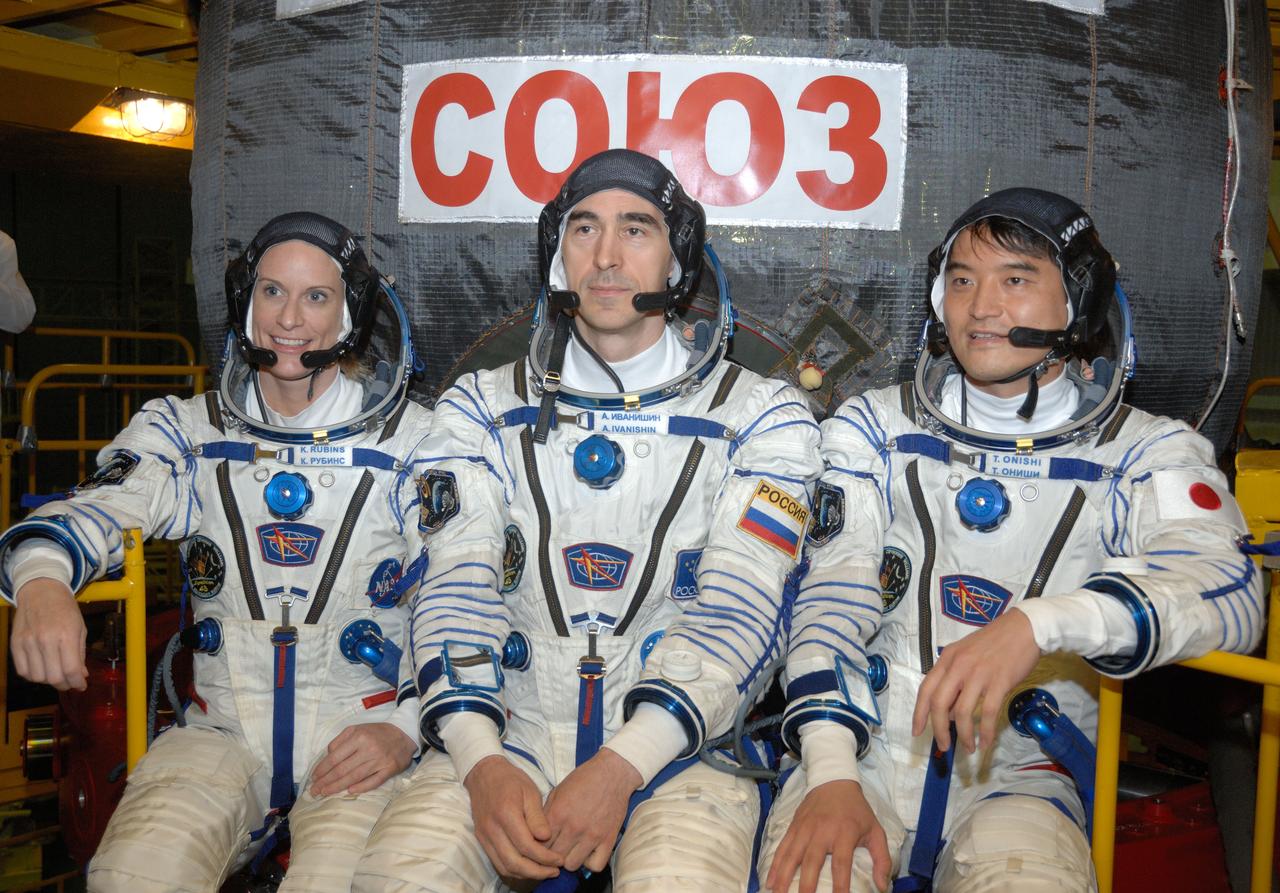
In the Integration Facility at the Baikonur Cosmodrome in Kazakhstan, Expedition 48-49 crewmembers Kate Rubins of NASA (left), Anatoly Ivanishin of Roscosmos (center) and Takuya Onishi of the Japan Aerospace Exploration Agency (right) pose for pictures June 25 in front of the Soyuz MS-01 spacecraft during a “fit check” dress rehearsal activity. The trio will launch on July 7, Baikonur time, on the Soyuz MS-01 for a planned four-month mission on the International Space Station. NASA/Alexander Vysotsky
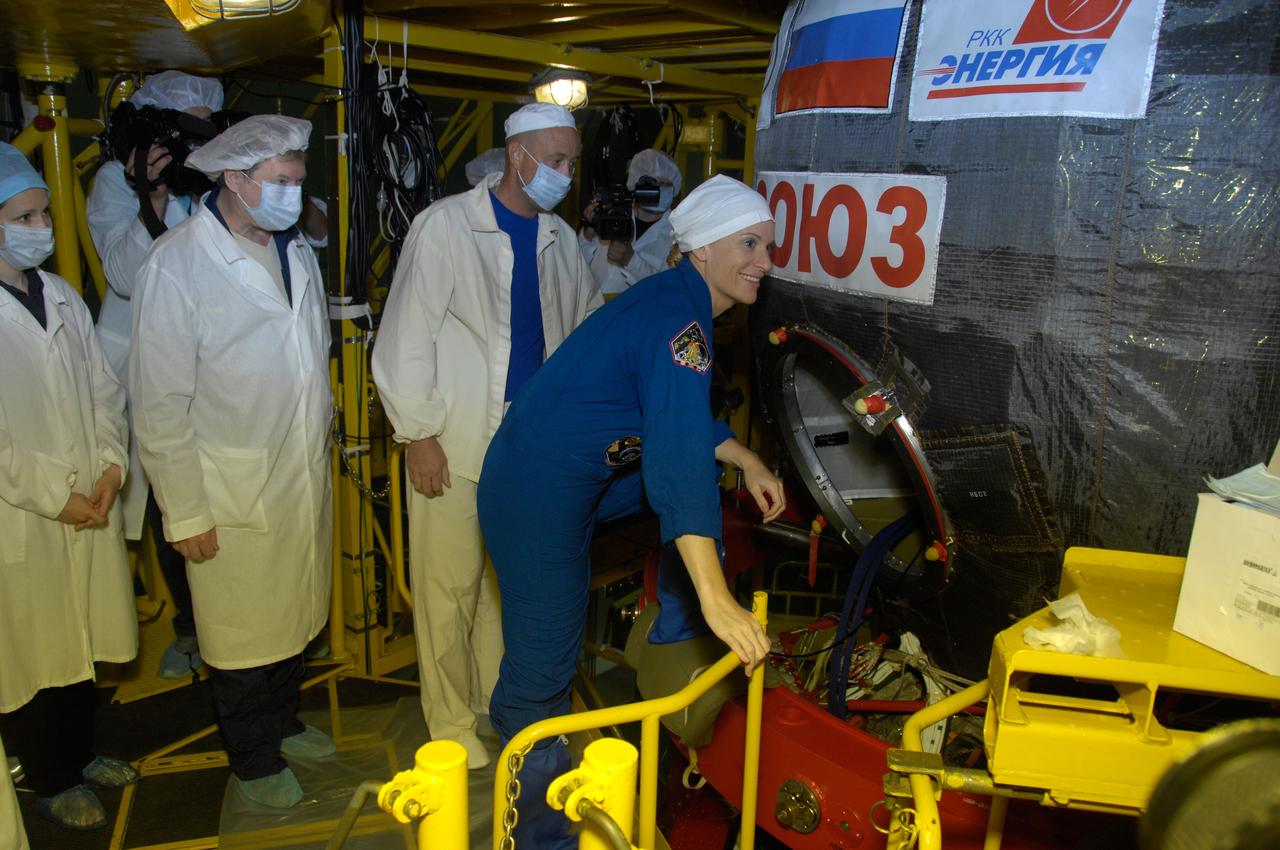
In the Integration Facility at the Baikonur Cosmodrome in Kazakhstan, Expedition 48-49 crewmember Kate Rubins of NASA climbs aboard the Soyuz MS-01 spacecraft June 25 for a “fit check” dress rehearsal activity. Rubins, Anatoly Ivanishin of Roscosmos and Takuya Onishi of the Japan Aerospace Exploration Agency will launch on July 7, Baikonur time, on the Soyuz MS-01 for a planned four-month mission on the International Space Station. NASA/Alexander Vysotsky
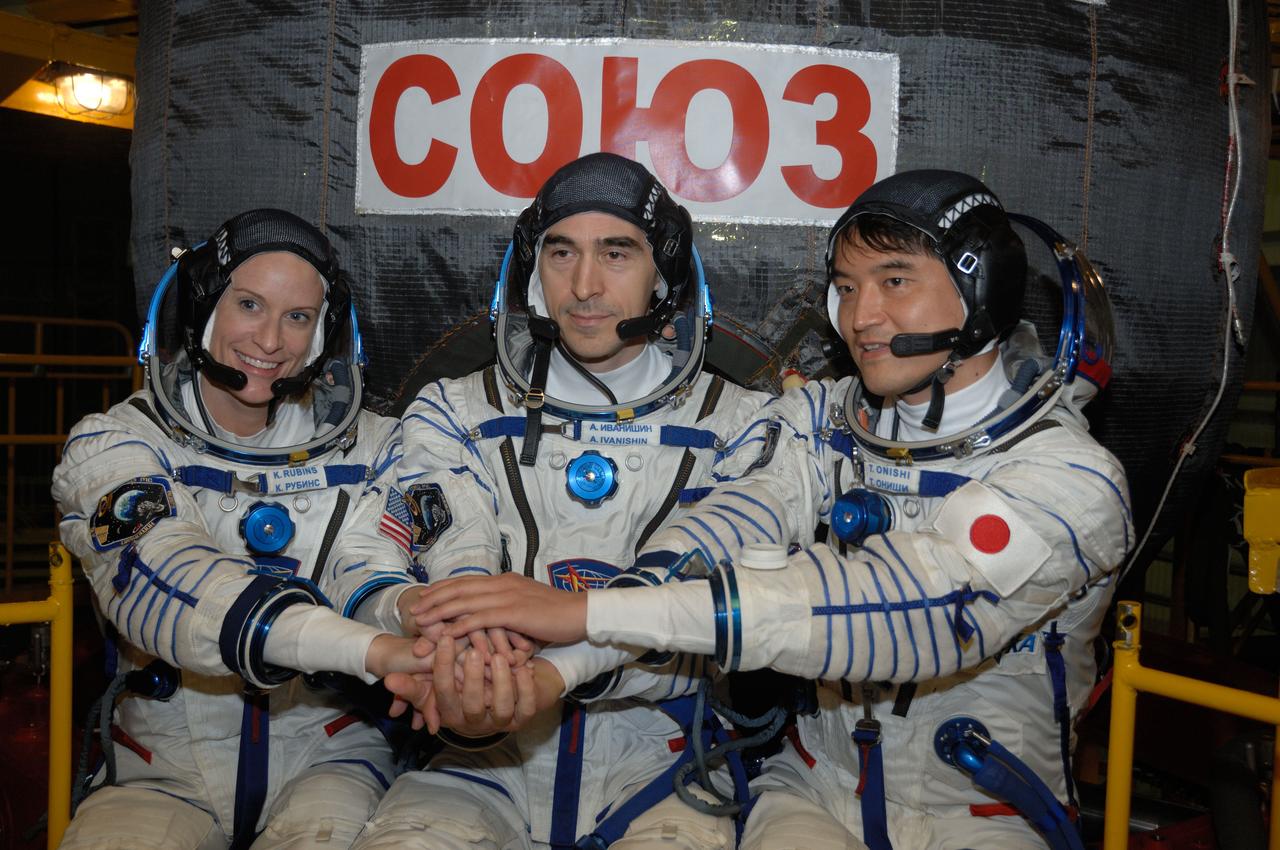
In the Integration Facility at the Baikonur Cosmodrome in Kazakhstan, Expedition 48-49 crewmembers Kate Rubins of NASA (left), Anatoly Ivanishin of Roscosmos (center) and Takuya Onishi of the Japan Aerospace Exploration Agency (right) pose for pictures June 25 in front of the Soyuz MS-01 spacecraft during a “fit check” dress rehearsal activity. The trio will launch on July 7, Baikonur time, on the Soyuz MS-01 for a planned four-month mission on the International Space Station. NASA/Alexander Vysotsky
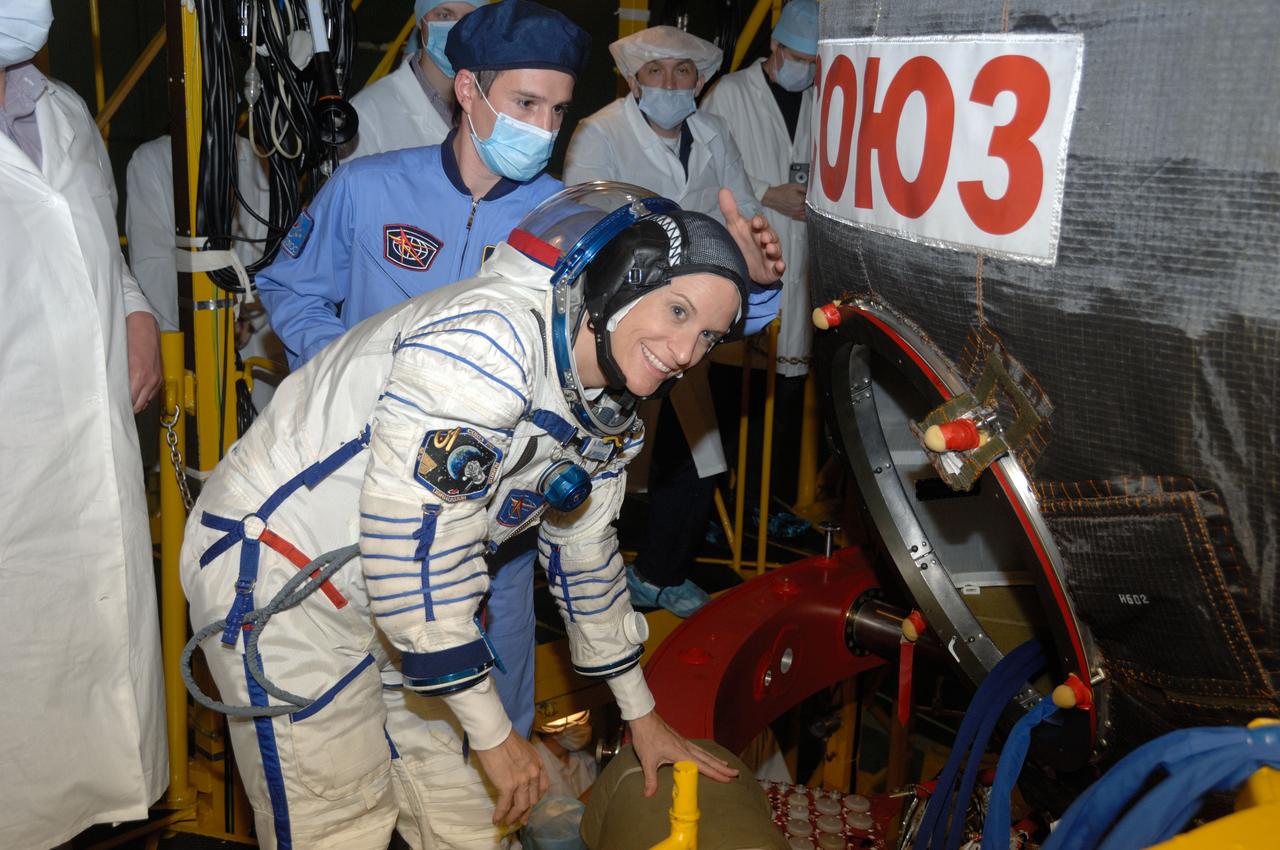
In the Integration Facility at the Baikonur Cosmodrome in Kazakhstan, Expedition 48-49 crewmember Kate Rubins of NASA climbs aboard the Soyuz MS-01 spacecraft June 25 for a “fit check” dress rehearsal activity. Rubins, Anatoly Ivanishin of Roscosmos and Takuya Onishi of the Japan Aerospace Exploration Agency will launch on July 7, Baikonur time, on the Soyuz MS-01 spacecraft for a planned four-month mission on the International Space Station. NASA/Alexander Vysotsky
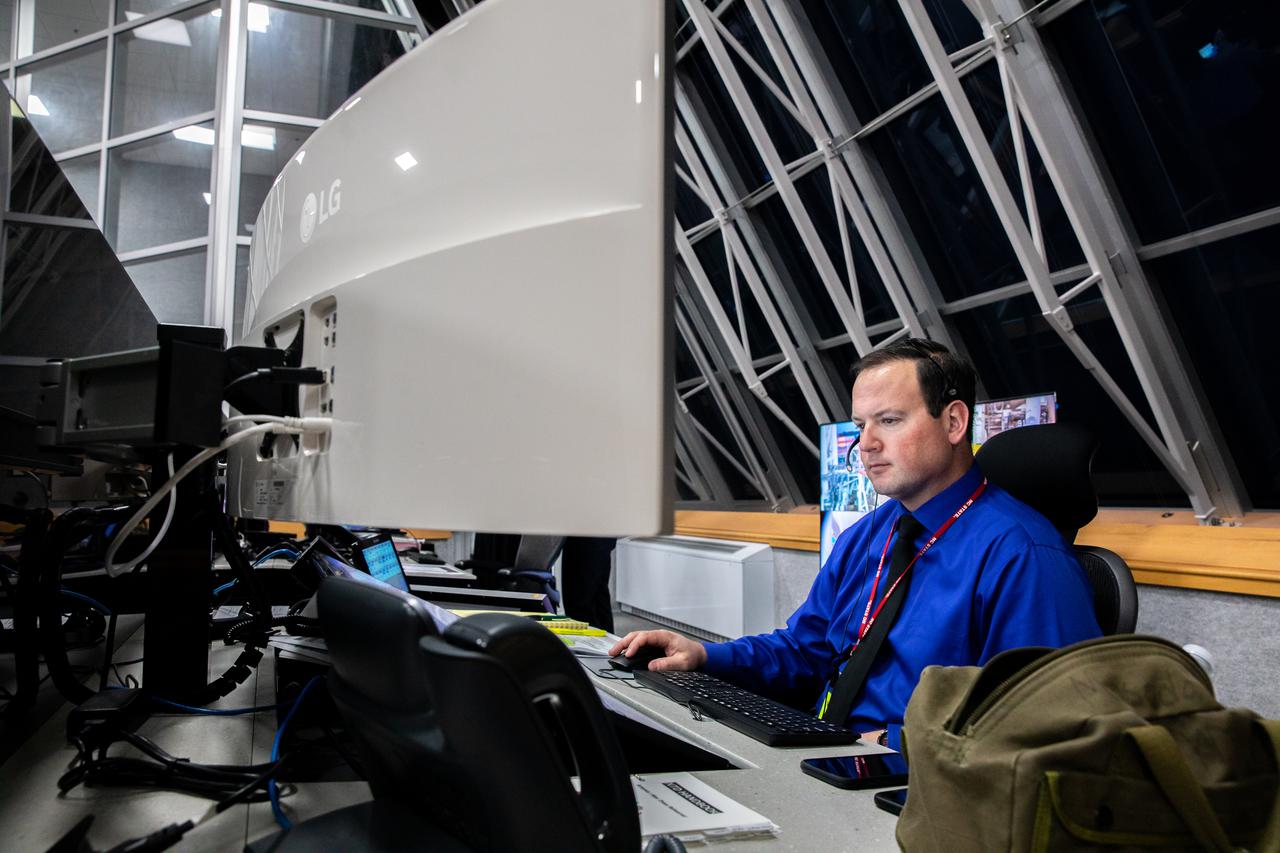
Wes Mosedale, technical assistant to the Artemis I launch director, participates in a wet dress rehearsal for the Artemis I mission on April 14, 2022, inside Firing Room 1 in the Launch Control Center at NASA’s Kennedy Space Center in Florida. The wet dress rehearsal is the final major test before launch and allows the launch team to run through all countdown operations prior to liftoff. The first in an increasingly complex series of missions, Artemis I will test NASA’s Space Launch System rocket and Orion spacecraft as an integrated system prior to crewed flights to the Moon.
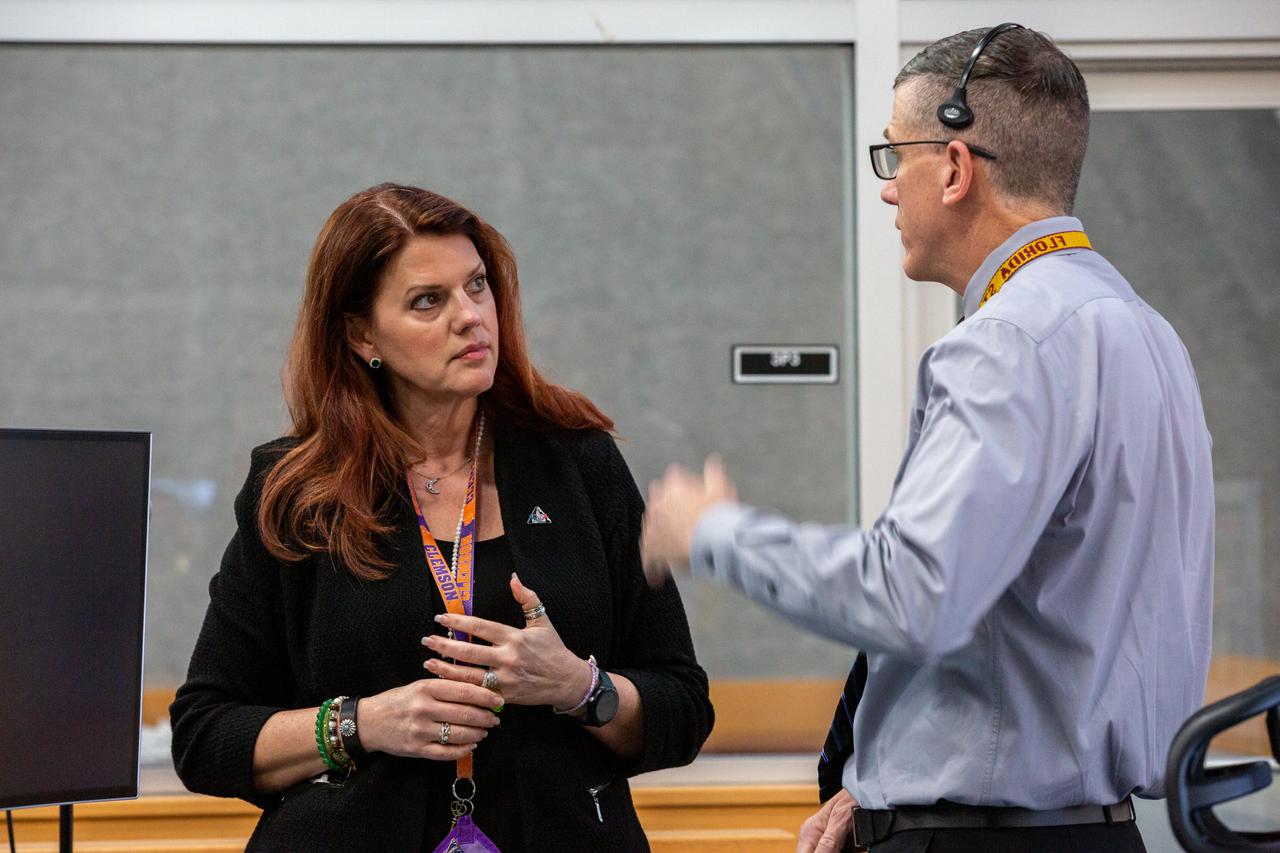
Artemis I Launch Director Charlie Blackwell-Thompson, left, and Assistant Launch Director Jeremy Graeber participate in a wet dress rehearsal for the Artemis I mission on April 14, 2022, inside Firing Room 1 in the Launch Control Center at NASA’s Kennedy Space Center in Florida. The wet dress rehearsal is the final major test before launch and allows the launch team to run through all countdown operations prior to liftoff. The first in an increasingly complex series of missions, Artemis I will test NASA’s Space Launch System rocket and Orion spacecraft as an integrated system prior to crewed flights to the Moon.
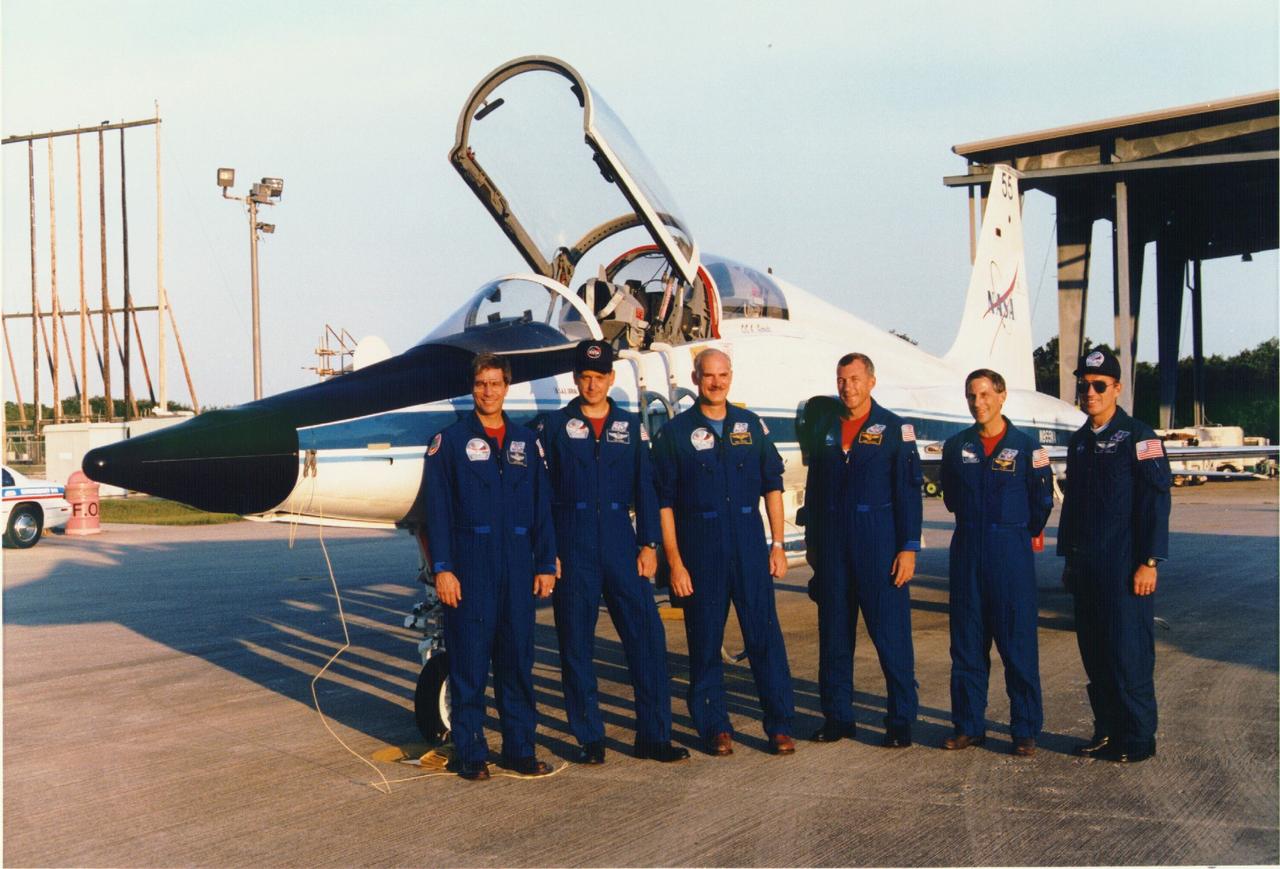
KENNEDY SPACE CENTER, FLA. - The STS-79 astronauts arrive at KSC's Shuttle Landing Facility in their T-38 aircraft from Johnson Space Center in Houston. From left are Mission Specialists John E. Blaha and Tom Akers; Commander William F. Readdy; PIlot Terrence W. Wilcutt; and Mission Specialists Jay Apt and Carl E. Walz. The astronauts are at KSC for the Terminal Countdown Demonstration Test, a dress rehearsal for launch. They are scheduled to lift off around Sept. 12 on Mission STS-79, the fourth docking between the U.S. Shuttle and Russian Space Station Mir.
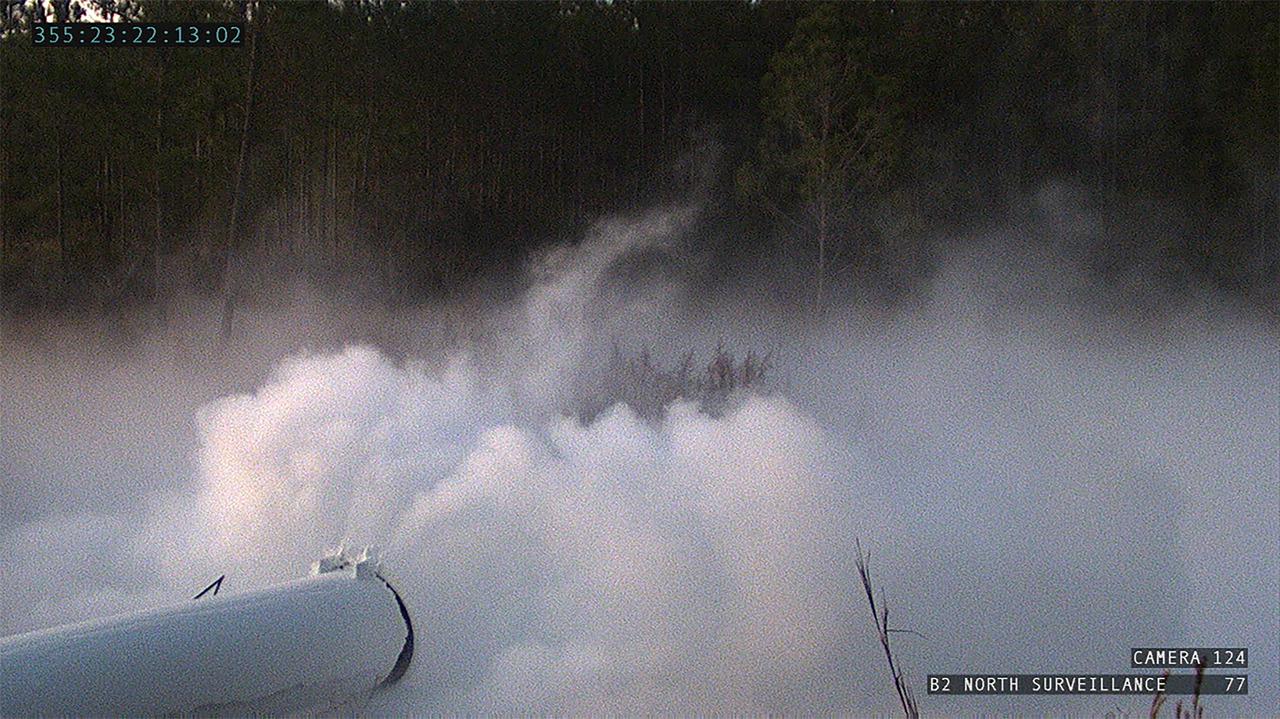
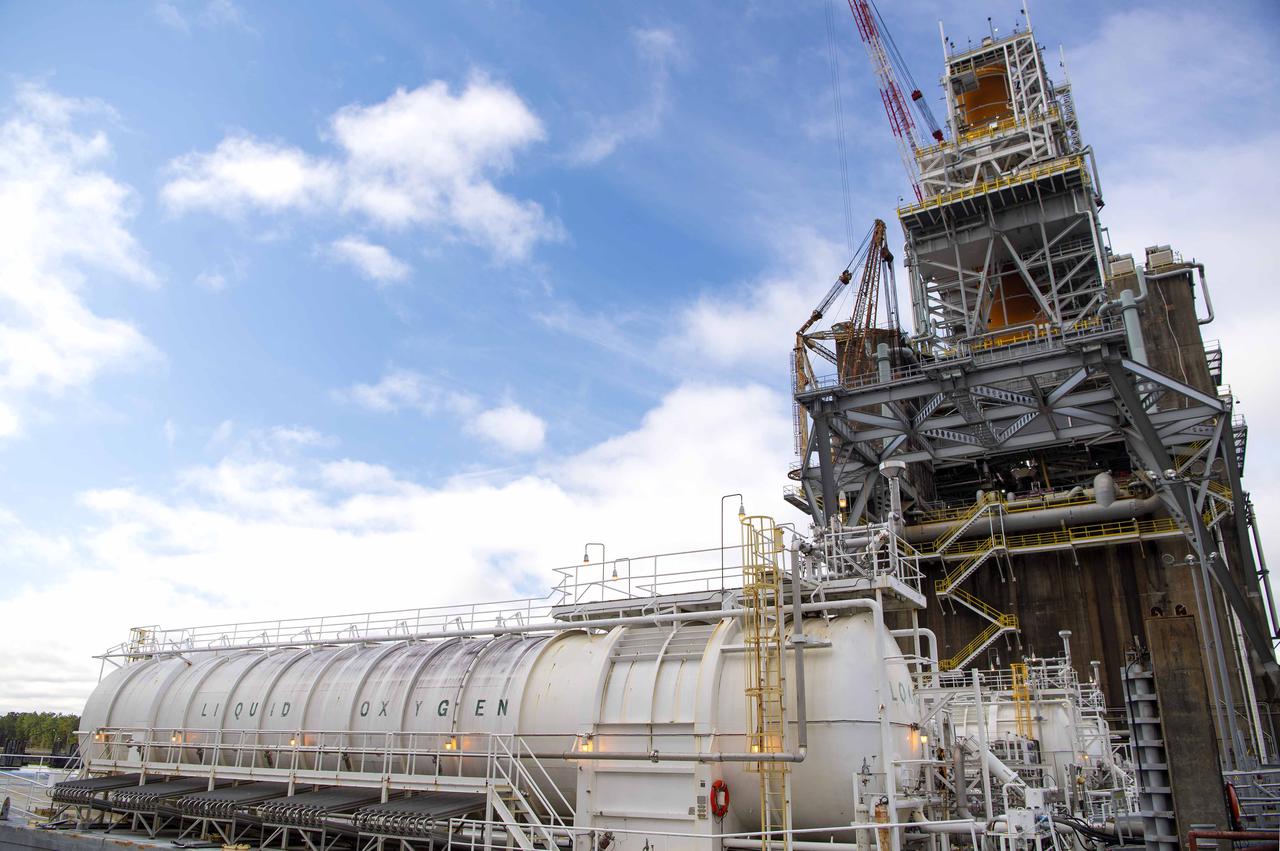
Operators at the B-2 Test Stand at Stennis Space Center near Bay St. Louis, Mississippi, conducted a wet dress rehearsal for the hot fire test of the core stage of NASA’s Space Launch System on Dec. 21, 2020. In this image, liquid oxygen can be seen venting from B-2 Test Stand piping. Following the wet dress rehearsal, operators will conduct a full hot fire test of the core stage and its four RS-25 engines. The hot fire will conclude a series of eight Green Run tests of all core stage systems before it is transported to Kennedy Space Center for launch on the Artemis I mission.
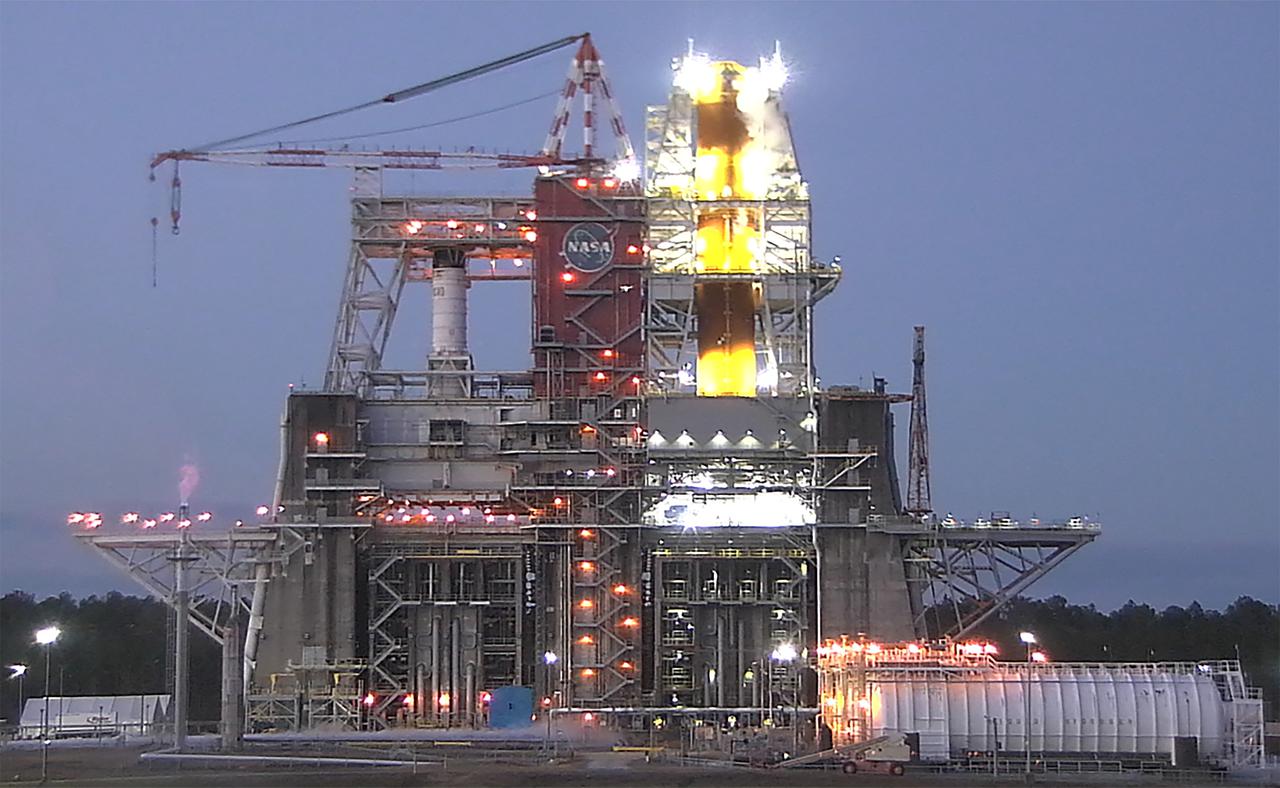
Operators at the B-2 Test Stand at Stennis Space Center near Bay St. Louis, Mississippi, conducted a wet dress rehearsal for the hot fire test of the core stage of NASA’s Space Launch System on Dec. 21, 2020. In this image, liquid oxygen can be seen venting near the top of the installed core stage. Following the wet dress rehearsal, operators will conduct a full hot fire test of the core stage and its four RS-25 engines. The hot fire will conclude a series of eight Green Run tests of all core stage systems before it is transported to Kennedy Space Center for launch on the Artemis I mission.
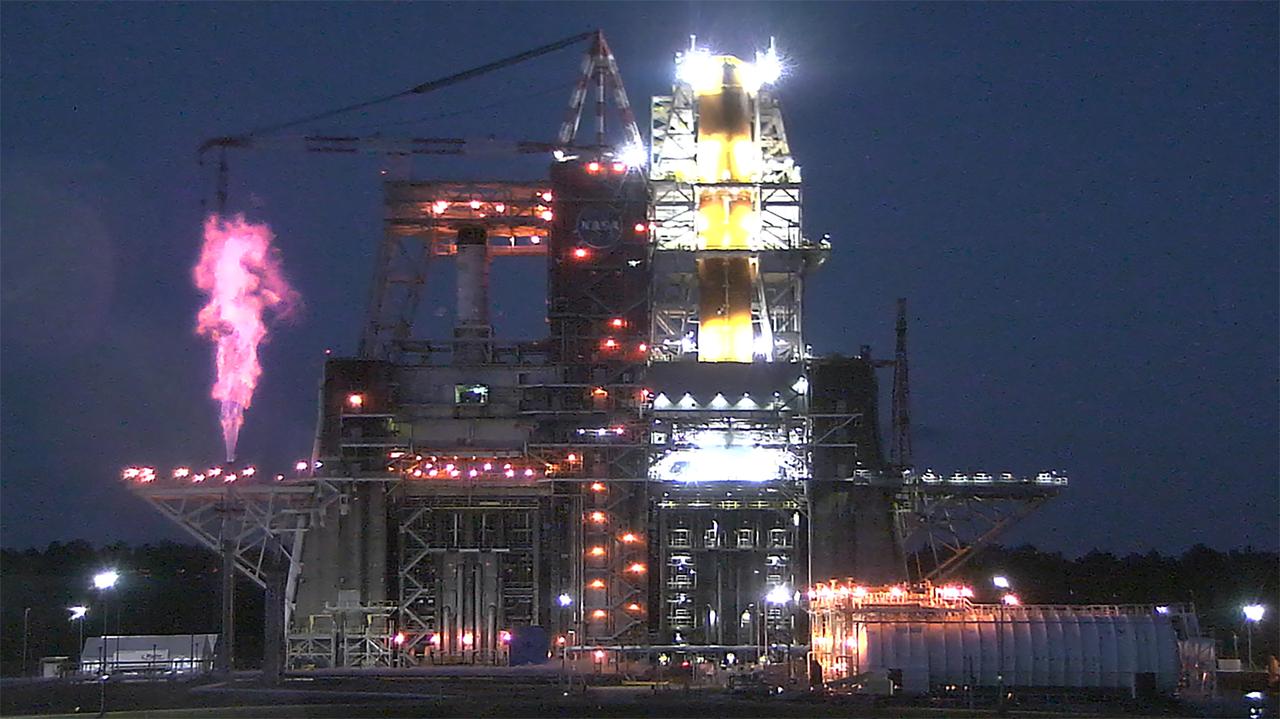
Operators at the B-2 Test Stand at Stennis Space Center near Bay St. Louis, Mississippi, conducted a wet dress rehearsal for the hot fire test of the core stage of NASA’s Space Launch System on Dec. 21, 2020. In this image, liquid oxygen can be seen venting near the top of the installed core stage. Following the wet dress rehearsal, operators will conduct a full hot fire test of the core stage and its four RS-25 engines. The hot fire will conclude a series of eight Green Run tests of all core stage systems before it is transported to Kennedy Space Center for launch on the Artemis I mission.
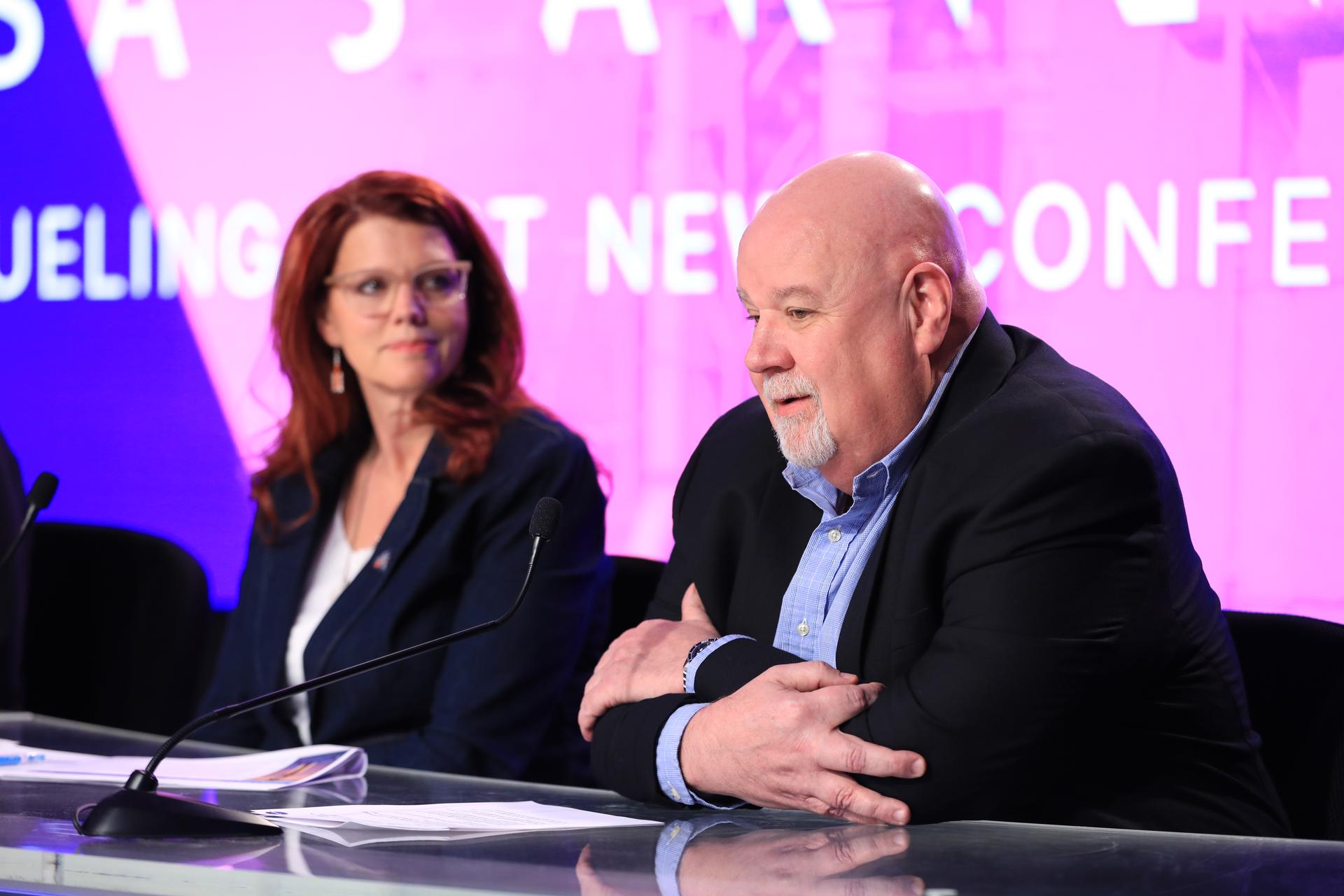
From left, Charlie Blackwell-Thompson, launch director, Exploration Ground Systems Program, and John Honeycutt, chair, Artemis II mission management team, participate in a news conference on Tuesday, Feb. 3, 2026, to discuss the completion of Artemis II wet dress rehearsal at NASA’s Kennedy Space Center in Florida. The wet dress rehearsal allows the Artemis II launch team to run through operations to load propellant, conduct a full launch countdown, demonstrate the ability to recycle the countdown clock, and drain the tanks to practice timelines and procedures for launch.
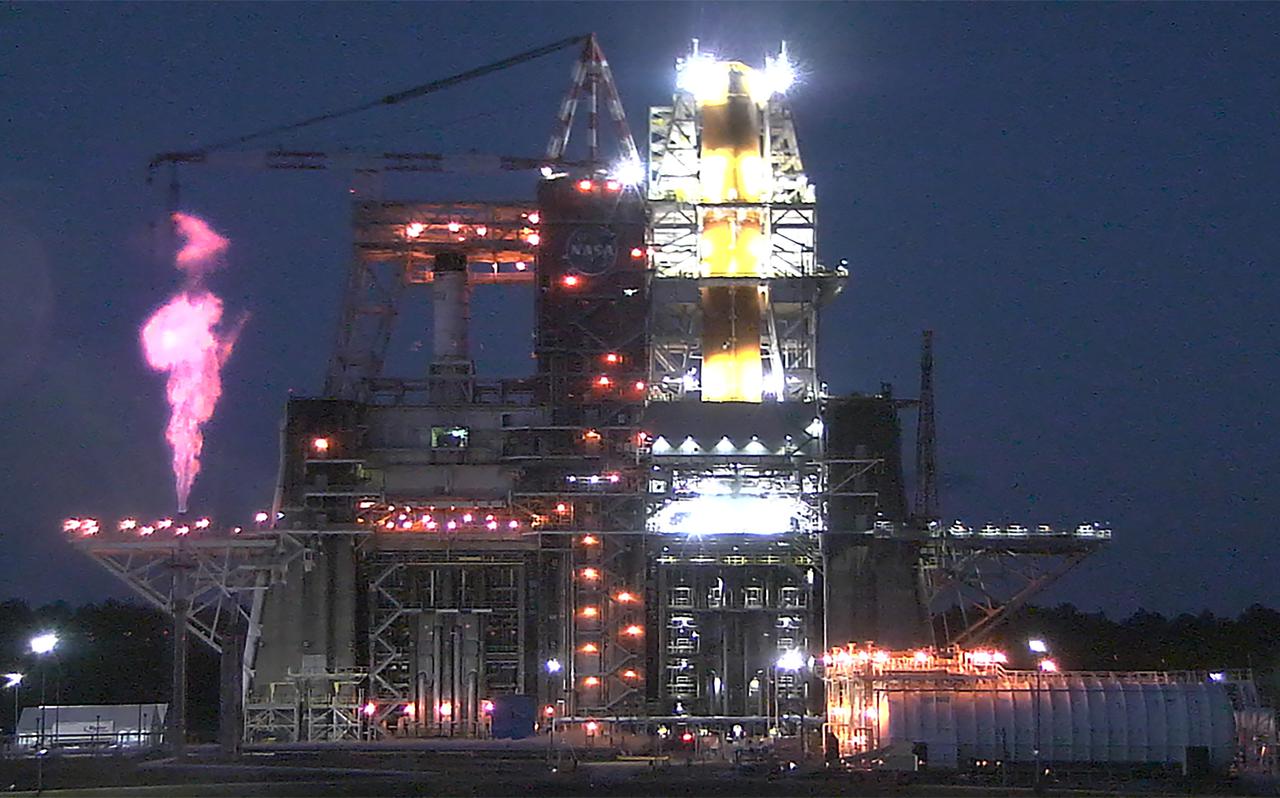
Operators at the B-2 Test Stand at Stennis Space Center near Bay St. Louis, Mississippi, conducted a wet dress rehearsal for the hot fire test of the core stage of NASA’s Space Launch System on Dec. 21, 2020. In this image, liquid oxygen can be seen venting near the top of the installed core stage. Following the wet dress rehearsal, operators will conduct a full hot fire test of the core stage and its four RS-25 engines. The hot fire will conclude a series of eight Green Run tests of all core stage systems before it is transported to Kennedy Space Center for launch on the Artemis I mission.
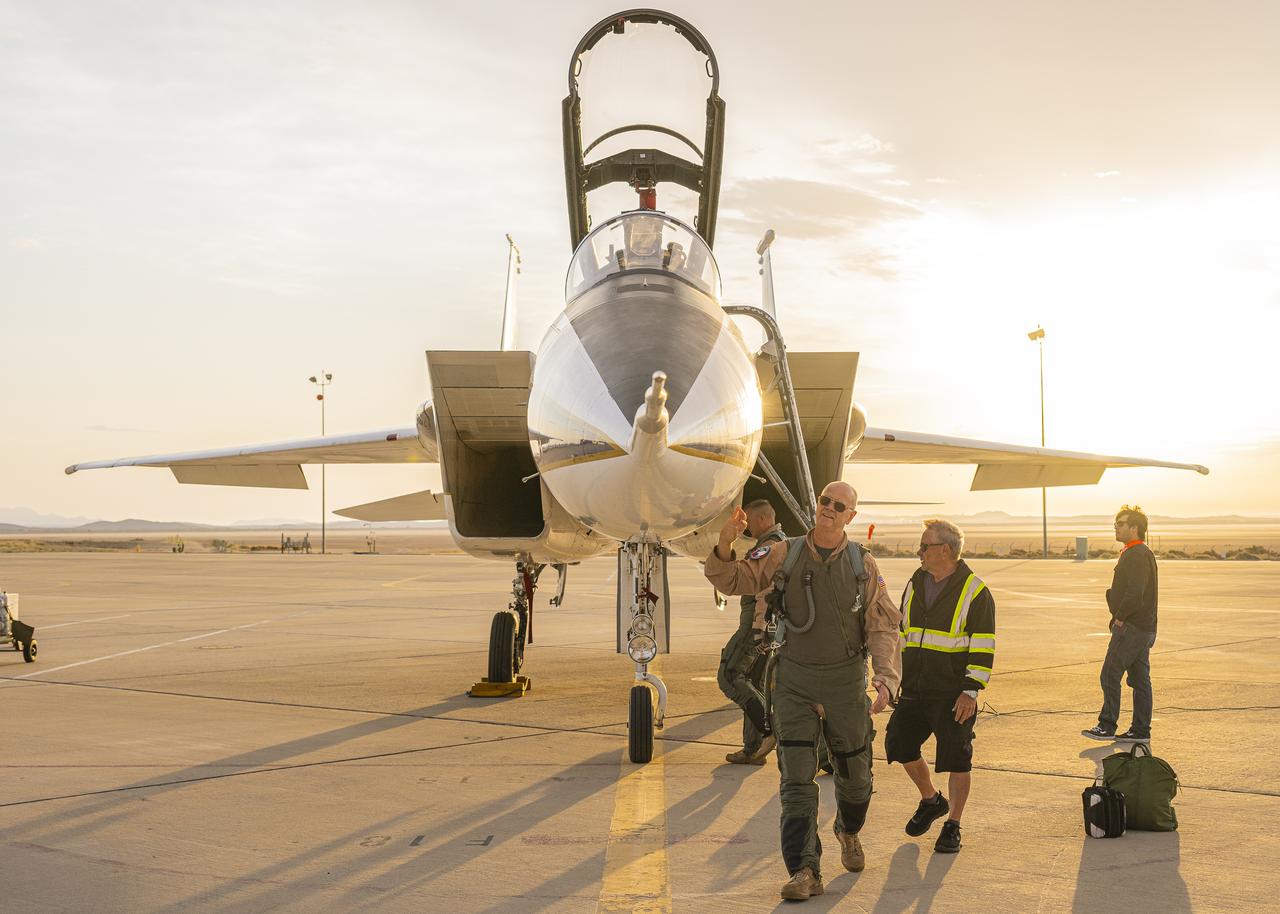
NASA test pilot Nils Larson walks around an F-15B research aircraft for a rehearsal flight supporting the agency’s Quesst mission at NASA’s Armstrong Flight Research Center in Edwards, California. The flight was part of a full-scale dress rehearsal for Phase 2 of the mission, which will eventually measure quiet sonic thumps generated by the X-59. The flight series helped NASA teams refine procedures and practice data collection ahead of future X-59 flights.
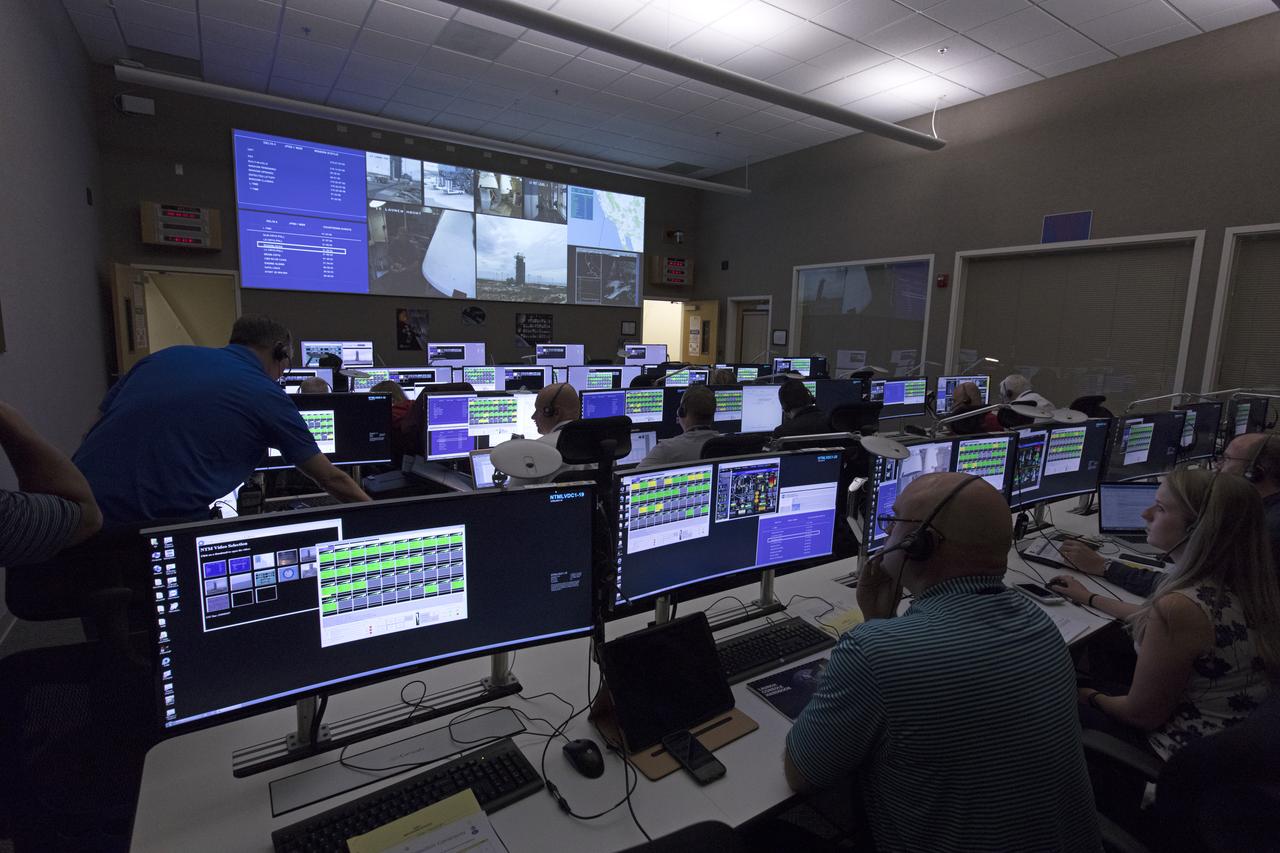
In the Mission Director's Center at Vandenberg Air Force Base in California, NASA and contractor managers and engineers monitor progress during a countdown rehearsal for the launch of a United Launch Alliance Delta II rocket with the Joint Polar Satellite System-1, or JPSS-1, spacecraft. Built by Ball Aerospace and Technologies Corp. of Boulder, Colorado, JPSS is the first in a series four next-generation environmental satellites in a collaborative program between the NOAA and NASA. Liftoff is scheduled to take place from Vandenberg's Space Launch Complex 2.
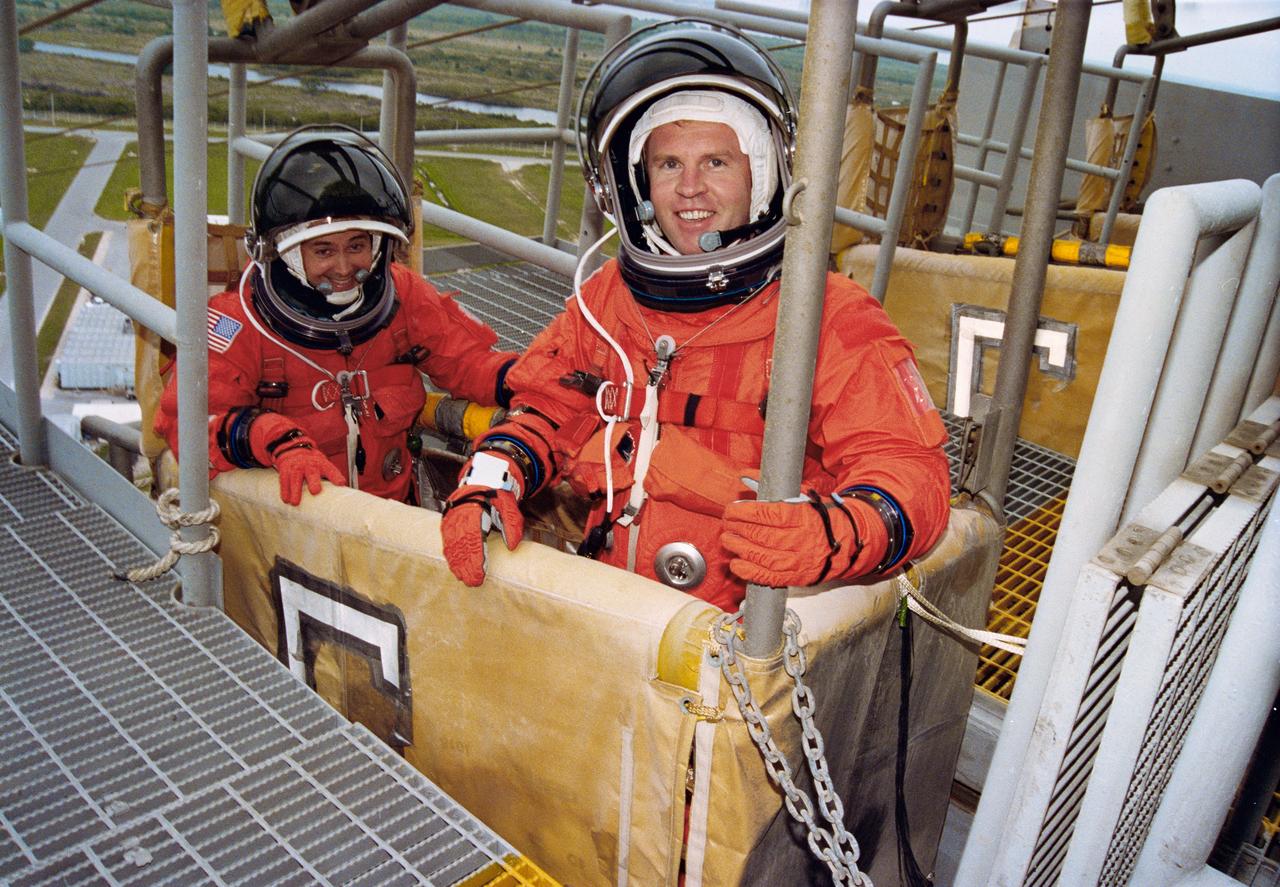
S96-08583 (24 April 1996) --- Andrew S.W. Thomas and Daniel W. Bursch, mission specialists, are in the slidewire baskets of the emergency exit system at Launch Pad 39B, participating in the final phase of the Terminal Countdown Demonstration Test (TCDT), a dress rehearsal for launch.

S99-10566 (24 August 1999) --- Astronaut Janice Voss, STS-99 mission specialist, simulates a countdown during training at the Johnson Space Center's Systems Integration Facility. Voss is on the mid deck of a shuttle trainer to participate in a dress rehearsal for the pre-launch phase of her upcoming flight aboard the Space Shuttle Endeavour.
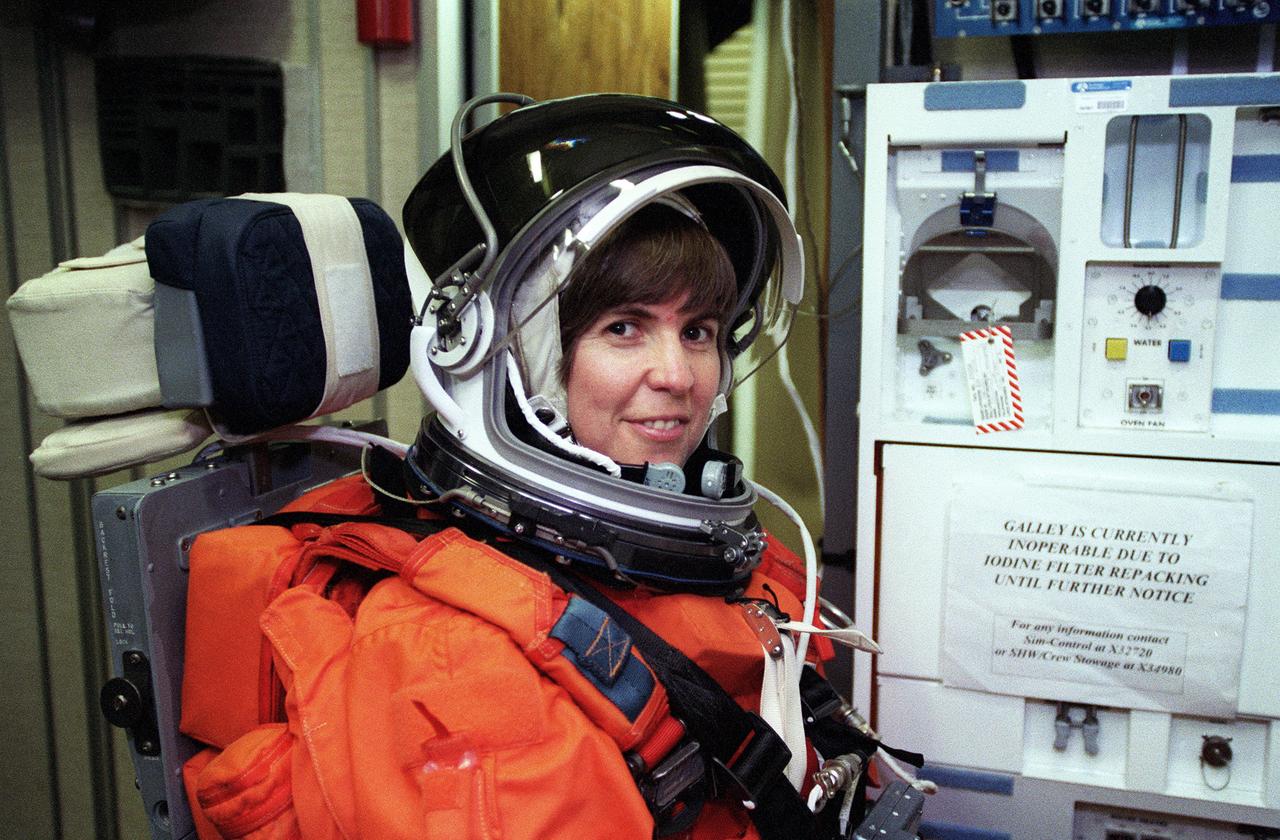
S99-10569 (24 August 1999) --- Astronaut Janice Voss, STS-99 mission specialist, simulates a countdown during training at the Johnson Space Center's Systems Integration Facility. Voss is on the mid deck of a shuttle trainer to participate in a dress rehearsal for the pre-launch phase of her upcoming flight aboard the Space Shuttle Endeavour.
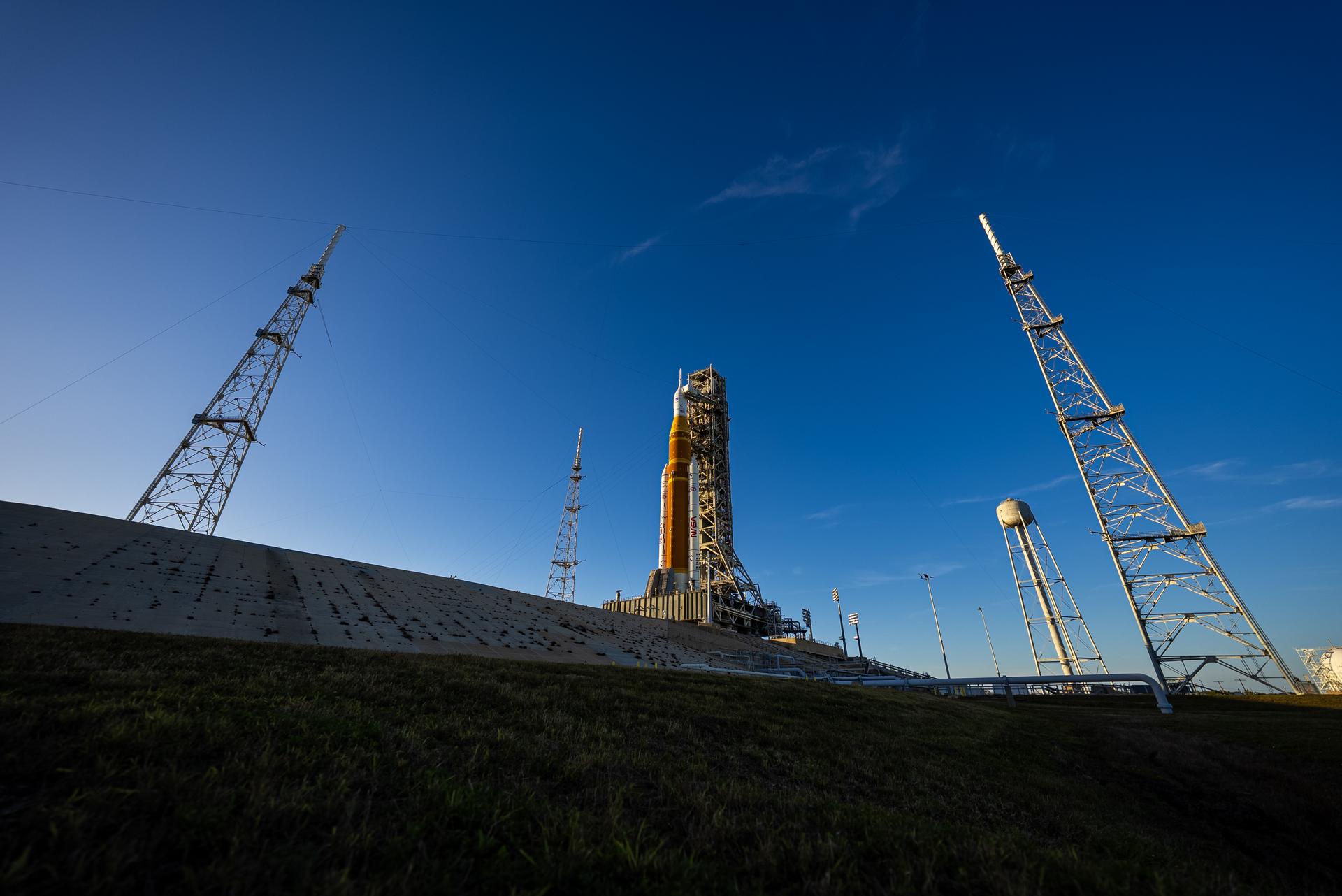
The sun sets on NASA’s Space Launch System (SLS) rocket and Orion spacecraft as they stand fully assembled atop the mobile launcher at Launch Pad 39B at NASA’s Kennedy Space Center in Florida. The sky glows with warm shades of orange and pink, silhouetting the towering rocket and its solid rocket boosters against the fading light. Photographed on January 31, 2026, the scene captures teams preparing for a wet dress rehearsal for the Artemis II mission, rehearsing launch countdown timelines and procedures as day turns to night.