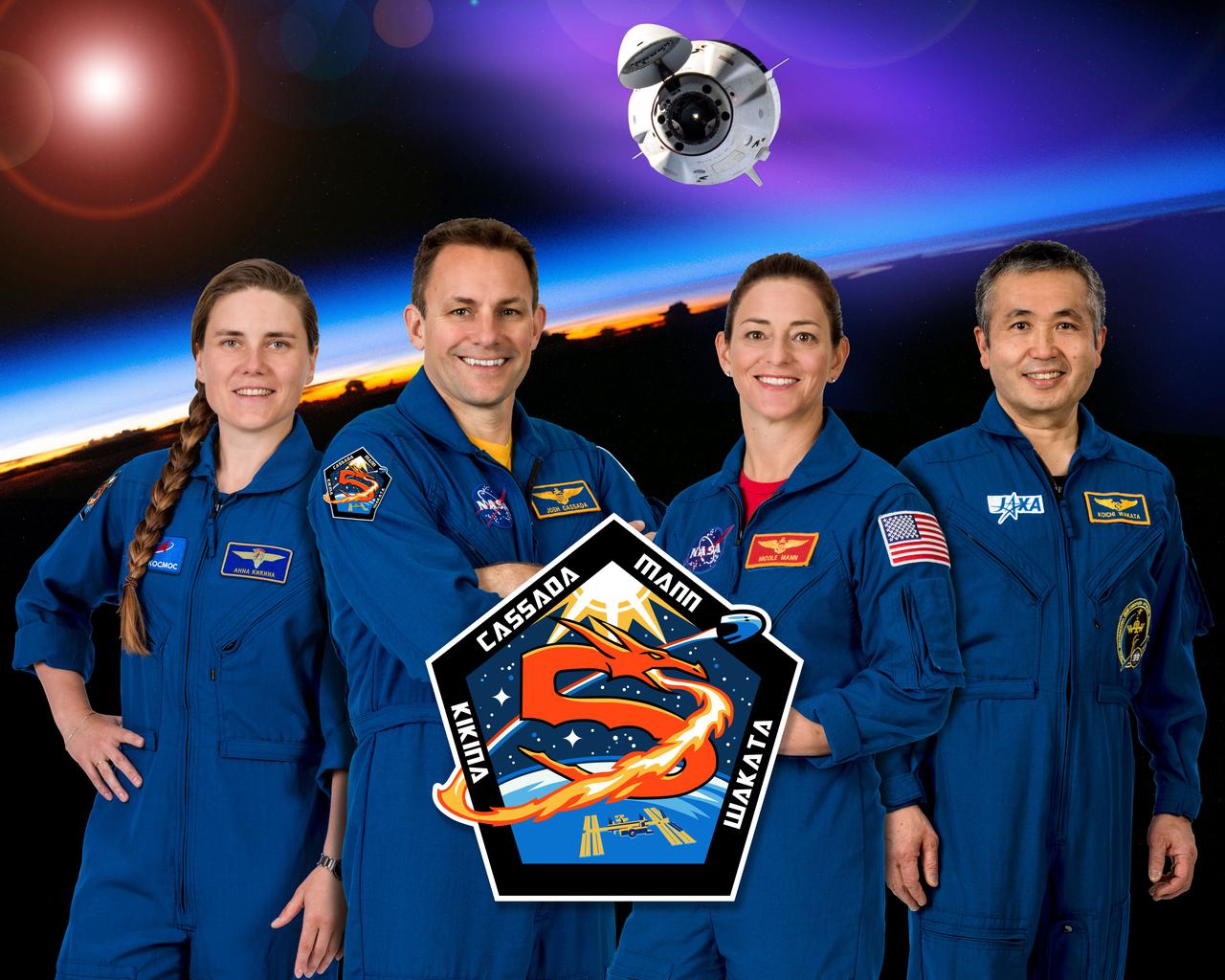
A fire-breathing, five-shaped dragon propels the Crew Dragon spacecraft of NASA's SpaceX Crew-5 mission beyond the confines of a pentagon’s outline and into low-Earth orbit. As the spacecraft ascends above the Earth’s atmosphere and its crew of courageous explorers embarks on their expedition aboard the International Space Station, the dragon’s fire transitions to the colors of NASA’s Commercial Crew Program representing the unrelenting efforts of the many teams who have met this challenge with unparalleled determination. The sun shines its light on this international team as they bravely pursue.
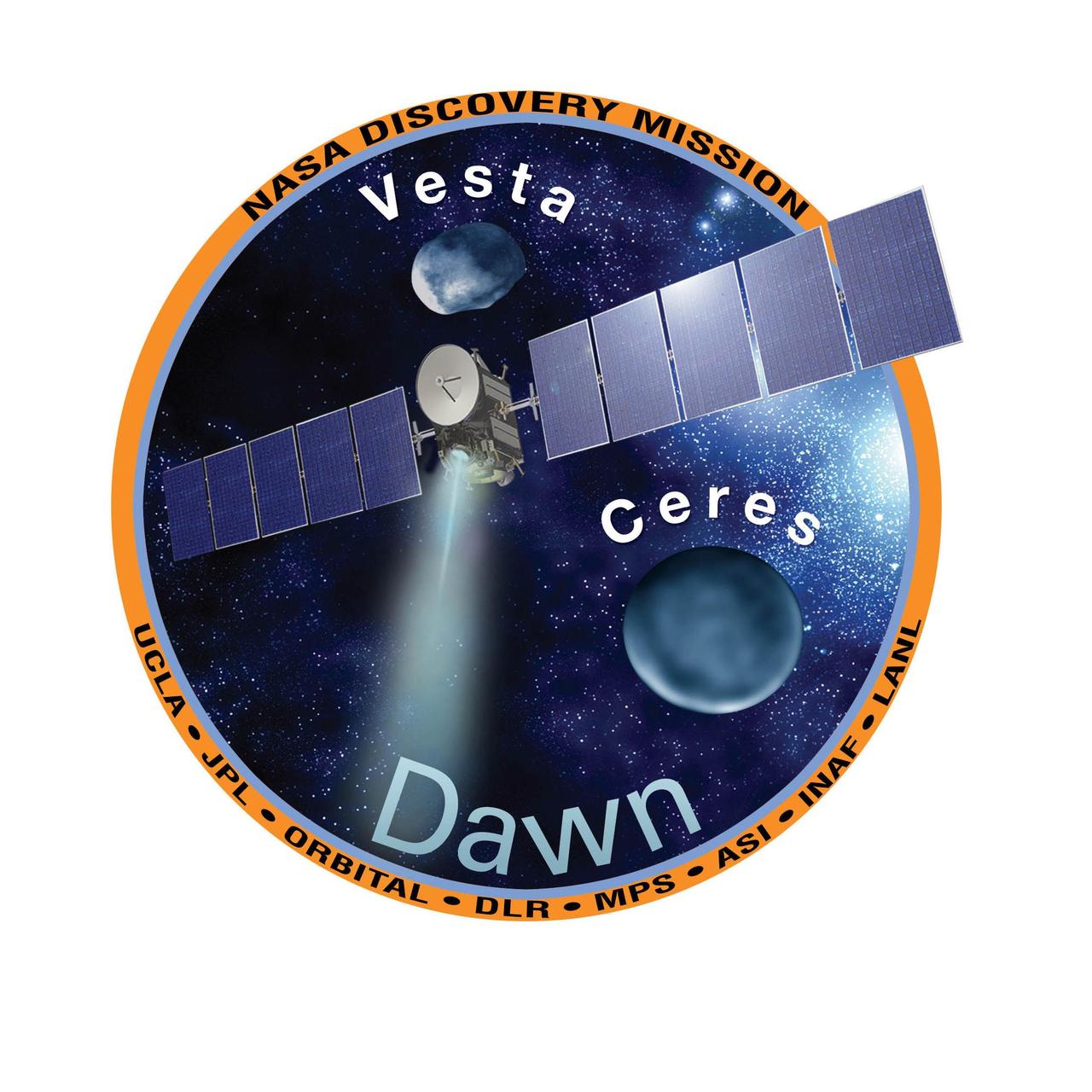
NASA Dawn mission patch, part of the Dawn Mission Art series. http://photojournal.jpl.nasa.gov/catalog/PIA19375
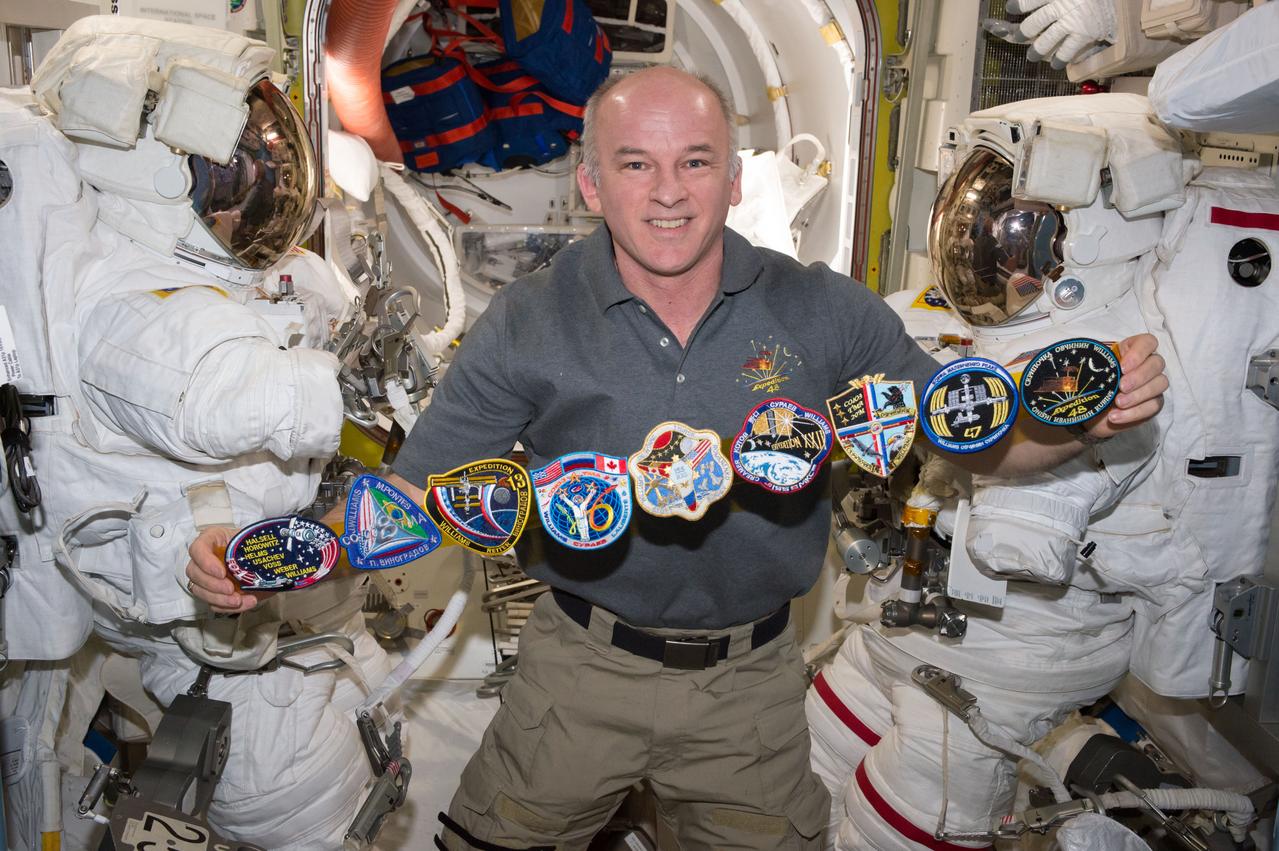
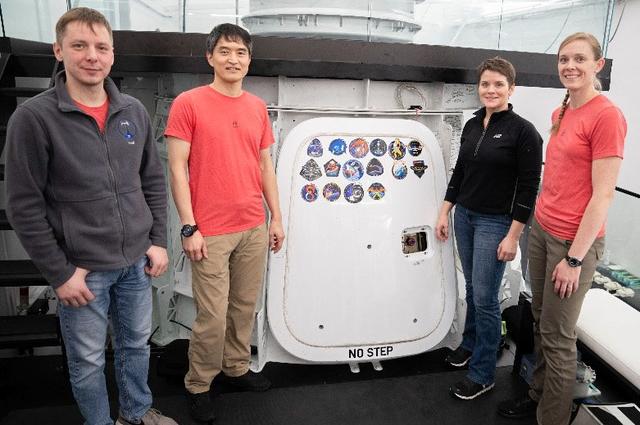
Commander Jeff Williams poses for a photo in the Quest Airlock (A/L) with all of his mission patches. The patches are, from left, STS-101, Soyuz TMA-8, Expedition 13, Soyuz TMA-16, Expedition 21, Expedition 22, Soyuz TMA-20M, Expedition 47, and Expedition 48.
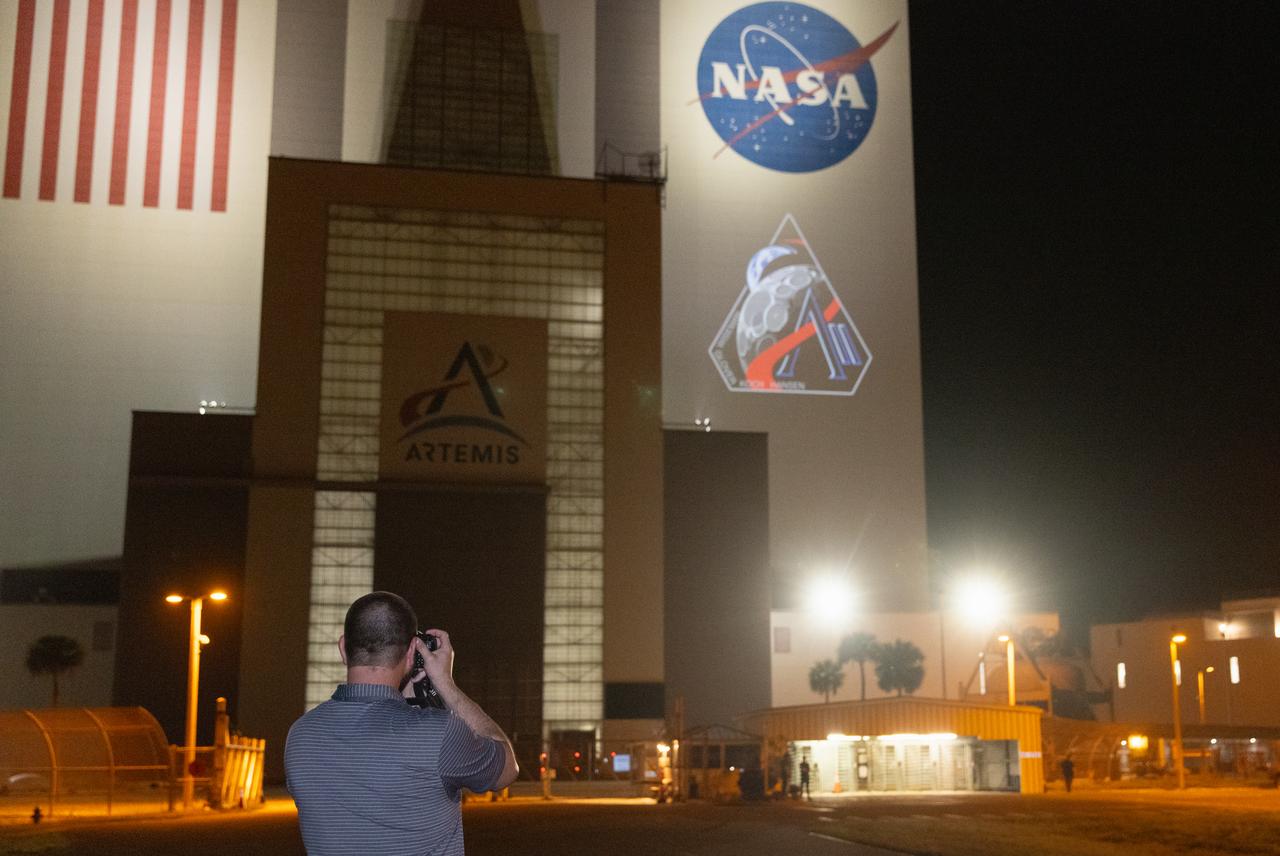
Employees at NASA’s Kennedy Space Center in Florida take photos of the official Artemis II mission crew insignia projected on the exterior of the spaceport’s Vehicle Assembly Building on Friday, April 4, 2025. The patch designates the mission as “AII,” signifying not only the second major flight of the Artemis campaign, but also an endeavor of discovery that seeks to explore for all and by all. Framed in Apollo 8’s famous Earthrise photo, the scene of the Earth and the Moon represents the dual nature of human spaceflight, both equally compelling: The Moon represents our exploration destination, focused on discovery of the unknown. The Earth represents home, focused on the perspective we gain when we look back at our shared planet and learn what it is to be uniquely human. The orbit around Earth highlights the ongoing exploration missions that have enabled Artemis to set sights on a long-term presence on the Moon and soon, Mars.
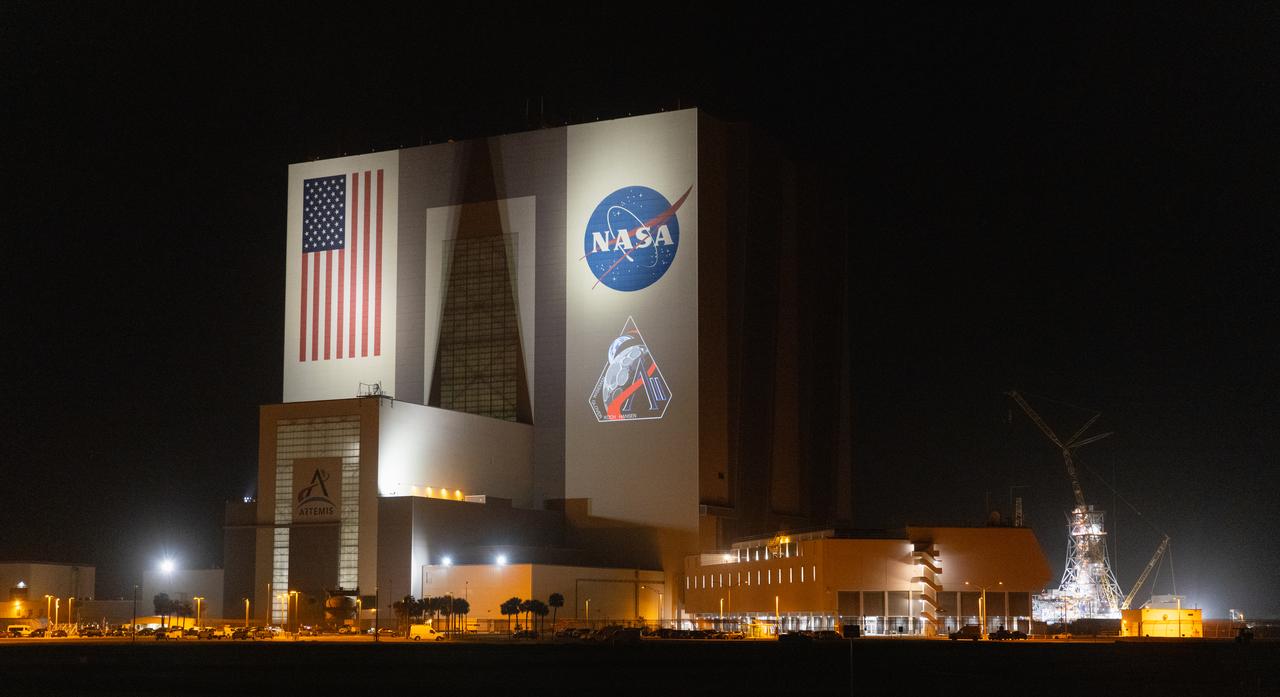
The official Artemis II mission crew insignia is projected on the exterior of the Vehicle Assembly Building at NASA’s Kennedy Space Center in Florida on Friday, April 4, 2025. The patch designates the mission as “AII,” signifying not only the second major flight of the Artemis campaign, but also an endeavor of discovery that seeks to explore for all and by all. Framed in Apollo 8’s famous Earthrise photo, the scene of the Earth and the Moon represents the dual nature of human spaceflight, both equally compelling: The Moon represents our exploration destination, focused on discovery of the unknown. The Earth represents home, focused on the perspective we gain when we look back at our shared planet and learn what it is to be uniquely human. The orbit around Earth highlights the ongoing exploration missions that have enabled Artemis to set sights on a long-term presence on the Moon and soon, Mars.
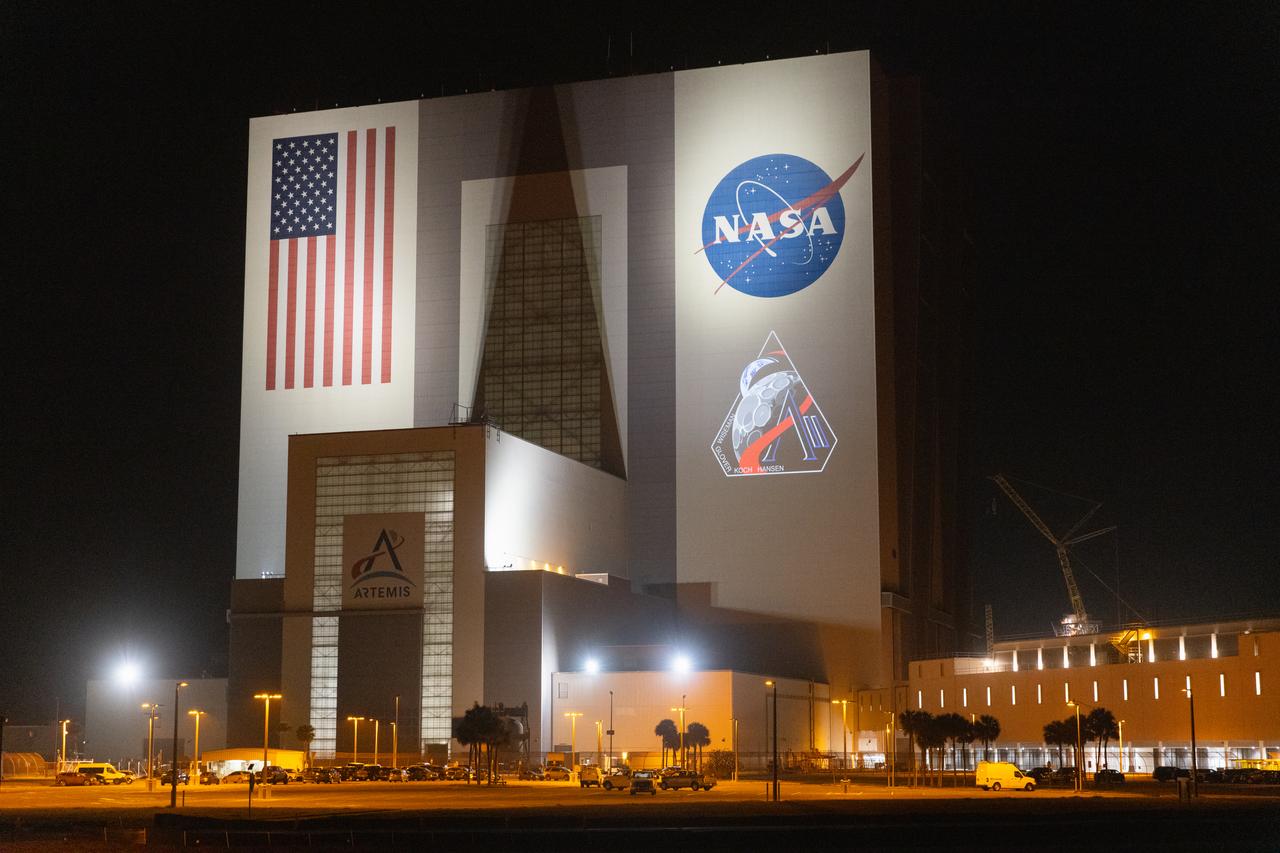
The official Artemis II mission crew insignia is projected on the exterior of the Vehicle Assembly Building at NASA’s Kennedy Space Center in Florida on Friday, April 4, 2025. The patch designates the mission as “AII,” signifying not only the second major flight of the Artemis campaign, but also an endeavor of discovery that seeks to explore for all and by all. Framed in Apollo 8’s famous Earthrise photo, the scene of the Earth and the Moon represents the dual nature of human spaceflight, both equally compelling: The Moon represents our exploration destination, focused on discovery of the unknown. The Earth represents home, focused on the perspective we gain when we look back at our shared planet and learn what it is to be uniquely human. The orbit around Earth highlights the ongoing exploration missions that have enabled Artemis to set sights on a long-term presence on the Moon and soon, Mars.
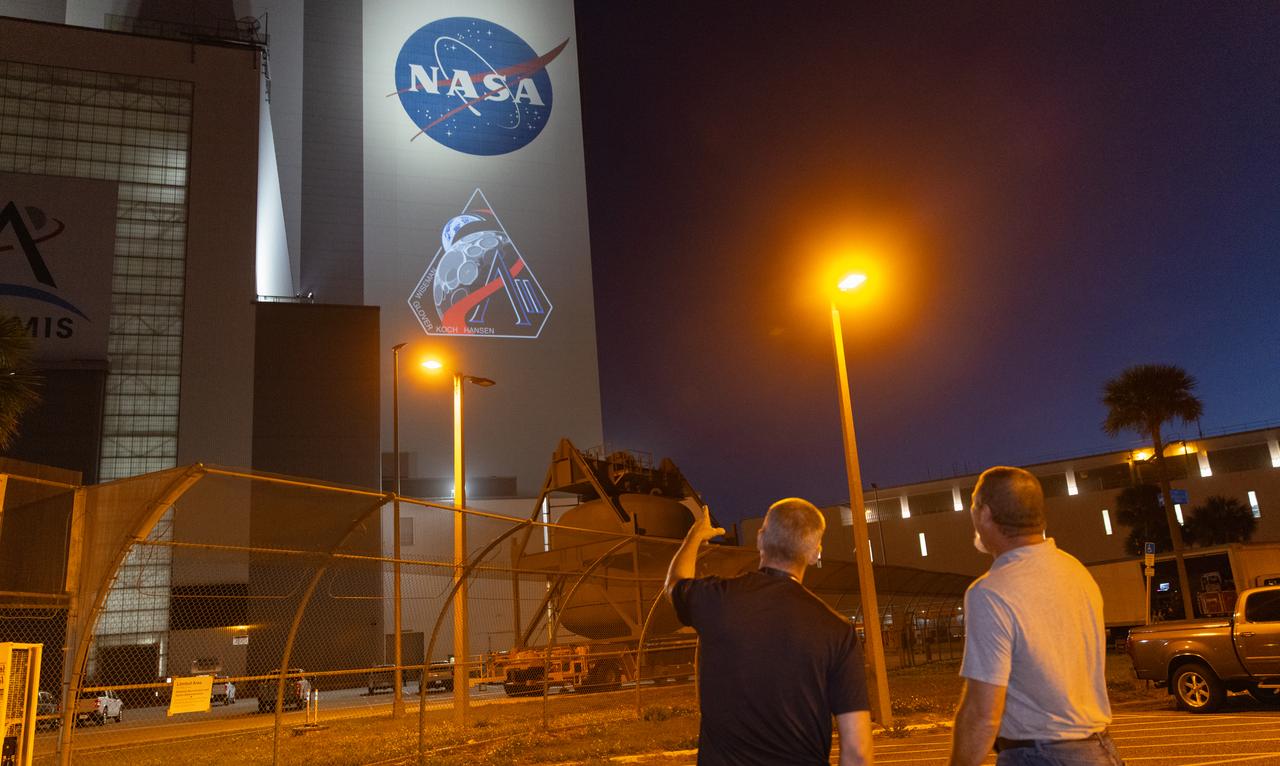
Employees at NASA’s Kennedy Space Center in Florida take photos of the official Artemis II mission crew insignia projected on the exterior of the spaceport’s Vehicle Assembly Building on Friday, April 4, 2025. The patch designates the mission as “AII,” signifying not only the second major flight of the Artemis campaign, but also an endeavor of discovery that seeks to explore for all and by all. Framed in Apollo 8’s famous Earthrise photo, the scene of the Earth and the Moon represents the dual nature of human spaceflight, both equally compelling: The Moon represents our exploration destination, focused on discovery of the unknown. The Earth represents home, focused on the perspective we gain when we look back at our shared planet and learn what it is to be uniquely human. The orbit around Earth highlights the ongoing exploration missions that have enabled Artemis to set sights on a long-term presence on the Moon and soon, Mars.
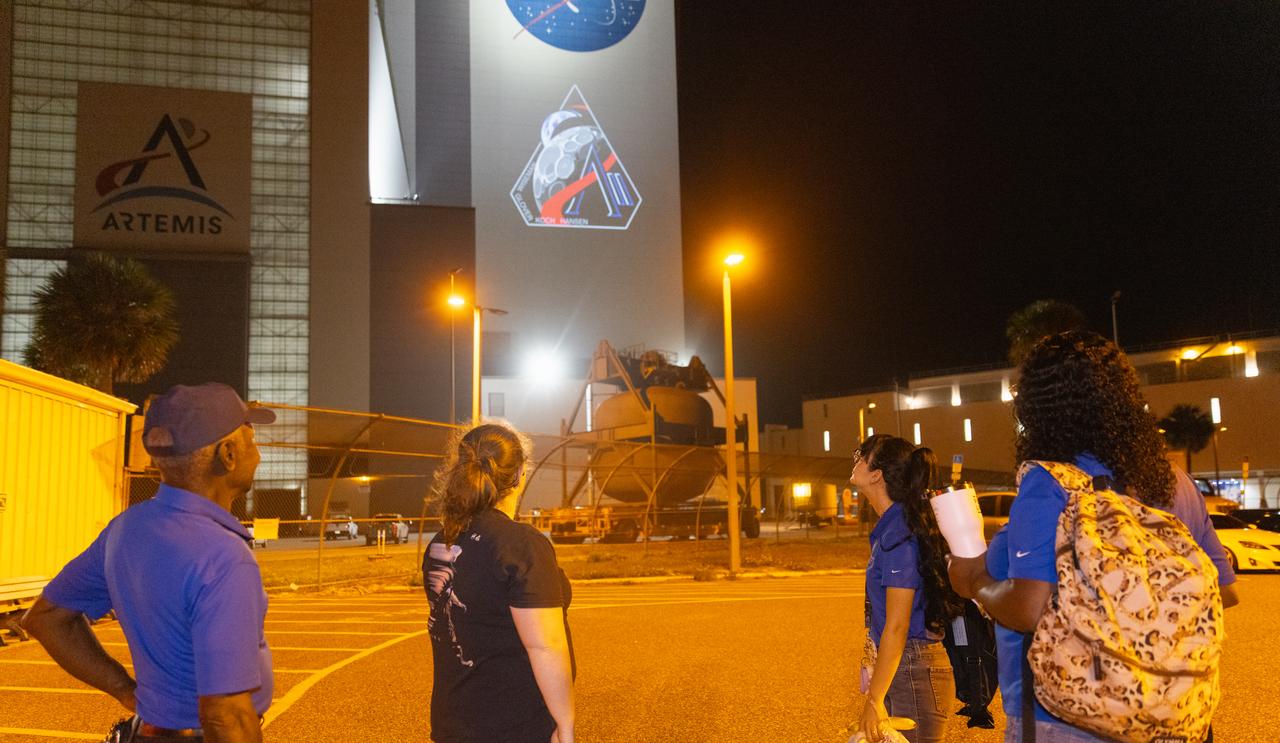
Employees at NASA’s Kennedy Space Center in Florida take photos of the official Artemis II mission crew insignia projected on the exterior of the spaceport’s Vehicle Assembly Building on Friday, April 4, 2025. The patch designates the mission as “AII,” signifying not only the second major flight of the Artemis campaign, but also an endeavor of discovery that seeks to explore for all and by all. Framed in Apollo 8’s famous Earthrise photo, the scene of the Earth and the Moon represents the dual nature of human spaceflight, both equally compelling: The Moon represents our exploration destination, focused on discovery of the unknown. The Earth represents home, focused on the perspective we gain when we look back at our shared planet and learn what it is to be uniquely human. The orbit around Earth highlights the ongoing exploration missions that have enabled Artemis to set sights on a long-term presence on the Moon and soon, Mars.
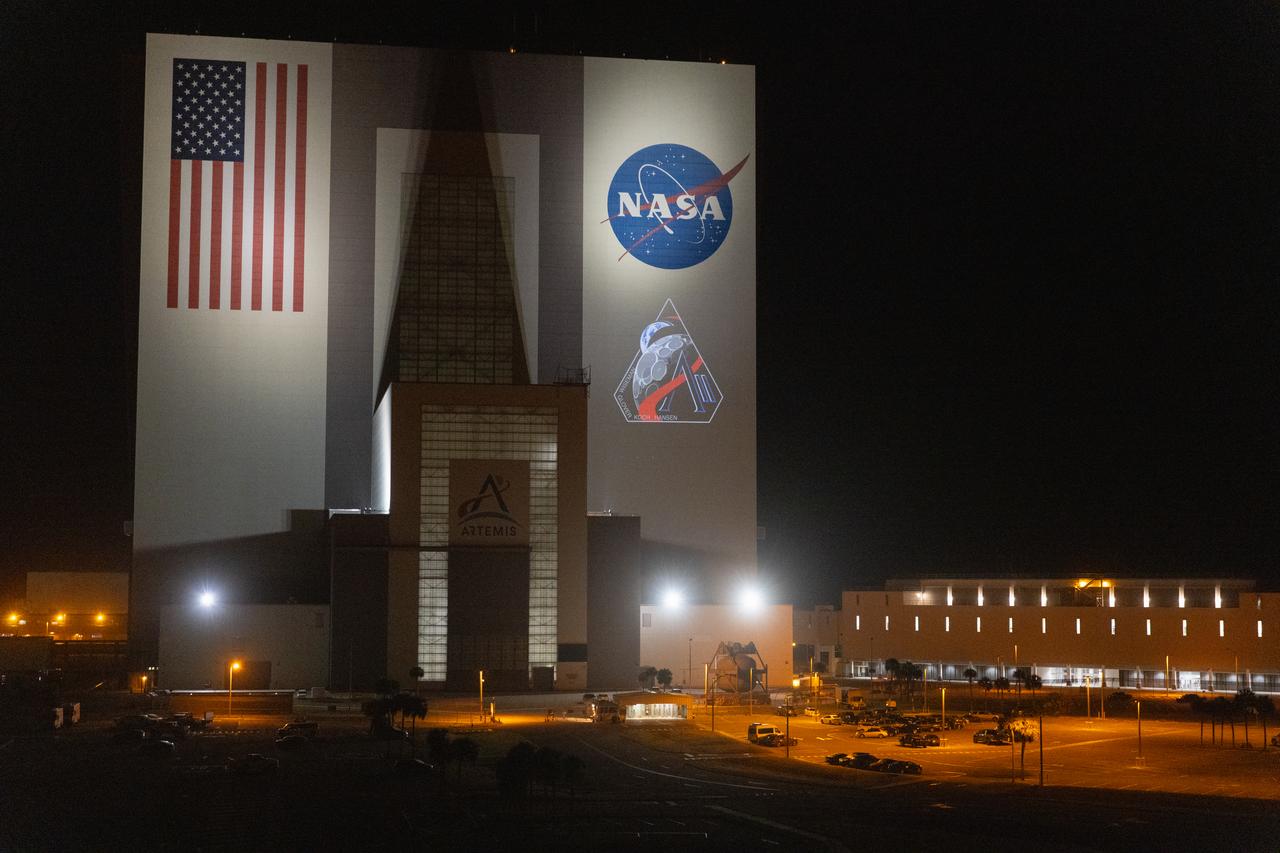
The official Artemis II mission crew insignia is projected on the exterior of the Vehicle Assembly Building at NASA’s Kennedy Space Center in Florida on Friday, April 4, 2025. The patch designates the mission as “AII,” signifying not only the second major flight of the Artemis campaign, but also an endeavor of discovery that seeks to explore for all and by all. Framed in Apollo 8’s famous Earthrise photo, the scene of the Earth and the Moon represents the dual nature of human spaceflight, both equally compelling: The Moon represents our exploration destination, focused on discovery of the unknown. The Earth represents home, focused on the perspective we gain when we look back at our shared planet and learn what it is to be uniquely human. The orbit around Earth highlights the ongoing exploration missions that have enabled Artemis to set sights on a long-term presence on the Moon and soon, Mars.
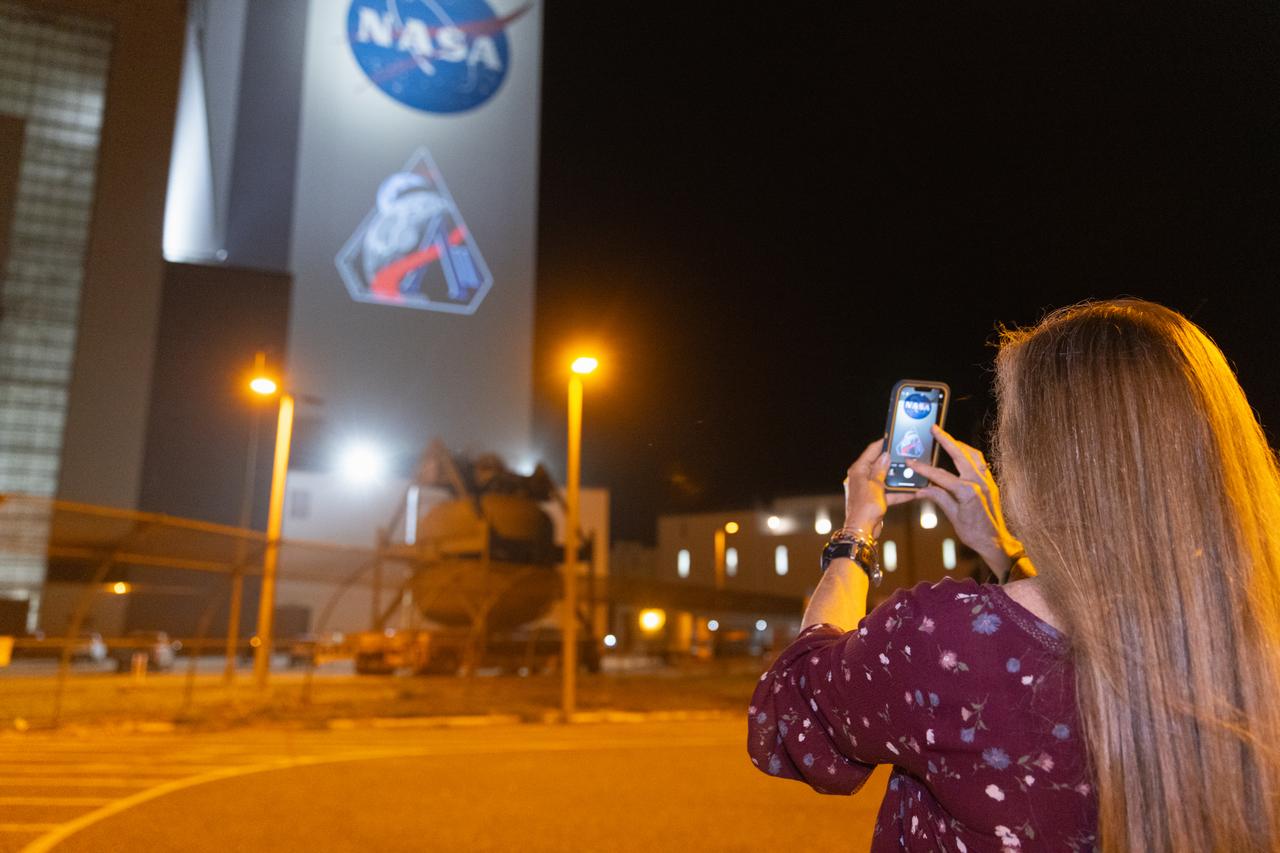
Employees at NASA’s Kennedy Space Center in Florida take photos of the official Artemis II mission crew insignia projected on the exterior of the spaceport’s Vehicle Assembly Building on Friday, April 4, 2025. The patch designates the mission as “AII,” signifying not only the second major flight of the Artemis campaign, but also an endeavor of discovery that seeks to explore for all and by all. Framed in Apollo 8’s famous Earthrise photo, the scene of the Earth and the Moon represents the dual nature of human spaceflight, both equally compelling: The Moon represents our exploration destination, focused on discovery of the unknown. The Earth represents home, focused on the perspective we gain when we look back at our shared planet and learn what it is to be uniquely human. The orbit around Earth highlights the ongoing exploration missions that have enabled Artemis to set sights on a long-term presence on the Moon and soon, Mars.
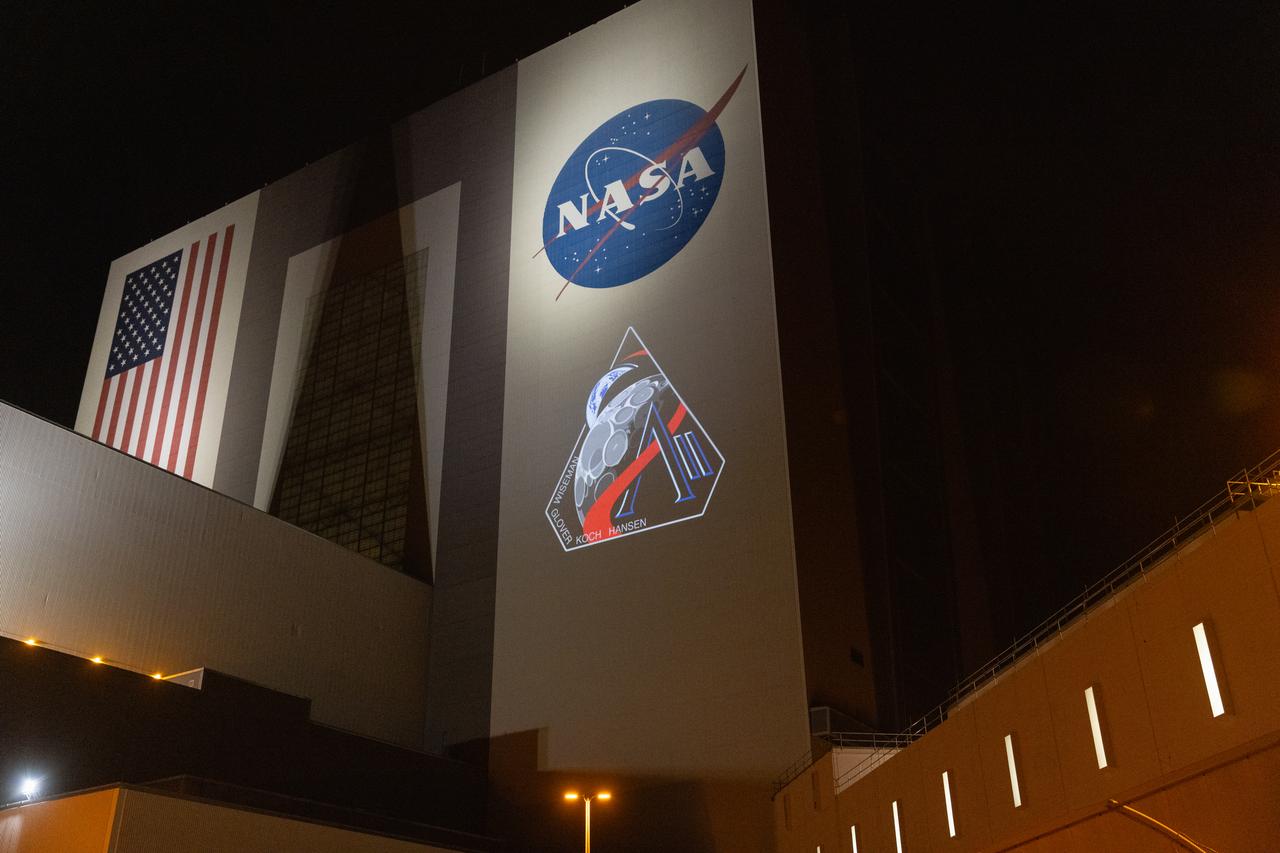
The official Artemis II mission crew insignia is projected on the exterior of the Vehicle Assembly Building at NASA’s Kennedy Space Center in Florida on Friday, April 4, 2025. The patch designates the mission as “AII,” signifying not only the second major flight of the Artemis campaign, but also an endeavor of discovery that seeks to explore for all and by all. Framed in Apollo 8’s famous Earthrise photo, the scene of the Earth and the Moon represents the dual nature of human spaceflight, both equally compelling: The Moon represents our exploration destination, focused on discovery of the unknown. The Earth represents home, focused on the perspective we gain when we look back at our shared planet and learn what it is to be uniquely human. The orbit around Earth highlights the ongoing exploration missions that have enabled Artemis to set sights on a long-term presence on the Moon and soon, Mars.
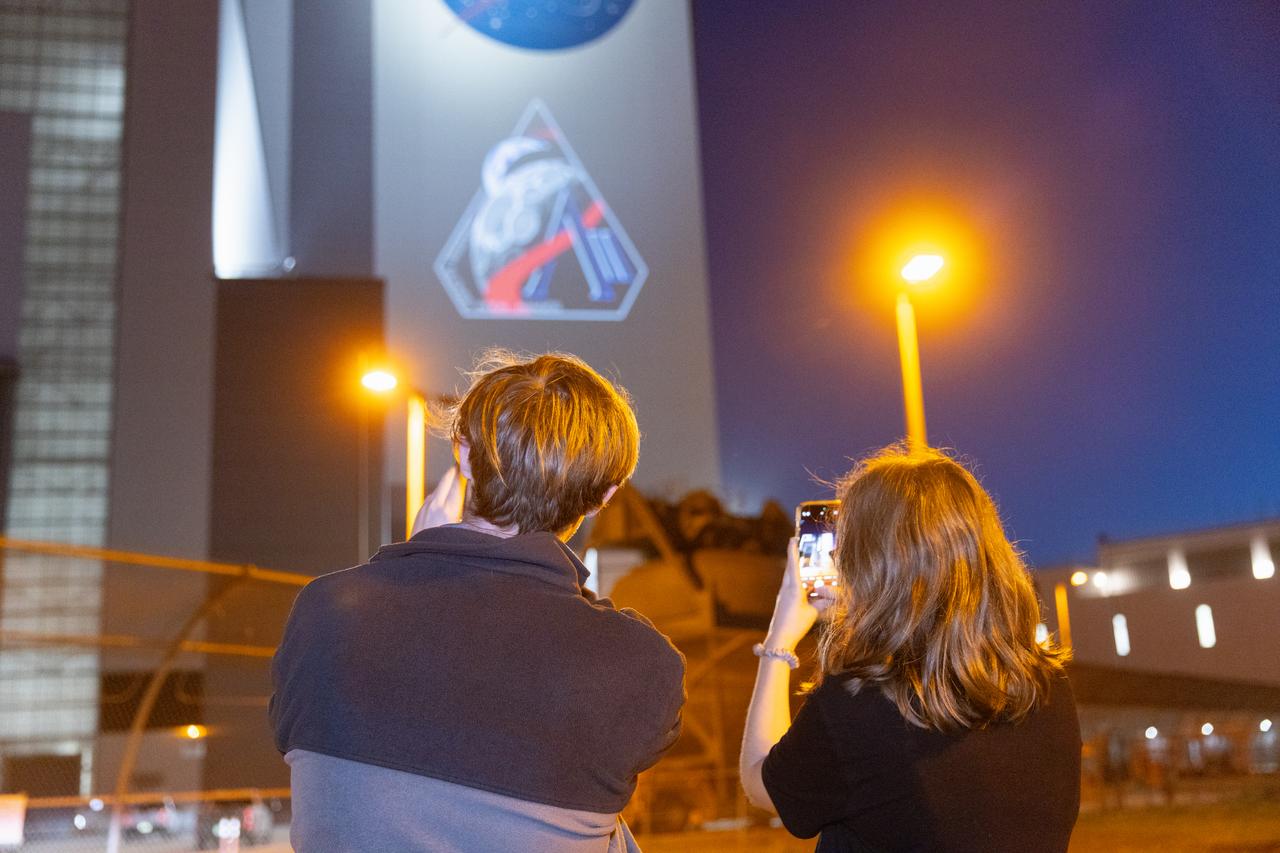
Employees at NASA’s Kennedy Space Center in Florida take photos of the official Artemis II mission crew insignia projected on the exterior of the spaceport’s Vehicle Assembly Building on Friday, April 4, 2025. The patch designates the mission as “AII,” signifying not only the second major flight of the Artemis campaign, but also an endeavor of discovery that seeks to explore for all and by all. Framed in Apollo 8’s famous Earthrise photo, the scene of the Earth and the Moon represents the dual nature of human spaceflight, both equally compelling: The Moon represents our exploration destination, focused on discovery of the unknown. The Earth represents home, focused on the perspective we gain when we look back at our shared planet and learn what it is to be uniquely human. The orbit around Earth highlights the ongoing exploration missions that have enabled Artemis to set sights on a long-term presence on the Moon and soon, Mars.
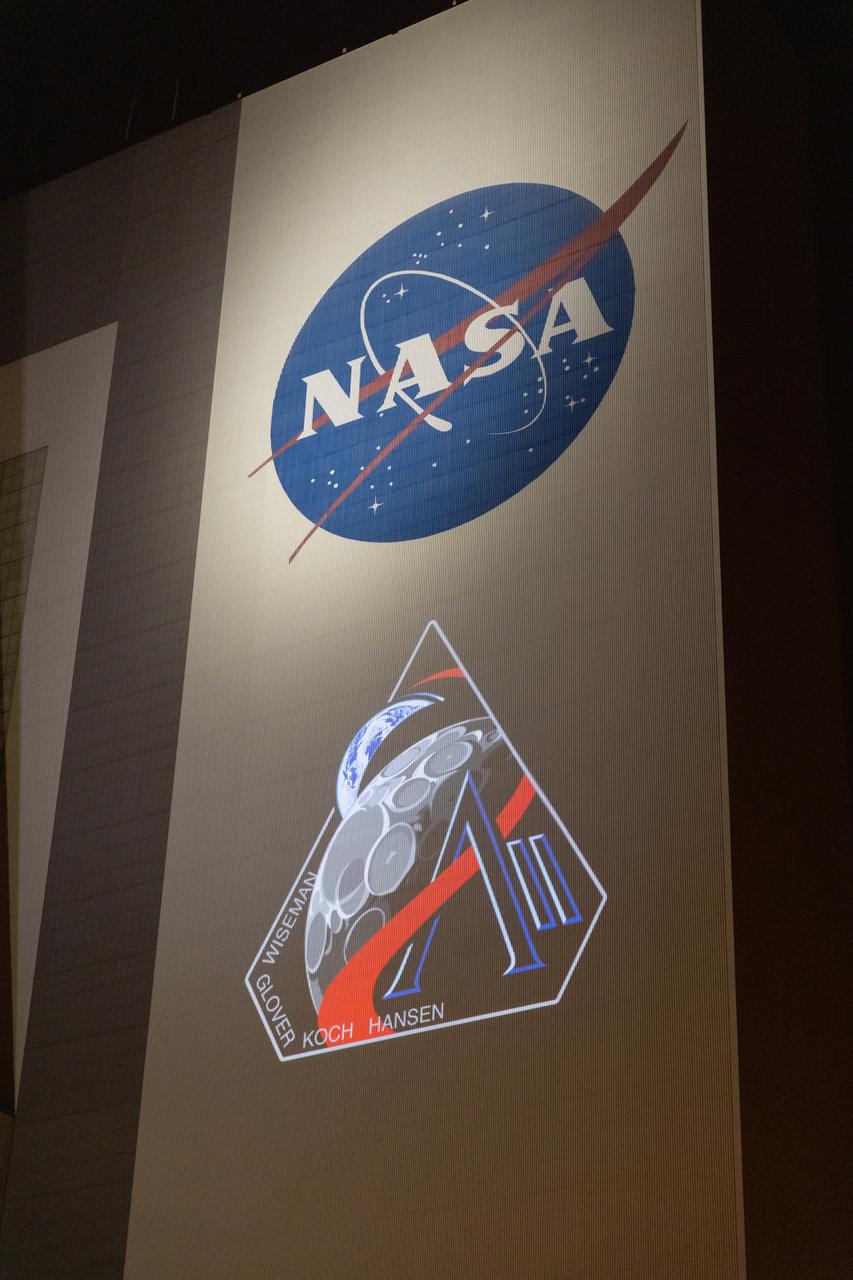
The official Artemis II mission crew insignia is projected on the exterior of the Vehicle Assembly Building at NASA’s Kennedy Space Center in Florida on Friday, April 4, 2025. The patch designates the mission as “AII,” signifying not only the second major flight of the Artemis campaign, but also an endeavor of discovery that seeks to explore for all and by all. Framed in Apollo 8’s famous Earthrise photo, the scene of the Earth and the Moon represents the dual nature of human spaceflight, both equally compelling: The Moon represents our exploration destination, focused on discovery of the unknown. The Earth represents home, focused on the perspective we gain when we look back at our shared planet and learn what it is to be uniquely human. The orbit around Earth highlights the ongoing exploration missions that have enabled Artemis to set sights on a long-term presence on the Moon and soon, Mars.

jsc2025e033572 (Dec. 2, 2024) --- The Soyuz MS-27 mission patch representing the three crew members with Jonny Kim of NASA and Roscosmos cosmonauts Srgey Ryzhikov and Alexey Zubritskiy launching to the International Space Station aboard the Soyuz spacecraft from the Baikonur Cosmodrome in Kazakhstan.

jsc2025e034750 (April 2, 2025) -- Artemis II crew with the Artemis II mission patch. Photo Credit: NASA/Robert Markowitz
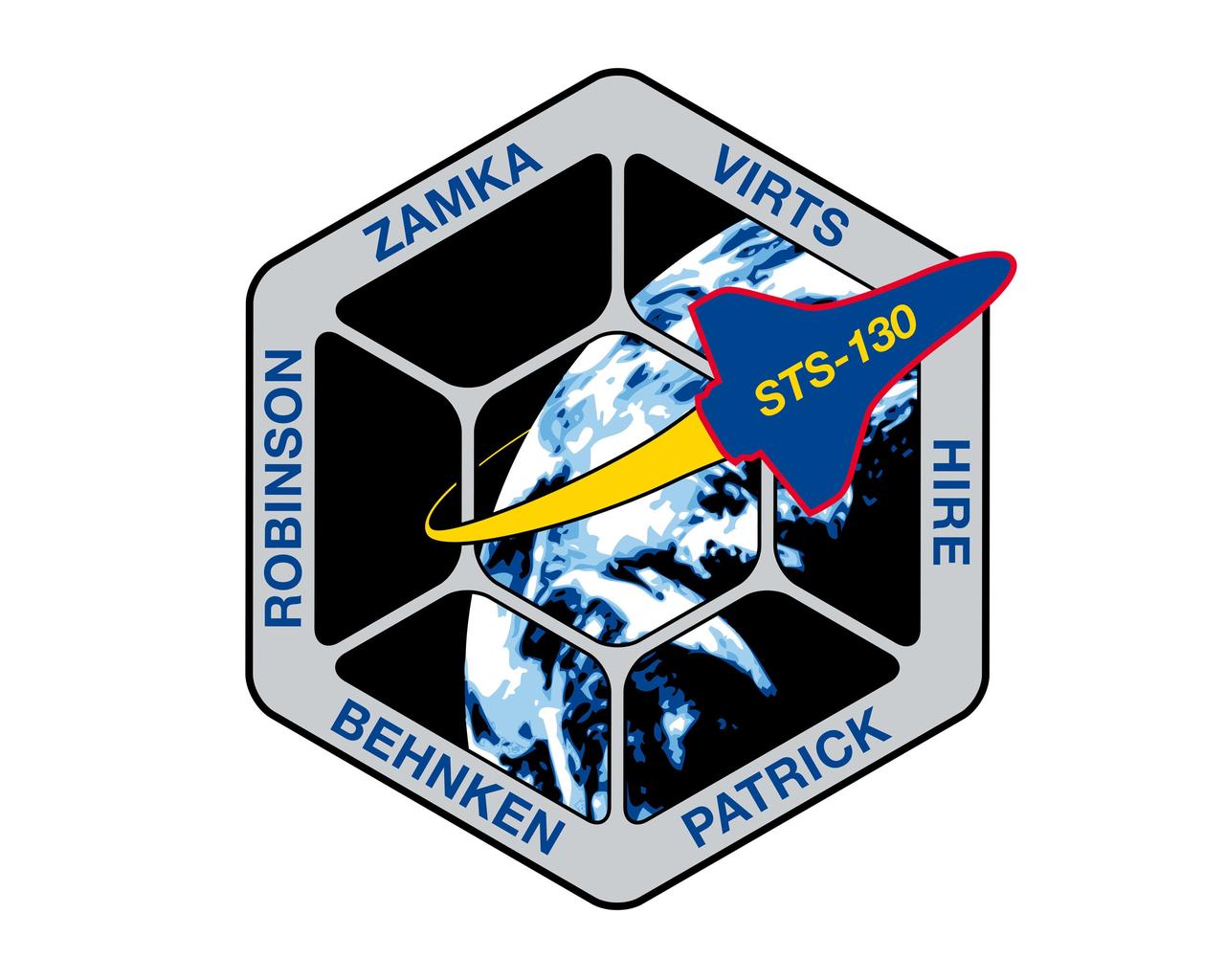
JOHNSON SPACE CENTER, Houston - STS130-S-001 - The STS-130 patch was designed by the crew to reflect both the objectives of the mission and its place in the history of human spaceflight. The main goal of the mission is to deliver Node 3 and the Cupola to the International Space Station (ISS). Node 3, named "Tranquility," will contain life support systems enabling continued human presence in orbit aboard the ISS. The shape of the patch represents the Cupola, which is the windowed robotics viewing station, from which astronauts will have the opportunity not only to monitor a variety of ISS operations, but also to study our home planet. The image of Earth depicted in the patch is the first photograph of the Earth taken from the moon by Lunar Orbiter I on August 23, 1966. As both a past and a future destination for explorers from the planet Earth, the moon is thus represented symbolically in the STS-130 patch. The Space Shuttle Endeavour is pictured approaching the ISS, symbolizing the Space Shuttle's role as the prime construction vehicle for the ISS. The NASA insignia design for shuttle flights is reserved for use by the astronauts and for other official use as the NASA Administrator may authorize. Public availability has been approved only in the form of illustrations by the various news media. When and if there is any change in this policy, which we do not anticipate, it will be publicly announced.

HOUSTON, Texas -- STS119-S-001: The shape of the STS-119/15A patch comes from the shape of a solar array viewed at an angle. The International Space Station (ISS), which is the destination of the mission, is placed accordingly in the center of the patch just below the gold astronaut symbol. The gold solar array of the ISS highlights the main cargo and task of STS-119/15A -- the installation of the S6 truss segment and deployment of the S6's solar arrays, the last to be delivered to the ISS. Under the Japanese Kibo module, marked by a red circle, is the name of Japanese astronaut Koichi Wakata, who goes up to the ISS to serve as flight engineer representing JAXA. The rest of the STS-119/15A crew members are denoted on the outer band of the patch. The 17 white stars on the patch represent, in the crew's words, "the enormous sacrifice the crews of Apollo1, Challenger, and Columbia have given to our space program." The U.S. flag flowing into the Space Shuttle signifies the support the people of the United States have given our space program over the years, along with pride the U.S. astronauts have in representing the United States on this mission. The NASA insignia for design for Shuttle flights is reserved for use by the astronauts and for other official use as the NASA Administrator may authorize. Public availability has been approved only in the form of illustrations by the various news media. When and if there is any change in this policy, it will be publicly announced.
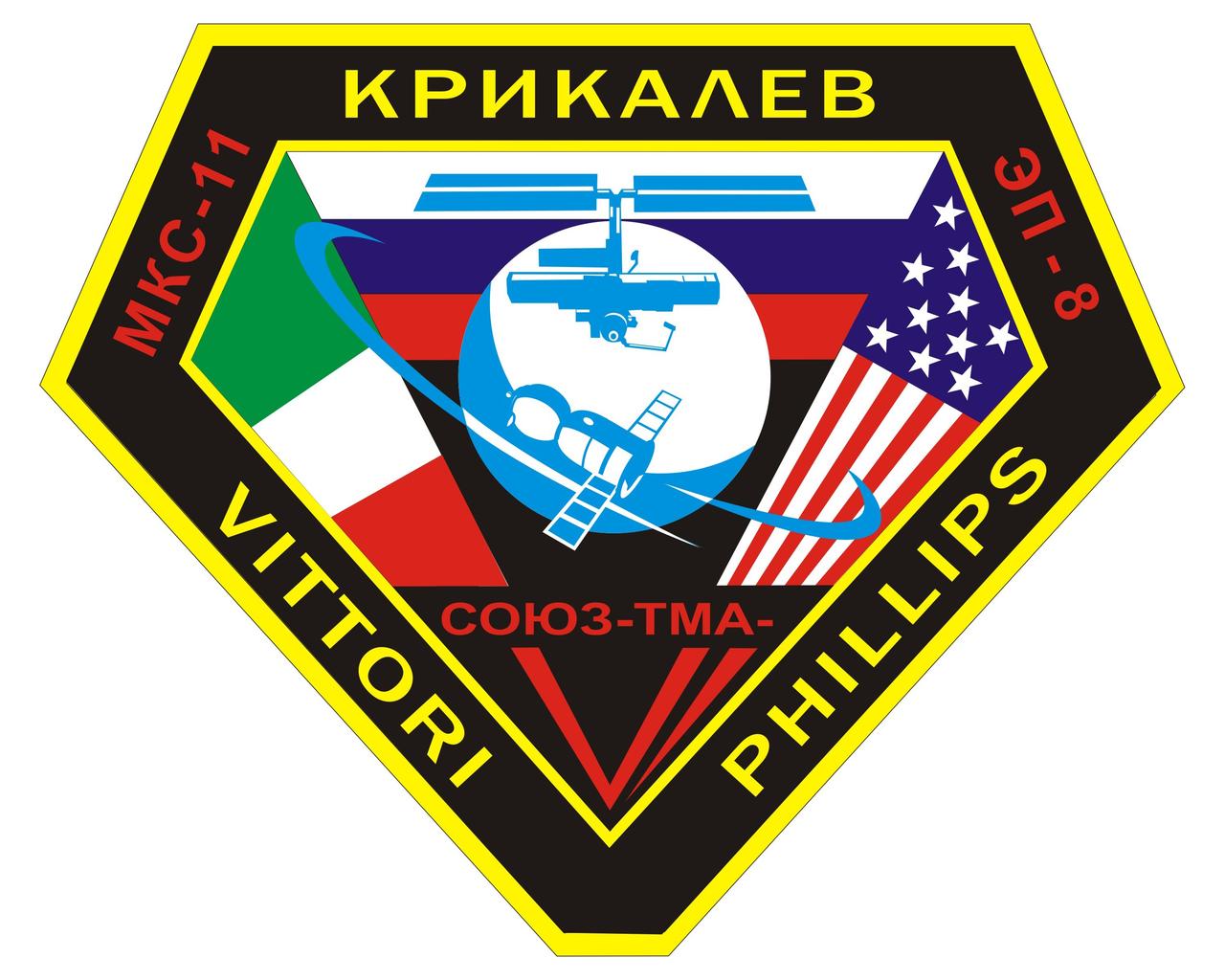
JSC2005-E-10714 (April 2005) --- Expedition 11/Soyuz patch for the launch phase of the mission that brought ESA's Roberto Vittori of Italy to the International Space Station for 8 days of commercially-sponsored scientific research.

jsc2025e034746 (April 2, 2025) -- Artemis II crew with the Artemis II mission patch. Photo Credit: NASA/Robert Markowitz

jsc2025e034457 (March 18, 2025) -- The official Artemis II mission crew patch. The Artemis II test flight begins when a mighty team launches the first crew of the Artemis generation. This patch designates the mission as “AII,” signifying not only the second major flight of the Artemis campaign, but also an endeavor of discovery that seeks to explore for all and by all. Framed in Apollo 8’s famous Earthrise photo, the scene of the Earth and the Moon represents the dual nature of human spaceflight, both equally compelling: The Moon represents our exploration destination, focused on discovery of the unknown. The Earth represents home, focused on the perspective we gain when we look back at our shared planet and learn what it is to be uniquely human. The orbit around Earth highlights the ongoing exploration missions that have enabled Artemis to set sights on a long-term presence on the Moon and soon, Mars. Credit: NASA
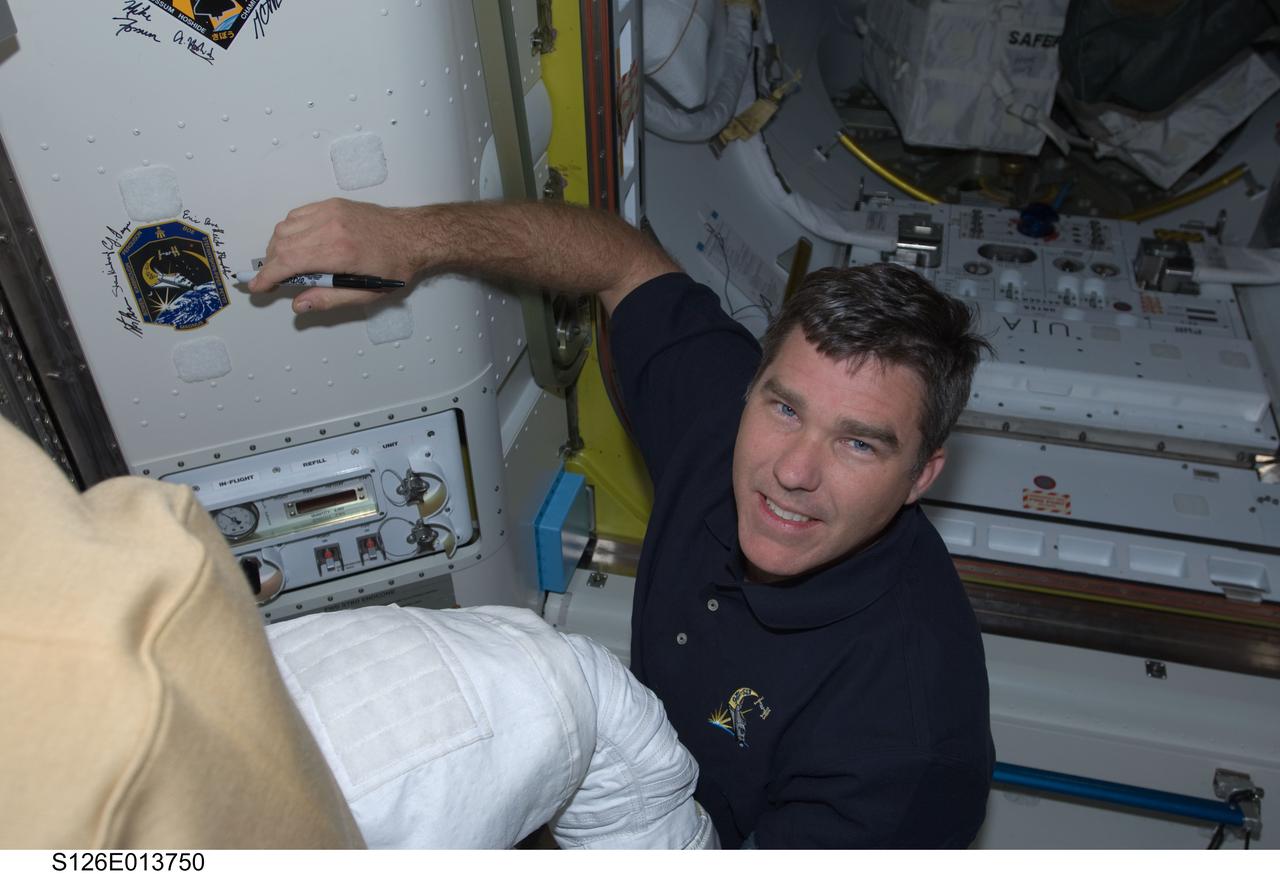
S126-E-013750 (27 Nov. 2008) --- Astronaut Steve Bowen, STS-126 mission specialist, signs Endeavour's crew patch in the Quest Airlock of the International Space Station on Thanksgiving Day. One more day remains for the Space Shuttle Endeavour to be docked with the station.
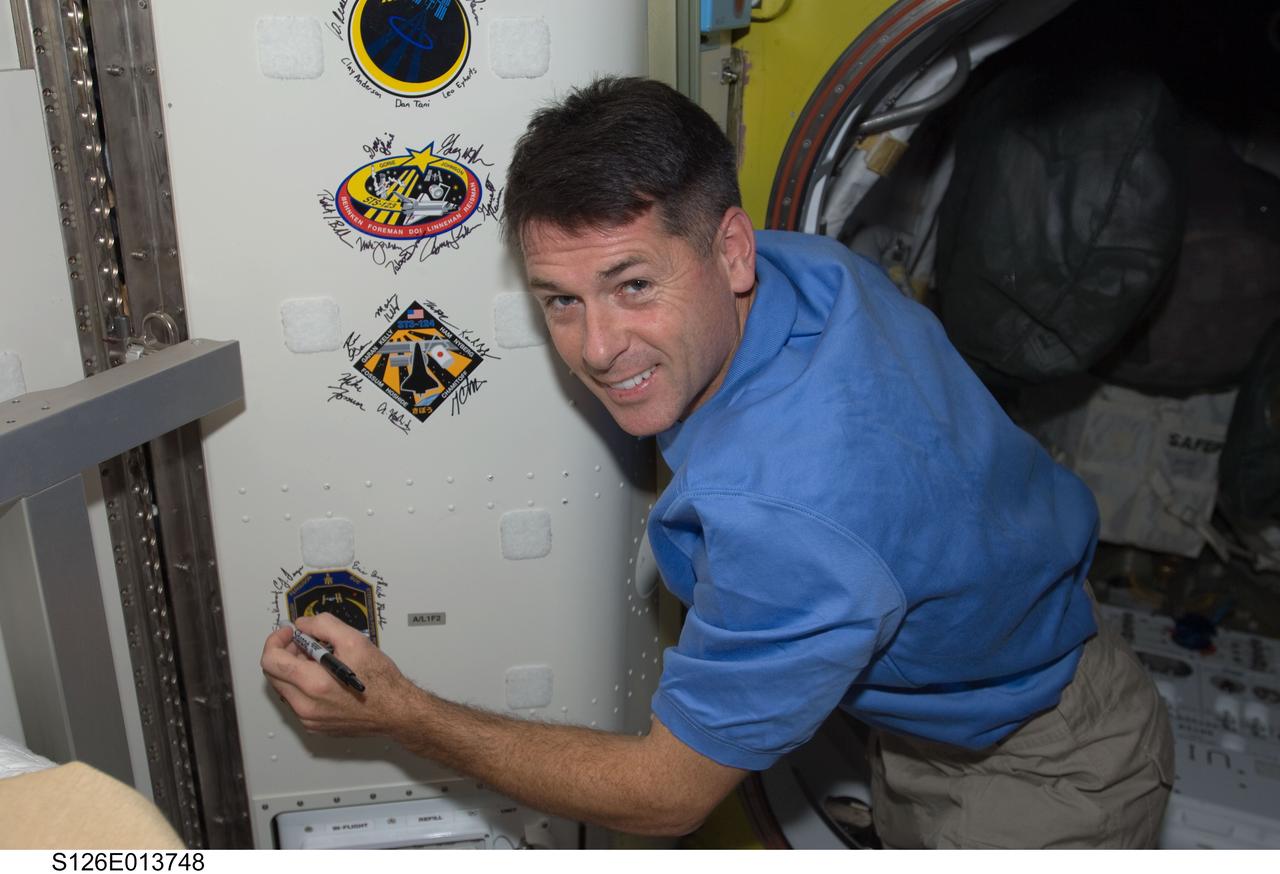
S126-E-013748 (27 Nov. 2008) --- Astronaut Shane Kimbrough, STS-126 mission specialist, signs Endeavour's crew patch in the Quest Airlock of the International Space Station on Thanksgiving Day. One more day remains for the Space Shuttle Endeavour to be docked with the station.
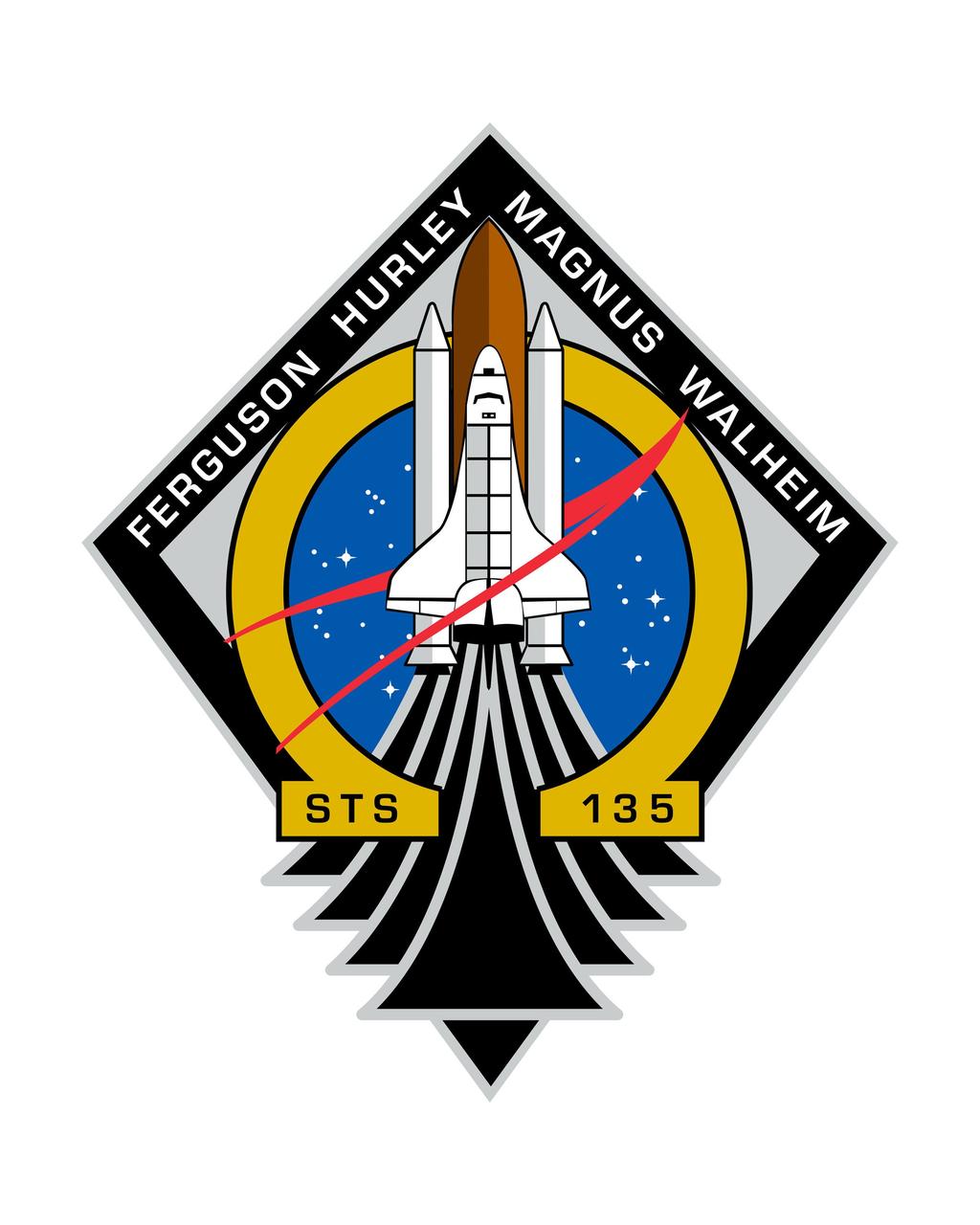
JOHNSON SPACE CENTER, Houston - STS135-S-001 ---The STS-135 patch represents the space shuttle Atlantis embarking on its mission to resupply the International Space Station. Atlantis is centered over elements of the NASA emblem depicting how the space shuttle has been at the heart of NASA for the last 30 years. It also pays tribute to the entire NASA and contractor team that made possible all the incredible accomplishments of the space shuttle. Omega, the last letter in the Greek alphabet, recognizes this mission as the last flight of the Space Shuttle Program. Public availability has been approved only in the form of illustrations by the various news media. When and if there is any change in this policy, which we do not anticipate, it will be publicly announced. Photo credit: NASA or National Aeronautics and Space Administration
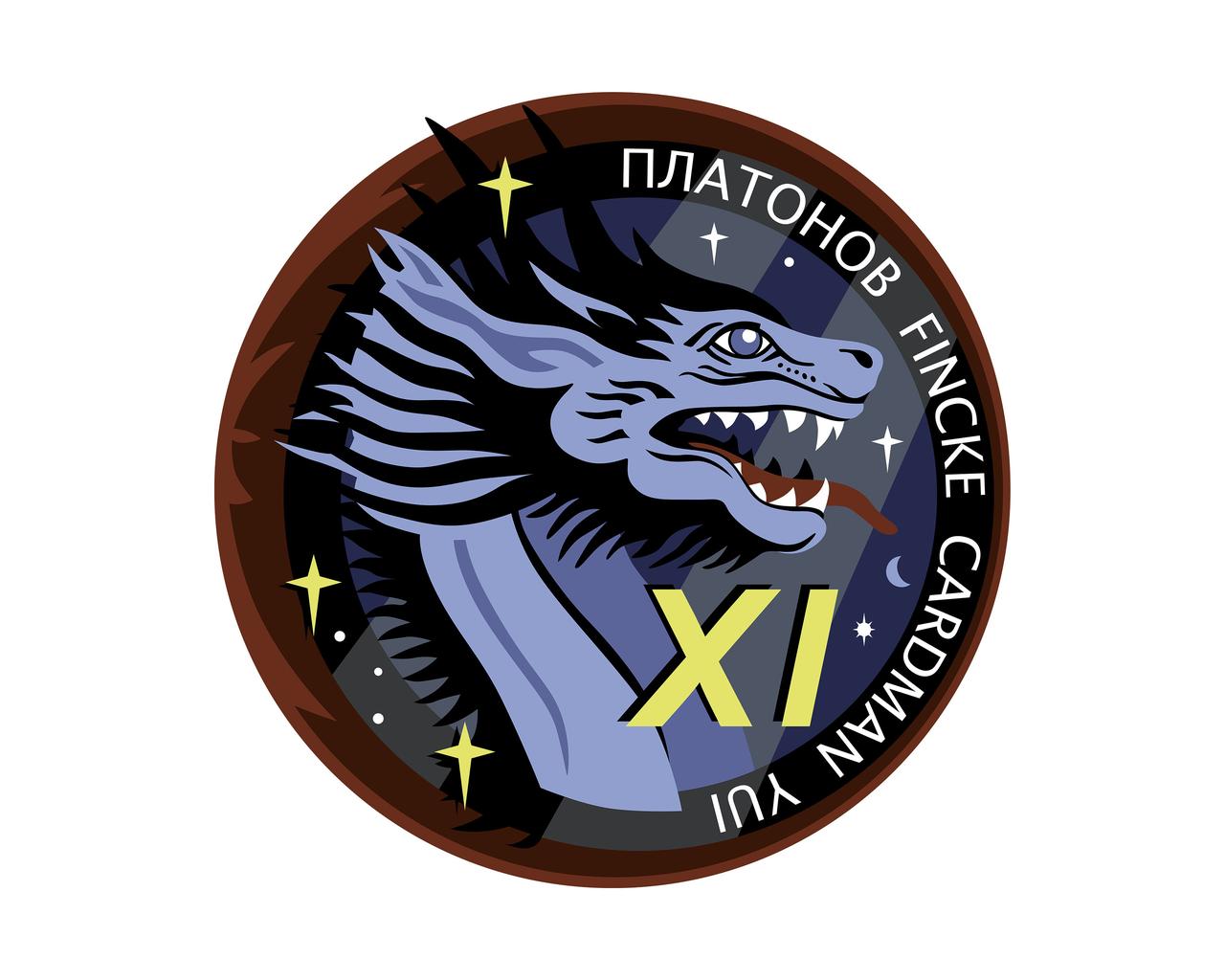
jsc2025e034097 (Feb. 14, 2025) --- The Crew-11 mission patch embodies teamwork, exploration, and the deep connections that bind us—across nations, agencies, and families. Shades of white, red, and blue pay tribute to the flags of the three nations represented by the crew, while three gold stars symbolize the unity of our three space agencies working together in pursuit of discovery. .At the heart of the design, two radiant sunbeams form the number “11” illuminating a blue circle—a subtle nod to Voyager’s Pale Blue Dot image, reminding us of the fragile unity of our shared home. This vision of Earth is reflected in the dragon’s eye, reinforcing our focus on exploration and the perspective gained from space. .The dragon, evoking the heraldry of family crests, stands as a guardian of our mission and legacy. Within the stars, we honor the children of the crew, a reminder of the generations inspired by human spaceflight. Encircling it all, a red flame represents both the power of launch and the plasma of reentry, symbolizing the full journey—our departure from Earth, our work aboard the International Space Station, and our safe return home. Crew-11: Together, we rise.
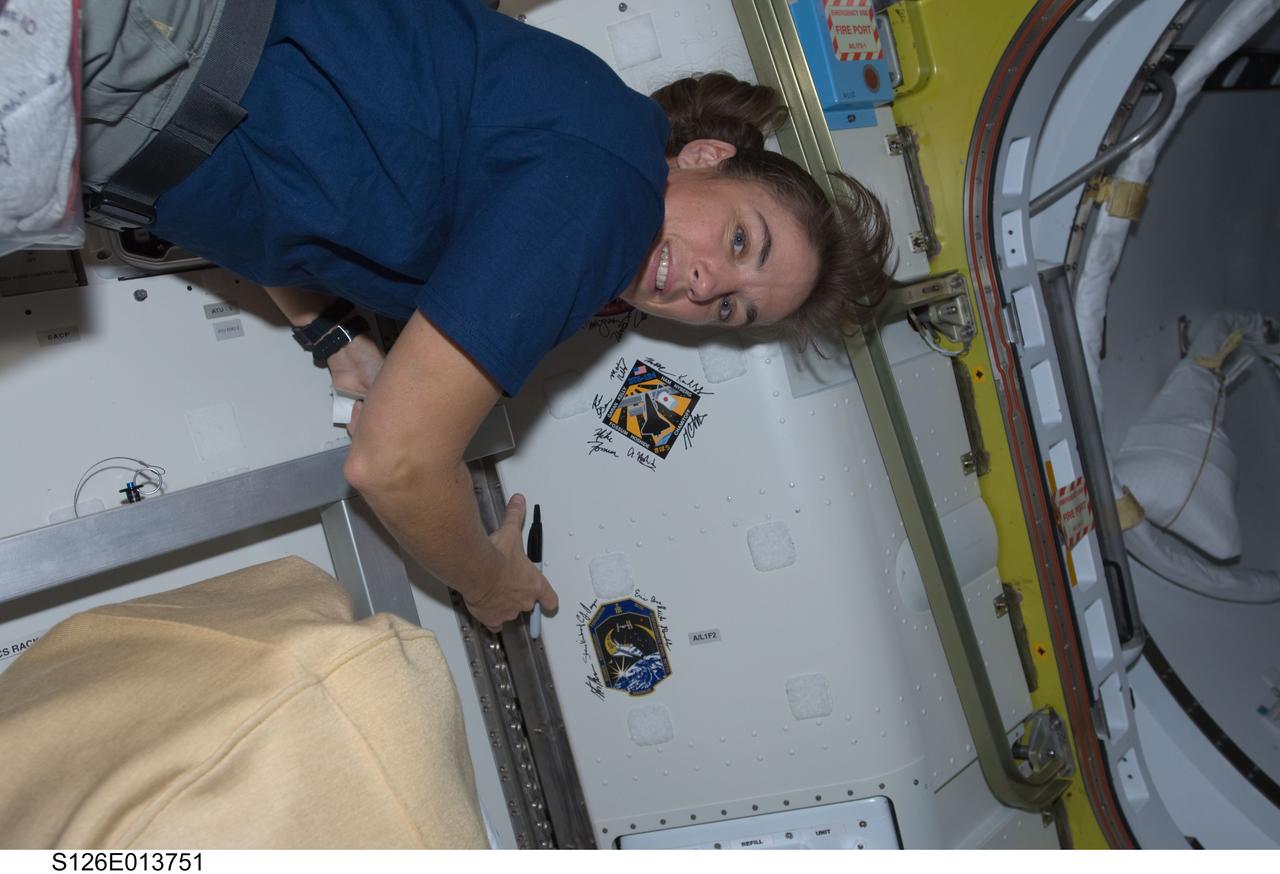
S126-E-013751 (27 Nov. 2008) --- Astronaut Heidemarie Stefanyshyn-Piper, STS-126 mission specialist, signs Endeavour's crew patch in the Quest Airlock of the International Space Station on Thanksgiving Day. One more day remains for the Space Shuttle Endeavour to be docked with the station.
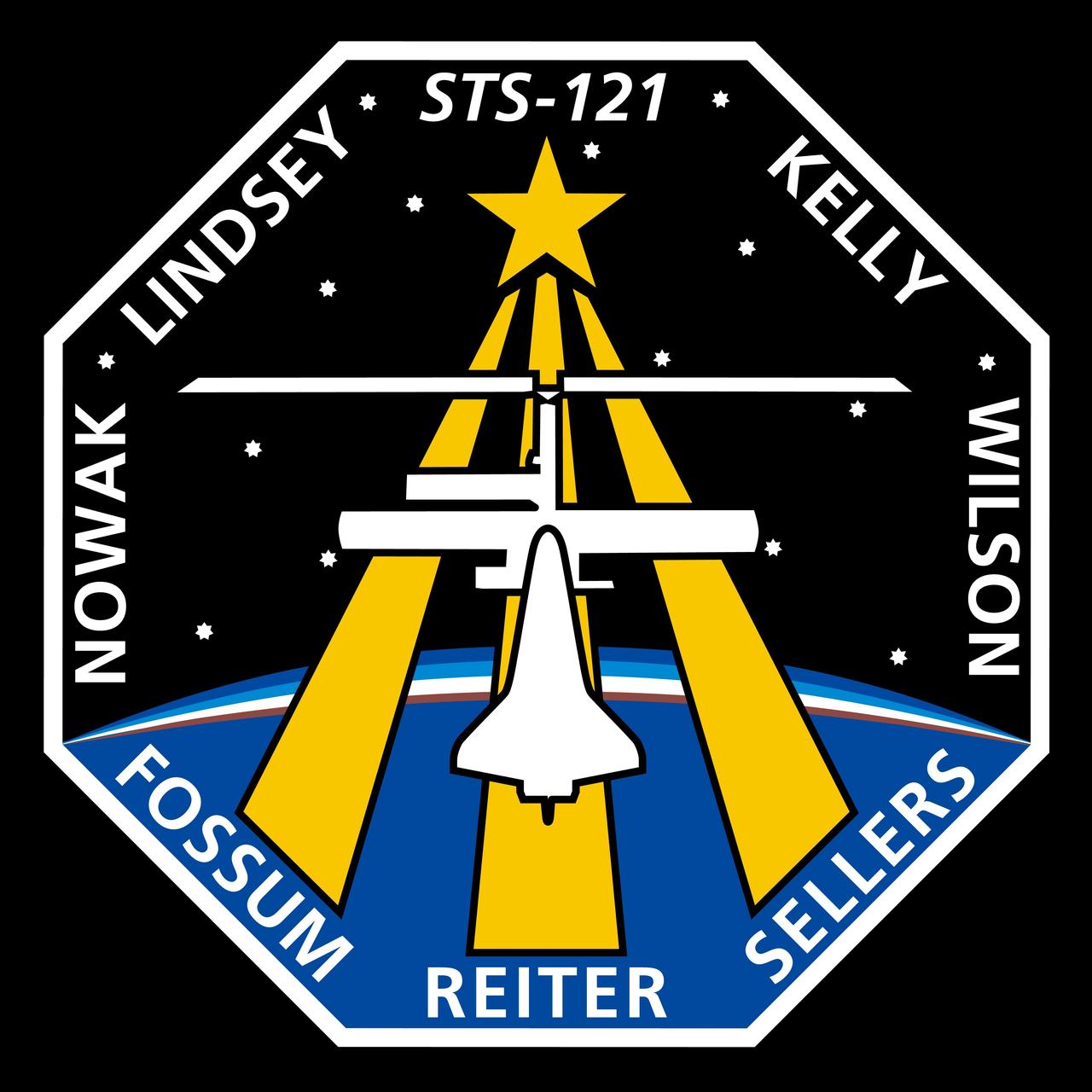
STS121-S-001 (June 2005) --- The STS-121 patch depicts the space shuttle docked with the International Space Station (ISS) in the foreground, overlaying the astronaut symbol with three gold columns and a gold star. The ISS is shown in the configuration that it will be in during the STS-121 mission. The background shows the nighttime Earth with a dawn breaking over the horizon. STS-121, ISS mission ULF1.1, is the final Shuttle Return to Flight test mission. This utilization and logistics flight will bring a multipurpose logistics module (MPLM) to the ISS with several thousand pounds of new supplies and experiments. In addition, some new orbital replacement units (ORUs) will be delivered and stowed externally on ISS on a special pallet. These ORUs are spares for critical machinery located on the outside of the ISS. During this mission the crew will also carry out testing of shuttle inspection and repair hardware, as well as evaluate operational techniques and concepts for conducting on-orbit inspection and repair. The NASA insignia design for space shuttle flights is reserved for use by the astronauts and for other official use as the NASA Administrator may authorize. Public availability has been approved only in the forms of illustrations by the various news media. When and if there is any change in this policy, which is not anticipated, the change will be publicly announced. Photo credit: NASA
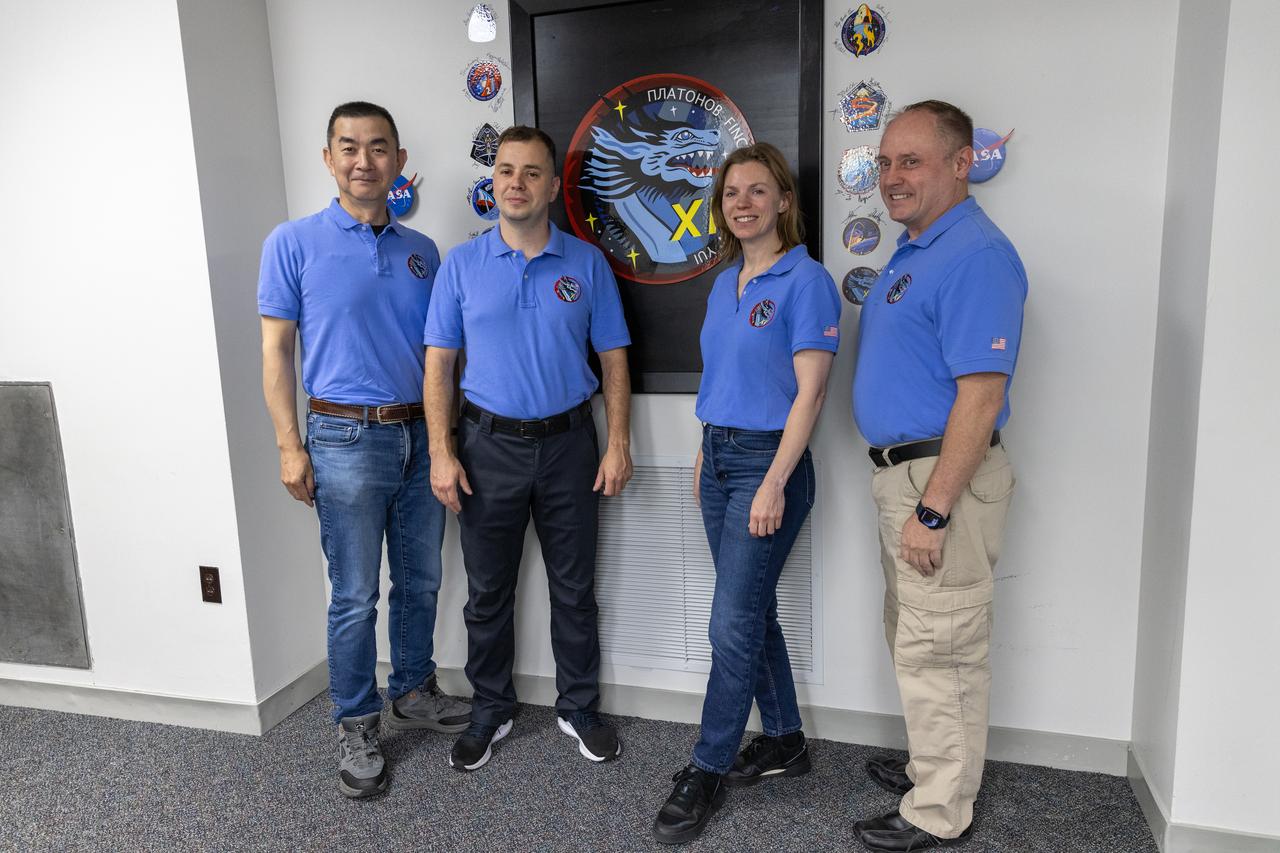
From right to left, NASA astronauts Mike Fincke and Zena Cardman, along with Roscosmos cosmonaut Oleg Platonov and JAXA (Japan Aerospace Exploration Agency) astronaut Kimiya Yui, pose next to their mission patch logo inside the Astronaut Crew Quarters in the Neil A. Armstrong Operations and Checkout Building at NASA’s Kennedy Space Center in Florida on Monday, July 28, 2025. NASA’s SpaceX Crew-11 crew members will launch aboard a SpaceX Dragon spacecraft and Falcon 9 to the International Space Station no earlier than 12:09 p.m. EDT on Thursday, July 31, 2025, from NASA Kennedy’s Launch Complex 39A.
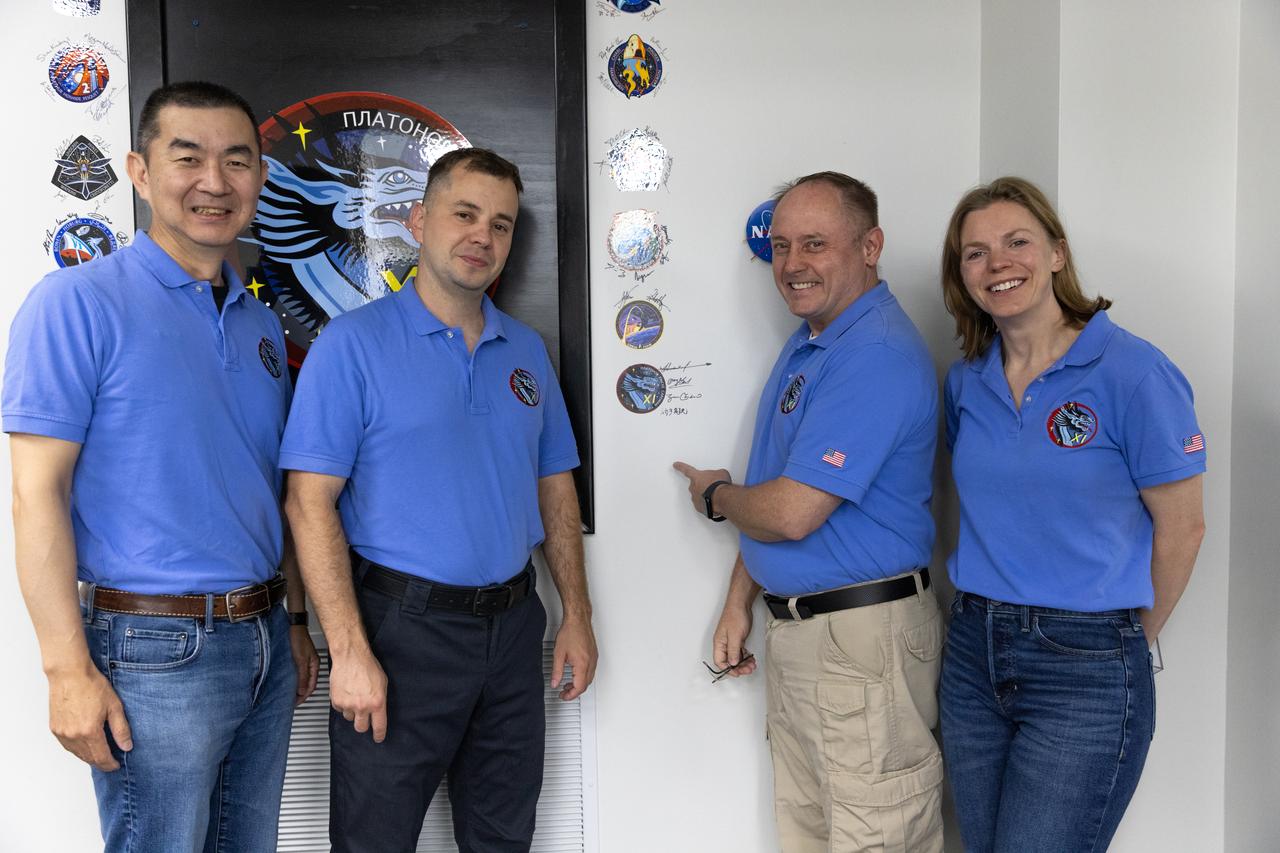
From right to left, NASA astronauts Zena Cardman and Mike Fincke along with Roscosmos cosmonaut Oleg Platonov and JAXA (Japan Aerospace Exploration Agency) astronaut Kimiya Yui, pose next to their mission patch logo inside the Astronaut Crew Quarters in the Neil A. Armstrong Operations and Checkout Building at NASA’s Kennedy Space Center in Florida on Monday, July 28, 2025. NASA’s SpaceX Crew-11 crew members will launch aboard a SpaceX Dragon spacecraft and Falcon 9 to the International Space Station no earlier than 12:09 p.m. EDT on Thursday, July 31, 2025, from NASA Kennedy’s Launch Complex 39A.
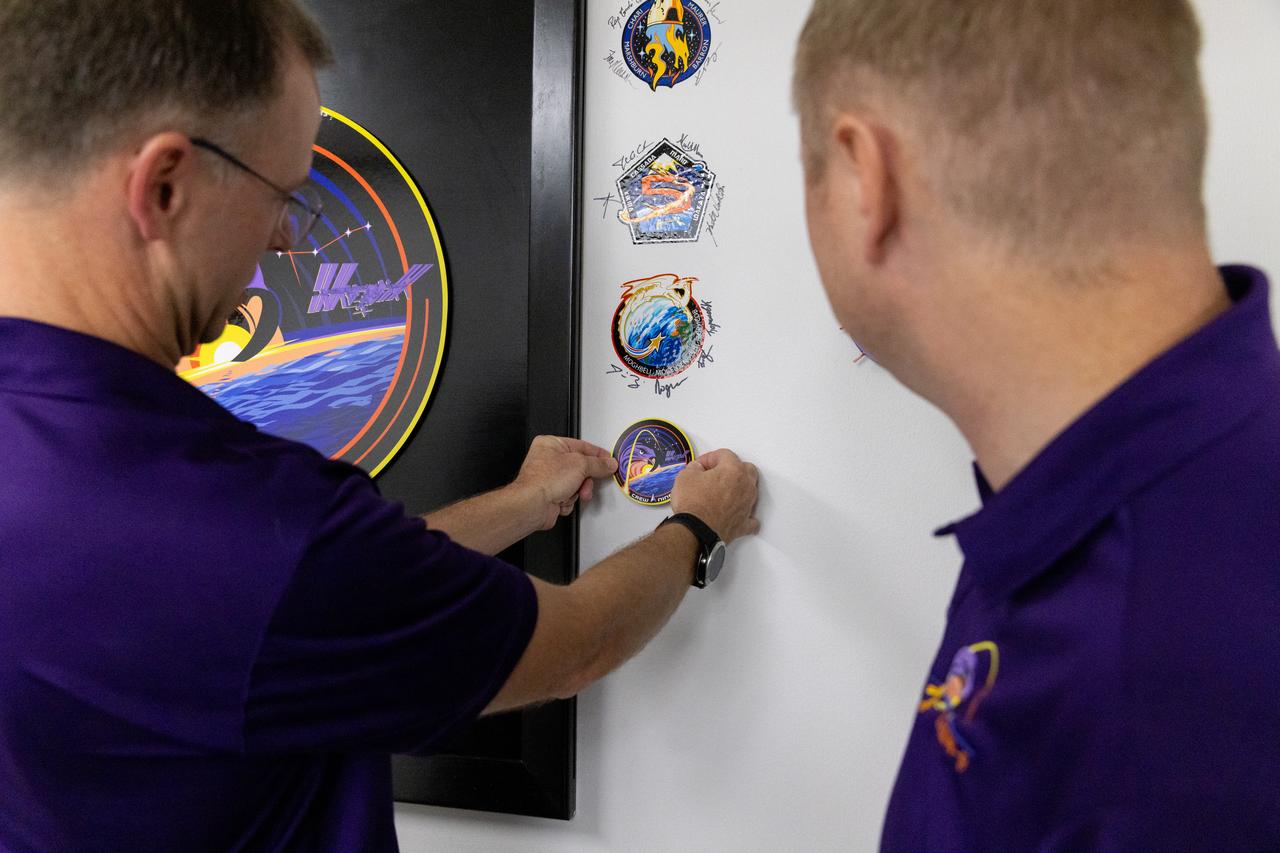
NASA astronaut Nick Hague applies NASA’s SpaceX Crew-9 mission patch to the wall inside the Astronaut Crew Quarters in the Neil A. Armstrong Operations and Checkout Building at the agency’s Kennedy Space Center in Florida on Monday, Sept. 23, 2024. Crew-9 is the ninth crew rotation mission of the SpaceX Dragon spacecraft and Falcon 9 rocket that will send Hague and Roscosmos cosmonaut Aleksandr Gorbunov to the International Space Station as part of the agency’s Commercial Crew Program. The mission is scheduled to launch at 2:05 p.m. EDT Sept. 26, 2024, from Space Launch Complex-40 at Cape Canaveral Space Force Station in Florida.
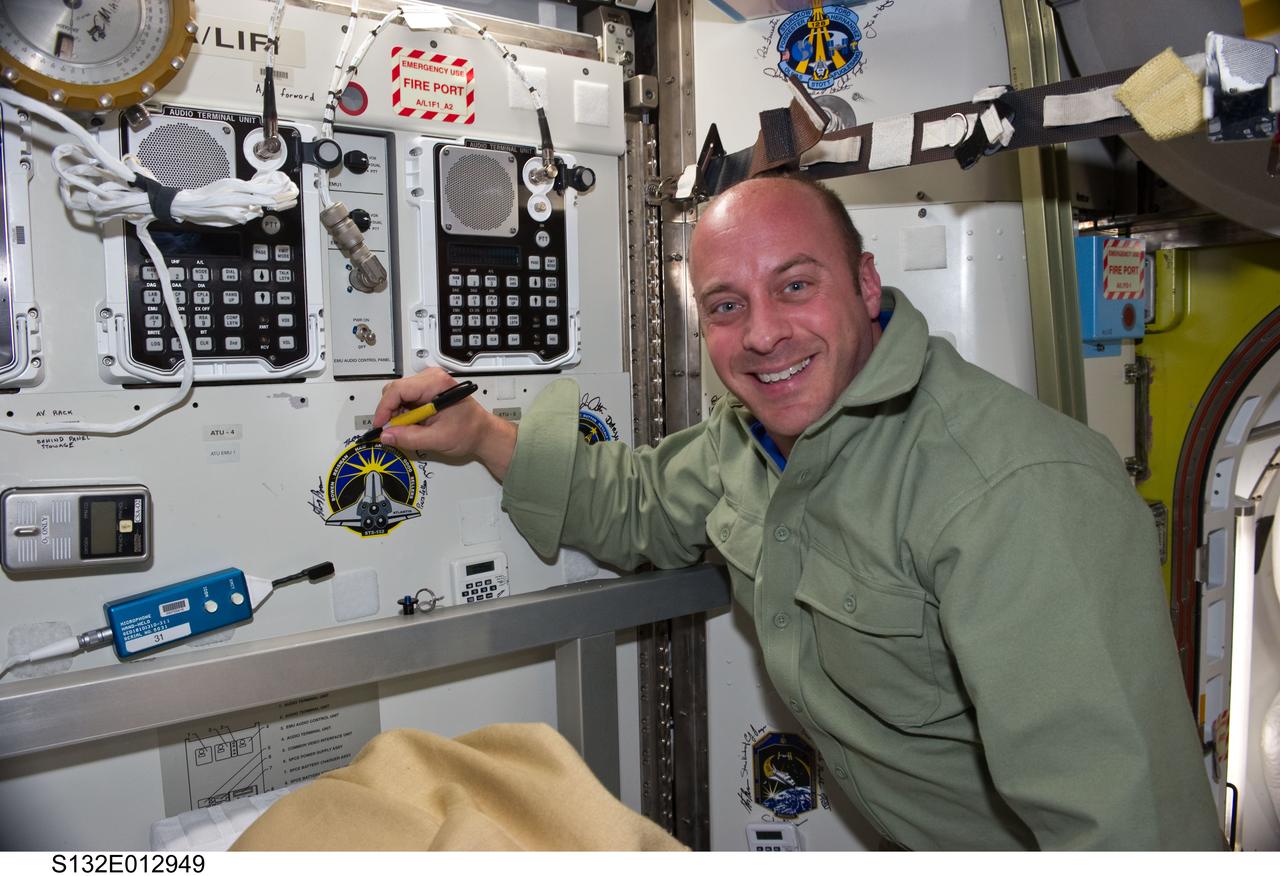
S132-E-012949 (22 May 2010) --- NASA astronaut Garrett Reisman, STS-132 mission specialist, poses for a photo while signing the STS-132 patch, which was added to the growing collection of insignias representing crews who performed spacewalks from the Quest airlock of the International Space Station.
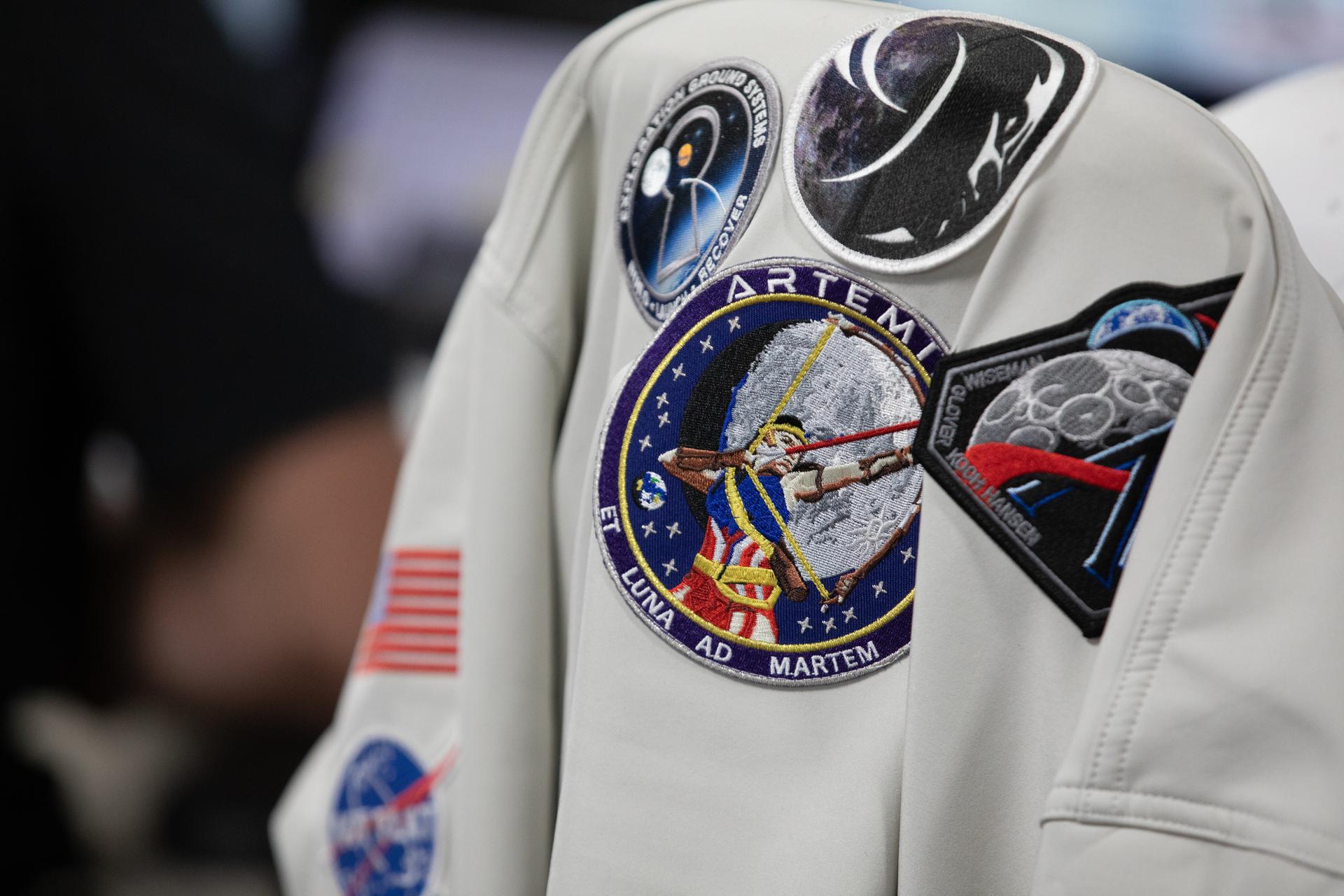
A NASA jacket containing Artemis I and II mission patches, along with other NASA patches hangs on the back of a chair on Thursday, Aug. 6, 2026, inside Firing Room 1 of the Rocco A. Petrone Launch Control Center at NASA’s Kennedy Space Center in Florida during a terminal countdown simulation for the Artemis III mission. The terminal count simulation conducted by NASA’s Exploration Ground Systems team runs through the final five hours of launch countdown, including terminal count - the remaining 10 minutes of the countdown. Artemis III will carry out a series of objectives in low Earth orbit designed to demonstrate critical systems needed for future lunar landings, beginning with Artemis IV.
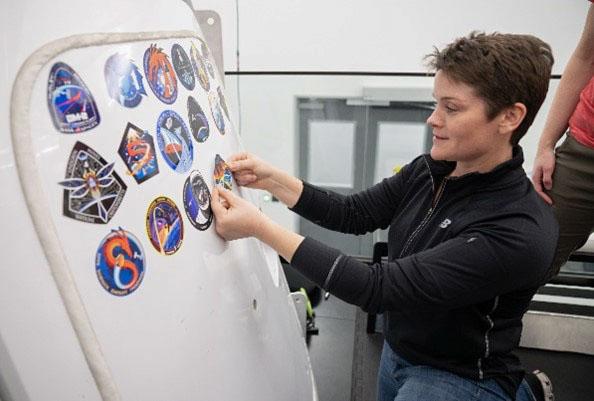
jsc2025e011331 (Feb. 24, 2025) --- NASA astronaut and commander of NASA's SpaceX Crew-10 mission Anne McClain places the Crew-10 mission patch on the Dragon training spacecraft at the company’s facility in Hawthorne, California.
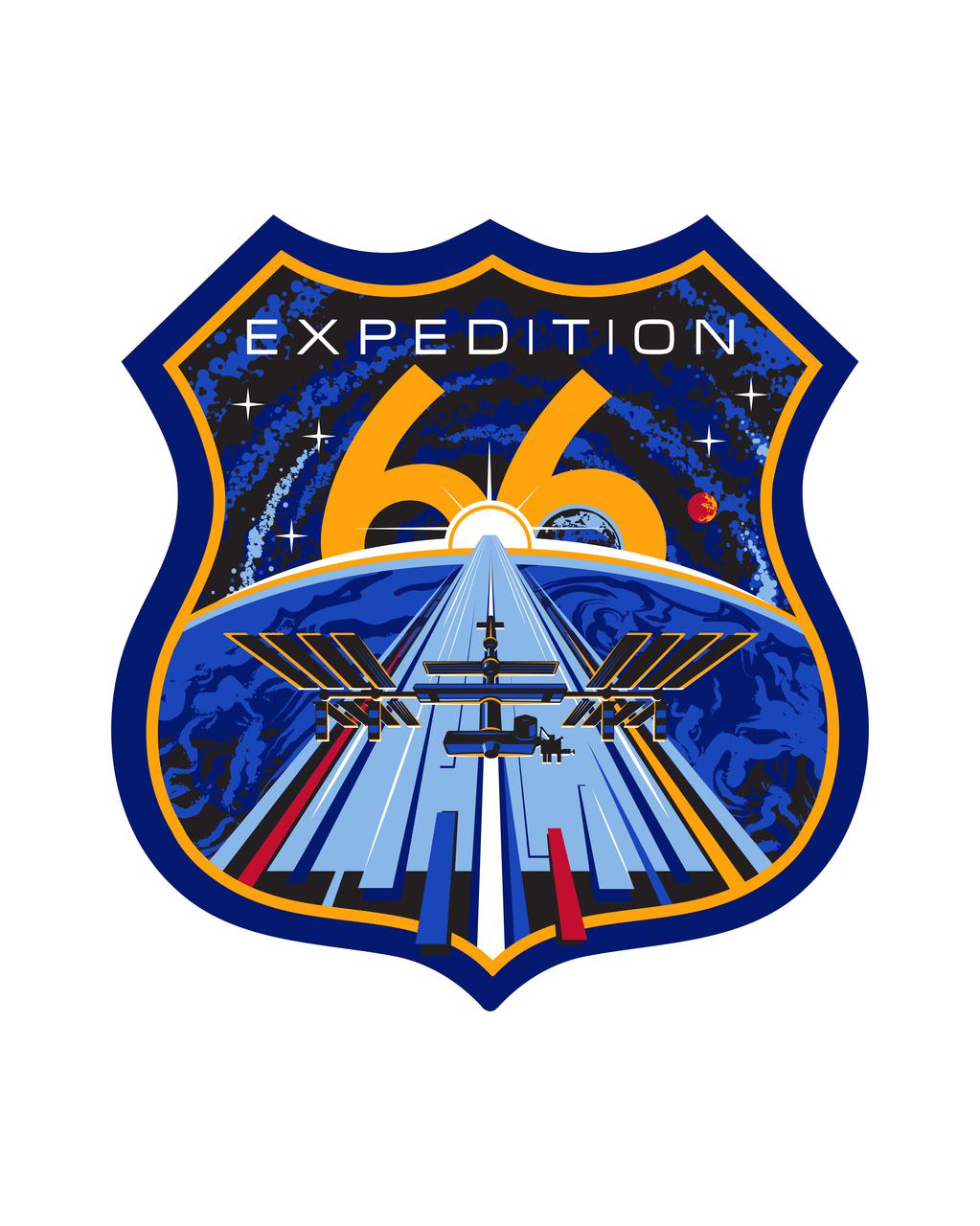
iss066-s-001 (April 26, 2021) --- The official insignia of the Expedition 66 mission aboard the International Space Station.
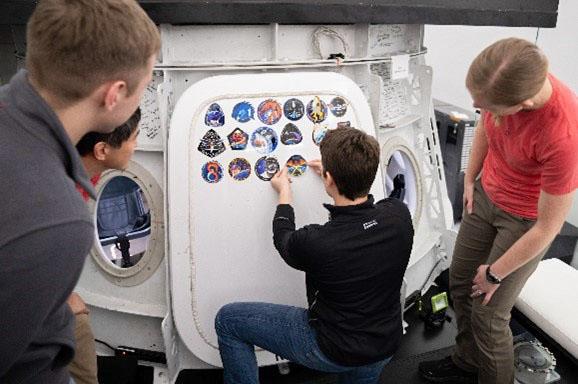
jsc2025e011332 (Feb. 24, 2025) --- NASA astronaut and commander of NASA's SpaceX Crew-10 mission Anne McClain places the Crew-10 mission patch sticker on the Dragon training hatch at the company’s facility in Hawthorne, California. Credit: SpaceX
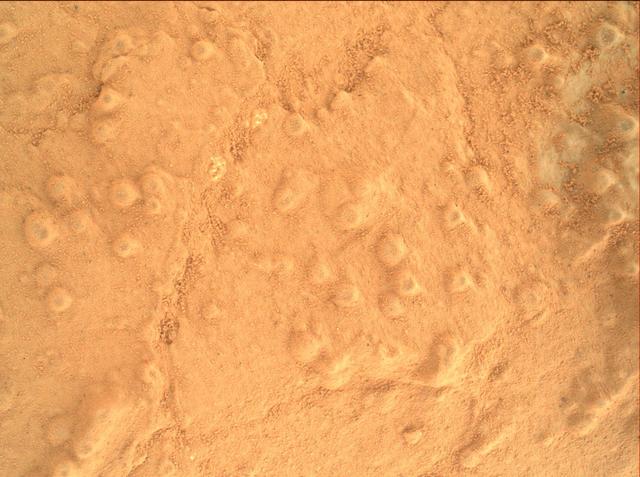
This image taken by the Mars Hand Lens Imager MAHLI on NASA Mars rover Curiosity shows the texture of the patch of flat-lying bedrock called Cumberland, which was the mission second target for use of the rover sample-collecting drill.
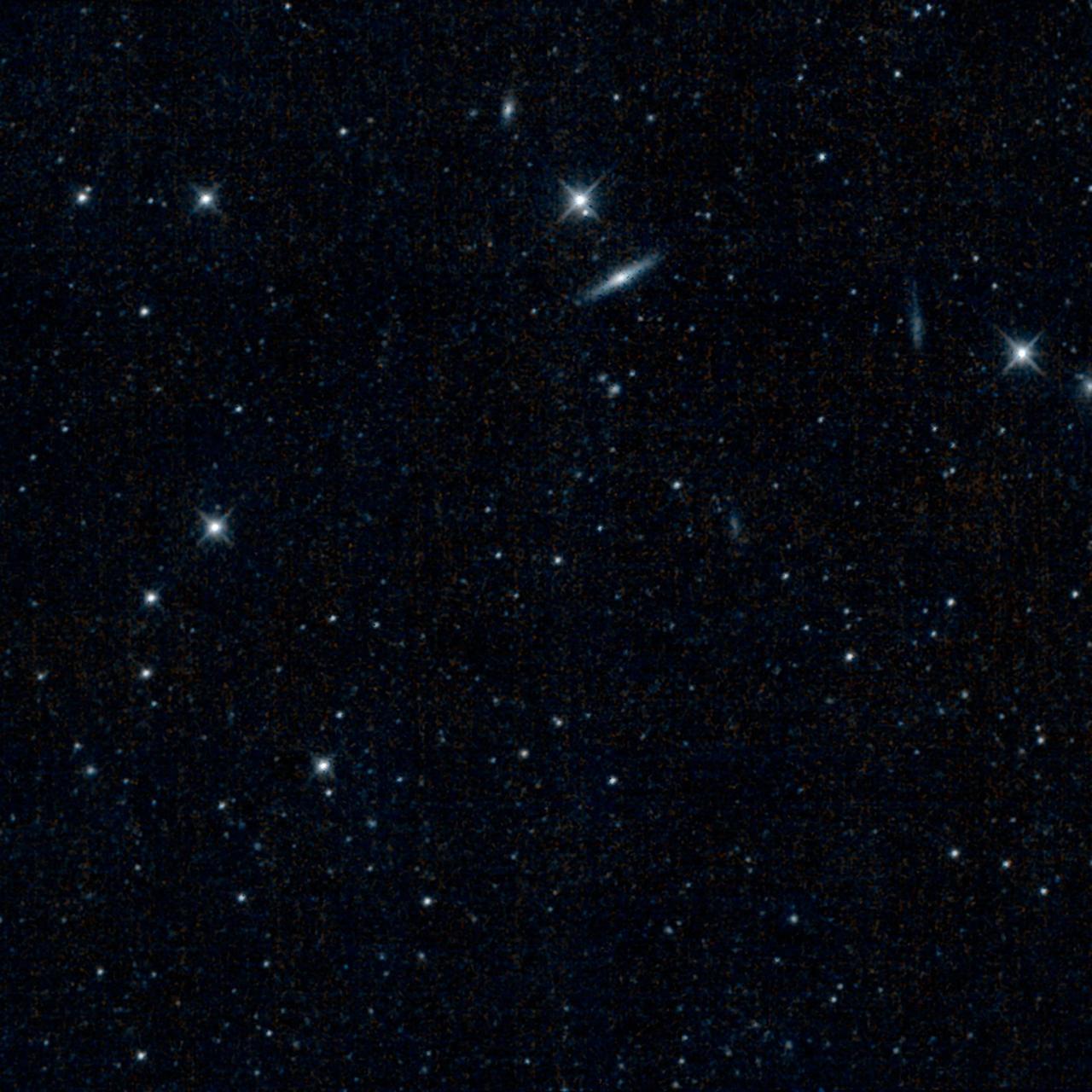
This is one of the first images captured by the revived NEOWISE mission, after more than two years of hibernation. It shows a patch of sky in the constellation Canes Venatici, or the Hunting Dogs.

NASA NEOWISE spacecraft opened its eyes after more than two years of slumber to see the starry sky with the same clarity achieved during its prime mission. This image shows a patch of sky in the constellation Pisces.
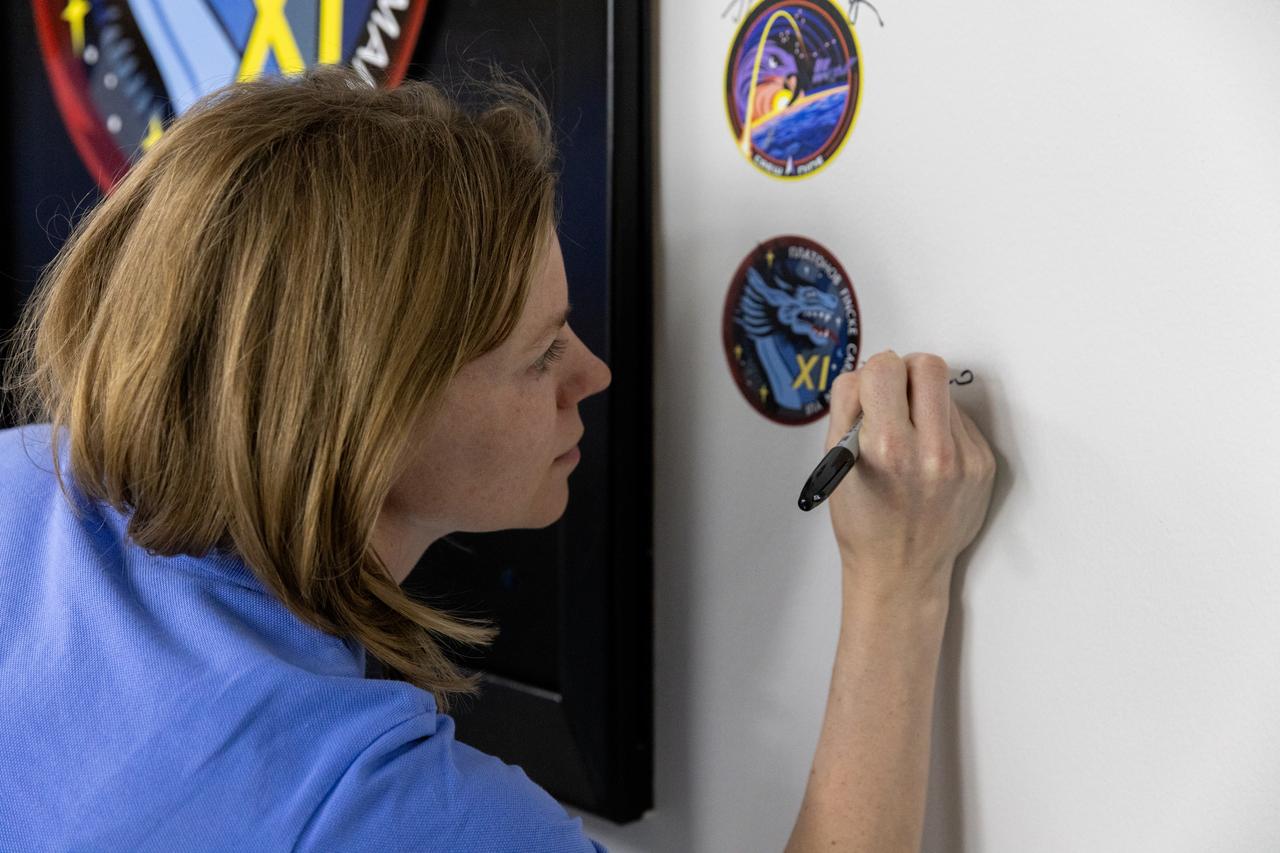
NASA astronaut Zena Cardman signs her name next to NASA’s SpaceX Crew-11 mission logo inside the Astronaut Crew Quarters in the Neil A. Armstrong Operations and Checkout Building at NASA’s Kennedy Space Center in Florida on Monday, July 28, 2025. A SpaceX Dragon spacecraft and Falcon 9 rocket will send NASA astronauts Cardman and Mike Fincke, along with JAXA (Japan Aerospace Exploration Agency) astronaut Kimiya Yui and Roscosmos cosmonaut Oleg Platonov to the International Space Station no earlier than 12:09 p.m. EDT Thursday, July 31, 2025, from NASA Kennedy’s Launch Complex 39A.
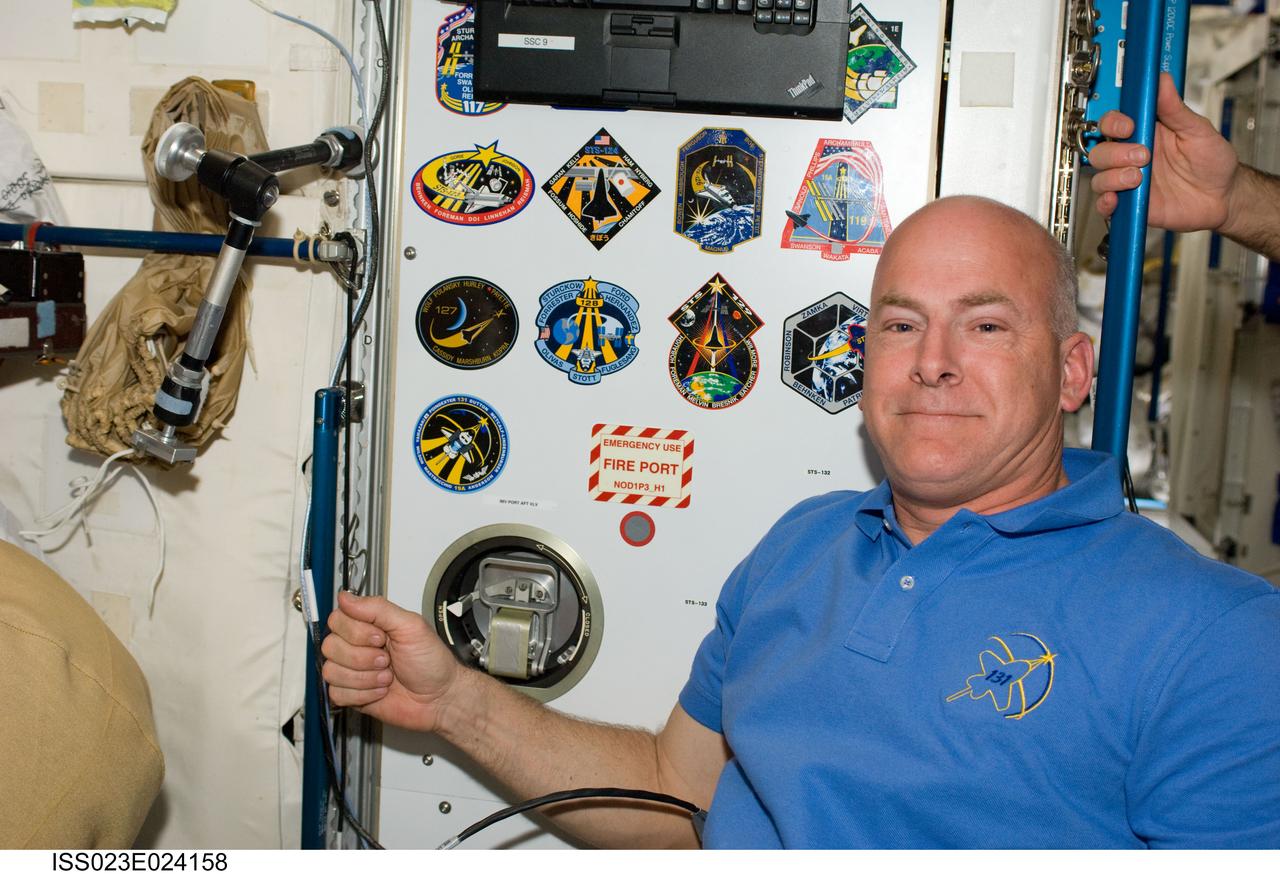
ISS023-E-024158 (16 April 2010) --- NASA astronaut Alan Poindexter, STS-131 commander, poses for a photo after adding his crew's patch to the growing collection, in the Unity node, of insignias representing crews who have worked on the International Space Station.
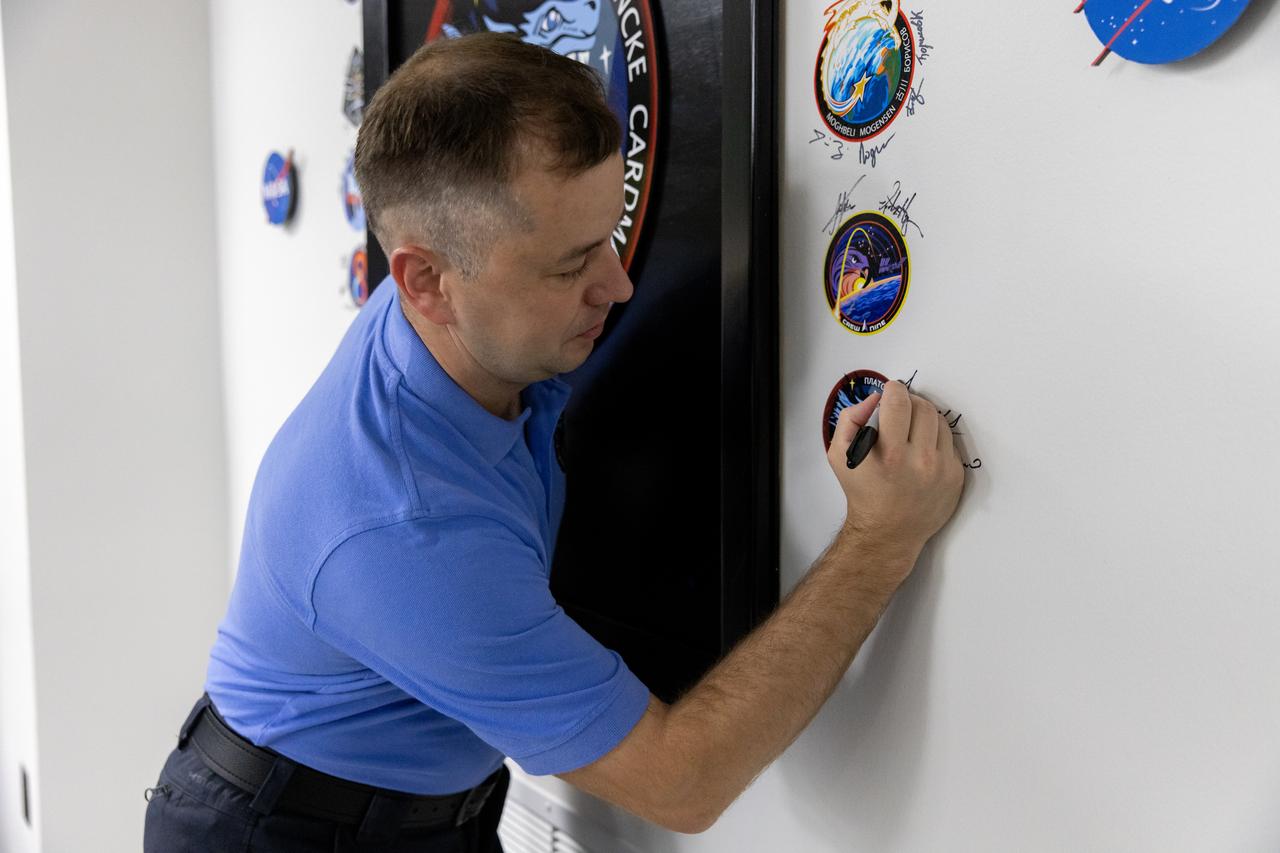
Roscosmos cosmonaut Oleg Platonov signs his name next to NASA’s SpaceX Crew-11 mission logo inside the Astronaut Crew Quarters in the Neil A. Armstrong Operations and Checkout Building at NASA’s Kennedy Space Center in Florida on Monday, July 28, 2025.. A SpaceX Dragon spacecraft and Falcon 9 rocket will send NASA astronauts Zena Cardman and Mike Fincke, along with JAXA (Japan Aerospace Exploration Agency) astronaut Kimiya Yui and Platonov to the International Space Station no earlier than 12:09 p.m. EDT Thursday, July 31, 2025, from NASA Kennedy’s Launch Complex 39A.
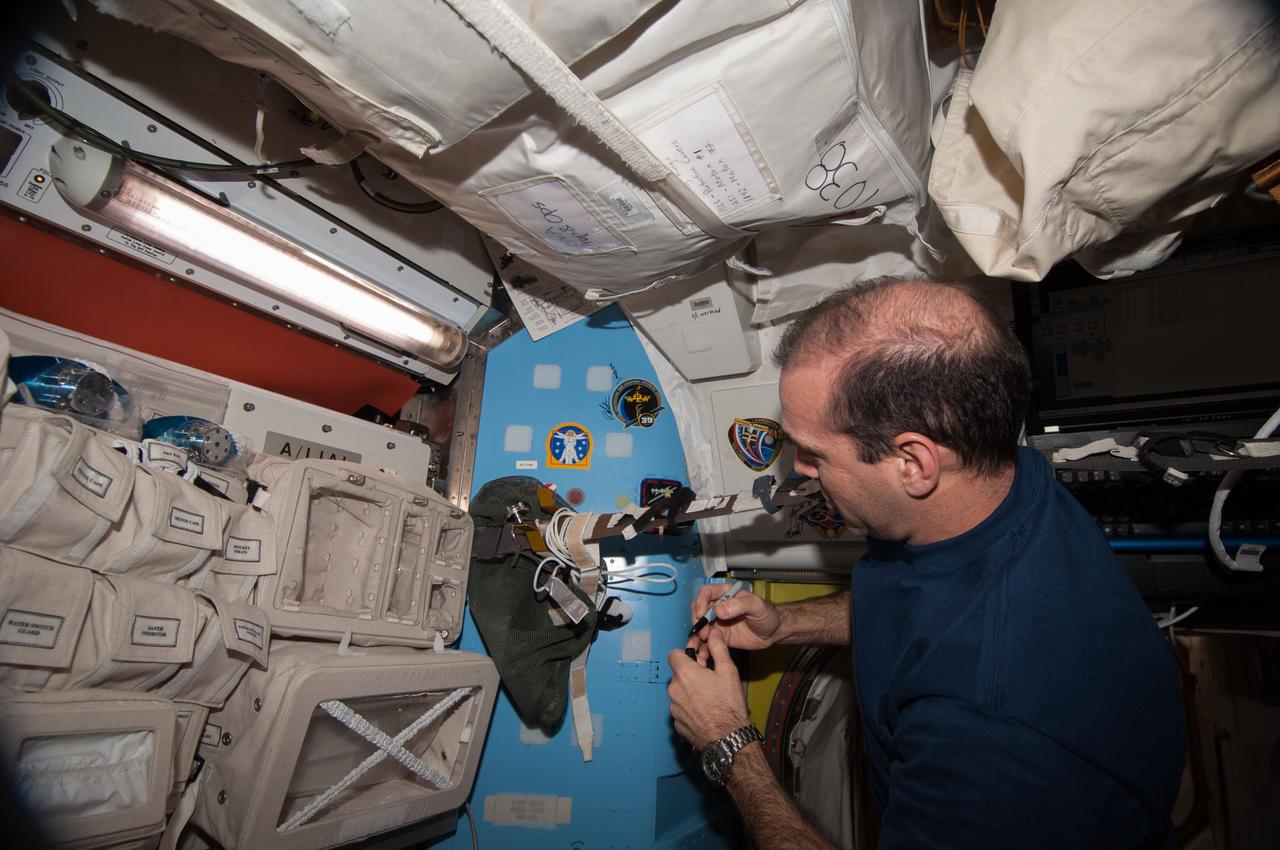
ISS039-E-020704 (13 May 2014) --- NASA astronaut Rick Mastracchio, Expedition 39 flight engineer, signs a wall in the Quest airlock of the Earth-orbiting International Space Station after mounting his crew patch, continuing a Quest-based tradition of station crew members who have participated in space walks on their respective flights. A short time later, Mastracchio joined Expedition 39 Commander Koichi Wakata of the Japan Aerospace Exploration Agency and Flight Engineer Mikhail Tyurin of Roscosmos as they departed the orbital outpost in a Soyuz vehicle.
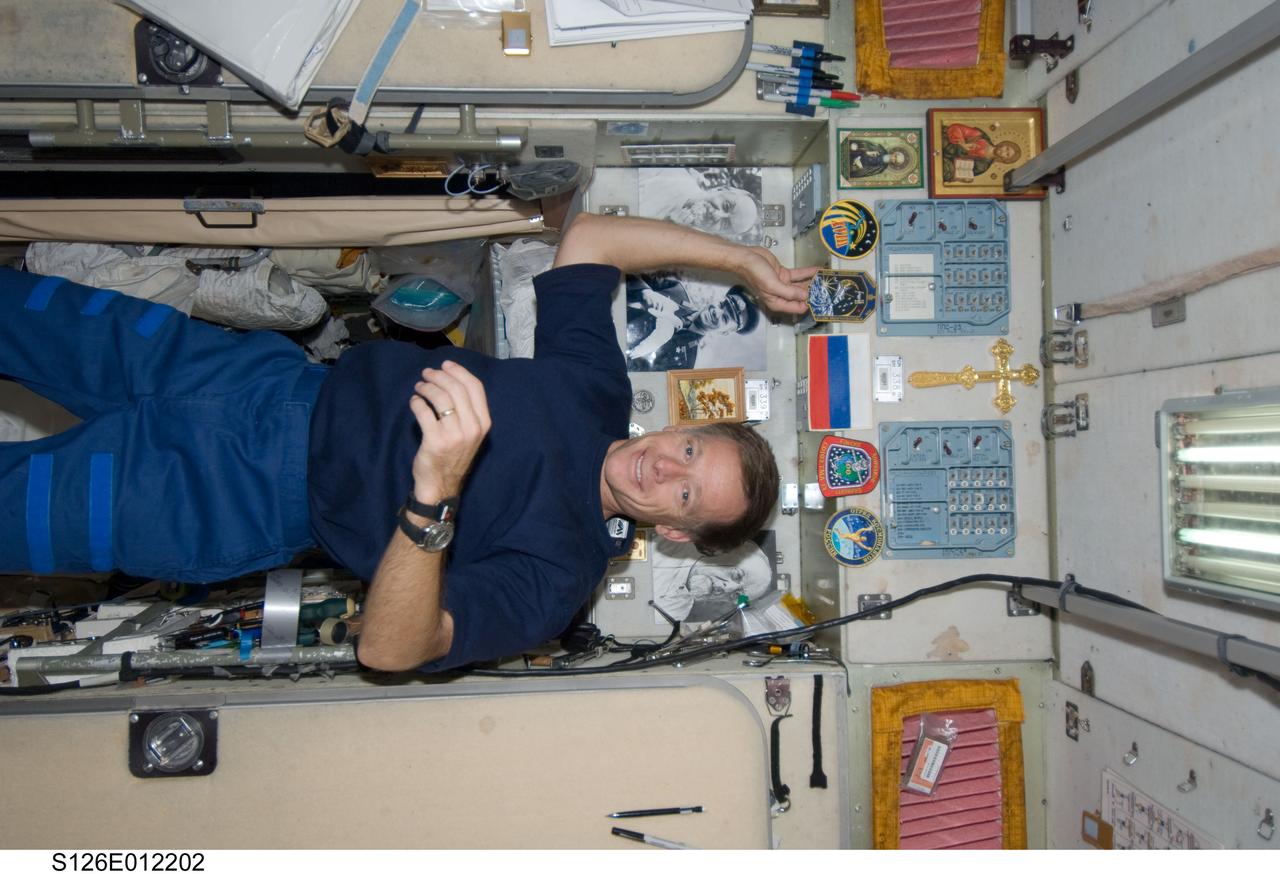
S126-E-012202 (27 Nov. 2008) --- Part of the final activities between the crews of the Space Shuttle Endeavour and Expedition 18 aboard the International Space Station included mounting a cloth insgnia of the STS-126 crew by astronaut Chris Ferguson, commander, in the Zvezda module.

ISS039-E-020702 (13 May 2014) --- NASA astronaut Rick Mastracchio, Expedition 39 flight engineer, places his crew patch on the wall in the Quest airlock of the Earth-orbiting International Space Station, continuing a Quest-based tradition of station crew members who have participated in space walks on their current flights. A short time later, Mastracchio joined Expedition 39 Commander Koichi Wakata of the Japan Aerospace Exploration Agency and Flight Engineer Mikhail Tyurin of Roscosmos as they departed the orbital outpost in a Soyuz vehicle.
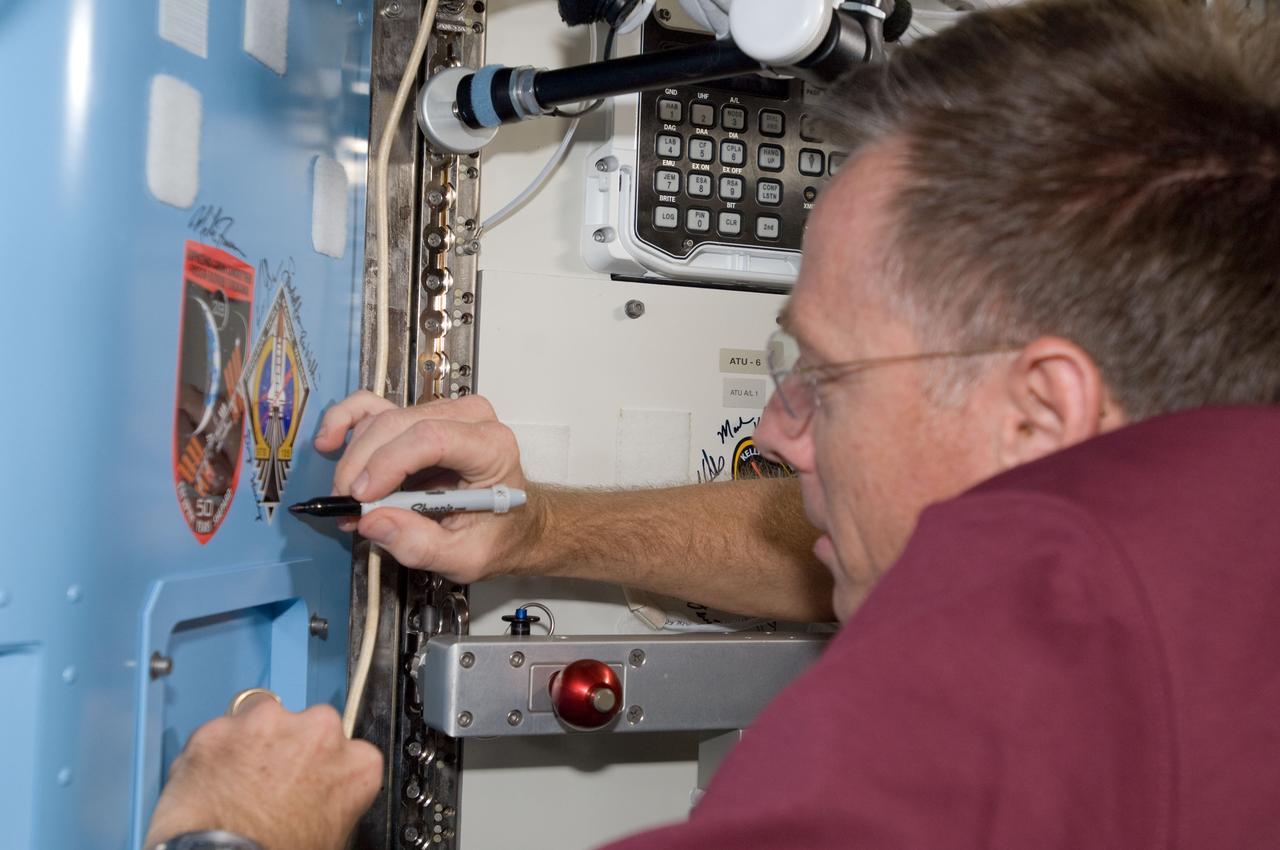
S135-E-009493 (18 July 2011) --- NASA astronaut Chris Ferguson, STS-135 commander, signs an insignia decal for his mission in the Quest airlock of the International Space Station. The shuttle insignia is mounted next to that of the Expedition 28. Having docked Atlantis to the station over a week ago, Ferguson and three crewmates are preparing to undock from the station early on July 19 and prepare for a July 21 landing in Florida. Photo credit: NASA
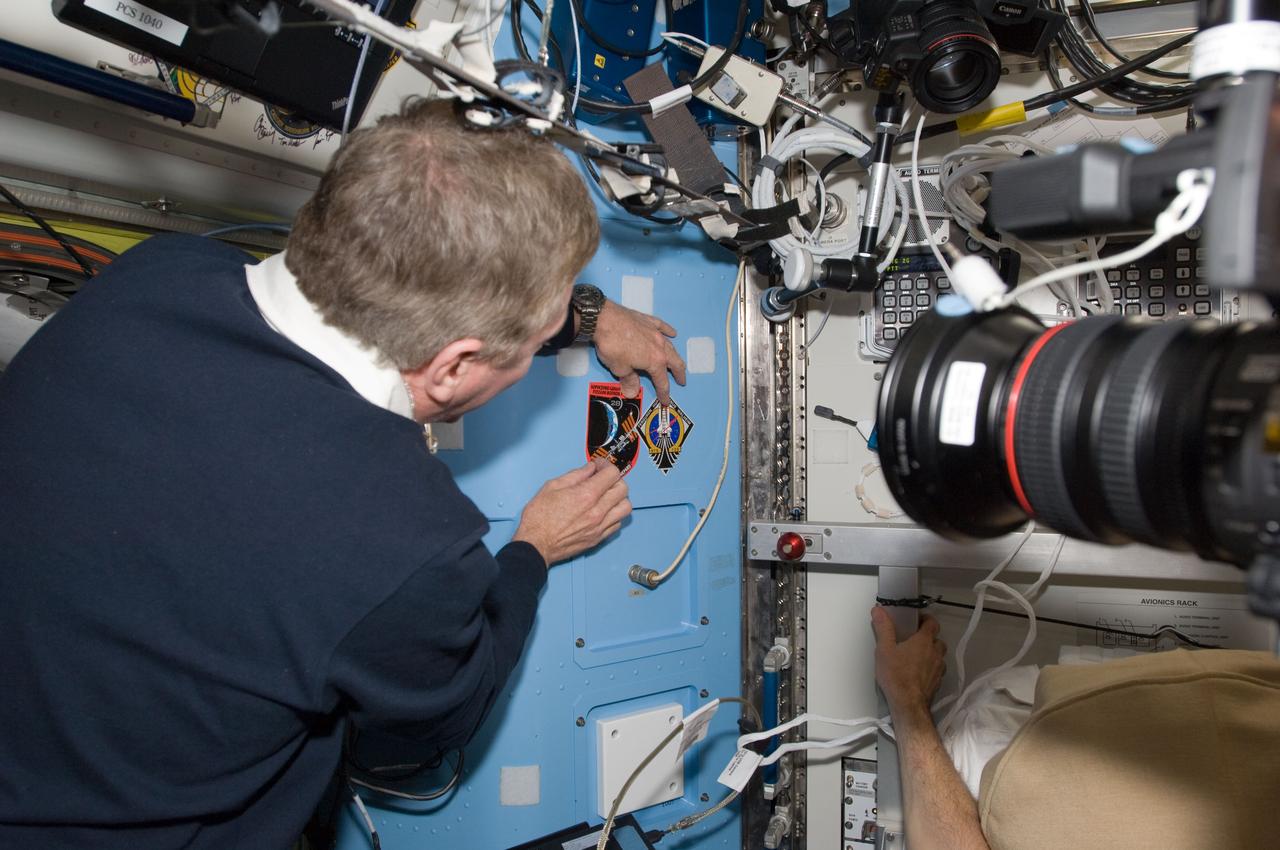
S135-E-009484 (18 July 2011) --- In the Quest airlock of the International Space Station, NASA astronaut Mike Fossum, Expedition 28 flight engineer, draws attention to the freshly posted STS-135 decal next to that of him and his five crewmates. Photo credit: NASA
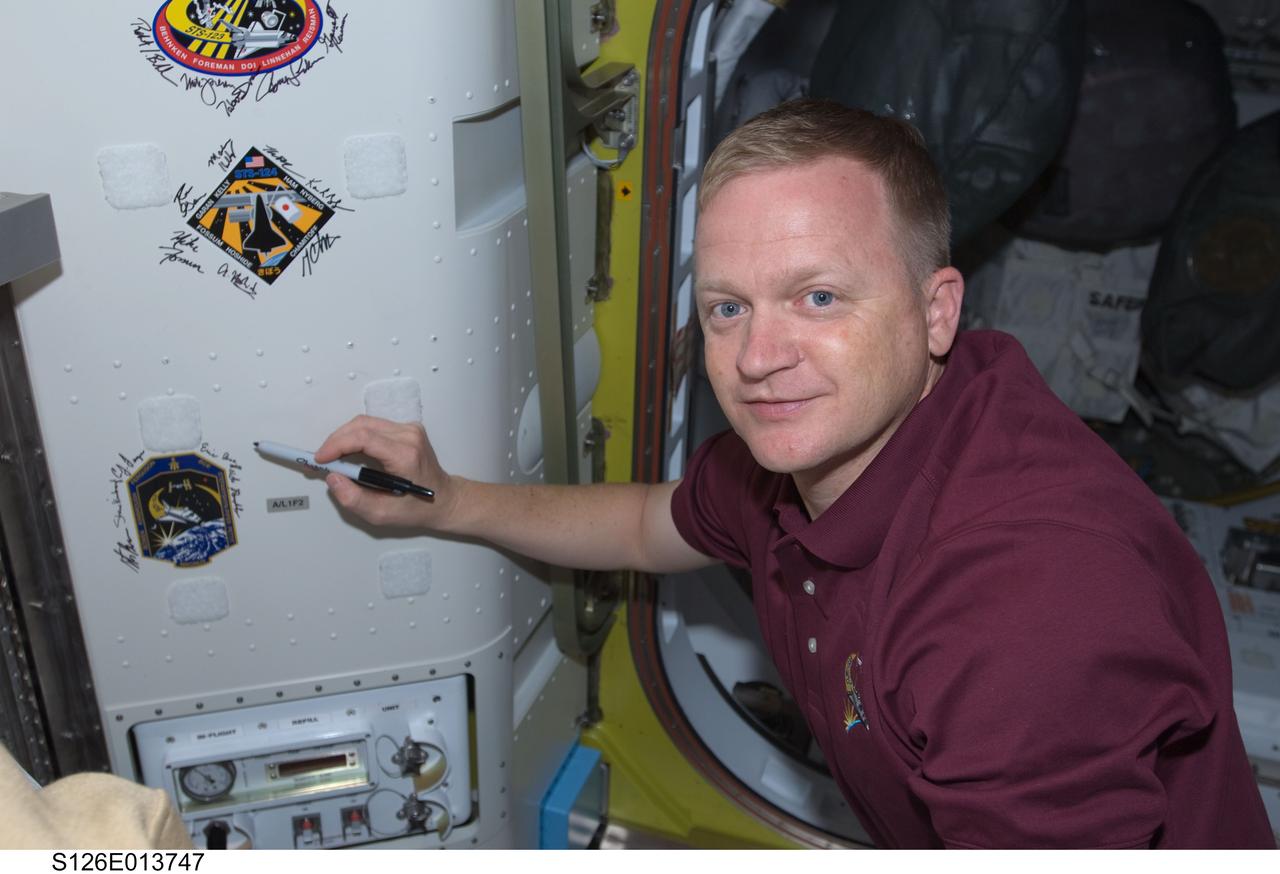
S126-E-013747 (27 Nov. 2008) --- Astronaut Eric Boe, STS-126 pilot, signs Endeavour's crew patch in the Quest Airlock of the International Space Station on Thanksgiving Day. One more day remains for the Space Shuttle Endeavour to be docked with the station.
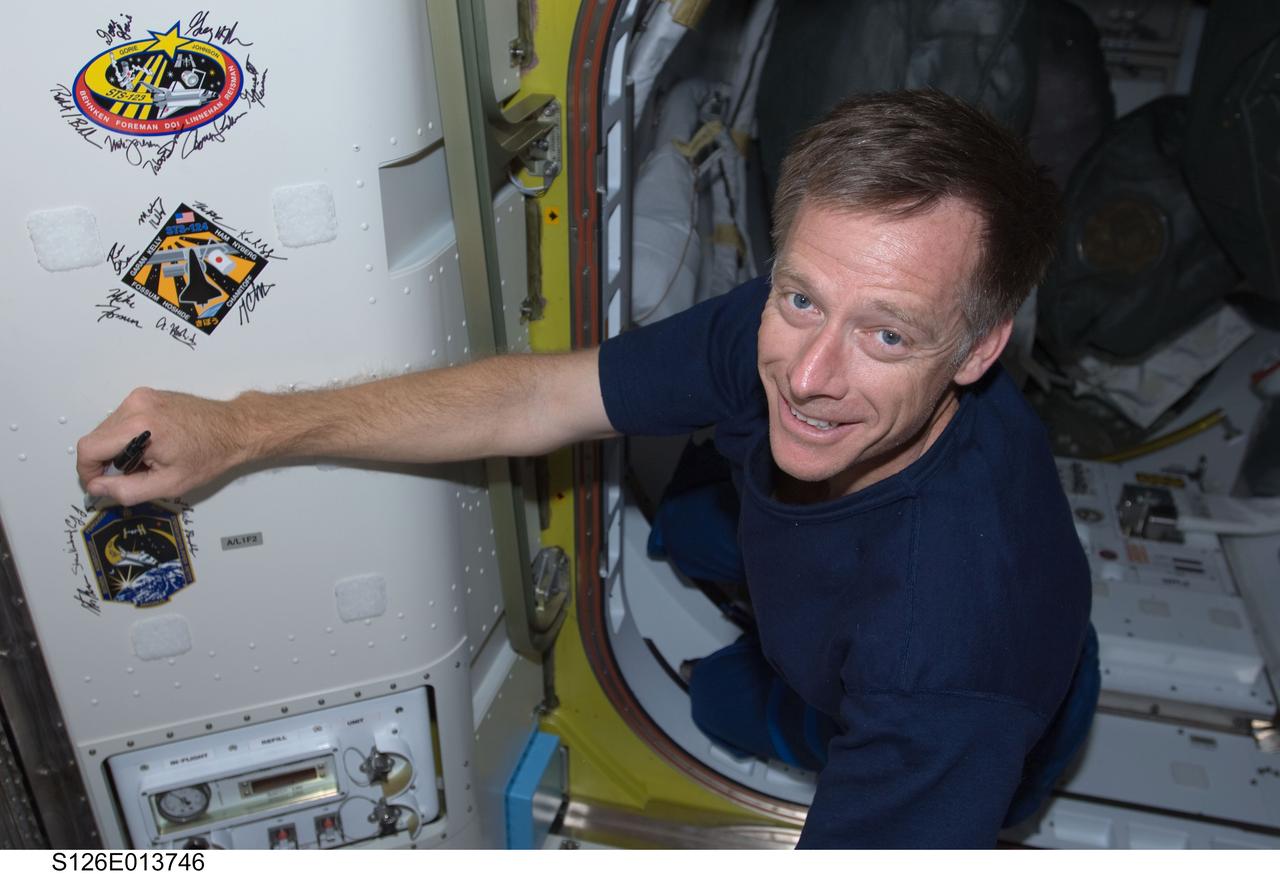
S126-E-013746 (27 Nov. 2008) --- Astronaut Chris Ferguson, STS-126 commander, signs Endeavour's crew patch in the Quest Airlock of the International Space Station on Thanksgiving Day. One more day remains for the Space Shuttle Endeavour to be docked with the station.

jsc2021e048041 (10/22/2021) --- Flight patch logo for Rhodium Scientific, a woman-owned small business founded in 2014 by Olivia Gámez Holzhaus. Image courtesy of Rhodium Scientific.
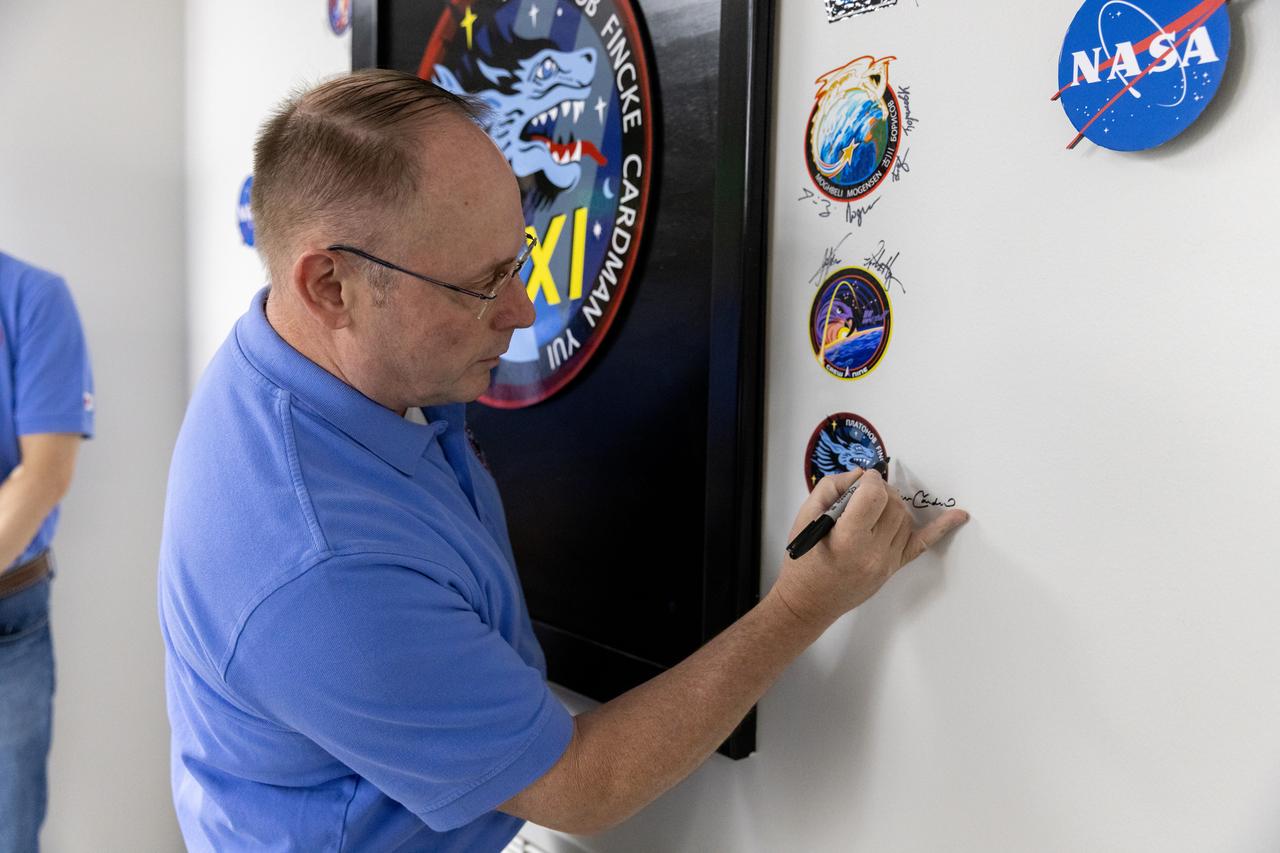
NASA astronaut Mike Fincke signs his name next to NASA’s SpaceX Crew-11 mission logo inside the Astronaut Crew Quarters in the Neil A. Armstrong Operations and Checkout Building at NASA’s Kennedy Space Center in Florida on Monday, July 28, 2025. A SpaceX Dragon spacecraft and Falcon 9 rocket will send NASA astronauts Fincke, Zena Cardman, along with JAXA (Japan Aerospace Exploration Agency) astronaut Kimiya Yui and Roscosmos cosmonaut Oleg Platonov to the International Space Station no earlier than 12:09 p.m. EDT Thursday, July 31, 2025, from NASA Kennedy’s Launch Complex 39A.
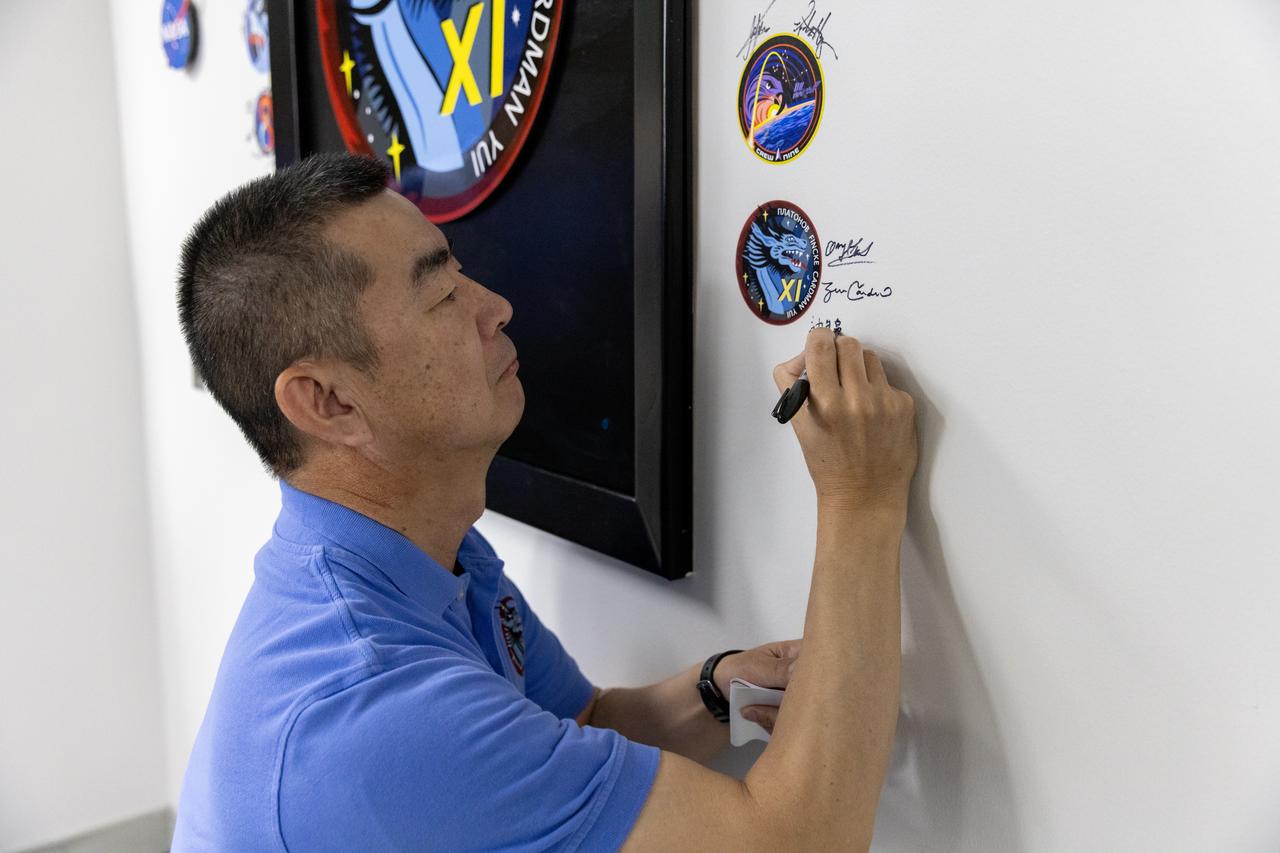
JAXA (Japan Aerospace Exploration Agency) astronaut Kimiya Yui signs his name next to NASA’s SpaceX Crew-11 mission logo inside the Astronaut Crew Quarters in the Neil A. Armstrong Operations and Checkout Building at NASA’s Kennedy Space Center in Florida on Monday, July 28, 2025. A SpaceX Dragon spacecraft and Falcon 9 rocket will send NASA astronauts Zena Cardman and Mike Fincke, along with Yui and Roscosmos cosmonaut Oleg Platonov to the International Space Station no earlier than 12:09 p.m. EDT Thursday, July 31, 2025, from NASA Kennedy’s Launch Complex 39A.
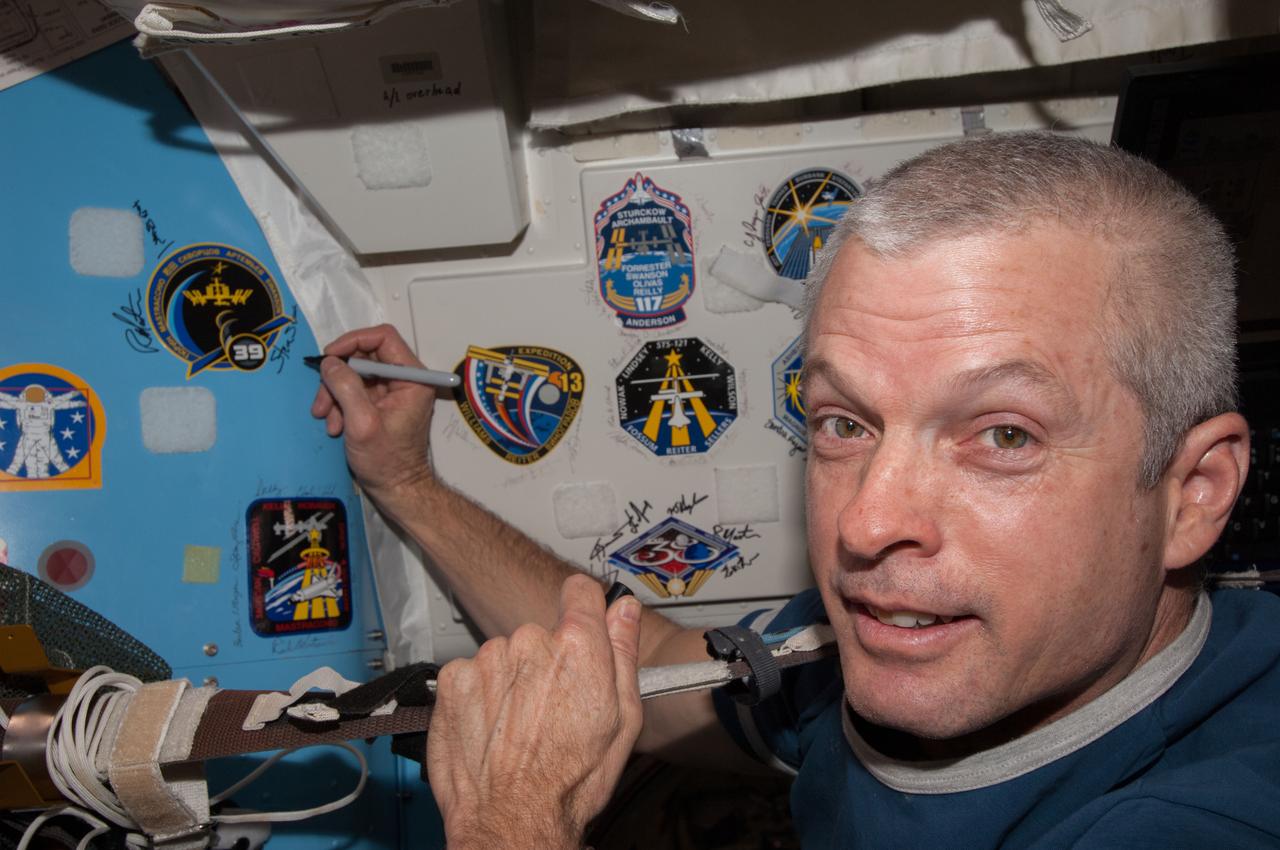
ISS039-E-020710 (13 May 2014) --- NASA astronaut Steve Swanson, Expedition 39 flight engineer about to become Expedition 40 commander, signs a wall in the Quest airlock of the International Space Station after mounting his crew patch, continuing a tradition of station crew members who have participated in space walks on their respective flights. A short time later, Swanson took over command of the orbital outpost upon the departure of Expedition 39 Commander Koichi Wakata of the Japan Aerospace Exploration Agency (JAXA) and Flight Engineers Mikhail Tyurin of Roscosmos and Rick Mastracchio of NASA.
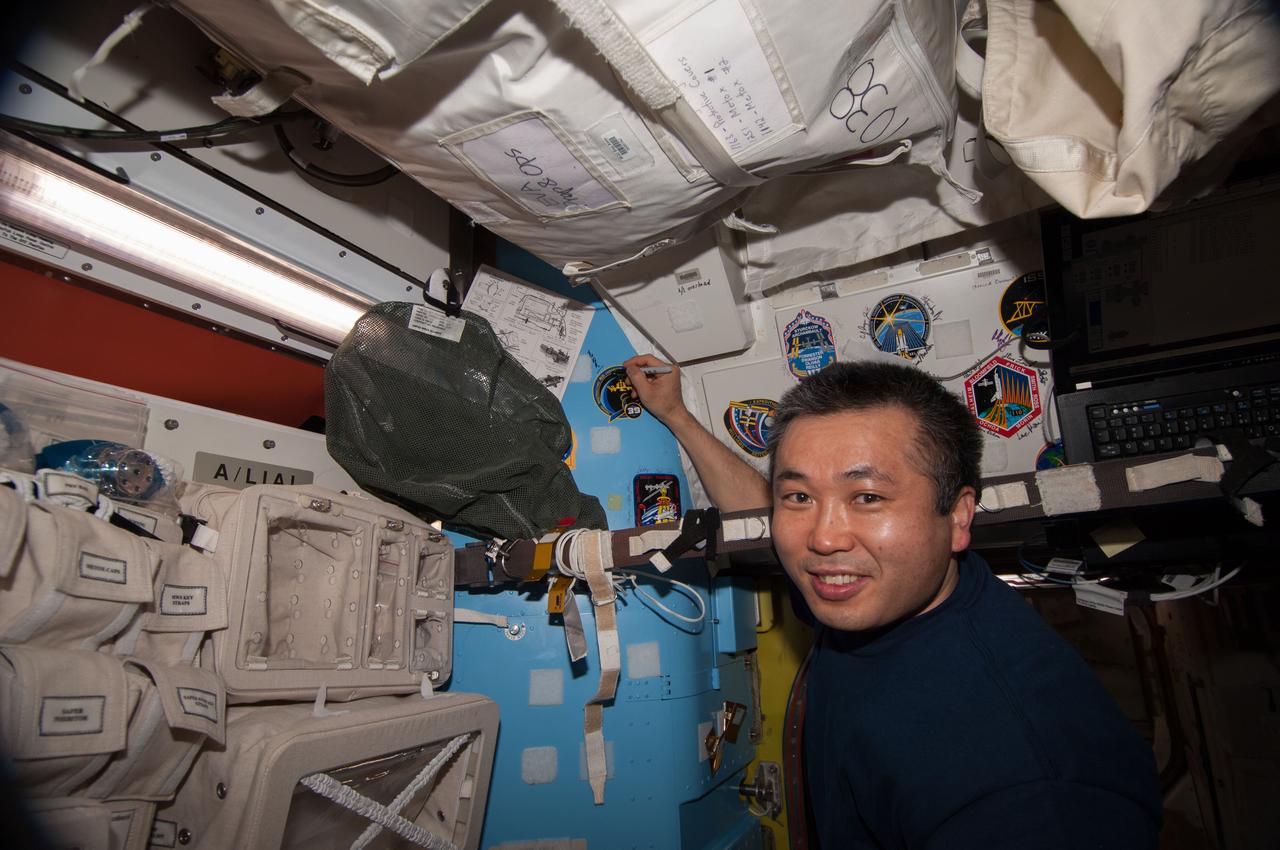
ISS039-E-020699 (13 May 2014) --- Japan Aerospace Exploration Agency astronaut Koichi Wakata, Expedition 39 commander, places his crew patch on a wall in the Quest airlock of the Earth-orbiting International Space Station. A short time later, Wakata joined Expedition 39 Soyuz Commander Mikhail Tyurin of Roscosmos and Flight Engineer Rick Mastracchio of NASA as they departed the orbital outpost in a Soyuz vehicle. Wakata had spent a great deal of time in Quest as he assisted spacewalks from the shirt-sleeve environment of the orbital outpost on both Expedition 38 and 39.
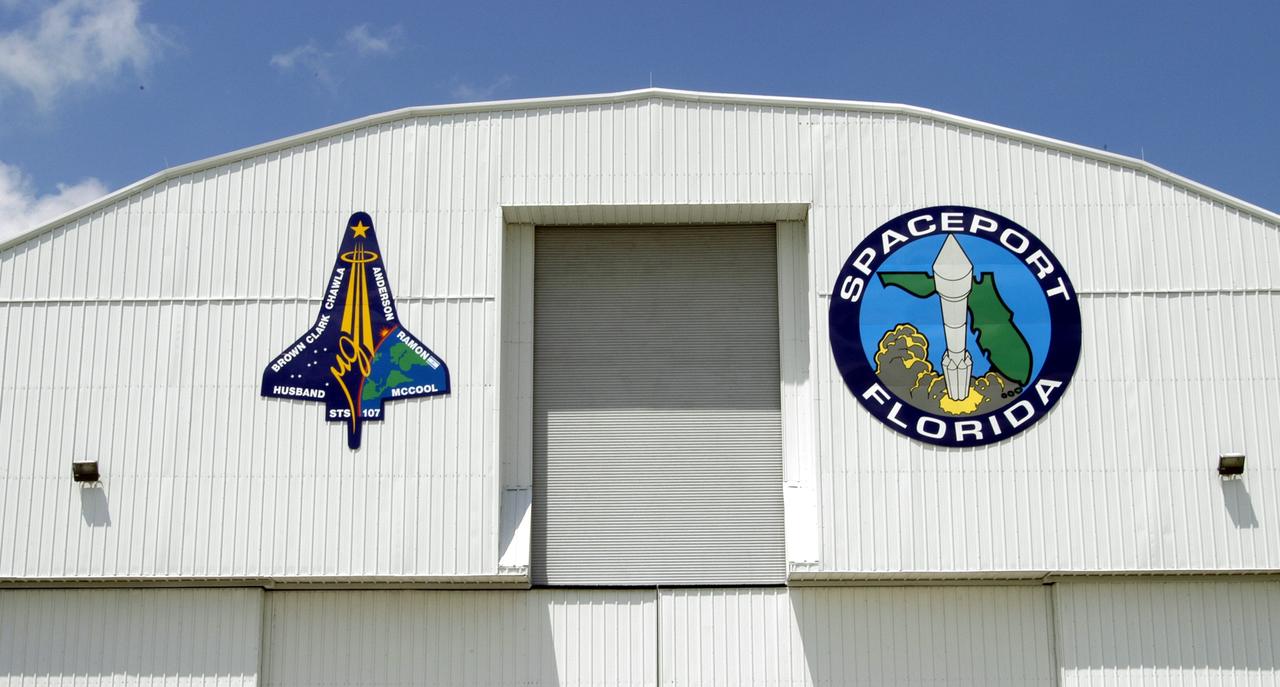
KENNEDY SPACE CENTER, FLA. - The mission patch for STS-107 is displayed, left, on the outside of the RLV Hangar at KSC. The hangar is the site of the Columbia Reconstruction Project, where pieces of debris from Columbia are being collected and identified as part of the mishap investigation.

Maleth II mission patch for SpX-25.
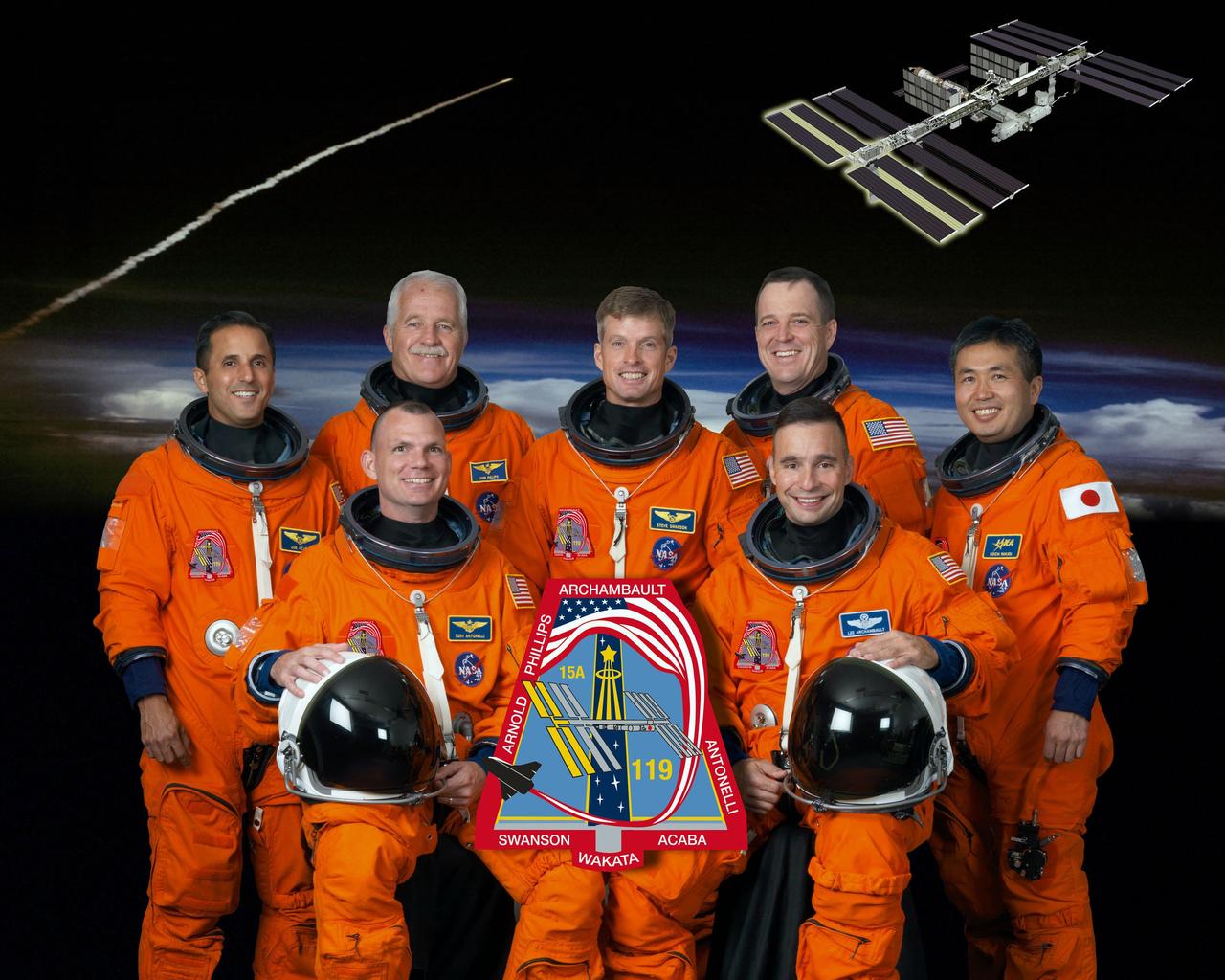
HOUSTON, Texas -- STS119-S-002: Attired in training versions of their shuttle launch and entry suits, these seven astronauts take a break from training to pose for the STS-119 crew portrait. From the right (front row) are NASA astronauts Lee Archambault, commander, and Tony Antonelli, pilot. From the left (back row) are NASA astronauts Joseph Acaba, John Phillips, Steve Swanson, Richard Arnold and Japan Aerospace Exploration Agency astronaut Koichi Wakata, all mission specialists. Wakata is scheduled to join Expedition 18 as flight engineer after launching to the International Space Station on STS-119.
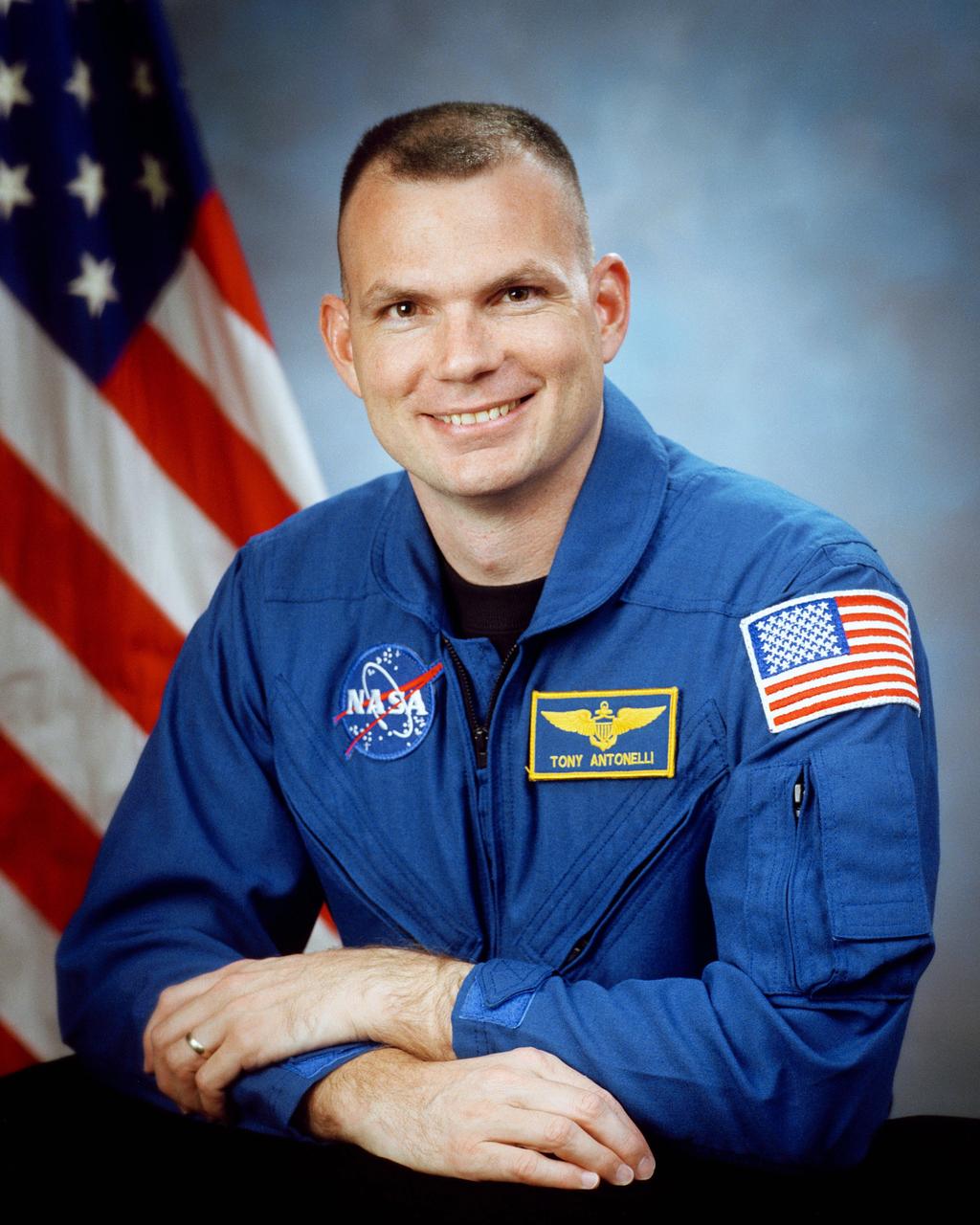
HOUSTON, Texas -- JSC2000-07308: Astronaut Dominic A. (Tony) Antonelli, pilot

HOUSTON, Texas -- JSC2008-E-053106: Astronaut Richard Arnold, mission specialist on mission STS-119.
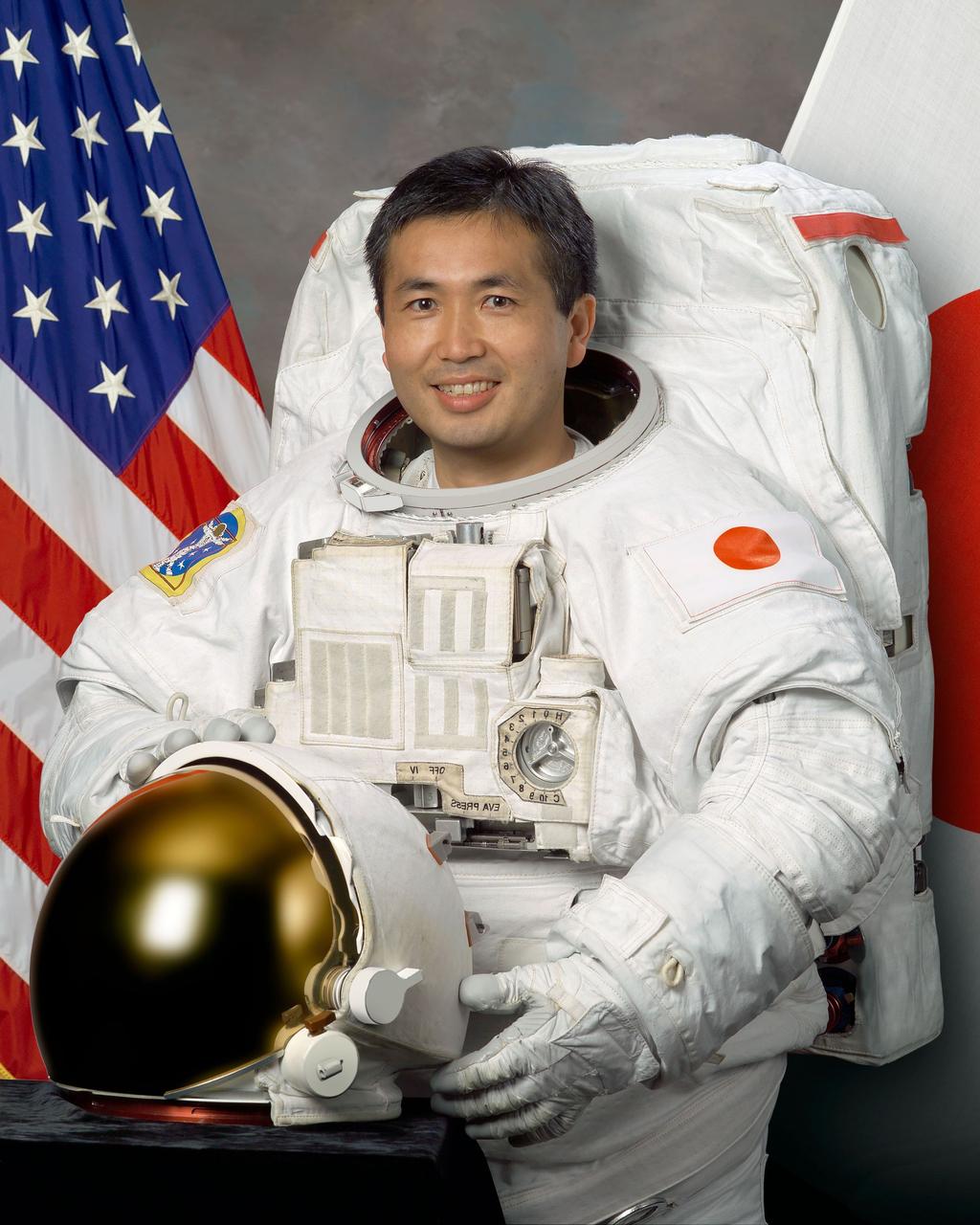
HOUSTON, Texas -- JSC2007-E-19404: Japan Aerospace Exploration Agency (JAXA) astronaut Koichi Wakata, flight engineer on mission STS-119.
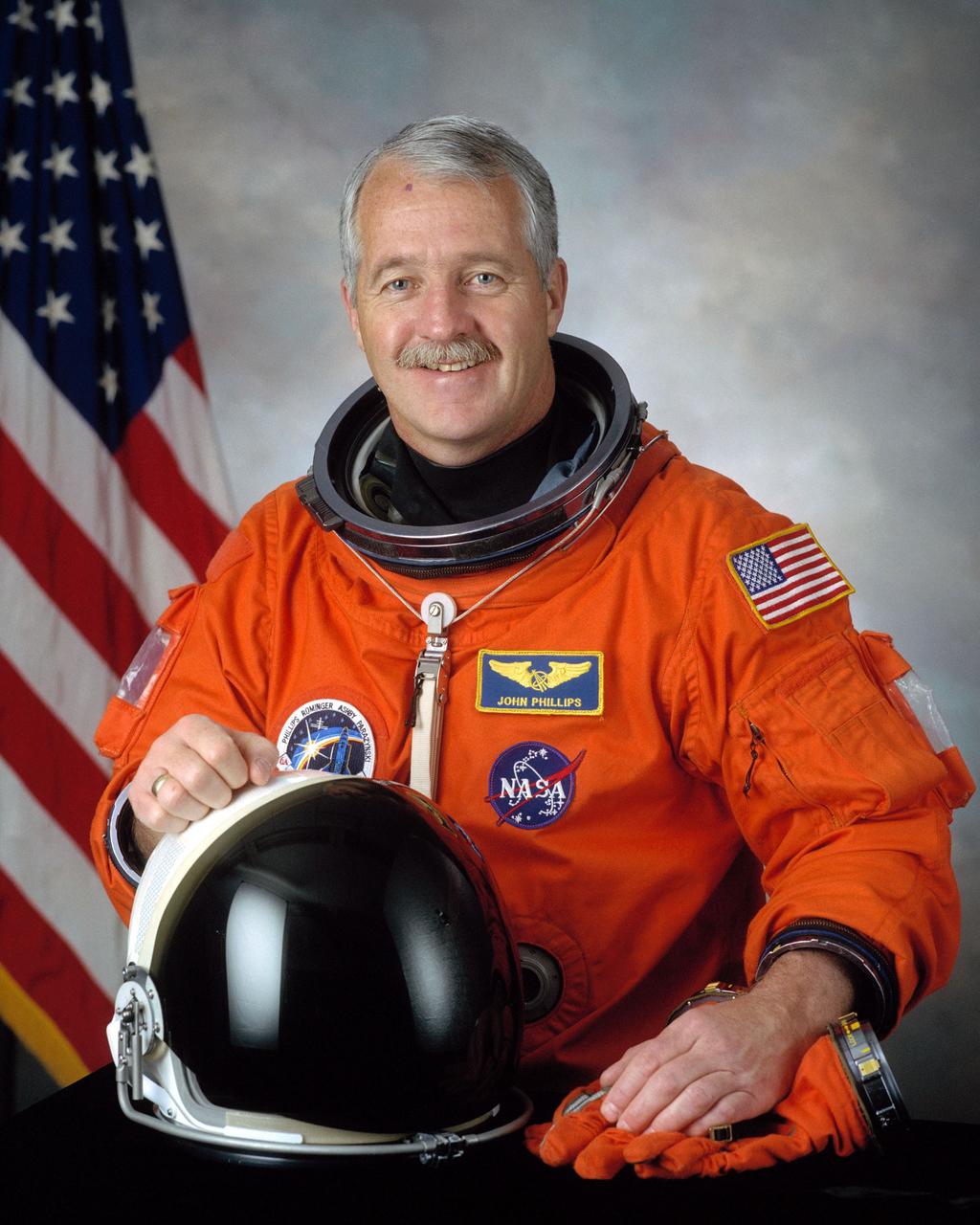
HOUSTON, Texas -- JSC2002-00859: Astronaut John L. Phillips, mission specialist, on mission STS-119.
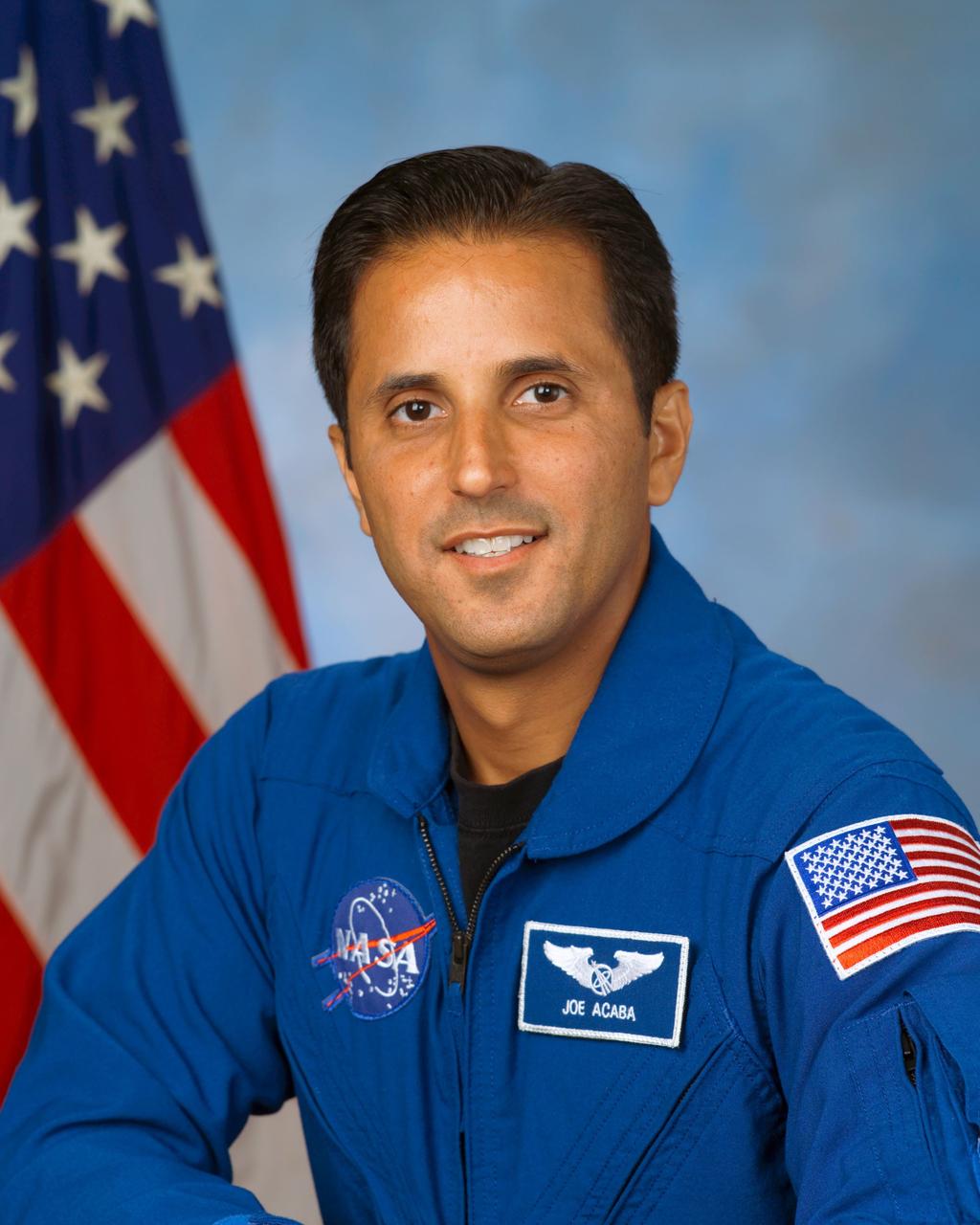
HOUSTON, Texas -- JSC2004-E-40629: Joseph M. (Joe) Acaba, mission specialist on mission STS-119.
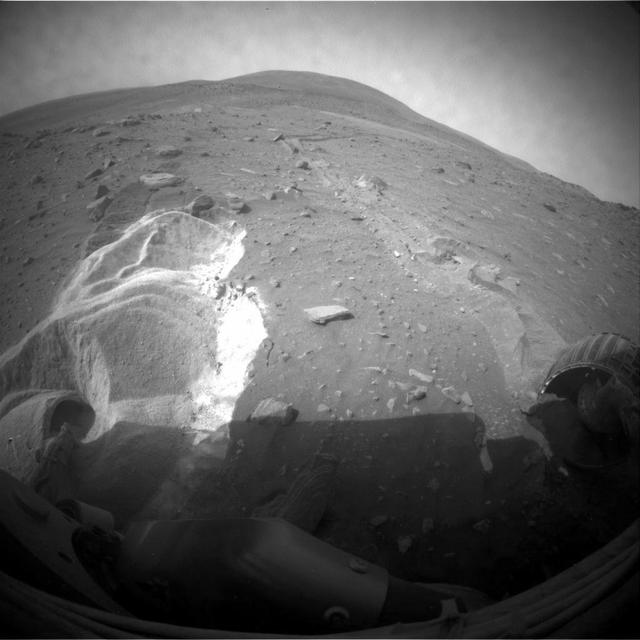
Wheel slippage during attempts to extricate NASA Mars Rover Spirit from a patch of soft ground during the preceding two weeks had partially buried the wheels by the 1,899th Martian day, or sol, of the Spirit mission on Mars May 6, 2009.

STS113-E-05384 (2 December 2002) --- Astronaut James D. Wetherbee, STS-113 mission commander, adds the STS-113 patch to the growing collection of those representing Shuttle crews who have worked on the International Space Station (ISS). A location in the Unity node serves as one of the traditional posting sites for the patches.
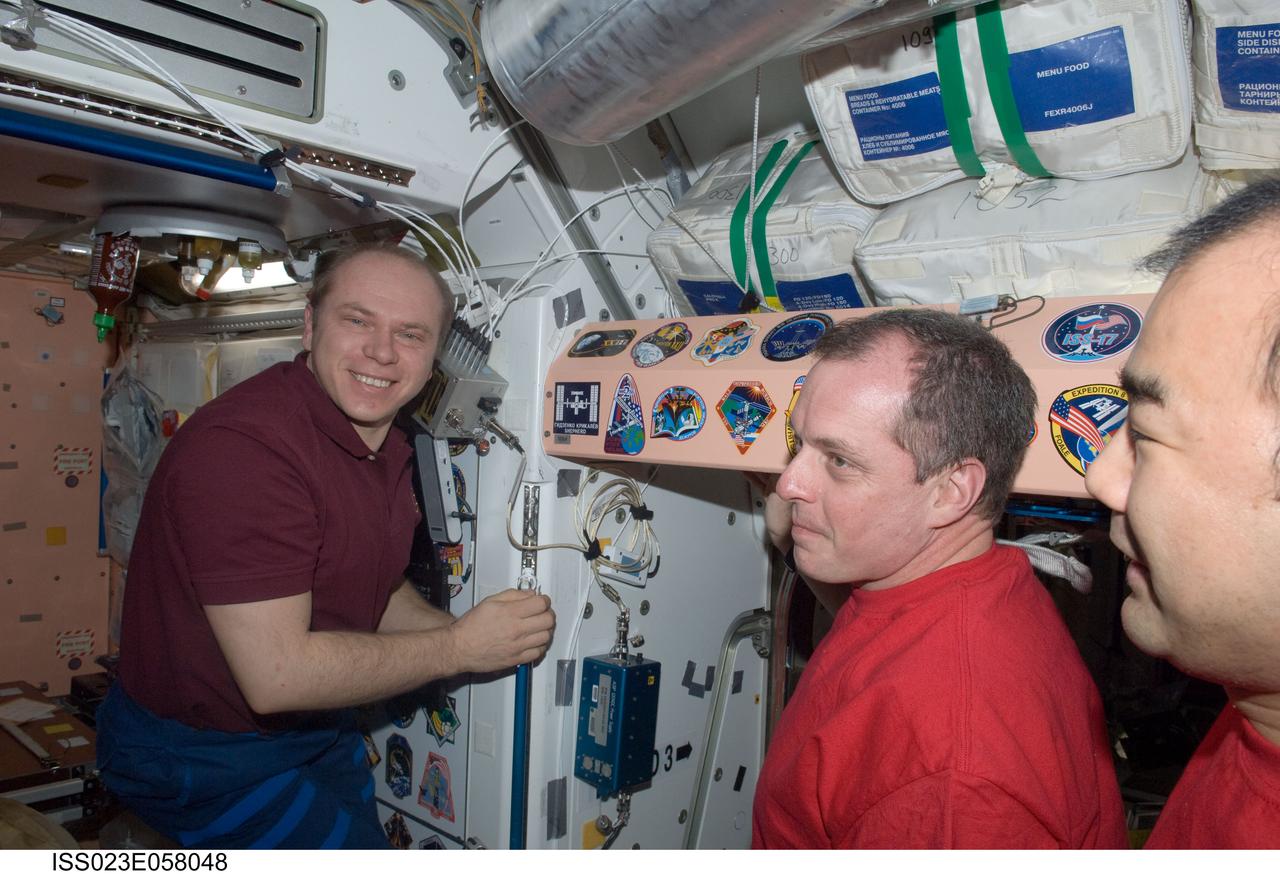
ISS023-E-058048 (1 June 2010) --- Russian cosmonaut Oleg Kotov (left), Expedition 23 commander; along with NASA astronaut T.J. Creamer (center) and Japan Aerospace Exploration Agency (JAXA) astronaut Soichi Noguchi, both flight engineers, are pictured after adding the Expedition 23 patch to the Unity node?s growing collection of insignias representing crews who have lived and worked on the International Space Station.
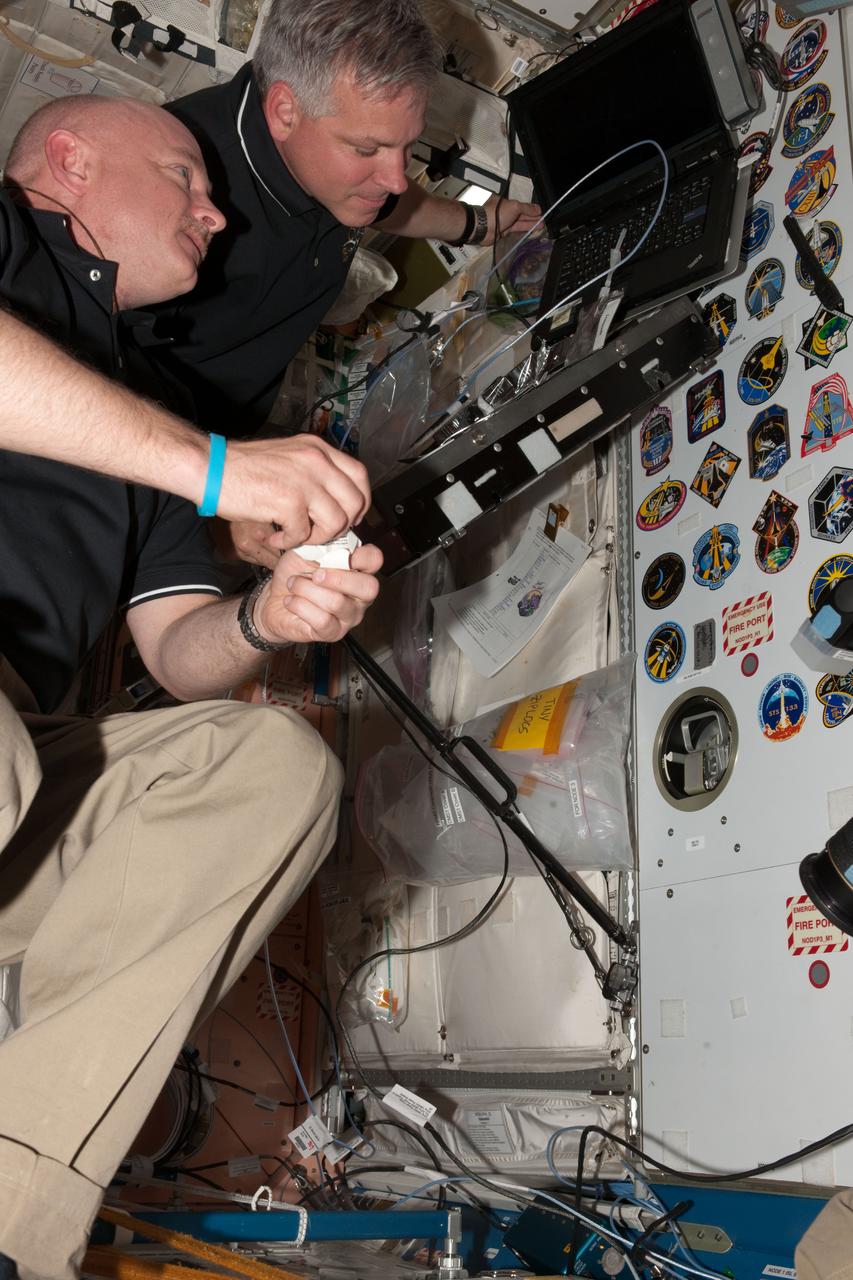
ISS027-E-035420 (21 May 2011) --- NASA astronaut Mark Kelly, Expedition 27 commander, looks at the various mission insignias placed in the Unity node of the International Space Station before placing the STS-134 insignia among them. NASA astronaut Greg H. Johnson, pilot, is pictured as well.

S66-59530 (August 1965) --- This is the insignia of the Gemini-Titan 5 (GT-5) spaceflight. The Gemini-5 prime crew members are astronauts L. Gordon Cooper Jr., command pilot; and Charles Conrad Jr., pilot. The covered wagon symbolizes pioneer spirit of space exploration. The NASA insignia design for Gemini flights is reserved for use by the astronauts and for other official use as the NASA Administrator may authorize. Public availability has been approved only in the form of illustrations by the various news media. When and if there is any change in this policy, which we do not anticipate, it will be publicly announced.
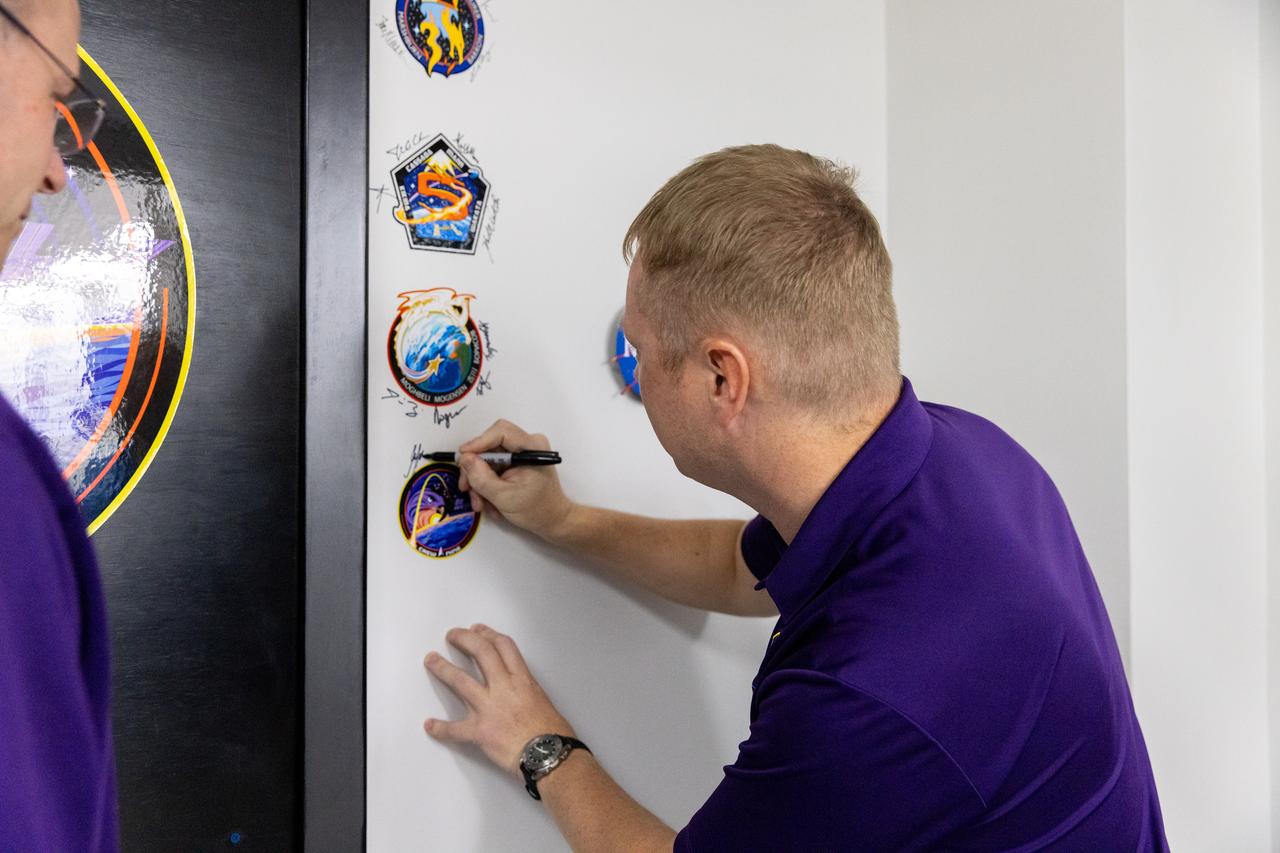
Roscosmos cosmonaut Aleksandr Gorbunov signs his name inside the Astronaut Crew Quarters in the Neil A. Armstrong Operations and Checkout Building at NASA’s Kennedy Space Center in Florida on Monday, Sept. 23, 2024, ahead of the agency’s SpaceX Crew-9 mission. Crew-9 is the ninth crew rotation mission of the SpaceX Dragon spacecraft and Falcon 9 rocket that will send Gorbunov and NASA astronaut Nick Hague to the International Space Station as part of the agency’s Commercial Crew Program. The mission is scheduled to launch at 2:05 p.m. EDT Sept. 26, 2024, from Space Launch Complex-40 at Cape Canaveral Space Force Station in Florida.
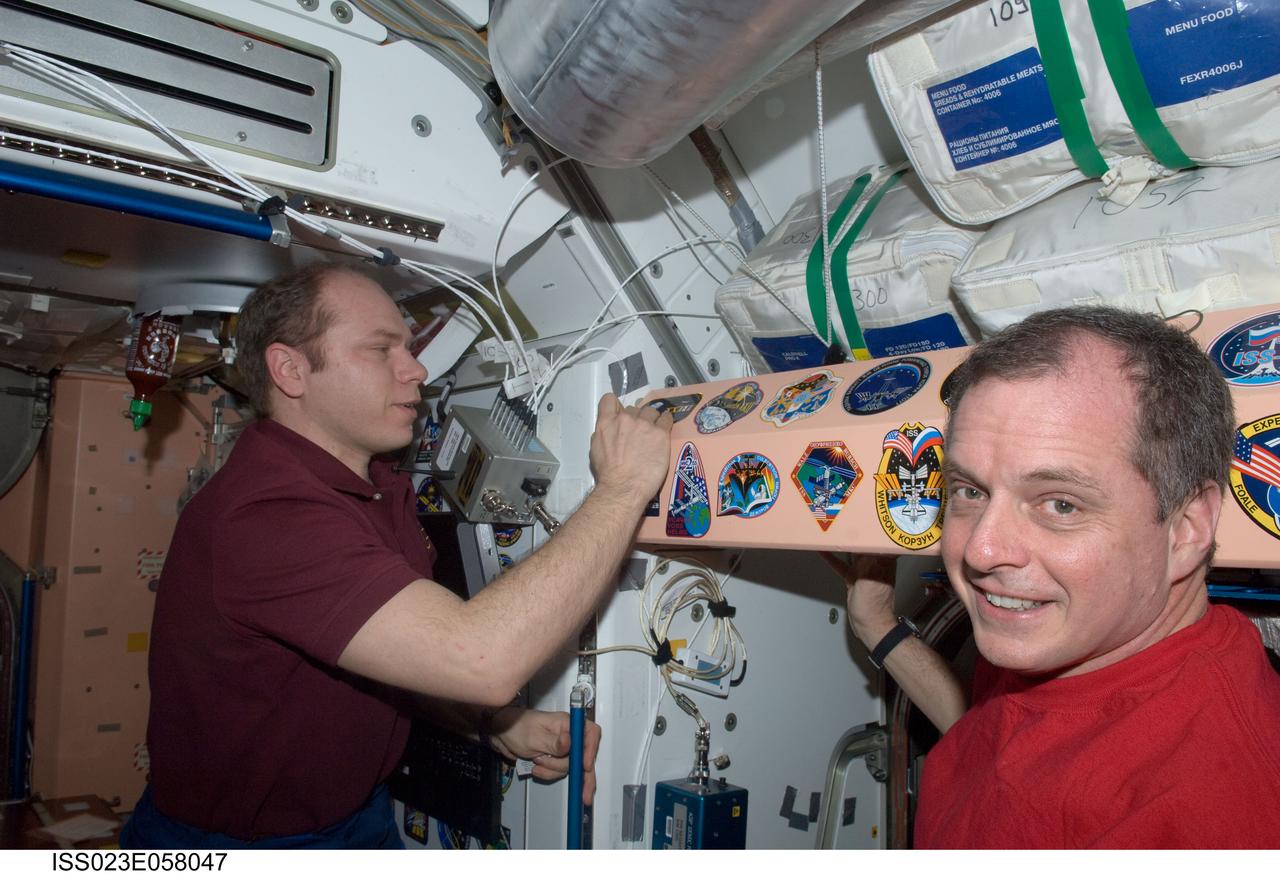
ISS023-E-058047 (1 June 2010) --- Russian cosmonaut Oleg Kotov (left), Expedition 23 commander, adds the Expedition 23 patch to the Unity node?s growing collection of insignias representing crews who have lived and worked on the International Space Station. Also pictured is NASA astronaut T.J. Creamer, flight engineer.
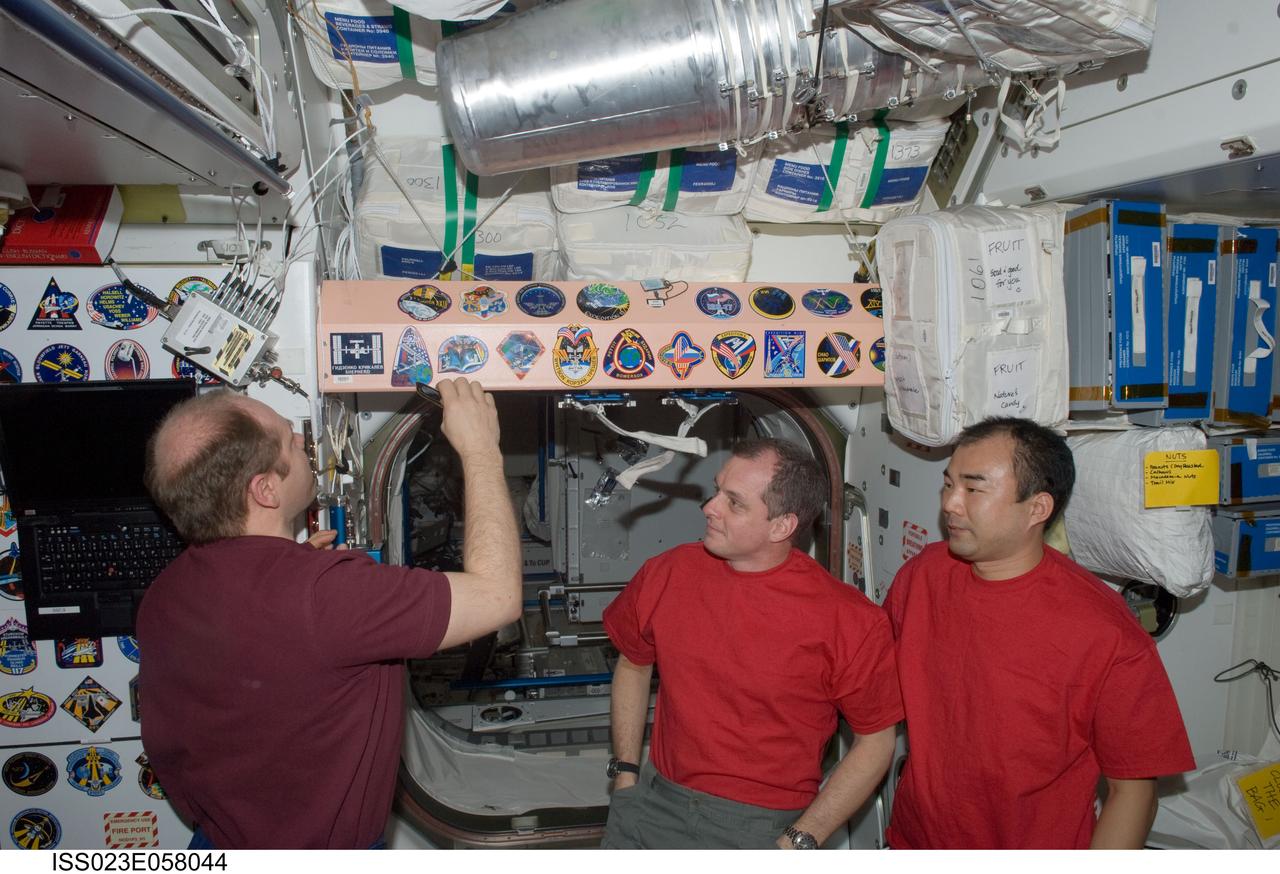
ISS023-E-058044 (1 June 2010) --- Russian cosmonaut Oleg Kotov (left), Expedition 23 commander, adds the Expedition 23 patch to the Unity node’s growing collection of insignias representing crews who have lived and worked on the International Space Station. Also pictured are NASA astronaut T.J. Creamer (center) and Japan Aerospace Exploration Agency (JAXA) astronaut Soichi Noguchi, both flight engineers.
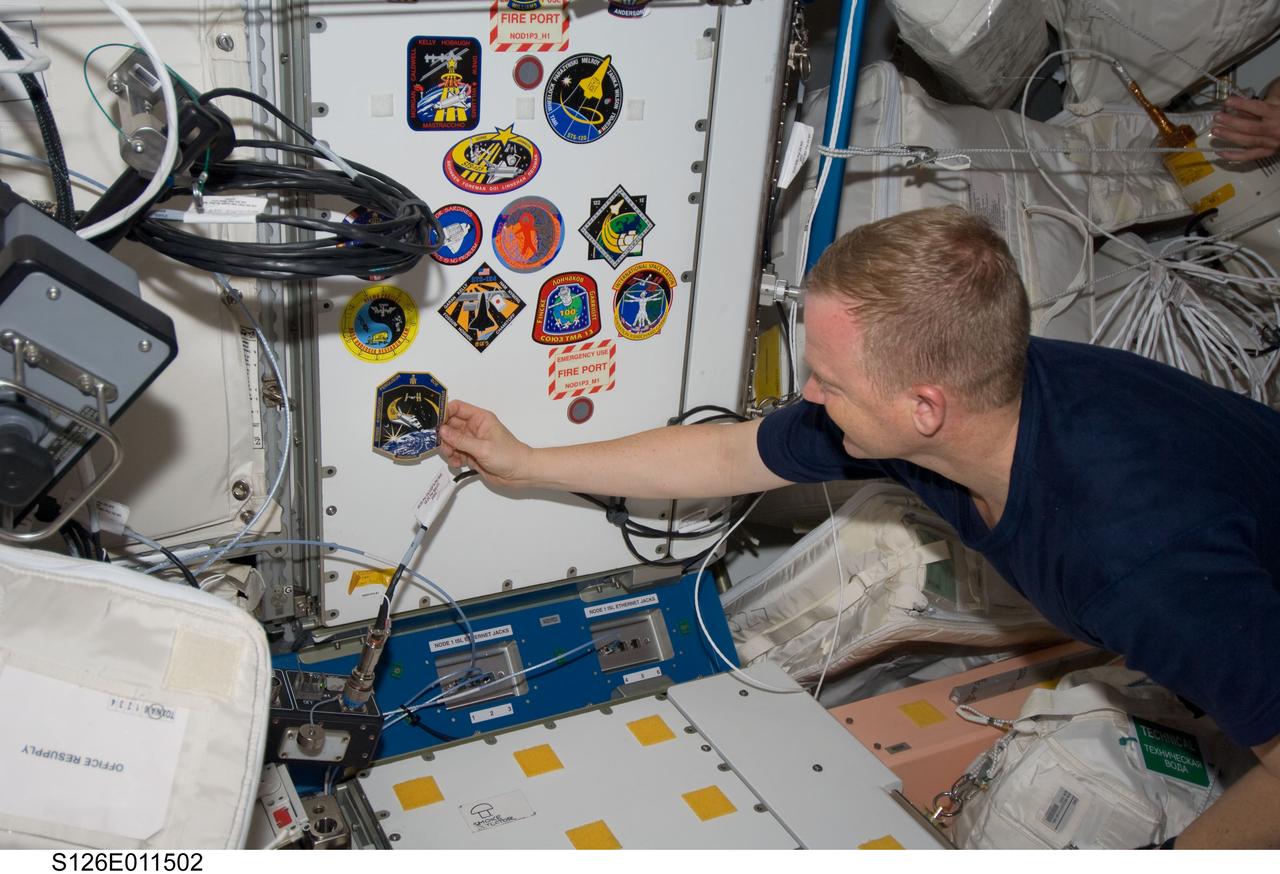
S126-E-011502 (26 Nov. 2008) --- Continuing a longstanding tradition, astronaut Eric Boe, STS-126 pilot, adds his crew patch in the Unity node to the growing collection of those representing shuttle crews who have worked on the International Space Station.

ISS011-E-09363 (21 June 2005) --- Cosmonaut Sergei K. Krikalev, Expedition 11 commander representing Russia's Federal Space Agency, adds the Expedition 11 patch to the Unity node’s growing collection of insignias representing crews who have worked on the international space station.
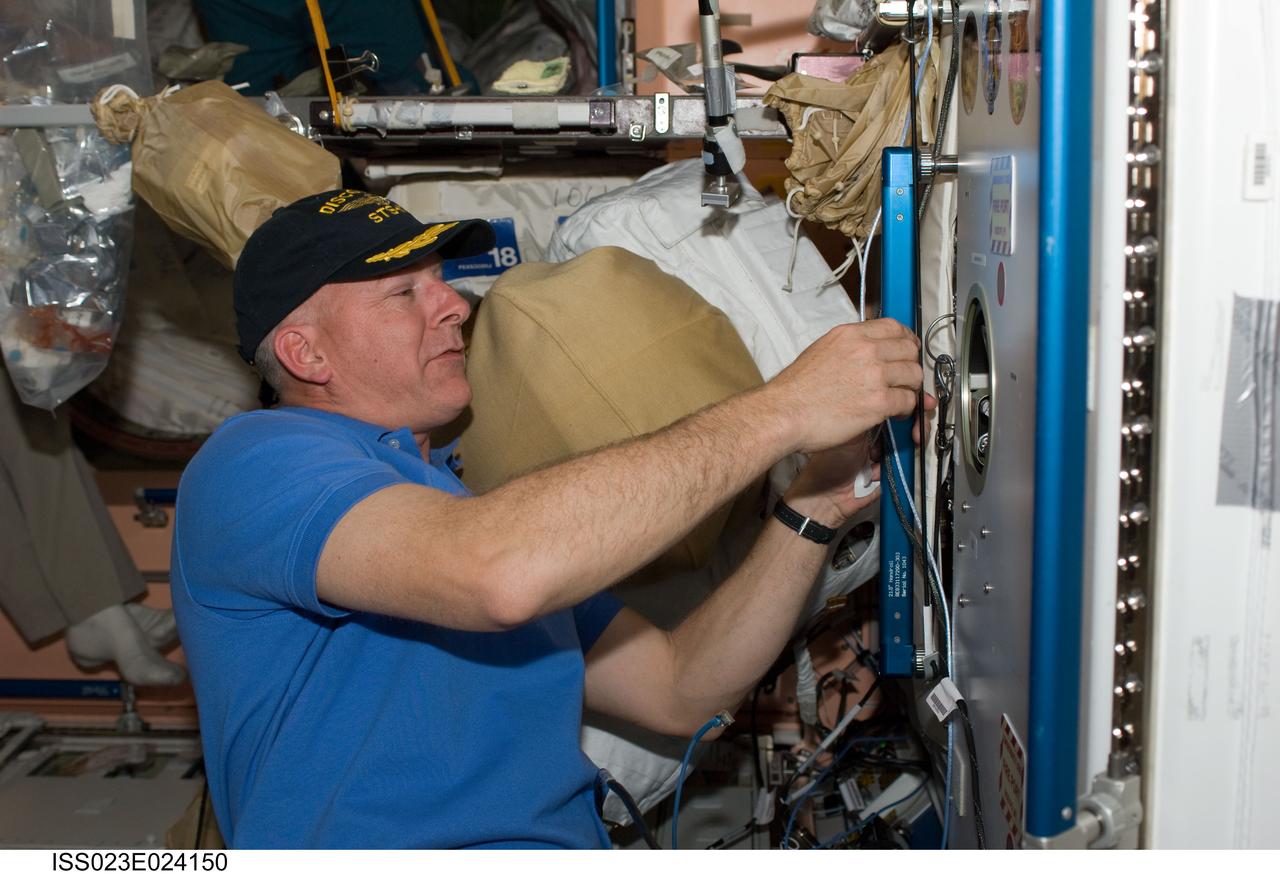
ISS023-E-024150 (16 April 2010) --- NASA astronaut Alan Poindexter, STS-131 commander, adds his crew's patch to the growing collection, in the Unity node, of insignias representing crews who have worked on the International Space Station.
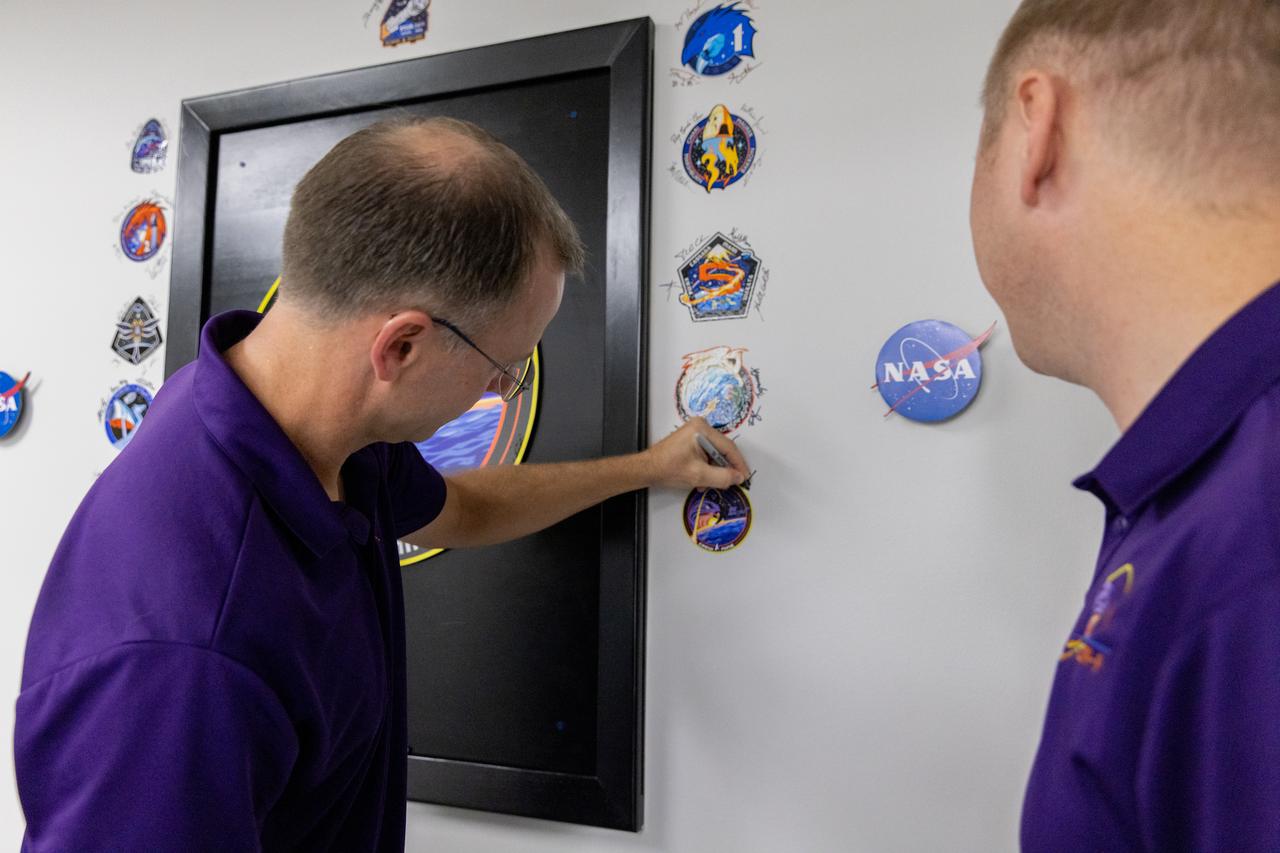
NASA astronaut Nick Hague signs his name inside the Astronaut Crew Quarters in the Neil A. Armstrong Operations and Checkout Building at the agency’s Kennedy Space Center in Florida on Monday, Sept. 23, 2024, ahead of NASA’s SpaceX Crew-9 mission. Crew-9 is the ninth crew rotation mission of the SpaceX Dragon spacecraft and Falcon 9 rocket that will send Hague and Roscosmos cosmonaut Aleksandr Gorbunov to the International Space Station as part of the agency’s Commercial Crew Program. The mission is scheduled to launch at 2:05 p.m. EDT Sept. 26, 2024, from Space Launch Complex-40 at Cape Canaveral Space Force Station in Florida.
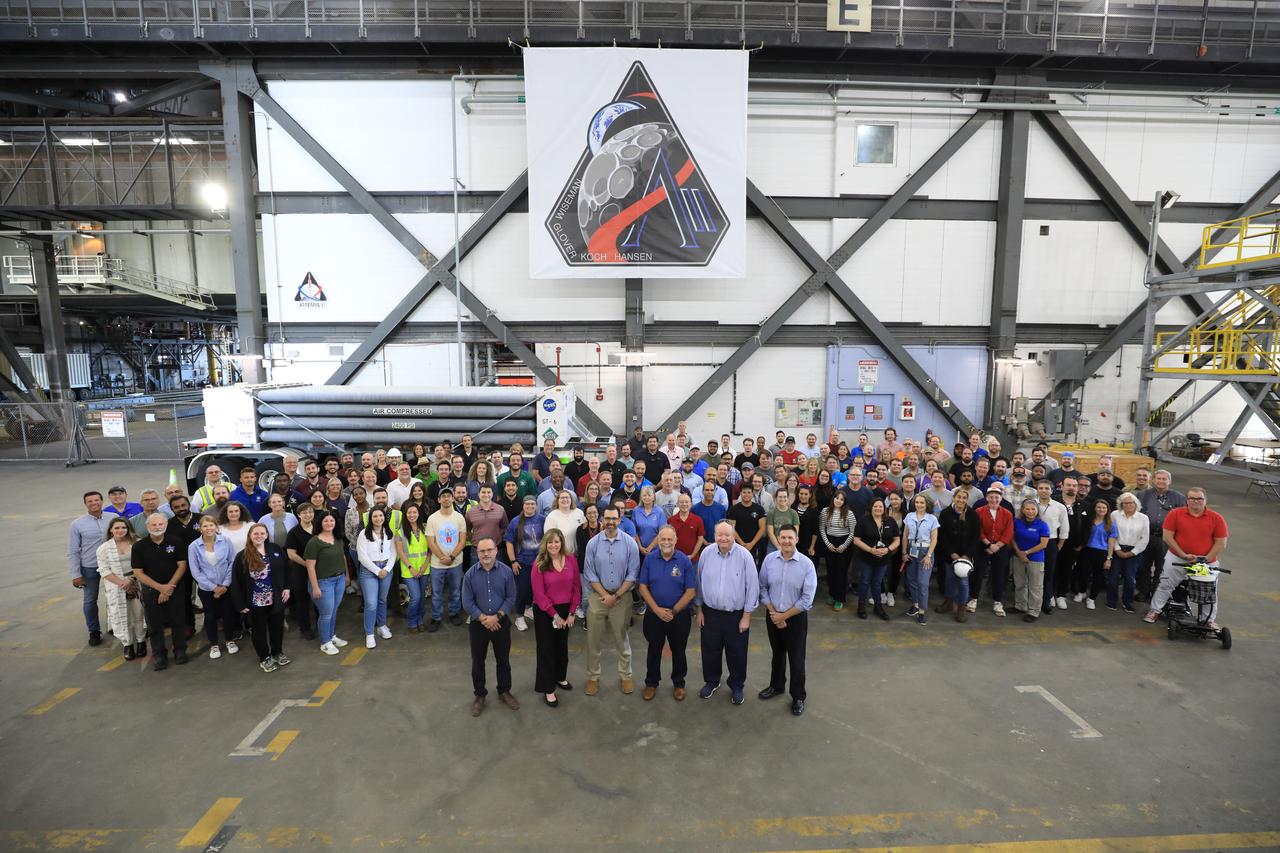
Members of NASA leadership, leadership with the agency’s Exploration Ground Systems Program, and contractor Amentum Services, Inc. leadership pose for a group photo underneath a banner displaying the Artemis II mission insignia outside High Bay 3 at the Vehicle Assembly Building at NASA’s Kennedy Space Center in Florida on Thursday, April 10, 2025. The design designates the mission as “AII,” signifying not only the second major flight of the Artemis campaign, but also an endeavor of discovery that seeks to explore for all and by all. Framed in Apollo 8’s famous Earthrise photo, the scene of the Earth and the Moon represents the dual nature of human spaceflight, both equally compelling: The Moon represents our exploration destination, focused on discovery of the unknown. The Earth represents home, focused on the perspective we gain when we look back at our shared planet and learn what it is to be uniquely human. The orbit around Earth highlights the ongoing exploration missions that have enabled Artemis to set sights on a long-term presence on the Moon and soon, Mars.
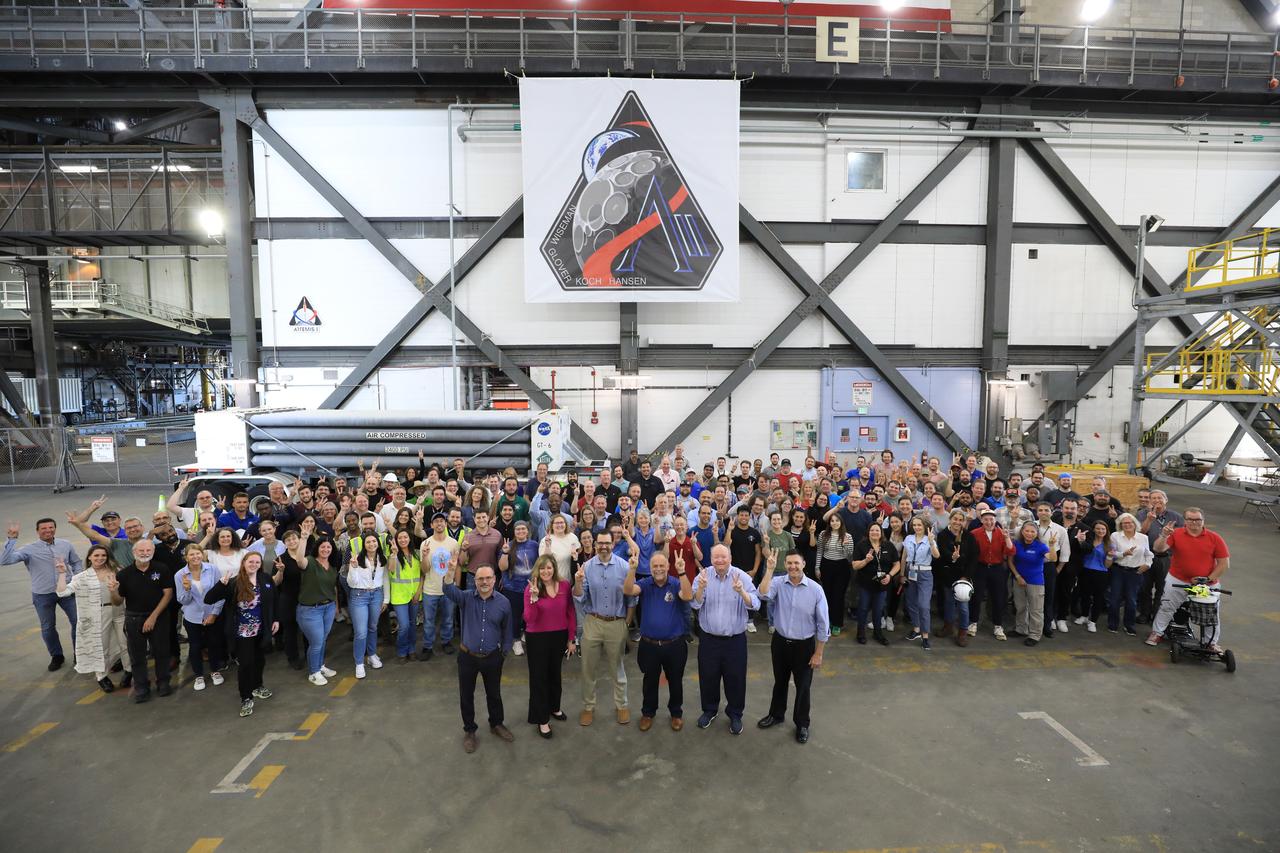
Members of NASA leadership, leadership with the agency’s Exploration Ground Systems Program, and contractor Amentum Services, Inc. leadership pose for a group photo underneath a banner displaying the Artemis II mission insignia outside High Bay 3 at the Vehicle Assembly Building at NASA’s Kennedy Space Center in Florida on Thursday, April 10, 2025. The design designates the mission as “AII,” signifying not only the second major flight of the Artemis campaign, but also an endeavor of discovery that seeks to explore for all and by all. Framed in Apollo 8’s famous Earthrise photo, the scene of the Earth and the Moon represents the dual nature of human spaceflight, both equally compelling: The Moon represents our exploration destination, focused on discovery of the unknown. The Earth represents home, focused on the perspective we gain when we look back at our shared planet and learn what it is to be uniquely human. The orbit around Earth highlights the ongoing exploration missions that have enabled Artemis to set sights on a long-term presence on the Moon and soon, Mars.
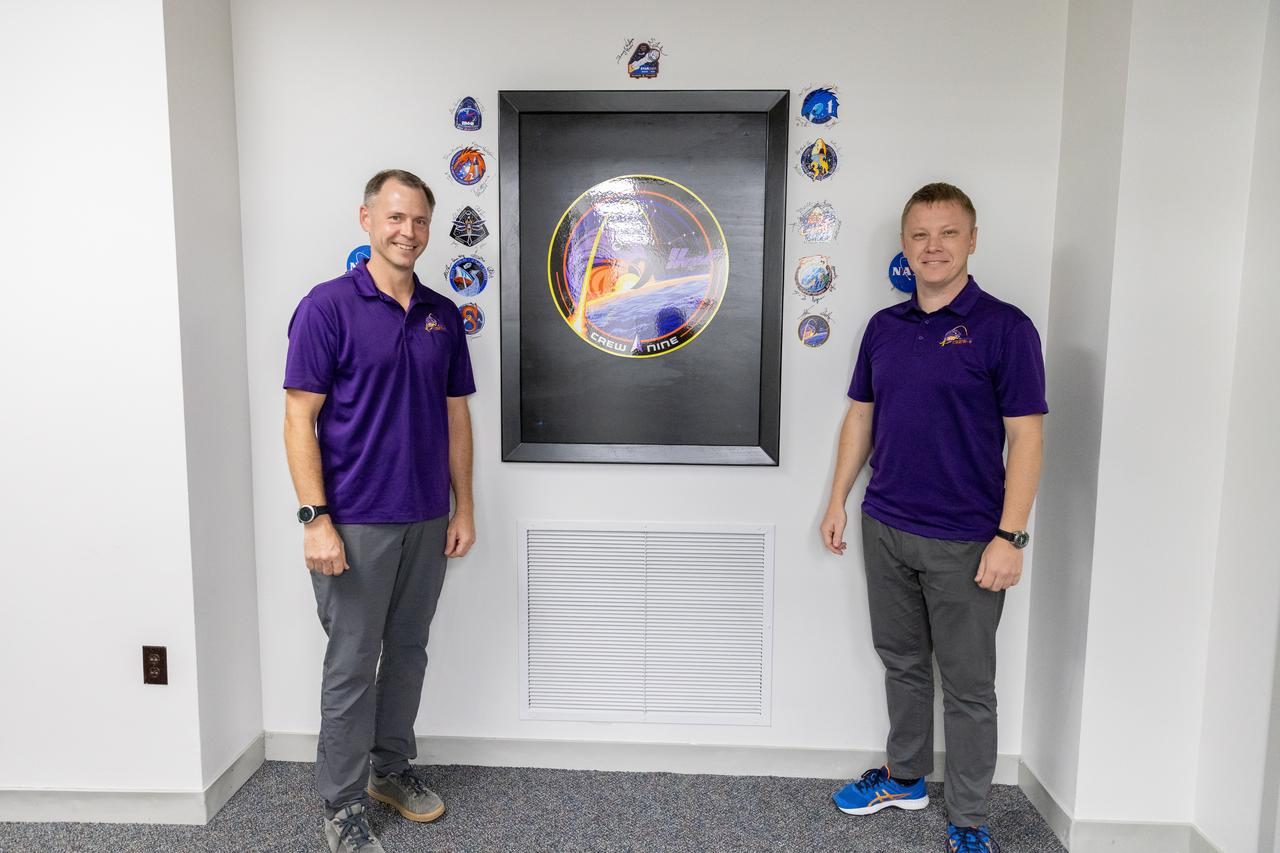
NASA astronaut Nick Hague (left) and Roscosmos cosmonaut Aleksandr Gorbunov pose inside the Astronaut Crew Quarters in the Neil A. Armstrong Operations and Checkout Building at NASA’s Kennedy Space Center in Florida on Monday, Sept. 23, 2024. Hague and Gorbunov will launch on NASA’s SpaceX Crew-9 mission – the ninth crew rotation mission of the SpaceX Dragon spacecraft and Falcon 9 rocket that will send the crew to the International Space Station as part of the agency’s Commercial Crew Program. The mission is scheduled to launch at 2:05 p.m. EDT Sept. 26, 2024, from Space Launch Complex-40 at Cape Canaveral Space Force Station in Florida.
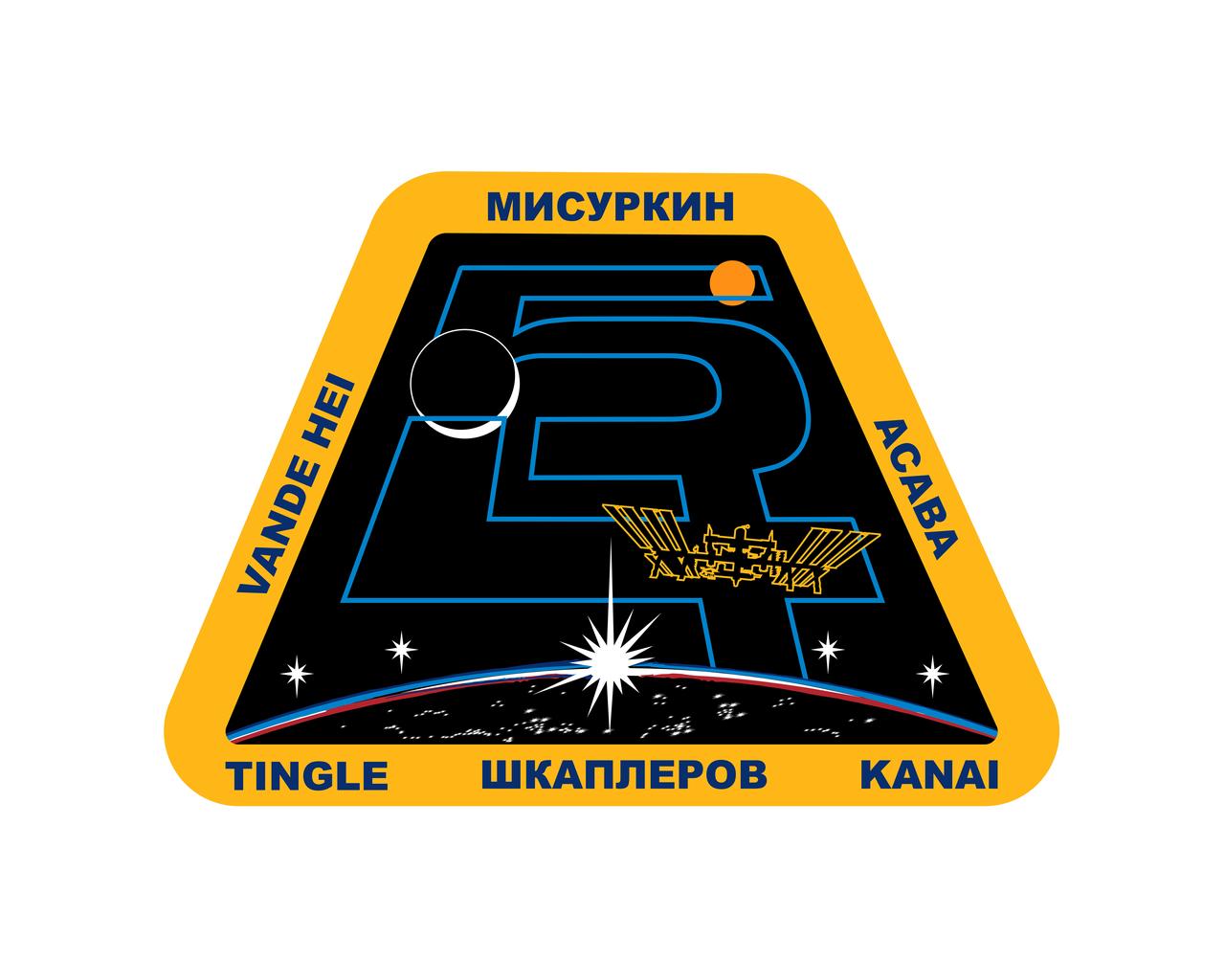
ISS-054 Mission Patch for Mark Vande Hei, Alexander Misurkin, Scott Tingle, Norishige Kanai, Alexander Skvortsov.
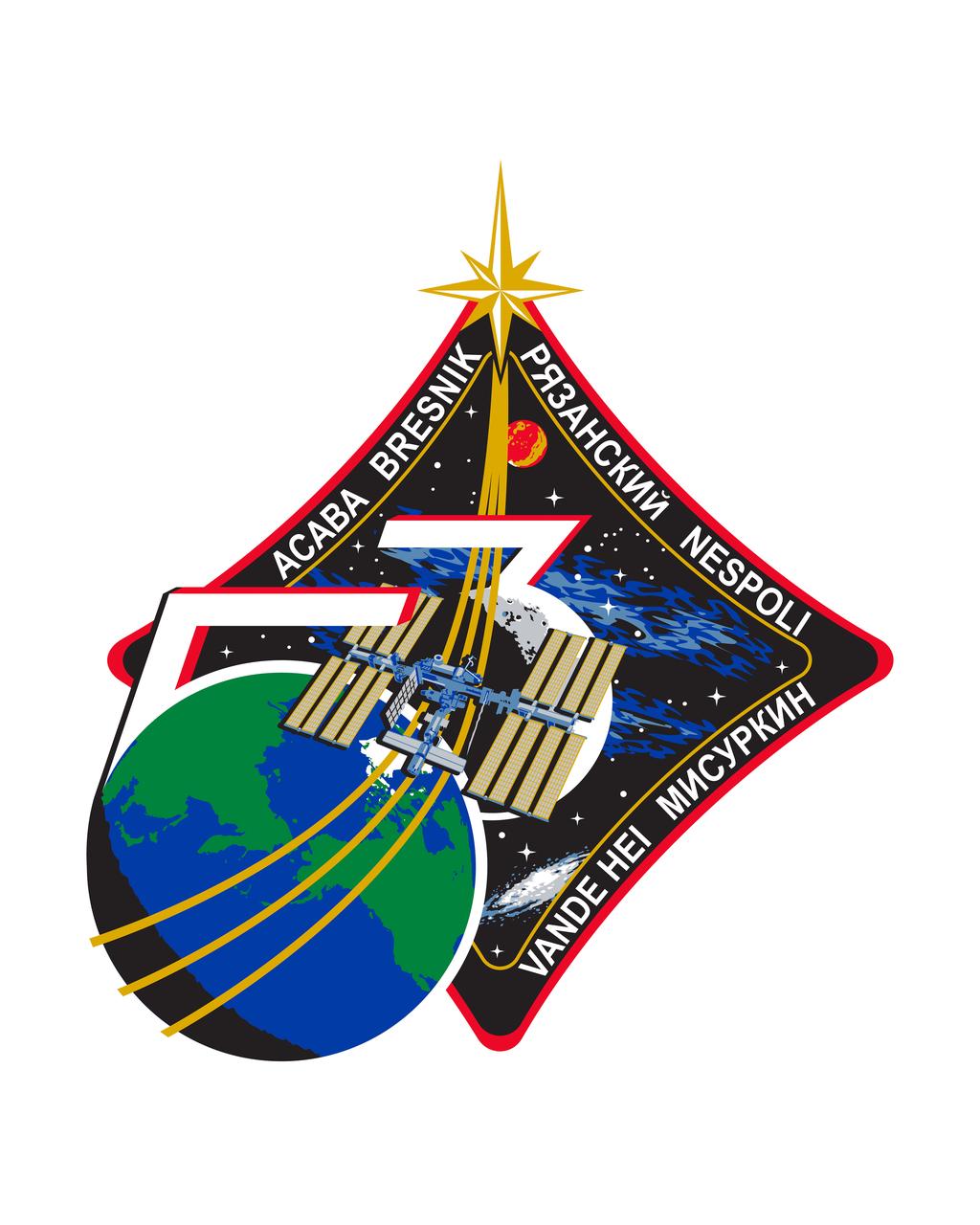
ISS-053 Mission Patch for Randy Bresnik, Paolo Nespoli, Sergey Ryazansky, Mark Vande Hei, and Alexander Misurkin.
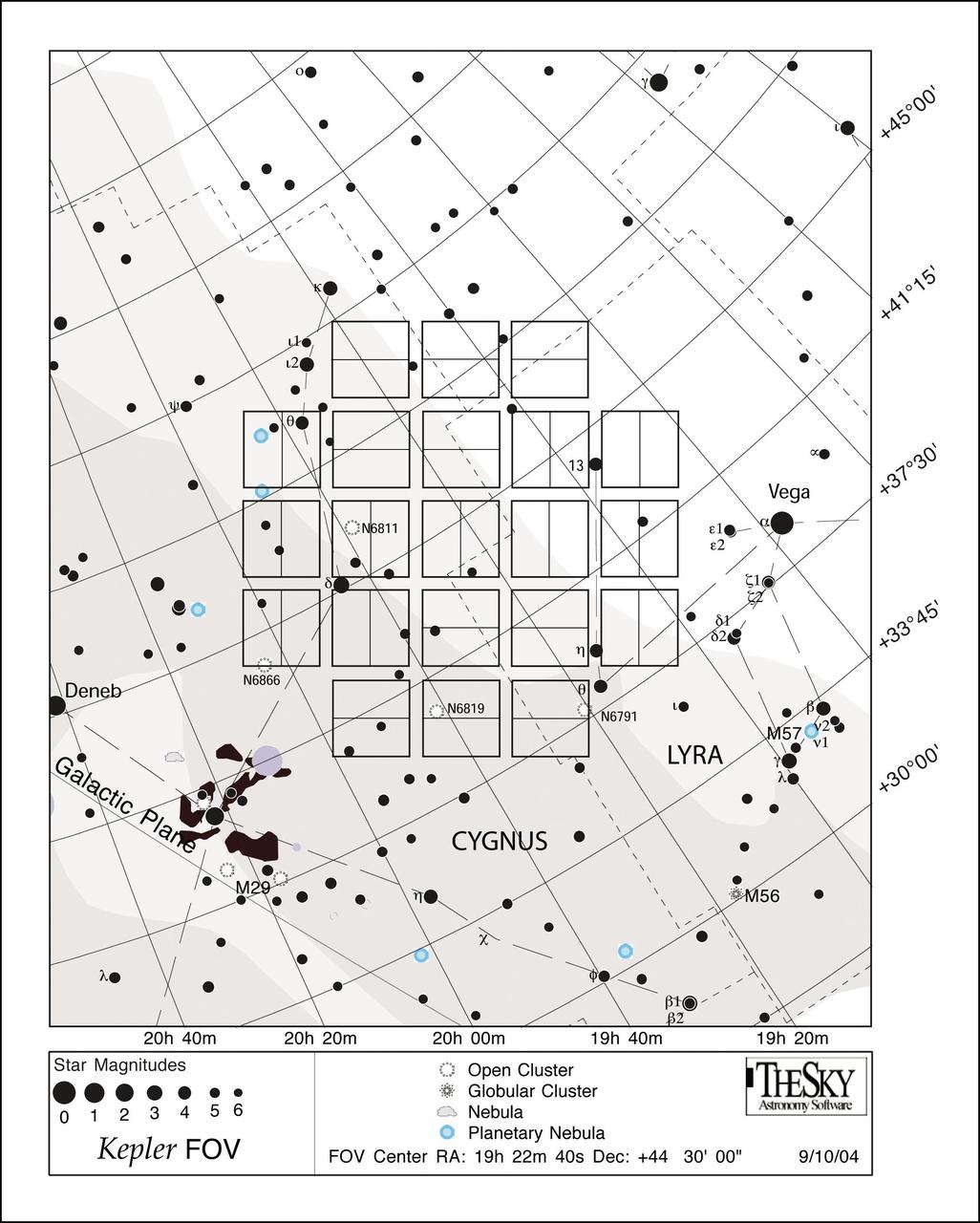
This star chart illustrates the large patch of sky that NASA Kepler mission will stare at for the duration of its three-and-a-half-year lifetime. The planet hunter's full field of view occupies 100 square degrees of our Milky Way galaxy, in the constellations Cygnus and Lyra. Kepler's focal plane, or the area where starlight is focused, is depicted on the star chart as a series of 42 vertical and horizontal rectangles. These rectangles represent the 95-megapixel camera's 42 charge-coupled devices, or CCDs. Scientists selected the orientation of the focal plane's field of view to avoid the region's brightest stars, which are shown as the largest black dots. Some of these bright stars can be seen falling in between the CCD modules, in areas that are not imaged. This was done so that the brightest stars will not saturate large portions of the detectors. Saturation causes signals from the bright stars to spill, or "bloom," into nearby planet-hunting territory. http://photojournal.jpl.nasa.gov/catalog/PIA11983
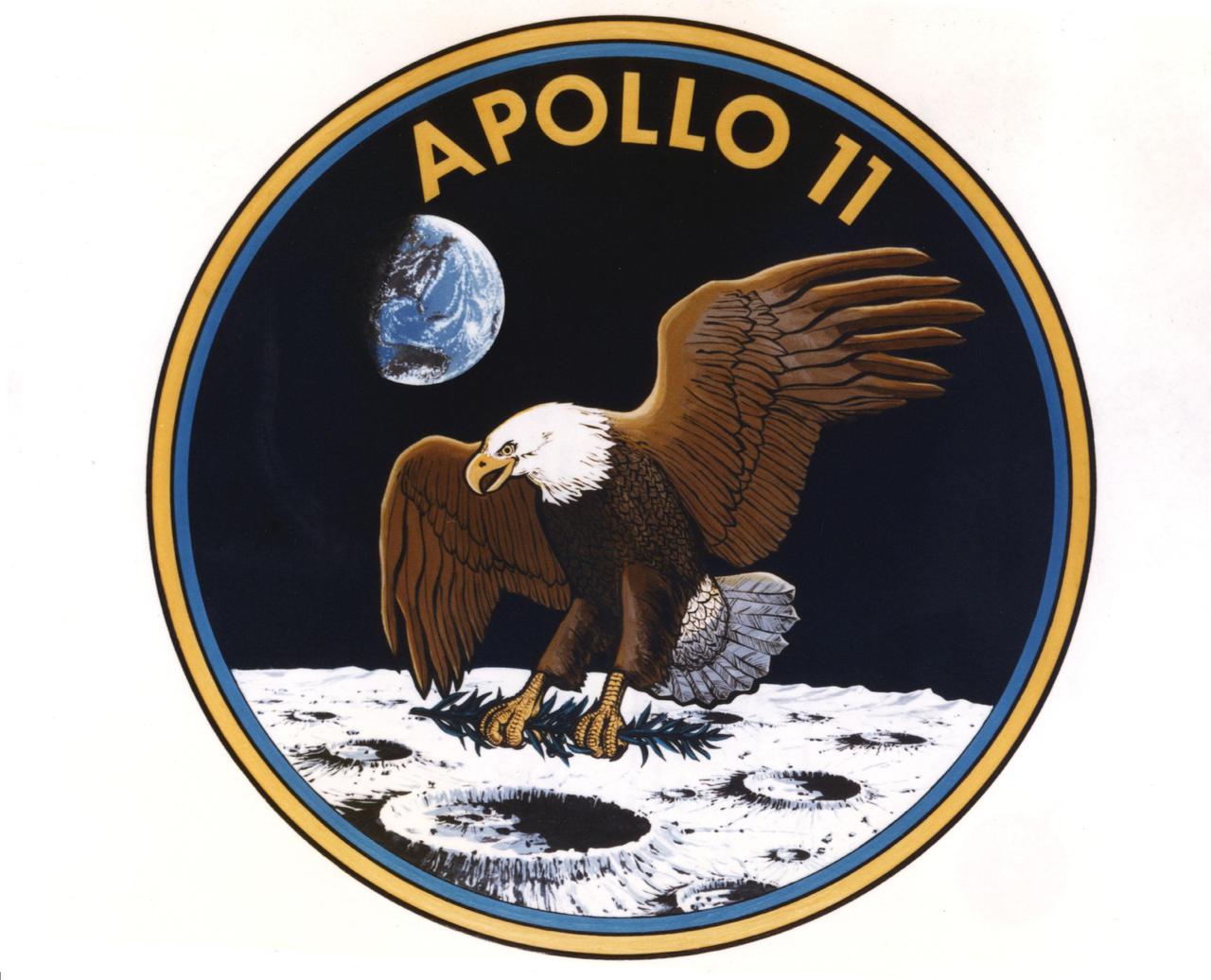
JOHNSON SPACE CENTER, HOUSTON, TEXAS - The official Apollo 11 mission patch. Apollo 11 is the first manned lunar landing by the Apollo_Saturn V.
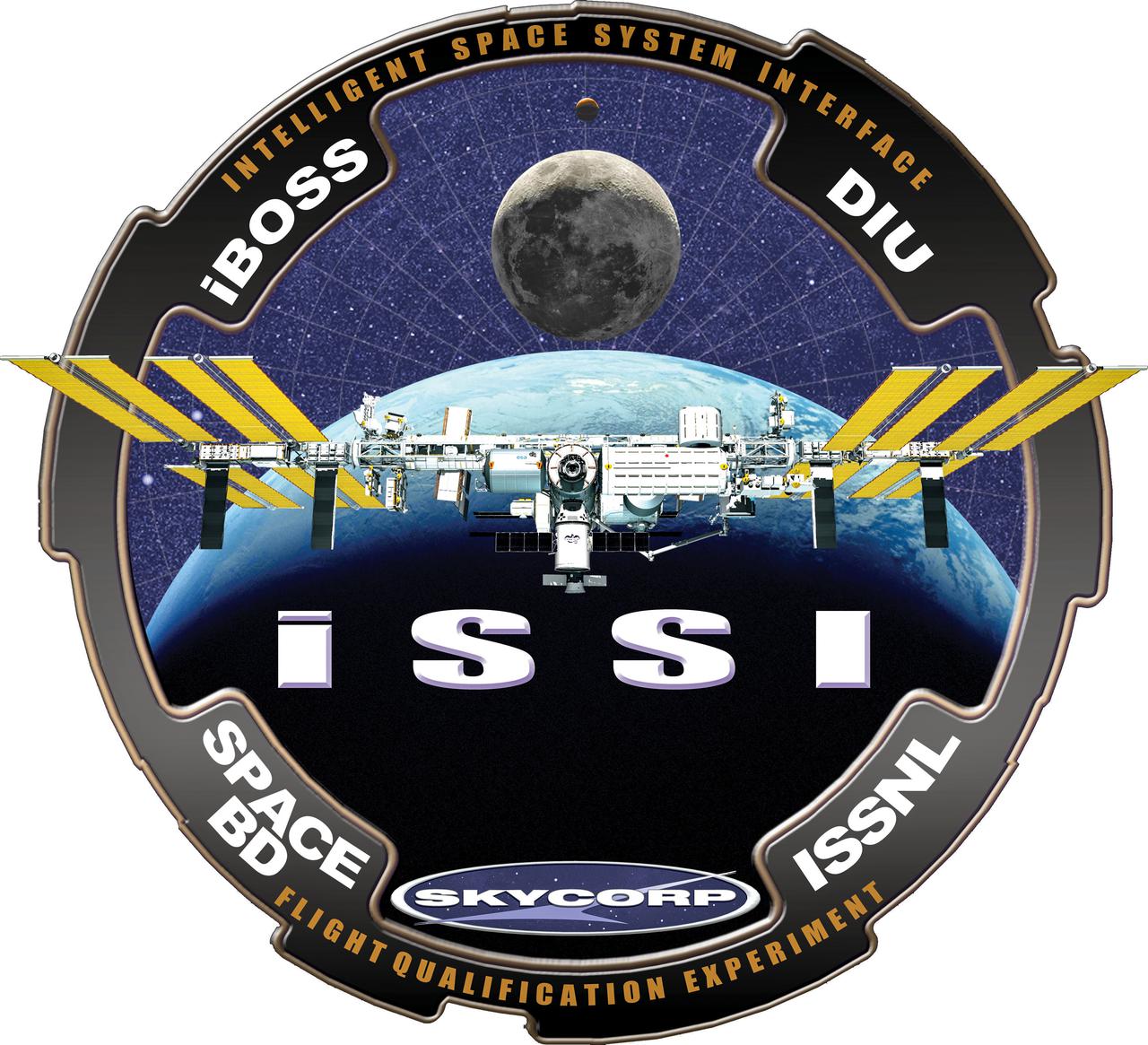
jsc2021e048042 (10/22/2021) --- Intelligent Space System Interface Flight Qualification Experiment (iSSIFQE) mission patch. Image courtesy of Mark Maxwell/Skycorp Inc.
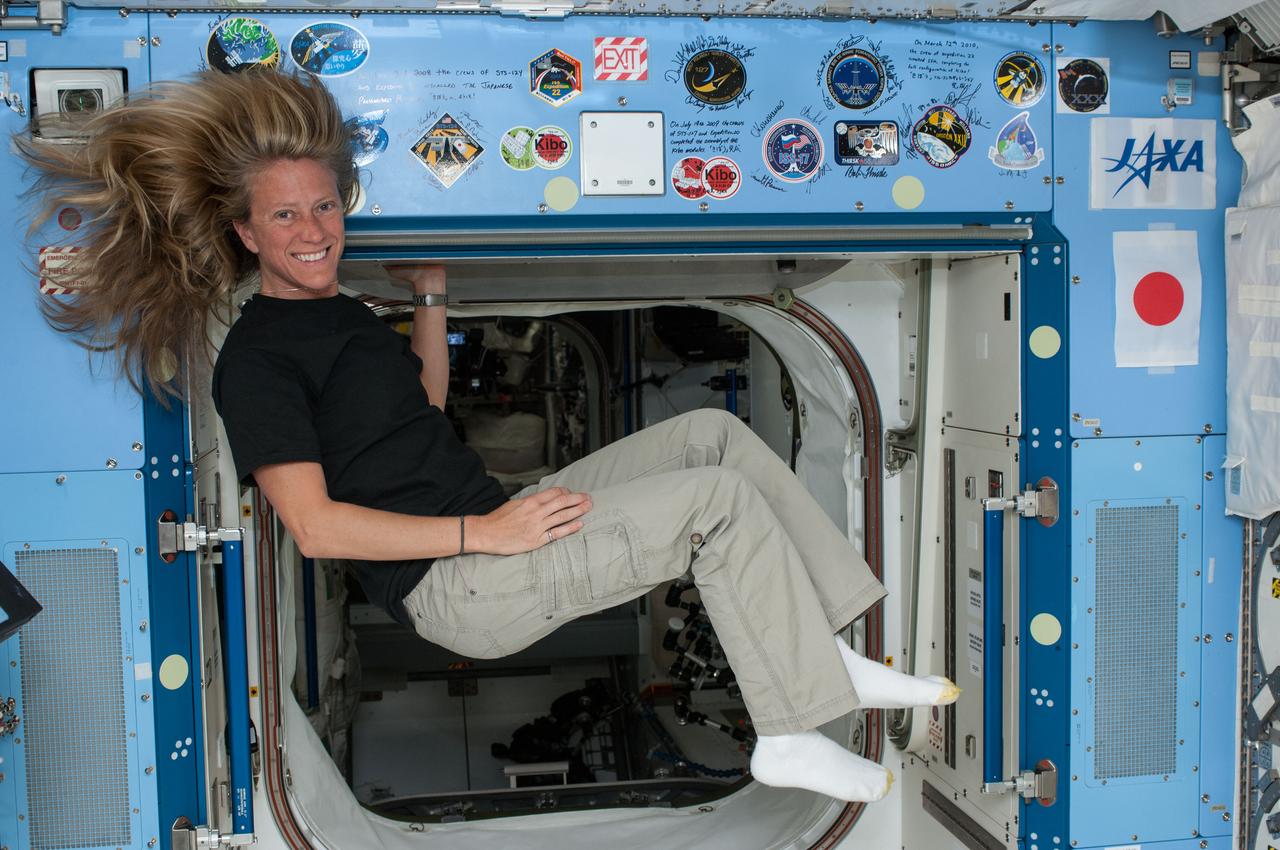
Astronaut Karen Nyberg,Expedition 36 flight engineer,floats in front of the various mission patches located on the Japanese Experiment Module (JEM) Pressurized Module (JPM)
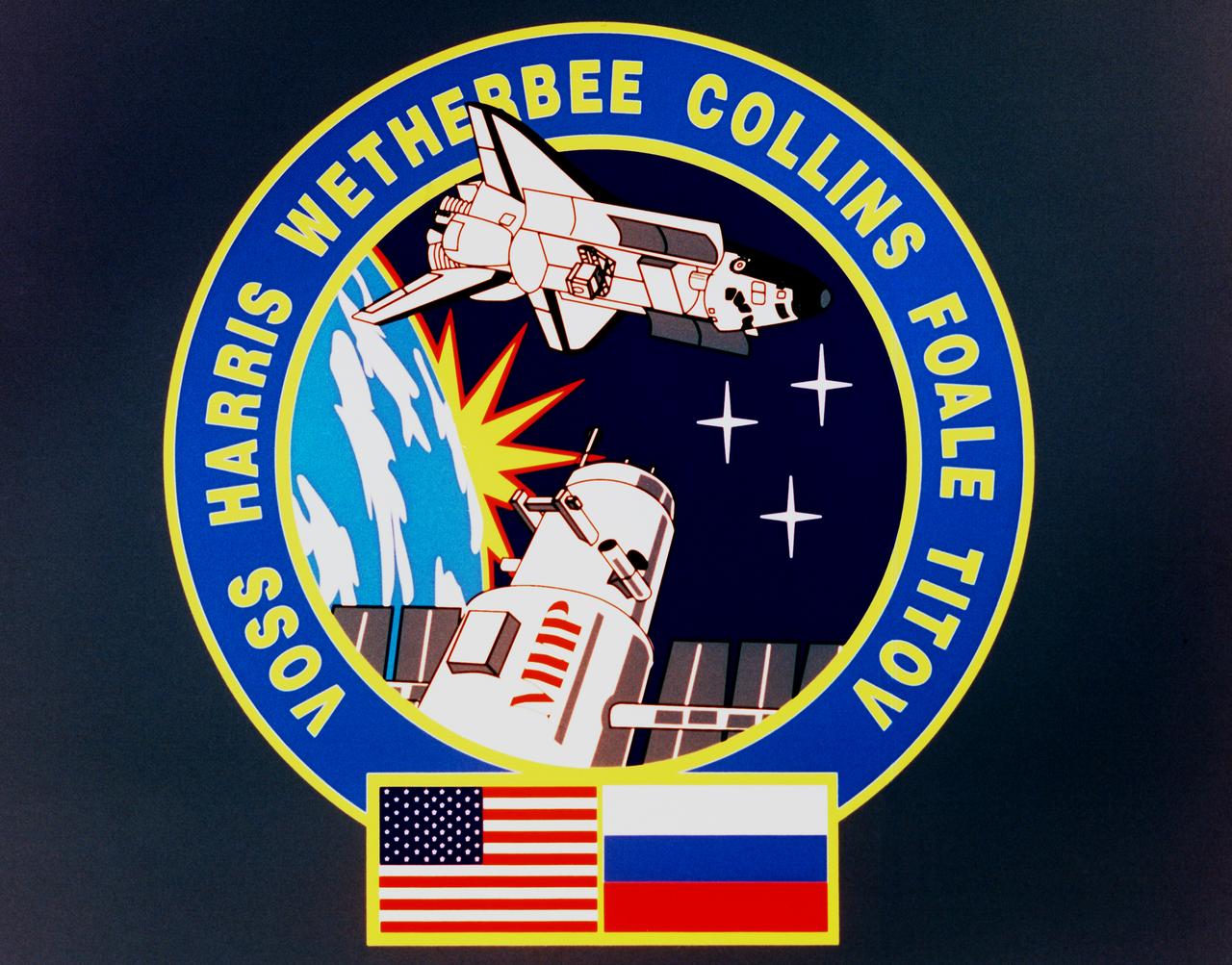
Designed by the crew members, the STS-63 crew patch depicts the orbiter maneuvering to rendezvous with Russia's Space Station Mir. The name is printed in Cyrillic on the side of the station. Visible in the Orbiter's payload bay are the commercial space laboratory Spacehab and the Shuttle Pointed Autonomous Research Tool for Astronomy (SPARTAN) satellite which are major payloads on the flight. The six points on the rising sun and the three stars are symbolic of the mission's Space Transportation System (STS) numerical designation. Flags of the United States and Russia at the bottom of the patch symbolize the cooperative operations of this mission.

This is the insignia for the STS-108 mission, which marked a major milestone in the assembly of the International Space Station (ISS) as the first designated Utilization Flight, UF-1. The crew of Endeavour delivered the Expedition Four crew to ISS and returned the Expedition Three crew to Earth. Endeavour launched with a Multi-Purpose Logistics Module (MPLM) that was berthed to the ISS and unloaded. The MPLM was returned to Endeavour for the trip home and used again on a later flight. The crew patch depicts Endeavour and the ISS in the configuration at the time of arrival and docking. The Station is shown viewed along the direction of flight as seen by the Shuttle crew during their final approach and docking along the X-axis. The three ribbons and stars on the left side of the patch signify the returning Expedition Three crew. The red, white and blue order of the ribbons represents the American commander for that mission. The three ribbons and stars on the right depict the arriving Expedition Four crew. The white, blue, and red order of the Expedition Four ribbon matches the color of the Russian flag and signifies that the commander of Expedition Four is a Russian cosmonaut. Each white star in the center of the patch represents the four Endeavour crew members. The names of the four astronauts who crewed Endeavour are shown along the top border of the patch. The three astronauts and three cosmonauts of the two expedition crews are shown on the chevron at the bottom of the patch.

STS071-S-001 (April 1995) --- The STS-71 crew patch design depicts the orbiter Atlantis in the process of the first international docking mission of the space shuttle Atlantis with the Russian Mir Space Station. The names of the 10 astronauts and cosmonauts who will fly aboard the orbiter as shown along the outer border of the patch. The rising sun symbolizes the dawn of a new era of cooperation between the two countries. The vehicles Atlantis and Mir are shown in separate circles converging at the center of the emblem symbolizing the merger of the space programs of the two space faring nations. The flags of the United States and Russia emphasize the equal partnership of the mission. The joint program symbol at the lower center of the patch acknowledges the extensive contributions made by the Mission Control Centers (MCC) of both countries. The crew insignia was designed by aviation and space artist, Bob McCall, who also designed the crew patch for the Apollo-Soyuz Test Project (ASTP) in 1975, the first international space docking mission. The NASA insignia design for space shuttle flights is reserved for use by the astronauts and for other official use as the NASA Administrator may authorize. Public availability has been approved only in the forms of illustrations by the various news media. When and if there is any change in this policy, which is not anticipated, the change will be publicly announced. Photo credit: NASA
jsc2025e011333 (Feb. 24, 2025) --- NASA's SpaceX Crew-10 crewmembers pose for a portrait in front of the Crew-10 patch at the company’s facility in Hawthorne, California. From left are Mission Specialist Kirill Peskov of Roscosmos, Mission Specialist Takuya Onishi of JAXA (Japan Aerospace Exploration Agency), Commander Anne McClain of NASA, and Pilot Nichole Ayers of NASA. Credit: SpaceX

The patch depicts the Space Shuttle lifting off against the multi-colored backdrop of a rainbow, symbolizing the triumphal return to flight of our nation's manned space program. The design also commemorates the memory of the crew of Challenger mission STS-51-L, represented by the seven stars. The names of the flight crewmembers of STS-27 are located along the border of the patch.
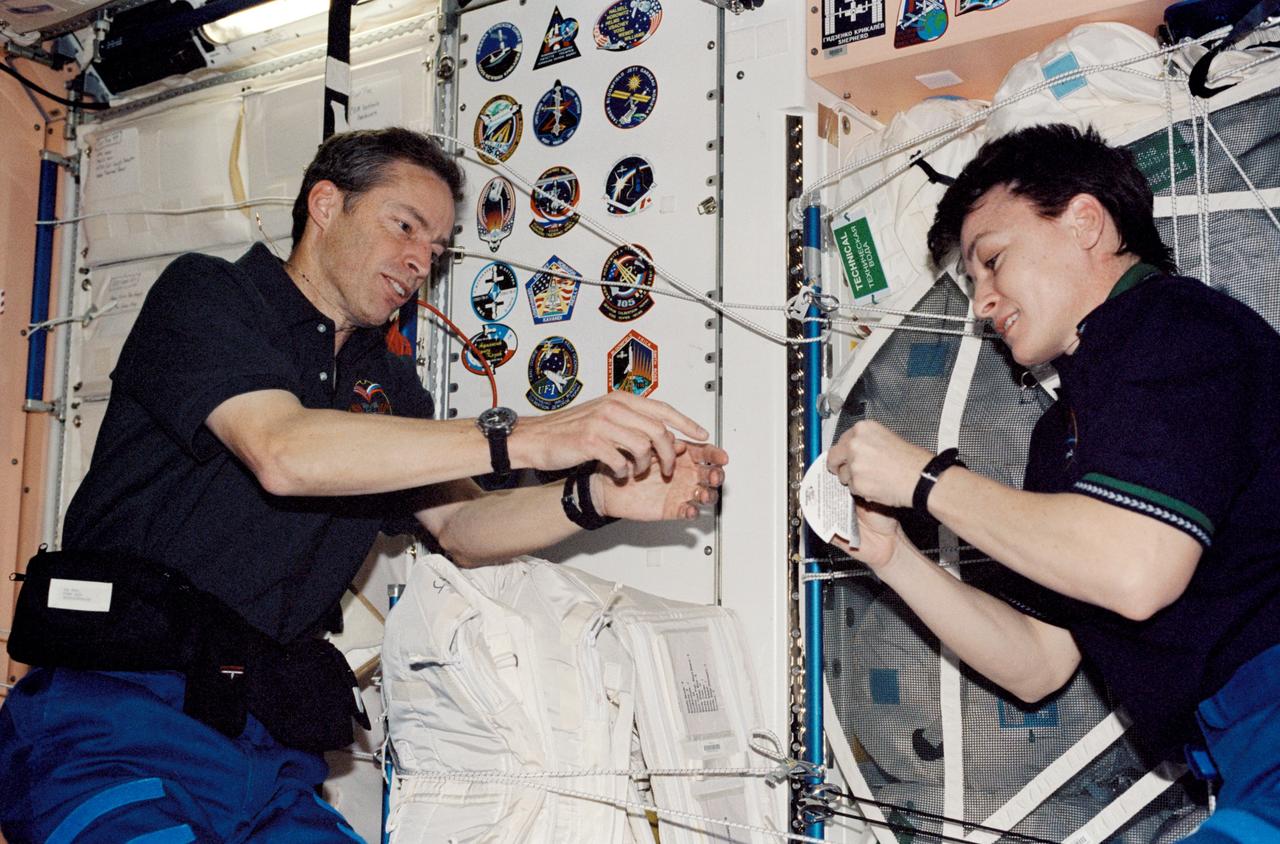
STS113-339-027 (2 December 2002) --- Astronauts James D. Wetherbee, STS-113 mission commander, and Peggy A. Whitson, Expedition Five NASA ISS science officer, add the STS-113 patch to the growing collection of those representing Shuttle crews who have worked on the International Space Station (ISS). A location in the Unity node serves as one of the traditional posting sites for the patches.
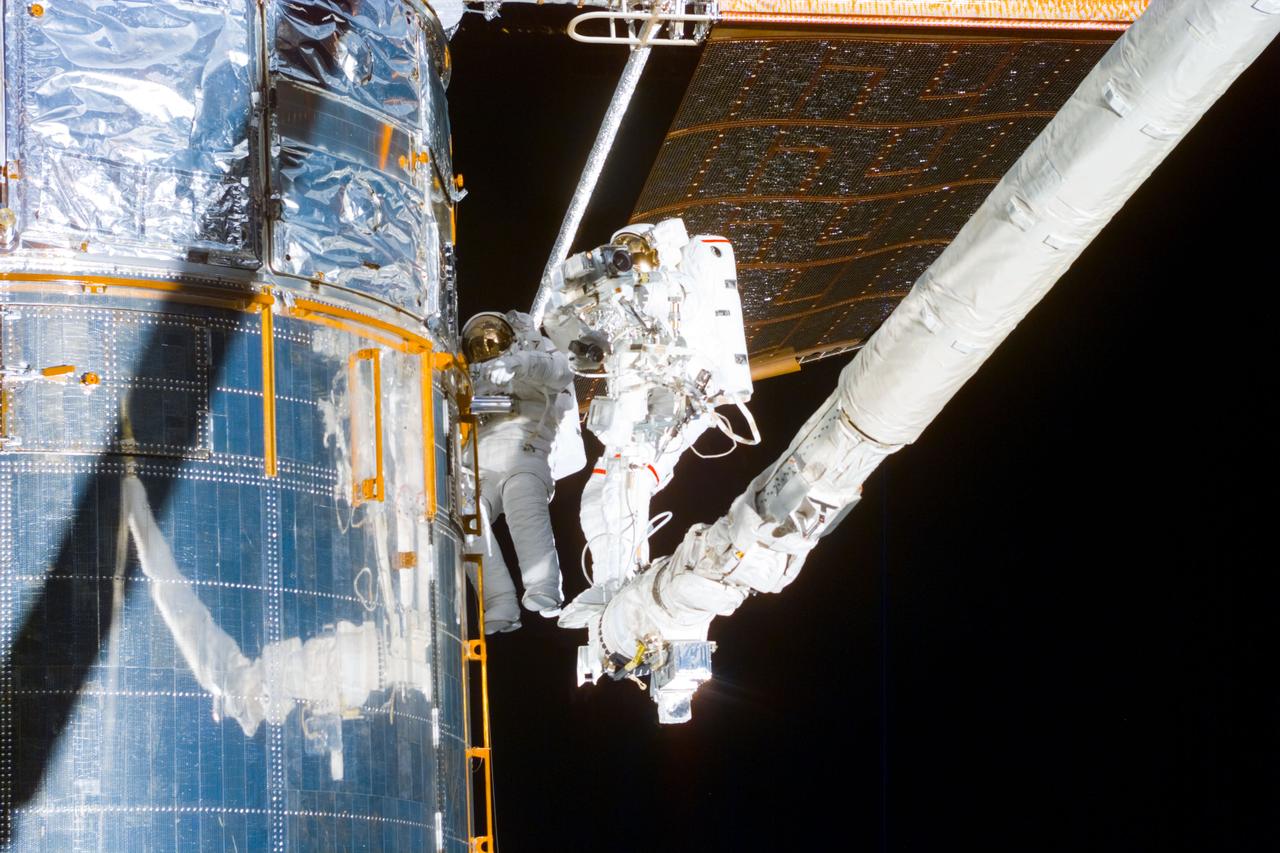
S82-E-5718 (18 Feb. 1997) --- Making use of the Remote Manipulator System (RMS) astronauts Mark C. Lee (left), STS-82 payload commander, and Steven L. Smith, mission specialist, perform the final phases of Extravehicular Activity (EVA) duty. Lee holds a patch piece for Bay #10, out of view, toward which the two were headed. A sample of the patch work can be seen on Bay #9 in the upper left quadrant of the picture. This view was taken with an Electronic Still Camera (ESC).
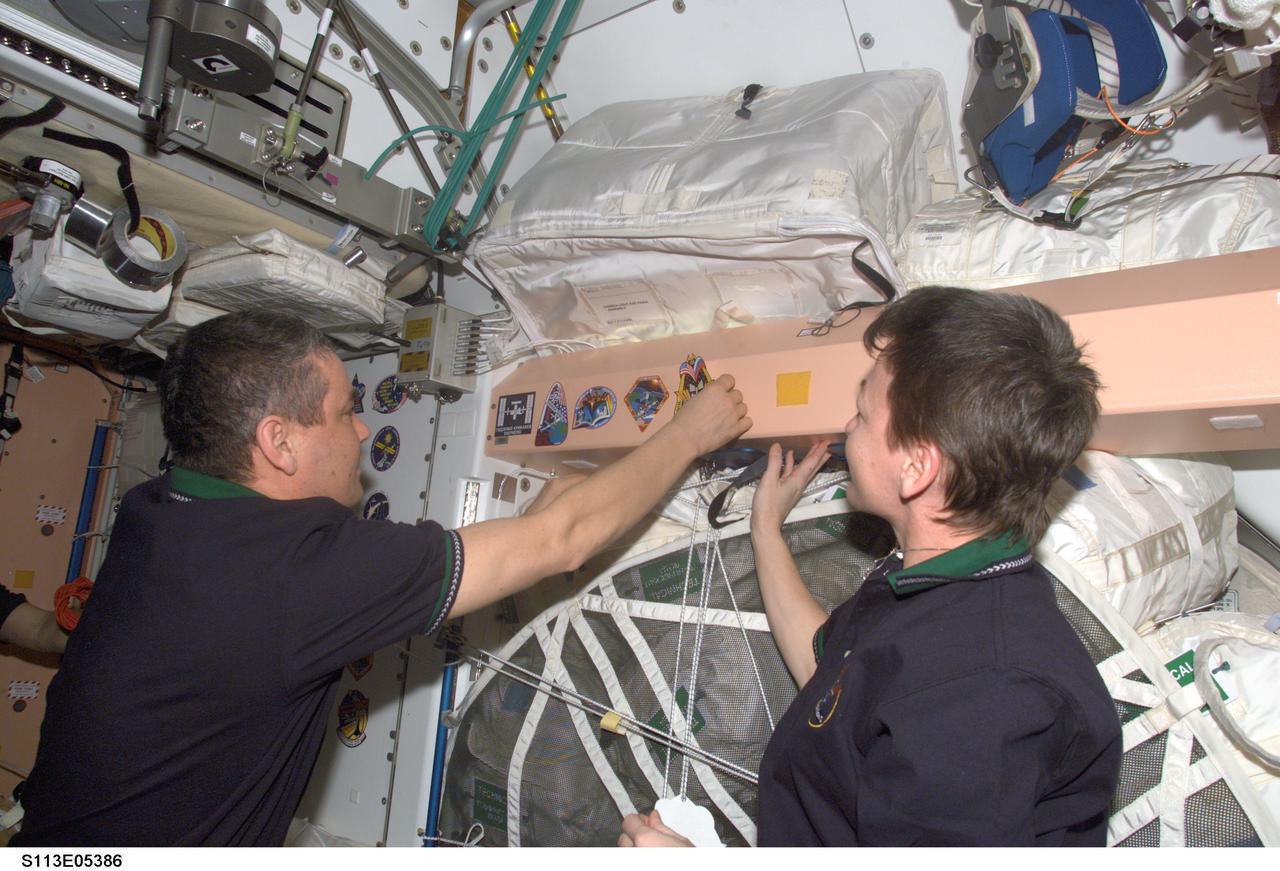
STS113-E-05386 (2 December 2002) --- Cosmonaut Valery G. Korzun, Expedition Five mission commander, adds the Expedition Five crew patch to the growing collection of those representing Expedition crews who have worked on the International Space Station (ISS). A location in the Unity node serves as one of the traditional posting sites for the patches. Astronaut Peggy A. Whitson, NASA ISS science officer, is to the right of Korzun, who represents Rosaviakosmos.
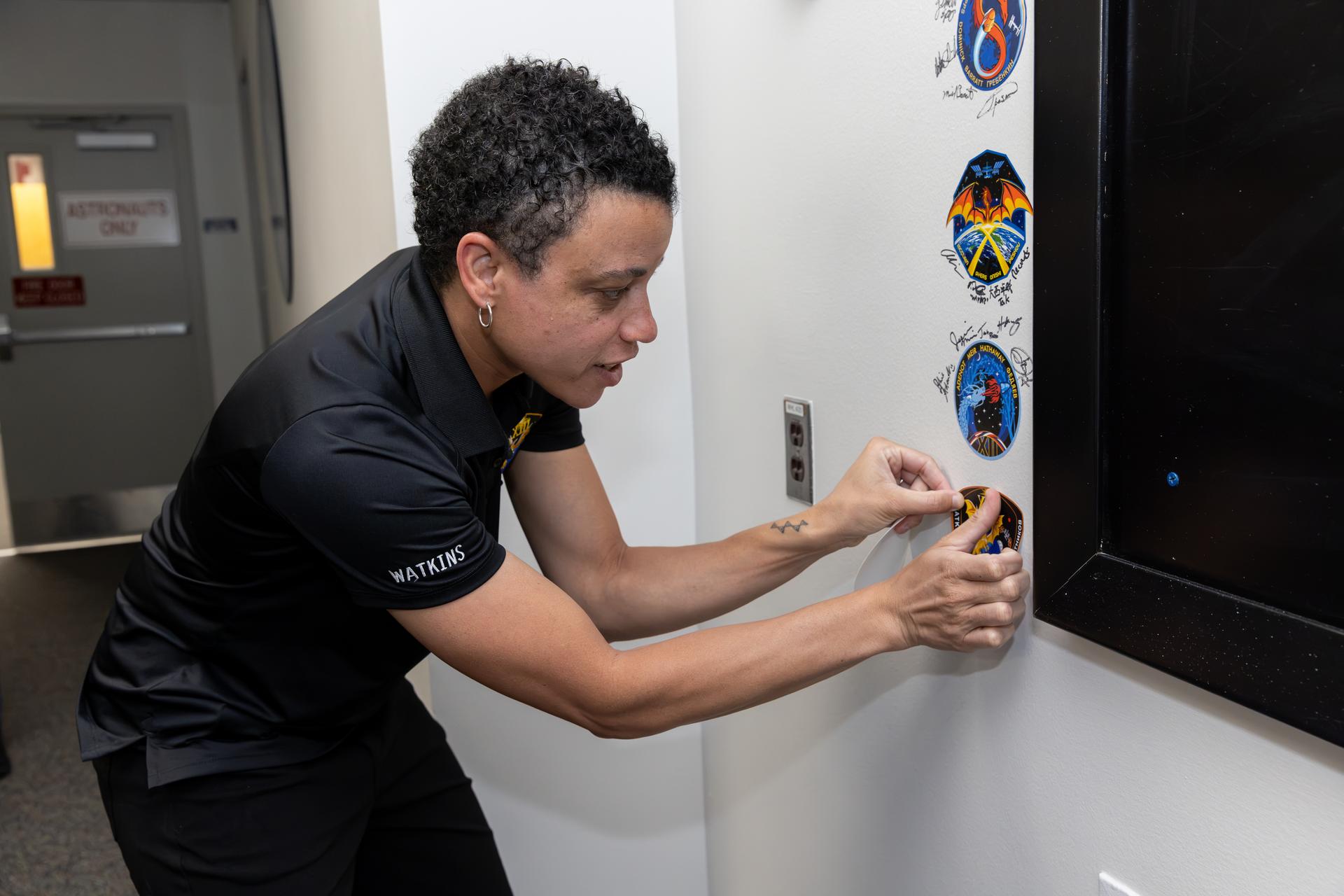
NASA astronaut Jessica Watkins signs her name next to the Crew-13 mission insignia inside the Astronaut Crew Quarters in the Neil A. Armstrong Operations and Checkout Building at NASA’s Kennedy Space Center in Florida on Tuesday, Sept. 29, 2026, ahead of NASA’s SpaceX Crew-13 mission. A SpaceX Dragon spacecraft and Falcon 9 rocket will send NASA astronauts Watkins and Luke Delaney, CSA (Canadian Space Agency) astronaut Joshua Kutryk, and Roscosmos cosmonaut Sergey Teteryatnikov to the International Space Station no earlier than 11:10 a.m. EDT on Thursday, Oct. 1, from Cape Canaveral Space Force Station’s Space Launch Complex 40.
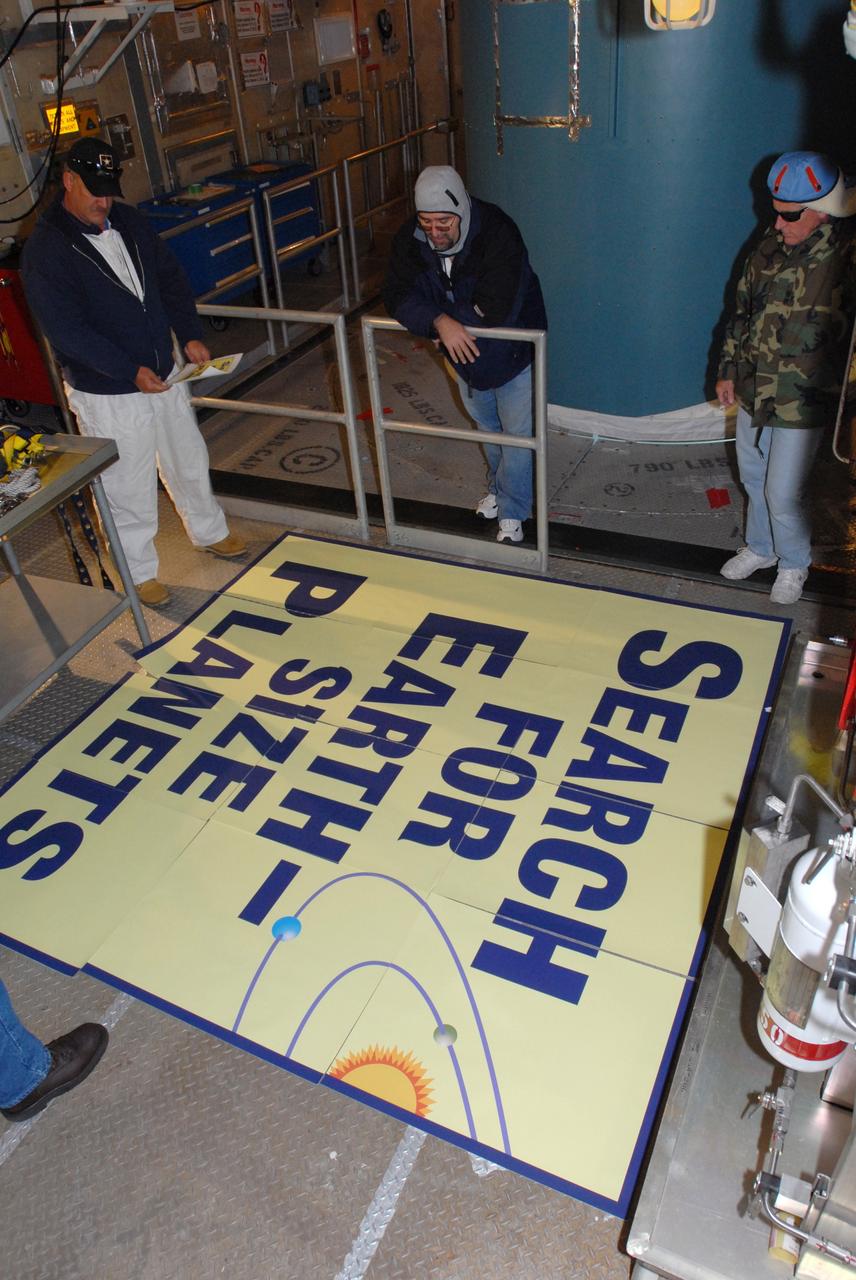
CAPE CANAVERAL, Fla. – Workers at Launch Complex 17-B on Cape Canaveral Air Force Station in Florida check the large patch they will place on the Delta 2 rocket (behind them). The patch describes the Kepler spacecraft mission that will be launched by the rocket. The Kepler mission is specifically designed to survey our region of the Milky Way galaxy to discover hundreds of Earth-size and smaller planets in or near the habitable zone and determine how many of the billions of stars in our galaxy have such planets. Results from this mission will allow us to place our solar system within the continuum of planetary systems in the Galaxy. Photo credit: NASA/Jim Grossmann
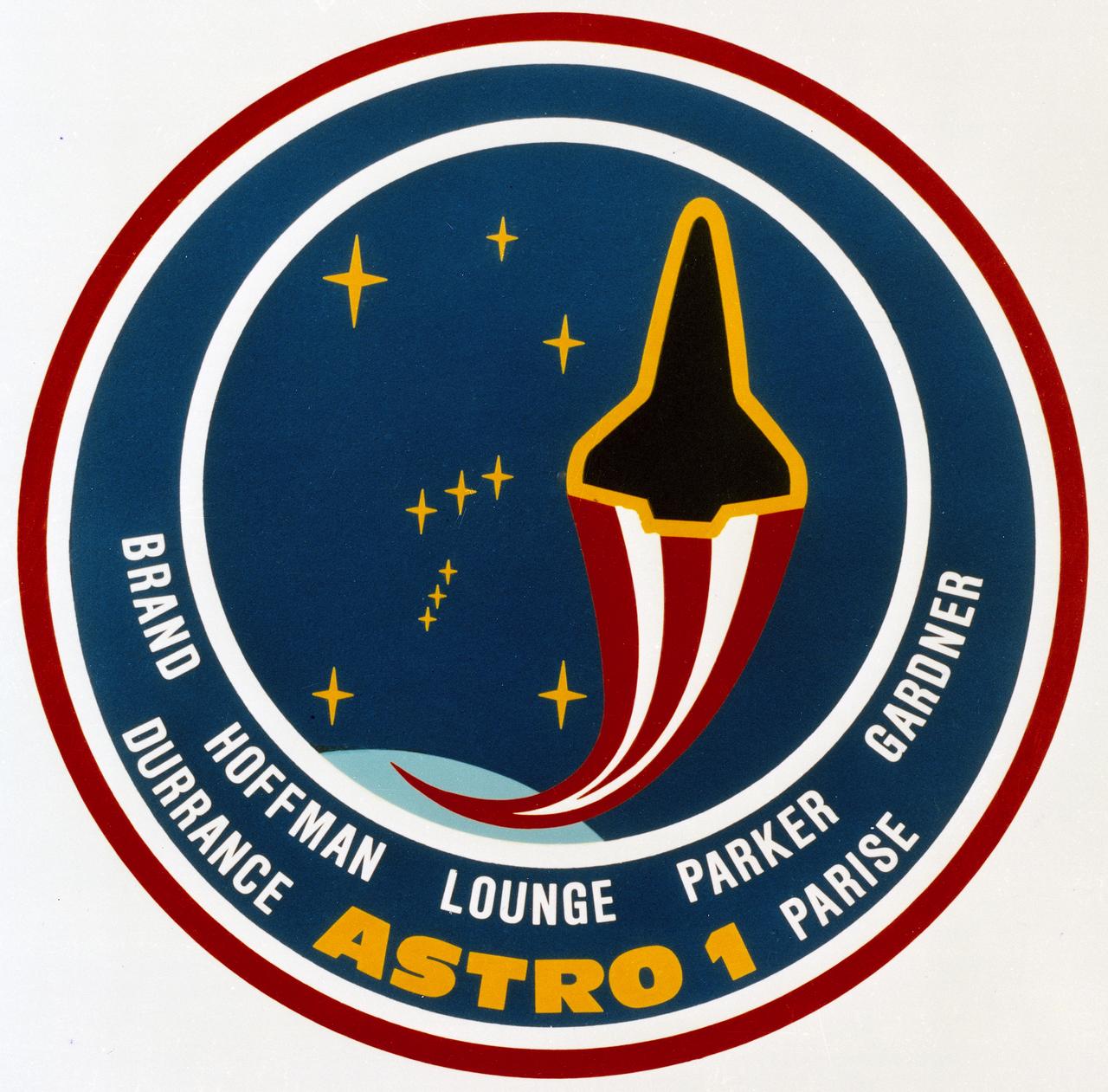
Designed by the crewmembers assigned to the mission, the STS-35 crew patch symbolizes the Space Shuttle flying above Earth's atmosphere to better study the many celestial objects of the universe, represented by the constellation Orion.
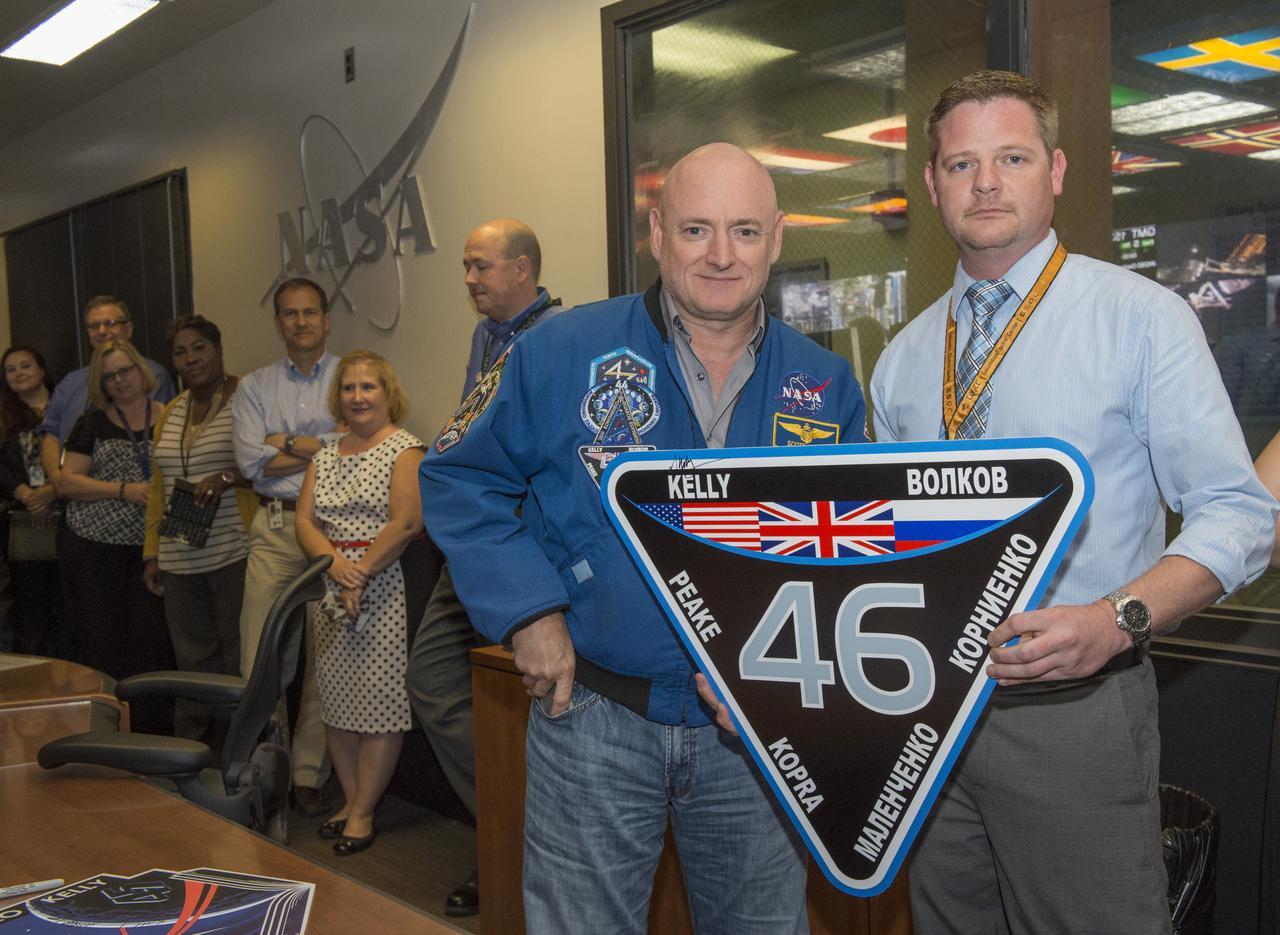
RETIRED NASA ASTRONAUT SCOTT KELLY, LEFT, AND PAYLOAD PLANNING MANAGER TONY PITTMAN PAUSE FOR A PHOTO BEFORE HANGING THE MISSION PATCH FOR EXPEDITION 46 ON THE WALL OF THE PAYLOAD OPERATIONS INTEGRATION CENTER
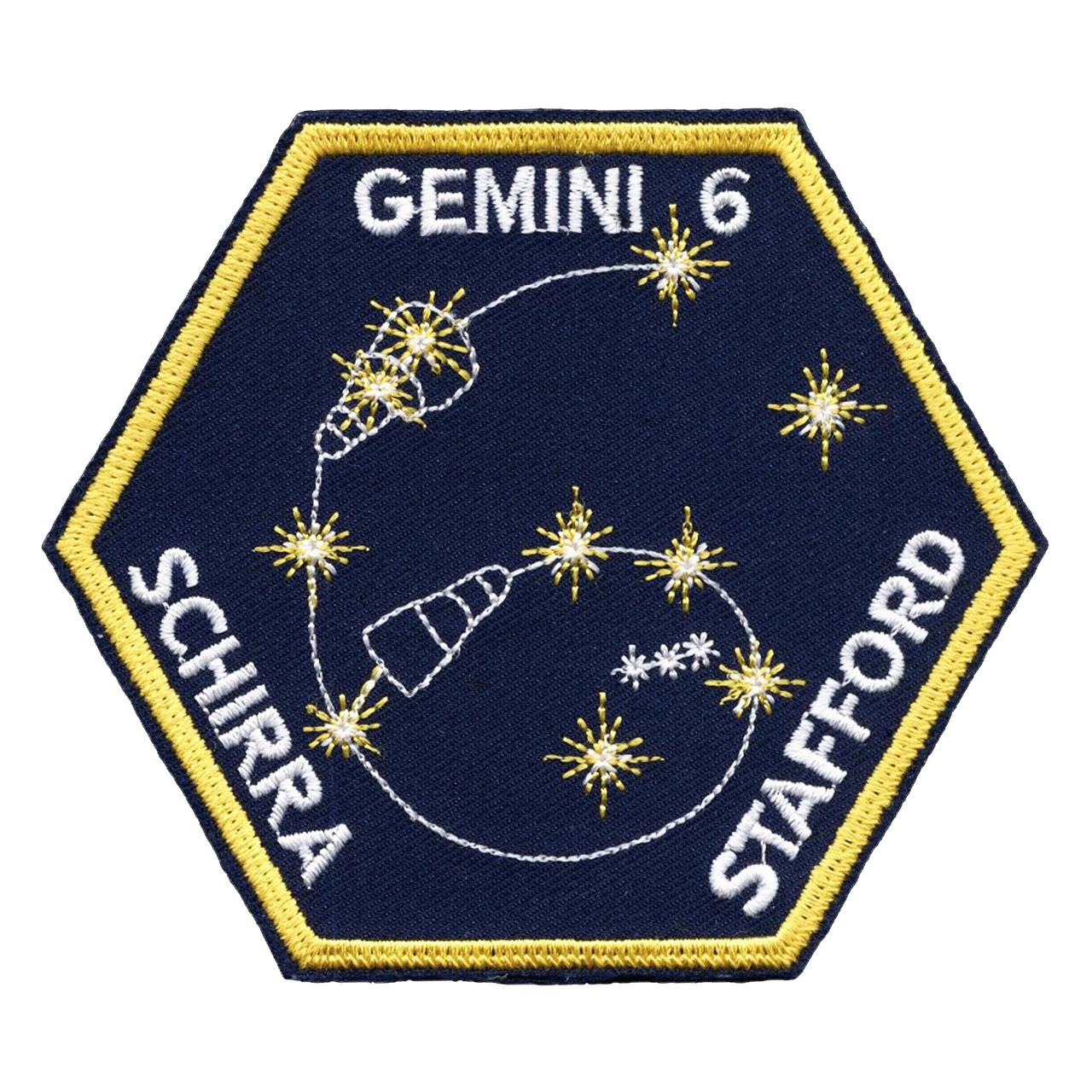
The Gemini 6 patch is hexagonal in shape, reflecting the mission number; and the spacecraft trajectory also traces out the number "6". The Gemini 6 spacecraft is shown superimposed on the "twin stars" Castor and Pollux, for "Gemini".

jsc2022e068632 (June 27, 2022) --- A patch representing the country of Russia, with the name of SpaceX Crew-5 Mission Specialist Anna Kikina from Roscosmos beneath, is pictured attached to her Crew Dragon flight suit. Credit: SpaceX
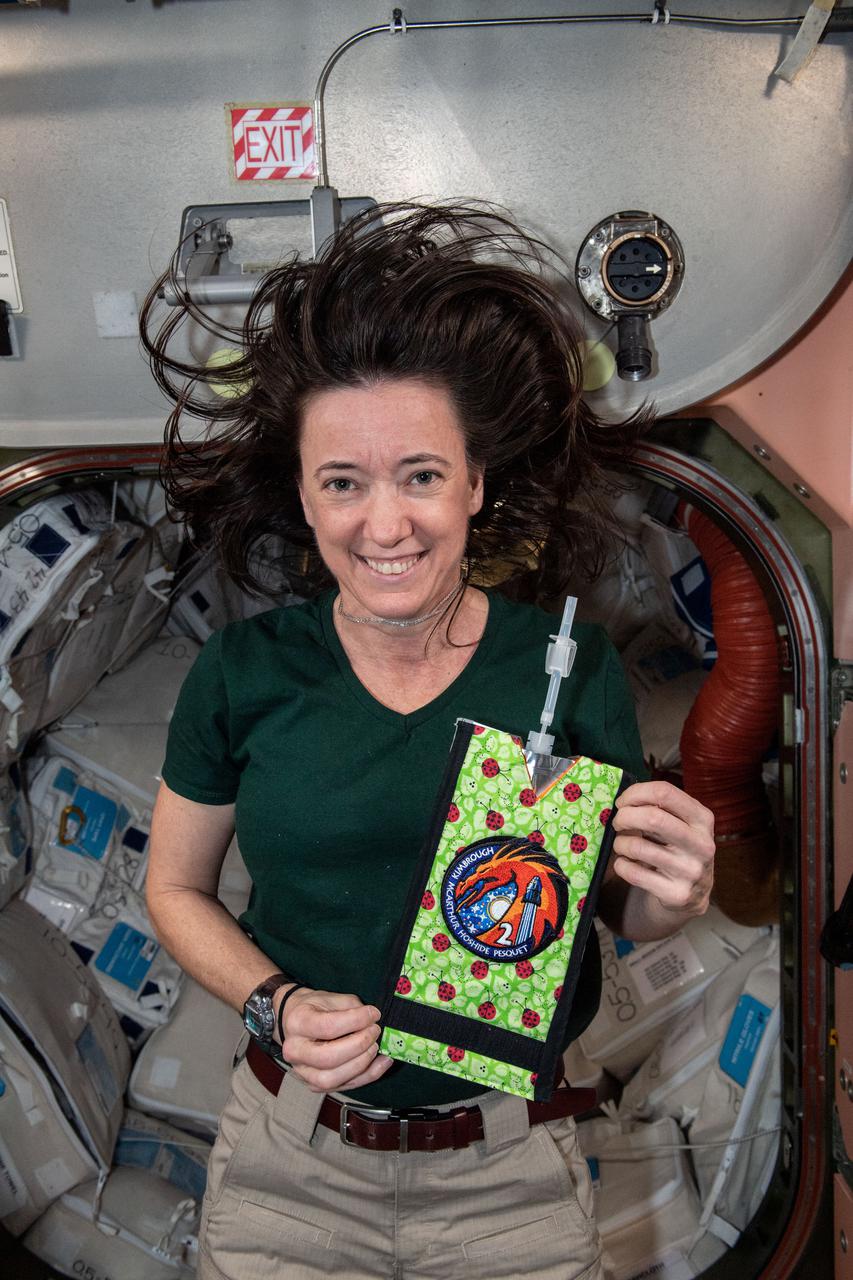
iss066e008128 (Oct. 21, 2021) --- NASA astronaut and Expedition 66 Flight Engineer Megan McArthur holds a personalized drink pouch bearing the SpaceX Crew-2 mission insignia patch.
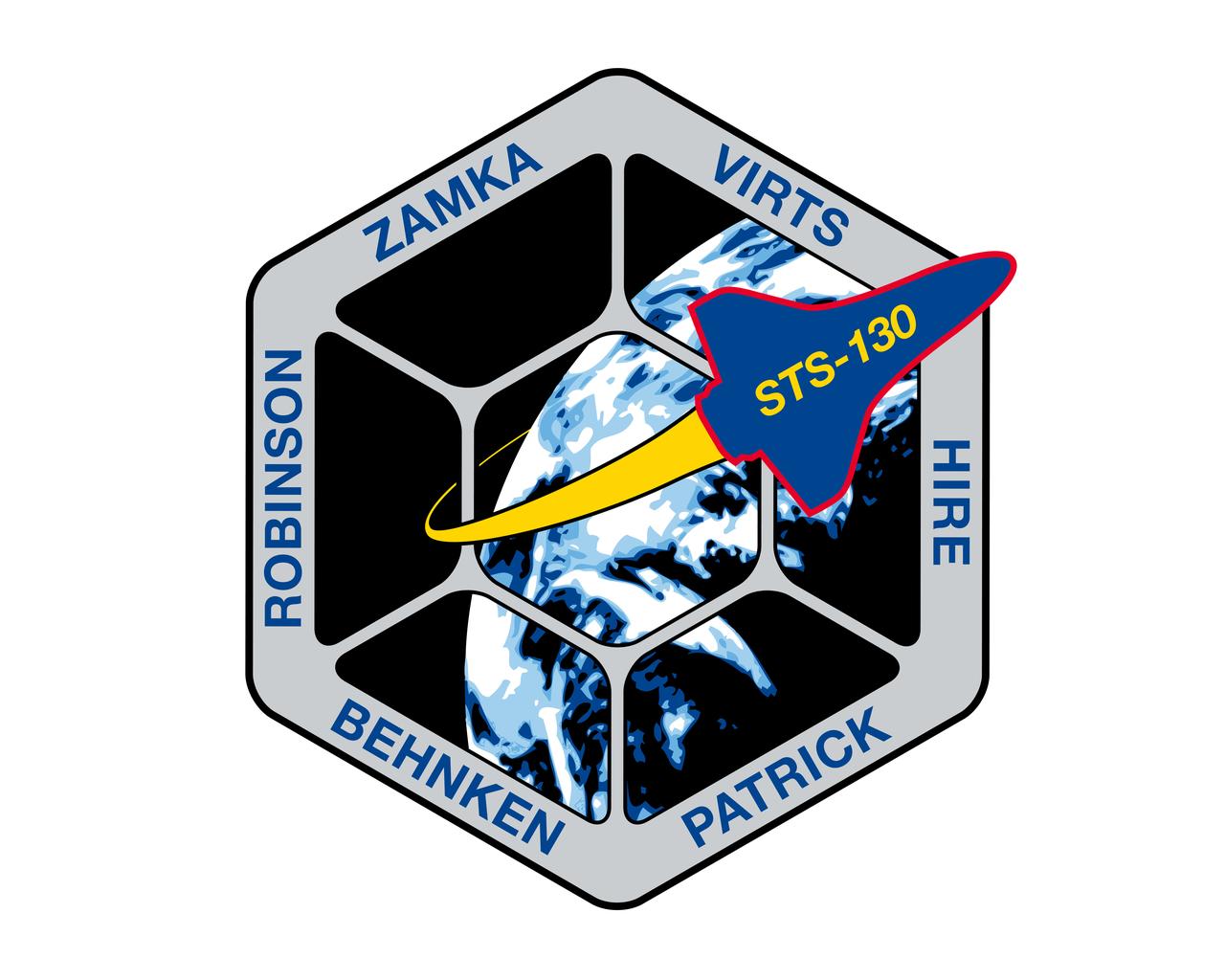
STS130-S-001 (September 2009) --- The STS-130 patch was designed by the crew to reflect both the objectives of the mission and its place in the history of human spaceflight. The main goal of the mission is to deliver Node 3 and the Cupola to the International Space Station (ISS). Node 3, named ?Tranquility,? will contain life support systems enabling continued human presence in orbit aboard the ISS. The shape of the patch represents the Cupola, which is the windowed robotics viewing station, from which astronauts will have the opportunity not only to monitor a variety of ISS operations, but also to study our home planet. The image of Earth depicted in the patch is the first photograph of Earth taken from the moon by Lunar Orbiter I on Aug. 23, 1966. As both a past and a future destination for explorers from planet Earth, the moon is thus represented symbolically in the STS-130 patch. The space shuttle Endeavour is pictured approaching the ISS, symbolizing the space shuttle's role as the prime construction vehicle for the ISS. The NASA insignia design for space shuttle flights is reserved for use by the astronauts and for other official use as the NASA Administrator may authorize. Public availability has been approved only in the forms of illustrations by the various news media. When and if there is any change in this policy, which is not anticipated, the change will be publicly announced. Photo credit: NASA
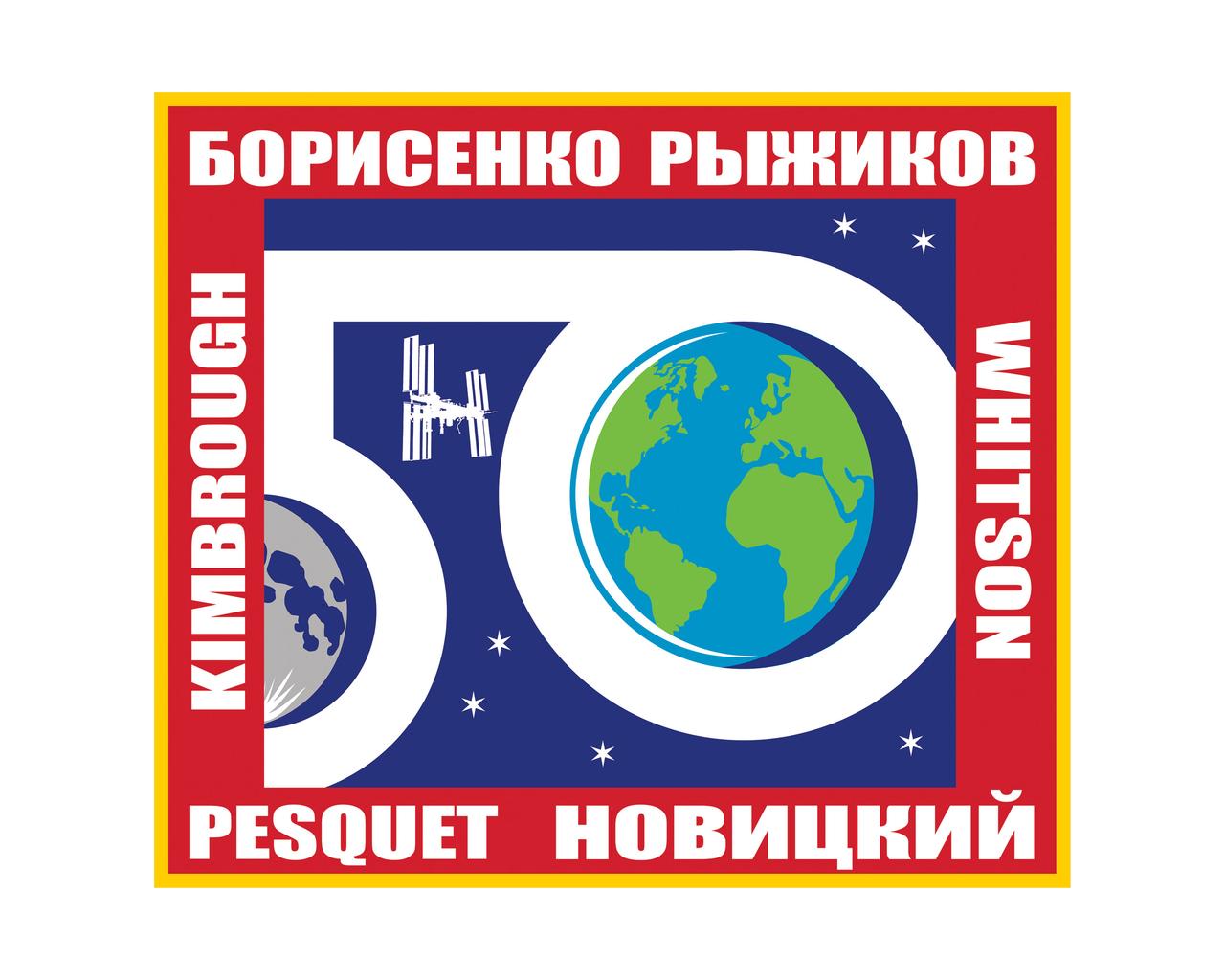
ISS050-S-001 (01/27/2016) --- The Expedition 50 patch encompasses the spirit of human exploration from previous missions to the Moon to current exploration on the International Space Station (ISS). The red border symbolizes future human exploration of Mars – the Red Planet. Our home planet Earth is prominent in the patch to remind us that everything done on the mission is to help people on Earth – “Off the Earth, For the Earth.” The background colors of red, white, and blue represent the national colors of all six crewmembers – United States, Russia, and France. The six stars represent the families of all six crewmembers. Finally, the ‘50’ signifies the 50th Expedition to the ISS.
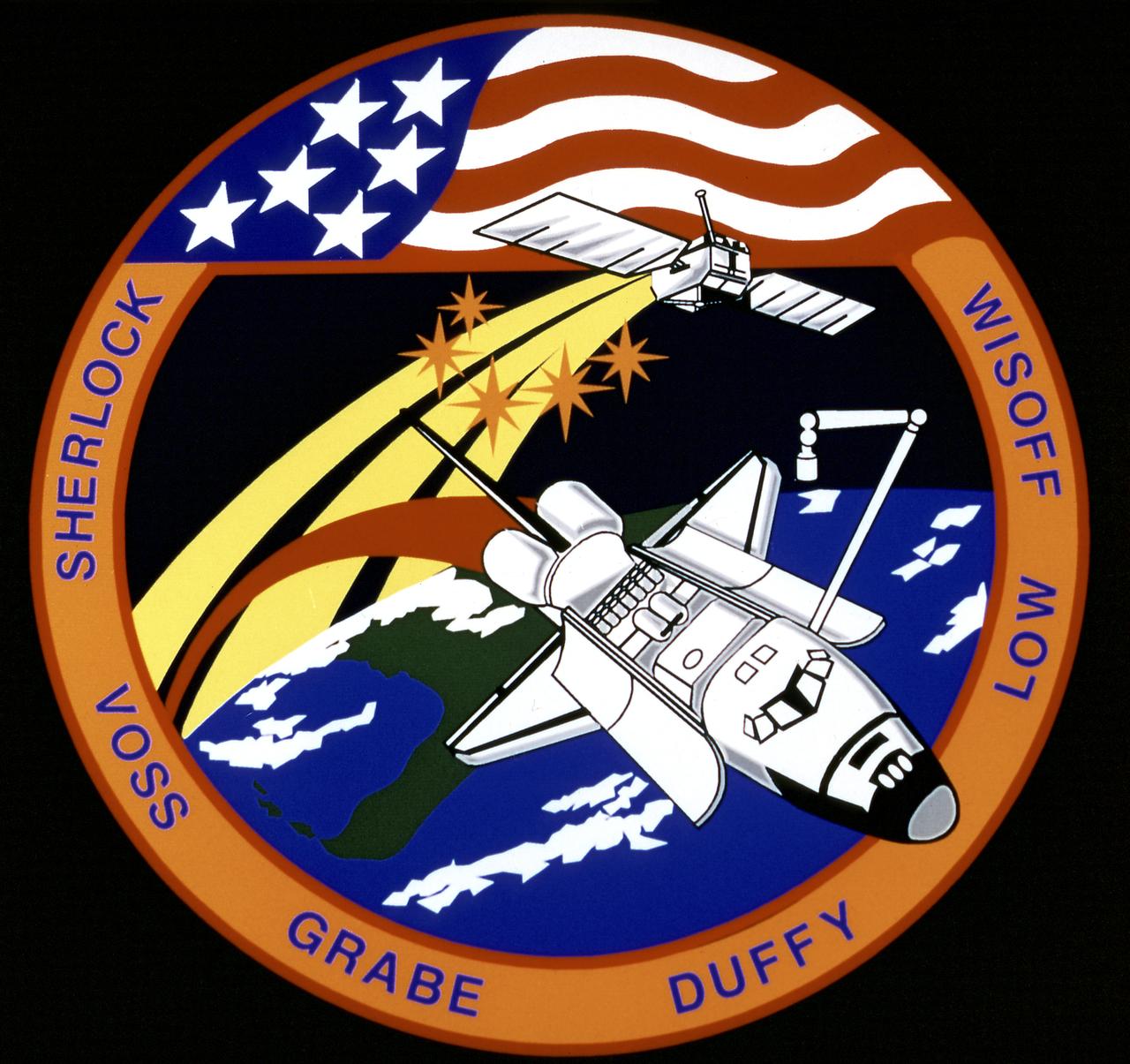
Designed by the mission’s crew members, the STS-57 crew patch depicts the Space Shuttle Endeavour maneuvering to retrieve the European Space Agency's microgravity experiment satellite EURECA. SpaceHab, the first commercial space laboratory, is depicted in the cargo bay, and its characteristic shape is represented by the inner red border of the patch. The three gold plumes surrounded by the five stars trailing EURECA are suggestive of the U.S. astronaut logo. The five gold stars together with the shape of the orbiter's mechanical arm form the mission's numerical designation. The six stars on the American flag represent the U.S. astronauts who comprise the crew. With detailed input from the crew members, the final artwork was accomplished by artist Tim Hall.
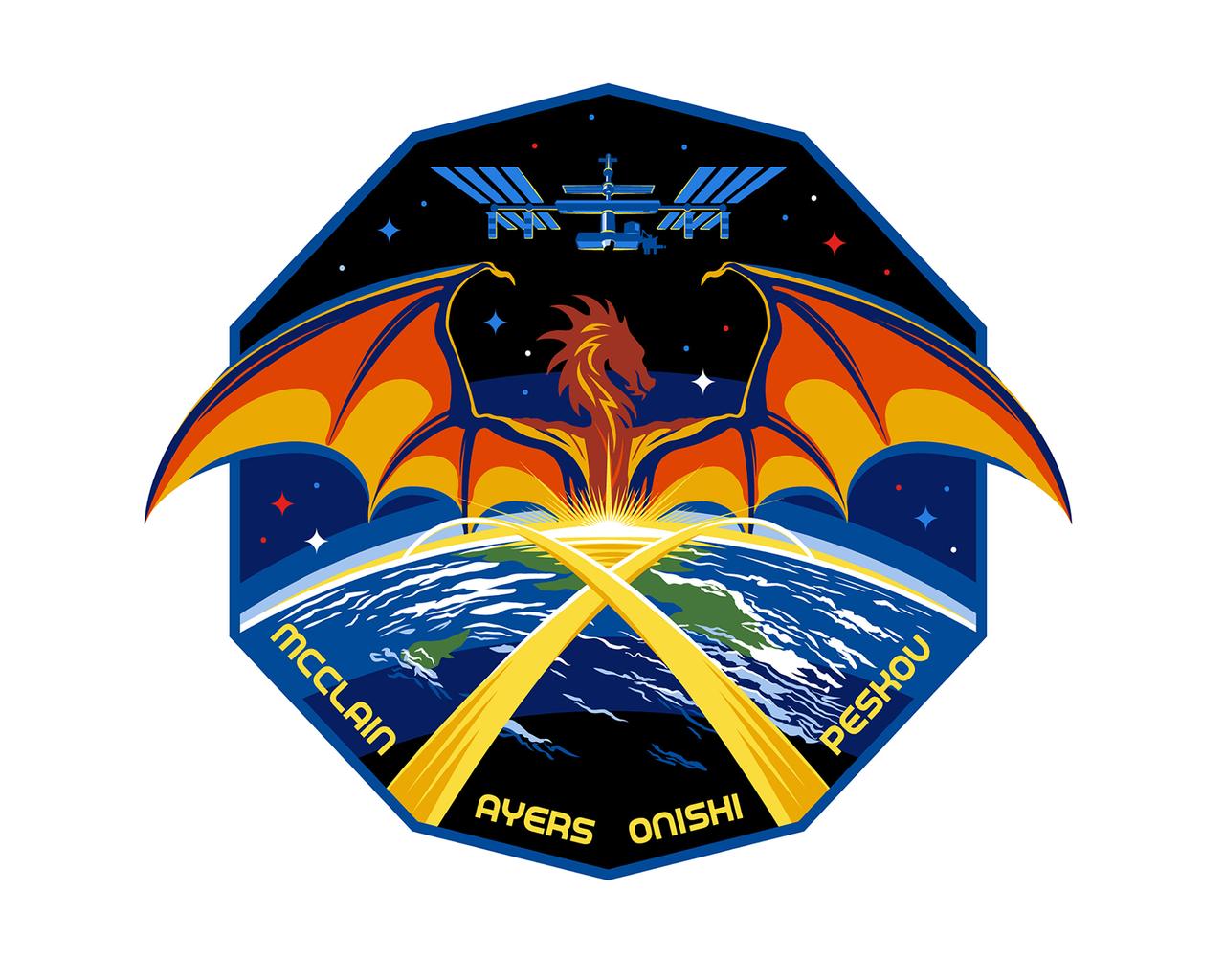
jsc2024e060607 (Sept. 4, 2024) --- The SpaceX Crew-10 patch was thoughtfully designed by the four-person crew. They used AI for initial inspiration, while the ever-irreplaceable human perfected the design and brought the patch to fruition. It is a 10-sided patch with the roman numeral X boldly in the center, representing the 10th operational flight of the Crew Dragon spacecraft. The Dragon, also the capsule’s namesake, is wings out in full flight, representing the four professional pilots that make up the crew complement. The Dragon, illuminated by one of Earth’s stunning and beautiful sunrises, is focused on the ISS and its mission, while keeping a watchful position above Earth. The stars are red, white, and blue for the flag colors of each crew members’ home country, and the brightest stars represent the crew’s closest family members and support system.