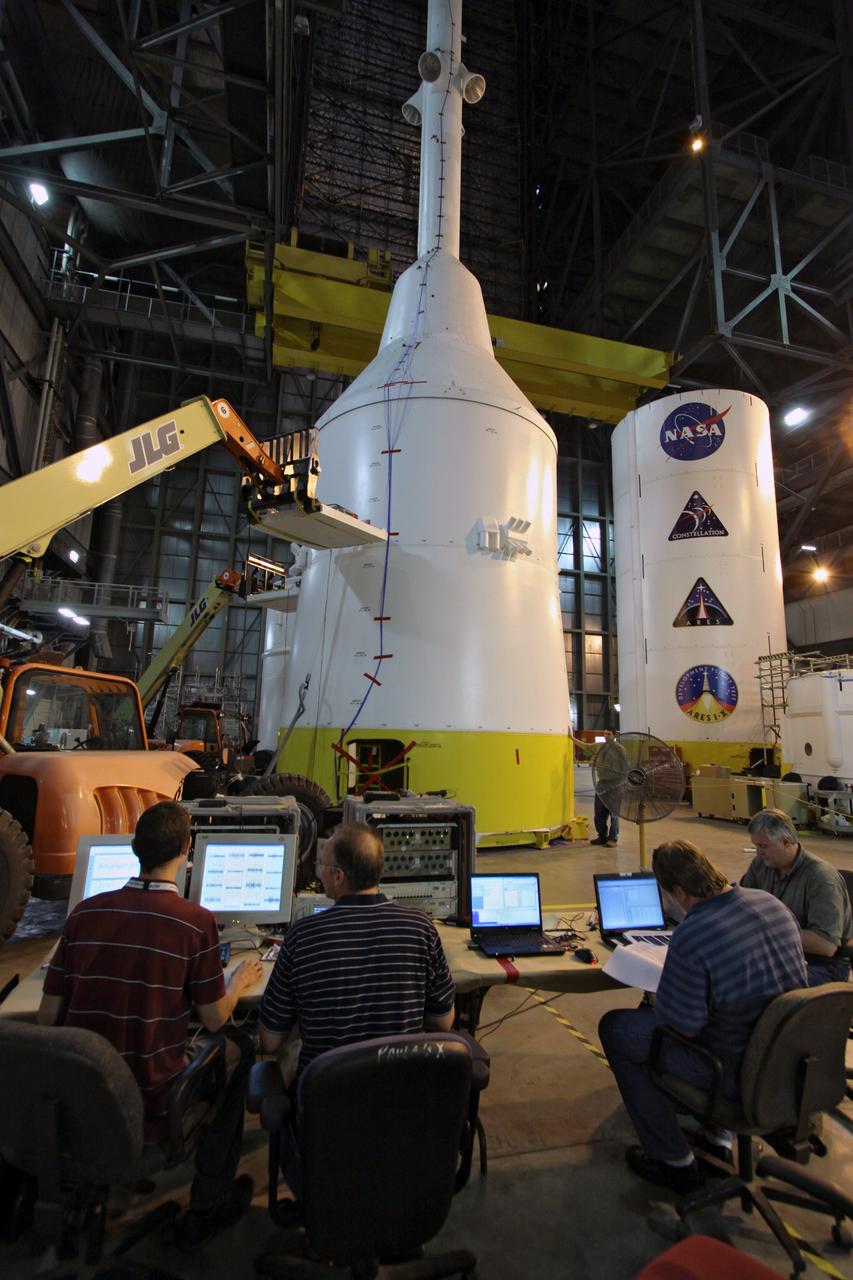
CAPE CANAVERAL, Fla. – In high bay 4 of the Vehicle Assembly Building at NASA's Kennedy Space Center in Florida, technicians begin the modal survey testing on the top part of the Ares I-X (center) after sensors were placed on the stack. The top consists of the launch abort tower, crew module, service module and spacecraft adaptor. Shakers will impose random loads/vibrations to determine the flight test vehicle’s first several bending modes and the strategically located sensors throughout the stacks will measure the amount, acceleration and direction of movement. The purpose of the testing is to confirm that Ares I-X will behave as predicted as it lifts off the pad and powers through the initial stage of flight in a demonstration flight later this year. Photo credit: NASA/Jack Pfaller
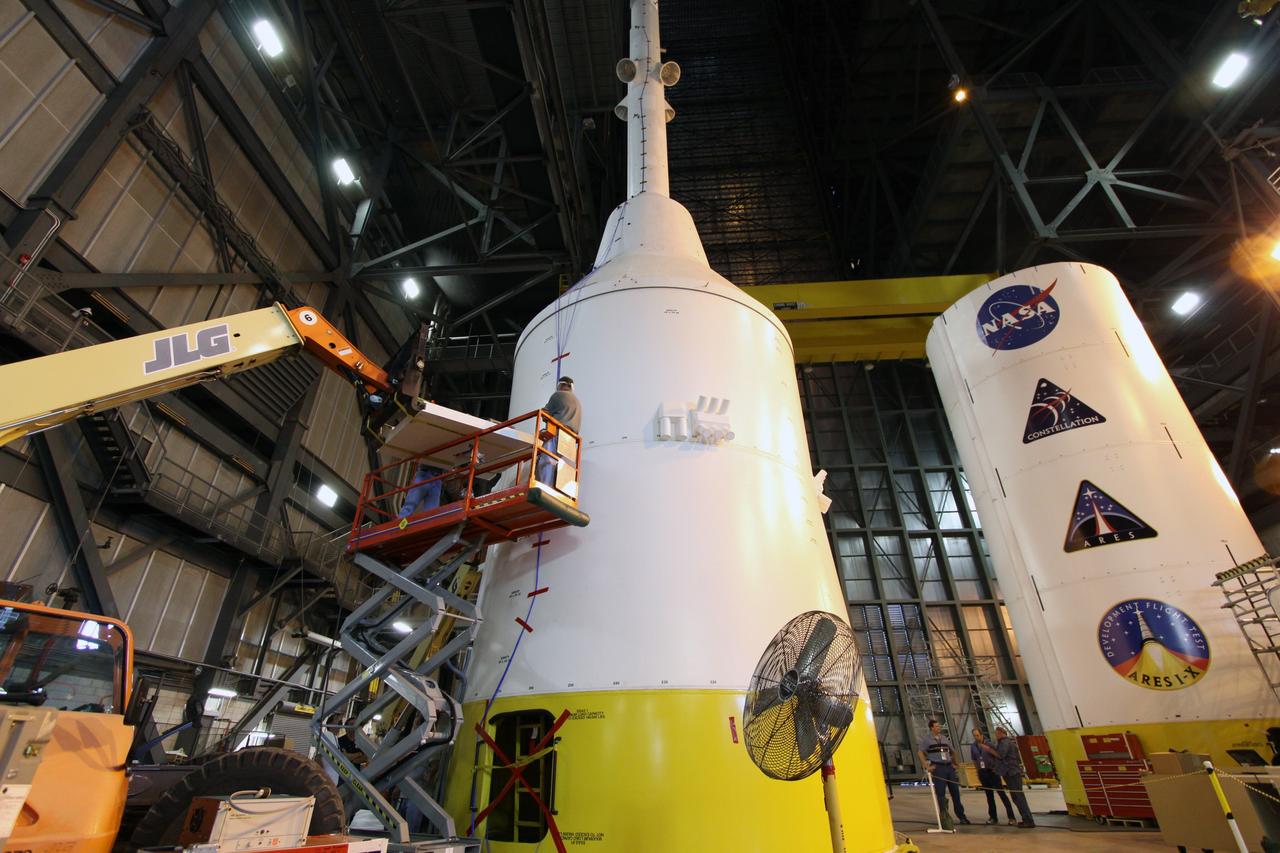
CAPE CANAVERAL, Fla. – In high bay 4 of the Vehicle Assembly Building at NASA's Kennedy Space Center in Florida, technicians place sensors on the top part of the Ares I-X for modal survey testing. The top consists of the launch abort tower, crew module, service module and spacecraft adaptor. Shakers will impose random loads/vibrations to determine the flight test vehicle’s first several bending modes and the strategically located sensors throughout the stacks will measure the amount, acceleration and direction of movement. The purpose of the testing is to confirm that Ares I-X will behave as predicted as it lifts off the pad and powers through the initial stage of flight in a demonstration flight later this year. Photo credit: NASA/Jack Pfaller
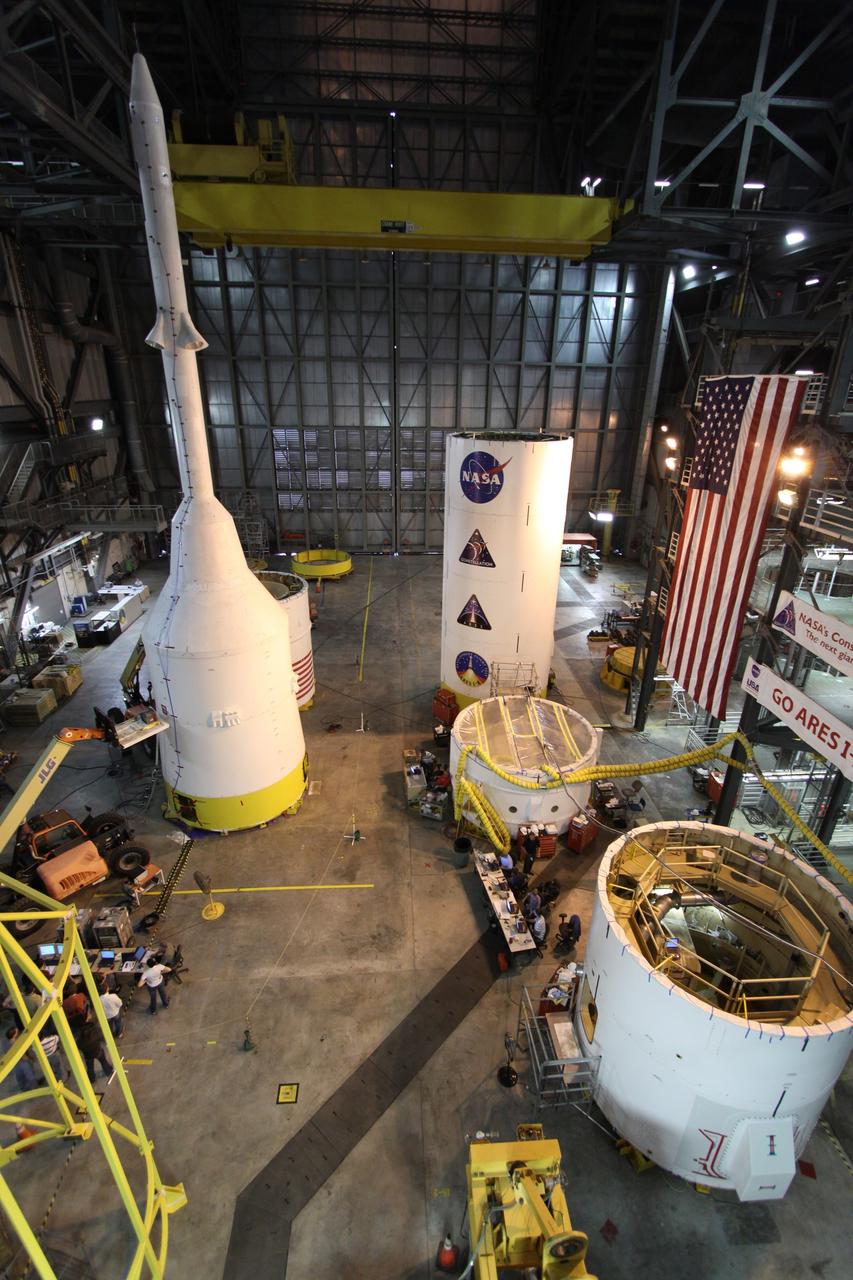
CAPE CANAVERAL, Fla. – In high bay 4 of the Vehicle Assembly Building at NASA's Kennedy Space Center in Florida, technicians begin the modal survey testing on the top part of the Ares I-X (upper left) after sensors were placed on the stack. The top consists of the launch abort tower, crew module, service module and spacecraft adaptor. Other segments are stacked nearby. Shakers will impose random loads/vibrations to determine the flight test vehicle’s first several bending modes and the strategically located sensors throughout the stacks will measure the amount, acceleration and direction of movement. The purpose of the testing is to confirm that Ares I-X will behave as predicted as it lifts off the pad and powers through the initial stage of flight in a demonstration flight later this year. Photo credit: NASA/Jack Pfaller
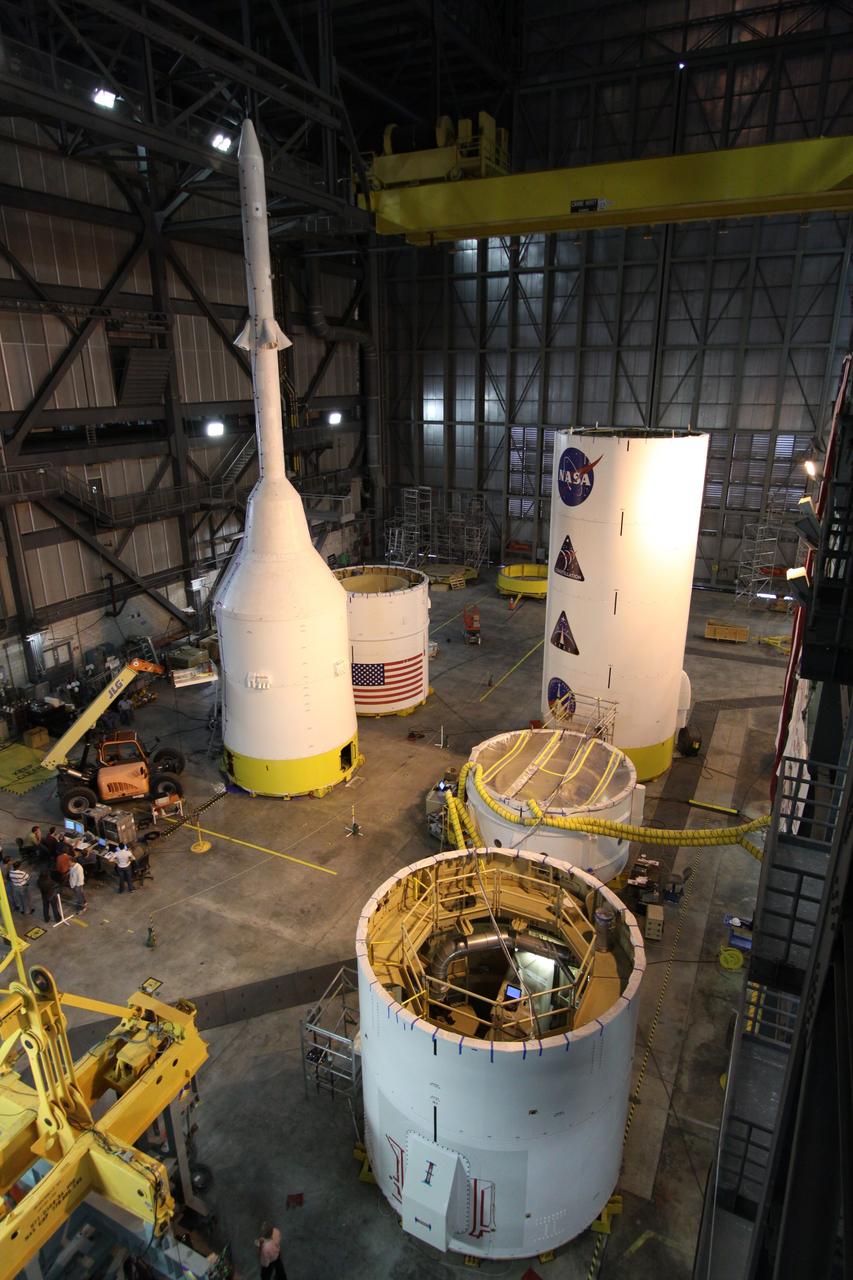
CAPE CANAVERAL, Fla. – In high bay 4 of the Vehicle Assembly Building at NASA's Kennedy Space Center in Florida, the top part of the Ares I-X (upper left) undergoes modal survey testing after sensors were placed on the stack. The top consists of the launch abort tower, crew module, service module and spacecraft adaptor. Other segments are stacked nearby. Shakers will impose random loads/vibrations to determine the flight test vehicle’s first several bending modes and the strategically located sensors throughout the stacks will measure the amount, acceleration and direction of movement. The purpose of the testing is to confirm that Ares I-X will behave as predicted as it lifts off the pad and powers through the initial stage of flight in a demonstration flight later this year. Photo credit: NASA/Jack Pfaller
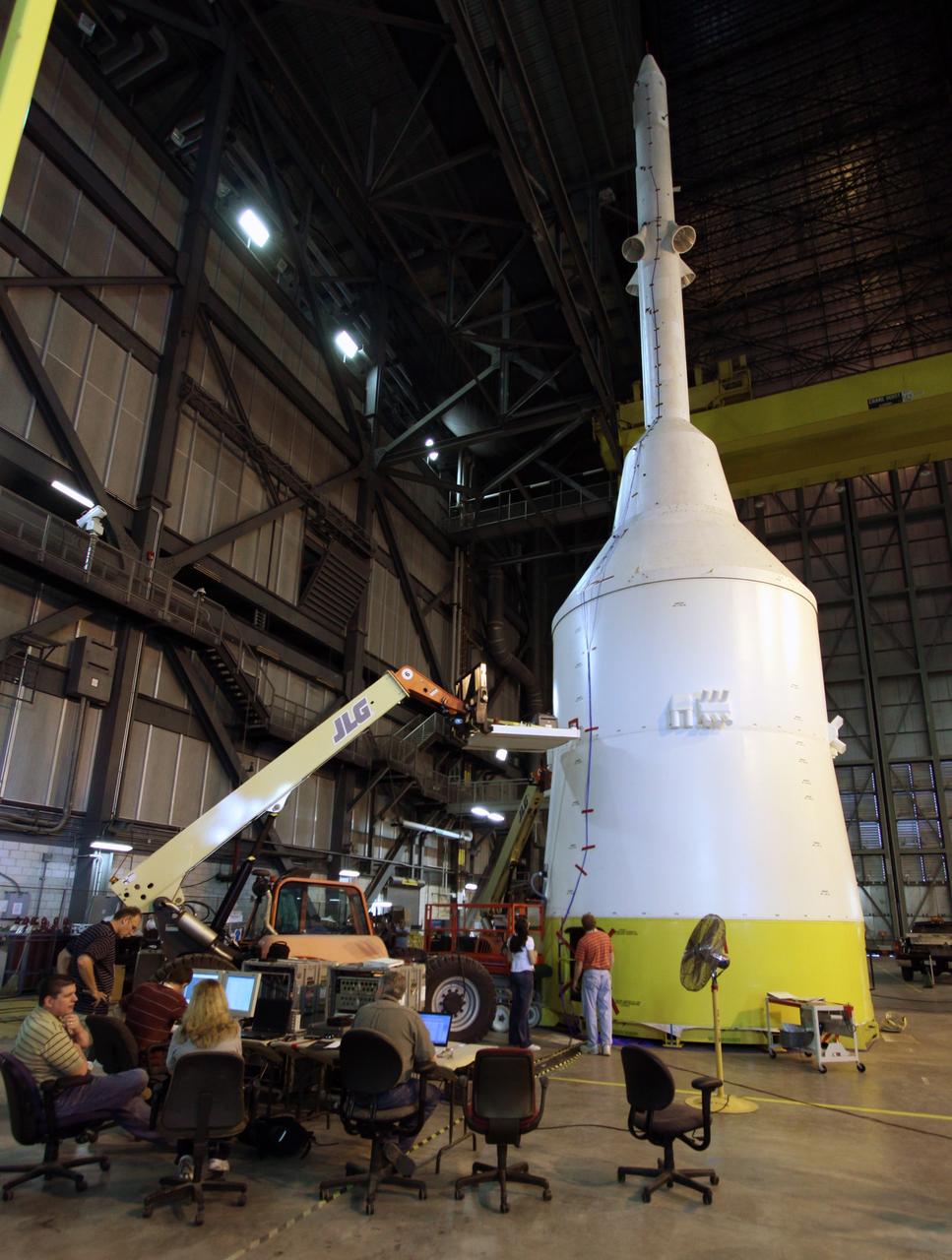
CAPE CANAVERAL, Fla. – In high bay 4 of the Vehicle Assembly Building at NASA's Kennedy Space Center in Florida, technicians place sensors on the top part of the Ares I-X for modal survey testing. The top consists of the launch abort tower, crew module, service module and spacecraft adaptor. Shakers will impose random loads/vibrations to determine the flight test vehicle’s first several bending modes and the strategically located sensors throughout the stacks will measure the amount, acceleration and direction of movement. The purpose of the testing is to confirm that Ares I-X will behave as predicted as it lifts off the pad and powers through the initial stage of flight in a demonstration flight later this year. Photo credit: NASA/Jack Pfaller
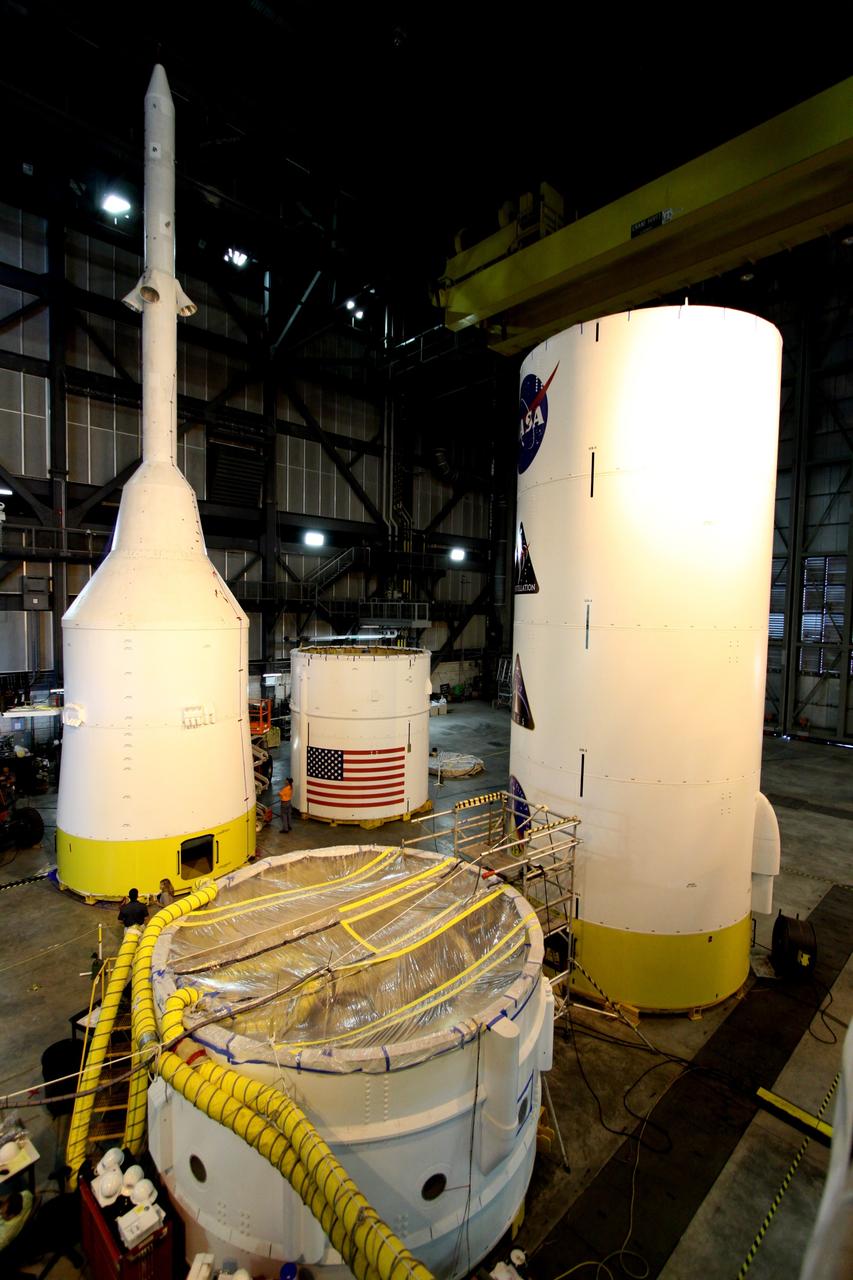
CAPE CANAVERAL, Fla. – In high bay 4 of the Vehicle Assembly Building at NASA's Kennedy Space Center in Florida, the top part of the Ares I-X (upper left) is ready for modal survey testing. The top consists of the launch abort tower, crew module, service module and spacecraft adaptor. Other segments are stacked nearby. Shakers will impose random loads/vibrations to determine the flight test vehicle’s first several bending modes and the strategically located sensors throughout the stacks will measure the amount, acceleration and direction of movement. The purpose of the testing is to confirm that Ares I-X will behave as predicted as it lifts off the pad and powers through the initial stage of flight in a demonstration flight later this year. Photo credit: NASA/Jack Pfaller
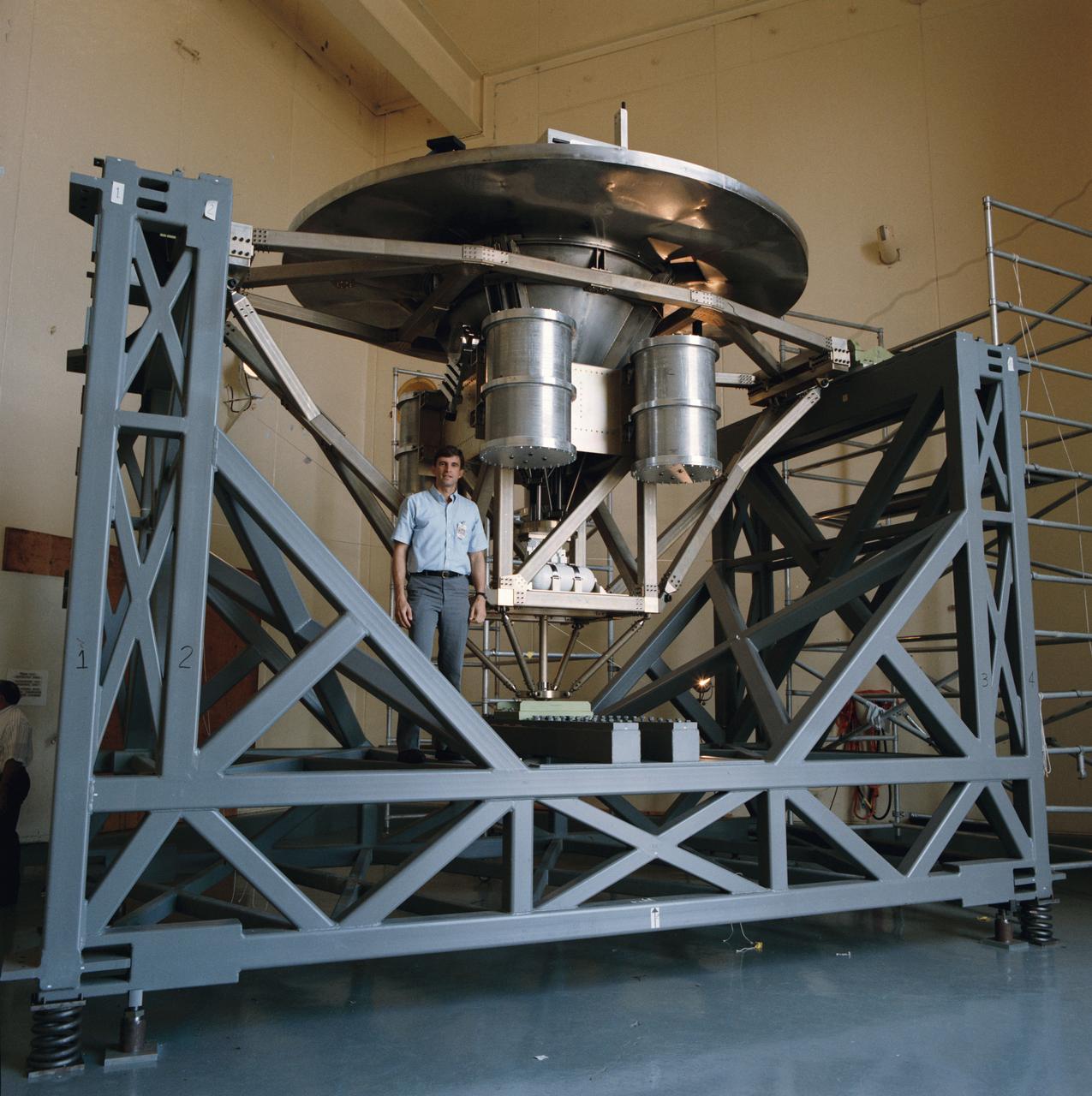
Astronaut Ronald M. Sega stands beside the University of Houston's Wake Shield Facility before it undergoes a Modal Survey Test in the Vibration and Acoustic Test Facility Building 49, prior to being flown on space shuttle mission STS-60.
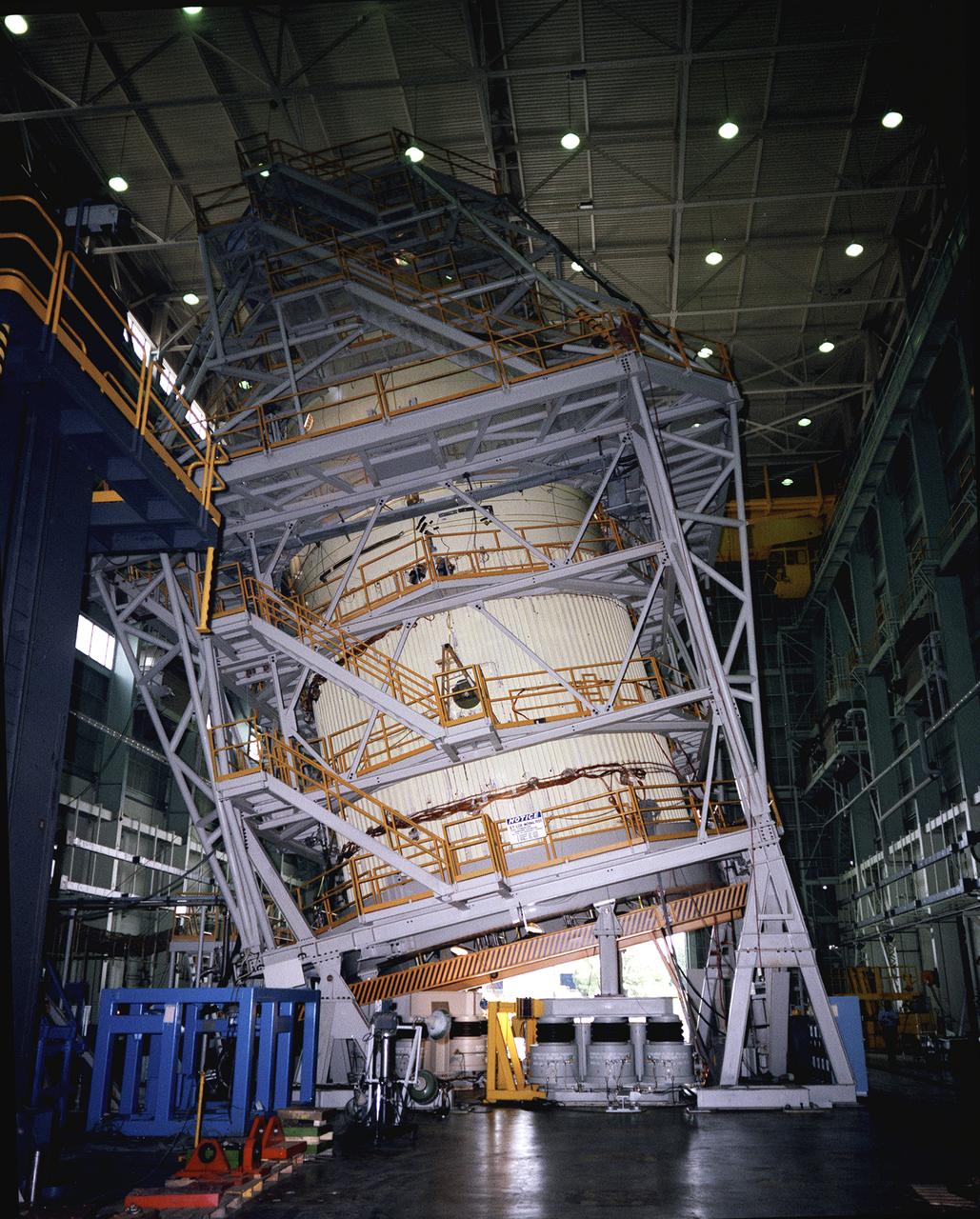
This photograph shows a liquid oxygen tank for the Shuttle External Tank (ET) during a hydroelastic modal survey test at the Marshall Space Flight Center. The ET provides liquid hydrogen and liquid oxygen to the Shuttle's three main engines during the first 8.5 minutes of flight. At 154-feet long and more than 27-feet in diameter, the ET is the largest component of the Space Shuttle, the structural backbone of the entire Shuttle system, and is the only part of the vehicle that is not reusable. The ET is manufactured at the Michoud Assembly Facility near New Orleans, Louisiana, by the Martin Marietta Corporation under management of the Marshall Space Flight Center.