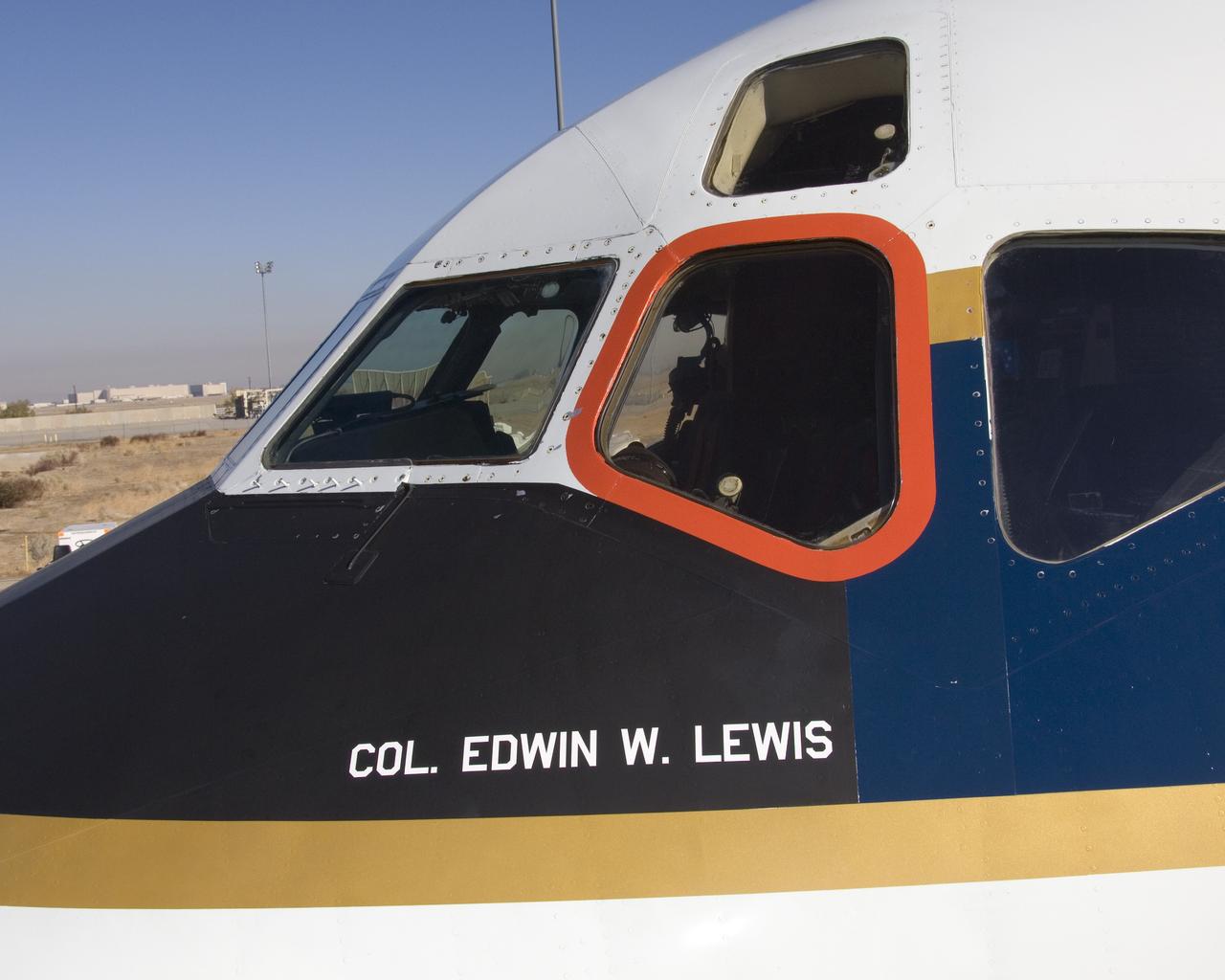
NASA's modified DC-8 now carries the name of the late Edwin W. Lewis below its cockpit window, a tribute to his 18 years piloting the unique science laboratory.
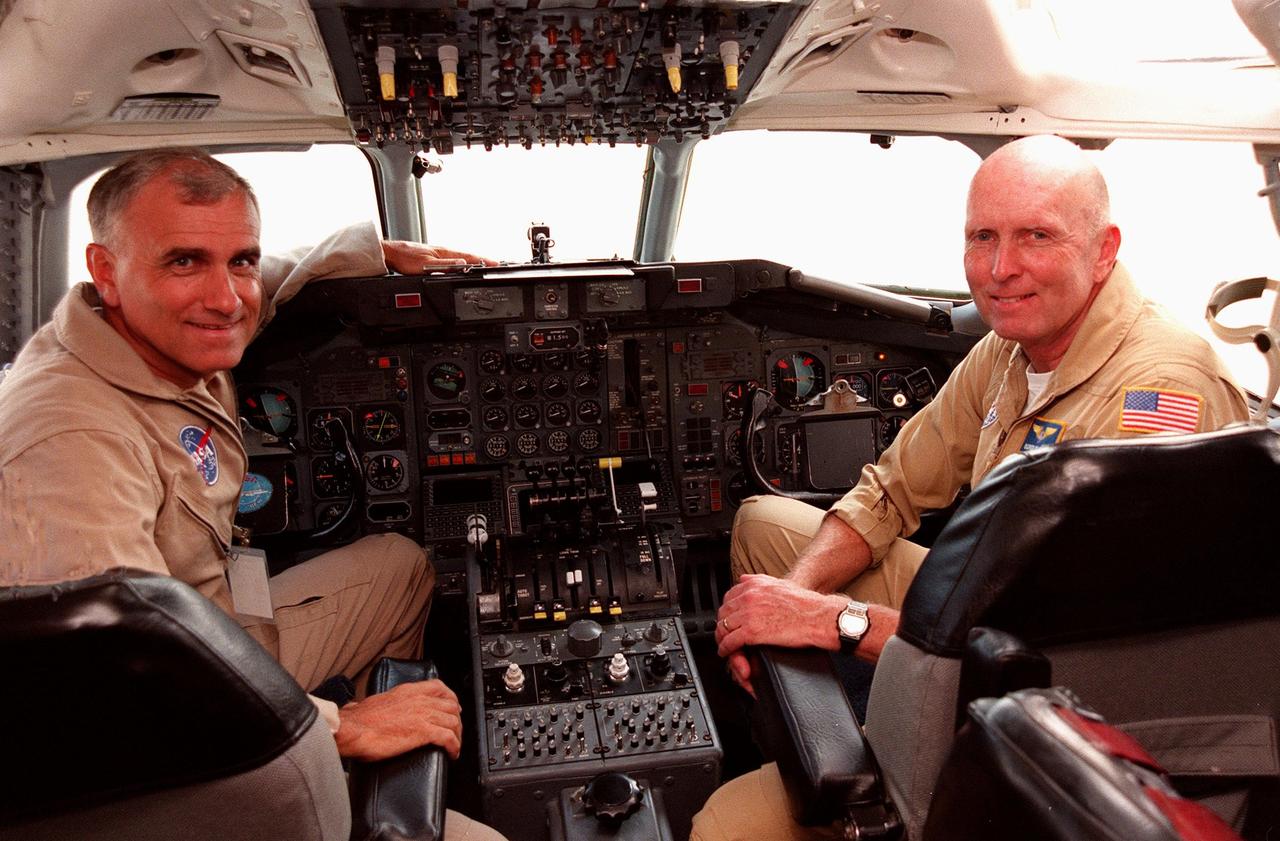
NASA pilots Dick Ewens and Gordon Fullerton sit at the controls in the cockpit of the Dryden Flight Research Center DC-8 that was on view at Patrick Air Force Base. The DC-8 is one of two aircraft being flown in a hurricane study through September to learn about the storms from top to bottom. Flying at 35,000 to 40,000 feet, the DC-8 is equipped with instruments to measure a hurricane’s structure, environment and changes in intensity and tracking. The other plane, a modified U2, and the DC-8 will fly in conjunction with scheduled storm flights of the National Oceanic and Atmospheric Administration (NOAA) out of MacDill Air Force Base in Tampa and the U.S. Air Force 53rd Weather Reconnaissance Squadron from Keesler Air Force Base, Miss. The study is part of NASA’s Earth Science enterprise to better understand the total Earth system and the effects of natural and human-induced changes on the global environment
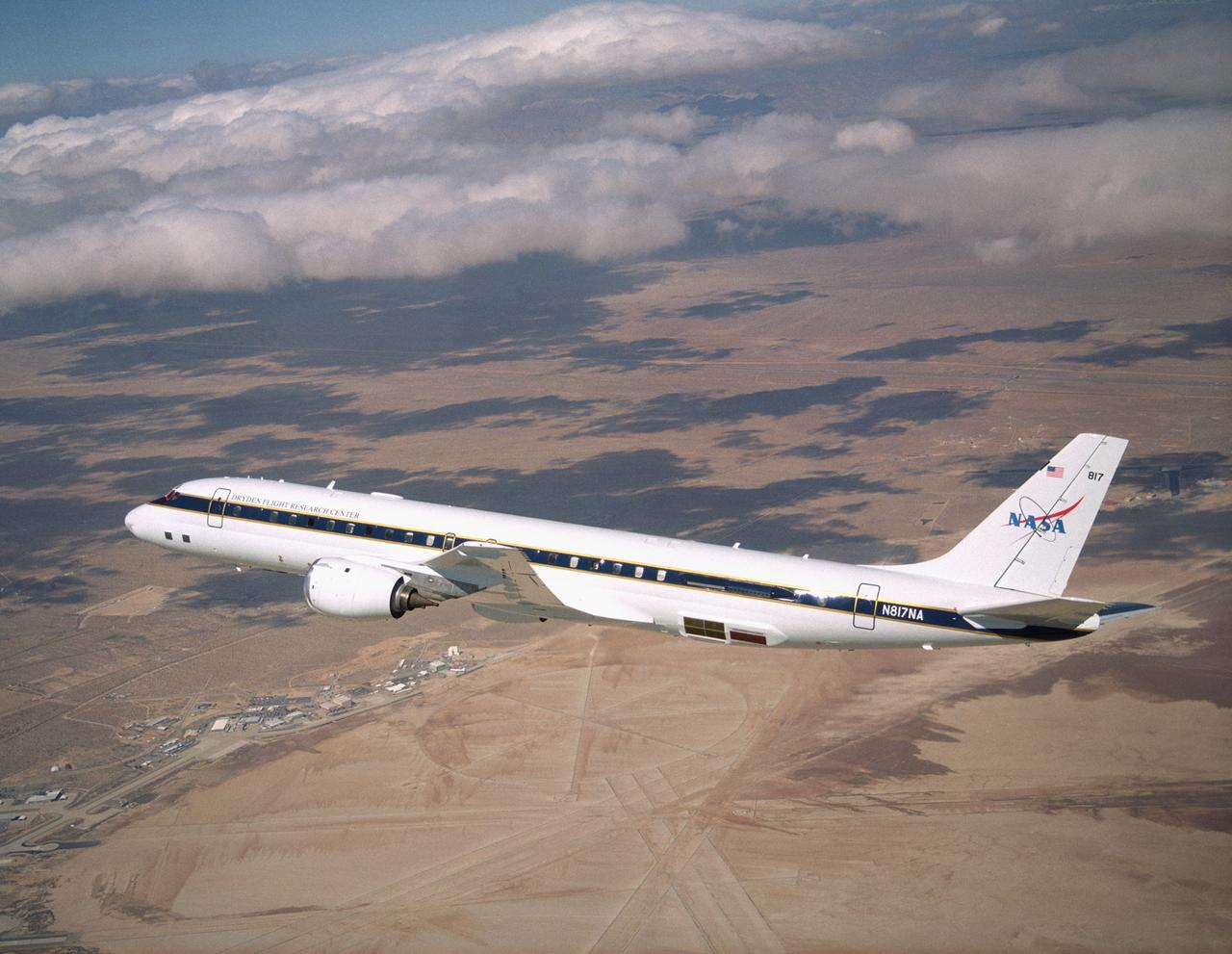
NASA's large Airborne Science research aircraft, a modified DC-8 airliner, displayed new colors in a check flight Feb. 24, 2004, over its home base, the NASA Dryden Flight Research Center at Edwards AFB, California.
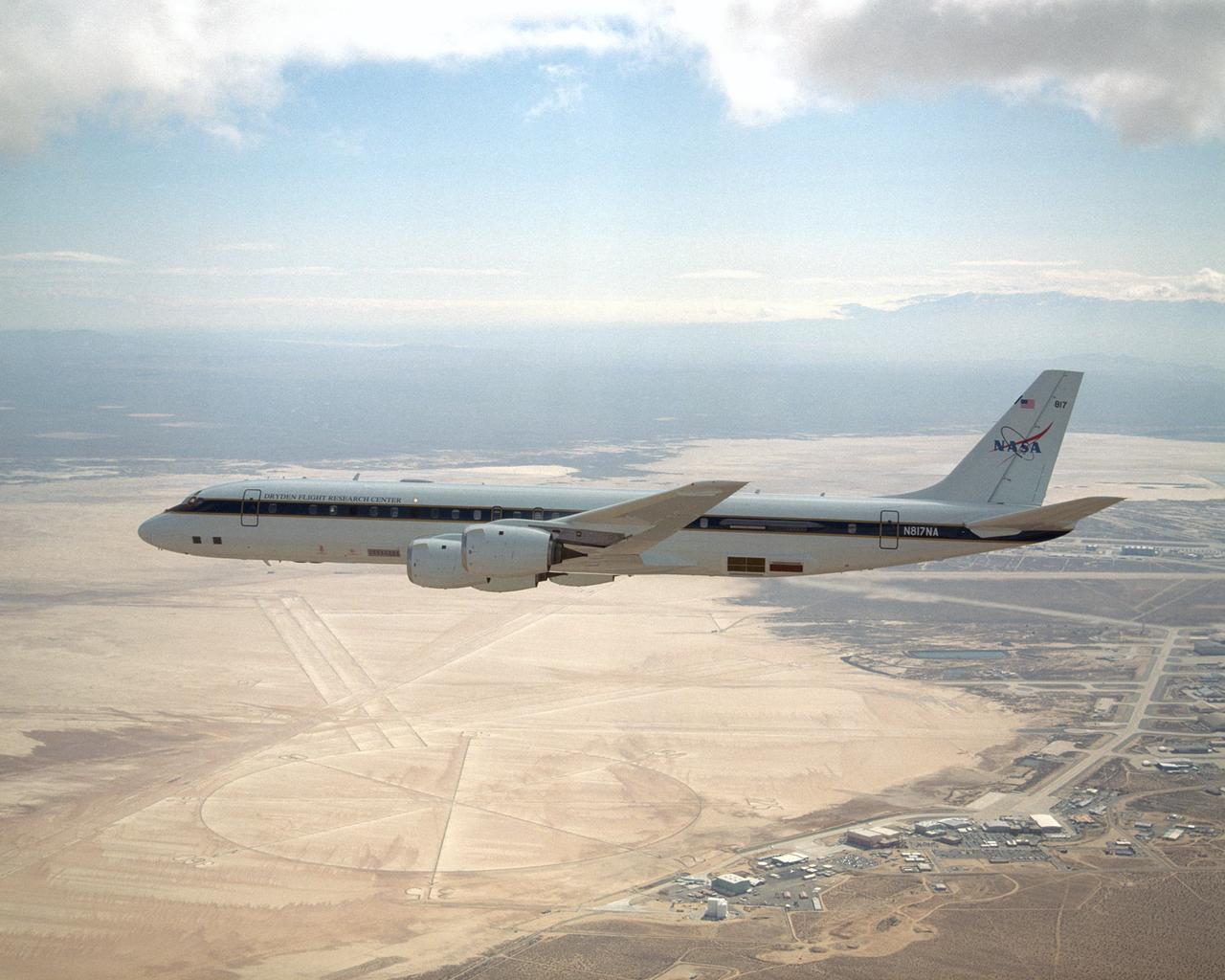
NASA's large Airborne Science research aircraft, a modified DC-8 airliner, displayed new colors in a check flight Feb. 24, 2004, over its home base, the NASA Dryden Flight Research Center at Edwards AFB, California.
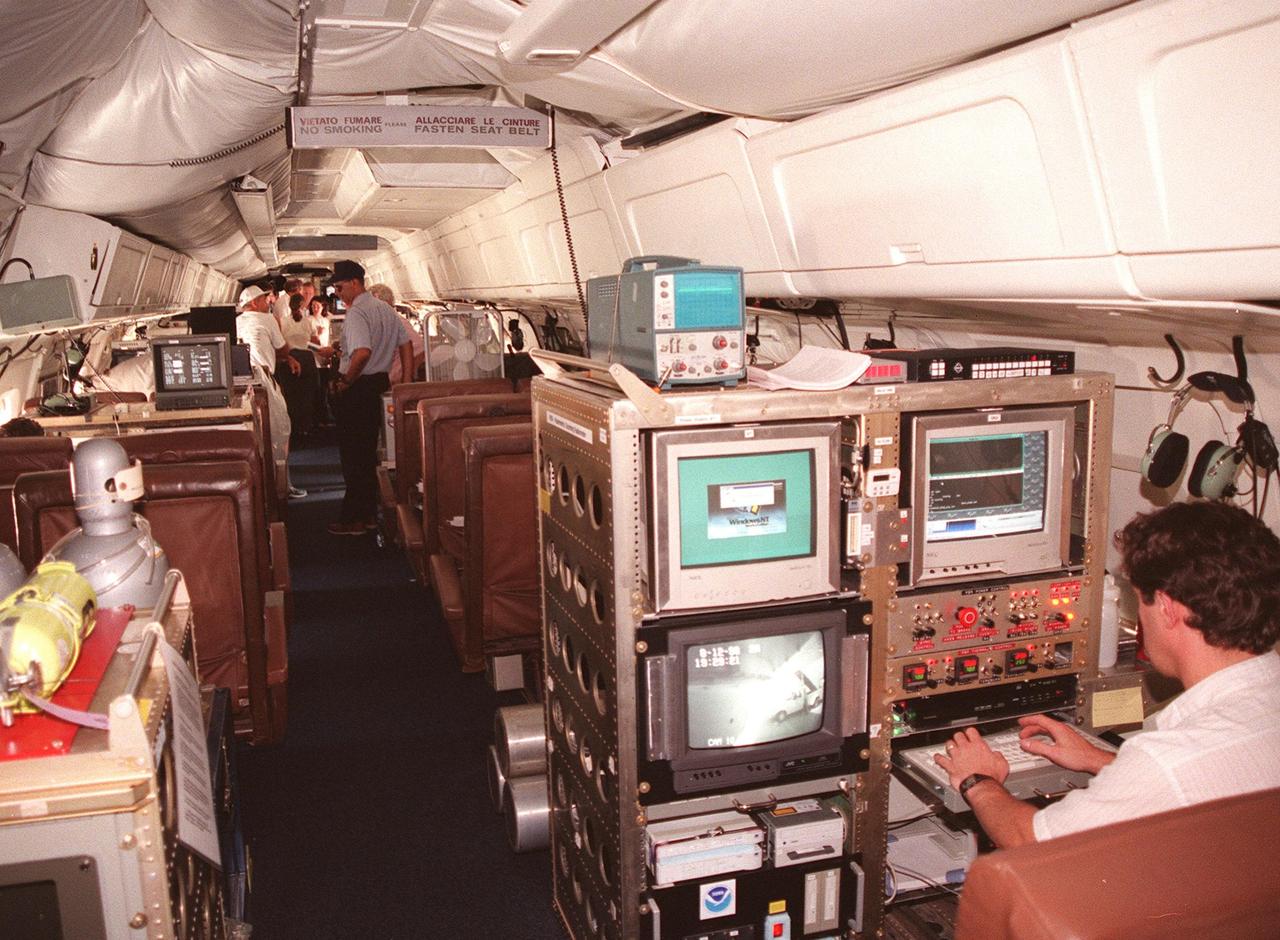
Inside this NASA Dryden Flight Research Center DC-8, which was on view at Patrick Air Force Base, visitors get a close-up look at the instruments that will be used to collect high-altitude information about Atlantic hurricanes and tropical storms as part of a NASA-led Atmospheric Dynamics and Remote Sensing program. The DC-8 is one of two aircraft being flown in a study through September to learn about the storms from top to bottom. The other plane, a modified U2, and the DC-8 will fly in conjunction with scheduled storm flights of the National Oceanic and Atmospheric Administration (NOAA) out of MacDill Air Force Base in Tampa and the U.S. Air Force 53rd Weather Reconnaissance Squadron from Keesler Air Force Base, Miss. The hurricane study is part of NASA’s Earth Science enterprise to better understand the total Earth system and the effects of natural and human-induced changes on the global environment
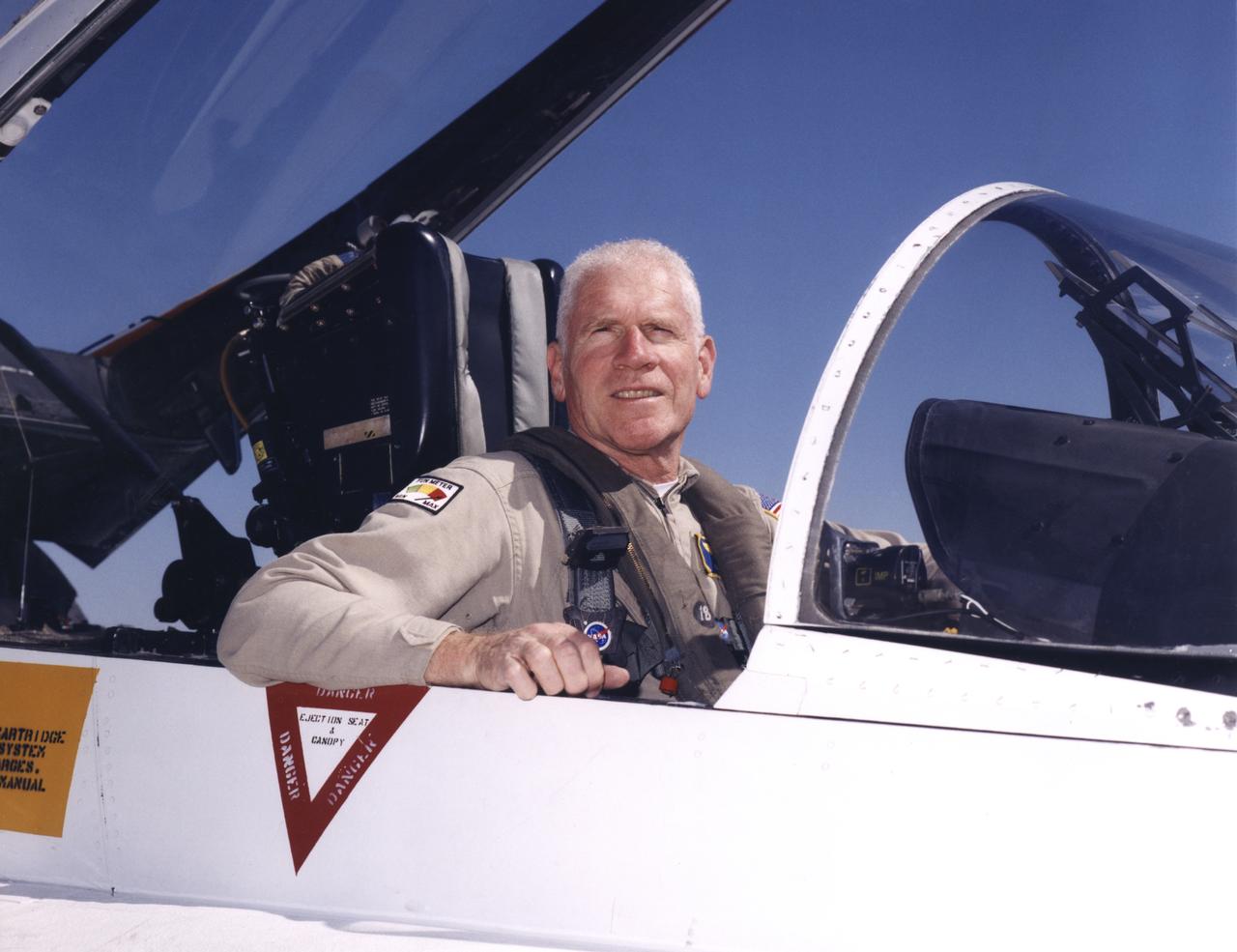
Edwin W. Lewis Jr. is a research pilot in the Airborne Science program, Flight Crew Branch, Dryden Flight Research Center, Edwards, California. He currently flies the DC-8, F/A-18, Lear Jet 24, King Air, and T-34C in support of Dryden's flight operations and is mentor pilot for the King Air and the Lear Jet. Prior to accepting this assignment Lewis was a pilot for eight years at NASA's Ames Research Center, Moffett Field, California, flying 10 different aircraft C-130B, DC-8-72, UH-1, SH-3, King Air, Lear 24, T-38A, T-39G and YO-3A in support of NASA flight missions. Lewis also flew the Kuiper Airborne Observatory (a modified civilian version of the Lockheed C-141 Starlifter). He was project pilot for Ames' 747 and T-38 programs. Lewis was born in New York City on May 19, 1936, and began flight training as a Civil Air Patrol cadet in 1951, ultimately earning his commercial pilot's certificate in 1958. He received a bachelor of arts degree in biology from Hobart College, Geneva, N.Y., and entered the U.S. Air Force through the Reserve Officer Training Corps. Following pilot training he was assigned to Moody Air Force Base, Ga., as an instructor pilot, for both the T-33 and T-37 aircraft. He served in Vietnam in 1965 and 1966, where he was a forward air controller, instructor and standardization/evaluation pilot, flying more than 1,000 hours in the O-1 "Bird Dog." Lewis separated from the regular Air Force and joined Pan American World Airways and the 129th Air Commando Group, California Air National Guard (ANG) based in Hayward, California. During his 18-year career with the California ANG he flew the U-6, U-10, C-119, HC-130 aircraft and the HH-3 helicopter. He retired as commander, 129th Air Rescue and Recovery Group, a composite combat rescue group, in the grade of colonel. During his 22 years as an airline pilot, he flew the Boeing 707, 727 and 747. He took early retirement from Pan American in 1989 to become a pilot with NASA.
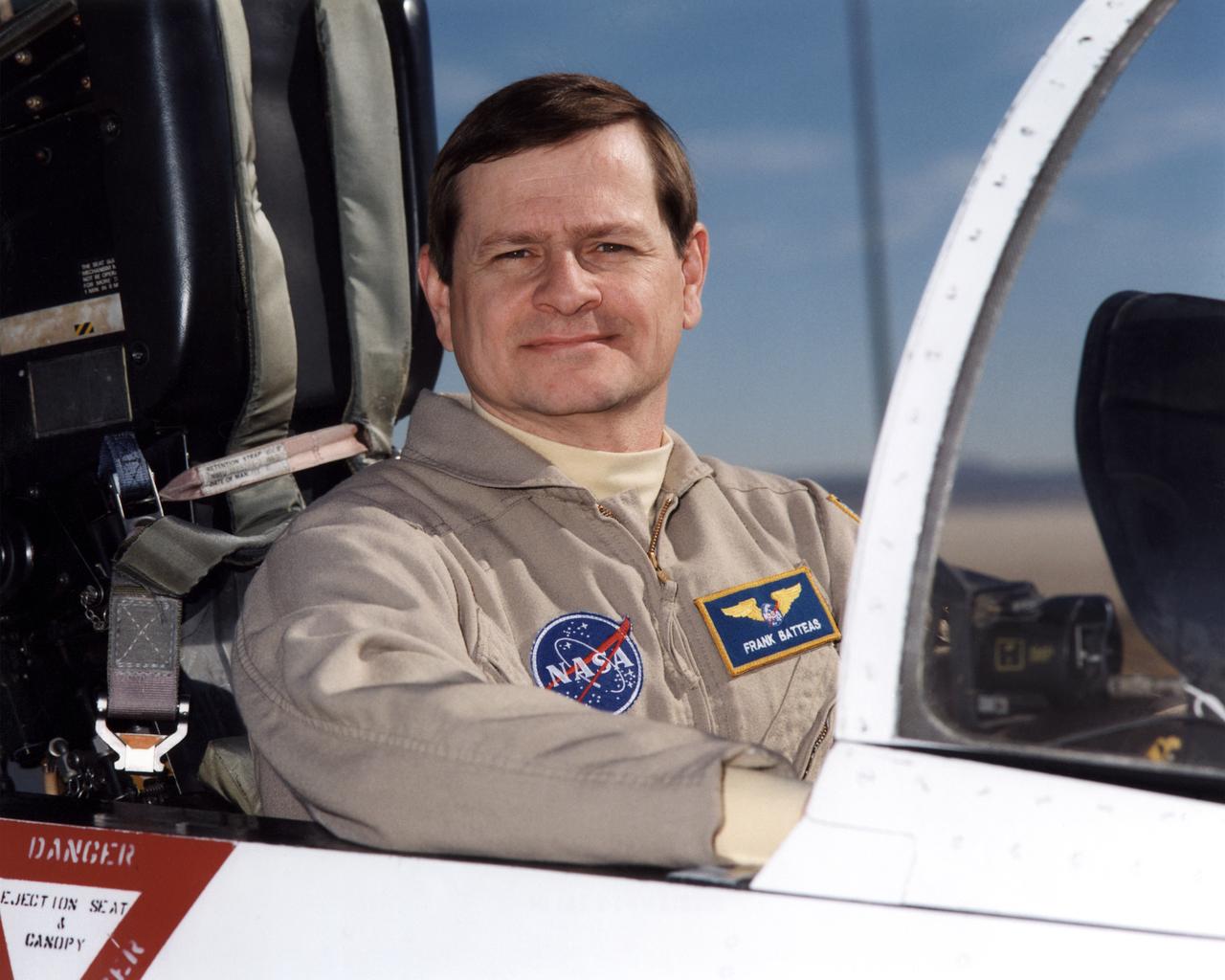
Frank Batteas is a research test pilot in the Flight Crew Branch of NASA's Dryden Flight Research Center, Edwards, California. He is currently a project pilot for the F/A-18 and C-17 flight research projects. In addition, his flying duties include operation of the DC-8 Flying Laboratory in the Airborne Science program, and piloting the B-52B launch aircraft, the King Air, and the T-34C support aircraft. Batteas has accumulated more than 4,700 hours of military and civilian flight experience in more than 40 different aircraft types. Batteas came to NASA Dryden in April 1998, following a career in the U.S. Air Force. His last assignment was at Wright-Patterson Air Force Base, Dayton, Ohio, where Lieutenant Colonel Batteas led the B-2 Systems Test and Evaluation efforts for a two-year period. Batteas graduated from Class 88A of the Air Force Test Pilot School, Edwards Air Force Base, California, in December 1988. He served more than five years as a test pilot for the Air Force's newest airlifter, the C-17, involved in nearly every phase of testing from flutter and high angle-of-attack tests to airdrop and air refueling envelope expansion. In the process, he achieved several C-17 firsts including the first day and night aerial refuelings, the first flight over the North Pole, and a payload-to-altitude world aviation record. As a KC-135 test pilot, he also was involved in aerial refueling certification tests on a number of other Air Force aircraft. Batteas received his commission as a second lieutenant in the U. S. Air Force through the Reserve Officer Training Corps and served initially as an engineer working on the Peacekeeper and Minuteman missile programs at the Ballistic Missile Office, Norton Air Force Base, Calif. After attending pilot training at Williams Air Force Base, Phoenix, Ariz., he flew operational flights in the KC-135 tanker aircraft and then was assigned to research flying at the 4950th Test Wing, Wright-Patterson. He flew extensively modified C-135
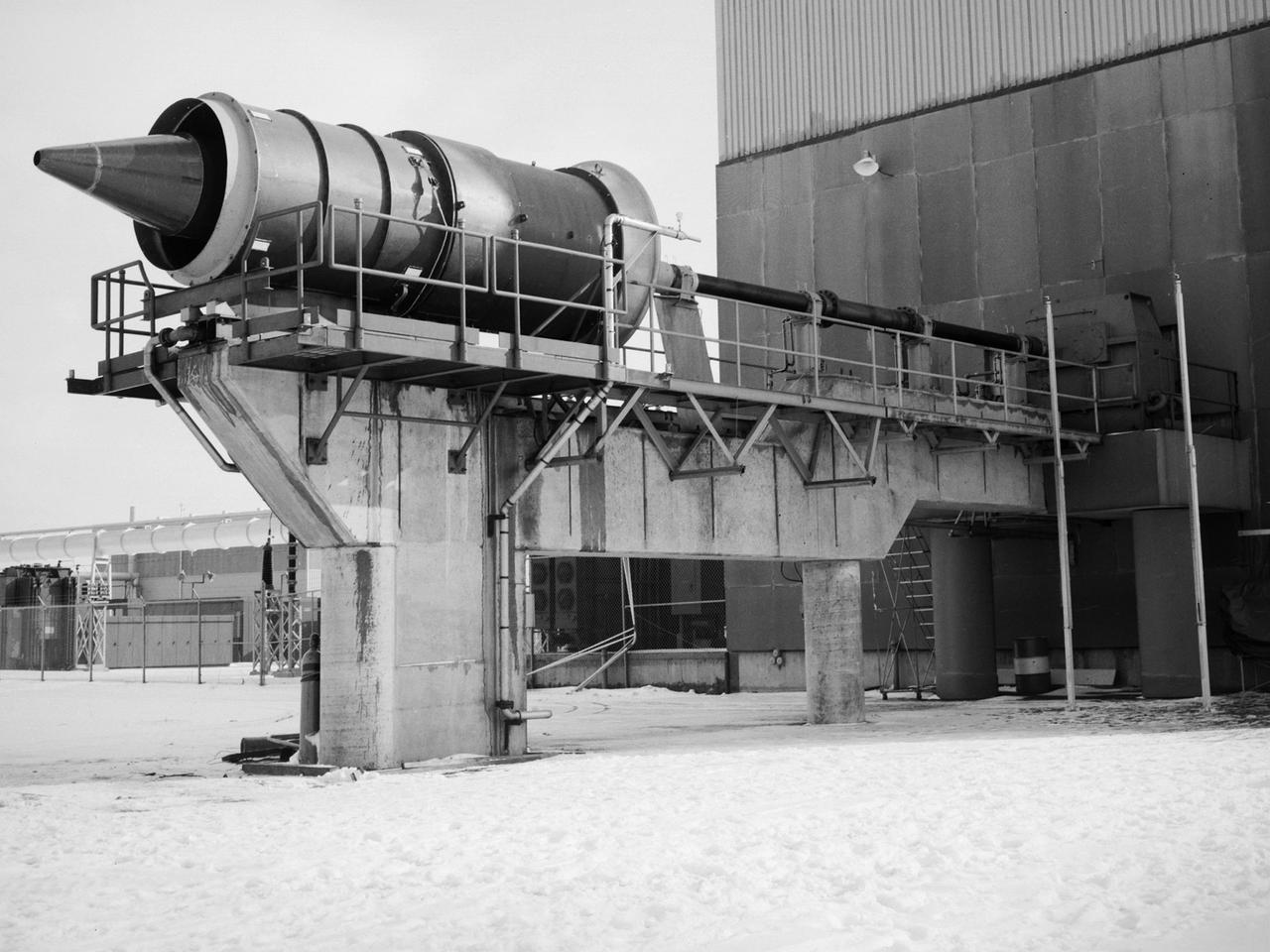
The Fan Noise Test Facility built at the Lewis Research Center to obtain far-field noise data for the National Aeronautics and Space Administration (NASA) and General Electric Quiet Engine Program. The engine incorporated existing noise reduction methods into an engine of similar power to those that propelled the Boeing 707 or McDonnell-Douglas DC-8 airliner. The new the low-bypass ratio turbofan engines of the 1960s were inherently quieter than their turbojet counterparts, researchers had a better grasp of the noise generation problem, and new acoustic technologies had emerged. Lewis contracted General Electric in 1969 to build and aerodynamically test three experimental engines with 72-inch diameter fans. The engines were then brought to Lewis and tested with an acoustically treated nacelle. This Fan Noise Test Facility was built off of the 10- by 10-Foot Supersonic Wind Tunnel’s Main Compressor and Drive Building. Lewis researchers were able to isolate the fan’s noise during these initial tests by removing the core of the engine. The Lewis test rig drove engines to takeoff tip speeds of 1160 feet per second. The facility was later used to test a series of full-scale model fans and fan noise suppressors to be used with the quiet engine. NASA researchers predicted low-speed single-stage fans without inlet guide vanes and with large spacing between rotors and stators would be quieter. General Electric modified a TF39 turbofan engine by removing the the outer protion of the fan and spacing the blade rows of the inner portion. The tests revealed that the untreated version of the engine generated less noise than was anticipated, and the acoustically treated nacelle substantially reduced engine noise.
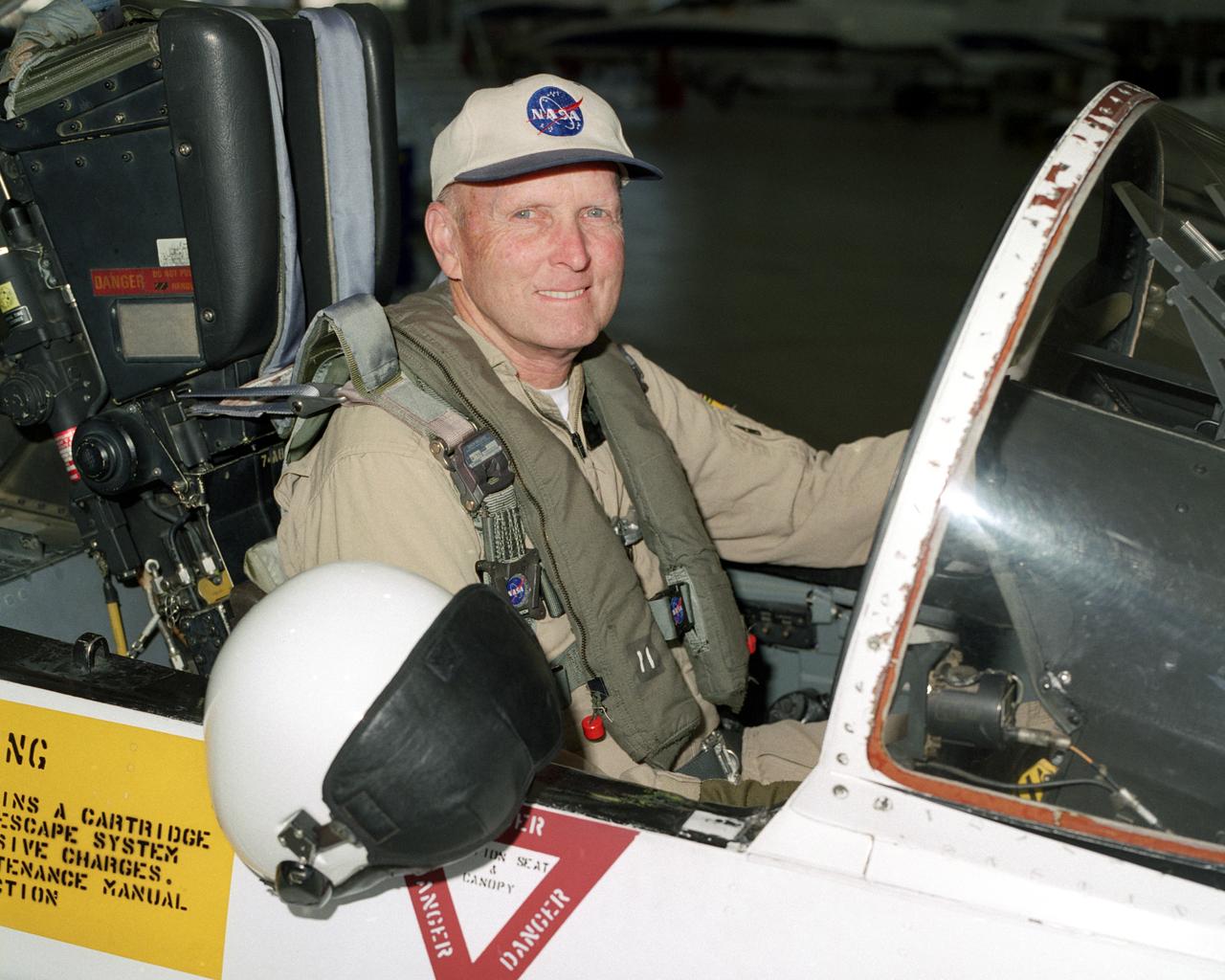
Former NASA astronaut C. Gordon Fullerton, seated in the cockpit of an F/A-18, is a research pilot at NASA's Dryden Flight Research Center, Edwards, Calif. Since transferring to Dryden in 1986, his assignments have included a variety of flight research and support activities piloting NASA's B-52 launch aircraft, the 747 Shuttle Carrier Aircraft (SCA), and other multi-engine and high performance aircraft. He flew a series of development air launches of the X-38 prototype Crew Return Vehicle and in the launches for the X-43A Hyper-X project. Fullerton also flies Dryden's DC-8 Airborne Science aircraft in support a variety of atmospheric physics, ground mapping and meteorology studies. Fullerton also was project pilot on the Propulsion Controlled Aircraft program, during which he successfully landed both a modified F-15 and an MD-11 transport with all control surfaces neutralized, using only engine thrust modulation for control. Fullerton also evaluated the flying qualities of the Russian Tu-144 supersonic transport during two flights in 1998, one of only two non-Russian pilots to fly that aircraft. With more than 15,000 hours of flying time, Fullerton has piloted 135 different types of aircraft in his career. As an astronaut, Fullerton served on the support crews for the Apollo 14, 15, 16, and 17 lunar missions. In 1977, Fullerton was on one of the two flight crews that piloted the Space Shuttle prototype Enterprise during the Approach and Landing Test Program at Dryden. Fullerton was the pilot on the STS-3 Space Shuttle orbital flight test mission in 1982, and commanded the STS-51F Spacelab 2 mission in 1985. He has logged 382 hours in space flight. In July 1988, he completed a 30-year career with the U.S. Air Force and retired as a colonel.