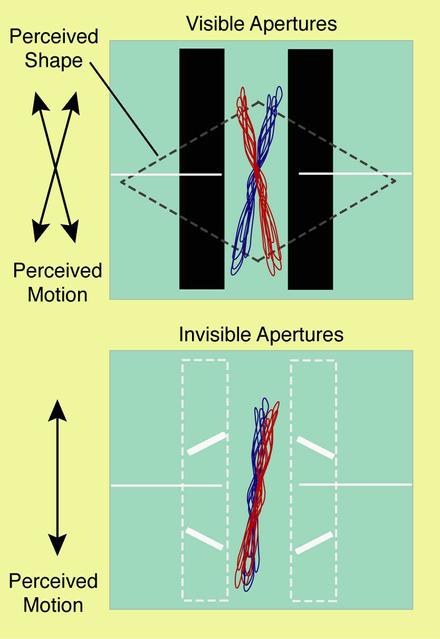
One concern about human adaptation to space is how returning from the microgravity of orbit to Earth can affect an astronaut's ability to fly safely. There are monitors and infrared video cameras to measure eye movements without having to affect the crew member. A computer screen provides moving images which the eye tracks while the brain determines what it is seeing. A video camera records movement of the subject's eyes. Researchers can then correlate perception and response. Test subjects perceive different images when a moving object is covered by a mask that is visible or invisible (above). Early results challenge the accepted theory that smooth pursuit -- the fluid eye movement that humans and primates have -- does not involve the higher brain. NASA results show that: Eye movement can predict human perceptual performance, smooth pursuit and saccadic (quick or ballistic) movement share some signal pathways, and common factors can make both smooth pursuit and visual perception produce errors in motor responses.
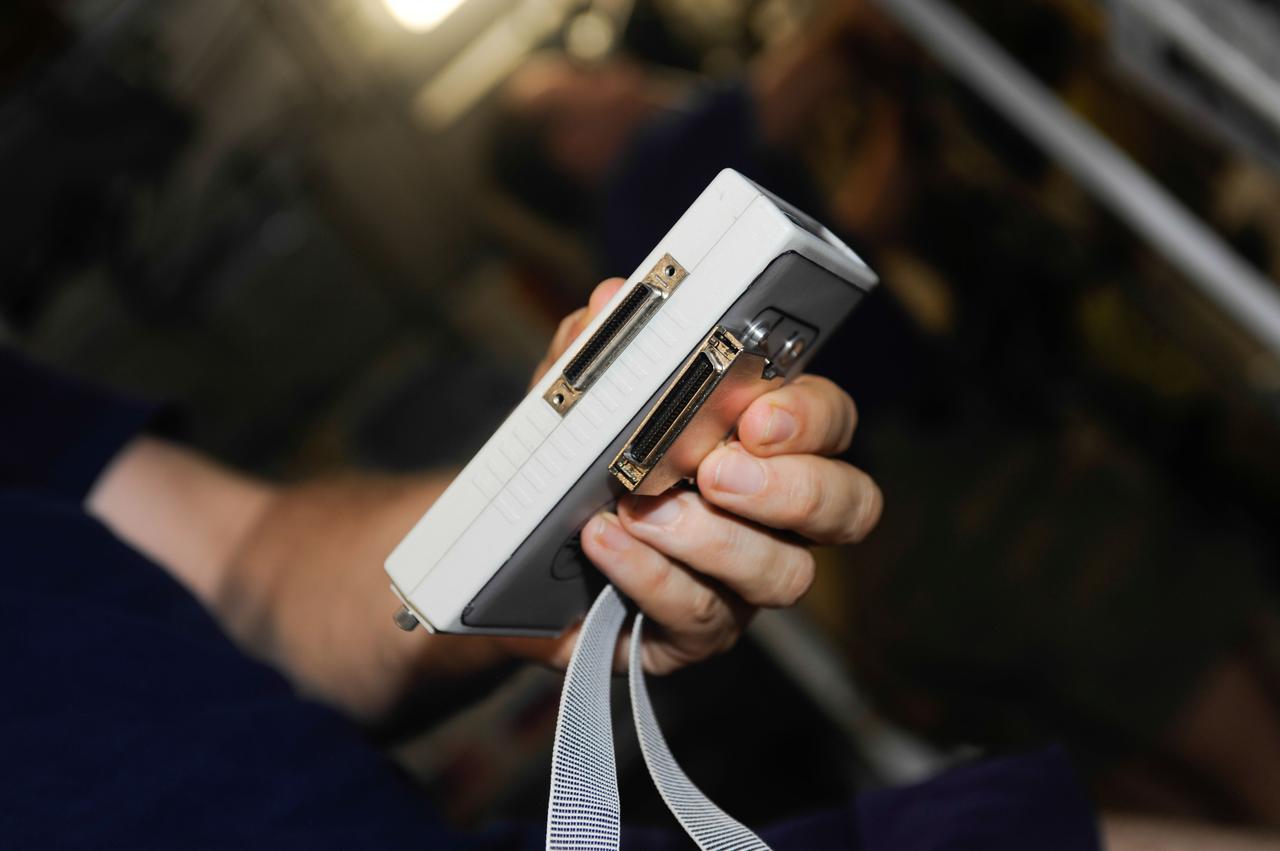
iss038e003689 (11/19/2013) --- A close-up view of the Motocard hardware. The Mechanisms of Sensory-Motor Coordination in Weightlessness (Motocard) investigation is carried out on the treadmill and involves locomotion in various modes of running and walking during various modes of operation of the treadmill. During the test, electromyography of the thigh and calf muscles, support structure response, heart rate, and treadmill load parameters (actual speed, time elapsed, distance, integrated indicators for support structure response) are recorded.
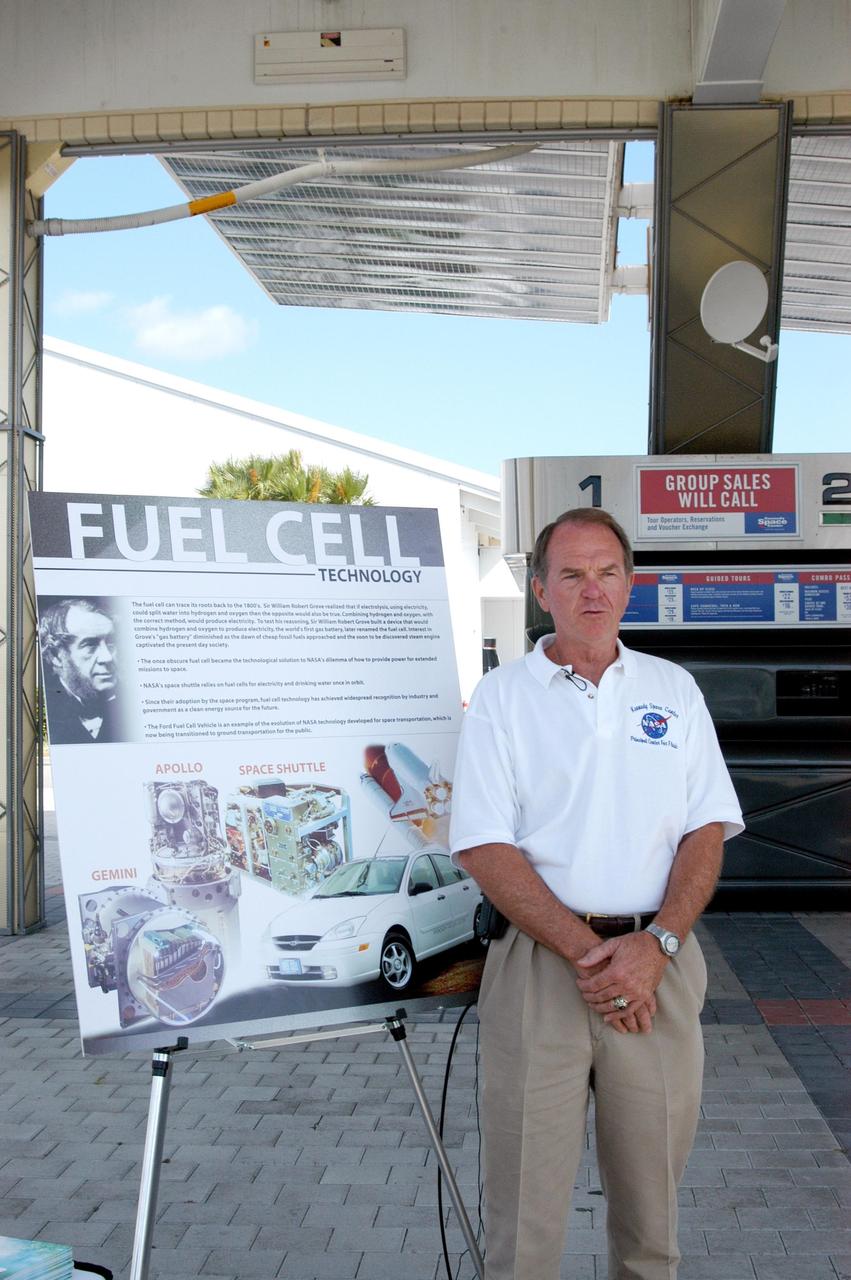
KENNEDY SPACE CENTER, FLA. - Herman Everett explains the use of hydrogen in a fuel cell vehicle during an exhibit by the Ford Motor Company of their modified Ford Focus. The exhibit was a response to inquiries about fuel cell vehicles during KSC’s Environmental and Energy Awareness week in April 2004.
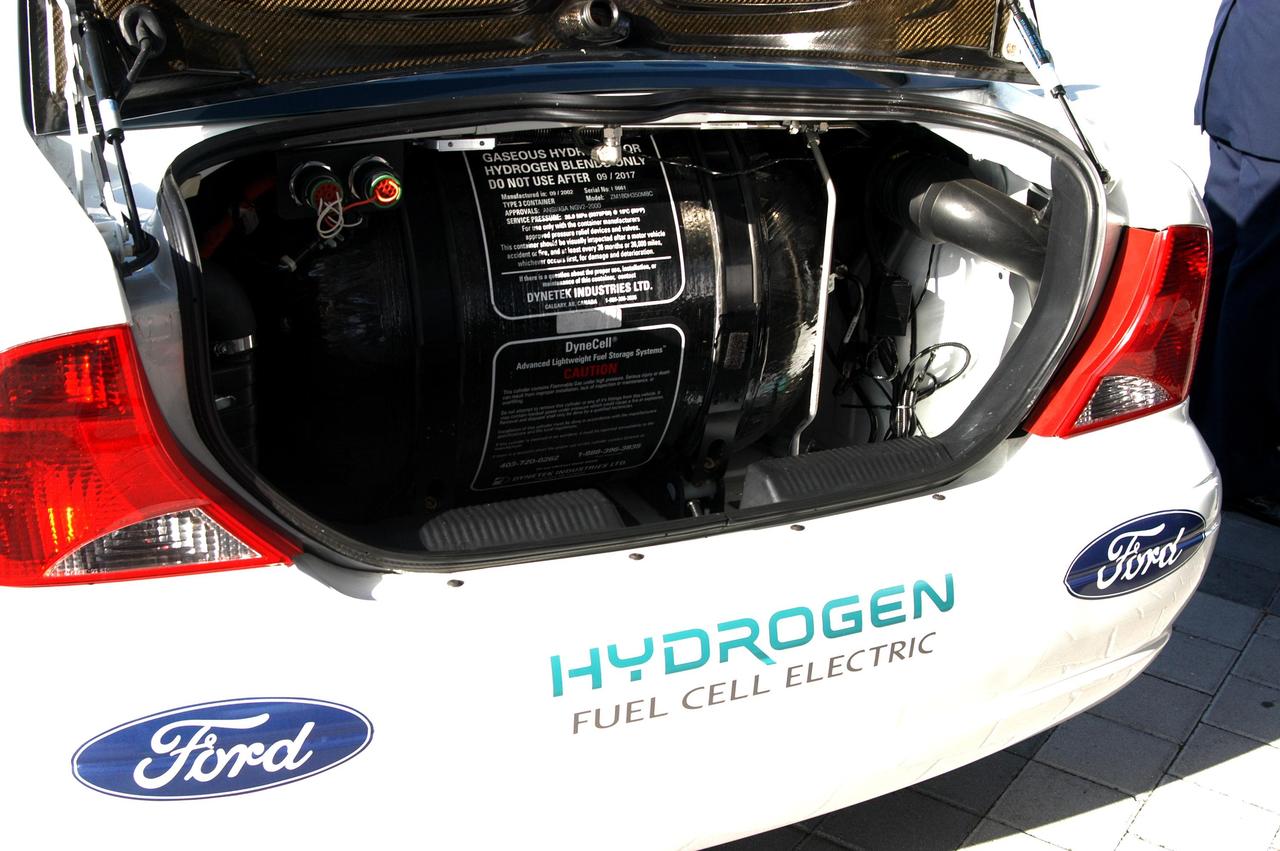
KENNEDY SPACE CENTER, FLA. - On display at KSC’s Visitor Complex is the Ford Motor Company’s hydrogen fuel cell vehicle, a modified Ford Focus. The exhibit was a response to inquiries about fuel cell vehicles during KSC’s Environmental and Energy Awareness week in April 2004.
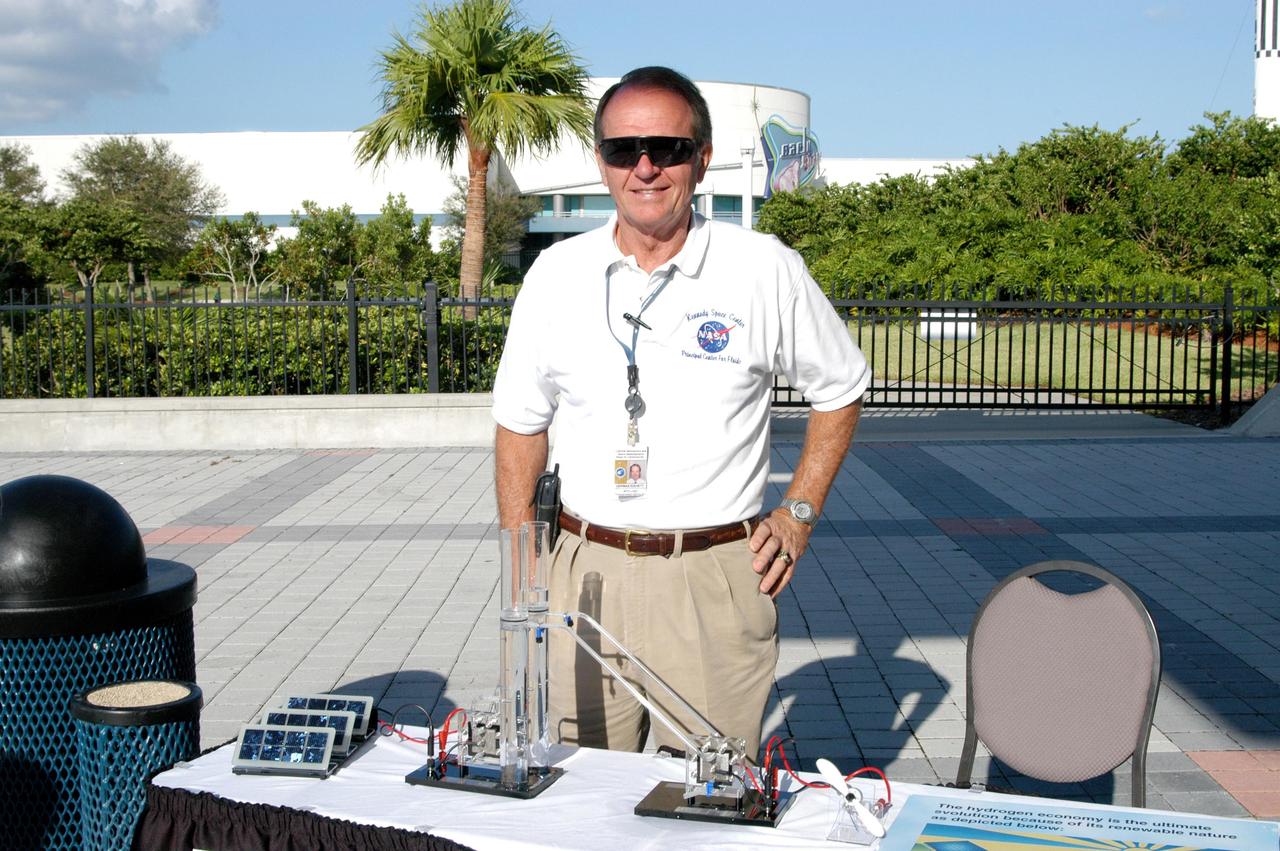
KENNEDY SPACE CENTER, FLA. - Herman Everett is ready to explain the use of hydrogen in a fuel cell vehicle during an exhibit by the Ford Motor Company of their modified Ford Focus. The exhibit was a response to inquiries about fuel cell vehicles during KSC’s Environmental and Energy Awareness week in April 2004.
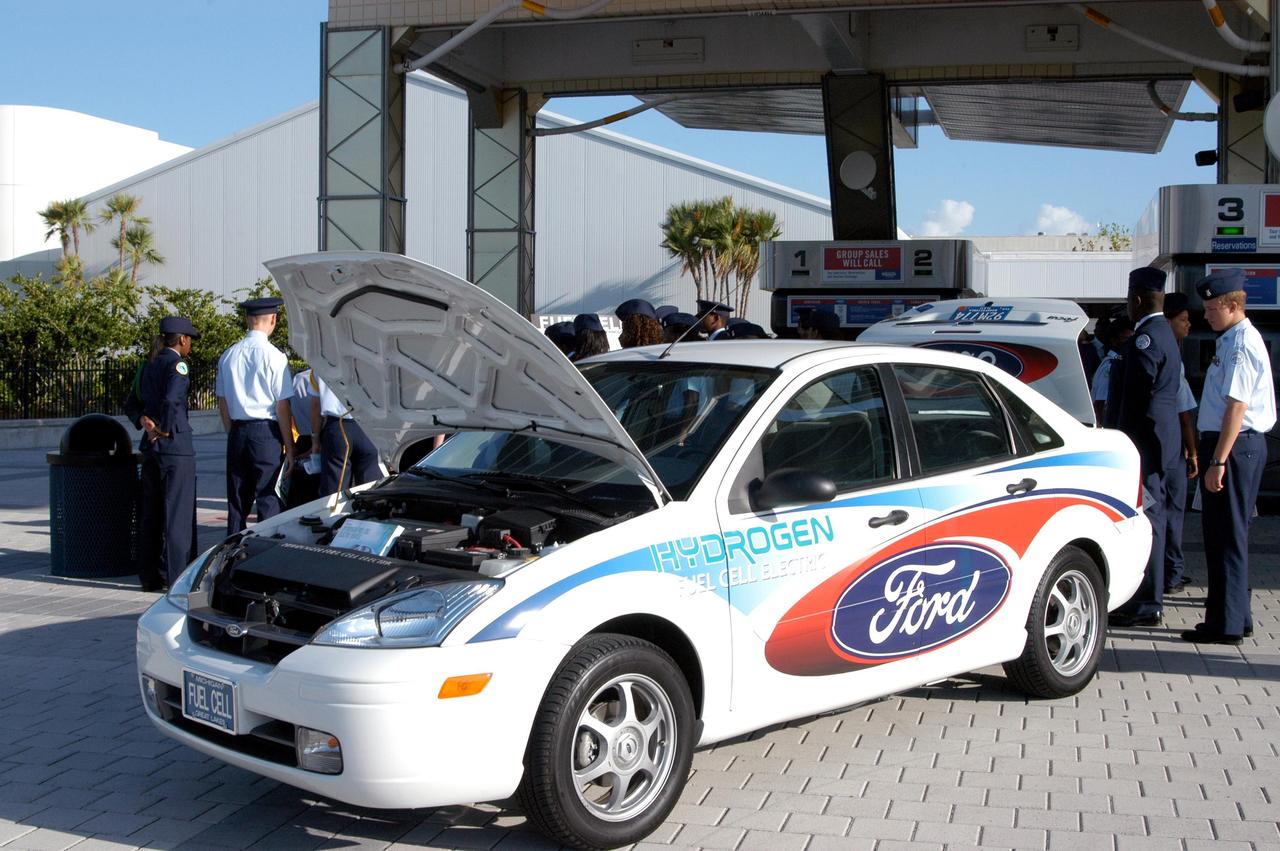
KENNEDY SPACE CENTER, FLA. - On display at KSC’s Visitor Complex is the Ford Motor Company’s hydrogen fuel cell vehicle, a modified Ford Focus. The exhibit was a response to inquiries about fuel cell vehicles during KSC’s Environmental and Energy Awareness week in April 2004.
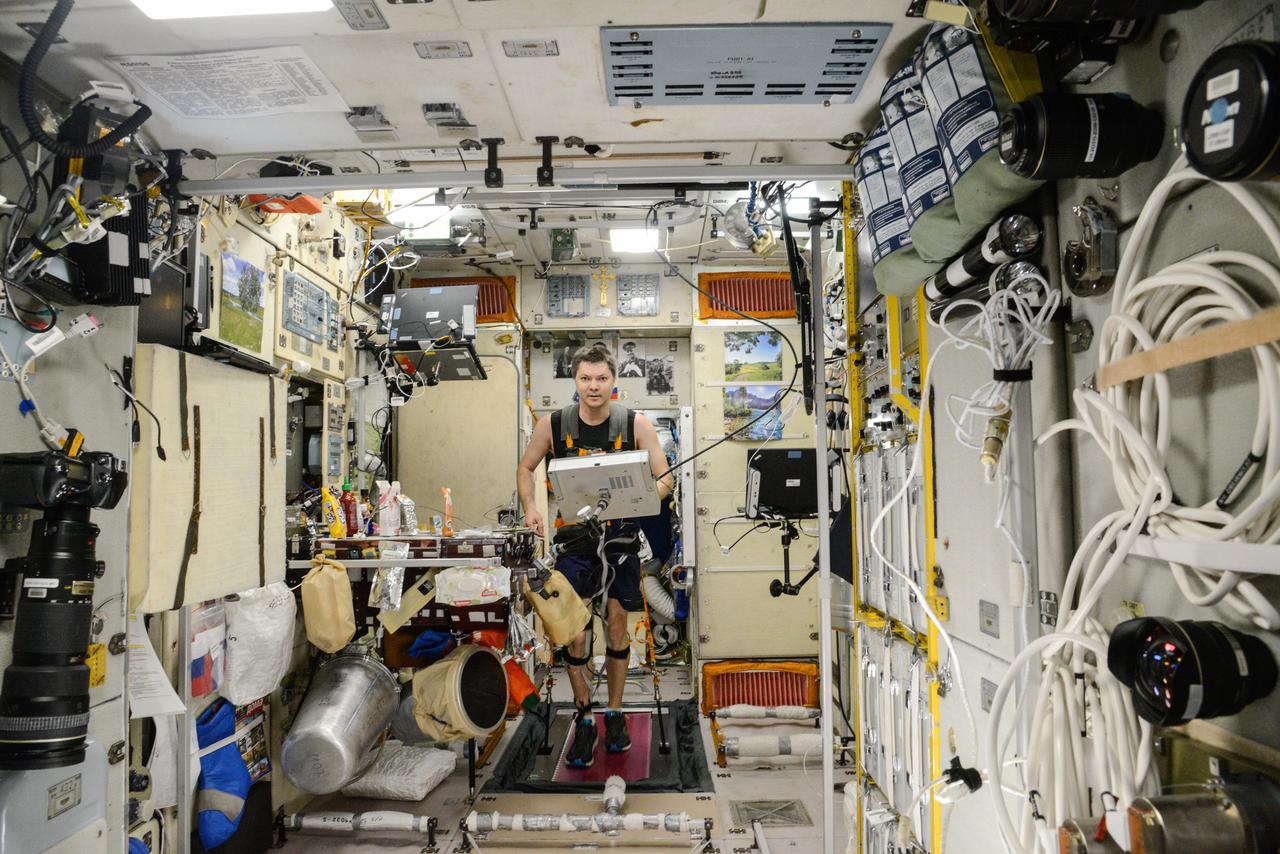
iss045e082560 (10/28/2015) --- Roscosmos cosmonaut Oleg Kononenko, wearing a harness and electrodes, is photographed during Motocard experiment operations in the Zvezda Service Module (SM) aboard the International Space Station (ISS). The Mechanisms of Sensory-Motor Coordination in Weightlessness (Motocard) investigation is carried out on the treadmill and involves locomotion in various modes of running and walking during various modes of operation of the treadmill. During the test, electromyography of the thigh and calf muscles, support structure response, heart rate, and treadmill load parameters (actual speed, time elapsed, distance, integrated indicators for support structure response) are recorded.
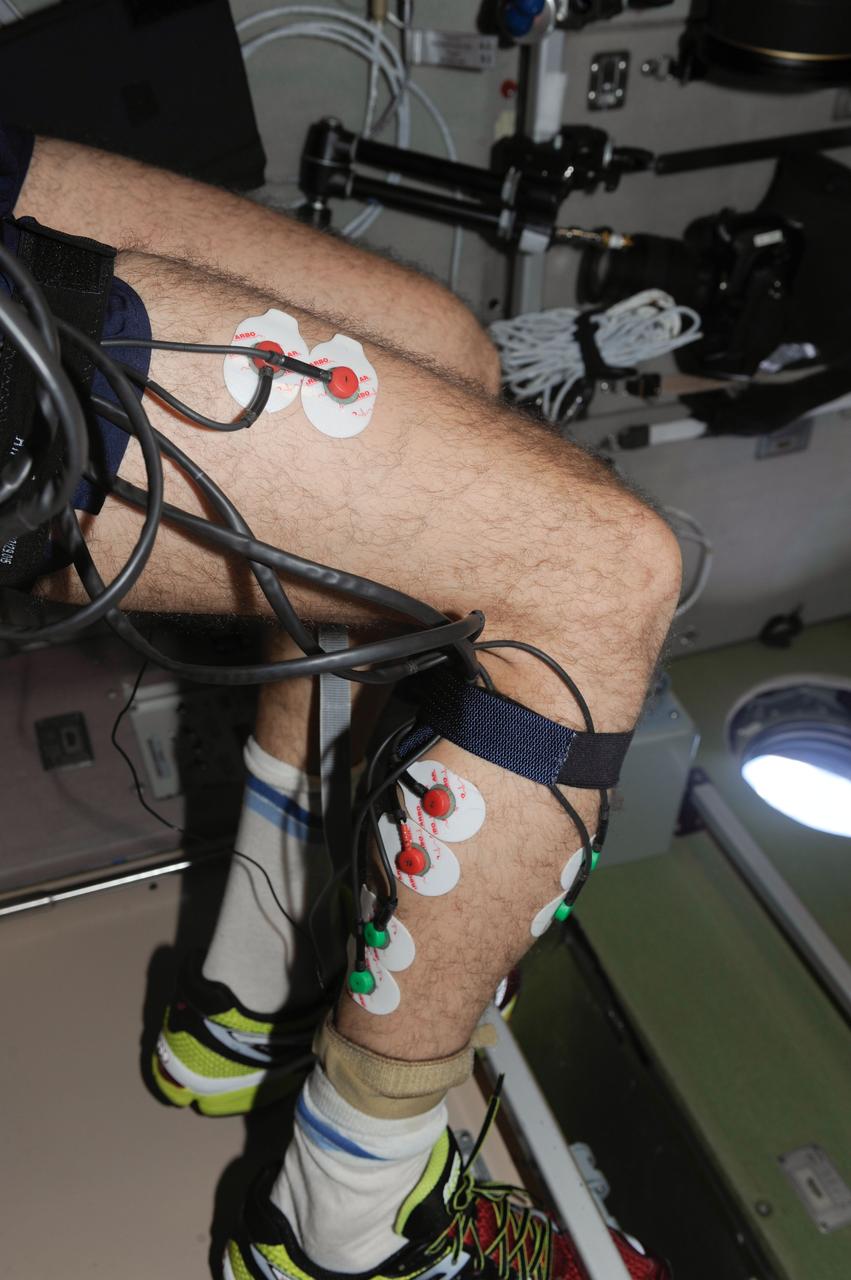
iss038e003641 (11/18/2014) --- A View of Cosmonaut Sergey Ryaznskiy (lower body only), setting up the Motocard experiment in the Service Module (SM) aboard the International Space Station (ISS). The Mechanisms of Sensory-Motor Coordination in Weightlessness (Motocard) investigation is carried out on the treadmill and involves locomotion in various modes of running and walking during various modes of operation of the treadmill. During the test, electromyography of the thigh and calf muscles, support structure response, heart rate, and treadmill load parameters (actual speed, time elapsed, distance, integrated indicators for support structure response) are recorded.
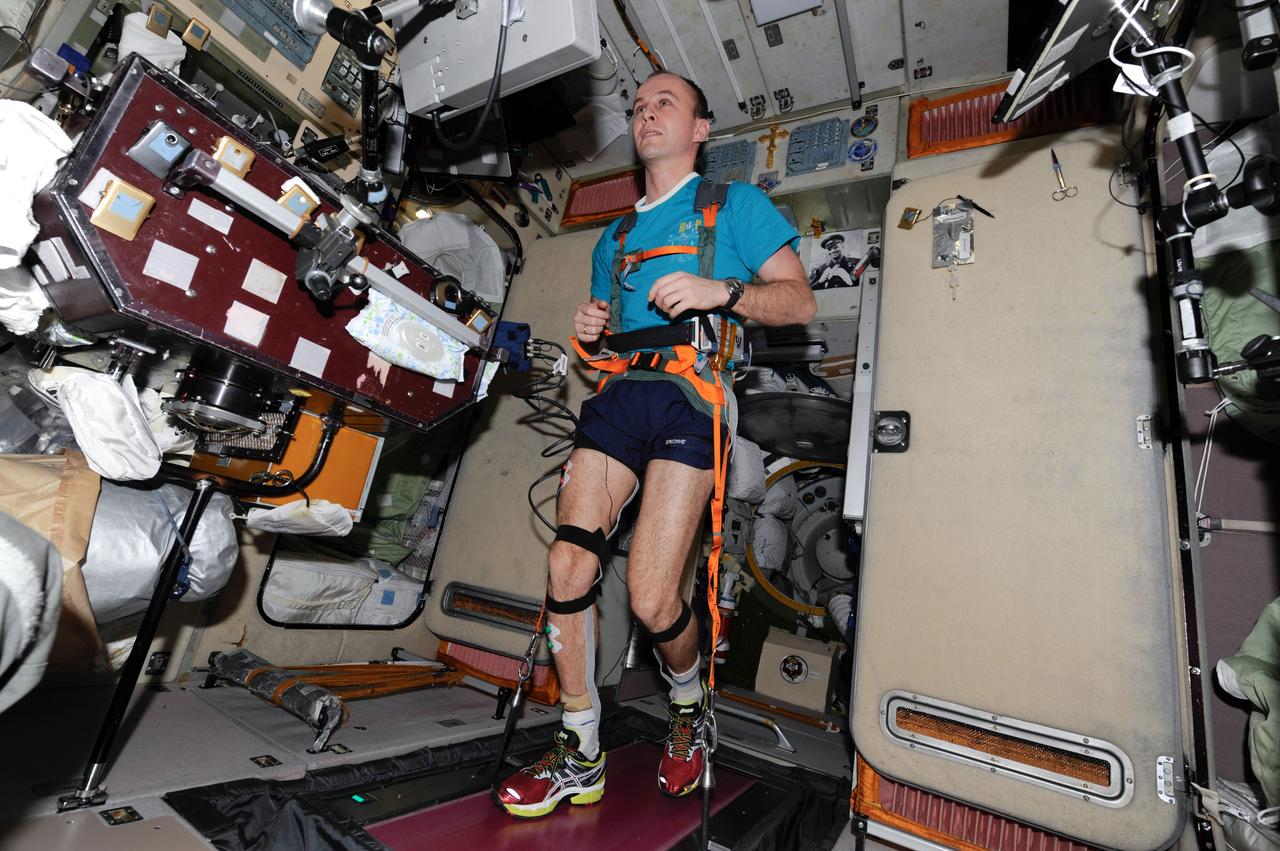
ISS038-E-003646 (18 Nov. 2013) --- Russian cosmonaut Sergey Ryazanskiy, wearing a harness and electrodes, is photographed during Motocard experiment operations in the Zvezda Service Module (SM) aboard the International Space Station (ISS). The Mechanisms of Sensory-Motor Coordination in Weightlessness (Motocard) investigation is carried out on the treadmill and involves locomotion in various modes of running and walking during various modes of operation of the treadmill. During the test, electromyography of the thigh and calf muscles, support structure response, heart rate, and treadmill load parameters (actual speed, time elapsed, distance, integrated indicators for support structure response) are recorded.
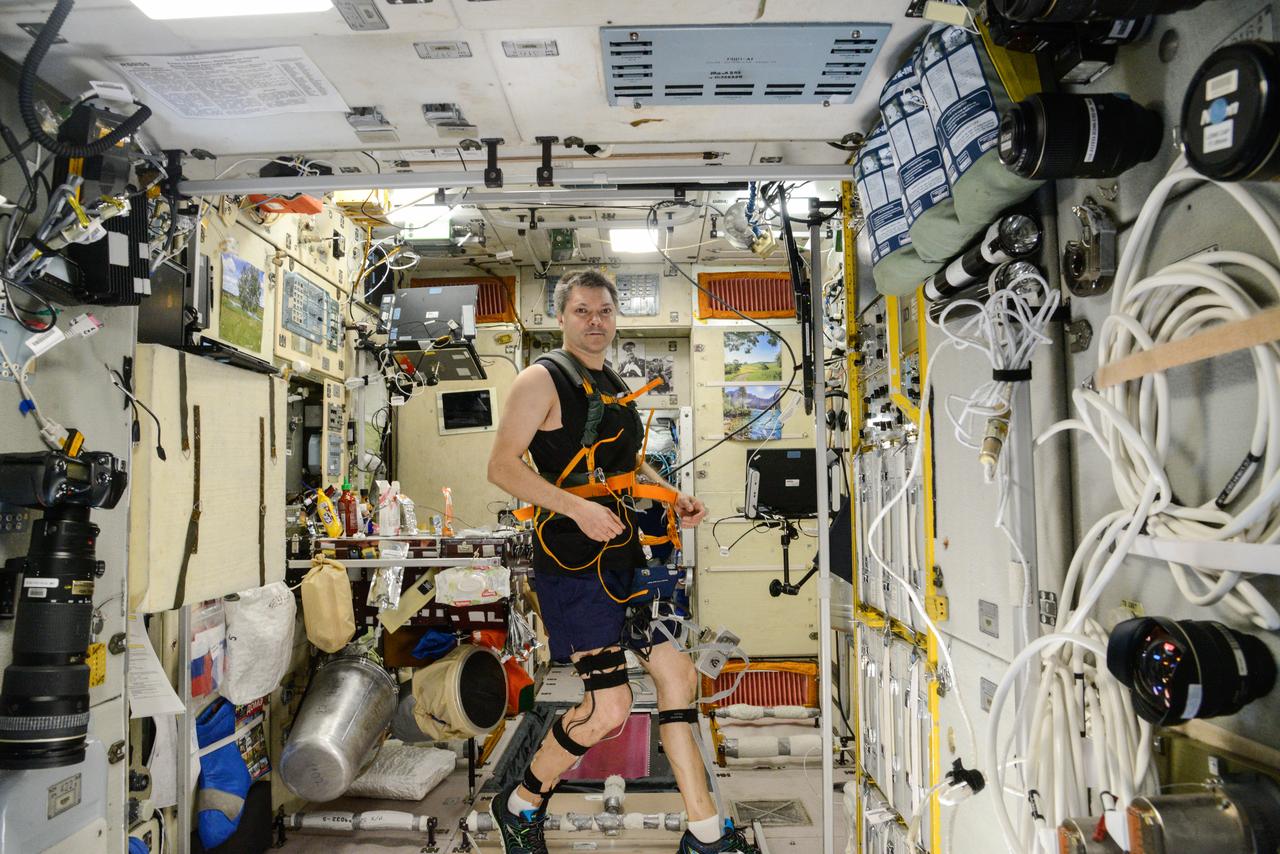
iss045e082558 (10/28/2015) --- Roscosmos cosmonaut Oleg Kononenko, wearing a harness and electrodes, is photographed during Motocard experiment operations in the Zvezda Service Module (SM) aboard the International Space Station (ISS). The Mechanisms of Sensory-Motor Coordination in Weightlessness (Motocard) investigation is carried out on the treadmill and involves locomotion in various modes of running and walking during various modes of operation of the treadmill. During the test, electromyography of the thigh and calf muscles, support structure response, heart rate, and treadmill load parameters (actual speed, time elapsed, distance, integrated indicators for support structure response) are recorded.
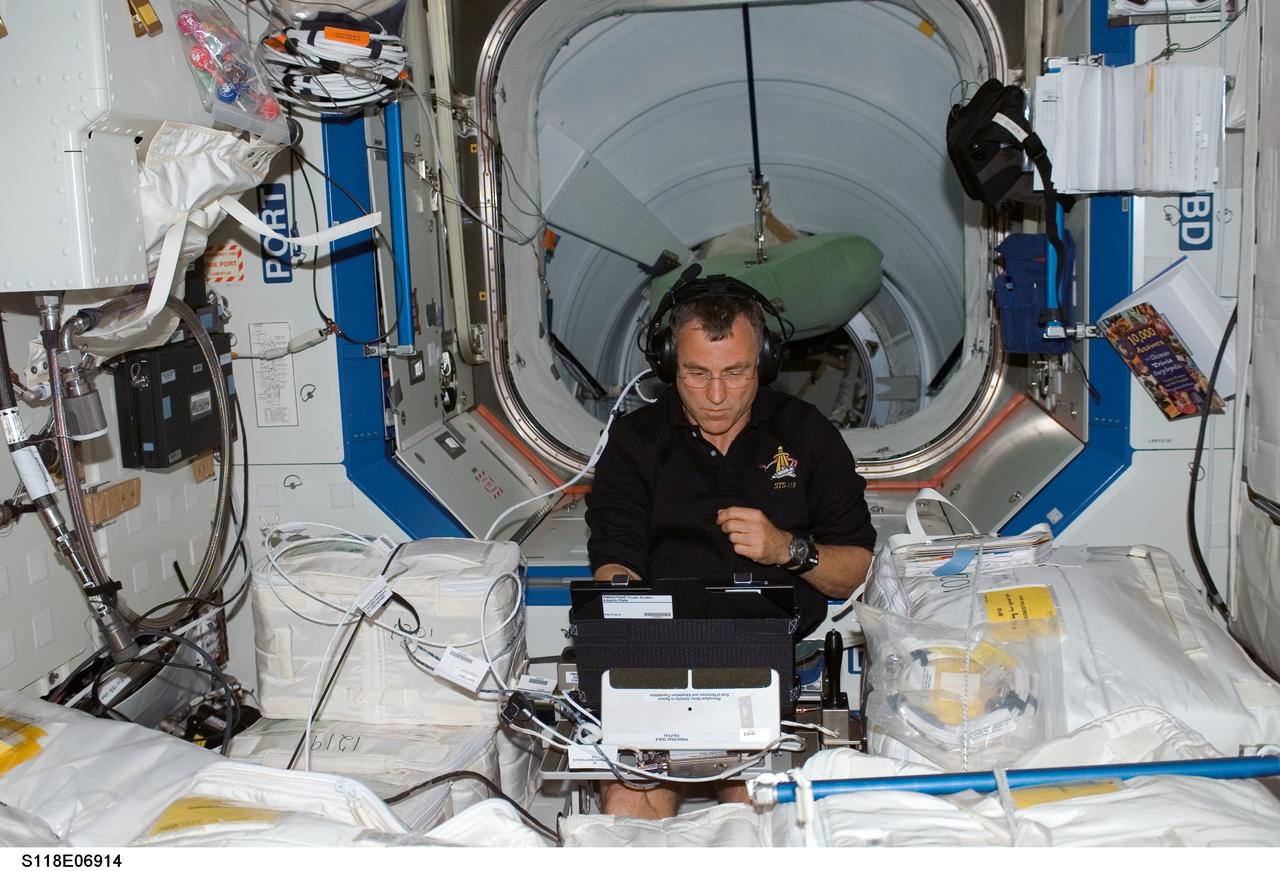
S118-E-06914 (12 Aug. 2007) --- Astronaut Dave Williams, STS-118 mission specialist representing the Canadian Space Agency, works with the Perceptual Motor Deficits in Space (PMDIS) experiment in the Destiny laboratory of the International Space Station. The PMDIS experiment will measure the decline in hand-eye coordination of shuttle astronauts while on orbit. These measurements will be used to evaluate various mechanisms thought to be responsible for the decline.
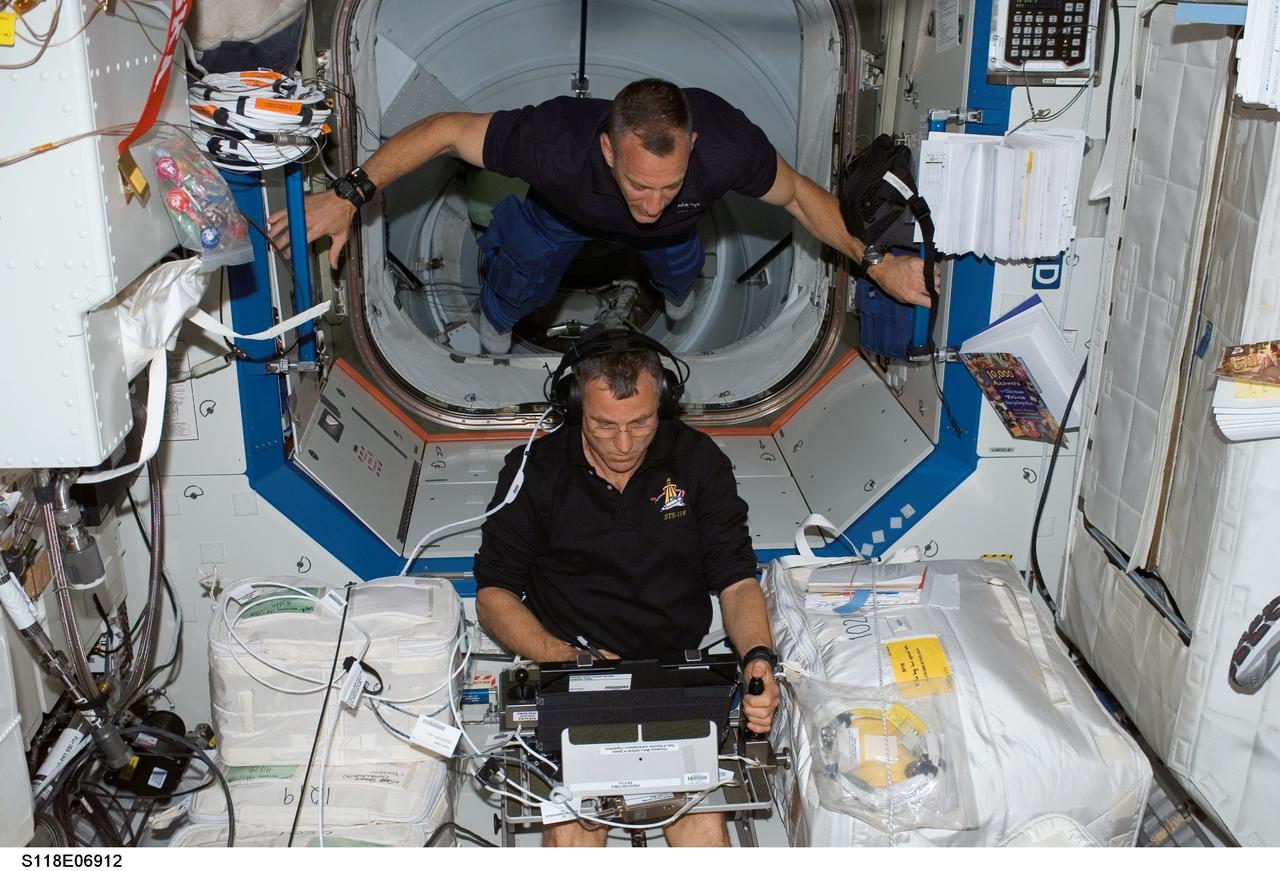
S118-E-06912 (12 Aug. 2007) --- Astronaut Dave Williams, STS-118 mission specialist representing the Canadian Space Agency, works with the Perceptual Motor Deficits in Space (PMDIS) experiment in the Destiny laboratory of the International Space Station. The PMDIS experiment will measure the decline in hand-eye coordination of shuttle astronauts while on orbit. These measurements will be used to evaluate various mechanisms thought to be responsible for the decline. Astronaut Charlie Hobaugh, pilot, looks on as he floats above Williams.
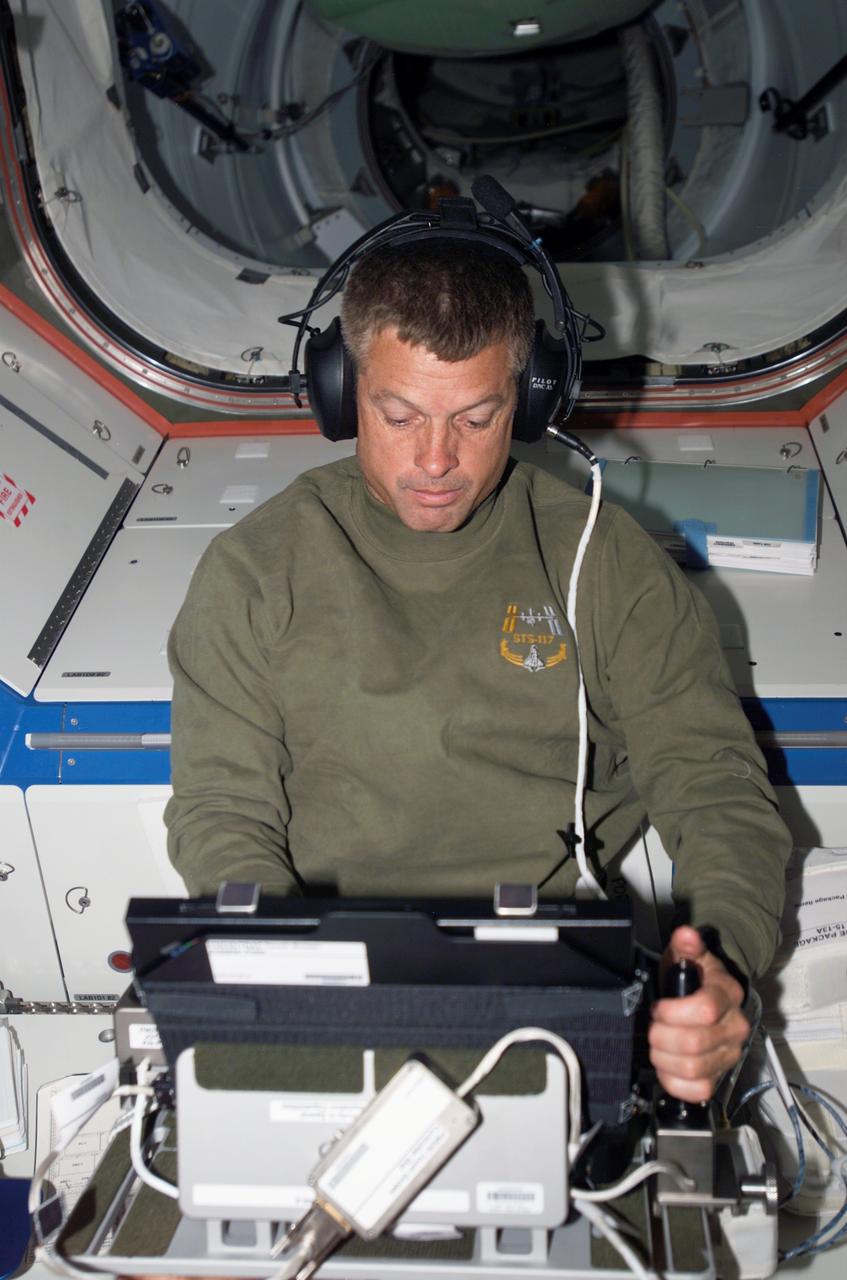
ISS015-E-11968 (12 June 2007) --- Astronaut Steven Swanson, STS-117 mission specialist, works with the Perceptual Motor Deficits in Space (PMDIS) experiment in the Destiny laboratory of the International Space Station. The PMDIS experiment will measure the decline in hand-eye coordination of shuttle astronauts while on orbit. These measurements will be used to evaluate various mechanisms thought to be responsible for the decline.
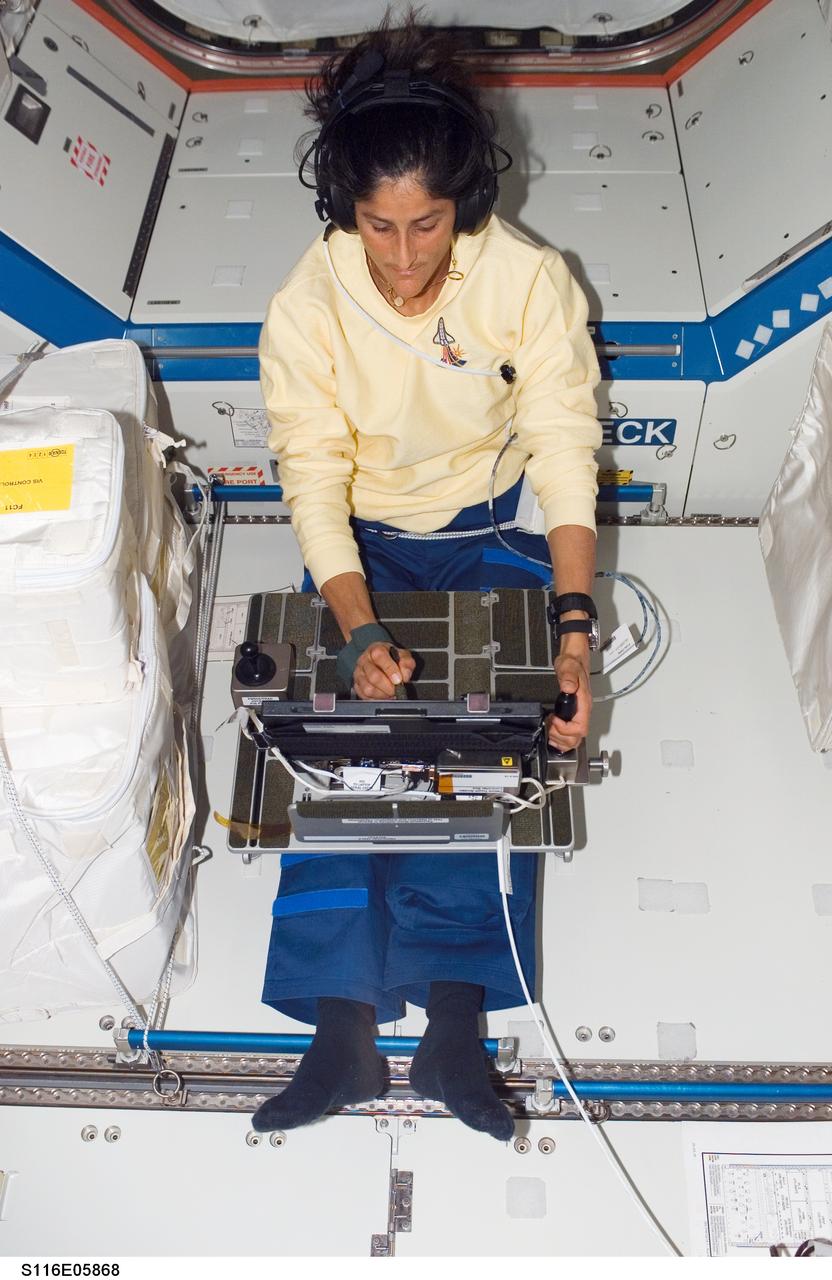
S116-E-05868 (12 Dec. 2006) --- Astronaut Sunita L. Williams, Expedition 14 flight engineer, works with the Perceptual Motor Deficits in Space (PMDIS) experiment in the Destiny laboratory of the International Space Station. The PMDIS experiment will measure the decline in hand-eye coordination of shuttle astronauts while on orbit. These measurements will be used to evaluate various mechanisms thought to be responsible for the decline.
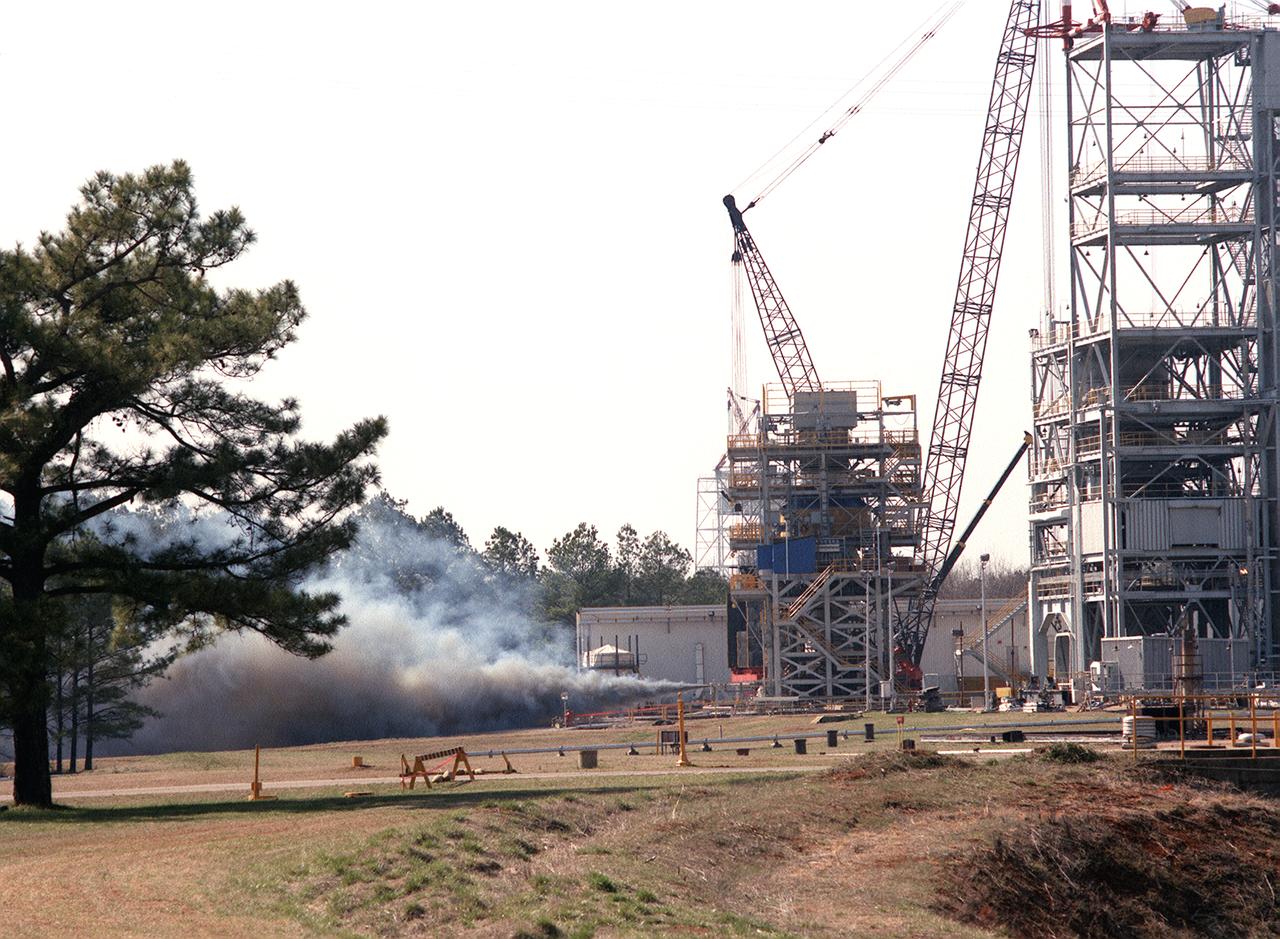
The Marshall Space Flight Center (MSFC) successfully test fired the third in a series of Transient Pressure Test Articles (TPTA) in its east test area. The test article was a short-stack solid rocket motor 52-feet long and 12-feet in diameter. The TPTA tests were designed to evaluate the effects of temperature, pressure and external loads encountered by the SRM, primarily during ignition transients. Instrumentation on the motor recorded approximately 1,000 charnels of data to verify the structural performance, thermal response, sealing capability of the redesign field, and case-to-nozzle joints. The TPTA test stand, 14-feet wide by 26-feet long by 33-feet high, was built in 1987. The TPTA series was a joint effort among Morton Thiokol, Inc., United Space Boosters, Inc., Wyle Laboratories, and MSFC. Wyle Laboratories conducted the tests for the MSFC, which manages the redesigned SRM program for NASA.
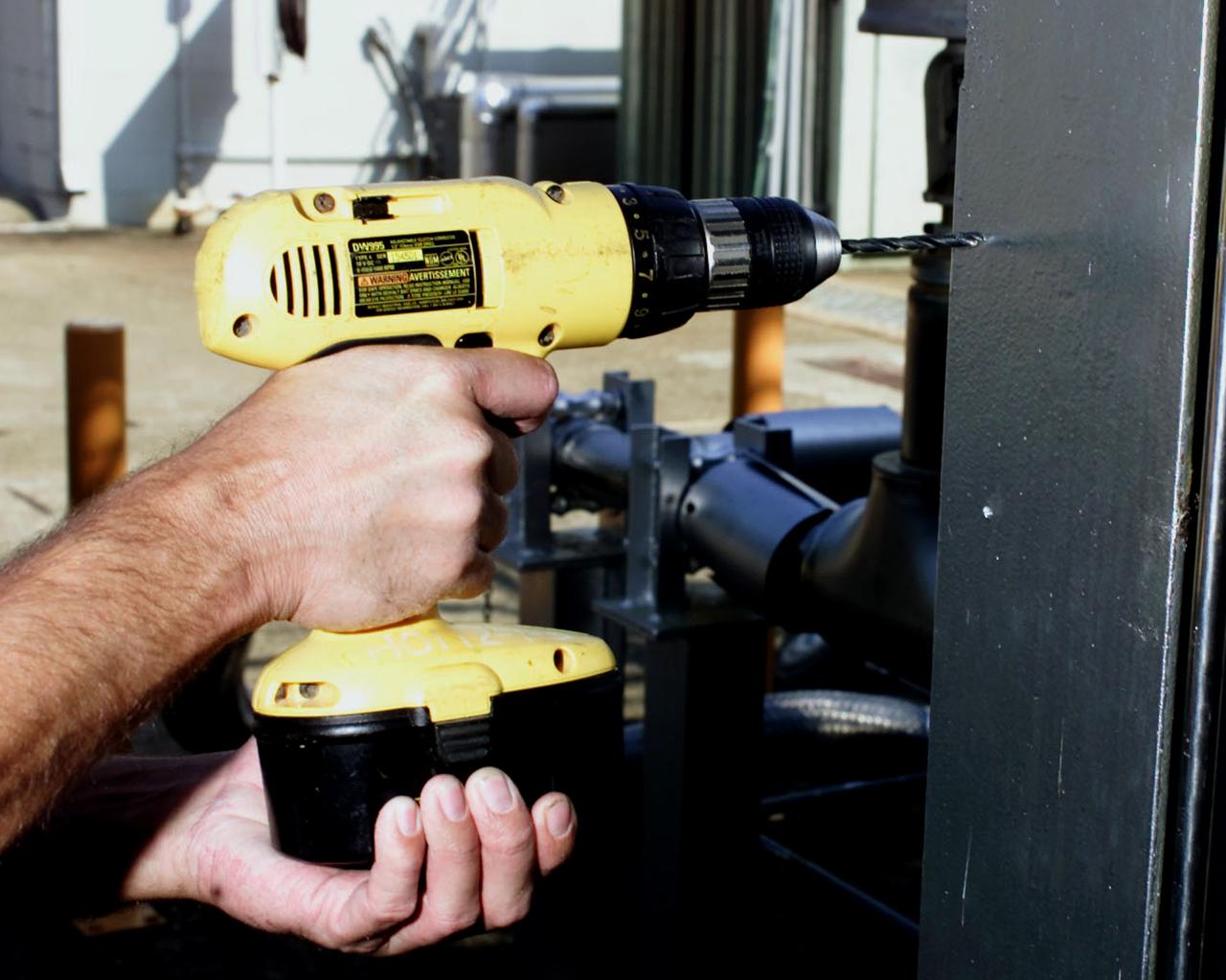
Apollo-era technology spurred the development of cordless products that we take for granted everyday. In the 1960s, NASA asked Black Decker to develop a special drill that would be powerful enough to cut through hard layers of the lunar surface and be lightweight, compact, and operate under its own power source, allowing Apollo astronauts to collect lunar samples further away from the Lunar Experiment Module. In response, Black Decker developed a computer program that analyzed and optimized drill motor operations. From their analysis, engineers were able to design a motor that was powerful yet required minimal battery power to operate. Since those first days of cordless products, Black Decker has continued to refine this technology and they now sell their rechargeable products worldwide (i.e. the Dustbuster, cordless tools for home and industrial use, and medical tools.)
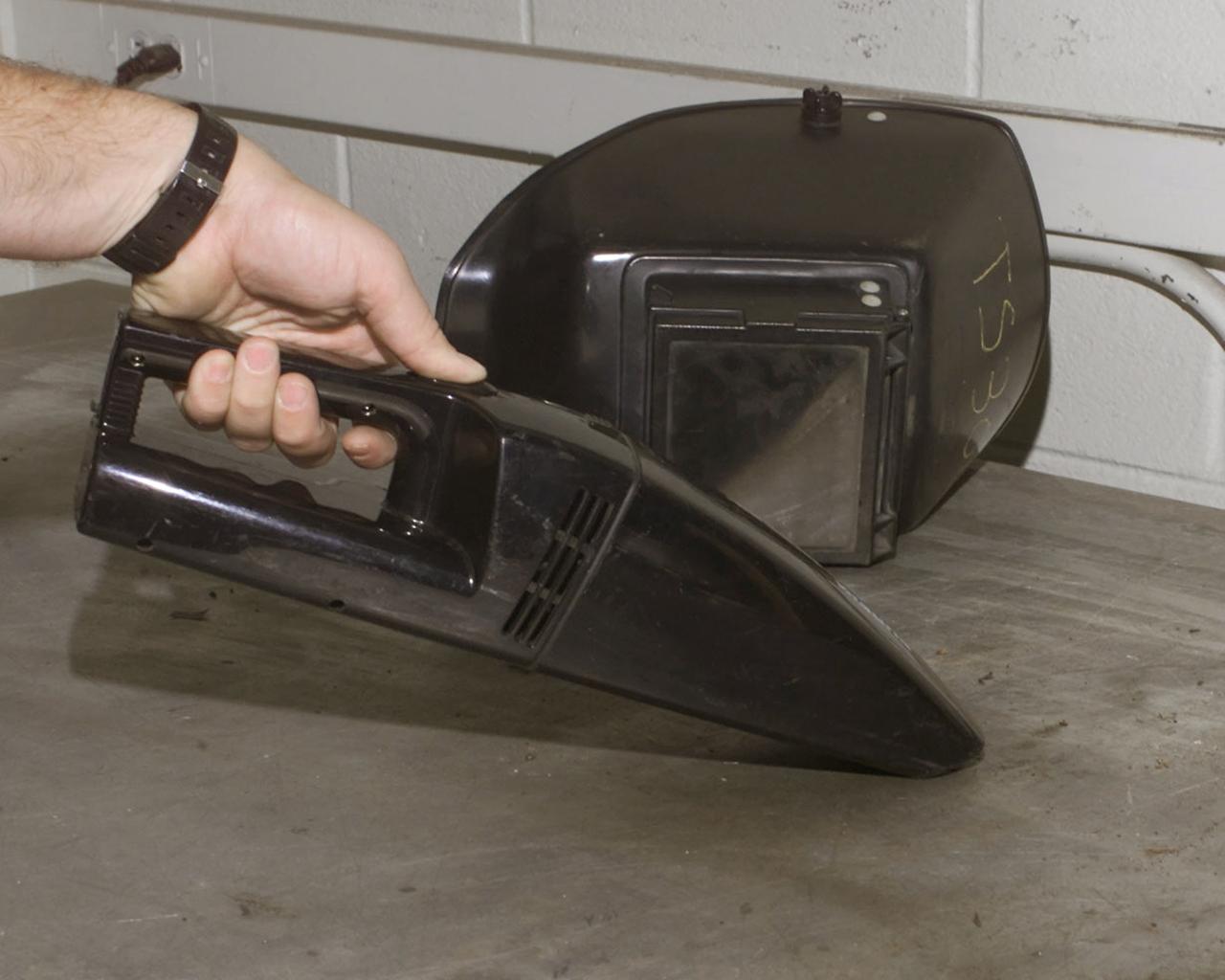
Apollo-era technology spurred the development of cordless products that we take for granted everyday. In the 1960s, NASA asked Black Decker to develop a special drill that would be powerful enough to cut through hard layers of the lunar surface and be lightweight, compact, and operate under its own power source, allowing Apollo astronauts to collect lunar samples further away from the Lunar Experiment Module. In response, Black Decker developed a computer program that analyzed and optimized drill motor operations. From their analysis, engineers were able to design a motor that was powerful yet required minimal battery power to operate. Since those first days of cordless products, Black Decker has continued to refine this technology and they now sell their rechargeable products worldwide (i.e. the Dustbuster, cordless tools for home and industrial use, and medical tools.)
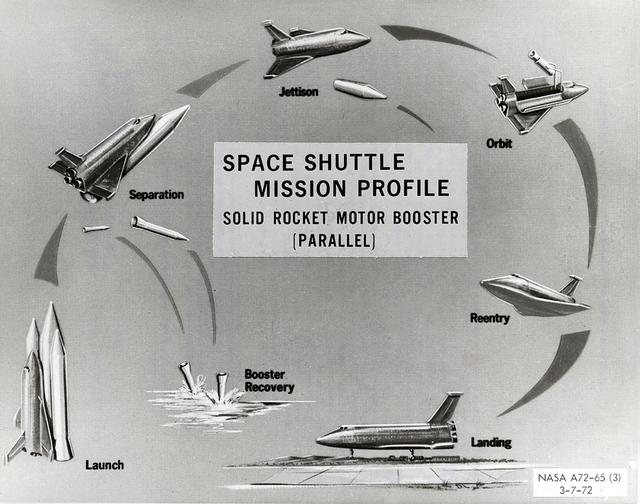
This early chart conceptualizes the use of two parallel Solid Rocket Motor Boosters in conjunction with three main engines to launch the proposed Space Shuttle to orbit. At approximately twenty-five miles altitude, the boosters would detach from the Orbiter and parachute back to Earth where they would be recovered and refurbished for future use. The Shuttle was designed as NASA's first reusable space vehicle, launching vertically like a spacecraft and landing on runways like conventional aircraft. Marshall Space Flight Center had management responsibility for the Shuttle's propulsion elements, including the Solid Rocket Boosters.

The Space Shuttle represented an entirely new generation of space vehicle, the world's first reusable spacecraft. Unlike earlier expendable rockets, the Shuttle was designed to be launched over and over again and would serve as a system for ferrying payloads and persornel to and from Earth orbit. The Shuttle's major components are the orbiter spacecraft; the three main engines, with a combined thrust of more than 1.2 million pounds; the huge external tank (ET) that feeds the liquid hydrogen fuel and liquid oxygen oxidizer to the three main engines; and the two solid rocket boosters (SRB's), with their combined thrust of some 5.8 million pounds. The SRB's provide most of the power for the first two minutes of flight. Crucially involved with the Space Shuttle program virtually from its inception, the Marshall Space Flight Center (MSFC) played a leading role in the design, development, testing, and fabrication of many major Shuttle propulsion components. The MSFC was assigned responsibility for developing the Shuttle orbiter's high-performance main engines, the most complex rocket engines ever built. The MSFC was also responsible for developing the Shuttle's massive ET and the solid rocket motors and boosters.

The Space Shuttle represented an entirely new generation of space vehicles, the world's first reusable spacecraft. Unlike earlier expendable rockets, the Shuttle was designed to be launched over and over again and would serve as a system for ferrying payloads and persornel to and from Earth orbit. The Shuttle's major components are the orbiter spacecraft; the three main engines, with a combined thrust of more than 1.2 million pounds; the huge external tank (ET) that feeds the liquid hydrogen fuel and liquid oxygen oxidizer to the three main engines; and the two solid rocket boosters (SRB's), with their combined thrust of some 5.8 million pounds, that provide most of the power for the first two minutes of flight. Crucially involved with the Space Shuttle program virtually from its inception, the Marshall Space Flight Center (MSFC) played a leading role in the design, development, testing, and fabrication of many major Shuttle propulsion components. The MSFC was assigned responsibility for developing the Shuttle orbiter's high-performance main engines, the most complex rocket engines ever built. The MSFC was also responsible for developing the Shuttle's massive ET and the solid rocket motors and boosters.
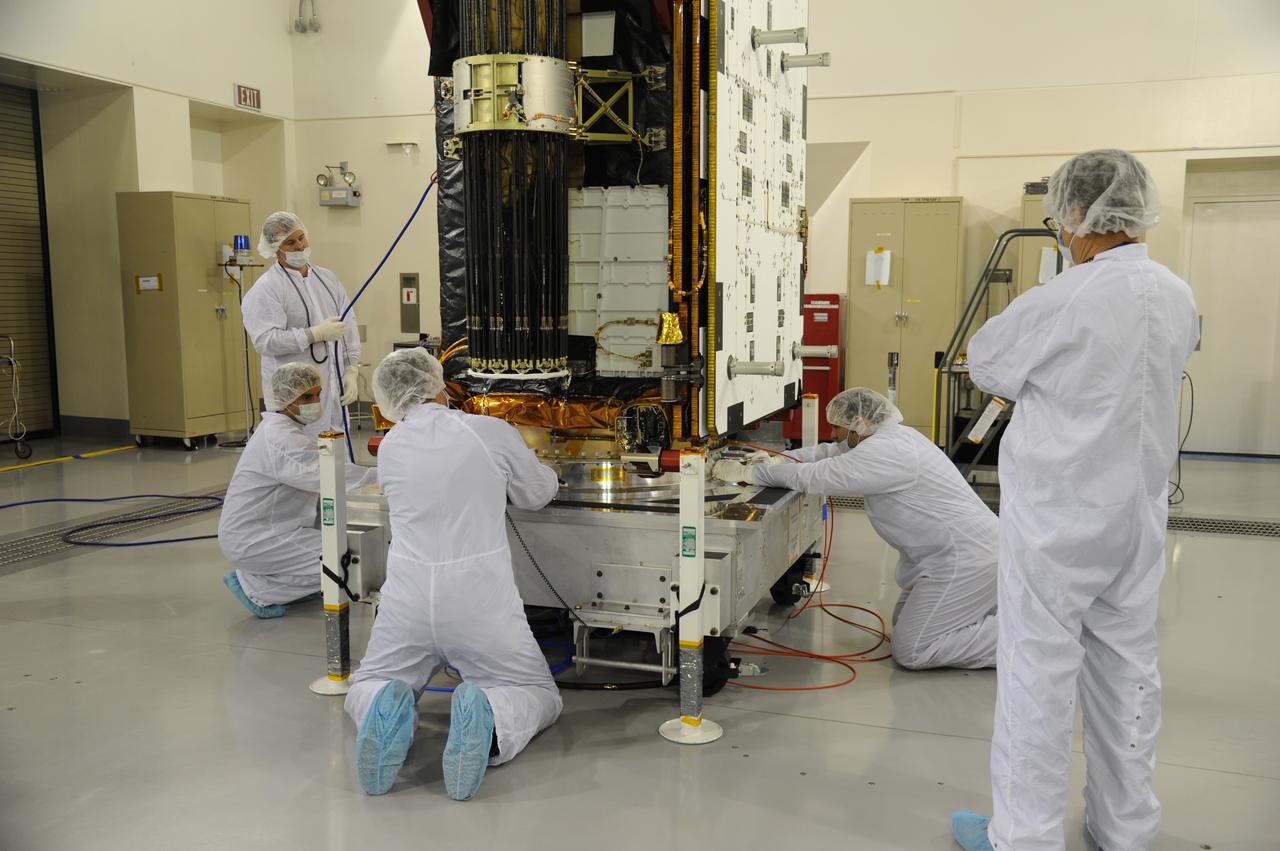
Operations are underway to weigh NASA's Soil Moisture Active Passive, or SMAP, spacecraft in the clean room of the Astrotech payload processing facility on Vandenberg Air Force Base in California. The weighing of a spacecraft is standard procedure during prelaunch processing. SMAP will launch on a Delta II 7320 configuration vehicle featuring a United Launch Alliance first stage booster powered by an Aerojet Rocketdyne RS-27A main engine and three Alliant Techsystems, or ATK, strap-on solid rocket motors. Once on station in Earth orbit, SMAP will provide global measurements of soil moisture and its freeze/thaw state. NASA's Jet Propulsion Laboratory that built the observatory and its radar instrument also is responsible for SMAP project management and mission operations. Launch from Space Launch Complex 2 is targeted for Jan. 29, 2015.
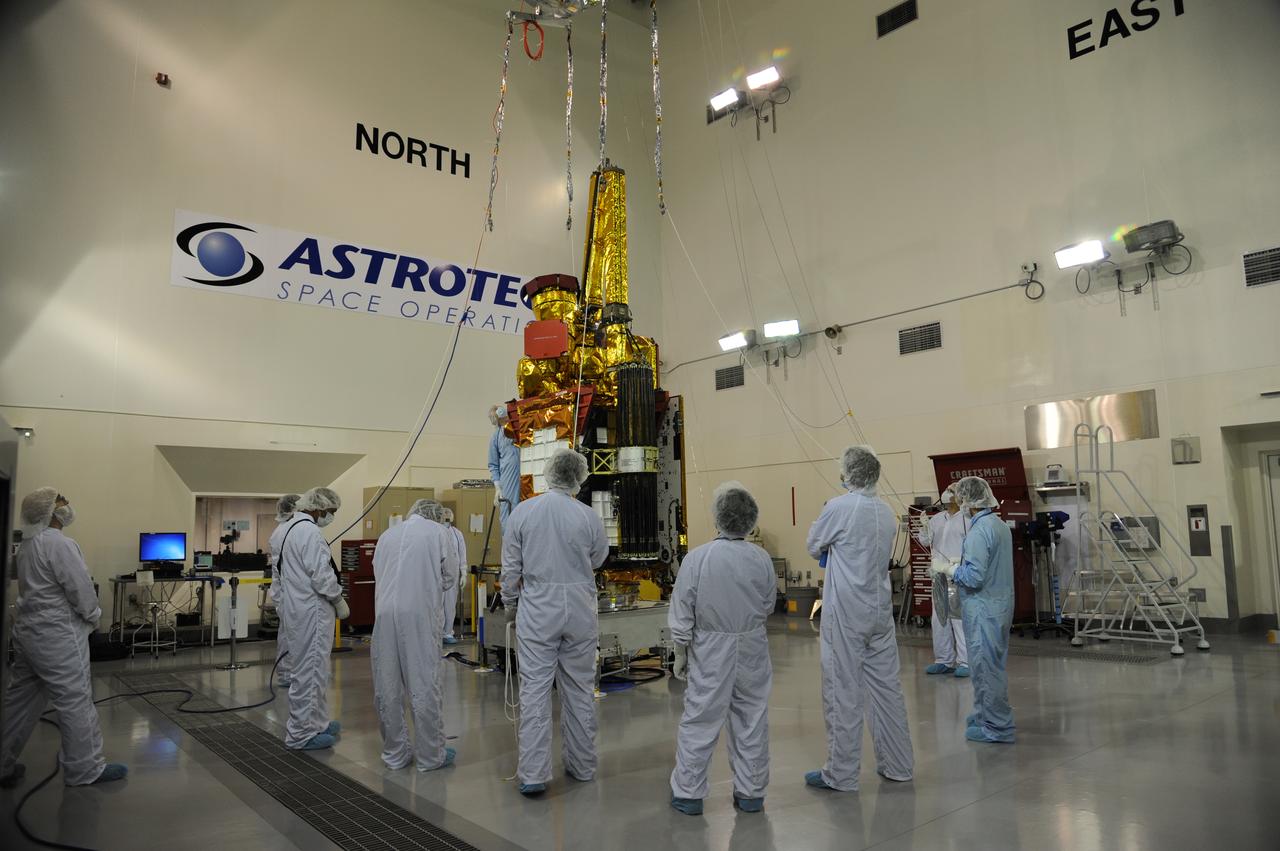
Operations are underway to weigh NASA's Soil Moisture Active Passive, or SMAP, spacecraft in the clean room of the Astrotech payload processing facility on Vandenberg Air Force Base in California. The weighing of a spacecraft is standard procedure during prelaunch processing. SMAP will launch on a Delta II 7320 configuration vehicle featuring a United Launch Alliance first stage booster powered by an Aerojet Rocketdyne RS-27A main engine and three Alliant Techsystems, or ATK, strap-on solid rocket motors. Once on station in Earth orbit, SMAP will provide global measurements of soil moisture and its freeze/thaw state. NASA's Jet Propulsion Laboratory that built the observatory and its radar instrument also is responsible for SMAP project management and mission operations. Launch from Space Launch Complex 2 is targeted for Jan. 29, 2015.
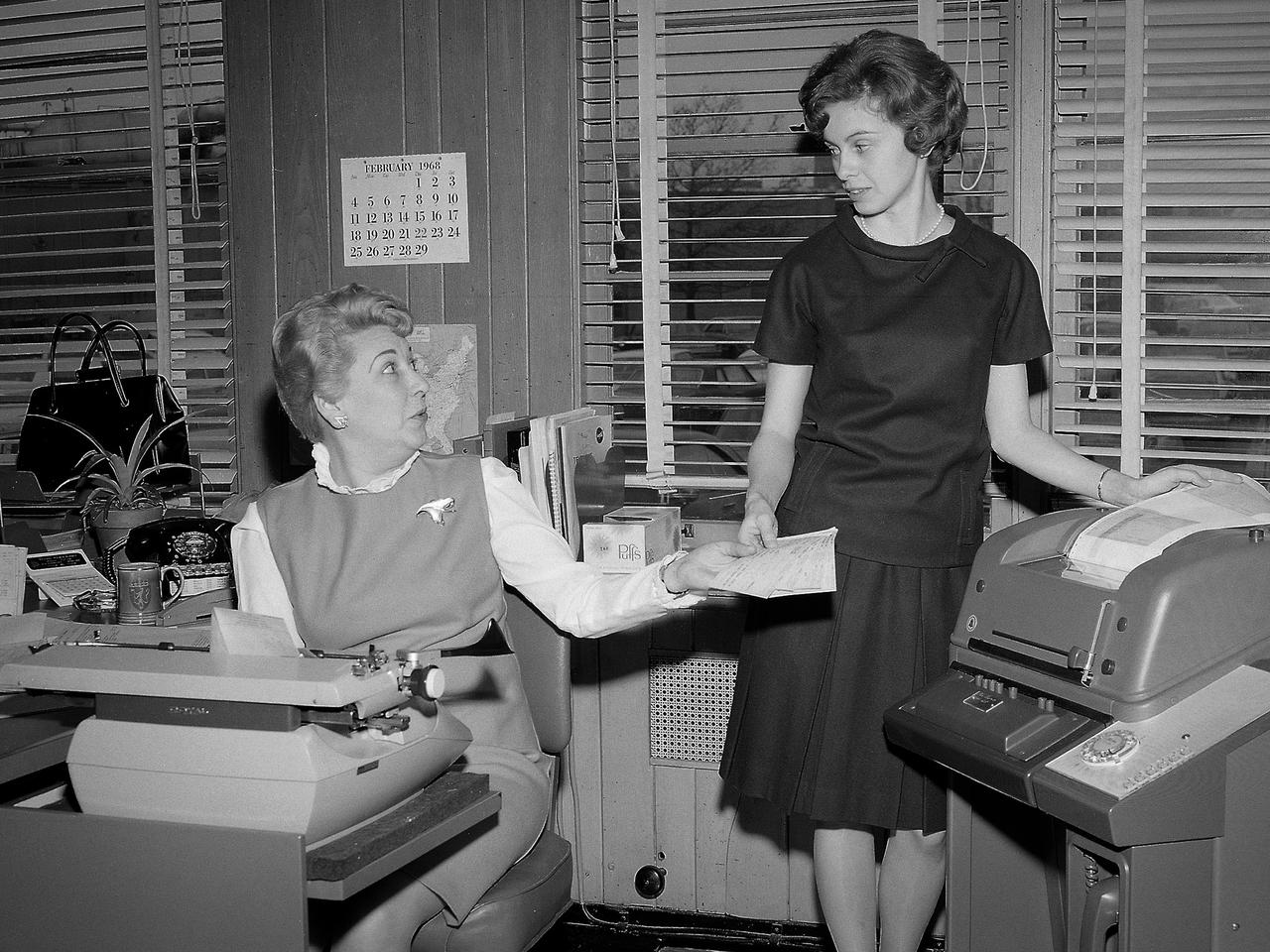
Peggy Heintz, left, receives an airline ticket from supervisor Judy Kuebeler in the Administrative Services Building at the National Aeronautics and Space Administration (NASA) Lewis Research Center. The center had recently purchased a teleticket machine that automatically printed airline tickets as directed by the airline’s computer system. The Administrative Services Branch had 55 staff members performing a variety of roles. They served as telephone operators and set up communications with other centers. They operated the motor pool, handled all travel arrangements, prepared forms and work instructions, and planned offices. The staff was also responsible for records management and storage. It was reported that the staff processed 65 bags of incoming mail per day, which was said to be on par with a city of 15,000 to 20,000 people.
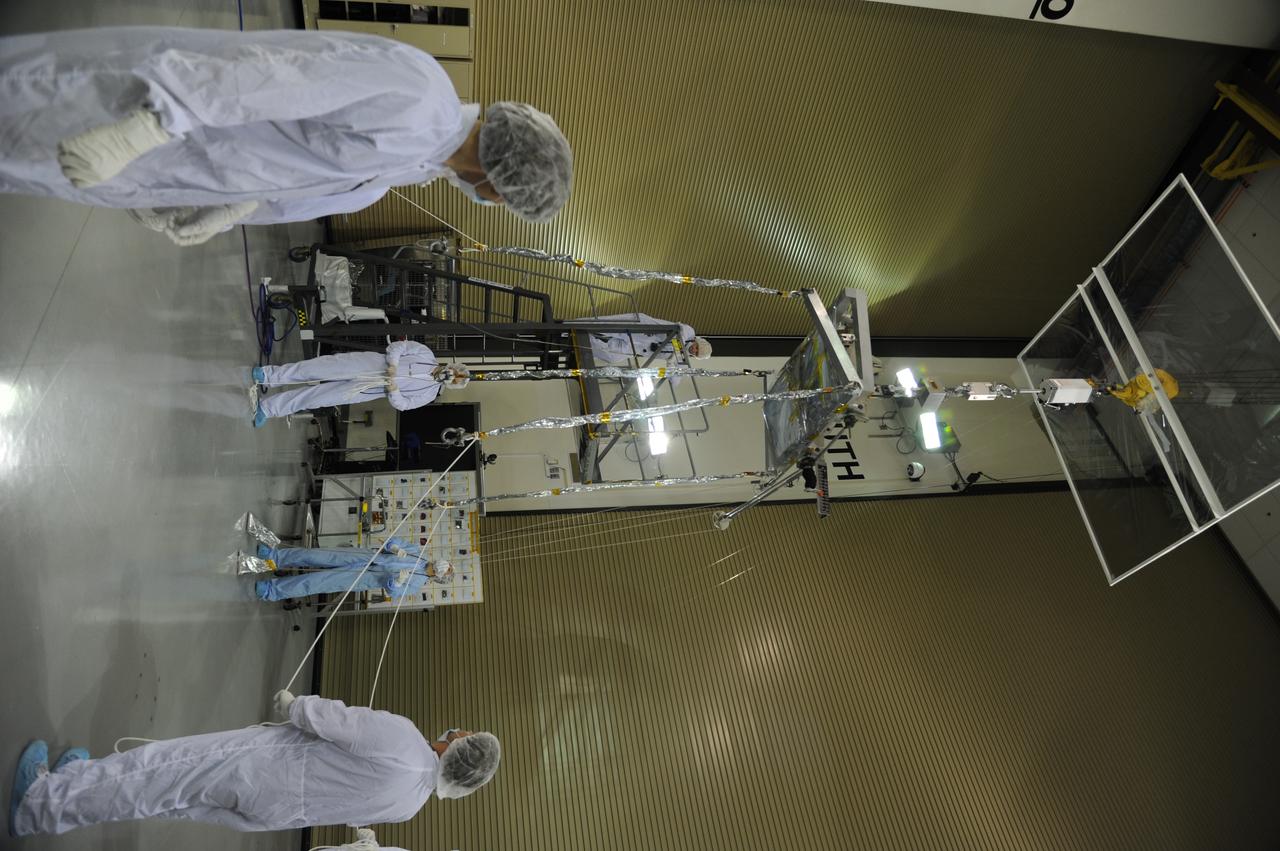
Operations are underway to weigh NASA's Soil Moisture Active Passive, or SMAP, spacecraft in the clean room of the Astrotech payload processing facility on Vandenberg Air Force Base in California. The weighing of a spacecraft is standard procedure during prelaunch processing. SMAP will launch on a Delta II 7320 configuration vehicle featuring a United Launch Alliance first stage booster powered by an Aerojet Rocketdyne RS-27A main engine and three Alliant Techsystems, or ATK, strap-on solid rocket motors. Once on station in Earth orbit, SMAP will provide global measurements of soil moisture and its freeze/thaw state. NASA's Jet Propulsion Laboratory that built the observatory and its radar instrument also is responsible for SMAP project management and mission operations. Launch from Space Launch Complex 2 is targeted for Jan. 29, 2015.
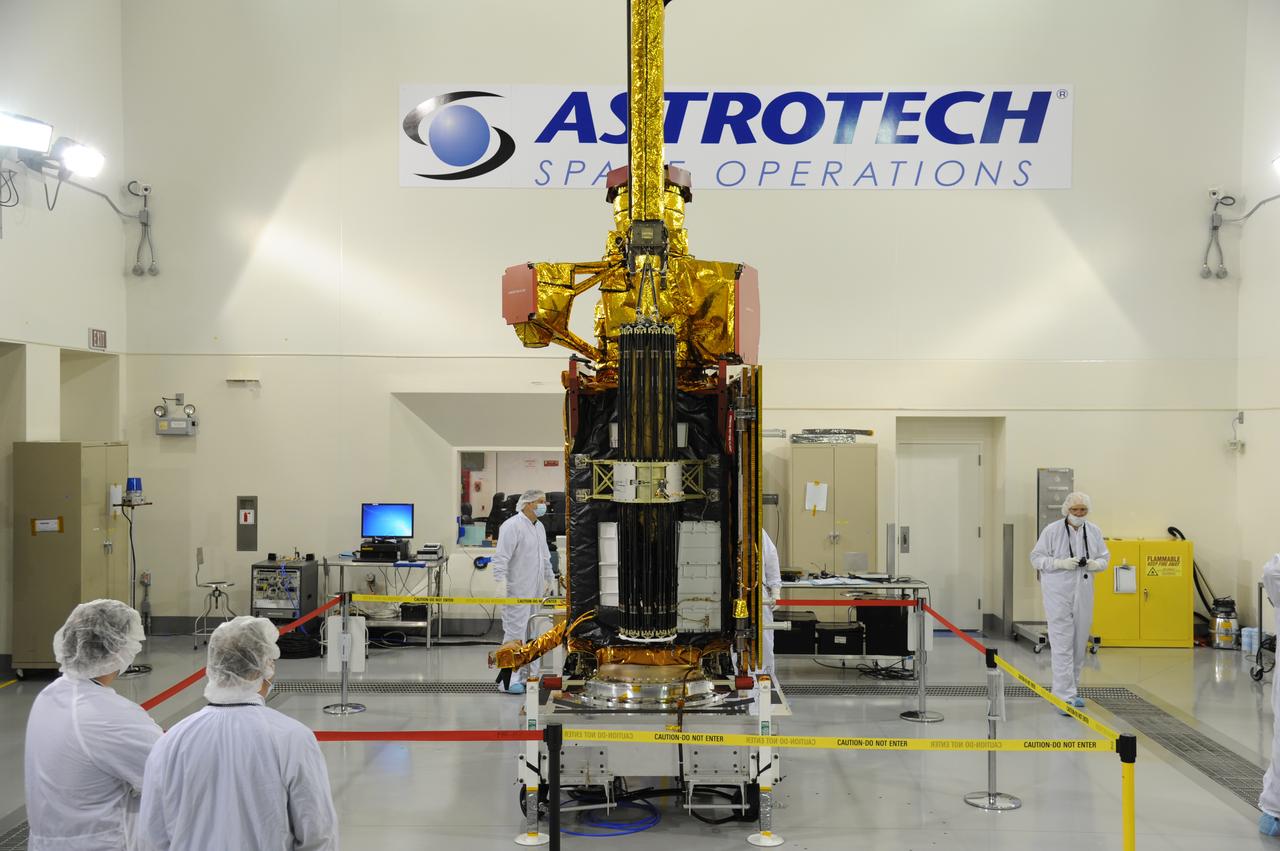
Preparations are underway to weigh NASA's Soil Moisture Active Passive, or SMAP, spacecraft in the clean room of the Astrotech payload processing facility on Vandenberg Air Force Base in California. The weighing of a spacecraft is standard procedure during prelaunch processing. SMAP will launch on a Delta II 7320 configuration vehicle featuring a United Launch Alliance first stage booster powered by an Aerojet Rocketdyne RS-27A main engine and three Alliant Techsystems, or ATK, strap-on solid rocket motors. Once on station in Earth orbit, SMAP will provide global measurements of soil moisture and its freeze/thaw state. NASA's Jet Propulsion Laboratory that built the observatory and its radar instrument also is responsible for SMAP project management and mission operations. Launch from Space Launch Complex 2 is targeted for Jan. 29, 2015.
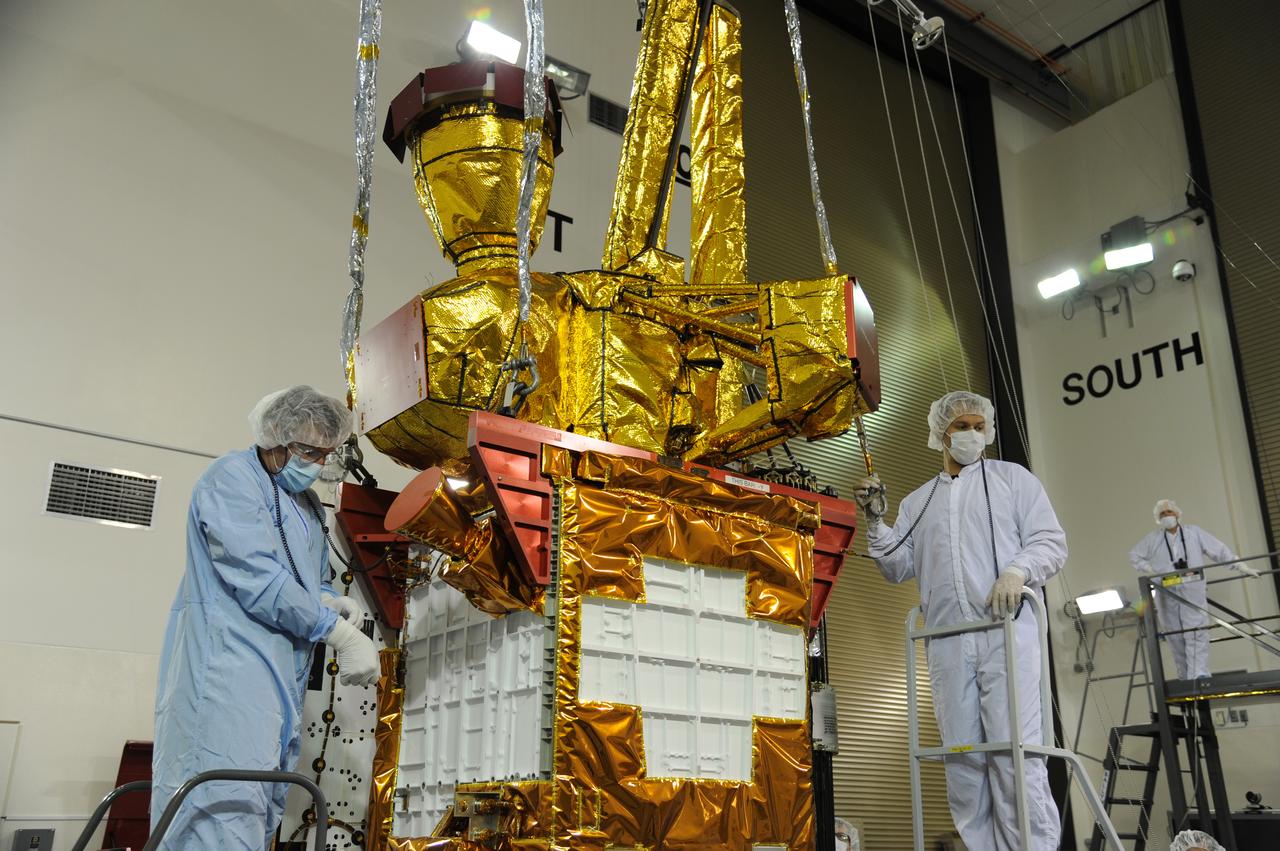
Operations are underway to weigh NASA's Soil Moisture Active Passive, or SMAP, spacecraft in the clean room of the Astrotech payload processing facility on Vandenberg Air Force Base in California. The weighing of a spacecraft is standard procedure during prelaunch processing. SMAP will launch on a Delta II 7320 configuration vehicle featuring a United Launch Alliance first stage booster powered by an Aerojet Rocketdyne RS-27A main engine and three Alliant Techsystems, or ATK, strap-on solid rocket motors. Once on station in Earth orbit, SMAP will provide global measurements of soil moisture and its freeze/thaw state. NASA's Jet Propulsion Laboratory that built the observatory and its radar instrument also is responsible for SMAP project management and mission operations. Launch from Space Launch Complex 2 is targeted for Jan. 29, 2015.
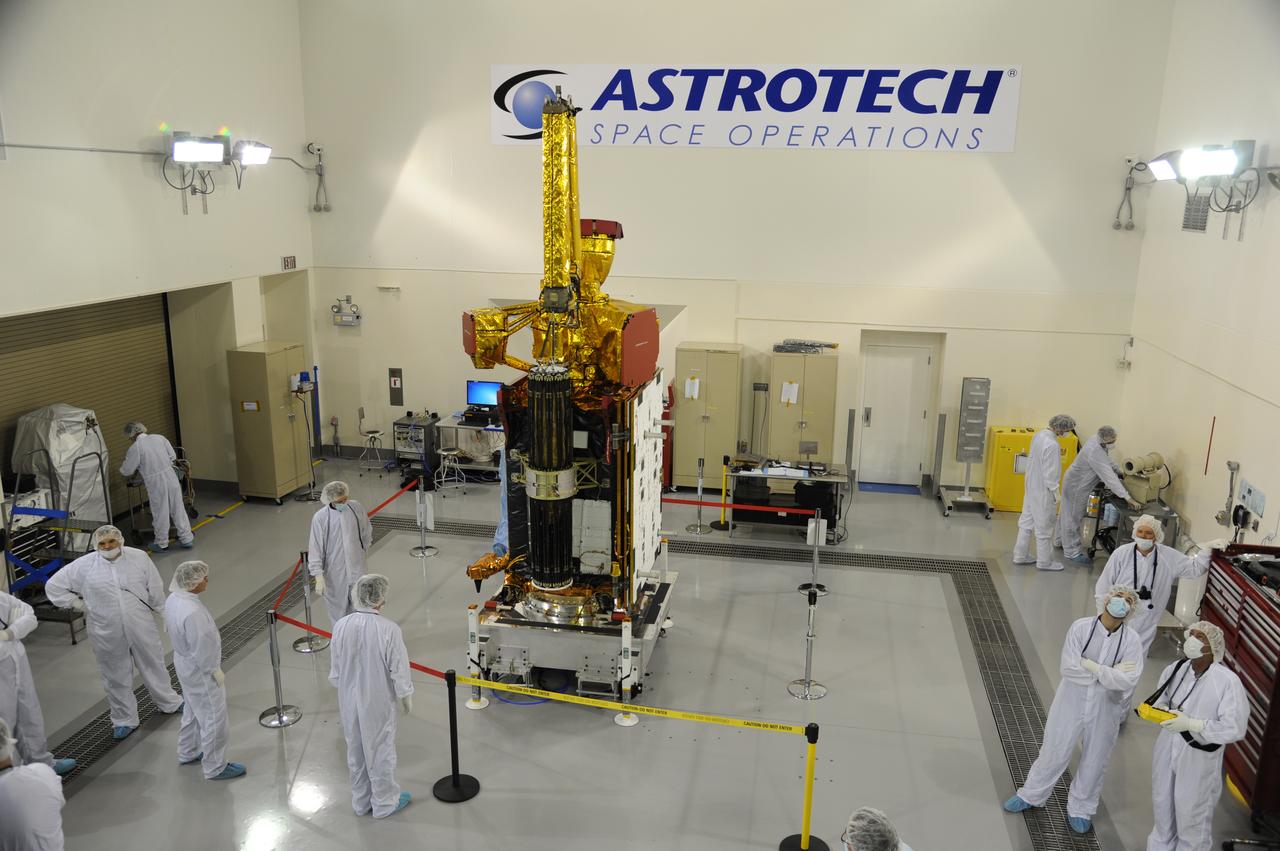
Preparations are underway to weigh NASA's Soil Moisture Active Passive, or SMAP, spacecraft in the clean room of the Astrotech payload processing facility on Vandenberg Air Force Base in California. The weighing of a spacecraft is standard procedure during prelaunch processing. SMAP will launch on a Delta II 7320 configuration vehicle featuring a United Launch Alliance first stage booster powered by an Aerojet Rocketdyne RS-27A main engine and three Alliant Techsystems, or ATK, strap-on solid rocket motors. Once on station in Earth orbit, SMAP will provide global measurements of soil moisture and its freeze/thaw state. NASA's Jet Propulsion Laboratory that built the observatory and its radar instrument also is responsible for SMAP project management and mission operations. Launch from Space Launch Complex 2 is targeted for Jan. 29, 2015.
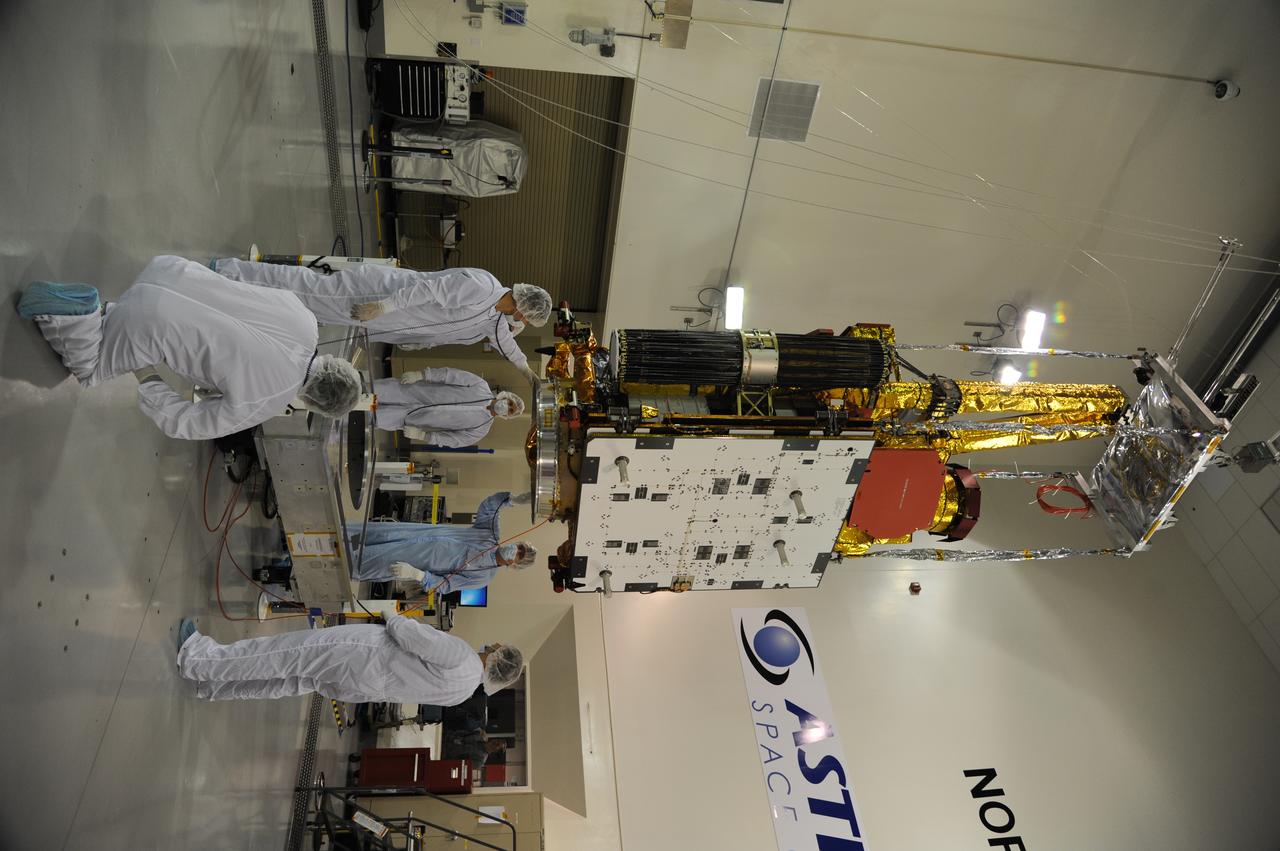
NASA's Soil Moisture Active Passive, or SMAP, spacecraft is lifted from its workstand in the clean room of the Astrotech payload processing facility on Vandenberg Air Force Base in California during operations to determine its weight. The weighing of a spacecraft is standard procedure during prelaunch processing. SMAP will launch on a Delta II 7320 configuration vehicle featuring a United Launch Alliance first stage booster powered by an Aerojet Rocketdyne RS-27A main engine and three Alliant Techsystems, or ATK, strap-on solid rocket motors. Once on station in Earth orbit, SMAP will provide global measurements of soil moisture and its freeze/thaw state. NASA's Jet Propulsion Laboratory that built the observatory and its radar instrument also is responsible for SMAP project management and mission operations. Launch from Space Launch Complex 2 is targeted for Jan. 29, 2015.
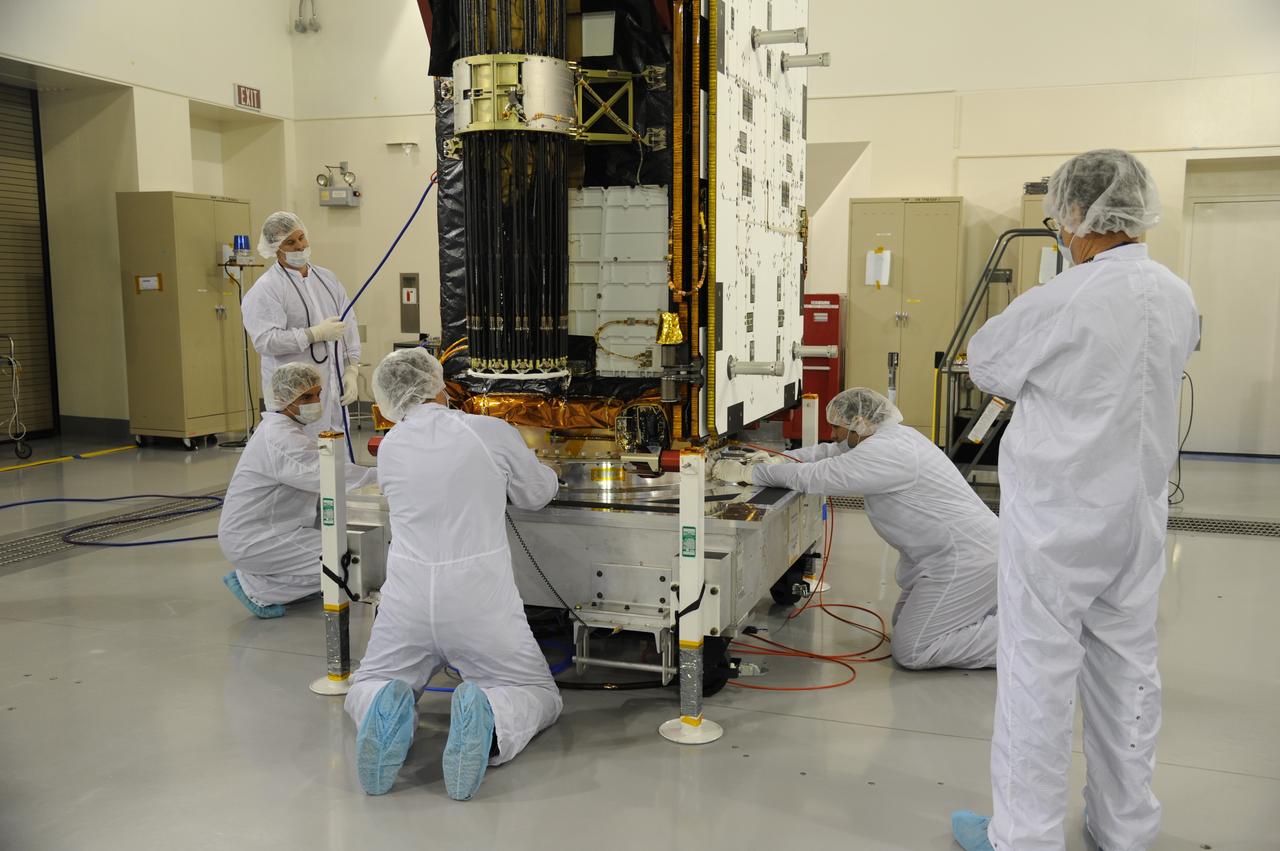
VANDENBERG AIR FORCE BASE, Calif. – Operations are underway to weigh NASA's Soil Moisture Active Passive, or SMAP, spacecraft in the clean room of the Astrotech payload processing facility on Vandenberg Air Force Base in California. The weighing of a spacecraft is standard procedure during prelaunch processing. SMAP will launch on a Delta II 7320 configuration vehicle featuring a United Launch Alliance first stage booster powered by an Aerojet Rocketdyne RS-27A main engine and three Alliant Techsystems, or ATK, strap-on solid rocket motors. Once on station in Earth orbit, SMAP will provide global measurements of soil moisture and its freeze/thaw state. NASA's Jet Propulsion Laboratory that built the observatory and its radar instrument also is responsible for SMAP project management and mission operations. Launch from Space Launch Complex 2 is targeted for Jan. 29, 2015. To learn more about SMAP, visit http://smap.jpl.nasa.gov. Photo credit: NASA/Randy Beaudoin
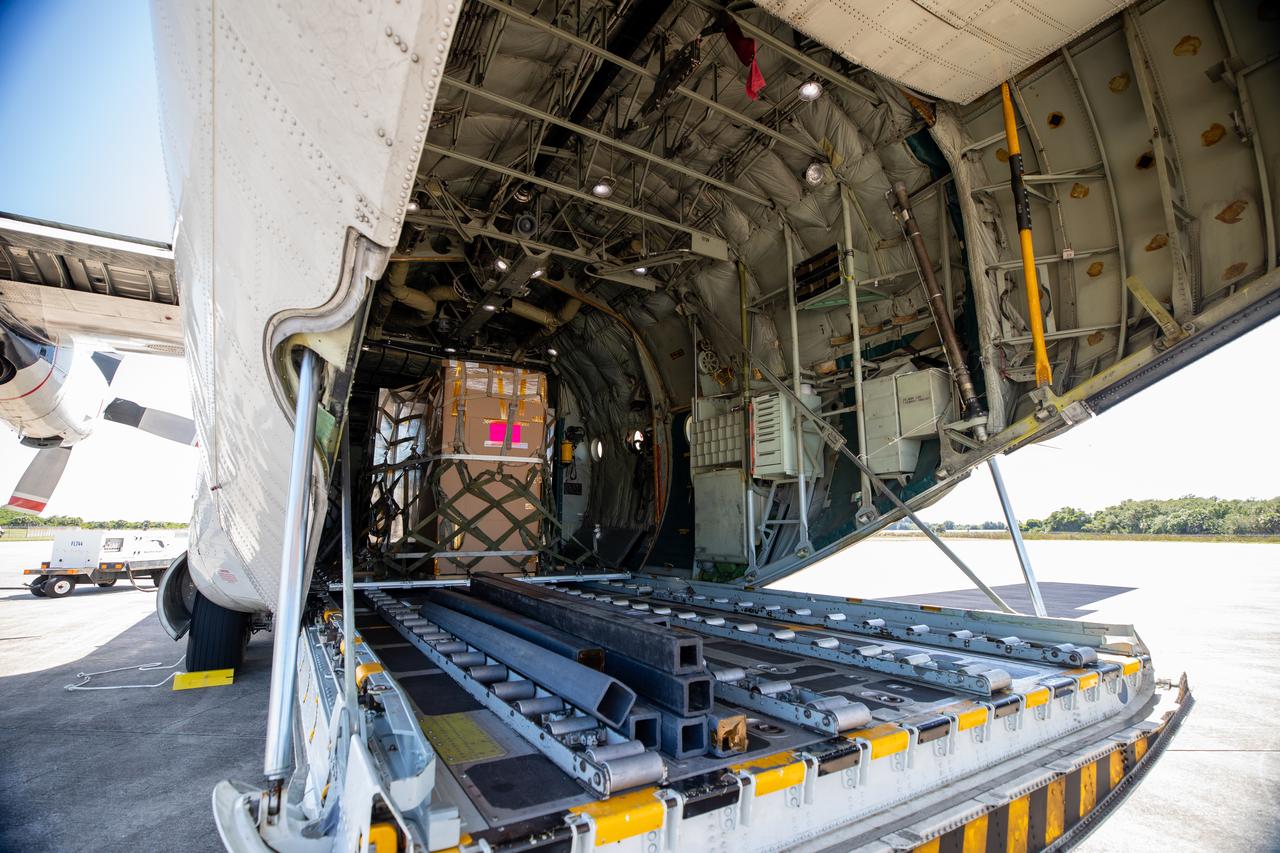
NASA’s C-130 aircraft cargo hold is open for offloading of the Adaptive Caching Assembly (ACA) for NASA’s Mars Perseverance rover at Kennedy Space Center’s Launch and Landing Facility in Florida on May 11, 2020. The ACA consists of seven motors and more than 3,000 parts, all working in unison to collect samples from the surface of Mars. A chief component of the assembly is the Sample Handling Arm, which will move sample tubes to the main robotic arm's coring drill and then transfer the filled sample tubes into a space to be sealed and stored. The Mars Perseverance rover is scheduled to launch in mid-July atop a United Launch Alliance Atlas V 541 rocket from Pad 41 at nearby Cape Canaveral Air Force Station. The rover is part of NASA’s Mars Exploration Program, a long-term effort of robotic exploration of the Red Planet. The rover will search for habitable conditions in the ancient past and signs of past microbial life on Mars. The Launch Services Program at Kennedy is responsible for launch management.
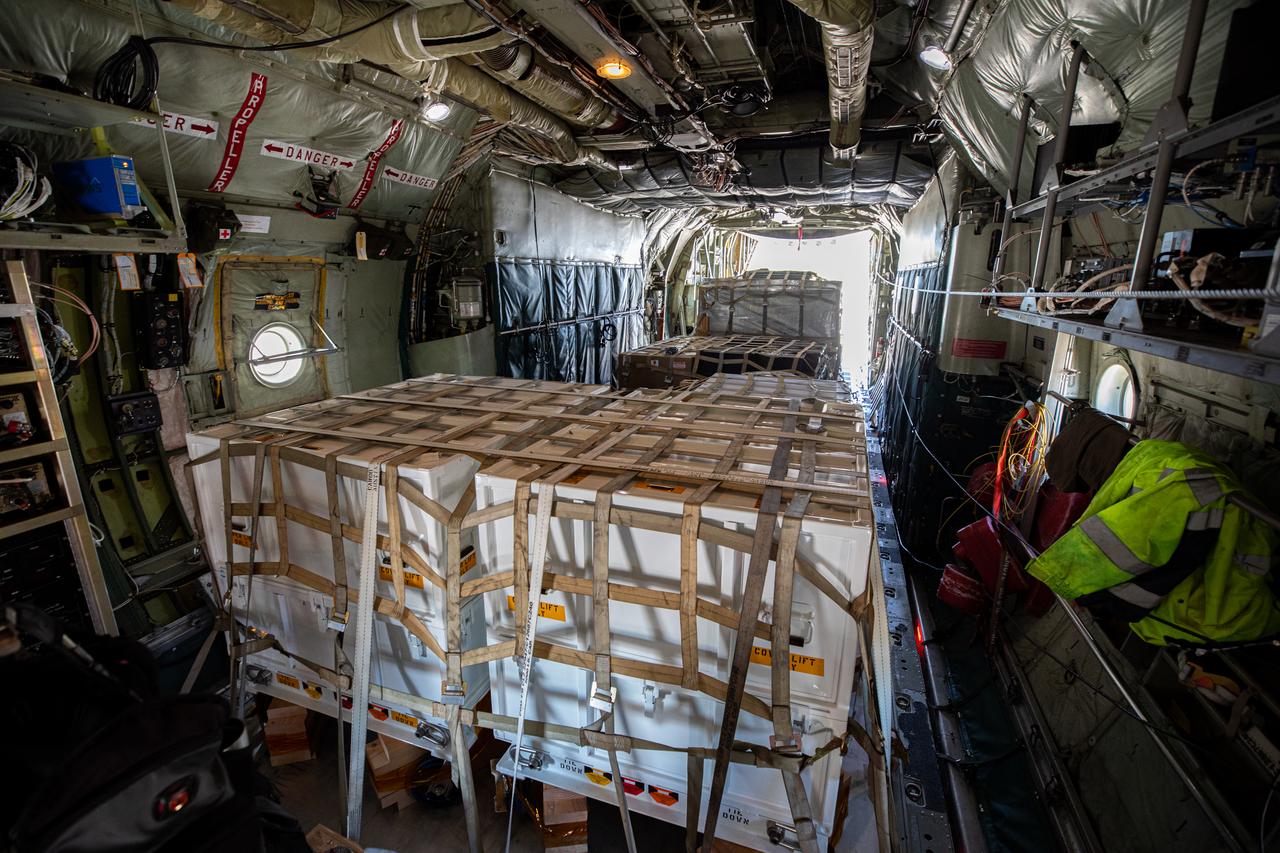
Preparations are underway to offload the Adaptive Caching Assembly (ACA) for NASA’s Mars Perseverance rover from the agency’s C-130 aircraft at Kennedy Space Center’s Launch and Landing Facility in Florida on May 11, 2020. The ACA consists of seven motors and more than 3,000 parts, all working in unison to collect samples from the surface of Mars. A chief component of the assembly is the Sample Handling Arm, which will move sample tubes to the main robotic arm's coring drill and then transfer the filled sample tubes into a space to be sealed and stored. The Mars Perseverance rover is scheduled to launch in mid-July atop a United Launch Alliance Atlas V 541 rocket from Pad 41 at nearby Cape Canaveral Air Force Station. The rover is part of NASA’s Mars Exploration Program, a long-term effort of robotic exploration of the Red Planet. The rover will search for habitable conditions in the ancient past and signs of past microbial life on Mars. The Launch Services Program at Kennedy is responsible for launch management.

Workers use a special handling device to offload the Adaptive Caching Assembly (ACA) for NASA’s Mars Perseverance rover from the agency’s C-130 aircraft at Kennedy Space Center’s Launch and Landing Facility in Florida on May 11, 2020. The ACA consists of seven motors and more than 3,000 parts, all working in unison to collect samples from the surface of Mars. A chief component of the assembly is the Sample Handling Arm, which will move sample tubes to the main robotic arm's coring drill and then transfer the filled sample tubes into a space to be sealed and stored. The Mars Perseverance rover is scheduled to launch in mid-July atop a United Launch Alliance Atlas V 541 rocket from Pad 41 at nearby Cape Canaveral Air Force Station. The rover is part of NASA’s Mars Exploration Program, a long-term effort of robotic exploration of the Red Planet. The rover will search for habitable conditions in the ancient past and signs of past microbial life on Mars. The Launch Services Program at Kennedy is responsible for launch management.
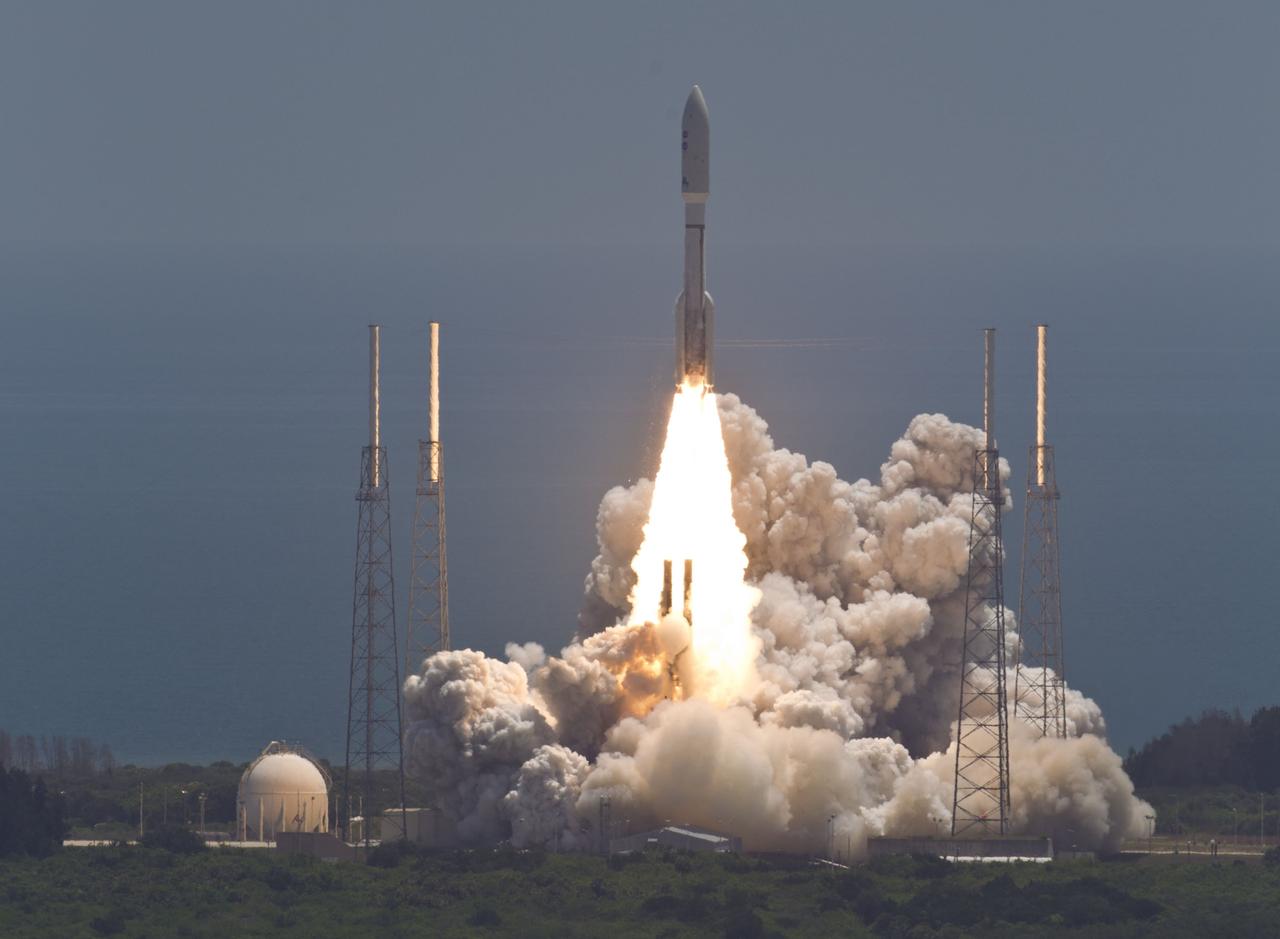
CAPE CANAVERAL, Fla. -- The United Launch Alliance Atlas V-551 launch vehicle carrying NASA's Juno planetary probe, its motors blazing, is off to a roaring start on its five-year journey to Jupiter from Space Launch Complex 41 on Cape Canaveral Air Force Station in Florida. Liftoff was at 12:25 p.m. EDT Aug. 5. The solar-powered spacecraft will orbit Jupiter's poles 33 times to find out more about the gas giant's origins, structure, atmosphere and magnetosphere and investigate the existence of a solid planetary core. NASA's Jet Propulsion Laboratory, Pasadena, Calif., manages the Juno mission for the principal investigator, Scott Bolton, of Southwest Research Institute in San Antonio. The Juno mission is part of the New Frontiers Program managed at NASA's Marshall Space Flight Center in Huntsville, Ala. Lockheed Martin Space Systems, Denver, built the spacecraft. Launch management for the mission is the responsibility of NASA's Launch Services Program at the Kennedy Space Center in Florida. For more information, visit www.nasa.gov/juno. Photo credit: Courtesy of Scott Andrews
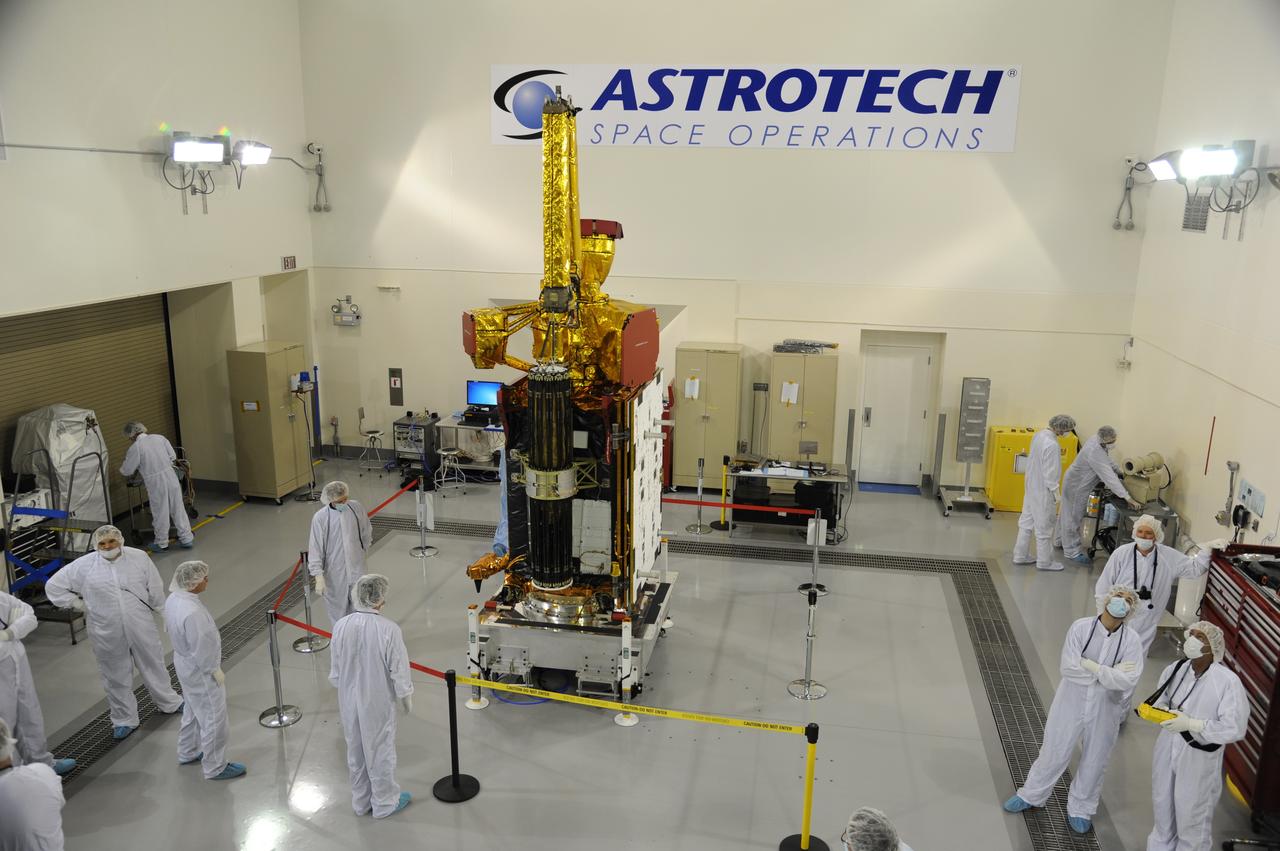
VANDENBERG AIR FORCE BASE, Calif. – Preparations are underway to weigh NASA's Soil Moisture Active Passive, or SMAP, spacecraft in the clean room of the Astrotech payload processing facility on Vandenberg Air Force Base in California. The weighing of a spacecraft is standard procedure during prelaunch processing. SMAP will launch on a Delta II 7320 configuration vehicle featuring a United Launch Alliance first stage booster powered by an Aerojet Rocketdyne RS-27A main engine and three Alliant Techsystems, or ATK, strap-on solid rocket motors. Once on station in Earth orbit, SMAP will provide global measurements of soil moisture and its freeze/thaw state. NASA's Jet Propulsion Laboratory that built the observatory and its radar instrument also is responsible for SMAP project management and mission operations. Launch from Space Launch Complex 2 is targeted for Jan. 29, 2015. To learn more about SMAP, visit http://smap.jpl.nasa.gov. Photo credit: NASA/Randy Beaudoin
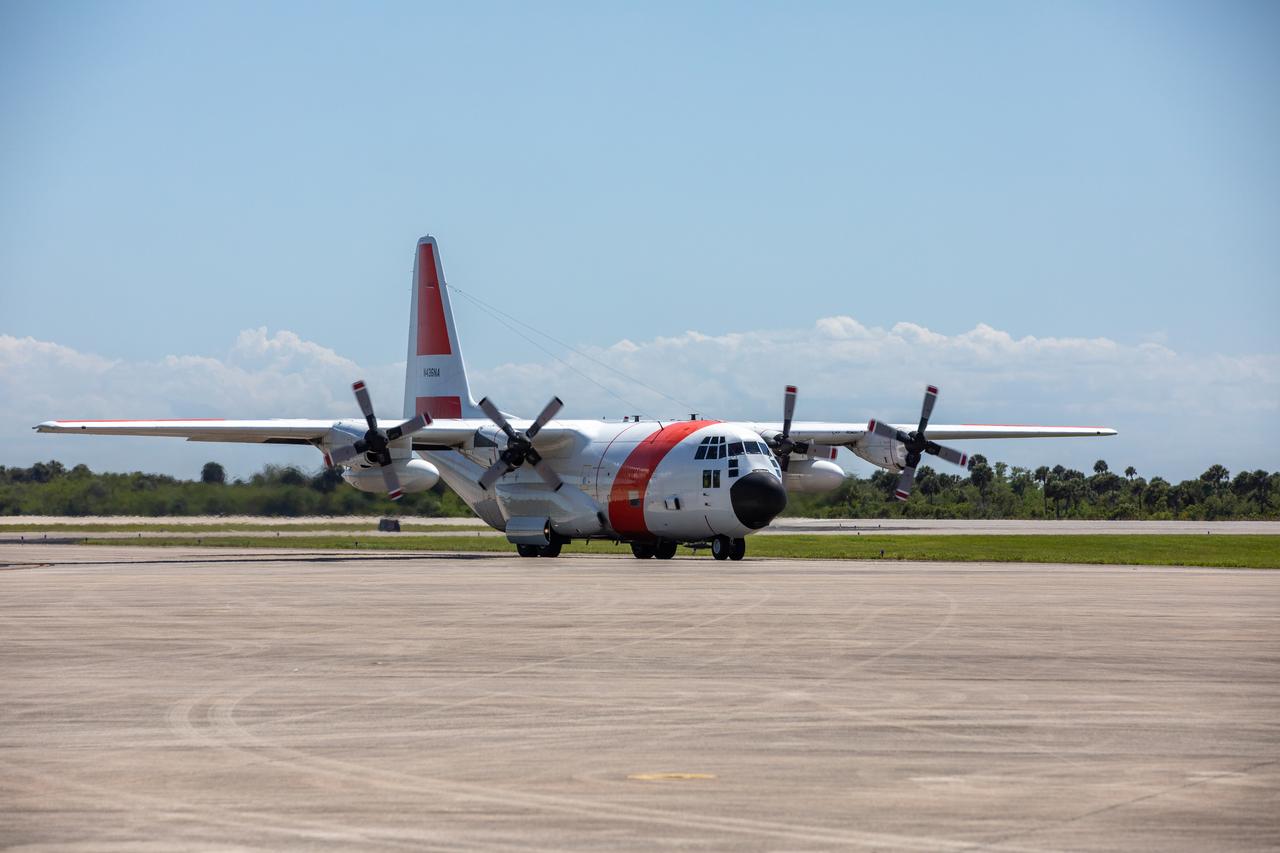
The Adaptive Caching Assembly (ACA) for NASA’s Mars Perseverance rover arrives aboard NASA’s C-130 aircraft at the Launch and Landing Facility at the agency’s Kennedy Space Center in Florida on May 11, 2020. The ACA consists of seven motors and more than 3,000 parts, all working in unison to collect samples from the surface of Mars. A chief component of the assembly is the Sample Handling Arm, which will move sample tubes to the main robotic arm's coring drill and then transfer the filled sample tubes into a space to be sealed and stored. The Mars Perseverance rover is scheduled to launch in mid-July atop a United Launch Alliance Atlas V 541 rocket from Pad 41 at nearby Cape Canaveral Air Force Station. The rover is part of NASA’s Mars Exploration Program, a long-term effort of robotic exploration of the Red Planet. The rover will search for habitable conditions in the ancient past and signs of past microbial life on Mars. The Launch Services Program at Kennedy is responsible for launch management.
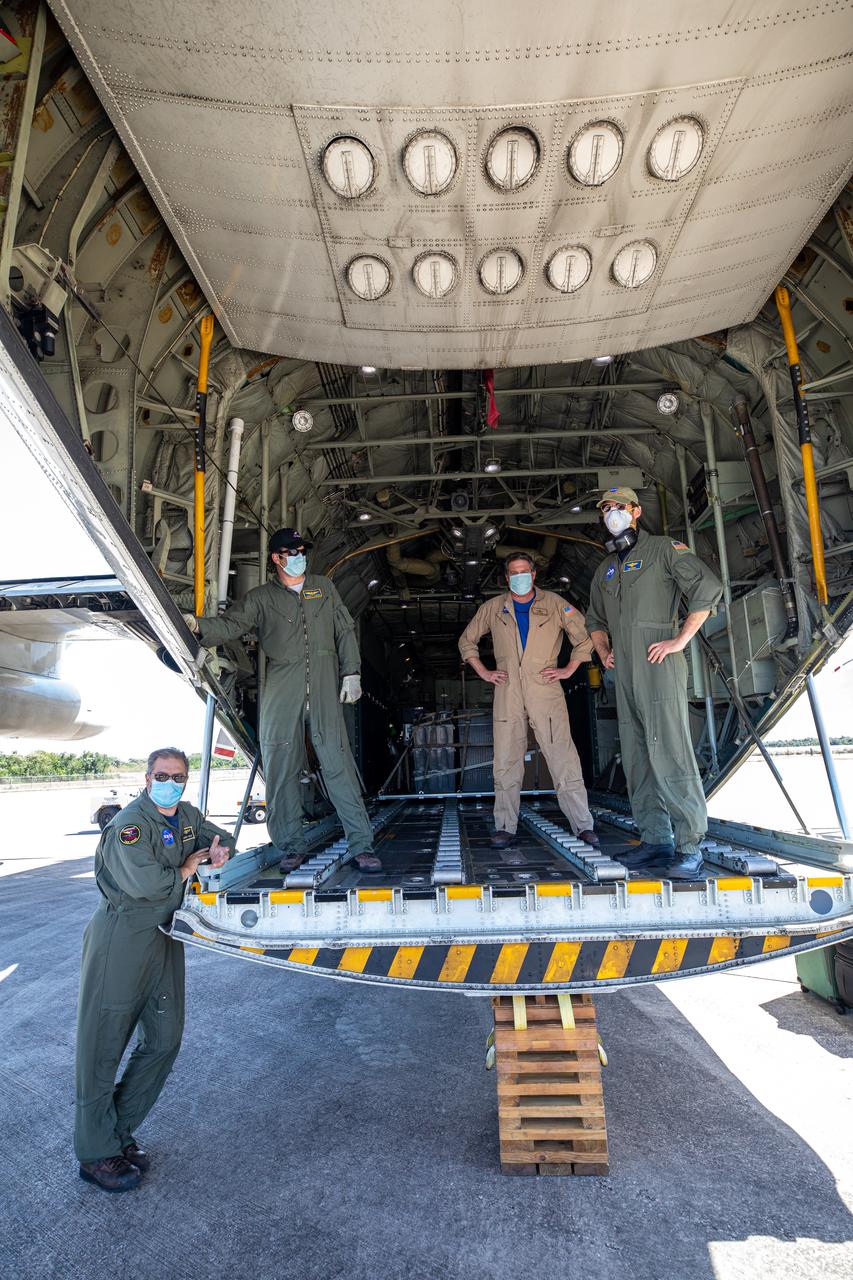
Workers prepare to offload the Adaptive Caching Assembly (ACA) for NASA’s Mars Perseverance rover from the agency’s C-130 aircraft at Kennedy Space Center’s Launch and Landing Facility in Florida on May 11, 2020. The ACA consists of seven motors and more than 3,000 parts, all working in unison to collect samples from the surface of Mars. A chief component of the assembly is the Sample Handling Arm, which will move sample tubes to the main robotic arm's coring drill and then transfer the filled sample tubes into a space to be sealed and stored. The Mars Perseverance rover is scheduled to launch in mid-July atop a United Launch Alliance Atlas V 541 rocket from Pad 41 at nearby Cape Canaveral Air Force Station. The rover is part of NASA’s Mars Exploration Program, a long-term effort of robotic exploration of the Red Planet. The rover will search for habitable conditions in the ancient past and signs of past microbial life on Mars. The Launch Services Program at Kennedy is responsible for launch management.
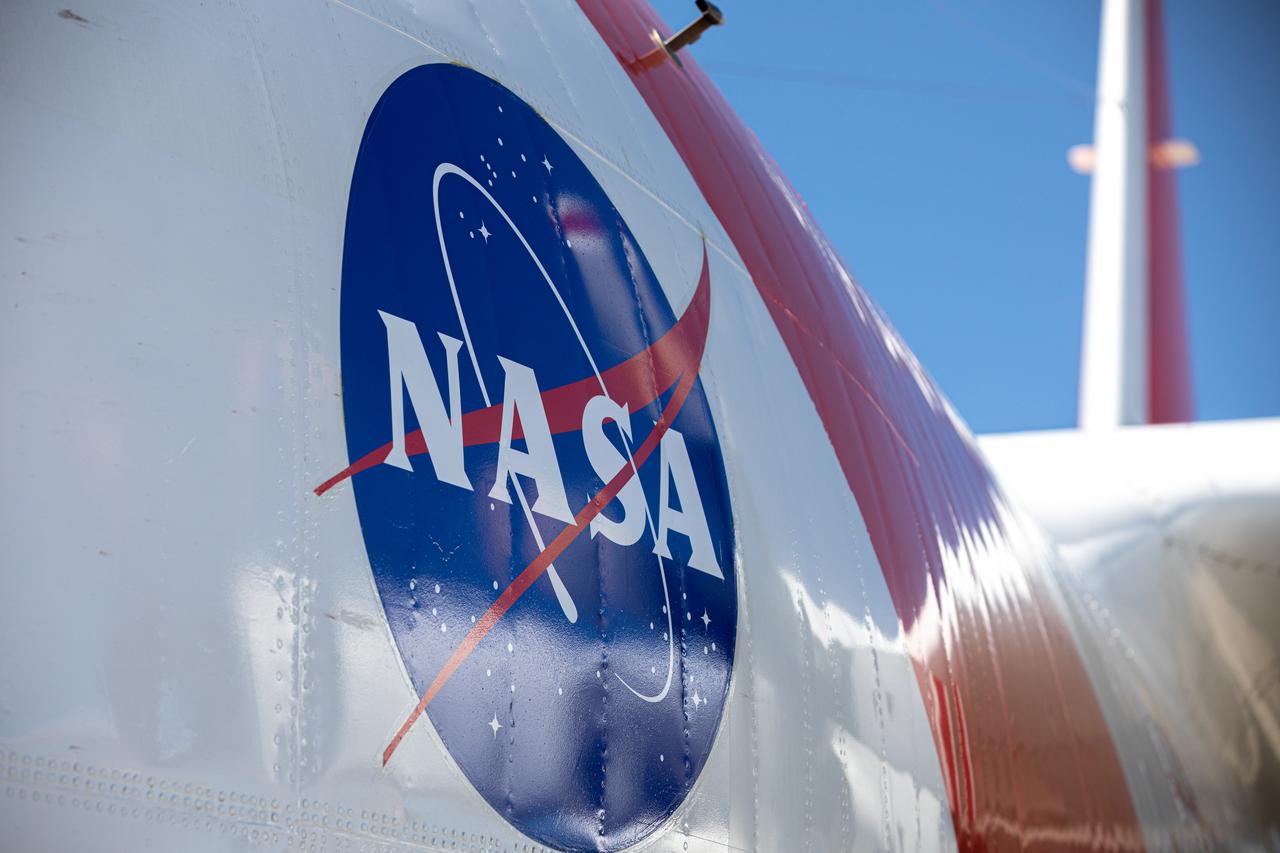
A close-up view of NASA’s C-130 aircraft that carries the Adaptive Caching Assembly (ACA) for NASA’s Mars Perseverance rover as it arrives at Kennedy Space Center’s Launch and Landing Facility in Florida on May 11, 2020. The ACA consists of seven motors and more than 3,000 parts, all working in unison to collect samples from the surface of Mars. A chief component of the assembly is the Sample Handling Arm, which will move sample tubes to the main robotic arm's coring drill and then transfer the filled sample tubes into a space to be sealed and stored. The Mars Perseverance rover is scheduled to launch in mid-July atop a United Launch Alliance Atlas V 541 rocket from Pad 41 at nearby Cape Canaveral Air Force Station. The rover is part of NASA’s Mars Exploration Program, a long-term effort of robotic exploration of the Red Planet. The rover will search for habitable conditions in the ancient past and signs of past microbial life on Mars. The Launch Services Program at Kennedy is responsible for launch management.
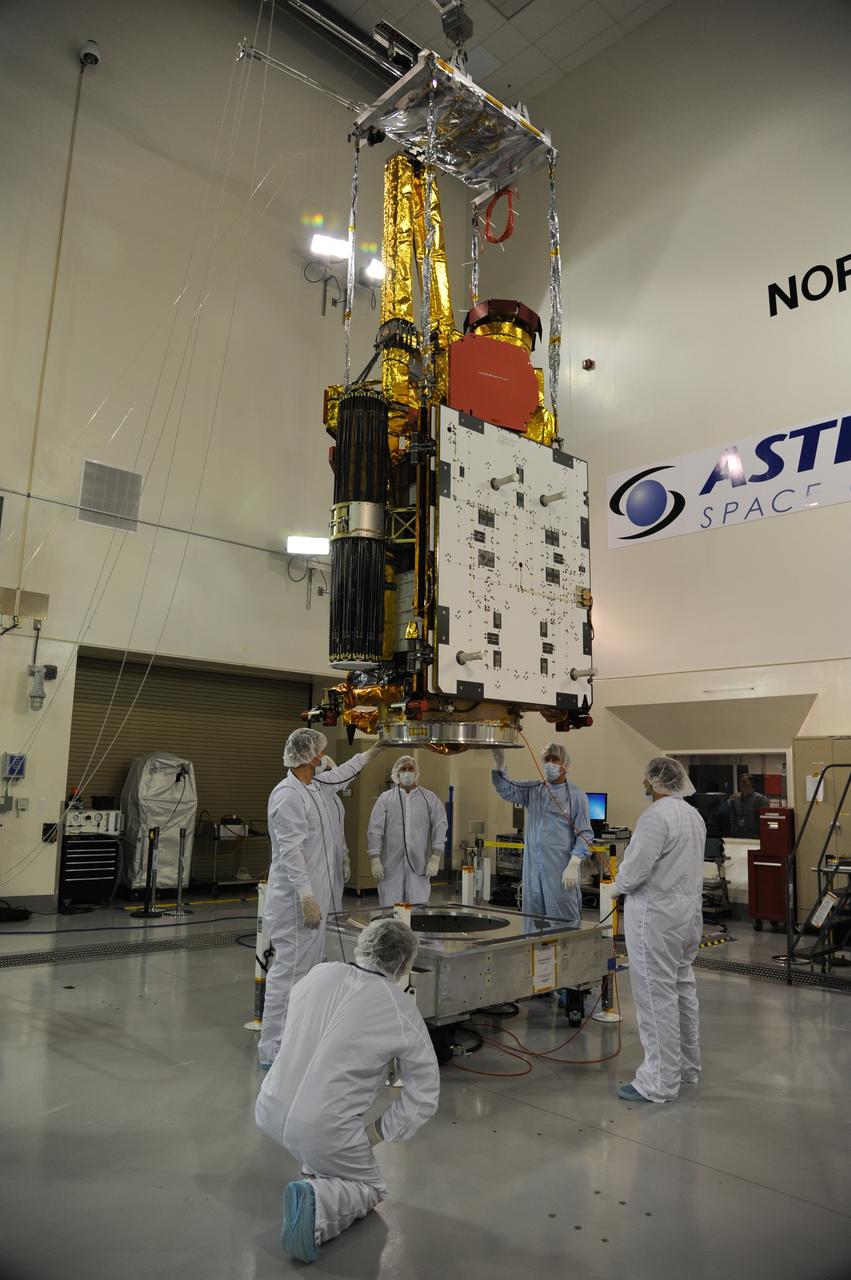
VANDENBERG AIR FORCE BASE, Calif. – NASA's Soil Moisture Active Passive, or SMAP, spacecraft is lifted from its workstand in the clean room of the Astrotech payload processing facility on Vandenberg Air Force Base in California during operations to determine its weight. The weighing of a spacecraft is standard procedure during prelaunch processing. SMAP will launch on a Delta II 7320 configuration vehicle featuring a United Launch Alliance first stage booster powered by an Aerojet Rocketdyne RS-27A main engine and three Alliant Techsystems, or ATK, strap-on solid rocket motors. Once on station in Earth orbit, SMAP will provide global measurements of soil moisture and its freeze/thaw state. NASA's Jet Propulsion Laboratory that built the observatory and its radar instrument also is responsible for SMAP project management and mission operations. Launch from Space Launch Complex 2 is targeted for Jan. 29, 2015. To learn more about SMAP, visit http://smap.jpl.nasa.gov. Photo credit: NASA/Randy Beaudoin
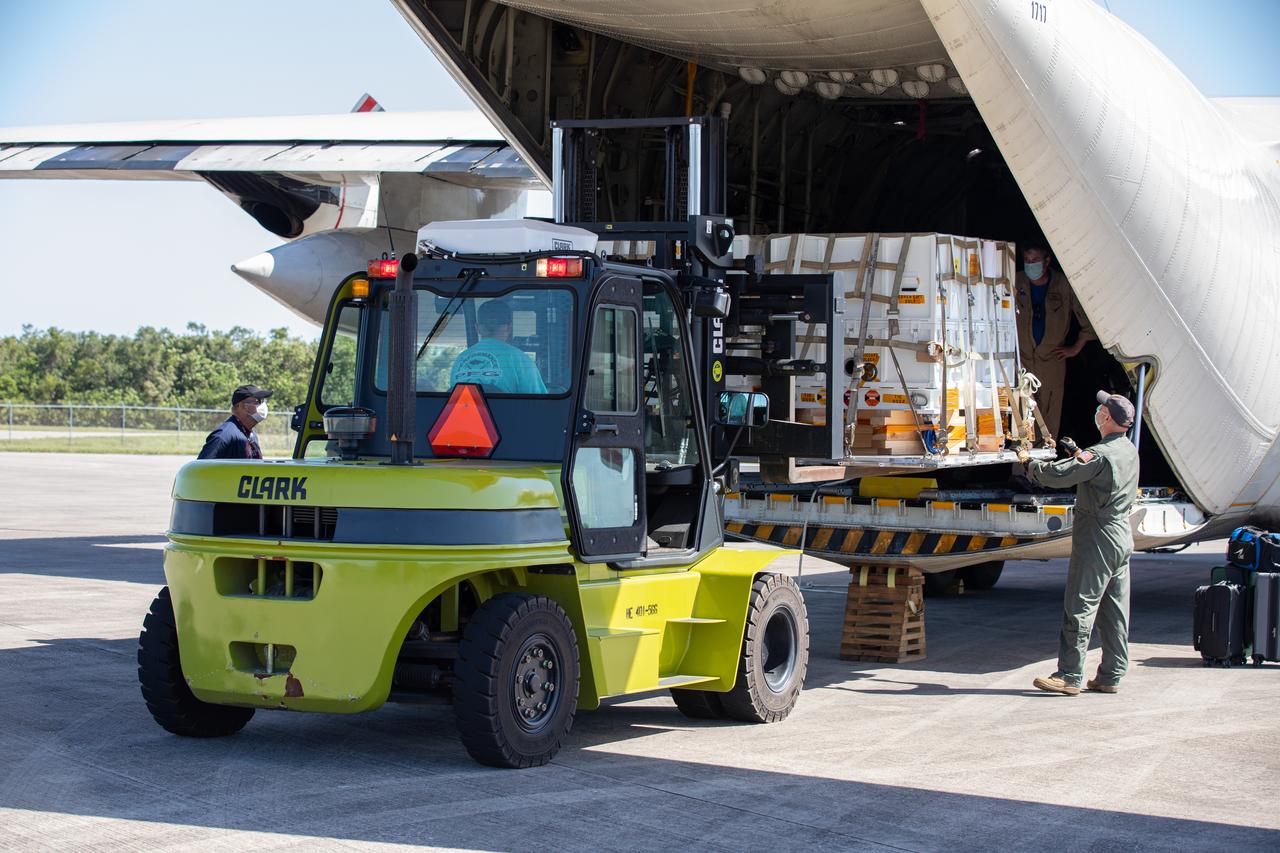
Workers offload the Adaptive Caching Assembly (ACA) for NASA’s Mars Perseverance rover from the agency’s C-130 aircraft at Kennedy Space Center’s Launch and Landing Facility in Florida on May 11, 2020. The ACA consists of seven motors and more than 3,000 parts, all working in unison to collect samples from the surface of Mars. A chief component of the assembly is the Sample Handling Arm, which will move sample tubes to the main robotic arm's coring drill and then transfer the filled sample tubes into a space to be sealed and stored. The Mars Perseverance rover is scheduled to launch in mid-July atop a United Launch Alliance Atlas V 541 rocket from Pad 41 at nearby Cape Canaveral Air Force Station. The rover is part of NASA’s Mars Exploration Program, a long-term effort of robotic exploration of the Red Planet. The rover will search for habitable conditions in the ancient past and signs of past microbial life on Mars. The Launch Services Program at Kennedy is responsible for launch management.
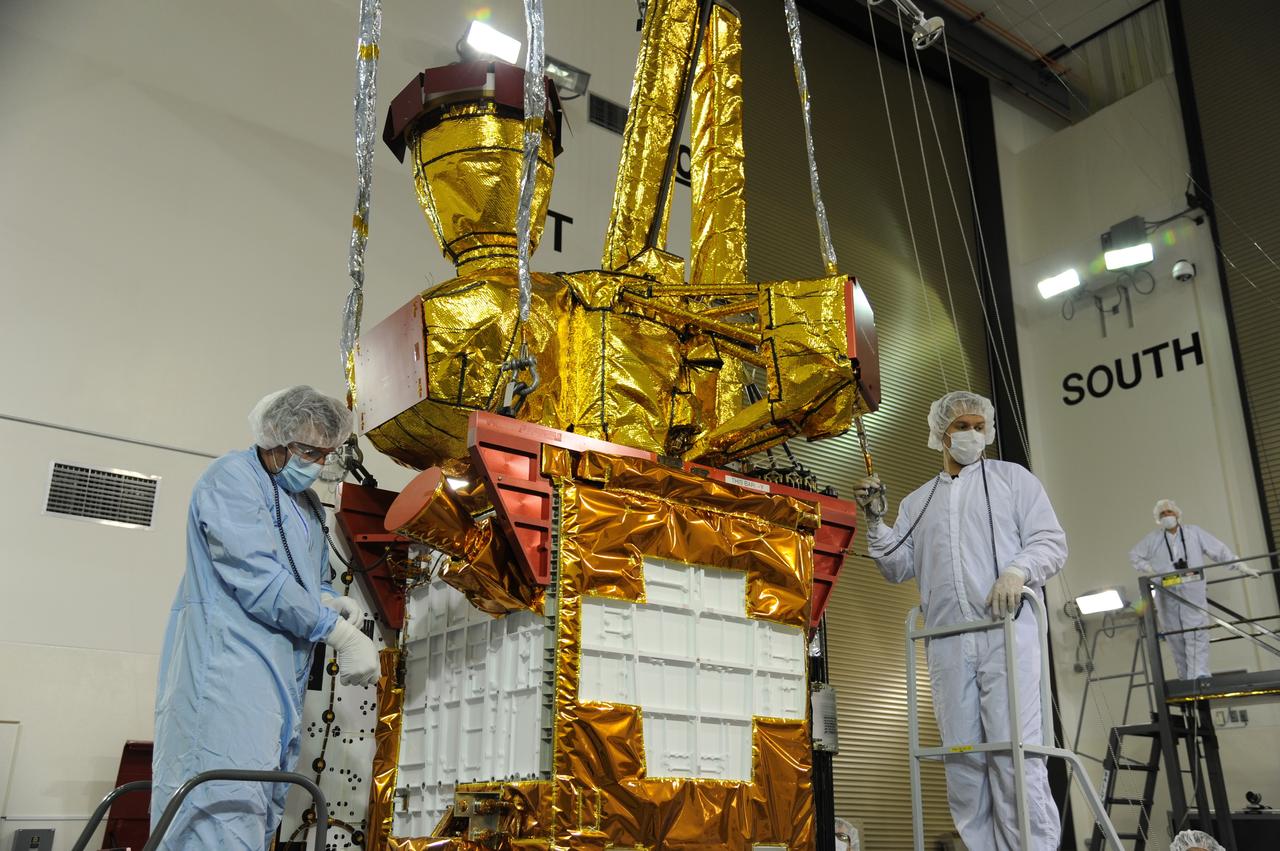
VANDENBERG AIR FORCE BASE, Calif. – Operations are underway to weigh NASA's Soil Moisture Active Passive, or SMAP, spacecraft in the clean room of the Astrotech payload processing facility on Vandenberg Air Force Base in California. The weighing of a spacecraft is standard procedure during prelaunch processing. SMAP will launch on a Delta II 7320 configuration vehicle featuring a United Launch Alliance first stage booster powered by an Aerojet Rocketdyne RS-27A main engine and three Alliant Techsystems, or ATK, strap-on solid rocket motors. Once on station in Earth orbit, SMAP will provide global measurements of soil moisture and its freeze/thaw state. NASA's Jet Propulsion Laboratory that built the observatory and its radar instrument also is responsible for SMAP project management and mission operations. Launch from Space Launch Complex 2 is targeted for Jan. 29, 2015. To learn more about SMAP, visit http://smap.jpl.nasa.gov. Photo credit: NASA/Randy Beaudoin
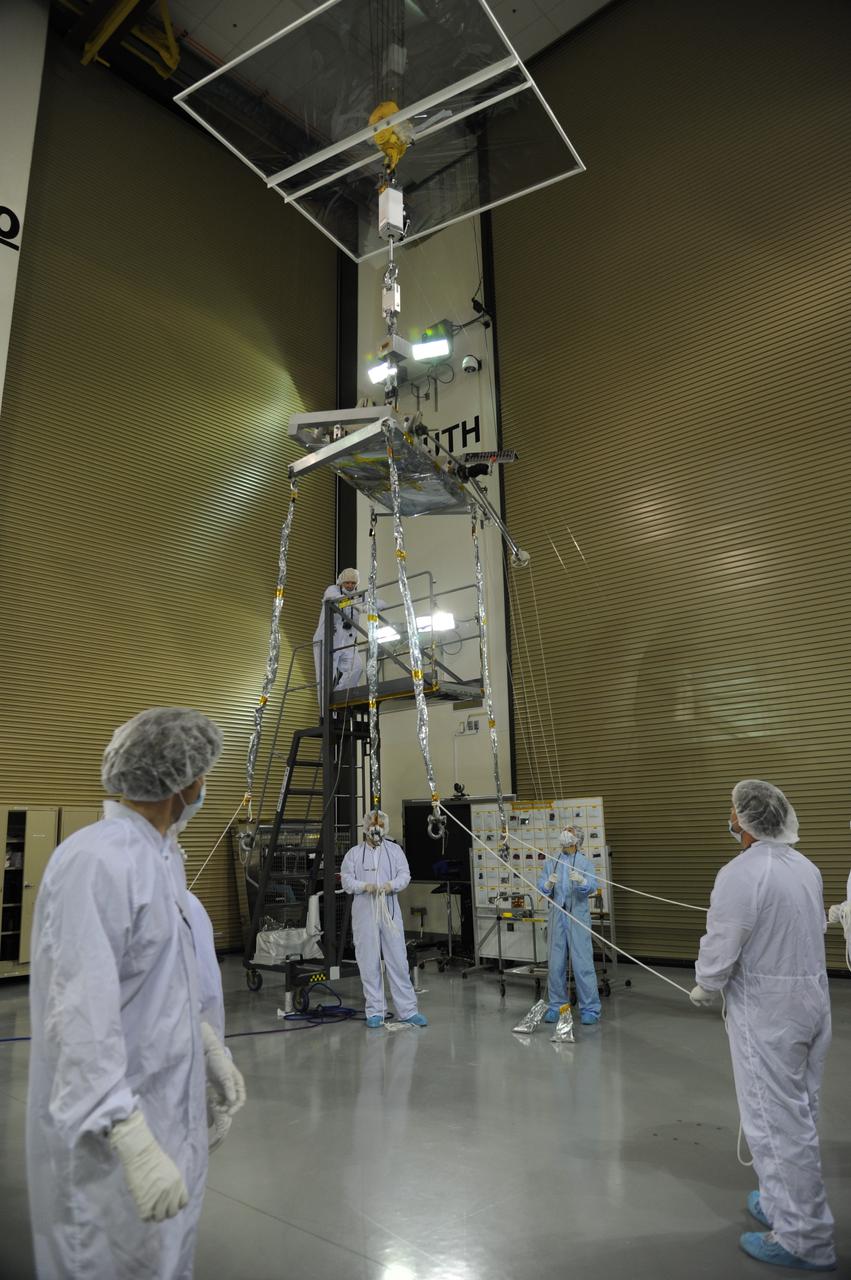
VANDENBERG AIR FORCE BASE, Calif. – Operations are underway to weigh NASA's Soil Moisture Active Passive, or SMAP, spacecraft in the clean room of the Astrotech payload processing facility on Vandenberg Air Force Base in California. The weighing of a spacecraft is standard procedure during prelaunch processing. SMAP will launch on a Delta II 7320 configuration vehicle featuring a United Launch Alliance first stage booster powered by an Aerojet Rocketdyne RS-27A main engine and three Alliant Techsystems, or ATK, strap-on solid rocket motors. Once on station in Earth orbit, SMAP will provide global measurements of soil moisture and its freeze/thaw state. NASA's Jet Propulsion Laboratory that built the observatory and its radar instrument also is responsible for SMAP project management and mission operations. Launch from Space Launch Complex 2 is targeted for Jan. 29, 2015. To learn more about SMAP, visit http://smap.jpl.nasa.gov. Photo credit: NASA/Randy Beaudoin
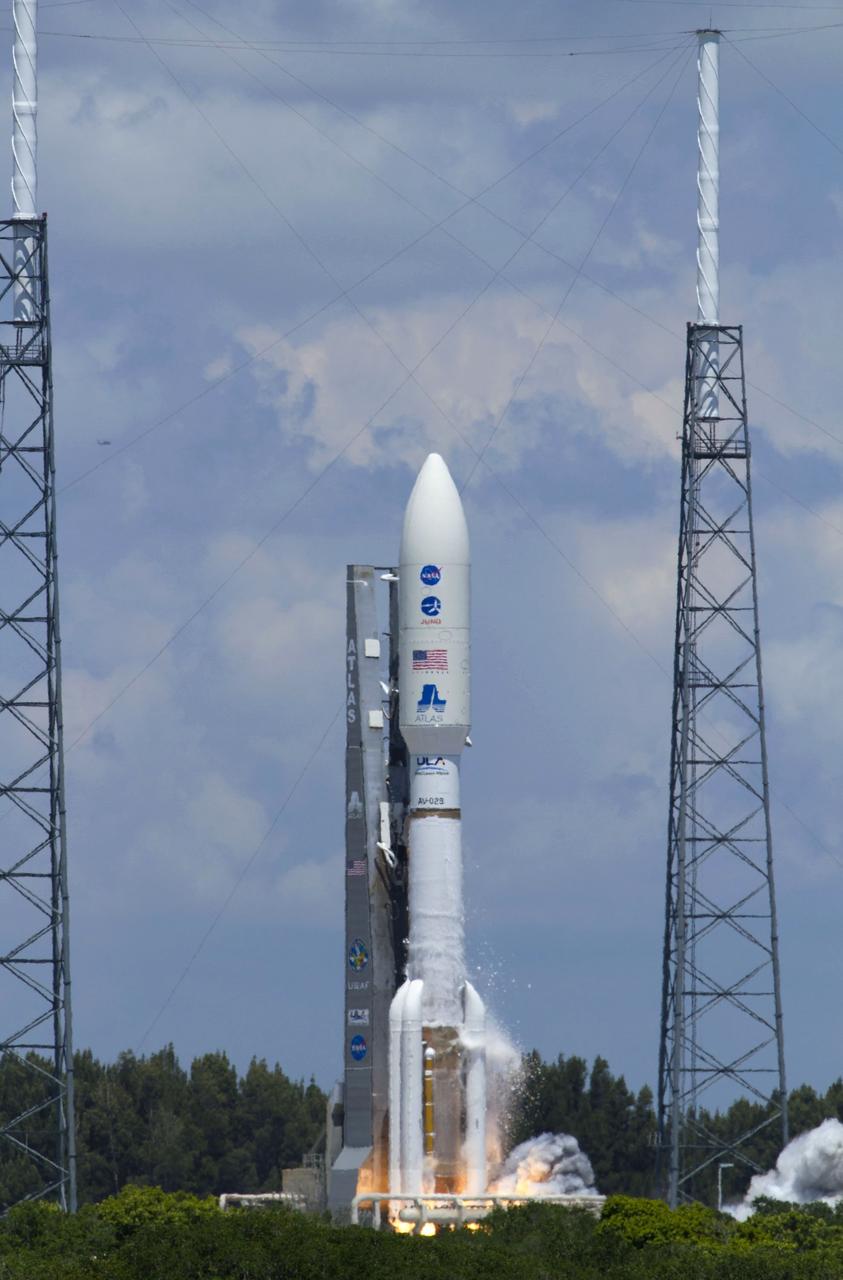
CAPE CANAVERAL, Fla. -- Frost breaks away from the first stage of the United Launch Alliance Atlas V-551 launch vehicle carrying NASA's Juno planetary probe as its motors ignite on the pad at Space Launch Complex 41 on Cape Canaveral Air Force Station in Florida. The frost forms when the stage is filled with its supercold liquid oxygen fuel. Liftoff was at 12:25 p.m. EDT Aug. 5. The solar-powered spacecraft will orbit Jupiter's poles 33 times to find out more about the gas giant's origins, structure, atmosphere and magnetosphere and investigate the existence of a solid planetary core. NASA's Jet Propulsion Laboratory, Pasadena, Calif., manages the Juno mission for the principal investigator, Scott Bolton, of Southwest Research Institute in San Antonio. The Juno mission is part of the New Frontiers Program managed at NASA's Marshall Space Flight Center in Huntsville, Ala. Lockheed Martin Space Systems, Denver, built the spacecraft. Launch management for the mission is the responsibility of NASA's Launch Services Program at the Kennedy Space Center in Florida. For more information, visit www.nasa.gov/juno. Photo credit: NASA/George Roberts and Rusty Backer
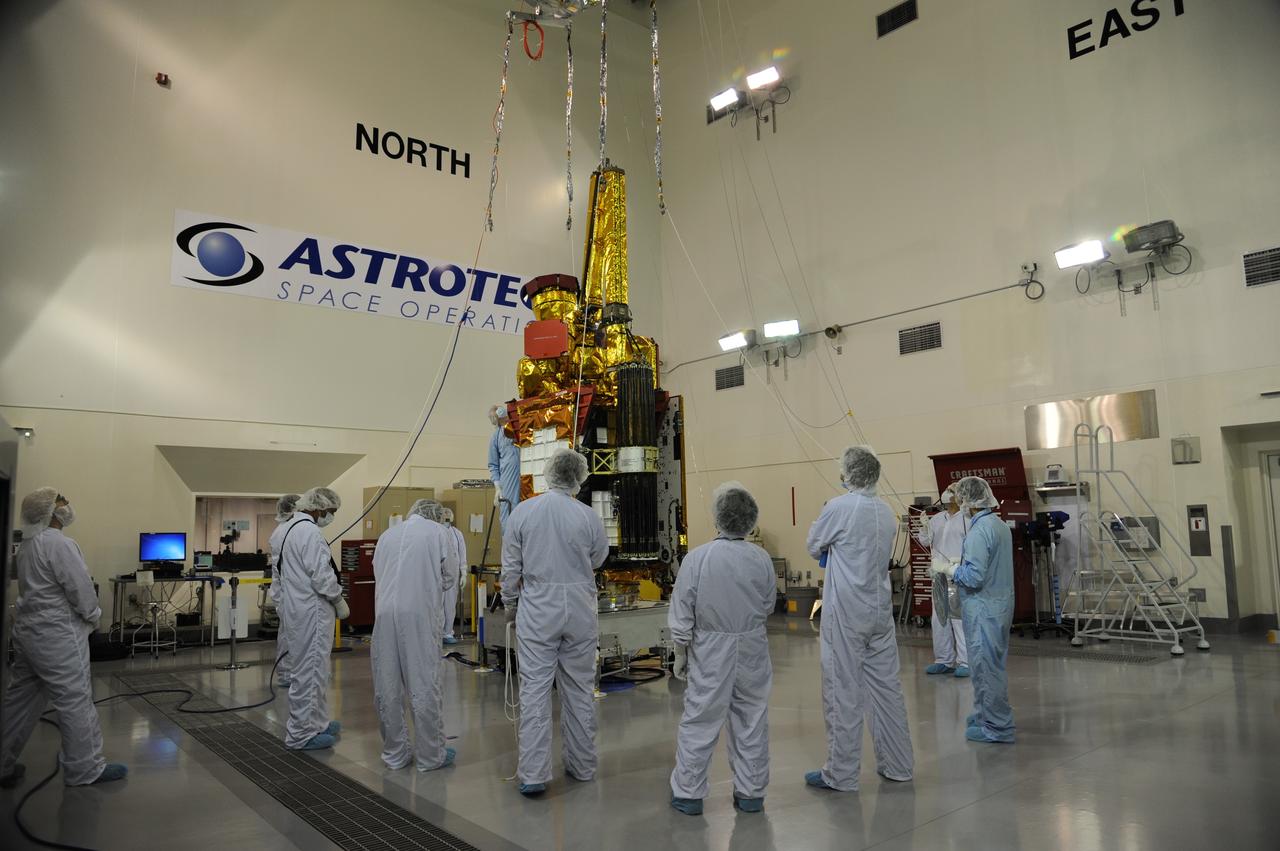
VANDENBERG AIR FORCE BASE, Calif. – Operations are underway to weigh NASA's Soil Moisture Active Passive, or SMAP, spacecraft in the clean room of the Astrotech payload processing facility on Vandenberg Air Force Base in California. The weighing of a spacecraft is standard procedure during prelaunch processing. SMAP will launch on a Delta II 7320 configuration vehicle featuring a United Launch Alliance first stage booster powered by an Aerojet Rocketdyne RS-27A main engine and three Alliant Techsystems, or ATK, strap-on solid rocket motors. Once on station in Earth orbit, SMAP will provide global measurements of soil moisture and its freeze/thaw state. NASA's Jet Propulsion Laboratory that built the observatory and its radar instrument also is responsible for SMAP project management and mission operations. Launch from Space Launch Complex 2 is targeted for Jan. 29, 2015. To learn more about SMAP, visit http://smap.jpl.nasa.gov. Photo credit: NASA/Randy Beaudoin
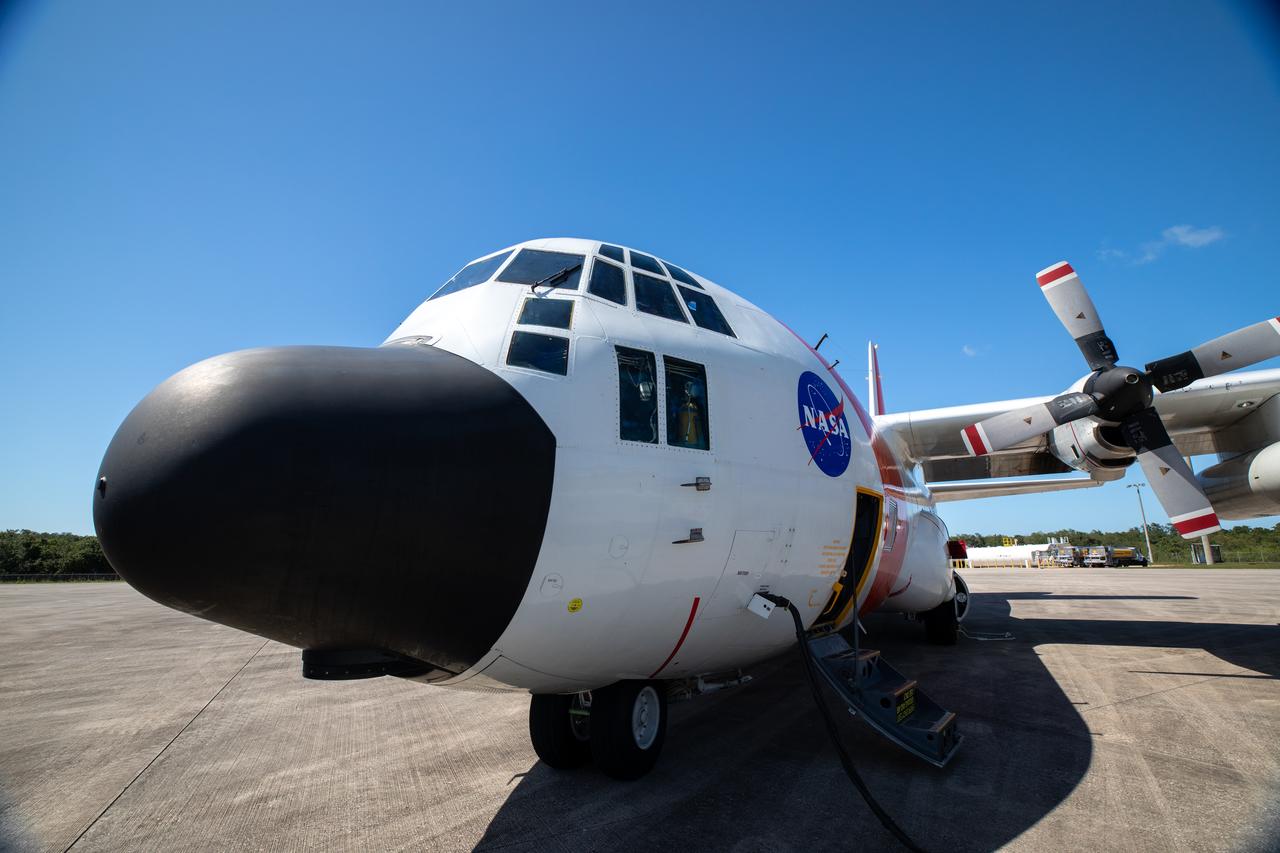
NASA’s C-130 aircraft arrives at Kennedy Space Center’s Launch and Landing Facility in Florida on May 11, 2020, carrying the Adaptive Caching Assembly (ACA) for NASA’s Mars Perseverance rover The ACA consists of seven motors and more than 3,000 parts, all working in unison to collect samples from the surface of Mars. A chief component of the assembly is the Sample Handling Arm, which will move sample tubes to the main robotic arm's coring drill and then transfer the filled sample tubes into a space to be sealed and stored. The Mars Perseverance rover is scheduled to launch in mid-July atop a United Launch Alliance Atlas V 541 rocket from Pad 41 at nearby Cape Canaveral Air Force Station. The rover is part of NASA’s Mars Exploration Program, a long-term effort of robotic exploration of the Red Planet. The rover will search for habitable conditions in the ancient past and signs of past microbial life on Mars. The Launch Services Program at Kennedy is responsible for launch management.
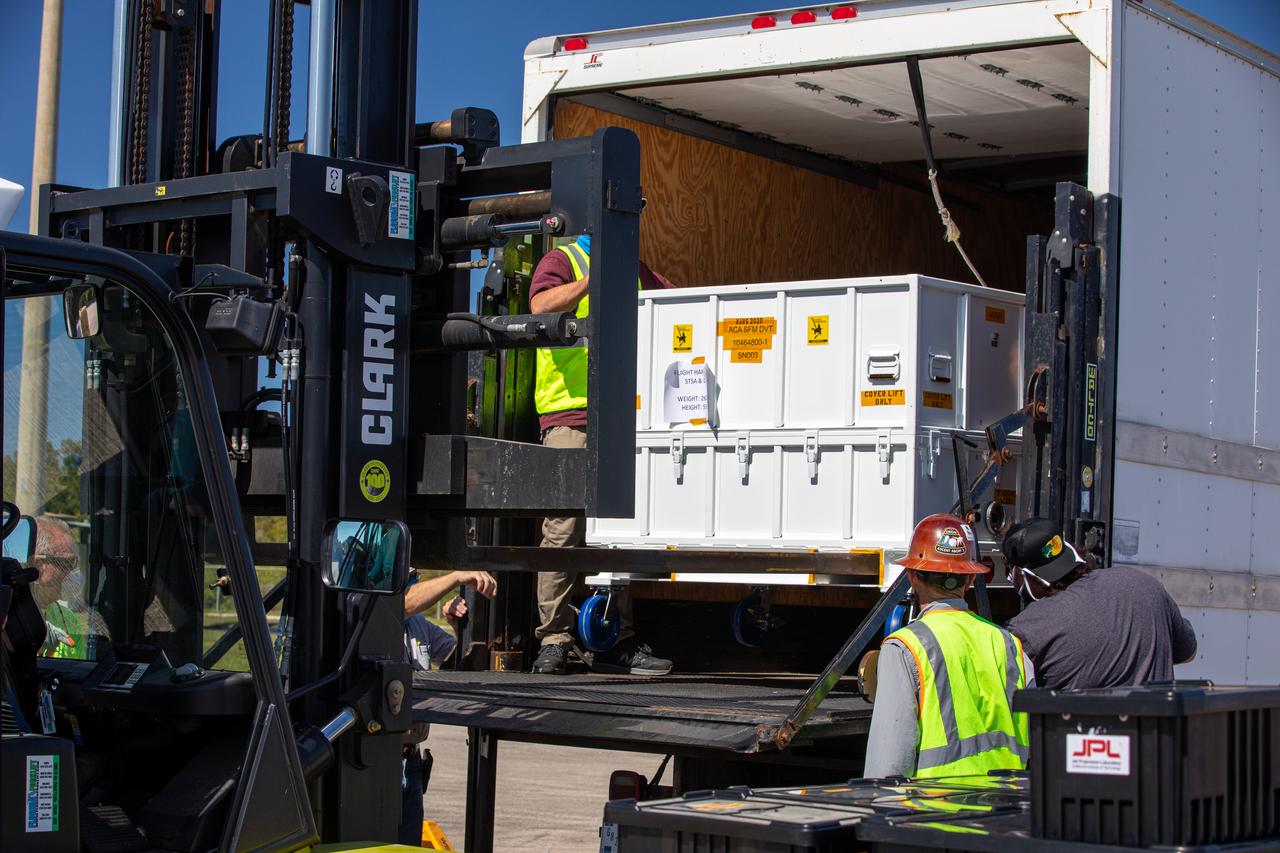
Workers use a special handling device to offload the Adaptive Caching Assembly (ACA) for NASA’s Mars Perseverance rover from the agency’s C-130 aircraft at Kennedy Space Center’s Launch and Landing Facility in Florida on May 11, 2020. The ACA consists of seven motors and more than 3,000 parts, all working in unison to collect samples from the surface of Mars. A chief component of the assembly is the Sample Handling Arm, which will move sample tubes to the main robotic arm's coring drill and then transfer the filled sample tubes into a space to be sealed and stored. The Mars Perseverance rover is scheduled to launch in mid-July atop a United Launch Alliance Atlas V 541 rocket from Pad 41 at nearby Cape Canaveral Air Force Station. The rover is part of NASA’s Mars Exploration Program, a long-term effort of robotic exploration of the Red Planet. The rover will search for habitable conditions in the ancient past and signs of past microbial life on Mars. The Launch Services Program at Kennedy is responsible for launch management.
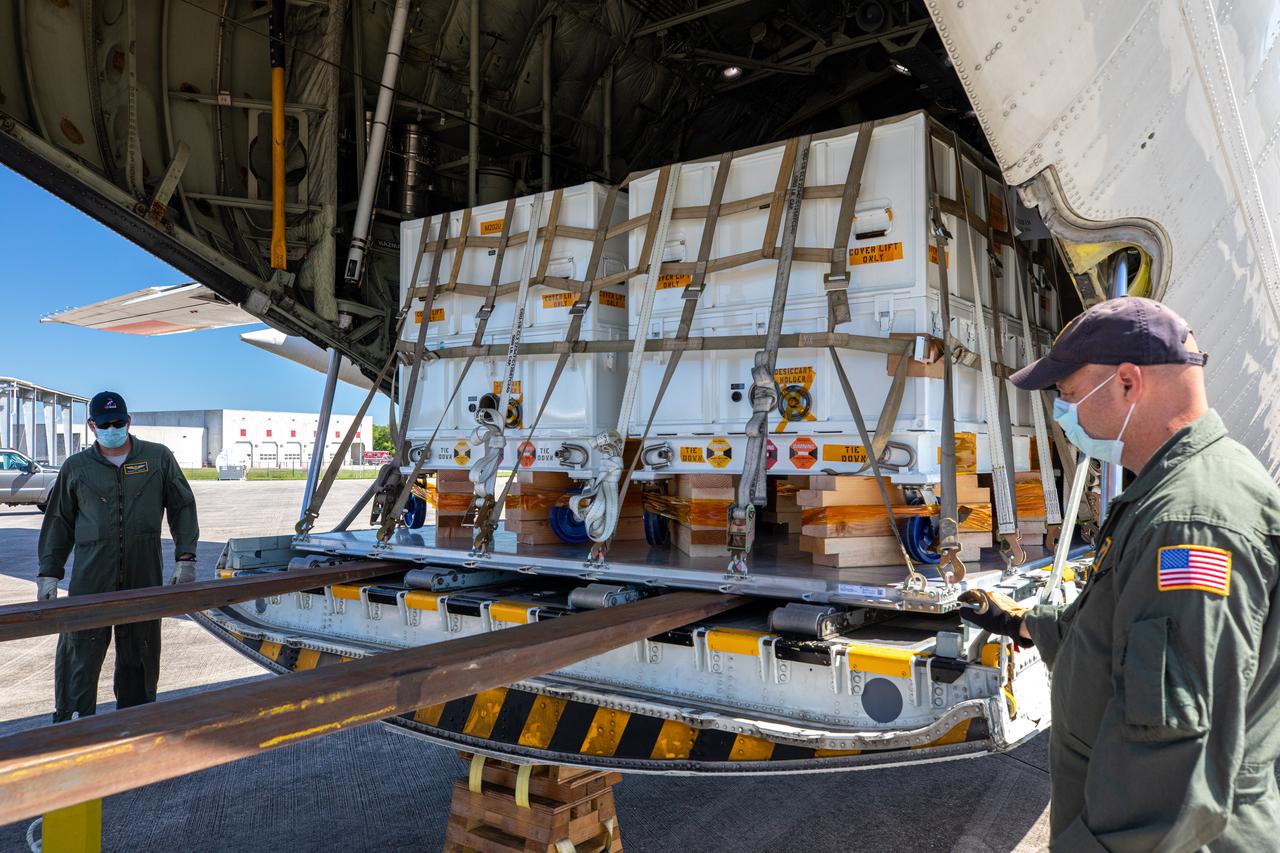
Workers begin to offload the Adaptive Caching Assembly (ACA) for NASA’s Mars Perseverance rover from the agency’s C-130 aircraft at Kennedy Space Center’s Launch and Landing Facility in Florida on May 11, 2020. The ACA consists of seven motors and more than 3,000 parts, all working in unison to collect samples from the surface of Mars. A chief component of the assembly is the Sample Handling Arm, which will move sample tubes to the main robotic arm's coring drill and then transfer the filled sample tubes into a space to be sealed and stored. The Mars Perseverance rover is scheduled to launch in mid-July atop a United Launch Alliance Atlas V 541 rocket from Pad 41 at nearby Cape Canaveral Air Force Station. The rover is part of NASA’s Mars Exploration Program, a long-term effort of robotic exploration of the Red Planet. The rover will search for habitable conditions in the ancient past and signs of past microbial life on Mars. The Launch Services Program at Kennedy is responsible for launch management.
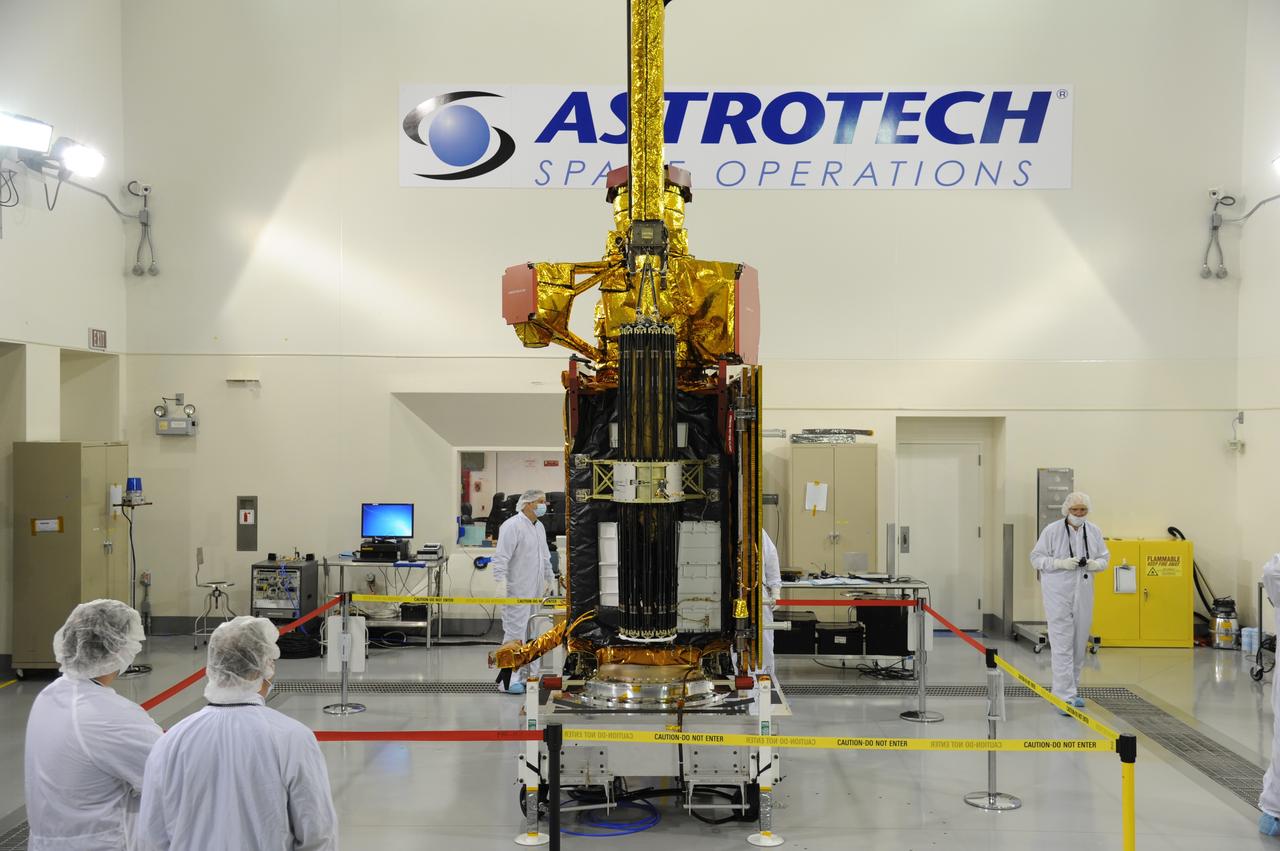
VANDENBERG AIR FORCE BASE, Calif. – Preparations are underway to weigh NASA's Soil Moisture Active Passive, or SMAP, spacecraft in the clean room of the Astrotech payload processing facility on Vandenberg Air Force Base in California. The weighing of a spacecraft is standard procedure during prelaunch processing. SMAP will launch on a Delta II 7320 configuration vehicle featuring a United Launch Alliance first stage booster powered by an Aerojet Rocketdyne RS-27A main engine and three Alliant Techsystems, or ATK, strap-on solid rocket motors. Once on station in Earth orbit, SMAP will provide global measurements of soil moisture and its freeze/thaw state. NASA's Jet Propulsion Laboratory that built the observatory and its radar instrument also is responsible for SMAP project management and mission operations. Launch from Space Launch Complex 2 is targeted for Jan. 29, 2015. To learn more about SMAP, visit http://smap.jpl.nasa.gov. Photo credit: NASA/Randy Beaudoin
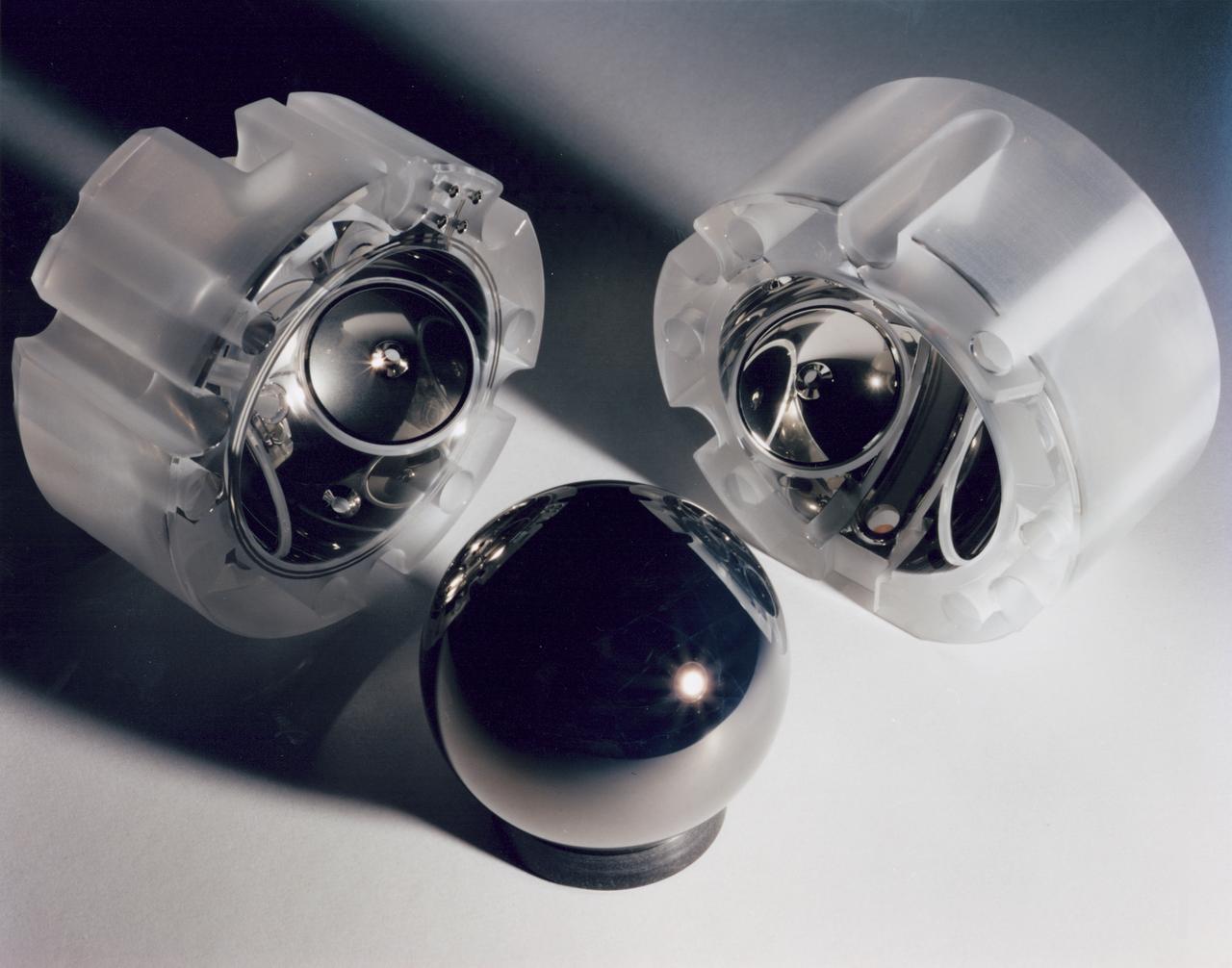
The Gravity Probe B (GP-B) is the relativity experiment developed at Stanford University to test two extraordinary predictions of Albert Einstein’s general theory of relativity. The experiment will measure, very precisely, the expected tiny changes in the direction of the spin axes of four gyroscopes contained in an Earth-orbiting satellite at a 400-mile altitude. So free are the gyroscopes from disturbance that they will provide an almost perfect space-time reference system. They will measure how space and time are very slightly warped by the presence of the Earth, and, more profoundly, how the Earth’s rotation very slightly drags space-time around with it. These effects, though small for the Earth, have far-reaching implications for the nature of matter and the structure of the Universe. This photograph is a close up of a niobium-coated gyroscope motor and its housing halves. GP-B is among the most thoroughly researched programs ever undertaken by NASA. This is the story of a scientific quest in which physicists and engineers have collaborated closely over many years. Inspired by their quest, they have invented a whole range of technologies that are already enlivening other branches of science and engineering. Launched April 20, 2004 , the GP-B program was managed for NASA by the Marshall Space Flight Center. Development of the GP-B is the responsibility of Stanford University along with major subcontractor Lockheed Martin Corporation. (Image credit to Don Harley.)

Members of the NISAR (NASA-ISRO Synthetic Aperture Radar) mission team at NASA's Jet Propulsion Laboratory in Southern California deployed the satellite's radar antenna reflector on Aug. 15, 2025. The JPL team, seen here in the lab's mission control, worked with a group at the Indian Space Research Organisation Telemetry, Tracking and Command Network in Bengaluru, India. Weighing about 142 pounds (64 kilograms) and measuring roughly 2 feet (0.6 meters) in diameter in its stowed configuration, the reflector unfurled to its full size, 39 feet (12 meters), over the course of 37 minutes. The deployment consisted of two stages – an initial "bloom" powered by the release of tension stored in the reflector's flexible frame while it was stowed. Subsequent activation of motors and cables then pulled the antenna into its final, operational position, where it was locked in place. The drum-shaped reflector is an essential component that enables the mission to collect data tracking change to Earth's land and ice surfaces. Observations from NISAR will benefit humanity by helping researchers around the world better understand changes in our planet's surface, including its ice sheets, glaciers, and sea ice. It also will capture changes in forest and wetland ecosystems and track movement and deformation of Earth's crust by phenomena such as earthquakes, landslides, and volcanic activity. The global and rapid coverage from NISAR will provide unprecedented support for disaster response, producing data to assist in mitigating and assessing damage, with observations before and after catastrophic events available in short time frames. The mission is an equal collaboration between NASA and the Indian Space Research Organisation and marks the first time the two agencies have cooperated on hardware development for an Earth-observing mission. NISAR launched from ISRO's Satish Dhawan Space Centre on India's southeastern coast on July 30, 2025. https://photojournal.jpl.nasa.gov/catalog/PIA26612

This image from March 2, 1959 shows engineers from NASA's Jet Propulsion Laboratory checking NASA's Pioneer 4 spacecraft, the gold-and-black-colored cone sitting atop the white fourth-stage motor of the Juno II launch vehicle in Florida. Launched on March 3, 1959, NASA's Pioneer 4 was the first American mission to escape Earth orbit and the second of two early attempts by the United States to send a spacecraft to the Moon. The spacecraft achieved its primary objective — to put itself on a trajectory from Earth to the Moon. While it flew farther away from the Moon than expected and didn't take the images of the Moon as intended, Pioneer 4 did provide extensive and valuable data on Earth's radiation belt and the tracking of space objects. After 82 hours of transmissions from Pioneer 4's tiny radio and 655,000 miles (1.05 million kilometers) of travel — the farthest tracking distance for a human-made object at the time — contact is lost on March 6, 1959. Pioneer 4 is still in orbit around the Sun. The mission was carried out while JPL was transitioning from being part of the Army Ballistic Missile Agency to NASA. It marked the end of the U.S. Army's pioneering space program and the beginning of NASA's lunar program. JPL, in Pasadena, California, was responsible for mission design and management for both agencies. More information about Pioneer 4 can be found at: https://solarsystem.nasa.gov/missions/pioneer-4/in-depth/ https://photojournal.jpl.nasa.gov/catalog/PIA23497