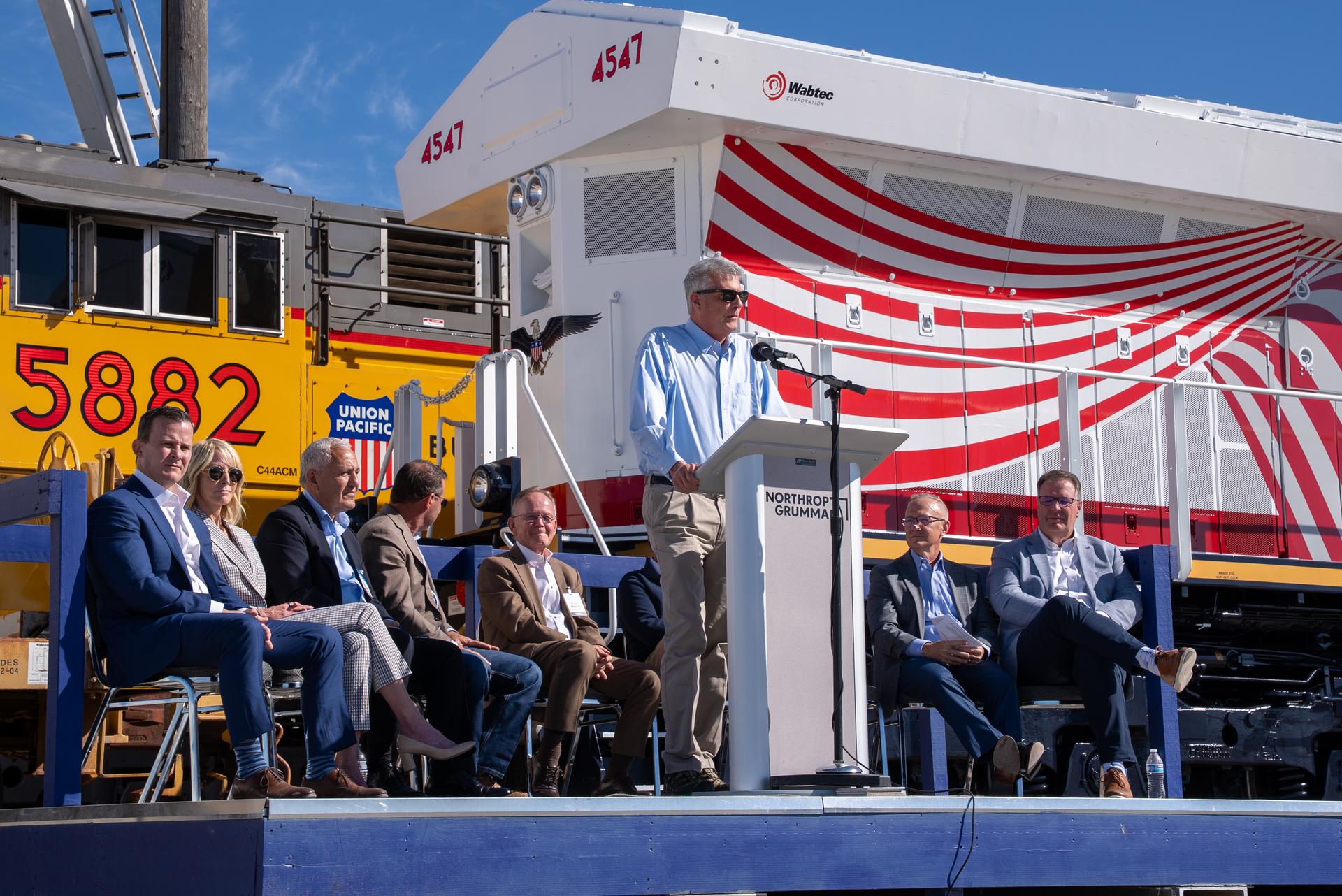
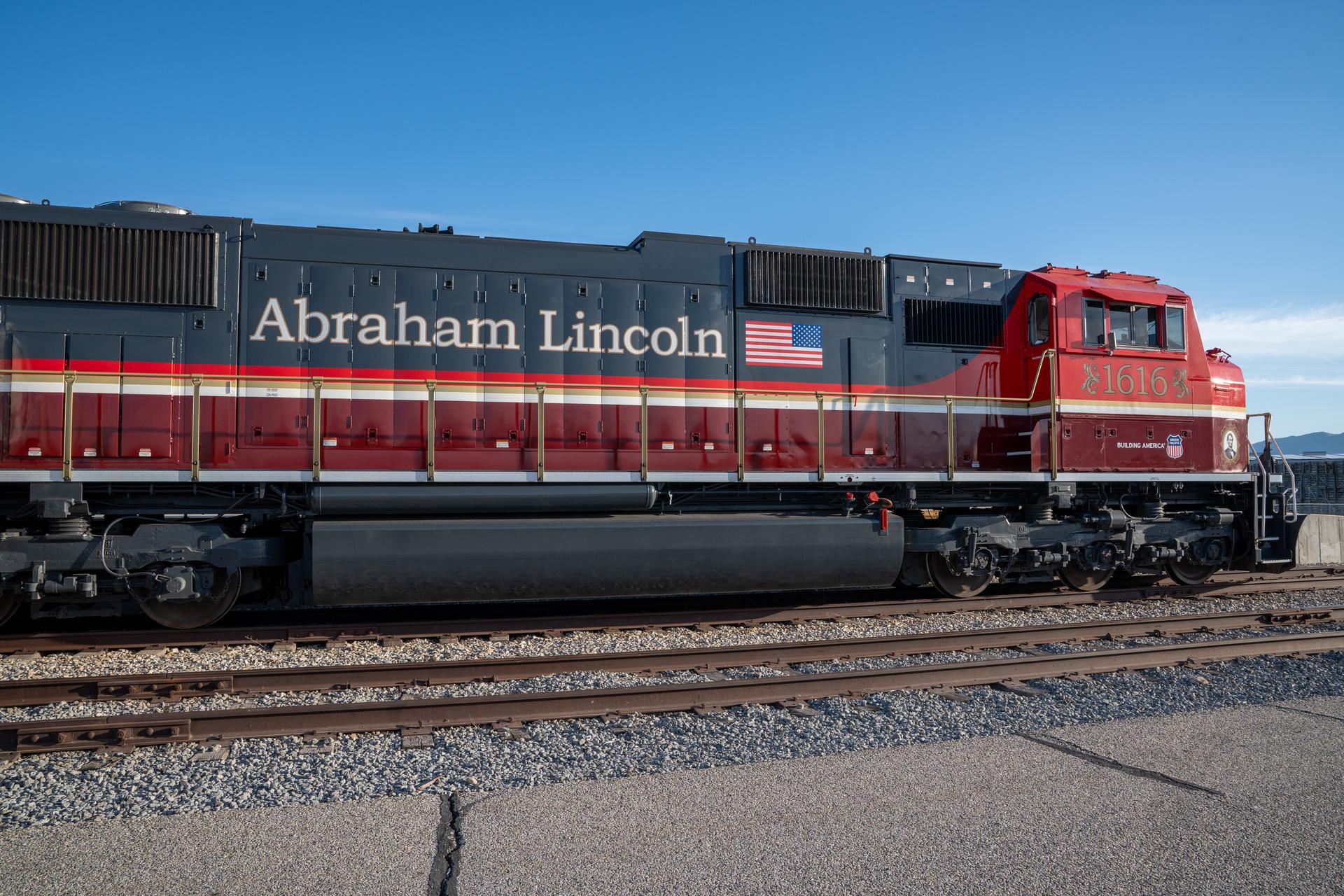
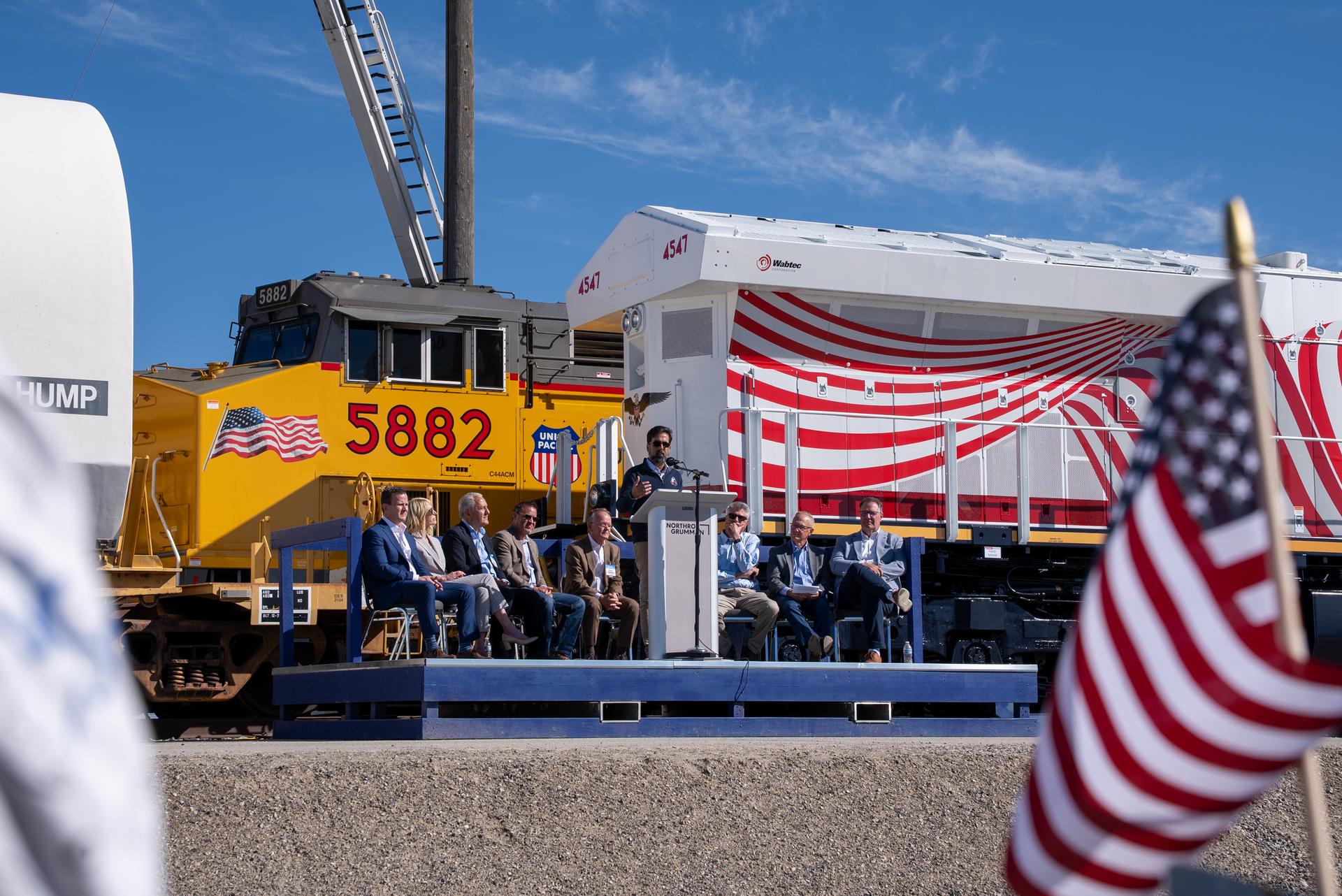
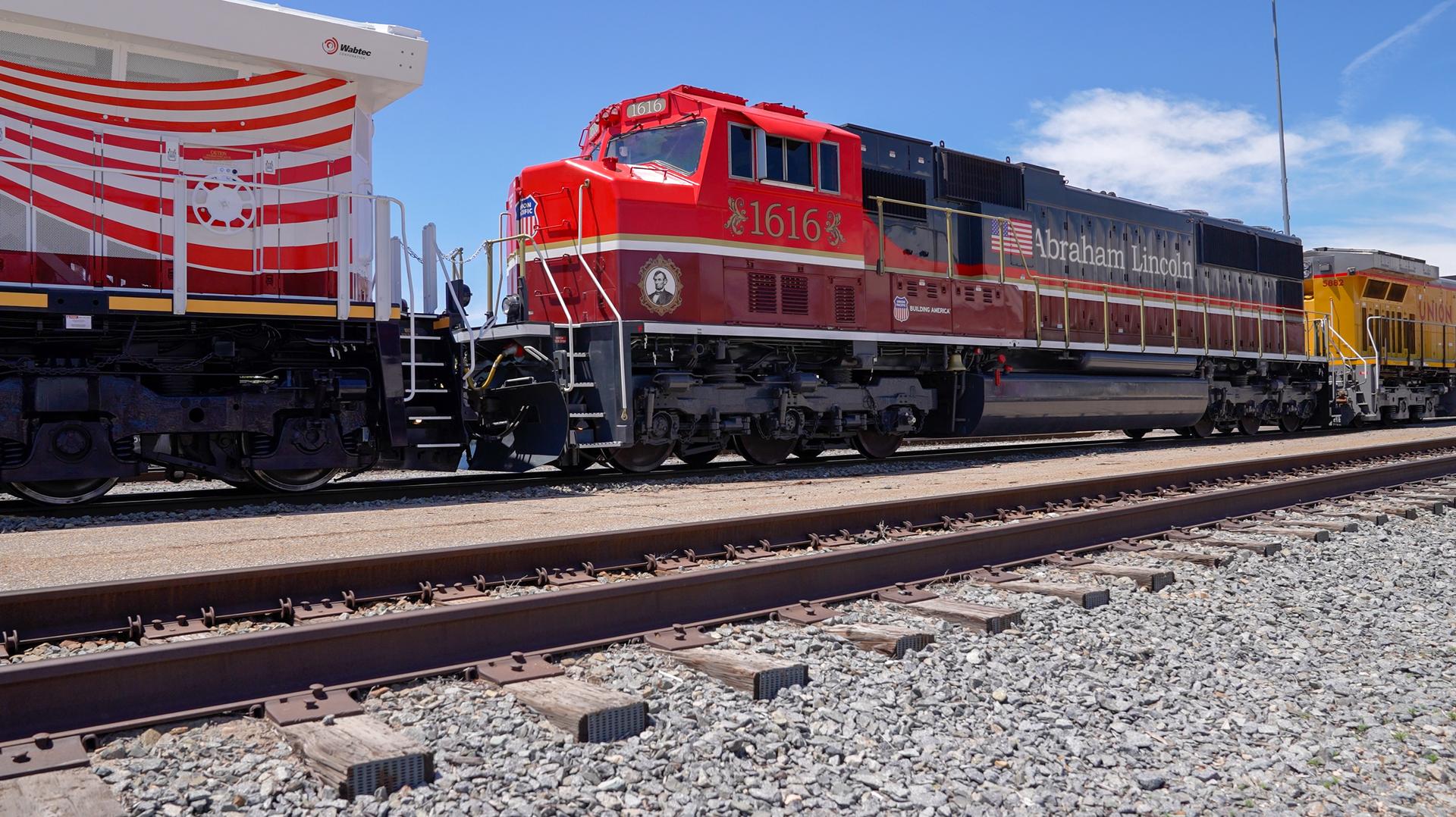
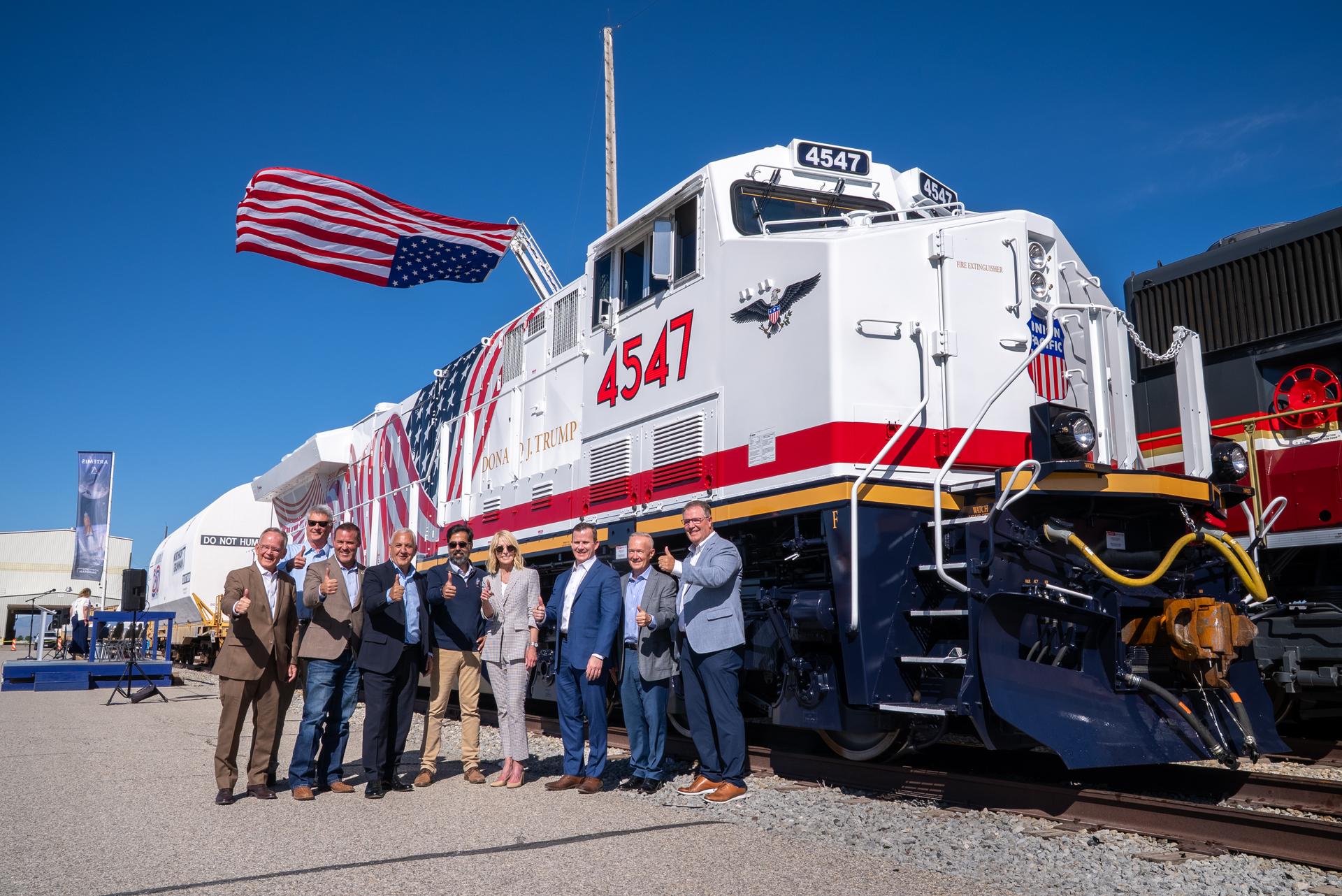
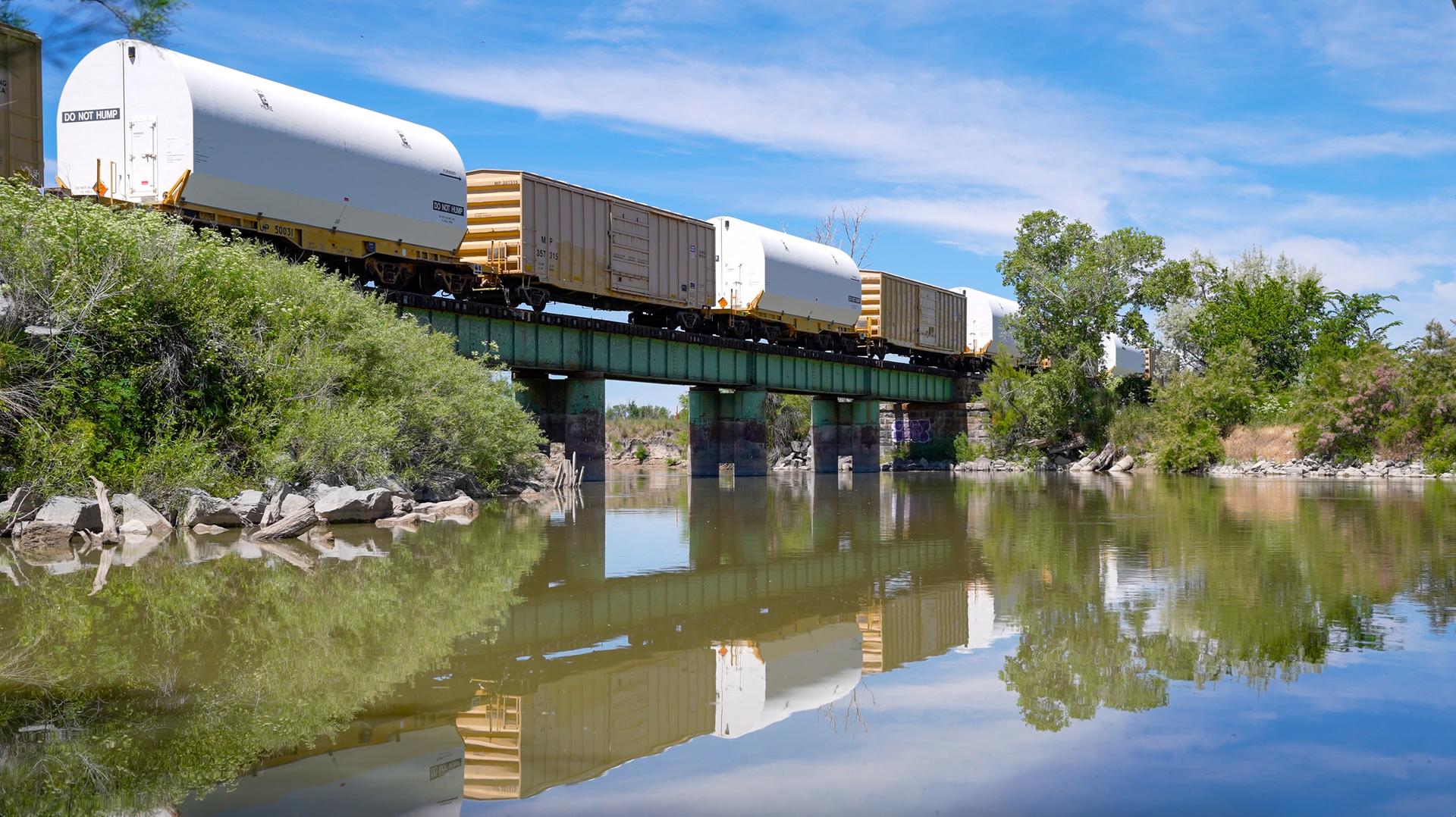
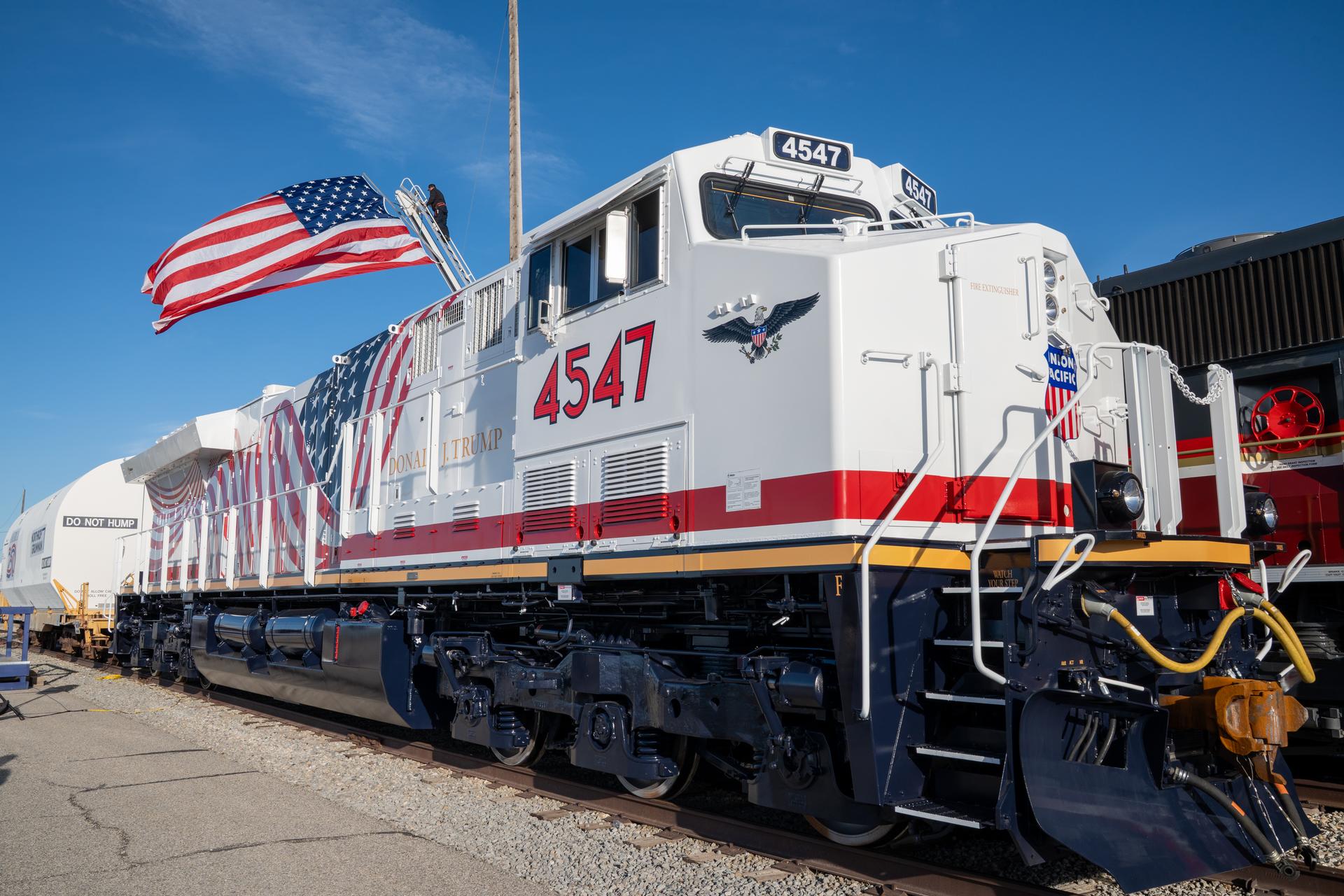
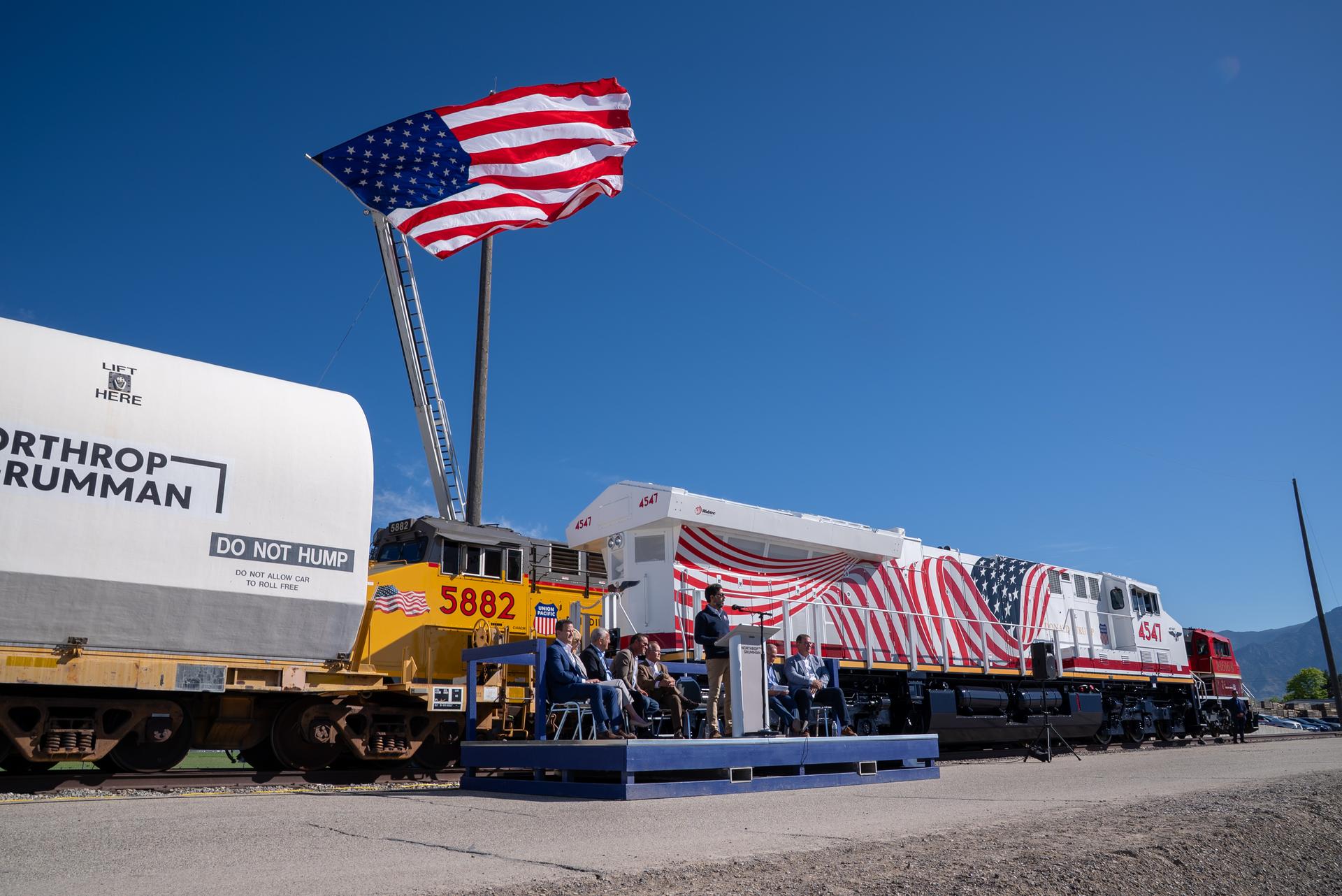
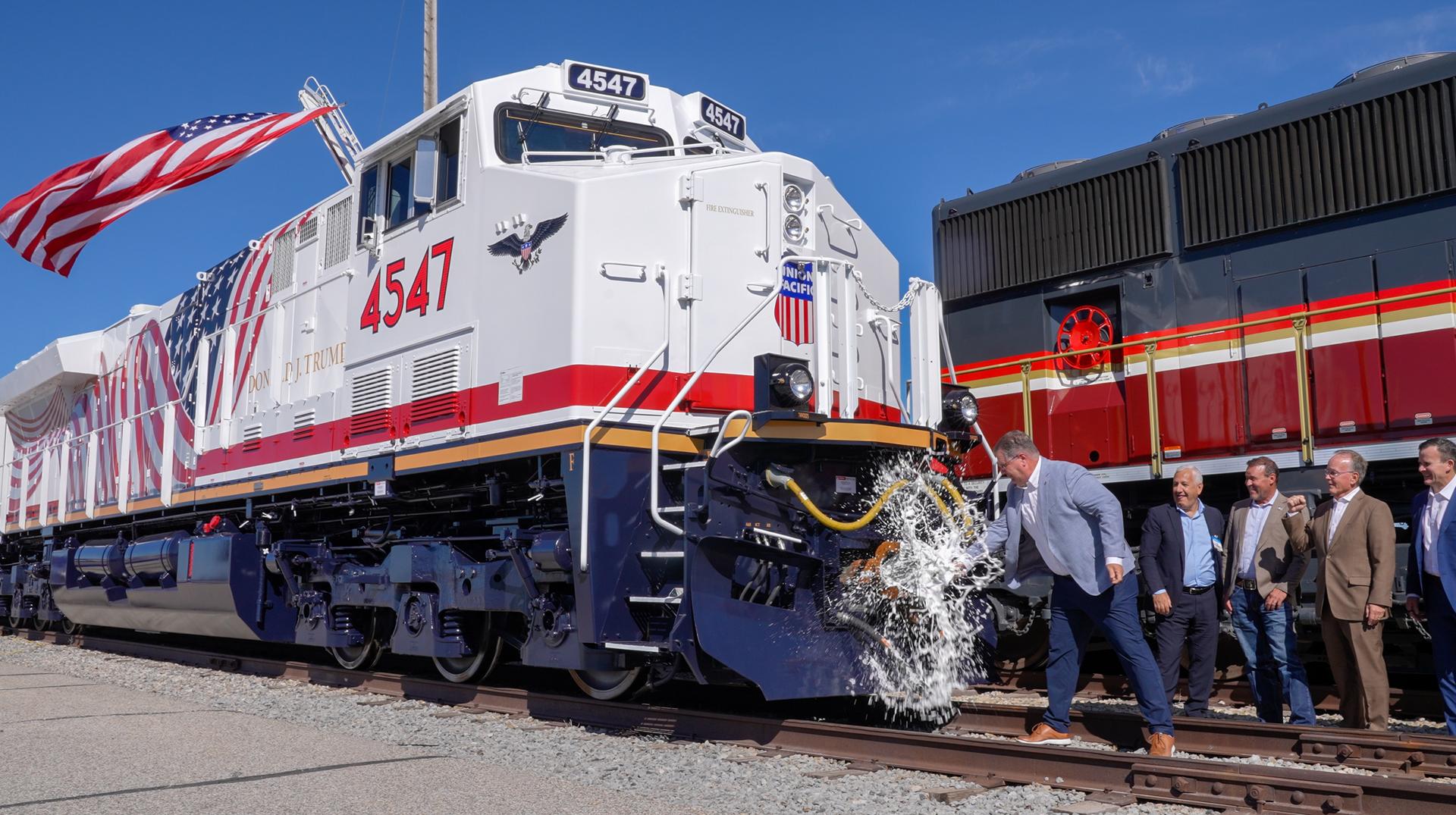
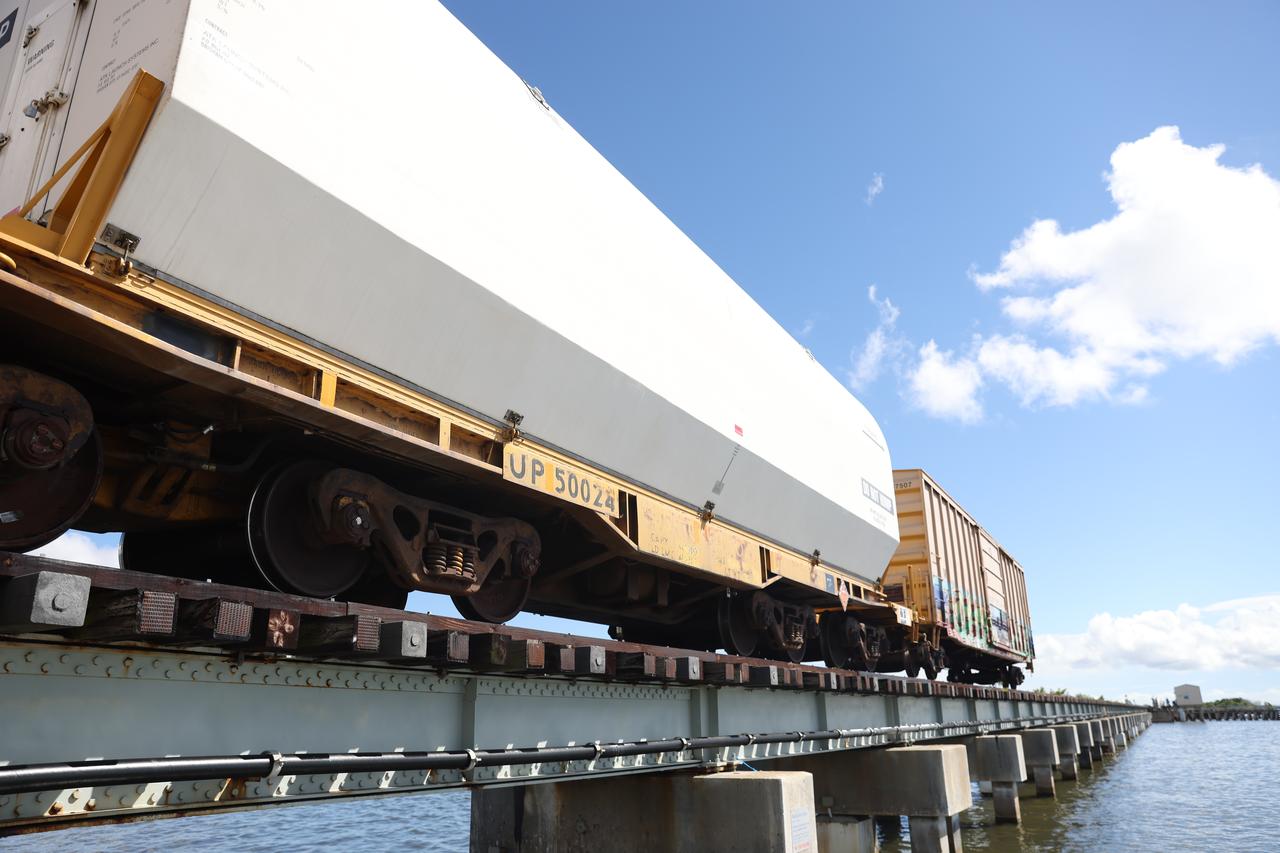
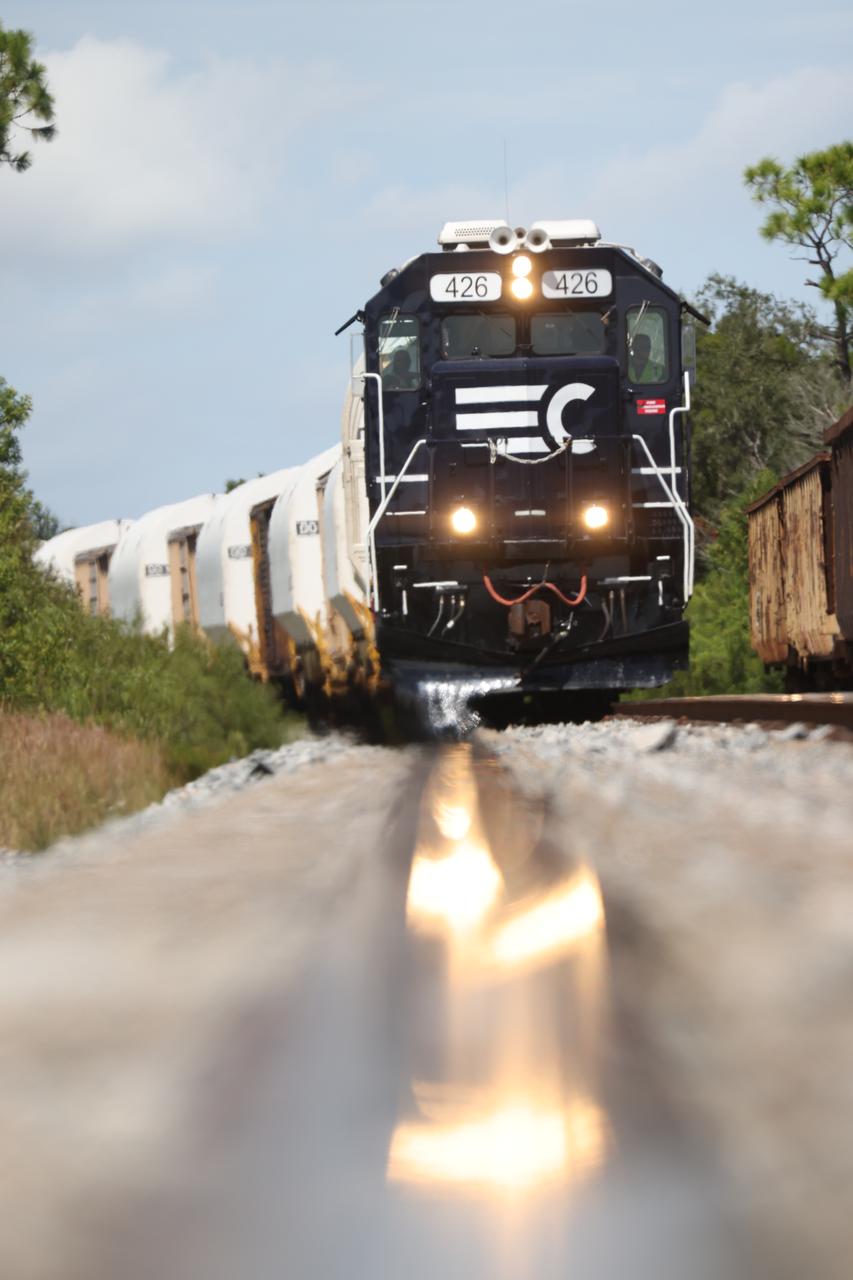
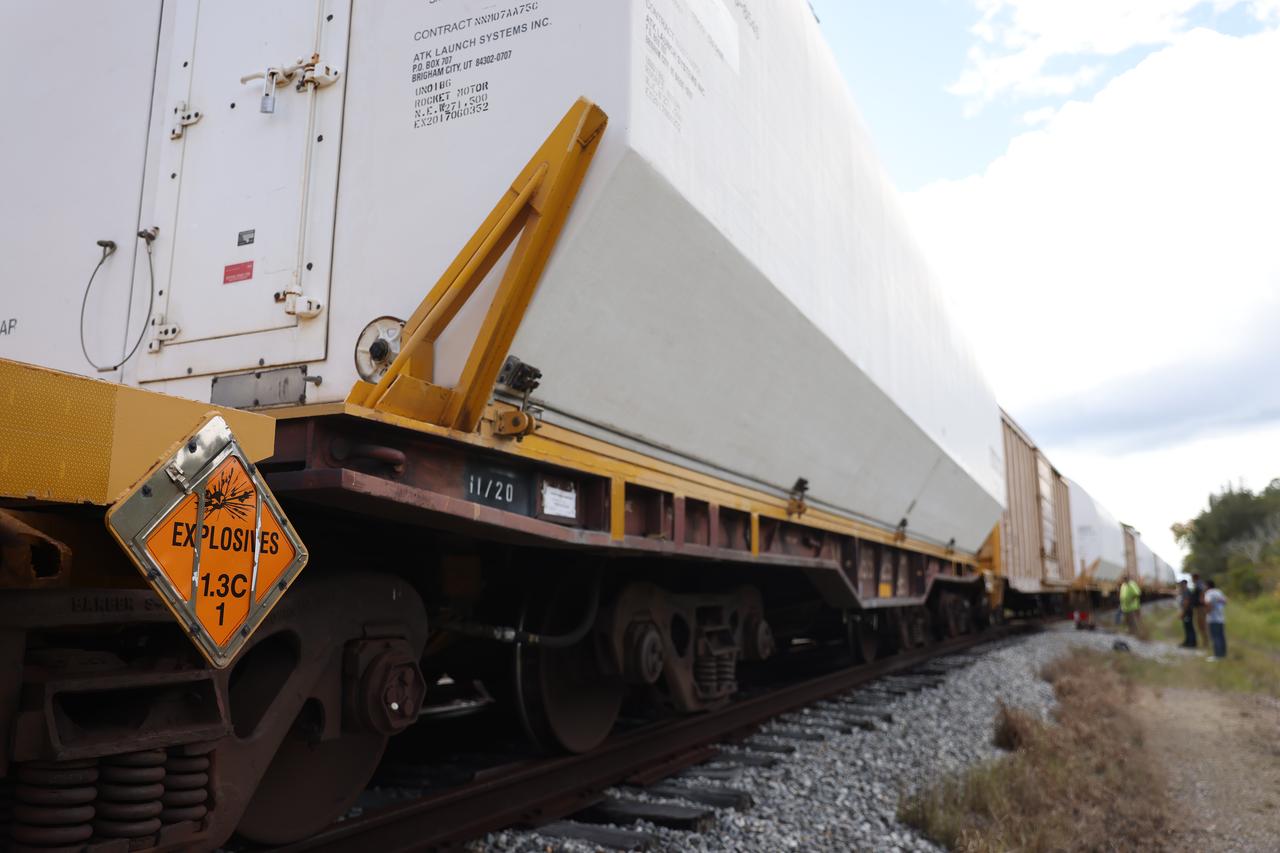
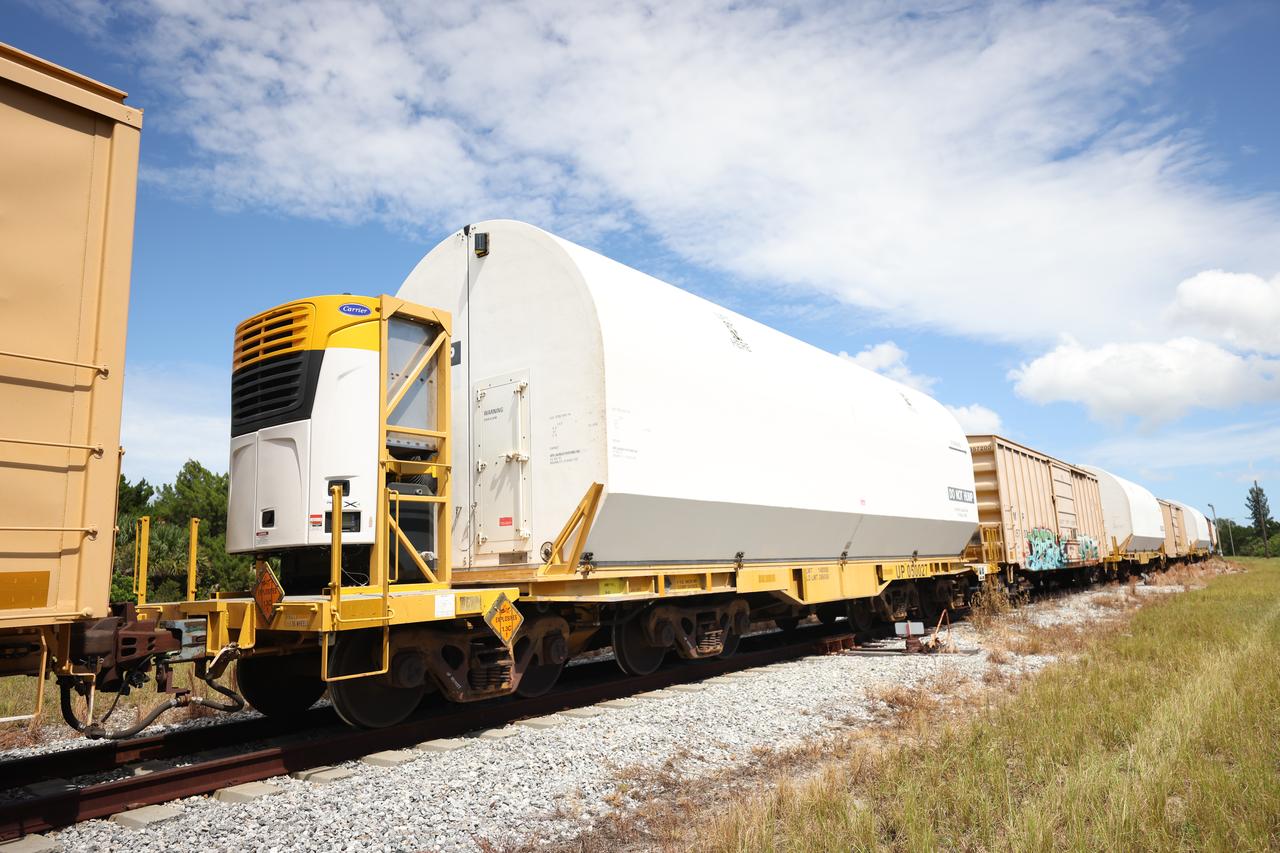
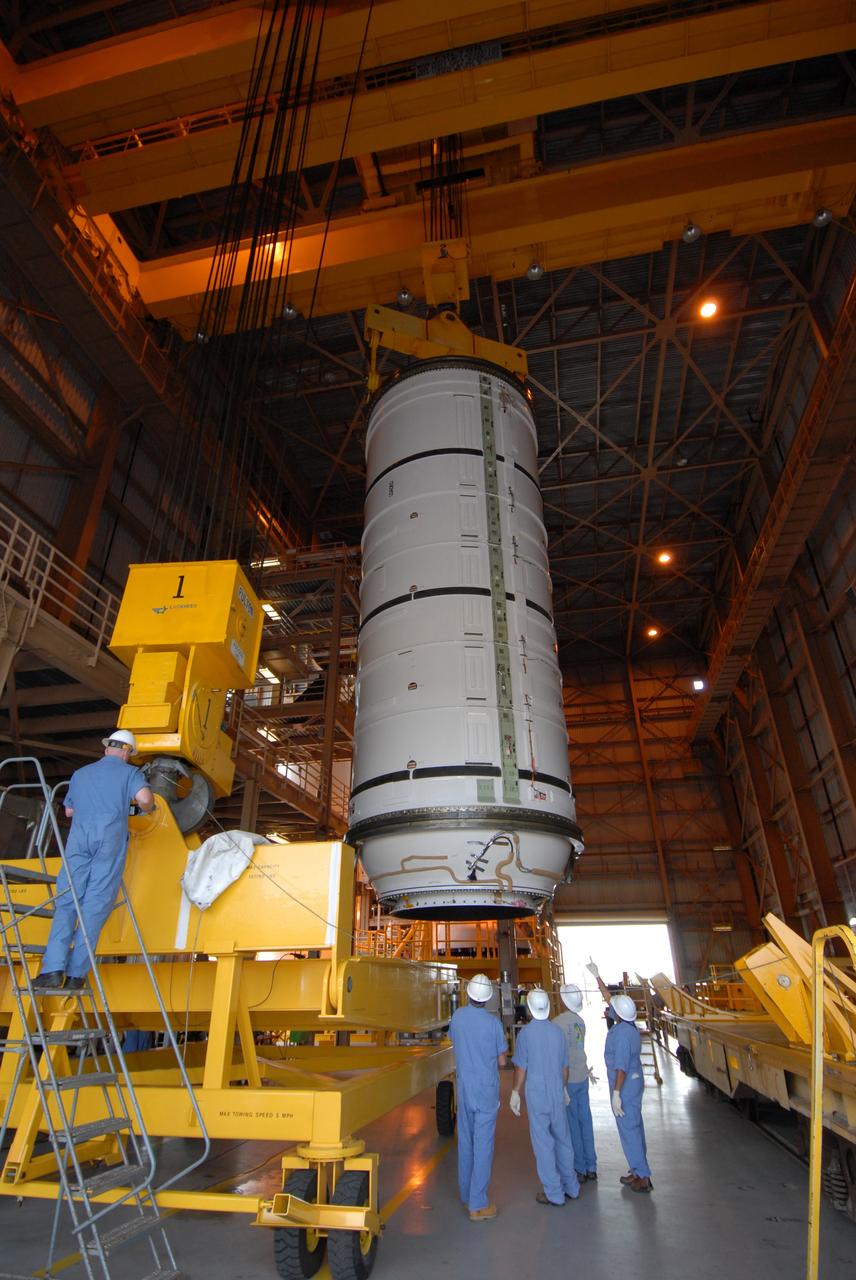
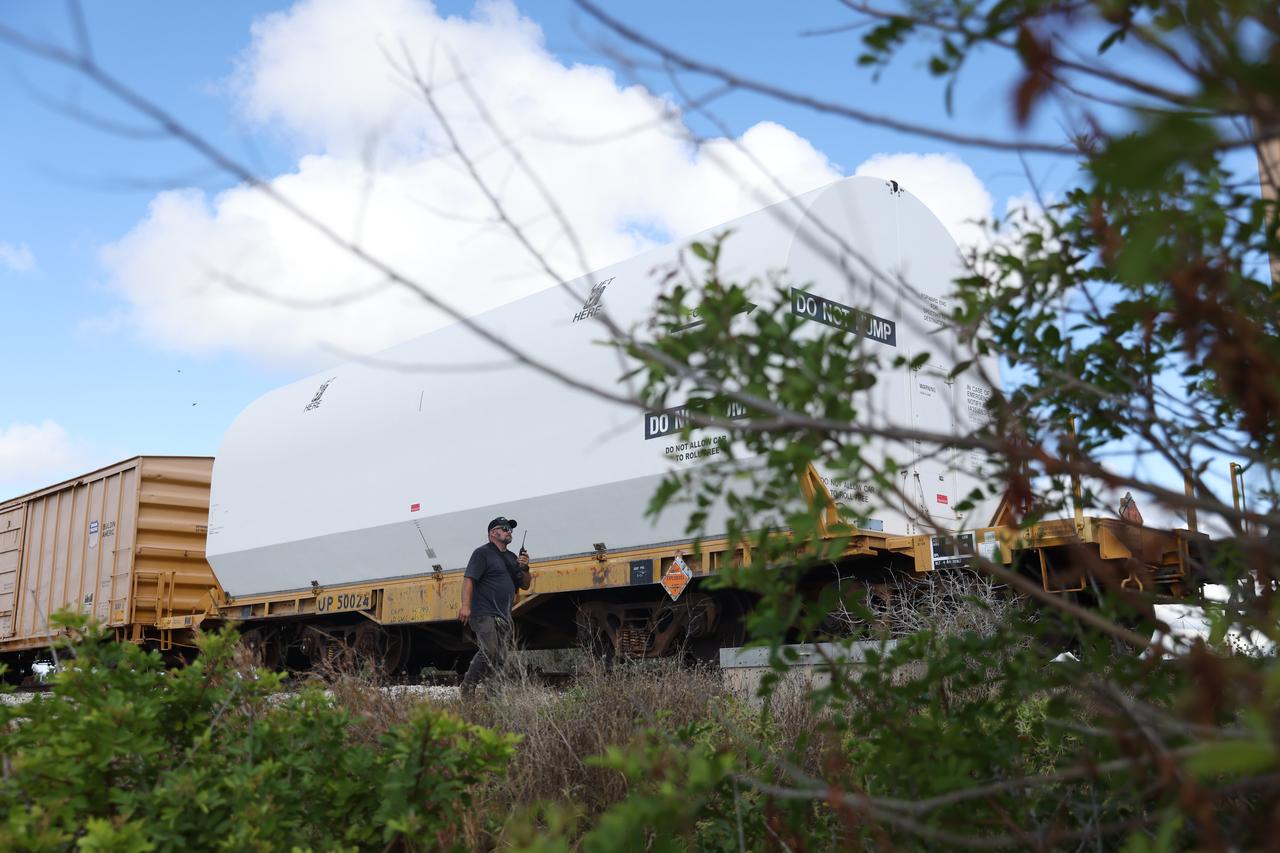
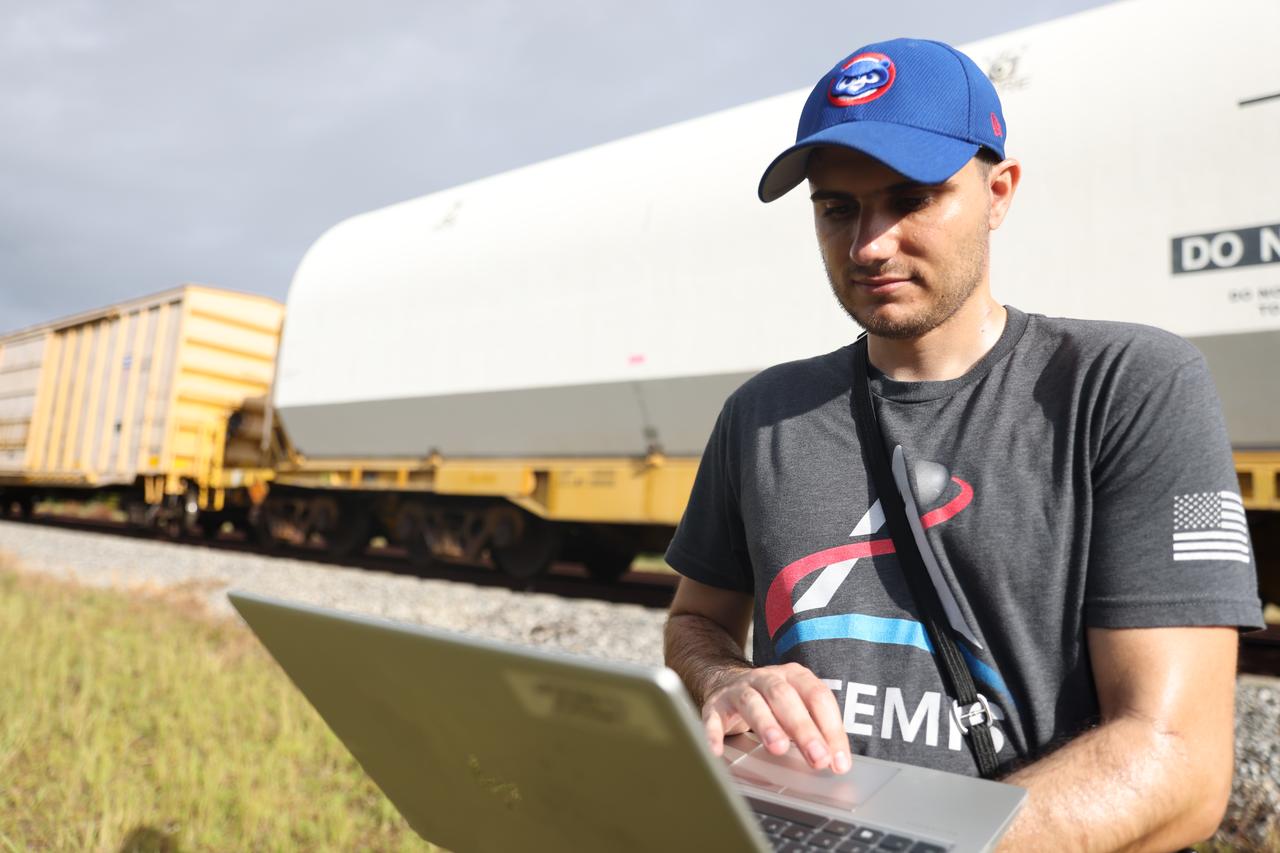
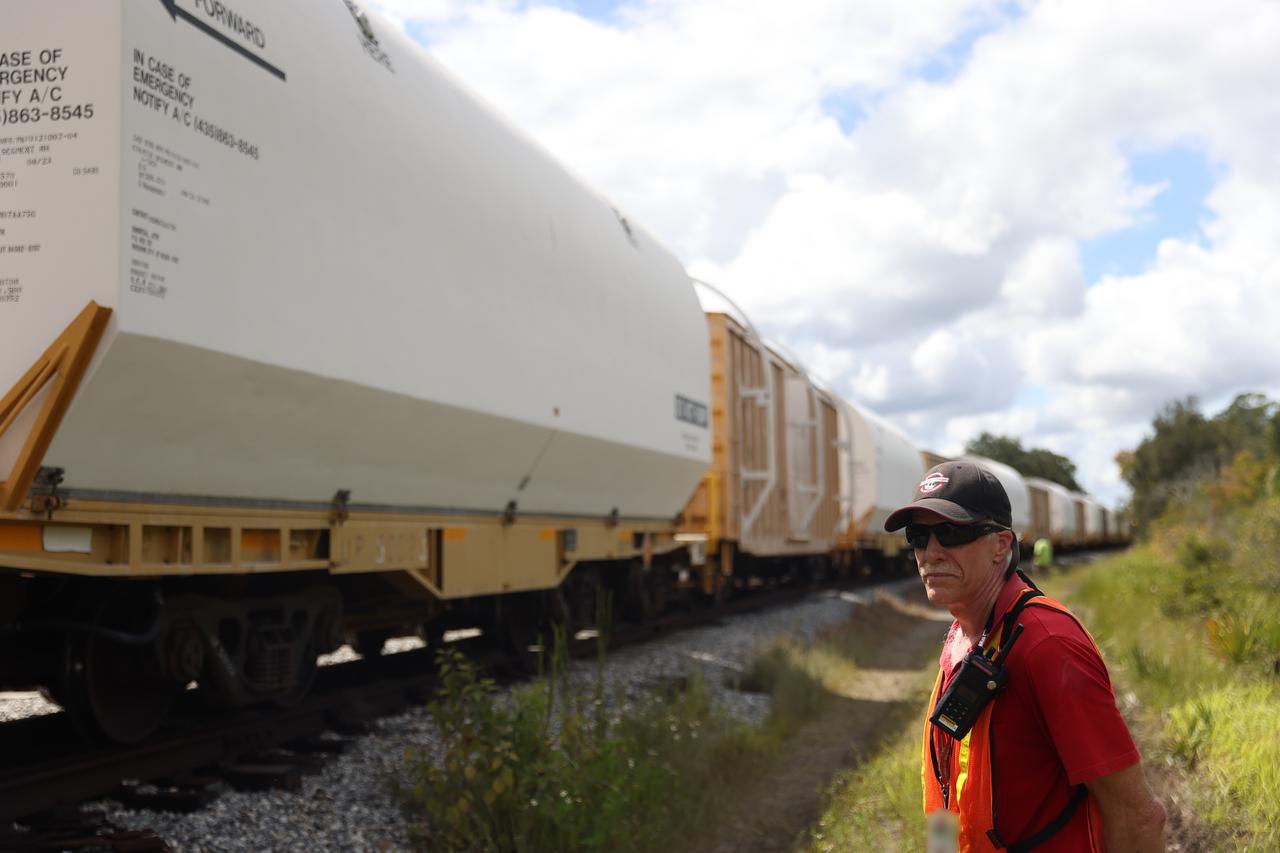
These images capture the final booster motor segments for NASA’s Artemis III mission departing Northrop Grumman’s Railyard Shipping Facility in Corinne, Utah, June 2. The eight segments will form the twin five-segment solid rocket boosters for the agency’s SLS (Space Launch System) rocket, providing more than 75% of the vehicle’s total thrust at liftoff. Due to their immense size and weight, the booster segments are transported in specialized carriers and are being hauled by Union Pacific Railroad’s newest commemorative locomotive, No. 4547. Marking its inaugural mission, the locomotive will deliver the flight hardware to NASA’s Kennedy Space Center in Florida, where stacking operations for Artemis III are set to begin later this year.
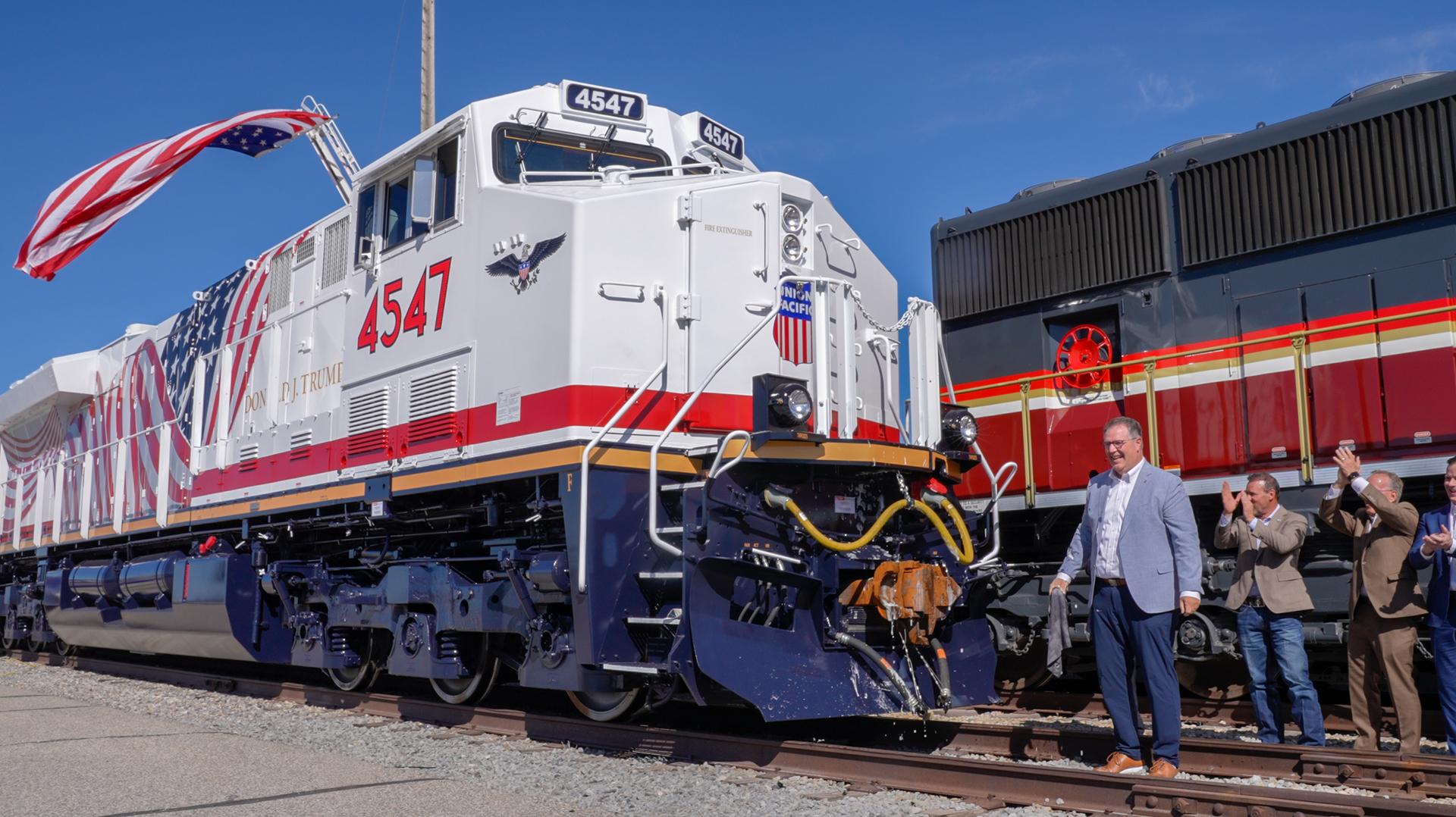
These images capture the final booster motor segments for NASA’s Artemis III mission departing Northrop Grumman’s Railyard Shipping Facility in Corinne, Utah, June 2. The eight segments will form the twin five-segment solid rocket boosters for the agency’s SLS (Space Launch System) rocket, providing more than 75% of the vehicle’s total thrust at liftoff. Due to their immense size and weight, the booster segments are transported in specialized carriers and are being hauled by Union Pacific Railroad’s newest commemorative locomotive, No. 4547. Marking its inaugural mission, the locomotive will deliver the flight hardware to NASA’s Kennedy Space Center in Florida, where stacking operations for Artemis III are set to begin later this year.
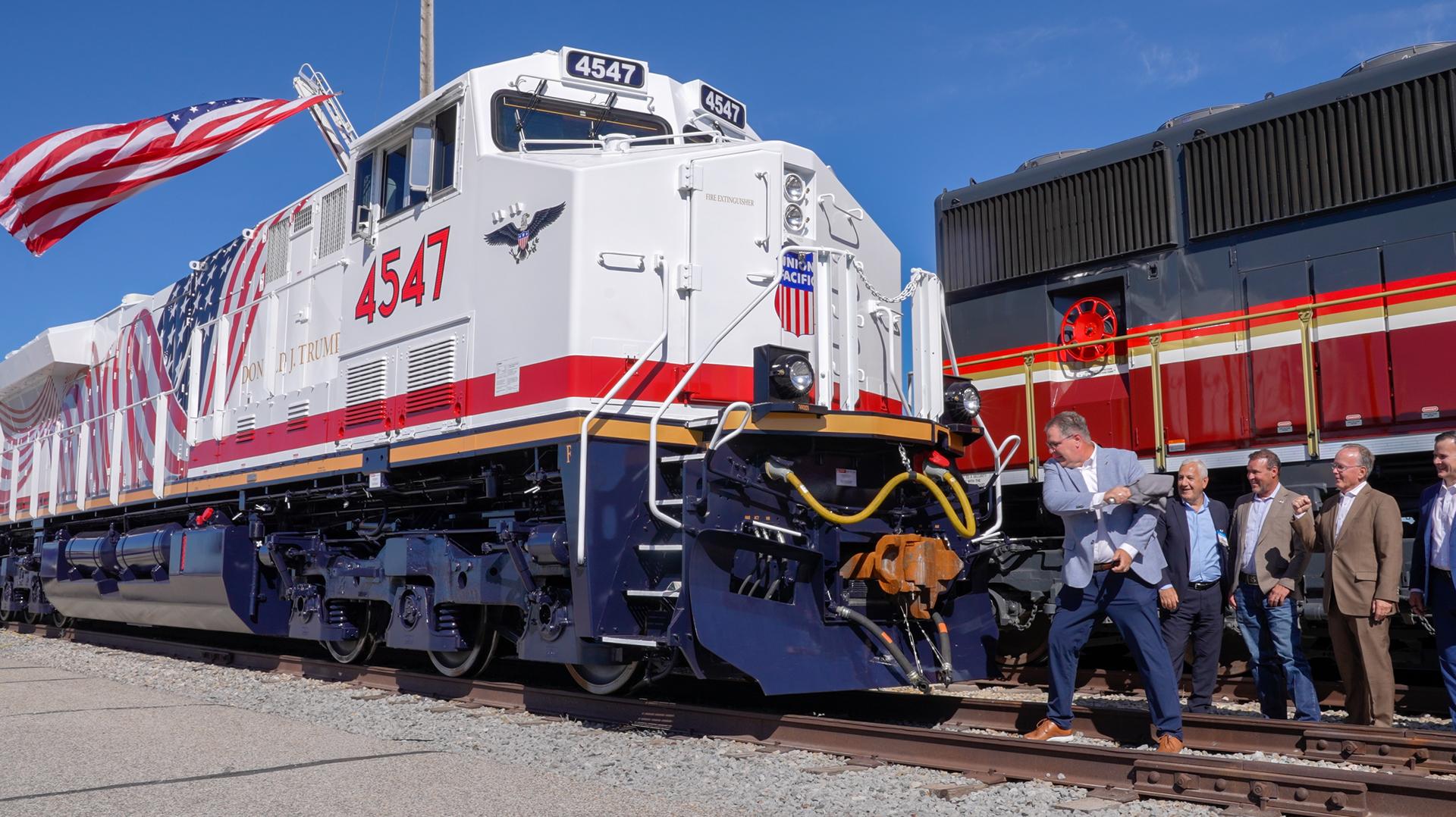
These images capture the final booster motor segments for NASA’s Artemis III mission departing Northrop Grumman’s Railyard Shipping Facility in Corinne, Utah, June 2. The eight segments will form the twin five-segment solid rocket boosters for the agency’s SLS (Space Launch System) rocket, providing more than 75% of the vehicle’s total thrust at liftoff. Due to their immense size and weight, the booster segments are transported in specialized carriers and are being hauled by Union Pacific Railroad’s newest commemorative locomotive, No. 4547. Marking its inaugural mission, the locomotive will deliver the flight hardware to NASA’s Kennedy Space Center in Florida, where stacking operations for Artemis III are set to begin later this year.
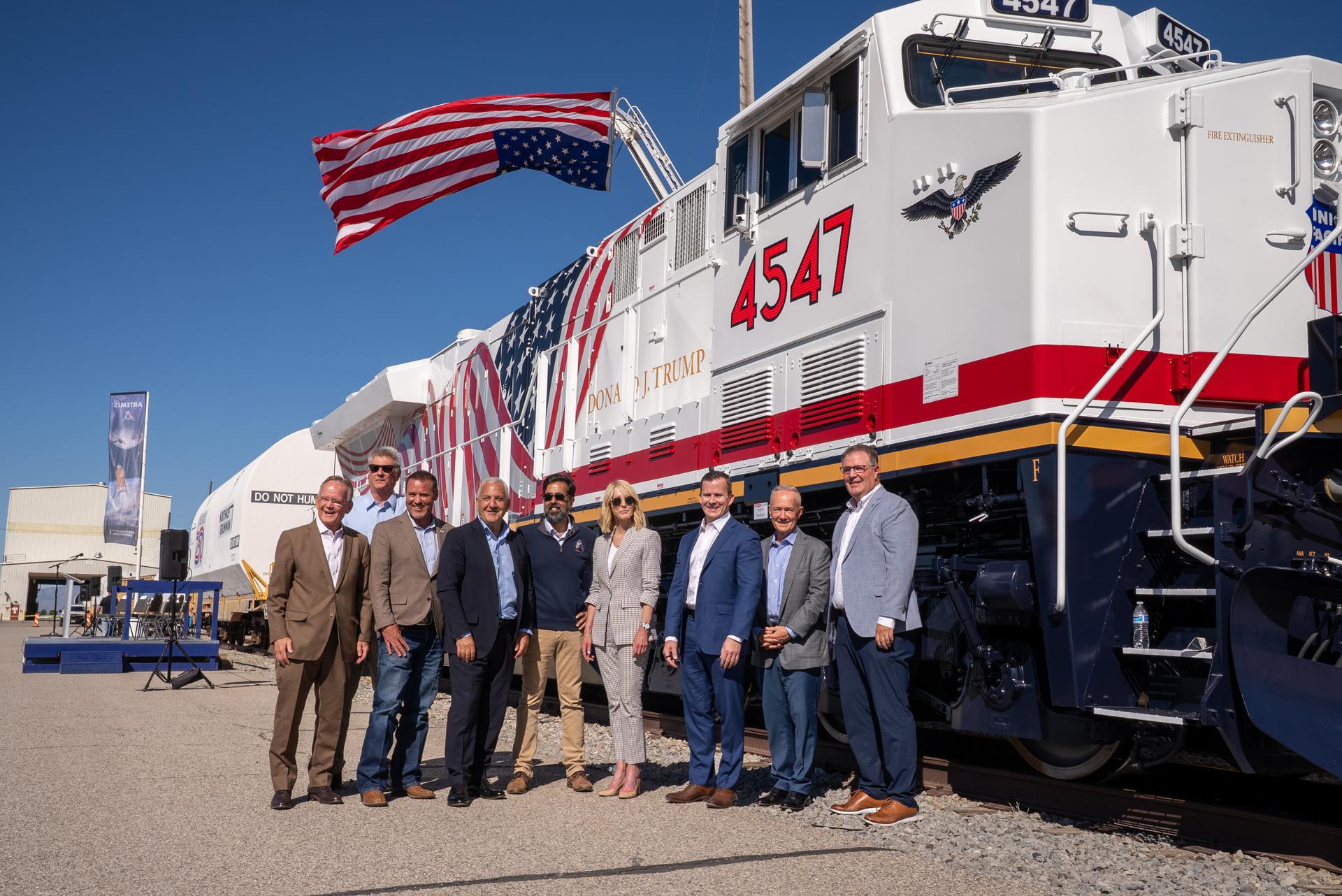
These images capture the final booster motor segments for NASA’s Artemis III mission departing Northrop Grumman’s Railyard Shipping Facility in Corinne, Utah, June 2. The eight segments will form the twin five-segment solid rocket boosters for the agency’s SLS (Space Launch System) rocket, providing more than 75% of the vehicle’s total thrust at liftoff. Due to their immense size and weight, the booster segments are transported in specialized carriers and are being hauled by Union Pacific Railroad’s newest commemorative locomotive, No. 4547. Marking its inaugural mission, the locomotive will deliver the flight hardware to NASA’s Kennedy Space Center in Florida, where stacking operations for Artemis III are set to begin later this year.
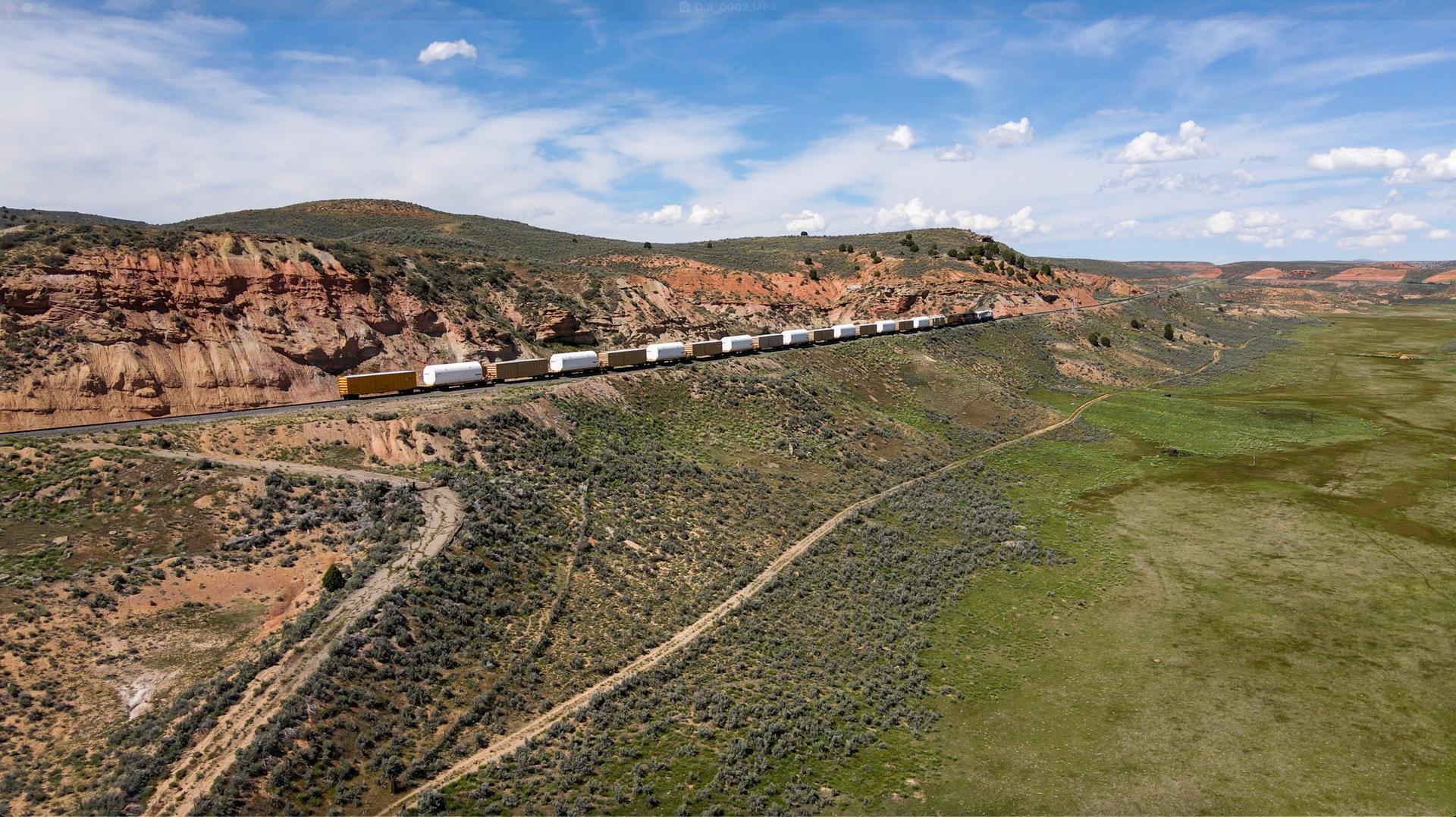
These images capture the final booster motor segments for NASA’s Artemis III mission departing Northrop Grumman’s Railyard Shipping Facility in Corinne, Utah, June 2. The eight segments will form the twin five-segment solid rocket boosters for the agency’s SLS (Space Launch System) rocket, providing more than 75% of the vehicle’s total thrust at liftoff. Due to their immense size and weight, the booster segments are transported in specialized carriers and are being hauled by Union Pacific Railroad’s newest commemorative locomotive, No. 4547. Marking its inaugural mission, the locomotive will deliver the flight hardware to NASA’s Kennedy Space Center in Florida, where stacking operations for Artemis III are set to begin later this year.
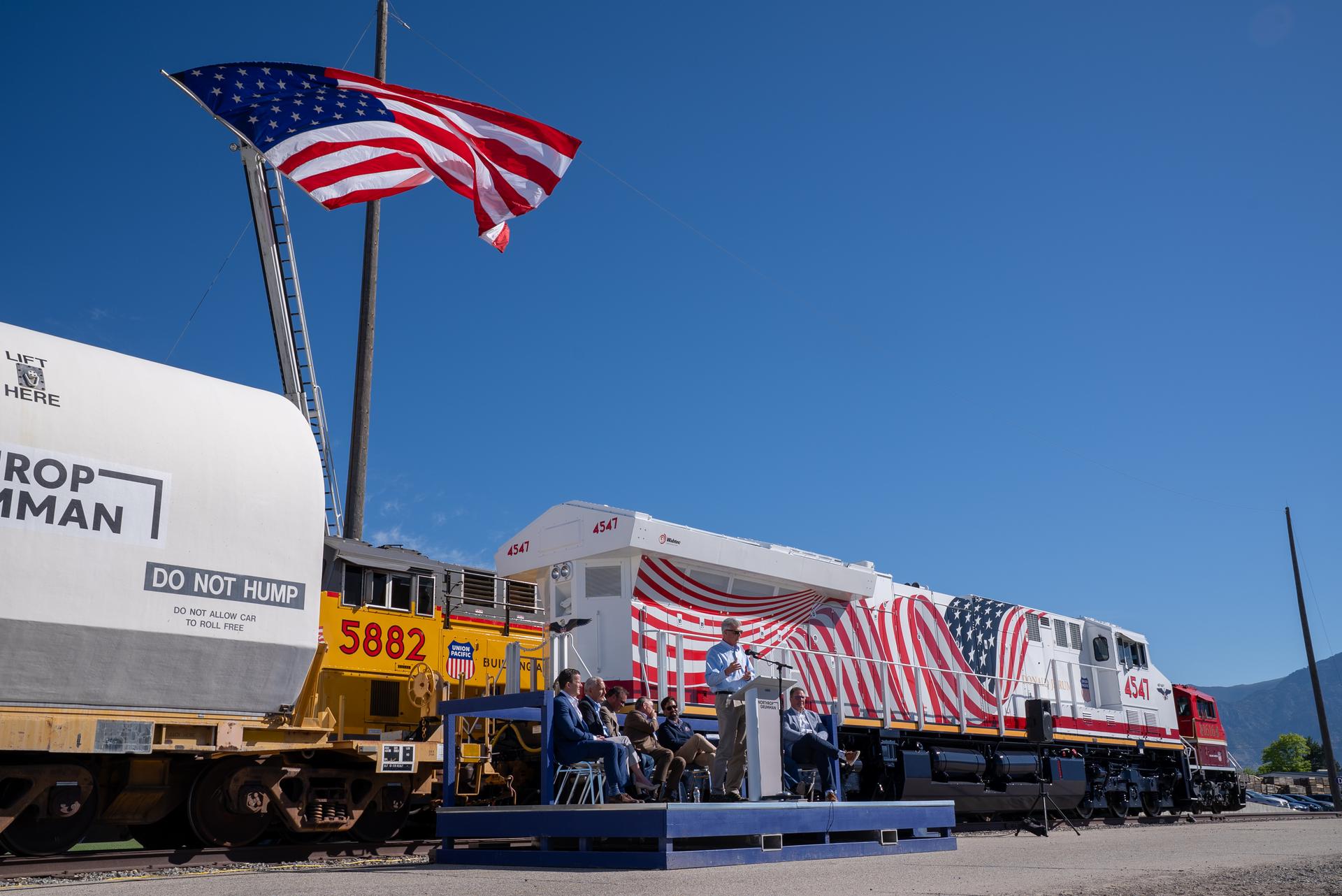
These images capture the final booster motor segments for NASA’s Artemis III mission departing Northrop Grumman’s Railyard Shipping Facility in Corinne, Utah, June 2. The eight segments will form the twin five-segment solid rocket boosters for the agency’s SLS (Space Launch System) rocket, providing more than 75% of the vehicle’s total thrust at liftoff. Due to their immense size and weight, the booster segments are transported in specialized carriers and are being hauled by Union Pacific Railroad’s newest commemorative locomotive, No. 4547. Marking its inaugural mission, the locomotive will deliver the flight hardware to NASA’s Kennedy Space Center in Florida, where stacking operations for Artemis III are set to begin later this year.
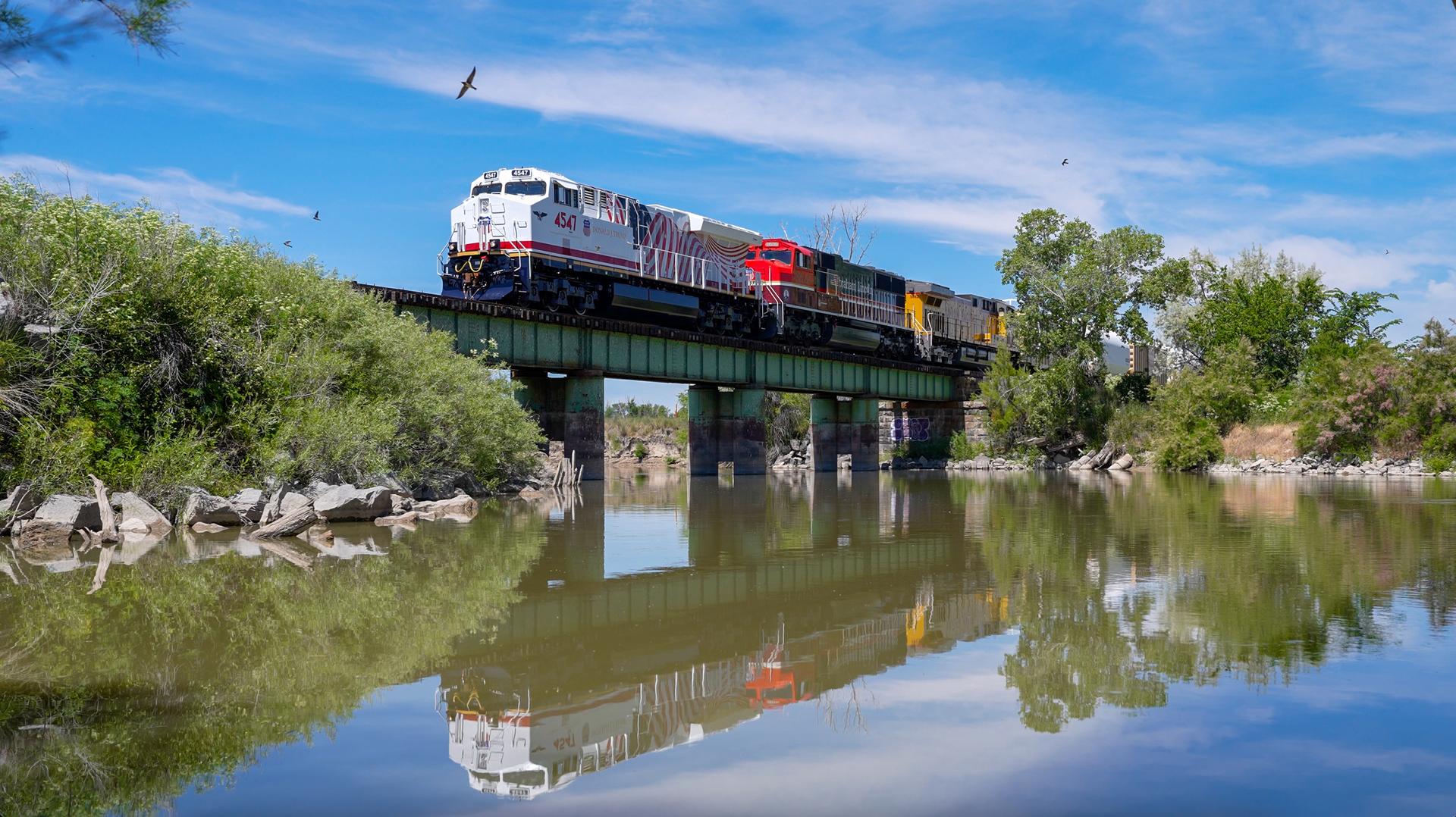
These images capture the final booster motor segments for NASA’s Artemis III mission departing Northrop Grumman’s Railyard Shipping Facility in Corinne, Utah, June 2. The eight segments will form the twin five-segment solid rocket boosters for the agency’s SLS (Space Launch System) rocket, providing more than 75% of the vehicle’s total thrust at liftoff. Due to their immense size and weight, the booster segments are transported in specialized carriers and are being hauled by Union Pacific Railroad’s newest commemorative locomotive, No. 4547. Marking its inaugural mission, the locomotive will deliver the flight hardware to NASA’s Kennedy Space Center in Florida, where stacking operations for Artemis III are set to begin later this year.

These images capture the final booster motor segments for NASA’s Artemis III mission departing Northrop Grumman’s Railyard Shipping Facility in Corinne, Utah, June 2. The eight segments will form the twin five-segment solid rocket boosters for the agency’s SLS (Space Launch System) rocket, providing more than 75% of the vehicle’s total thrust at liftoff. Due to their immense size and weight, the booster segments are transported in specialized carriers and are being hauled by Union Pacific Railroad’s newest commemorative locomotive, No. 4547. Marking its inaugural mission, the locomotive will deliver the flight hardware to NASA’s Kennedy Space Center in Florida, where stacking operations for Artemis III are set to begin later this year.
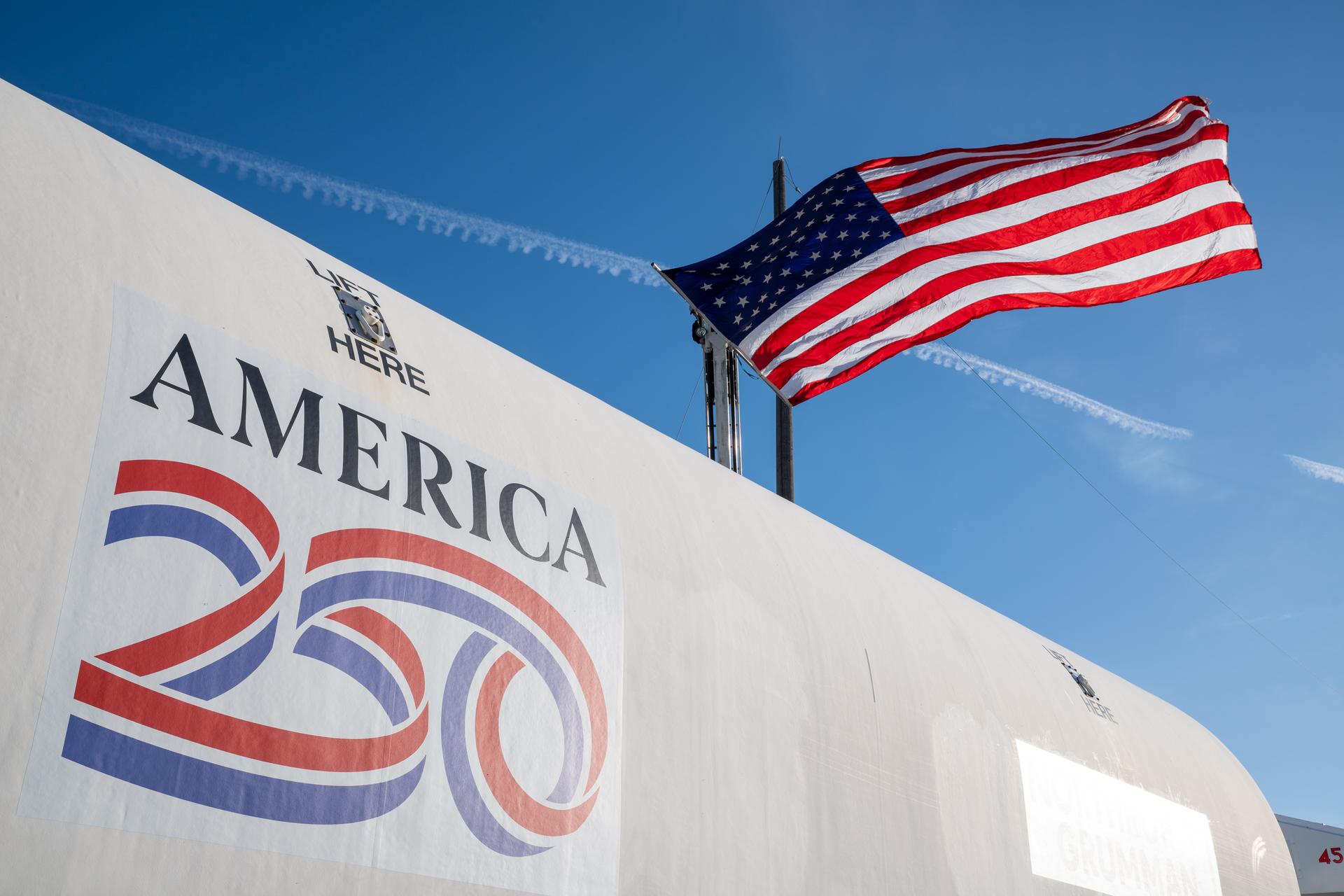
These images capture the final booster motor segments for NASA’s Artemis III mission departing Northrop Grumman’s Railyard Shipping Facility in Corinne, Utah, June 2. The eight segments will form the twin five-segment solid rocket boosters for the agency’s SLS (Space Launch System) rocket, providing more than 75% of the vehicle’s total thrust at liftoff. Due to their immense size and weight, the booster segments are transported in specialized carriers and are being hauled by Union Pacific Railroad’s newest commemorative locomotive, No. 4547. Marking its inaugural mission, the locomotive will deliver the flight hardware to NASA’s Kennedy Space Center in Florida, where stacking operations for Artemis III are set to begin later this year.
These images capture the final booster motor segments for NASA’s Artemis III mission departing Northrop Grumman’s Railyard Shipping Facility in Corinne, Utah, June 2. The eight segments will form the twin five-segment solid rocket boosters for the agency’s SLS (Space Launch System) rocket, providing more than 75% of the vehicle’s total thrust at liftoff. Due to their immense size and weight, the booster segments are transported in specialized carriers and are being hauled by Union Pacific Railroad’s newest commemorative locomotive, No. 4547. Marking its inaugural mission, the locomotive will deliver the flight hardware to NASA’s Kennedy Space Center in Florida, where stacking operations for Artemis III are set to begin later this year.
These images capture the final booster motor segments for NASA’s Artemis III mission departing Northrop Grumman’s Railyard Shipping Facility in Corinne, Utah, June 2. The eight segments will form the twin five-segment solid rocket boosters for the agency’s SLS (Space Launch System) rocket, providing more than 75% of the vehicle’s total thrust at liftoff. Due to their immense size and weight, the booster segments are transported in specialized carriers and are being hauled by Union Pacific Railroad’s newest commemorative locomotive, No. 4547. Marking its inaugural mission, the locomotive will deliver the flight hardware to NASA’s Kennedy Space Center in Florida, where stacking operations for Artemis III are set to begin later this year.
These images capture the final booster motor segments for NASA’s Artemis III mission departing Northrop Grumman’s Railyard Shipping Facility in Corinne, Utah, June 2. The eight segments will form the twin five-segment solid rocket boosters for the agency’s SLS (Space Launch System) rocket, providing more than 75% of the vehicle’s total thrust at liftoff. Due to their immense size and weight, the booster segments are transported in specialized carriers and are being hauled by Union Pacific Railroad’s newest commemorative locomotive, No. 4547. Marking its inaugural mission, the locomotive will deliver the flight hardware to NASA’s Kennedy Space Center in Florida, where stacking operations for Artemis III are set to begin later this year.
These images capture the final booster motor segments for NASA’s Artemis III mission departing Northrop Grumman’s Railyard Shipping Facility in Corinne, Utah, June 2. The eight segments will form the twin five-segment solid rocket boosters for the agency’s SLS (Space Launch System) rocket, providing more than 75% of the vehicle’s total thrust at liftoff. Due to their immense size and weight, the booster segments are transported in specialized carriers and are being hauled by Union Pacific Railroad’s newest commemorative locomotive, No. 4547. Marking its inaugural mission, the locomotive will deliver the flight hardware to NASA’s Kennedy Space Center in Florida, where stacking operations for Artemis III are set to begin later this year.
These images capture the final booster motor segments for NASA’s Artemis III mission departing Northrop Grumman’s Railyard Shipping Facility in Corinne, Utah, June 2. The eight segments will form the twin five-segment solid rocket boosters for the agency’s SLS (Space Launch System) rocket, providing more than 75% of the vehicle’s total thrust at liftoff. Due to their immense size and weight, the booster segments are transported in specialized carriers and are being hauled by Union Pacific Railroad’s newest commemorative locomotive, No. 4547. Marking its inaugural mission, the locomotive will deliver the flight hardware to NASA’s Kennedy Space Center in Florida, where stacking operations for Artemis III are set to begin later this year.
These images capture the final booster motor segments for NASA’s Artemis III mission departing Northrop Grumman’s Railyard Shipping Facility in Corinne, Utah, June 2. The eight segments will form the twin five-segment solid rocket boosters for the agency’s SLS (Space Launch System) rocket, providing more than 75% of the vehicle’s total thrust at liftoff. Due to their immense size and weight, the booster segments are transported in specialized carriers and are being hauled by Union Pacific Railroad’s newest commemorative locomotive, No. 4547. Marking its inaugural mission, the locomotive will deliver the flight hardware to NASA’s Kennedy Space Center in Florida, where stacking operations for Artemis III are set to begin later this year.
These images capture the final booster motor segments for NASA’s Artemis III mission departing Northrop Grumman’s Railyard Shipping Facility in Corinne, Utah, June 2. The eight segments will form the twin five-segment solid rocket boosters for the agency’s SLS (Space Launch System) rocket, providing more than 75% of the vehicle’s total thrust at liftoff. Due to their immense size and weight, the booster segments are transported in specialized carriers and are being hauled by Union Pacific Railroad’s newest commemorative locomotive, No. 4547. Marking its inaugural mission, the locomotive will deliver the flight hardware to NASA’s Kennedy Space Center in Florida, where stacking operations for Artemis III are set to begin later this year.
These images capture the final booster motor segments for NASA’s Artemis III mission departing Northrop Grumman’s Railyard Shipping Facility in Corinne, Utah, June 2. The eight segments will form the twin five-segment solid rocket boosters for the agency’s SLS (Space Launch System) rocket, providing more than 75% of the vehicle’s total thrust at liftoff. Due to their immense size and weight, the booster segments are transported in specialized carriers and are being hauled by Union Pacific Railroad’s newest commemorative locomotive, No. 4547. Marking its inaugural mission, the locomotive will deliver the flight hardware to NASA’s Kennedy Space Center in Florida, where stacking operations for Artemis III are set to begin later this year.
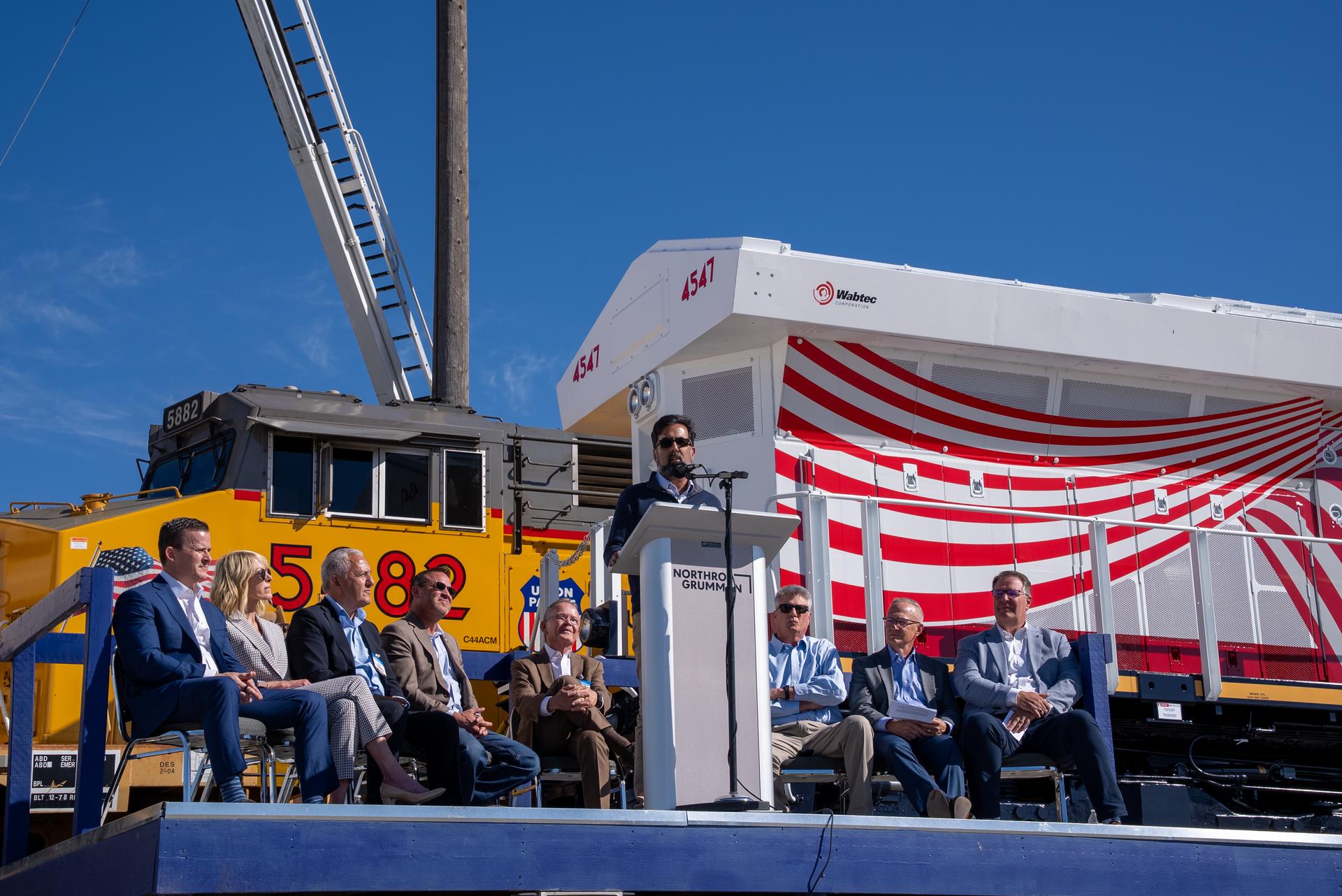
These images capture the final booster motor segments for NASA’s Artemis III mission departing Northrop Grumman’s Railyard Shipping Facility in Corinne, Utah, June 2. The eight segments will form the twin five-segment solid rocket boosters for the agency’s SLS (Space Launch System) rocket, providing more than 75% of the vehicle’s total thrust at liftoff. Due to their immense size and weight, the booster segments are transported in specialized carriers and are being hauled by Union Pacific Railroad’s newest commemorative locomotive, No. 4547. Marking its inaugural mission, the locomotive will deliver the flight hardware to NASA’s Kennedy Space Center in Florida, where stacking operations for Artemis III are set to begin later this year.
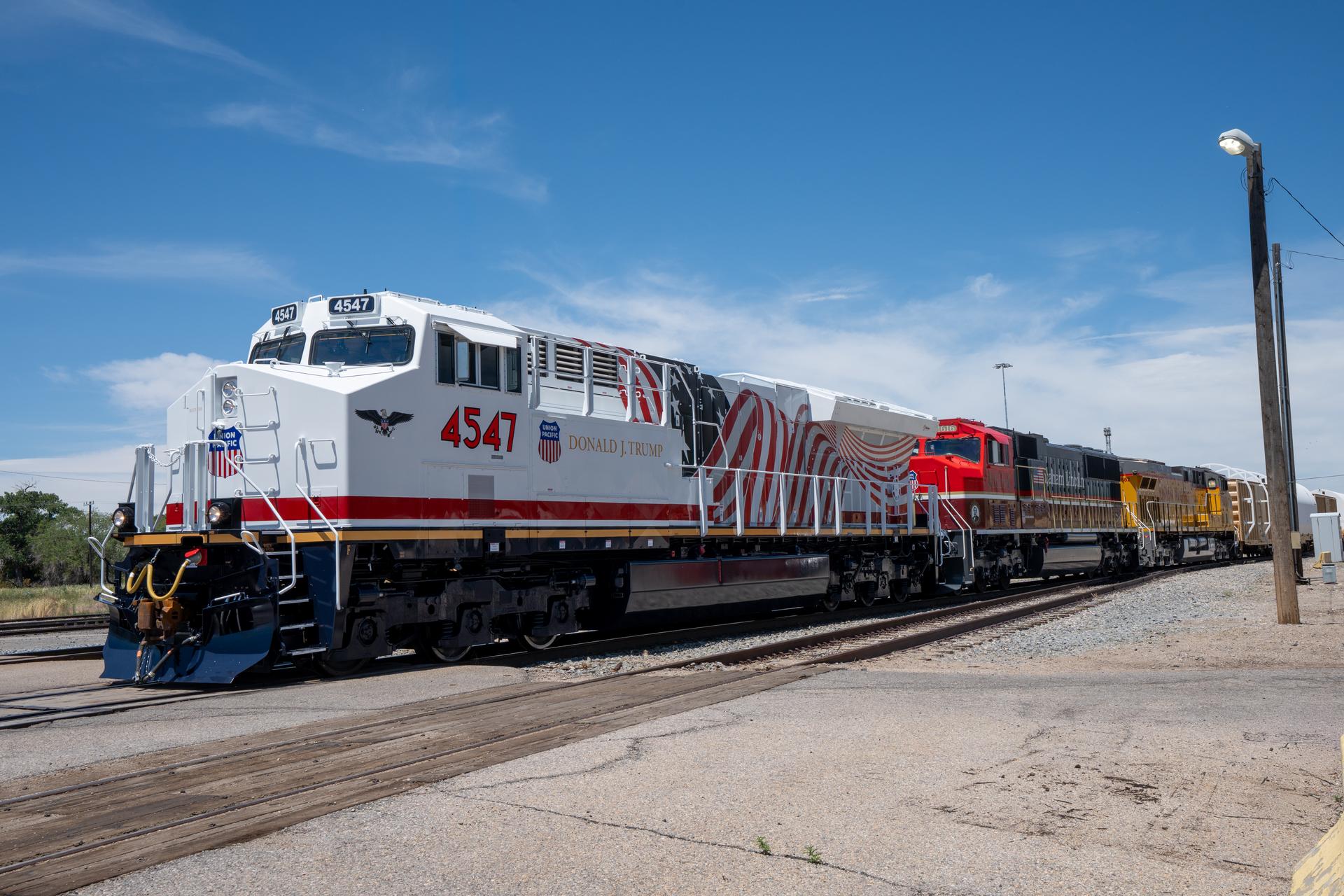
These images capture the final booster motor segments for NASA’s Artemis III mission departing Northrop Grumman’s Railyard Shipping Facility in Corinne, Utah, June 2. The eight segments will form the twin five-segment solid rocket boosters for the agency’s SLS (Space Launch System) rocket, providing more than 75% of the vehicle’s total thrust at liftoff. Due to their immense size and weight, the booster segments are transported in specialized carriers and are being hauled by Union Pacific Railroad’s newest commemorative locomotive, No. 4547. Marking its inaugural mission, the locomotive will deliver the flight hardware to NASA’s Kennedy Space Center in Florida, where stacking operations for Artemis III are set to begin later this year.
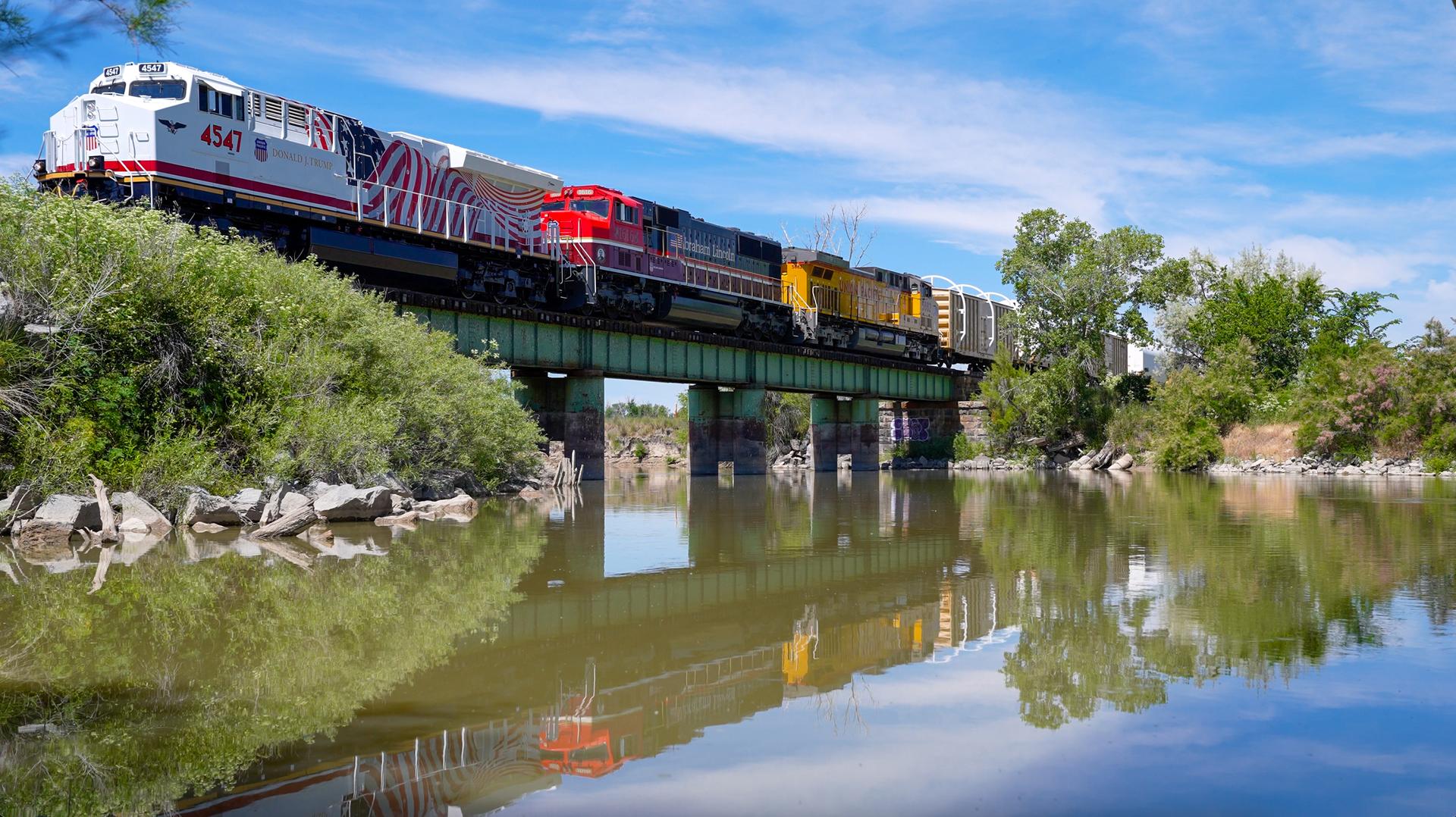
These images capture the final booster motor segments for NASA’s Artemis III mission departing Northrop Grumman’s Railyard Shipping Facility in Corinne, Utah, June 2. The eight segments will form the twin five-segment solid rocket boosters for the agency’s SLS (Space Launch System) rocket, providing more than 75% of the vehicle’s total thrust at liftoff. Due to their immense size and weight, the booster segments are transported in specialized carriers and are being hauled by Union Pacific Railroad’s newest commemorative locomotive, No. 4547. Marking its inaugural mission, the locomotive will deliver the flight hardware to NASA’s Kennedy Space Center in Florida, where stacking operations for Artemis III are set to begin later this year.
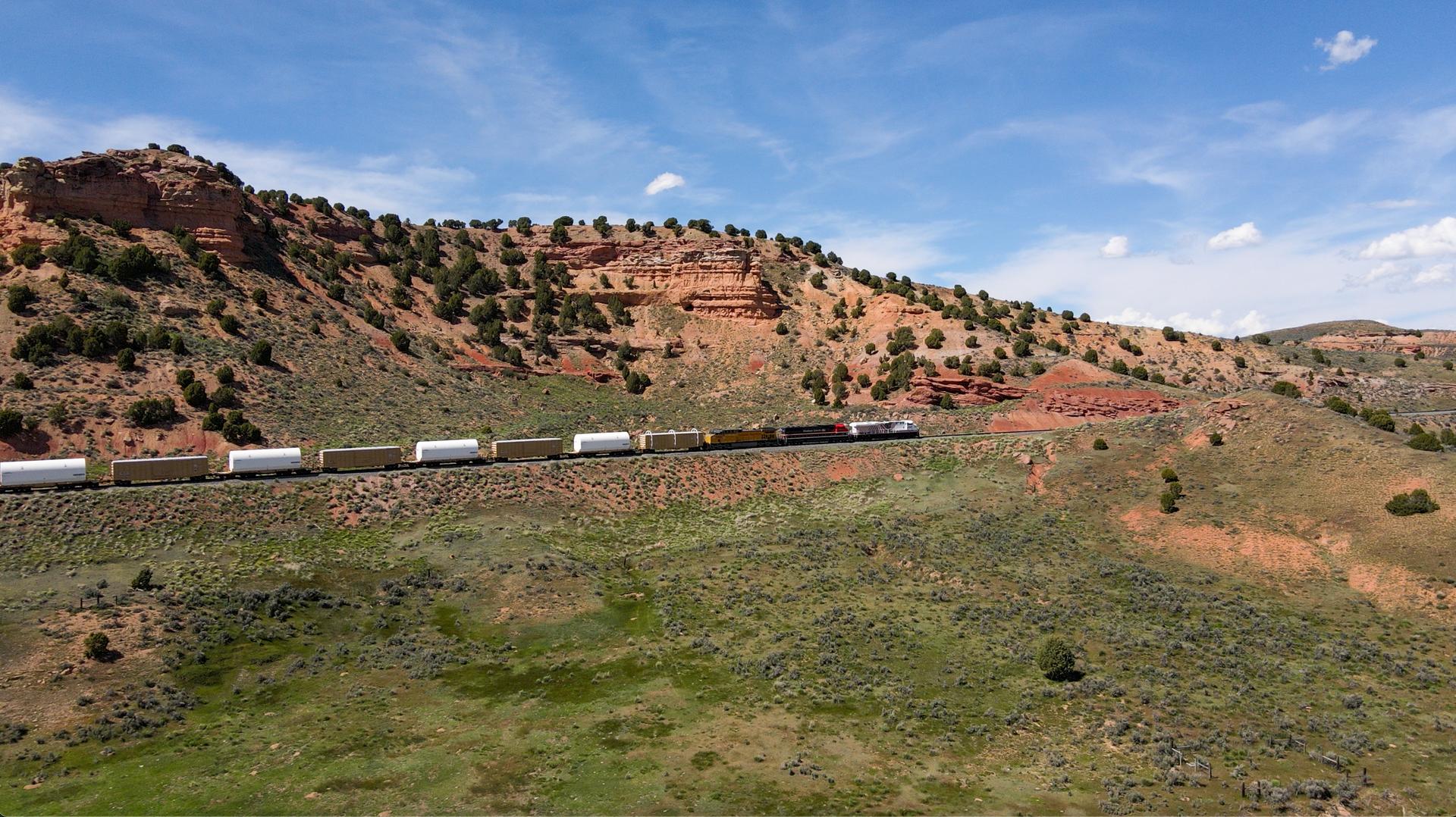
These images capture the final booster motor segments for NASA’s Artemis III mission departing Northrop Grumman’s Railyard Shipping Facility in Corinne, Utah, June 2. The eight segments will form the twin five-segment solid rocket boosters for the agency’s SLS (Space Launch System) rocket, providing more than 75% of the vehicle’s total thrust at liftoff. Due to their immense size and weight, the booster segments are transported in specialized carriers and are being hauled by Union Pacific Railroad’s newest commemorative locomotive, No. 4547. Marking its inaugural mission, the locomotive will deliver the flight hardware to NASA’s Kennedy Space Center in Florida, where stacking operations for Artemis III are set to begin later this year.
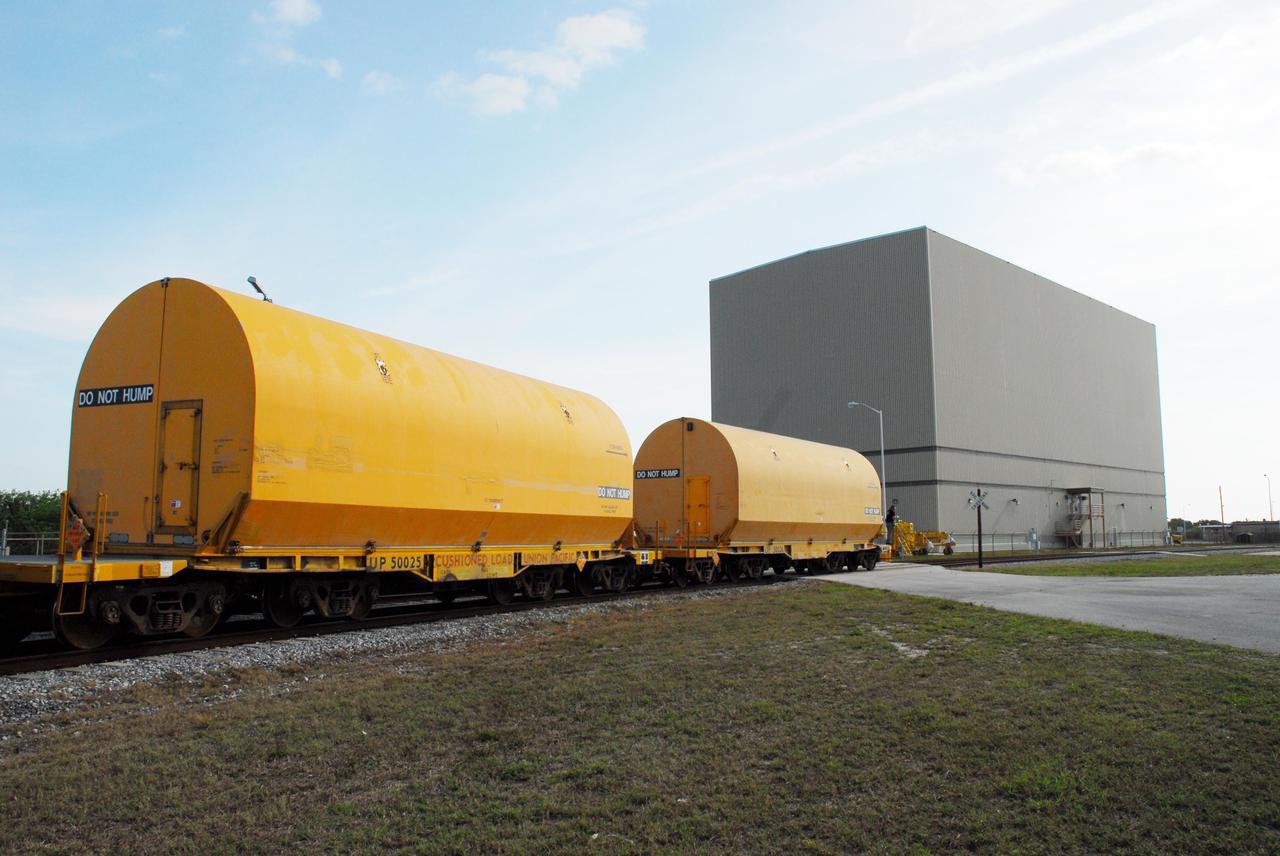
KENNEDY SPACE CENTER, FLA. -- The locomotive and rail cars carrying solid rocket booster motor segments and two aft exit cone segments roll toward the Rotation, Processing and Surge Facility (RPSF) in Kennedy Space Center's Launch Complex 39 Area. The RPSF is used for solid rocket motor receiving, rotation and inspection, and supports aft booster buildup. When live solid rocket motor segments arrive at the processing facility, they are positioned under one of the cranes. Handling slings are then attached to and remove the railcar cover. The segment is inspected while it remains horizontal. The two overhead cranes hoist the segment, rotate it to a vertical position and place it on a fixed stand. The aft handling ring is then removed. The segment is hoisted again and lowered onto a transportation and storage pallet, and the forward handling ring is removed to allow inspections. It is then transported to one of the surge buildings and temporarily stored until it is needed for booster stacking in the VAB. While enroute, solid rocket motor segments were involved in a derailment in Alabama. The rail cars carrying these segments remained upright and were undamaged. An inspection determined these segment cars could continue on to Florida. The segments themselves will undergo further evaluation at Kennedy before they are cleared for flight. Other segments involved in the derailment will be returned to a plant in Utah for further evaluation. Photo credit: NASA_George Shelton
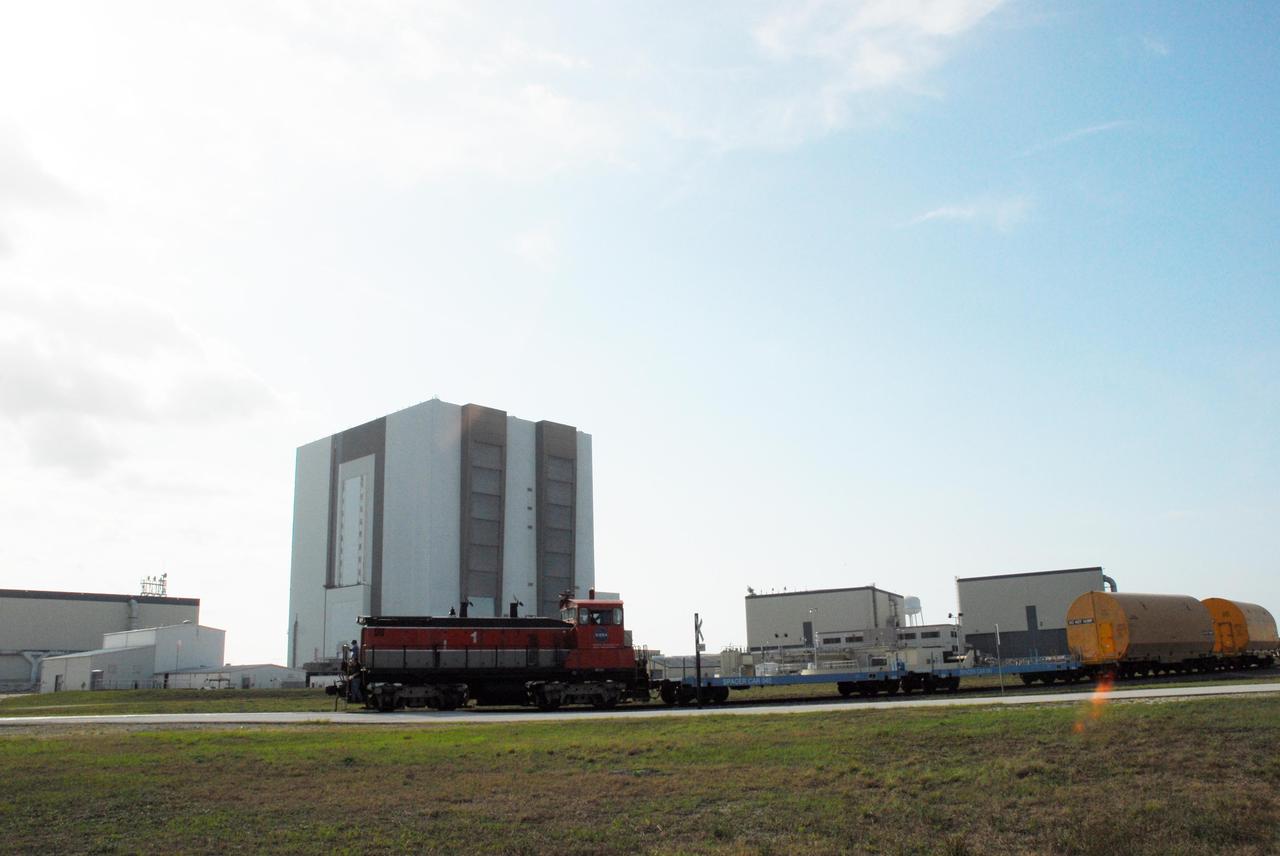
KENNEDY SPACE CENTER, FLA. -- The locomotive and rail cars carrying solid rocket booster motor segments and two aft exit cone segments roll past the Vehicle Assembly Building to the Rotation, Processing and Surge Facility (RPSF) in Kennedy Space Center's Launch Complex 39 Area. The RPSF is used for solid rocket motor receiving, rotation and inspection, and supports aft booster buildup. When live solid rocket motor segments arrive at the processing facility, they are positioned under one of the cranes. Handling slings are then attached to and remove the railcar cover. The segment is inspected while it remains horizontal. The two overhead cranes hoist the segment, rotate it to a vertical position and place it on a fixed stand. The aft handling ring is then removed. The segment is hoisted again and lowered onto a transportation and storage pallet, and the forward handling ring is removed to allow inspections. It is then transported to one of the surge buildings and temporarily stored until it is needed for booster stacking in the VAB. While enroute, solid rocket motor segments were involved in a derailment in Alabama. The rail cars carrying these segments remained upright and were undamaged. An inspection determined these segment cars could continue on to Florida. The segments themselves will undergo further evaluation at Kennedy before they are cleared for flight. Other segments involved in the derailment will be returned to a plant in Utah for further evaluation. Photo credit: NASA/George Shelton
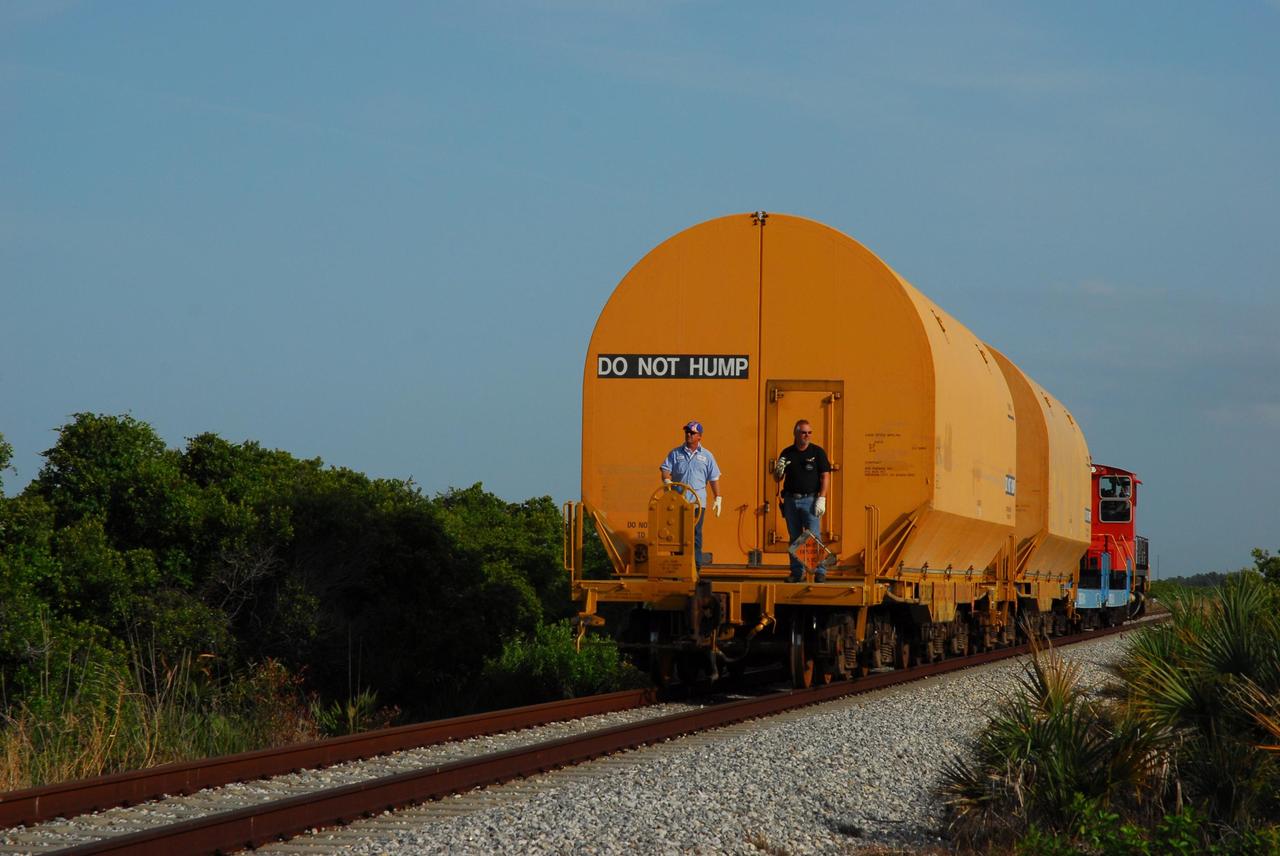
KENNEDY SPACE CENTER, FLA. -- The locomotive and rail cars carrying solid rocket booster motor segments and two aft exit cone segments roll to the Rotation, Processing and Surge Facility in Kennedy Space Center's Launch Complex 39 Area. The main facility is used for solid rocket motor receiving, rotation and inspection, and supports aft booster buildup. When live solid rocket motor segments arrive at the processing facility, they are positioned under one of the cranes. Handling slings are then attached to and remove the railcar cover. The segment is inspected while it remains horizontal. The two overhead cranes hoist the segment, rotate it to a vertical position and place it on a fixed stand. The aft handling ring is then removed. The segment is hoisted again and lowered onto a transportation and storage pallet, and the forward handling ring is removed to allow inspections. It is then transported to one of the surge buildings and temporarily stored until it is needed for booster stacking in the VAB. While enroute, solid rocket motor segments were involved in a derailment in Alabama. The rail cars carrying these segments remained upright and were undamaged. An inspection determined these segment cars could continue on to Florida. The segments themselves will undergo further evaluation at Kennedy before they are cleared for flight. Other segments involved in the derailment will be returned to a plant in Utah for further evaluation. Photo credit: NASA/George Shelton
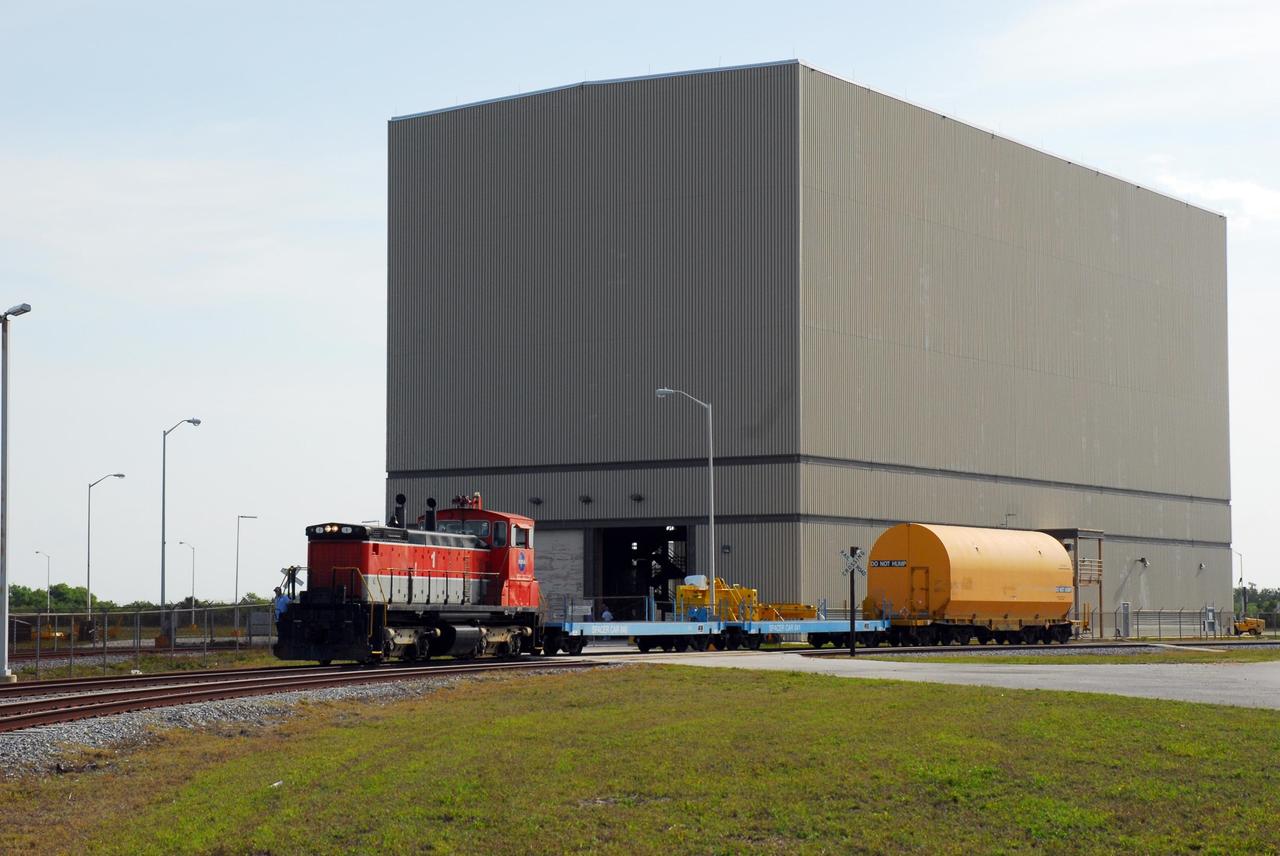
KENNEDY SPACE CENTER, FLA. -- The locomotive and rail cars carrying solid rocket booster motor segments and two aft exit cone segments deliver their cargo to the Rotation, Processing and Surge Facility (RPSF) in Kennedy Space Center's Launch Complex 39 Area. The RPSF is used for solid rocket motor receiving, rotation and inspection, and supports aft booster buildup. When live solid rocket motor segments arrive at the processing facility, they are positioned under one of the cranes. Handling slings are then attached to and remove the railcar cover. The segment is inspected while it remains horizontal. The two overhead cranes hoist the segment, rotate it to a vertical position and place it on a fixed stand. The aft handling ring is then removed. The segment is hoisted again and lowered onto a transportation and storage pallet, and the forward handling ring is removed to allow inspections. It is then transported to one of the surge buildings and temporarily stored until it is needed for booster stacking in the VAB. While enroute, solid rocket motor segments were involved in a derailment in Alabama. The rail cars carrying these segments remained upright and were undamaged. An inspection determined these segment cars could continue on to Florida. The segments themselves will undergo further evaluation at Kennedy before they are cleared for flight. Other segments involved in the derailment will be returned to a plant in Utah for further evaluation. Photo credit: NASA/George Shelton
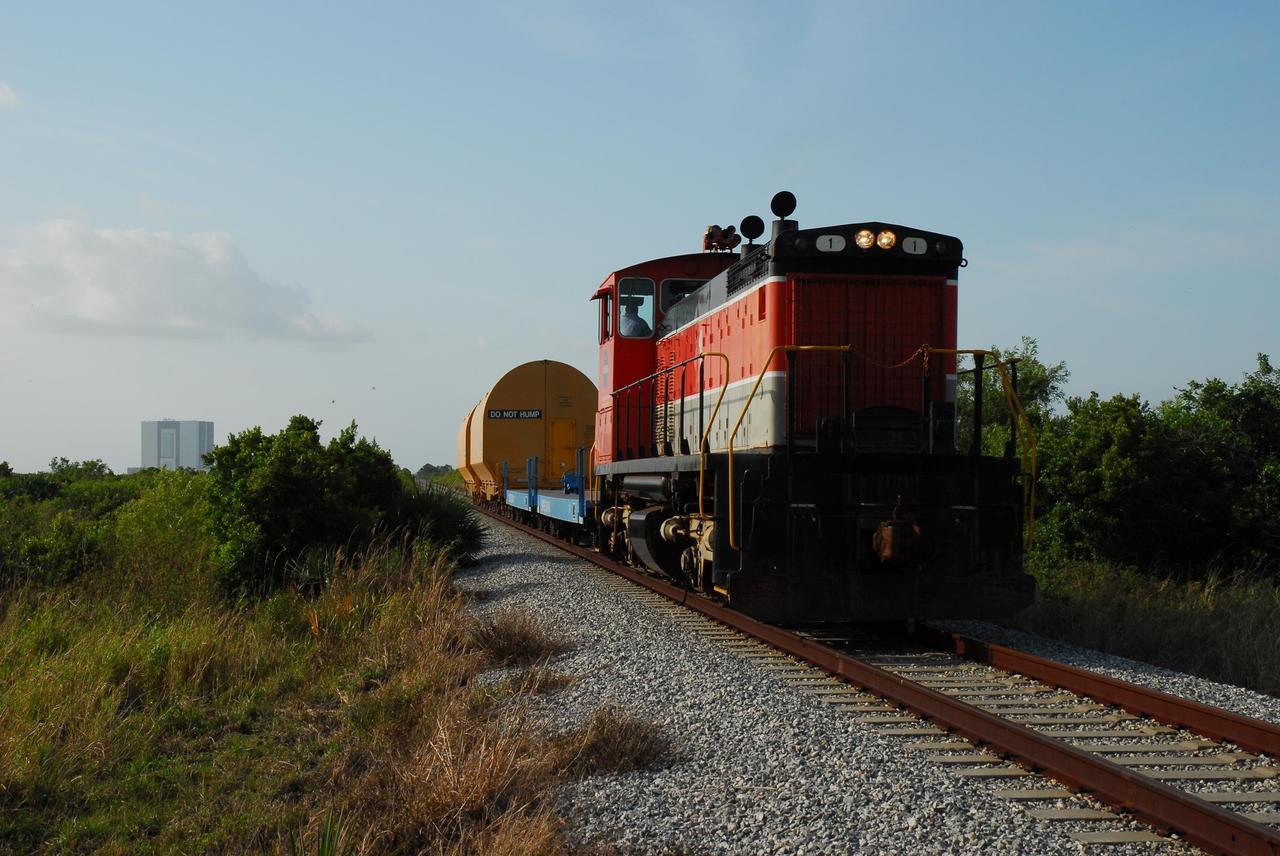
KENNEDY SPACE CENTER, FLA. -- The locomotive and rail cars carrying solid rocket booster motor segments and two aft exit cone segments roll to the Rotation, Processing and Surge Facility (RPSF) in Kennedy Space Center's Launch Complex 39 Area. In the background, at left, is the Vehicle Assembly Building. The RPSF is used for solid rocket motor receiving, rotation and inspection, and supports aft booster buildup. When live solid rocket motor segments arrive at the processing facility, they are positioned under one of the cranes. Handling slings are then attached to and remove the railcar cover. The segment is inspected while it remains horizontal. The two overhead cranes hoist the segment, rotate it to a vertical position and place it on a fixed stand. The aft handling ring is then removed. The segment is hoisted again and lowered onto a transportation and storage pallet, and the forward handling ring is removed to allow inspections. It is then transported to one of the surge buildings and temporarily stored until it is needed for booster stacking in the VAB. While enroute, solid rocket motor segments were involved in a derailment in Alabama. The rail cars carrying these segments remained upright and were undamaged. An inspection determined these segment cars could continue on to Florida. The segments themselves will undergo further evaluation at Kennedy before they are cleared for flight. Other segments involved in the derailment will be returned to a plant in Utah for further evaluation. Photo credit: NASA/George Shelton
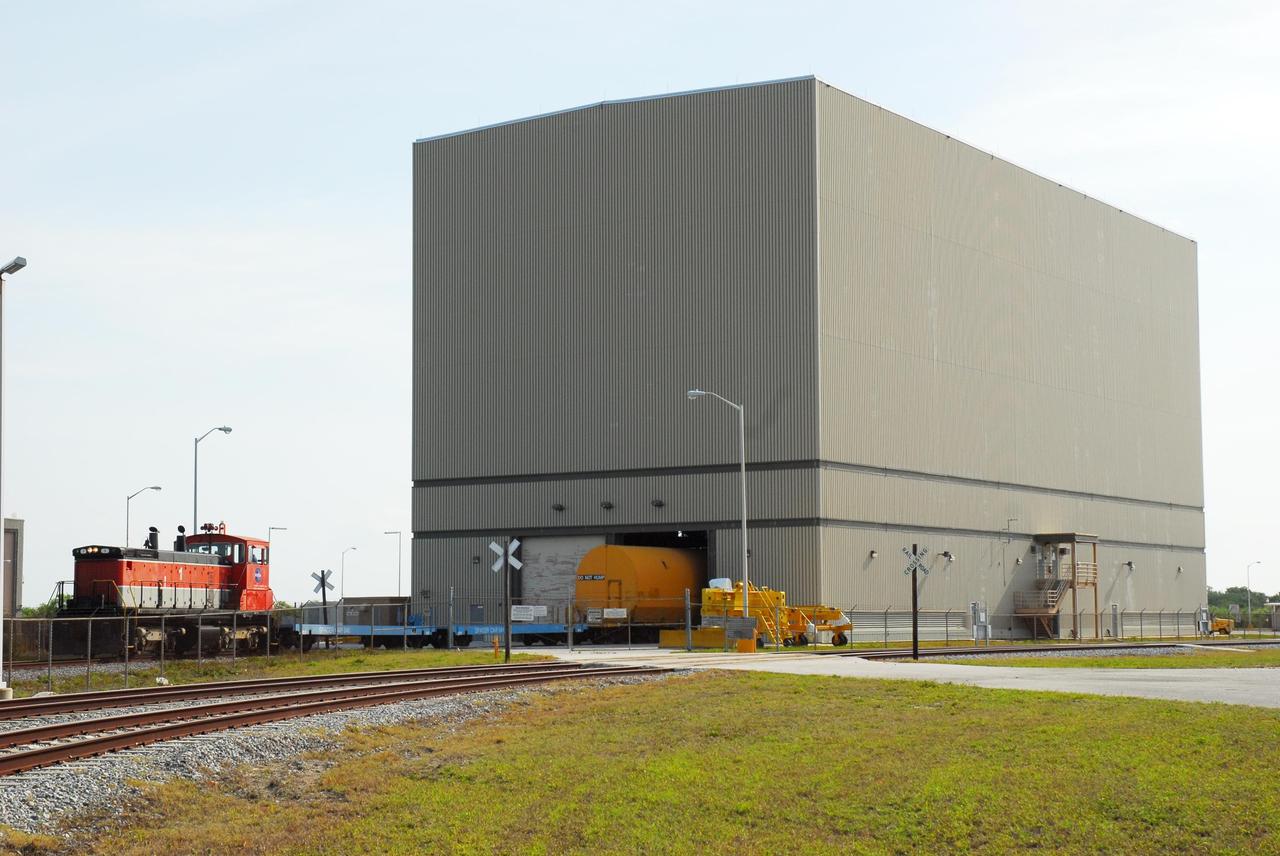
KENNEDY SPACE CENTER, FLA. -- The final rail car carrying solid rocket booster motor segments moves its cargo into the Rotation, Processing and Surge Facility (RPSF) in Kennedy Space Center's Launch Complex 39 Area. The RPSF is used for solid rocket motor receiving, rotation and inspection, and supports aft booster buildup. When live solid rocket motor segments arrive at the processing facility, they are positioned under one of the cranes. Handling slings are then attached to and remove the railcar cover. The segment is inspected while it remains horizontal. The two overhead cranes hoist the segment, rotate it to a vertical position and place it on a fixed stand. The aft handling ring is then removed. The segment is hoisted again and lowered onto a transportation and storage pallet, and the forward handling ring is removed to allow inspections. It is then transported to one of the surge buildings and temporarily stored until it is needed for booster stacking in the VAB. While enroute, solid rocket motor segments were involved in a derailment in Alabama. The rail cars carrying these segments remained upright and were undamaged. An inspection determined these segment cars could continue on to Florida. The segments themselves will undergo further evaluation at Kennedy before they are cleared for flight. Other segments involved in the derailment will be returned to a plant in Utah for further evaluation. Photo credit: NASA/George Shelton
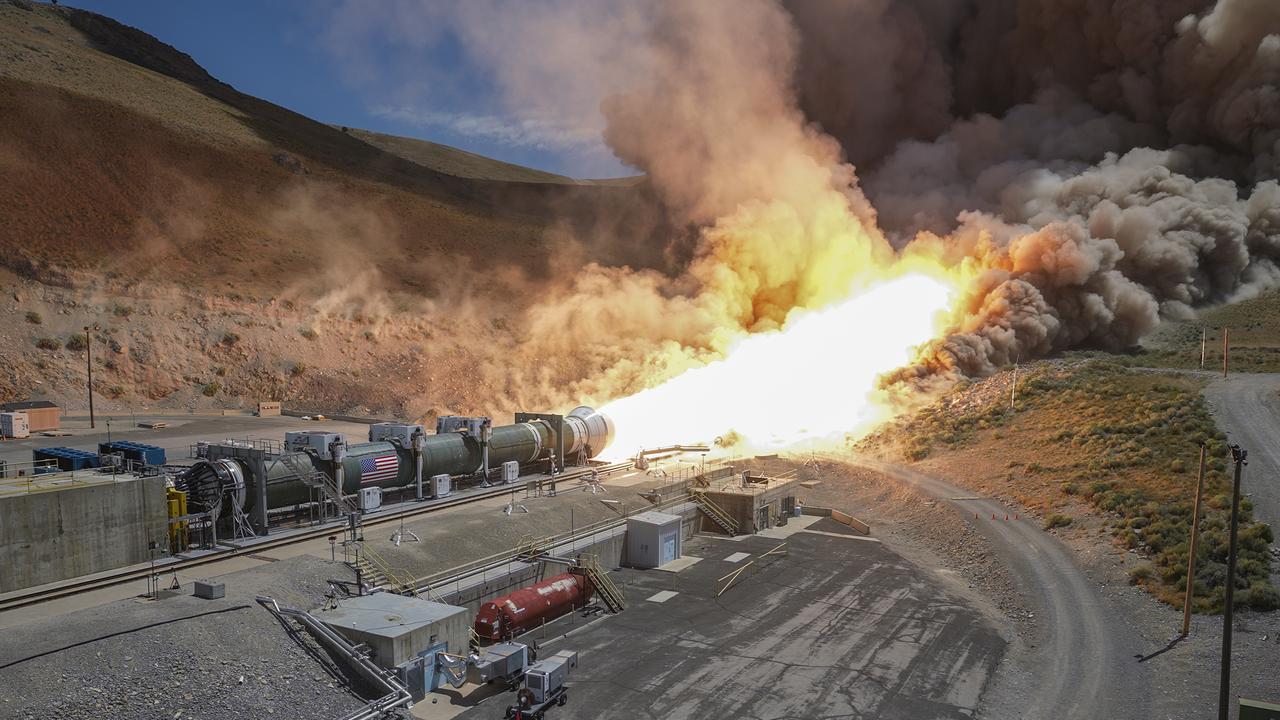
Teams from NASA and Northrop Grumman fire a ground-based version of a booster for the agency’s SLS (Space Launch System) rocket June 26. Secured horizontally in a test stand at Northrop Grumman’s test facility in Promontory, Utah, the single five-segment booster motor fired for more than two minutes and produced 3.9 million pounds of thrust. The booster for this test, known as Demonstration Motor-1 (DM-1), is the result of the Booster Obsolescence Life Extension (BOLE) project. This test was the first full-scale ground test of a new five-segment solid rocket motor. Teams from NASA and Northrop Grumman fire a ground-based version of a booster for the agency’s SLS (Space Launch System) rocket June 26. Secured horizontally in a test stand at Northrop Grumman’s test facility in Promontory, Utah, the single five-segment booster motor fired for more than two minutes and produced 3.9 million pounds of thrust. The booster for this test, known as Demonstration Motor-1 (DM-1), is the result of the Booster Obsolescence Life Extension (BOLE) project. This test was the first full-scale ground test of a new five-segment solid rocket motor. During the test, there was an abnormal event approximately 15 seconds before the end of the motor firing. Despite this event, NASA achieved several of the test’s primary objectives and received valuable data on technical risks identified ahead of the test. Testing this evolved booster for the SLS will help evaluate improvements and new materials in the boosters. The BOLE effort was launched to transition to a more efficient, lower cost commercial solution for the boosters for the SLS rocket. Through the Artemis campaign, NASA will send astronauts to explore the Moon for scientific discovery, economic benefits, and to build the foundation for the first crewed missions to Mars – for the benefit of all. For more information, contact NASA Marshall’s Office of Communications at 256-544-0034.
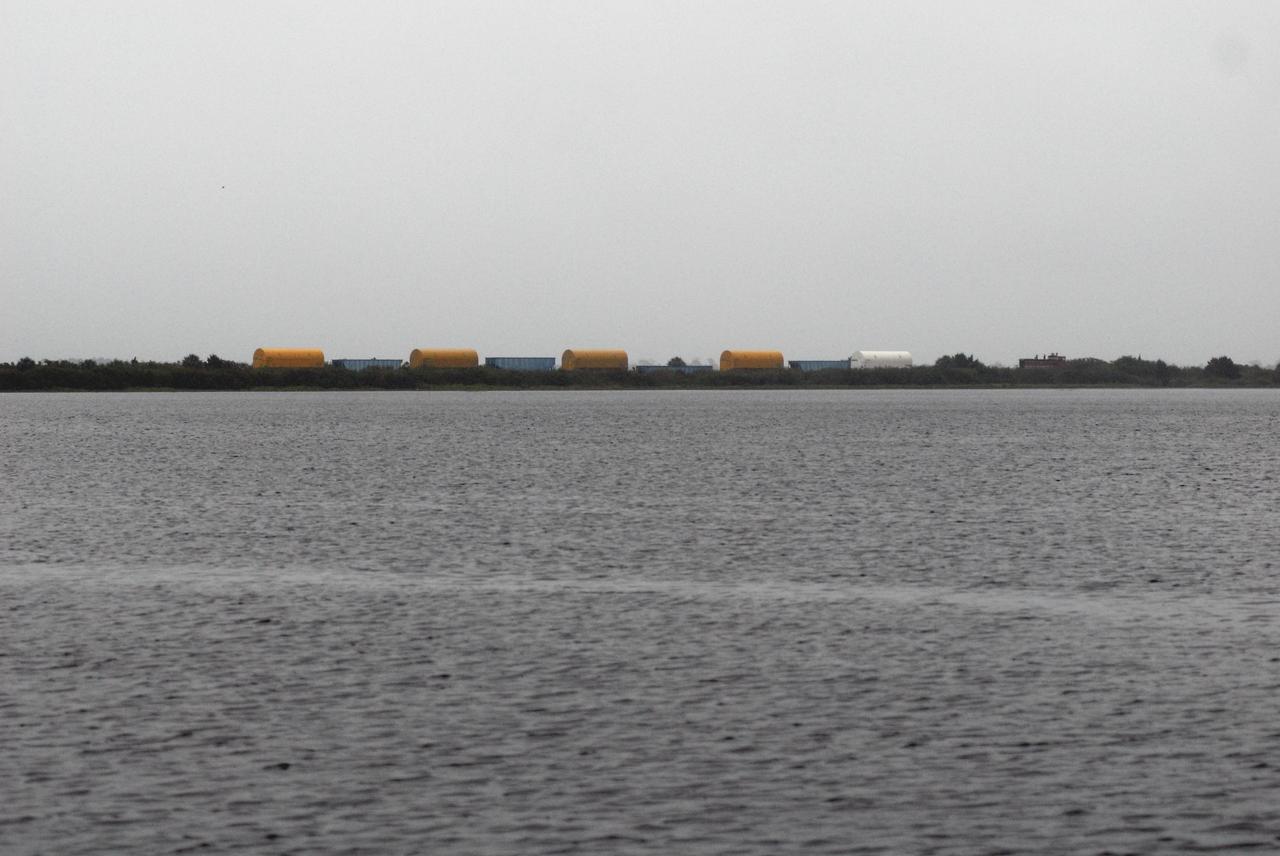
KENNEDY SPACE CENTER, FLA. -- Solid rocket motor segments and two aft exit cone segments arrive by rail at NASA's Kennedy Space Center. While enroute, solid rocket motor segments were involved in a derailment in Alabama. The rail cars carrying these segments remained upright and were undamaged. An inspection determined these segment cars could continue on to Florida. The segments themselves will undergo further evaluation at Kennedy before they are cleared for flight. Other segments involved in the derailment will be returned to a plant in Utah for further evaluation. Photo credit: NASA/Kim Shiflett
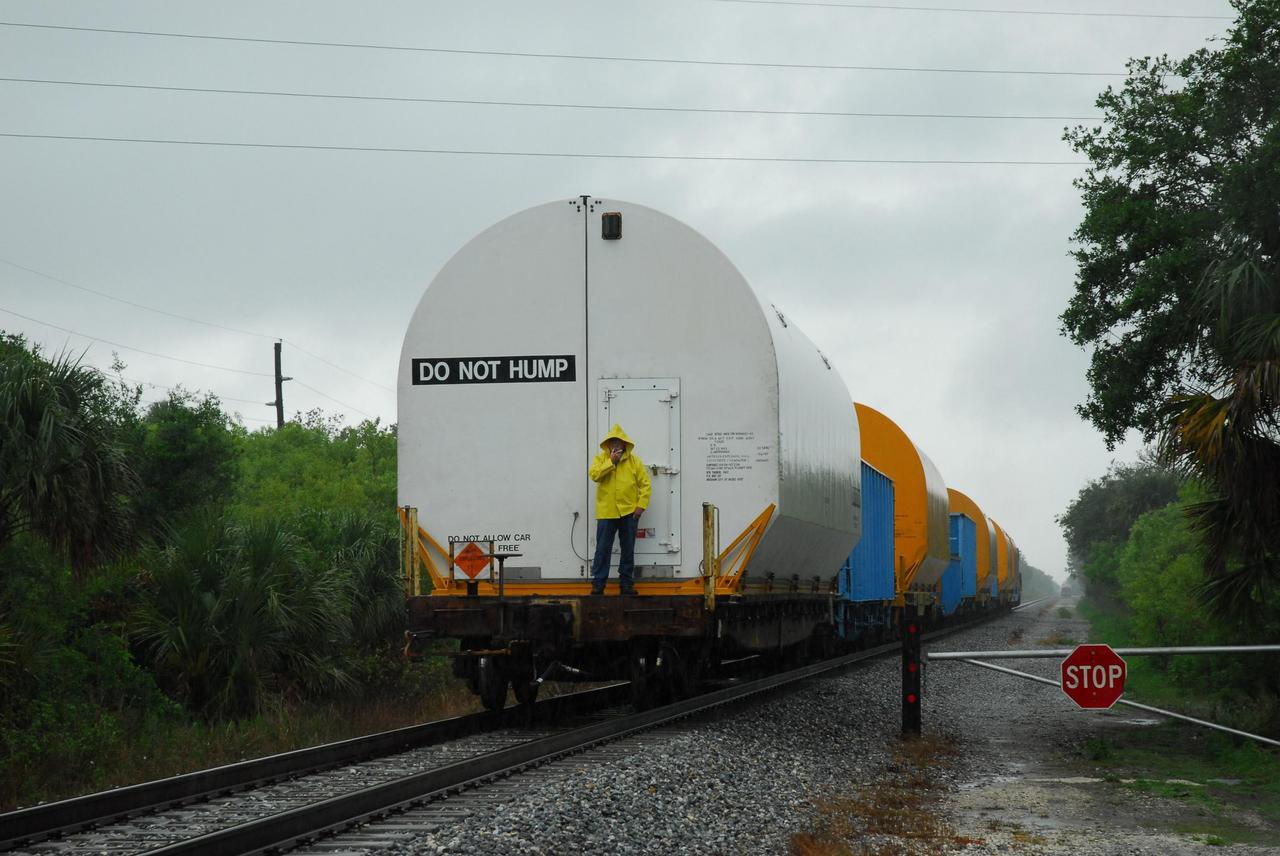
KENNEDY SPACE CENTER, FLA. -- Solid rocket motor segments and two aft exit cone segments arrive by rail at NASA's Kennedy Space Center. While enroute, solid rocket motor segments were involved in a derailment in Alabama. The rail cars carrying these segments remained upright and were undamaged. An inspection determined these segment cars could continue on to Florida. The segments themselves will undergo further evaluation at Kennedy before they are cleared for flight. Other segments involved in the derailment will be returned to a plant in Utah for further evaluation. Photo credit: NASA/George Shelton
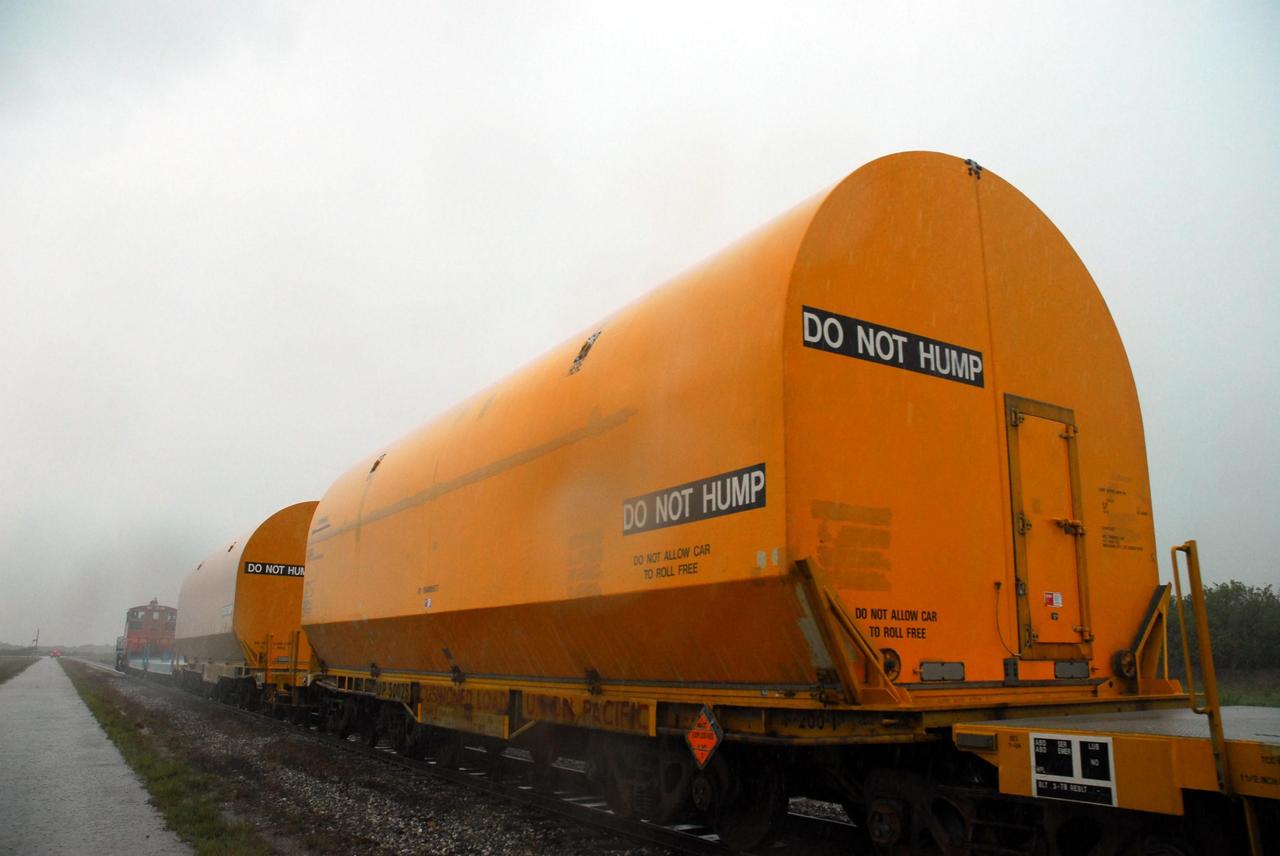
KENNEDY SPACE CENTER, FLA. -- The locomotive and rail cars carrying solid rocket booster motor segments and two aft exit cone segments cross a road on Kennedy Space Center. These cars are headed for the SRB Assembly and Refurbishment Facility. While enroute, solid rocket motor segments were involved in a derailment in Alabama. The rail cars carrying these segments remained upright and were undamaged. An inspection determined these segment cars could continue on to Florida. The segments themselves will undergo further evaluation at Kennedy before they are cleared for flight. Other segments involved in the derailment will be returned to a plant in Utah for further evaluation. Photo credit: NASA/George Shelton
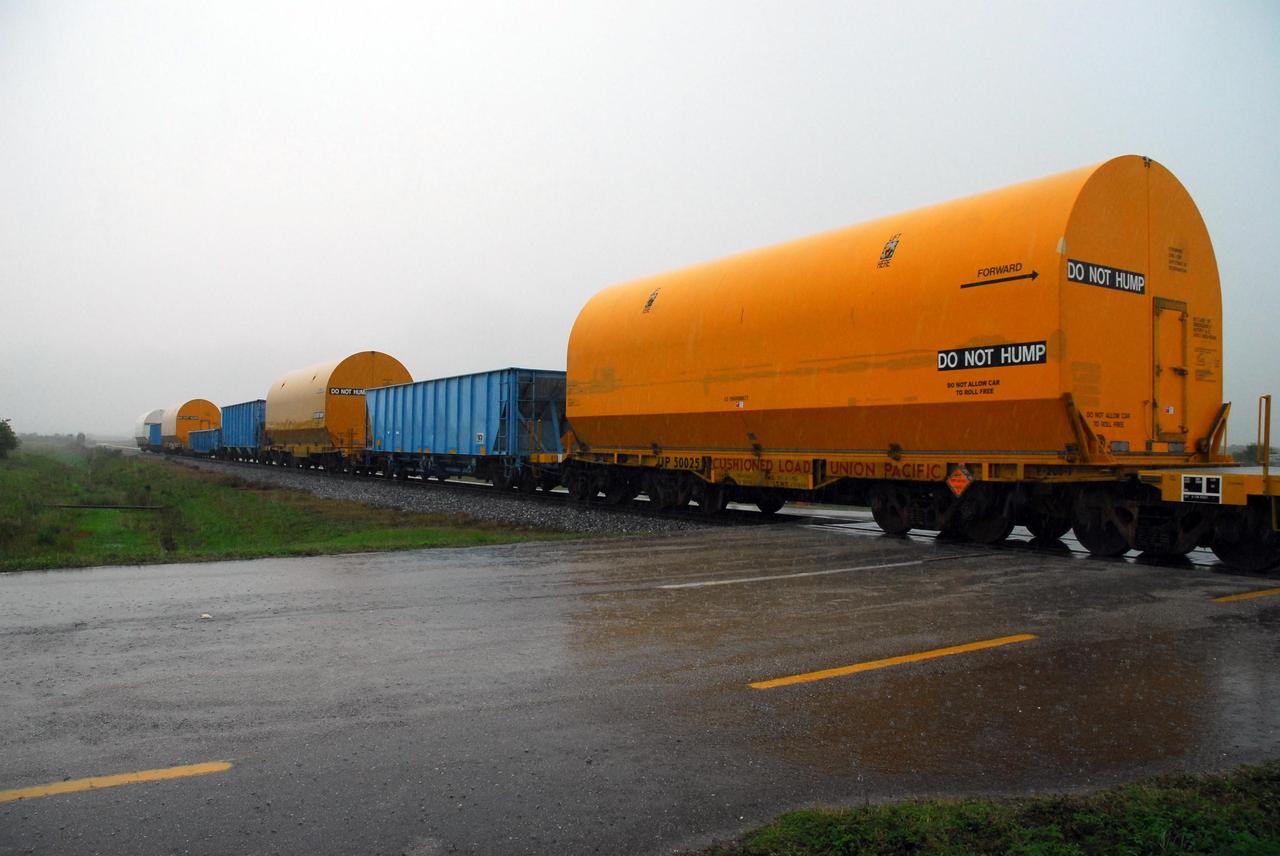
KENNEDY SPACE CENTER, FLA. -- Solid rocket motor segments and two aft exit cone segments arrive by rail at NASA's Kennedy Space Center. While enroute, solid rocket motor segments were involved in a derailment in Alabama. The rail cars carrying these segments remained upright and were undamaged. An inspection determined these segment cars could continue on to Florida. The segments themselves will undergo further evaluation at Kennedy before they are cleared for flight. Other segments involved in the derailment will be returned to a plant in Utah for further evaluation. Photo credit: NASA/George Shelton
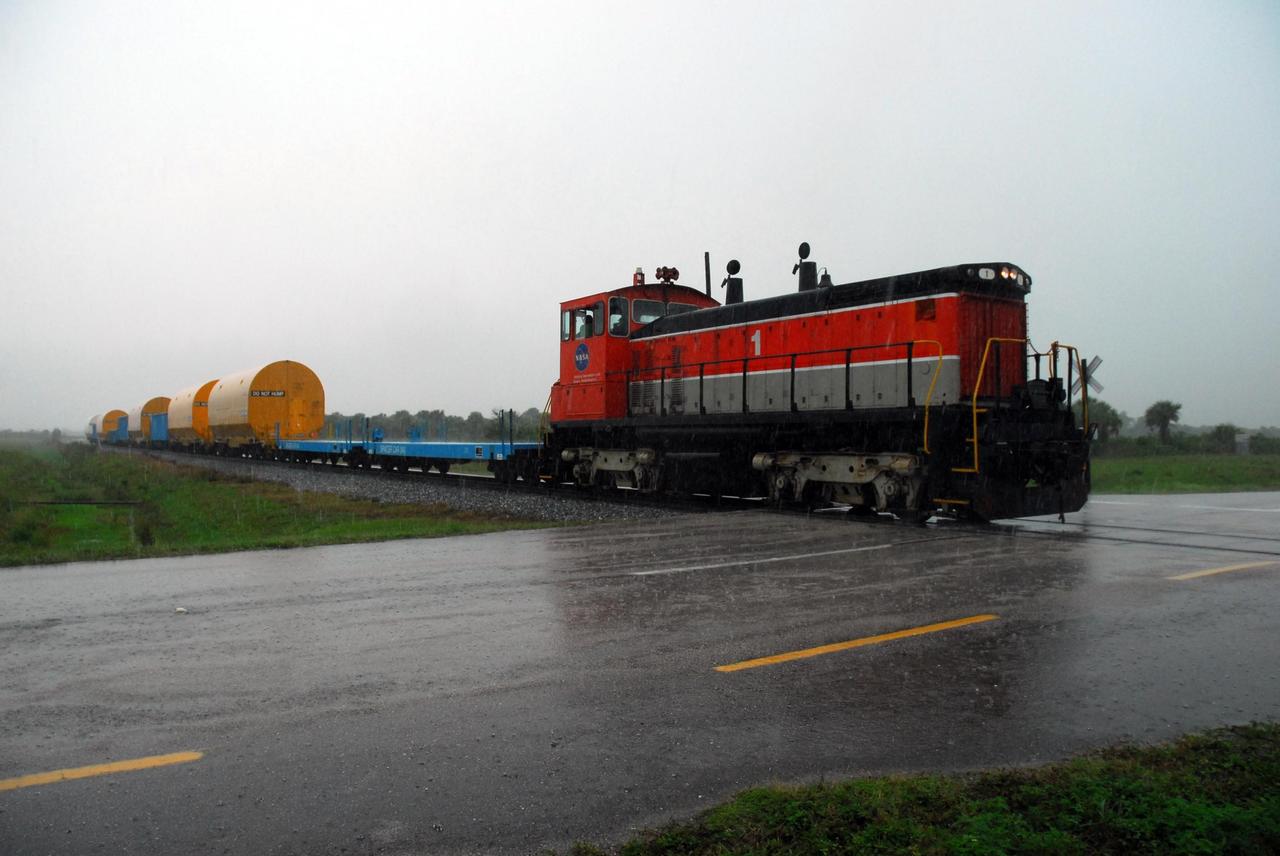
KENNEDY SPACE CENTER, FLA. -- The locomotive and rail cars carrying solid rocket booster motor segments and two aft exit cone segments cross a road on Kennedy Space Center. These cars are headed for the SRB Assembly and Refurbishment Facility. While enroute, solid rocket motor segments were involved in a derailment in Alabama. The rail cars carrying these segments remained upright and were undamaged. An inspection determined these segment cars could continue on to Florida. The segments themselves will undergo further evaluation at Kennedy before they are cleared for flight. Other segments involved in the derailment will be returned to a plant in Utah for further evaluation. Photo credit: NASA/George Shelton
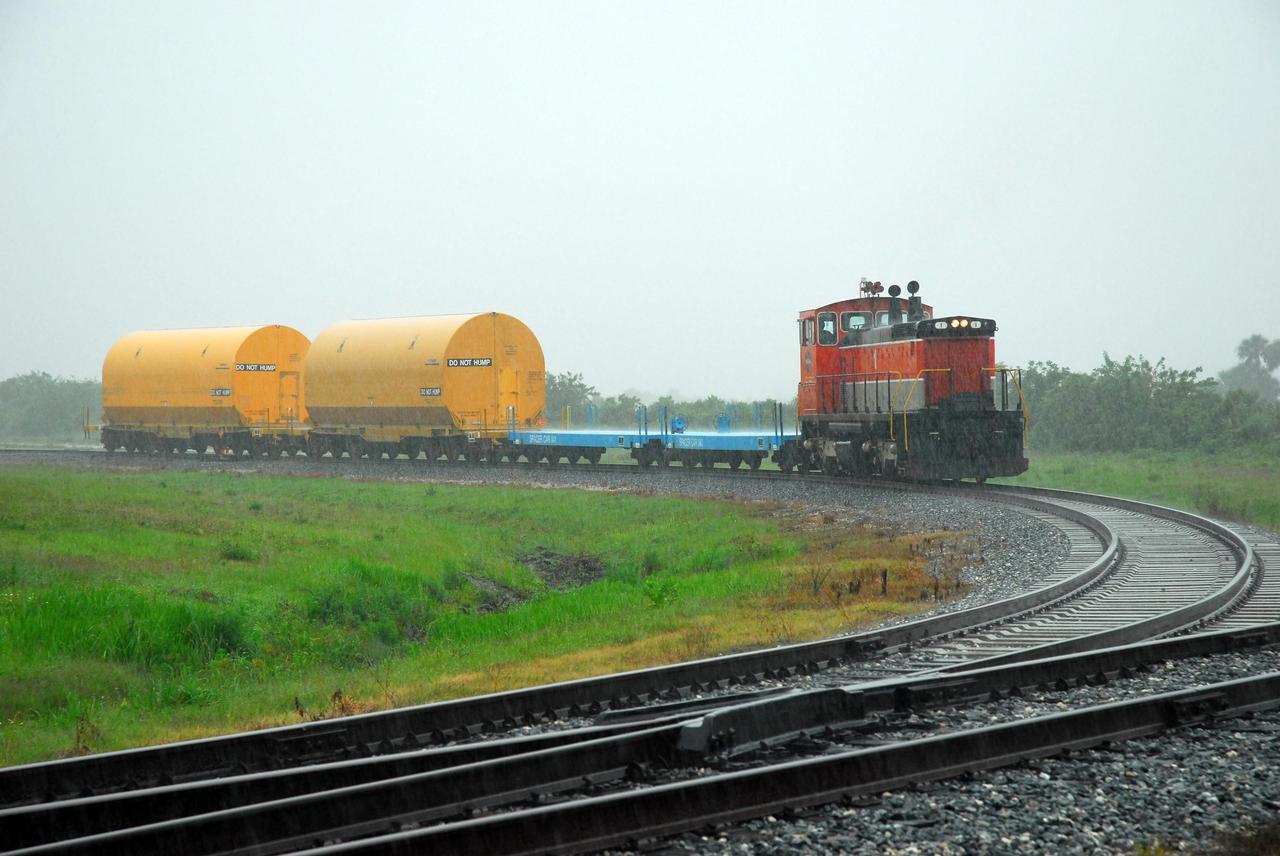
KENNEDY SPACE CENTER, FLA. -- The locomotive and rail cars carrying solid rocket booster motor segments and two aft exit cone segments cross a road on Kennedy Space Center. These cars are headed for the SRB Assembly and Refurbishment Facility. While enroute, solid rocket motor segments were involved in a derailment in Alabama. The rail cars carrying these segments remained upright and were undamaged. An inspection determined these segment cars could continue on to Florida. The segments themselves will undergo further evaluation at Kennedy before they are cleared for flight. Other segments involved in the derailment will be returned to a plant in Utah for further evaluation. Photo credit: NASA/George Shelton
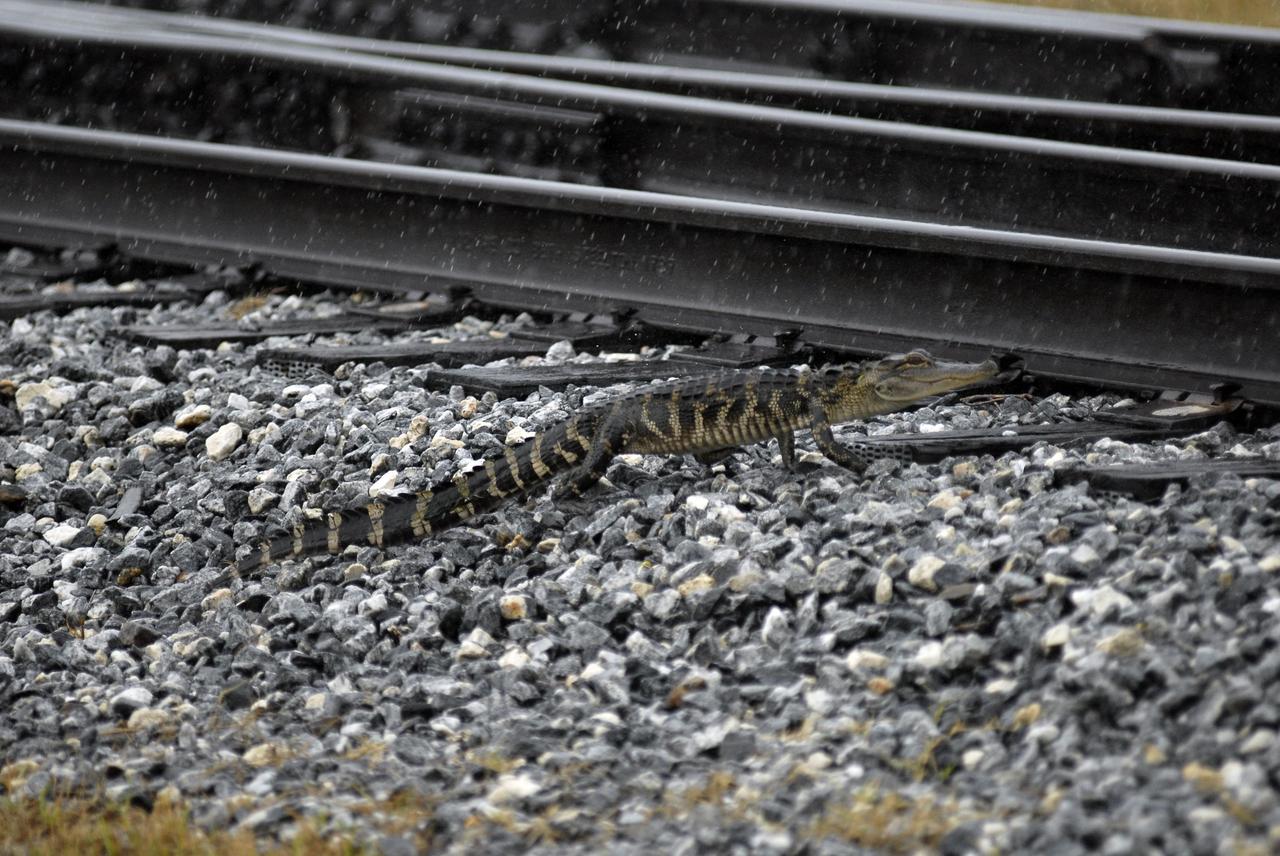
KENNEDY SPACE CENTER, FLA. -- This young alligator approaches the railroad tracks where the train carrying solid rocket booster motor segments is approaching Kennedy Space Center. While enroute, solid rocket motor segments were involved in a derailment in Alabama. The rail cars carrying these segments remained upright and were undamaged. An inspection determined these segment cars could continue on to Florida. The segments themselves will undergo further evaluation at Kennedy before they are cleared for flight. Other segments involved in the derailment will be returned to a plant in Utah for further evaluation. Photo credit: NASA/Kim Shiflett

KENNEDY SPACE CENTER, FLA. -- This young alligator climbs on the railroad tracks where the train carrying solid rocket booster motor segments is approaching Kennedy Space Center. While enroute, solid rocket motor segments were involved in a derailment in Alabama. The rail cars carrying these segments remained upright and were undamaged. An inspection determined these segment cars could continue on to Florida. The segments themselves will undergo further evaluation at Kennedy before they are cleared for flight. Other segments involved in the derailment will be returned to a plant in Utah for further evaluation. Photo credit: NASA/Kim Shiflett
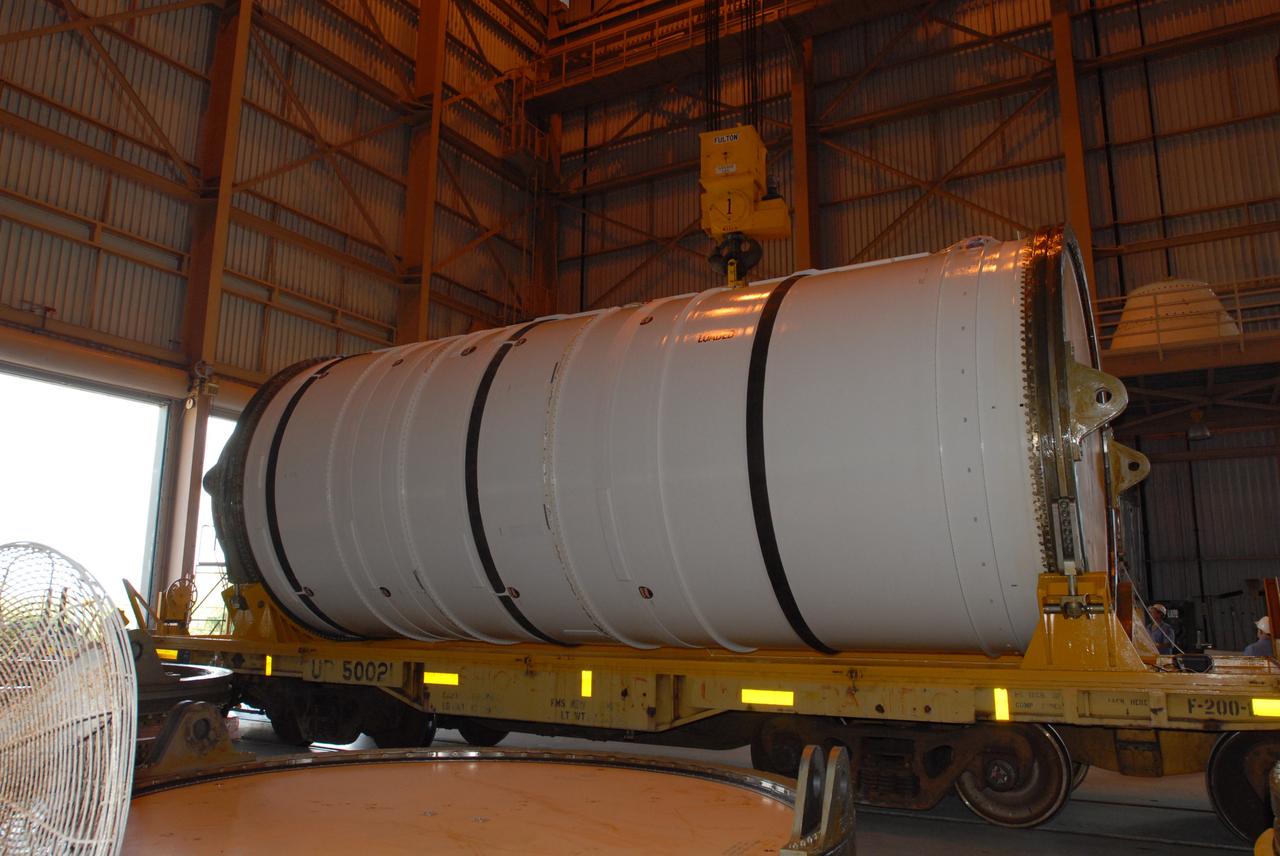
CAPE CANAVERAL, Fla. – In the Rotation, Processing and Surge Facility at NASA's Kennedy Space Center in Florida, the Ares I-X motor segment is revealed after removal of the rail car cover. It is one of four reusable motor segments and nozzle exit cone shipped by the Ares I first-stage prime contractor Alliant Techsystems Inc. for final processing and integration in the facility. The booster used for the Ares I-X launch is being modified by adding new forward structures and a fifth segment simulator. The motor is the final hardware needed for the rocket's upcoming flight test this summer. The stacking operations are scheduled to begin in the Vehicle Assembly Building in April. Photo credit: NASA/Jim Grossmann
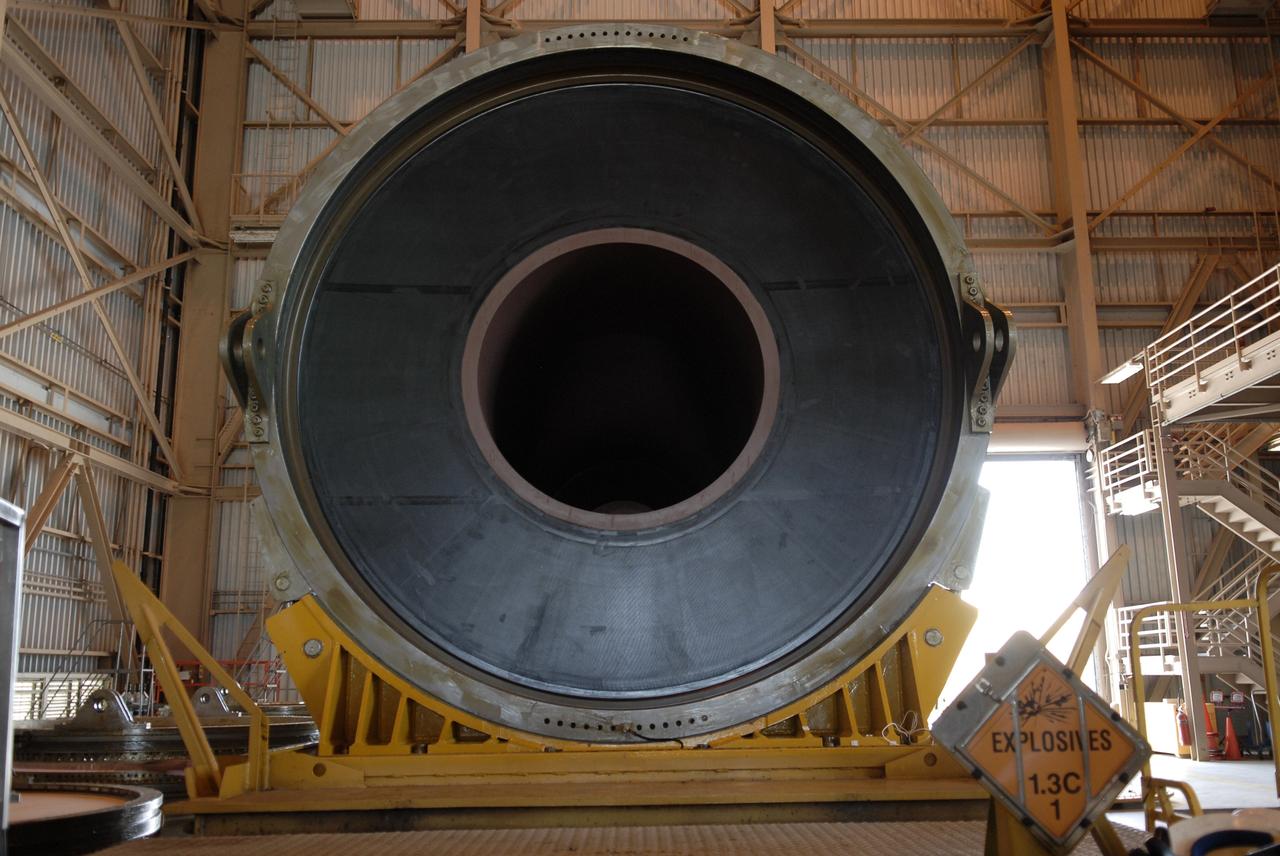
CAPE CANAVERAL, Fla. – In the Rotation, Processing and Surge Facility at NASA's Kennedy Space Center in Florida, the open end of the Ares I-X motor segment is seen without the end cover. It is one of four reusable motor segments and nozzle exit cone shipped by the Ares I first-stage prime contractor Alliant Techsystems Inc. for final processing and integration in the facility. The booster used for the Ares I-X launch is being modified by adding new forward structures and a fifth segment simulator. The motor is the final hardware needed for the rocket's upcoming flight test this summer. The stacking operations are scheduled to begin in the Vehicle Assembly Building in April. Photo credit: NASA/Jim Grossmann
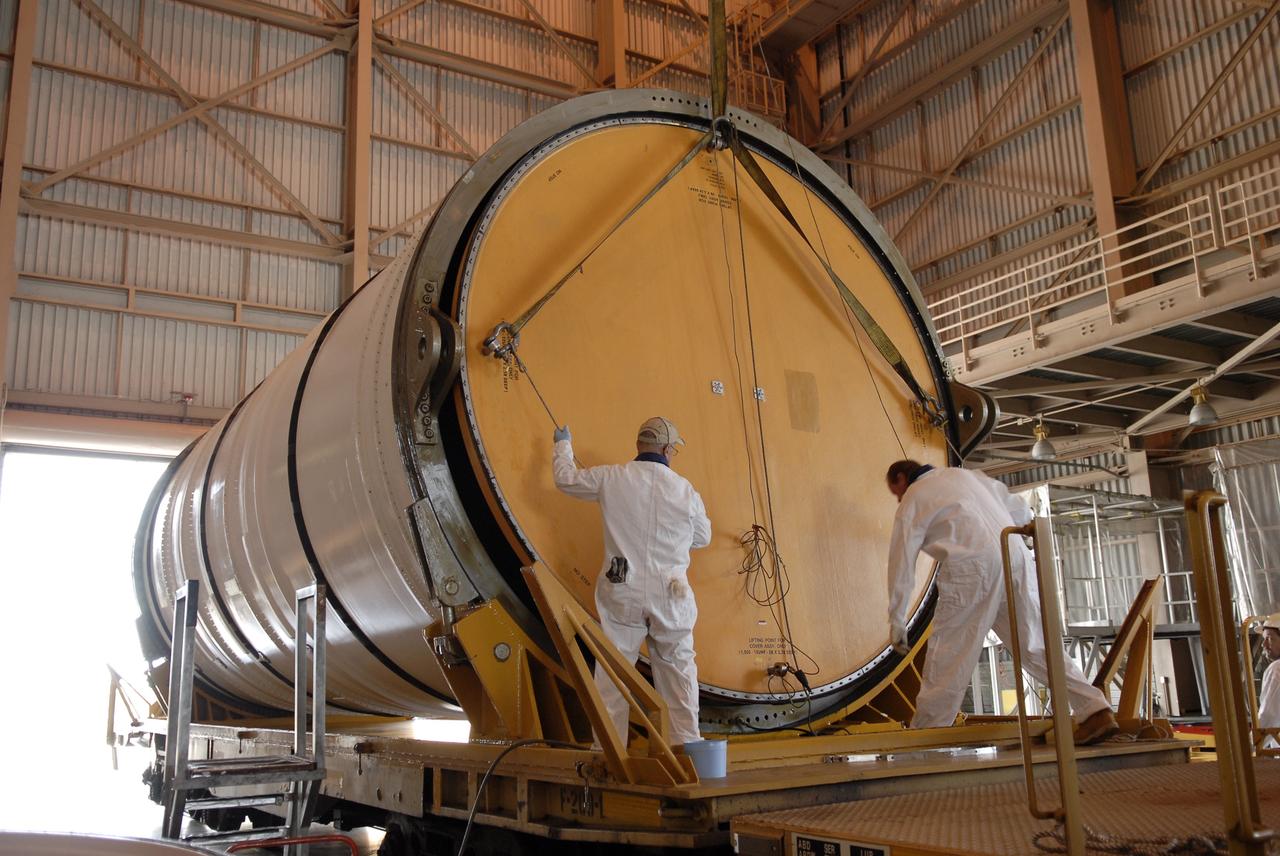
CAPE CANAVERAL, Fla. – In the Rotation, Processing and Surge Facility at NASA's Kennedy Space Center in Florida, technicians check the fit of the end cover on the Ares I-X motor segment. It is one of four reusable motor segments and nozzle exit cone shipped by the Ares I first-stage prime contractor Alliant Techsystems Inc. for final processing and integration in the facility. The booster used for the Ares I-X launch is being modified by adding new forward structures and a fifth segment simulator. The motor is the final hardware needed for the rocket's upcoming flight test this summer. The stacking operations are scheduled to begin in the Vehicle Assembly Building in April. Photo credit: NASA/Jim Grossmann
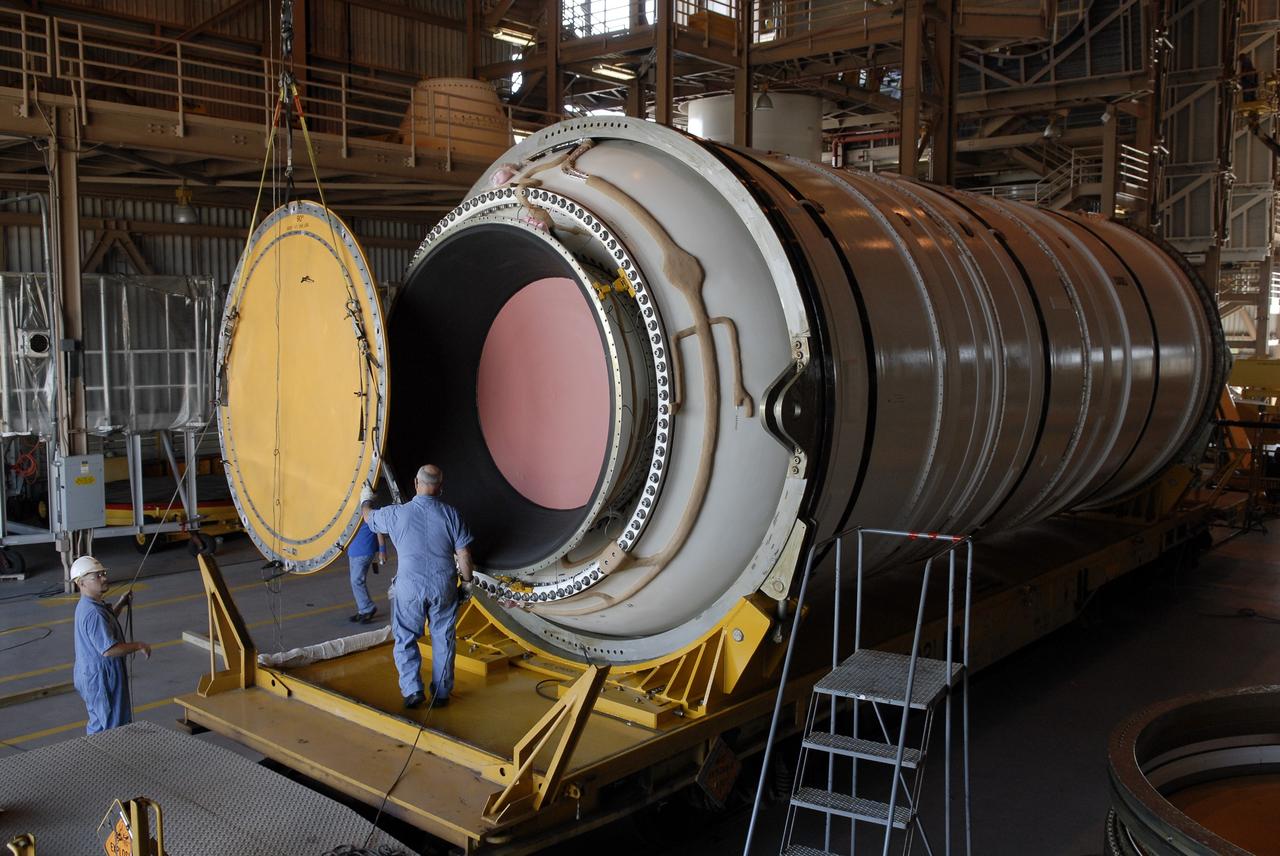
CAPE CANAVERAL, Fla. –In the Rotation, Processing and Surge Facility at NASA's Kennedy Space Center in Florida, the end of the Ares I-X motor segment is removed to allow propellant grain inspection of the interior. It is one of four reusable motor segments and nozzle exit cone shipped by the Ares I first-stage prime contractor Alliant Techsystems Inc. for final processing and integration in the facility. The booster used for the Ares I-X launch is being modified by adding new forward structures and a fifth segment simulator. The motor is the final hardware needed for the rocket's upcoming flight test this summer. The stacking operations are scheduled to begin in the Vehicle Assembly Building in April. Photo credit: NASA/Jim Grossmann
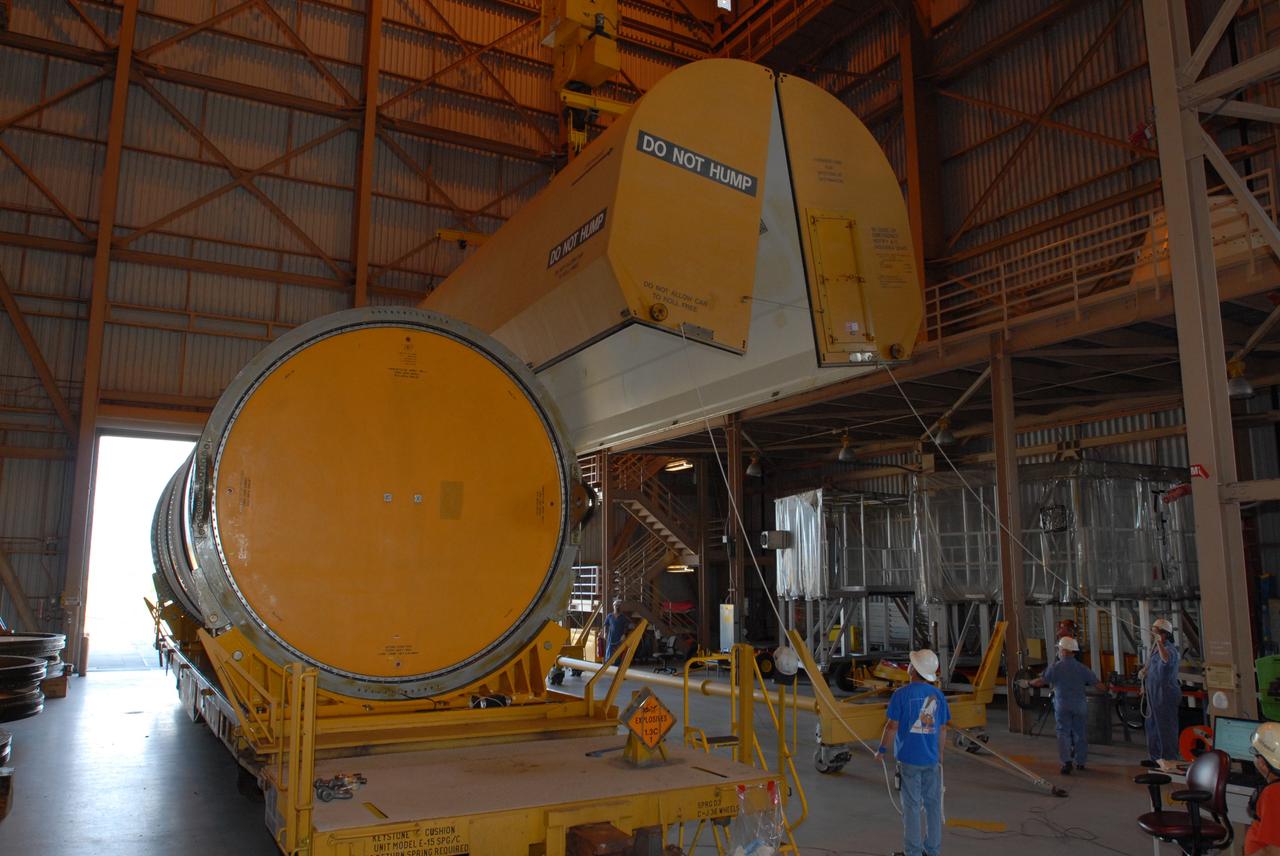
CAPE CANAVERAL, Fla. – In the Rotation, Processing and Surge Facility at NASA's Kennedy Space Center in Florida, the rail car cover is moved away from the first Ares I-X motor segment. It is one of four reusable motor segments and nozzle exit cone shipped by the Ares I first-stage prime contractor Alliant Techsystems Inc. for final processing and integration in the facility. The booster used for the Ares I-X launch is being modified by adding new forward structures and a fifth segment simulator. The motor is the final hardware needed for the rocket's upcoming flight test this summer. The stacking operations are scheduled to begin in the Vehicle Assembly Building in April. Photo credit: NASA/Jim Grossmann
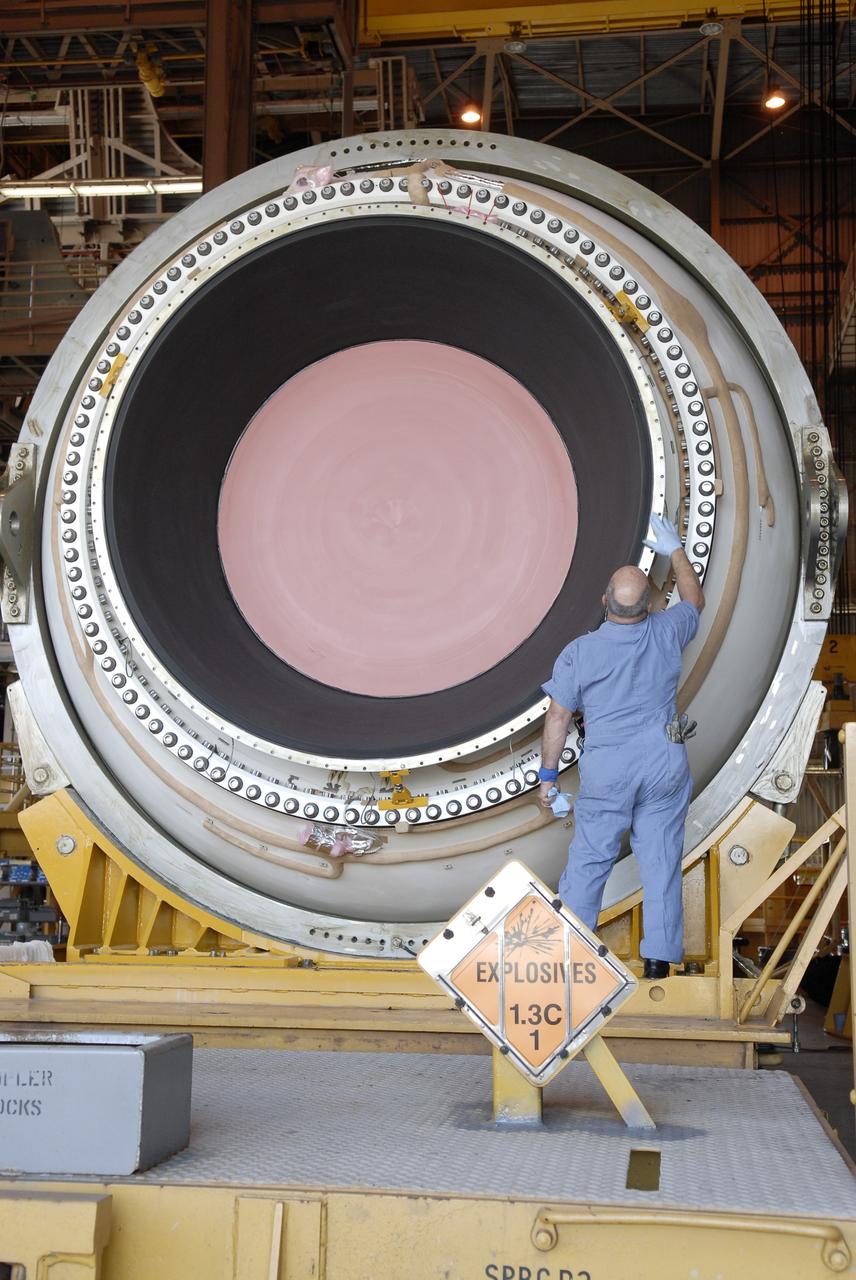
CAPE CANAVERAL, Fla. – In the Rotation, Processing and Surge Facility at NASA's Kennedy Space Center in Florida, a technician begins propellant grain inspection of the interior of the Ares I-X motor segment. It is one of four reusable motor segments and nozzle exit cone shipped by the Ares I first-stage prime contractor Alliant Techsystems Inc. for final processing and integration in the facility. The booster used for the Ares I-X launch is being modified by adding new forward structures and a fifth segment simulator. The motor is the final hardware needed for the rocket's upcoming flight test this summer. The stacking operations are scheduled to begin in the Vehicle Assembly Building in April. Photo credit: NASA/Jim Grossmann
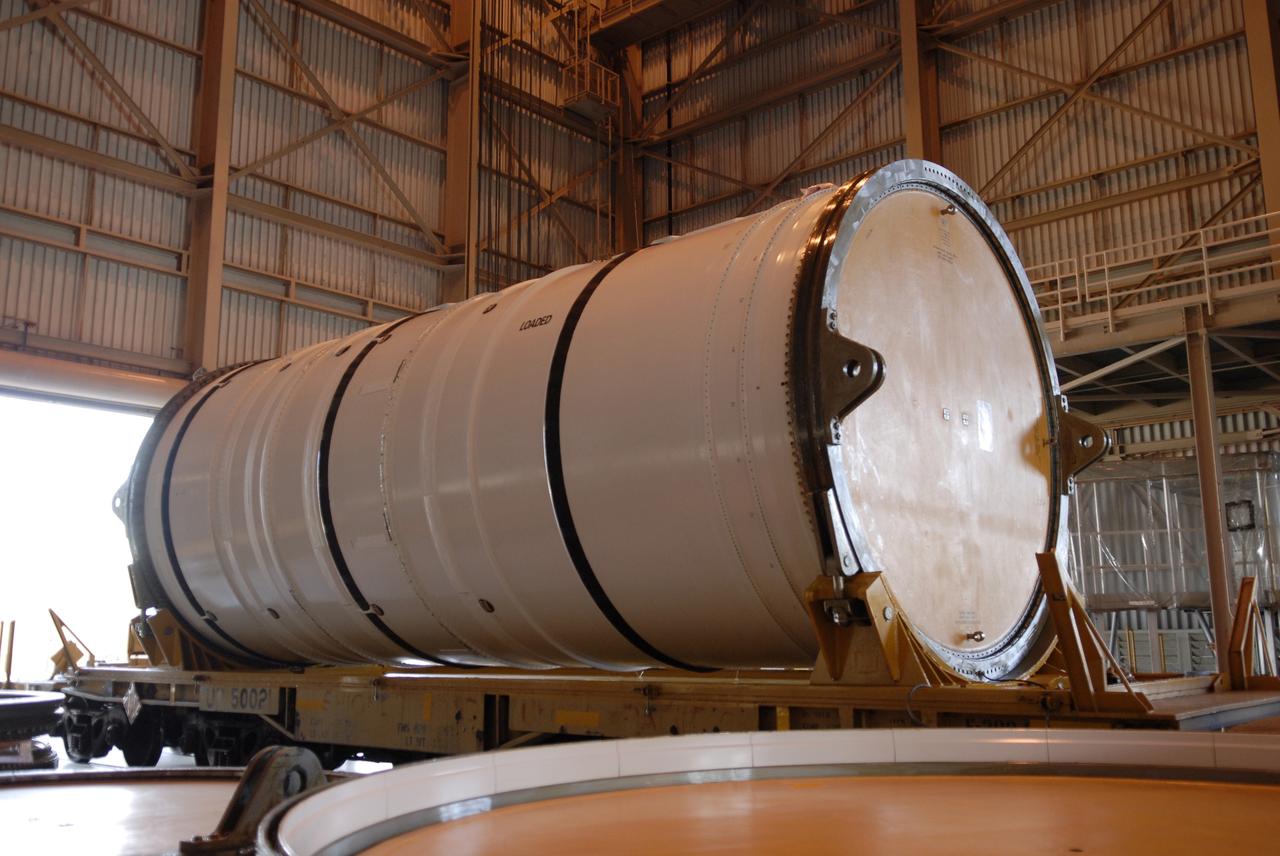
CAPE CANAVERAL, Fla. – In the Rotation, Processing and Surge Facility at NASA's Kennedy Space Center in Florida, the Ares I-X motor segment waits for inspection after removal of the shipping container. It is one of four reusable motor segments and nozzle exit cone shipped by the Ares I first-stage prime contractor Alliant Techsystems Inc. for final processing and integration in the facility. The booster used for the Ares I-X launch is being modified by adding new forward structures and a fifth segment simulator. The motor is the final hardware needed for the rocket's upcoming flight test this summer. The stacking operations are scheduled to begin in the Vehicle Assembly Building in April. Photo credit: NASA/Jim Grossmann
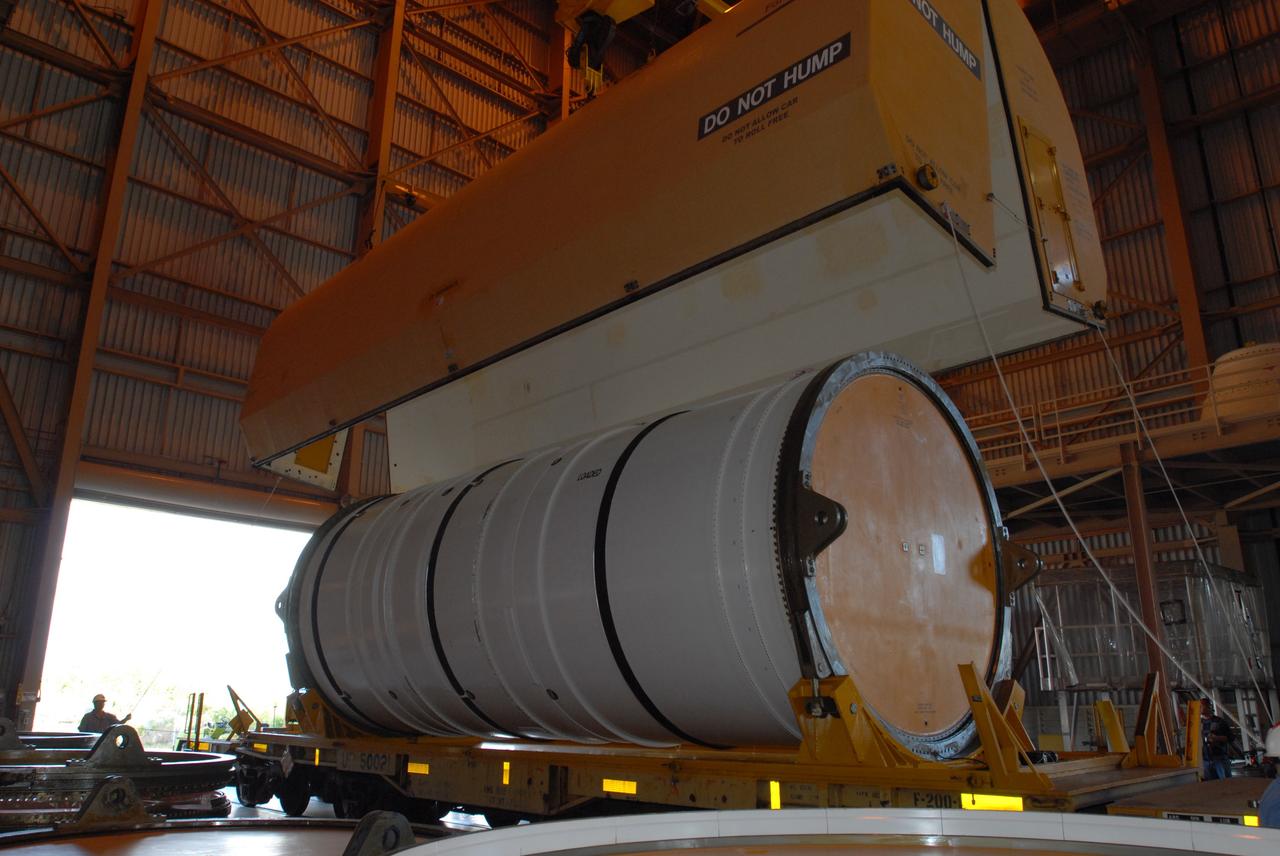
CAPE CANAVERAL, Fla. – In the Rotation, Processing and Surge Facility at NASA's Kennedy Space Center in Florida, the rail car cover is removed from the first Ares I-X motor segment. It is one of four reusable motor segments and nozzle exit cone shipped by the Ares I first-stage prime contractor Alliant Techsystems Inc. for final processing and integration in the facility. The booster used for the Ares I-X launch is being modified by adding new forward structures and a fifth segment simulator. The motor is the final hardware needed for the rocket's upcoming flight test this summer. The stacking operations are scheduled to begin in the Vehicle Assembly Building in April. Photo credit: NASA/Jim Grossmann

CAPE CANAVERAL, Fla. – In the Rotation, Processing and Surge Facility at NASA's Kennedy Space Center in Florida, a technician performs propellant grain inspection of the inside of the Ares I-X motor segment. It is one of four reusable motor segments and nozzle exit cone shipped by the Ares I first-stage prime contractor Alliant Techsystems Inc. for final processing and integration in the facility. The booster used for the Ares I-X launch is being modified by adding new forward structures and a fifth segment simulator. The motor is the final hardware needed for the rocket's upcoming flight test this summer. The stacking operations are scheduled to begin in the Vehicle Assembly Building in April. Photo credit: NASA/Jim Grossmann
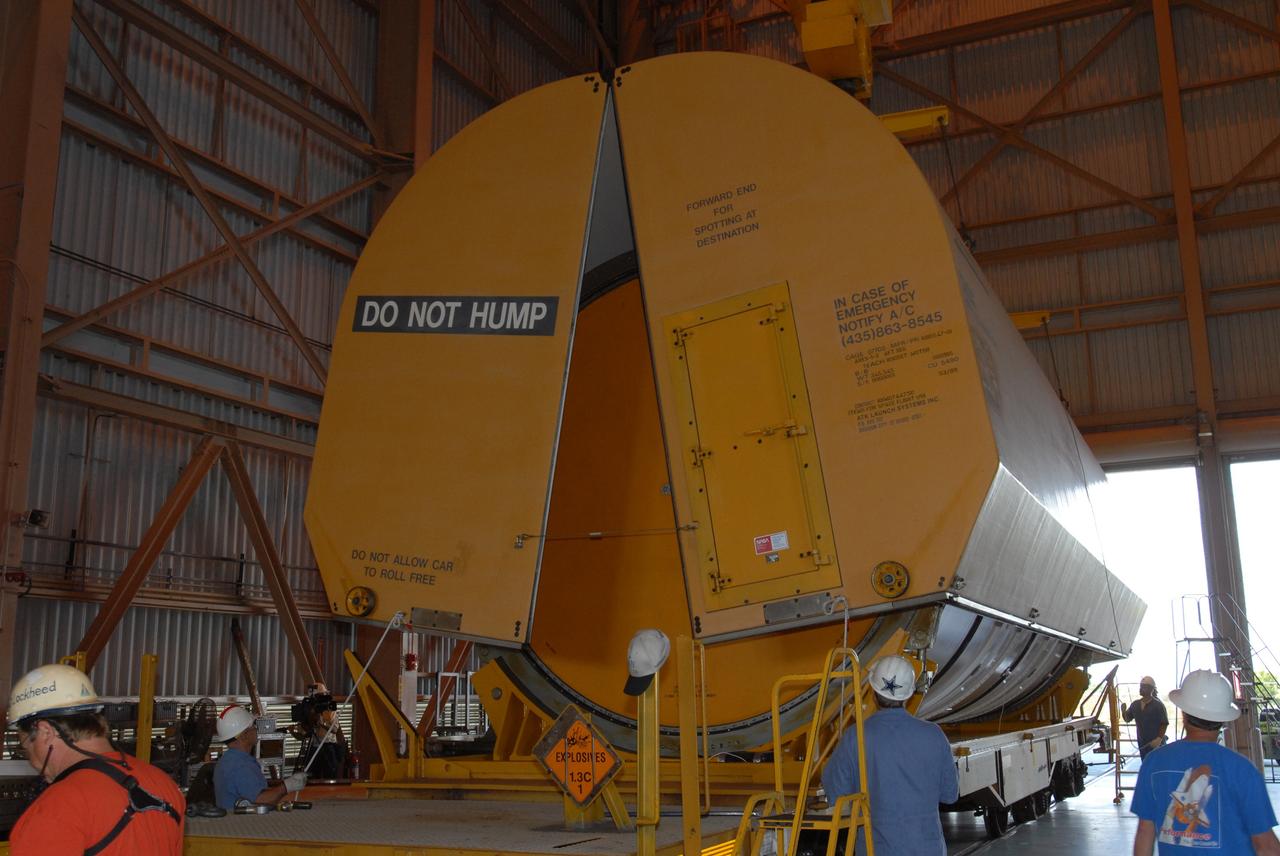
CAPE CANAVERAL, Fla. – In the Rotation, Processing and Surge Facility at NASA's Kennedy Space Center in Florida, the rail car cover is removed from the first Ares I-X motor segment. It is one of four reusable motor segments and nozzle exit cone shipped by the Ares I first-stage prime contractor Alliant Techsystems Inc. for final processing and integration in the facility. The booster used for the Ares I-X launch is being modified by adding new forward structures and a fifth segment simulator. The motor is the final hardware needed for the rocket's upcoming flight test this summer. The stacking operations are scheduled to begin in the Vehicle Assembly Building in April. Photo credit: NASA/Jim Grossmann
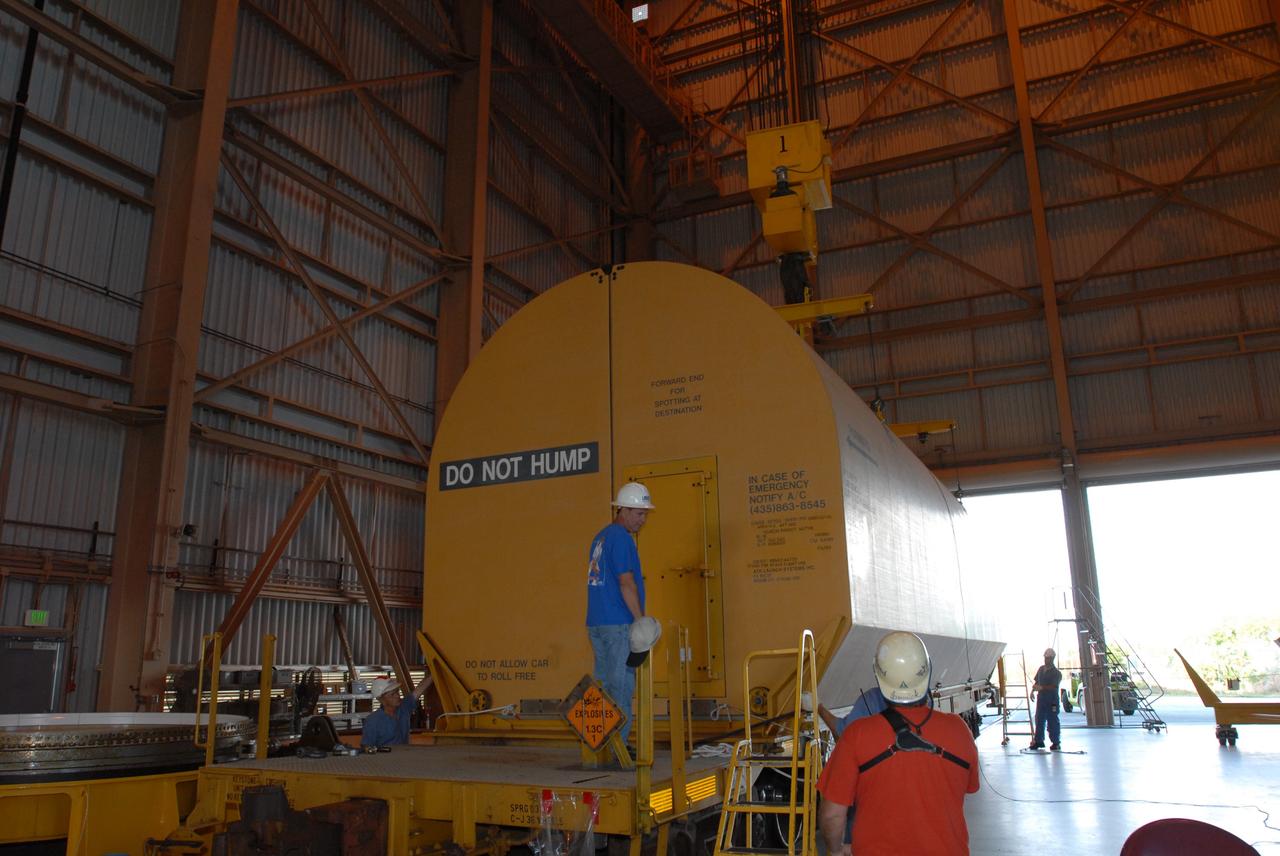
CAPE CANAVERAL, Fla. – The first Ares I-X motor segment is in the Rotation, Processing and Surge Facility at NASA's Kennedy Space Center in Florida. It is one of four reusable motor segments and nozzle exit cone shipped by the Ares I first-stage prime contractor Alliant Techsystems Inc. for final processing and integration in the facility. The booster used for the Ares I-X launch is being modified by adding new forward structures and a fifth segment simulator. The motor is the final hardware needed for the rocket's upcoming flight test this summer. The stacking operations are scheduled to begin in the Vehicle Assembly Building in April. Photo credit: NASA/Jim Grossmann
The 10 booster motor segments that will form the NASA Space Launch System rocket’s twin, five-segment solid rocket boosters for the agency’s Artemis II mission, arrive at Kennedy Space Center on Thursday, Sept. 28, 2023. Due to their weight, the booster motor segments traveled by rail across eight states in specialized transporters to the Florida spaceport. Teams with NASA’s Exploration Ground Systems will process each of the segments at Kennedy in preparation for launch. Artemis II astronauts Reid Wiseman, Victor Glover, Christina Koch, and Jeremy Hansen will blast off from Kennedy, traveling around the Moon on the first crewed mission under Artemis that will test all of the Orion spacecraft’s systems.
The 10 booster motor segments that will form the NASA Space Launch System rocket’s twin, five-segment solid rocket boosters for the agency’s Artemis II mission, arrive at Kennedy Space Center on Monday, Sept. 25, 2023. Due to their weight, the booster motor segments traveled by rail across eight states in specialized transporters to the Florida spaceport. Teams with NASA’s Exploration Ground Systems will process each of the segments at Kennedy in preparation for launch. Artemis II astronauts Reid Wiseman, Victor Glover, Christina Koch, and Jeremy Hansen will blast off from Kennedy, traveling around the Moon on the first crewed mission under Artemis that will test all of the Orion spacecraft’s systems.

The 10 booster motor segments that will form the NASA Space Launch System rocket’s twin, five-segment solid rocket boosters for the agency’s Artemis II mission, arrive at Kennedy Space Center on Monday, Sept. 25, 2023. Due to their weight, the booster motor segments traveled by rail across eight states in specialized transporters to the Florida spaceport. Teams with NASA’s Exploration Ground Systems will process each of the segments at Kennedy in preparation for launch. Artemis II astronauts Reid Wiseman, Victor Glover, Christina Koch, and Jeremy Hansen will blast off from Kennedy, traveling around the Moon on the first crewed mission under Artemis that will test all of the Orion spacecraft’s systems.
The 10 booster motor segments that will form the NASA Space Launch System rocket’s twin, five-segment solid rocket boosters for the agency’s Artemis II mission, arrive at Kennedy Space Center on Thursday, Sept. 28, 2023. Due to their weight, the booster motor segments traveled by rail across eight states in specialized transporters to the Florida spaceport. Teams with NASA’s Exploration Ground Systems will process each of the segments at Kennedy in preparation for launch. Artemis II astronauts Reid Wiseman, Victor Glover, Christina Koch, and Jeremy Hansen will blast off from Kennedy, traveling around the Moon on the first crewed mission under Artemis that will test all of the Orion spacecraft’s systems.
The 10 booster motor segments that will form the NASA Space Launch System rocket’s twin, five-segment solid rocket boosters for the agency’s Artemis II mission, arrive at Kennedy Space Center on Monday, Sept. 25, 2023. Due to their weight, the booster motor segments traveled by rail across eight states in specialized transporters to the Florida spaceport. Teams with NASA’s Exploration Ground Systems will process each of the segments at Kennedy in preparation for launch. Artemis II astronauts Reid Wiseman, Victor Glover, Christina Koch, and Jeremy Hansen will blast off from Kennedy, traveling around the Moon on the first crewed mission under Artemis that will test all of the Orion spacecraft’s systems.
CAPE CANAVERAL, Fla. – Technicians check the Ares I-X motor segment after its rotation to vertical. The segment will be moved to a work stand in the Rotation, Processing and Surge Facility at NASA's Kennedy Space Center in Florida. Four segments were delivered to Kennedy for final processing and integration. The booster used for the Ares I-X launch is being modified by adding new forward structures and a fifth segment simulator. The motor is the final hardware needed for the rocket's upcoming test flight this summer. The stacking operations are scheduled to begin in the Vehicle Assembly Building in April. Photo credit: NASA/Jack Pfaller
The 10 booster motor segments that will form the NASA Space Launch System rocket’s twin, five-segment solid rocket boosters for the agency’s Artemis II mission, arrive at Kennedy Space Center on Thursday, Sept. 28, 2023. Due to their weight, the booster motor segments traveled by rail across eight states in specialized transporters to the Florida spaceport. Teams with NASA’s Exploration Ground Systems will process each of the segments at Kennedy in preparation for launch. Artemis II astronauts Reid Wiseman, Victor Glover, Christina Koch, and Jeremy Hansen will blast off from Kennedy, traveling around the Moon on the first crewed mission under Artemis that will test all of the Orion spacecraft’s systems.
The 10 booster motor segments that will form the NASA Space Launch System rocket’s twin, five-segment solid rocket boosters for the agency’s Artemis II mission, arrive at Kennedy Space Center on Thursday, Sept. 28, 2023. Due to their weight, the booster motor segments traveled by rail across eight states in specialized transporters to the Florida spaceport. Teams with NASA’s Exploration Ground Systems will process each of the segments at Kennedy in preparation for launch. Artemis II astronauts Reid Wiseman, Victor Glover, Christina Koch, and Jeremy Hansen will blast off from Kennedy, traveling around the Moon on the first crewed mission under Artemis that will test all of the Orion spacecraft’s systems.
The 10 booster motor segments that will form the NASA Space Launch System rocket’s twin, five-segment solid rocket boosters for the agency’s Artemis II mission, arrive at Kennedy Space Center on Thursday, Sept. 28, 2023. Due to their weight, the booster motor segments traveled by rail across eight states in specialized transporters to the Florida spaceport. Teams with NASA’s Exploration Ground Systems will process each of the segments at Kennedy in preparation for launch. Artemis II astronauts Reid Wiseman, Victor Glover, Christina Koch, and Jeremy Hansen will blast off from Kennedy, traveling around the Moon on the first crewed mission under Artemis that will test all of the Orion spacecraft’s systems.

The 10 booster motor segments that will form the NASA Space Launch System rocket’s twin, five-segment solid rocket boosters for the agency’s Artemis II mission, arrive at Kennedy Space Center on Thursday, Sept. 28, 2023. Due to their weight, the booster motor segments traveled by rail across eight states in specialized transporters to the Florida spaceport. Teams with NASA’s Exploration Ground Systems will process each of the segments at Kennedy in preparation for launch. Artemis II astronauts Reid Wiseman, Victor Glover, Christina Koch, and Jeremy Hansen will blast off from Kennedy, traveling around the Moon on the first crewed mission under Artemis that will test all of the Orion spacecraft’s systems.
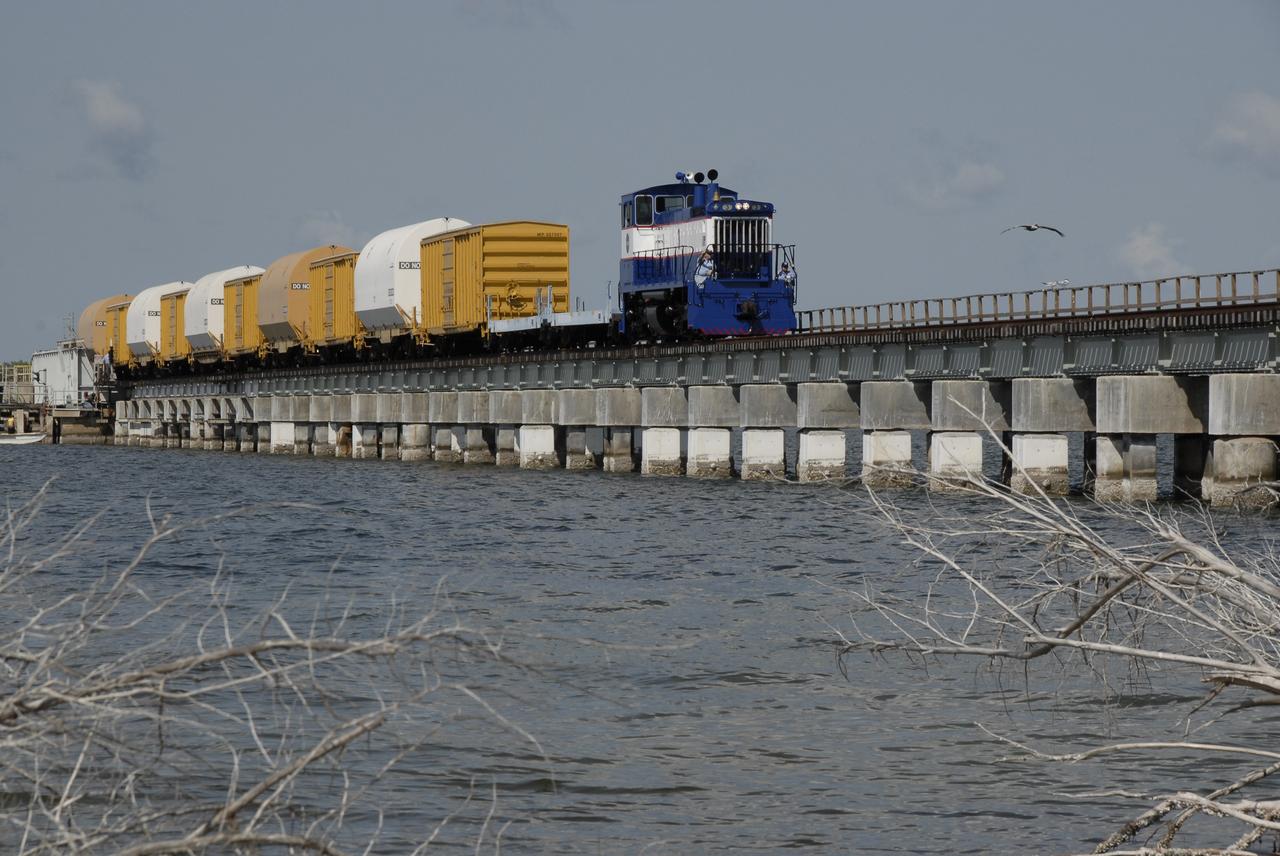
CAPE CANAVERAL, Fla. – The NASA Railroad hauls cars carrying the Ares I-X motor segments and nozzle exit cone over a river bridge to NASA's Kennedy Space Center in Florida. The four reusable motor segments and the nozzle exit cone, manufactured by the Ares I first-stage prime contractor Alliant Techsystems Inc., or ATK, departed Utah March 12 on the seven-day, cross-country trip to Florida. The segments will be delivered to Kennedy's Rotation, Processing and Surge Facility for final processing and integration. The booster used for the Ares I-X launch is being modified by adding new forward structures and a fifth segment simulator. The motor is the final hardware needed for the rocket's upcoming test flight this summer. The stacking operations are scheduled to begin in the Vehicle Assembly Building in April. Photo credit: NASA/Kim Shiflett
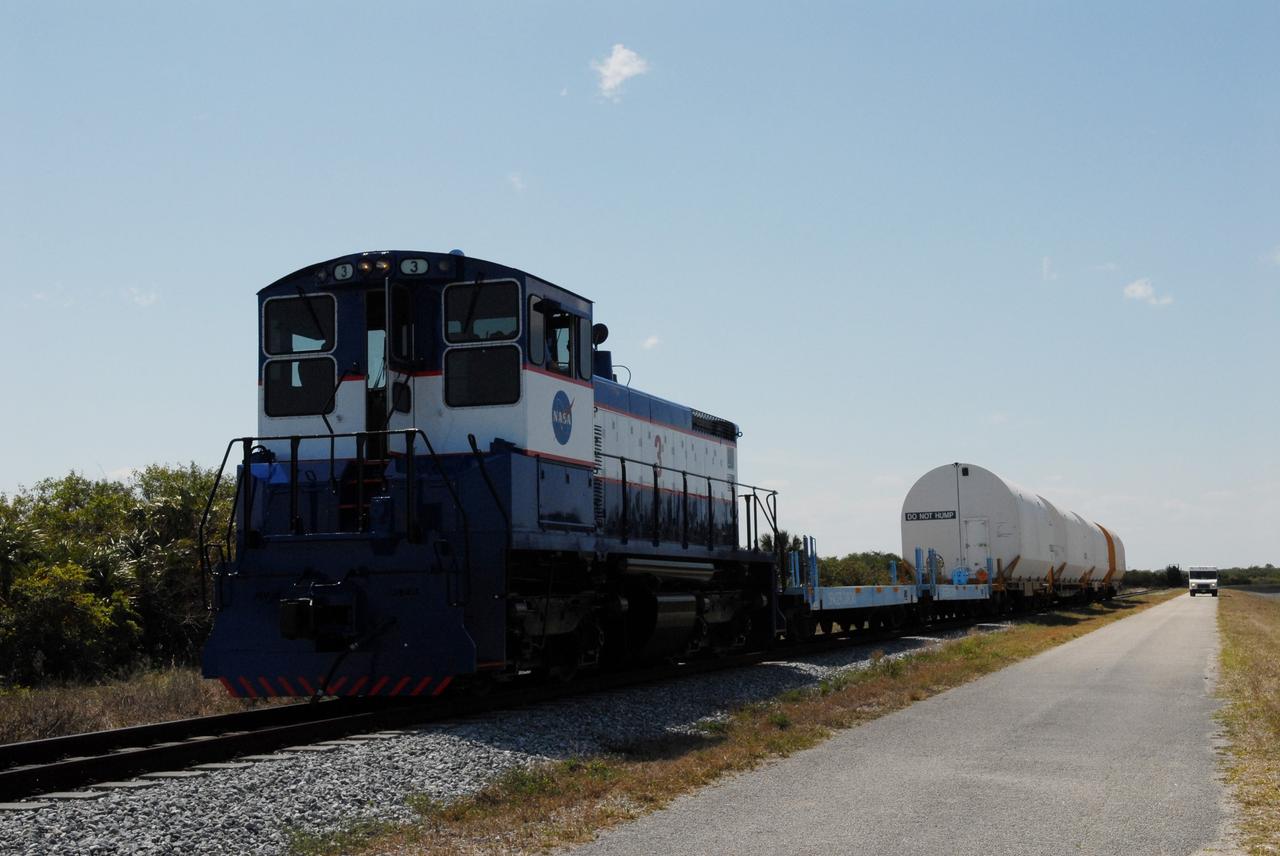
CAPE CANAVERAL, Fla. – After switching out the box cars on the train, the NASA Railroad hauls the Ares I-X motor segments and nozzle exit cone to NASA's Kennedy Space Center in Florida. The four reusable motor segments and the nozzle exit cone, manufactured by the Ares I first-stage prime contractor Alliant Techsystems Inc., or ATK, departed Utah March 12 on the seven-day, cross-country trip to Florida. The segments will be delivered to Kennedy's Rotation, Processing and Surge Facility for final processing and integration. The booster used for the Ares I-X launch is being modified by adding new forward structures and a fifth segment simulator. The motor is the final hardware needed for the rocket's upcoming test flight this summer. The stacking operations are scheduled to begin in the Vehicle Assembly Building in April. Photo credit: NASA/Jack Pfaller
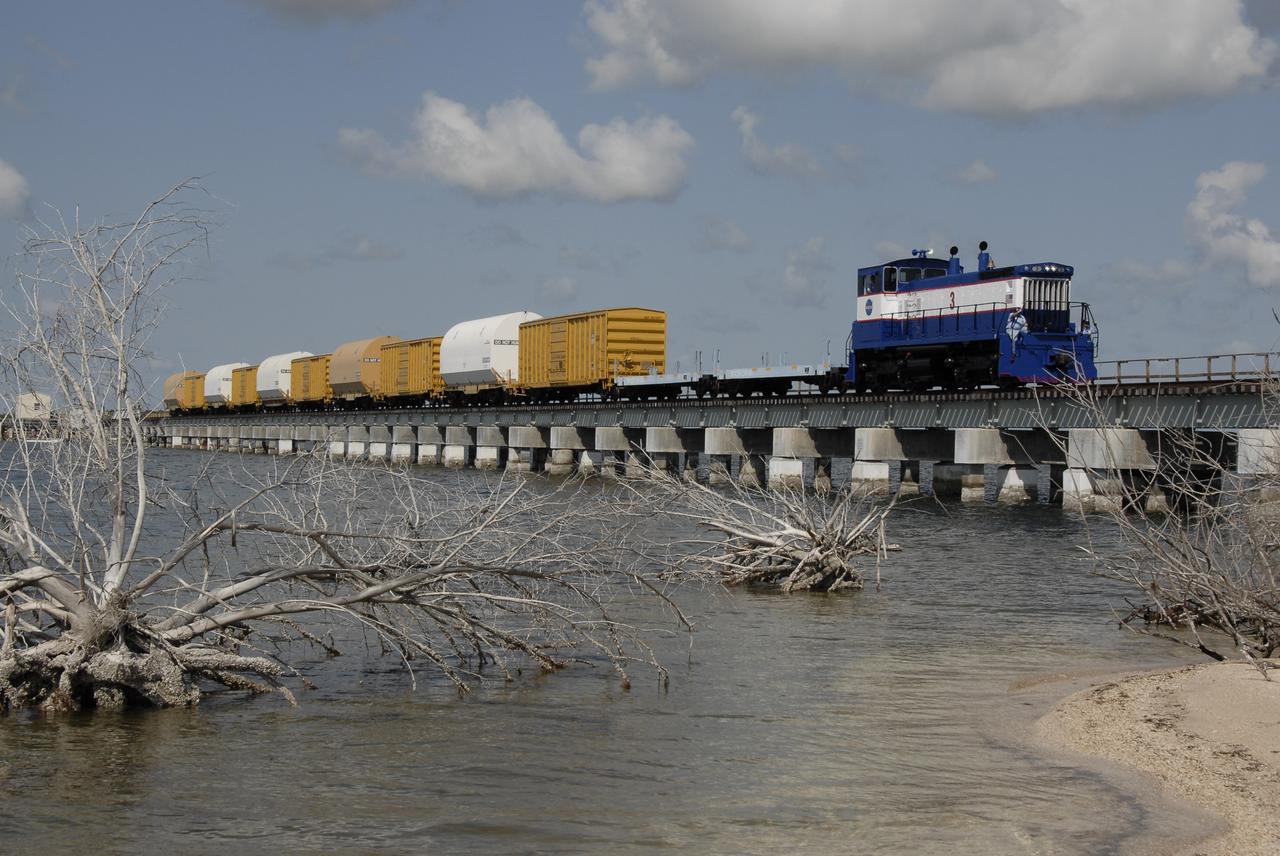
CAPE CANAVERAL, Fla. – The NASA Railroad hauls cars carrying the Ares I-X motor segments and nozzle exit cone over a river bridge to NASA's Kennedy Space Center in Florida. The four reusable motor segments and the nozzle exit cone, manufactured by the Ares I first-stage prime contractor Alliant Techsystems Inc., or ATK, departed Utah March 12 on the seven-day, cross-country trip to Florida. The segments will be delivered to Kennedy's Rotation, Processing and Surge Facility for final processing and integration. The booster used for the Ares I-X launch is being modified by adding new forward structures and a fifth segment simulator. The motor is the final hardware needed for the rocket's upcoming test flight this summer. The stacking operations are scheduled to begin in the Vehicle Assembly Building in April. Photo credit: NASA/Kim Shiflett
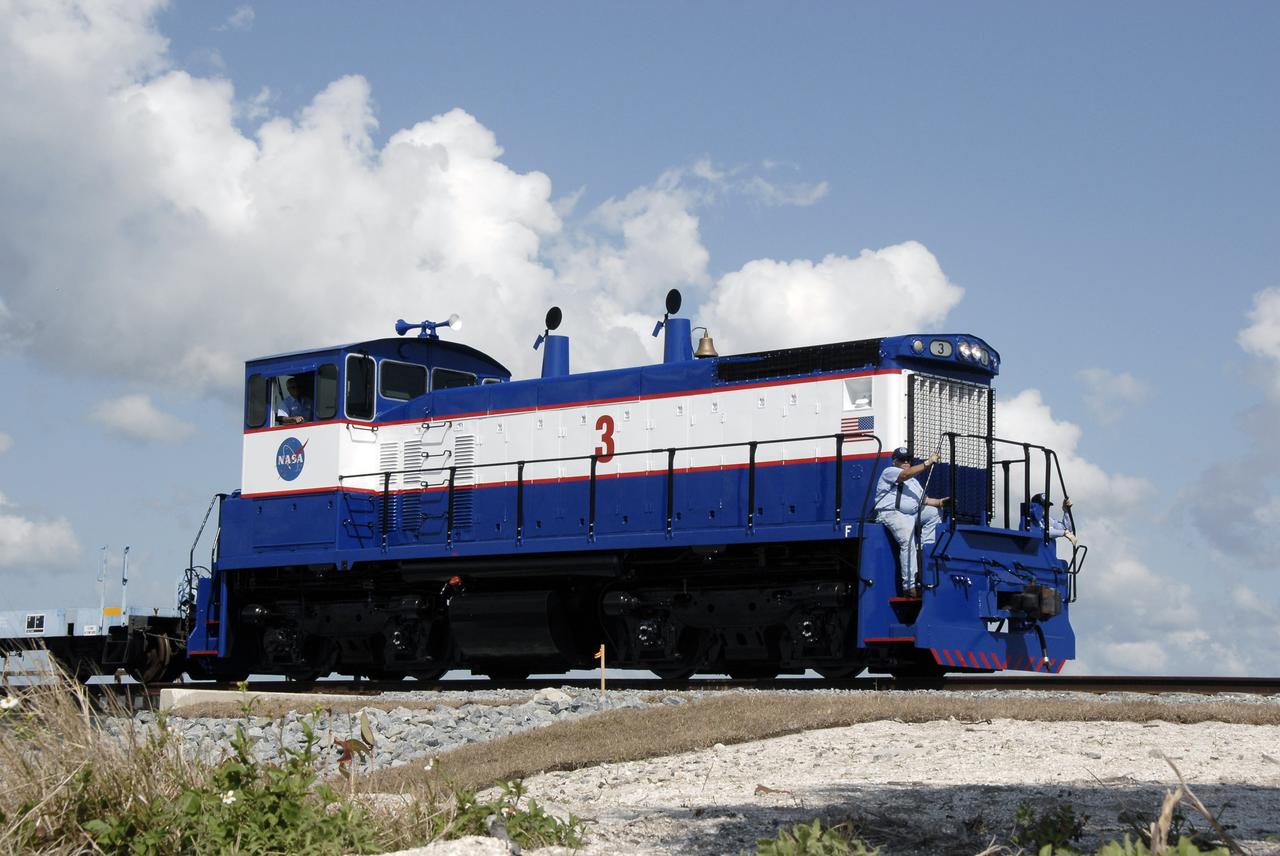
CAPE CANAVERAL, Fla. – A close-up of the NASA Railroad locomotive #3, and the EMDSW-1500 switcher, that is hauling the Ares I-X motor segments and nozzle exit cone to NASA's Kennedy Space Center in Florida. The four reusable motor segments and the nozzle exit cone, manufactured by the Ares I first-stage prime contractor Alliant Techsystems Inc., or ATK, departed Utah March 12 on the seven-day, cross-country trip to Florida. The segments will be delivered to Kennedy's Rotation, Processing and Surge Facility for final processing and integration. The booster used for the Ares I-X launch is being modified by adding new forward structures and a fifth segment simulator. The motor is the final hardware needed for the rocket's upcoming test flight this summer. The stacking operations are scheduled to begin in the Vehicle Assembly Building in April. Photo credit: NASA/Kim Shiflett
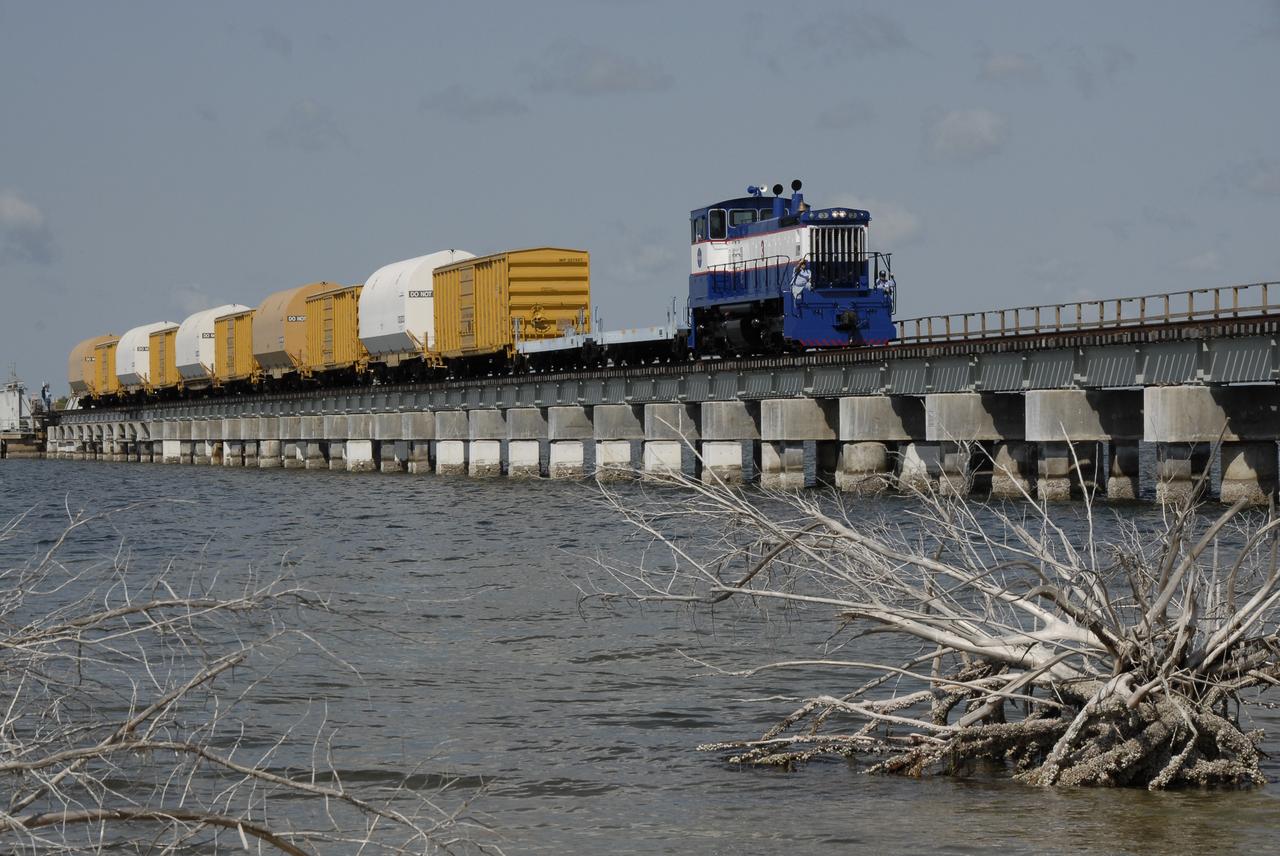
CAPE CANAVERAL, Fla. – The NASA Railroad hauls cars carrying the Ares I-X motor segments and nozzle exit cone over a river bridge to NASA's Kennedy Space Center in Florida. The four reusable motor segments and the nozzle exit cone, manufactured by the Ares I first-stage prime contractor Alliant Techsystems Inc., or ATK, departed Utah March 12 on the seven-day, cross-country trip to Florida. The segments will be delivered to Kennedy's Rotation, Processing and Surge Facility for final processing and integration. The booster used for the Ares I-X launch is being modified by adding new forward structures and a fifth segment simulator. The motor is the final hardware needed for the rocket's upcoming test flight this summer. The stacking operations are scheduled to begin in the Vehicle Assembly Building in April. Photo credit: NASA/Kim Shiflett
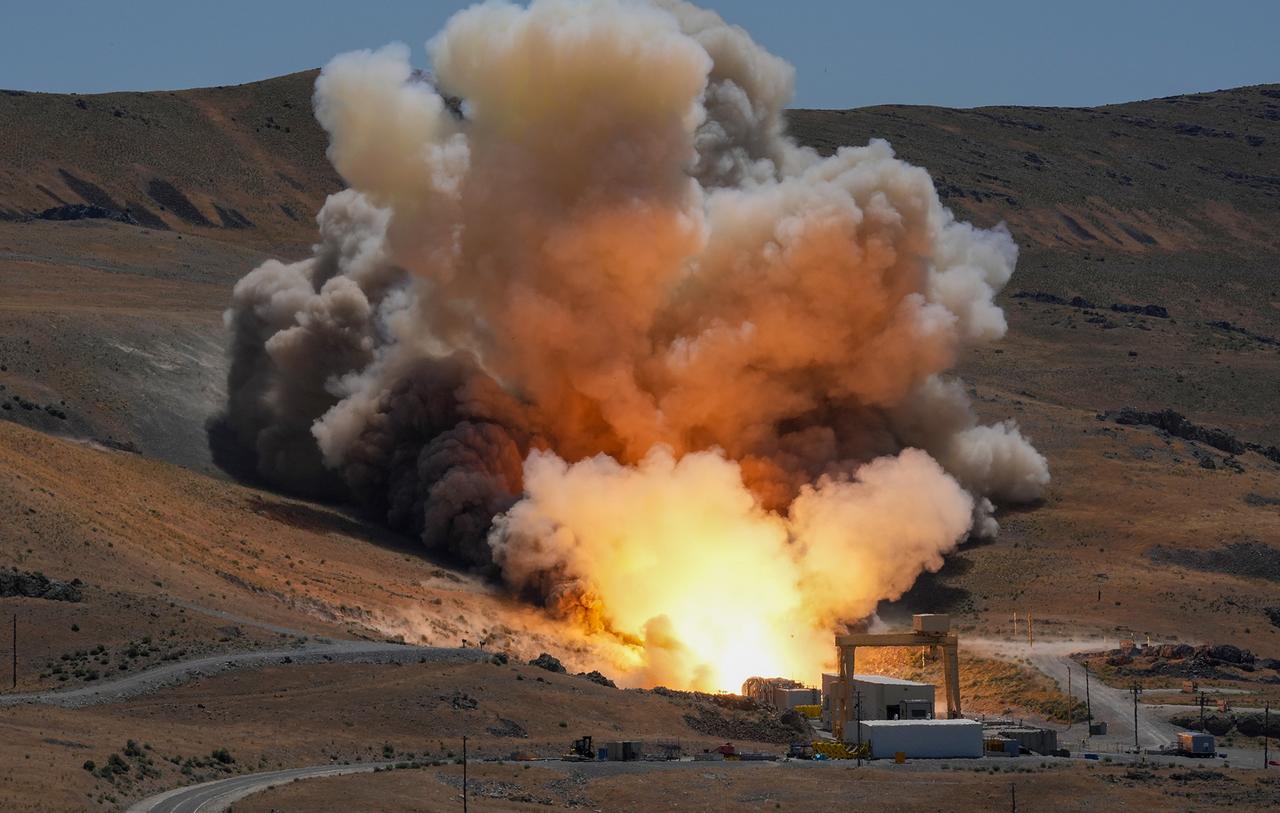
Teams from NASA and Northrop Grumman fire a ground-based version of a booster for the agency’s SLS (Space Launch System) rocket June 26. Secured horizontally in a test stand at Northrop Grumman’s test facility in Promontory, Utah, the single five-segment booster motor fired for more than two minutes and produced 3.9 million pounds of thrust. The booster for this test, known as Demonstration Motor-1 (DM-1), is the result of the Booster Obsolescence Life Extension (BOLE) project. This test was the first full-scale ground test of a new five-segment solid rocket motor. During the test, there was an abnormal event approximately 15 seconds before the end of the motor firing. Despite this event, NASA achieved several of the test’s primary objectives and received valuable data on technical risks identified ahead of the test. Testing this evolved booster for the SLS will help evaluate improvements and new materials in the boosters. The BOLE effort was launched to transition to a more efficient, lower cost commercial solution for the boosters for the SLS rocket. Through the Artemis campaign, NASA will send astronauts to explore the Moon for scientific discovery, economic benefits, and to build the foundation for the first crewed missions to Mars – for the benefit of all. For more information, contact NASA Marshall’s Office of Communications at 256-544-0034.
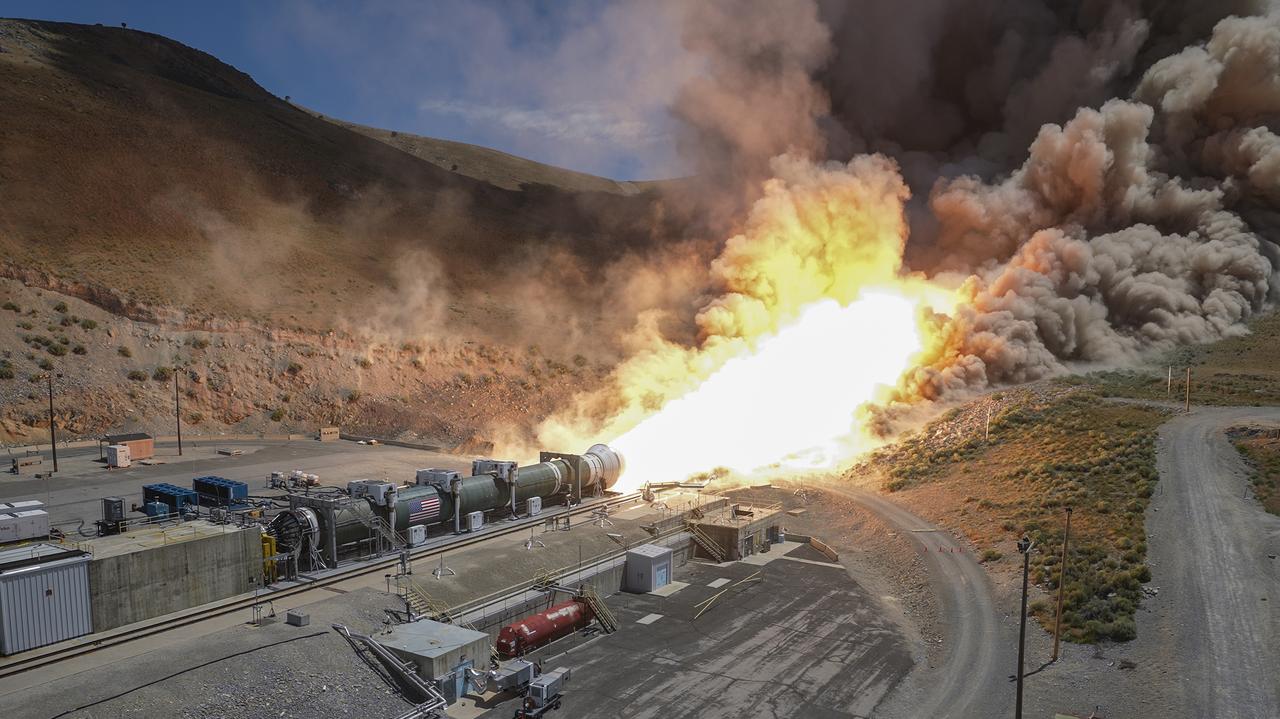
Teams from NASA and Northrop Grumman fire a ground-based version of a booster for the agency’s SLS (Space Launch System) rocket June 26. Secured horizontally in a test stand at Northrop Grumman’s test facility in Promontory, Utah, the single five-segment booster motor fired for more than two minutes and produced 3.9 million pounds of thrust. The booster for this test, known as Demonstration Motor-1 (DM-1), is the result of the Booster Obsolescence Life Extension (BOLE) project. This test was the first full-scale ground test of a new five-segment solid rocket motor. During the test, there was an abnormal event approximately 15 seconds before the end of the motor firing. Despite this event, NASA achieved several of the test’s primary objectives and received valuable data on technical risks identified ahead of the test. Testing this evolved booster for the SLS will help evaluate improvements and new materials in the boosters. The BOLE effort was launched to transition to a more efficient, lower cost commercial solution for the boosters for the SLS rocket. Through the Artemis campaign, NASA will send astronauts to explore the Moon for scientific discovery, economic benefits, and to build the foundation for the first crewed missions to Mars – for the benefit of all. For more information, contact NASA Marshall’s Office of Communications at 256-544-0034.
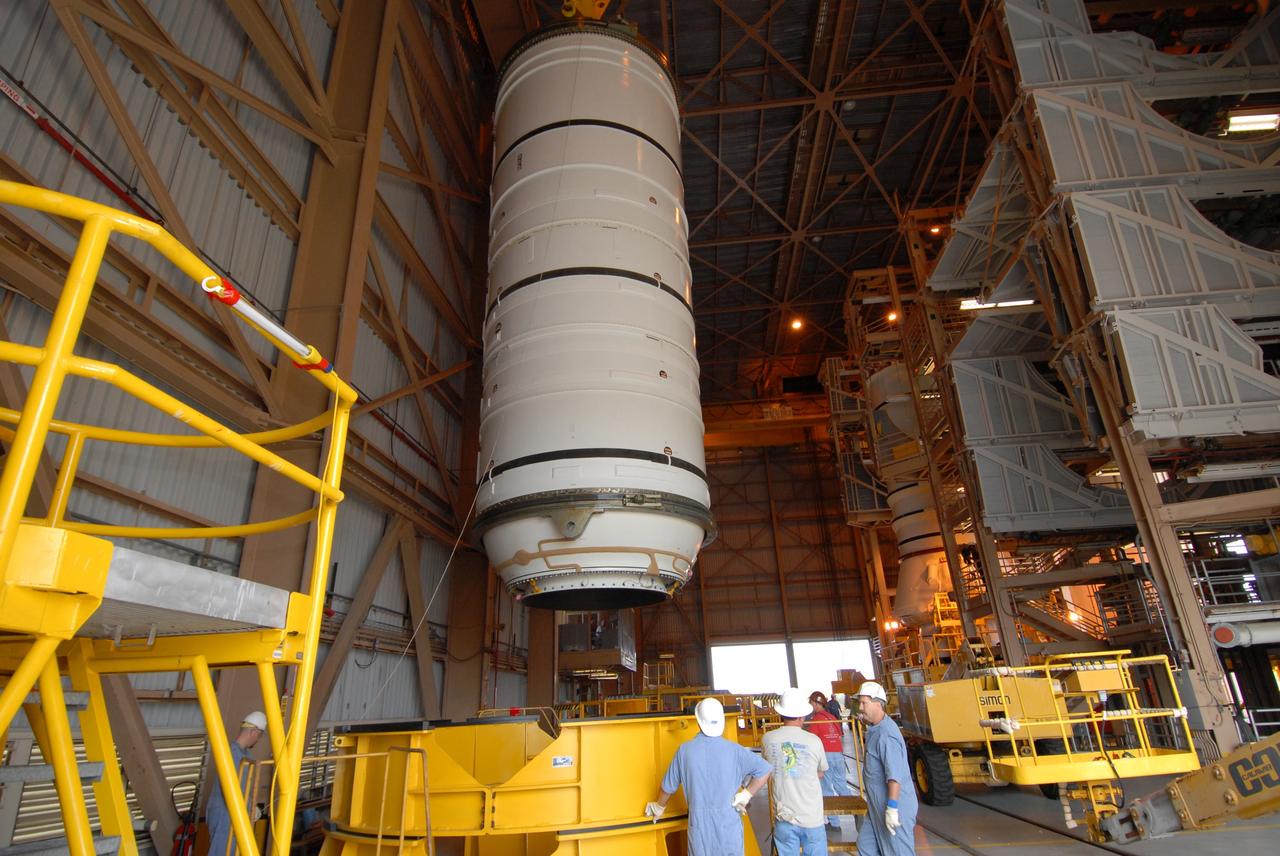
CAPE CANAVERAL, Fla. – Technicians stand by as the Ares I-X motor segment is moved toward a work stand in the Rotation, Processing and Surge Facility at NASA's Kennedy Space Center in Florida. Four segments were delivered to Kennedy for final processing and integration. The booster used for the Ares I-X launch is being modified by adding new forward structures and a fifth segment simulator. The motor is the final hardware needed for the rocket's upcoming test flight this summer. The stacking operations are scheduled to begin in the Vehicle Assembly Building in April. Photo credit: NASA/Jack Pfaller
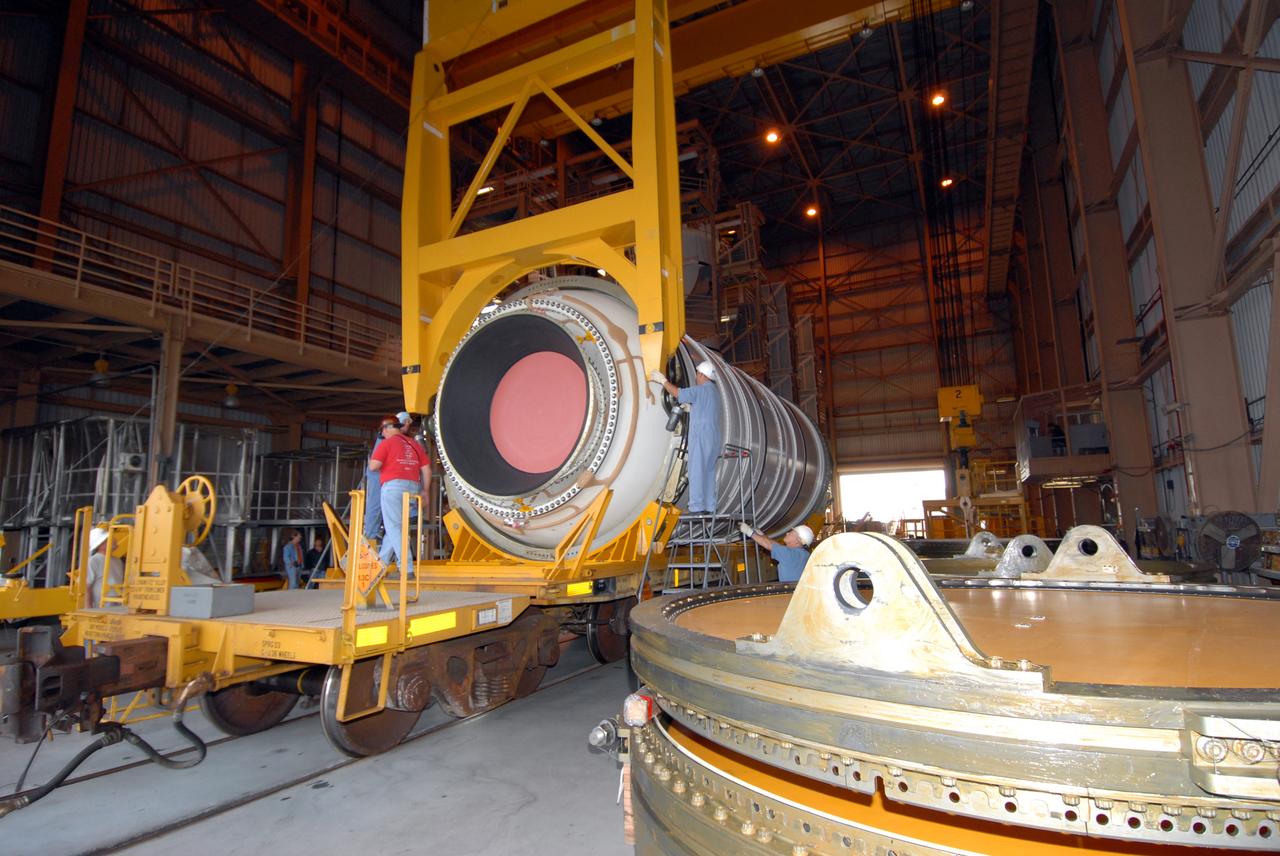
CAPE CANAVERAL, Fla. – A crane is being attached to the first of the Ares I-X motor segments to raise it for transfer it to a work stand in the Rotation, Processing and Surge Facility at NASA's Kennedy Space Center in Florida. Four segments were delivered to Kennedy for final processing and integration. The booster used for the Ares I-X launch is being modified by adding new forward structures and a fifth segment simulator. The motor is the final hardware needed for the rocket's upcoming test flight this summer. The stacking operations are scheduled to begin in the Vehicle Assembly Building in April. Photo credit: NASA/Jack Pfaller
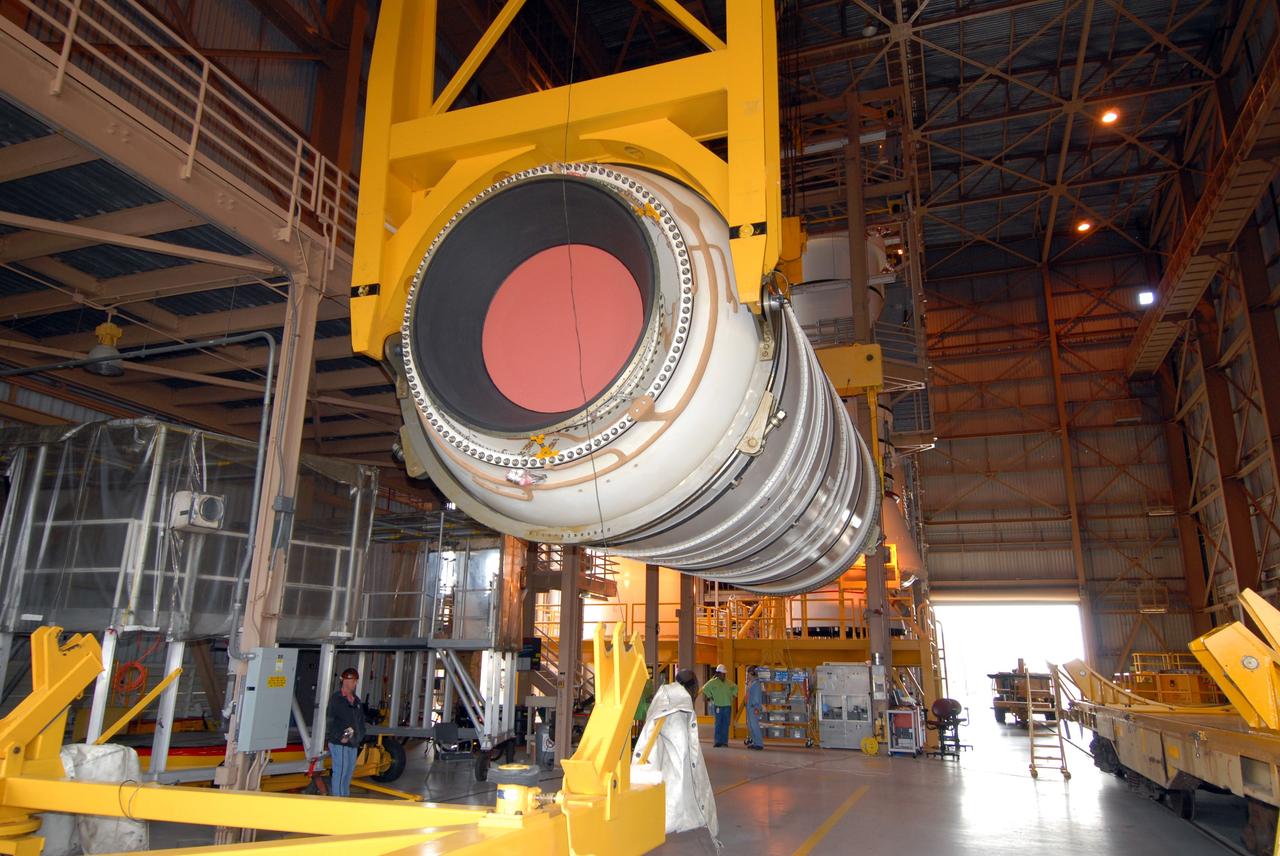
CAPE CANAVERAL, Fla. – Cranes lift the first of the Ares I-X motor segments in order to raise it to vertical and transfer it to a work stand in the Rotation, Processing and Surge Facility at NASA's Kennedy Space Center in Florida. Four segments were delivered to Kennedy for final processing and integration. The booster used for the Ares I-X launch is being modified by adding new forward structures and a fifth segment simulator. The motor is the final hardware needed for the rocket's upcoming test flight this summer. The stacking operations are scheduled to begin in the Vehicle Assembly Building in April. Photo credit: NASA/Jack Pfaller
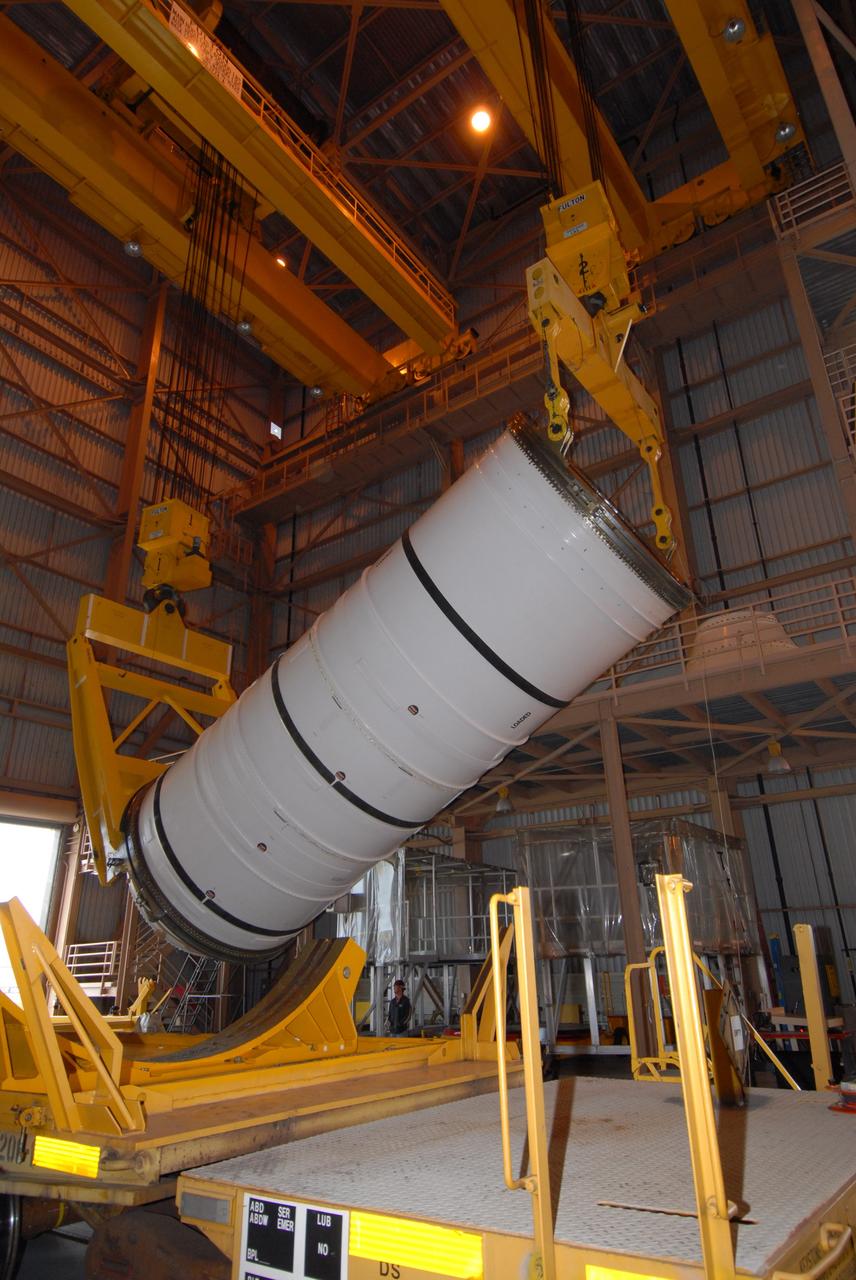
CAPE CANAVERAL, Fla. – Cranes begin rotating the Ares I-X motor segment to a vertical position in order to transfer it to a work stand in the Rotation, Processing and Surge Facility at NASA's Kennedy Space Center in Florida. Four segments were delivered to Kennedy for final processing and integration. The booster used for the Ares I-X launch is being modified by adding new forward structures and a fifth segment simulator. The motor is the final hardware needed for the rocket's upcoming test flight this summer. The stacking operations are scheduled to begin in the Vehicle Assembly Building in April. Photo credit: NASA/Jack Pfaller
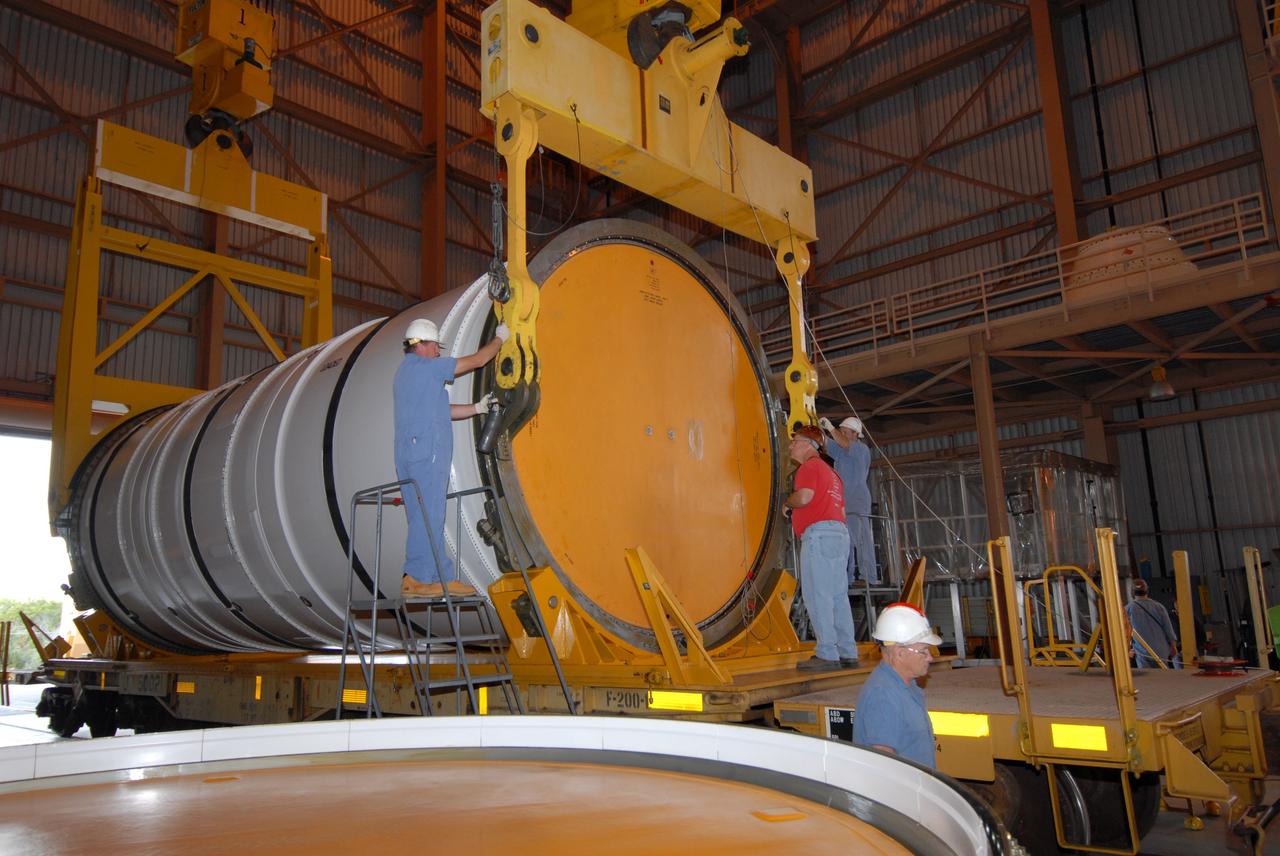
CAPE CANAVERAL, Fla. – Technicians adjust the crane being attached to the first of the Ares I-X motor segments that will raise it for transfer it to a work stand in the Rotation, Processing and Surge Facility at NASA's Kennedy Space Center in Florida. Four segments were delivered to Kennedy for final processing and integration. The booster used for the Ares I-X launch is being modified by adding new forward structures and a fifth segment simulator. The motor is the final hardware needed for the rocket's upcoming test flight this summer. The stacking operations are scheduled to begin in the Vehicle Assembly Building in April. Photo credit: NASA/Jack Pfaller
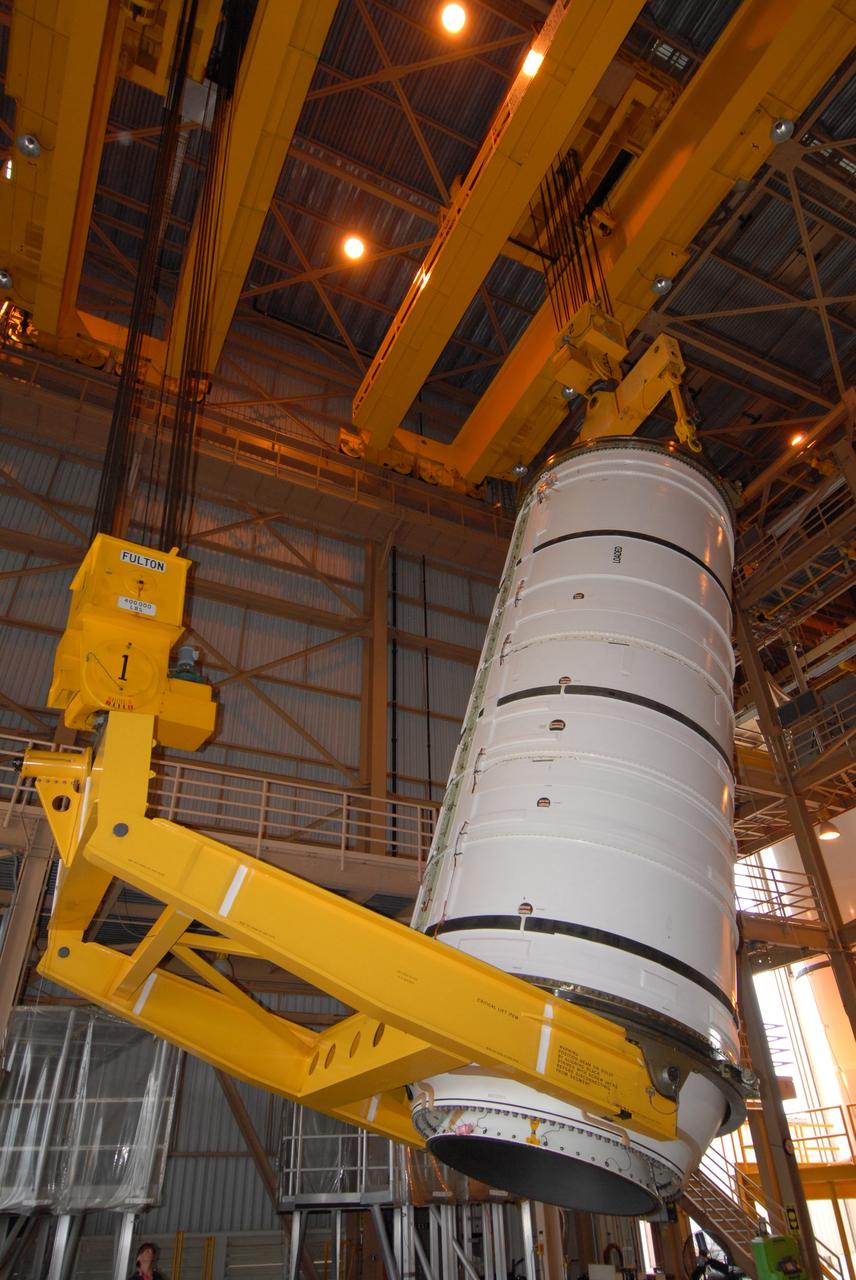
CAPE CANAVERAL, Fla. – Cranes rotate the Ares I-X motor segment to a vertical position in order to transfer it to a work stand in the Rotation, Processing and Surge Facility at NASA's Kennedy Space Center in Florida. Four segments were delivered to Kennedy for final processing and integration. The booster used for the Ares I-X launch is being modified by adding new forward structures and a fifth segment simulator. The motor is the final hardware needed for the rocket's upcoming test flight this summer. The stacking operations are scheduled to begin in the Vehicle Assembly Building in April. Photo credit: NASA/Jack Pfaller
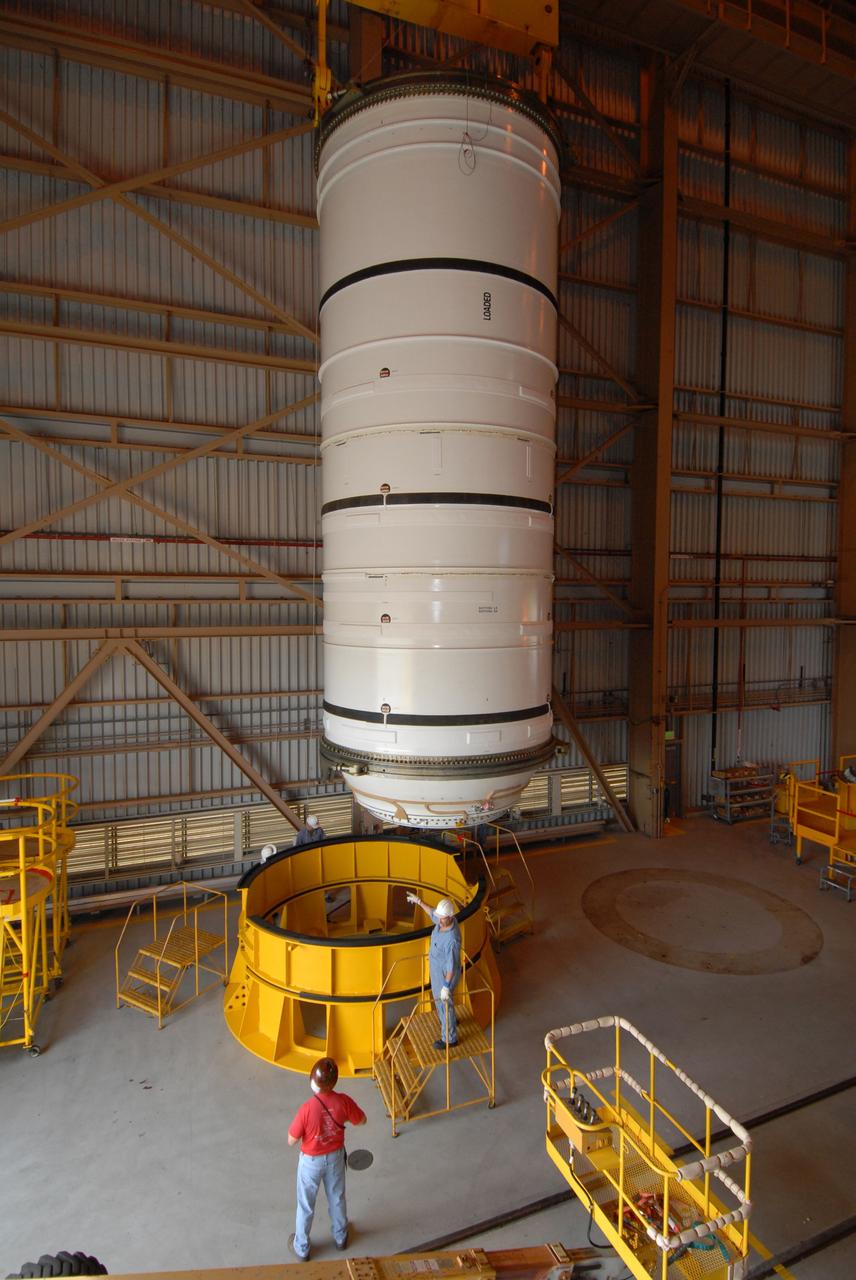
CAPE CANAVERAL, Fla. – Under the watchful eyes of technicians, the Ares I-X motor segment is moved toward a work stand in the Rotation, Processing and Surge Facility at NASA's Kennedy Space Center in Florida. Four segments were delivered to Kennedy for final processing and integration. The booster used for the Ares I-X launch is being modified by adding new forward structures and a fifth segment simulator. The motor is the final hardware needed for the rocket's upcoming test flight this summer. The stacking operations are scheduled to begin in the Vehicle Assembly Building in April. Photo credit: NASA/Jack Pfaller
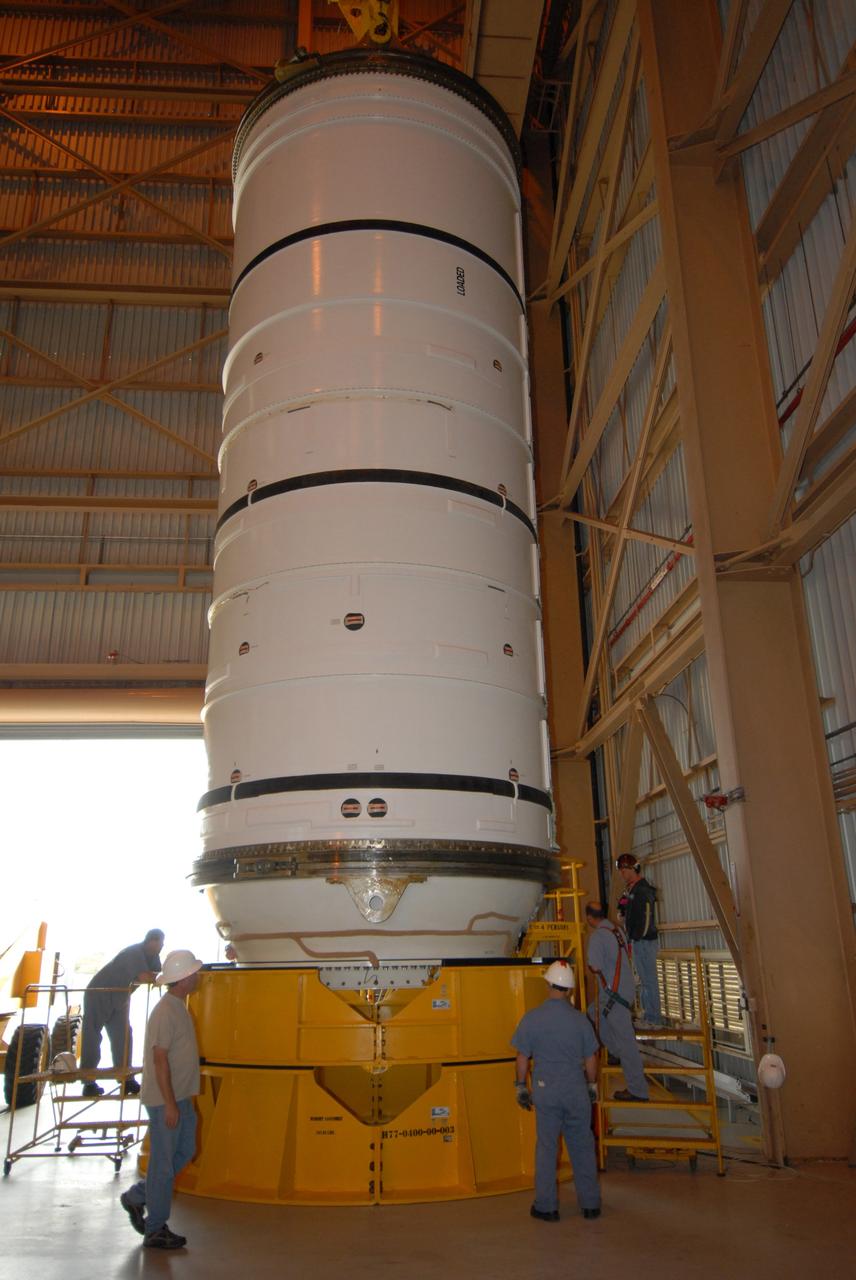
CAPE CANAVERAL, Fla. – The Ares I-X motor segment is lowered onto a work stand in the Rotation, Processing and Surge Facility at NASA's Kennedy Space Center in Florida. Four segments were delivered to Kennedy for final processing and integration. The booster used for the Ares I-X launch is being modified by adding new forward structures and a fifth segment simulator. The motor is the final hardware needed for the rocket's upcoming test flight this summer. The stacking operations are scheduled to begin in the Vehicle Assembly Building in April. Photo credit: NASA/Jack Pfaller
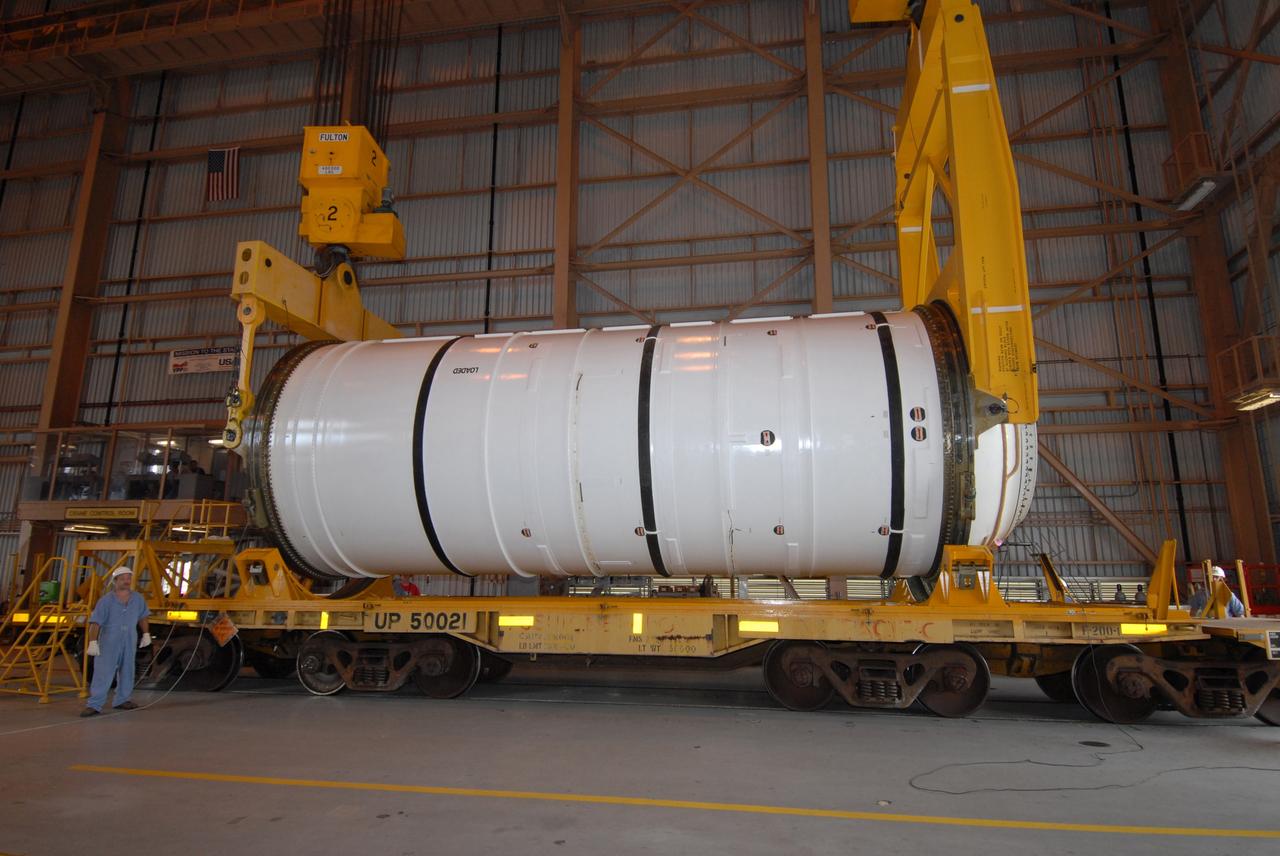
CAPE CANAVERAL, Fla. – Cranes are attached to the first of the Ares I-X motor segments to raise and transfer it to a work stand in the Rotation, Processing and Surge Facility at NASA's Kennedy Space Center in Florida. Four segments were delivered to Kennedy for final processing and integration. The booster used for the Ares I-X launch is being modified by adding new forward structures and a fifth segment simulator. The motor is the final hardware needed for the rocket's upcoming test flight this summer. The stacking operations are scheduled to begin in the Vehicle Assembly Building in April. Photo credit: NASA/Jack Pfaller
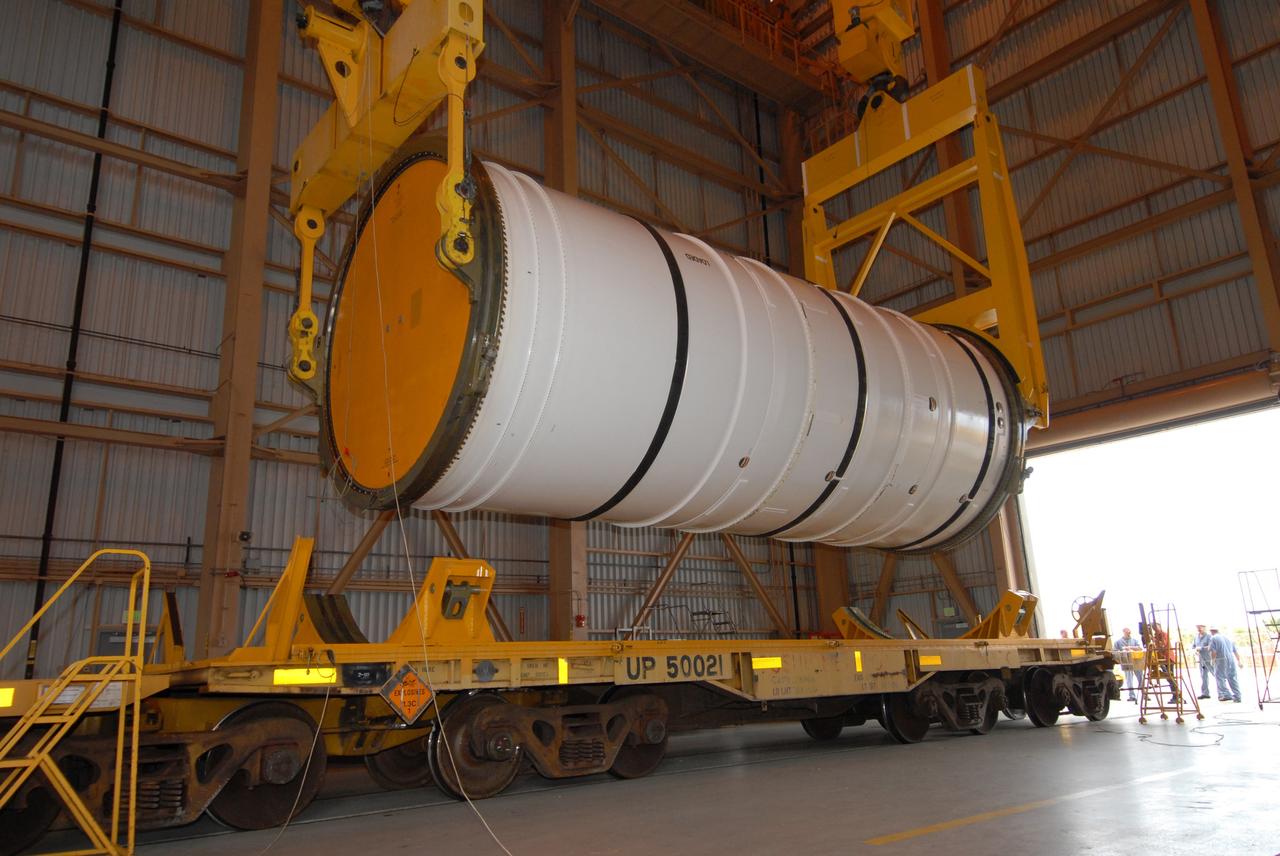
CAPE CANAVERAL, Fla. – Cranes lift the first of the Ares I-X motor segments in order to raise it to vertical and transfer it to a work stand in the Rotation, Processing and Surge Facility at NASA's Kennedy Space Center in Florida. Four segments were delivered to Kennedy for final processing and integration. The booster used for the Ares I-X launch is being modified by adding new forward structures and a fifth segment simulator. The motor is the final hardware needed for the rocket's upcoming test flight this summer. The stacking operations are scheduled to begin in the Vehicle Assembly Building in April. Photo credit: NASA/Jack Pfaller
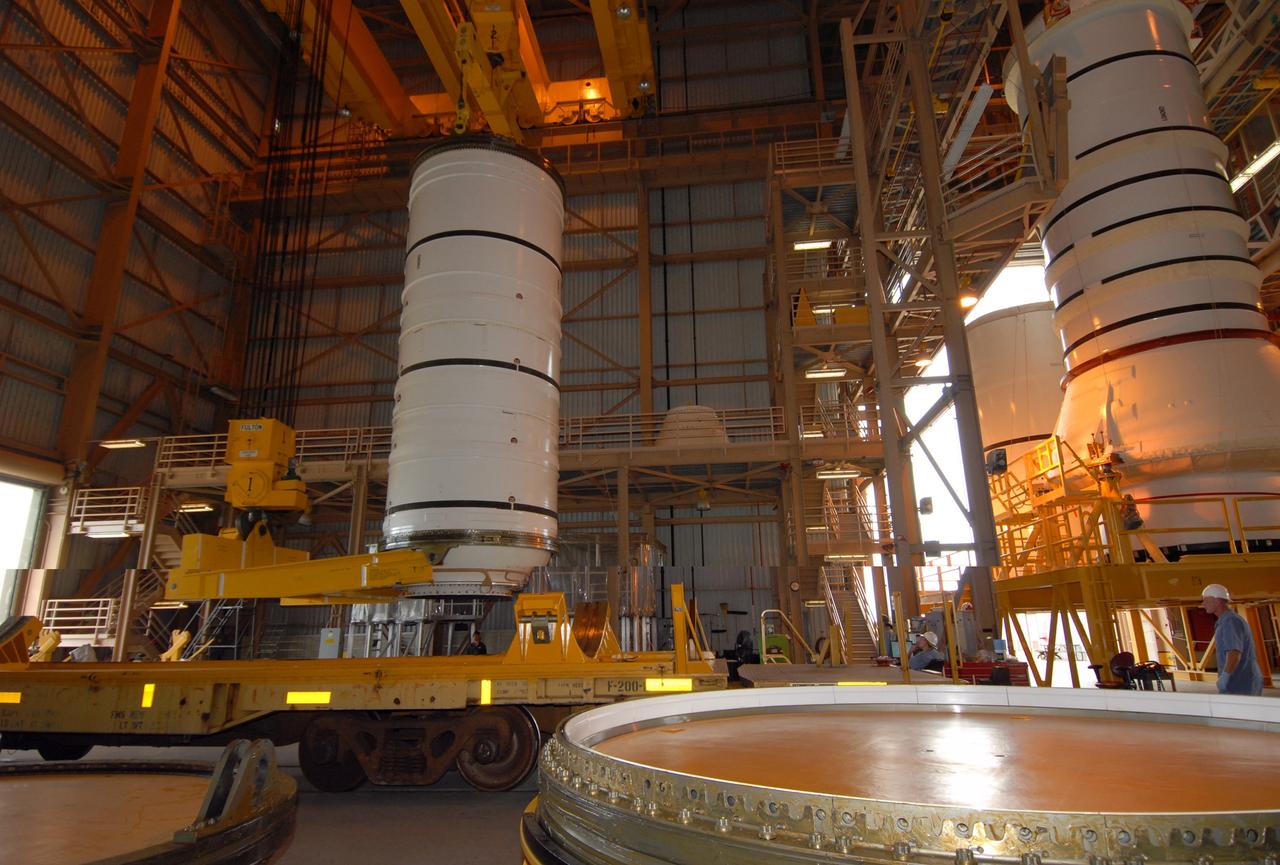
CAPE CANAVERAL, Fla. – The Ares I-X motor segment is suspended vertically and ready to be moved to a work stand in the Rotation, Processing and Surge Facility at NASA's Kennedy Space Center in Florida. Four segments were delivered to Kennedy for final processing and integration. The booster used for the Ares I-X launch is being modified by adding new forward structures and a fifth segment simulator. The motor is the final hardware needed for the rocket's upcoming test flight this summer. The stacking operations are scheduled to begin in the Vehicle Assembly Building in April. Photo credit: NASA/Jack Pfaller
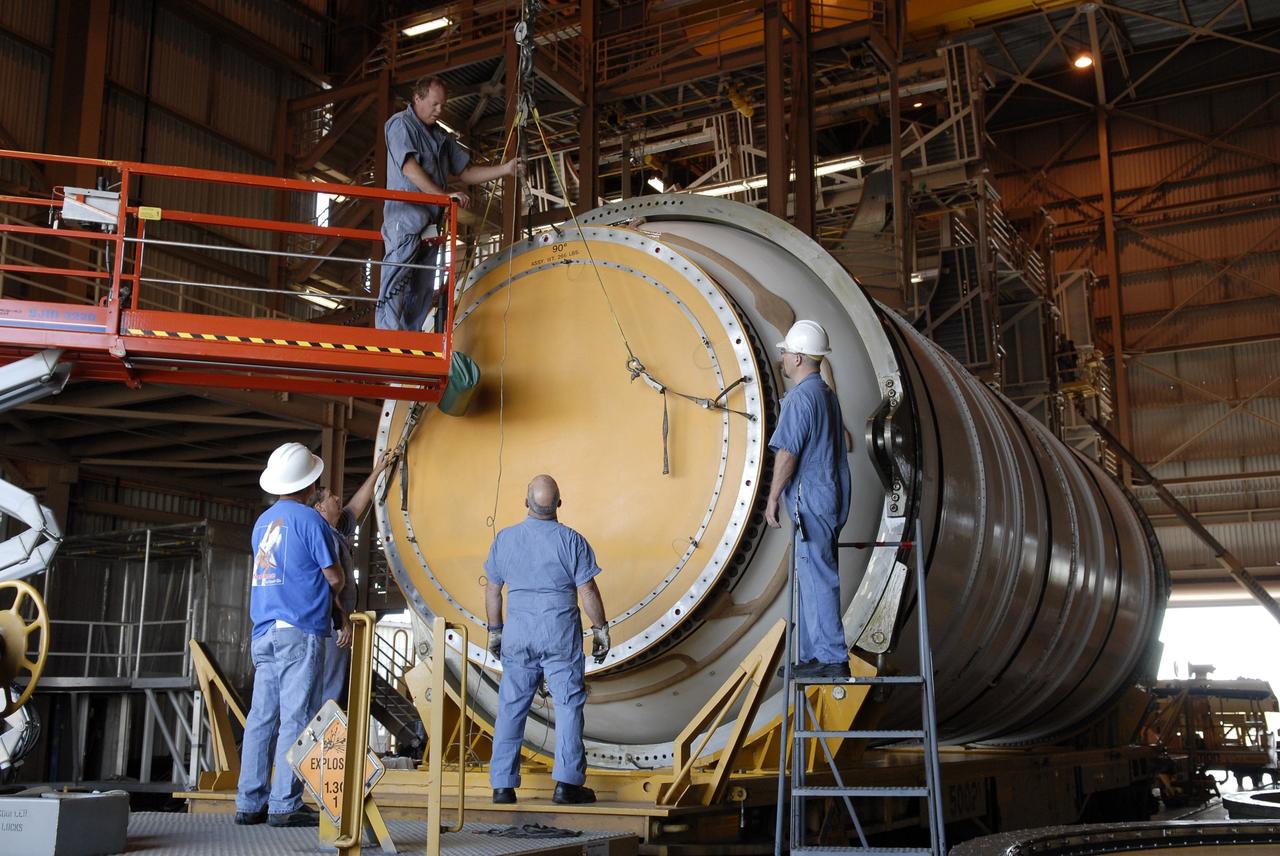
CAPE CANAVERAL, Fla. – In the Rotation, Processing and Surge Facility at NASA's Kennedy Space Center in Florida, technicians prepare to remove the cover from the end of the Ares I-X motor segment for propellant grain inspection of the interior. It is one of four reusable motor segments and nozzle exit cone shipped by the Ares I first-stage prime contractor Alliant Techsystems Inc. for final processing and integration in the facility. The booster used for the Ares I-X launch is being modified by adding new forward structures and a fifth segment simulator. The motor is the final hardware needed for the rocket's upcoming flight test this summer. The stacking operations are scheduled to begin in the Vehicle Assembly Building in April. Photo credit: NASA/Jim Grossmann
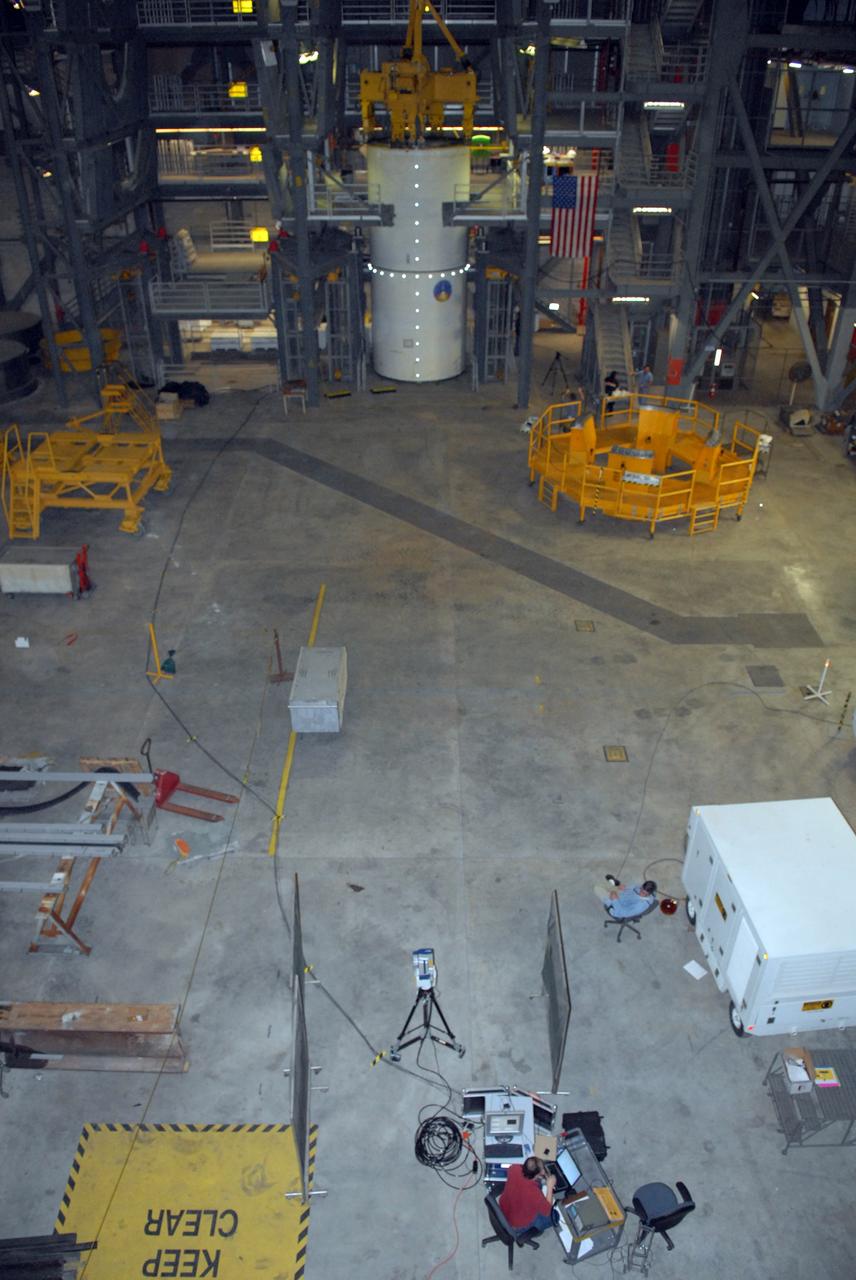
CAPE CANAVERAL, Fla. -- Vibration and laser testing is being conducted on Ares I-X segments at NASA's Kennedy Space Center. This is an overall view of the modal testing setup using the Inert Solid Rocket Motor Segment and Laser Vibrometer in high bay 4 of the Vehicle Assembly building. Photo credit: NASA/Dimitri Gerondidakis
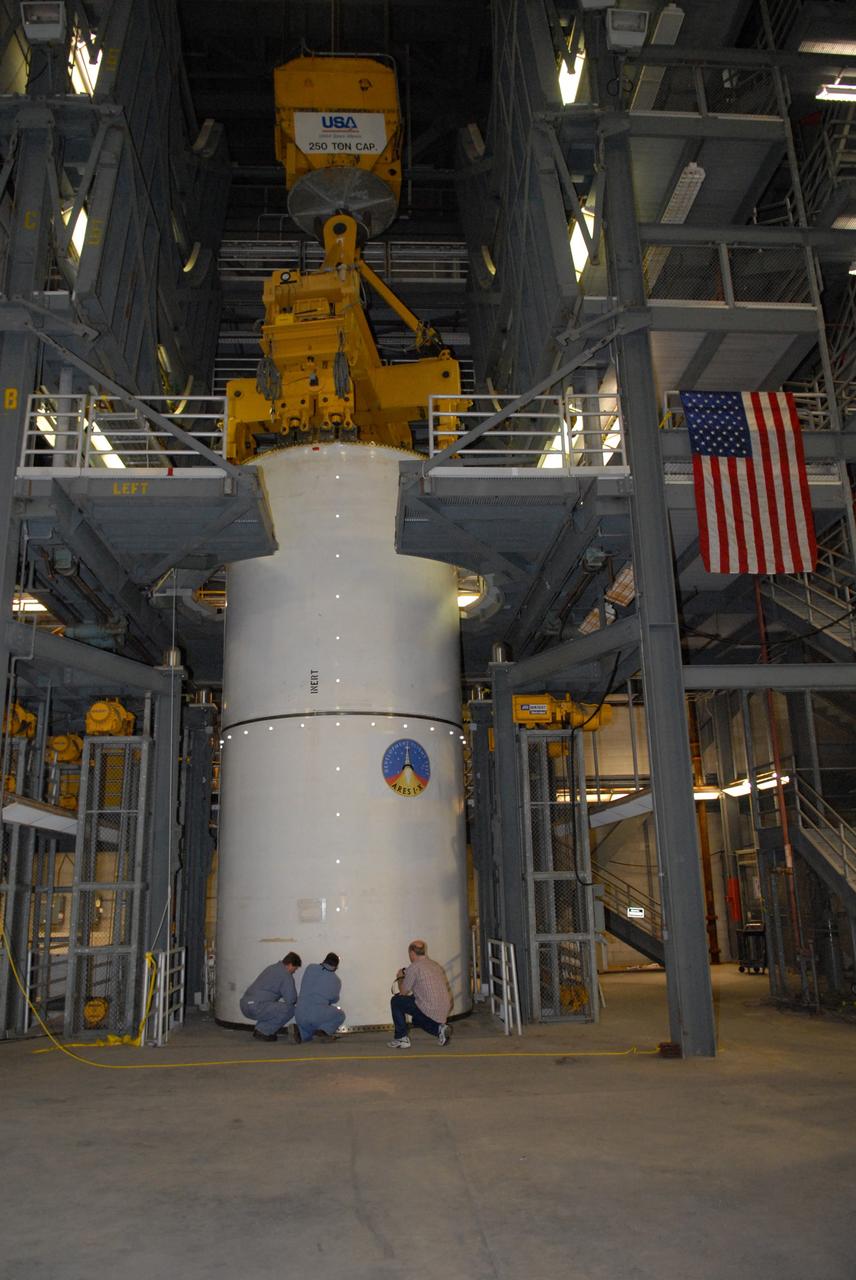
CAPE CANAVERAL, Fla. -- Vibration and laser testing is being conducted on Ares I-X segments at NASA's Kennedy Space Center. Here, technicians in the Vehicle Assembly Building configure the Inert Solid Rocket Motor Segment with an accelerometer to collect test data. Photo credit: NASA/Dimitri Gerondidakis
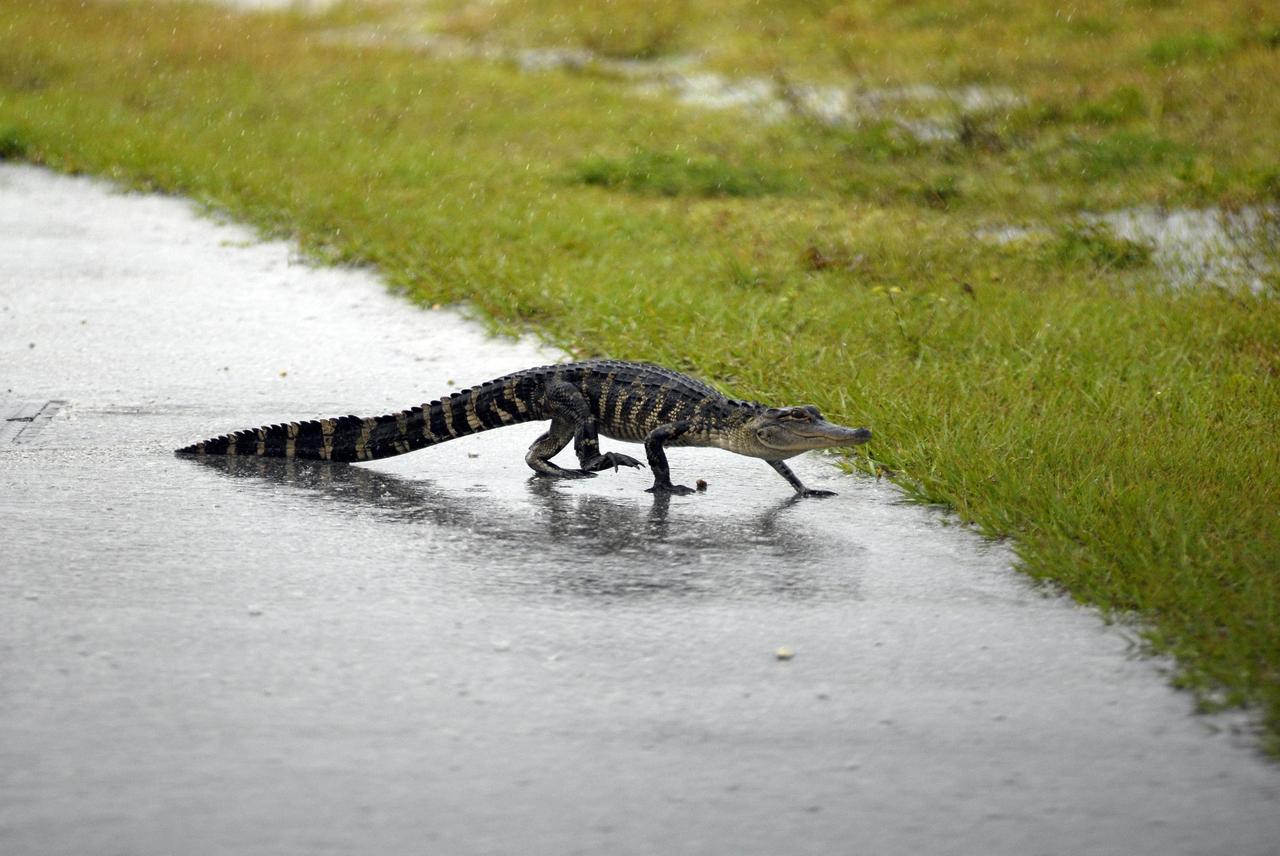
KENNEDY SPACE CENTER, FLA. -- This young alligator crosses a road near the railroad tracks where the train carrying solid rocket booster motor segments approaches Kennedy Space Center. Photo credit: NASA/George Shelton
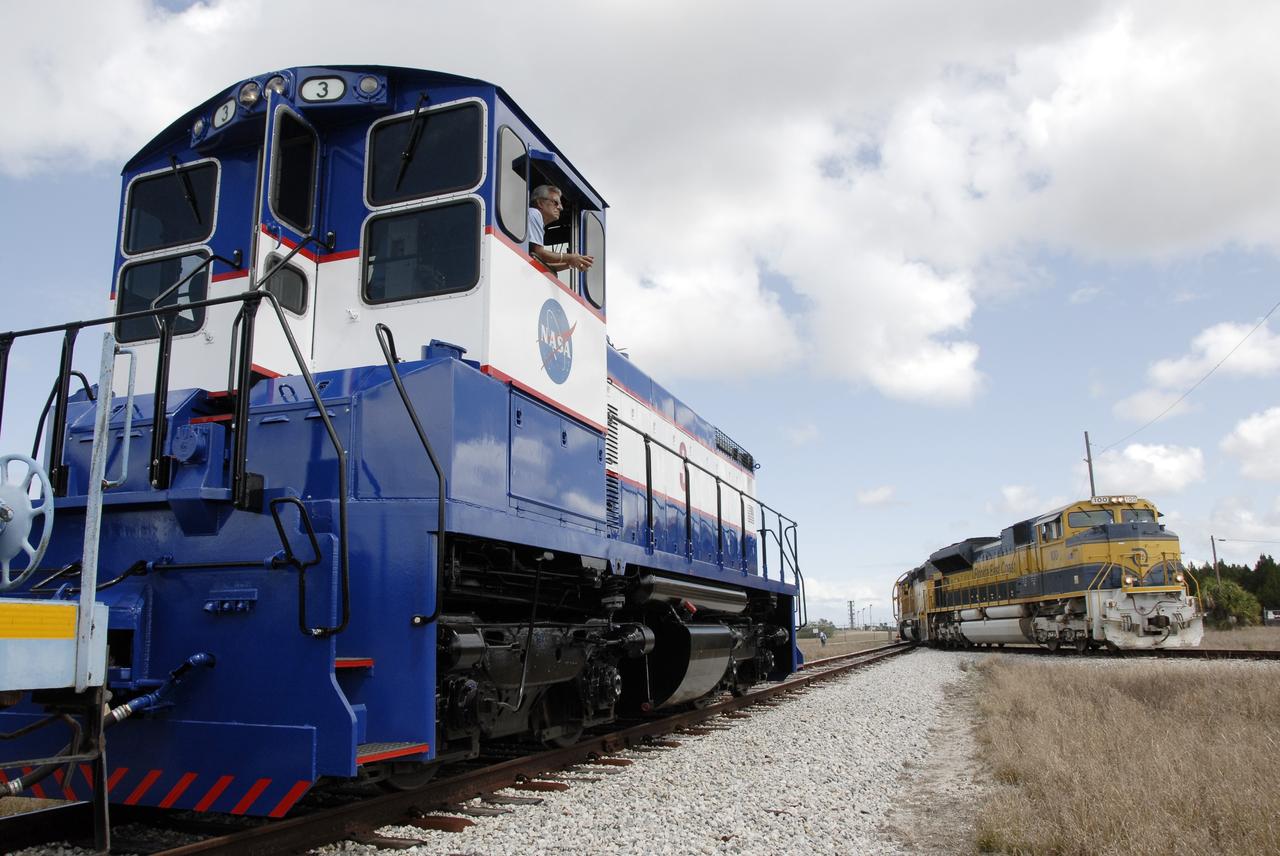
CAPE CANAVERAL, Fla. – The Florida East Coast Railway train arrives at the Jay Jay Rail Yard with the booster segments for the Ares I-X test rocket for interchange with the NASA Railroad (left). The four reusable motor segments and the nozzle exit cone, manufactured by the Ares I first-stage prime contractor Alliant Techsystems Inc., or ATK, departed Utah March 12 on the seven-day, cross-country trip to Florida. The segments will be delivered to the Rotation, Processing and Surge Facility for final processing and integration. The booster used for the Ares I-X launch is being modified by adding new forward structures and a fifth segment simulator. The motor is the final hardware needed for the rocket's upcoming test flight this summer. The stacking operations are scheduled to begin in the Vehicle Assembly Building in April. Photo credit: NASA/Kim Shiflett
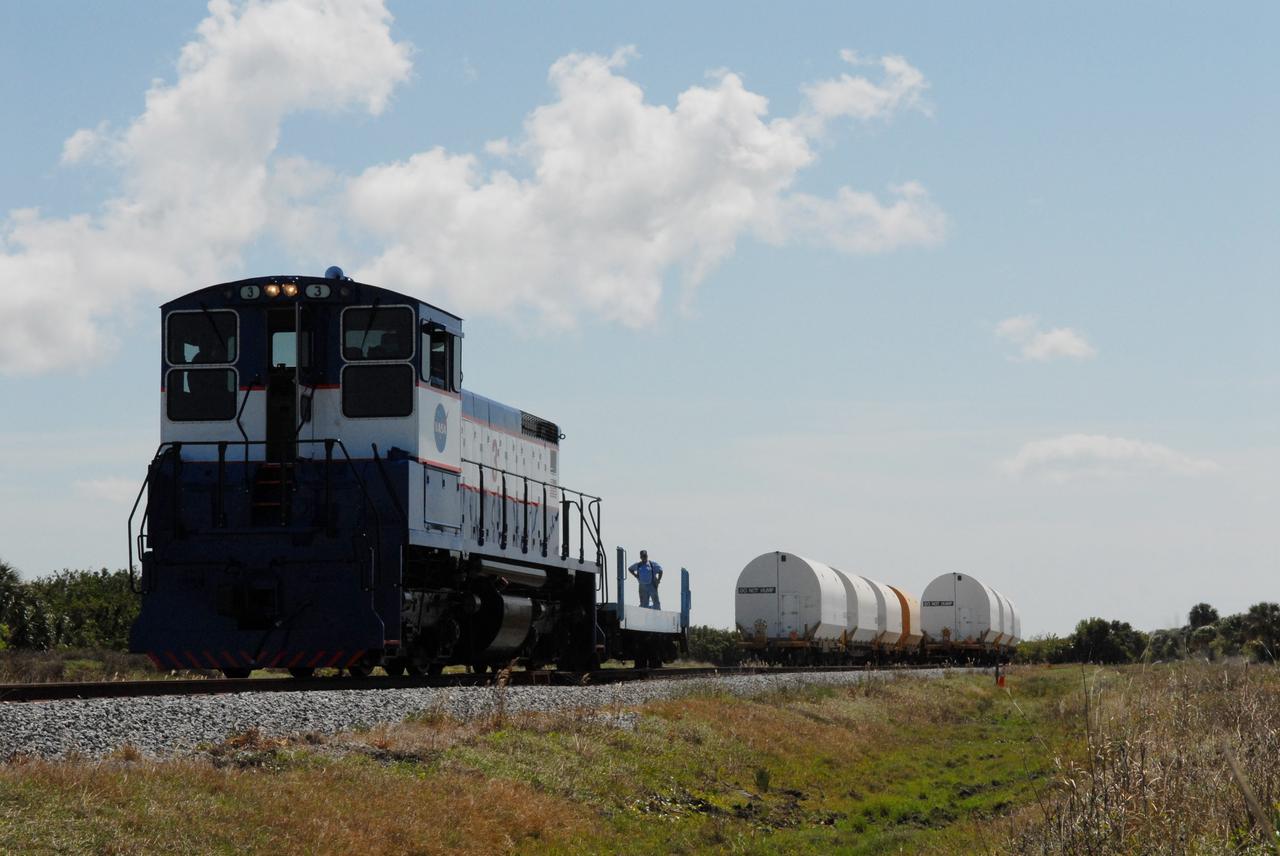
CAPE CANAVERAL, Fla. –The cars on the NASA Railroad are separated for different destinations at NASA's Kennedy Space Center in Florida. They carry Ares I-X segments. One of the cars is going to the Rotation, Processing and Surge Facility. The four reusable motor segments and the nozzle exit cone, manufactured by the Ares I first-stage prime contractor Alliant Techsystems Inc., or ATK, departed Utah March 12 on the seven-day, cross-country trip to Florida. The segments will be delivered to Kennedy's Rotation, Processing and Surge Facility for final processing and integration. The booster used for the Ares I-X launch is being modified by adding new forward structures and a fifth segment simulator. The motor is the final hardware needed for the rocket's upcoming test flight this summer. The stacking operations are scheduled to begin in the Vehicle Assembly Building in April. Photo credit: NASA/Jack Pfaller
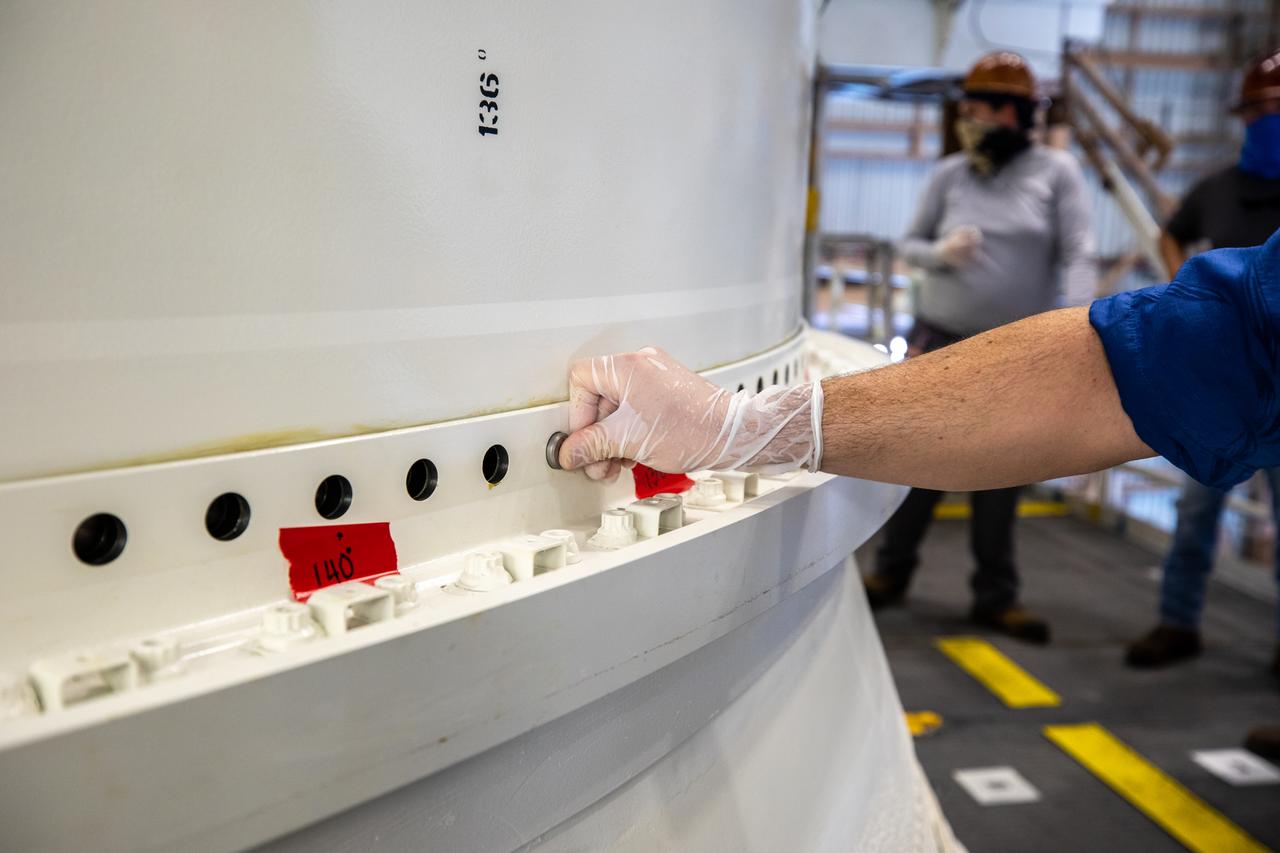
Inside the Rotation, Processing and Surge Facility at NASA’s Kennedy Space Center in Florida, Pablo Martinez, a handling, mechanical and structures engineer on the Jacobs Technology Inc. Test and Operations Support Contract, inserts the first of many pins that will secure the Space Launch System’s (SLS) right-hand motor segment to the rocket’s right-hand aft skirt. The right-hand motor segment is one of five segments that makes up one of two solid rocket boosters. Once the aft segments are mated to the two aft skirts, they will be moved to the Vehicle Assembly Building for stacking on the mobile launcher. Manufactured by Northrop Grumman in Utah, the twin boosters provide more than 75 percent of the total SLS thrust at launch. Under the Artemis program, NASA will land the first woman and the next man on the Moon by 2024. The first in a series of increasingly complex missions, Artemis I will test the Orion spacecraft and SLS as an integrated system ahead of crewed flights to the Moon.
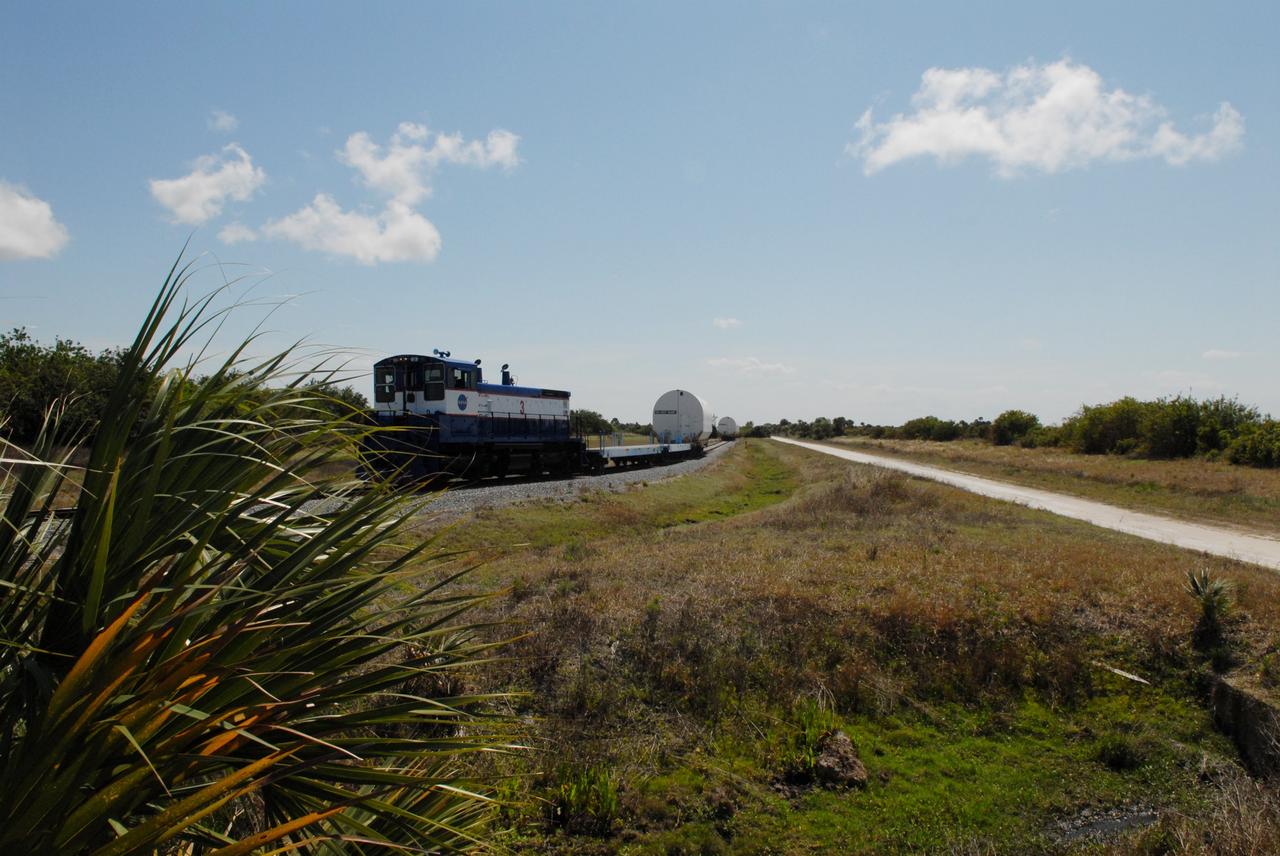
CAPE CANAVERAL, Fla. – The NASA Railroad leaves four of the cars with Ares I-X segments at Suspect siding on NASA's Kennedy Space Center in Florida and continues on with the remaining car to the Rotation, Processing and Surge Facility. The four reusable motor segments and the nozzle exit cone, manufactured by the Ares I first-stage prime contractor Alliant Techsystems Inc., or ATK, departed Utah March 12 on the seven-day, cross-country trip to Florida. The segments will be delivered to Kennedy's Rotation, Processing and Surge Facility for final processing and integration. The booster used for the Ares I-X launch is being modified by adding new forward structures and a fifth segment simulator. The motor is the final hardware needed for the rocket's upcoming test flight this summer. The stacking operations are scheduled to begin in the Vehicle Assembly Building in April. Photo credit: NASA/Jack Pfaller
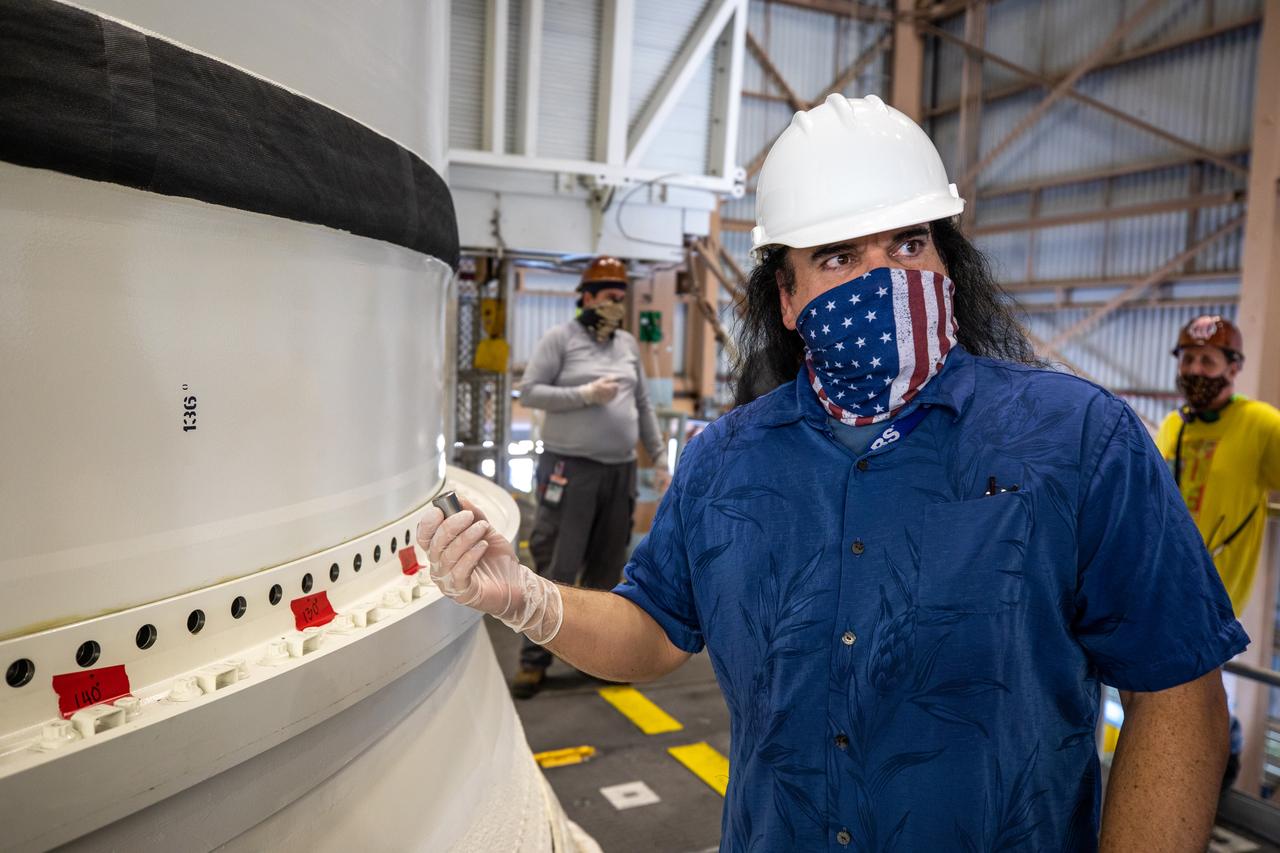
Inside the Rotation, Processing and Surge Facility at NASA’s Kennedy Space Center in Florida, Pablo Martinez, a handling, mechanical and structures engineer on the Jacobs Technology Inc. Test and Operations Support Contract, prepares to insert the first of many pins that will secure the Space Launch System’s (SLS) right-hand motor segment to the rocket’s right-hand aft skirt. The right-hand motor segment is one of five segments that makes up one of two solid rocket boosters. Once the aft segments are mated to the two aft skirts, they will be moved to the Vehicle Assembly Building for stacking on the mobile launcher. Manufactured by Northrop Grumman in Utah, the twin boosters provide more than 75 percent of the total SLS thrust at launch. Under the Artemis program, NASA will land the first woman and the next man on the Moon by 2024. The first in a series of increasingly complex missions, Artemis I will test the Orion spacecraft and SLS as an integrated system ahead of crewed flights to the Moon.
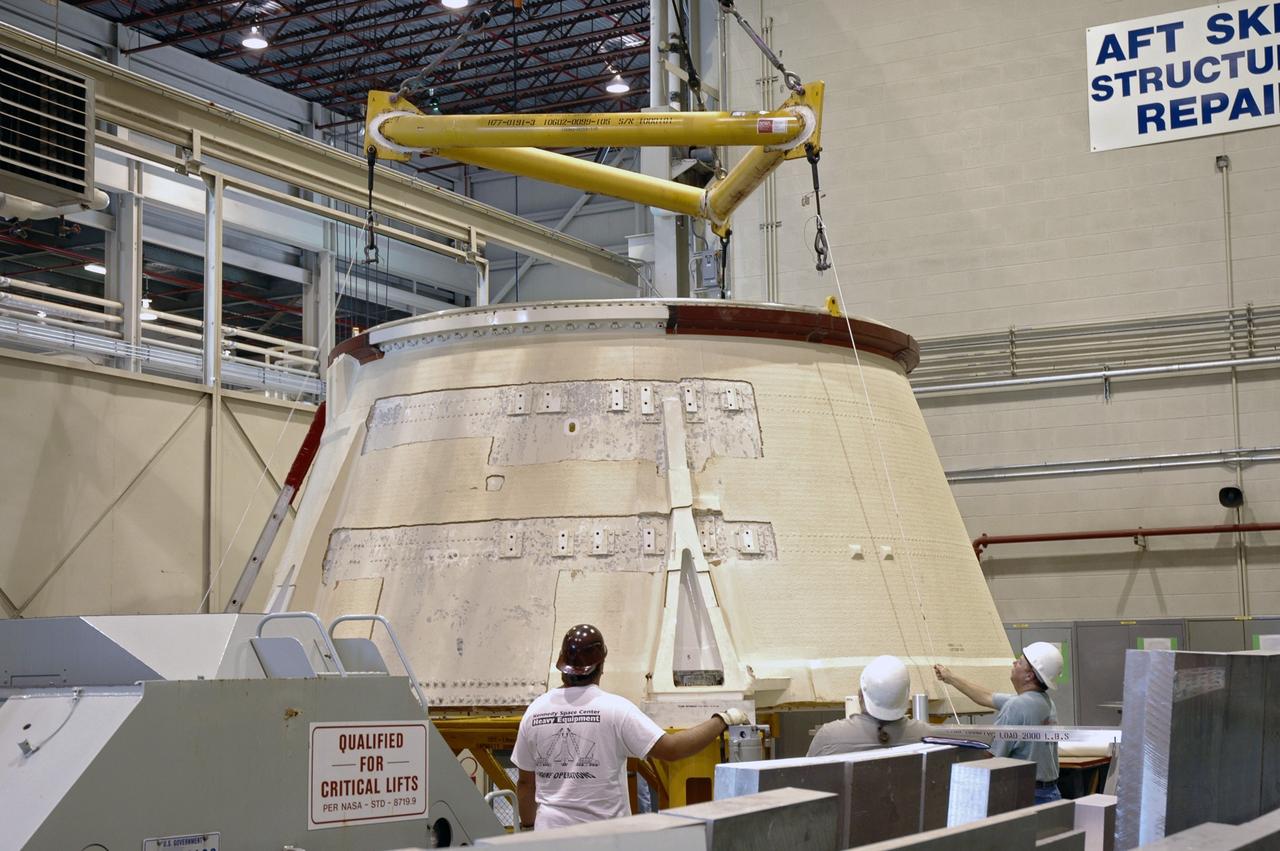
CAPE CANAVERAL, Fla. – In the Assembly and Refurbishment Facility at NASA's Kennedy Space Center, a crane is lowered over the aft skirt for the Ares 1-X rocket. The segment is being lifted into a machine shop work stand for drilling modifications. The modifications will prepare it for the installation of the auxiliary power unit controller, the reduced-rate gyro unit, the booster decelerator motors and the booster tumble motors. Ares I is an in-line, two-stage rocket that will transport the Orion crew exploration vehicle to low-Earth orbit. Ares I-X is a test rocket. The Ares I first stage will be a five-segment solid rocket booster based on the four-segment design used for the shuttle. Ares I’s fifth booster segment allows the launch vehicle to lift more weight and reach a higher altitude before the first stage separates from the upper stage, which ignites in midflight to propel the Orion spacecraft to Earth orbit. Photo credit: NASA/Jim Grossmann
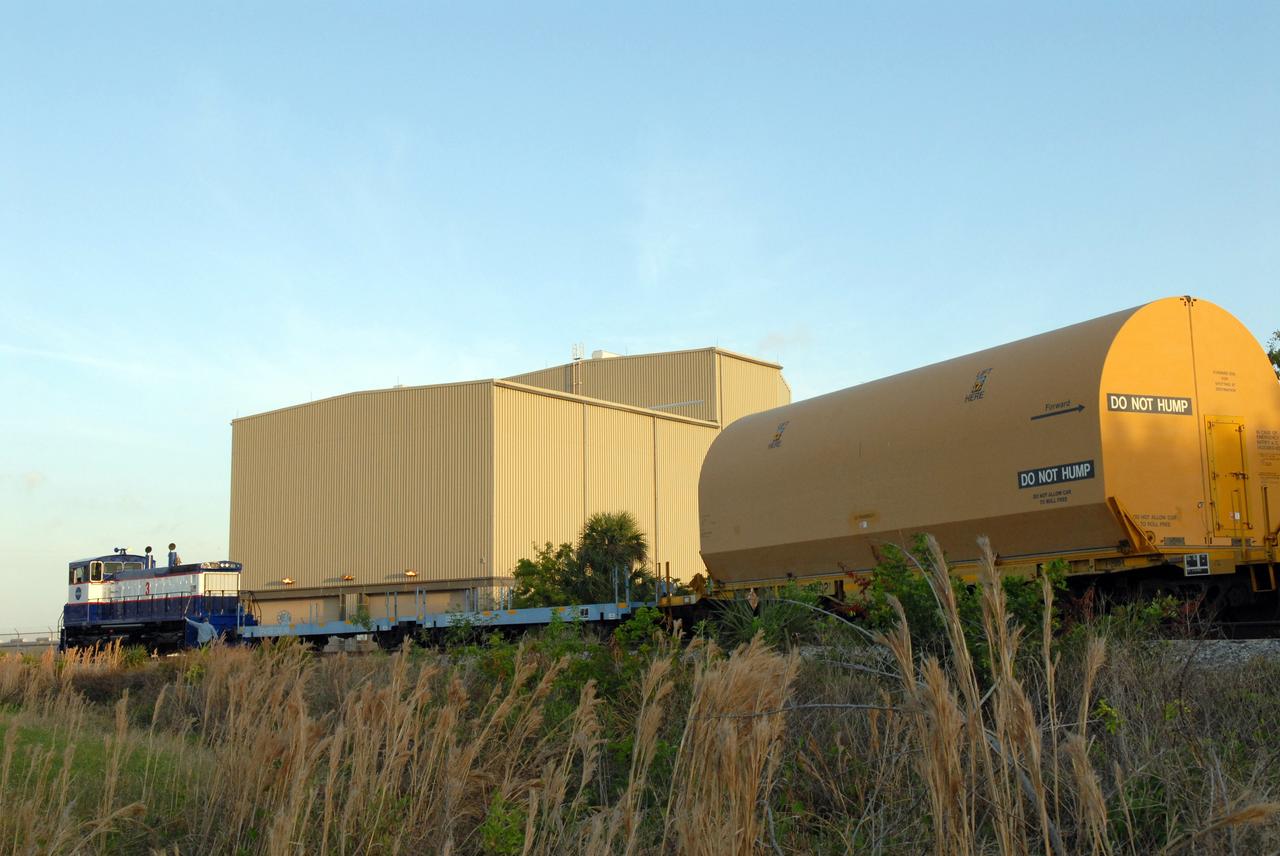
CAPE CANAVERAL, Fla. – The NASA Railroad hauls one of the cars with the first Ares I-X segment to the Rotation, Processing and Surge Facility at NASA's Kennedy Space Center in Florida. Four reusable motor segments and the nozzle exit cone, manufactured by the Ares I first-stage prime contractor Alliant Techsystems Inc., departed Utah March 12 on the seven-day, cross-country trip to Florida. The segments are being delivered to Kennedy's Rotation, Processing and Surge Facility for final processing and integration. The booster used for the Ares I-X launch is being modified by adding new forward structures and a fifth segment simulator. The motor is the final hardware needed for the rocket's upcoming test flight this summer. The stacking operations are scheduled to begin in the Vehicle Assembly Building in April. Photo credit: NASA/Jack Pfaller
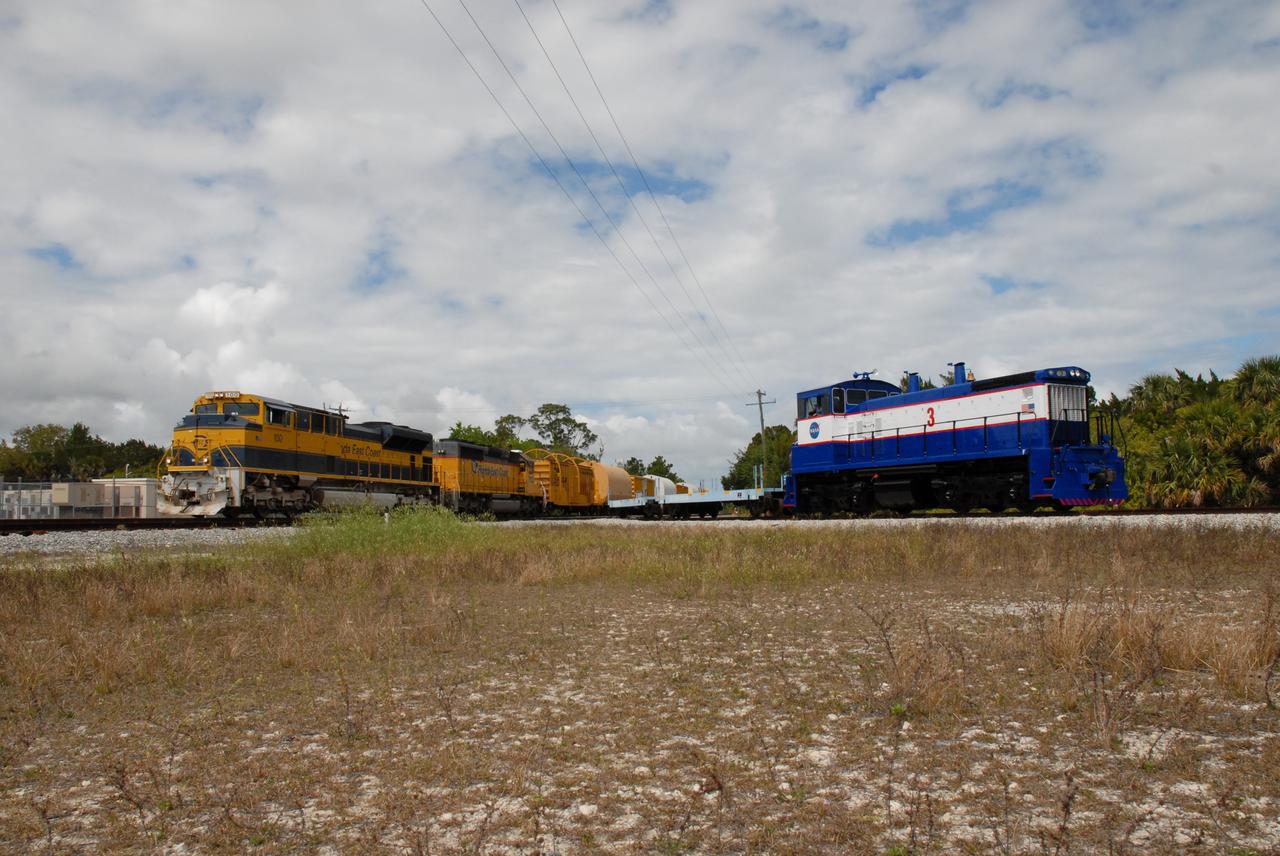
CAPE CANAVERAL, Fla. – The NASA Railroad (right) is ready for the exchange of the Florida East Coast Railway cars carrying the booster segments for the Ares I-X test rocket. The four reusable motor segments and the nozzle exit cone, manufactured by the Ares I first-stage prime contractor Alliant Techsystems Inc., or ATK, departed Utah March 12 on the seven-day, cross-country trip to Florida. The segments will be delivered to the Rotation, Processing and Surge Facility for final processing and integration. The booster used for the Ares I-X launch is being modified by adding new forward structures and a fifth segment simulator. The motor is the final hardware needed for the rocket's upcoming test flight this summer. The stacking operations are scheduled to begin in the Vehicle Assembly Building in April. Photo credit: NASA/Kim Shiflett
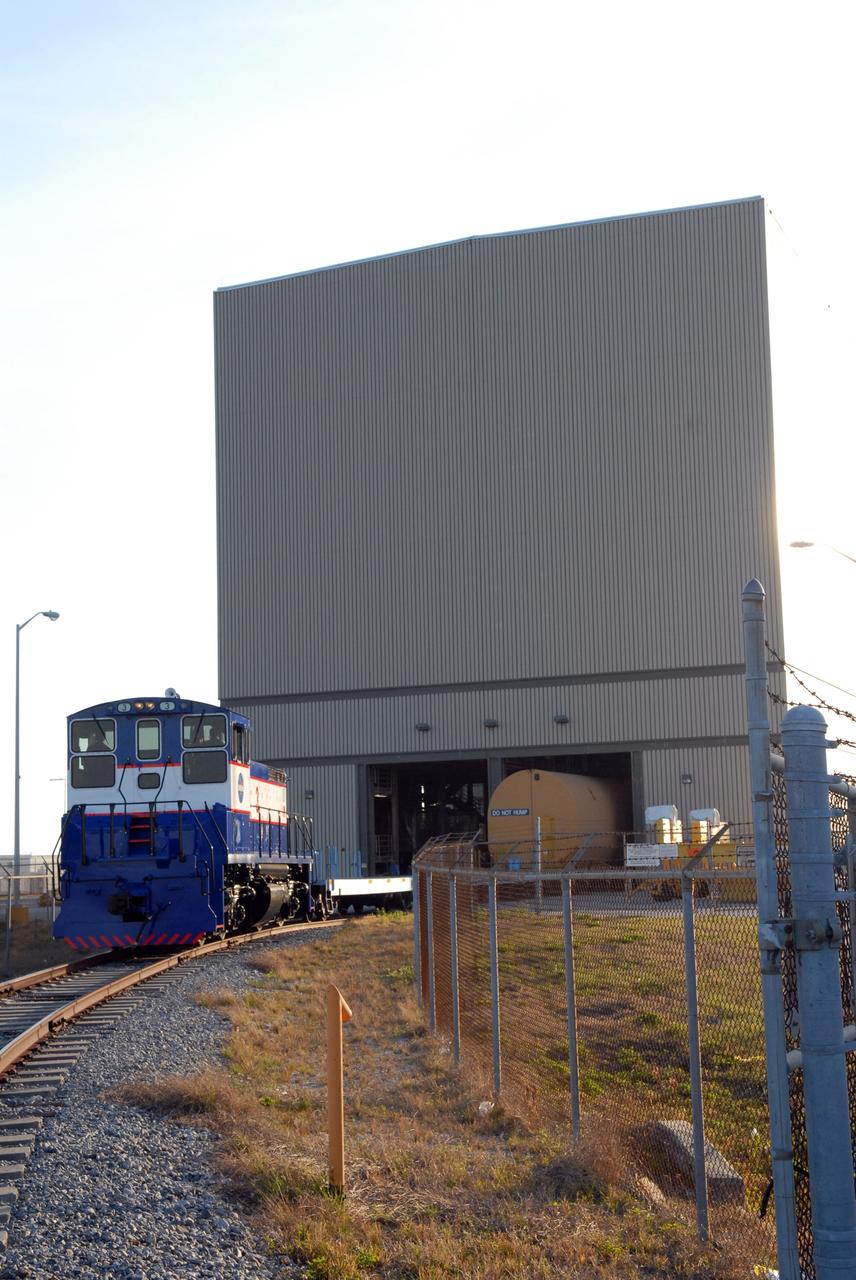
CAPE CANAVERAL, Fla. – The NASA Railroad delivers the first Ares I-X segment to the Rotation, Processing and Surge Facility at NASA's Kennedy Space Center in Florida. Four reusable motor segments and the nozzle exit cone, manufactured by the Ares I first-stage prime contractor Alliant Techsystems Inc., departed Utah March 12 on the seven-day, cross-country trip to Florida. The segments are being delivered to Kennedy's Rotation, Processing and Surge Facility for final processing and integration. The booster used for the Ares I-X launch is being modified by adding new forward structures and a fifth segment simulator. The motor is the final hardware needed for the rocket's upcoming test flight this summer. The stacking operations are scheduled to begin in the Vehicle Assembly Building in April. Photo credit: NASA/Jack Pfaller

CAPE CANAVERAL, Fla. – The Florida East Coast Railway train arrives at the Jay Jay Rail Yard with the booster segments for the Ares I-X test rocket for interchange with the NASA Railroad. Officials from Alliant Techsystems Inc. and NASA accompany the train. The four reusable motor segments and the nozzle exit cone, manufactured by the Ares I first-stage prime contractor Alliant Techsystems Inc., or ATK, departed Utah March 12 on the seven-day, cross-country trip to Florida. The segments will be delivered to the Rotation, Processing and Surge Facility for final processing and integration. The booster used for the Ares I-X launch is being modified by adding new forward structures and a fifth segment simulator. The motor is the final hardware needed for the rocket's upcoming test flight this summer. The stacking operations are scheduled to begin in the Vehicle Assembly Building in April. Photo credit: NASA/Kim Shiflett
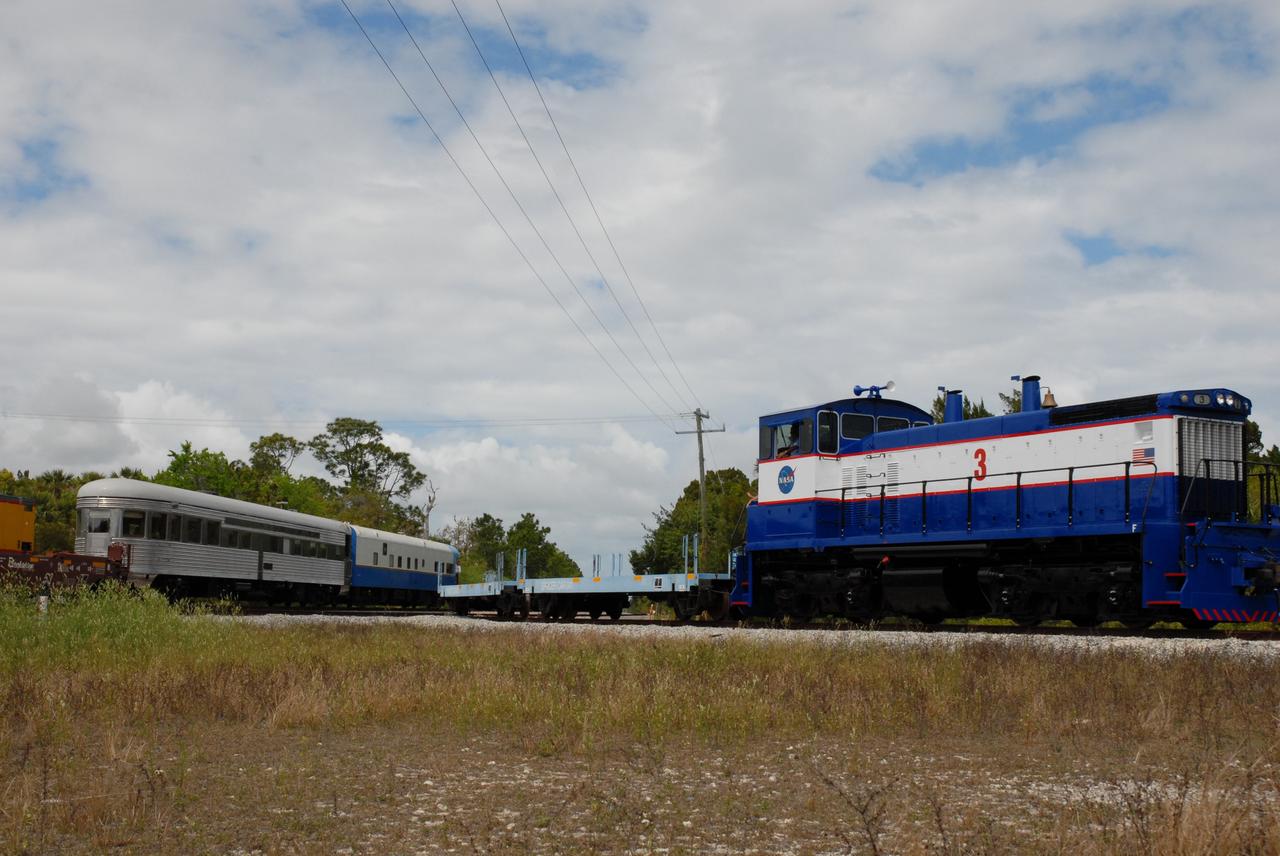
CAPE CANAVERAL, Fla. – – The NASA Railroad (right) is ready for the exchange of the Florida East Coast Railway cars carrying the booster segments for the Ares I-X test rocket. The four reusable motor segments and the nozzle exit cone, manufactured by the Ares I first-stage prime contractor Alliant Techsystems Inc., or ATK, departed Utah March 12 on the seven-day, cross-country trip to Florida. The segments will be delivered to the Rotation, Processing and Surge Facility for final processing and integration. The booster used for the Ares I-X launch is being modified by adding new forward structures and a fifth segment simulator. The motor is the final hardware needed for the rocket's upcoming test flight this summer. The stacking operations are scheduled to begin in the Vehicle Assembly Building in April. Photo credit: NASA/Kim Shiflett
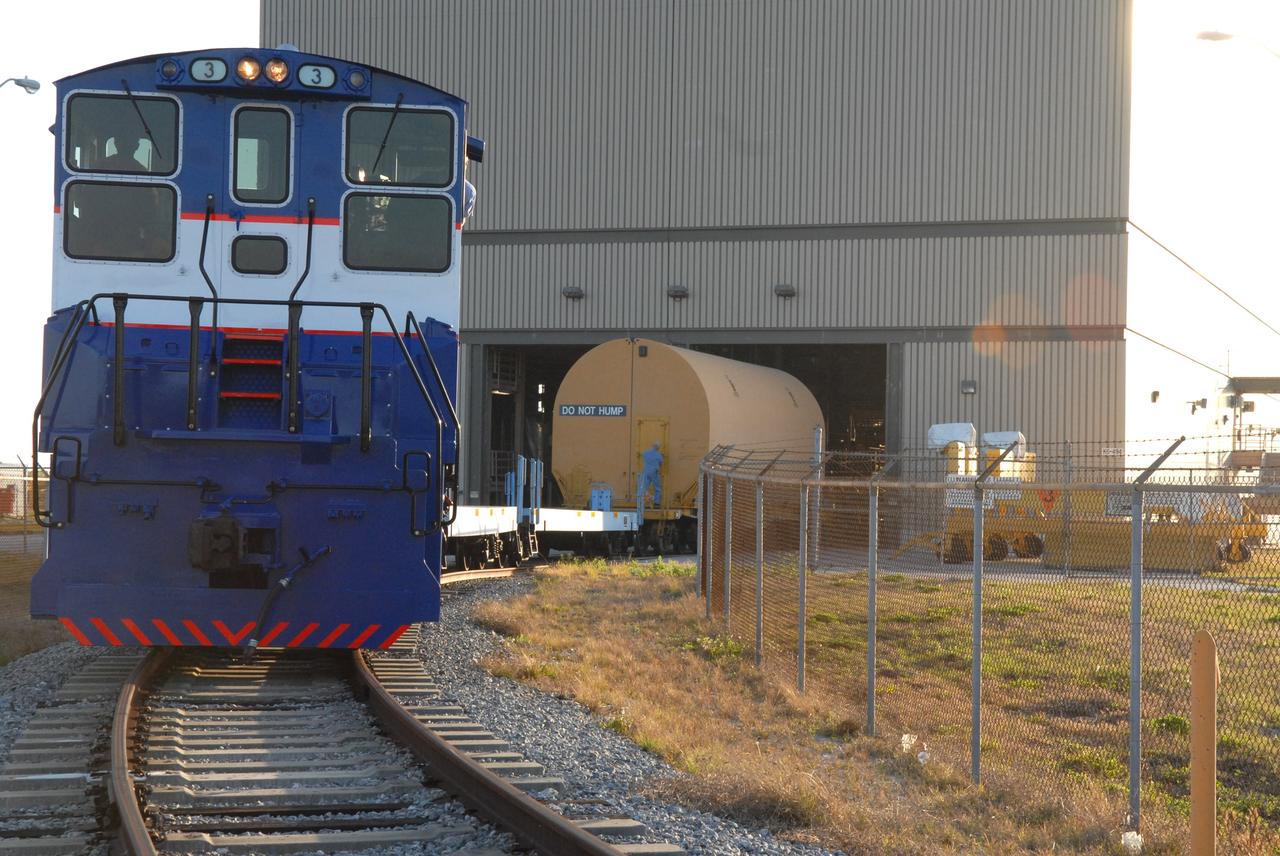
CAPE CANAVERAL, Fla. – The NASA Railroad delivers the first Ares I-X segment to the Rotation, Processing and Surge Facility at NASA's Kennedy Space Center in Florida. Four reusable motor segments and the nozzle exit cone, manufactured by the Ares I first-stage prime contractor Alliant Techsystems Inc., departed Utah March 12 on the seven-day, cross-country trip to Florida. The segments are being delivered to Kennedy's Rotation, Processing and Surge Facility for final processing and integration. The booster used for the Ares I-X launch is being modified by adding new forward structures and a fifth segment simulator. The motor is the final hardware needed for the rocket's upcoming test flight this summer. The stacking operations are scheduled to begin in the Vehicle Assembly Building in April. Photo credit: NASA/Jack Pfaller
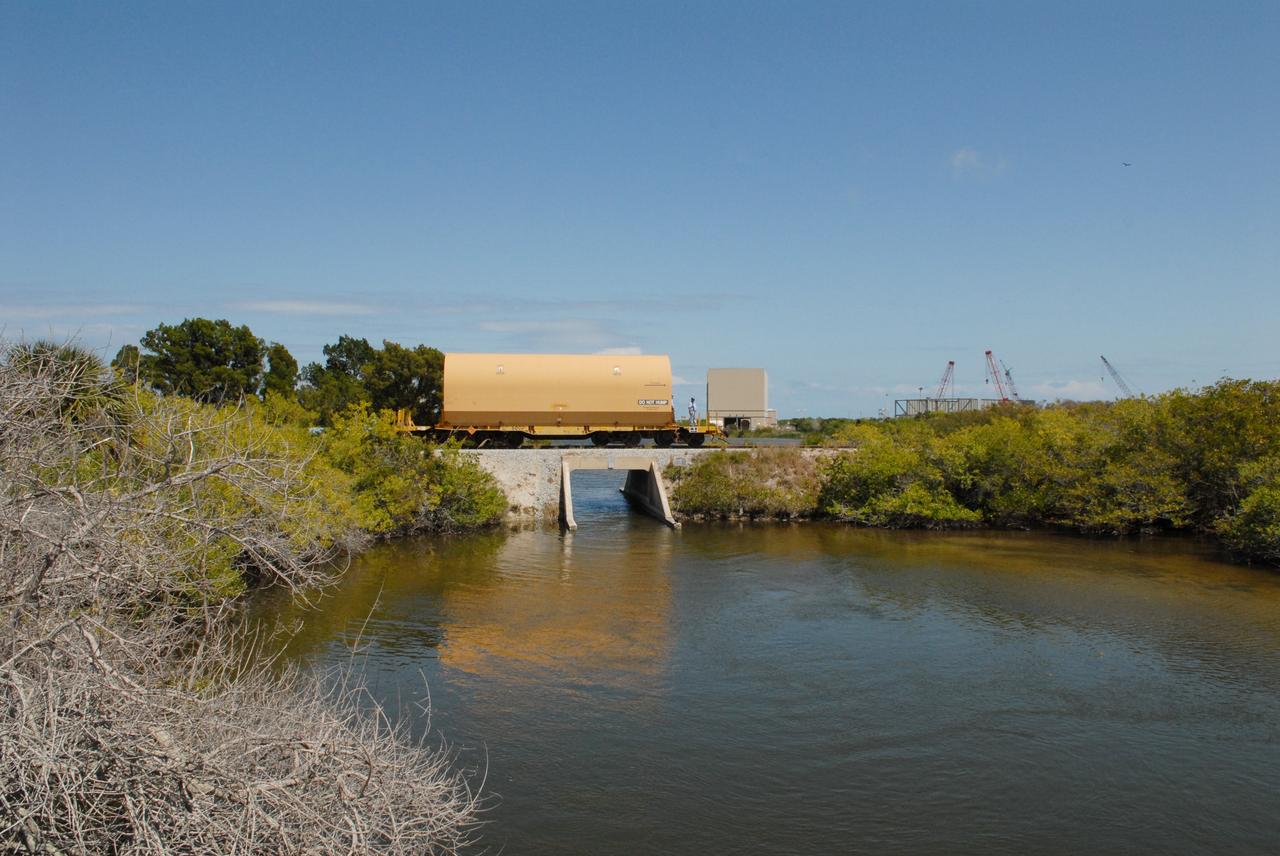
CAPE CANAVERAL, Fla. –The NASA Railroad is hauling one of the cars with an Ares I-X segment to the Rotation, Processing and Surge Facility at NASA's Kennedy Space Center in Florida. The four reusable motor segments and the nozzle exit cone, manufactured by the Ares I first-stage prime contractor Alliant Techsystems Inc., or ATK, departed Utah March 12 on the seven-day, cross-country trip to Florida. The segments will be delivered to Kennedy's Rotation, Processing and Surge Facility for final processing and integration. The booster used for the Ares I-X launch is being modified by adding new forward structures and a fifth segment simulator. The motor is the final hardware needed for the rocket's upcoming test flight this summer. The stacking operations are scheduled to begin in the Vehicle Assembly Building in April. Photo credit: NASA/Jack Pfaller
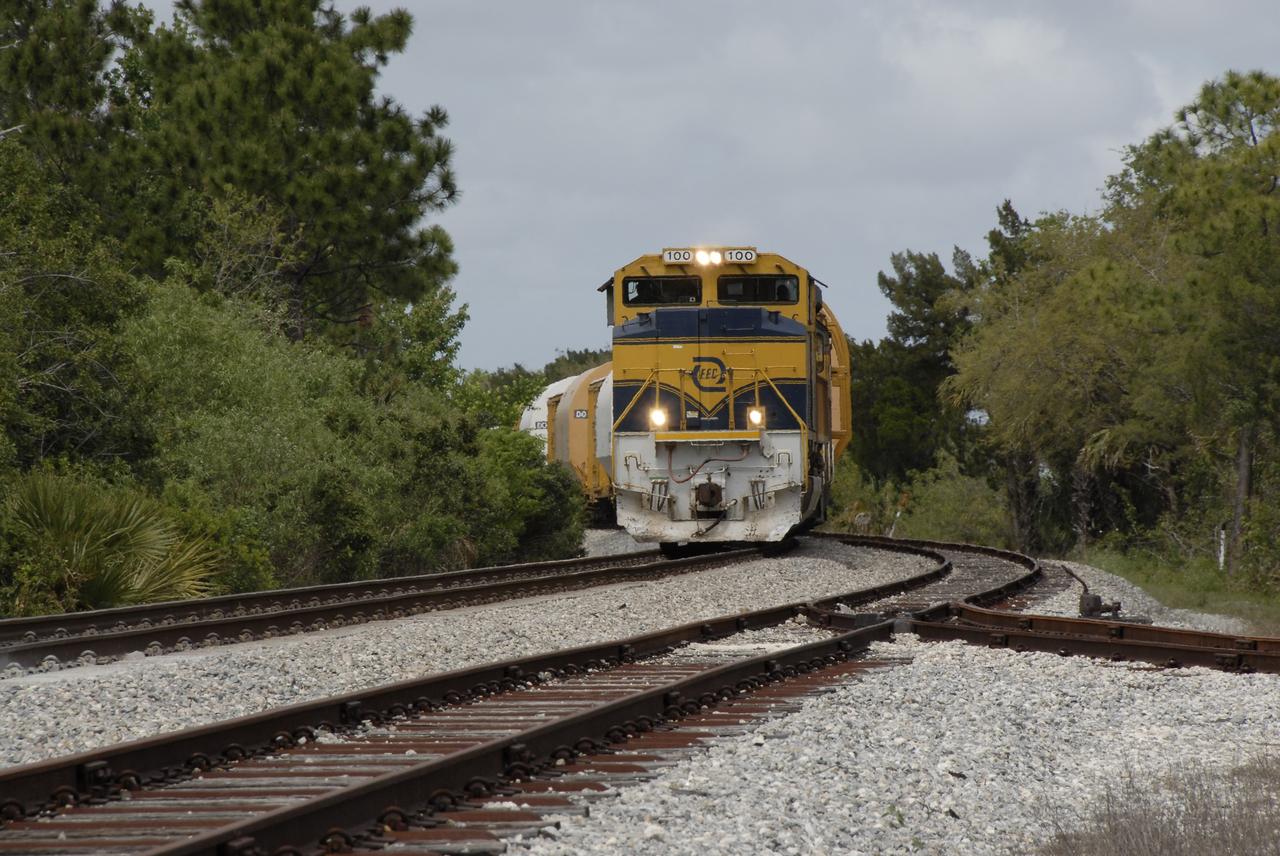
CAPE CANAVERAL, Fla. – The Florida East Coast Railway train arrives at the Jay Jay Rail Yard with the booster segments for the Ares I-X test rocket for interchange with the NASA Railroad. The four reusable motor segments and the nozzle exit cone, manufactured by the Ares I first-stage prime contractor Alliant Techsystems Inc., or ATK, departed Utah March 12 on the seven-day, cross-country trip to Florida. The segments will be delivered to the Rotation, Processing and Surge Facility for final processing and integration. The booster used for the Ares I-X launch is being modified by adding new forward structures and a fifth segment simulator. The motor is the final hardware needed for the rocket's upcoming test flight this summer. The stacking operations are scheduled to begin in the Vehicle Assembly Building in April. Photo credit: NASA/Kim Shiflett
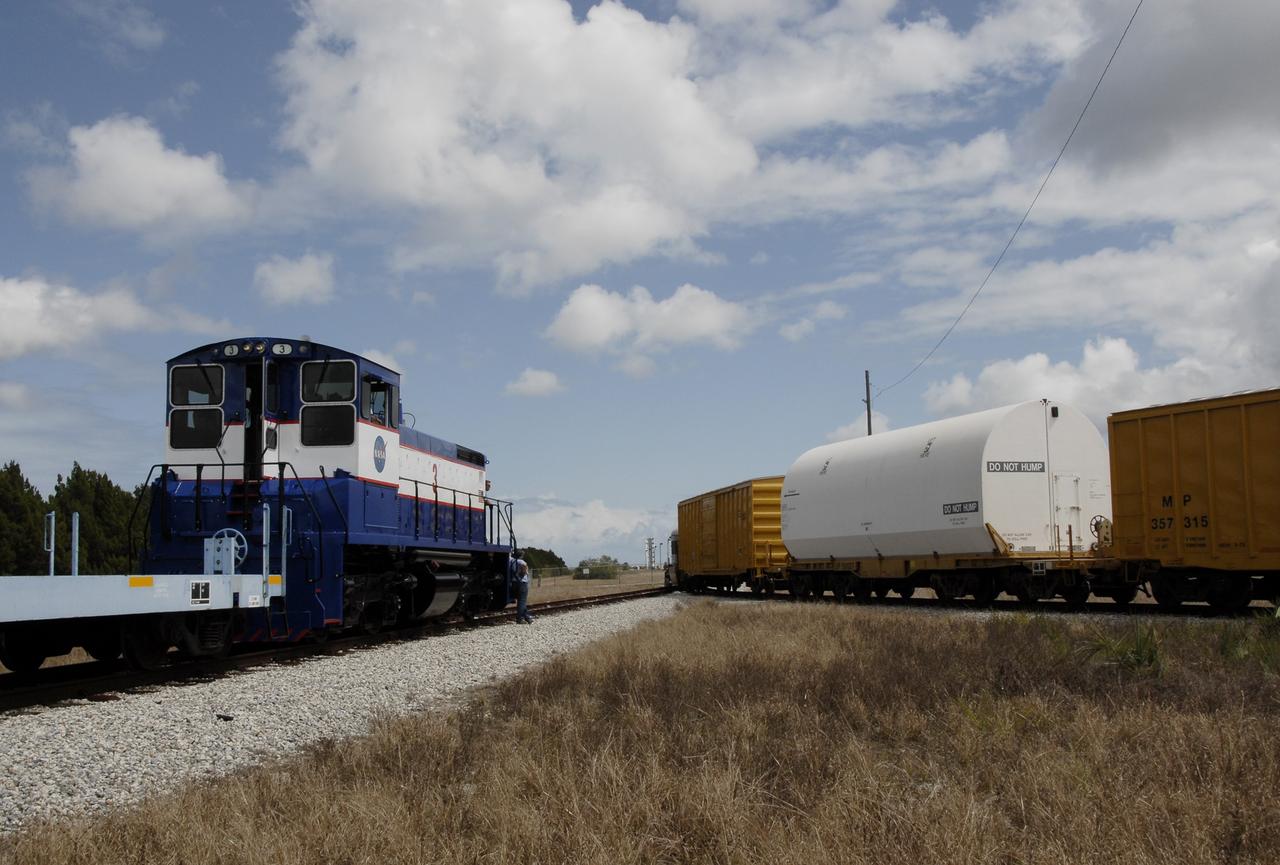
CAPE CANAVERAL, Fla. – The Florida East Coast Railway train arrives at the Jay Jay Rail Yard with the booster segments for the Ares I-X test rocket for interchange with the NASA Railroad. The four reusable motor segments and the nozzle exit cone, manufactured by the Ares I first-stage prime contractor Alliant Techsystems Inc., or ATK, departed Utah March 12 on the seven-day, cross-country trip to Florida. The segments will be delivered to the Rotation, Processing and Surge Facility for final processing and integration. The booster used for the Ares I-X launch is being modified by adding new forward structures and a fifth segment simulator. The motor is the final hardware needed for the rocket's upcoming test flight this summer. The stacking operations are scheduled to begin in the Vehicle Assembly Building in April. Photo credit: NASA/Kim Shiflett
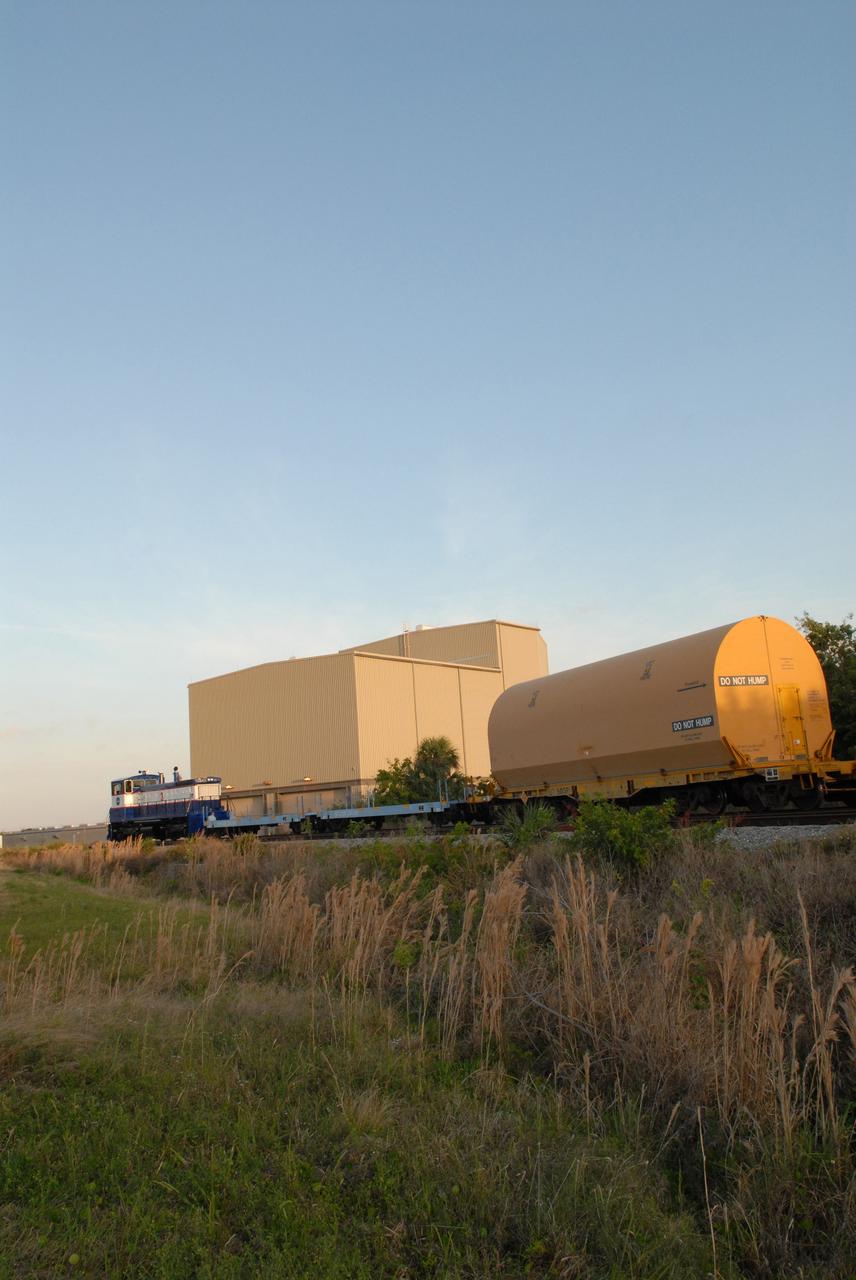
CAPE CANAVERAL, Fla. – The NASA Railroad hauls one of the cars with the first Ares I-X segment to the Rotation, Processing and Surge Facility at NASA's Kennedy Space Center in Florida. Four reusable motor segments and the nozzle exit cone, manufactured by the Ares I first-stage prime contractor Alliant Techsystems Inc., departed Utah March 12 on the seven-day, cross-country trip to Florida. The segments are being delivered to Kennedy's Rotation, Processing and Surge Facility for final processing and integration. The booster used for the Ares I-X launch is being modified by adding new forward structures and a fifth segment simulator. The motor is the final hardware needed for the rocket's upcoming test flight this summer. The stacking operations are scheduled to begin in the Vehicle Assembly Building in April. Photo credit: NASA/Jack Pfaller
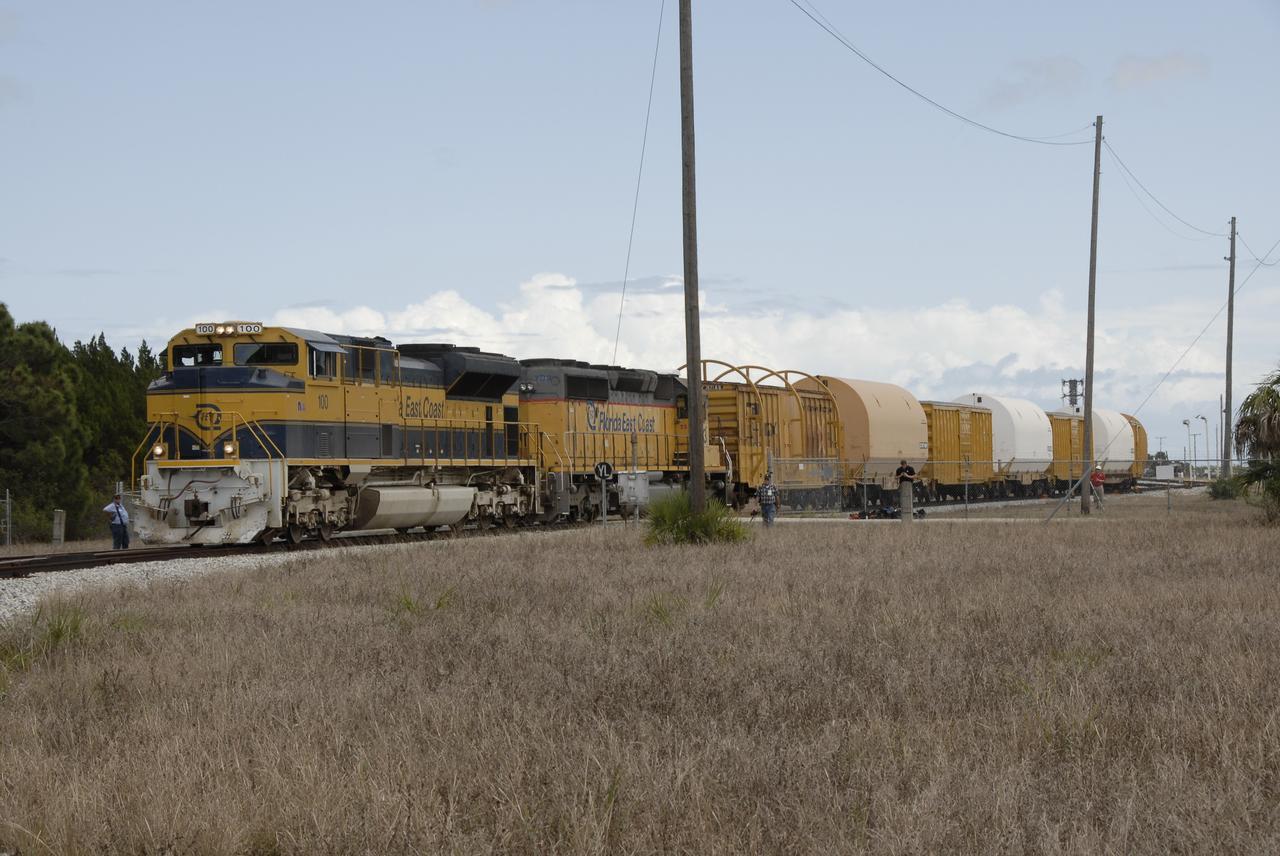
CAPE CANAVERAL, Fla. – The Florida East Coast Railway train arrives at the Jay Jay Rail Yard with the booster segments for the Ares I-X test rocket for interchange with the NASA Railroad. The four reusable motor segments and the nozzle exit cone, manufactured by the Ares I first-stage prime contractor Alliant Techsystems Inc., or ATK, departed Utah March 12 on the seven-day, cross-country trip to Florida. The segments will be delivered to the Rotation, Processing and Surge Facility for final processing and integration. The booster used for the Ares I-X launch is being modified by adding new forward structures and a fifth segment simulator. The motor is the final hardware needed for the rocket's upcoming test flight this summer. The stacking operations are scheduled to begin in the Vehicle Assembly Building in April. Photo credit: NASA/Kim Shiflett
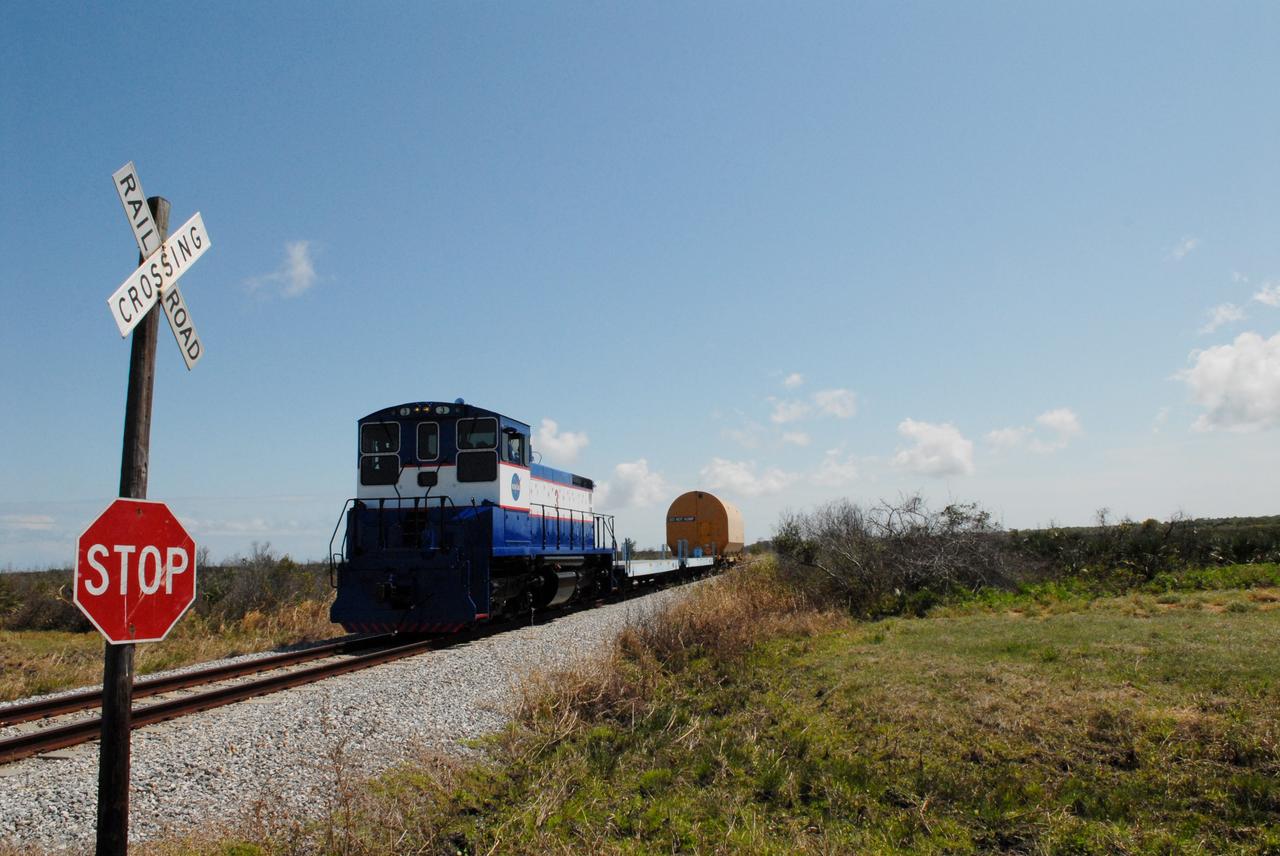
CAPE CANAVERAL, Fla. –This NASA Railroad engine is hauling one of the cars with an Ares I-X segment to the Rotation, Processing and Surge Facility at NASA's Kennedy Space Center in Florida. The four reusable motor segments and the nozzle exit cone, manufactured by the Ares I first-stage prime contractor Alliant Techsystems Inc., or ATK, departed Utah March 12 on the seven-day, cross-country trip to Florida. The segments will be delivered to Kennedy's Rotation, Processing and Surge Facility for final processing and integration. The booster used for the Ares I-X launch is being modified by adding new forward structures and a fifth segment simulator. The motor is the final hardware needed for the rocket's upcoming test flight this summer. The stacking operations are scheduled to begin in the Vehicle Assembly Building in April. Photo credit: NASA/Jack Pfaller
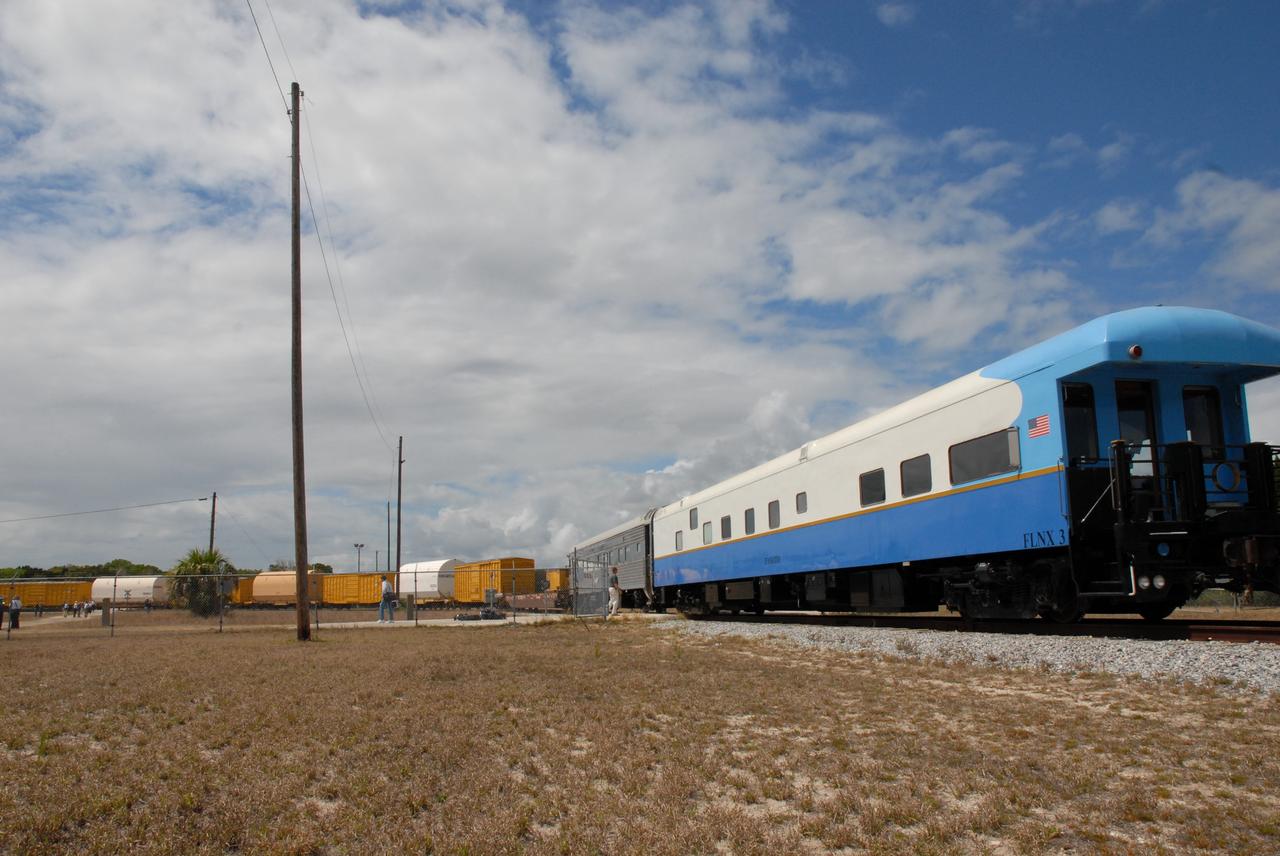
CAPE CANAVERAL, Fla. – The NASA Railroad makes the exchange with the Florida East Coast Railway cars carrying the booster segments for the Ares I-X test rocket. The four reusable motor segments and the nozzle exit cone, manufactured by the Ares I first-stage prime contractor Alliant Techsystems Inc., or ATK, departed Utah March 12 on the seven-day, cross-country trip to Florida. The segments will be delivered to the Rotation, Processing and Surge Facility for final processing and integration. The booster used for the Ares I-X launch is being modified by adding new forward structures and a fifth segment simulator. The motor is the final hardware needed for the rocket's upcoming test flight this summer. The stacking operations are scheduled to begin in the Vehicle Assembly Building in April. Photo credit: NASA/Kim Shiflett
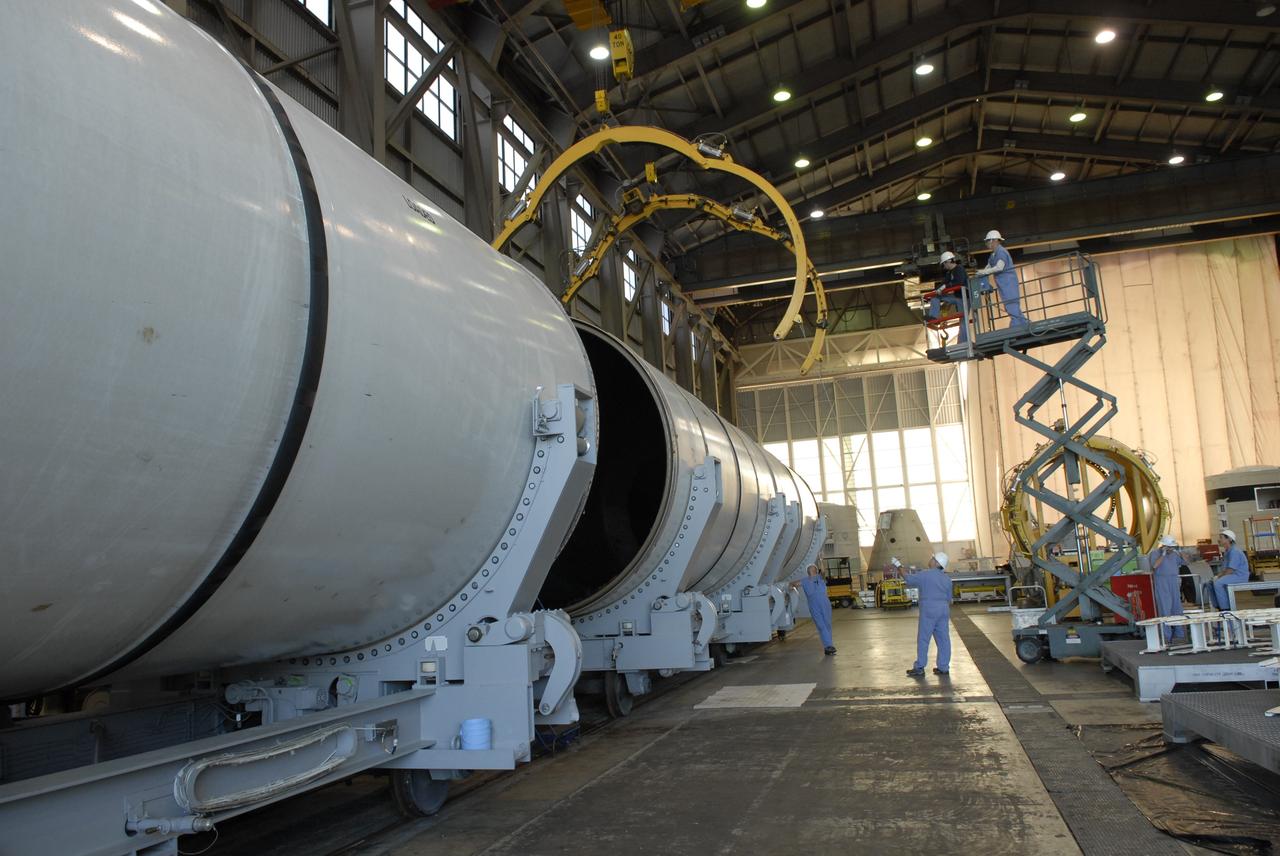
CAPE CANAVERAL, Fla. -- In Hangar AF at Cape Canaveral, Fla., separation rings are moved above two segments of one of the retrieved solid rocket boosters from the STS-126 launch. The rings will be lowered and locked around the segments. The pins attaching the segments to each other are removed at the start. Each separation ring has three joints that help mold the ring around the segment and an air motor is used to rotate the rings to separate the segments. After disassembly, the segments will be sent to ATK (Alliant Techsystems) in Utah for final processing and return to Kennedy for another shuttle launch. Photo credit: NASA/Jack Pfaller
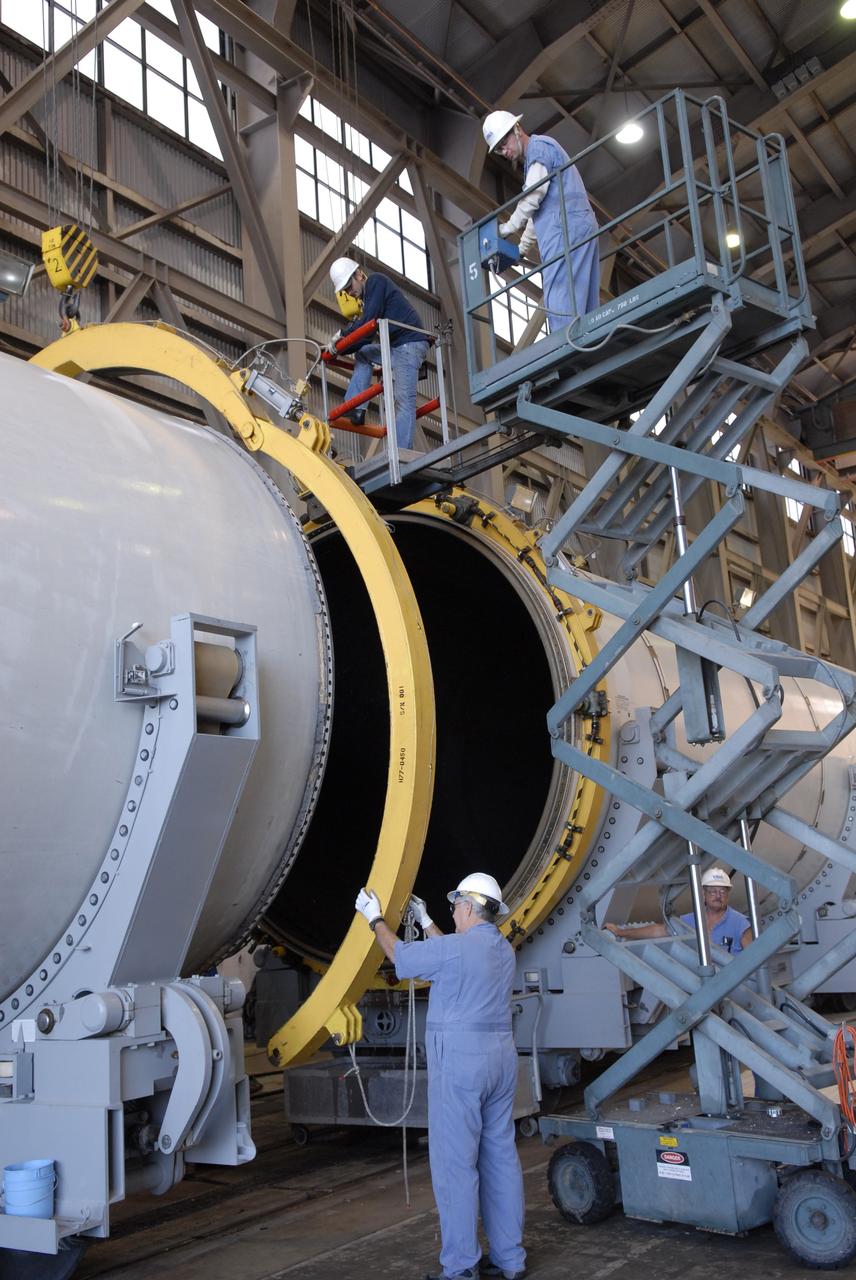
CAPE CANAVERAL, Fla. -- In Hangar AF at Cape Canaveral, Fla., workers again remove separation rings from around segments of one of the retrieved solid rocket boosters from the STS-126 launch. The pins attaching the segments to each other are removed at the start. Each separation ring has three joints that help mold the ring around the segment and an air motor is used to rotate the rings to separate the segments. After disassembly, the segments will be sent to ATK (Alliant Techsystems) in Utah for final processing and return to Kennedy for another shuttle launch. Photo credit: NASA/Jack Pfaller