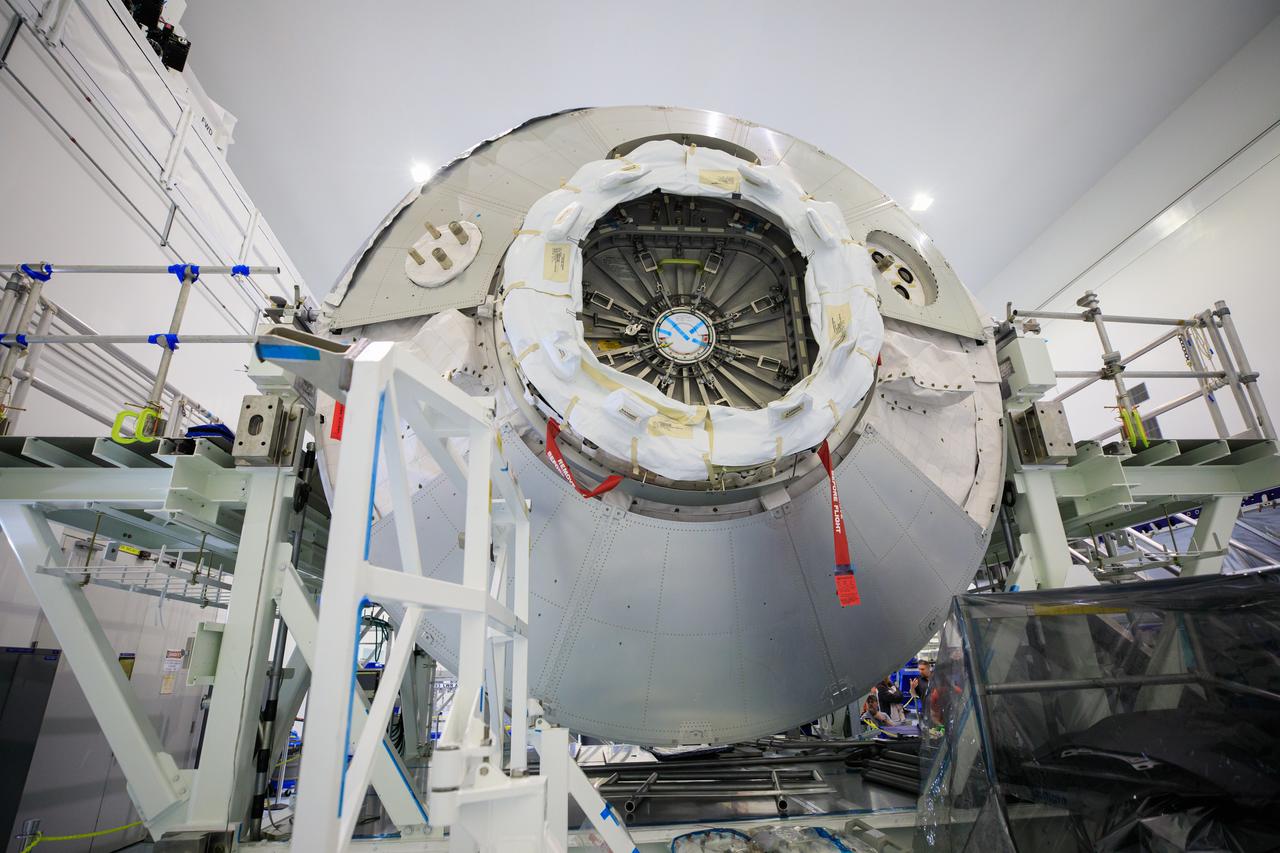
The Multi-Purpose Logistics Module (MPLM), used during the Space Shuttle Program to transfer cargo to and from the International Space Station, is secured in a stand inside the Space Station Processing Facility high bay at NASA’s Kennedy Space Center in Florida on April 20, 2023. The MPLM is being prepared for transport to Ellington Field in Houston, where it will then be transported by road to Axiom’s facility near Ellington to be utilized to further commercialization of space. Three MPLMs were built by Thales Alenia Space Italia (TASI) for the Italian Space Agency (ASI) and named after Italian masters (Leonardo, Raffaello, and Donatello). Only two ever flew to the space station, Leonardo and Raffaello, with Axiom intending to use Raffaello as a future element that will attach to a segment being built by the company for addition to the space station.
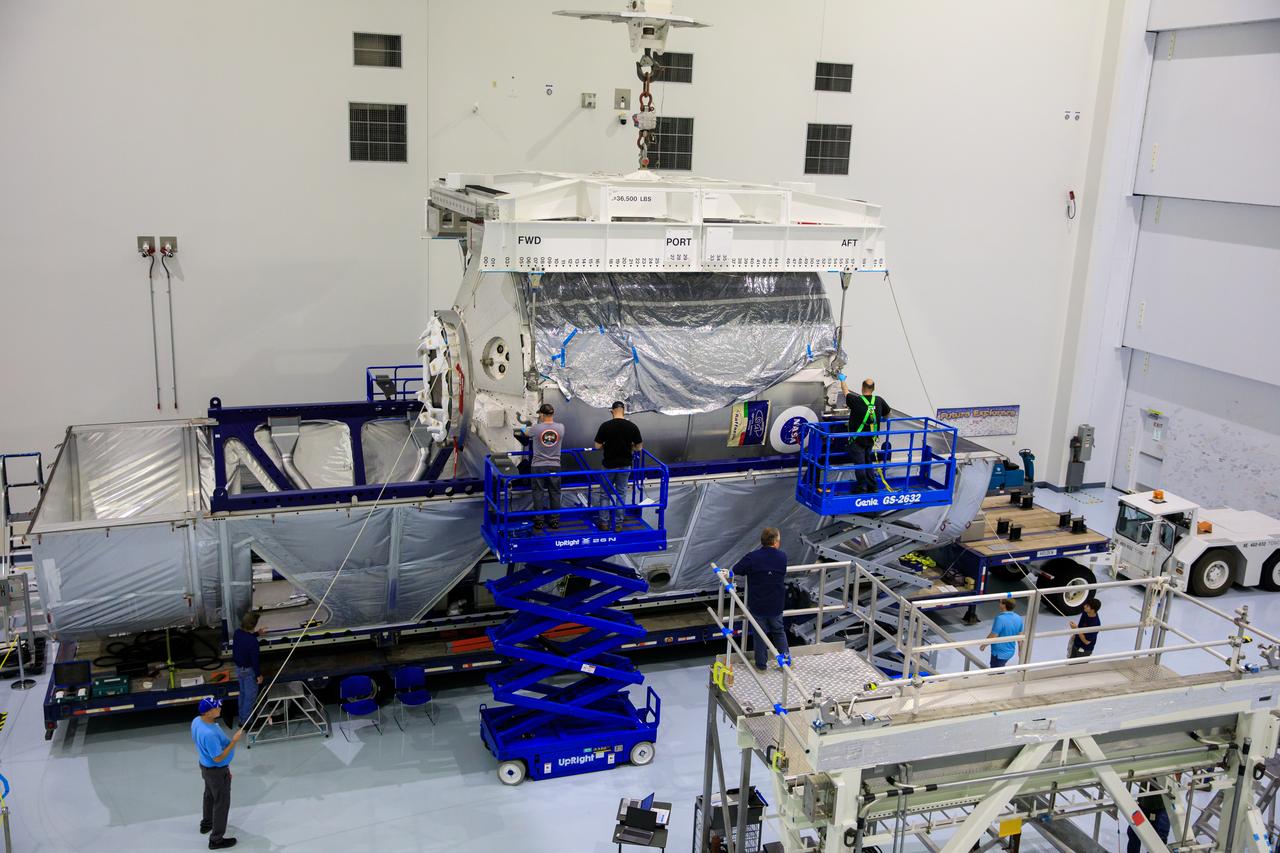
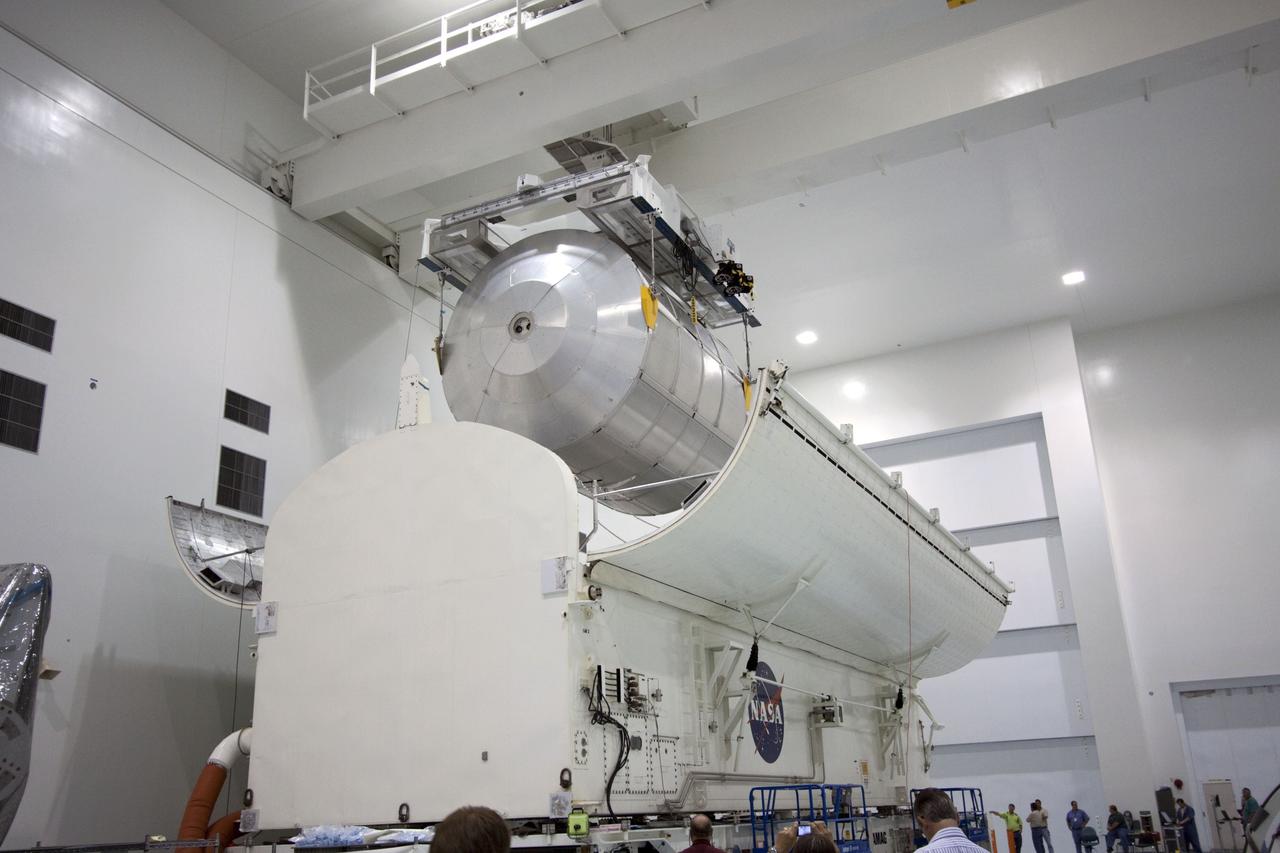
The Multi-Purpose Logistics Module (MPLM), used during the Space Shuttle Program to transfer cargo to and from the International Space Station, is lowered by crane into its transport container inside the Space Station Processing Facility high bay at NASA’s Kennedy Space Center in Florida on April 20, 2023. The MPLM is being prepared for transport to Ellington Field in Houston, where it will then be transported by road to Axiom’s facility near Ellington to be utilized to further commercialization of space. Three MPLMs were built by Thales Alenia Space Italia (TASI) for the Italian Space Agency (ASI) and named after Italian masters (Leonardo, Raffaello, and Donatello). Only two ever flew to the space station, Leonardo and Raffaello, with Axiom intending to use Raffaello as a future element that will attach to a segment being built by the company for addition to the space station.
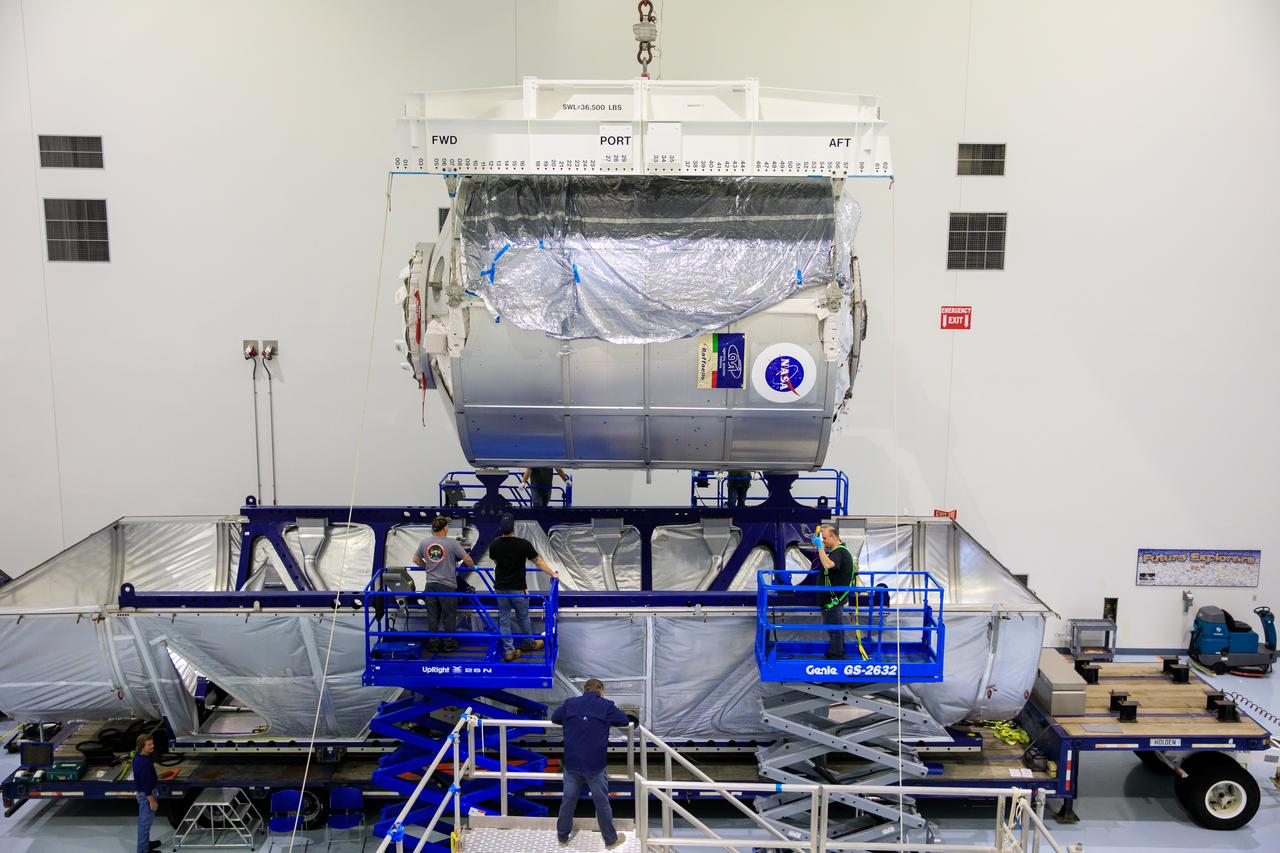
The Multi-Purpose Logistics Module (MPLM), used during the Space Shuttle Program to transfer cargo to and from the International Space Station, is lowered by crane into its transport container inside the Space Station Processing Facility high bay at NASA’s Kennedy Space Center in Florida on April 20, 2023. The MPLM is being prepared for transport to Ellington Field in Houston, where it will then be transported by road to Axiom’s facility near Ellington to be utilized to further commercialization of space. Three MPLMs were built by Thales Alenia Space Italia (TASI) for the Italian Space Agency (ASI) and named after Italian masters (Leonardo, Raffaello, and Donatello). Only two ever flew to the space station, Leonardo and Raffaello, with Axiom intending to use Raffaello as a future element that will attach to a segment being built by the company for addition to the space station.
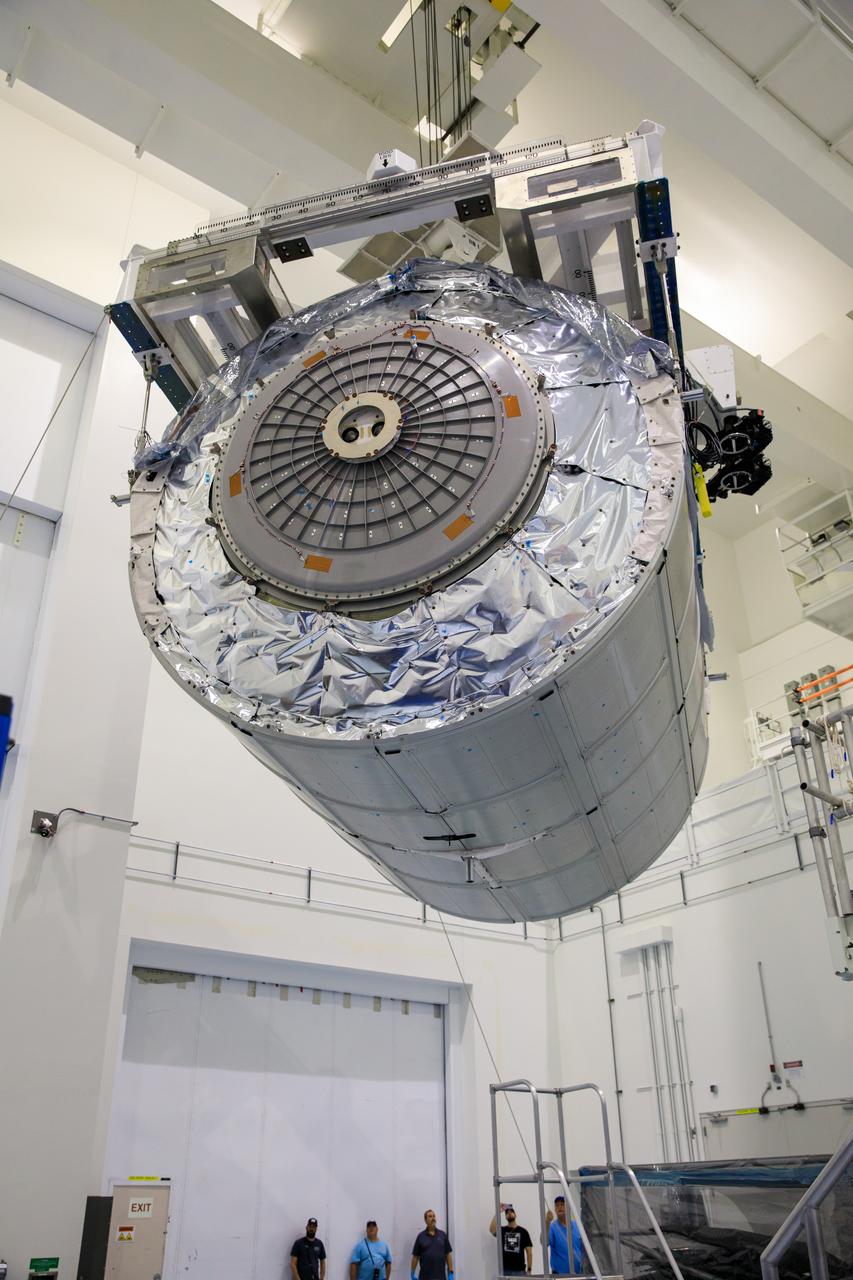
The Multi-Purpose Logistics Module (MPLM), used during the Space Shuttle Program to transfer cargo to and from the International Space Station, is moved by crane inside the Space Station Processing Facility high bay at NASA’s Kennedy Space Center in Florida on April 20, 2023. The MPLM is being prepared for transport to Ellington Field in Houston, where it will then be transported by road to Axiom’s facility near Ellington to be utilized to further commercialization of space. Three MPLMs were built by Thales Alenia Space Italia (TASI) for the Italian Space Agency (ASI) and named after Italian masters (Leonardo, Raffaello, and Donatello). Only two ever flew to the space station, Leonardo and Raffaello, with Axiom intending to use Raffaello as a future element that will attach to a segment being built by the company for addition to the space station.
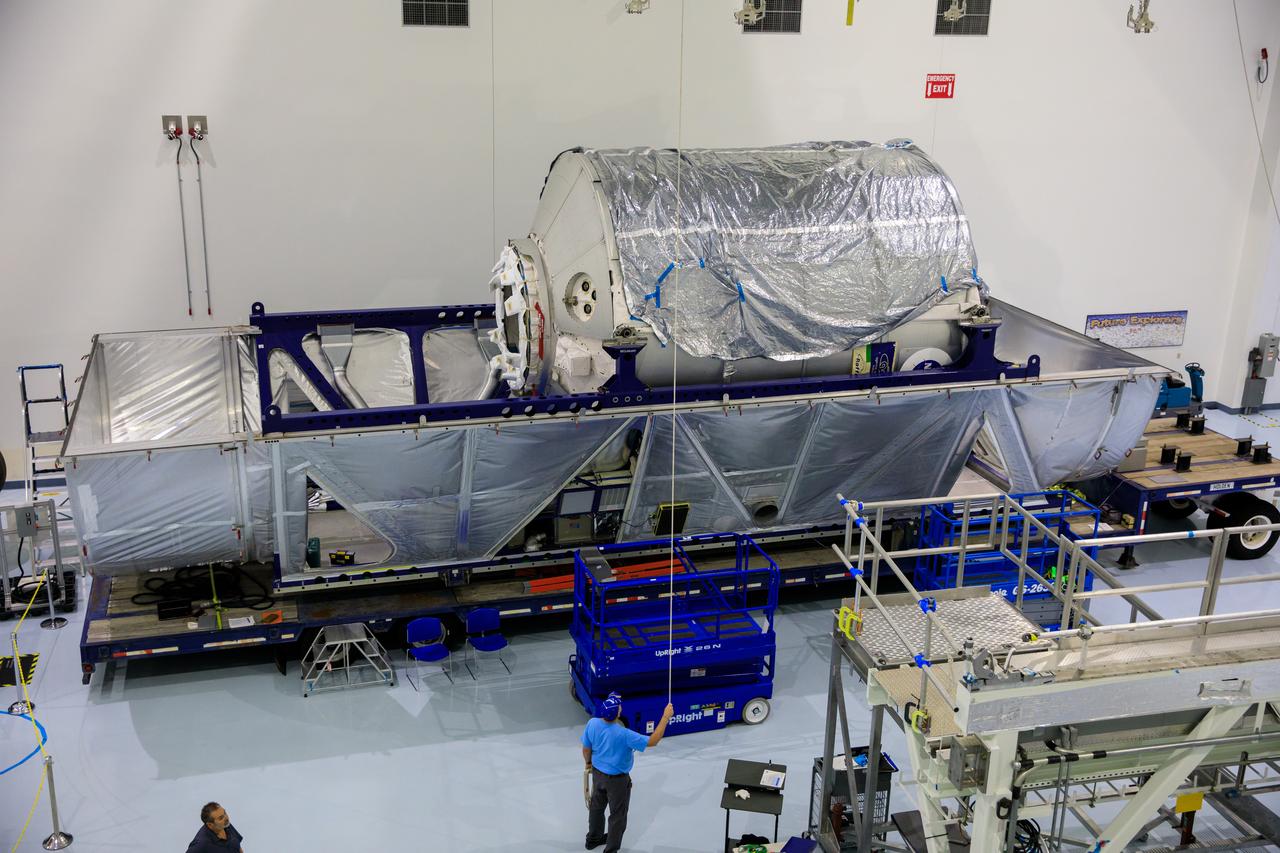
The Multi-Purpose Logistics Module (MPLM), used during the Space Shuttle Program to transfer cargo to and from the International Space Station, is secured in its transport container inside the Space Station Processing Facility high bay at NASA’s Kennedy Space Center in Florida on April 20, 2023. The MPLM is being prepared for transport to Ellington Field in Houston, where it will then be transported by road to Axiom’s facility near Ellington to be utilized to further commercialization of space. Three MPLMs were built by Thales Alenia Space Italia (TASI) for the Italian Space Agency (ASI) and named after Italian masters (Leonardo, Raffaello, and Donatello). Only two ever flew to the space station, Leonardo and Raffaello, with Axiom intending to use Raffaello as a future element that will attach to a segment being built by the company for addition to the space station.
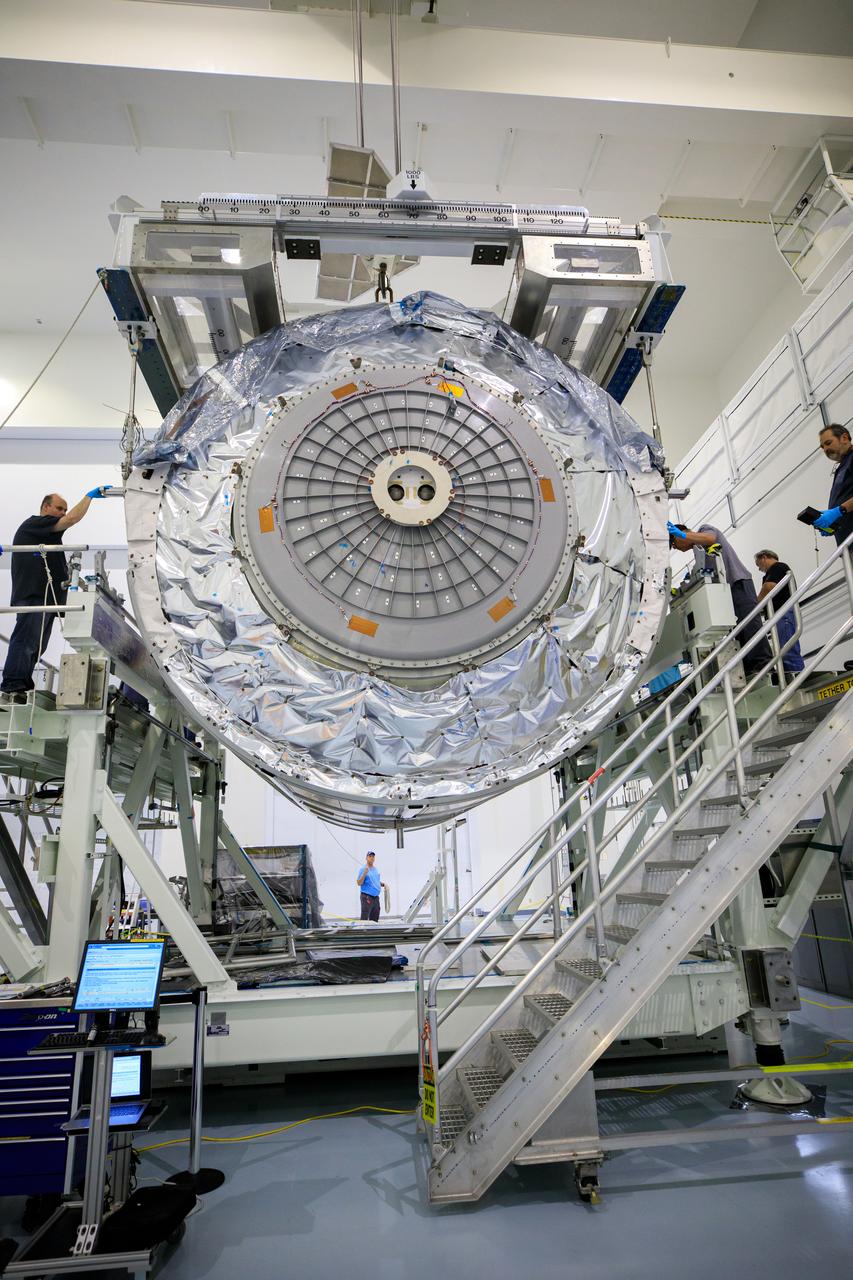
The Multi-Purpose Logistics Module (MPLM), used during the Space Shuttle Program to transfer cargo to and from the International Space Station, is hoisted up by crane inside the Space Station Processing Facility high bay at NASA’s Kennedy Space Center in Florida on April 20, 2023. The MPLM is being prepared for transport to Ellington Field in Houston, where it will then be transported by road to Axiom’s facility near Ellington to be utilized to further commercialization of space. Three MPLMs were built by Thales Alenia Space Italia (TASI) for the Italian Space Agency (ASI) and named after Italian masters (Leonardo, Raffaello, and Donatello). Only two ever flew to the space station, Leonardo and Raffaello, with Axiom intending to use Raffaello as a future element that will attach to a segment being built by the company for addition to the space station.
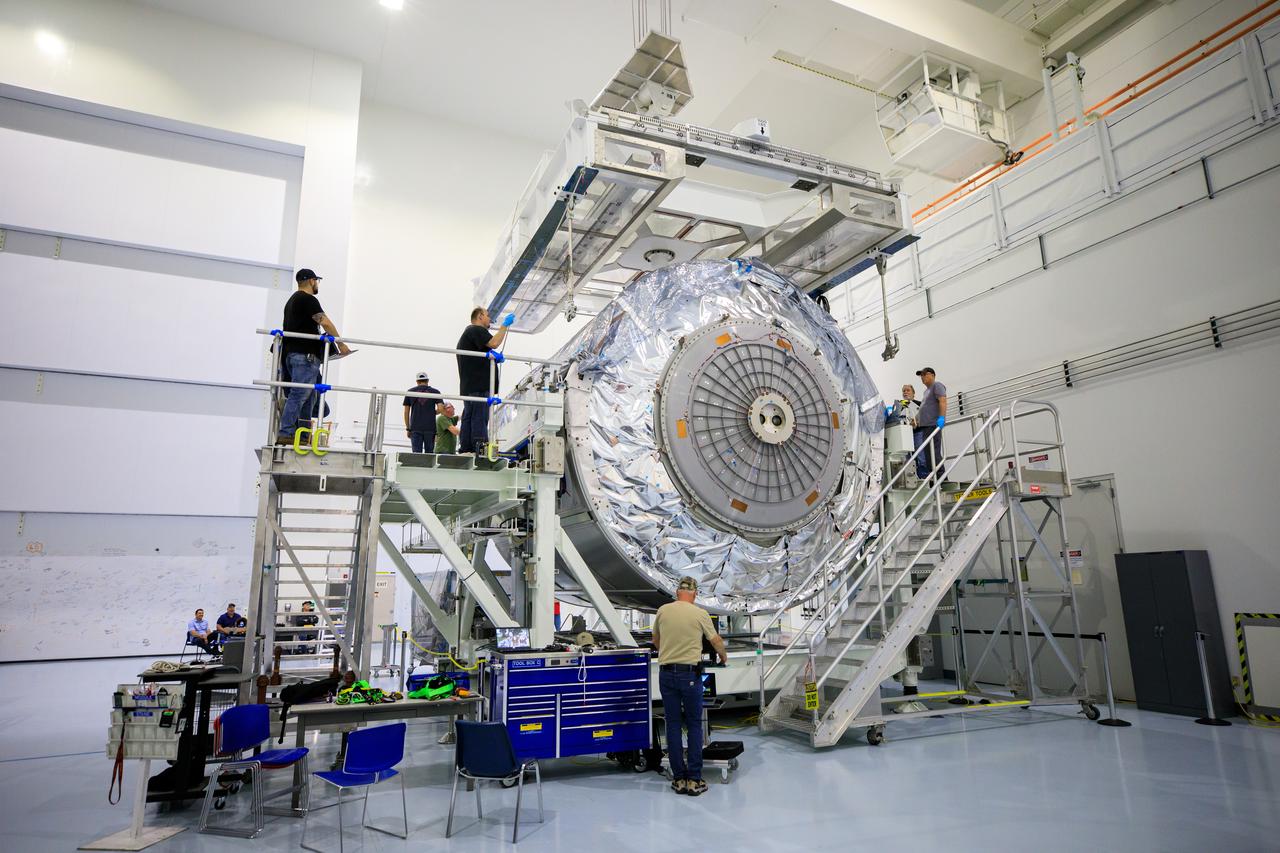
The Multi-Purpose Logistics Module (MPLM), used during the Space Shuttle Program to transfer cargo to and from the International Space Station, is lifted by crane inside the Space Station Processing Facility high bay at NASA’s Kennedy Space Center in Florida on April 20, 2023. The MPLM is being prepared for transport to Ellington Field in Houston, where it will then be transported by road to Axiom’s facility near Ellington to be utilized to further commercialization of space. Three MPLMs were built by Thales Alenia Space Italia (TASI) for the Italian Space Agency (ASI) and named after Italian masters (Leonardo, Raffaello, and Donatello). Only two ever flew to the space station, Leonardo and Raffaello, with Axiom intending to use Raffaello as a future element that will attach to a segment being built by the company for addition to the space station.
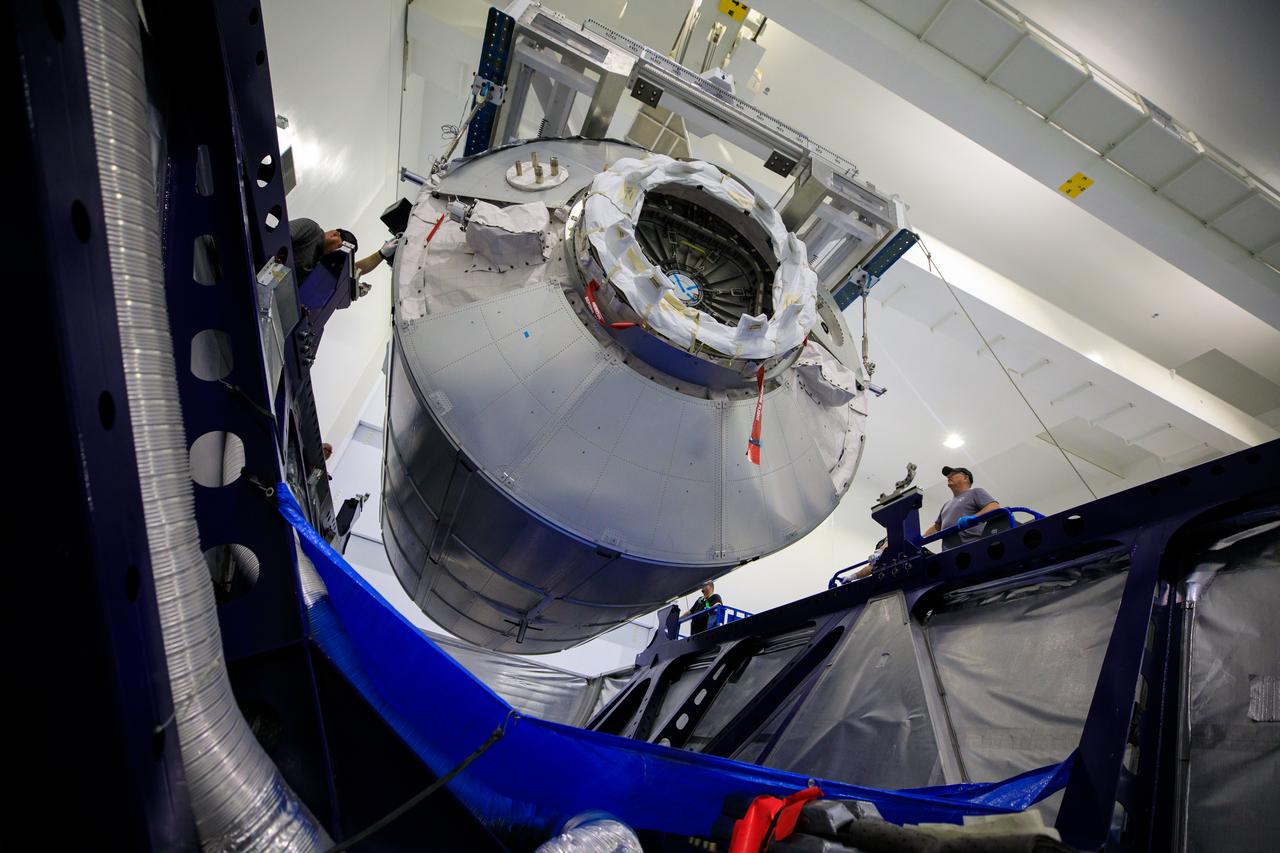
The Multi-Purpose Logistics Module (MPLM), used during the Space Shuttle Program to transfer cargo to and from the International Space Station, is lowered by crane into its transport container inside the Space Station Processing Facility high bay at NASA’s Kennedy Space Center in Florida on April 20, 2023. The MPLM is being prepared for transport to Ellington Field in Houston, where it will then be transported by road to Axiom’s facility near Ellington to be utilized to further commercialization of space. Three MPLMs were built by Thales Alenia Space Italia (TASI) for the Italian Space Agency (ASI) and named after Italian masters (Leonardo, Raffaello, and Donatello). Only two ever flew to the space station, Leonardo and Raffaello, with Axiom intending to use Raffaello as a future element that will attach to a segment being built by the company for addition to the space station.
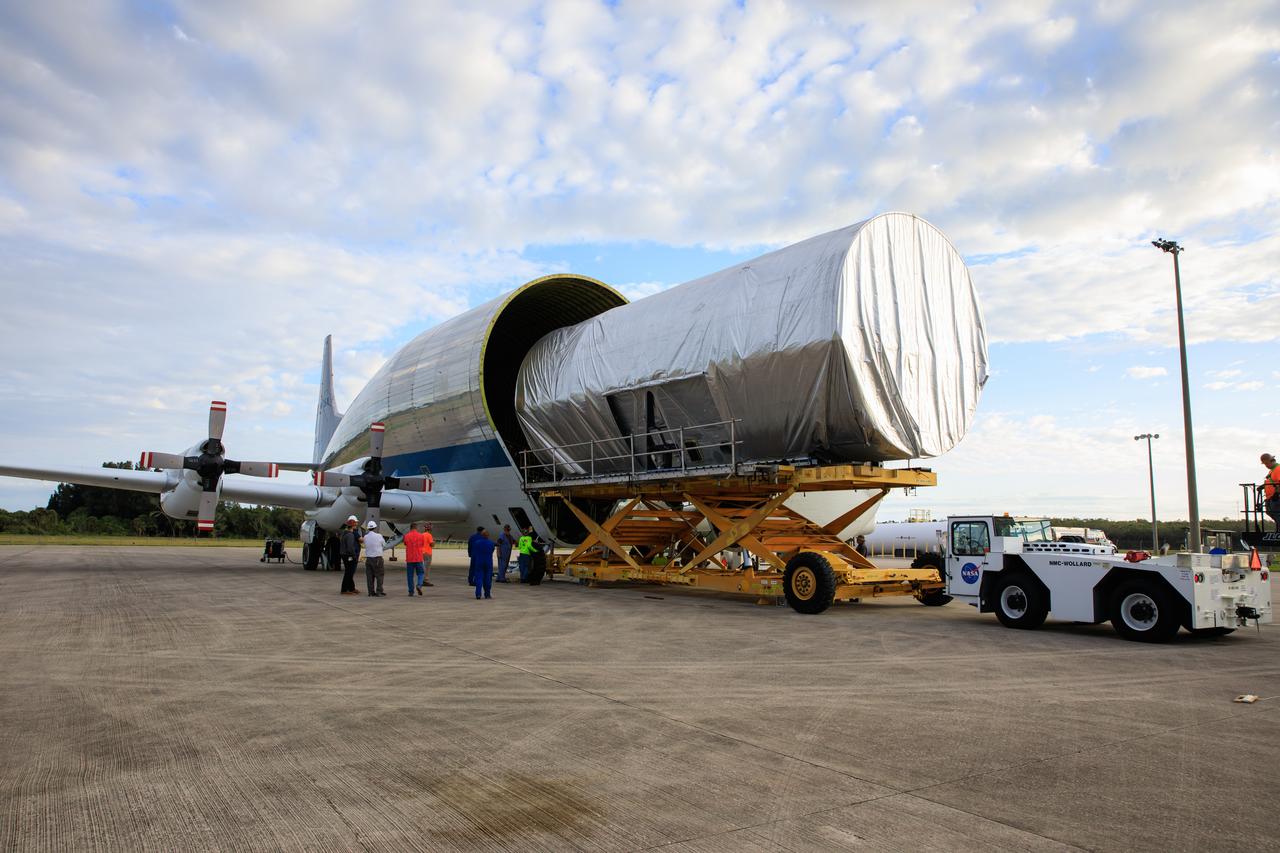
The Multi-Purpose Logistics Module (MPLM), used during the Space Shuttle Program to transfer cargo to and from the International Space Station, is loaded into NASA's Super Guppy aircraft at the Launch and Landing Facility runway at Kennedy Space Center in Florida on April 25, 2023. The MPLM will be transported to Ellington Field in Houston, where it will then be transported by road to Axiom’s facility near Ellington to be utilized to further commercialization of space. Three MPLMs were built by Thales Alenia Space Italia (TASI) for the Italian Space Agency (ASI) and named after Italian masters (Leonardo, Raffaello, and Donatello). Only two ever flew to the space station, Leonardo and Raffaello, with Axiom intending to use the Raffaello module as a future element that will attach to a segment being built by the company for addition to the station.
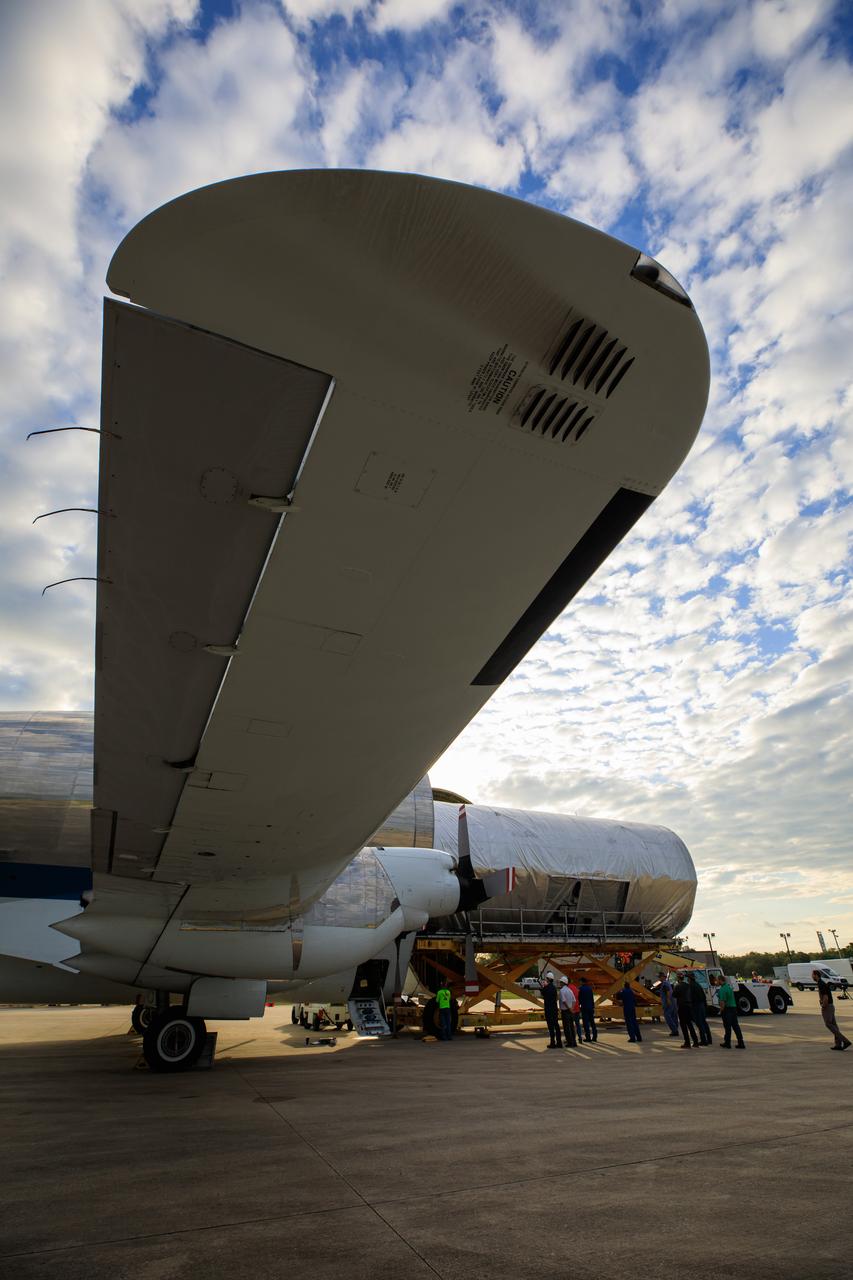
The Multi-Purpose Logistics Module (MPLM), used during the Space Shuttle Program to transfer cargo to and from the International Space Station, is loaded into NASA's Super Guppy aircraft at the Launch and Landing Facility runway at Kennedy Space Center in Florida on April 25, 2023. The MPLM will be transported to Ellington Field in Houston, where it will then be transported by road to Axiom’s facility near Ellington to be utilized to further commercialization of space. Three MPLMs were built by Thales Alenia Space Italia (TASI) for the Italian Space Agency (ASI) and named after Italian masters (Leonardo, Raffaello, and Donatello). Only two ever flew to the space station, Leonardo and Raffaello, with Axiom intending to use the Raffaello module as a future element that will attach to a segment being built by the company for addition to the station.
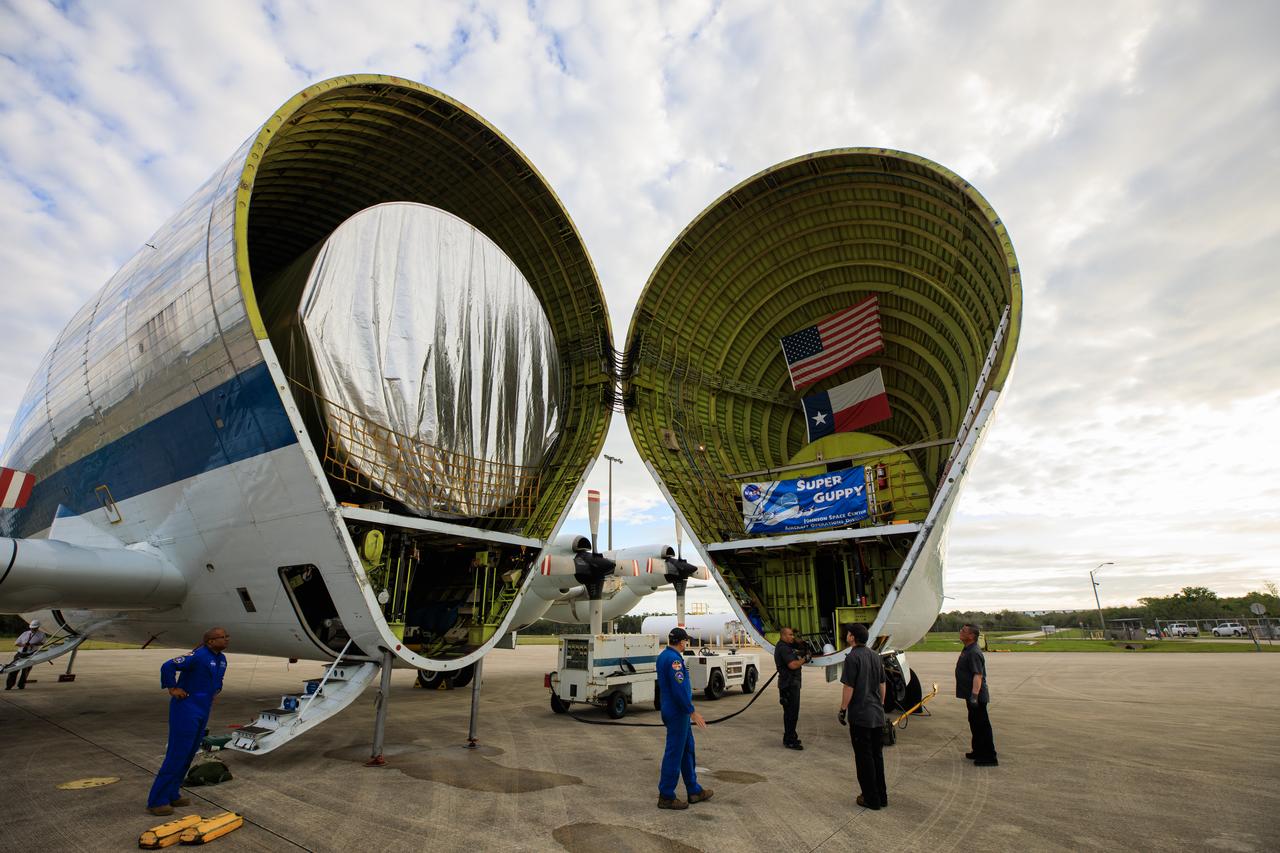
The Multi-Purpose Logistics Module (MPLM), used during the Space Shuttle Program to transfer cargo to and from the International Space Station, is loaded into NASA's Super Guppy aircraft at the Launch and Landing Facility runway at Kennedy Space Center in Florida on April 25, 2023. The MPLM will be transported to Ellington Field in Houston, where it will then be transported by road to Axiom’s facility near Ellington to be utilized to further commercialization of space. Three MPLMs were built by Thales Alenia Space Italia (TASI) for the Italian Space Agency (ASI) and named after Italian masters (Leonardo, Raffaello, and Donatello). Only two ever flew to the space station, Leonardo and Raffaello, with Axiom intending to use the Raffaello module as a future element that will attach to a segment being built by the company for addition to the station.
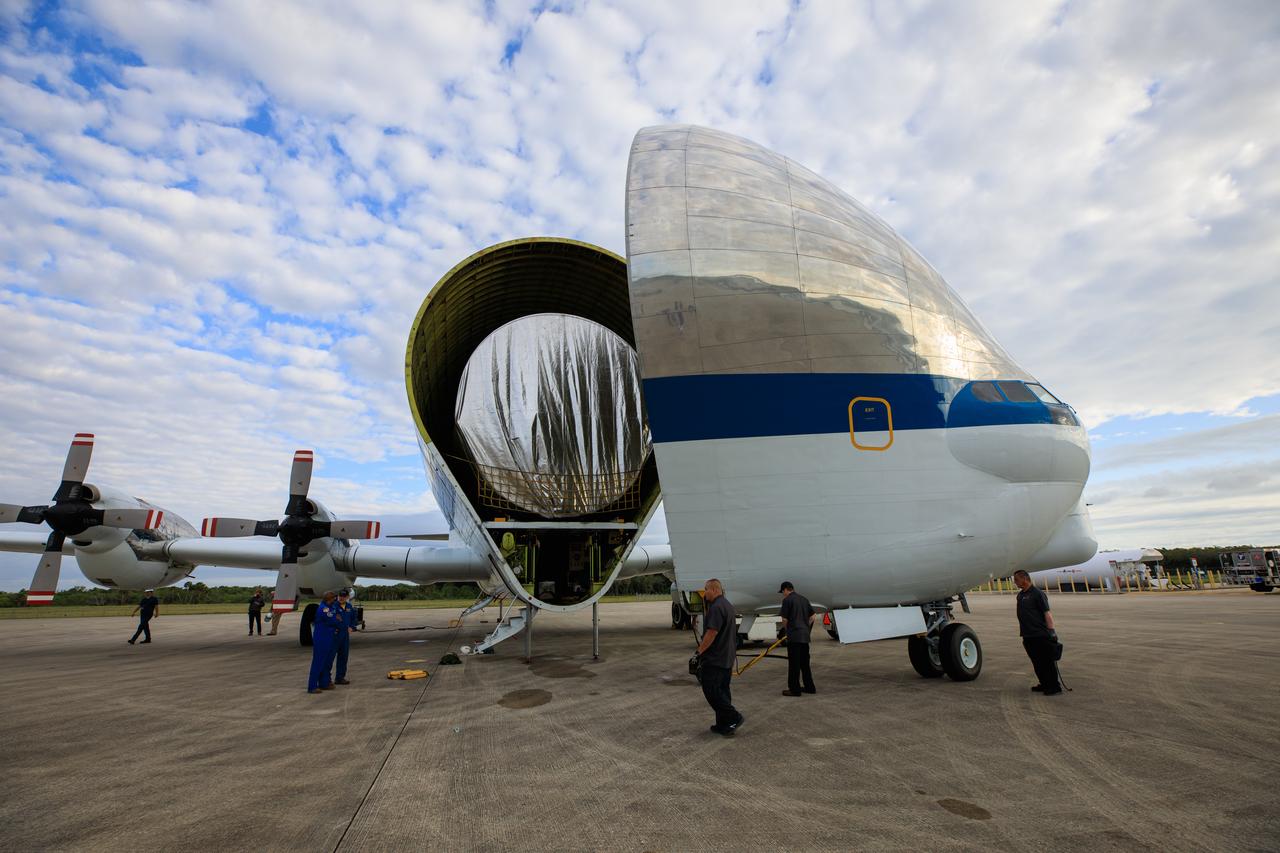
The Multi-Purpose Logistics Module (MPLM), used during the Space Shuttle Program to transfer cargo to and from the International Space Station, is loaded into NASA's Super Guppy aircraft at the Launch and Landing Facility runway at Kennedy Space Center in Florida on April 25, 2023. The MPLM will be transported to Ellington Field in Houston, where it will then be transported by road to Axiom’s facility near Ellington to be utilized to further commercialization of space. Three MPLMs were built by Thales Alenia Space Italia (TASI) for the Italian Space Agency (ASI) and named after Italian masters (Leonardo, Raffaello, and Donatello). Only two ever flew to the space station, Leonardo and Raffaello, with Axiom intending to use the Raffaello module as a future element that will attach to a segment being built by the company for addition to the station.

NASA's Super Guppy aircraft lifts off from the Launch and Landing Facility runway at Kennedy Space Center in Florida on April 25, 2023. Carrying the Multi-Purpose Logistics Module (MPLM), used during the Space Shuttle Program to transfer cargo to and from the International Space Station, the aircraft is transporting the module to Ellington Field in Houston, where it will then be transported by road to Axiom’s facility near Ellington to be utilized to further commercialization of space. Three MPLMs were built by Thales Alenia Space Italia (TASI) for the Italian Space Agency (ASI) and named after Italian masters (Leonardo, Raffaello, and Donatello). Only two ever flew to the space station, Leonardo and Raffaello, with Axiom intending to use the Raffaello module as a future element that will attach to a segment being built by the company for addition to the station.
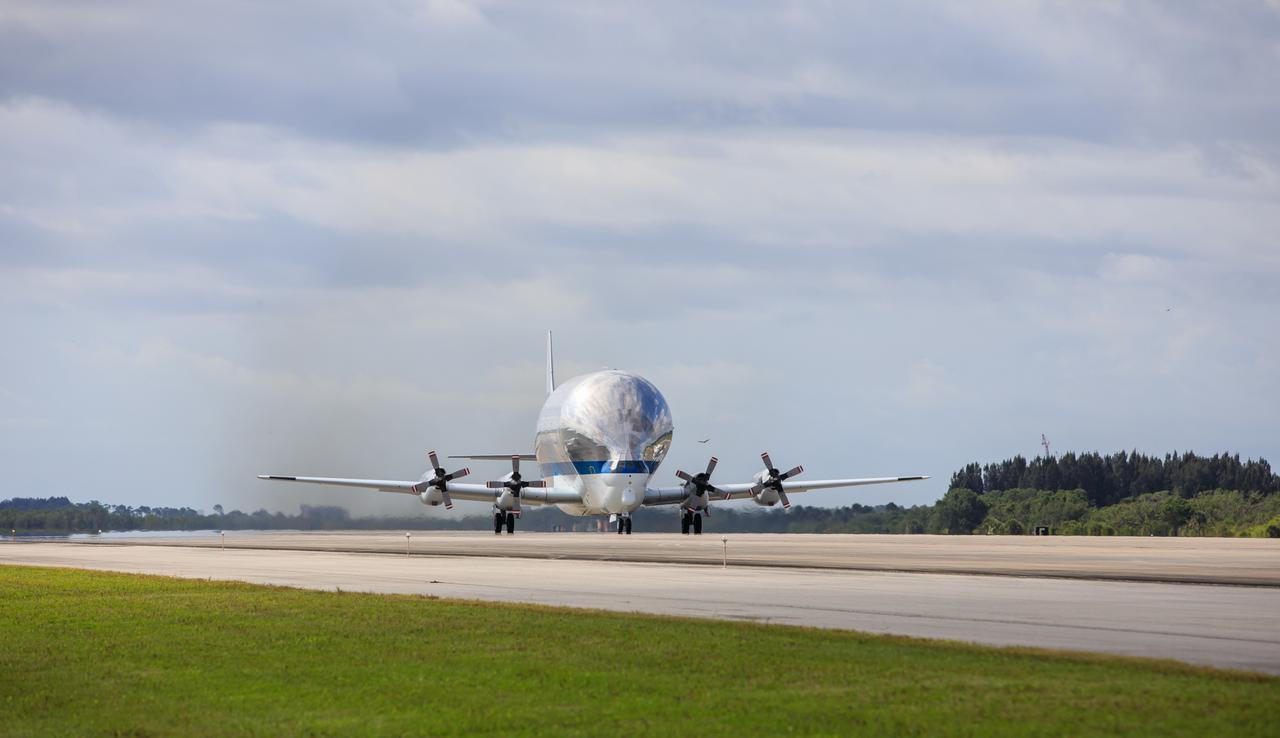
NASA's Super Guppy aircraft lifts off from the Launch and Landing Facility runway at Kennedy Space Center in Florida on April 25, 2023. Carrying the Multi-Purpose Logistics Module (MPLM), used during the Space Shuttle Program to transfer cargo to and from the International Space Station, the aircraft is transporting the module to Ellington Field in Houston, where it will then be transported by road to Axiom’s facility near Ellington to be utilized to further commercialization of space. Three MPLMs were built by Thales Alenia Space Italia (TASI) for the Italian Space Agency (ASI) and named after Italian masters (Leonardo, Raffaello, and Donatello). Only two ever flew to the space station, Leonardo and Raffaello, with Axiom intending to use the Raffaello module as a future element that will attach to a segment being built by the company for addition to the station.
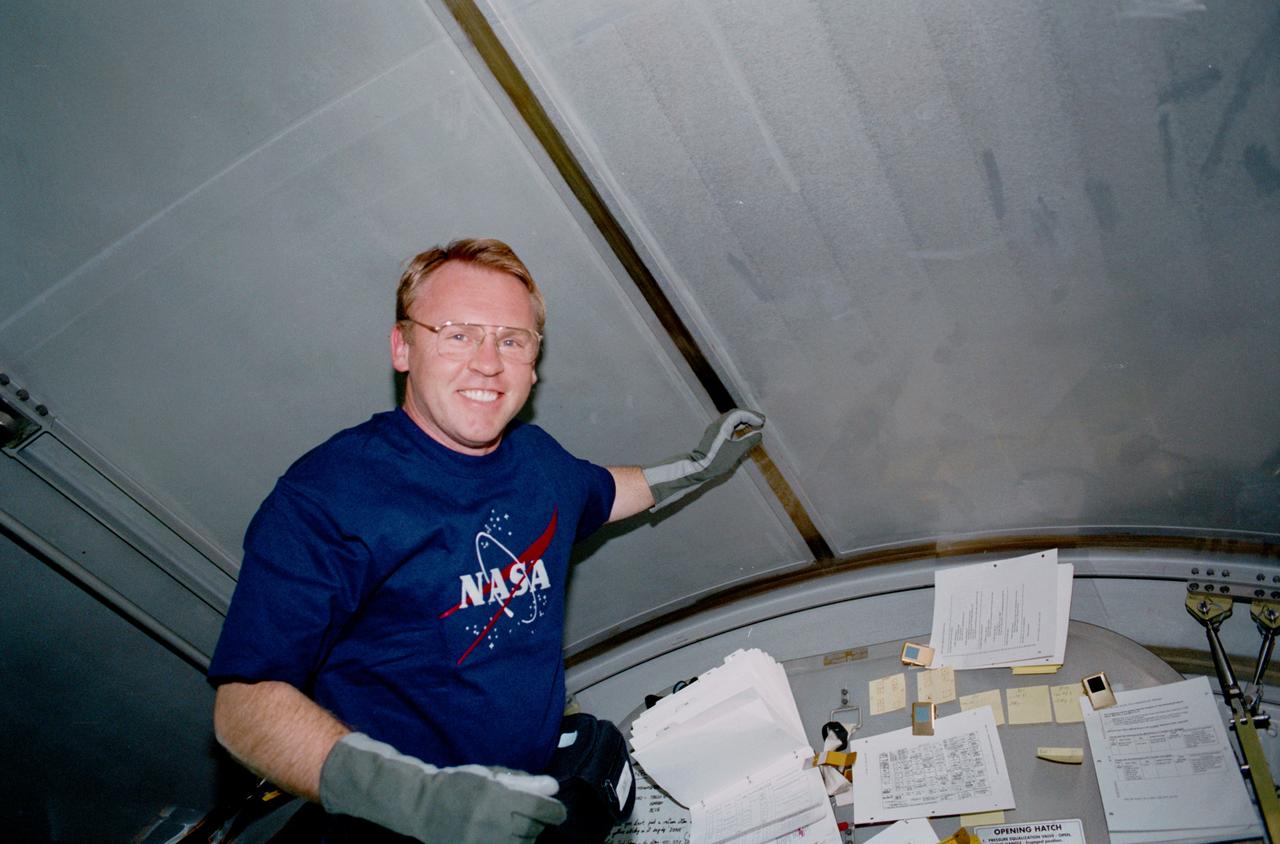
STS102-317-008 (8–21 March 2001) --- Astronaut Andrew S. W. Thomas, STS-102 mission specialist is photographed here in the Leonardo Multi-Purpose Logistics Module (MPLM) which was built by the Italian Space Agency (ASI). The MPLM is the first of three such pressurized modules that will serve as the International Space Station’s “moving vans”, carrying laboratory racks filled with equipment, experiments and supplies to and from the station aboard the space shuttle.
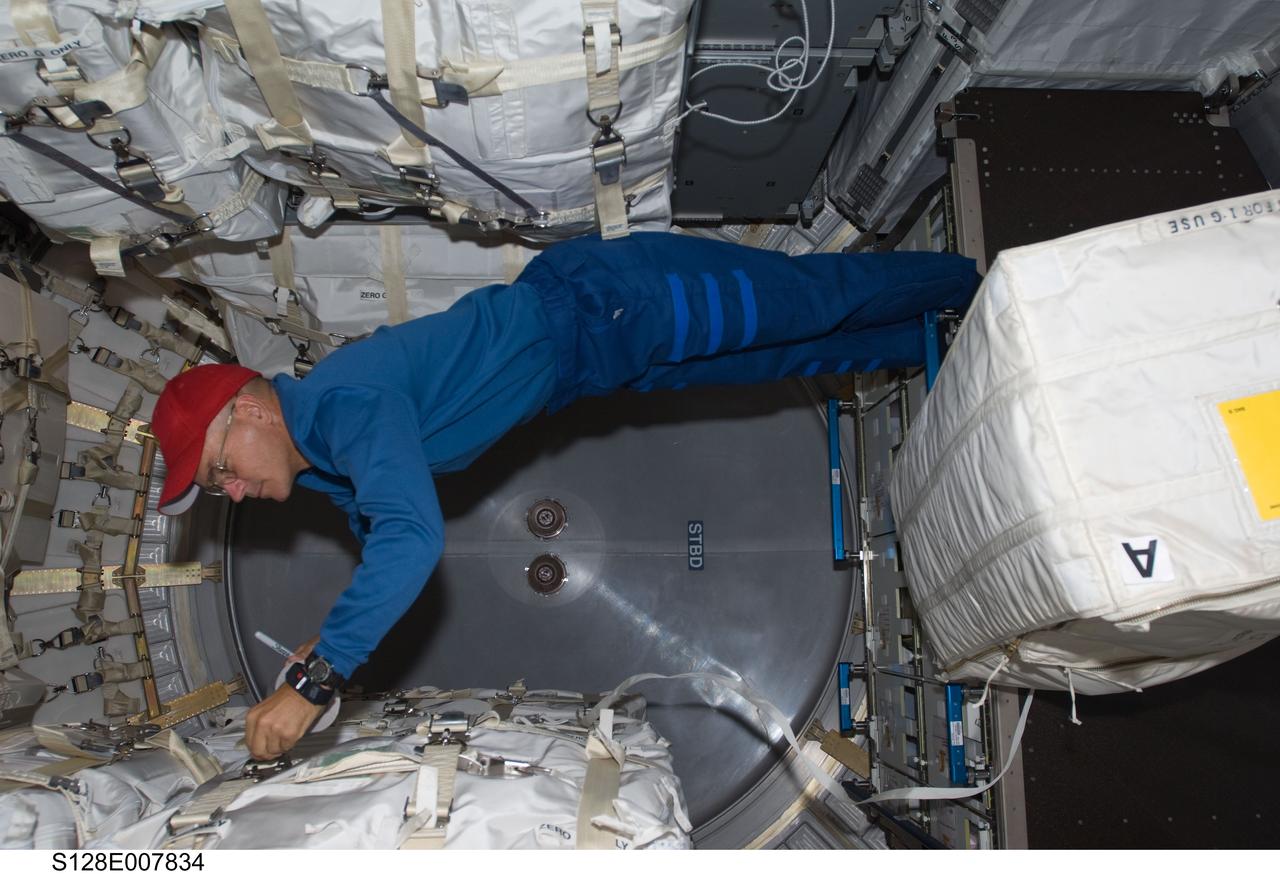
S128-E-007834 (6 Sept. 2009) --- NASA astronaut Rick Sturckow, STS-128 commander, works in the Leonardo Multi-Purpose Logistics Module (MPLM), temporarily attached to the International Space Station while Space Shuttle Discovery remains docked with the station.
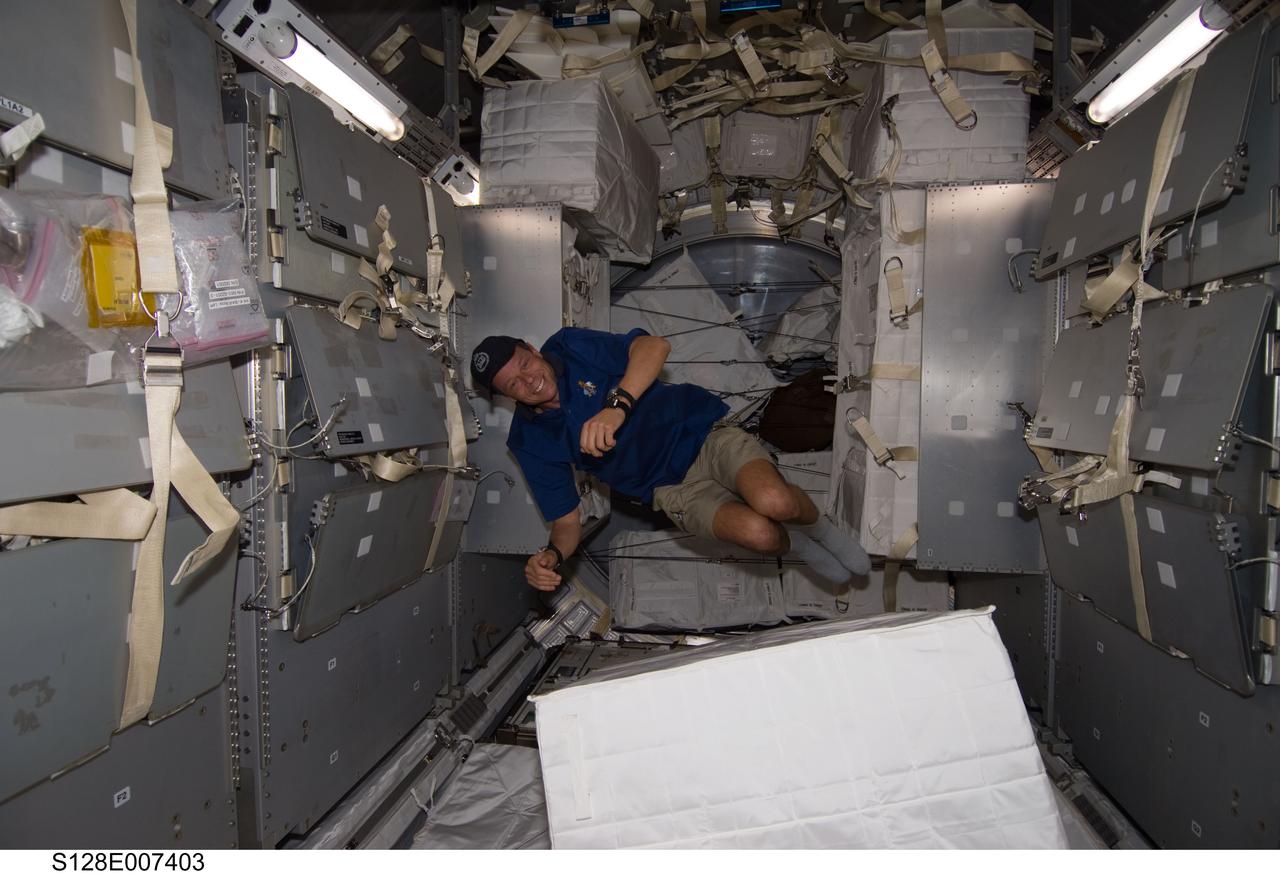
S128-E-007403 (1 Sept. 2009) --- European Space Agency astronaut Christer Fuglesang, STS-128 mission specialist, is pictured floating freely in the Leonardo Multi-Purpose Logistics Module (MPLM), temporarily attached to the International Space Station while Space Shuttle Discovery remains docked with the station.
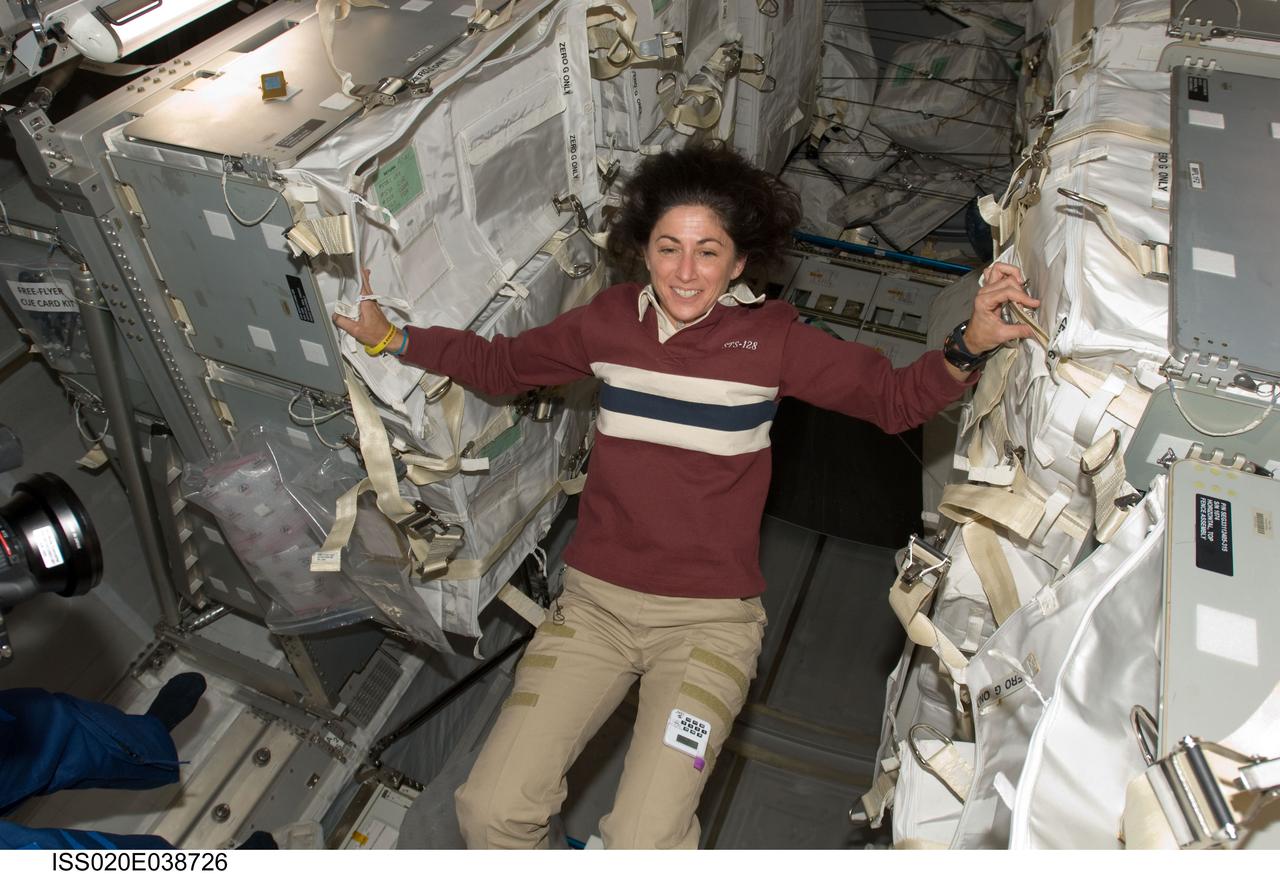
ISS020-E-038726 (5 Sept. 2009) --- NASA astronaut Nicole Stott, Expedition 20 flight engineer, is pictured in the Leonardo Multi-Purpose Logistics Module (MPLM), temporarily attached to the International Space Station while Space Shuttle Discovery (STS-128) remains docked with the station.

S131-E-008561 (10 April 2010) --- Japan Aerospace Exploration Agency (JAXA) astronaut Naoko Yamazaki, STS-131 mission specialist, works in the Leonardo Multi-Purpose Logistics Module (MPLM) linked to the International Space Station while space shuttle Discovery remains docked with the station.
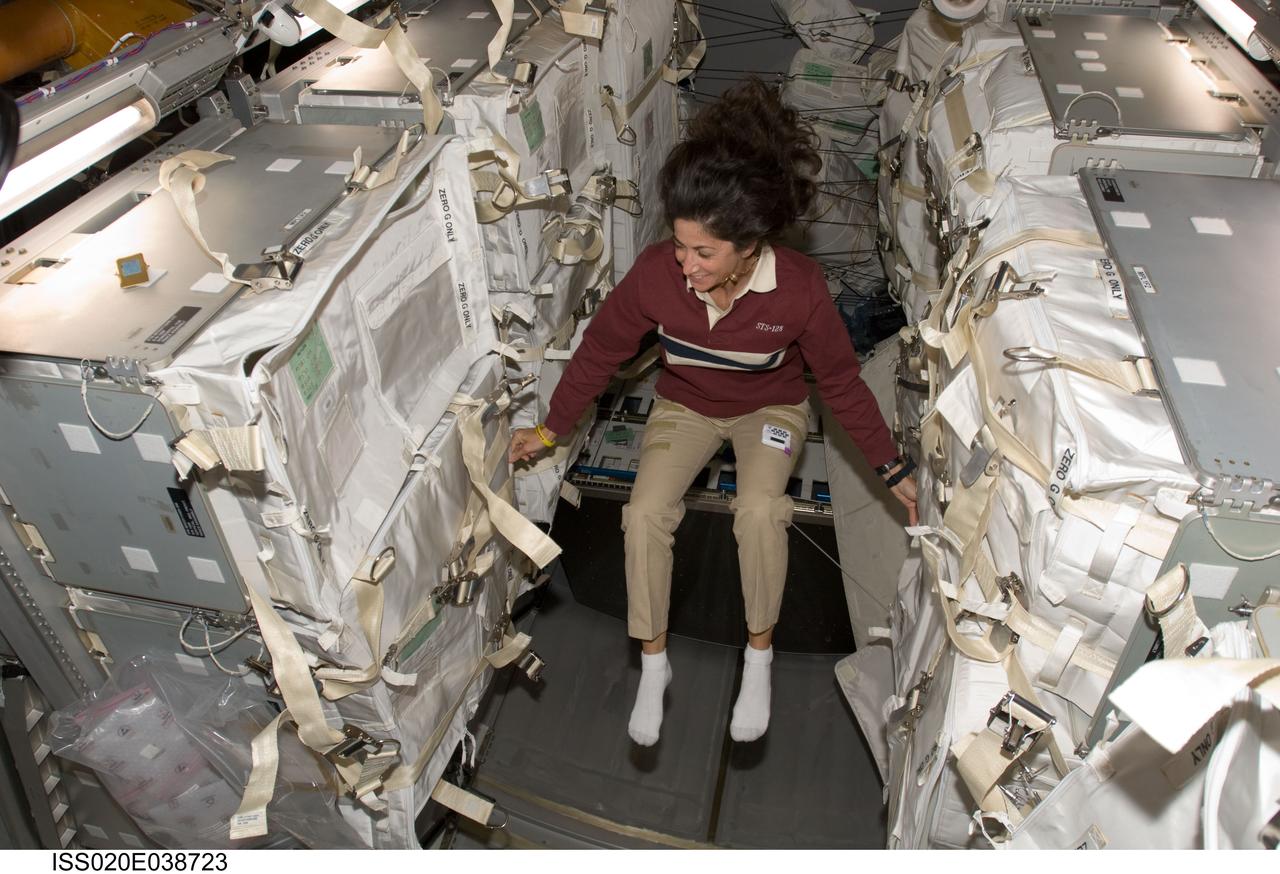
ISS020-E-038723 (5 Sept. 2009) --- NASA astronaut Nicole Stott, Expedition 20 flight engineer, is pictured in the Leonardo Multi-Purpose Logistics Module (MPLM), temporarily attached to the International Space Station while Space Shuttle Discovery (STS-128) remains docked with the station.
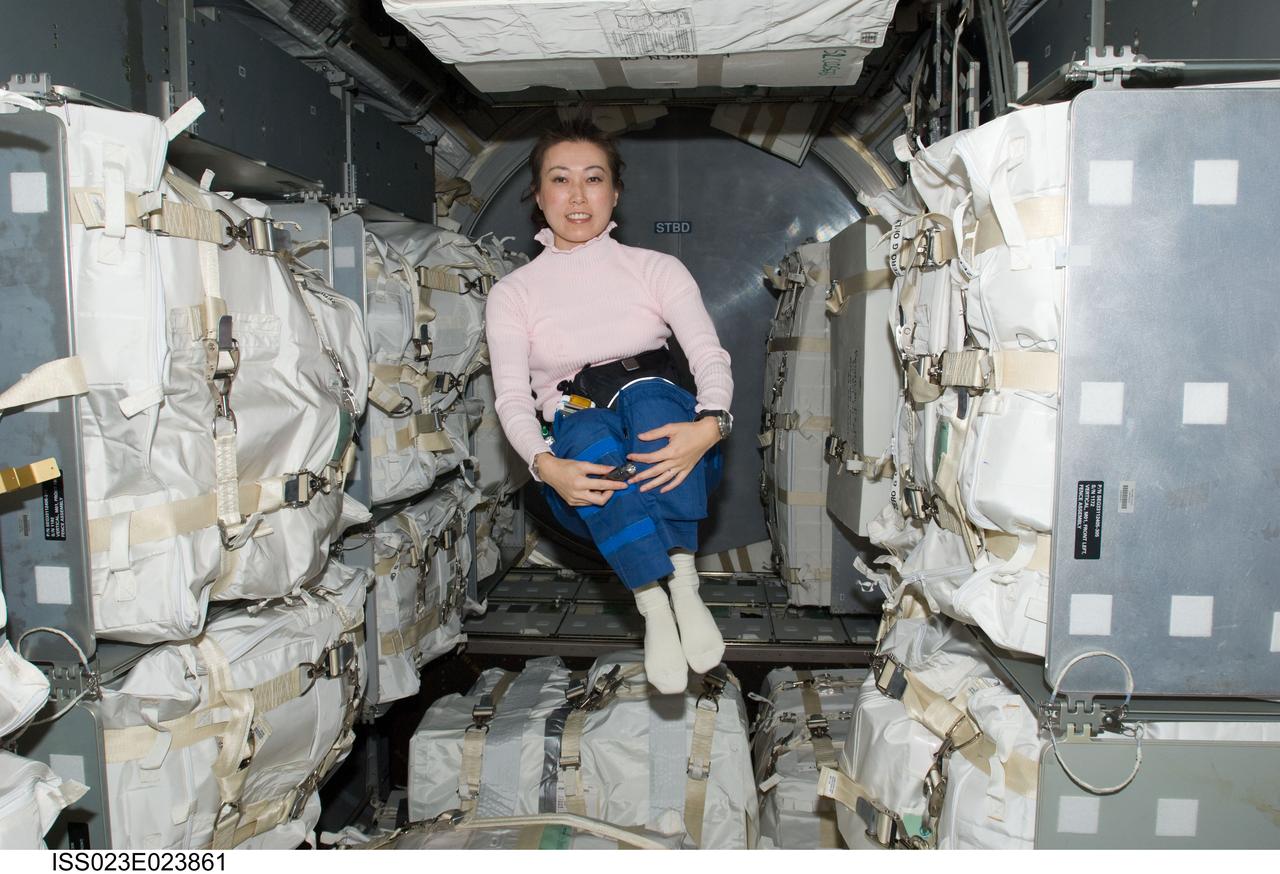
ISS023-E-023861 (15 April 2010) --- Japan Aerospace Exploration Agency astronaut Naoko Yamazaki, STS-131 mission specialist, floats freely in the Leonardo Multi-purpose Logistics Module (MPLM) linked to the International Space Station while space shuttle Discovery remains docked with the station.
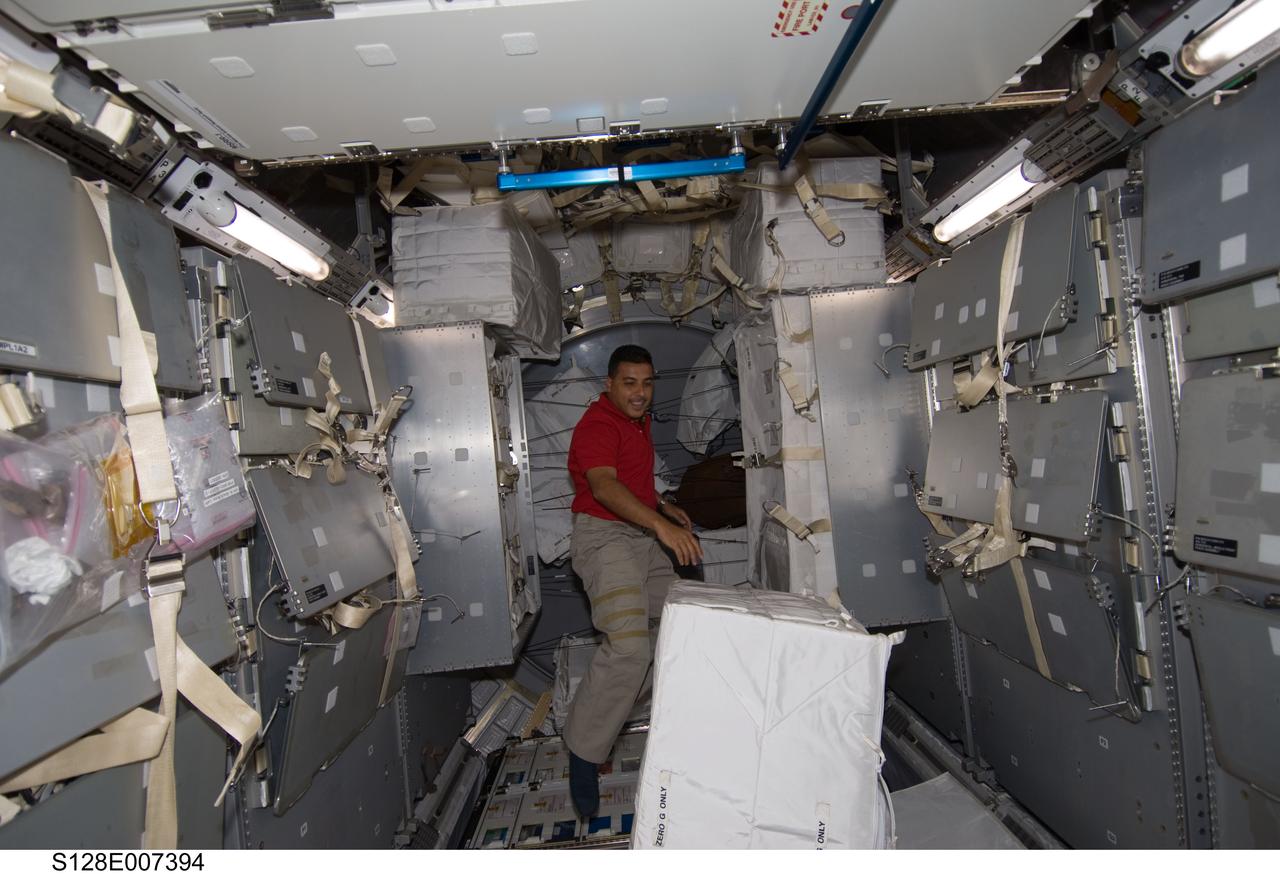
S128-E-007394 (1 Sept. 2009) --- NASA astronaut Jose Hernandez, STS-128 mission specialist, works in the Leonardo Multi-Purpose Logistics Module (MPLM), temporarily attached to the International Space Station while Space Shuttle Discovery remains docked with the station.

S131-E-008556 (10 April 2010) --- Japan Aerospace Exploration Agency (JAXA) astronaut Naoko Yamazaki, STS-131 mission specialist, floats freely in the Leonardo Multi-Purpose Logistics Module (MPLM) linked to the International Space Station while space shuttle Discovery remains docked with the station.
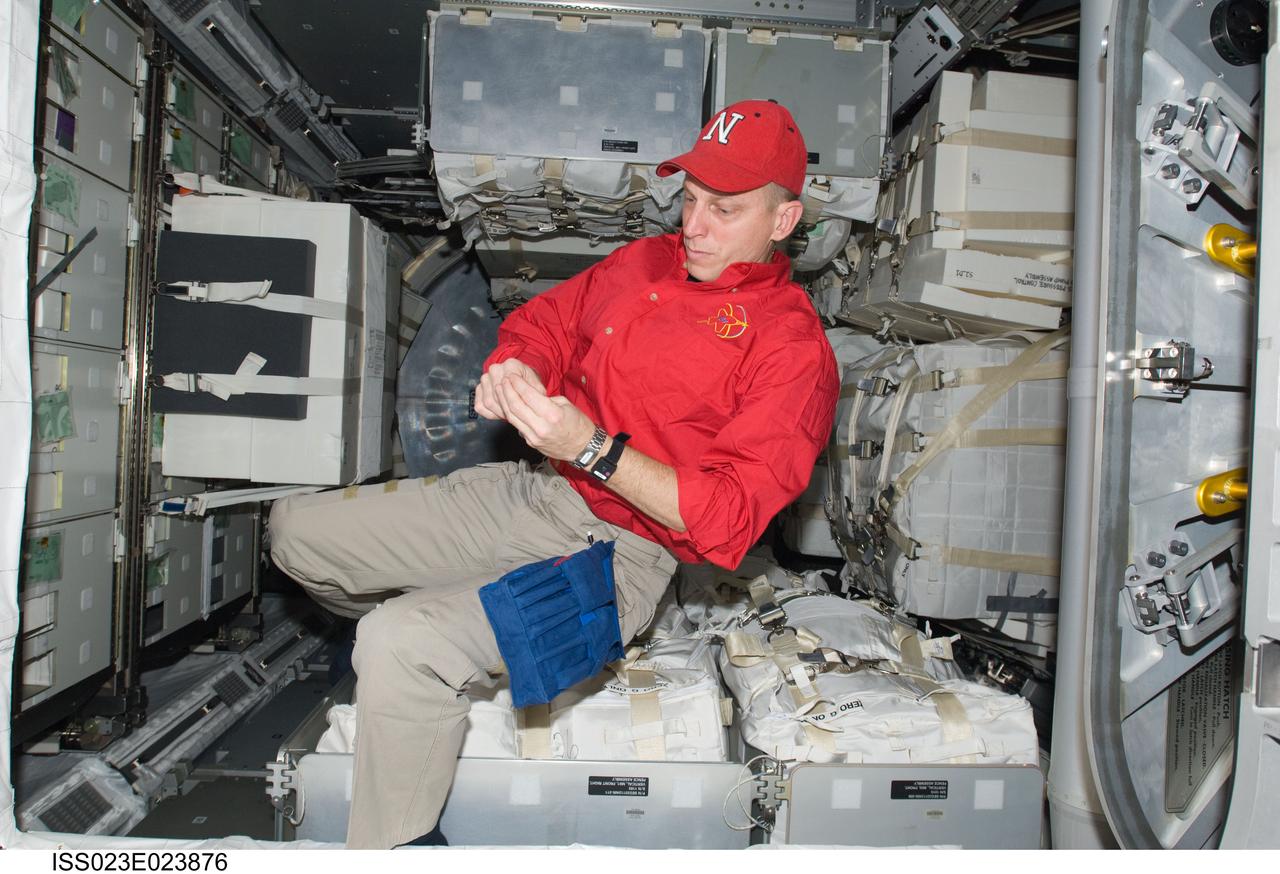
ISS023-E-023876 (15 April 2010) --- NASA astronaut Clayton Anderson, STS-131 mission specialist, works in the Leonardo Multi-purpose Logistics Module (MPLM) linked to the International Space Station while space shuttle Discovery remains docked with the station.
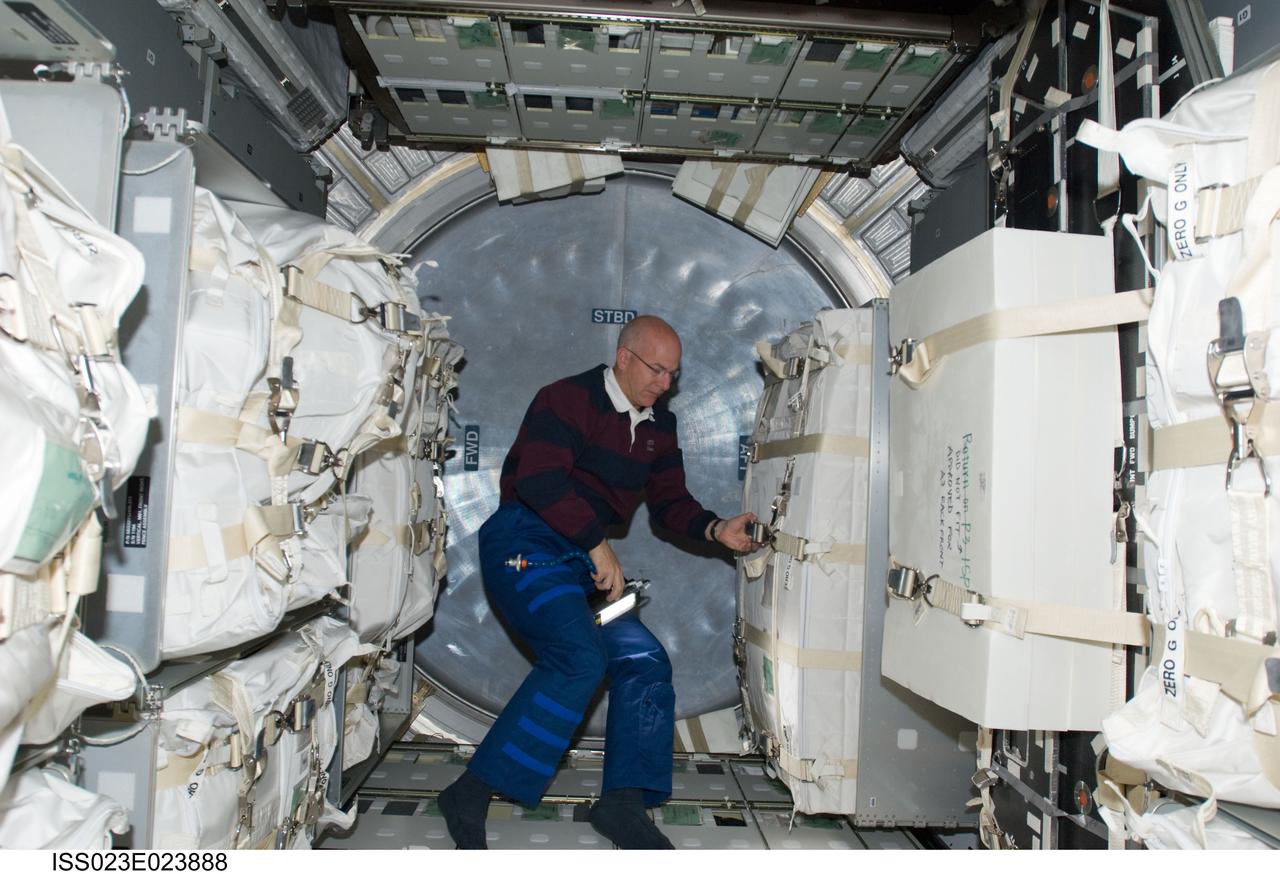
ISS023-E-023888 (15 April 2010) --- NASA astronaut Alan Poindexter, STS-131 commander, works in the Leonardo Multi-purpose Logistics Module (MPLM) linked to the International Space Station while space shuttle Discovery remains docked with the station.
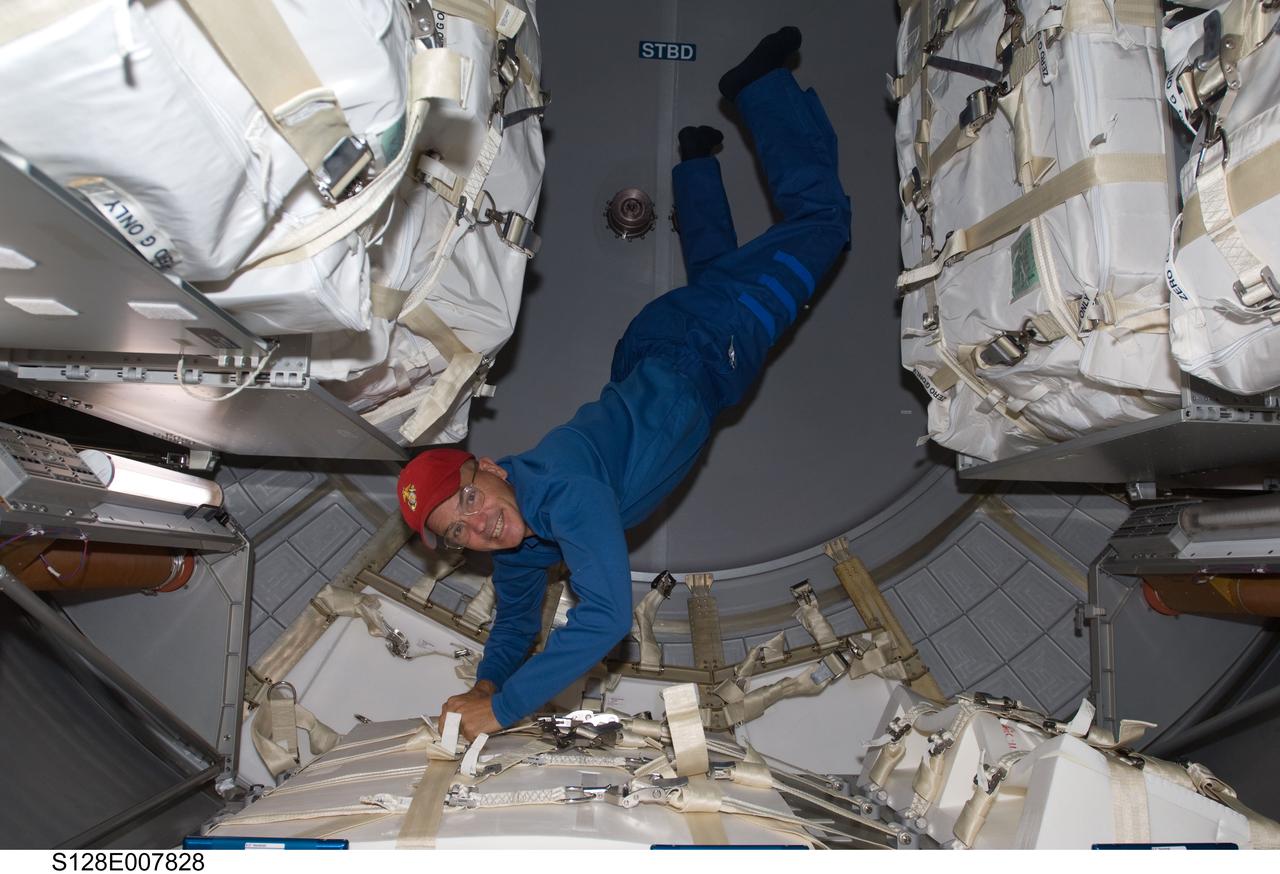
S128-E-007828 (6 Sept. 2009) --- NASA astronaut Rick Sturckow, STS-128 commander, works in the Leonardo Multi-Purpose Logistics Module (MPLM), temporarily attached to the International Space Station while Space Shuttle Discovery remains docked with the station.
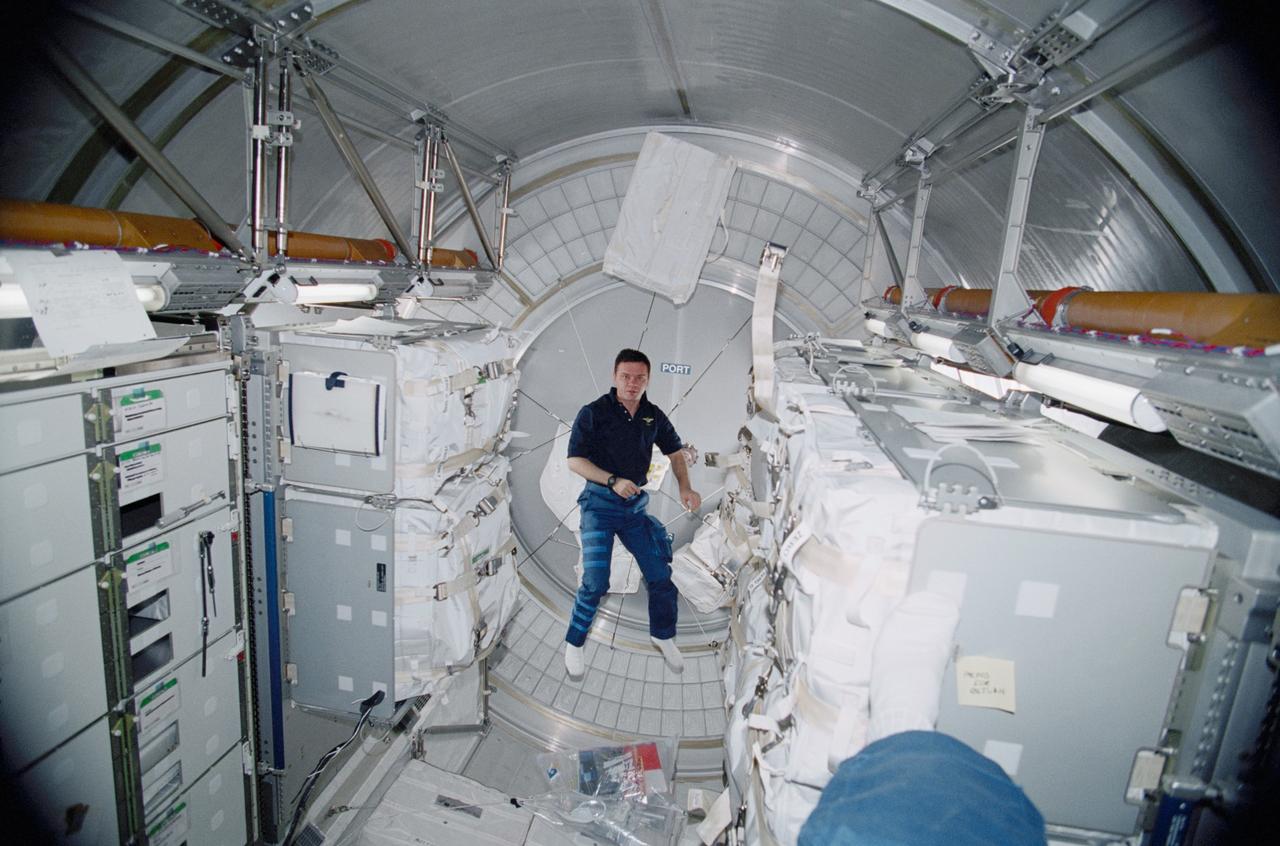
STS102-343-008 (8 - 21 March 2001) --- Cosmonaut Yuri P. Gidzenko is dwarfed by transient hardware aboard Leonardo, the Italian Space Agency-built Multipurpose Logistics Module (MPLM). Gidzenko has been aboard the International Space Station (ISS) since early November of 2000, but he will be returning to Earth with the STS-102 astronauts and the MPLM in a few days.
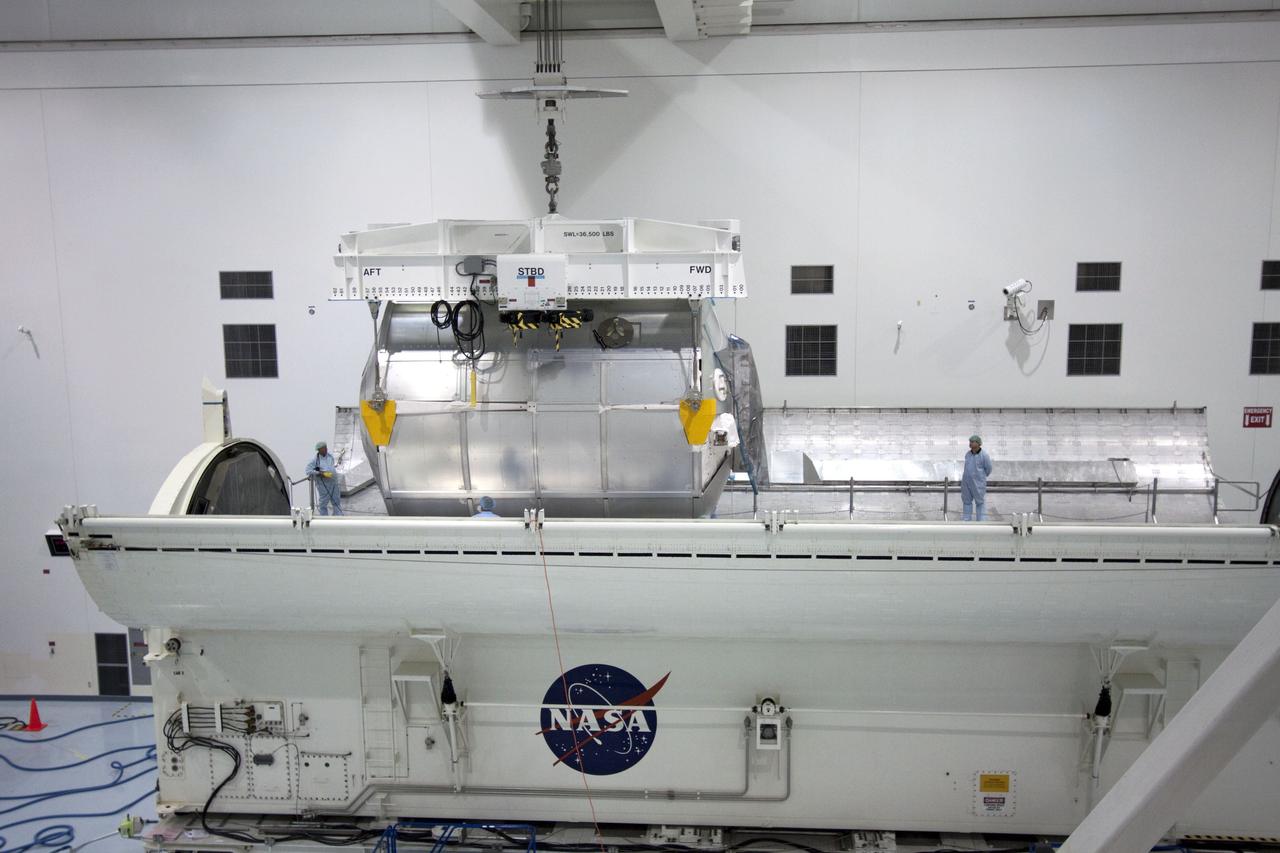
CAPE CANAVERAL, Fla. -- In the Space Station Processing Facility at NASA's Kennedy Space Center in Florida, an overhead crane lowers the Raffaello multi-purpose logistics module, or MPLM, into a payload canister. Commander Chris Ferguson, Pilot Doug Hurley and Mission Specialists Sandra Magnus and Rex Walheim are targeted to lift off on space shuttle Atlantis July 8, taking with them the MPLM packed with supplies, logistics and spare parts to the International Space Station. The STS-135 mission also will fly a system to investigate the potential for robotically refueling existing spacecraft and return a failed ammonia pump module to help NASA better understand the failure mechanism and improve pump designs for future systems. STS-135 will be the 33rd flight of Atlantis, the 37th shuttle mission to the space station, and the 135th and final mission of NASA's Space Shuttle Program. For more information, visit www.nasa.gov/mission_pages/shuttle/shuttlemissions/sts135/index.html. Photo credit: NASA/Jim Grossmann
CAPE CANAVERAL, Fla. -- In the Space Station Processing Facility at NASA's Kennedy Space Center in Florida, an overhead crane lowers the Raffaello multi-purpose logistics module, or MPLM, into a payload canister. Commander Chris Ferguson, Pilot Doug Hurley and Mission Specialists Sandra Magnus and Rex Walheim are targeted to lift off on space shuttle Atlantis July 8, taking with them the MPLM packed with supplies, logistics and spare parts to the International Space Station. The STS-135 mission also will fly a system to investigate the potential for robotically refueling existing spacecraft and return a failed ammonia pump module to help NASA better understand the failure mechanism and improve pump designs for future systems. STS-135 will be the 33rd flight of Atlantis, the 37th shuttle mission to the space station, and the 135th and final mission of NASA's Space Shuttle Program. For more information, visit www.nasa.gov/mission_pages/shuttle/shuttlemissions/sts135/index.html. Photo credit: NASA/Jim Grossmann
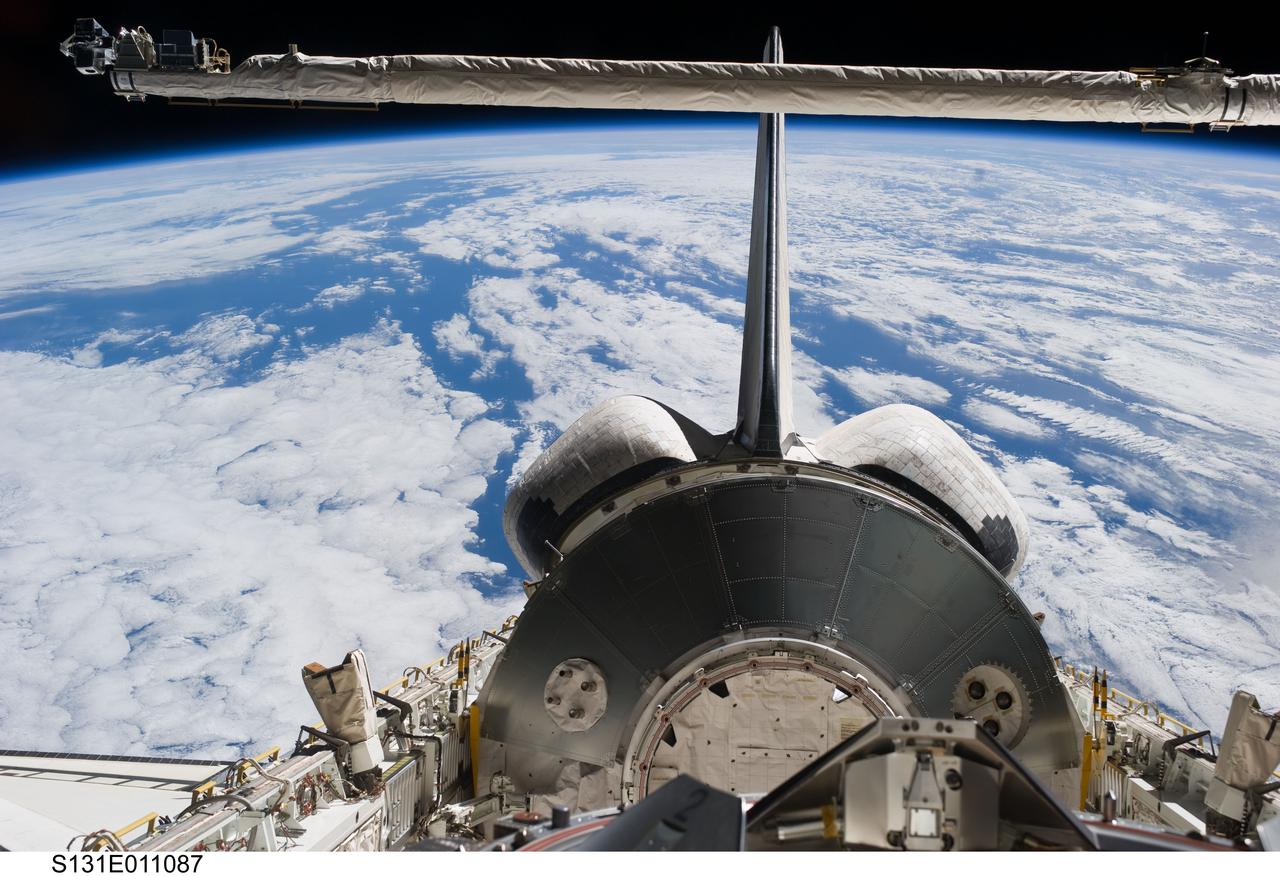
S131-E-011087 (17 April 2010) --- The Leonardo Multi-Purpose Logistics Module (MPLM) visible in space shuttle Discovery's payload bay, docking mechanism, vertical stabilizer, orbital maneuvering system (OMS) pods and Remote Manipulator System/Orbiter Boom Sensor System (RMS/OBSS) are featured in this image photographed by an STS-131 crew member from an aft flight deck window. A blue and white part of Earth provides the backdrop for the scene.

S131-E-007410 (6 April 2010) --- The Leonardo Multi-Purpose Logistics Module (MPLM) visible in space shuttle Discovery's payload bay, docking mechanism, vertical stabilizer and orbital maneuvering system (OMS) pods are featured in this image photographed by an STS-131 crew member from an aft flight deck window. Earth?s horizon and the blackness of space provide the backdrop for the scene.

S131-E-009602 (13 April 2010) --- Japan Aerospace Exploration Agency (JAXA) astronaut Naoko Yamazaki, STS-131 mission specialist, works in the Leonardo Multi-Purpose Logistics Module (MPLM) linked to the International Space Station while space shuttle Discovery remains docked with the station.
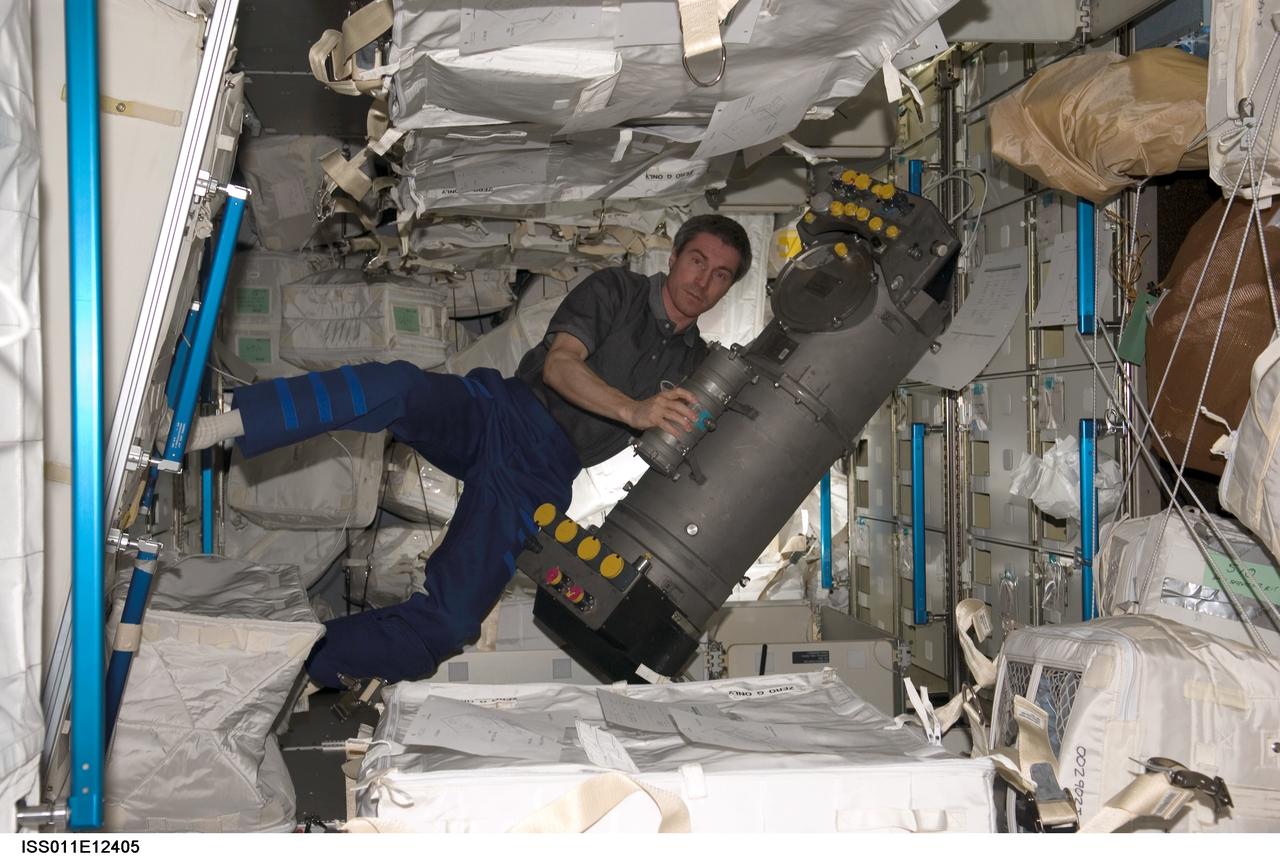
ISS011-E-12405 (31 July 2005) --- Cosmonaut Sergei K. Krikalev, Expedition 11 commander representing Russia's Federal Space Agency, holds the Elektron oxygen-generation system in the Italian-built Raffaello Multi-Purpose Logistics Module (MPLM) docked to the International Space Station during the STS-114 mission.

S131-E-008558 (10 April 2010) --- NASA astronaut Dorothy Metcalf-Lindenburger, STS-131 mission specialist, holds stowage containers with her legs while floating freely in the Leonardo Multi-Purpose Logistics Module (MPLM) linked to the International Space Station while space shuttle Discovery remains docked with the station.
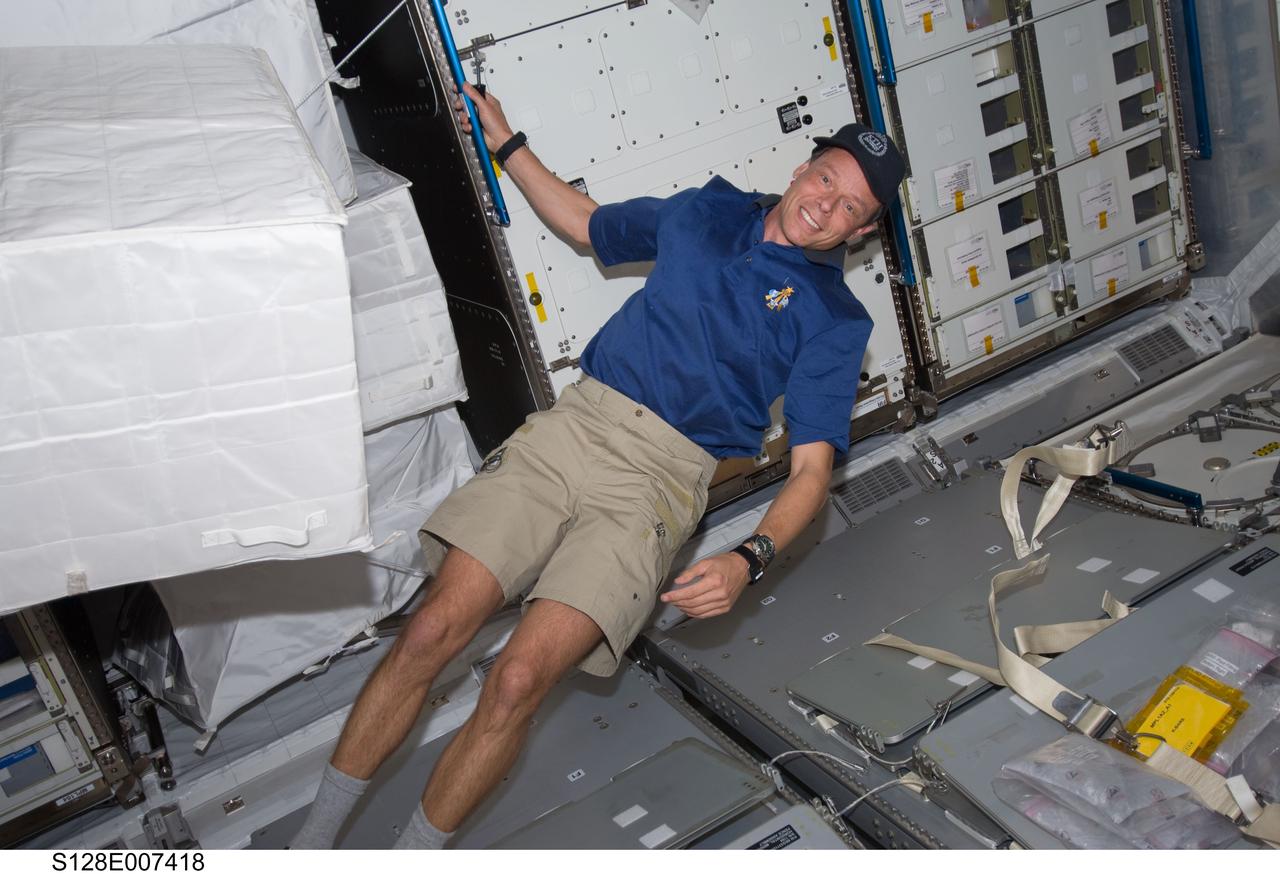
S128-E-007418 (1 Sept. 2009) --- European Space Agency astronaut Christer Fuglesang, STS-128 mission specialist, is pictured in the Leonardo Multi-Purpose Logistics Module (MPLM), temporarily attached to the International Space Station while Space Shuttle Discovery remains docked with the station.
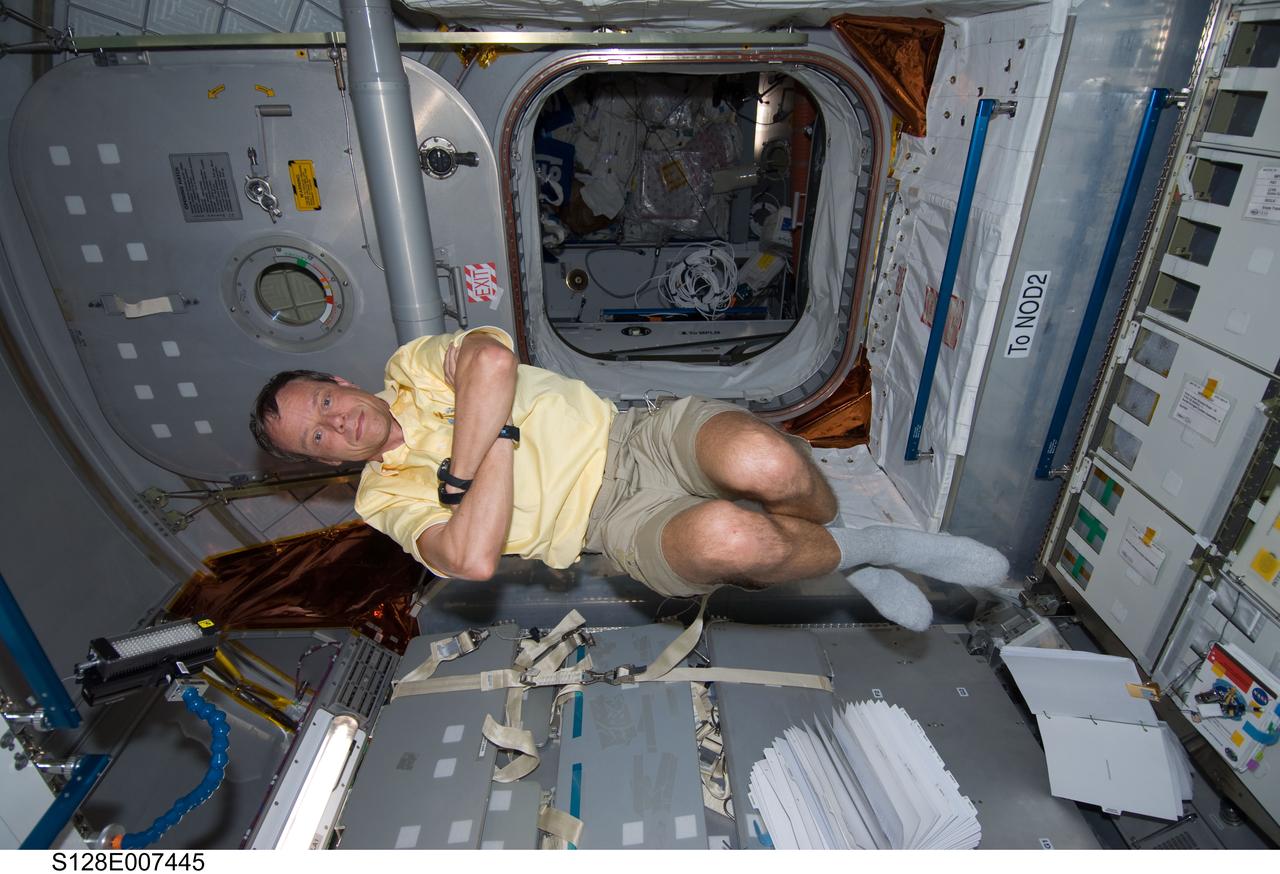
S128-E-007445 (2 Sept. 2009) --- European Space Agency astronaut Christer Fuglesang, STS-128 mission specialist, is pictured floating freely in the Leonardo Multi-Purpose Logistics Module (MPLM), temporarily attached to the International Space Station while Space Shuttle Discovery remains docked with the station.
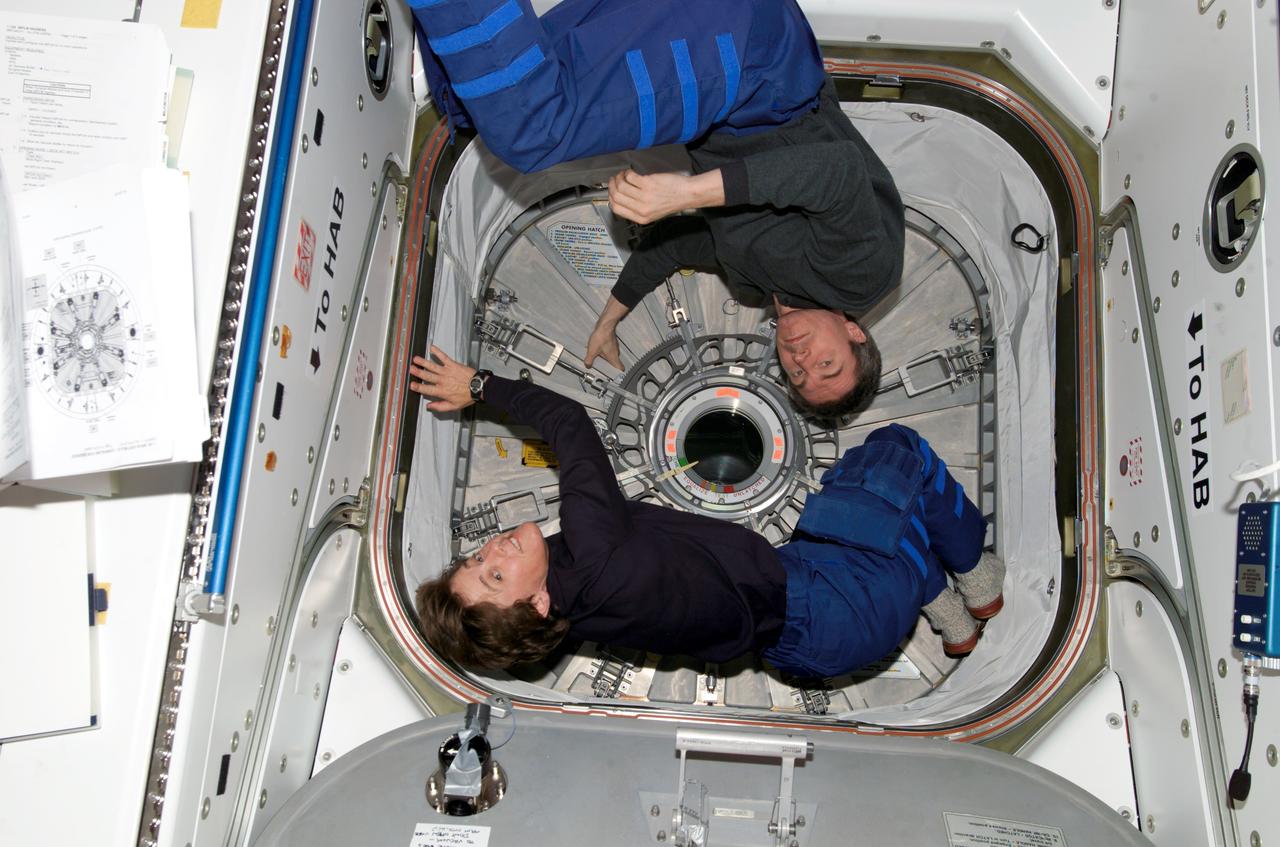
ISS011-E-11317 (29 July 2005) --- Russian Federal Space Agency cosmonaut Sergei K. Krikalev, Expedition 11 commander, and astronaut Wendy B. Lawrence, STS-114 mission specialist, prepare to unload the Raffaello Multi-Purpose Logistics Module (MPLM) docked to the international space station.
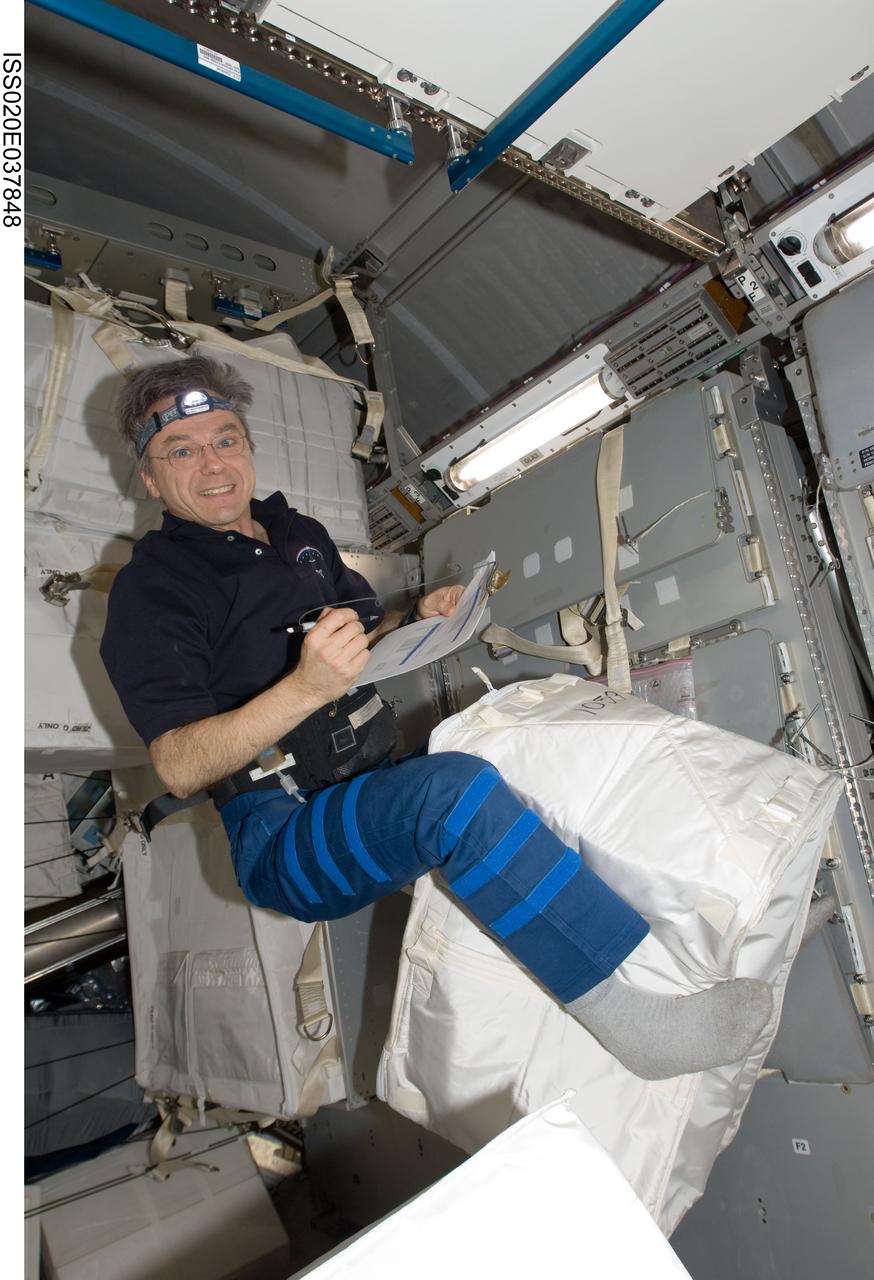
ISS020-E-037848 (2 Sept. 2009) --- Canadian Space Agency astronaut Robert Thirsk, Expedition 20 flight engineer, holds storage containers with his legs while floating freely in the Leonardo Multi-Purpose Logistics Module (MPLM) while Space Shuttle Discovery (STS-128) remains docked with the station.
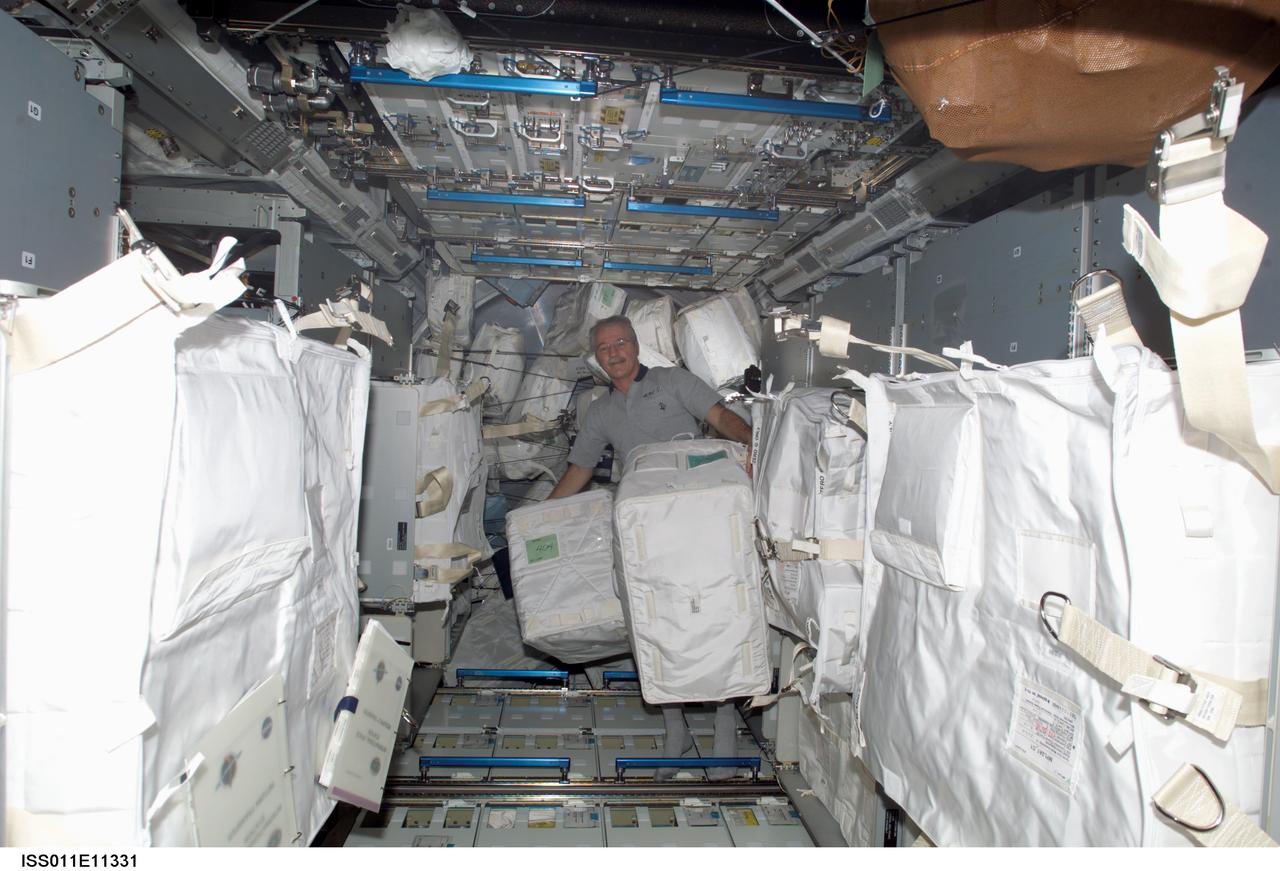
ISS011-E-11331 (30 July 2005) --- Astronaut John L. Phillips, Expedition 11 NASA space station science officer and flight engineer, retrieves supplies from the Raffaello Multi-Purpose Logistics Module (MPLM), which was brought to Earth-orbit by the seven-member STS-114 crew of the space shuttle Discovery.
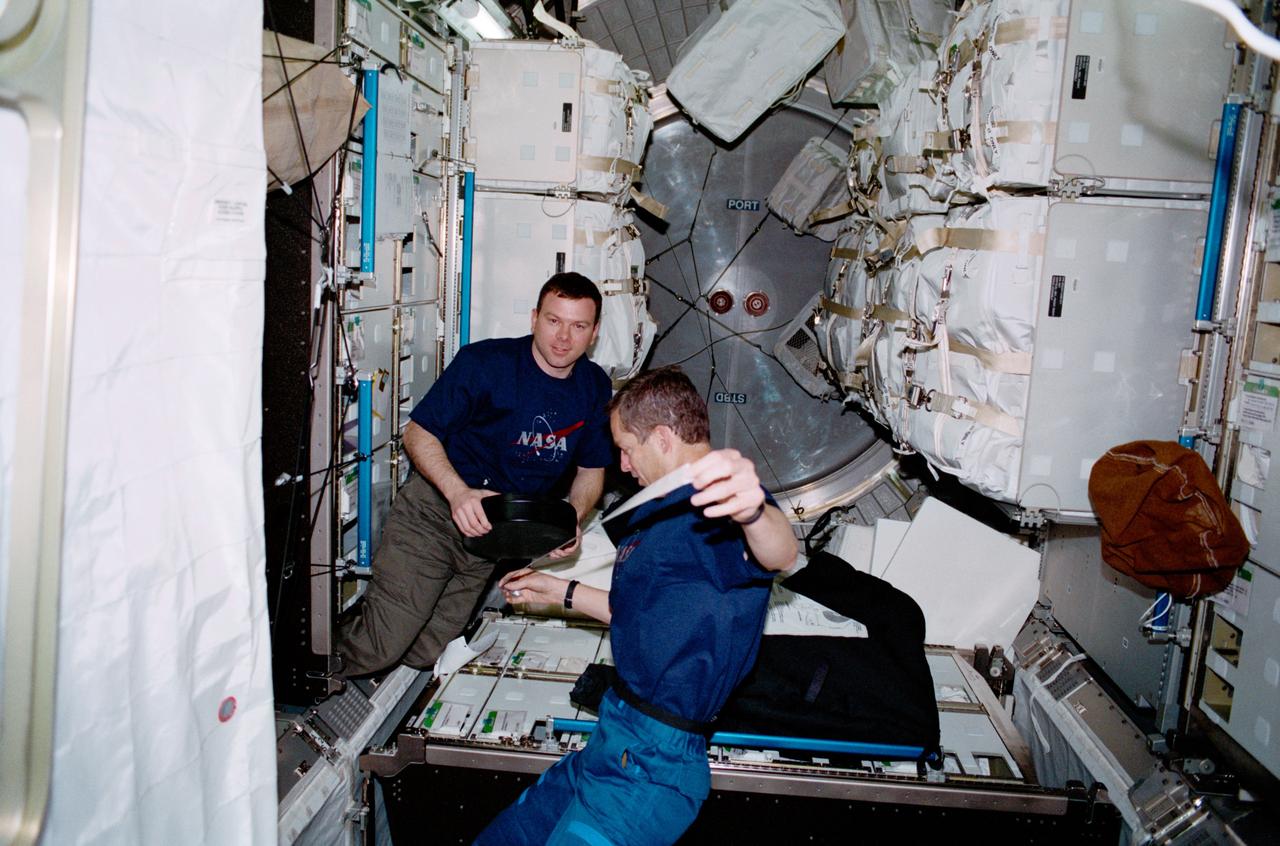
STS102-317-001 (8 - 21 March 2001) --- Astronauts James M. Kelly (left) and James D. Wetherbee, pilot and commander, respectively, for the STS-102 mission, participate in the movement of supplies inside Leonardo, the Italian Space Agency-built Multipurpose Logistics Module (MPLM).
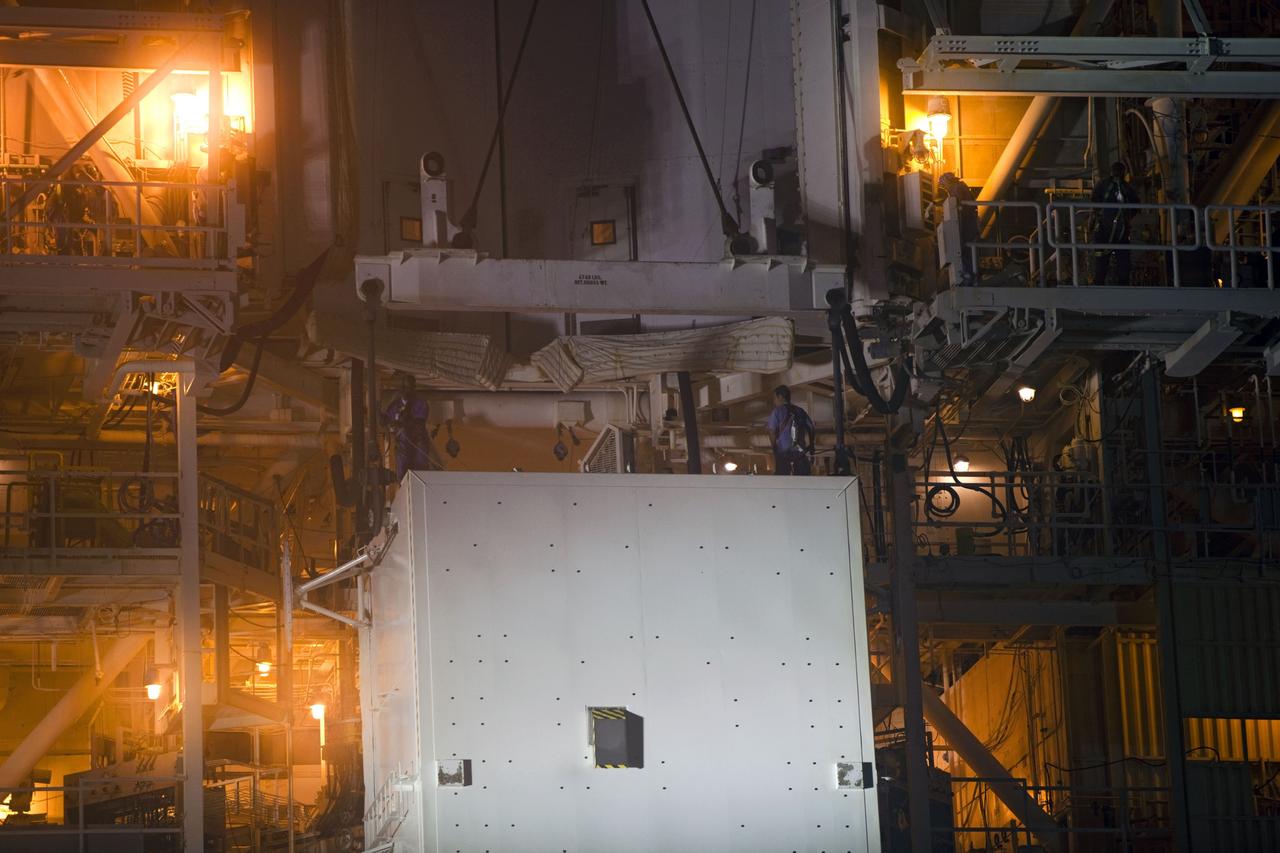
CAPE CANAVERAL, Fla. -- A canister, carrying the Raffaello multi-purpose logistics module (MPLM) for space shuttle Atlantis' STS-135 mission to the International Space Station, arrives at Launch Pad 39A at NASA's Kennedy Space Center in Florida. Workers attach an overhead crane to the canister carrying the Raffaello multi-purpose logistics module (MPLM) which will be lifted to the payload changeout room. The payload ground-handling mechanism then will be used to transfer Raffaello out of the canister into Atlantis' payload bay. Next, the rotating service structure that protects the shuttle from the elements and provides access will be rotated back into place. Commander Chris Ferguson, Pilot Doug Hurley and Mission Specialists Sandra Magnus and Rex Walheim are targeted to lift off on Atlantis July 8, taking with them the MPLM packed with supplies, logistics and spare parts to the station. The STS-135 mission also will fly a system to investigate the potential for robotically refueling existing satellites and return a failed ammonia pump module to help NASA better understand the failure mechanism and improve pump designs for future systems. STS-135 will be the 33rd flight of Atlantis, the 37th shuttle mission to the space station, and the 135th and final mission of NASA's Space Shuttle Program. For more information visit, www.nasa.gov/mission_pages/shuttle/shuttlemissions/sts135/index.html. Photo credit: NASA/Dimitri Gerondidakis
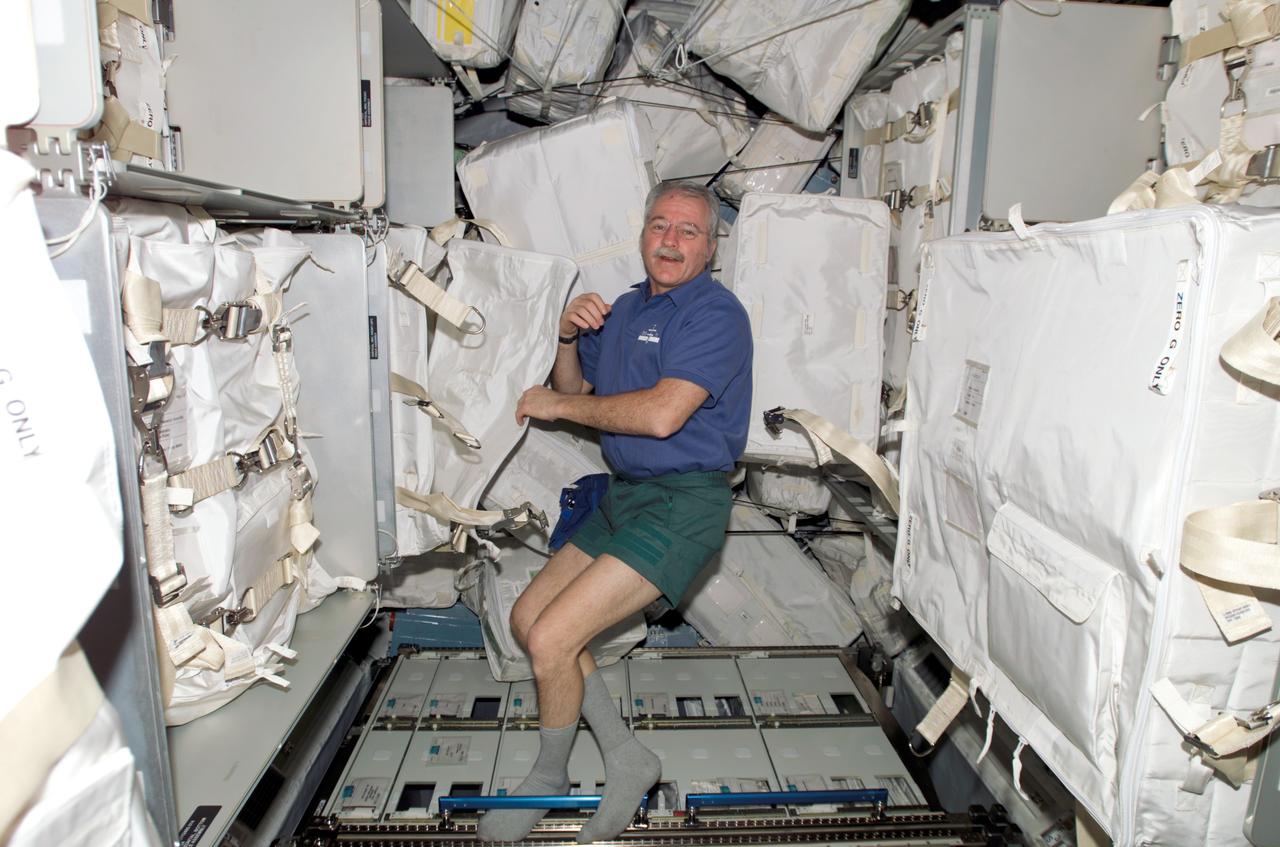
ISS011-E-11364 (31 July 2005) --- Astronaut John L. Phillips, Expedition 11 NASA Space Station science officer and flight engineer, participates in the movement of supplies and equipment inside Raffaello, the Italian Space Agency-built Multipurpose Logistics Module (MPLM) to the international space station.
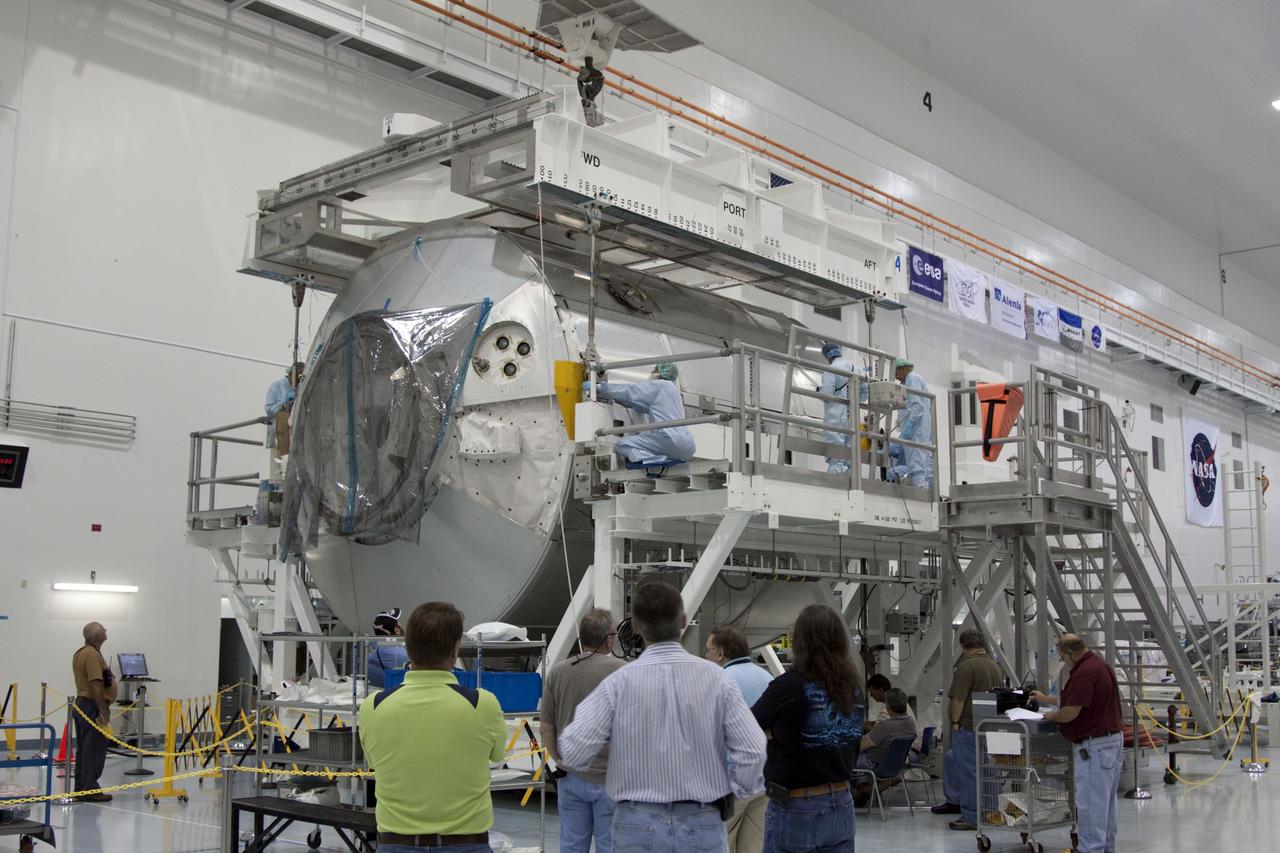
CAPE CANAVERAL, Fla. -- In the Space Station Processing Facility at NASA's Kennedy Space Center in Florida, technicians make a final check of the Raffaello multi-purpose logistics module, or MPLM, before it is moved into a payload canister. Commander Chris Ferguson, Pilot Doug Hurley and Mission Specialists Sandra Magnus and Rex Walheim are targeted to lift off on space shuttle Atlantis July 8, taking with them the MPLM packed with supplies, logistics and spare parts to the International Space Station. The STS-135 mission also will fly a system to investigate the potential for robotically refueling existing spacecraft and return a failed ammonia pump module to help NASA better understand the failure mechanism and improve pump designs for future systems. STS-135 will be the 33rd flight of Atlantis, the 37th shuttle mission to the space station, and the 135th and final mission of NASA's Space Shuttle Program. For more information, visit www.nasa.gov/mission_pages/shuttle/shuttlemissions/sts135/index.html. Photo credit: NASA/Jim Grossmann
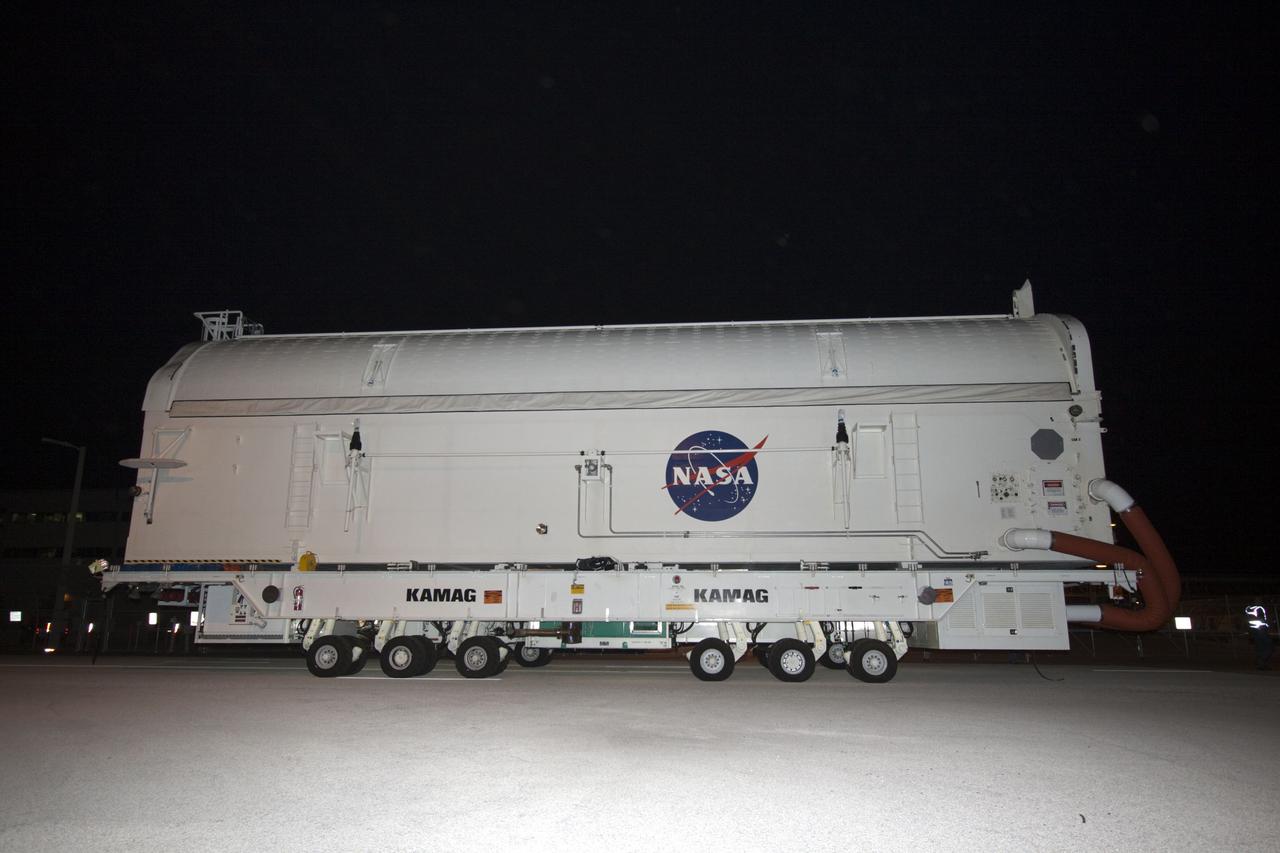
CAPE CANAVERAL, Fla. -- Workers move the payload canister, atop its transporter with the Raffaello multi-purpose logistics module, or MPLM, secured inside, from the Space Station Processing Facility at NASA's Kennedy Space Center in Florida to the Canister Rotation Facility. Commander Chris Ferguson, Pilot Doug Hurley and Mission Specialists Sandra Magnus and Rex Walheim are targeted to lift off on space shuttle Atlantis July 8, taking with them the MPLM packed with supplies, logistics and spare parts to the International Space Station. The STS-135 mission also will fly a system to investigate the potential for robotically refueling existing spacecraft and return a failed ammonia pump module to help NASA better understand the failure mechanism and improve pump designs for future systems. STS-135 will be the 33rd flight of Atlantis, the 37th shuttle mission to the space station, and the 135th and final mission of NASA's Space Shuttle Program. For more information, visit www.nasa.gov/mission_pages/shuttle/shuttlemissions/sts135/index.html. Photo credit: NASA/Jim Grossmann
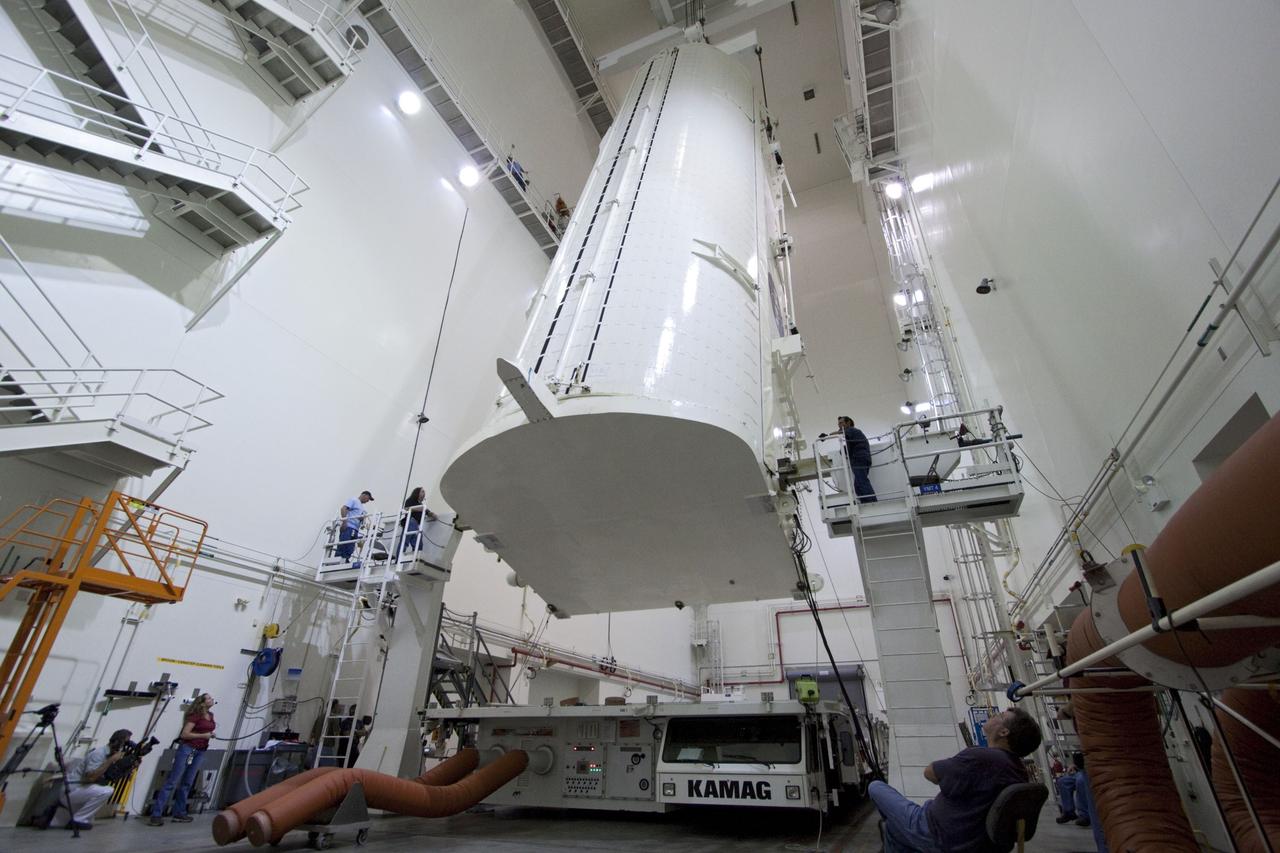
CAPE CANAVERAL, Fla. -- Workers monitor the progress of a canister, carrying the Raffaello multi-purpose logistics module, or MPLM, for the STS-135 mission, as it is rotated from a horizontal to vertical position in the Canister Rotation Facility at NASA's Kennedy Space Center in Florida. Commander Chris Ferguson, Pilot Doug Hurley and Mission Specialists Sandra Magnus and Rex Walheim are targeted to lift off on space shuttle Atlantis July 8, taking with them the MPLM packed with supplies, logistics and spare parts to the International Space Station. The STS-135 mission also will fly a system to investigate the potential for robotically refueling existing spacecraft and return a failed ammonia pump module to help NASA better understand the failure mechanism and improve pump designs for future systems. STS-135 will be the 33rd flight of Atlantis, the 37th shuttle mission to the space station, and the 135th and final mission of NASA's Space Shuttle Program. For more information, visit www.nasa.gov/mission_pages/shuttle/shuttlemissions/sts135/index.html. Photo credit: NASA/Jack Pfaller
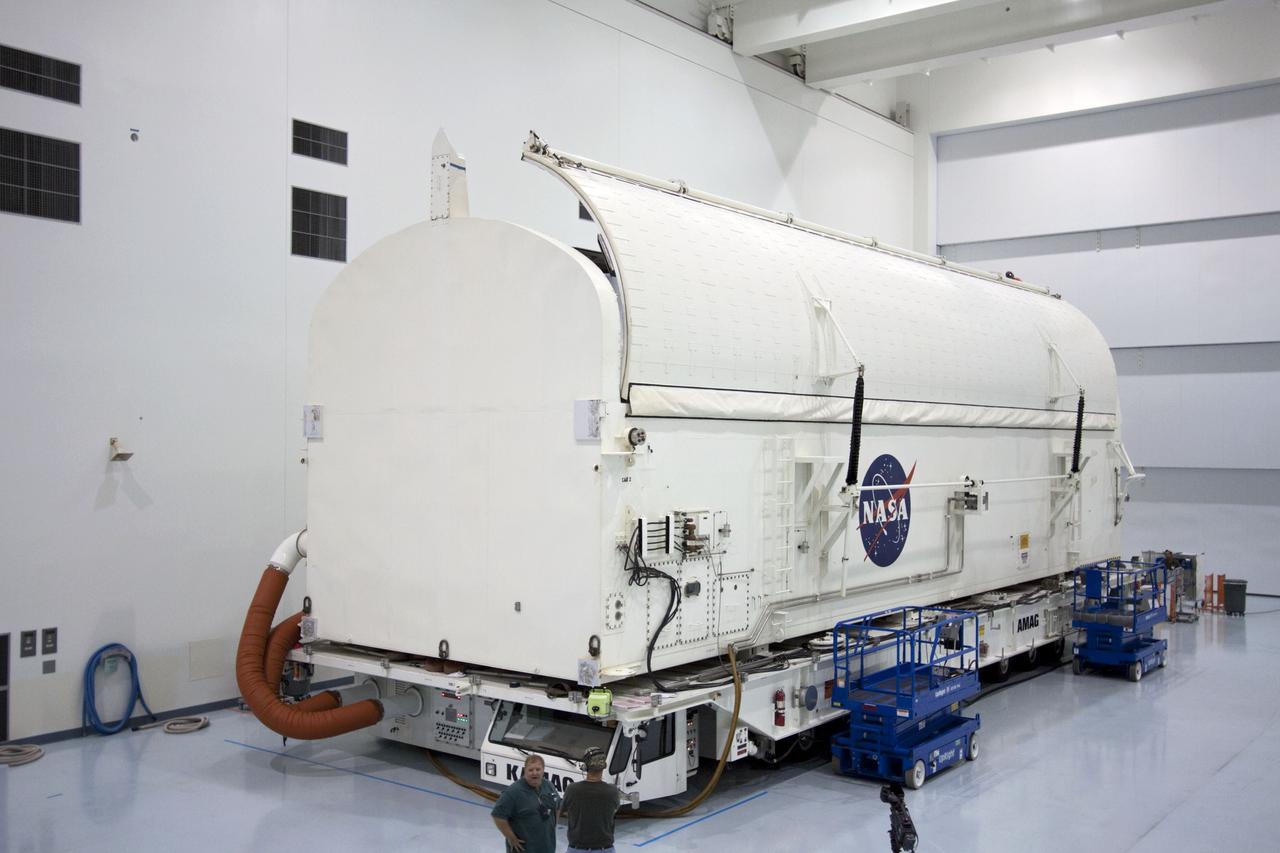
CAPE CANAVERAL, Fla. -- In the Space Station Processing Facility at NASA's Kennedy Space Center in Florida, the clamshell doors on the canister atop its transporter have closed around the Raffaello multi-purpose logistics module, or MPLM, secured inside. Commander Chris Ferguson, Pilot Doug Hurley and Mission Specialists Sandra Magnus and Rex Walheim are targeted to lift off on space shuttle Atlantis July 8, taking with them the MPLM packed with supplies, logistics and spare parts to the International Space Station. The STS-135 mission also will fly a system to investigate the potential for robotically refueling existing spacecraft and return a failed ammonia pump module to help NASA better understand the failure mechanism and improve pump designs for future systems. STS-135 will be the 33rd flight of Atlantis, the 37th shuttle mission to the space station, and the 135th and final mission of NASA's Space Shuttle Program. For more information, visit www.nasa.gov/mission_pages/shuttle/shuttlemissions/sts135/index.html. Photo credit: NASA/Jim Grossmann
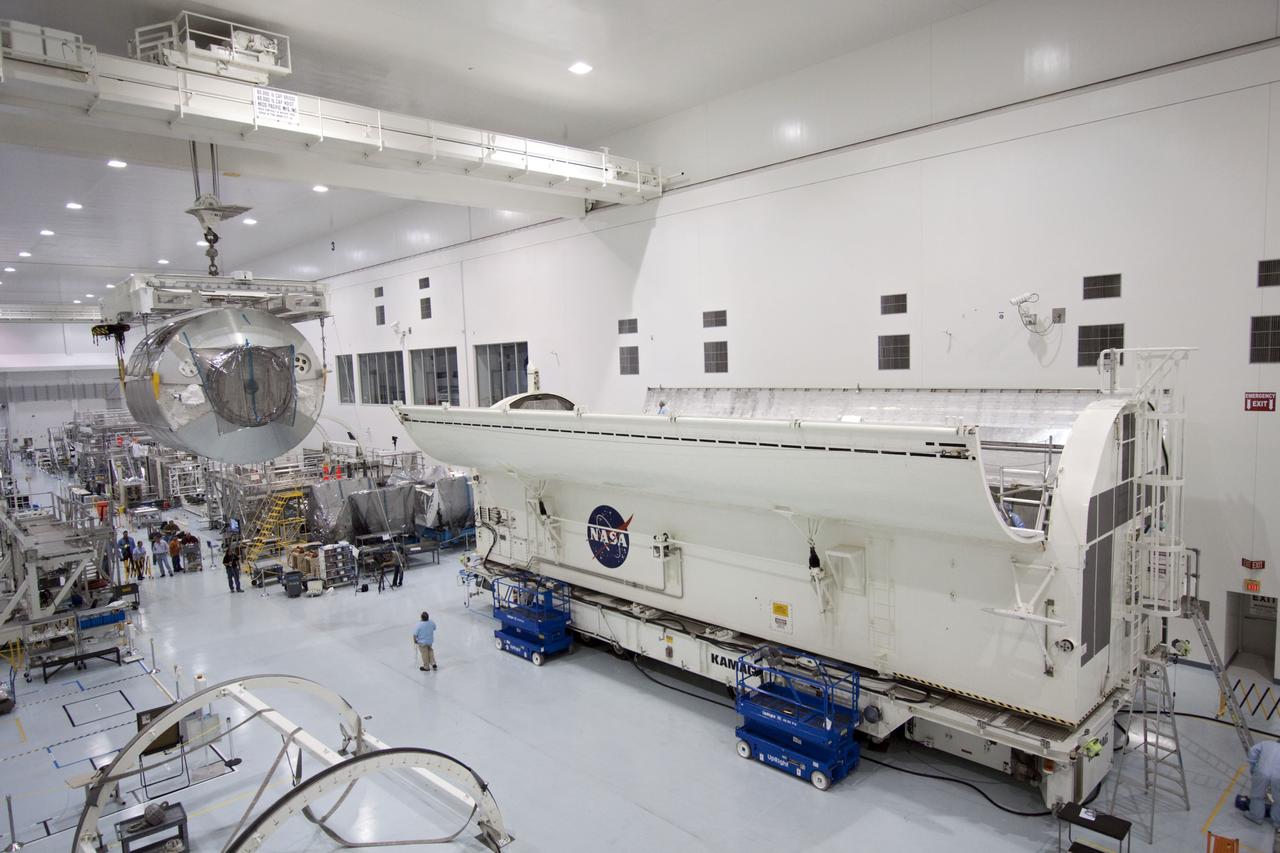
CAPE CANAVERAL, Fla. -- In the Space Station Processing Facility at NASA's Kennedy Space Center in Florida, an overhead crane moves the Raffaello multi-purpose logistics module, or MPLM, toward a payload canister. Commander Chris Ferguson, Pilot Doug Hurley and Mission Specialists Sandra Magnus and Rex Walheim are targeted to lift off on space shuttle Atlantis July 8, taking with them the MPLM packed with supplies, logistics and spare parts to the International Space Station. The STS-135 mission also will fly a system to investigate the potential for robotically refueling existing spacecraft and return a failed ammonia pump module to help NASA better understand the failure mechanism and improve pump designs for future systems. STS-135 will be the 33rd flight of Atlantis, the 37th shuttle mission to the space station, and the 135th and final mission of NASA's Space Shuttle Program. For more information, visit www.nasa.gov/mission_pages/shuttle/shuttlemissions/sts135/index.html. Photo credit: NASA/Jim Grossmann
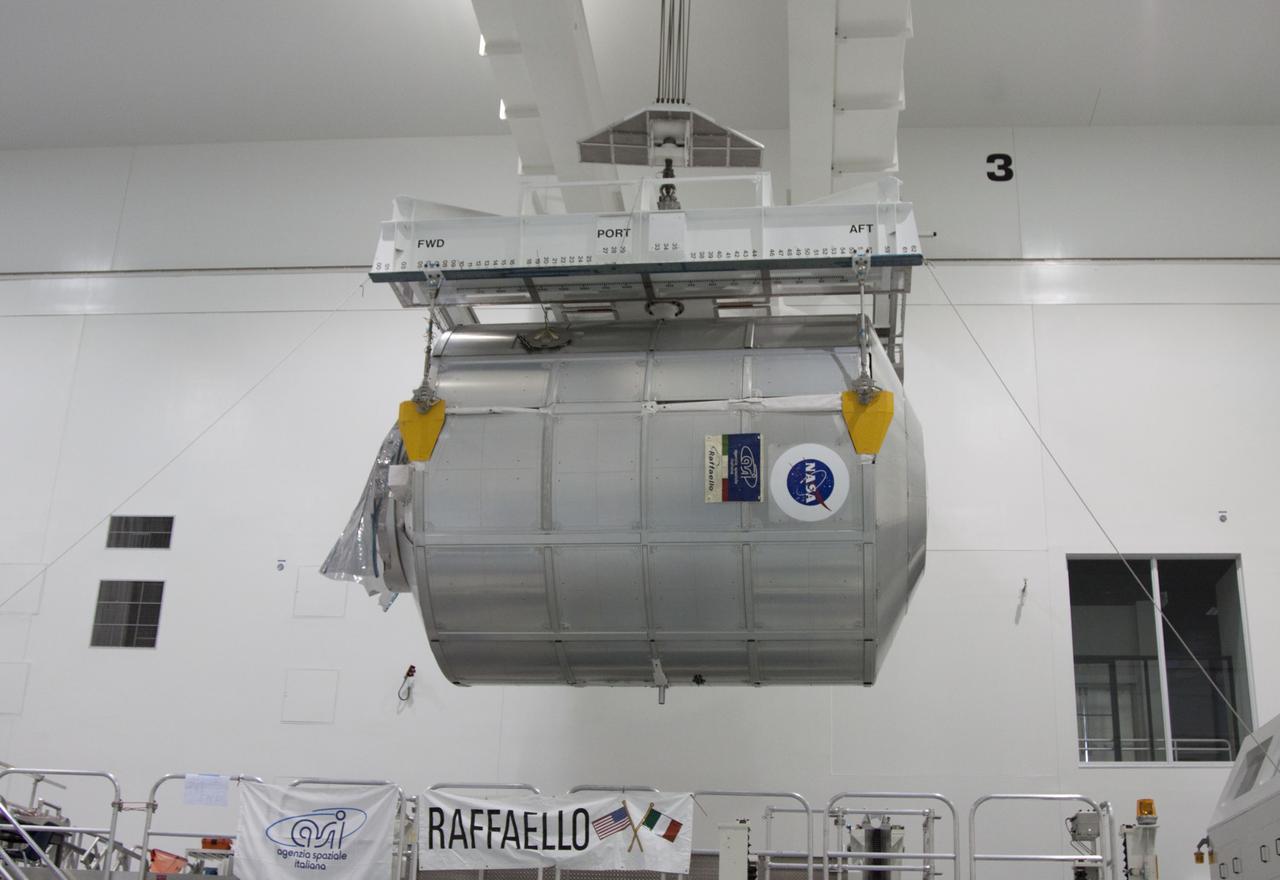
CAPE CANAVERAL, Fla. -- In the Space Station Processing Facility at NASA's Kennedy Space Center in Florida, an overhead crane moves the Raffaello multi-purpose logistics module, or MPLM, toward a payload canister. Commander Chris Ferguson, Pilot Doug Hurley and Mission Specialists Sandra Magnus and Rex Walheim are targeted to lift off on space shuttle Atlantis July 8, taking with them the MPLM packed with supplies, logistics and spare parts to the International Space Station. The STS-135 mission also will fly a system to investigate the potential for robotically refueling existing spacecraft and return a failed ammonia pump module to help NASA better understand the failure mechanism and improve pump designs for future systems. STS-135 will be the 33rd flight of Atlantis, the 37th shuttle mission to the space station, and the 135th and final mission of NASA's Space Shuttle Program. For more information, visit www.nasa.gov/mission_pages/shuttle/shuttlemissions/sts135/index.html. Photo credit: NASA/Jim Grossmann
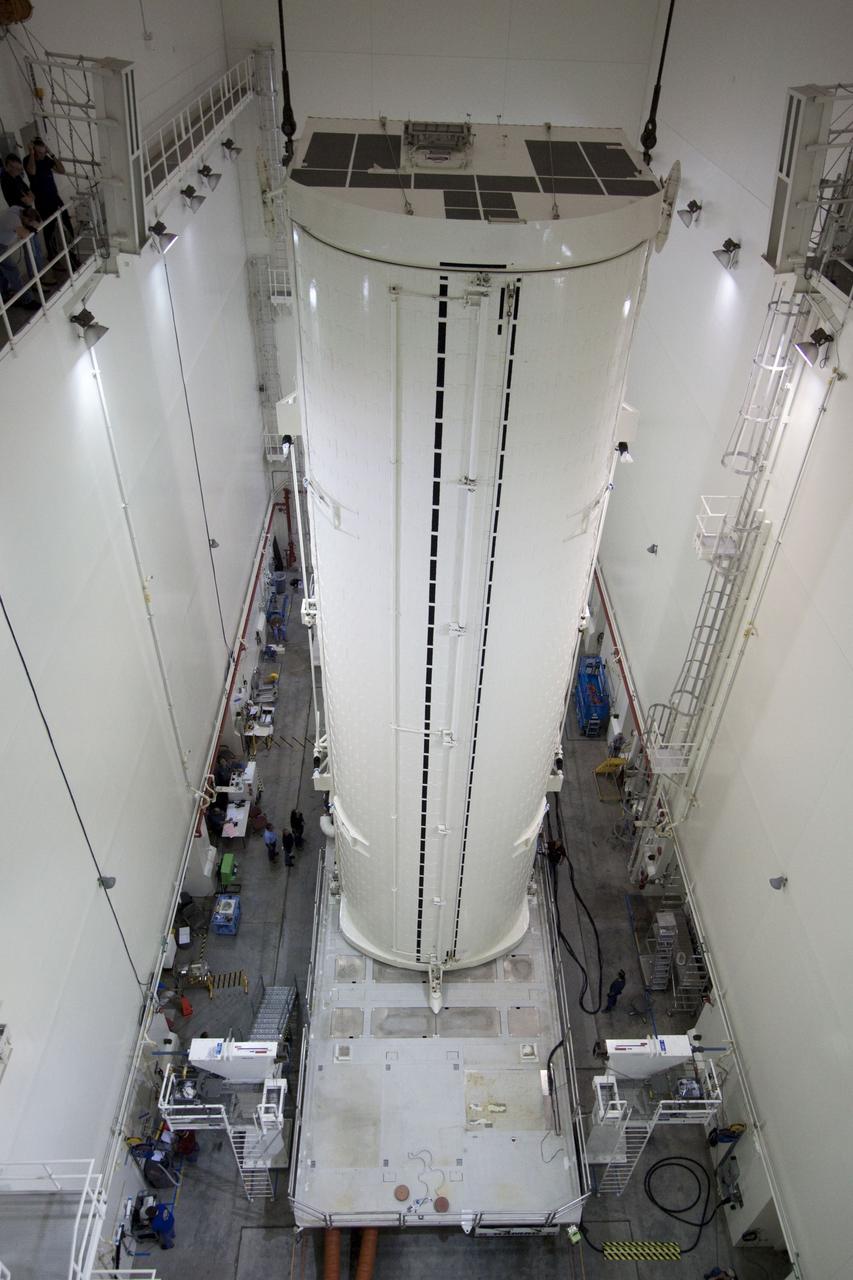
CAPE CANAVERAL, Fla. -- After being rotated from a horizontal to vertical position, the canister that contains the Raffaello multi-purpose logistics module, or MPLM, for the STS-135 mission, has been lowered onto a transportation vehicle in the Canister Rotation Facility at NASA's Kennedy Space Center in Florida. Commander Chris Ferguson, Pilot Doug Hurley and Mission Specialists Sandra Magnus and Rex Walheim are targeted to lift off on space shuttle Atlantis July 8, taking with them the MPLM packed with supplies, logistics and spare parts to the International Space Station. The STS-135 mission also will fly a system to investigate the potential for robotically refueling existing spacecraft and return a failed ammonia pump module to help NASA better understand the failure mechanism and improve pump designs for future systems. STS-135 will be the 33rd flight of Atlantis, the 37th shuttle mission to the space station, and the 135th and final mission of NASA's Space Shuttle Program. For more information, visit www.nasa.gov/mission_pages/shuttle/shuttlemissions/sts135/index.html. Photo credit: NASA/Jack Pfaller
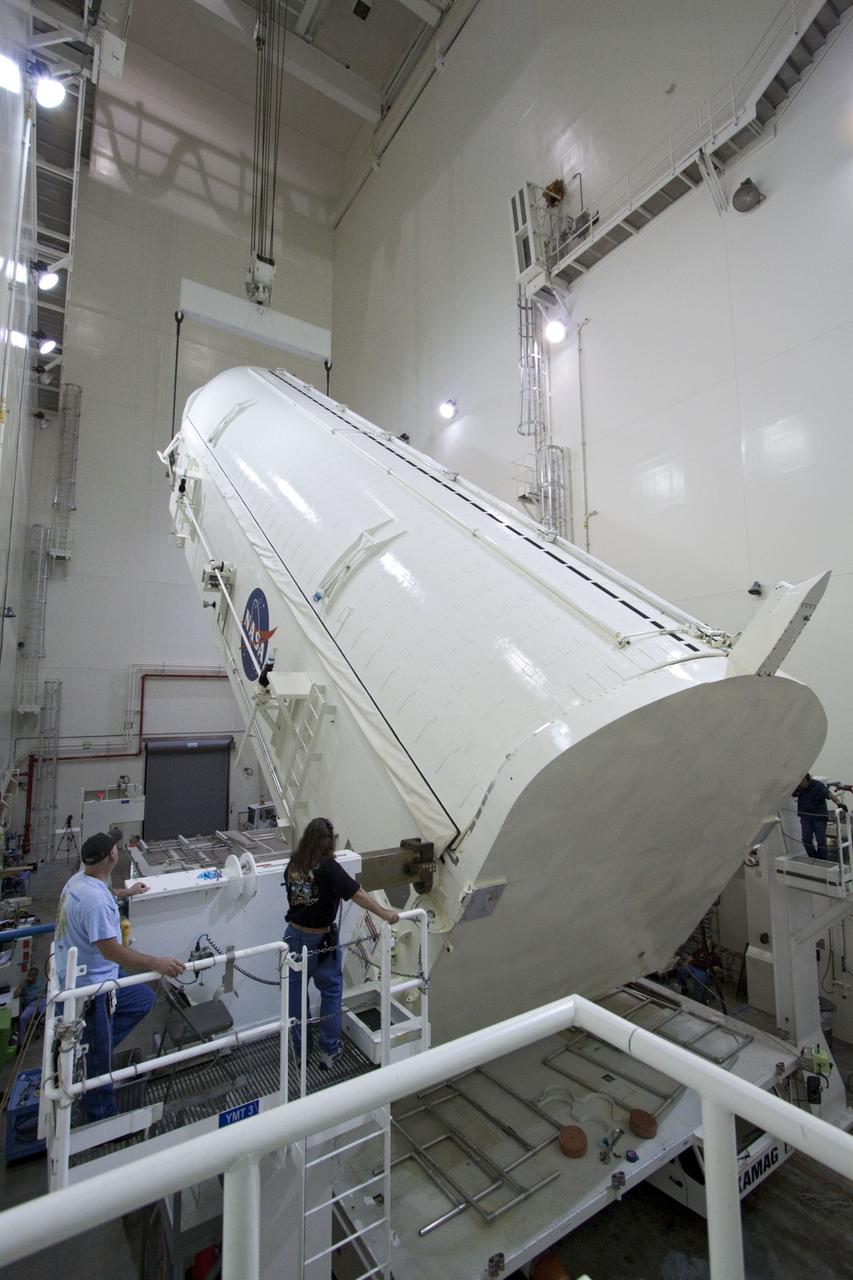
CAPE CANAVERAL, Fla. -- Workers monitor the progress of a canister, carrying the Raffaello multi-purpose logistics module, or MPLM, for the STS-135 mission, as it is rotated from a horizontal to vertical position in the Canister Rotation Facility at NASA's Kennedy Space Center in Florida. Commander Chris Ferguson, Pilot Doug Hurley and Mission Specialists Sandra Magnus and Rex Walheim are targeted to lift off on space shuttle Atlantis July 8, taking with them the MPLM packed with supplies, logistics and spare parts to the International Space Station. The STS-135 mission also will fly a system to investigate the potential for robotically refueling existing spacecraft and return a failed ammonia pump module to help NASA better understand the failure mechanism and improve pump designs for future systems. STS-135 will be the 33rd flight of Atlantis, the 37th shuttle mission to the space station, and the 135th and final mission of NASA's Space Shuttle Program. For more information, visit www.nasa.gov/mission_pages/shuttle/shuttlemissions/sts135/index.html. Photo credit: NASA/Jack Pfaller
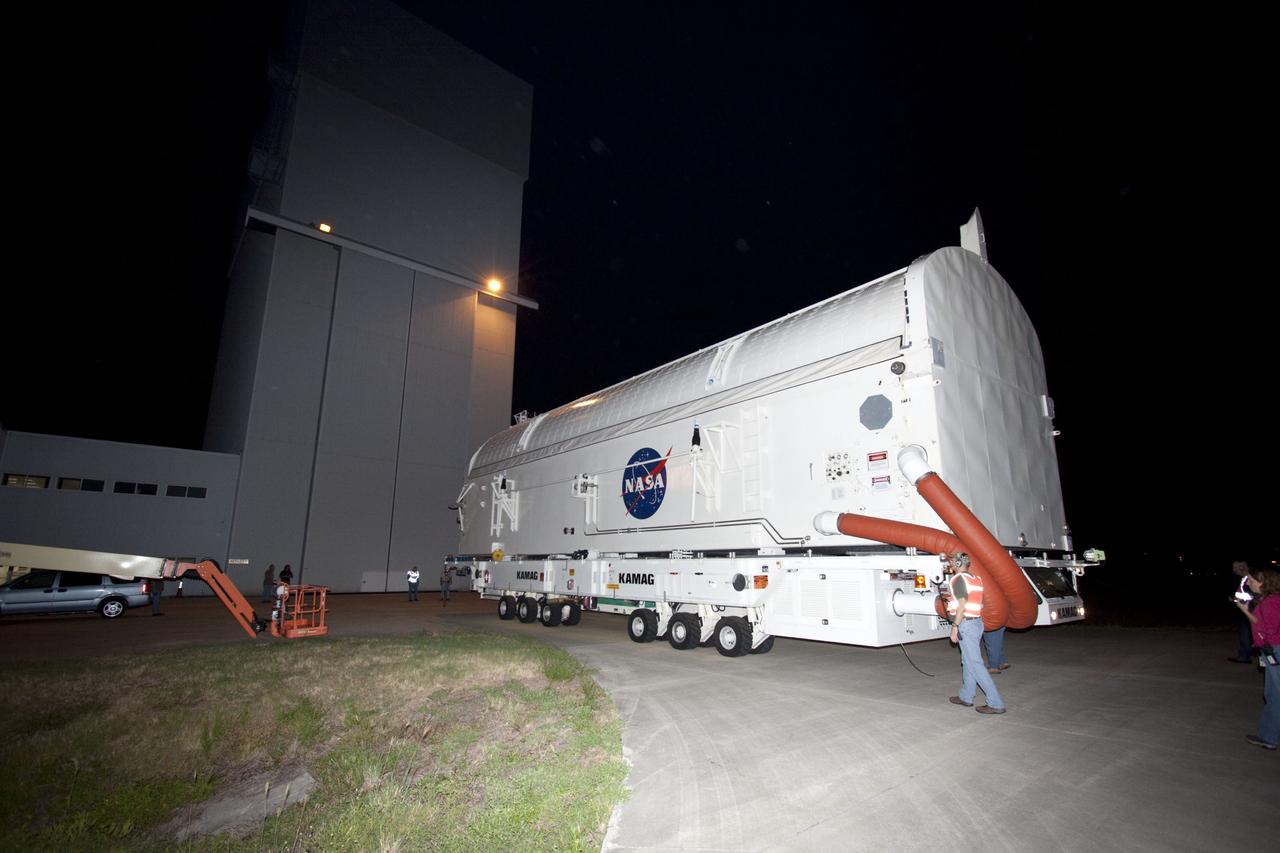
CAPE CANAVERAL, Fla. -- Workers move the payload canister, atop its transporter with the Raffaello multi-purpose logistics module, or MPLM, secured inside, from the Space Station Processing Facility at NASA's Kennedy Space Center in Florida to the Canister Rotation Facility. Commander Chris Ferguson, Pilot Doug Hurley and Mission Specialists Sandra Magnus and Rex Walheim are targeted to lift off on space shuttle Atlantis July 8, taking with them the MPLM packed with supplies, logistics and spare parts to the International Space Station. The STS-135 mission also will fly a system to investigate the potential for robotically refueling existing spacecraft and return a failed ammonia pump module to help NASA better understand the failure mechanism and improve pump designs for future systems. STS-135 will be the 33rd flight of Atlantis, the 37th shuttle mission to the space station, and the 135th and final mission of NASA's Space Shuttle Program. For more information, visit www.nasa.gov/mission_pages/shuttle/shuttlemissions/sts135/index.html. Photo credit: NASA/Jim Grossmann
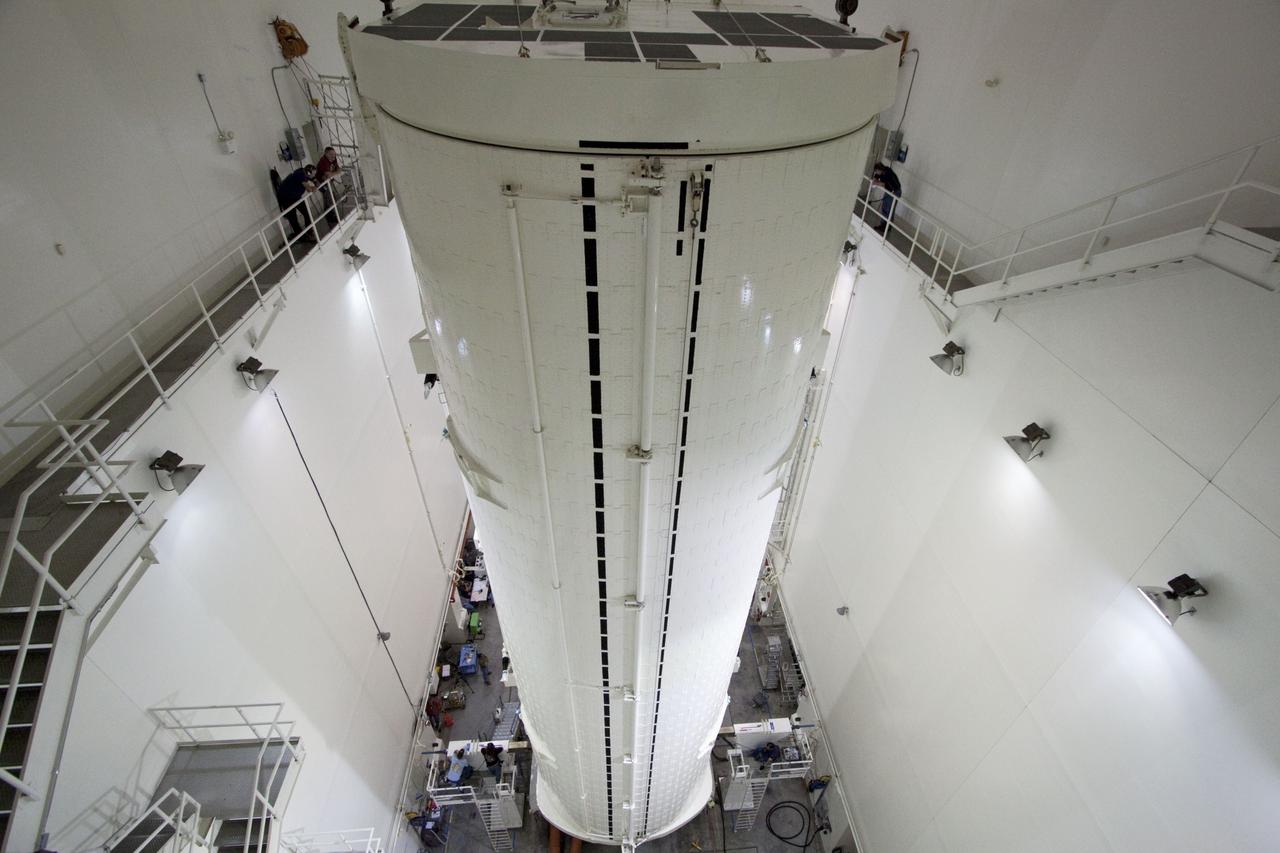
CAPE CANAVERAL, Fla. -- After being rotated from a horizontal to vertical position, the canister that contains the Raffaello multi-purpose logistics module, or MPLM, for the STS-135 mission, will be lowered onto a transportation vehicle in the Canister Rotation Facility at NASA's Kennedy Space Center in Florida. Commander Chris Ferguson, Pilot Doug Hurley and Mission Specialists Sandra Magnus and Rex Walheim are targeted to lift off on space shuttle Atlantis July 8, taking with them the MPLM packed with supplies, logistics and spare parts to the International Space Station. The STS-135 mission also will fly a system to investigate the potential for robotically refueling existing spacecraft and return a failed ammonia pump module to help NASA better understand the failure mechanism and improve pump designs for future systems. STS-135 will be the 33rd flight of Atlantis, the 37th shuttle mission to the space station, and the 135th and final mission of NASA's Space Shuttle Program. For more information, visit www.nasa.gov/mission_pages/shuttle/shuttlemissions/sts135/index.html. Photo credit: NASA/Jack Pfaller
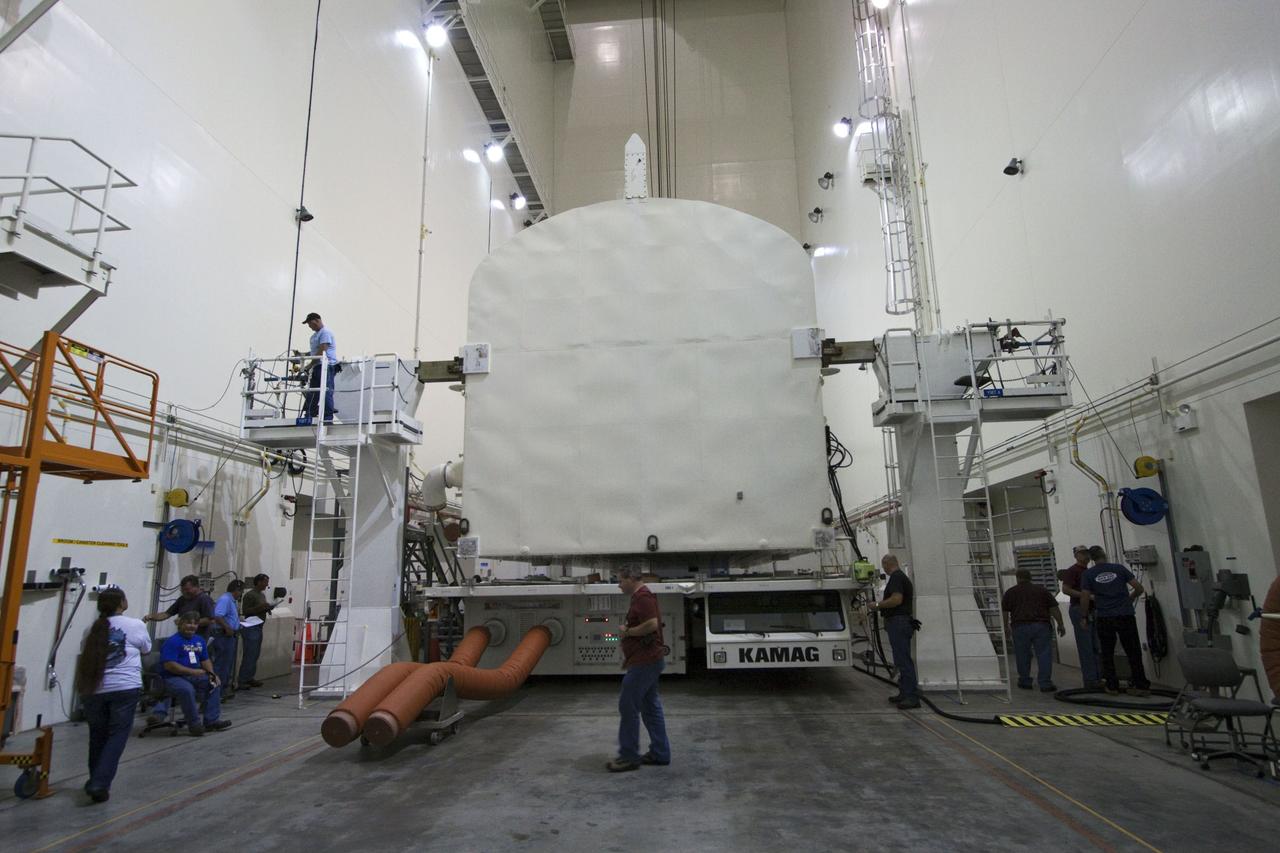
CAPE CANAVERAL, Fla. -- A canister, carrying the Raffaello multi-purpose logistics module, or MPLM, for the STS-135 mission, will be rotated from a horizontal to vertical position in the Canister Rotation Facility at NASA's Kennedy Space Center in Florida. Commander Chris Ferguson, Pilot Doug Hurley and Mission Specialists Sandra Magnus and Rex Walheim are targeted to lift off on space shuttle Atlantis July 8, taking with them the MPLM packed with supplies, logistics and spare parts to the International Space Station. The STS-135 mission also will fly a system to investigate the potential for robotically refueling existing spacecraft and return a failed ammonia pump module to help NASA better understand the failure mechanism and improve pump designs for future systems. STS-135 will be the 33rd flight of Atlantis, the 37th shuttle mission to the space station, and the 135th and final mission of NASA's Space Shuttle Program. For more information, visit www.nasa.gov/mission_pages/shuttle/shuttlemissions/sts135/index.html. Photo credit: NASA/Jack Pfaller
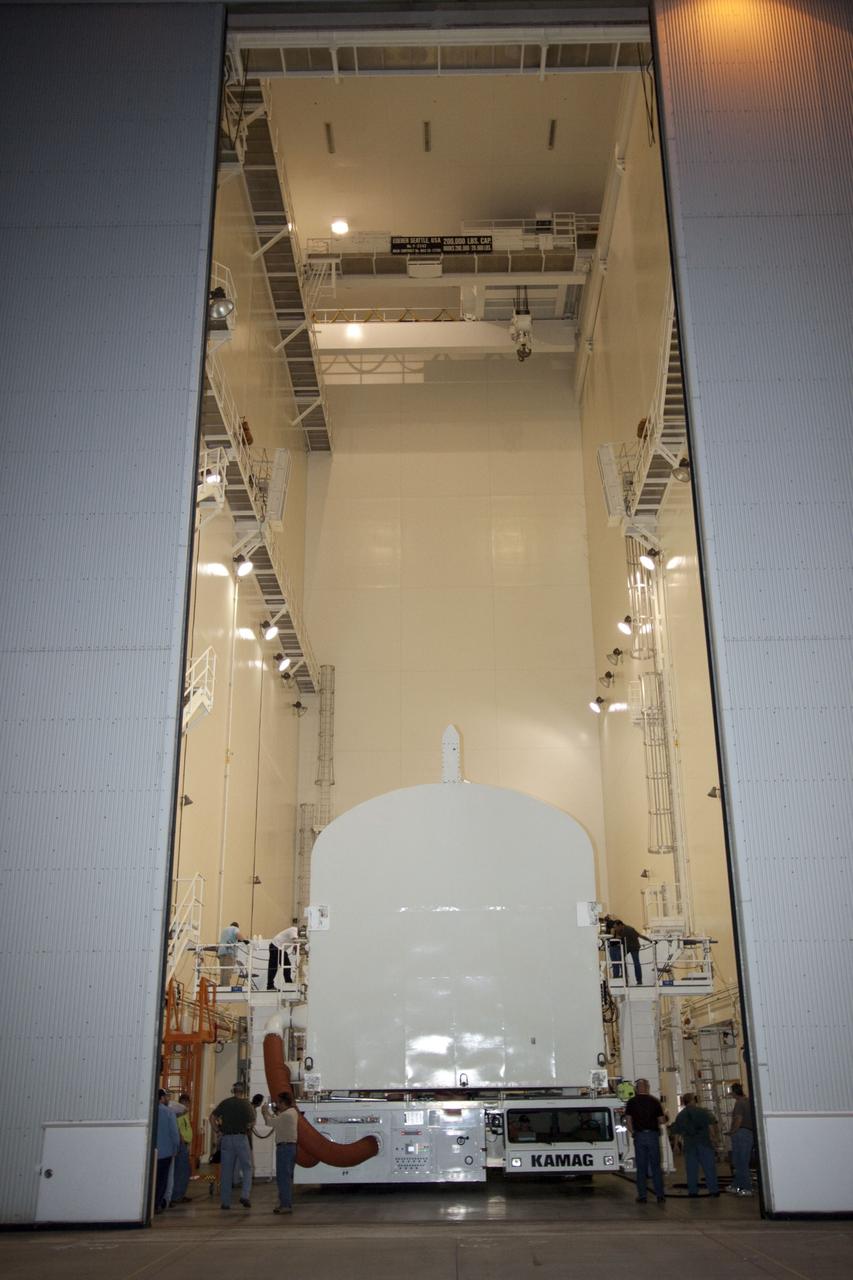
CAPE CANAVERAL, Fla. -- Workers move the payload canister, atop its transporter with the Raffaello multi-purpose logistics module, or MPLM, secured inside, into the Canister Rotation Facility at NASA's Kennedy Space Center in Florida. Commander Chris Ferguson, Pilot Doug Hurley and Mission Specialists Sandra Magnus and Rex Walheim are targeted to lift off on space shuttle Atlantis July 8, taking with them the MPLM packed with supplies, logistics and spare parts to the International Space Station. The STS-135 mission also will fly a system to investigate the potential for robotically refueling existing spacecraft and return a failed ammonia pump module to help NASA better understand the failure mechanism and improve pump designs for future systems. STS-135 will be the 33rd flight of Atlantis, the 37th shuttle mission to the space station, and the 135th and final mission of NASA's Space Shuttle Program. For more information, visit www.nasa.gov/mission_pages/shuttle/shuttlemissions/sts135/index.html. Photo credit: NASA/Jim Grossmann
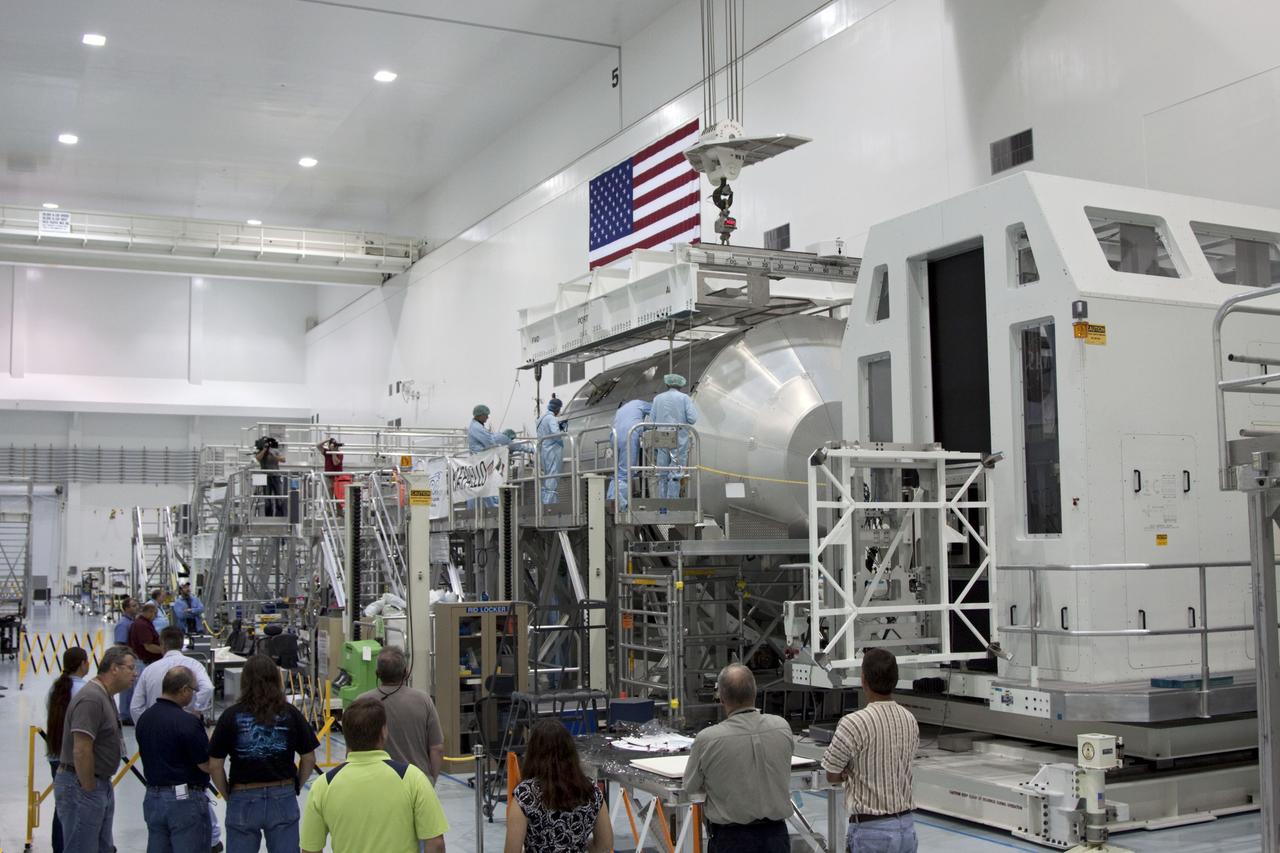
CAPE CANAVERAL, Fla. -- In the Space Station Processing Facility at NASA's Kennedy Space Center in Florida, technicians lower an overhead crane toward the Raffaello multi-purpose logistics module, or MPLM, for its move toward a payload canister. Commander Chris Ferguson, Pilot Doug Hurley and Mission Specialists Sandra Magnus and Rex Walheim are targeted to lift off on space shuttle Atlantis July 8, taking with them the MPLM packed with supplies, logistics and spare parts to the International Space Station. The STS-135 mission also will fly a system to investigate the potential for robotically refueling existing spacecraft and return a failed ammonia pump module to help NASA better understand the failure mechanism and improve pump designs for future systems. STS-135 will be the 33rd flight of Atlantis, the 37th shuttle mission to the space station, and the 135th and final mission of NASA's Space Shuttle Program. For more information, visit www.nasa.gov/mission_pages/shuttle/shuttlemissions/sts135/index.html. Photo credit: NASA/Jim Grossmann
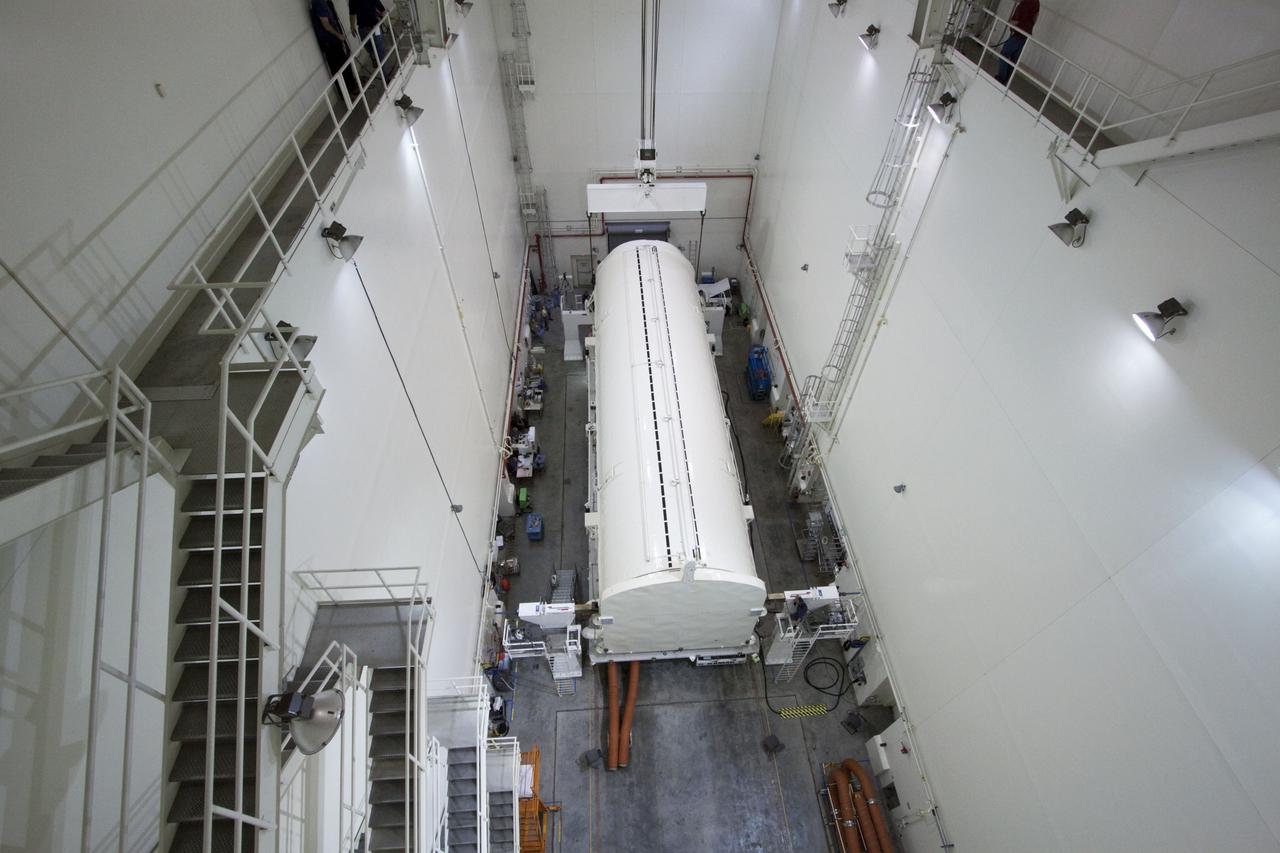
CAPE CANAVERAL, Fla. -- Workers prepare a canister, carrying the Raffaello multi-purpose logistics module, or MPLM, for the STS-135 mission, to be rotated from a horizontal to vertical position in the Canister Rotation Facility at NASA's Kennedy Space Center in Florida. Commander Chris Ferguson, Pilot Doug Hurley and Mission Specialists Sandra Magnus and Rex Walheim are targeted to lift off on space shuttle Atlantis July 8, taking with them the MPLM packed with supplies, logistics and spare parts to the International Space Station. The STS-135 mission also will fly a system to investigate the potential for robotically refueling existing spacecraft and return a failed ammonia pump module to help NASA better understand the failure mechanism and improve pump designs for future systems. STS-135 will be the 33rd flight of Atlantis, the 37th shuttle mission to the space station, and the 135th and final mission of NASA's Space Shuttle Program. For more information, visit www.nasa.gov/mission_pages/shuttle/shuttlemissions/sts135/index.html. Photo credit: NASA/Jack Pfaller
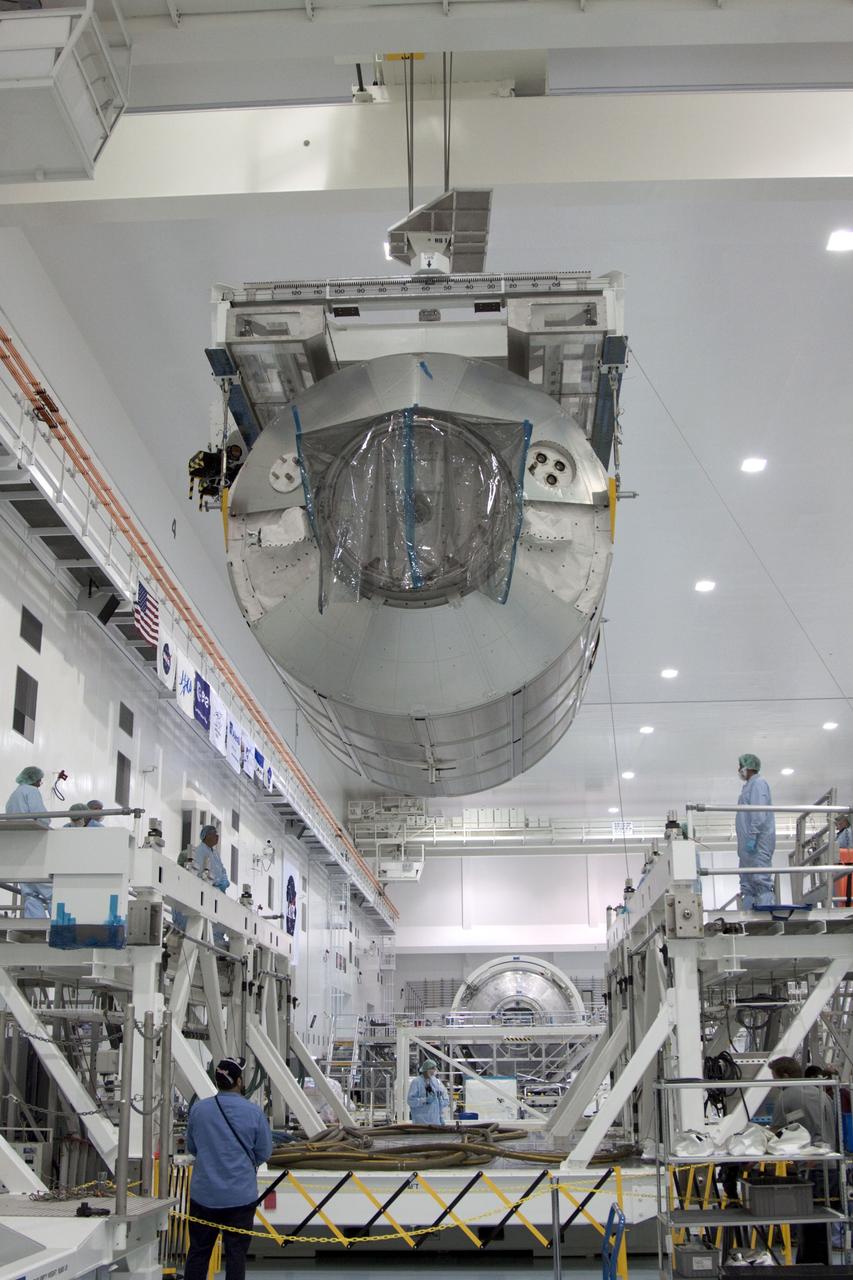
CAPE CANAVERAL, Fla. -- In the Space Station Processing Facility at NASA's Kennedy Space Center in Florida, an overhead crane moves the Raffaello multi-purpose logistics module, or MPLM, toward a payload canister. Commander Chris Ferguson, Pilot Doug Hurley and Mission Specialists Sandra Magnus and Rex Walheim are targeted to lift off on space shuttle Atlantis July 8, taking with them the MPLM packed with supplies, logistics and spare parts to the International Space Station. The STS-135 mission also will fly a system to investigate the potential for robotically refueling existing spacecraft and return a failed ammonia pump module to help NASA better understand the failure mechanism and improve pump designs for future systems. STS-135 will be the 33rd flight of Atlantis, the 37th shuttle mission to the space station, and the 135th and final mission of NASA's Space Shuttle Program. For more information, visit www.nasa.gov/mission_pages/shuttle/shuttlemissions/sts135/index.html. Photo credit: NASA/Jim Grossmann
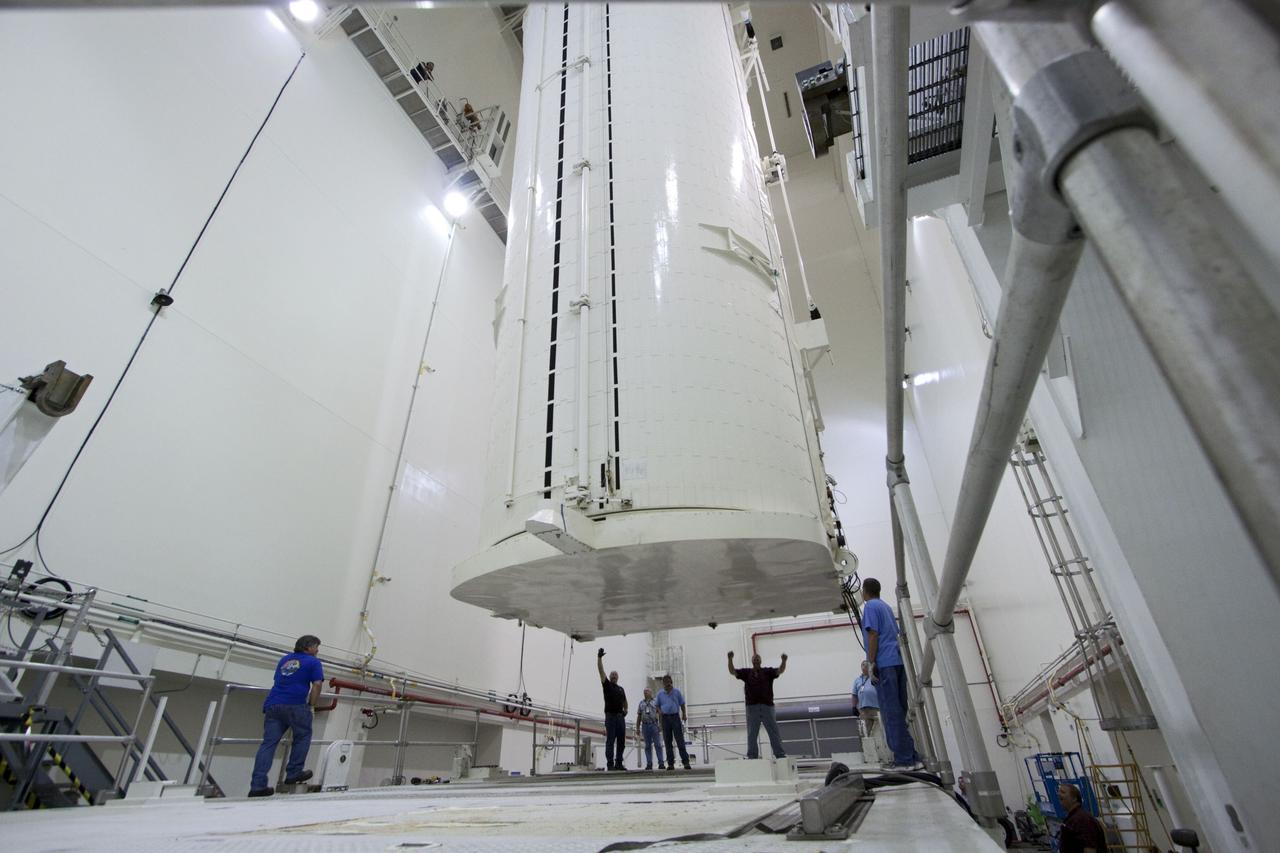
CAPE CANAVERAL, Fla. -- After being rotated from a horizontal to vertical position, the canister that contains the Raffaello multi-purpose logistics module, or MPLM, for the STS-135 mission, is lowered onto a transportation vehicle in the Canister Rotation Facility at NASA's Kennedy Space Center in Florida. Commander Chris Ferguson, Pilot Doug Hurley and Mission Specialists Sandra Magnus and Rex Walheim are targeted to lift off on space shuttle Atlantis July 8, taking with them the MPLM packed with supplies, logistics and spare parts to the International Space Station. The STS-135 mission also will fly a system to investigate the potential for robotically refueling existing spacecraft and return a failed ammonia pump module to help NASA better understand the failure mechanism and improve pump designs for future systems. STS-135 will be the 33rd flight of Atlantis, the 37th shuttle mission to the space station, and the 135th and final mission of NASA's Space Shuttle Program. For more information, visit www.nasa.gov/mission_pages/shuttle/shuttlemissions/sts135/index.html. Photo credit: NASA/Jack Pfaller
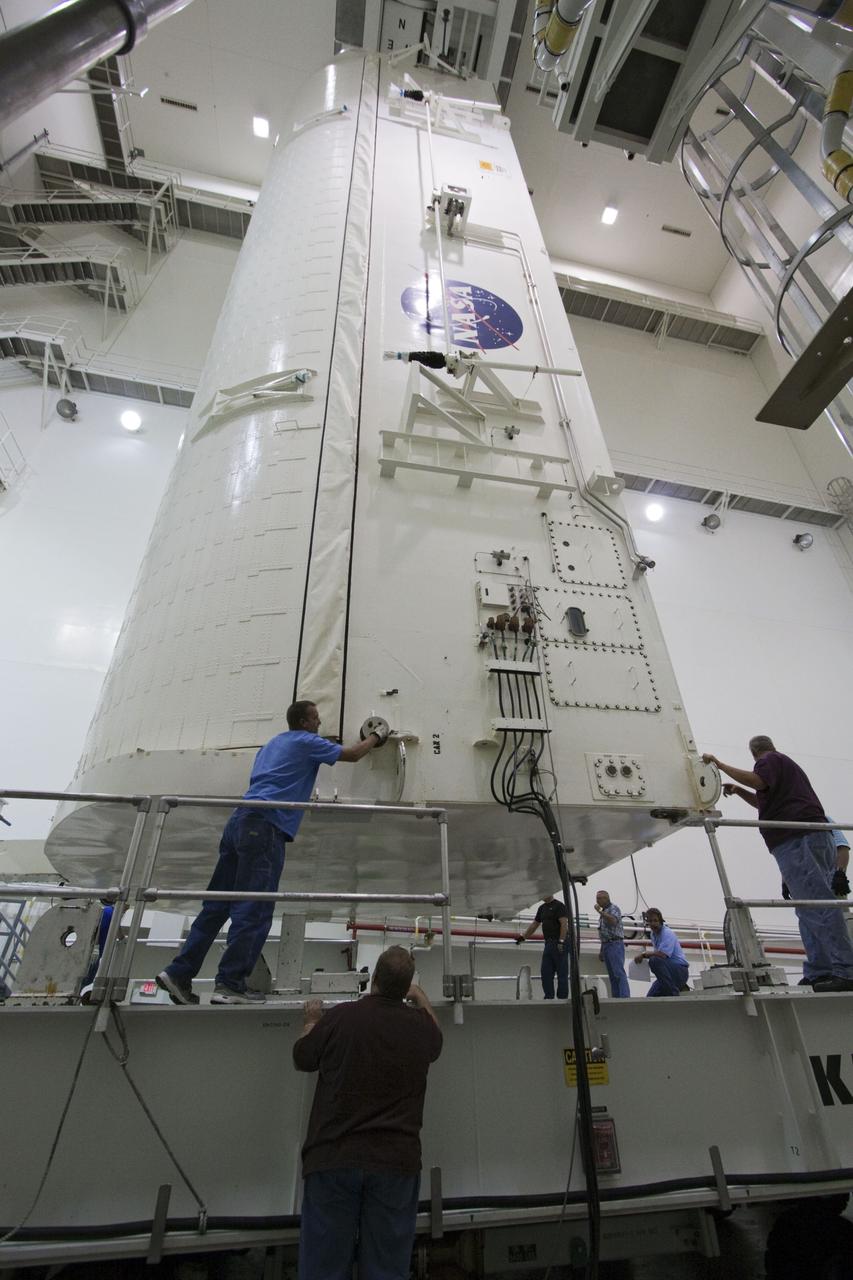
CAPE CANAVERAL, Fla. -- After being rotated from a horizontal to vertical position, the canister that contains the Raffaello multi-purpose logistics module, or MPLM, for the STS-135 mission, is lowered onto a transportation vehicle in the Canister Rotation Facility at NASA's Kennedy Space Center in Florida. Commander Chris Ferguson, Pilot Doug Hurley and Mission Specialists Sandra Magnus and Rex Walheim are targeted to lift off on space shuttle Atlantis July 8, taking with them the MPLM packed with supplies, logistics and spare parts to the International Space Station. The STS-135 mission also will fly a system to investigate the potential for robotically refueling existing spacecraft and return a failed ammonia pump module to help NASA better understand the failure mechanism and improve pump designs for future systems. STS-135 will be the 33rd flight of Atlantis, the 37th shuttle mission to the space station, and the 135th and final mission of NASA's Space Shuttle Program. For more information, visit www.nasa.gov/mission_pages/shuttle/shuttlemissions/sts135/index.html. Photo credit: NASA/Jack Pfaller
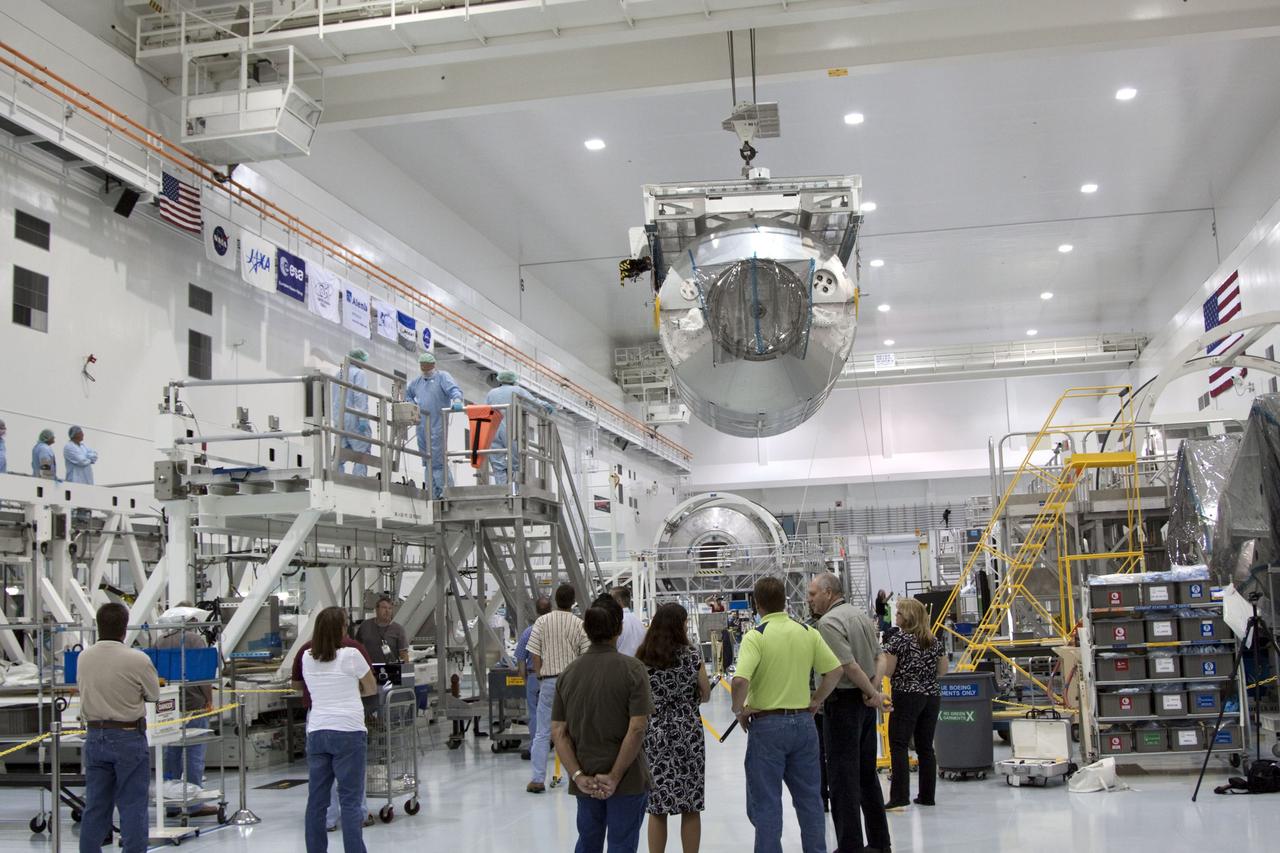
CAPE CANAVERAL, Fla. -- In the Space Station Processing Facility at NASA's Kennedy Space Center in Florida, an overhead crane moves the Raffaello multi-purpose logistics module, or MPLM, toward a payload canister. Commander Chris Ferguson, Pilot Doug Hurley and Mission Specialists Sandra Magnus and Rex Walheim are targeted to lift off on space shuttle Atlantis July 8, taking with them the MPLM packed with supplies, logistics and spare parts to the International Space Station. The STS-135 mission also will fly a system to investigate the potential for robotically refueling existing spacecraft and return a failed ammonia pump module to help NASA better understand the failure mechanism and improve pump designs for future systems. STS-135 will be the 33rd flight of Atlantis, the 37th shuttle mission to the space station, and the 135th and final mission of NASA's Space Shuttle Program. For more information, visit www.nasa.gov/mission_pages/shuttle/shuttlemissions/sts135/index.html. Photo credit: NASA/Jim Grossmann
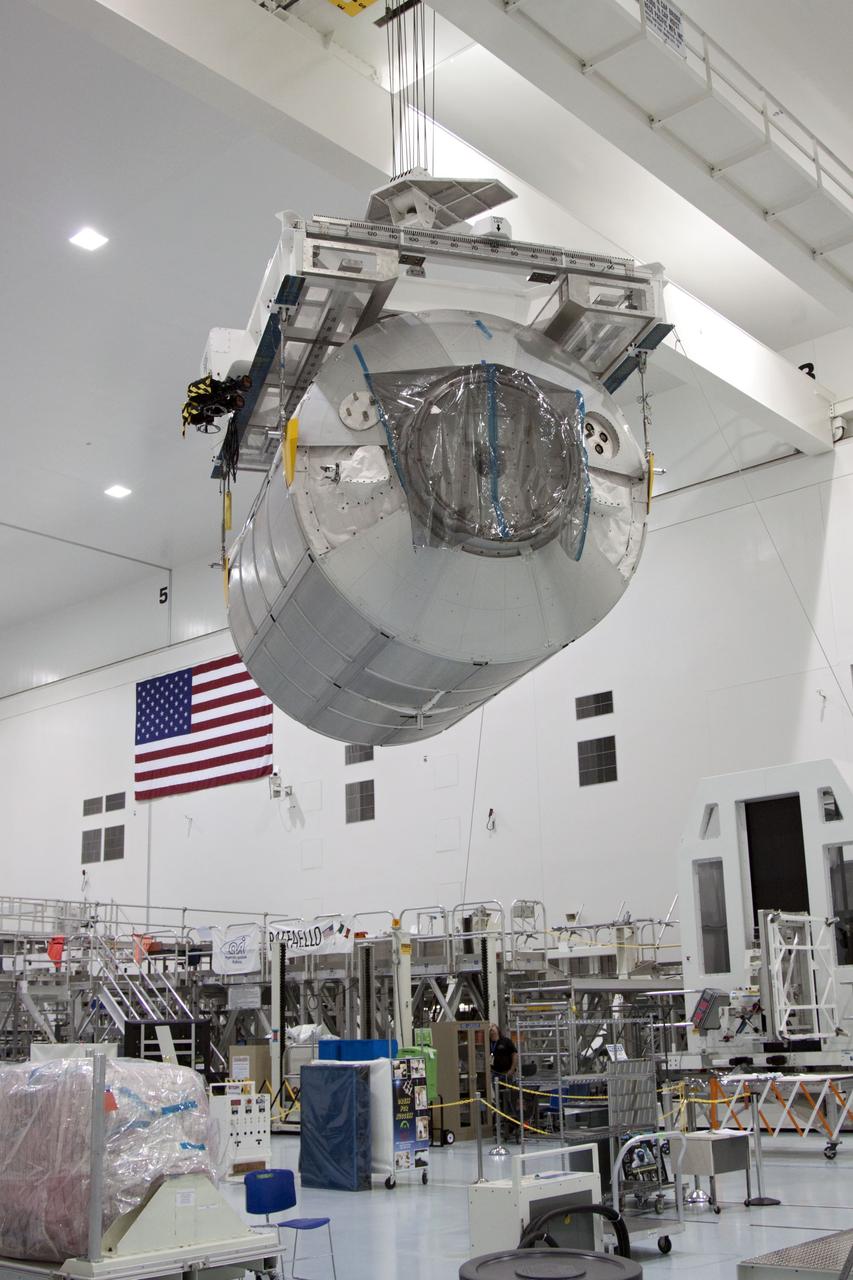
CAPE CANAVERAL, Fla. -- In the Space Station Processing Facility at NASA's Kennedy Space Center in Florida, an overhead crane moves the Raffaello multi-purpose logistics module, or MPLM, toward a payload canister. Commander Chris Ferguson, Pilot Doug Hurley and Mission Specialists Sandra Magnus and Rex Walheim are targeted to lift off on space shuttle Atlantis July 8, taking with them the MPLM packed with supplies, logistics and spare parts to the International Space Station. The STS-135 mission also will fly a system to investigate the potential for robotically refueling existing spacecraft and return a failed ammonia pump module to help NASA better understand the failure mechanism and improve pump designs for future systems. STS-135 will be the 33rd flight of Atlantis, the 37th shuttle mission to the space station, and the 135th and final mission of NASA's Space Shuttle Program. For more information, visit www.nasa.gov/mission_pages/shuttle/shuttlemissions/sts135/index.html. Photo credit: NASA/Jim Grossmann
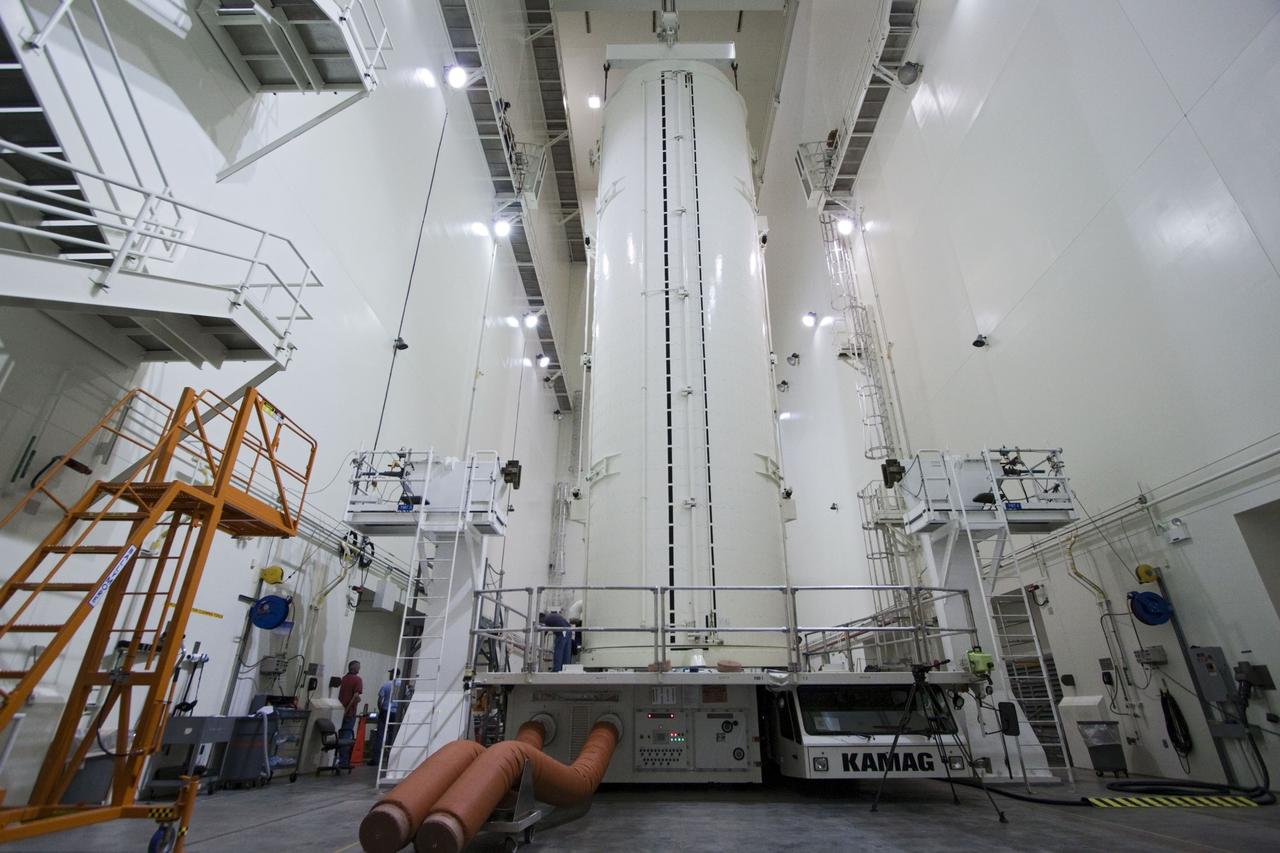
CAPE CANAVERAL, Fla. -- After being rotated from a horizontal to vertical position, the canister that contains the Raffaello multi-purpose logistics module, or MPLM, for the STS-135 mission, has been lowered onto a transportation vehicle in the Canister Rotation Facility at NASA's Kennedy Space Center in Florida. Commander Chris Ferguson, Pilot Doug Hurley and Mission Specialists Sandra Magnus and Rex Walheim are targeted to lift off on space shuttle Atlantis July 8, taking with them the MPLM packed with supplies, logistics and spare parts to the International Space Station. The STS-135 mission also will fly a system to investigate the potential for robotically refueling existing spacecraft and return a failed ammonia pump module to help NASA better understand the failure mechanism and improve pump designs for future systems. STS-135 will be the 33rd flight of Atlantis, the 37th shuttle mission to the space station, and the 135th and final mission of NASA's Space Shuttle Program. For more information, visit www.nasa.gov/mission_pages/shuttle/shuttlemissions/sts135/index.html. Photo credit: NASA/Jack Pfaller
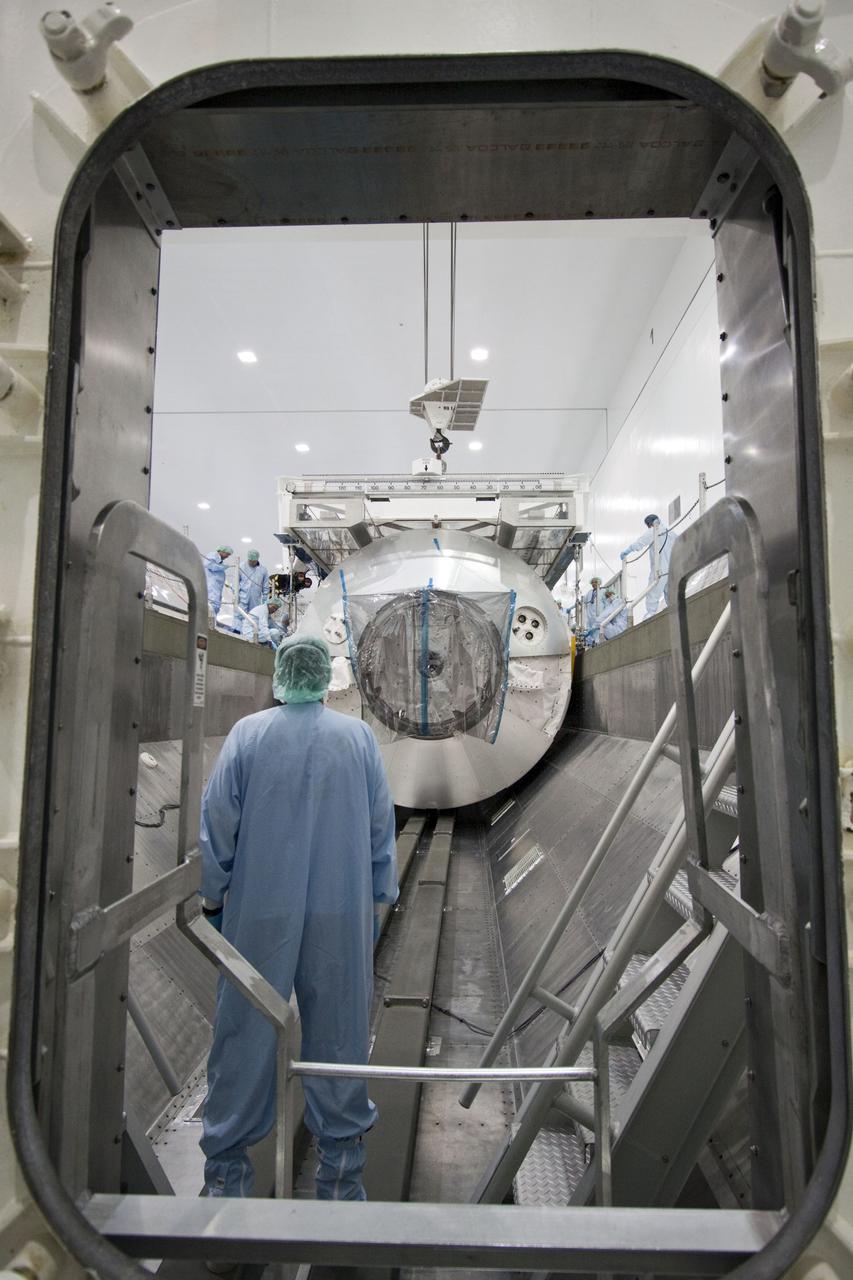
CAPE CANAVERAL, Fla. -- In the Space Station Processing Facility at NASA's Kennedy Space Center in Florida, technicians guide an overhead crane as it lowers the Raffaello multi-purpose logistics module, or MPLM, into a payload canister. Commander Chris Ferguson, Pilot Doug Hurley and Mission Specialists Sandra Magnus and Rex Walheim are targeted to lift off on space shuttle Atlantis July 8, taking with them the MPLM packed with supplies, logistics and spare parts to the International Space Station. The STS-135 mission also will fly a system to investigate the potential for robotically refueling existing spacecraft and return a failed ammonia pump module to help NASA better understand the failure mechanism and improve pump designs for future systems. STS-135 will be the 33rd flight of Atlantis, the 37th shuttle mission to the space station, and the 135th and final mission of NASA's Space Shuttle Program. For more information, visit www.nasa.gov/mission_pages/shuttle/shuttlemissions/sts135/index.html. Photo credit: NASA/Jim Grossmann
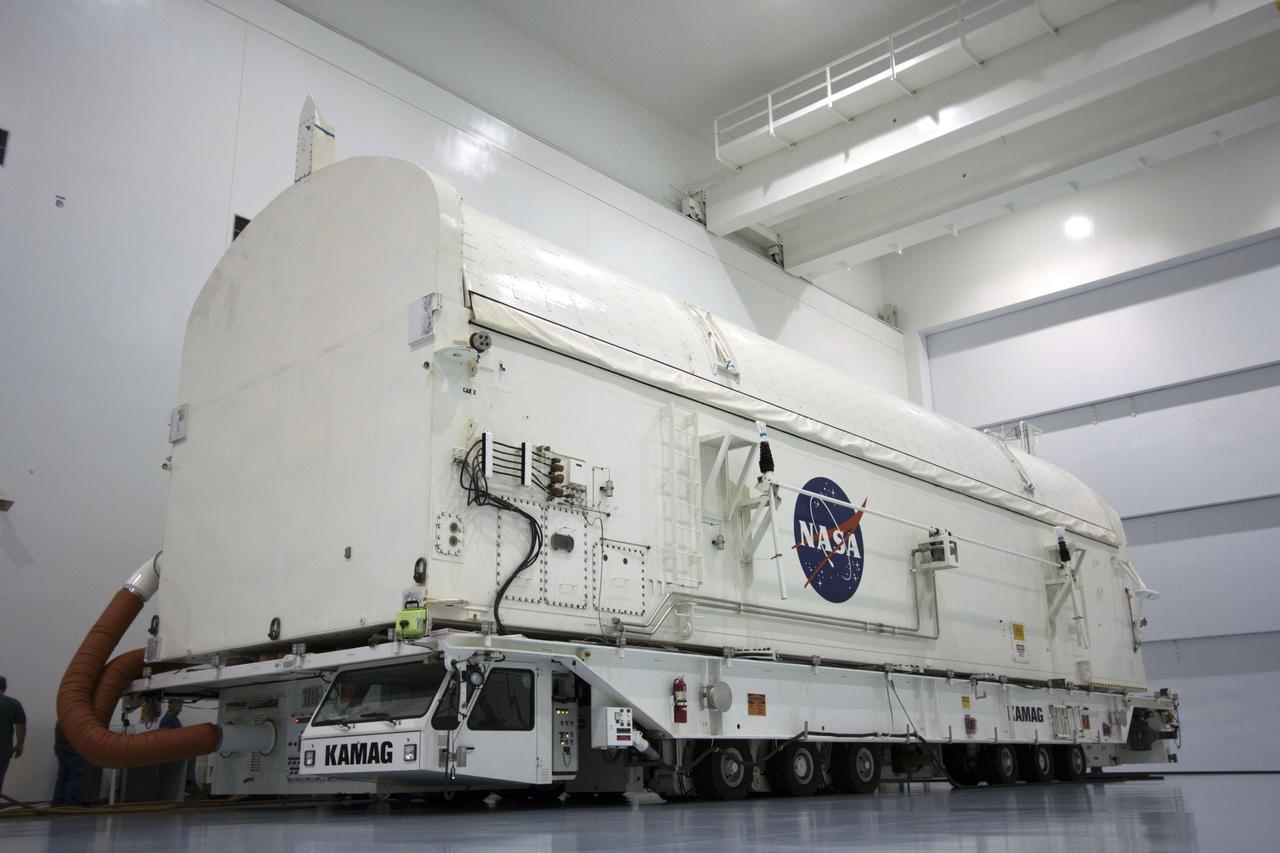
CAPE CANAVERAL, Fla. -- In the Space Station Processing Facility at NASA's Kennedy Space Center in Florida, the clamshell doors on the payload canister atop its transporter have been closed over the Raffaello multi-purpose logistics module, or MPLM, secured inside. Commander Chris Ferguson, Pilot Doug Hurley and Mission Specialists Sandra Magnus and Rex Walheim are targeted to lift off on space shuttle Atlantis July 8, taking with them the MPLM packed with supplies, logistics and spare parts to the International Space Station. The STS-135 mission also will fly a system to investigate the potential for robotically refueling existing spacecraft and return a failed ammonia pump module to help NASA better understand the failure mechanism and improve pump designs for future systems. STS-135 will be the 33rd flight of Atlantis, the 37th shuttle mission to the space station, and the 135th and final mission of NASA's Space Shuttle Program. For more information, visit www.nasa.gov/mission_pages/shuttle/shuttlemissions/sts135/index.html. Photo credit: NASA/Jim Grossmann
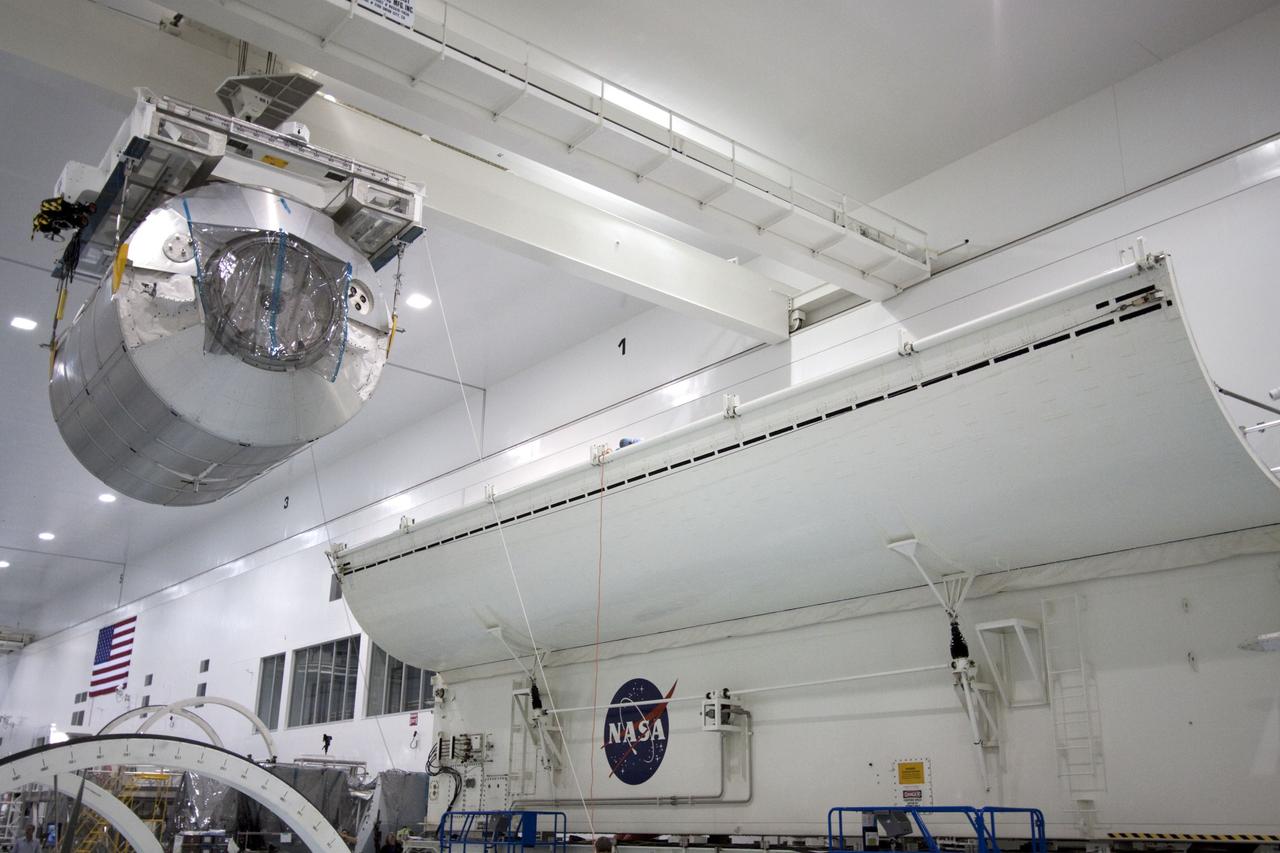
CAPE CANAVERAL, Fla. -- In the Space Station Processing Facility at NASA's Kennedy Space Center in Florida, an overhead crane moves the Raffaello multi-purpose logistics module, or MPLM, toward a payload canister. Commander Chris Ferguson, Pilot Doug Hurley and Mission Specialists Sandra Magnus and Rex Walheim are targeted to lift off on space shuttle Atlantis July 8, taking with them the MPLM packed with supplies, logistics and spare parts to the International Space Station. The STS-135 mission also will fly a system to investigate the potential for robotically refueling existing spacecraft and return a failed ammonia pump module to help NASA better understand the failure mechanism and improve pump designs for future systems. STS-135 will be the 33rd flight of Atlantis, the 37th shuttle mission to the space station, and the 135th and final mission of NASA's Space Shuttle Program. For more information, visit www.nasa.gov/mission_pages/shuttle/shuttlemissions/sts135/index.html. Photo credit: NASA/Jim Grossmann
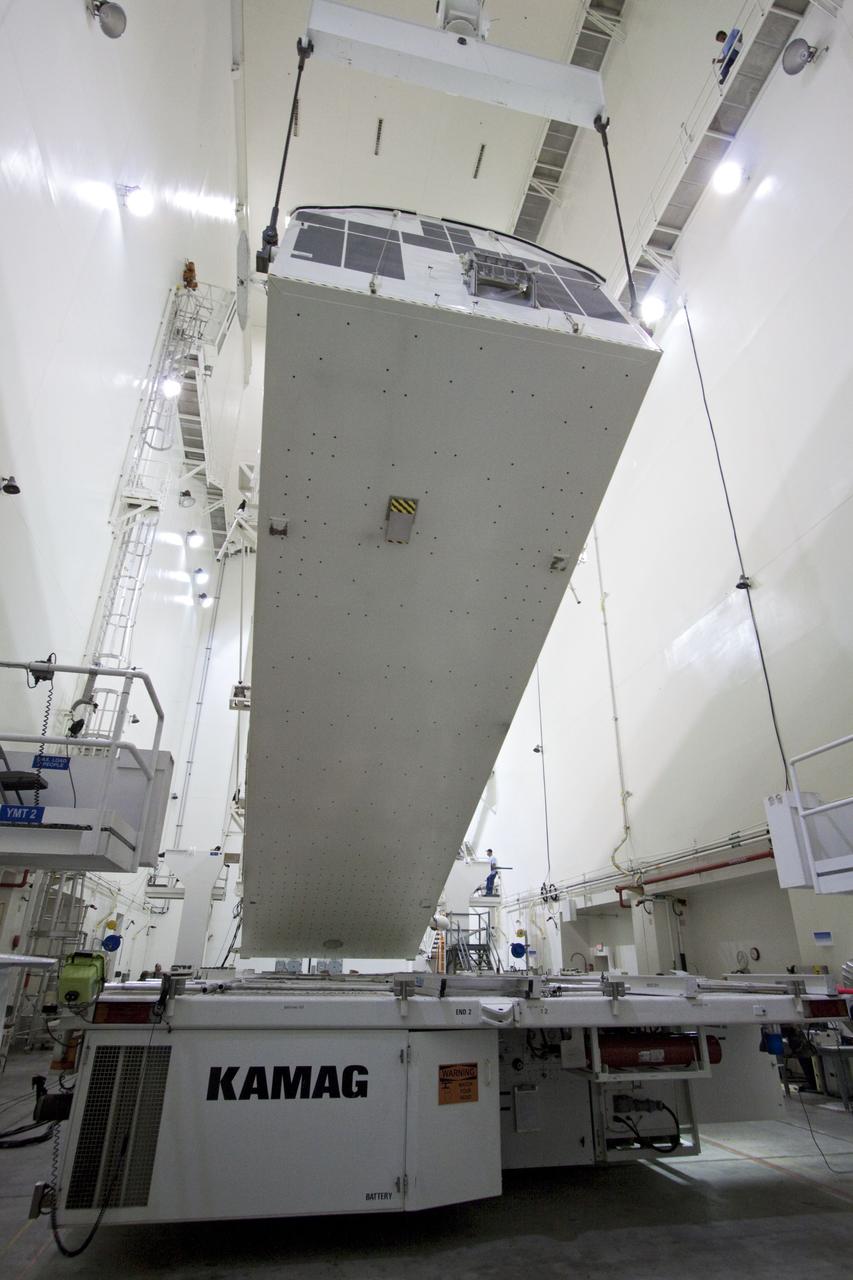
CAPE CANAVERAL, Fla. -- Workers monitor the progress of a canister, carrying the Raffaello multi-purpose logistics module, or MPLM, for the STS-135 mission, as it is rotated from a horizontal to vertical position in the Canister Rotation Facility at NASA's Kennedy Space Center in Florida. Commander Chris Ferguson, Pilot Doug Hurley and Mission Specialists Sandra Magnus and Rex Walheim are targeted to lift off on space shuttle Atlantis July 8, taking with them the MPLM packed with supplies, logistics and spare parts to the International Space Station. The STS-135 mission also will fly a system to investigate the potential for robotically refueling existing spacecraft and return a failed ammonia pump module to help NASA better understand the failure mechanism and improve pump designs for future systems. STS-135 will be the 33rd flight of Atlantis, the 37th shuttle mission to the space station, and the 135th and final mission of NASA's Space Shuttle Program. For more information, visit www.nasa.gov/mission_pages/shuttle/shuttlemissions/sts135/index.html. Photo credit: NASA/Jack Pfaller
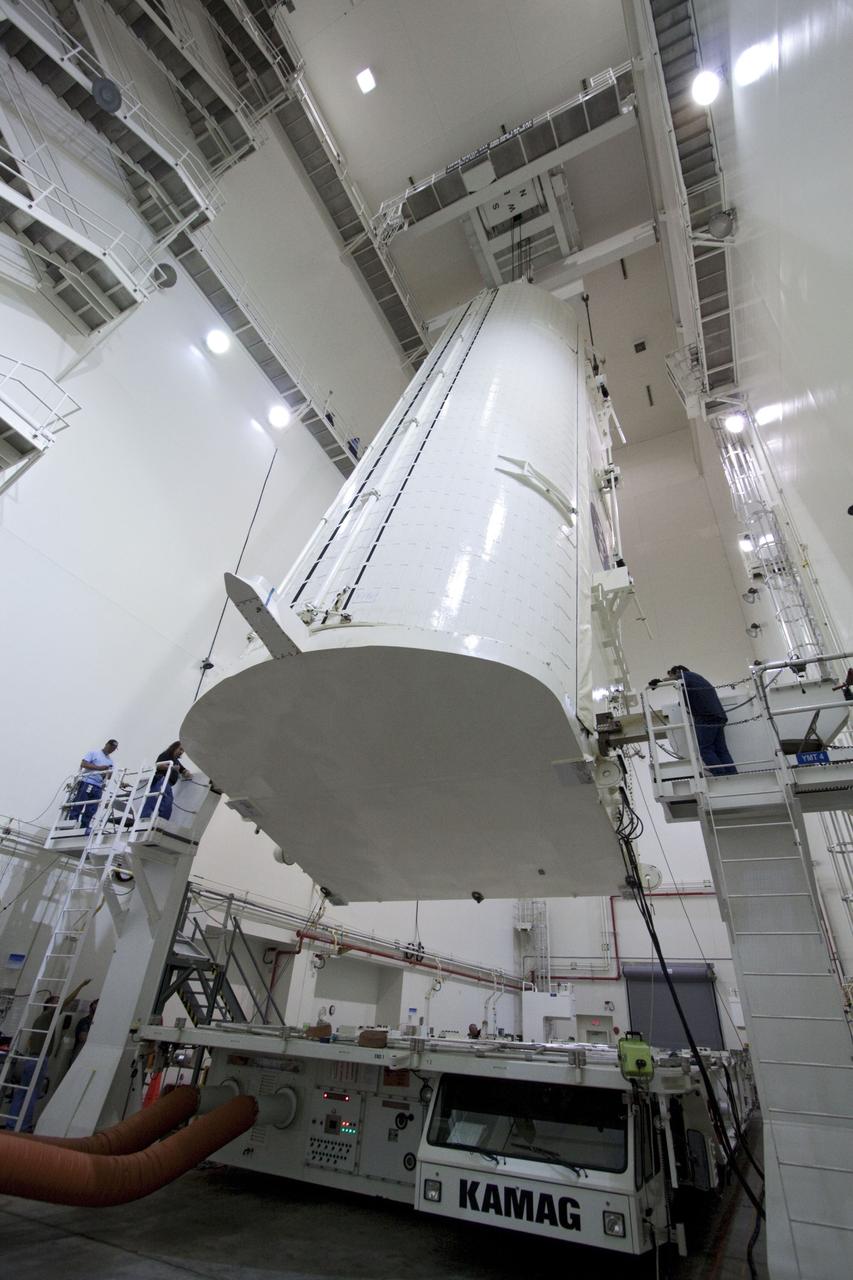
CAPE CANAVERAL, Fla. -- Workers monitor the progress of a canister, carrying the Raffaello multi-purpose logistics module, or MPLM, for the STS-135 mission, as it is rotated from a horizontal to vertical position in the Canister Rotation Facility at NASA's Kennedy Space Center in Florida. Commander Chris Ferguson, Pilot Doug Hurley and Mission Specialists Sandra Magnus and Rex Walheim are targeted to lift off on space shuttle Atlantis July 8, taking with them the MPLM packed with supplies, logistics and spare parts to the International Space Station. The STS-135 mission also will fly a system to investigate the potential for robotically refueling existing spacecraft and return a failed ammonia pump module to help NASA better understand the failure mechanism and improve pump designs for future systems. STS-135 will be the 33rd flight of Atlantis, the 37th shuttle mission to the space station, and the 135th and final mission of NASA's Space Shuttle Program. For more information, visit www.nasa.gov/mission_pages/shuttle/shuttlemissions/sts135/index.html. Photo credit: NASA/Jack Pfaller

CAPE CANAVERAL, Fla. -- Workers move the payload canister, atop its transporter with the Raffaello multi-purpose logistics module, or MPLM, secured inside, from the Space Station Processing Facility at NASA's Kennedy Space Center in Florida to the Canister Rotation Facility. Commander Chris Ferguson, Pilot Doug Hurley and Mission Specialists Sandra Magnus and Rex Walheim are targeted to lift off on space shuttle Atlantis July 8, taking with them the MPLM packed with supplies, logistics and spare parts to the International Space Station. The STS-135 mission also will fly a system to investigate the potential for robotically refueling existing spacecraft and return a failed ammonia pump module to help NASA better understand the failure mechanism and improve pump designs for future systems. STS-135 will be the 33rd flight of Atlantis, the 37th shuttle mission to the space station, and the 135th and final mission of NASA's Space Shuttle Program. For more information, visit www.nasa.gov/mission_pages/shuttle/shuttlemissions/sts135/index.html. Photo credit: NASA/Jim Grossmann
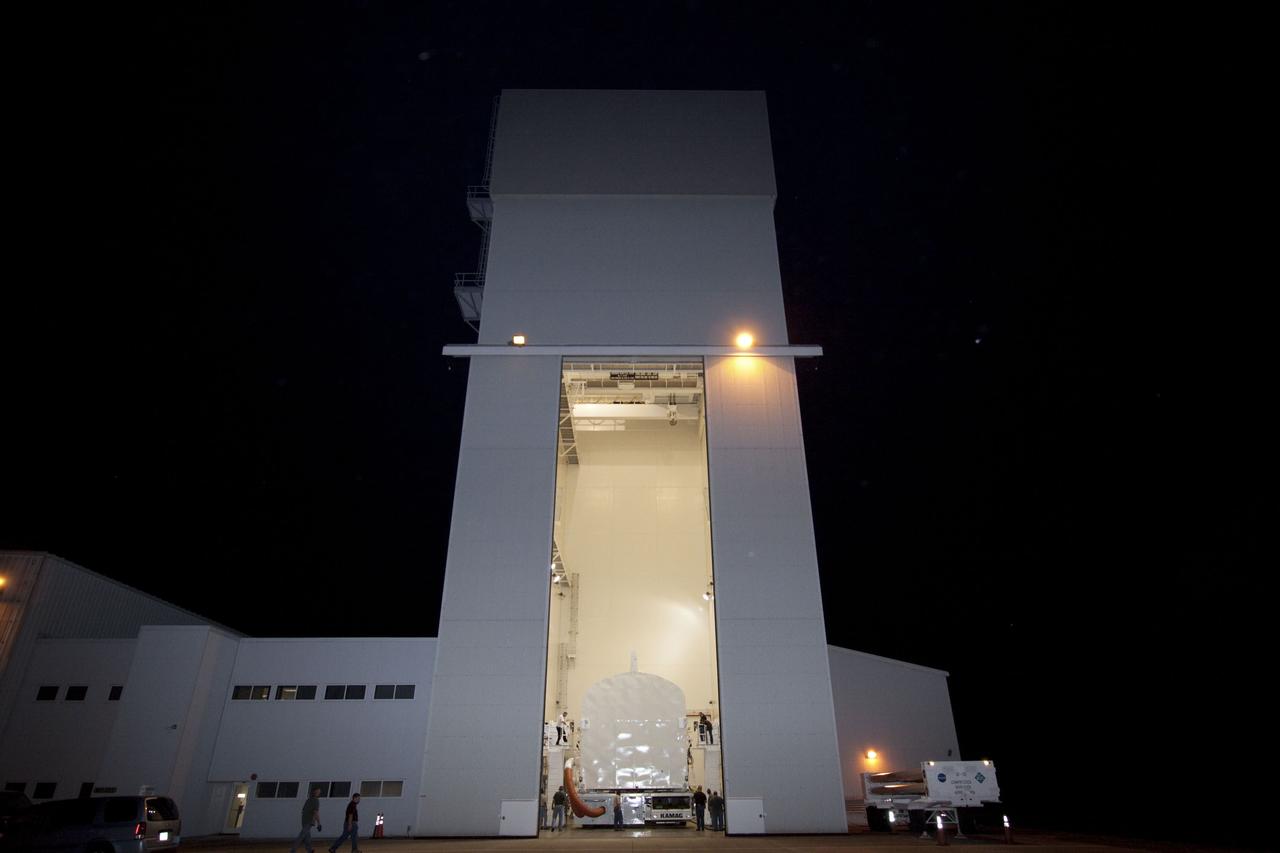
CAPE CANAVERAL, Fla. -- Workers have delivered the payload canister, atop its transporter with the Raffaello multi-purpose logistics module, or MPLM, secured inside, to the Canister Rotation Facility at NASA's Kennedy Space Center in Florida. Commander Chris Ferguson, Pilot Doug Hurley and Mission Specialists Sandra Magnus and Rex Walheim are targeted to lift off on space shuttle Atlantis July 8, taking with them the MPLM packed with supplies, logistics and spare parts to the International Space Station. The STS-135 mission also will fly a system to investigate the potential for robotically refueling existing spacecraft and return a failed ammonia pump module to help NASA better understand the failure mechanism and improve pump designs for future systems. STS-135 will be the 33rd flight of Atlantis, the 37th shuttle mission to the space station, and the 135th and final mission of NASA's Space Shuttle Program. For more information, visit www.nasa.gov/mission_pages/shuttle/shuttlemissions/sts135/index.html. Photo credit: NASA/Jim Grossmann
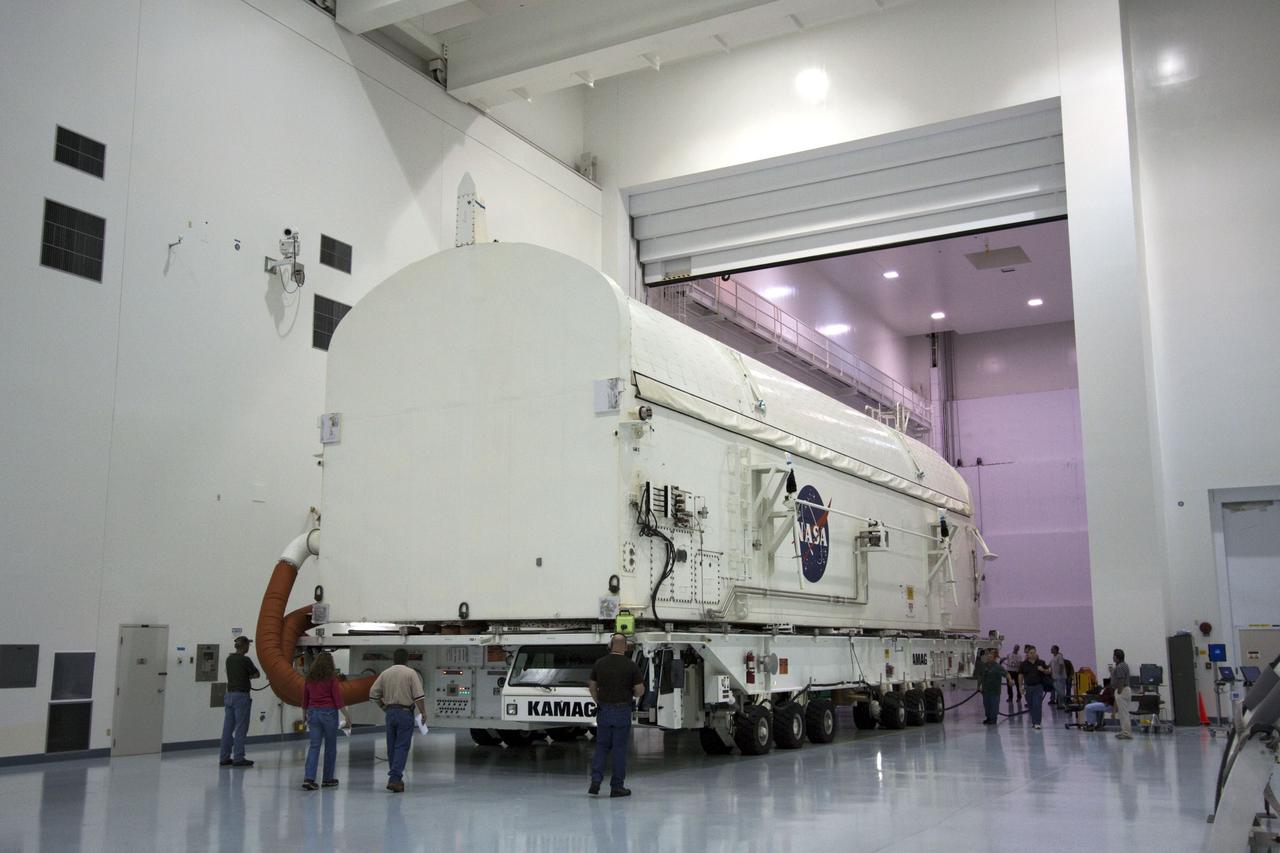
CAPE CANAVERAL, Fla. -- Workers in the Space Station Processing Facility at NASA's Kennedy Space Center in Florida prepare to move the payload canister, atop its transporter with the Raffaello multi-purpose logistics module, or MPLM, secured inside, to the Canister Rotation Facility. Commander Chris Ferguson, Pilot Doug Hurley and Mission Specialists Sandra Magnus and Rex Walheim are targeted to lift off on space shuttle Atlantis July 8, taking with them the MPLM packed with supplies, logistics and spare parts to the International Space Station. The STS-135 mission also will fly a system to investigate the potential for robotically refueling existing spacecraft and return a failed ammonia pump module to help NASA better understand the failure mechanism and improve pump designs for future systems. STS-135 will be the 33rd flight of Atlantis, the 37th shuttle mission to the space station, and the 135th and final mission of NASA's Space Shuttle Program. For more information, visit www.nasa.gov/mission_pages/shuttle/shuttlemissions/sts135/index.html. Photo credit: NASA/Jim Grossmann
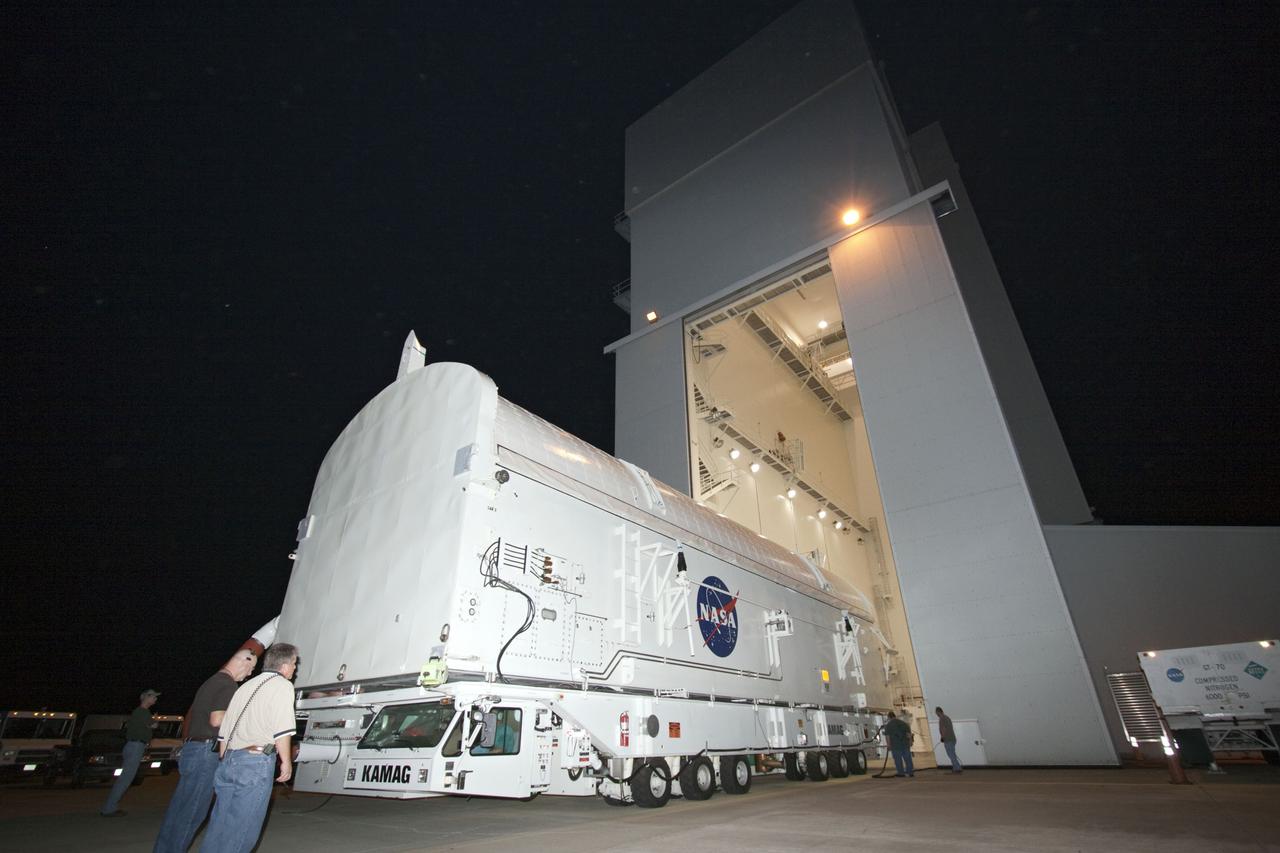
CAPE CANAVERAL, Fla. -- Workers move the payload canister, atop its transporter with the Raffaello multi-purpose logistics module, or MPLM, secured inside, into the Canister Rotation Facility at NASA's Kennedy Space Center in Florida. Commander Chris Ferguson, Pilot Doug Hurley and Mission Specialists Sandra Magnus and Rex Walheim are targeted to lift off on space shuttle Atlantis July 8, taking with them the MPLM packed with supplies, logistics and spare parts to the International Space Station. The STS-135 mission also will fly a system to investigate the potential for robotically refueling existing spacecraft and return a failed ammonia pump module to help NASA better understand the failure mechanism and improve pump designs for future systems. STS-135 will be the 33rd flight of Atlantis, the 37th shuttle mission to the space station, and the 135th and final mission of NASA's Space Shuttle Program. For more information, visit www.nasa.gov/mission_pages/shuttle/shuttlemissions/sts135/index.html. Photo credit: NASA/Jim Grossmann
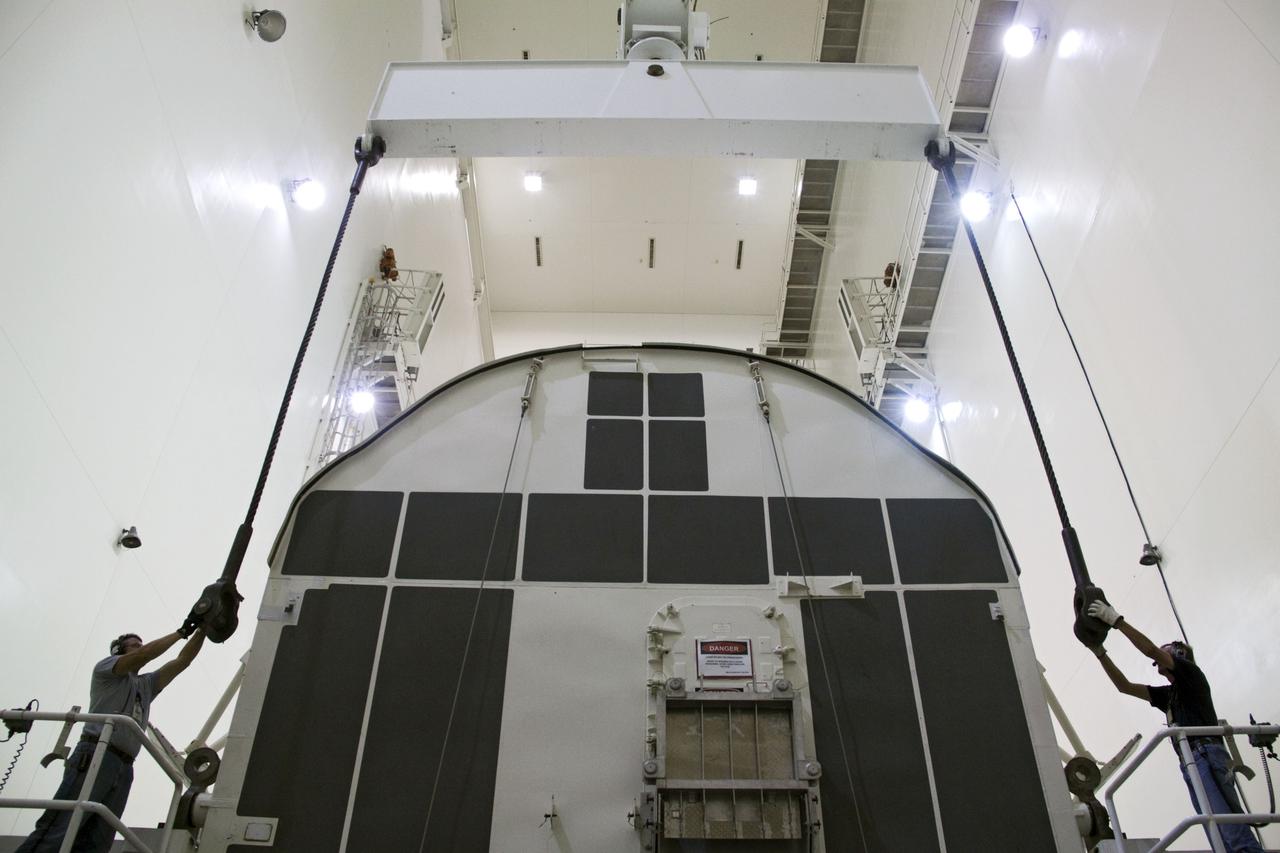
CAPE CANAVERAL, Fla. -- Workers prepare a canister, carrying the Raffaello multi-purpose logistics module, or MPLM, for the STS-135 mission, to be rotated from a horizontal to vertical position in the Canister Rotation Facility at NASA's Kennedy Space Center in Florida. Commander Chris Ferguson, Pilot Doug Hurley and Mission Specialists Sandra Magnus and Rex Walheim are targeted to lift off on space shuttle Atlantis July 8, taking with them the MPLM packed with supplies, logistics and spare parts to the International Space Station. The STS-135 mission also will fly a system to investigate the potential for robotically refueling existing spacecraft and return a failed ammonia pump module to help NASA better understand the failure mechanism and improve pump designs for future systems. STS-135 will be the 33rd flight of Atlantis, the 37th shuttle mission to the space station, and the 135th and final mission of NASA's Space Shuttle Program. For more information, visit www.nasa.gov/mission_pages/shuttle/shuttlemissions/sts135/index.html. Photo credit: NASA/Jack Pfaller
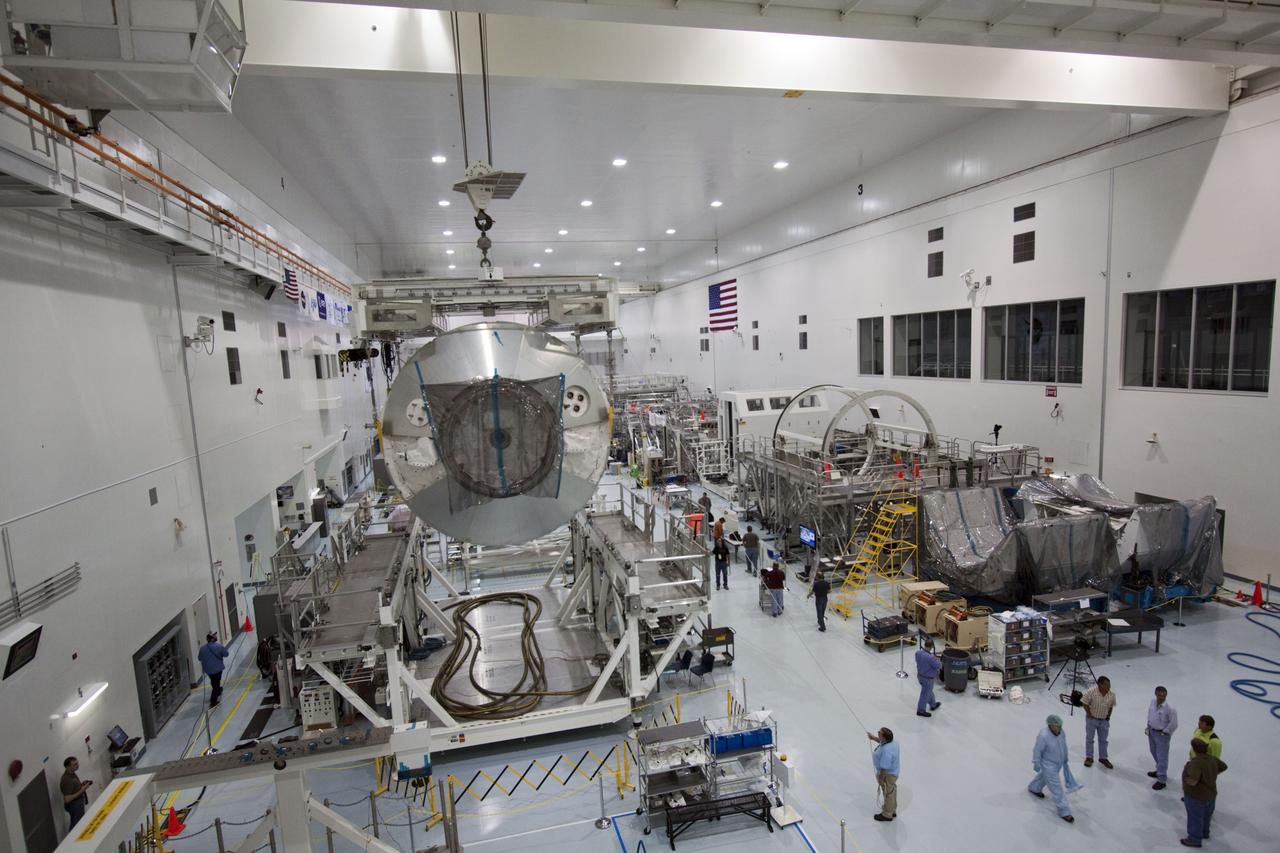
CAPE CANAVERAL, Fla. -- In the Space Station Processing Facility at NASA's Kennedy Space Center in Florida, an overhead crane moves the Raffaello multi-purpose logistics module, or MPLM, toward a payload canister. Commander Chris Ferguson, Pilot Doug Hurley and Mission Specialists Sandra Magnus and Rex Walheim are targeted to lift off on space shuttle Atlantis July 8, taking with them the MPLM packed with supplies, logistics and spare parts to the International Space Station. The STS-135 mission also will fly a system to investigate the potential for robotically refueling existing spacecraft and return a failed ammonia pump module to help NASA better understand the failure mechanism and improve pump designs for future systems. STS-135 will be the 33rd flight of Atlantis, the 37th shuttle mission to the space station, and the 135th and final mission of NASA's Space Shuttle Program. For more information, visit www.nasa.gov/mission_pages/shuttle/shuttlemissions/sts135/index.html. Photo credit: NASA/Jim Grossmann
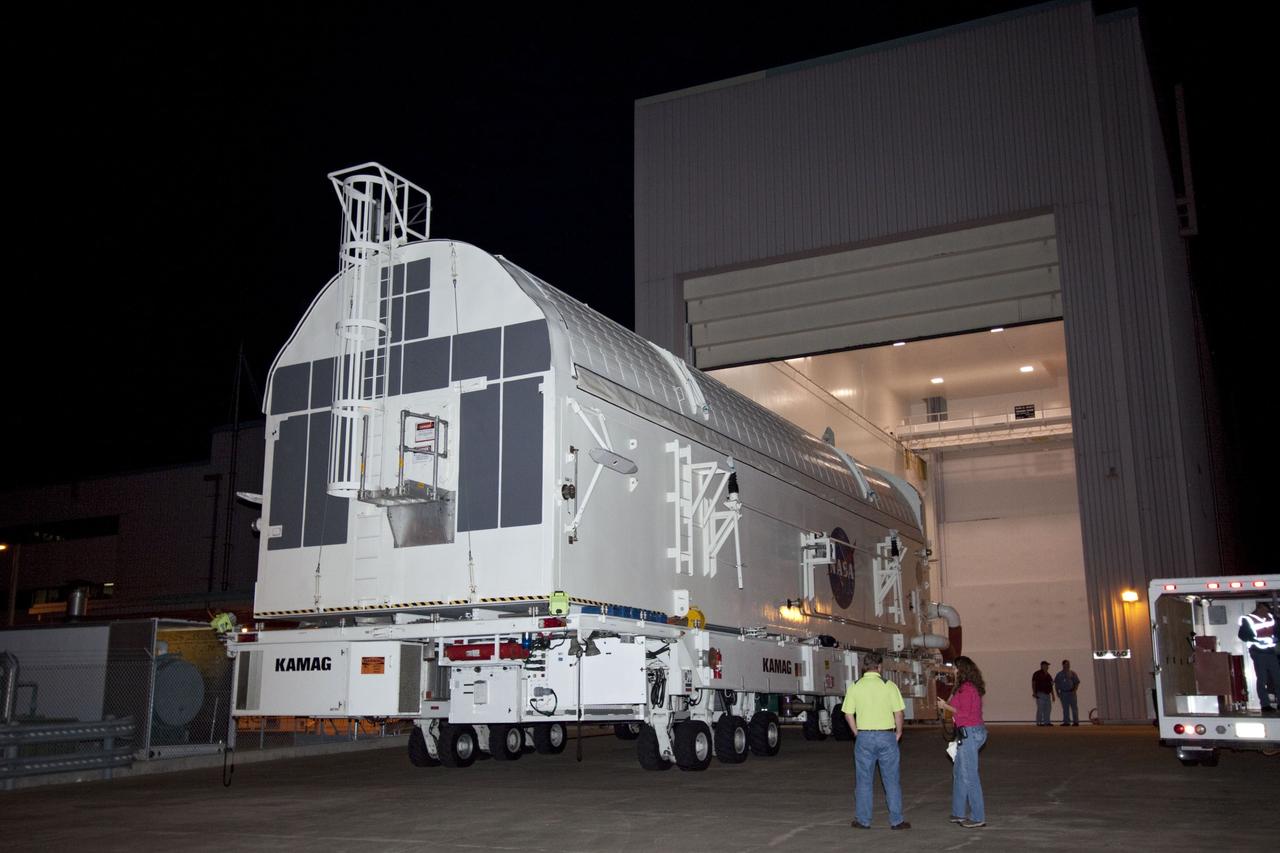
CAPE CANAVERAL, Fla. -- Workers move the payload canister, atop its transporter with the Raffaello multi-purpose logistics module, or MPLM, secured inside, from the Space Station Processing Facility at NASA's Kennedy Space Center in Florida to the Canister Rotation Facility. Commander Chris Ferguson, Pilot Doug Hurley and Mission Specialists Sandra Magnus and Rex Walheim are targeted to lift off on space shuttle Atlantis July 8, taking with them the MPLM packed with supplies, logistics and spare parts to the International Space Station. The STS-135 mission also will fly a system to investigate the potential for robotically refueling existing spacecraft and return a failed ammonia pump module to help NASA better understand the failure mechanism and improve pump designs for future systems. STS-135 will be the 33rd flight of Atlantis, the 37th shuttle mission to the space station, and the 135th and final mission of NASA's Space Shuttle Program. For more information, visit www.nasa.gov/mission_pages/shuttle/shuttlemissions/sts135/index.html. Photo credit: NASA/Jim Grossmann
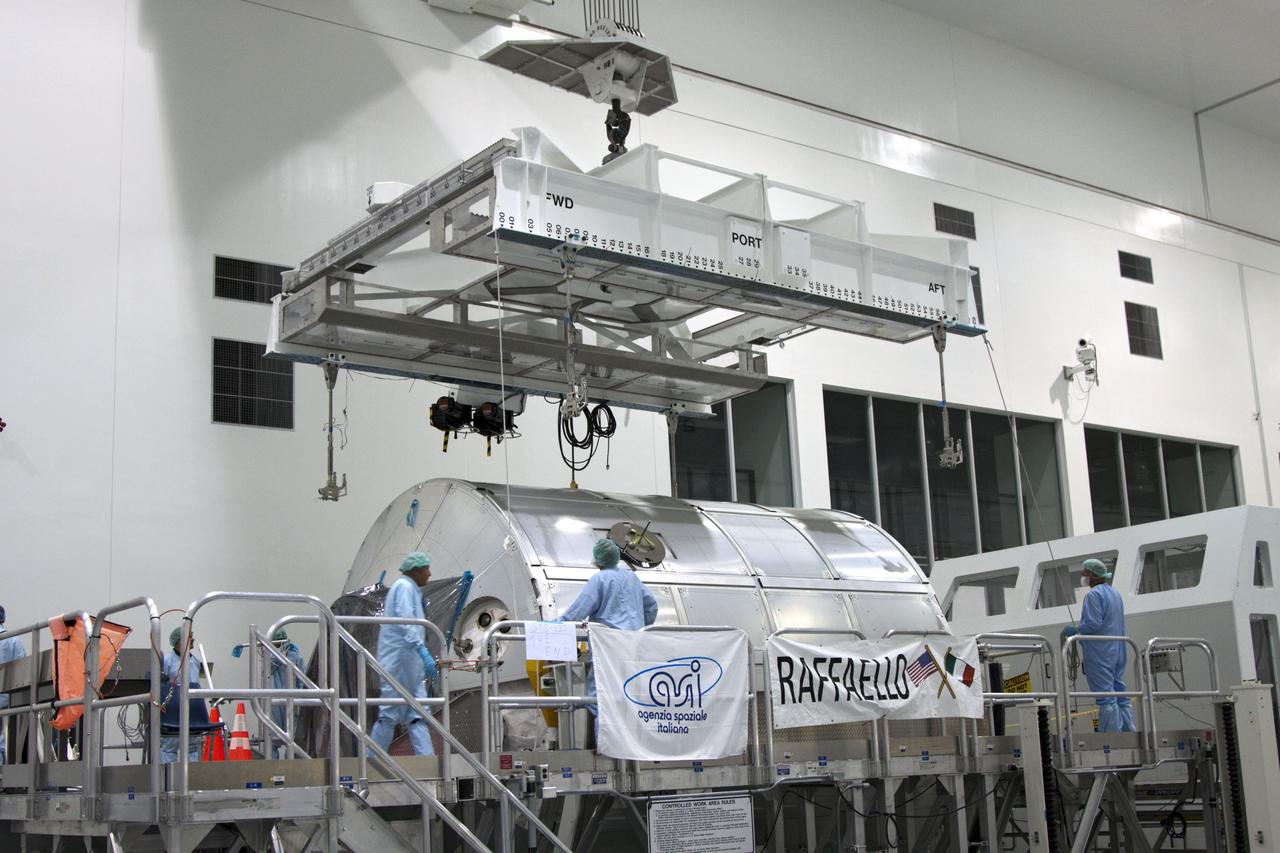
CAPE CANAVERAL, Fla. -- In the Space Station Processing Facility at NASA's Kennedy Space Center in Florida, technicians lower an overhead crane toward the Raffaello multi-purpose logistics module, or MPLM, for its move toward a payload canister. Commander Chris Ferguson, Pilot Doug Hurley and Mission Specialists Sandra Magnus and Rex Walheim are targeted to lift off on space shuttle Atlantis July 8, taking with them the MPLM packed with supplies, logistics and spare parts to the International Space Station. The STS-135 mission also will fly a system to investigate the potential for robotically refueling existing spacecraft and return a failed ammonia pump module to help NASA better understand the failure mechanism and improve pump designs for future systems. STS-135 will be the 33rd flight of Atlantis, the 37th shuttle mission to the space station, and the 135th and final mission of NASA's Space Shuttle Program. For more information, visit www.nasa.gov/mission_pages/shuttle/shuttlemissions/sts135/index.html. Photo credit: NASA/Jim Grossmann
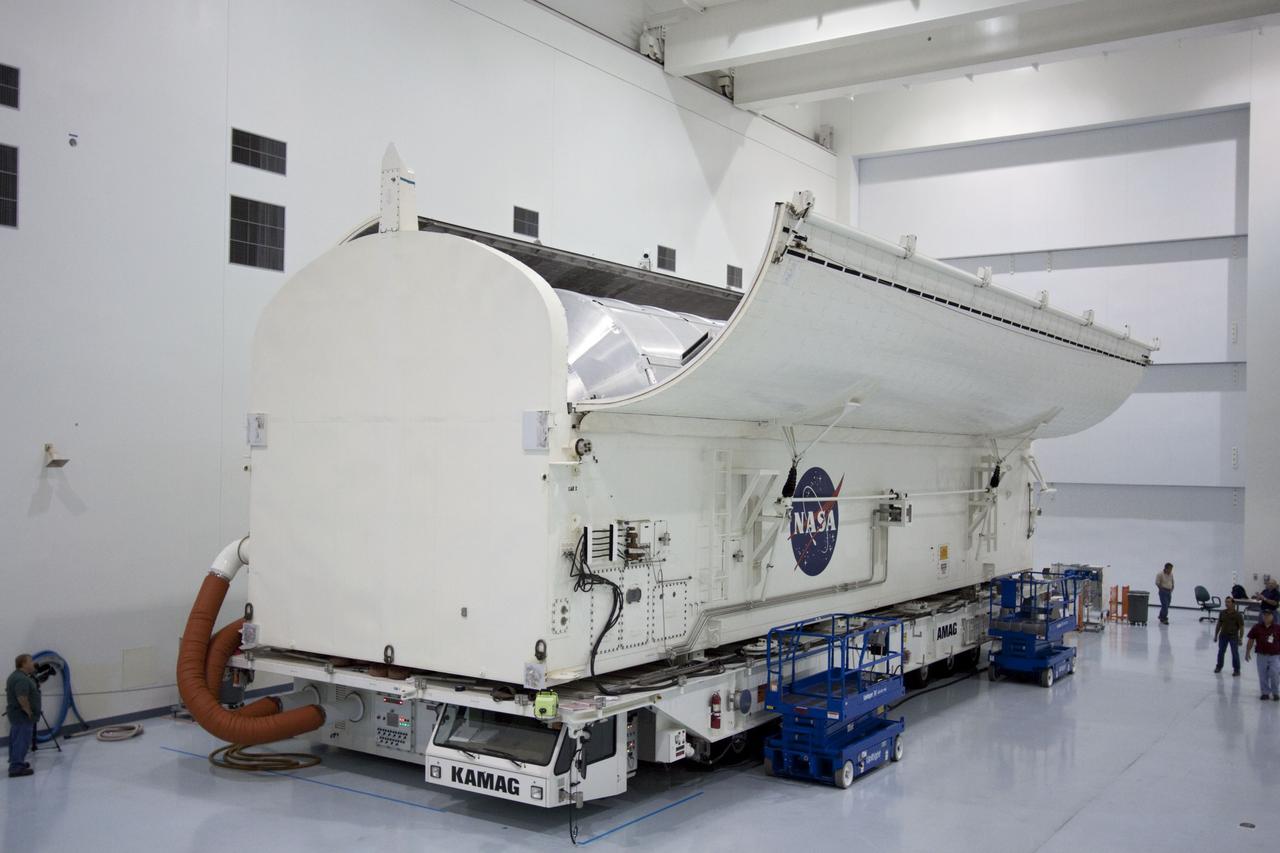
CAPE CANAVERAL, Fla. -- In the Space Station Processing Facility at NASA's Kennedy Space Center in Florida, the clamshell doors on the canister atop its transporter close around the Raffaello multi-purpose logistics module, or MPLM, secured inside. Commander Chris Ferguson, Pilot Doug Hurley and Mission Specialists Sandra Magnus and Rex Walheim are targeted to lift off on space shuttle Atlantis July 8, taking with them the MPLM packed with supplies, logistics and spare parts to the International Space Station. The STS-135 mission also will fly a system to investigate the potential for robotically refueling existing spacecraft and return a failed ammonia pump module to help NASA better understand the failure mechanism and improve pump designs for future systems. STS-135 will be the 33rd flight of Atlantis, the 37th shuttle mission to the space station, and the 135th and final mission of NASA's Space Shuttle Program. For more information, visit www.nasa.gov/mission_pages/shuttle/shuttlemissions/sts135/index.html. Photo credit: NASA/Jim Grossmann
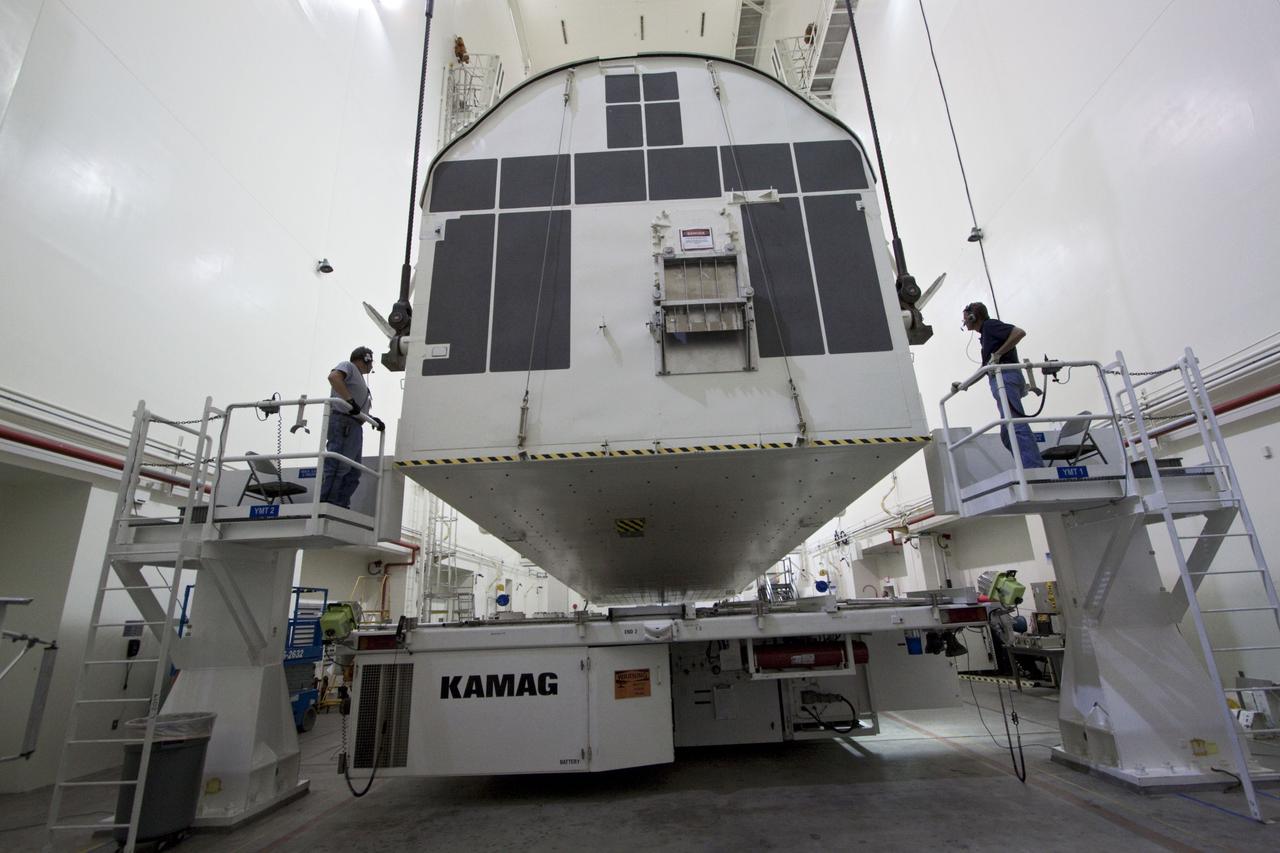
CAPE CANAVERAL, Fla. -- Workers monitor the progress of a canister, carrying the Raffaello multi-purpose logistics module, or MPLM, for the STS-135 mission, as it is rotated from a horizontal to vertical position in the Canister Rotation Facility at NASA's Kennedy Space Center in Florida. Commander Chris Ferguson, Pilot Doug Hurley and Mission Specialists Sandra Magnus and Rex Walheim are targeted to lift off on space shuttle Atlantis July 8, taking with them the MPLM packed with supplies, logistics and spare parts to the International Space Station. The STS-135 mission also will fly a system to investigate the potential for robotically refueling existing spacecraft and return a failed ammonia pump module to help NASA better understand the failure mechanism and improve pump designs for future systems. STS-135 will be the 33rd flight of Atlantis, the 37th shuttle mission to the space station, and the 135th and final mission of NASA's Space Shuttle Program. For more information, visit www.nasa.gov/mission_pages/shuttle/shuttlemissions/sts135/index.html. Photo credit: NASA/Jack Pfaller
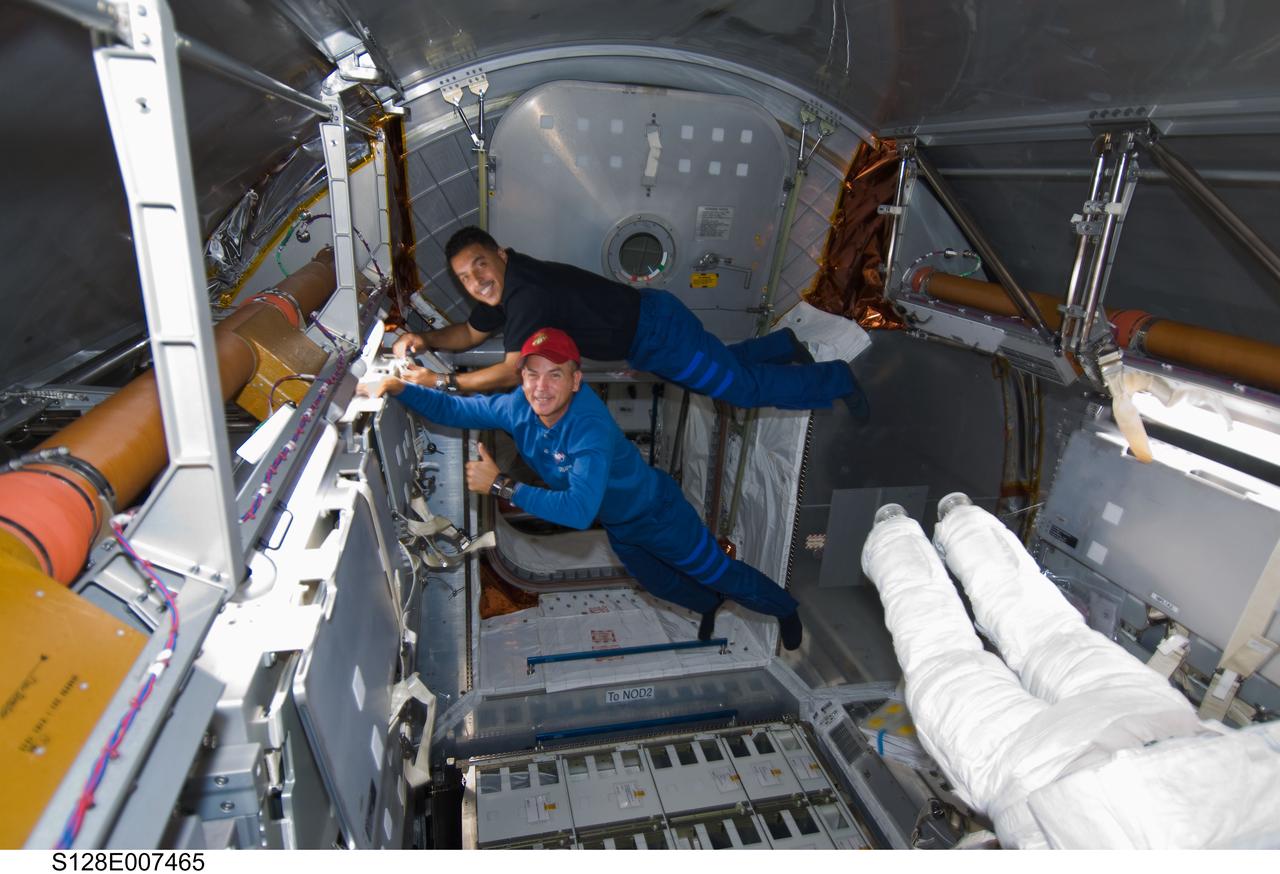
S128-E-007465 (2 Sept. 2009) --- NASA astronauts Rick Sturckow (foreground) and Jose Hernandez, STS-128 commander and mission specialist, respectively, work in the Leonardo Multi-Purpose Logistics Module (MPLM), temporarily attached to the International Space Station while Space Shuttle Discovery remains docked with the station. An empty Extravehicular Mobility Unit (EMU) spacesuit floats nearby inside the module.

S128-E-007447 (2 Sept. 2009) --- Canadian Space Agency astronaut Robert Thirsk, Expedition 20 flight engineer, holds a storage container with his legs while floating freely in the Leonardo Multi-Purpose Logistics Module (MPLM), temporarily attached to the International Space Station while Space Shuttle Discovery (STS-128) remains docked with the station.

S131-E-007768 (7 April 2010) --- The station?s robotic Canadarm2 grapples the Leonardo Multi-purpose Logistics Module (MPLM) from the payload bay of the docked space shuttle Discovery (STS-131) for relocation to a port on the Harmony node of the International Space Station. Earth?s horizon and the blackness of space provide the backdrop for the scene. Canadian-built Dextre, also known as the Special Purpose Dextrous Manipulator (SPDM), is visible at left.
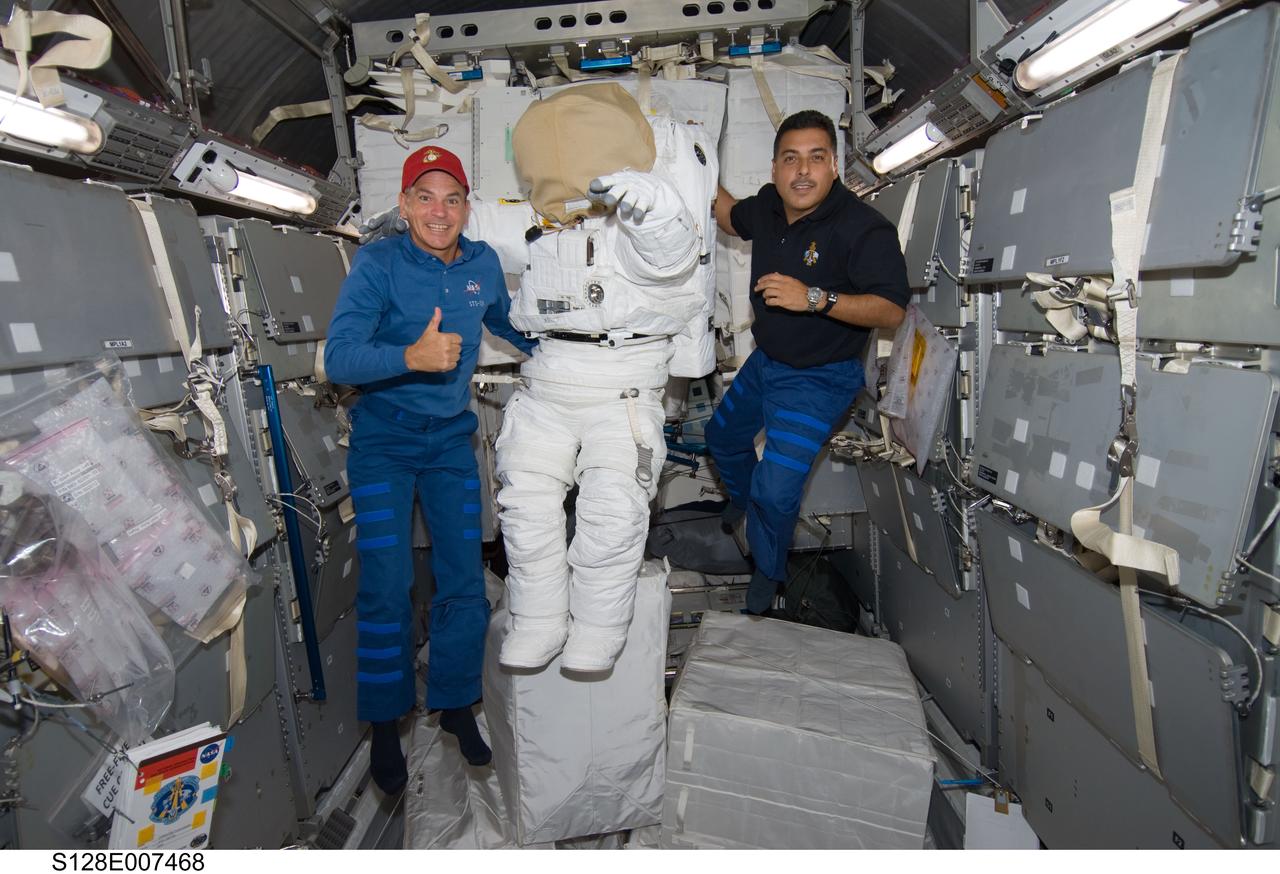
S128-E-007468 (2 Sept. 2009) --- NASA astronauts Rick Sturckow (left) and Jose Hernandez, STS-128 commander and mission specialist, respectively, pose for a photo with an Extravehicular Mobility Unit (EMU) spacesuit in the Leonardo Multi-Purpose Logistics Module (MPLM), temporarily attached to the International Space Station while Space Shuttle Discovery remains docked with the station.

S131-E-007752 (7 April 2010) --- The station?s robotic Canadarm2 grapples the Leonardo Multi-purpose Logistics Module (MPLM) from the payload bay of the docked space shuttle Discovery (STS-131) for relocation to a port on the Harmony node of the International Space Station. The bright sun and Earth?s horizon provide the backdrop for the scene. Canadian-built Dextre, also known as the Special Purpose Dextrous Manipulator (SPDM), is visible at bottom center.
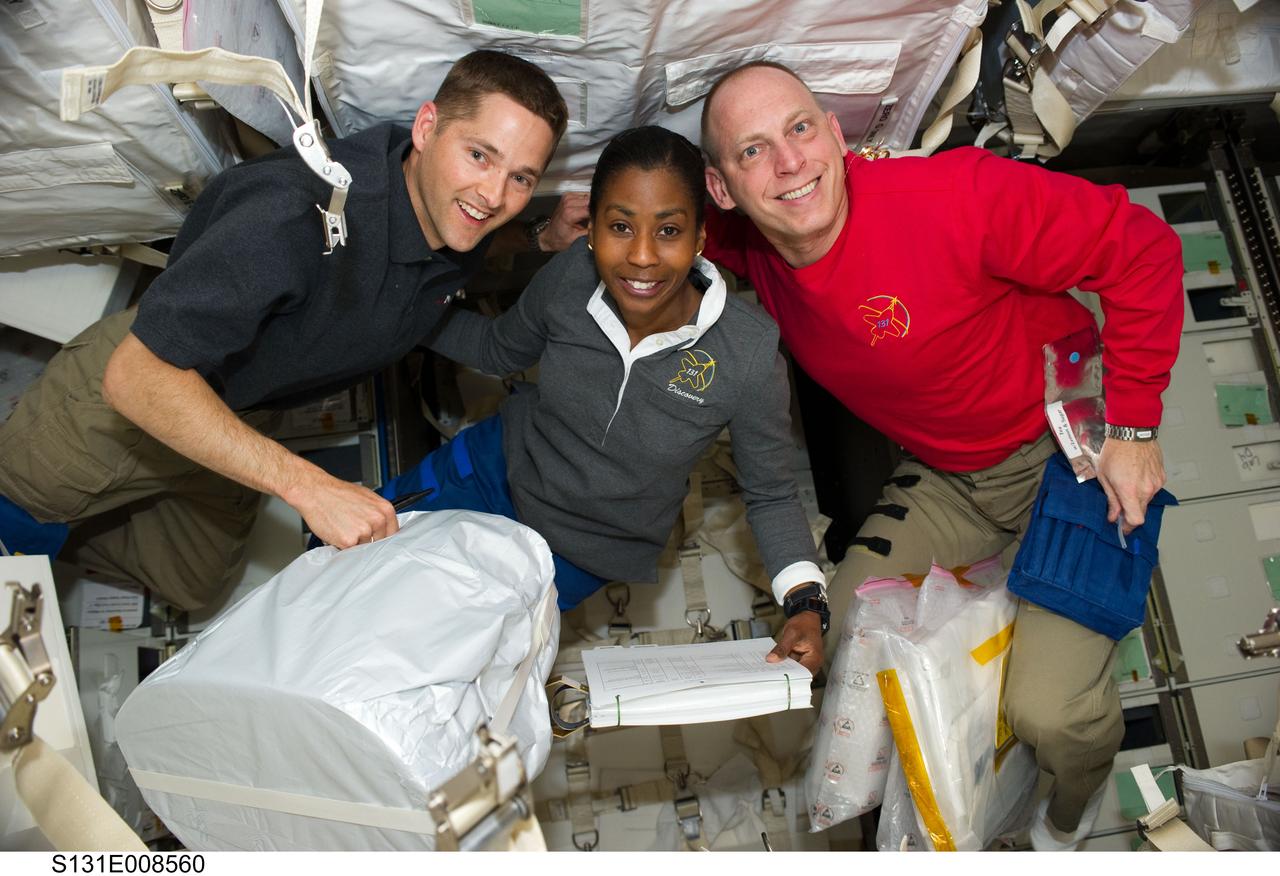
S131-E-008560 (10 April 2010) --- NASA astronauts James P. Dutton Jr. (left), STS-131 pilot; Stephanie Wilson and Clayton Anderson, both mission specialists, pose for a photo in the Leonardo Multi-Purpose Logistics Module (MPLM) linked to the International Space Station while space shuttle Discovery remains docked with the station.
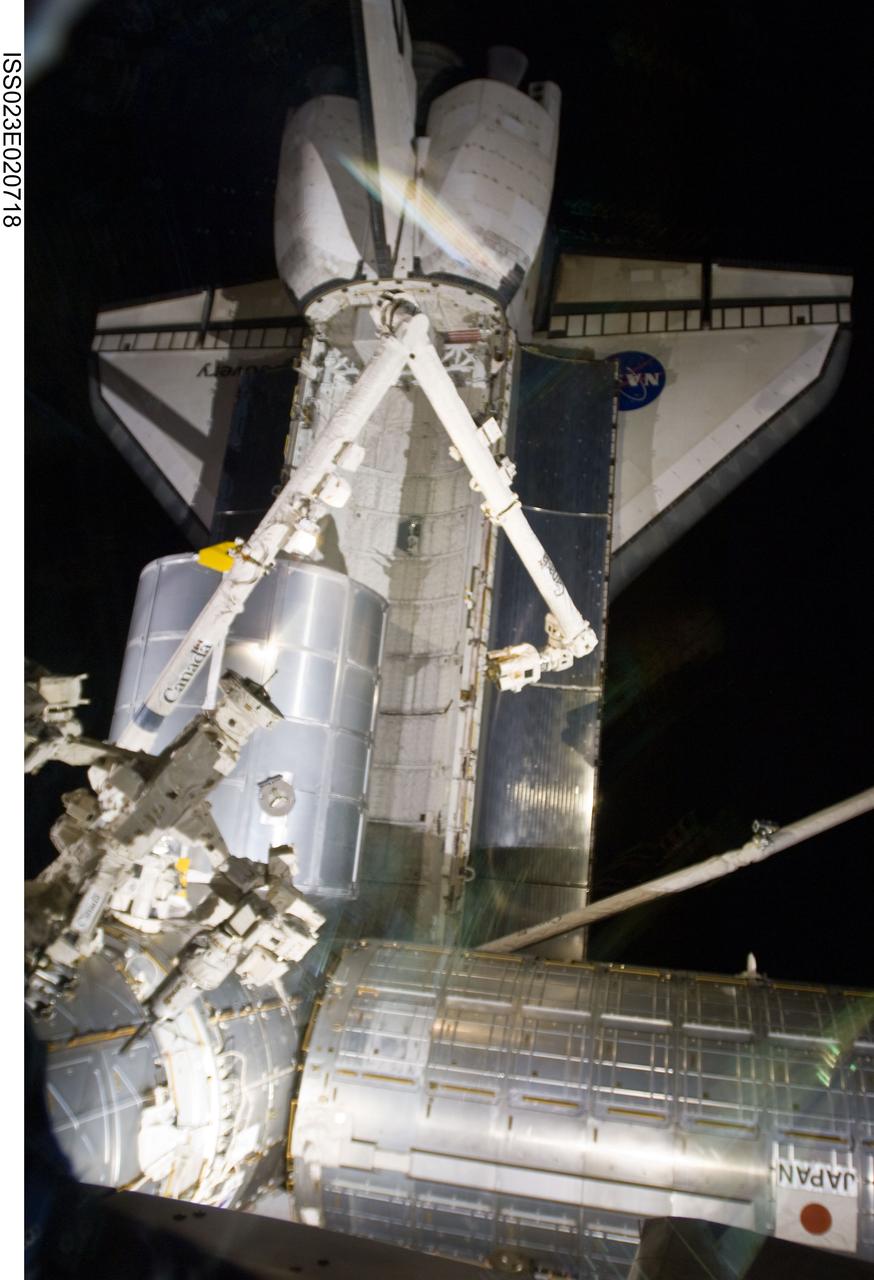
ISS023-E-020718 (8 April 2010) --- The station’s robotic Canadarm2 relocates the Leonardo Multi-purpose Logistics Module (MPLM) from space shuttle Discovery’s payload bay to a port on the Harmony node of the International Space Station.
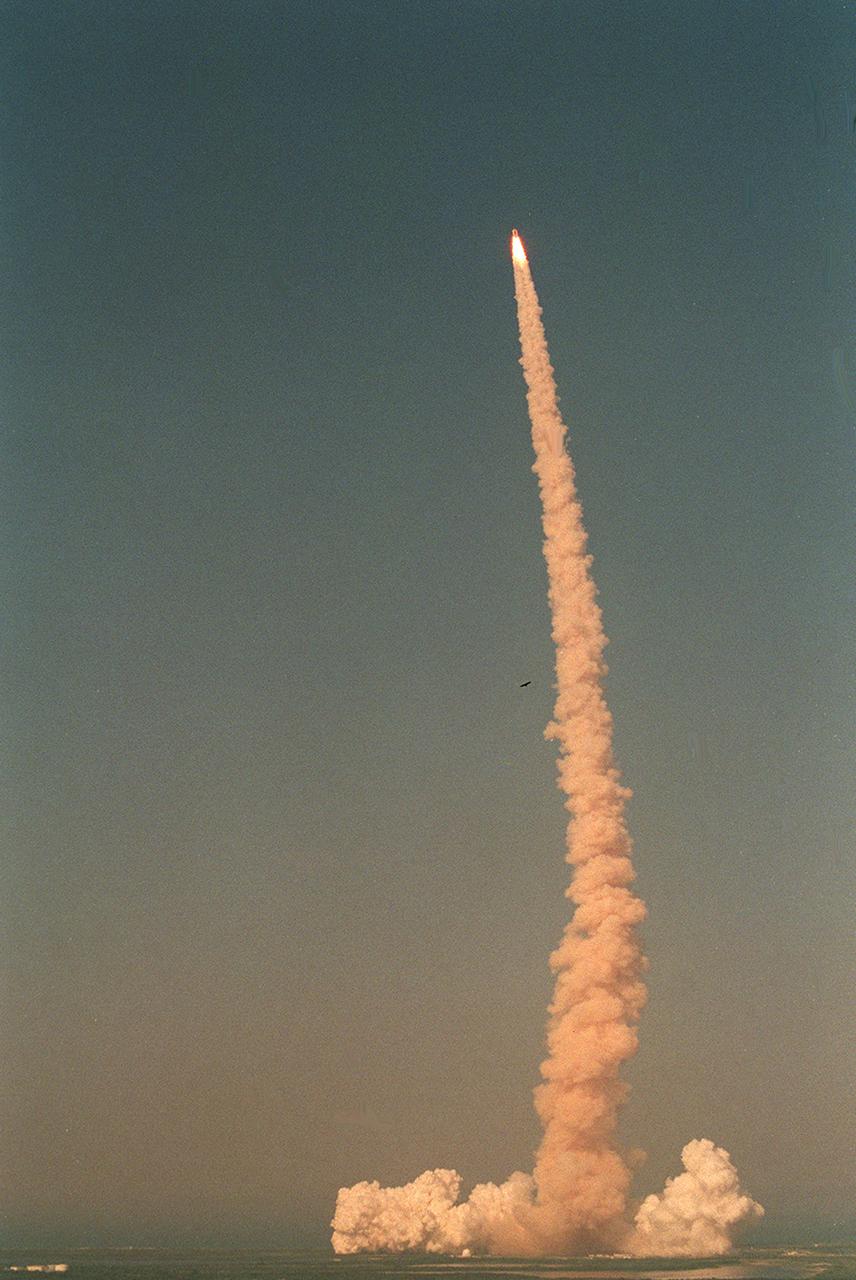
Space Shuttle Orbiter Discovery lifted off for the STS-105 mission on August 10, 2001. The main purpose of the mission was the rotation of the International Space Station (ISS) Expedition Two crew with the Expedition Three crew, and the delivery of supplies utilizing the Italian-built Multipurpose Logistics Module (MPLM) Leonardo. Another payload was the Materials International Space Station Experiment (MISSE). The MISSE experiment was to fly materials and other types of space exposure experiments on the Space Station and was the first externally mounted experiment conducted on the ISS.
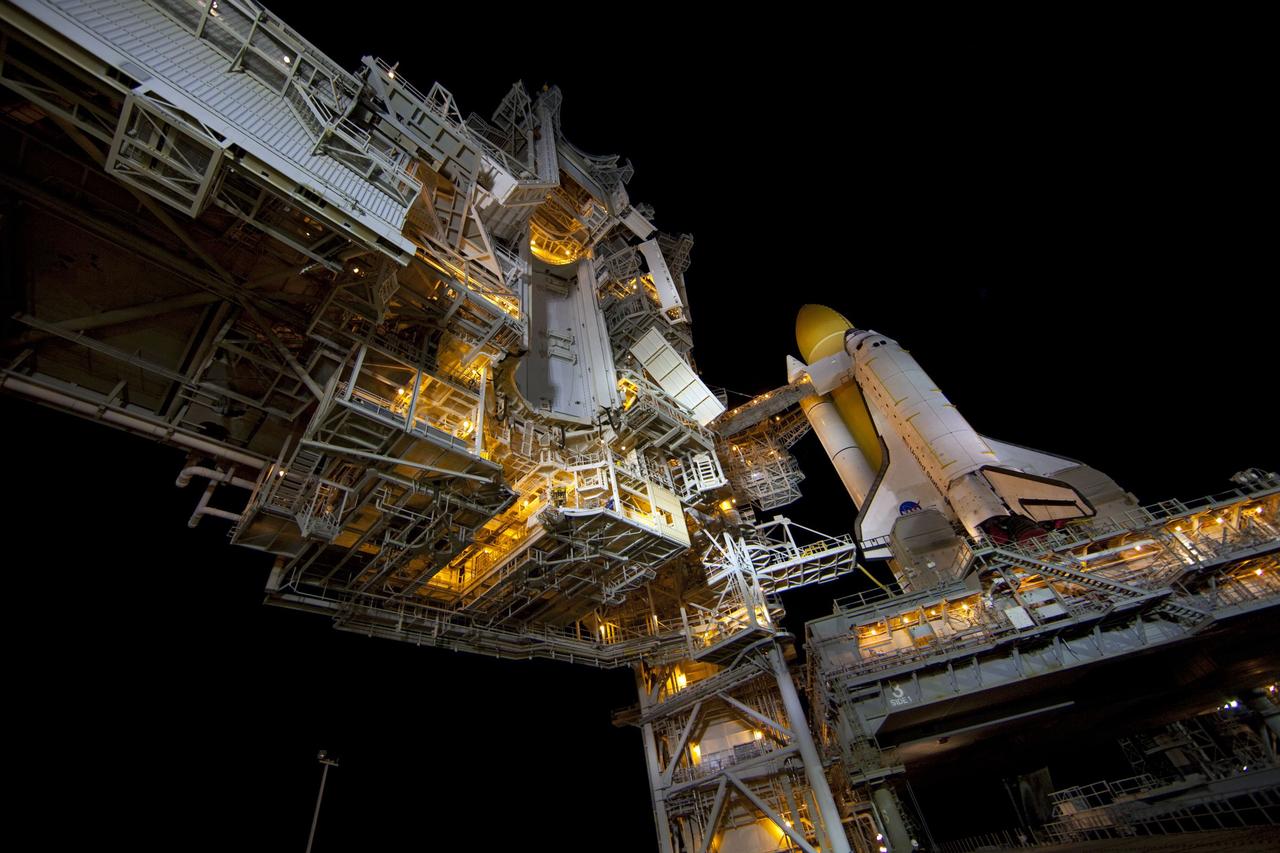
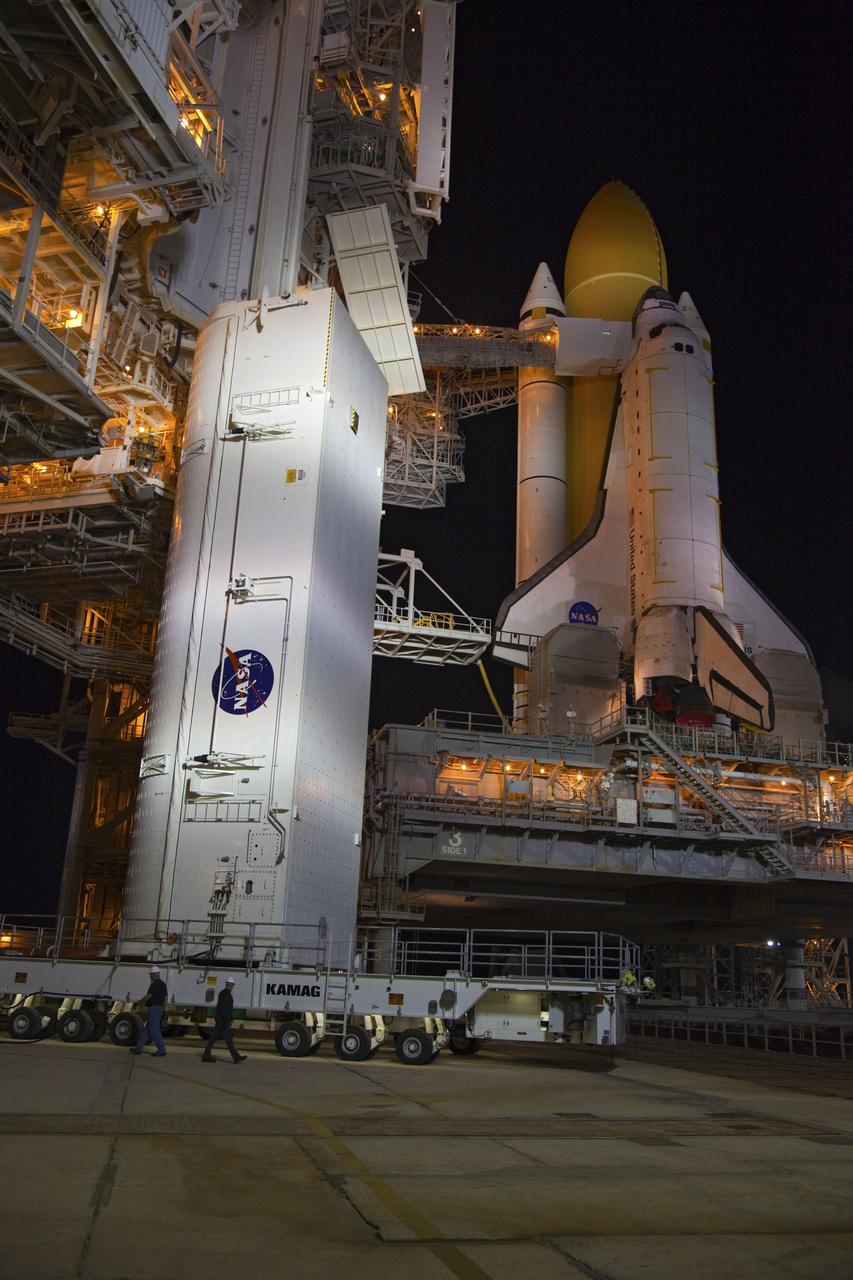
CAPE CANAVERAL, Fla. -- A canister, carrying the Raffaello multi-purpose logistics module (MPLM) for space shuttle Atlantis' STS-135 mission to the International Space Station, arrives at Launch Pad 39A at NASA's Kennedy Space Center in Florida. The canister will be lifted to the payload changeout room (seen here center of image). The payload ground-handling mechanism then will be used to transfer Raffaello out of the canister into Atlantis' payload bay. Next, the rotating service structure that protects the shuttle from the elements and provides access will be rotated back into place. Commander Chris Ferguson, Pilot Doug Hurley and Mission Specialists Sandra Magnus and Rex Walheim are targeted to lift off on Atlantis July 8, taking with them the MPLM packed with supplies, logistics and spare parts to the station. The STS-135 mission also will fly a system to investigate the potential for robotically refueling existing satellites and return a failed ammonia pump module to help NASA better understand the failure mechanism and improve pump designs for future systems. STS-135 will be the 33rd flight of Atlantis, the 37th shuttle mission to the space station, and the 135th and final mission of NASA's Space Shuttle Program. For more information visit, www.nasa.gov/mission_pages/shuttle/shuttlemissions/sts135/index.html. Photo credit: NASA/Frank Michaux
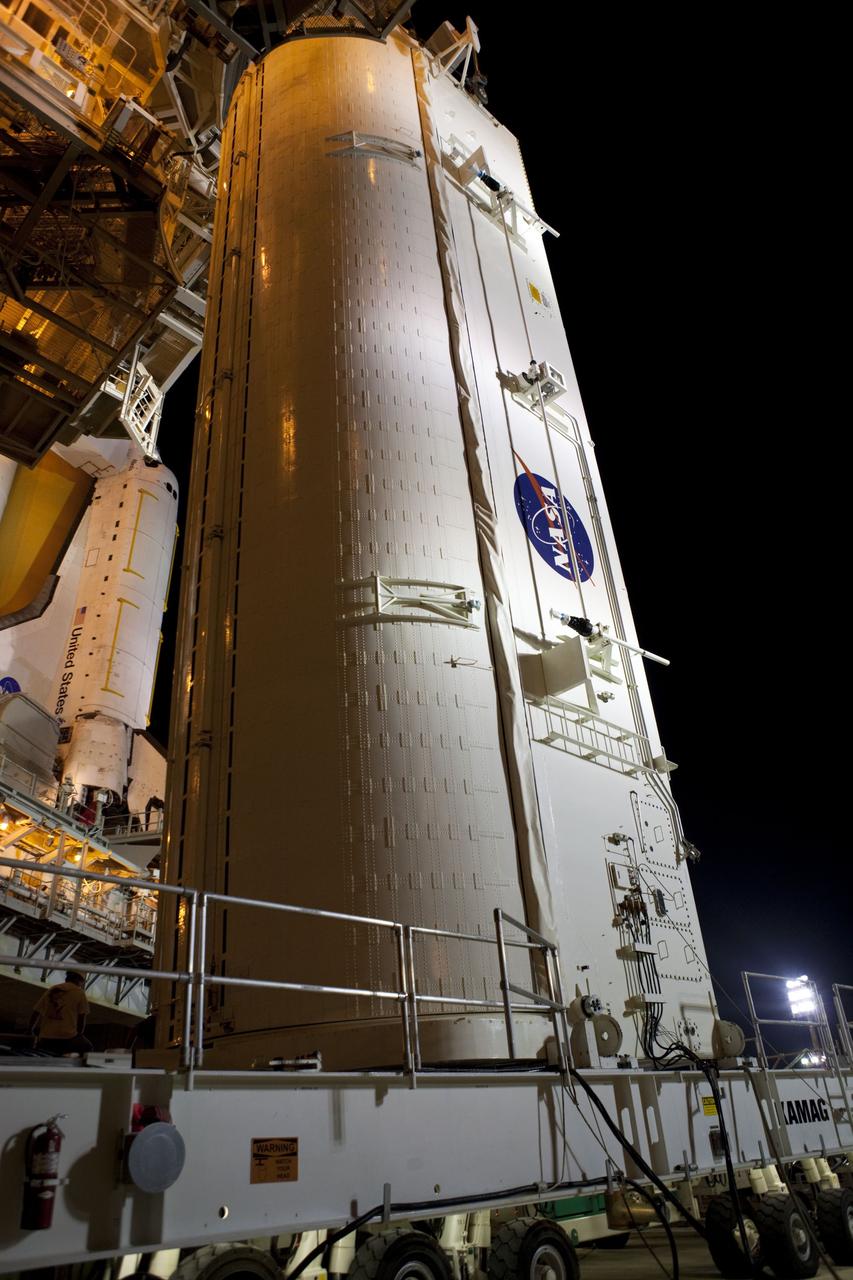
CAPE CANAVERAL, Fla. -- A canister, carrying the Raffaello multi-purpose logistics module (MPLM) for space shuttle Atlantis' STS-135 mission to the International Space Station, arrives at Launch Pad 39A at NASA's Kennedy Space Center in Florida. The canister will be lifted to the payload changeout room. The payload ground-handling mechanism then will be used to transfer Raffaello out of the canister into Atlantis' payload bay. Next, the rotating service structure that protects the shuttle from the elements and provides access will be rotated back into place. Commander Chris Ferguson, Pilot Doug Hurley and Mission Specialists Sandra Magnus and Rex Walheim are targeted to lift off on Atlantis July 8, taking with them the MPLM packed with supplies, logistics and spare parts to the station. The STS-135 mission also will fly a system to investigate the potential for robotically refueling existing satellites and return a failed ammonia pump module to help NASA better understand the failure mechanism and improve pump designs for future systems. STS-135 will be the 33rd flight of Atlantis, the 37th shuttle mission to the space station, and the 135th and final mission of NASA's Space Shuttle Program. For more information visit, www.nasa.gov/mission_pages/shuttle/shuttlemissions/sts135/index.html. Photo credit: NASA/Dimitri Gerondidakis
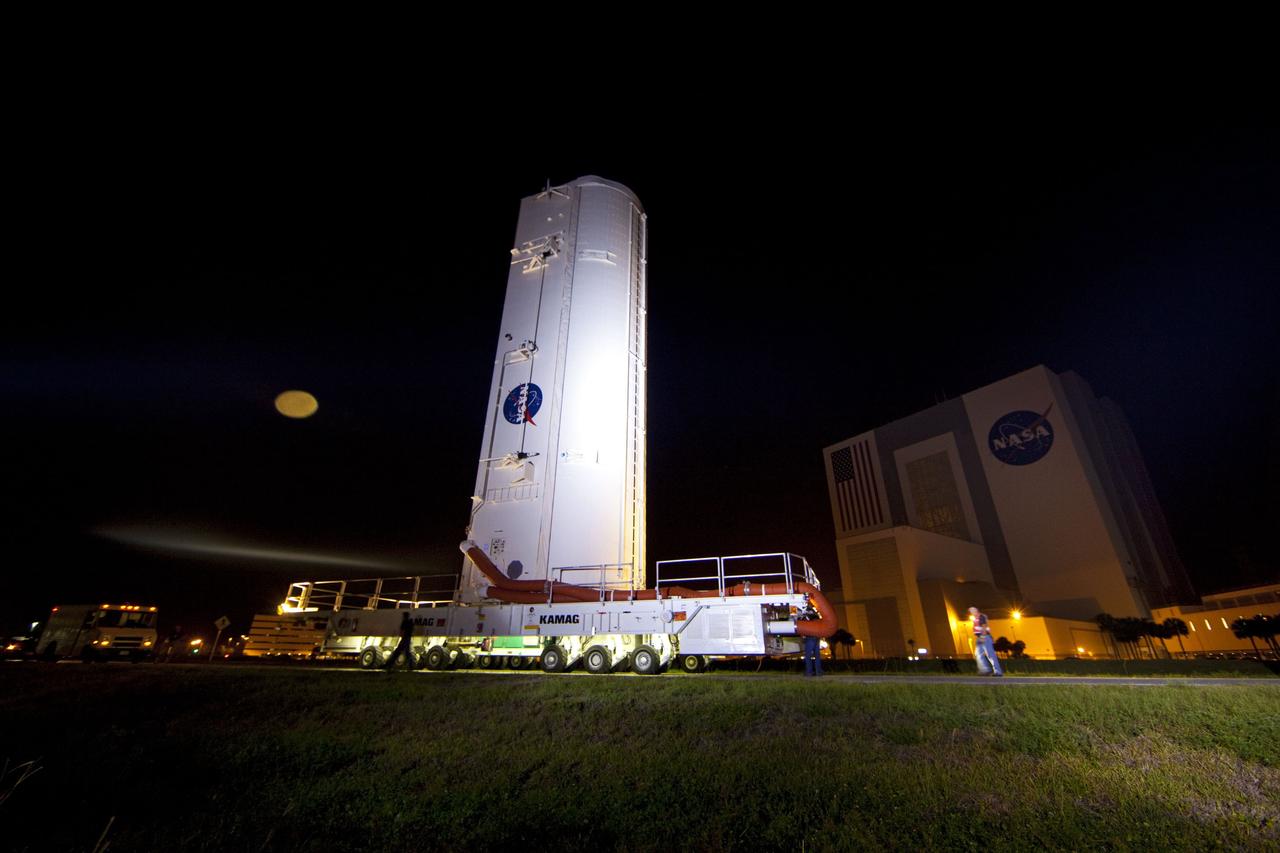
CAPE CANAVERAL, Fla. -- The container that carries the Raffaello multi-purpose logistics module (MPLM), secured on its transportation vehicle, makes its way past the Vehicle Assembly Building to Launch Pad 39A at NASA's Kennedy Space Center in Florida. Once there, the canister will be lifted to the payload changeout room. The payload ground-handling mechanism then will be used to transfer Raffaello out of the canister into space shuttle Atlantis' payload bay. Next, the rotating service structure that protects the shuttle from the elements and provides access will be rotated back into place. Commander Chris Ferguson, Pilot Doug Hurley and Mission Specialists Sandra Magnus and Rex Walheim are targeted to lift off on Atlantis July 8, taking with them the MPLM packed with supplies, logistics and spare parts to the station. The STS-135 mission also will fly a system to investigate the potential for robotically refueling existing satellites and return a failed ammonia pump module to help NASA better understand the failure mechanism and improve pump designs for future systems. STS-135 will be the 33rd flight of Atlantis, the 37th shuttle mission to the space station, and the 135th and final mission of NASA's Space Shuttle Program. For more information visit, www.nasa.gov/mission_pages/shuttle/shuttlemissions/sts135/index.html. Photo credit: NASA/Frank Michaux
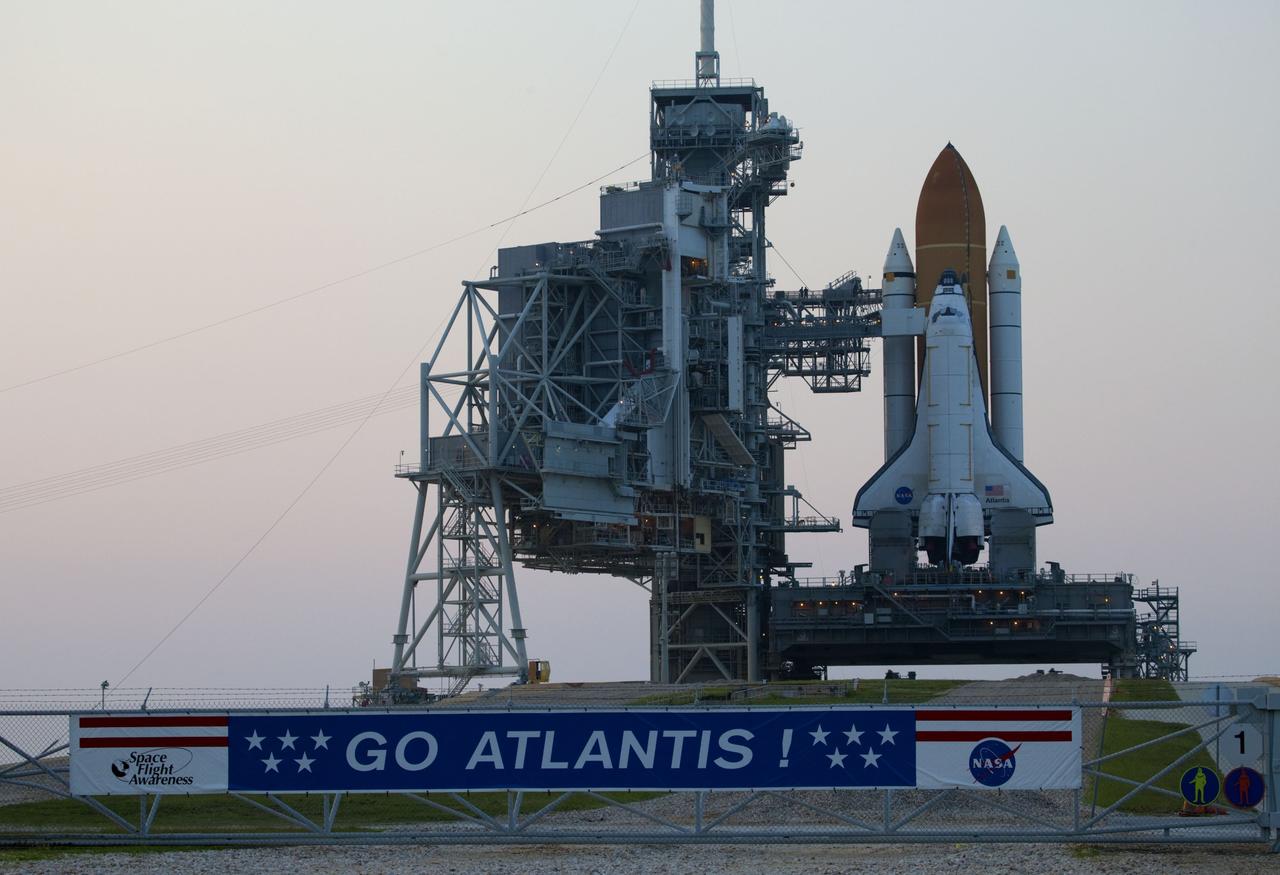
CAPE CANAVERAL, Fla. -- After sunset, lights glow on Launch Pad 39A at NASA's Kennedy Space Center in Florida as space shuttle Atlantis awaits delivery of the Raffaello multi-purpose logistics module (MPLM) in its transportation canister. Once delivered, the canister will be lifted to the payload changeout room. The payload ground-handling mechanism then will be used to transfer Raffaello out of the canister into Atlantis' payload bay. Next, the rotating service structure that protects the shuttle from the elements and provides access will be rotated back into place. Commander Chris Ferguson, Pilot Doug Hurley and Mission Specialists Sandra Magnus and Rex Walheim are targeted to lift off on Atlantis July 8, taking with them the MPLM packed with supplies, logistics and spare parts to the station. The STS-135 mission also will fly a system to investigate the potential for robotically refueling existing satellites and return a failed ammonia pump module to help NASA better understand the failure mechanism and improve pump designs for future systems. STS-135 will be the 33rd flight of Atlantis, the 37th shuttle mission to the space station, and the 135th and final mission of NASA's Space Shuttle Program. For more information visit, www.nasa.gov/mission_pages/shuttle/shuttlemissions/sts135/index.html. Photo credit: NASA/Frank Michaux
CAPE CANAVERAL, Fla. -- A canister, carrying the Raffaello multi-purpose logistics module (MPLM) for space shuttle Atlantis' STS-135 mission to the International Space Station, arrives at Launch Pad 39A at NASA's Kennedy Space Center in Florida. The canister will be lifted to the payload changeout room. The payload ground-handling mechanism then will be used to transfer Raffaello out of the canister into Atlantis' payload bay. Next, the rotating service structure that protects the shuttle from the elements and provides access will be rotated back into place. Commander Chris Ferguson, Pilot Doug Hurley and Mission Specialists Sandra Magnus and Rex Walheim are targeted to lift off on Atlantis July 8, taking with them the MPLM packed with supplies, logistics and spare parts to the station. The STS-135 mission also will fly a system to investigate the potential for robotically refueling existing satellites and return a failed ammonia pump module to help NASA better understand the failure mechanism and improve pump designs for future systems. STS-135 will be the 33rd flight of Atlantis, the 37th shuttle mission to the space station, and the 135th and final mission of NASA's Space Shuttle Program. For more information visit, www.nasa.gov/mission_pages/shuttle/shuttlemissions/sts135/index.html. Photo credit: NASA/Frank Michaux
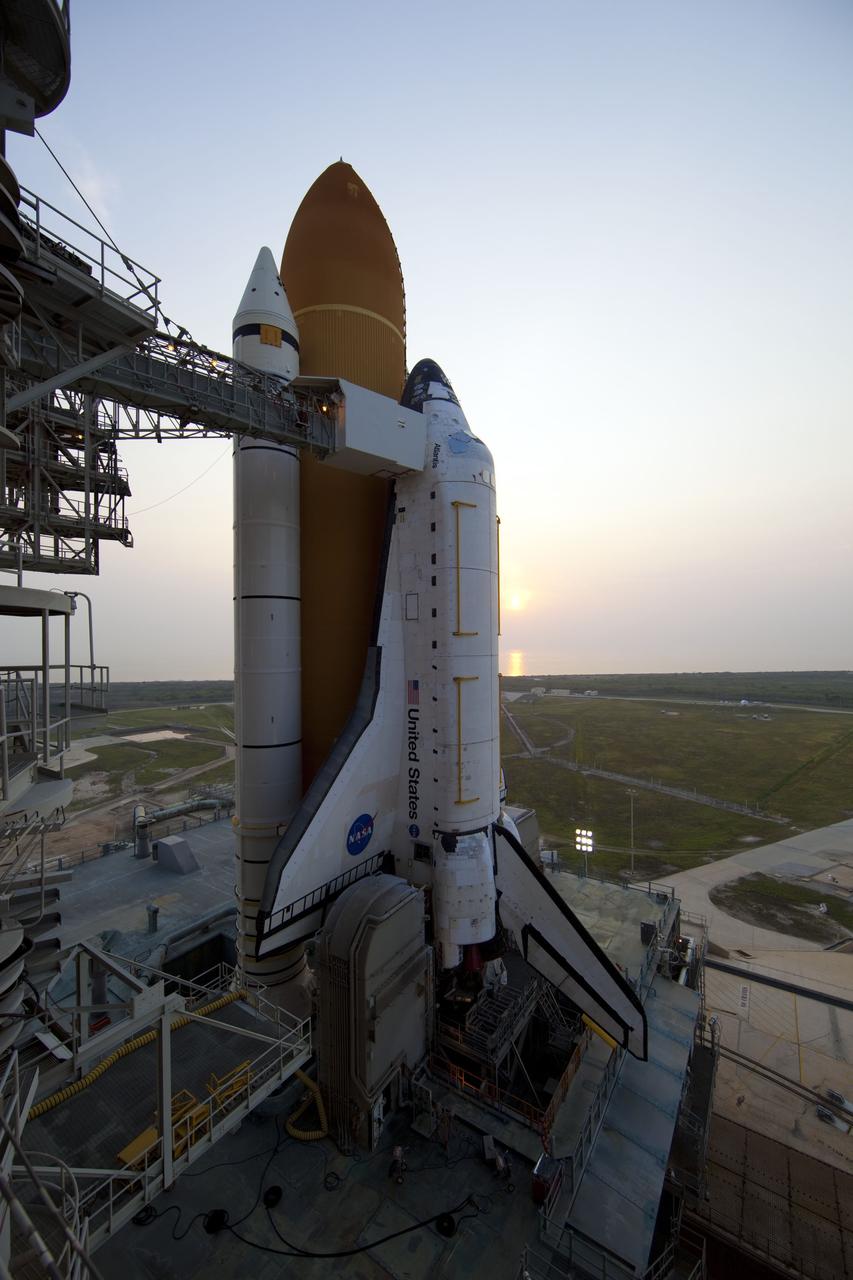
CAPE CANAVERAL, Fla. -- The sun rises above the horizon casting a shimmering glow on space shuttle Atlantis standing majestically on its seaside launch pad at NASA's Kennedy Space Center in Florida. Atlantis' payload, the Raffaello multi-purpose logistics module (MPLM) has been delivered to the pad and one more milestone is met for Atlantis' STS-135 mission to the International Space Station. Commander Chris Ferguson, Pilot Doug Hurley and Mission Specialists Sandra Magnus and Rex Walheim are targeted to lift off on Atlantis July 8, taking with them the MPLM packed with supplies, logistics and spare parts to the station. The STS-135 mission also will fly a system to investigate the potential for robotically refueling existing satellites and return a failed ammonia pump module to help NASA better understand the failure mechanism and improve pump designs for future systems. STS-135 will be the 33rd flight of Atlantis, the 37th shuttle mission to the space station, and the 135th and final mission of NASA's Space Shuttle Program. For more information visit, www.nasa.gov/mission_pages/shuttle/shuttlemissions/sts135/index.html. Photo credit: NASA/Dimitri Gerondidakis
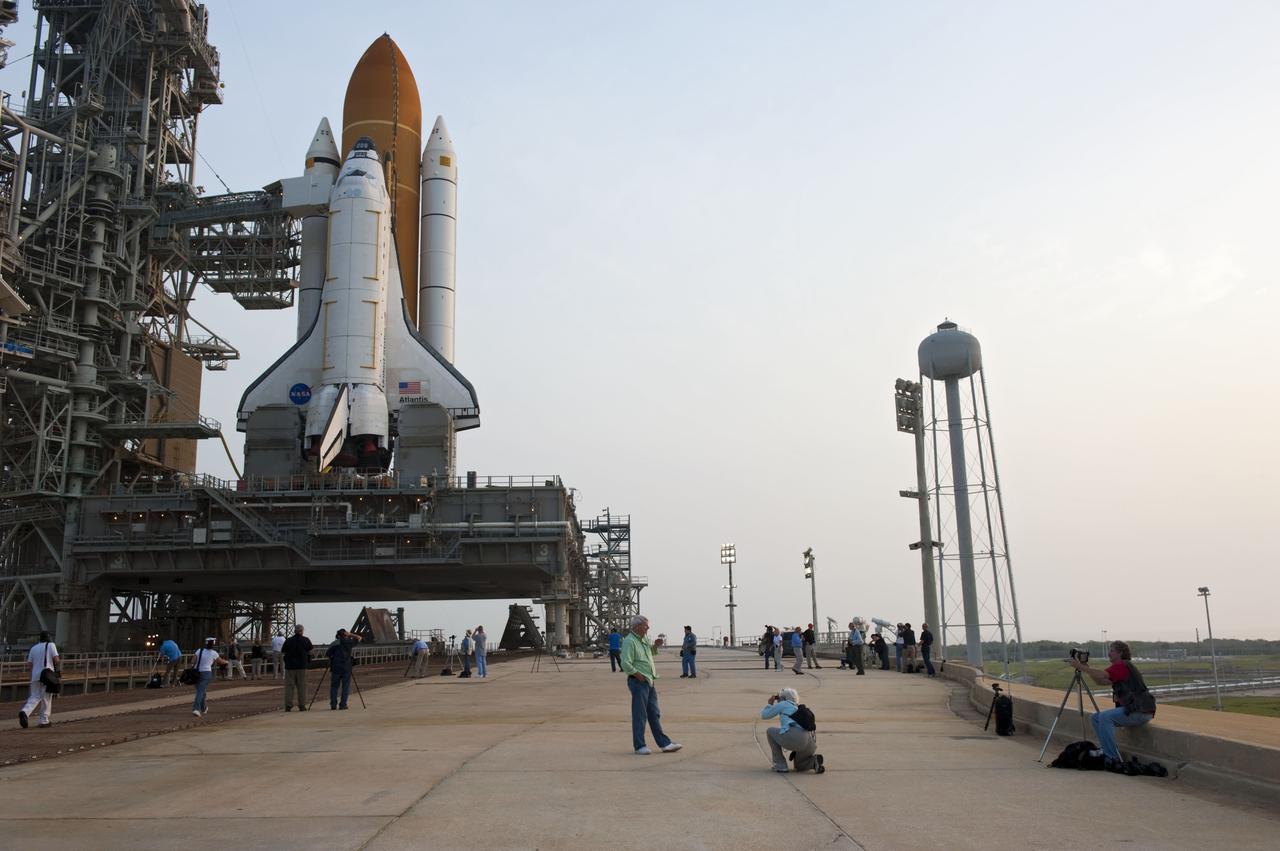
CAPE CANAVERAL, Fla. -- At NASA's Kennedy Space Center in Florida media snap photos of space shuttle Atlantis on Launch Pad 39A after the payload canister carrying the Raffaello multi-purpose logistics module (MPLM) was lifted into the payload changeout room on the rotating service structure. Commander Chris Ferguson, Pilot Doug Hurley and Mission Specialists Sandra Magnus and Rex Walheim are targeted to lift off on space shuttle Atlantis July 8, taking with them the MPLM packed with supplies, logistics and spare parts to the International Space Station. The STS-135 mission also will fly a system to investigate the potential for robotically refueling existing satellites and return a failed ammonia pump module to help NASA better understand the failure mechanism and improve pump designs for future systems. STS-135 will be the 33rd flight of Atlantis, the 37th shuttle mission to the space station, and the 135th and final mission of NASA's Space Shuttle Program. For more information visit, www.nasa.gov/mission_pages/shuttle/shuttlemissions/sts135/index.html. Photo credit: NASA/Kim Shiflett
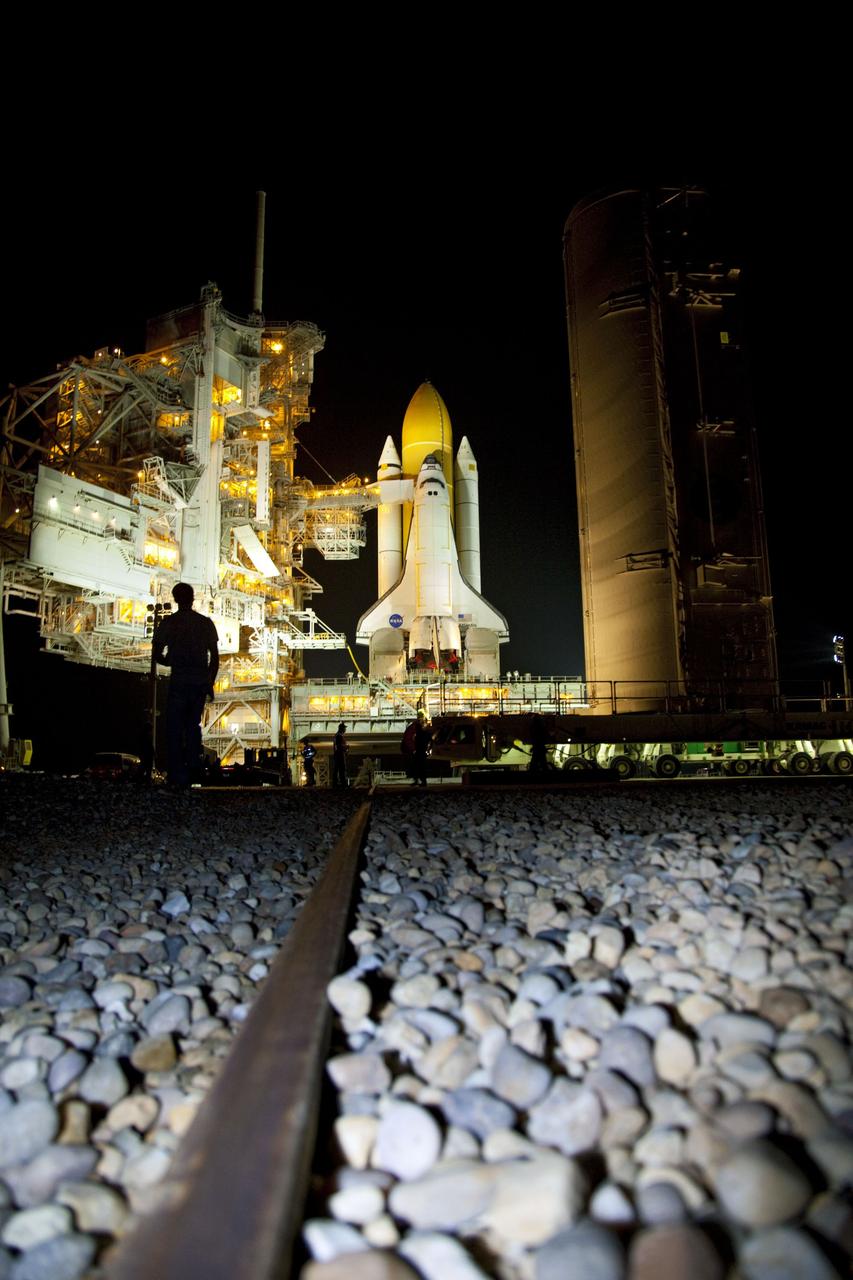
CAPE CANAVERAL, Fla. -- A canister, carrying the Raffaello multi-purpose logistics module (MPLM) for space shuttle Atlantis' STS-135 mission to the International Space Station, arrives at Launch Pad 39A at NASA's Kennedy Space Center in Florida. The canister will be lifted to the payload changeout room. The payload ground-handling mechanism then will be used to transfer Raffaello out of the canister into Atlantis' payload bay. Next, the rotating service structure that protects the shuttle from the elements and provides access will be rotated back into place. Commander Chris Ferguson, Pilot Doug Hurley and Mission Specialists Sandra Magnus and Rex Walheim are targeted to lift off on Atlantis July 8, taking with them the MPLM packed with supplies, logistics and spare parts to the station. The STS-135 mission also will fly a system to investigate the potential for robotically refueling existing satellites and return a failed ammonia pump module to help NASA better understand the failure mechanism and improve pump designs for future systems. STS-135 will be the 33rd flight of Atlantis, the 37th shuttle mission to the space station, and the 135th and final mission of NASA's Space Shuttle Program. For more information visit, www.nasa.gov/mission_pages/shuttle/shuttlemissions/sts135/index.html. Photo credit: NASA/Frank Michaux
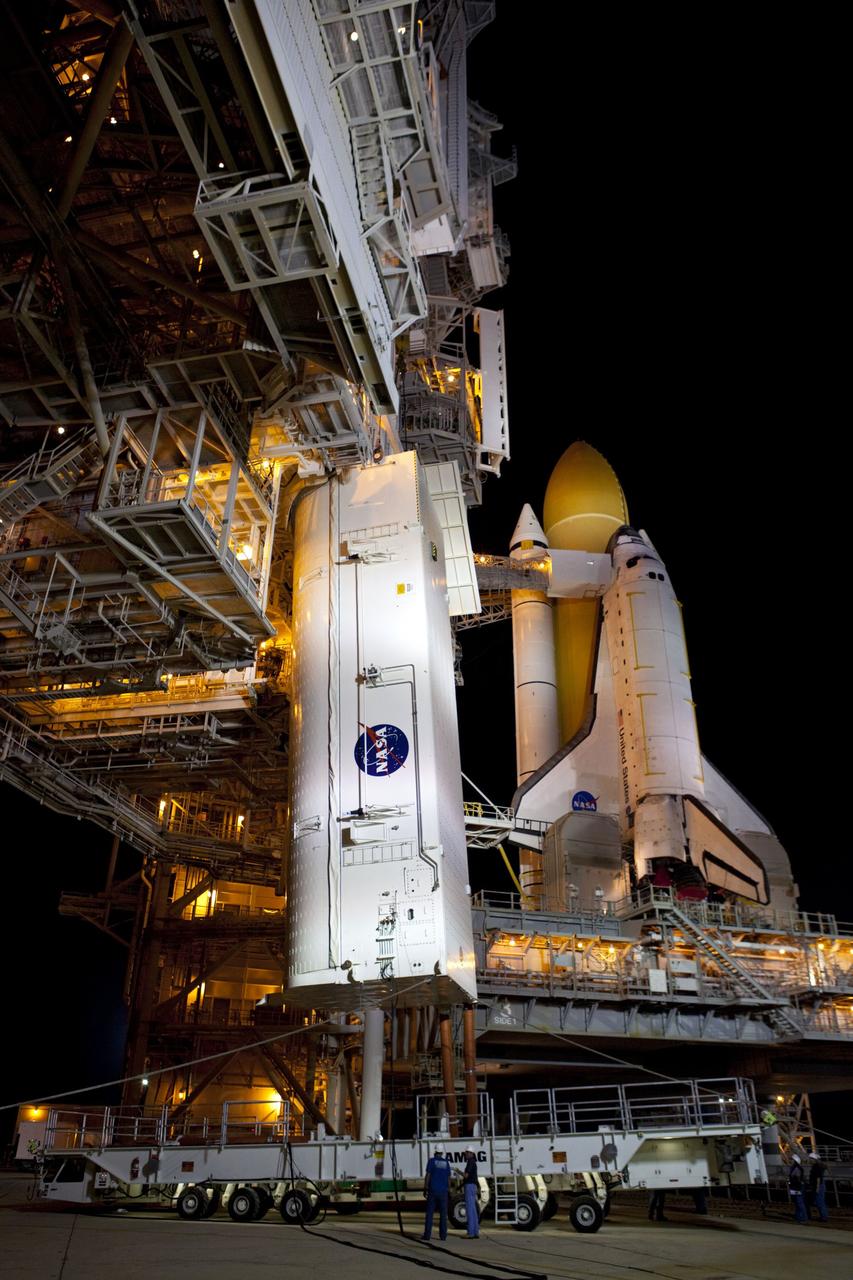
CAPE CANAVERAL, Fla. -- The payload canister carrying the Raffaello multi-purpose logistics module (MPLM) is lifted to the payload changeout room on the rotating service structure (RSS) on Launch Pad 39A at NASA's Kennedy Space Center in Florida. Umbilical hoses, maintaining a controlled environment for the cargo are attached to the lower end of the canister. The payload ground-handling mechanism then will be used to transfer Raffaello out of the canister into Atlantis' payload bay. Next, the RSS that protects the shuttle from the elements and provides access will be rotated back into place. Commander Chris Ferguson, Pilot Doug Hurley and Mission Specialists Sandra Magnus and Rex Walheim are targeted to lift off on Atlantis July 8, taking with them the MPLM packed with supplies, logistics and spare parts to the station. The STS-135 mission also will fly a system to investigate the potential for robotically refueling existing satellites and return a failed ammonia pump module to help NASA better understand the failure mechanism and improve pump designs for future systems. STS-135 will be the 33rd flight of Atlantis, the 37th shuttle mission to the space station, and the 135th and final mission of NASA's Space Shuttle Program. For more information visit, www.nasa.gov/mission_pages/shuttle/shuttlemissions/sts135/index.html. Photo credit: NASA/Dimitri Gerondidakis
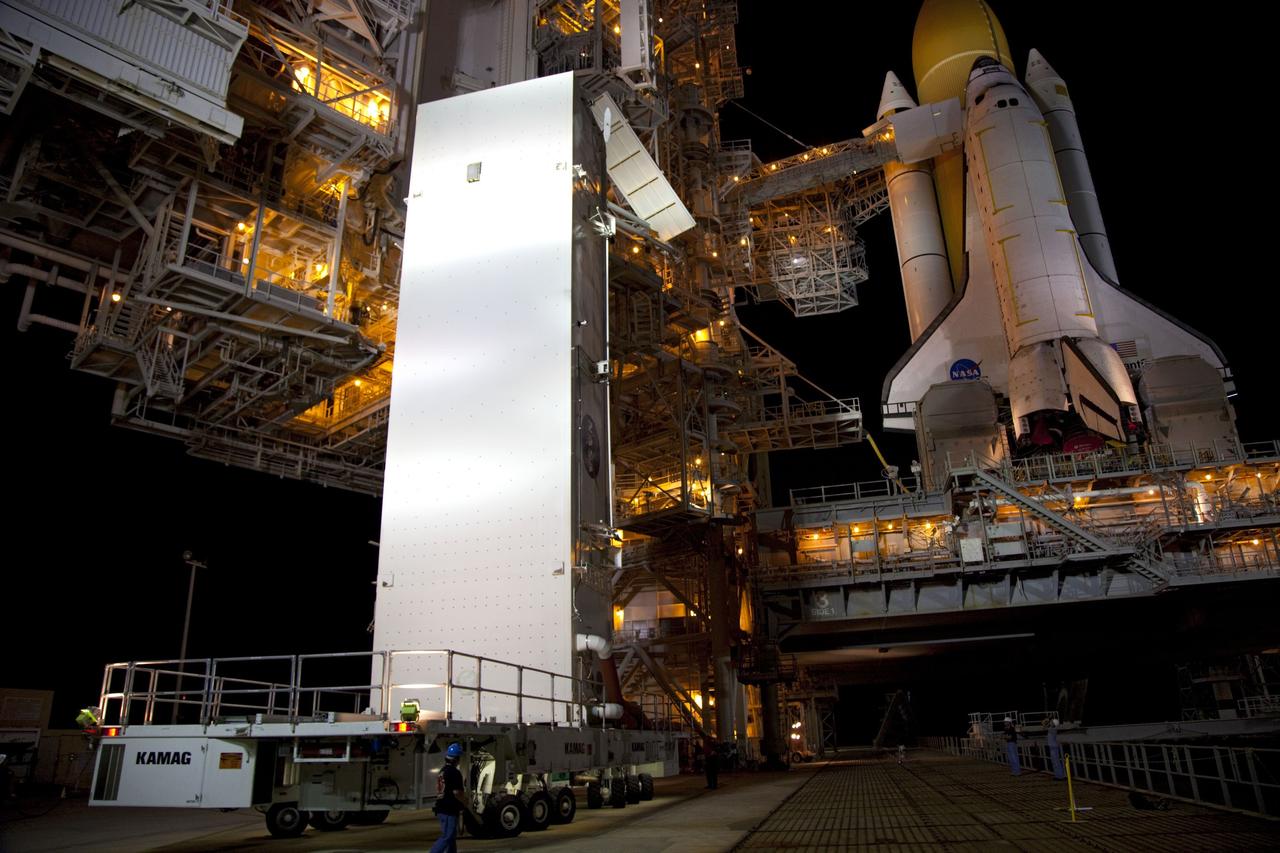
CAPE CANAVERAL, Fla. -- A canister, carrying the Raffaello multi-purpose logistics module (MPLM) for space shuttle Atlantis' STS-135 mission to the International Space Station, arrives at Launch Pad 39A at NASA's Kennedy Space Center in Florida. The canister will be lifted to the payload changeout room. The payload ground-handling mechanism then will be used to transfer Raffaello out of the canister into Atlantis' payload bay. Next, the rotating service structure that protects the shuttle from the elements and provides access will be rotated back into place. Commander Chris Ferguson, Pilot Doug Hurley and Mission Specialists Sandra Magnus and Rex Walheim are targeted to lift off on Atlantis July 8, taking with them the MPLM packed with supplies, logistics and spare parts to the station. The STS-135 mission also will fly a system to investigate the potential for robotically refueling existing satellites and return a failed ammonia pump module to help NASA better understand the failure mechanism and improve pump designs for future systems. STS-135 will be the 33rd flight of Atlantis, the 37th shuttle mission to the space station, and the 135th and final mission of NASA's Space Shuttle Program. For more information visit, www.nasa.gov/mission_pages/shuttle/shuttlemissions/sts135/index.html. Photo credit: NASA/Frank Michaux
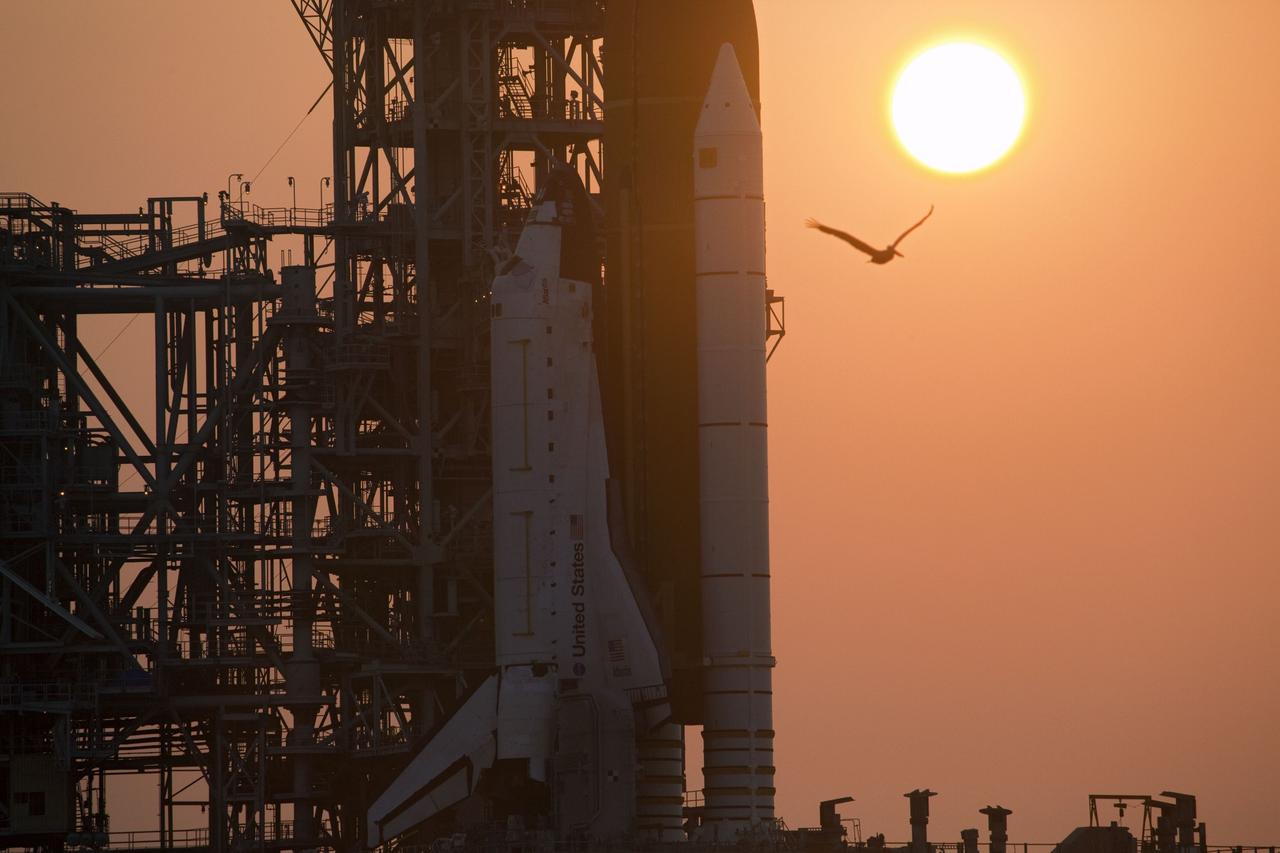
CAPE CANAVERAL, Fla. -- A hazy sun sets over Launch Pad 39A at NASA's Kennedy Space Center in Florida as space shuttle Atlantis awaits delivery of the Raffaello multi-purpose logistics module (MPLM) in its transportation canister. Once delivered, the canister will be lifted to the payload changeout room. The payload ground-handling mechanism then will be used to transfer Raffaello out of the canister into Atlantis' payload bay. Next, the rotating service structure that protects the shuttle from the elements and provides access will be rotated back into place. Commander Chris Ferguson, Pilot Doug Hurley and Mission Specialists Sandra Magnus and Rex Walheim are targeted to lift off on Atlantis July 8, taking with them the MPLM packed with supplies, logistics and spare parts to the station. The STS-135 mission also will fly a system to investigate the potential for robotically refueling existing satellites and return a failed ammonia pump module to help NASA better understand the failure mechanism and improve pump designs for future systems. STS-135 will be the 33rd flight of Atlantis, the 37th shuttle mission to the space station, and the 135th and final mission of NASA's Space Shuttle Program. For more information visit, www.nasa.gov/mission_pages/shuttle/shuttlemissions/sts135/index.html. Photo credit: NASA/Frank Michaux
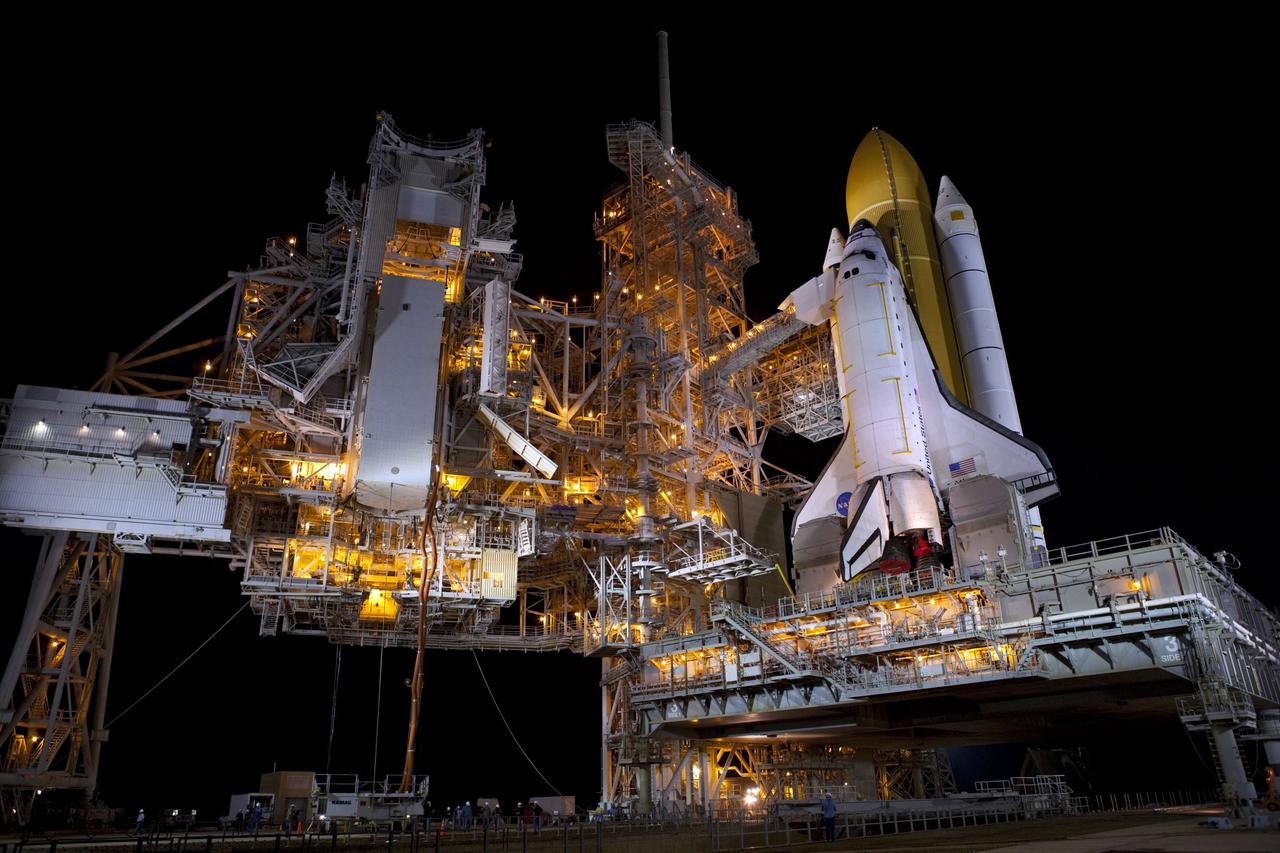
CAPE CANAVERAL, Fla. -- The payload canister carrying the Raffaello multi-purpose logistics module (MPLM) is lifted to the payload changeout room on the rotating service structure (RSS) on Launch Pad 39A at NASA's Kennedy Space Center in Florida. Umbilical hoses, maintaining a controlled environment for the cargo are attached to the lower end of the canister. The payload ground-handling mechanism then will be used to transfer Raffaello out of the canister into Atlantis' payload bay. Next, the RSS that protects the shuttle from the elements and provides access will be rotated back into place. Commander Chris Ferguson, Pilot Doug Hurley and Mission Specialists Sandra Magnus and Rex Walheim are targeted to lift off on Atlantis July 8, taking with them the MPLM packed with supplies, logistics and spare parts to the station. The STS-135 mission also will fly a system to investigate the potential for robotically refueling existing satellites and return a failed ammonia pump module to help NASA better understand the failure mechanism and improve pump designs for future systems. STS-135 will be the 33rd flight of Atlantis, the 37th shuttle mission to the space station, and the 135th and final mission of NASA's Space Shuttle Program. For more information visit, www.nasa.gov/mission_pages/shuttle/shuttlemissions/sts135/index.html. Photo credit: NASA/Dimitri Gerondidakis
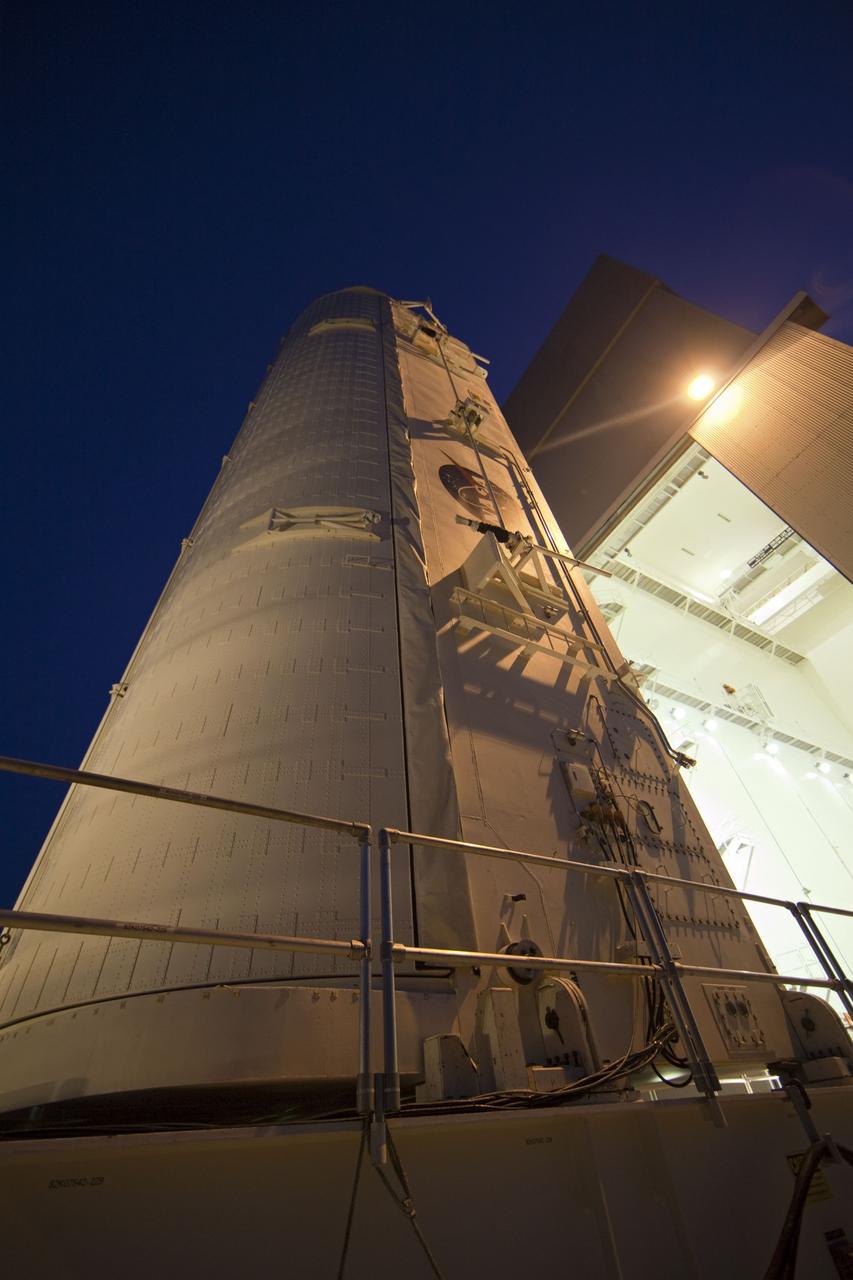
CAPE CANAVERAL, Fla. -- The container that carries the Raffaello multi-purpose logistics module (MPLM), secured on its transportation vehicle, begins its journey from the Canister Rotation Facility to Launch Pad 39A at NASA's Kennedy Space Center in Florida. Once there, the canister will be lifted to the payload changeout room. The payload ground-handling mechanism then will be used to transfer Raffaello out of the canister into space shuttle Atlantis' payload bay. Next, the rotating service structure that protects the shuttle from the elements and provides access will be rotated back into place. Commander Chris Ferguson, Pilot Doug Hurley and Mission Specialists Sandra Magnus and Rex Walheim are targeted to lift off on Atlantis July 8, taking with them the MPLM packed with supplies, logistics and spare parts to the station. The STS-135 mission also will fly a system to investigate the potential for robotically refueling existing satellites and return a failed ammonia pump module to help NASA better understand the failure mechanism and improve pump designs for future systems. STS-135 will be the 33rd flight of Atlantis, the 37th shuttle mission to the space station, and the 135th and final mission of NASA's Space Shuttle Program. For more information visit, www.nasa.gov/mission_pages/shuttle/shuttlemissions/sts135/index.html. Photo credit: NASA/Frank Michaux
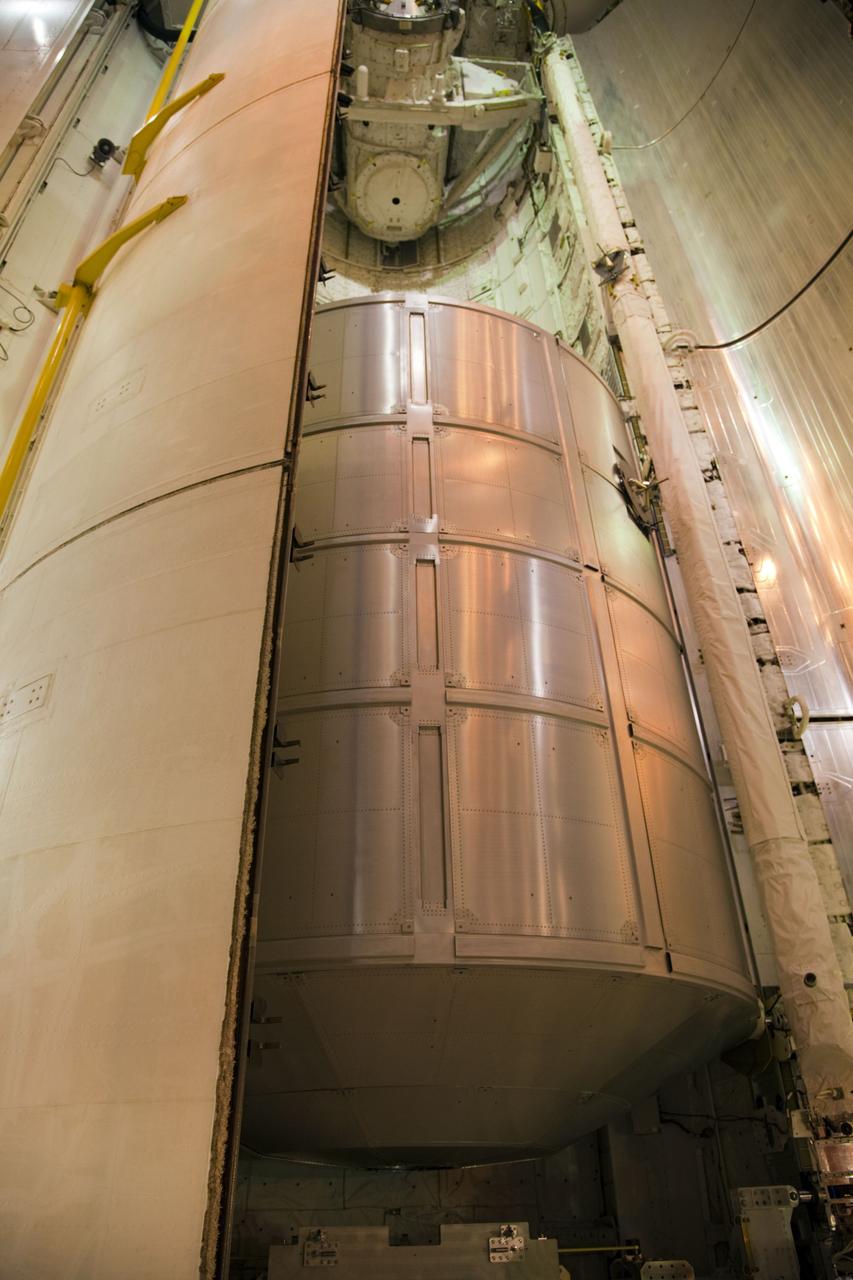
CAPE CANAVERAL, Fla. -- At Launch Pad 39A at NASA's Kennedy Space Center in Florida, space shuttle Atlantis' payload bay doors close around the Raffaello multi-purpose logistics module (MPLM) payload for Atlantis' STS-135 mission to the International Space Station. Commander Chris Ferguson, Pilot Doug Hurley and Mission Specialists Sandra Magnus and Rex Walheim are slated to lift off on July 8, taking with them the MPLM packed with supplies and spare parts to the station. The STS-135 mission also will fly a system to investigate the potential for robotically refueling existing satellites and return a failed ammonia pump module to help NASA better understand the failure mechanism and improve pump designs for future systems. STS-135 will be the 33rd flight of Atlantis, the 37th shuttle mission to the space station, and the 135th and final mission of NASA's Space Shuttle Program. For more information visit, www.nasa.gov/mission_pages/shuttle/shuttlemissions/sts135/index.html. Photo credit: NASA/Frank Michaux
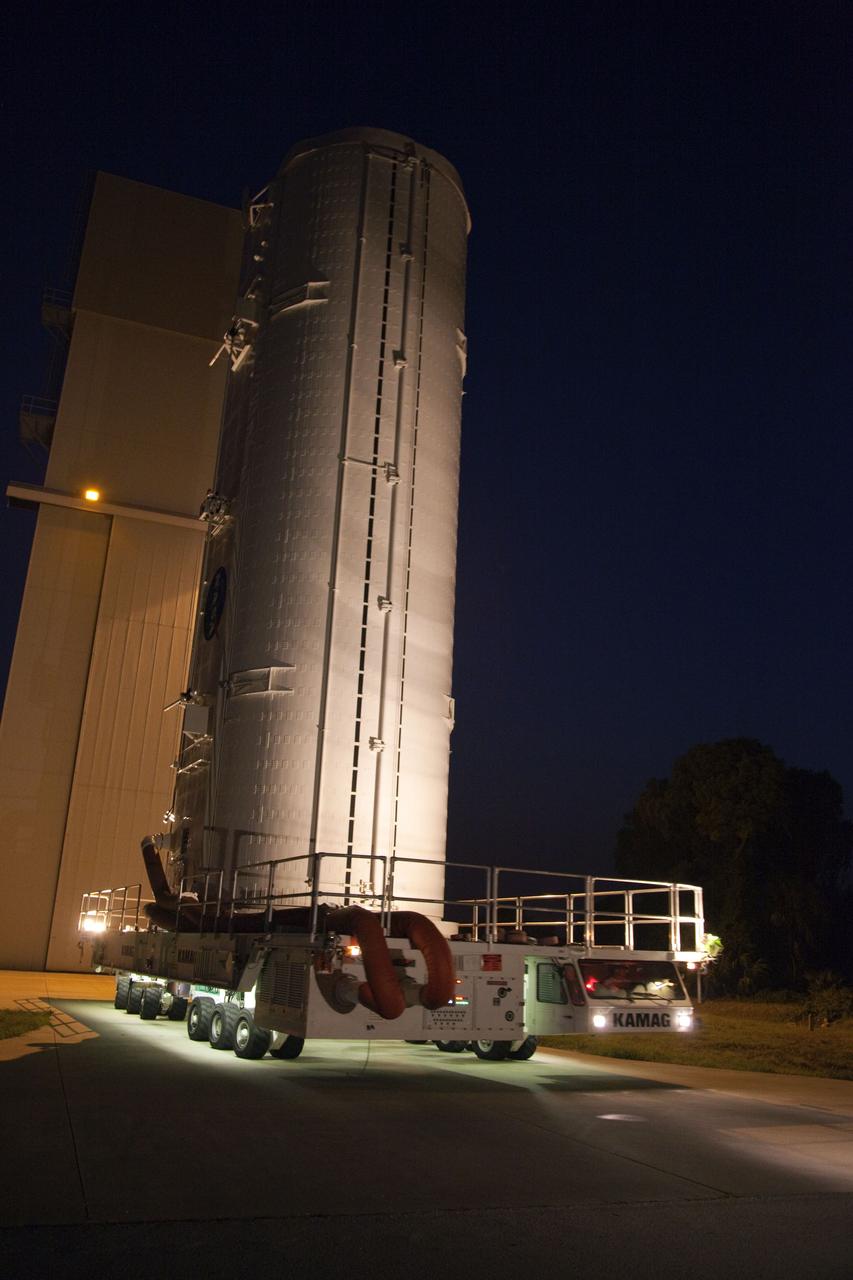
CAPE CANAVERAL, Fla. -- The container that carries the Raffaello multi-purpose logistics module (MPLM), secured on its transportation vehicle, begins its journey from the Canister Rotation Facility to Launch Pad 39A at NASA's Kennedy Space Center in Florida. Once there, the canister will be lifted to the payload changeout room. The payload ground-handling mechanism then will be used to transfer Raffaello out of the canister into space shuttle Atlantis' payload bay. Next, the rotating service structure that protects the shuttle from the elements and provides access will be rotated back into place. Commander Chris Ferguson, Pilot Doug Hurley and Mission Specialists Sandra Magnus and Rex Walheim are targeted to lift off on Atlantis July 8, taking with them the MPLM packed with supplies, logistics and spare parts to the station. The STS-135 mission also will fly a system to investigate the potential for robotically refueling existing satellites and return a failed ammonia pump module to help NASA better understand the failure mechanism and improve pump designs for future systems. STS-135 will be the 33rd flight of Atlantis, the 37th shuttle mission to the space station, and the 135th and final mission of NASA's Space Shuttle Program. For more information visit, www.nasa.gov/mission_pages/shuttle/shuttlemissions/sts135/index.html. Photo credit: NASA/Frank Michaux