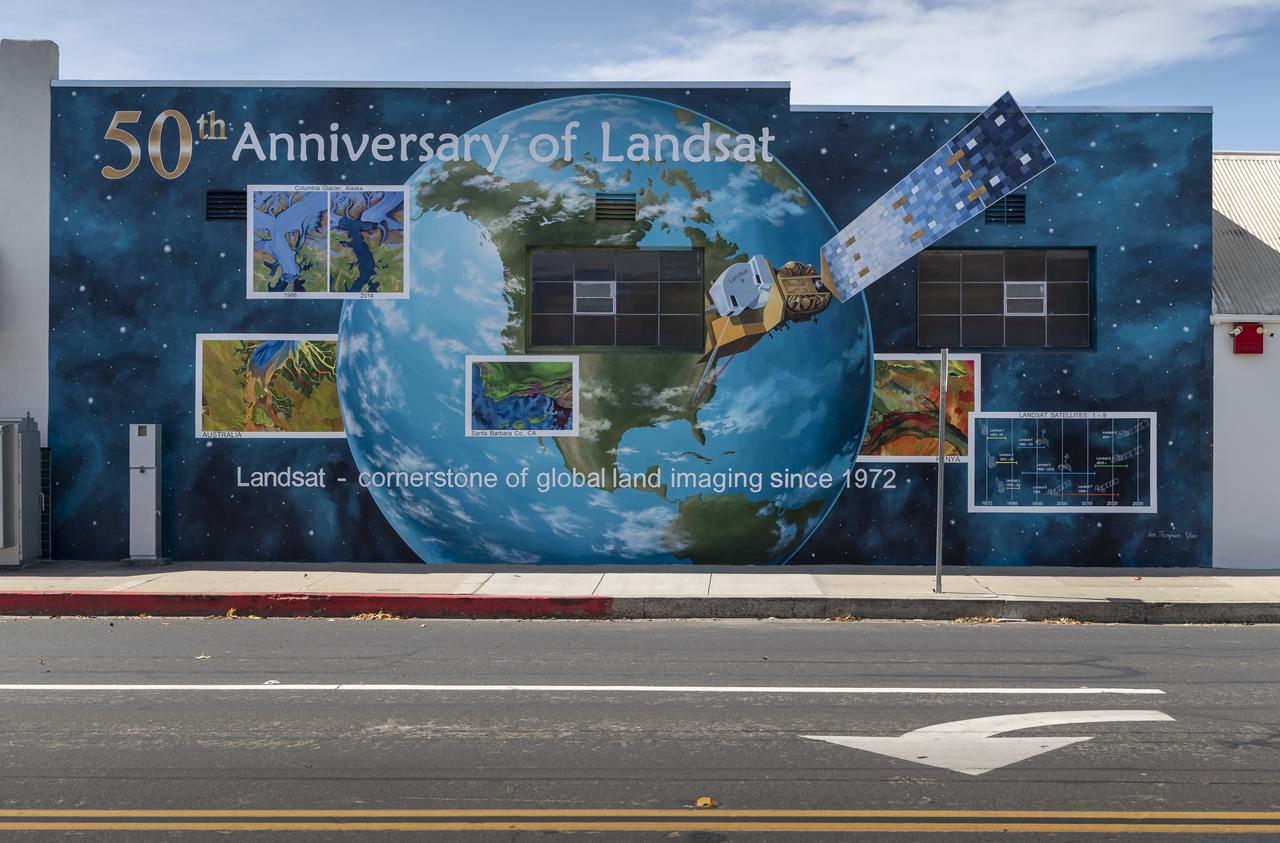
A mural celebrating the 50 years of the Landsat mission is seen, Tuesday, Sept. 28, 2021, in Lompoc, California. On Monday, Sept. 27, 2021, the Landsat 9 satellite, a joint NASA/U.S. Geological Survey mission that will continue the legacy of monitoring Earth’s land and coastal regions, launched from Vandenberg Space Force Base, California. Photo Credit: (NASA/Bill Ingalls)
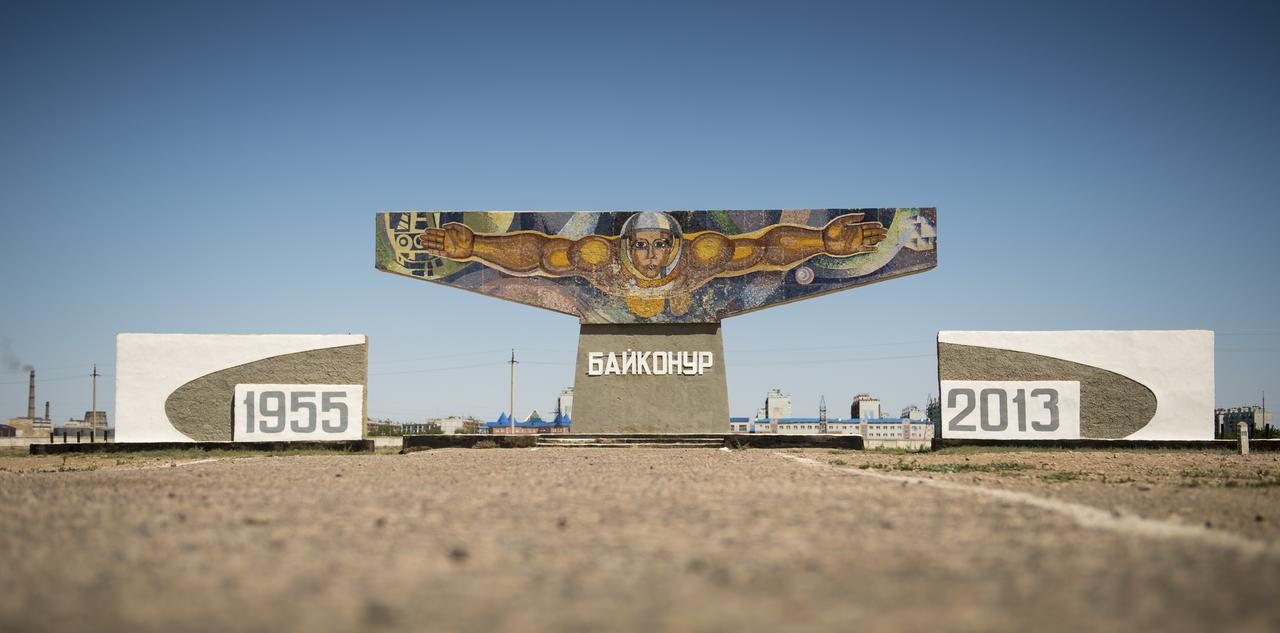
A space themed mural made of tile is seen at the entrance to the town of Baikonur, Kazakhstan on Saturday, May 25, 2013. Launch of a Soyuz rocket to the International Space Station (ISS) with Expedition 36/37 Soyuz Commander Fyodor Yurchikhin of the Russian Federal Space Agency (Roscosmos), Flight Engineers; Luca Parmitano of the European Space Agency, and Karen Nyberg of NASA, is scheduled for Wednesday May 29, Kazakh time. Yurchikhin, Nyberg, and, Parmitano, will remain aboard the station until mid-November. Photo Credit: (NASA/Bill Ingalls)
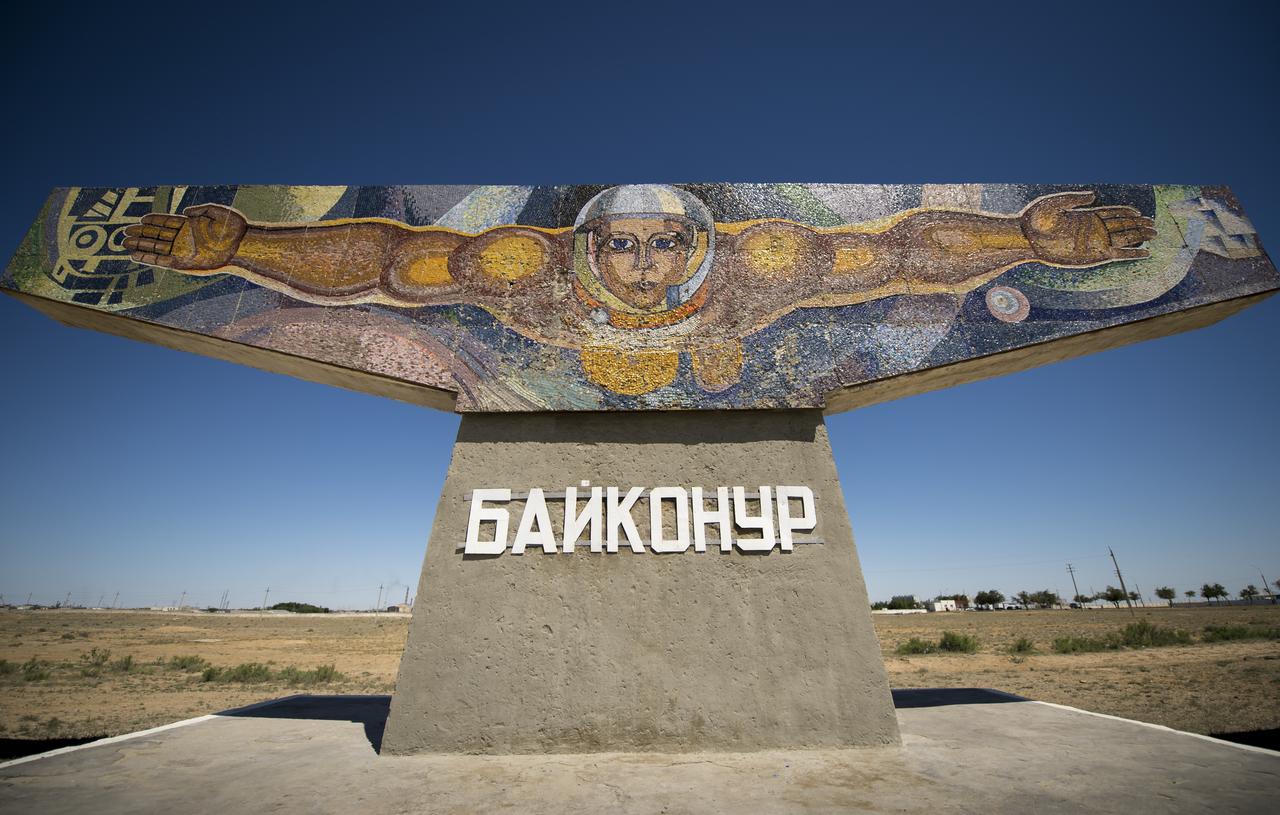
A space themed mural made of tile is seen at the entrance to the town of Baikonur, Kazakhstan on Saturday, May 25, 2013. Launch of a Soyuz rocket to the International Space Station (ISS) with Expedition 36/37 Soyuz Commander Fyodor Yurchikhin of the Russian Federal Space Agency (Roscosmos), Flight Engineers; Luca Parmitano of the European Space Agency, and Karen Nyberg of NASA, is scheduled for Wednesday May 29, Kazakh time. Yurchikhin, Nyberg, and, Parmitano, will remain aboard the station until mid-November. Photo Credit: (NASA/Bill Ingalls)
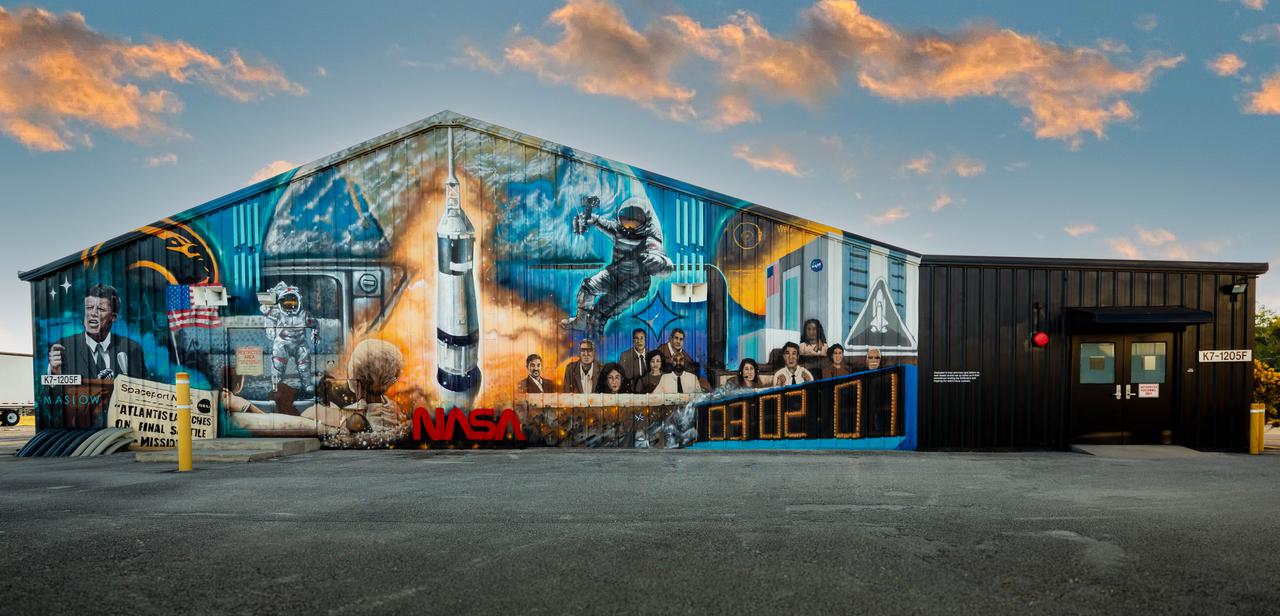
A mural painted by Florida artist Christopher Maslow adorns the northwest exterior wall of the Press Site News Facility at NASA’s Kennedy Space Center in Florida on Jan. 10, 2022. Completed by the artist over the course of several months during 2021, the largescale artwork depicts notable landmarks, missions, and milestones from the history of NASA and its world-famous spaceport. The Press Site News Facility is the hub of launch broadcasts and home to the center’s TV auditorium. Along with the nearby NASA News Center, for decades Kennedy’s Press Site has been where reporters from television, radio, print, and online media outlets have monitored countless launches, landings, and other space events in order to deliver the news to the world.
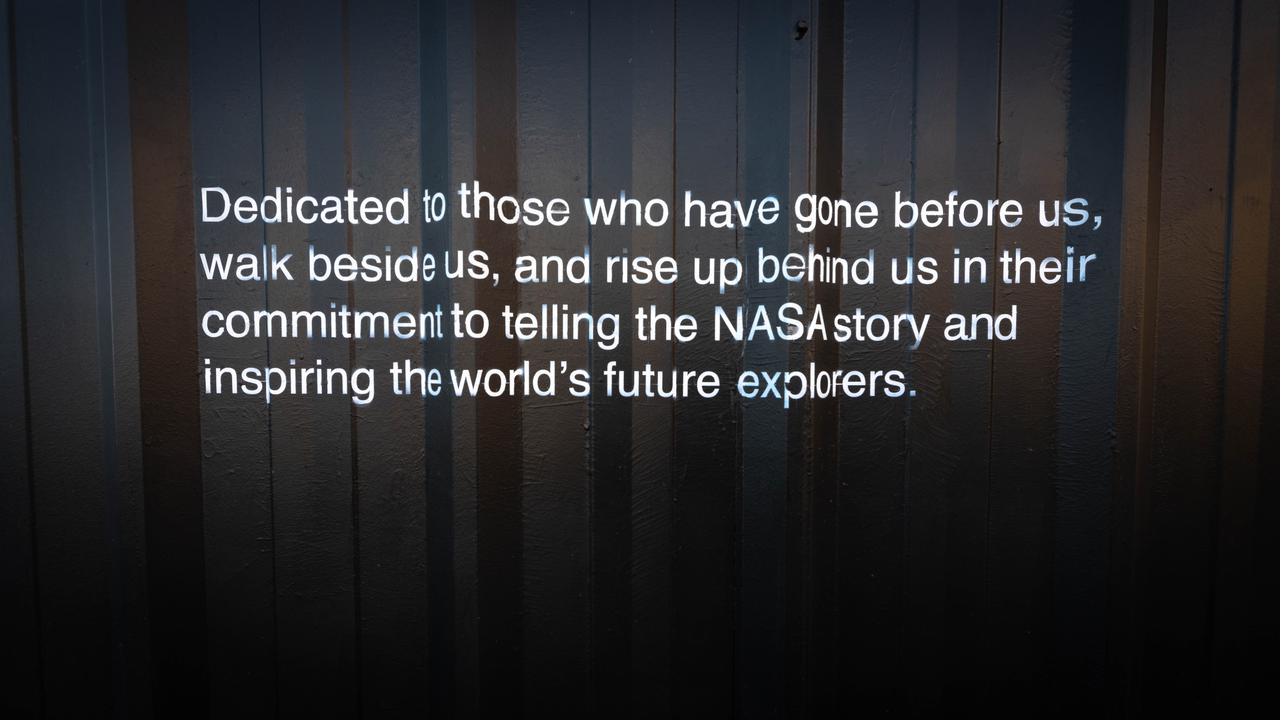
A dedication to those who tell the NASA story is part of a mural painted by Florida artist Christopher Maslow on the northwest exterior wall of the Press Site News Facility at NASA’s Kennedy Space Center in Florida, photographed on Jan. 10, 2022. Completed by the artist over the course of several months during 2021, the largescale artwork depicts notable landmarks, missions, and milestones from the history of NASA and its world-famous spaceport. The Press Site News Facility is the hub of launch broadcasts and home to the center’s TV auditorium. Along with the nearby NASA News Center, for decades Kennedy’s Press Site has been where reporters from television, radio, print, and online media outlets have monitored countless launches, landings, and other space events in order to deliver the news to the world.

Artist Geraluz talks to a member of the media in front of the mural “To the Moon, and Back” by the New York-based artist team Geraluz and WERC that was created as part of the reimagined NASA Art Program, Tuesday, September 24, 2024, in New York City’s Hudson Square neighborhood. For the inaugural project of the reestablished NASA Art Program the agency collaborated with the Hudson Square Business Improvement District on an open call for New York-based artists to design and install a large-scale mural inspired by NASA’s work and missions. Photo Credit: (NASA/Joel Kowsky)
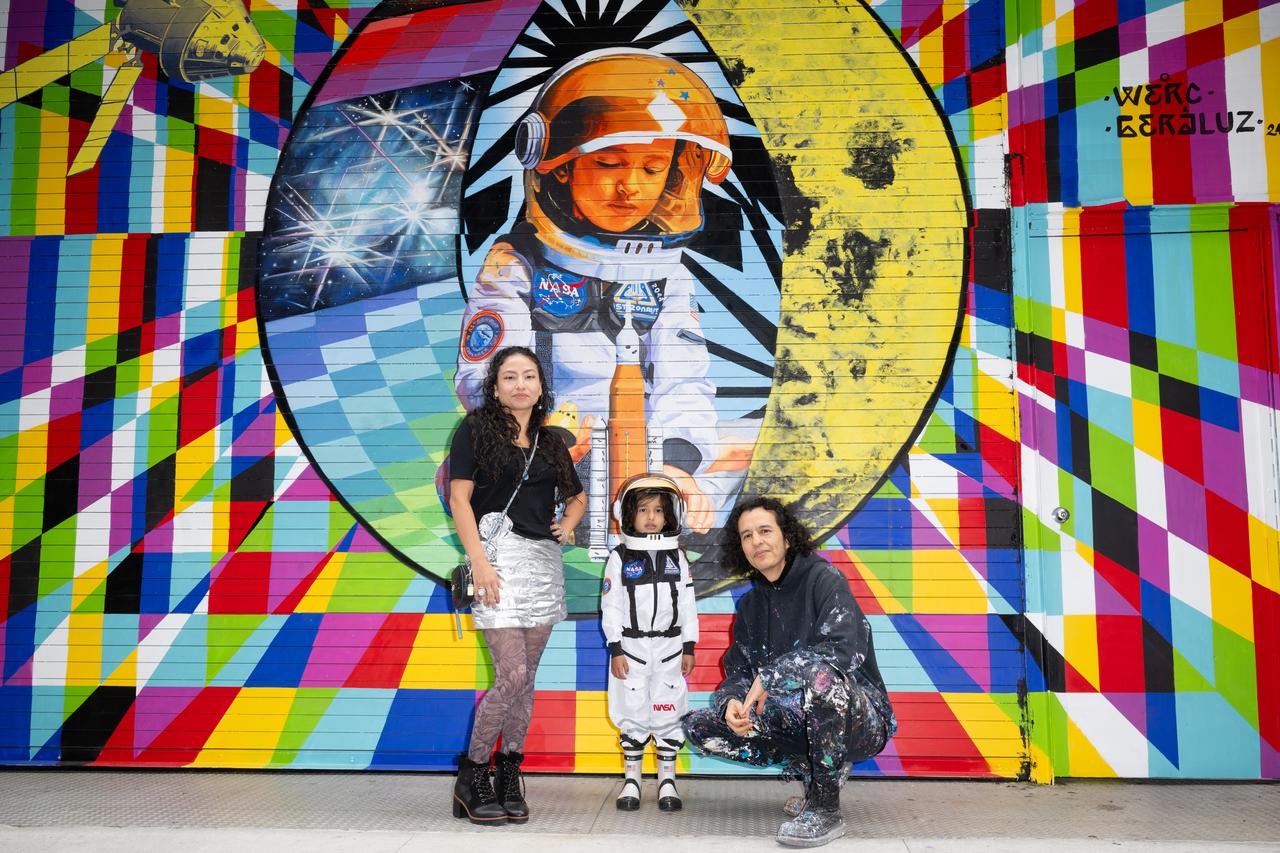
The New York-based artist team Geraluz, left, and WERC, right, and their son Amaru Alvarez, 5, pose for picture with the mural “To the Moon, and Back” by the artist team that was created as part of the reimagined NASA Art Program, Tuesday, September 24, 2024, at 350 Hudson Street in New York City. The murals use geometrical patterns to invite deeper reflection on the exploration, creativity, and connection with the cosmos. Photo Credit: (NASA/Joel Kowsky)
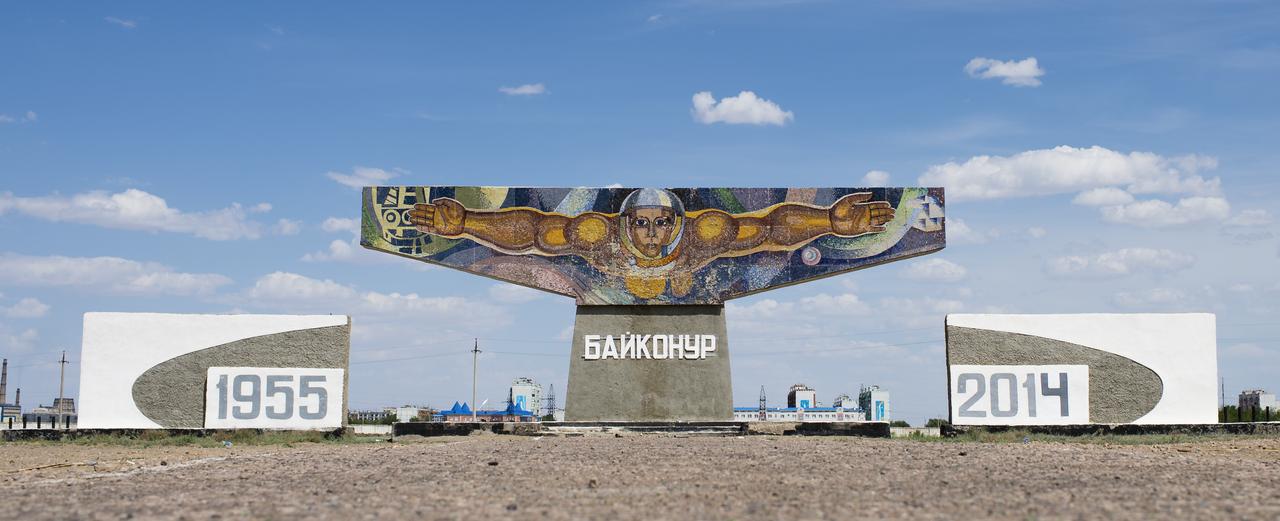
A space themed mural made of tile is seen at the entrance to the town of Baikonur, Kazakhstan on Sunday, May 25, 2014. Launch of a Soyuz rocket to the International Space Station (ISS) with Expedition 40/41 Soyuz Commander Maxim Suraev of the Russian Federal Space Agency, Roscosmos, Flight Engineer Alexander Gerst of the European Space Agency, ESA, and Flight Engineer Reid Wiseman of NASA is scheduled for Thursday May 29, Kazakh time. The mural provided the inspiration for the Soyuz TMA-13M crew patch that the trio will be wearing. Photo Credit: (NASA/Joel Kowsky)
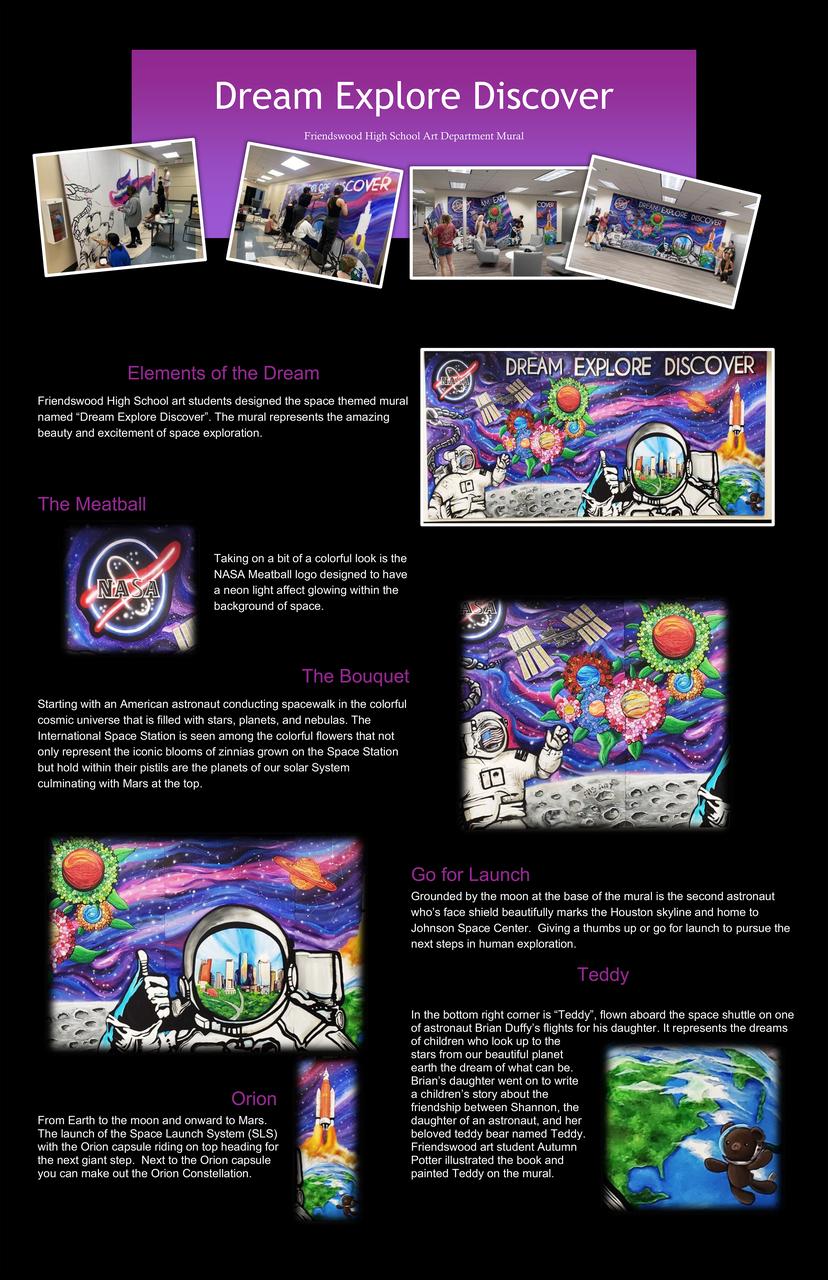
jsc2022e060871_Alt ( 6/22/2022) Friendswood High School art students designed the space themed mural named “Dream Explore Discover”. The mural represents the amazing beauty and excitement of space exploration. Taking on a bit of a colorful look is the NASA Meatball logo designed to have a neon light affect glowing within the background of space. Starting with an American astronaut conducting spacewalk in the colorful cosmic universe that is filled with stars, planets, and nebulas. The International Space Station is seen among the colorful flowers that not only represent the iconic blooms of zinnias grown on the Space Station but hold within their pistils are the planets of our solar System culminating with Mars at the top. Grounded by the moon at the base of the mural is the second astronaut who’s face shield beautifully marks the Houston skyline and home to Johnson Space Center. Giving a thumbs up or go for launch to pursue the next steps in human exploration. From Earth to the moon and onward to Mars. The launch of the Space Launch System (SLS) with the Orion capsule riding on top heading for the next giant step. Next to the Orion capsule you can make out the Orion Constellation. In the bottom right corner is “Teddy”, flown aboard the space shuttle on one of astronaut Brian Duffy’s flights for his daughter. It represents the dreams of children who look up to the stars from our beautiful planet earth the dream of what can be. Brian’s daughter went on to write a children’s story about the friendship between Shannon, the daughter of an astronaut, and her beloved teddy bear named Teddy. Friendswood art student Autumn Potter illustrated the book and painted Teddy on the mural.
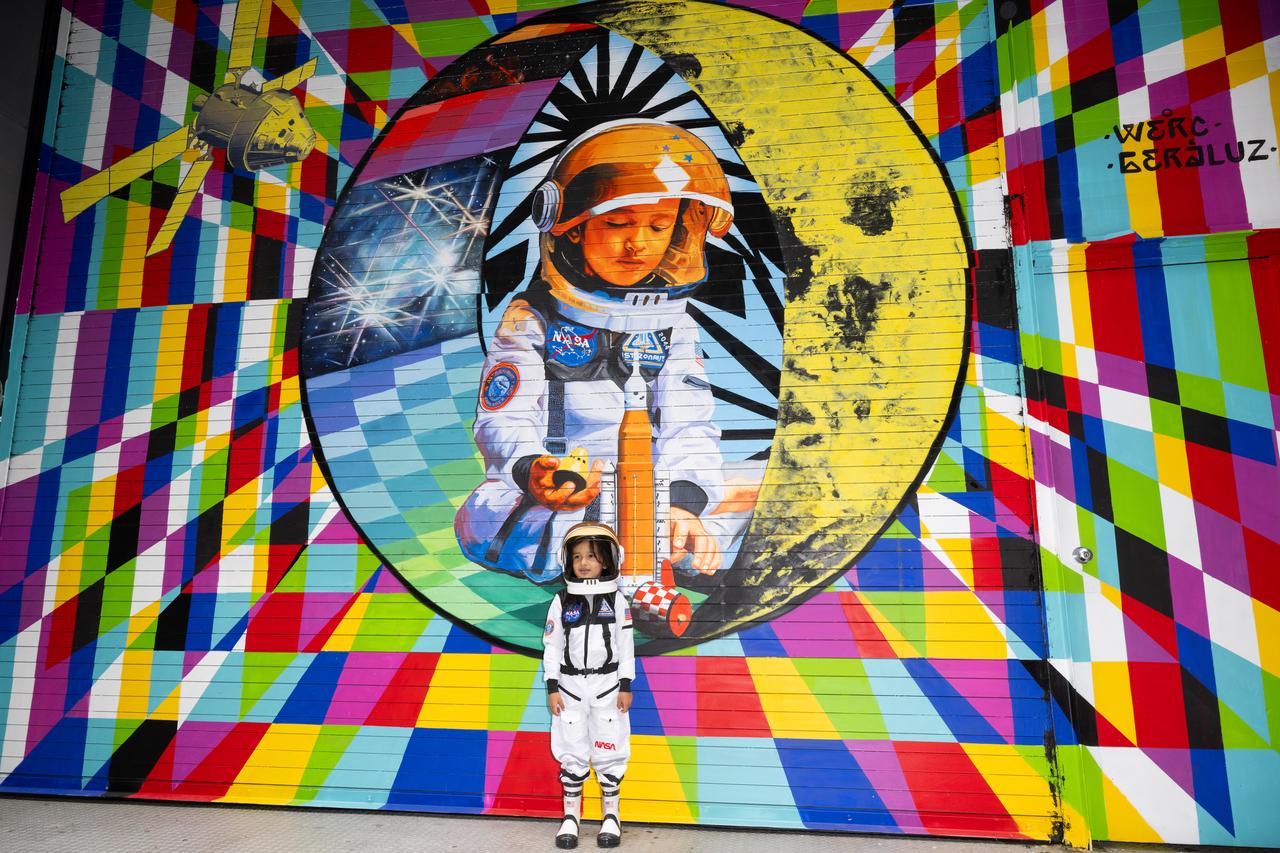
Amaru Alvarez, 5, the son of the artist team Geraluz and WERC and model for the mural, poses for picture with the mural “To the Moon, and Back” by the New York-based artist team that was created as part of the reimagined NASA Art Program, Tuesday, September 24, 2024, at 350 Hudson Street in New York City. The murals use geometrical patterns to invite deeper reflection on the exploration, creativity, and connection with the cosmos. Photo Credit: (NASA/Joel Kowsky)
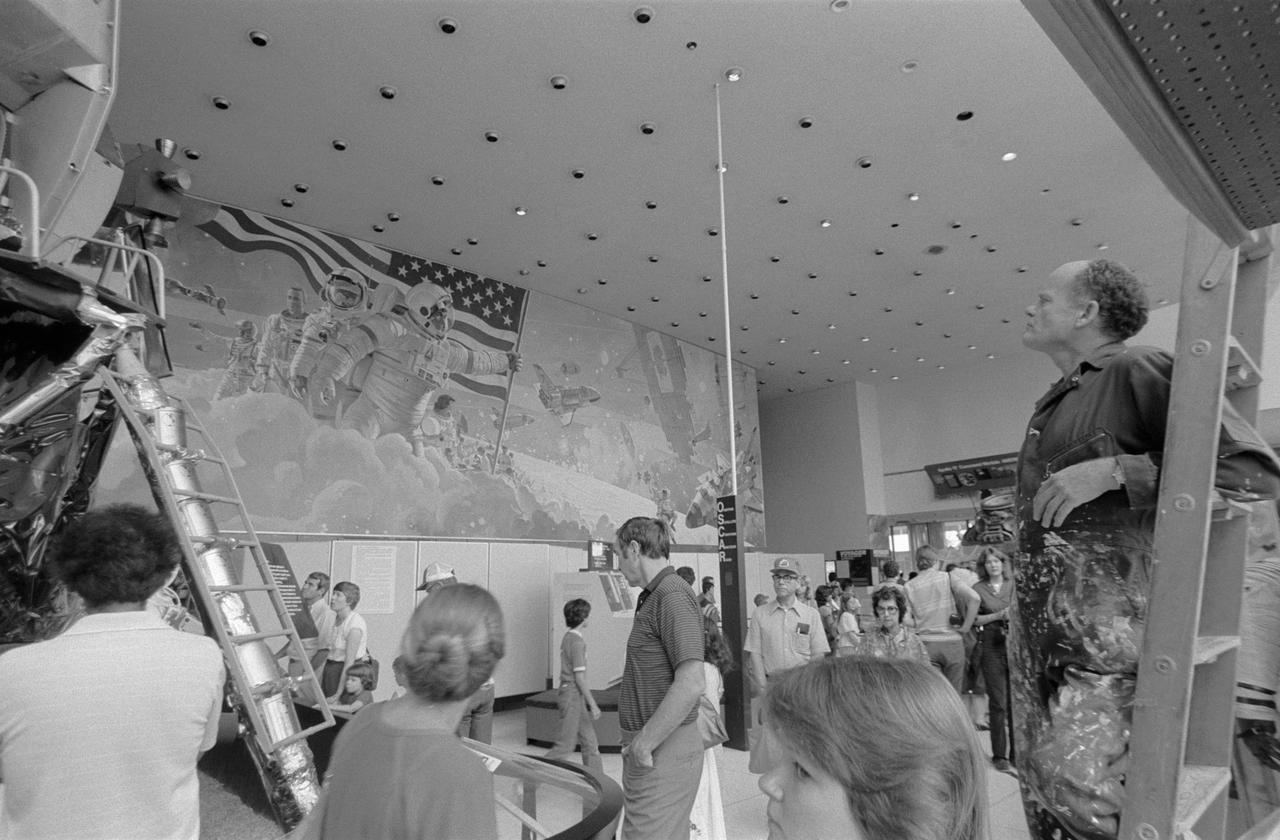
View of mural painted by Artist Bob McCall. JSC, HOUSTON, TX
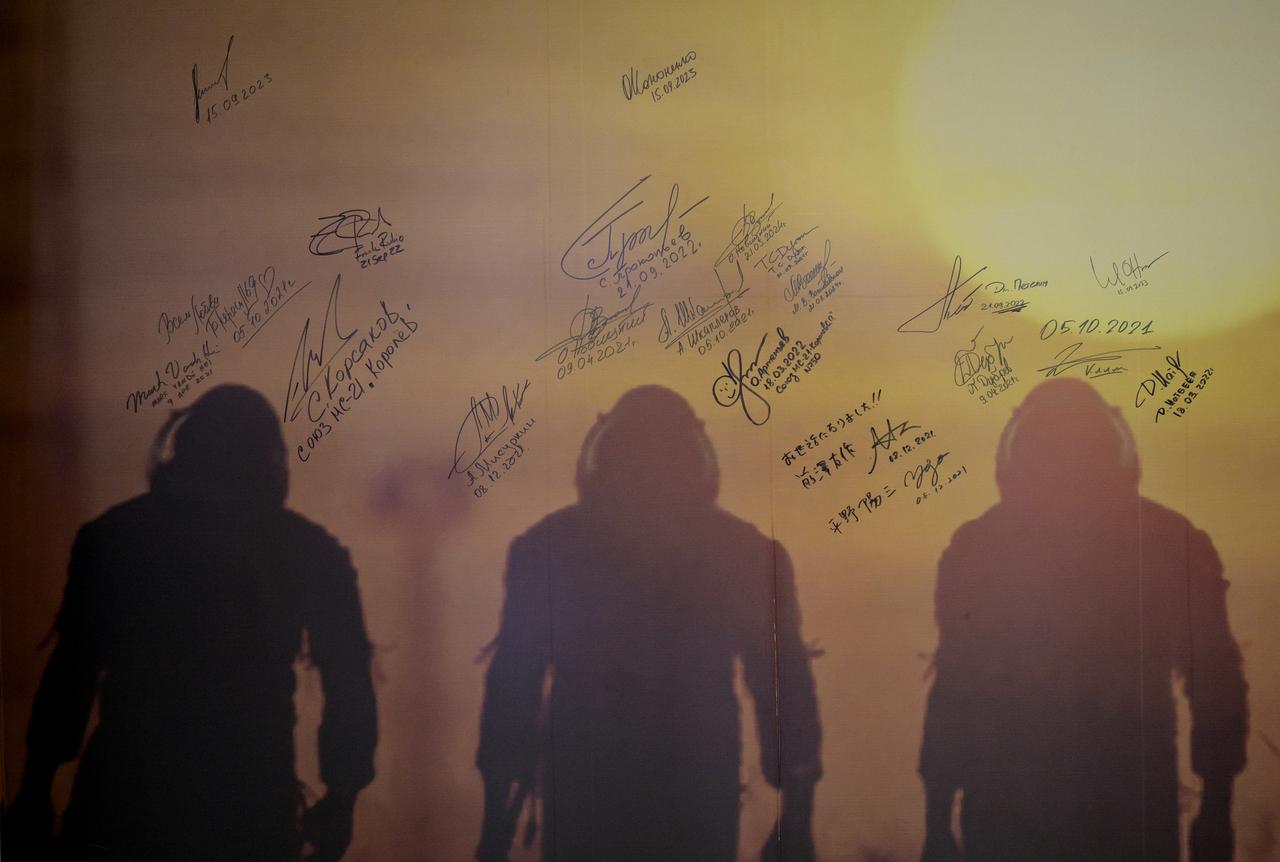
A mural with signatures of astronauts and cosmonauts is seen inside the Cosmonaut Hotel, Wednesday, Sept. 11, 2024, in Baikonur, Kazakhstan. Expedition 72 crew members: NASA astronaut Don Pettit, Roscosmos cosmonauts Alexey Ovchinin, and Ivan Vagner, will sign the mural prior to launching to the International Space Station. Photo Credit: (NASA/Bill Ingalls)
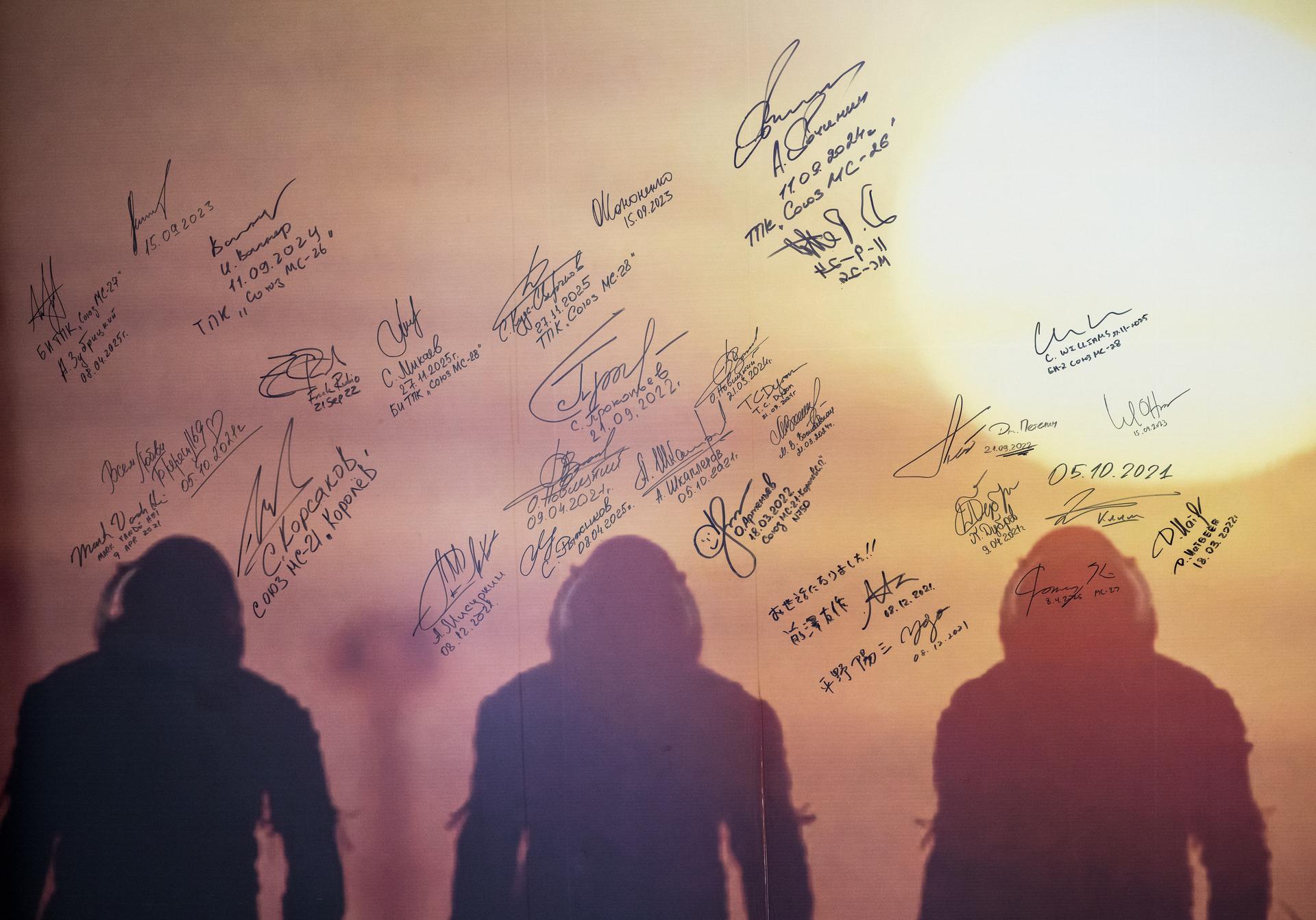
A mural with astronaut, and cosmonaut, signatures is seen, Tuesday, July 14, 2026, at the Cosmonaut Hotel in Baikonur, Kazakhstan. Expedition 75 NASA astronaut Anil Menon, Roscosmos cosmonauts Anna Kikina, and Pyotr Dubrov, will sign the mural as they depart for suit up and launch for a mission to the International Space Station. Photo Credit: (NASA/Bill Ingalls)
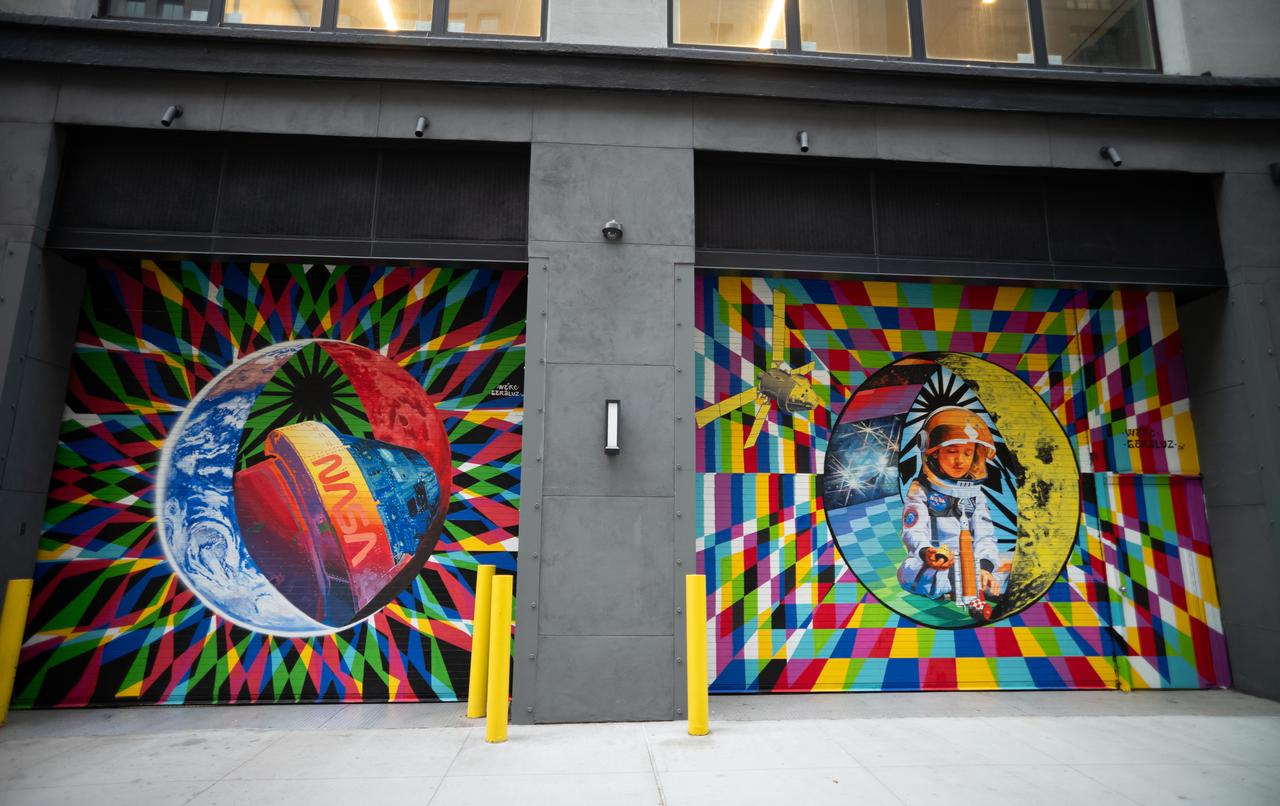
The inaugural murals for the relaunched NASA Art Program appear side-by-side at 350 Hudson Street, Monday, Sept. 23, 2024, in New York City. The murals, titled “To the Moon, and Back,” were created by New York-based artist team Geraluz and WERC and use geometrical patterns to invite deeper reflection on the exploration, creativity, and connection with the cosmos. Photo Credit: (NASA/Joel Kowsky)
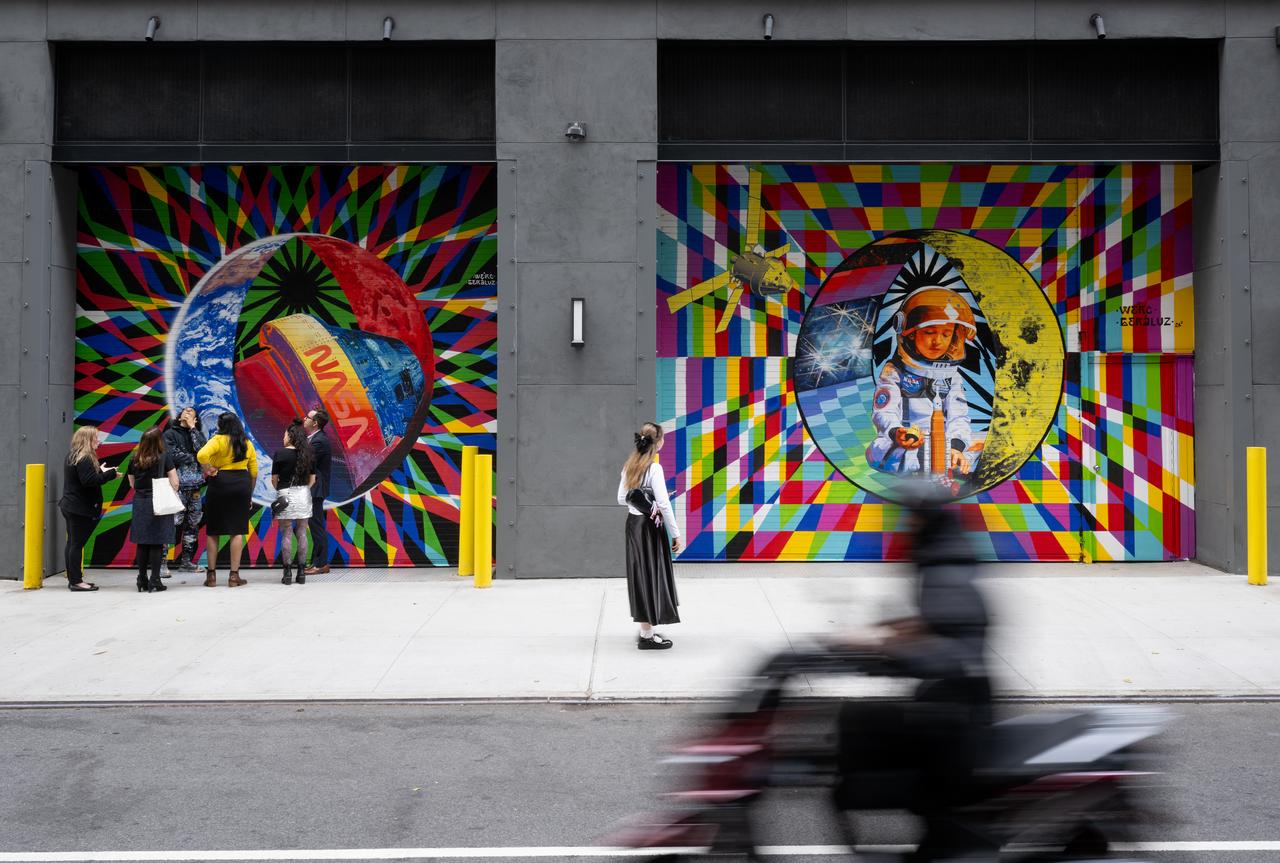
The inaugural murals for the relaunched NASA Art Program appear side-by-side at 350 Hudson Street, Tuesday, Sept. 24, 2024, in New York City. The murals, titled “To the Moon, and Back,” were created by New York-based artist team Geraluz and WERC and use geometrical patterns to invite deeper reflection on the exploration, creativity, and connection with the cosmos. Photo Credit: (NASA/Joel Kowsky)

The mural was created to celebrate the achievements of Wilbur and Orville Wright and to commemorate a century of powered flight. Central to the composition is the 1903 Wright Flyer. "On Dec. 17, 1903, the Wright brothers inaugurated the aerial age with their successful first flights of a heavier-than-air flying machine at Kitty Hawk, N.C. This airplane, known as the Wright Flyer, sometimes referred to as the Kitty Hawk Flyer, was the product of a sophisticated four-year program of research and development conducted by Wilbur and Orville Wright beginning in 1899. During the Wrights' design and construction of their experimental aircraft, they also pioneered many of the basic tenets and techniques of modern aeronautical engineering, such as the use of a wind tunnel and flight testing as design tools. Their seminal accomplishment encompassed not only the breakthrough first flight of an airplane, but also the equally important achievement of establishing the foundation of aeronautical engineering." Dr. Peter Jakab, Curator of Aviation, National Air and Space Museum, Smithsonian Institution "Celebrating One Hundred Years of Powered Flight, 1903-2003", documents many significant achievements in aeronautics and space flight from the dawn of powered flight to the present. Historic aircraft and spacecraft serve as the backdrop, highlighting six figures representing the human element that made these milestones possible. These figures stand, symbolically supported by the words of Wilbur Wright, "It is my belief that flight is possible…" The quote was taken from a letter written to his father on September 3rd, 1900, announcing Wilbur's intention to make "some experiments with a flying machine" at Kitty Hawk, North Carolina. "This year, Bob is helping us commemorate the Centennial of Flight with a beautiful mural slated for placement in our Dryden Flight Research Center that documents the history of flight from the Wright Flyer to the International Space Station. We should
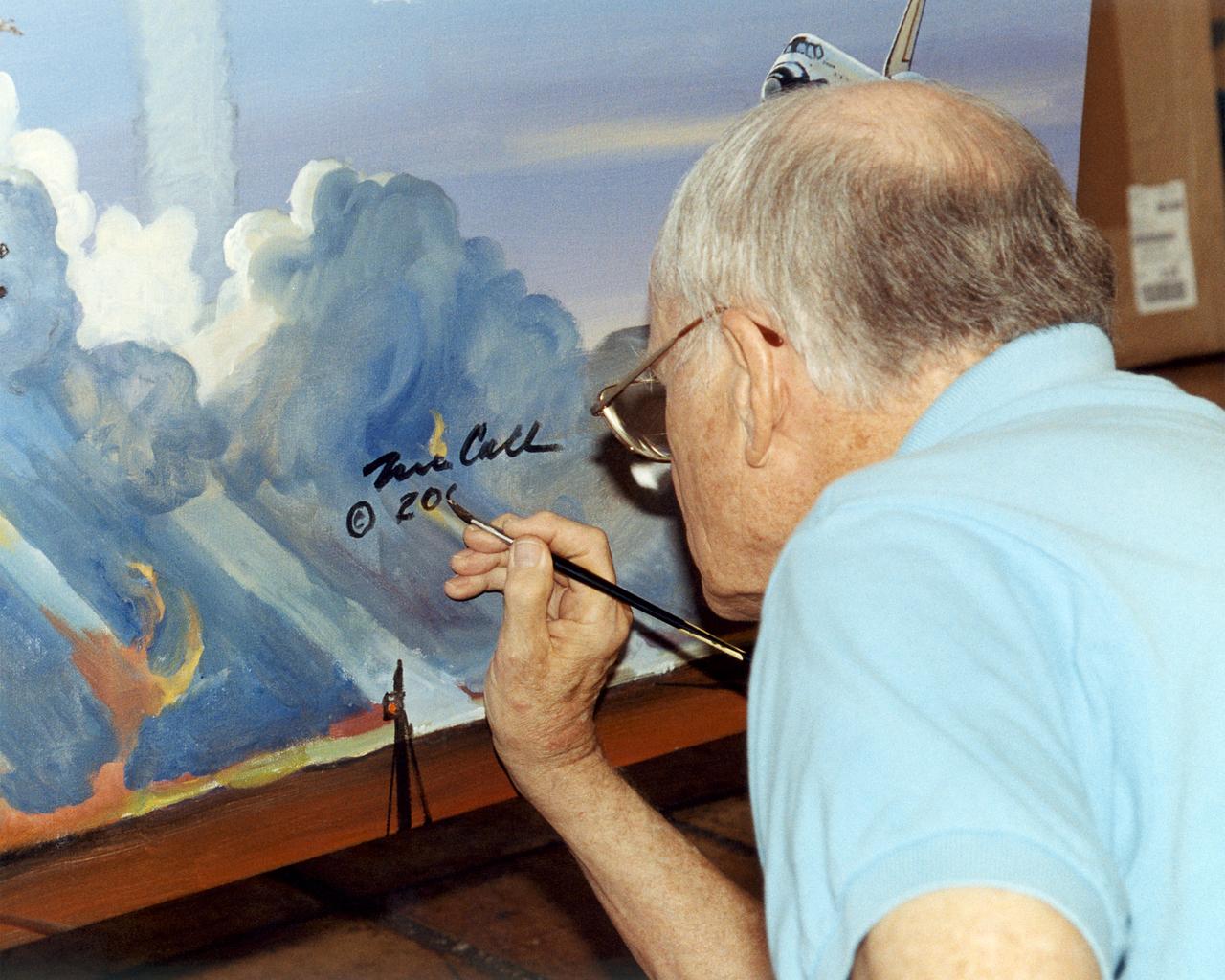
Artist Bob McCall signs the Centennial of Flight Mural in his Paradise Valley, Arizona Studio. The mural was created to celebrate the achievements of Wilbur and Orville Wright and to commemorate a century of powered flight. Many of the epic flights represented in the painting took place in the skies over NASA Dryden Flight Research Center. An equally important goal of this celebration is to encourage the values that have characterized 100 years of aviation history: ingenuity, inventiveness, persistence, creativity and courage. These values hold true not just for pioneers of flight, but also for all pioneers of invention and innovation, and they will remain an important part of America's future. "Celebrating One Hundred Years of Powered Flight, 1903-2003", documents many significant achievements in aeronautics and space flight from the dawn of powered flight to the present. Historic aircraft and spacecraft serve as the backdrop, highlighting six figures representing the human element that made these milestones possible. These figures stand, symbolically supported by the words of Wilbur Wright, "It is my belief that flight is possible…" The quote was taken from a letter written to his father on September 3rd, 1900, announcing Wilbur's intention to make "some experiments with a flying machine" at Kitty Hawk, North Carolina. "This year, Bob is helping us commemorate the Centennial of Flight with a beautiful mural slated for placement in our Dryden Flight Research Center that documents the history of flight from the Wright Flyer to the International Space Station. We should all take note, I think, that in the grand scheme of things, one hundred years is a very short period of time. In that blink of an eye we've gone from Kitty Hawk to Tranquility Base and now look forward to our rovers traversing the surface of Mars. Despite the challenges we face, the future we envision, like the future depicted in the artwork of Bob McCall, is a future of boundless possibility. "
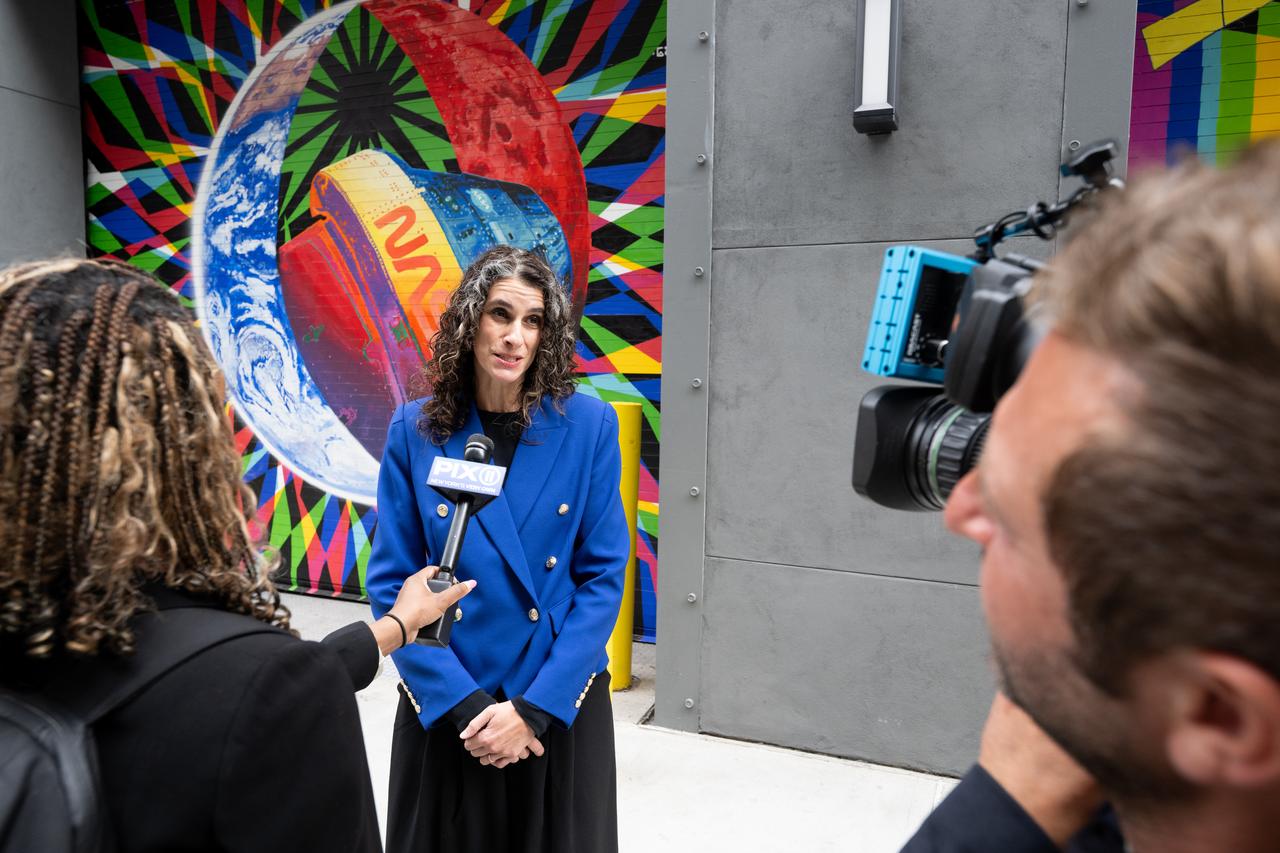
Samara Karasyk, President and CEO of the Hudson Square Business Improvement District talks to a member of the media in front of the mural “To the Moon, and Back” by the New York-based artist team Geraluz and WERC that was created as part of the reimagined NASA Art Program, Tuesday, September 24, 2024, in New York City’s Hudson Square neighborhood. For the inaugural project of the reestablished NASA Art Program the agency collaborated with the Hudson Square Business Improvement District on an open call for New York-based artists to design and install a large-scale mural inspired by NASA’s work and missions. Photo Credit: (NASA/Joel Kowsky)
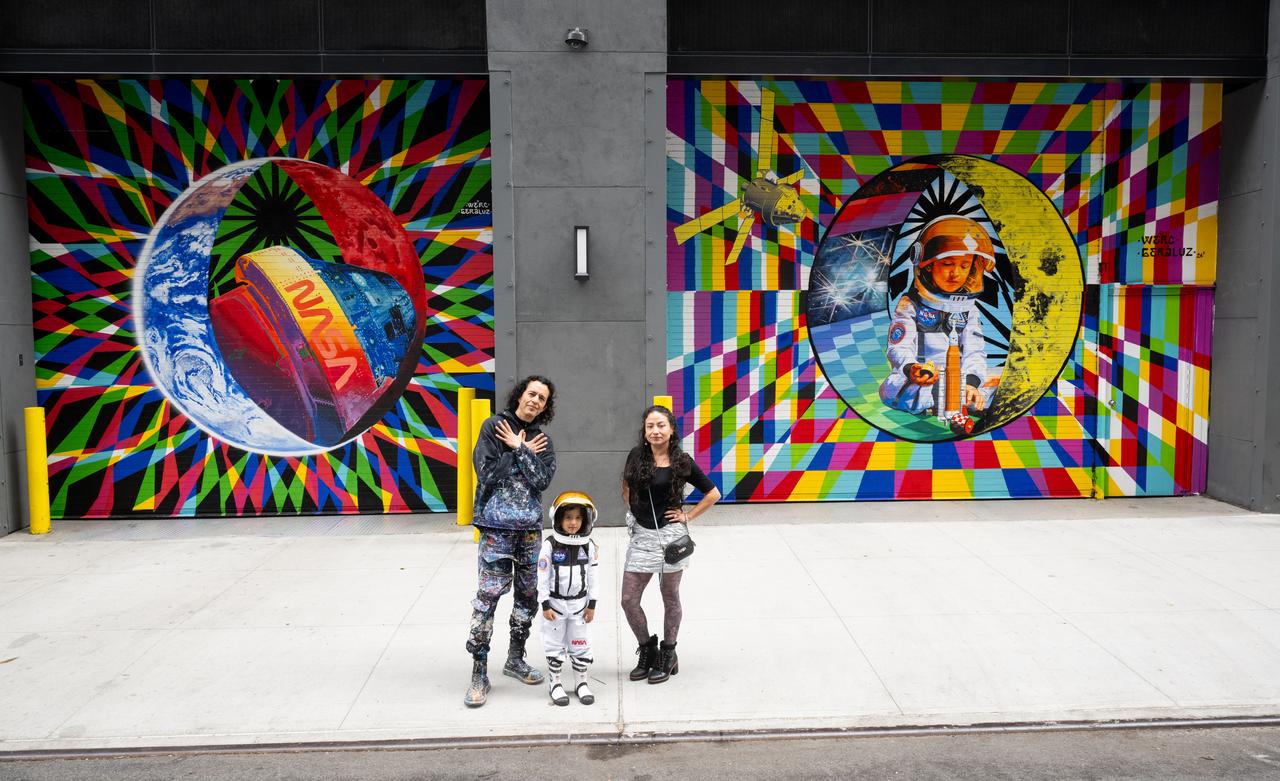
The New York-based artist team Geraluz, left, and WERC, right, and their son Amaru Alvarez, 5, pose for picture with the mural “To the Moon, and Back” by the artist team that was created as part of the reimagined NASA Art Program, Tuesday, September 24, 2024, at 350 Hudson Street in New York City. The murals use geometrical patterns to invite deeper reflection on the exploration, creativity, and connection with the cosmos. Photo Credit: (NASA/Joel Kowsky)
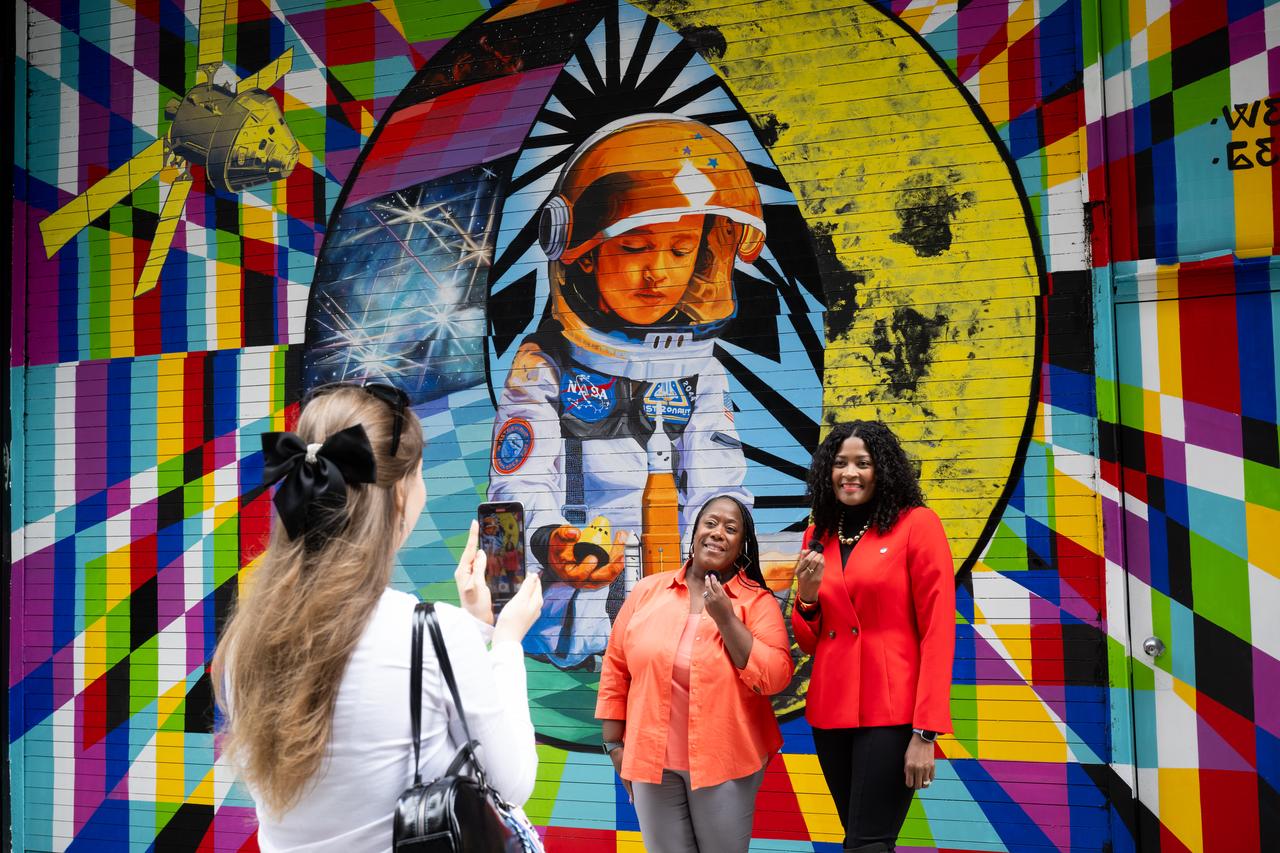
Michelle Jones, NASA’s deputy associate administrator for communications, left, and Aya Collins, director of the engagement division of NASA’s Office of Communications, record a video for social media in front of the mural “To the Moon, and Back” by the New York-based artist team Geraluz and WERC that was created as part of the reimagined NASA Art Program, Tuesday, September 24, 2024, in New York City’s Hudson Square neighborhood. For the inaugural project of the reestablished NASA Art Program the agency collaborated with the Hudson Square Business Improvement District on an open call for New York-based artists to design and install a large-scale mural inspired by NASA’s work and missions. Photo Credit: (NASA/Joel Kowsky)
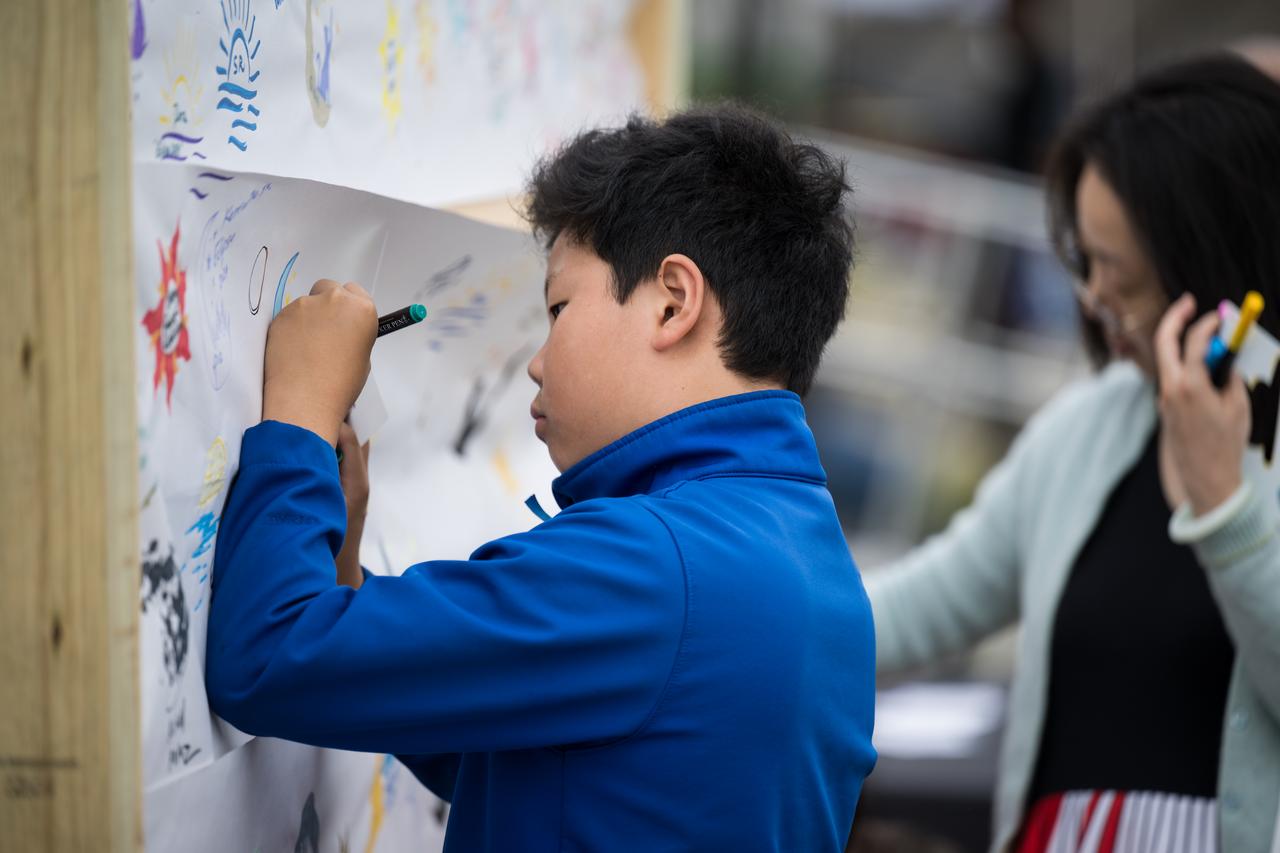
People are seen drawing on a mural as they prepare to watch a total solar eclipse in Kerrville, TX on Monday, April 8, 2024. A total solar eclipse swept across a narrow portion of the North American continent from Mexico’s Pacific coast to the Atlantic coast of Newfoundland, Canada. A partial solar eclipse was visible across the entire North American continent along with parts of Central America and Europe. Photo Credit: (NASA/Aubrey Gemignani)
This image compilation shows some of the most exciting images taken thus far on the MESSENGER mission. A mural-sized copy hangs next to the MESSENGER Science Operations Center at the Johns Hopkins University Applied Physics Laboratory. http://photojournal.jpl.nasa.gov/catalog/PIA16364
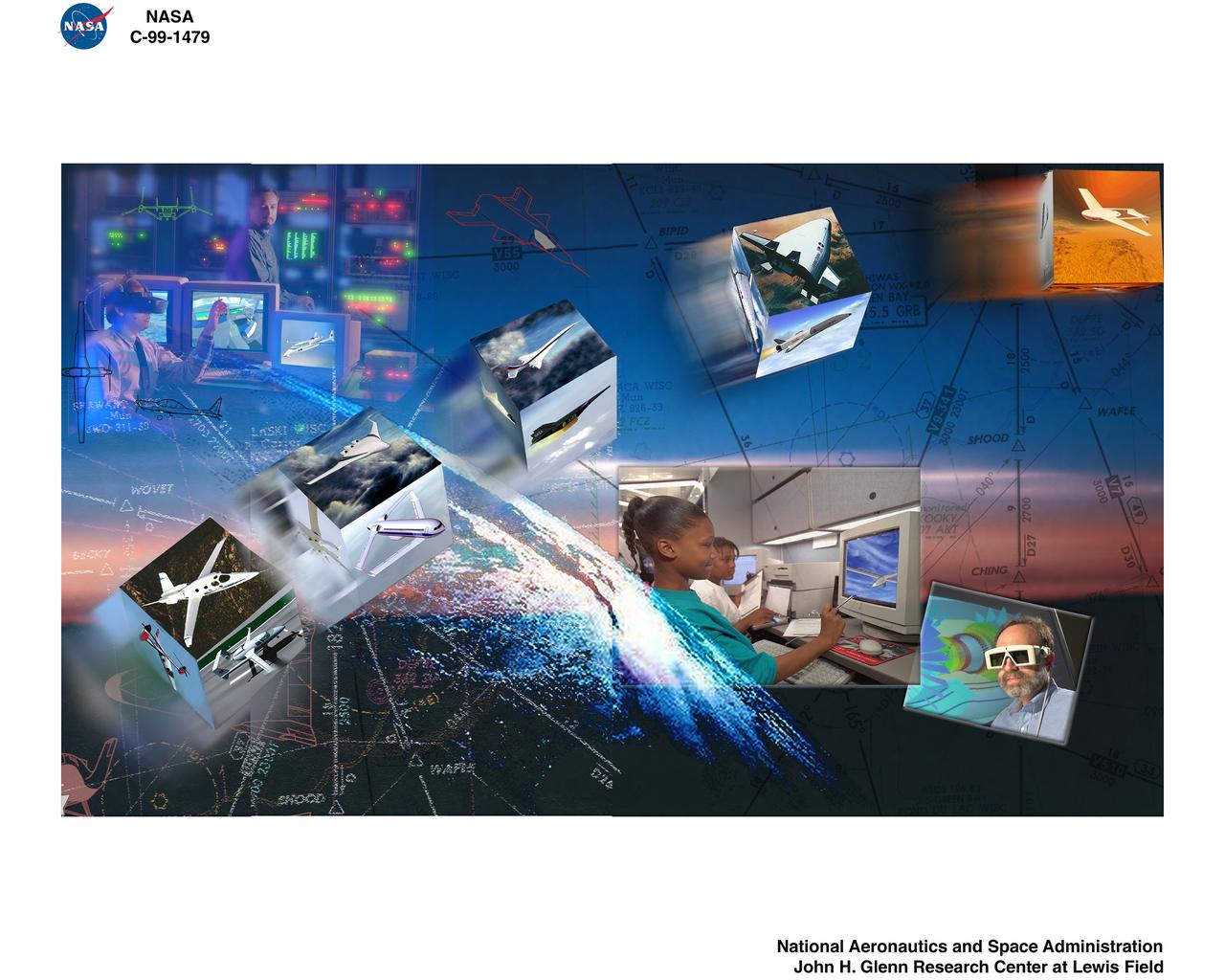
LEADING THE SECOND CENTURY OF FLIGHT THEME MURAL FOR OSHKOSH EAA FLY-IN 1999
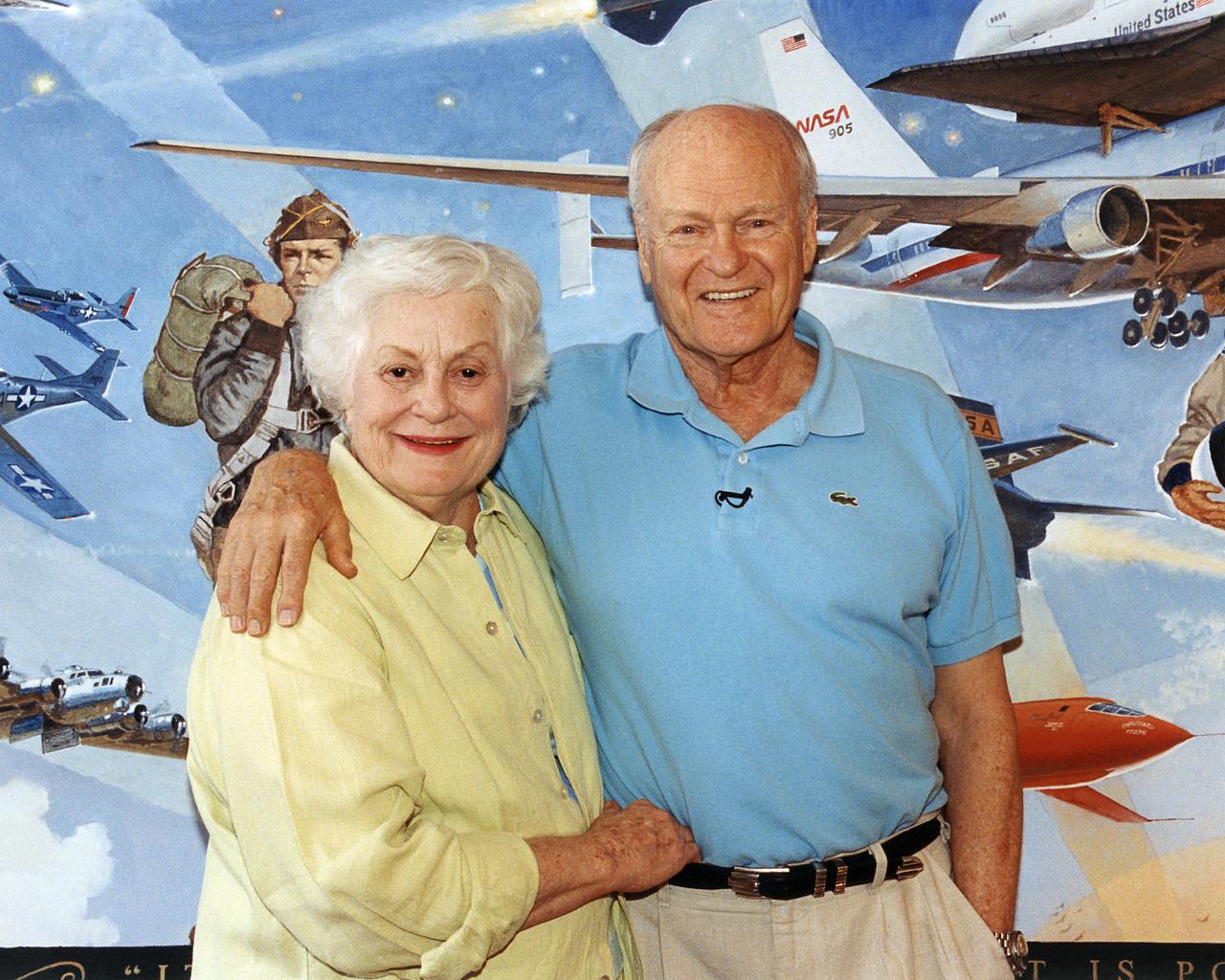
Artists Bob and Louise McCall in their Paradise Valley, Arizona studio, in front of "Celebrating One Hundred Years of Powered Flight 1903-2003." The mural was created to celebrate the achievements of Wilbur and Orville Wright and to commemorate a century of powered flight. Many of the epic flights represented in the painting took place in the skies over NASA Dryden Flight Research Center. An equally important goal of this celebration is to encourage the values that have characterized 100 years of aviation history: ingenuity, inventiveness, persistence, creativity and courage. These values hold true not just for pioneers of flight, but also for all pioneers of invention and innovation, and they will remain an important part of America's future. "Celebrating One Hundred Years of Powered Flight, 1903-2003", documents many significant achievements in aeronautics and space flight from the dawn of powered flight to the present. Historic aircraft and spacecraft serve as the backdrop, highlighting six figures representing the human element that made these milestones possible. These figures stand, symbolically supported by the words of Wilbur Wright, "It is my belief that flight is possible…" The quote was taken from a letter written to his father on September 3rd, 1900, announcing Wilbur's intention to make "some experiments with a flying machine" at Kitty Hawk, North Carolina. "This year, Bob is helping us commemorate the Centennial of Flight with a beautiful mural slated for placement in our Dryden Flight Research Center that documents the history of flight from the Wright Flyer to the International Space Station. We should all take note, I think, that in the grand scheme of things, one hundred years is a very short period of time. In that blink of an eye we've gone from Kitty Hawk to Tranquility Base and now look forward to our rovers traversing the surface of Mars. Despite the challenges we face, the future we envision, like the future depicted in the artwork of Bo
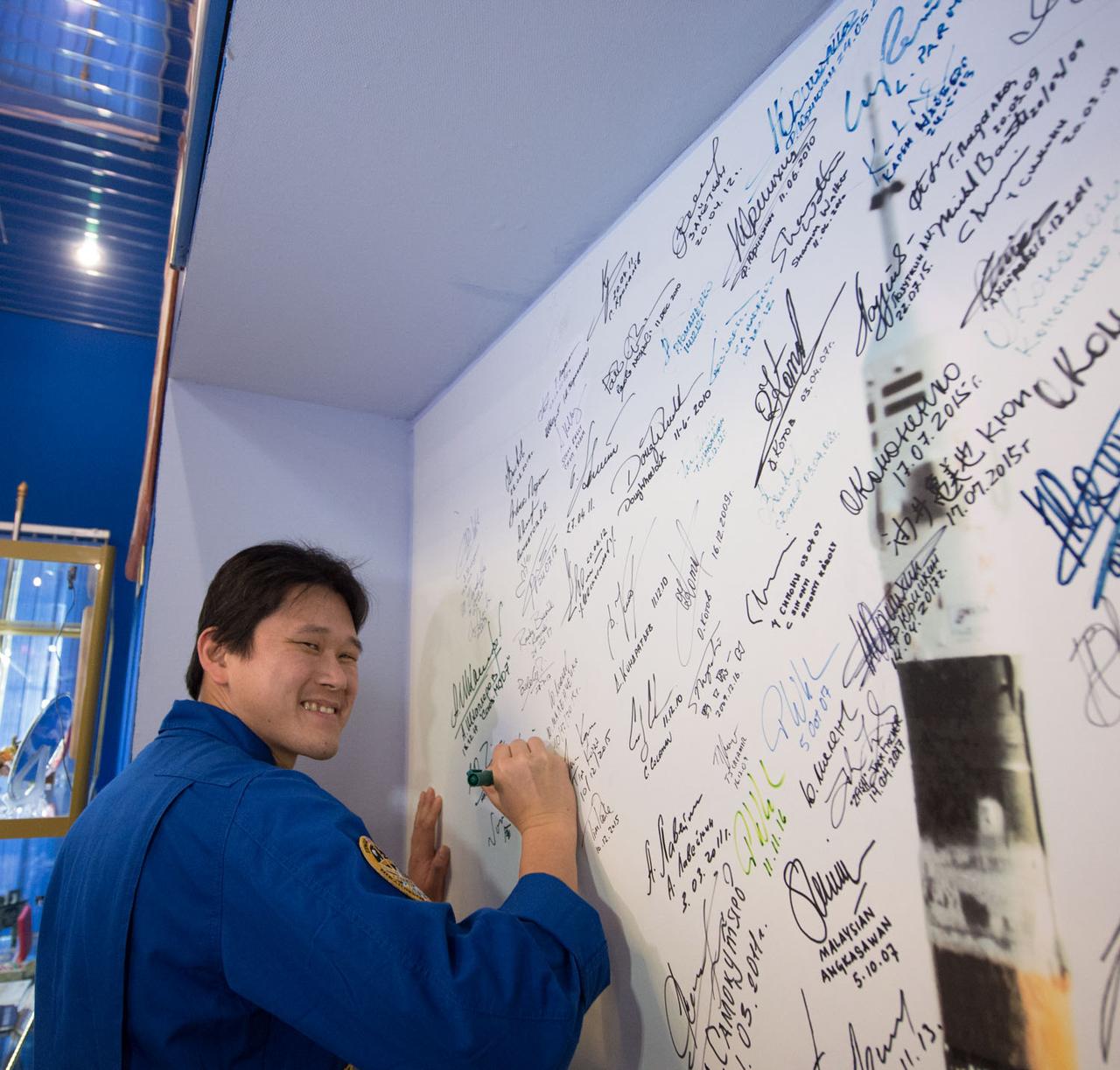
jsc2017e138116 - At the Korolev Museum at the Baikonur Cosmodrome in Kazakhstan, Expedition 54-55 prime crewmember Norishige Kanai of the Japan Aerospace Exploration Agency (JAXA) signs a wall mural Dec. 13 as part of traditional pre-launch ceremonies. Kanai, Scott Tingle of NASA and Anton Shkaplerov of the Russian Federal Space Agency (Roscosmos) will launch Dec. 17 on the Soyuz MS-07 spacecraft for a five month mission on the International Space Station...Andrey Shelepin/Gagarin Cosmonaut Training Center.
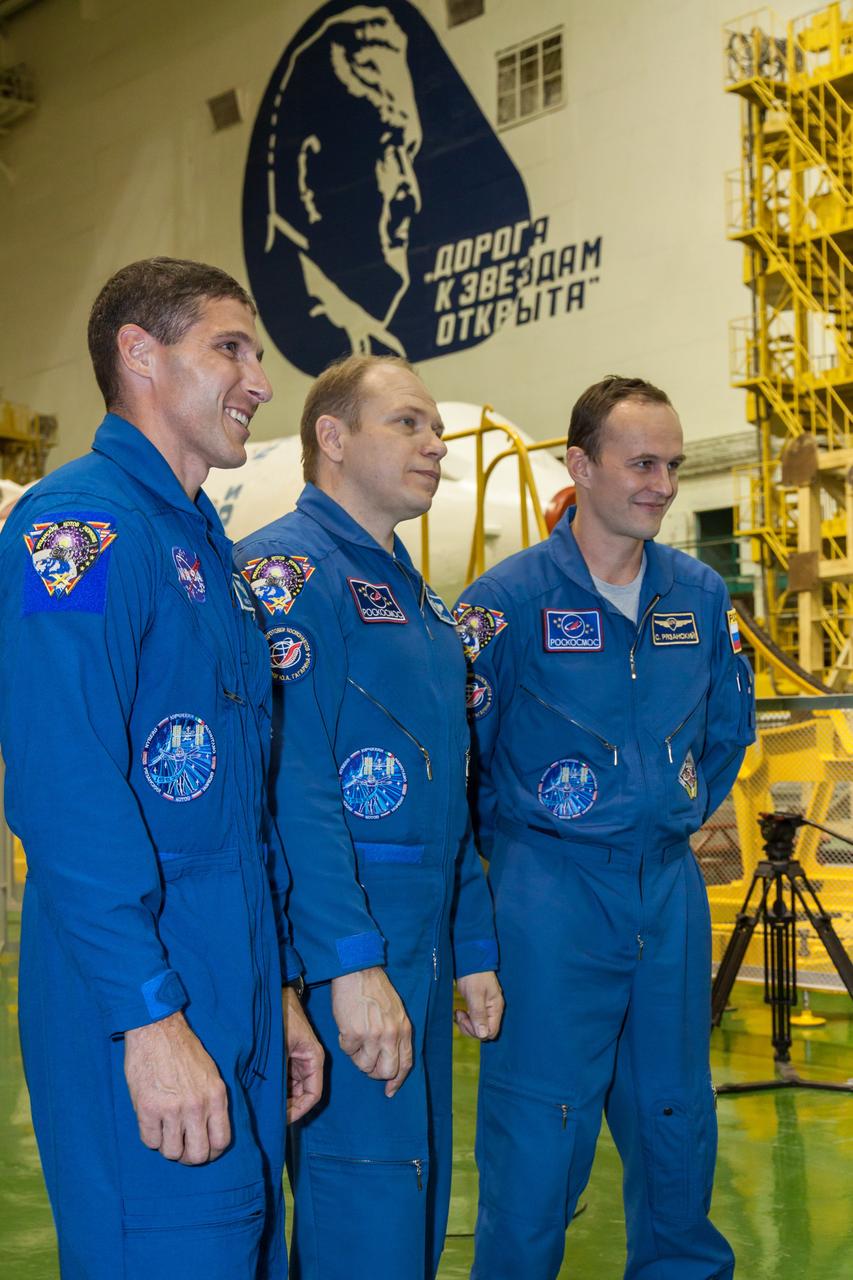
In the Integration Facility at the Baikonur Cosmodrome in Kazakhstan, Expedition 37/38 Flight Engineer Michael Hopkins of NASA (left), Soyuz Commander Oleg Kotov (center) and Flight Engineer Sergey Ryazanskiy (right) pose for pictures Sept. 20 near a wall mural of Russian space icon Sergei Korolev as they completed a final “fit check” dress rehearsal of procedures leading to their launch Sept. 26, Kazakh time, from Baikonur in the Soyuz TMA-10M spacecraft to begin a five and a half month mission on the International Space Station. The words on the mural in Russian echo a famous line by Korolev, “the road to the stars is open”. NASA/Victor Zelentsov
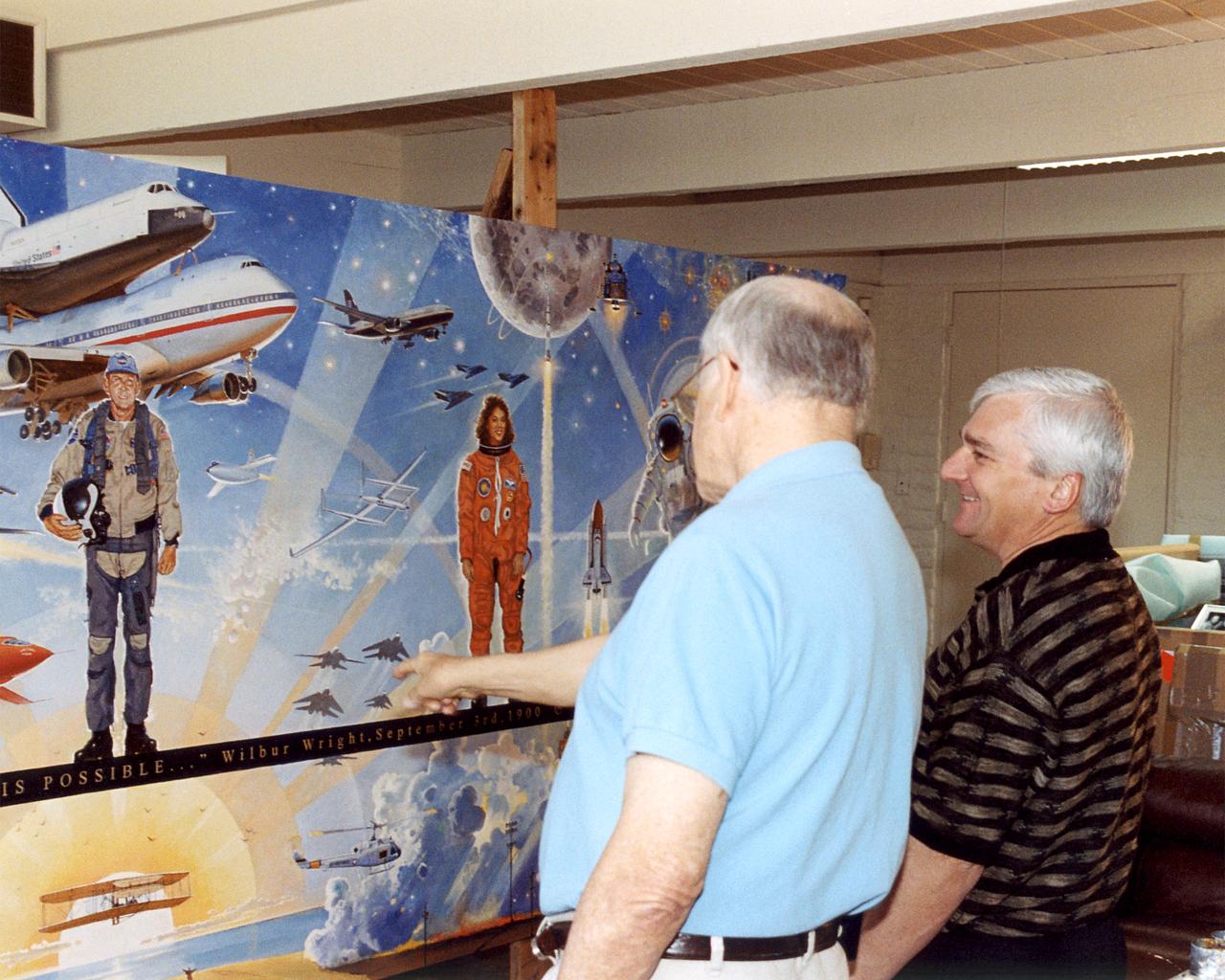
Bob Mccall and NASA Dryden Director Kevin Petersen stand by "Celebrating One Hundred Years of Powered Flight, 1903-2003", in the artist's studio in Paradise Valley, Arizona. The mural was created to celebrate the achievements of Wilbur and Orville Wright and to commemorate a century of powered flight. Many of the epic flights represented in the painting took place in the skies over NASA Dryden Flight Research Center. An equally important goal of this celebration will be to encourage the values that have characterized 100 years of aviation history: ingenuity, inventiveness, persistence, creativity and courage. These values hold true not just for pioneers of flight, but also for all pioneers of invention and innovation, and they will remain an important part of America's future. "Celebrating One Hundred Years of Powered Flight, 1903-2003", documents many significant achievements in aeronautics and space flight from the dawn of powered flight to the present. Historic aircraft and spacecraft serve as the backdrop, highlighting six figures representing the human element that made these milestones possible. These figures stand, symbolically supported by the words of Wilbur Wright, "It is my belief that flight is possible…" The quote was taken from a letter written to his father on September 3rd, 1900, announcing Wilbur's intention to make "some experiments with a flying machine" at Kitty Hawk, North Carolina. "This year, Bob is helping us commemorate the Centennial of Flight with a beautiful mural slated for placement in our Dryden Flight Research Center that documents the history of flight from the Wright Flyer to the International Space Station. We should all take note, I think, that in the grand scheme of things, one hundred years is a very short period of time. In that blink of an eye we've gone from Kitty Hawk to Tranquility Base and now look forward to our rovers traversing the surface of Mars. Despite the challenges we face, the future we envision, like the fu
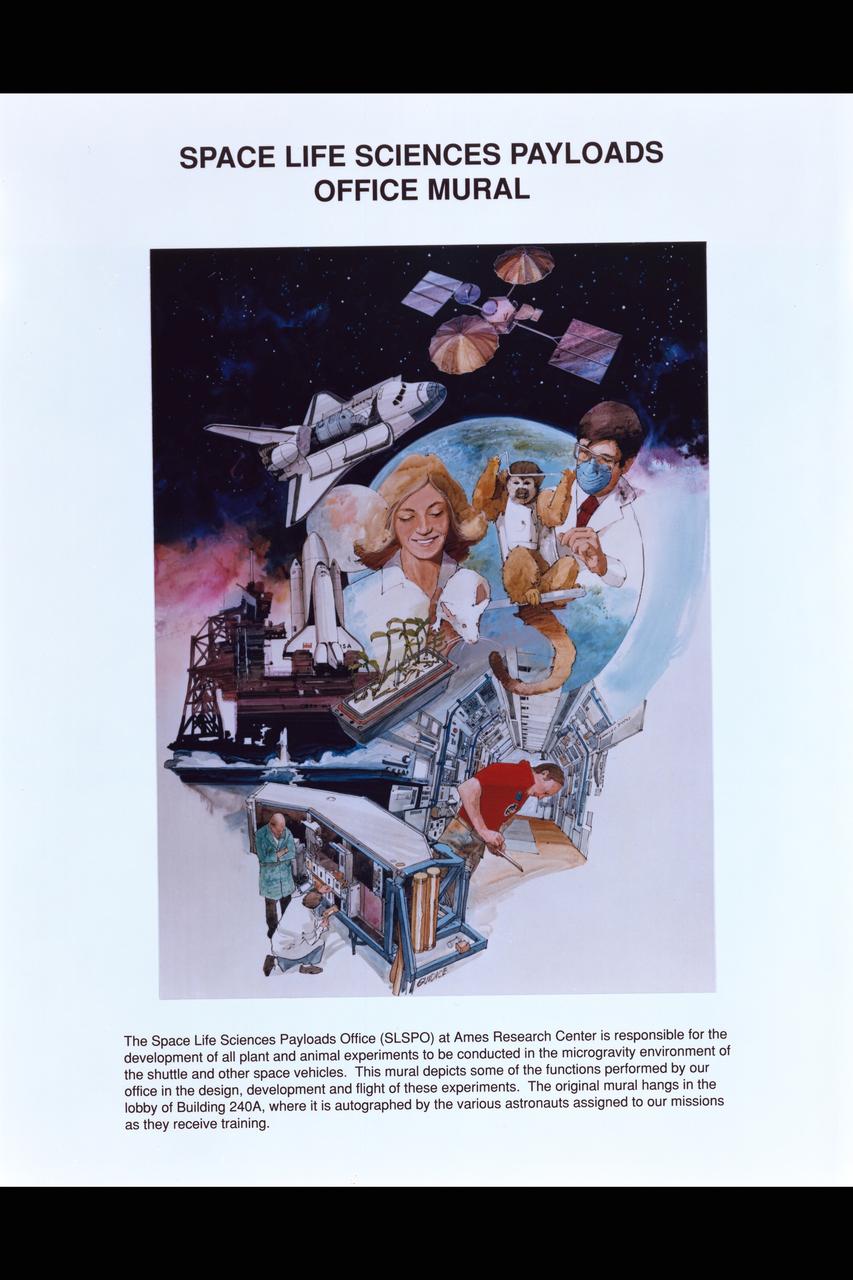
Original Art by Artist: Rick Guidice Space Life Sciences Payloads Office (SLSPO) office manual cover with mission statement. This mural (original in lobby of N-240A) depicts some of the functions performed by our office in the design, development and flight of these experiments.
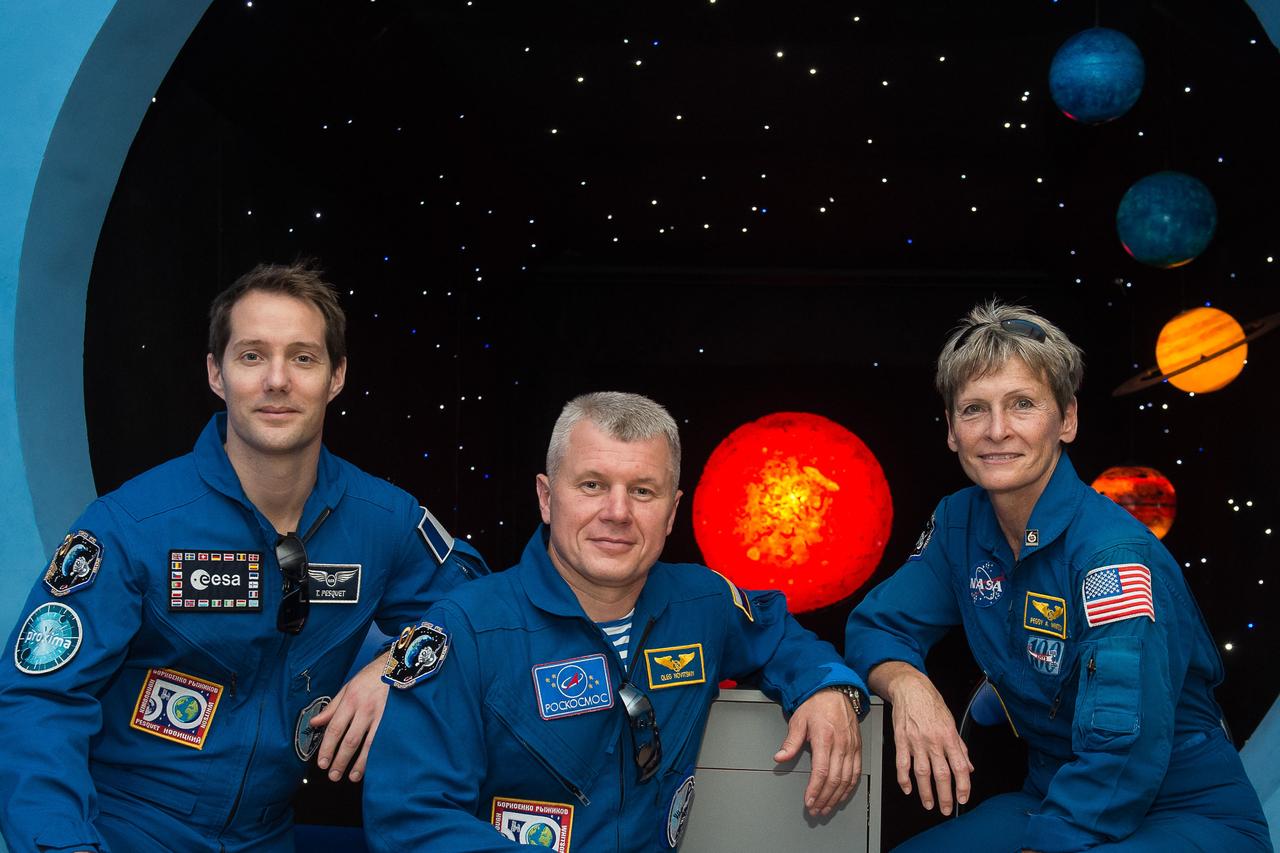
During a tour of a museum in Baikonur, Kazakhstan June 26, Expedition 48-49 backup crewmembers Thomas Pesquet of the European Space Agency (left), Oleg Novitskiy of Roscosmos (center) and Peggy Whitson of NASA (right) pose for pictures in front of a mural depicting planets. Whitson, Novitskiy and Pesquet are backups to Kate Rubins of NASA, Anatoly Ivanishin of Roscosmos and Takuya Onishi of the Japan Aerospace Exploration Agency, who are preparing for launch on July 7, Baikonur time, on the Soyuz MS-01 spacecraft for a planned four-month mission on the International Space Station. GCTC/Andrei Shelepin
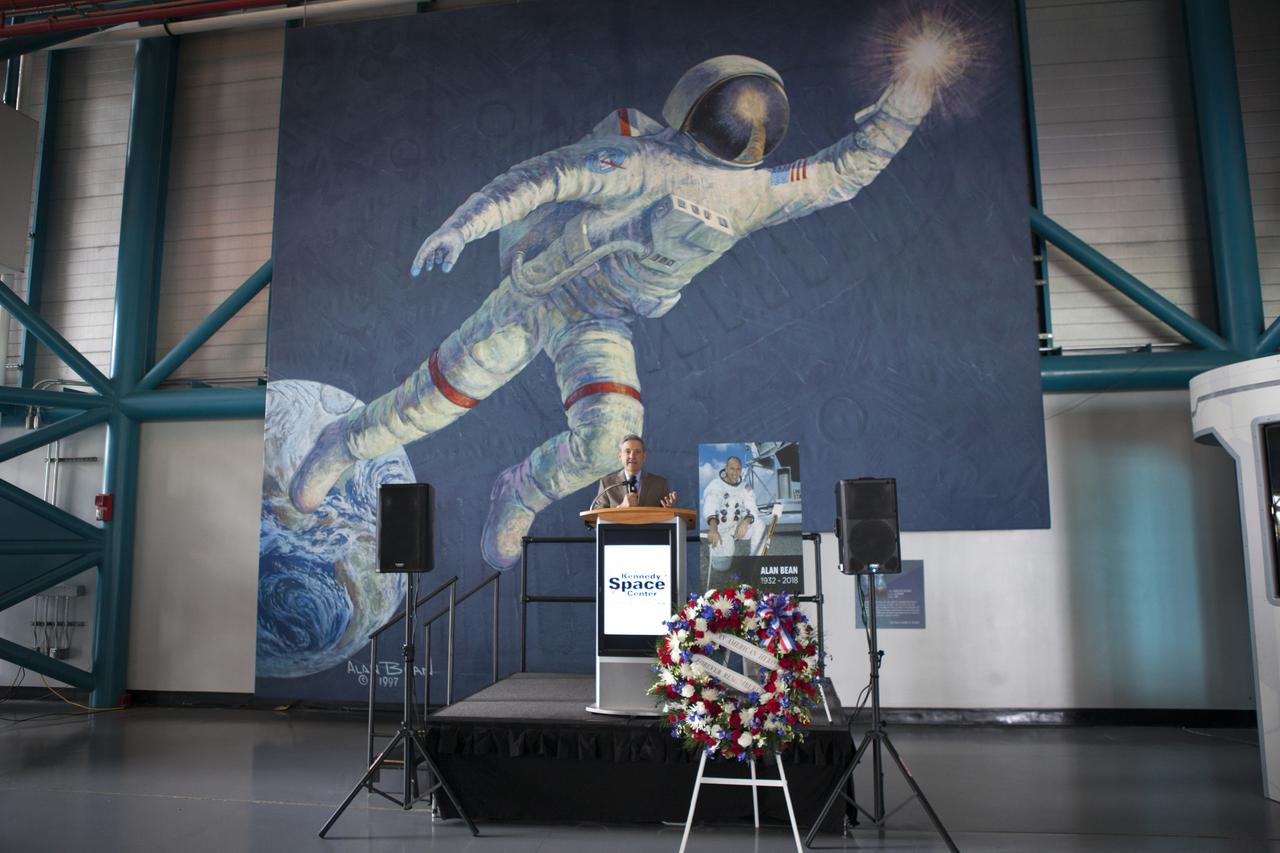
A memorial wreath placed in the Apollo-Saturn V Center of the Kennedy Space Center Visitor Complex on Wednesday, May 30, 2018, honors former NASA astronaut Alan Bean. He was the fourth person to walk on the Moon as lunar module pilot on Apollo 12 in November 1969. He went on to command the 59-day Skylab 3 mission in 1973. In the background is a large mural of a painting by Bean who became an accomplished artist after leaving NASA. He died in Houston on May 26, 2018, at the age of 86.
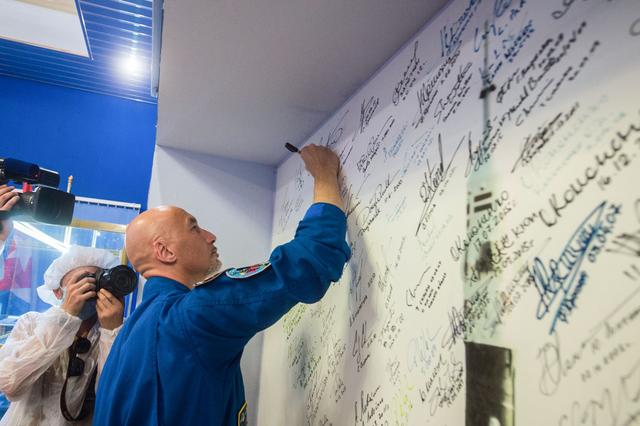
jsc2019e039433 - At the Baikonur Cosmodrome in Kazakhstan, Expedition 60 crewmember Luca Parmitano of the European Space Agency signs a wall mural July 16 as part of pre-launch preparations. Parmitano, Drew Morgan of NASA and Alexander Skvortsov of Roscosmos will launch July 20 on the Soyuz MS-13 spacecraft from the Baikonur Cosmodrome for a mission on the International Space Station...Andrey Shelepin/GCTC.
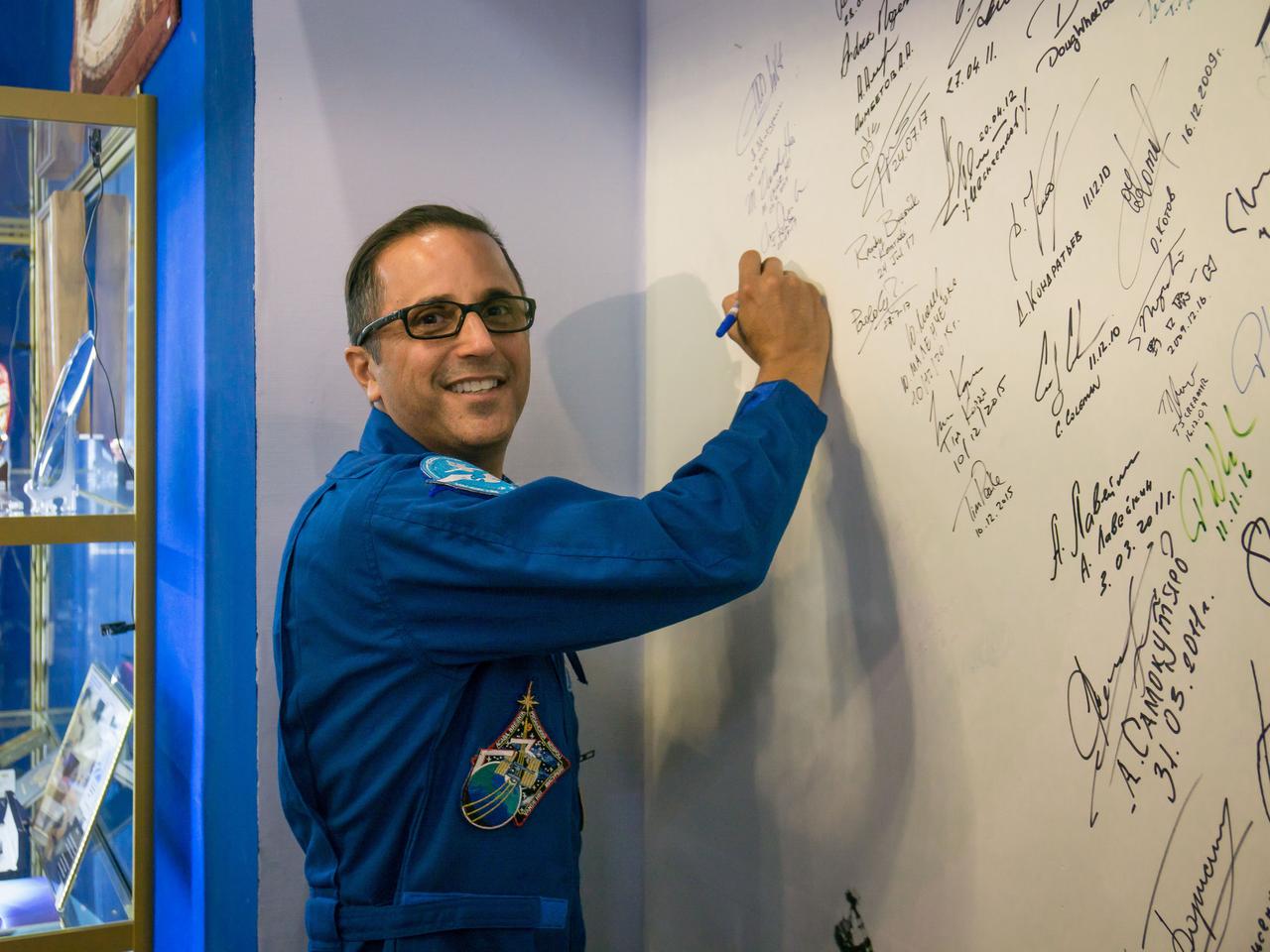
jsc2017e115132 (Sept. 7, 2017) --- In the Korolev Museum at the Baikonur Cosmodrome in Kazakhstan, Expedition 53-54 crewmember Joe Acaba of NASA signs a wall mural Sept. 7 as part of traditional pre-launch activities. Acaba, Mark Vande Hei of NASA and Alexander Misurkin of Roscosmos will launch Sept. 13 on the Soyuz MS-06 spacecraft for a five and a half month mission on the International Space Station. Credit: NASA/Victor Zelentsov
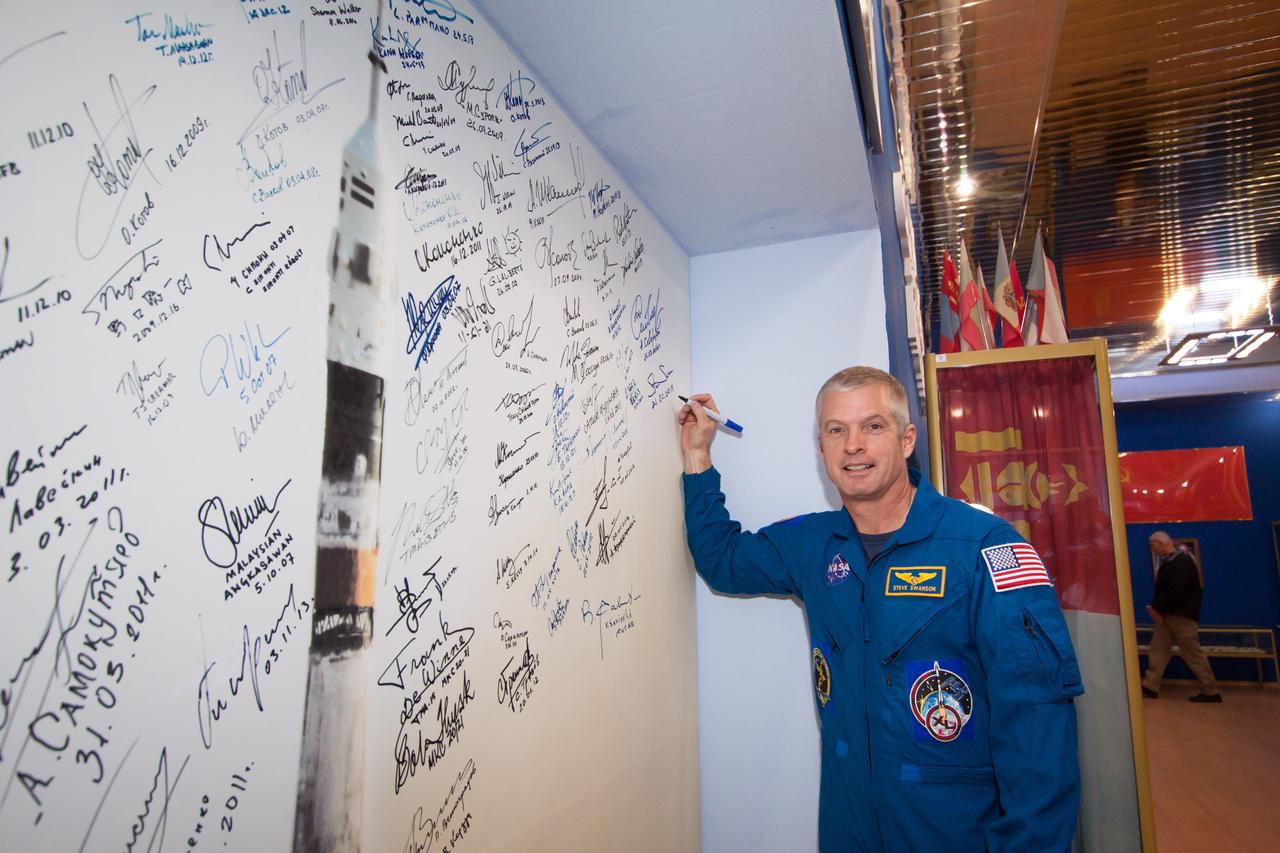
13-02-48-2: In the Baikonur Cosmodrome Museum in Kazakhstan, Expedition 39/40 Flight Engineer Steve Swanson of NASA signs a wall mural March 21 to honor a tradition as he and his crewmates prepare for launch to the International Space Station. Swanson, Soyuz Commander Alexander Skvortsov of Roscosmos and Flight Engineer Oleg Artemyev of Roscosmos are wrapping up training for their launch to the station March 26, Kazakh time, on the Soyuz TMA-12 spacecraft for a six-month mission on the orbital laboratory. NASA/Victor Zelentsov
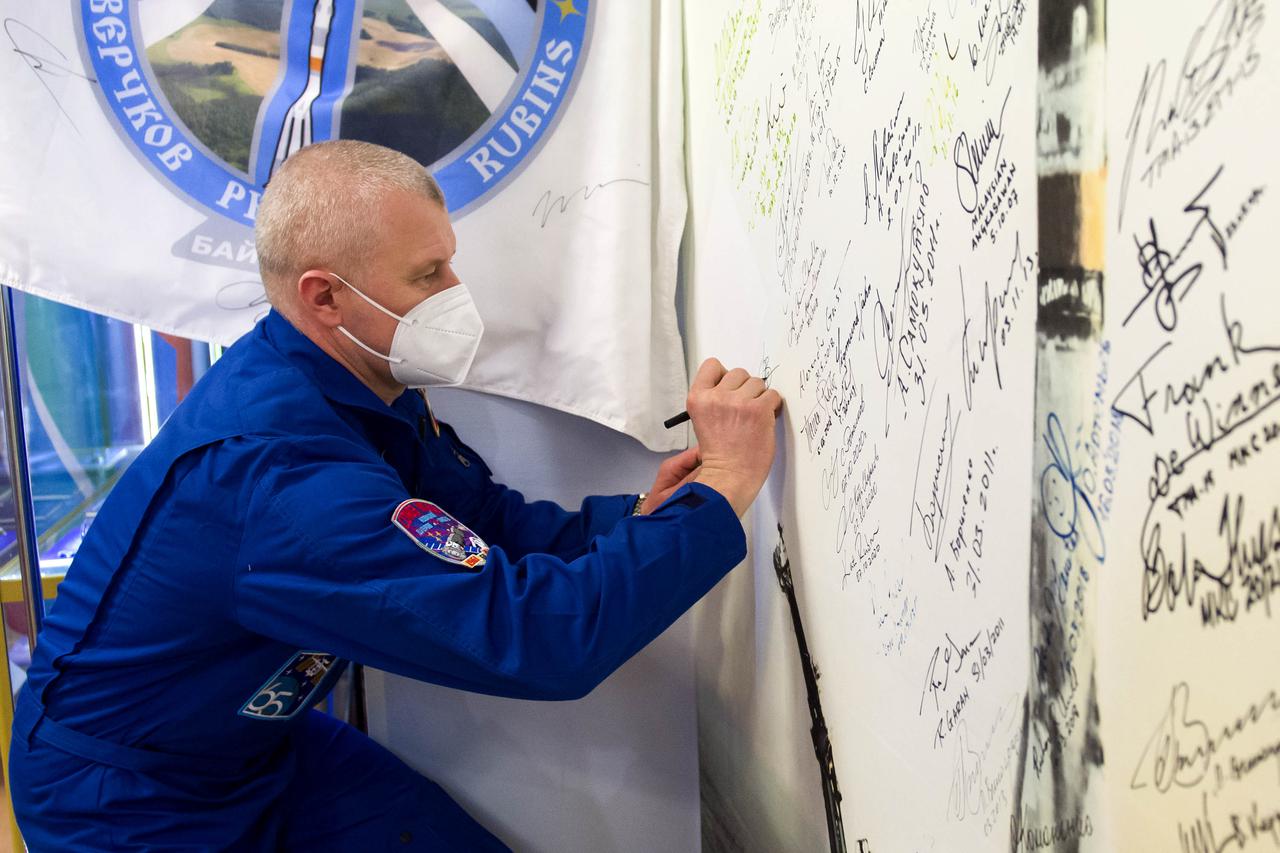
Expedition 65 prime crew member Russian cosmonaut Oleg Novitskiy of Roscosmos signs his name to a wall mural bearing the picture of a Soyuz launch at the Baikonur Cosmodrome Museum, Sunday, April 4, 2021 at the Baikonur Cosmodrome in Kazakhstan. Novitskiy, Pyotr Dubrov of Roscosmos, and NASA astronaut Mark Vande Hei are scheduled to launch to the International Space Station aboard the Soyuz MS-18 spacecraft on April 9. Photo Credit: (NASA/GCTC/Irina Spector)
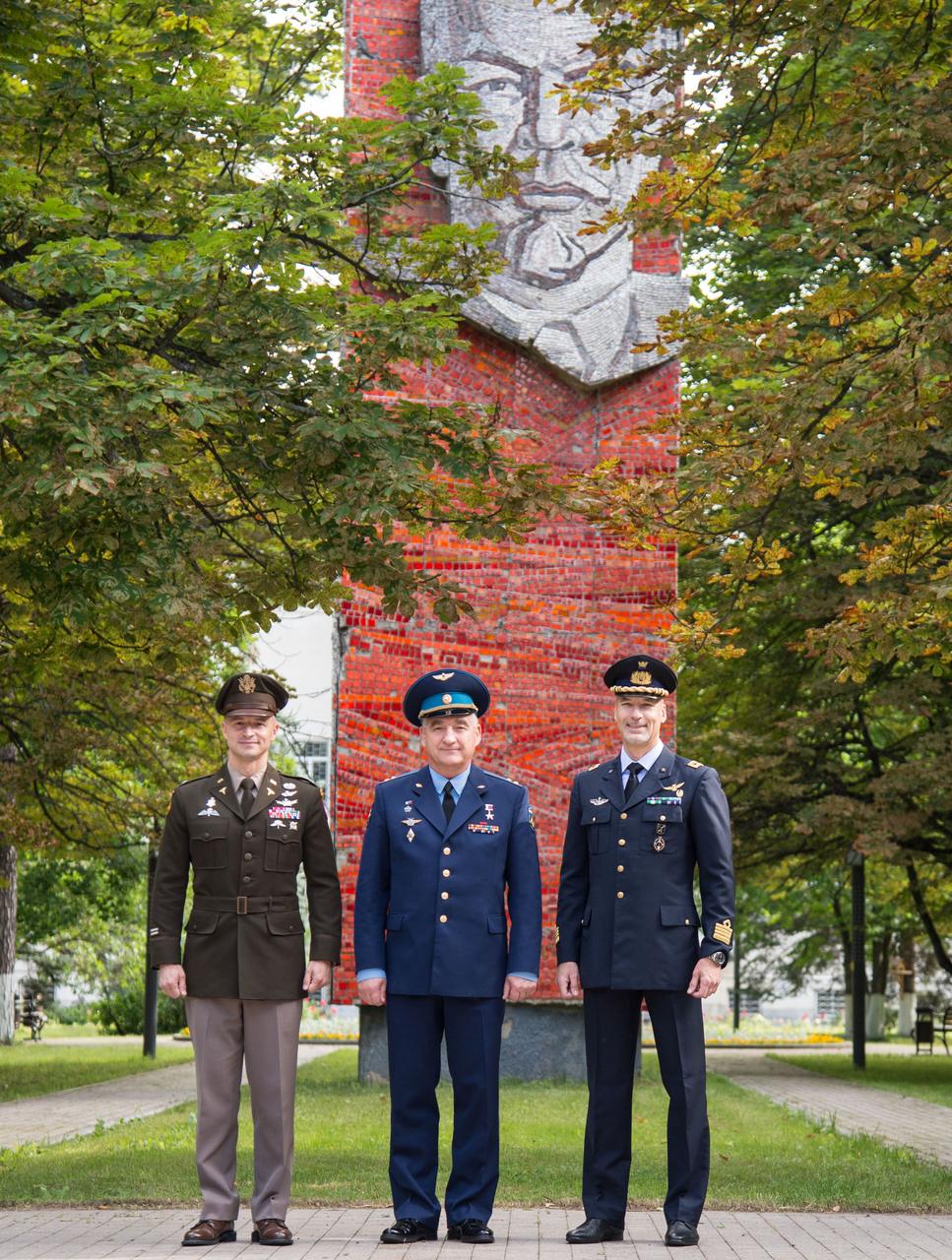
jsc2019e038375 - At the Gagarin Cosmonaut Training Center in Star City, Russia, the mural of Vladimir Lenin serves as a backdrop as Expedition 60 crewmembers Drew Morgan of NASA (left), Alexander Skvortsov of Roscosmos (center) and Luca Parmitano of the European Space Agency (right) pose for pictures July 4 before departing for their launch site in Kazakhstan. They will launch July 20 from the Baikonur Cosmodrome in Kazakhstan on the Soyuz MS-13 spacecraft for a mission on the International Space Station...NASA/Beth Weissinger.
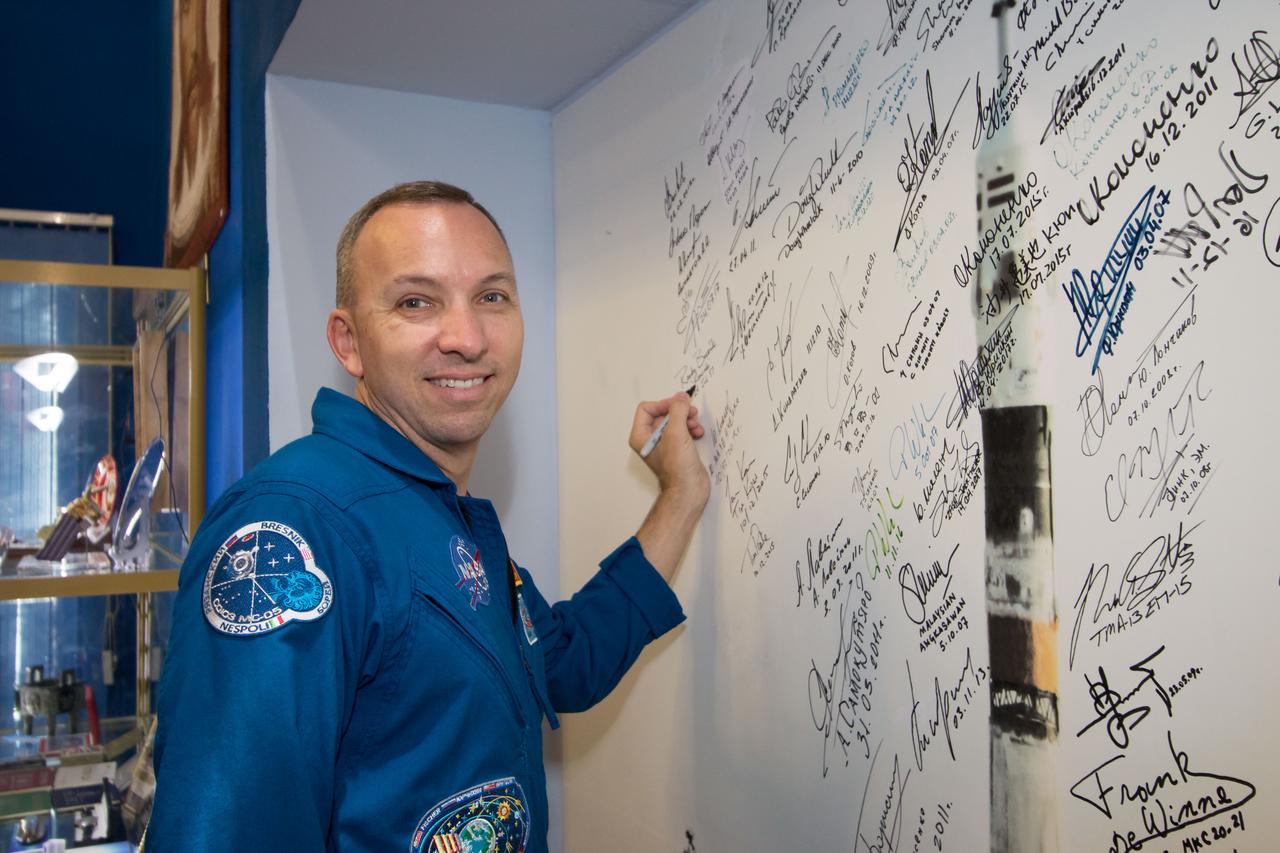
jsc2017e101946 (July 22, 2017) --- At the Baikonur Cosmodrome in Kazakhstan, Expedition 52-53 crewmember Randy Bresnik of NASA signs a mural in the Korolev Museum July 24 as part of traditional pre-launch activities. Bresnik, Paolo Nespoli of the European Space Agency and Sergey Ryazanskiy of the Russian Federal Space Agency (Roscosmos) will launch July 28 aboard the Soyuz MS-05 spacecraft for a five-month mission on the International Space Station. Credit: NASA/Victor Zelentsov
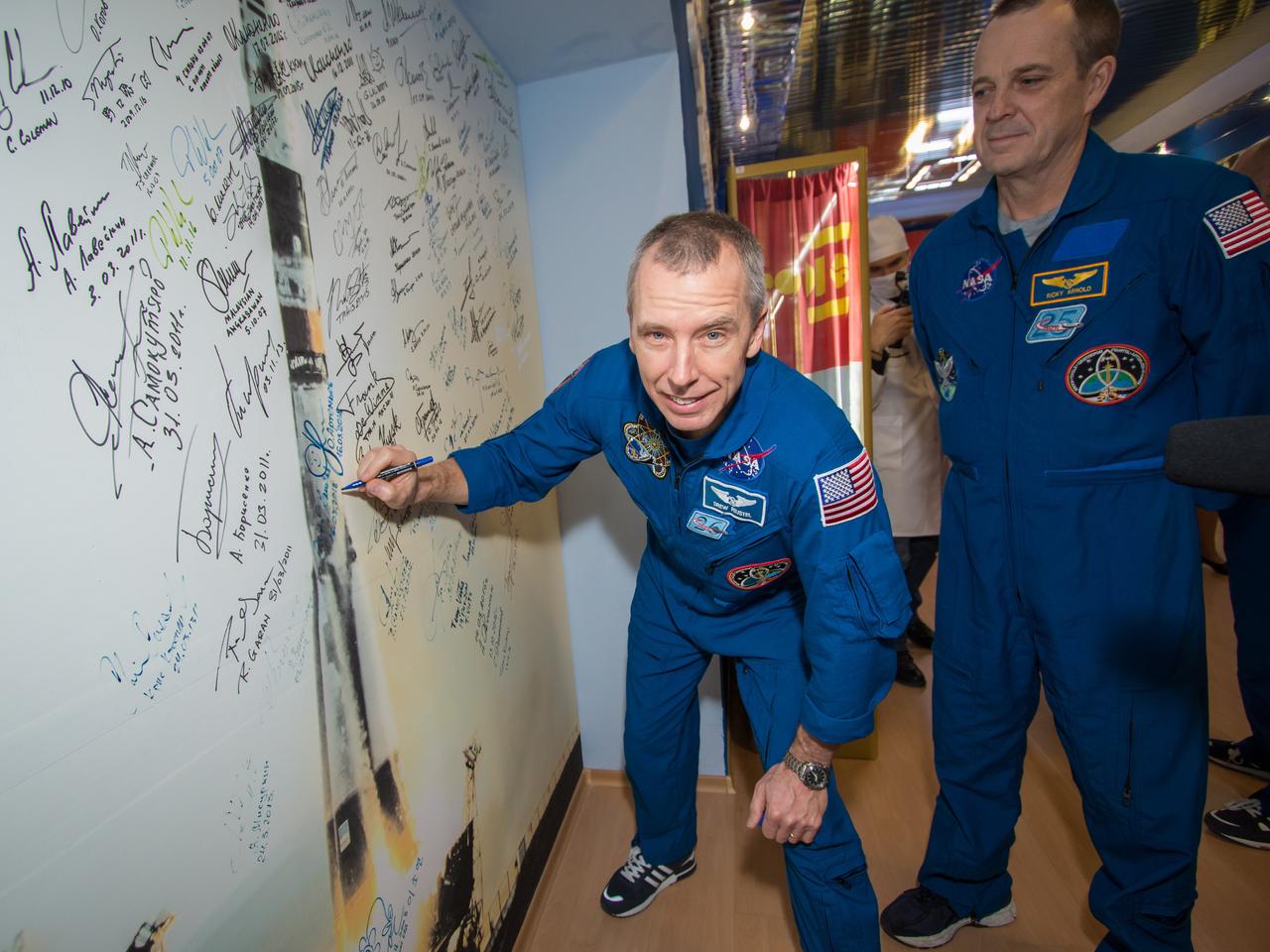
jsc2018e025591 - In the Korolev Museum at the Baikonur Cosmodrome in Kazakhstan, Expedition 55 crewmember Drew Feustel of NASA (left) signs a wall mural depicting a Soyuz launch March 16 as part of traditional prelaunch activities. Looking on is NASA crewmate Ricky Arnold (right). Along with Oleg Artemyev of Roscosmos, they will launch March 21 on the Soyuz MS-08 spacecraft for a five-month mission on the International Space Station...NASA/Victor Zelentsov.

A group of students and their chaperones view a mural on a wall at the News Center during a tour of NASA’s Kennedy Space Center in Florida on Oct. 6, 2022. The middle-school students, from the Boys and Girls Clubs of the Flathead Indian Reservation in Montana, are visiting the space center with the Students to Launch program. Students to Launch engages students in STEM (science, technology, engineering and mathematics) and creates awareness of careers in the space program.
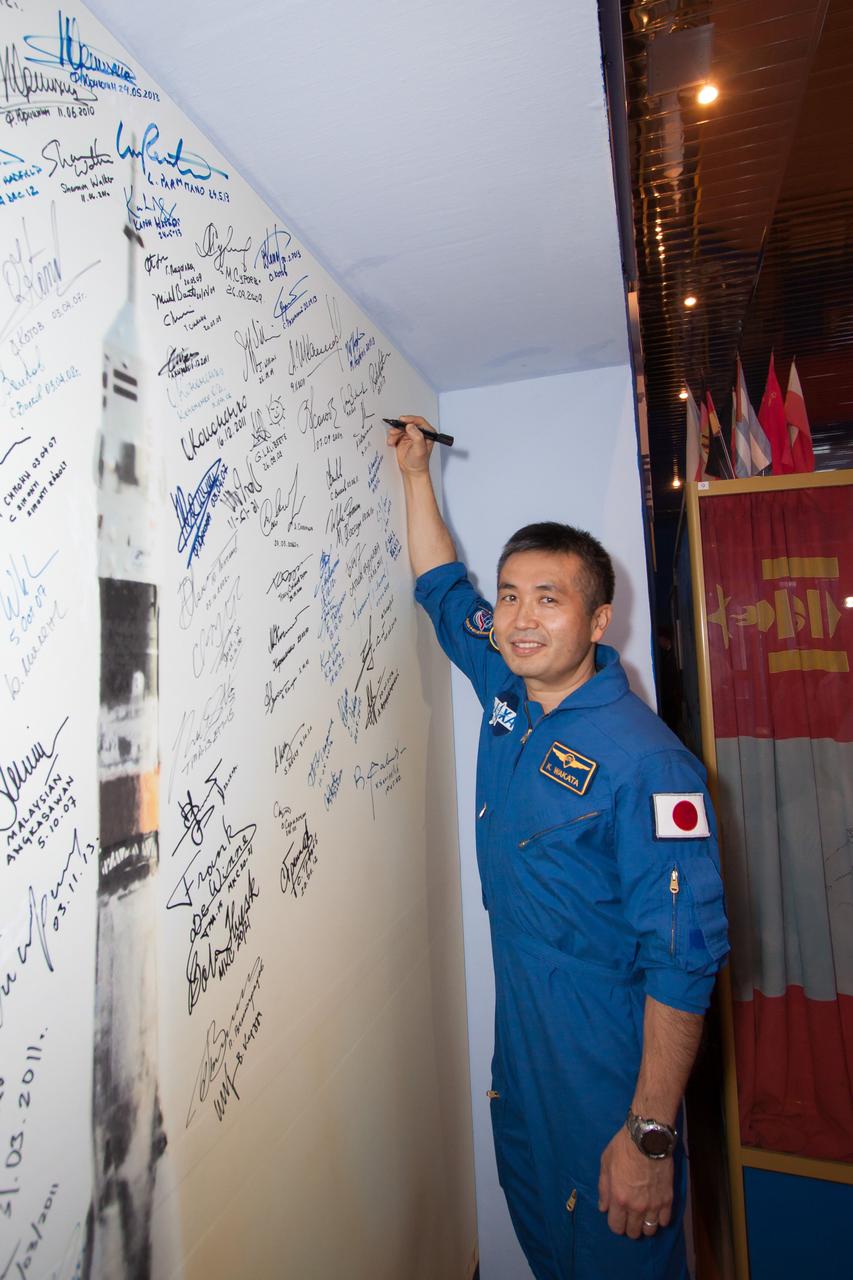
13-48-12: At the Korolev Museum at the Baikonur Cosmodrome in Kazakhstan, Expedition 38/39 Flight Engineer Koichi Wakata of the Japan Aerospace Exploration Agency signs a wall mural of a Soyuz rocket launch during traditional pre-flight activities Nov. 3. Wakata, Soyuz Commander Mikhail Tyurin and Flight Engineer Rick Mastracchio of NASA will launch Nov. 7, Kazakh time, on the Soyuz TMA-11M spacecraft for a six-month mission on the International Space Station. NASA/Victor Zelentsov
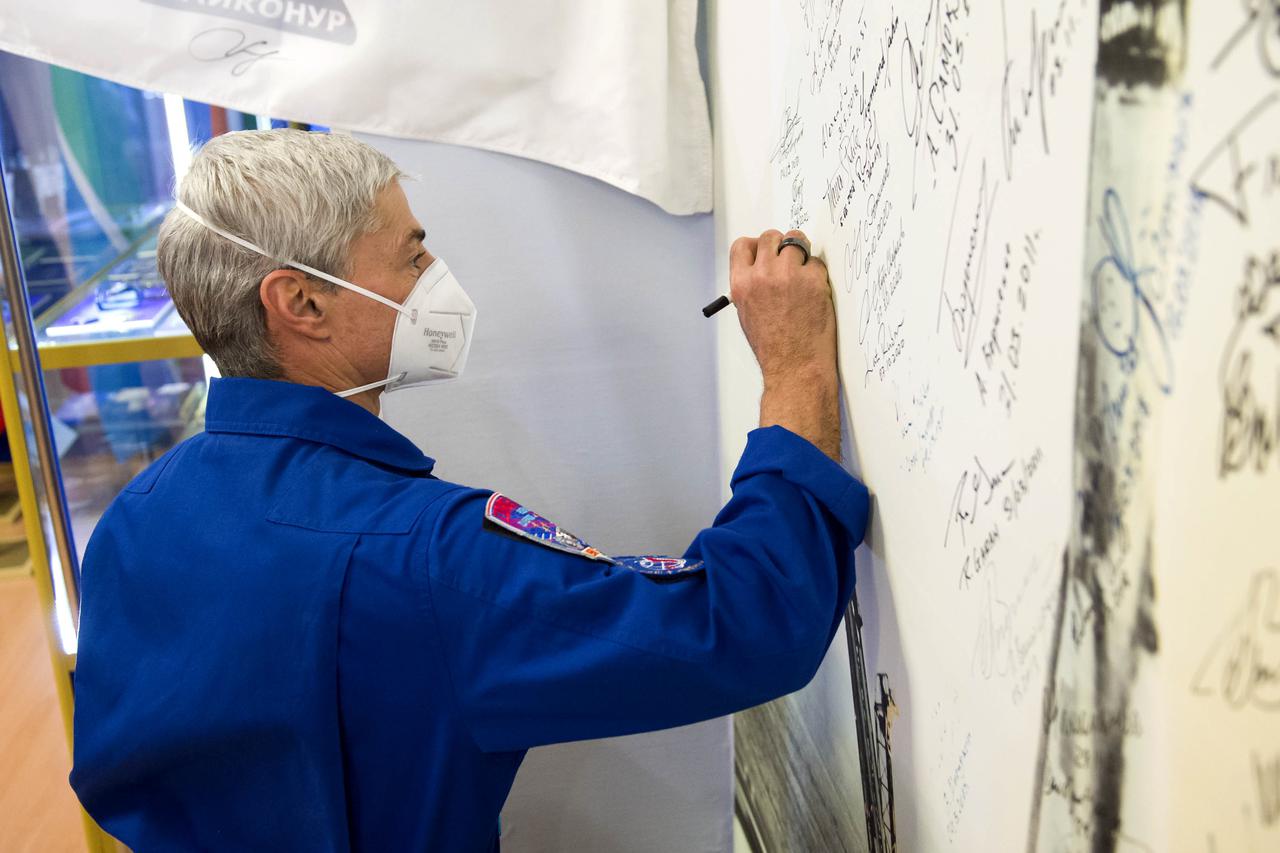
Expedition 65 prime crew member NASA astronaut Mark Vande Hei, signs his name to a wall mural bearing the picture of a Soyuz launch at the Baikonur Cosmodrome Museum, Sunday, April 4, 2021 at the Baikonur Cosmodrome in Kazakhstan. Vande Hei, Oleg Novitskiy and Pyotr Dubrov of Roscosmos are scheduled to launch to the International Space Station aboard the Soyuz MS-18 spacecraft on April 9. Photo Credit: (NASA/GCTC/Irina Spector)
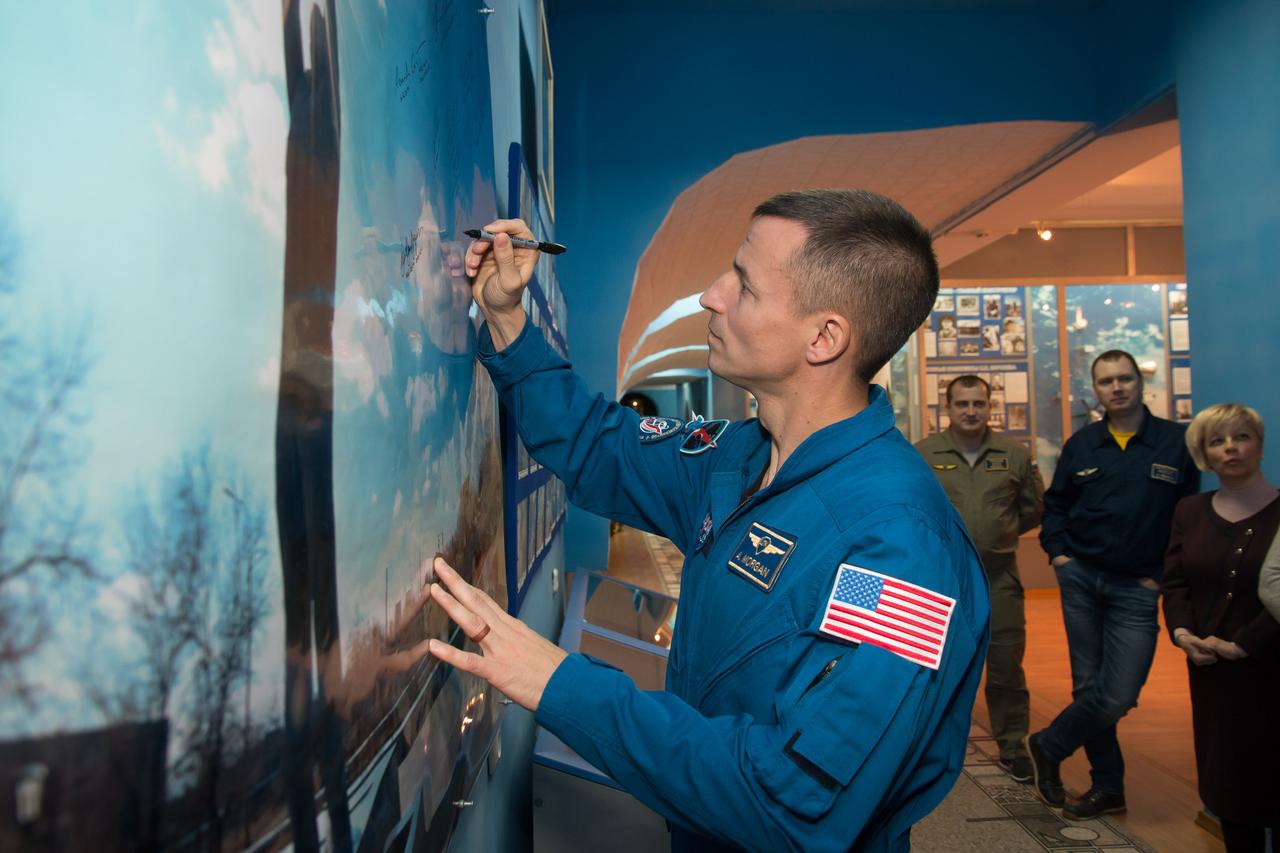
jsc2018e097322 - At the Baikonur Museum in the town of Baikonur, Kazakhstan, Expedition 58 backup crewmember Drew Morgan of NASA signs a wall mural Nov. 21 in a traditional pre-launch activity. He is one of the backups to Anne McClain of NASA, Oleg Kononenko of Roscosmos and David Saint-Jacques of the Canadian Space Agency, who will launch Dec. 3 on the Soyuz MS-11 spacecraft from the Baikonur Cosmodrome in Kazakhstan for a six-and-a-half month mission on the International Space Station...NASA/Victor Zelentsov.
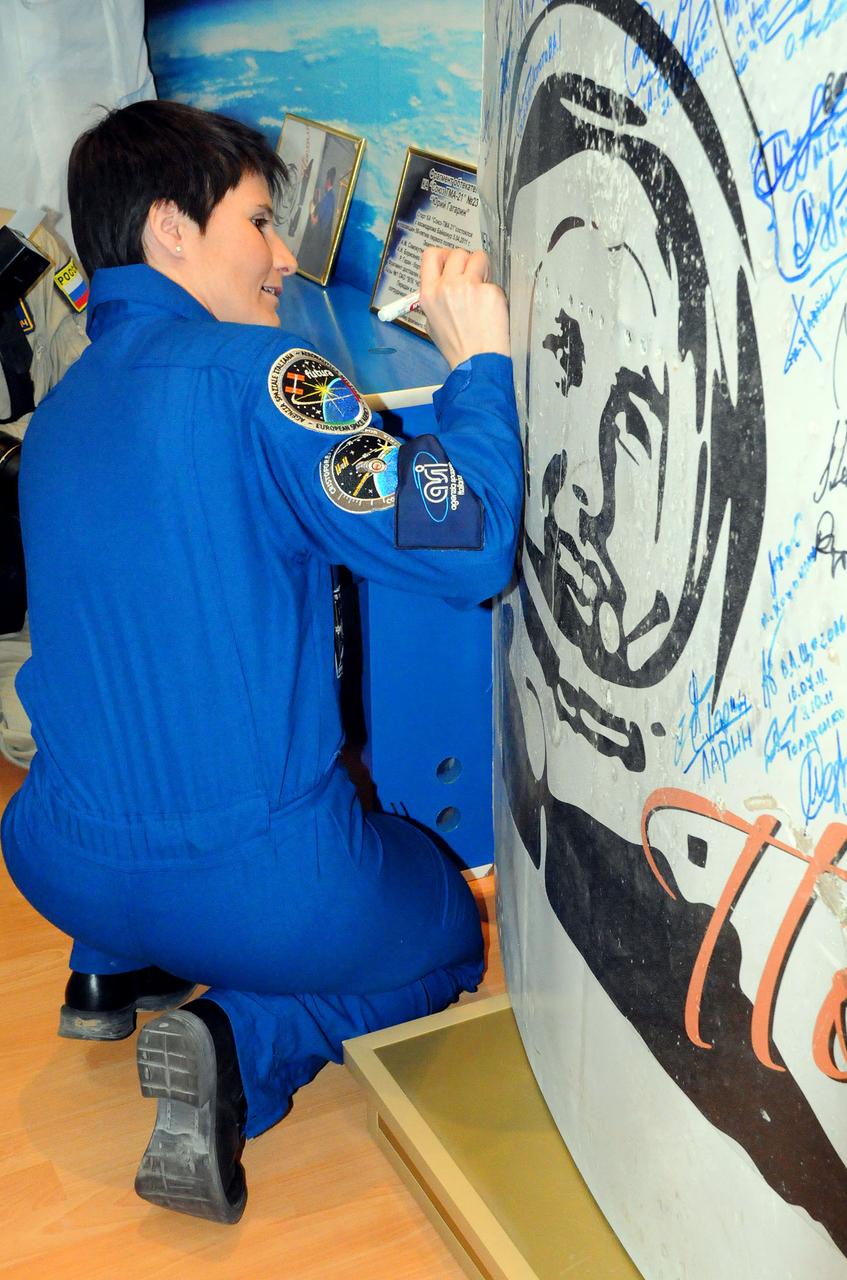
6443: Inside the Korolev Museum at the Baikonur Cosmodrome in Kazakhstan, Expedition 42/43 crewmember Samantha Cristoforetti of the European Space Agency signs a wall mural depicting space milestones including the likeness of Yuri Gagarin, the first human to fly in space, during ceremonial pre-launch activities Nov. 19. Cristoforetti, Terry Virts of NASA and Anton Shkaplerov of the Russian Federal Space Agency (Roscosmos) will launch on Nov. 24, Kazakh time, from Baikonur for a 5 ½ month mission on the International Space Station. NASA/Viktor Ivanov
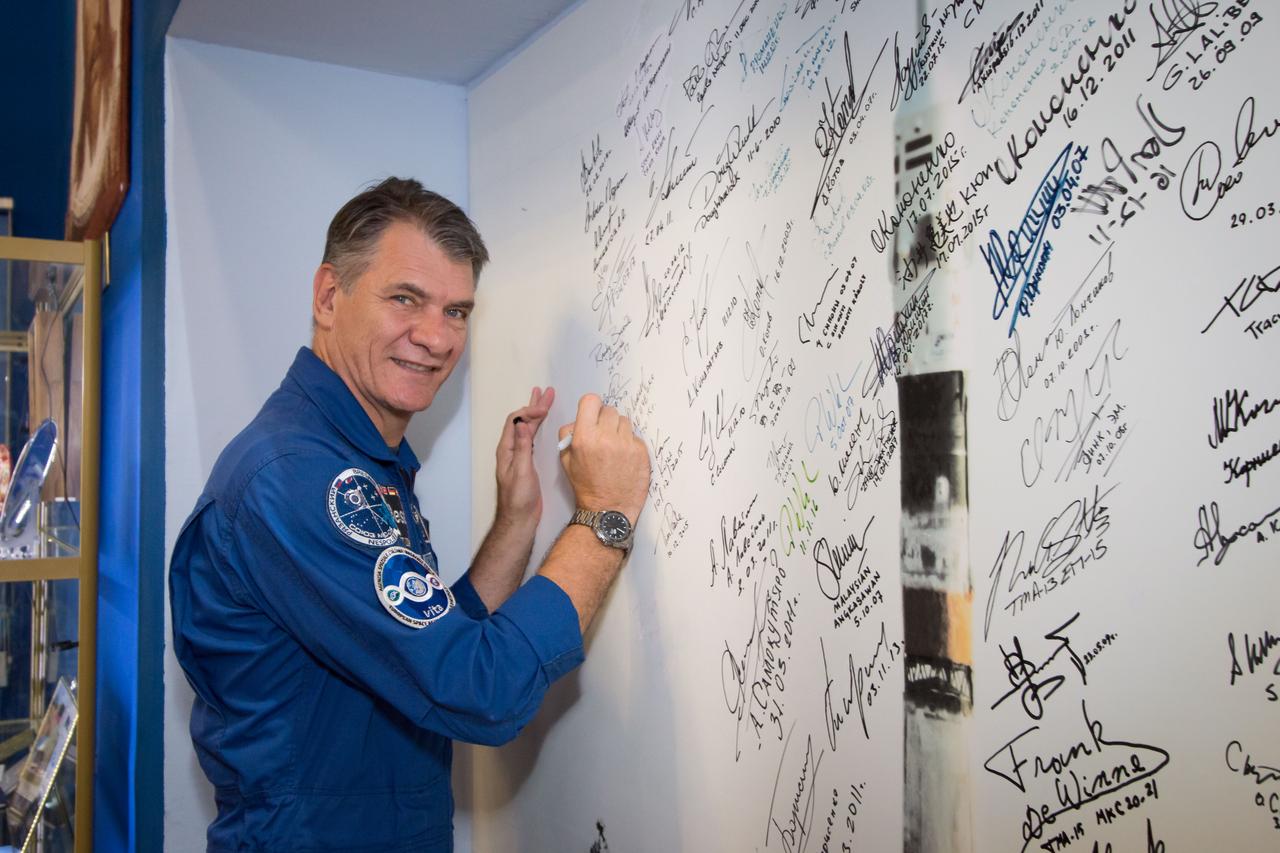
jsc2017e101947 (July 22, 2017) --- At the Baikonur Cosmodrome in Kazakhstan, Expedition 52-53 crewmember Paolo Nespoli of the European Space Agency signs a mural in the Korolev Museum July 24 as part of traditional pre-launch activities. Nespoli, Randy Bresnik of NASA and Sergey Ryazanskiy of the Russian Federal Space Agency (Roscosmos) will launch July 28 aboard the Soyuz MS-05 spacecraft for a five-month mission on the International Space Station. Credit: NASA/Victor Zelentsov
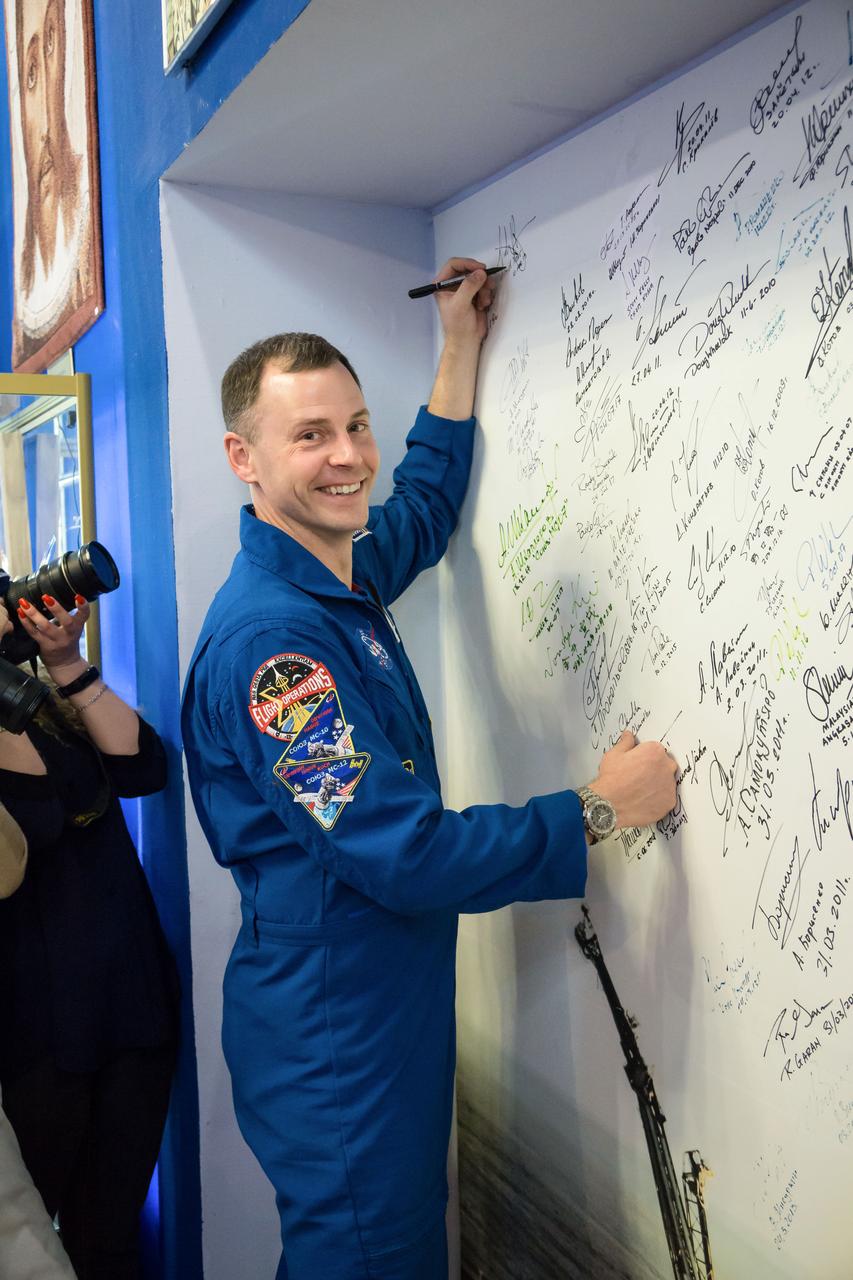
jsc2019e013415 - At the Baikonur Cosmodrome Museum in Kazakhstan, Expedition 59 crewmember Nick Hague of NASA signs a wall mural bearing the names of those who have flown in space March 10 in traditional pre-launch activities. Hague, Christina Koch of NASA and Alexey Ovchinin of Roscosmos will launch March 14, U.S. time, in the Soyuz MS-12 spacecraft from the Baikonur Cosmodrome for a six-and-a-half month mission on the International Space Station...NASA/Victor Zelentsov..
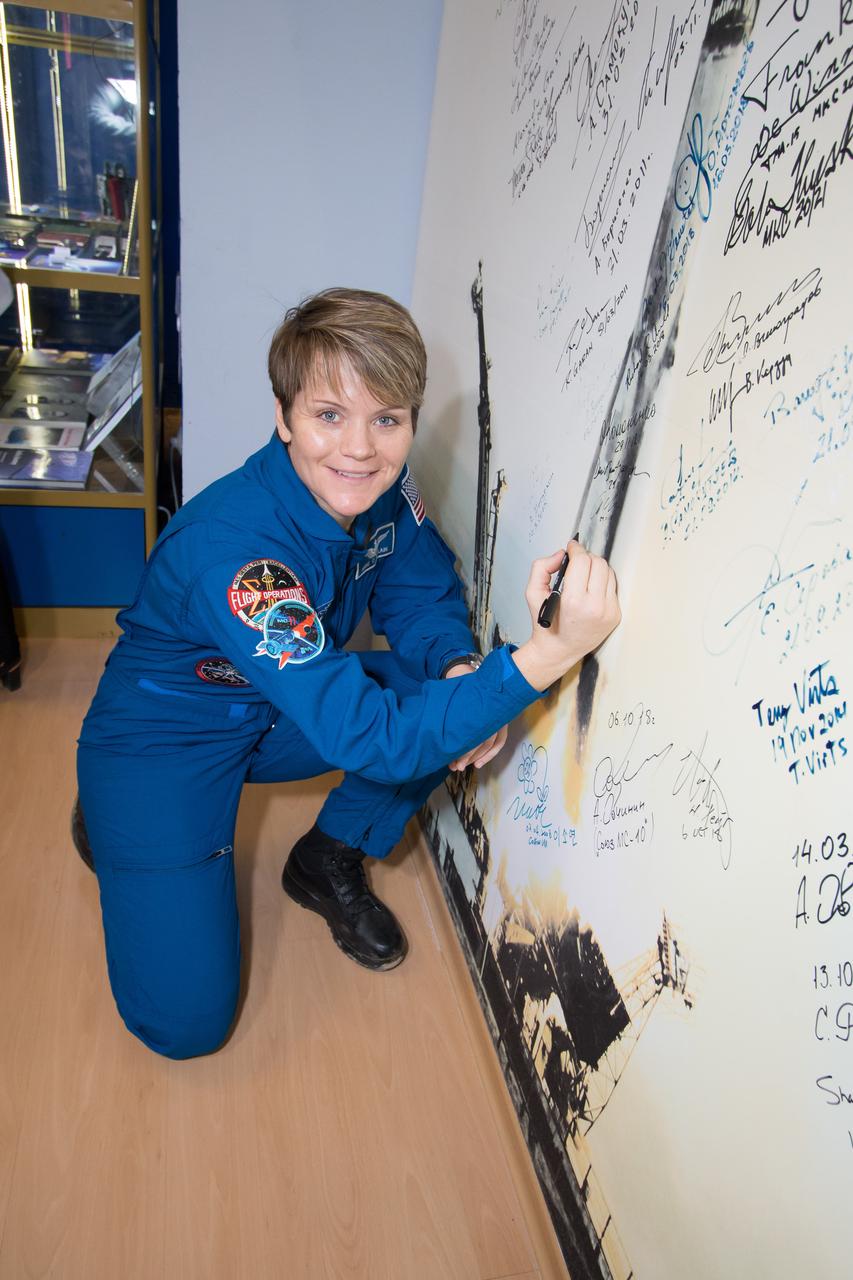
jsc2018e098093 - At the Baikonur Cosmodrome Museum in Kazakhstan, Expedition 58 crewmember Anne McClain of NASA signs a wall mural Nov. 29 as part of traditional pre-launch activities. McClain, David Saint-Jacques of the Canadian Space Agency and Oleg Kononenko of Roscosmos will launch Dec. 3 in the Soyuz MS-11 spacecraft from the Baikonur Cosmodrome in Kazakhstan for a six-and-a-half month mission on the International Space Station...NASA/Victor Zelentsov.
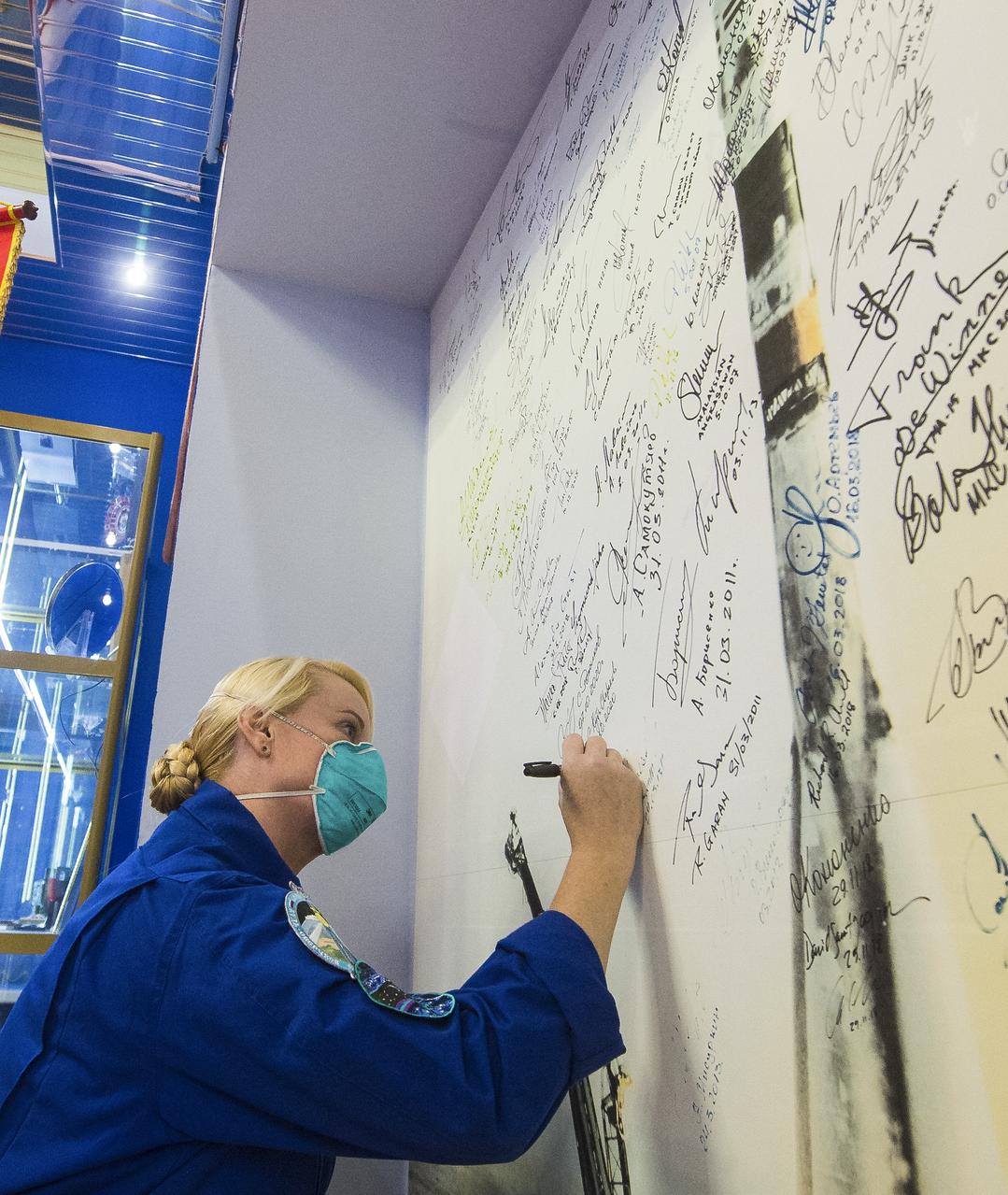
Expedition 64 NASA astronaut Kate Rubins signs her name to a wall mural bearing the picture of a Soyuz launch at the Baikonur Cosmodrome Museum, Wednesday, Oct. 7, 2020, at the Baikonur Cosmodrome in Kazakhstan. Rubins and Sergey Ryzhikov and Sergey Kud-Sverchkov of Roscosmos are scheduled to launch to the International Space Station aboard the Soyuz MS-17 spacecraft on October 14. Photo Credit: (NASA/GCTC/Andrey Shelepin)
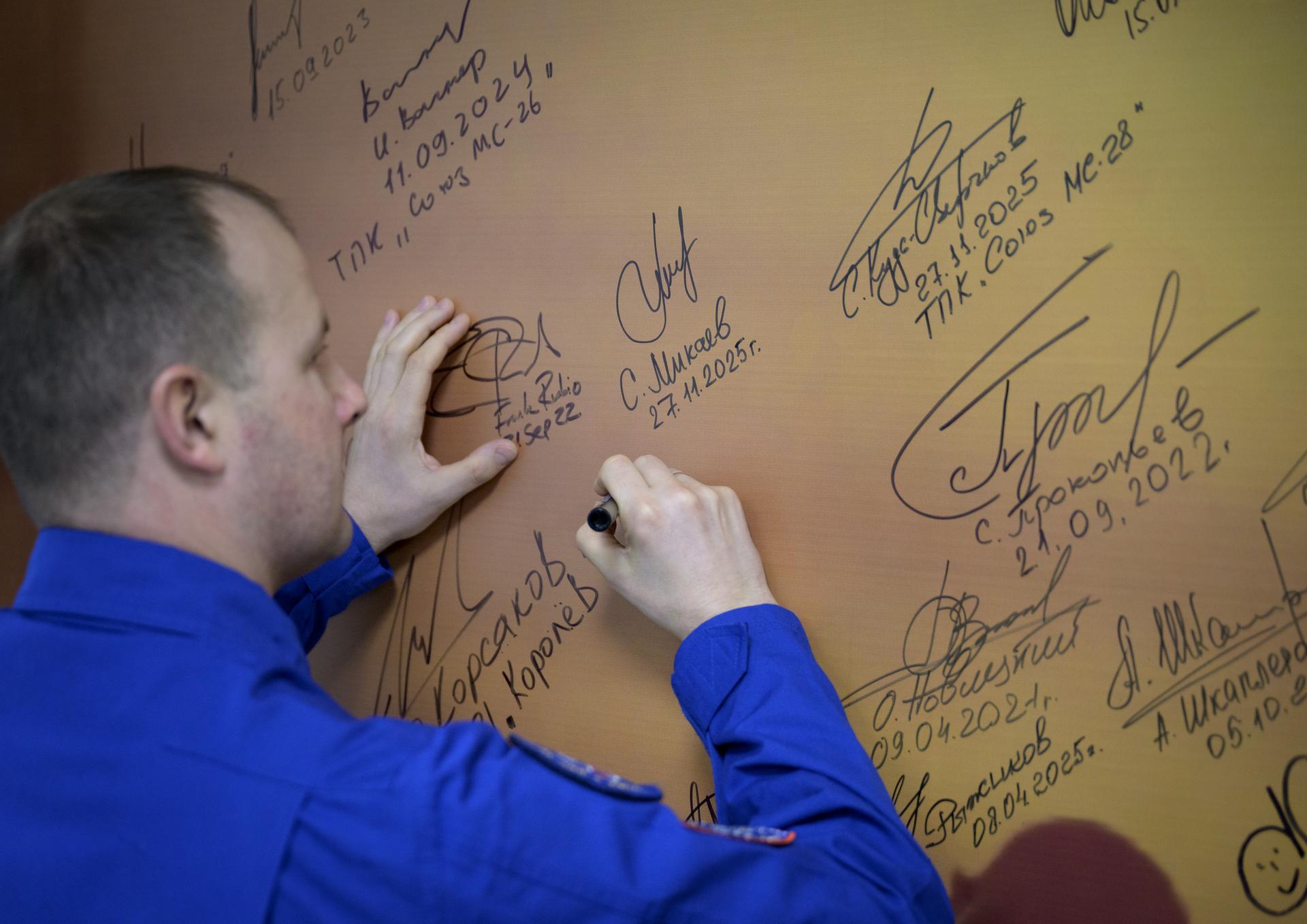
Roscosmos cosmonaut Sergei Mikaev signs a mural at the Cosmonaut Hotel prior to departing for suit-up and launch on a Soyuz rocket with fellow crewmates NASA astronaut Chris Williams, and Roscosmos cosmonaut Sergey Kud-Sverchkov, Thursday, Nov. 27, 2025, in Baikonur, Kazakhstan. The launch will send Williams, Kud-Sverchkov and Mikaev, on a mission to the International Space Station. Photo Credit: (NASA/Bill Ingalls)
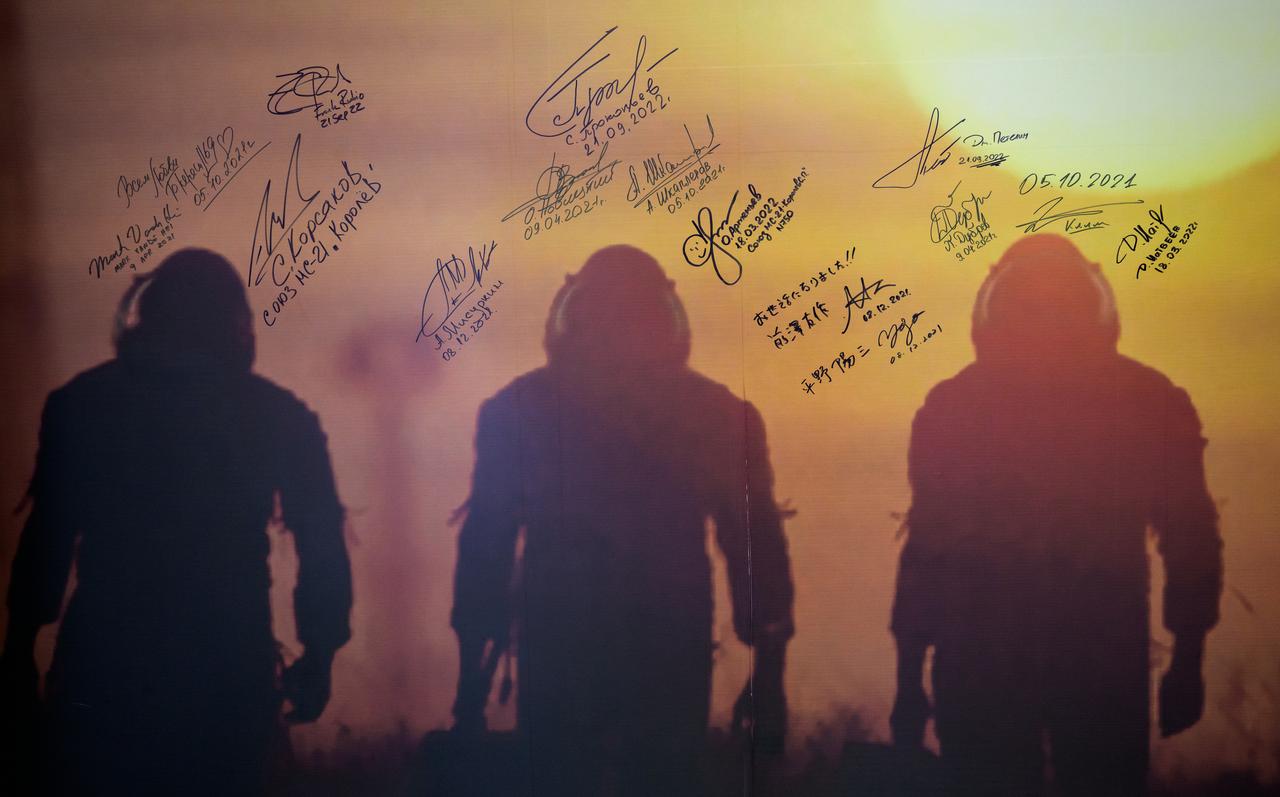
A mural in the Cosmonaut Hotel is seen with past crew signatures ahead of the Expedition 70 signing and departing the hotel for launch on a Soyuz rocket, Friday, Sept. 15, 2023, in Baikonur, Kazakhstan. The launch will send Expedition 70 NASA astronaut Loral O'Hara and Roscosmos cosmonauts Oleg Kononenko and Nikolai Chub on a mission to the International Space Station. Photo Credit: (NASA/Bill Ingalls)
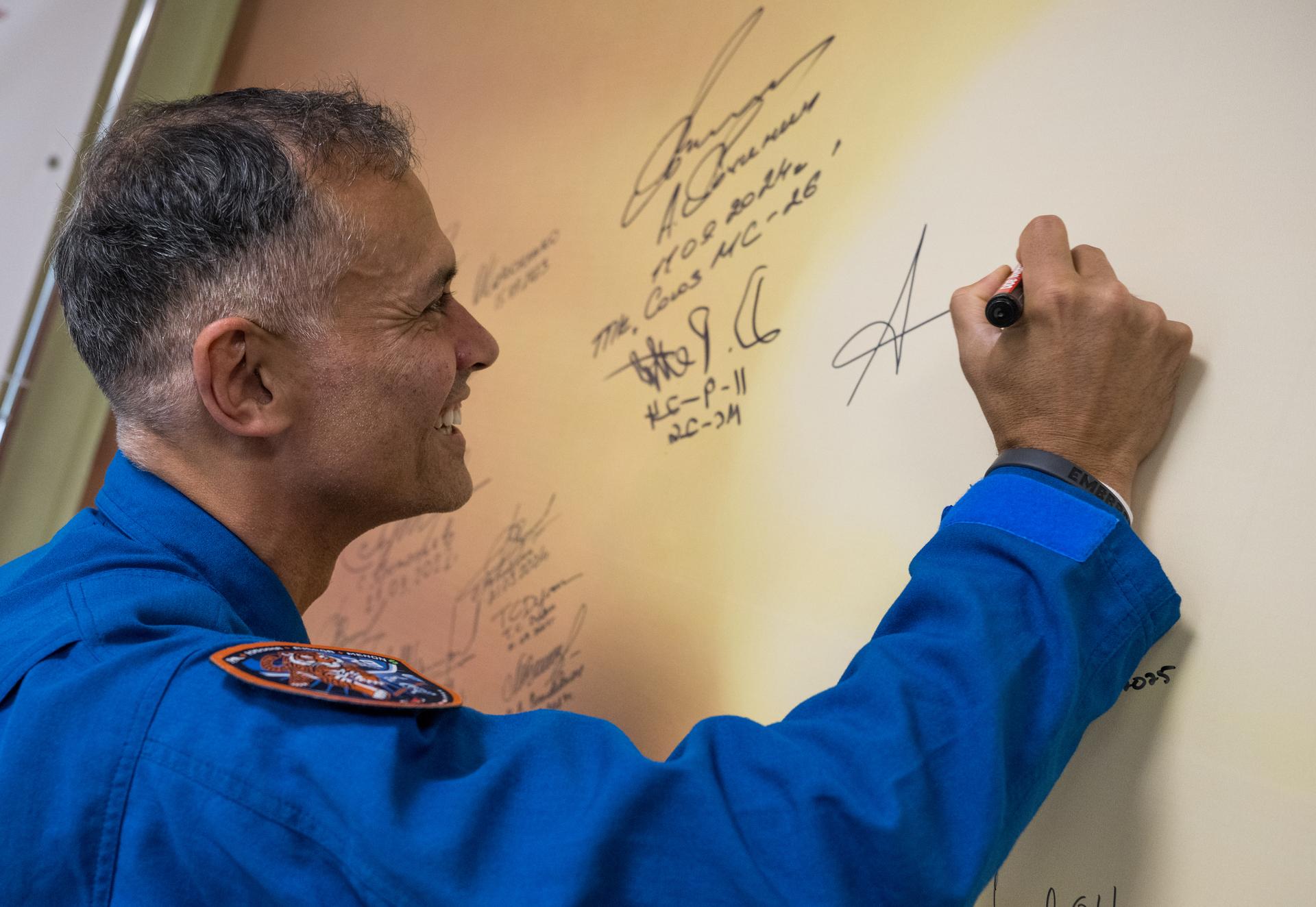
NASA astronaut Anil Menon signs a mural at the Cosmonaut Hotel prior to departing for suit-up and launch on a Soyuz rocket with fellow crewmates Roscosmos cosmonauts Anna Kikina, and Pyotr Dubrov, Tuesday, July 14, 2026, in Baikonur, Kazakhstan. The launch will send Menon, Dubrov, and Kikina on a mission to the International Space Station. Photo Credit: (NASA/Bill Ingalls)
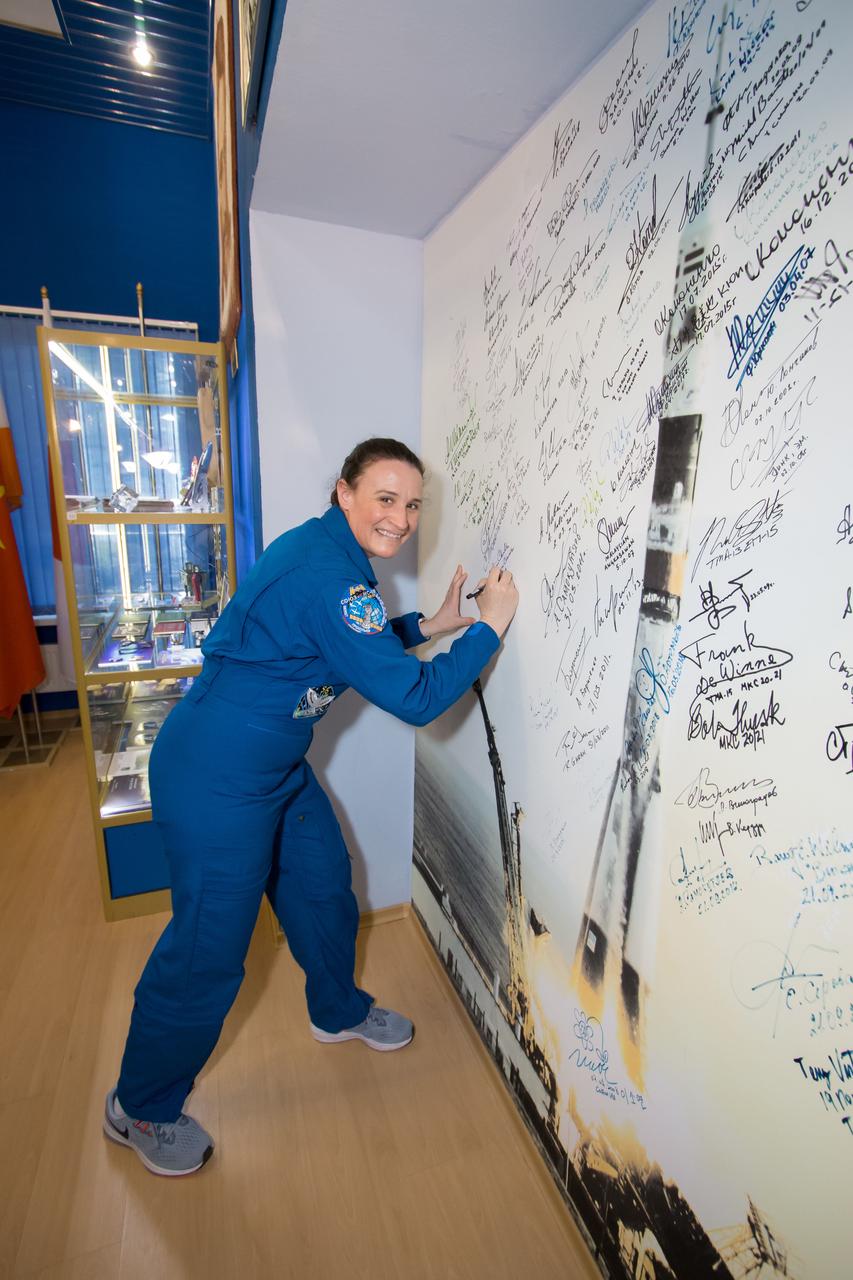
jsc2018e051933 - In the Korolev Museum at the Baikonur Cosmodrome in Kazakhstan, Expedition 56 crewmember Serena Aunon-Chancellor of NASA signs a wall mural May 31 during traditional pre-launch activities. Aunon-Chancellor, Alexander Gerst of the European Space Agency and Sergey Prokopyev of Roscosmos will launch June 6 in the Soyuz MS-09 spacecraft for a six-month mission on the International Space Station. ..NASA/Victor Zelentsov.
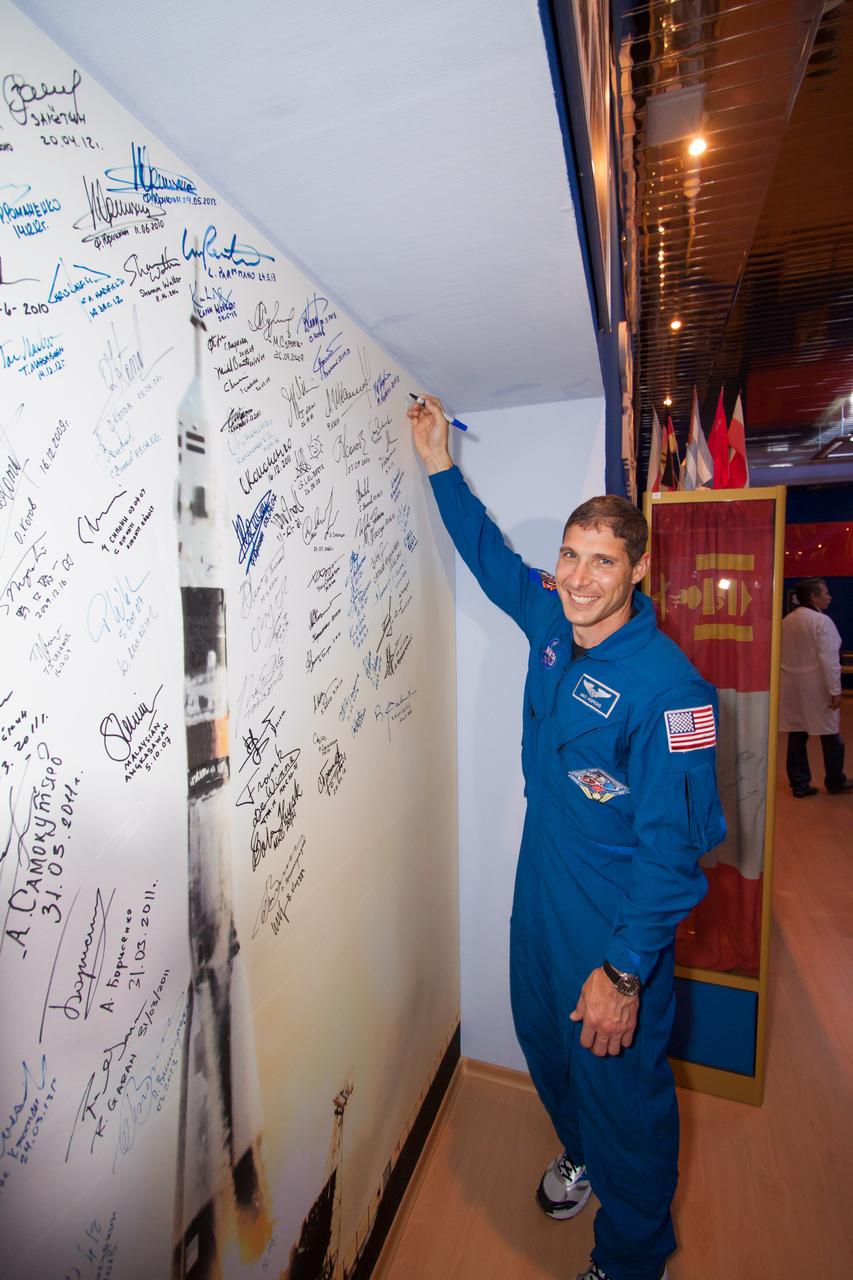
Touring the Korolev Museum at the Baikonur Cosmodrome in Kazakhstan, Expedition 37/38 Flight Engineer Michael Hopkins of NASA signs a wall mural depicting a Soyuz rocket Sept. 20 as he and his crewmates, Soyuz Commander Oleg Kotov and Flight Engineer Sergey Ryazanskiy completed a final “fit check” inspection of their Soyuz TMA-10M spacecraft. Hopkins, Kotov and Ryazanskiy are preparing for launch Sept. 26, Kazakh time, to begin a five and a half month mission on the International Space Station. NASA/Victor Zelentsov
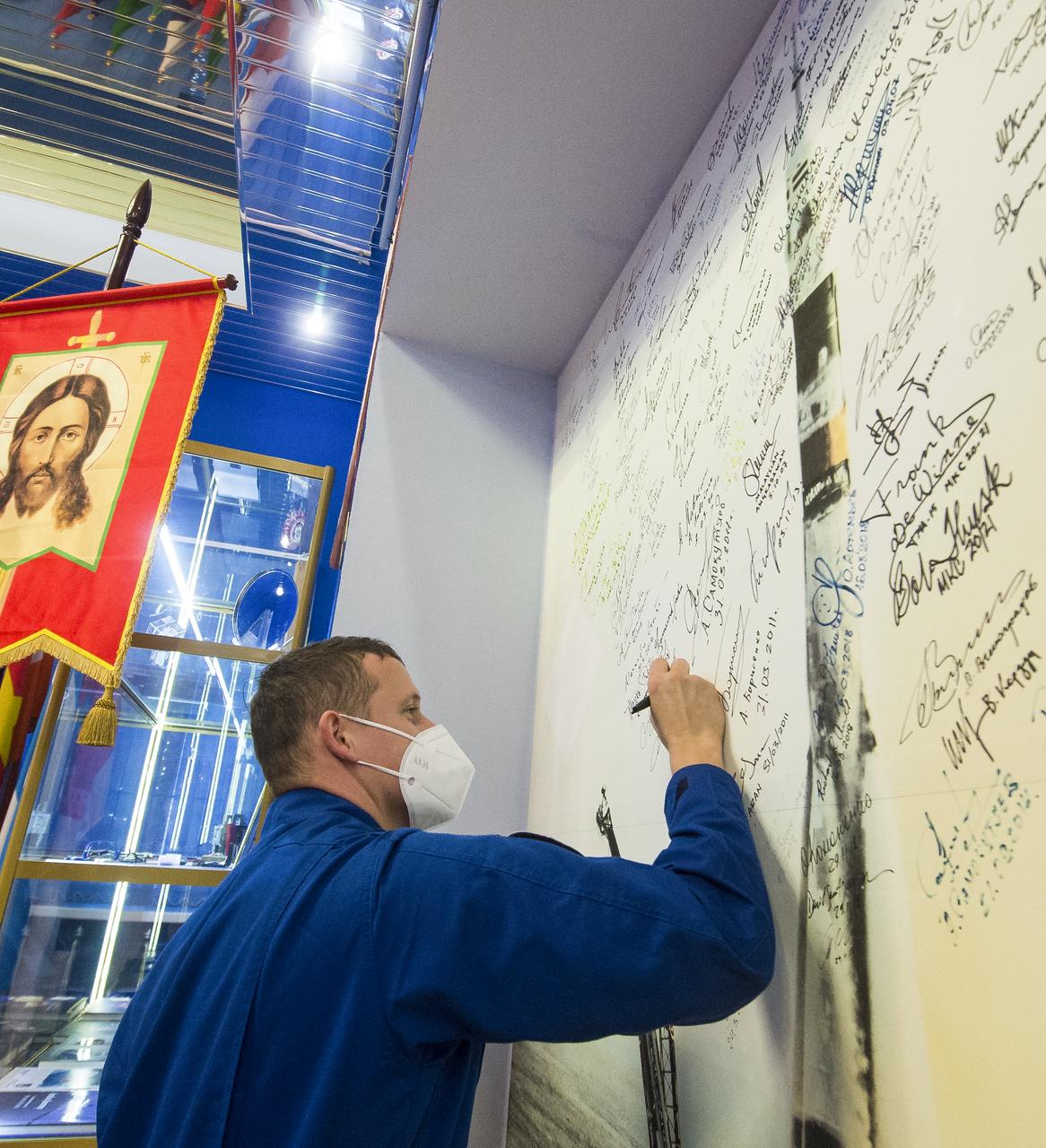
Expedition 64 Russian cosmonaut Sergey Kud-Sverchkov of Roscosmos signs his name to a wall mural bearing the picture of a Soyuz launch at the Baikonur Cosmodrome Museum, Wednesday, Oct. 7, 2020, at the Baikonur Cosmodrome in Kazakhstan. Kud-Sverchkov, Sergey Ryzhikov of Roscosmos, and Kate Rubins of NASA are scheduled to launch to the International Space Station aboard the Soyuz MS-17 spacecraft on October 14. Photo Credit: (NASA/GCTC/Andrey Shelepin)
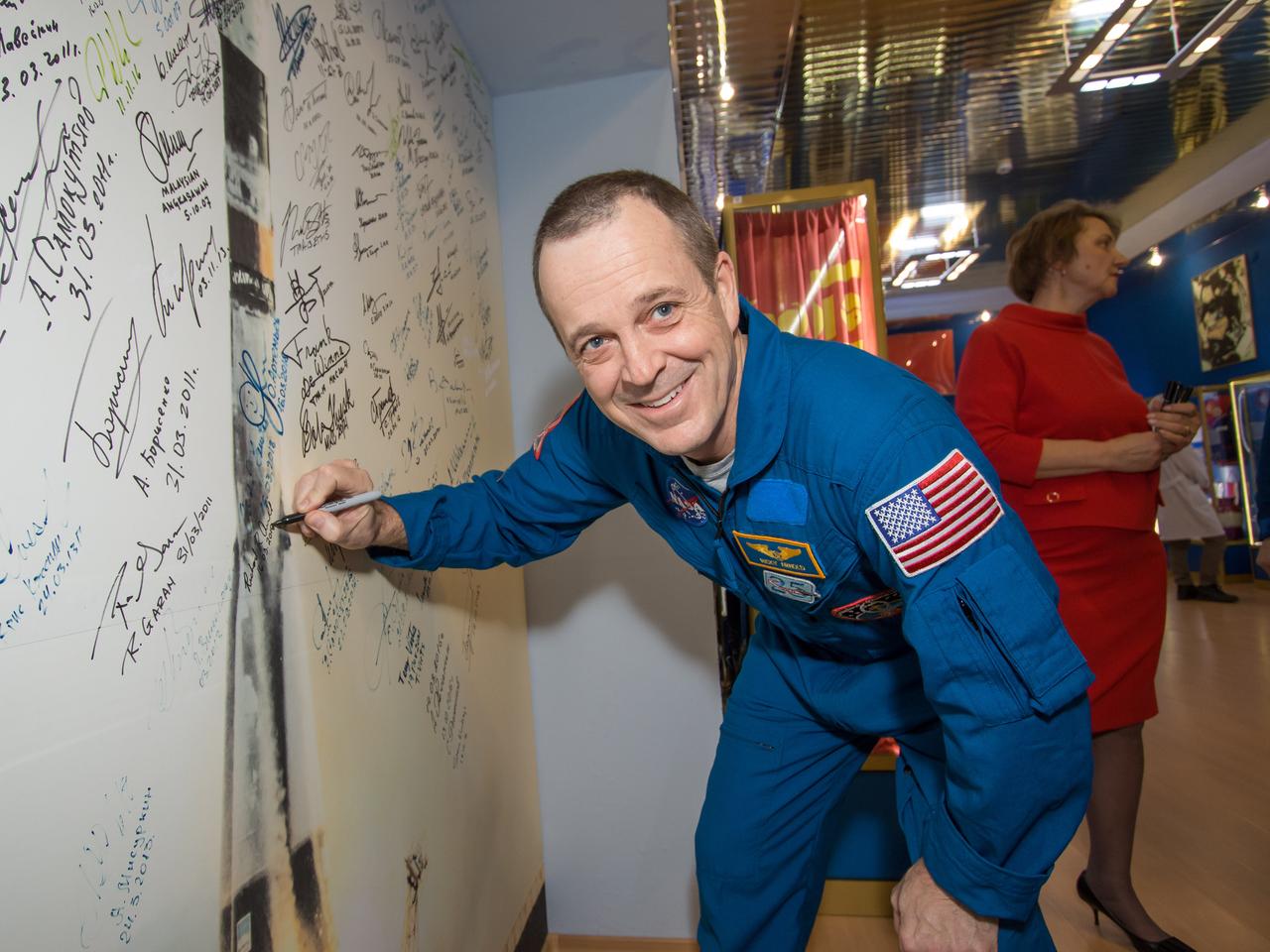
jsc2018e025592 - In the Korolev Museum at the Baikonur Cosmodrome in Kazakhstan, Expedition 55 crewmember Ricky Arnold of NASA signs a wall mural depicting a Soyuz launch March 16 as part of traditional prelaunch activities. Arnold, Oleg Artemyev of Roscosmos and Drew Feustel of NASA will launch March 21 on the Soyuz MS-08 spacecraft for a five-month mission on the International Space Station...NASA/Victor Zelentsov.
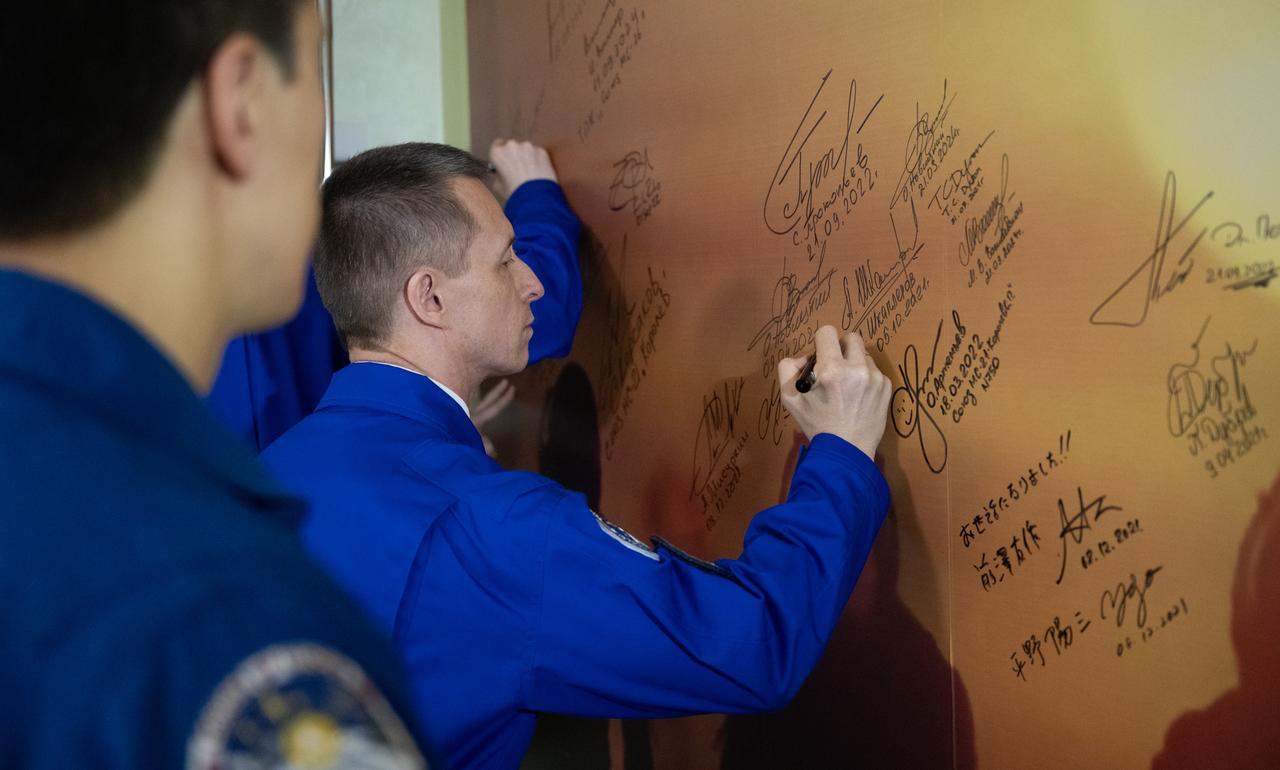
Roscosmos cosmonaut Sergey Ryzhikov signs a mural at the Cosmonaut Hotel prior to departing for suit-up and launch on a Soyuz rocket with fellow crewmates NASA astronaut Jonny Kim and Roscosmos cosmonaut Alexey Zubritskiy, Tuesday, April 8, 2025 (April 7 Eastern Time), in Baikonur, Kazakhstan. The launch will send Kim, Ryzhikov, Zubritskiy, on a mission to the International Space Station. Photo Credit: (NASA/Joel Kowsky)
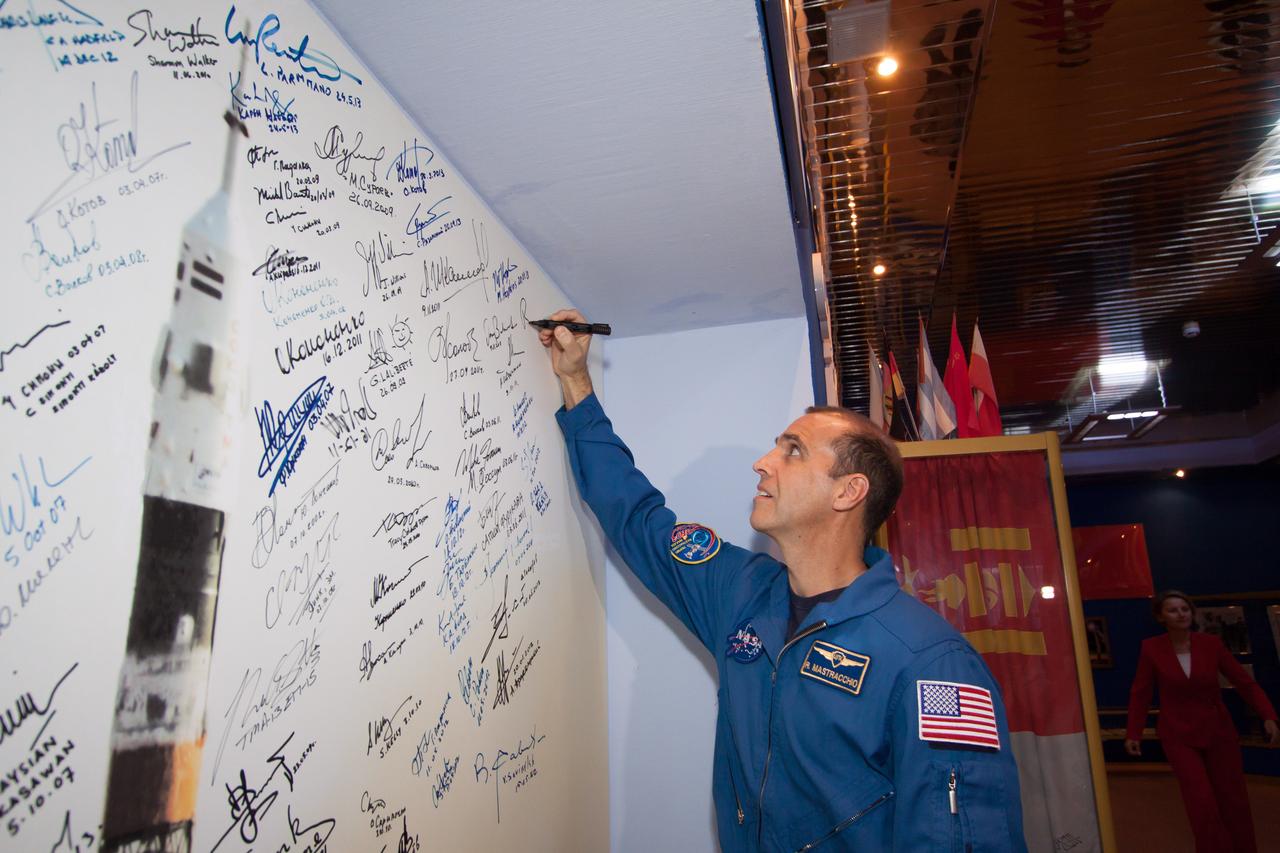
13-47-46-2: At the Korolev Museum at the Baikonur Cosmodrome in Kazakhstan, Expedition 38/39 Flight Engineer Rick Mastracchio of NASA signs a wall mural of a Soyuz rocket launch during traditional pre-flight activities Nov. 3. Mastracchio, Soyuz Commander Mikhail Tyurin and Flight Engineer Koichi Wakata of the Japan Aerospace Exploration Agency will launch Nov. 7, Kazakh time, on the Soyuz TMA-11M spacecraft for a six-month mission on the International Space Station. NASA/Victor Zelentsov
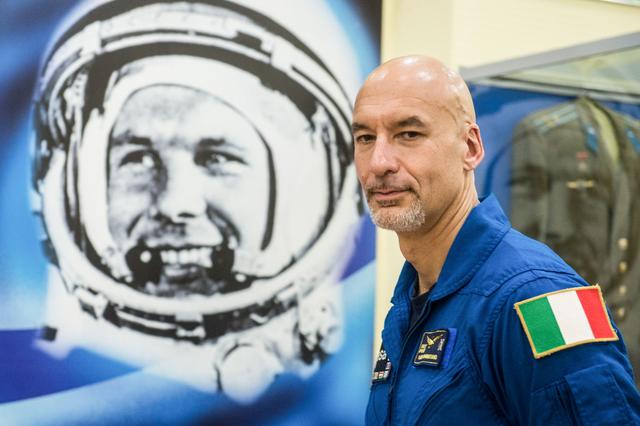
jsc2019e039426 - At the Baikonur Cosmodrome in Kazakhstan, Expedition 60 crewmember Luca Parmitano of the European Space Agency poses for pictures July 16 next to a wall mural of Yuri Gagarin, the first human to fly in space. Parmitano, Drew Morgan of NASA and Alexander Skvortsov of Roscosmos will launch July 20 on the Soyuz MS-13 spacecraft from the Baikonur Cosmodrome for a mission on the International Space Station...Andrey Shelepin/GCTC.
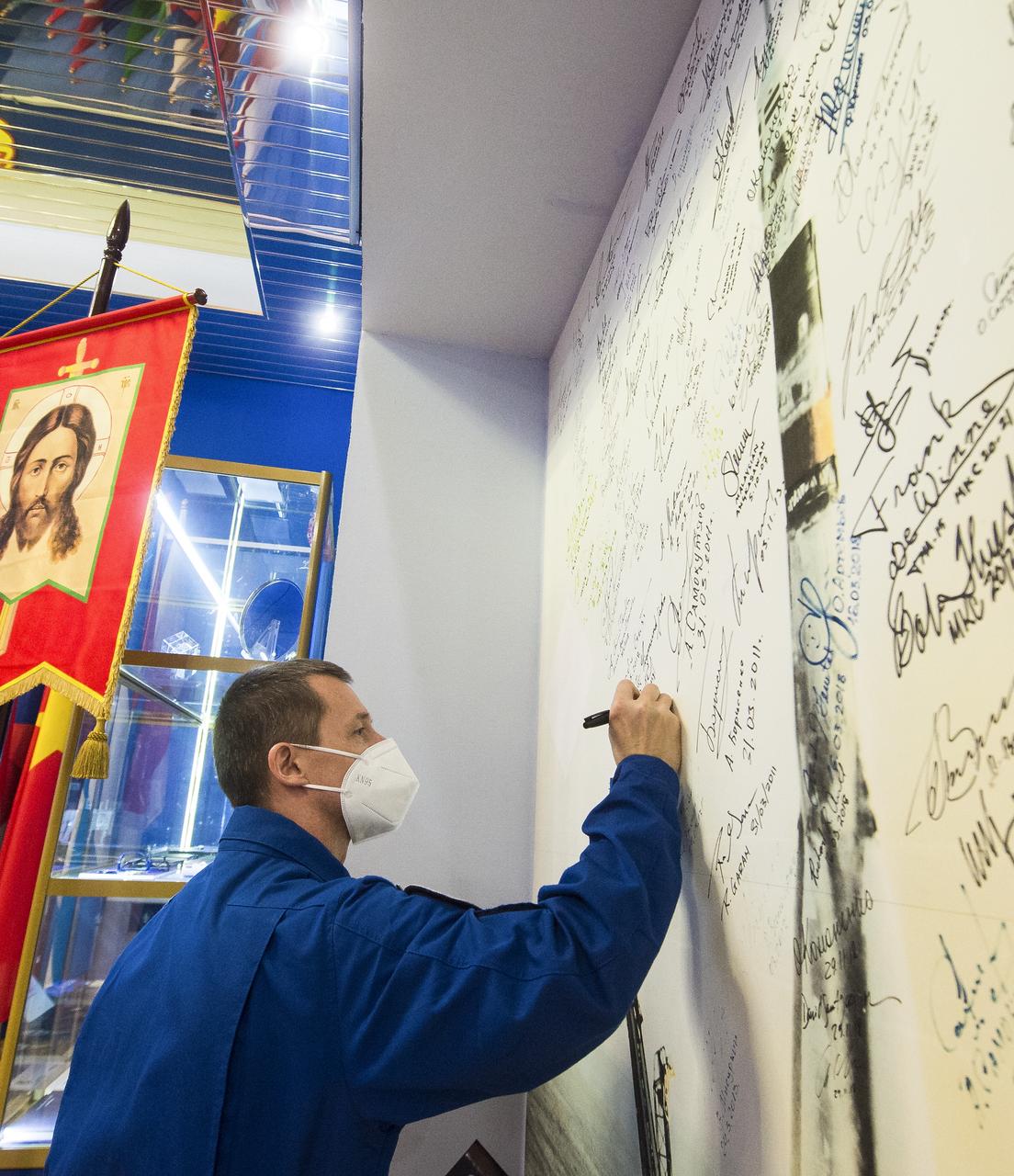
Expedition 64 Russian cosmonaut Sergey Ryzhikov of Roscosmos signs his name to a wall mural bearing the picture of a Soyuz launch at the Baikonur Cosmodrome Museum, Wednesday, Oct. 7, 2020, at the Baikonur Cosmodrome in Kazakhstan. Ryzhikov, Sergey Kud-Sverchkov of Roscosmos, and Kate Rubins of NASA are scheduled to launch to the International Space Station aboard the Soyuz MS-17 spacecraft on October 14. Photo Credit: (NASA/GCTC/Andrey Shelepin)
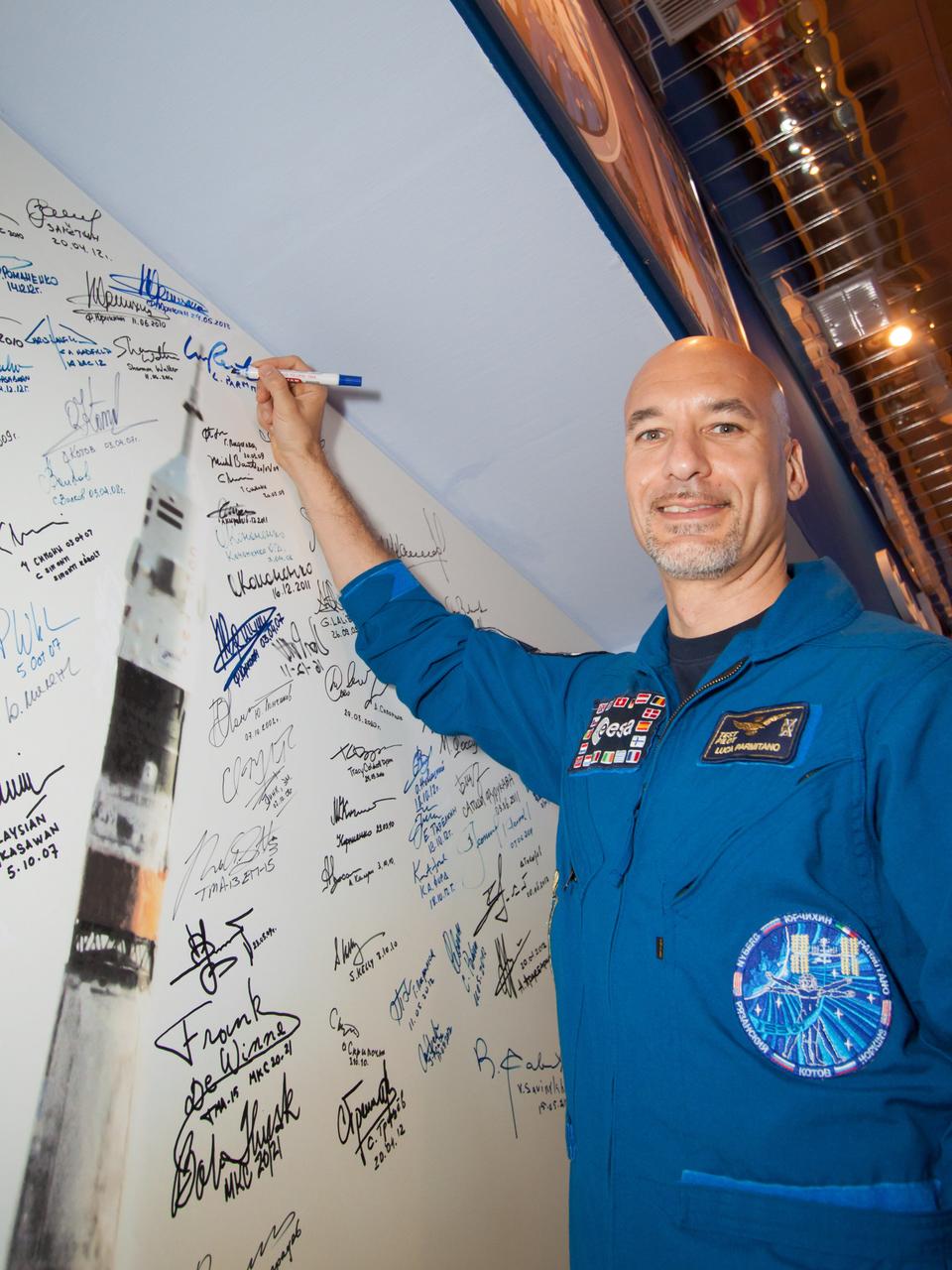
At the Baikonur Cosmodrome in Kazakhstan, Expedition 36/37 Flight Engineer Luca Parmitano of the European Space Agency signs a mural depicting a Soyuz rocket launch in the Korolev Museum May 24 following the final “fit check” dress rehearsal before launch. Parmitano, NASA Flight Engineer Karen Nyberg and Soyuz Commander Fyodor Yurchikhin are preparing for launch May 29, Kazakh time, in the Soyuz TMA-09M spacecraft to begin a 5 ½ month mission on the International Space Station. NASA/Victor Zelentsov
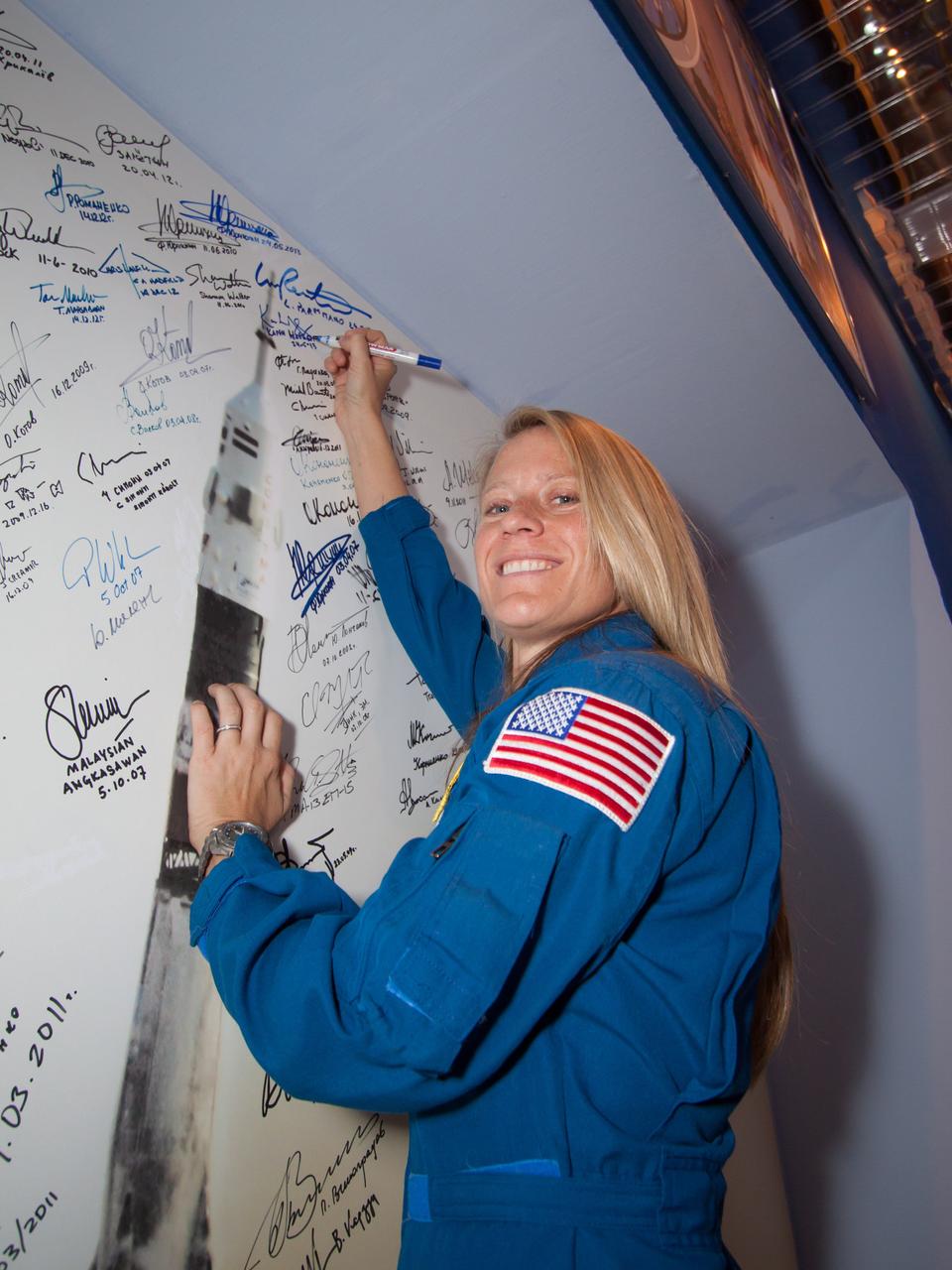
At the Baikonur Cosmodrome in Kazakhstan, Expedition 36/37 Flight Engineer Karen Nyberg of NASA signs a mural depicting a Soyuz rocket launch in the Korolev Museum May 24 following the final “fit check” dress rehearsal before launch. Nyberg, Flight Engineer Luca Parmitano of the European Space Agency and Soyuz Commander Fyodor Yurchikhin are preparing for launch May 29, Kazakh time, in the Soyuz TMA-09M spacecraft to begin a 5 ½ month mission on the International Space Station. NASA/Victor Zelentsov

At the Baikonur Cosmodrome Museum in Kazakhstan, Expedition 57 crewmember Nick Hague of NASA signs a mural Oct. 6 as part of traditional pre-launch activities. Hague and Alexey Ovchinin of Roscosmos will launch Oct. 11 from the Baikonur Cosmodrome on the Soyuz MS-10 spacecraft for a six-month mission on the International Space Station...NASA/Victor Zelentsov.
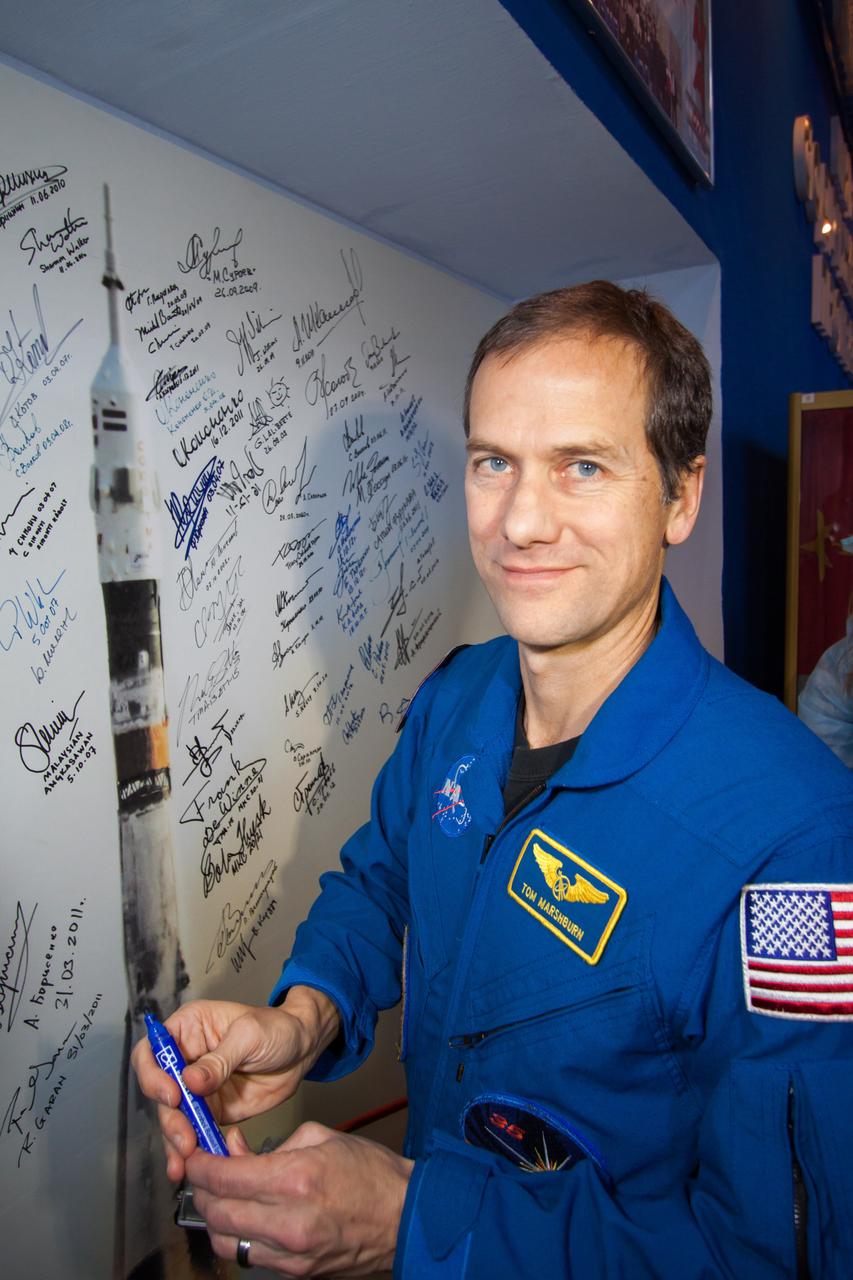
At the Korolev Museum at the Baikonur Cosmodrome in Kazakhstan, Expedition 34/35 Flight Engineer Tom Marshburn of NASA signs a mural of a Soyuz spacecraft launch Dec. 14, 2012, part of a tradition for all space travelers launching from the Central Asian spaceport. Marshburn, Soyuz Commander Roman Romanenko and Flight Engineer Chris Hadfield of the Canadian Space Agency will launch Dec. 19 in the Soyuz TMA-07M spacecraft from Baikonur for a five-month mission on the International Space Station. NASA/Victor Zelentsov
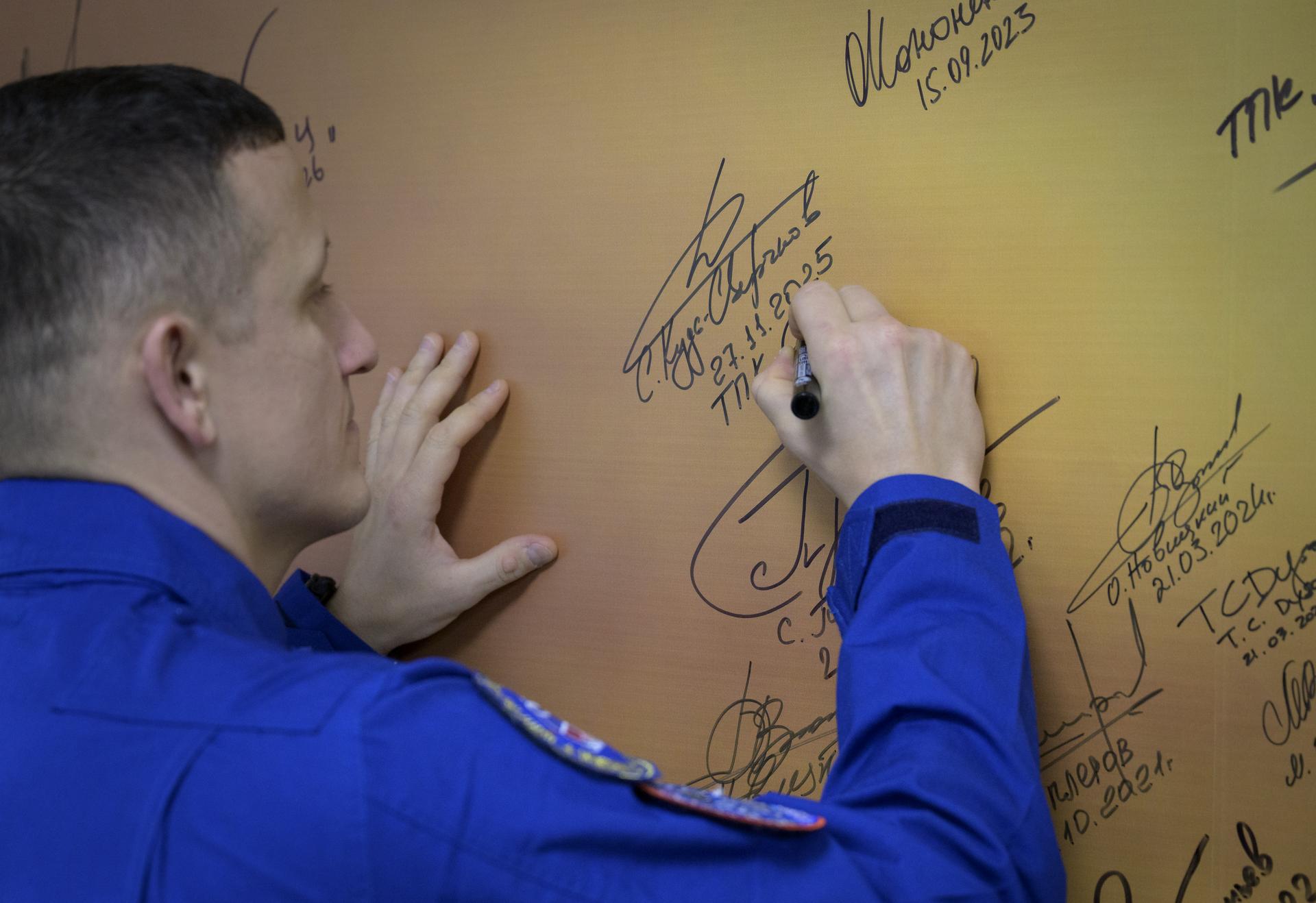
Roscosmos cosmonaut Sergey Kud-Sverchkov signs a mural at the Cosmonaut Hotel prior to departing for suit-up and launch on a Soyuz rocket with fellow crewmates NASA astronaut Chris Williams, and Roscosmos cosmonaut Sergei Mikaev, Thursday, Nov. 27, 2025, in Baikonur, Kazakhstan. The launch will send Williams, Kud-Sverchkov and Mikaev, on a mission to the International Space Station. Photo Credit: (NASA/Bill Ingalls)
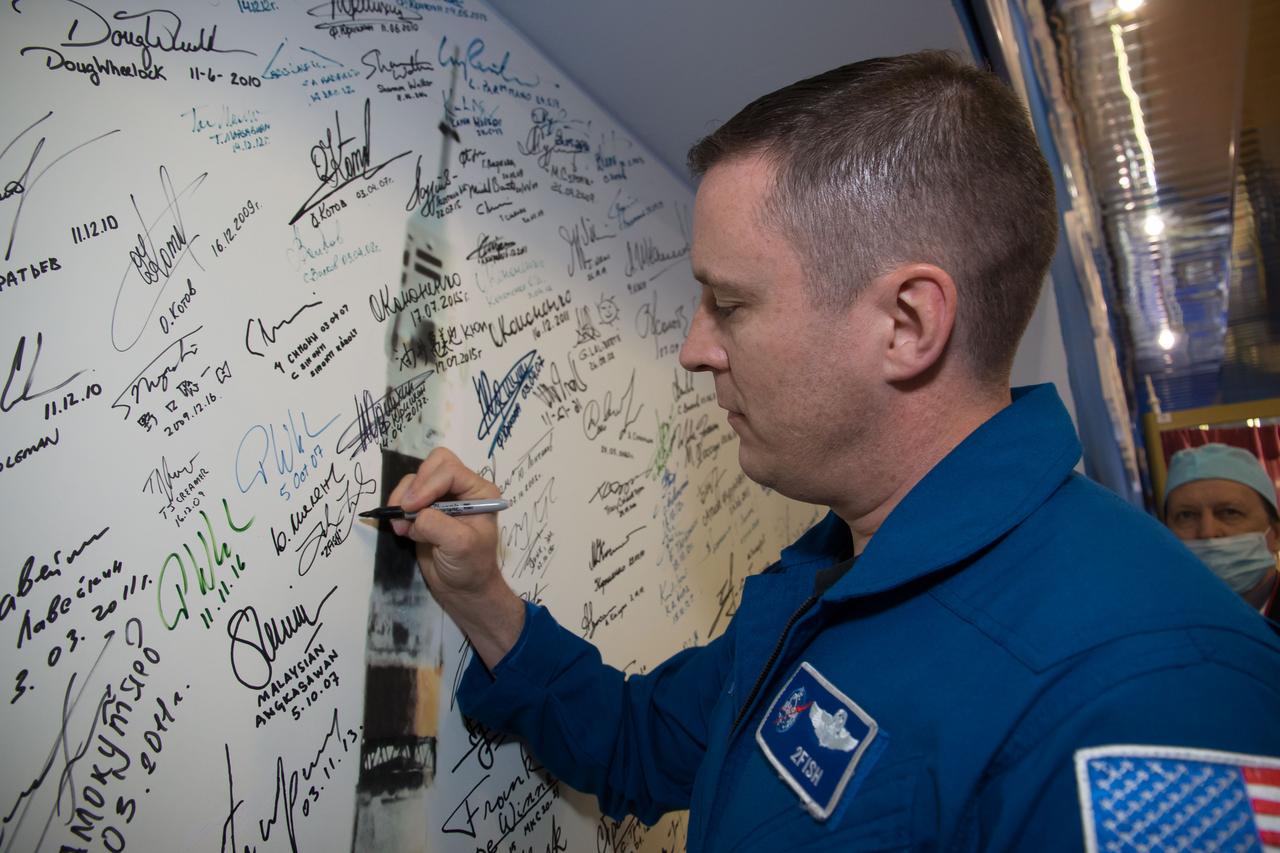
jsc2017e043852 (April 14, 2017) --- At the Baikonur Cosmodrome Museum in Kazakhstan, Expedition 51 crewmember Jack Fischer of NASA signs a wall mural April 14 during a traditional tour of the facility. Fischer and Fyodor Yurchikhin of the Russian Federal Space Agency (Roscosmos) will launch April 20 on the Soyuz MS-04 spacecraft for a four and a half month mission on the International Space Station. Credit: NASA/Victor Zelentsov
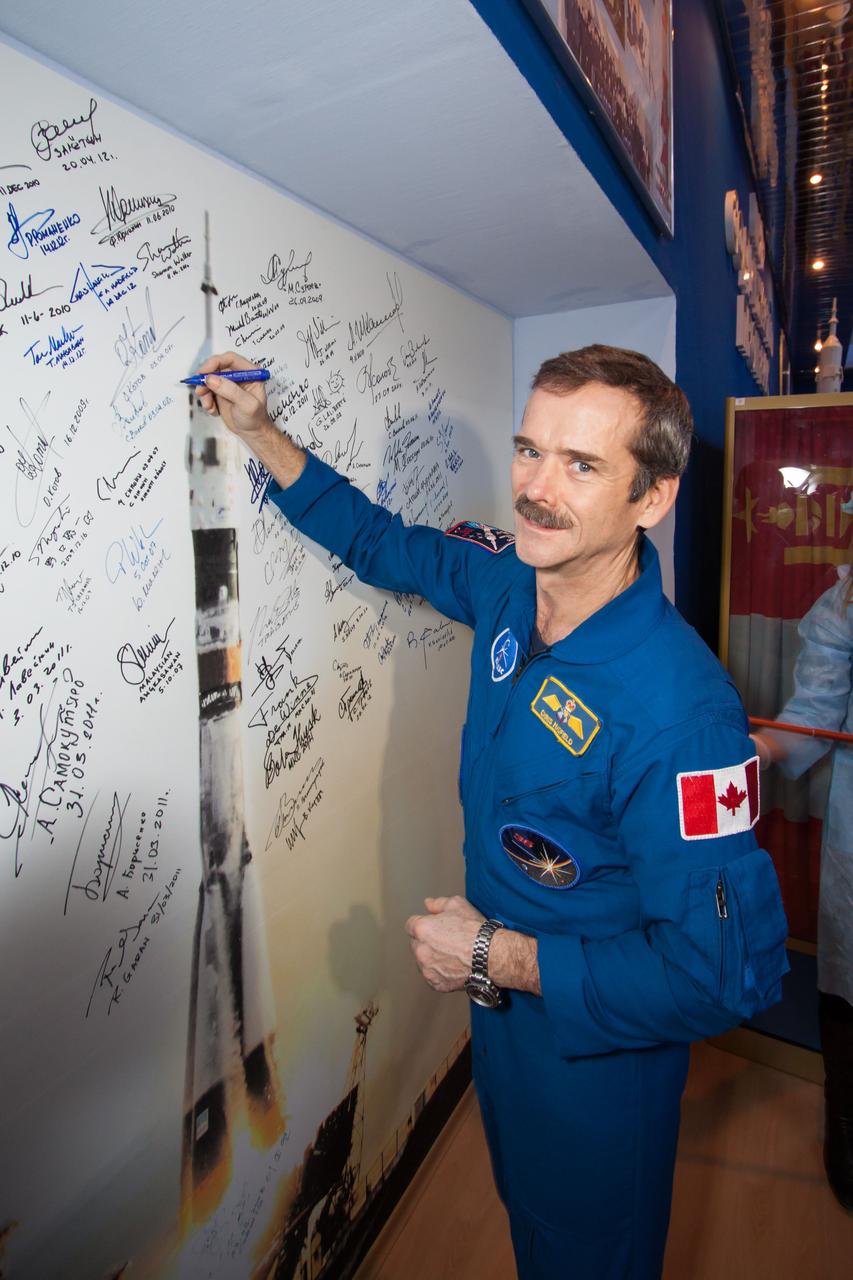
At the Korolev Museum at the Baikonur Cosmodrome in Kazakhstan, Expedition 34/35 Flight Engineer Chris Hadfield of the Canadian Space Agency signs a mural of a Soyuz spacecraft launch Dec. 14, 2012, part of a tradition for all space travelers launching from the Central Asian spaceport. Hadfield, Soyuz Commander Roman Romanenko and Flight Engineer Tom Marshburn of NASA will launch Dec. 19 in the Soyuz TMA-07M spacecraft from Baikonur for a five-month mission on the International Space Station. NASA/Victor Zelentsov
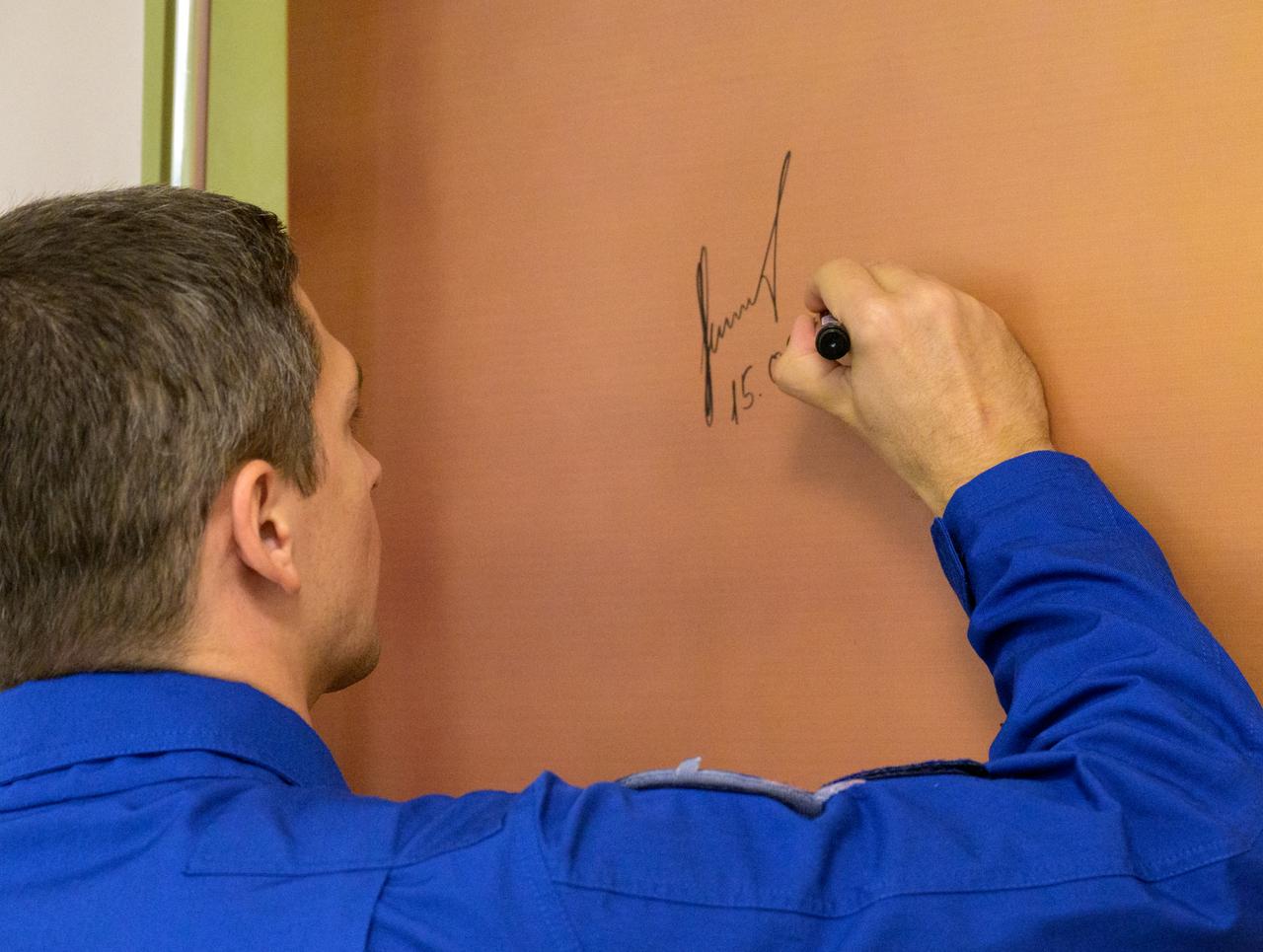
Expedition 70 Roscosmos cosmonaut Nikolai Chub signs a mural at the Cosmonaut Hotel prior to departing the hotel for launch on a Soyuz rocket with fellow crewmates NASA astronaut Loral O'Hara and Roscosmos cosmonaut Oleg Kononenko, Friday, Sept. 15, 2023, in Baikonur, Kazakhstan. The launch will send Expedition 70 NASA astronaut Loral O'Hara and Roscosmos cosmonauts Oleg Kononenko and Nikolai Chub on a mission to the International Space Station. Photo Credit: (NASA/Bill Ingalls)
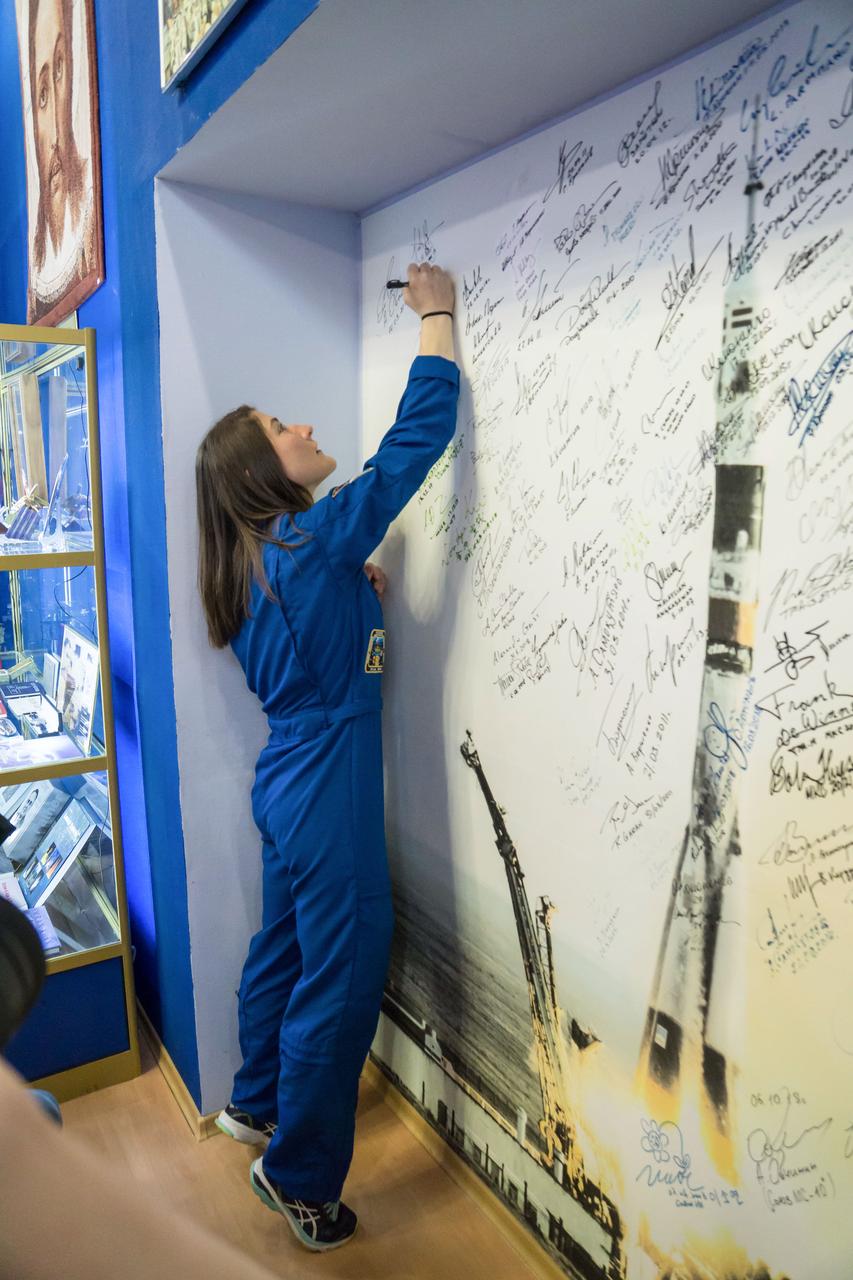
jsc2019e013416 - At the Baikonur Cosmodrome Museum in Kazakhstan, Expedition 59 crewmember Christina Koch of NASA signs a wall mural bearing the names of those who have flown in space March 10 in traditional pre-launch activities. Koch, Nick Hague of NASA and Alexey Ovchinin of Roscosmos will launch March 14, U.S. time, in the Soyuz MS-12 spacecraft from the Baikonur Cosmodrome for a six-and-a-half month mission on the International Space Station...NASA/Victor Zelentsov.
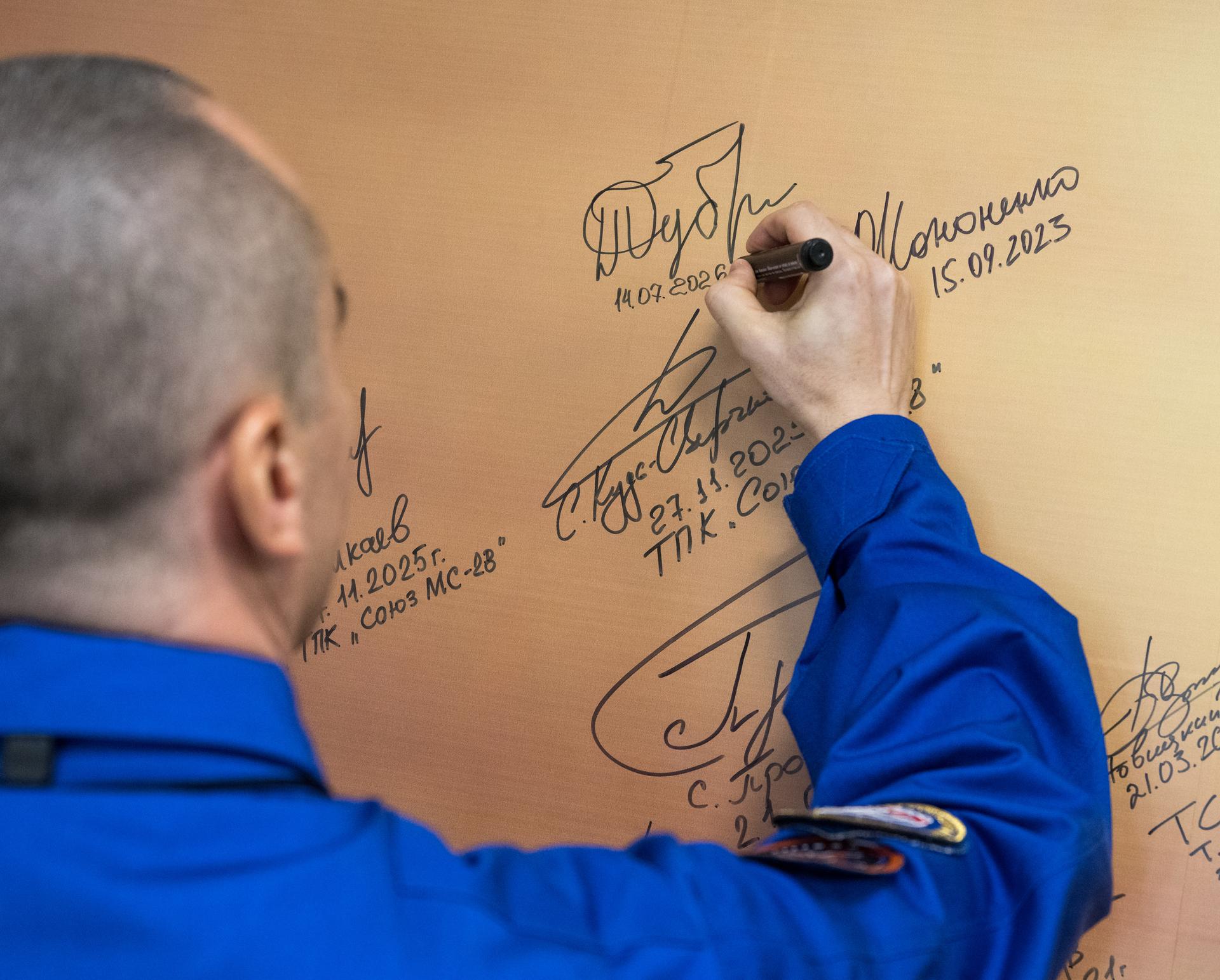
Roscosmos cosmonaut Pyotr Dubrov signs a mural at the Cosmonaut Hotel prior to departing for suit-up and launch on a Soyuz rocket with fellow crewmates Roscosmos cosmonaut Anna Kikina, and NASA astronaut Anil Menon, Tuesday, July 14, 2026, in Baikonur, Kazakhstan. The launch will send Menon, Dubrov, and Kikina on a mission to the International Space Station. Photo Credit: (NASA/Bill Ingalls)
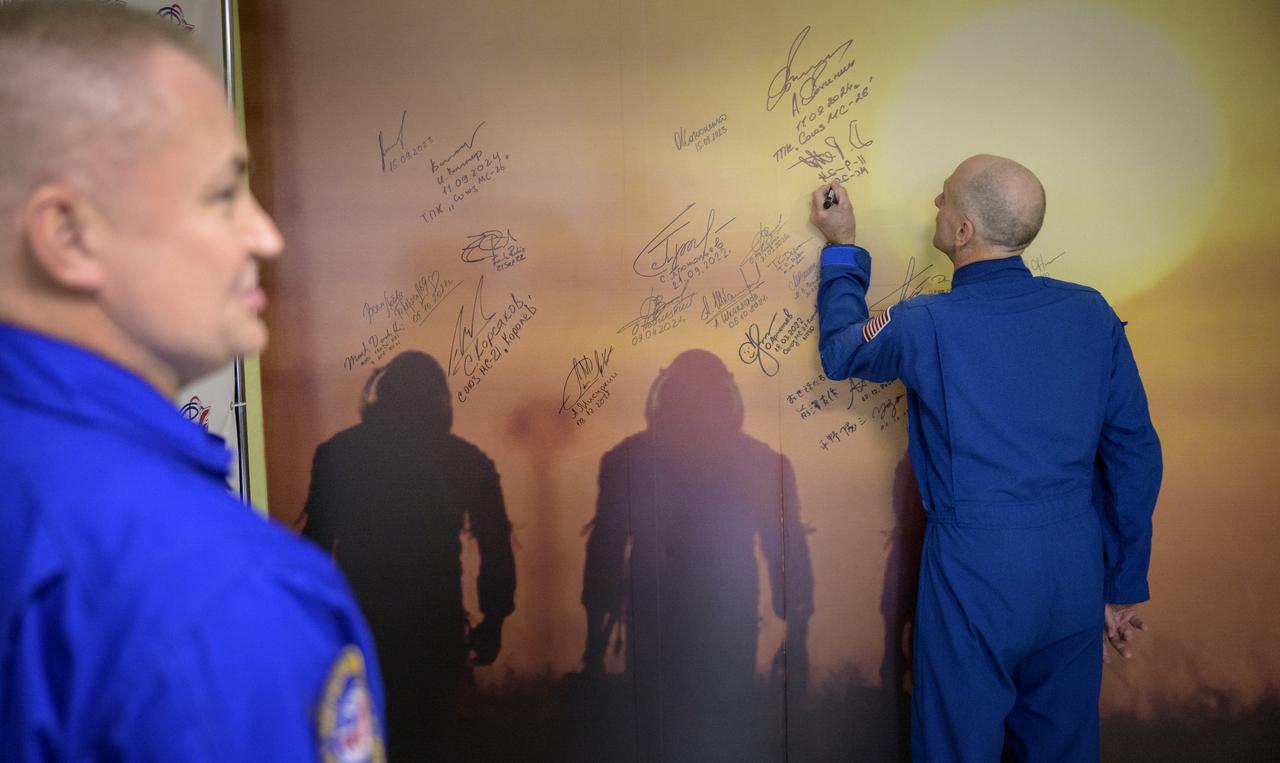
NASA astronaut Don Pettit signs a mural at the Cosmonaut Hotel prior to departing for suit-up and launch on a Soyuz rocket with fellow crew mates, Roscosmos cosmonauts Alexey Ovchinin, and Ivan Vagner, Wednesday, Sept. 11, 2024, in Baikonur, Kazakhstan. The launch will send Pettit, Ovchinin, Vagner, on a mission to the International Space Station. Photo Credit: (NASA/Bill Ingalls)

Expedition 49 flight engineer Shane Kimbrough of NASA signs his name to a wall mural bearing the picture of a Soyuz rocket launch at the Baikonur Cosmodrome Museum, Thursday, Oct. 13, 2016 at the Baikonur Cosmodrome in Kazakhstan. Kimbrough, Andrey Borisenko of Roscosmos, and Sergey Ryzhikov of Roscosmos are scheduled to launch from the Baikonur Cosmodrome in Kazakhstan on Oct. 19. Photo Credit: (NASA/Victor Zelentsov)
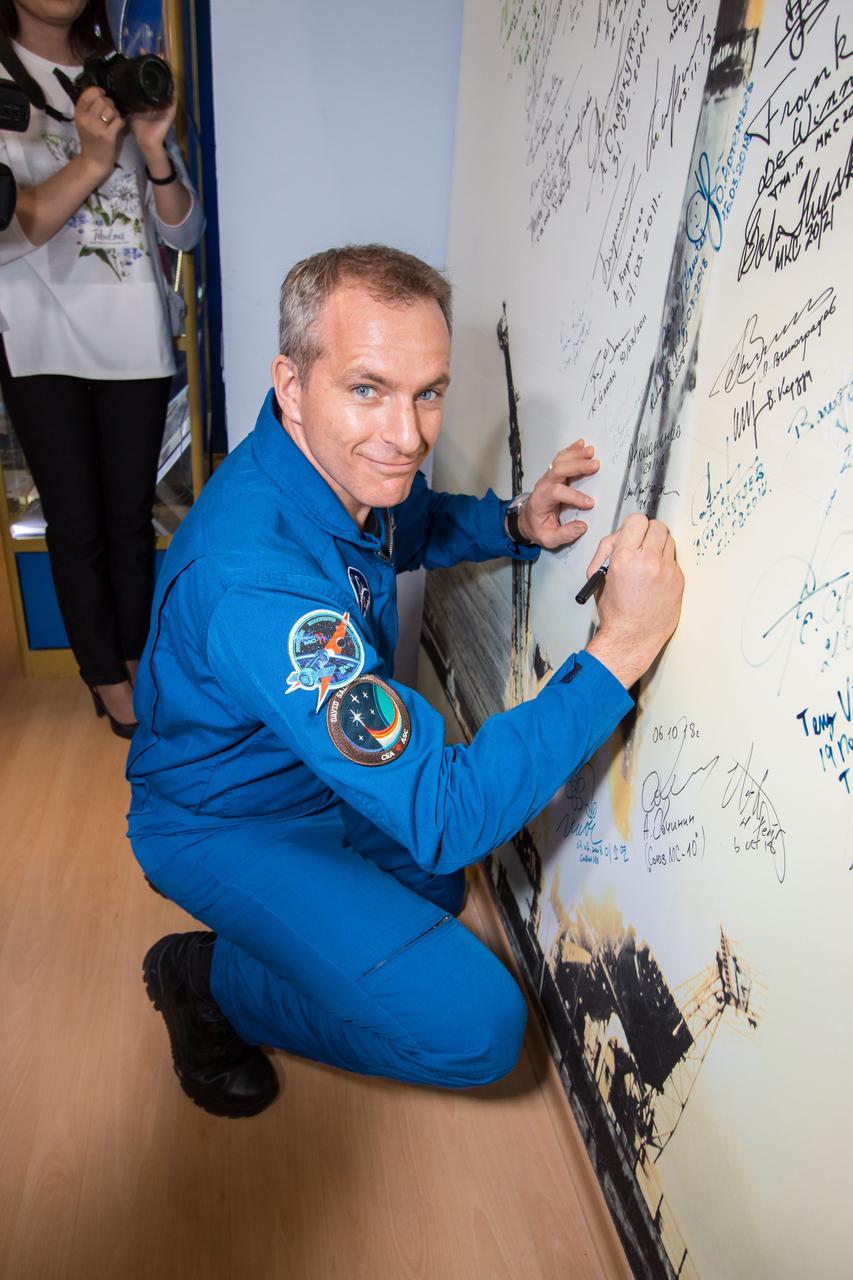
jsc2018e098092 - At the Baikonur Cosmodrome Museum in Kazakhstan, Expedition 58 crewmember David Saint-Jacques of the Canadian Space Agency signs a wall mural Nov. 29 as part of traditional pre-launch activities. Saint-Jacques, Anne McClain of NASA and Oleg Kononenko of Roscosmos will launch Dec. 3 in the Soyuz MS-11 spacecraft from the Baikonur Cosmodrome in Kazakhstan for a six-and-a-half month mission on the International Space Station...NASA/Victor Zelentsov.
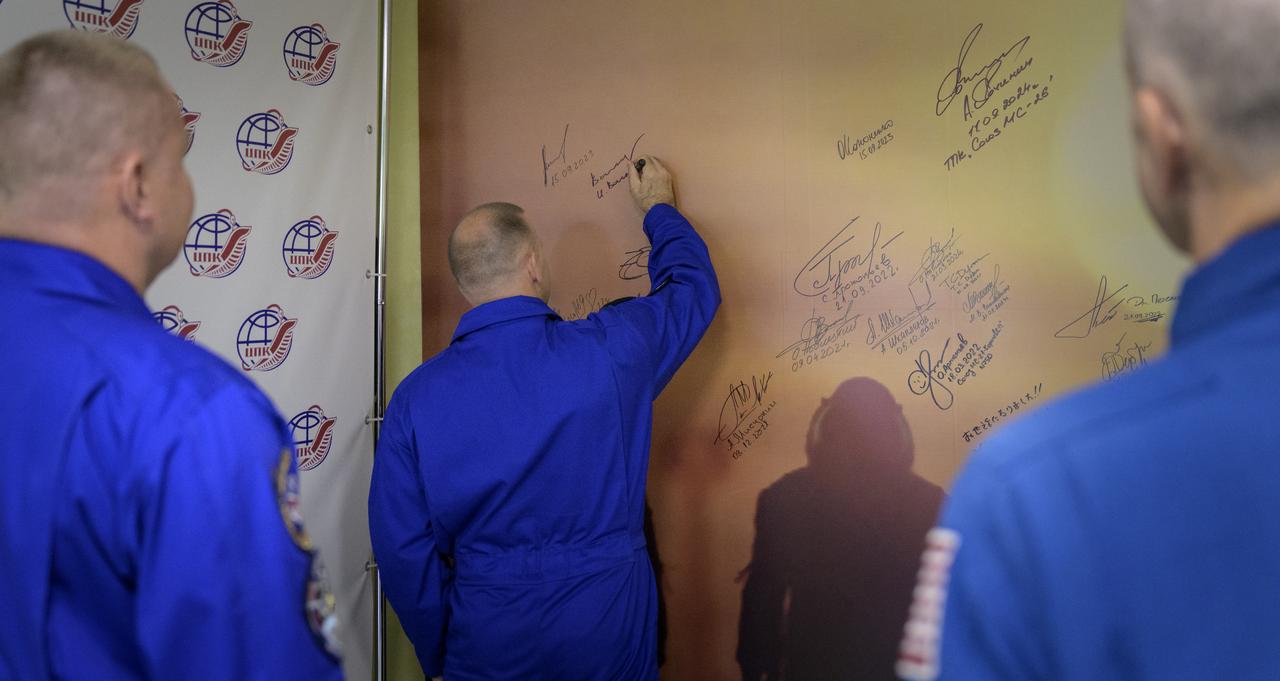
Roscosmos cosmonaut Ivan Vagner signs a mural at the Cosmonaut Hotel prior to departing for suit-up and launch on a Soyuz rocket with fellow crew mates, Roscosmos cosmonaut Alexey Ovchinin, and NASA astronaut Don Pettit, Wednesday, Sept. 11, 2024, in Baikonur, Kazakhstan. The launch will send Pettit, Ovchinin, Vagner, on a mission to the International Space Station. Photo Credit: (NASA/Bill Ingalls)
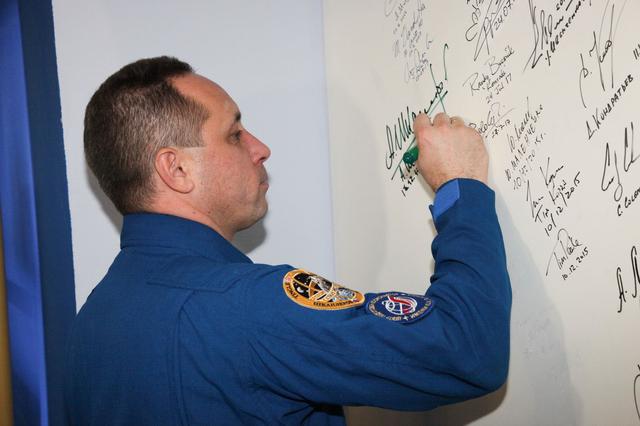
jsc2017e138123 - At the Korolev Museum at the Baikonur Cosmodrome in Kazakhstan, Expedition 54-55 prime crewmember Anton Shkaplerov of the Russian Federal Space Agency (Roscosmos) signs a wall mural Dec. 13 as part of traditional pre-launch ceremonies. Shkaplerov, Scott Tingle of NASA and Norishige Kanai of the Japan Aerospace Exploration Agency (JAXA) will launch Dec. 17 on the Soyuz MS-07 spacecraft for a five month mission on the International Space Station...Andrey Shelepin/Gagarin Cosmonaut Training Center.
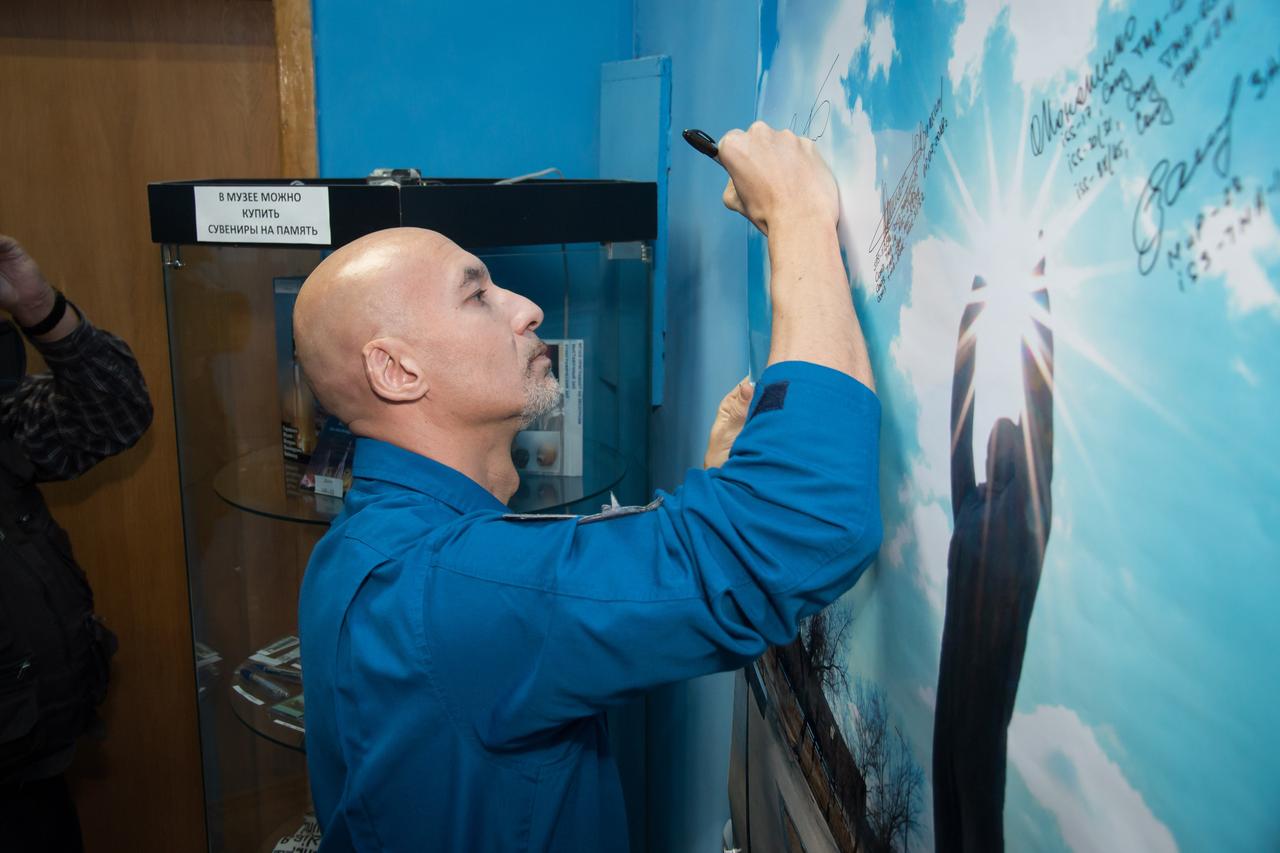
jsc2018e097321 - At the Baikonur Museum in the town of Baikonur, Kazakhstan, Expedition 58 backup crewmember Luca Parmitano of the European Space Agency signs a wall mural Nov. 21 in a traditional pre-launch activity. He is one of the backups to Anne McClain of NASA, Oleg Kononenko of Roscosmos and David Saint-Jacques of the Canadian Space Agency, who will launch Dec. 3 on the Soyuz MS-11 spacecraft from the Baikonur Cosmodrome in Kazakhstan for a six-and-a-half month mission on the International Space Station...NASA/Victor Zelentsov.
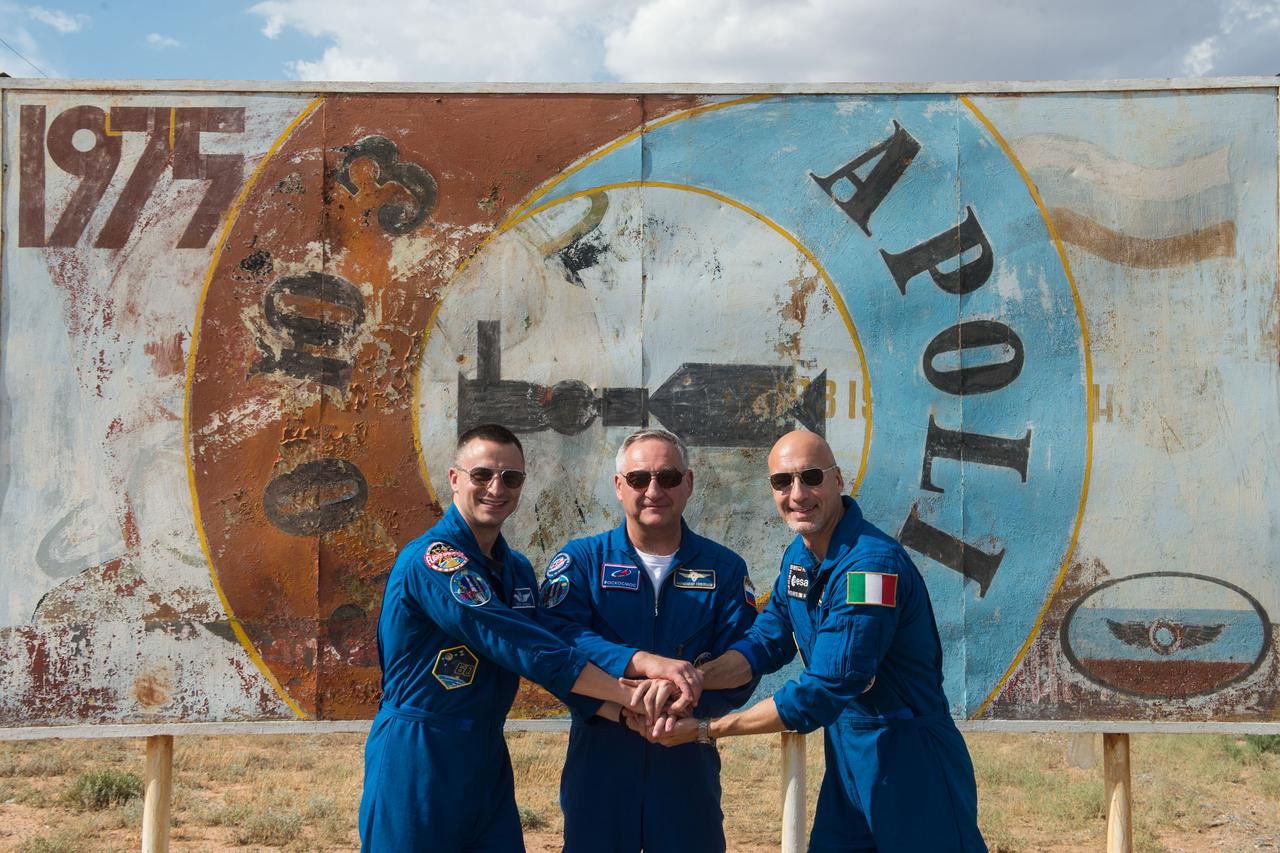
jsc2019e038379 - At the Baikonur Cosmodrome in Kazakhstan, Expedition 60 crewmembers Drew Morgan of NASA (left), Alexander Skvortsov of Roscosmos (center) and Luca Parmitano of the European Space Agency (right) pose for pictures July 5 in front of a mural bearing the insignia of the 1975 Apollo-Soyuz mission. They will launch July 20 on the 50th anniversary of humanity’s first landing on the moon during Apollo 11 on the Soyuz MS-13 spacecraft from the Baikonur Cosmodrome for a mission on the International Space Station...Andrey Shelepin/GCTC.
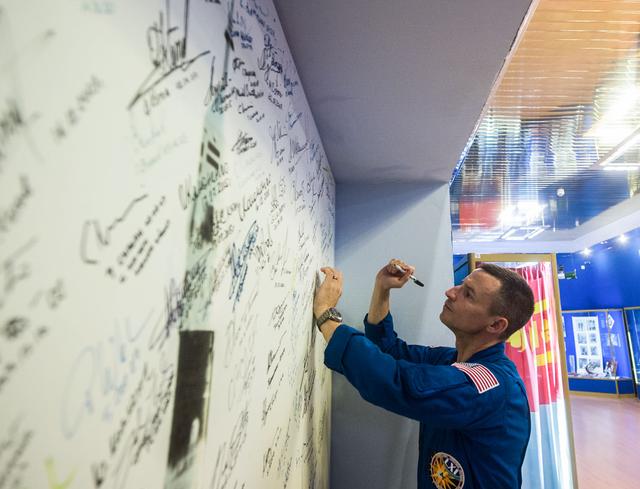
jsc2019e039428 - At the Baikonur Cosmodrome in Kazakhstan, Expedition 60 crewmember Drew Morgan of NASA signs a wall mural July 16 as part of pre-launch preparations. Morgan, Luca Parmitano of the European Space Agency and Alexander Skvortsov of Roscosmos will launch July 20 on the Soyuz MS-13 spacecraft from the Baikonur Cosmodrome for a mission on the International Space Station...Andrey Shelepin/GCTC.
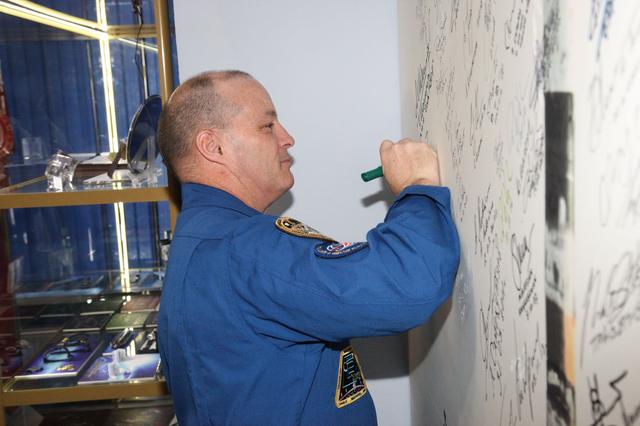
jsc2017e138129 - At the Korolev Museum at the Baikonur Cosmodrome in Kazakhstan, Expedition 54-55 prime crewmember Scott Tingle of NASA signs a wall mural Dec. 13 as part of traditional pre-launch ceremonies. Tingle, Anton Shkaplerov of the Russian Federal Space Agency (Roscosmos) and Norishige Kanai of the Japan Aerospace Exploration Agency (JAXA) will launch Dec. 17 on the Soyuz MS-07 spacecraft for a five month mission on the International Space Station...Andrey Shelepin/Gagarin Cosmonaut Training Center.
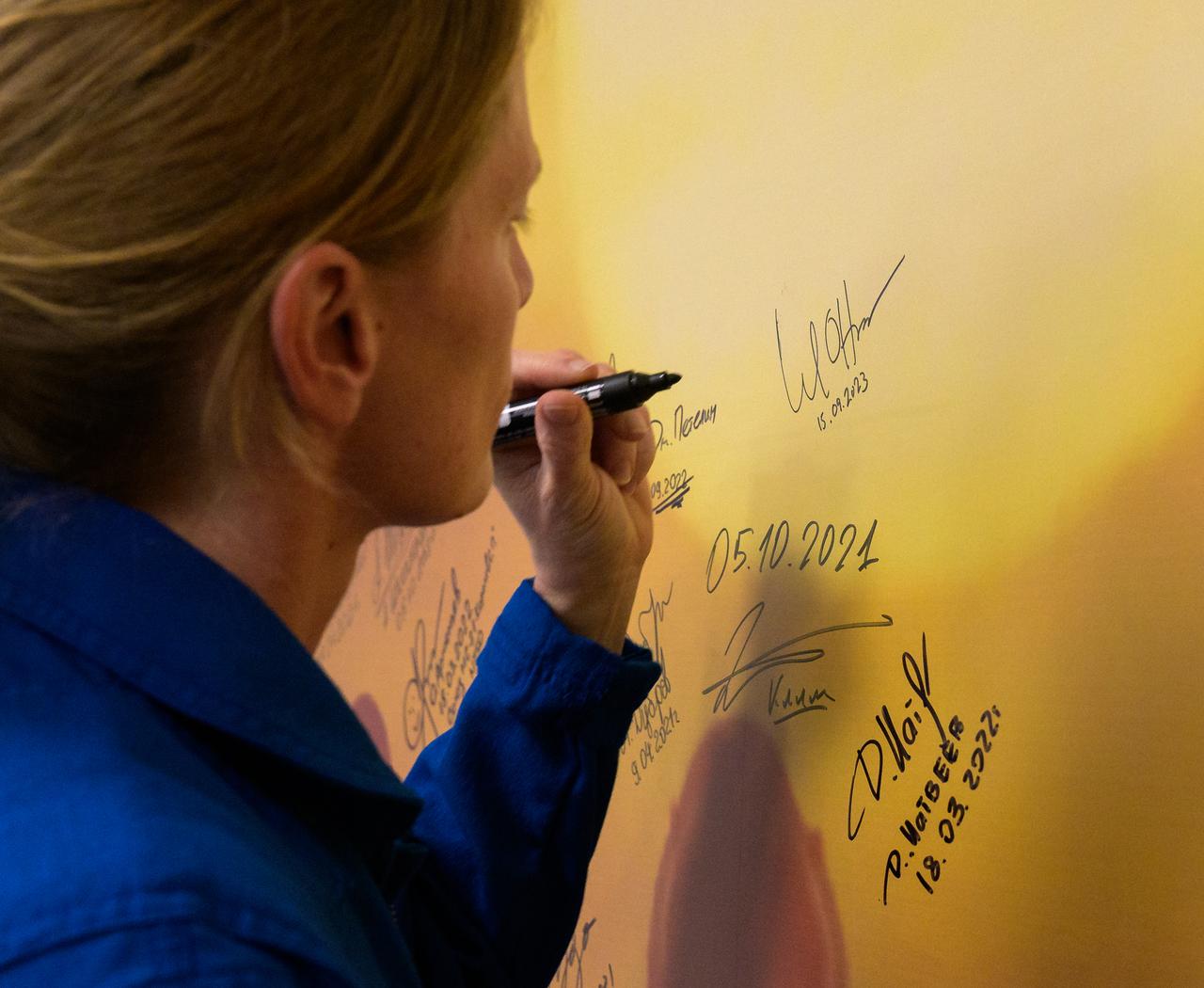
Expedition 70 NASA astronaut Loral O'Hara signs a mural at the Cosmonaut Hotel prior to departing the hotel for launch on a Soyuz rocket with fellow crewmates Roscosmos cosmonauts Oleg Kononenko and Nikolai Chub, Friday, Sept. 15, 2023, in Baikonur, Kazakhstan. The launch will send Expedition 70 NASA astronaut Loral O'Hara and Roscosmos cosmonauts Oleg Kononenko and Nikolai Chub on a mission to the International Space Station. Photo Credit: (NASA/Bill Ingalls)
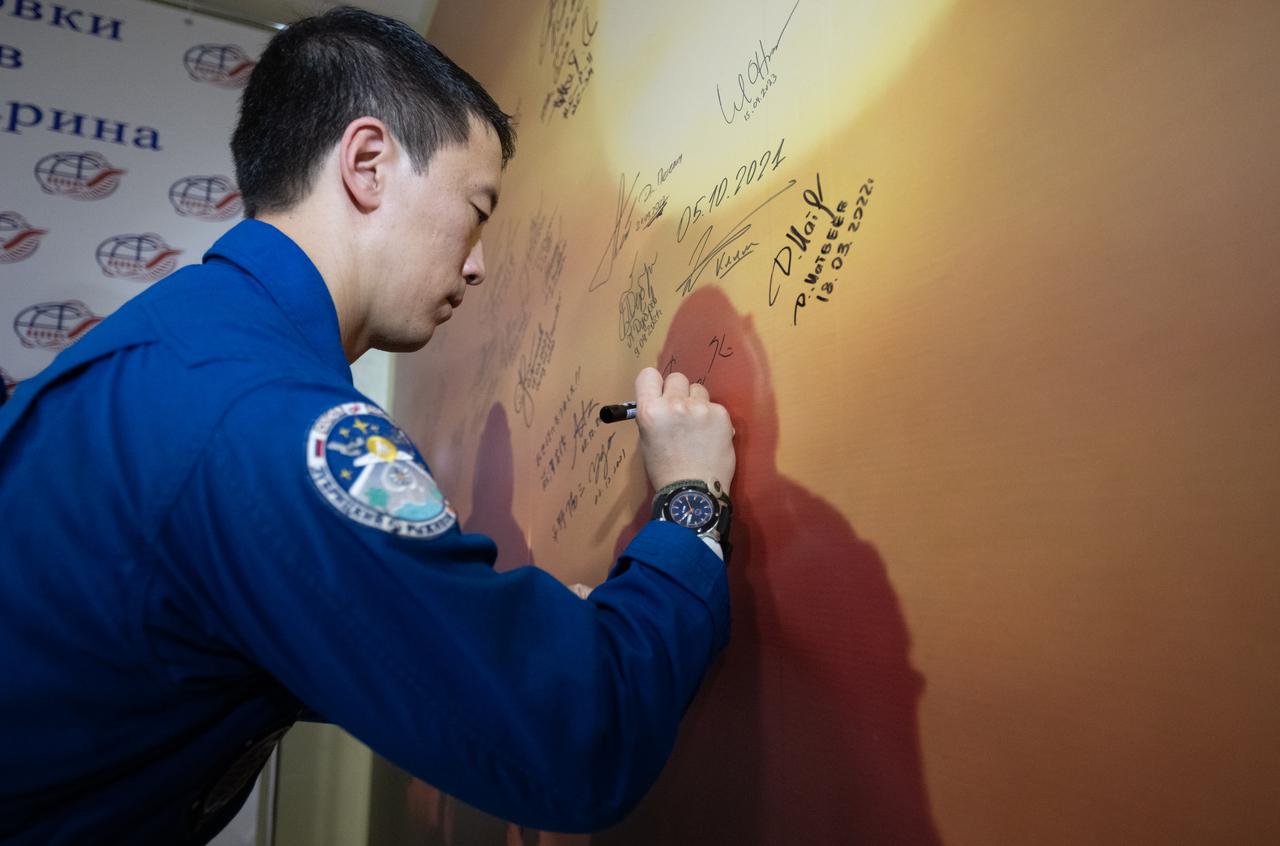
NASA astronaut Jonny Kim signs a mural at the Cosmonaut Hotel prior to departing for suit-up and launch on a Soyuz rocket with fellow crewmates Roscosmos cosmonauts Sergey Ryzhikov and Alexey Zubritskiy, Tuesday, April 8, 2025 (April 7 Eastern Time), in Baikonur, Kazakhstan. The launch will send Kim, Ryzhikov, Zubritskiy, on a mission to the International Space Station. Photo Credit: (NASA/Joel Kowsky)
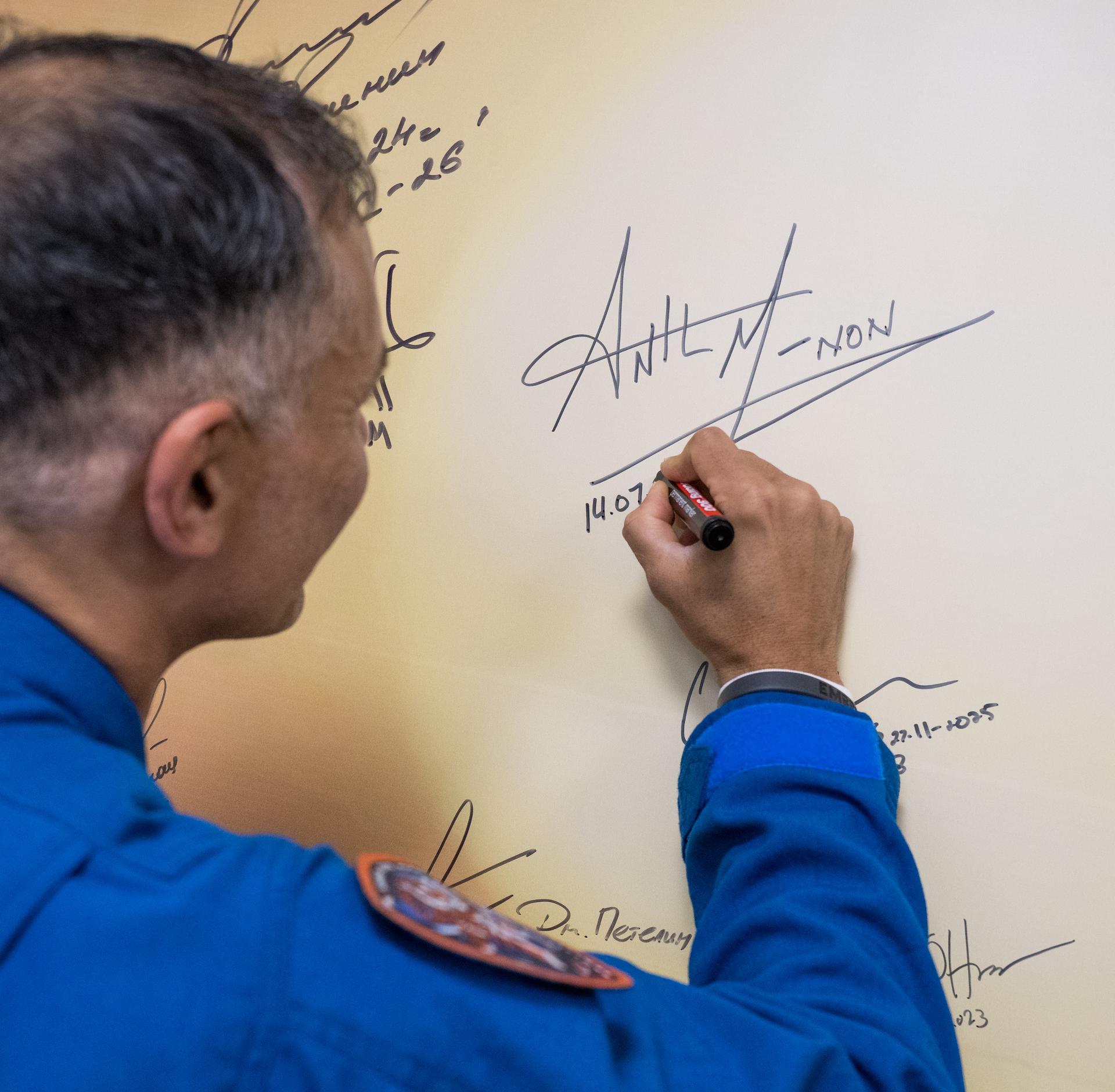
NASA astronaut Anil Menon signs a mural at the Cosmonaut Hotel prior to departing for suit-up and launch on a Soyuz rocket with fellow crewmates Roscosmos cosmonauts Anna Kikina, and Pyotr Dubrov, Tuesday, July 14, 2026, in Baikonur, Kazakhstan. The launch will send Menon, Dubrov, and Kikina on a mission to the International Space Station. Photo Credit: (NASA/Bill Ingalls)

A mural inside the Mars Brew House is seen during the Mars celebration Saturday, June 1, 2019, in Mars, Pennsylvania. NASA is in the small town to celebrate Mars exploration and share the agency’s excitement about landing astronauts on the Moon in five years. The celebration includes a weekend of Science, Technology, Engineering, Arts and Mathematics (STEAM) activities. Photo Credit: (NASA/Bill Ingalls)
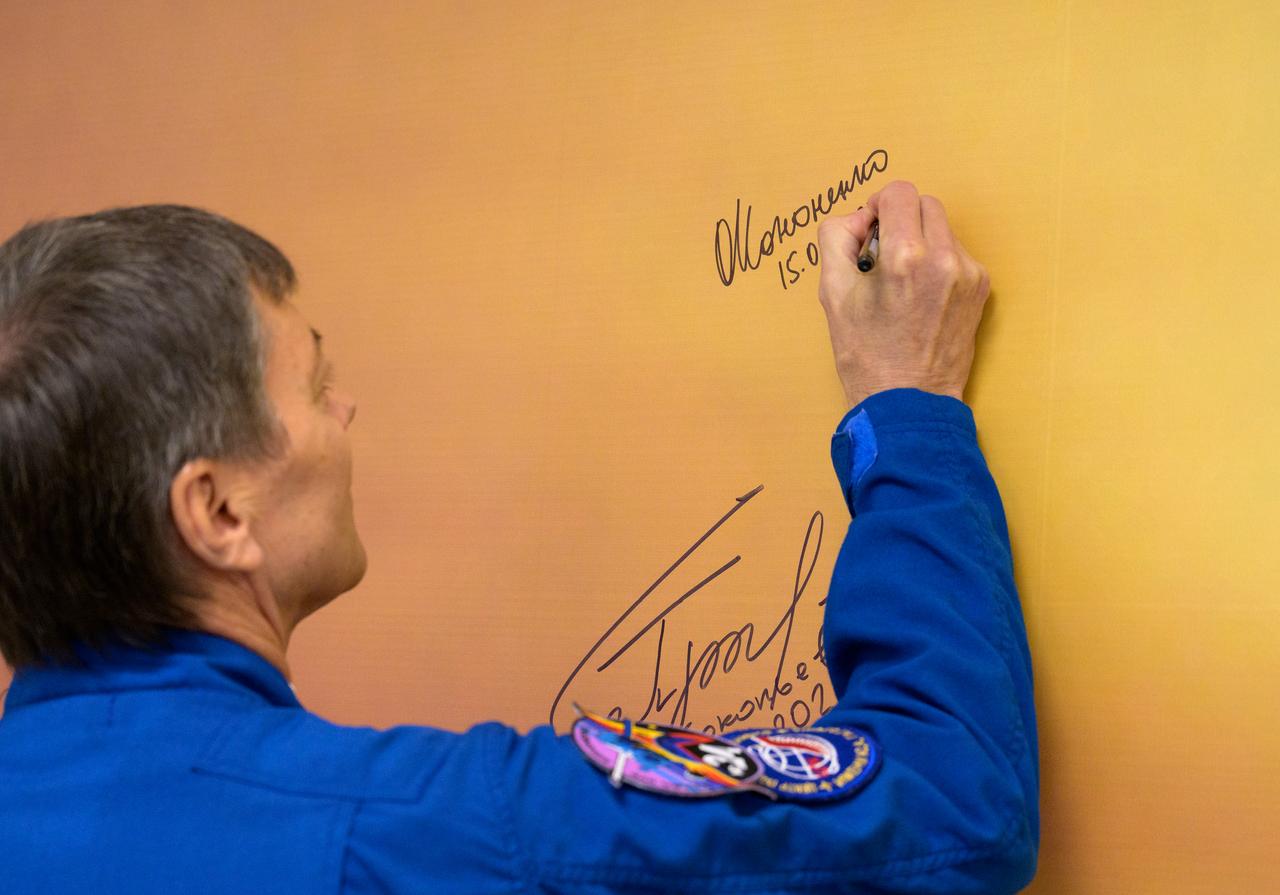
Expedition 70 Roscosmos cosmonaut Oleg Kononenko signs a mural at the Cosmonaut Hotel prior to departing the hotel for launch on a Soyuz rocket with fellow crewmates NASA astronaut Loral O'Hara and Roscosmos cosmonaut Nikolai Chub, Friday, Sept. 15, 2023, in Baikonur, Kazakhstan. The launch will send Expedition 70 NASA astronaut Loral O'Hara and Roscosmos cosmonauts Oleg Kononenko and Nikolai Chub on a mission to the International Space Station. Photo Credit: (NASA/Bill Ingalls)

Expedition 65 prime crew member Russian cosmonaut Pyotr Dubrov of Roscosmos signs his name to a wall mural bearing the picture of a Soyuz launch at the Baikonur Cosmodrome Museum, Sunday, April 4, 2021 at the Baikonur Cosmodrome in Kazakhstan. Dubrov, Oleg Novitskiy of Roscosmos, and NASA astronaut Mark Vande Hei are scheduled to launch to the International Space Station aboard the Soyuz MS-18 spacecraft on April 9. Photo Credit: (NASA/GCTC/Irina Spector)
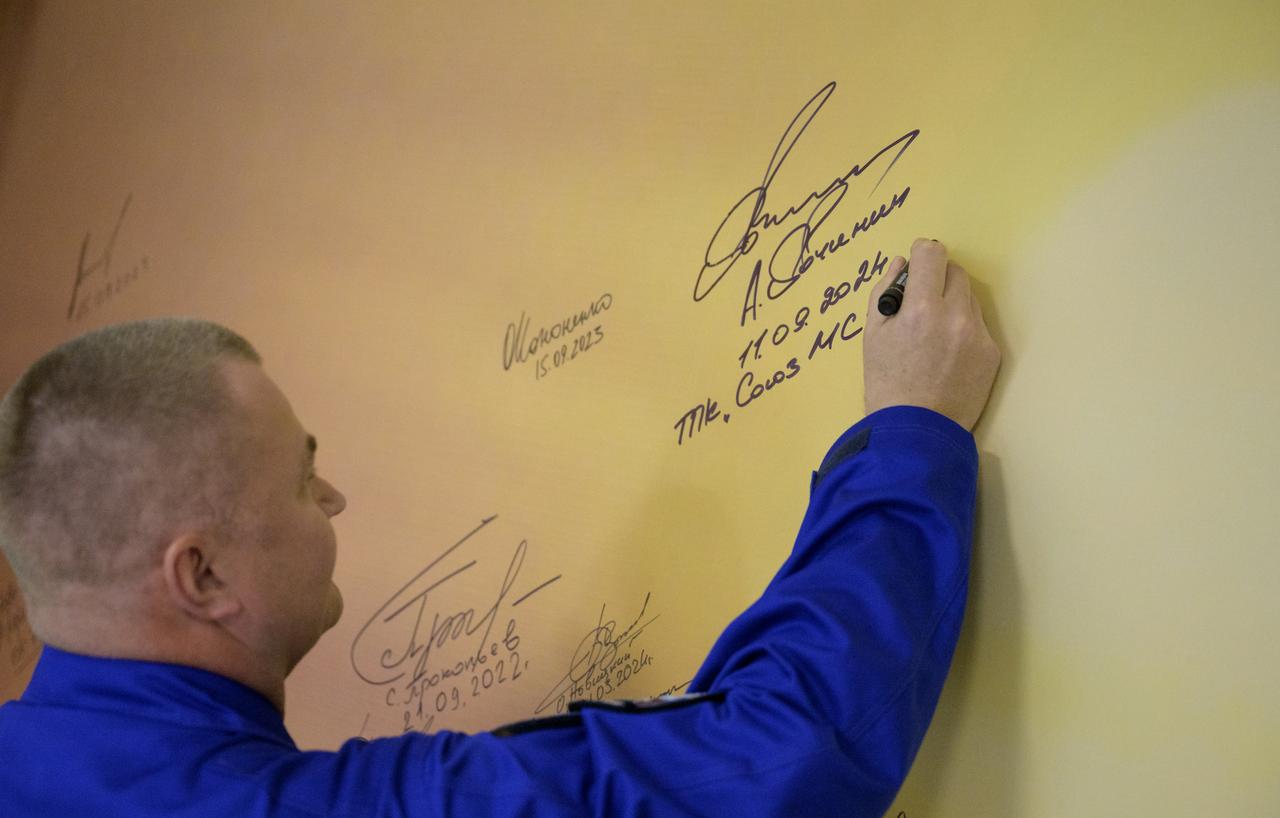
Roscosmos cosmonaut Alexey Ovchinin signs a mural at the Cosmonaut Hotel prior to departing for suit-up and launch on a Soyuz rocket with fellow crew mates, Roscosmos cosmonaut Ivan Vagner, and NASA astronaut Don Pettit, Wednesday, Sept. 11, 2024, in Baikonur, Kazakhstan. The launch will send Pettit, Ovchinin, Vagner, on a mission to the International Space Station. Photo Credit: (NASA/Bill Ingalls)
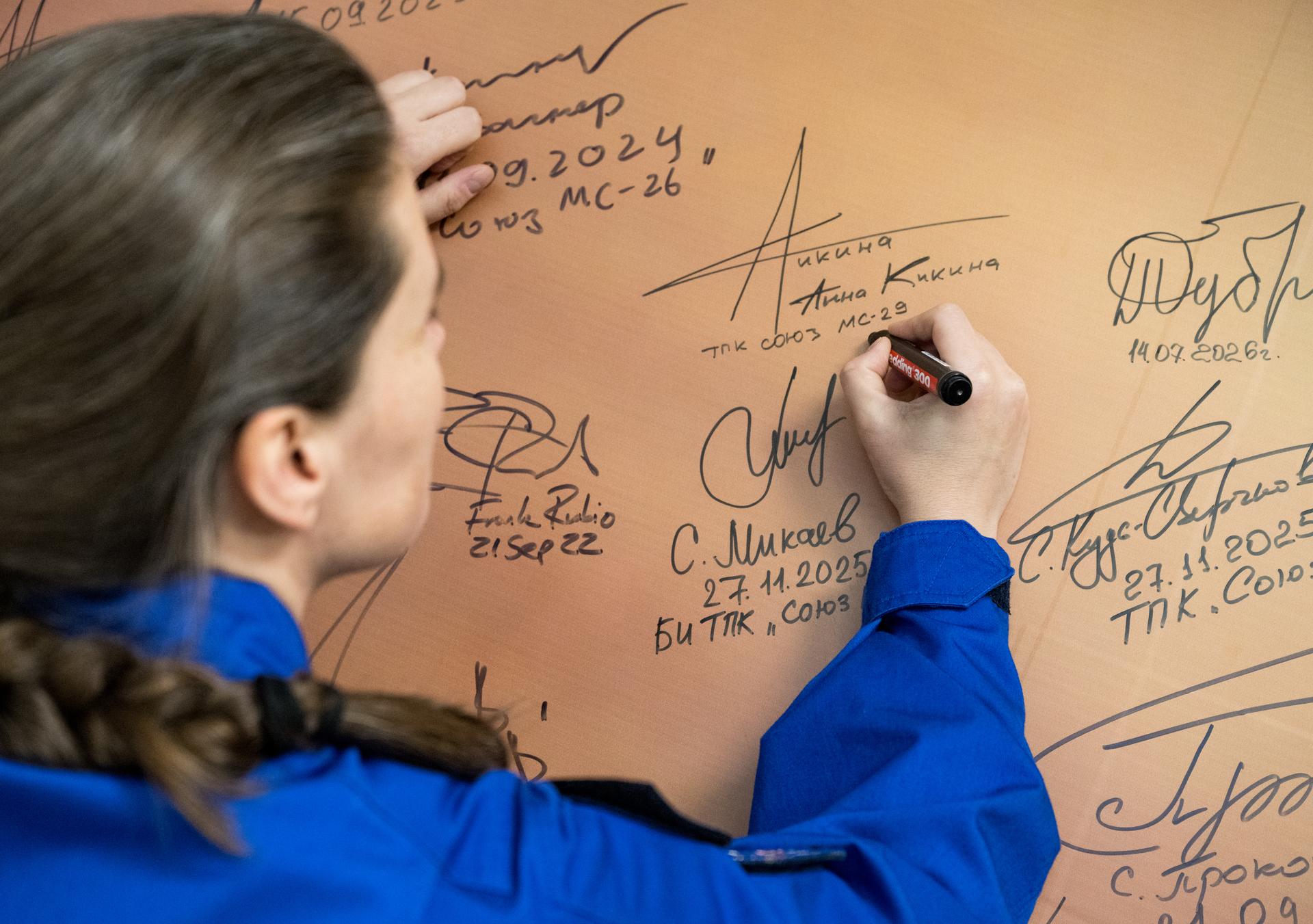
Roscosmos cosmonaut Anna Kikina signs a mural at the Cosmonaut Hotel prior to departing for suit-up and launch on a Soyuz rocket with fellow crewmates Roscosmos cosmonaut Pyotr Dubrov, and NASA astronaut Anil Menon, Tuesday, July 14, 2026, in Baikonur, Kazakhstan. The launch will send Menon, Dubrov, and Kikina on a mission to the International Space Station. Photo Credit: (NASA/Bill Ingalls)
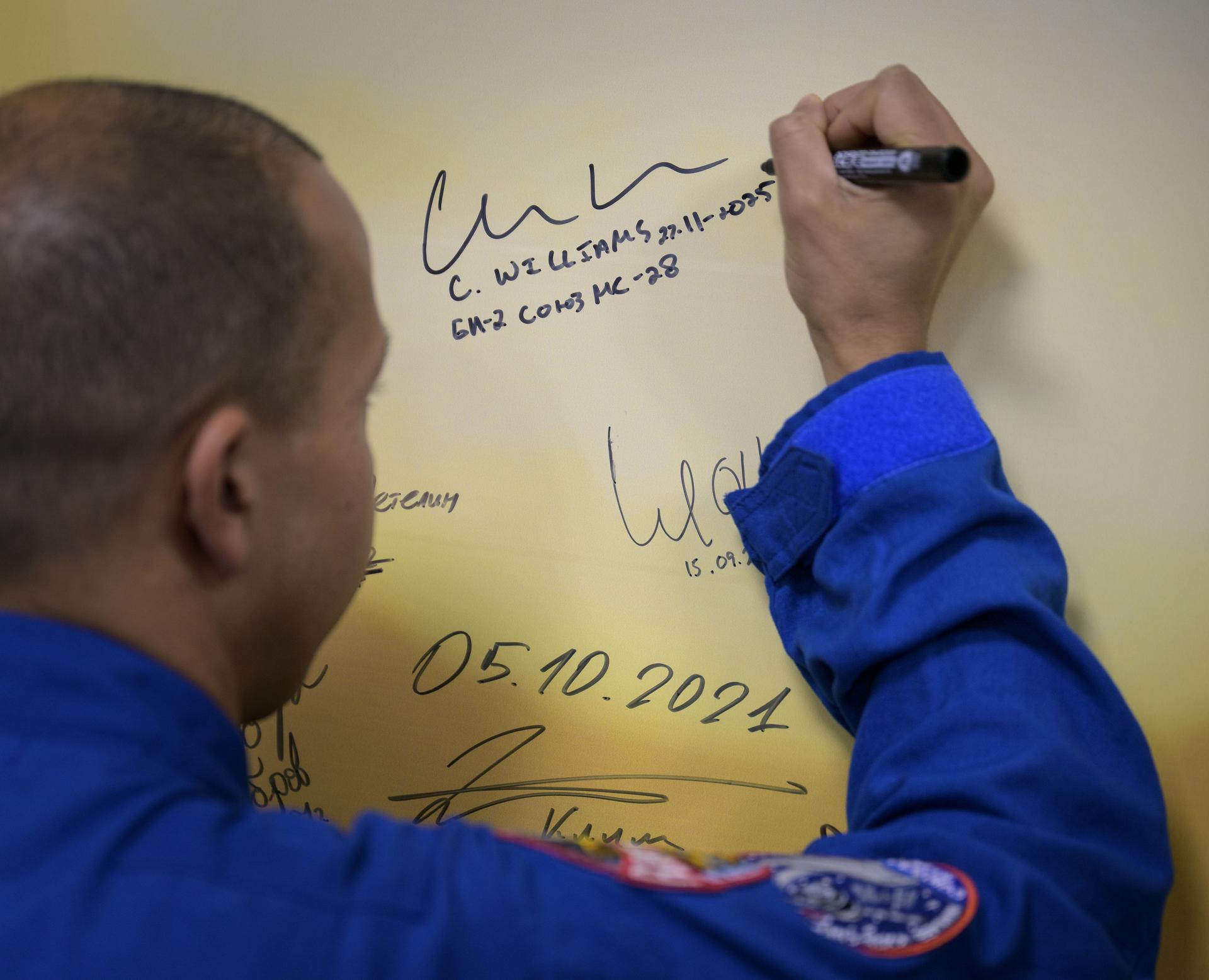
NASA astronaut Chris Williams signs a mural at the Cosmonaut Hotel prior to departing for suit-up and launch on a Soyuz rocket with fellow crewmates, Roscosmos cosmonauts Sergey Kud-Sverchkov and Sergei Mikaev, Thursday, Nov. 27, 2025, in Baikonur, Kazakhstan. The launch will send Williams, Kud-Sverchkov and Mikaev, on a mission to the International Space Station. Photo Credit: (NASA/Bill Ingalls)
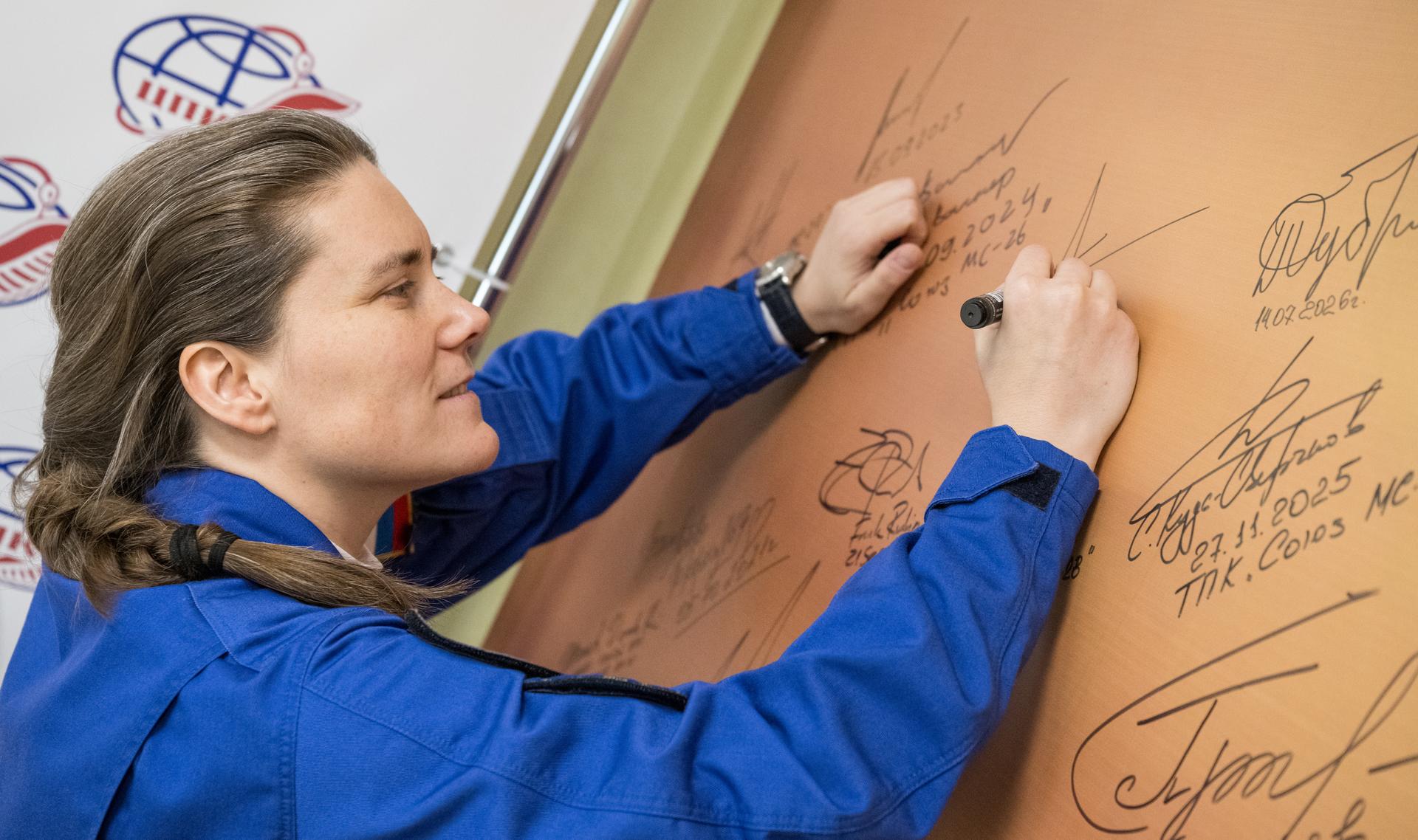
Roscosmos cosmonaut Anna Kikina signs a mural at the Cosmonaut Hotel prior to departing for suit-up and launch on a Soyuz rocket with fellow crewmates Roscosmos cosmonaut Pyotr Dubrov, and NASA astronaut Anil Menon, Tuesday, July 14, 2026, in Baikonur, Kazakhstan. The launch will send Menon, Dubrov, and Kikina on a mission to the International Space Station. Photo Credit: (NASA/Bill Ingalls)
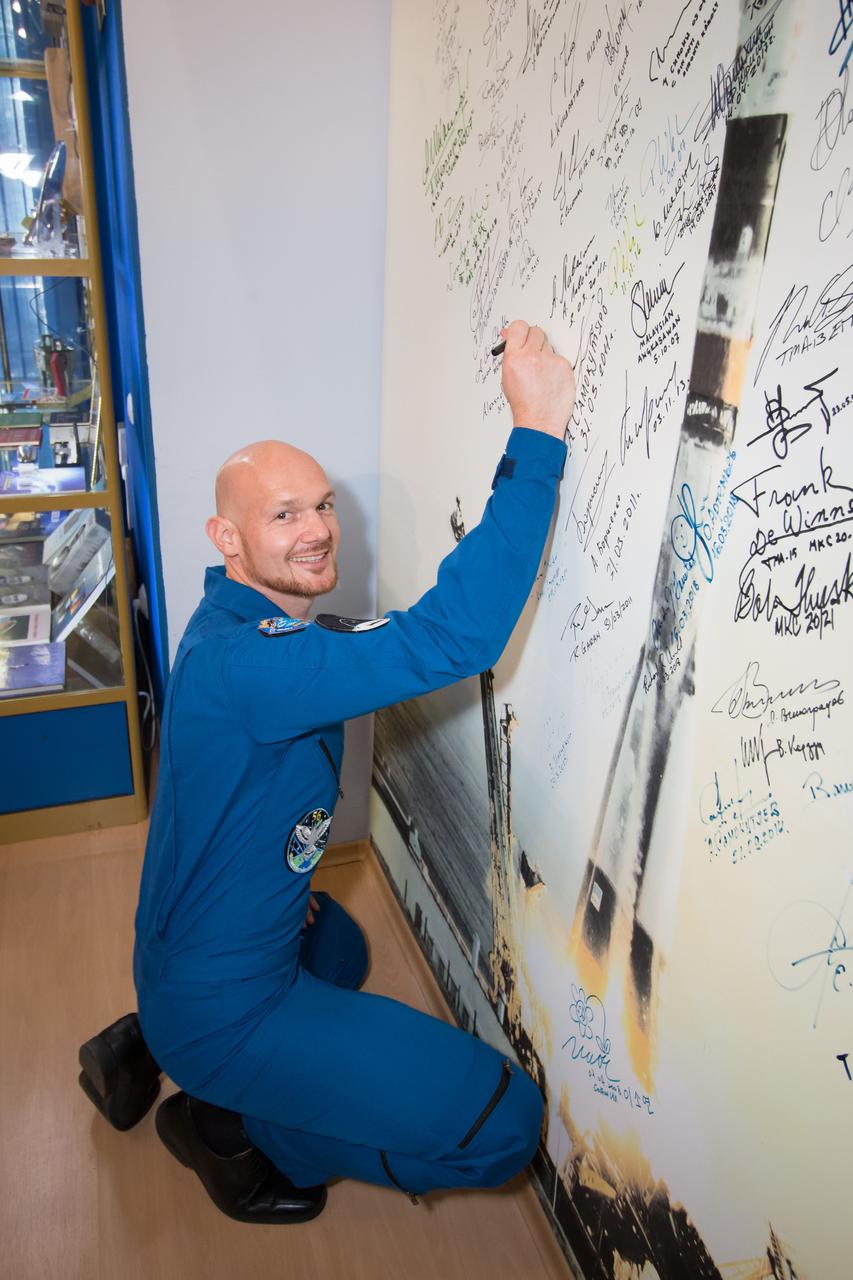
jsc2018e051934 - In the Korolev Museum at the Baikonur Cosmodrome in Kazakhstan, Expedition 56 crewmember Alexander Gerst of the European Space Agency signs a wall mural May 31 during traditional pre-launch activities. Gerst, Serena Aunon-Chancellor of NASA and Sergey Prokopyev of Roscosmos will launch June 6 in the Soyuz MS-09 spacecraft for a six-month mission on the International Space Station. ..NASA/Victor Zelentsov.

2014-09-21-13-30-24 At the Korolev Museum in the Baikonur Cosmodrome in Kazakhstan, Expedition 41/42 Flight Engineer Barry Wilmore of NASA signs a wall mural bearing a picture of a Soyuz rocket launch Sept. 21 during ceremonial pre-flight activities. Wilmore, Soyuz Commander Alexander Samokutyaev of the Russian Federal Space Agency (Roscosmos) and Flight Engineer Elena Serova of Roscosmos will launch on Sept. 26, Kazakh time, in the Soyuz to begin a 5 ½ month mission on the International Space Station. Serova will become the fourth Russian woman to fly in space and the first to live and work on the station. NASA/Victor Zelentsov
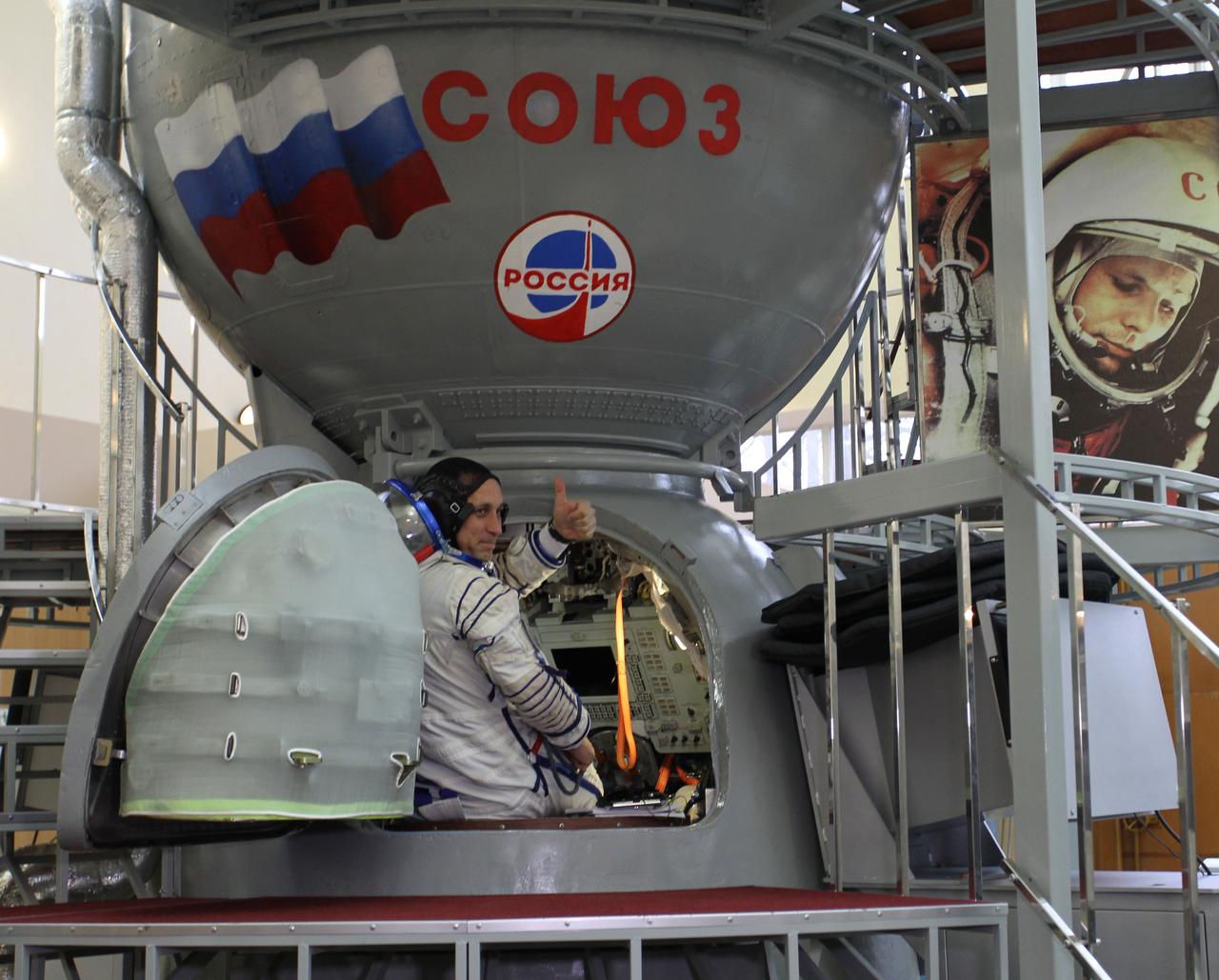
3608a: At the Gagarin Cosmonaut Training Center in Star City, Russia, Expedition 42/43 Soyuz Commander Anton Shkaplerov of the Russian Federal Space Agency (Roscosmos) flashes a thumbs up as he enters a Soyuz simulator October 31 for the second day of qualification exams. Overlooking Shkaplerov is a wall mural depicting the image of Yuri Gagarin, the first human to fly in space. Shkaplerov, NASA Flight Engineer Terry Virts and European Space Agency Flight Engineer Samantha Cristoforetti are preparing for launch in the Soyuz TMA-15M spacecraft from the Baikonur Cosmodrome in Kazakhstan Nov. 24, Kazakh time, for a 5 ½ month mission on the International Space Station. NASA/Stephanie Stoll
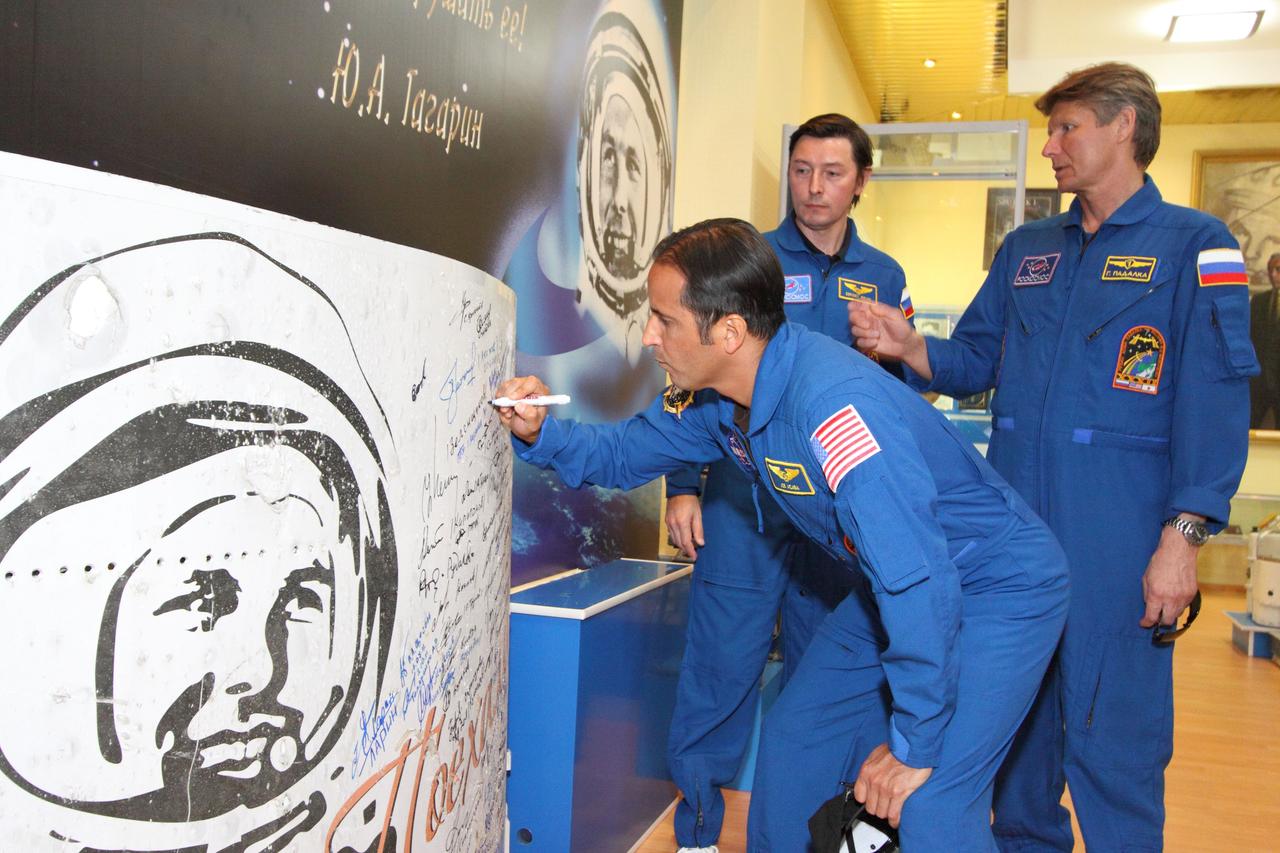
At the historic museum near the launch pad at the Baikonur Cosmodrome in Kazakhstan, Expedition 31/32 Flight Engineer Joe Acaba of NASA signs a mural depicting the likeness of Yuri Gagarin, the first human in space May 11, 2012 as his crewmates, Flight Engineer Sergei Revin (center) and Soyuz Commander Gennady Padalka (right) look on. The trio will launch on their Soyuz TMA-04M spacecraft May 15 from the same launch pad Gagarin left the planet 51 years ago to begin a four-month mission on the International Space Station. NASA/Victor Zelentsov
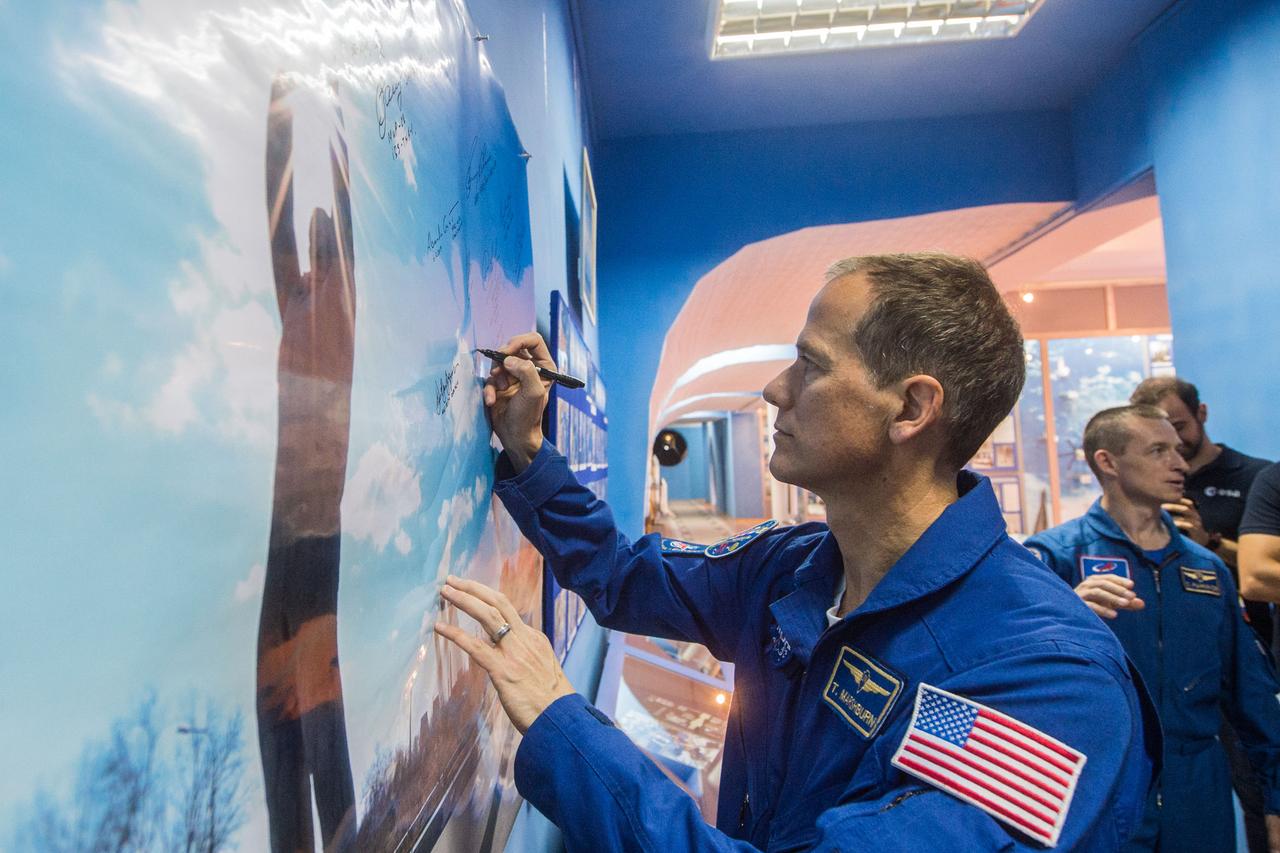
jsc2019e038394 - At the Baikonur Museum in the town of Baikonur, Kazakhstan, Expedition 60 backup crewmember Tom Marshburn of NASA signs a wall mural July 6 during traditional pre-launch activities. In the background is crewmate Sergey Ryzhikov of Roscosmos. Marshburn, Ryzhikov and Soichi Noguchi of the Japan Aerospace Exploration Agency are the backups to the prime crew, Drew Morgan of NASA, Luca Parmitano of the European Space Agency and Alexander Skvortsov of Roscosmos, who will launch July 20 on the Soyuz MS-13 spacecraft from the Baikonur Cosmodrome in Kazakhstan for a mission on the International Space Station...Andrey Shelepin/GCTC.
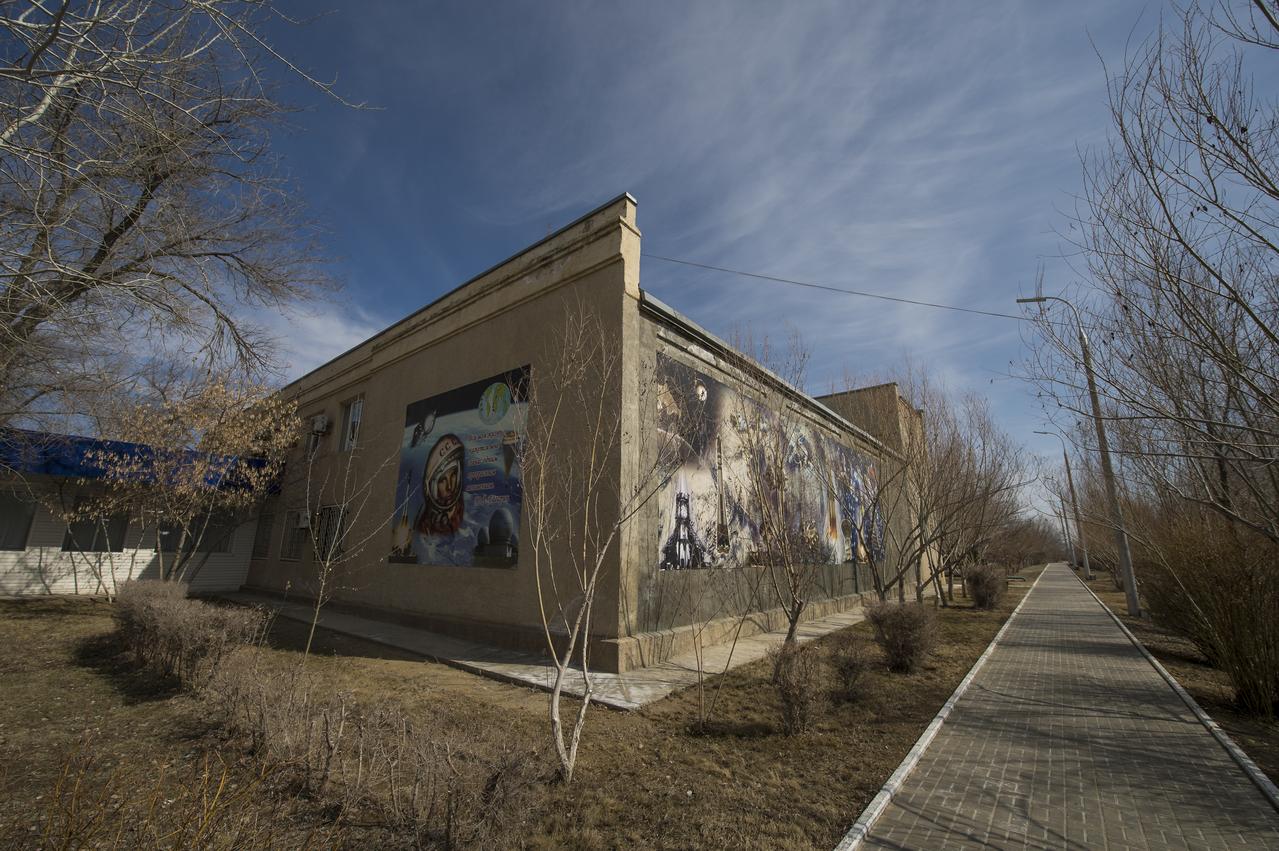
Murals showing the history of Russian spaceflight are seen on the outside walls of the Cosmonaut Hotel, Thursday, March 19, 2015 in Baikonur, Kazakhstan. NASA Astronaut Scott Kelly, and Russian Cosmonauts Gennady Padalka, and Mikhail Kornienko of the Russian Federal Space Agency (Roscosmos), are preparing for launch to the International Space Station in their Soyuz TMA-16M spacecraft from the Baikonur Cosmodrome in Kazakhstan March 28, Kazakh time. As the one-year crew, Kelly and Kornienko will return to Earth on Soyuz TMA-18M in March 2016. Photo Credit: (NASA/Bill Ingalls)
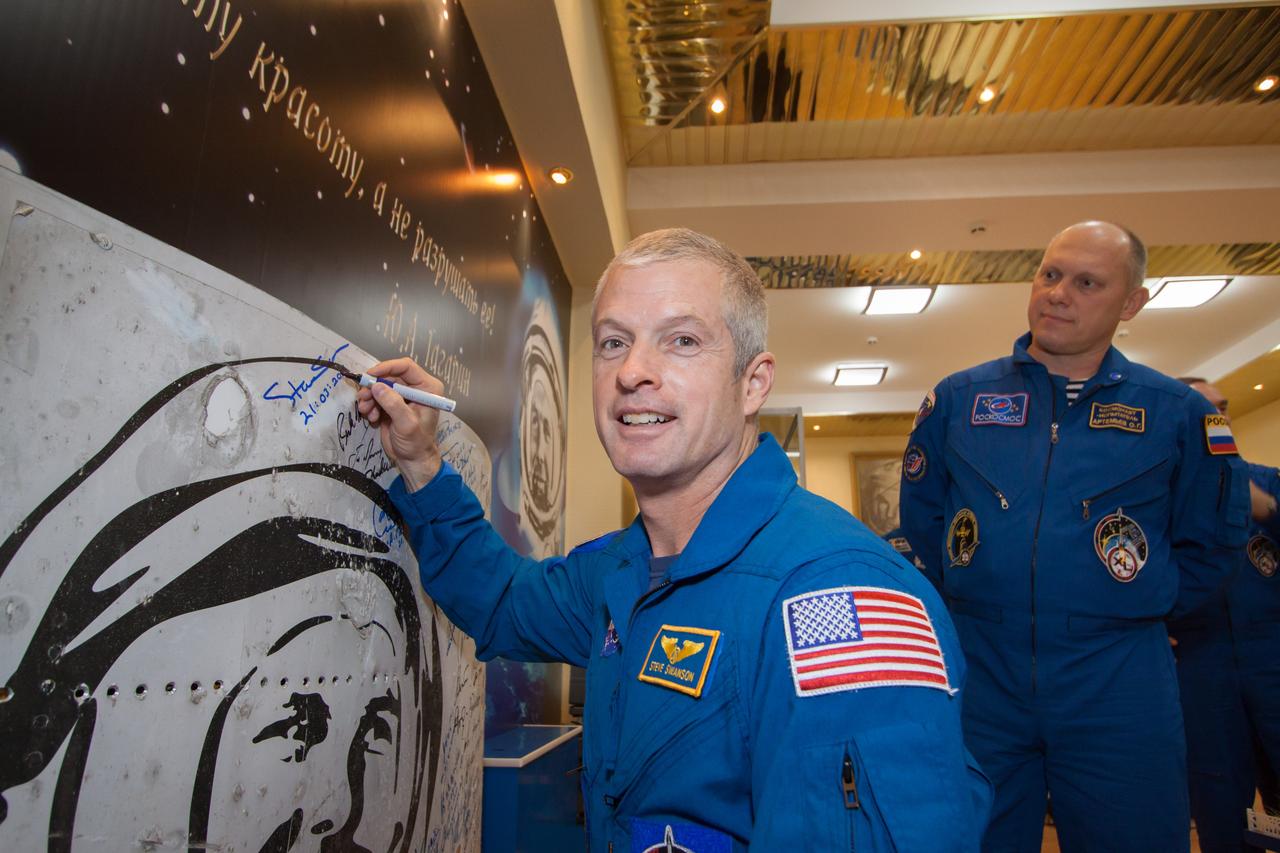
12-52-00-3: In the Baikonur Cosmodrome Museum in Kazakhstan, Expedition 39/40 Flight Engineer Steve Swanson of NASA (foreground) signs a wall mural March 21 to honor a tradition as he and his crewmates prepare for launch to the International Space Station. Looking on is Flight Engineer Oleg Artemyev of the Russian Federal Space Agency (Roscosmos). Swanson, Soyuz Commander Alexander Skvortsov of Roscosmos and Artemyev are wrapping up training for their launch to the station March 26, Kazakh time, on the Soyuz TMA-12 spacecraft for a six-month mission on the orbital laboratory. NASA/Victor Zelentsov
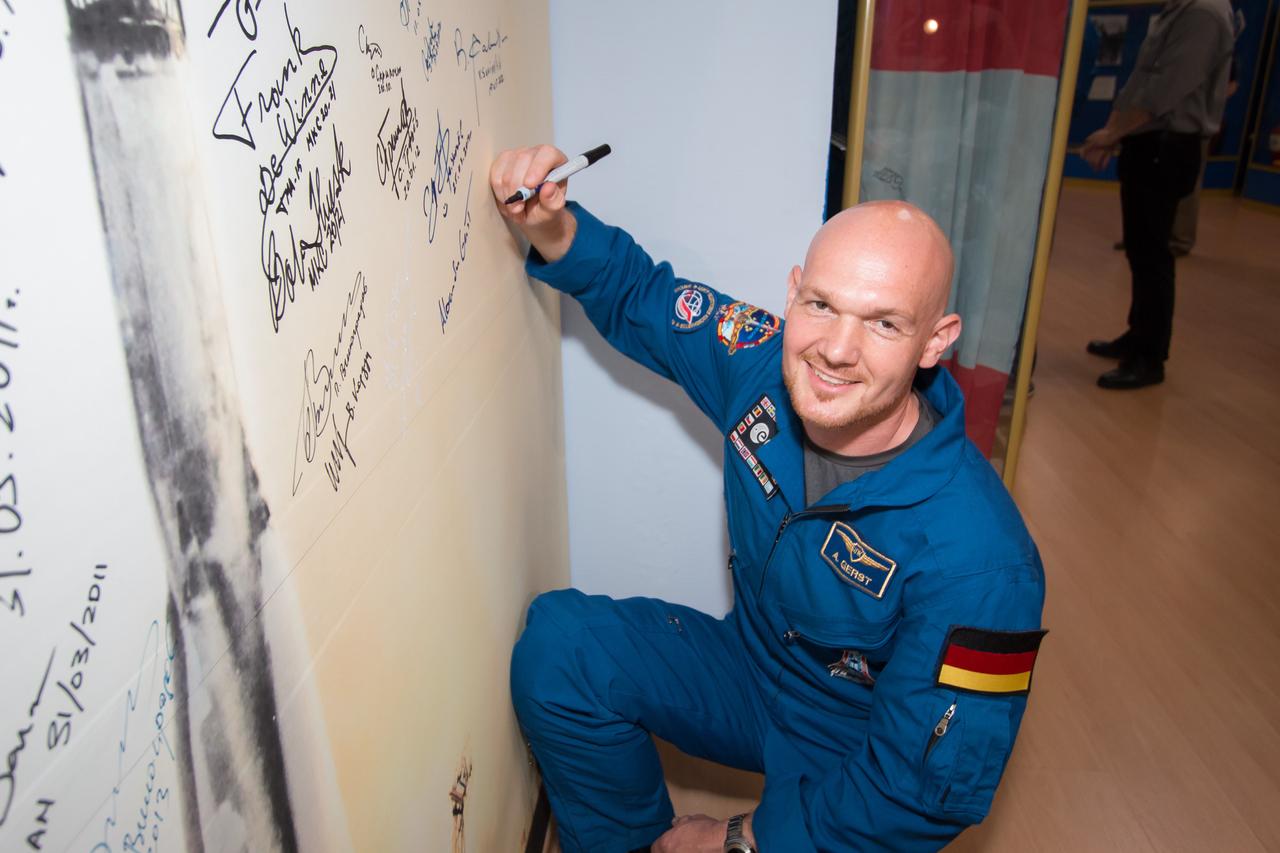
13-49-32-4: Inside the Korolev Museum at the Baikonur Cosmodrome in Kazakhstan, Expedition 40/41 Flight Engineer Alexander Gerst of the European Space Agency signs his name to a wall mural bearing the picture of a Soyuz rocket launch May 24 during traditional pre-launch ceremonies. Gerst, Soyuz Commander Max Suraev of the Russian Federal Space Agency (Roscosmos) and Flight Engineer Reid Wiseman of NASA will launch May 29, Kazakh time, on the Soyuz TMA-13M spacecraft for a 5 ½ month mission on the International Space Station. NASA/Victor Zelentsov
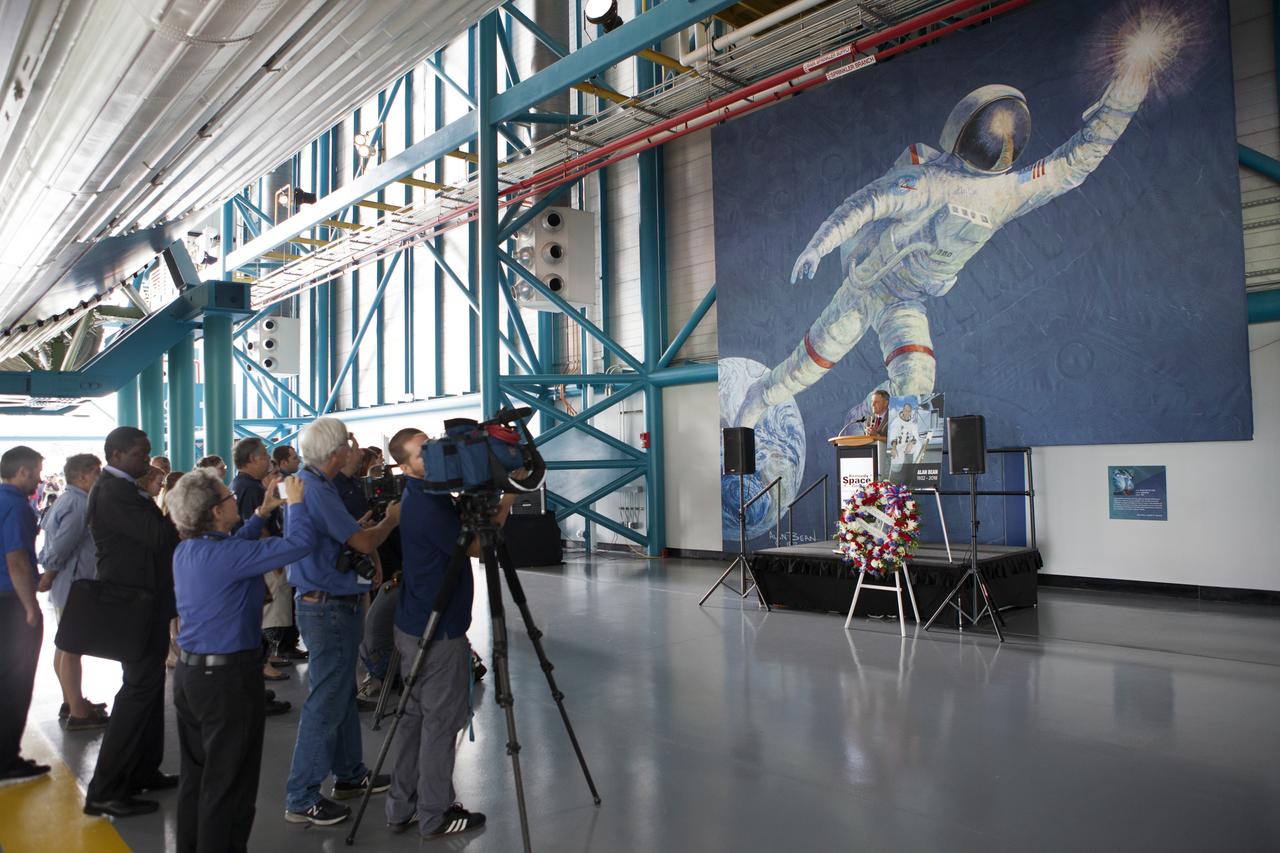
Members of the news media assemble to cover a ceremony on Wednesday, May 30, 2018, during which a memorial wreath is placed in the Apollo-Saturn V Center of the Kennedy Space Center Visitor Complex honoring former NASA astronaut Alan Bean. In the background is a large mural of a painting by Alan Bean who became an accomplished artist after leaving NASA. Bean was the fourth person to walk on the Moon as lunar module pilot on Apollo 12 in November 1969. He went on to command the 59-day Skylab 3 mission in 1973. He died in Houston on May 26, 2018, at the age of 86.
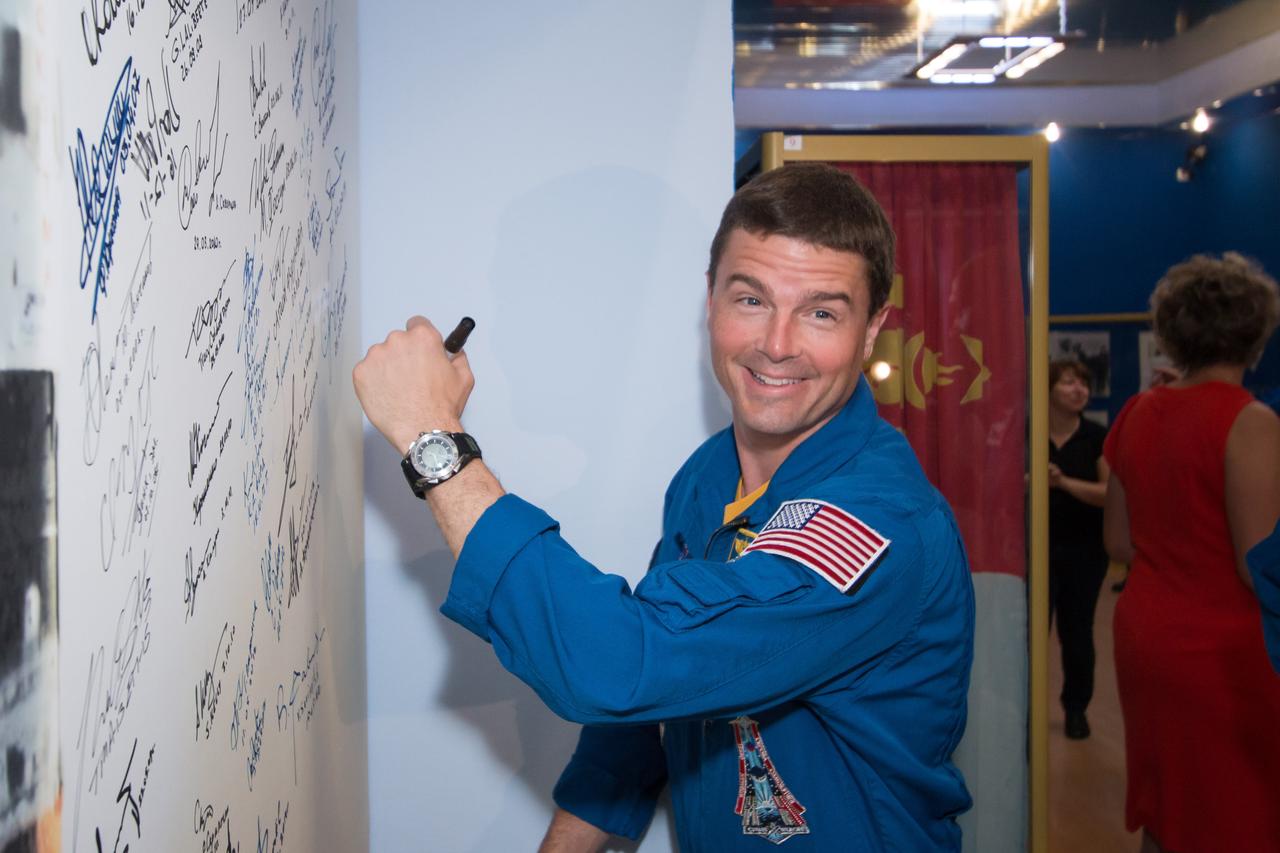
13-48-59-3: Inside the Korolev Museum at the Baikonur Cosmodrome in Kazakhstan, Expedition 40/41 Flight Engineer Reid Wiseman of NASA signs his name to a wall mural bearing the picture of a Soyuz rocket launch May 24 during traditional pre-launch ceremonies. Wiseman, Soyuz Commander Max Suraev of the Russian Federal Space Agency (Roscosmos) and Flight Engineer Alexander Gerst of the European Space Agency will launch May 29, Kazakh time, on the Soyuz TMA-13M spacecraft for a 5 ½ month mission on the International Space Station. NASA/Victor Zelentsov
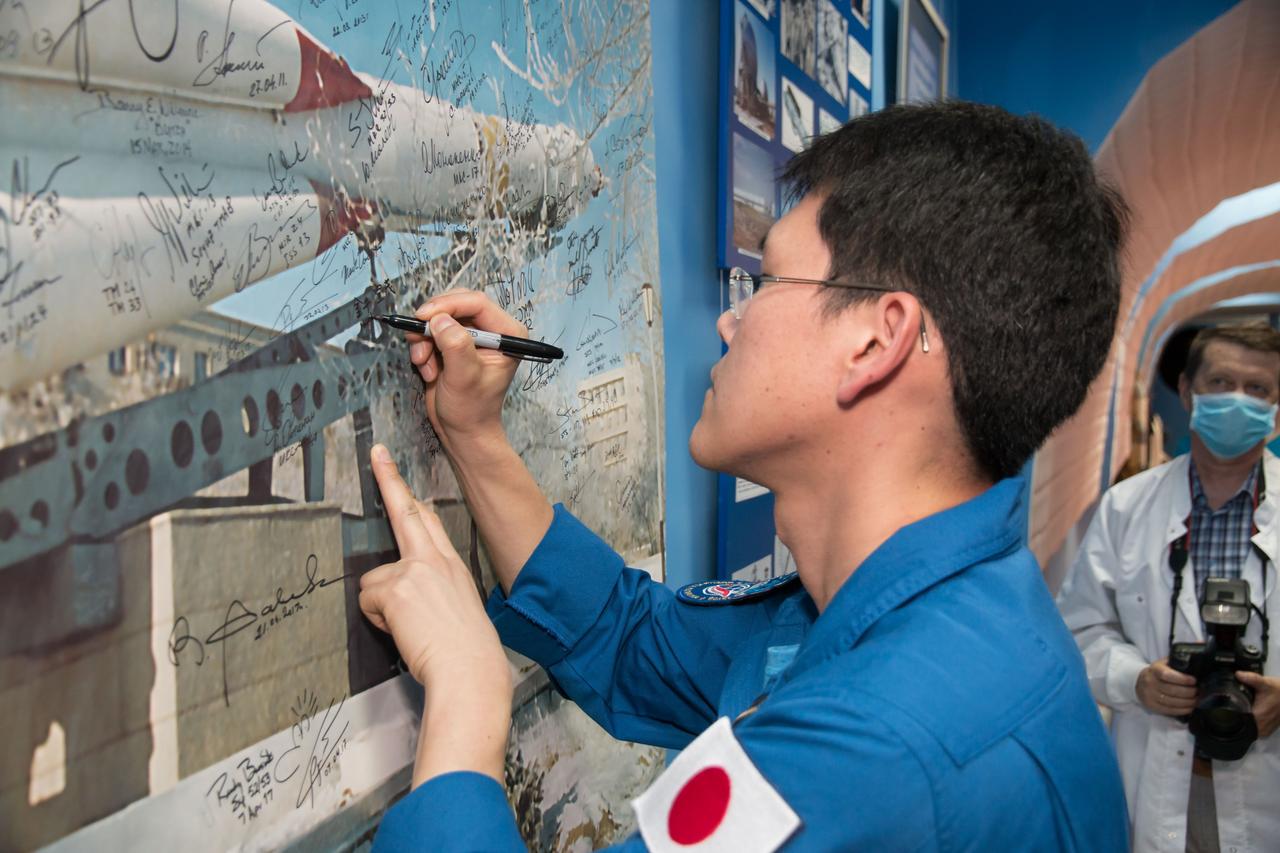
jsc2017e100906 (July 18, 2017) --- Expedition 52-53 backup crewmember Norishige Kanai of the Japan Aerospace Exploration Agency (JAXA) signs a mural in a space museum in Baikonur, Kazakhstan July 18 during traditional pre-launch ceremonies. Kanai, Alexander Misurkin of the Russian Federal Space Agency (Roscosmos) and Mark Vande Hei of NASA are serving as backups to Sergey Ryazanskiy of Roscosmos, Randy Bresnik of NASA and Paolo Nespoli of the European Space Agency, who will launch July 28 on the Soyuz MS-05 spacecraft from the Baikonur Cosmodrome for a five-month mission on the International Space Station. Credit: NASA/Victor Zelentsov
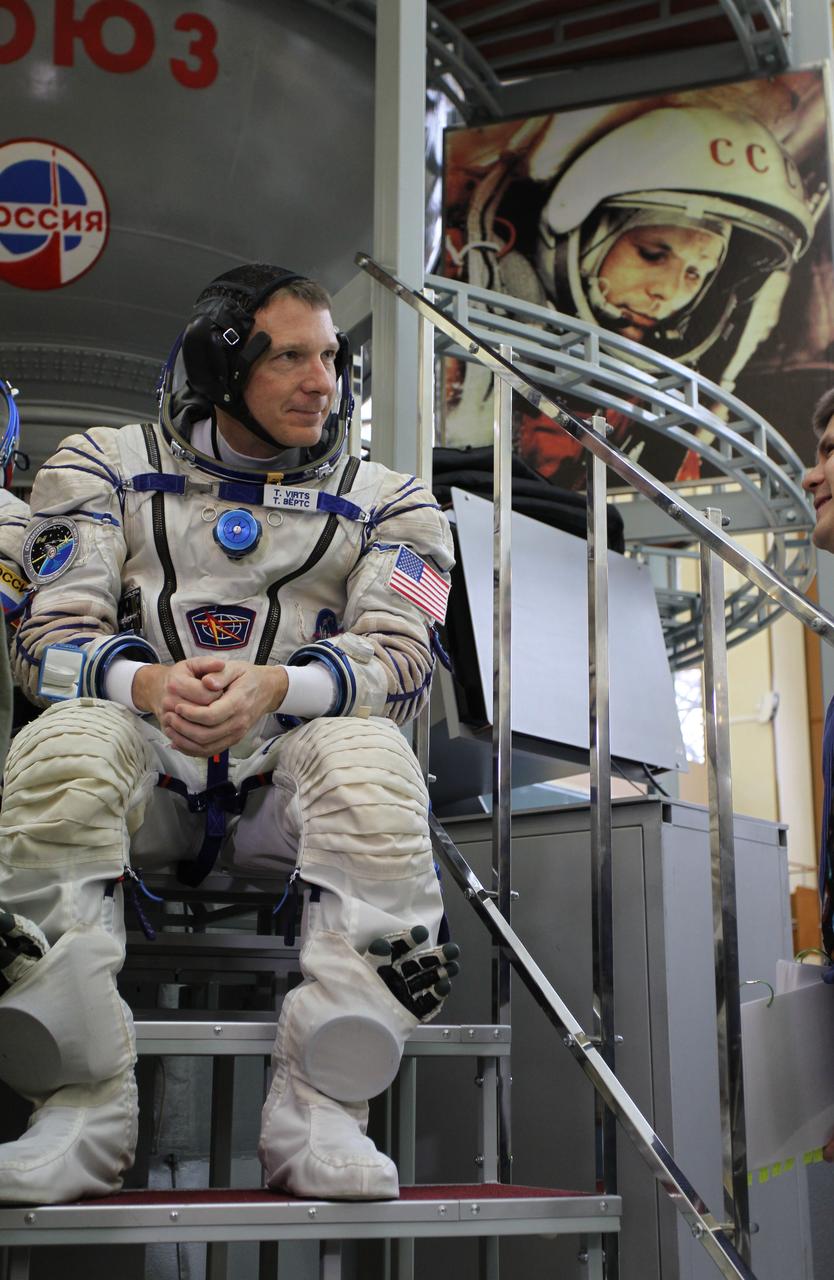
3574a: At the Gagarin Cosmonaut Training Center in Star City, Russia, Expedition 42/43 Flight Engineer Terry Virts of NASA pauses to reflect as he prepares to enter a Soyuz simulator October 31 for the second day of qualification exams. Overlooking Virts is a wall mural depicting the image of Yuri Gagarin, the first human to fly in space. Virts, Soyuz Commander Anton Shkaplerov of the Russian Federal Space Agency (Roscosmos) and European Space Agency Flight Engineer Samantha Cristoforetti are preparing for launch in the Soyuz TMA-15M spacecraft from the Baikonur Cosmodrome in Kazakhstan Nov. 24, Kazakh time, for a 5 ½ month mission on the International Space Station. NASA/Stephanie Stoll
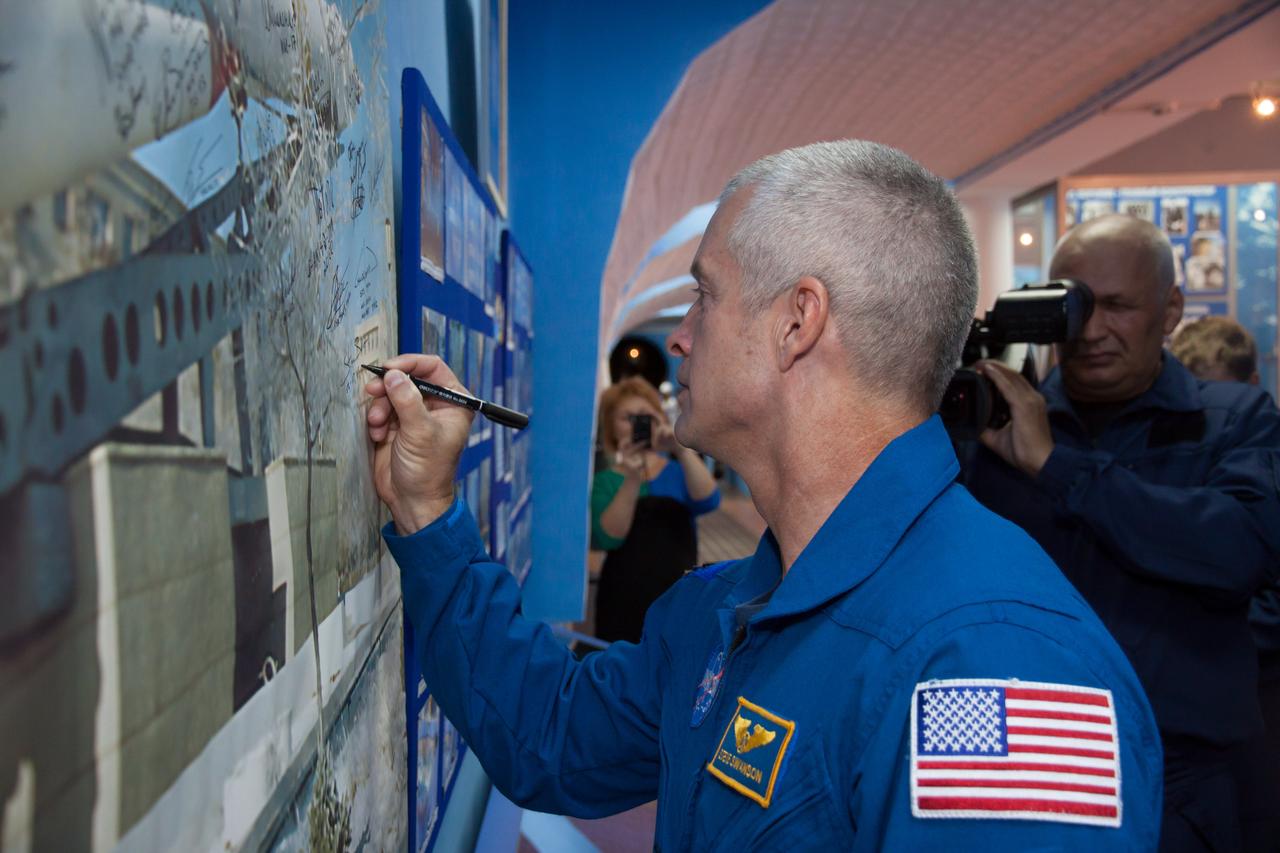
Expedition 37/38 backup crewmember Steve Swanson of NASA signs a wall mural depicting a Soyuz rocket during a tour of the famed Korolev Museum at the Baikonur Cosmodrome in Kazakhstan Sept. 17. Swanson, Alexander Skvortsov and Oleg Artemyev are serving as backups to the prime crewmembers, Flight Engineer Michael Hopkins of NASA, Soyuz Commander Oleg Kotov and Flight Engineer Sergey Ryazanskiy, who are preparing for launch Sept. 26, Kazakh time from the Baikonur Cosmodrome in the Soyuz TMA-10M spacecraft for a five and a half month mission on the International Space Station. NASA/Victor Zelentsov
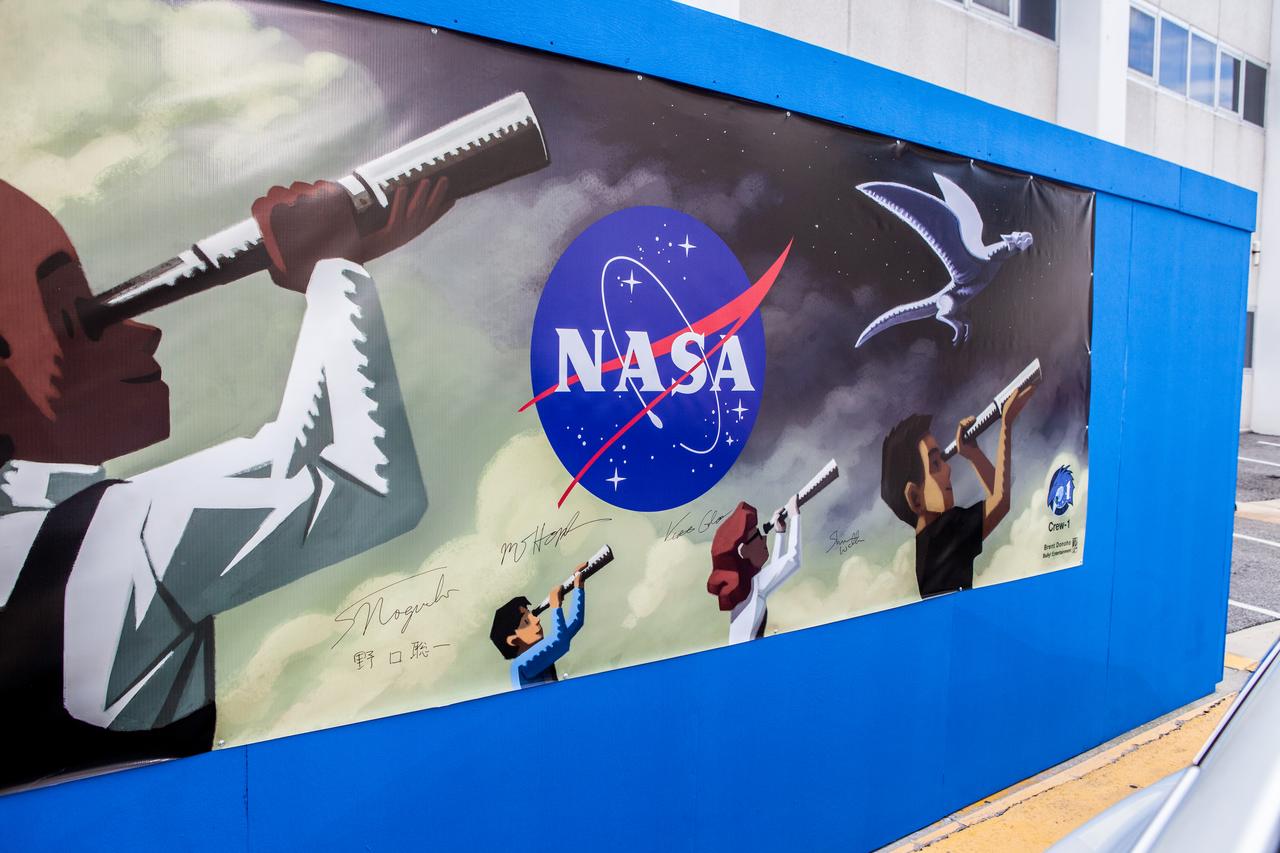
A large mural is on the wall in the hallway leading to the exit where NASA SpaceX’s Crew-1 astronauts will leave the Neil Armstrong Operations and Checkout Building at NASA’s Kennedy Space Center in Florida on Nov. 15, 2020. NASA astronauts Michael Hopkins, Victor Glover and Shannon Walker, and JAXA astronaut Soichi Noguchi, will board two Tesla vehicles for the trip to Launch Complex 39A. Crew-1 is the first regular crew mission of a U.S. commercial spacecraft with astronauts to the International Space Station as part of NASA’s Commercial Crew Program. The SpaceX Crew Dragon Resilience capsule will launch atop the company’s Falcon 9 rocket from Pad 39A to the space station for a six-month science mission.