
Astronomers using NASA Hubble Space Telescope stumbled upon a mysterious object that grudgingly yielded clues to its identity. The object is classified as a planetary nebula, the glowing remains of a dying, lightweight star.
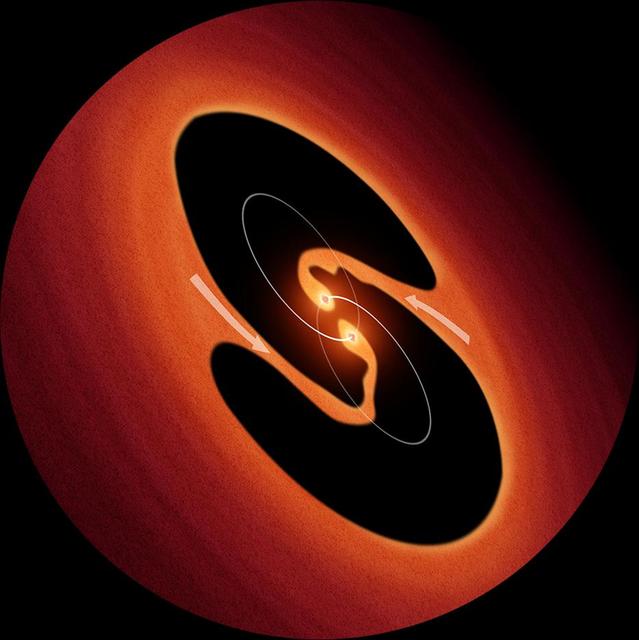
Two young binary stars may be the source of mysterious clock-like bursts of light from an object called LRLL 54361 that lies inside the star-forming region IC 348, located 950 light-years away.

This artist's concept shows a pulsar, which is like a lighthouse, as its light appears in regular pulses as it rotates. Pulsars are dense remnants of exploded stars, and are part of a class of objects called neutron stars. Magnetars are different kinds of neutron stars -- they have violent, high-energy outbursts of X-ray and gamma ray light. A mysterious object called PSR J1119-6127 has been seen behaving as both a pulsar and a magnetar, suggesting that it could be a "missing link" between these objects. http://photojournal.jpl.nasa.gov/catalog/PIA21085
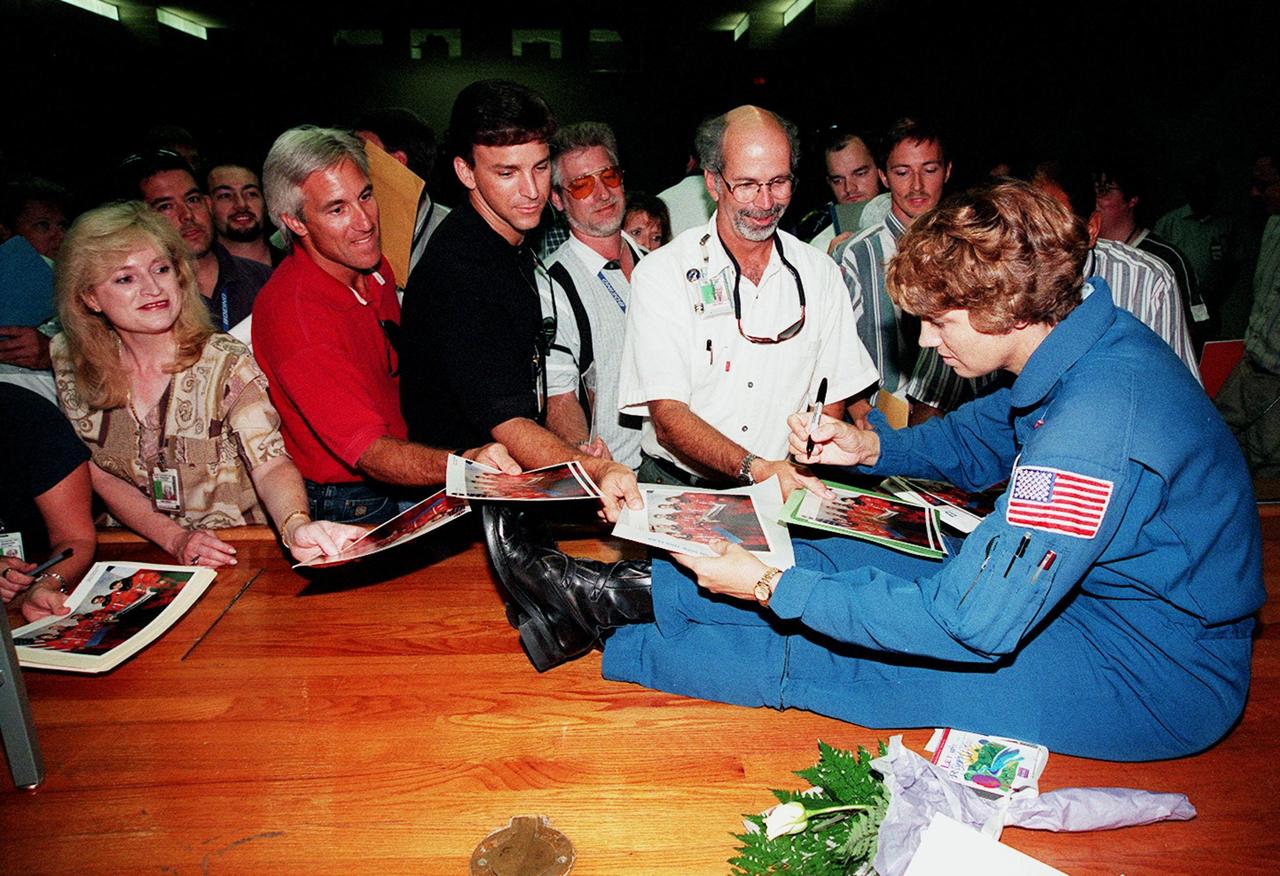
STS-93 Commander Eileen M. Collins signs autographs after a mission presentation for KSC employees. The five-day mission primarily released the Chandra X-ray Observatory, allowing scientists from around the world to study some of the most distant, powerful and dynamic objects in the universe. Chandra is expected to provide unique and crucial information on the nature of objects ranging from comets in our solar system to quasars at the edge of the observable universe. Since X-rays are absorbed by the Earth's atmosphere, space-based observatories are necessary to study these phenomena and allow scientists to analyze some of the greatest mysteries of the universe. STS-93 was also the first mission to have a woman serving as Shuttle commander
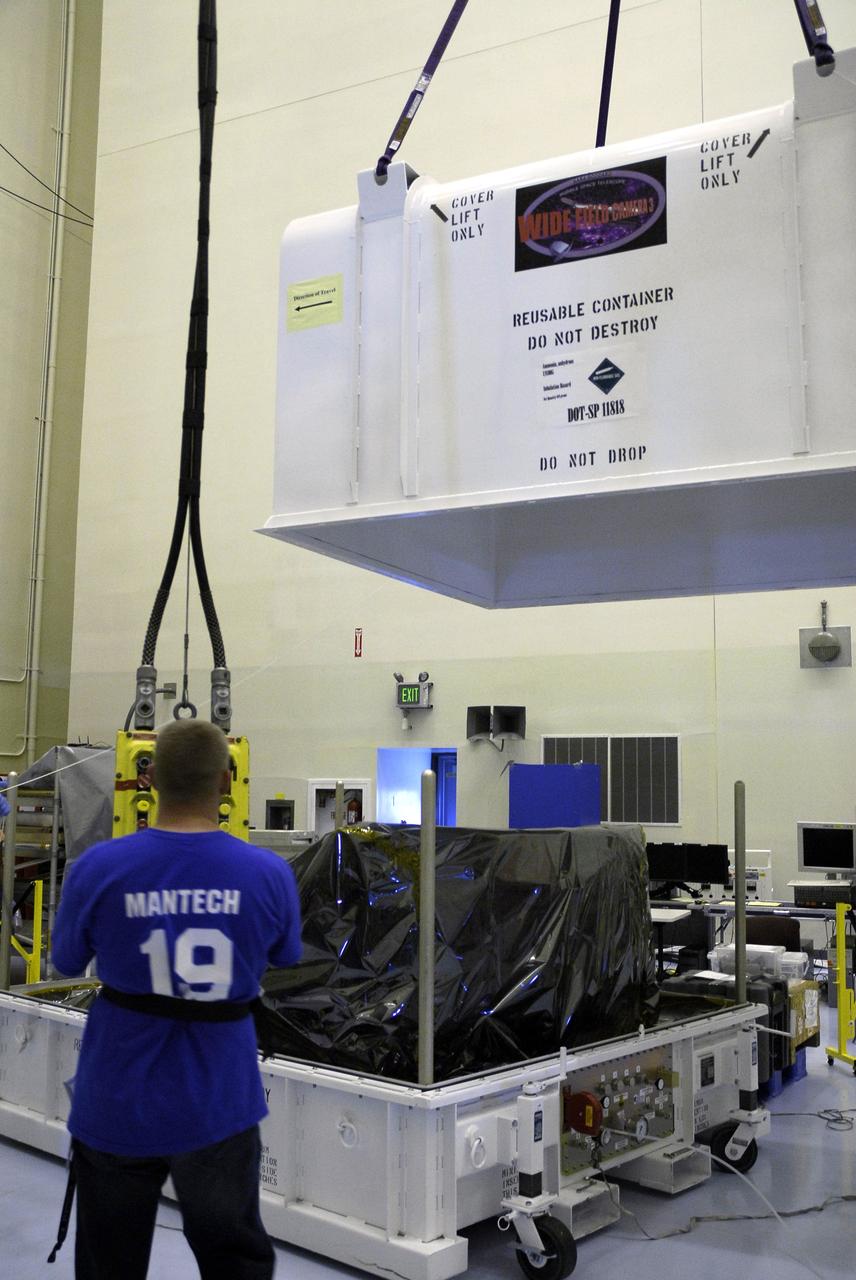
CAPE CANAVERAL, Fla. – In the Payload Hazardous Servicing Facility at NASA's Kennedy Space Center, the cover of the Wide Field Camera 3, or WFC3, shipping container is lifted away from the mobile base. As Hubble enters the last stage of its life, WFC3 will be Hubble's next evolutionary step, allowing Hubble to peer ever further into the mysteries of the cosmos. WFC3 will study a diverse range of objects and phenomena, from young and extremely distant galaxies, to much more nearby stellar systems, to objects within our very own solar system. WFC3 will take the place of Wide Field Planetary Camera 2, which astronauts will bring back to Earth aboard the shuttle. WFC3 is part of the payload on the fifth and final Hubble servicing mission, STS-125, targeted for launch Oct. 8. Photo credit: NASA/Jack Pfaller
CAPE CANAVERAL, Fla. – In the Payload Hazardous Servicing Facility at NASA's Kennedy Space Center, technicians unlatch the cover of the Wide Field Camera 3, or WFC3,shipping container before removing it. As Hubble enters the last stage of its life, WFC3 will be Hubble's next evolutionary step, allowing Hubble to peer ever further into the mysteries of the cosmos. WFC3 will study a diverse range of objects and phenomena, from young and extremely distant galaxies, to much more nearby stellar systems, to objects within our very own solar system. WFC3 will take the place of Wide Field Planetary Camera 2, which astronauts will bring back to Earth aboard the shuttle. WFC3 is part of the payload on the fifth and final Hubble servicing mission, STS-125, targeted for launch Oct. 8. Photo credit: NASA/Jack Pfaller
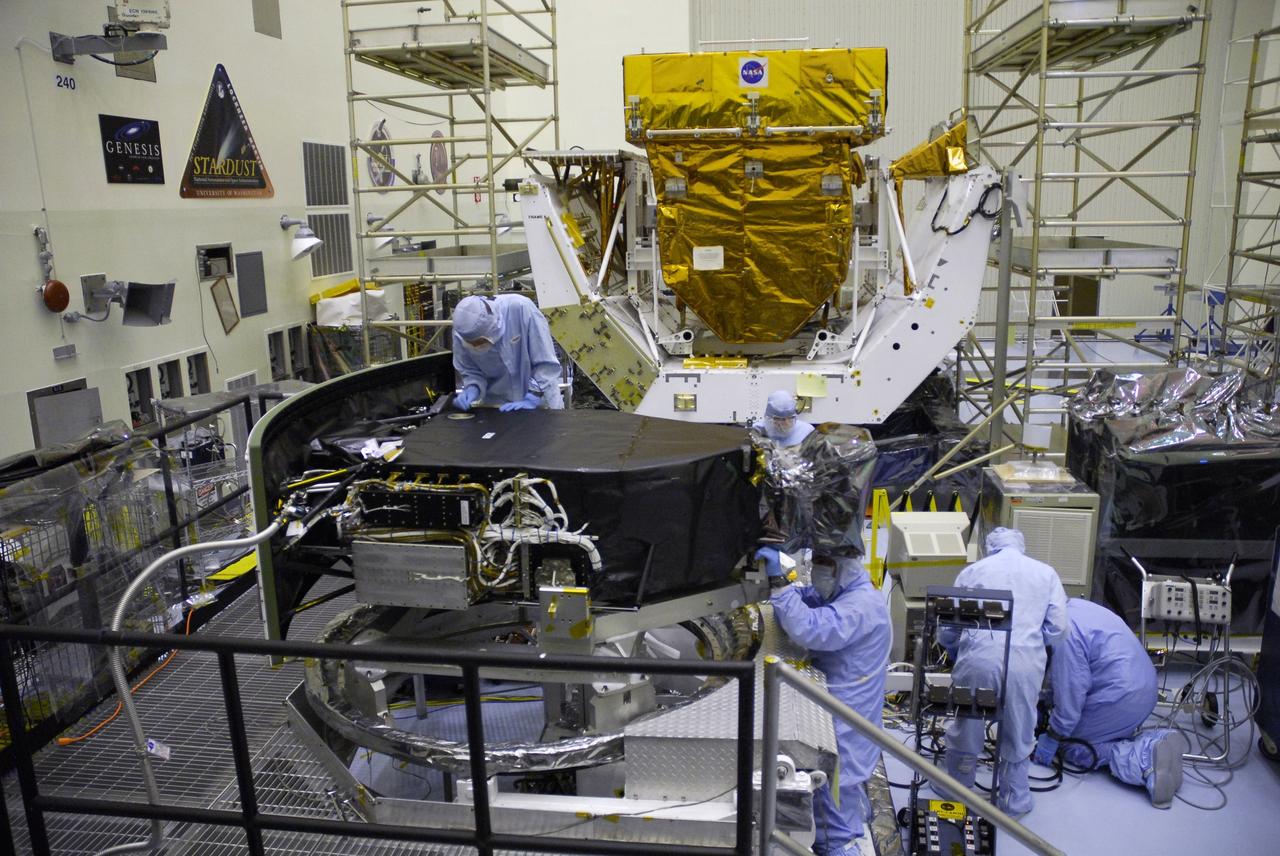
CAPE CANAVERAL, Fla. – Technicians in the Payload Hazardous Servicing Facility complete removal of the protective cover from the Wide Field Camera 3, or WFC3. The WFC3 is part of the payload on space shuttle Atlantis for the fifth and final Hubble servicing mission, STS-125. As Hubble enters the last stage of its life, WFC3 will be Hubble's next evolutionary step, allowing Hubble to peer ever further into the mysteries of the cosmos. WFC3 will study a diverse range of objects and phenomena, from young and extremely distant galaxies, to much more nearby stellar systems, to objects within our very own solar system. WFC3 will take the place of Wide Field Planetary Camera 2, which astronauts will bring back to Earth aboard the shuttle. Launch of Atlantis is targeted at 1:34 a.m. EDT Oct. 8. Photo credit: NASA/Jack Pfaller
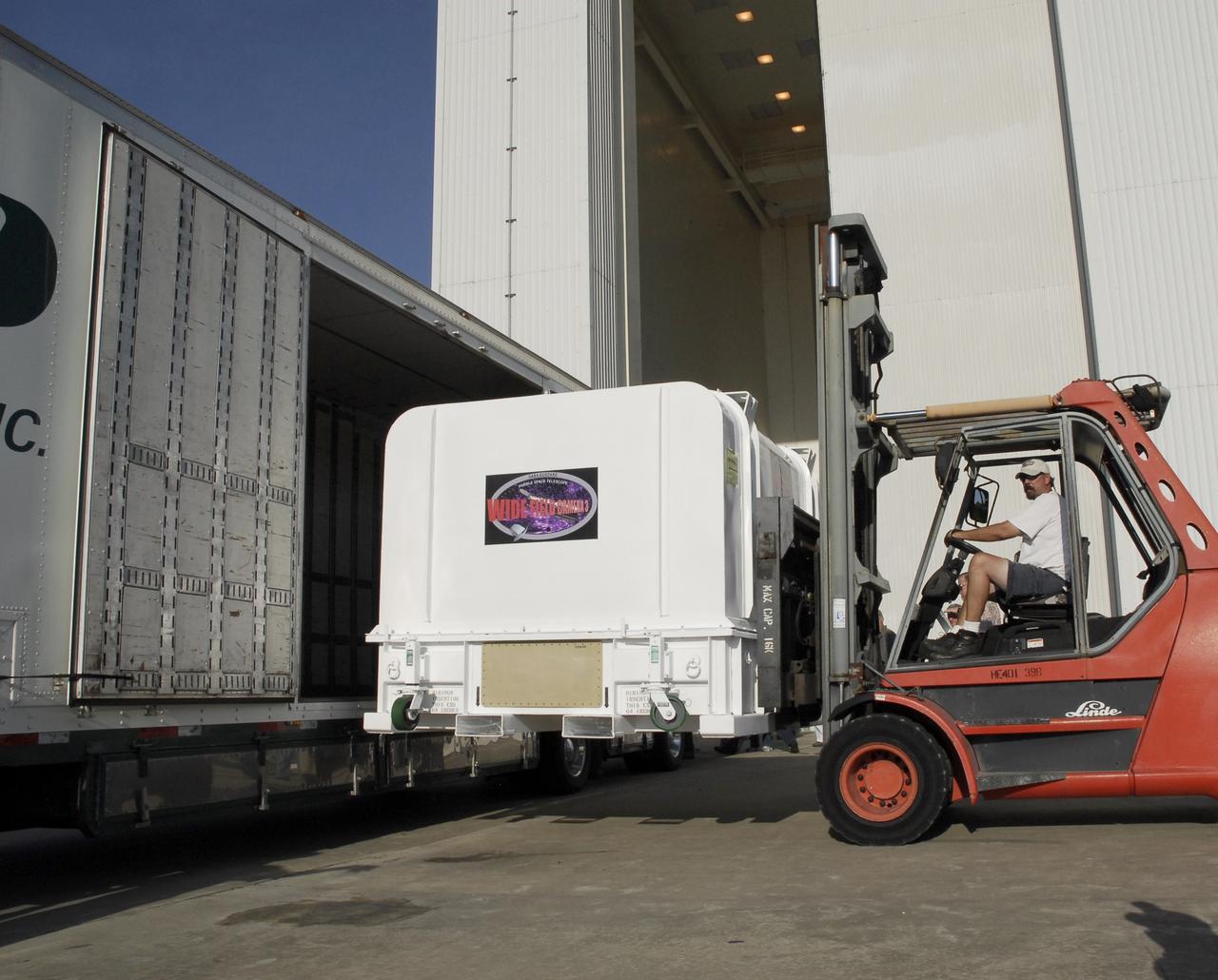
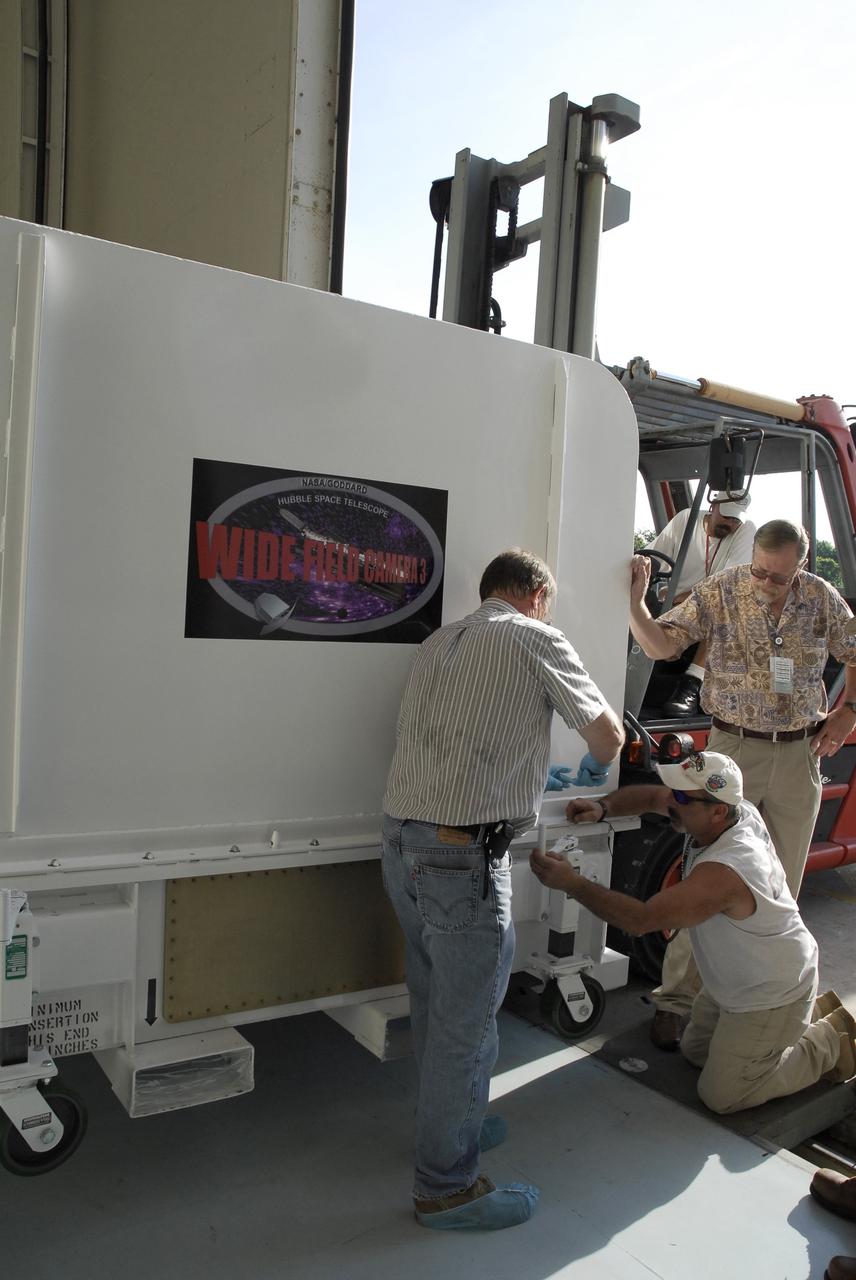
CAPE CANAVERAL, Fla. – The shipping container with the Wide Field Camera 3, or WFC3, inside is removed from the truck outside the Payload Hazardous Servicing Facility at NASA's Kennedy Space Center. As Hubble enters the last stage of its life, WFC3 will be Hubble's next evolutionary step, allowing Hubble to peer ever further into the mysteries of the cosmos. WFC3 will study a diverse range of objects and phenomena, from young and extremely distant galaxies, to much more nearby stellar systems, to objects within our very own solar system. WFC3 will take the place of Wide Field Planetary Camera 2, which astronauts will bring back to Earth aboard the shuttle. WFC3 is part of the payload on the fifth and final Hubble servicing mission, STS-125, targeted for launch Oct. 8. Photo credit: NASA/Jack Pfaller
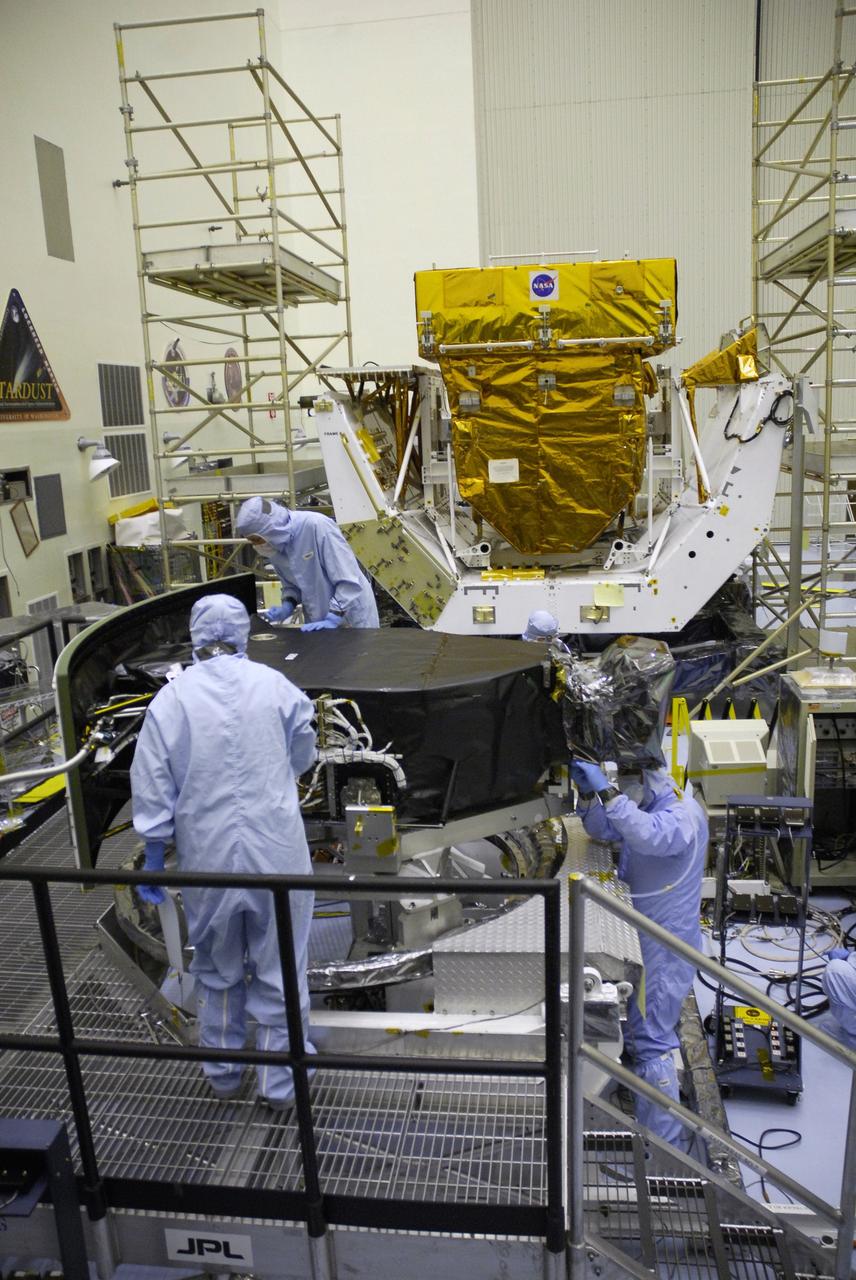
CAPE CANAVERAL, Fla. – Technicians in the Payload Hazardous Servicing Facility complete removal of the protective cover from the Wide Field Camera 3, or WFC3. The WFC3 is part of the payload on space shuttle Atlantis for the fifth and final Hubble servicing mission, STS-125. As Hubble enters the last stage of its life, WFC3 will be Hubble's next evolutionary step, allowing Hubble to peer ever further into the mysteries of the cosmos. WFC3 will study a diverse range of objects and phenomena, from young and extremely distant galaxies, to much more nearby stellar systems, to objects within our very own solar system. WFC3 will take the place of Wide Field Planetary Camera 2, which astronauts will bring back to Earth aboard the shuttle. Launch of Atlantis is targeted at 1:34 a.m. EDT Oct. 8. Photo credit: NASA/Jack Pfaller
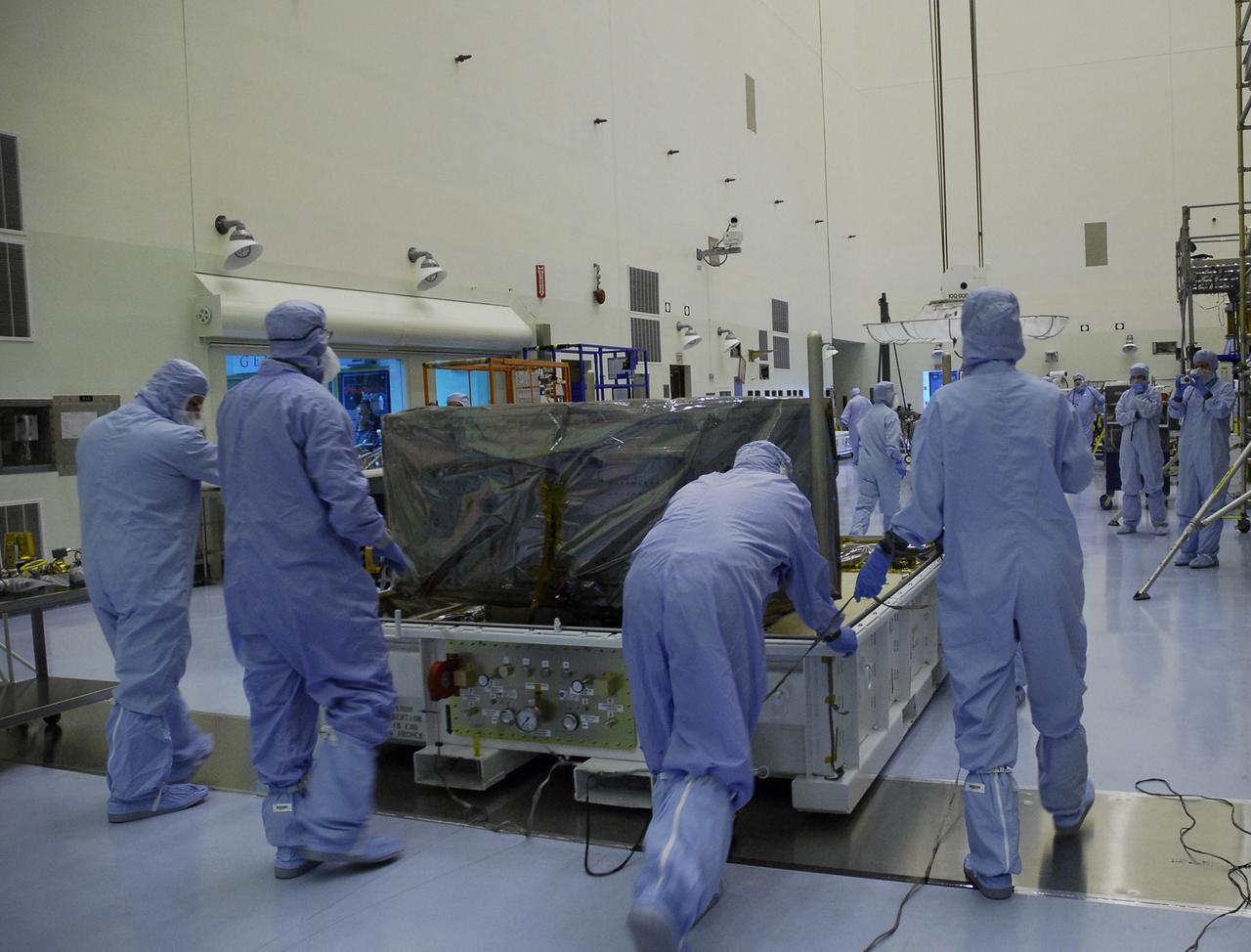
CAPE CANAVERAL, Fla. – In the Payload Hazardous Servicing Facility at NASA's Kennedy Space Center, technicians move the base of the shipping container holding the Wide Field Camera 3, or WFC3, into the high bay. As Hubble enters the last stage of its life, WFC3 will be Hubble's next evolutionary step, allowing Hubble to peer ever further into the mysteries of the cosmos. WFC3 will study a diverse range of objects and phenomena, from young and extremely distant galaxies, to much more nearby stellar systems, to objects within our very own solar system. WFC3 will take the place of Wide Field Planetary Camera 2, which astronauts will bring back to Earth aboard the shuttle. WFC3 is part of the payload on the fifth and final Hubble servicing mission, STS-125, targeted for launch Oct. 8. Photo credit: NASA/Jack Pfaller

CAPE CANAVERAL, Fla. – The Wide Field Camera 3, or WFC3, rests on a work stand in the Payload Hazardous Servicing Facility since its arrival Aug. 12. WFC3 is part of the payload on space shuttle Atlantis for the fifth and final Hubble servicing mission, STS-125. As Hubble enters the last stage of its life, WFC3 will be Hubble's next evolutionary step, allowing Hubble to peer ever further into the mysteries of the cosmos. WFC3 will study a diverse range of objects and phenomena, from young and extremely distant galaxies, to much more nearby stellar systems, to objects within our very own solar system. WFC3 will take the place of Wide Field Planetary Camera 2, which astronauts will bring back to Earth aboard the shuttle. Launch of Atlantis is targeted at 1:34 a.m. EDT Oct. 8. Photo credit: NASA/Jack Pfaller
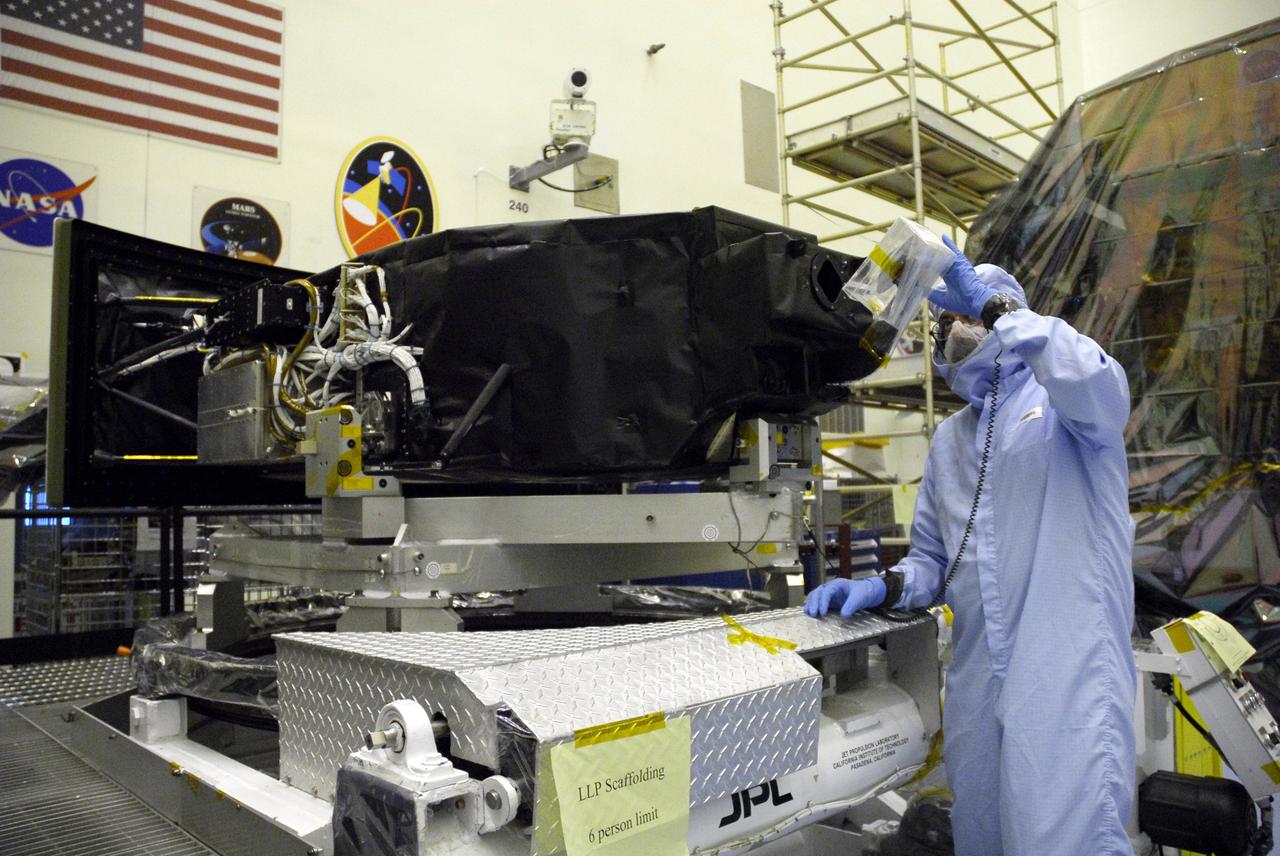
CAPE CANAVERAL, Fla. – In the Payload Hazardous Servicing Facility at NASA's Kennedy Space Center, a technician checks the pick-off mirror on the Wide Field Camera 3, or WFC3, that will be installed on NASA's Hubble Space Telescope. WFC3 is part of the payload on space shuttle Atlantis' STS-125 mission for the fifth and final Hubble servicing flight to Hubble. As Hubble enters the last stage of its life, WFC3 will be Hubble's next evolutionary step, allowing Hubble to peer ever further into the mysteries of the cosmos. WFC3 will study a diverse range of objects and phenomena, from young and extremely distant galaxies, to much more nearby stellar systems, to objects within our very own solar system. WFC3 will take the place of Wide Field Planetary Camera 2, which astronauts will bring back to Earth aboard the shuttle. Launch of Atlantis is targeted at 1:34 a.m. EDT Oct. 8. Photo credit: NASA/Amanda Diller
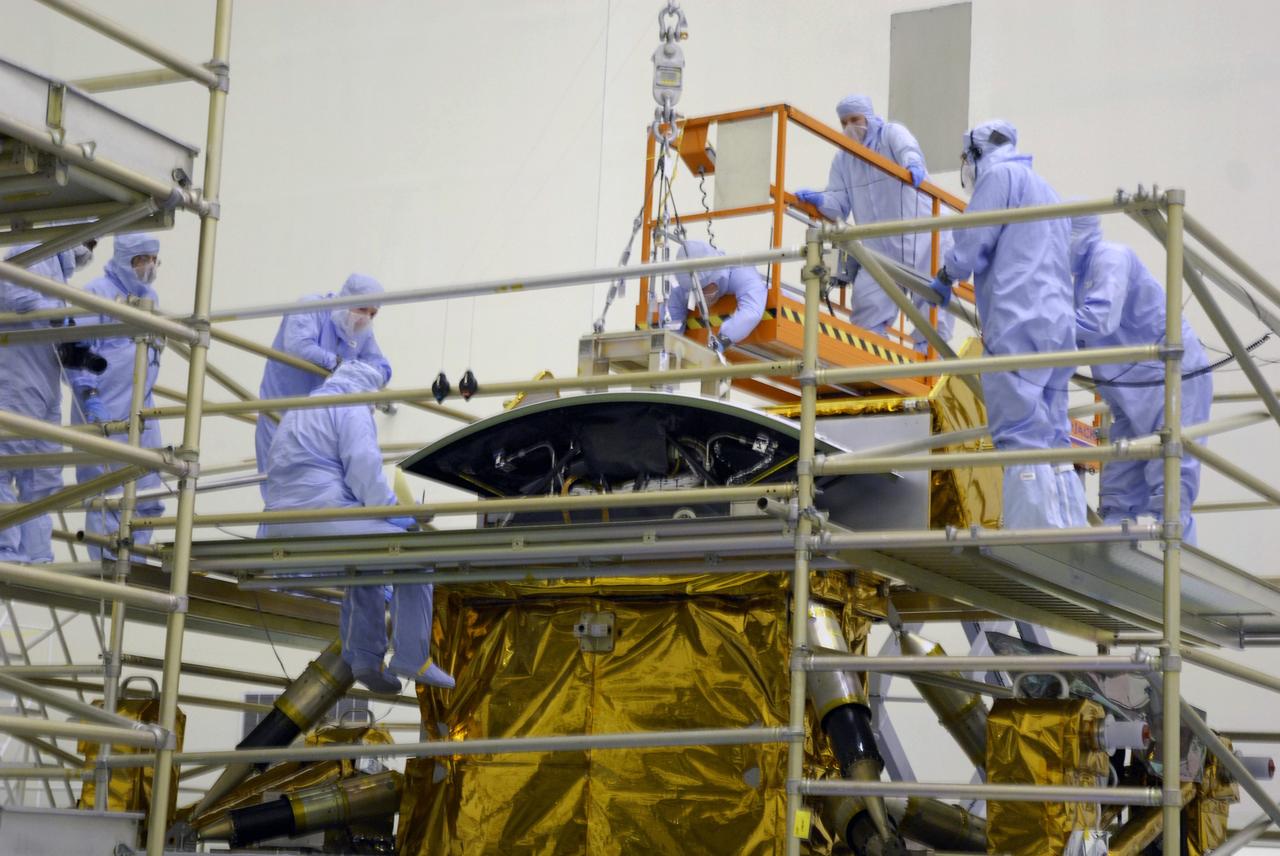
CAPE CANAVERAL, Fla. – In the Payload Hazardous Servicing Facility at NASA's Kennedy Space Center, the Wide Field Camera 3, or WFC3, is lowered onto the Super Lightweight Interchangeable Carrier. WFC3 is part of the payload on space shuttle Atlantis' STS-125 mission for the fifth and final Hubble servicing flight to NASA's Hubble Space Telescope. As Hubble enters the last stage of its life, WFC3 will be Hubble's next evolutionary step, allowing Hubble to peer ever further into the mysteries of the cosmos. WFC3 will study a diverse range of objects and phenomena, from young and extremely distant galaxies, to much more nearby stellar systems, to objects within our very own solar system. WFC3 will take the place of Wide Field Planetary Camera 2, which astronauts will bring back to Earth aboard the shuttle. Launch of Atlantis is targeted at 1:34 a.m. EDT Oct. 8. Photo credit: NASA/Amanda Diller
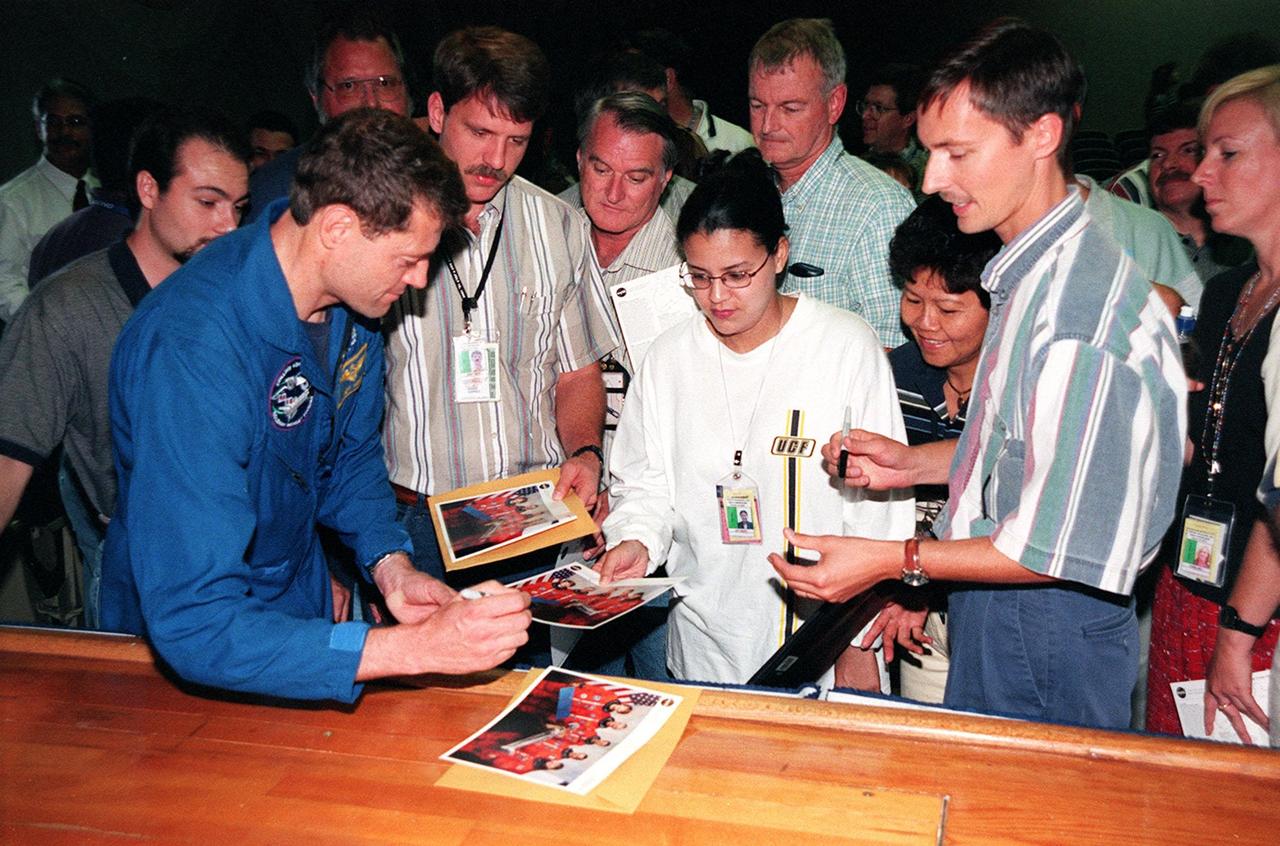
STS-93 Pilot Jeffrey S. Ashby signs autographs after a mission presentation for KSC employees. The five-day mission primarily released the Chandra X-ray Observatory, allowing scientists from around the world to study some of the most distant, powerful and dynamic objects in the universe. Chandra is expected to provide unique and crucial information on the nature of objects ranging from comets in our solar system to quasars at the edge of the observable universe. Since X-rays are absorbed by the Earth's atmosphere, space-based observatories are necessary to study these phenomena and allow scientists to analyze some of the greatest mysteries of the universe. STS-93 was also the first mission to have a woman, Eileen M. Collins, serving as Shuttle commander
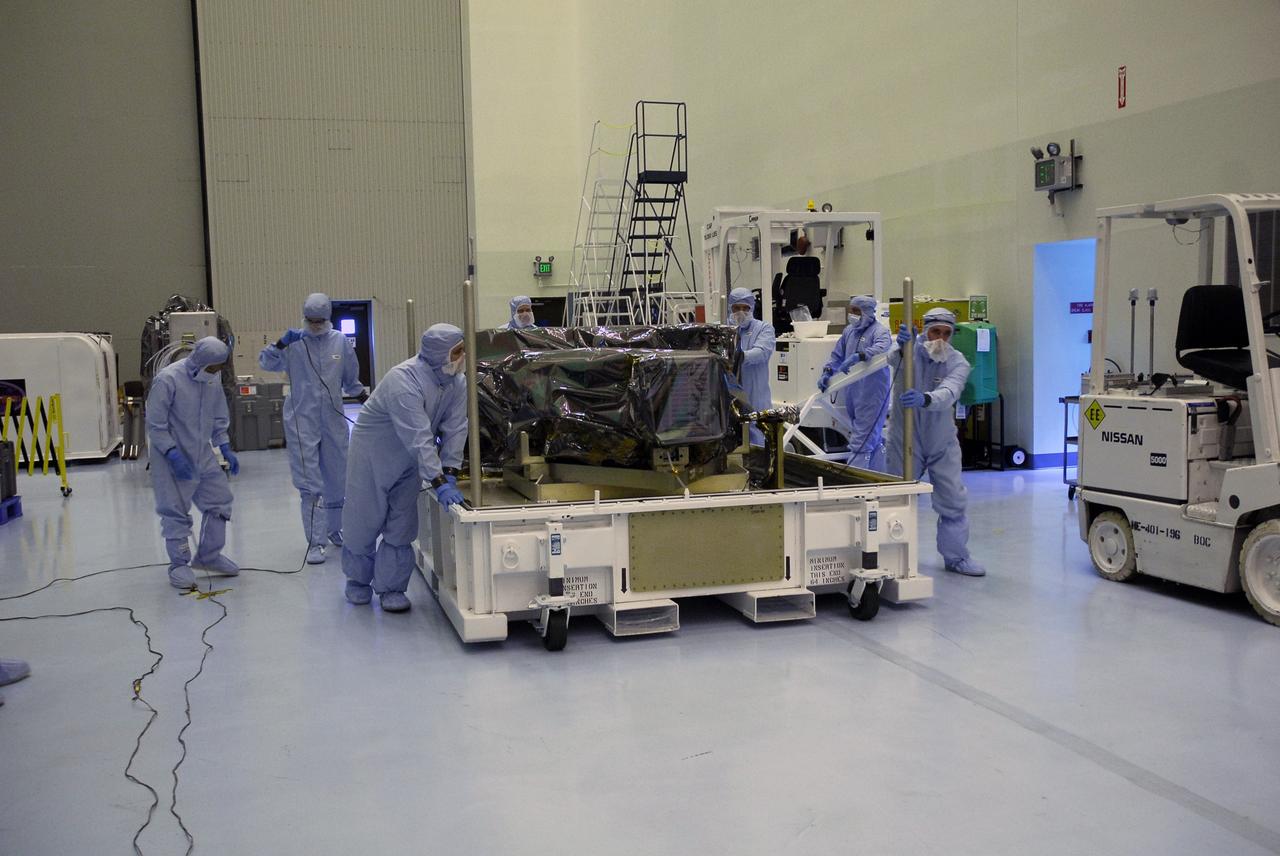
CAPE CANAVERAL, Fla. – In the Payload Hazardous Servicing Facility at NASA's Kennedy Space Center, technicians move the base of the shipping container holding the Wide Field Camera 3, or WFC3. As Hubble enters the last stage of its life, WFC3 will be Hubble's next evolutionary step, allowing Hubble to peer ever further into the mysteries of the cosmos. WFC3 will study a diverse range of objects and phenomena, from young and extremely distant galaxies, to much more nearby stellar systems, to objects within our very own solar system. WFC3 will take the place of Wide Field Planetary Camera 2, which astronauts will bring back to Earth aboard the shuttle. WFC3 is part of the payload on the fifth and final Hubble servicing mission, STS-125, targeted for launch Oct. 8. Photo credit: NASA/Jack Pfaller
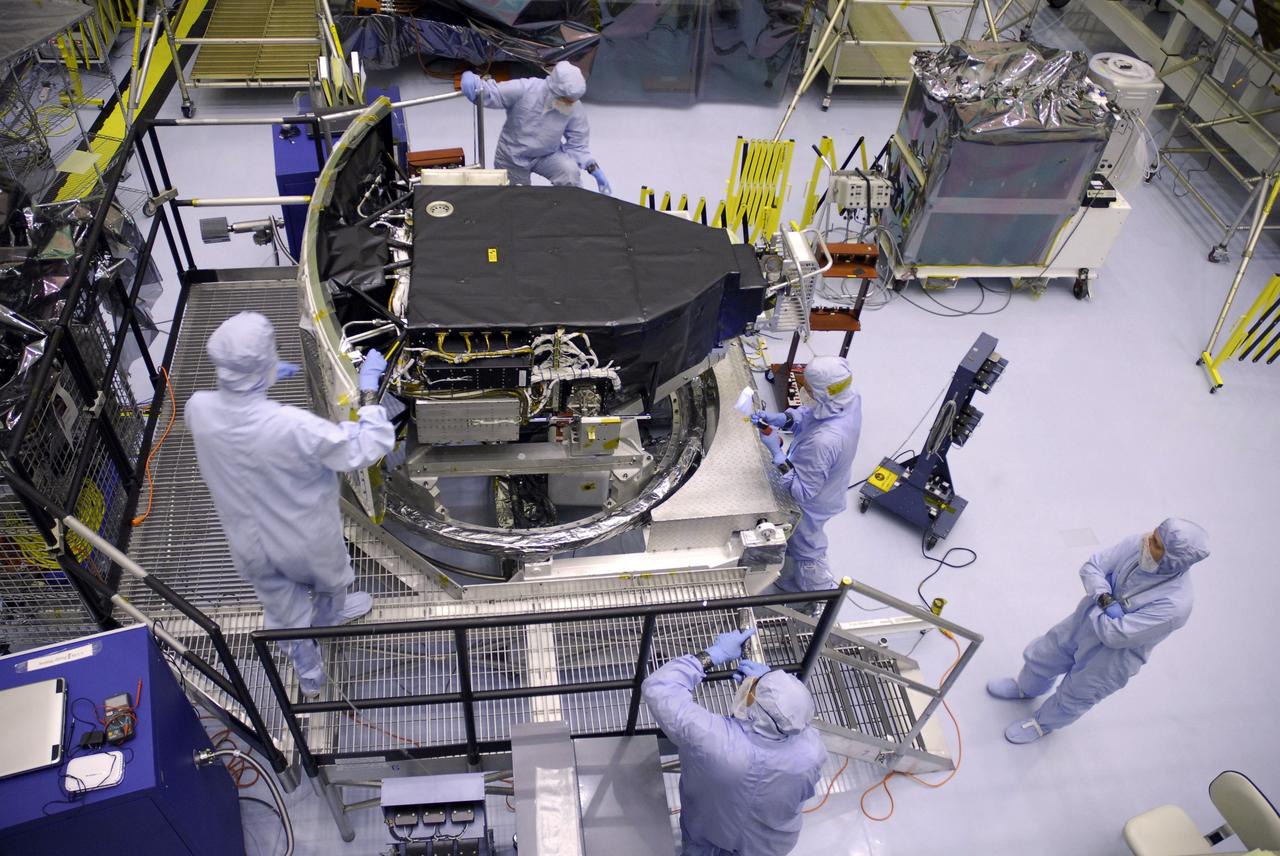
CAPE CANAVERAL, Fla. – In the Payload Hazardous Servicing Facility at NASA's Kennedy Space Center, technicians check the Wide Field Camera 3, or WFC3, after removal of its protective cover. WFC3 is part of the payload on space shuttle Atlantis' STS-125 mission for the fifth and final Hubble servicing flight to NASA's Hubble Space Telescope. As Hubble enters the last stage of its life, WFC3 will be Hubble's next evolutionary step, allowing Hubble to peer ever further into the mysteries of the cosmos. WFC3 will study a diverse range of objects and phenomena, from young and extremely distant galaxies, to much more nearby stellar systems, to objects within our very own solar system. WFC3 will take the place of Wide Field Planetary Camera 2, which astronauts will bring back to Earth aboard the shuttle. Launch of Atlantis is targeted at 1:34 a.m. EDT Oct. 8. Photo credit: NASA/Amanda Diller
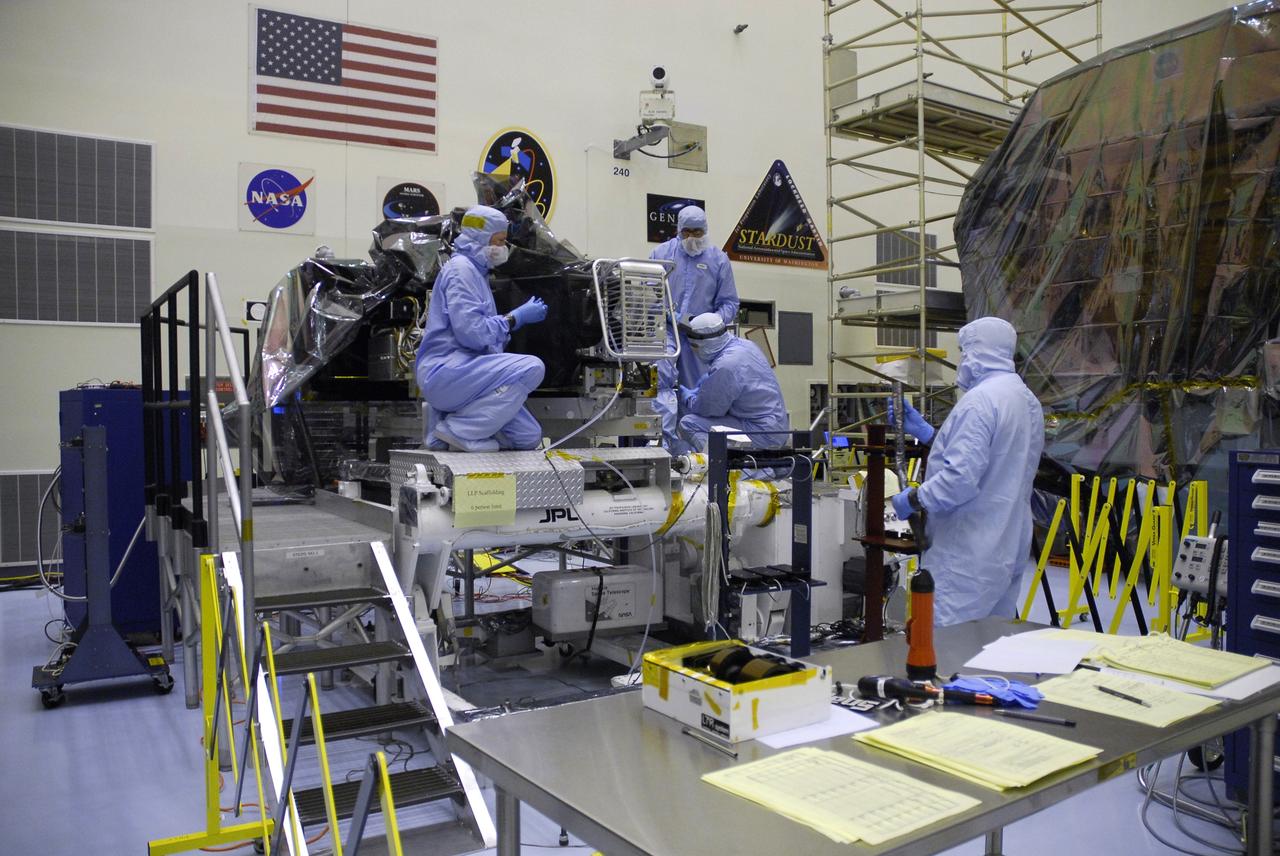
CAPE CANAVERAL, Fla. – In the Payload Hazardous Servicing Facility at NASA's Kennedy Space Center, technicians check the Wide Field Camera 3, or WFC3, after removal of its protective cover. WFC3 is part of the payload on space shuttle Atlantis' STS-125 mission for the fifth and final Hubble servicing flight to NASA's Hubble Space Telescope. As Hubble enters the last stage of its life, WFC3 will be Hubble's next evolutionary step, allowing Hubble to peer ever further into the mysteries of the cosmos. WFC3 will study a diverse range of objects and phenomena, from young and extremely distant galaxies, to much more nearby stellar systems, to objects within our very own solar system. WFC3 will take the place of Wide Field Planetary Camera 2, which astronauts will bring back to Earth aboard the shuttle. Launch of Atlantis is targeted at 1:34 a.m. EDT Oct. 8. Photo credit: NASA/Amanda Diller
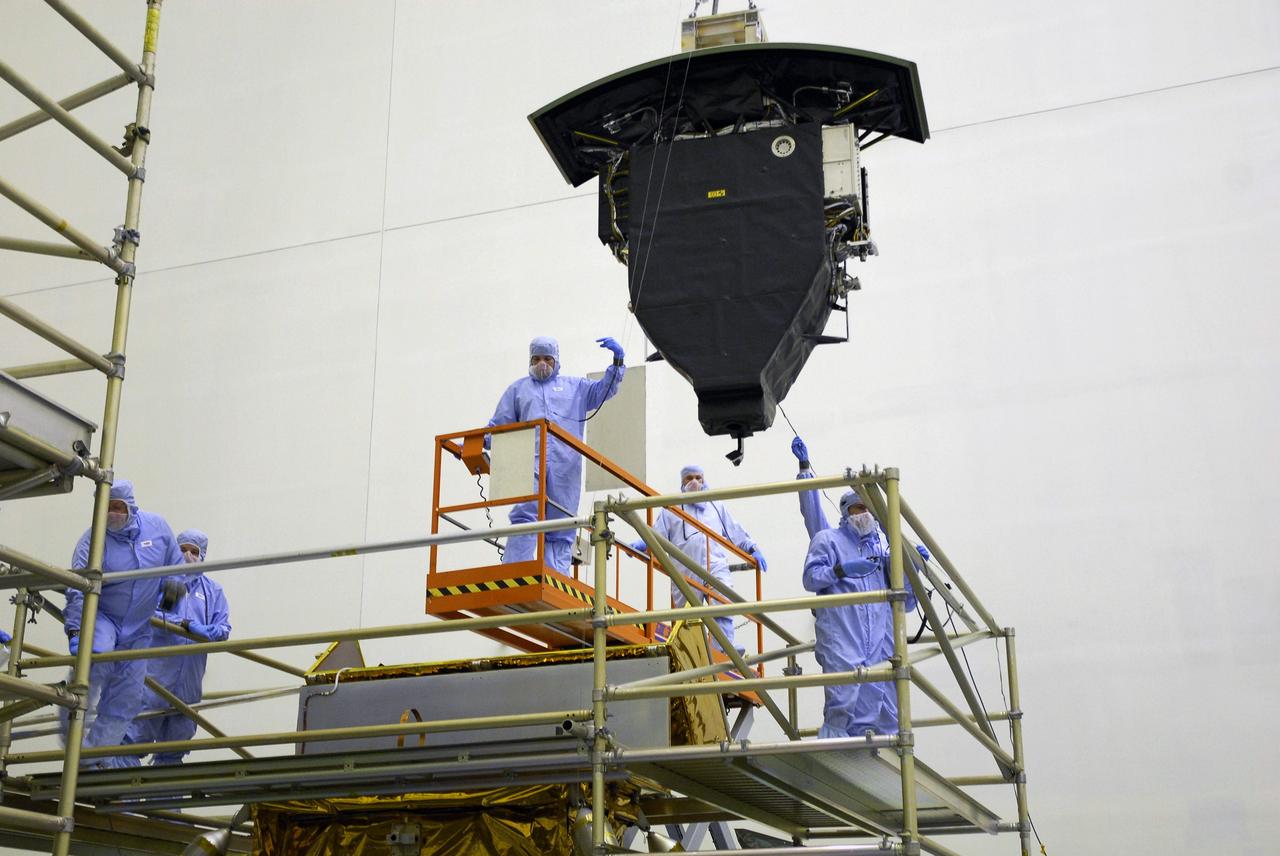
CAPE CANAVERAL, Fla. – In the Payload Hazardous Servicing Facility at NASA's Kennedy Space Center, the Wide Field Camera 3, or WFC3, is moved toward the Super Lightweight Interchangeable Carrier. WFC3 is part of the payload on space shuttle Atlantis' STS-125 mission for the fifth and final Hubble servicing flight to NASA's Hubble Space Telescope. As Hubble enters the last stage of its life, WFC3 will be Hubble's next evolutionary step, allowing Hubble to peer ever further into the mysteries of the cosmos. WFC3 will study a diverse range of objects and phenomena, from young and extremely distant galaxies, to much more nearby stellar systems, to objects within our very own solar system. WFC3 will take the place of Wide Field Planetary Camera 2, which astronauts will bring back to Earth aboard the shuttle. Launch of Atlantis is targeted at 1:34 a.m. EDT Oct. 8. Photo credit: NASA/Amanda Diller
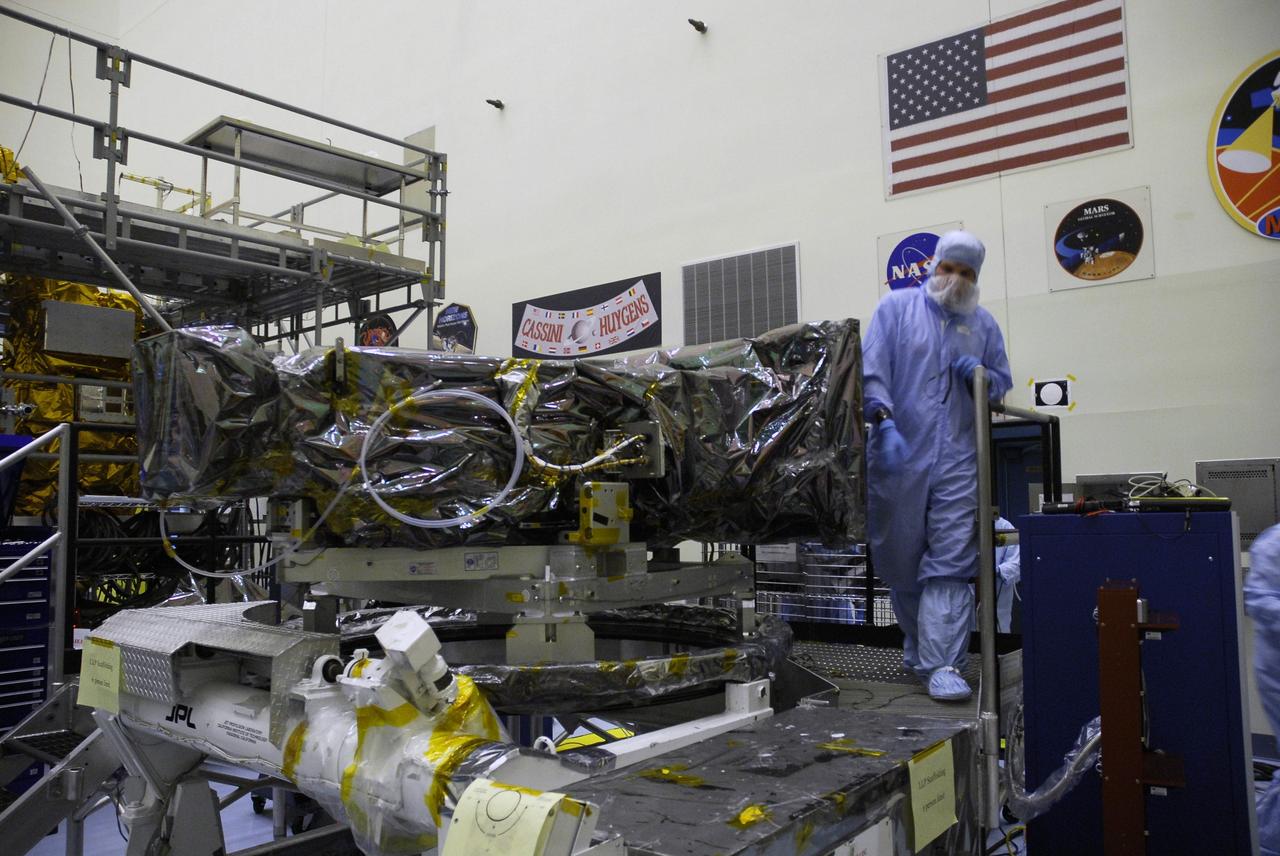
CAPE CANAVERAL, Fla. – In the Payload Hazardous Servicing Facility at NASA's Kennedy Space Center, technicians monitor the placement of the Wide Field Camera 3, or WFC3, on a work stand. As Hubble enters the last stage of its life, WFC3 will be Hubble's next evolutionary step, allowing Hubble to peer ever further into the mysteries of the cosmos. WFC3 will study a diverse range of objects and phenomena, from young and extremely distant galaxies, to much more nearby stellar systems, to objects within our very own solar system. WFC3 will take the place of Wide Field Planetary Camera 2, which astronauts will bring back to Earth aboard the shuttle. WFC3 is part of the payload on the fifth and final Hubble servicing mission, STS-125, targeted for launch Oct. 8. Photo credit: NASA/Jack Pfaller
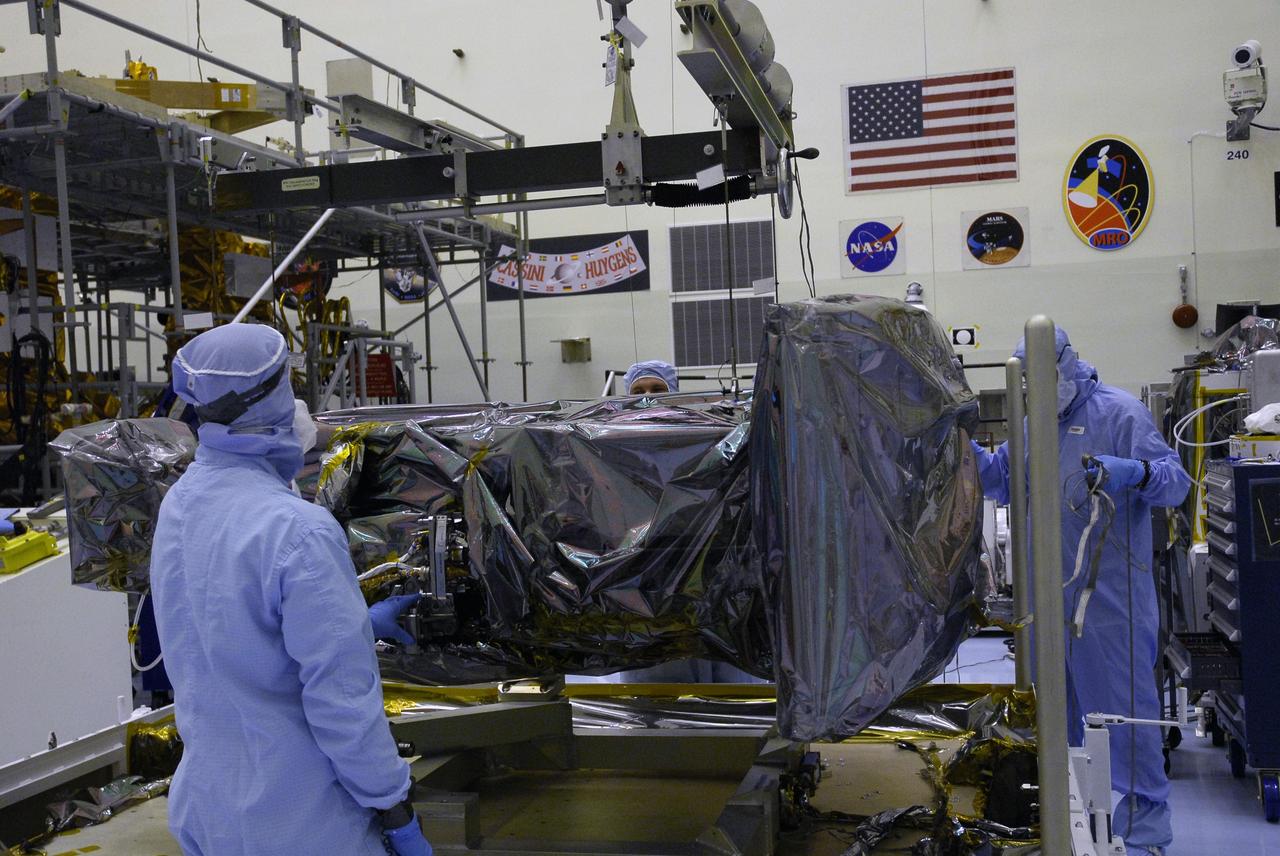
CAPE CANAVERAL, Fla. – In the Payload Hazardous Servicing Facility at NASA's Kennedy Space Center, an overhead crane begins to lift the Wide Field Camera 3, or WFC3, from the base of the shipping container. The WFC3 will be transferred to a work stand. As Hubble enters the last stage of its life, WFC3 will be Hubble's next evolutionary step, allowing Hubble to peer ever further into the mysteries of the cosmos. WFC3 will study a diverse range of objects and phenomena, from young and extremely distant galaxies, to much more nearby stellar systems, to objects within our very own solar system. WFC3 will take the place of Wide Field Planetary Camera 2, which astronauts will bring back to Earth aboard the shuttle. WFC3 is part of the payload on the fifth and final Hubble servicing mission, STS-125, targeted for launch Oct. 8. Photo credit: NASA/Jack Pfaller

CAPE CANAVERAL, Fla. – In the Payload Hazardous Servicing Facility at NASA's Kennedy Space Center, technicians monitor the movement of the Wide Field Camera 3, or WFC3, as the overhead crane transfers it to a work stand. As Hubble enters the last stage of its life, WFC3 will be Hubble's next evolutionary step, allowing Hubble to peer ever further into the mysteries of the cosmos. WFC3 will study a diverse range of objects and phenomena, from young and extremely distant galaxies, to much more nearby stellar systems, to objects within our very own solar system. WFC3 will take the place of Wide Field Planetary Camera 2, which astronauts will bring back to Earth aboard the shuttle. WFC3 is part of the payload on the fifth and final Hubble servicing mission, STS-125, targeted for launch Oct. 8. Photo credit: NASA/Jack Pfaller
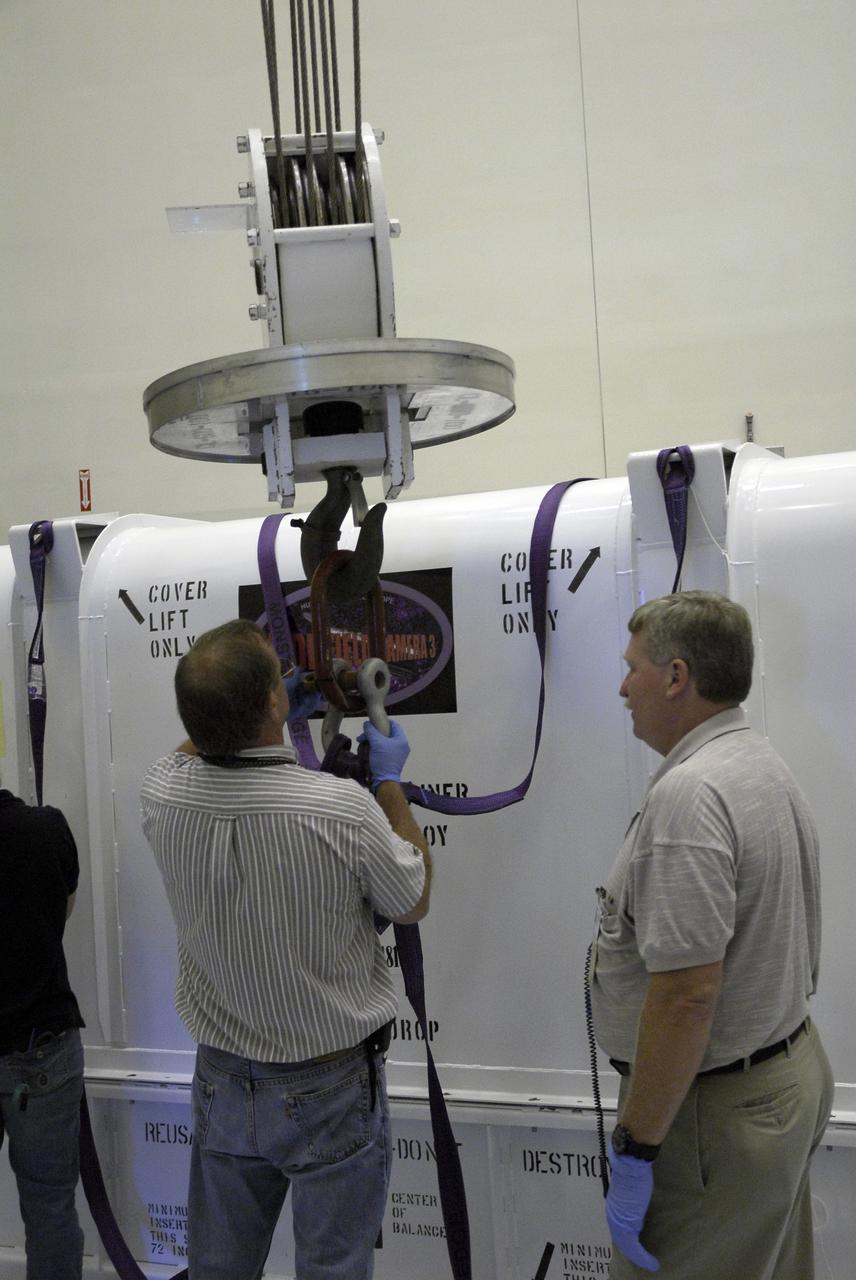
CAPE CANAVERAL, Fla. – In the Payload Hazardous Servicing Facility at NASA's Kennedy Space Center, technicians attach an overhead crane to the cover of the Wide Field Camera 3, or WFC3, shipping container. As Hubble enters the last stage of its life, WFC3 will be Hubble's next evolutionary step, allowing Hubble to peer ever further into the mysteries of the cosmos. WFC3 will study a diverse range of objects and phenomena, from young and extremely distant galaxies, to much more nearby stellar systems, to objects within our very own solar system. WFC3 will take the place of Wide Field Planetary Camera 2, which astronauts will bring back to Earth aboard the shuttle. WFC3 is part of the payload on the fifth and final Hubble servicing mission, STS-125, targeted for launch Oct. 8. Photo credit: NASA/Jack Pfaller
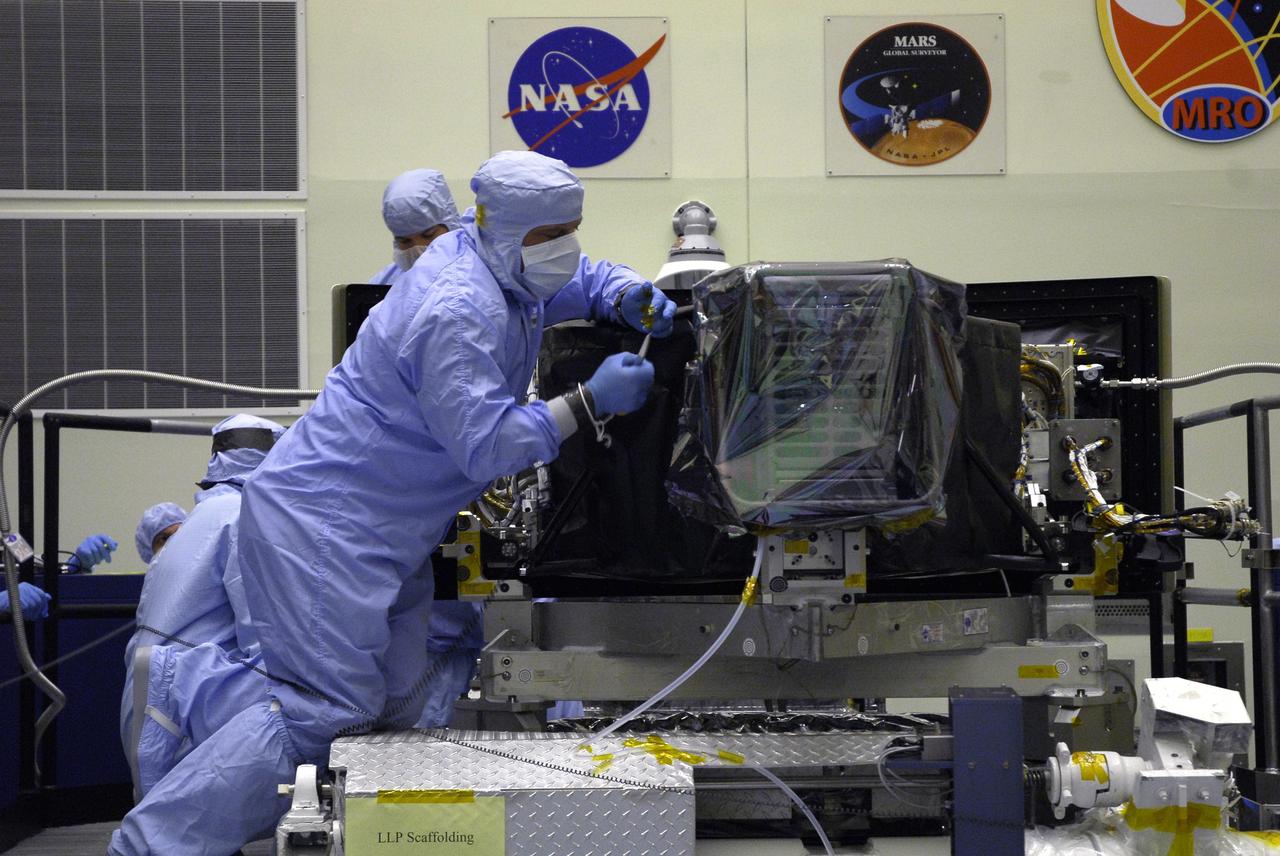
CAPE CANAVERAL, Fla. – Technicians in the Payload Hazardous Servicing Facility remove the protective cover from the Wide Field Camera 3, or WFC3. The WFC3 is part of the payload on space shuttle Atlantis for the fifth and final Hubble servicing mission, STS-125. As Hubble enters the last stage of its life, WFC3 will be Hubble's next evolutionary step, allowing Hubble to peer ever further into the mysteries of the cosmos. WFC3 will study a diverse range of objects and phenomena, from young and extremely distant galaxies, to much more nearby stellar systems, to objects within our very own solar system. WFC3 will take the place of Wide Field Planetary Camera 2, which astronauts will bring back to Earth aboard the shuttle. Launch of Atlantis is targeted at 1:34 a.m. EDT Oct. 8. Photo credit: NASA/Jack Pfaller
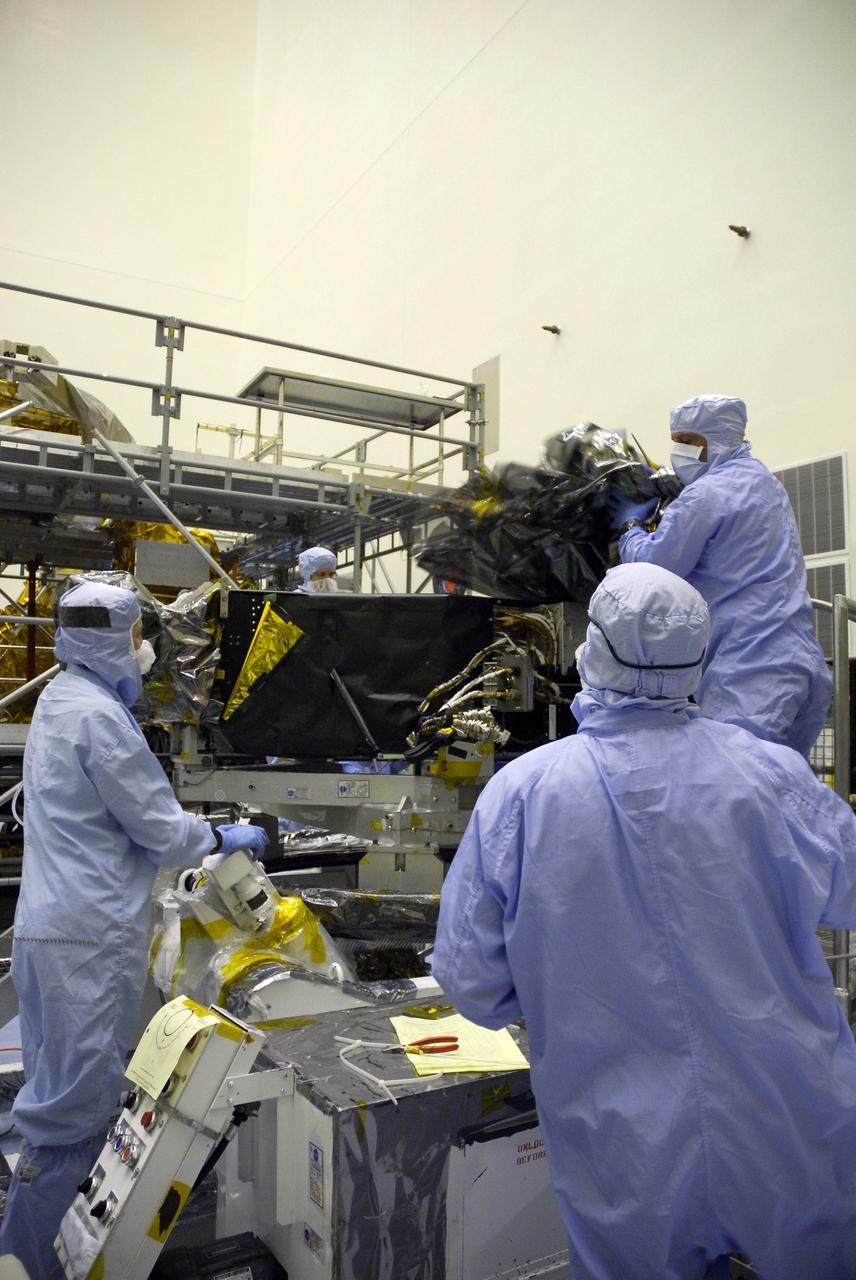
CAPE CANAVERAL, Fla. – Technicians in the Payload Hazardous Servicing Facility begin removing the protective cover from the Wide Field Camera 3, or WFC3. The WFC3 is part of the payload on space shuttle Atlantis for the fifth and final Hubble servicing mission, STS-125. As Hubble enters the last stage of its life, WFC3 will be Hubble's next evolutionary step, allowing Hubble to peer ever further into the mysteries of the cosmos. WFC3 will study a diverse range of objects and phenomena, from young and extremely distant galaxies, to much more nearby stellar systems, to objects within our very own solar system. WFC3 will take the place of Wide Field Planetary Camera 2, which astronauts will bring back to Earth aboard the shuttle. Launch of Atlantis is targeted at 1:34 a.m. EDT Oct. 8. Photo credit: NASA/Jack Pfaller
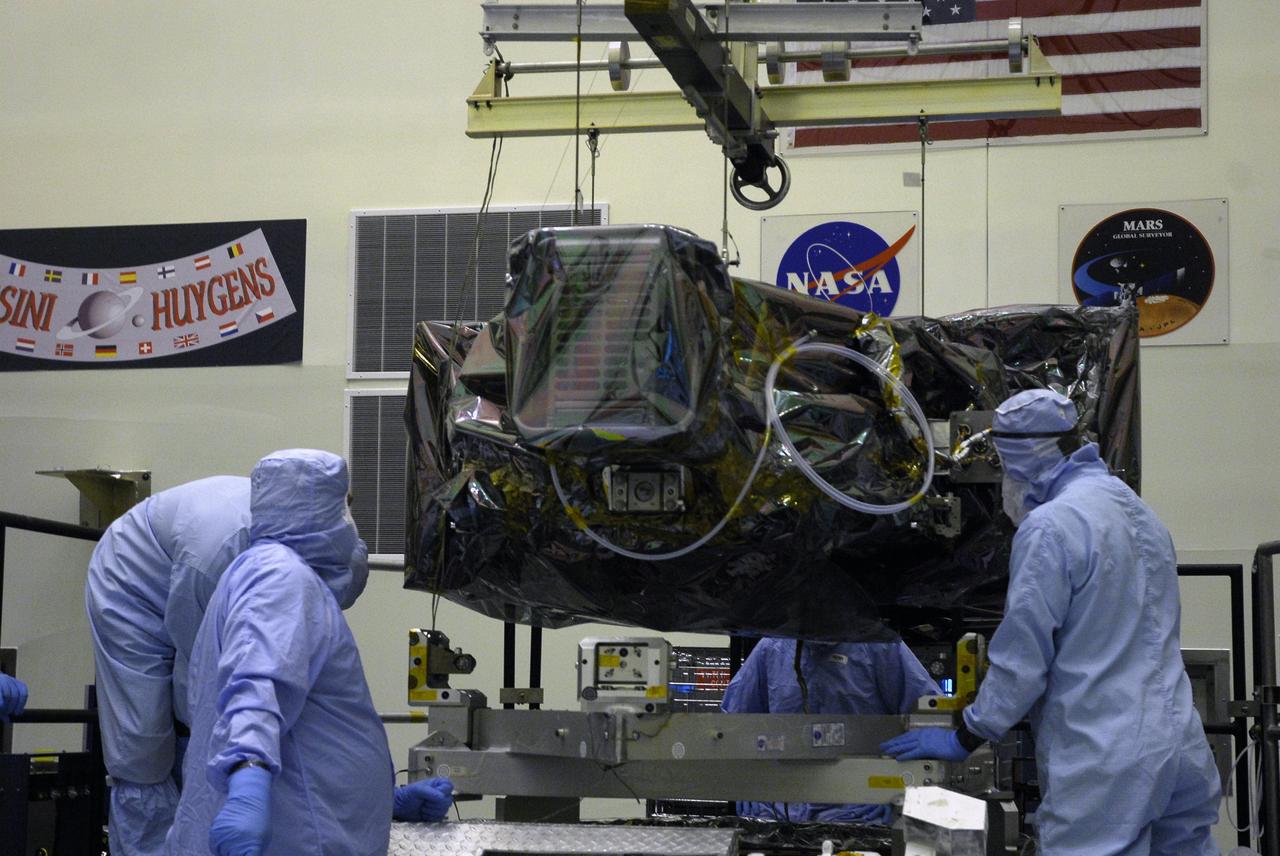
CAPE CANAVERAL, Fla. – In the Payload Hazardous Servicing Facility at NASA's Kennedy Space Center, technicians monitor the movement of the Wide Field Camera 3, or WFC3, as it is lowered onto a work stand. As Hubble enters the last stage of its life, WFC3 will be Hubble's next evolutionary step, allowing Hubble to peer ever further into the mysteries of the cosmos. WFC3 will study a diverse range of objects and phenomena, from young and extremely distant galaxies, to much more nearby stellar systems, to objects within our very own solar system. WFC3 will take the place of Wide Field Planetary Camera 2, which astronauts will bring back to Earth aboard the shuttle. WFC3 is part of the payload on the fifth and final Hubble servicing mission, STS-125, targeted for launch Oct. 8. Photo credit: NASA/Jack Pfaller

CAPE CANAVERAL, Fla. – In the Payload Hazardous Servicing Facility at NASA's Kennedy Space Center, the Wide Field Camera 3, or WFC3, is ready to be transferred to the Super Lightweight Interchangeable Carrier. WFC3 is part of the payload on space shuttle Atlantis' STS-125 mission for the fifth and final Hubble servicing flight to NASA's Hubble Space Telescope. As Hubble enters the last stage of its life, WFC3 will be Hubble's next evolutionary step, allowing Hubble to peer ever further into the mysteries of the cosmos. WFC3 will study a diverse range of objects and phenomena, from young and extremely distant galaxies, to much more nearby stellar systems, to objects within our very own solar system. WFC3 will take the place of Wide Field Planetary Camera 2, which astronauts will bring back to Earth aboard the shuttle. Launch of Atlantis is targeted at 1:34 a.m. EDT Oct. 8. Photo credit: NASA/Amanda Diller

CAPE CANAVERAL, Fla. – In the Payload Hazardous Servicing Facility at NASA's Kennedy Space Center, an overhead crane is moved above the Wide Field Camera 3, or WFC3, for attachment. The WFC3 will be lifted and transferred to a work stand. As Hubble enters the last stage of its life, WFC3 will be Hubble's next evolutionary step, allowing Hubble to peer ever further into the mysteries of the cosmos. WFC3 will study a diverse range of objects and phenomena, from young and extremely distant galaxies, to much more nearby stellar systems, to objects within our very own solar system. WFC3 will take the place of Wide Field Planetary Camera 2, which astronauts will bring back to Earth aboard the shuttle. WFC3 is part of the payload on the fifth and final Hubble servicing mission, STS-125, targeted for launch Oct. 8. Photo credit: NASA/Jack Pfaller
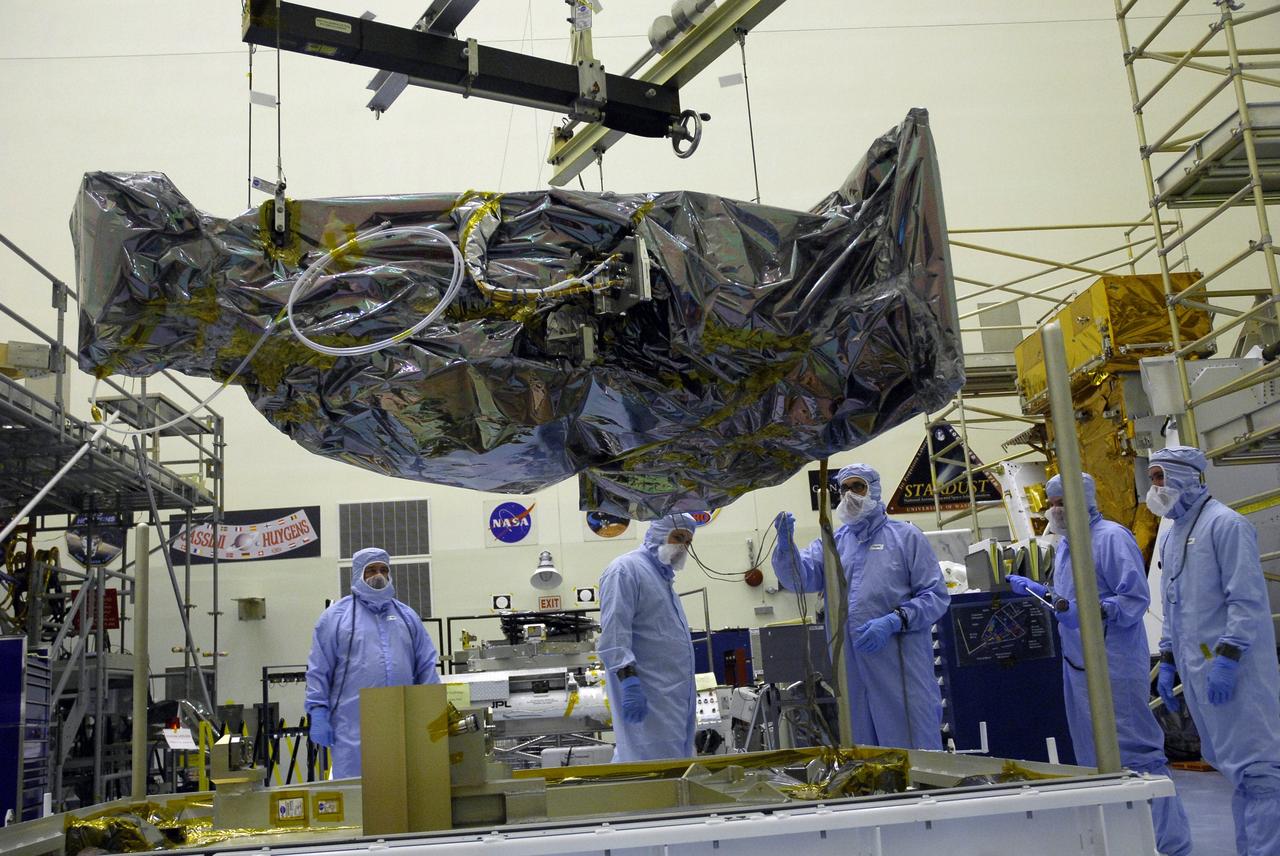
CAPE CANAVERAL, Fla. – In the Payload Hazardous Servicing Facility at NASA's Kennedy Space Center, an overhead crane lifts the Wide Field Camera 3, or WFC3, from the base of the shipping container. The WFC3 will be transferred to a work stand. As Hubble enters the last stage of its life, WFC3 will be Hubble's next evolutionary step, allowing Hubble to peer ever further into the mysteries of the cosmos. WFC3 will study a diverse range of objects and phenomena, from young and extremely distant galaxies, to much more nearby stellar systems, to objects within our very own solar system. WFC3 will take the place of Wide Field Planetary Camera 2, which astronauts will bring back to Earth aboard the shuttle. WFC3 is part of the payload on the fifth and final Hubble servicing mission, STS-125, targeted for launch Oct. 8. Photo credit: NASA/Jack Pfaller
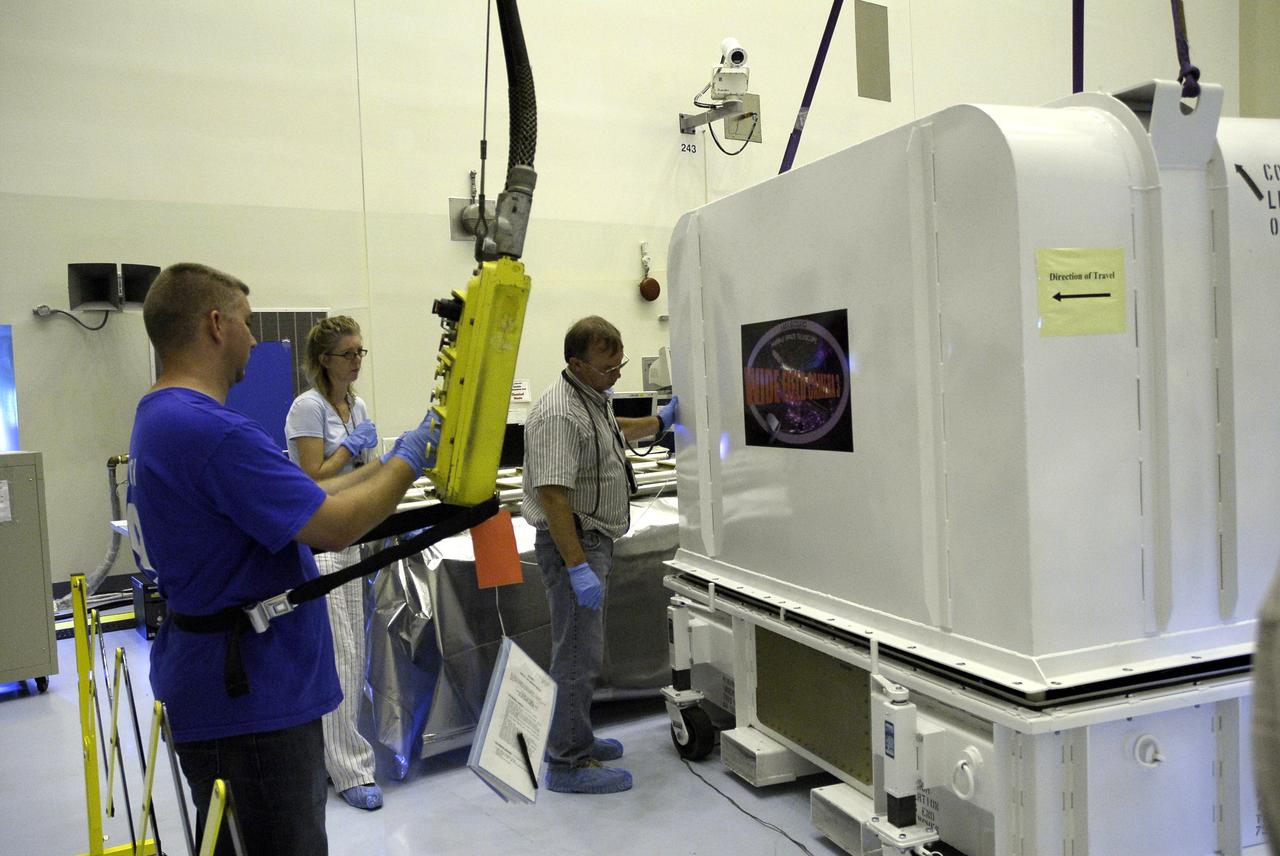
CAPE CANAVERAL, Fla. – In the Payload Hazardous Servicing Facility at NASA's Kennedy Space Center, technicians begin lifting the cover of the Wide Field Camera 3, or WFC3, shipping container. As Hubble enters the last stage of its life, WFC3 will be Hubble's next evolutionary step, allowing Hubble to peer ever further into the mysteries of the cosmos. WFC3 will study a diverse range of objects and phenomena, from young and extremely distant galaxies, to much more nearby stellar systems, to objects within our very own solar system. WFC3 will take the place of Wide Field Planetary Camera 2, which astronauts will bring back to Earth aboard the shuttle. WFC3 is part of the payload on the fifth and final Hubble servicing mission, STS-125, targeted for launch Oct. 8. Photo credit: NASA/Jack Pfaller
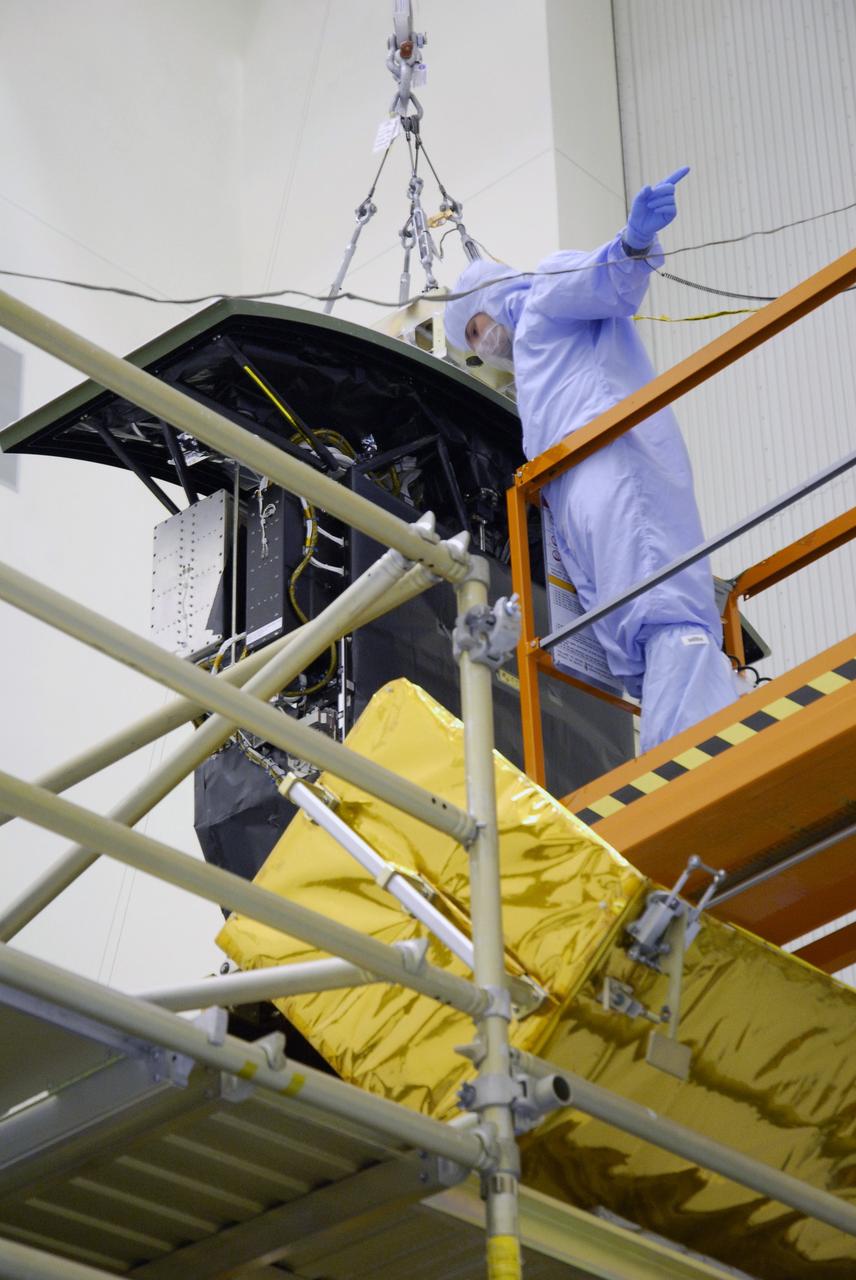
CAPE CANAVERAL, Fla. – In the Payload Hazardous Servicing Facility at NASA's Kennedy Space Center, the Wide Field Camera 3, or WFC3, is lowered toward the Super Lightweight Interchangeable Carrier. WFC3 is part of the payload on space shuttle Atlantis' STS-125 mission for the fifth and final Hubble servicing flight to NASA's Hubble Space Telescope. As Hubble enters the last stage of its life, WFC3 will be Hubble's next evolutionary step, allowing Hubble to peer ever further into the mysteries of the cosmos. WFC3 will study a diverse range of objects and phenomena, from young and extremely distant galaxies, to much more nearby stellar systems, to objects within our very own solar system. WFC3 will take the place of Wide Field Planetary Camera 2, which astronauts will bring back to Earth aboard the shuttle. Launch of Atlantis is targeted at 1:34 a.m. EDT Oct. 8. Photo credit: NASA/Amanda Diller
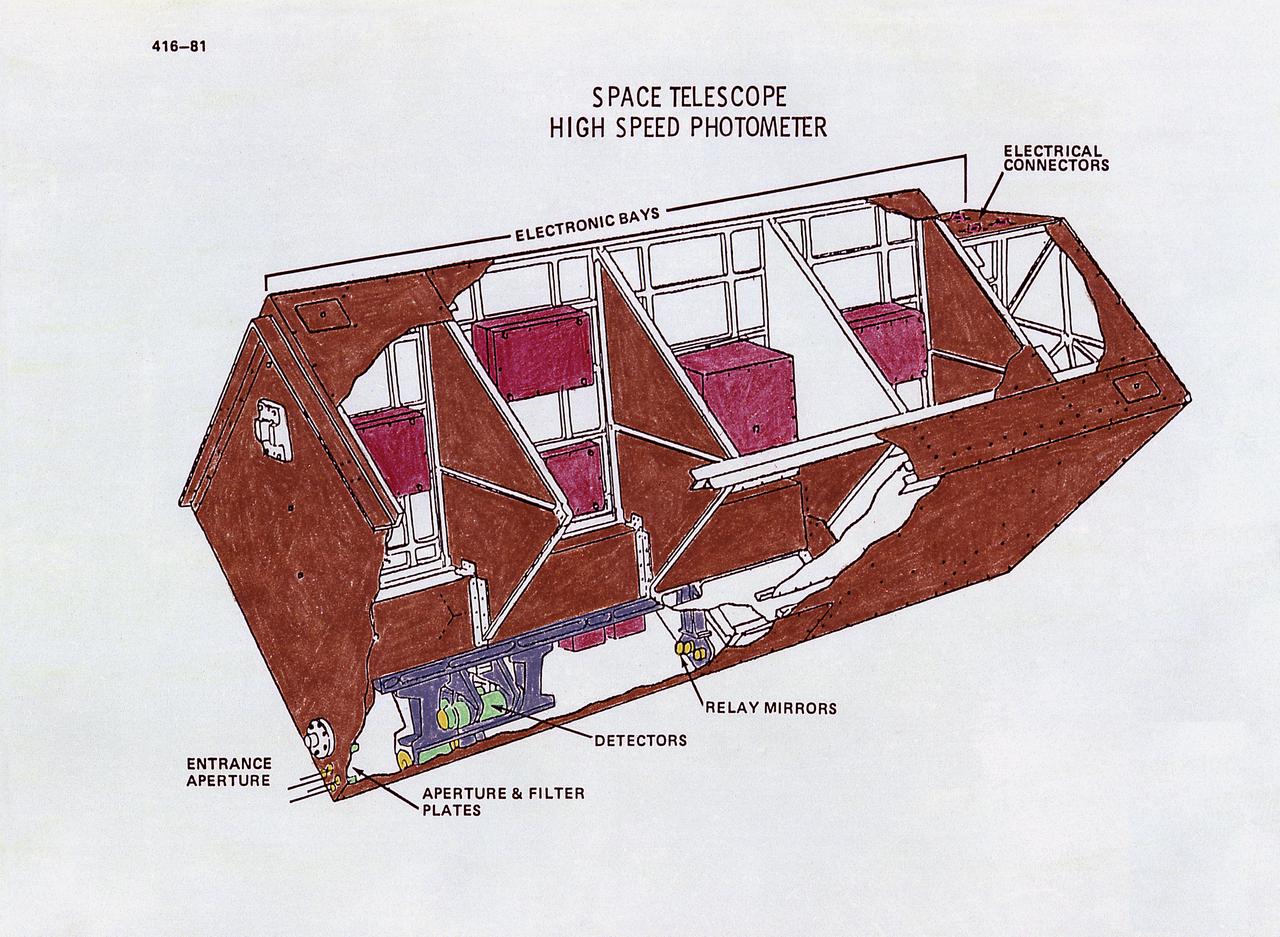
This drawing illustrates the Hubble Space Telescope's (HST's) High Speed Photometer (HSP). The HSP measures the intensity of starlight (brightness), which will help determine astronomical distances. Its principal use will be to measure extremely-rapid variations or pulses in light from celestial objects, such as pulsating stars. The HSP produces brightness readings. Light passes into one of four special signal-multiplying tubes that record the data. The HSP can measure energy fluctuations from objects that pulsate as rapidly as once every 10 microseconds. From HSP data, astronomers expect to learn much about such mysterious objects as pulsars, black holes, and quasars. The purpose of the HST, the most complex and sensitive optical telescope ever made, is to study the cosmos from a low-Earth orbit. By placing the telescope in space, astronomers are able to collect data that is free of the Earth's atmosphere. The HST views galaxies, stars, planets, comets, possibly other solar systems, and even unusual phenomena such as quasars, with 10 times the clarity of ground-based telescopes. The HST was deployed from the Space Shuttle Discovery (STS-31 mission) into Earth orbit in April 1990. The Marshall Space Flight Center had responsibility for design, development, and construction of the HST. The Perkin-Elmer Corporation, in Danbury, Cornecticut, developed the optical system and guidance sensors.
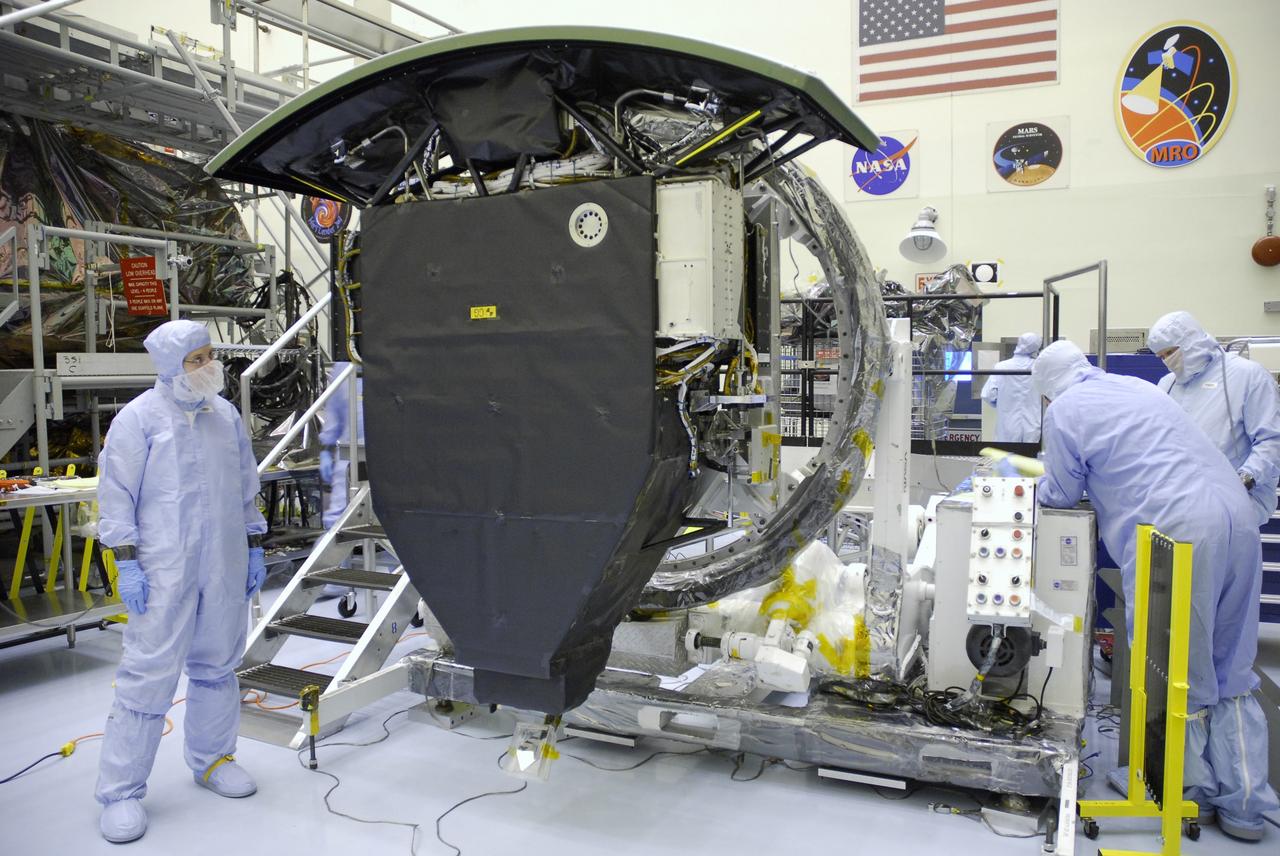
CAPE CANAVERAL, Fla. – In the Payload Hazardous Servicing Facility at NASA's Kennedy Space Center, technicians observe as the Wide Field Camera 3, or WFC3, is rotated to vertical. The WFC3 will be transferred to the Super Lightweight Interchangeable Carrier. WFC3 is part of the payload on space shuttle Atlantis' STS-125 mission for the fifth and final Hubble servicing flight to NASA's Hubble Space Telescope. The curved edge shown at top is the radiator, the "outside" of WFC3 that will be exposed to space and will expel heat out of Hubble and into space through black body radiation. As Hubble enters the last stage of its life, WFC3 will be Hubble's next evolutionary step, allowing Hubble to peer ever further into the mysteries of the cosmos. WFC3 will study a diverse range of objects and phenomena, from young and extremely distant galaxies, to much more nearby stellar systems, to objects within our very own solar system. WFC3 will take the place of Wide Field Planetary Camera 2, which astronauts will bring back to Earth aboard the shuttle. Launch of Atlantis is targeted at 1:34 a.m. EDT Oct. 8. Photo credit: NASA/Amanda Diller
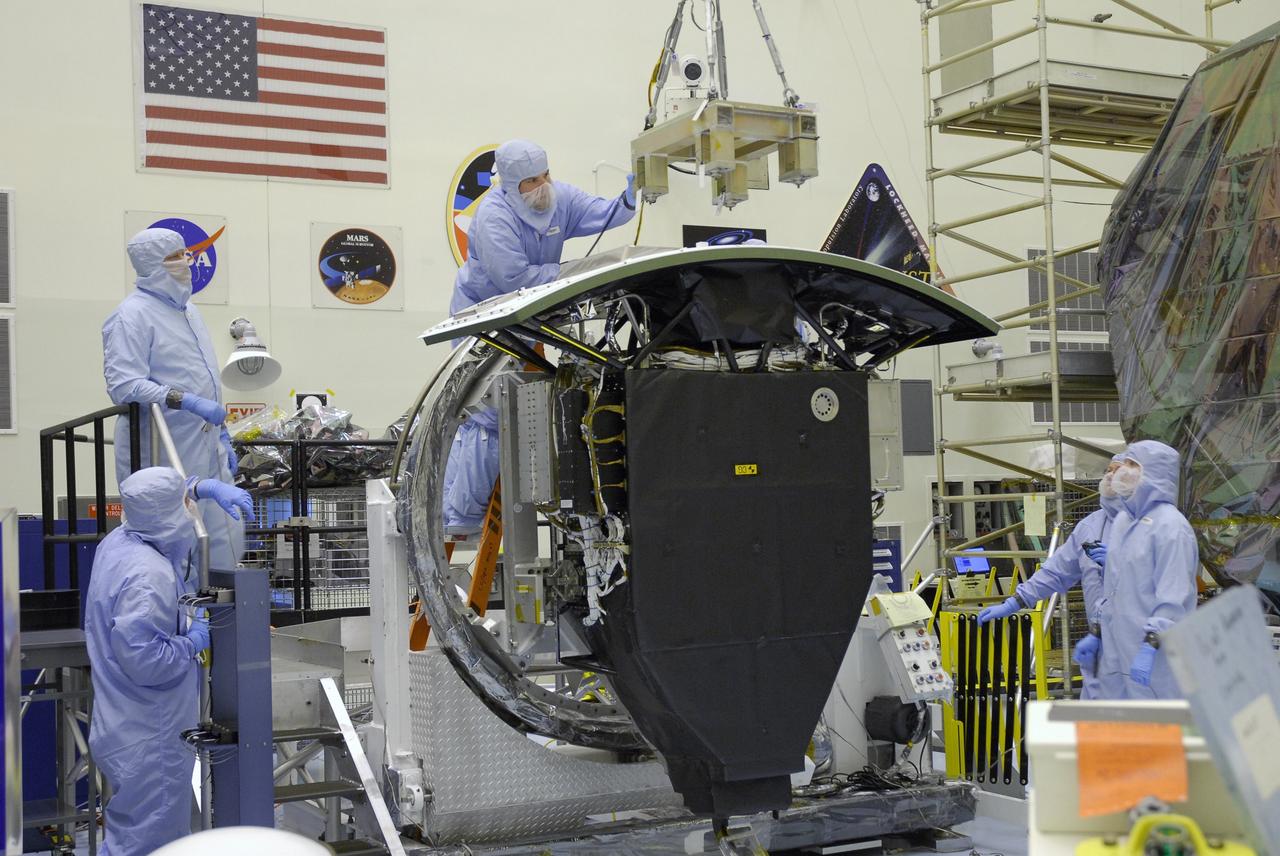
CAPE CANAVERAL, Fla. – In the Payload Hazardous Servicing Facility at NASA's Kennedy Space Center, a technician guides a crane for attachment to the radiator on the Wide Field Camera 3, or WFC3. The WFC3 will be transferred to the Super Lightweight Interchangeable Carrier. WFC3 is part of the payload on space shuttle Atlantis' STS-125 mission for the fifth and final Hubble servicing flight to NASA's Hubble Space Telescope. The radiator is the "outside" of WFC3 that will be exposed to space and will expel heat out of Hubble and into space through black body radiation. As Hubble enters the last stage of its life, WFC3 will be Hubble's next evolutionary step, allowing Hubble to peer ever further into the mysteries of the cosmos. WFC3 will study a diverse range of objects and phenomena, from young and extremely distant galaxies, to much more nearby stellar systems, to objects within our very own solar system. WFC3 will take the place of Wide Field Planetary Camera 2, which astronauts will bring back to Earth aboard the shuttle. Launch of Atlantis is targeted at 1:34 a.m. EDT Oct. 8. Photo credit: NASA/Amanda Diller

CAPE CANAVERAL, Fla. – After rotation of the Wide Field Camera 3 (background left), or WFC3, in the Payload Hazardous Servicing Facility at NASA's Kennedy Space Center, technicians check the data. The WFC3 will be transferred to the Super Lightweight Interchangeable Carrier. WFC3 is part of the payload on space shuttle Atlantis' STS-125 mission for the fifth and final Hubble servicing flight to NASA's Hubble Space Telescope. The curved edge shown at top is the radiator, the "outside" of WFC3 that will be exposed to space and will expel heat out of Hubble and into space through black body radiation. As Hubble enters the last stage of its life, WFC3 will be Hubble's next evolutionary step, allowing Hubble to peer ever further into the mysteries of the cosmos. WFC3 will study a diverse range of objects and phenomena, from young and extremely distant galaxies, to much more nearby stellar systems, to objects within our very own solar system. WFC3 will take the place of Wide Field Planetary Camera 2, which astronauts will bring back to Earth aboard the shuttle. Launch of Atlantis is targeted at 1:34 a.m. EDT Oct. 8. Photo credit: NASA/Amanda Diller
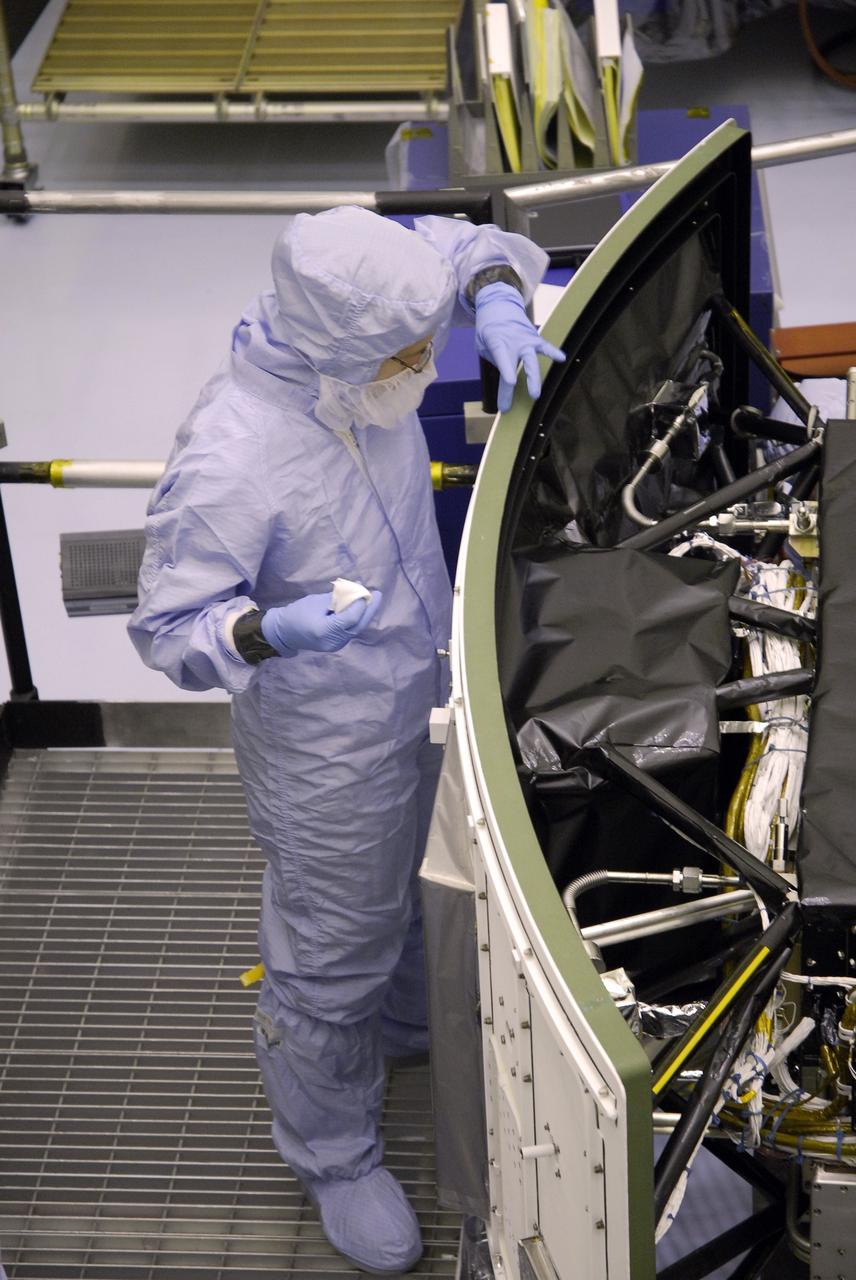
CAPE CANAVERAL, Fla. – In the Payload Hazardous Servicing Facility at NASA's Kennedy Space Center, a technician cleans the edge of the radiator on the Wide Field Camera 3, or WFC3,that will be installed on NASA's Hubble Space Telescope. The radiator is the "outside" of WFC3 that will be exposed to space. It will expel heat out of Hubble and into space through black body radiation. WFC3 is part of the payload on space shuttle Atlantis' STS-125 mission for the fifth and final Hubble servicing flight to NASA's Hubble Space Telescope. As Hubble enters the last stage of its life, WFC3 will be Hubble's next evolutionary step, allowing Hubble to peer ever further into the mysteries of the cosmos. WFC3 will study a diverse range of objects and phenomena, from young and extremely distant galaxies, to much more nearby stellar systems, to objects within our very own solar system. WFC3 will take the place of Wide Field Planetary Camera 2, which astronauts will bring back to Earth aboard the shuttle. Launch of Atlantis is targeted at 1:34 a.m. EDT Oct. 8. Photo credit: NASA/Amanda Diller
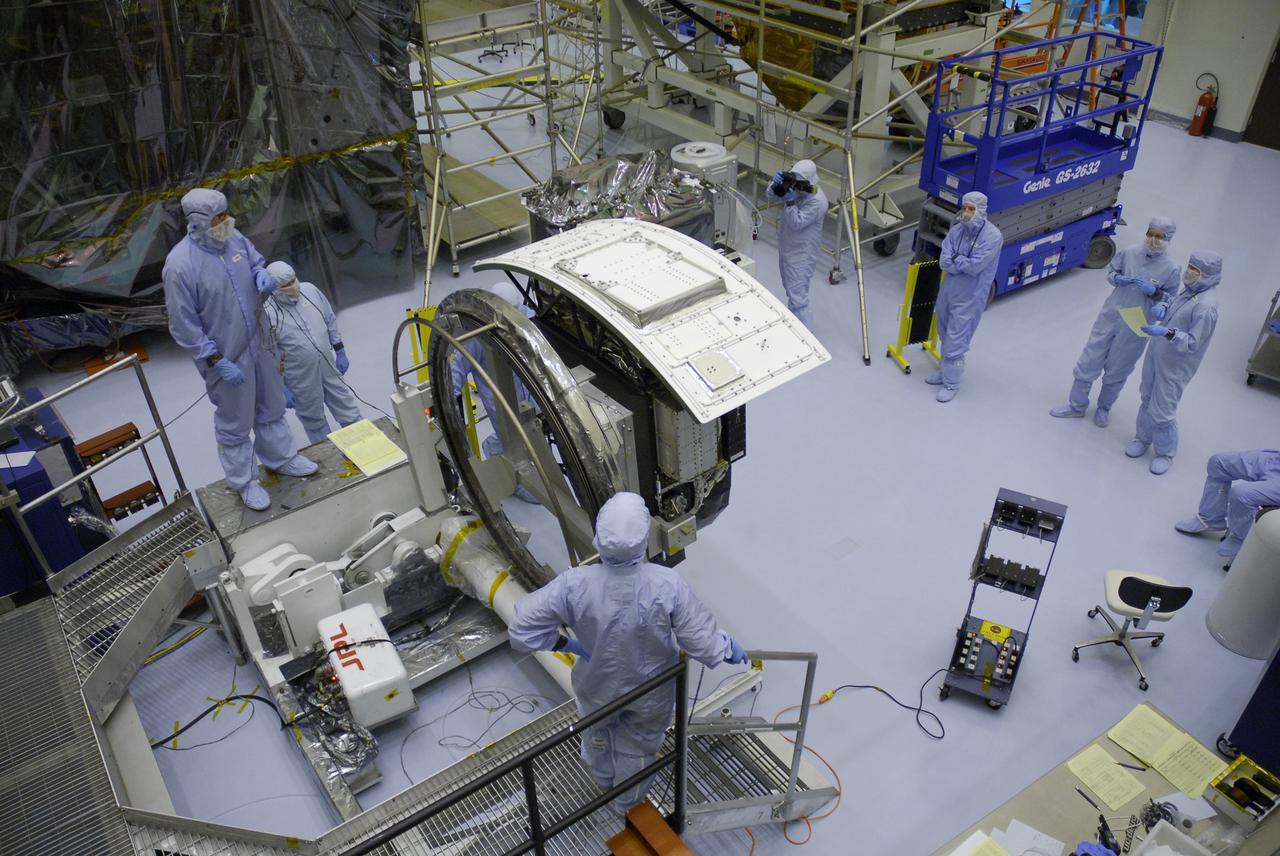
CAPE CANAVERAL, Fla. – In the Payload Hazardous Servicing Facility at NASA's Kennedy Space Center, the Wide Field Camera 3, or WFC3, has been rotated. The WFC3 will be transferred to the Super Lightweight Interchangeable Carrier. WFC3 is part of the payload on space shuttle Atlantis' STS-125 mission for the fifth and final Hubble servicing flight to NASA's Hubble Space Telescope. The curved edge shown at top is the radiator, the "outside" of WFC3 that will be exposed to space and will expel heat out of Hubble and into space through black body radiation. As Hubble enters the last stage of its life, WFC3 will be Hubble's next evolutionary step, allowing Hubble to peer ever further into the mysteries of the cosmos. WFC3 will study a diverse range of objects and phenomena, from young and extremely distant galaxies, to much more nearby stellar systems, to objects within our very own solar system. WFC3 will take the place of Wide Field Planetary Camera 2, which astronauts will bring back to Earth aboard the shuttle. Launch of Atlantis is targeted at 1:34 a.m. EDT Oct. 8. Photo credit: NASA/Amanda Diller
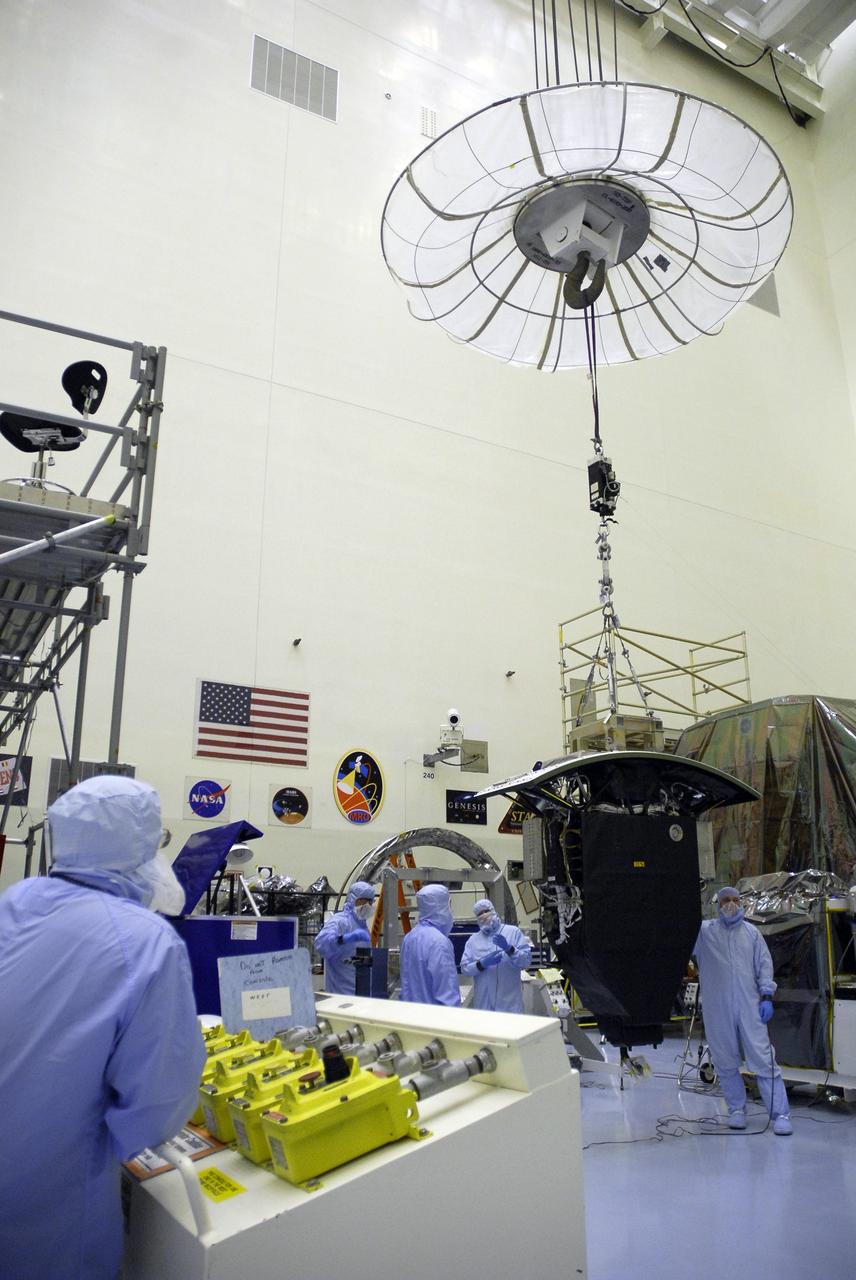
CAPE CANAVERAL, Fla. – In the Payload Hazardous Servicing Facility at NASA's Kennedy Space Center, an overhead crane moves the Wide Field Camera 3, or WFC3, from its stand. The WFC3 will be transferred to the Super Lightweight Interchangeable Carrier. WFC3 is part of the payload on space shuttle Atlantis' STS-125 mission for the fifth and final Hubble servicing flight to NASA's Hubble Space Telescope. As Hubble enters the last stage of its life, WFC3 will be Hubble's next evolutionary step, allowing Hubble to peer ever further into the mysteries of the cosmos. WFC3 will study a diverse range of objects and phenomena, from young and extremely distant galaxies, to much more nearby stellar systems, to objects within our very own solar system. WFC3 will take the place of Wide Field Planetary Camera 2, which astronauts will bring back to Earth aboard the shuttle. Launch of Atlantis is targeted at 1:34 a.m. EDT Oct. 8. Photo credit: NASA/Amanda Diller
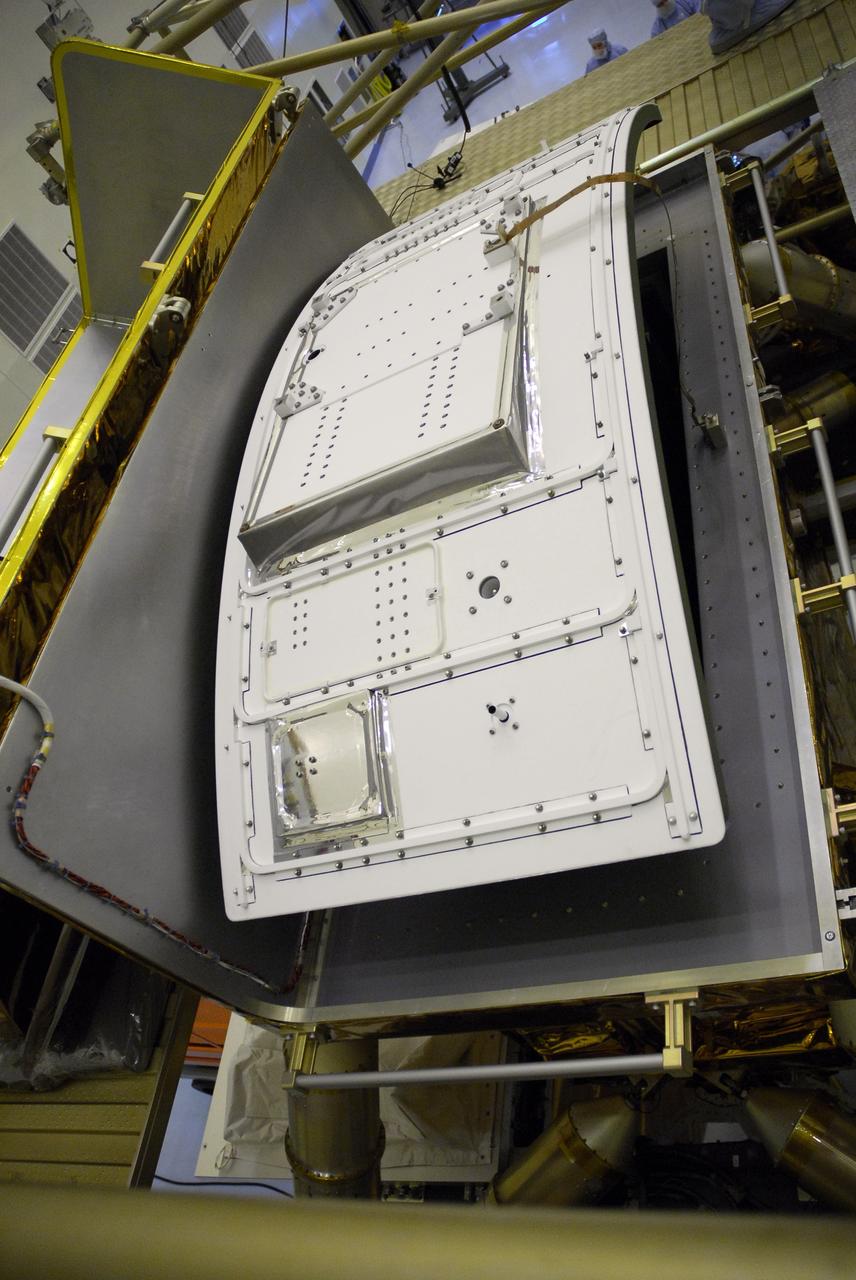
CAPE CANAVERAL, Fla. – In the Payload Hazardous Servicing Facility at NASA's Kennedy Space Center, the Wide Field Camera 3, or WFC3, waits to be transferred to the Super Lightweight Interchangeable Carrier. WFC3 is part of the payload on space shuttle Atlantis' STS-125 mission for the fifth and final Hubble servicing flight to NASA's Hubble Space Telescope. The part shown here is the radiator, the "outside" of WFC3 that will be exposed to space and will expel heat out of Hubble and into space through black body radiation. As Hubble enters the last stage of its life, WFC3 will be Hubble's next evolutionary step, allowing Hubble to peer ever further into the mysteries of the cosmos. WFC3 will study a diverse range of objects and phenomena, from young and extremely distant galaxies, to much more nearby stellar systems, to objects within our very own solar system. WFC3 will take the place of Wide Field Planetary Camera 2, which astronauts will bring back to Earth aboard the shuttle. Launch of Atlantis is targeted at 1:34 a.m. EDT Oct. 8. Photo credit: NASA/Amanda Diller
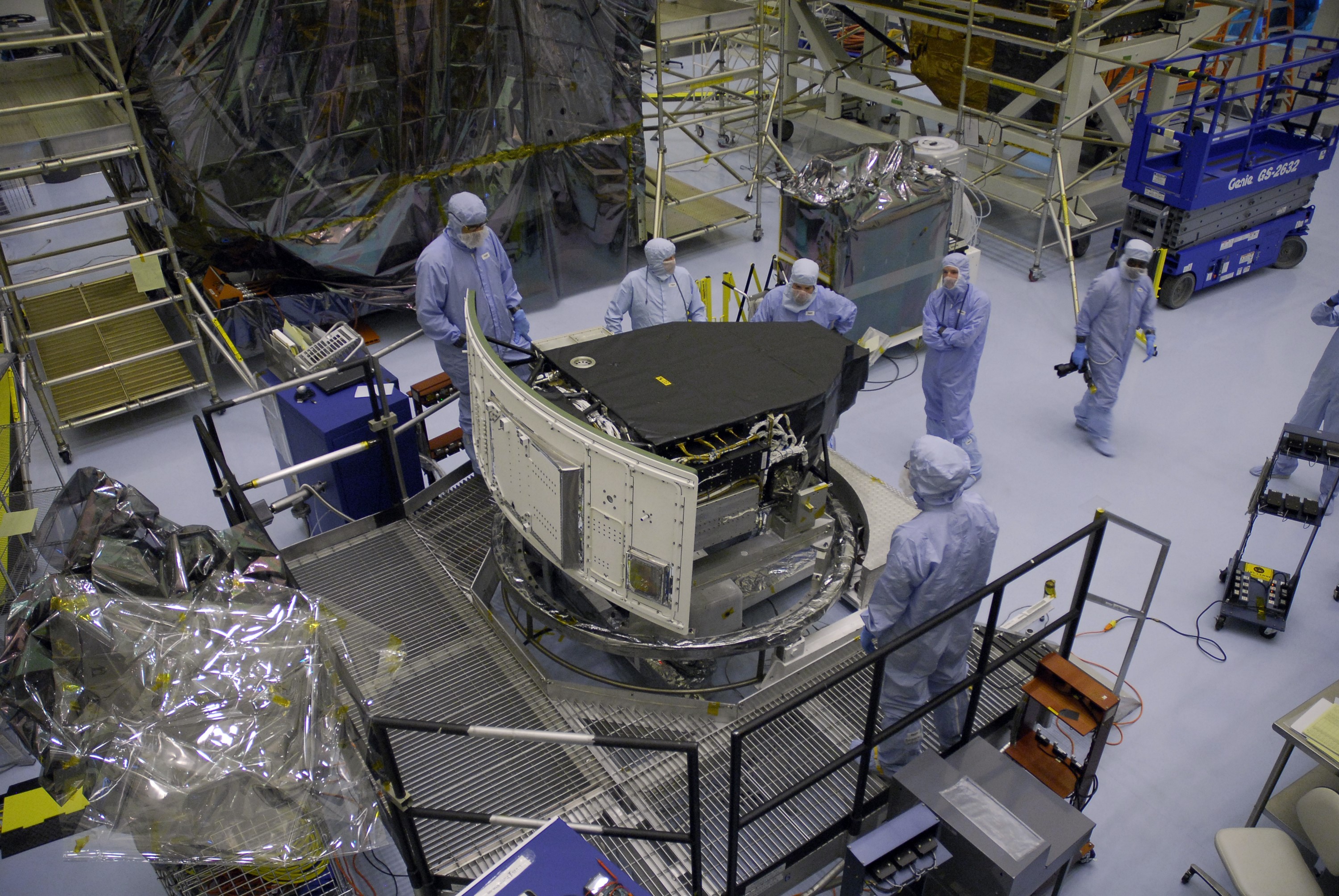
CAPE CANAVERAL, Fla. – In the Payload Hazardous Servicing Facility at NASA's Kennedy Space Center, technicians wait for the rotation of the Wide Field Camera 3, or WFC3, in order to attach a crane. The WFC3 will be transferred to the Super Lightweight Interchangeable Carrier. WFC3 is part of the payload on space shuttle Atlantis' STS-125 mission for the fifth and final Hubble servicing flight to NASA's Hubble Space Telescope. The curved edge shown at left is the radiator, the "outside" of WFC3 that will be exposed to space and will expel heat out of Hubble and into space through black body radiation. As Hubble enters the last stage of its life, WFC3 will be Hubble's next evolutionary step, allowing Hubble to peer ever further into the mysteries of the cosmos. WFC3 will study a diverse range of objects and phenomena, from young and extremely distant galaxies, to much more nearby stellar systems, to objects within our very own solar system. WFC3 will take the place of Wide Field Planetary Camera 2, which astronauts will bring back to Earth aboard the shuttle. Launch of Atlantis is targeted at 1:34 a.m. EDT Oct. 8. Photo credit: NASA/Amanda Diller
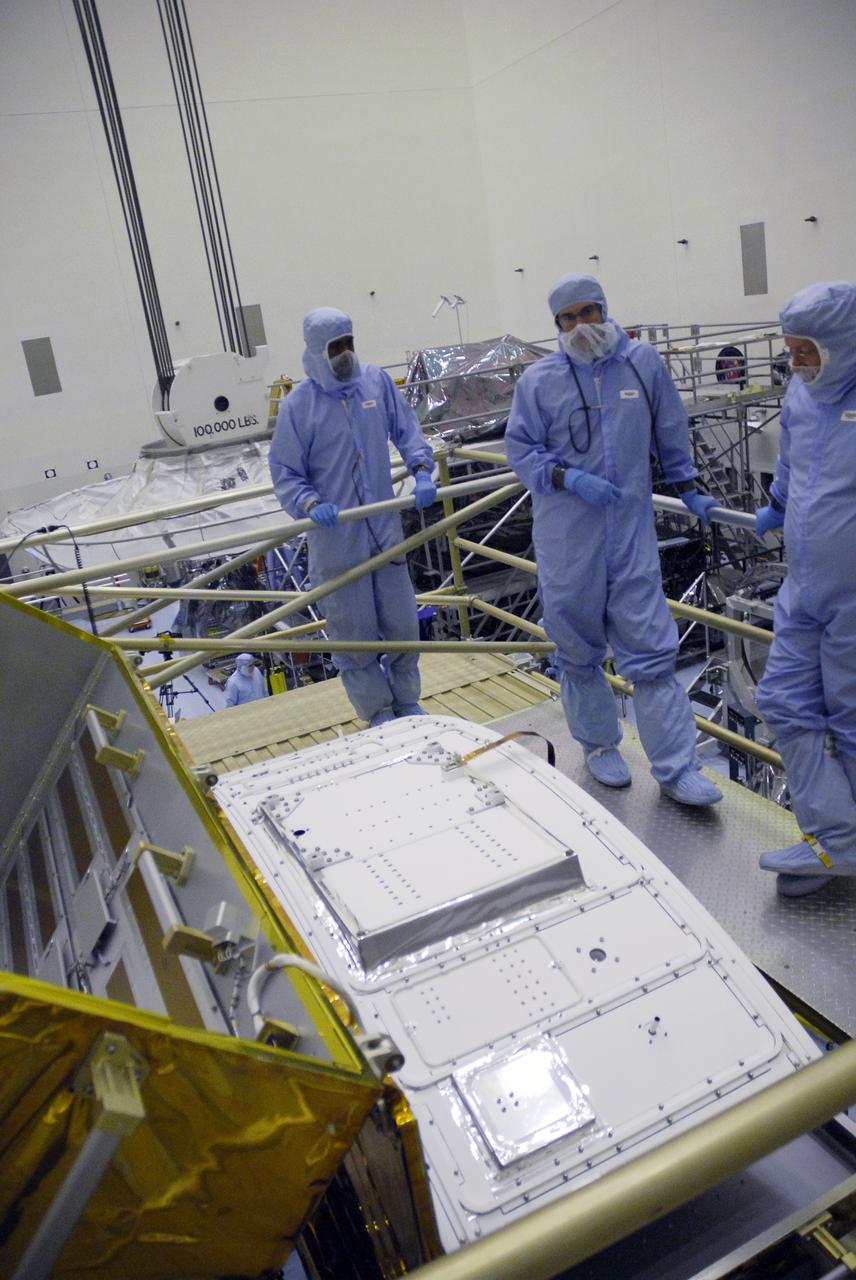
CAPE CANAVERAL, Fla. – In the Payload Hazardous Servicing Facility at NASA's Kennedy Space Center, technicians wait for the rotation of the Wide Field Camera 3, or WFC3, in order to attach a crane. The WFC3 will be transferred to the Super Lightweight Interchangeable Carrier. WFC3 is part of the payload on space shuttle Atlantis' STS-125 mission for the fifth and final Hubble servicing flight to NASA's Hubble Space Telescope. The part shown here is the radiator, the "outside" of WFC3 that will be exposed to space and will expel heat out of Hubble and into space through black body radiation. As Hubble enters the last stage of its life, WFC3 will be Hubble's next evolutionary step, allowing Hubble to peer ever further into the mysteries of the cosmos. WFC3 will study a diverse range of objects and phenomena, from young and extremely distant galaxies, to much more nearby stellar systems, to objects within our very own solar system. WFC3 will take the place of Wide Field Planetary Camera 2, which astronauts will bring back to Earth aboard the shuttle. Launch of Atlantis is targeted at 1:34 a.m. EDT Oct. 8. Photo credit: NASA/Amanda Diller
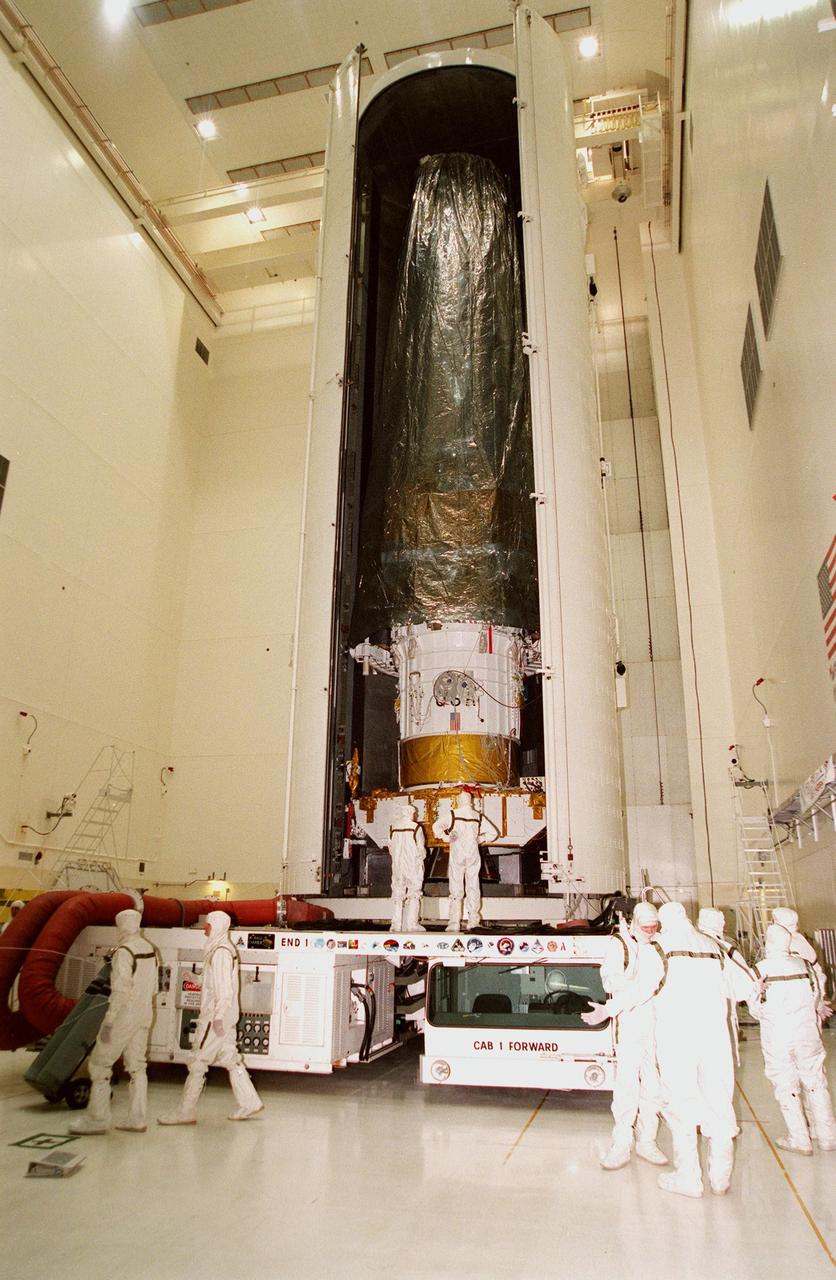
Inside the Vertical Processing Facility, doors on the payload canister begin to close on the Chandra X-ray Observatory inside before being moved to Launch Pad 39B. Liftoff will take place no earlier than July 20 at 12:36 a.m. EDT aboard Space Shuttle Columbia, on mission STS-93. Chandra will allow scientists from around the world to obtain unprecedented X-ray images of exotic environments to help understand the structure and evolution of the universe. Chandra is expected to provide unique and crucial information on the nature of objects ranging from comets in our solar system to quasars at the edge of the observable universe, map the location of dark matter and help to identify it, and probe the faintest of active galaxies, allowing scientists to study not only how their energy output changes with time, but also how these objects produce their intense energy emissions in the first place. Since X-rays are absorbed by the Earth's atmosphere, space-based observatories are necessary to study these phenomena and allow scientists to analyze some of the greatest mysteries of the universe
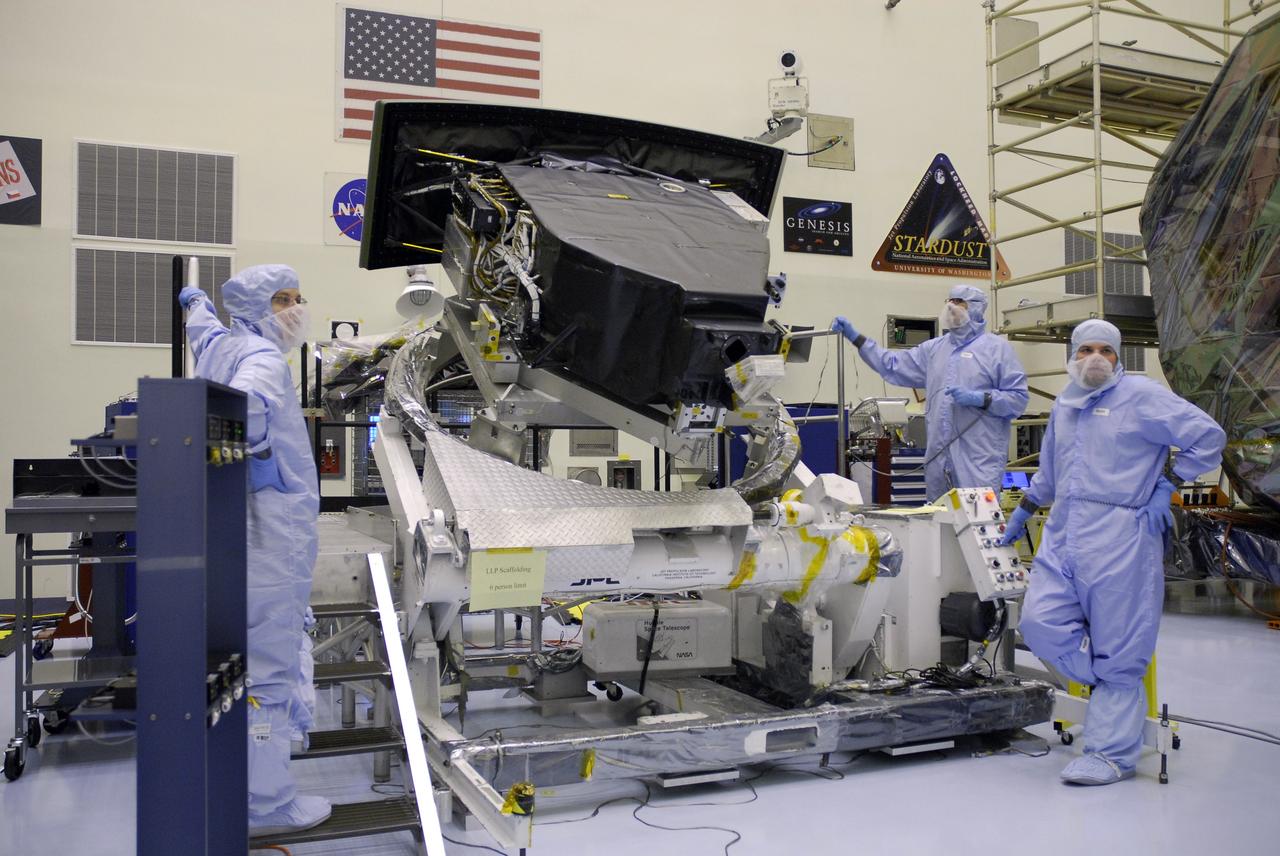
CAPE CANAVERAL, Fla. – In the Payload Hazardous Servicing Facility at NASA's Kennedy Space Center, technicians stand by as the Wide Field Camera 3, or WFC3, is rotated. The WFC3 will be transferred to the Super Lightweight Interchangeable Carrier. WFC3 is part of the payload on space shuttle Atlantis' STS-125 mission for the fifth and final Hubble servicing flight to NASA's Hubble Space Telescope. The curved edge shown at left is the radiator, the "outside" of WFC3 that will be exposed to space and will expel heat out of Hubble and into space through black body radiation. As Hubble enters the last stage of its life, WFC3 will be Hubble's next evolutionary step, allowing Hubble to peer ever further into the mysteries of the cosmos. WFC3 will study a diverse range of objects and phenomena, from young and extremely distant galaxies, to much more nearby stellar systems, to objects within our very own solar system. WFC3 will take the place of Wide Field Planetary Camera 2, which astronauts will bring back to Earth aboard the shuttle. Launch of Atlantis is targeted at 1:34 a.m. EDT Oct. 8. Photo credit: NASA/Amanda Diller
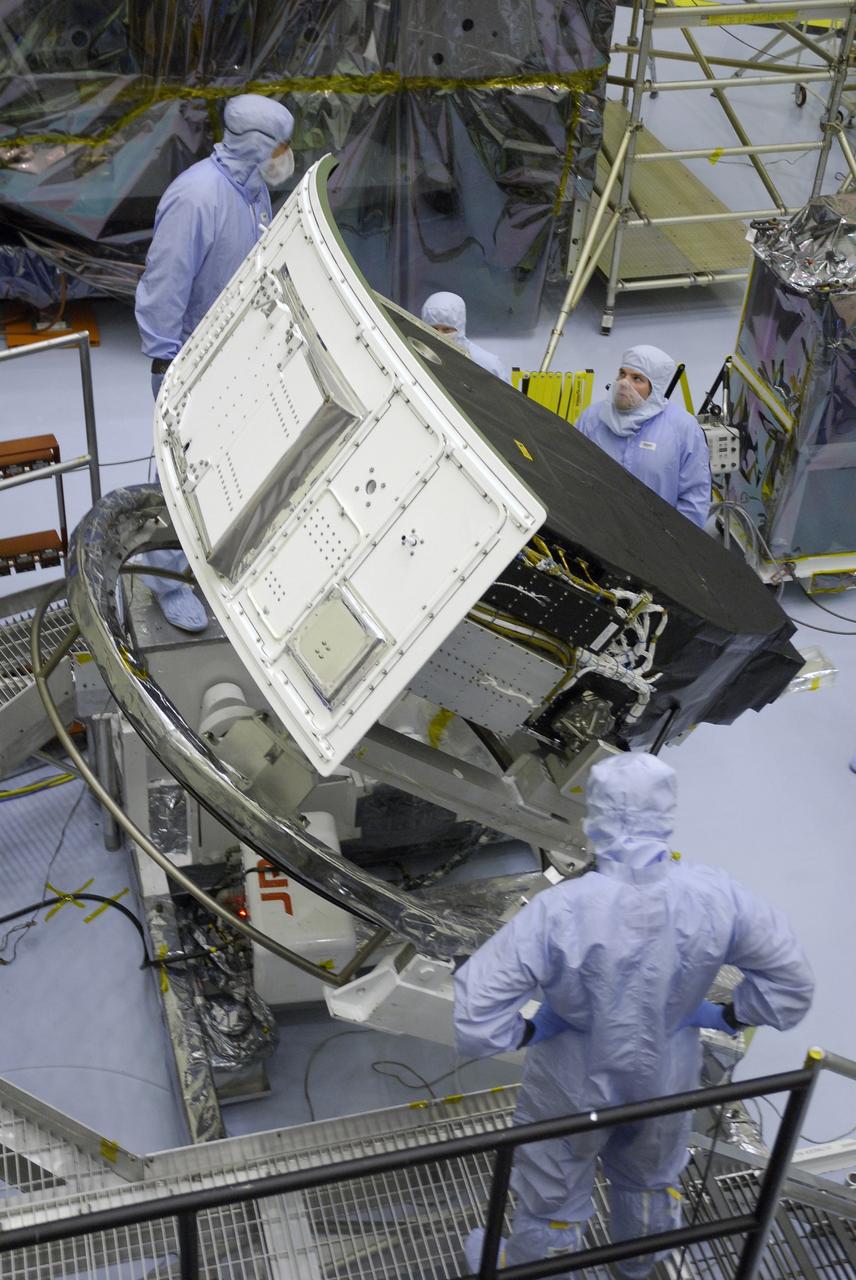
CAPE CANAVERAL, Fla. – In the Payload Hazardous Servicing Facility at NASA's Kennedy Space Center, technicians observe as the Wide Field Camera 3, or WFC3, is rotated. The WFC3 will be transferred to the Super Lightweight Interchangeable Carrier. WFC3 is part of the payload on space shuttle Atlantis' STS-125 mission for the fifth and final Hubble servicing flight to NASA's Hubble Space Telescope. The curved edge shown at the back is the radiator, the "outside" of WFC3 that will be exposed to space and will expel heat out of Hubble and into space through black body radiation. As Hubble enters the last stage of its life, WFC3 will be Hubble's next evolutionary step, allowing Hubble to peer ever further into the mysteries of the cosmos. WFC3 will study a diverse range of objects and phenomena, from young and extremely distant galaxies, to much more nearby stellar systems, to objects within our very own solar system. WFC3 will take the place of Wide Field Planetary Camera 2, which astronauts will bring back to Earth aboard the shuttle. Launch of Atlantis is targeted at 1:34 a.m. EDT Oct. 8. Photo credit: NASA/Amanda Diller
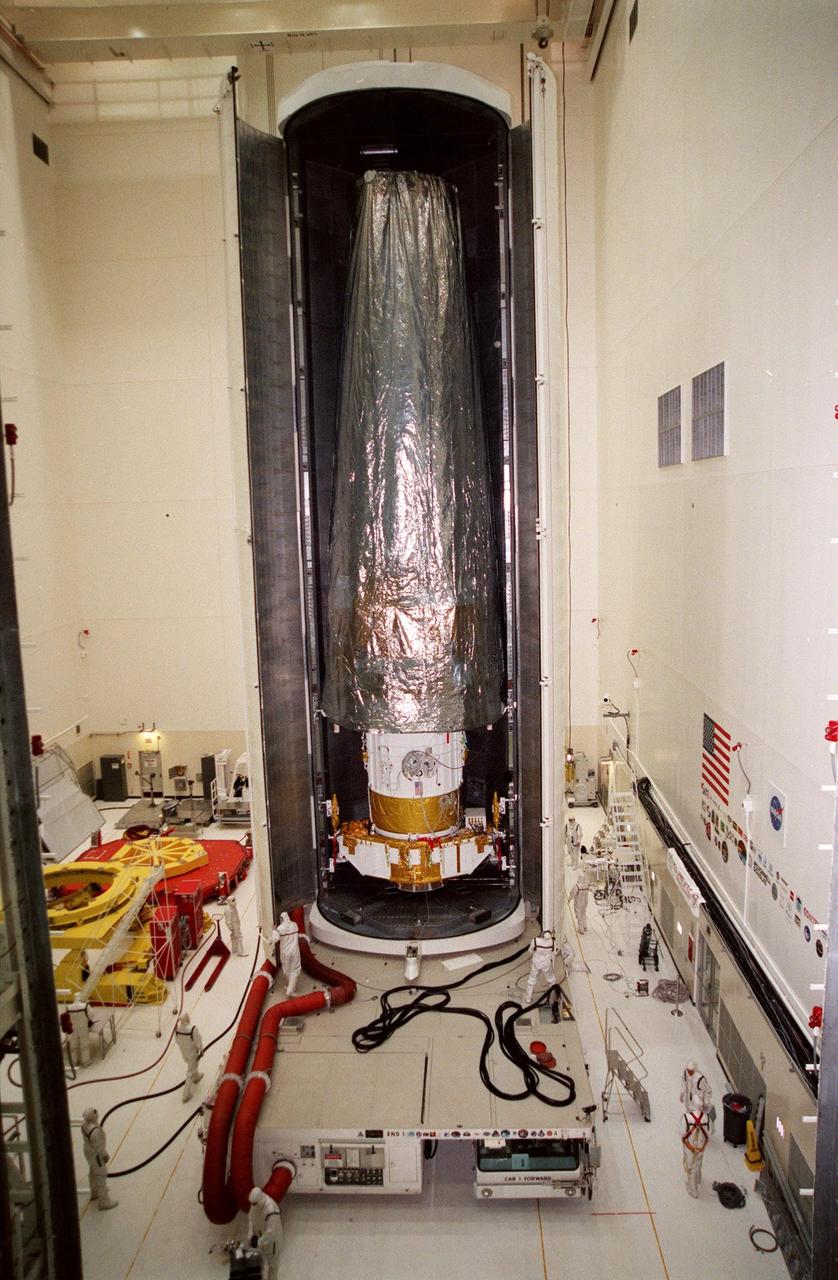
Inside the Vertical Processing Facility, the Chandra X-ray Observatory sits inside the payload canister, ready to be moved to Launch Pad 39B. Liftoff will take place no earlier than July 20 at 12:36 a.m. EDT aboard Space Shuttle Columbia, on mission STS-93. Chandra will allow scientists from around the world to obtain unprecedented X-ray images of exotic environments to help understand the structure and evolution of the universe. Chandra is expected to provide unique and crucial information on the nature of objects ranging from comets in our solar system to quasars at the edge of the observable universe, map the location of dark matter and help to identify it, and probe the faintest of active galaxies, allowing scientists to study not only how their energy output changes with time, but also how these objects produce their intense energy emissions in the first place. Since X-rays are absorbed by the Earth's atmosphere, space-based observatories are necessary to study these phenomena and allow scientists to analyze some of the greatest mysteries of the universe
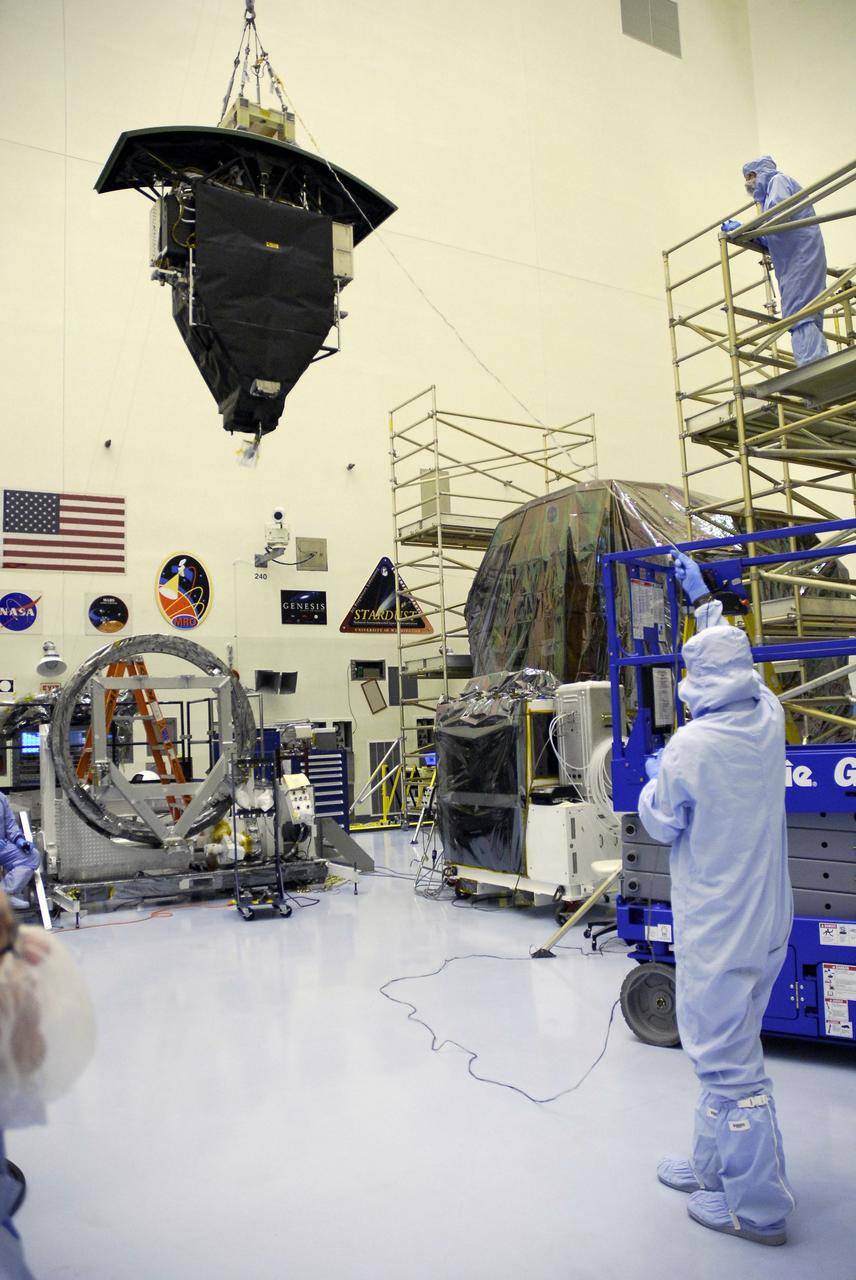
CAPE CANAVERAL, Fla. – In the Payload Hazardous Servicing Facility at NASA's Kennedy Space Center, an overhead crane lifts the Wide Field Camera 3, or WFC3, high above the floor for transfer to the Super Lightweight Interchangeable Carrier. WFC3 is part of the payload on space shuttle Atlantis' STS-125 mission for the fifth and final Hubble servicing flight to NASA's Hubble Space Telescope. As Hubble enters the last stage of its life, WFC3 will be Hubble's next evolutionary step, allowing Hubble to peer ever further into the mysteries of the cosmos. WFC3 will study a diverse range of objects and phenomena, from young and extremely distant galaxies, to much more nearby stellar systems, to objects within our very own solar system. WFC3 will take the place of Wide Field Planetary Camera 2, which astronauts will bring back to Earth aboard the shuttle. Launch of Atlantis is targeted at 1:34 a.m. EDT Oct. 8. Photo credit: NASA/Amanda Diller
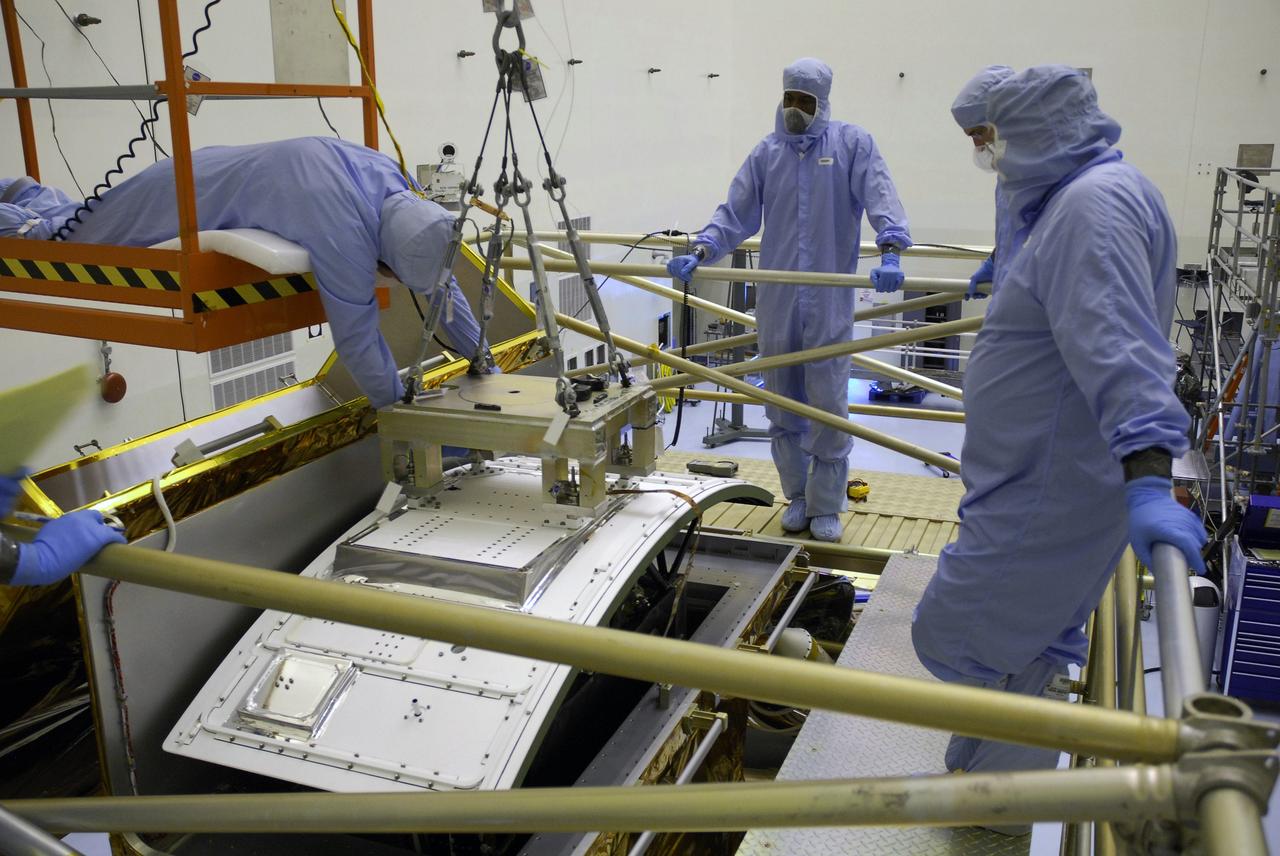
CAPE CANAVERAL, Fla. – In the Payload Hazardous Servicing Facility at NASA's Kennedy Space Center, technicians check the placement of an overhead crane to the Wide Field Camera 3, or WFC3, that will transfer the WFC3 to the Super Lightweight Interchangeable Carrier. WFC3 is part of the payload on space shuttle Atlantis' STS-125 mission for the fifth and final Hubble servicing flight to NASA's Hubble Space Telescope. As Hubble enters the last stage of its life, WFC3 will be Hubble's next evolutionary step, allowing Hubble to peer ever further into the mysteries of the cosmos. WFC3 will study a diverse range of objects and phenomena, from young and extremely distant galaxies, to much more nearby stellar systems, to objects within our very own solar system. WFC3 will take the place of Wide Field Planetary Camera 2, which astronauts will bring back to Earth aboard the shuttle. Launch of Atlantis is targeted at 1:34 a.m. EDT Oct. 8. Photo credit: NASA/Amanda Diller
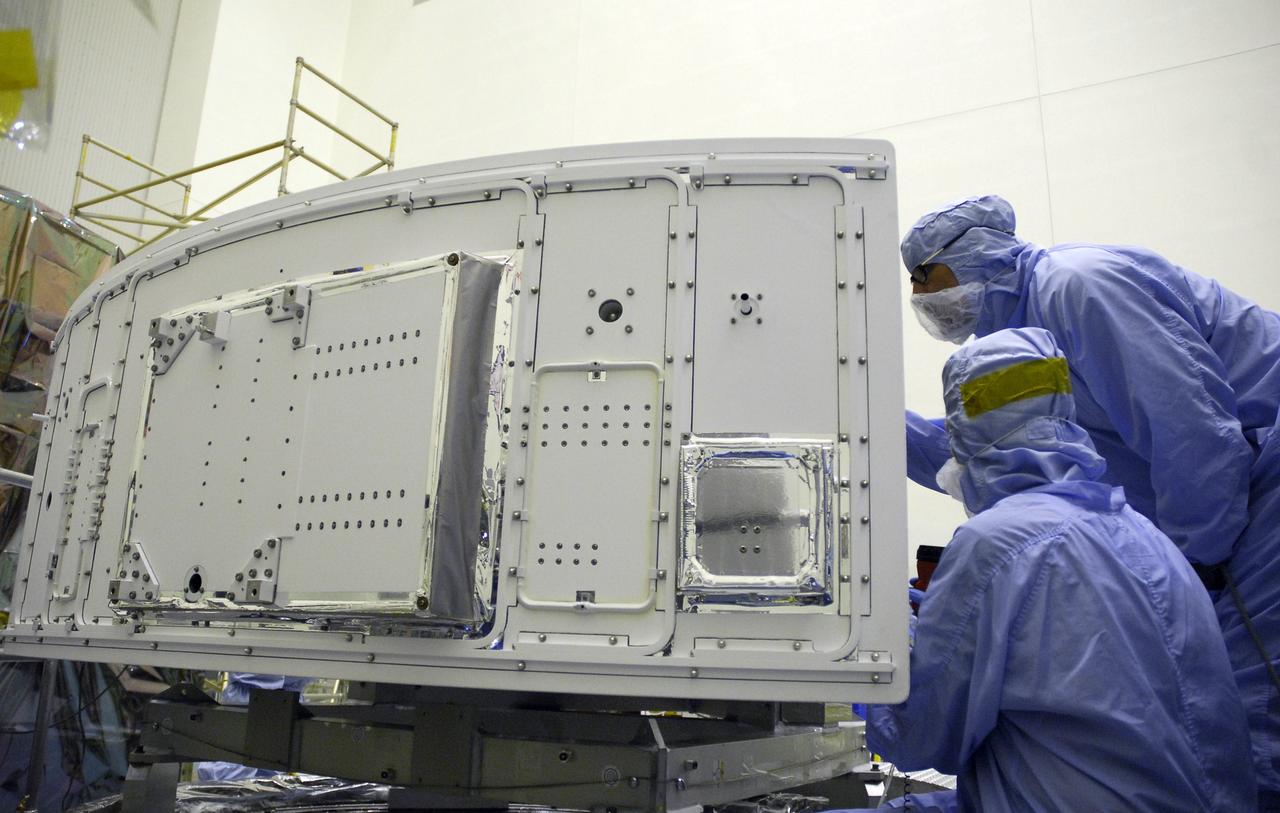
CAPE CANAVERAL, Fla. – In the Payload Hazardous Servicing Facility at NASA's Kennedy Space Center, a technicians clean the radiator on the Wide Field Camera 3, or WFC3,that will be installed on NASA's Hubble Space Telescope. The radiator is the "outside" of WFC3 that will be exposed to space. It will expel heat out of Hubble and into space through black body radiation. WFC3 is part of the payload on space shuttle Atlantis' STS-125 mission for the fifth and final Hubble servicing flight to NASA's Hubble Space Telescope. As Hubble enters the last stage of its life, WFC3 will be Hubble's next evolutionary step, allowing Hubble to peer ever further into the mysteries of the cosmos. WFC3 will study a diverse range of objects and phenomena, from young and extremely distant galaxies, to much more nearby stellar systems, to objects within our very own solar system. WFC3 will take the place of Wide Field Planetary Camera 2, which astronauts will bring back to Earth aboard the shuttle. Launch of Atlantis is targeted at 1:34 a.m. EDT Oct. 8. Photo credit: NASA/Amanda Diller
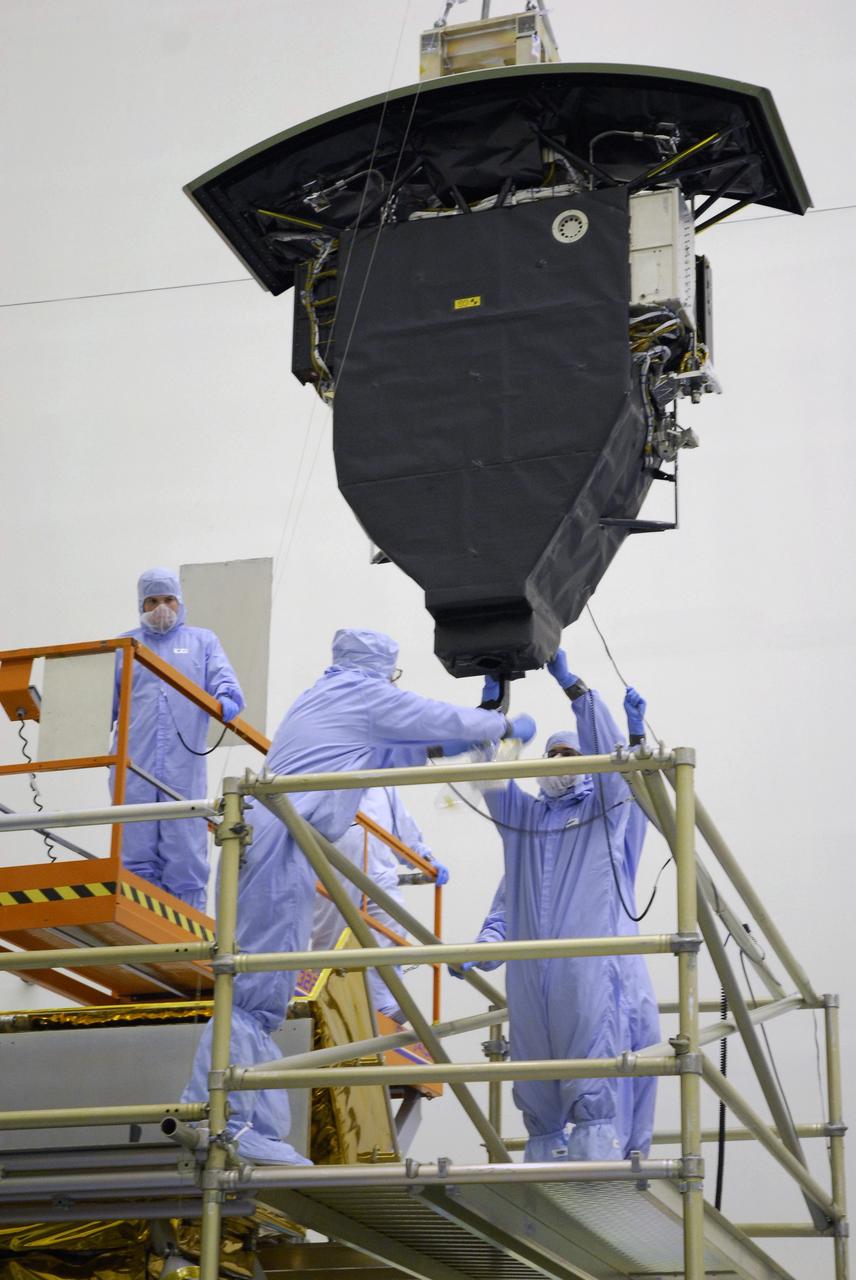
CAPE CANAVERAL, Fla. – In the Payload Hazardous Servicing Facility at NASA's Kennedy Space Center, an overhead crane lifts the Wide Field Camera 3, or WFC3, above the stand holding the Super Lightweight Interchangeable Carrier. WFC3 is part of the payload on space shuttle Atlantis' STS-125 mission for the fifth and final Hubble servicing flight to NASA's Hubble Space Telescope. As Hubble enters the last stage of its life, WFC3 will be Hubble's next evolutionary step, allowing Hubble to peer ever further into the mysteries of the cosmos. WFC3 will study a diverse range of objects and phenomena, from young and extremely distant galaxies, to much more nearby stellar systems, to objects within our very own solar system. WFC3 will take the place of Wide Field Planetary Camera 2, which astronauts will bring back to Earth aboard the shuttle. Launch of Atlantis is targeted at 1:34 a.m. EDT Oct. 8. Photo credit: NASA/Amanda Diller

This image is an observation of Quasar 3C 273 by the High Energy Astronomy Observatory (HEAO)-2/Einstein Observatory. It reveals the presence of a new source (upper left) with a red shift that indicates that it is about 10 billion light years away. Quasars are mysterious, bright, star-like objects apparently located at the very edge of the visible universe. Although no bigger than our solar system, they radiate as much visible light as a thousand galaxies. Quasars also emit radio signals and were previously recognized as x-ray sources. The HEAO-2, the first imaging and largest x-ray telescope built to date, was capable of producing actual photographs of x-ray objects. Shortly after launch, the HEAO-2 was nicknamed the Einstein Observatory by its scientific experimenters in honor of the centernial of the birth of Albert Einstein, whose concepts of relativity and gravitation have influenced much of modern astrophysics, particularly x-ray astronomy. The HEAO-2 was designed and developed by TRW, Inc. under the project management of the Marshall Space Flight Center.
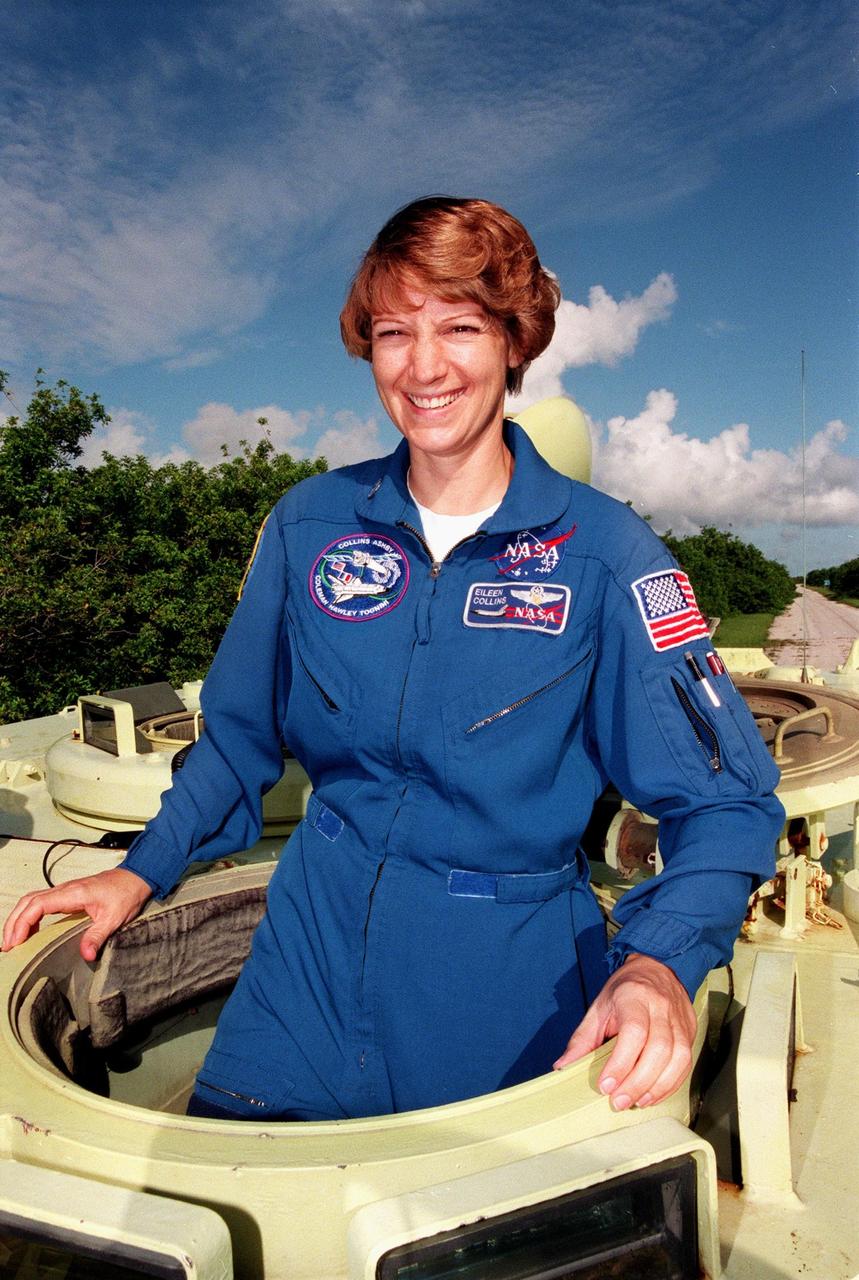
STS-93 Commander Eileen M. Collins climbs into an M-113 armored personnel carrier at the launch pad to take part in emergency egress training. Collins is the first woman to serve as mission commander. In preparation for their mission, the STS-93 crew are participating in Terminal Countdown Demonstration Test activities that also include a launch-day dress rehearsal culminating with a simulated main engine cut-off. Others in the crew are Pilot Jeffrey S. Ashby and Mission Specialists Steven A. Hawley (Ph.D.), Catherine G. Coleman (Ph.D.), and Michel Tognini of France, who represents the Centre National d'Etudes Spatiales (CNES). The primary mission of STS-93 is the release of the Chandra X-ray Observatory, which will allow scientists from around the world to obtain unprecedented X-ray images of exotic environments in space to help understand the structure and evolution of the universe. Chandra is expected to provide unique and crucial information on the nature of objects ranging from comets in our solar system to quasars at the edge of the observable universe. Since X-rays are absorbed by the Earth's atmosphere, space-based observatories are necessary to study these phenomena and allow scientists to analyze some of the greatest mysteries of the universe. The targeted launch date for STS-93 is no earlier than July 20 at 12:36 a.m. EDT from Launch Pad 39B

STS-93 Commander Eileen M. Collins smiles on her arrival at KSC's Shuttle Landing Facility aboard a T-38 jet aircraft to participate in Terminal Countdown Demonstration Tests (TCDT) this week. TCDT activities familiarize the crew with the mission, provide training in emergency exit from the orbiter and launch pad, and include a launch-day dress rehearsal culminating with a simulated main engine cut-off. Joining Collins are Pilot Jeffrey S. Ashby and Mission Specialists Steven A. Hawley (Ph.D.), Catherine G. Coleman (Ph.D.) and Michel Tognini of France, with the Centre National d'Etudes Spatiales (CNES). Collins is the first woman to serve as mission commander. The primary mission of STS-93 is the release of the Chandra X-ray Observatory, which will allow scientists from around the world to obtain unprecedented X-ray images of exotic environments in space to help understand the structure and evolution of the universe. Chandra is expected to provide unique and crucial information on the nature of objects ranging from comets in our solar system to quasars at the edge of the observable universe. Since X-rays are absorbed by the Earth's atmosphere, space-based observatories are necessary to study these phenomena and allow scientists to analyze some of the greatest mysteries of the universe

STS-93 Mission Specialist Catherine G. Coleman (Ph.D.) grins on her arrival at KSC's Shuttle Landing Facility aboard a T-38 jet to participate in Terminal Countdown Demonstration Tests (TCDT) this week. TCDT activities familiarize the crew with the mission, provide training in emergency exit from the orbiter and launch pad, and include a launch-day dress rehearsal culminating with a simulated main engine cut-off. Joining Coleman are Commander Eileen M. Collins, Pilot Jeffrey S. Ashby and Mission Specialists Steven A. Hawley (Ph.D.) and Michel Tognini of France, who is with the Centre National d'Etudes Spatiales (CNES). Collins is the first woman to serve as mission commander. The primary mission of STS-93 is the release of the Chandra X-ray Observatory, which will allow scientists from around the world to obtain unprecedented X-ray images of exotic environments in space to help understand the structure and evolution of the universe. Chandra is expected to provide unique and crucial information on the nature of objects ranging from comets in our solar system to quasars at the edge of the observable universe. Since X-rays are absorbed by the Earth's atmosphere, space-based observatories are necessary to study these phenomena and allow scientists to analyze some of the greatest mysteries of the universe
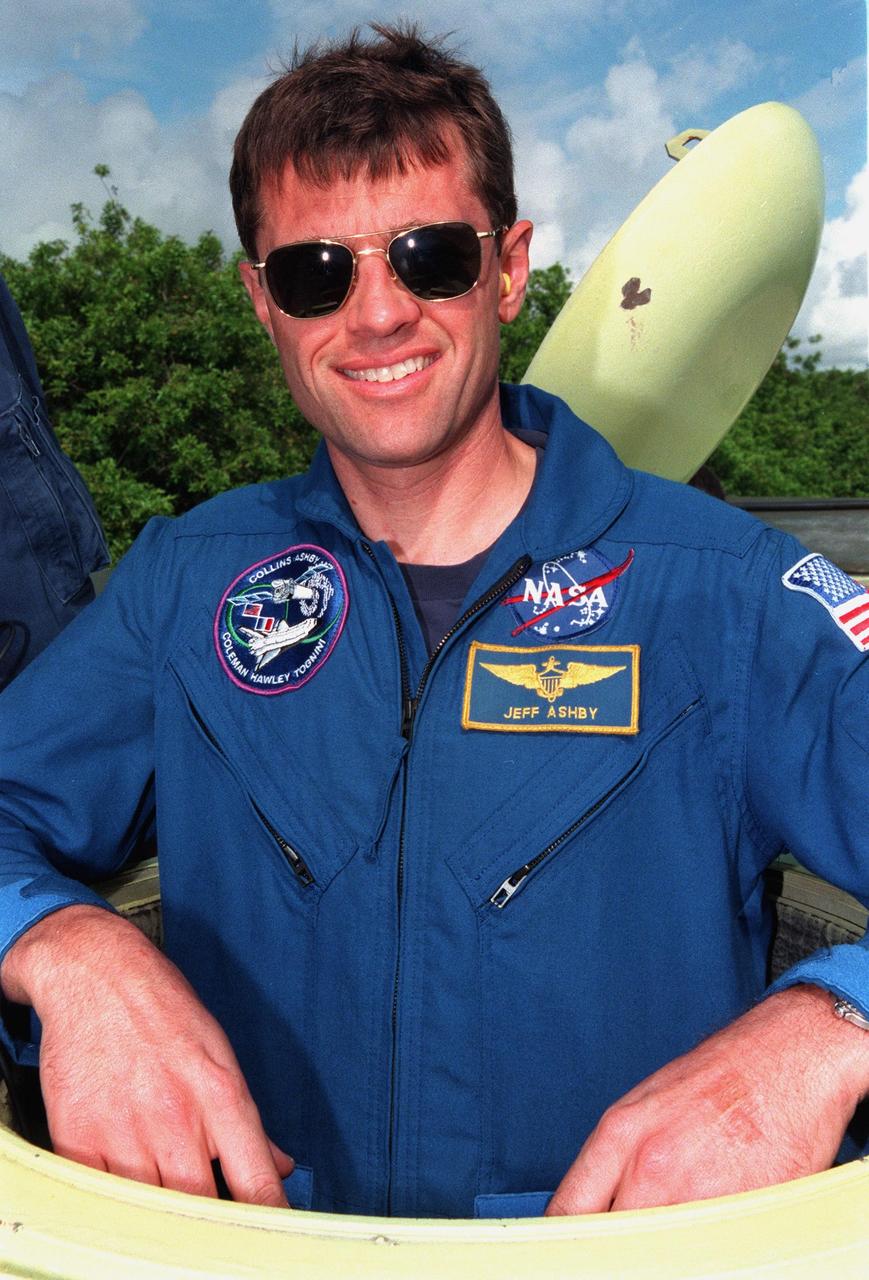
STS-93 Pilot Jeffrey S. Ashby pauses for the photographer before climbing into an M-113 armored personnel carrier at the launch pad to take part in emergency egress training. In preparation for their mission, the STS-93 crew are participating in Terminal Countdown Demonstration Test activities that also include a launch-day dress rehearsal culminating with a simulated main engine cut-off. Others in the crew are Commander Eileen M. Collins and Mission Specialists Steven A. Hawley (Ph.D.), Catherine G. Coleman (Ph.D.), and Michel Tognini of France, who represents the Centre National d'Etudes Spatiales (CNES). Collins is the first woman to serve as a mission commander. The primary mission of STS-93 is the release of the Chandra X-ray Observatory, which will allow scientists from around the world to obtain unprecedented X-ray images of exotic environments in space to help understand the structure and evolution of the universe. Chandra is expected to provide unique and crucial information on the nature of objects ranging from comets in our solar system to quasars at the edge of the observable universe. Since X-rays are absorbed by the Earth's atmosphere, space-based observatories are necessary to study these phenomena and allow scientists to analyze some of the greatest mysteries of the universe. The targeted launch date for STS-93 is no earlier than July 20 at 12:36 a.m. EDT from Launch Pad 39B
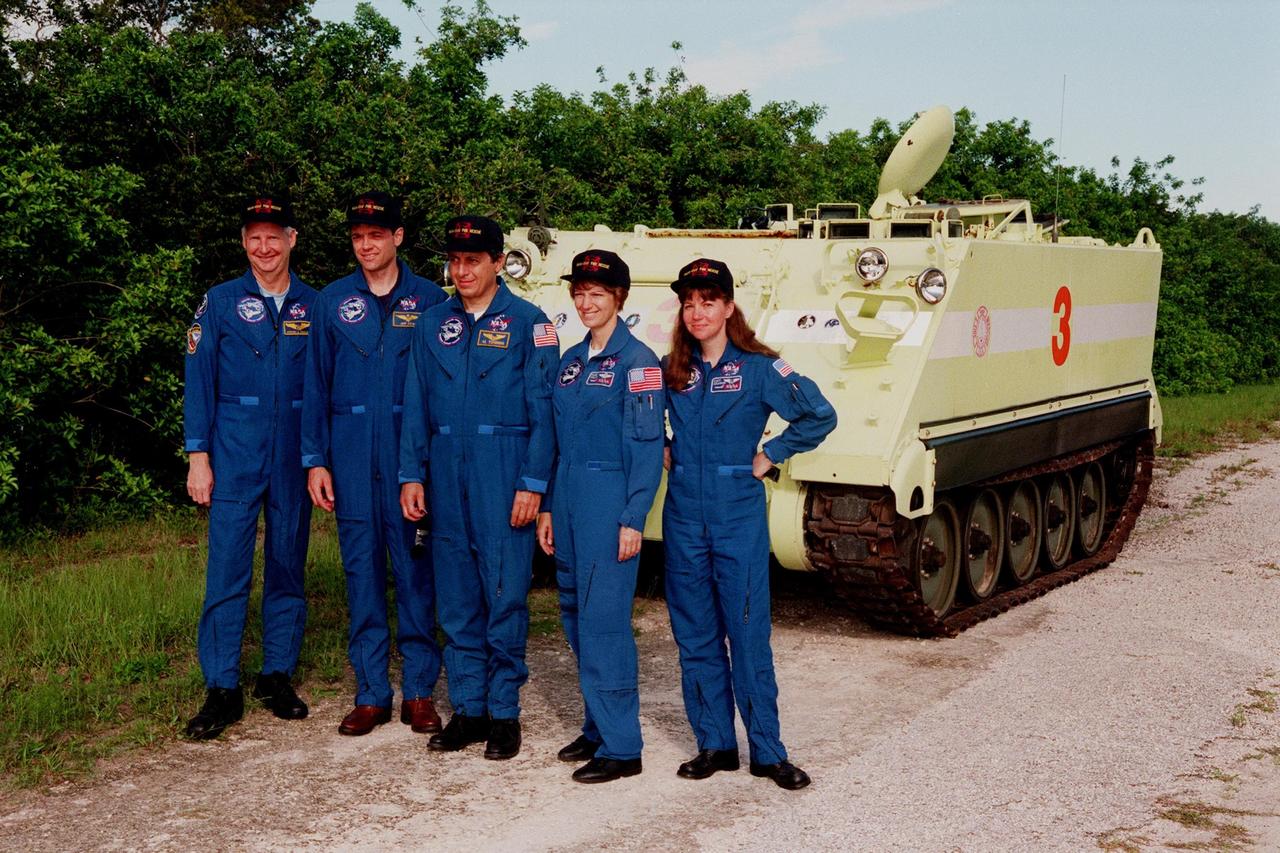
The STS-93 crew pose in front of an M-113, an armored personnel carrier, which they will use for emergency egress training from the launch pad. From left are Mission Specialist Steven A. Hawley (Ph.D.), Pilot Jeffrey S. Ashby, Mission Specialist Michel Tognini of France, Commander Eileen M. Collins and Mission Specialist Catherine G. Coleman (Ph.D.). Collins is the first woman to serve as mission commander. Tognini represents the Centre National d'Etudes Spatiales (CNES). TCDT activities familiarize the crew with the mission, provide training in emergency exit from the orbiter and launch pad, and include a launch-day dress rehearsal culminating with a simulated main engine cut-off. The primary mission of STS-93 is the release of the Chandra X-ray Observatory, which will allow scientists from around the world to obtain unprecedented X-ray images of exotic environments in space to help understand the structure and evolution of the universe. Chandra is expected to provide unique and crucial information on the nature of objects ranging from comets in our solar system to quasars at the edge of the observable universe. Since X-rays are absorbed by the Earth's atmosphere, space-based observatories are necessary to study these phenomena and allow scientists to analyze some of the greatest mysteries of the universe. The targeted launch date for STS-93 is no earlier than July 20 at 12:36 a.m. EDT from Launch Pad 39B

This is the Apollo 16 lunar landing mission crew portrait. Pictured from left to right are: Thomas K. Mattingly II, Command Module pilot; John W. Young, Mission Commander; and Charles M. Duke Jr., Lunar Module pilot. Launched from the Kennedy Space Center on April 16, 1972, Apollo 16 spent three days on Earth's Moon. The first study of the highlands area, the landing site for Apollo 16 was the Descartes Highlands. The fifth lunar landing mission out of six, Apollo 16 was famous for deploying and using an ultraviolet telescope as the first lunar observatory. The telescope photographed ultraviolet light emitted by Earth and other celestial objects. The Lunar Roving Vehicle, developed by the Marshall Space Flight Center, was also used for collecting rocks and data on the mysterious lunar highlands. In this photo, astronaut John W. Young photographs Charles M. Duke, Jr. collecting rock samples at the Descartes landing site. Duke stands by Plum Crater while the Lunar Roving Vehicle waits parked in the background. High above, Thomas K. Mattingly orbits in the Command Module. The mission ended April 27, 1972 as the crew splashed down into the Pacific Ocean.
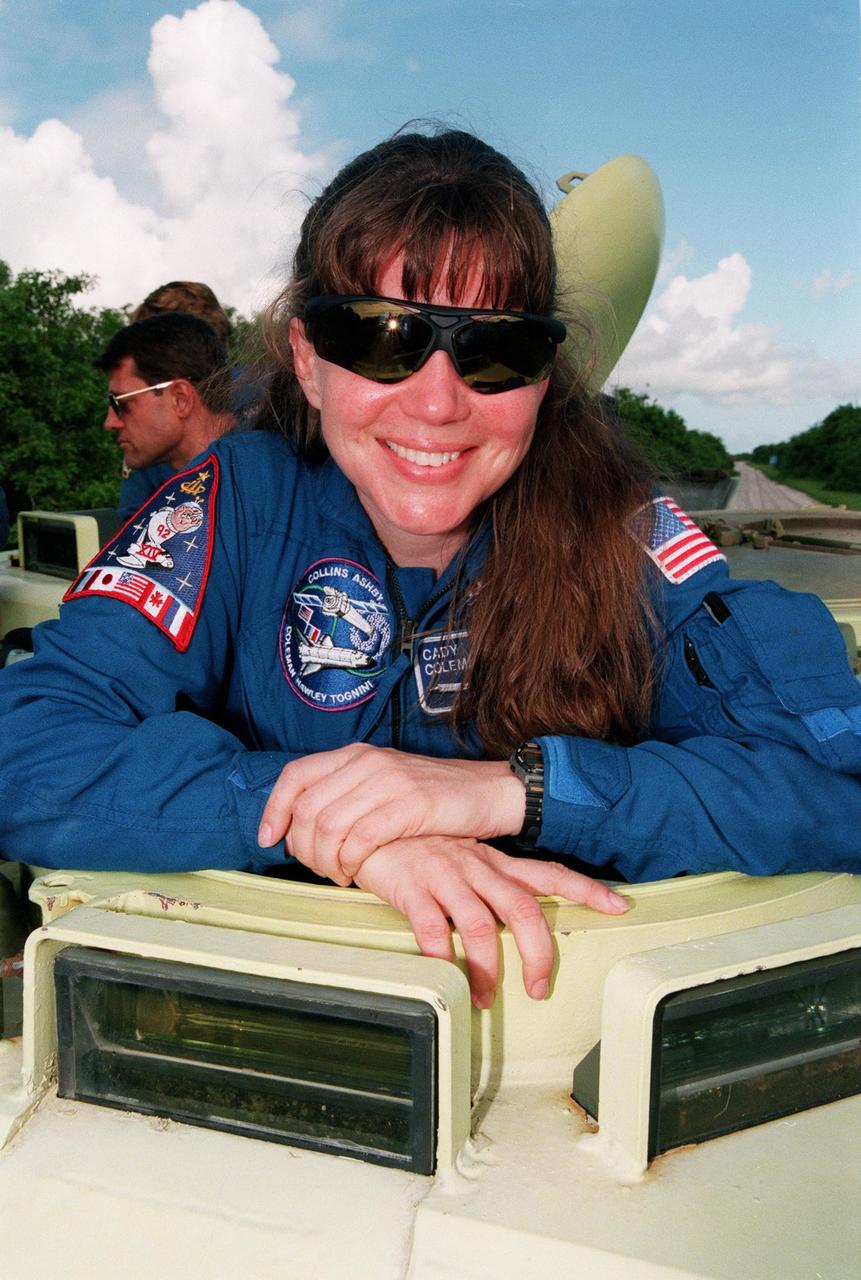
STS-93 Mission Specialist Catherine G. Coleman (Ph.D.) smiles for the photographer before climbing into an M-113 armored personnel carrier at the launch pad to take part in emergency egress training. In preparation for their mission, the STS-93 crew are participating in Terminal Countdown Demonstration Test activities that also include a launch-day dress rehearsal culminating with a simulated main engine cut-off. Others in the crew are Commander Eileen M. Collins, Pilot Jeffrey S. Ashby, and Mission Specialists Steven A. Hawley (Ph.D.) and Michel Tognini of France, who represents the Centre National d'Etudes Spatiales (CNES). Collins is the first woman to serve as a mission commander. The primary mission of STS-93 is the release of the Chandra X-ray Observatory, which will allow scientists from around the world to obtain unprecedented X-ray images of exotic environments in space to help understand the structure and evolution of the universe. Chandra is expected to provide unique and crucial information on the nature of objects ranging from comets in our solar system to quasars at the edge of the observable universe. Since X-rays are absorbed by the Earth's atmosphere, space-based observatories are necessary to study these phenomena and allow scientists to analyze some of the greatest mysteries of the universe. The targeted launch date for STS-93 is no earlier than July 20 at 12:36 a.m. EDT from Launch Pad 39B
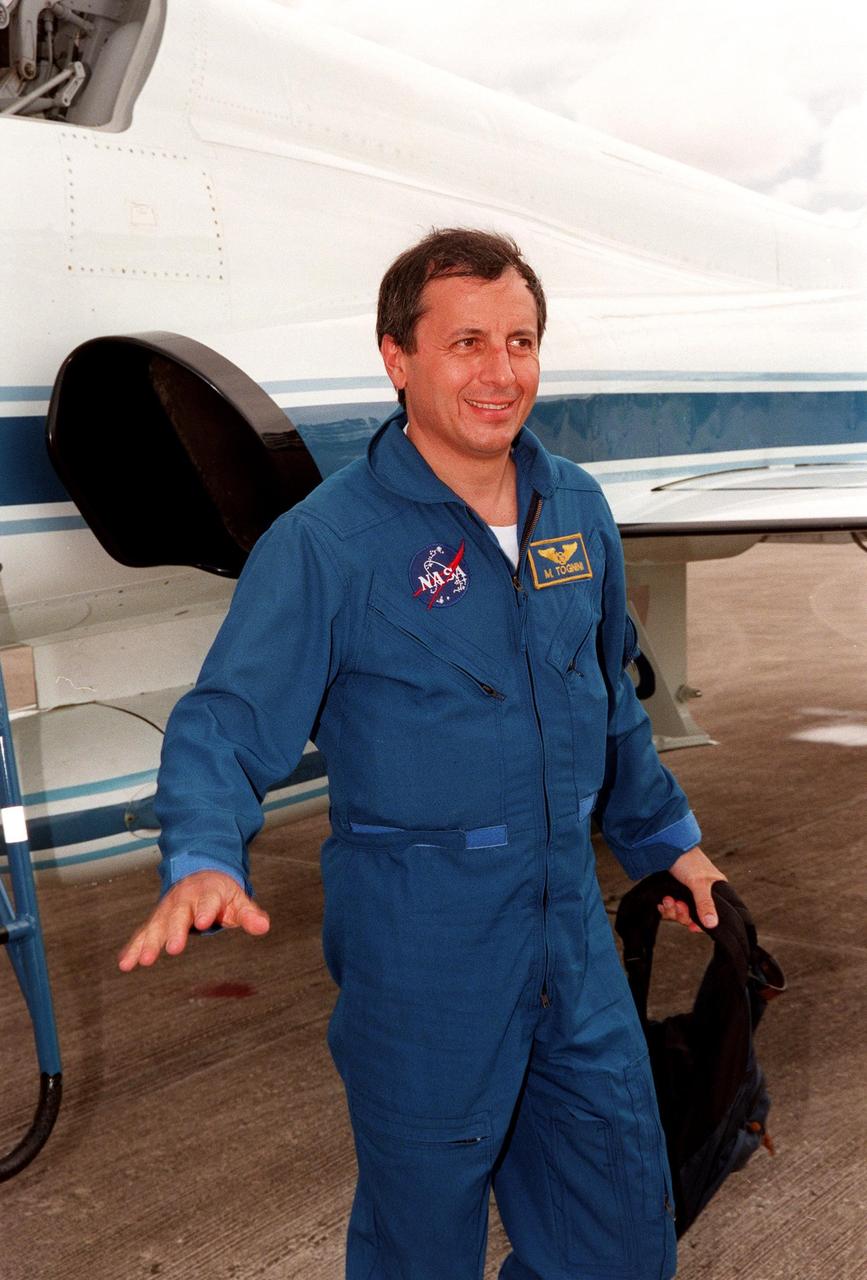
STS-93 Michel Tognini of France arrives at KSC's Shuttle Landing Facility to participate in Terminal Countdown Demonstration Tests (TCDT) this week. TCDT activities familiarize the crew with the mission, provide training in emergency exit from the orbiter and launch pad, and include a launch-day dress rehearsal culminating with a simulated main engine cut-off. Joining Tognini are Commander Eileen M. Collins, Pilot Jeffrey S. Ashby, and Mission Specialists Catherine G. Coleman (Ph.D.) and Steven A. Hawley (Ph.D.). Tognini represents the Centre National d'Etudes Spatiales (CNES). Collins is the first woman to serve as mission commander. The primary mission of STS-93 is the release of the Chandra X-ray Observatory, which will allow scientists from around the world to obtain unprecedented X-ray images of exotic environments in space to help understand the structure and evolution of the universe. Chandra is expected to provide unique and crucial information on the nature of objects ranging from comets in our solar system to quasars at the edge of the observable universe. Since X-rays are absorbed by the Earth's atmosphere, space-based observatories are necessary to study these phenomena and allow scientists to analyze some of the greatest mysteries of the universe
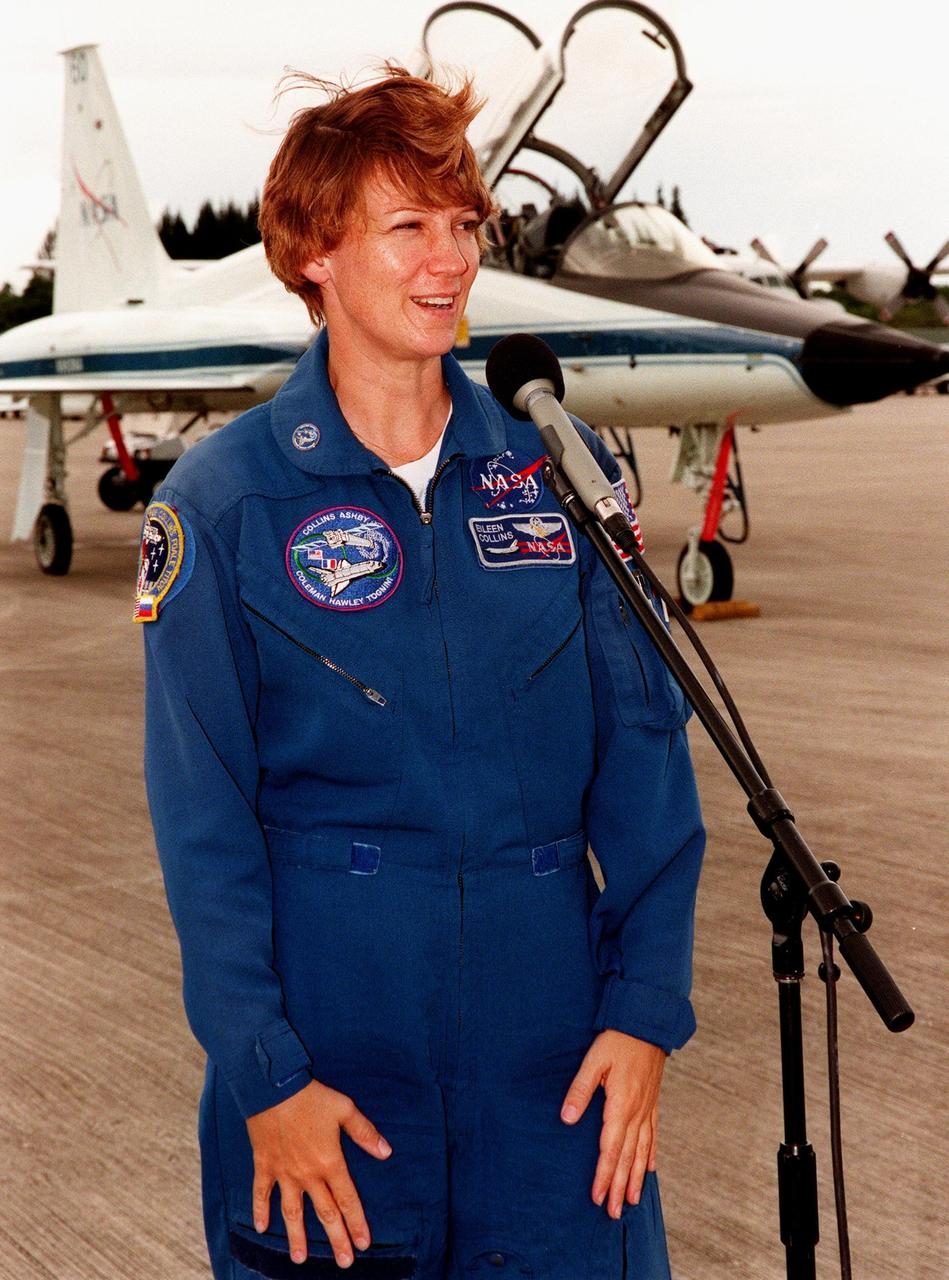
STS-93 Commander Eileen M. Collins talks to the media after arriving at KSC's Shuttle Landing Facility to participate in Terminal Countdown Demonstration Tests (TCDT) this week. TCDT activities familiarize the crew with the mission, provide training in emergency exit from the orbiter and launch pad, and include a launch-day dress rehearsal culminating with a simulated main engine cut-off. Collins is the first woman to serve as mission commander. Joining Collins are Pilot Jeffrey S. Ashby and Mission Specialists Steven A. Hawley (Ph.D.), Catherine G. Coleman (Ph.D.) and Michel Tognini of France, with the Centre National d'Etudes Spatiales (CNES). The primary mission of STS-93 is the release of the Chandra X-ray Observatory, which will allow scientists from around the world to obtain unprecedented X-ray images of exotic environments in space to help understand the structure and evolution of the universe. Chandra is expected to provide unique and crucial information on the nature of objects ranging from comets in our solar system to quasars at the edge of the observable universe. Since X-rays are absorbed by the Earth's atmosphere, space-based observatories are necessary to study these phenomena and allow scientists to analyze some of the greatest mysteries of the universe
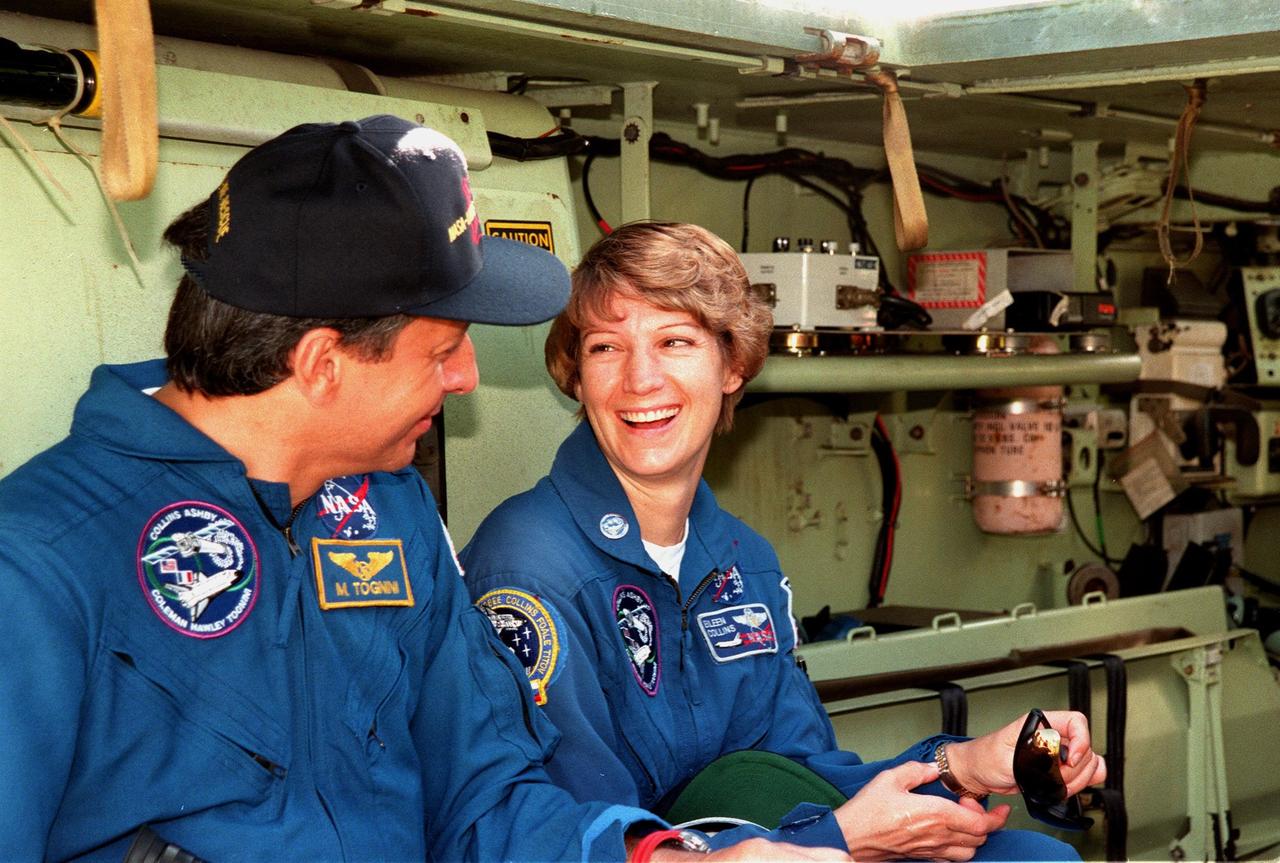
During emergency egress training inside an M-113 armored personnel carrier at the launch pad, Mission Specialist Michel Tognini of France and Commander Eileen M. Collins share a light moment. In preparation for their mission, the STS-93 crew are participating in Terminal Countdown Demonstration Test activities that also include a launch-day dress rehearsal culminating with a simulated main engine cut-off. Also at KSC are Pilot Jeffrey S. Ashby and Mission Specialists Steven A. Hawley (Ph.D.), and Catherine G. Coleman (Ph.D.). Collins is the first woman to serve as mission commander. Tognini represents the Centre National d'Etudes Spatiales (CNES). The primary mission of STS-93 is the release of the Chandra X-ray Observatory, which will allow scientists from around the world to obtain unprecedented X-ray images of exotic environments in space to help understand the structure and evolution of the universe. Chandra is expected to provide unique and crucial information on the nature of objects ranging from comets in our solar system to quasars at the edge of the observable universe. Since X-rays are absorbed by the Earth's atmosphere, space-based observatories are necessary to study these phenomena and allow scientists to analyze some of the greatest mysteries of the universe. The targeted launch date for STS-93 is no earlier than July 20 at 12:36 a.m. EDT from Launch Pad 39B
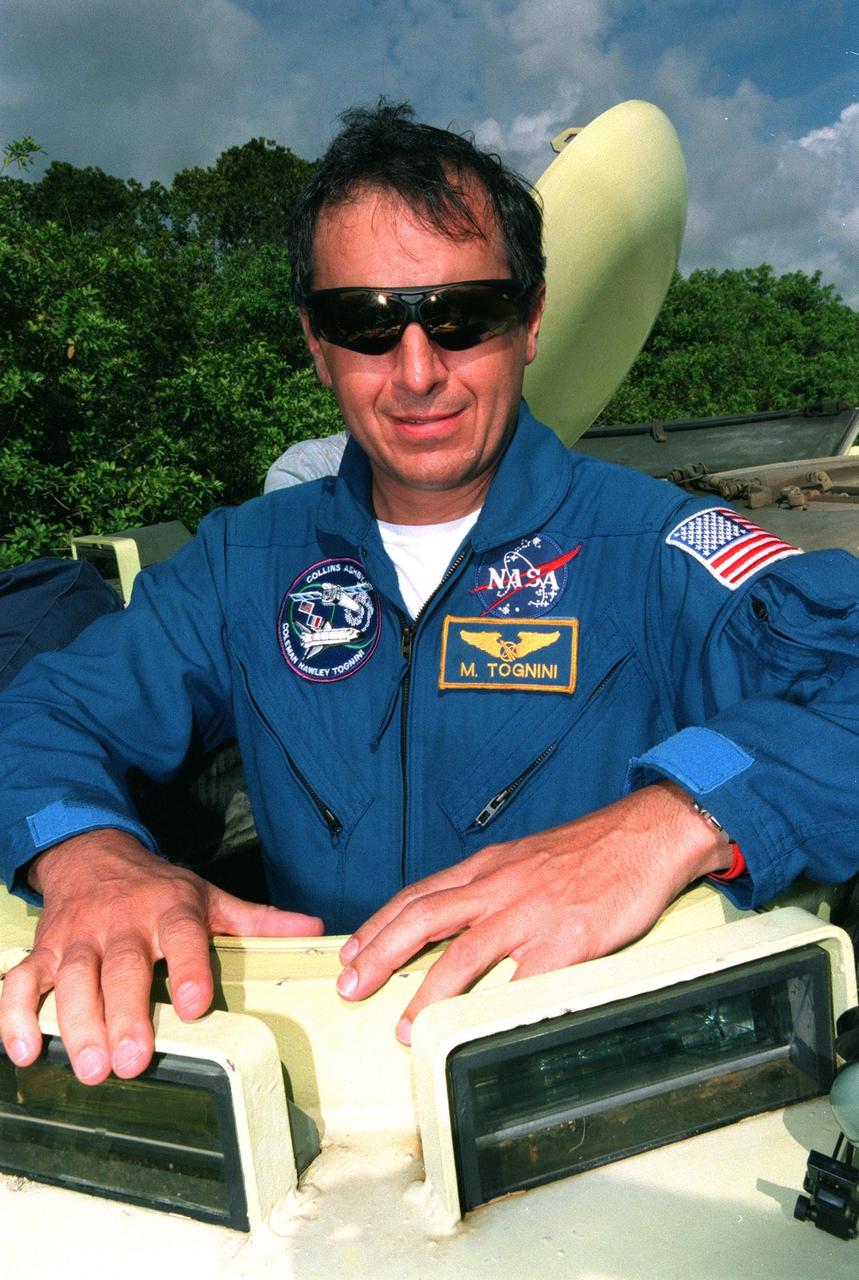
STS-93 Michel Tognini of France, who represents the Centre National d'Etudes Spatiales (CNES), pauses for the photographer before climbing into an M-113 armored personnel carrier at the launch pad to take part in emergency egress training. In preparation for their mission, the STS-93 crew are participating in Terminal Countdown Demonstration Test activities that also include a launch-day dress rehearsal culminating with a simulated main engine cut-off. Others in the crew are Commander Eileen M. Collins, Pilot Jeffrey S. Ashby, and Mission Specialists Steven A. Hawley (Ph.D.) and Catherine G. Coleman (Ph.D.). Collins is the first woman to serve as a mission commander. The primary mission of STS-93 is the release of the Chandra X-ray Observatory, which will allow scientists from around the world to obtain unprecedented X-ray images of exotic environments in space to help understand the structure and evolution of the universe. Chandra is expected to provide unique and crucial information on the nature of objects ranging from comets in our solar system to quasars at the edge of the observable universe. Since X-rays are absorbed by the Earth's atmosphere, space-based observatories are necessary to study these phenomena and allow scientists to analyze some of the greatest mysteries of the universe. The targeted launch date for STS-93 is no earlier than July 20 at 12:36 a.m. EDT from Launch Pad 39B

STS-93 Mission Specialist Steven A. Hawley (Ph.D.) grins as he steps down from a T-38 jet aircraft after landing at KSC's Shuttle Landing Facility. The STS-93 crew are at KSC to participate in Terminal Countdown Demonstration Tests (TCDT) this week. TCDT activities familiarize the crew with the mission, provide training in emergency exit from the orbiter and launch pad, and include a launch-day dress rehearsal culminating with a simulated main engine cut-off. Joining Hawley are Commander Eileen M. Collins, Pilot Jeffrey S. Ashby, and Mission Specialists Catherine G. Coleman (Ph.D.) and Michel Tognini of France, with the Centre National d'Etudes Spatiales (CNES). Collins is the first woman to serve as mission commander. The primary mission of STS-93 is the release of the Chandra X-ray Observatory, which will allow scientists from around the world to obtain unprecedented X-ray images of exotic environments in space to help understand the structure and evolution of the universe. Chandra is expected to provide unique and crucial information on the nature of objects ranging from comets in our solar system to quasars at the edge of the observable universe. Since X-rays are absorbed by the Earth's atmosphere, space-based observatories are necessary to study these phenomena and allow scientists to analyze some of the greatest mysteries of the universe
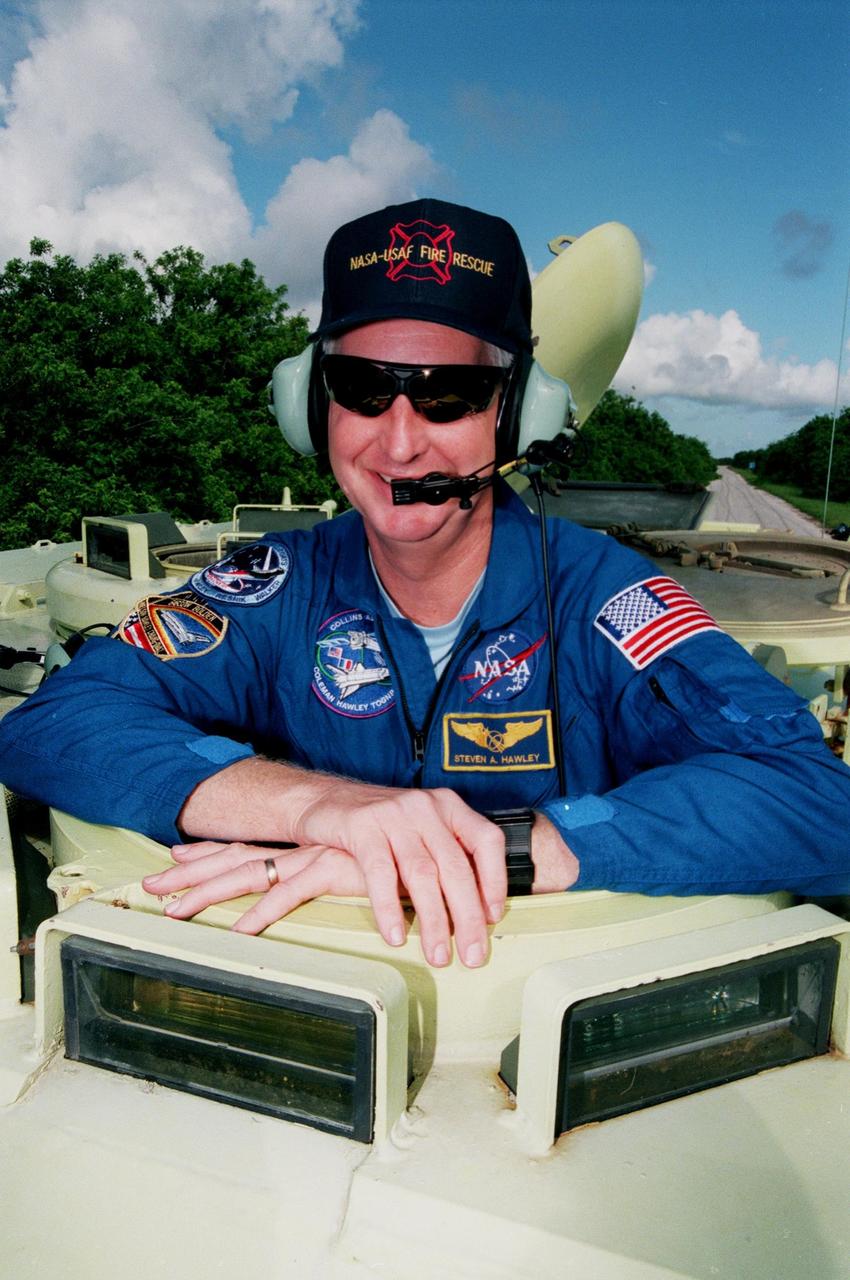
STS-93 Mission Specialist Steven A. Hawley (Ph.D.) smiles for the photographer before climbing into an M-113 armored personnel carrier at the launch pad to take part in emergency egress training. In preparation for their mission, the STS-93 crew are participating in Terminal Countdown Demonstration Test activities that also include a launch-day dress rehearsal culminating with a simulated main engine cut-off. Others in the crew are Commander Eileen M. Collins, Pilot Jeffrey S. Ashby, and Mission Specialists Catherine G. Coleman (Ph.D.) and Michel Tognini of France, who represents the Centre National d'Etudes Spatiales (CNES). Collins is the first woman to serve as a mission commander. The primary mission of STS-93 is the release of the Chandra X-ray Observatory, which will allow scientists from around the world to obtain unprecedented X-ray images of exotic environments in space to help understand the structure and evolution of the universe. Chandra is expected to provide unique and crucial information on the nature of objects ranging from comets in our solar system to quasars at the edge of the observable universe. Since X-rays are absorbed by the Earth's atmosphere, space-based observatories are necessary to study these phenomena and allow scientists to analyze some of the greatest mysteries of the universe. The targeted launch date for STS-93 is no earlier than July 20 at 12:36 a.m. EDT from Launch Pad 39B

This photograph shows the Compton Gamma-Ray Observatory (GRO) being deployed by the Remote Manipulator System (RMS) arm aboard the Space Shuttle Atlantis during the STS-37 mission in April 1991. The GRO reentered Earth atmosphere and ended its successful mission in June 2000. For nearly 9 years, the GRO Burst and Transient Source Experiment (BATSE), designed and built by the Marshall Space Flight Center (MSFC), kept an unblinking watch on the universe to alert scientists to the invisible, mysterious gamma-ray bursts that had puzzled them for decades. By studying gamma-rays from objects like black holes, pulsars, quasars, neutron stars, and other exotic objects, scientists could discover clues to the birth, evolution, and death of stars, galaxies, and the universe. The gamma-ray instrument was one of four major science instruments aboard the Compton. It consisted of eight detectors, or modules, located at each corner of the rectangular satellite to simultaneously scan the entire universe for bursts of gamma-rays ranging in duration from fractions of a second to minutes. In January 1999, the instrument, via the Internet, cued a computer-controlled telescope at Las Alamos National Laboratory in Los Alamos, New Mexico, within 20 seconds of registering a burst. With this capability, the gamma-ray experiment came to serve as a gamma-ray burst alert for the Hubble Space Telescope, the Chandra X-Ray Observatory, and major gound-based observatories around the world. Thirty-seven universities, observatories, and NASA centers in 19 states, and 11 more institutions in Europe and Russia, participated in the BATSE science program.
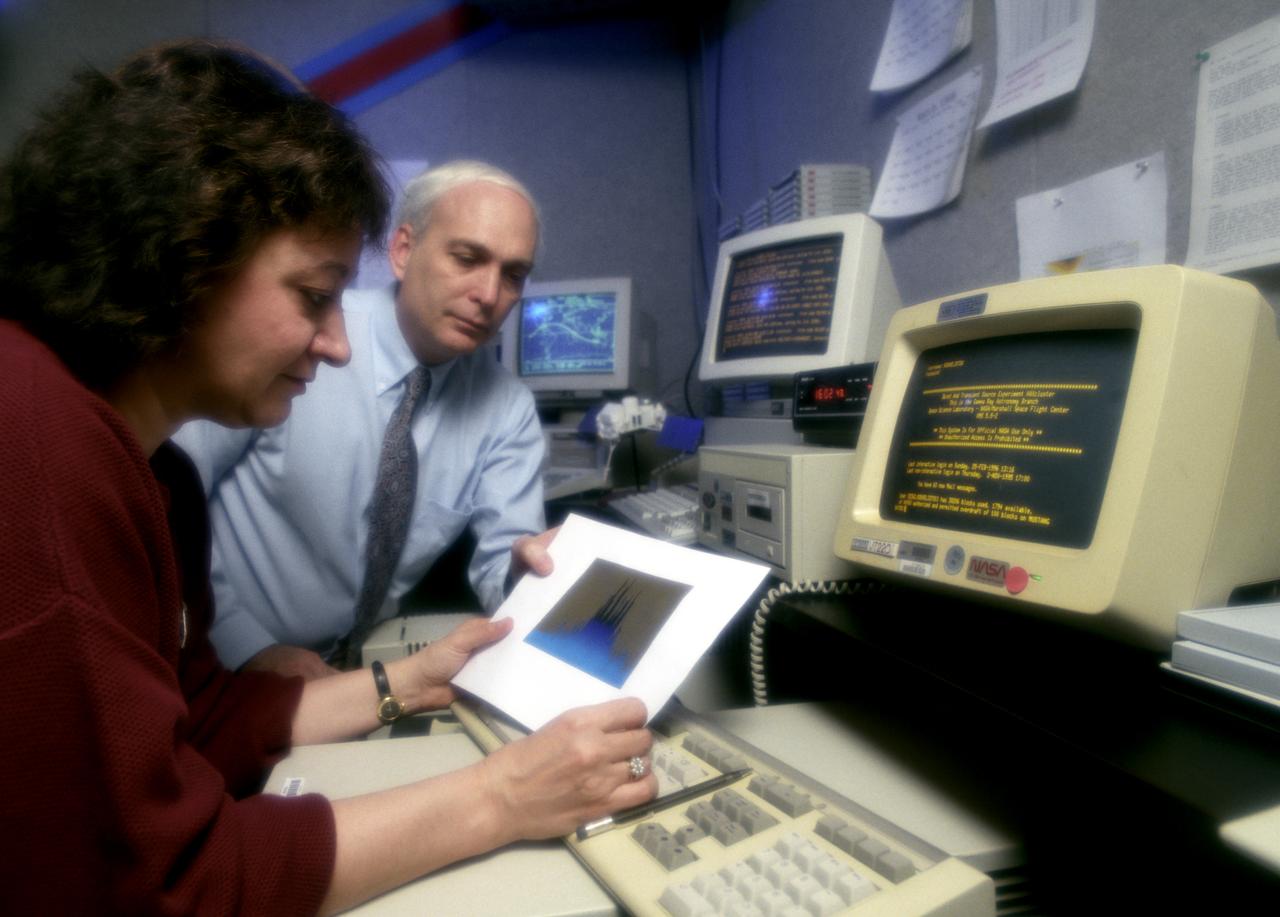
In this photograph, Dr. Gerald Fishman of the Marshall Space Flight Center (MSFC), a principal investigator of the Compton Gamma-Ray Observatory's (GRO's) instrument, the Burst and Transient Source Experiment (BATSE), and Dr. Chryssa Kouveliotou of Universities Space Research Associates review data from the BATSE. For nearly 9 years, GRO's Burst and Transient Source Experiment (BATSE), designed and built by the Marshall Space Flight Center, kept a blinking watch on the universe to alert scientist to the invisible, mysterious gamma-ray bursts. By studying gamma-rays from objects like black holes, pulsars, quasars, neutron stars, and other exotic objects, scientists could discover clues to the birth, evolution, and death of stars, galaxies, and the universe. The gamma-ray instrument was one of four major science instruments aboard the Compton. It consisted of eight detectors, or modules, located at each corner of the rectangular satellite to simultaneously scan the entire universe for bursts of gamma-rays ranging in duration from fractions of a second to minutes. Because gamma-rays are so powerful, they pass through conventional telescope mirrors. Instead of a mirror, the heart of each BATSE module was a large, flat, transparent crystal that generated a tiny flash of light when struck by a gamma-ray. With an impressive list of discoveries and diverse accomplishments, BATSE could claim to have rewritten astronomy textbooks. Launched aboard the Space Shuttle Orbiter Atlantis during the STS-35 mission in April 1991, the GRO reentered the Earth's atmosphere and ended its successful 9-year mission in June 2000.

This image shows the star-studded center of the Milky Way towards the constellation of Sagittarius. The crowded center of our galaxy contains numerous complex and mysterious objects that are usually hidden at optical wavelengths by clouds of dust — but many are visible here in these infrared observations from Hubble. However, the most famous cosmic object in this image still remains invisible: the monster at our galaxy’s heart called Sagittarius A*. Astronomers have observed stars spinning around this supermassive black hole (located right in the center of the image), and the black hole consuming clouds of dust as it affects its environment with its enormous gravitational pull. Infrared observations can pierce through thick obscuring material to reveal information that is usually hidden to the optical observer. This is the best infrared image of this region ever taken with Hubble, and uses infrared archive data from Hubble’s Wide Field Camera 3, taken in September 2011. Credit: NASA, ESA, and G. Brammer <b><a href="http://www.nasa.gov/audience/formedia/features/MP_Photo_Guidelines.html" rel="nofollow">NASA image use policy.</a></b> <b><a href="http://www.nasa.gov/centers/goddard/home/index.html" rel="nofollow">NASA Goddard Space Flight Center</a></b> enables NASA’s mission through four scientific endeavors: Earth Science, Heliophysics, Solar System Exploration, and Astrophysics. Goddard plays a leading role in NASA’s accomplishments by contributing compelling scientific knowledge to advance the Agency’s mission. <b>Follow us on <a href="http://twitter.com/NASA_GoddardPix" rel="nofollow">Twitter</a></b> <b>Like us on <a href="http://www.facebook.com/pages/Greenbelt-MD/NASA-Goddard/395013845897?ref=tsd" rel="nofollow">Facebook</a></b> <b>Find us on <a href="http://instagram.com/nasagoddard?vm=grid" rel="nofollow">Instagram</a></b>

This photograph shows the Compton Gamma-Ray Observatory being released from the Remote Manipulator System (RMS) arm aboard the Space Shuttle Atlantis during the STS-35 mission in April 1991. The GRO reentered the Earth's atmosphere and ended its successful mission in June 2000. For nearly 9 years, GRO's Burst and Transient Source Experiment (BATSE), designed and built by the Marshall Space Flight Center, kept an unblinking watch on the universe to alert scientist to the invisible, mysterious gamma-ray bursts that had puzzled them for decades. By studying gamma-rays from objects like black holes, pulsars, quasars, neutron stars, and other exotic objects, scientists could discover clues to the birth, evolution, and death of star, galaxies, and the universe. The gamma-ray instrument was one of four major science instruments aboard the Compton. It consisted of eight detectors, or modules, located at each corner of the rectangular satellite to simultaneously scan the entire universe for bursts of gamma-rays ranging in duration from fractions of a second to minutes. In January 1999, the instrument, via the Internet, cued a computer-controlled telescope at Las Alamos National Laboratory in Los Alamos, New Mexico, within 20 seconds of registering a burst. With this capability, the gamma-ray experiment came to serve as a gamma-ray burst alert for the Hubble Space Telescope, the Chandra X-Ray Observatory, and major gound-based observatories around the world. Thirty-seven universities, observatories, and NASA centers in 19 states, and 11 more institutions in Europe and Russia, participated in BATSE's science program.
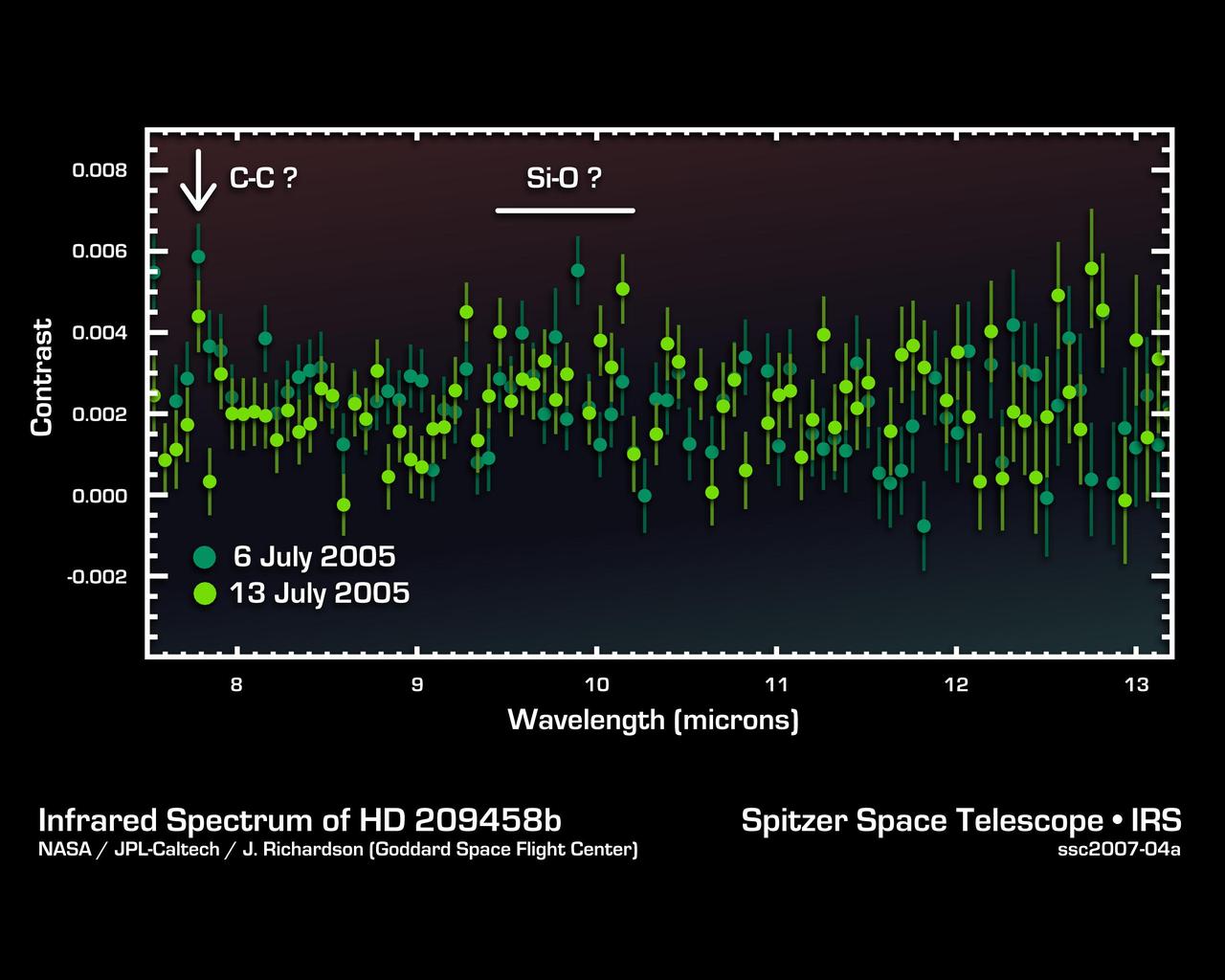
This infrared data from NASA's Spitzer Space Telescope -- called a spectrum -- tells astronomers that a distant gas planet, a so-called "hot Jupiter" called HD 209458b, might be smothered with high clouds. It is one of the first spectra of an alien world. A spectrum is created when an instrument called a spectrograph cracks light from an object open into a rainbow of different wavelengths. Patterns or ripples within the spectrum indicate the presence, or absence, of molecules making up the object. Astronomers using Spitzer's spectrograph were able to obtain infrared spectra for two so-called "transiting" hot-Jupiter planets using the "secondary eclipse" technique. In this method, the spectrograph first collects the combined infrared light from the planet plus its star, then, as the planet is eclipsed by the star, the infrared light of just the star. Subtracting the latter from the former reveals the planet's own rainbow of infrared colors. When astronomers first saw the infrared spectrum above, they were shocked. It doesn't look anything like what theorists had predicted. For example, theorists thought there'd be signatures of water in the wavelength ranges of 8 to 9 microns. The fact that water is not detected might indicate that it is hidden under a thick blanket of high, dry clouds. In addition, the spectrum shows signs of silicate dust -- tiny grains of sand -- in the wavelength range of 9 to 10 microns. This suggests that the planet's skies could be filled with high clouds of dust unlike anything seen in our own solar system. There is also an unidentified molecular signature at 7.78 microns. Future observations using Spitzer's spectrograph should be able to determine the nature of the mysterious feature. This spectrum was produced by Dr. Jeremy Richardson of NASA's Goddard Space Flight Center, Greenbelt, Md. and his colleagues. The data were taken by Spitzer's infrared spectrograph on July 6 and 13, 2005. http://photojournal.jpl.nasa.gov/catalog/PIA09197
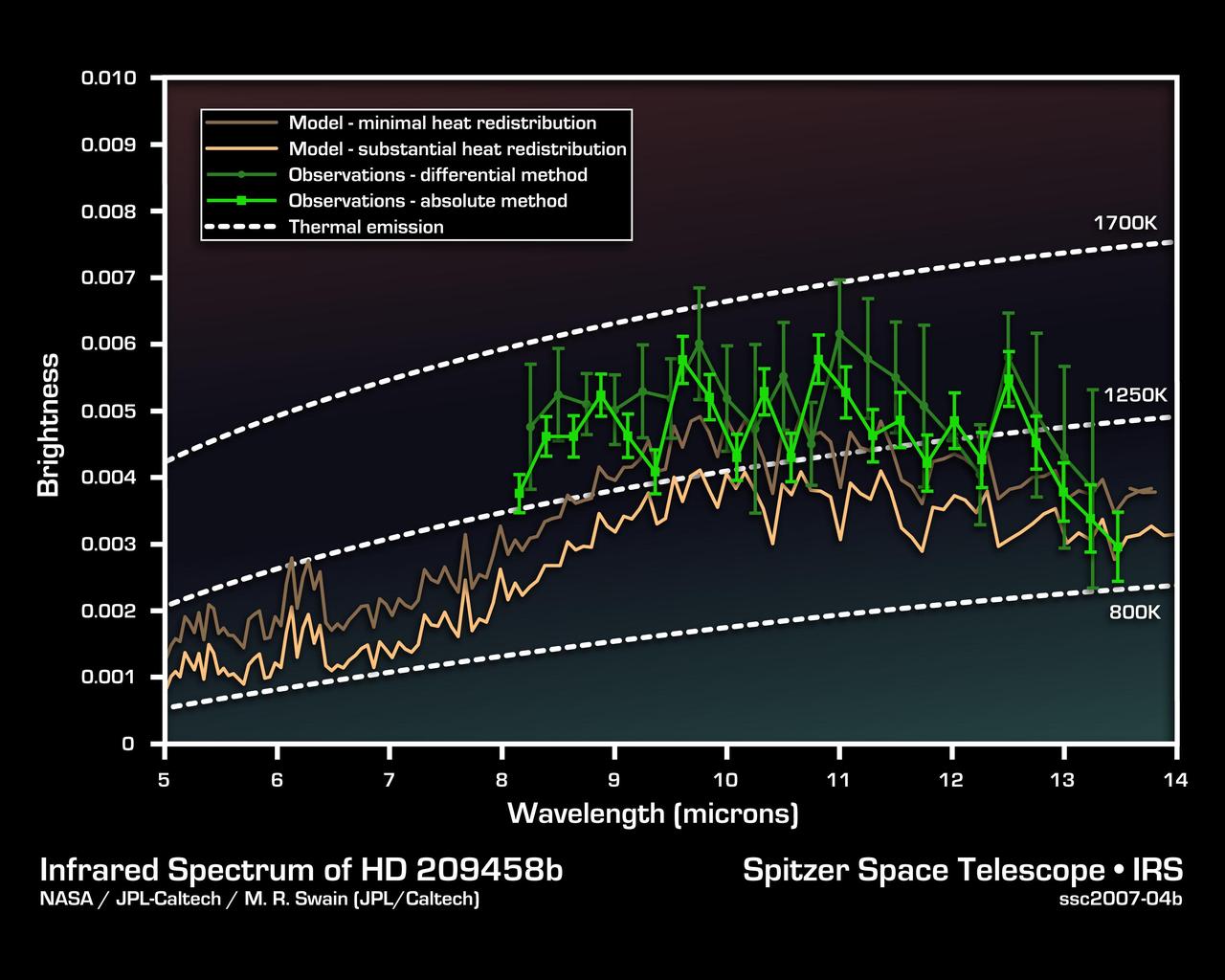
This infrared data from NASA's Spitzer Space Telescope -- called a spectrum -- tells astronomers that a distant gas planet, a so-called "hot Jupiter" called HD 209458b, might be smothered with high clouds. It is one of the first spectra of an alien world. A spectrum is created when an instrument called a spectrograph cracks light from an object open into a rainbow of different wavelengths. Patterns or ripples within the spectrum indicate the presence, or absence, of molecules making up the object. Astronomers using Spitzer's spectrograph were able to obtain infrared spectra for two so-called "transiting" hot-Jupiter planets using the "secondary eclipse" technique. In this method, the spectrograph first collects the combined infrared light from the planet plus its star, then, as the planet is eclipsed by the star, the infrared light of just the star. Subtracting the latter from the former reveals the planet's own rainbow of infrared colors. When astronomers first saw the infrared spectrum above, they were shocked. It doesn't look anything like what theorists had predicted. For example, theorists thought there'd be signatures of water in the wavelength ranges of 8 to 9 microns. The fact that water is not detected might indicate that it is hidden under a thick blanket of high, dry clouds. In addition, the spectrum shows signs of silicate dust -- tiny grains of sand -- in the wavelength range of 9 to 10 microns. This suggests that the planet's skies could be filled with high clouds of dust unlike anything seen in our own solar system. There is also an unidentified molecular signature at 7.78 microns. Future observations using Spitzer's spectrograph should be able to determine the nature of the mysterious feature. This spectrum was produced by Dr. Jeremy Richardson of NASA's Goddard Space Flight Center, Greenbelt, Md. and his colleagues. The data were taken by Spitzer's infrared spectrograph on July 6 and 13, 2005. http://photojournal.jpl.nasa.gov/catalog/PIA09198

This artist's concept shows an auroral display on a brown dwarf. If you could see an aurora on a brown dwarf, it would be a million times brighter than an aurora on Earth. Credits: Chuck Carter and Gregg Hallinan/Caltech --- Mysterious objects called brown dwarfs are sometimes called "failed stars." They are too small to fuse hydrogen in their cores, the way most stars do, but also too large to be classified as planets. But a new study in the journal Nature suggests they succeed in creating powerful auroral displays, similar to the kind seen around the magnetic poles on Earth. "This is a whole new manifestation of magnetic activity for that kind of object," said Leon Harding, a technologist at NASA's Jet Propulsion Laboratory, Pasadena, California, and co-author on the study. On Earth, auroras are created when charged particles from the solar wind enter our planet's magnetosphere, a region where Earth's magnetic field accelerates and sends them toward the poles. There, they collide with atoms of gas in the atmosphere, resulting in a brilliant display of colors in the sky. Read more: <a href="http://www.nasa.gov/jpl/powerful-auroras-found-at-brown-dwarf" rel="nofollow">www.nasa.gov/jpl/powerful-auroras-found-at-brown-dwarf</a> <b><a href="http://www.nasa.gov/audience/formedia/features/MP_Photo_Guidelines.html" rel="nofollow">NASA image use policy.</a></b> <b><a href="http://www.nasa.gov/centers/goddard/home/index.html" rel="nofollow">NASA Goddard Space Flight Center</a></b> enables NASA’s mission through four scientific endeavors: Earth Science, Heliophysics, Solar System Exploration, and Astrophysics. Goddard plays a leading role in NASA’s accomplishments by contributing compelling scientific knowledge to advance the Agency’s mission. <b>Follow us on <a href="http://twitter.com/NASAGoddardPix" rel="nofollow">Twitter</a></b> <b>Like us on <a href="http://www.facebook.com/pages/Greenbelt-MD/NASA-Goddard/395013845897?ref=tsd" rel="nofollow">Facebook</a></b> <b>Find us on <a href="http://instagrid.me/nasagoddard/?vm=grid" rel="nofollow">Instagram</a></b>
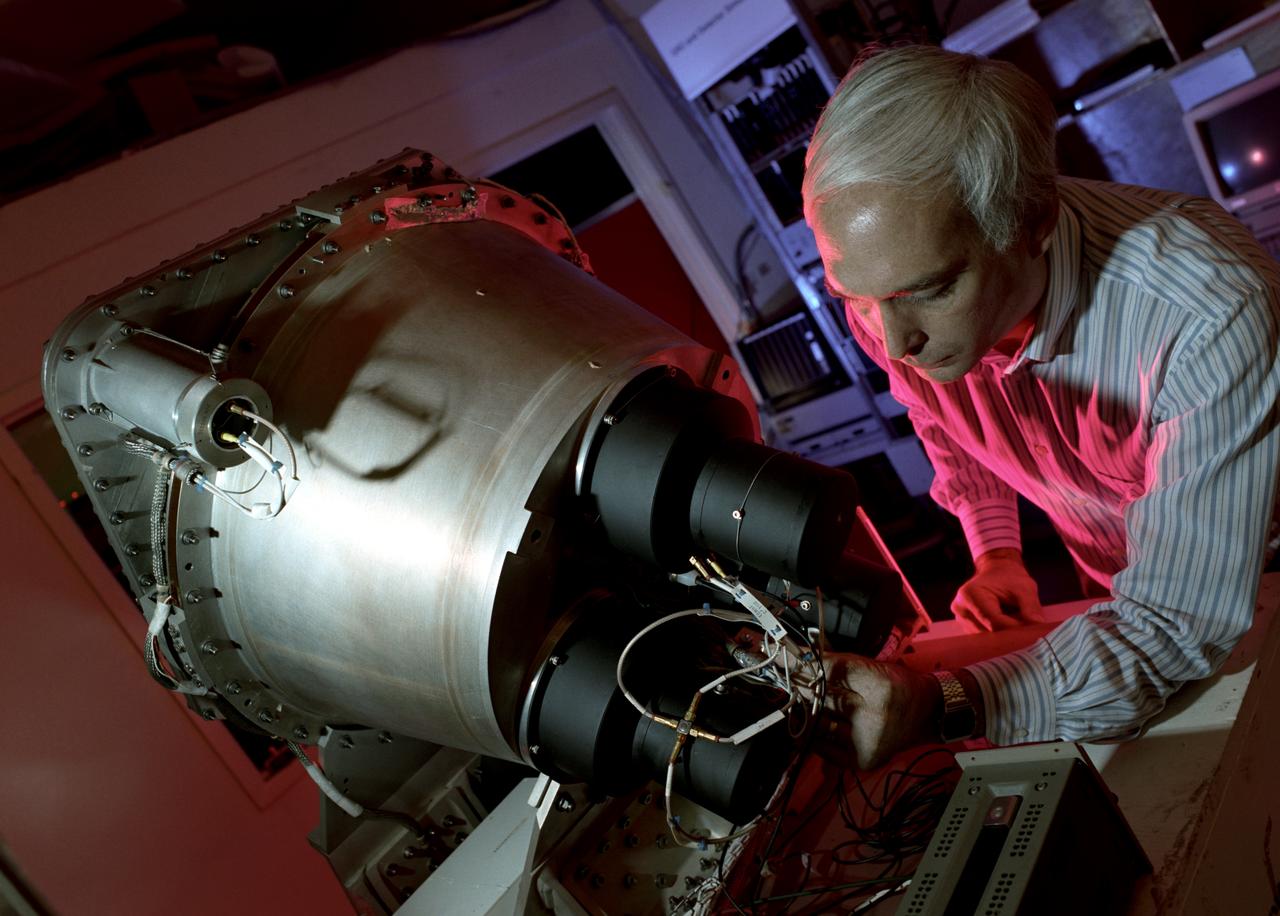
In this photograph, Dr. Gerald Fishman of the Marshall Space Flight Center (MSFC), a principal investigator of the Compton Gamma-Ray Observatory's (GRO's) instrument, the Burst and Transient Source Experiment (BATSE), works on the BATSE detector module. For nearly 9 years, GRO's BATSE, designed and built by MSFC, kept an unblinking watch on the universe to alert scientist to the invisible, mysterious gamma-ray bursts. By studying gamma-rays from objects like black holes, pulsars, quasars, neutron stars, and other exotic objects, scientists could discover clues to the birth, evolution, and death of star, galaxies, and the universe. The gamma-ray instrument was one of four major science instruments aboard the Compton. It consisted of eight detectors, or modules, located at each corner of the rectangular satellite to simultaneously scan the entire universe for bursts of gamma-rays ranging in duration from fractions of a second to minutes. Because gamma-rays are so powerful, they pass through conventional telescope mirrors. Instead of a mirror, the heart of each BATSE module was a large, flat, transparent crystal that generated a tiny flash of light when struck by a gamma-ray. With an impressive list of discoveries and diverse accomplishments, BATSE could claim to have rewritten astronomy textbooks. Launched aboard the Space Shuttle Orbiter Atlantis during the STS-35 mission in April 1991, the GRO reentered the Earth's atmosphere and ended its successful 9-year mission in June 2000.

This Chandra X-Ray Observatory image of the mysterious superstar Eta Carinae reveals a surprising hot irner core, creating more questions than answers for astronomers. The image shows three distinct structures: An outer, horseshoe shaped ring about 2 light-years in diameter, a hot inner core about 3 light-months in diameter, and a hot central source less than a light-month in diameter which may contain the superstar. In 1 month, light travels a distance of approximately 489 billion miles (about 788 billion kilometers). All three structures are thought to represent shock waves produced by matter rushing away from the superstar at supersonic speeds. The temperature of the shock-heated gas ranges from 60 million degrees Kelvin in the central regions to 7 million degrees Kelvin on the outer structure. Eta Carinae is one of the most enigmatic and intriguing objects in our galaxy. Between 1837 and 1856, it increased dramatically in brightness to become the most prominent star in the sky except for Sirius, even through it is 7,500 light-years away, more than 80 times the distance to Sirius. This "Great Eruption," as it is called, had an energy comparable to a supernova, yet did not destroy the star, which faded to become a dim star, invisible to the naked eye. Since 1940, Eta Carinae has begun to brighten again, becoming visible to the naked eye. Photo credit: NASA/CXC/SAO
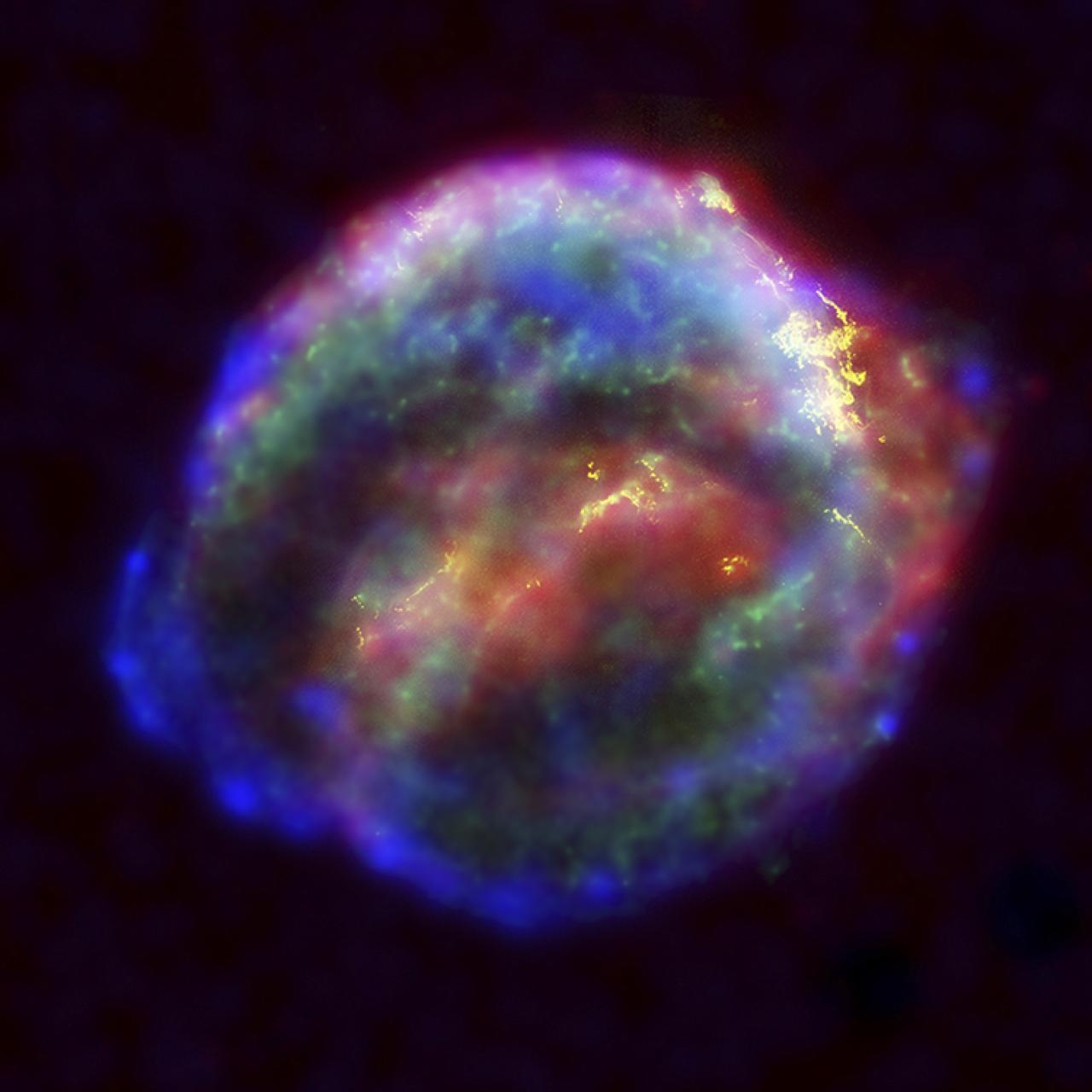
Four hundred years ago, sky watchers, including the famous astronomer Johannes Kepler, best known as the discoverer of the laws of planetary motion, were startled by the sudden appearance of a new star in the western sky, rivaling the brilliance of the nearby planets. Modern astronomers, using NASA's three orbiting Great Observatories, are unraveling the mysteries of the expanding remains of Kepler's supernova, the last such object seen to explode in our Milky Way galaxy. When a new star appeared Oct. 9, 1604, observers could use only their eyes to study it. The telescope would not be invented for another four years. A team of modern astronomers has the combined abilities of NASA's Great Observatories, the Spritzer Space Telescope (SST), Hubble Space Telescope (HST), and Chandra X-Ray Observatory (CXO), to analyze the remains in infrared radiation, visible light, and X-rays. Visible-light images from Hubble's Advanced Camera for Surveys reveal where the supernova shock wave is slamming into the densest regions of surrounding gas. The astronomers used the SST to probe for material that radiates in infrared light, which shows heated microscopic dust particles that have been swept up by the supernova shock wave. The CXO data show regions of very hot gas. The combined image unveils a bubble-shaped shroud of gas and dust, 14 light-years wide and expanding at 4 million mph. There have been six known supernovas in our Milky Way over the past 1,000 years. Kepler's is the only one in which astronomers do not know what type of star exploded. By combining information from all three Great Observatories, astronomers may find the clues they need. Project management for both the HST and CXO programs is the responsibility of NASA’s Marshall Space Flight Center in Huntsville, Alabama.
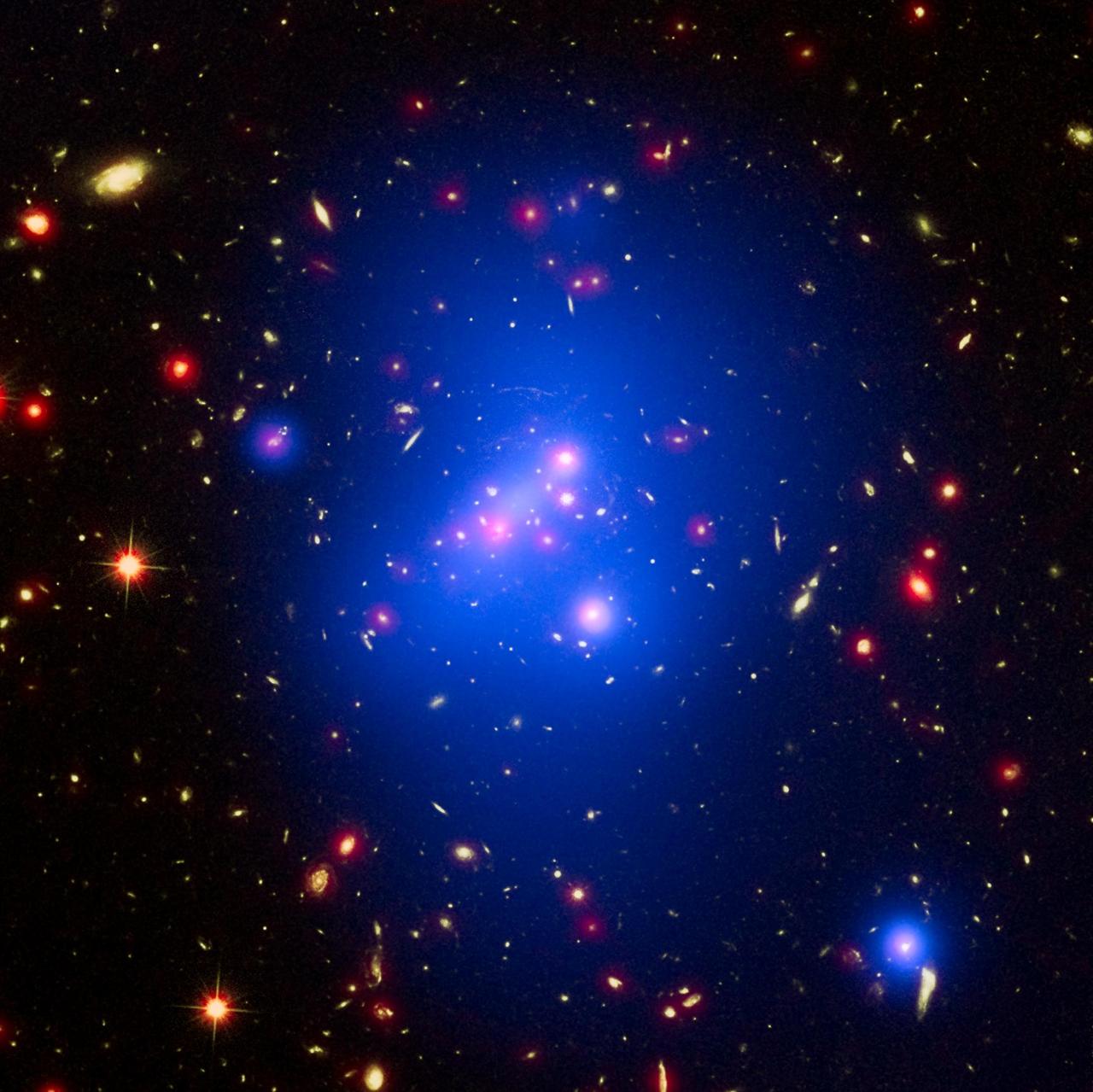
Astronomers have made the most detailed study yet of an extremely massive young galaxy cluster using three of NASA's Great Observatories. This multi-wavelength image shows this galaxy cluster, called IDCS J1426.5+3508 (IDCS 1426 for short), in X-rays recorded by the Chandra X-ray Observatory in blue, visible light observed by the Hubble Space Telescope in green, and infrared light detected by the Spitzer Space Telescope in red. This rare galaxy cluster, which is located 10 billion light-years from Earth, is almost as massive as 500 trillion suns. This object has important implications for understanding how such megastructures formed and evolved early in the universe. The light astronomers observed from IDCS 1426 began its journey to Earth when the universe was less than a third of its current age. It is the most massive galaxy cluster detected at such an early time. First discovered by the Spitzer Space Telescope in 2012, IDCS 1426 was then observed using the Hubble Space Telescope and the Keck Observatory to determine its distance. Observations from the Combined Array for Millimeter-wave Astronomy indicated it was extremely massive. New data from the Chandra X-ray Observatory confirm the galaxy cluster's mass and show that about 90 percent of this mass is in the form of dark matter -- the mysterious substance that has so far been detected only through its gravitational pull on normal matter composed of atoms. http://photojournal.jpl.nasa.gov/catalog/PIA20063

Under the watchful eyes of KSC Fire Department trainer Capt. George Hoggard (seated on the front), STS-93 Mission Specialist Michel Tognini of France (right) drives the M-113 armored personnel carrier during emergency egress training at the launch pad. Tognini represents the Centre National d'Etudes Spatiales (CNES). At the far left is Roland Nedelkovich, with the Vehicle Integration Test Team, JSC. In preparation for their mission, the STS-93 crew are participating in Terminal Countdown Demonstration Test activities that also include a launch-day dress rehearsal culminating with a simulated main engine cut-off. Others in the crew participating are Commander Eileen M. Collins, Pilot Jeffrey S. Ashby, and Mission Specialists Steven A. Hawley (Ph.D.) and Catherine G. Coleman (Ph.D.) Collins is the first woman to serve as a Shuttle commander. The primary mission of STS-93 is the release of the Chandra X-ray Observatory, which will allow scientists from around the world to obtain unprecedented X-ray images of exotic environments in space to help understand the structure and evolution of the universe. Chandra is expected to provide unique and crucial information on the nature of objects ranging from comets in our solar system to quasars at the edge of the observable universe. Since X-rays are absorbed by the Earth's atmosphere, space-based observatories are necessary to study these phenomena and allow scientists to analyze some of the greatest mysteries of the universe. The targeted launch date for STS-93 is no earlier than July 20 at 12:36 a.m. EDT from Launch Pad 39B

During its final targeted flyby of Titan on April 22, 2017, Cassini's radar mapper got the mission's last close look at the moon's surface. On this 127th targeted pass by Titan (unintuitively named "T-126"), the radar was used to take two images of the surface, shown at left and right. Both images are about 200 miles (300 kilometers) in width, from top to bottom. Objects appear bright when they are tilted toward the spacecraft or have rough surfaces; smooth areas appear dark. At left are the same bright, hilly terrains and darker plains that Cassini imaged during its first radar pass of Titan, in 2004. Scientists do not see obvious evidence of changes in this terrain over the 13 years since the original observation. At right, the radar looked once more for Titan's mysterious "magic island" (PIA20021) in a portion of one of the large hydrocarbon seas, Ligeia Mare. No "island" feature was observed during this pass. Scientists continue to work on what the transient feature might have been, with waves and bubbles being two possibilities. In between the two parts of its imaging observation, the radar instrument switched to altimetry mode, in order to make a first-ever (and last-ever) measurement of the depths of some of the lakes that dot the north polar region. For the measurements, the spacecraft pointed its antenna straight down at the surface and the radar measured the time delay between echoes from the lakes' surface and bottom. A graph is available at https://photojournal.jpl.nasa.gov/catalog/PIA21626
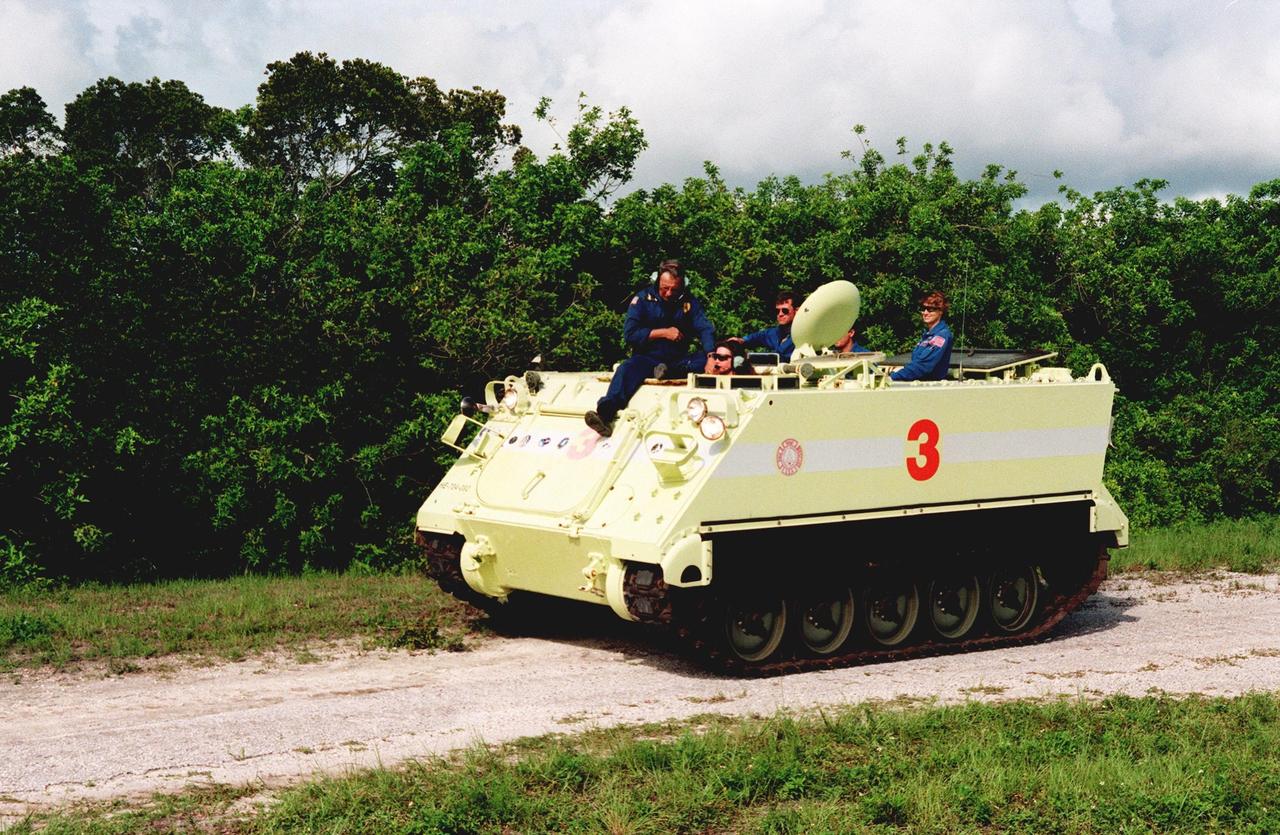
Under the watchful eyes of Capt. George Hoggard (left), trainer with the KSC Fire Department, STS-93 Mission Specialist Catherine G. Coleman (Ph.D.) drives the M-113 armored personnel carrier during emergency egress training at the launch pad. Behind her is Pilot Jeffrey S. Ashby and Commander Eileen M. Collins. In preparation for their mission, the STS-93 crew are participating in Terminal Countdown Demonstration Test activities that also include a launch-day dress rehearsal culminating with a simulated main engine cut-off. Others in the crew participating are Mission Specialists Steven A. Hawley (Ph.D.) and Michel Tognini of France, who represents the Centre National d'Etudes Spatiales (CNES). Collins is the first woman to serve as a mission commander. The primary mission of STS-93 is the release of the Chandra X-ray Observatory, which will allow scientists from around the world to obtain unprecedented X-ray images of exotic environments in space to help understand the structure and evolution of the universe. Chandra is expected to provide unique and crucial information on the nature of objects ranging from comets in our solar system to quasars at the edge of the observable universe. Since X-rays are absorbed by the Earth's atmosphere, space-based observatories are necessary to study these phenomena and allow scientists to analyze some of the greatest mysteries of the universe. The targeted launch date for STS-93 is no earlier than July 20 at 12:36 a.m. EDT from Launch Pad 39B

NASA image release February 8, 2012 Looking like a hoard of gems fit for an emperor's collection, this deep sky object called NGC 6752 is in fact far more worthy of admiration. It is a globular cluster, and at over 10 billion years old is one the most ancient collections of stars known. It has been blazing for well over twice as long as our solar system has existed. NGC 6752 contains a high number of "blue straggler'' stars, some of which are visible in this image. These stars display characteristics of stars younger than their neighbors, despite models suggesting that most of the stars within globular clusters should have formed at approximately the same time. Their origin is therefore something of a mystery. Studies of NGC 6752 may shed light on this situation. It appears that a very high number -- up to 38 percent -- of the stars within its core region are binary systems. Collisions between stars in this turbulent area could produce the blue stragglers that are so prevalent. Lying 13,000 light-years distant, NGC 6752 is far beyond our reach, yet the clarity of Hubble's images brings it tantalizingly close. Credit: ESA/Hubble & NASA <b><a href="http://www.nasa.gov/audience/formedia/features/MP_Photo_Guidelines.html" rel="nofollow">NASA image use policy.</a></b> <b><a href="http://www.nasa.gov/centers/goddard/home/index.html" rel="nofollow">NASA Goddard Space Flight Center</a></b> enables NASA’s mission through four scientific endeavors: Earth Science, Heliophysics, Solar System Exploration, and Astrophysics. Goddard plays a leading role in NASA’s accomplishments by contributing compelling scientific knowledge to advance the Agency’s mission. <b>Follow us on <a href="http://twitter.com/NASA_GoddardPix" rel="nofollow">Twitter</a></b> <b>Like us on <a href="http://www.facebook.com/pages/Greenbelt-MD/NASA-Goddard/395013845897?ref=tsd" rel="nofollow">Facebook</a></b> <b>Find us on <a href="http://instagrid.me/nasagoddard/?vm=grid" rel="nofollow">Instagram</a></b>
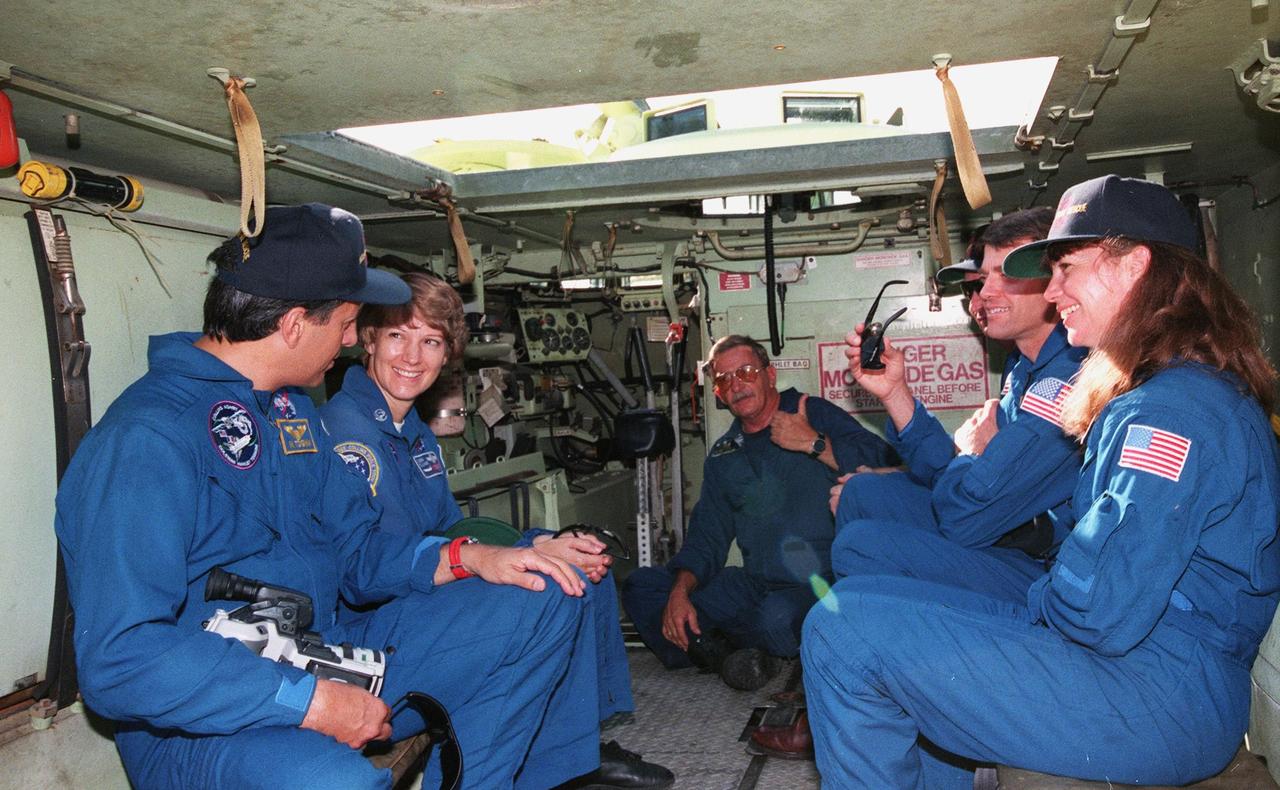
Inside an M-113 armored personnel carrier at the launch pad, the STS-93 crew take part in emergency egress training under the watchful eyes of Capt. George Hoggard (center), trainer with the KSC Fire Department. From left are Mission Specialist Michel Tognini of France, Commander Eileen M. Collins, Hoggard, Mission Specialist Steven A. Hawley (Ph.D.), Pilot Jeffrey S. Ashby, and Mission Specialist Catherine G. Coleman (Ph.D.). Collins is the first woman to serve as mission commander. Tognini represents the Centre National d'Etudes Spatiales (CNES). The training is part of Terminal Countdown Demonstration Test activities that also include a launch-day dress rehearsal culminating with a simulated main engine cut-off. The primary mission of STS-93 is the release of the Chandra X-ray Observatory, which will allow scientists from around the world to obtain unprecedented X-ray images of exotic environments in space to help understand the structure and evolution of the universe. Chandra is expected to provide unique and crucial information on the nature of objects ranging from comets in our solar system to quasars at the edge of the observable universe. Since X-rays are absorbed by the Earth's atmosphere, space-based observatories are necessary to study these phenomena and allow scientists to analyze some of the greatest mysteries of the universe. The targeted launch date for STS-93 is no earlier than July 20 at 12:36 a.m. EDT from Launch Pad 39B

Just in time for the release of the movie “Star Wars Episode VII: The Force Awakens,” NASA’s Hubble Space Telescope has photographed what looks like a cosmic, double-bladed lightsaber. In the center of the image, partially obscured by a dark, Jedi-like cloak of dust, a newborn star shoots twin jets out into space as a sort of birth announcement to the universe. “Science fiction has been an inspiration to generations of scientists and engineers, and the film series Star Wars is no exception,” said John Grunsfeld, astronaut and associate administrator for the NASA Science Mission directorate. “There is no stronger case for the motivational power of real science than the discoveries that come from the Hubble Space Telescope as it unravels the mysteries of the universe." This celestial lightsaber does not lie in a galaxy far, far away, but rather inside our home galaxy, the Milky Way. It’s inside a turbulent birthing ground for new stars known as the Orion B molecular cloud complex, located 1,350 light-years away. When stars form within giant clouds of cool molecular hydrogen, some of the surrounding material collapses under gravity to form a rotating, flattened disk encircling the newborn star. Though planets will later congeal in the disk, at this early stage the protostar is feeding on the disk with a Jabba-like appetite. Gas from the disk rains down onto the protostar and engorges it. Superheated material spills away and is shot outward from the star in opposite directions along an uncluttered escape route — the star’s rotation axis. Shock fronts develop along the jets and heat the surrounding gas to thousands of degrees Fahrenheit. The jets collide with the surrounding gas and dust and clear vast spaces, like a stream of water plowing into a hill of sand. The shock fronts form tangled, knotted clumps of nebulosity and are collectively known as Herbig-Haro (HH) objects. The prominent HH object shown in this image is HH 24. Just to the right of the cloaked star, a couple of bright points are young stars peeking through and showing off their own faint lightsabers — including one that has bored a tunnel through the cloud towards the upper-right side of the picture. Overall, just a handful of HH jets have been spotted in this region in visible light, and about the same number in the infrared. Hubble’s observations for this image were performed in infrared light, which enabled the telescope to peer through the gas and dust cocooning the newly forming stars and capture a clear view of the HH objects. These young stellar jets are ideal targets for NASA’s upcoming James Webb Space Telescope, which will have even greater infrared wavelength vision to see deeper into the dust surrounding newly forming stars. The Hubble Space Telescope is a project of international cooperation between NASA and the European Space Agency. NASA’s Goddard Space Flight Center in Greenbelt, Maryland, manages the telescope. The Space Telescope Science Institute (STScI) in Baltimore, Maryland, conducts Hubble science operations. STScI is operated for NASA by the Association of Universities for Research in Astronomy, in Washington, D.C. Credits: NASA/ESA <b><a href="http://www.nasa.gov/audience/formedia/features/MP_Photo_Guidelines.html" rel="nofollow">NASA image use policy.</a></b> <b><a href="http://www.nasa.gov/centers/goddard/home/index.html" rel="nofollow">NASA Goddard Space Flight Center</a></b> enables NASA’s mission through four scientific endeavors: Earth Science, Heliophysics, Solar System Exploration, and Astrophysics. Goddard plays a leading role in NASA’s accomplishments by contributing compelling scientific knowledge to advance the Agency’s mission. <b>Follow us on <a href="http://twitter.com/NASAGoddardPix" rel="nofollow">Twitter</a></b> <b>Like us on <a href="http://www.facebook.com/pages/Greenbelt-MD/NASA-Goddard/395013845897?ref=tsd" rel="nofollow">Facebook</a></b> <b>Find us on <a href="http://instagrid.me/nasagoddard/?vm=grid" rel="nofollow">Instagram</a></b>
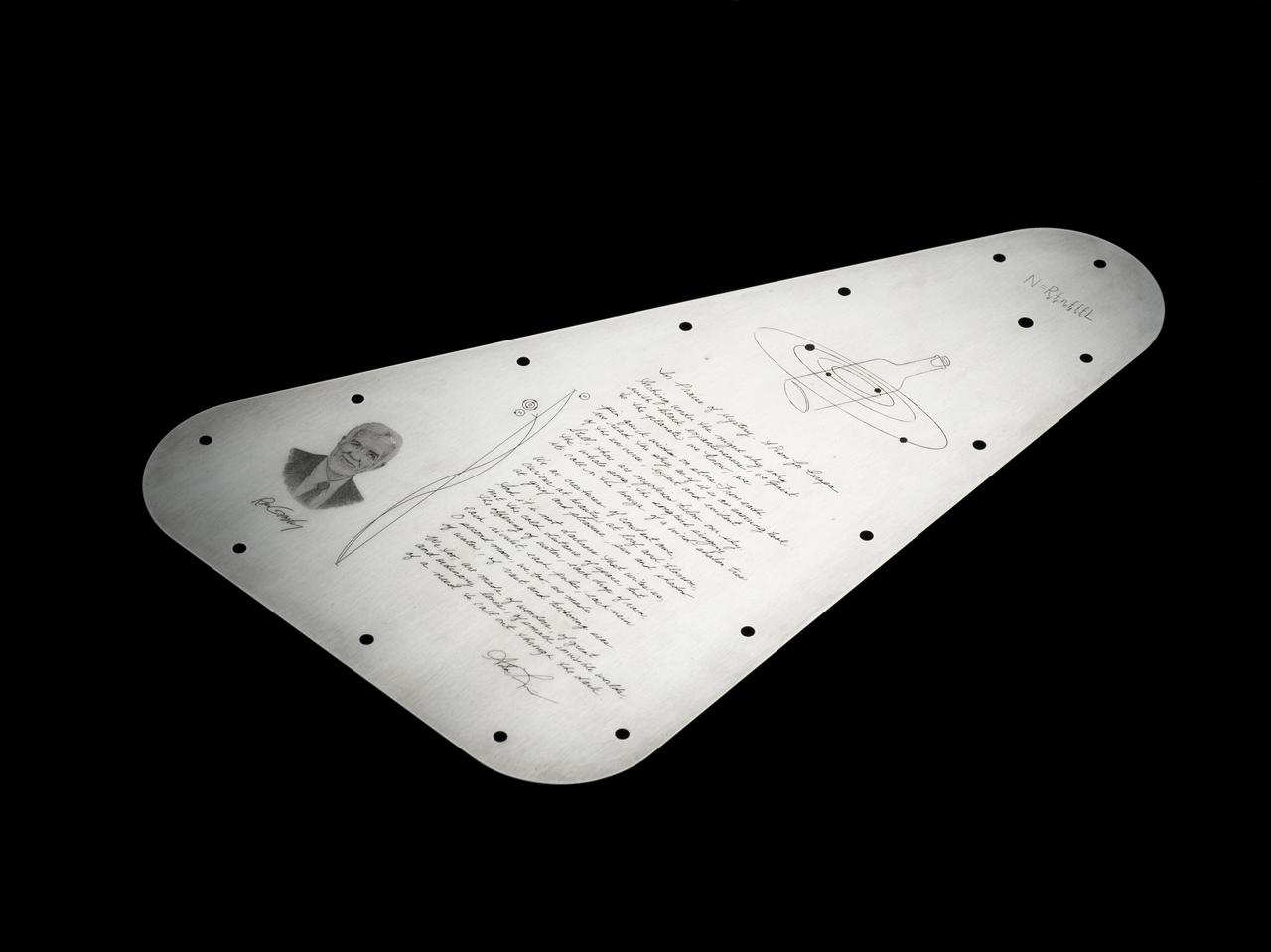
NASA's Europa Clipper spacecraft will carry a special message when it launches in October 2024 and heads toward Jupiter's moon Europa. The moon shows strong evidence of an ocean under its icy crust, with more than twice the amount of water of all of Earth's oceans combined. A triangular metal plate, seen here, will honor that connection to Earth. The plate is made of tantalum metal and is about 7 by 11 inches (18 by 28 centimeters). Engraved on both sides, it seals an opening in the electronics vault, which houses the spacecraft's sensitive electronics. The side shown here features U.S. Poet Laureate Ada Limón's handwritten "In Praise of Mystery: A Poem for Europa," and will be affixed with a silicon microchip stenciled with more than 2.6 million names submitted by the public. The microchip will be placed at the center of the illustration of a bottle amid the Jovian system – a reference to NASA's "Message in a Bottle" campaign, which invited the public to send their names with the spacecraft. The artwork includes the Drake Equation, which was formulated by astronomer Frank Drake in 1961 to estimate the possibility of finding advanced civilizations beyond Earth. Also featured is a reference to the radio frequencies considered plausible for interstellar communication, symbolizing how humanity uses this radio band to listen for messages from the cosmos. These particular frequencies match the radio waves emitted in space by the components of water and are known by astronomers as the "water hole." On the plate, they are depicted as radio emission lines. The plate includes a portrait of one of the founders of planetary science, Ron Greeley, whose early efforts to develop a Europa mission two decades ago laid the foundation for Europa Clipper. In the spirit of the Voyager spacecraft's Golden Record, which carries sounds and images to convey the richness and diversity of life on Earth, the layered message on Europa Clipper aims to spark the imagination and offer a unifying vision. Europa Clipper, set to launch from Kennedy Space Center in Florida, will arrive at the Jupiter system in 2030 and conduct about 50 flybys of the moon Europa. The mission's main science goal is to determine whether there are places below Europa, that could support life. The mission's three main science objectives are to determine the thickness of the moon's icy shell and its surface interactions with the ocean below, to investigate its composition, and to characterize its geology. The mission's detailed exploration of Europa will help scientists better understand the astrobiological potential for habitable worlds beyond our planet. https://photojournal.jpl.nasa.gov/catalog/PIA26062

NASA image release April 27, 2012 The NASA/ESA Hubble Space Telescope has been at the cutting edge of research into what happens to stars like our sun at the ends of their lives. One stage that stars pass through as they run out of nuclear fuel is called the preplanetary or protoplanetary nebula stage. This Hubble image of the Egg Nebula shows one of the best views to date of this brief but dramatic phase in a star’s life. The preplanetary nebula phase is a short period in the cycle of stellar evolution, and has nothing to do with planets. Over a few thousand years, the hot remains of the aging star in the center of the nebula heat it up, excite the gas, and make it glow as a subsequent planetary nebula. The short lifespan of preplanetary nebulae means there are relatively few of them in existence at any one time. Moreover, they are very dim, requiring powerful telescopes to be seen. This combination of rarity and faintness means they were only discovered comparatively recently. The Egg Nebula, the first to be discovered, was first spotted less than 40 years ago, and many aspects of this class of object remain shrouded in mystery. At the center of this image, and hidden in a thick cloud of dust, is the nebula’s central star. While we can’t see the star directly, four searchlight beams of light coming from it shine out through the nebula. It is thought that ring-shaped holes in the thick cocoon of dust, carved by jets coming from the star, let the beams of light emerge through the otherwise opaque cloud. The precise mechanism by which stellar jets produce these holes is not known for certain, but one possible explanation is that a binary star system, rather than a single star, exists at the center of the nebula. The onion-like layered structure of the more diffuse cloud surrounding the central cocoon is caused by periodic bursts of material being ejected from the dying star. The bursts typically occur every few hundred years. The distance to the Egg Nebula is only known very approximately, the best guess placing it at around 3,000 light-years from Earth. This in turn means that astronomers do not have any accurate figures for the size of the nebula (it may be larger and further away, or smaller but nearer). This image is produced from exposures in visible and infrared light from Hubble’s Wide Field Camera 3. Credit: ESA/Hubble, NASA <b><a href="http://www.nasa.gov/audience/formedia/features/MP_Photo_Guidelines.html" rel="nofollow">NASA image use policy.</a></b> <b><a href="http://www.nasa.gov/centers/goddard/home/index.html" rel="nofollow">NASA Goddard Space Flight Center</a></b> enables NASA’s mission through four scientific endeavors: Earth Science, Heliophysics, Solar System Exploration, and Astrophysics. Goddard plays a leading role in NASA’s accomplishments by contributing compelling scientific knowledge to advance the Agency’s mission. <b>Follow us on <a href="http://twitter.com/NASAGoddardPix" rel="nofollow">Twitter</a></b> <b>Like us on <a href="http://www.facebook.com/pages/Greenbelt-MD/NASA-Goddard/395013845897?ref=tsd" rel="nofollow">Facebook</a></b> <b>Find us on <a href="http://instagrid.me/nasagoddard/?vm=grid" rel="nofollow">Instagram</a></b>

The veils of Saturn's most mysterious moon have begun to lift in Cassini's eagerly awaited first glimpse of the surface of Titan, a world where scientists believe organic matter rains from hazy skies and seas of liquid hydrocarbons dot a frigid surface. Surface features previously observed only from Earth-based telescopes are now visible in images of Titan taken in mid-April by Cassini through one of the narrow angle camera's spectral filters specifically designed to penetrate the thick atmosphere. The image scale is 230 kilometers (143 miles) per pixel, and it rivals the best Earth-based images. The two images displayed here show Titan from a vantage point 17 degrees below its equator, yielding a view from 50 degrees north latitude all the way to its south pole. The image on the left was taken four days after the image on the right. Titan rotated 90 degrees in that time. The two images combined cover a region extending halfway around the moon. The observed brightness variations suggest a diverse surface, with variations in average reflectivity on scales of a couple hundred kilometers. The images were taken through a narrow filter centered at 938 nanometers, a spectral region in which the only obstacle to light is the carbon-based, organic haze. Despite the rather long 38-second exposure times, there is no noticeable smear due to spacecraft motion. The images have been magnified 10 times and enhanced in contrast to bring out details. No further processing to remove the effects of the overlying atmosphere has been performed. The superimposed grid over the images illustrates the orientation of Titan -- north is up and rotated 25 degrees to the left -- as well as the geographical regions of the satellite that are illuminated and visible. The yellow curve marks the position of the boundary between day and night on Titan. The enhanced image contrast makes the region within 20 degrees of this day and night division darker than usual. The Sun illuminates Titan from the right at a phase angle of 66 degrees. Because the Sun is in the southern hemisphere as seen from Titan, the north pole is canted relative to the boundary between day and night by 25 degrees. Also shown here is a map of relative surface brightness variations on Titan as measured in images taken in the 1080-nanometer spectral region in 1997 and 1998 by the Near Infrared Camera and Multi-Object Spectrometer on NASA's Hubble Space Telescope. These images have scales of 300 kilometers (186 miles) per pixel. The map colors indicate different surface reflectivities. From darkest to brightest, the color progression is: deep blue (darkest), light blue, green, yellow, red and deep red (brightest). The large, continent-sized, red feature extending from 60 degrees to 150 degrees west longitude is called Xanadu. It is unclear whether Xanadu is a mountain range, giant basin, smooth plain, or a combination of all three. It may be dotted with hydrocarbon lakes but that is also unknown. All that is presently known is that in Earth-based images, it is the brightest region on Titan. A comparison between the Cassini images and the Hubble map indicates that Xanadu is visible as a bright region in the Cassini image on the right. The dark blue northwest-southeast trending feature from 210 degrees to 250 degrees west longitude, and the bright yellow/green region to the east (right) and southeast of it at minus 50 degrees latitude and 180 to 230 degrees west longitude on the Hubble map, can both be seen in the image on the left. It is noteworthy that the surface is visible to Cassini from its present approach viewing geometry, which is not the most favourable for surface viewing. These early Cassini observations are promising for upcoming imaging sequences of Titan in which the resolution improves by a factor of five over the next two months. These results are encouraging for future, in-orbit observations of Titan that will be acquired from lower, more favorable phase angles. The first opportunity to view small-scale features (2 kilometers or 1.2 miles) on the surface comes during a 350,000 kilometer (217,500 mile) flyby over Titan's south pole on July 2, 2004, only 30 hours after Cassini's insertion into orbit around the ringed planet. http://photojournal.jpl.nasa.gov/catalog/PIA05390