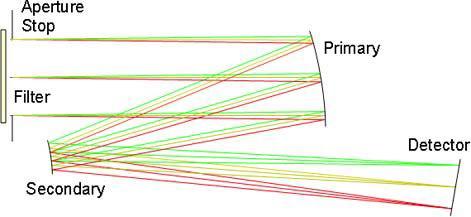
Get the NAC
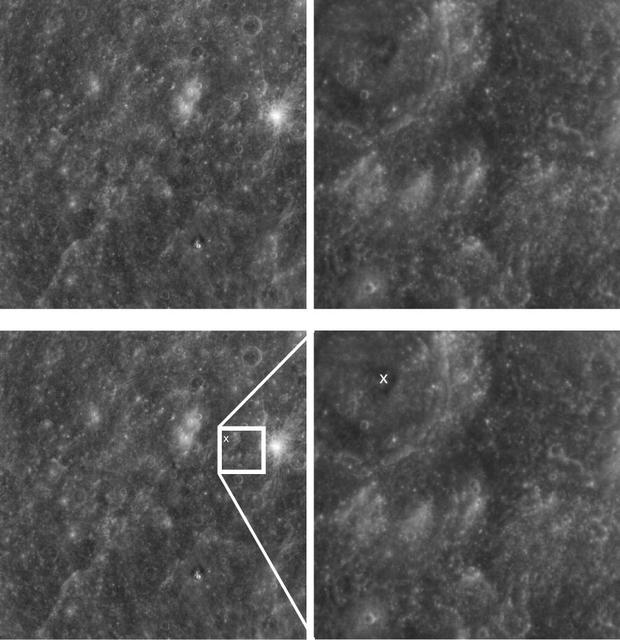
WAC versus NAC
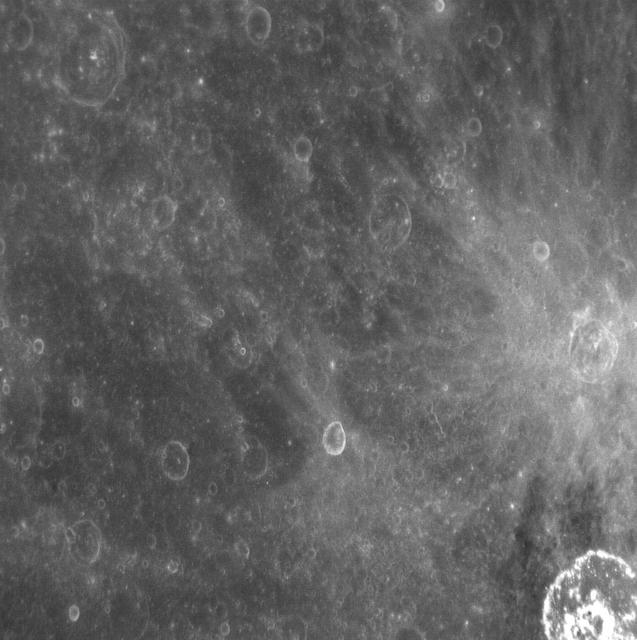
Weve Got the NAC of It
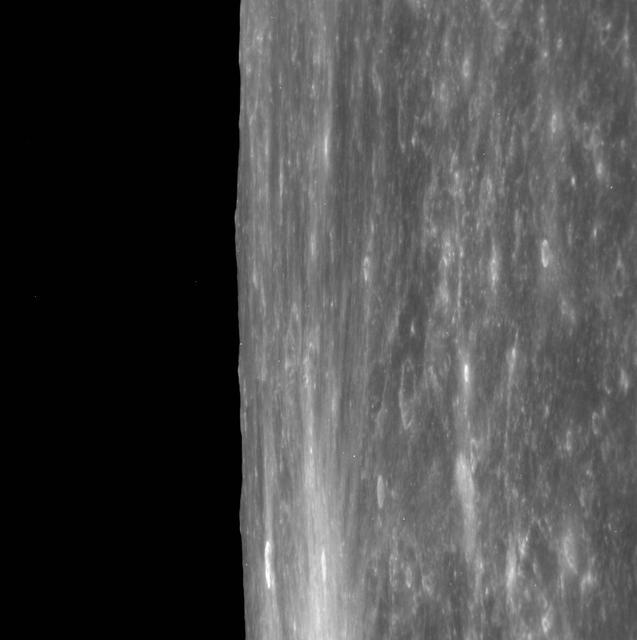
Ride Along with the NAC
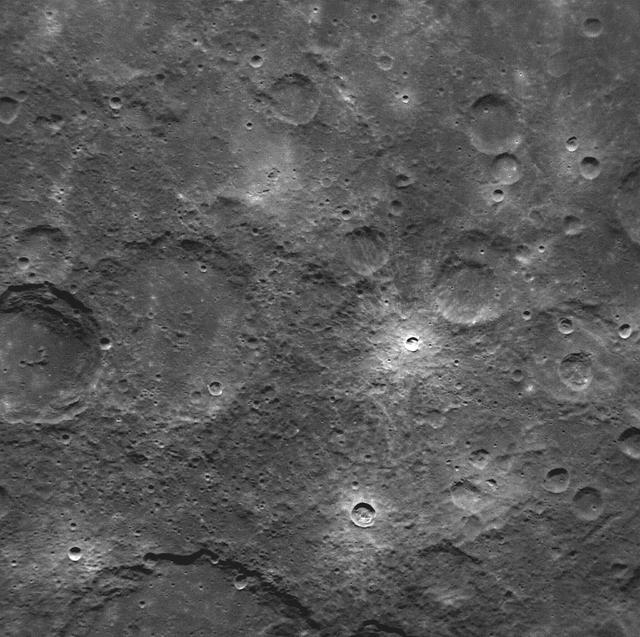
First NAC Image Obtained in Mercury Orbit
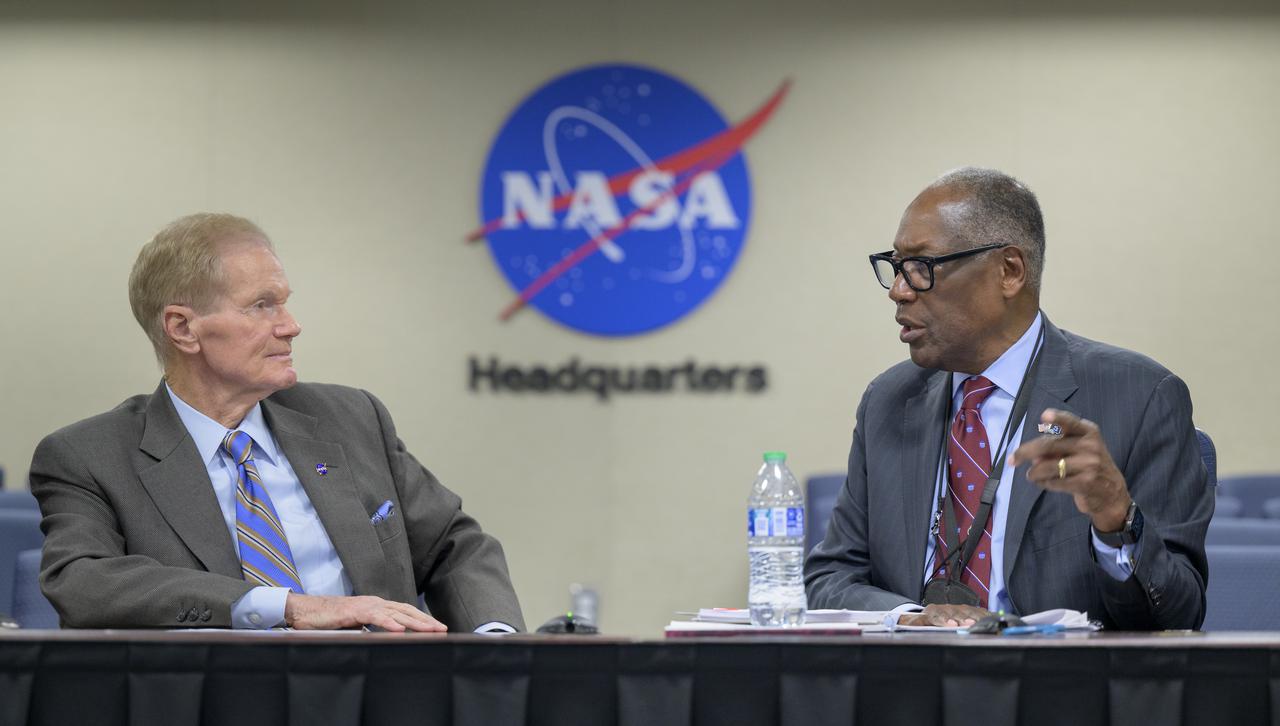
NASA Administrator Bill Nelson, left, and chair of the NASA Advisory Council (NAC) Gen. Lester Lyles, USAF (retired), talk with other NAC members, attending virtually, during an executive session of the NASA Advisory Council (NAC), Monday, Feb. 28, 2022, at the Mary W. Jackson NASA Headquarters building in Washington. Photo Credit: (NASA/Bill Ingalls)
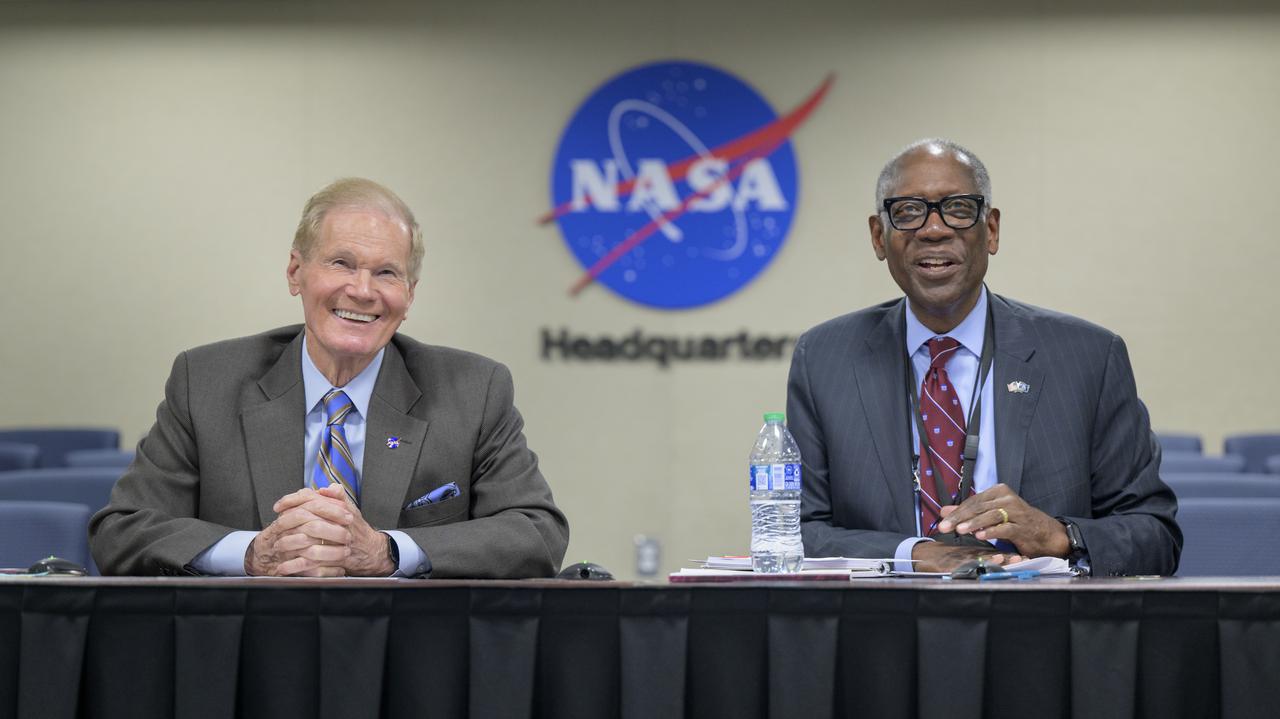
NASA Administrator Bill Nelson, left, and chair of the NASA Advisory Council (NAC) Gen. Lester Lyles, USAF (retired), talk with other NAC members, attending virtually, during an executive session of the NASA Advisory Council (NAC), Monday, Feb. 28, 2022, at the Mary W. Jackson NASA Headquarters building in Washington. Photo Credit: (NASA/Bill Ingalls)
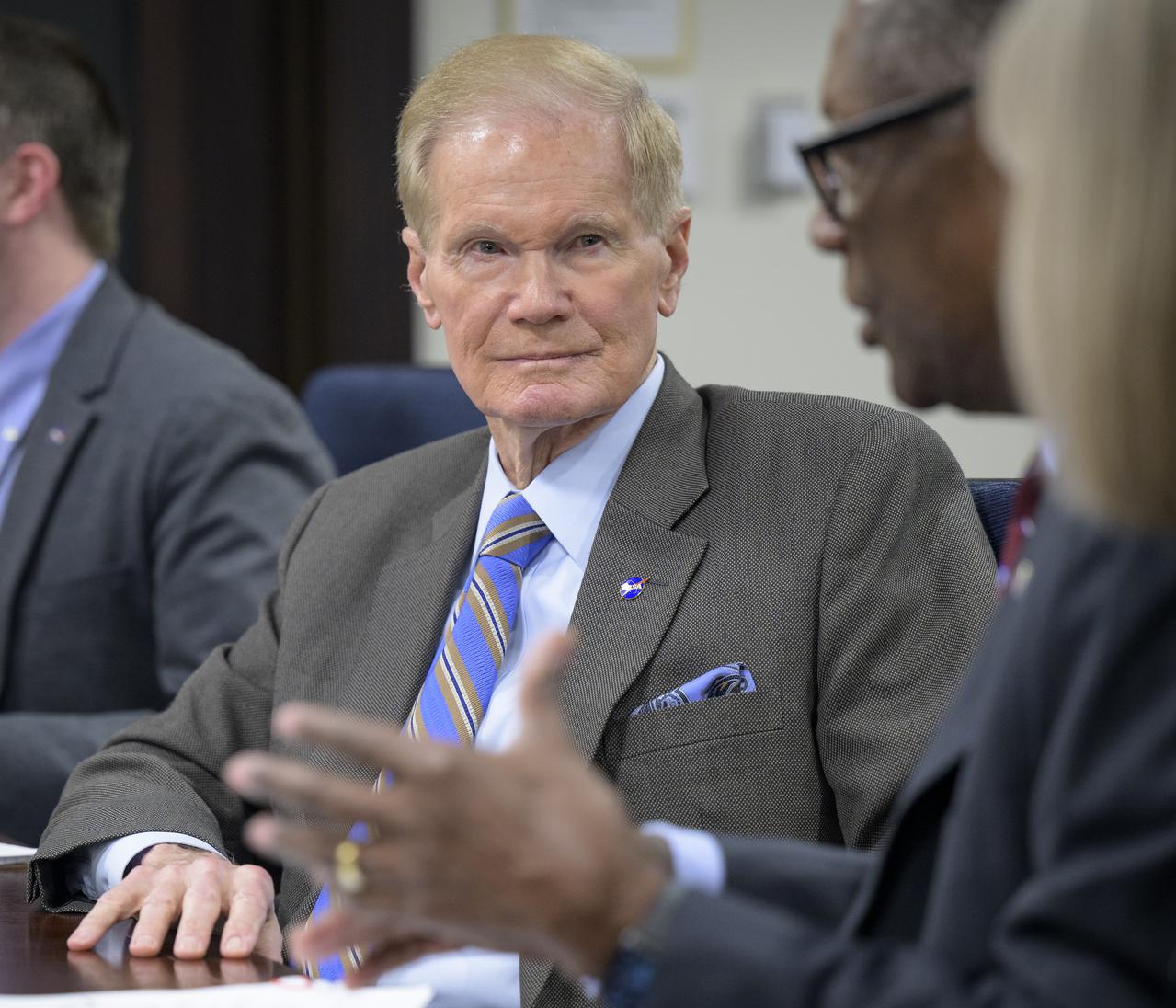
NASA Administrator Bill Nelson listens during an executive session of the NASA Advisory Council (NAC), Monday, Feb. 28, 2022, at the Mary W. Jackson NASA Headquarters building in Washington. Photo Credit: (NASA/Bill Ingalls)

Gen. Lester Lyles, USAF (retired) chairs the NASA Advisory Council (NAC) during an executive session, Monday, Feb. 28, 2022, at the Mary W. Jackson NASA Headquarters building in Washington. Photo Credit: (NASA/Bill Ingalls)
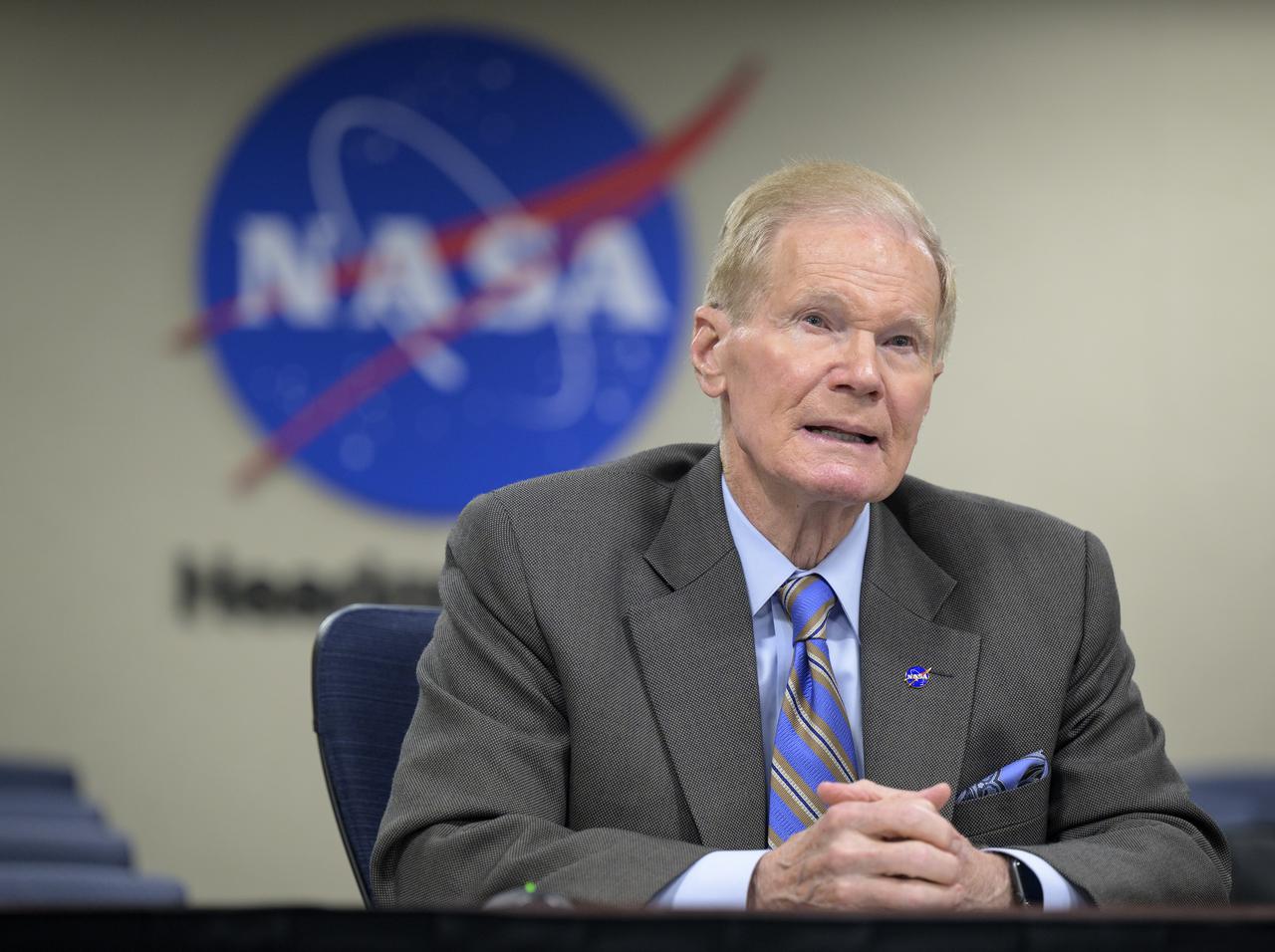
NASA Administrator Bill Nelson gives welcoming remarks during an executive session of the NASA Advisory Council (NAC), Monday, Feb. 28, 2022, at the Mary W. Jackson NASA Headquarters building in Washington. Photo Credit: (NASA/Bill Ingalls)

NASA Administrator Bill Nelson gives welcoming remarks during an executive session of the NASA Advisory Council (NAC), Monday, Feb. 28, 2022, at the Mary W. Jackson NASA Headquarters building in Washington. Photo Credit: (NASA/Bill Ingalls)
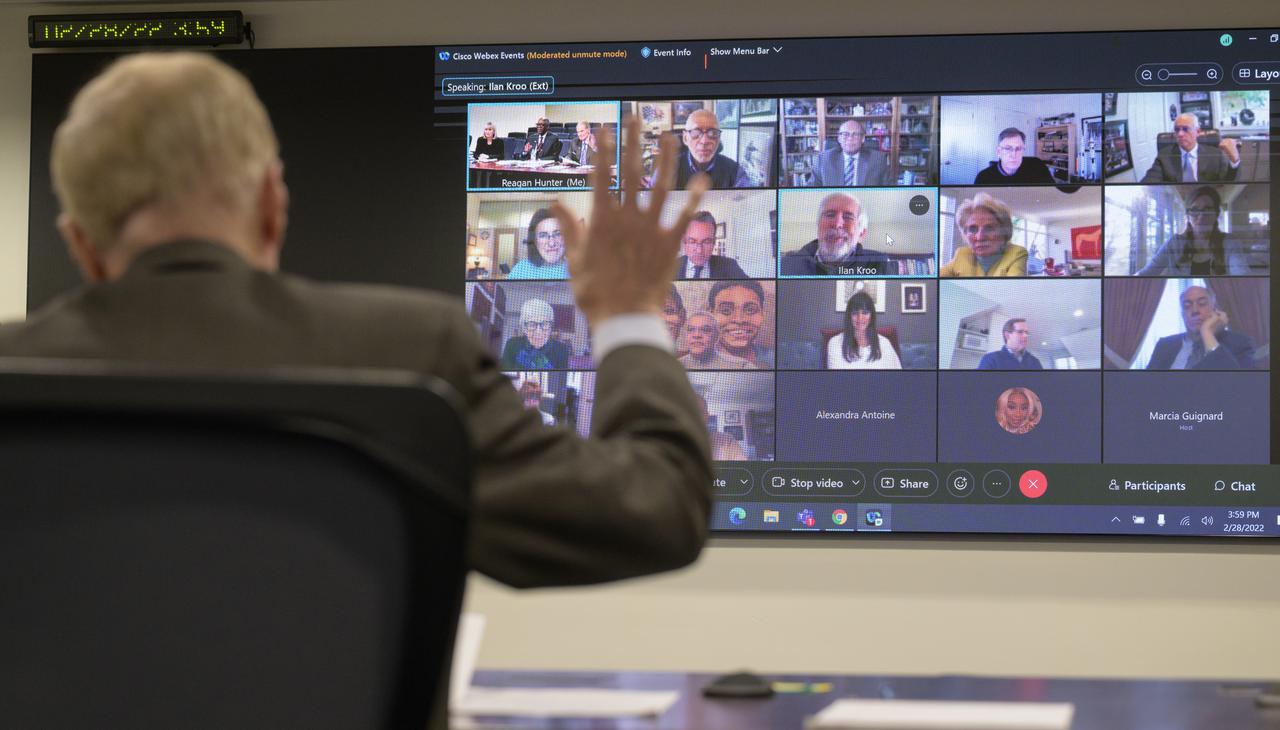
NASA Administrator Bill Nelson gives welcoming remarks during an executive session of the NASA Advisory Council (NAC), Monday, Feb. 28, 2022, at the Mary W. Jackson NASA Headquarters building in Washington. Photo Credit: (NASA/Bill Ingalls)
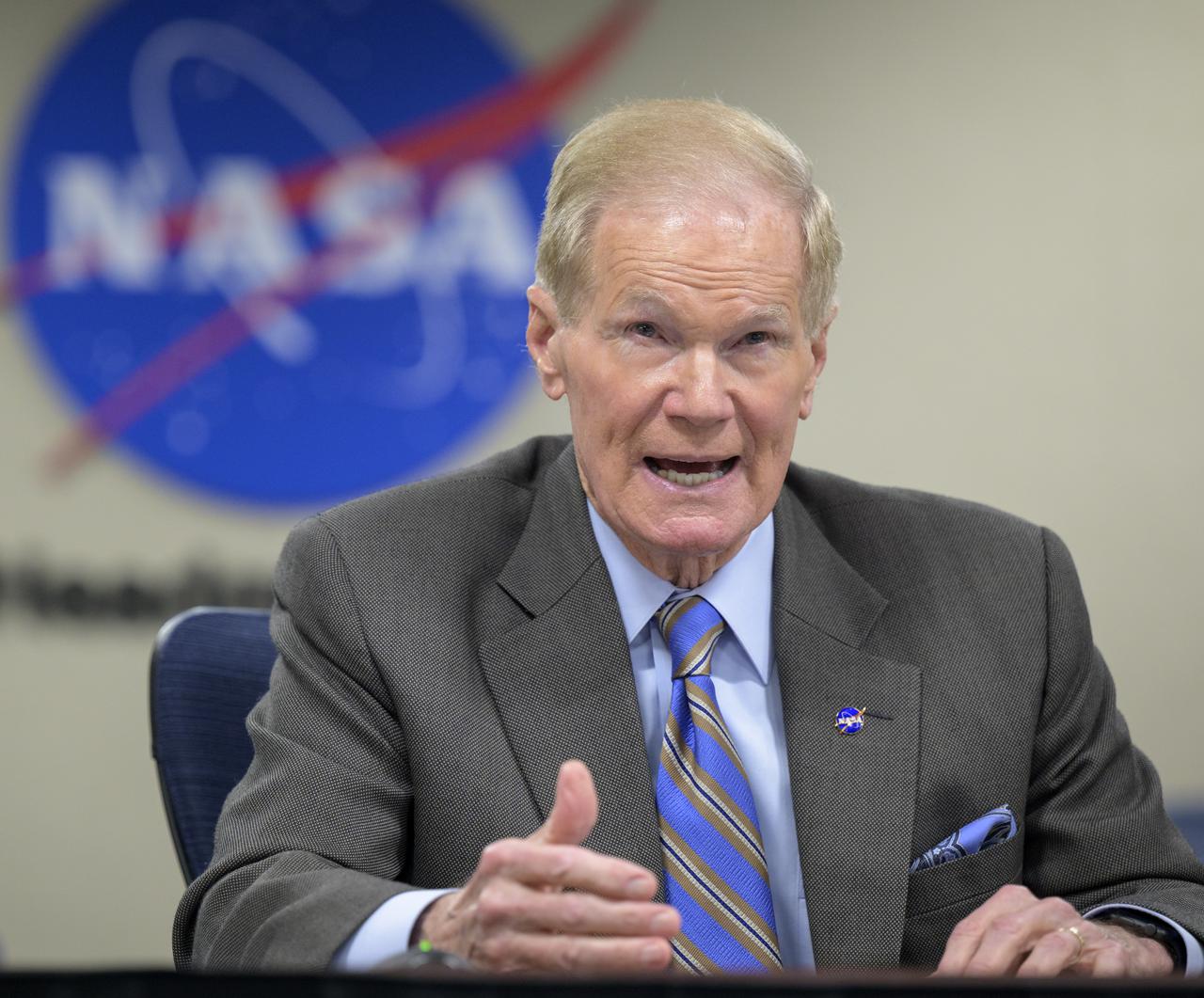
NASA Administrator Bill Nelson gives welcoming remarks during an executive session of the NASA Advisory Council (NAC), Monday, Feb. 28, 2022, at the Mary W. Jackson NASA Headquarters building in Washington. Photo Credit: (NASA/Bill Ingalls)

Gen. Lester Lyles, USAF (retired), left, and NASA Administrator Bill Nelson, right, give welcome remarks during an executive session of the NASA Advisory Council (NAC), Monday, Feb. 28, 2022, at the Mary W. Jackson NASA Headquarters building in Washington. Photo Credit: (NASA/Bill Ingalls)
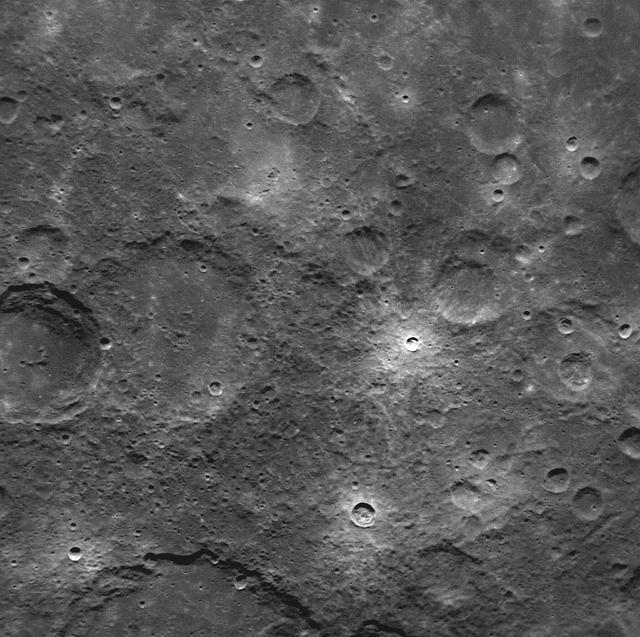
NASA image acquired: March 29, 2011 This is the first image of Mercury taken from orbit with MESSENGER’s Narrow Angle Camera (NAC). MESSENGER’s camera system, the Mercury Dual Imaging System (MDIS), has two cameras: the Narrow Angle Camera and the Wide Angle Camera (WAC). Comparison of this image with MESSENGER’s first WAC image of the same region shows the substantial difference between the fields of view of the two cameras. At 1.5°, the field of view of the NAC is seven times smaller than the 10.5° field of view of the WAC. This image was taken using MDIS’s pivot. MDIS is mounted on a pivoting platform and is the only instrument in MESSENGER’s payload capable of movement independent of the spacecraft. The other instruments are fixed in place, and most point down the spacecraft’s boresight at all times, relying solely on the guidance and control system for pointing. The 90° range of motion of the pivot gives MDIS a much-needed extra degree of freedom, allowing MDIS to image the planet’s surface at times when spacecraft geometry would normally prevent it from doing so. The pivot also gives MDIS additional imaging opportunities by allowing it to view more of the surface than that at which the boresight-aligned instruments are pointed at any given time. On March 17, 2011 (March 18, 2011, UTC), MESSENGER became the first spacecraft ever to orbit the planet Mercury. The mission is currently in the commissioning phase, during which spacecraft and instrument performance are verified through a series of specially designed checkout activities. In the course of the one-year primary mission, the spacecraft's seven scientific instruments and radio science investigation will unravel the history and evolution of the Solar System's innermost planet. Visit the Why Mercury? section of this website to learn more about the science questions that the MESSENGER mission has set out to answer. Credit: NASA/Johns Hopkins University Applied Physics Laboratory/Carnegie Institution of Washington <b><a href="http://www.nasa.gov/centers/goddard/home/index.html" rel="nofollow">NASA Goddard Space Flight Center</a></b> enables NASA’s mission through four scientific endeavors: Earth Science, Heliophysics, Solar System Exploration, and Astrophysics. Goddard plays a leading role in NASA’s accomplishments by contributing compelling scientific knowledge to advance the Agency’s mission. <b>Follow us on <a href="http://twitter.com/NASA_GoddardPix" rel="nofollow">Twitter</a></b> <b>Join us on <a href="http://www.facebook.com/pages/Greenbelt-MD/NASA-Goddard/395013845897?ref=tsd" rel="nofollow">Facebook</a></b>
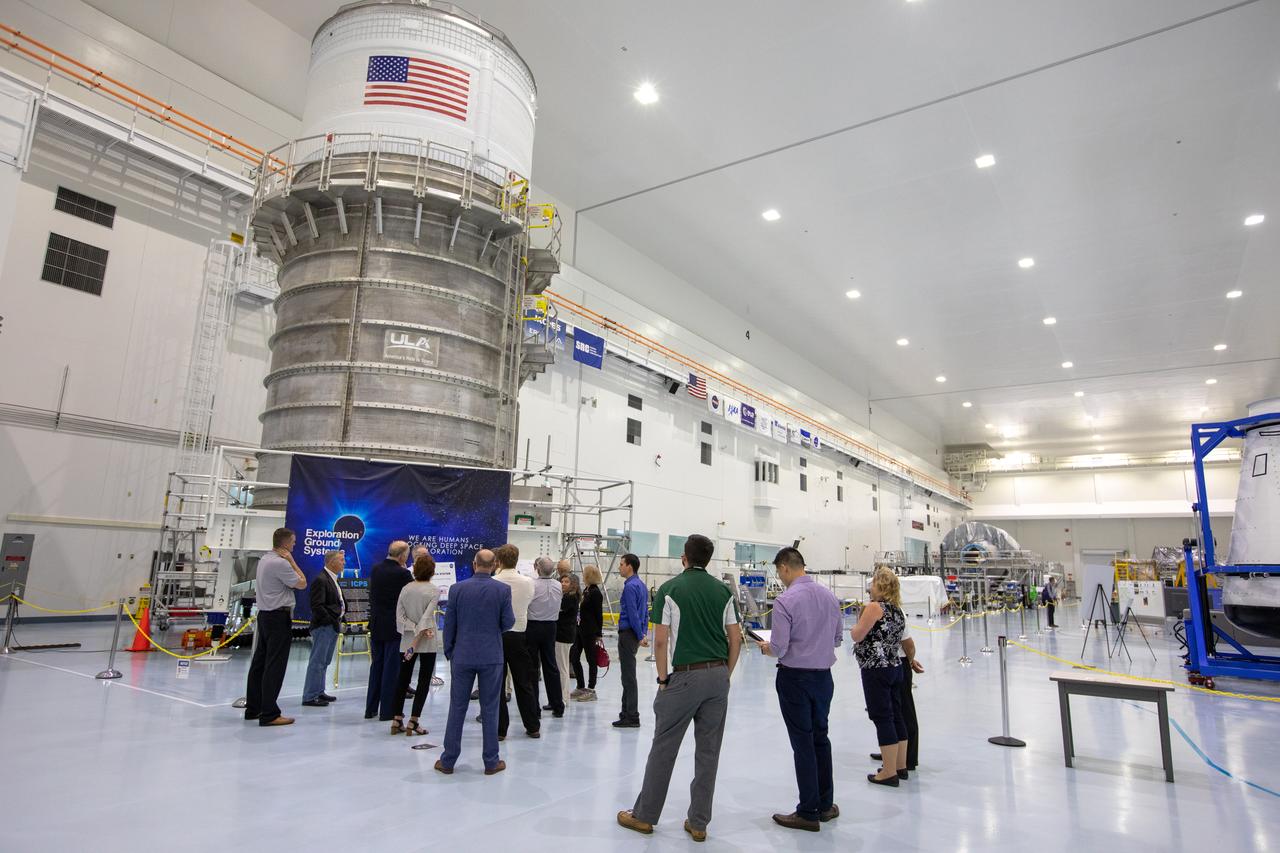
Members of the NASA Advisory Council toured the Space Station Processing Facility high bay at Kennedy Space Center in Florida on Oct. 29, 2019. In view is the interim cryogenic propulsion stage for the Space Launch System rocket. The NASA Advisory Council provides the NASA administrator with counsel and advice on programs and issues of importance to the agency. Committee members conduct fact-finding sessions throughout the year in an effort to gain a broad understanding of current NASA issues and future mission implementation plans.
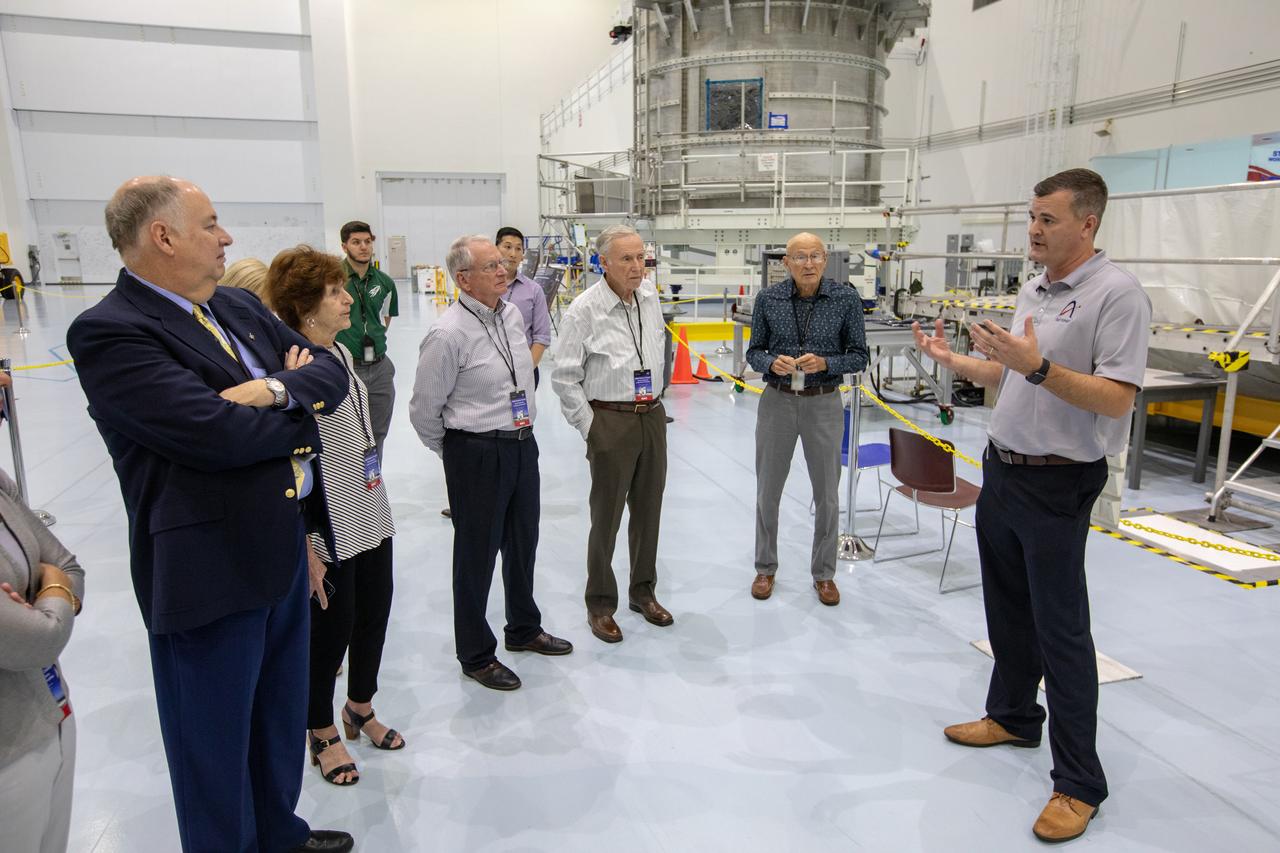
Members of the NASA Advisory Council toured the Space Station Processing Facility high bay at Kennedy Space Center in Florida on Oct. 29, 2019. The NASA Advisory Council provides the NASA administrator with counsel and advice on programs and issues of importance to the agency. Committee members conduct fact-finding sessions throughout the year in an effort to gain a broad understanding of current NASA issues and future mission implementation plans.
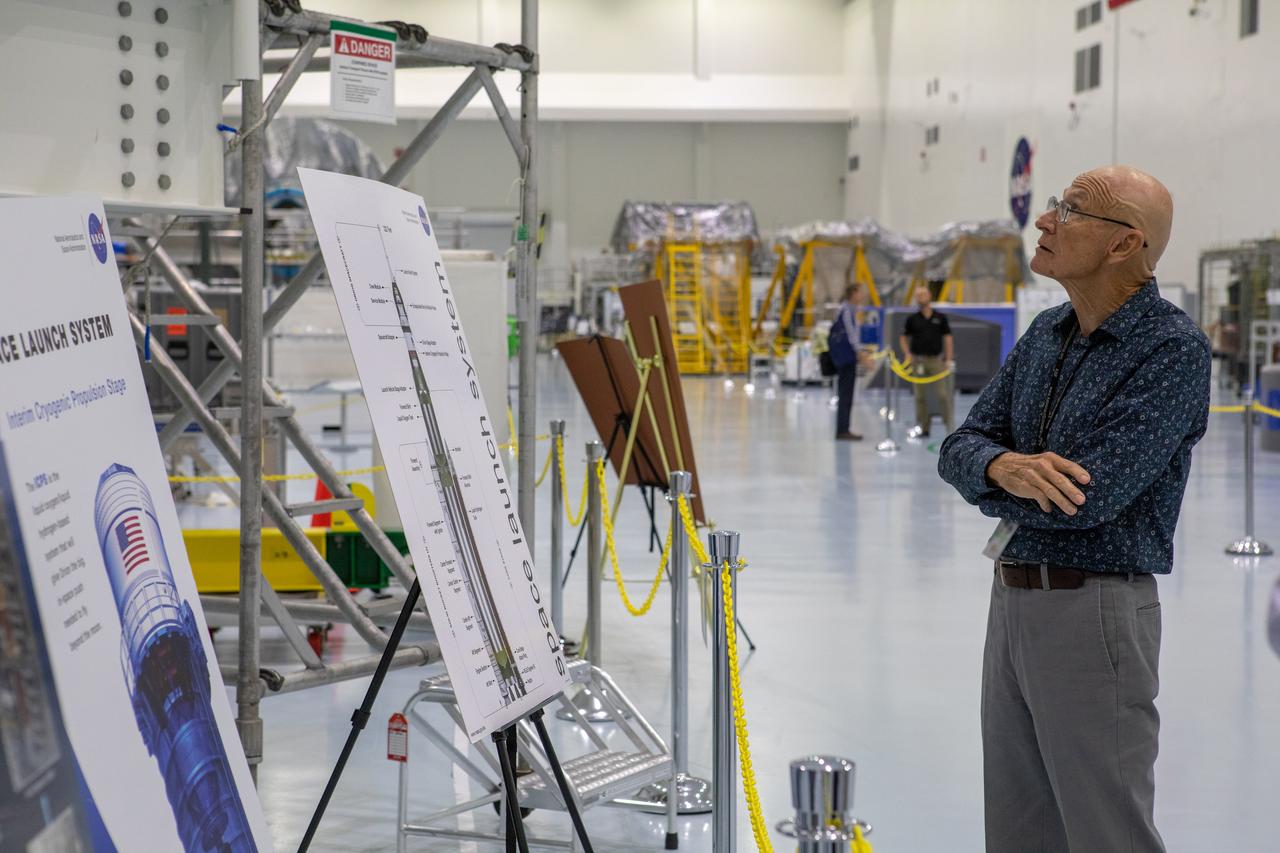
Members of the NASA Advisory Council toured the Space Station Processing Facility high bay at Kennedy Space Center in Florida on Oct. 29, 2019. In the foreground is Bob Sieck, former shuttle launch director. The NASA Advisory Council provides the NASA administrator with counsel and advice on programs and issues of importance to the agency. Committee members conduct fact-finding sessions throughout the year in an effort to gain a broad understanding of current NASA issues and future mission implementation plans.
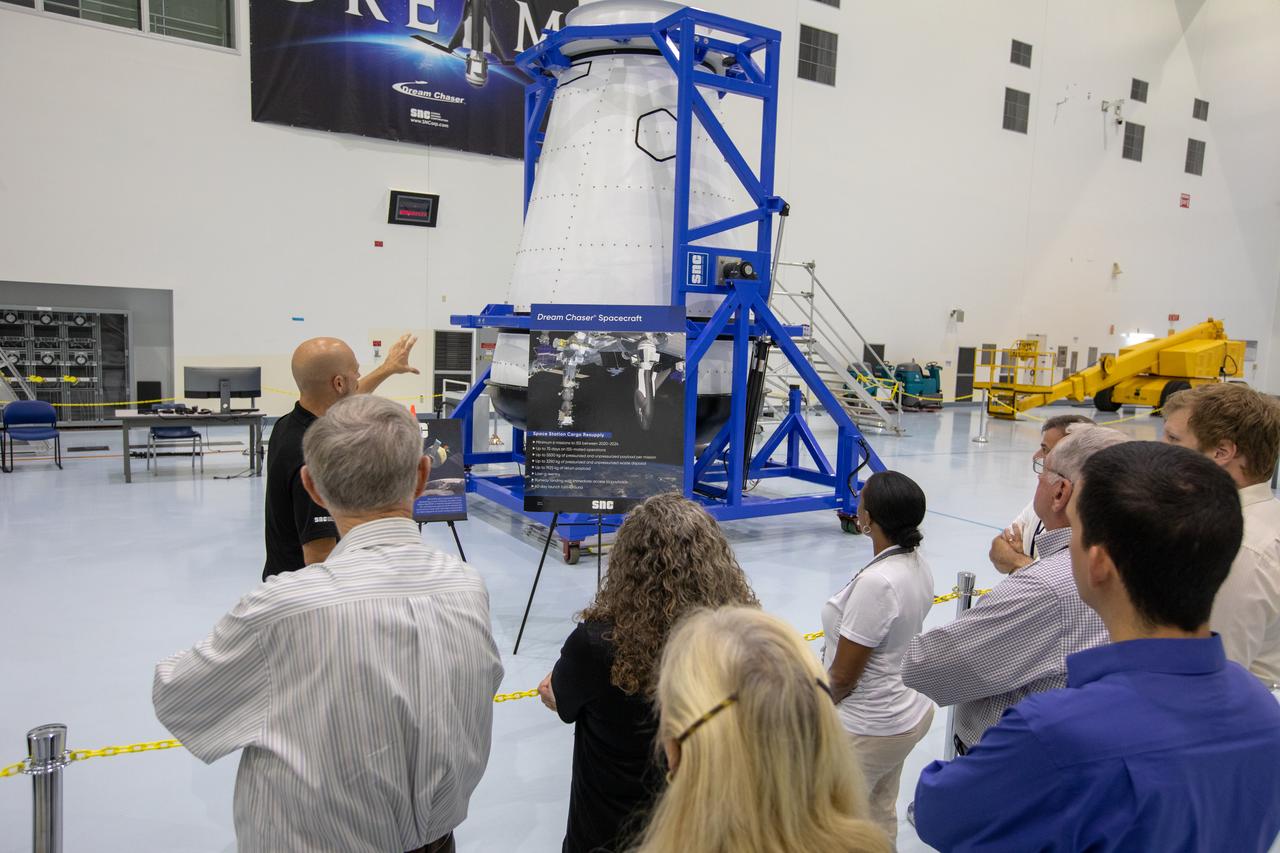
Members of the NASA Advisory Council toured the Space Station Processing Facility high bay at Kennedy Space Center in Florida on Oct. 29, 2019. In view is Sierra Nevada Corporation’s cargo logistics module. The NASA Advisory Council provides the NASA administrator with counsel and advice on programs and issues of importance to the agency. Committee members conduct fact-finding sessions throughout the year in an effort to gain a broad understanding of current NASA issues and future mission implementation plans.
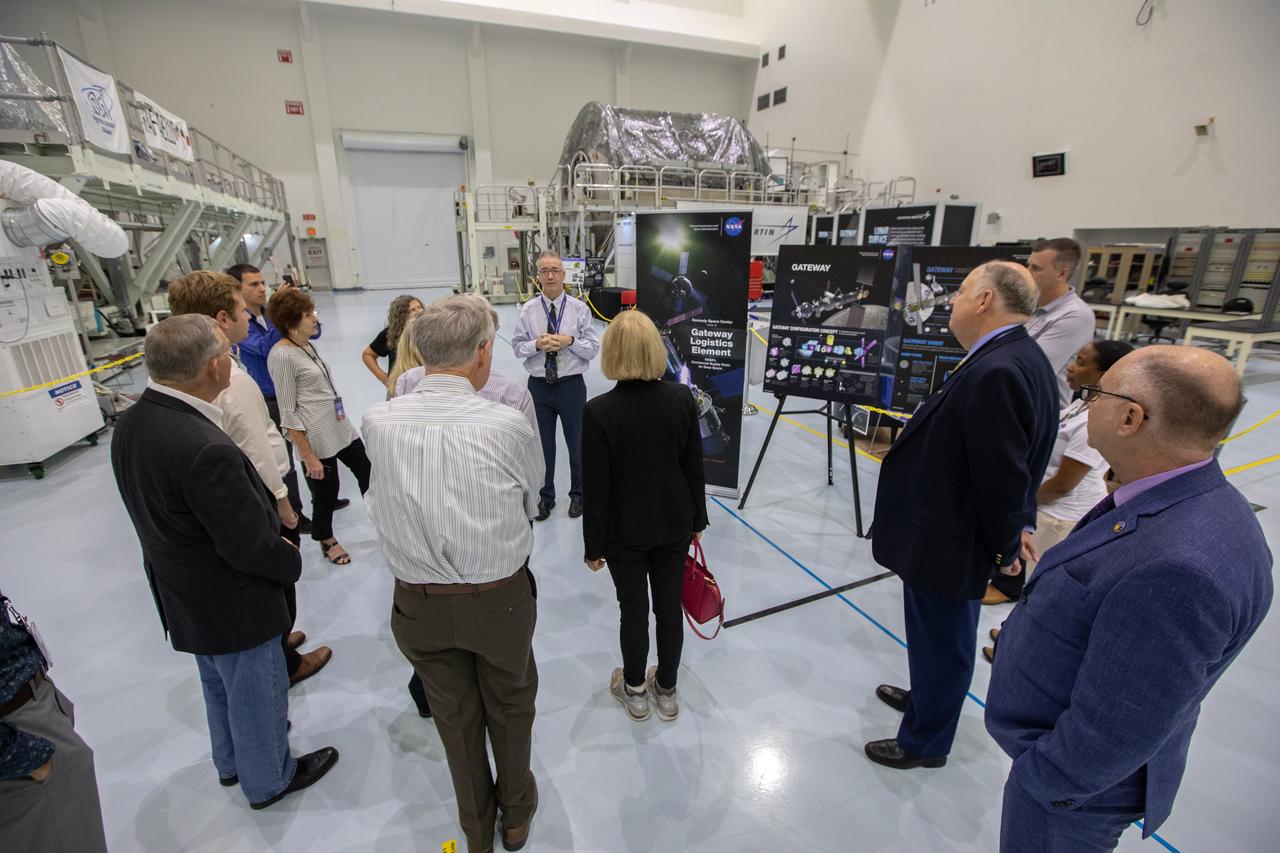
Members of the NASA Advisory Council toured the Space Station Processing Facility high bay at Kennedy Space Center in Florida on Oct. 29, 2019. In view are displays describing NASA’s Gateway Logistics Element. The NASA Advisory Council provides the NASA administrator with counsel and advice on programs and issues of importance to the agency. Committee members conduct fact-finding sessions throughout the year in an effort to gain a broad understanding of current NASA issues and future mission implementation plans.
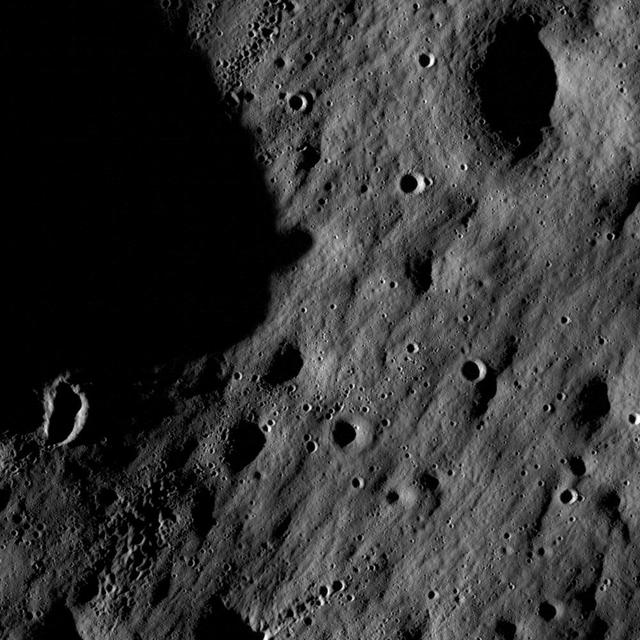
Full resolution detail from one of the first LROC NAC images. At this scale and lighting, impact craters dominate the landscape.
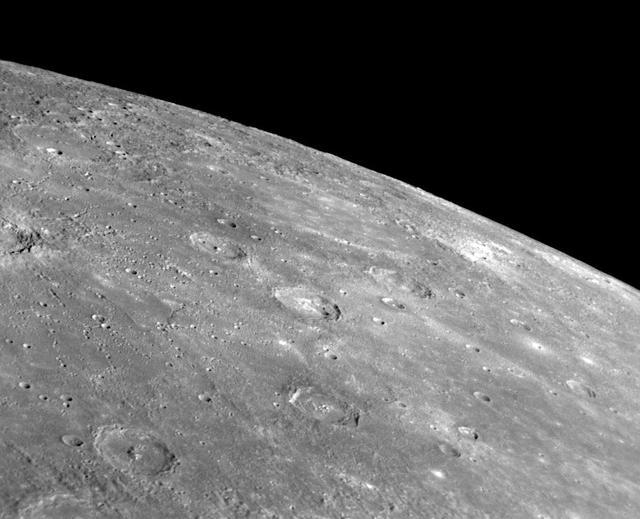
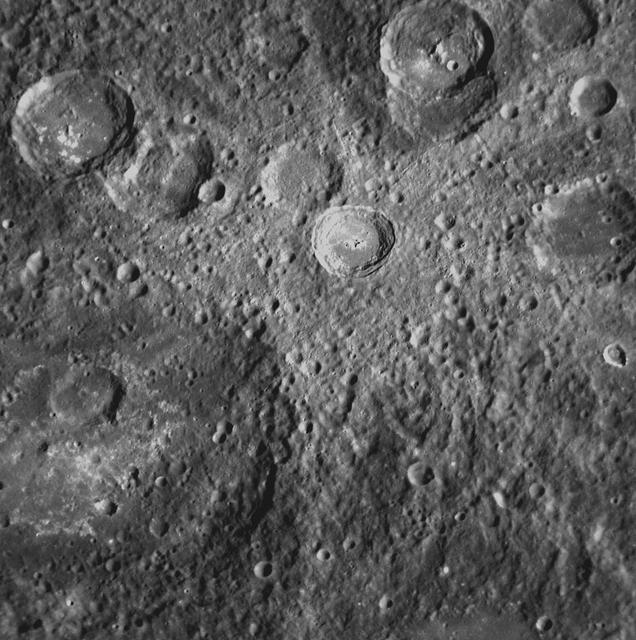
At the center of this NAC image is the crater Navoi, named in November 2008 for the Uzbek poet Alisher Navoi 1441-1501.
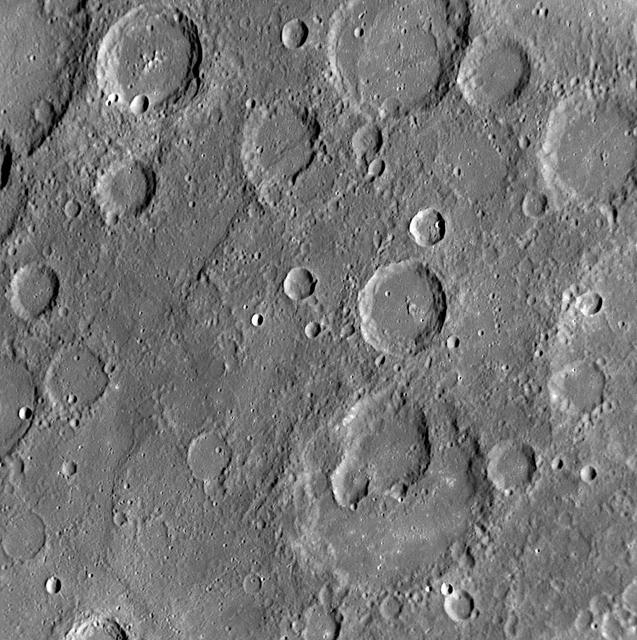
The craters in this NAC image display a variety of interesting characteristics. Visible in the lower half of this image are several overlapping impact craters.
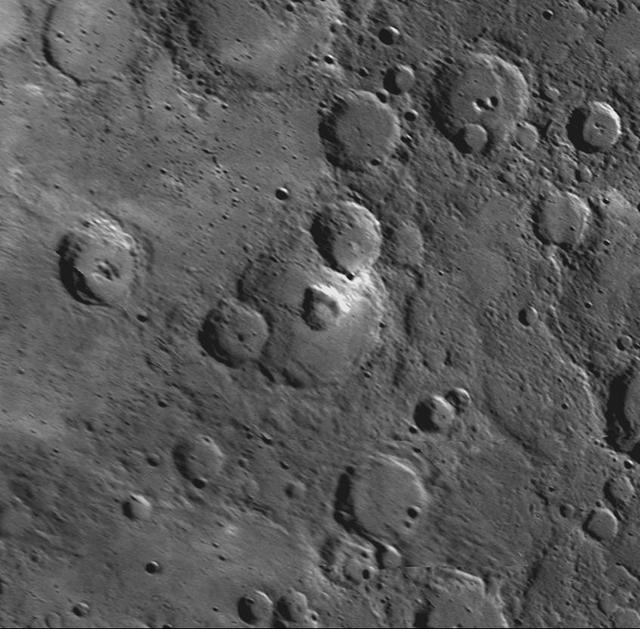
This MESSENGER NAC shows a crater at the center of this image contains a large, nearly circular pit crater.
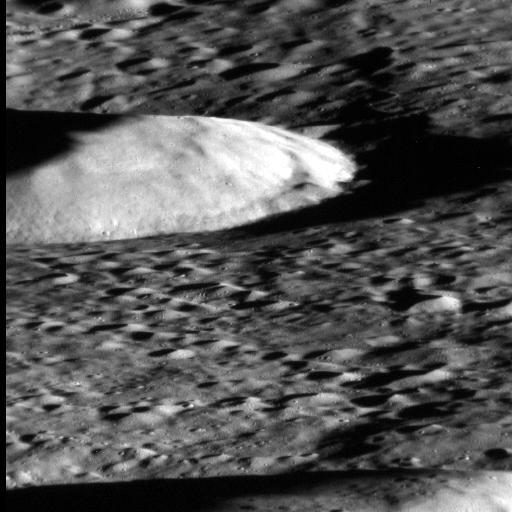
MESSENGER Flyover Movie. This frame from a movie consists of 214 images acquired by NASA MESSENGER Narrow Angle Camera NAC on June 8, 2014.
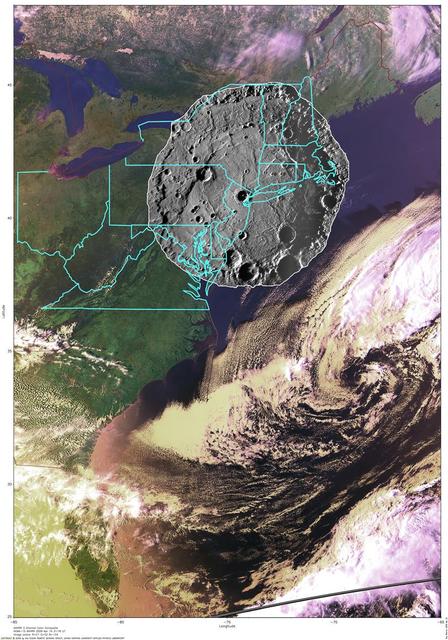
To put the size of Mercury Rembrandt basin into a familiar context, a NAC mosaic of the basin is overlaid on an AVHRR image of the east coast of the United States
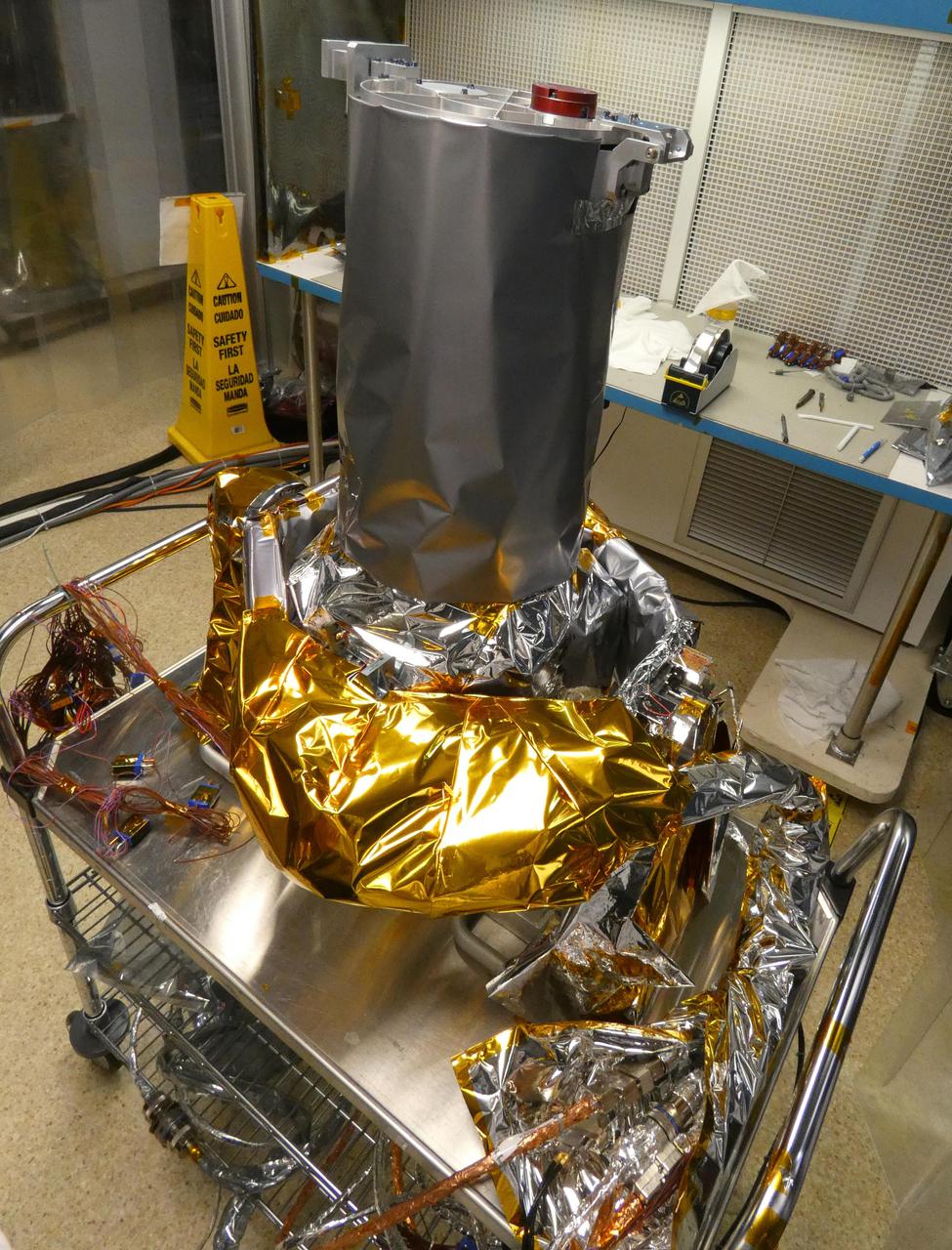
Included in the payload of science instruments for NASA's Europa Clipper is the Europa Imaging System (EIS) Narrow Angle Camera (NAC). Shown here at the Johns Hopkins Applied Physics Laboratory (APL) in Laurel, Maryland, the engineering model, which is used to test the instrument, is mounted on the two-axis gimbal mechanism that allows the NAC telescope to be pointed independently. The model consists of the NAC telescope, electronics, gimbal, and cables, covered in thermal blankets. EIS will allow groundbreaking measurements and map most of Europa, an icy moon of Jupiter with an ocean under its crust, at resolutions previous missions could only achieve in small areas. EIS data will offer fresh insights into Europa's geological structure and processes and will be used to search for evidence of recent or current geologic activity, including potential erupting plumes. With an internal global ocean twice the size of Earth's oceans combined, Europa may have the potential to harbor life. NASA's Europa Clipper spacecraft will swoop around Jupiter on an elliptical path, dipping close to the moon on each flyby to collect data. Understanding Europa's habitability will help scientists better understand how life developed on Earth and the potential for finding life beyond our planet. https://photojournal.jpl.nasa.gov/catalog/PIA24328
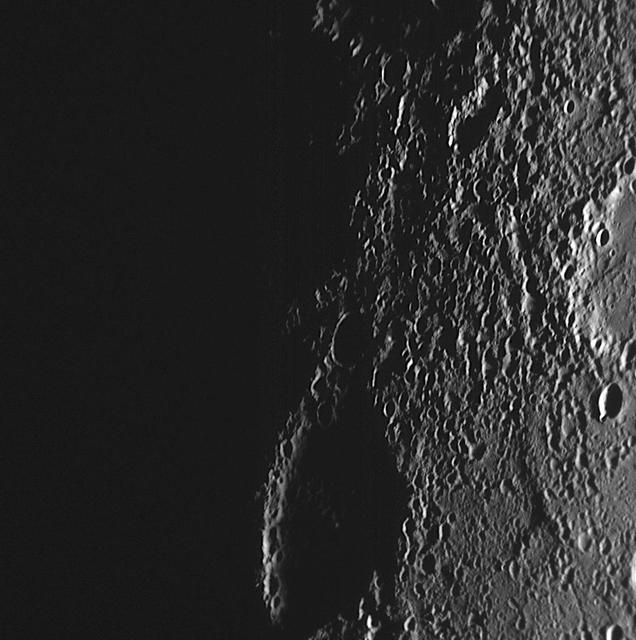
This high-resolution NAC image shows a view of Mercury dawn terminator, the division between the sunlit dayside and dark nightside of the planet, as seen as the MESSENGER spacecraft departed the planet during the mission second Mercury flyby.
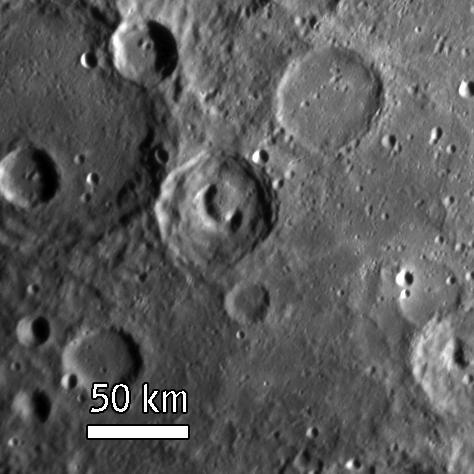
NASA MESSENGER spacecraft Narrow Angle Camera NAC on the Mercury Dual Imaging System MDIS acquired this view of Mercury surface illuminated obliquely from the right by the Sun.
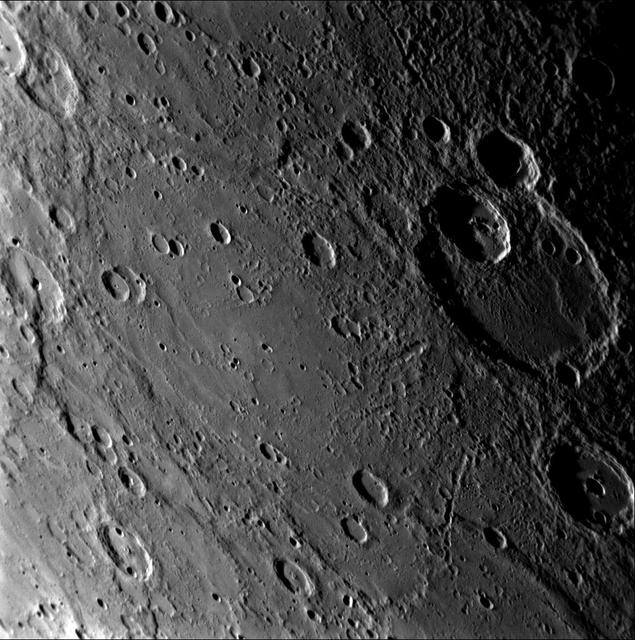
As NASA MESSENGER spacecraft approached Mercury on Jnuary 14, 2008, the Narrow Angle Camera NAC of the Mercury Dual Imaging System MDIS snapped this image of the crater Matisse.
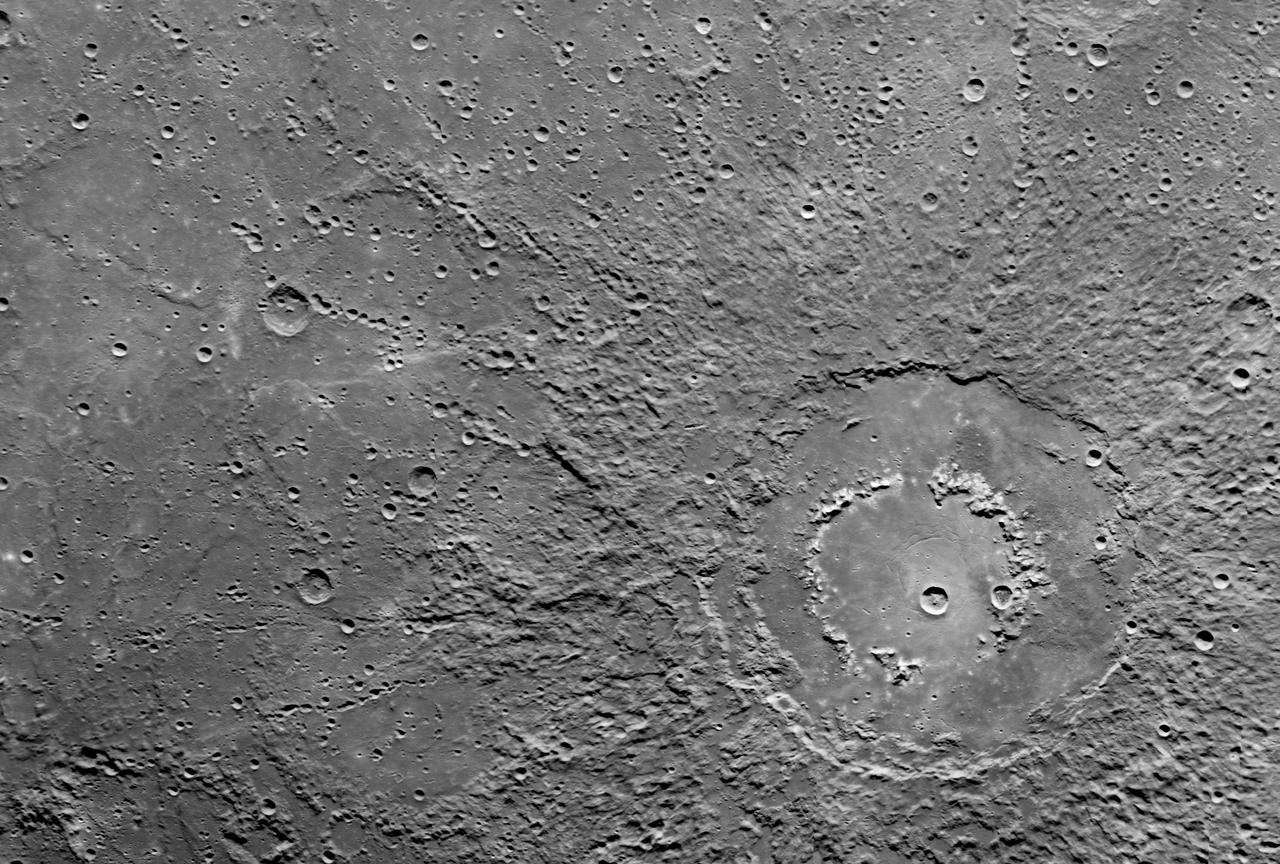
This scene was imaged by NASA MESSENGER spacecraft Narrow Angle Camera NAC on the Mercury Dual Imaging System MDIS during the spacecraft flyby of Mercury on January 14, 2008.
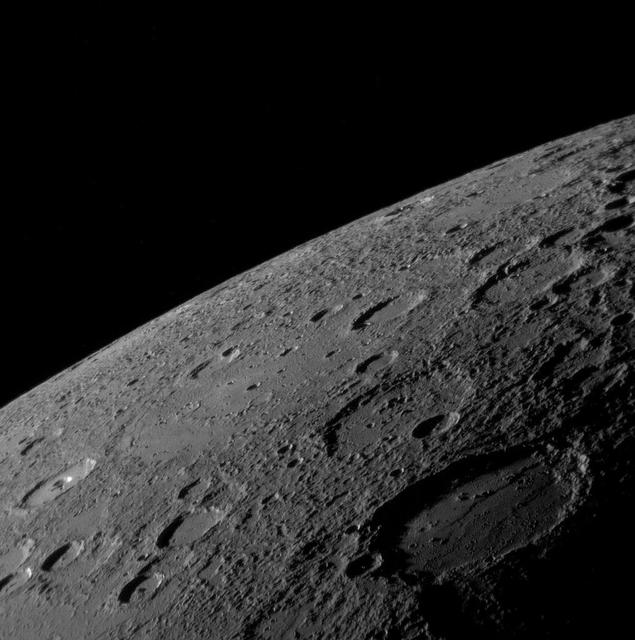
As NASA MESSENGER spacecraft drew closer to Mercury for its historic first flyby, the spacecraft Narrow Angle Camera NAC on the Mercury Dual Imaging System MDIS acquired an image mosaic of the sunlit portion of the planet.
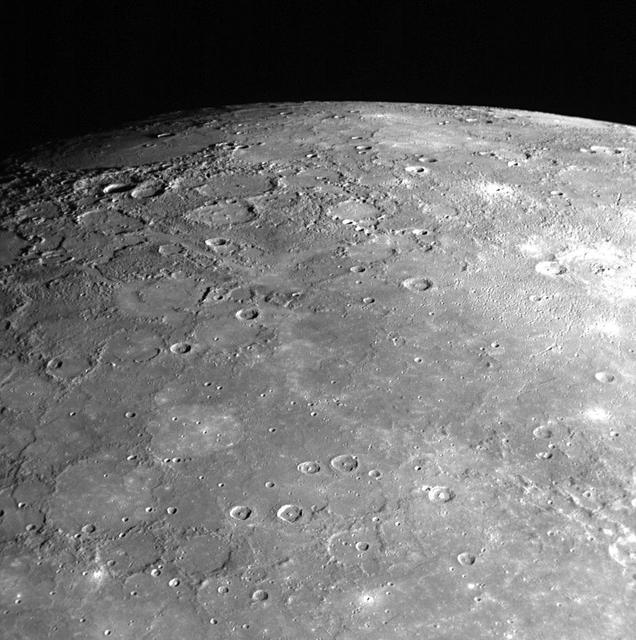
As NASA MESSENGER spacecraft sped by Mercury on January 14, 2008, the Narrow Angle Camera NAC of the Mercury Dual Imaging System MDIS captured this shot looking toward Mercury north pole.
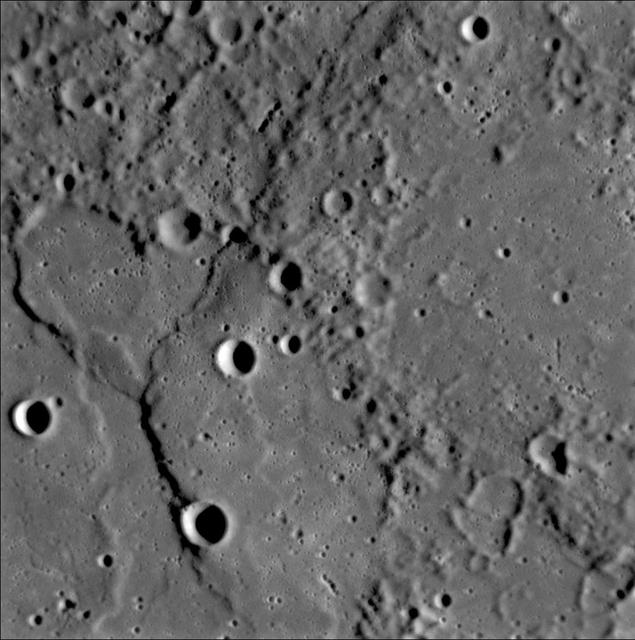
A complex history of geological evolution is recorded in this frame from the Narrow Angle Camera NAC, part of the Mercury Dual Imaging System MDIS instrument, taken during NASA MESSENGER close flyby of Mercury on January 14, 2008.
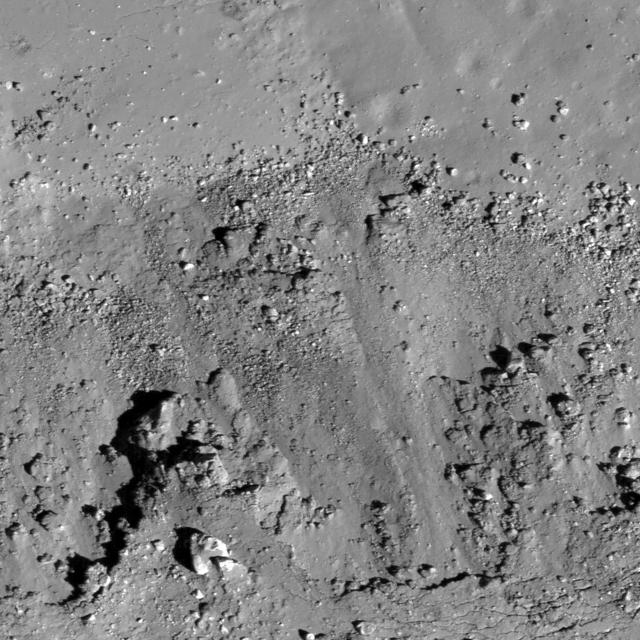
A subset of NAC Image M112162602L showing landslides bottom covering impact melt on the floor top of a fresh Copernican-age crater at the edge of Oceanus Procellarum and west of Balboa crater taken by NASA Lunar Reconnaissance Orbiter.
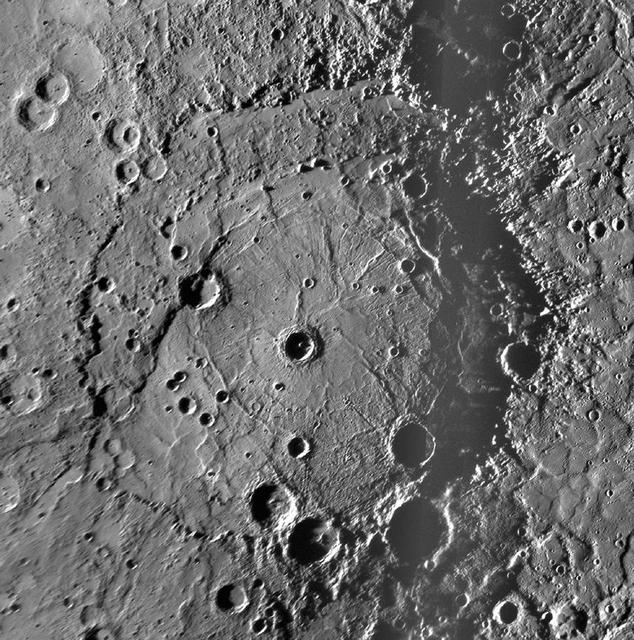
This NAC mosaic of the newly discovered Rembrandt impact basin was presented last week during a NASA media teleconference. The number per area and size distribution of impact craters superposed on Rembrandt rim indicates that it is one of the younges
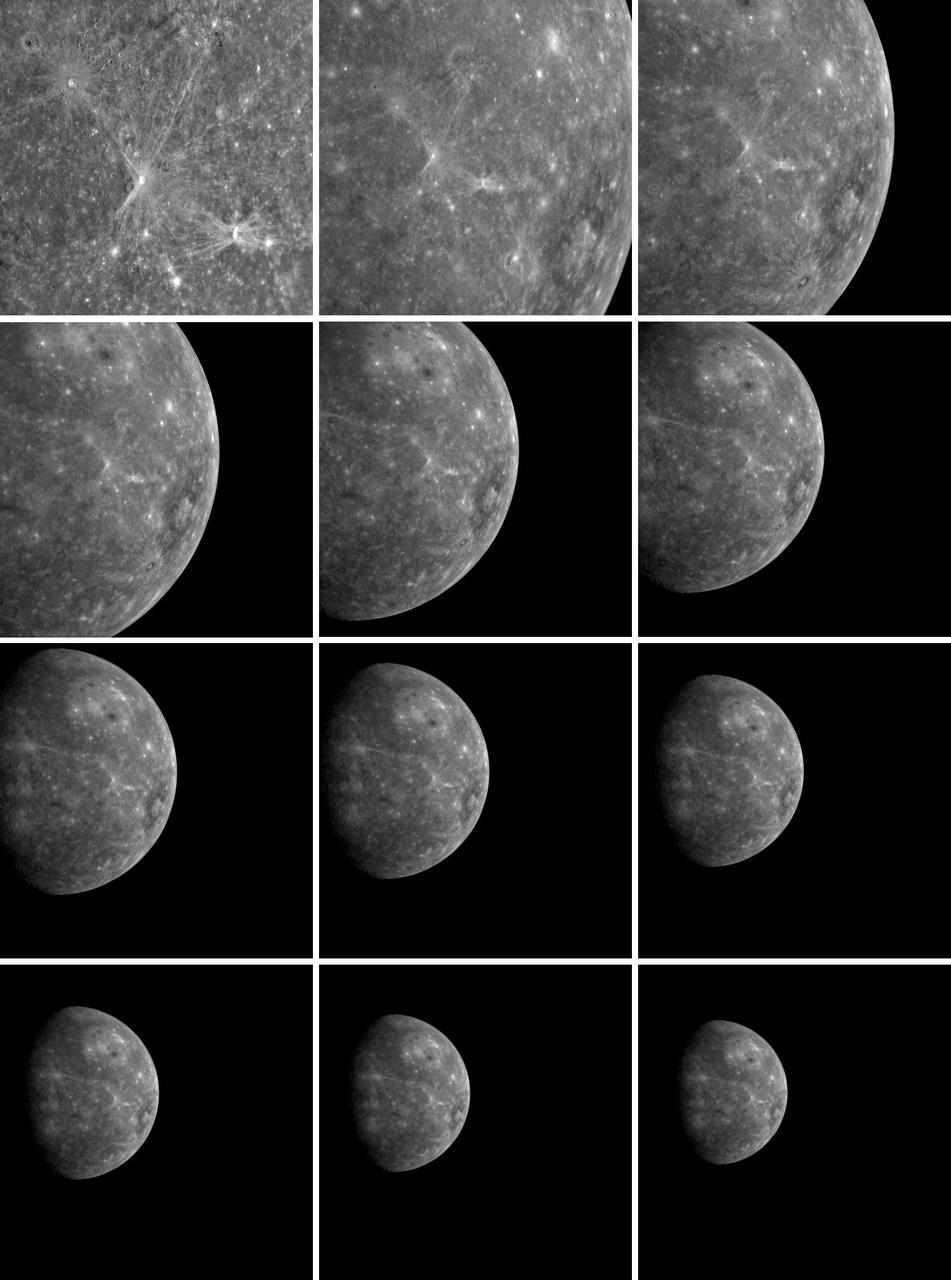
After NASA MESSENGER spacecraft completed its successful flyby of Mercury, the Narrow Angle Camera NAC, part of the Mercury Dual Imaging System MDIS, took these images of the receding planet.
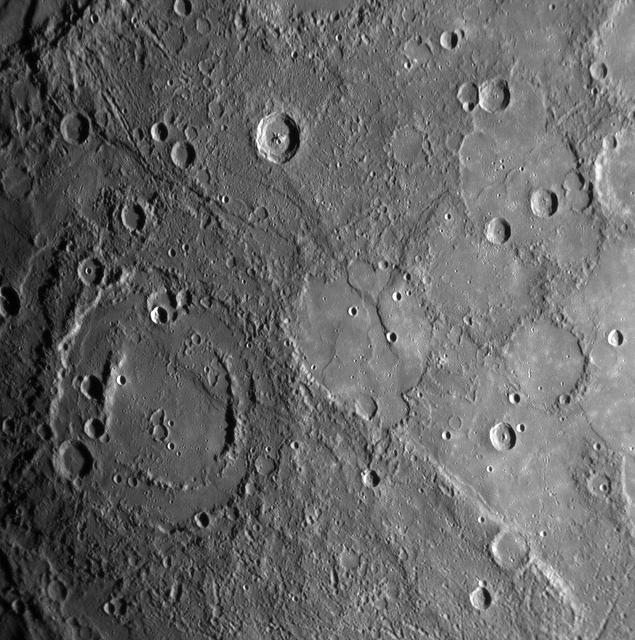
Shortly following NASA MESSENGER spacecraft closest approach to Mercury on January 14, 2008, the spacecraft Narrow Angle Camera NAC instrument acquired this image as part of a mosaic that covers much of the sunlit portion of the hemisphere.
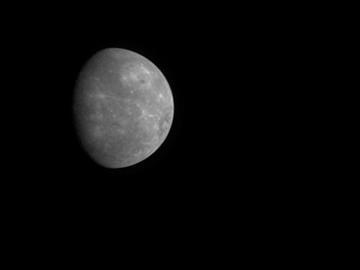
After NASA MESSENGER spacecraft completed its successful flyby of Mercury, the Narrow Angle Camera NAC, part of the Mercury Dual Imaging System MDIS, took these images of the receding planet. This is a frame from an animation.
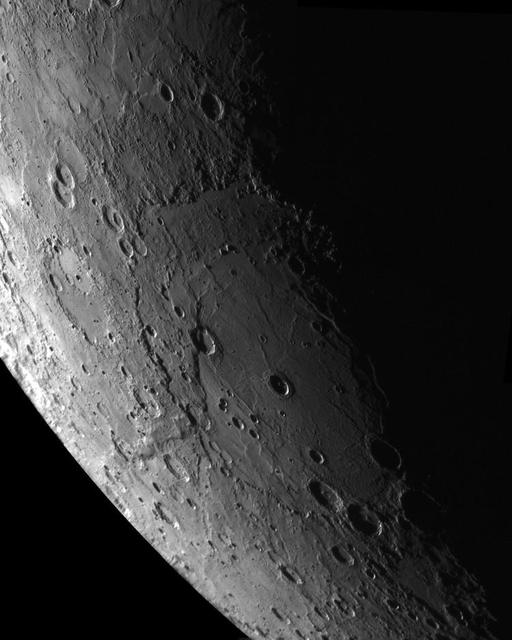
This mosaic was assembled using NAC images acquired as the MESSENGER spacecraft approached the planet during the mission second Mercury flyby The Rembrandt impact basin is seen at the center of the mosaic.
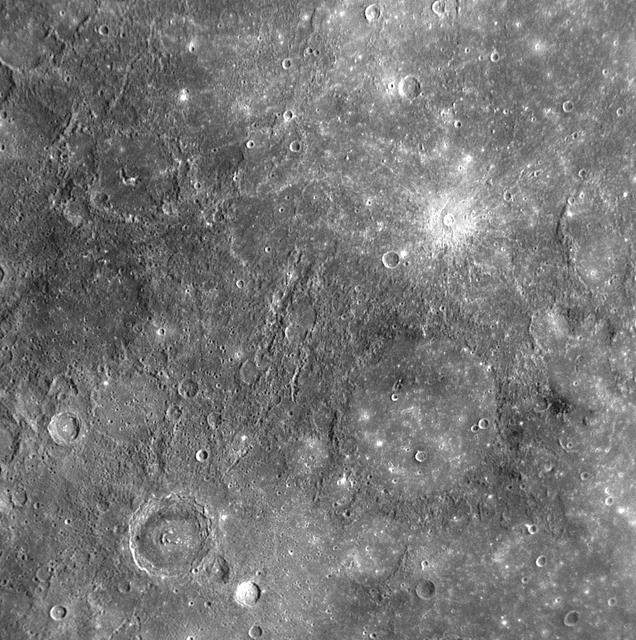
This NAC image from MESSENGER’s second Mercury flyby shows a crater with a set of light-colored rays radiating outward from it. Such rays are formed when an impact excavates material from below the surface and throws it outward from the crater.
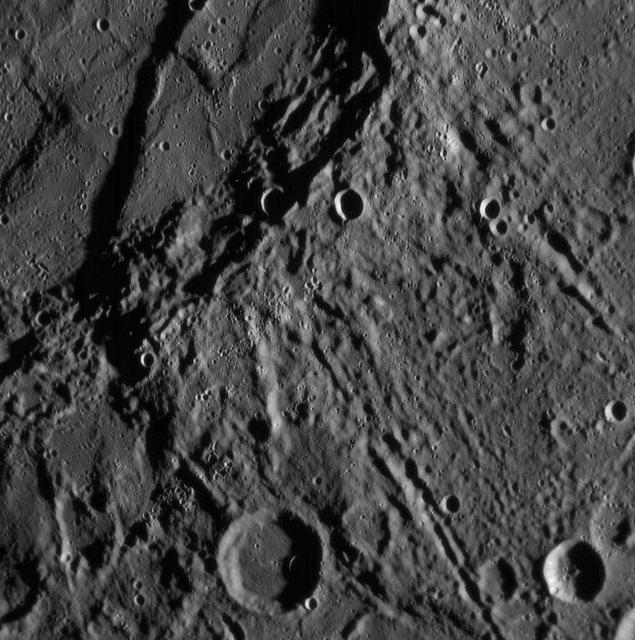
Just 21 minutes after NASA MESSENGER spacecraft closest approach to Mercury, the Narrow Angle Camera NAC took this picture showing a variety of intriguing surface features, including craters as small as about 400 meters about 400 yards across.
The crater identified in this NAC image was named in November 2008 for Ronald Moody, a 20th century Jamaican sculptor and painter. Moody features a central peak or peak-ring structure and an annulus of dark material on its outer floor green arrows.
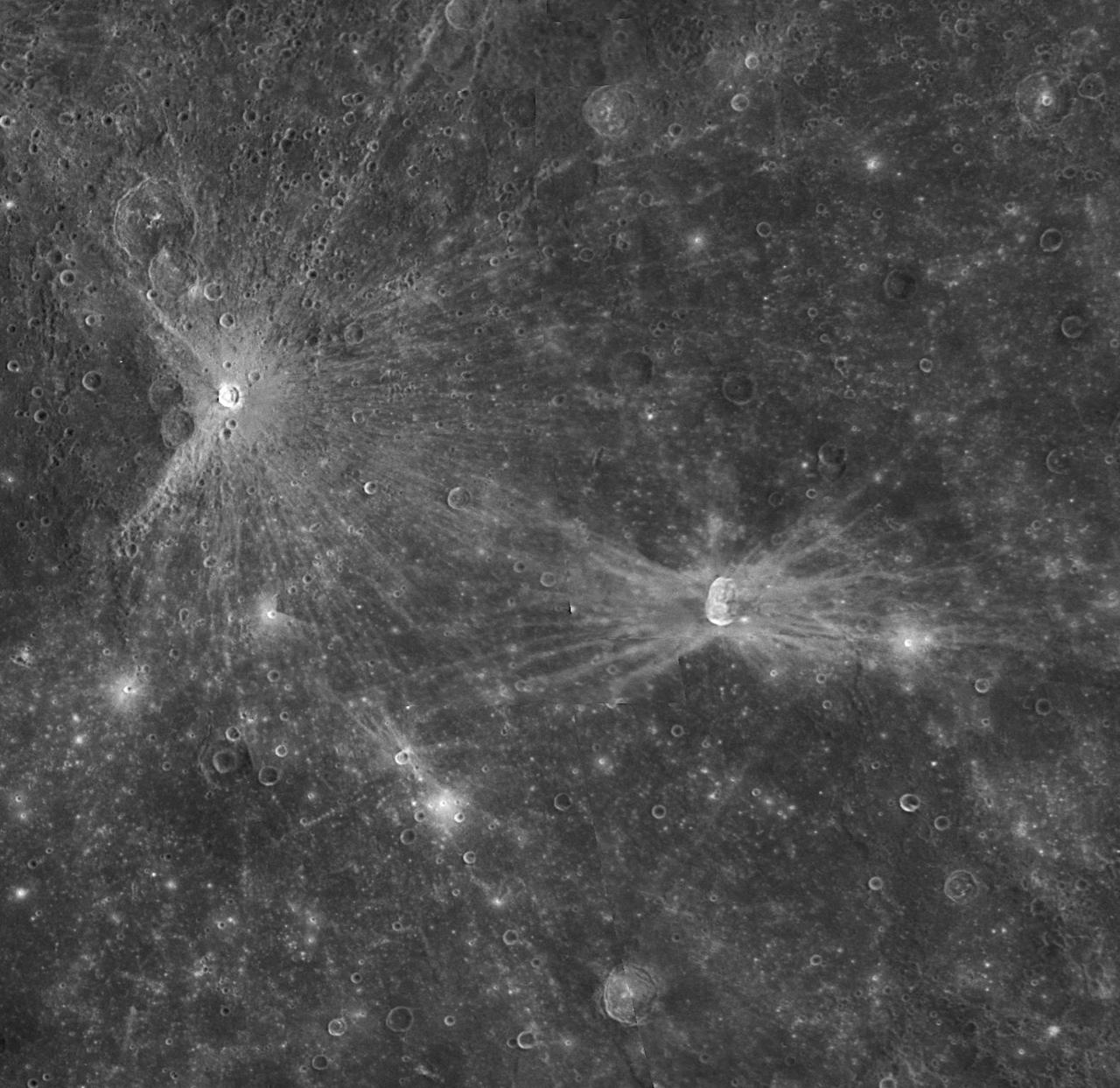
This NAC image shows Qi Baishi and Hovnatanian, two craters that were newly named in November 2008. Qi Baishi is named for the famous Chinese painter who died in 1957. Hovnatanian is named for the nineteenth century Armenian painter Hakop Hovnatanian.
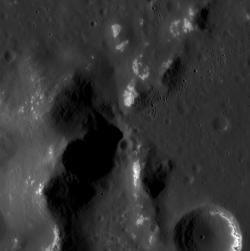
The surface shown here is located within a 73-km-diameter crater; the mounds are part of a larger central peak structure of the hosting crater. The resolution of this image resolves hollows on the central peaks, as seen in other craters such as Ahmad Baba, Mickiewicz, and others. The lower right also shows hollows that appear to form in one layer of a crater wall, such as has been viewed in other high-resolution images. This image was acquired as part of the NAC ride-along imaging campaign. When data volume is available and MDIS is not acquiring images for its other campaigns, high-resolution NAC images are obtained of the surface. These images are designed not to interfere with other instrument observations but take full advantage of periods during the mission when extra data volume is available. Date acquired: January 12, 2015 Image Mission Elapsed Time (MET): 63406030 Image ID: 7783973 Instrument: Narrow Angle Camera (NAC) of the Mercury Dual Imaging System (MDIS) Center Latitude: 59.57° Center Longitude: 319.14° E Resolution: 15 meters/pixel Scale: This image is roughly 15 km (9 miles) across Incidence Angle: 67.9° Emission Angle: 22.1° Phase Angle: 90.1° http://photojournal.jpl.nasa.gov/catalog/PIA19187

The view, from the spacecraft's wide-angle camera (WAC), includes an inset view, near center left, from the narrow-angle camera (NAC). The NAC view (also available here at its full resolution) shows features about 10 times smaller than the WAC view. The wide-angle camera view has an image scale of about 105 feet (32 meters) per pixel; the narrow-angle camera view has an image scale of about 10 feet (3 meters) per pixel. Sunlight illuminates the scene from top. North on Dione is down. The views were acquired in visible light at an altitude of 334 miles (537 kilometers) above Dione. The images were acquired simultaneously during a close flyby of the icy moon on Aug. 17, 2015. The views were obtained near the time of Cassini's closest approach to Dione during the encounter, like PIA19654. The NAC images in these two image releases are the highest resolution views of Dione's surface acquired by Cassini. http://photojournal.jpl.nasa.gov/catalog/PIA19653
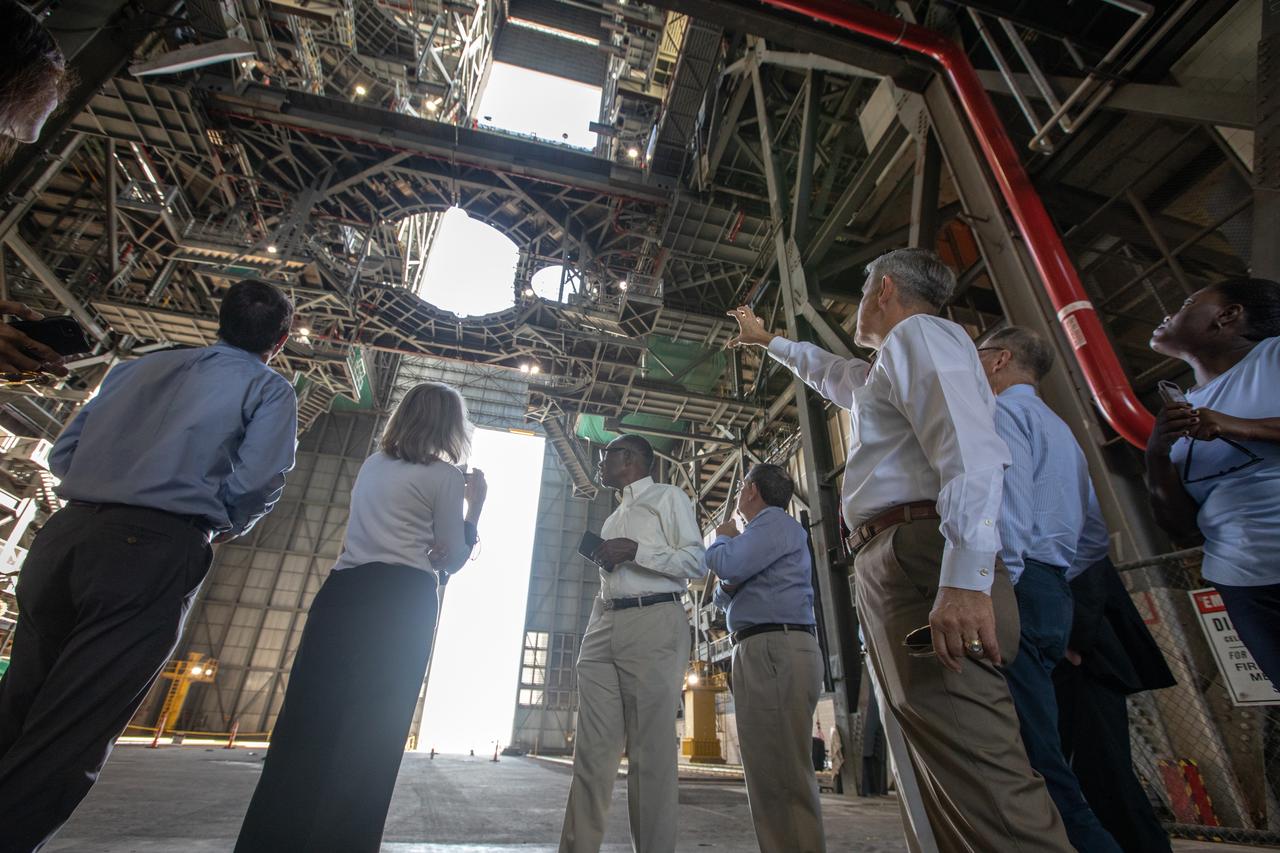
Kennedy Space Center Director Bob Cabana gestures toward work platforms while speaking to members of the NASA Advisory Council during a tour of the Vehicle Assembly Building on Oct. 30, 2019. The NASA Advisory Council provides the NASA administrator with counsel and advice on programs and issues of importance to the agency. Committee members conduct fact-finding sessions throughout the year in an effort to gain a broad understanding of current NASA issues and future mission implementation plans.
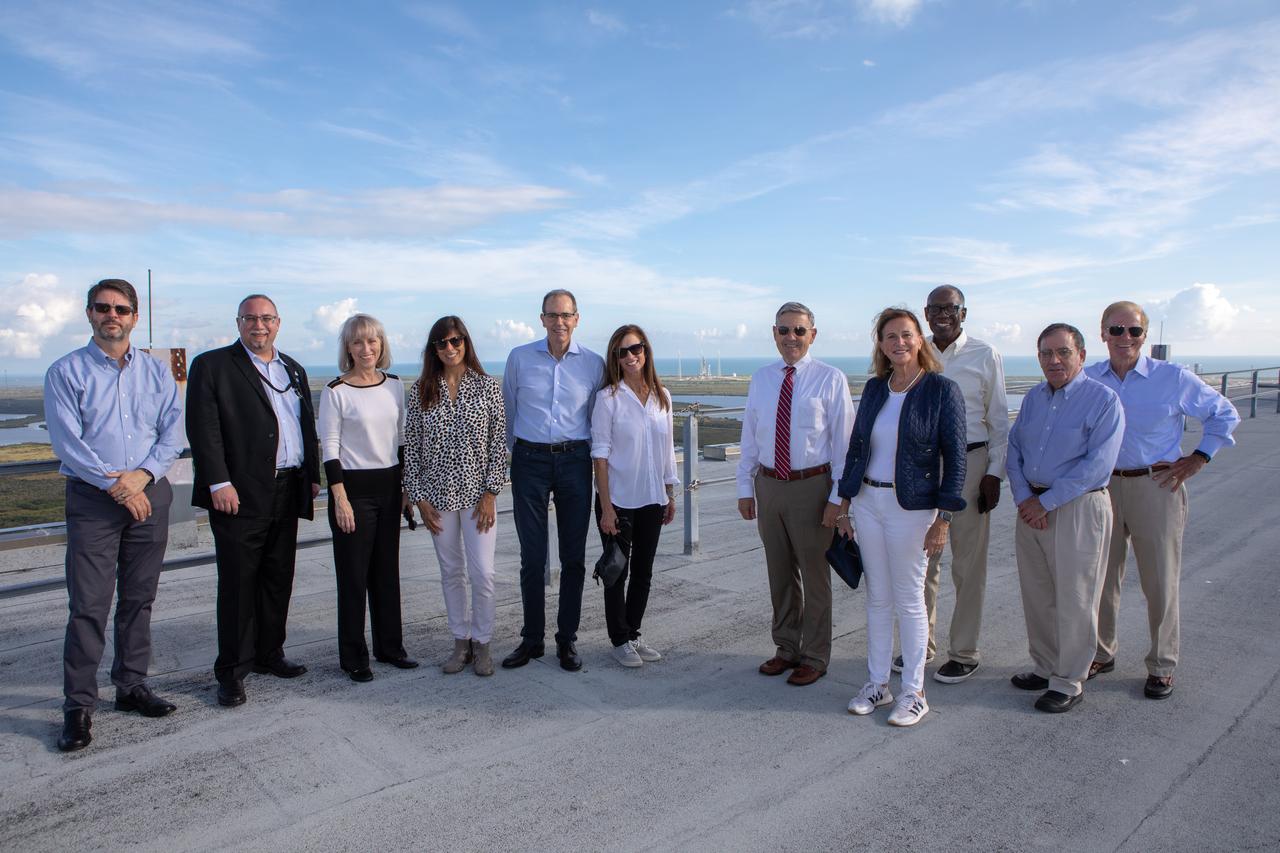
Members of the NASA Advisory Council are on the roof of the Vehicle Assembly Building during a tour of Kennedy Space Center in Florida on Oct. 30, 2019. The NASA Advisory Council provides the NASA administrator with counsel and advice on programs and issues of importance to the agency. Committee members conduct fact-finding sessions throughout the year in an effort to gain a broad understanding of current NASA issues and future mission implementation plans.
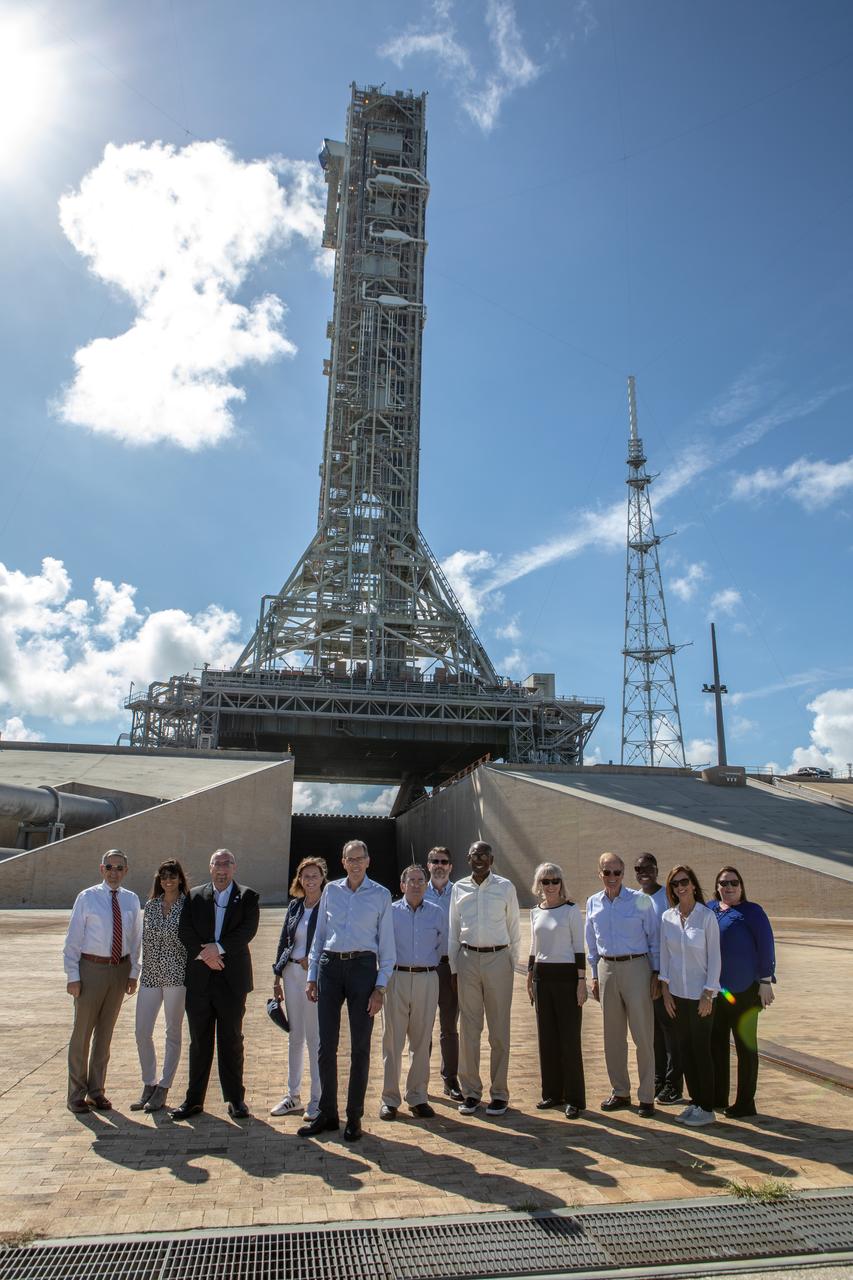
Members of the NASA Advisory Council are at Launch Complex 39B during a tour of Kennedy Space Center in Florida on Oct. 30, 2019. Behind them is the mobile launcher for Artemis missions to the Moon. At far left is Kennedy Director Bob Cabana. The NASA Advisory Council provides the NASA administrator with counsel and advice on programs and issues of importance to the agency. Committee members conduct fact-finding sessions throughout the year in an effort to gain a broad understanding of current NASA issues and future mission implementation plans.
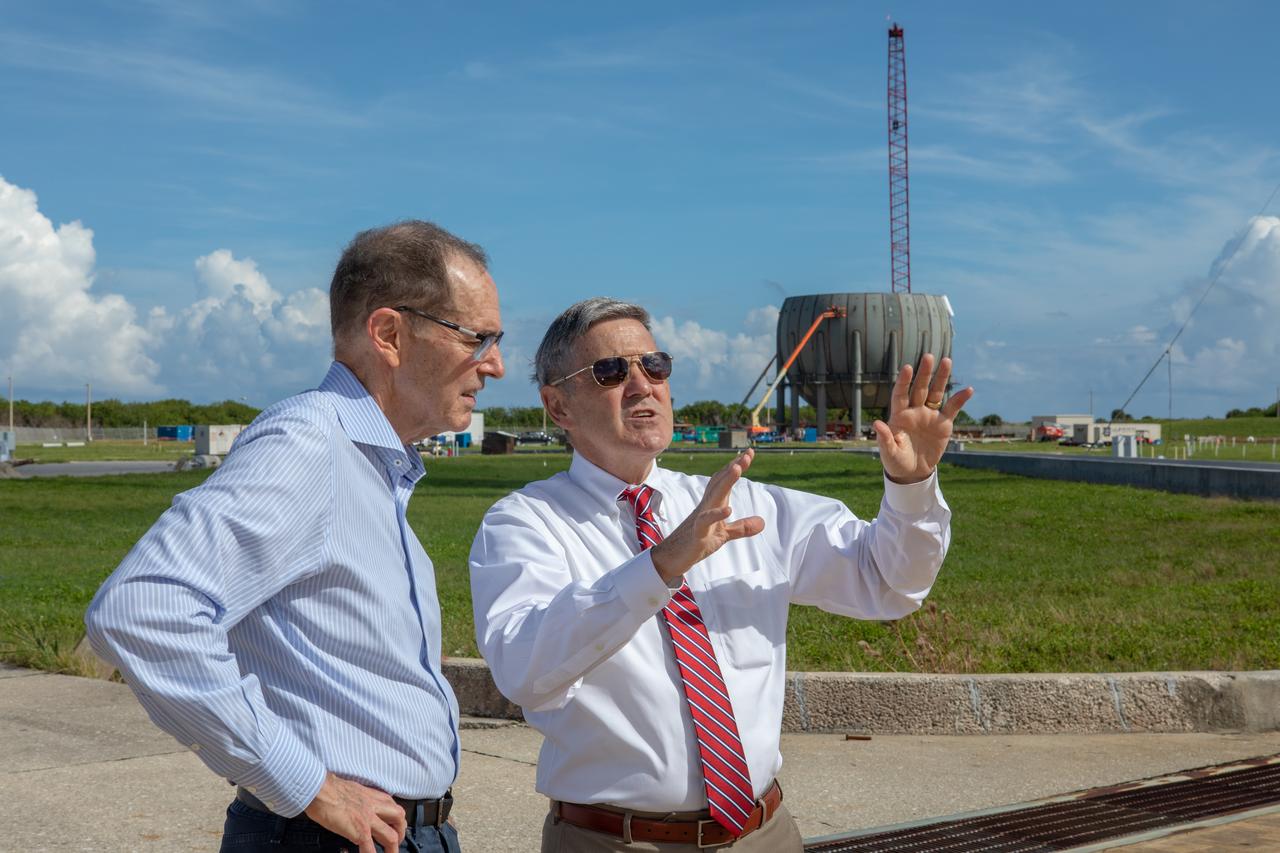
Kennedy Space Center Director Bob Cabana, at right, speaks to a member of the NASA Advisory Council at Launch Complex 39B during a tour of the multi-user spaceport on Oct. 30, 2019. In view behind them is the build-up of a new liquid hydrogen storage tank that will support Artemis launches to the Moon and on to Mars. The NASA Advisory Council provides the NASA administrator with counsel and advice on programs and issues of importance to the agency. Committee members conduct fact-finding sessions throughout the year in an effort to gain a broad understanding of current NASA issues and future mission implementation plans.
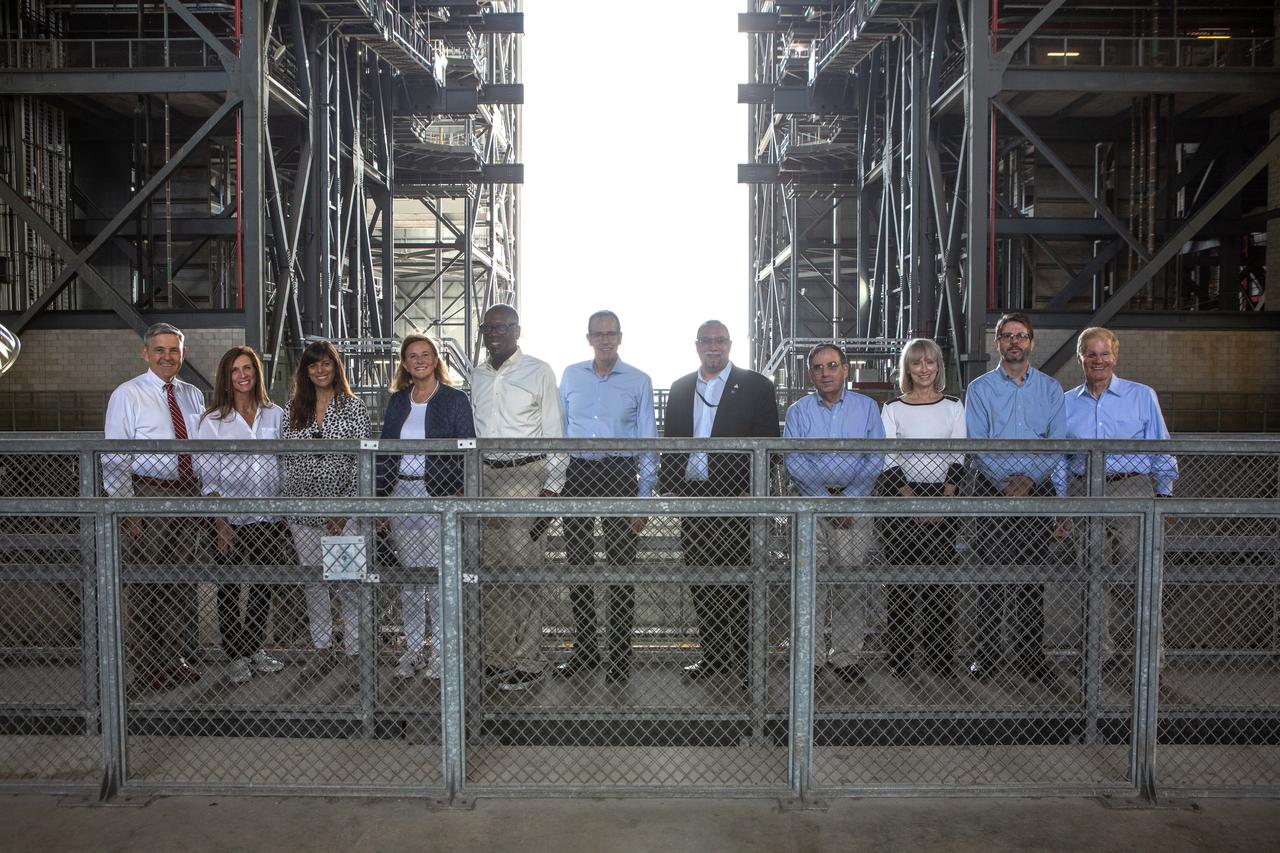
Members of the NASA Advisory Council are in High Bay 3 of the Vehicle Assembly Building during a tour of Kennedy Space Center in Florida on Oct. 30, 2019. At far left is Kennedy Director Bob Cabana. The NASA Advisory Council provides the NASA administrator with counsel and advice on programs and issues of importance to the agency. Committee members conduct fact-finding sessions throughout the year in an effort to gain a broad understanding of current NASA issues and future mission implementation plans.
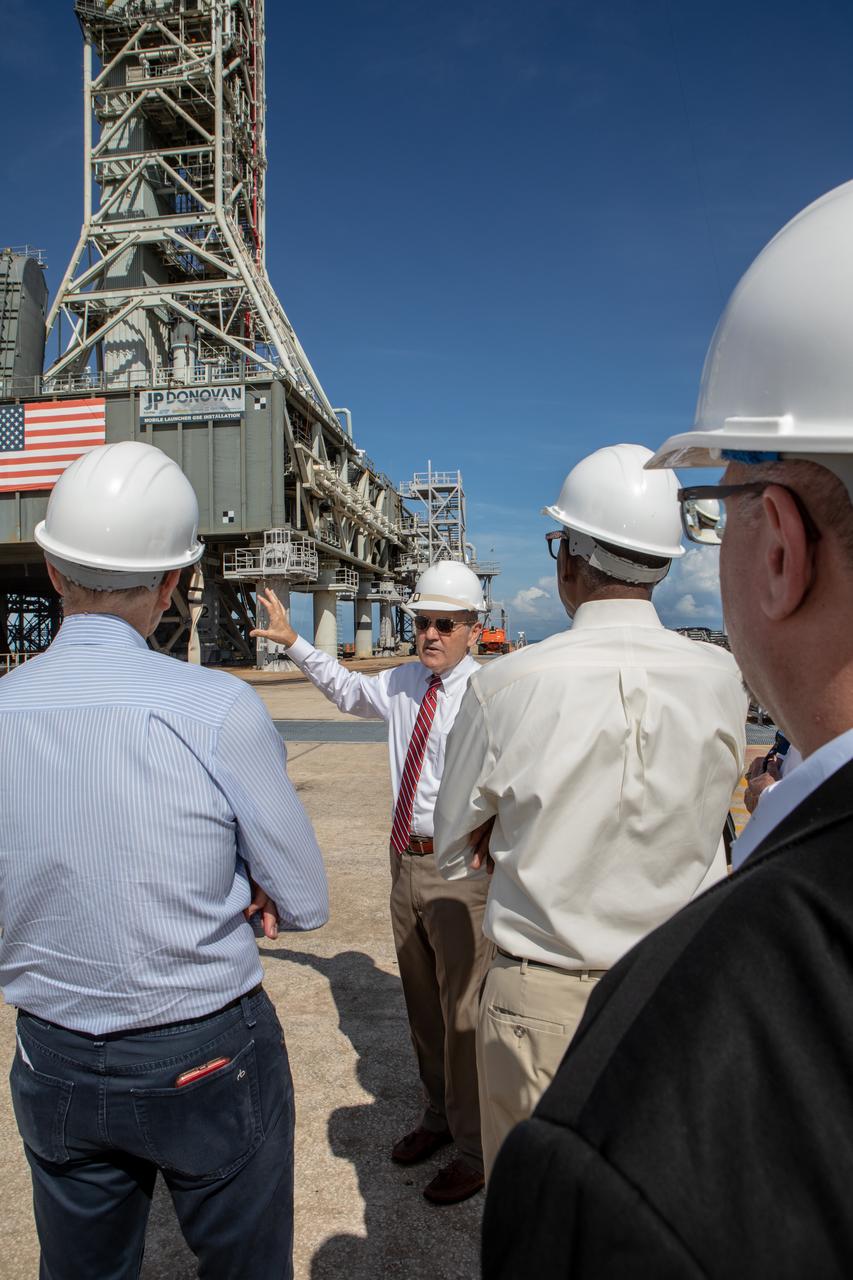
Kennedy Space Center Director Bob Cabana gestures toward the mobile launcher while speaking to members of the NASA Advisory Council at Launch Complex 39B during a tour of the multi-user spaceport on Oct. 30, 2019. The NASA Advisory Council provides the NASA administrator with counsel and advice on programs and issues of importance to the agency. Committee members conduct fact-finding sessions throughout the year in an effort to gain a broad understanding of current NASA issues and future mission implementation plans.
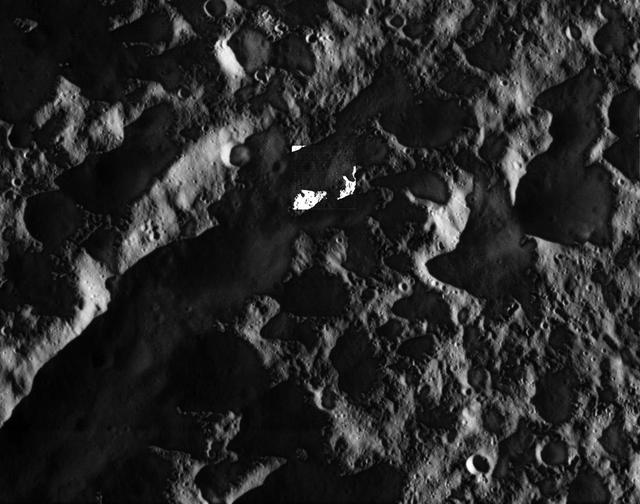
As NASA's Cassini soared above high northern latitudes on Saturn's moon Dione, the spacecraft looked down at a region near the day-night boundary. This view shows the region as a contrast-enhanced image in which features in shadow are illuminated by reflected light from Saturn. Inset just above center is a higher resolution view -- one of the mission's highest-resolution views of the Saturnian moon's icy surface. Territory seen here is just east of a crater named Butes, near an unnamed tectonic structure around 65 degrees north latitude, 25 degrees west longitude. The broader view is from the spacecraft's wide-angle camera (WAC) and includes an inset view from Cassini's narrow-angle camera (NAC). The NAC view (also available here at its full resolution) shows features about 10 times smaller than the WAC view. The unenhanced WAC view is also provided here. The views were obtained near the time of Cassini's closest approach to Dione during the encounter, like PIA19653. The NAC images in these two image releases are the highest resolution views of Dione's surface acquired by Cassini. The views were acquired in visible light at an altitude of 365 miles (588 kilometers) above Dione. The wide-angle camera image has an image scale of about 115 feet (35 meters) per pixel; the narrow-angle camera image has an image scale of about 12 feet (3.5 meters) per pixel. http://photojournal.jpl.nasa.gov/catalog/PIA19654
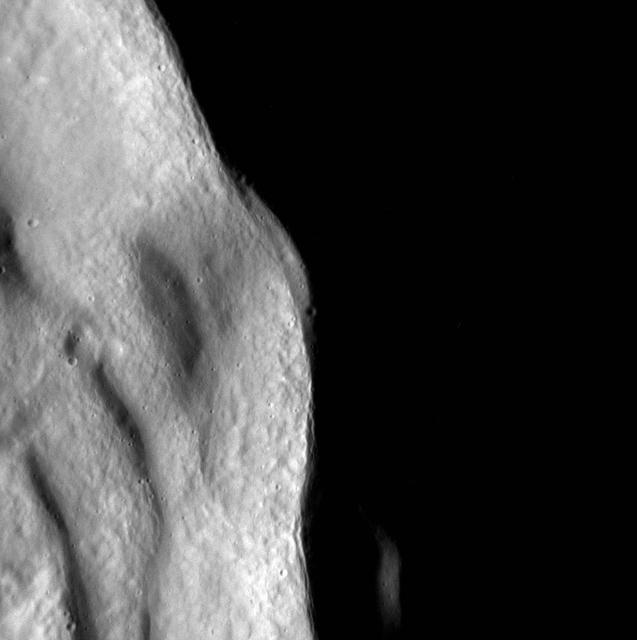
The exterior of this unnamed crater is in shadow, while the inner wall and terraces bask in the sunshine. Terraces form just after the crater has been excavated, when oversteepened slopes slump back down. This image was acquired as part of the MDIS low-altitude imaging campaign. During MESSENGER's second extended mission, the spacecraft makes a progressively closer approach to Mercury's surface than at any previous point in the mission, enabling the acquisition of high-spatial-resolution data. For spacecraft altitudes below 350 kilometers, NAC images are acquired with pixel scales ranging from 20 meters to as little as 2 meters. Date acquired: January 23, 2015 Image Mission Elapsed Time (MET): 64352478 Image ID: 7849599 Instrument: Narrow Angle Camera (NAC) of the Mercury Dual Imaging System (MDIS) Center Latitude: 31.48° Center Longitude: 81.89° E Resolution: 6 meters/pixel Scale: This scene is approximately 6.3 km (3.9 miles) from top to bottom Incidence Angle: 82.6° Emission Angle: 0.1° Phase Angle: 82.7° http://photojournal.jpl.nasa.gov/catalog/PIA19196
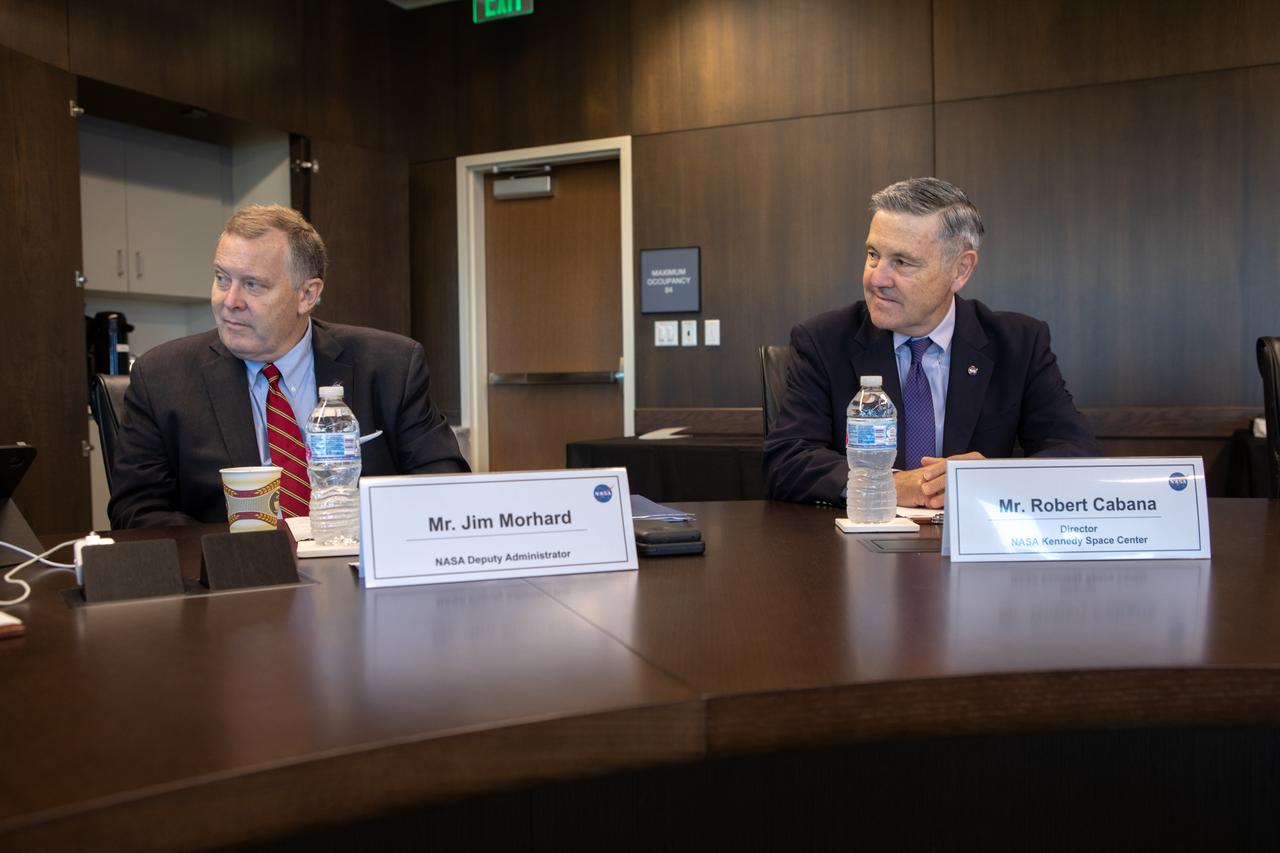
NASA Deputy Administrator Jim Morhard, at left, and Kennedy Space Center Director Robert Cabana participate in a NASA Advisory Council meeting at the center’s Central Campus Headquarters Building in Florida on Oct. 31, 2019. The NASA Advisory Council provides the NASA administrator with counsel and advice on programs and issues of importance to the agency. Committee members conduct fact-finding sessions throughout the year in an effort to gain a broad understanding of current NASA issues and future mission implementation plans.

NASA Deputy Administrator Jim Morhard, standing, addresses members of the NASA Advisory Council during a meeting at the Kennedy Space Center’s Central Campus Headquarters Building in Florida on Oct. 31, 2019. The NASA Advisory Council provides the NASA administrator with counsel and advice on programs and issues of importance to the agency. Committee members conduct fact-finding sessions throughout the year in an effort to gain a broad understanding of current NASA issues and future mission implementation plans.
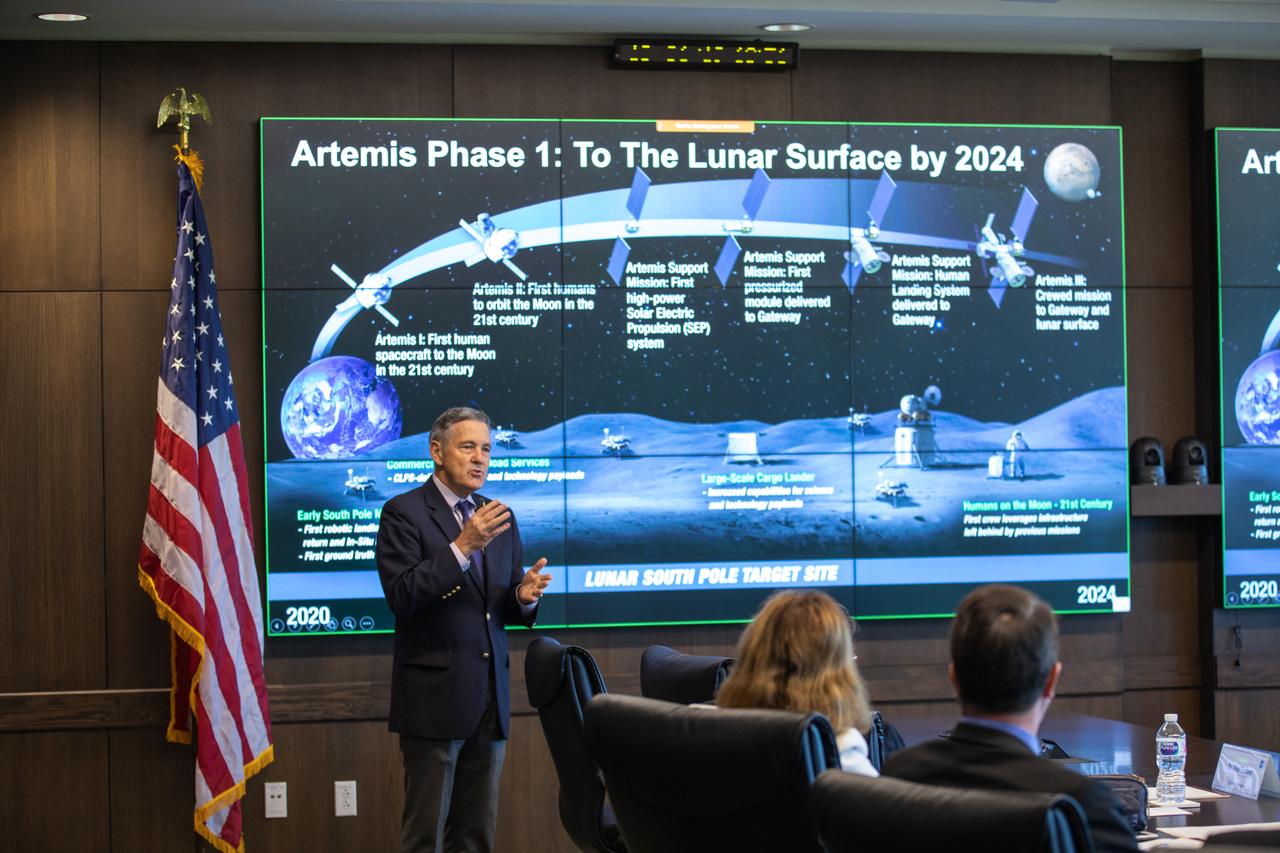
Kennedy Space Center Director Bob Cabana gives a presentation on Artemis missions to members of the NASA Advisory Council during a meeting at the center’s Central Campus Headquarters Building in Florida on Oct. 31, 2019. The NASA Advisory Council provides the NASA administrator with counsel and advice on programs and issues of importance to the agency. Committee members conduct fact-finding sessions throughout the year in an effort to gain a broad understanding of current NASA issues and future mission implementation plans.
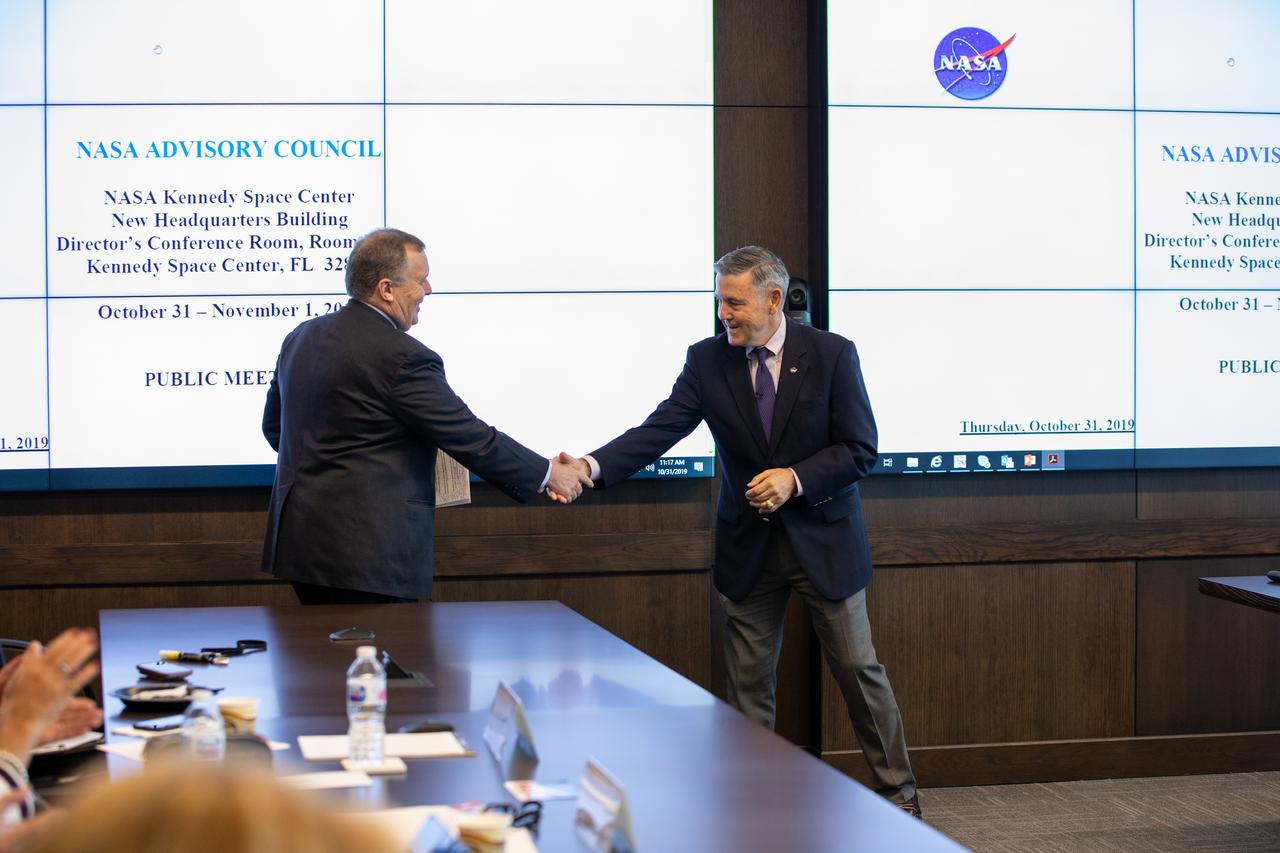
Kennedy Space Center Director Bob Cabana, at right, shakes hands with NASA Deputy Administrator Jim Morhard during a NASA Advisory Council meeting at the center’s Central Campus Headquarters Building in Florida on Oct. 31, 2019. The NASA Advisory Council provides the NASA administrator with counsel and advice on programs and issues of importance to the agency. Committee members conduct fact-finding sessions throughout the year in an effort to gain a broad understanding of current NASA issues and future mission implementation plans.
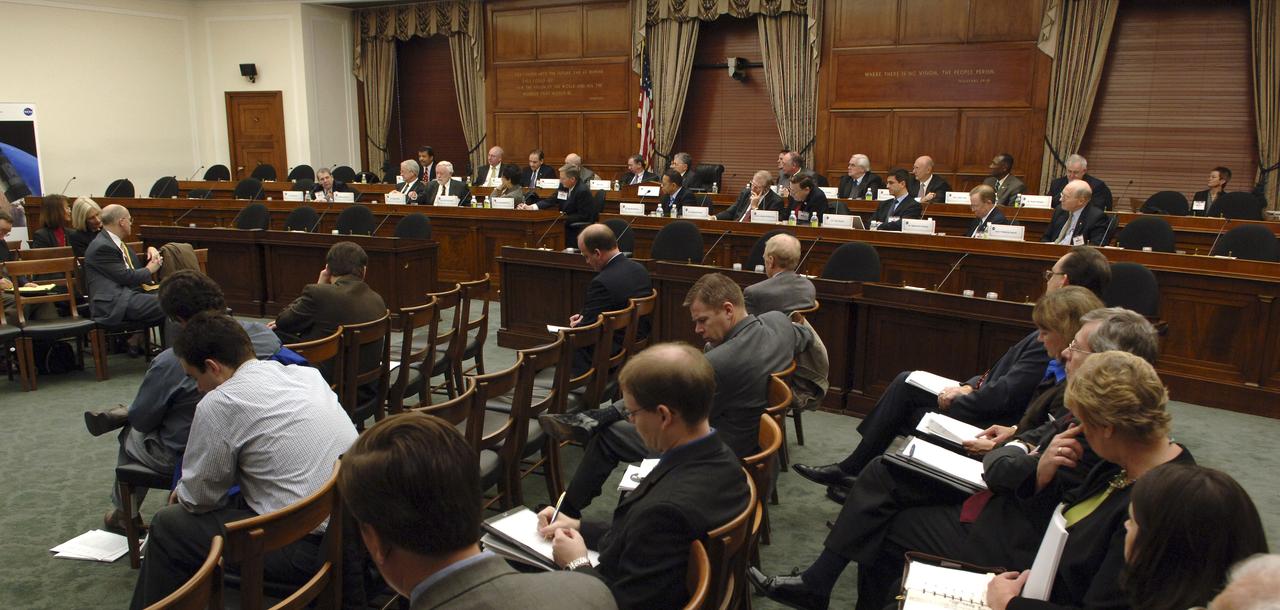
Meeting of the NASA Advisory Council in the Rayburn House Office Building, Tuesday, Nov. 29, 2005, in Washington. Photo Credit: (NASA/Bill Ingalls)
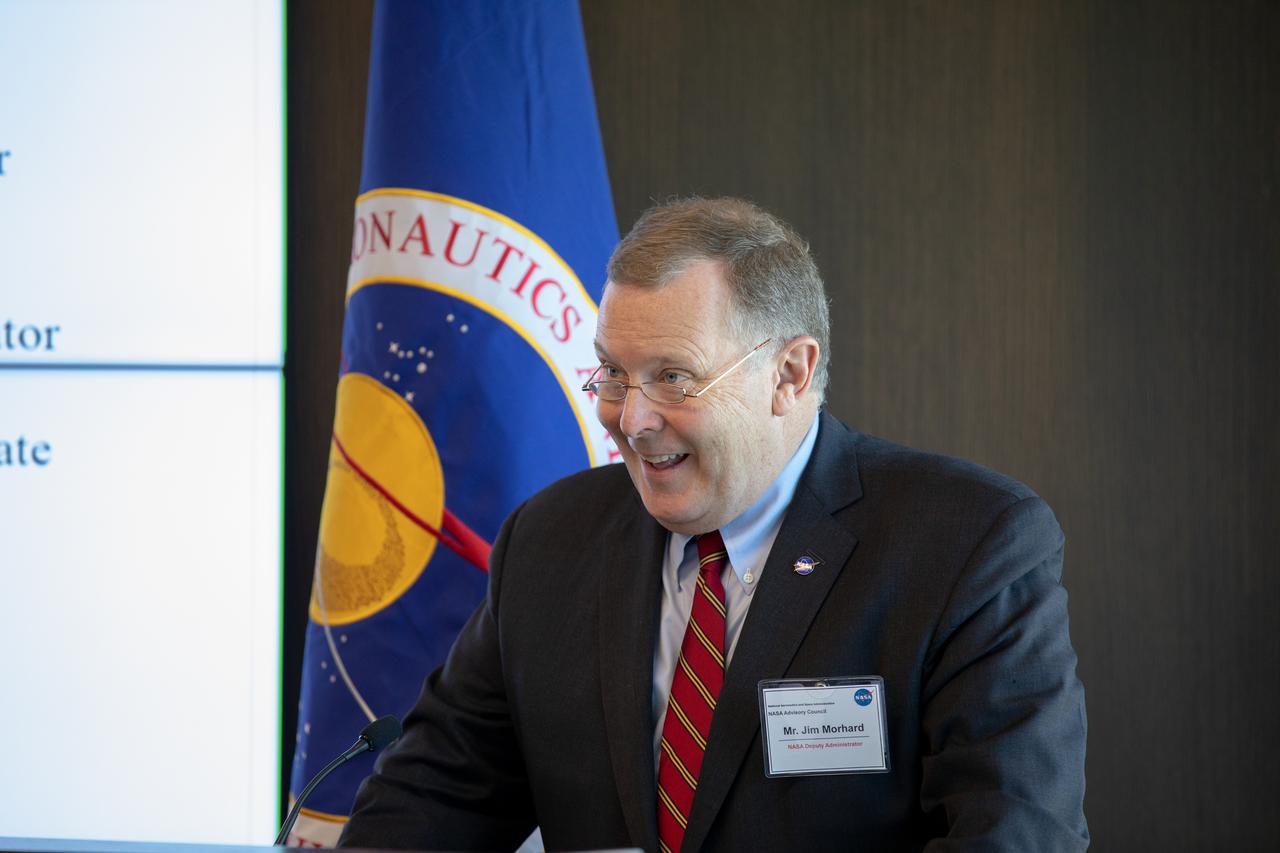
NASA Deputy Administrator Jim Morhard addresses members of the NASA Advisory Council during a meeting at the Kennedy Space Center’s Central Campus Headquarters Building in Florida on Oct. 31, 2019. The NASA Advisory Council provides the NASA administrator with counsel and advice on programs and issues of importance to the agency. Committee members conduct fact-finding sessions throughout the year in an effort to gain a broad understanding of current NASA issues and future mission implementation plans.
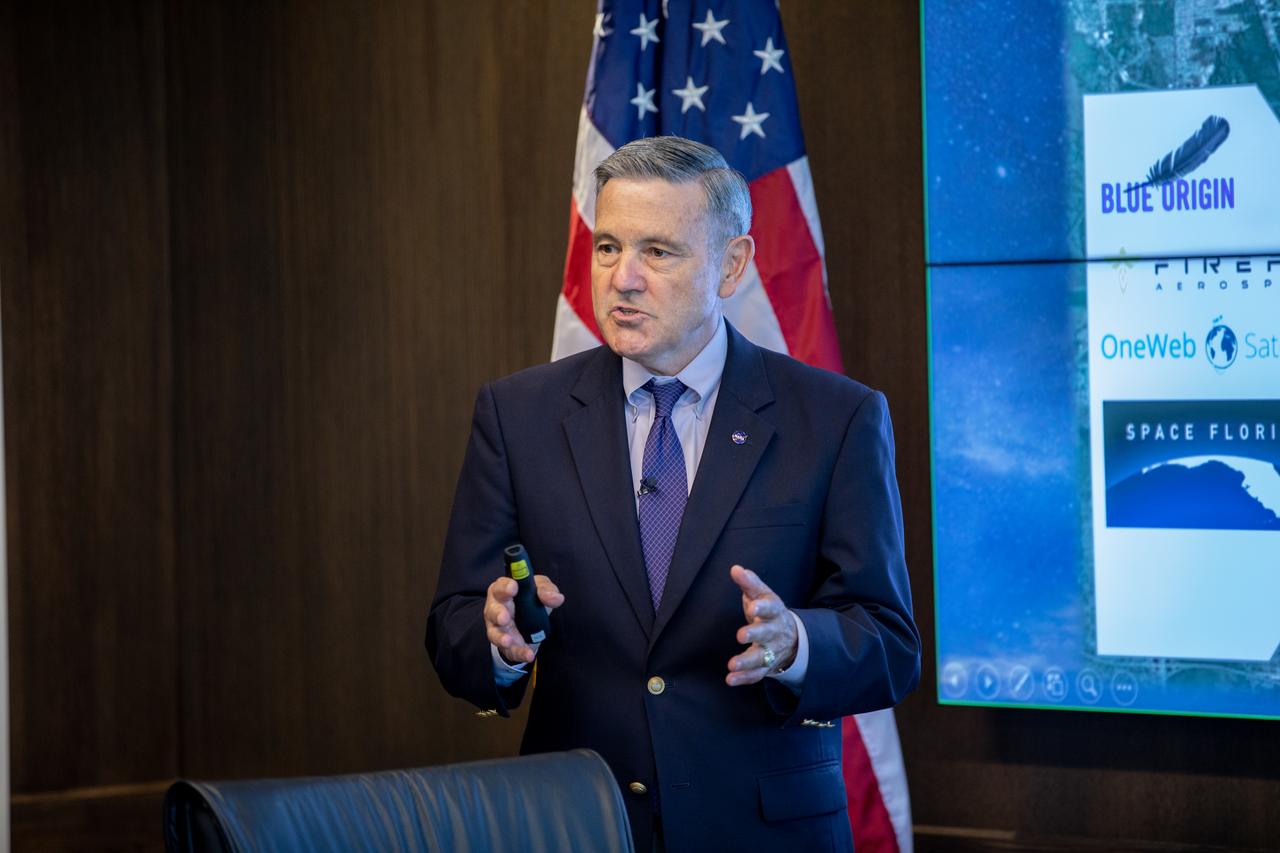
Kennedy Space Center Director Bob Cabana speaks to members of the NASA Advisory Council during a meeting at the center’s Central Campus Headquarters Building in Florida on Oct. 31, 2019. The NASA Advisory Council provides the NASA administrator with counsel and advice on programs and issues of importance to the agency. Committee members conduct fact-finding sessions throughout the year in an effort to gain a broad understanding of current NASA issues and future mission implementation plans.
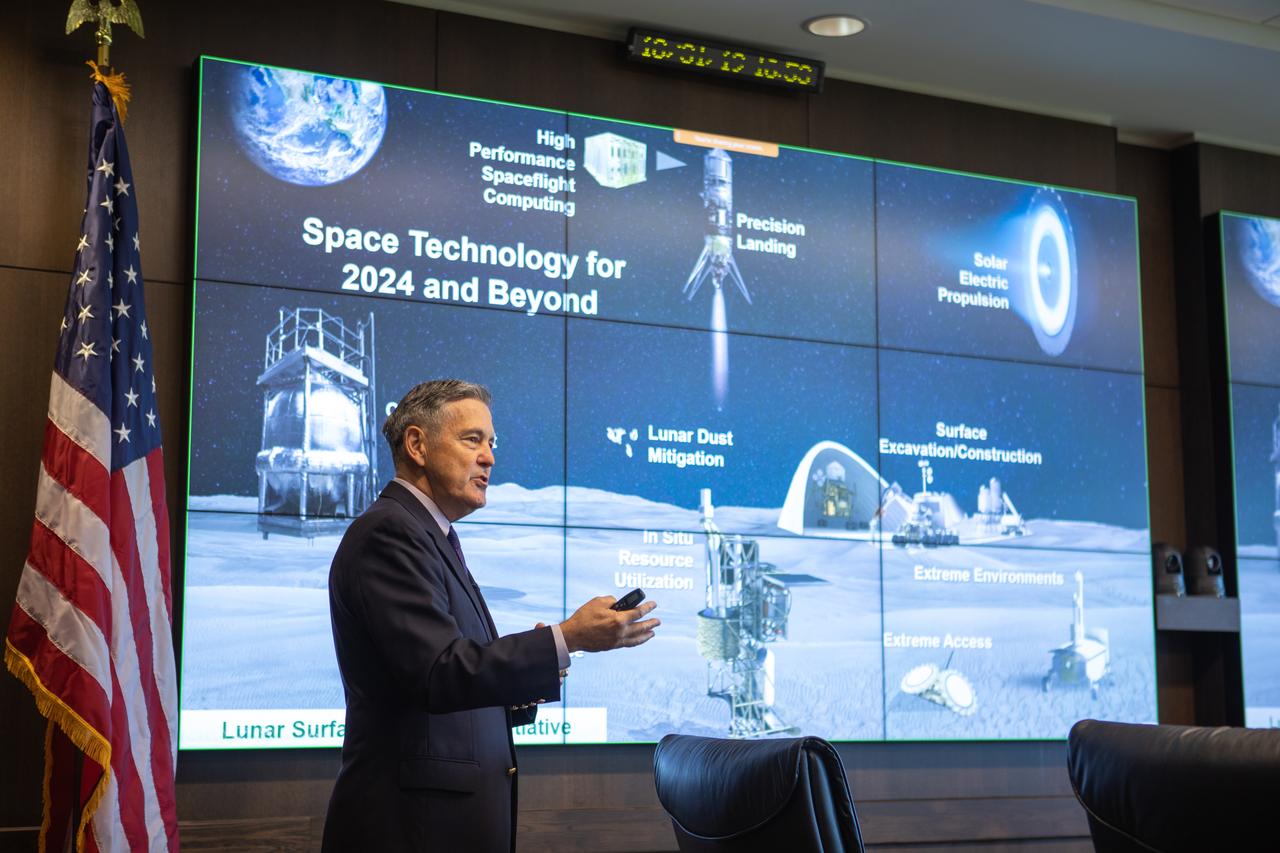
Kennedy Space Center Director Bob Cabana gives a presentation on space technology to members of the NASA Advisory Council during a meeting at the center’s Central Campus Headquarters Building in Florida on Oct. 31, 2019. The NASA Advisory Council provides the NASA administrator with counsel and advice on programs and issues of importance to the agency. Committee members conduct fact-finding sessions throughout the year in an effort to gain a broad understanding of current NASA issues and future mission implementation plans.
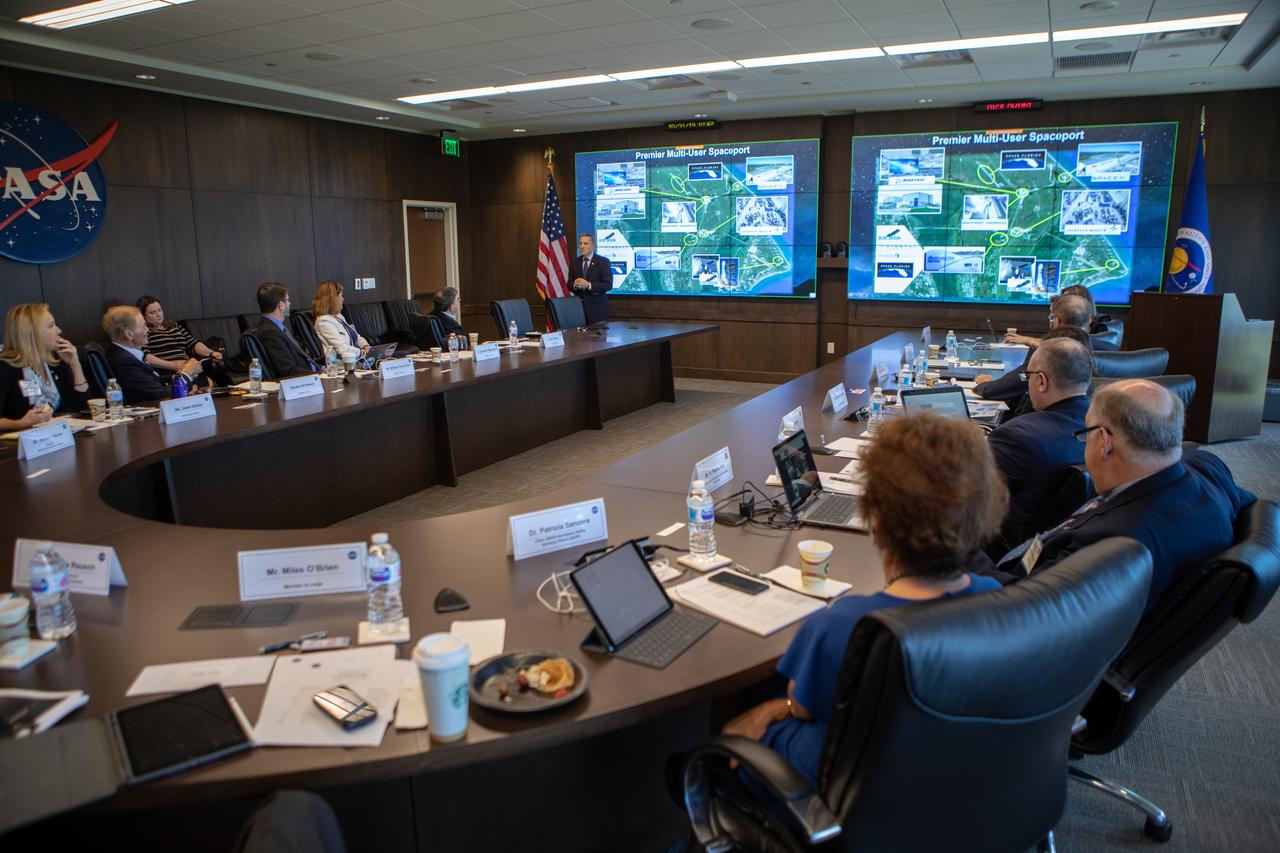
Members of the NASA Advisory Council listen to a presentation during a meeting at the Kennedy Space Center Central Campus Headquarters Building in Florida on Oct. 31, 2019. The NASA Advisory Council provides the NASA administrator with counsel and advice on programs and issues of importance to the agency. Committee members conduct fact-finding sessions throughout the year in an effort to gain a broad understanding of current NASA issues and future mission implementation plans.

NASA Deputy Administrator Jim Morhard, at right, speaks with a member of the NASA Advisory Council during a meeting at the Kennedy Space Center’s Central Campus Headquarters Building in Florida on Oct. 31, 2019. The NASA Advisory Council provides the NASA administrator with counsel and advice on programs and issues of importance to the agency. Committee members conduct fact-finding sessions throughout the year in an effort to gain a broad understanding of current NASA issues and future mission implementation plans.
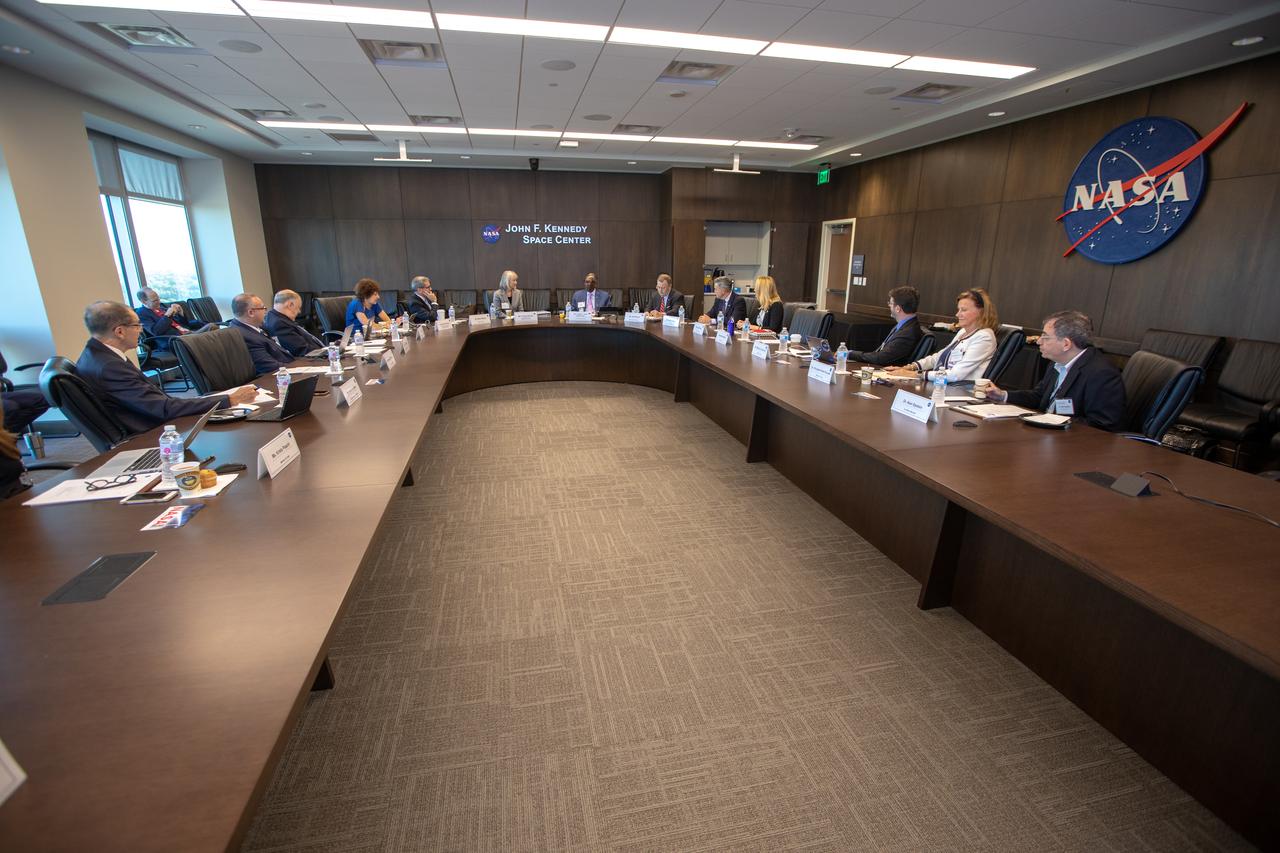
NASA Deputy Administrator Jim Morhard, sixth from right, and Kennedy Space Center Director Robert Cabana, fifth from right, participate in a NASA Advisory Council meeting at the center’s Central Campus Headquarters Building in Florida on Oct. 31, 2019. The NASA Advisory Council provides the NASA administrator with counsel and advice on programs and issues of importance to the agency. Committee members conduct fact-finding sessions throughout the year in an effort to gain a broad understanding of current NASA issues and future mission implementation plans.
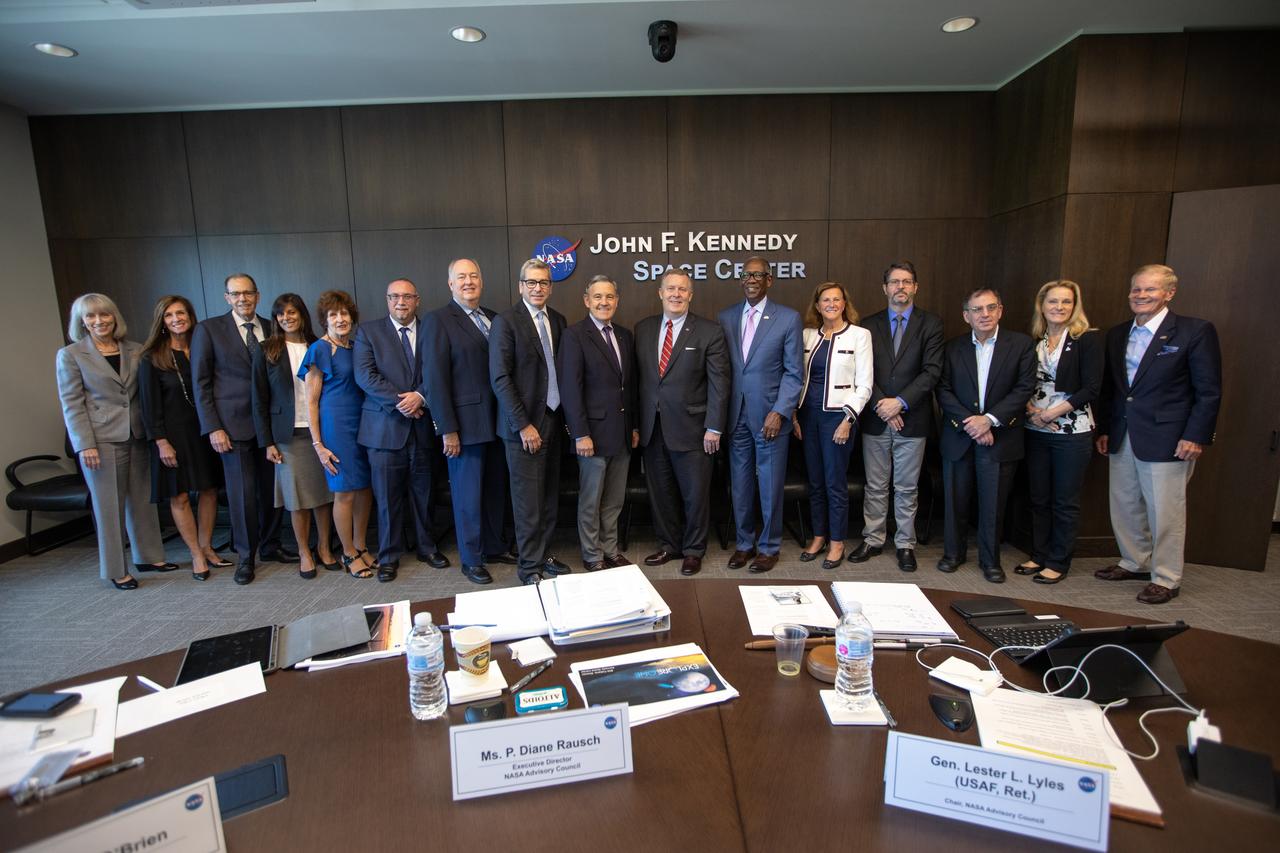
Members of the NASA Advisory Council pause for a group photograph during a meeting at the Kennedy Space Center Central Campus Headquarters Building in Florida on Oct. 31, 2019. In the center, at right, is NASA Deputy Administrator Jim Morhard. In the center, at left, is Kennedy Space Center Director Bob Cabana. The NASA Advisory Council provides the NASA administrator with counsel and advice on programs and issues of importance to the agency. Committee members conduct fact-finding sessions throughout the year in an effort to gain a broad understanding of current NASA issues and future mission implementation plans.
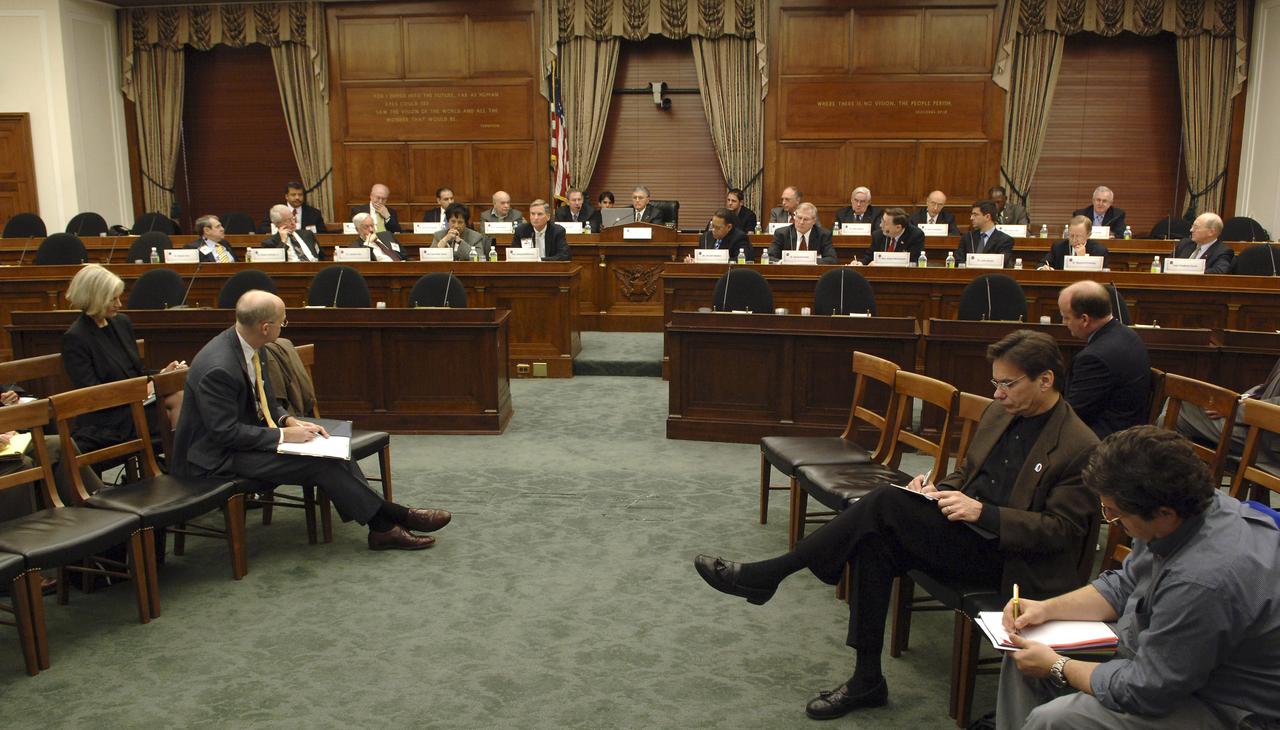
Meeting of the NASA Advisory Council in the Rayburn House Office Building, Tuesday, Nov. 29, 2005, in Washington. Photo Credit: (NASA/Bill Ingalls)

NASA Deputy Administrator Jim Morhard, second from left, and Kennedy Space Center Director Robert Cabana, at right, participate in a NASA Advisory Council meeting at the center’s Central Campus Headquarters Building in Florida on Oct. 31, 2019. The NASA Advisory Council provides the NASA administrator with counsel and advice on programs and issues of importance to the agency. Committee members conduct fact-finding sessions throughout the year in an effort to gain a broad understanding of current NASA issues and future mission implementation plans.
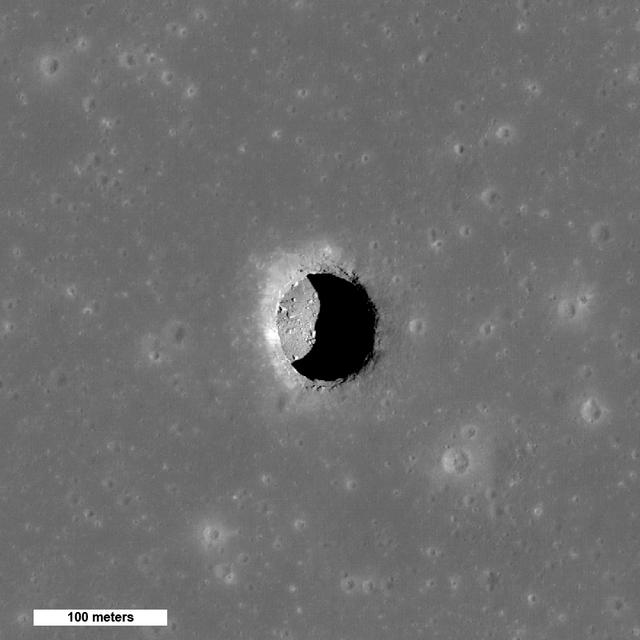
While the moon's surface is battered by millions of craters, it also has over 200 holes – steep-walled pits that in some cases might lead to caves that future astronauts could explore and use for shelter, according to new observations from NASA's Lunar Reconnaissance Orbiter (LRO) spacecraft. This is a spectacular high-Sun view of the Mare Tranquillitatis pit crater revealing boulders on an otherwise smooth floor. This image from LRO's NAC is 400 meters (1,312 feet) wide, north is up. Read more here: <a href="http://1.usa.gov/1ruEYXj" rel="nofollow">1.usa.gov/1ruEYXj</a> Credit: NASA/GSFC/Arizona State University
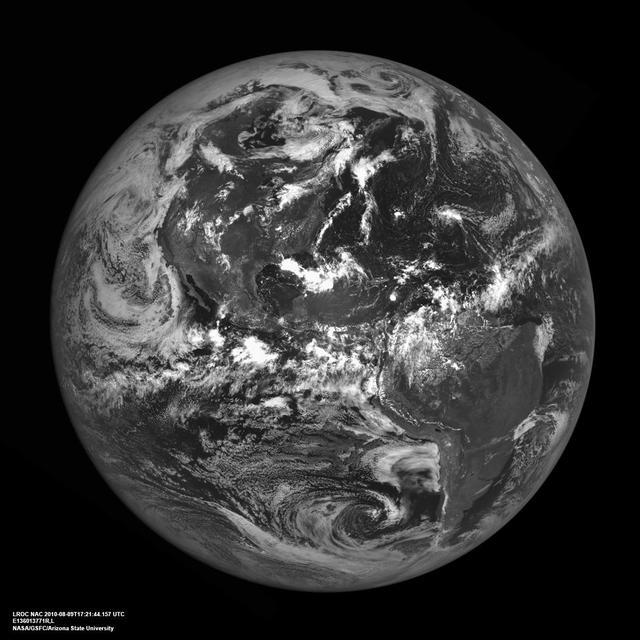
The western hemisphere of our home planet Earth. North (upper left), Central, and South America (lower right) were nicely free of clouds when LRO pointed home on 9 August 2010 to acquire this beautiful view. LROC NAC E136013771. As LRO orbits the Moon every two hours sending down a stream of science data, it is easy to forget how close the Moon is to the Earth. The average distance between the two heavenly bodies is just 384,399 km (238,854 miles). Check your airline frequent flyer totals, perhaps you have already flown the distance to the Moon and back on a single airline. http://photojournal.jpl.nasa.gov/catalog/PIA13519
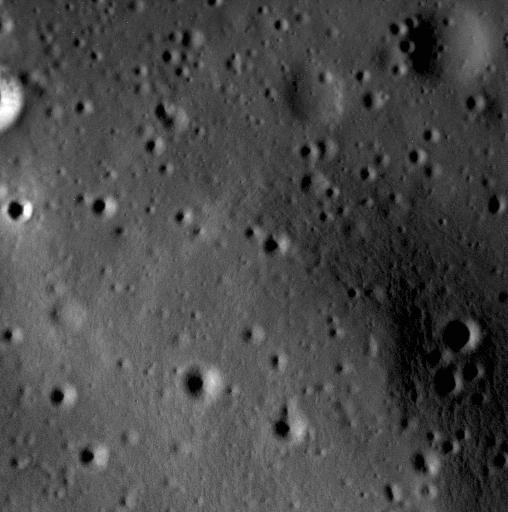
This image from NASA MESSENGER spacecraft shows a small portion of the interior of Scarlatti basin. The image is located just to the side of a large pit that lies along part of Scarlatti peak ring. This pit may have formed by explosive volcanism. Date acquired: April 22, 2015 Image Mission Elapsed Time (MET): 71994228 Image ID: 8373819 Instrument: Narrow Angle Camera (NAC) of the Mercury Dual Imaging System (MDIS) Center Latitude: 41.05° Center Longitude: 259.86° E Resolution: 2.8 meters/pixel Scale: The scene is approximately 1.4 km (0.9 mi.) across. http://photojournal.jpl.nasa.gov/catalog/PIA19430
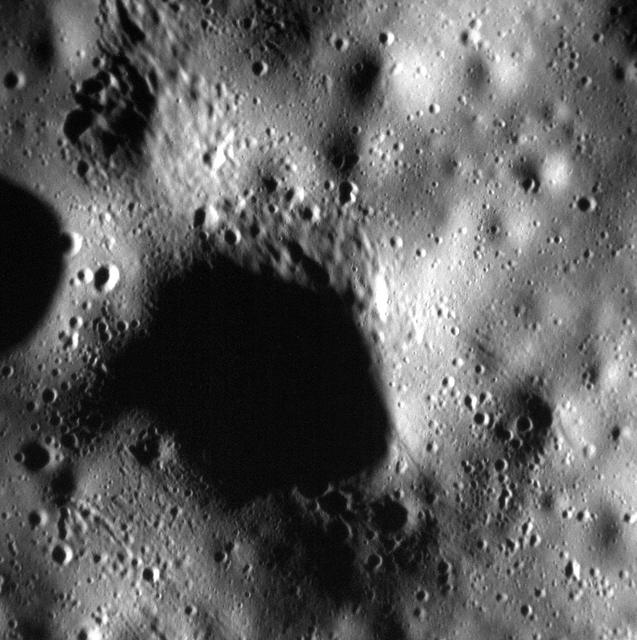
The surface in this scene captured by NASA MESSENGER spacecraft has been pummeled by secondary craters, possibly from the impact that formed the nearby Mickiewicz crater. MESSENGER has acquired nearly 25,000 images below 10 meters/pixel (~33 feet/pixel), allowing us to examine the innermost planet at an unprecedented scale. Date acquired: April 21, 2015 Image Mission Elapsed Time (MET): 71933951 Image ID: 8369698 Instrument: Narrow Angle Camera (NAC) of the Mercury Dual Imaging System (MDIS) Center Latitude: 24.12° Center Longitude: 260.65° E Resolution: 5.0 meters/pixel Scale: This scene is approximately 500 meters (0.3 mi.) across http://photojournal.jpl.nasa.gov/catalog/PIA19426
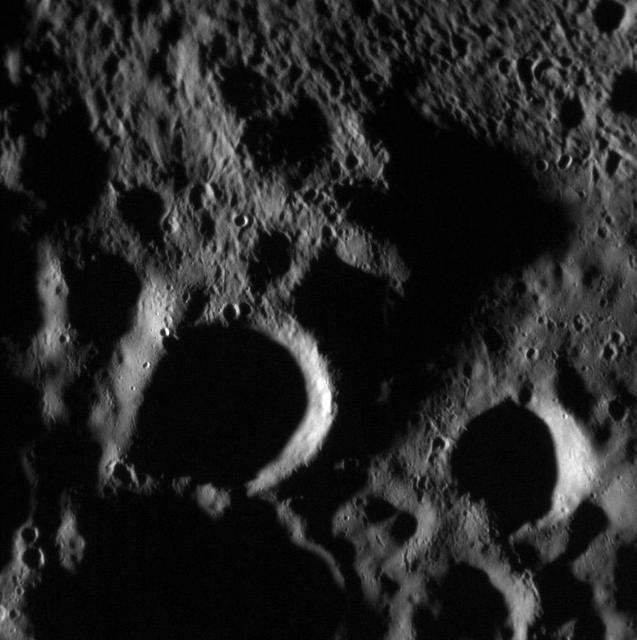
NASA MESSENGER is again sending images back to Earth after the spacecraft emerged from superior solar conjunction, when communication is largely blocked by the Sun. These will be some of our last views of Mercury from MESSENGER. Featured here is the ejecta blanket of a fresh impact crater located just outside the scene. Ejecta scoured the surface leaving behind beautiful patterns of secondary craters. Date acquired: April 16, 2015 Image Mission Elapsed Time (MET): 71544702 Image ID: 8343072 Instrument: Narrow Angle Camera (NAC) of the Mercury Dual Imaging System (MDIS) Center Latitude: 55.67° Center Longitude: 97.37° E Resolution: 19.9 meters/pixel Scale: This scene is approximately 20 km (12 miles) across http://photojournal.jpl.nasa.gov/catalog/PIA19424
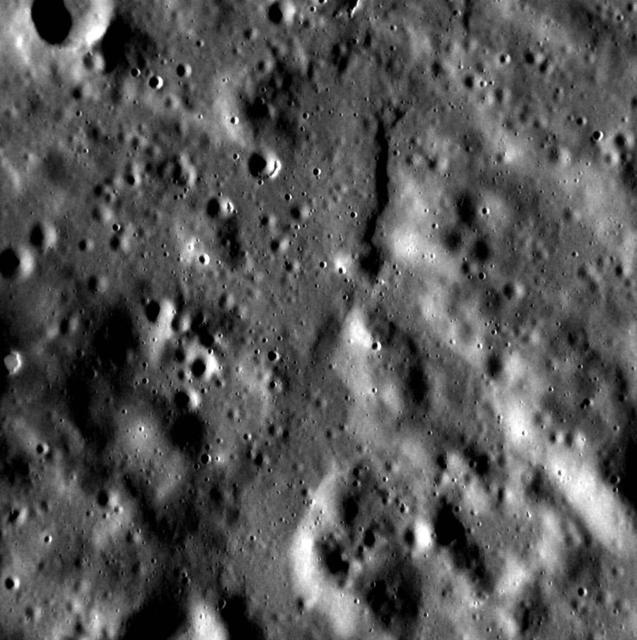
As NASA MESSENGER enters its final days, we are getting our last looks at some of our favorite features. Hollows, discovered in MDIS images during the orbital phase of the mission, are always photogenic. Three small hollows can be spotted in this scene located to the northwest of the Caloris basin near Timgad Vallis, including one that is surrounded by low-reflectance material. Date acquired: April 14, 2015 Image Mission Elapsed Time (MET): 71304311 Image ID: 8326733 Instrument: Narrow Angle Camera (NAC) of the Mercury Dual Imaging System (MDIS) Center Latitude: 59.1° Center Longitude: 116.2° E Resolution: 17.1 meters/pixel Scale: This scene is approximately 17 km (11 miles) across http://photojournal.jpl.nasa.gov/catalog/PIA19425

At approximately 1.1 meters/pixel, this image is among the highest-resolution views MESSENGER has ever taken of the surface of Mercury. The final orbital correction maneuver (OCM) of the mission is planned for today, raising the periapsis from approximately 8 to 19 km (5 to 12 miles) and delaying the spacecraft's inevitable crash for one more week. Date acquired: April 23, 2015 Image Mission Elapsed Time (MET): 72114468 Image ID: 8382023 Instrument: Narrow Angle Camera (NAC) of the Mercury Dual Imaging System (MDIS) Center Latitude: 49.26° Center Longitude: 253.44° E Resolution: 1.1 meters/pixel Scale: This scene is approximately 560 meters (~1837 feet) across. http://photojournal.jpl.nasa.gov/catalog/PIA19434
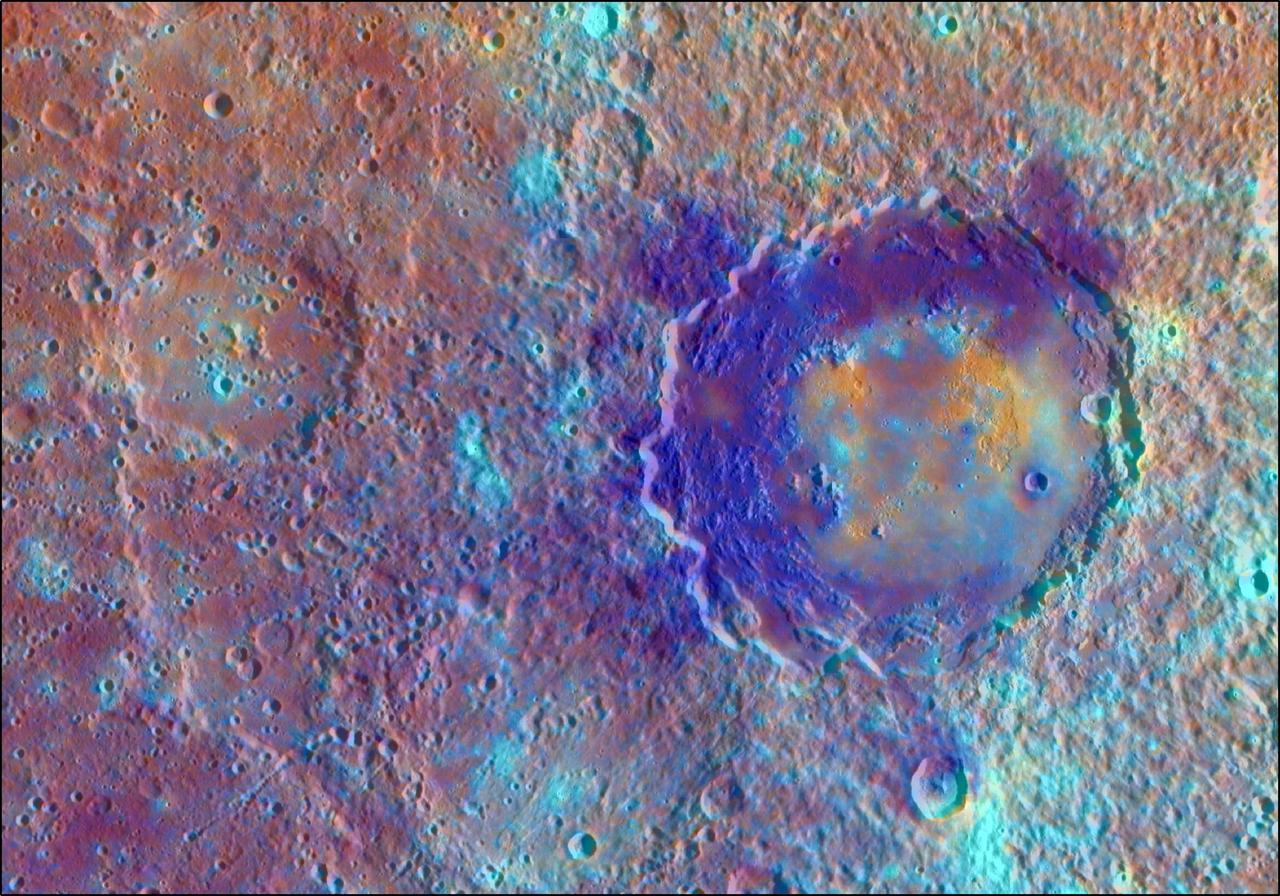
In this enhanced color view from NASA MESSENGER spacecraft of the peak-ring basin Derain, the different colors accentuate the different rocks associated with the basin. The smooth, interior volcanic fill of the basin, in addition to the large pits on the floor of Derain, are brighter and redder. This view was created by draping a color composite from the MDIS Wide Angle Camera (WAC) over an MDIS monochrome Narrow Angle Camera (NAC) image mosaic. The WAC enhanced color image was created with the following image channels: red = Principal Component 2, green = Principal Component 1, and blue = 430 nm to 1000 nm band ratio. Instrument: Mercury Dual Imaging System (MDIS) Latitude: -9.0° Longitude: 17.3° E Scale: Derain peak-ring basin has a diameter of 167 km (104 miles) http://photojournal.jpl.nasa.gov/catalog/PIA19412
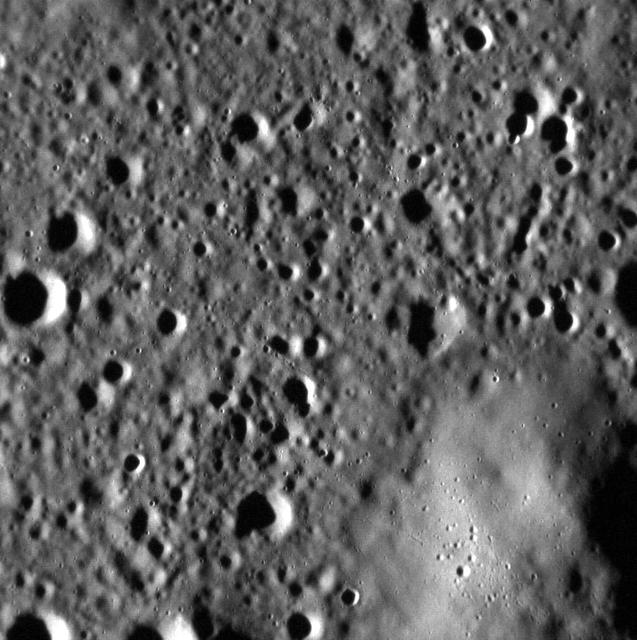
The region with fewer impact craters in the bottom-right corner of this image is a small portion of the peak ring of an ancient basin over 200 km in diameter. The peak has fewer superposed impact craters, which could lead to the conclusion that it is younger than the surrounding basin floor. However, the lack of craters is instead due to the steeper slopes of the peak, where impact craters are not preserved as long. This image was acquired as part of the MDIS low-altitude imaging campaign. During MESSENGER's second extended mission, the spacecraft makes a progressively closer approach to Mercury's surface than at any previous point in the mission, enabling the acquisition of high-spatial-resolution data. For spacecraft altitudes below 350 kilometers, NAC images are acquired with pixel scales ranging from 20 meters to as little as 2 meters. http://photojournal.jpl.nasa.gov/catalog/PIA19203

Soon after NASA's Europa Clipper spacecraft launched toward Jupiter's icy moon on Oct. 14, 2024, the mission team powered on each of the science instruments for a series of test or "checkout" activities. The Europa Imaging System – with its narrow-angle and wide-angle cameras – underwent its first checkouts in December 2024. Each camera has a cover to protect its sensitive detectors from the Sun while the spacecraft moves through the inner solar system, so the test images only show low-level variations in the sensitivity of the detector system. This image, taken by the narrow-angle camera (or NAC), has been enhanced to show more subtle variations in brightness. The pattern shown here matched similar test images taken before launch, confirming the camera is working as expected. The large, 8-megapixel detectors are divided into 16 sections to capture data quickly during the very fast, low-altitude flybys of Europa. Each section has a slightly different background brightness level, which gives it the image a striped appearance. Images like this are used to correct the background pattern in science observations. Instrument scientists and engineers at the Johns Hopkins Applied Physics Laboratory (APL), where the camera was designed and built, will use images like this to calibrate the science imagery it eventually gathers above Europa. The team also, for the first time in flight, moved the gimbal that will allow the NAC to target specific locations on Europa. In 2027, the spacecraft will be far enough from the Sun to safely open the lens covers and capture the first images, which will of starfields until arrival at the Jupiter system in 2030. Europa Clipper's three main science objectives are to determine the thickness of the moon's icy shell and its interactions with the ocean below, to investigate its composition, and to characterize its geology. The mission's detailed exploration of Europa will help scientists better understand the astrobiological potential for habitable worlds beyond our planet. https://photojournal.jpl.nasa.gov/catalog/PIA26564
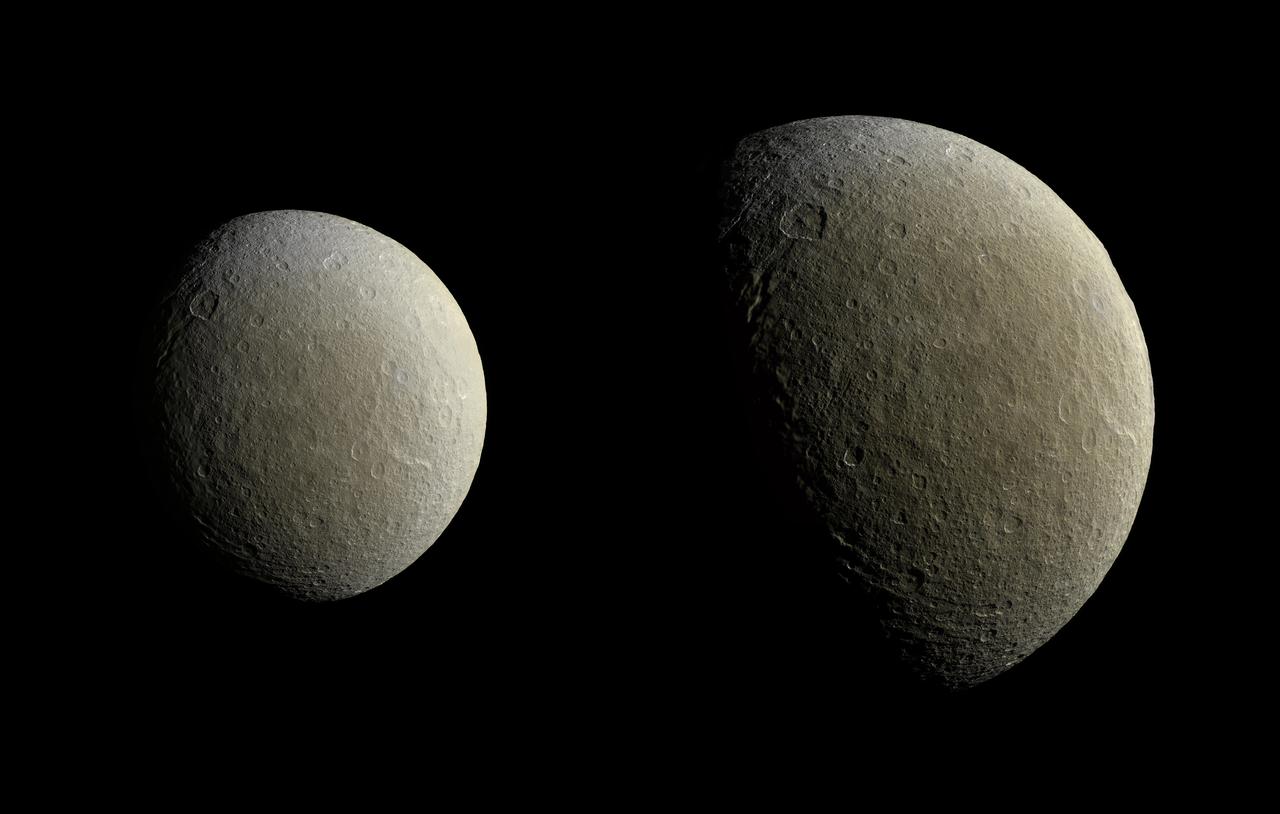
After a couple of years in high-inclination orbits that limited its ability to encounter Saturn's moons, NASA's Cassini spacecraft returned to Saturn's equatorial plane in March 2015. As a prelude to its return to the realm of the icy satellites, the spacecraft had its first relatively close flyby of an icy moon (apart from Titan) in almost two years on Feb. 9. During this encounter Cassini's cameras captured images of the icy moon Rhea, as shown in these in two image mosaics. The views were taken about an hour and a half apart as Cassini drew closer to Rhea. Images taken using clear, green, infrared and ultraviolet spectral filters were combined to create these enhanced color views, which offer an expanded range of the colors visible to human eyes in order to highlight subtle color differences across Rhea's surface. The moon's surface is fairly uniform in natural color. The image at right represents one of the highest resolution color views of Rhea released to date. A larger, monochrome mosaic is available in PIA07763. Both views are orthographic projections facing toward terrain on the trailing hemisphere of Rhea. An orthographic view is most like the view seen by a distant observer looking through a telescope. The views have been rotated so that north on Rhea is up. The smaller view at left is centered at 21 degrees north latitude, 229 degrees west longitude. Resolution in this mosaic is 450 meters (1,476 feet) per pixel. The images were acquired at a distance that ranged from about 51,200 to 46,600 miles (82,100 to 74,600 kilometers) from Rhea. The larger view at right is centered at 9 degrees north latitude, 254 degrees west longitude. Resolution in this mosaic is 300 meters (984 feet) per pixel. The images were acquired at a distance that ranged from about 36,000 to 32,100 miles (57,900 to 51,700 kilometers) from Rhea. The mosaics each consist of multiple narrow-angle camera (NAC) images with data from the wide-angle camera used to fill in areas where NAC data was not available. The image was produced by Heike Rosenberg and Tilmann Denk at Freie Universität in Berlin, Germany. http://photojournal.jpl.nasa.gov/catalog/PIA19057
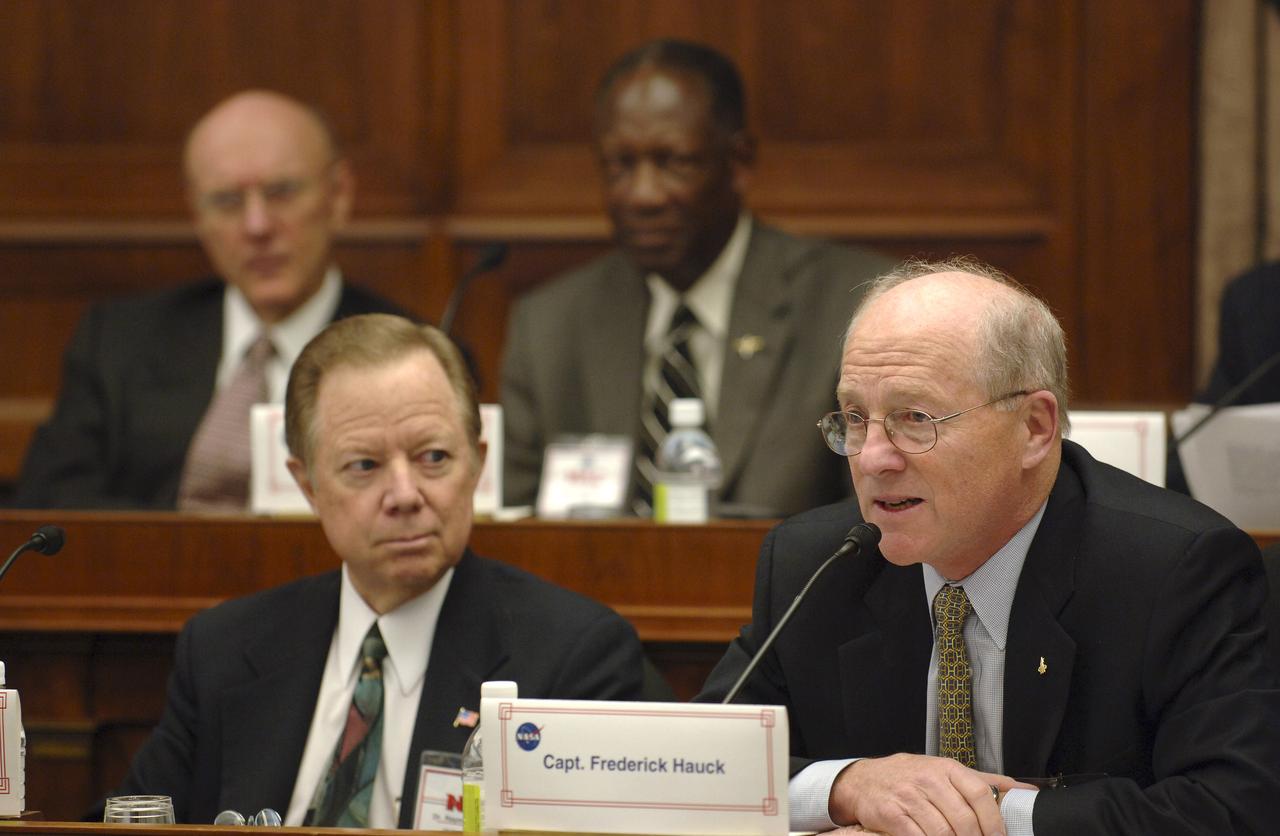
Capt. Frederick Hauck, USN (Ret.) talks during the NASA Advisory Council meeting held at the Rayburn House Office Building, Tuesday, Nov. 29, 2005, in Washington. Photo Credit: (NASA/Bill Ingalls)
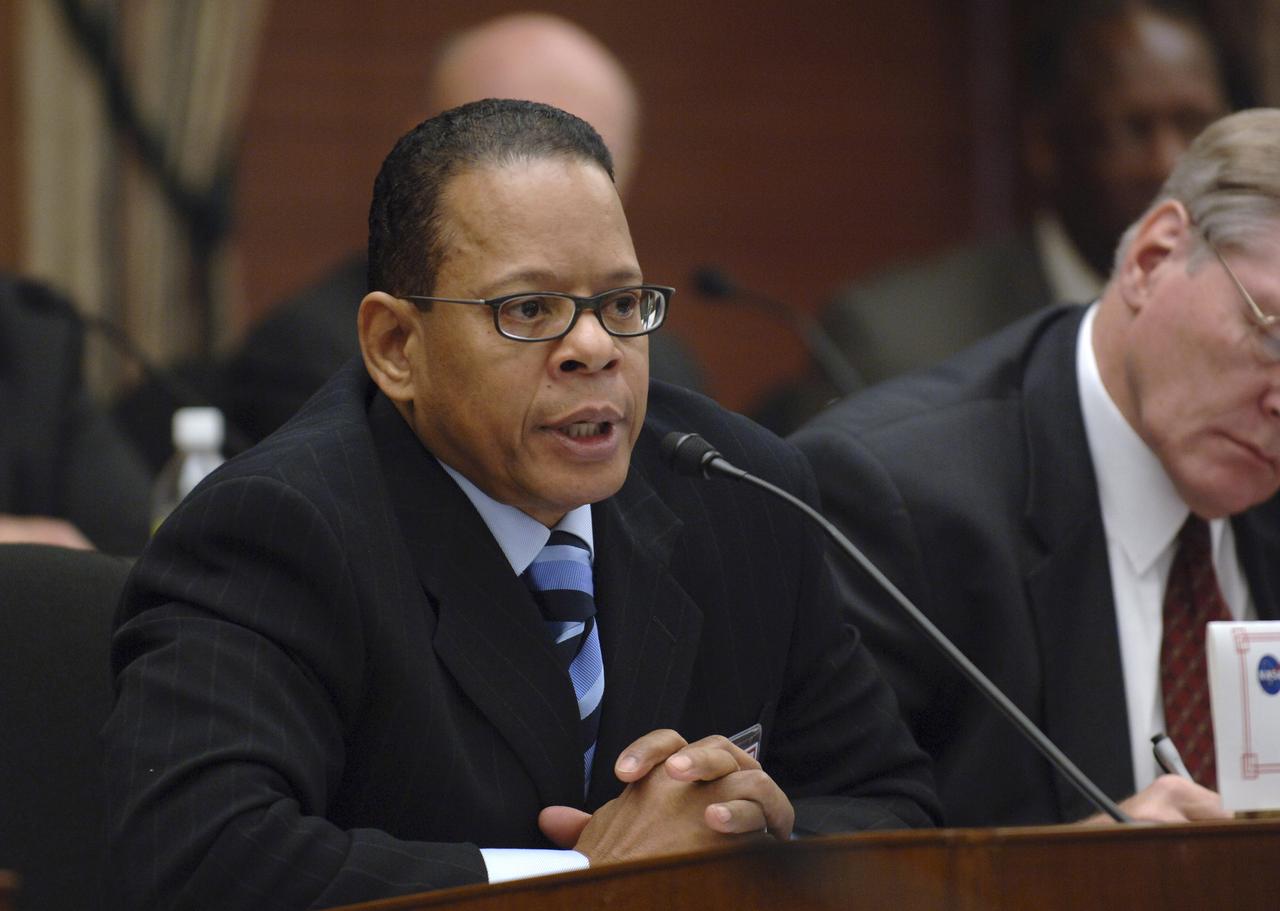
Wendell Maddox speaks during the NASA Advisory Council meeting held at the Rayburn Building, Tuesday, Nov. 29, 2005, in Washington. Photo Credit: (NASA/Bill Ingalls)
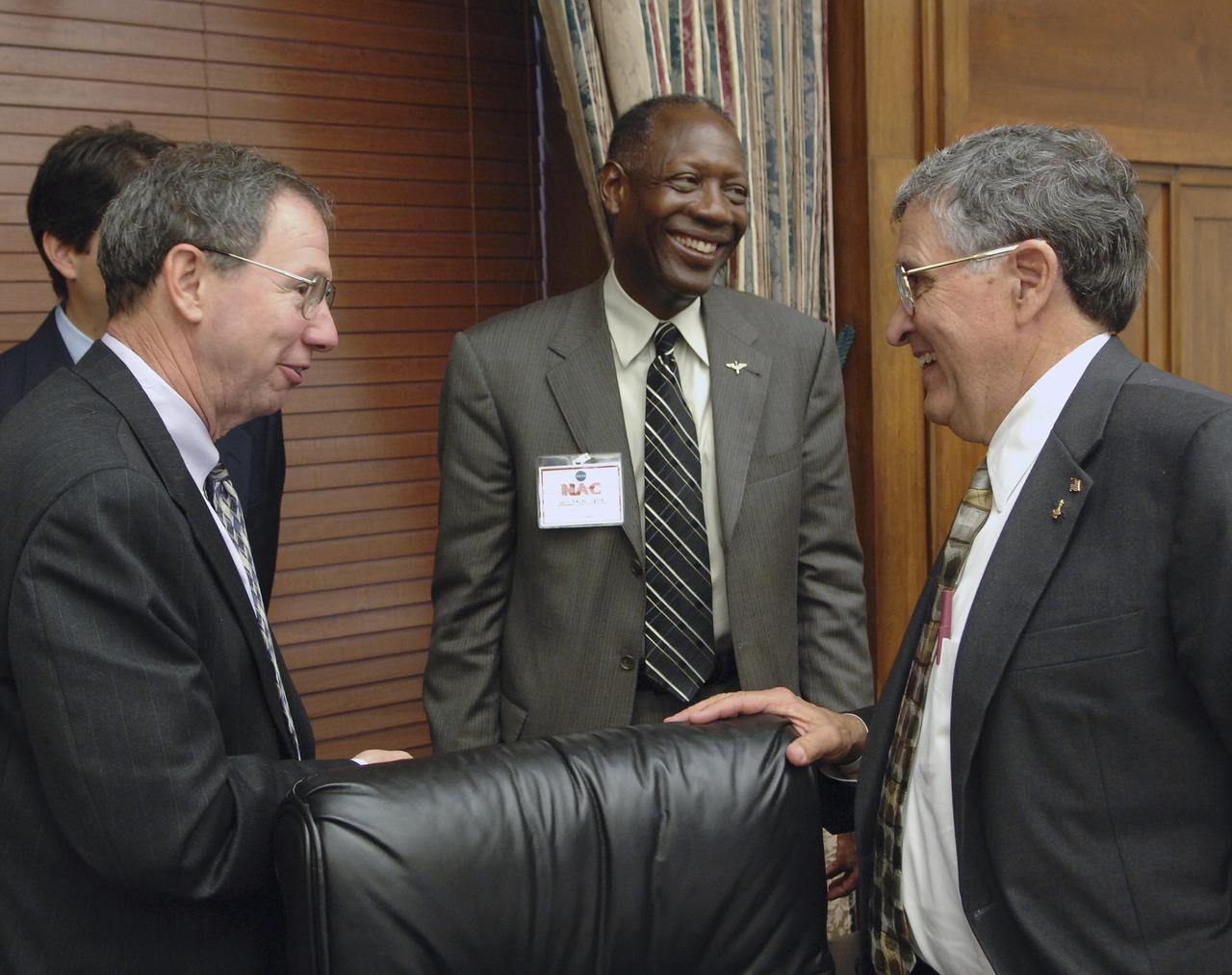
NASA Administrator Michael Griffin, left, talks with NASA Advisory Council members Gen. Lester L. Lyles, USAF (Ret.), center, and NASA Advisory Council chairman, former Senator and Apollo astronaut Harrison H. "Jack" Schmitt at the Rayburn House Office Building, Tuesday, Nov. 29, 2005, in Washington. Photo Credit: (NASA/Bill Ingalls)

Dr. Gerald L. Kulcinski talks during the NASA Advisory Council meeting held at the Rayburn House Office Building, Tuesday, Nov. 29, 2005, in Washington. Photo Credit: (NASA/Bill Ingalls)
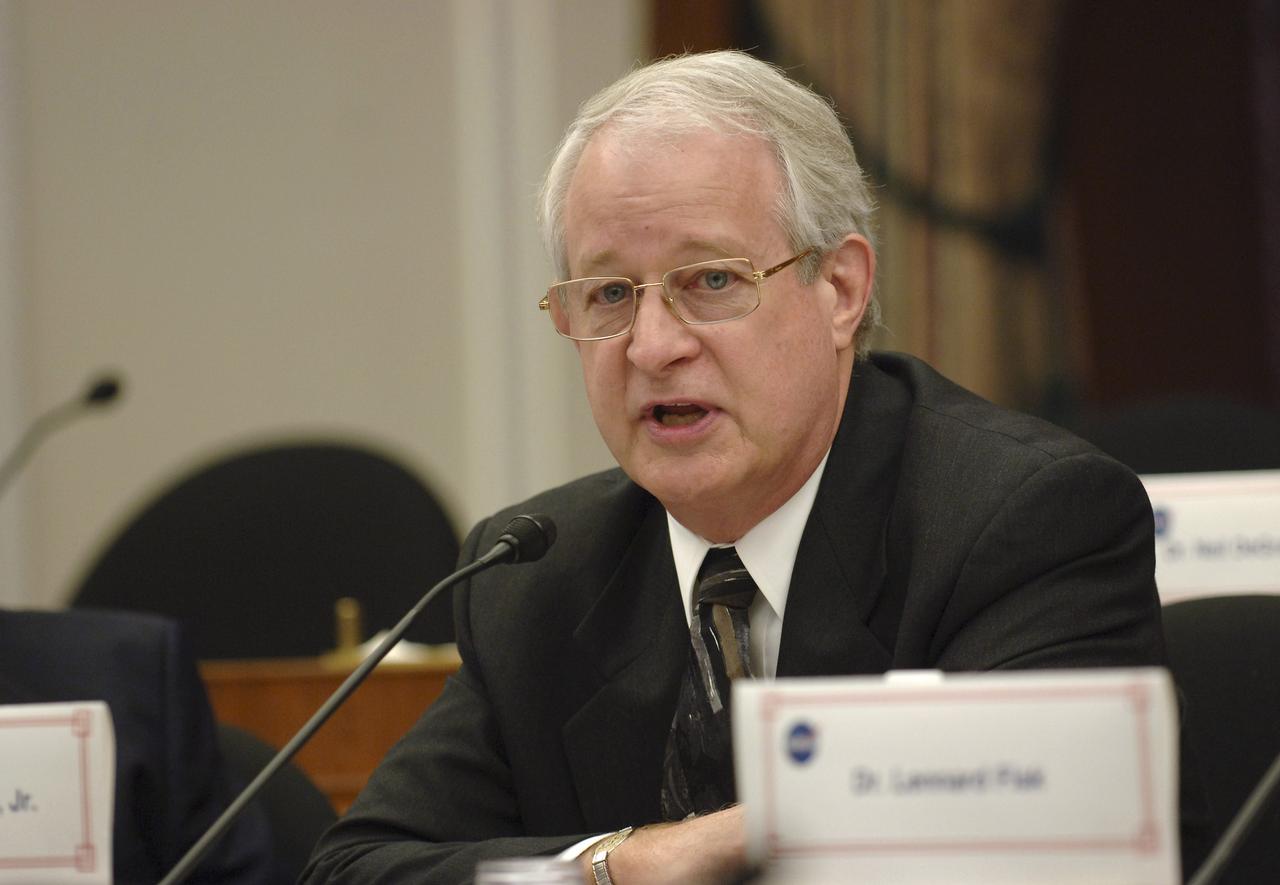
Dr. Wesley Huntress speaks during the NASA Advisory Council meeting held at the Rayburn House Office Building, Tuesday, Nov. 29, 2005, in Washington. Photo Credit: (NASA/Bill Ingalls)
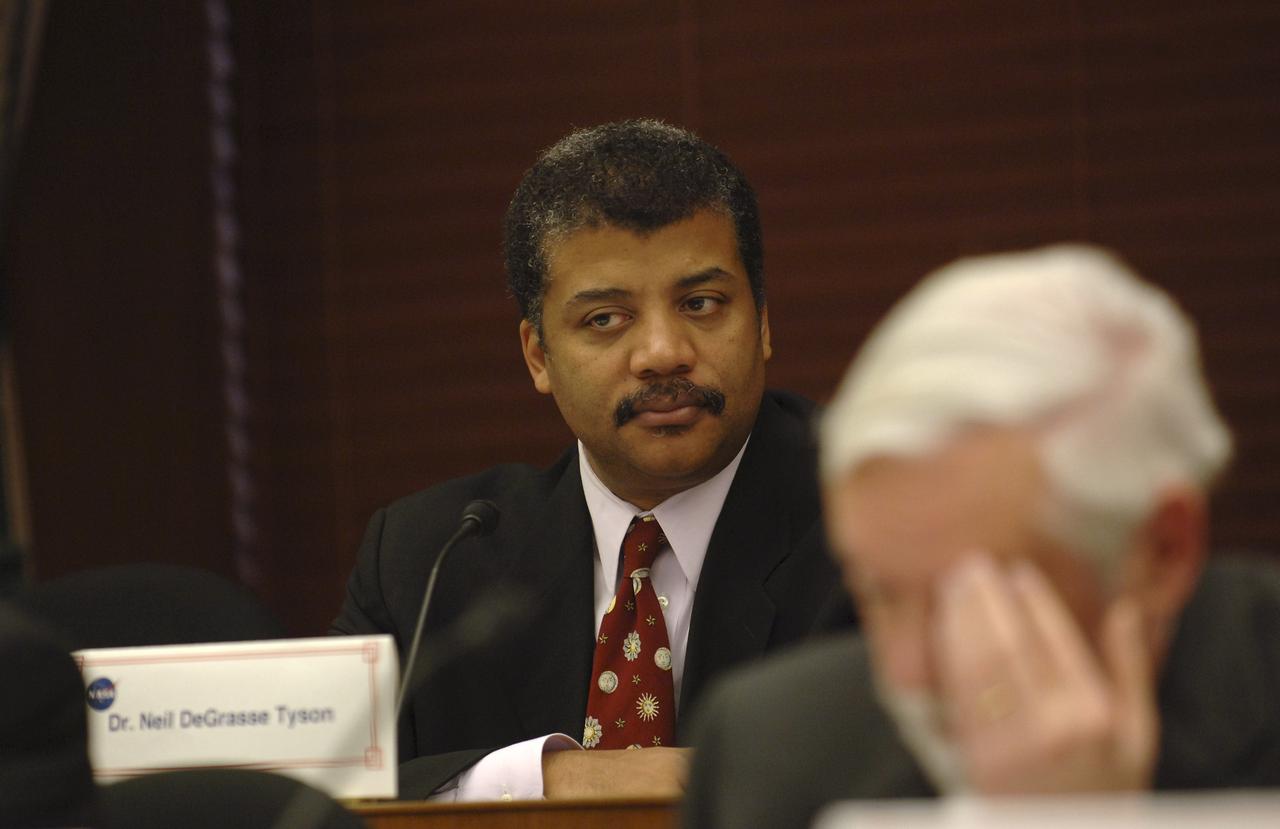
Dr. Neil DeGrasse Tyson, NASA Advisory Council member listens during a meeting of the council at the Rayburn House Office Building, Tuesday, Nov. 29, 2005, in Washington. Photo Credit: (NASA/Bill Ingalls)
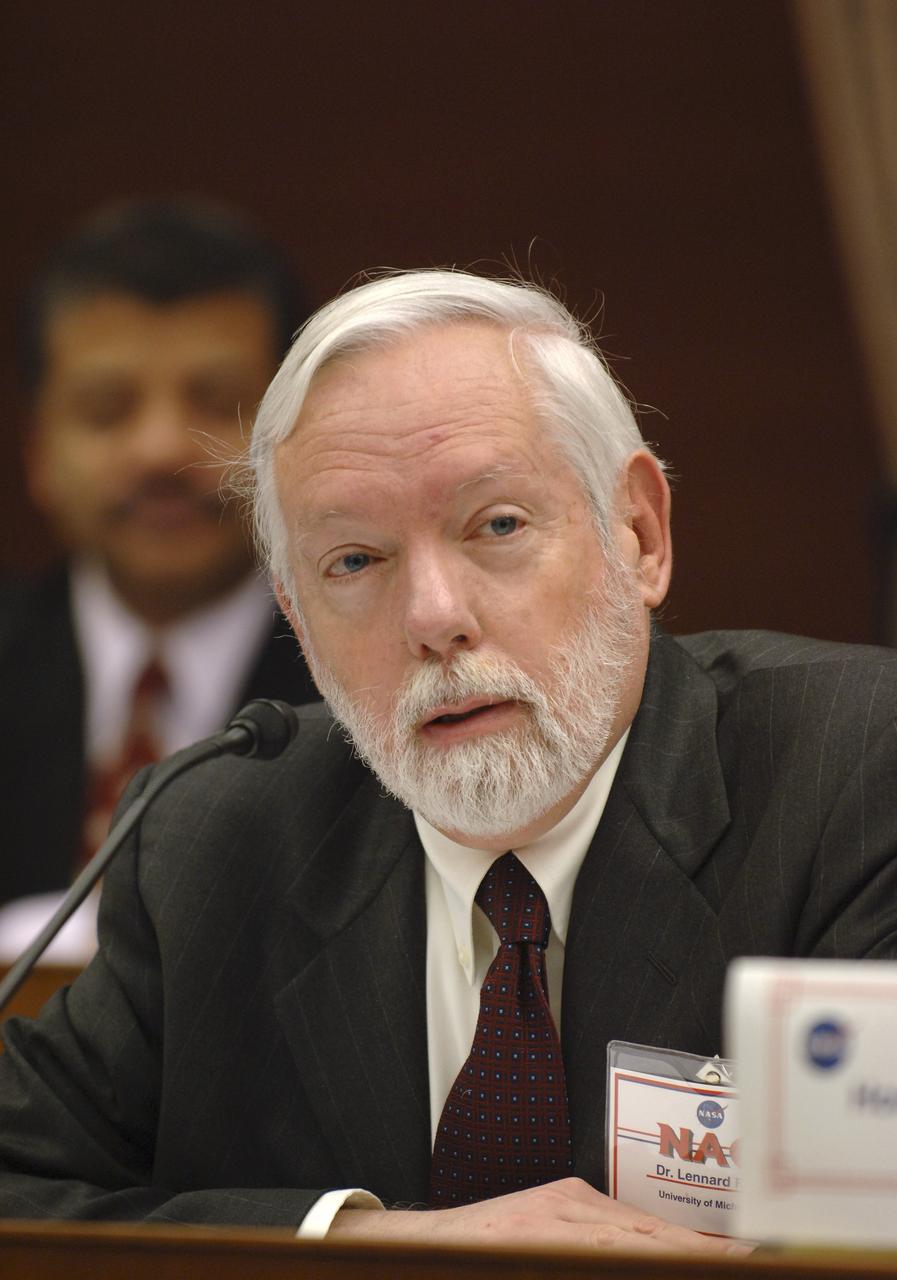
Dr. Lennard A. Fisk talks during the NASA Advisory Council meeting held at the Rayburn House Office Building, Tuesday, Nov. 29, 2005, in Washington. Photo Credit: (NASA/Bill Ingalls)
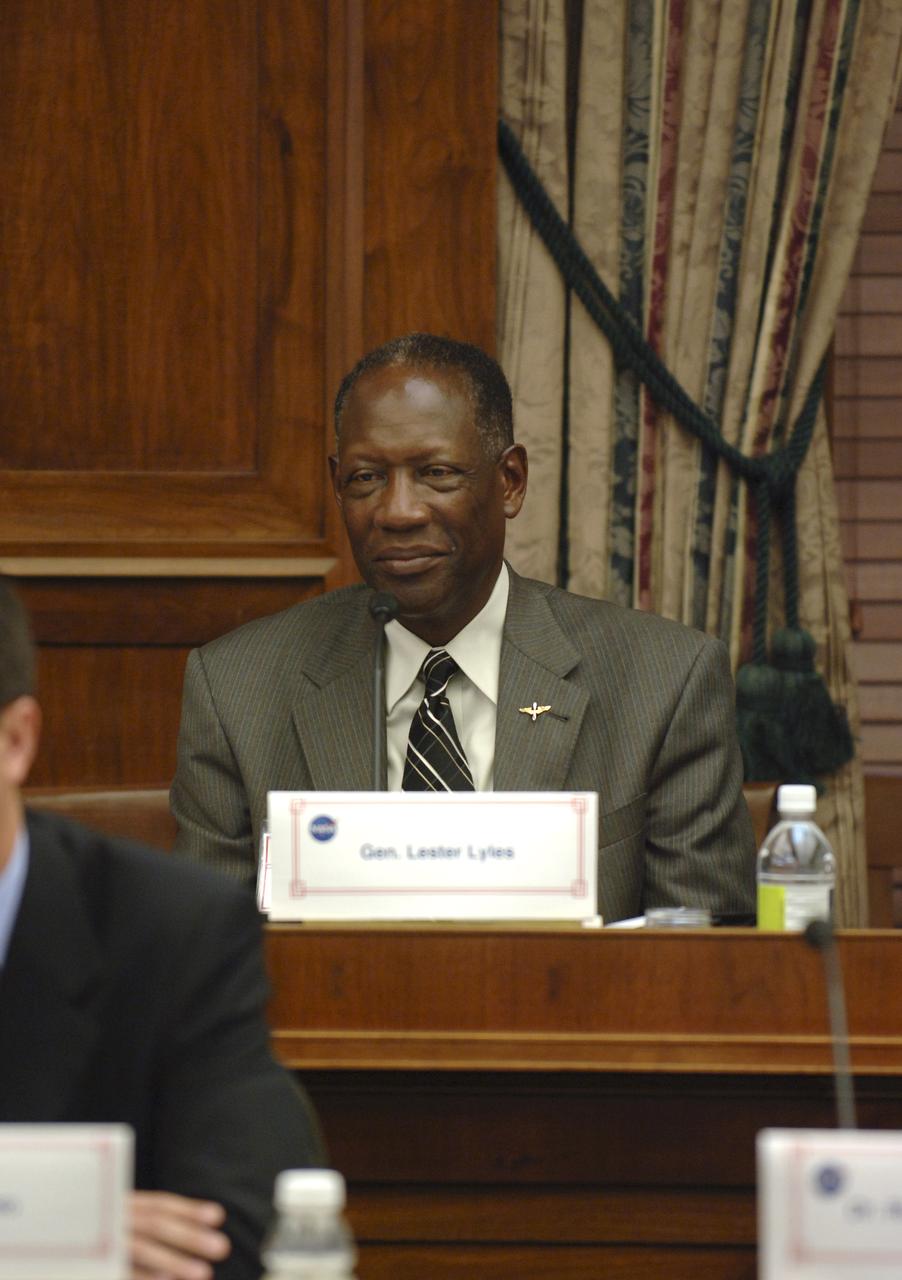
General Lester L. Lyles, USAF (Ret.) NASA Advisory Council member, listens during a meeting of the council at the Rayburn House Office Building, Tuesday, Nov. 29, 2005, in Washington. Photo Credit: (NASA/Bill Ingalls)

NASA Administrator Michael Griffin, second from right, talks with NASA Advisory Council members at the Rayburn House Office Building, Tuesday, Nov. 29, 2005, in Washington. Photo Credit: (NASA/Bill Ingalls)

Lt. Gen. James A. Abrahamson talks during the NASA Advisory Council meeting held at the Rayburn House Office Building, Tuesday, Nov. 29, 2005, in Washington. Photo Credit: (NASA/Bill Ingalls)
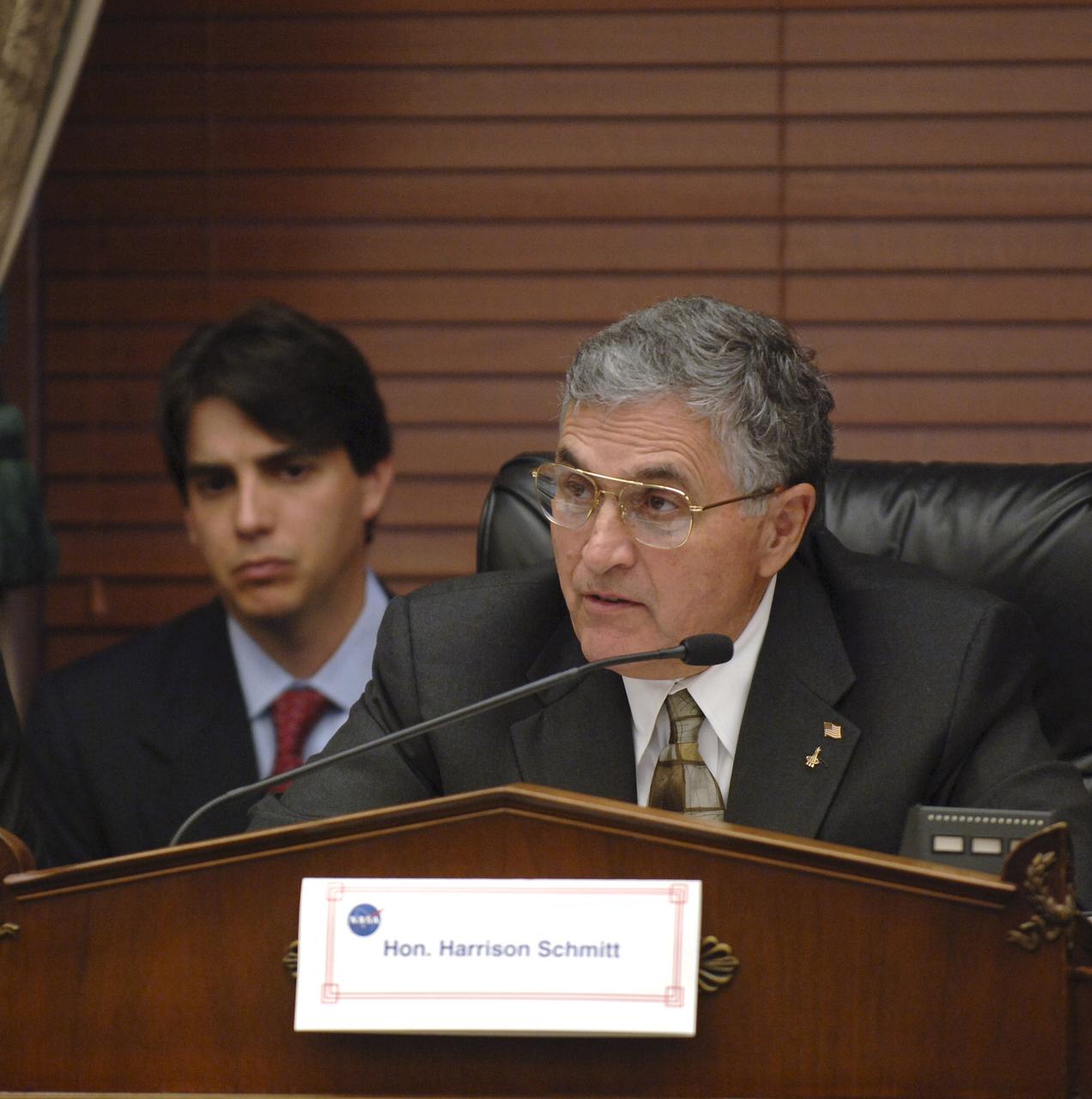
Former Senator and Apollo astronaut Harrison H. "Jack" Schmitt presides over the NASA Advisory Council meeting at the Rayburn House Office Building, Tuesday, Nov. 29, 2005, in Washington. Photo Credit: (NASA/Bill Ingalls)
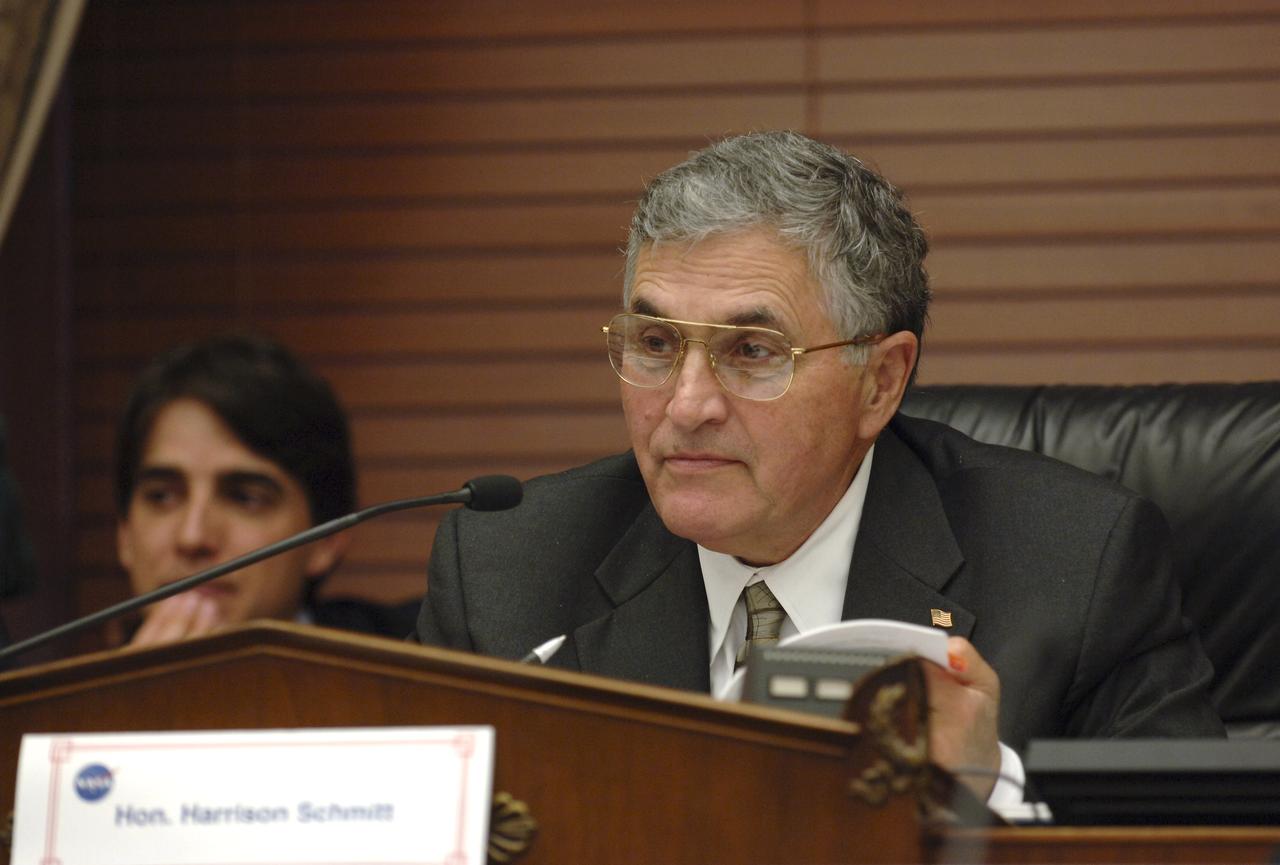
Former Senator and Apollo astronaut Harrison H. "Jack" Schmitt presides over the NASA Advisory Council meeting at the Rayburn House Office Building, Tuesday, Nov. 29, 2005, in Washington. Photo Credit: (NASA/Bill Ingalls)
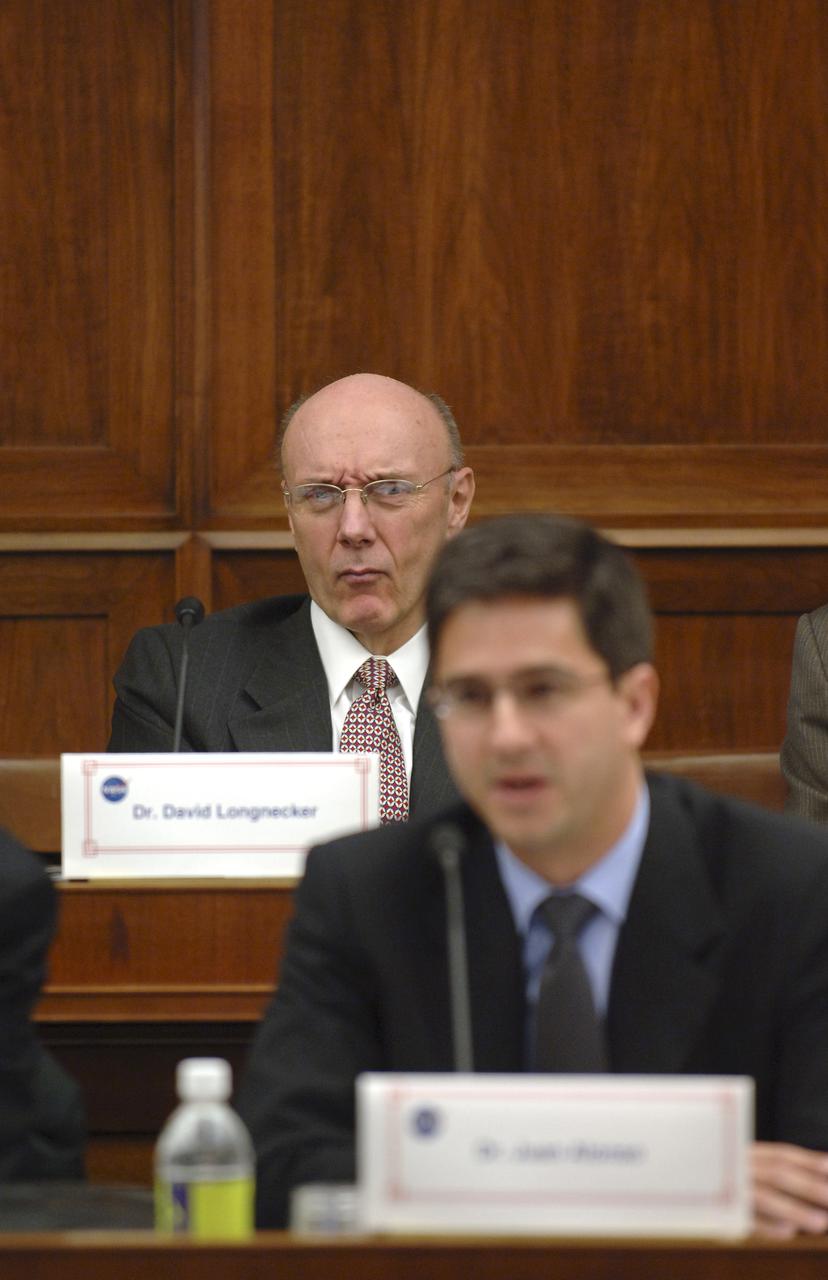
Dr. David Longnecker, NASA Advisory Council member, listens during a meeting of the council at the Rayburn House Office Building, Tuesday, Nov. 29, 2005, in Washington. Photo Credit: (NASA/Bill Ingalls)
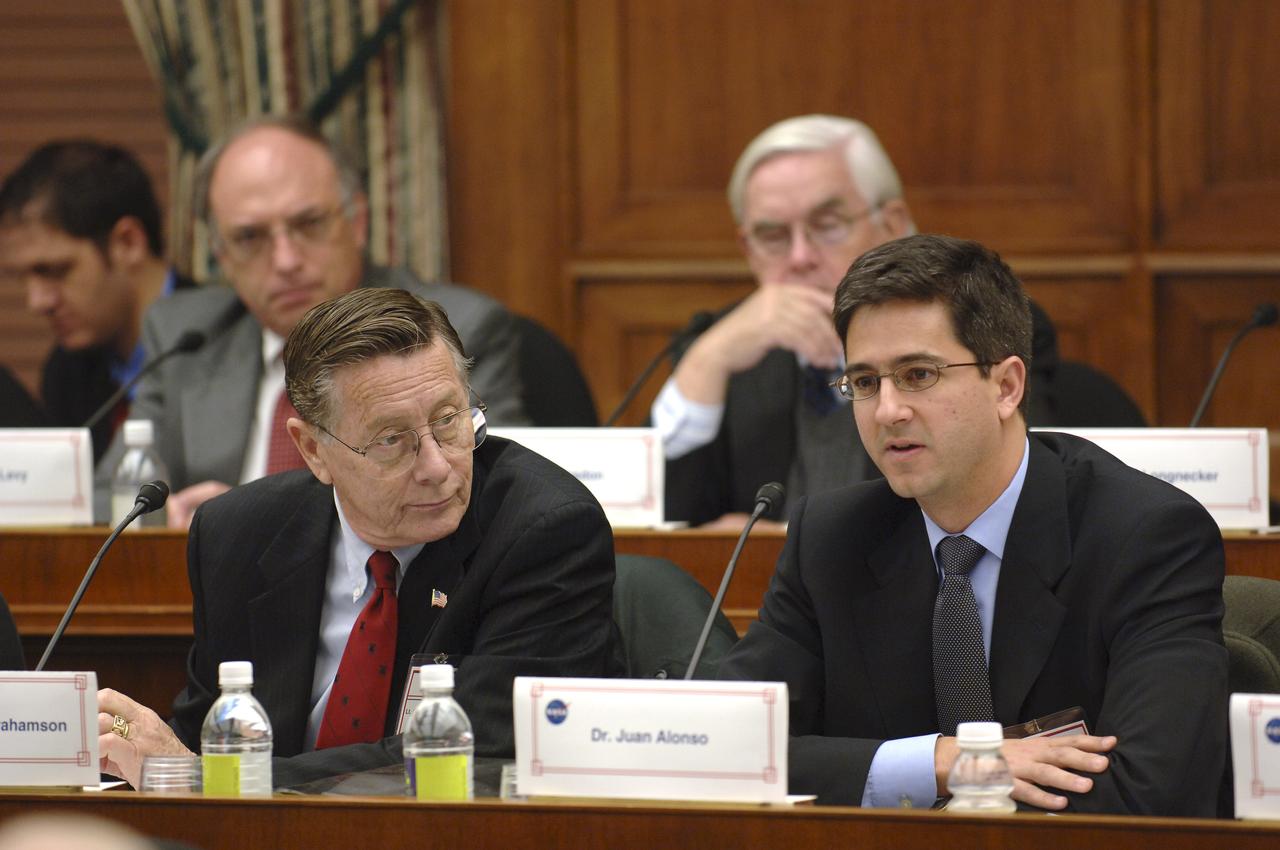
Dr. Juan J. Alonso, right, talks during the NASA Advisory Council meeting held at the Rayburn House Office Building, Tuesday, Nov. 29, 2005, in Washington. Photo Credit: (NASA/Bill Ingalls)

The Honorable Edward R. McPherson talks during the NASA Advisory Council meeting held at the Rayburn House Office Building, Tuesday, Nov. 29, 2005, In Washington. Photo Credit: (NASA/Bill Ingalls)
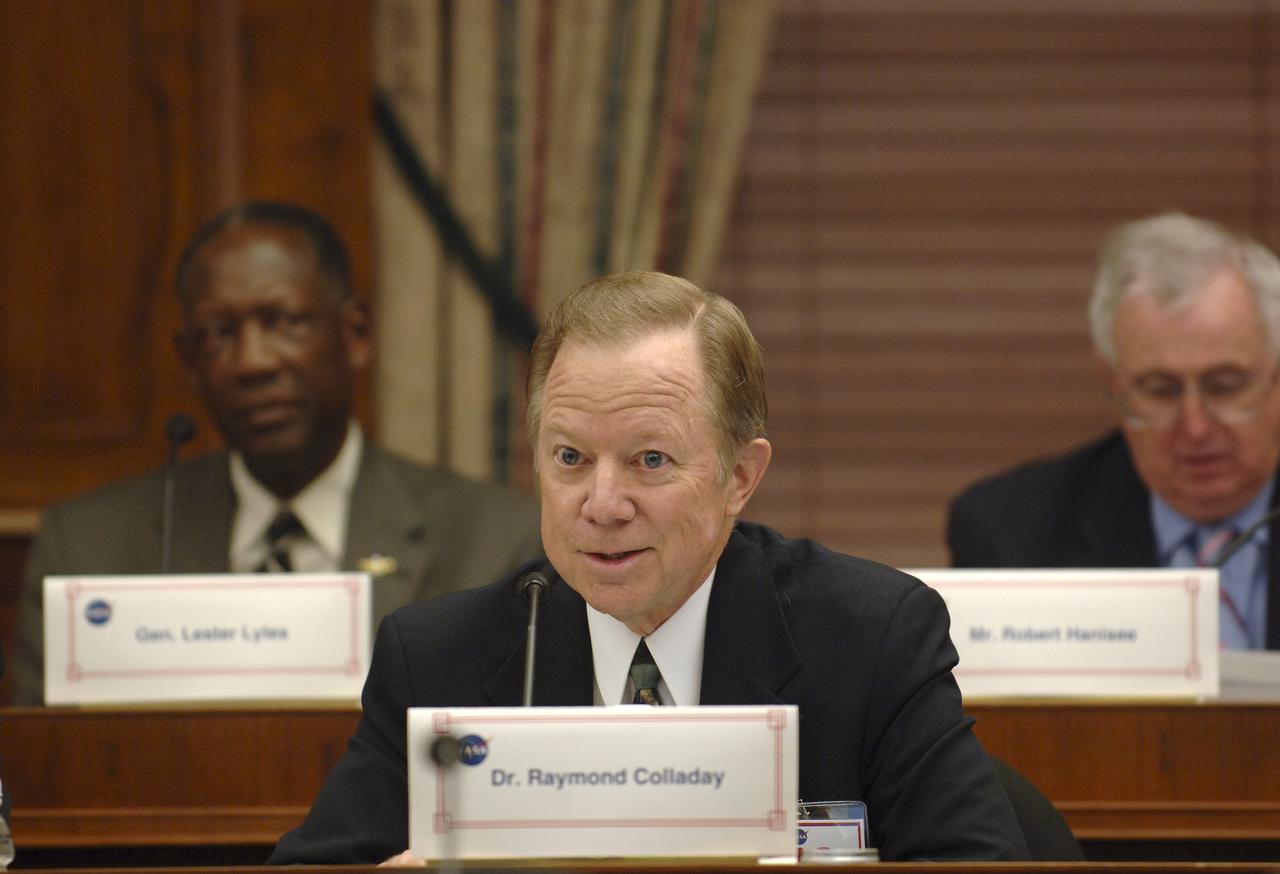
Dr. Raymond Colladay talks during the NASA Advisory Council meeting held at the Rayburn House Office Building, Tuesday, Nov. 29, 2005, in Washington. Photo Credit: (NASA/Bill Ingalls)
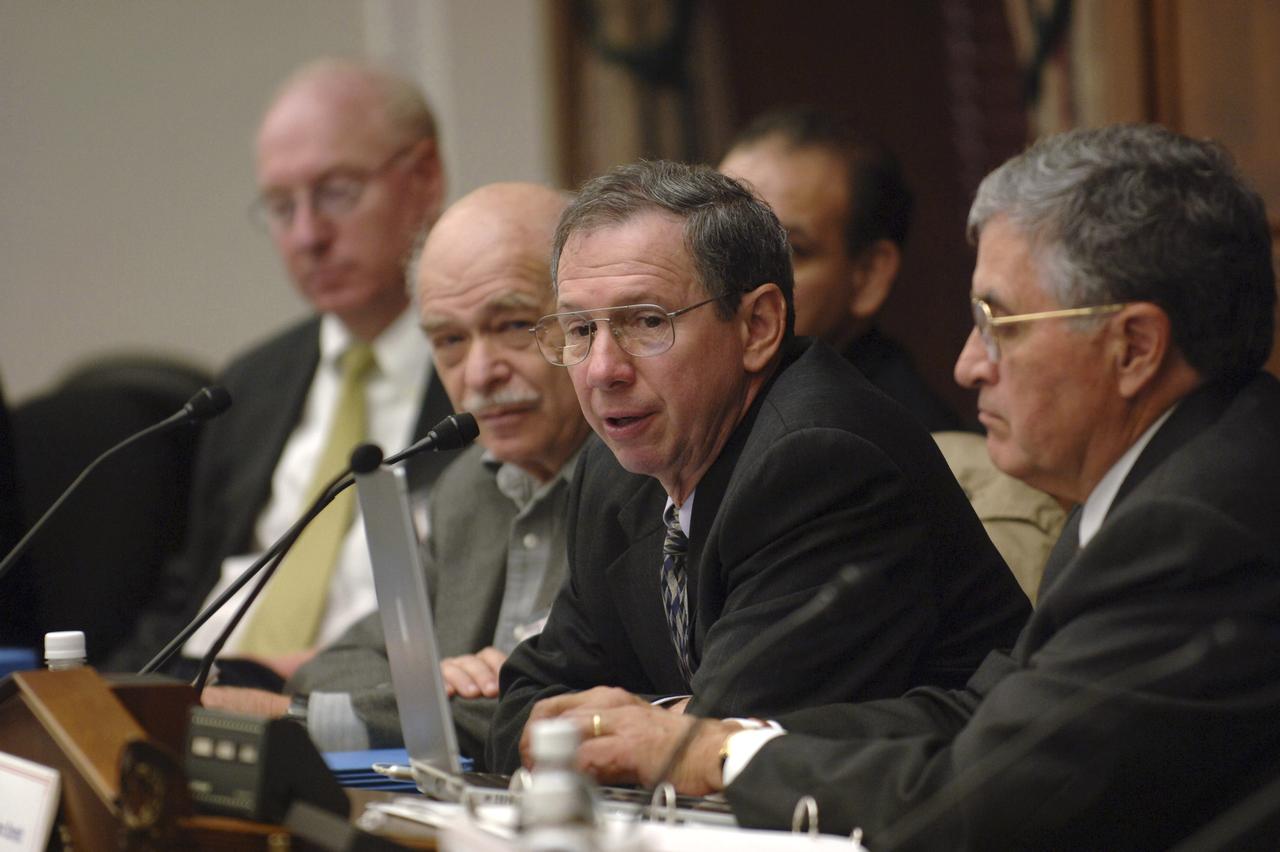
NASA Administrator Michael Griffin, second from right, talks with NASA Advisory Council members at the Rayburn House Office Building, Tuesday, Nov. 29, 2005, in Washington. Photo Credit: (NASA/Bill Ingalls)
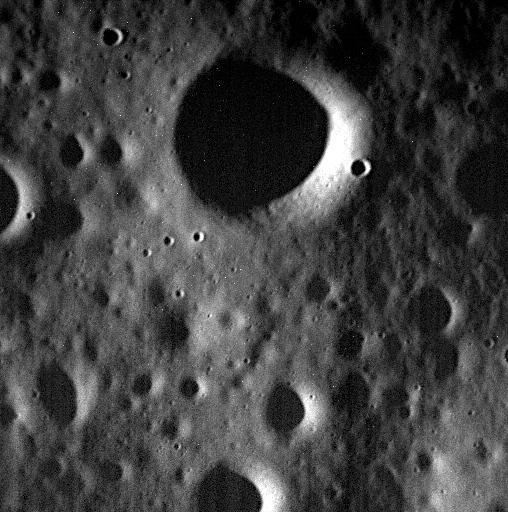
This image, acquired yesterday, is one of MESSENGER's last. Today, the spacecraft will complete its highly successful orbital mission and impact the surface of Mercury. View this image for details of MESSENGER's impact location. Impact is expected at 19:26:02 UTC (3:26:02 pm EDT) but will occur out of sight and communication with the Earth. The MESSENGER team will try to establish communications with the spacecraft when its orbit would allow it to be visible from Earth. The inability to establish communications between MESSENGER and the scheduled Earth-based tracking antenna will provide the first confirmation that the spacecraft has impacted the surface. After about 30 minutes following the predicted Mercury impact time, the team plans to announce whether MESSENGER's orbital mission has come to an end. Date acquired: April 29, 2015 Image Mission Elapsed Time (MET): 72595737 Image ID: 8414772 Instrument: Narrow Angle Camera (NAC) of the Mercury Dual Imaging System (MDIS) Center Latitude: 69.46° Center Longitude: 229.49° E Resolution: 1.7 meters/pixel Scale: The largest crater in this image has a diameter of 330 meters (0.2 miles) http://photojournal.jpl.nasa.gov/catalog/PIA19445
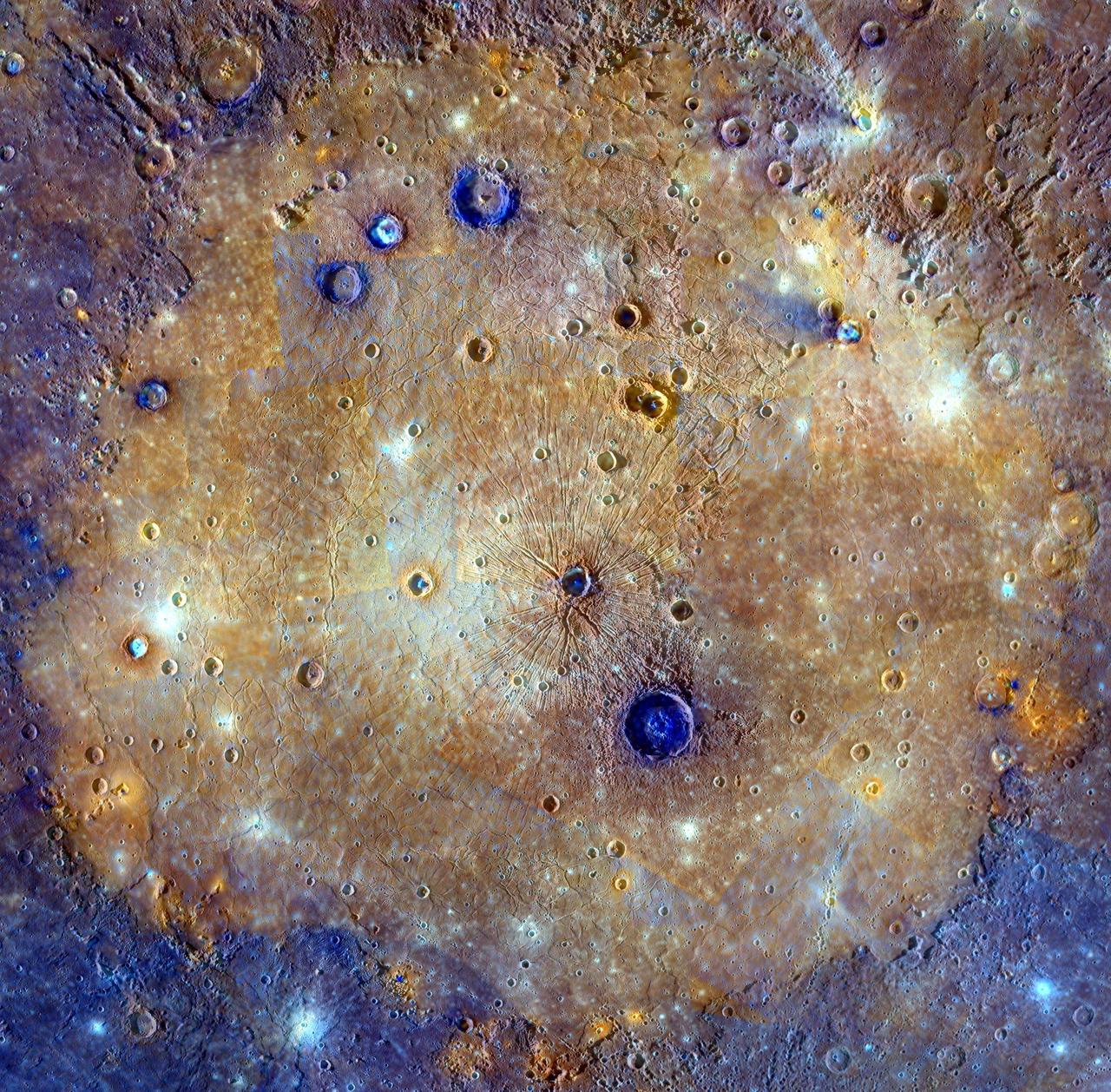
This mosaic of Caloris basin is an enhanced-color composite overlain on a monochrome mosaic featured in a previous post. The color mosaic is made up of WAC images obtained when both the spacecraft and the Sun were overhead, conditions best for discerning variations in albedo, or brightness. The monochrome mosaic is made up of WAC and NAC images obtained at off-vertical Sun angles (i.e., high incidence angles) and with visible shadows so as to reveal clearly the topographic form of geologic features. The combination of the two datasets allows the correlation of geologic features with their color properties. In portions of the scene, color differences from image to image are apparent. Ongoing calibration efforts by the MESSENGER team strive to minimize these differences. Caloris basin has been flooded by lavas that appear orange in this mosaic. Post-flooding craters have excavated material from beneath the surface. The larger of these craters have exposed low-reflectance material (blue in this mosaic) from beneath the surface lavas, likely giving a glimpse of the original basin floor material. Analysis of these craters yields an estimate of the thickness of the volcanic layer: 2.5-3.5 km (1.6-2.2 mi.). http://photojournal.jpl.nasa.gov/catalog/PIA19216
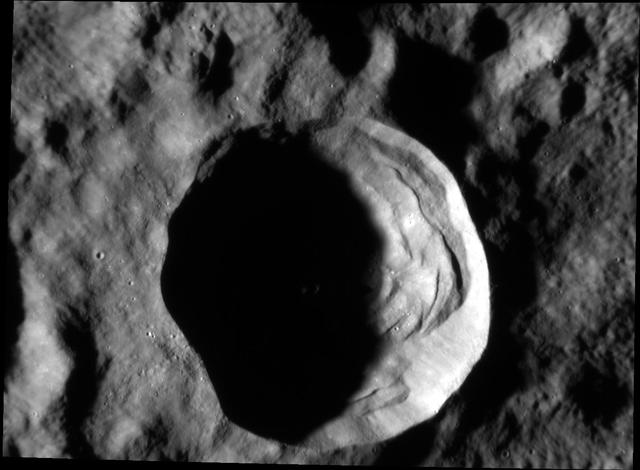
On Mercury, craters larger than approximately 10-12 km display a complex morphology, with slump terraces and central peaks, as compared to smaller bowl-shaped craters. At this complex crater, nearly 20 km in diameter, boulders created by the impact event can be seen outside the southwest rim and within the crater interior. The largest boulder observed here is around 180 m (590 feet) across! For comparison with humans for scale, check out the lunar House Rock at the Apollo 16 site, which is (only) 24 meters across. Date acquired: January 24, 2015 Image Mission Elapsed Time (MET): 64441328 Image ID: 7855678 Instrument: Narrow Angle Camera (NAC) of the Mercury Dual Imaging System (MDIS) Center Latitude: -2.66° Center Longitude: 83.54° E Resolution: 26 meters/pixel Scale: This crater is approximately 19.5 km (12.1 miles) in diameter Incidence Angle: 82.8° Emission Angle: 43.0° Phase Angle: 39.8° http://photojournal.jpl.nasa.gov/catalog/PIA19202
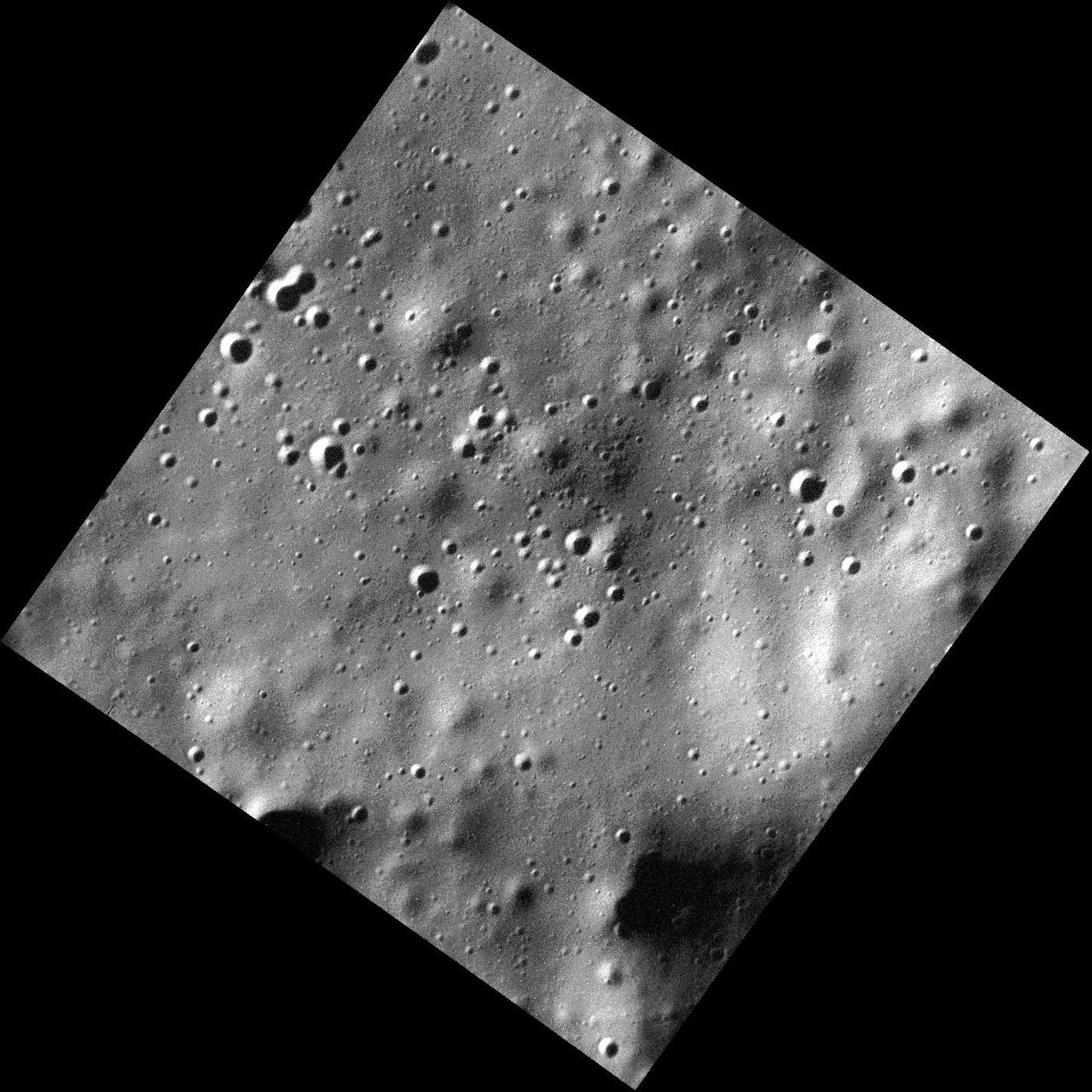
This image is one of the highest-resolution MDIS observations to date! Many craters of varying degradation states are visible, as well as gentle terrain undulations. Very short exposure times are needed to make these low-altitude observations while the spacecraft is moving quickly over the surface; thus the images are slightly noisier than typical MDIS images. This image was acquired as a high-resolution targeted observation. Targeted observations are images of a small area on Mercury's surface at resolutions much higher than the 200-meter/pixel morphology base map. It is not possible to cover all of Mercury's surface at this high resolution, but typically several areas of high scientific interest are imaged in this mode each week. Date acquired: March 15, 2014 Image Mission Elapsed Time (MET): 37173522 Image ID: 5936740 Instrument: Narrow Angle Camera (NAC) of the Mercury Dual Imaging System (MDIS) Center Latitude: 71.91° Center Longitude: 232.7° E Resolution: 5 meters/pixel Scale: The image is approximately 8.3 km (5.2 mi.) across. Incidence Angle: 79.4° Emission Angle: 4.0° Phase Angle: 83.4° http://photojournal.jpl.nasa.gov/catalog/PIA18370