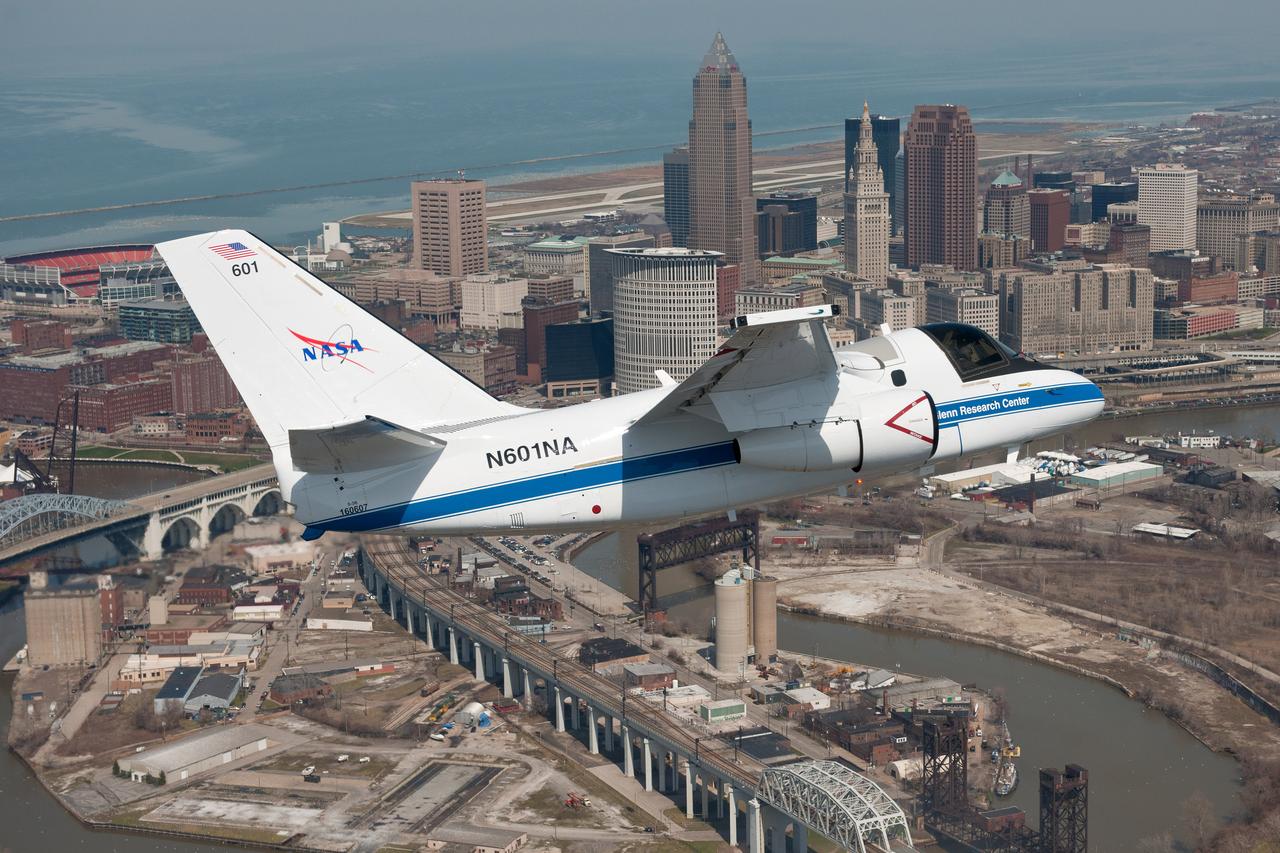
This photo shows NASA Glenn’s S-3 Viking Aircraft flying over downtown Cleveland, Ohio. The S-3 continues to conduct important research including regular flights over Lake Erie and other waterways to image algal blooms that have plagued the area’s waters.
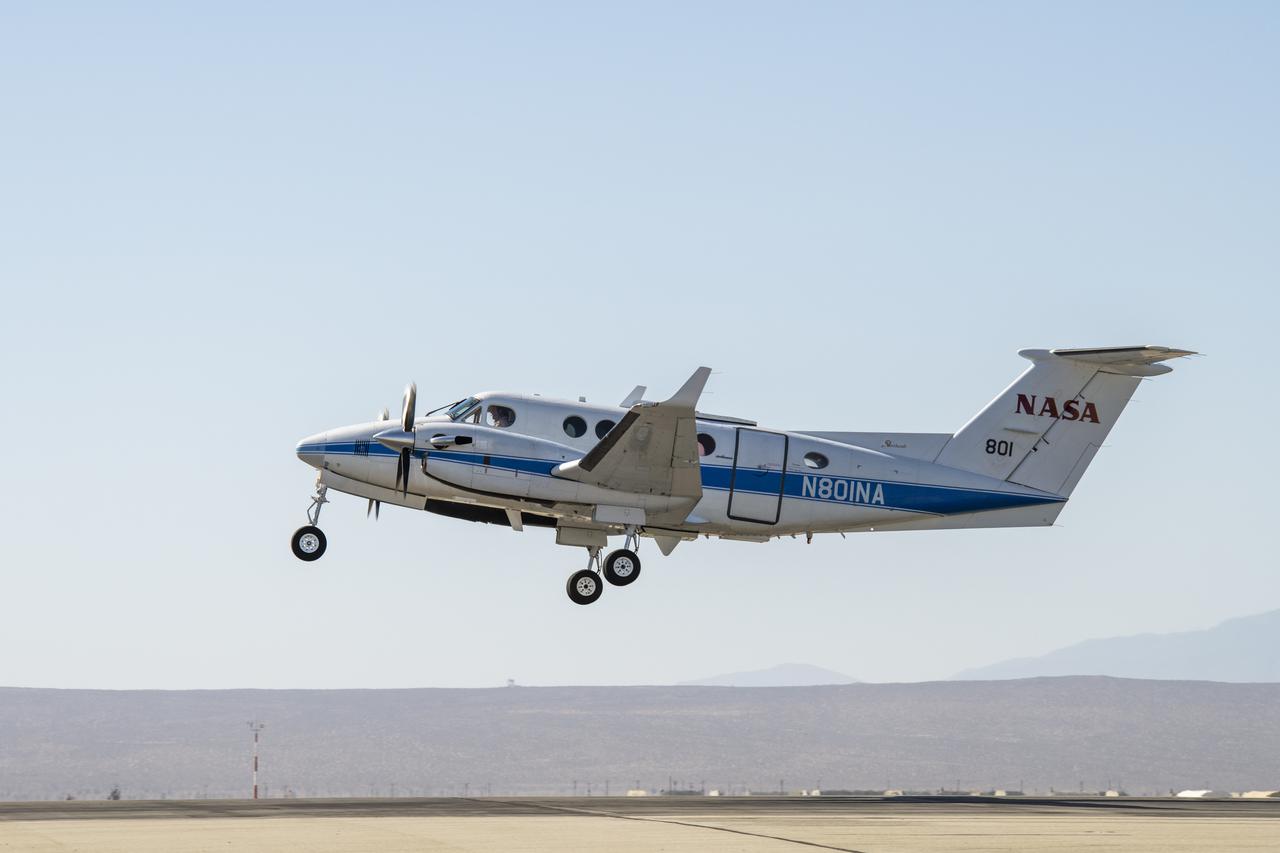
Flight crews at NASA's Armstrong Flight Research Center in Edwards, California, flew the Sub-Mesoscale Ocean Dynamics Experiment (S-MODE) installed in the B200 King Air on May 3, 2021.
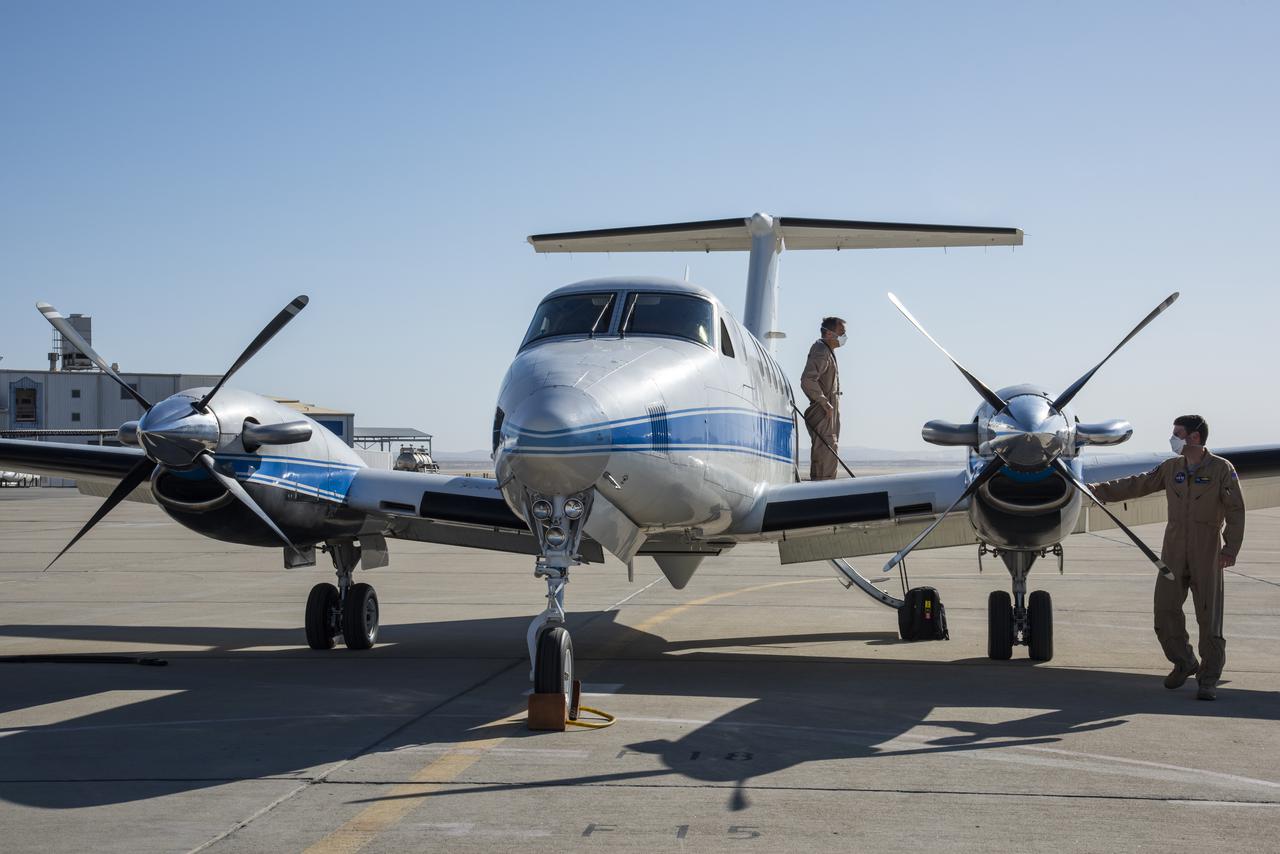
A flight crew prepares for the B200 King Air Sub-Mesoscale Ocean Dynamics Experiment (S-MODE) at NASA’s Armstrong Flight Research Center in Edwards, California. From left to right are Jeroen Molemaker and Scott “Jelly” Howe.
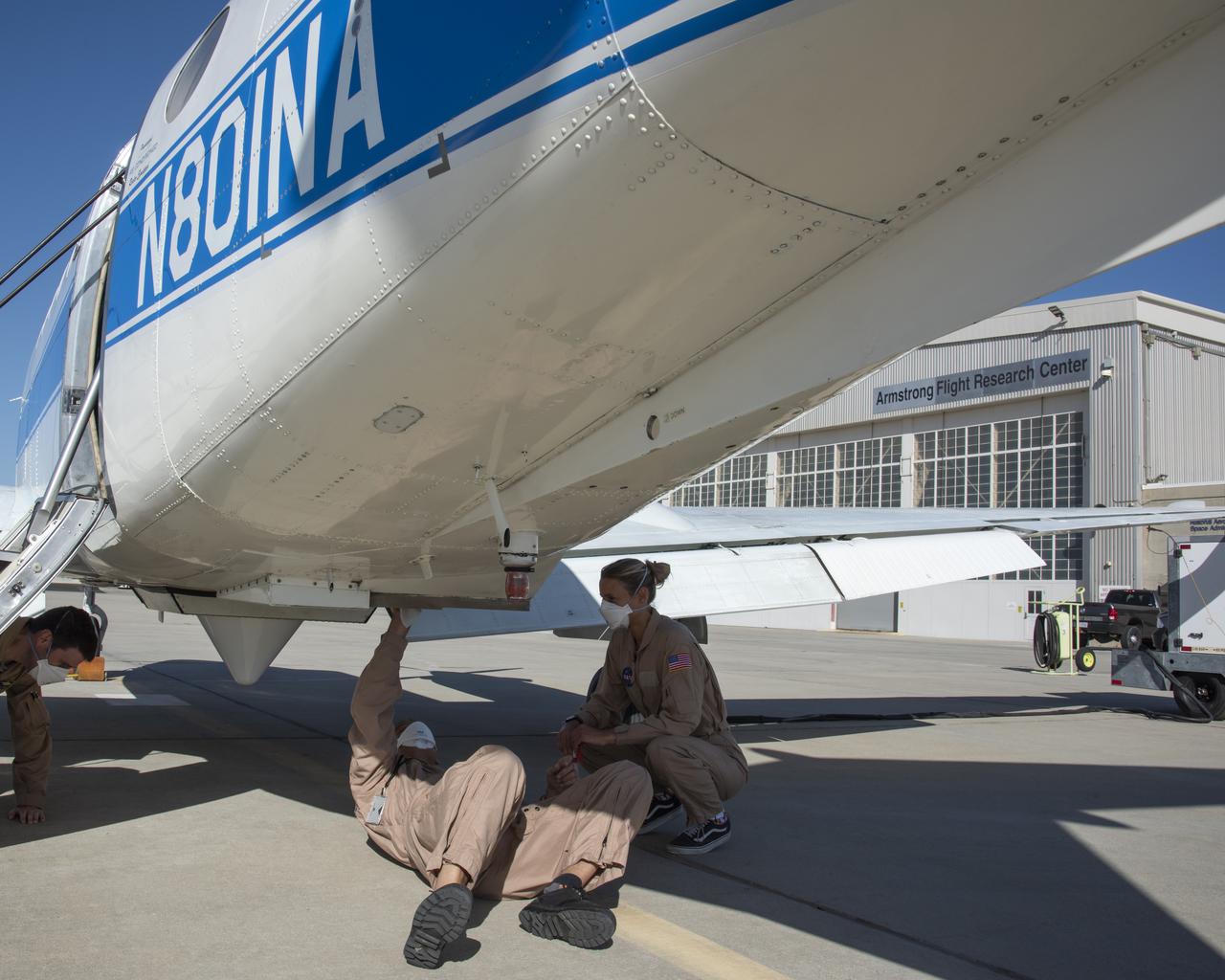
A flight crew prepares for the B200 King Air Sub-Mesoscale Ocean Dynamics Experiment (S-MODE) at NASA's Armstrong Flight Research Center in Edwards, California. From left to right are Scott "Jelly" Howe, Jeroen Molemaker and Delphine Hypolite.

NASA, Lockheed Martin S-3B Viking Aircraft #N601NA
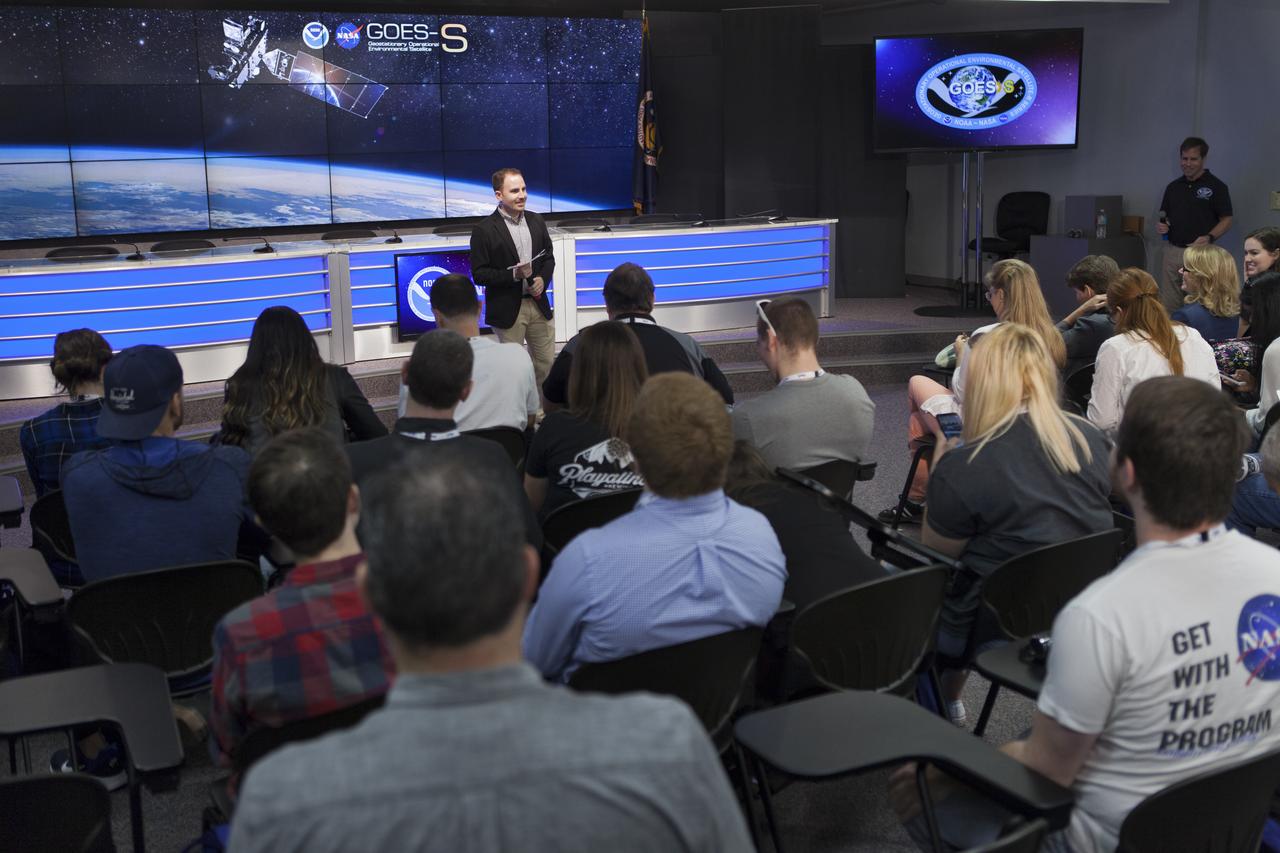
Jason Townsend, NASA's social media manager, speaks to members of social media in the Kennedy Space Center’s Press Site auditorium. The briefing focused on the National Oceanic and Atmospheric Administration's, or NOAA's, Geostationary Operational Environmental Satellite, or GOES-S. The spacecraft is the second satellite in a series of next-generation NOAA weather satellites. It will launch to a geostationary position over the U.S. to provide images of storms and help predict weather forecasts, severe weather outlooks, watches, warnings, lightning conditions and longer-term forecasting. GOES-S is slated to lift off at 5:02 p.m. EST on March 1, 2018 aboard a United Launch Alliance Atlas V rocket.
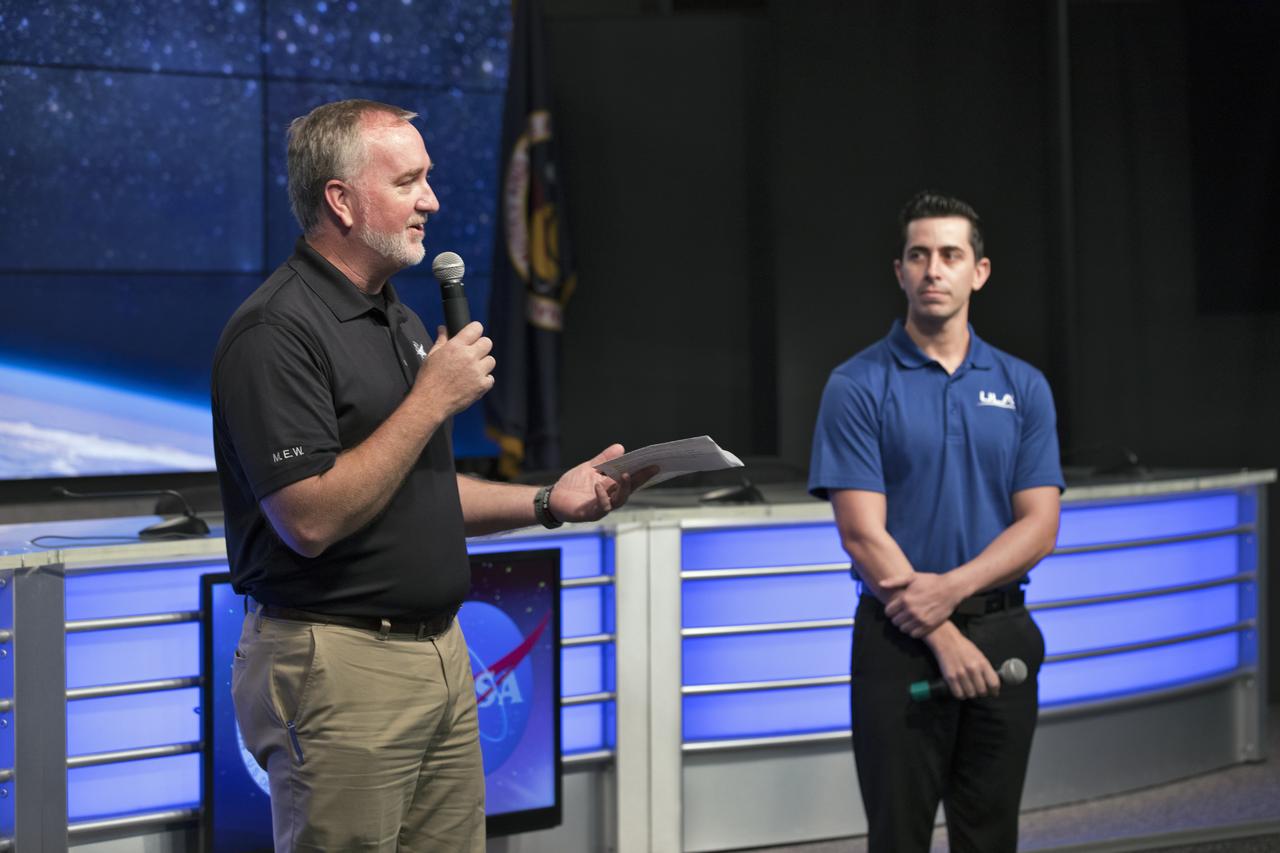
Mic Woltman, chief of the Fleet Systems Integration Branch of NASA's Launch Services Program, left, and Gabriel Rodriguez-Mena, a United Launch Alliance systems test engineer, speak to members of social media in the Kennedy Space Center’s Press Site auditorium. The briefing focused on the National Oceanic and Atmospheric Administration's, or NOAA's, Geostationary Operational Environmental Satellite, or GOES-S. The spacecraft is the second satellite in a series of next-generation NOAA weather satellites. It will launch to a geostationary position over the U.S. to provide images of storms and help predict weather forecasts, severe weather outlooks, watches, warnings, lightning conditions and longer-term forecasting. GOES-S is slated to lift off at 5:02 p.m. EST on March 1, 2018 aboard a United Launch Alliance Atlas V rocket.
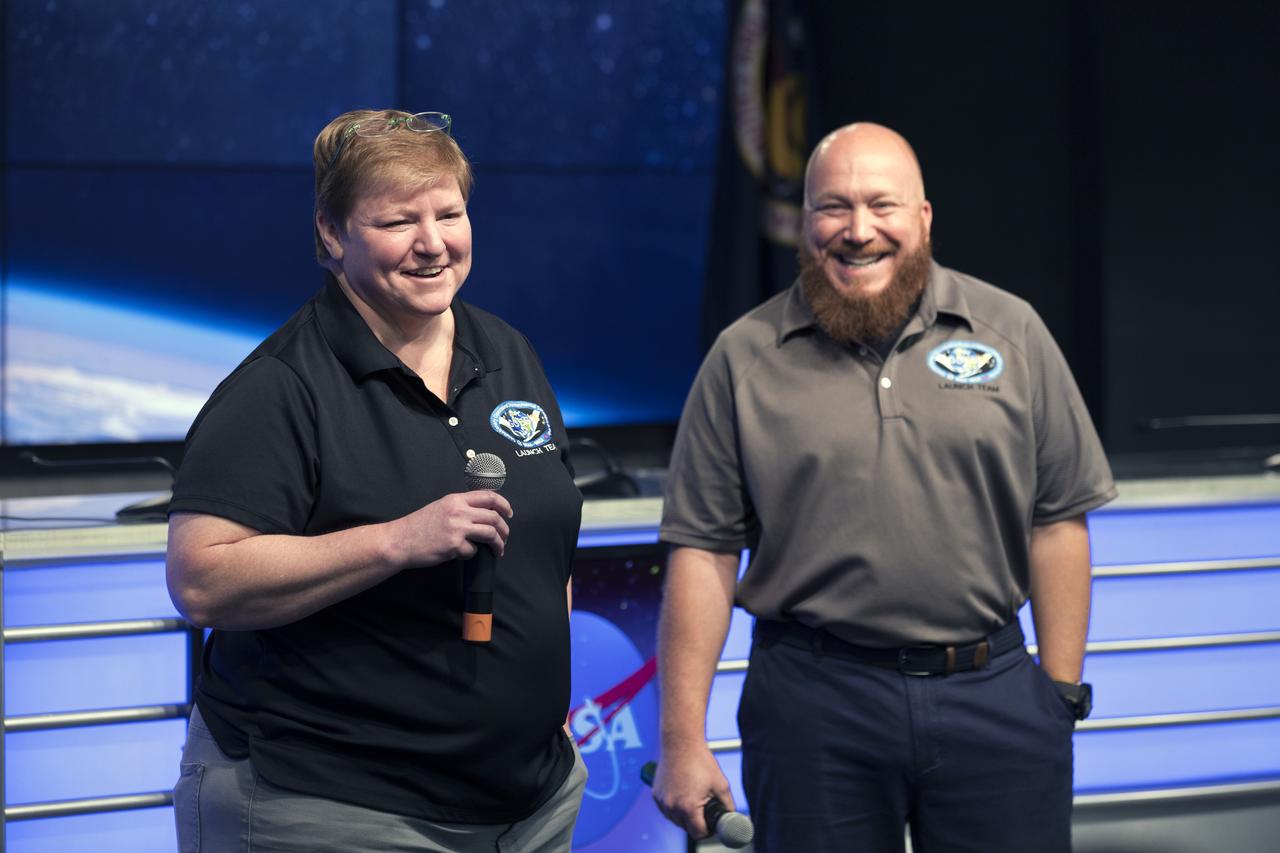
Pam Sullivan, NASA's GOES-R flight director, left, and A.J. Sandora, Lockheed Martin's GOES-R Series Mechanical Operations Assembly, Test and Launch Operations (ATLO) manager, speak to members of social media in the Kennedy Space Center’s Press Site auditorium. The briefing focused on the National Oceanic and Atmospheric Administration's, or NOAA's, Geostationary Operational Environmental Satellite, or GOES-S. The spacecraft is the second satellite in a series of next-generation NOAA weather satellites. It will launch to a geostationary position over the U.S. to provide images of storms and help predict weather forecasts, severe weather outlooks, watches, warnings, lightning conditions and longer-term forecasting. GOES-S is slated to lift off at 5:02 p.m. EST on March 1, 2018 aboard a United Launch Alliance Atlas V rocket.
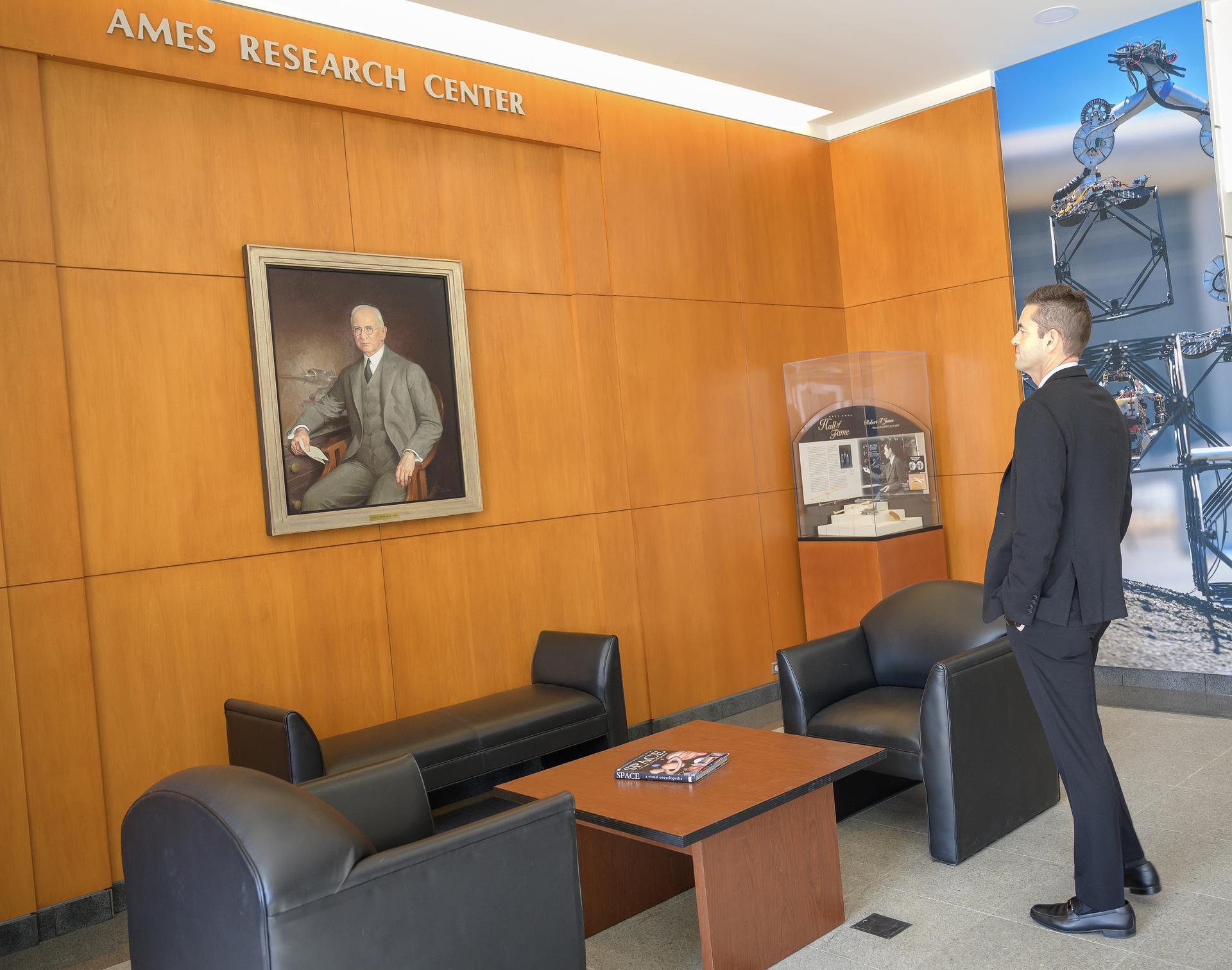
NASA Administrator Jared Isaacman contemplates a portrait of Dr. Joseph S. Ames, in N232.
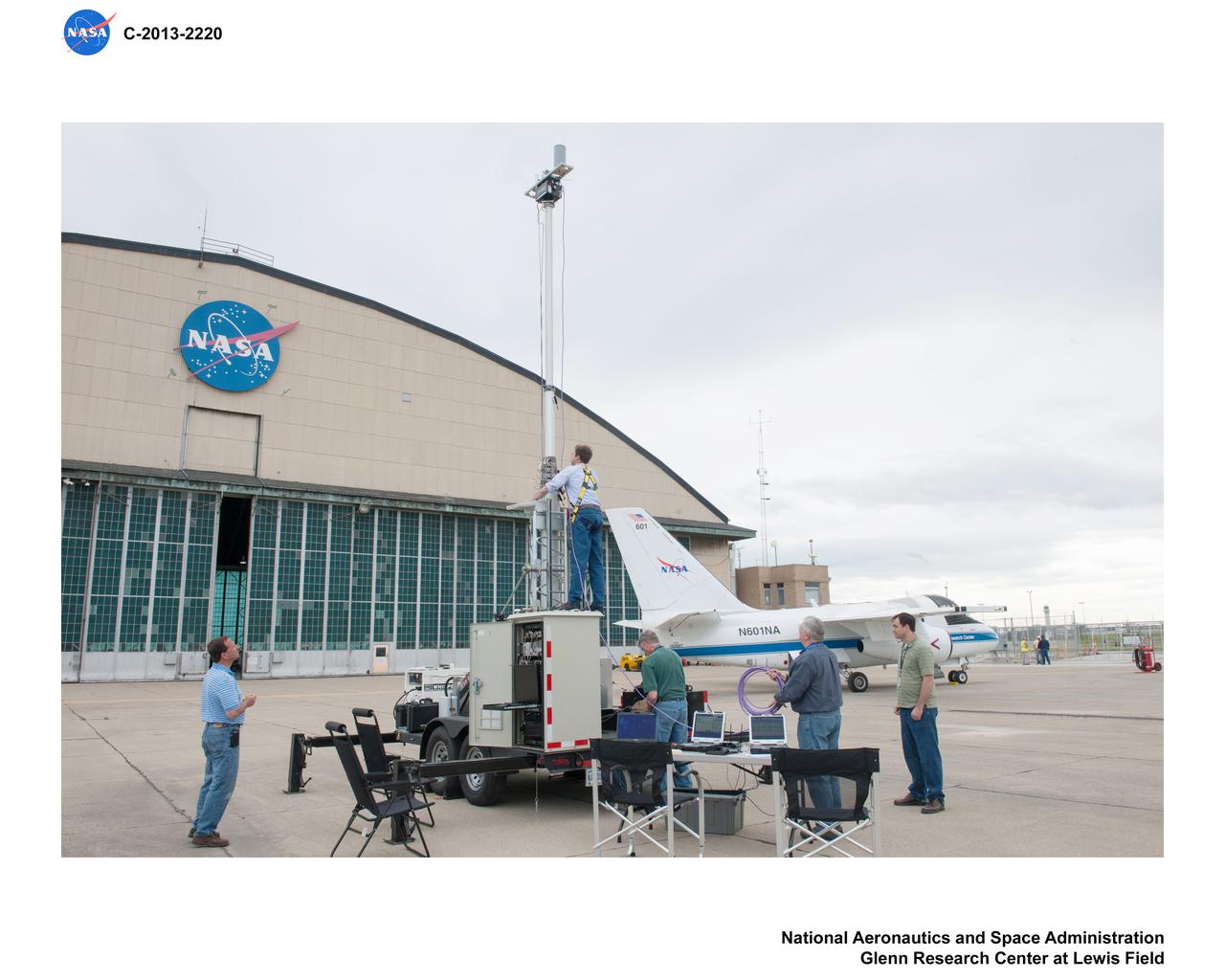
NASA, Lockheed Martin S-3B Viking Aircraft #N601NA, Unmanned Aircraft Communications Project
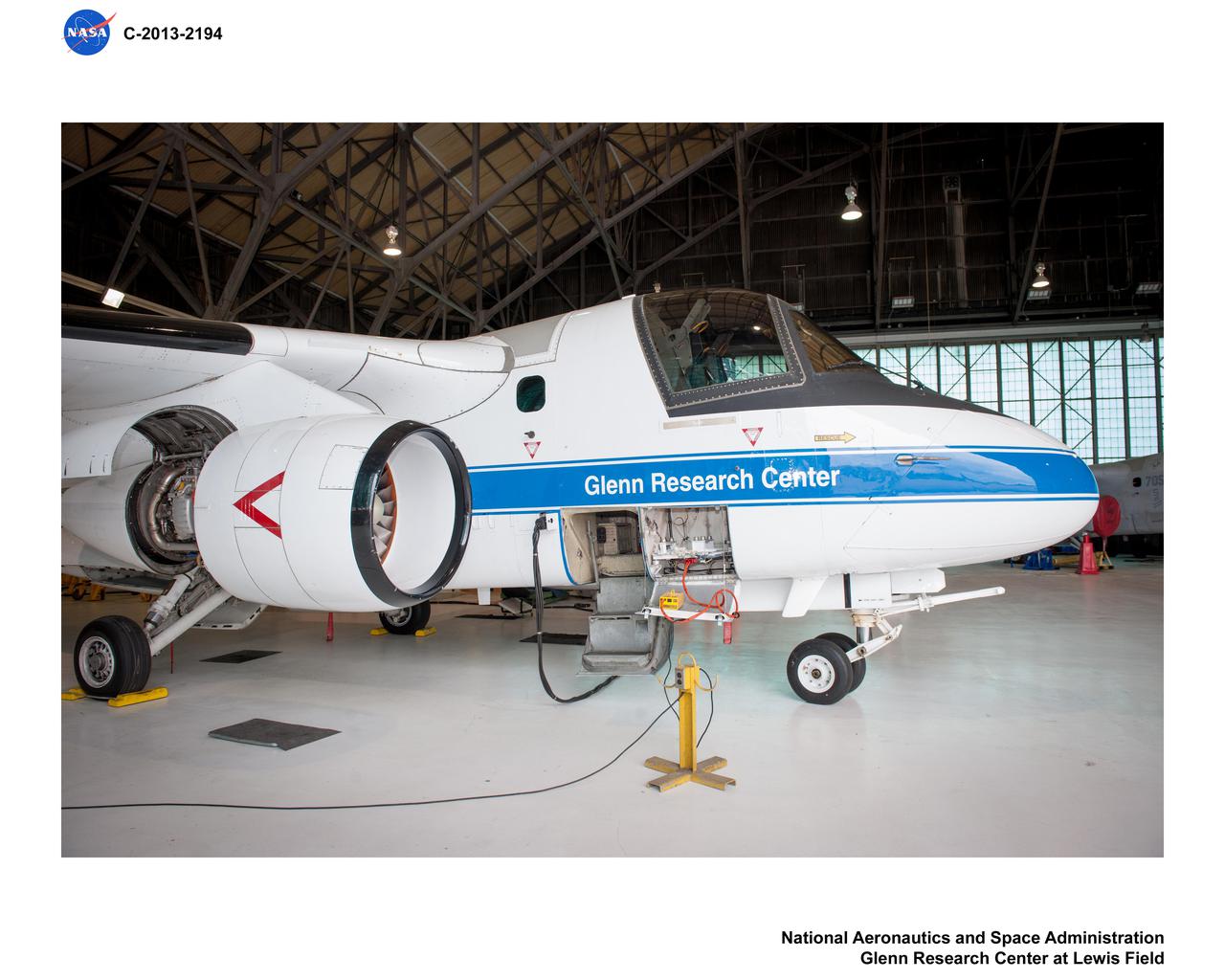
NASA, Lockheed Martin S-3B Viking Aircraft #N601NA, Unmanned Aircraft Communications Project

NASA, Lockheed Martin S-3B Viking Aircraft #N601NA on Hangar Apron
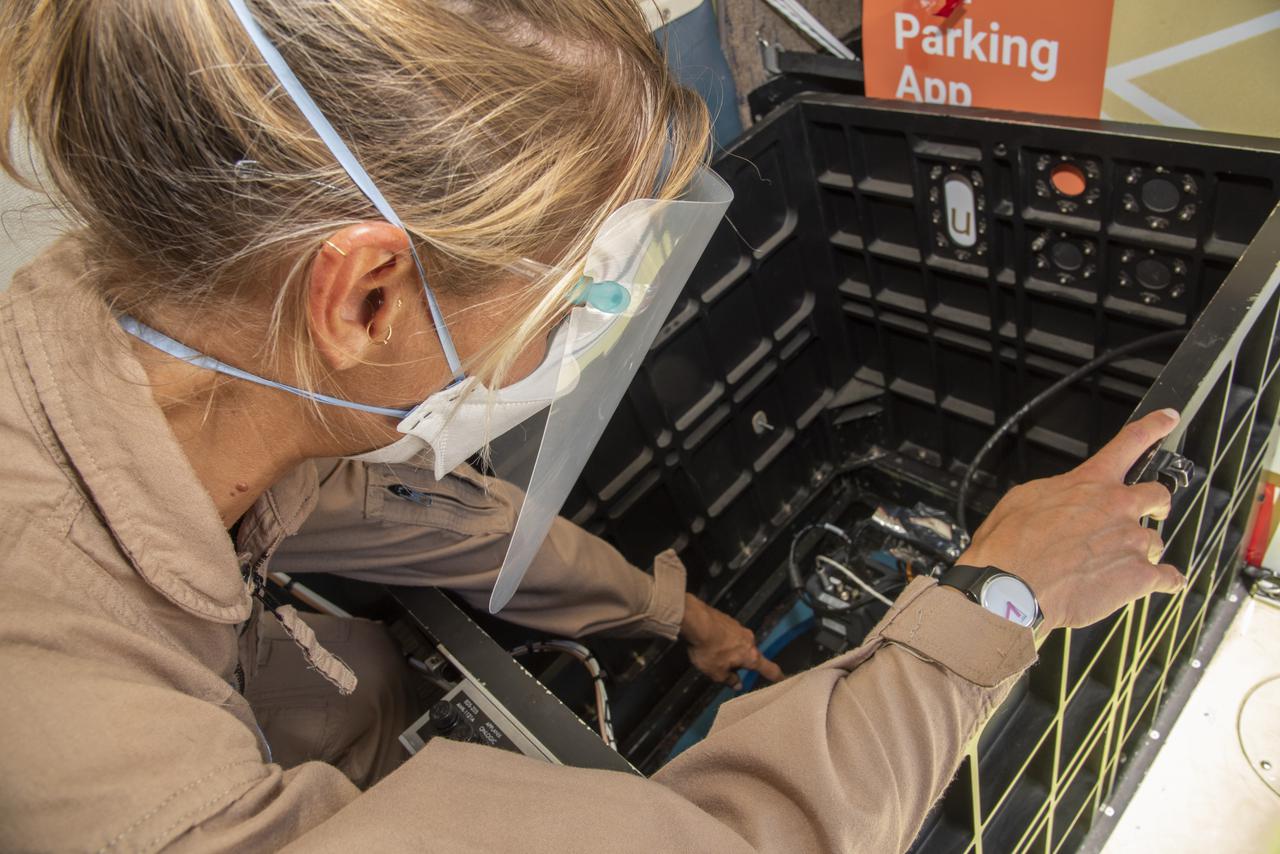
Delphine Hypolite, Multiscale Observing System of the Ocean Surface (MOSES) Operator from University of California Los Angeles, performs pre-flight checks on the MOSES Camera System at NASA's Armstrong Flight Research Center in Edwards, California.
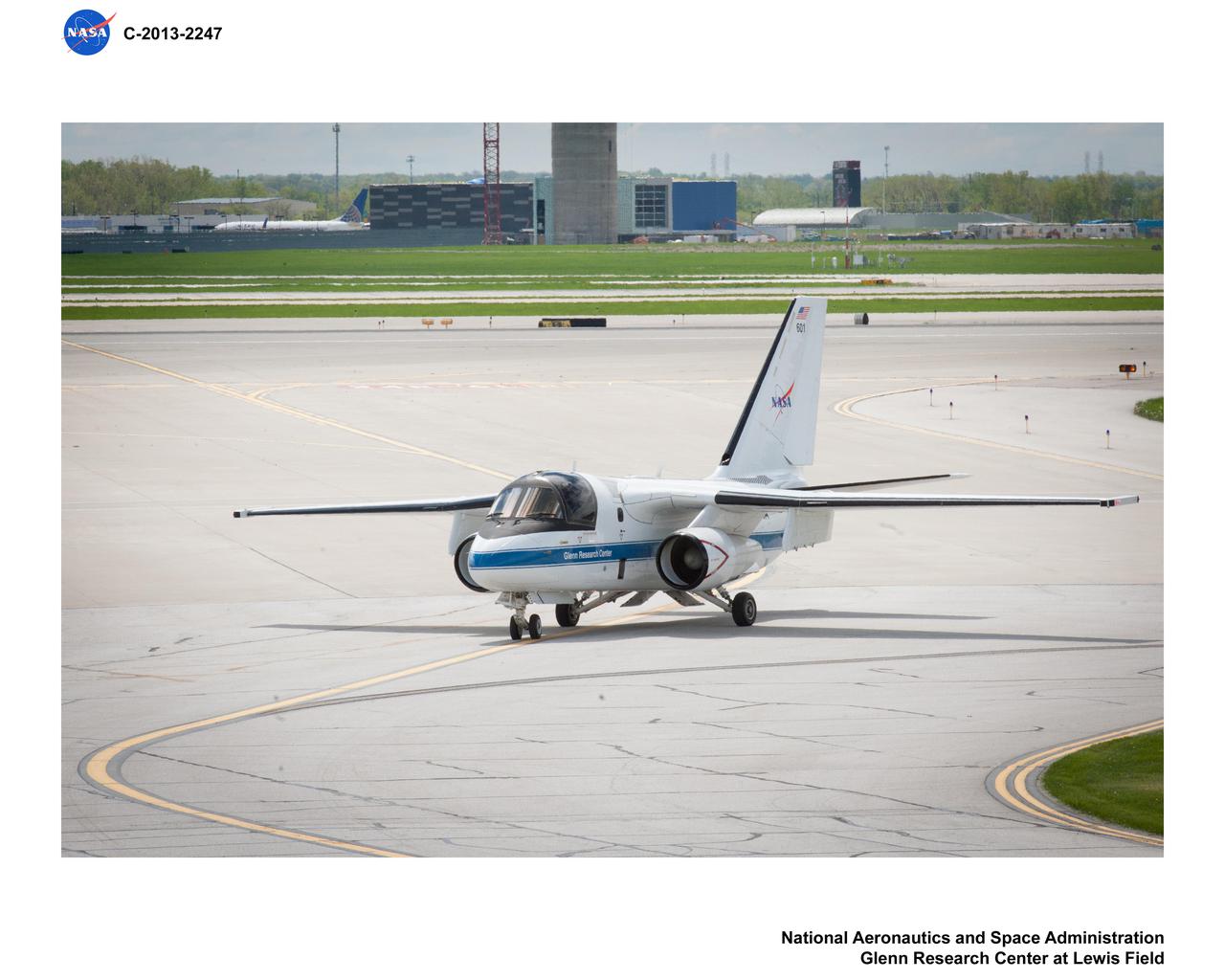
NASA, Lockheed Martin S-3B Viking Aircraft #N601NA, prepares for departure from Cleveland Hopkins Airport in support of the Unmanned Aircraft Communications Project
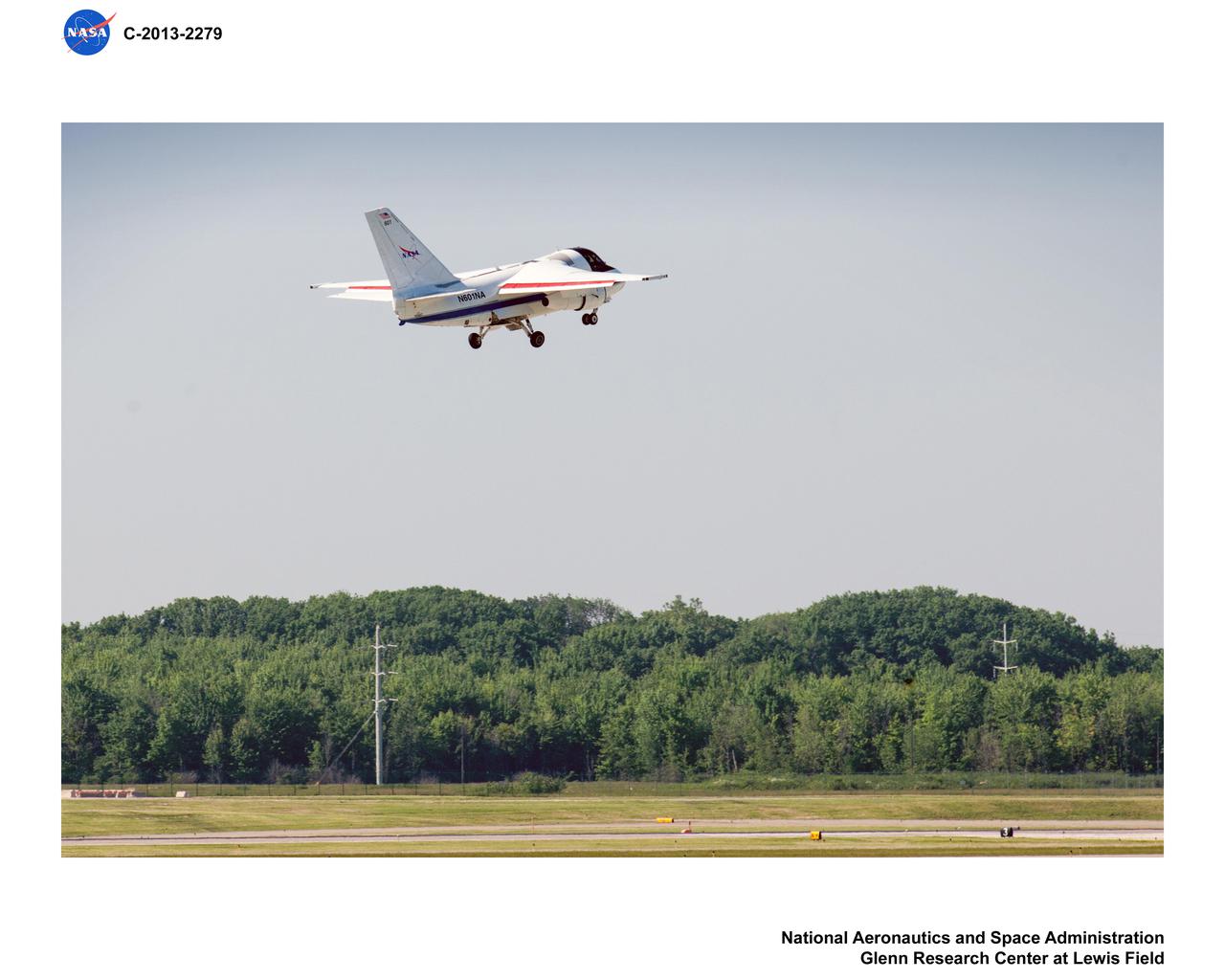
NASA, Lockheed Martin S-3B Viking Aircraft #N601NA, takes off from Cleveland Hopkins Airport, in support of the Unmanned Aircraft Communications Project
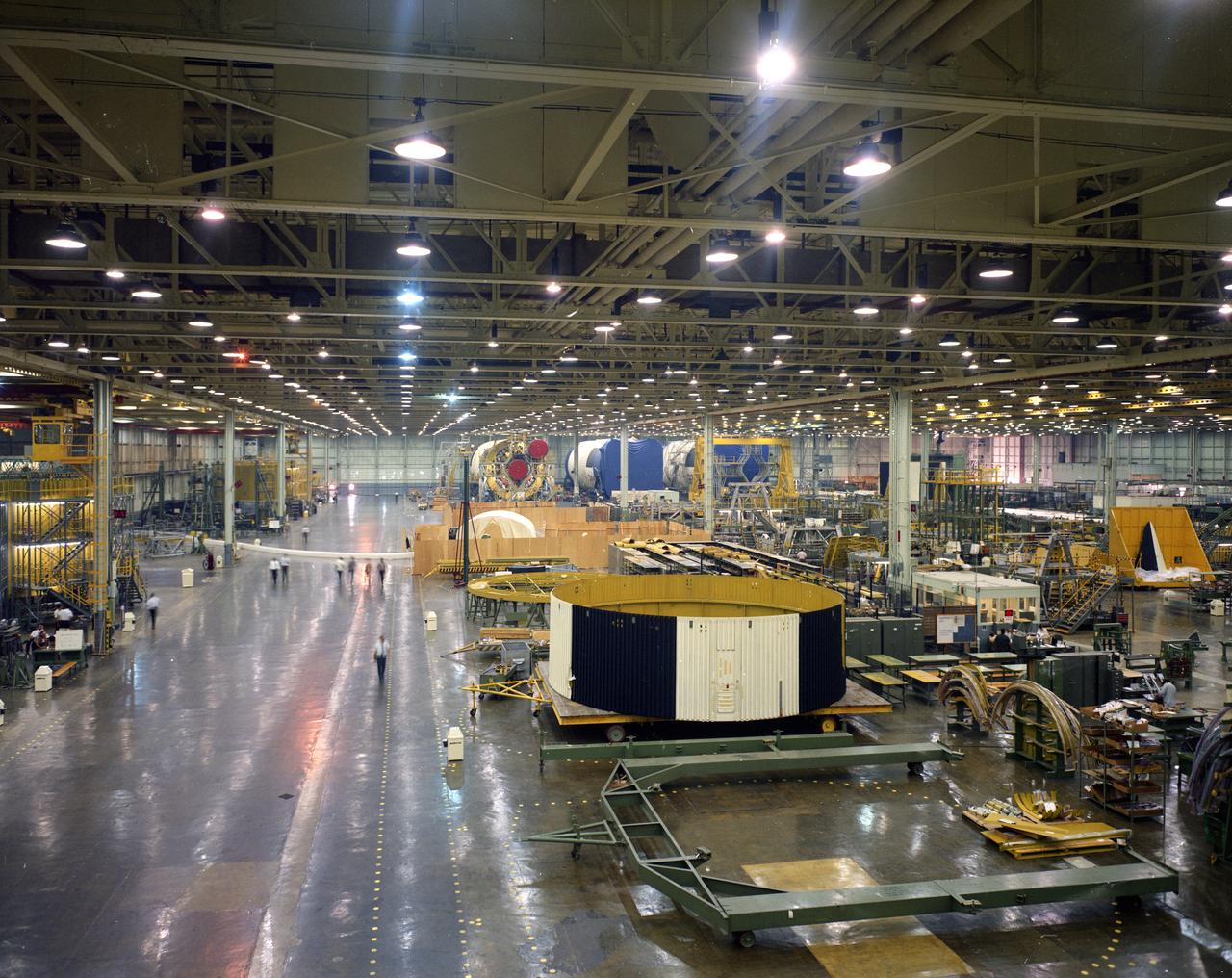
Parts of the Saturn V first stage await assembly at NASA’s Michoud Assembly Facility in October of 1967. In the far end of the image you can see S-1C stages nearing completion.

New Orleans, LA - Parts of the Saturn V first stage await assembly at NASA’s Michoud Assembly Facility in October of 1967. In the far end of the image, S-1C stages are nearing completion. Image dated 10-5-1967.
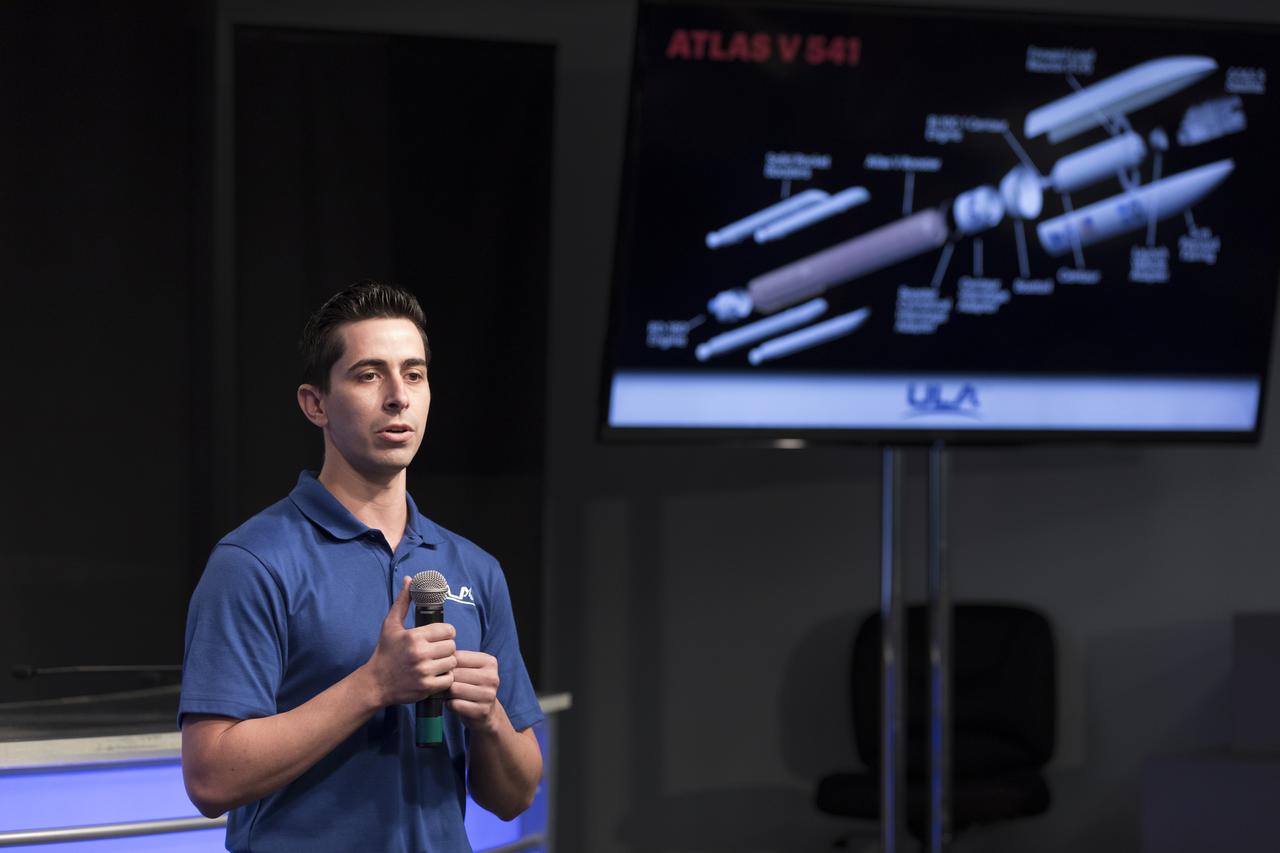
Gabriel Rodriguez-Mena, a United Launch Alliance systems test engineer, speaks to members of social media in the Kennedy Space Center’s Press Site auditorium. The briefing focused on the National Oceanic and Atmospheric Administration's, or NOAA's, Geostationary Operational Environmental Satellite, or GOES-S. The spacecraft is the second satellite in a series of next-generation NOAA weather satellites. It will launch to a geostationary position over the U.S. to provide images of storms and help predict weather forecasts, severe weather outlooks, watches, warnings, lightning conditions and longer-term forecasting. GOES-S is slated to lift off at 5:02 p.m. EST on March 1, 2018 aboard a United Launch Alliance Atlas V rocket.
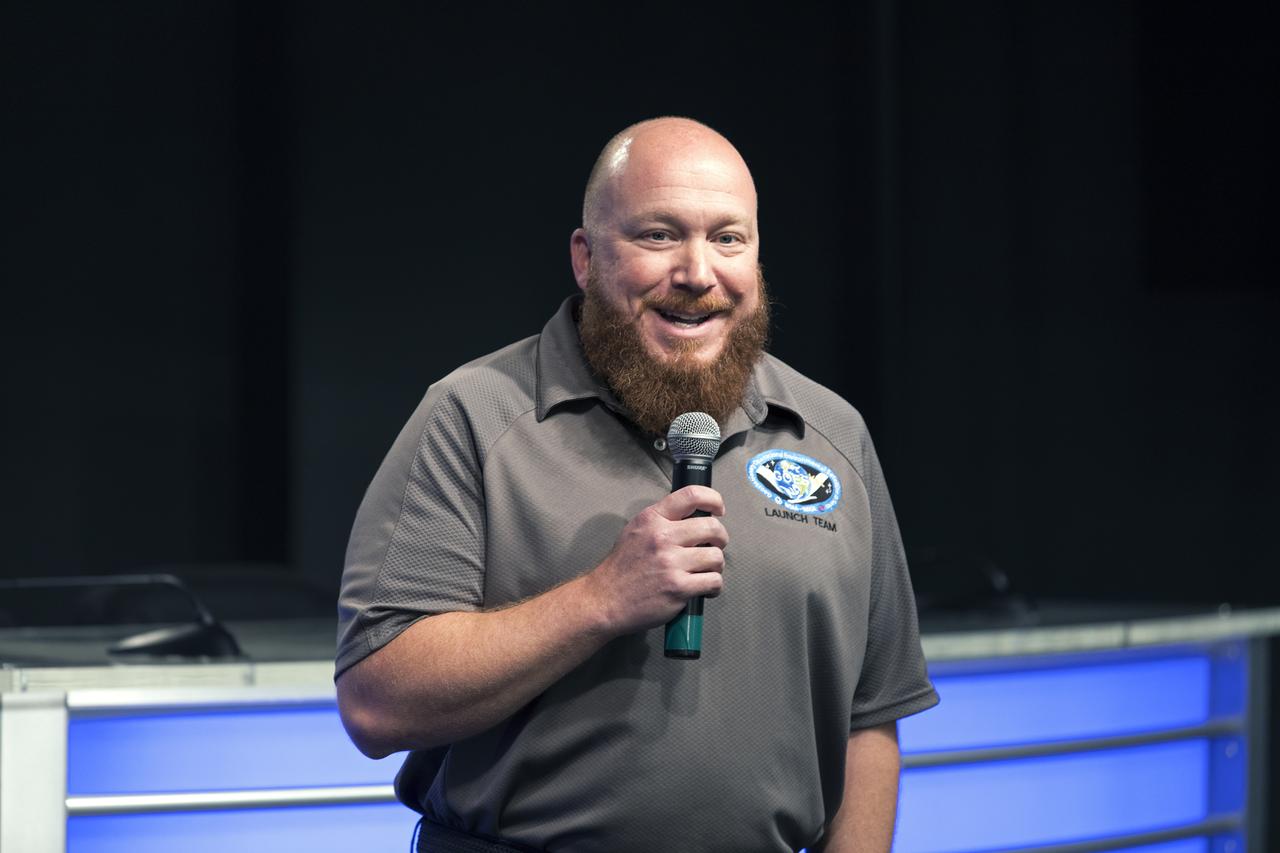
A.J. Sandora, Lockheed Martin's GOES-R Series Mechanical Operations Assembly, Test and Launch Operations (ATLO) manager, speaks to members of social media in the Kennedy Space Center’s Press Site auditorium. The briefing focused on the National Oceanic and Atmospheric Administration's, or NOAA's, Geostationary Operational Environmental Satellite, or GOES-S. Built by Lockheed Martin Space Systems of Littleton, Colorado, the spacecraft is the second satellite in a series of next-generation NOAA weather satellites. It will launch to a geostationary position over the U.S. to provide images of storms and help predict weather forecasts, severe weather outlooks, watches, warnings, lightning conditions and longer-term forecasting. GOES-S is slated to lift off at 5:02 p.m. EST on March 1, 2018 aboard a United Launch Alliance Atlas V rocket.

Tim Walsh, GOES-R System Program director for the National Oceanic and Atmospheric Administration, or NOAA, speaks to members of social media in the Kennedy Space Center’s Press Site auditorium. The briefing focused on the Geostationary Operational Environmental Satellite, or GOES-S, the second spacecraft in a series of next-generation NOAA weather satellites. It will launch to a geostationary position over the U.S. to provide images of storms and help predict weather forecasts, severe weather outlooks, watches, warnings, lightning conditions and longer-term forecasting. GOES-S is slated to lift off at 5:02 p.m. EST on March 1, 2018 aboard a United Launch Alliance Atlas V rocket.
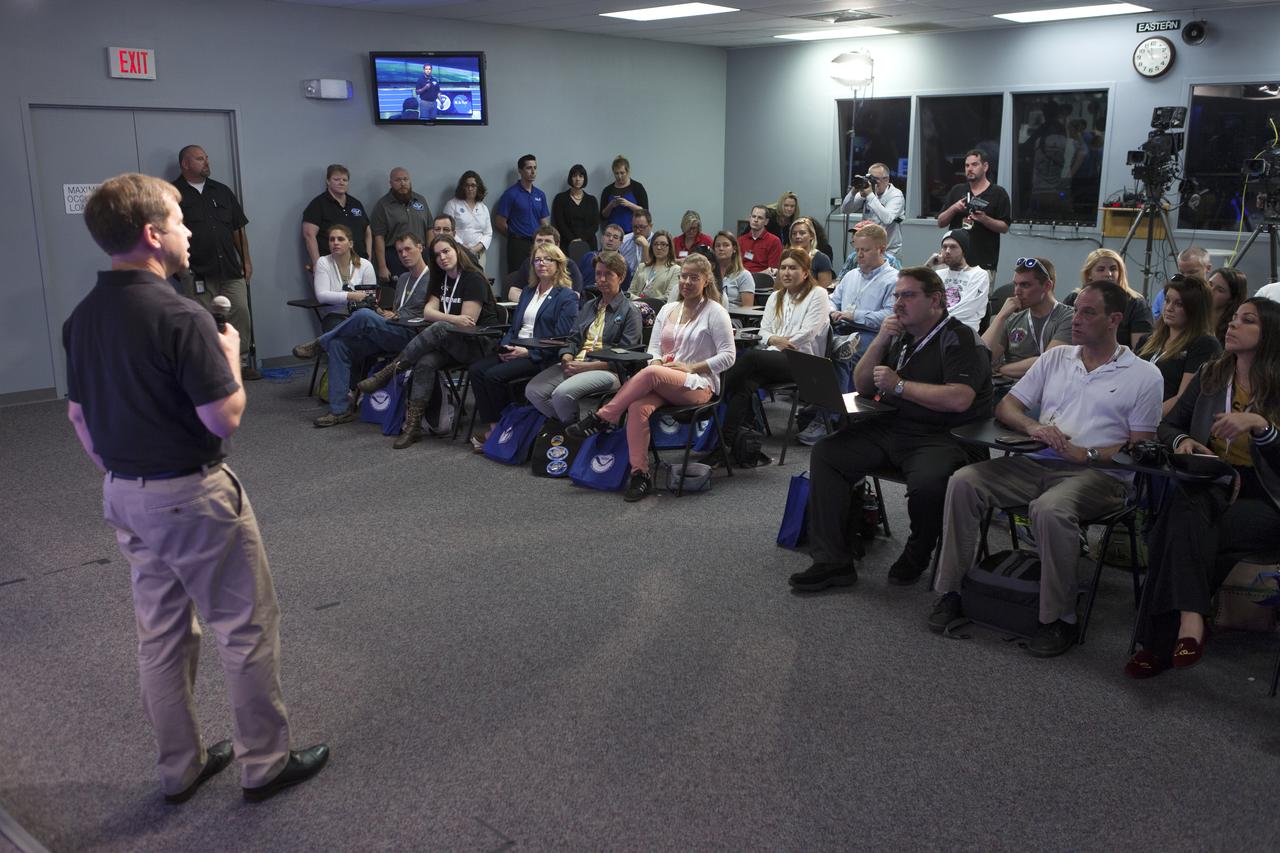
Tim Walsh, GOES-R System Program director for the National Oceanic and Atmospheric Administration, or NOAA, speaks to members of social media in the Kennedy Space Center’s Press Site auditorium. The briefing focused on the Geostationary Operational Environmental Satellite, or GOES-S, the second spacecraft in a series of next-generation NOAA weather satellites. It will launch to a geostationary position over the U.S. to provide images of storms and help predict weather forecasts, severe weather outlooks, watches, warnings, lightning conditions and longer-term forecasting. GOES-S is slated to lift off at 5:02 p.m. EST on March 1, 2018 aboard a United Launch Alliance Atlas V rocket.
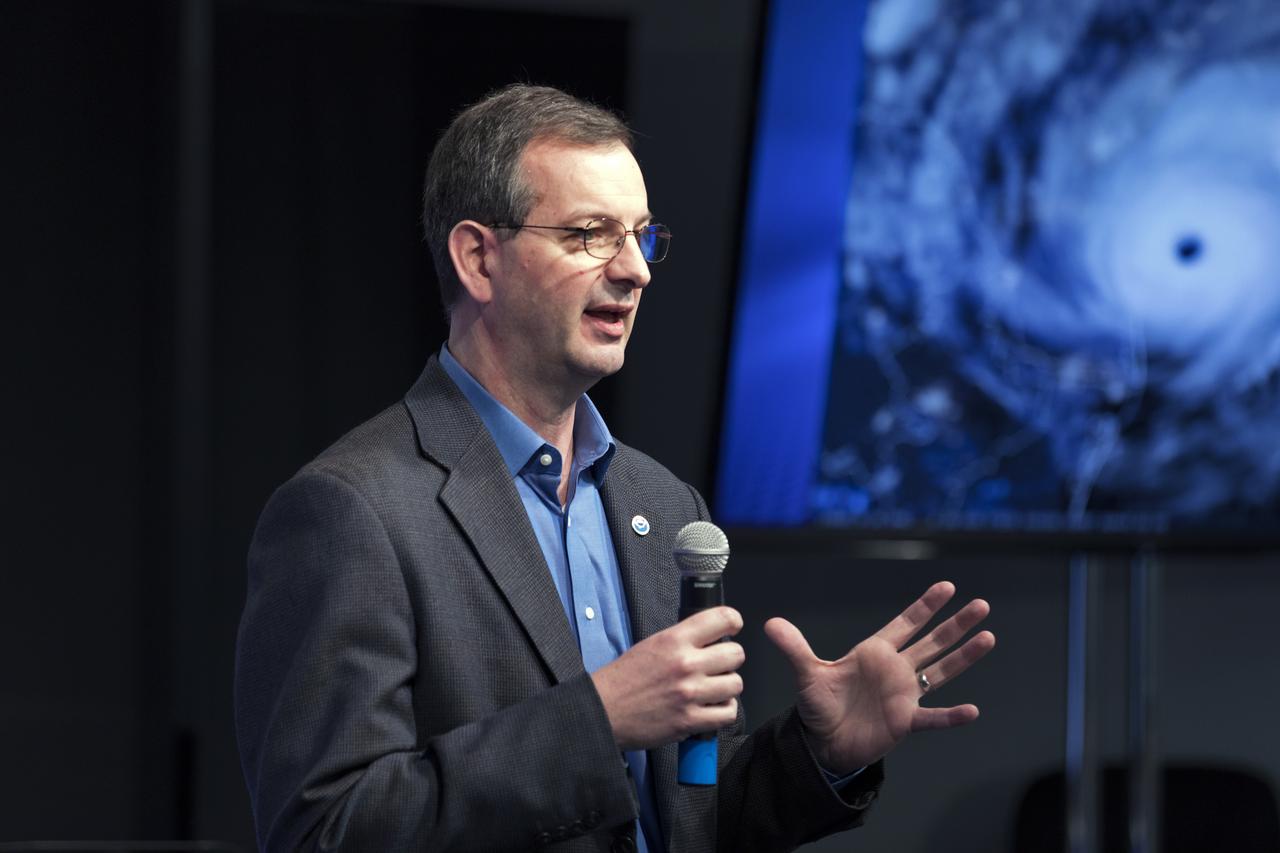
Joe Pica, director of the Office of Observations for the National Oceanic and Atmospheric Administration's, or NOAA’s, National Weather Service, speaks to members of social media in the Kennedy Space Center’s Press Site auditorium. The briefing focused on the Geostationary Operational Environmental Satellite, or GOES-S, the second spacecraft in a series of next-generation NOAA weather satellites. It will launch to a geostationary position over the U.S. to provide images of storms and help predict weather forecasts, severe weather outlooks, watches, warnings, lightning conditions and longer-term forecasting. GOES-S is slated to lift off at 5:02 p.m. EST on March 1, 2018 aboard a United Launch Alliance Atlas V rocket.
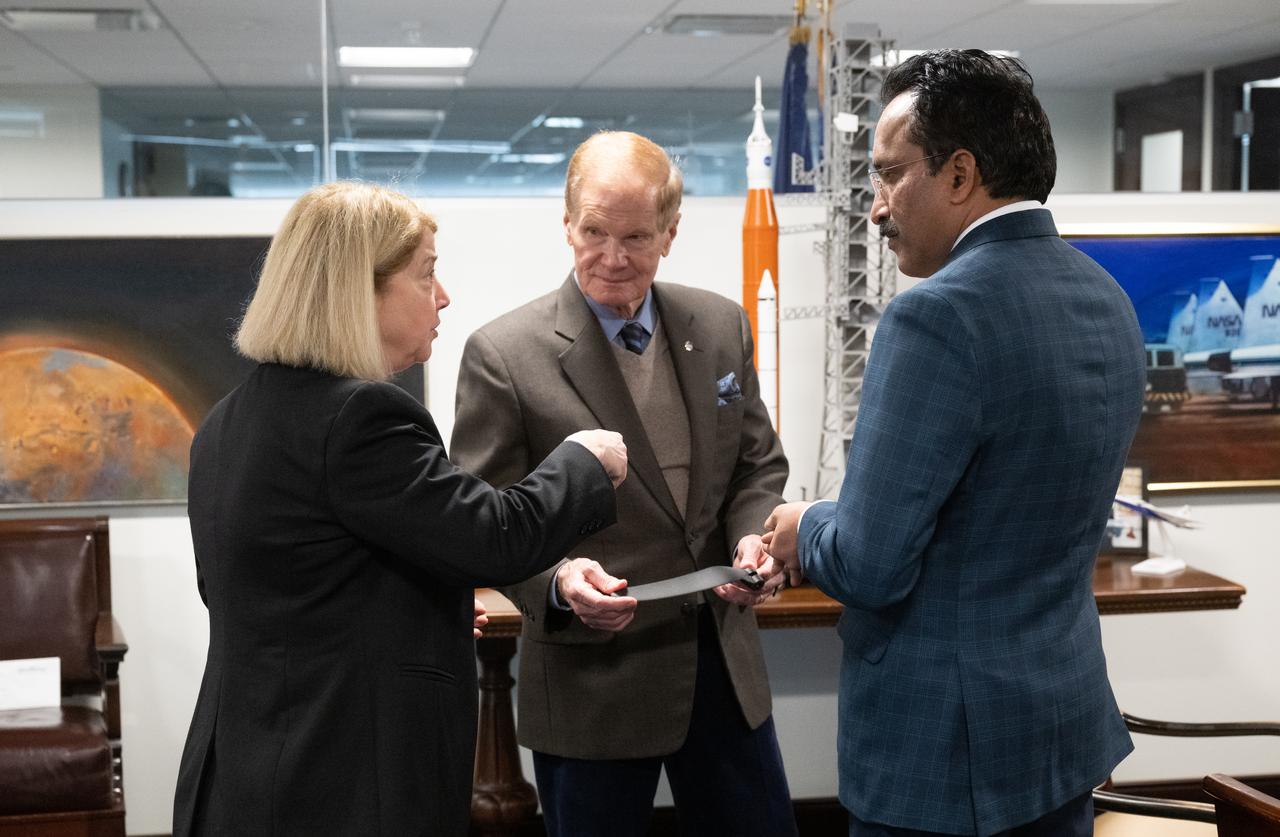
NASA Administrator Bill Nelson, NASA Deputy Administrator Pam Melroy, and S Somanath, Chairman of the Indian Space Research Organisation (ISRO), meet to discuss ways to enhance bilateral space cooperation on Wednesday, Feb. 1, 2023, at the Mary W. Jackson NASA Headquarters building in Washington. Photo Credit: (NASA/Joel Kowsky)
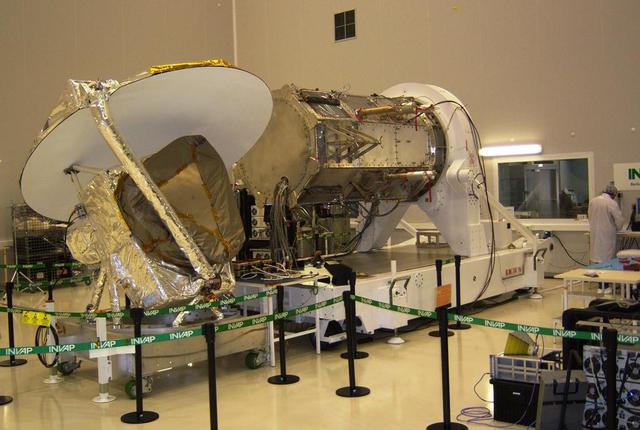
All NASA Aquarius electrical interfaces have successfully been connected to the SAC-D service platform S/P.
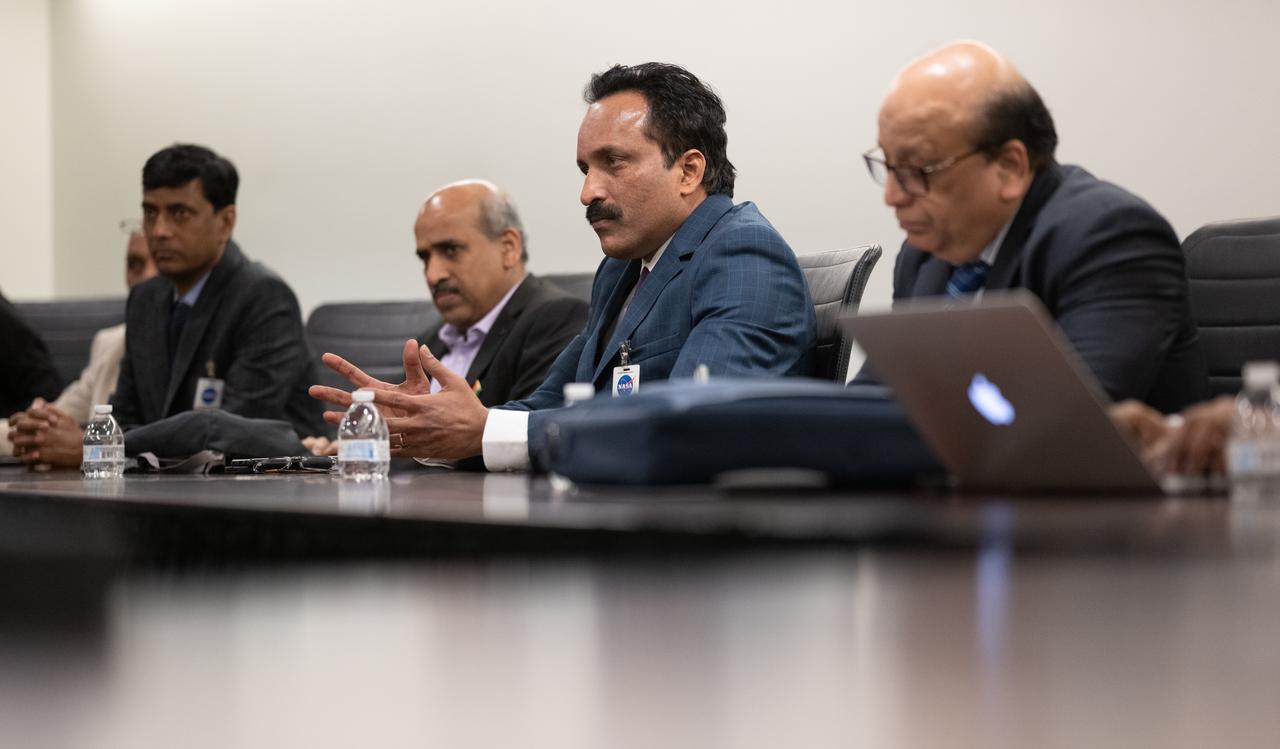
S Somanath, Chairman of the Indian Space Research Organisation (ISRO), center, is seen during a meeting with NASA Administrator Bill Nelson and NASA Deputy Administrator Pam Melroy to discuss ways to enhance bilateral space cooperation on Wednesday, Feb. 1, 2023, at the Mary W. Jackson NASA Headquarters building in Washington. Photo Credit: (NASA/Joel Kowsky)
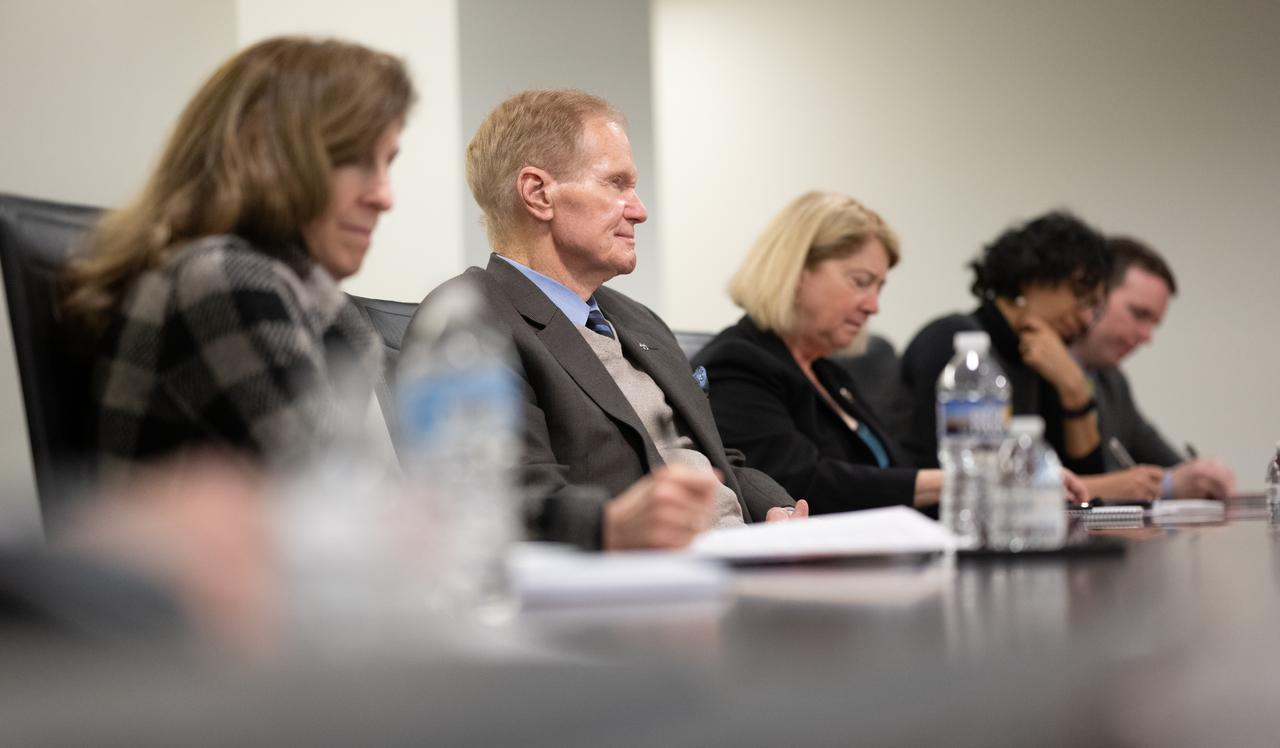
NASA Administrator Bill Nelson and NASA Deputy Administrator Pam Melroy are seen during a meeting with S Somanath, Chairman of the Indian Space Research Organisation (ISRO), to discuss ways to enhance bilateral space cooperation on Wednesday, Feb. 1, 2023, at the Mary W. Jackson NASA Headquarters building in Washington. Photo Credit: (NASA/Joel Kowsky)
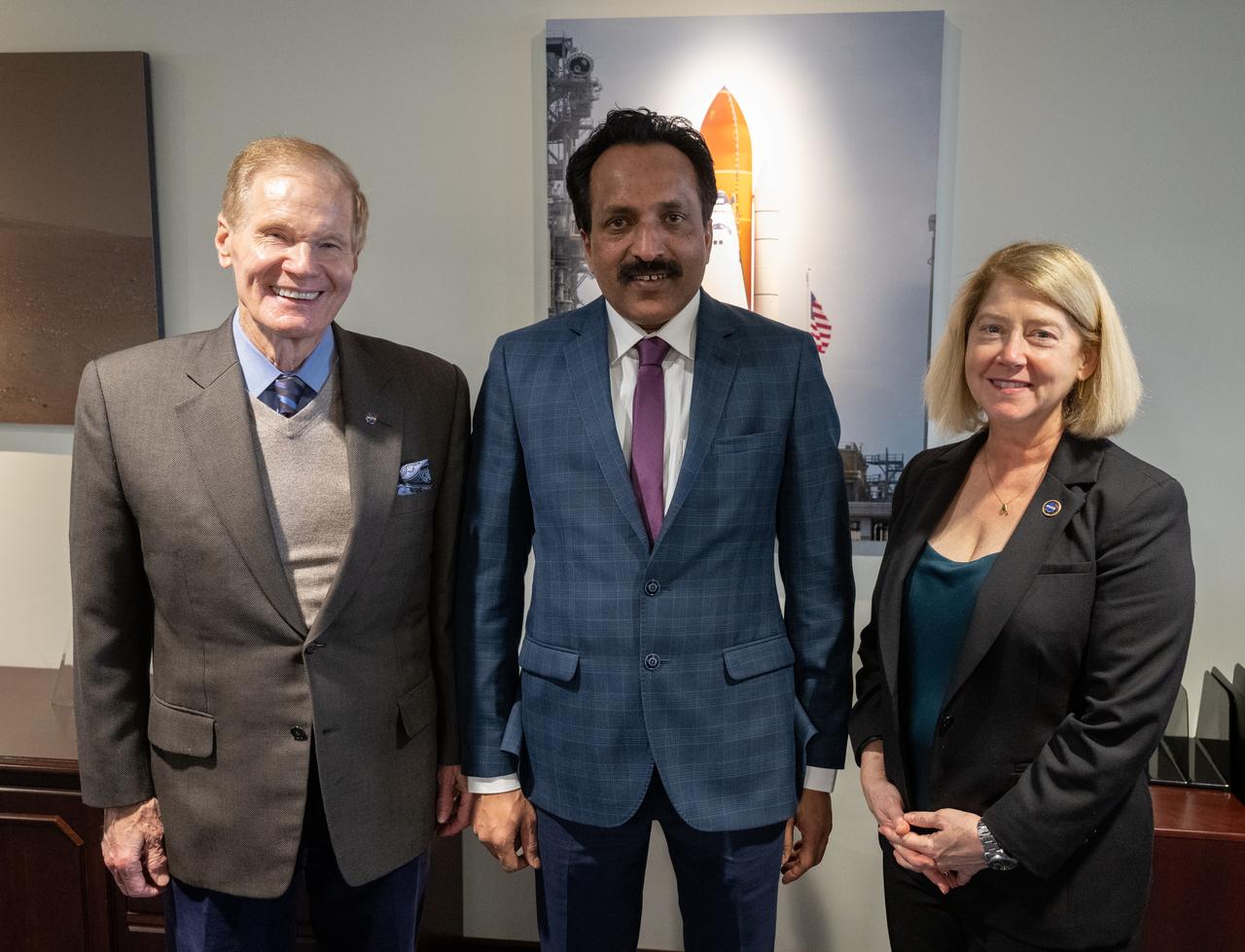
NASA Administrator Bill Nelson, left, NASA Deputy Administrator Pam Melroy, right, and S Somanath, Chairman of the Indian Space Research Organisation (ISRO), center, pose for a picture following a meeting to discuss ways to enhance bilateral space cooperation on Wednesday, Feb. 1, 2023, at the Mary W. Jackson NASA Headquarters building in Washington. Photo Credit: (NASA/Joel Kowsky)

The German-built 100-inch telescope that is the heart of NASA's Stratospheric Observatory for Infrared Astronomy is nestled in the SOFIA 747's rear fuselage.
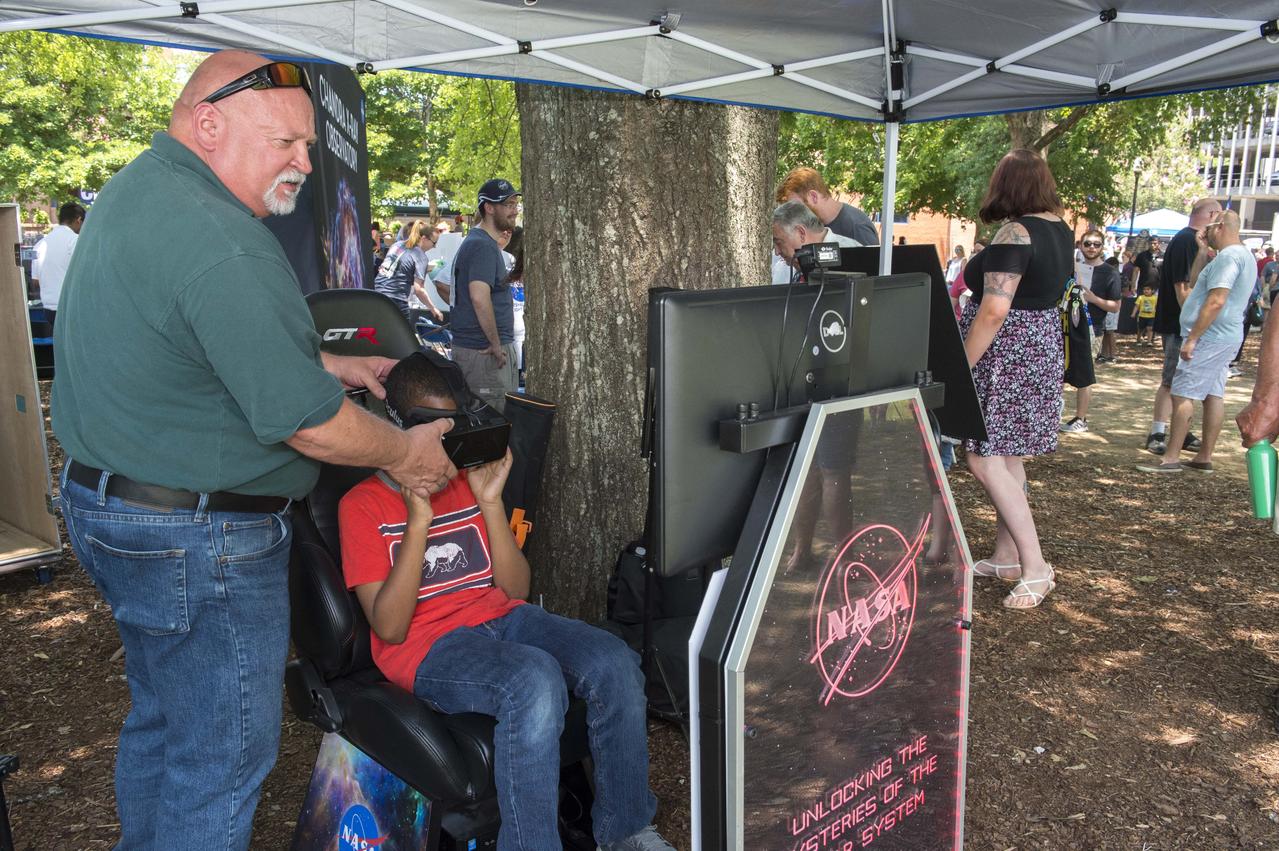
NASA in the Park on June 16 in Huntsville featured more than 60 exhibits and demonstrations by NASA experts, as well as performances by Marshall musicians, educational opportunities, games and hands-on activities for all ages. Brian Mitchell of Marshall’s Planetary Mission Planning Office gives attendees an opportunity to learn about Science missions managed by his office.
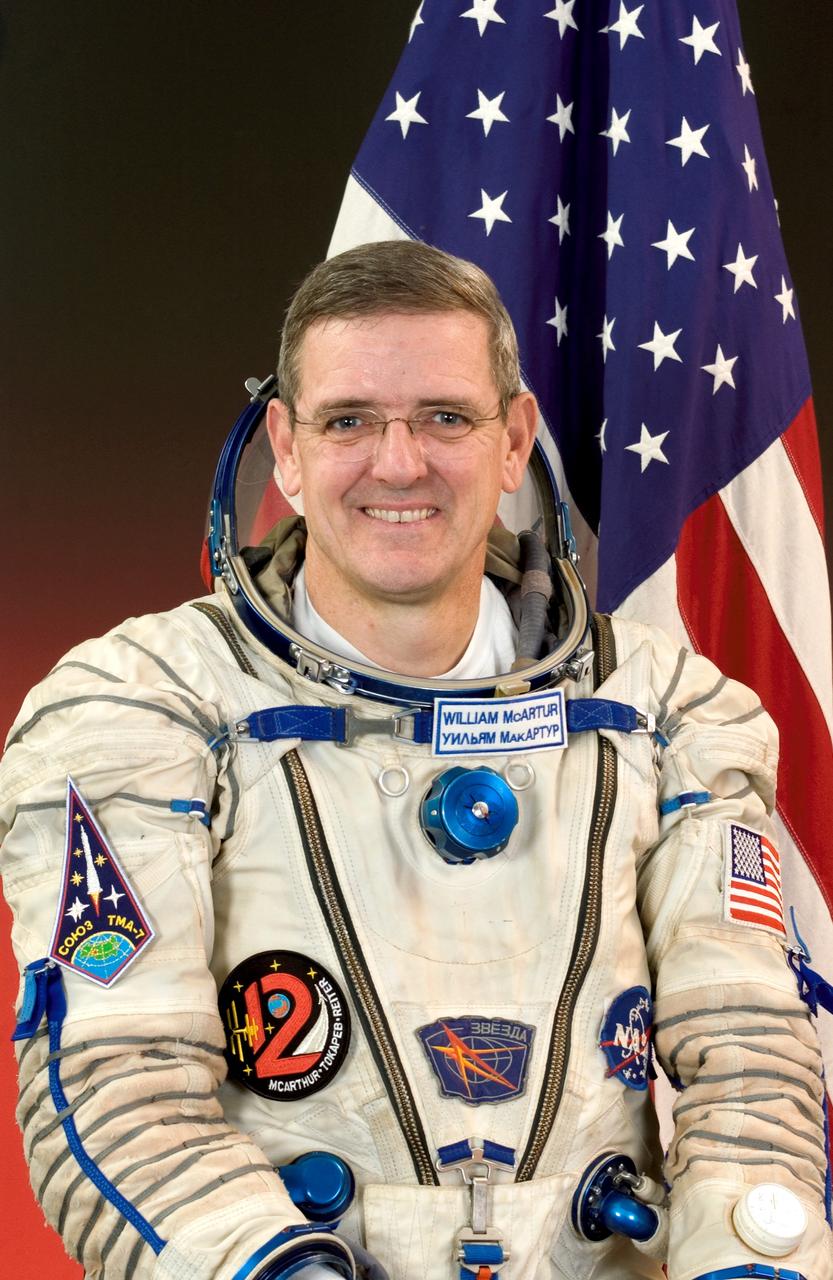
JSC2005-E-36545 (26 August 2005) --- Astronaut William S. McArthur, Jr., Expedition 12 commander and NASA Space Station science officer, attired in a Russian Sokol suit, pauses from a busy training schedule in Star City, Russia to pose for a portrait.
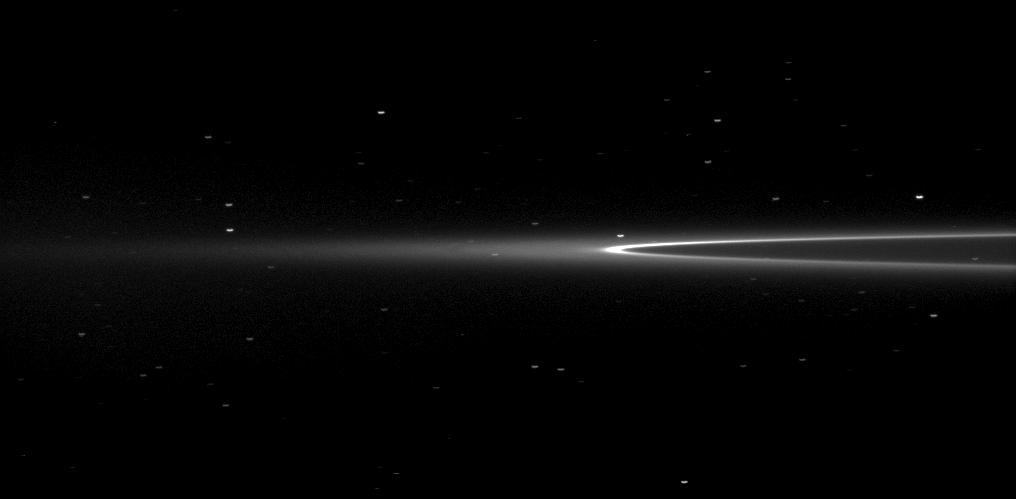
NASA Cassini spacecraft looks toward Saturn tiny moon Aegaeon within the G-ring arc. The moonlet Aegaeon formerly known as S/2008 S 1 cant be seen in this image, but it orbits in the bright arc of Saturn faint G ring shown here.
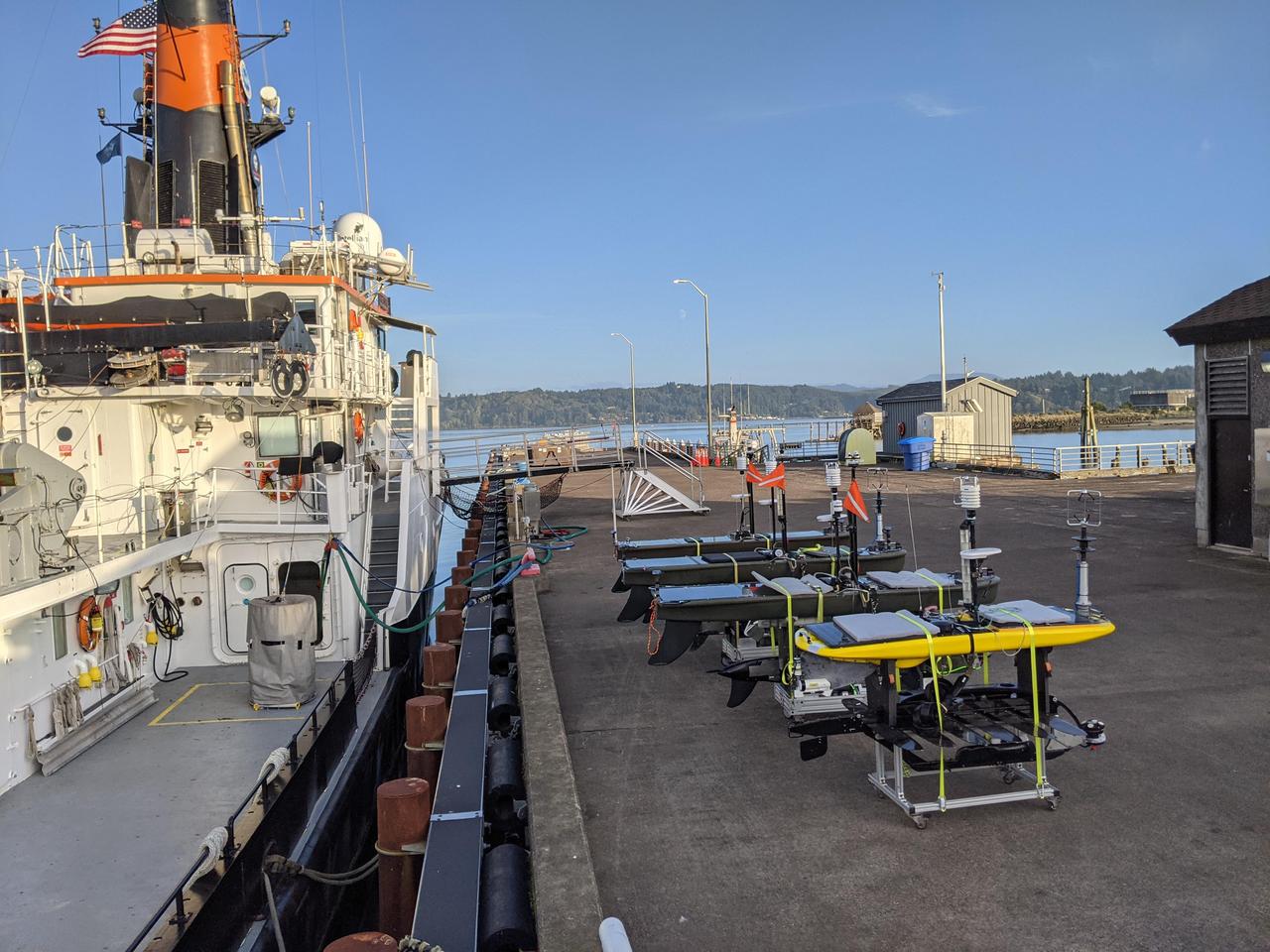
As part of NASA's Sub-Mesoscale Ocean Dynamics Experiment (S-MODE) pilot campaign in 2021, the research vessel Oceanus, owned by the National Science Foundation, set sail to an area 110 nautical miles off the coast of San Francisco, accompanied by a fleet of several types of autonomous marine research vessels. The wave gliders pictured here on the dock carry a variety of sensors and instruments. Because they're autonomous, their use reduces the risk posed to human researchers who could be exposed to large storms at sea. S-MODE is a NASA Earth mission to use newly developed in-situ and remote-sensing techniques to look at small-scale ocean whirlpools, eddies, and currents. The observations could help scientists better understand how these dynamics drive the give-and-take of material and energy between the ocean and atmosphere and, ultimately, help shape Earth's climate. More information about S-MODE is at https://espo.nasa.gov/s-mode/content/S-MODE https://photojournal.jpl.nasa.gov/catalog/PIA25524
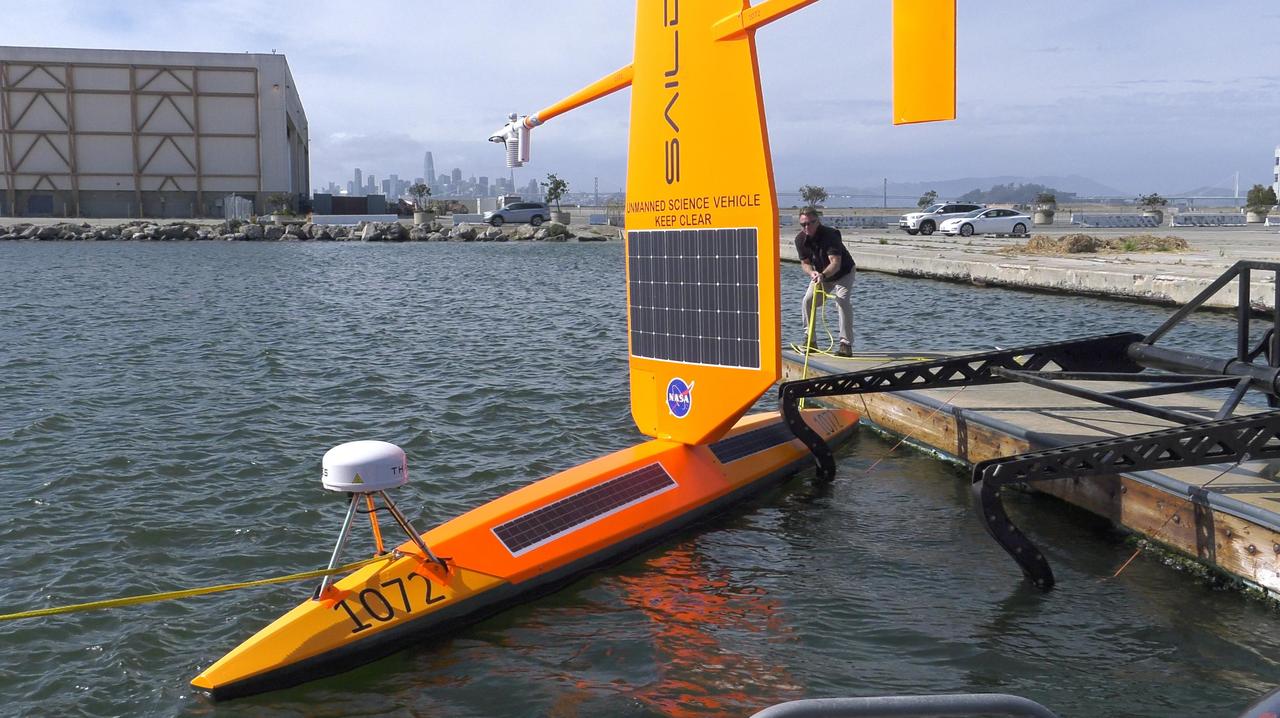
As part of NASA's Sub-Mesoscale Ocean Dynamics Experiment (S-MODE) field campaign, several Saildrones like the one pictured here were launched from San Francisco Bay. The Saildrones were part of a fleet of autonomous marine research vessels designed to measure a vast array of factors such as ocean currents, wind speed and direction, air and water temperature, salinity, dissolved oxygen, and chlorophyll content. S-MODE is a NASA Earth mission to use newly developed in-situ and remote-sensing techniques to look at small-scale ocean whirlpools, eddies, and currents. The observations could help scientists better understand how these dynamics drive the give-and-take of material and energy between the ocean and atmosphere and, ultimately, help shape Earth's climate. More information about S-MODE is at https://espo.nasa.gov/s-mode/content/S-MODE https://photojournal.jpl.nasa.gov/catalog/PIA25523
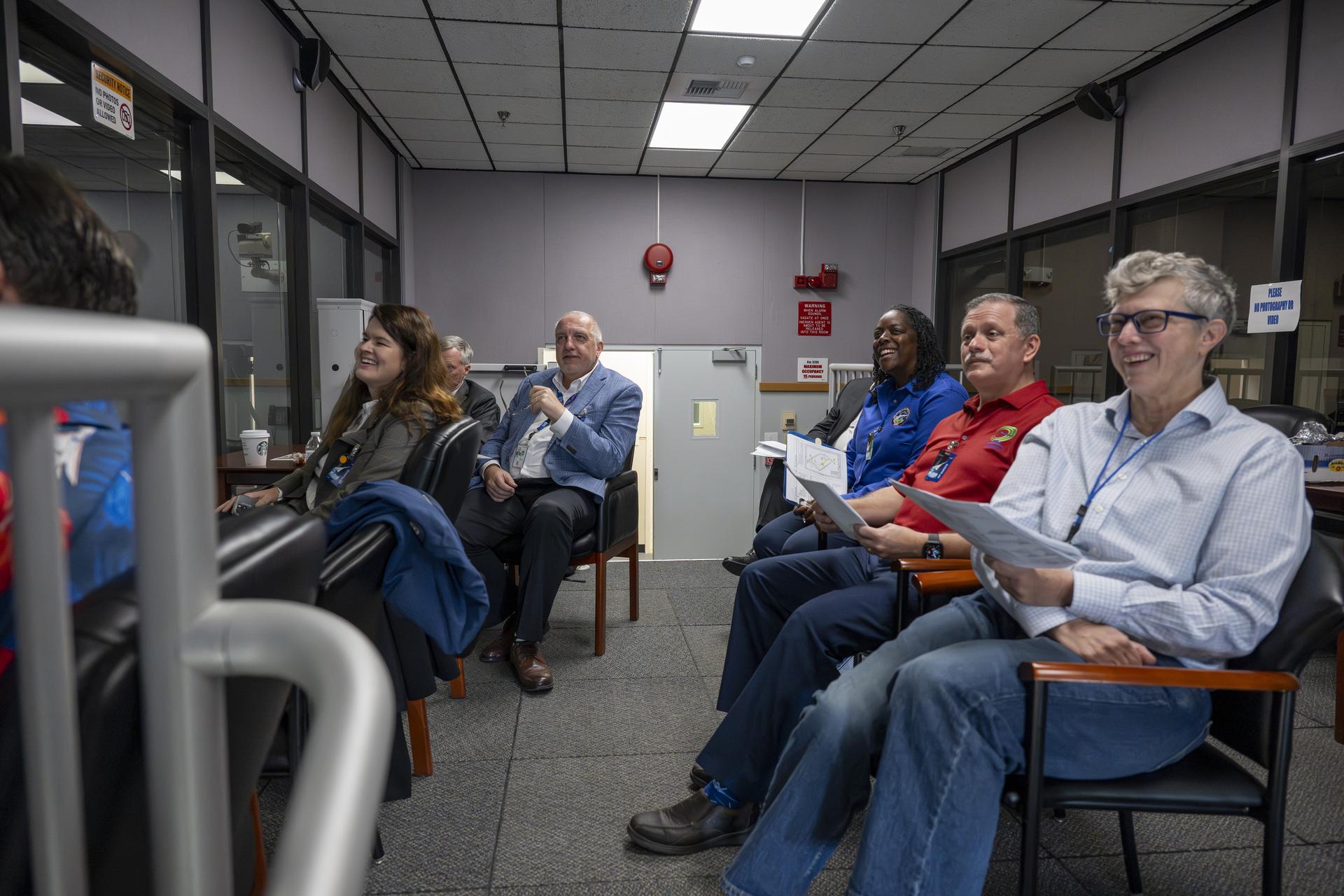
NASA Aeronautics and center leadership gather inside the viewing area of the main control room at NASA’s Armstrong Flight Research Center in Edwards, California, on Tuesday, Oct. 28, 2025. The group watches in real time as flight controllers and engineers receive updates from the aircraft during its historic first flight in support of the agency’s Quesst mission.
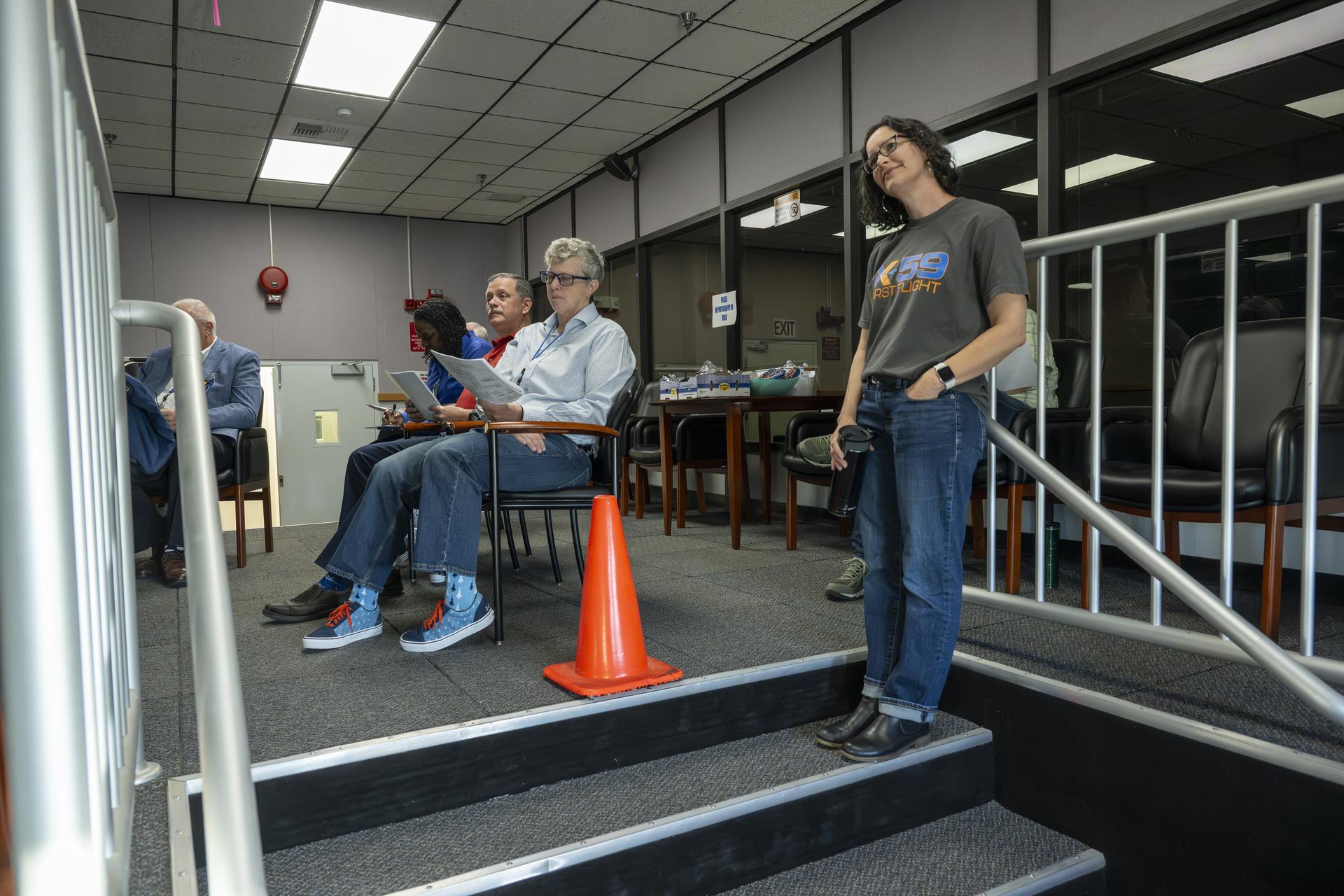
NASA Aeronautics and center leadership gather inside the viewing area of the main control room at NASA’s Armstrong Flight Research Center in Edwards, California, on Tuesday, Oct. 28, 2025. The group watches in real time as flight controllers and engineers receive updates from the aircraft during its historic first flight in support of the agency’s Quesst mission.
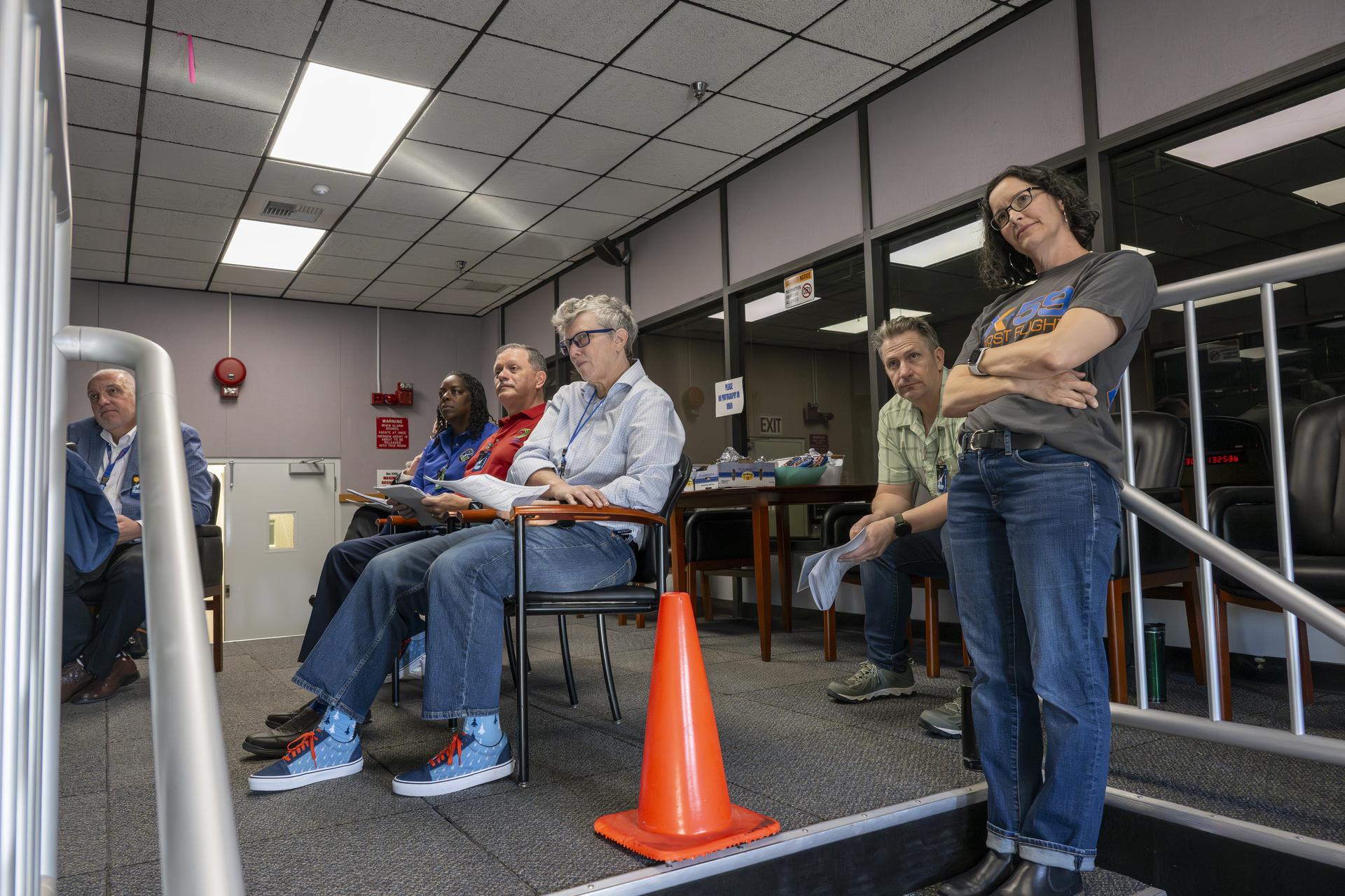
NASA Aeronautics and center leadership gather inside the viewing area of the main control room at NASA’s Armstrong Flight Research Center in Edwards, California, on Tuesday, Oct. 28, 2025. The group watches in real time as flight controllers and engineers receive updates from the aircraft during its historic first flight in support of the agency’s Quesst mission.

NASA Aeronautics and center leadership gather inside the viewing area of the main control room at NASA’s Armstrong Flight Research Center in Edwards, California, on Tuesday, Oct. 28, 2025. The group watches in real time as flight controllers and engineers receive updates from the aircraft during its historic first flight in support of the agency’s Quesst mission.

NASA Aeronautics and center leadership gather inside the viewing area of the main control room at NASA’s Armstrong Flight Research Center in Edwards, California, on Tuesday, Oct. 28, 2025. The group watches in real time as flight controllers and engineers receive updates from the aircraft during its historic first flight in support of the agency’s Quesst mission.

NASA Aeronautics and center leadership gather inside the viewing area of the main control room at NASA’s Armstrong Flight Research Center in Edwards, California, on Tuesday, Oct. 28, 2025. The group watches in real time as flight controllers and engineers receive updates from the aircraft during its historic first flight in support of the agency’s Quesst mission.

NASA Aeronautics and center leadership gather inside the viewing area of the main control room at NASA’s Armstrong Flight Research Center in Edwards, California, on Tuesday, Oct. 28, 2025. The group watches in real time as flight controllers and engineers receive updates from the aircraft during its historic first flight in support of the agency’s Quesst mission.

NASA Aeronautics and center leadership gather inside the viewing area of the main control room at NASA’s Armstrong Flight Research Center in Edwards, California, on Tuesday, Oct. 28, 2025. The group watches in real time as flight controllers and engineers receive updates from the aircraft during its historic first flight in support of the agency’s Quesst mission.

NASA Aeronautics and center leadership gather inside the viewing area of the main control room at NASA’s Armstrong Flight Research Center in Edwards, California, on Tuesday, Oct. 28, 2025. The group watches in real time as flight controllers and engineers receive updates from the aircraft during its historic first flight in support of the agency’s Quesst mission.

NASA Aeronautics and center leadership gather inside the viewing area of the main control room at NASA’s Armstrong Flight Research Center in Edwards, California, on Tuesday, Oct. 28, 2025. The group watches in real time as flight controllers and engineers receive updates from the aircraft during its historic first flight in support of the agency’s Quesst mission.

NASA Aeronautics and center leadership gather inside the viewing area of the main control room at NASA’s Armstrong Flight Research Center in Edwards, California, on Tuesday, Oct. 28, 2025. The group watches in real time as flight controllers and engineers receive updates from the aircraft during its historic first flight in support of the agency’s Quesst mission.
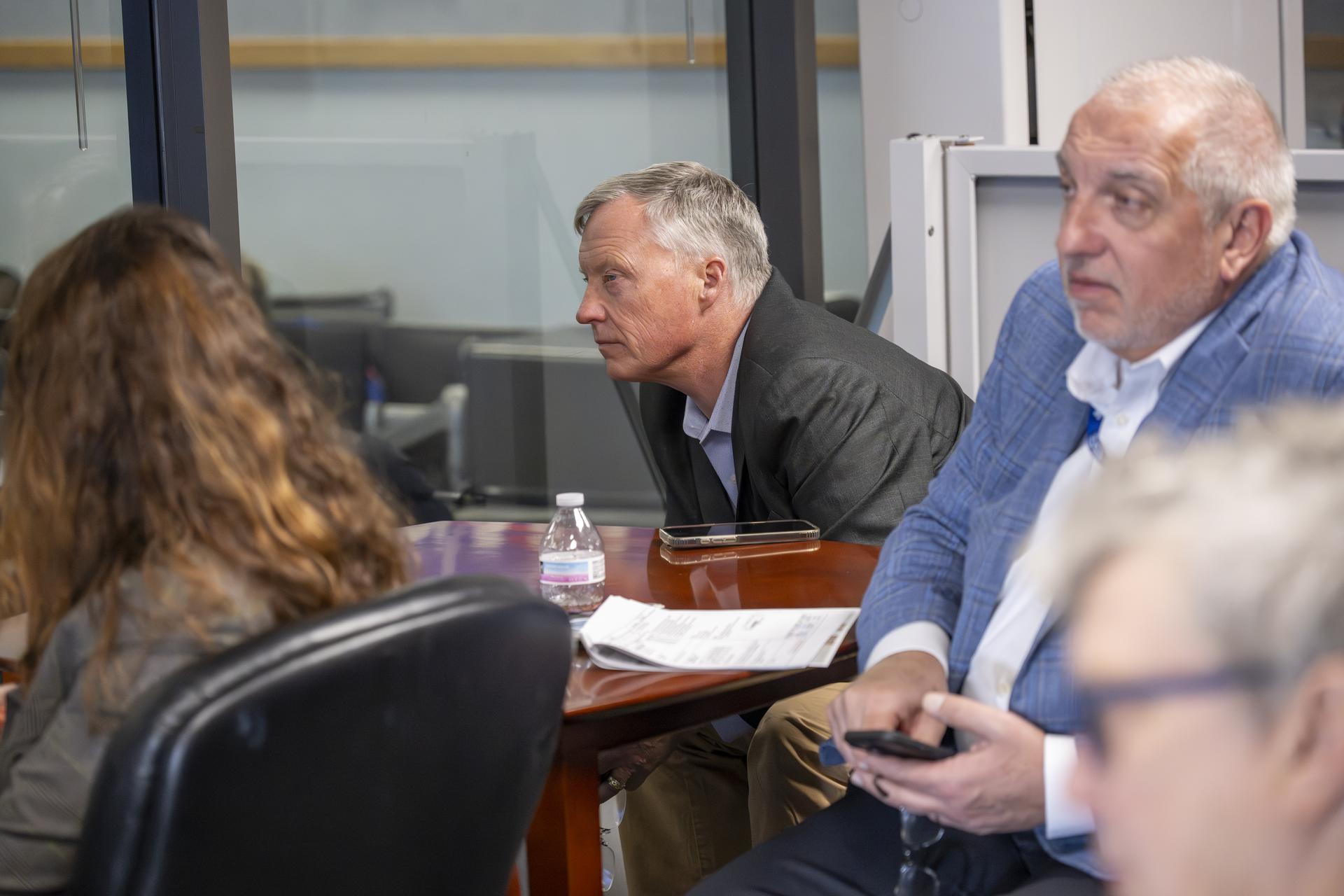
NASA Aeronautics and center leadership gather inside the viewing area of the main control room at NASA’s Armstrong Flight Research Center in Edwards, California, on Tuesday, Oct. 28, 2025. The group watches in real time as flight controllers and engineers receive updates from the aircraft during its historic first flight in support of the agency’s Quesst mission.

NASA Aeronautics and center leadership gather inside the viewing area of the main control room at NASA’s Armstrong Flight Research Center in Edwards, California, on Tuesday, Oct. 28, 2025. The group watches in real time as flight controllers and engineers receive updates from the aircraft during its historic first flight in support of the agency’s Quesst mission.

NASA Aeronautics and center leadership gather inside the viewing area of the main control room at NASA’s Armstrong Flight Research Center in Edwards, California, on Tuesday, Oct. 28, 2025. The group watches in real time as flight controllers and engineers receive updates from the aircraft during its historic first flight in support of the agency’s Quesst mission.
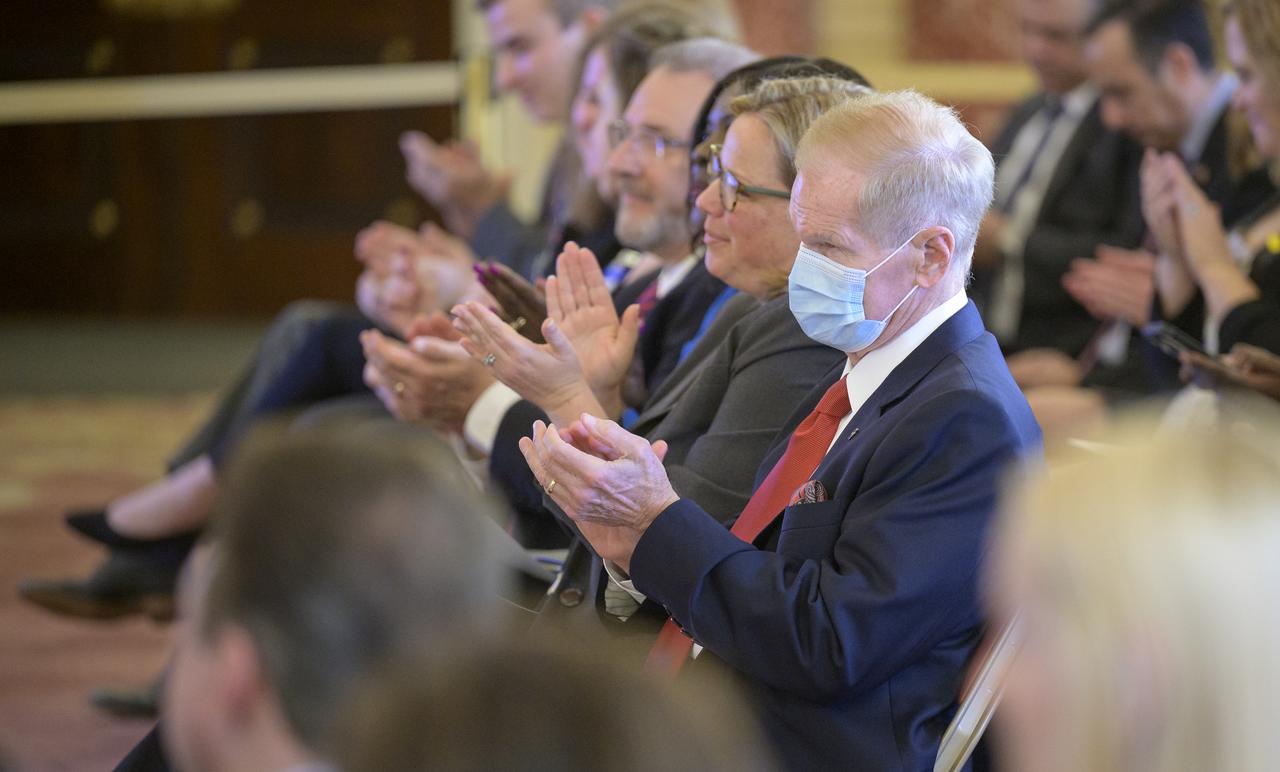
NASA Administrator Bill Nelson, and other attendees, applaud during an event at the U.S Department of State where it was announced that Cynthia Rosenzweig, a senior research scientist and head of the Climate Impacts Group at NASA’s Goddard Institute for Space Studies (GISS) in New York City, was awarded the 2022 World Food Prize from the World Food Prize Foundation, Thursday, May 5, 2022, at the Harry S. Truman Building in Washington. Photo Credit: (NASA/Bill Ingalls)
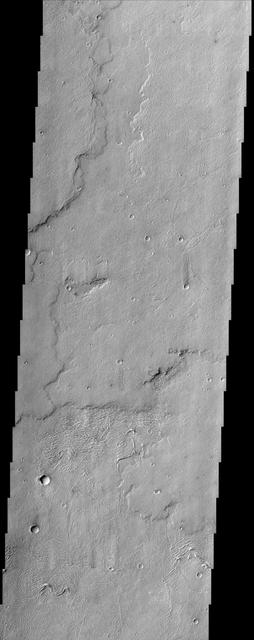
This NASA Mars Odyssey image captures a portion of several lava flows in Daedalia Planum southwest of the Arsia Mons shield volcano. Textures characteristic of the variable surface roughness associated with different lava flows in this region are easily s
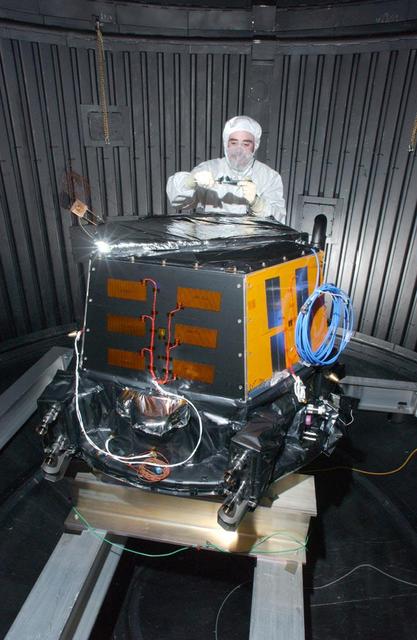
This image shows NASA Deep Impact spacecraft being built at Ball Aerospace & Technologies Corporation, Boulder, Colo. On July 2, 2005. The impactor S-band antenna is the rectangle-shaped object seen on the top of the impactor.
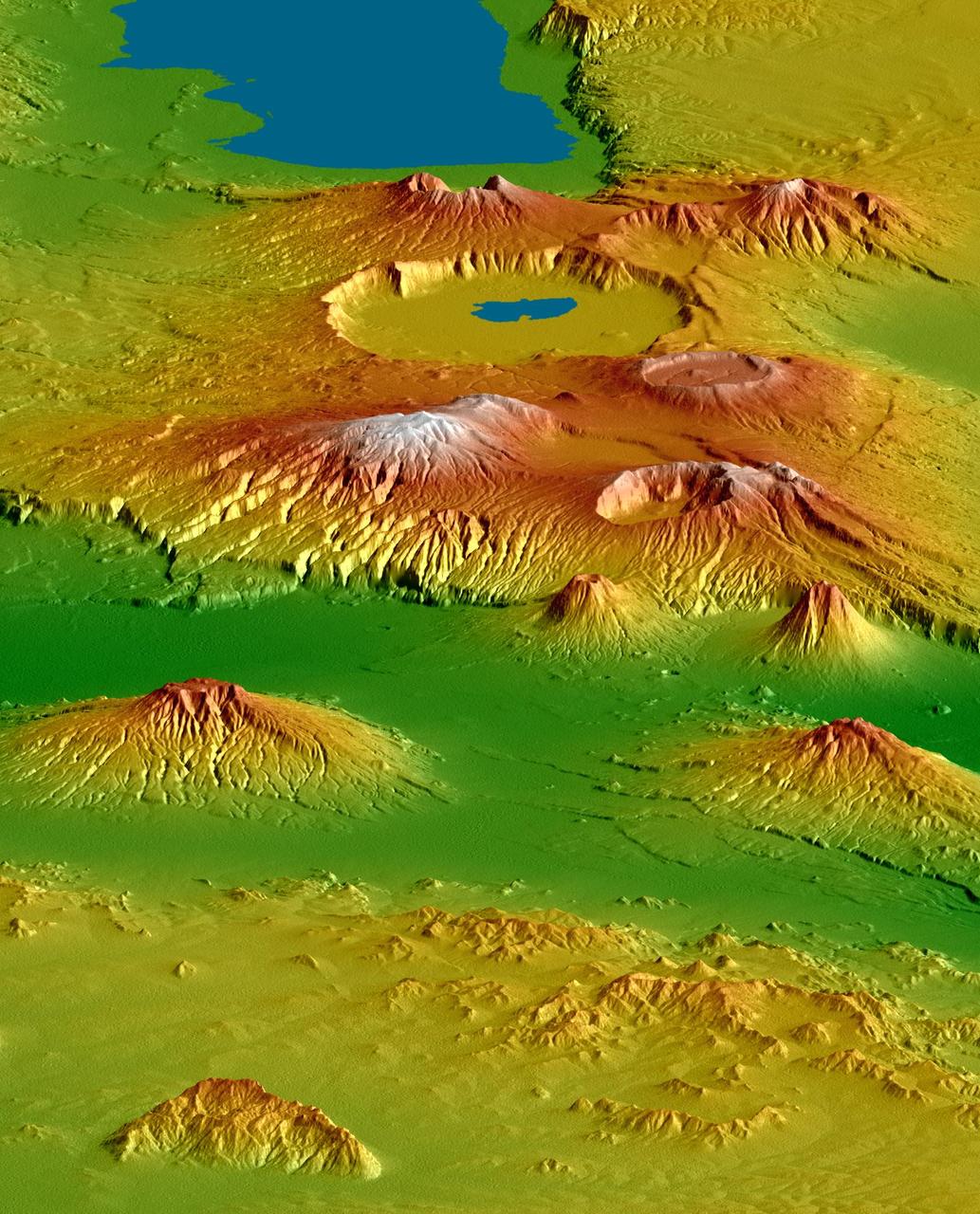
NASA Shuttle Radar Topography Mission SRTM, flown aboard Space Shuttle Endeavour in February 2000, acquired elevation measurements for nearly all of Earth landmass between 60°N and 56°S latitudes.
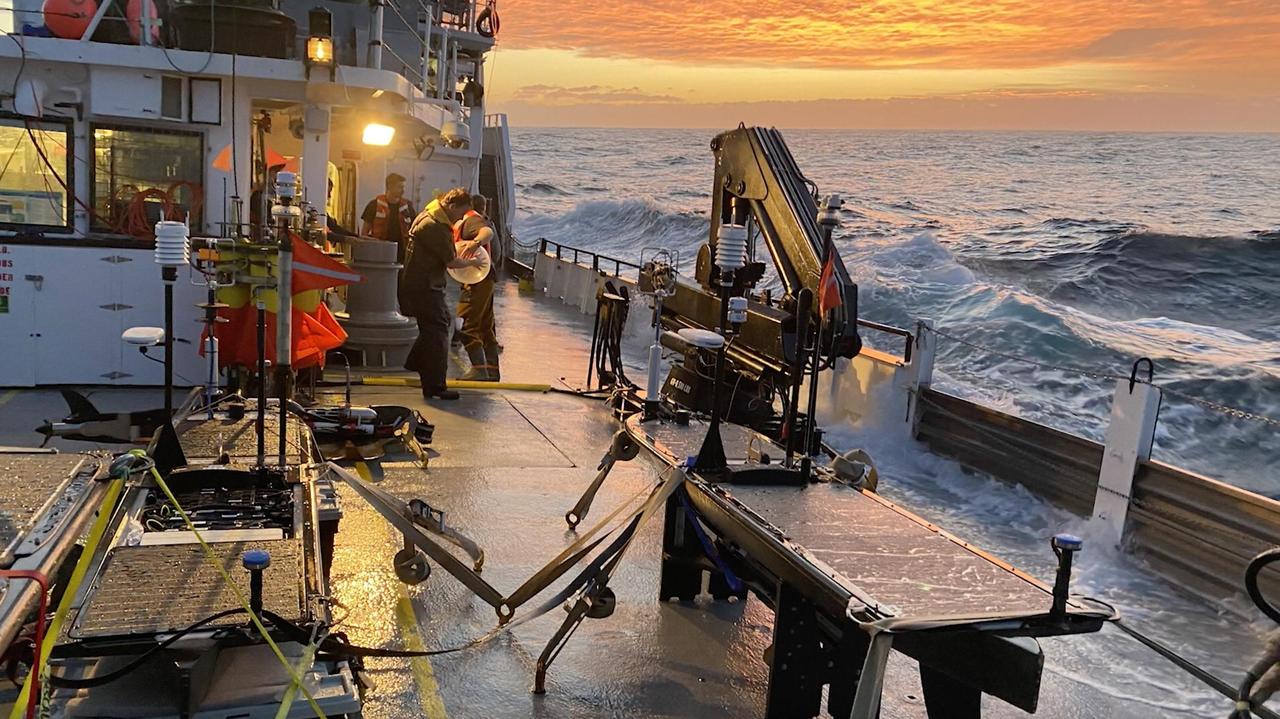
During the pilot campaign for NASA's Sub-Mesoscale Ocean Dynamics Experiment (S-MODE) in 2021, on the transit from Oregon to the experiment site off the coast of San Francisco, large waves (some reaching around 23 feet or 7 meters tall) rolled over the deck of the research vessel Oceanus, damaging several autonomous wave gliders seen here. Scientists from across the country then assembled to repair the instruments in San Francisco harbor. Wave gliders are one type of autonomous marine research platform deployed at sea during S-MODE's field campaigns in the Pacific Ocean. The uncrewed vessels feature a set of fins – on a submersible platform tethered to a surface float – which it uses to propel the craft around the upper ocean. The platforms carry a variety of sensors and instruments. Because they're autonomous, their use reduces the risk posed to human researchers who could be exposed to large storms at sea. S-MODE is a NASA Earth mission to use newly developed in-situ and remote-sensing techniques to look at small-scale ocean whirlpools, eddies, and currents. The observations could help scientists better understand how these dynamics drive the give-and-take of material and energy between the ocean and atmosphere and, ultimately, help shape Earth's climate. More information about S-MODE is at https://espo.nasa.gov/s-mode/content/S-MODE https://photojournal.jpl.nasa.gov/catalog/PIA25522
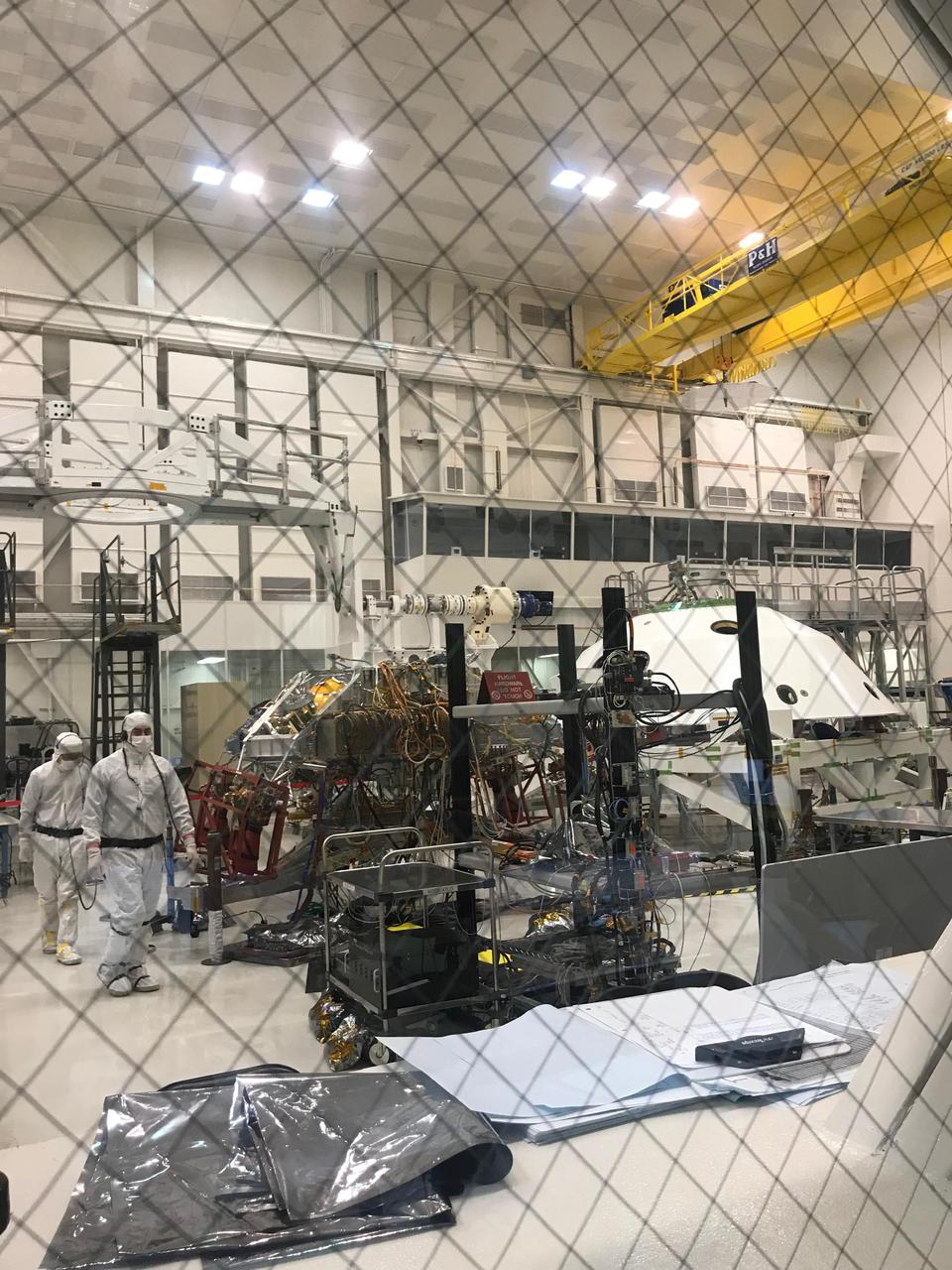
Technicians working Mars 2020's System's Test 1 approach their workstation in the Spacecraft Assembly Facility at NASA's Jet Propulsion Laboratory in Pasadena, Calif. Over two weeks in January 2019, 72 engineers and technicians assigned to the 2020 mission took over the High Bay 1 cleanroom in JPL's Spacecraft Assembly Facility to put the software and electrical systems aboard the mission's cruise, entry capsule, descent stage and rover through their paces. https://photojournal.jpl.nasa.gov/catalog/PIA23097
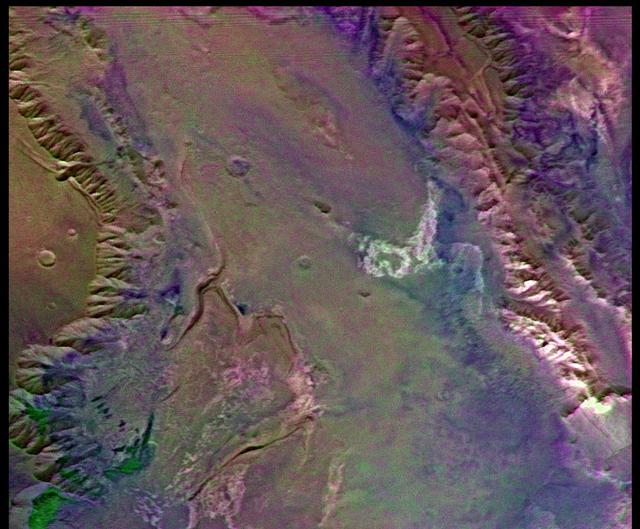
This picture centered at latitude 10 degrees S., longitude 74 degrees W. shows much of Mars Melas Chasm and a portion of Candor Chasm upper right in central Valles Marineris as seen by NASA's Viking Orbiter 2. http://photojournal.jpl.nasa.gov/catalog/PIA00156
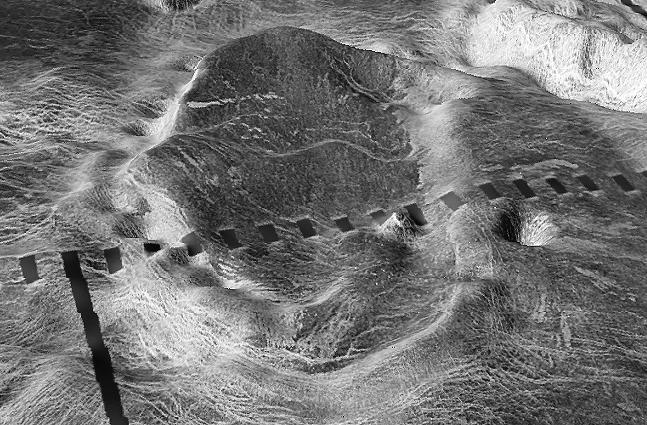
This view from NASA's Magellan spacecraft is a close-up of Atete Corona, a 600-km-long and 450-km-wide feature at latitude 16 degrees S., longitude 244 degrees; looking north. http://photojournal.jpl.nasa.gov/catalog/PIA00097
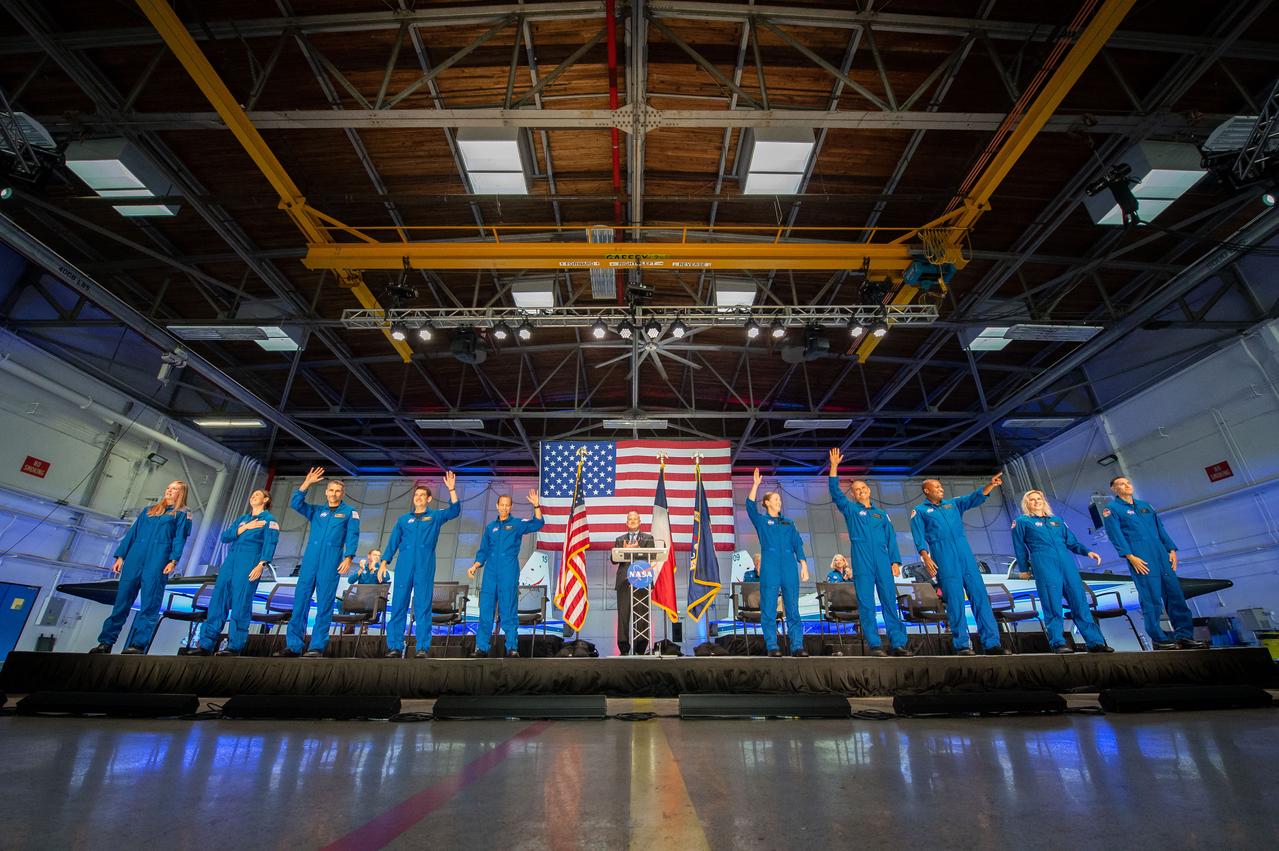
Photo Date: 2021-12-06 NASA announced its 2021 astronaut candidate class on Dec. 6, 2021. The 10 candidates, pictured here in an event at Ellington Field near NASA’s Johnson Space Center in Houston are Nichole Ayers, Christopher Williams, Luke Delaney, Jessica Wittner, Anil Menon, Marcos BerrÃos, Jack Hathaway, Christina Birch, Deniz Burnham, and Andre Douglas. NASA’s new astronaut candidates will begin about two years of training in January 2022, after which they could be assigned to missions performing research on the International Space Station, launching from American soil on spacecraft built by commercial companies, and launching on Artemis missions to the Moon on NASA’s new Orion spacecraft and Space Launch System rocket. Location: Ellington Hangar 135 Photographer: James Blair
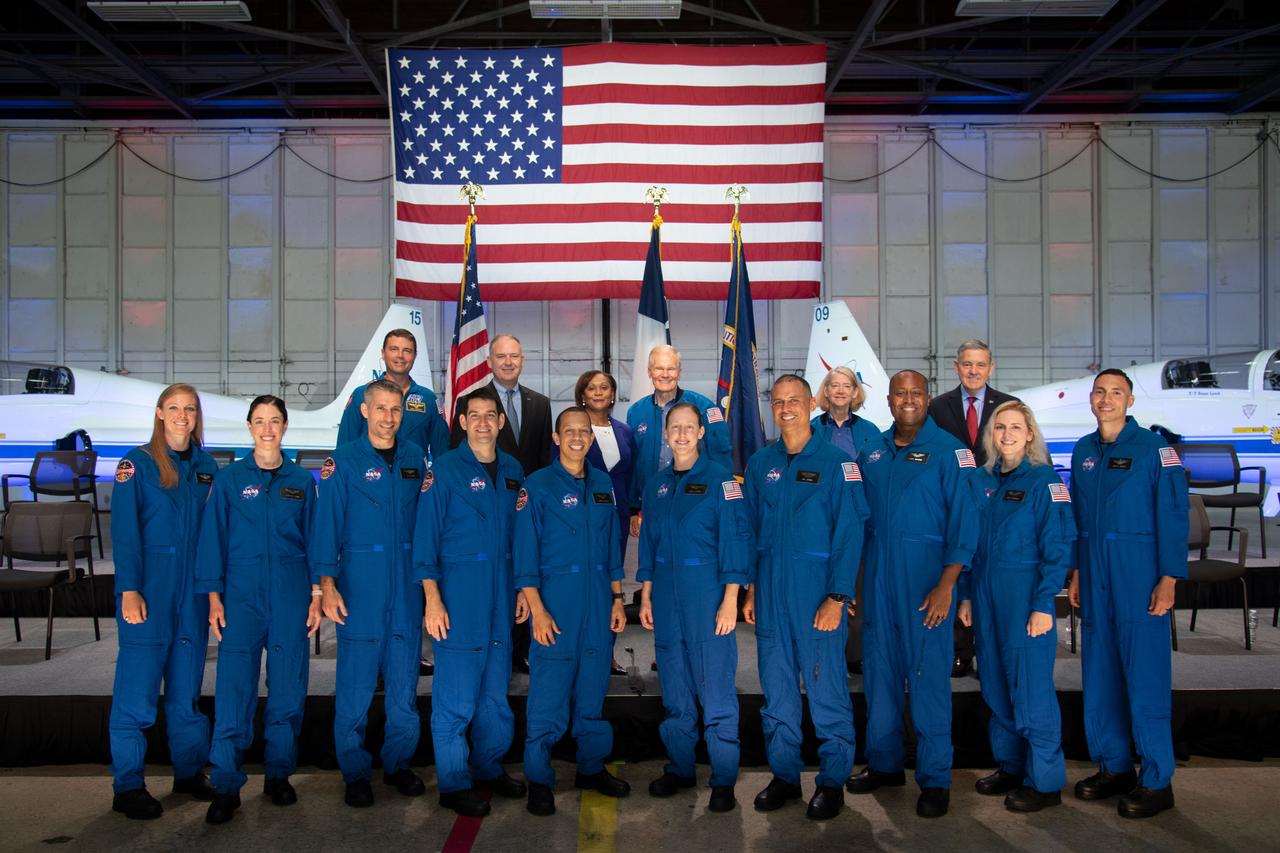
Photo Date: 2021-12-06 NASA announced its 2021 astronaut candidate class on Dec. 6, 2021. The 10 candidates, pictured here in an event at Ellington Field near NASA’s Johnson Space Center in Houston are Nichole Ayers, Christopher Williams, Luke Delaney, Jessica Wittner, Anil Menon, Marcos BerrÃos, Jack Hathaway, Christina Birch, Deniz Burnham, and Andre Douglas. NASA’s new astronaut candidates will begin about two years of training in January 2022, after which they could be assigned to missions performing research on the International Space Station, launching from American soil on spacecraft built by commercial companies, and launching on Artemis missions to the Moon on NASA’s new Orion spacecraft and Space Launch System rocket. Location: Ellington Hangar 135 Photographer: Robert Markowitz
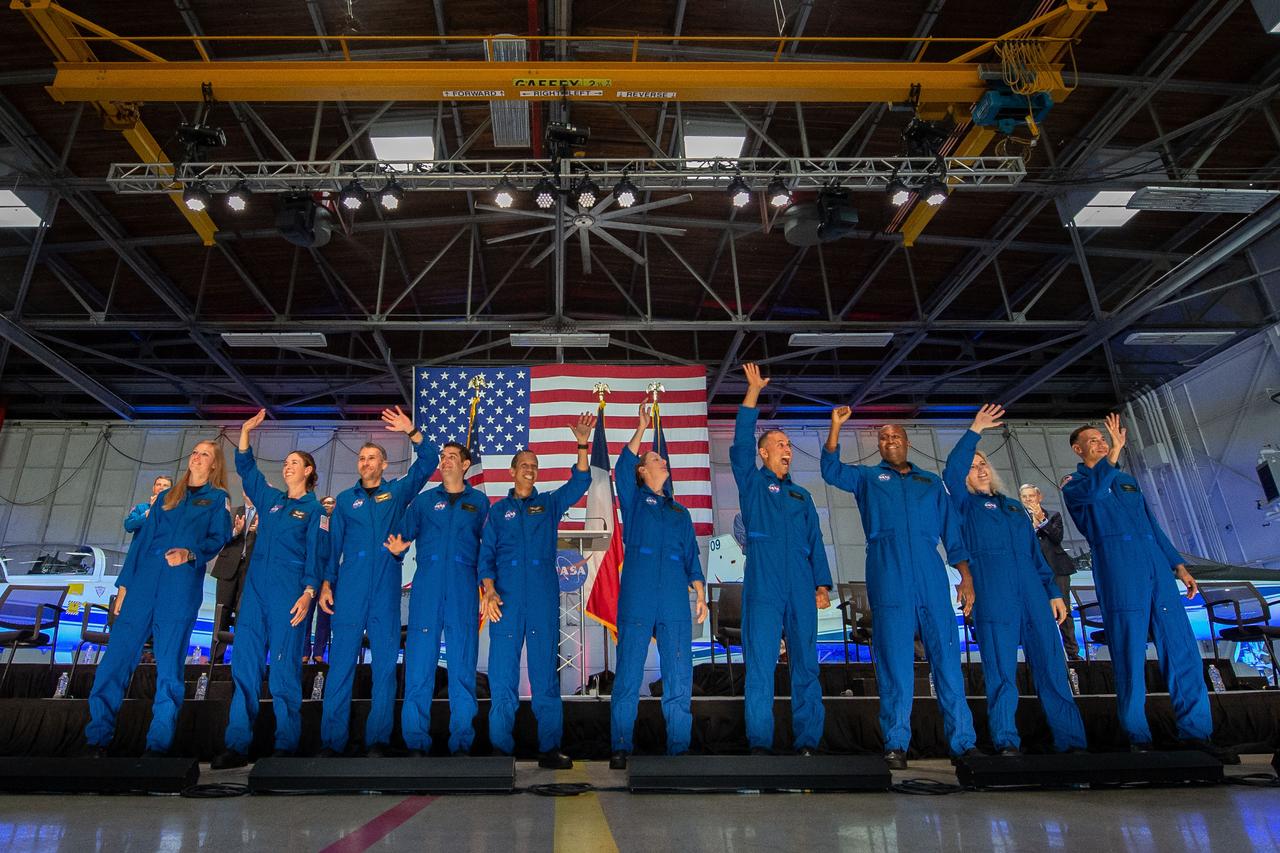
Photo Date: 2021-12-06 NASA announced its 2021 astronaut candidate class on Dec. 6, 2021. The 10 candidates, pictured here in an event at Ellington Field near NASA’s Johnson Space Center in Houston are Nichole Ayers, Christopher Williams, Luke Delaney, Jessica Wittner, Anil Menon, Marcos BerrÃos, Jack Hathaway, Christina Birch, Deniz Burnham, and Andre Douglas. NASA’s new astronaut candidates will begin about two years of training in January 2022, after which they could be assigned to missions performing research on the International Space Station, launching from American soil on spacecraft built by commercial companies, and launching on Artemis missions to the Moon on NASA’s new Orion spacecraft and Space Launch System rocket. Location: Ellington Hangar 135 Photographer: James Blair
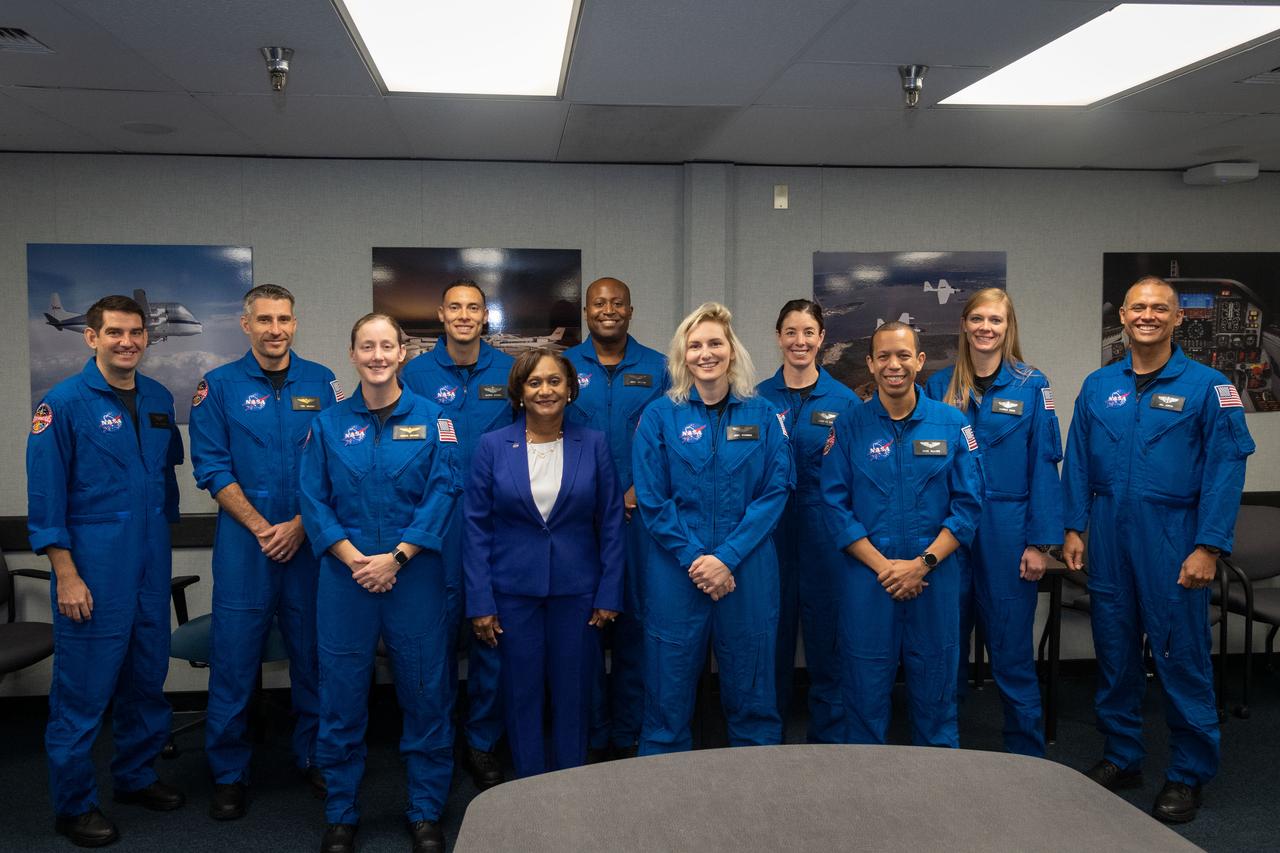
Photo Date: 12/06/2021 Subject: NASA announced its 2021 astronaut candidate class on Dec. 6, 2021. The 10 candidates, pictured here with Johnson Center Director Vanessa Wyche in an event at Ellington Field near NASA’s Johnson Space Center in Houston are Nichole Ayers, Christopher Williams, Luke Delaney, Jessica Wittner, Anil Menon, Marcos BerrÃos, Jack Hathaway, Christina Birch, Deniz Burnham, and Andre Douglas. NASA’s new astronaut candidates will begin about two years of training in January 2022, after which they could be assigned to missions performing research on the International Space Station, launching from American soil on spacecraft built by commercial companies, and launching on Artemis missions to the Moon on NASA’s new Orion spacecraft and Space Launch System rocket. Photographers: James Blair
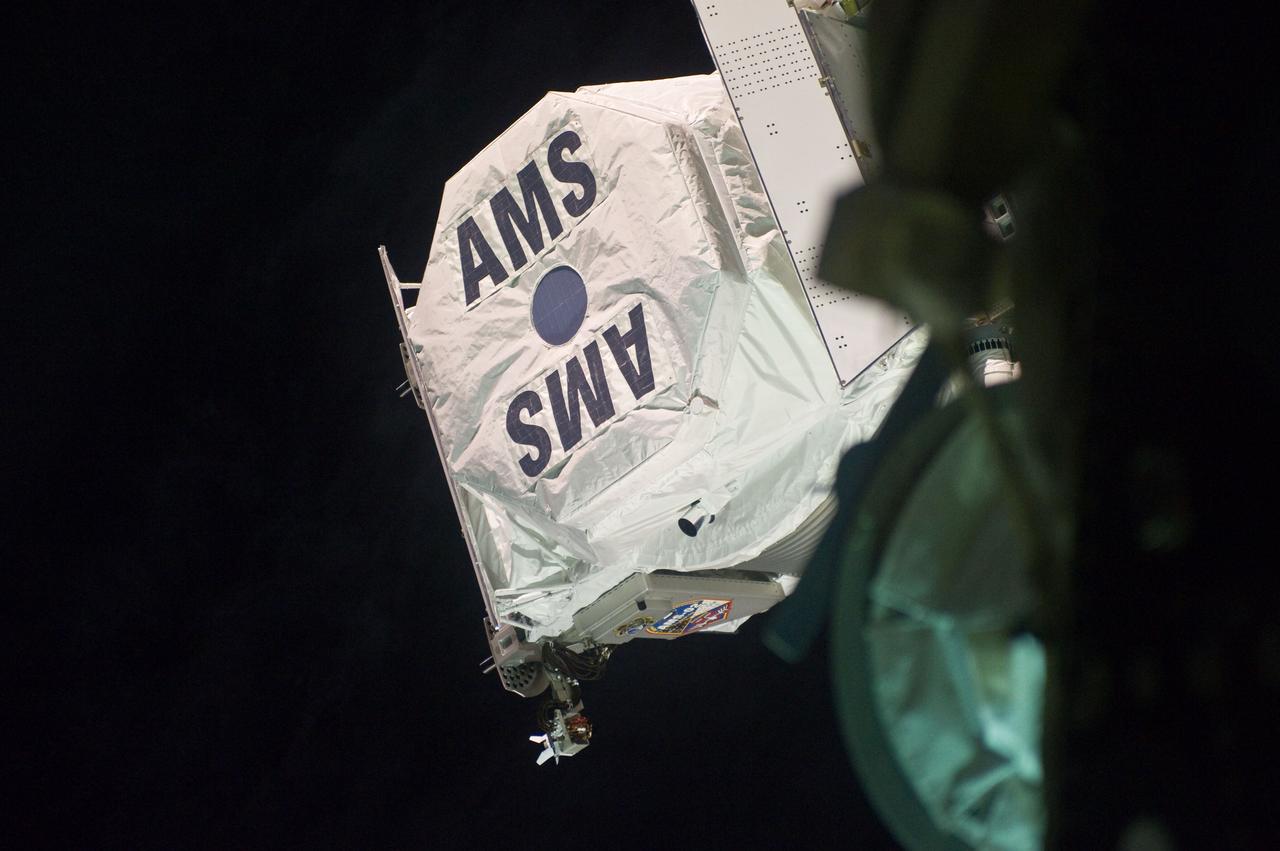
S134-E-007186 (19 May 2011) --- In the grasp of space shuttle Endeavour?s robotic Canadarm, the Alpha Magnetic Spectrometer-2 (AMS) is moved from Endeavour?s payload bay to be handed off to the International Space Station?s Canadarm2 for installation on the station?s starboard truss. Photo credit: NASA
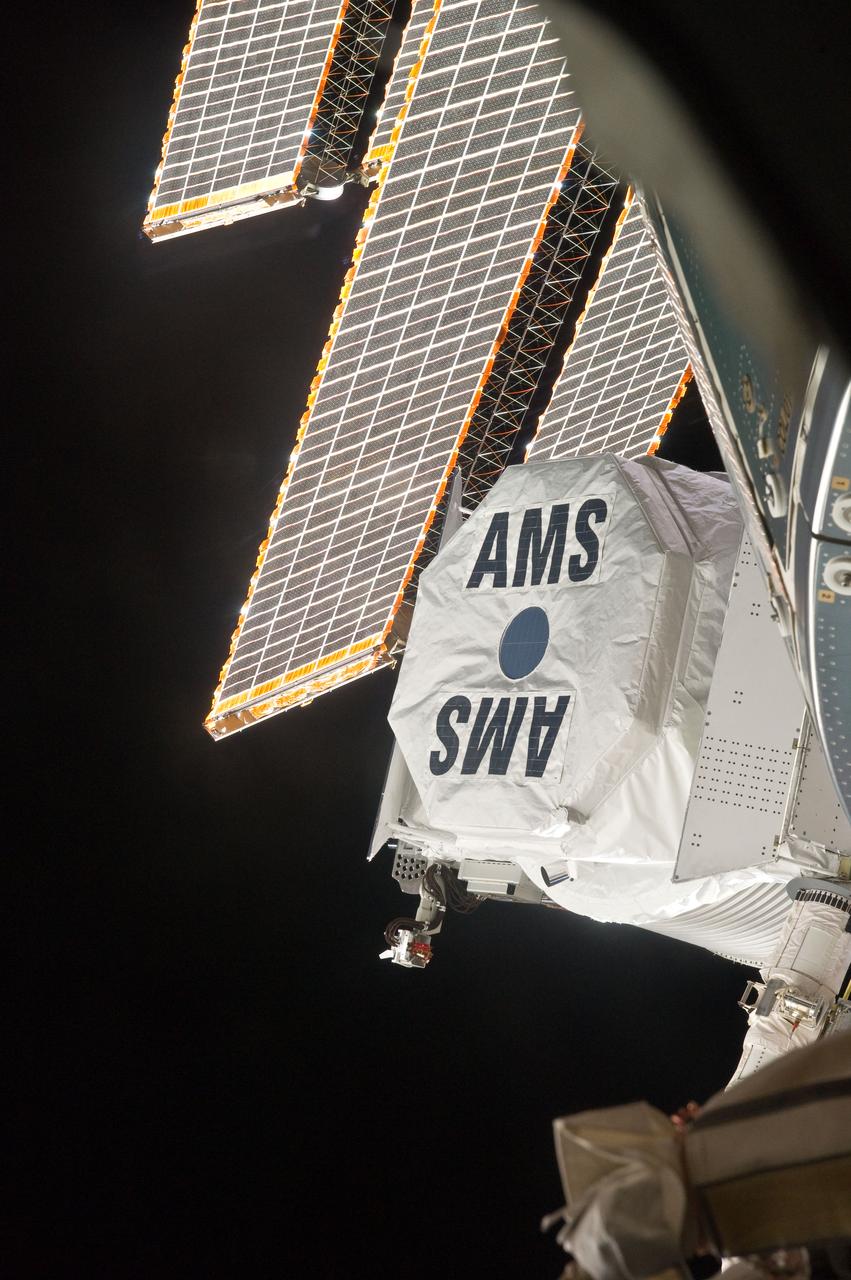
S134-E-007189 (19 May 2011) --- In the grasp of space shuttle Endeavour?s robotic Canadarm, the Alpha Magnetic Spectrometer-2 (AMS) is moved from Endeavour?s payload bay to be handed off to the International Space Station?s Canadarm2 for installation on the station?s starboard truss. Photo credit: NASA
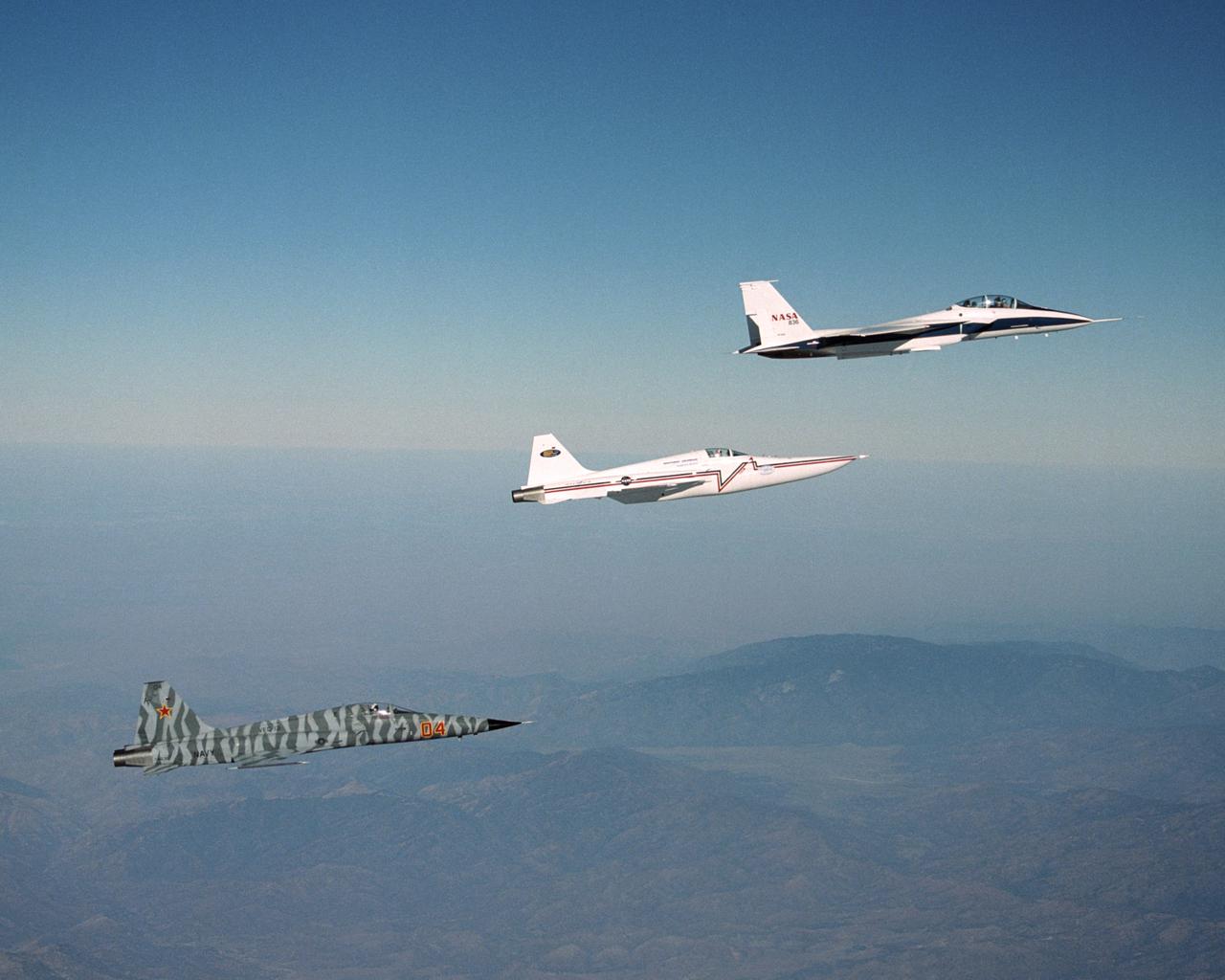
In a role-reversal, Northrop Grumman Corp.'s modified F-5E Shaped Sonic Boom Demonstration (SSBD) aircraft flies off the wing of NASA's F-15B Research testbed aircraft. The F-15B, from NASA's Dryden Flight Research Center, flew in the supersonic shockwave of the F-5E as part of the SSBD project. Following the two aircraft is an unmodified U.S. Navy F-5E used for baseline sonic boom measurements.

With St. Basil’s Cathedral in Red Square in Moscow providing a wintry backdrop, Expedition 59 crewmembers Christina Koch of NASA (left), Alexey Ovchinin of Roscosmos (center) and Nick Hague of NASA (right) pose for pictures Feb. 21 prior to the ceremonial laying of flowers at the Kremlin Wall. They will launch March 14, U.S. time, on the Soyuz MS-12 spacecraft from the Baikonur Cosmodrome in Kazakhstan for a six-and-a-half month mission on the International Space Station. Andrey Shelepin/Gagarin Cosmonaut Training Center

With St. Basil’s Cathedral in Red Square in Moscow providing a wintry backdrop, Expedition 59 crewmembers Nick Hague of NASA (left), Christina Koch of NASA (center) and Alexey Ovchinin of Roscosmos (right) walk toward the Kremlin Wall Feb. 21 prior to the ceremonial laying of flowers. They will launch March 14, U.S. time, on the Soyuz MS-12 spacecraft from the Baikonur Cosmodrome in Kazakhstan for a six-and-a-half month mission on the International Space Station. Andrey Shelepin/Gagarin Cosmonaut Training Center

At the Gagarin Cosmonaut Training Center in Star City, Russia, Expedition 59 crewmember Christina Koch of NASA listens to a reporter’s question Feb. 21 during a pre-launch news conference. Koch, Nick Hague of NASA and Alexey Ovchinin of Roscosmos will launch March 14, U.S. time, on the Soyuz MS-12 spacecraft from the Baikonur Cosmodrome in Kazakhstan for a six-and-a-half month mission on the International Space Station. Andrey Shelepin/Gagarin Cosmonaut Training Center
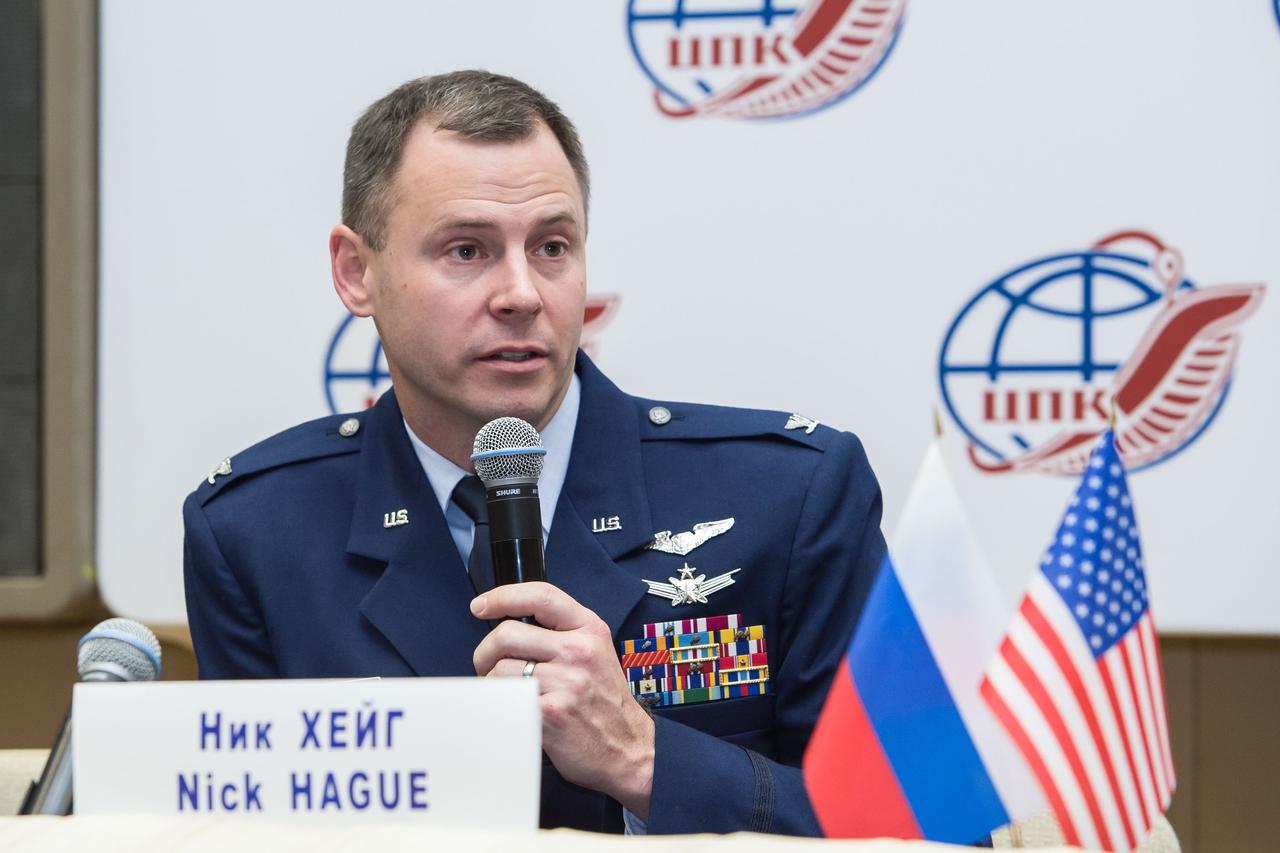
At the Gagarin Cosmonaut Training Center in Star City, Russia, Expedition 59 crewmember Nick Hague of NASA answers a reporter’s question Feb. 21 during a pre-launch news conference. Hague, Christina Koch of NASA and Alexey Ovchinin of Roscosmos will launch March 14, U.S. time, on the Soyuz MS-12 spacecraft from the Baikonur Cosmodrome in Kazakhstan for a six-and-a-half month mission on the International Space Station. Andrey Shelepin/Gagarin Cosmonaut Training Center

With St. Basil’s Cathedral in Red Square in Moscow providing a wintry backdrop, Expedition 59 crewmembers Christina Koch of NASA (left), Alexey Ovchinin of Roscosmos (center) and Nick Hague of NASA (right) pose for pictures Feb. 21 prior to the ceremonial laying of flowers at the Kremlin Wall. They will launch March 14, U.S. time, on the Soyuz MS-12 spacecraft from the Baikonur Cosmodrome in Kazakhstan for a six-and-a-half month mission on the International Space Station. Andrey Shelepin/Gagarin Cosmonaut Training Center
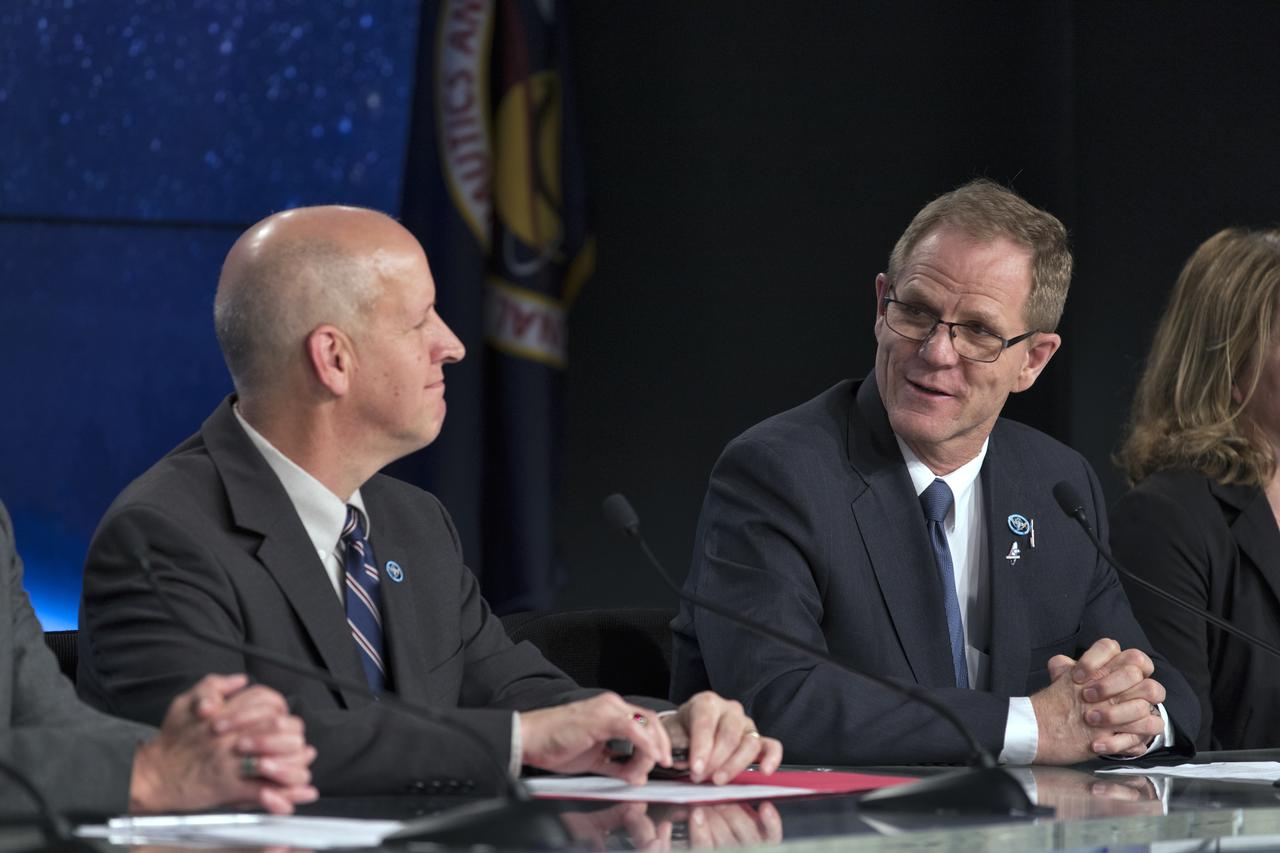
In the Kennedy Space Center's Press Site auditorium, Tim Dunn, NASA launch director at Kennedy, left, and Scott Messer, manager of NASA Programs for United launch Alliance, speak to members of the media at a prelaunch news conference about National Oceanic and Atmospheric Administration's, or NOAA's, Geostationary Operational Environmental Satellite, or GOES-S. The GOES series of satellites will significantly improve the detection and observation of environmental phenomena that directly affect public safety, protection of property and the nation's economic health and prosperity. GOES-S is slated to lift off at 5:02 p.m. EST on March 1, 2018 aboard a United Launch Alliance Atlas V rocket.
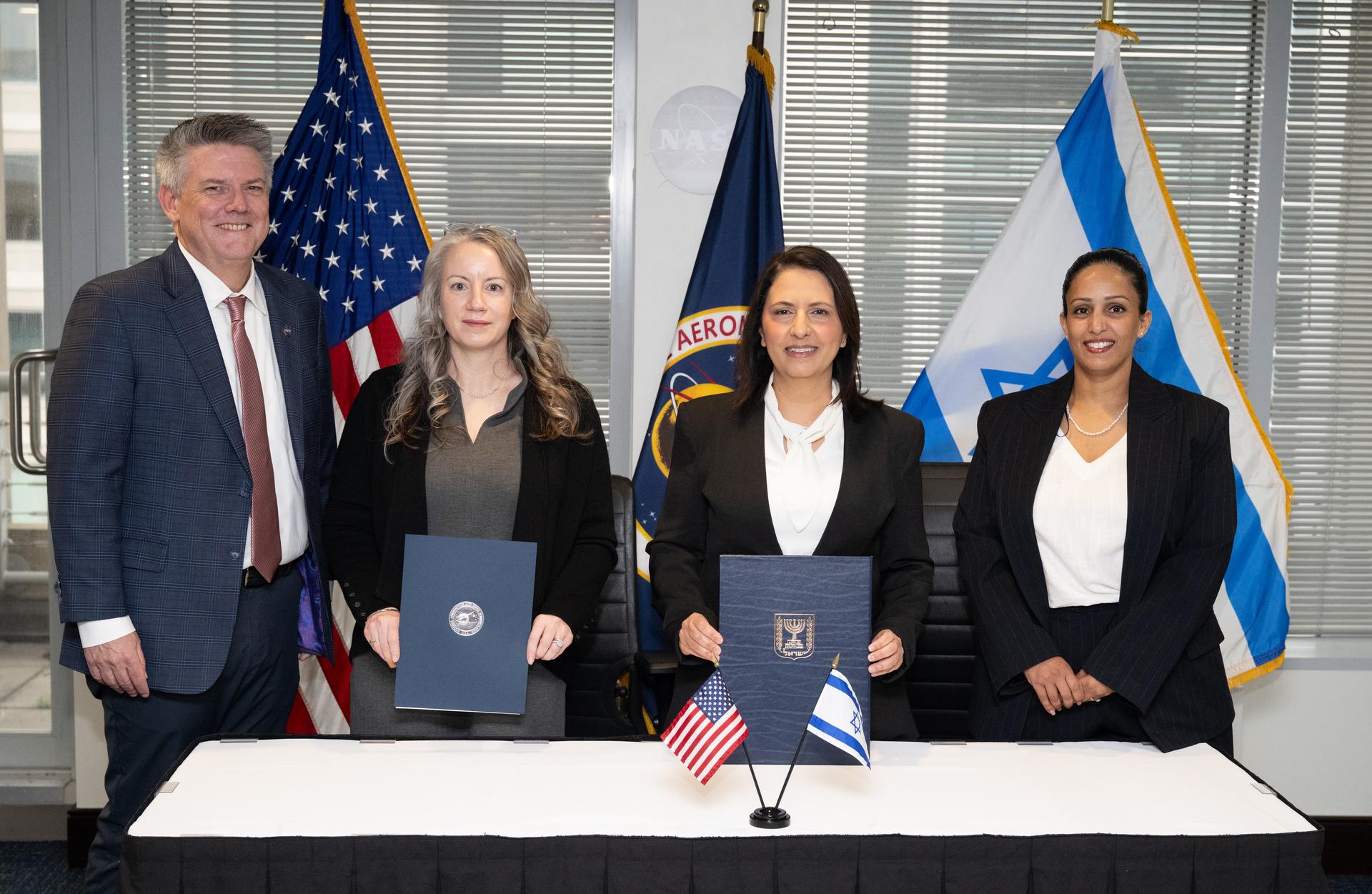
Brian Hughes, NASA Chief of Staff, left, Meredith McKay, acting associate administrator for NASA’s Office of International and Interagency Relations, second from left, Israel’s Minister for Innovation, Science, and Technology Gila Gamliel, and Shani Edri, director of International Relations in Israel’s Ministry of Innovation, Science, and Technology pose for a picture after the signing the US-Israel Space Cooperation Framework Agreement Extension, Wednesday, Dec. 10, 2025, at the Mary W. Jackson NASA Headquarters building in Washington. Photo Credit: (NASA/Joel Kowsky)
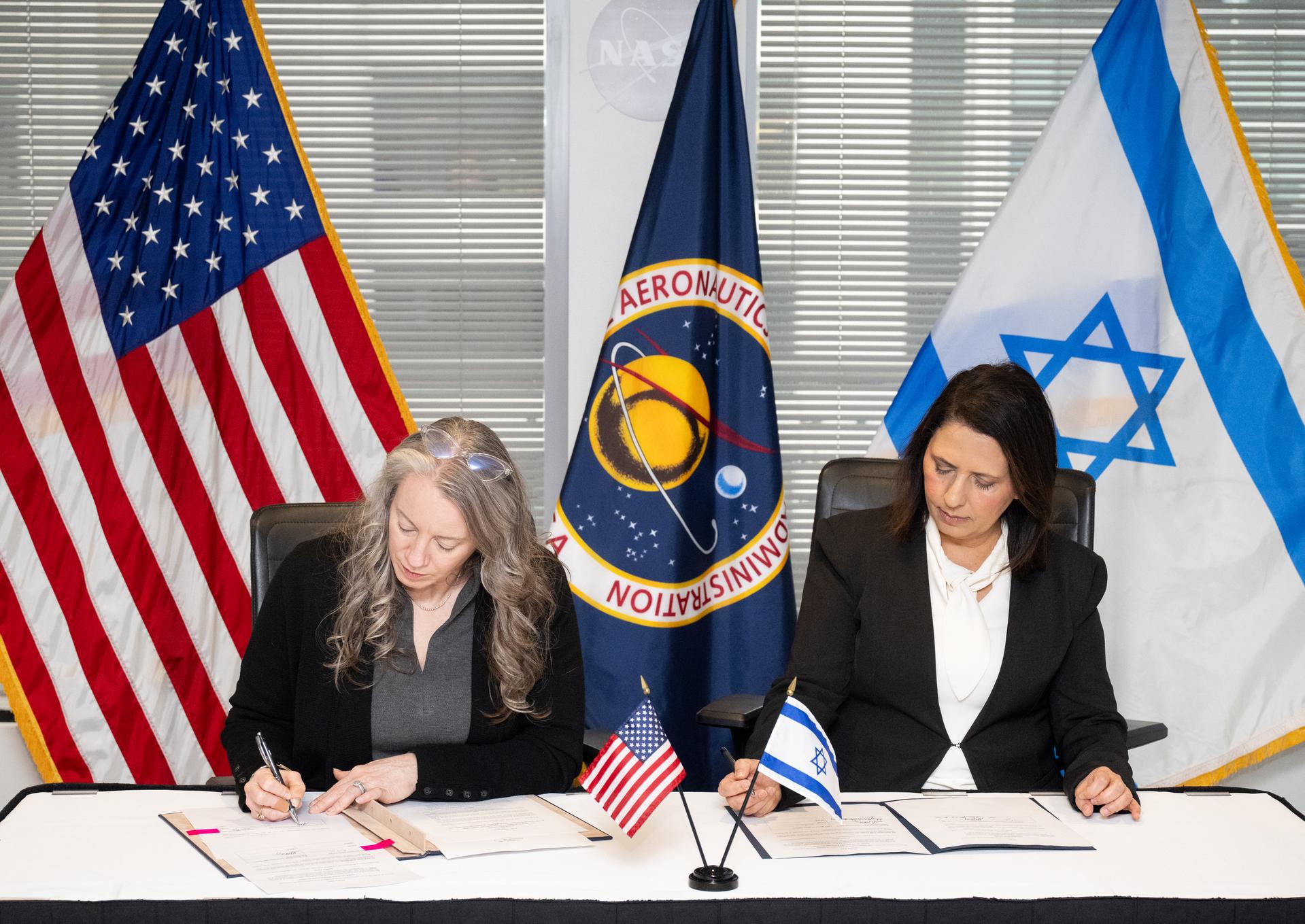
Meredith McKay, acting associate administrator for NASA’s Office of International and Interagency Relations, left, and Israel’s Minister for Innovation, Science, and Technology Gila Gamliel sign the US-Israel Space Cooperation Framework Agreement Extension, Wednesday, Dec. 10, 2025, at the Mary W. Jackson NASA Headquarters building in Washington. Photo Credit: (NASA/Joel Kowsky)
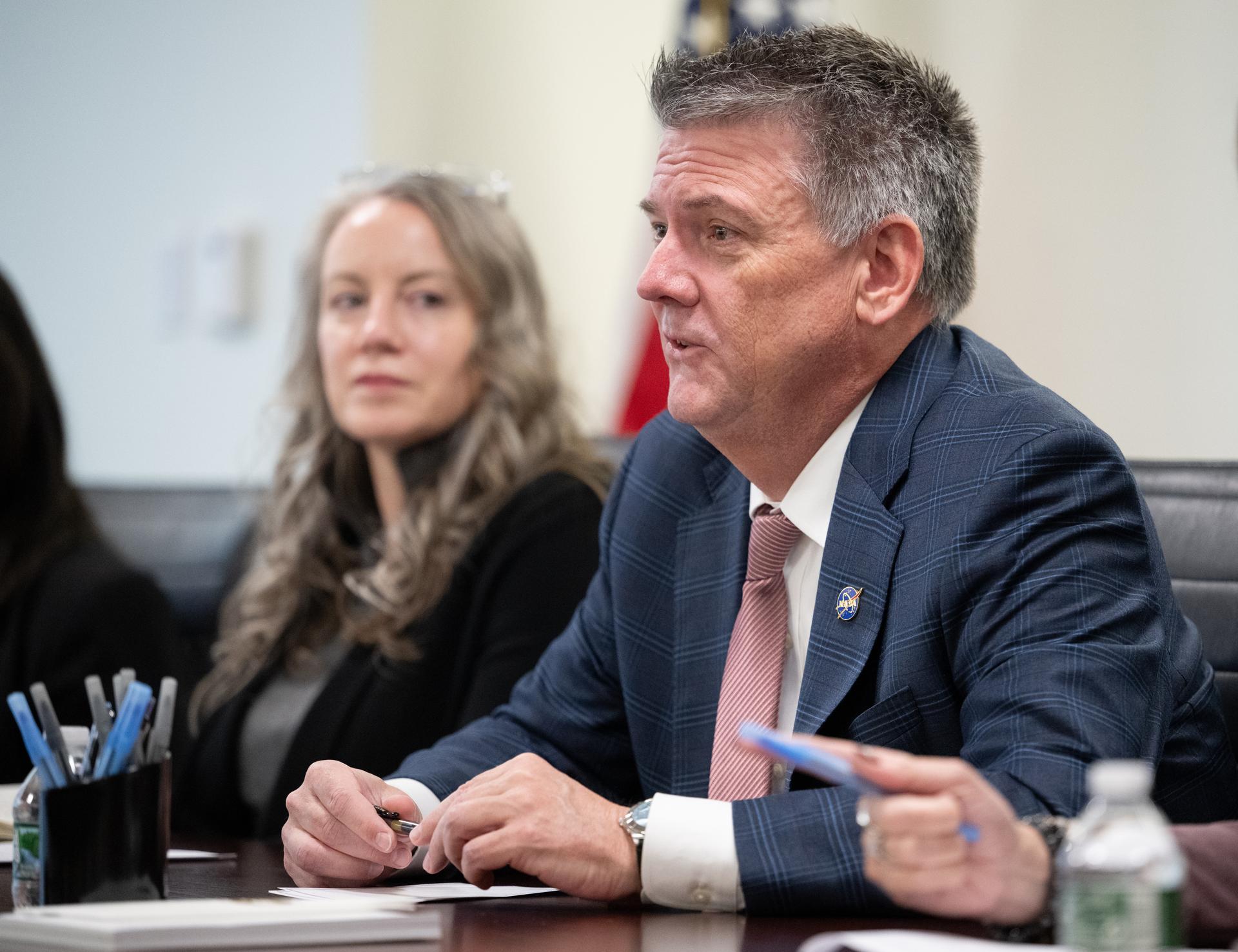
NASA Chief of Staff Brian Hughes is seen during a meeting with Israel’s Minister for Innovation, Science, and Technology Gila Gamliel, Wednesday, Dec. 10, 2025, at the Mary W. Jackson NASA Headquarters building in Washington. Photo Credit: (NASA/Joel Kowsky)
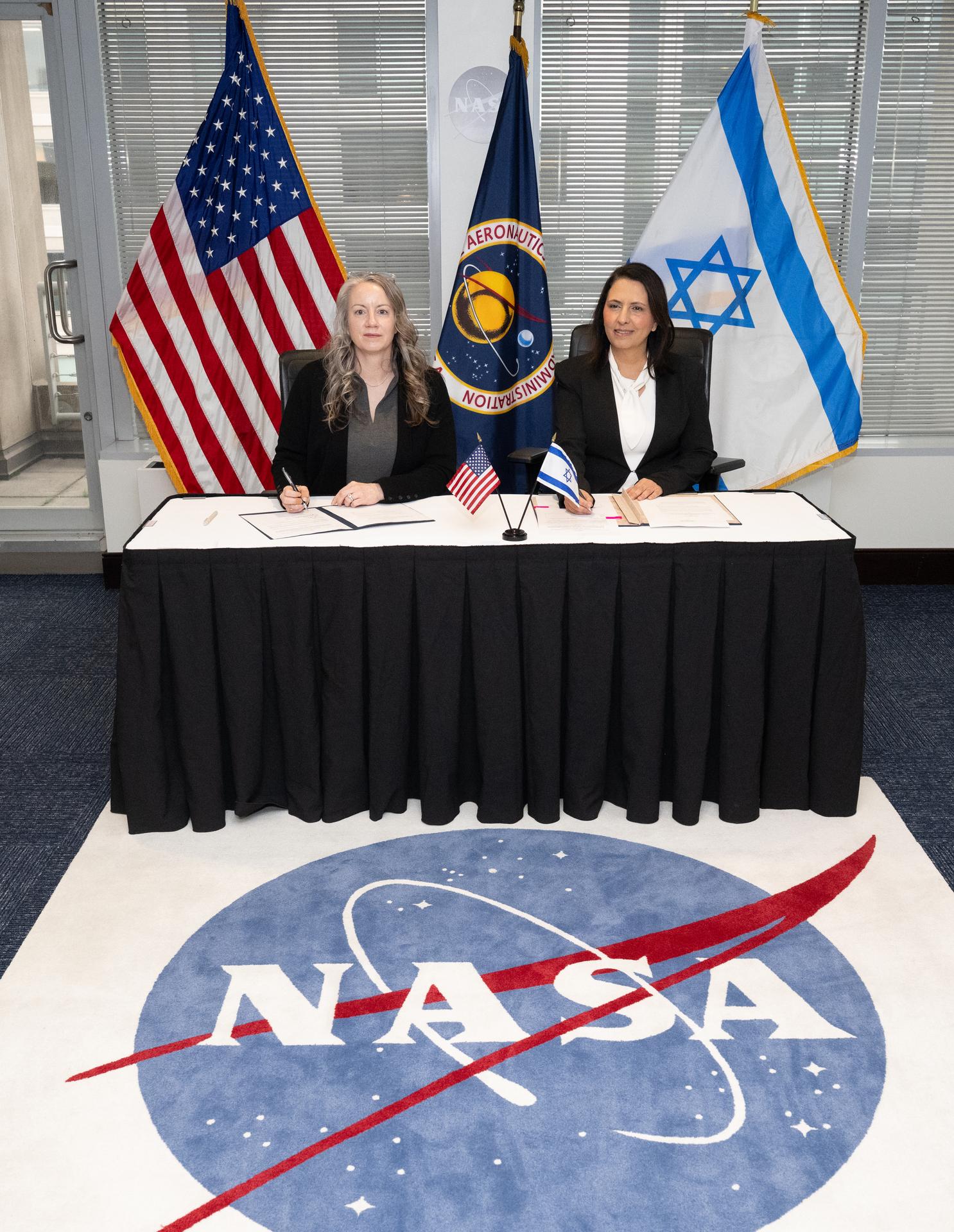
Meredith McKay, acting associate administrator for NASA’s Office of International and Interagency Relations, left, and Israel’s Minister for Innovation, Science, and Technology Gila Gamliel sign the US-Israel Space Cooperation Framework Agreement Extension, Wednesday, Dec. 10, 2025, at the Mary W. Jackson NASA Headquarters building in Washington. Photo Credit: (NASA/Joel Kowsky)
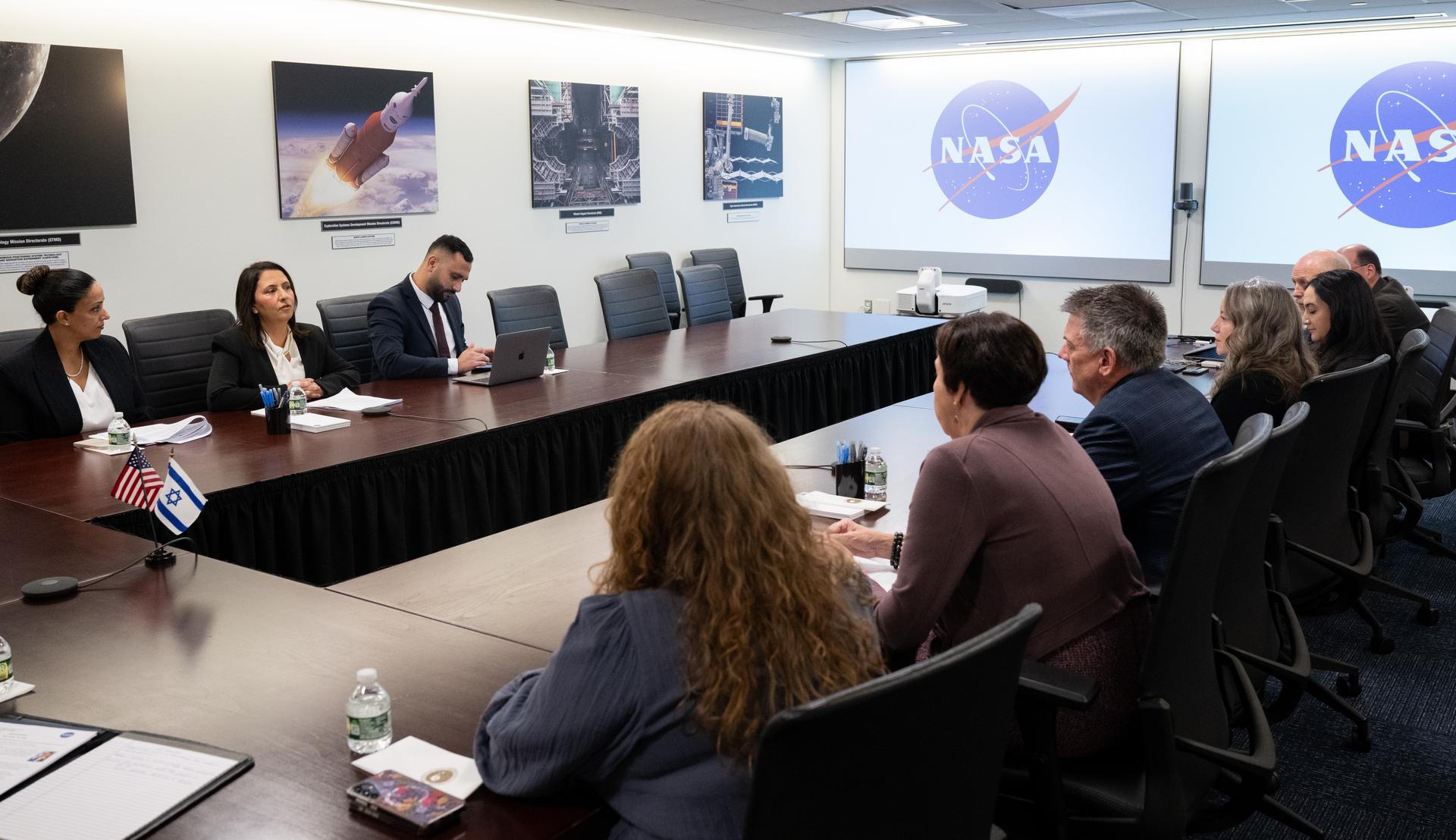
Israel’s Minister for Innovation, Science, and Technology Gila Gamliel, center left, is seen during a meeting with NASA leadership, Wednesday, Dec. 10, 2025, at the Mary W. Jackson NASA Headquarters building in Washington. Photo Credit: (NASA/Joel Kowsky)
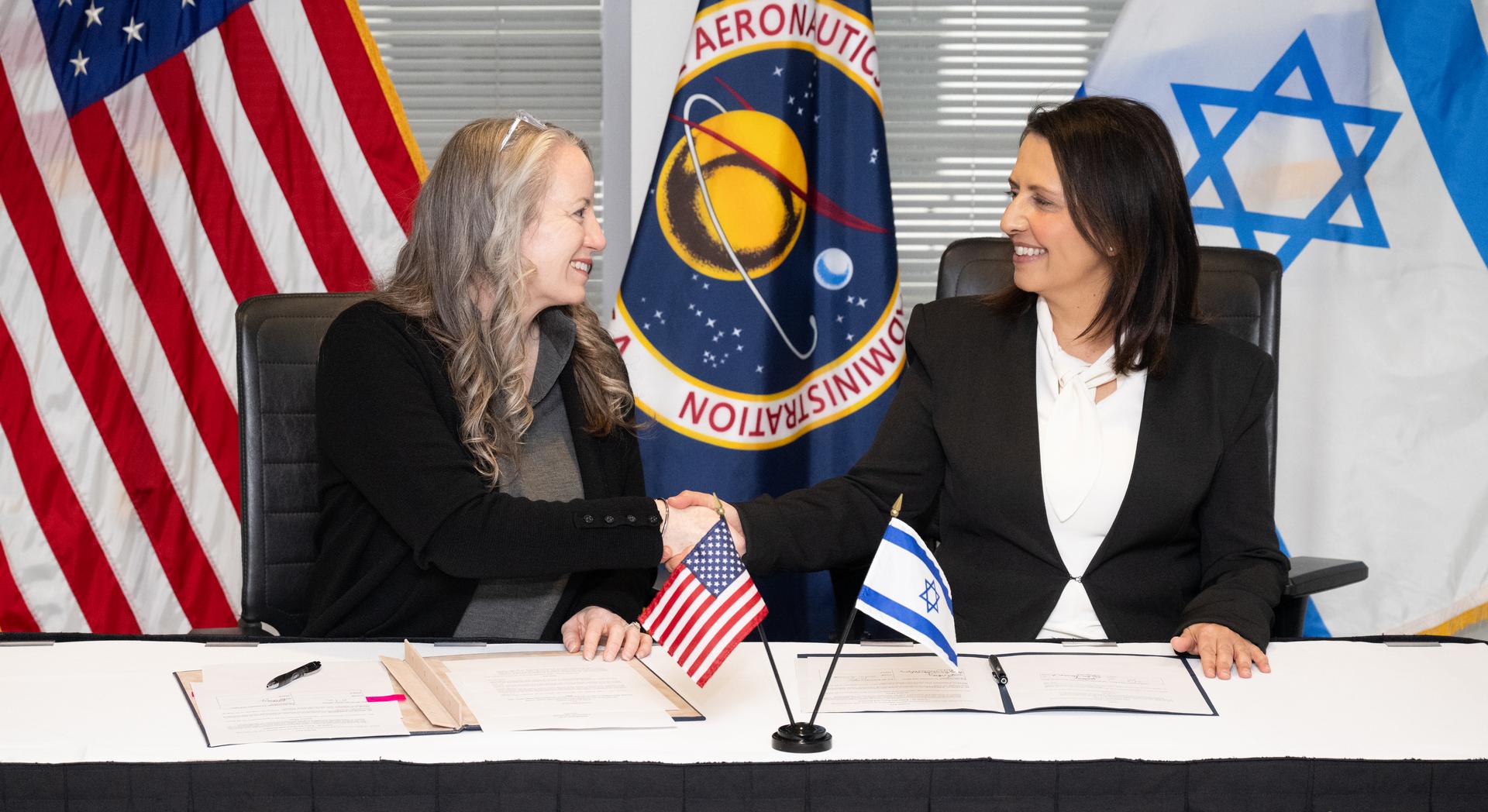
Meredith McKay, acting associate administrator for NASA’s Office of International and Interagency Relations, left, and Israel’s Minister for Innovation, Science, and Technology Gila Gamliel shake hands after signing the US-Israel Space Cooperation Framework Agreement Extension, Wednesday, Dec. 10, 2025, at the Mary W. Jackson NASA Headquarters building in Washington. Photo Credit: (NASA/Joel Kowsky)
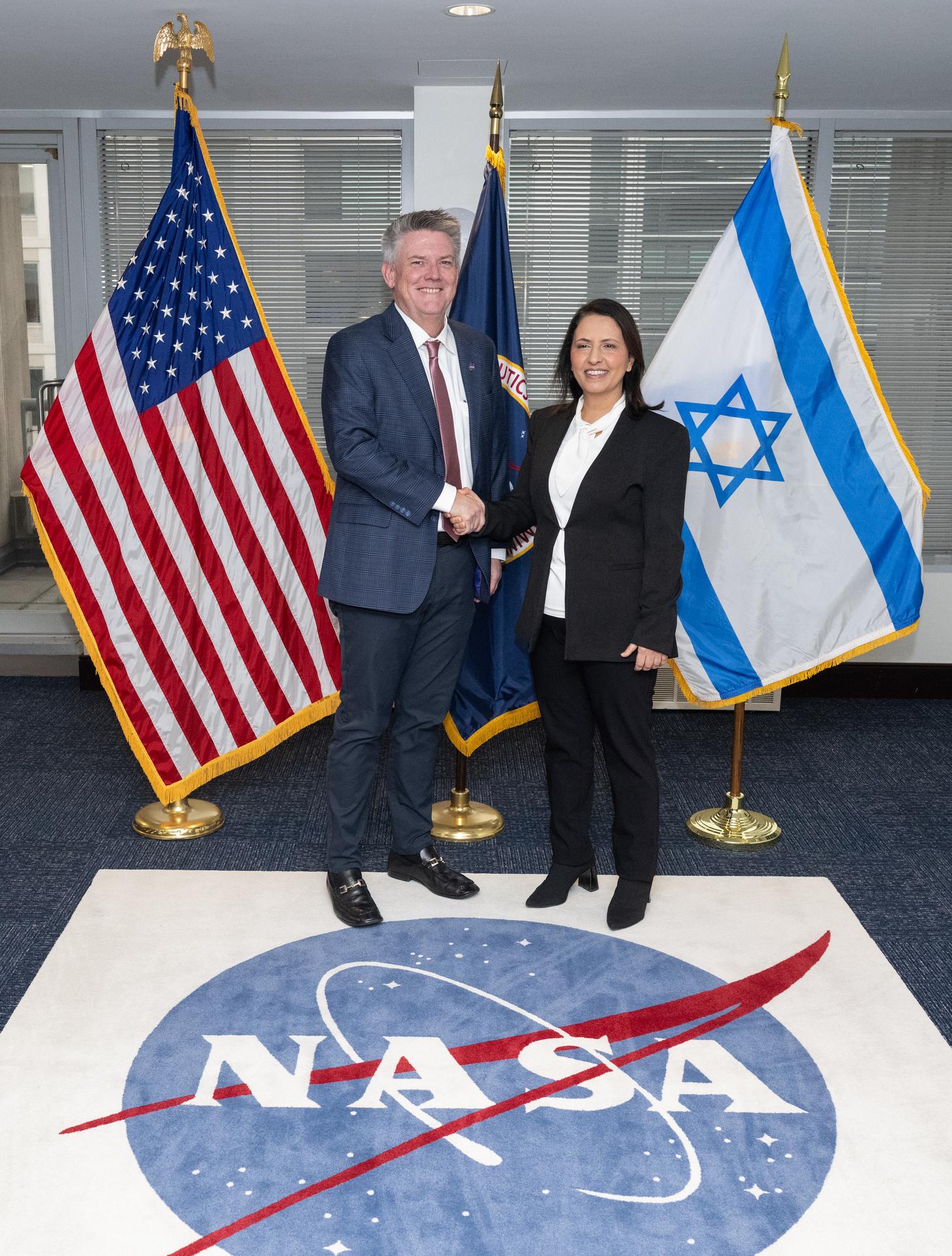
NASA Chief of Staff Brian Hughes, left, and Israel’s Minister for Innovation, Science, and Technology Gila Gamliel shake hands as they pose for a picture, Wednesday, Dec. 10, 2025, during a meeting at the Mary W. Jackson NASA Headquarters building in Washington. Photo Credit: (NASA/Joel Kowsky)
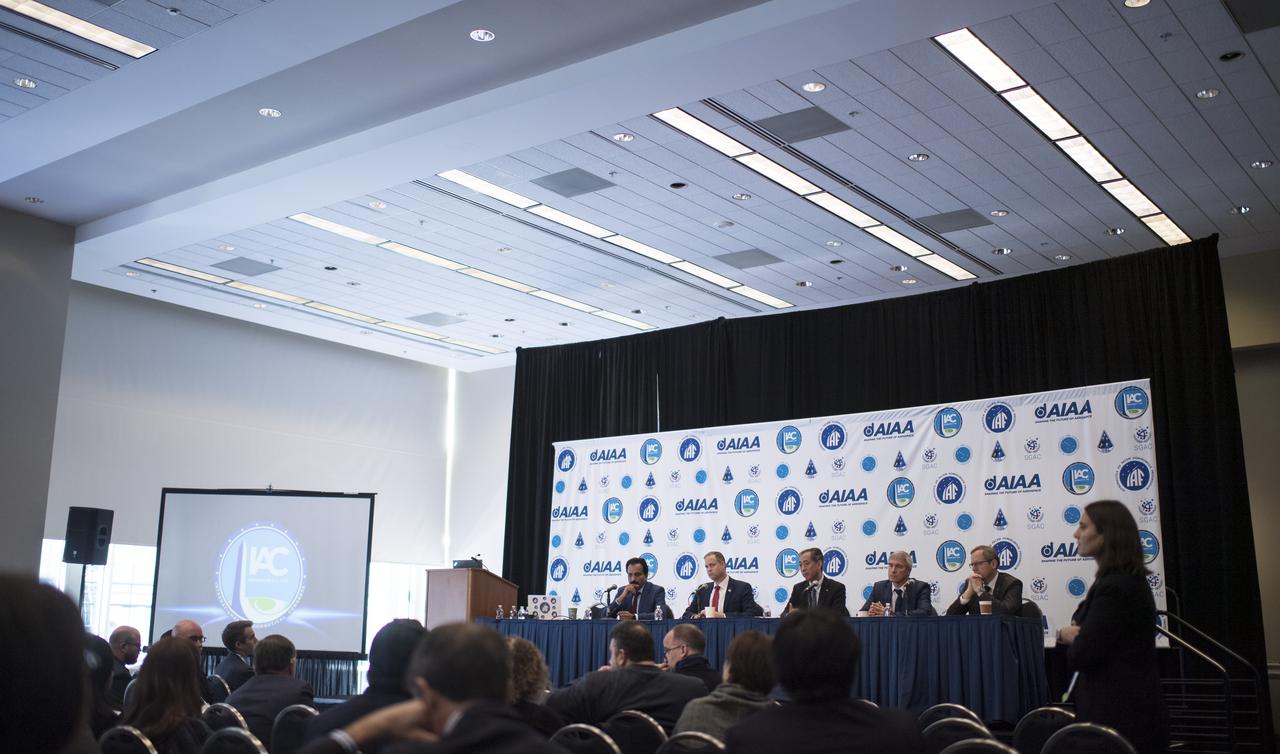
S. Somanath, Director of Vikram Sarabhai Space Centre, Indian Space Research Organization (ISRO), left, NASA Administrator Jim Bridenstine, Hiroshi Yamakawa, President of the Japan Aerospace Exploration Agency (JAXA), Sergey Krikalev, Executive Director for Piloted Spaceflights for Roscosmos, and Johann-Dietrich Woerner, Director General of ESA (European Space Agency), right, are seen during the Heads of Agency press conference at the 70th International Astronautical Congress, Monday, Oct. 21, 2019 at the Walter E. Washington Convention Center in Washington. Photo Credit: (NASA/Joel Kowsky)
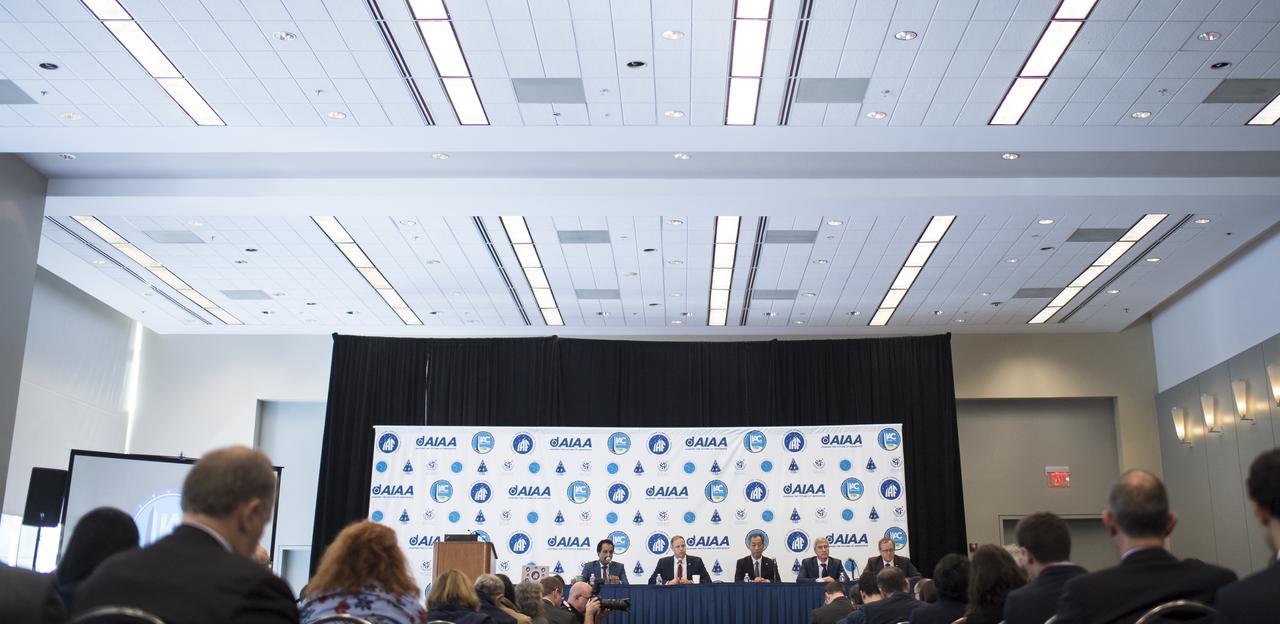
S. Somanath, Director of Vikram Sarabhai Space Centre, Indian Space Research Organization (ISRO), left, NASA Administrator Jim Bridenstine, Hiroshi Yamakawa, President of the Japan Aerospace Exploration Agency (JAXA), Sergey Krikalev, Executive Director for Piloted Spaceflights for Roscosmos, and Johann-Dietrich Woerner, Director General of ESA (European Space Agency), right, are seen during the Heads of Agency press conference at the 70th International Astronautical Congress, Monday, Oct. 21, 2019 at the Walter E. Washington Convention Center in Washington. Photo Credit: (NASA/Joel Kowsky)
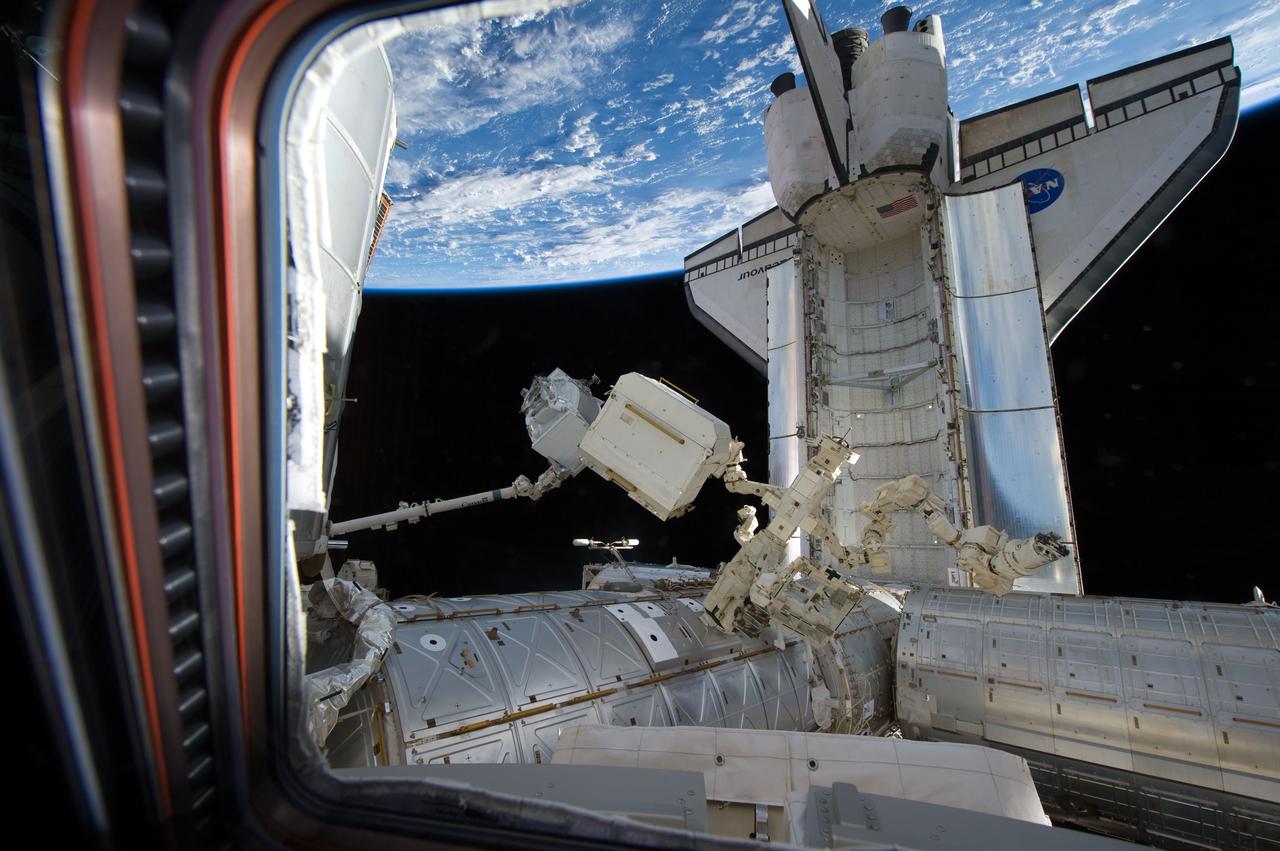
S134-E-007444 (19 May 2011) --- In the grasp of the International Space Station?s Canadarm2, the Alpha Magnetic Spectrometer-2 (AMS) is transferred from space shuttle Endeavour?s payload bay for installation on the station?s starboard truss. Photo credit: NASA
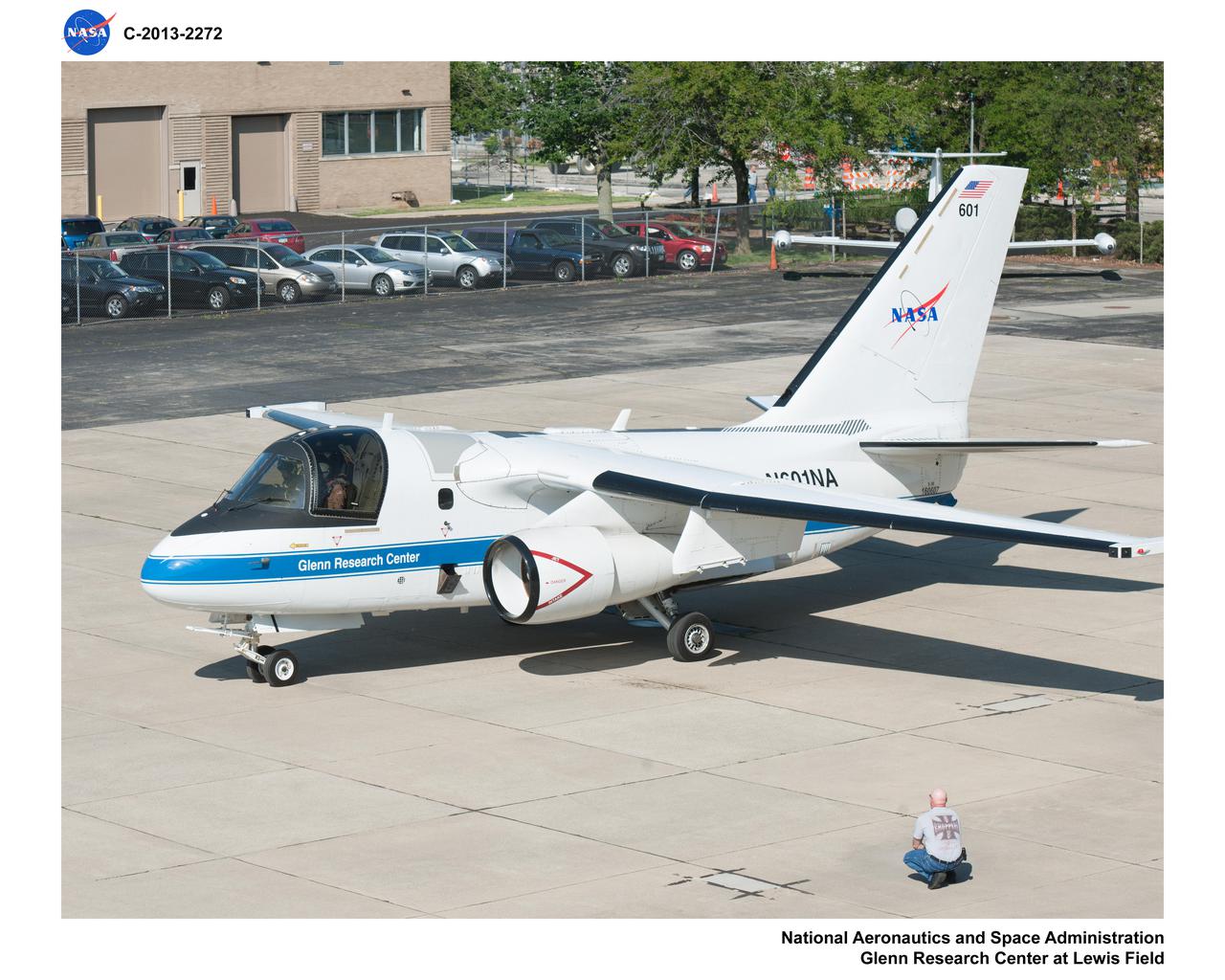
Lockheed S-3B Vikig Aircraft prepares for departure during testing in support of the Unmanned Aircraft Communications Project

Lockheed S-3B Vikig Aircraft
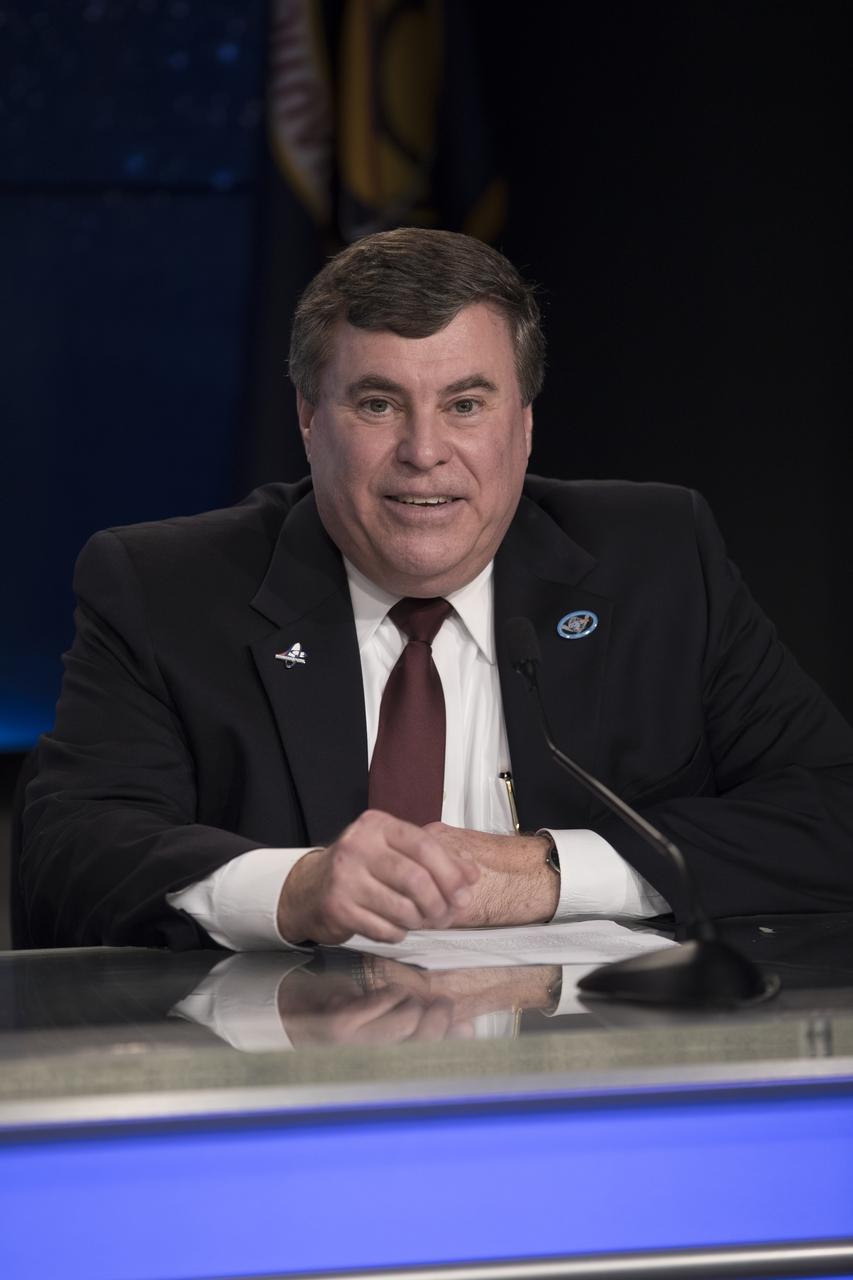
In the Kennedy Space Center's Press Site auditorium, George Morrow, deputy director of NASA's Goddard Space Flight Center in Greenbelt, Maryland, speaks to members of the media at a mission briefing on National Oceanic and Atmospheric Administration's, or NOAA's, Geostationary Operational Environmental Satellite, or GOES-S. The spacecraft is the second satellite in a series of next-generation NOAA weather satellites. It will launch to a geostationary position over the U.S. to provide images of storms and help predict weather forecasts, severe weather outlooks, watches, warnings, lightning conditions and longer-term forecasting. GOES-S is slated to lift off at 5:02 p.m. EST on March 1, 2018 aboard a United Launch Alliance Atlas V rocket.
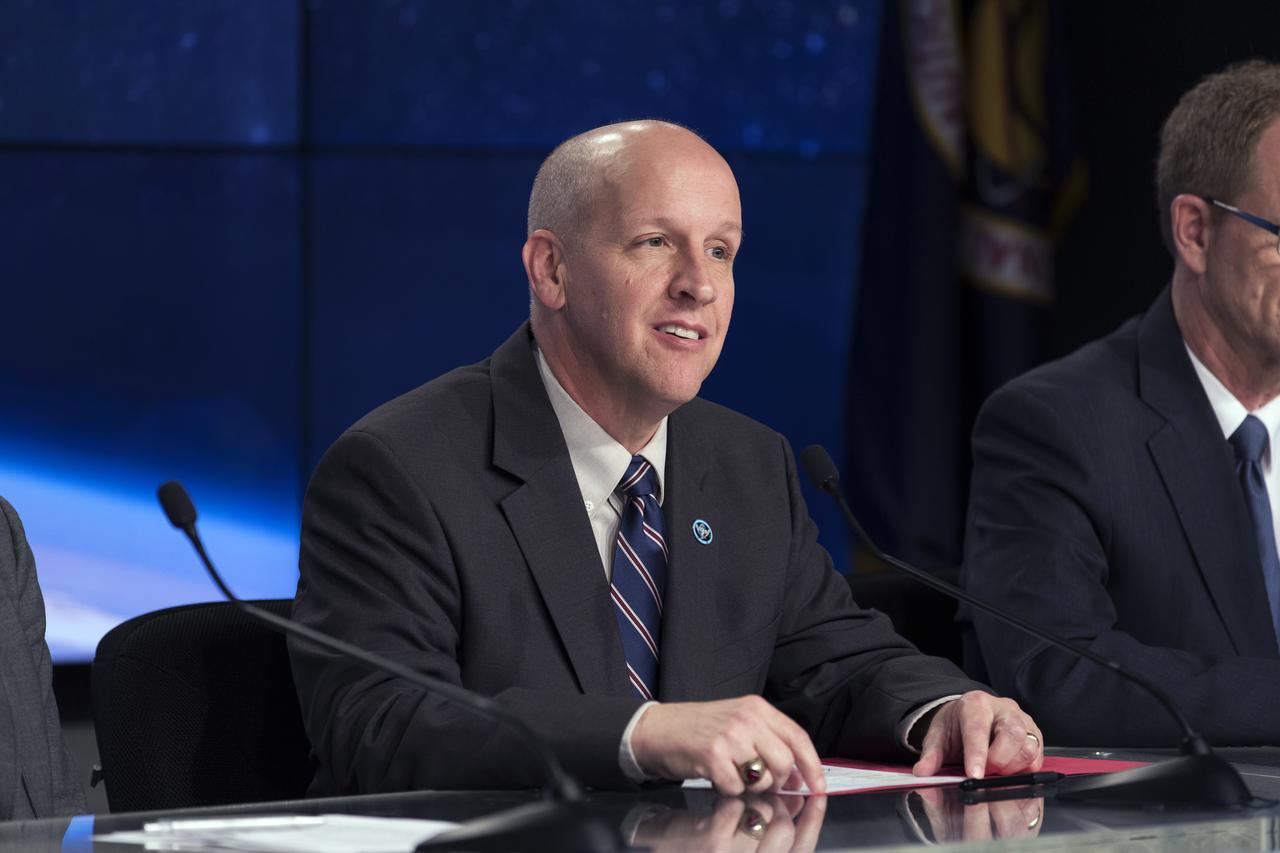
In the Kennedy Space Center's Press Site auditorium, Tim Dunn, NASA launch director at Kennedy, speaks to members of the media at a prelaunch news conference about National Oceanic and Atmospheric Administration's, or NOAA's, Geostationary Operational Environmental Satellite, or GOES-S. The GOES series of satellites will significantly improve the detection and observation of environmental phenomena that directly affect public safety, protection of property and the nation's economic health and prosperity. GOES-S is slated to lift off at 5:02 p.m. EST on March 1, 2018 aboard a United Launch Alliance Atlas V rocket.

In the Kennedy Space Center's Press Site auditorium, Sandra Smalley, director of the Joint Agency Satellite Division at NASA Headquarters in Washington D.C., speaks to members of the media at a prelaunch news conference about National Oceanic and Atmospheric Administration's, or NOAA's, Geostationary Operational Environmental Satellite, or GOES-S. The GOES series of satellites will significantly improve the detection and observation of environmental phenomena that directly affect public safety, protection of property and the nation's economic health and prosperity. GOES-S is slated to lift off at 5:02 p.m. EST on March 1, 2018 aboard a United Launch Alliance Atlas V rocket.
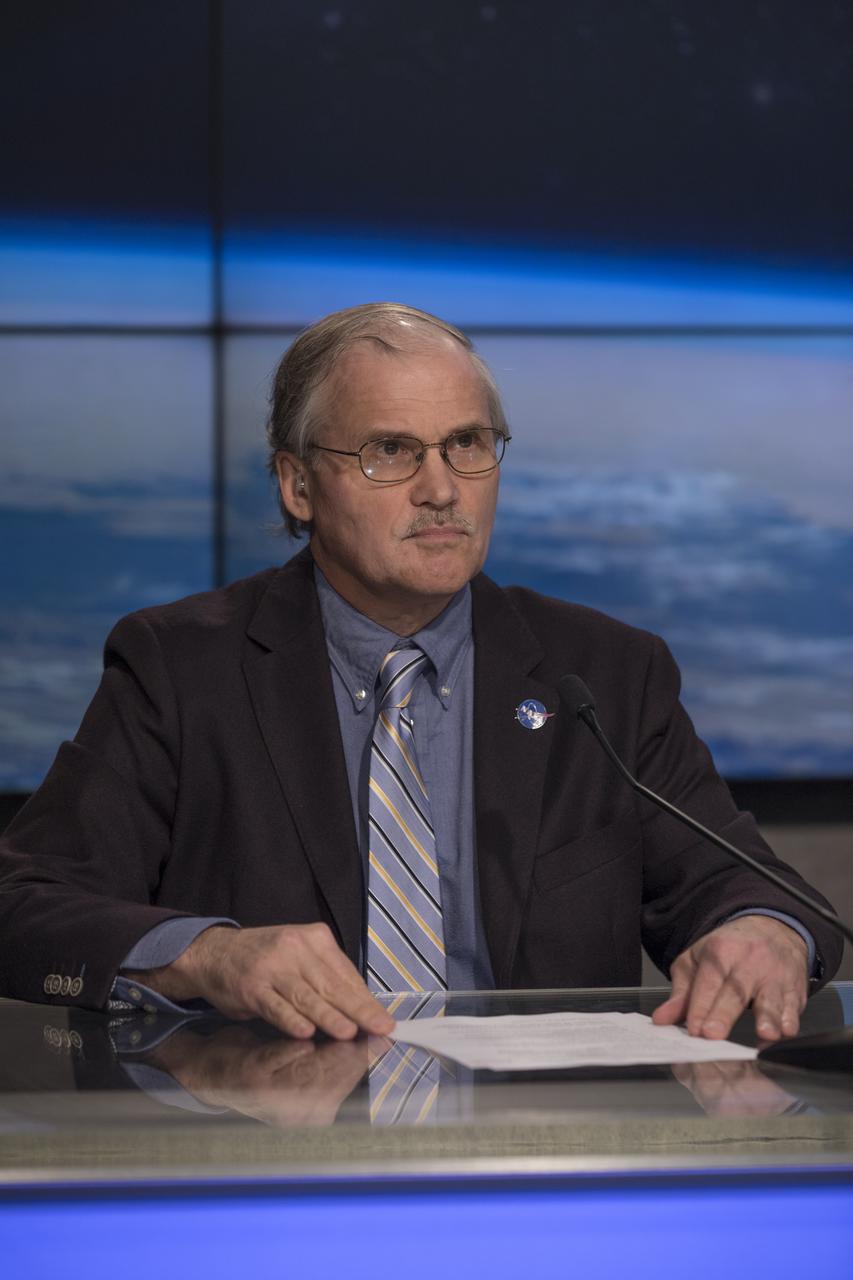
In the Kennedy Space Center's Press Site auditorium, Steve Cole of NASA Communications speaks to members of the media at a mission briefing on National Oceanic and Atmospheric Administration's, or NOAA's, Geostationary Operational Environmental Satellite, or GOES-S. The spacecraft is the second satellite in a series of next-generation NOAA weather satellites. It will launch to a geostationary position over the U.S. to provide images of storms and help predict weather forecasts, severe weather outlooks, watches, warnings, lightning conditions and longer-term forecasting. GOES-S is slated to lift off at 5:02 p.m. EST on March 1, 2018 aboard a United Launch Alliance Atlas V rocket.
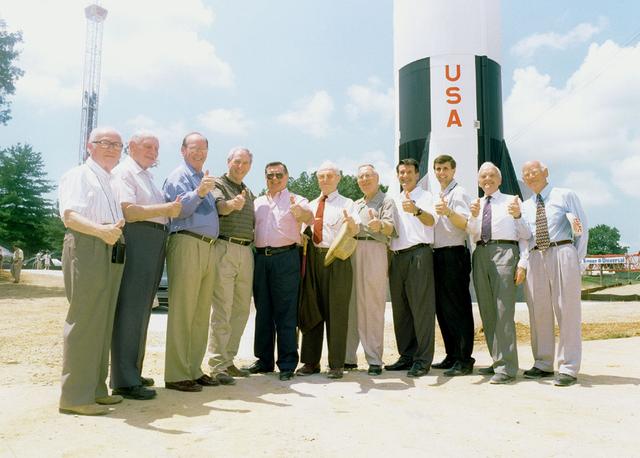
Members of the original Von Braun german rocket team participate in the Saturn V replica didication ceremony at the U. S. Space and Rocket Center in Huntsville, AL. Pictured are (L/R): Walter Jacobi, Konrad Dannenberg, Apollo 14's Edgar Mitchell, NASA Administrator Dan Goldin, Apollo 12's Dick Gordon, Gerhard Reisig, Werner Dahm, MSFC Director Art Stephenson, Director of the U. S. Space and Rocket Center Mike Wing, Walter Haeusserman, and Ernst Stuhlinger.
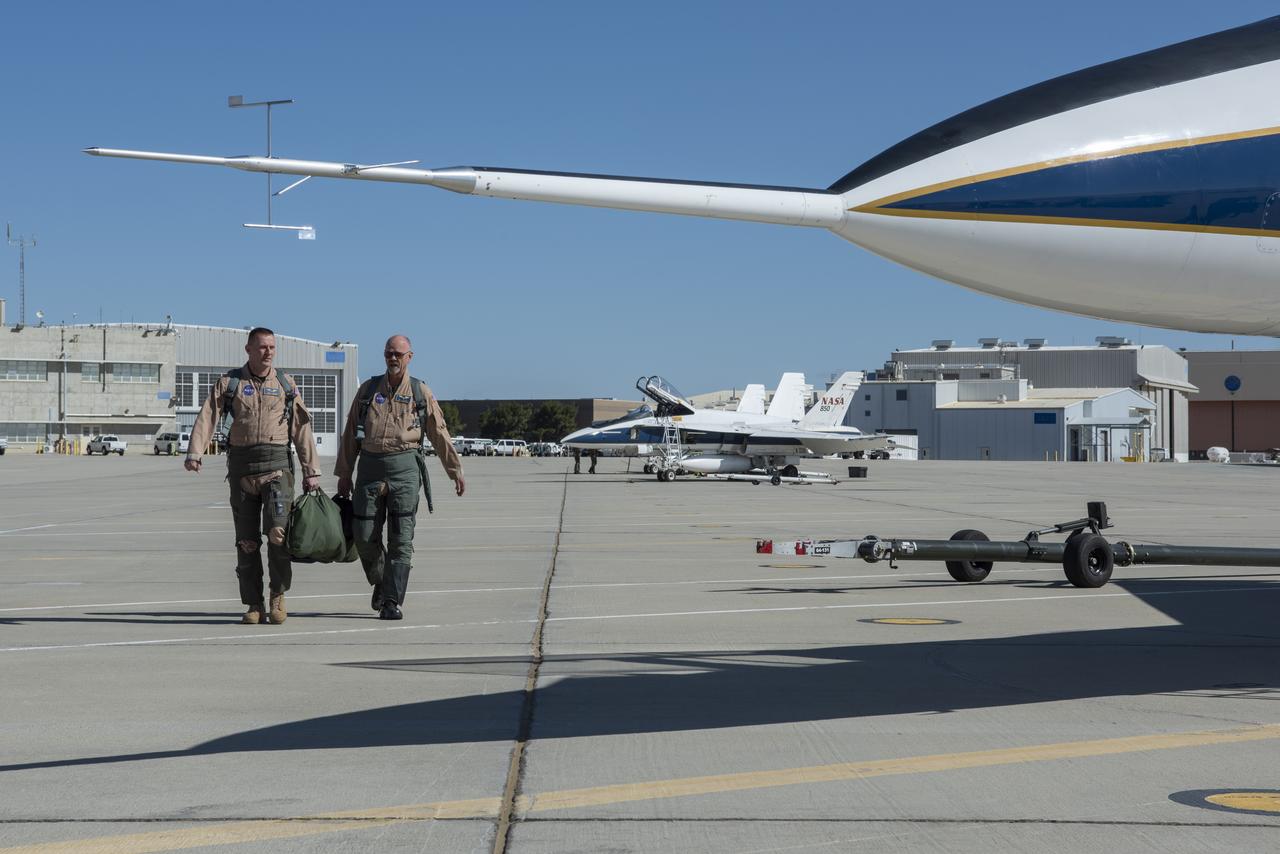
NASA recently completed flight testing a state-of-the-art instrument designed to capture high-quality measurements of shock waves created by supersonic aircraft in flight. It’s called the Shock Sensing Probe. The probe’s performance was tested in flight at NASA’s Armstrong Flight Research Center in Edwards, California, using an innovative technique originated by NASA’s predecessor, the National Advisory Committee for Aeronautics.
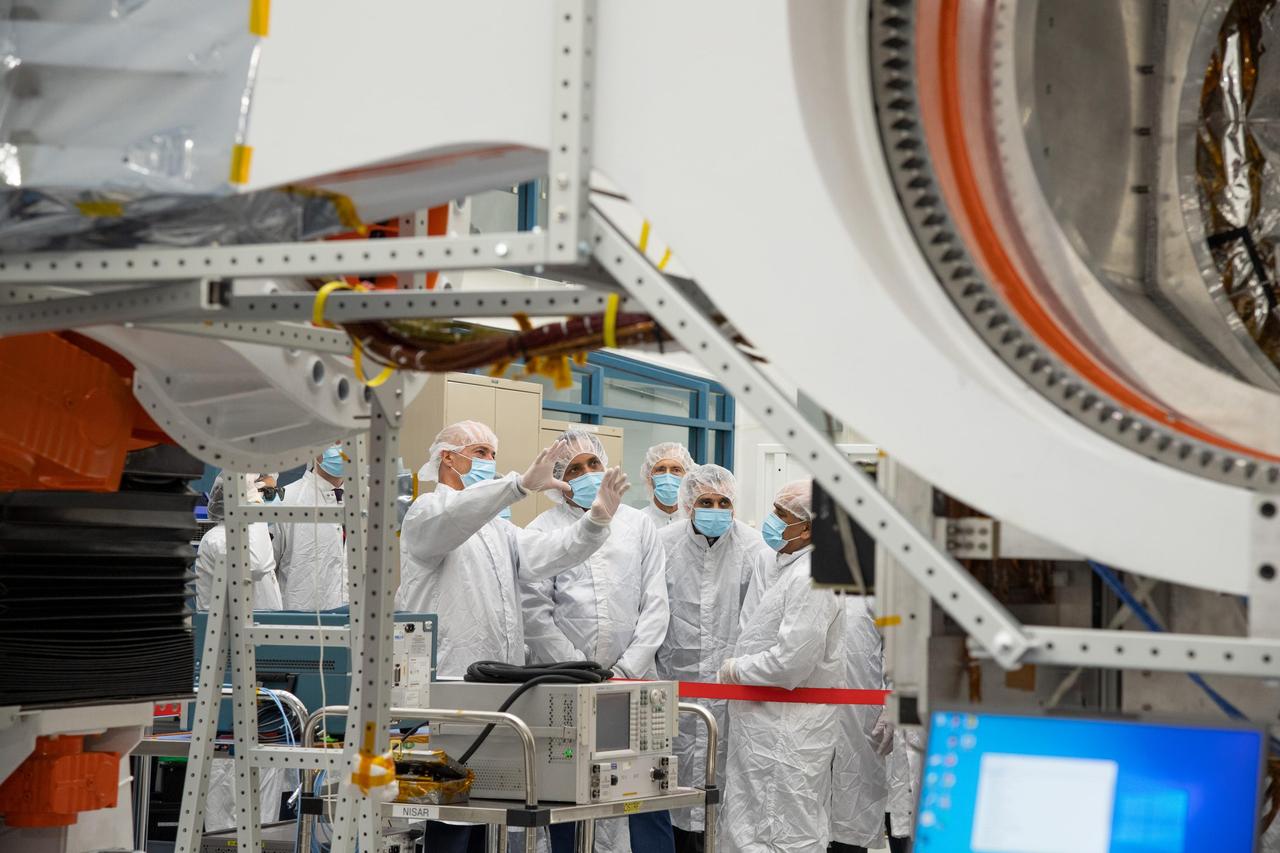
NASA's NISAR Project Manager Phil Barela (with hands raised) speaks with Indian Space Research Organisation Chairman S. Somanath about the NASA-ISRO Synthetic Aperture Radar (NISAR) science instrument payload in a clean room at NASA's Jet Propulsion Laboratory in Southern California on Feb. 3, 2023. Somanath was among a group of visitors to the facility that included officials from NASA, ISRO, and the Indian Embassy. The NISAR mission – a joint effort between NASA and ISRO – will measure changes to Earth's land ice surfaces down to fractions of an inch. Data collected by this satellite will help researchers monitor a wide range of changes critical to life on Earth in unprecedented detail. This includes spotting warning signs of imminent volcanic eruptions, helping to monitor groundwater supplies, tracking the melt rate of ice sheets tied to sea level rise, and observing shifts in the distribution of vegetation around the world. The data will inform humanity's responses to urgent challenges posed by natural disasters and climate change, and help communities prepare for and manage hazards. There are two instruments on the satellite that will send and receive radar signals to and from Earth's surface to make the mission's measurements. An L-band synthetic aperture radar (SAR), which uses a signal wavelength of around 9 inches (24 centimeters), and an S-band SAR with a signal wavelength of nearly 5 inches (12 centimeters). Both will bounce their microwave signal off of the planet's surface and record how long it takes the signal to make one roundtrip, as well as the strength of that return signal. This enables the researchers to calculate the distance from the spacecraft to Earth's surface and thereby determine how the land or ice is changing. An antenna reflector nearly 40 feet (12 meters) in diameter, supported by a deployable boom, will focus the microwave signals sent and received by the SARs. JPL, which is managed for NASA by Caltech in Pasadena, leads the U.S. component of NISAR and is providing the mission's L-band SAR instrument. NASA is also providing the radar reflector antenna, the deployable boom, a high-rate communication subsystem for science data, GPS receivers, a solid-state recorder, and payload data subsystem. ISRO is providing the spacecraft bus, the S-band SAR, the launch vehicle, and associated launch services and satellite mission operations. https://photojournal.jpl.nasa.gov/catalog/PIA25598
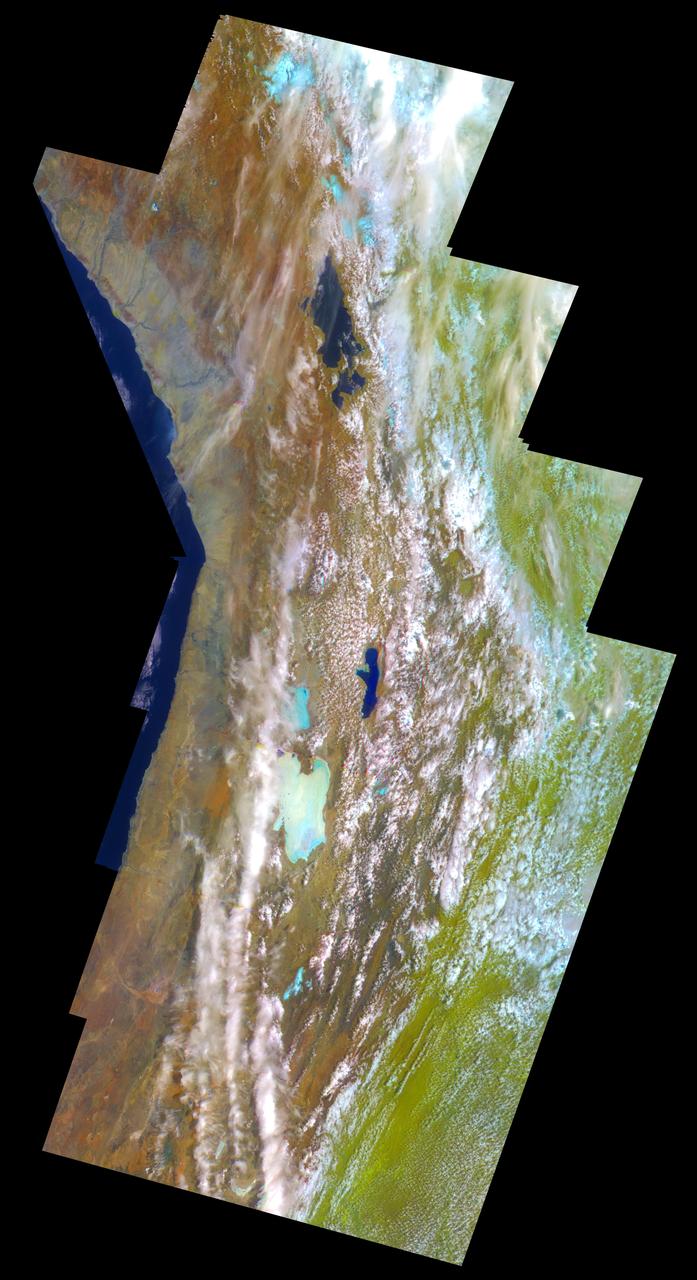
This false-color mosaic of the central part of the Andes mountains of South America 70 degrees w. longitude, 19 degrees s. latitude is made up of 42 images acquired by NASA’s Galileo spacecraft from an altitude of about 25,000 kilometers 15,000 miles. http://photojournal.jpl.nasa.gov/catalog/PIA00133

This bulls-eye view of Neptune small dark spot D2 was obtained by NASA s Voyager 2 narrow-angle camera on Aug. 24, 1989, when Voyager 2 was within 1.1 million km 680,000 miles of the planet. http://photojournal.jpl.nasa.gov/catalog/PIA00064
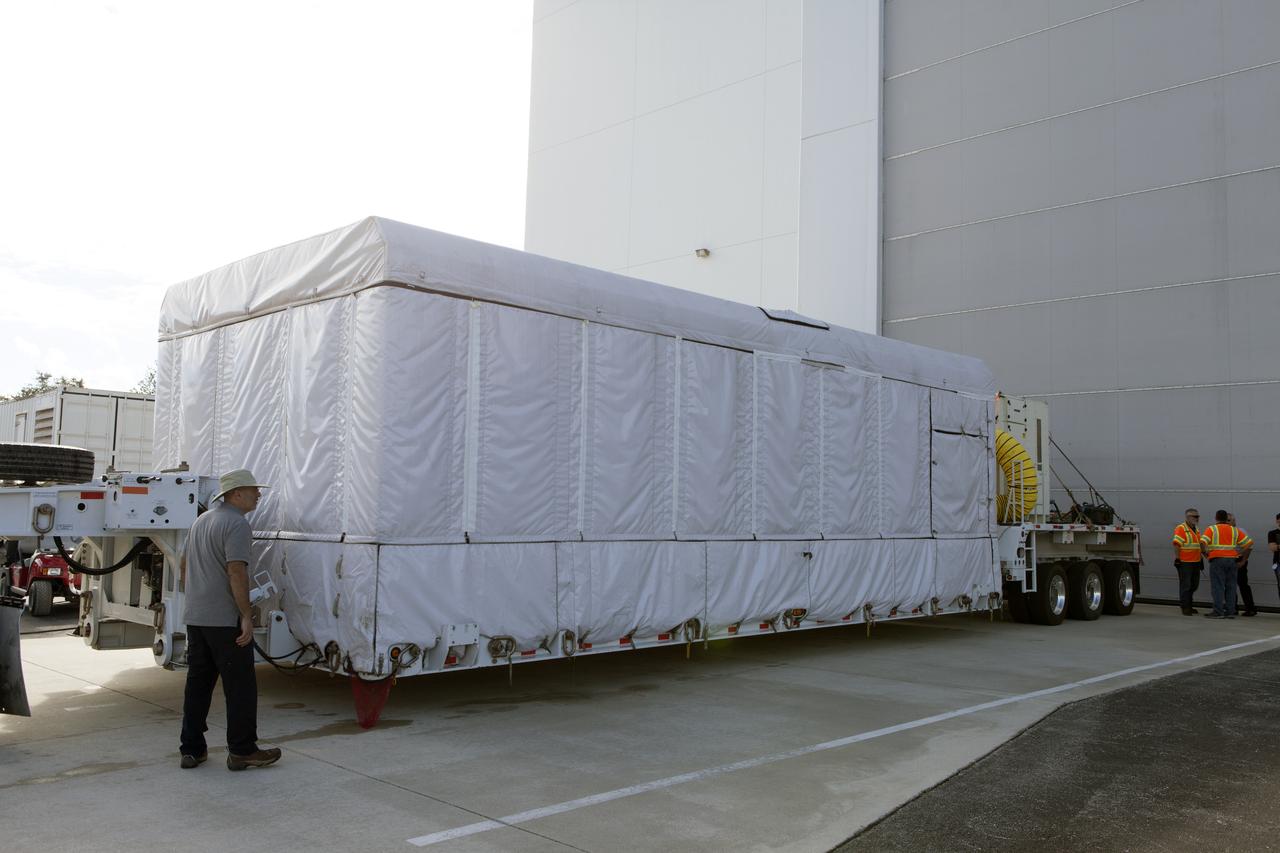
NOAA's Geostationary Operation Environmental Satellite-S (GOES-S) arrives at Astrotech Space Operations in Titusville, Florida, to prepare it for launch. The facility is located near NASA's Kennedy Space Center. GOES-S is the second in a series of four advanced geostationary weather satellites. The GOES-R series - consisting of the GOES-R, GOES-S, GOES-T and GOES-U spacecraft - will significantly improve the detection and observation of environmental phenomena that directly affect public safety, protection of property and the nation's economic health and prosperity. GOES-S is slated to launch March 1, 2018 aboard a United Launch Alliance Atlas V rocket from Cape Canaveral Air Force Station in Florida.
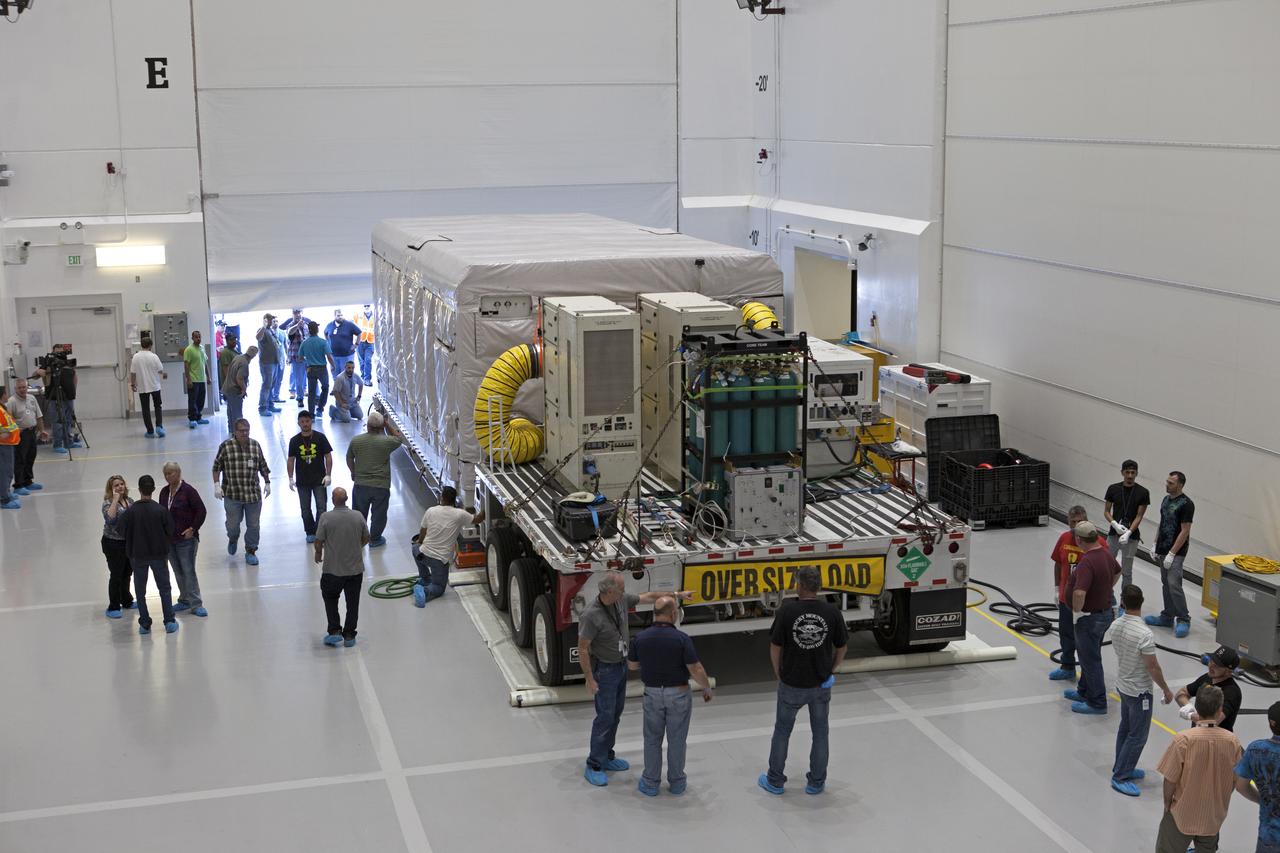
NOAA's Geostationary Operation Environmental Satellite-S (GOES-S) arrives inside Astrotech Space Operations in Titusville, Florida, to prepare it for launch. The facility is located near NASA's Kennedy Space Center. GOES-S is the second in a series of four advanced geostationary weather satellites. The GOES-R series - consisting of the GOES-R, GOES-S, GOES-T and GOES-U spacecraft - will significantly improve the detection and observation of environmental phenomena that directly affect public safety, protection of property and the nation's economic health and prosperity. GOES-S is slated to launch March 1, 2018 aboard a United Launch Alliance Atlas V rocket from Cape Canaveral Air Force Station in Florida.
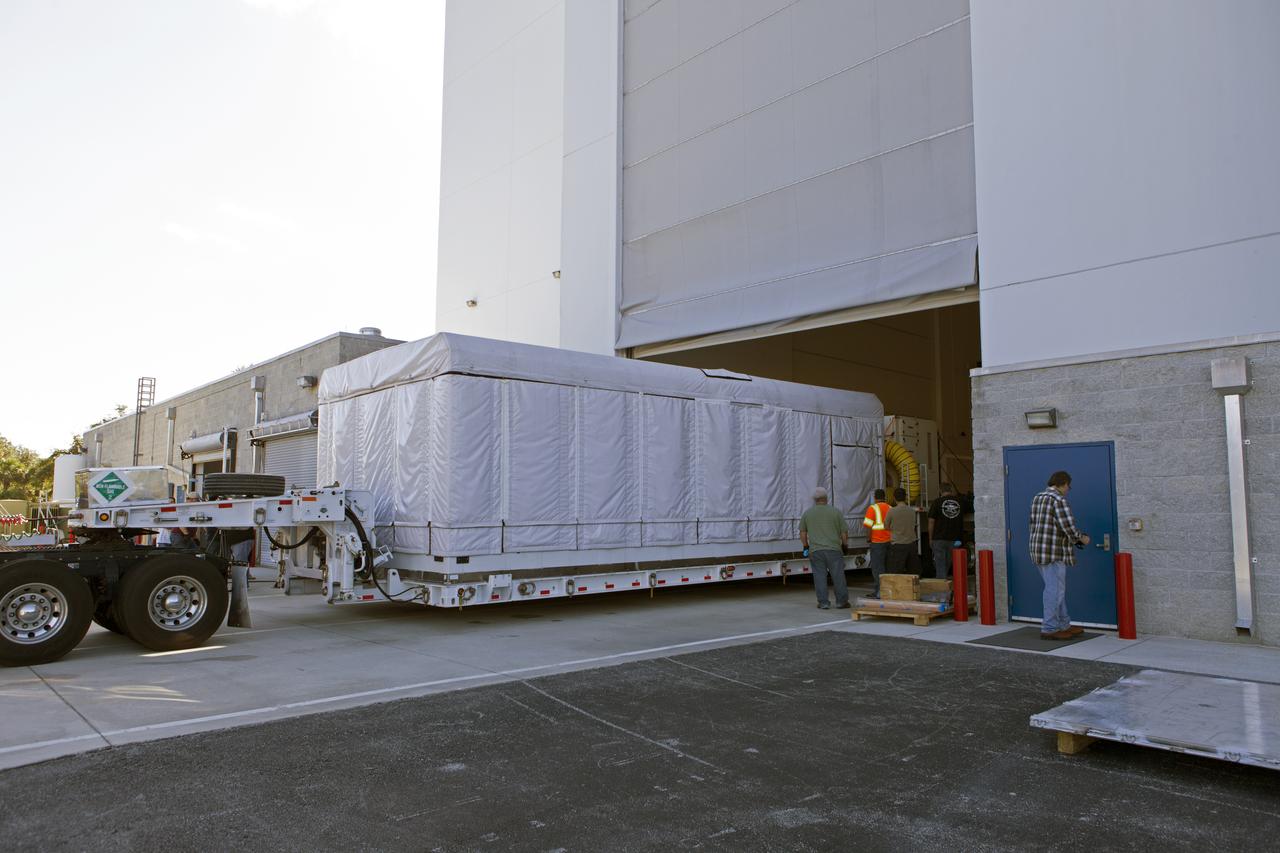
NOAA's Geostationary Operation Environmental Satellite-S (GOES-S) arrives at Astrotech Space Operations in Titusville, Florida, to prepare it for launch. The facility is located near NASA's Kennedy Space Center. GOES-S is the second in a series of four advanced geostationary weather satellites. The GOES-R series - consisting of the GOES-R, GOES-S, GOES-T and GOES-U spacecraft - will significantly improve the detection and observation of environmental phenomena that directly affect public safety, protection of property and the nation's economic health and prosperity. GOES-S is slated to launch March 1, 2018 aboard a United Launch Alliance Atlas V rocket from Cape Canaveral Air Force Station in Florida.
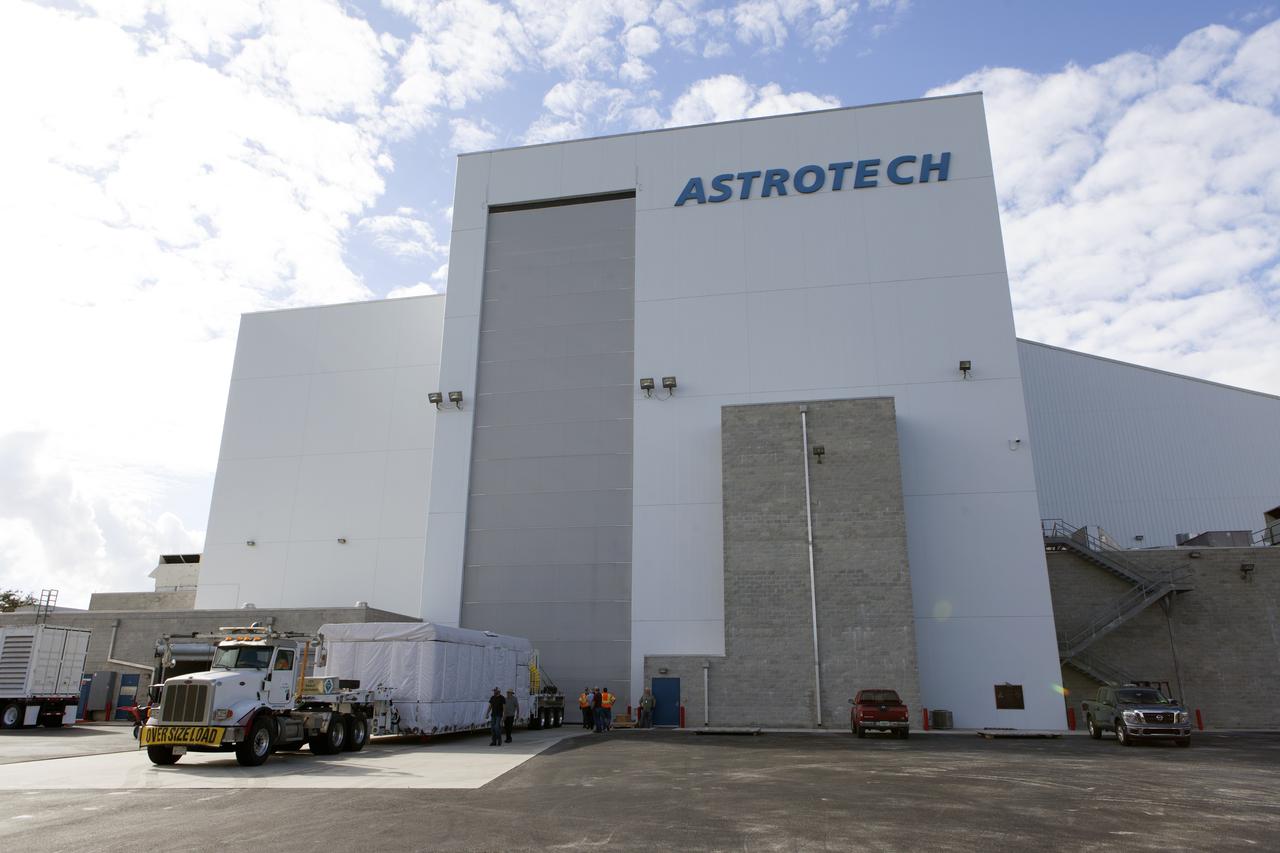
NOAA's Geostationary Operation Environmental Satellite-S (GOES-S) arrives at Astrotech Space Operations in Titusville, Florida, to prepare it for launch. The facility is located near NASA's Kennedy Space Center. GOES-S is the second in a series of four advanced geostationary weather satellites. The GOES-R series - consisting of the GOES-R, GOES-S, GOES-T and GOES-U spacecraft - will significantly improve the detection and observation of environmental phenomena that directly affect public safety, protection of property and the nation's economic health and prosperity. GOES-S is slated to launch March 1, 2018 aboard a United Launch Alliance Atlas V rocket from Cape Canaveral Air Force Station in Florida.
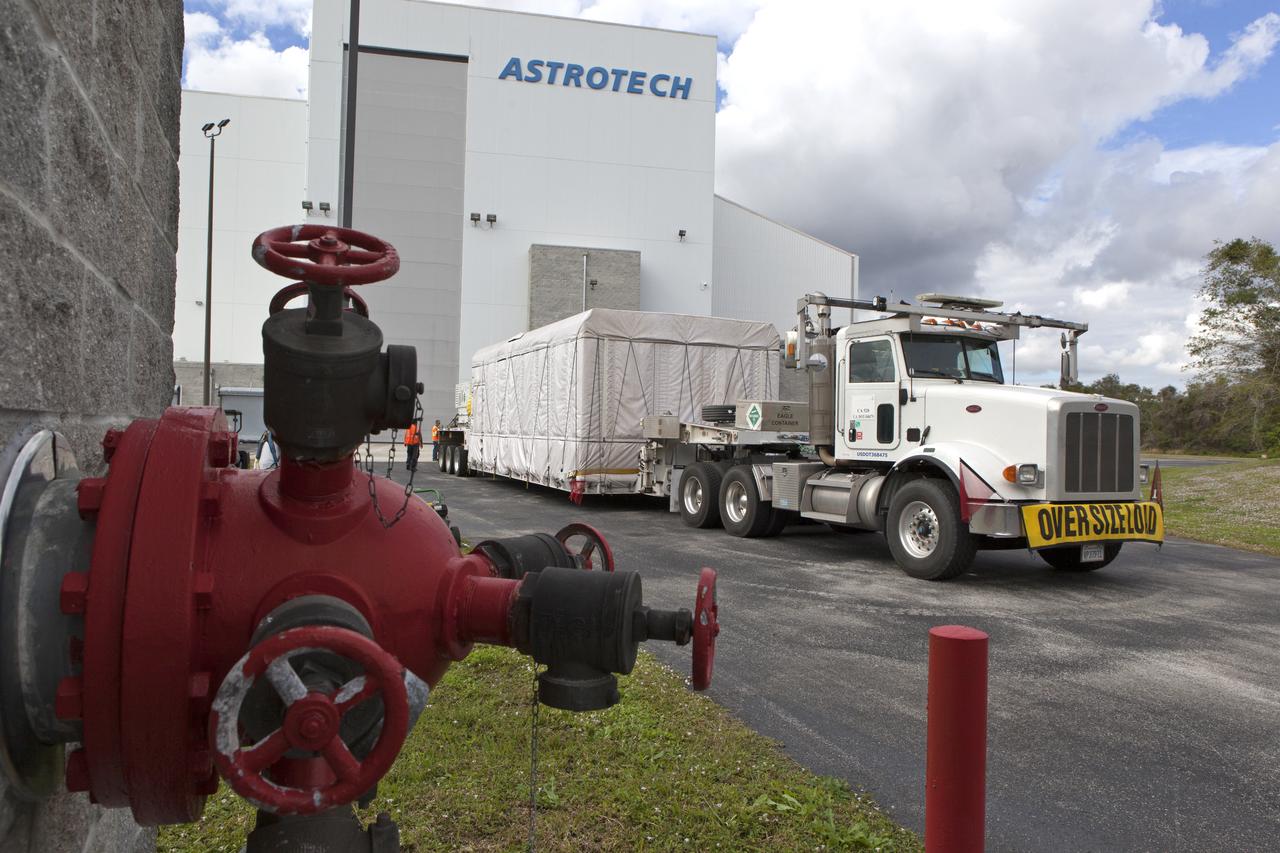
NOAA's Geostationary Operation Environmental Satellite-S (GOES-S) arrives at Astrotech Space Operations in Titusville, Florida, to prepare it for launch. The facility is located near NASA's Kennedy Space Center. GOES-S is the second in a series of four advanced geostationary weather satellites. The GOES-R series - consisting of the GOES-R, GOES-S, GOES-T and GOES-U spacecraft - will significantly improve the detection and observation of environmental phenomena that directly affect public safety, protection of property and the nation's economic health and prosperity. GOES-S is slated to launch March 1, 2018 aboard a United Launch Alliance Atlas V rocket from Cape Canaveral Air Force Station in Florida.
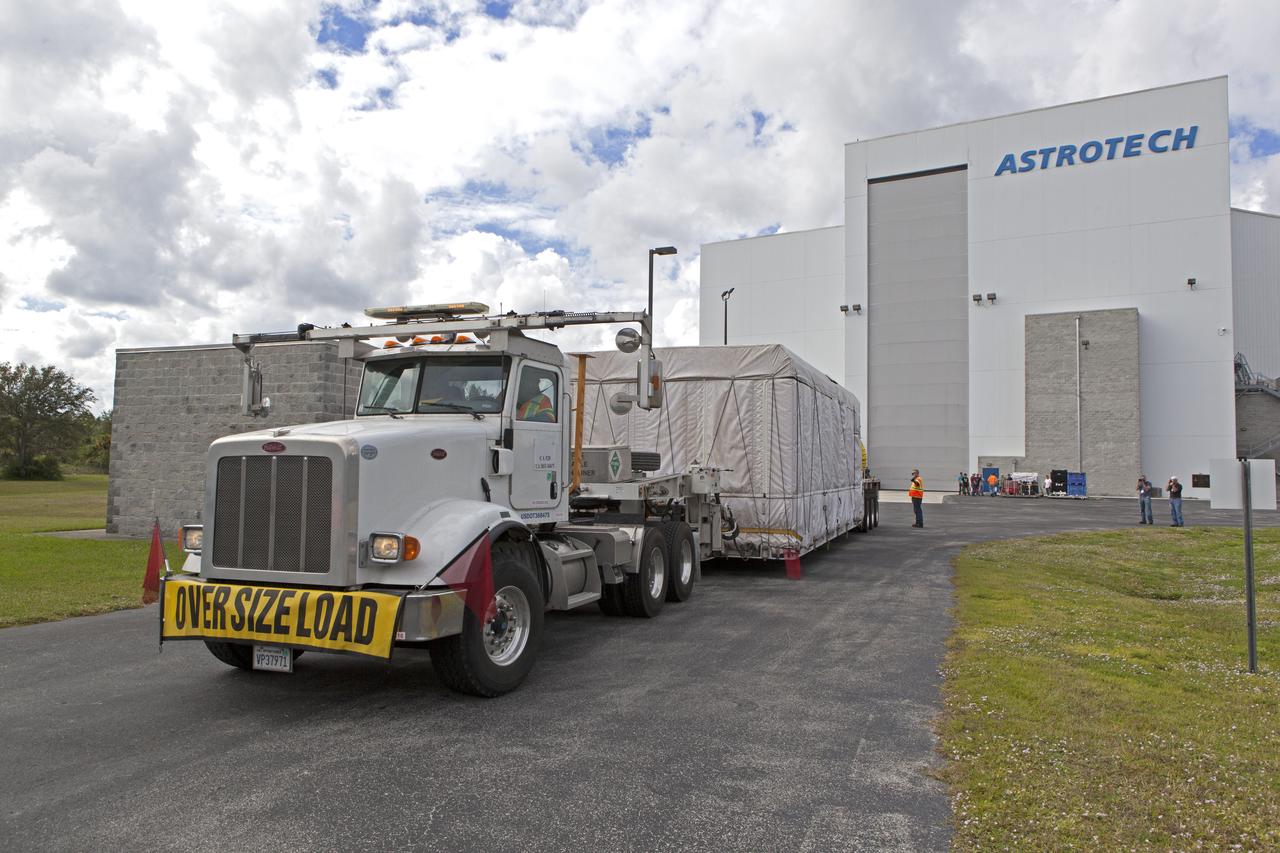
NOAA's Geostationary Operation Environmental Satellite-S (GOES-S) arrives at Astrotech Space Operations in Titusville, Florida, to prepare it for launch. The facility is located near NASA's Kennedy Space Center. GOES-S is the second in a series of four advanced geostationary weather satellites. The GOES-R series - consisting of the GOES-R, GOES-S, GOES-T and GOES-U spacecraft - will significantly improve the detection and observation of environmental phenomena that directly affect public safety, protection of property and the nation's economic health and prosperity. GOES-S is slated to launch March 1, 2018 aboard a United Launch Alliance Atlas V rocket from Cape Canaveral Air Force Station in Florida.
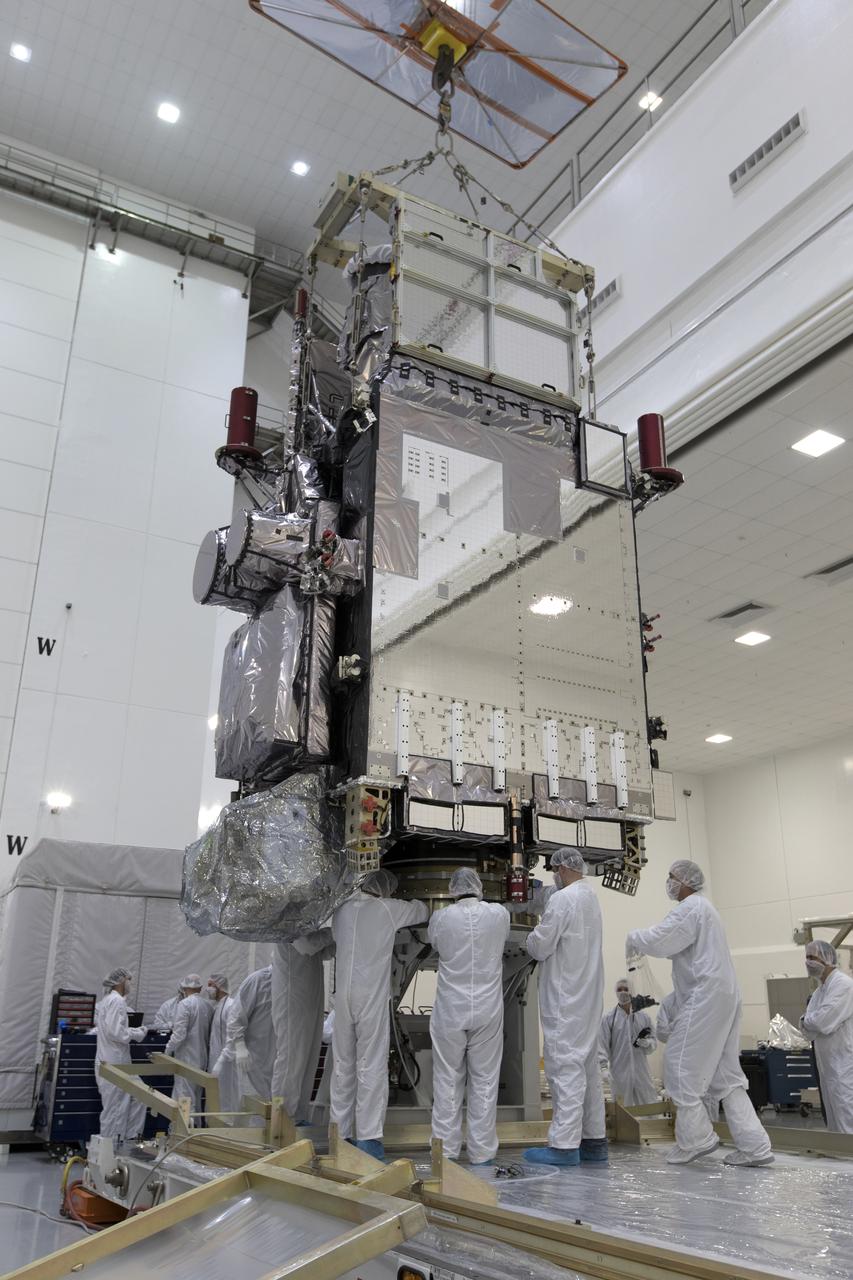
At Astrotech Space Operations in Titusville, Florida, technicians and engineers inspect NOAA's Geostationary Operational Environmental Satellite-S (GOES-S). The facility is located near NASA's Kennedy Space Center. GOES-S is the second in a series of four advanced geostationary weather satellites. The GOES-R series - consisting of the GOES-R, GOES-S, GOES-T and GOES-U spacecraft - will significantly improve the detection and observation of environmental phenomena that directly affect public safety, protection of property and the nation's economic health and prosperity. GOES-S is slated to launch March 1, 2018 aboard a United Launch Alliance Atlas V rocket from Cape Canaveral Air Force Station in Florida.
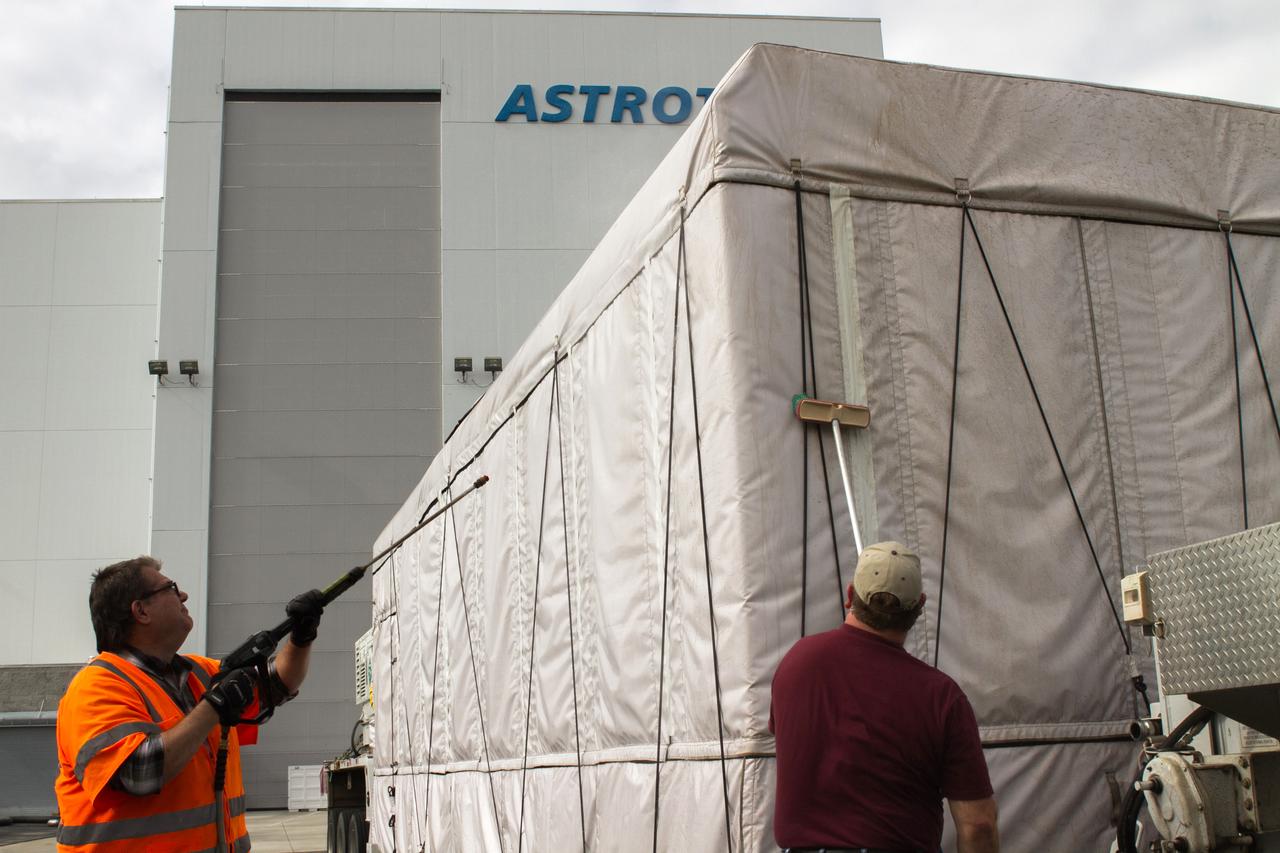
NOAA's Geostationary Operation Environmental Satellite-S (GOES-S) arrives at Astrotech Space Operations in Titusville, Florida, to prepare it for launch. The facility is located near NASA's Kennedy Space Center. GOES-S is the second in a series of four advanced geostationary weather satellites. The GOES-R series - consisting of the GOES-R, GOES-S, GOES-T and GOES-U spacecraft - will significantly improve the detection and observation of environmental phenomena that directly affect public safety, protection of property and the nation's economic health and prosperity. GOES-S is slated to launch March 1, 2018 aboard a United Launch Alliance Atlas V rocket from Cape Canaveral Air Force Station in Florida.
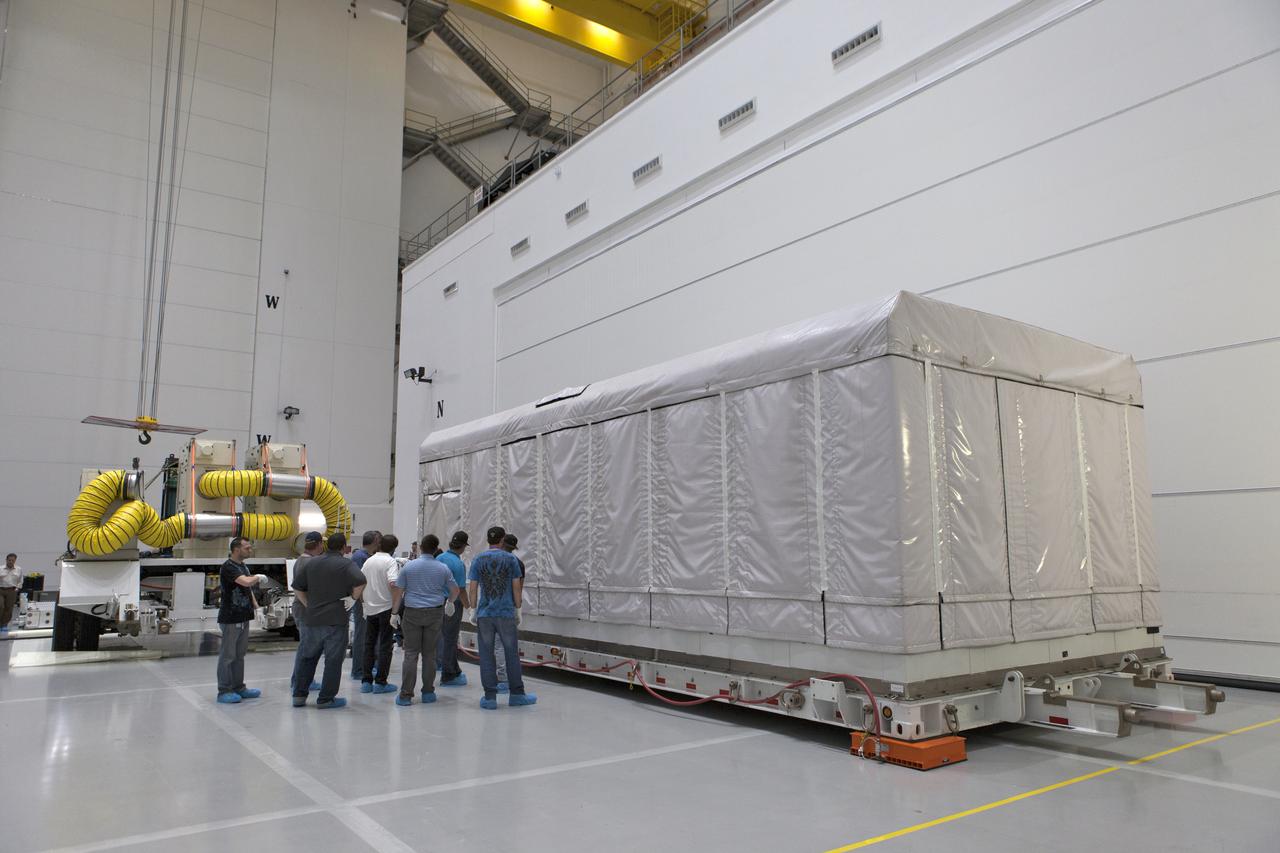
NOAA's Geostationary Operation Environmental Satellite-S (GOES-S) arrives inside Astrotech Space Operations in Titusville, Florida, to prepare it for launch. The facility is located near NASA's Kennedy Space Center. GOES-S is the second in a series of four advanced geostationary weather satellites. The GOES-R series - consisting of the GOES-R, GOES-S, GOES-T and GOES-U spacecraft - will significantly improve the detection and observation of environmental phenomena that directly affect public safety, protection of property and the nation's economic health and prosperity. GOES-S is slated to launch March 1, 2018 aboard a United Launch Alliance Atlas V rocket from Cape Canaveral Air Force Station in Florida.
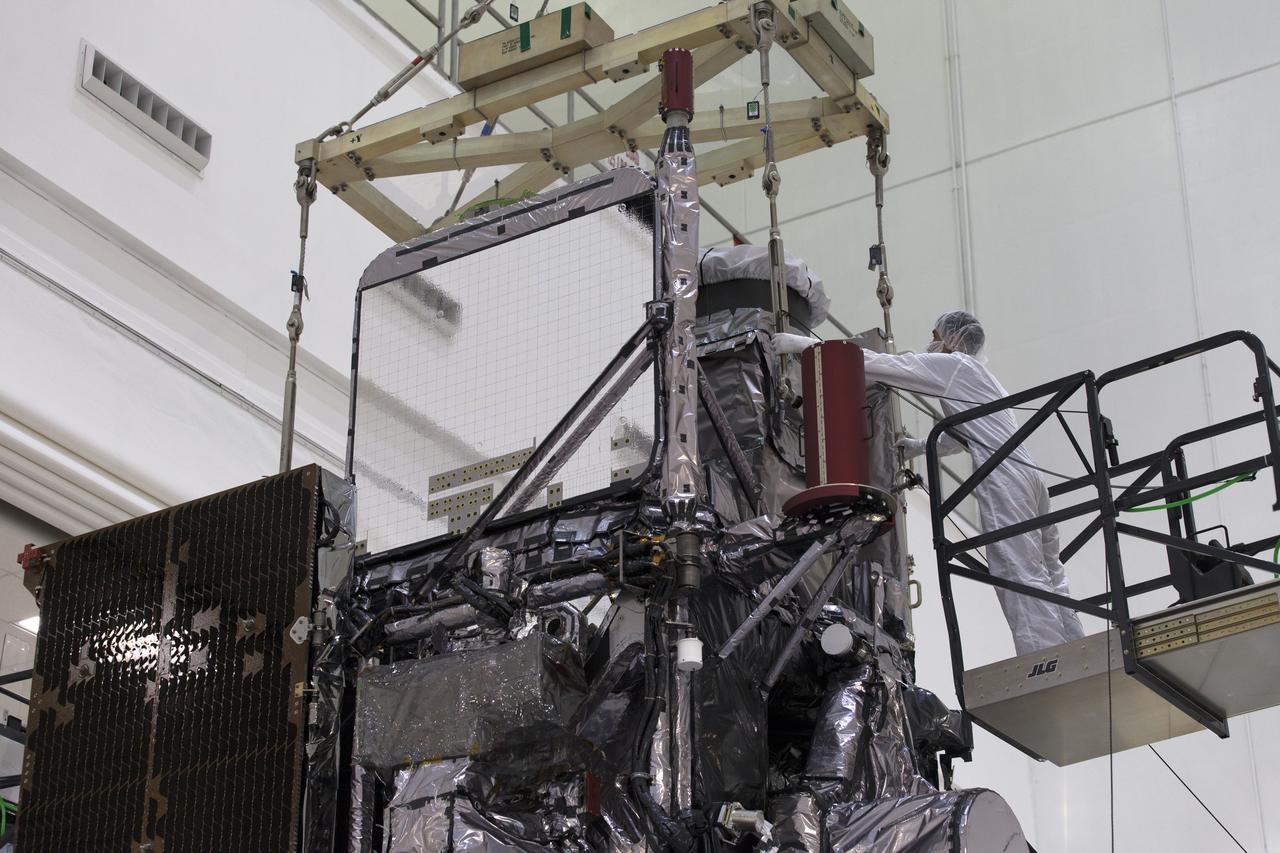
At Astrotech Space Operations in Titusville, Florida, a technician inspects NOAA's Geostationary Operational Environmental Satellite-S (GOES-S). The facility is located near NASA's Kennedy Space Center. GOES-S is the second in a series of four advanced geostationary weather satellites. The GOES-R series - consisting of the GOES-R, GOES-S, GOES-T and GOES-U spacecraft - will significantly improve the detection and observation of environmental phenomena that directly affect public safety, protection of property and the nation's economic health and prosperity. GOES-S is slated to launch March 1, 2018 aboard a United Launch Alliance Atlas V rocket from Cape Canaveral Air Force Station in Florida.
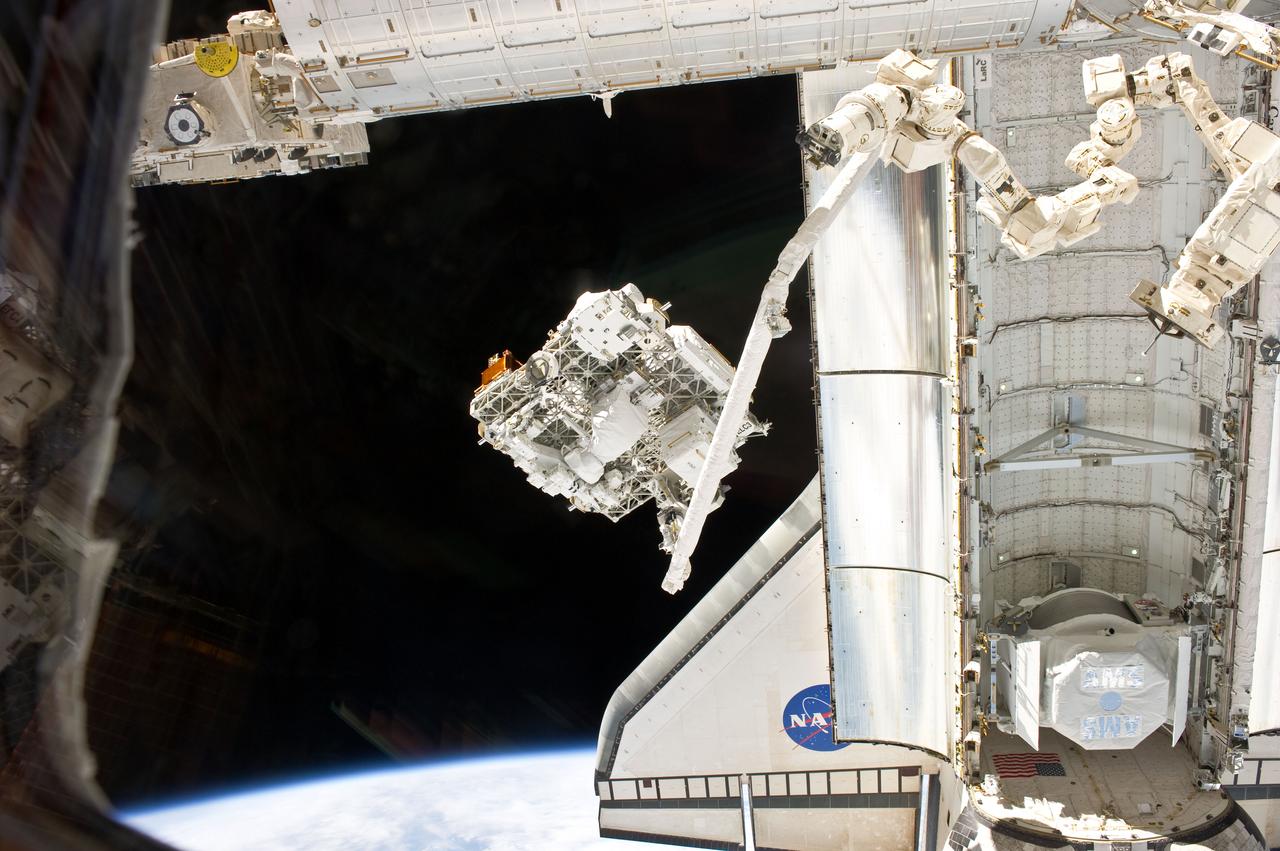
S134-E-007141 (18 May 2011) --- In the grasp of space shuttle Endeavour?s robotic Canadarm, the Express Logistics Carrier-3 (ELC-3) is transferred from Endeavour?s payload bay for hand off to the International Space Station?s Canadarm2 to be installed on the left side of the station?s truss structure. ELC-3 holds spare hardware for future station use, including an ammonia tank, a high pressure gas tank, a cargo transport container, two S-band antenna assemblies and a spare arm for DEXTRE, the Special Purpose Dexterous Manipulator. Photo credit: NASA