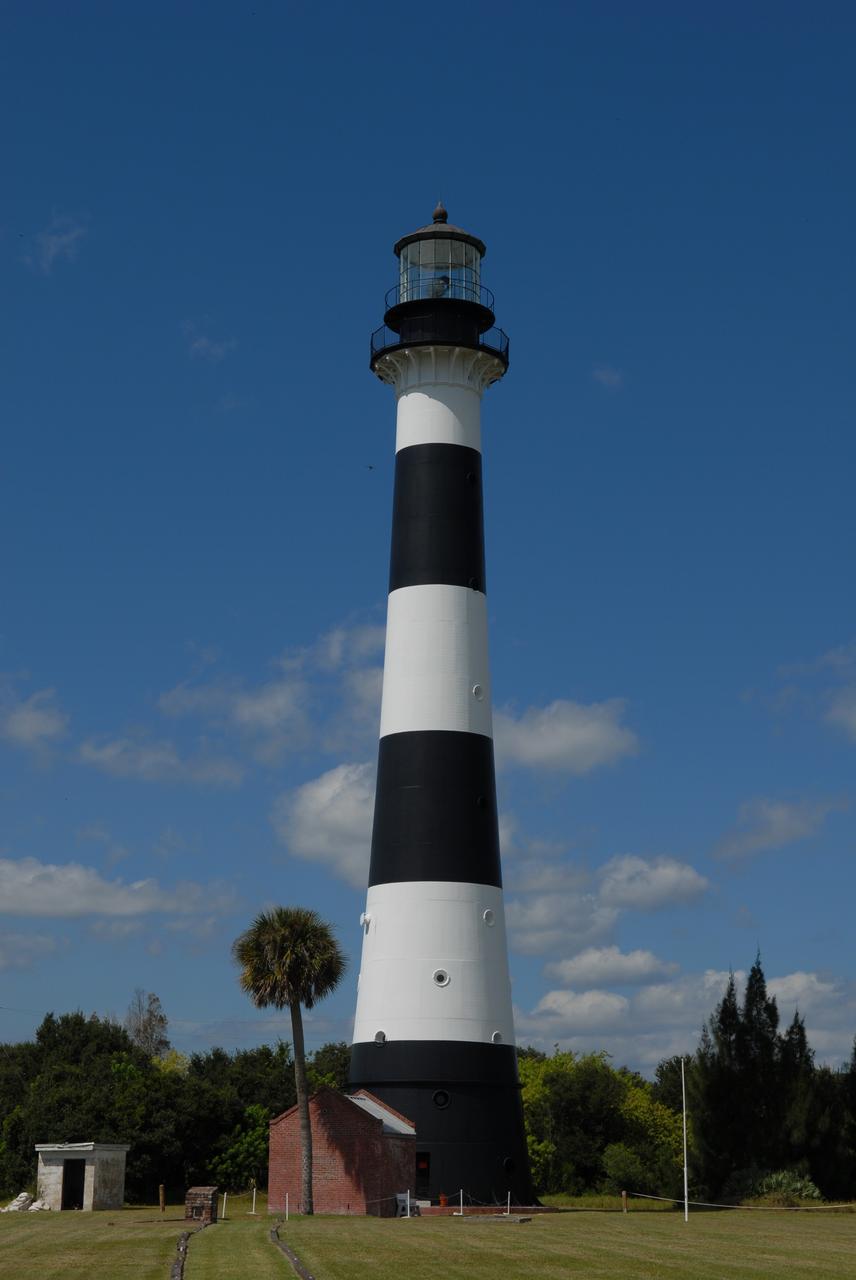
CAPE CANAVERAL, Fla. – The Cape Canaveral Lighthouse stands in the midst of space-age structures, a monolith born in another era of exploration. Located near Launch Complex 36 on Cape Canaveral Air Force Station, the Coast Guard transferred ownership in 2000 of the lighthouse structure and its grounds to the U.S. Air Force, which is now responsible for maintaining it. A restoration of the lighthouse was completed by the Air Force in 2007. The Coast Guard continues to maintain the beacon as an active navigational aid. For the history of the lighthouse, visit http://www.nasa.gov/centers/kennedy/about/history/lighthouse.html. For current information, visit http://www.CanaveralLight.org. Photo credit: NASA/Jim Grossmann
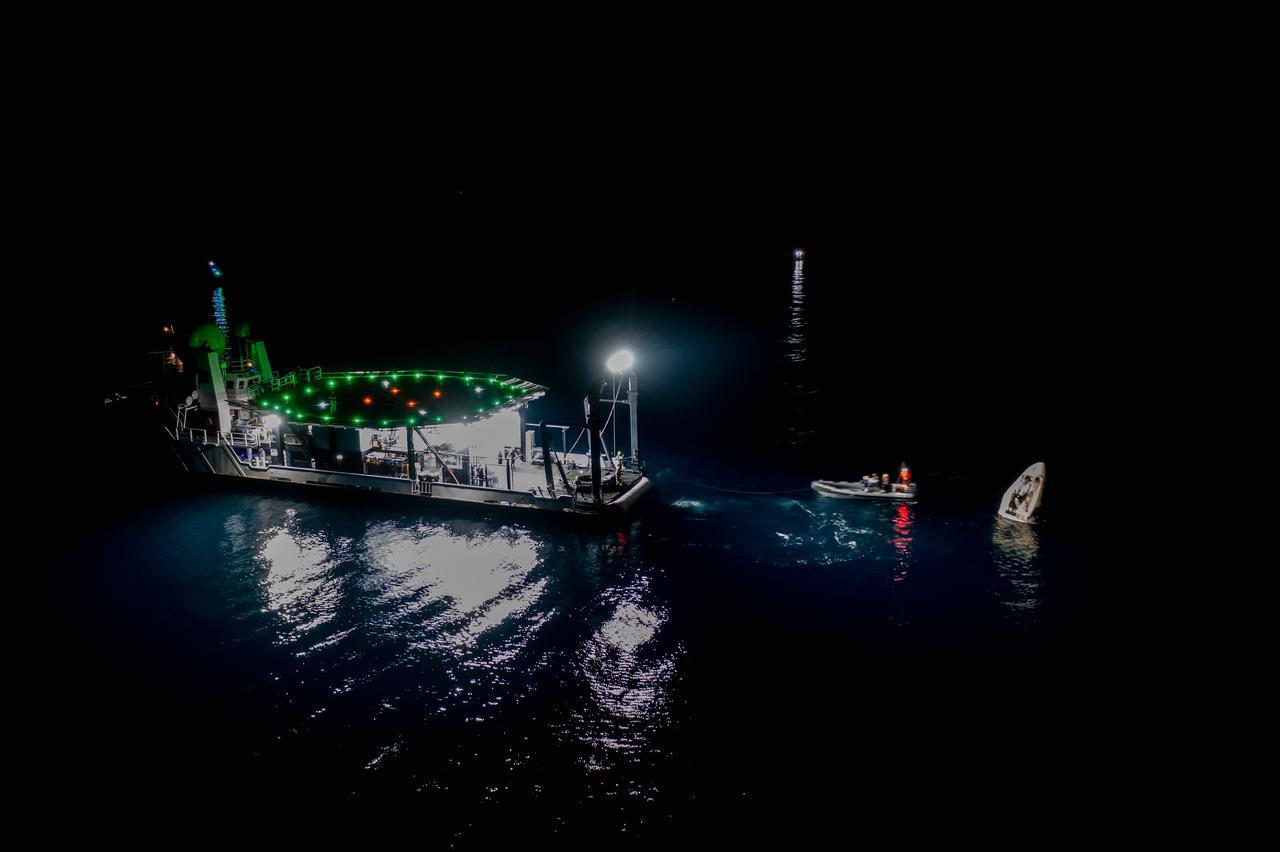
The SpaceX Crew Dragon Resilience splashes down in the Gulf of Mexico off the coast of Panama City, in Florida, at 2:56 a.m. EDT on May 2, 2021. Astronauts Michael Hopkins, Victor Glover, and Shannon Walker of NASA, and Soichi Noguchi of JAXA (Japan Aerospace Exploration Agency) completed Crew-1, the first crew rotation mission to the International Space Station in partnership with NASA as part of the agency’s Commercial Crew Program. At left is SpaceX’s Go Navigator recovery ship. Teams on two fast boats and Go Navigator will secure Crew Dragon to be hoisted onto the main deck of the recovery ship with the astronauts inside.
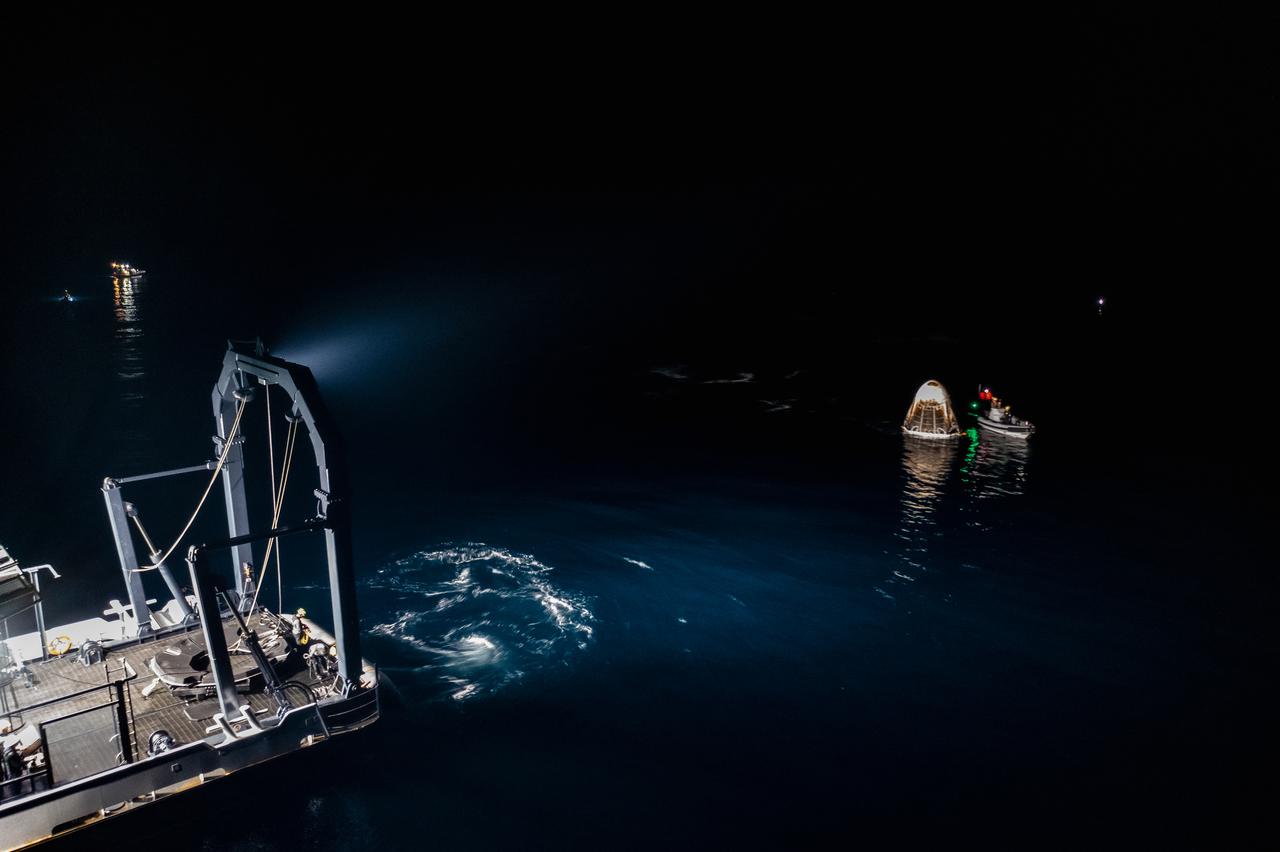
The SpaceX Crew Dragon Resilience splashes down in the Gulf of Mexico off the coast of Panama City, in Florida, at 2:56 a.m. EDT on May 2, 2021. Astronauts Michael Hopkins, Victor Glover, and Shannon Walker of NASA, and Soichi Noguchi of JAXA (Japan Aerospace Exploration Agency) completed Crew-1, the first crew rotation mission to the International Space Station in partnership with NASA as part of the agency’s Commercial Crew Program. At left is SpaceX’s Go Navigator recovery ship. Crew Dragon will be secured and then hoisted onto the main deck of the recovery ship with the astronauts inside.
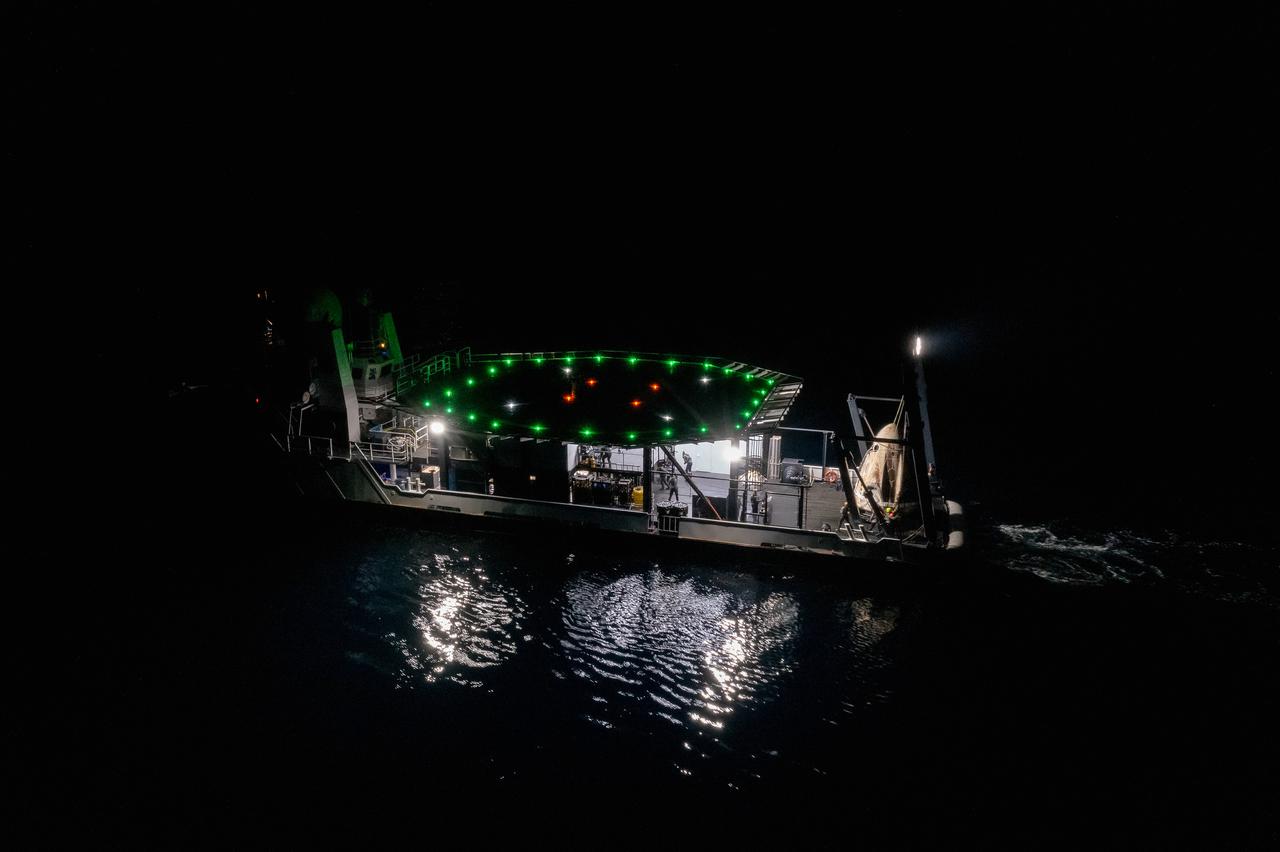
The SpaceX Crew Dragon Resilience splashed down in the Gulf of Mexico off the coast of Panama City, in Florida, at 2:56 a.m. EDT on May 2, 2021. Astronauts Michael Hopkins, Victor Glover, and Shannon Walker of NASA, and Soichi Noguchi of JAXA (Japan Aerospace Exploration Agency) completed Crew-1, the first crew rotation mission to the International Space Station in partnership with NASA as part of the agency’s Commercial Crew Program. Teams on the Go Navigator recovery ship, including two fast boats, work to secure and hoist Crew Dragon onto the main deck of the recovery ship with the astronauts inside.
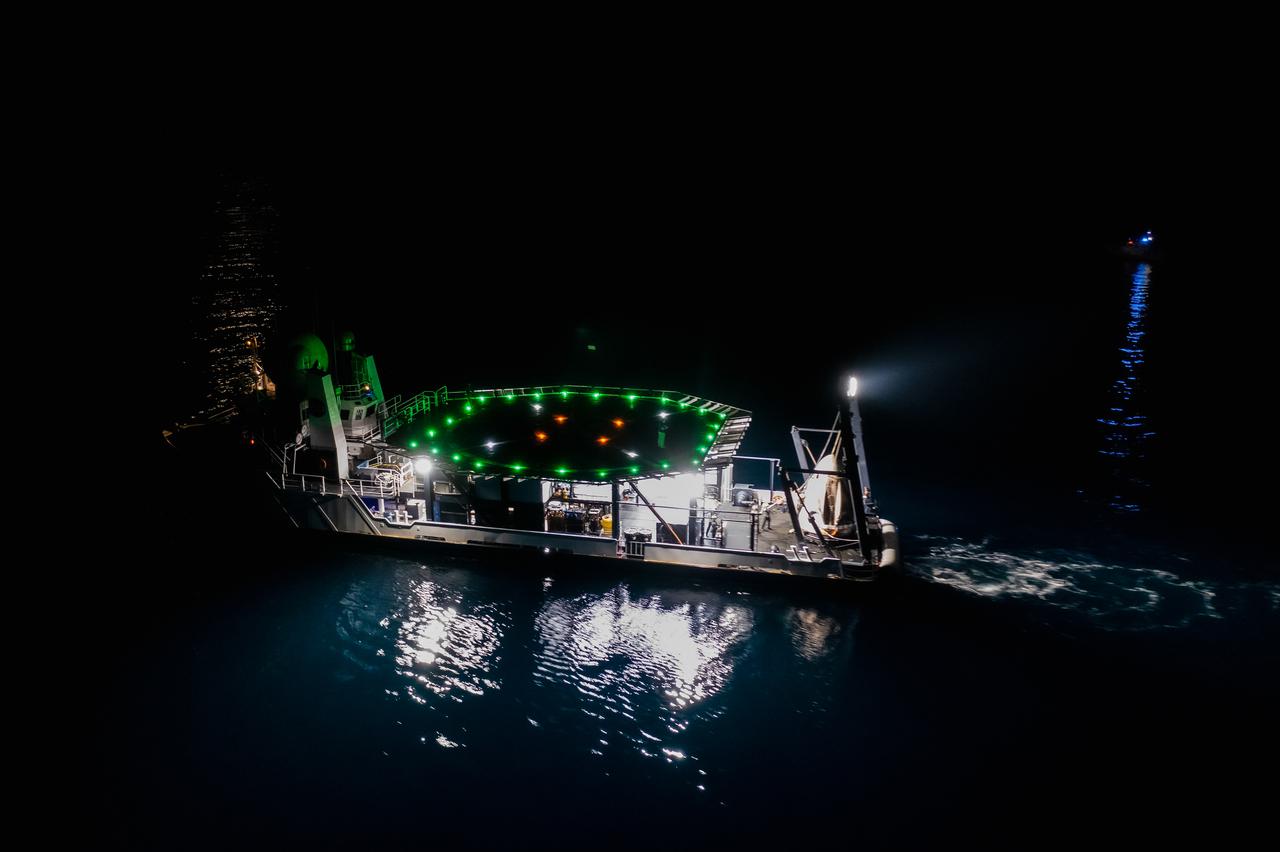
The SpaceX Crew Dragon Resilience splashed down in the Gulf of Mexico off the coast of Panama City, in Florida, at 2:56 a.m. EDT on May 2, 2021. Astronauts Michael Hopkins, Victor Glover, and Shannon Walker of NASA, and Soichi Noguchi of JAXA (Japan Aerospace Exploration Agency) completed Crew-1, the first crew rotation mission to the International Space Station in partnership with NASA as part of the agency’s Commercial Crew Program. Teams on the Go Navigator recovery ship, including two fast boats, work to secure and hoist Crew Dragon onto the main deck of the recovery ship with the astronauts inside.
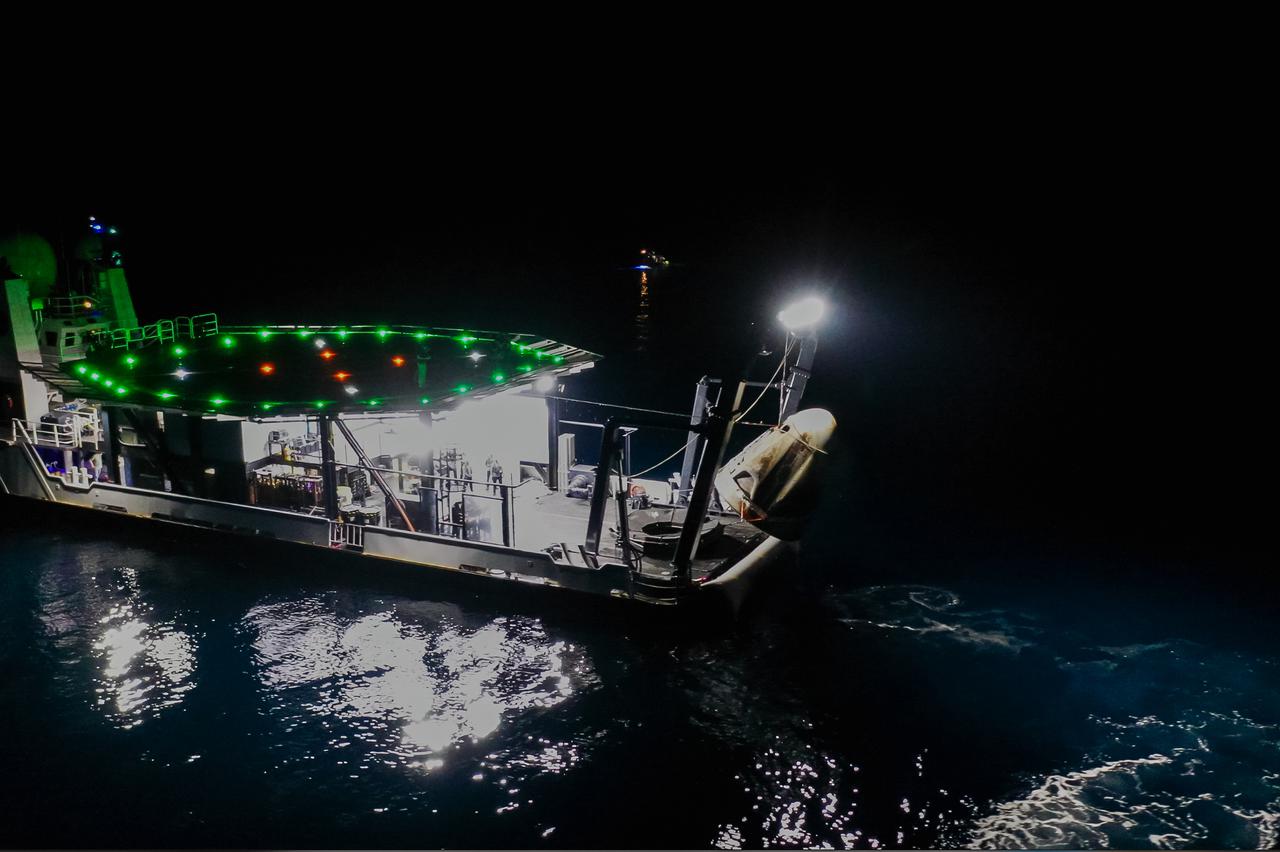
The SpaceX Crew Dragon Resilience splashed down in the Gulf of Mexico off the coast of Panama City, in Florida, at 2:56 a.m. EDT on May 2, 2021. Astronauts Michael Hopkins, Victor Glover, and Shannon Walker of NASA, and Soichi Noguchi of JAXA (Japan Aerospace Exploration Agency) completed Crew-1, the first crew rotation mission to the International Space Station in partnership with NASA as part of the agency’s Commercial Crew Program. Teams on the Go Navigator recovery ship, including two fast boats, work to secure and hoist Crew Dragon onto the main deck of the recovery ship with the astronauts inside.
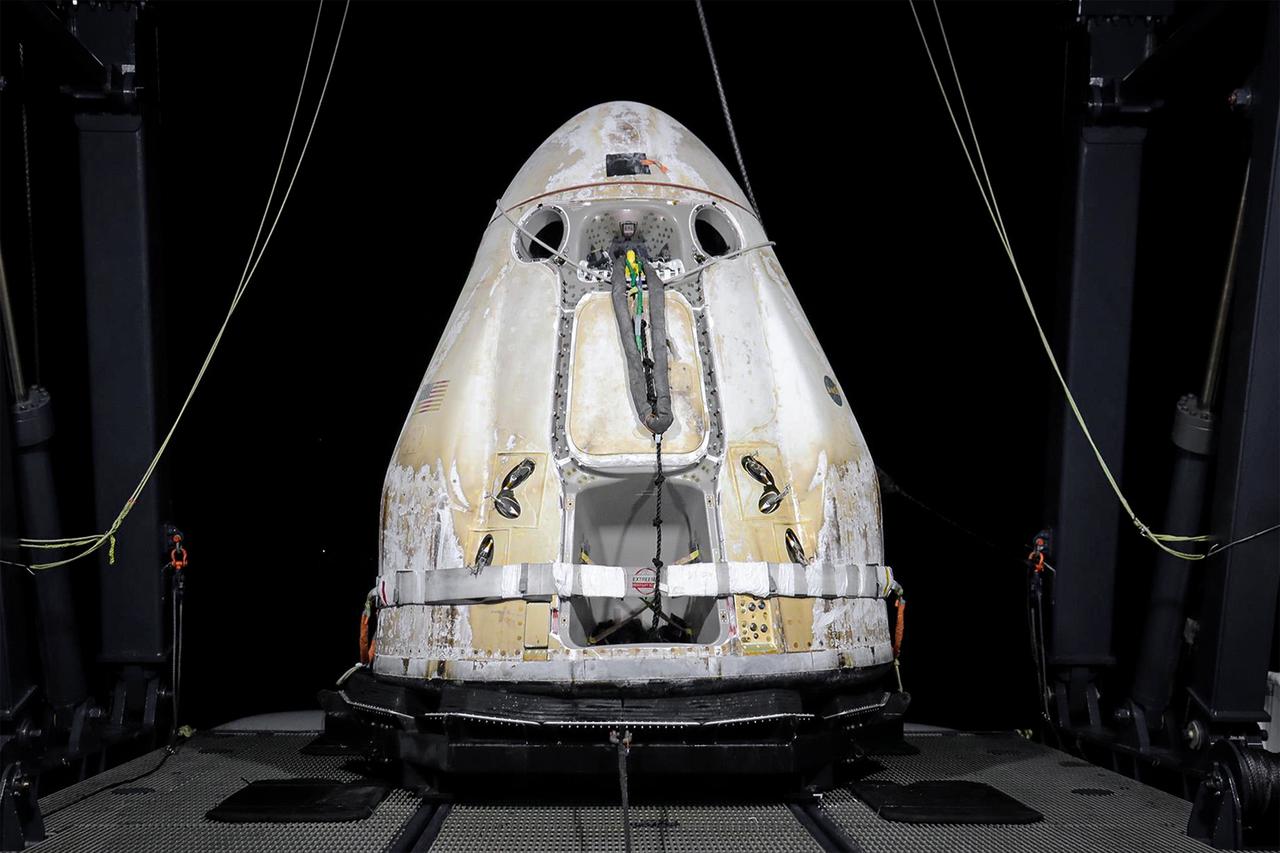
Shown here is the SpaceX Cargo Dragon spacecraft on board the company's Go Navigator recovery ship after making its successful parachute-assisted splashdown west of Tampa off the Florida coast on Jan. 13, 2020, at 8:26 p.m. EST. Just after loading Dragon onto Go Navigator, SpaceX packed an Airbus H225 helicopter with the time-sensitive research cargo for delivery to NASA’s Kennedy Space Center. Dragon returned more than 4,400 pounds of scientific experiments and other cargo from the International Space Station. The upgraded cargo Dragon capsule boasts double the powered locker capacity to preserve science samples, allowing for a significant increase in the research that can be carried back to Earth. Photo credit: SpaceX

Shown here is the SpaceX Cargo Dragon spacecraft on board the company's Go Navigator recovery ship after making its successful parachute-assisted splashdown west of Tampa off the Florida coast on Jan. 13, 2020, at 8:26 p.m. EST. Just after loading Dragon onto Go Navigator, SpaceX packed an Airbus H225 helicopter with the time-sensitive research cargo for delivery to NASA’s Kennedy Space Center. Dragon returned more than 4,400 pounds of scientific experiments and other cargo from the International Space Station. The upgraded cargo Dragon capsule boasts double the powered locker capacity to preserve science samples, allowing for a significant increase in the research that can be carried back to Earth. Photo credit: SpaceX
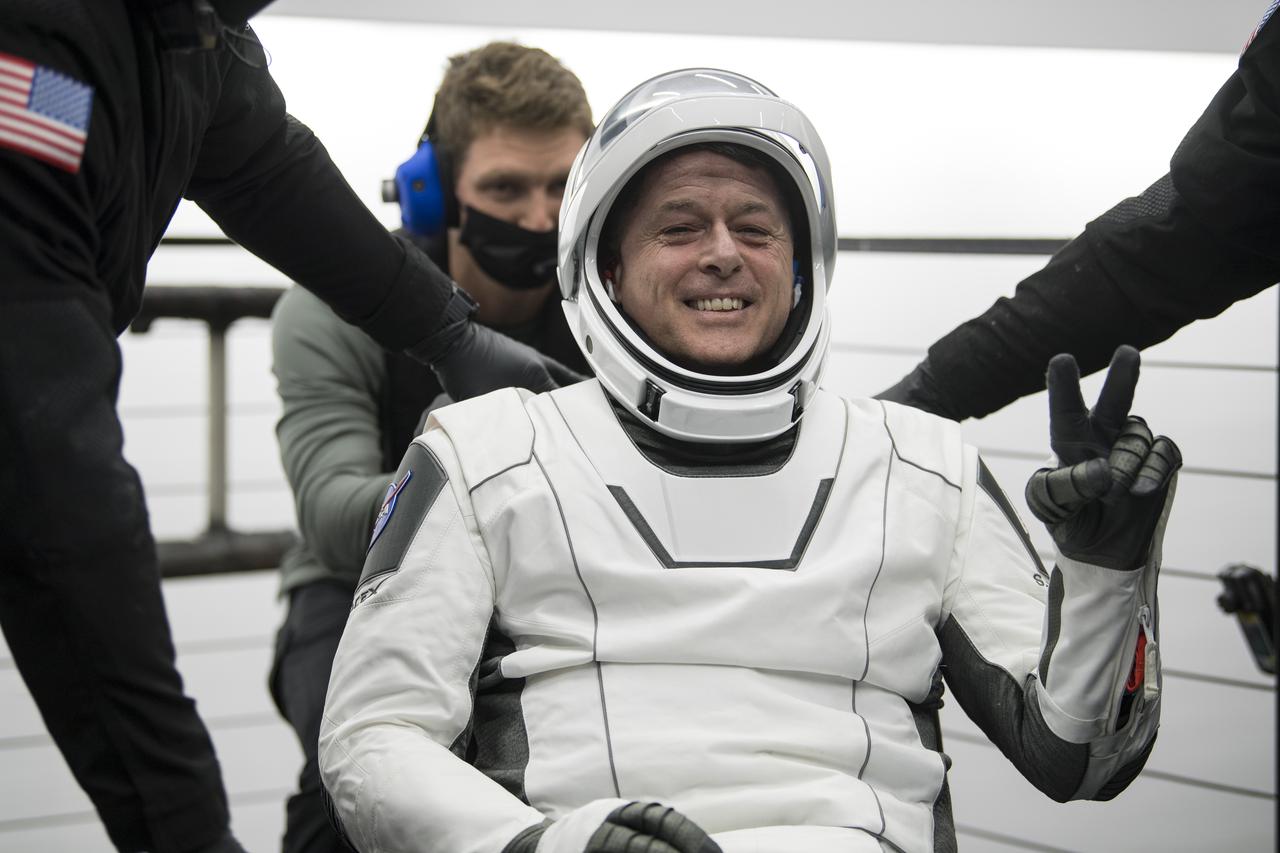
NASA astronaut Shane Kimbrough gives a hand sign after he was helped out of the SpaceX Crew Dragon Endeavour spacecraft onboard the SpaceX GO Navigator recovery ship after he and NASA astronaut Megan McArthur, Japan Aerospace Exploration Agency (JAXA) astronaut Aki Hoshide, and ESA (European Space Agency) astronaut Thomas Pesquet landed in the Gulf of Mexico off the coast of Pensacola, Florida, Monday, Nov. 8, 2021. NASA’s SpaceX Crew-2 mission is the second operational mission of the SpaceX Crew Dragon spacecraft and Falcon 9 rocket to the International Space Station as part of the agency’s Commercial Crew Program. Photo Credit: (NASA/Aubrey Gemignani)
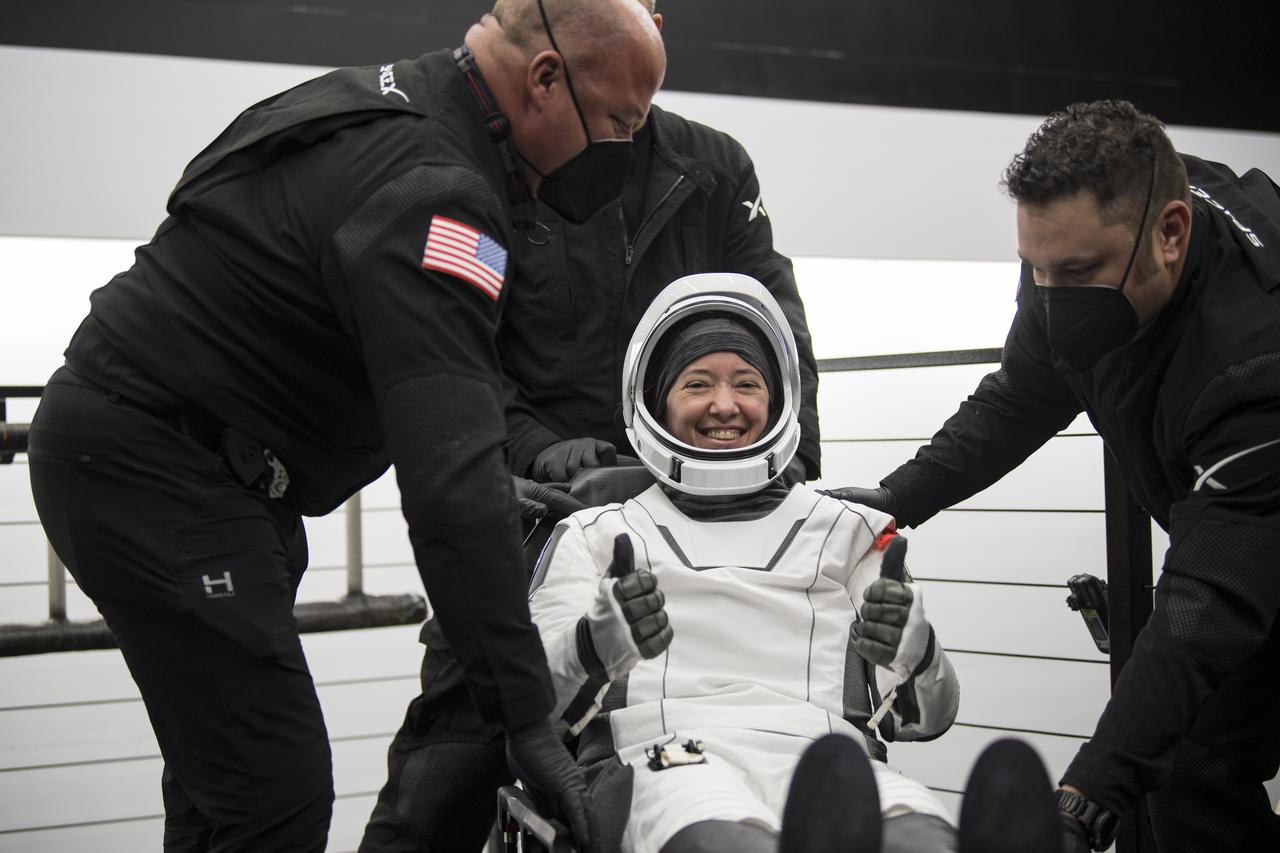
NASA astronaut Megan McArthur gives a thumbs up after being helped out of the SpaceX Crew Dragon Endeavour spacecraft onboard the SpaceX GO Navigator recovery ship after she and NASA astronaut Shane Kimbrough, Japan Aerospace Exploration Agency (JAXA) astronaut Aki Hoshide, and ESA (European Space Agency) astronaut Thomas Pesquet landed in the Gulf of Mexico off the coast of Pensacola, Florida, Monday, Nov. 8, 2021. NASA’s SpaceX Crew-2 mission is the second operational mission of the SpaceX Crew Dragon spacecraft and Falcon 9 rocket to the International Space Station as part of the agency’s Commercial Crew Program. Photo Credit: (NASA/Aubrey Gemignani)
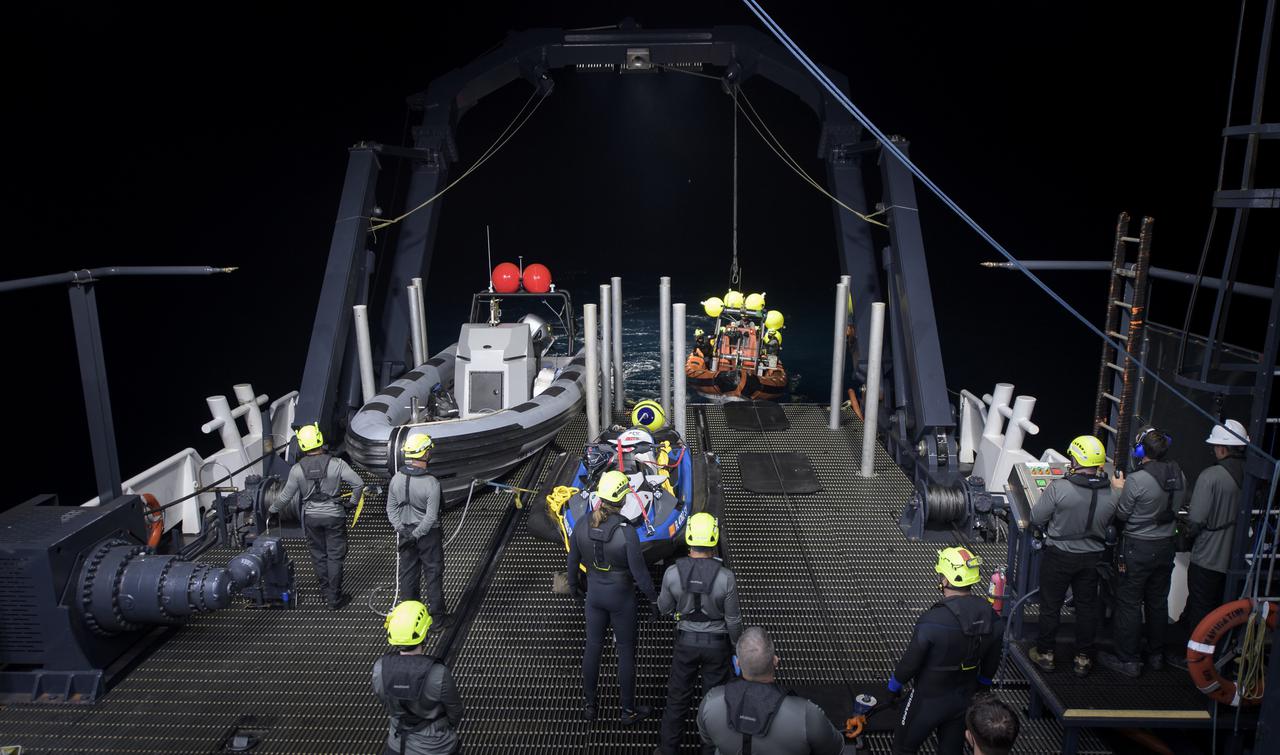
NASA and SpaceX support teams onboard the SpaceX GO Navigator recovery ship prepare for the landing of the SpaceX Crew Dragon Resilience spacecraft with NASA astronauts Mike Hopkins, Shannon Walker, and Victor Glover, and Japan Aerospace Exploration Agency (JAXA) astronaut Soichi Noguchi aboard in the Gulf of Mexico off the coast of Panama City, Florida, Saturday, May 1, 2021. NASA’s SpaceX Crew-1 mission is the first crew rotation flight of the SpaceX Crew Dragon spacecraft and Falcon 9 rocket with astronauts to the International Space Station as part of the agency’s Commercial Crew Program. Photo Credit: (NASA/Bill Ingalls)
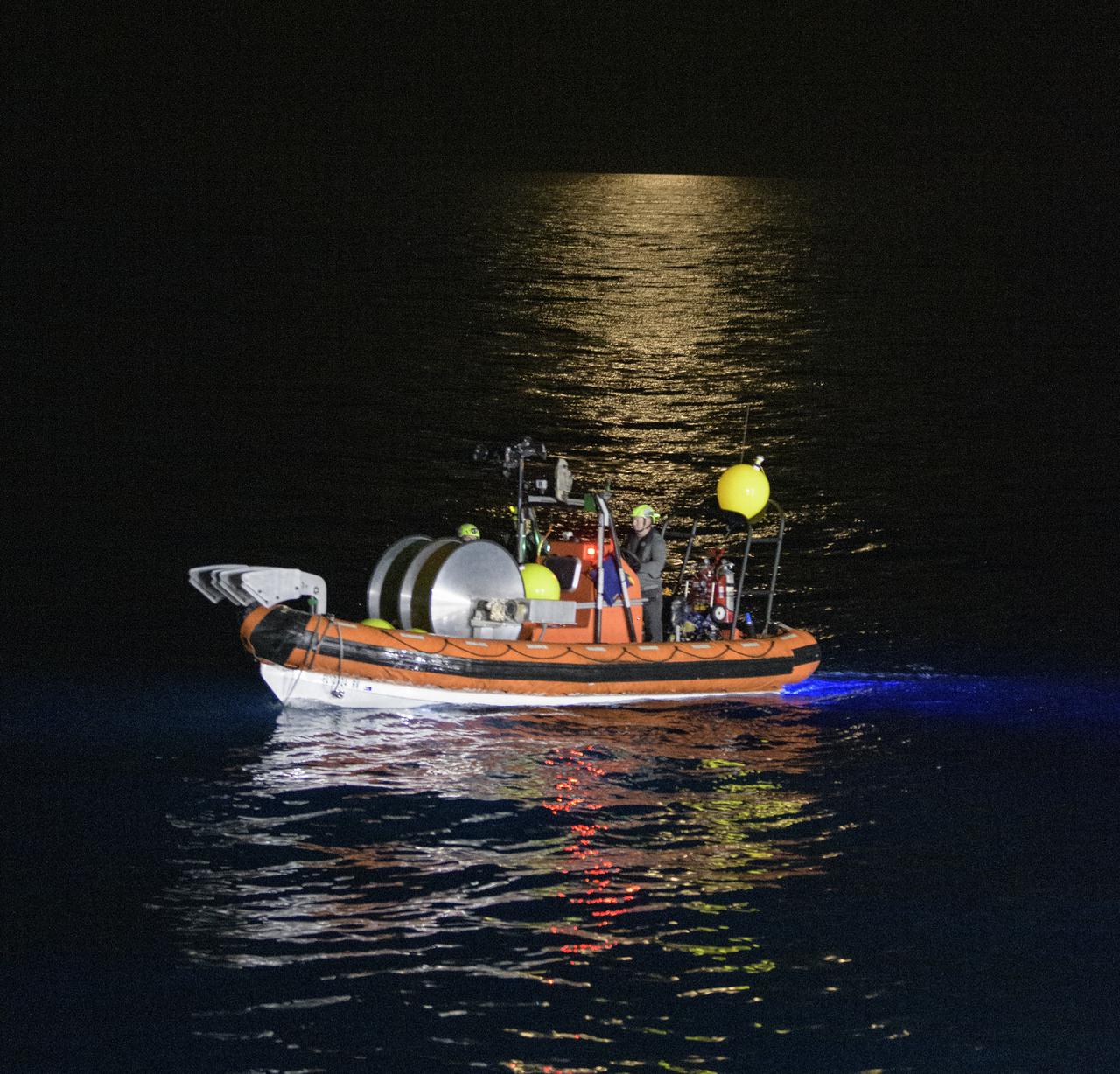
SpaceX support teams deploy in fast boats off the SpaceX GO Navigator recovery ship as they prepare for the landing of the SpaceX Crew Dragon Resilience spacecraft with NASA astronauts Mike Hopkins, Shannon Walker, and Victor Glover, and Japan Aerospace Exploration Agency (JAXA) astronaut Soichi Noguchi aboard in the Gulf of Mexico off the coast of Panama City, Florida, Sunday, May 2, 2021. NASA’s SpaceX Crew-1 mission is the first crew rotation flight of the SpaceX Crew Dragon spacecraft and Falcon 9 rocket with astronauts to the International Space Station as part of the agency’s Commercial Crew Program. Photo Credit: (NASA/Bill Ingalls)
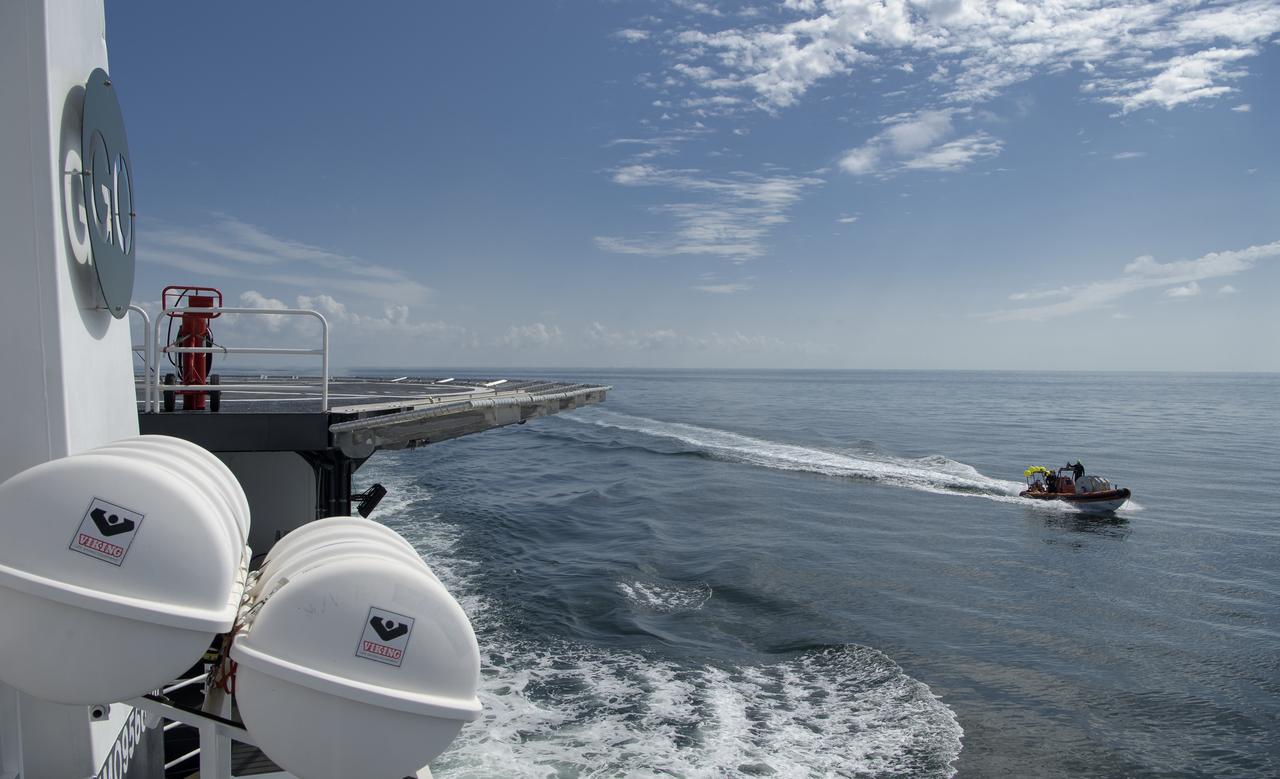
SpaceX support teams are deployed on fast boats from the SpaceX GO Navigator recovery ship ahead of the landing of the SpaceX Crew Dragon Endeavour spacecraft with NASA astronauts Robert Behnken and Douglas Hurley onboard, Sunday, Aug. 2, 2020 in the Gulf of Mexico off the cost of Pensacola, Florida. The Demo-2 test flight for NASA's Commercial Crew Program is the first to deliver astronauts to the International Space Station and return them to Earth onboard a commercially built and operated spacecraft. Behnken and Hurley are returning after spending 64 days in space. Photo Credit: (NASA/Bill Ingalls)
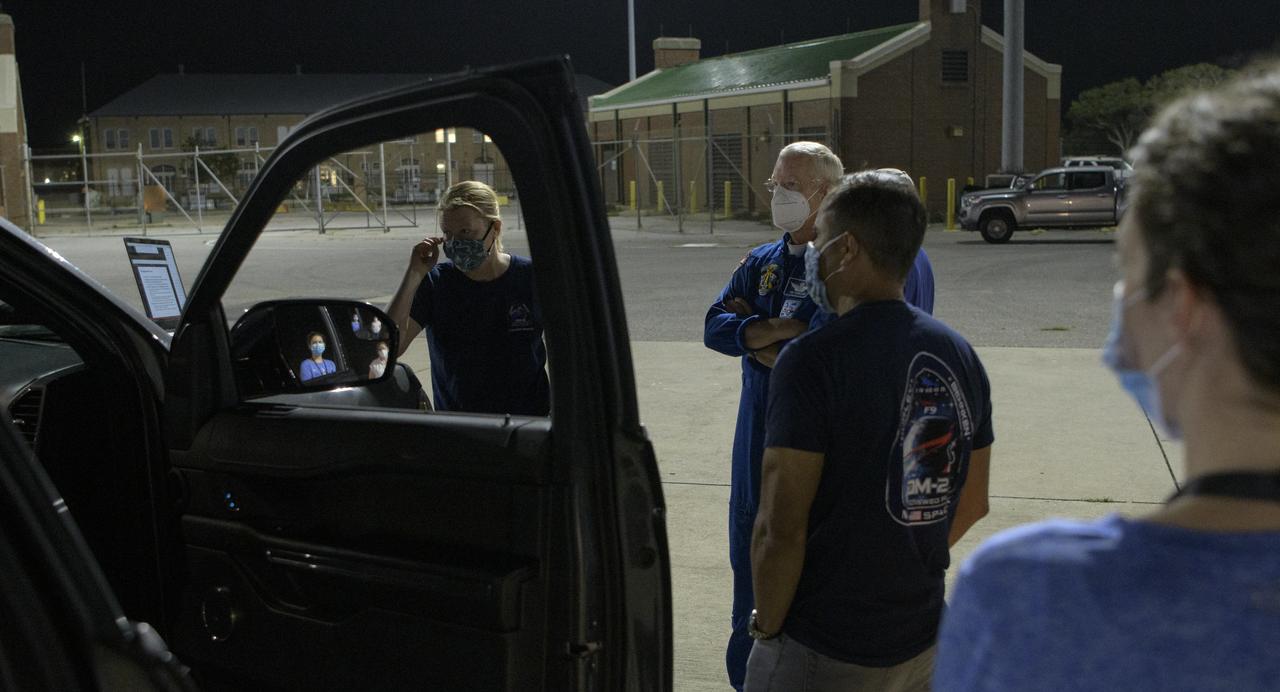
NASA and SpaceX support teams meet prior to boarding the SpaceX GO Navigator recovery ship for the landing of the SpaceX Crew Dragon Endeavour spacecraft with NASA astronauts Robert Behnken and Douglas Hurley onboard, Sunday, Aug. 2, 2020 in the Gulf of Mexico off the cost of Pensacola, Florida. The Demo-2 test flight for NASA's Commercial Crew Program is the first to deliver astronauts to the International Space Station and return them to Earth onboard a commercially built and operated spacecraft. Behnken and Hurley are returning after spending 64 days in space. Photo Credit: (NASA/Bill Ingalls)
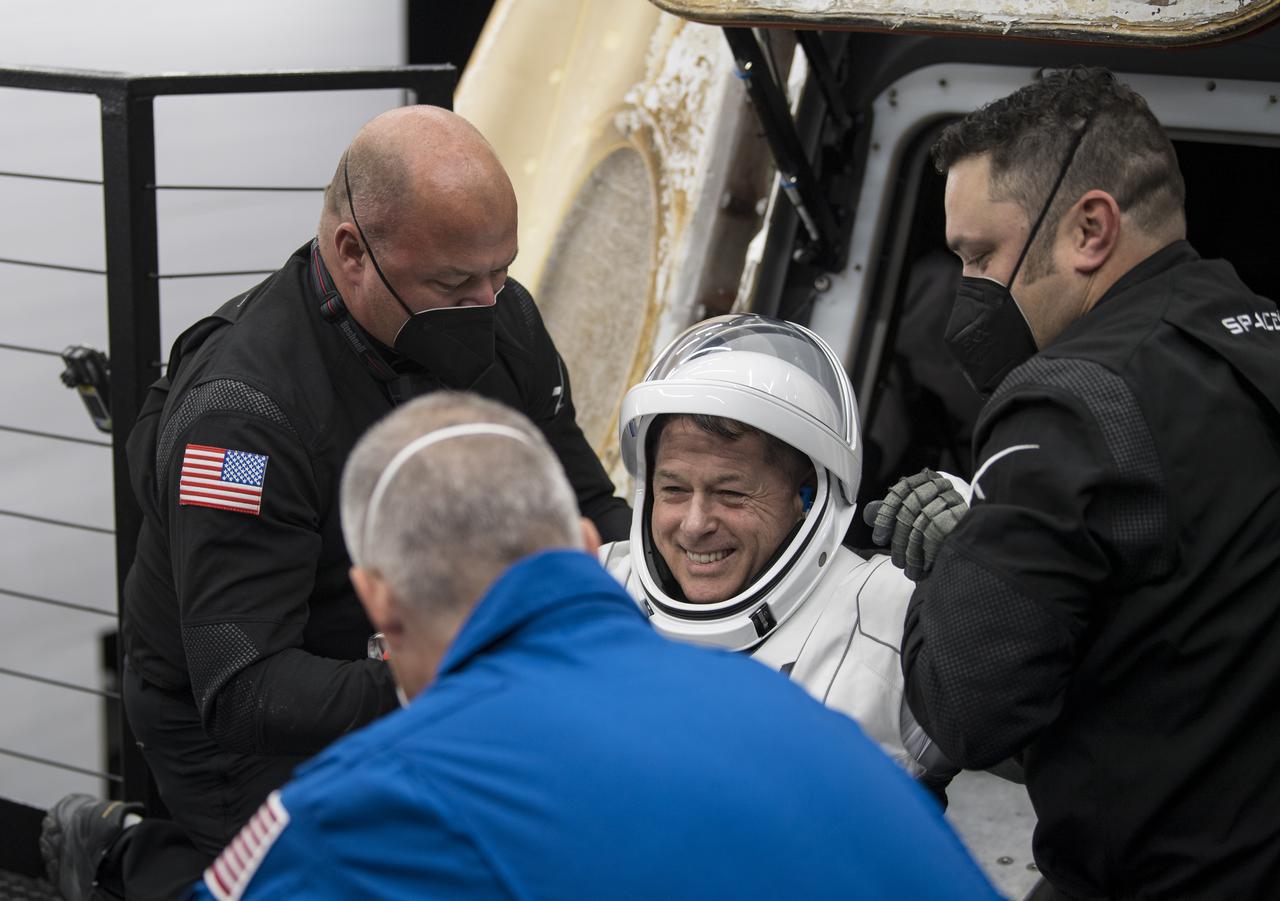
NASA astronaut Shane Kimbrough is helped out of the SpaceX Crew Dragon Endeavour spacecraft onboard the SpaceX GO Navigator recovery ship after he and NASA astronaut Megan McArthur, Japan Aerospace Exploration Agency (JAXA) astronaut Aki Hoshide, and ESA (European Space Agency) astronaut Thomas Pesquet landed in the Gulf of Mexico off the coast of Pensacola, Florida, Monday, Nov. 8, 2021. NASA’s SpaceX Crew-2 mission is the second operational mission of the SpaceX Crew Dragon spacecraft and Falcon 9 rocket to the International Space Station as part of the agency’s Commercial Crew Program. Photo Credit: (NASA/Aubrey Gemignani)
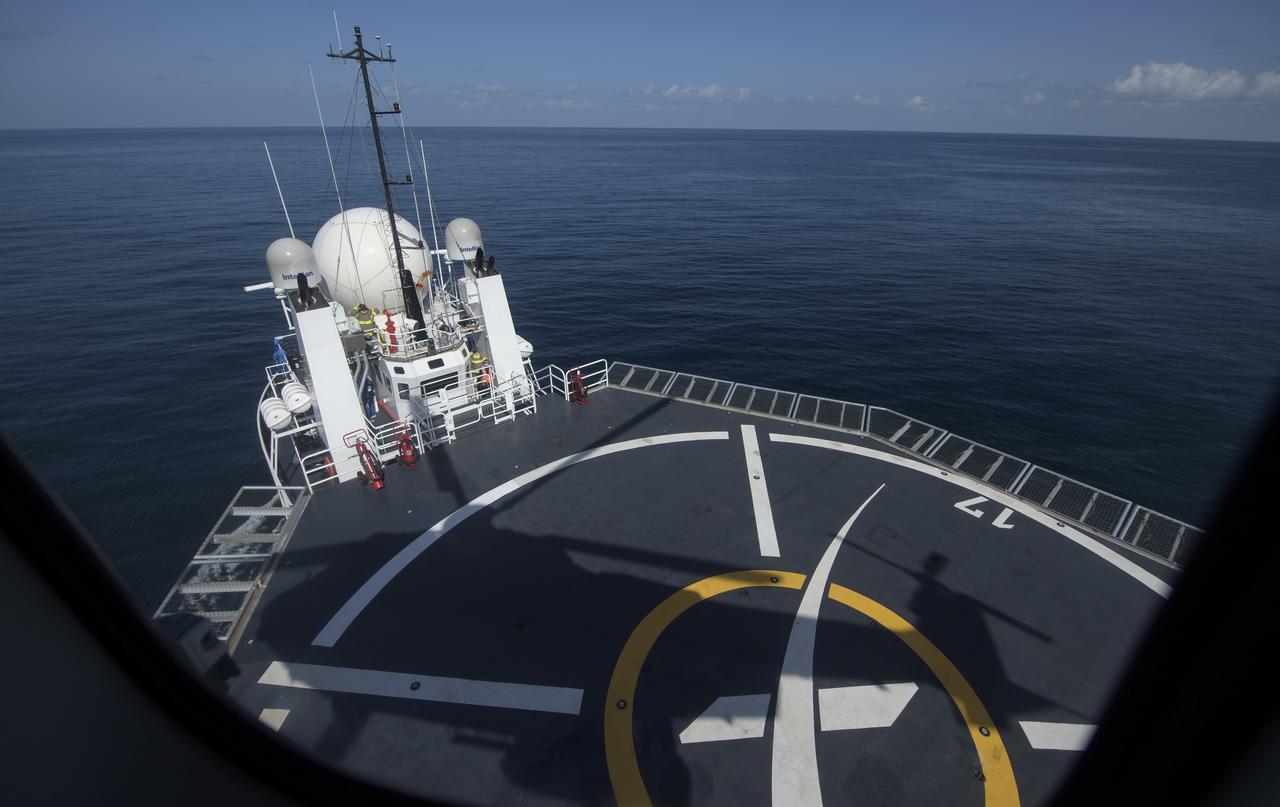
The helicopter carrying NASA astronauts Robert Behnken and Douglas Hurley to Pensacola Naval Air Station is seen silhouetted on the SpaceX GO Navigator recovery ship after the duo landed in their SpaceX Crew Dragon Endeavour spacecraft in the Gulf of Mexico off the coast of Pensacola, Florida, Sunday, Aug. 2, 2020. The Demo-2 test flight for NASA's Commercial Crew Program was the first to deliver astronauts to the International Space Station and return them safely to Earth onboard a commercially built and operated spacecraft. Behnken and Hurley returned after spending 64 days in space. Photo Credit: (NASA/Bill Ingalls)
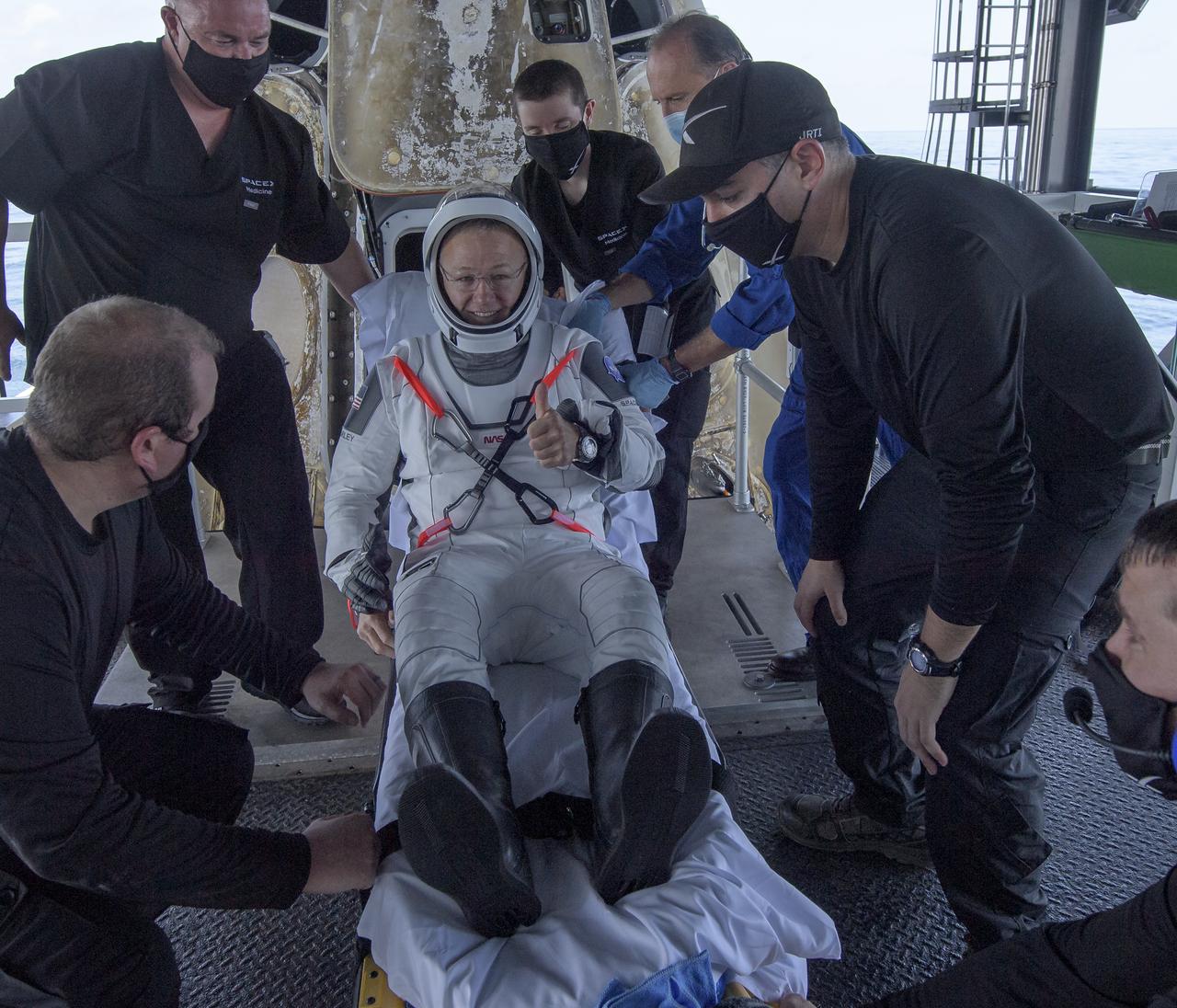
NASA astronaut Douglas Hurley is helped out of the SpaceX Crew Dragon Endeavour spacecraft onboard the SpaceX GO Navigator recovery ship after he and NASA astronaut Robert Behnken landed in the Gulf of Mexico off the coast of Pensacola, Florida, Sunday, Aug. 2, 2020. The Demo-2 test flight for NASA's Commercial Crew Program was the first to deliver astronauts to the International Space Station and return them safely to Earth onboard a commercially built and operated spacecraft. Behnken and Hurley returned after spending 64 days in space. Photo Credit: (NASA/Bill Ingalls)
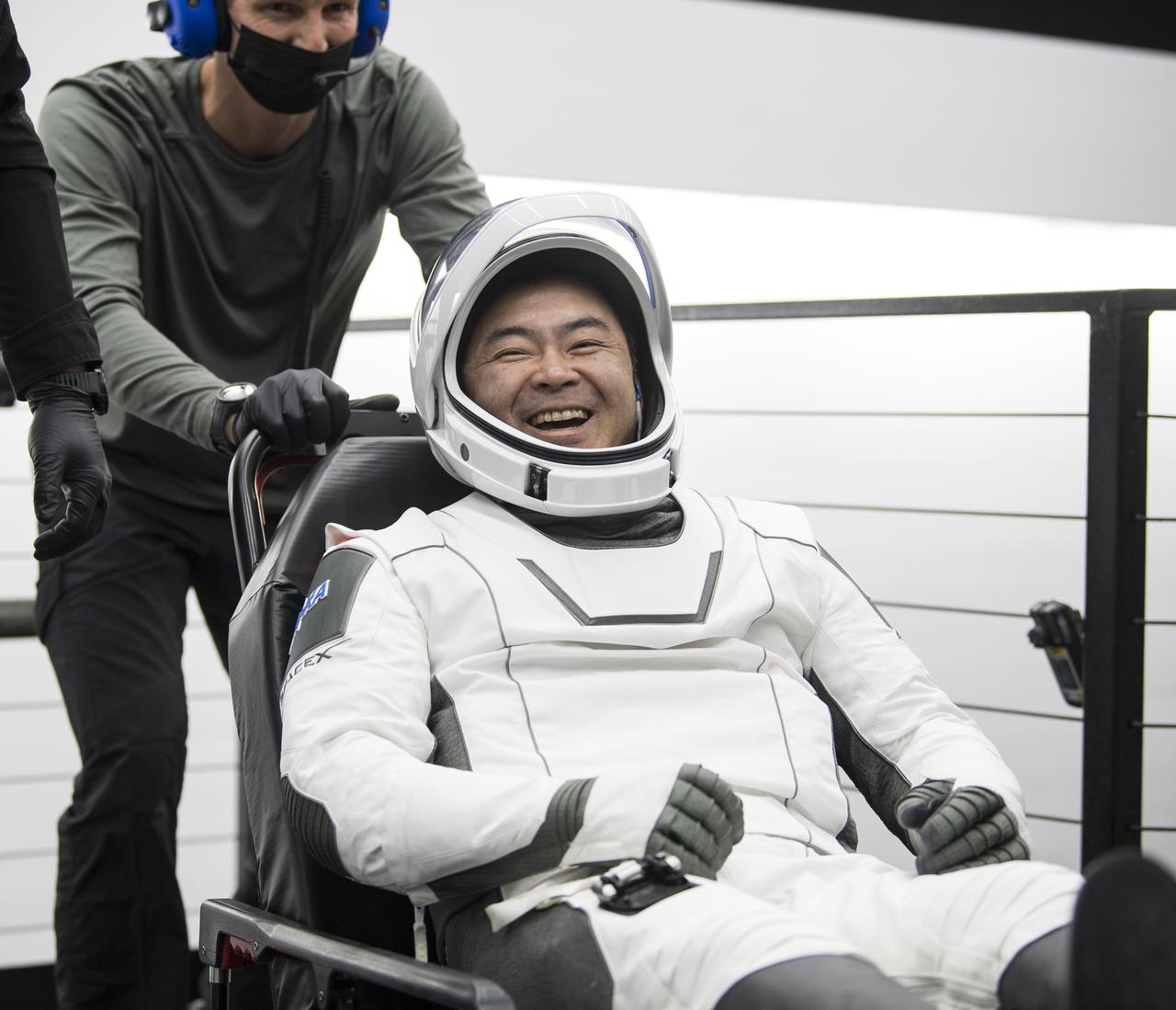
Japan Aerospace Exploration Agency (JAXA) astronaut Aki Hoshide reacts to a comment after being helped out of the SpaceX Crew Dragon Endeavour spacecraft onboard the SpaceX GO Navigator recovery ship after he and NASA astronauts Shane Kimbrough and Megan McArthur, and ESA (European Space Agency) astronaut Thomas Pesquet landed in the Gulf of Mexico off the coast of Pensacola, Florida, Monday, Nov. 8, 2021. NASA’s SpaceX Crew-2 mission is the second operational mission of the SpaceX Crew Dragon spacecraft and Falcon 9 rocket to the International Space Station as part of the agency’s Commercial Crew Program. Photo Credit: (NASA/Aubrey Gemignani)
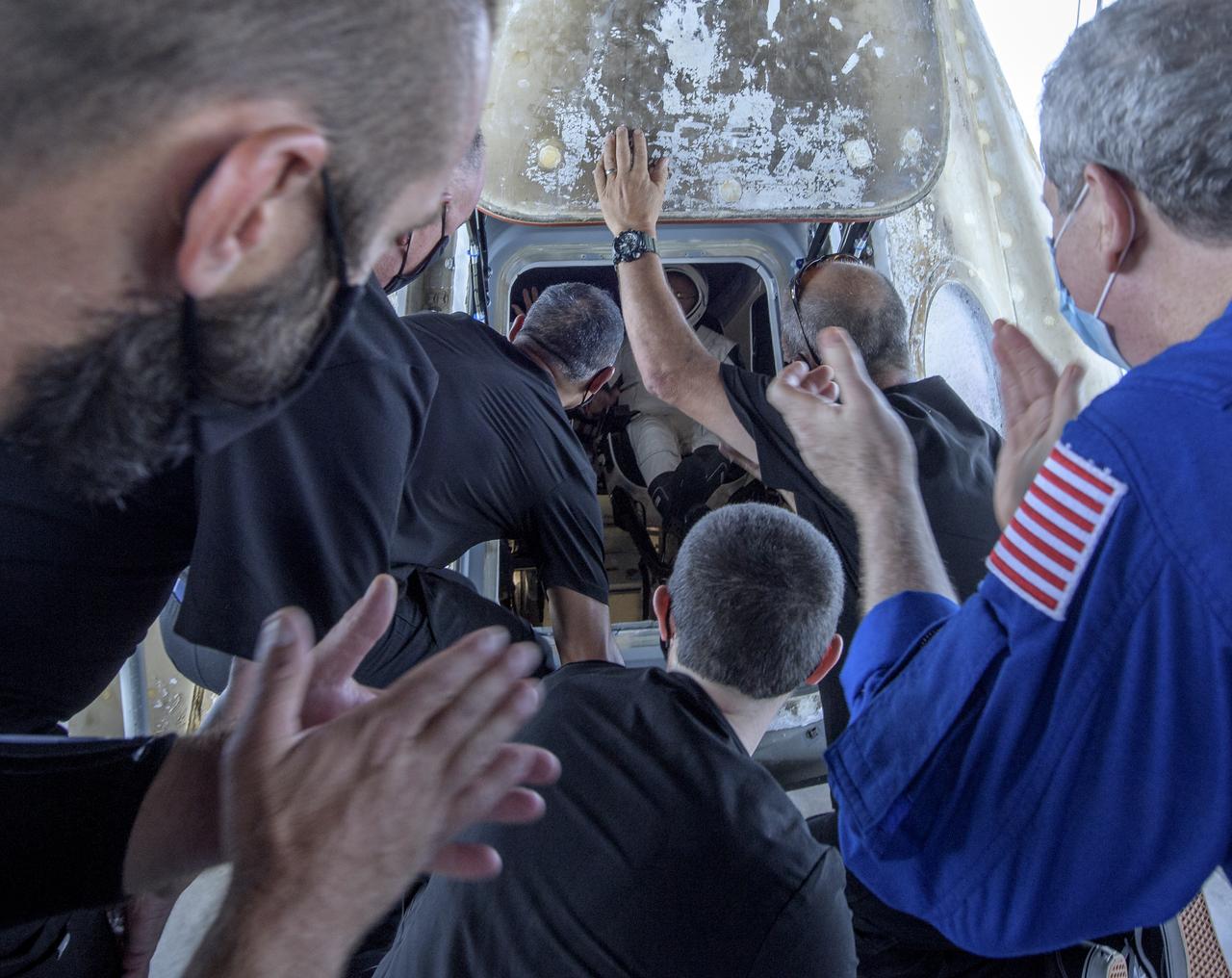
Support teams applaud as after the hatch of the SpaceX Crew Dragon Endeavour spacecraft is opened to allow for egress of NASA astronauts Robert Behnken and Douglas Hurley onto the SpaceX GO Navigator recovery ship shortly the duo landed in the Gulf of Mexico off the coast of Pensacola, Florida, Sunday, Aug. 2, 2020. The Demo-2 test flight for NASA's Commercial Crew Program was the first to deliver astronauts to the International Space Station and return them safely to Earth onboard a commercially built and operated spacecraft. Behnken and Hurley returned after spending 64 days in space. Photo Credit: (NASA/Bill Ingalls)
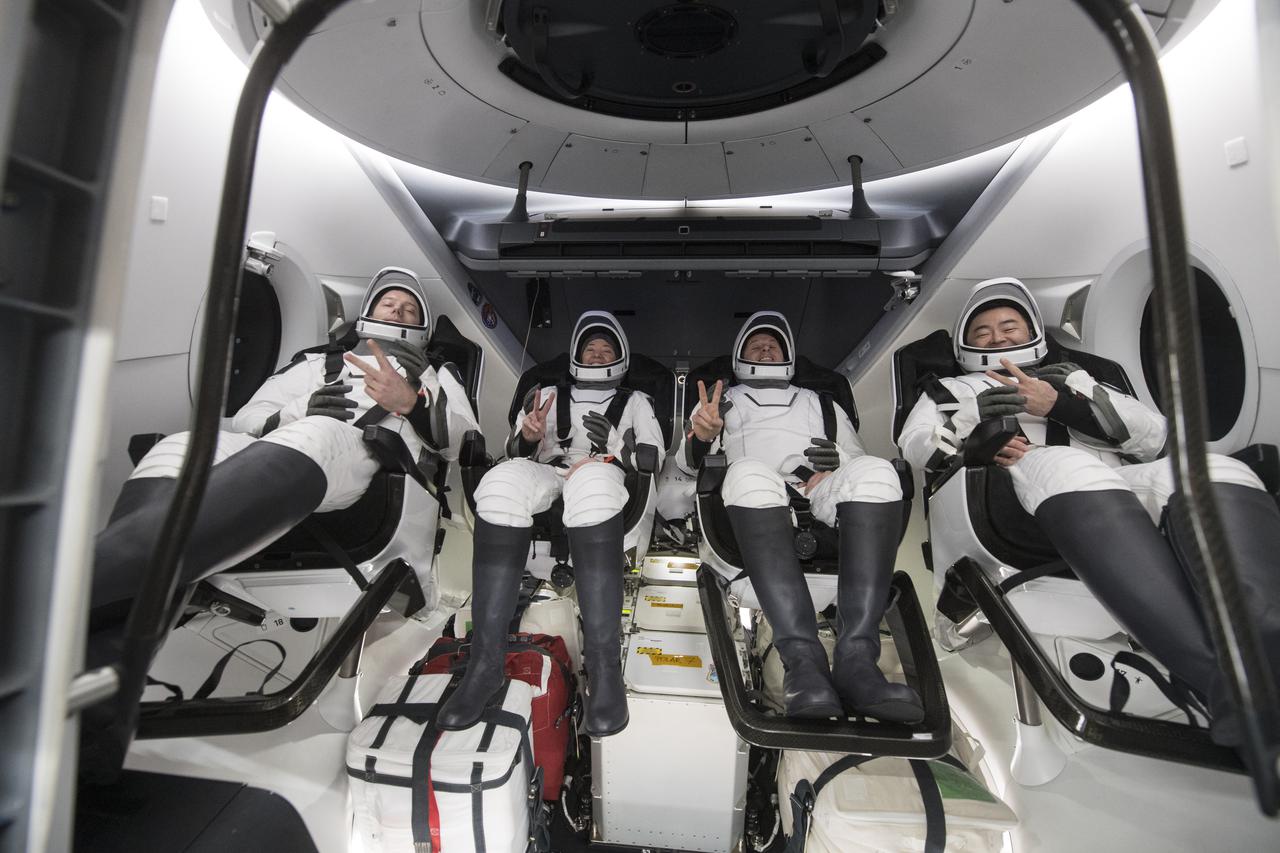
ESA (European Space Agency) astronaut Thomas Pesquet, left, NASA astronauts Megan McArthur and Shane Kimbrough, and Japan Aerospace Exploration Agency (JAXA) astronaut Aki Hoshide, right, are seen inside the SpaceX Crew Dragon Endeavour spacecraft onboard the SpaceX GO Navigator recovery ship shortly after having landed in the Gulf of Mexico off the coast of Pensacola, Florida, Monday, Nov. 8, 2021. NASA’s SpaceX Crew-2 mission is the second operational mission of the SpaceX Crew Dragon spacecraft and Falcon 9 rocket to the International Space Station as part of the agency’s Commercial Crew Program. Photo Credit: (NASA/Aubrey Gemignani)
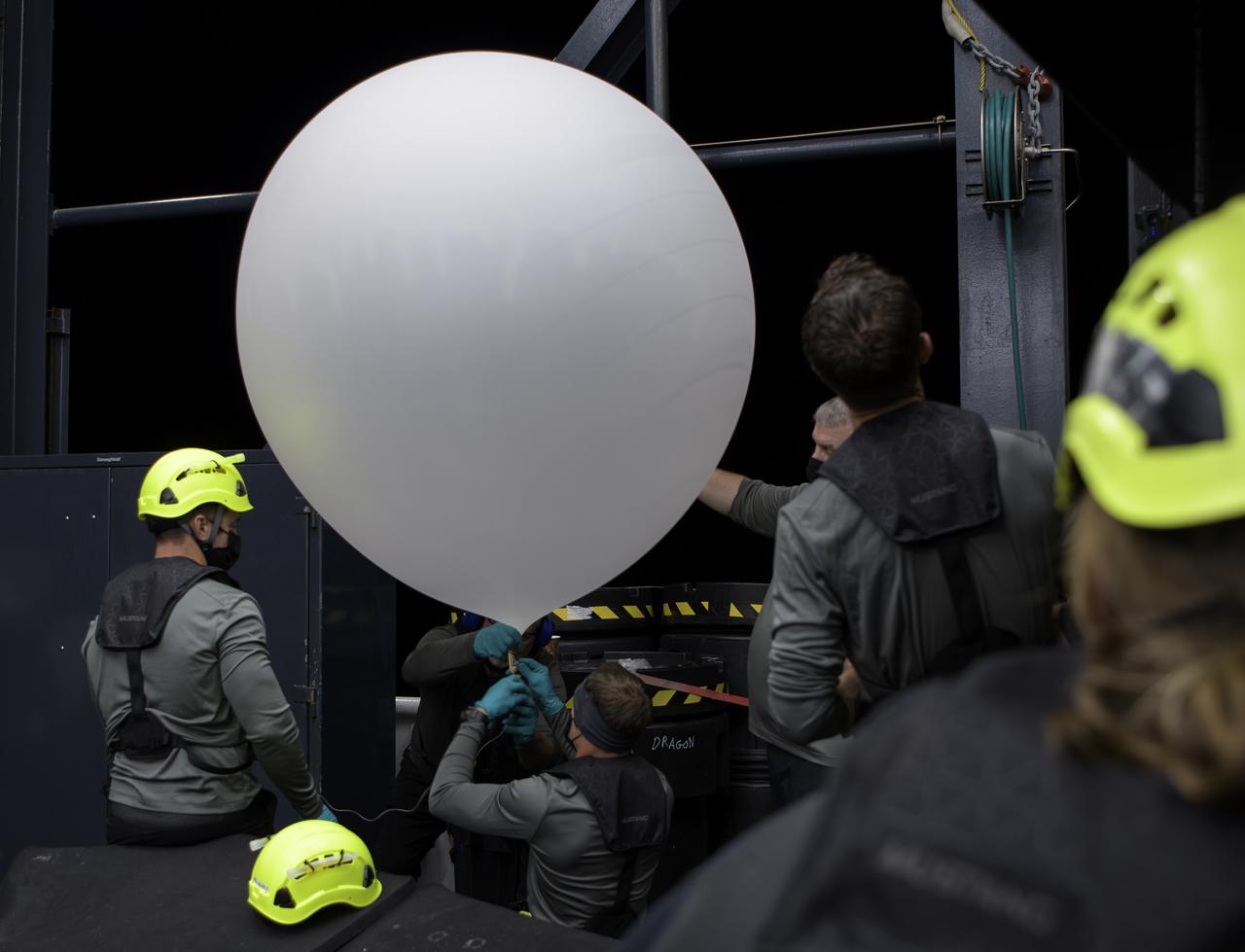
SpaceX support teams onboard the SpaceX GO Navigator recovery ship prepare to launch a weather balloon ahead of the landing of the SpaceX Crew Dragon Resilience spacecraft with NASA astronauts Mike Hopkins, Shannon Walker, and Victor Glover, and Japan Aerospace Exploration Agency (JAXA) astronaut Soichi Noguchi aboard in the Gulf of Mexico off the coast of Panama City, Florida, Saturday, May 1, 2021. NASA’s SpaceX Crew-1 mission is the first crew rotation flight of the SpaceX Crew Dragon spacecraft and Falcon 9 rocket with astronauts to the International Space Station as part of the agency’s Commercial Crew Program. Photo Credit: (NASA/Bill Ingalls)
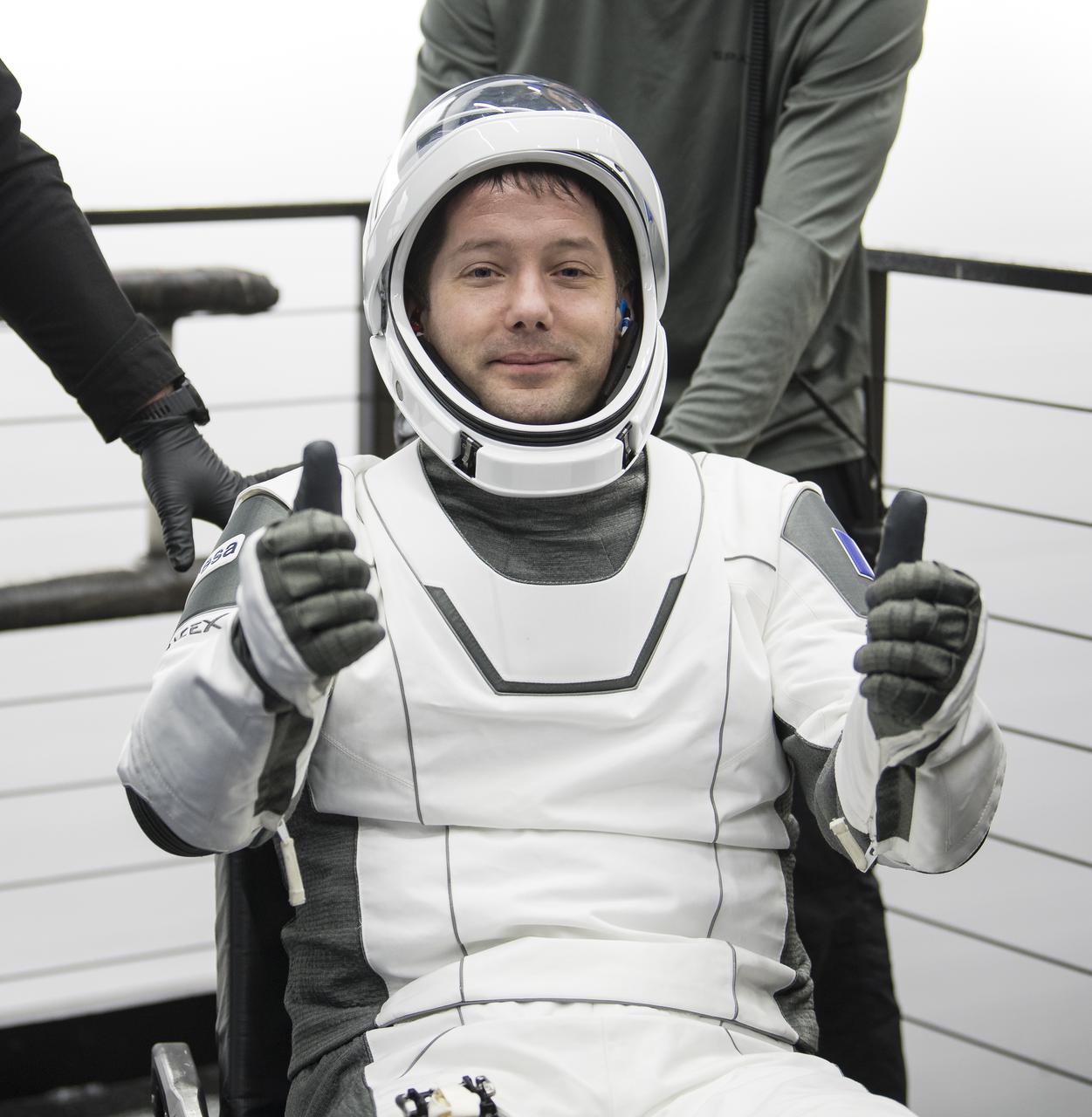
ESA (European Space Agency) astronaut Thomas Pesquet gives a thumbs up after being helped out of the SpaceX Crew Dragon Endeavour spacecraft onboard the SpaceX GO Navigator recovery ship after he and NASA astronauts Shane Kimbrough and Megan McArthur, and Japan Aerospace Exploration Agency (JAXA) astronaut Aki Hoshide landed in the Gulf of Mexico off the coast of Pensacola, Florida, Monday, Nov. 8, 2021. NASA’s SpaceX Crew-2 mission is the second operational mission of the SpaceX Crew Dragon spacecraft and Falcon 9 rocket to the International Space Station as part of the agency’s Commercial Crew Program. Photo Credit: (NASA/Aubrey Gemignani)
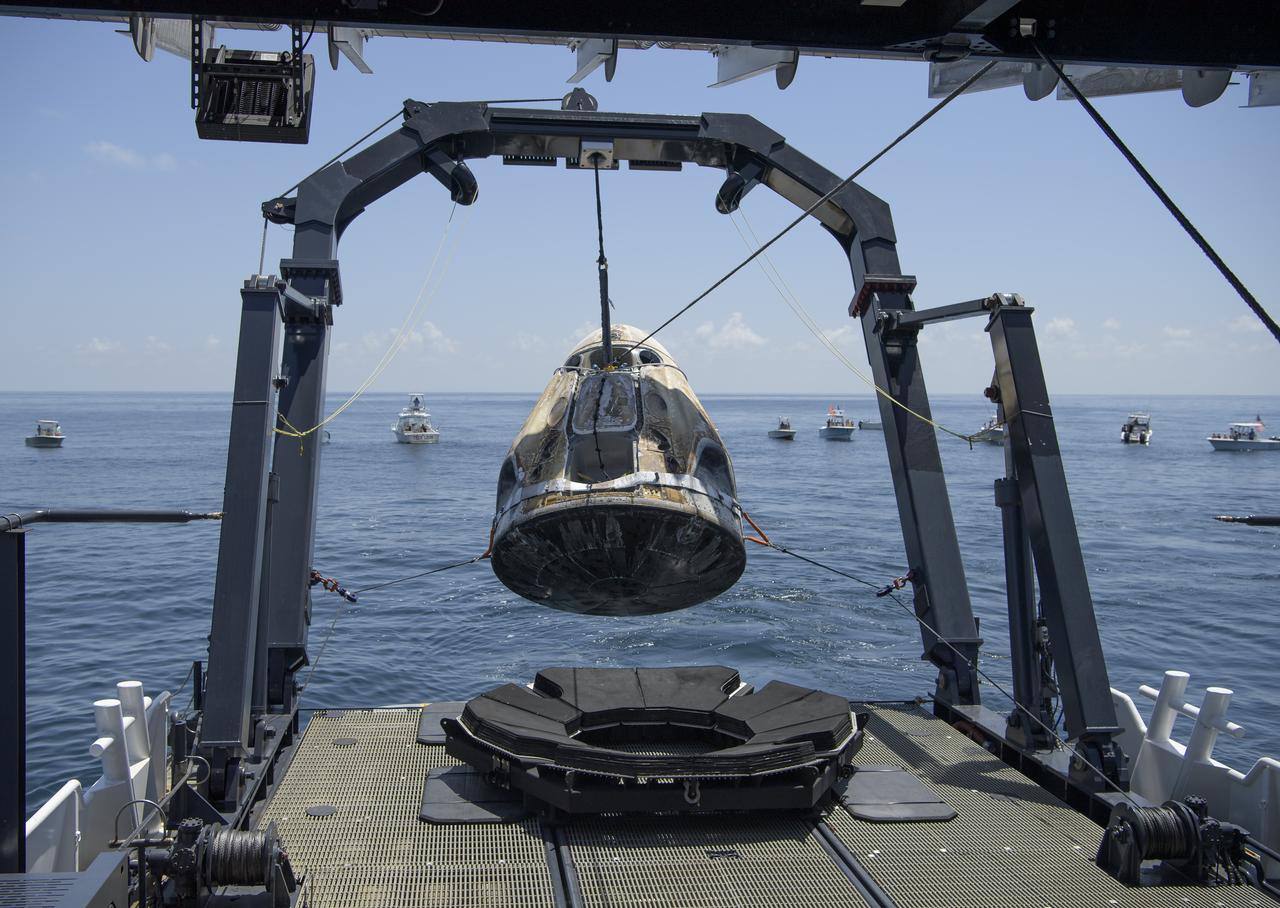
The SpaceX Crew Dragon Endeavour spacecraft is lifted onto the SpaceX GO Navigator recovery ship shortly after it landed with NASA astronauts Robert Behnken and Douglas Hurley onboard in the Gulf of Mexico off the coast of Pensacola, Florida, Sunday, Aug. 2, 2020. The Demo-2 test flight for NASA's Commercial Crew Program was the first to deliver astronauts to the International Space Station and return them safely to Earth onboard a commercially built and operated spacecraft. Behnken and Hurley returned after spending 64 days in space. Photo Credit: (NASA/Bill Ingalls)
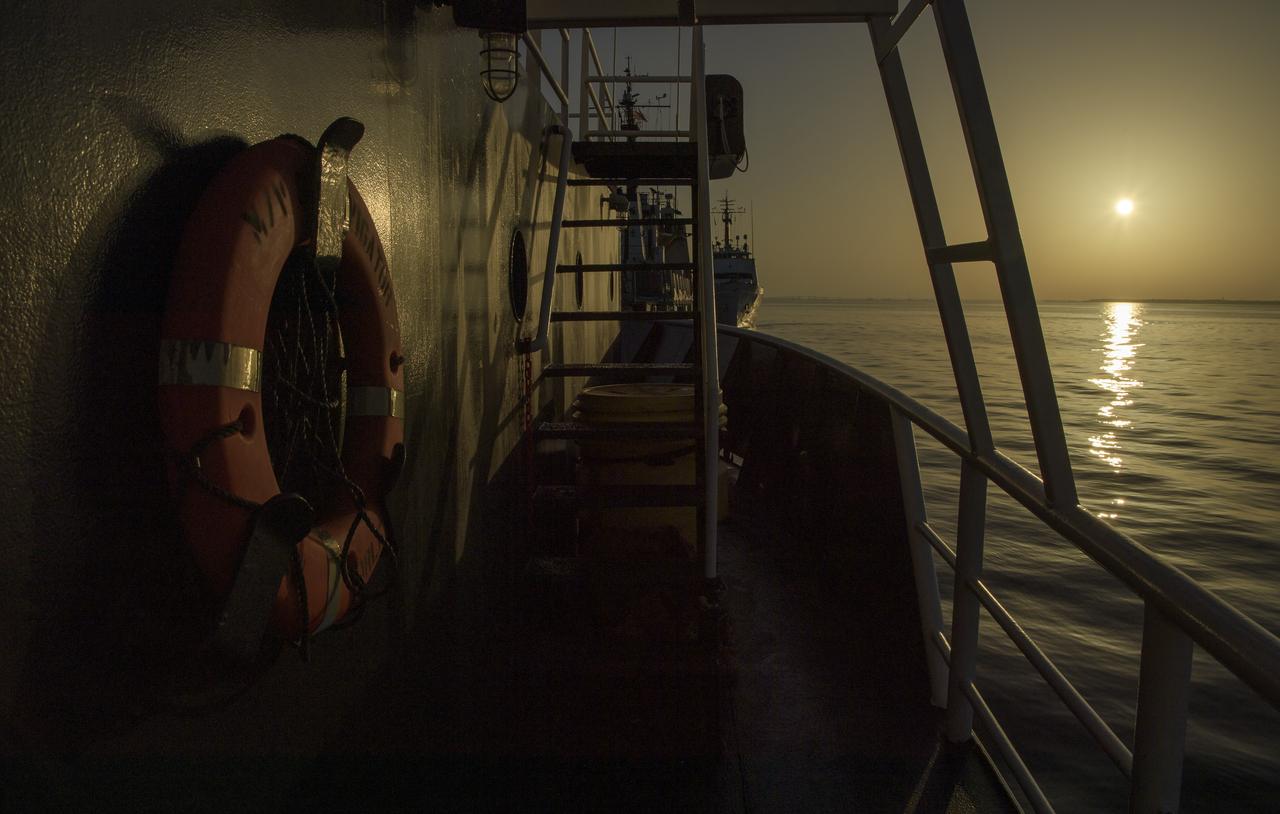
Sunrise as seen from the SpaceX GO Navigator recovery ship as NASA and SpaceX support teams prepare for the landing of the SpaceX Crew Dragon Endeavour spacecraft with NASA astronauts Robert Behnken and Douglas Hurley onboard, Sunday, Aug. 2, 2020 in the Gulf of Mexico off the cost of Pensacola, Florida. The Demo-2 test flight for NASA's Commercial Crew Program is the first to deliver astronauts to the International Space Station and return them to Earth onboard a commercially built and operated spacecraft. Behnken and Hurley are returning after spending 64 days in space. Photo Credit: (NASA/Bill Ingalls)
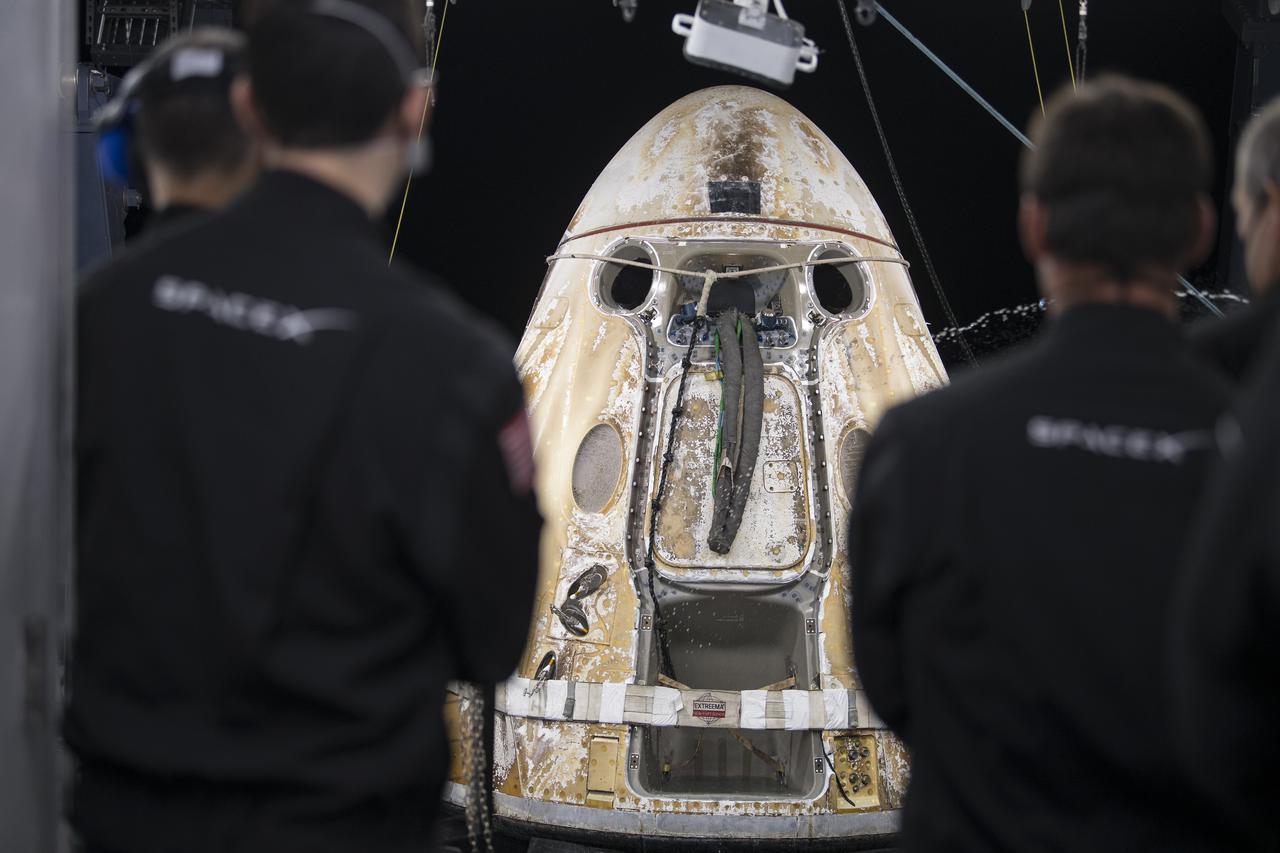
The SpaceX Crew Dragon Endeavour spacecraft is seen as it is lifted onto the SpaceX GO Navigator recovery ship shortly after having landed in the Gulf of Mexico off the coast of Pensacola, Florida with NASA astronauts Shane Kimbrough and Megan McArthur, Japan Aerospace Exploration Agency (JAXA) astronaut Aki Hoshide, and ESA (European Space Agency) astronaut Thomas Pesquet aboard, Monday, Nov. 8, 2021. NASA’s SpaceX Crew-2 mission is the second operational mission of the SpaceX Crew Dragon spacecraft and Falcon 9 rocket to the International Space Station as part of the agency’s Commercial Crew Program. Photo Credit: (NASA/Aubrey Gemignani)
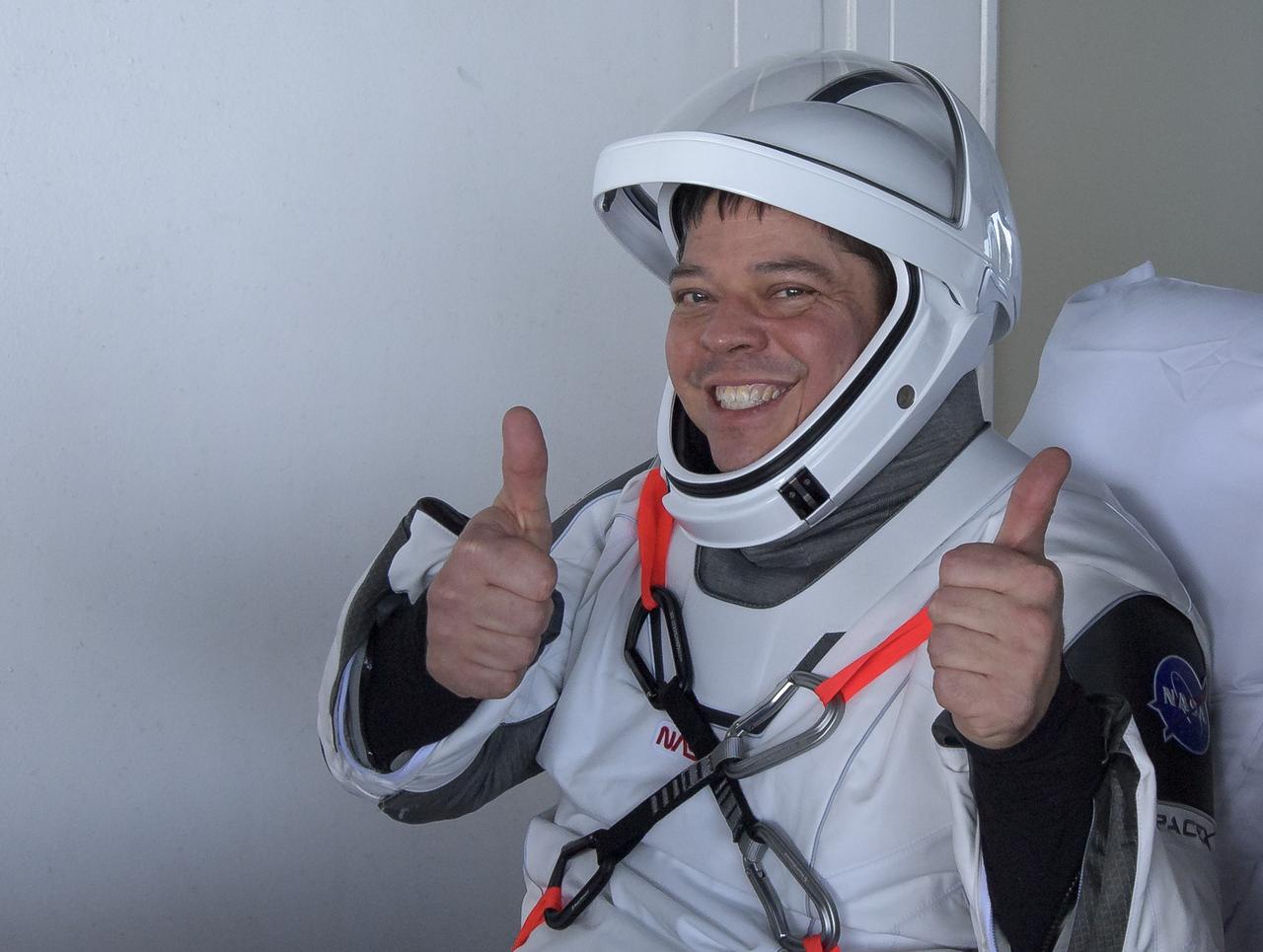
NASA astronaut Robert Behnken gives a thumbs up after egressing the SpaceX Crew Dragon Endeavour spacecraft onboard the SpaceX GO Navigator recovery ship after he and NASA astronaut Douglas Hurley landed in the Gulf of Mexico off the coast of Pensacola, Florida, Sunday, Aug. 2, 2020. The Demo-2 test flight for NASA's Commercial Crew Program was the first to deliver astronauts to the International Space Station and return them safely to Earth onboard a commercially built and operated spacecraft. Behnken and Hurley returned after spending 64 days in space. Photo Credit: (NASA/Bill Ingalls)
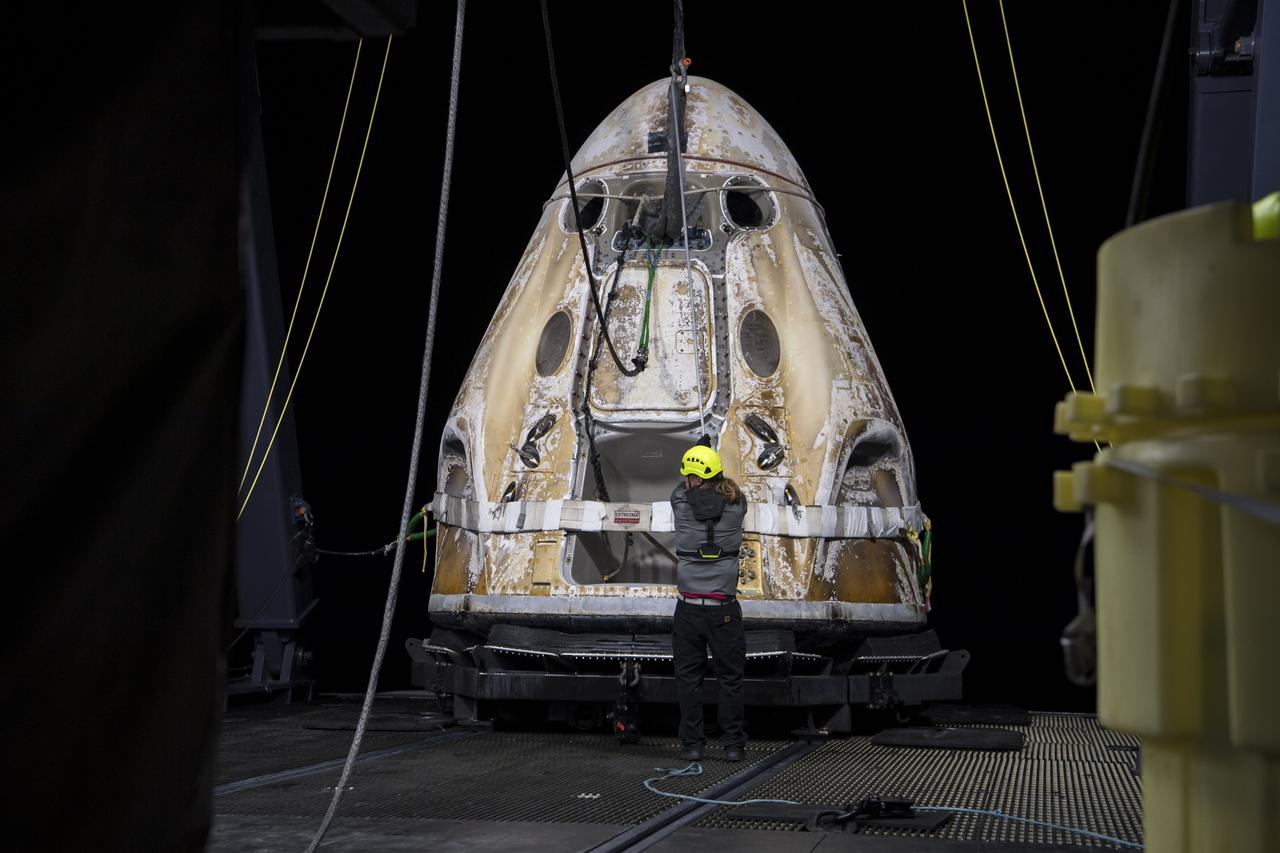
The SpaceX Crew Dragon Endeavour spacecraft is lifted onto the GO Navigator recovery ship after it landed with NASA astronauts Shane Kimbrough and Megan McArthur, Japan Aerospace Exploration Agency (JAXA) astronaut Aki Hoshide, and ESA (European Space Agency) astronaut Thomas Pesquet in the Gulf of Mexico off the coast of Pensacola, Florida, Monday, Nov. 8, 2021. NASA’s SpaceX Crew-2 mission is the second operational mission of the SpaceX Crew Dragon spacecraft and Falcon 9 rocket to the International Space Station as part of the agency’s Commercial Crew Program. Photo Credit: (NASA/Aubrey Gemignani)
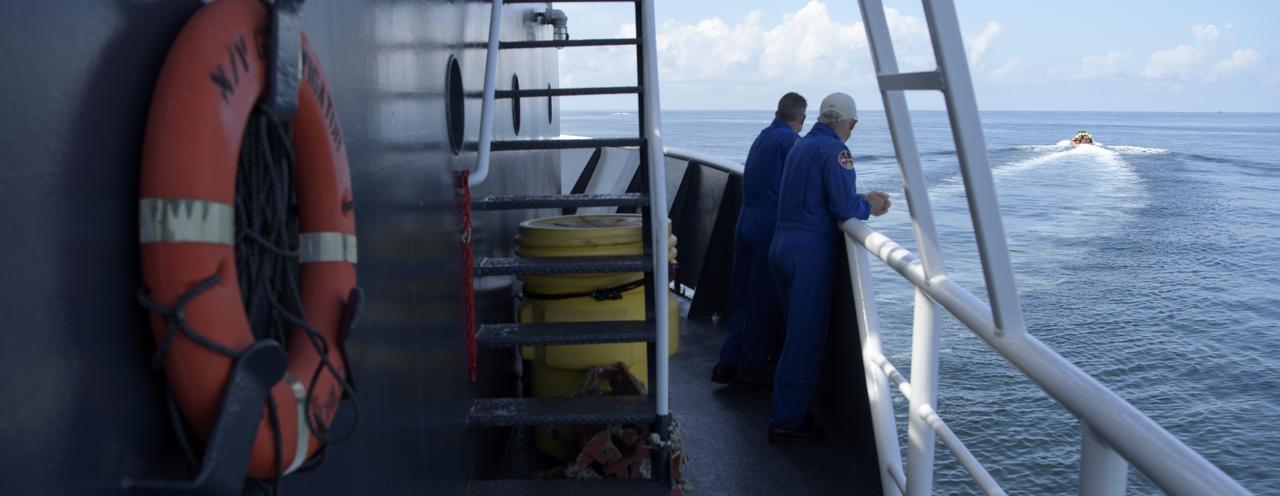
NASA and SpaceX support teams onboard the SpaceX GO Navigator recovery ship prepare for the landing of the SpaceX Crew Dragon Endeavour spacecraft with NASA astronauts Robert Behnken and Douglas Hurley onboard, Sunday, Aug. 2, 2020 in the Gulf of Mexico off the cost of Pensacola, Florida. The Demo-2 test flight for NASA's Commercial Crew Program is the first to deliver astronauts to the International Space Station and return them to Earth onboard a commercially built and operated spacecraft. Behnken and Hurley are returning after spending 64 days in space. Photo Credit: (NASA/Bill Ingalls)
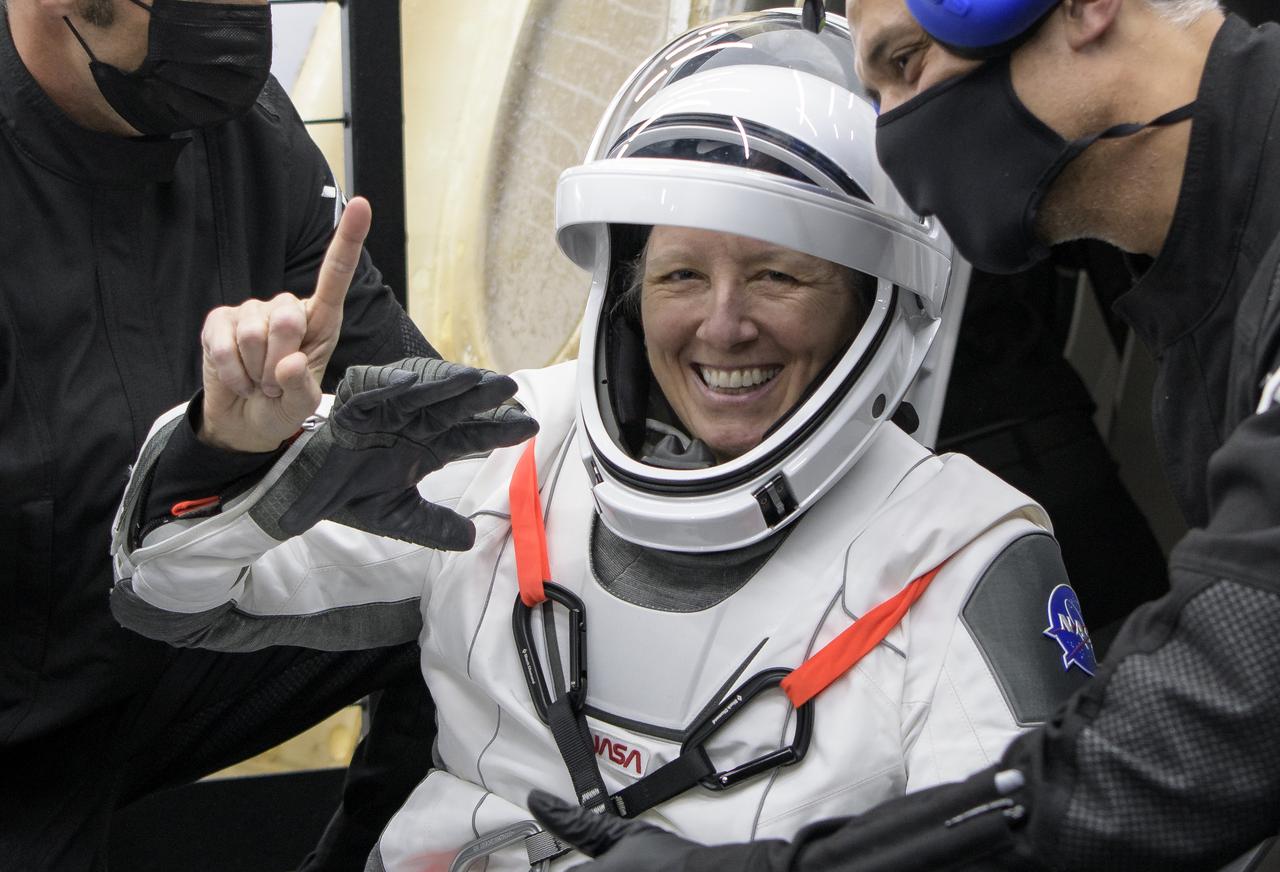
NASA astronaut Shannon Walker is helped out of the SpaceX Crew Dragon Resilience spacecraft onboard the SpaceX GO Navigator recovery ship after she, NASA astronauts Mike Hopkins, Victor Glover, and Japan Aerospace Exploration Agency (JAXA) astronaut Soichi Noguchi, landed in the Gulf of Mexico off the coast of Panama City, Florida, Sunday, May 2, 2021. NASA’s SpaceX Crew-1 mission was the first crew rotation flight of the SpaceX Crew Dragon spacecraft and Falcon 9 rocket with astronauts to the International Space Station as part of the agency’s Commercial Crew Program. Photo Credit: (NASA/Bill Ingalls)
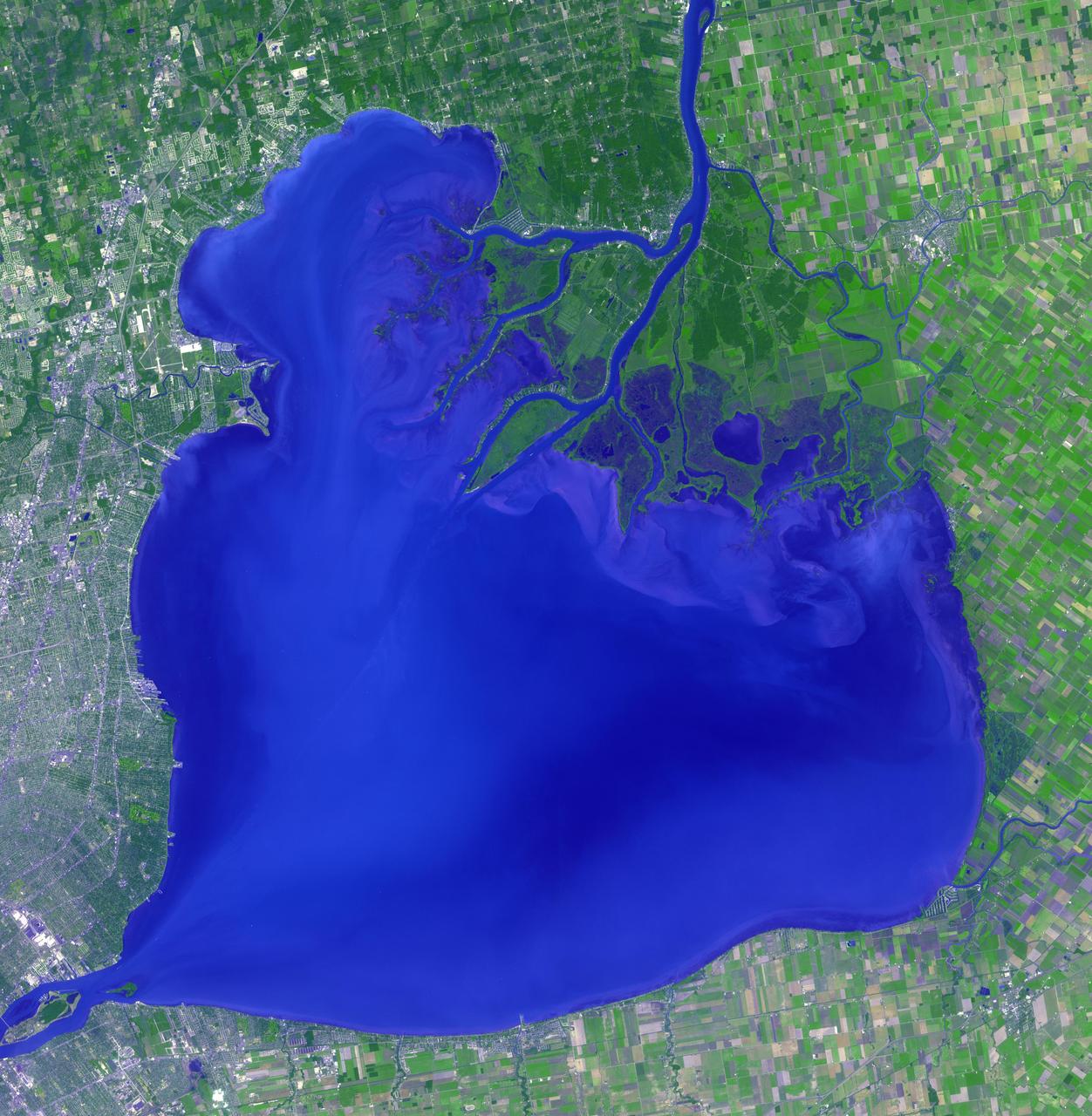
Lake St. Clair connects Lake Huron, via the St. Clair River, to Lake Erie, via the Detroit River. It is named after Claire of Assisi, on whose feast day it was first navigated by French explorers in 1679. The lake covers an area of about 1100 square kilometers, with an average depth of 3.5 meters. Both the U.S. and Canada maintain a deep shipping channel through the lake. The image was acquired September 9, 2002, covers an area of 51.4 by 52.5 kilometers, and is located at 42.5 degrees north, 82.7 degrees west. https://photojournal.jpl.nasa.gov/catalog/PIA23234
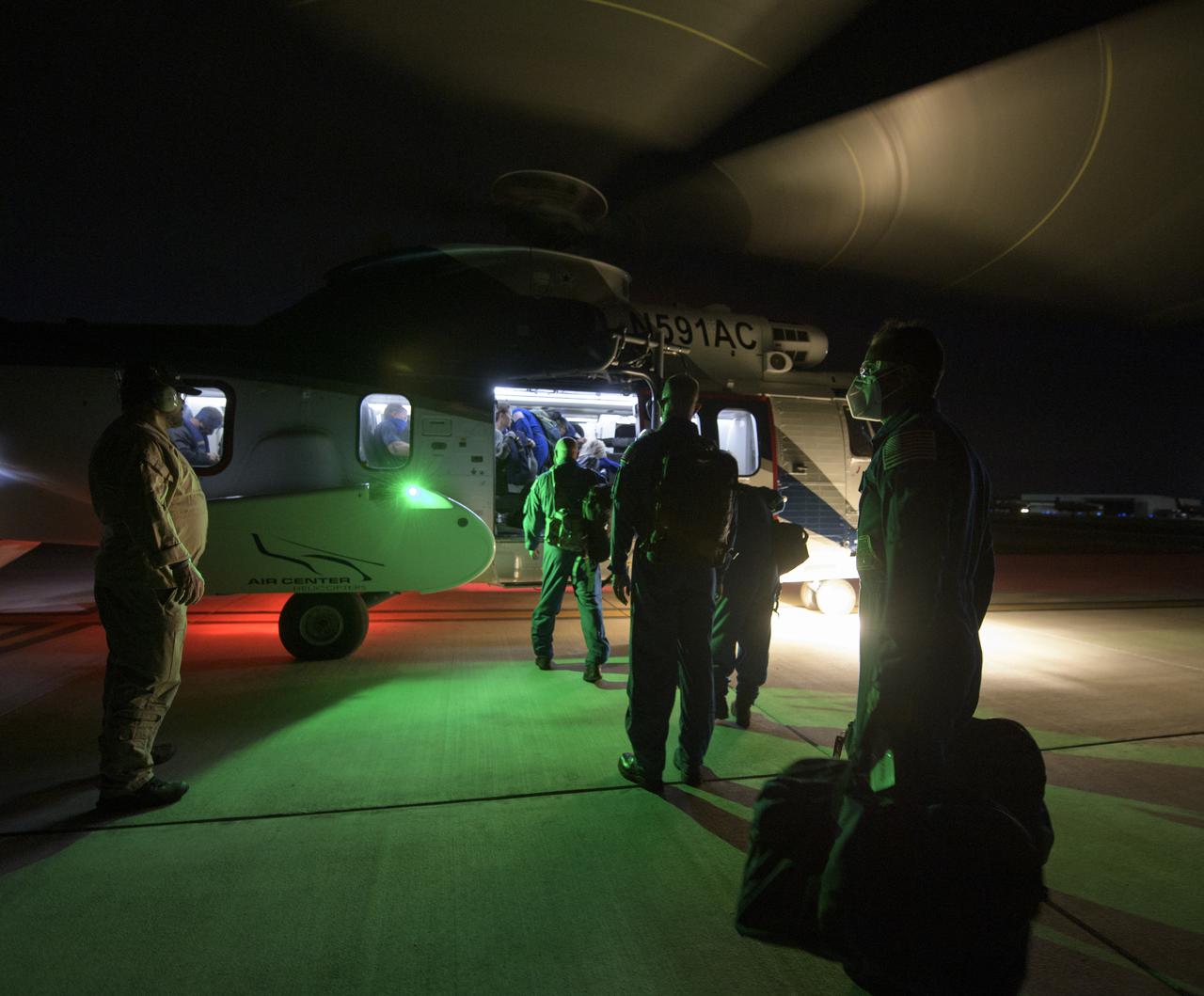
NASA and SpaceX support teams depart from Pensacola, Florida via helicopter to the SpaceX GO Navigator recovery ship to prepare for the landing of the SpaceX Crew Dragon Resilience spacecraft with NASA astronauts Mike Hopkins, Shannon Walker, and Victor Glover, and Japan Aerospace Exploration Agency (JAXA) astronaut Soichi Noguchi aboard in the Gulf of Mexico off the coast of Panama City, Florida, Saturday, May 1, 2021. NASA’s SpaceX Crew-1 mission is the first crew rotation flight of the SpaceX Crew Dragon spacecraft and Falcon 9 rocket with astronauts to the International Space Station as part of the agency’s Commercial Crew Program. Photo Credit: (NASA/Bill Ingalls)
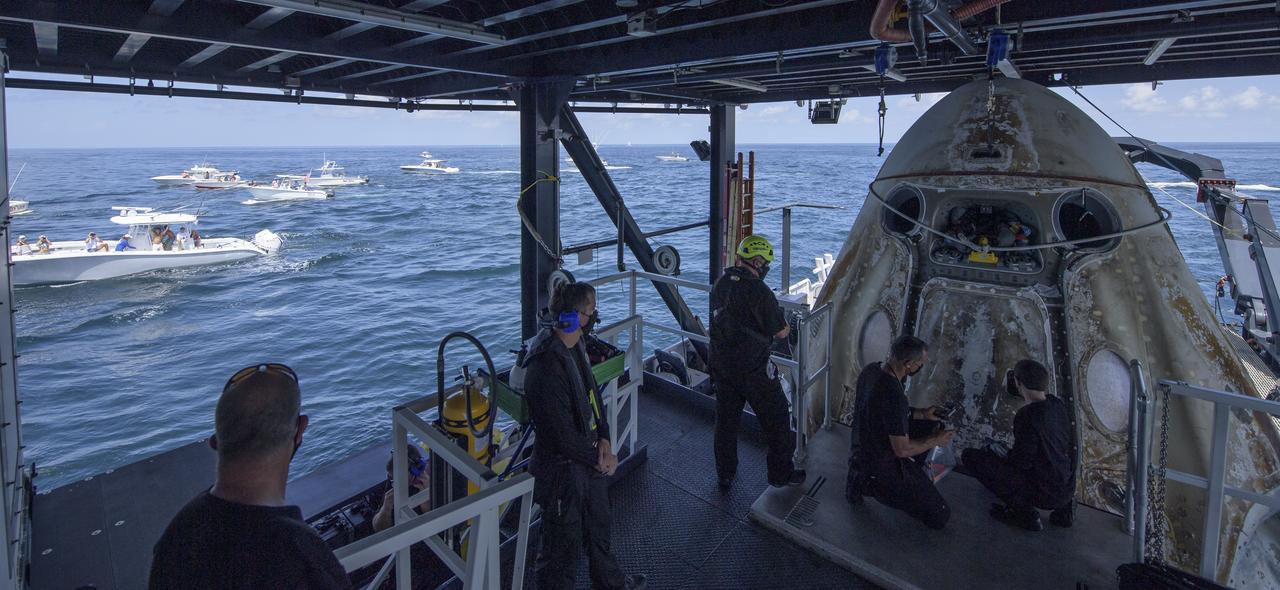
The SpaceX Crew Dragon Endeavour spacecraft, with NASA astronauts Robert Behnken and Douglas Hurley onboard, is positioned on the SpaceX GO Navigator recovery ship for crew egress shortly after landing in the Gulf of Mexico off the coast of Pensacola, Florida, Sunday, Aug. 2, 2020. The Demo-2 test flight for NASA's Commercial Crew Program was the first to deliver astronauts to the International Space Station and return them safely to Earth onboard a commercially built and operated spacecraft. Behnken and Hurley returned after spending 64 days in space. Photo Credit: (NASA/Bill Ingalls)
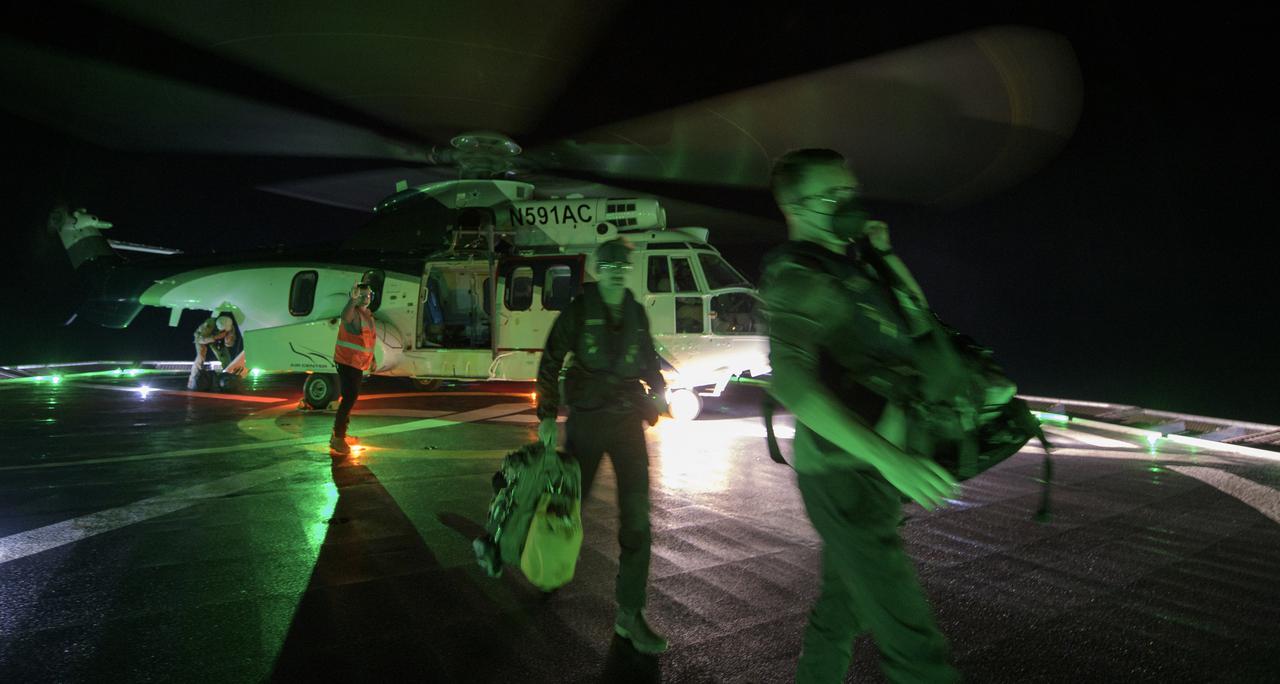
NASA and SpaceX support teams arrive via helicopter to the SpaceX GO Navigator recovery ship in order to prepare for the landing of the SpaceX Crew Dragon Resilience spacecraft with NASA astronauts Mike Hopkins, Shannon Walker, and Victor Glover, and Japan Aerospace Exploration Agency (JAXA) astronaut Soichi Noguchi aboard in the Gulf of Mexico off the coast of Panama City, Florida, Saturday, May 1, 2021. NASA’s SpaceX Crew-1 mission is the first crew rotation flight of the SpaceX Crew Dragon spacecraft and Falcon 9 rocket with astronauts to the International Space Station as part of the agency’s Commercial Crew Program. Photo Credit: (NASA/Bill Ingalls)
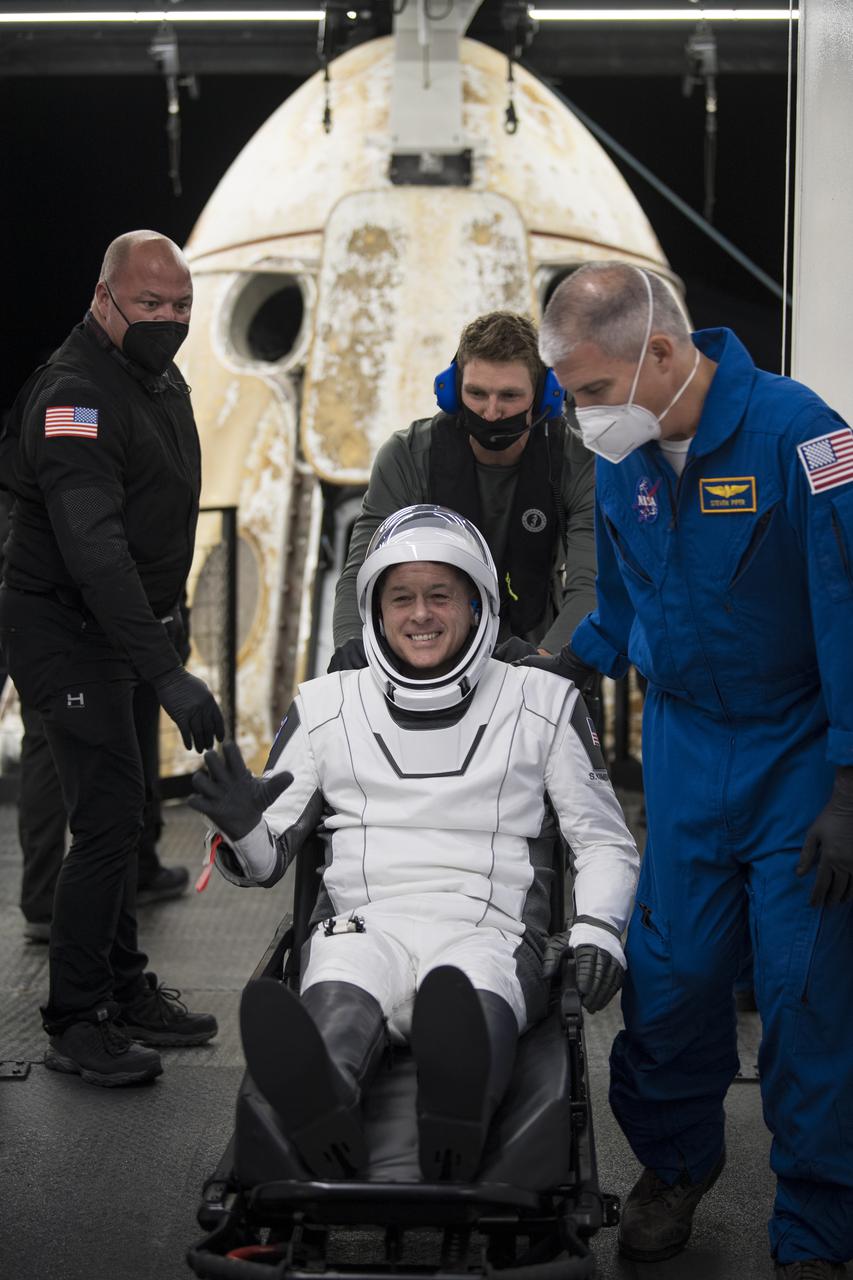
NASA astronaut Shane Kimbrough is seen after being helped out of the SpaceX Crew Dragon Endeavour spacecraft onboard the SpaceX GO Navigator recovery ship after he and NASA astronaut Megan McArthur, Japan Aerospace Exploration Agency (JAXA) astronaut Aki Hoshide, and ESA (European Space Agency) astronaut Thomas Pesquet landed in the Gulf of Mexico off the coast of Pensacola, Florida, Monday, Nov. 8, 2021. NASA’s SpaceX Crew-2 mission is the second operational mission of the SpaceX Crew Dragon spacecraft and Falcon 9 rocket to the International Space Station as part of the agency’s Commercial Crew Program. Photo Credit: (NASA/Aubrey Gemignani)
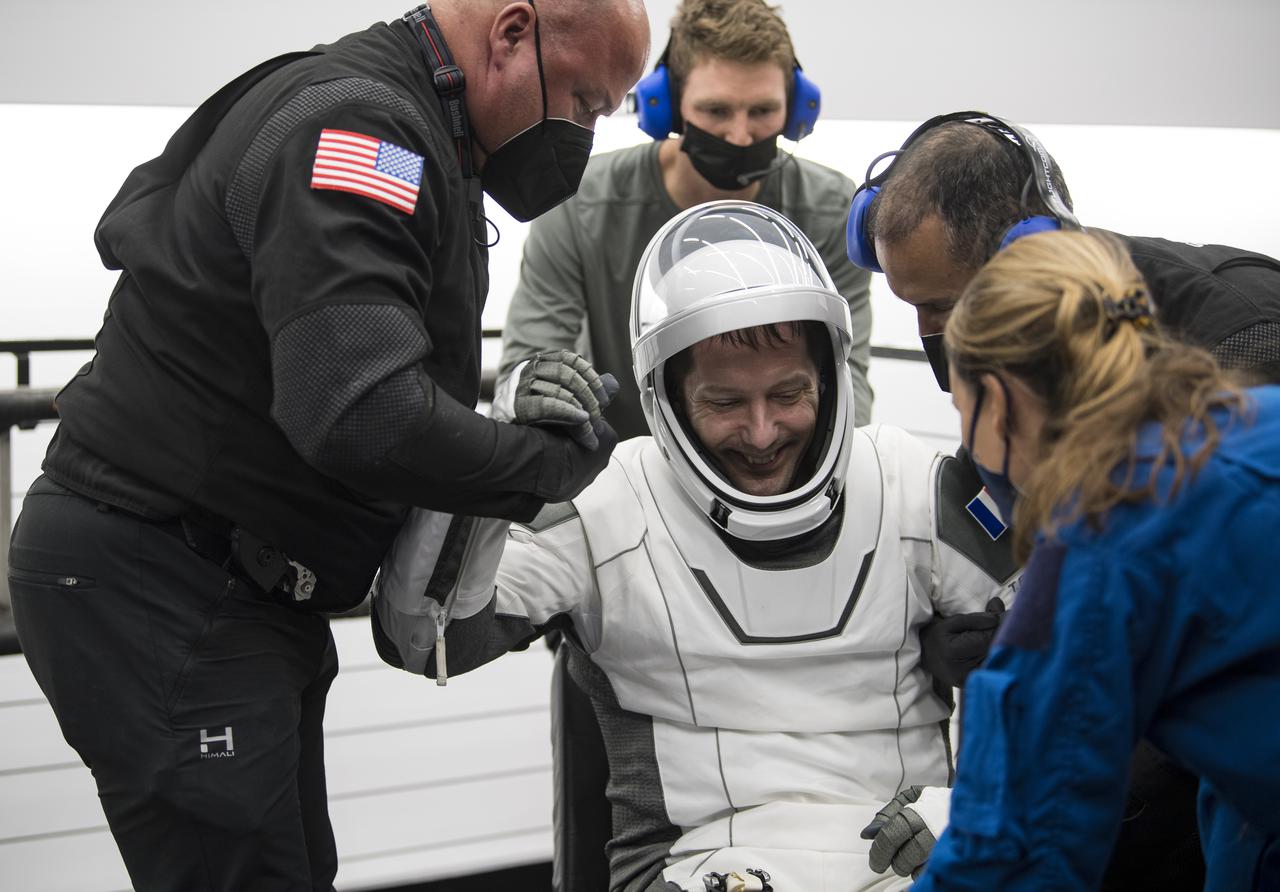
ESA (European Space Agency) astronaut Thomas Pesquet is helped out of the SpaceX Crew Dragon Endeavour spacecraft onboard the SpaceX GO Navigator recovery ship after he and NASA astronauts Shane Kimbrough and Megan McArthur, and Japan Aerospace Exploration Agency (JAXA) astronaut Aki Hoshide landed in the Gulf of Mexico off the coast of Pensacola, Florida, Monday, Nov. 8, 2021. NASA’s SpaceX Crew-2 mission is the second operational mission of the SpaceX Crew Dragon spacecraft and Falcon 9 rocket to the International Space Station as part of the agency’s Commercial Crew Program. Photo Credit: (NASA/Aubrey Gemignani)
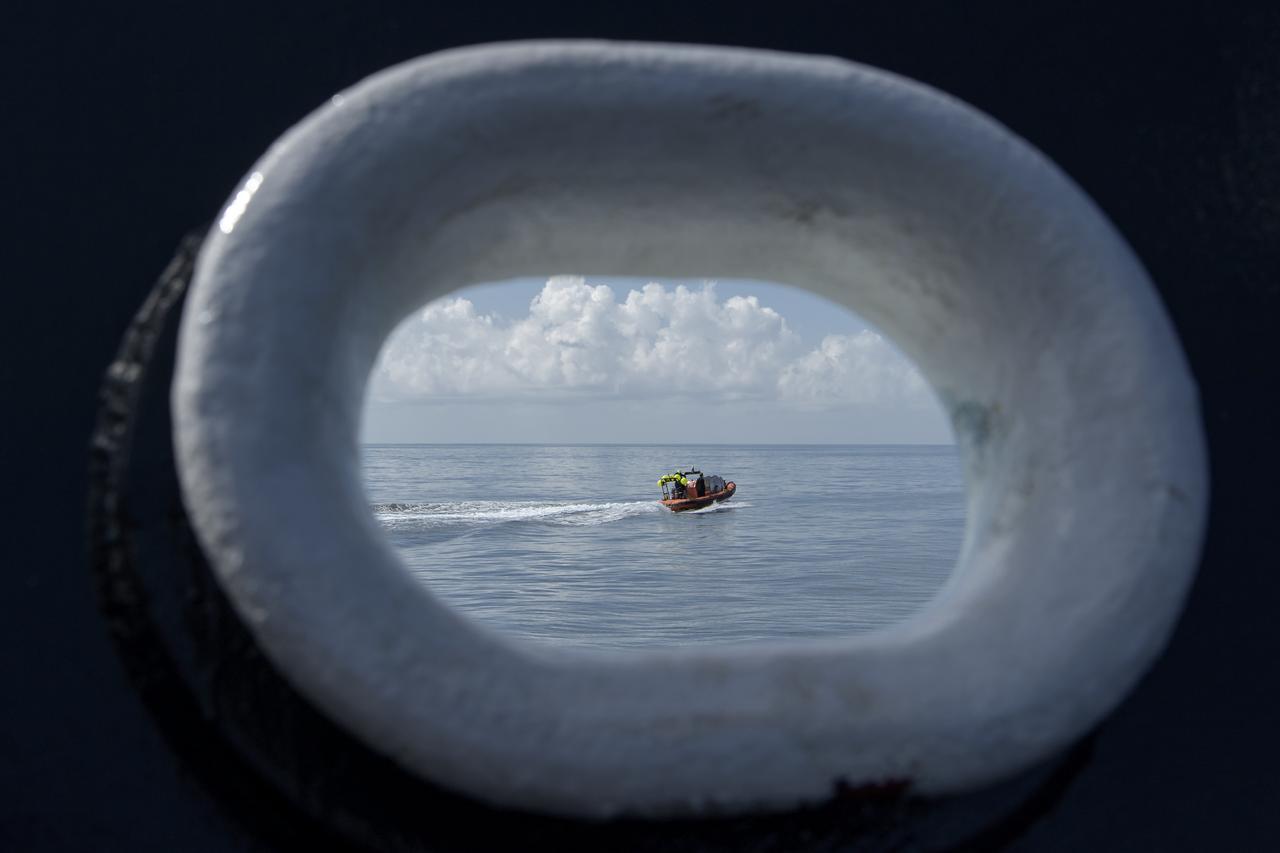
SpaceX support teams are deployed on fast boats from the SpaceX GO Navigator recovery ship ahead of the landing of the SpaceX Crew Dragon Endeavour spacecraft with NASA astronauts Robert Behnken and Douglas Hurley onboard, Sunday, Aug. 2, 2020 in the Gulf of Mexico off the cost of Pensacola, Florida. The Demo-2 test flight for NASA's Commercial Crew Program is the first to deliver astronauts to the International Space Station and return them to Earth onboard a commercially built and operated spacecraft. Behnken and Hurley are returning after spending 64 days in space. Photo Credit: (NASA/Bill Ingalls)
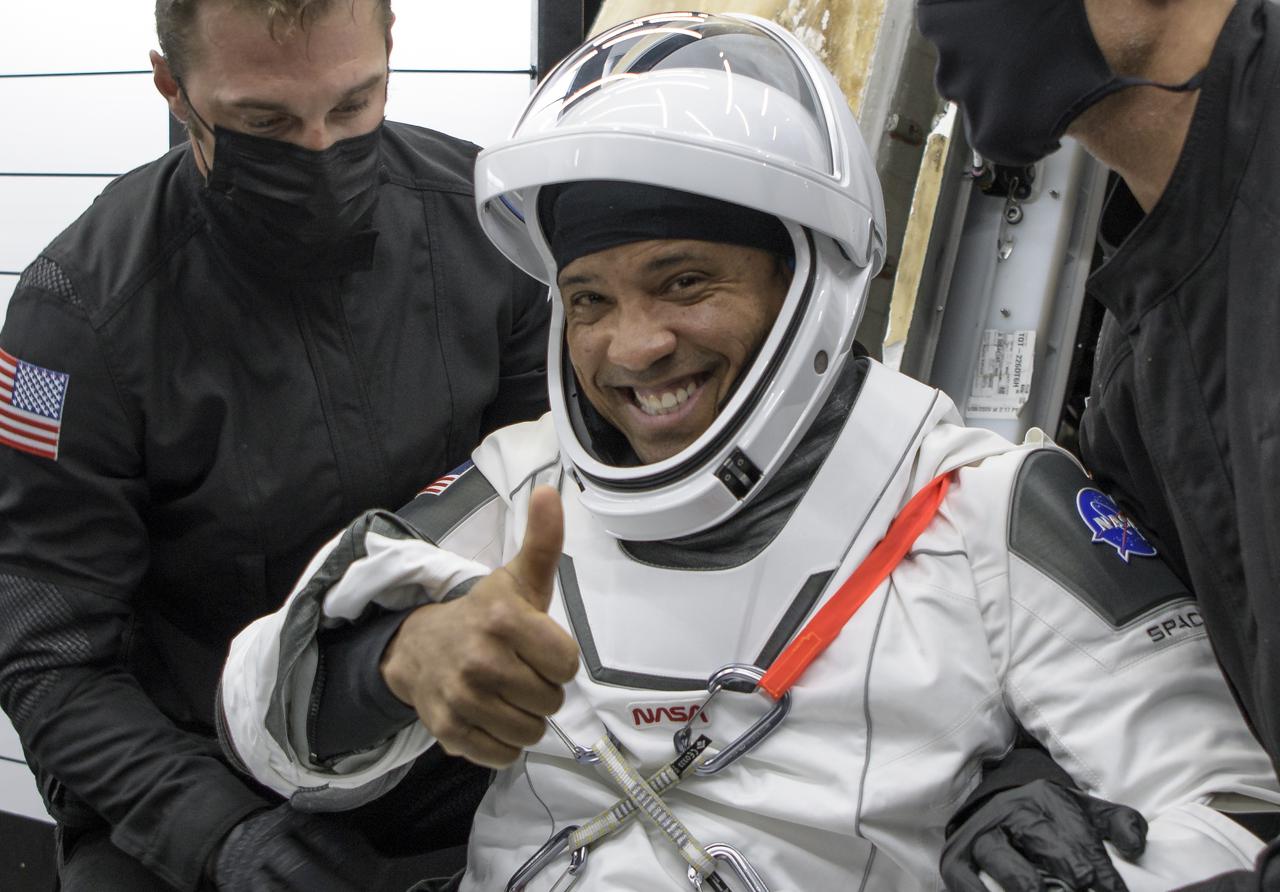
NASA astronaut Victor Glover is helped out of the SpaceX Crew Dragon Resilience spacecraft onboard the SpaceX GO Navigator recovery ship after he, NASA astronauts Mike Hopkins, Shannon Walker, and Japan Aerospace Exploration Agency (JAXA) astronaut Soichi Noguchi, landed in the Gulf of Mexico off the coast of Panama City, Florida, Sunday, May 2, 2021. NASA’s SpaceX Crew-1 mission was the first crew rotation flight of the SpaceX Crew Dragon spacecraft and Falcon 9 rocket with astronauts to the International Space Station as part of the agency’s Commercial Crew Program. Photo Credit: (NASA/Bill Ingalls)
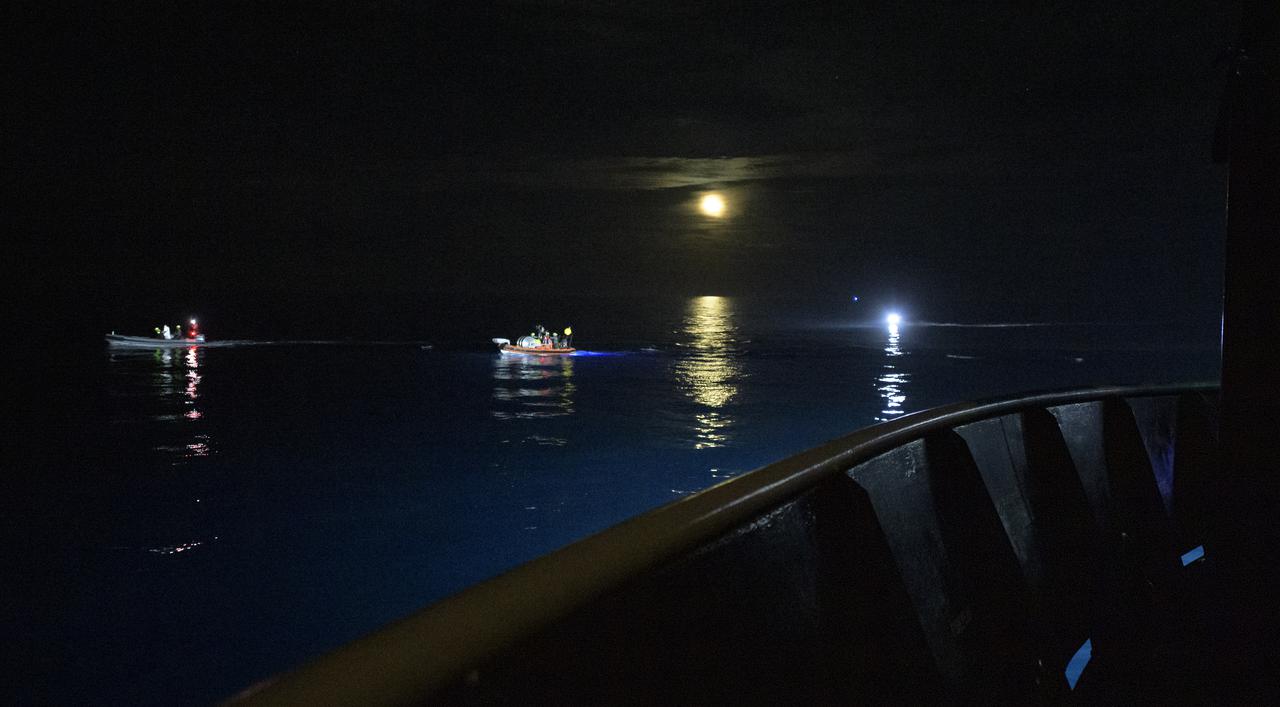
SpaceX support teams deploy in fast boats off the SpaceX GO Navigator recovery ship as they prepare for the landing of the SpaceX Crew Dragon Resilience spacecraft with NASA astronauts Mike Hopkins, Shannon Walker, and Victor Glover, and Japan Aerospace Exploration Agency (JAXA) astronaut Soichi Noguchi aboard in the Gulf of Mexico off the coast of Panama City, Florida, Sunday, May 2, 2021. NASA’s SpaceX Crew-1 mission is the first crew rotation flight of the SpaceX Crew Dragon spacecraft and Falcon 9 rocket with astronauts to the International Space Station as part of the agency’s Commercial Crew Program. Photo Credit: (NASA/Bill Ingalls)
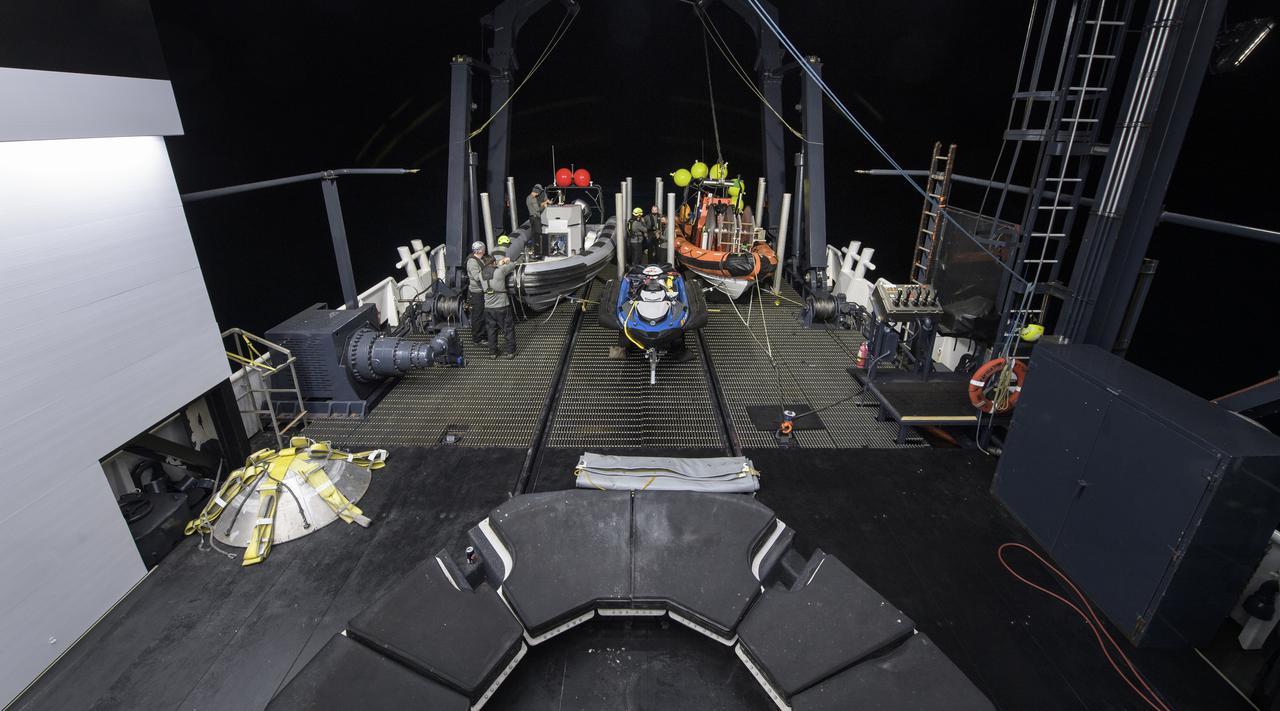
NASA and SpaceX support teams onboard the SpaceX GO Navigator recovery ship prepare for the landing of the SpaceX Crew Dragon Resilience spacecraft with NASA astronauts Mike Hopkins, Shannon Walker, and Victor Glover, and Japan Aerospace Exploration Agency (JAXA) astronaut Soichi Noguchi aboard in the Gulf of Mexico off the coast of Panama City, Florida, Saturday, May 1, 2021. NASA’s SpaceX Crew-1 mission is the first crew rotation flight of the SpaceX Crew Dragon spacecraft and Falcon 9 rocket with astronauts to the International Space Station as part of the agency’s Commercial Crew Program. Photo Credit: (NASA/Bill Ingalls)
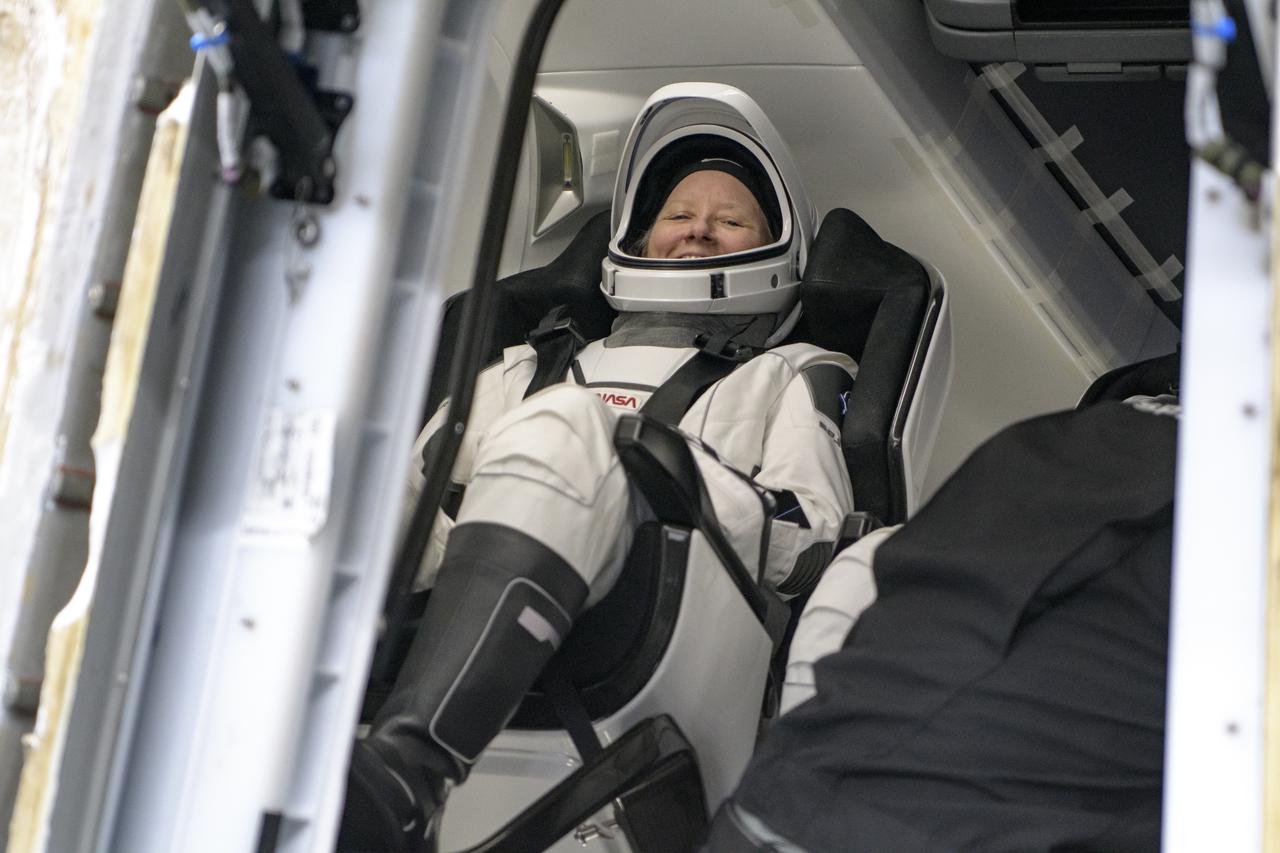
NASA astronaut Shannon Walker smiles prior to being helped out of the SpaceX Crew Dragon Resilience spacecraft onboard the SpaceX GO Navigator recovery ship after she, NASA astronauts Mike Hopkins, Victor Glover, and Japan Aerospace Exploration Agency (JAXA) astronaut Soichi Noguchi, landed in the Gulf of Mexico off the coast of Panama City, Florida, Sunday, May 2, 2021. NASA’s SpaceX Crew-1 mission was the first crew rotation flight of the SpaceX Crew Dragon spacecraft and Falcon 9 rocket with astronauts to the International Space Station as part of the agency’s Commercial Crew Program. Photo Credit: (NASA/Bill Ingalls)
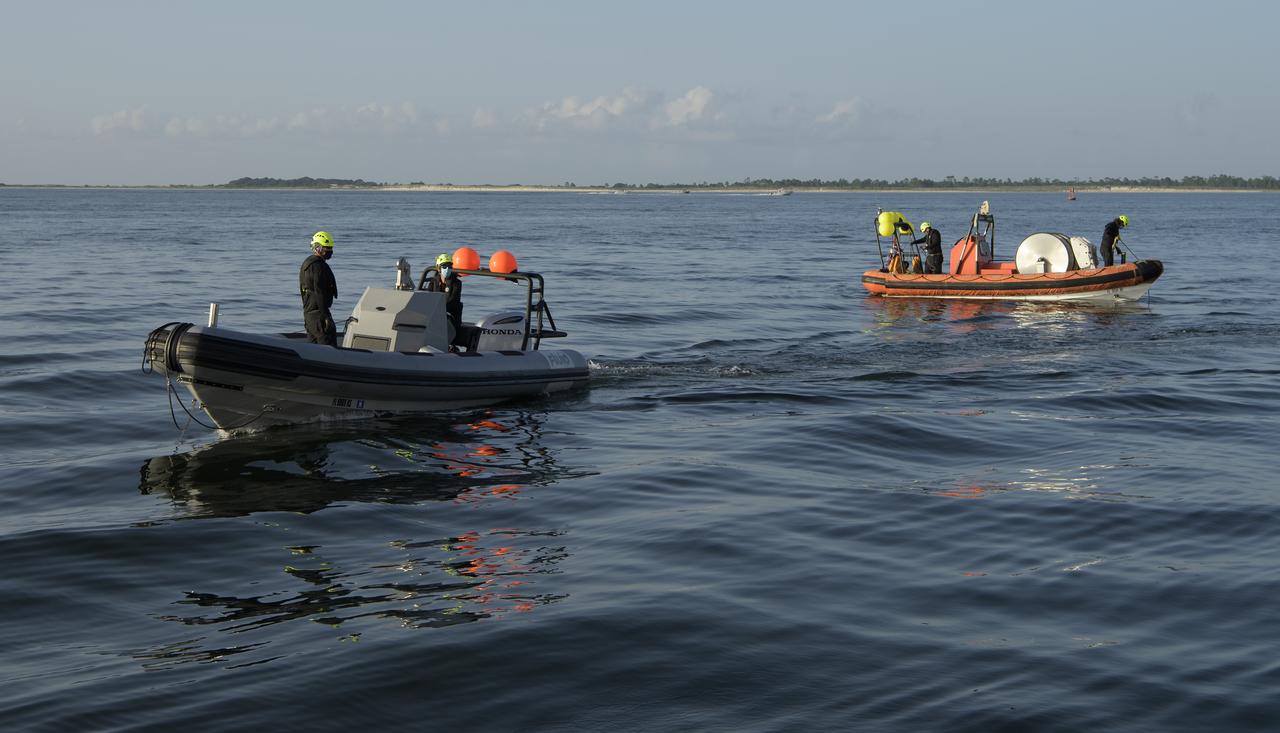
SpaceX support teams are deployed on fast boats from the SpaceX GO Navigator recovery ship ahead of the landing of the SpaceX Crew Dragon Endeavour spacecraft with NASA astronauts Robert Behnken and Douglas Hurley onboard, Sunday, Aug. 2, 2020 in the Gulf of Mexico off the cost of Pensacola, Florida. The Demo-2 test flight for NASA's Commercial Crew Program is the first to deliver astronauts to the International Space Station and return them to Earth onboard a commercially built and operated spacecraft. Behnken and Hurley are returning after spending 64 days in space. Photo Credit: (NASA/Bill Ingalls)
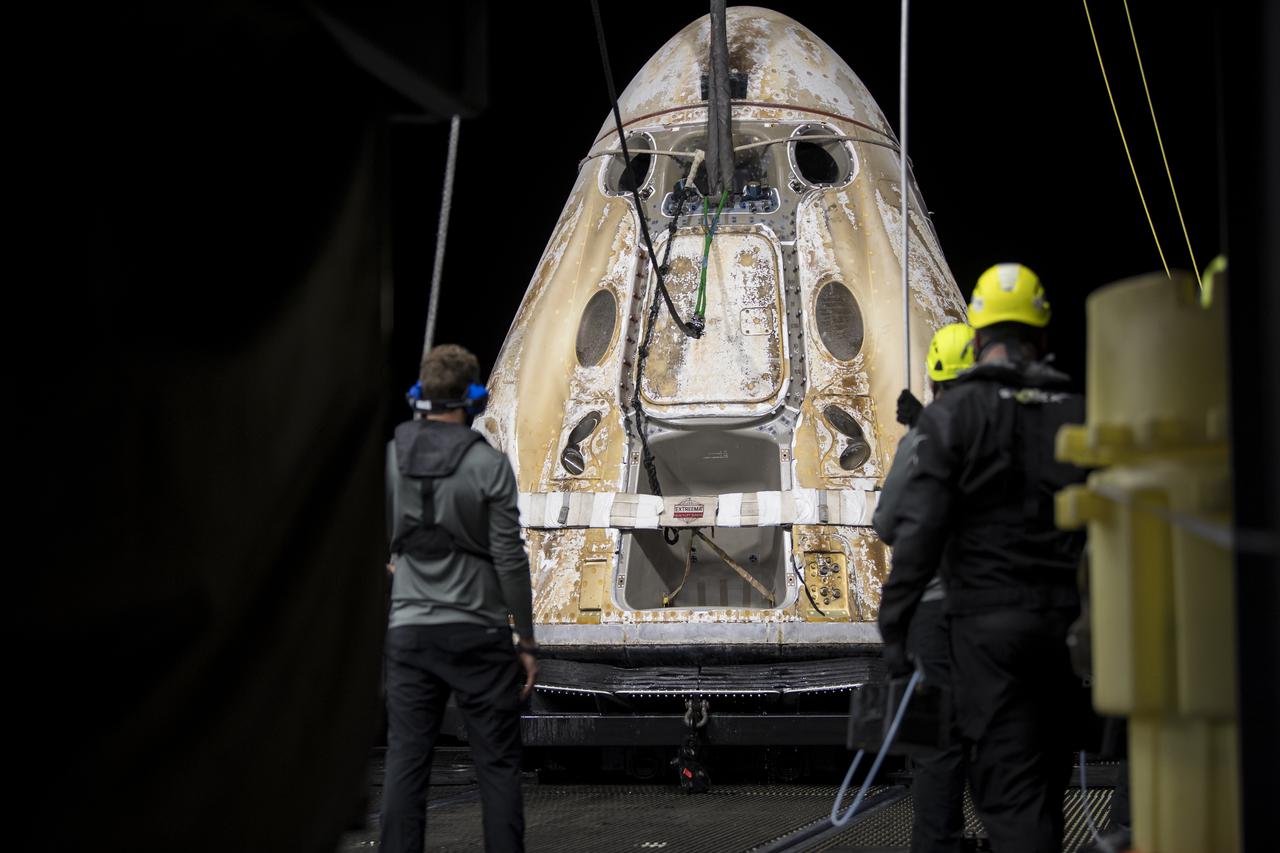
The SpaceX Crew Dragon Endeavour spacecraft is lifted onto the GO Navigator recovery ship after it landed with NASA astronauts Shane Kimbrough and Megan McArthur, Japan Aerospace Exploration Agency (JAXA) astronaut Aki Hoshide, and ESA (European Space Agency) astronaut Thomas Pesquet in the Gulf of Mexico off the coast of Pensacola, Florida, Monday, Nov. 8, 2021. NASA’s SpaceX Crew-2 mission is the second operational mission of the SpaceX Crew Dragon spacecraft and Falcon 9 rocket to the International Space Station as part of the agency’s Commercial Crew Program. Photo Credit: (NASA/Aubrey Gemignani)
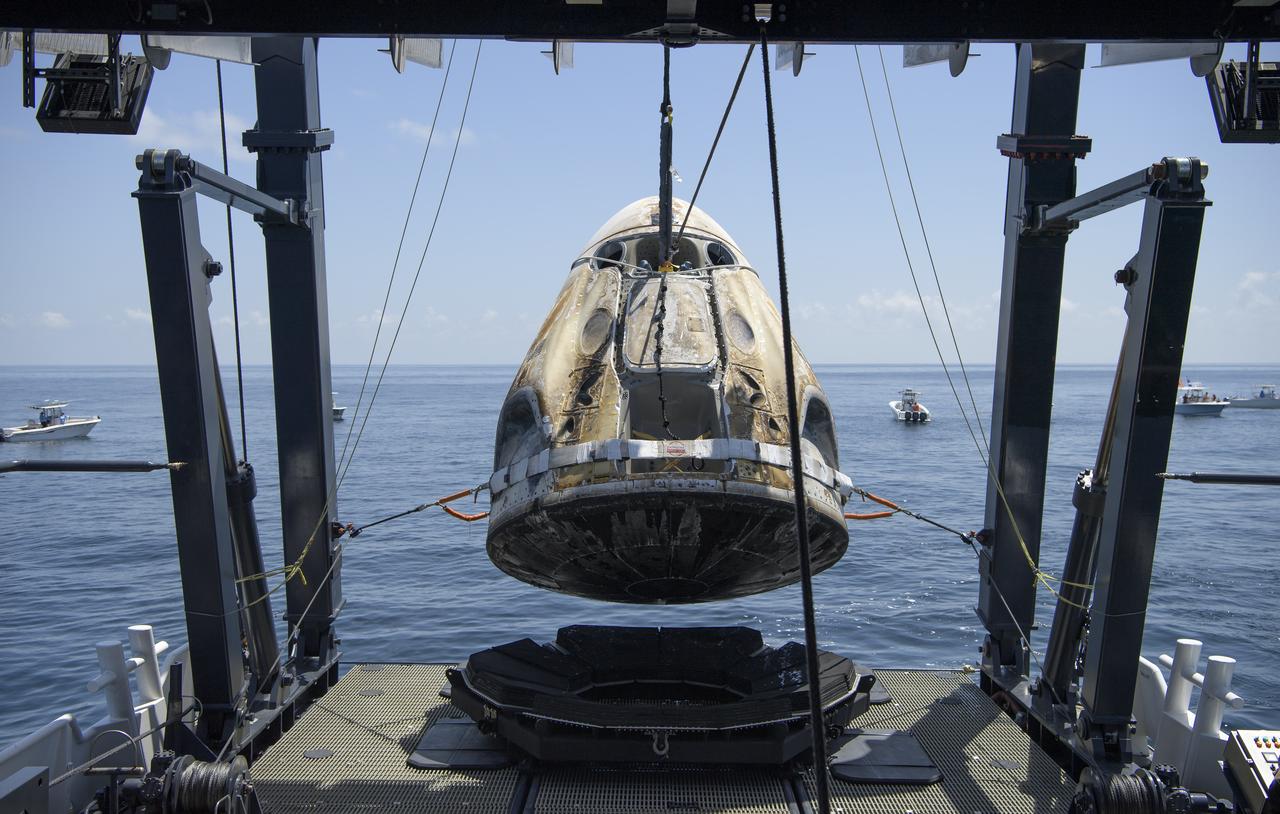
The SpaceX Crew Dragon Endeavour spacecraft is lifted onto the SpaceX GO Navigator recovery ship shortly after it landed with NASA astronauts Robert Behnken and Douglas Hurley onboard in the Gulf of Mexico off the coast of Pensacola, Florida, Sunday, Aug. 2, 2020. The Demo-2 test flight for NASA's Commercial Crew Program was the first to deliver astronauts to the International Space Station and return them safely to Earth onboard a commercially built and operated spacecraft. Behnken and Hurley returned after spending 64 days in space. Photo Credit: (NASA/Bill Ingalls)
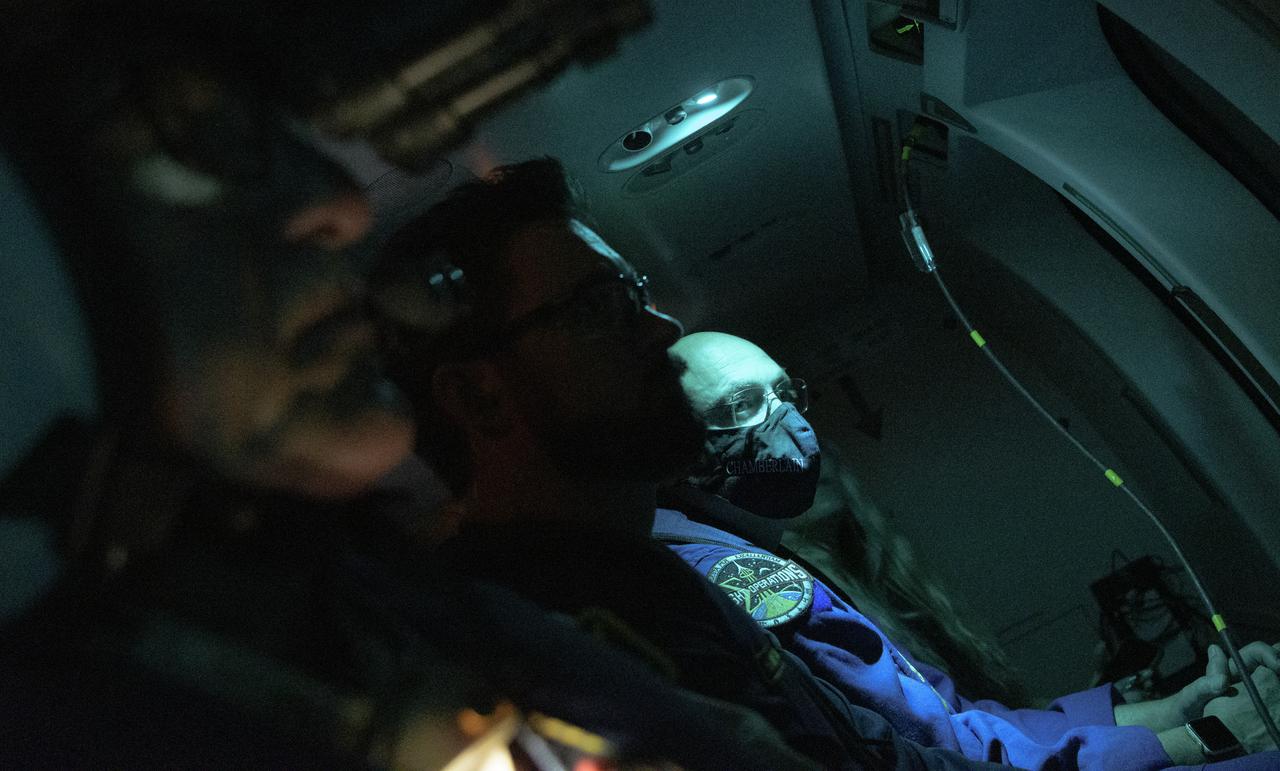
NASA Flight Surgeon Blake Chamberlain and other NASA and SpaceX support teams helicopter out to the SpaceX GO Navigator recovery ship to prepare for the landing of the SpaceX Crew Dragon Resilience spacecraft with NASA astronauts Mike Hopkins, Shannon Walker, and Victor Glover, and Japan Aerospace Exploration Agency (JAXA) astronaut Soichi Noguchi aboard in the Gulf of Mexico off the coast of Panama City, Florida, Saturday, May 1, 2021. NASA’s SpaceX Crew-1 mission is the first crew rotation flight of the SpaceX Crew Dragon spacecraft and Falcon 9 rocket with astronauts to the International Space Station as part of the agency’s Commercial Crew Program. Photo Credit: (NASA/Bill Ingalls)
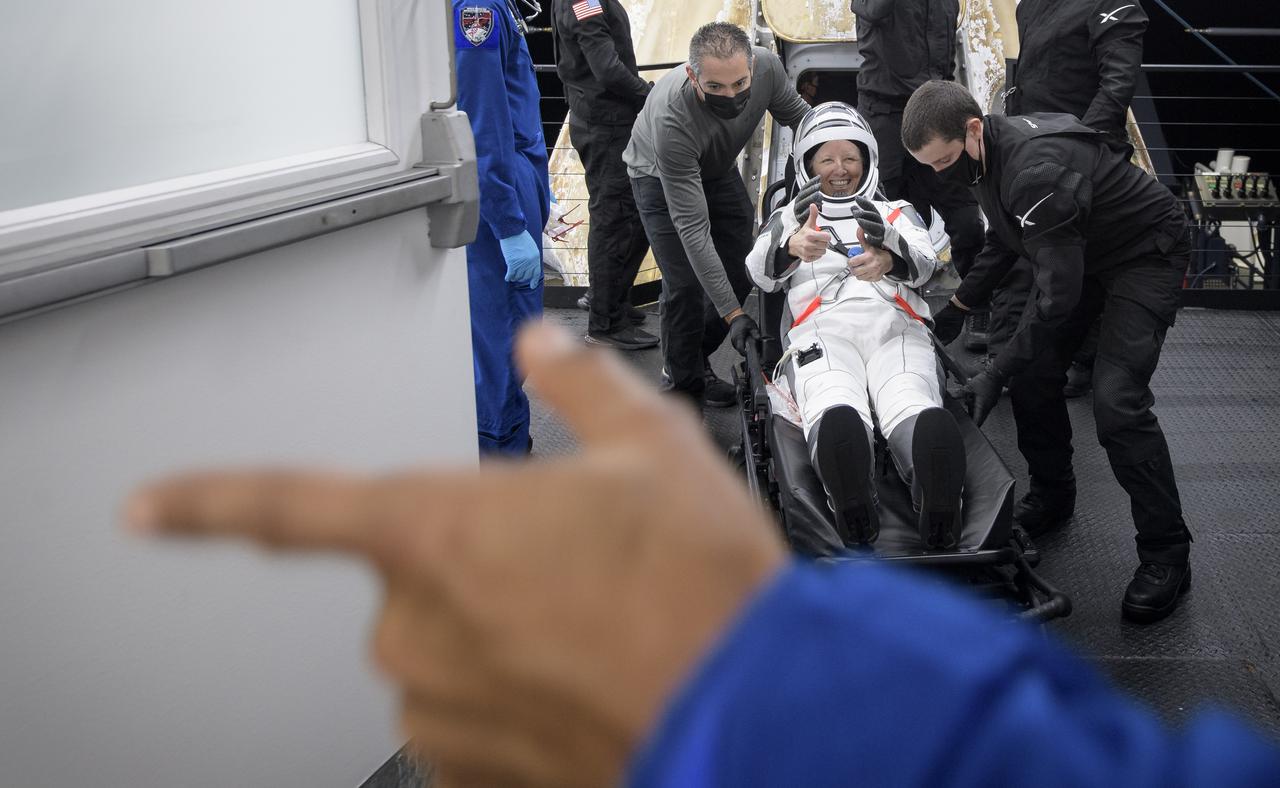
NASA astronaut Shannon Walker smiles and gives a thumbs up after being helped out of the SpaceX Crew Dragon Resilience spacecraft onboard the SpaceX GO Navigator recovery ship after she, NASA astronauts Mike Hopkins, Victor Glover, and Japan Aerospace Exploration Agency (JAXA) astronaut Soichi Noguchi, landed in the Gulf of Mexico off the coast of Panama City, Florida, Sunday, May 2, 2021. NASA’s SpaceX Crew-1 mission was the first crew rotation flight of the SpaceX Crew Dragon spacecraft and Falcon 9 rocket with astronauts to the International Space Station as part of the agency’s Commercial Crew Program. Photo Credit: (NASA/Bill Ingalls)
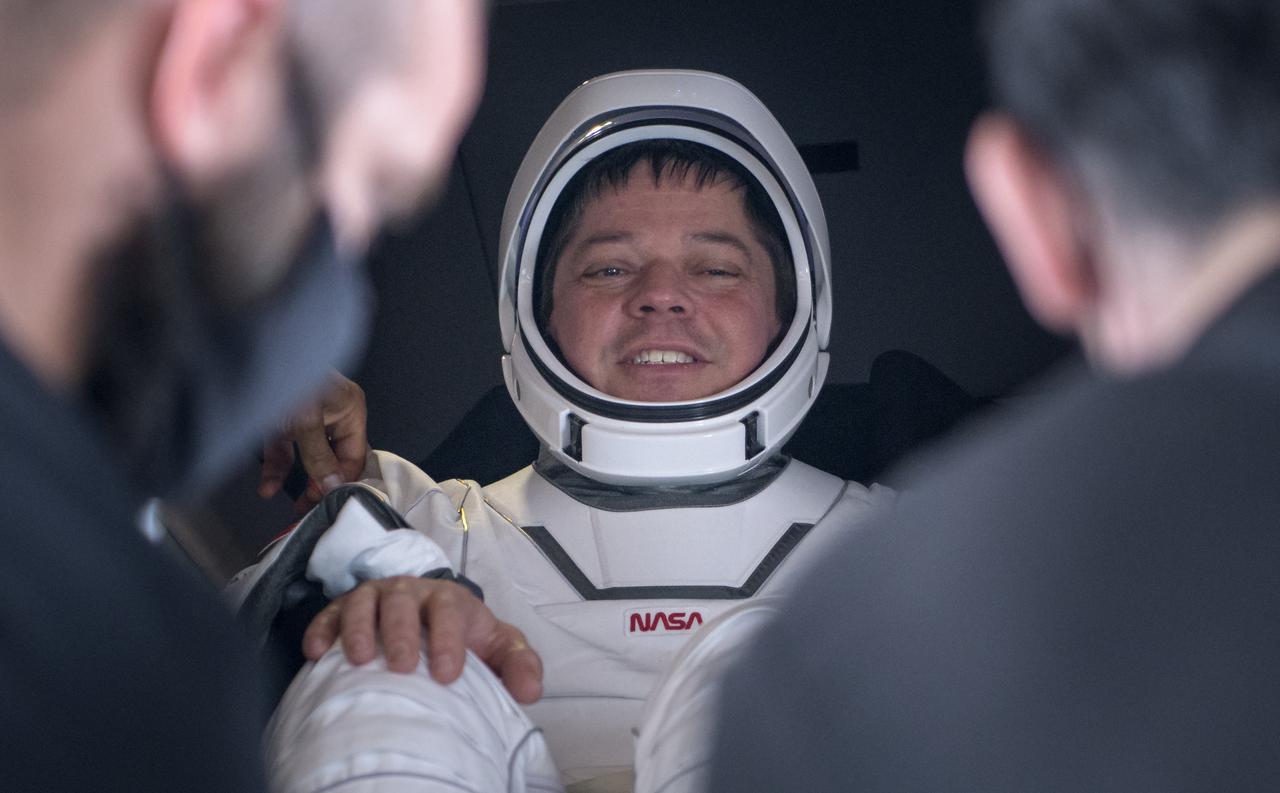
NASA astronaut Robert Behnken smiles prior to being helped out of the SpaceX Crew Dragon Endeavour spacecraft onboard the SpaceX GO Navigator recovery ship after he and NASA astronaut Douglas Hurley landed in the Gulf of Mexico off the coast of Pensacola, Florida, Sunday, Aug. 2, 2020. The Demo-2 test flight for NASA's Commercial Crew Program was the first to deliver astronauts to the International Space Station and return them safely to Earth onboard a commercially built and operated spacecraft. Behnken and Hurley returned after spending 64 days in space. Photo Credit: (NASA/Bill Ingalls)
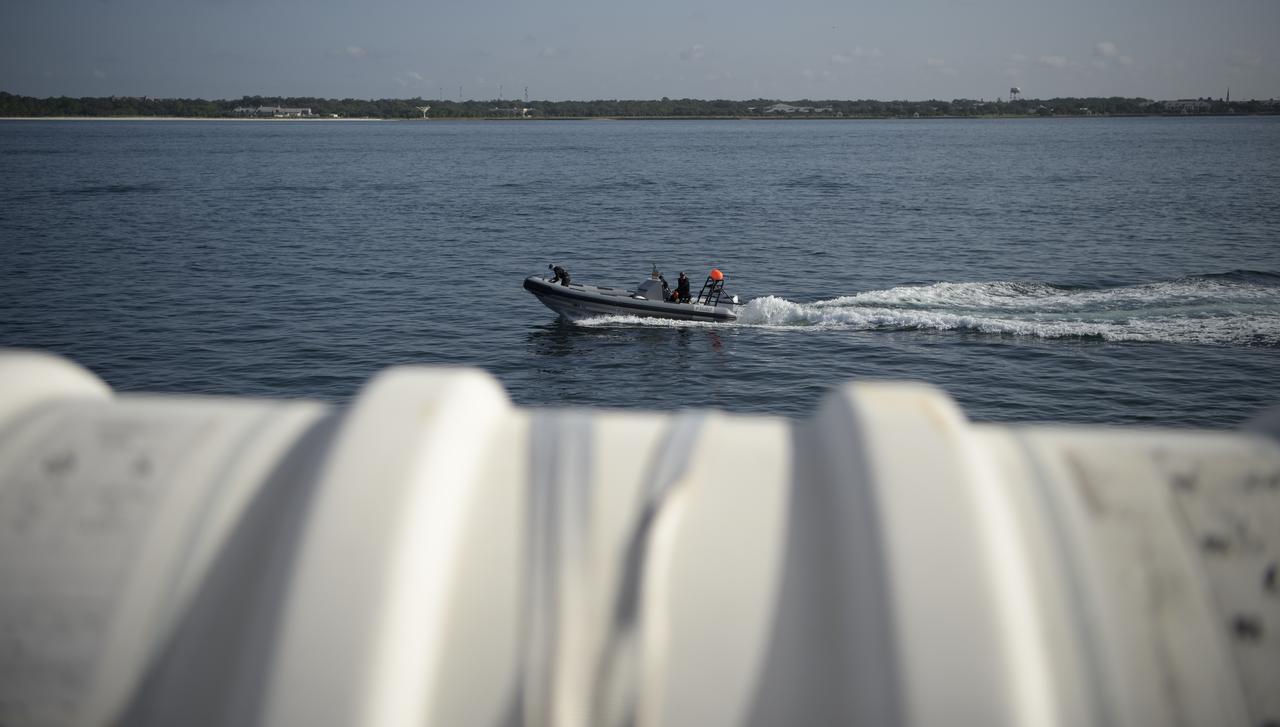
SpaceX support teams are deployed on fast boats from the SpaceX GO Navigator recovery ship ahead of the landing of the SpaceX Crew Dragon Endeavour spacecraft with NASA astronauts Robert Behnken and Douglas Hurley onboard, Sunday, Aug. 2, 2020 in the Gulf of Mexico off the cost of Pensacola, Florida. The Demo-2 test flight for NASA's Commercial Crew Program is the first to deliver astronauts to the International Space Station and return them to Earth onboard a commercially built and operated spacecraft. Behnken and Hurley are returning after spending 64 days in space. Photo Credit: (NASA/Bill Ingalls)
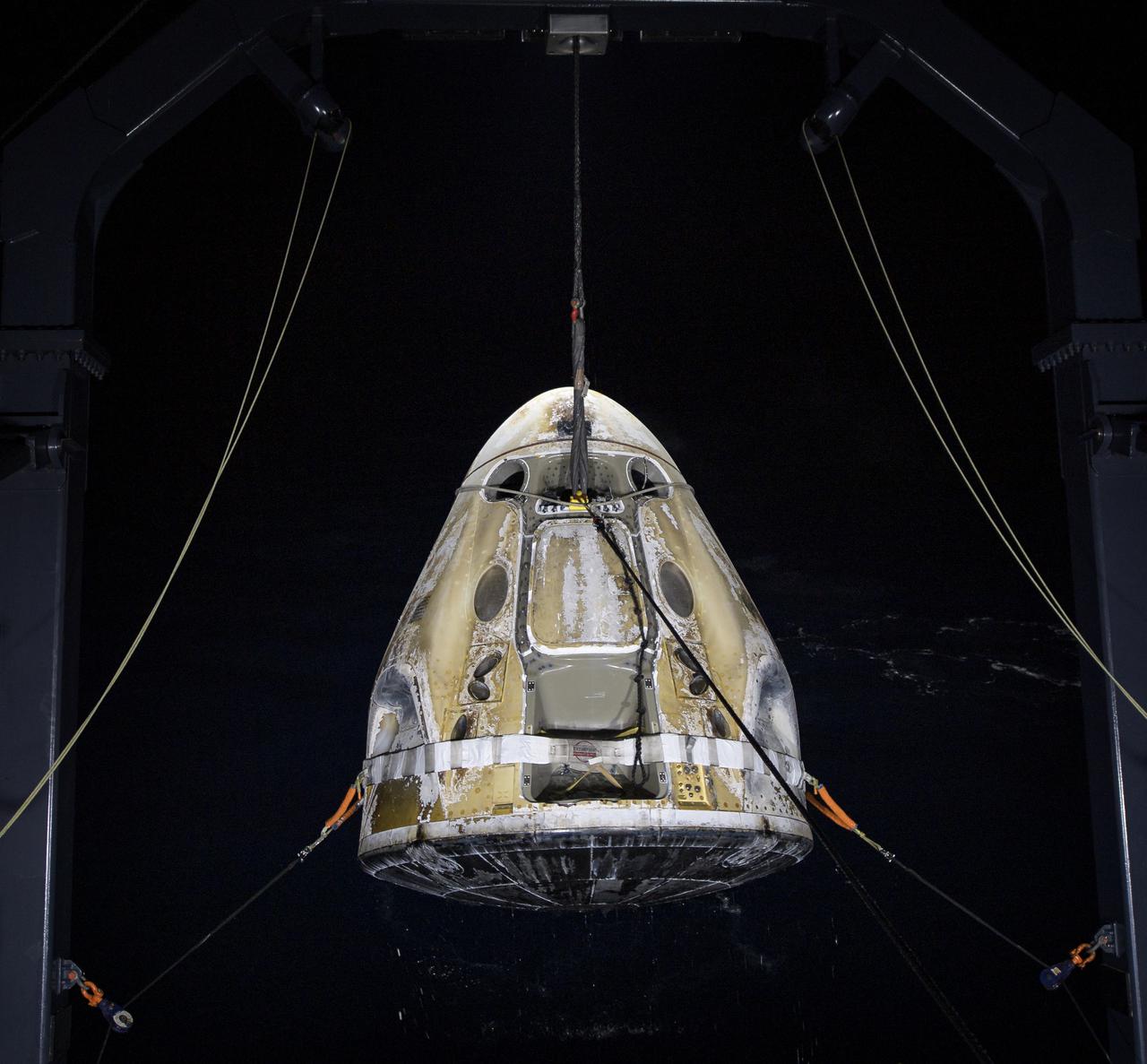
The SpaceX Crew Dragon Resilience spacecraft is lifted onto the GO Navigator recovery ship after it landed with NASA astronauts Mike Hopkins, Shannon Walker, and Victor Glover, and Japan Aerospace Exploration Agency (JAXA) astronaut Soichi Noguchi aboard in the Gulf of Mexico off the coast of Panama City, Florida, Sunday, May 2, 2021. NASA’s SpaceX Crew-1 mission was the first crew rotation flight of the SpaceX Crew Dragon spacecraft and Falcon 9 rocket with astronauts to the International Space Station as part of the agency’s Commercial Crew Program. Photo Credit: (NASA/Bill Ingalls)
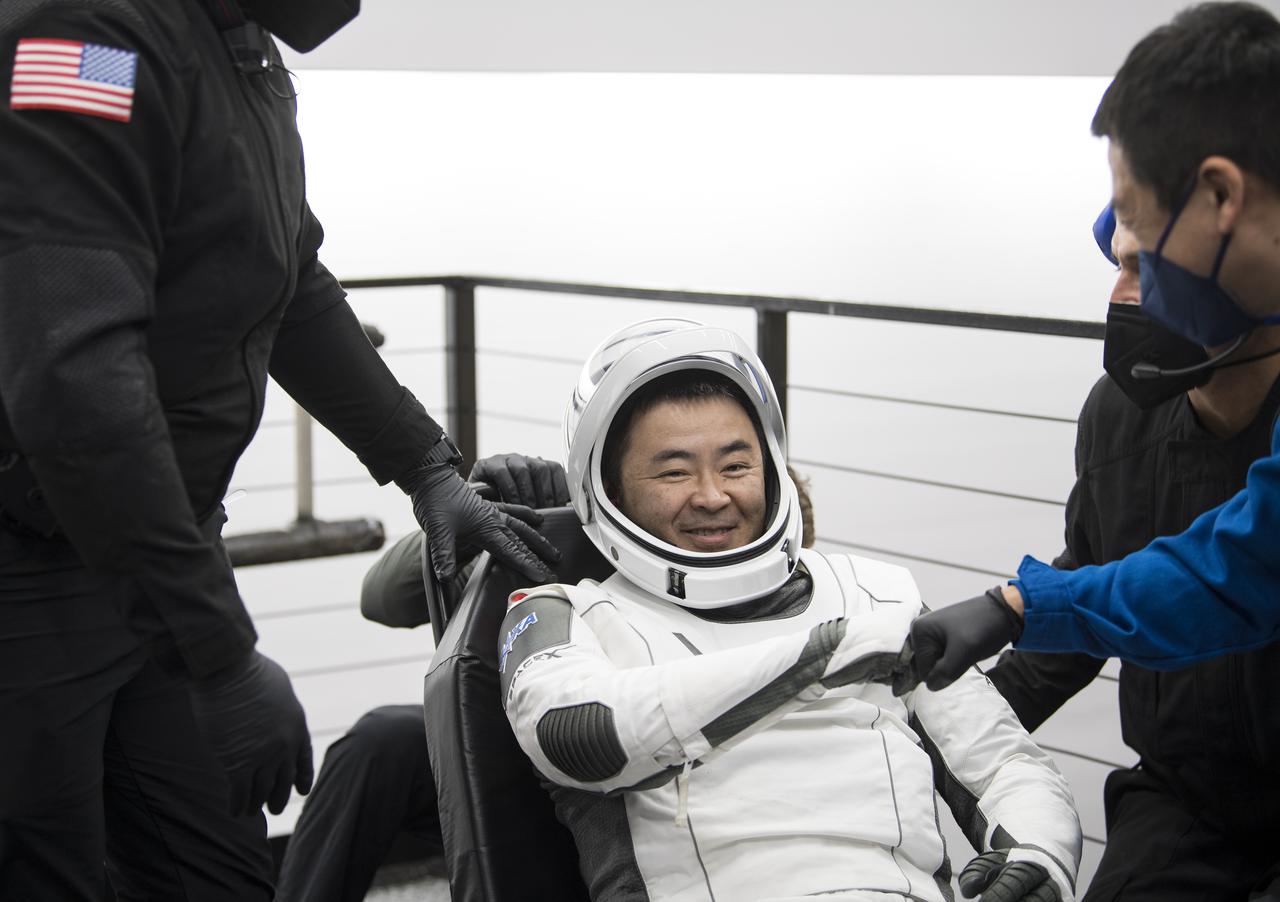
Japan Aerospace Exploration Agency (JAXA) astronaut Aki Hoshide gives a fist bump after being helped out of the SpaceX Crew Dragon Endeavour spacecraft onboard the SpaceX GO Navigator recovery ship after he and NASA astronauts Shane Kimbrough and Megan McArthur, and ESA (European Space Agency) astronaut Thomas Pesquet landed in the Gulf of Mexico off the coast of Pensacola, Florida, Monday, Nov. 8, 2021. NASA’s SpaceX Crew-2 mission is the second operational mission of the SpaceX Crew Dragon spacecraft and Falcon 9 rocket to the International Space Station as part of the agency’s Commercial Crew Program. Photo Credit: (NASA/Aubrey Gemignani)
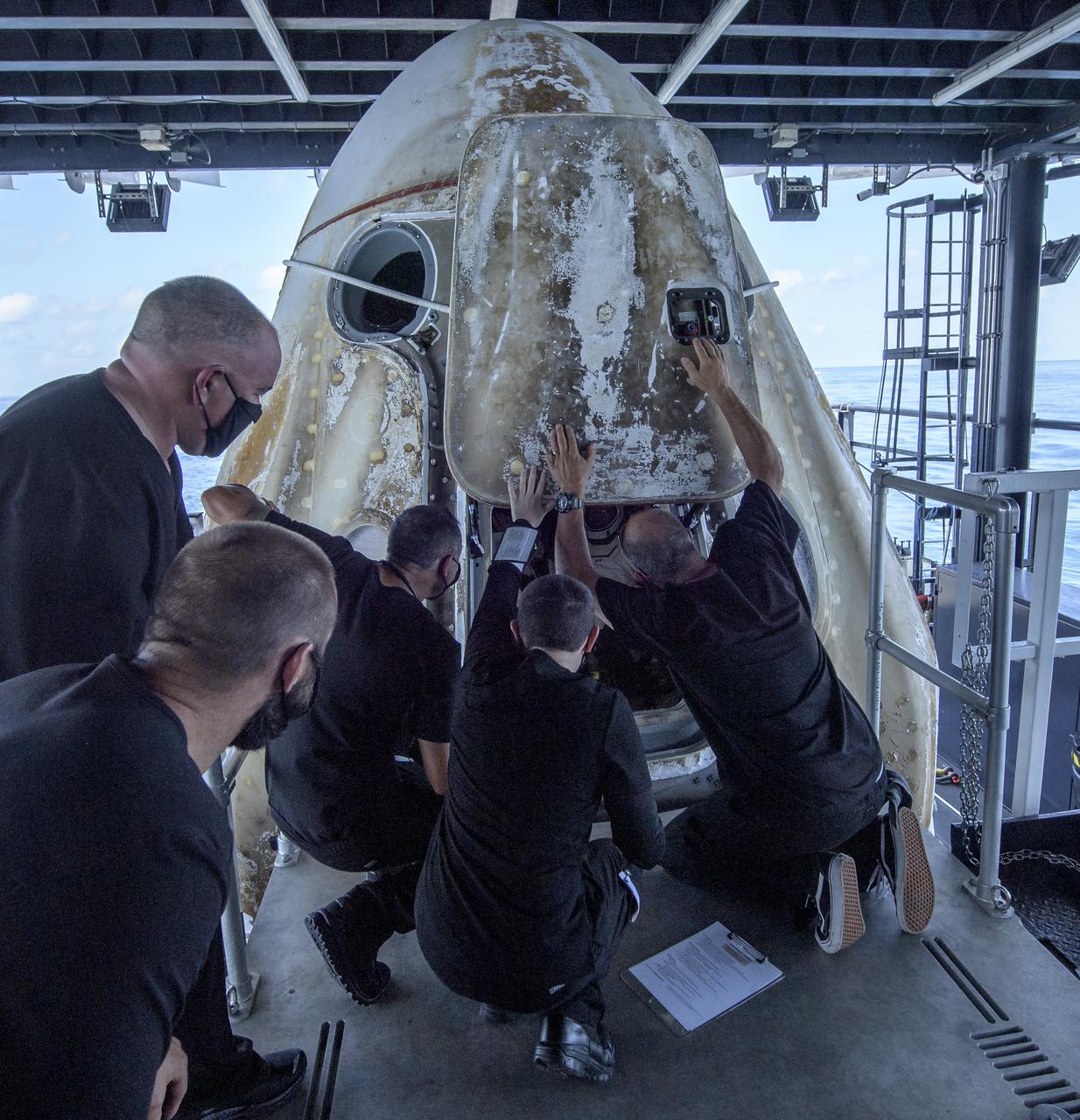
The hatch of the SpaceX Crew Dragon Endeavour spacecraft is opened for egress of NASA astronauts Robert Behnken and Douglas Hurley onboard the SpaceX GO Navigator recovery ship shortly the duo landed in the Gulf of Mexico off the coast of Pensacola, Florida, Sunday, Aug. 2, 2020. The Demo-2 test flight for NASA's Commercial Crew Program was the first to deliver astronauts to the International Space Station and return them safely to Earth onboard a commercially built and operated spacecraft. Behnken and Hurley returned after spending 64 days in space. Photo Credit: (NASA/Bill Ingalls)
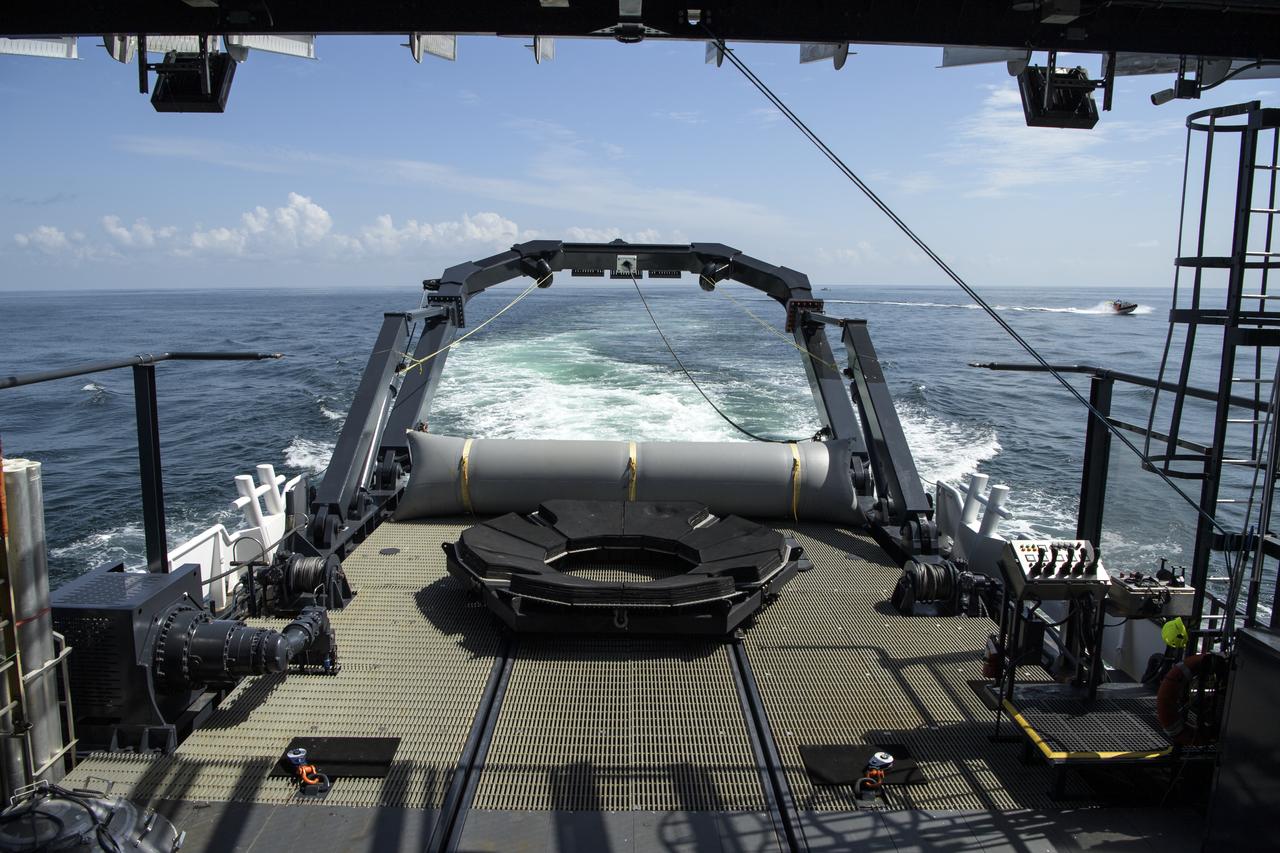
NASA and SpaceX support teams onboard the SpaceX GO Navigator recovery ship prepare for the landing of the SpaceX Crew Dragon Endeavour spacecraft with NASA astronauts Robert Behnken and Douglas Hurley onboard, Sunday, Aug. 2, 2020 in the Gulf of Mexico off the cost of Pensacola, Florida. The Demo-2 test flight for NASA's Commercial Crew Program is the first to deliver astronauts to the International Space Station and return them to Earth onboard a commercially built and operated spacecraft. Behnken and Hurley are returning after spending 64 days in space. Photo Credit: (NASA/Bill Ingalls)
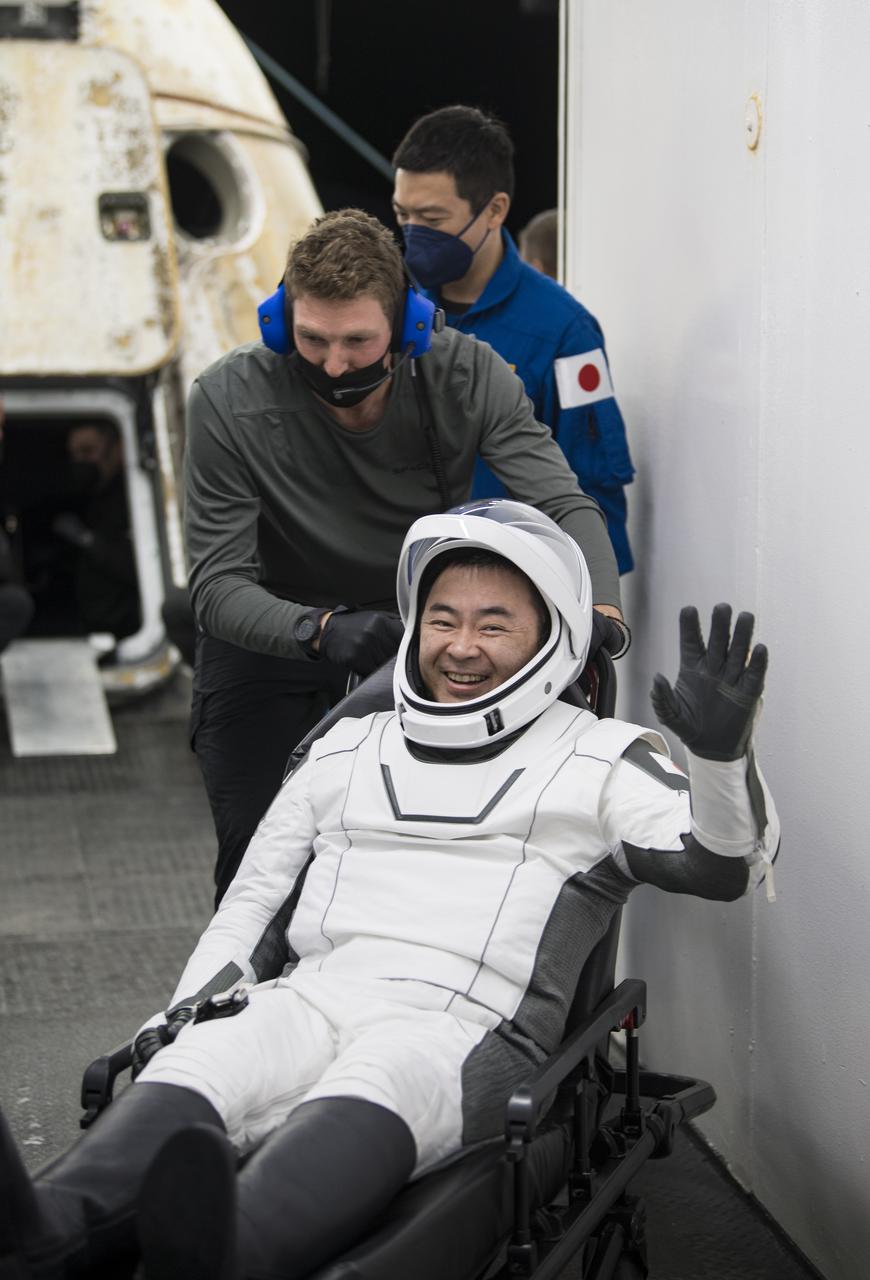
Japan Aerospace Exploration Agency (JAXA) astronaut Aki Hoshide waves after being helped out of the SpaceX Crew Dragon Endeavour spacecraft onboard the SpaceX GO Navigator recovery ship after he and NASA astronauts Shane Kimbrough and Megan McArthur, and ESA (European Space Agency) astronaut Thomas Pesquet landed in the Gulf of Mexico off the coast of Pensacola, Florida, Monday, Nov. 8, 2021. NASA’s SpaceX Crew-2 mission is the second operational mission of the SpaceX Crew Dragon spacecraft and Falcon 9 rocket to the International Space Station as part of the agency’s Commercial Crew Program. Photo Credit: (NASA/Aubrey Gemignani)
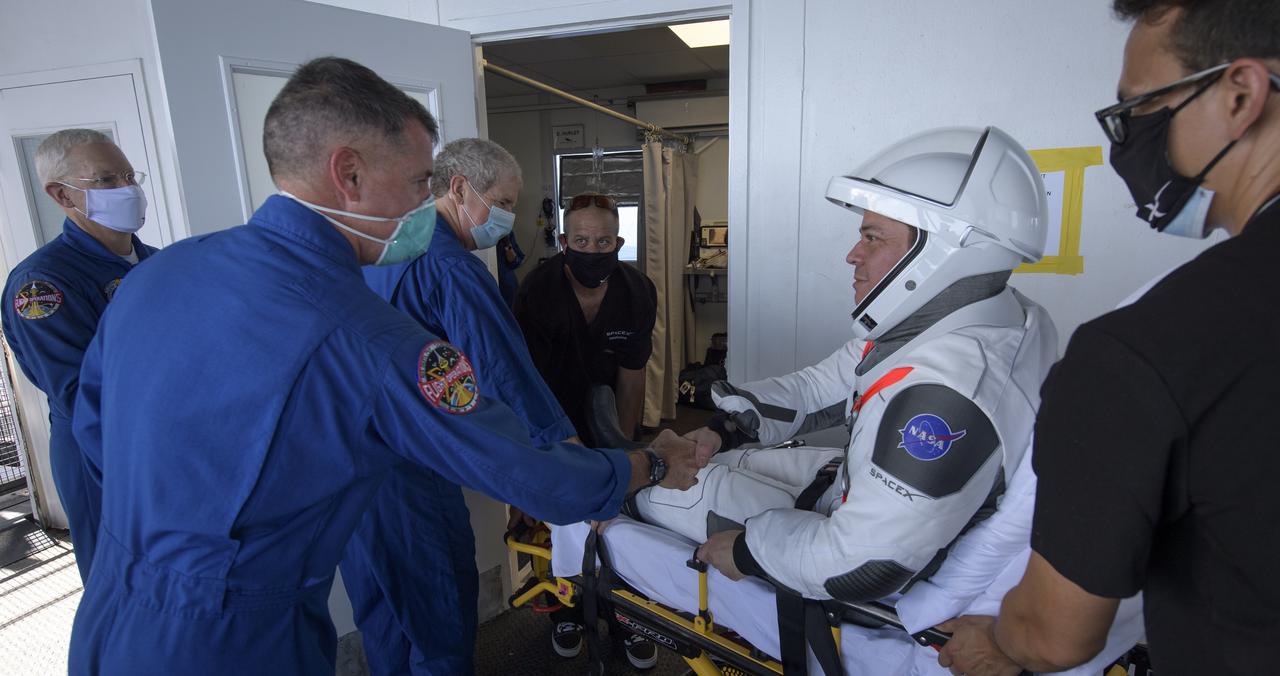
NASA astronaut Robert Behnken is greeted by NASA astronaut and Crew Recovery Chief Shane Kimbrough after egressing the SpaceX Crew Dragon Endeavour spacecraft onboard the SpaceX GO Navigator recovery ship after he and NASA astronaut Douglas Hurley landed in the Gulf of Mexico off the coast of Pensacola, Florida, Sunday, Aug. 2, 2020. The Demo-2 test flight for NASA's Commercial Crew Program was the first to deliver astronauts to the International Space Station and return them safely to Earth onboard a commercially built and operated spacecraft. Behnken and Hurley returned after spending 64 days in space. Photo Credit: (NASA/Bill Ingalls)
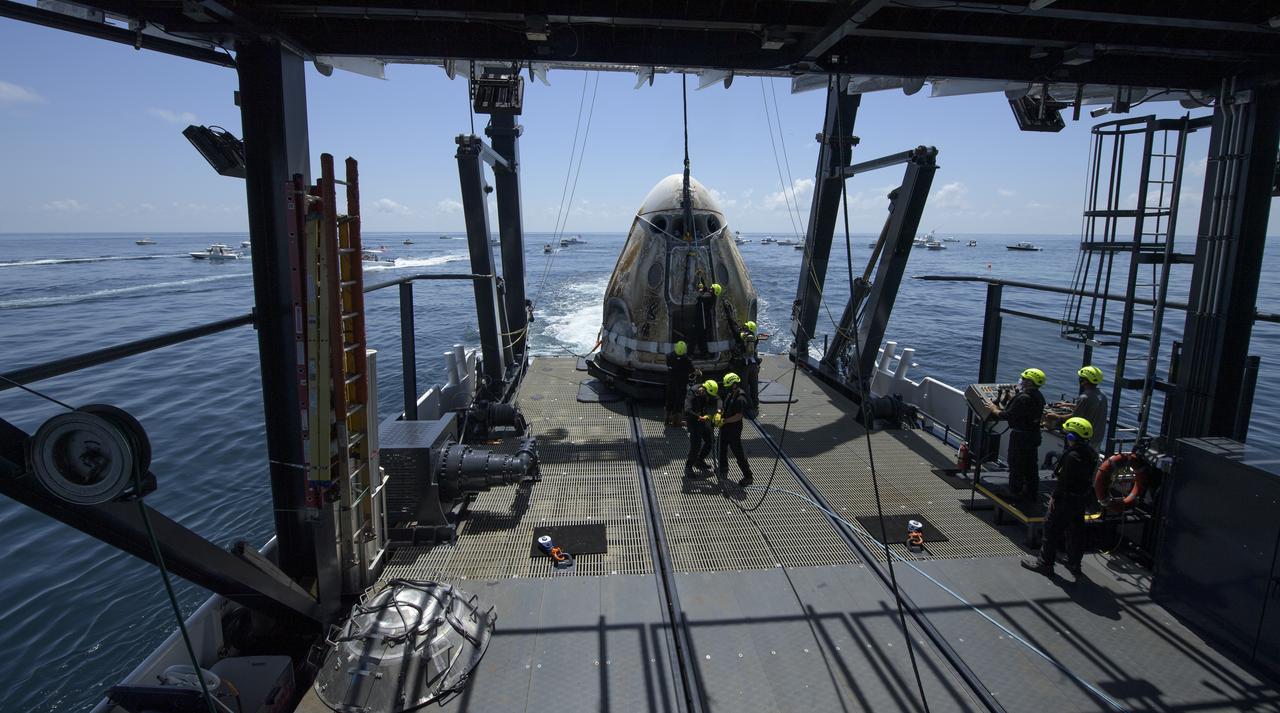
The SpaceX Crew Dragon Endeavour spacecraft is lowered onto the SpaceX GO Navigator recovery ship shortly after it landed with NASA astronauts Robert Behnken and Douglas Hurley onboard in the Gulf of Mexico off the coast of Pensacola, Florida, Sunday, Aug. 2, 2020. The Demo-2 test flight for NASA's Commercial Crew Program was the first to deliver astronauts to the International Space Station and return them safely to Earth onboard a commercially built and operated spacecraft. Behnken and Hurley returned after spending 64 days in space. Photo Credit: (NASA/Bill Ingalls)
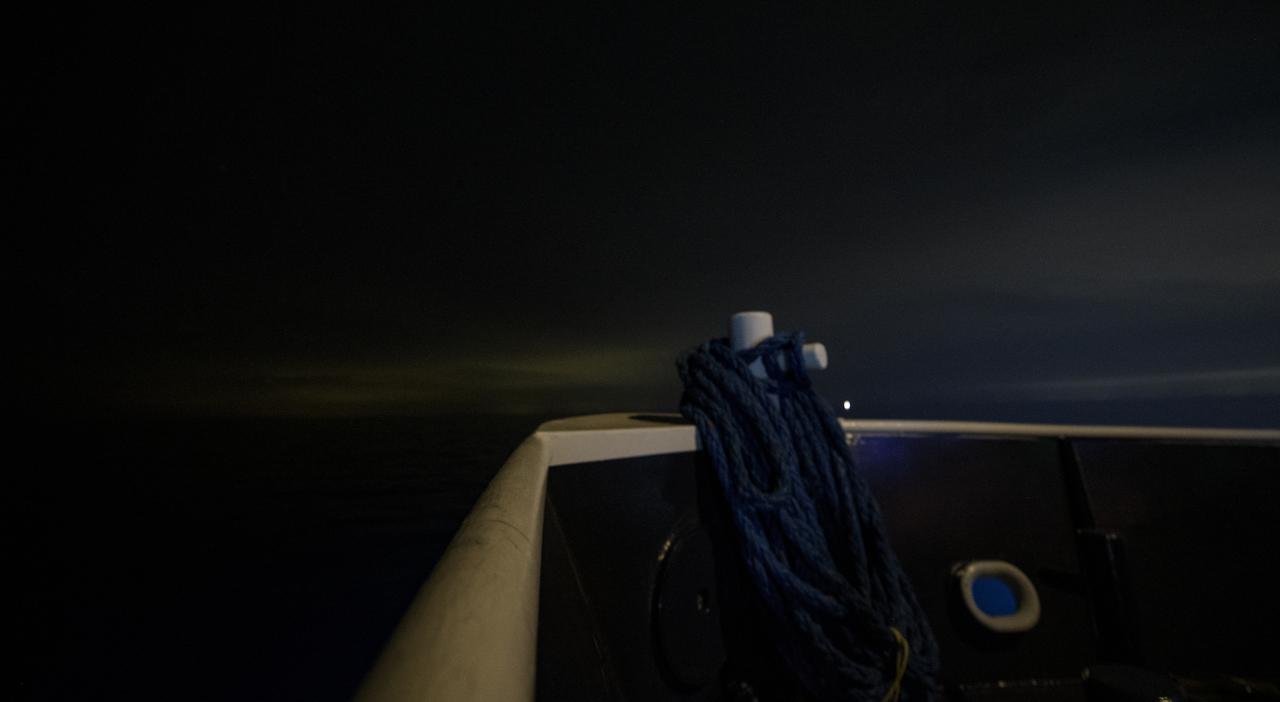
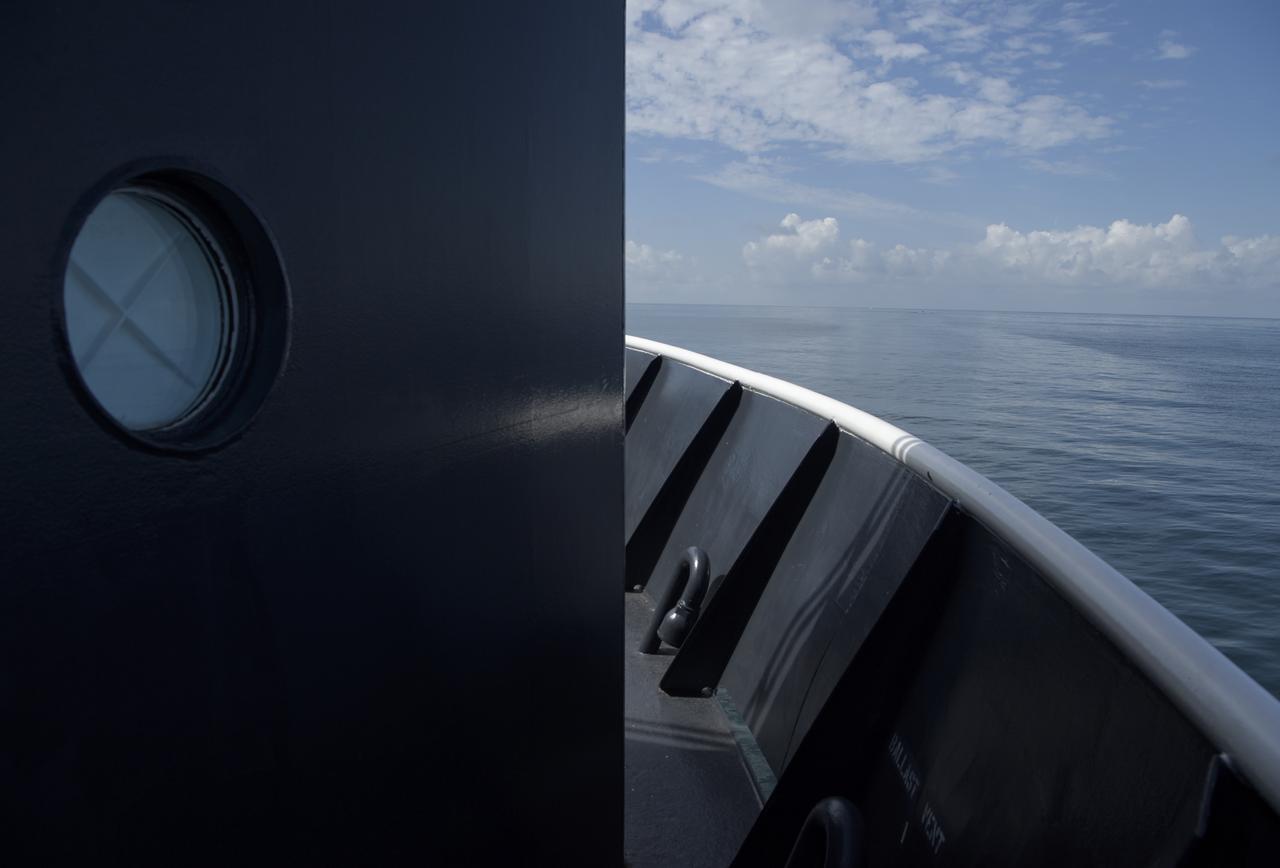
The night sky off the bow of the SpaceX GO Navigator recovery ship is seen in this one second exposure photograph as NASA and SpaceX support teams prepare for the landing of the SpaceX Crew Dragon Resilience spacecraft with NASA astronauts Mike Hopkins, Shannon Walker, and Victor Glover, and Japan Aerospace Exploration Agency (JAXA) astronaut Soichi Noguchi aboard in the Gulf of Mexico off the coast of Panama City, Florida, Saturday, May 1, 2021. NASA’s SpaceX Crew-1 mission is the first crew rotation flight of the SpaceX Crew Dragon spacecraft and Falcon 9 rocket with astronauts to the International Space Station as part of the agency’s Commercial Crew Program. Photo Credit: (NASA/Bill Ingalls)
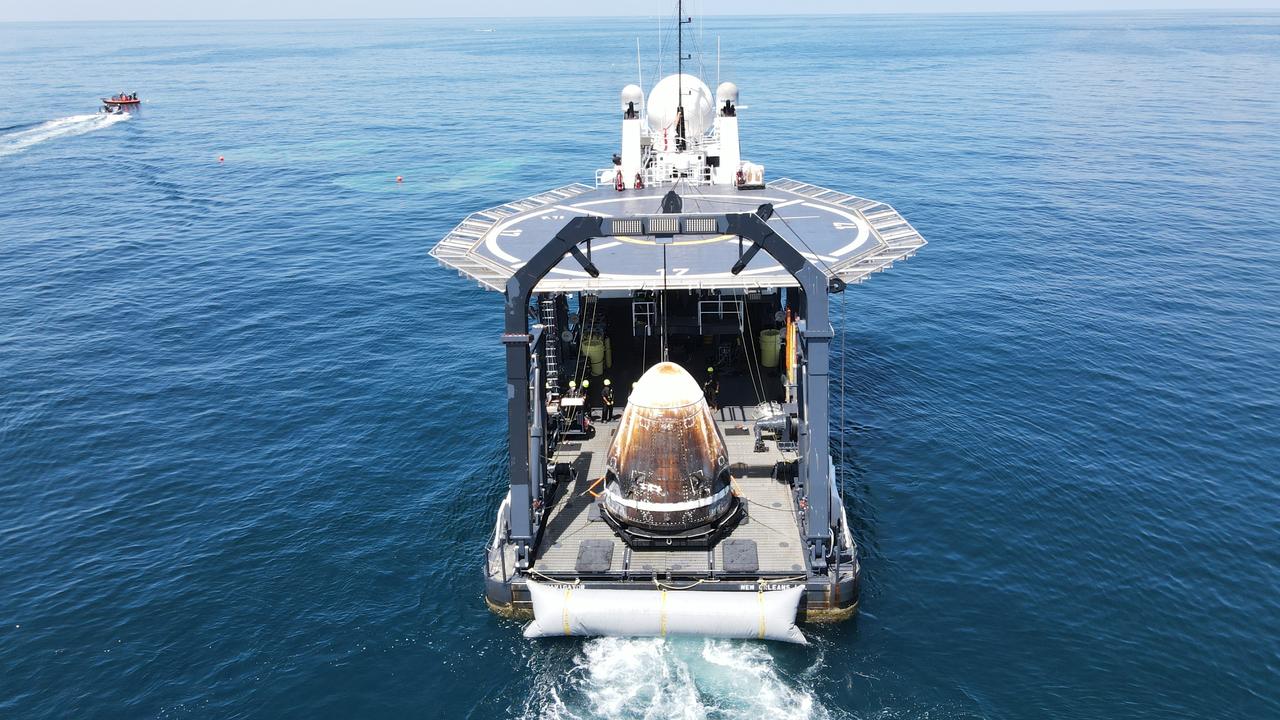
The SpaceX Crew Dragon spacecraft, with NASA astronauts Robert Behnken and Douglas Hurley inside, is seen aboard SpaceX’s GO Navigator recovery ship shortly after splashing down in the Gulf of Mexico off the coast of Pensacola, Florida, on Aug. 2, 2020. Behnken and Hurley spent 62 days aboard the International Space Station for NASA’s SpaceX Demo-2 mission, becoming the first astronauts to launch to the orbiting laboratory from U.S. soil since the end of the shuttle program in 2011. The final flight test for SpaceX, Demo-2 will pave the way for the agency to certify the company’s transportation system for regular, crewed flights to the orbiting laboratory.
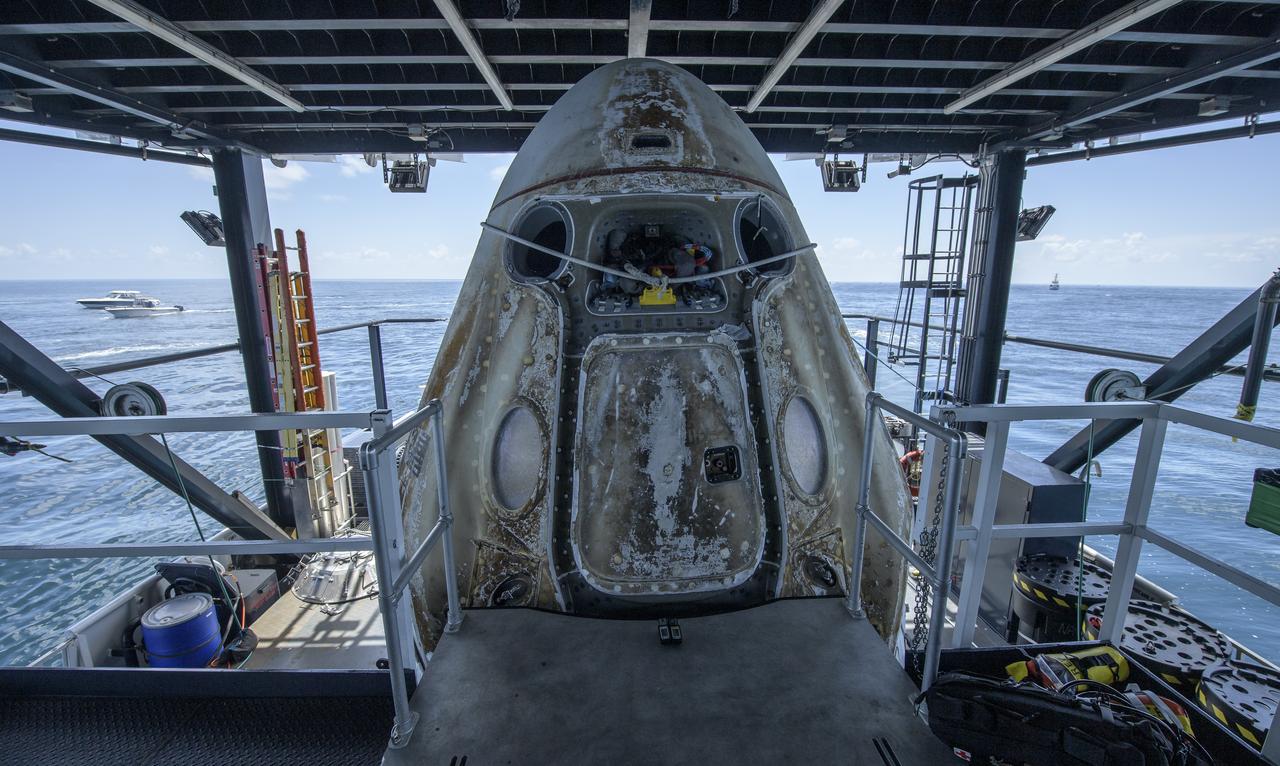
The SpaceX Crew Dragon Endeavour spacecraft, with NASA astronauts Robert Behnken and Douglas Hurley onboard, is positioned on the SpaceX GO Navigator recovery ship for crew egress shortly after landing in the Gulf of Mexico off the coast of Pensacola, Florida, Sunday, Aug. 2, 2020. The Demo-2 test flight for NASA's Commercial Crew Program was the first to deliver astronauts to the International Space Station and return them safely to Earth onboard a commercially built and operated spacecraft. Behnken and Hurley returned after spending 64 days in space. Photo Credit: (NASA/Bill Ingalls)
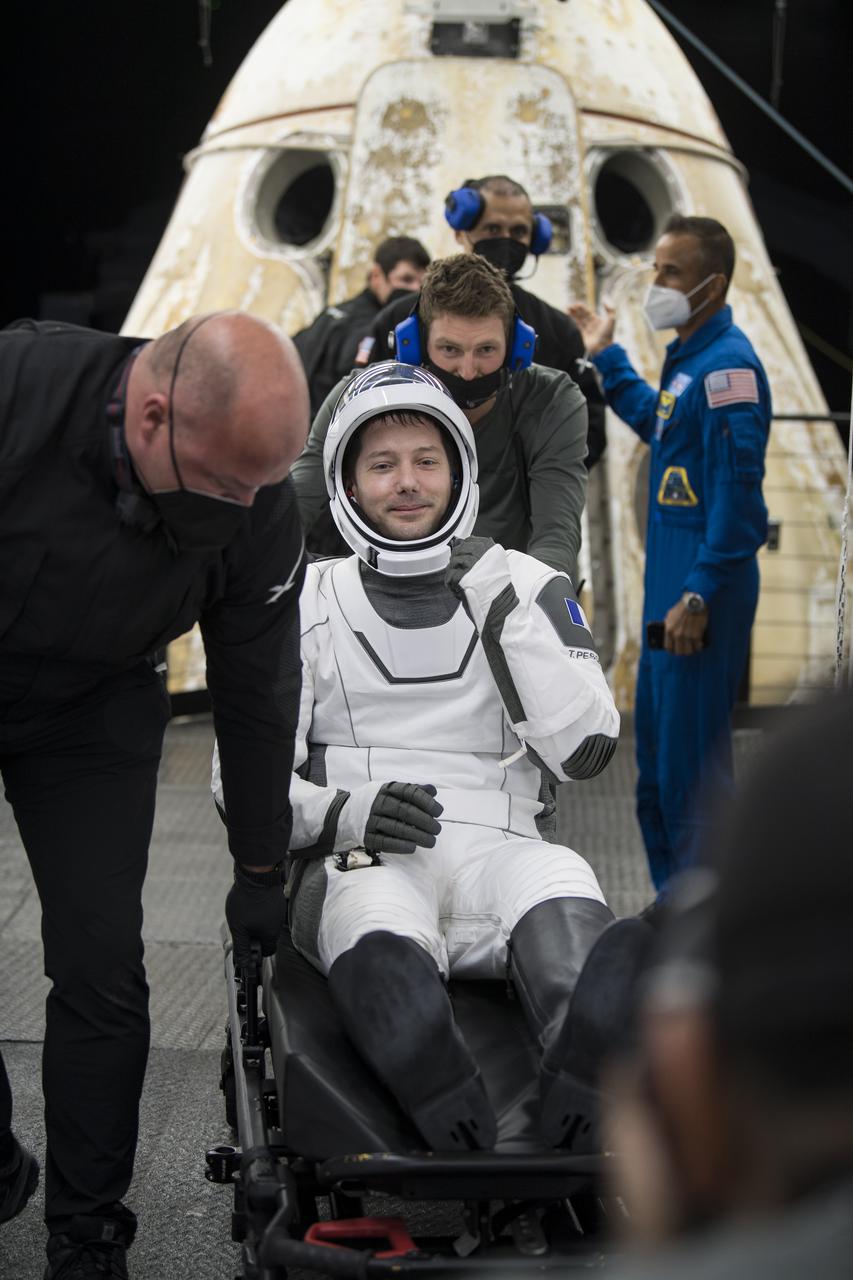
ESA (European Space Agency) astronaut Thomas Pesquet is seen after being helped out of the SpaceX Crew Dragon Endeavour spacecraft onboard the SpaceX GO Navigator recovery ship after he and NASA astronauts Shane Kimbrough and Megan McArthur, and Japan Aerospace Exploration Agency (JAXA) astronaut Aki Hoshide landed in the Gulf of Mexico off the coast of Pensacola, Florida, Monday, Nov. 8, 2021. NASA’s SpaceX Crew-2 mission is the second operational mission of the SpaceX Crew Dragon spacecraft and Falcon 9 rocket to the International Space Station as part of the agency’s Commercial Crew Program. Photo Credit: (NASA/Aubrey Gemignani)
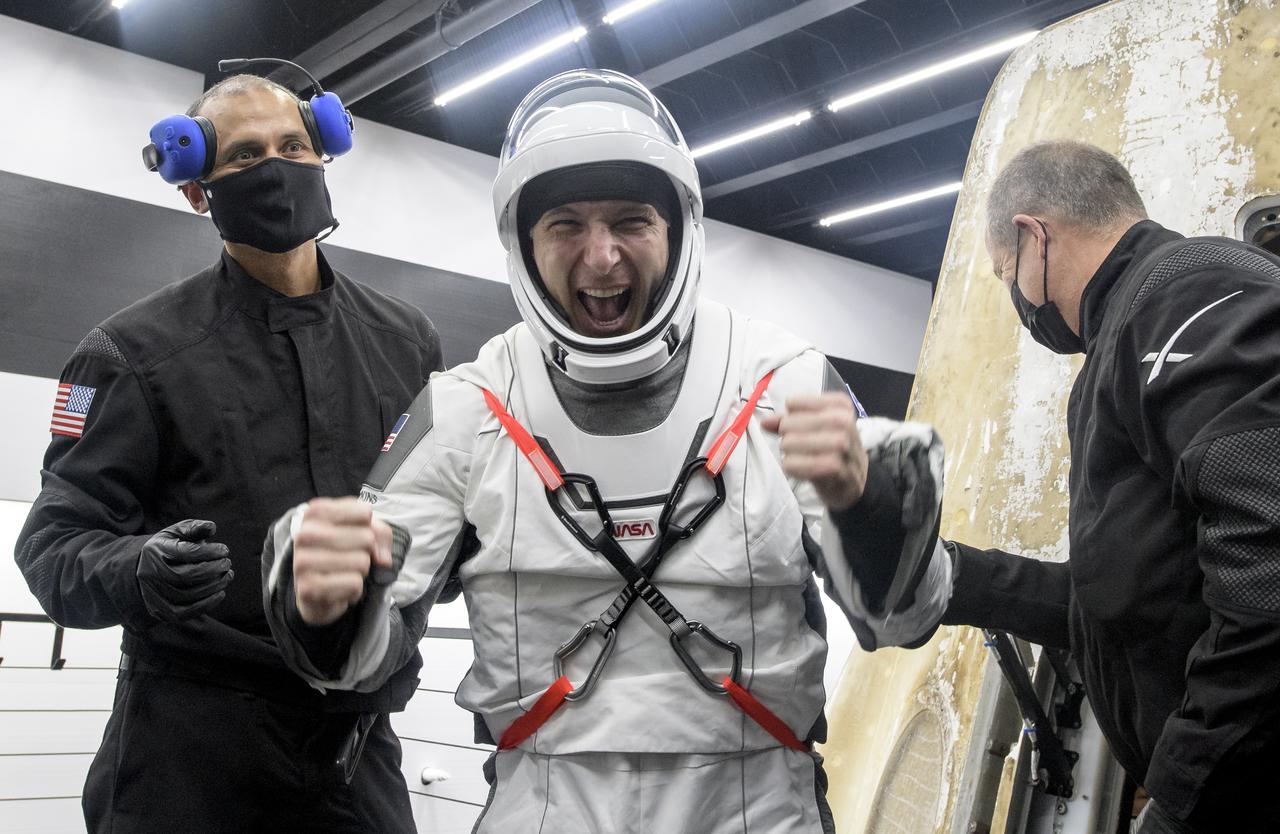
NASA astronaut Mike Hopkins is helped out of the SpaceX Crew Dragon Resilience spacecraft onboard the SpaceX GO Navigator recovery ship after he, NASA astronauts Shannon Walker, Victor Glover and Japan Aerospace Exploration Agency (JAXA) astronaut Soichi Noguchi, landed in the Gulf of Mexico off the coast of Panama City, Florida, Sunday, May 2, 2021. NASA’s SpaceX Crew-1 mission was the first crew rotation flight of the SpaceX Crew Dragon spacecraft and Falcon 9 rocket with astronauts to the International Space Station as part of the agency’s Commercial Crew Program. Photo Credit: (NASA/Bill Ingalls)
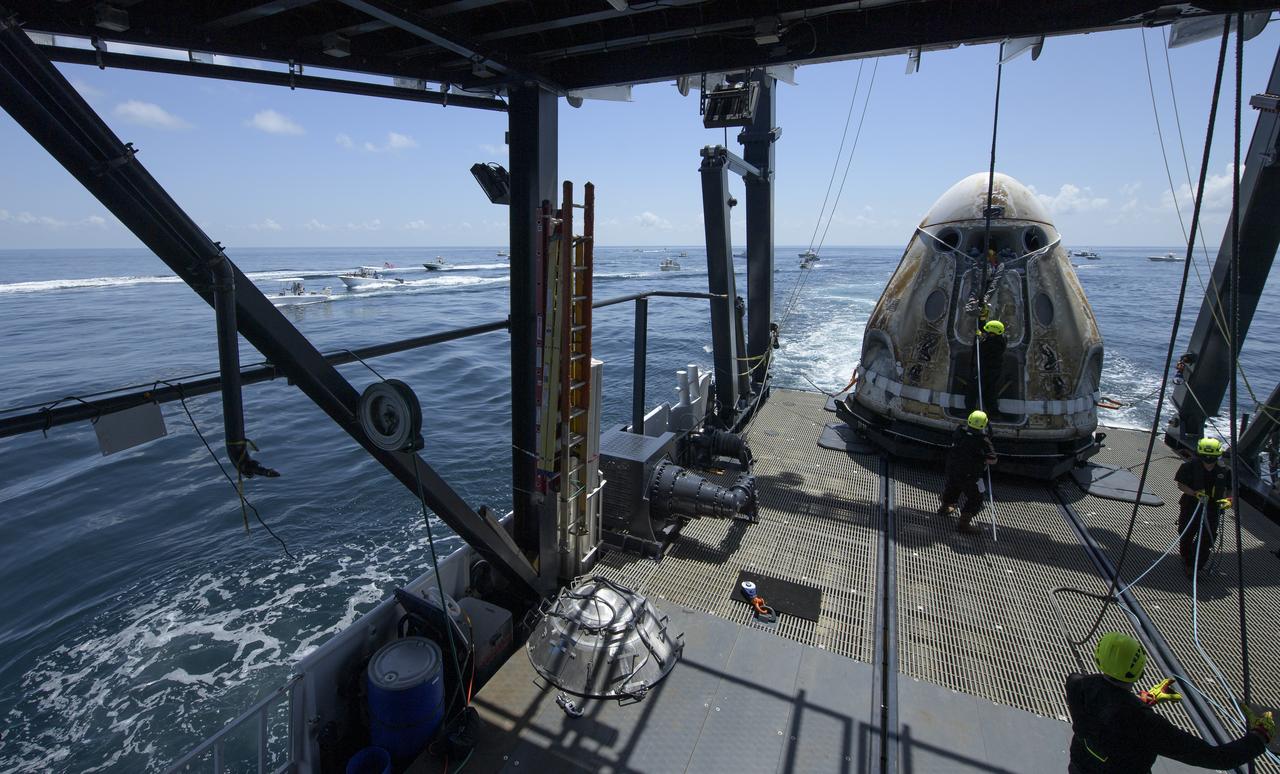
The SpaceX Crew Dragon Endeavour spacecraft is lowered onto the SpaceX GO Navigator recovery ship shortly after it landed with NASA astronauts Robert Behnken and Douglas Hurley onboard in the Gulf of Mexico off the coast of Pensacola, Florida, Sunday, Aug. 2, 2020. The Demo-2 test flight for NASA's Commercial Crew Program was the first to deliver astronauts to the International Space Station and return them safely to Earth onboard a commercially built and operated spacecraft. Behnken and Hurley returned after spending 64 days in space. Photo Credit: (NASA/Bill Ingalls)
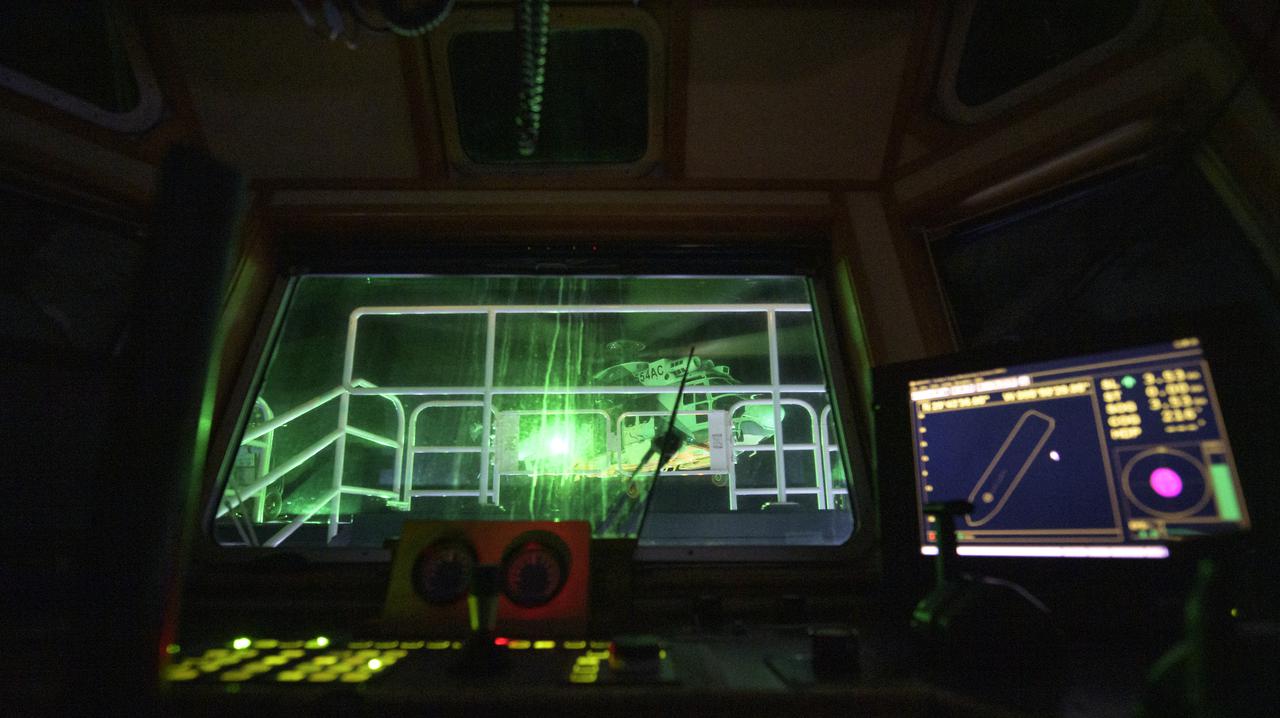
NASA and SpaceX support teams arrive via helicopter to the SpaceX GO Navigator recovery ship in order to prepare for the landing of the SpaceX Crew Dragon Resilience spacecraft with NASA astronauts Mike Hopkins, Shannon Walker, and Victor Glover, and Japan Aerospace Exploration Agency (JAXA) astronaut Soichi Noguchi aboard in the Gulf of Mexico off the coast of Panama City, Florida, Saturday, May 1, 2021. NASA’s SpaceX Crew-1 mission is the first crew rotation flight of the SpaceX Crew Dragon spacecraft and Falcon 9 rocket with astronauts to the International Space Station as part of the agency’s Commercial Crew Program. Photo Credit: (NASA/Bill Ingalls)
NASA and SpaceX support teams onboard the SpaceX GO Navigator recovery ship prepare for the landing of the SpaceX Crew Dragon Endeavour spacecraft with NASA astronauts Robert Behnken and Douglas Hurley onboard, Sunday, Aug. 2, 2020 in the Gulf of Mexico off the cost of Pensacola, Florida. The Demo-2 test flight for NASA's Commercial Crew Program is the first to deliver astronauts to the International Space Station and return them to Earth onboard a commercially built and operated spacecraft. Behnken and Hurley are returning after spending 64 days in space. Photo Credit: (NASA/Bill Ingalls)
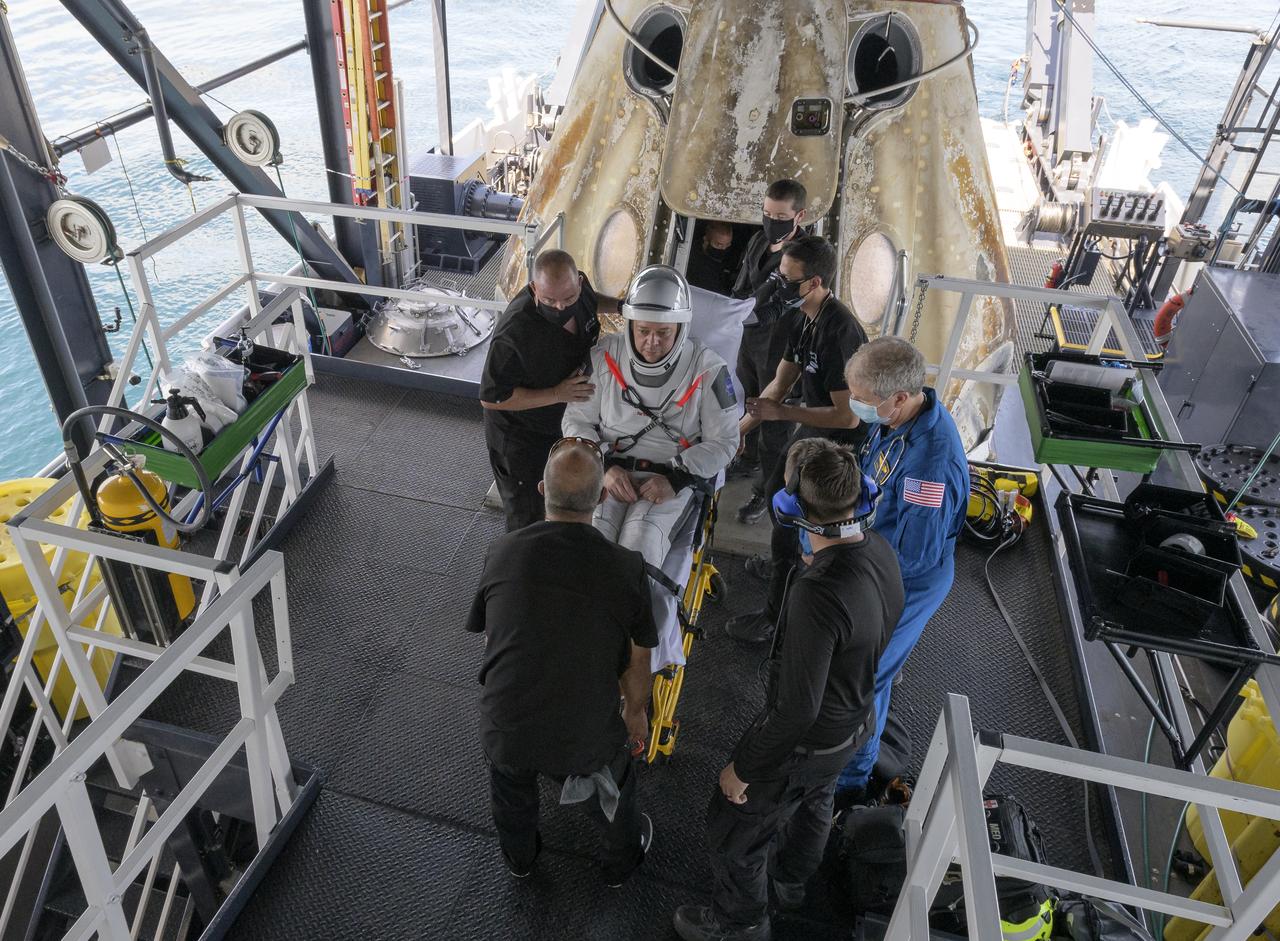
NASA astronaut Robert Behnken is helped out of the SpaceX Crew Dragon Endeavour spacecraft onboard the SpaceX GO Navigator recovery ship after he and NASA astronaut Douglas Hurley landed in the Gulf of Mexico off the coast of Pensacola, Florida, Sunday, Aug. 2, 2020. The Demo-2 test flight for NASA's Commercial Crew Program was the first to deliver astronauts to the International Space Station and return them safely to Earth onboard a commercially built and operated spacecraft. Behnken and Hurley returned after spending 64 days in space. Photo Credit: (NASA/Bill Ingalls)
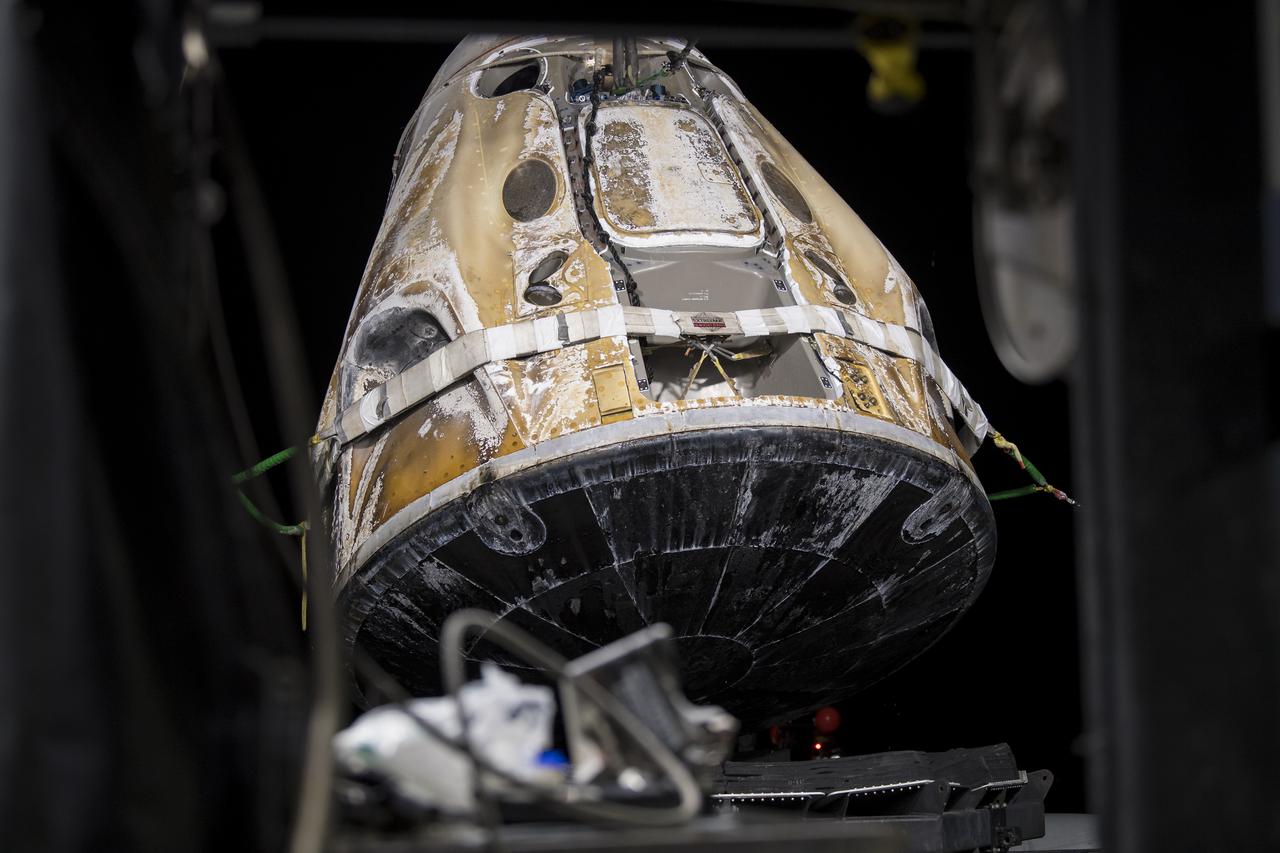
The SpaceX Crew Dragon Endeavour spacecraft is lifted onto the GO Navigator recovery ship after it landed with NASA astronauts Shane Kimbrough and Megan McArthur, Japan Aerospace Exploration Agency (JAXA) astronaut Aki Hoshide, and ESA (European Space Agency) astronaut Thomas Pesquet in the Gulf of Mexico off the coast of Pensacola, Florida, Monday, Nov. 8, 2021. NASA’s SpaceX Crew-2 mission is the second operational mission of the SpaceX Crew Dragon spacecraft and Falcon 9 rocket to the International Space Station as part of the agency’s Commercial Crew Program. Photo Credit: (NASA/Aubrey Gemignani)
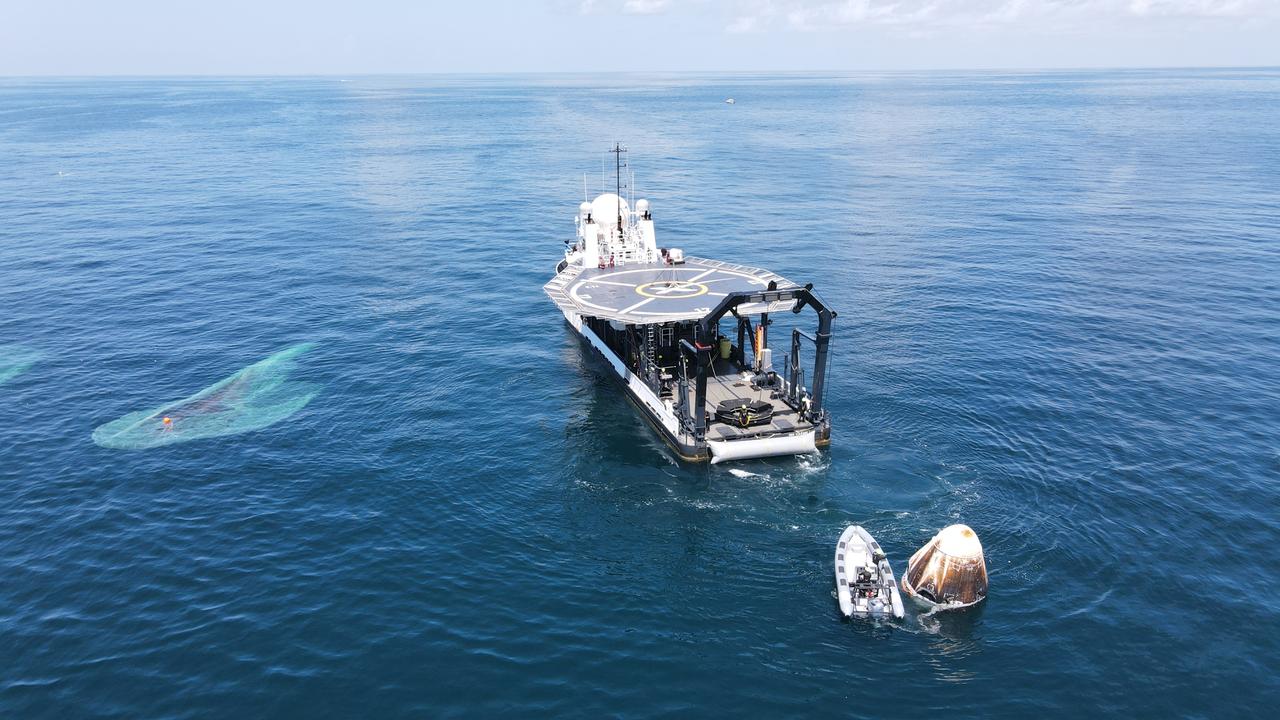
Support teams arrive at the SpaceX Crew Dragon spacecraft, with NASA astronauts Robert Behnken and Douglas Hurley onboard, shortly after it splashed down in the Gulf of Mexico off the coast of Pensacola, Florida, on Aug. 2, 2020, for the agency’s SpaceX Demo-2 mission. Behind them is the SpaceX GO Navigator recovery ship, where Crew Dragon was taken for Behnken and Hurley to exit the capsule. The final flight test for SpaceX under NASA’s Commercial Crew Program, Demo-2 will pave the way for the agency to certify the company’s transportation system for regular, crewed flights to the orbiting laboratory.
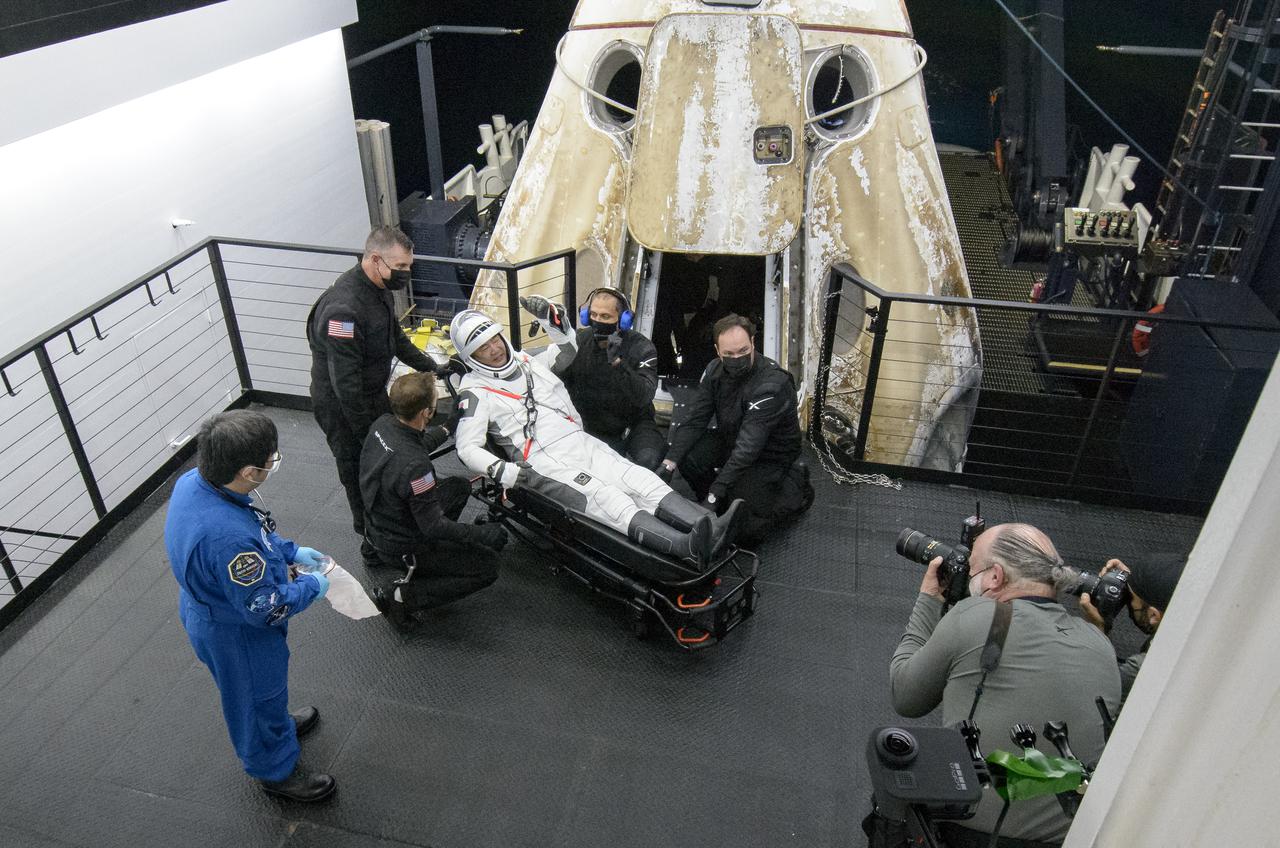
Japan Aerospace Exploration Agency (JAXA) astronaut Soichi Noguchi gives a thumbs up after he is helped out of the SpaceX Crew Dragon Resilience spacecraft onboard the SpaceX GO Navigator recovery ship after he, NASA astronauts Mike Hopkins, Shannon Walker and Victor Glover, landed in the Gulf of Mexico off the coast of Panama City, Florida, Sunday, May 2, 2021. NASA’s SpaceX Crew-1 mission was the first crew rotation flight of the SpaceX Crew Dragon spacecraft and Falcon 9 rocket with astronauts to the International Space Station as part of the agency’s Commercial Crew Program. Photo Credit: (NASA/Bill Ingalls)
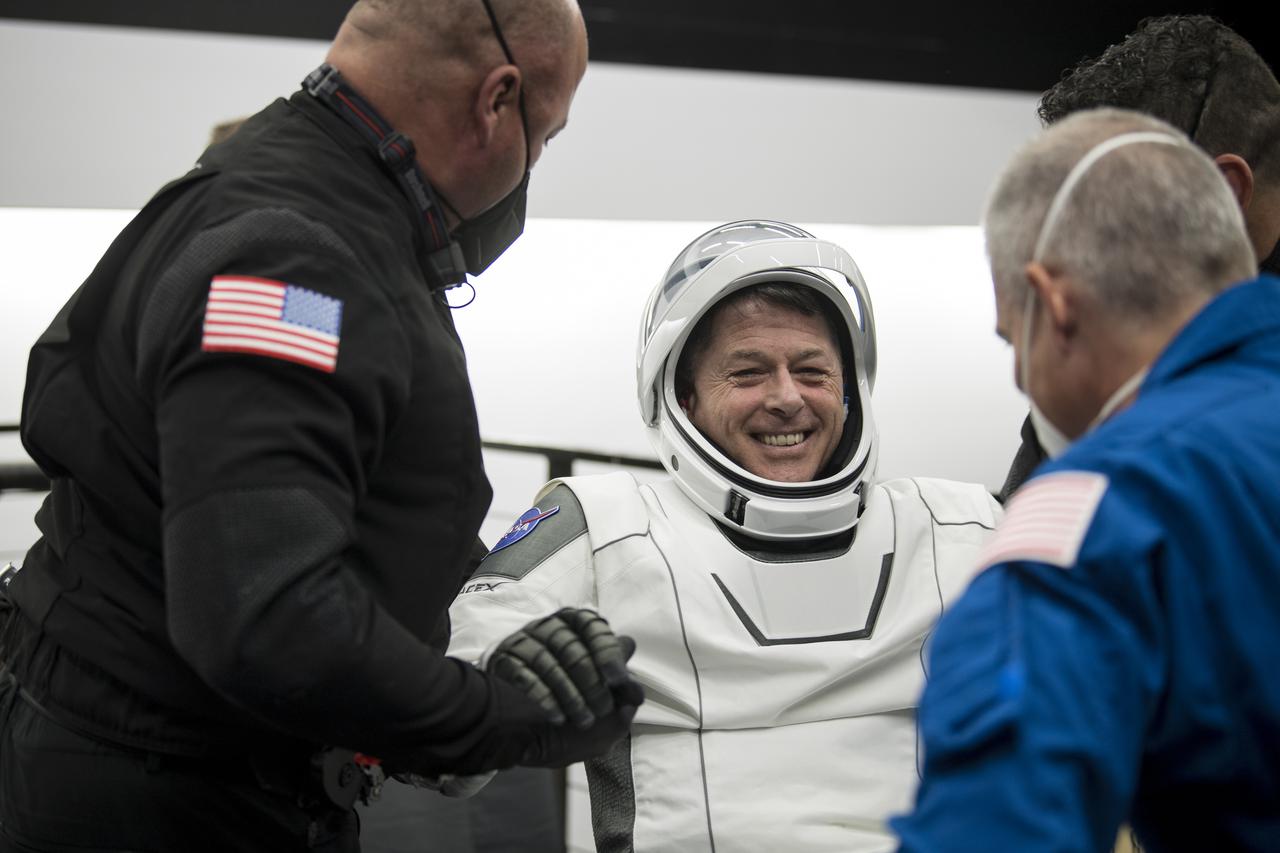
NASA astronaut Shane Kimbrough is helped out of the SpaceX Crew Dragon Endeavour spacecraft onboard the SpaceX GO Navigator recovery ship after he and NASA astronaut Megan McArthur, Japan Aerospace Exploration Agency (JAXA) astronaut Aki Hoshide, and ESA (European Space Agency) astronaut Thomas Pesquet landed in the Gulf of Mexico off the coast of Pensacola, Florida, Monday, Nov. 8, 2021. NASA’s SpaceX Crew-2 mission is the second operational mission of the SpaceX Crew Dragon spacecraft and Falcon 9 rocket to the International Space Station as part of the agency’s Commercial Crew Program. Photo Credit: (NASA/Aubrey Gemignani)
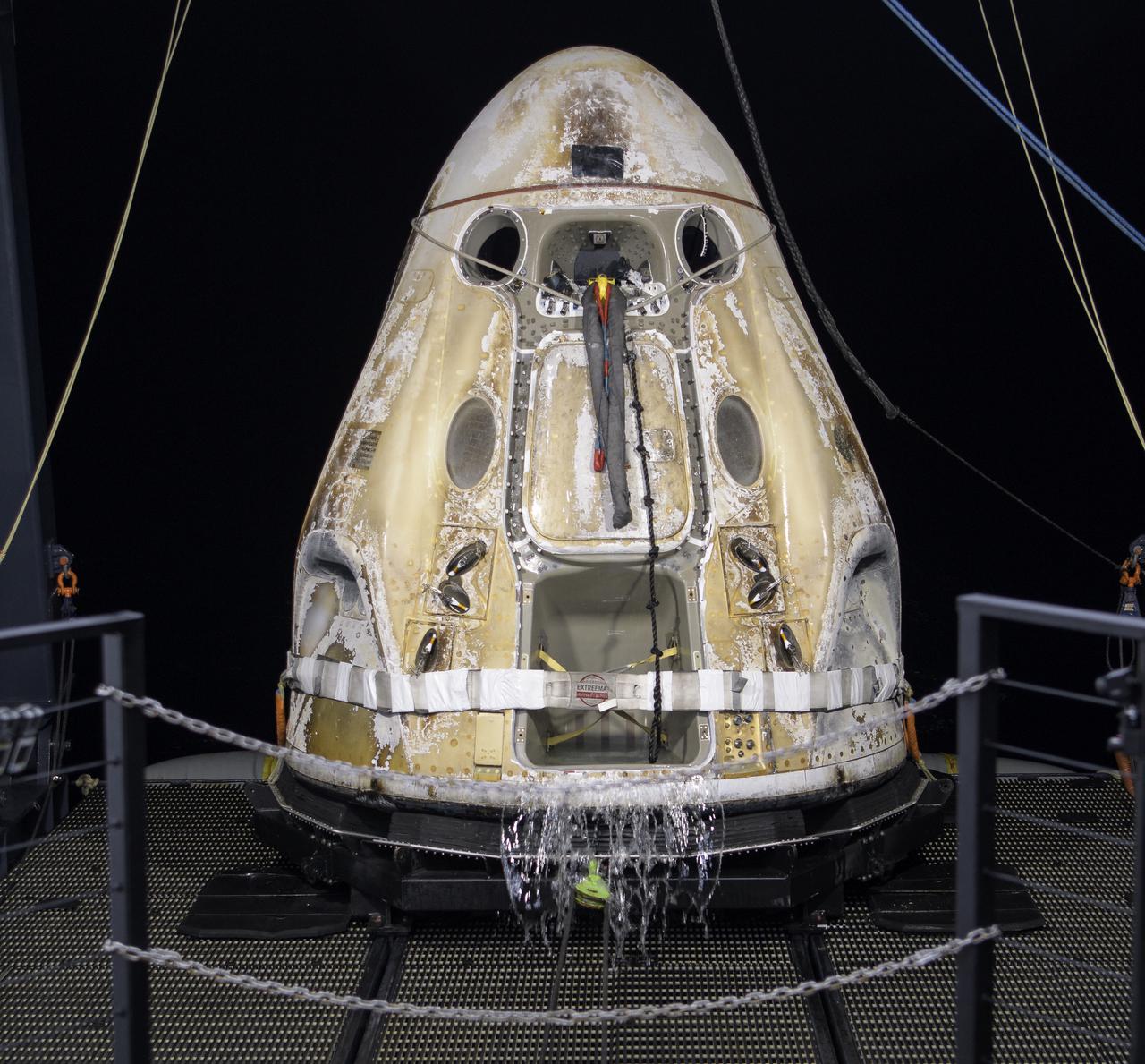
The SpaceX Crew Dragon Resilience spacecraft is lifted onto the GO Navigator recovery ship after it landed with NASA astronauts Mike Hopkins, Shannon Walker, and Victor Glover, and Japan Aerospace Exploration Agency (JAXA) astronaut Soichi Noguchi aboard in the Gulf of Mexico off the coast of Panama City, Florida, Sunday, May 2, 2021. NASA’s SpaceX Crew-1 mission was the first crew rotation flight of the SpaceX Crew Dragon spacecraft and Falcon 9 rocket with astronauts to the International Space Station as part of the agency’s Commercial Crew Program. Photo Credit: (NASA/Bill Ingalls)
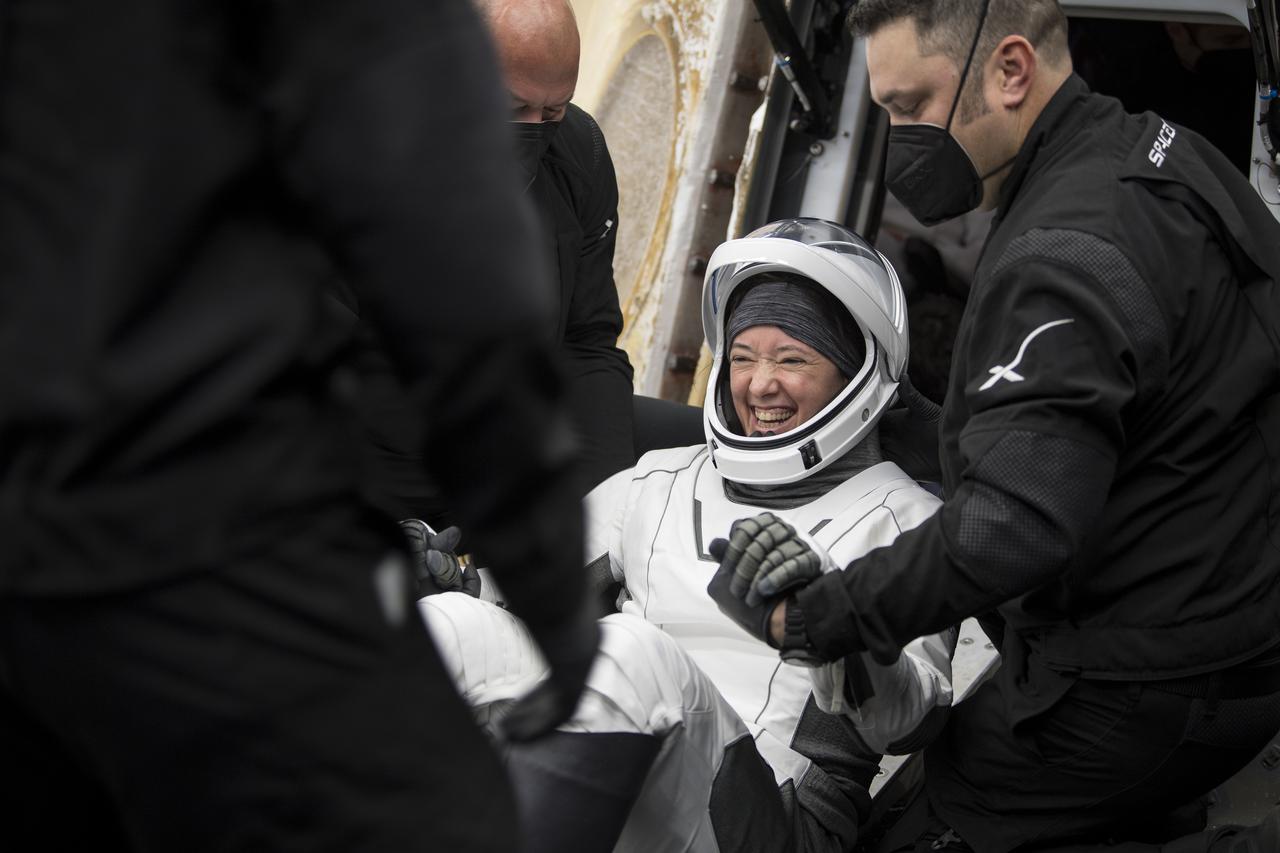
NASA astronaut Megan McArthur is helped out of the SpaceX Crew Dragon Endeavour spacecraft onboard the SpaceX GO Navigator recovery ship after she and NASA astronaut Shane Kimbrough, Japan Aerospace Exploration Agency (JAXA) astronaut Aki Hoshide, and ESA (European Space Agency) astronaut Thomas Pesquet landed in the Gulf of Mexico off the coast of Pensacola, Florida, Monday, Nov. 8, 2021. NASA’s SpaceX Crew-2 mission is the second operational mission of the SpaceX Crew Dragon spacecraft and Falcon 9 rocket to the International Space Station as part of the agency’s Commercial Crew Program. Photo Credit: (NASA/Aubrey Gemignani)
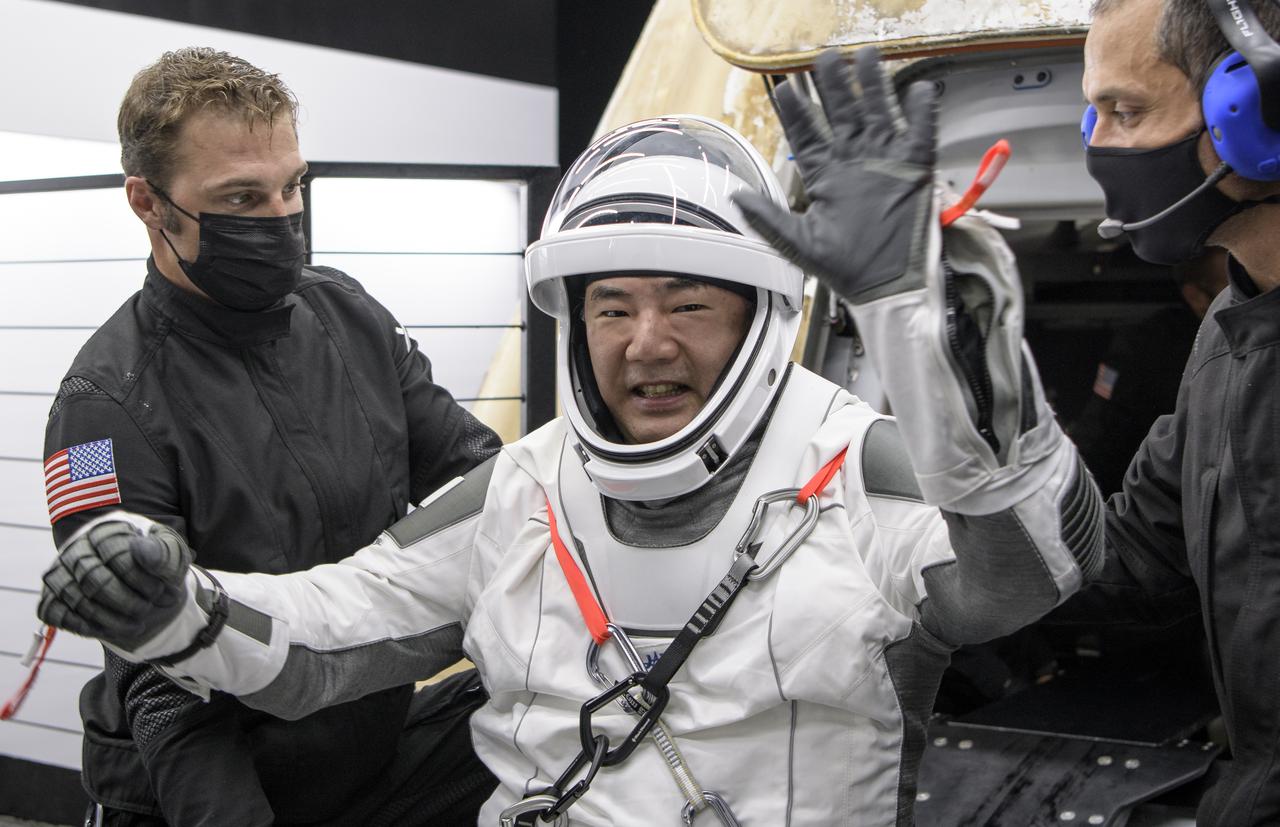
Japan Aerospace Exploration Agency (JAXA) astronaut Soichi Noguchi is helped out of the SpaceX Crew Dragon Resilience spacecraft onboard the SpaceX GO Navigator recovery ship after he, NASA astronauts Mike Hopkins, Shannon Walker, and Victor Glover, landed in the Gulf of Mexico off the coast of Panama City, Florida, Sunday, May 2, 2021. NASA’s SpaceX Crew-1 mission was the first crew rotation flight of the SpaceX Crew Dragon spacecraft and Falcon 9 rocket with astronauts to the International Space Station as part of the agency’s Commercial Crew Program. Photo Credit: (NASA/Bill Ingalls)
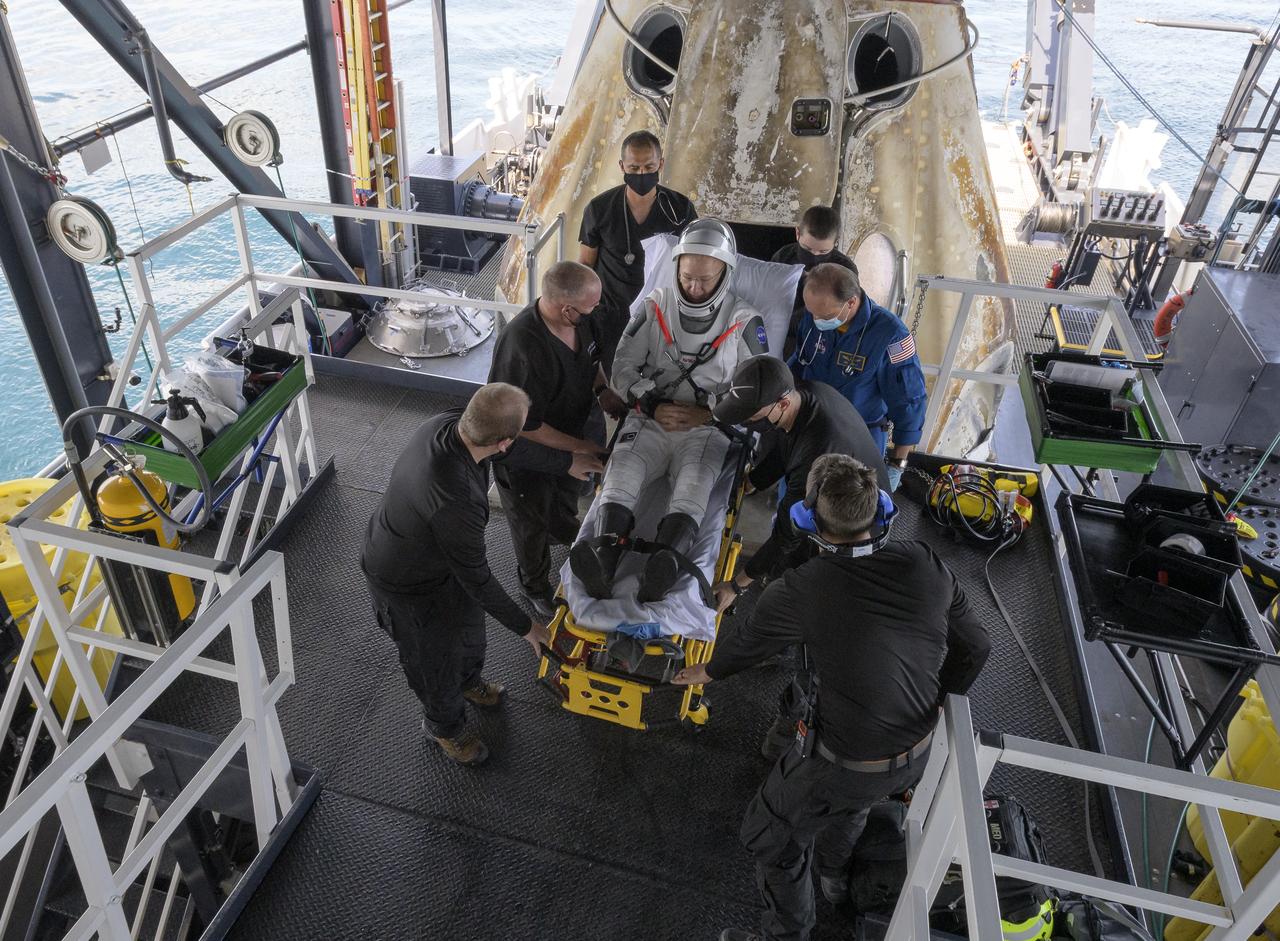
NASA astronaut Douglas Hurley is helped out of the SpaceX Crew Dragon Endeavour spacecraft onboard the SpaceX GO Navigator recovery ship after he and NASA astronaut Robert Behnken landed in the Gulf of Mexico off the coast of Pensacola, Florida, Sunday, Aug. 2, 2020. The Demo-2 test flight for NASA's Commercial Crew Program was the first to deliver astronauts to the International Space Station and return them safely to Earth onboard a commercially built and operated spacecraft. Behnken and Hurley returned after spending 64 days in space. Photo Credit: (NASA/Bill Ingalls)
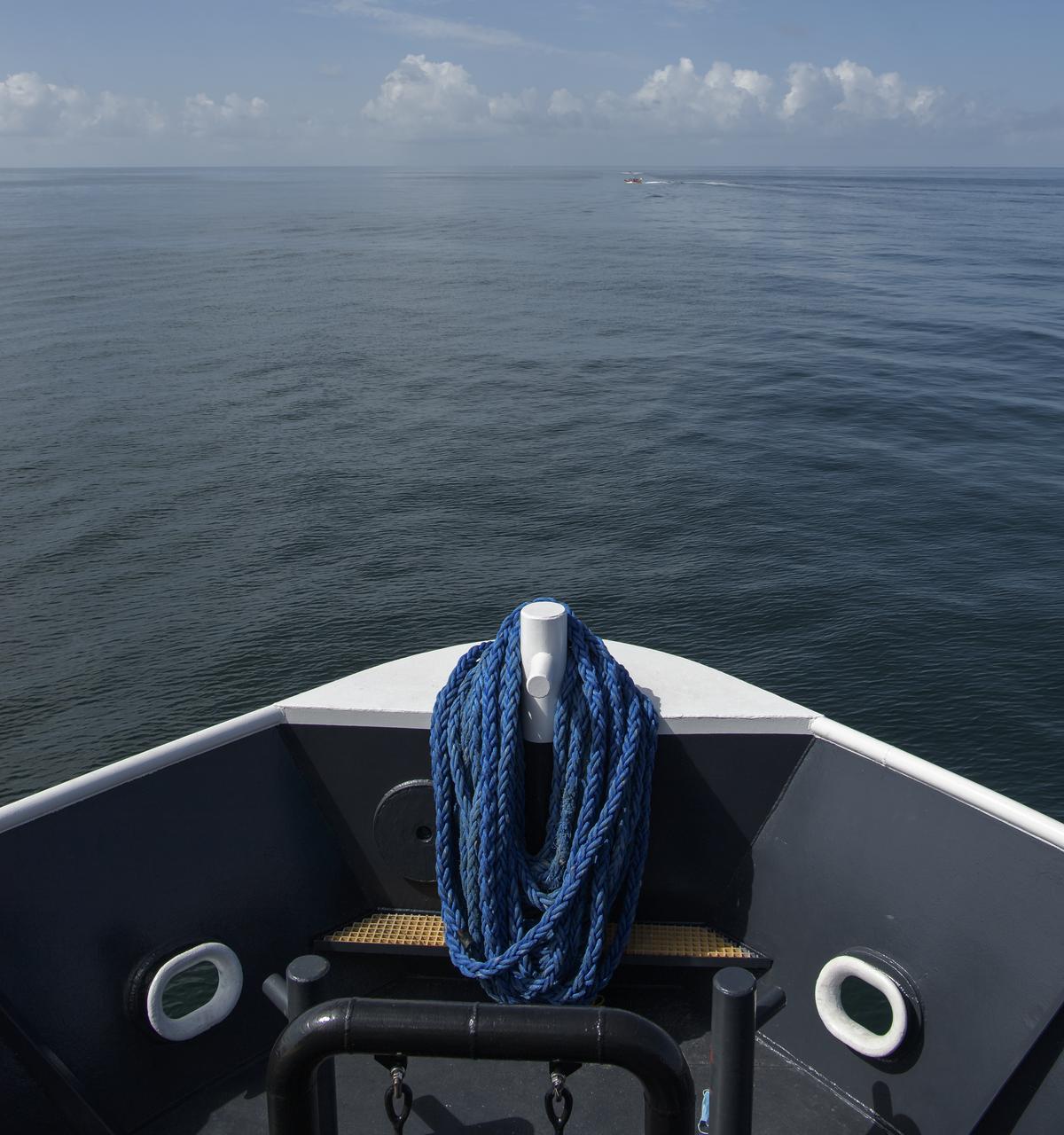
NASA and SpaceX support teams onboard the SpaceX GO Navigator recovery ship prepare for the landing of the SpaceX Crew Dragon Endeavour spacecraft with NASA astronauts Robert Behnken and Douglas Hurley onboard, Sunday, Aug. 2, 2020 in the Gulf of Mexico off the cost of Pensacola, Florida. The Demo-2 test flight for NASA's Commercial Crew Program is the first to deliver astronauts to the International Space Station and return them to Earth onboard a commercially built and operated spacecraft. Behnken and Hurley are returning after spending 64 days in space. Photo Credit: (NASA/Bill Ingalls)
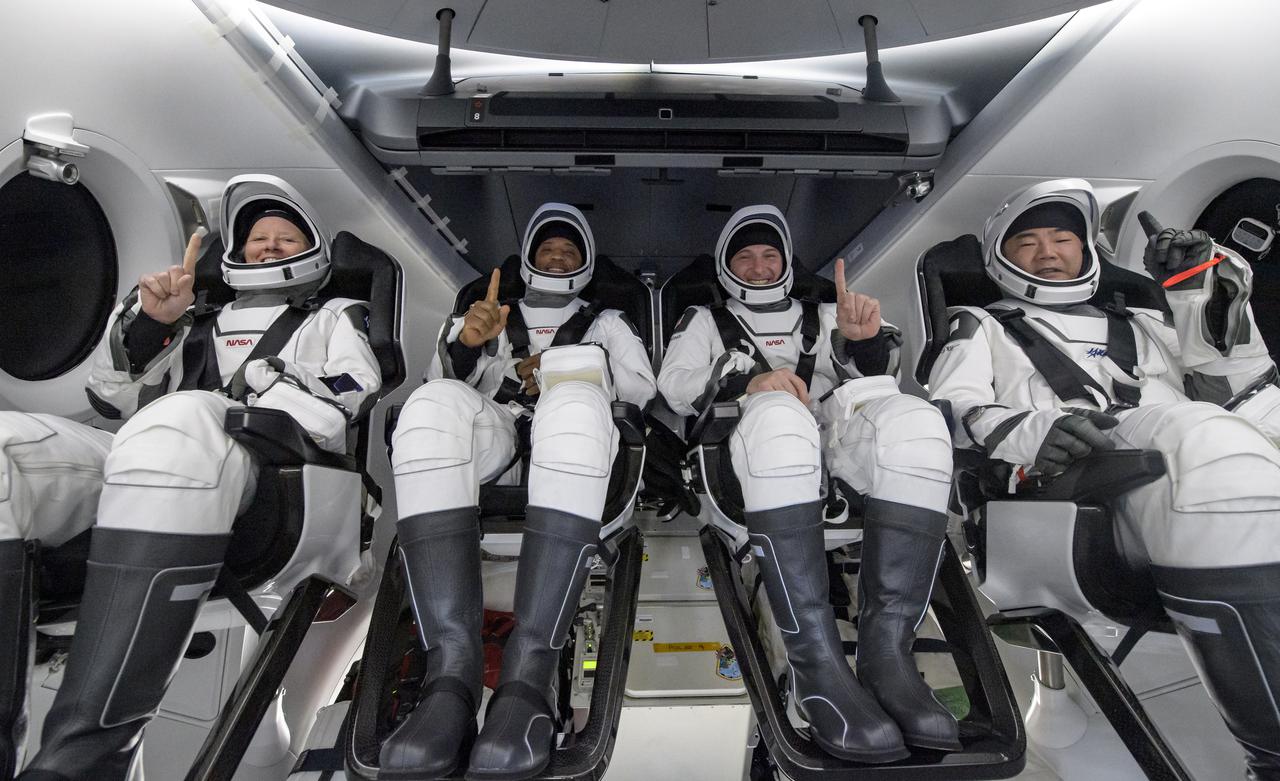
NASA astronauts Shannon Walker, left, Victor Glover, Mike Hopkins, and Japan Aerospace Exploration Agency (JAXA) astronaut Soichi Noguchi, right are seen inside the SpaceX Crew Dragon Resilience spacecraft onboard the SpaceX GO Navigator recovery ship shortly after having landed in the Gulf of Mexico off the coast of Panama City, Florida, Sunday, May 2, 2021. NASA’s SpaceX Crew-1 mission was the first crew rotation flight of the SpaceX Crew Dragon spacecraft and Falcon 9 rocket with astronauts to the International Space Station as part of the agency’s Commercial Crew Program. Photo Credit: (NASA/Bill Ingalls)
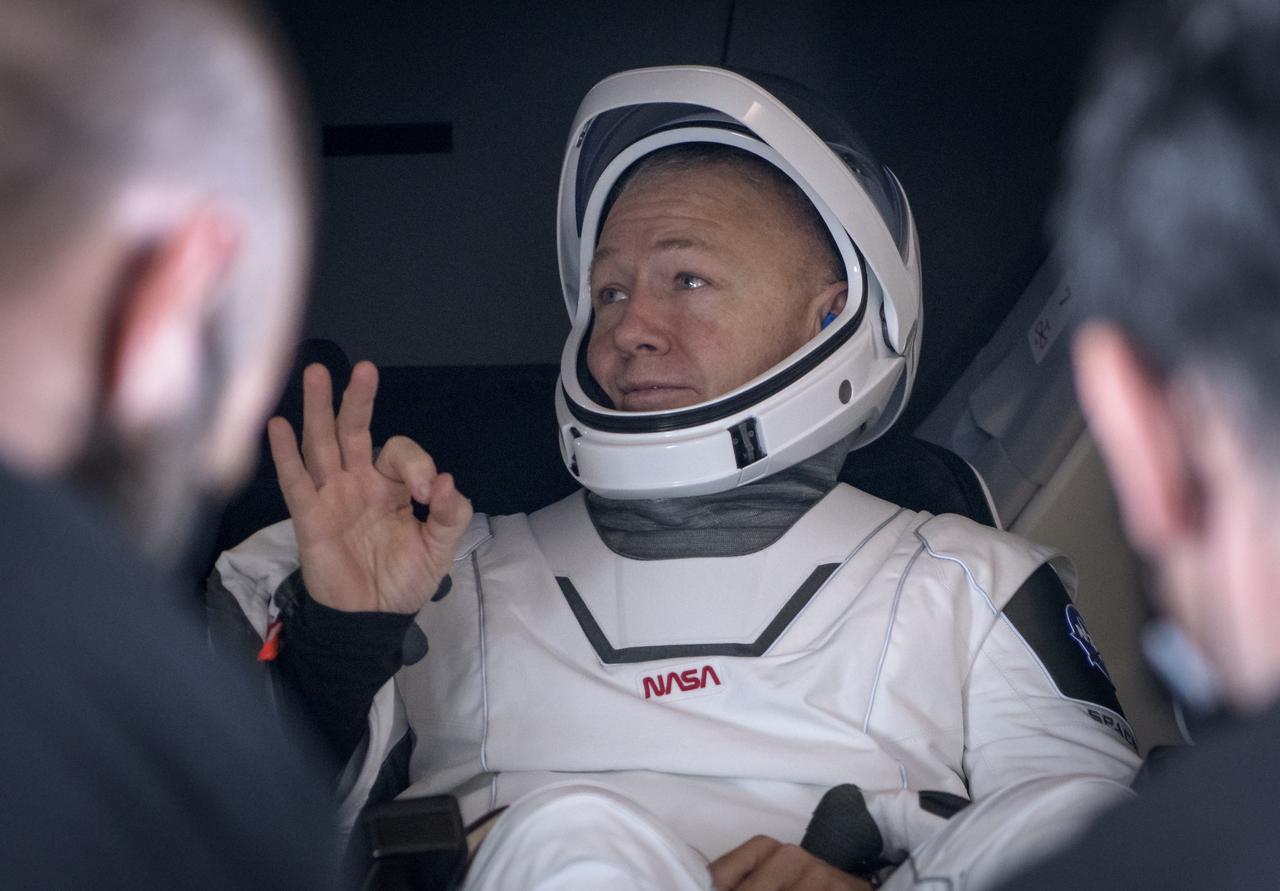
NASA astronaut Douglas Hurley gives the OK sign prior to being helped out of the SpaceX Crew Dragon Endeavour spacecraft onboard the SpaceX GO Navigator recovery ship after he and NASA astronaut Robert Behnken landed in the Gulf of Mexico off the coast of Pensacola, Florida, Sunday, Aug. 2, 2020. The Demo-2 test flight for NASA's Commercial Crew Program was the first to deliver astronauts to the International Space Station and return them safely to Earth onboard a commercially built and operated spacecraft. Behnken and Hurley returned after spending 64 days in space. Photo Credit: (NASA/Bill Ingalls)
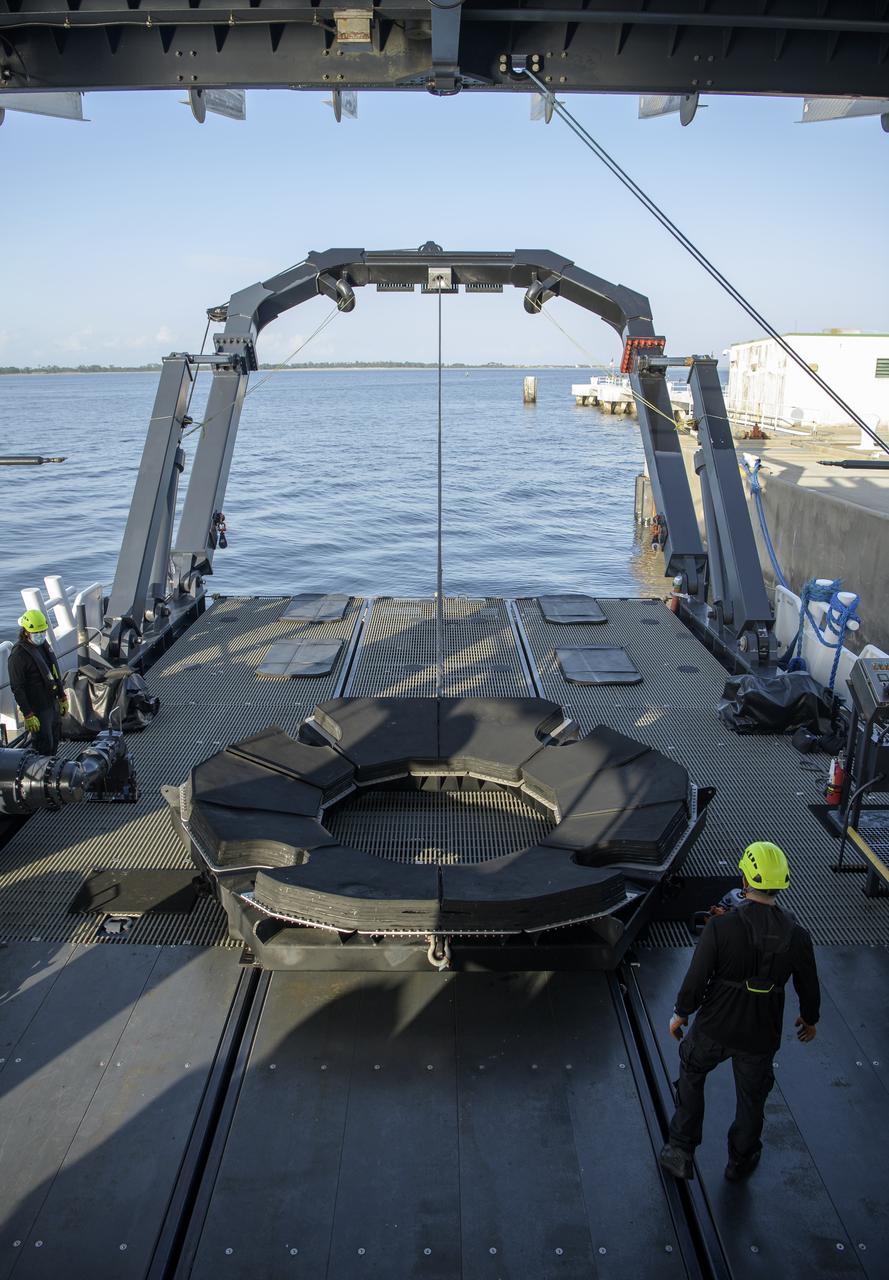
NASA and SpaceX support teams onboard the SpaceX GO Navigator recovery ship prepare for the landing of the SpaceX Crew Dragon Endeavour spacecraft with NASA astronauts Robert Behnken and Douglas Hurley onboard, Sunday, Aug. 2, 2020 in the Gulf of Mexico off the cost of Pensacola, Florida. The Demo-2 test flight for NASA's Commercial Crew Program is the first to deliver astronauts to the International Space Station and return them to Earth onboard a commercially built and operated spacecraft. Behnken and Hurley are returning after spending 64 days in space. Photo Credit: (NASA/Bill Ingalls)
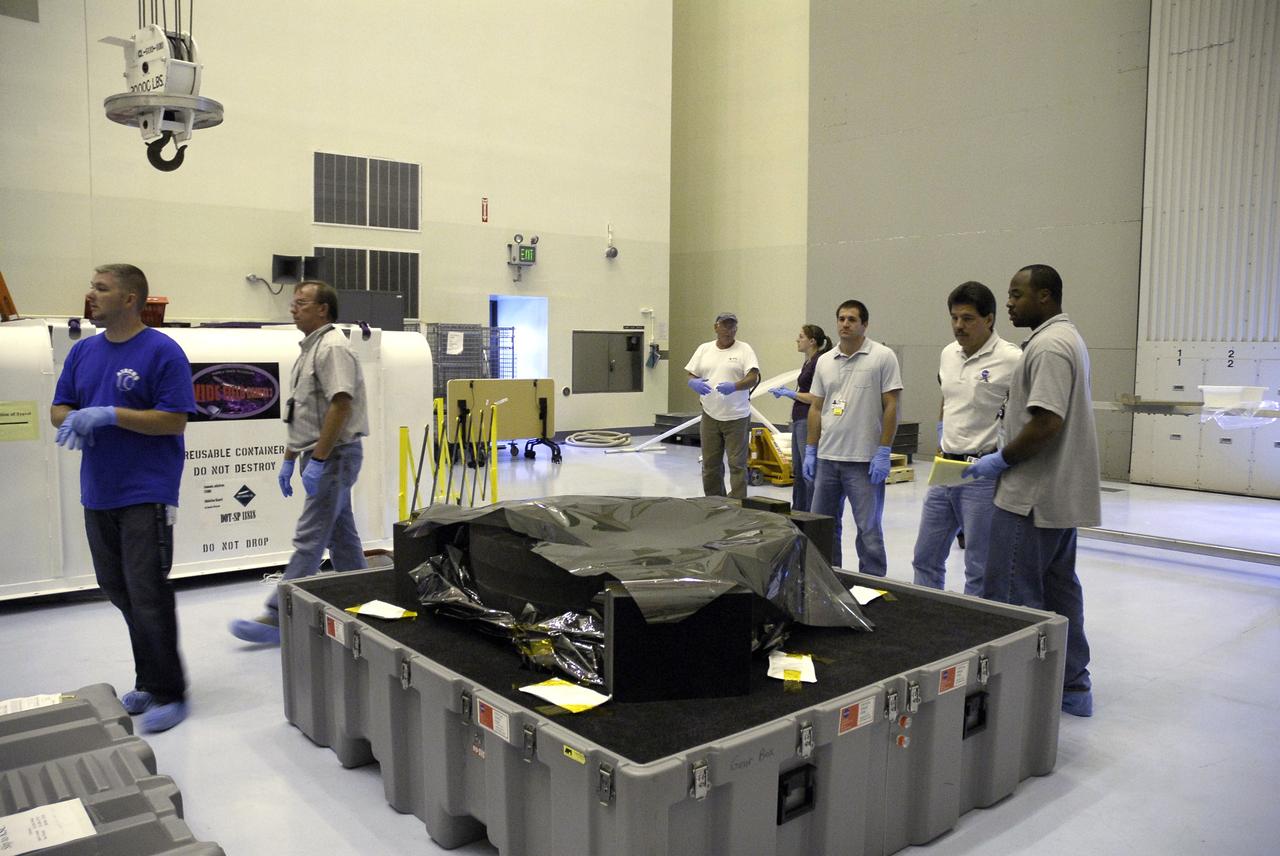
CAPE CANAVERAL, Fla. – In the Payload Hazardous Servicing Facility at NASA's Kennedy Space Center, the Soft Capture and Rendezvous System, or SCRS, is revealed after removal of the shipping container cover. The SCRS will enable the future rendezvous, capture and safe disposal of Hubble by either a crewed or robotic mission. The SCRS greatly increases the current shuttle capture interfaces on Hubble, therefore significantly reducing the rendezvous and capture design complexities associated with the disposal mission. The SCRS comprises the Soft Capture Mechanism system and the Relative Navigation System and is part of the payload on the fifth and final Hubble servicing mission, STS-125, targeted for launch Oct. 8. Photo credit: NASA/Jack Pfaller
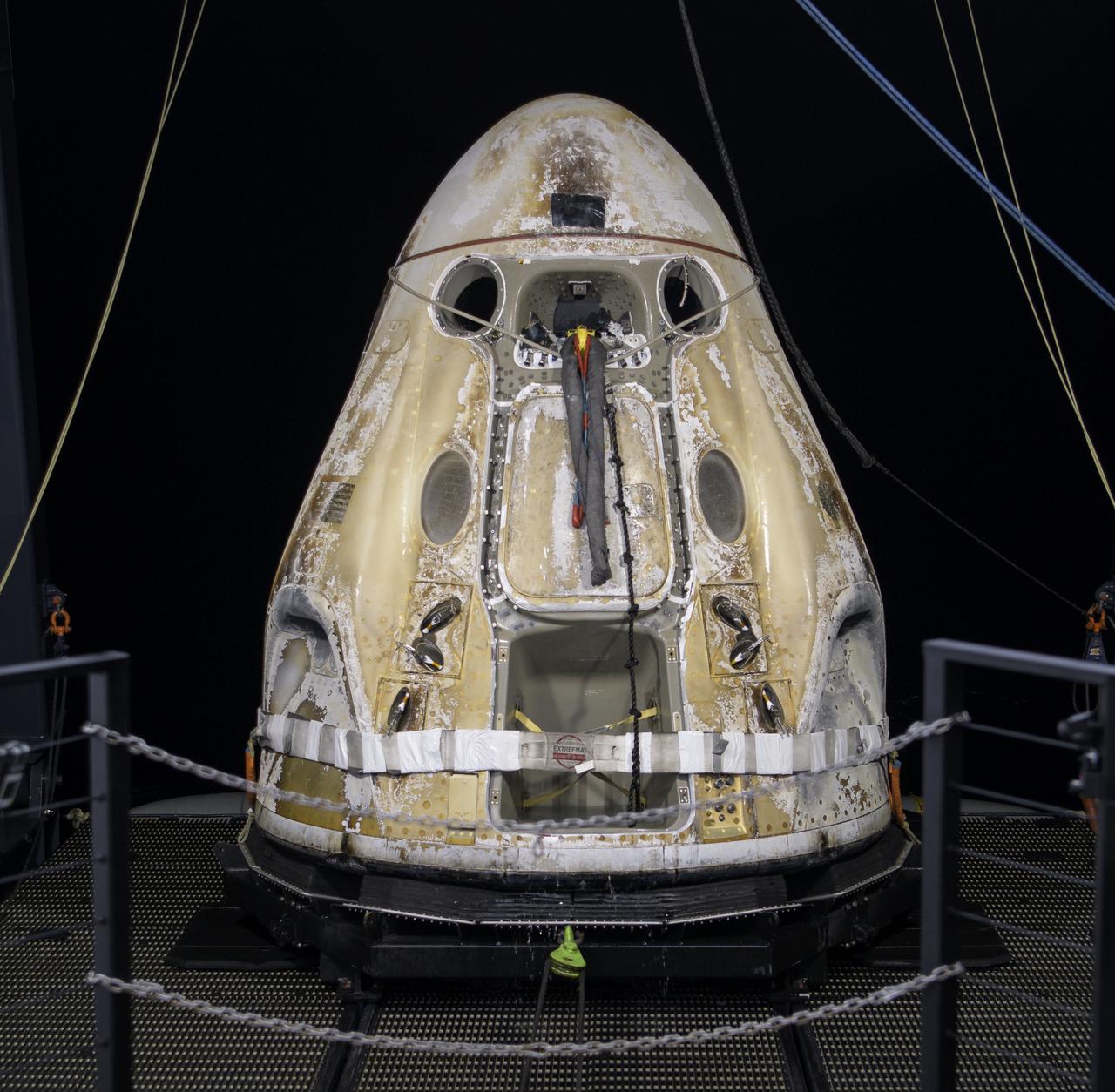
The SpaceX Crew Dragon Resilience spacecraft is lifted onto the GO Navigator recovery ship after it landed with NASA astronauts Mike Hopkins, Shannon Walker, and Victor Glover, and Japan Aerospace Exploration Agency (JAXA) astronaut Soichi Noguchi aboard in the Gulf of Mexico off the coast of Panama City, Florida, Sunday, May 2, 2021. NASA’s SpaceX Crew-1 mission was the first crew rotation flight of the SpaceX Crew Dragon spacecraft and Falcon 9 rocket with astronauts to the International Space Station as part of the agency’s Commercial Crew Program. Photo Credit: (NASA/Bill Ingalls)
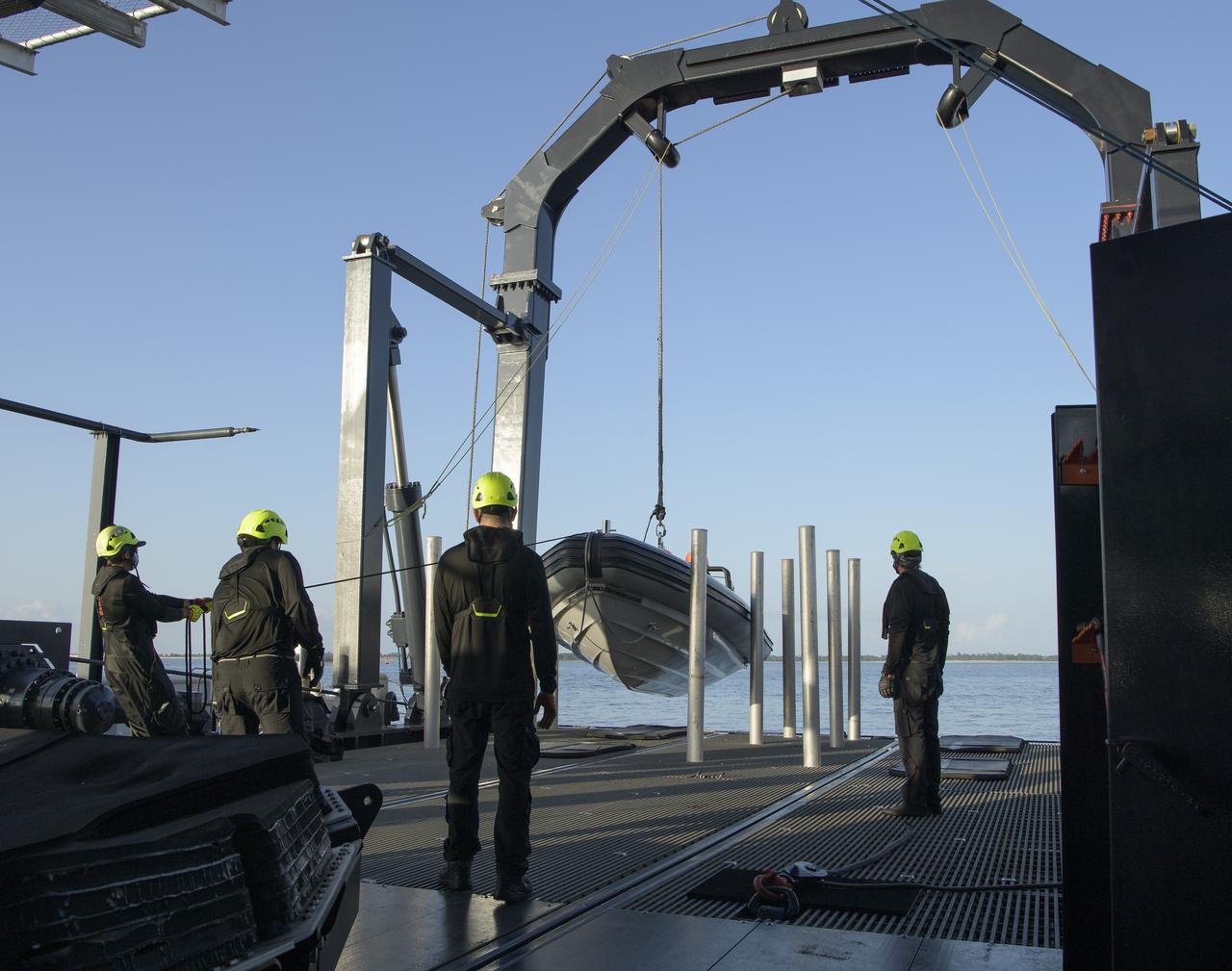
SpaceX support teams onboard the SpaceX GO Navigator recovery ship deploy one of the fast boats ahead of the landing of the SpaceX Crew Dragon Endeavour spacecraft with NASA astronauts Robert Behnken and Douglas Hurley onboard, Sunday, Aug. 2, 2020 in the Gulf of Mexico off the cost of Pensacola, Florida. The Demo-2 test flight for NASA's Commercial Crew Program is the first to deliver astronauts to the International Space Station and return them to Earth onboard a commercially built and operated spacecraft. Behnken and Hurley are returning after spending 64 days in space. Photo Credit: (NASA/Bill Ingalls)
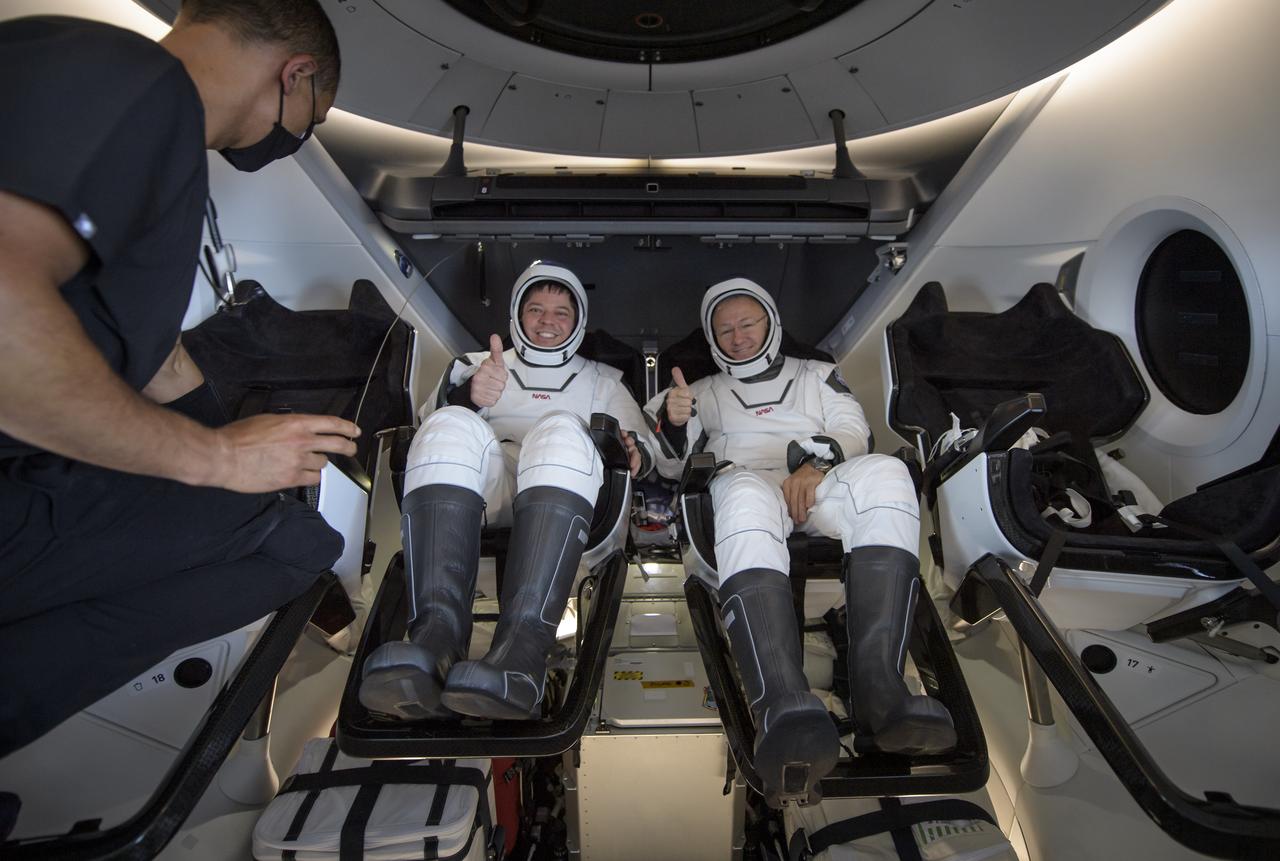
NASA astronauts Robert Behnken, left, and Douglas Hurley are seen inside the SpaceX Crew Dragon Endeavour spacecraft onboard the SpaceX GO Navigator recovery ship shortly after having landed in the Gulf of Mexico off the coast of Pensacola, Florida, Sunday, Aug. 2, 2020. The Demo-2 test flight for NASA's Commercial Crew Program was the first to deliver astronauts to the International Space Station and return them safely to Earth onboard a commercially built and operated spacecraft. Behnken and Hurley returned after spending 64 days in space. Photo Credit: (NASA/Bill Ingalls)
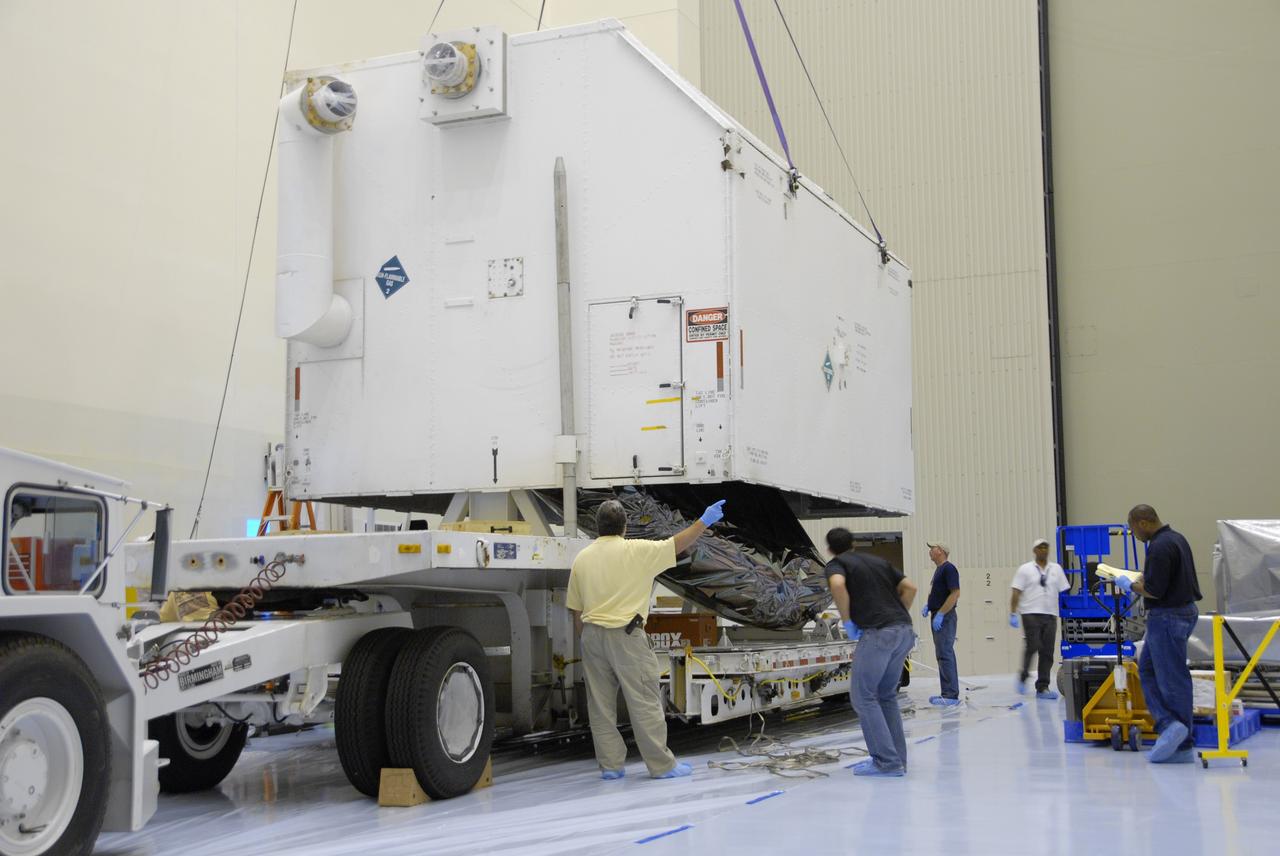
CAPE CANAVERAL, Fla. – In the Payload Hazardous Servicing Facility at NASA's Kennedy Space Center, the cover of the shipping container is lifted to reveal the Multi-Use Lightweight Equipment (MULE) carrier inside. The MULE is part of the payload for the fifth and final shuttle servicing mission to NASA's Hubble Space Telescope, STS-125. The MULE carrier will join the Flight Support System, the Super Lightweight Interchangeable Carrier and the Orbital Replacement Unit Carrier in the Payload Hazardous Servicing Facility where the Hubble payload is being prepared for launch. The Relative Navigation Sensors and the New Outer Blanket Layers will be on the MULE. The payload is scheduled to go to Launch Pad 39A in mid-September to be installed into Atlantis' payload bay. Atlantis is targeted to launch Oct. 8 at 1:34 a.m. EDT. .Photo credit: NASA/Amanda Diller
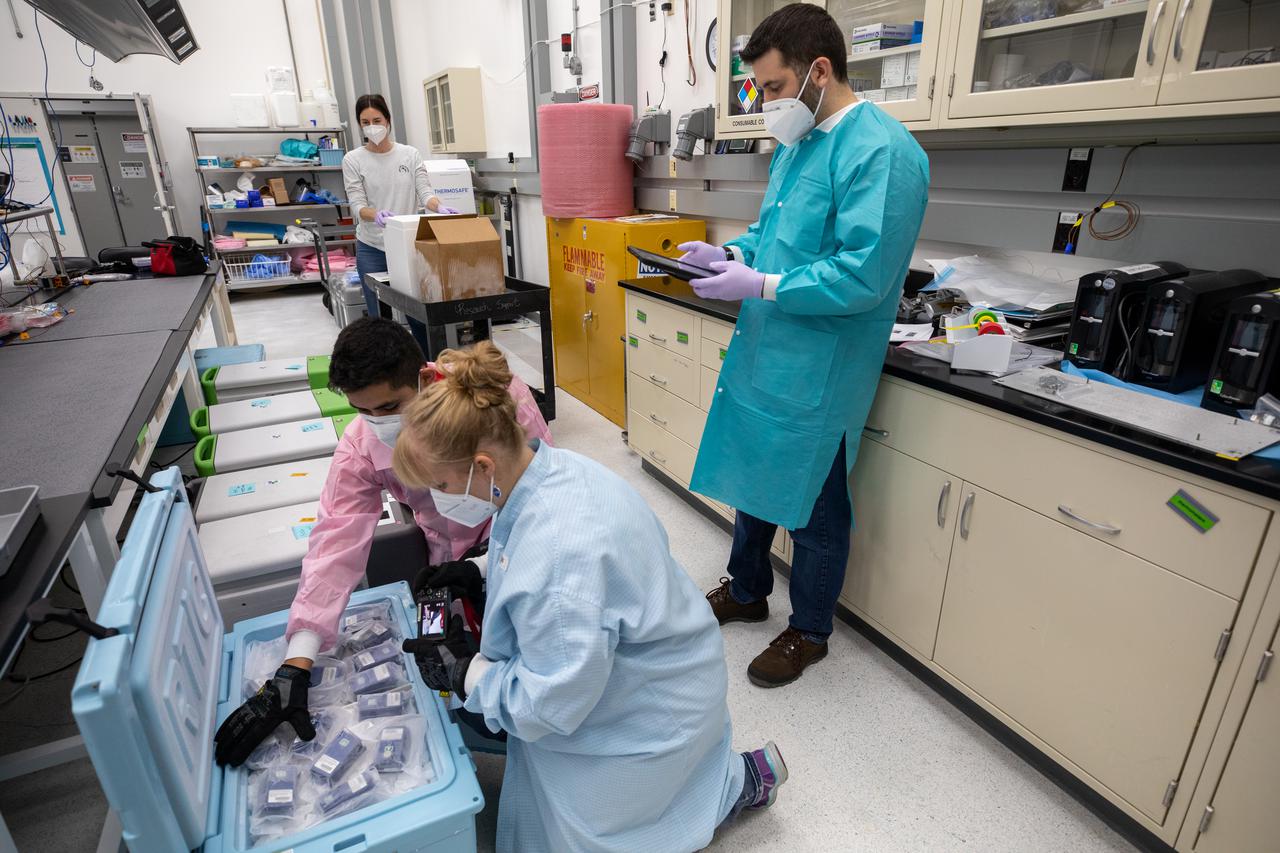
Members of the cold stowage team unpack science experiments inside the Space Station Processing Facility at NASA’s Kennedy Space Center in Florida on Jan. 14, 2021. The experiments returned to Earth on SpaceX’s 21st commercial resupply services mission (CRS-21). Making its successful parachute-assisted splashdown west of Tampa off the Florida coast, at 8:26 p.m. EST on Jan. 13, the SpaceX cargo Dragon returned more than 4,400 pounds of scientific experiments and other cargo from the International Space Station. After splashdown, SpaceX loaded Dragon aboard their Go Navigator recovery ship and packed an Airbus H225 helicopter with the time-sensitive research cargo for delivery to Kennedy. The upgraded cargo Dragon capsule also boasts double the powered locker capacity to preserve science samples, allowing for a significant increase in the research that can be carried back to Earth.
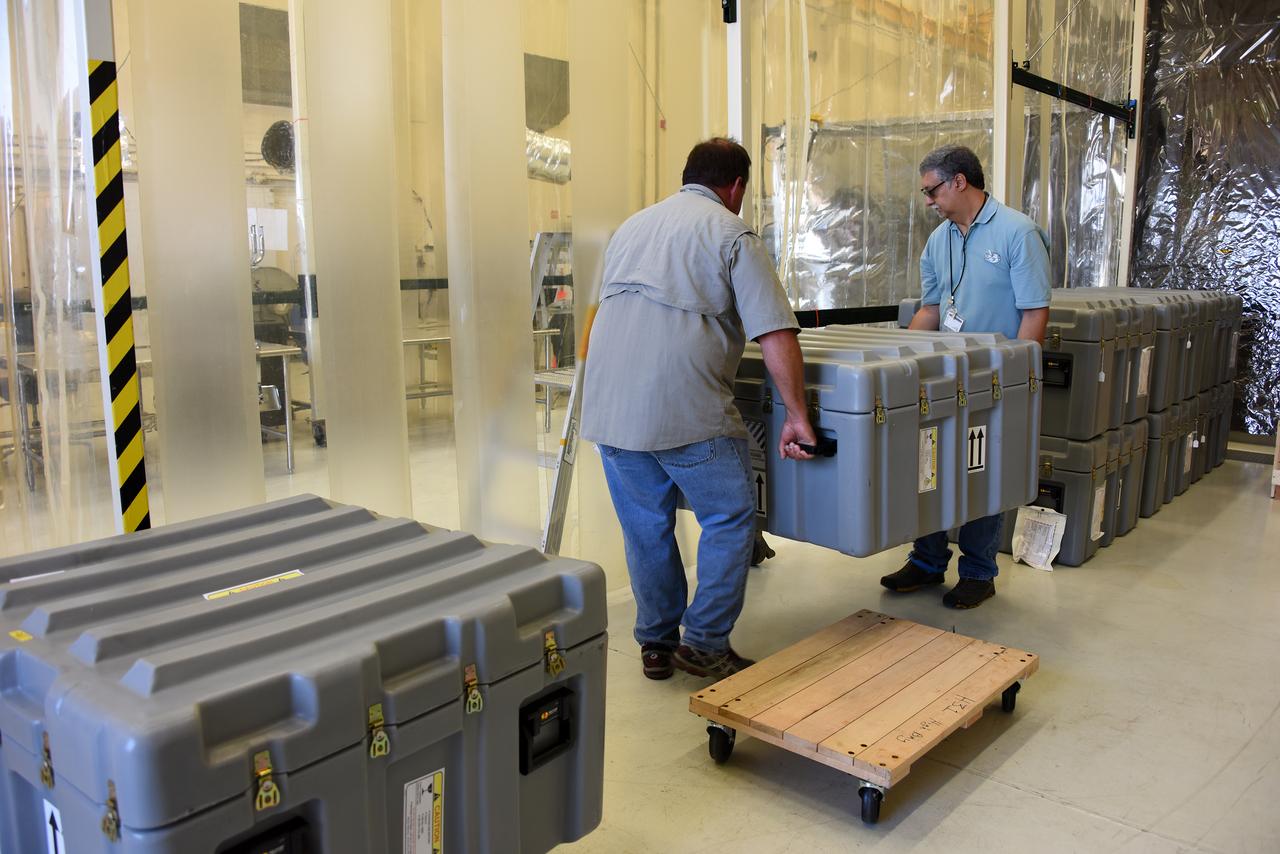
Parts for NASA’s Cyclone Global Navigation Satellite System (CYGNSS) arrive in shipping containers at Building 1555 at Vandenberg Air Force Base in California. CYGNSS is being prepared at Vandenberg, and then will be transported to NASA’s Kennedy Space Center in Florida in the Orbital ATK Pegasus XL rocket which will be attached to the Orbital ATK L-1011 carrier aircraft. CYGNSS will launch on the Pegasus XL rocket from the Skid Strip at Cape Canaveral Air Force Station. CYGNSS will make frequent and accurate measurements of ocean surface winds throughout the life cycle of tropical storms and hurricanes. The data that CYGNSS provides will enable scientists to probe key air-sea interaction processes that take place near the core of storms, which are rapidly changing and play a critical role in the beginning and intensification of hurricanes.
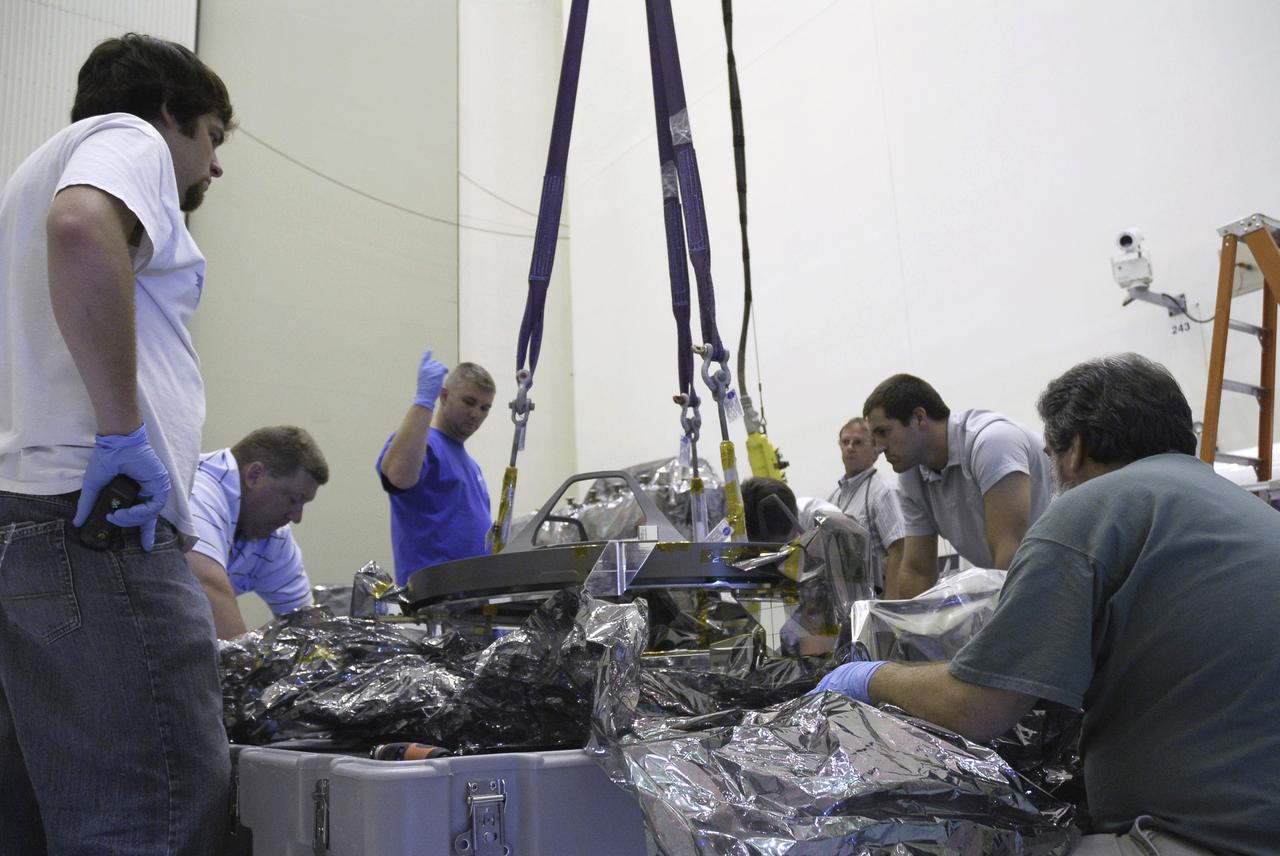
CAPE CANAVERAL, Fla. – In the Payload Hazardous Servicing Facility at NASA's Kennedy Space Center, technicians monitor the lifting of the Soft Capture Mechanism (SCM), part of the Soft Capture and Rendezvous System, or SCRS, from its shipping container. The SCRS will enable the future rendezvous, capture and safe disposal of Hubble by either a crewed or robotic mission. The ring-like device attaches to Hubble’s aft bulkhead. The SCRS greatly increases the current shuttle capture interfaces on Hubble, therefore significantly reducing the rendezvous and capture design complexities associated with the disposal mission. The SCRS comprises the Soft Capture Mechanism system and the Relative Navigation System and is part of the payload on the fifth and final Hubble servicing mission, STS-125, targeted for launch Oct. 8. Photo credit: NASA/Jack Pfaller
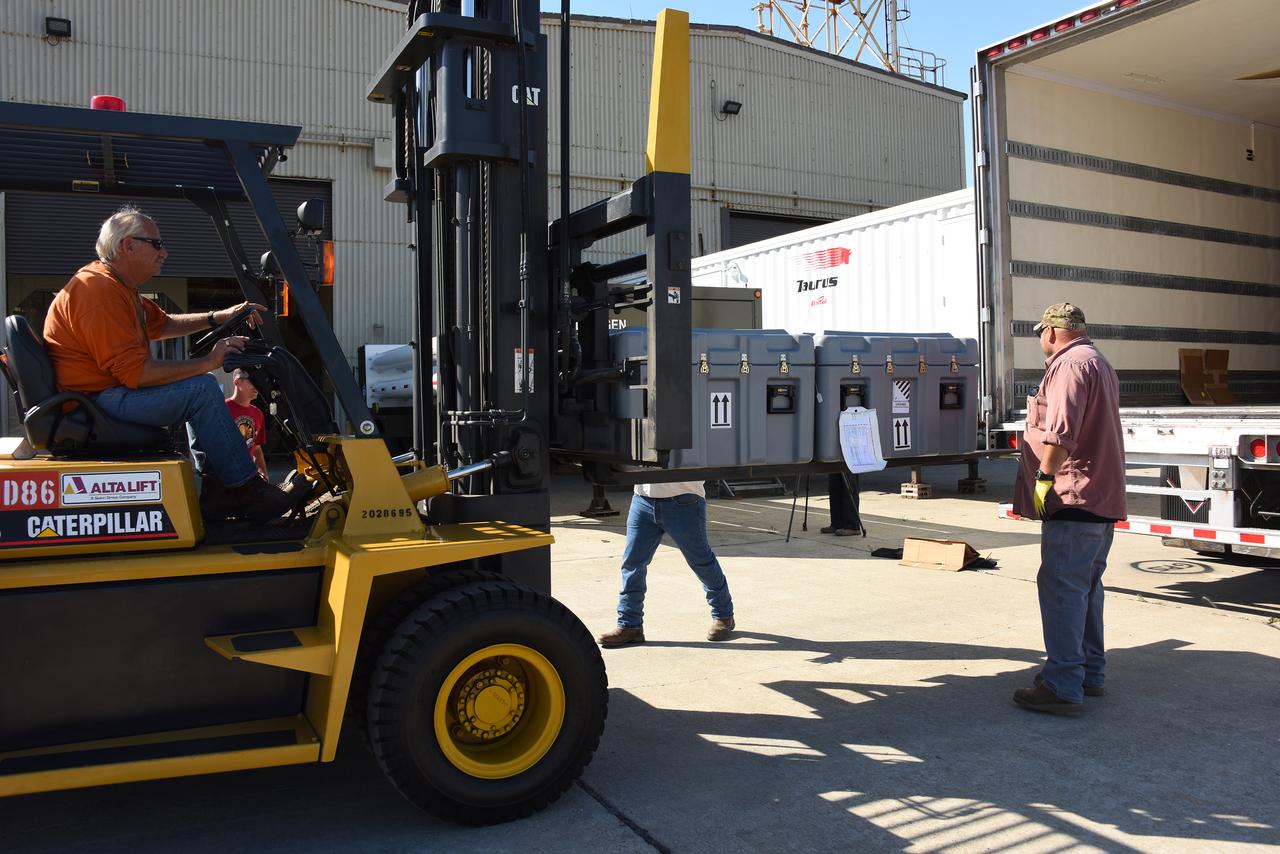
Parts for NASA’s Cyclone Global Navigation Satellite System (CYGNSS) arrive in shipping containers at Building 1555 at Vandenberg Air Force Base in California. CYGNSS is being prepared at Vandenberg, and then will be transported to NASA’s Kennedy Space Center in Florida in the Orbital ATK Pegasus XL rocket which will be attached to the Orbital ATK L-1011 carrier aircraft. CYGNSS will launch on the Pegasus XL rocket from the Skid Strip at Cape Canaveral Air Force Station. CYGNSS will make frequent and accurate measurements of ocean surface winds throughout the life cycle of tropical storms and hurricanes. The data that CYGNSS provides will enable scientists to probe key air-sea interaction processes that take place near the core of storms, which are rapidly changing and play a critical role in the beginning and intensification of hurricanes.
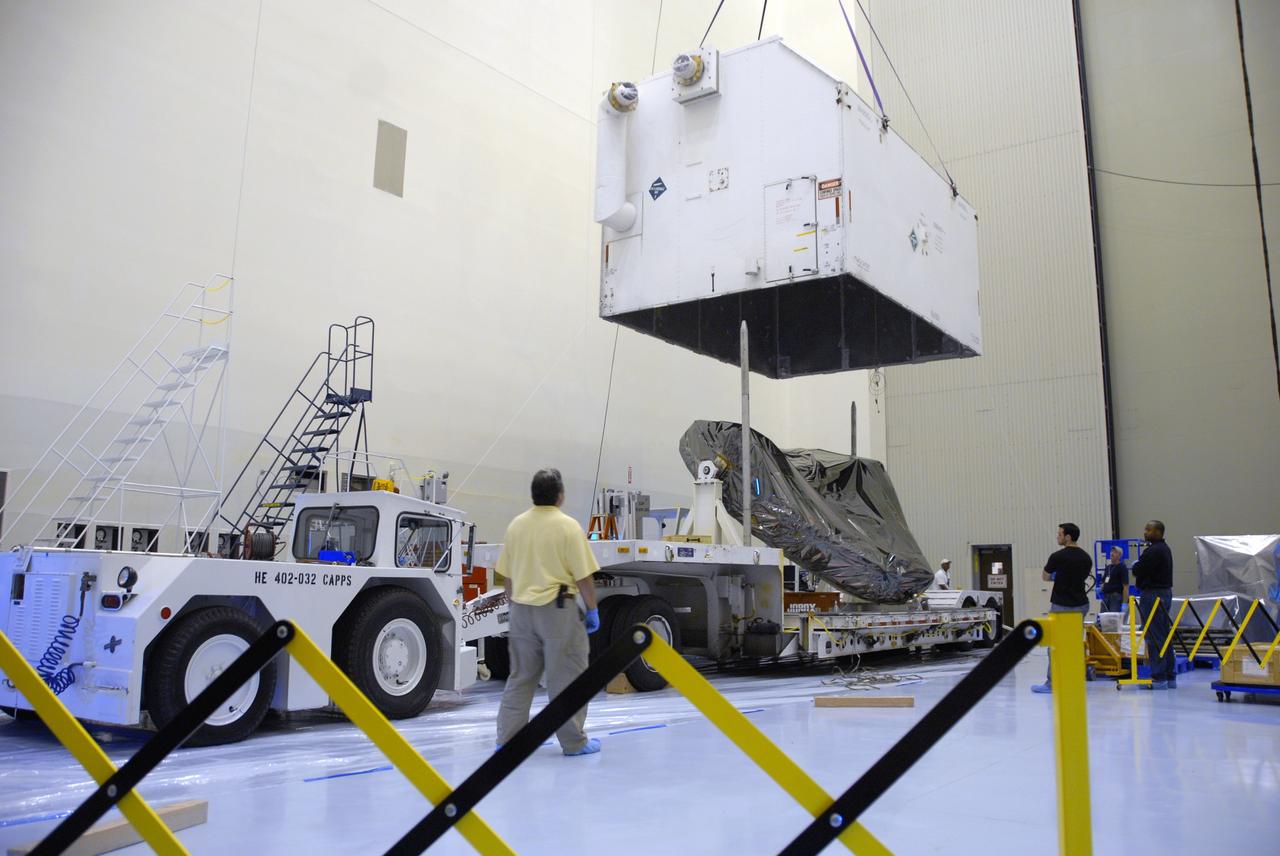
CAPE CANAVERAL, Fla. – In the Payload Hazardous Servicing Facility at NASA's Kennedy Space Center, the cover of the shipping container is lifted to reveal the Multi-Use Lightweight Equipment (MULE) carrier inside. The MULE is part of the payload for the fifth and final shuttle servicing mission to NASA's Hubble Space Telescope, STS-125. The MULE carrier will join the Flight Support System, the Super Lightweight Interchangeable Carrier and the Orbital Replacement Unit Carrier in the Payload Hazardous Servicing Facility where the Hubble payload is being prepared for launch. The Relative Navigation Sensors and the New Outer Blanket Layers will be on the MULE. The payload is scheduled to go to Launch Pad 39A in mid-September to be installed into Atlantis' payload bay. Atlantis is targeted to launch Oct. 8 at 1:34 a.m. EDT. .Photo credit: NASA/Amanda Diller

CAPE CANAVERAL, Fla. – In the Payload Hazardous Servicing Facility at NASA's Kennedy Space Center, an overhead crane is attached to the shipping container with the Multi-Use Lightweight Equipment (MULE) carrier inside. The cover will be removed. The MULE is part of the payload for the fifth and final shuttle servicing mission to NASA's Hubble Space Telescope, STS-125. The MULE carrier will join the Flight Support System, the Super Lightweight Interchangeable Carrier and the Orbital Replacement Unit Carrier in the Payload Hazardous Servicing Facility where the Hubble payload is being prepared for launch. The Relative Navigation Sensors and the New Outer Blanket Layers will be on the MULE. The payload is scheduled to go to Launch Pad 39A in mid-September to be installed into Atlantis' payload bay. Atlantis is targeted to launch Oct. 8 at 1:34 a.m. EDT. .Photo credit: NASA/Amanda Diller
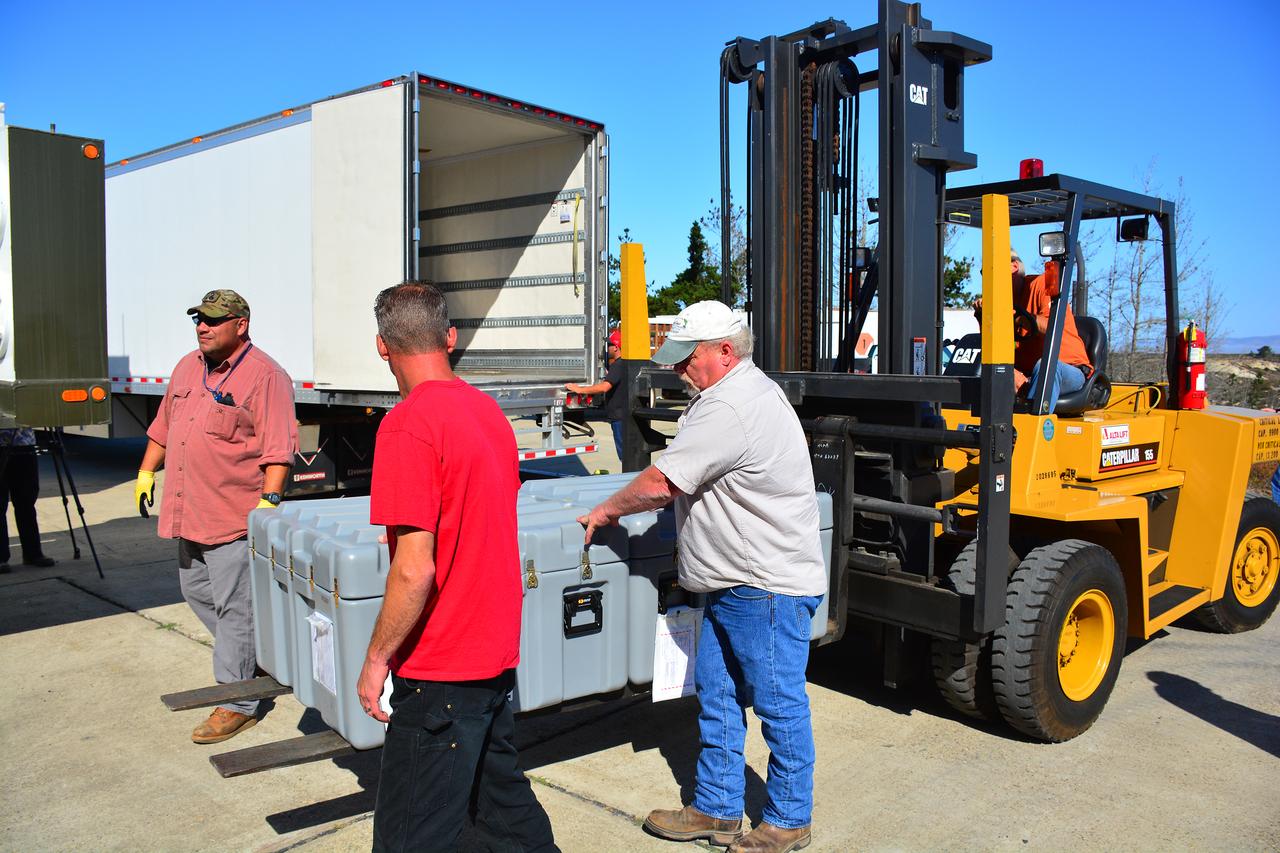
Parts for NASA’s Cyclone Global Navigation Satellite System (CYGNSS) arrive in a shipping container at Building 1555 at Vandenberg Air Force Base in California. CYGNSS is being prepared at Vandenberg, and then will be transported to NASA’s Kennedy Space Center in Florida in the Orbital ATK Pegasus XL rocket which will be attached to the Orbital ATK L-1011 carrier aircraft. CYNSS will launch on the Pegasus XL rocket from the Skid Strip at Cape Canaveral Air Force Station. CYGNSS will make frequent and accurate measurements of ocean surface winds throughout the life cycle of tropical storms and hurricanes. The data that CYGNSS provides will enable scientists to probe key air-sea interaction processes that take place near the core of storms, which are rapidly changing and play a critical role in the beginning and intensification of hurricanes.
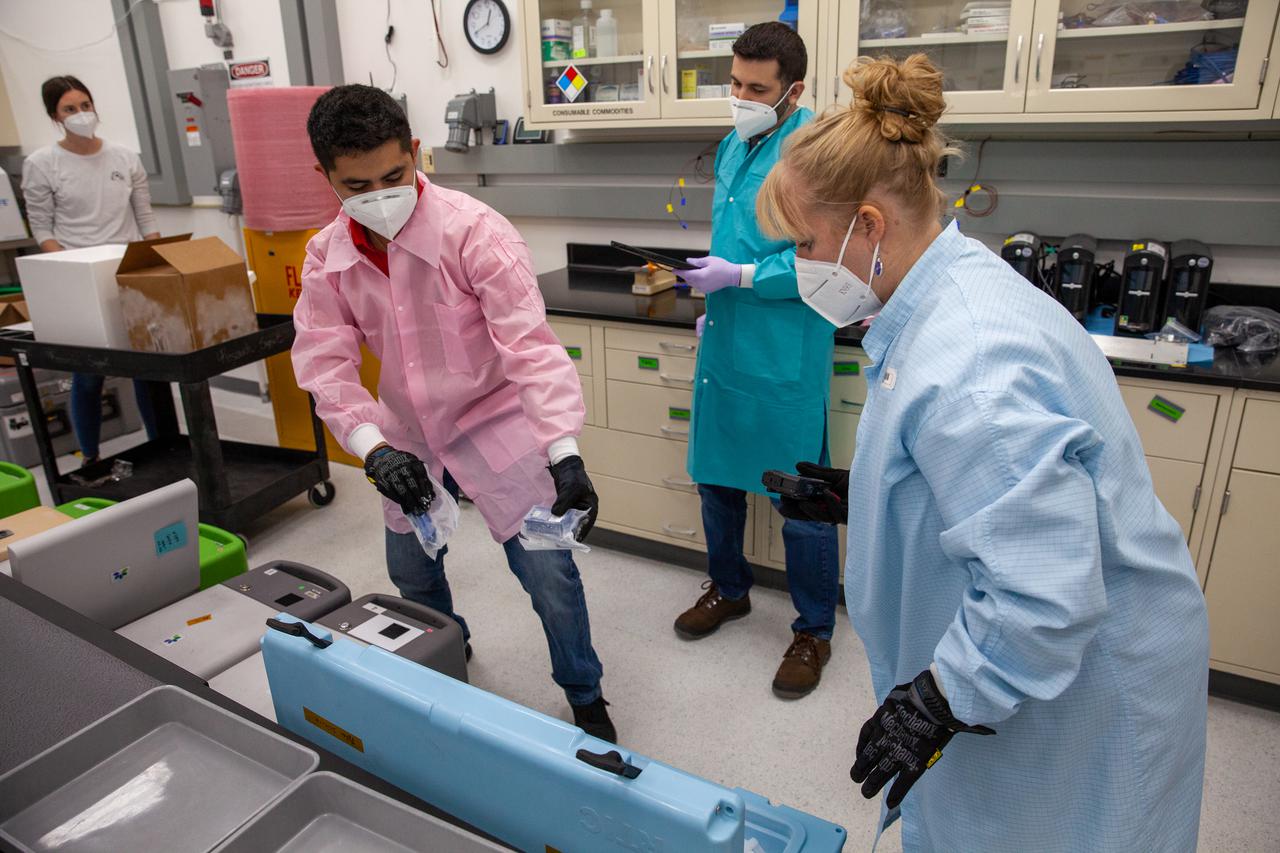
Members of the cold stowage team unpack science experiments inside the Space Station Processing Facility at NASA’s Kennedy Space Center in Florida on Jan. 14, 2021. The experiments returned to Earth on SpaceX’s 21st commercial resupply services mission (CRS-21). Making its successful parachute-assisted splashdown west of Tampa off the Florida coast, at 8:26 p.m. EST on Jan. 13, the SpaceX cargo Dragon returned more than 4,400 pounds of scientific experiments and other cargo from the International Space Station. After splashdown, SpaceX loaded Dragon aboard their Go Navigator recovery ship and packed an Airbus H225 helicopter with the time-sensitive research cargo for delivery to Kennedy. The upgraded cargo Dragon capsule also boasts double the powered locker capacity to preserve science samples, allowing for a significant increase in the research that can be carried back to Earth.

CAPE CANAVERAL, Fla. – The Multi-Use Lightweight Equipment (MULE) carrier is driven from the Canister Rotation Facility to the Payload Hazardous Servicing Facility at NASA's Kennedy Space Center after the shipping container was pressure cleaned. The MULE is part of the payload for the fifth and final shuttle servicing mission to NASA's Hubble Space Telescope, STS-125. The MULE carrier will join the Flight Support System, the Super Lightweight Interchangeable Carrier and the Orbital Replacement Unit Carrier in the Payload Hazardous Servicing Facility where the Hubble payload is being prepared for launch. The Relative Navigation Sensors and the New Outer Blanket Layers will be on the MULE. The payload is scheduled to go to Launch Pad 39A in mid-September to be installed into Atlantis' payload bay. Atlantis is targeted to launch Oct. 8 at 1:34 a.m. EDT. .Photo credit: NASA/Amanda Diller
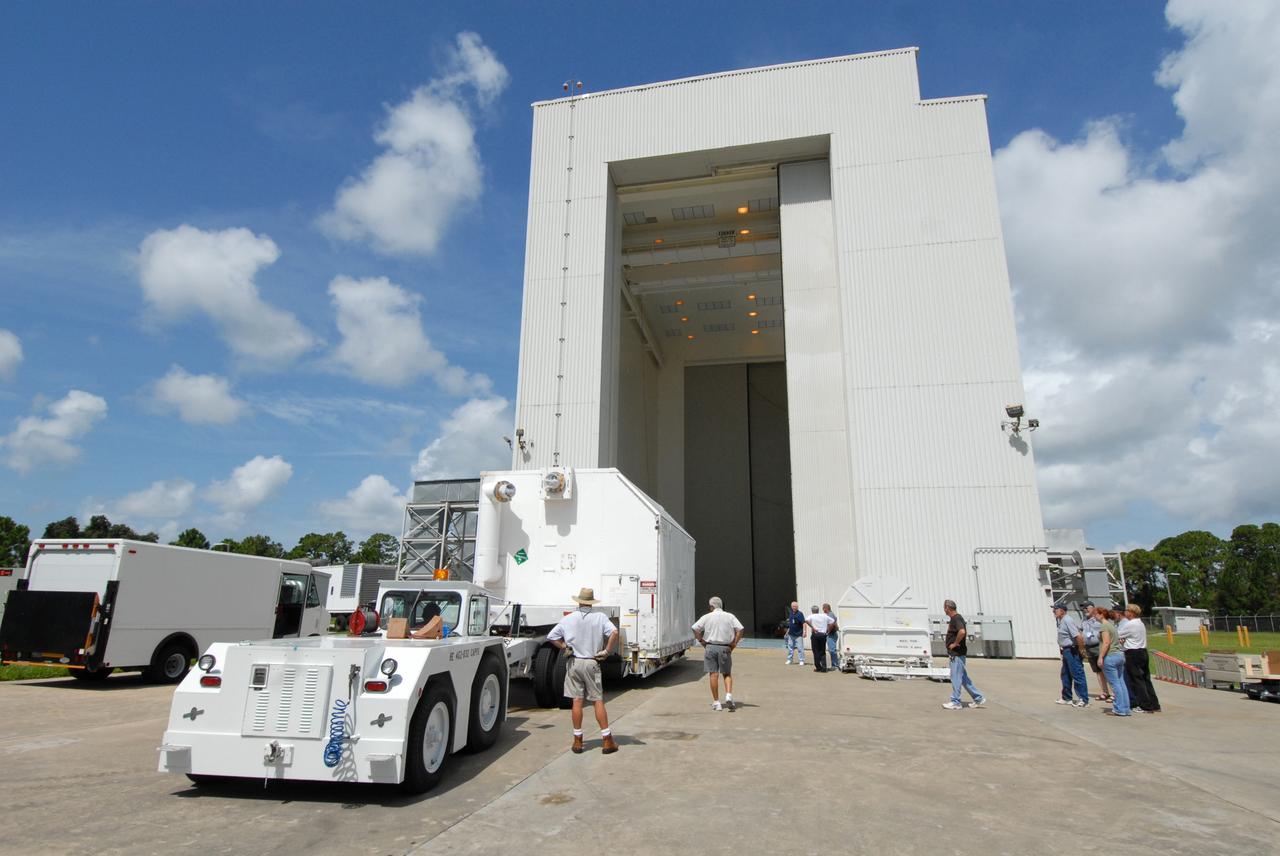
CAPE CANAVERAL, Fla. – A transporter moves the shipping container with the Multi-Use Lightweight Equipment (MULE) carrier toward the open doors of the airlock in the Payload Hazardous Servicing Facility at NASA's Kennedy Space Center. The MULE is part of the payload for the fifth and final shuttle servicing mission to NASA's Hubble Space Telescope, STS-125. The MULE carrier will join the Flight Support System, the Super Lightweight Interchangeable Carrier and the Orbital Replacement Unit Carrier in the Payload Hazardous Servicing Facility where the Hubble payload is being prepared for launch. The Relative Navigation Sensors and the New Outer Blanket Layers will be on the MULE. The payload is scheduled to go to Launch Pad 39A in mid-September to be installed into Atlantis' payload bay. Atlantis is targeted to launch Oct. 8 at 1:34 a.m. EDT. .Photo credit: NASA/Amanda Diller
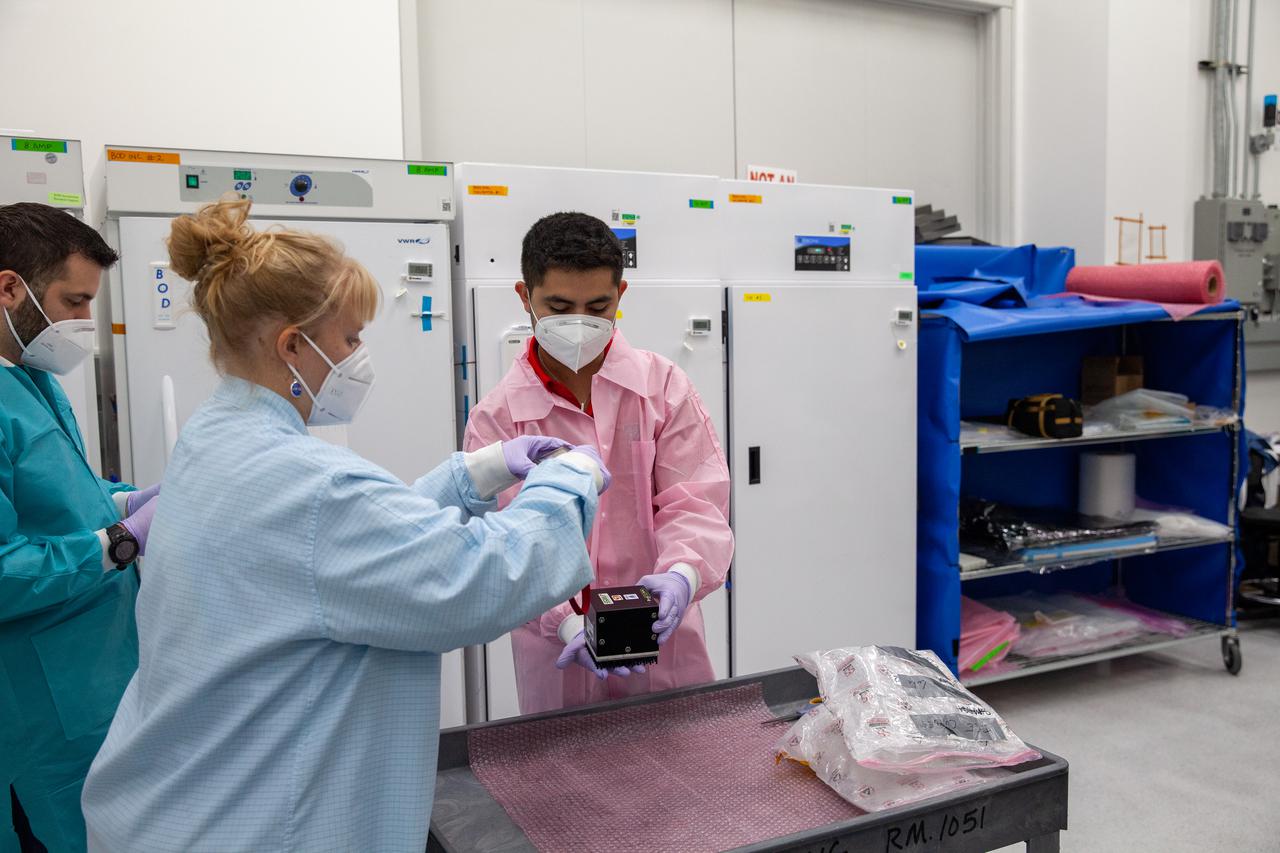
Members of the cold stowage team unpack science experiments inside the Space Station Processing Facility at NASA’s Kennedy Space Center in Florida on Jan. 14, 2021. The experiments returned to Earth on SpaceX’s 21st commercial resupply services mission (CRS-21). Making its successful parachute-assisted splashdown west of Tampa off the Florida coast, at 8:26 p.m. EST on Jan. 13, the SpaceX cargo Dragon returned more than 4,400 pounds of scientific experiments and other cargo from the International Space Station. After splashdown, SpaceX loaded Dragon aboard their Go Navigator recovery ship and packed an Airbus H225 helicopter with the time-sensitive research cargo for delivery to Kennedy. The upgraded cargo Dragon capsule also boasts double the powered locker capacity to preserve science samples, allowing for a significant increase in the research that can be carried back to Earth.
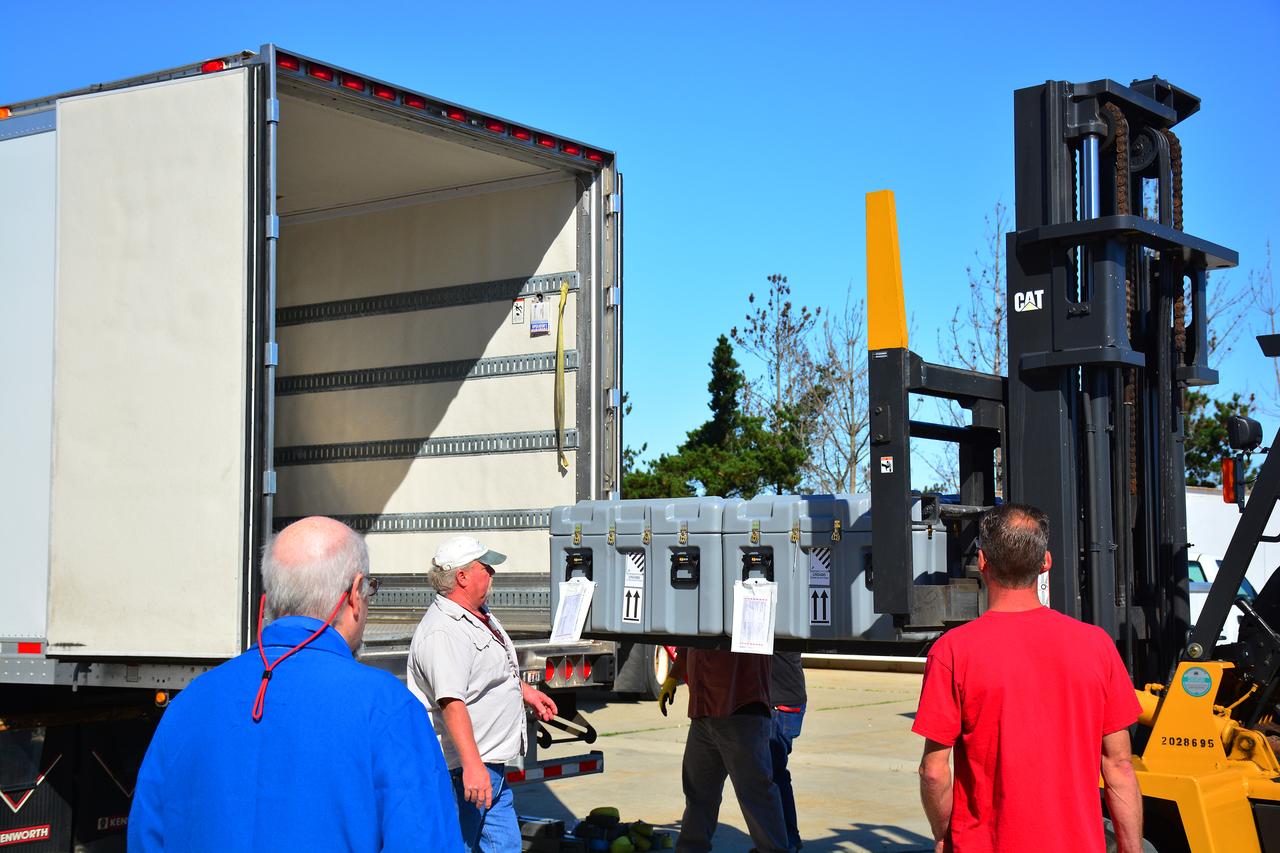
Parts for NASA’s Cyclone Global Navigation Satellite System (CYGNSS) arrive in a shipping container at Building 1555 at Vandenberg Air Force Base in California. CYGNSS is being prepared at Vandenberg, and then will be transported to NASA’s Kennedy Space Center in Florida in the Orbital ATK Pegasus XL rocket which will be attached to the Orbital ATK L-1011 carrier aircraft. CYNSS will launch on the Pegasus XL rocket from the Skid Strip at Cape Canaveral Air Force Station. CYGNSS will make frequent and accurate measurements of ocean surface winds throughout the life cycle of tropical storms and hurricanes. The data that CYGNSS provides will enable scientists to probe key air-sea interaction processes that take place near the core of storms, which are rapidly changing and play a critical role in the beginning and intensification of hurricanes.
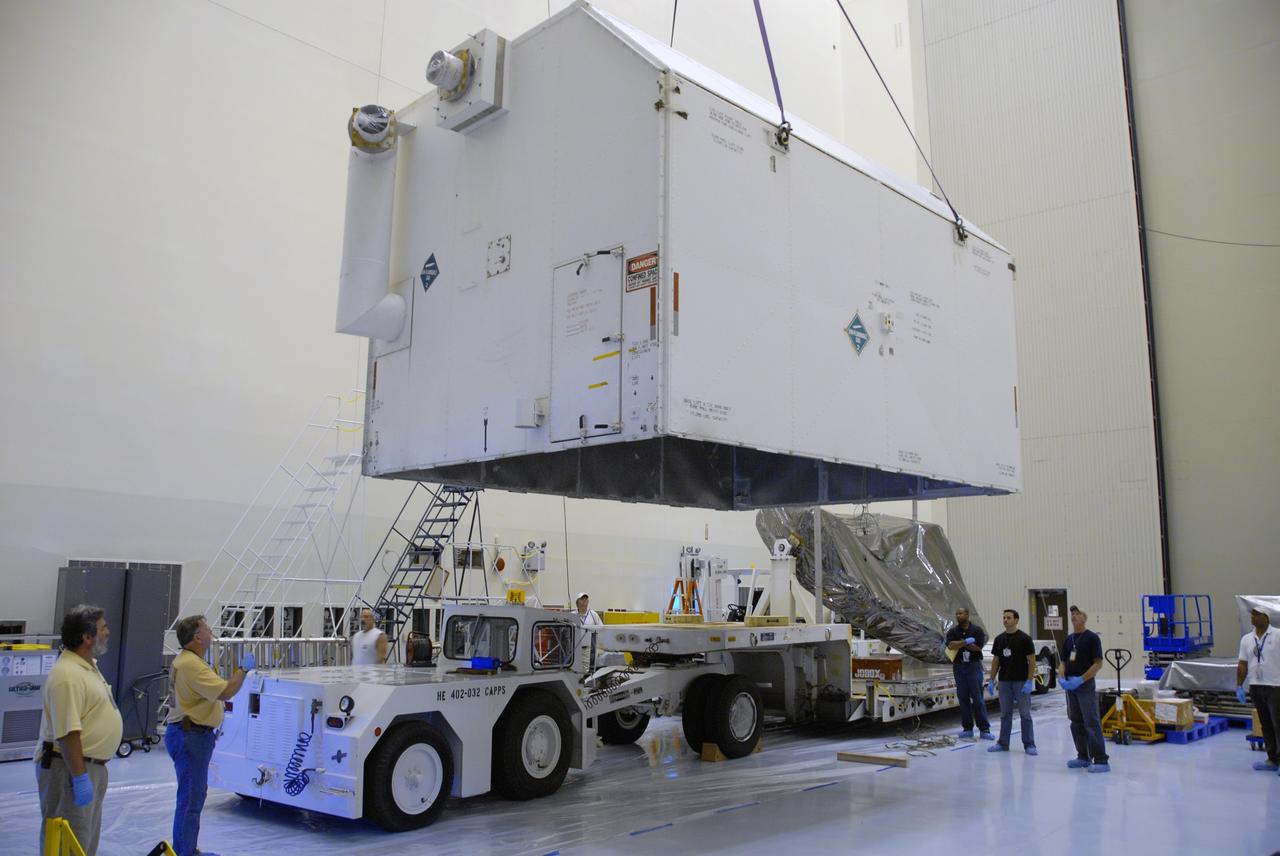
CAPE CANAVERAL, Fla. – In the Payload Hazardous Servicing Facility at NASA's Kennedy Space Center, arcane moves the cover of the shipping container away from its cargo, the Multi-Use Lightweight Equipment (MULE) carrier. The MULE is part of the payload for the fifth and final shuttle servicing mission to NASA's Hubble Space Telescope, STS-125. The MULE carrier will join the Flight Support System, the Super Lightweight Interchangeable Carrier and the Orbital Replacement Unit Carrier in the Payload Hazardous Servicing Facility where the Hubble payload is being prepared for launch. The Relative Navigation Sensors and the New Outer Blanket Layers will be on the MULE. The payload is scheduled to go to Launch Pad 39A in mid-September to be installed into Atlantis' payload bay. Atlantis is targeted to launch Oct. 8 at 1:34 a.m. EDT. .Photo credit: NASA/Amanda Diller
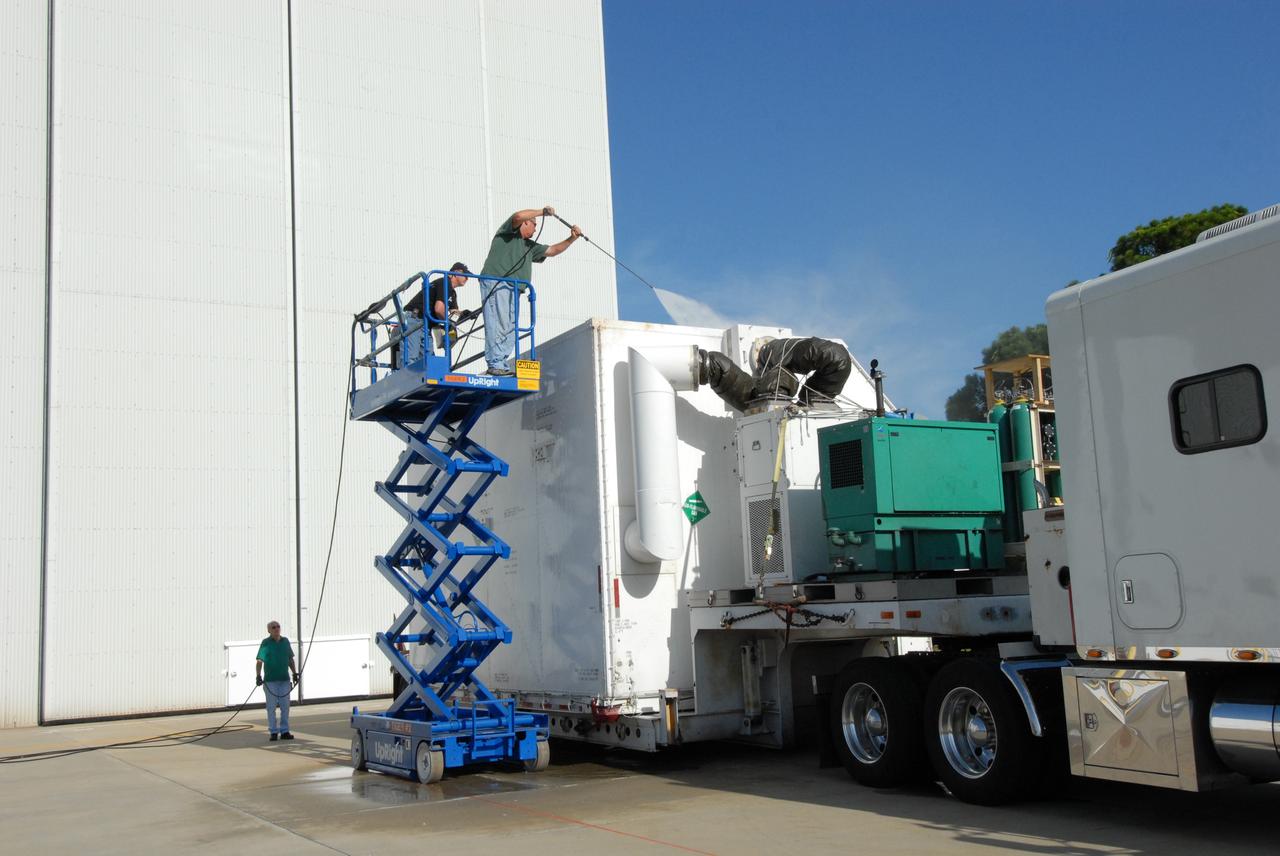
CAPE CANAVERAL, Fla. – At the Canister Rotation Facility at NASA's Kennedy Space Center, the shipping container with the Multi-Use Lightweight Equipment (MULE) carrier inside is pressure cleaned after its arrival. The MULE is part of the payload for the fifth and final shuttle servicing mission to NASA's Hubble Space Telescope, STS-125. The MULE carrier will join the Flight Support System, the Super Lightweight Interchangeable Carrier and the Orbital Replacement Unit Carrier in the Payload Hazardous Servicing Facility where the Hubble payload is being prepared for launch. The Relative Navigation Sensors and the New Outer Blanket Layers will be on the MULE. The payload is scheduled to go to Launch Pad 39A in mid-September to be installed into Atlantis' payload bay. Atlantis is targeted to launch Oct. 8 at 1:34 a.m. EDT. .Photo credit: NASA/Amanda Diller
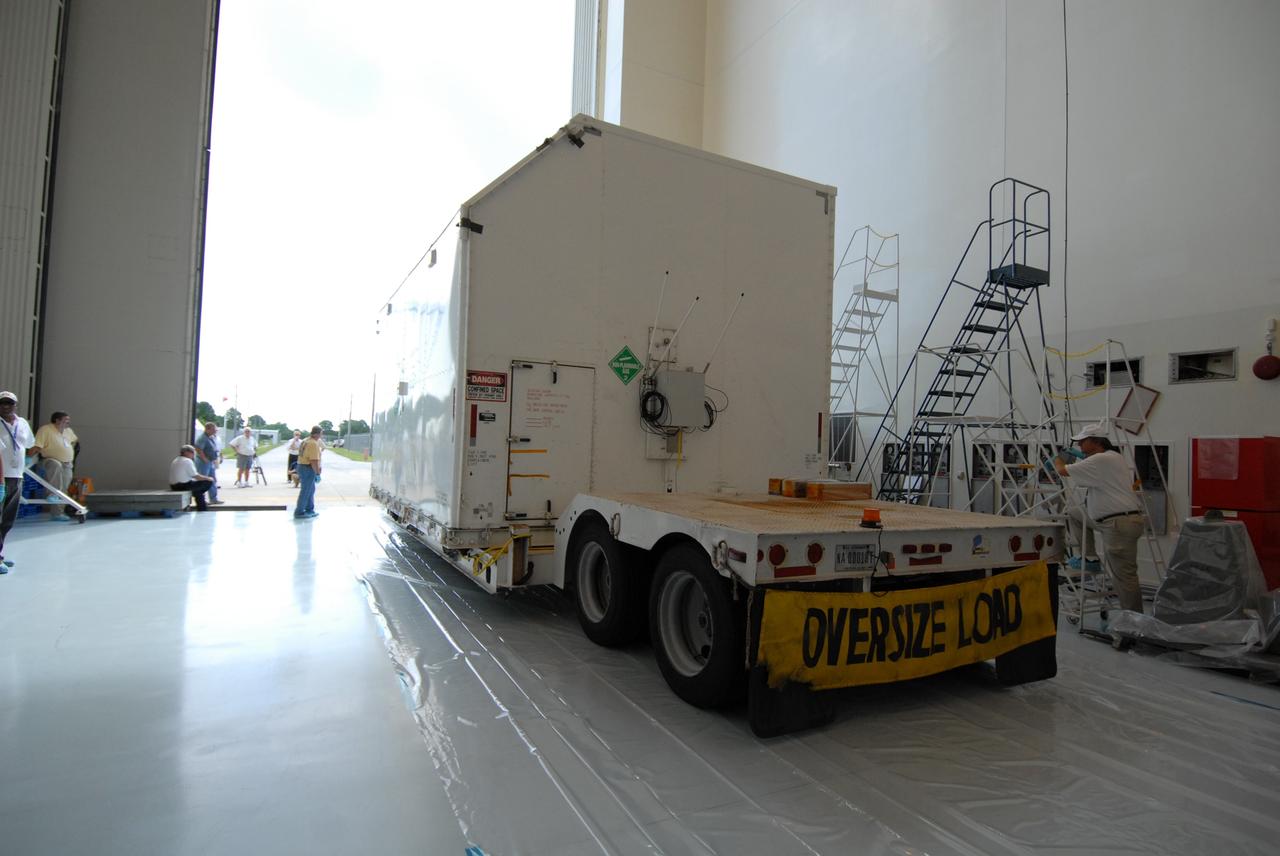
CAPE CANAVERAL, Fla. – The shipping container with the Multi-Use Lightweight Equipment (MULE) carrier inside is moved into the airlock in the Payload Hazardous Servicing Facility at NASA's Kennedy Space Center. The MULE is part of the payload for the fifth and final shuttle servicing mission to NASA's Hubble Space Telescope, STS-125. The MULE carrier will join the Flight Support System, the Super Lightweight Interchangeable Carrier and the Orbital Replacement Unit Carrier in the Payload Hazardous Servicing Facility where the Hubble payload is being prepared for launch. The Relative Navigation Sensors and the New Outer Blanket Layers will be on the MULE. The payload is scheduled to go to Launch Pad 39A in mid-September to be installed into Atlantis' payload bay. Atlantis is targeted to launch Oct. 8 at 1:34 a.m. EDT. .Photo credit: NASA/Amanda Diller
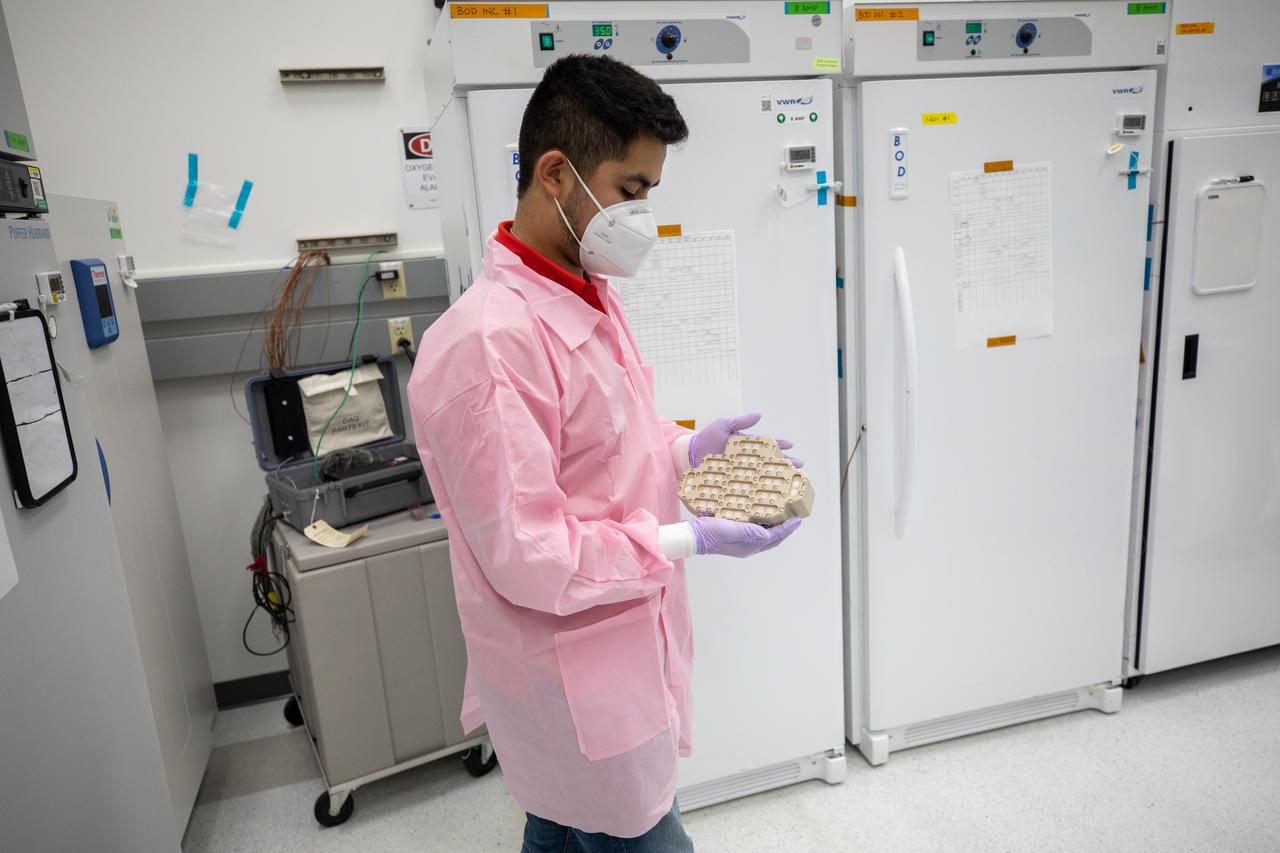
A member of the cold stowage team unpacks science experiments inside the Space Station Processing Facility at NASA’s Kennedy Space Center in Florida on Jan. 14, 2021. The experiments returned to Earth on SpaceX’s 21st commercial resupply services mission (CRS-21). Making its successful parachute-assisted splashdown west of Tampa off the Florida coast, at 8:26 p.m. EST on Jan. 13, the SpaceX cargo Dragon returned more than 4,400 pounds of scientific experiments and other cargo from the International Space Station. After splashdown, SpaceX loaded Dragon aboard their Go Navigator recovery ship and packed an Airbus H225 helicopter with the time-sensitive research cargo for delivery to Kennedy. The upgraded cargo Dragon capsule also boasts double the powered locker capacity to preserve science samples, allowing for a significant increase in the research that can be carried back to Earth.
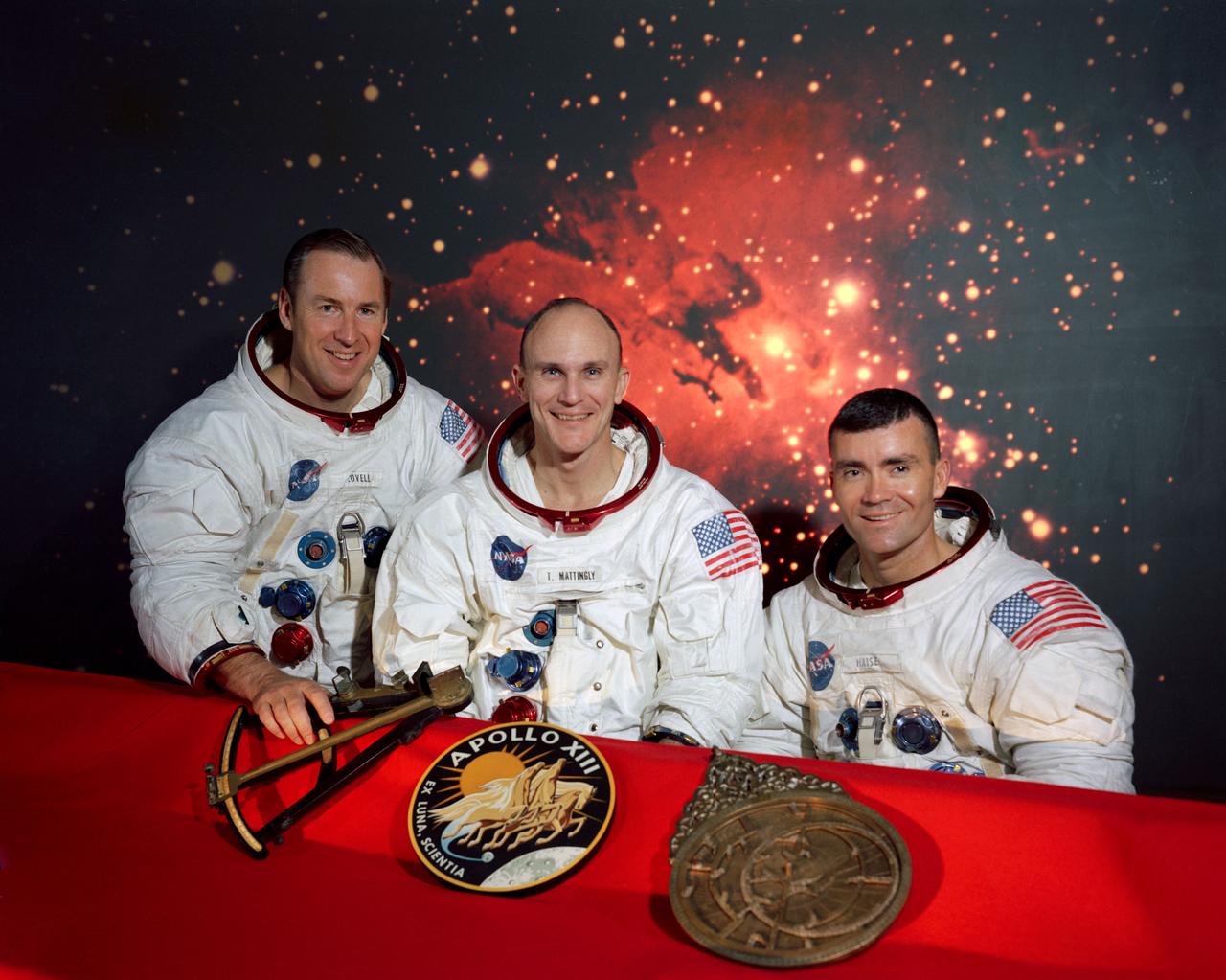
S69-62224 (December 1969) --- The members of the prime crew of the Apollo 13 lunar landing mission (left to right) are astronauts James A. Lovell Jr., commander; Thomas K. Mattingly II, command module pilot; and Fred W. Haise Jr., lunar module pilot. They are seated in front of a scene of the Lagoon Nebula, with the mission insignia and two items of early navigation in the foreground. Represented in the Apollo 13 emblem (center) is Apollo, the sun god of Greek mythology, symbolizing that the Apollo flights have extended the light of knowledge to all mankind. The Latin phrase Ex Luna, Scientia means "From the Moon, Knowledge." The Hindu astrolabe in Sanskrit (on right) was used to predict the position of celestial bodies before the invention of the octant (on left) was used in 1790 to determine the altitude of celestial bodies from aboard ship.
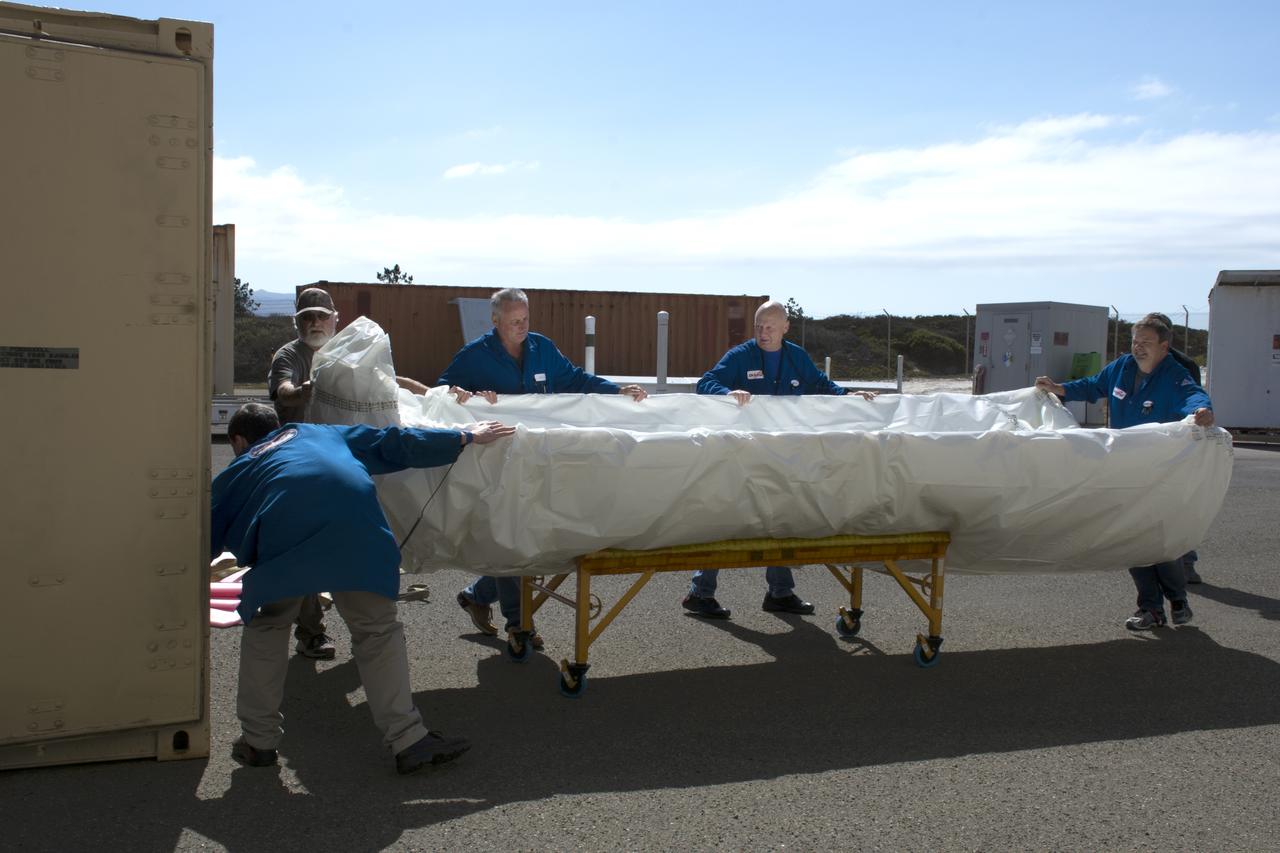
Technicians with Orbital ATK remove the first half of the Pegasus payload fairing for NASA’s Cyclone Global Navigation Satellite System (CYGNSS) from its shipping container and prepare it for the move to nearby Building 1555 at Vandenberg Air Force Base in California. CYGNSS is being prepared at Vandenberg, and then will be transported to NASA’s Kennedy Space Center in Florida aboard the Orbital ATK Pegasus XL rocket which will be attached to the Orbital ATK L-1011 carrier aircraft. CYGNSS will launch on the Pegasus XL rocket from the Skid Strip at Cape Canaveral Air Force Station. CYGNSS will make frequent and accurate measurements of ocean surface winds throughout the life cycle of tropical storms and hurricanes. The data that CYGNSS provides will enable scientists to probe key air-sea interaction processes that take place near the core of storms, which are rapidly changing and play a critical role in the beginning and intensification of hurricanes.
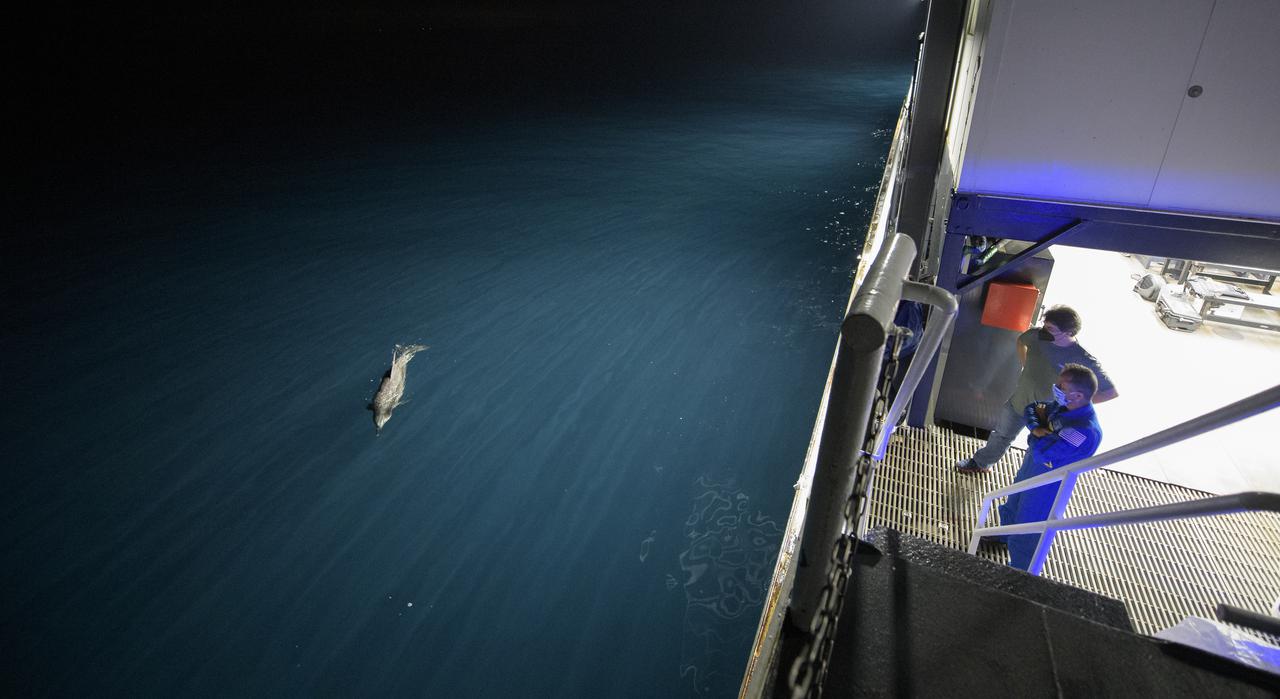
Manager, NASA ISS Transportation Integration Office, Bill Spetch and NASA astronaut representative Joe Acaba watch dolphin swim along with the SpaceX GO Navigator recovery ship as NASA and SpaceX teams prepare for the landing of the SpaceX Crew Dragon Resilience spacecraft with NASA astronauts Mike Hopkins, Shannon Walker, and Victor Glover, and Japan Aerospace Exploration Agency (JAXA) astronaut Soichi Noguchi aboard in the Gulf of Mexico off the coast of Panama City, Florida, Saturday, May 1, 2021. NASA’s SpaceX Crew-1 mission is the first crew rotation flight of the SpaceX Crew Dragon spacecraft and Falcon 9 rocket with astronauts to the International Space Station as part of the agency’s Commercial Crew Program. Photo Credit: (NASA/Bill Ingalls)
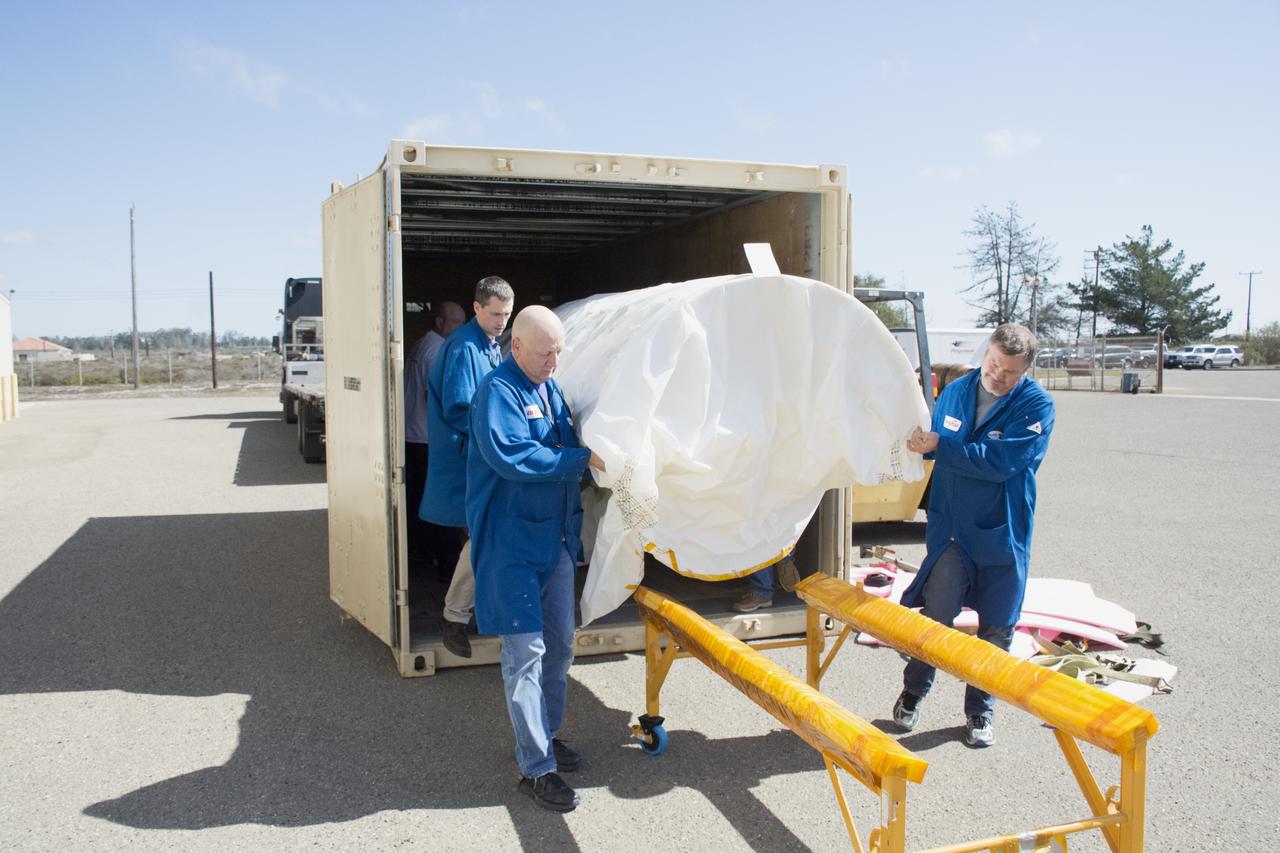
Technicians with Orbital ATK remove the first half of the Pegasus payload fairing for NASA’s Cyclone Global Navigation Satellite System (CYGNSS) from its shipping container near Building 1555 at Vandenberg Air Force Base in California. CYGNSS is being prepared at Vandenberg, and then will be transported to NASA’s Kennedy Space Center in Florida aboard the Orbital ATK Pegasus XL rocket which will be attached to the Orbital ATK L-1011 carrier aircraft. CYGNSS will launch on the Pegasus XL rocket from the Skid Strip at Cape Canaveral Air Force Station. CYGNSS will make frequent and accurate measurements of ocean surface winds throughout the life cycle of tropical storms and hurricanes. The data that CYGNSS provides will enable scientists to probe key air-sea interaction processes that take place near the core of storms, which are rapidly changing and play a critical role in the beginning and intensification of hurricanes.