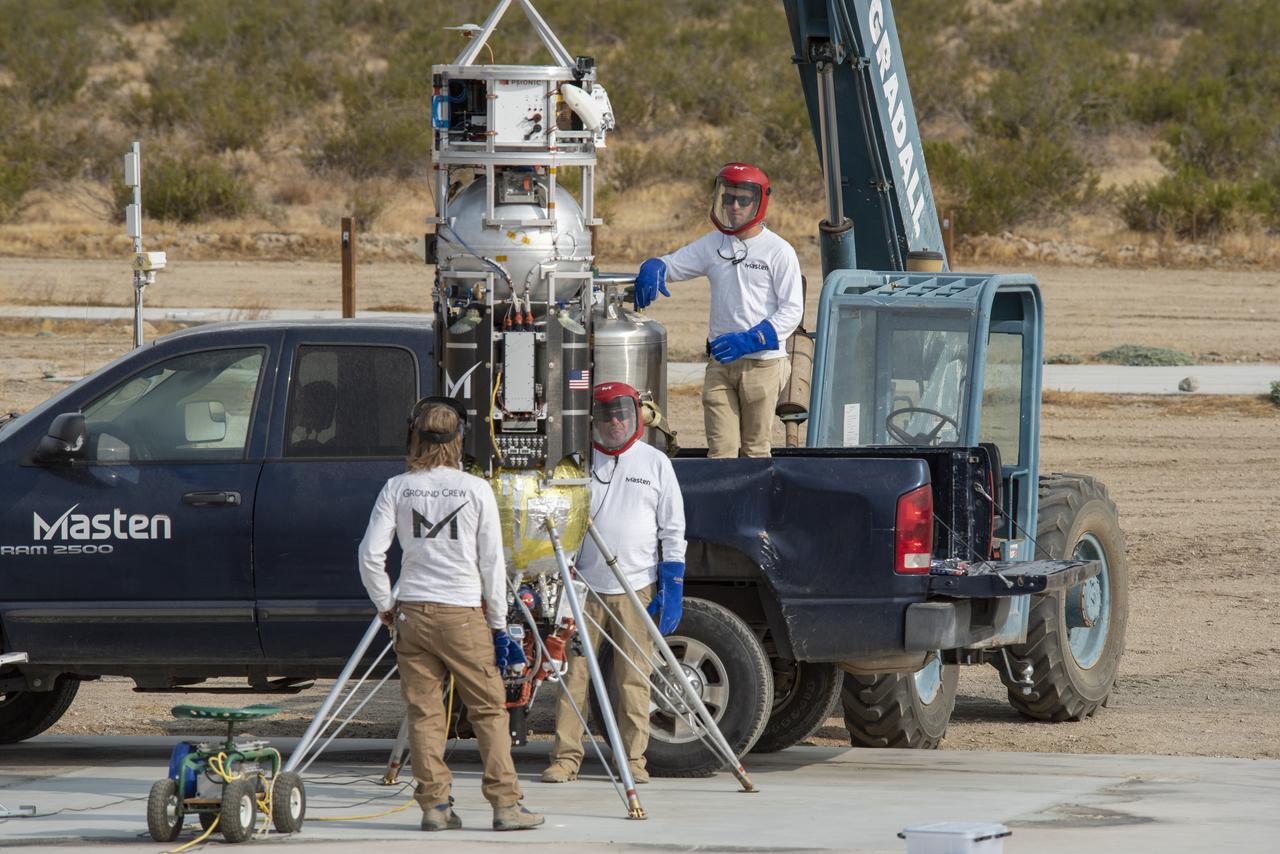
Masten Space Systems employees prepare its rocket to flight test NASA -licensed Psionic navigation doppler lidar technology that enables precision landing on celestial bodies where GPS for navigation only available on Earth is not an option.
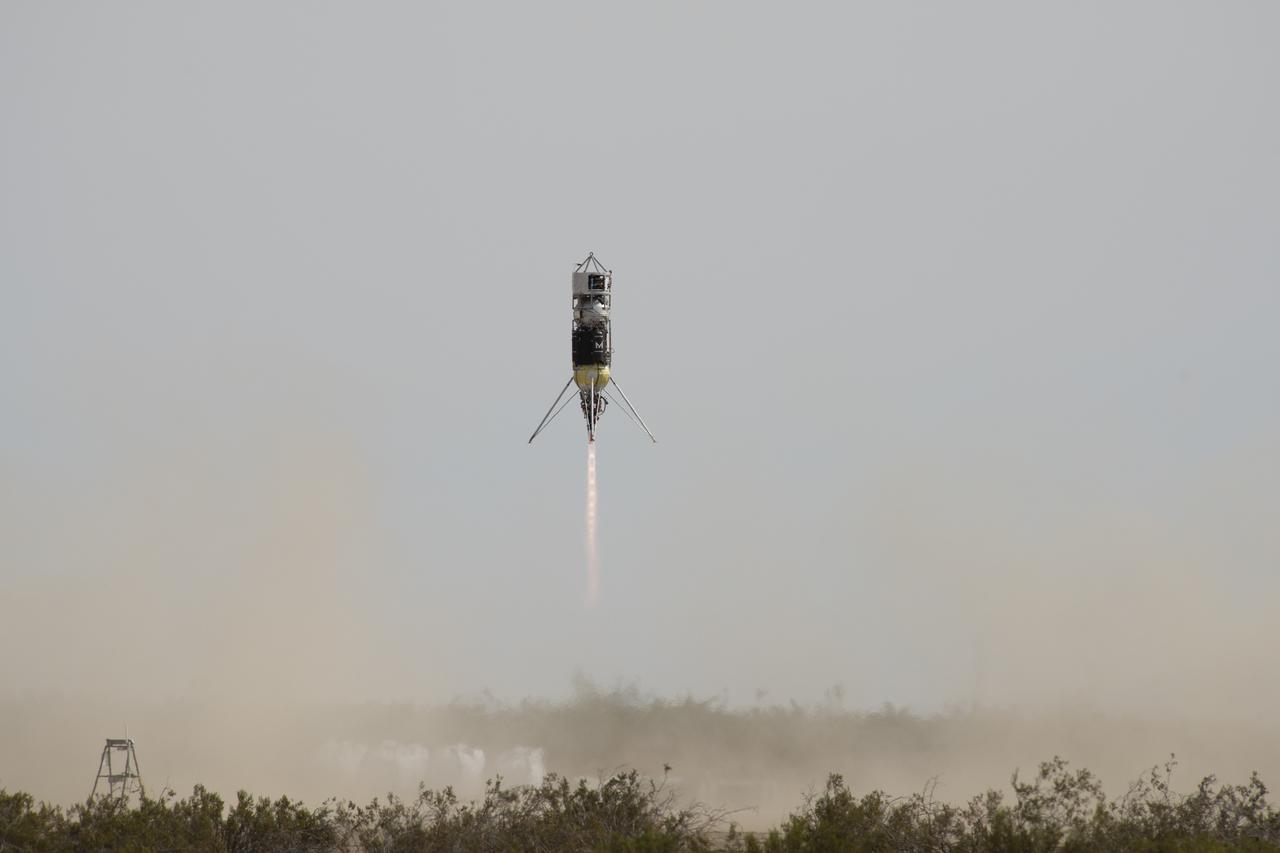
Masten Space Systems vertical takeoff vertical landing rocket launched September 10, 2020 to flight test NASA-licensed Psionic navigation doppler lidar technology that enables precision landing on celestial bodies where GPS for navigation only available on Earth is not an option.
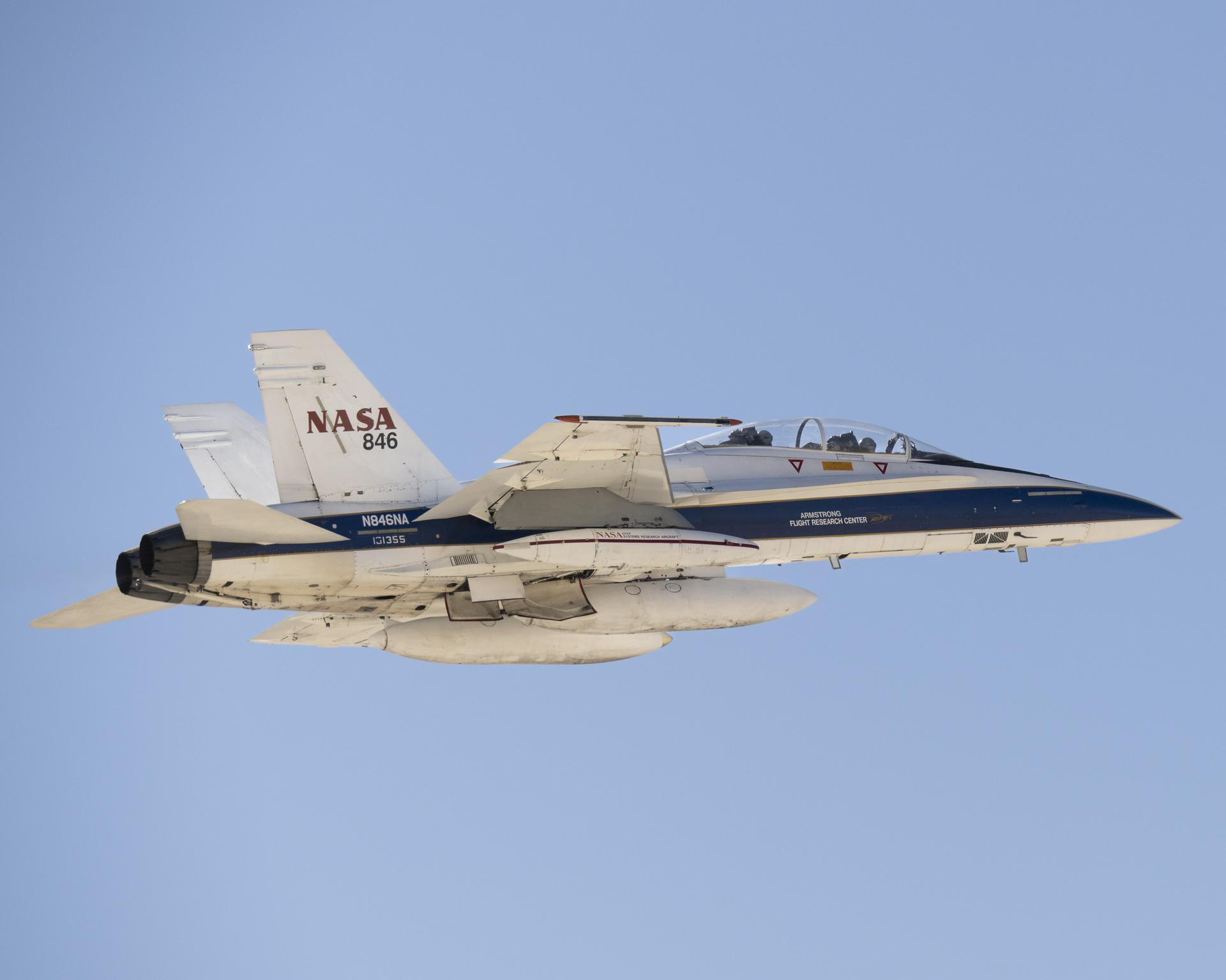
A NASA F/A-18 research aircraft flies near NASA’s Armstrong Flight Research Center in Edwards, California, on Feb. 24, 2025, testing a commercial precision landing technology for future space missions. The Psionic Space Navigation Doppler Lidar (PSNDL) system is installed in a pod located under the right wing of the aircraft.
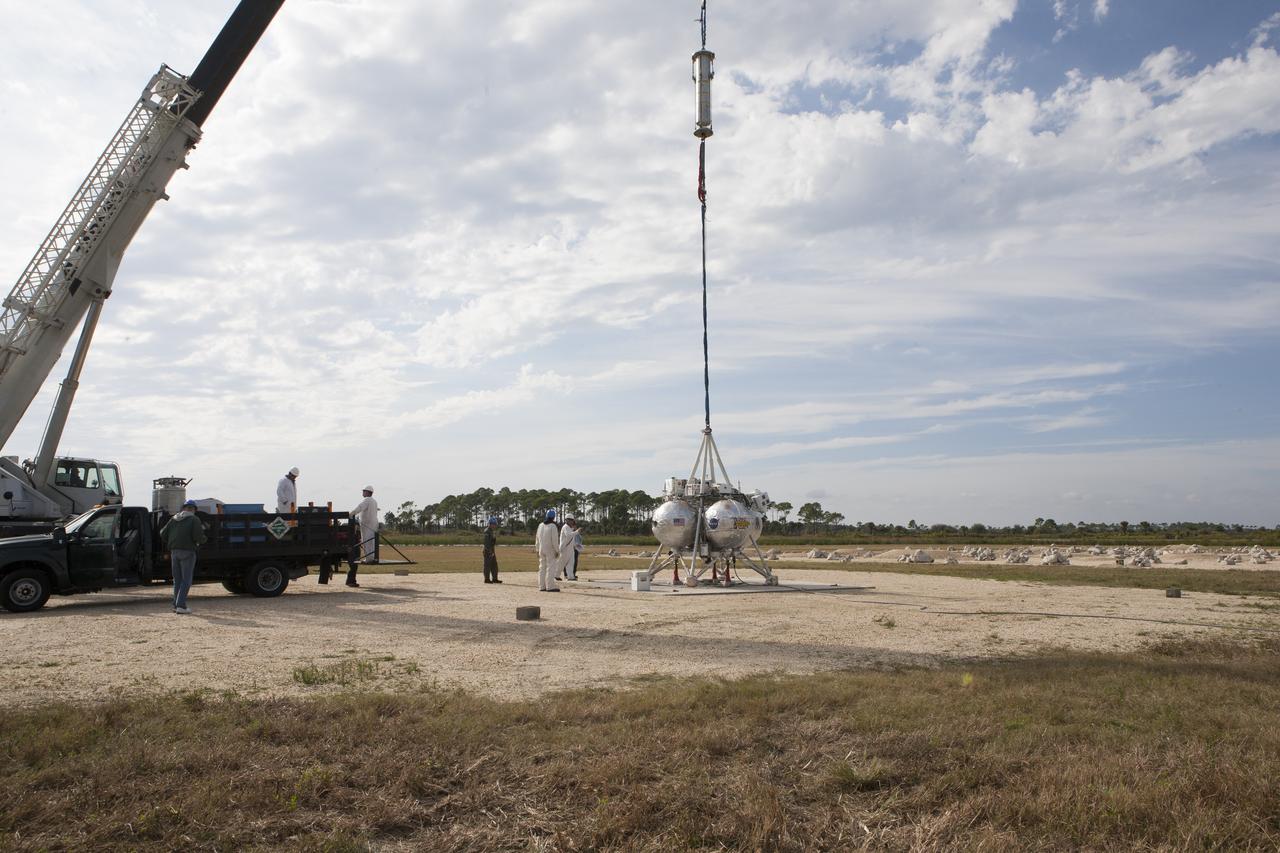
NASA's Project Morpheus prototype lander is prepared for lifting by a crane in preparation for a tethered-flight test at the north end of the Shuttle Landing Facility at NASA’s Kennedy Space Center in Florida. For the 40-second test, the lander will be hoisted 20 feet. The spacecraft will ascend an additional five feet and hover for five seconds. Morpheus then will perform a 5.6-foot ascent coupled with a 9.8-foot traverse, and hover for five more seconds before returning to the launch point. A number of changes have been made, primarily focused on autonomous landing and hazard avoidance technology ALHAT and moving the Doppler Lidar to the front of the forward liquid oxygen tank. The tether test was cut short due to Morpheus exceeding onboard abort rate limits. The vehicle was taken back to the hangar and data from the test is being studied. After review, managers will determine when a new test date will be set. The landing facility provides the lander with the kind of field necessary for realistic testing, complete with rocks, craters and hazards to avoid. Morpheus’ ALHAT payload allows it to navigate to clear landing sites amidst rocks, craters and other hazards during its descent.
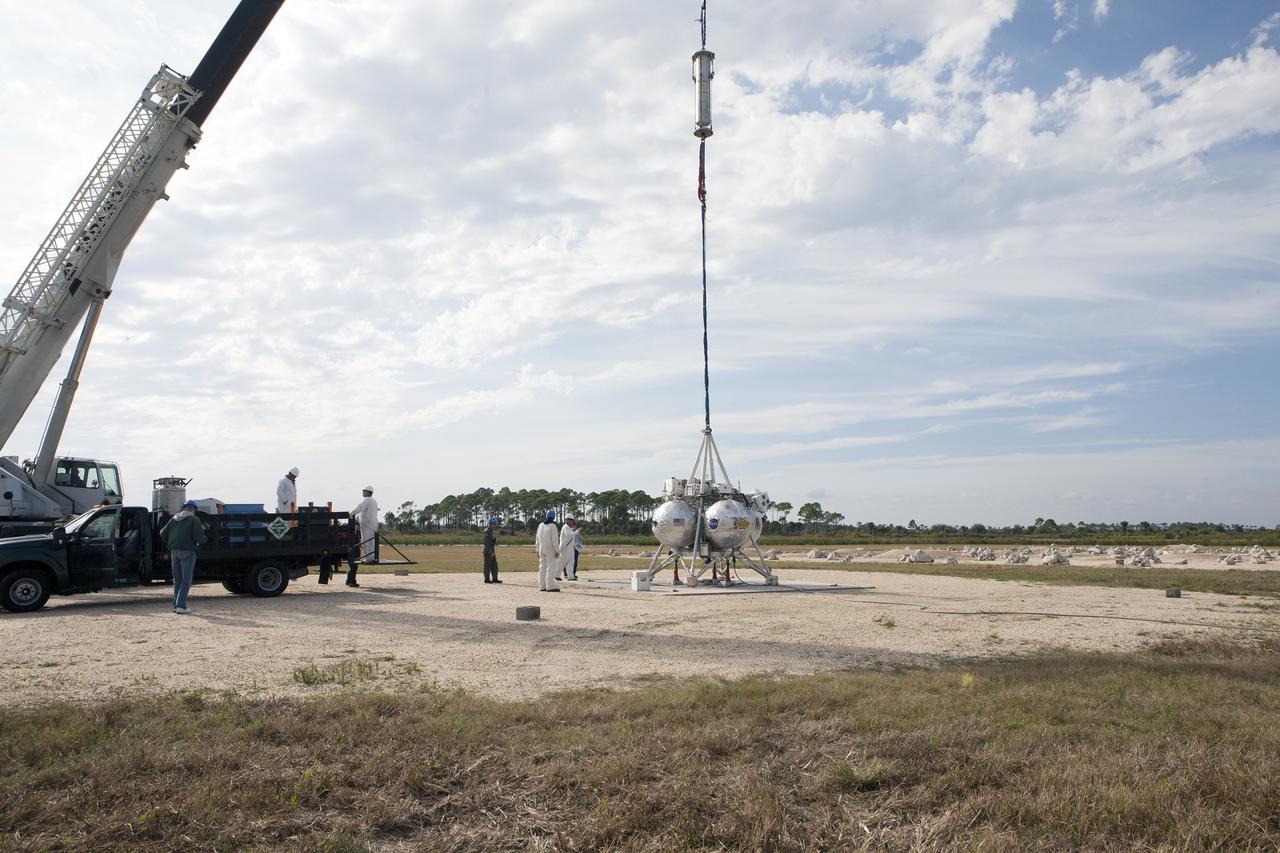
CAPE CANAVERAL, Fla. –NASA's Project Morpheus prototype lander is prepared for lifting by a crane in preparation for a tethered-flight test at the north end of the Shuttle Landing Facility at NASA’s Kennedy Space Center in Florida. For the 40-second test, the lander will be hoisted 20 feet. The spacecraft will ascend an additional five feet and hover for five seconds. Morpheus then will perform a 5.6-foot ascent coupled with a 9.8-foot traverse, and hover for five more seconds before returning to the launch point. A number of changes have been made, primarily focused on autonomous landing and hazard avoidance technology ALHAT and moving the Doppler Lidar to the front of the forward liquid oxygen tank. The tether test was cut short due to Morpheus exceeding onboard abort rate limits. The vehicle was taken back to the hangar and data from the test is being studied. After review, managers will determine when a new test date will be set. The landing facility provides the lander with the kind of field necessary for realistic testing, complete with rocks, craters and hazards to avoid. Morpheus’ ALHAT payload allows it to navigate to clear landing sites amidst rocks, craters and other hazards during its descent. For more information on Project Morpheus, visit http://morpheuslander.jsc.nasa.gov/. Photo credit: NASA/Kim Shiflett
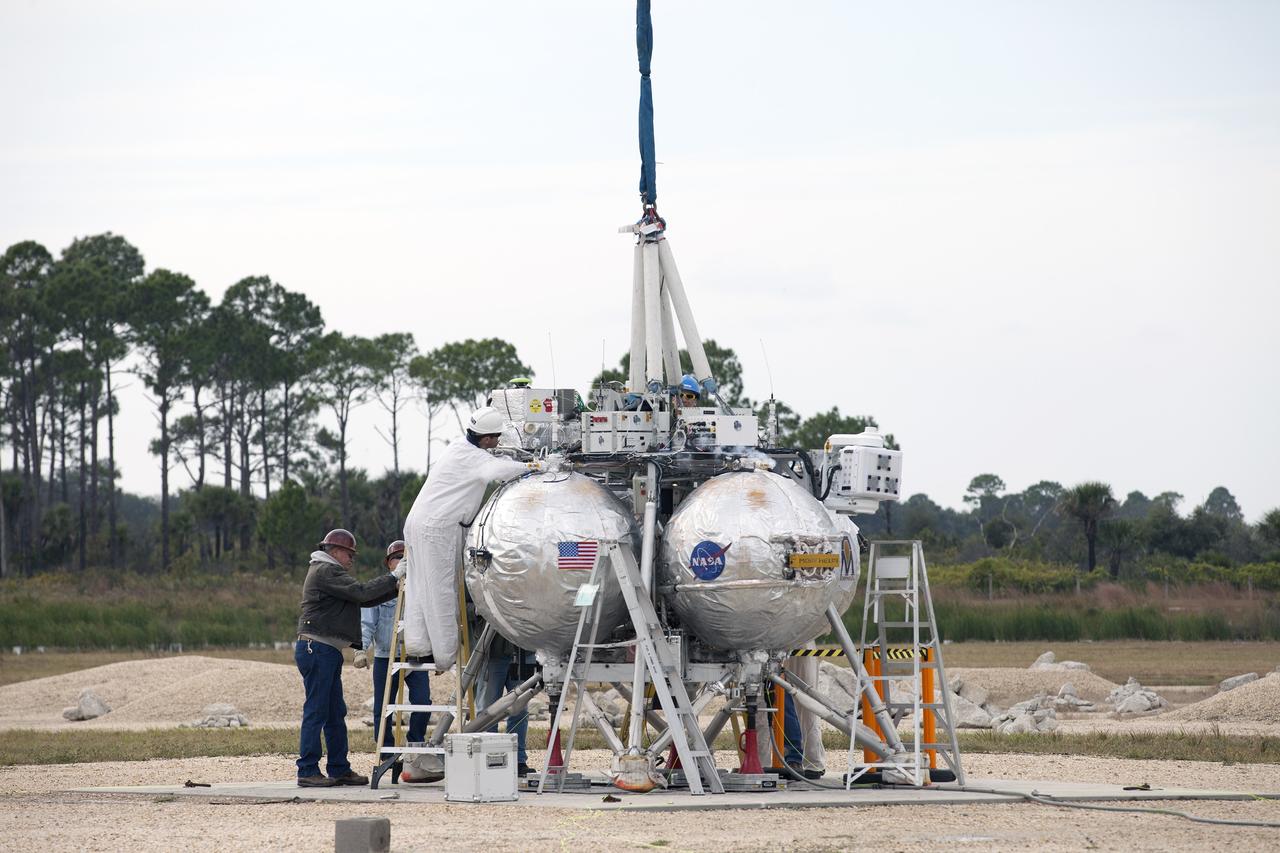
CAPE CANAVERAL, Fla. –NASA's Project Morpheus prototype lander undergoes final preparations for a tethered-flight test at the north end of the Shuttle Landing Facility at NASA’s Kennedy Space Center in Florida. For the 40-second test, the lander will be hoisted 20 feet. The spacecraft will ascend an additional five feet and hover for five seconds. Morpheus then will perform a 5.6-foot ascent coupled with a 9.8-foot traverse, and hover for five more seconds before returning to the launch point. A number of changes have been made, primarily focused on autonomous landing and hazard avoidance technology ALHAT and moving the Doppler Lidar to the front of the forward liquid oxygen tank. The tether test was cut short due to Morpheus exceeding onboard abort rate limits. The vehicle was taken back to the hangar and data from the test is being studied. After review, managers will determine when a new test date will be set. The landing facility provides the lander with the kind of field necessary for realistic testing, complete with rocks, craters and hazards to avoid. Morpheus’ ALHAT payload allows it to navigate to clear landing sites amidst rocks, craters and other hazards during its descent. For more information on Project Morpheus, visit http://morpheuslander.jsc.nasa.gov/. Photo credit: NASA/Kim Shiflett
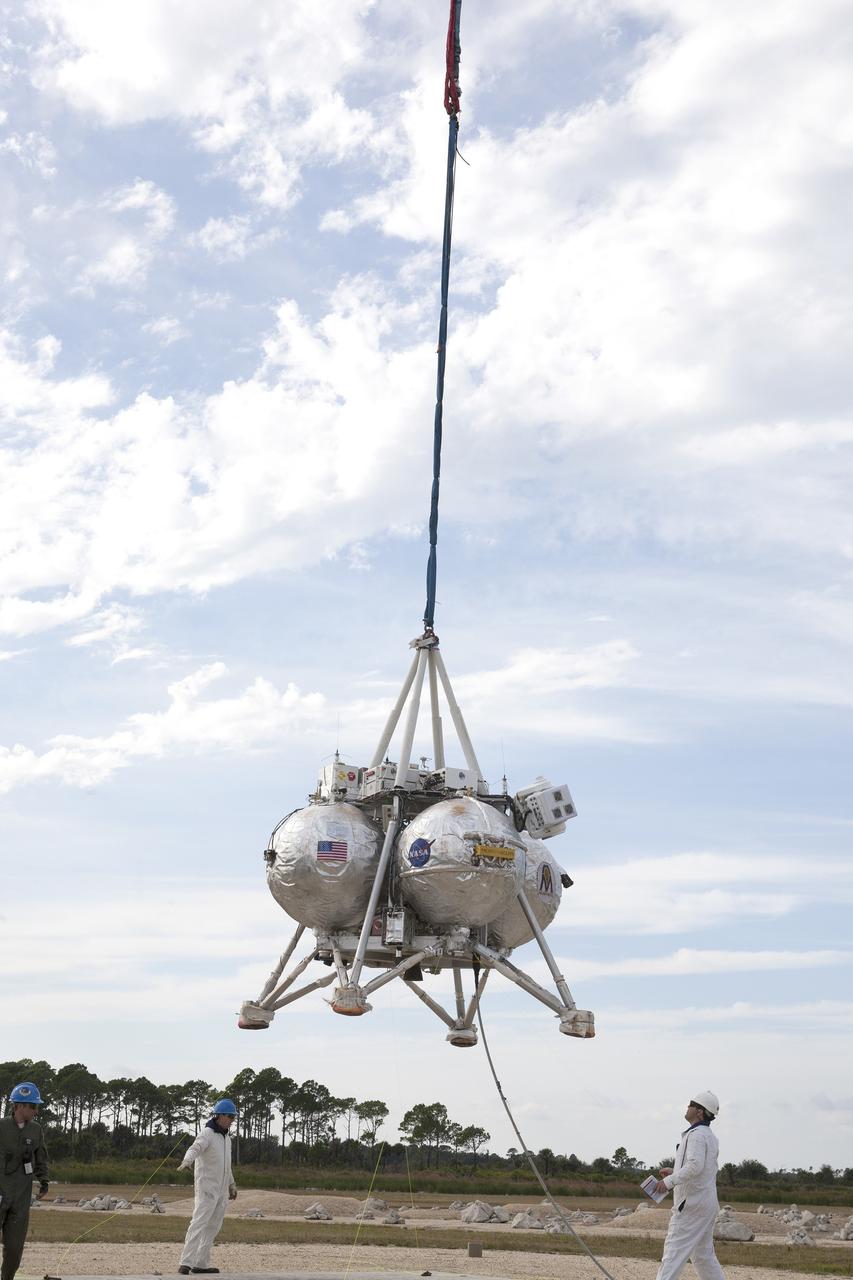
CAPE CANAVERAL, Fla. –NASA's Project Morpheus prototype lander is lifted by a crane in preparation for a tethered-flight test at the north end of the Shuttle Landing Facility at NASA’s Kennedy Space Center in Florida. For the 40-second test, the lander will be hoisted 20 feet. The spacecraft will ascend an additional five feet and hover for five seconds. Morpheus then will perform a 5.6-foot ascent coupled with a 9.8-foot traverse, and hover for five more seconds before returning to the launch point. A number of changes have been made, primarily focused on autonomous landing and hazard avoidance technology ALHAT and moving the Doppler Lidar to the front of the forward liquid oxygen tank. The tether test was cut short due to Morpheus exceeding onboard abort rate limits. The vehicle was taken back to the hangar and data from the test is being studied. After review, managers will determine when a new test date will be set. The landing facility provides the lander with the kind of field necessary for realistic testing, complete with rocks, craters and hazards to avoid. Morpheus’ ALHAT payload allows it to navigate to clear landing sites amidst rocks, craters and other hazards during its descent. For more information on Project Morpheus, visit http://morpheuslander.jsc.nasa.gov/. Photo credit: NASA/Kim Shiflett
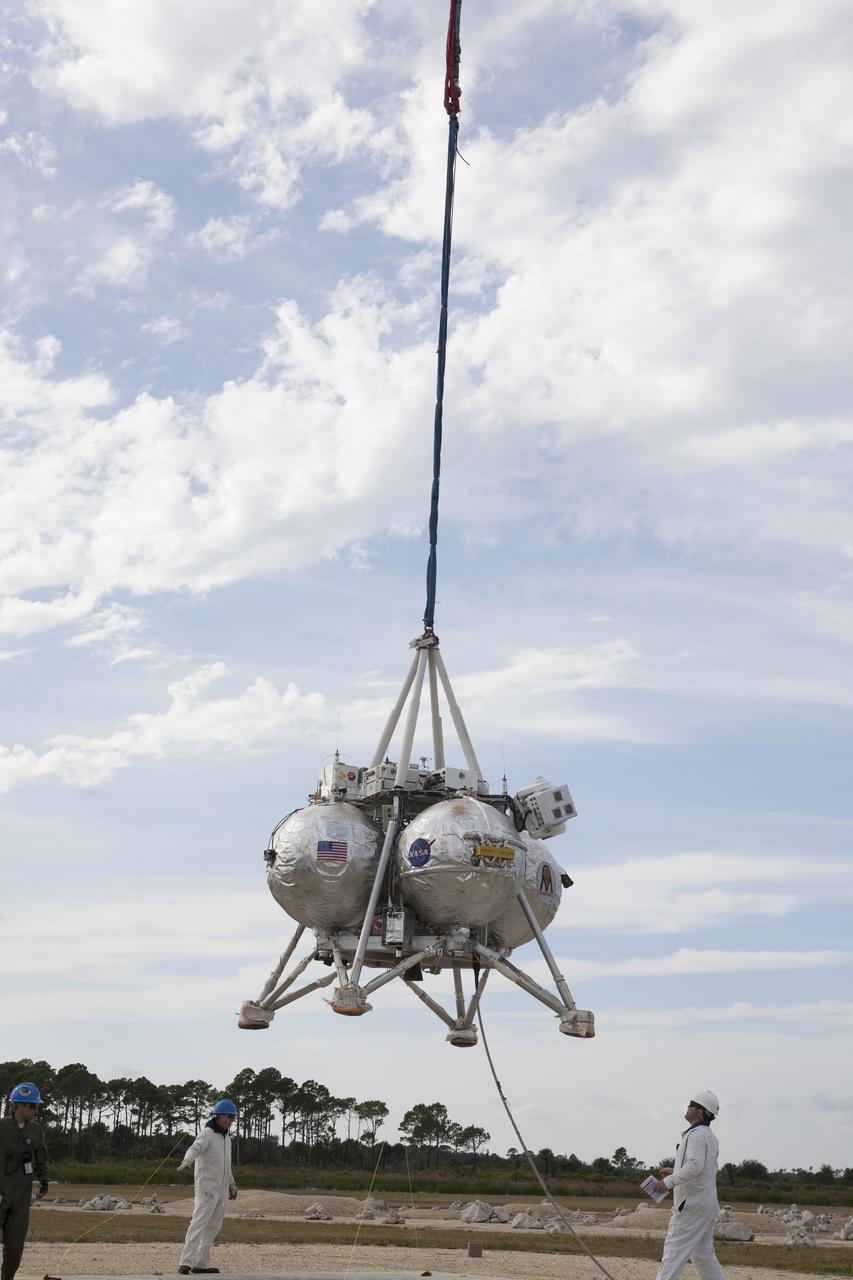
NASA's Project Morpheus prototype lander is lifted by a crane in preparation for a tethered-flight test at the north end of the Shuttle Landing Facility at NASA’s Kennedy Space Center in Florida. For the 40-second test, the lander will be hoisted 20 feet. The spacecraft will ascend an additional five feet and hover for five seconds. Morpheus then will perform a 5.6-foot ascent coupled with a 9.8-foot traverse, and hover for five more seconds before returning to the launch point. A number of changes have been made, primarily focused on autonomous landing and hazard avoidance technology ALHAT and moving the Doppler Lidar to the front of the forward liquid oxygen tank. The tether test was cut short due to Morpheus exceeding onboard abort rate limits. The vehicle was taken back to the hangar and data from the test is being studied. After review, managers will determine when a new test date will be set. The landing facility provides the lander with the kind of field necessary for realistic testing, complete with rocks, craters and hazards to avoid. Morpheus’ ALHAT payload allows it to navigate to clear landing sites amidst rocks, craters and other hazards during its descent.
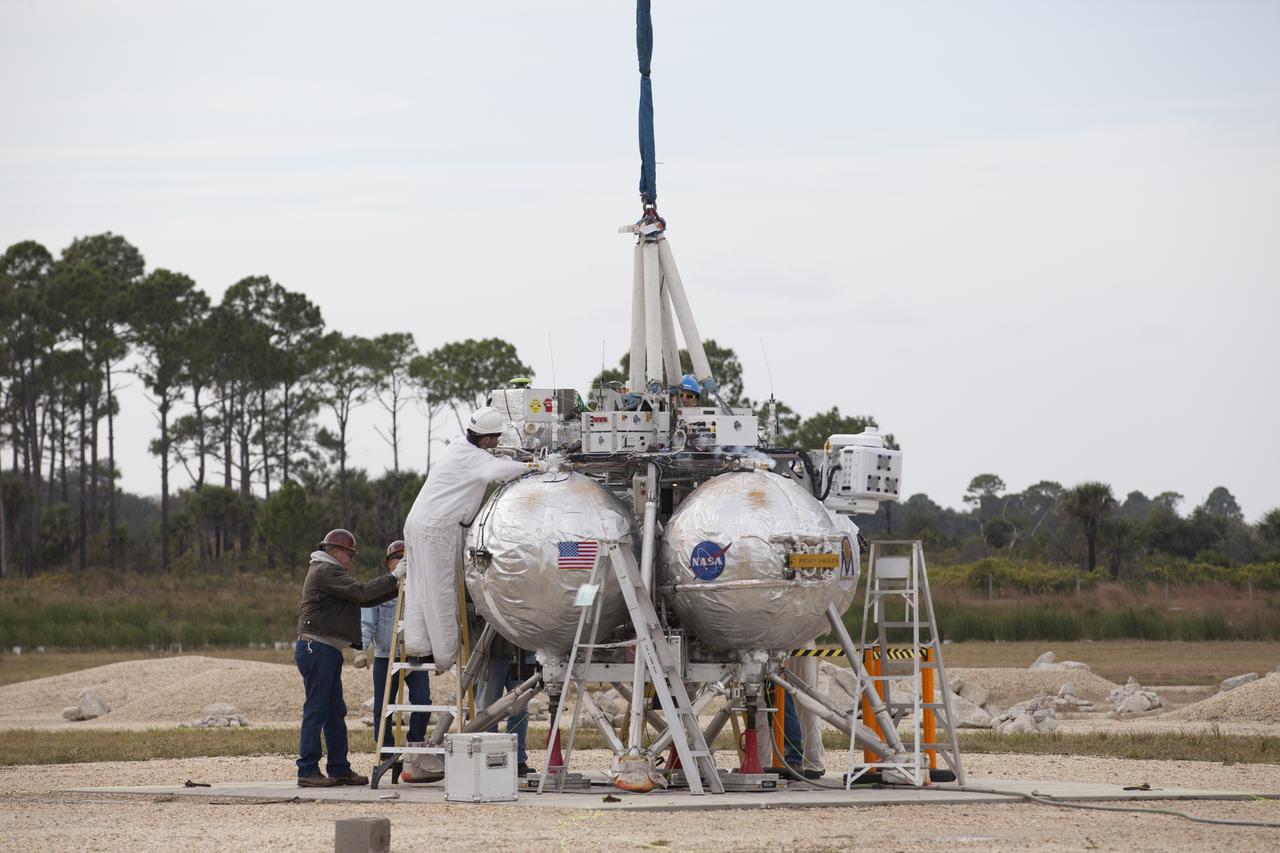
NASA's Project Morpheus prototype lander undergoes final preparations for a tethered-flight test at the north end of the Shuttle Landing Facility at NASA’s Kennedy Space Center in Florida. For the 40-second test, the lander will be hoisted 20 feet. The spacecraft will ascend an additional five feet and hover for five seconds. Morpheus then will perform a 5.6-foot ascent coupled with a 9.8-foot traverse, and hover for five more seconds before returning to the launch point. A number of changes have been made, primarily focused on autonomous landing and hazard avoidance technology ALHAT and moving the Doppler Lidar to the front of the forward liquid oxygen tank. The tether test was cut short due to Morpheus exceeding onboard abort rate limits. The vehicle was taken back to the hangar and data from the test is being studied. After review, managers will determine when a new test date will be set. The landing facility provides the lander with the kind of field necessary for realistic testing, complete with rocks, craters and hazards to avoid. Morpheus’ ALHAT payload allows it to navigate to clear landing sites amidst rocks, craters and other hazards during its descent.