
The MODIS instrument on NASA's Terra satellite captured Typhoon Neoguri in the Pacific Ocean at 02:05 UTC (10:05 PM EDT) on July 6, 2014. Typhoon Neoguri is expected to reach Okinawa early Tuesday, bringing sustained winds of 198 kilometers (123 miles) per hour and gusts up to 270 kph (168 mph), according to the Japan Meteorological Agency. The storm could be one of the strongest to hit Japan in decades, generating waves up to 14 meters (46 feet) high. Credit: NASA/GSFC/Jeff Schmaltz/MODIS Land Rapid Response <b><a href="http://www.nasa.gov/audience/formedia/features/MP_Photo_Guidelines.html" rel="nofollow">NASA image use policy.</a></b> <b><a href="http://www.nasa.gov/centers/goddard/home/index.html" rel="nofollow">NASA Goddard Space Flight Center</a></b> enables NASA’s mission through four scientific endeavors: Earth Science, Heliophysics, Solar System Exploration, and Astrophysics. Goddard plays a leading role in NASA’s accomplishments by contributing compelling scientific knowledge to advance the Agency’s mission. <b>Follow us on <a href="http://twitter.com/NASAGoddardPix" rel="nofollow">Twitter</a></b> <b>Like us on <a href="http://www.facebook.com/pages/Greenbelt-MD/NASA-Goddard/395013845897?ref=tsd" rel="nofollow">Facebook</a></b> <b>Find us on <a href="http://instagram.com/nasagoddard?vm=grid" rel="nofollow">Instagram</a></b>

NASA's Terra satellite captured this visible image on July 9 at 02:30 UTC (July 8 at 10:30 p.m. EDT) as Typhoon Neoguri was approaching Kyushu, Japan. The visible image revealed that Neoguri's eye had disappeared and the center has become somewhat elongated as the storm weakened into a tropical storm. The Joint Typhoon Warning Center or JTWC noted that an upper level analysis revealed that Neoguri is now in a more harsh environment as northerly vertical wind shear increased to as much as 30 knots. Credit: NASA/GSFC/Jeff Schmaltz/MODIS Land Rapid Response Credit: NASA/GSFC/Jeff Schmaltz/MODIS Land Rapid Response <b><a href="http://www.nasa.gov/audience/formedia/features/MP_Photo_Guidelines.html" rel="nofollow">NASA image use policy.</a></b> <b><a href="http://www.nasa.gov/centers/goddard/home/index.html" rel="nofollow">NASA Goddard Space Flight Center</a></b> enables NASA’s mission through four scientific endeavors: Earth Science, Heliophysics, Solar System Exploration, and Astrophysics. Goddard plays a leading role in NASA’s accomplishments by contributing compelling scientific knowledge to advance the Agency’s mission. <b>Follow us on <a href="http://twitter.com/NASAGoddardPix" rel="nofollow">Twitter</a></b> <b>Like us on <a href="http://www.facebook.com/pages/Greenbelt-MD/NASA-Goddard/395013845897?ref=tsd" rel="nofollow">Facebook</a></b> <b>Find us on <a href="http://instagram.com/nasagoddard?vm=grid" rel="nofollow">Instagram</a></b>

The MODIS instrument on NASA's Aqua satellite captured Typhoon Neoguri in the East China Sea at 05:00 UTC (1:00 AM EDT) on July 8, 2014. Typhoon Neoguri hit Japan’s Okinawa islands on Tuesday local time (July 8, 2014), bringing high winds, huge waves and storm surges. Neoguri packed sustained winds of 175 kilometers (108 miles) per hour with some gusts up to 250 kph (154 mph), according to the Japan Meteorological Agency. Credit: NASA/GSFC/Jeff Schmaltz/MODIS Land Rapid Response <b><a href="http://www.nasa.gov/audience/formedia/features/MP_Photo_Guidelines.html" rel="nofollow">NASA image use policy.</a></b> <b><a href="http://www.nasa.gov/centers/goddard/home/index.html" rel="nofollow">NASA Goddard Space Flight Center</a></b> enables NASA’s mission through four scientific endeavors: Earth Science, Heliophysics, Solar System Exploration, and Astrophysics. Goddard plays a leading role in NASA’s accomplishments by contributing compelling scientific knowledge to advance the Agency’s mission. <b>Follow us on <a href="http://twitter.com/NASAGoddardPix" rel="nofollow">Twitter</a></b> <b>Like us on <a href="http://www.facebook.com/pages/Greenbelt-MD/NASA-Goddard/395013845897?ref=tsd" rel="nofollow">Facebook</a></b> <b>Find us on <a href="http://instagram.com/nasagoddard?vm=grid" rel="nofollow">Instagram</a></b>

iss073e0764904 (Sept. 21, 2025) --- Typhoon Neoguri is pictured in the Pacific Ocean from the International Space Station as it orbited 257 miles above. In the right foreground, is a portion of the Canadarm2 robotic arm with Dextre, its fine-tuned robotic hand, attached.

iss073e0767100 (Sept. 21, 2025) --- Typhoon Neoguri is pictured from the International Space Station as it orbited 257 miles above the Pacific Ocean southeast of Japan. In the center foreground, the Canadarm2 robotic arm extends from the orbital outpost.
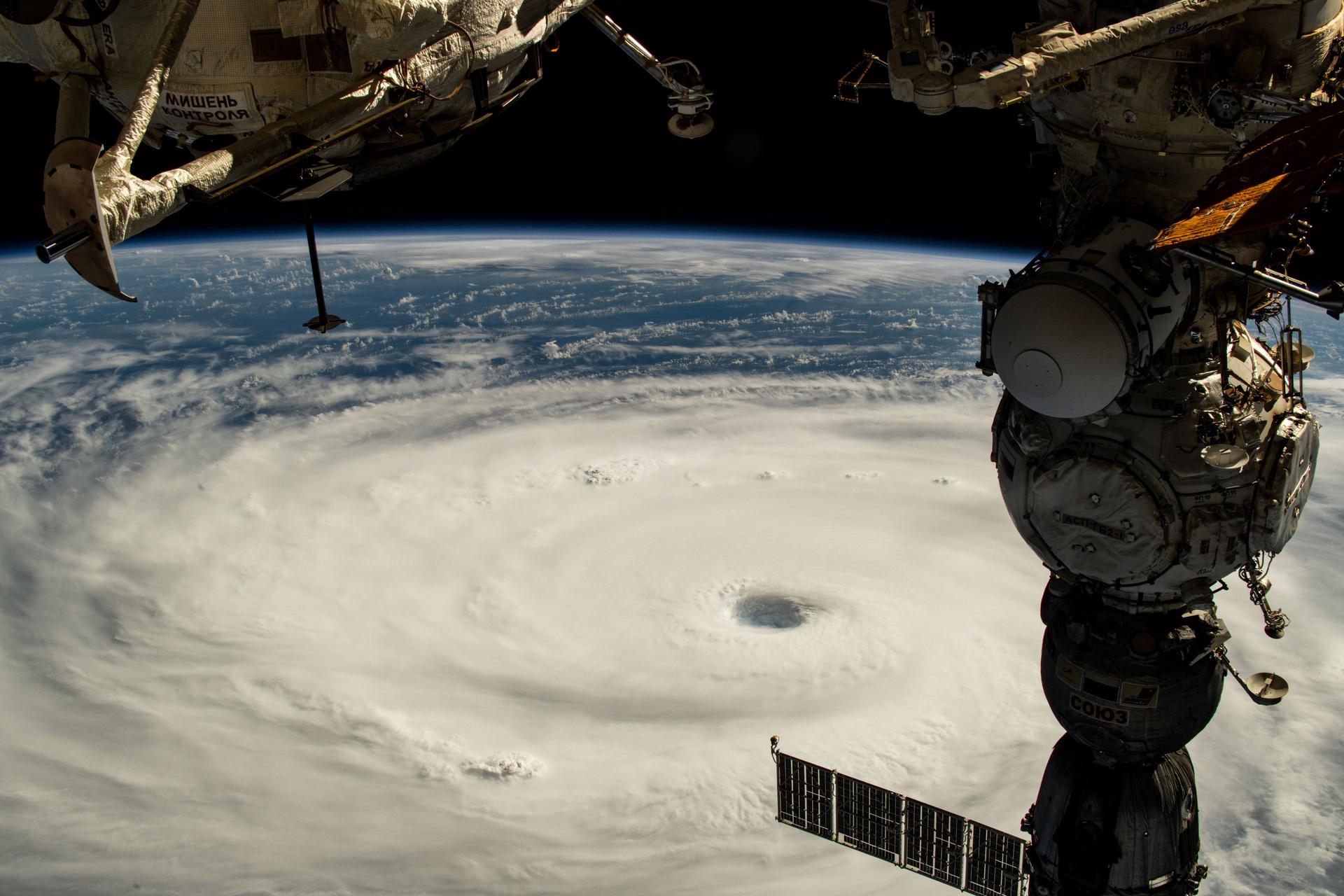
iss073e0764998 (Sept. 21, 2025) --- Typhoon Neoguri with its well-defined eye is pictured in the Pacific Ocean from the International Space Station as it orbited 258 miles above. In the right foreground, is the Soyuz MS-27 spacecraft docked to the Prichal module.
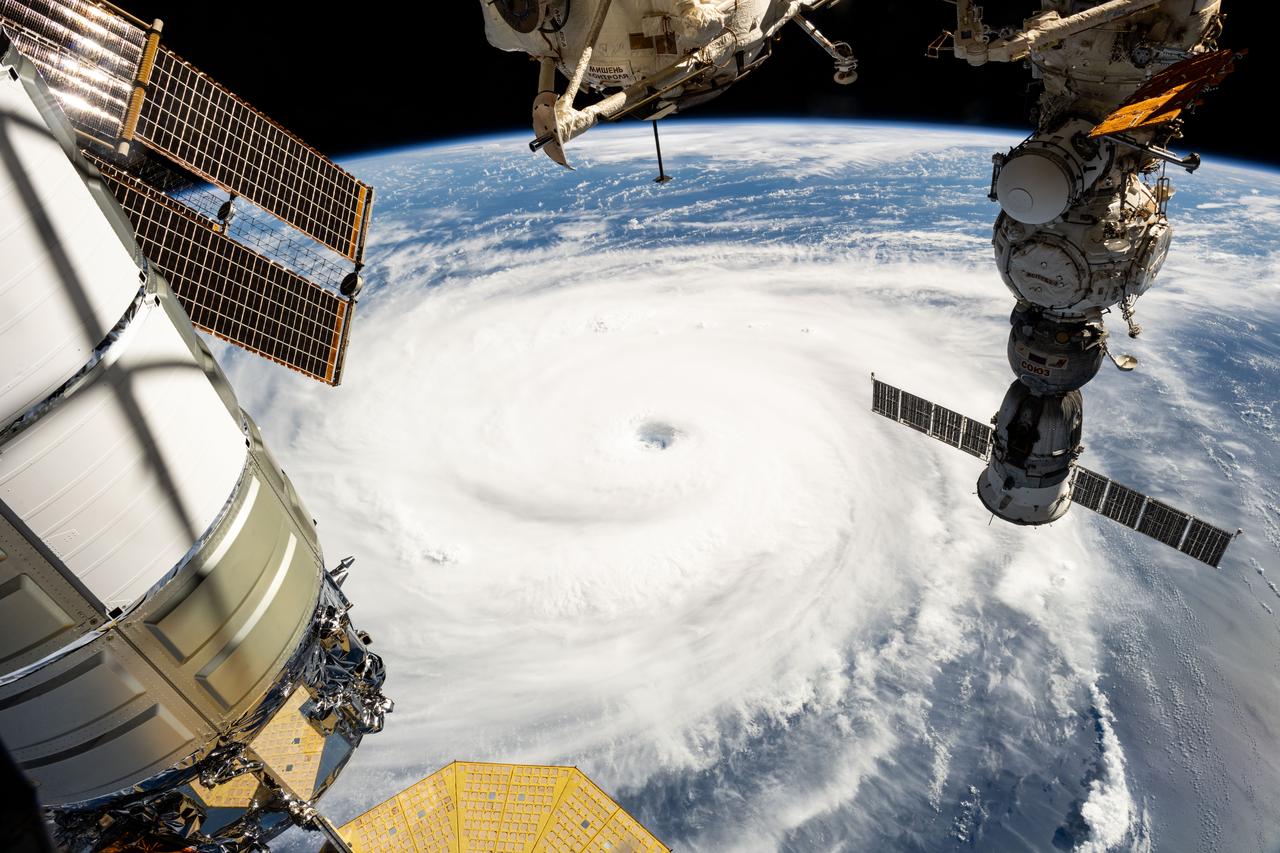
iss073e07645000 (Sept. 21, 2025) --- Typhoon Neoguri with its well-defined eye is pictured in the Pacific Ocean from the International Space Station as it orbited 258 miles above. In the right foreground, is the Soyuz MS-27 spacecraft docked to the Prichal module. At left, is a portion of the Northrop Grumman Cygnus XL cargo craft berthed to the Unity module.

Earth observation taken during a day pass by the Expedition 40 crew aboard the International Space Station (ISS). Folder lists this as: Typhoon Neoguri.
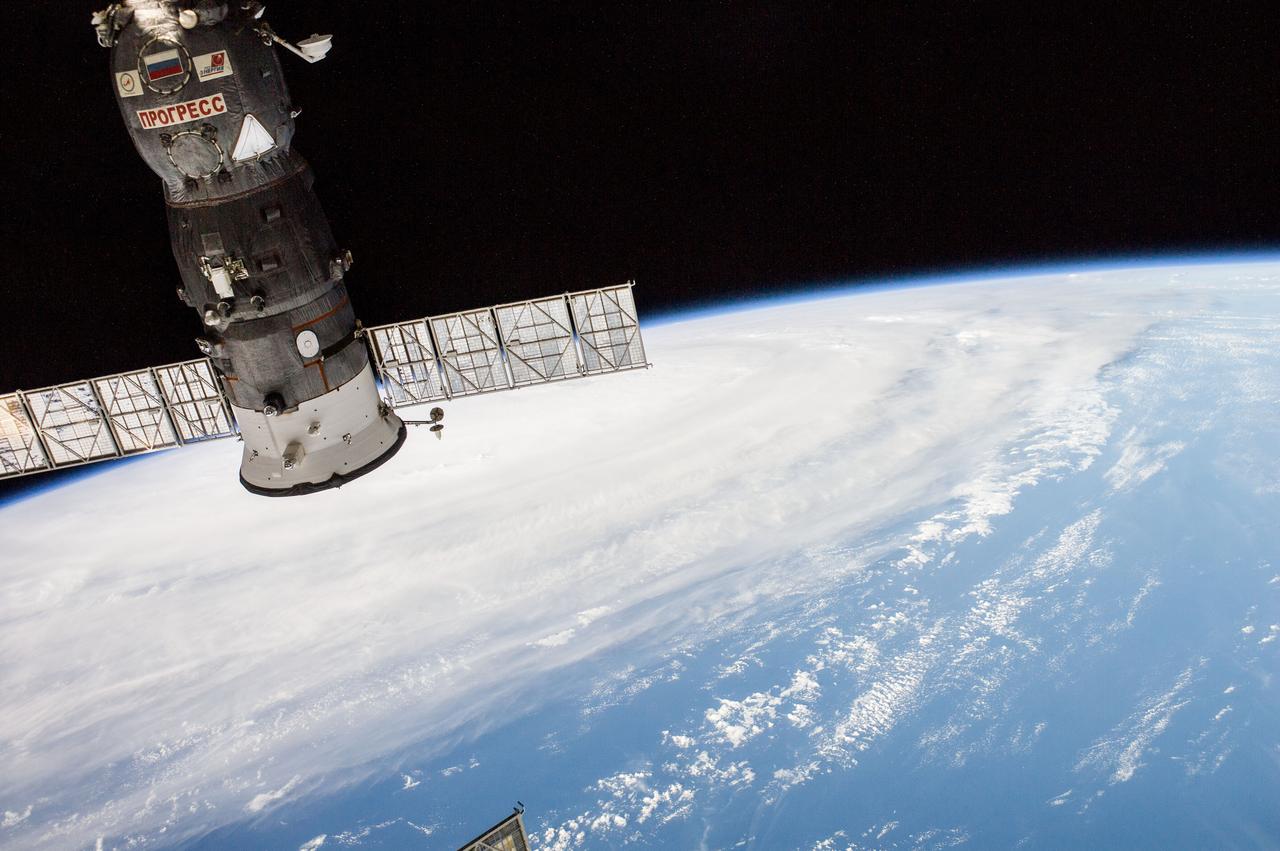
ISS040-E-038897 (5 July 2014) --- One of the Expedition 40 crew members onboard the International Space Station photographed this image of Super Typhoon Neoguri headed toward Japan at 21:58:27 GMT on July 5, 2014. A Russian Progress vehicle, docked to the orbital outpost, is in the foreground.

ISS040-E-045408 (8 July 2014) --- One of the Expedition 40 crew members aboard the International Space Station photographed a series of images of Typhoon Neoguri in the vicinity of Japan on July 7, 2014. This 70mm oblique image featuring the eye was photographed at 21:52:20 GMT.

ISS040-E-050750 (7 July 2014) --- One of the Expedition 40 crew members aboard the International Space Station photographed a series of images of Typhoon Neoguri in the vicinity of Japan and Taiwan on July 7, 2014. This oblique 35mm focal length view was photographed at 07:41:29 GMT.

ISS040-E-045643 (8 July 2014) --- One of the Expedition 40 crew members aboard the International Space Station photographed a series of images of Typhoon Neoguri in the vicinity of Japan on July 7, 2014. This 70mm near-vertical image featuring the eye was photographed at 21:54:03 GMT.
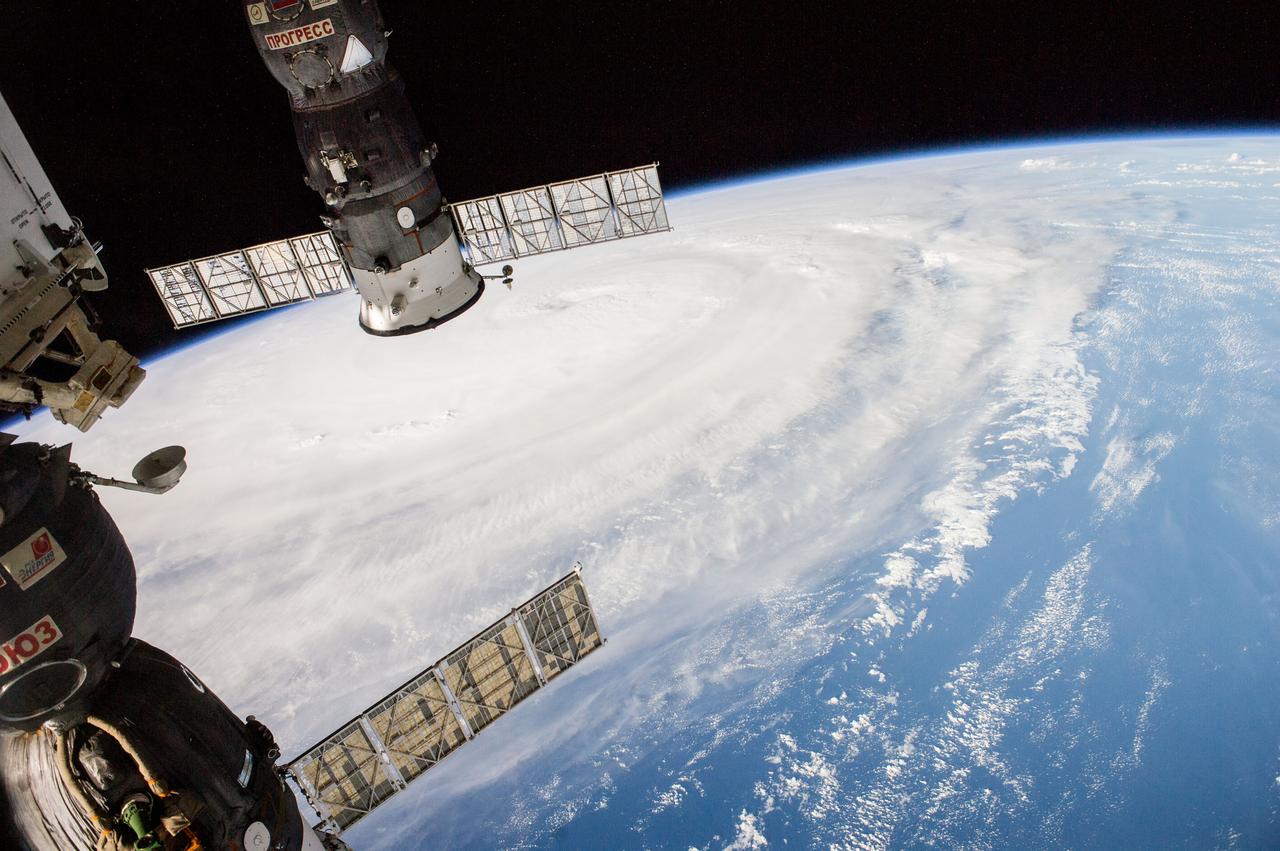
ISS040-E-038893 (5 July 2014) --- One of the Expedition 40 crew members onboard the International Space Station photographed this image of Super Typhoon Neoguri headed toward Japan at 21:57:39 GMT on July 5, 2014. A Russian Soyuz vehicle, docked to the orbital outpost, is partially visible in the foreground, and a docked Russian Progress is seen in upper left.
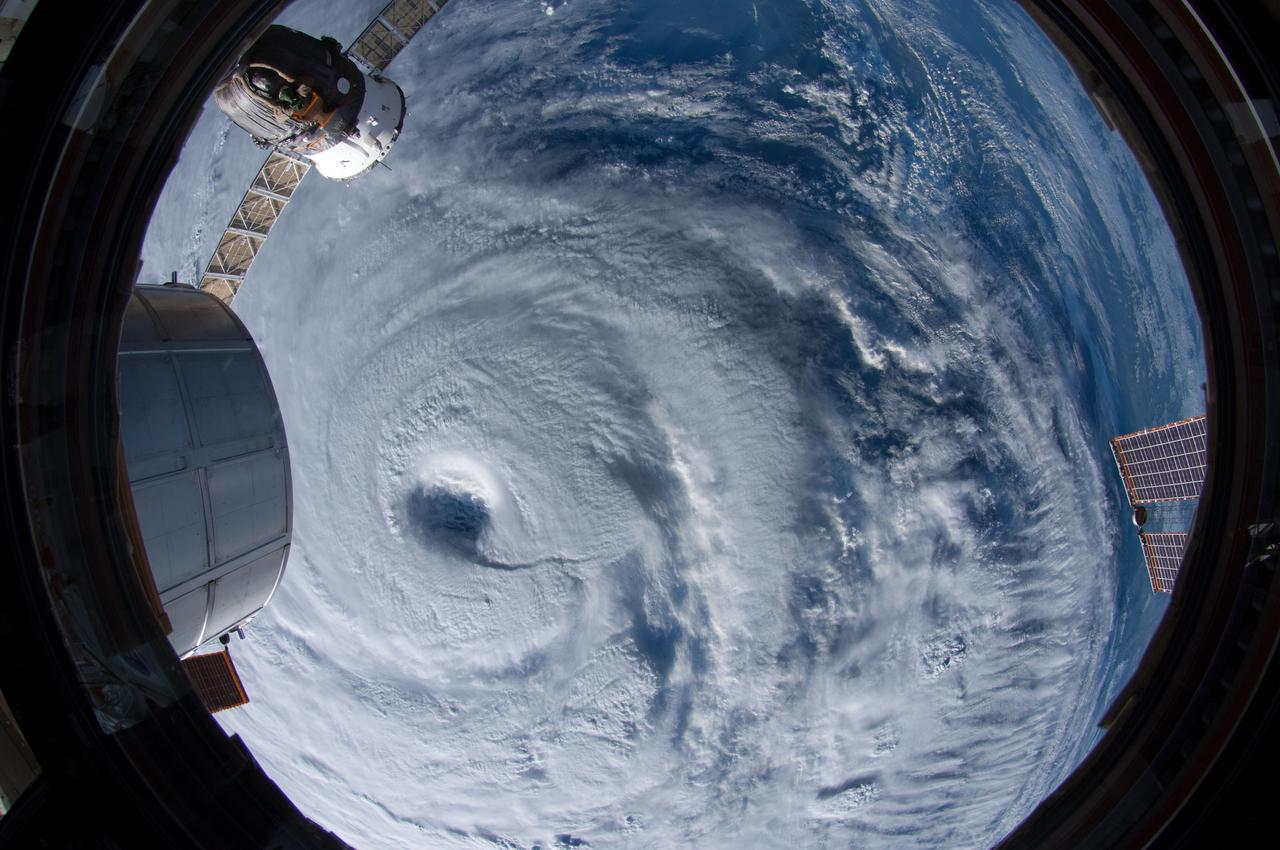
ISS040-E-042772 (7 July 2014) --- One of the Expedition 40 crew members aboard the International Space Station photographed a series of images of Typhoon Neoguri in the vicinity of Japan on July 7, 2014. This near-vertical 10.5 focal length view showing the eye on left side of the visible area was photographed at 21:54:04 GMT. A docked Russian spacecraft is partially visible in upper left.
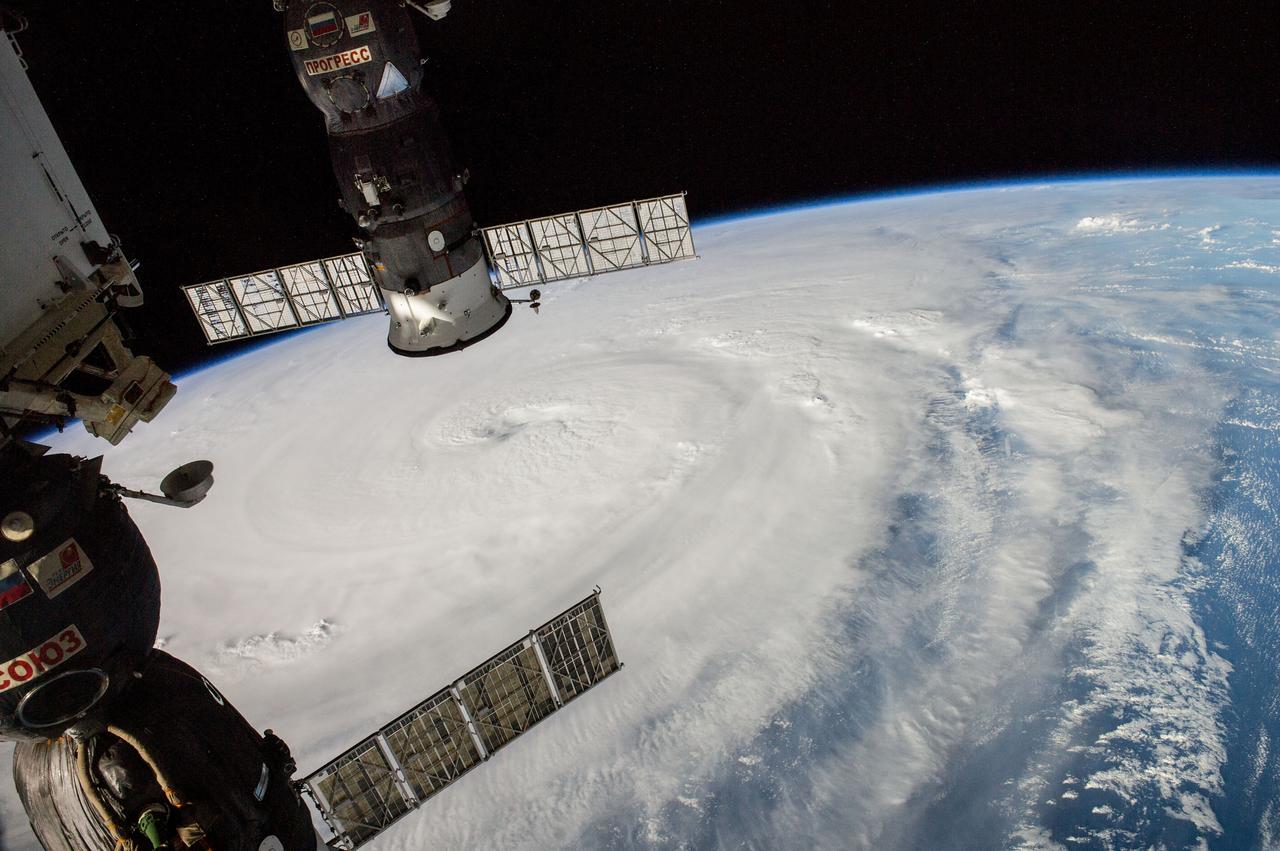
ISS040-E-038887 (5 July 2014) --- One of the Expedition 40 crew members onboard the International Space Station photographed this image of Super Typhoon Neoguri headed toward Japan at 21:56:56 GMT on July 5, 2014. A Russian Soyuz vehicle, docked to the orbital outpost, is partially visible in the foreground, and a docked Russian Progress is seen in upper left.
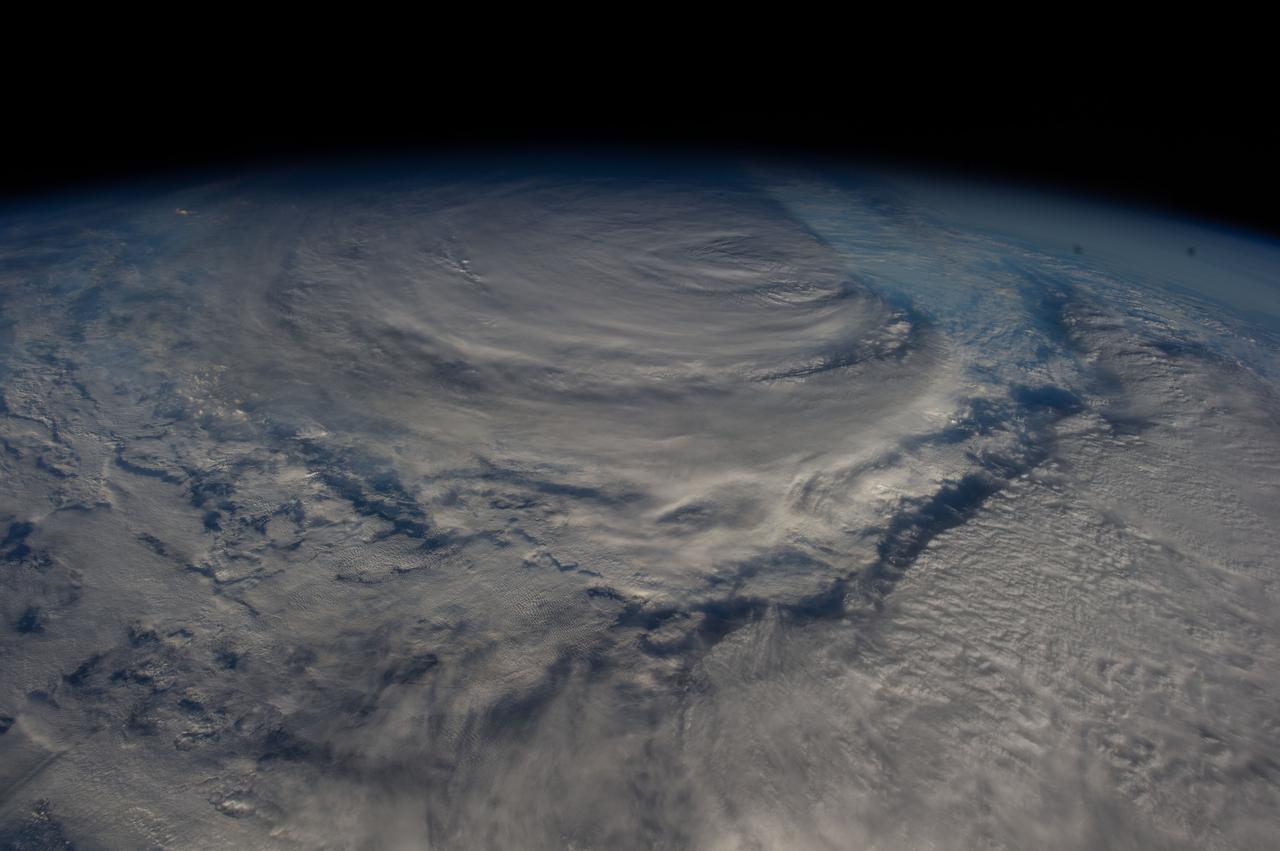
ISS040-E-049734 (8 July 2014) --- One of the Expedition 40 crew members aboard the International Space Station photographed a series of images of Typhoon Neoguri in the vicinity of Japan on July 8, 2014. This 24mm focal length oblique image was photographed at 21:08:20 GMT. The astronauts commented that it was difficult to get the entire storm into a single frame.
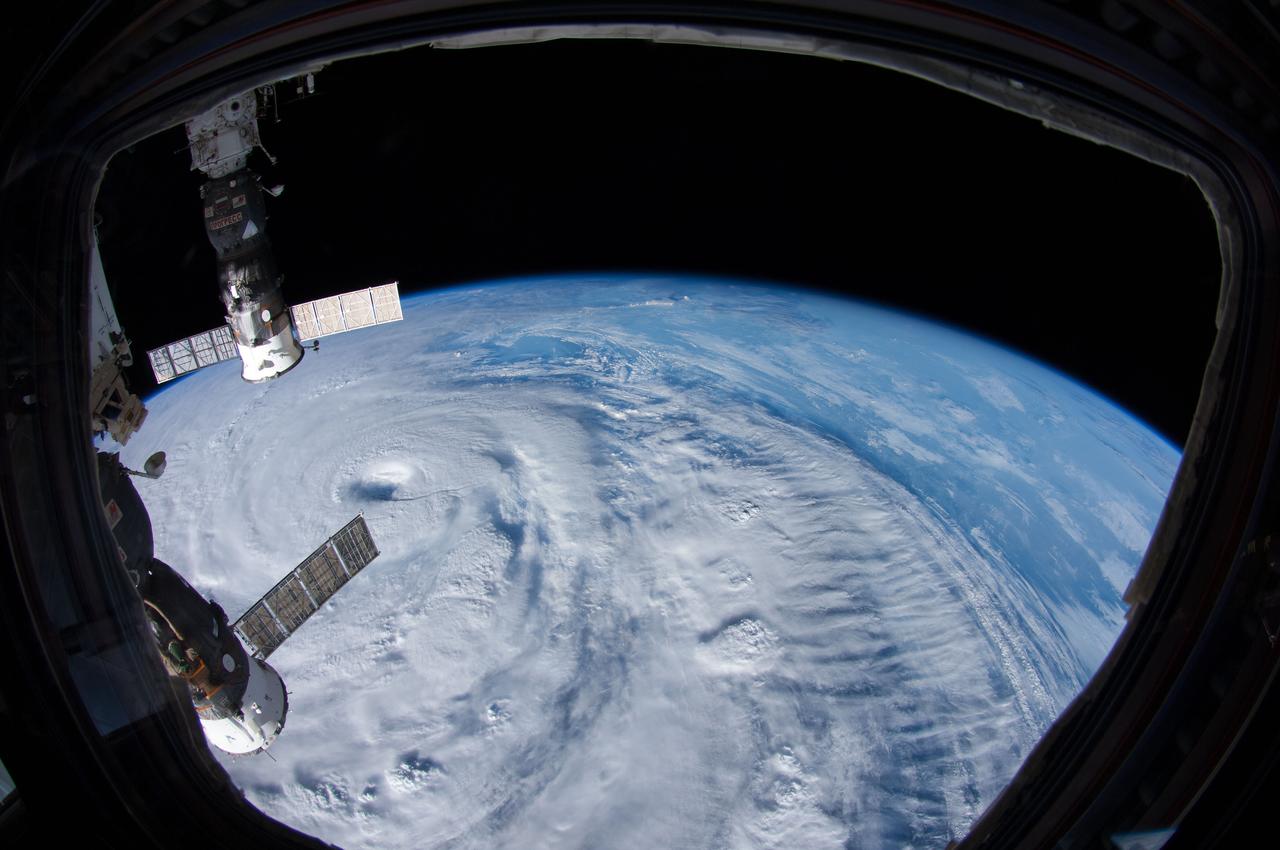
ISS040-E-042784 (7 July 2014) --- One of the Expedition 40 crew members aboard the International Space Station photographed a series of images of Typhoon Neoguri in the vicinity of Japan on July 7, 2014. This oblique 10.5 focal length view showing the eye on left side of the visible area was photographed at 21:55:38 GMT. Two docked Russian spacecraft are visible in upper left and lower left.
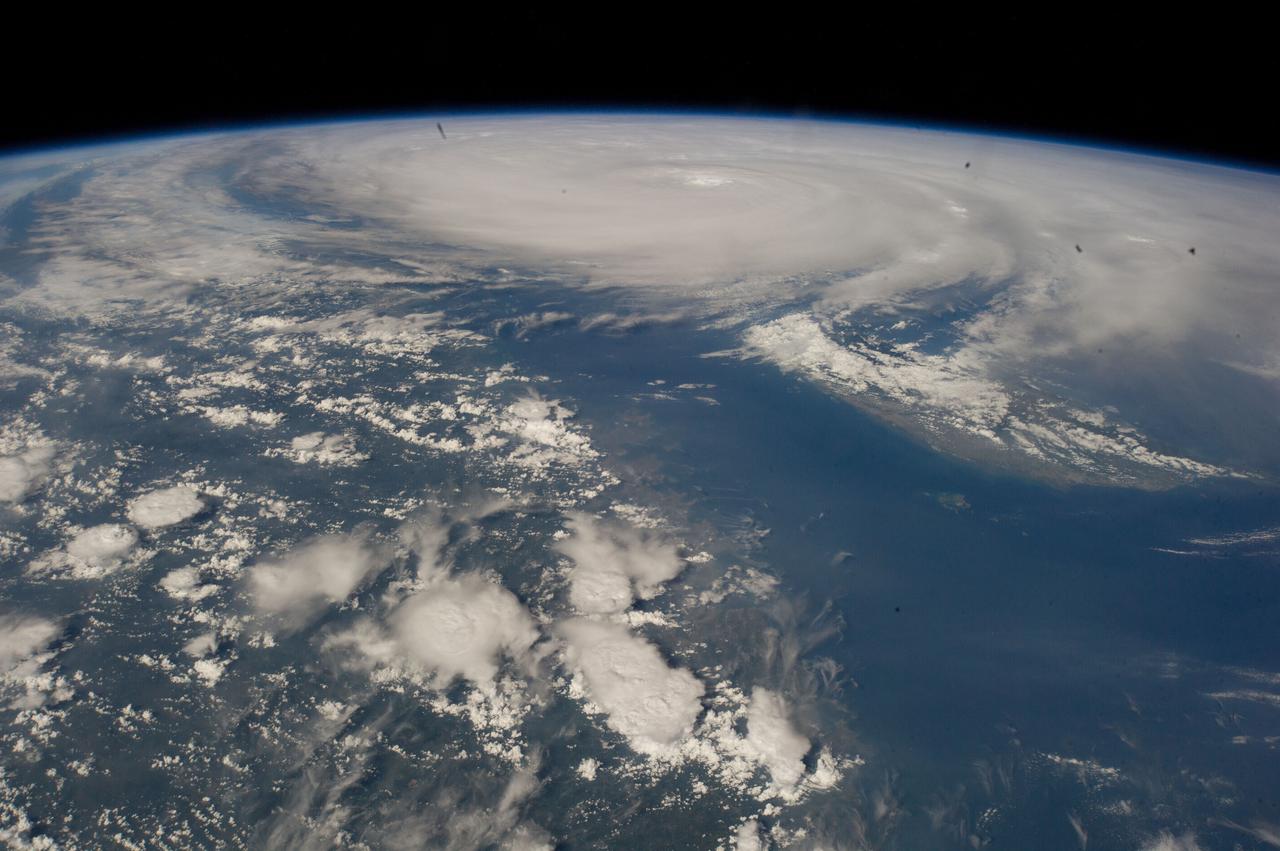
ISS040-E-042603 (8 July 2014) --- One of the Expedition 40 crew members aboard the International Space Station photographed a series of images of Typhoon Neoguri in the vicinity of Japan on July 8, 2014. This 24mm focal length oblique image was photographed at 07:41:19 GMT. The astronauts commented that it was difficult to get the entire storm into a single frame.

ISS040-E-033276 (4 July 2014) -- One of the Expedition 40 crew members aboard the international Space Station photographed this image of Typhoon Neoguri at 22:45:26 GMT on July 4, 2014. At the time this photograph was taken, the strongest typhoon of 2014 was forecast to hit Japan within 48 hours and bring destructive, high-speed winds over 150 miles per hour.
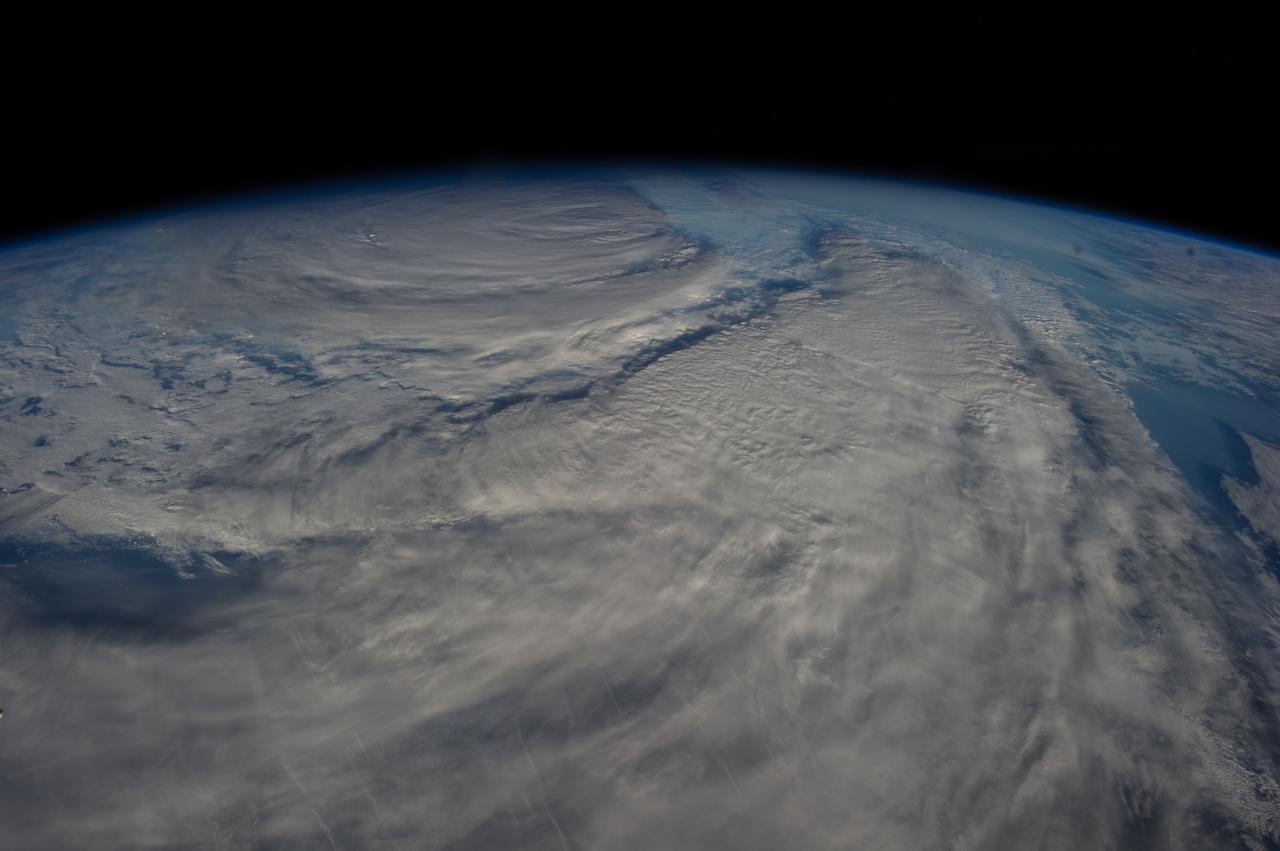
ISS040-E-049739 (8 July 2014) --- One of the Expedition 40 crew members aboard the International Space Station photographed a series of images of Typhoon Neoguri in the vicinity of Japan on July 8, 2014. This 22mm focal length oblique image was photographed at 21:09:02 GMT. The astronauts commented that it was difficult to get the entire storm into a single frame.
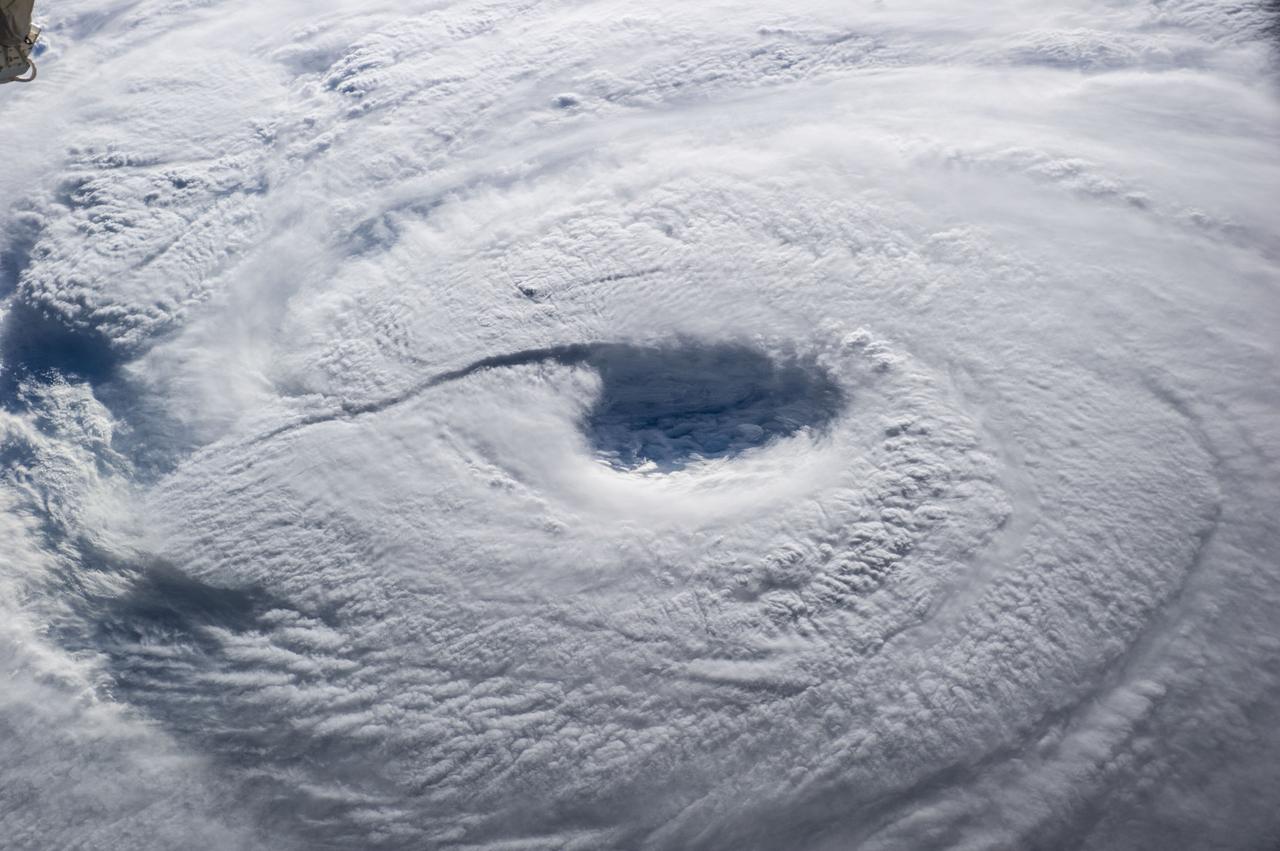
ISS040-E-045627 (7 July 2014) --- The International Space Station passed relatively near the eye of Typhoon Neoguri on July 7, and Expedition 40 Flight Engineer Alexander Gerst of the European Space Agency captured its startling dimensions in a series of still photos. In a tweet, Gerst marveled that even with a fish-eye lens (which was used on some more distant angles other than this almost vertical one), he couldn't capture the whole storm. A 70mm focal length was used for a small sequence of medium wide eye pictures such as this one. The picture was taken at 21:53:09 GMT on July 7, 2014.
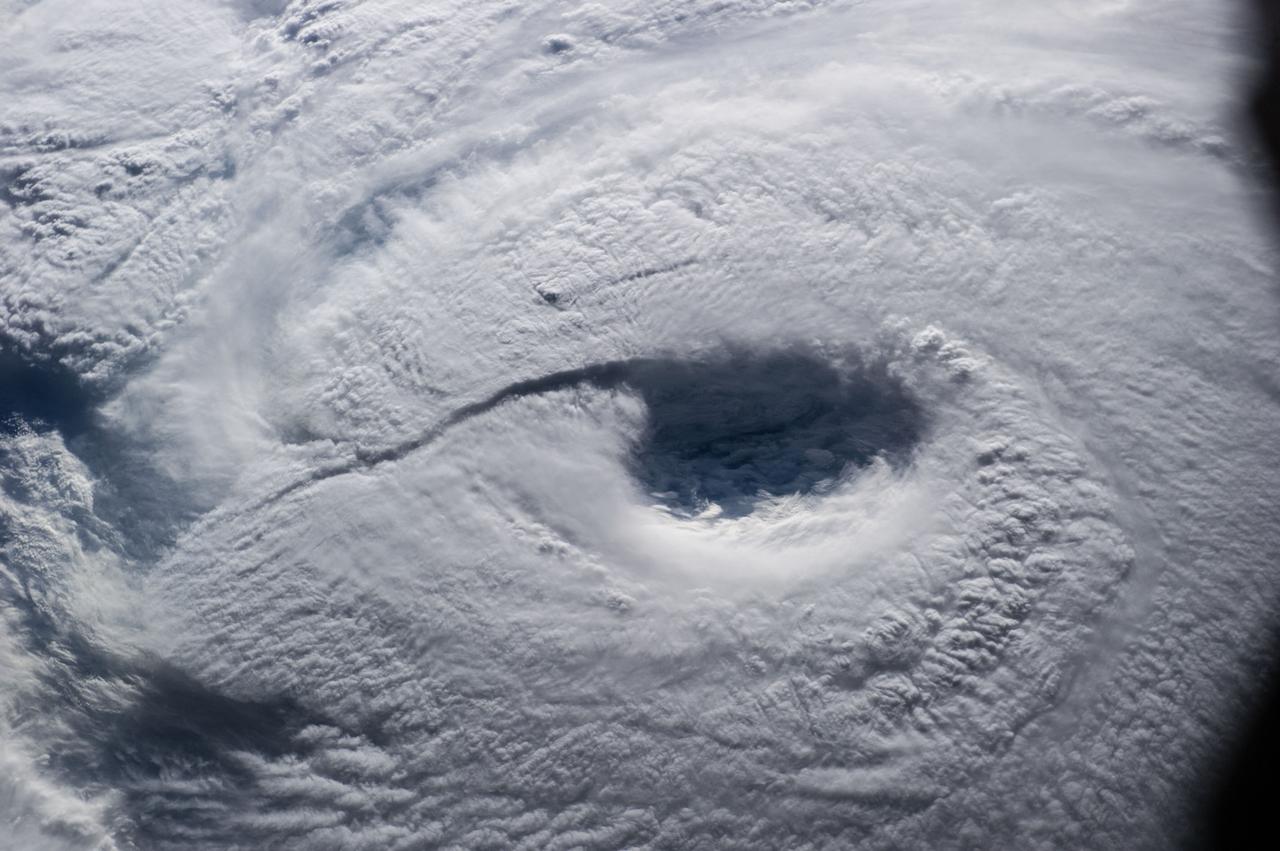
ISS040-E-045632 (7 July 2014) --- The International Space Station passed directly over the eye of Typhoon Neoguri on July 7, and Expedition 40 Flight Engineer Alexander Gerst of the European Space Agency captured its startling dimensions in a series of still photos. In a tweet, Gerst marveled that even with a fish-eye lens (which was used on some more distant angles other than this almost nadir one), he couldn't capture the whole storm. A 70mm focal length was used for a small sequence of close-up eye pictures such as this one. The picture was taken at 21:53:25 GMT on July 7, 2014.
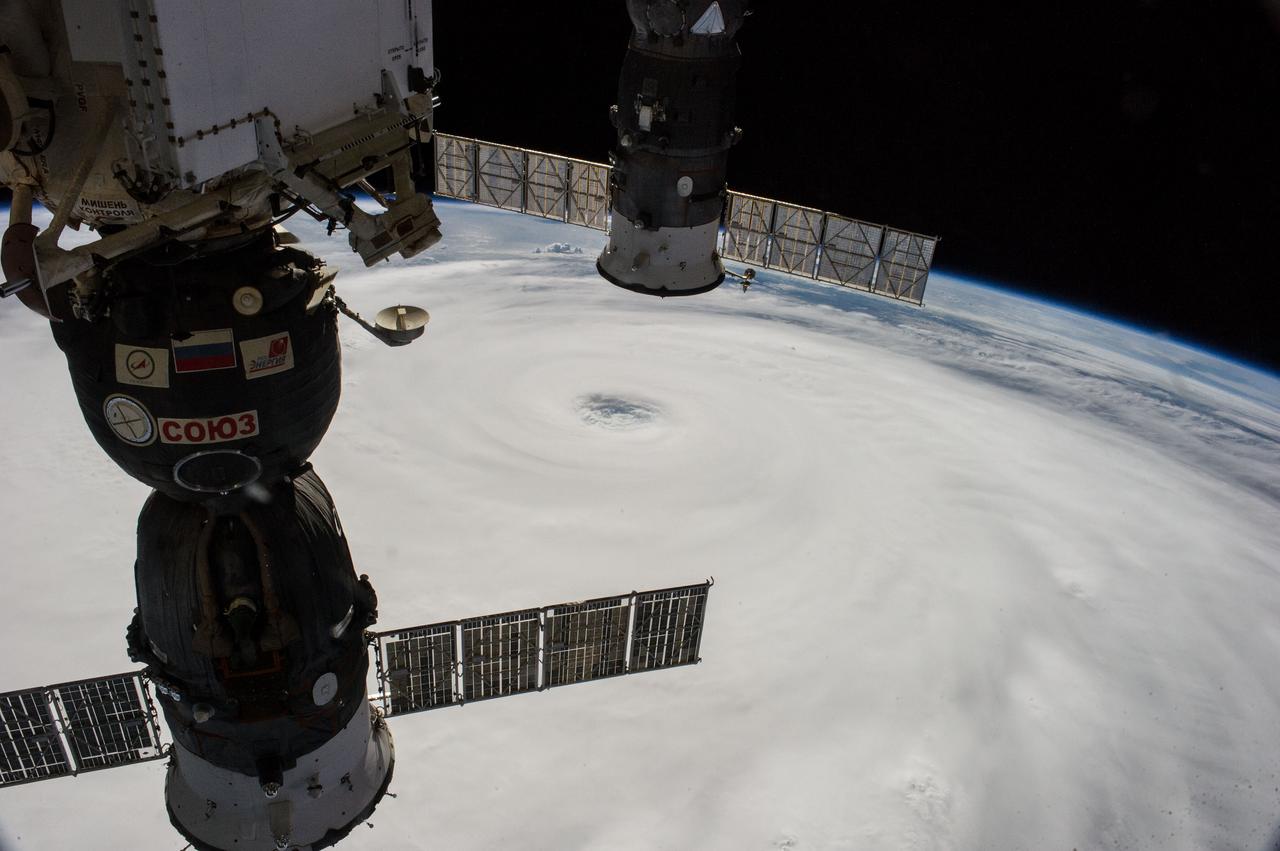
ISS040-E-045602 (7 July 2014) --- The International Space Station, including these two temporarily docked Russian spacecraft, made more than one pass near Typhoon Neoguri on July 7, and Expedition 40 Flight Engineers Reid Wiseman of NASA and Alexander Gerst of the European Space Agency captured its startling dimensions in a day-long series of still photos. In a tweet later in the day, Gerst marveled that even with a fish-eye lens he couldn't capture the whole storm. A 28mm focal length was used for a small sequence of oblique pictures such as this one. The picture was taken at 06:57:31 GMT on July 7, 2014.
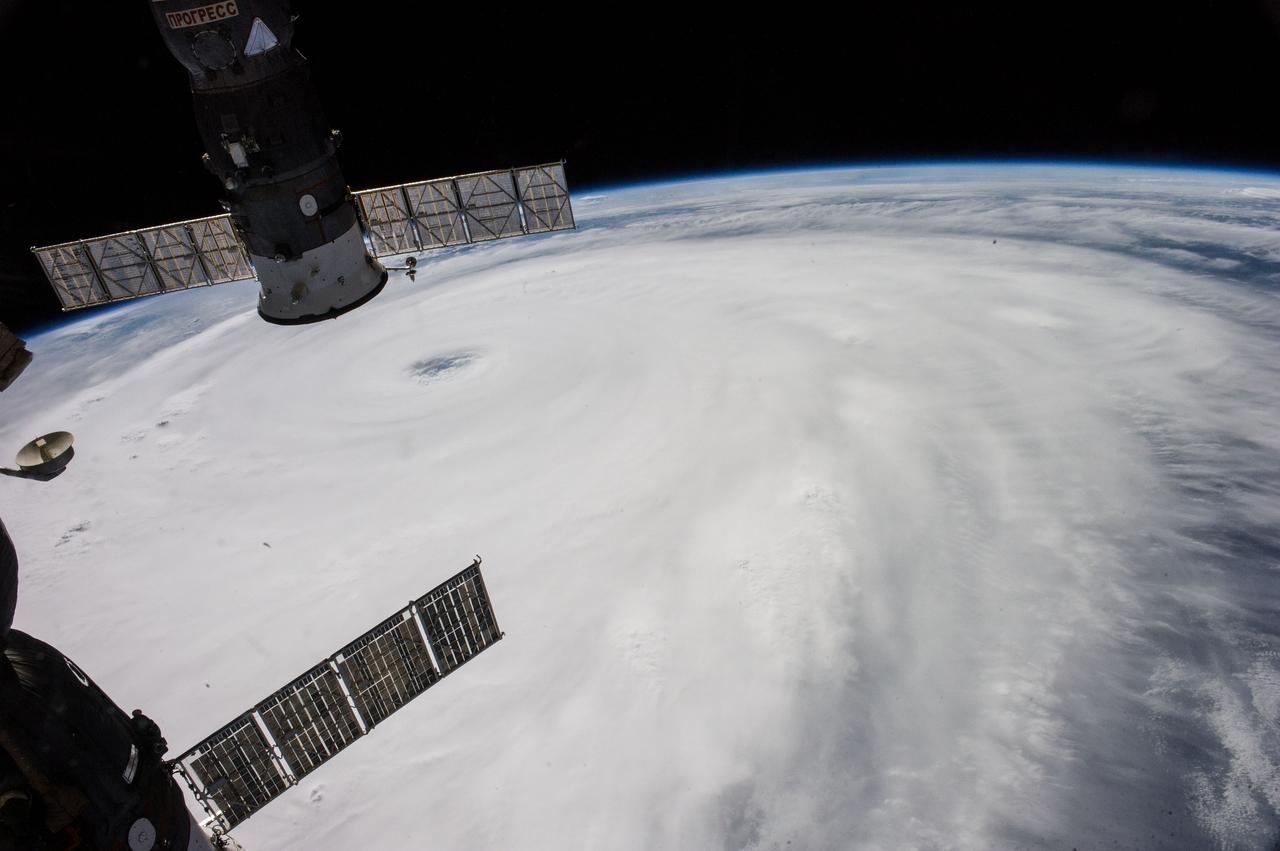
ISS040-E-045605 (7 July 2014) --- The International Space Station, including these two temporarily docked Russian spacecraft, made more than one pass near Typhoon Neoguri on July 7, and Expedition 40 Flight Engineers Reid Wiseman of NASA and Alexander Gerst of the European Space Agency captured its startling dimensions in a day-long series of still photos. In a tweet later in the day, Gerst marveled that even with a fish-eye lens he couldn't capture the whole storm. A 28mm focal length was used for a small sequence of oblique pictures such as this one. The picture was taken at 06:57:53 GMT on July 7, 2014.
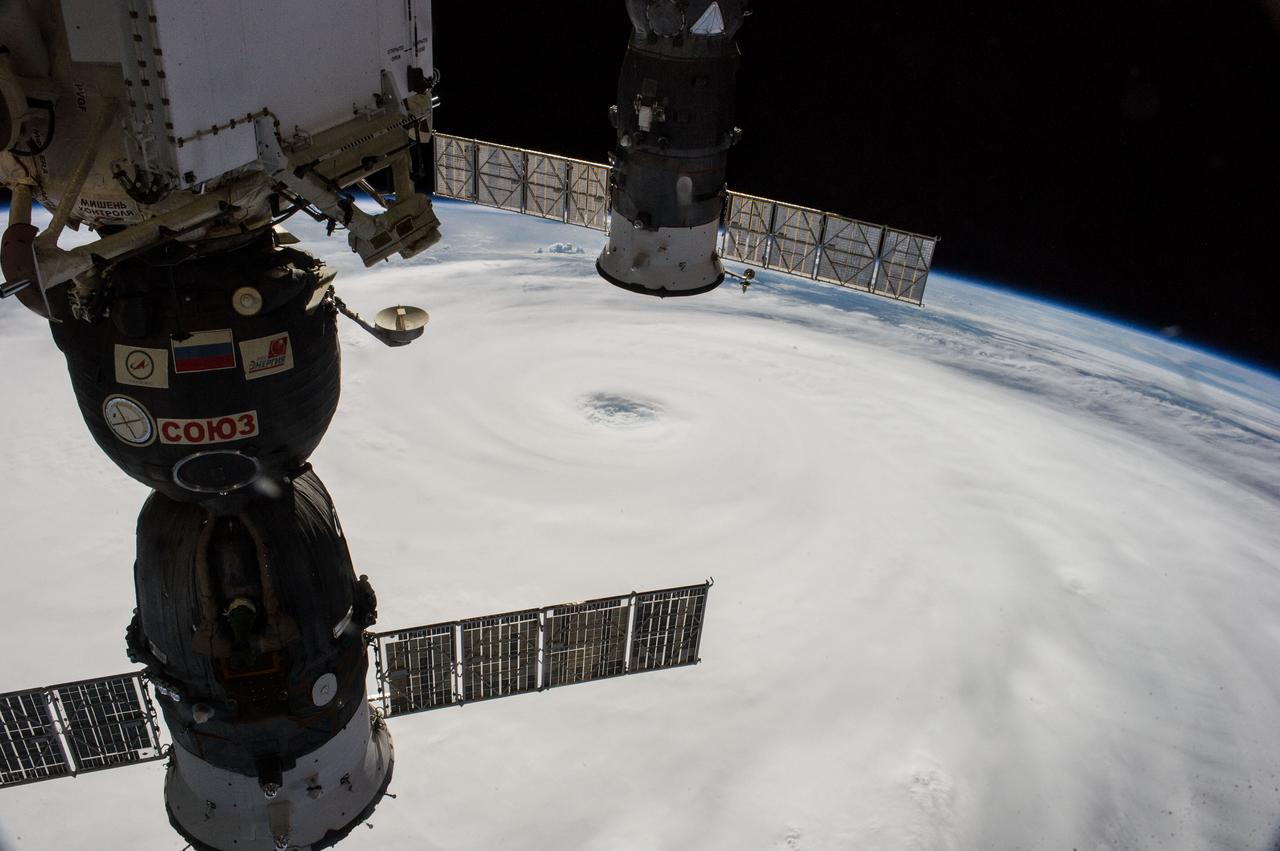
ISS040-E-045603 (7 July 2014) --- The International Space Station, including these two temporarily docked Russian spacecraft, made more than one pass near Typhoon Neoguri on July 7, and Expedition 40 Flight Engineers Reid Wiseman of NASA and Alexander Gerst of the European Space Agency captured its startling dimensions in a day-long series of still photos. In a tweet later in the day, Gerst marveled that even with a fish-eye lens he couldn't capture the whole storm. A 28mm focal length was used for a small sequence of oblique pictures such as this one. The picture was taken at 06:57:32 GMT on July 7, 2014.
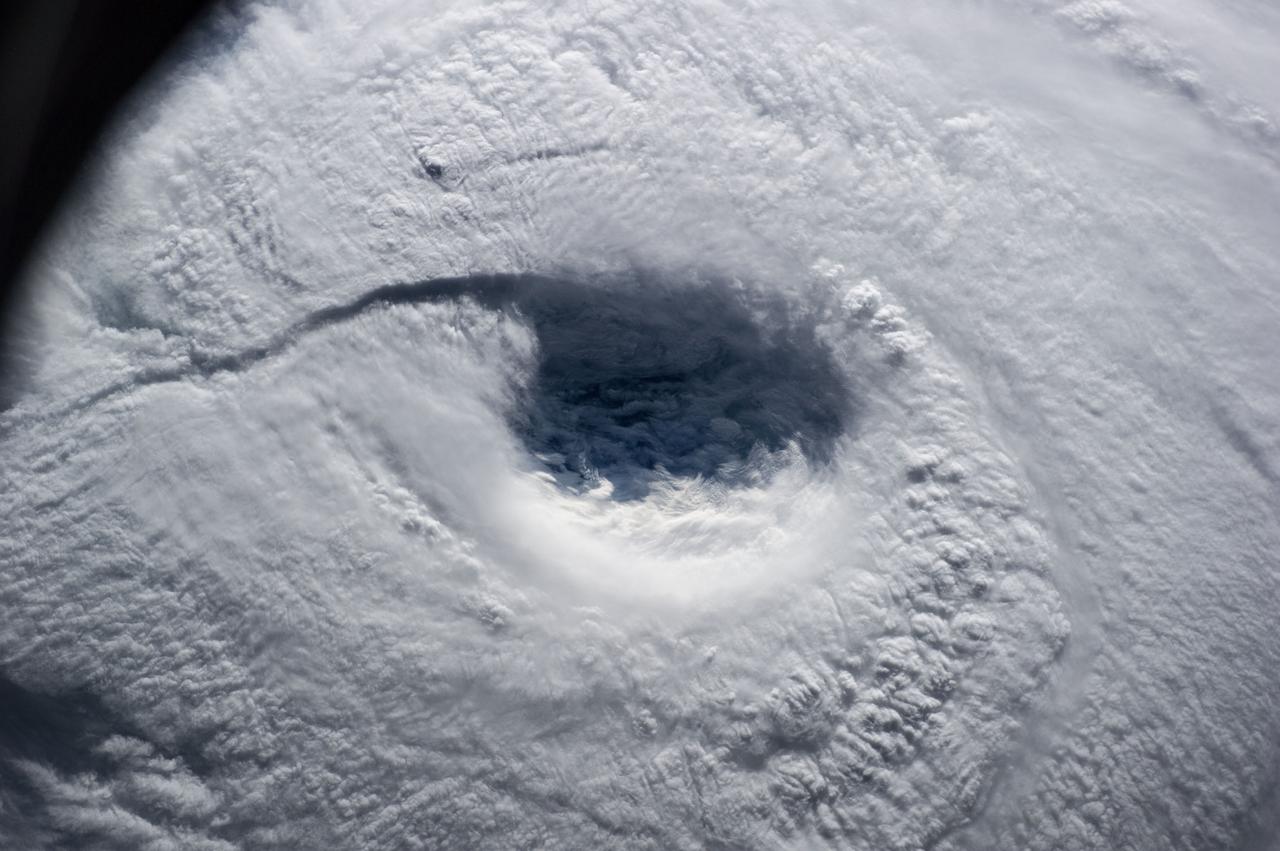
ISS040-E-045634 (7 July 2014) --- The International Space Station passed directly over the eye of Typhoon Neoguri on July 7, and Expedition 40 Flight Engineer Alexander Gerst of the European Space Agency captured its startling dimensions in a series of still photos. In a tweet, Gerst marveled that even with a fish-eye lens (which was used on some more distant angles other than this almost nadir one), he couldn't capture the whole storm. A 70mm focal length was used for a small sequence of close-up eye pictures such as this one. The picture was taken at 21:53:45 GMT on July 7, 2014.